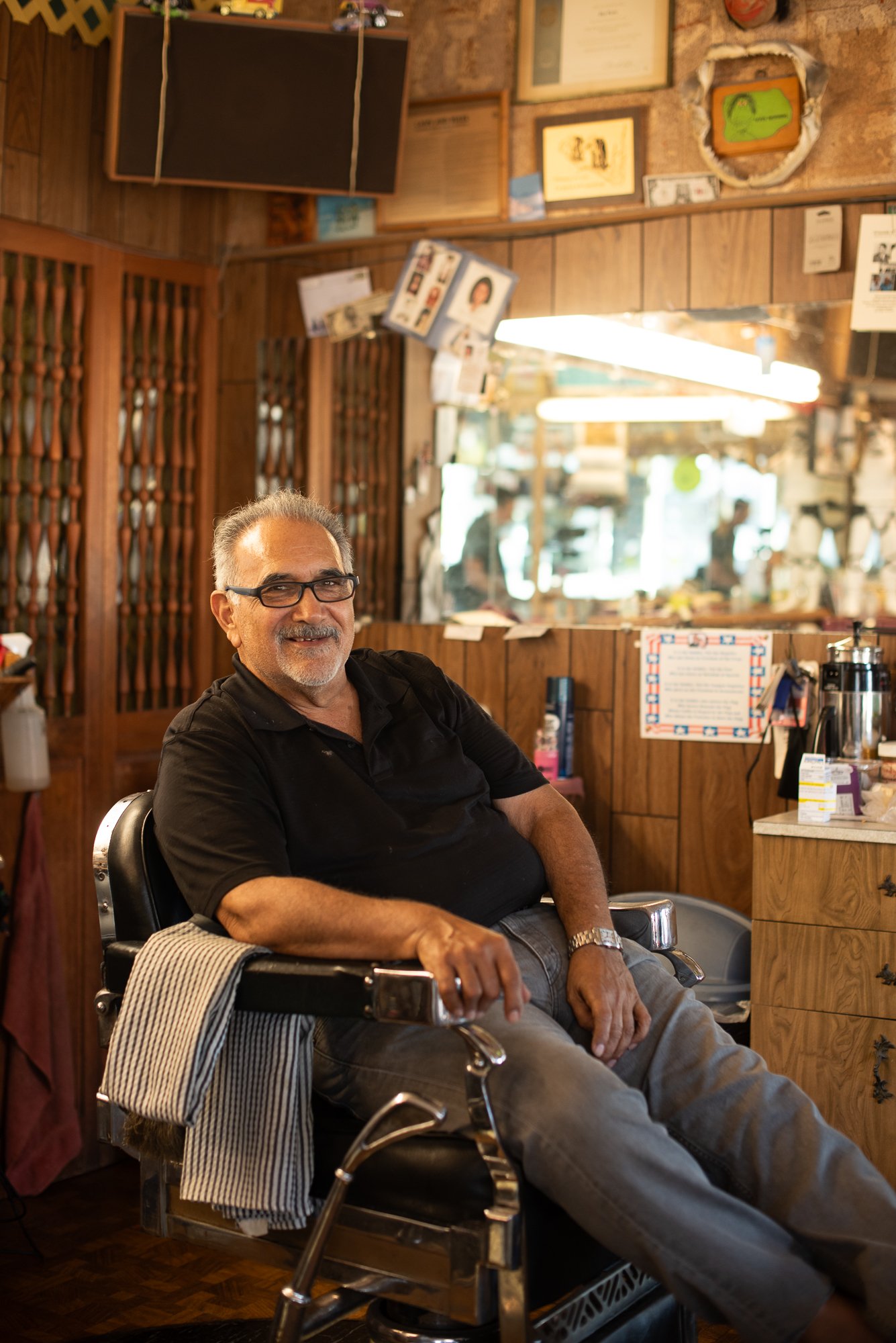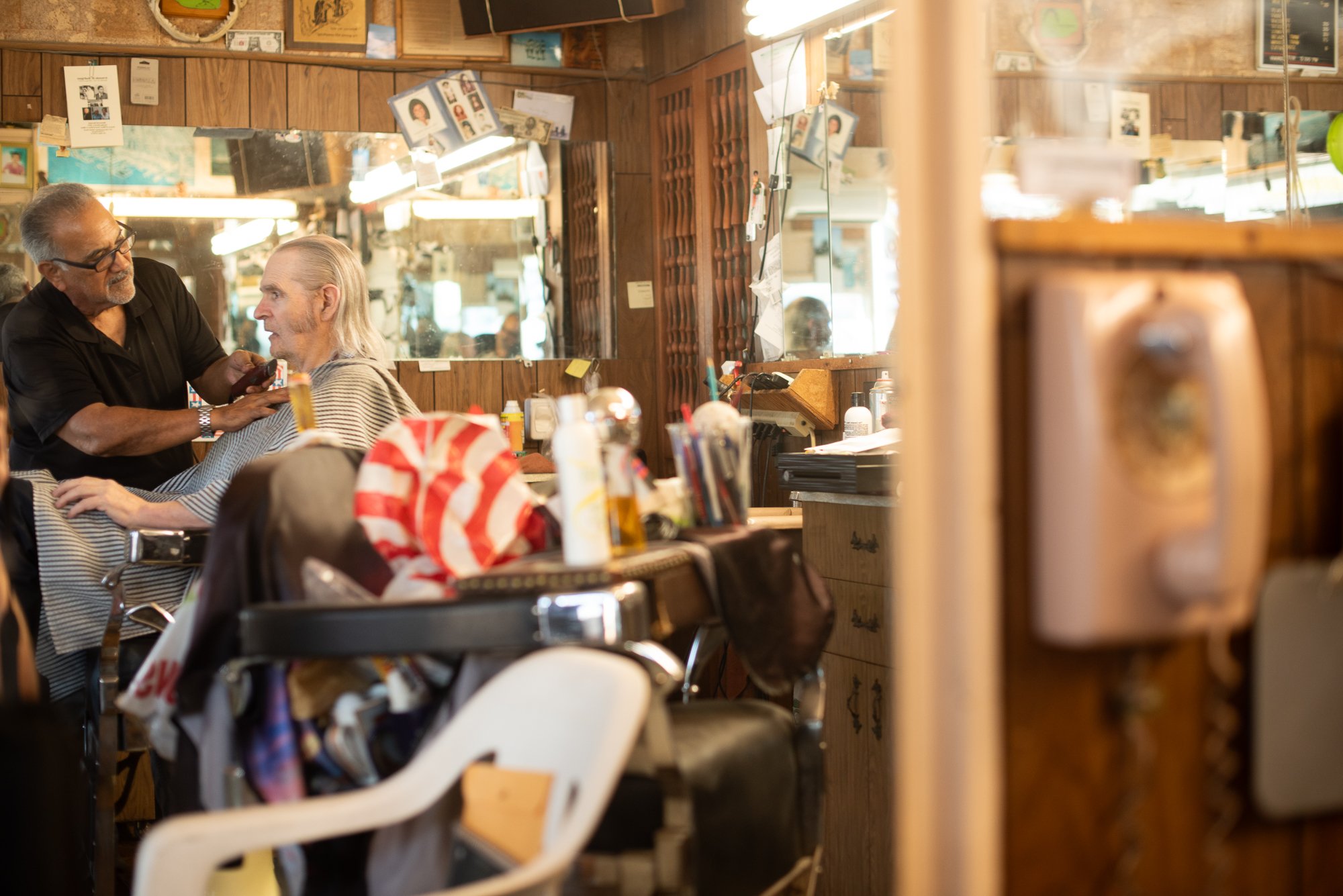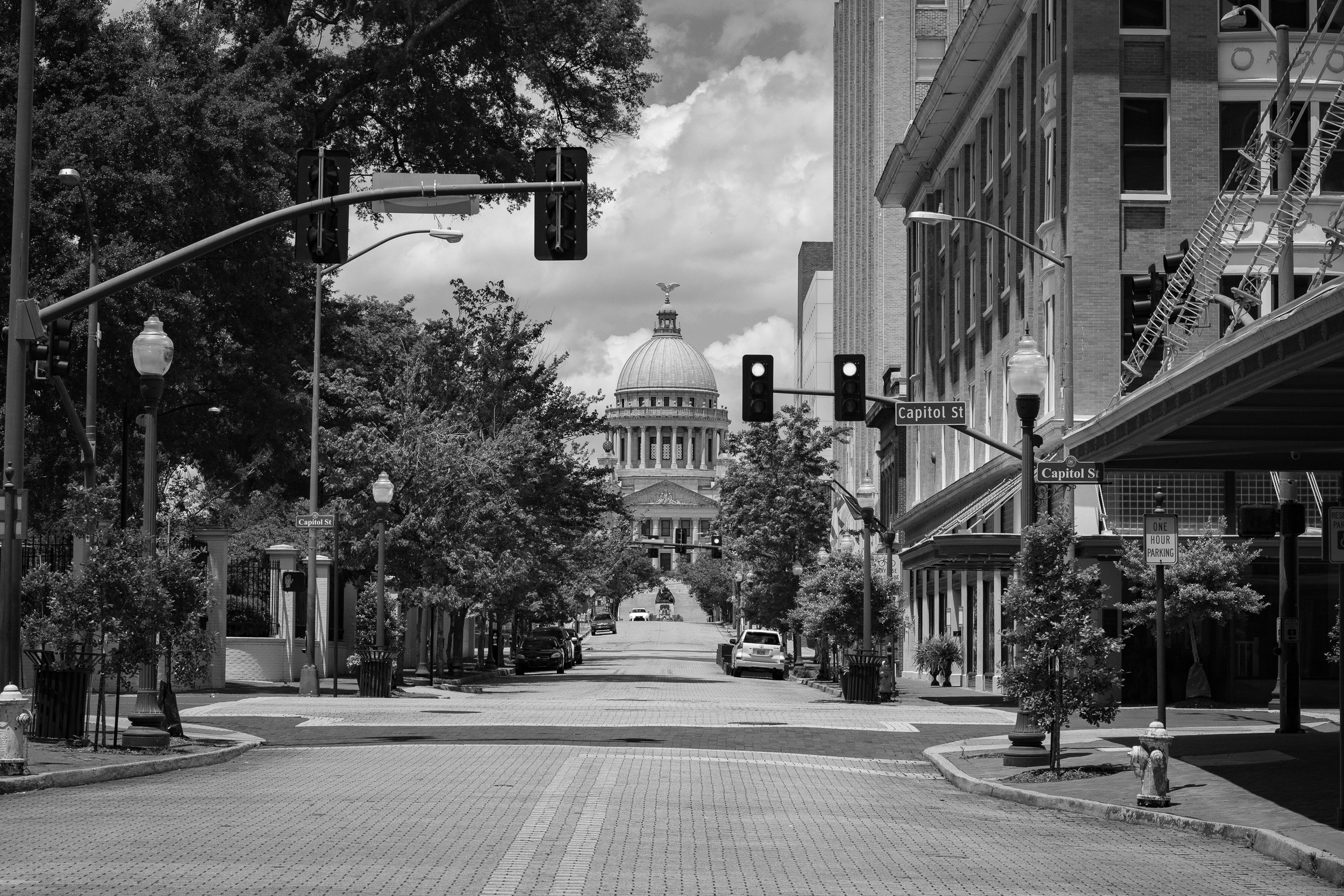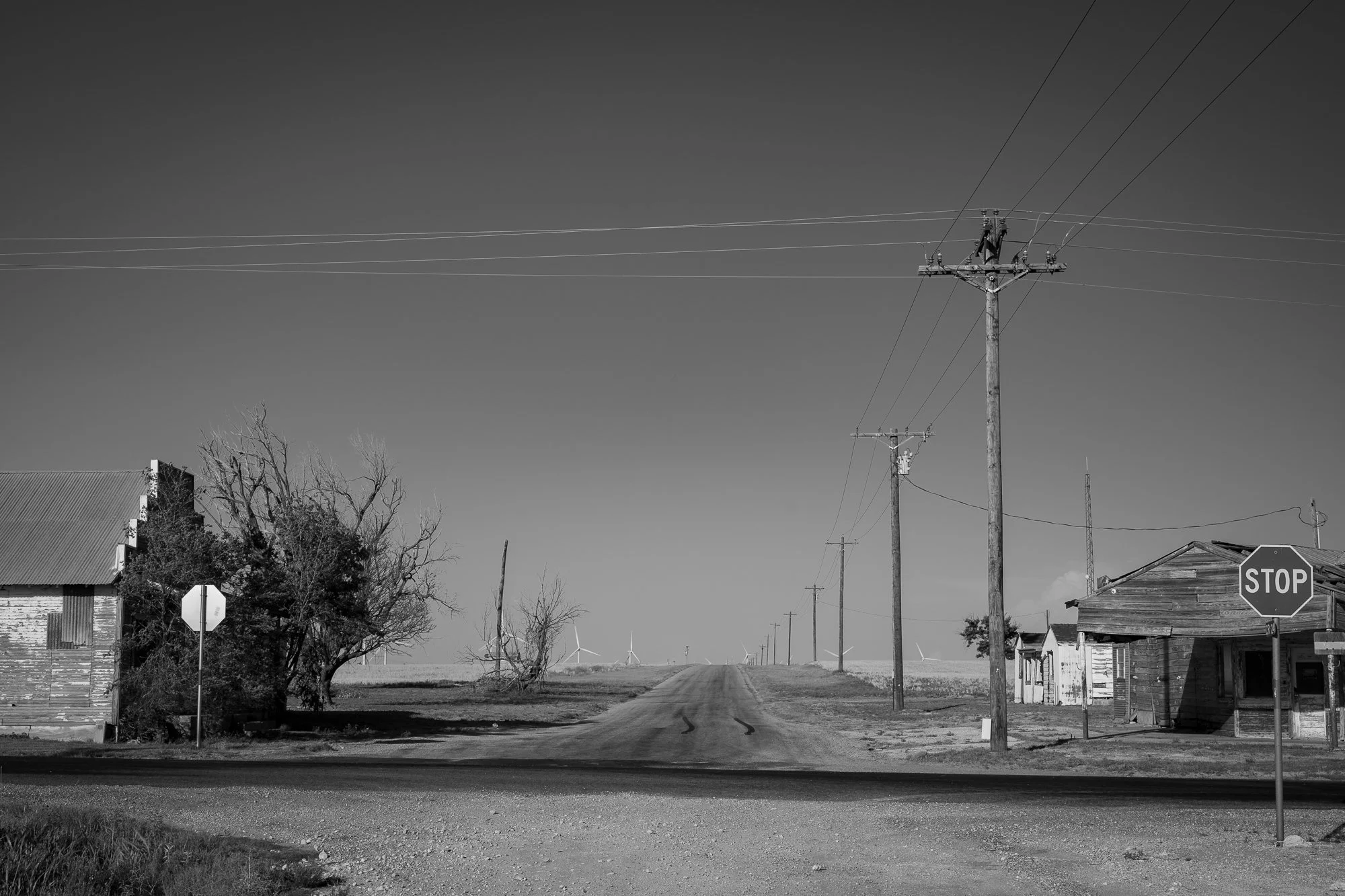
Leadville Colorado Wall Art Prints – Fine Art Photography

Leadville, Colorado Wall Art

Photographs of The Two Mile High City

Sitting at 10,151 ft above sea level, Leadville is one of Colorado’s more unique towns, and that’s saying a lot for a state with such incredible mountain culture. Not a big place but it’s still racked up a number of nicknames over the years: The Two Mile High City, Oro City, Cloud City, and Slab Town. That alone provides a great hint into Leadville’s rich mining history that began in 1859 during the Pike’s Peak Gold Rush, and that hunt for gold, silver, and lead continued for 130 years. Visiting the small town today, you can still feel what Leadville once was, and that’s a lot of the draw. Only 2 hours from Denver, but it feels a world away, with unprecendented views of the surrounding mountains and no crowds. The architecture is gorgeous and well preserved in a lot of cases like the Delaware Hotel which first opened in 1886. Of course the local jewel is the Silver Dollar Saloon. You’d be hard pressed to find another like it anywhere in the country. Inside you can feel the years (established 1879), and that feeling only gets better once you learn more about it’s history with noted regulars like Doc Holiday! The most surprising part of Leadville is the fact that it has delicious food! I’d recommend checking out The Silver Llama Market and Eatery for breakfast and Treeline Kitchen for dinner. They are conveniently located right next to each other and Treeline has a great rooftop patio that’s open in the warmer months. Mineral 1886 also has good food for lunch and dinner.

Historic Buildings and Local Flavor

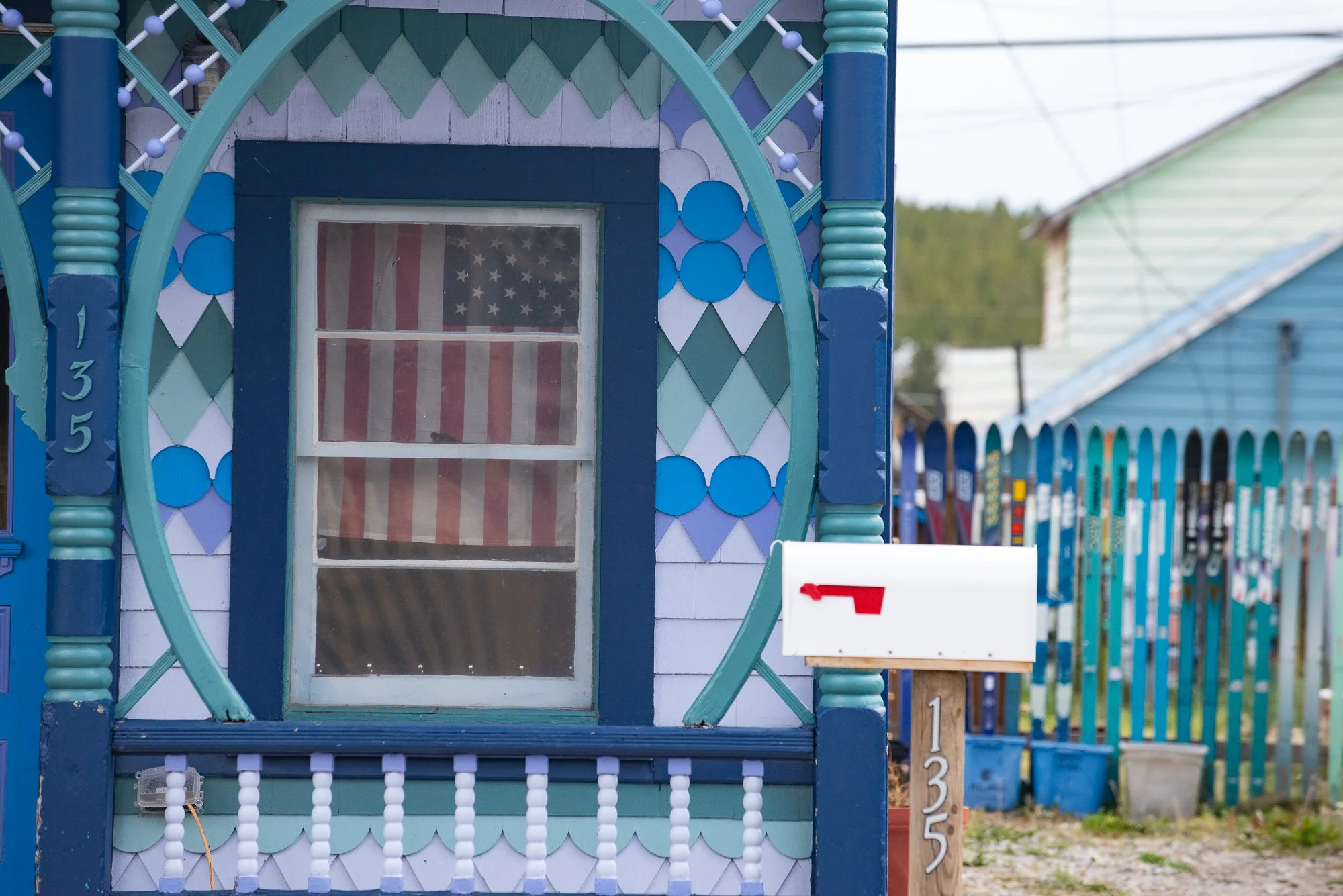
Walking through the neighborhoods is always fun because you’ll get a feel for daily life, and Leadville has some colorful houses that are intricately shingled. If you are looking for more of a workout, the Mineral Belt Trail (12 miles) can provide year round recreation with top notch views of the mountains and will take you up close to some of the old mining claims. Walking, running, and biking in the summer. Fat biking and cross country skiing in the winter. There is a nordic center just outside of Tennessee Pass and endless access to backcountry skiing/snowboarding from all routes in/out of town. And If there’s any reason this little hideaway would sound familiar, that’s because it’s home to one of the hardest mountain bike races in the country - The Leadville 100! That and Melanzana, which is supposedly on a year waitlist for hooded sweatshirts. Perhaps the most redeeming quality about their main drag though, is you won’t see a single chain restaurant or business. They are all locally owned and there is no mistaking that fact! Leadville is a gem of a place that you hope will retain it’s small town charm for decades to come. If you’re looking for a fun getaway with resort crowds, check out Leadville for a couple nights.

Get Your Leadville Print

If you’d like to have a little piece of Leadville to remember your trip and brighten your walls with Colorado culture, contact me directly about photography prints and custom framing options for your home, office, or commercials space. These photographs are also available for editorial and commercial licensing.

Photography print of downtown Leadville, Colorado

Leadville, Colorado Wall Art

Photograph of the Golden Burro Cafe in Leadville, Colorado

The Golden Burro Cafe - Leadville

Photography print of the Silver Dollar Saloon in Leadville, Colorado

Black and white photograph of the Silver Dollar Saloon in Leadville, CO

Black and white photograph of the bar inside the Silver Dollar Saloon in Leadville, Colorado

Photograph of the bar inside the Silver Dollar Saloon

Leadville, CO

Manhattan Bar - Leadville, CO

Photograph of High Mountain Pies Pizzeria in Leadville, Colorado

High Mountain Pies - Leadville, CO

Photograph of an American Flag hanging in the window of a house with colorful shingles and a ski fence in Leadville, CO

Colorful house in Leadville, CO

Photo print of the Silver Dollar Saloon in Leadville, CO

Leadville Saloon

Photograph of bar stools and the old tile floor in the Silver Dollar Saloon in Leadville, CO

Tile floor in the Leadville Saloon

Photograph of the interior of the saloon in Leadville, CO

Pool table and taxidermy inside the Silver Dollar Saloon - Leadville, CO

Hand painted beer sign on an old brick building in Leadville, CO

Beer - Leadville, CO
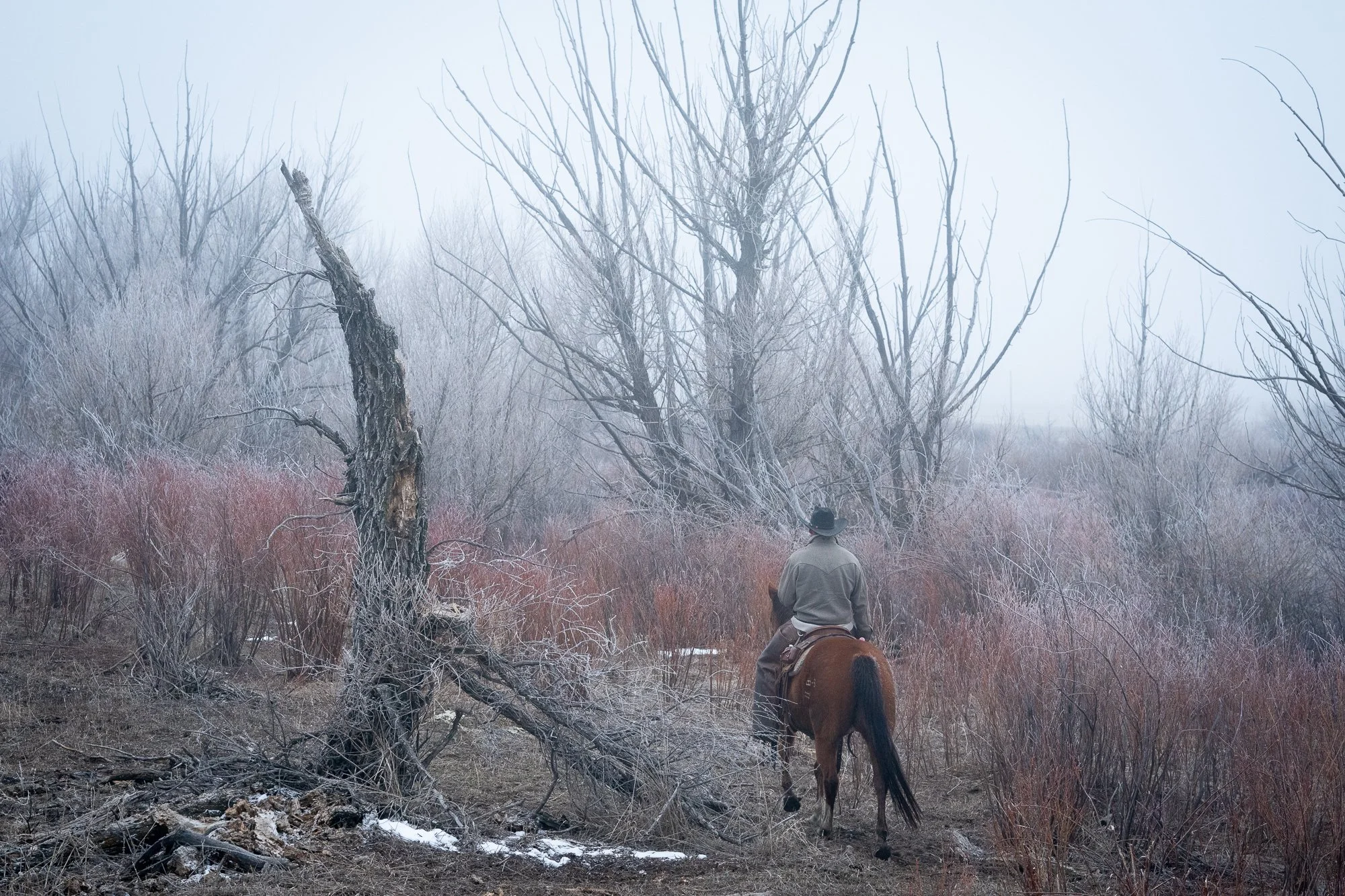
Photographing Western Apparel in Action

WESTERN LIFESTYLE PHOTOGRAPHER

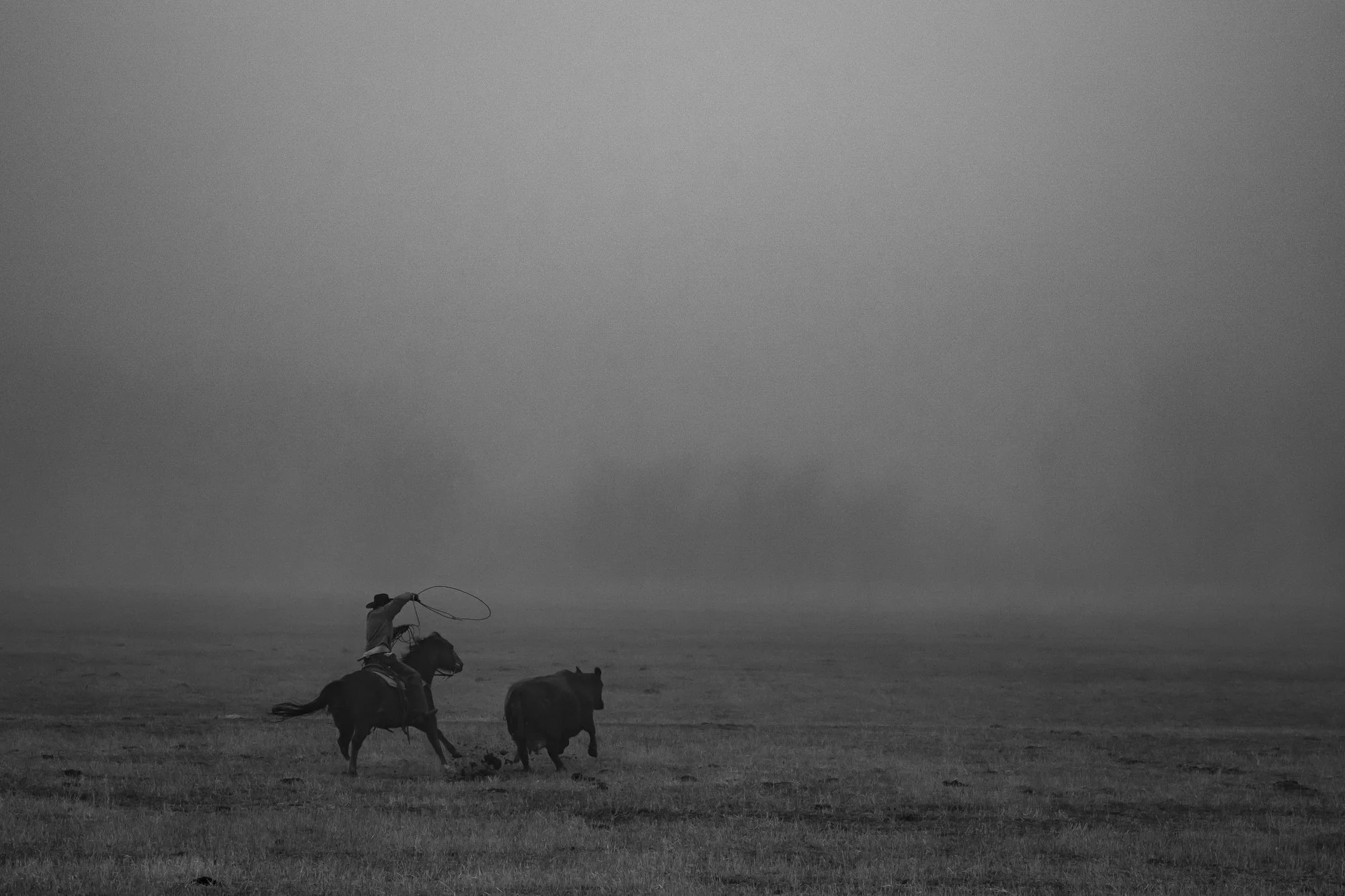
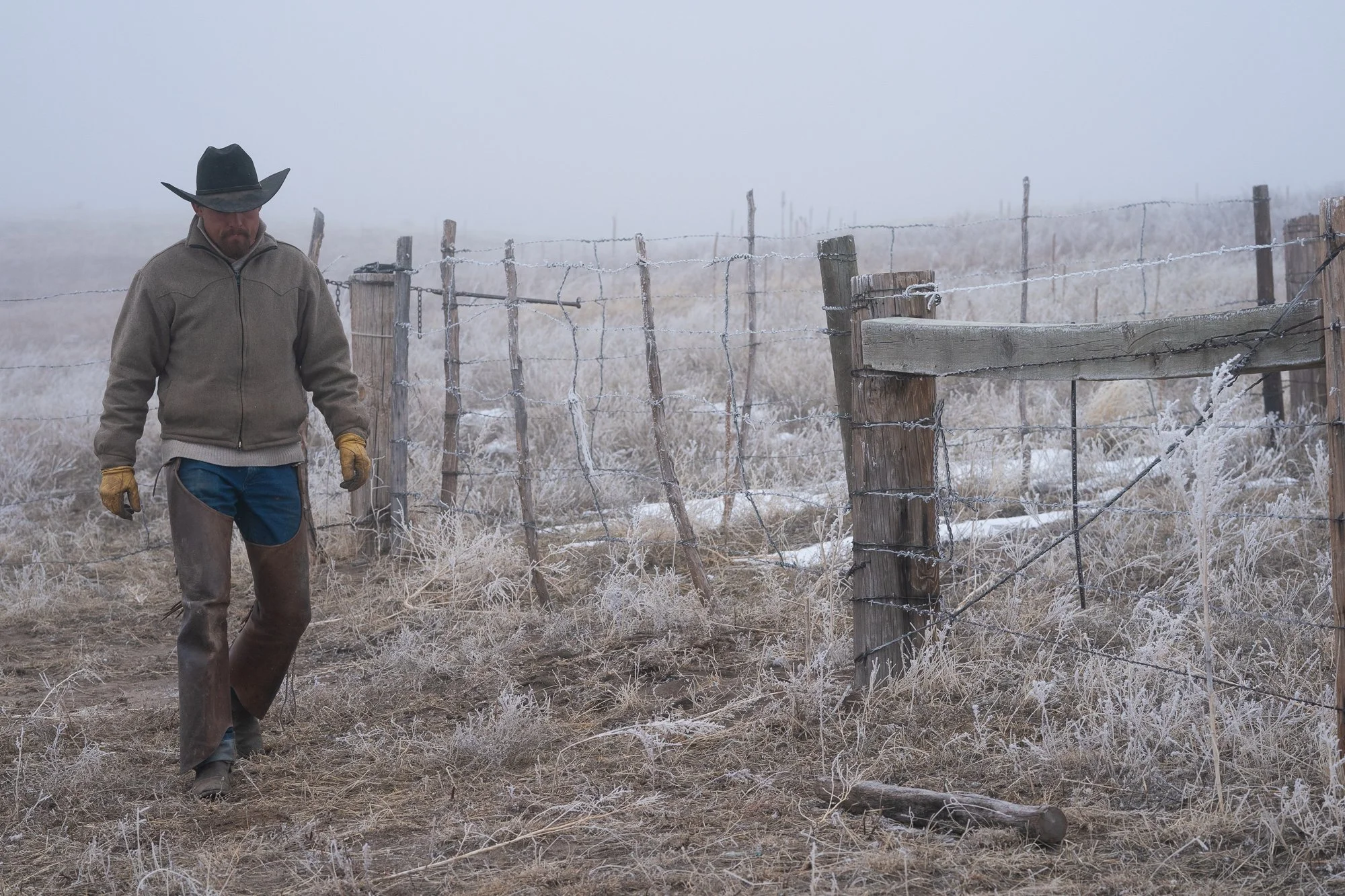
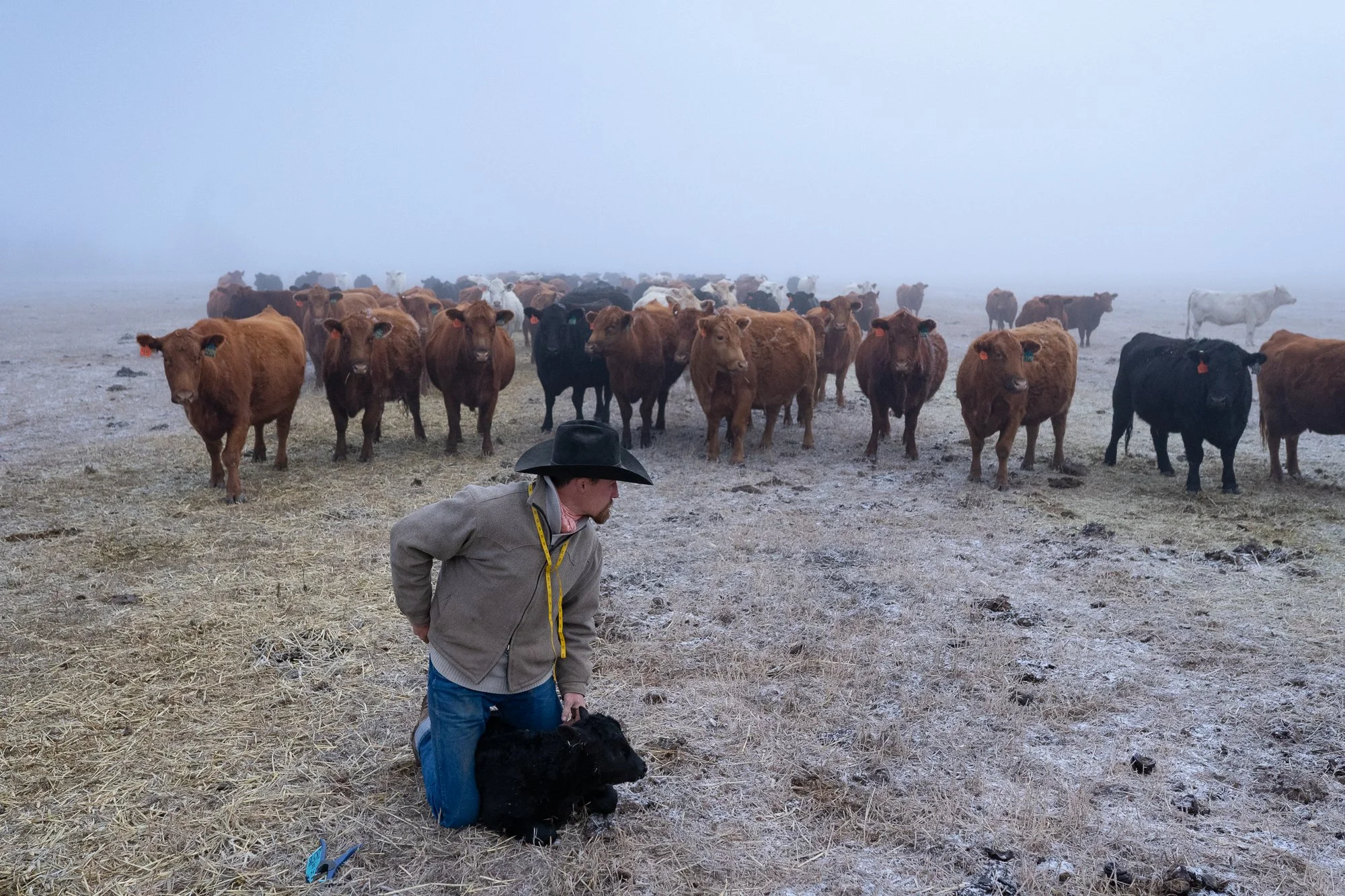
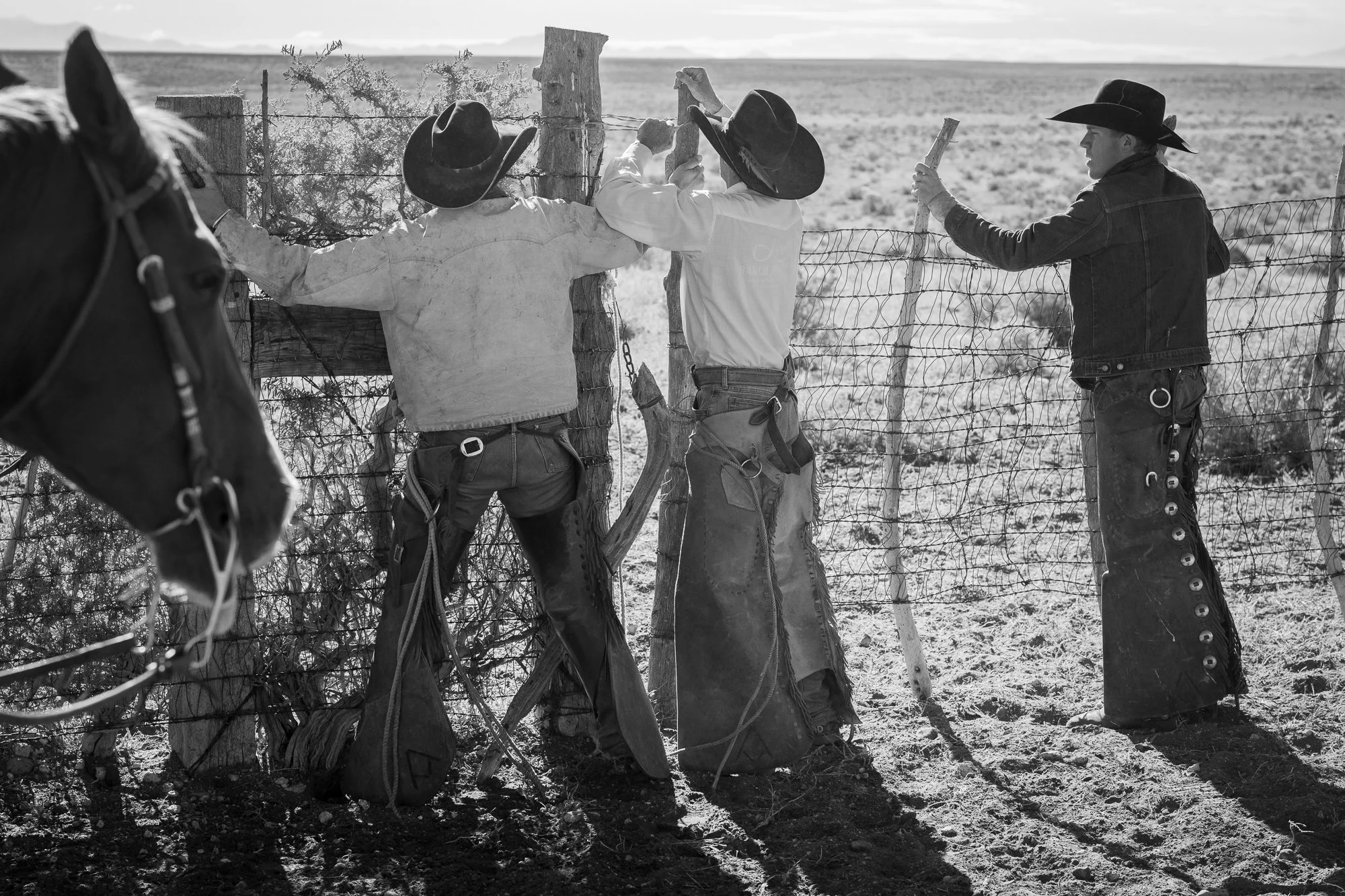
For more than six years I’ve been photographing real ranch life across the American West. What began as a personal curiosity about cowboy culture slowly turned into a long-term body of work documenting working cowboys, historic ranches, and the landscapes that shape life in cattle country.

Much of the photography labeled “Western lifestyle” today is staged or heavily stylized. My approach has always been different. The goal is simply to spend time on real ranches and photograph what naturally unfolds — long days horseback, early morning gathers, branding fires, and the quiet moments that happen between the work.

Those moments are where the real story of the American West lives.

Photographing Western Lifestyle and Ranch Culture

The culture surrounding ranch life runs deep. On most of the ranches where these photographs were made, traditions have been passed down through generations — how to work cattle, how to read the land, how to handle a horse.

When you spend enough time around ranches, you realize that the cowboy is not a character from a movie. He’s a working professional responsible for managing cattle, horses, land, and weather, often in some of the harshest environments in the country.

As a western lifestyle photographer, the goal is to photograph that reality honestly. There’s no need to manufacture moments when the work itself already contains so much character.

Some days the photographs happen during big events like branding or shipping cattle. Other days they happen quietly while riders move cattle across miles of open country under changing skies.

Working Cowboys of the American West

Much of this work is part of an ongoing project documenting the lives of working cowboys across the American West. Over the years I’ve been fortunate to spend time on several historic ranches where these traditions are still very much alive.

The photographs include moments from ranches such as the OW Ranch in Montana, the legendary 6666 Ranch in Texas, and buckaroo culture in Nevada.

Each place has its own history and rhythm, but the common thread is the same — a deep respect for the land, the animals, and the responsibility that comes with raising cattle.

Photographing these environments requires patience and trust. The best images usually come after spending enough time around the work that people forget the camera is there.

Western Lifestyle Photography for Brands and Publications

Authentic Western imagery has become increasingly important for brands and publications looking to tell real stories about the American West. Companies connected to ranching, agriculture, outdoor gear, and Western culture often need photography that reflects the real environments where their products and stories exist.

Because much of my work takes place on active ranches, the photography naturally reflects the landscape and culture of these places. That authenticity is often what brands and editors are looking for when they search for a western lifestyle photographer.

Rather than recreating Western imagery in controlled environments, the photographs are made where the work actually happens — in the saddle, in the dust, and under the same light that cowboys have worked in for generations.

A Long-Term Documentary Project

What started as a simple interest in cowboy culture has slowly grown into a larger documentary project focused on the traditions of ranching across the American West.

Over time the archive has expanded to include thousands of photographs capturing ranch work, cowboy life, and the landscapes that define cattle country. The project continues to evolve as new ranches, new people, and new stories become part of the work.

You can explore more photographs from this ongoing project here:

Working Cowboys of the American West

Working cowboy roping a calf on the Silver Spur Ranch in Colorado during cattle work.

Cowboy roping a calf on the Silver Spur Ranch in Colorado.

Portrait of a working cowboy photographed on a Colorado cattle ranch by western lifestyle photographer Rob Hammer.

Portrait of a working cowboy on a Colorado cattle ranch.

Cowboy tagging a calf during calving season on a Colorado ranch photographed as western lifestyle photography.

Tagging calves during spring cattle work.

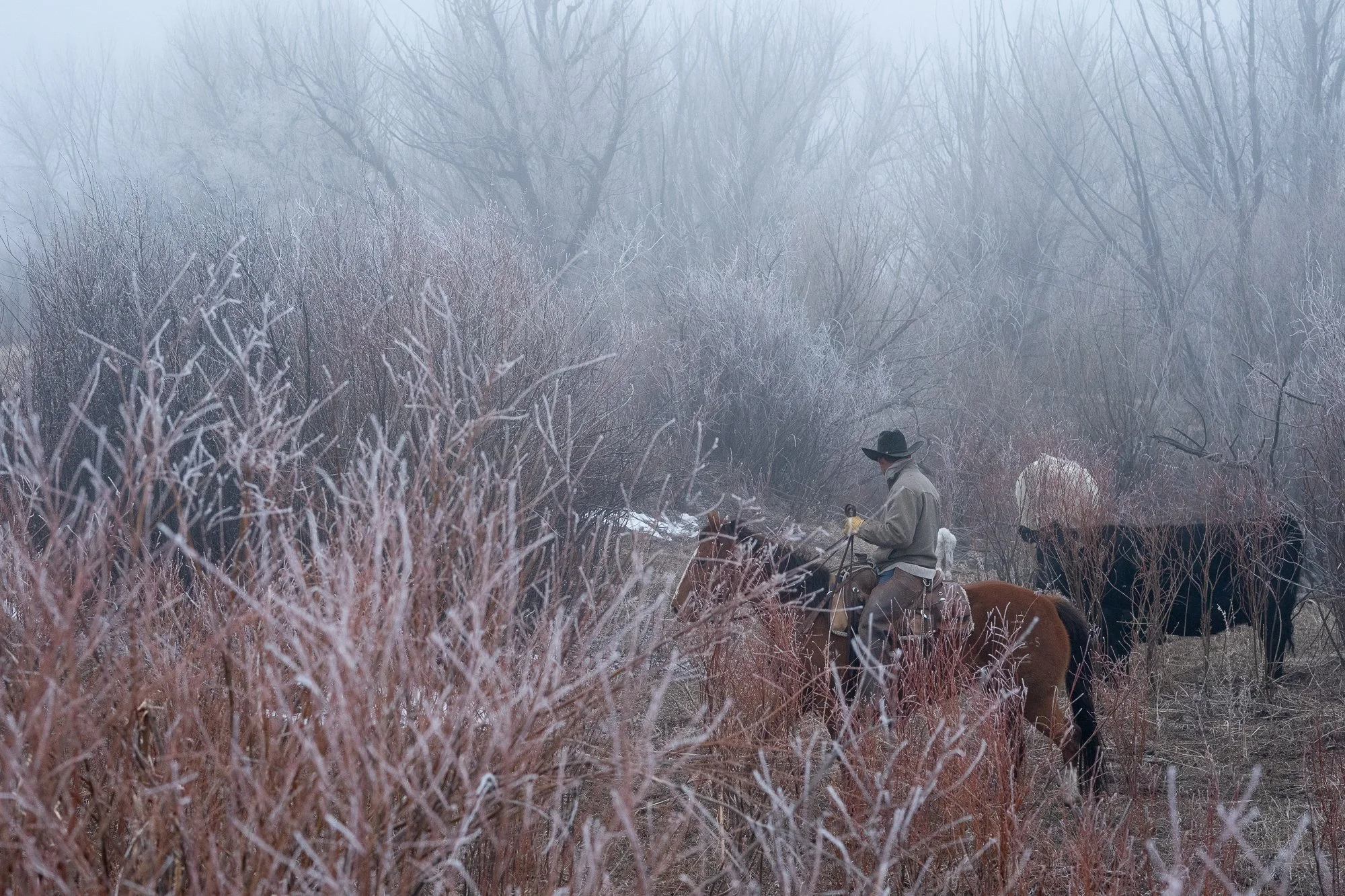
Working cowboy riding a horse through brush on a Colorado cattle ranch photographed in western lifestyle style.

Riding through thick country looking for cattle.

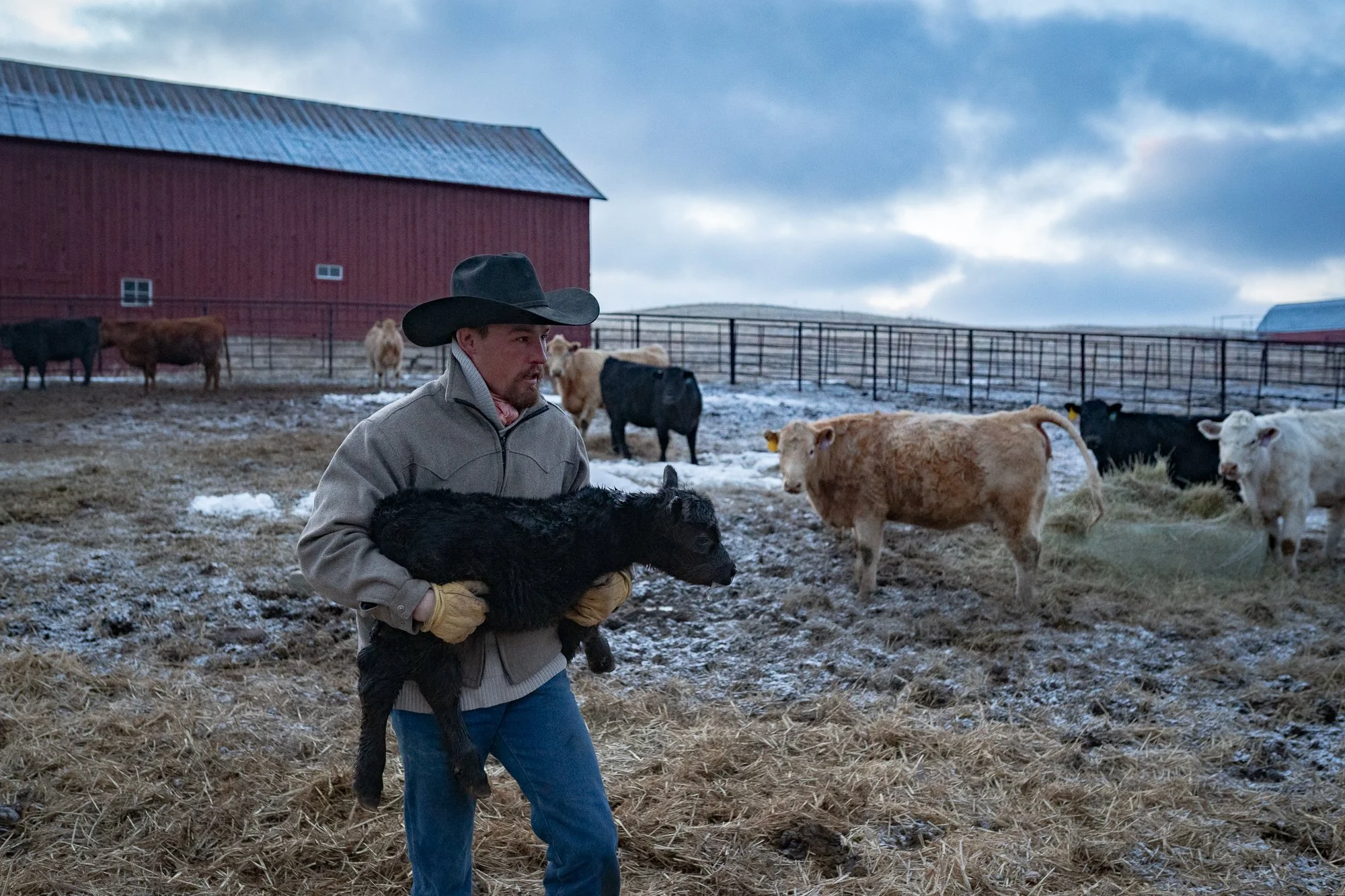
Cowboy carrying a newborn calf across snow on a Colorado cattle ranch during calving season.

Carrying a newborn calf during calving season.

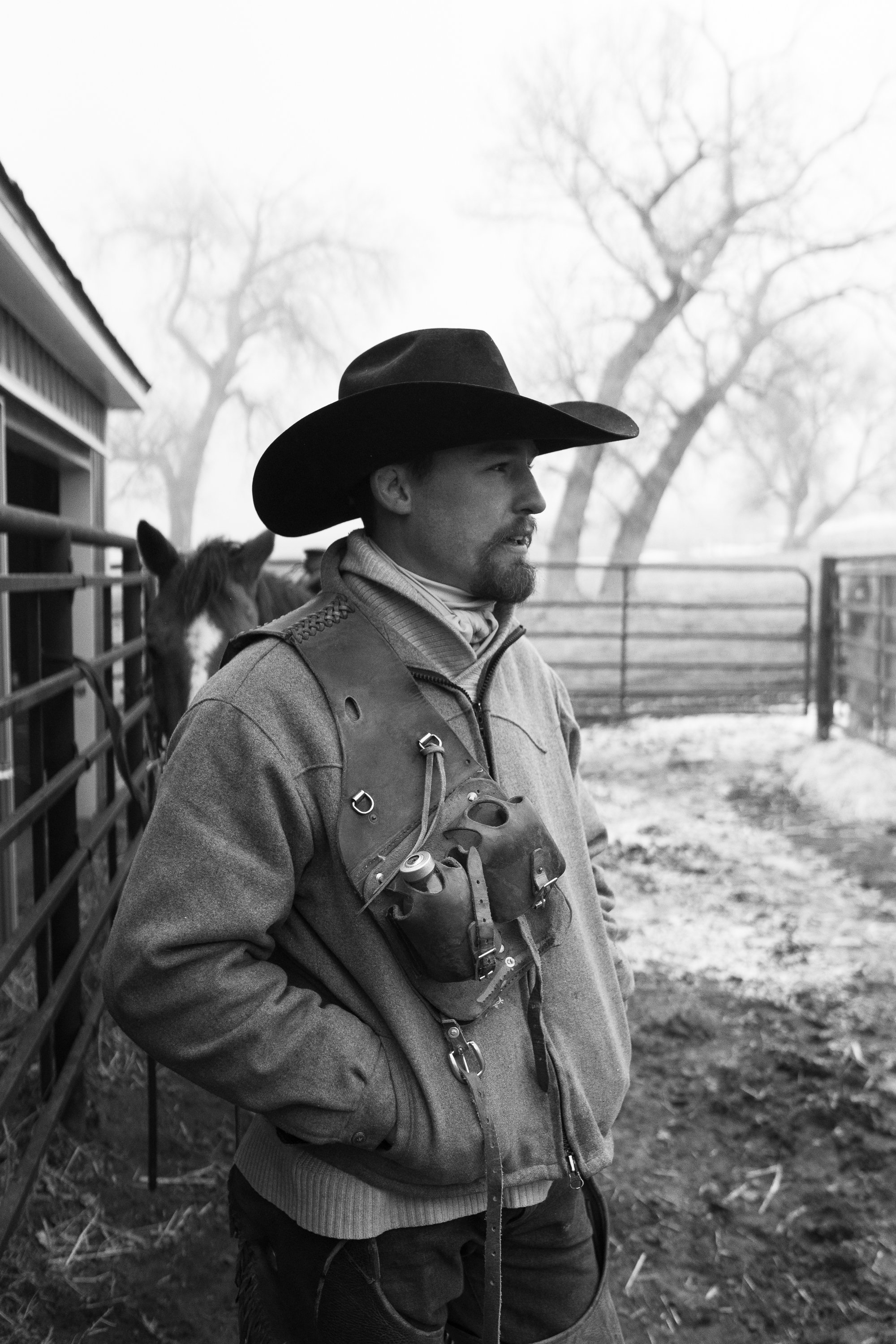
Portrait of a Colorado cowboy wearing traditional ranch gear photographed as western lifestyle photography.

Portrait of a cowboy in working gear.

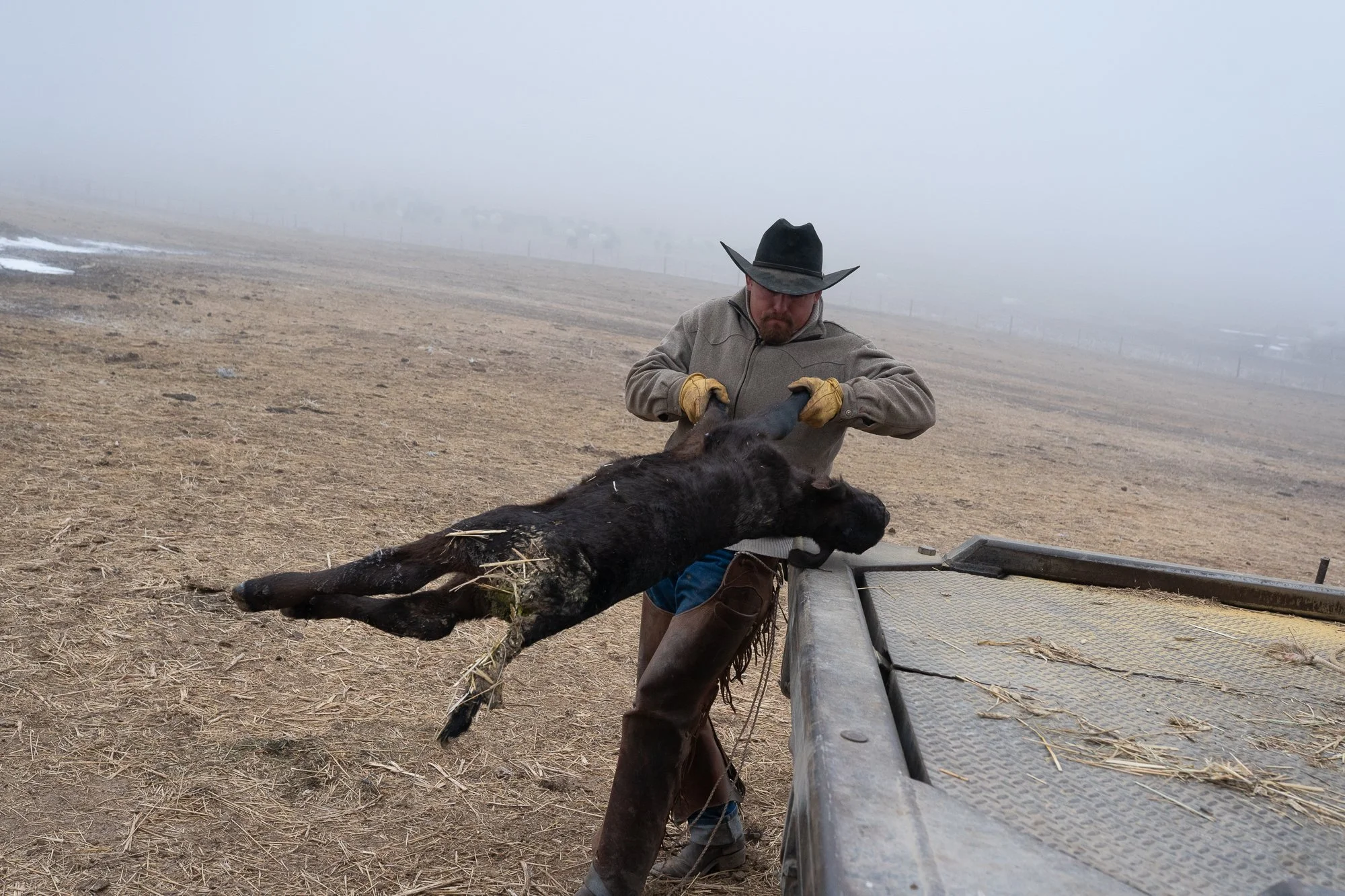
Working cowboy handling livestock during calving season on a Colorado ranch photographed as authentic western lifestyle photography.

The harder side of ranch life.

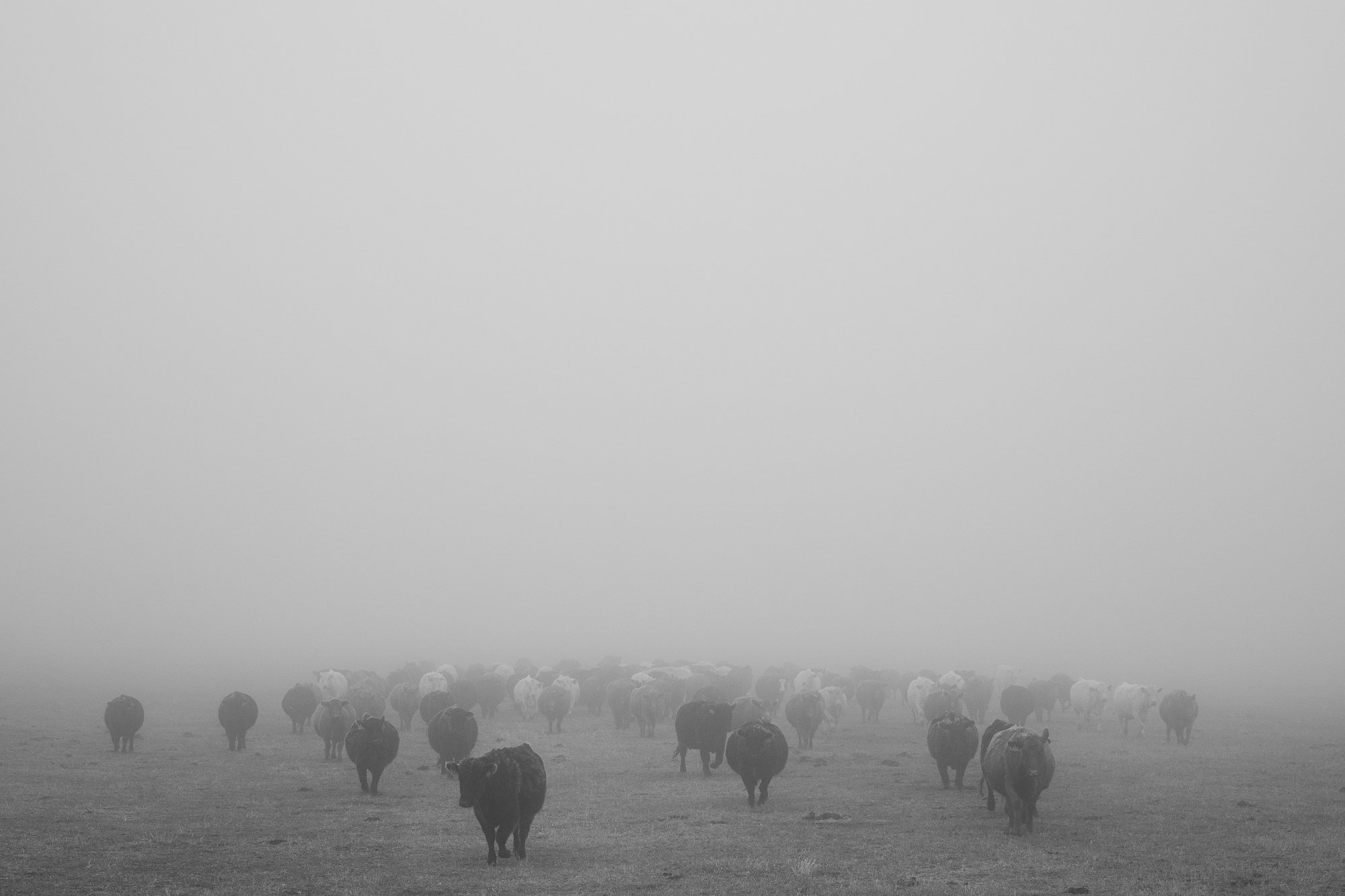
Cattle herd standing in fog on a Colorado cattle ranch pasture photographed as western ranch lifestyle imagery.

Cattle walking in the early morning fog.

Cowboy riding through brush searching for cattle on a Colorado ranch photographed as western lifestyle imagery.

Searching thick country for cattle.

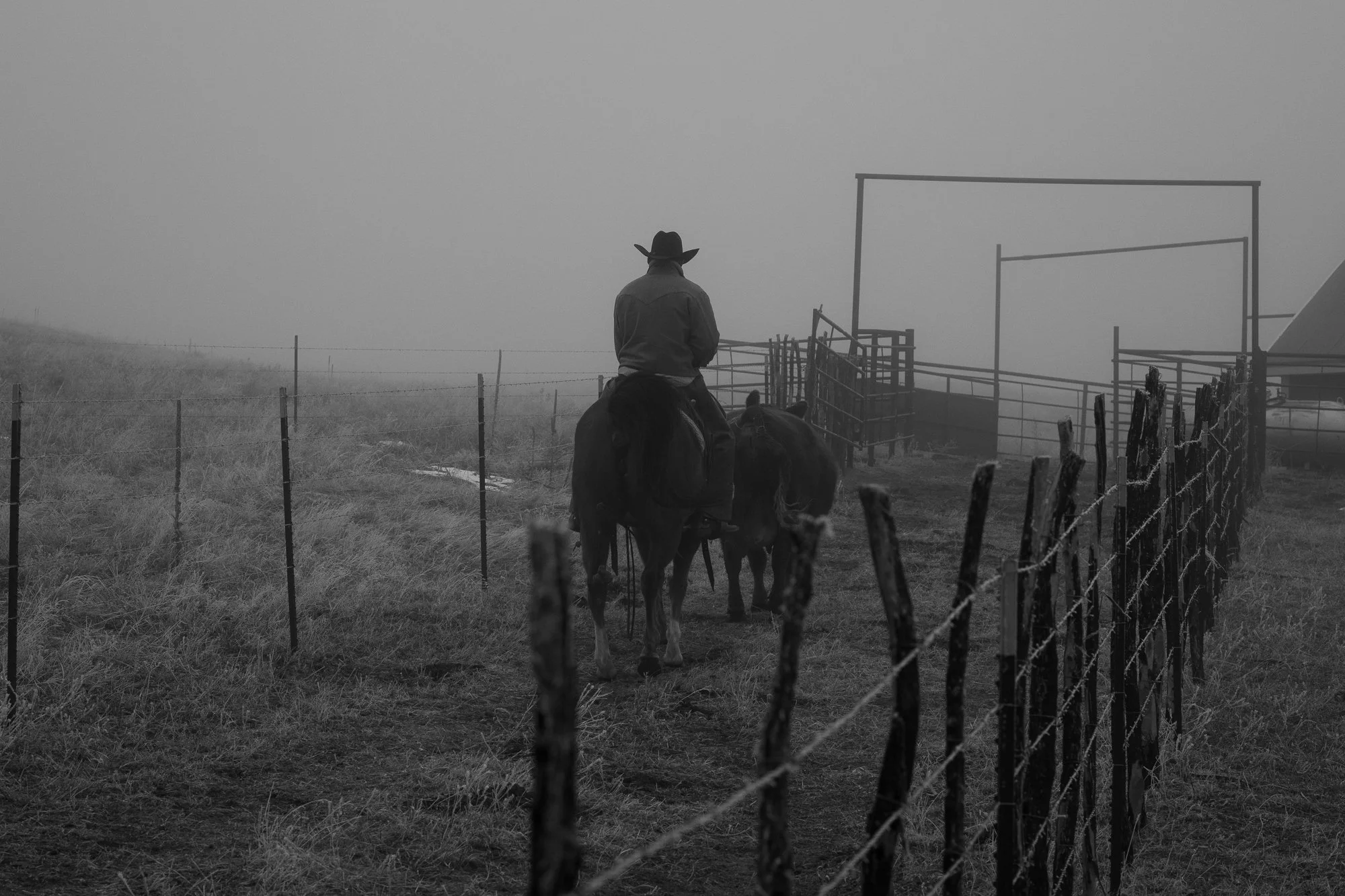
Black and white photograph of a working cowboy in Colorado

Black and white cowboy photograph

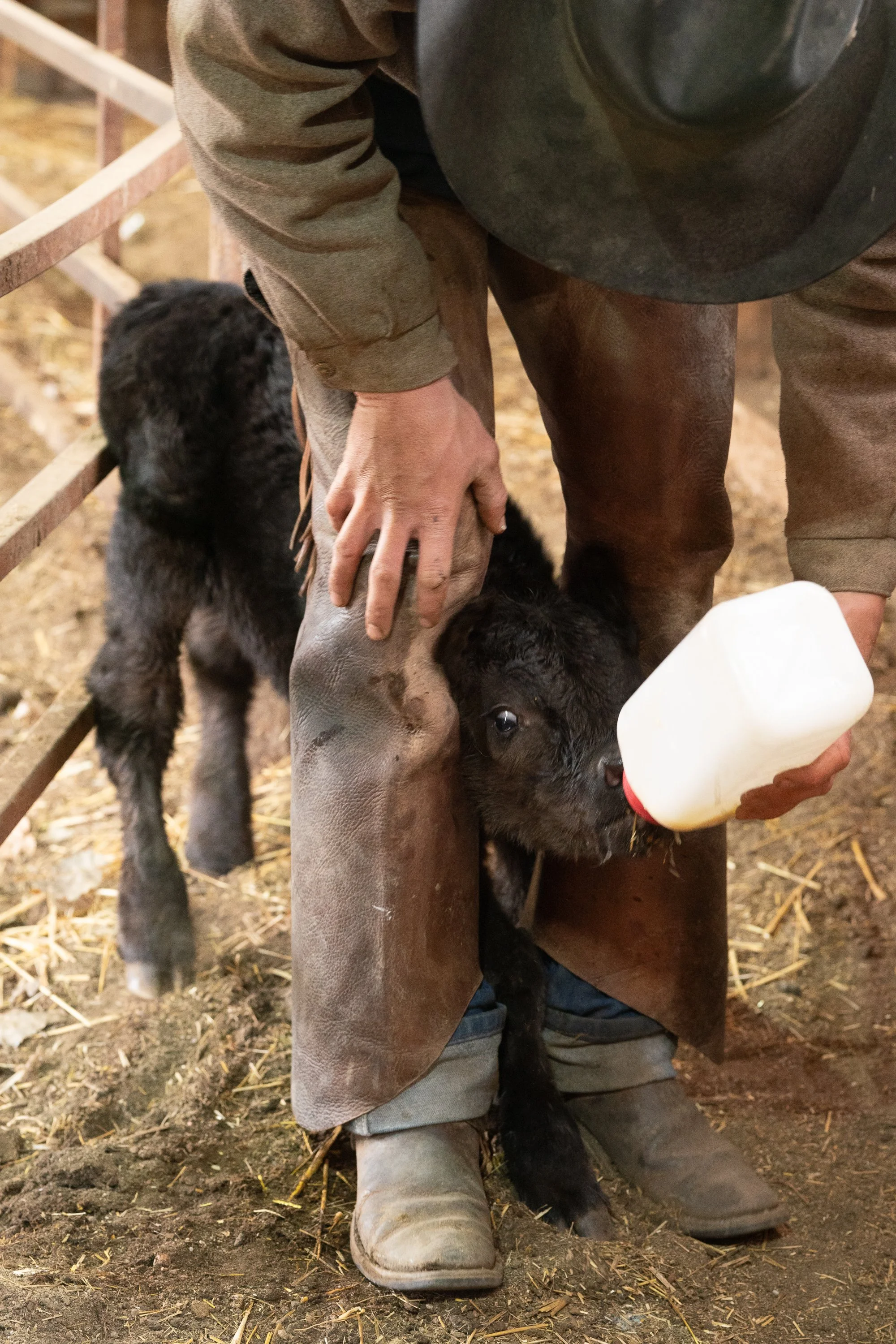
Photograph of a cowboy bottle feeding a baby calf

Bottle feeding a baby calf

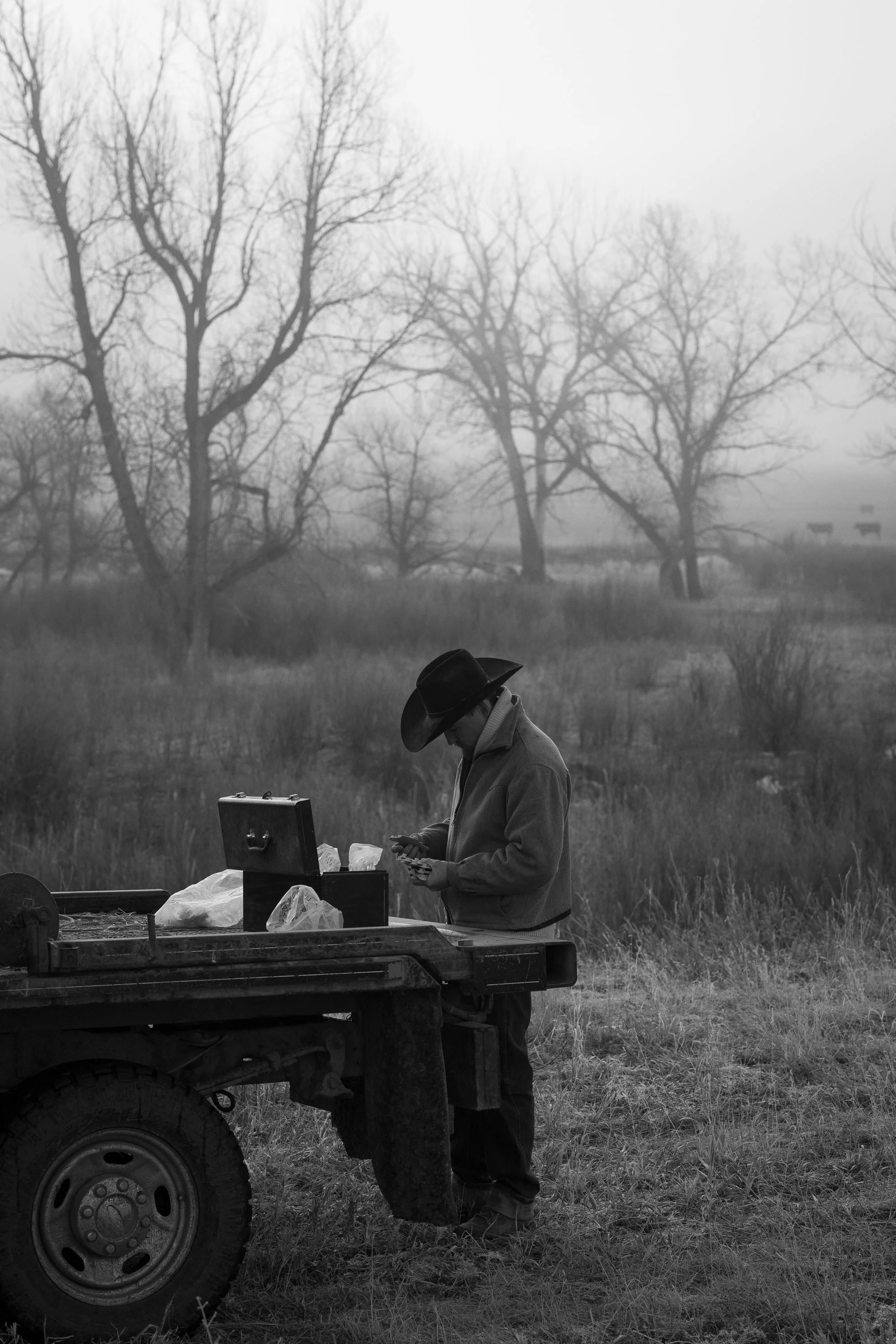
Cowboy counting ear tags on a pickup truck tailgate during cattle work on a Colorado ranch.

Counting ear tags during cattle work.

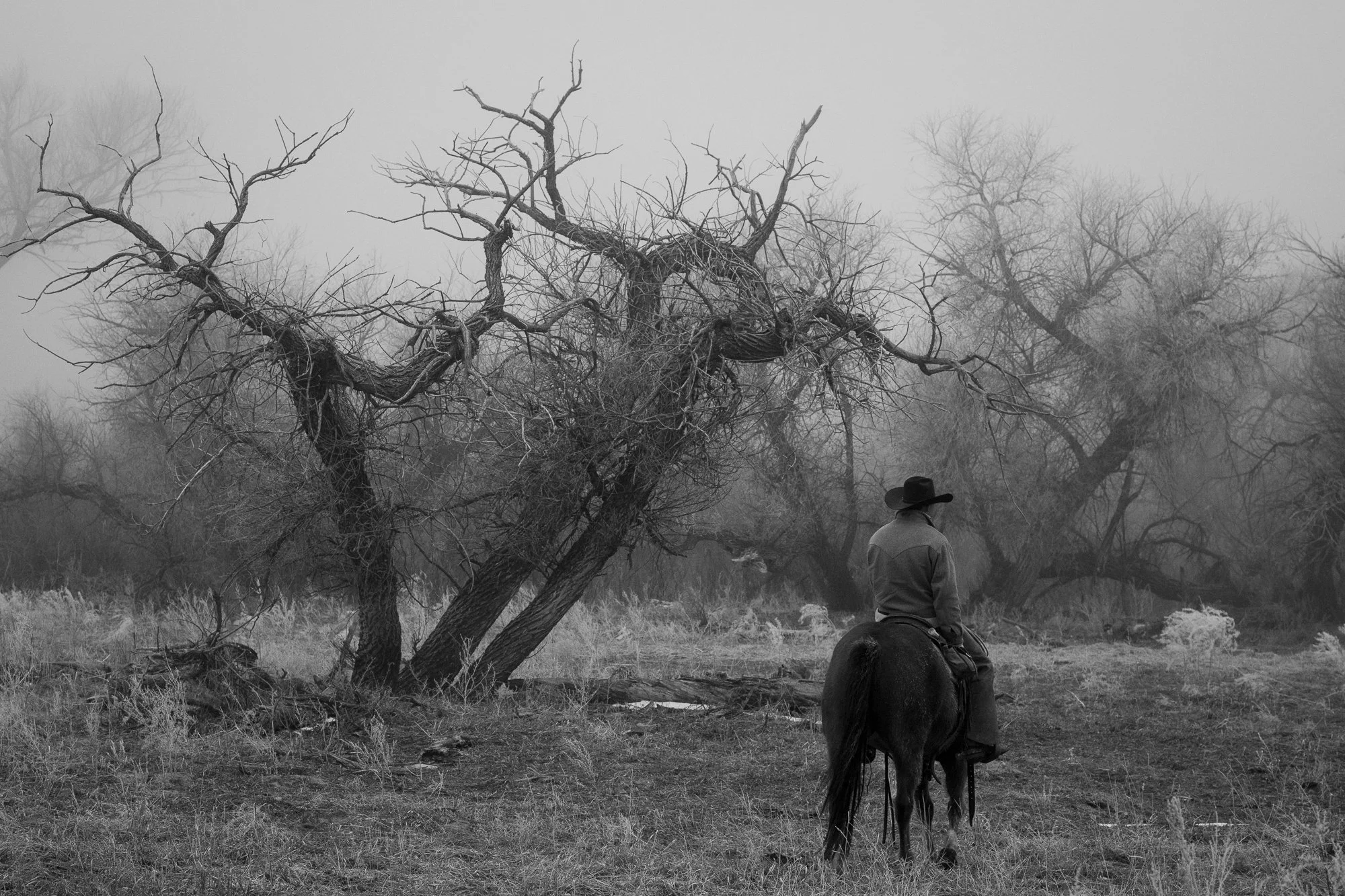
Photograph of a Colorado cowboy on his horse

Colorado cowboy riding his horse through thick country

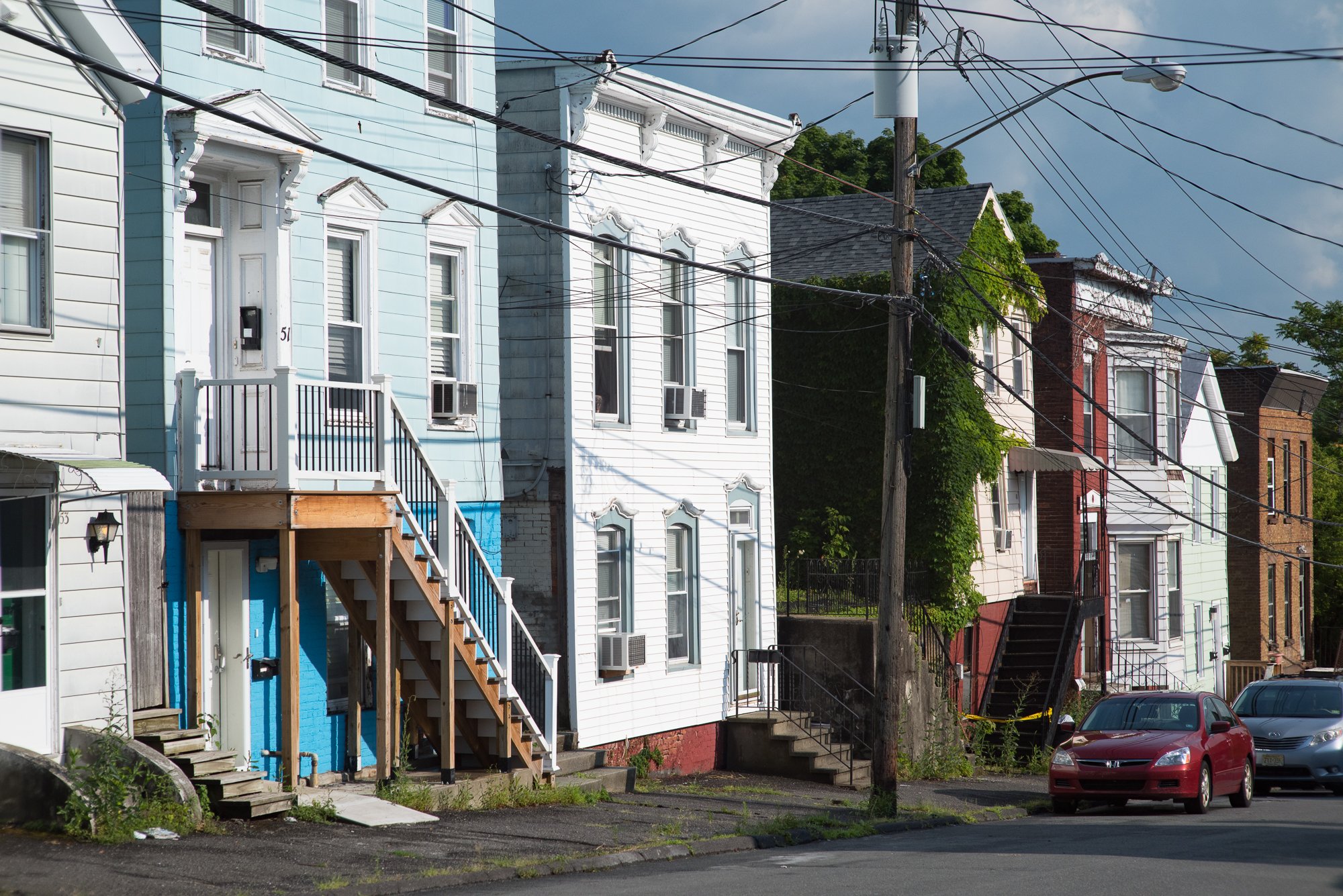
Photographs of Cohoes, New York

Cohoes, New York Street Photography

I grew up in the Capital Region, so places like Cohoes have never felt exotic to me. They were just there — part of the background of everyday life. You drove through them. You crossed the river. You passed the mills and brick buildings without thinking much about it. It’s only later, after leaving and coming back, that you realize how much character was hiding in plain sight.

These photographs were made while walking the streets of Cohoes with that perspective in mind — not as a visitor, but as someone familiar with the rhythm of these towns. The work looks at architecture, streets, and surfaces the way they actually exist, without trying to dress them up or turn them into something they’re not.

Street Photography Without the Obvious Moments

When people think of street photography, they often imagine crowds or dramatic interactions. That’s never really been what draws me to places like Cohoes. Here, the streets are quieter. The interest comes from buildings, sidewalks, old industrial remnants, and the way light moves across structures that have been standing for generations.

In that sense, this is street photography rooted more in observation than action. Many of the images are absent of people altogether, letting the town speak through its architecture and physical presence. The results feel more honest to how Cohoes actually exists day to day.

Growing Up Around These Streets

If you grew up anywhere near Albany, Troy, or the surrounding river towns, Cohoes probably feels familiar even if you’ve never spent much time there. The brick mills. The modest houses. The industrial bones that once supported entire communities. These places were built to work, not to impress.

That shared history runs throughout the Capital Region. Towns like Cohoes, Troy, and parts of Albany all carry similar visual DNA — shaped by industry, proximity to the Hudson and Mohawk Rivers, and a kind of quiet resilience that doesn’t announce itself. Photographing Cohoes feels less like documenting a single town and more like documenting a piece of a much larger regional story.

Architecture, Texture, and Time

What interests me most in Cohoes is how time shows itself. Paint peels. Brick softens. Windows reflect newer structures nearby. There’s a layering that happens naturally when places are allowed to age instead of being erased.

Walking these streets with a camera feels less about finding moments and more about paying attention. The photographs come from slowing down and noticing how light hits a wall, how a street curves past an old building, or how a neighborhood quietly carries its past forward.

Part of a Larger Capital Region Project

This post focuses on Cohoes, but it’s part of a broader effort to photograph the Capital Region with the same restraint and familiarity. These towns don’t need to be explained or romanticized — they just need to be looked at carefully.

Seen together, photographs from Cohoes, Troy, and Albany begin to form a more complete picture of this part of New York: interconnected, working-class, architectural, and often overlooked.

Explore More from the Capital Region

If you’re interested in how this work extends beyond Cohoes, you can explore related posts from nearby cities:

Photograph of homes in Cohoes, New York

Old homes in Cohoes, New York

Photograph of a hair salon in Cohoes, New York

Danielle’s House of Hair - Cohoes, New York

Photograph of the National Bank of Cohoes

Cohoes, New York Photography

Historic photograph of Cohoes, New York

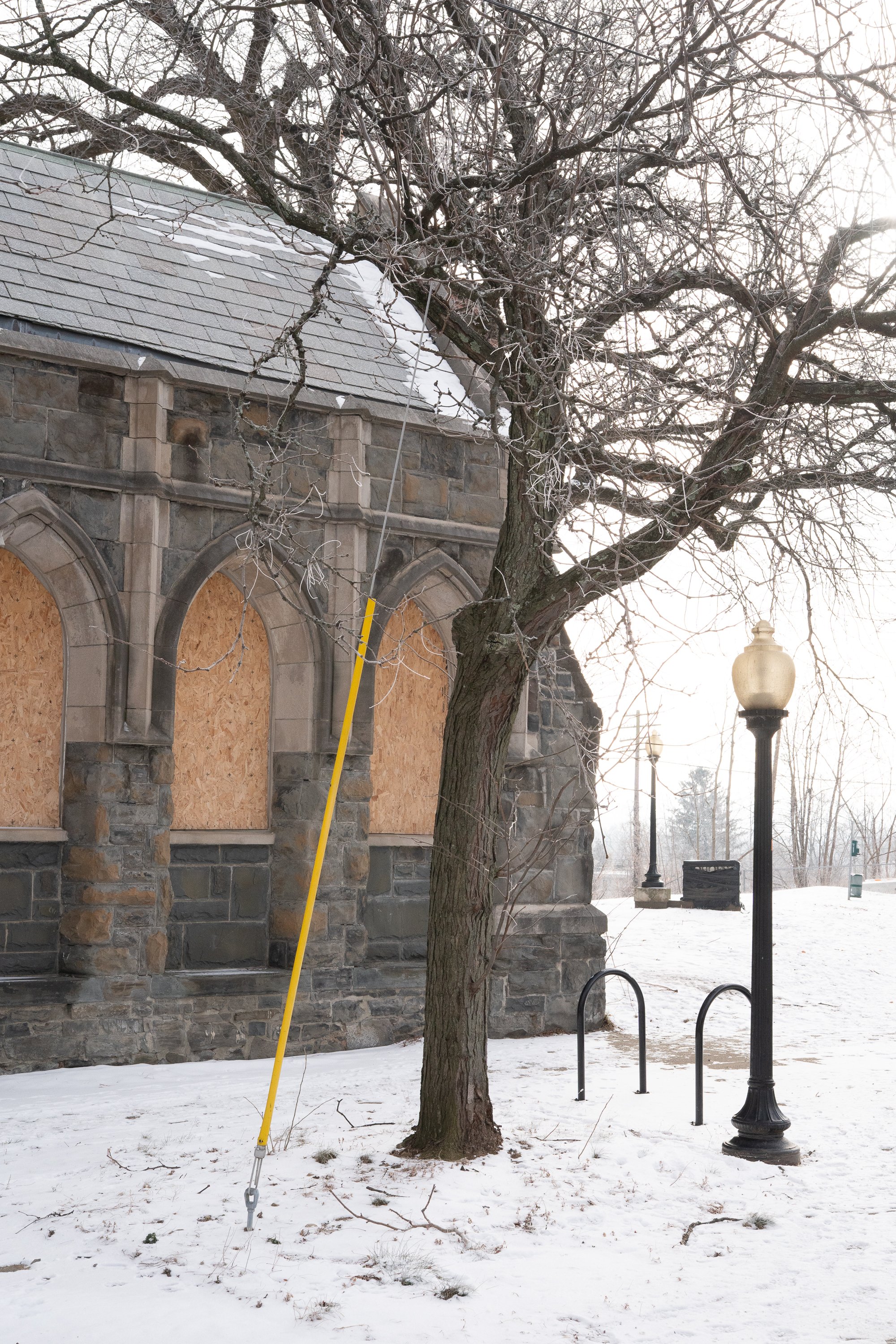
Train track running by St. John’s Church in Cohoes, New York

Photograph of Remsen St. in Cohoes, New York

Photograph of the business’ on Remsen St. in Cohoes, New York

Photograph of a flower shop in Cohoes, New York

Flower shop - Cohoes, New York

Photograph of Dennis Holzman Antiques in Cohoes, New York

Antique shop in Cohoes, NY

Photograph of the Cohoes Armory in Cohoes, New York

Cohoes Armory

Photograph of an old church in Cohoes, New York

Old church in Cohoes, NY

Photograph of beautiful old brick homes in Cohoes, NY

Cohoes, NY architecture

Photograph of Cohoes in Upstate New York

Cohoes, New York Photography

Photographs of Helper, Utah: From coal town to creative heaven

Helper, Utah Photography — Historic Town & Creative Community

Helper, Utah — nestled in eastern Utah along U.S. Routes 6 and 191 is a historic railroad and coal mining town that has become a vibrant creative community with galleries, murals, and architectural character. Through this fine art photography essay, I explore Helper’s unique blend of West-side grit and artistic reinvention, capturing both the visual texture and the spirit of place. These photographs are available for editorial and commercial licensing or fine art prints.

Finding Helper by Accident

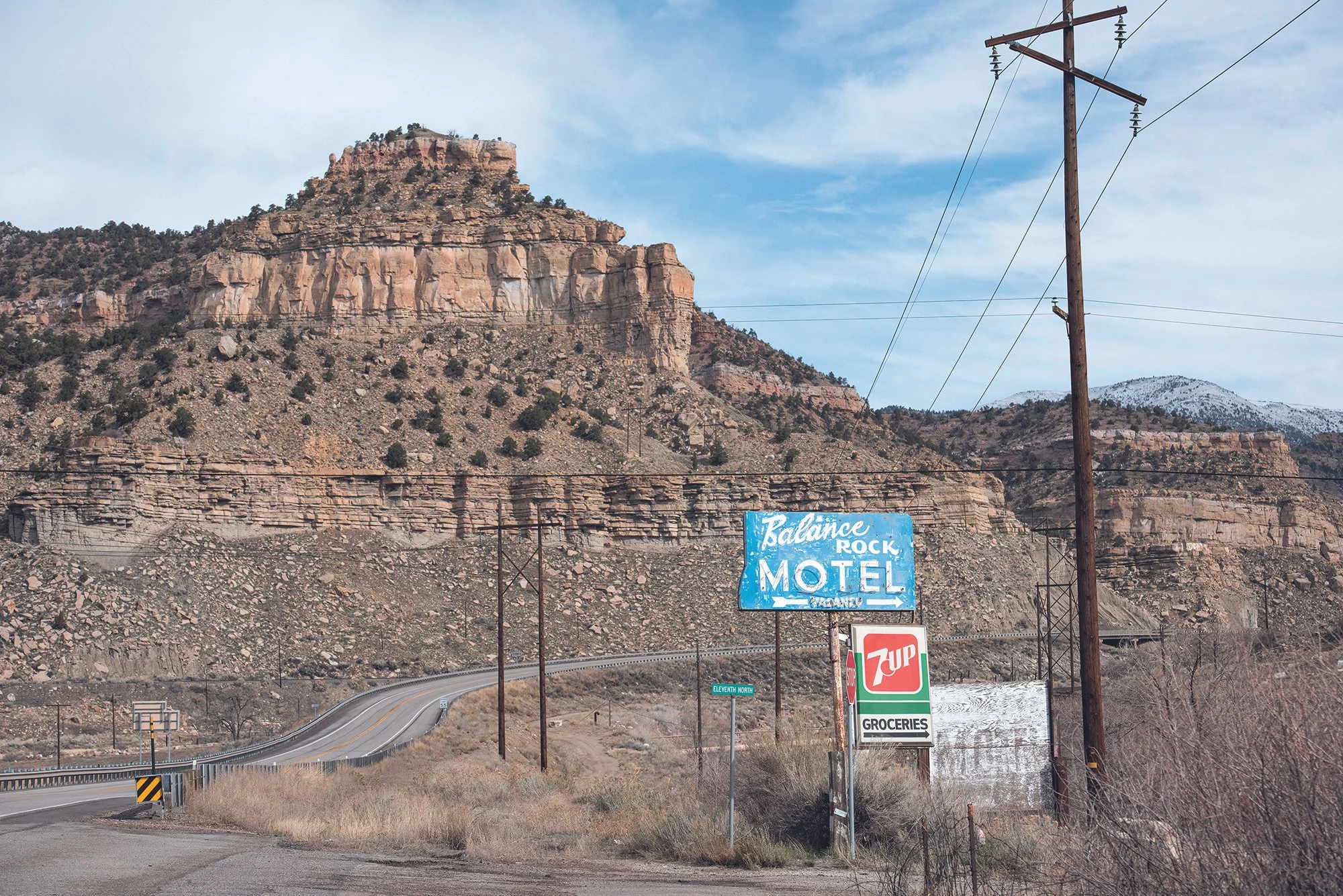
Helper is one of the seemingly endless gems available to any road tripper willing to get off the beaten path while exploring Utah. Years ago I was driving up the 191 and stopped to make a photograph of the old sign for the Balance Rock Motel. I’m a sucker for vintage signage anyway, but this was particularly interesting with the stark desert features in the background. Add in the 7up sign and it became a must stop. Looking around there was no inclination of any sort of civilization, let alone an entire town. While standing there making photographs a policeman stopped to ask what I was doing and seemed satisfied enough with the answer. Afterward I continued on my way, thinking there was nothing else in the area at all to photograph. Some ten years later I discovered a thriving artist community in Helper, tucked away off the 191—a stunning backroad for people driving south from Salt Lake City and continuing east on the 70. Driving into town is sort of a “holy shit” moment. Why is this town here and how does it survive? And the only real answer is art! Helper, Utah is an artist community in the middle of nowhere filled with galleries! It’s such an incredibly unique place. In all my travels I’ve never really seen anything like it. And the excitement that comes from discovering such a town is what keep me addicting to road trips!

The History & Character of Helper, Utah

Helper earned its name from the extra locomotives — “helper engines” — that once assisted trains climbing the steep grades of Price Canyon. Built around coal mining and railroads, the town became home to generations of immigrant workers and working families tied to industry.

Today, while traces of that history remain in brick storefronts and aging infrastructure, Helper has evolved into something more layered. Art galleries now sit beside historic buildings. Murals appear along alleyways. The town has quietly become a creative community while still holding onto its industrial backbone.

That mix of railroad grit and artistic reinvention gives Helper a visual character that feels distinctly Western — but not romanticized.

Photographing Main Street & Roadside Landmarks

Much of this series focuses on the visual details that define Helper’s personality. These aren’t dramatic landscape icons. They are quieter observations — architectural lines, faded paint, shadow, typography, and the space between buildings. The kinds of details that reveal how a town actually lives.

Photographing Helper wasn’t about spectacle. It was about slowing down long enough to notice what remains.

Helper Within the Larger American Road Project

This work fits into a long-term body of photography documenting small towns and overlooked places across America. For over 15 years, I’ve driven hundreds of thousands of miles searching for places that feel visually honest — towns shaped by time rather than reinvention.

Helper stands out because it holds both histories at once: the industrial past and a creative present. It reflects a broader story about rural America adapting without fully erasing itself.

In many ways, Helper represents what draws me back to the road again and again — not the famous destinations, but the towns in between.

Image Licensing — Helper, Utah Photography

These photographs of Helper, Utah are available for editorial and commercial licensing. The work documents a historic railroad and mining town in transition — architecture, signage, Main Street storefronts, and the evolving character of a creative Western community.

The images are well suited for:

  • Editorial features on small town revitalization

  • Travel and regional publications

  • Western heritage stories

  • Cultural and architectural essays

  • Brand campaigns rooted in authentic American settings

Each photograph is available for licensed use in print or digital formats. If you’re interested in discussing usage, publication, or commercial applications, please reach out directly.

Continue Exploring the American West

Helper is just one chapter in a larger body of work documenting small towns, desert highways, and overlooked corners of the American landscape.

View the full Utah Fine Art Photography Gallery to see more images from across the state, or explore the broader American Road Trip Photography Collection featuring small towns and roadside scenes from across the country.

The Balance Rock Motel - Helper, Utah

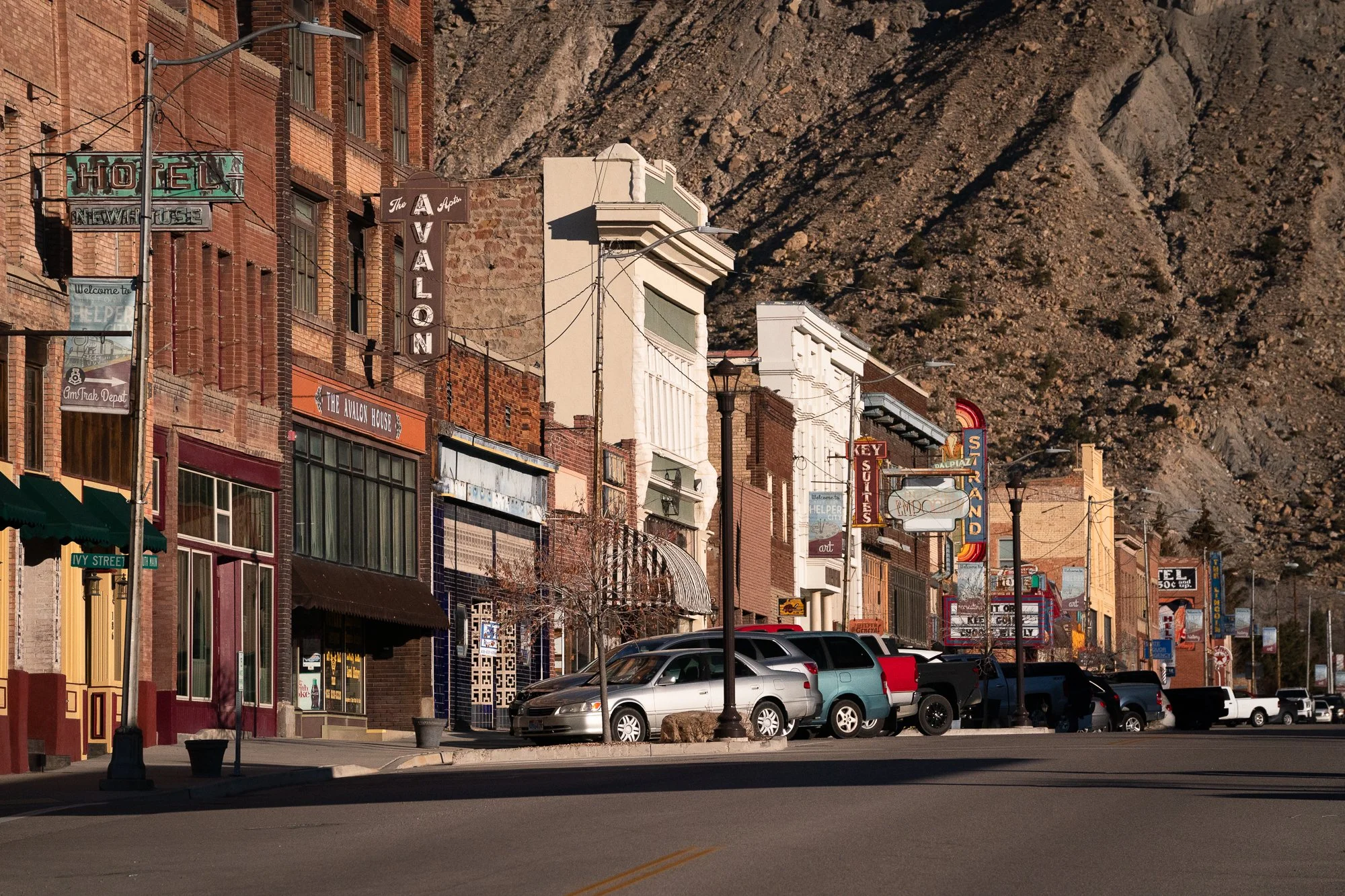
Historic Main Street in Helper Utah with brick buildings and cliffs

Historic brick storefronts line Main Street in Helper, Utah, pressed tightly against the towering Book Cliffs.

Photograph of the Lasalle restaurant in Helper, Utah

Vintage signage at Lasalle’s on Main Street in Helper, Utah

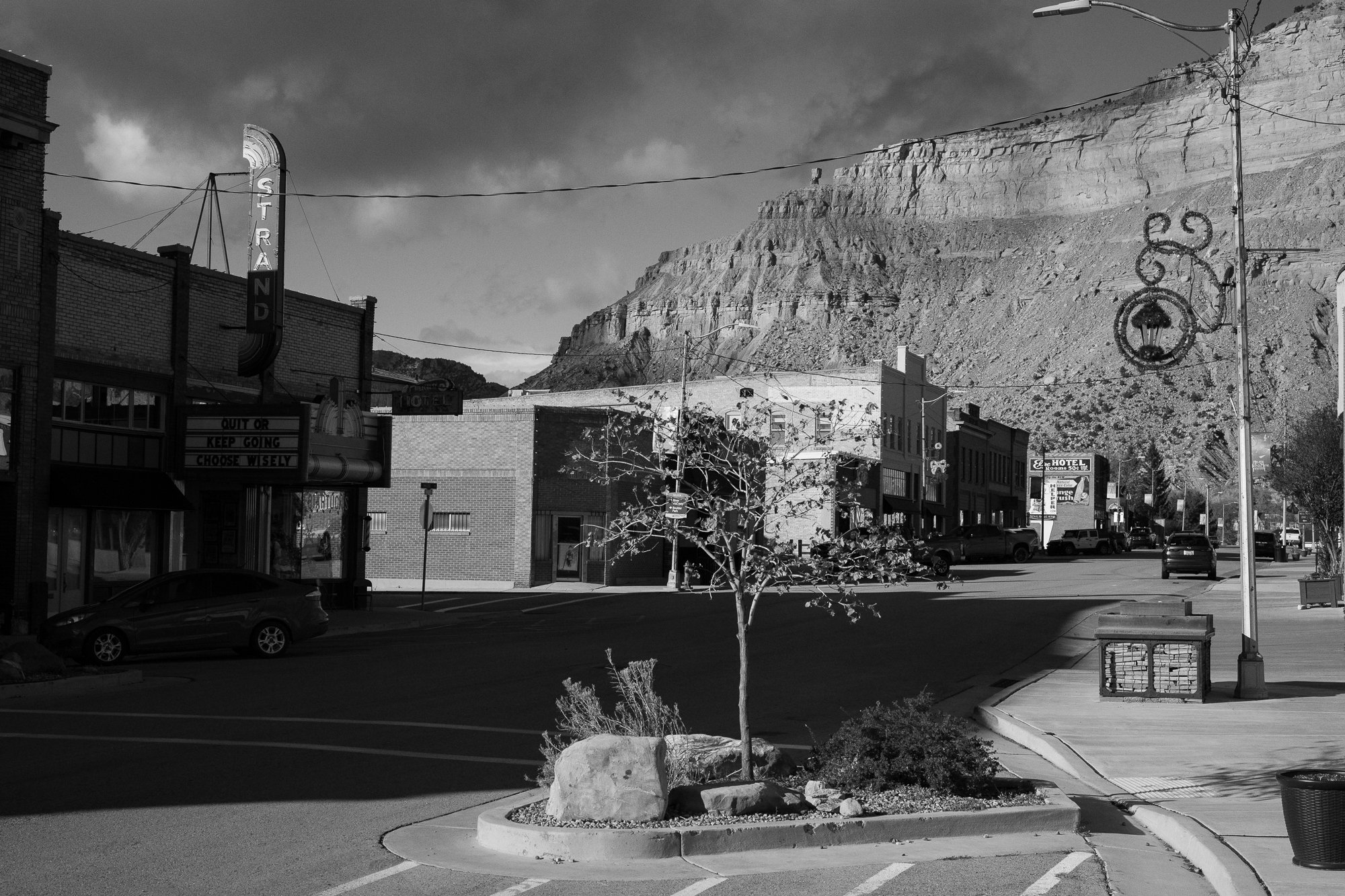
Black and white photograph of the view up Main Street in Helper, Utah

Main St. - Helper, Utah

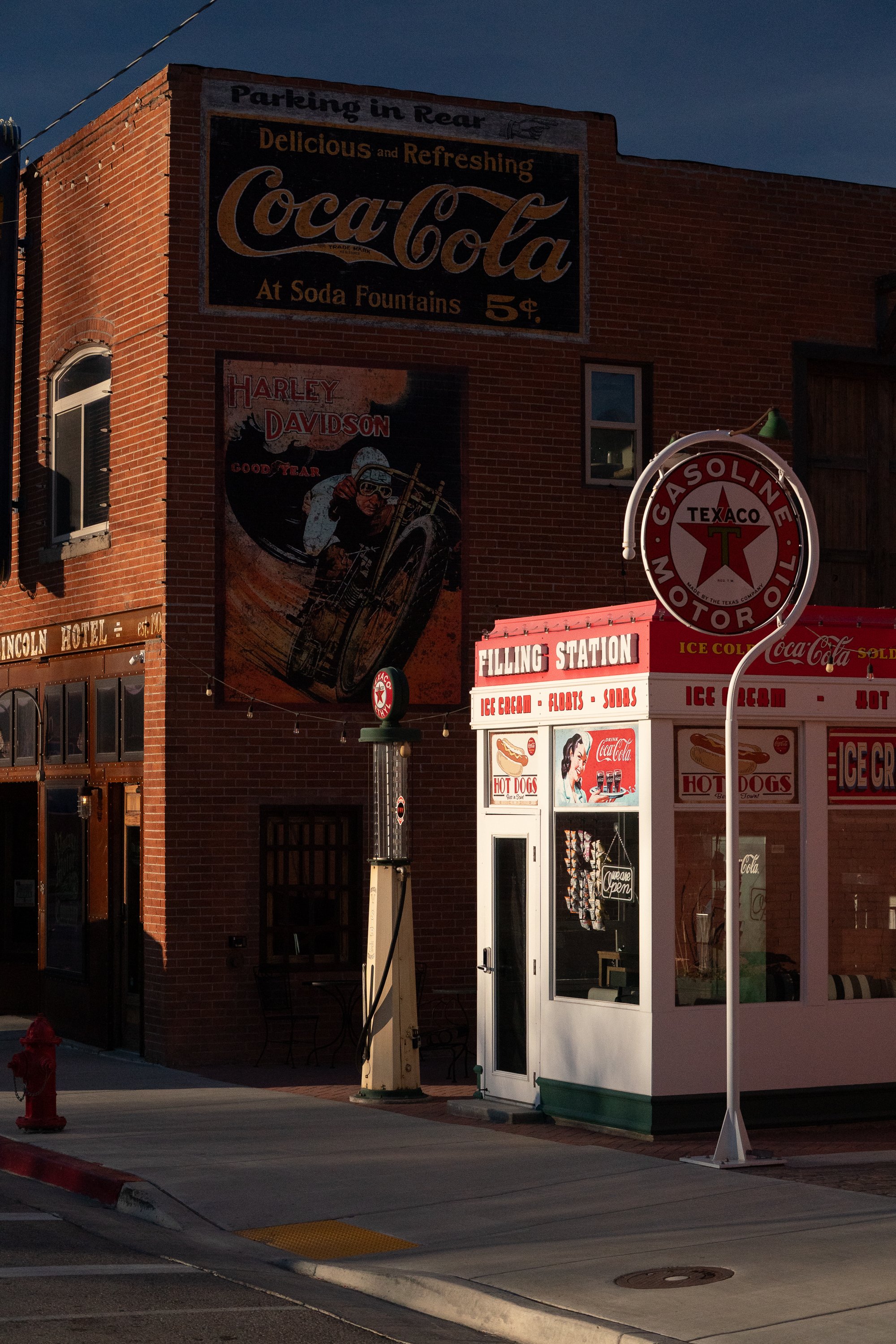
Lincoln Hotel and Texaco gasoline sign in downtown Helper Utah

The Lincoln Hotel corner glows in late light — Coca-Cola signage, Texaco branding, and filling station details capturing the Americana character of Helper, Utah.

Photograph of the Strand Theater on Main St. in Helper, Utah

The Strand Theater in Helper, Utah

Black and white photograph of the Hotel Newhouse in Helper, Utah

The Hotel Newhouse

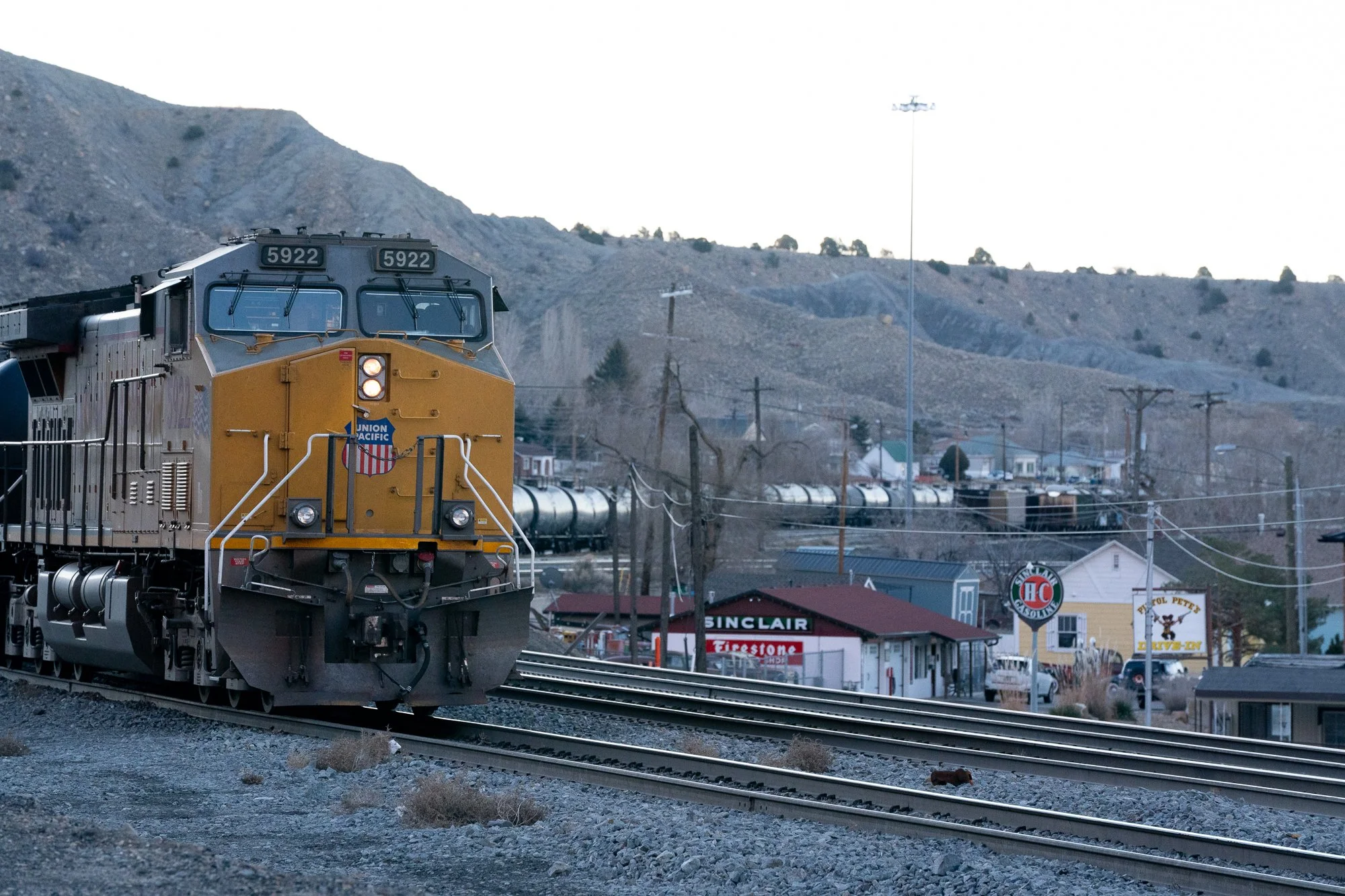
Union Pacific freight train passing through Helper, Utah with Book Cliffs in background

A Union Pacific freight locomotive rolls into Helper, Utah beneath the Book Cliffs — a reminder of the town’s railroad and coal mining roots in eastern Utah.

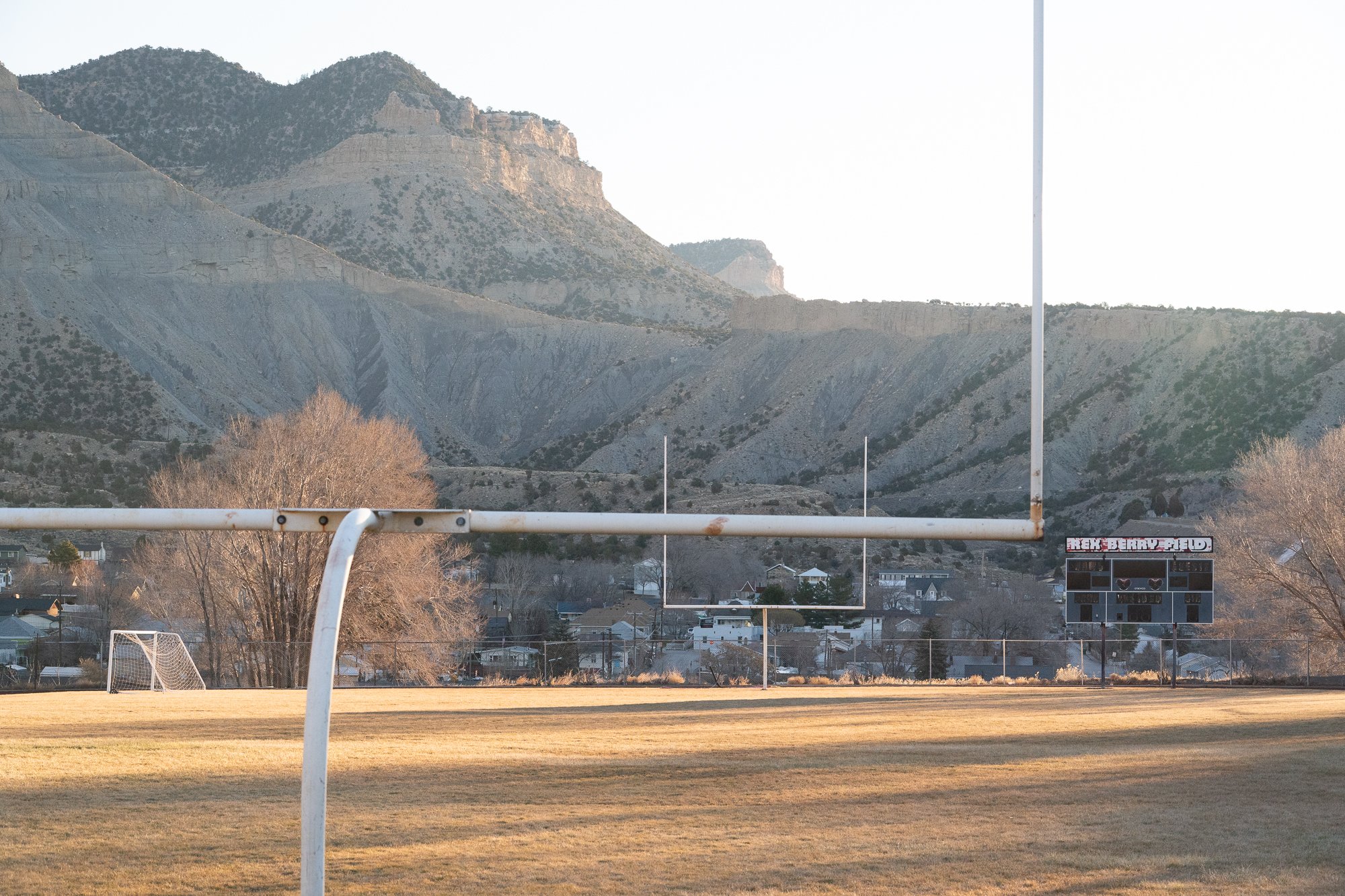
Rex Berry Field football stadium in Helper Utah with Book Cliffs behind

Rex Berry Field sits quietly beneath the dramatic Book Cliffs, where high school football and desert landscape meet in Helper, Utah.

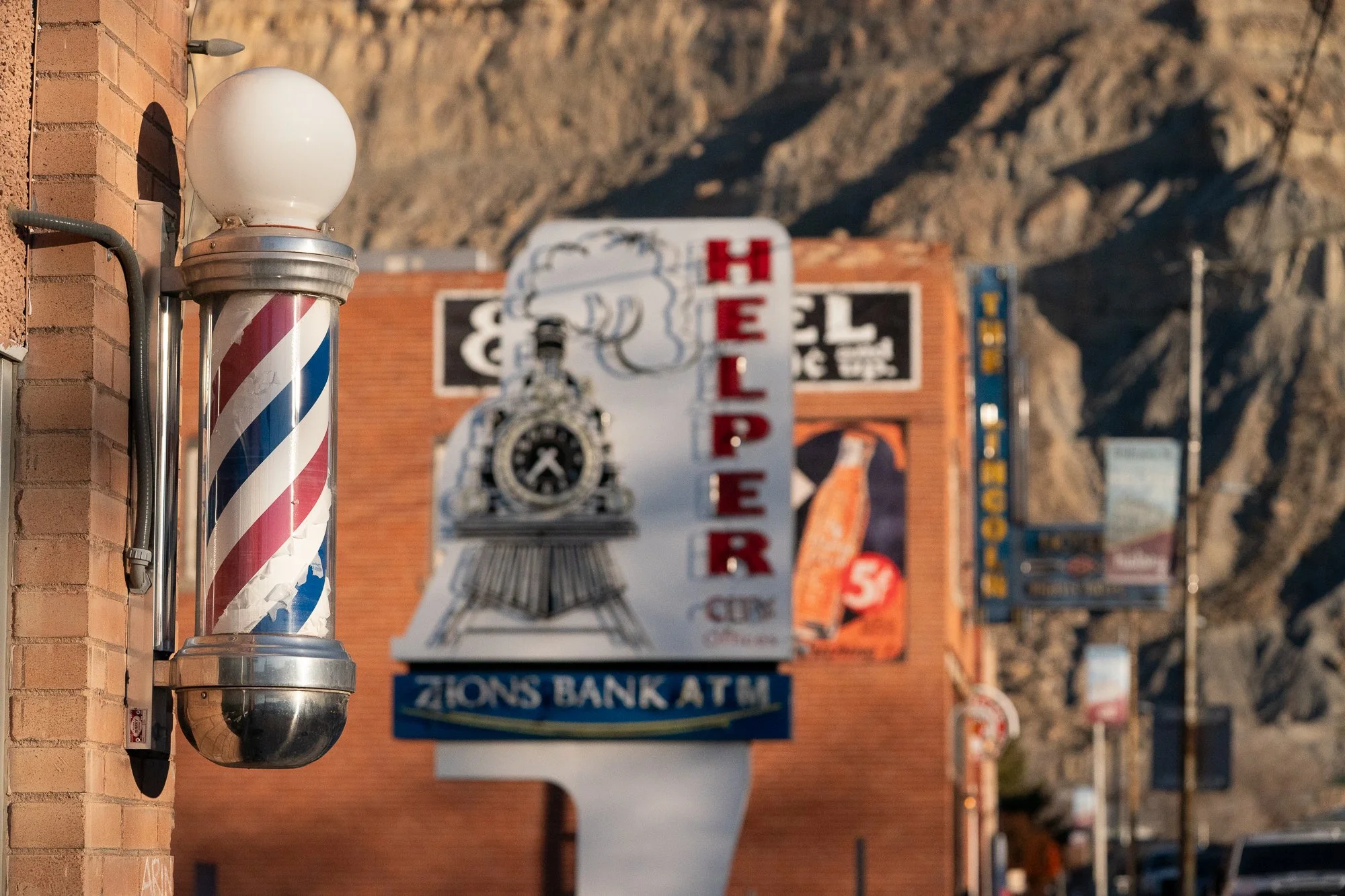
Classic barber pole on Main Street in Helper Utah with vintage signs

A traditional barber pole stands along Main Street in Helper, Utah, framed by layered signage and historic storefronts.

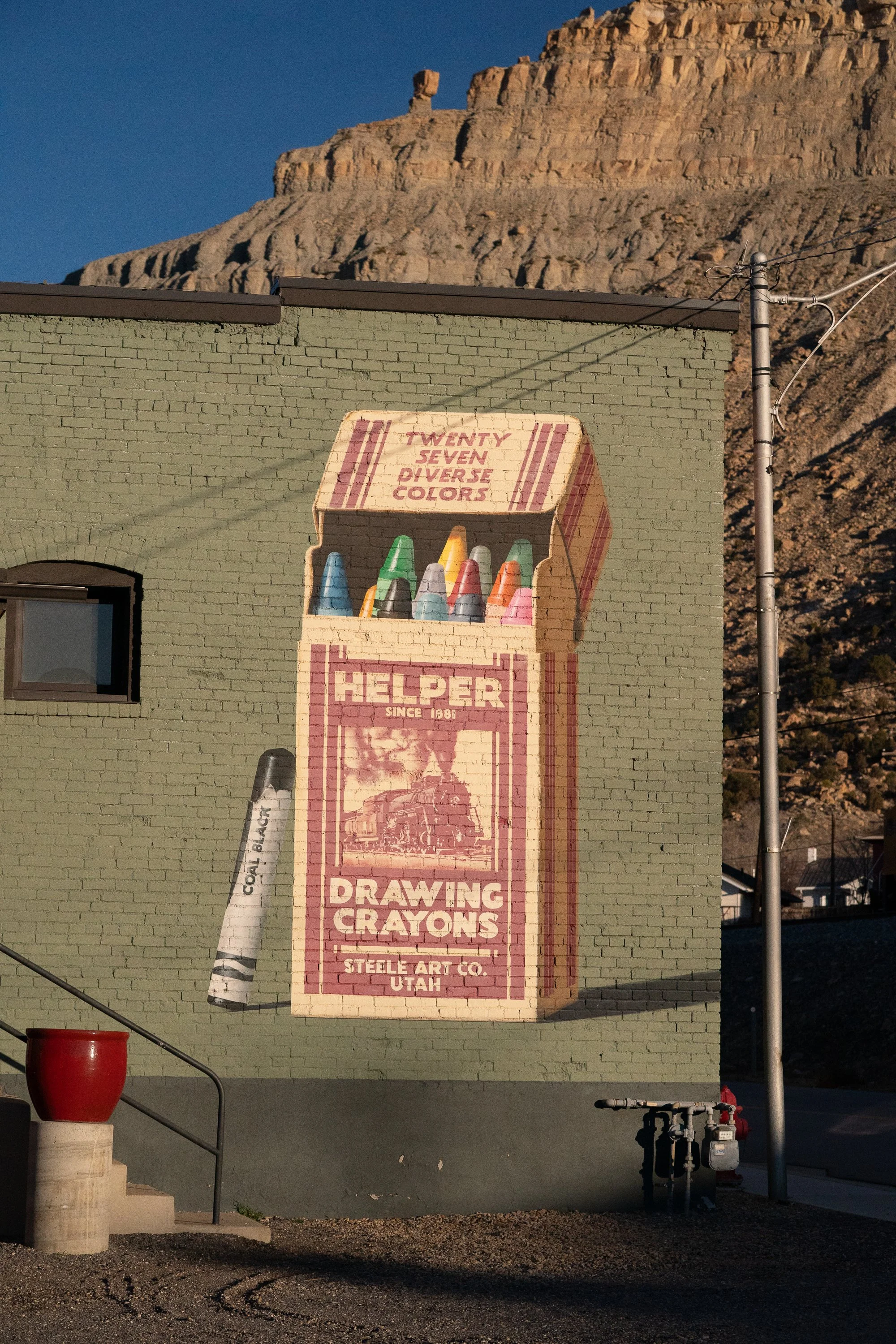
Helper Drawing Crayons mural painted on brick wall in Helper Utah

A large “Helper Drawing Crayons” mural reflects the town’s creative revival, set against the rugged cliffs that define eastern Utah.

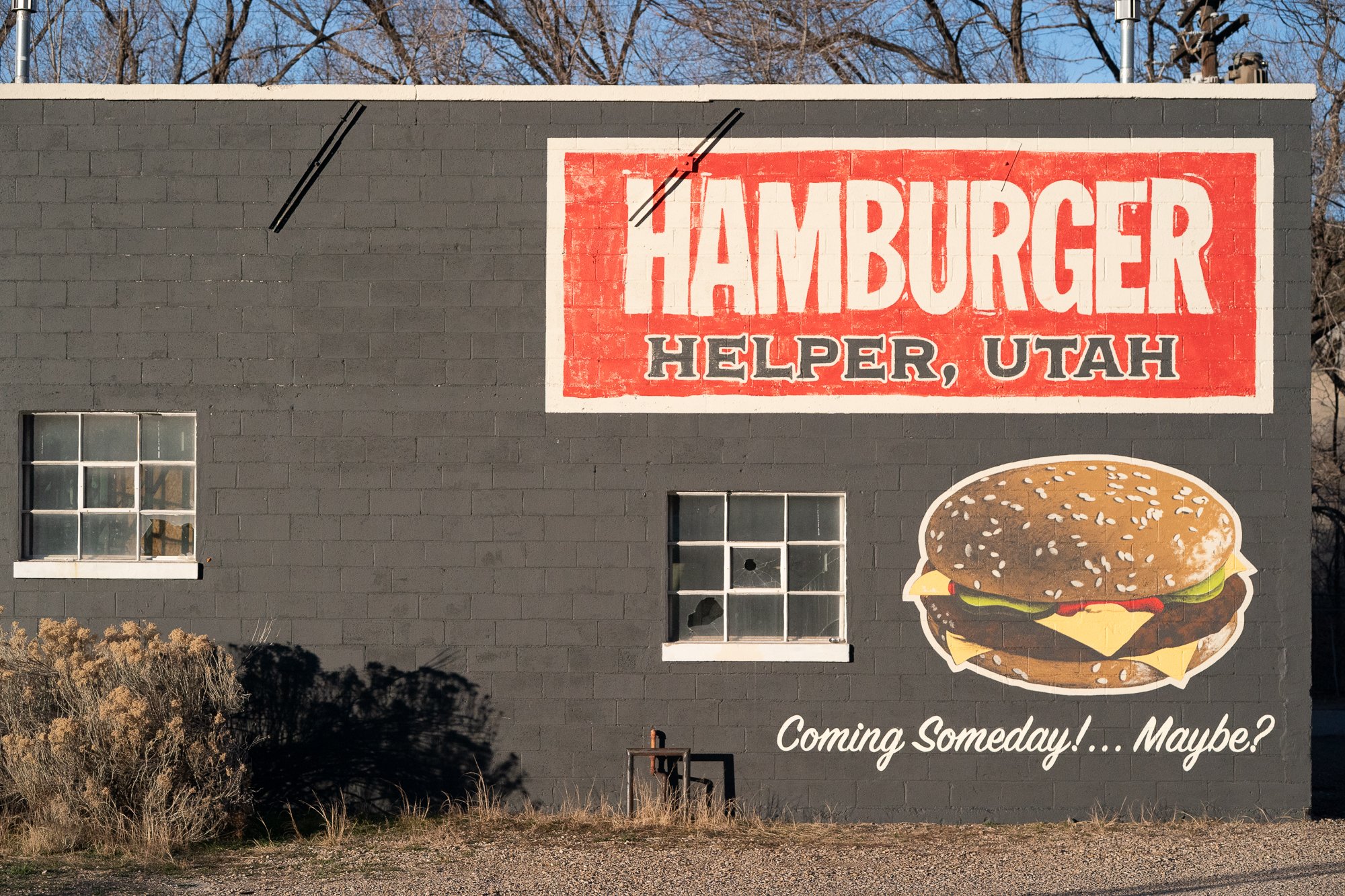
Hamburger Helper Utah mural with painted burger and vintage lettering

A bold “Hamburger — Helper, Utah” mural reads “Coming Someday… Maybe?” — small-town humor painted large on a downtown wall.

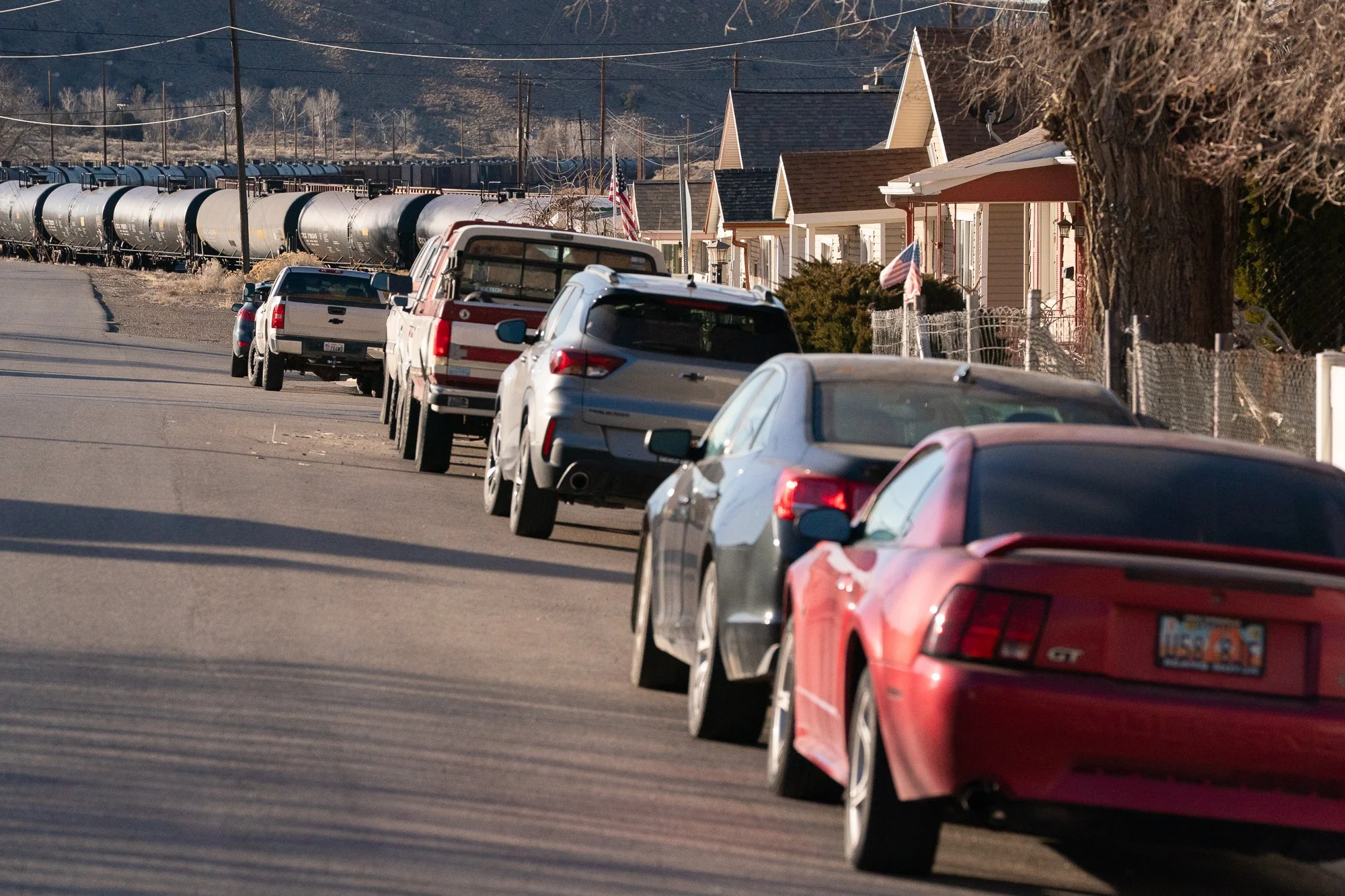
Residential street in Helper Utah with tanker rail cars in background

Parked cars line a quiet residential street while black tanker rail cars stretch across the horizon — industry and daily life intersecting in Helper, Utah.

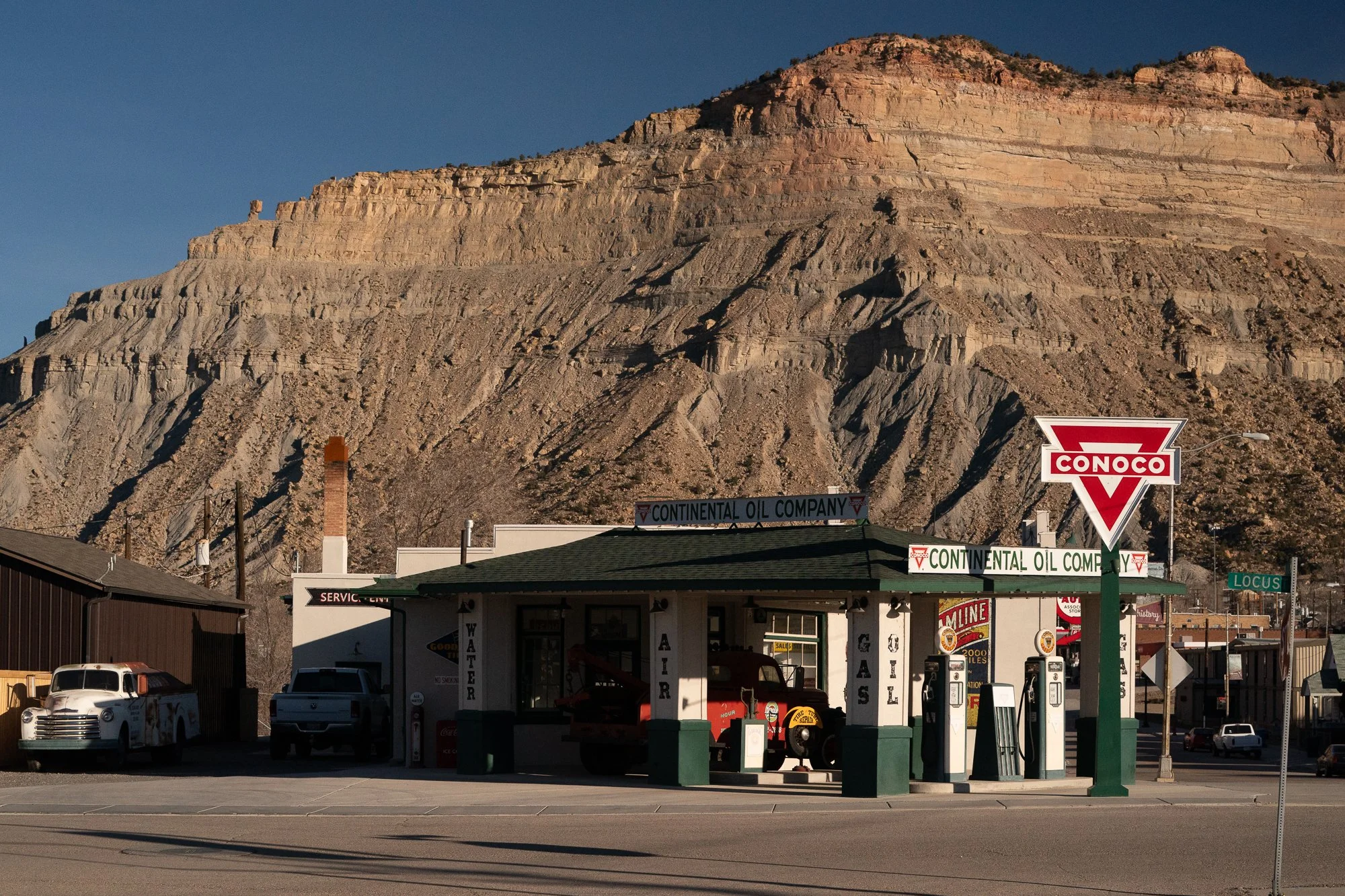
Continental Oil Company Conoco gas station in Helper Utah

The restored Continental Oil Company station stands beneath the desert cliffs in Helper, Utah — vintage petroleum branding framed by Western landscape.

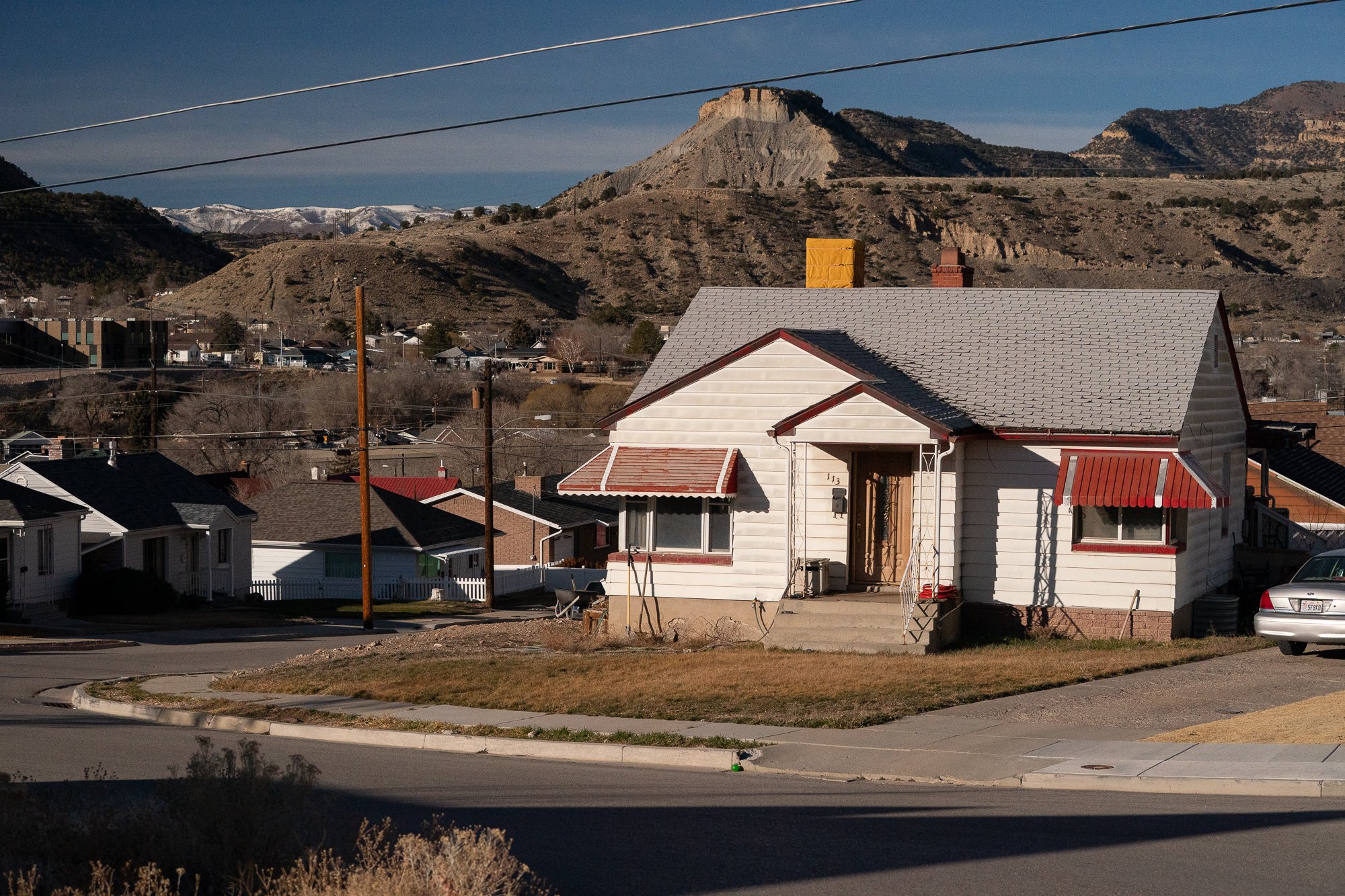
Small hillside home in Helper Utah with Book Cliffs and neighborhood behind

A modest hillside home overlooks Helper, Utah, framed by layered desert mesas and distant snow along the Book Cliffs — residential life set against the vast Western landscape.

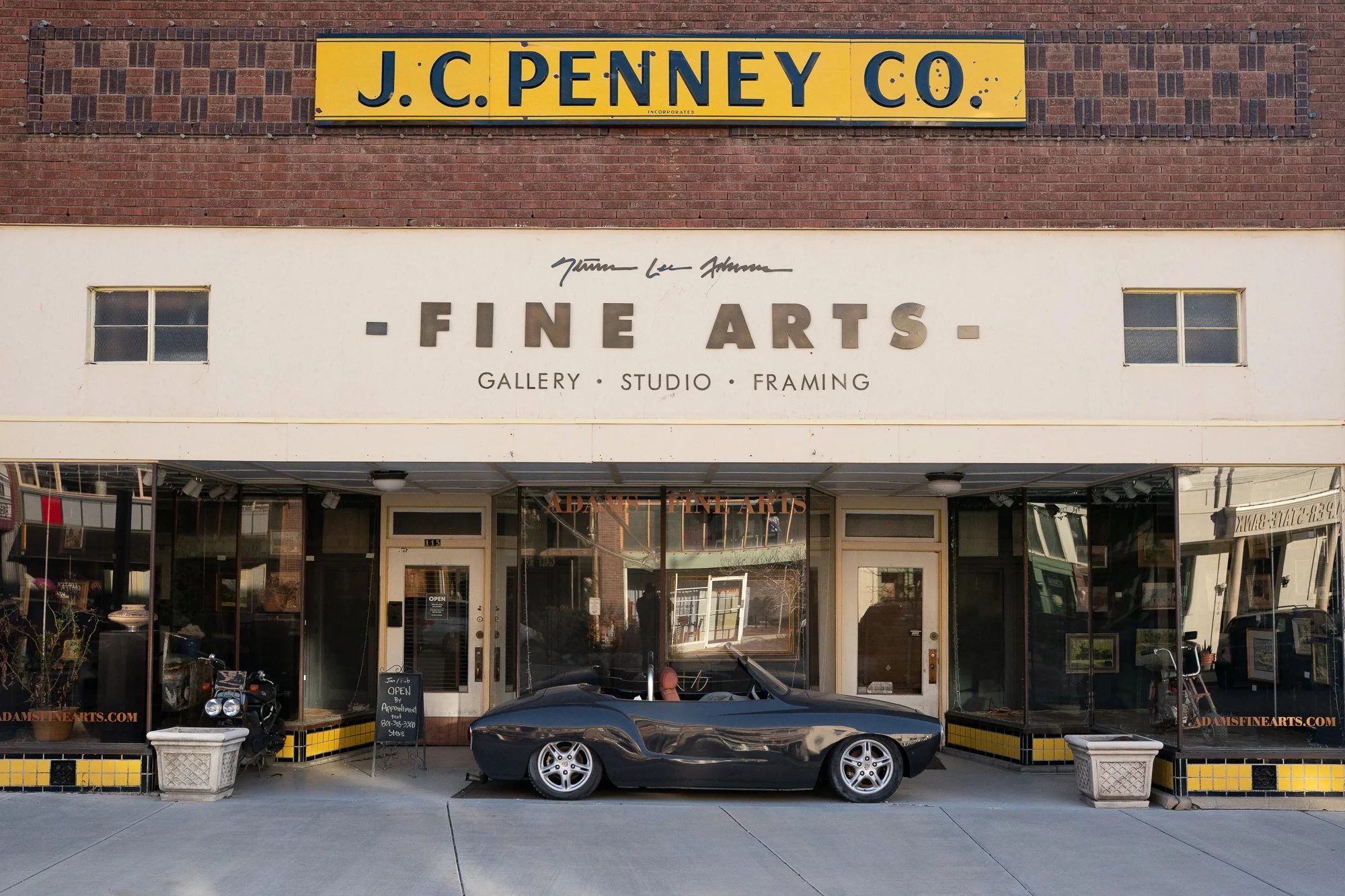
Historic J.C. Penney building now Fine Arts gallery in Helper Utah

The former J.C. Penney building now houses a Fine Arts gallery in downtown Helper, Utah — a retail relic reimagined as part of the town’s creative revival.

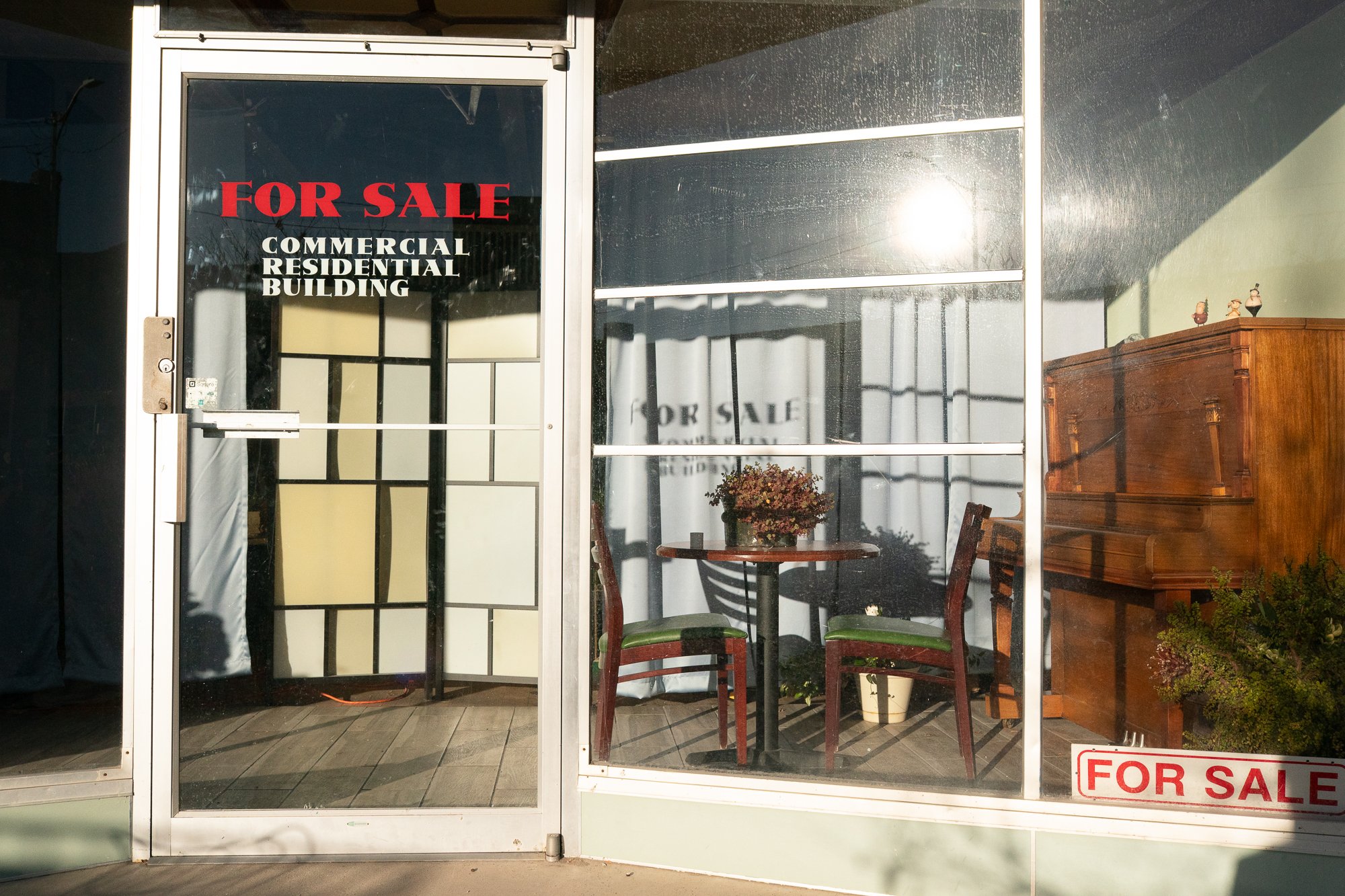
For sale sign on commercial storefront window in Helper Utah

A “For Sale” sign reflects in the glass of a downtown Helper storefront — a quiet indicator of economic transition in this historic railroad town.

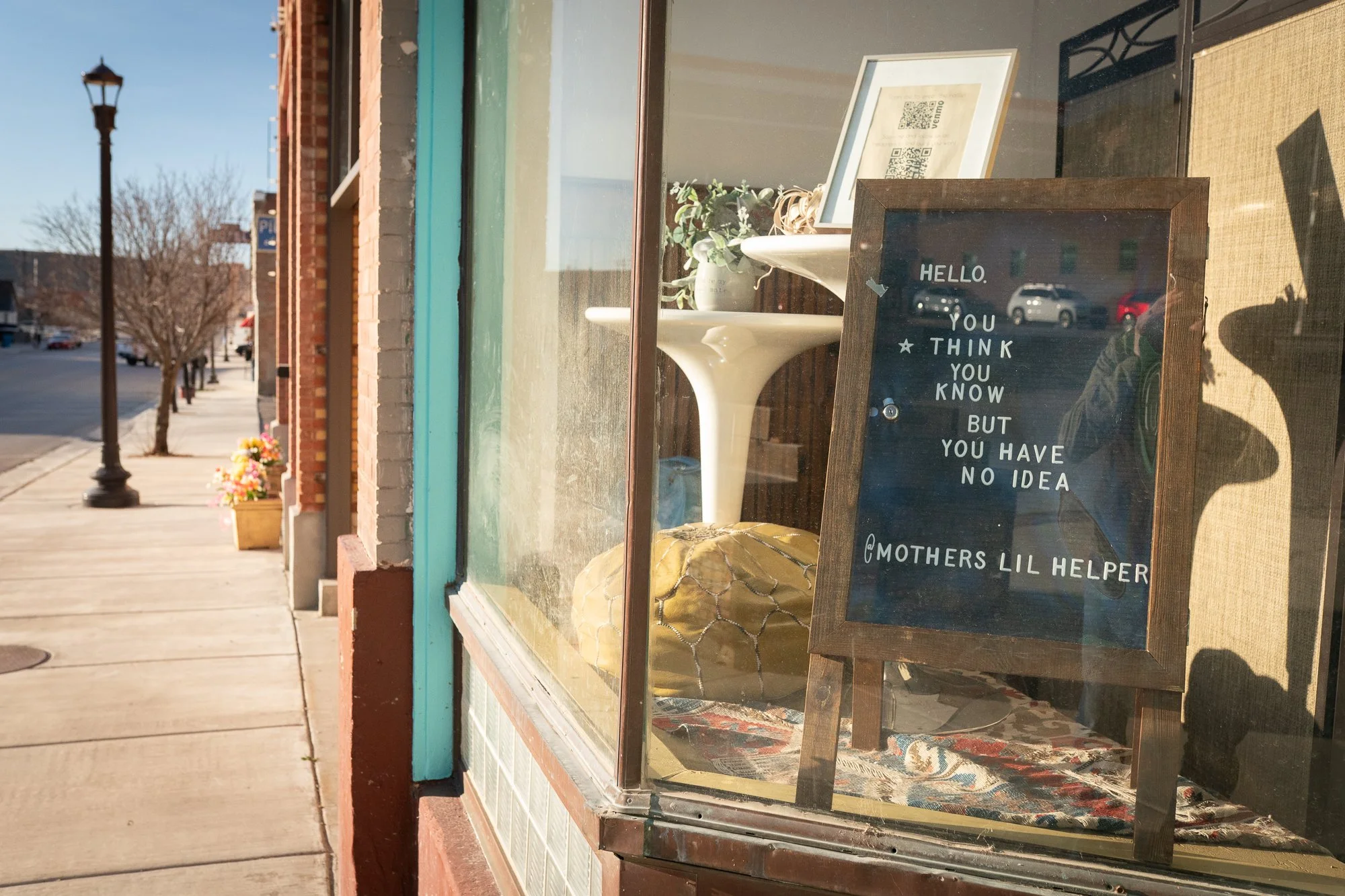
Mothers Lil Helper shop window display on Main Street in Helper Utah

A storefront display on Main Street reads, “Hello… You Think You Know But You Have No Idea” — a subtle reminder of the layered identity of Helper, Utah.

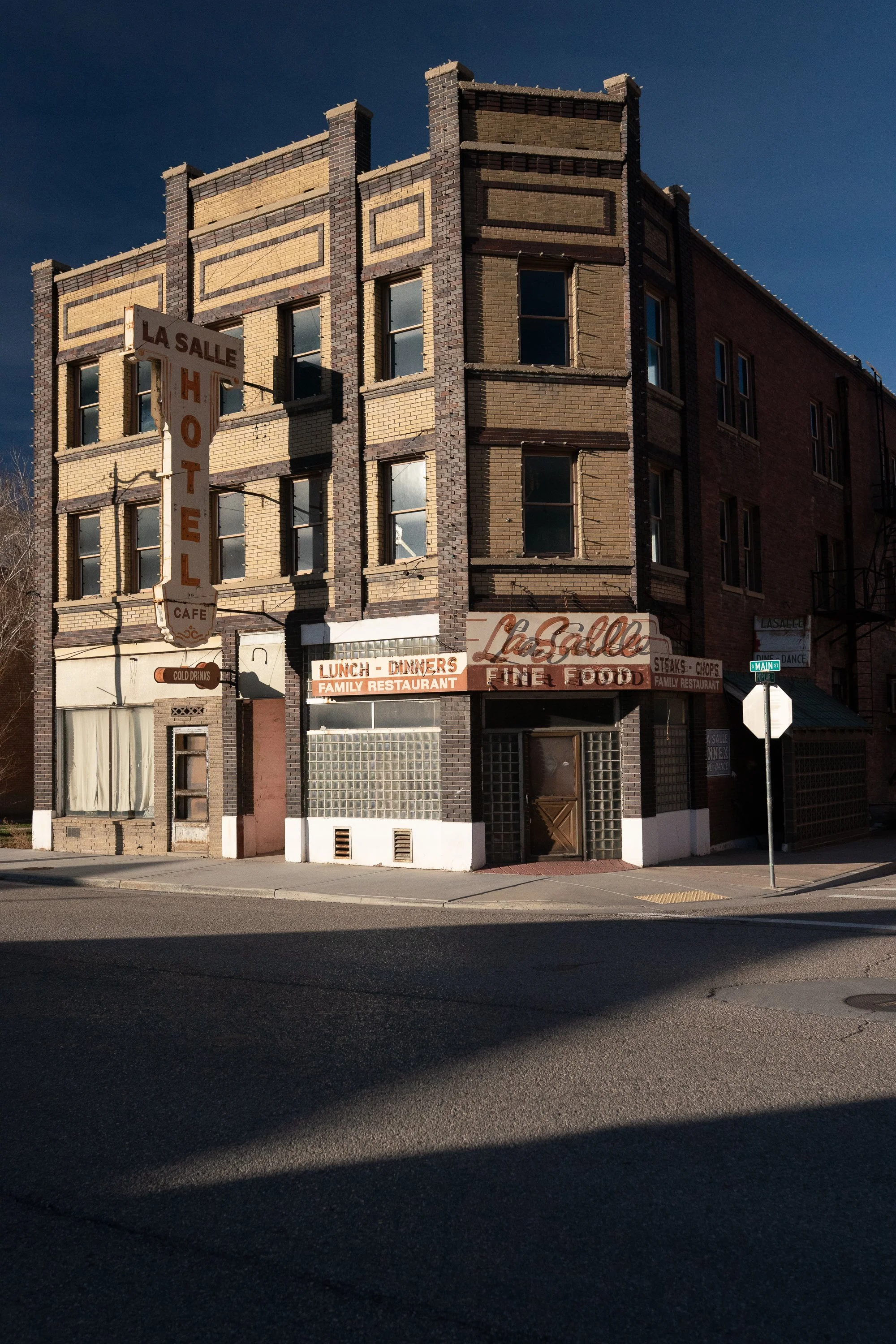
La Salle Hotel historic brick building in Helper Utah

The La Salle Hotel stands at a quiet corner in Helper, Utah — brick facade, vertical hotel sign, and long shadows marking a century of Western travel history.

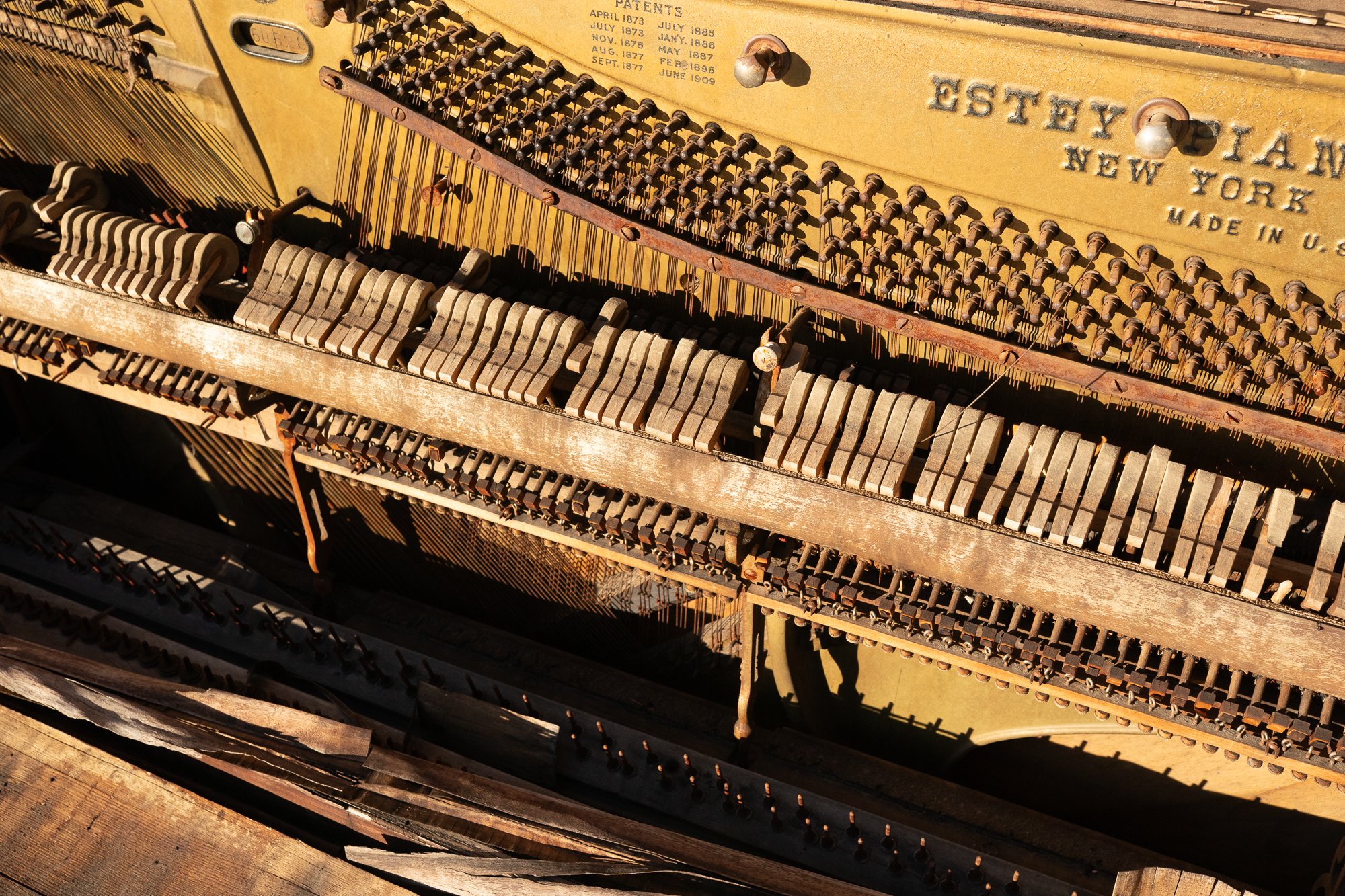
Antique Estey piano interior mechanism photographed in Helper Utah

An exposed Estey piano mechanism reveals aged wood, metal, and string — a close study of craftsmanship discovered in Helper, Utah.

Troy, New York Photographs

Troy, NY Photography — Documentary Prints & Editorial Licensing

Why Troy Still Feels Like Home

Troy, NY is an industrial city that’s been through a lot of change and it shows. I grew up about 20 minutes from Troy and spent a lot of sinful nights there with a bad Fake ID at bars that have long been shut down or turned into pawnshops. At 4am we always ended up at I love New York Pizza soaking up the booze with dollar slices while waiting for the inevitable fight to erupt on 4th St. I love is still there but they shut down at 1am. Just a few of the many changes that have taken place in the Collar City. Visiting now, 20 years later with different eyes, it’s a whole new experience. You can see why the locals have so much pride. Not just for what Troy has become, but also for the history that is written all over the architecture of it’s many historic buildings. You can feel what Troy was in it’s heyday and that almost makes you want to experience the city at that time. Sure it was rough, and still is in parts, but the Italian food alone would be worth the experience. It’s not all gone though. There are still long running institutions like Bella Napoli, DeFazio’s Pizza, and the iconic Famous Lunch Hot Dogs. It’s even got good beer now - Brown’s Brewing Company is well worth the stop for any connoisseur. I never bothered to look deeply at Troy back in the day, but it’s become a favorite place to photograph every time I return home to visit family and friends. The city has a lot of character that deserves to be documented.

Photographing the History and Architecture of Troy, New York

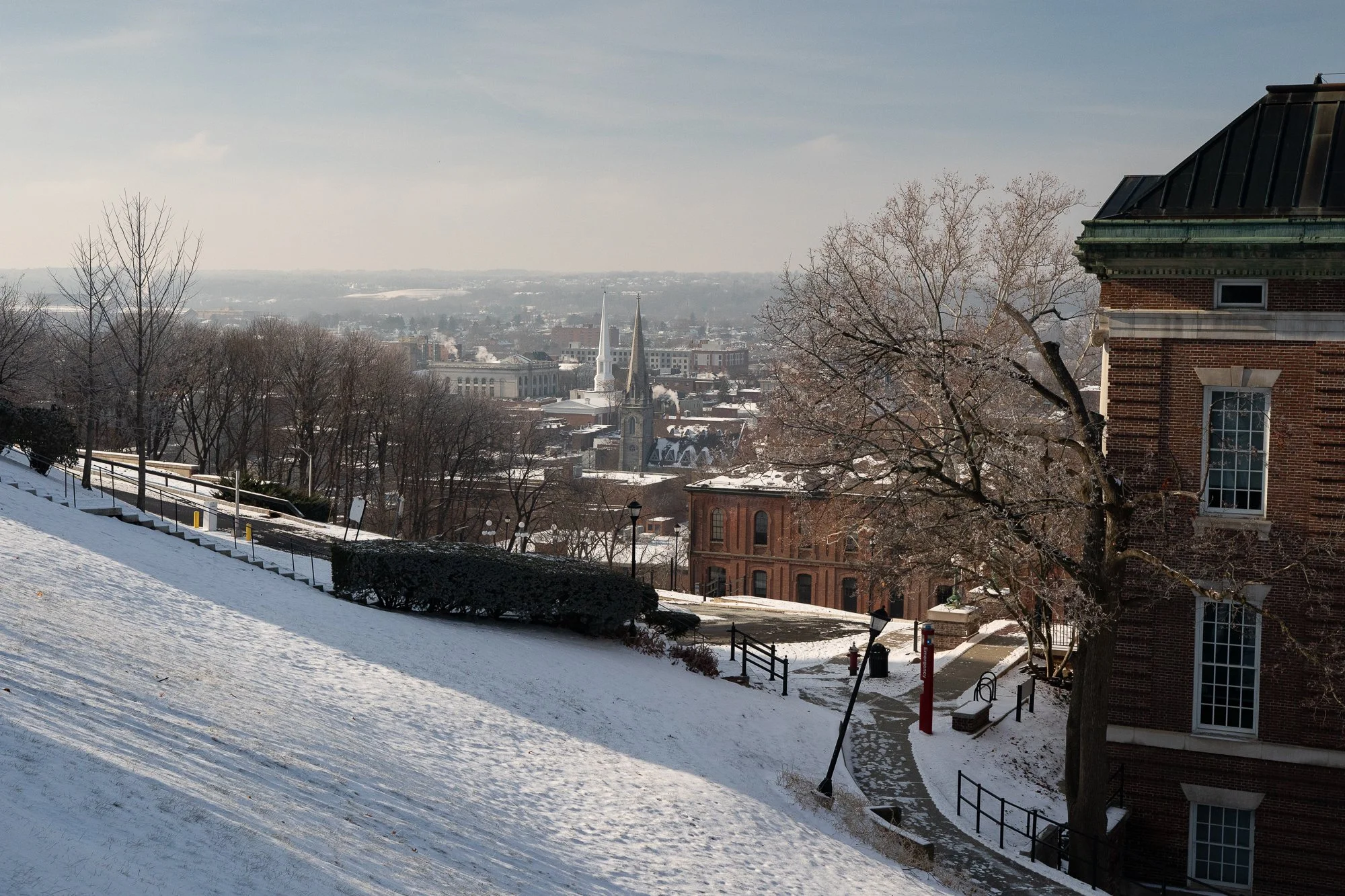
Troy’s nickname, the “Collar City,” comes from its industrial past - but what stands out today is the mix of preservation and grit. The Central Troy Historic District is lined with 19th-century rowhouses, St. Patrick’s Church rises in Gothic stone, and the Sycaway Water Tower still watches from the hillside. From the hill at RPI, you can see the entire city stacked against the Hudson, with the Green Island Bridge tying it all together. These are the scenes that made their way into my prints - quiet, weathered, and timeless.

Fine Art Prints: Sizes, Editions, and Pricing

Every photograph of Troy in this collection is available as a fine art print, made on museum-grade archival paper. Open edition prints start around $50 for smaller sizes (8×10"), while large limited edition prints are signed, numbered, and produced at sizes up to 65". Each piece is crafted to last a lifetime and can be framed to fit your space. Whether it’s for a living room, office, or gallery wall, these prints bring a piece of Troy’s story into your everyday environment.

Licensing Troy Photographs for Editorial & Commercial Use

For businesses, publishers, or art directors looking to license Troy imagery, these photographs are available for editorial and commercial licensing. From historic architecture to atmospheric black-and-white cityscapes, the images can work for magazines, marketing campaigns, and creative projects. Licensing terms are flexible depending on your needs—just reach out directly to start the conversation.

Troy has always been a mix of nostalgia and resilience for me. These photographs hold on to that character, offering more than just a view—they carry the texture of a city that built its name on hard work and history. Contact me directly if you’d like to discuss licensing or to purchase a photography print of Troy, NY for your home, office, or commercial space - rob@robhammerphotography.com

See My Albany, New York Photography Prints →

Green Island Bridge spanning the Hudson River in Troy, New York, documentary photography

The Green Island Bridge over the Hudson River in Troy, New York

Historic Troy, New York cityscape showing 19th-century architecture in black and white

Historic architecture in Troy, New York

St. Patrick’s Church in Troy, New York, Gothic Revival architecture photograph

St. Patrick’s Church - Troy, NY

Rodino’s Tuxedo Shop storefront in Troy, New York, vintage downtown scene

Rodino’s Tuxedo Shop - Troy, NY

Photograph of the Sycaway Water Tower in Troy, NY

Sycaway Water Tower

Black and white historical photograph of Troy, NY

Church spires in Troy, NY

Photograph of the Famous Lunch hot dog restaurant in Troy, NY

Famous Lunch Hot Dogs - Troy, NY

Photograph of soda cans for sale hanging up at Famous Lunch Hot Dogs in Troy, NY

Soda for sale at Famous Lunch in Troy, NY

Photograph of a man working inside Famous Lunch Hot Dogs in Troy, NY

World Famous Hot Dogs since 1932

Photograph of a train bridge along the Hudson River near Troy, NY

Train bridge on the Hudson River in Upstate New York

Photograph of Uncle Sam Lanes bowling alley in Troy, NY

Uncle Sam Lanes

The view of Troy from the campus of RPI

Overlooking the city of Troy from the Renssalaer Polytechnic Institute

Black and white photograph of a basketball hoop under a bridge in Troy, NY

Troy Basketball

Photograph of homes in the typical architectural style of Troy, NY

Homes in the city of Troy, NY

Tree shadows on the beautiful architecture of an old church in Troy, NY

Architecture of an old church in Troy, NY

The best barbershop in Troy, NY

Barbershop - Troy, NY

Photograph of a girl writing on a typewriter at Yellow Lab Vintage and Books in Troy, NY

Used book store in Troy, NY

Photograph of the Livingston Avenue Bridge on the Hudson River

Livingston Avenue Bridge

Black and white photograph of an iconic bride in Troy, NY

Troy, NY


Photographs of Albany, New York - Historical Landmarks & Architecture

ALBANY, NEW YORK PHOTOGRAPHS

Growing Up Around Albany, New York

I grew up in the Albany area, and my relationship with the city has always been shaped by familiarity rather than novelty. It’s a place I knew long before I ever photographed it—through daily routines, changing neighborhoods, and the quiet rhythms of a city that rarely tries to impress anyone.

That familiarity is what eventually pulled me back with a camera. Photographing Albany wasn’t about rediscovery so much as paying closer attention. I wasn’t looking for defining moments or iconic views. I was interested in the spaces that felt ordinary enough to be overlooked, yet permanent enough to hold memory.

Photographing Albany as a Lived-In City

This photography series is rooted in observation rather than spectacle. Albany is a city layered with history—Federal and Victorian architecture, civic buildings, industrial remnants, and residential streets shaped by decades of quiet change. Much of that history lives in plain sight.

I gravitated toward scenes that reflect that lived-in quality: empty streets, weathered facades, winter light, and moments where architecture and atmosphere intersect. These photographs are intentionally restrained. They aren’t meant to dramatize the city, but to reflect it honestly.

The goal is not to explain Albany, but to let it exist as it is.

Architecture, Atmosphere, and the In-Between

Many of the photographs in this series focus on architecture, but not in a formal or celebratory way. I’m less interested in buildings as symbols than as backdrops for daily life—structures shaped by use, time, and weather.

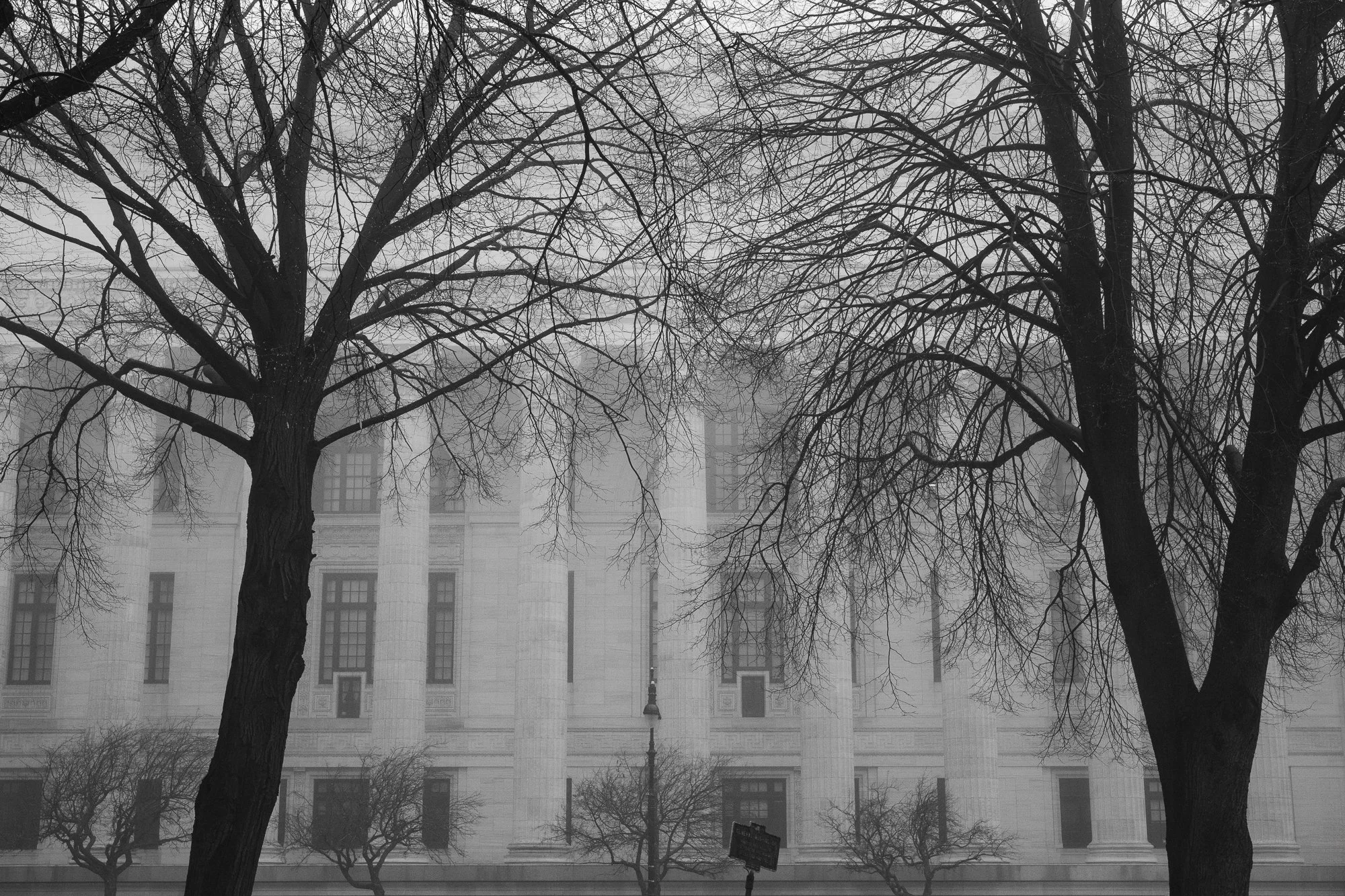
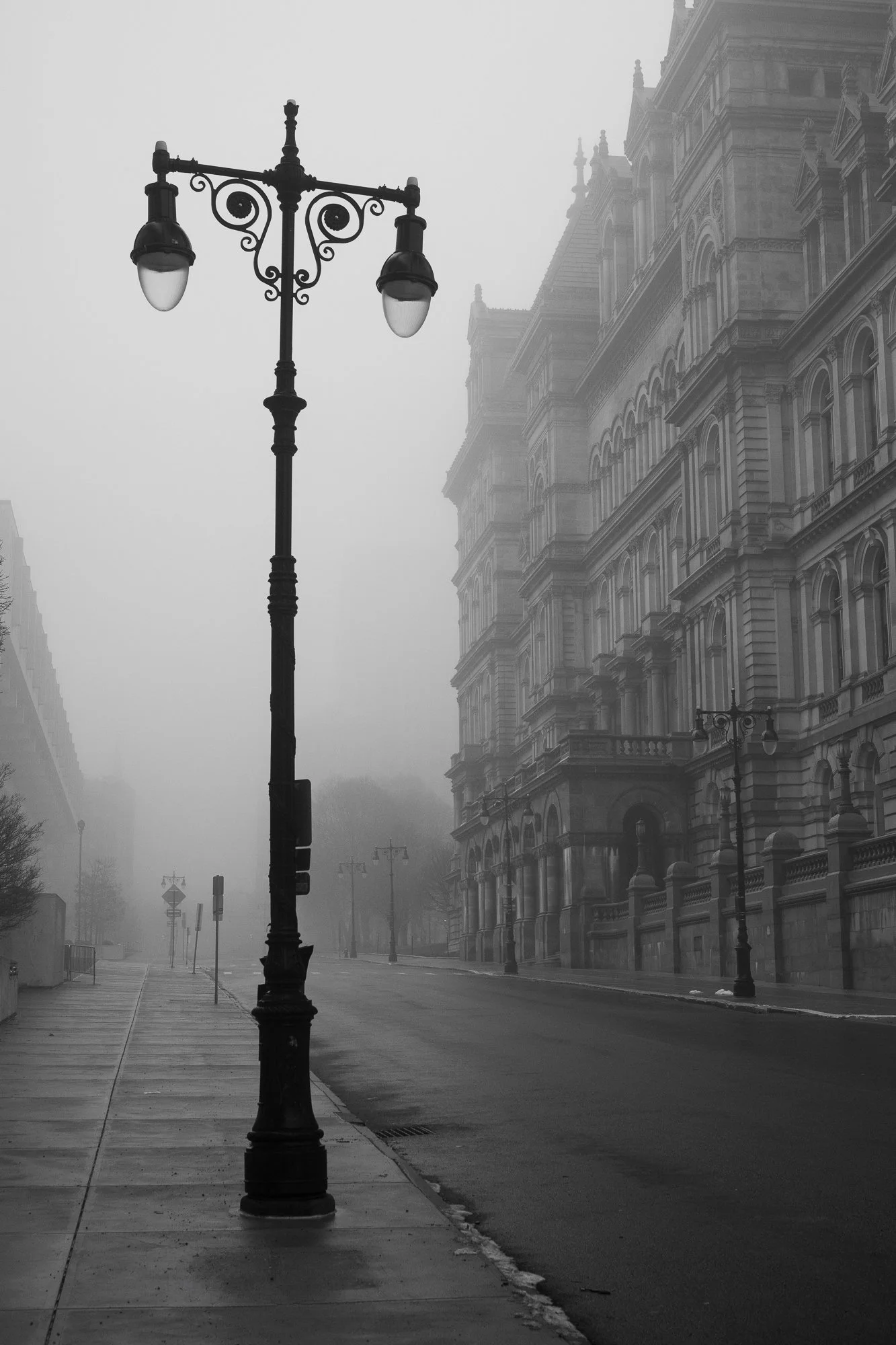
Light plays an important role. Fog, snow, and low winter sun soften edges and slow the pace of looking. These conditions reveal details that might otherwise go unnoticed, and they echo how the city often feels to move through: quiet, deliberate, and grounded.

This approach mirrors how I work across my broader documentary projects—allowing place to speak without forcing a narrative.

A Long-Term Documentary Project

This Albany photography project is ongoing. The city continues to change, and my relationship to it continues to evolve as well. Returning with a camera allows me to see familiar spaces with fresh attention, while still photographing from a position of understanding rather than distance.

The photographs aren’t meant to define Albany, but to contribute to a broader visual record of American cities—particularly those that exist outside the usual spotlight.

From the Project to the Prints

While this page focuses on the documentary work itself, many of these photographs are available as fine art prints. The prints are produced with the same care and intention as the photographs, emphasizing longevity, material quality, and thoughtful presentation.

If you’re interested in viewing available work from this series, you can explore the print collection below.

View available Albany photography prints

Click HERE to view my photographs of Troy, NY

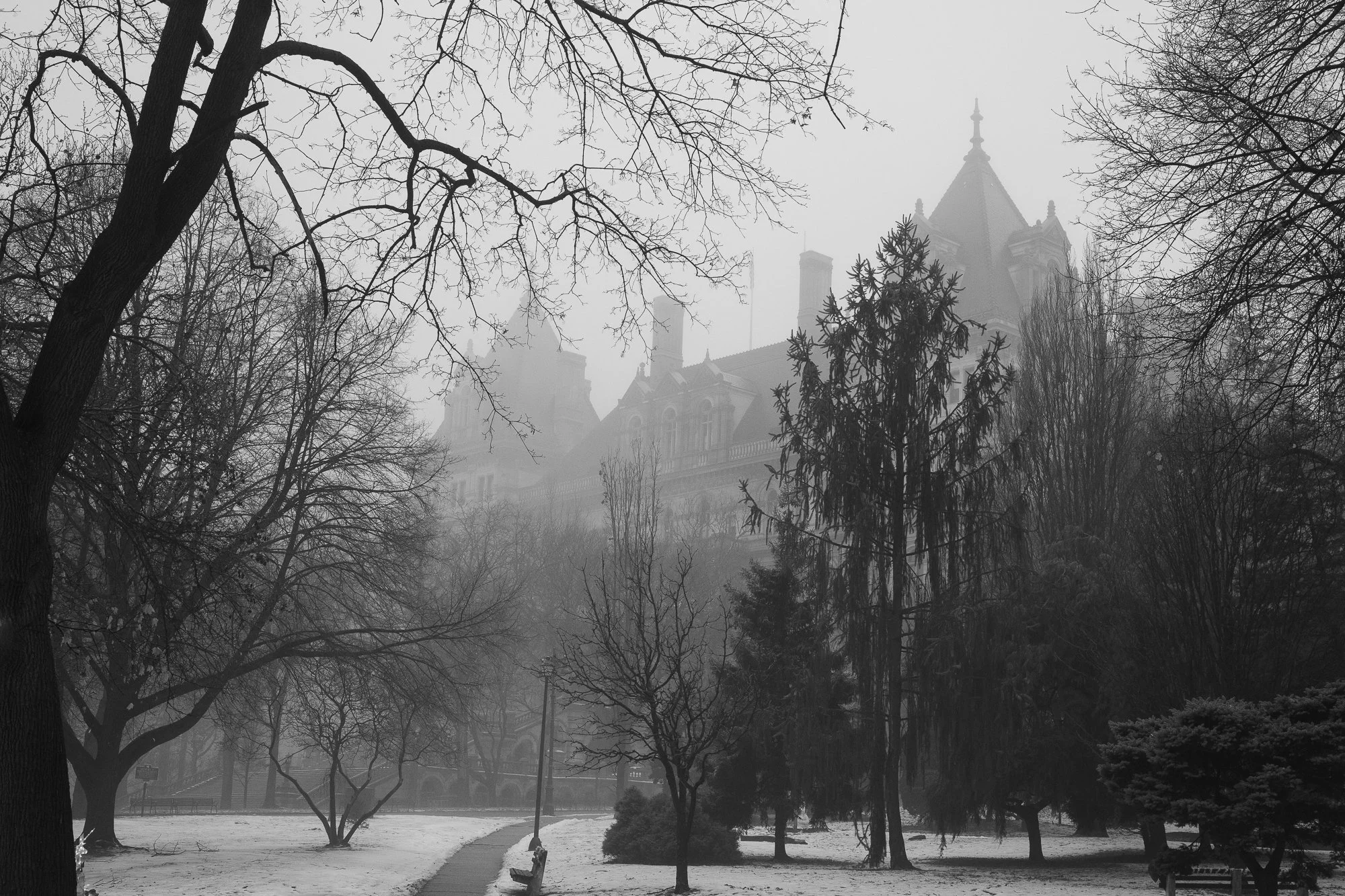
Black and white photograph of the New York State Capitol partially obscured by winter trees in Albany

The New York State Capitol recedes behind bare winter trees as fog softens its presence in Albany, NY

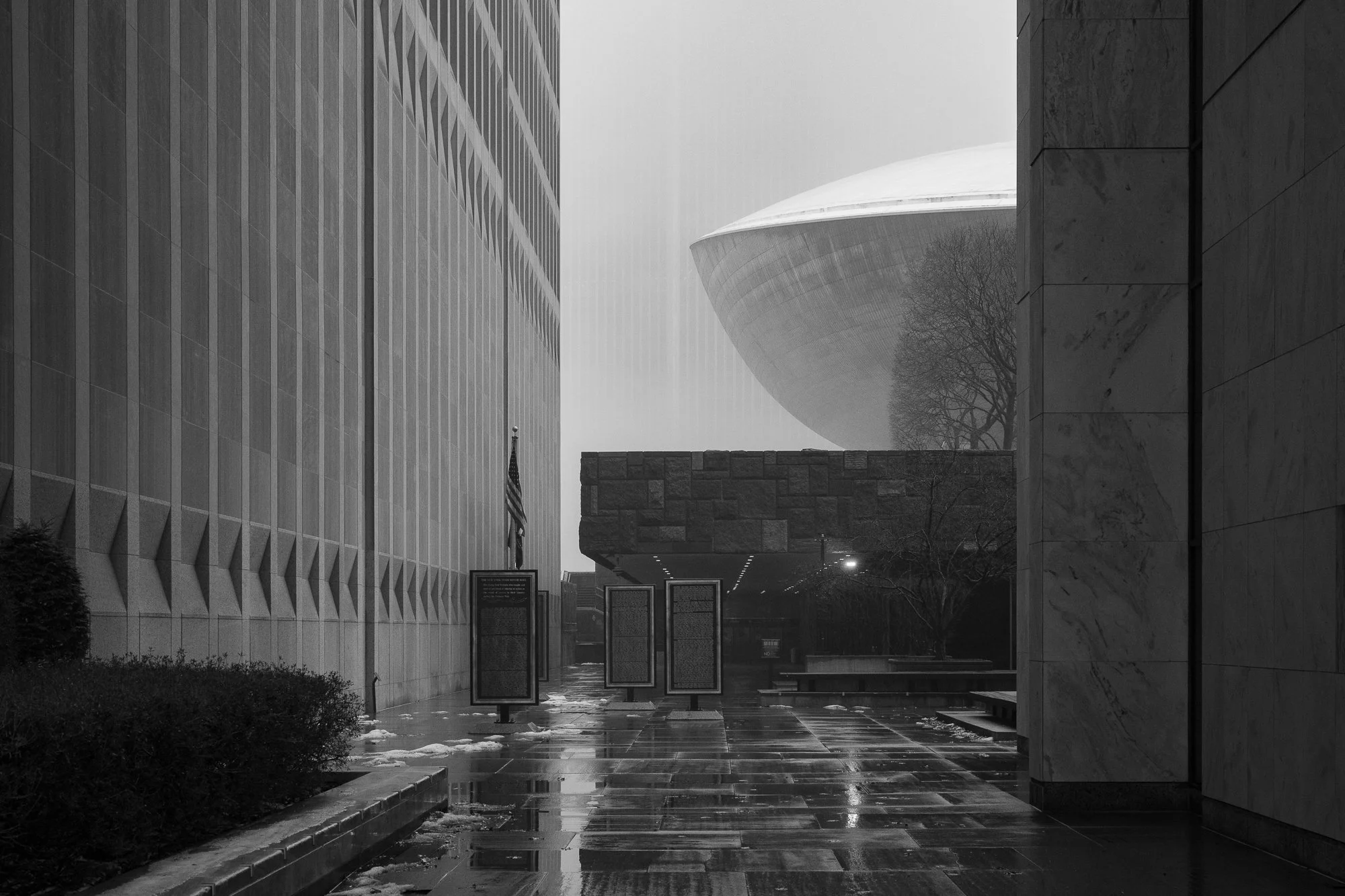
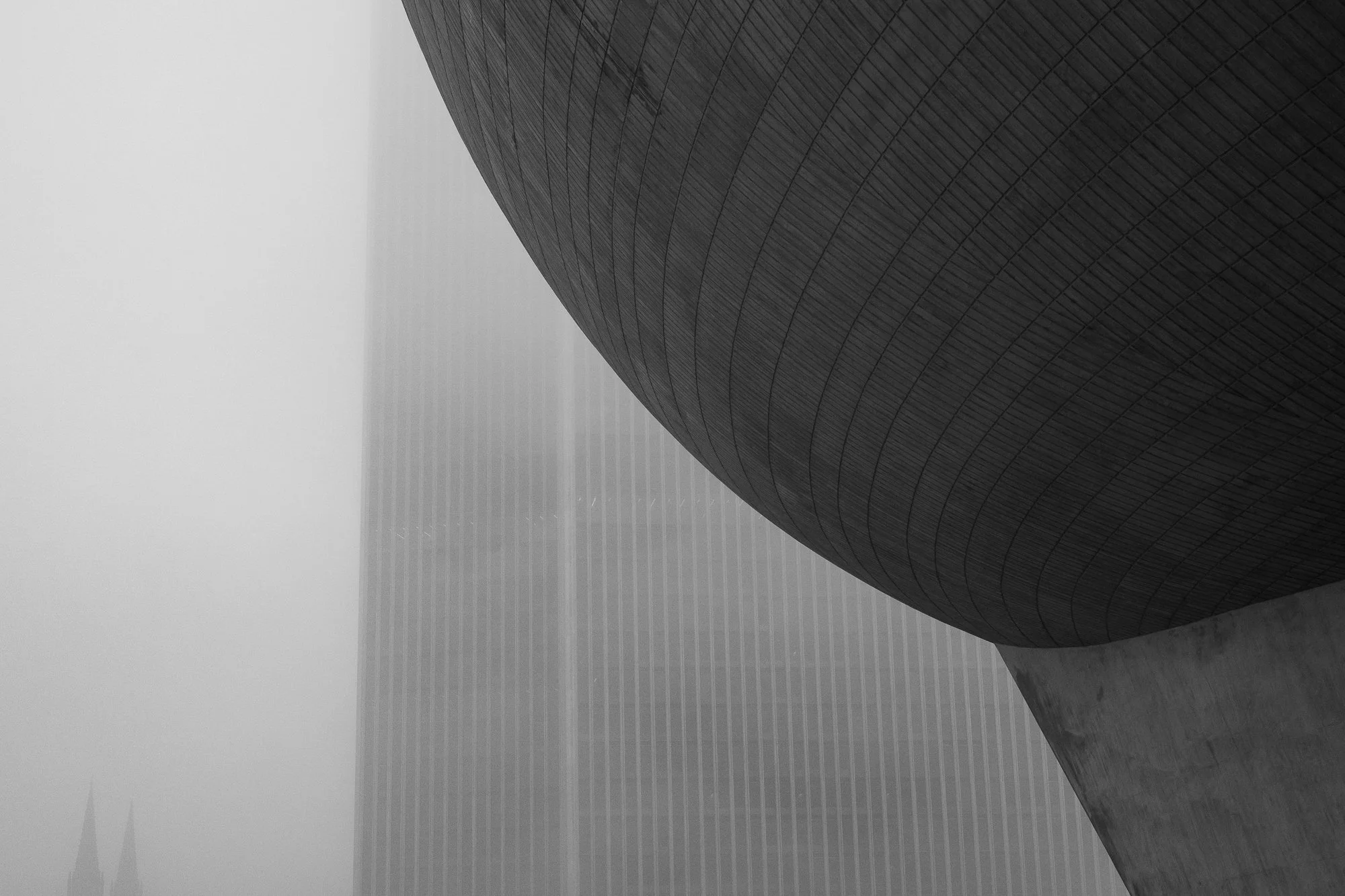
Black and white architectural photograph of Empire State Plaza buildings in Albany, New York

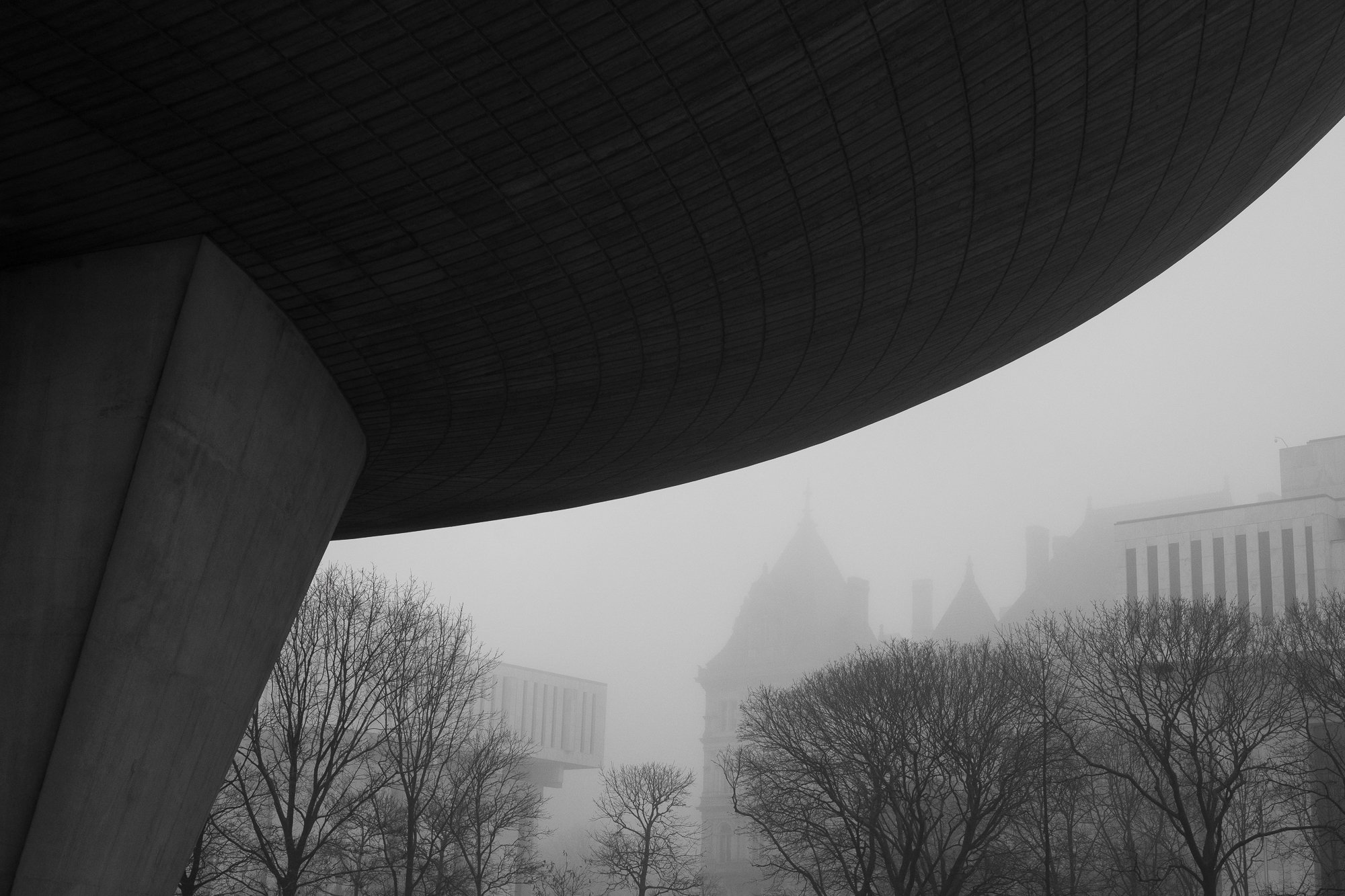
Empire State Plaza emerges through fog, emphasizing clean lines, scale, and negative space.

Timeless black and white photograph of Albany, New York

Classic black and white photograph of Albany, NY

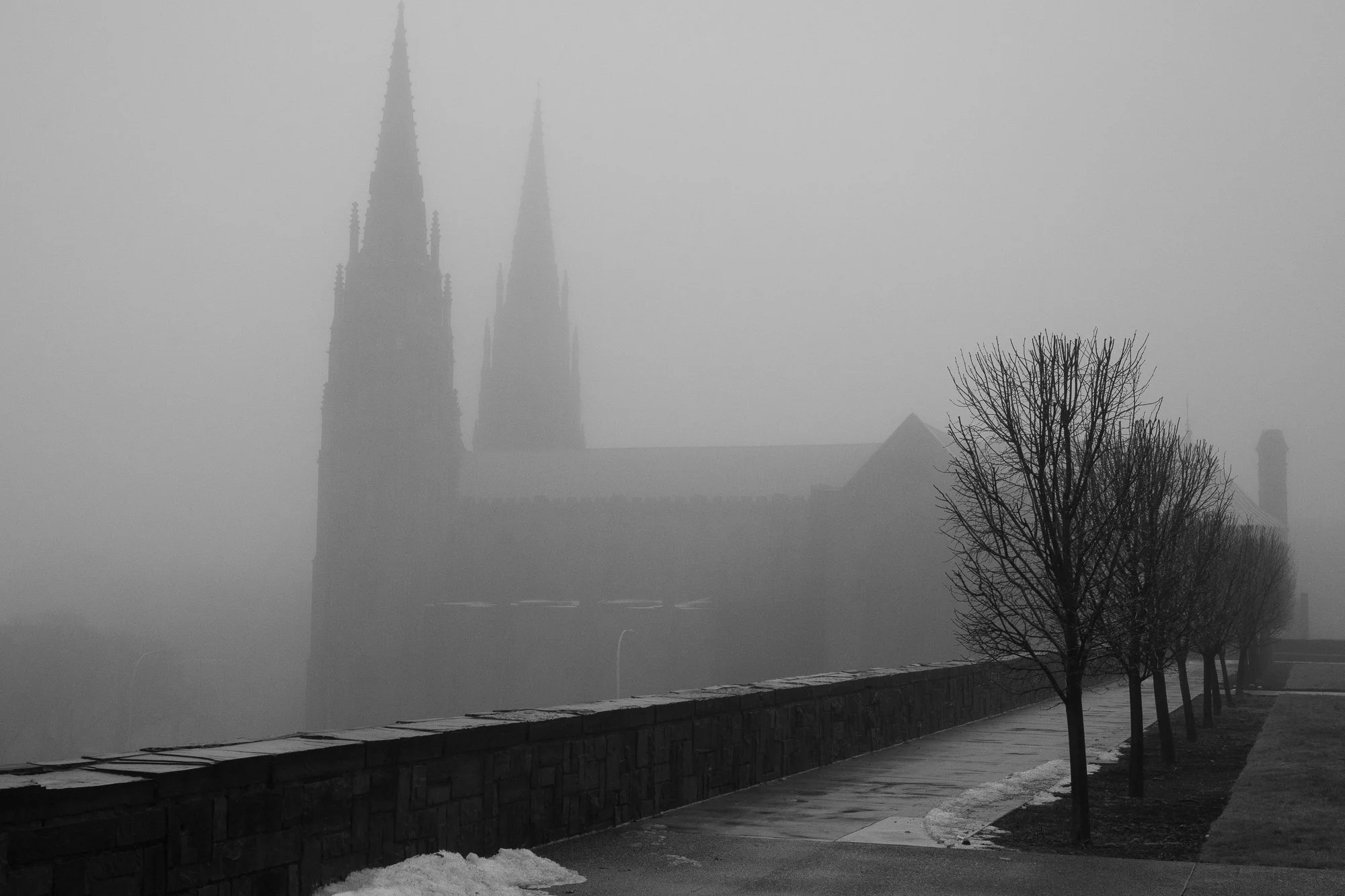
Black and white photograph of cathedral spires emerging through fog in Albany, New York

Cathedral spires of the Church of the Immaculate Conception in Albany, NY rise quietly through dense fog, reducing the city to silhouette and form.

Black and white photograph of The Egg performing arts center in Albany, New York

Empire State Plaza - A close architectural study of The Egg, where curve and concrete dominate the frame.

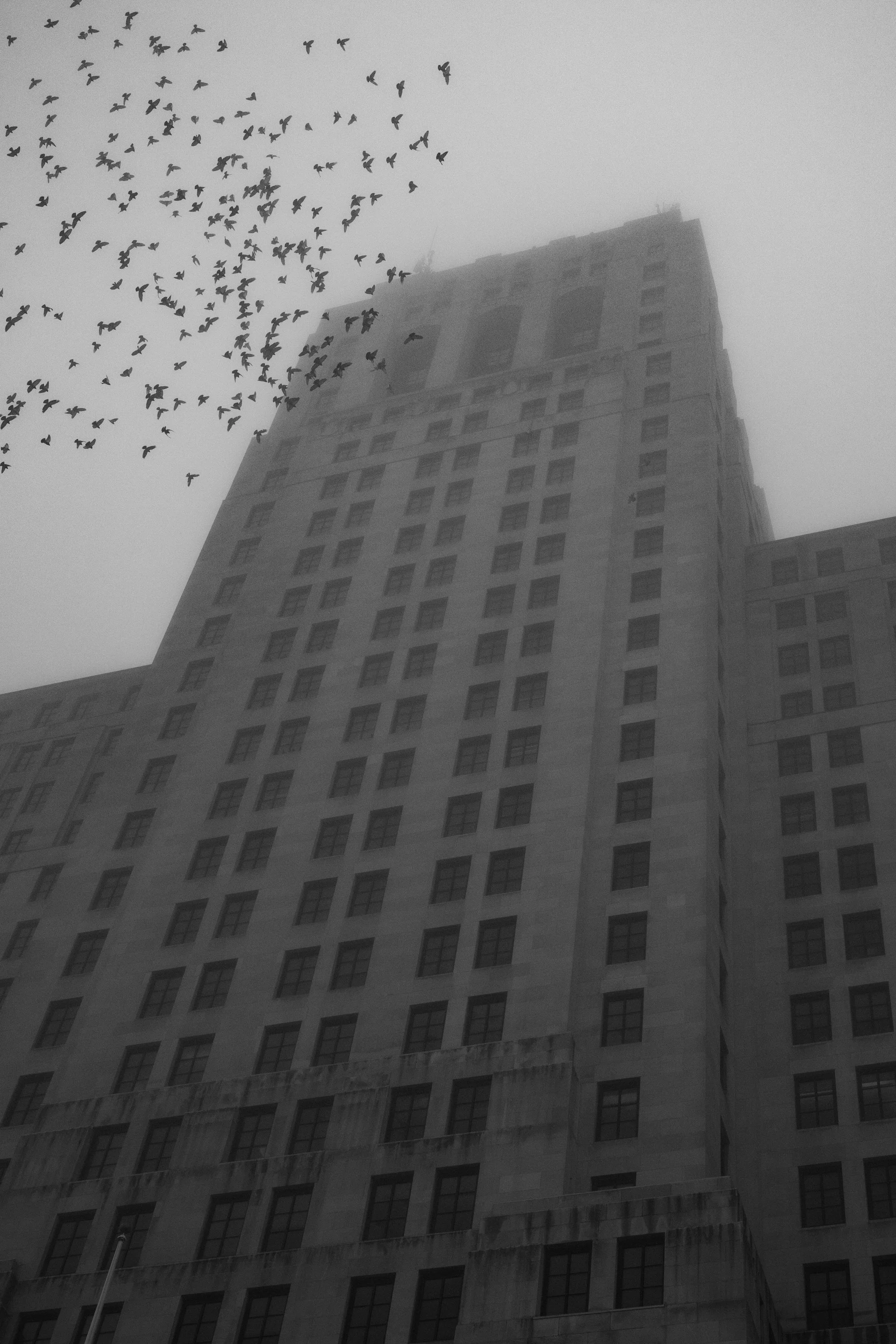
Black and white photograph of birds flying past a tall government building in Albany, New York

A flock of birds breaks the stillness above the Alfred E. Smith building, adding movement to an otherwise rigid form.

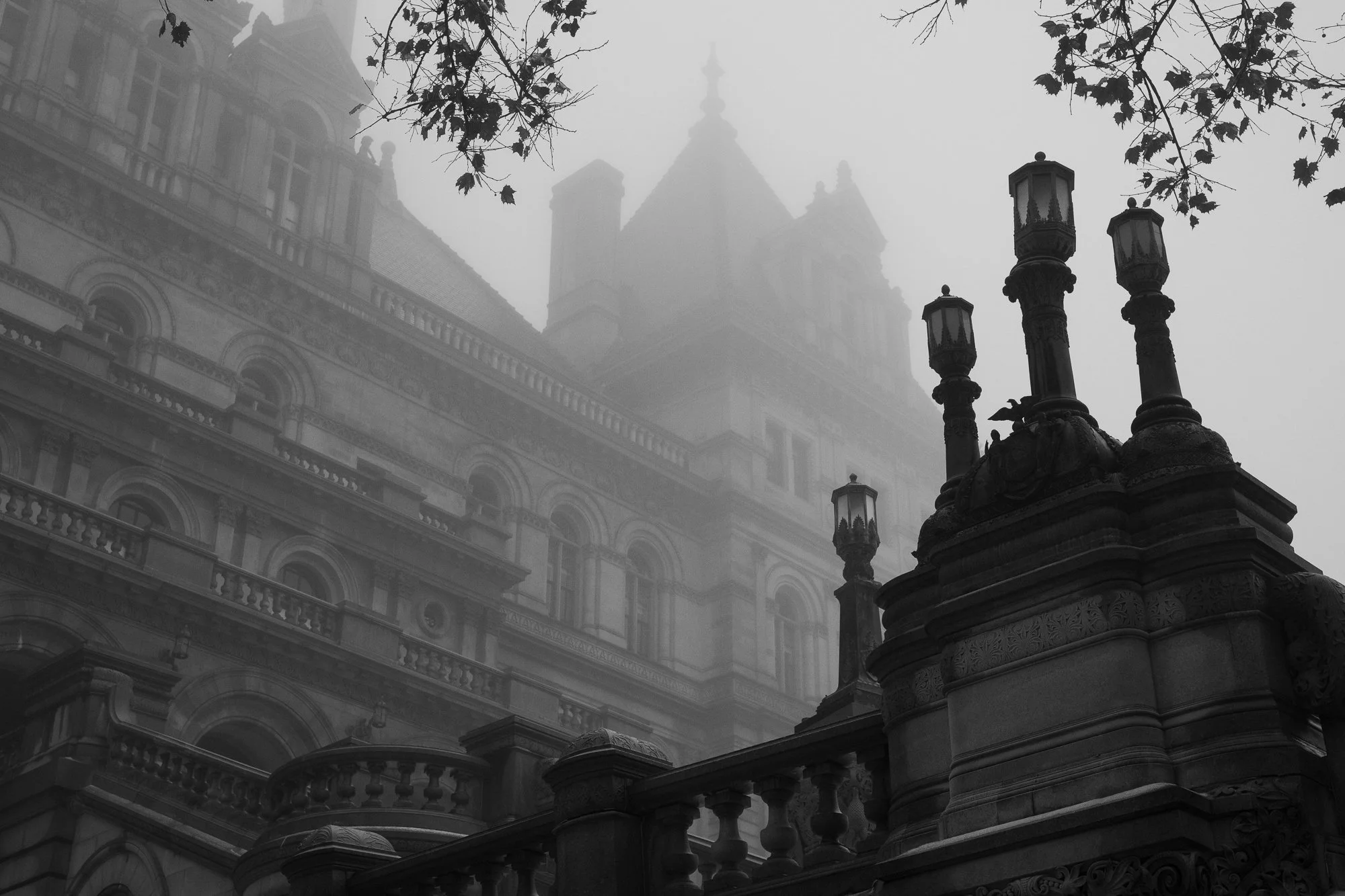
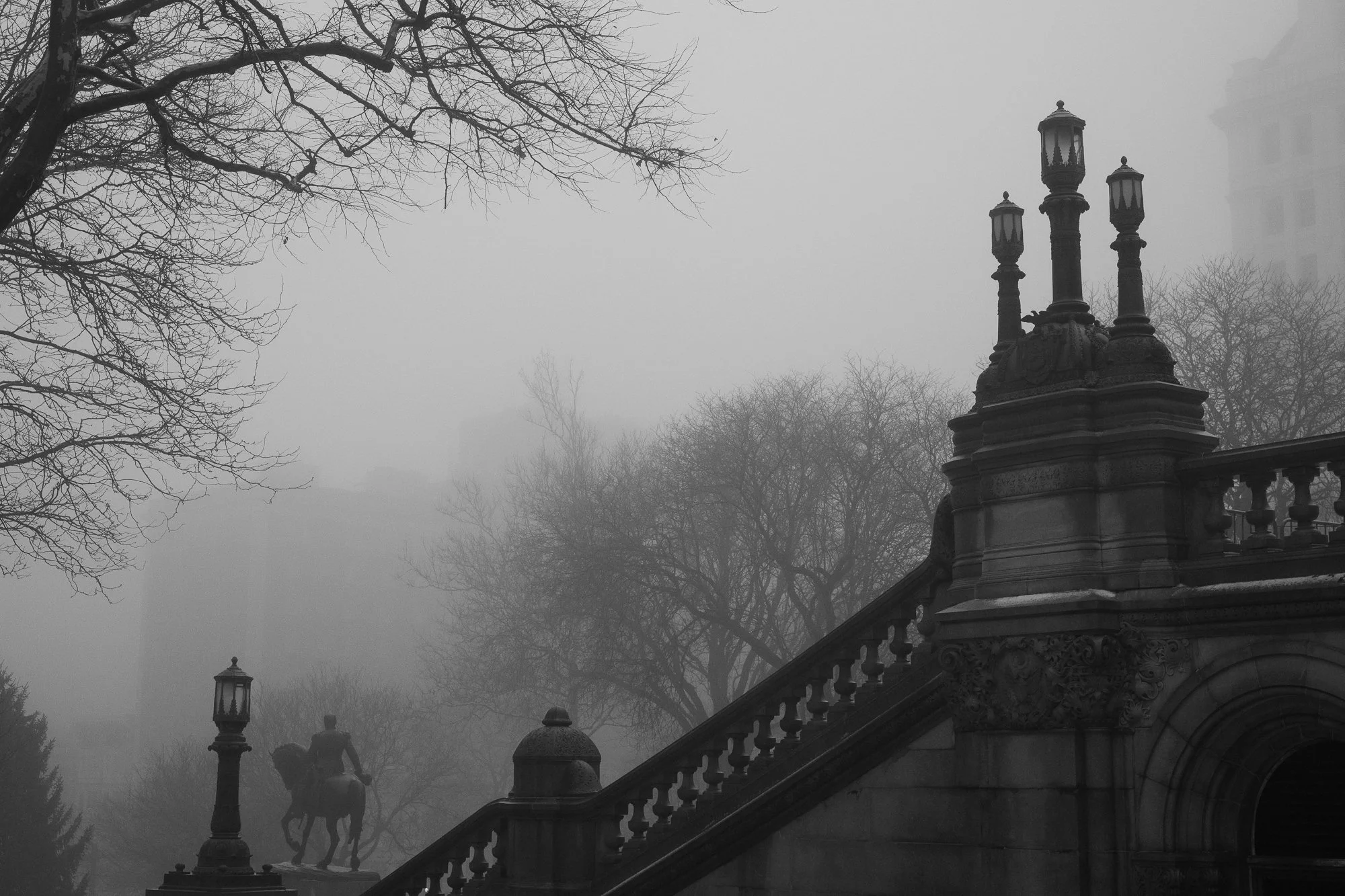
Black and white photograph of decorative balustrades and lampposts at the New York State Capitol in fog

Decorative stonework and lampposts lead the eye toward the Capitol as fog softens the background.

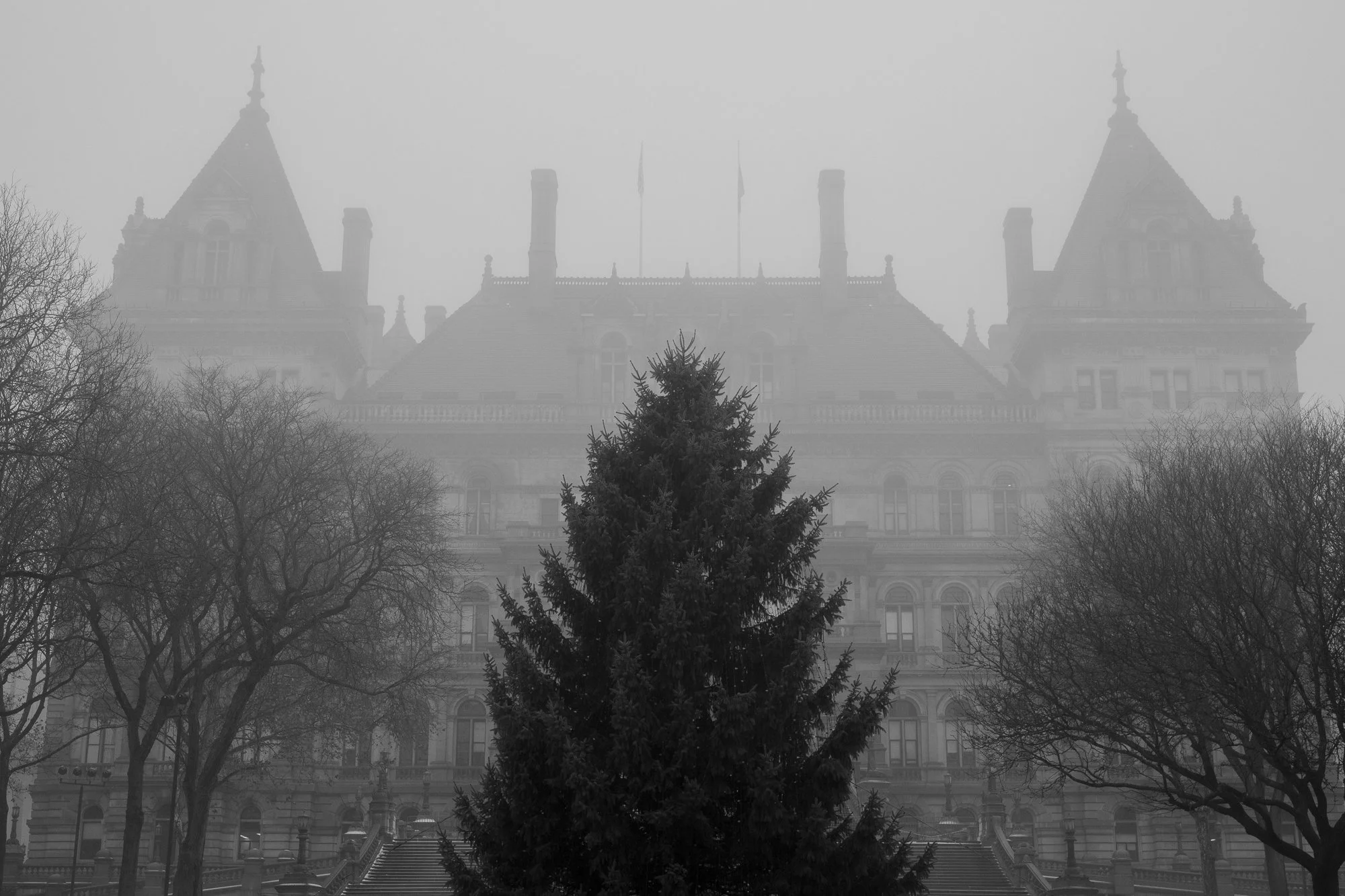
Black and white photograph of the New York State Capitol with symmetrical towers and a central evergreen

Symmetry, fog, and restrained contrast reduce the the New York Sate Capitol building to pure form. This photograph is offered as a fine art print that works especially well in offices and interiors where quiet authority matters.

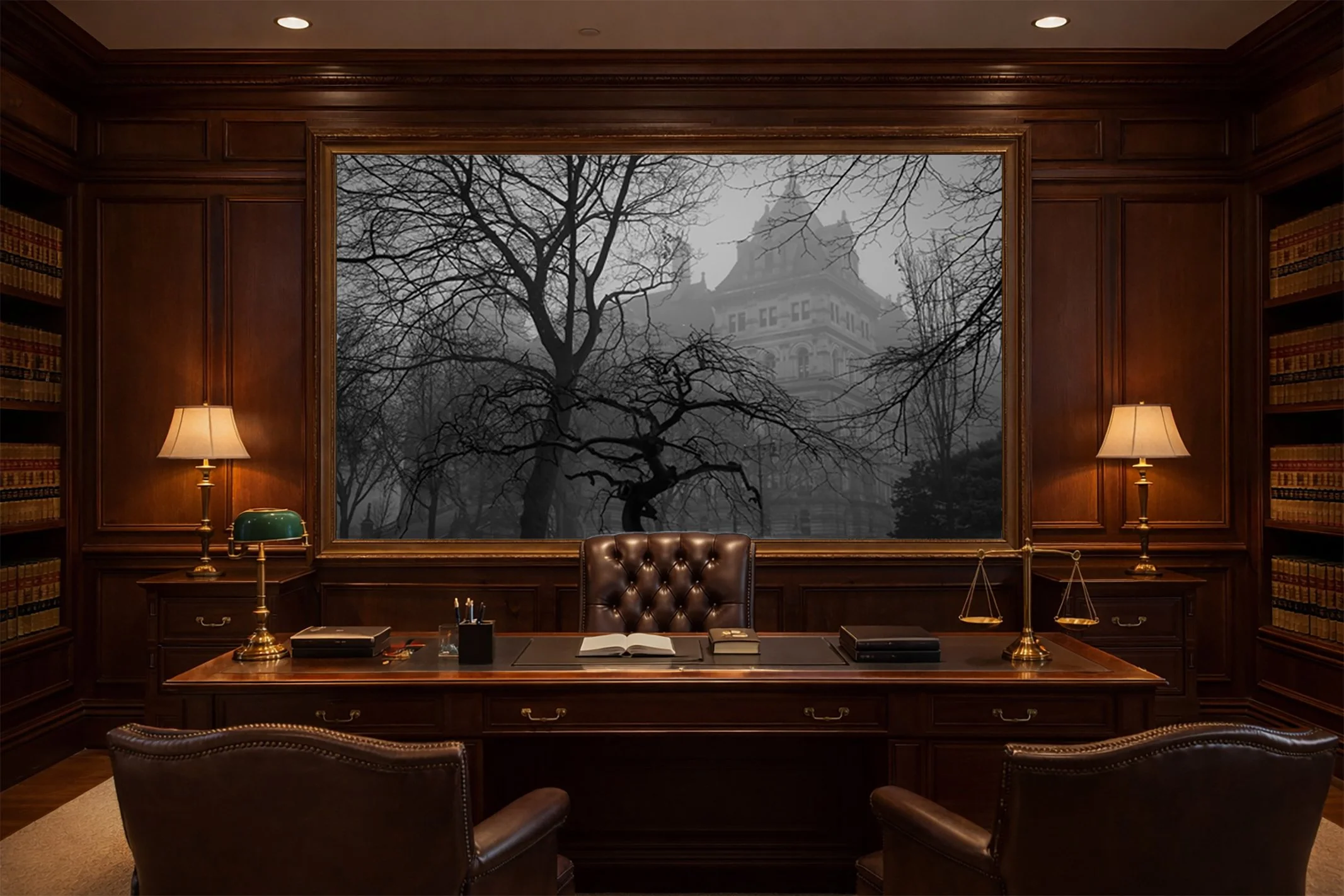
Black and white architectural photograph of an Albany, New York landmark displayed in a high-end attorney’s office with dark wood paneling and classic furnishings

A black and white architectural photograph of Albany, New York, shown here installed in a high-end attorney’s office. The fog-softened historic architecture and bare winter trees bring a quiet sense of permanence and authority to a refined professional space.

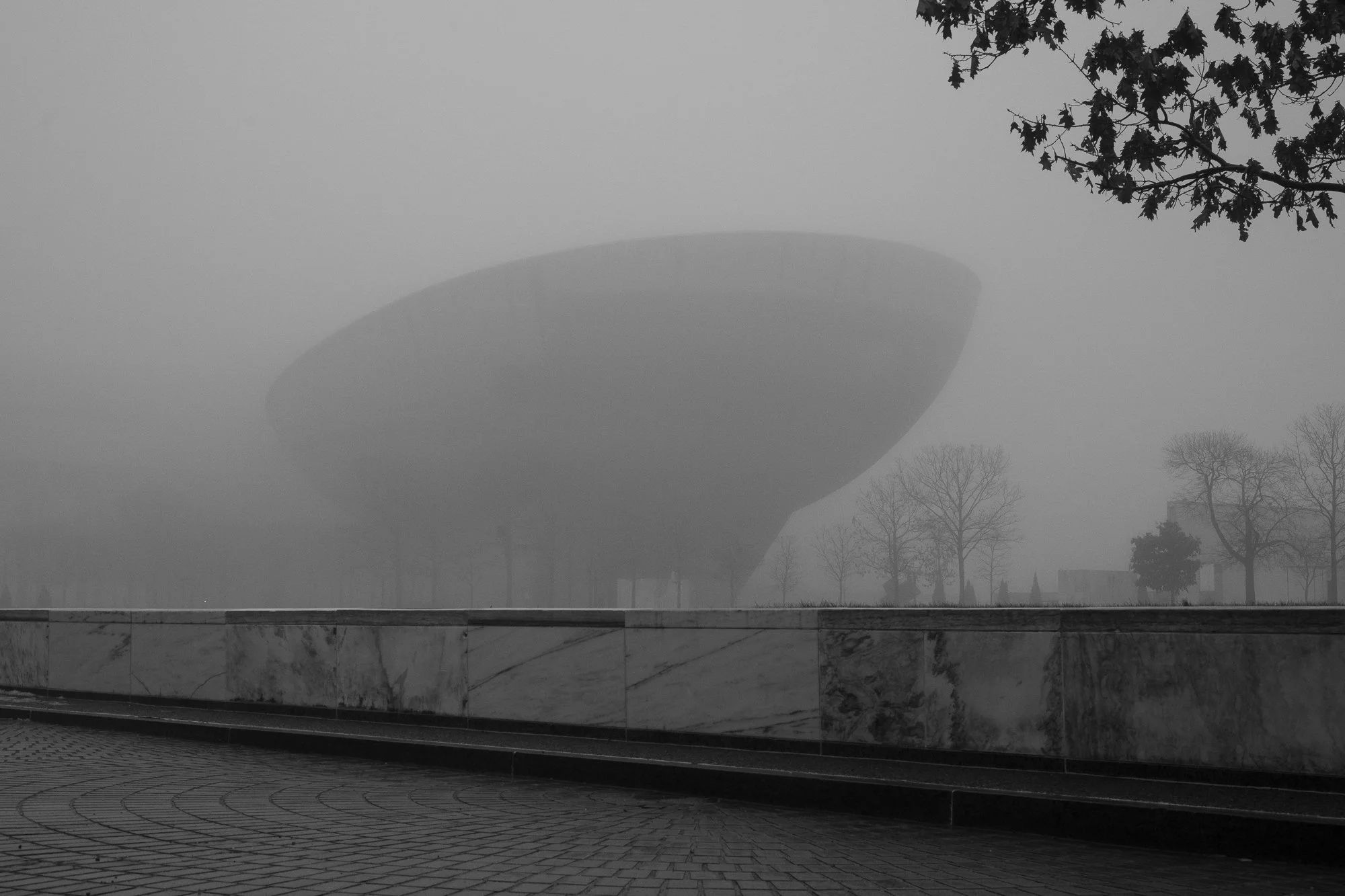
Black and white photograph of The Egg performing arts center partially obscured by fog in Albany

The Egg appears as a softened form within heavy fog, emphasizing scale and negative space.

Black and white photography print of historic Albany, NY architecture

Photograph of the New York State Education Department building in Albany, NY

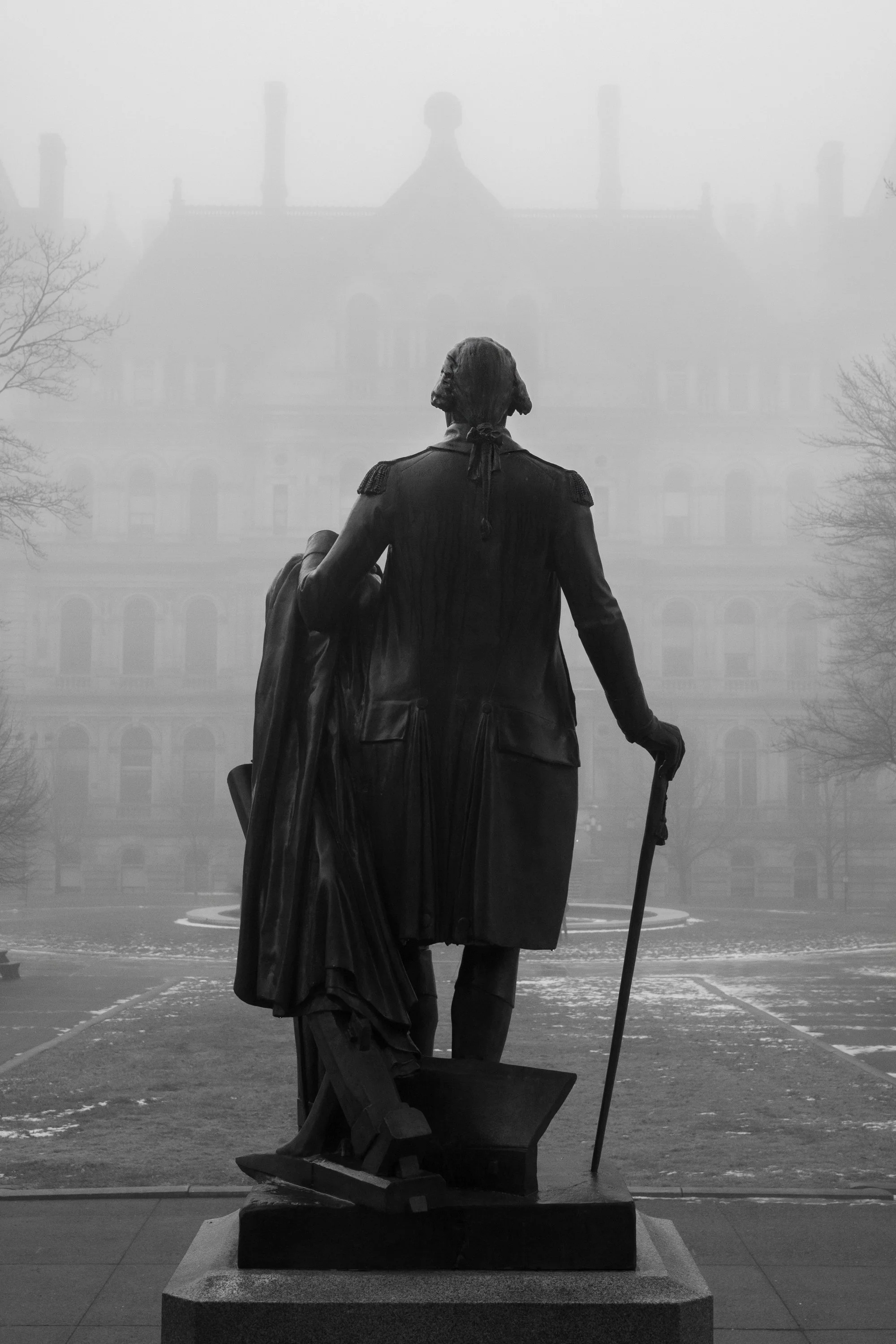
Black and white photograph of a statue in Washington Park framed by bare tree branches in Albany

A statue of George Washington stands quietly framed by winter branches and softened by fog.

Black and white photography print of the statue and staircase in front of the Capital building in Albany, NY

Timeless black and white photograph of Albany, NY architecture

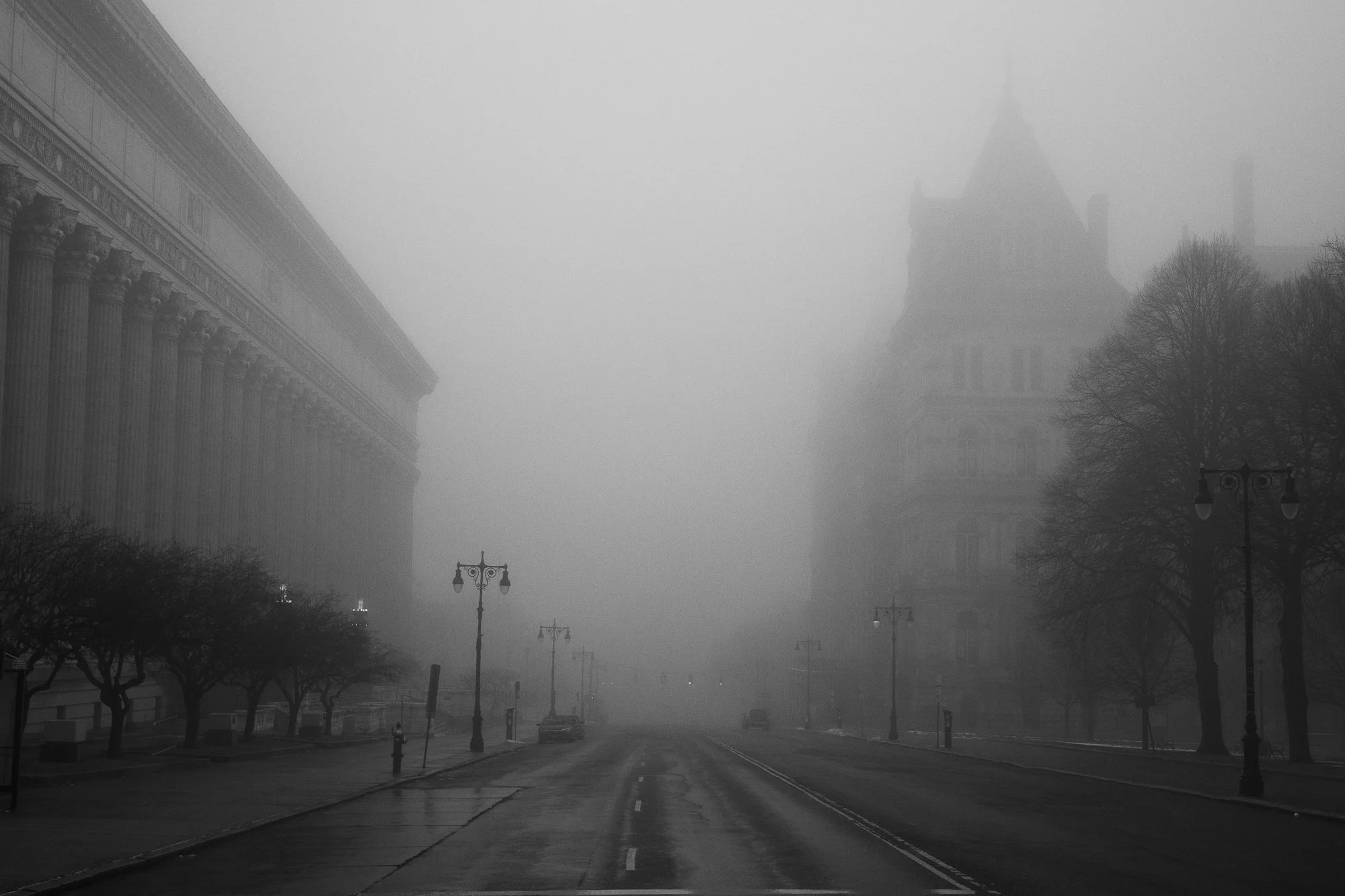
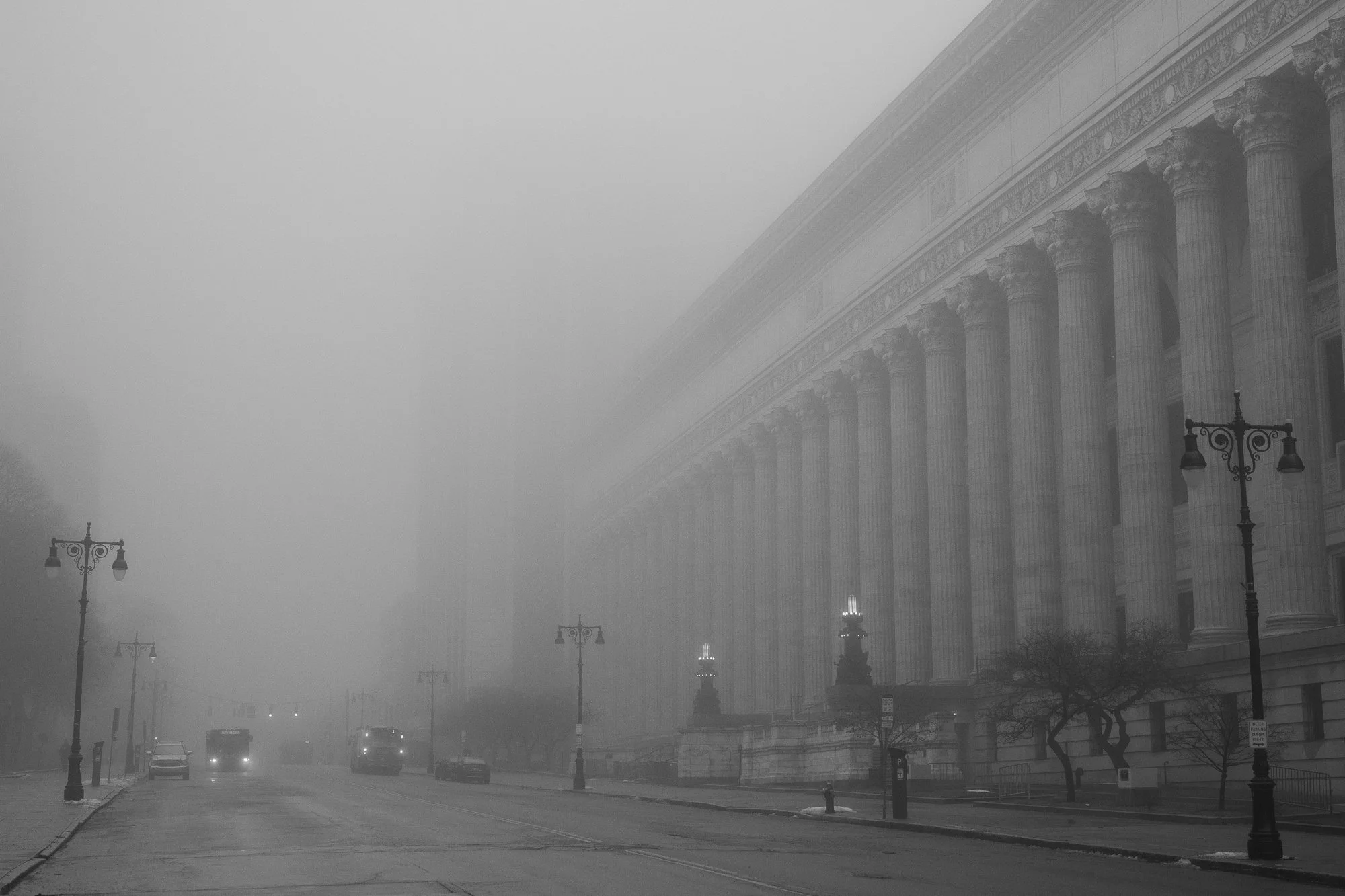
Black and white photograph of a columned government building along an empty street in Albany

A long row of columns fades into fog along a quiet Albany street, emphasizing repetition and scale.

Black and white photograph of Albany, NY architecture

A single lamppost anchors an empty Albany street as fog dissolves the surrounding architecture.

Black and white fine art photograph of The Egg and architecture in Albany, NY

The sweeping curve of The Egg floats above Albany’s softened skyline as fog reduces detail and scale.

Leucadia Barbershop in Encinitas, CA

Leucadia Barbershop – A California Chapter of Barbershops of America

Leucadia Barbershop has been part of Encinitas since 1996, when Emiliano Zermeno’s family first opened the doors at its original location. Like many small barbershops, the business was eventually forced out due to landlord pressures—a familiar story across the country. Instead of closing, Emiliano rebuilt the shop in a new space, carrying forward what his family started while shaping it into something distinctly his own.

A Family Barbershop Rooted in Leucadia Since 1996

Emiliano grew up inside the shop his family created. The rhythm of haircuts, the conversations, the regulars—it wasn’t a concept or aesthetic. It was daily life. When displacement forced the original location to close, the continuity of that space could have ended. Instead, it shifted. The new Leucadia Barbershop carries the same foundation, just reinterpreted through a different generation.

Southern California Skate Culture Inside a Barbershop

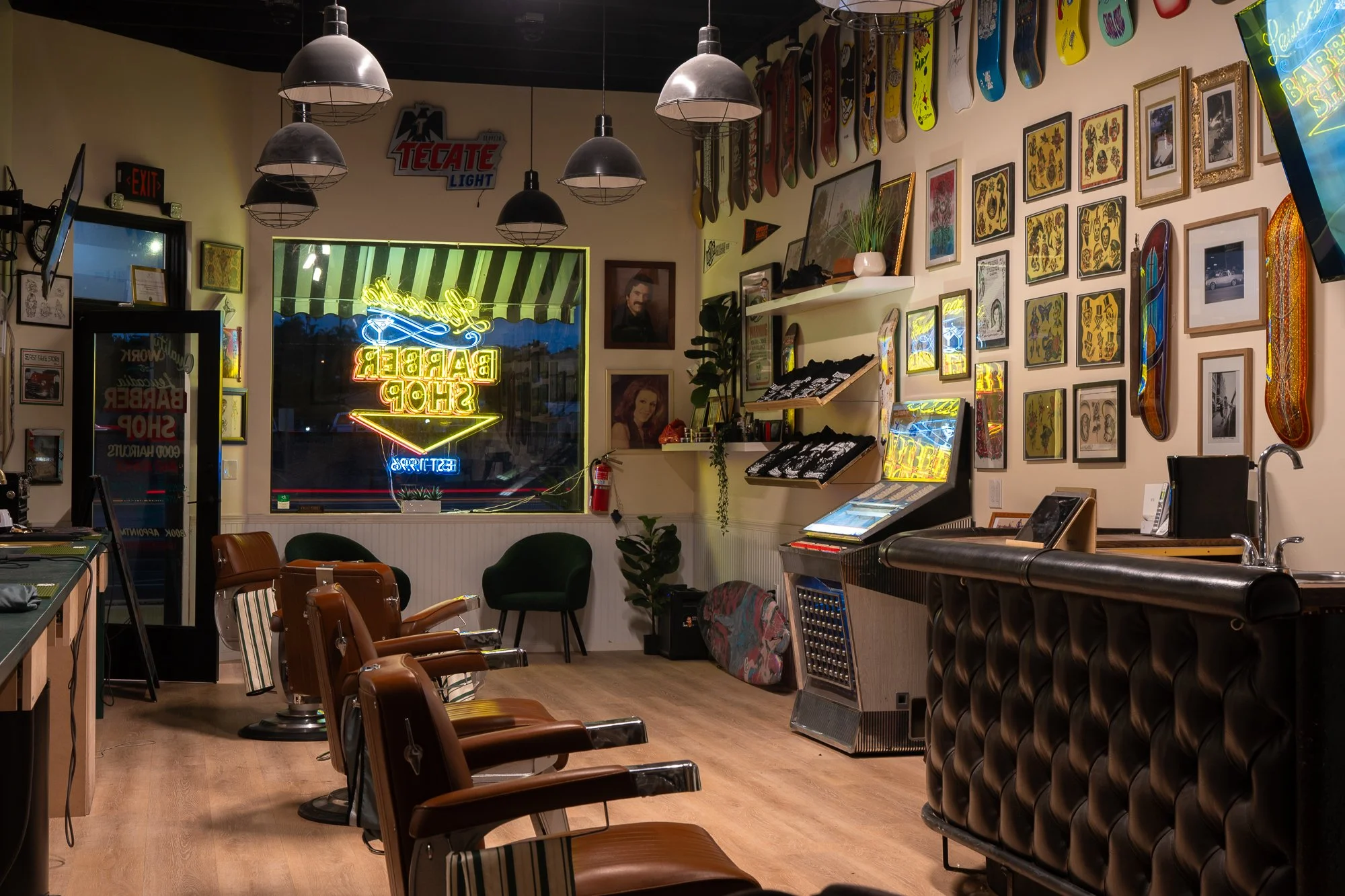
The new space reflects Emiliano himself—a Southern California kid who grew up with a love for skateboarding and still carries that passion today. The shop feels less like a preserved relic and more like a lived-in extension of coastal California: relaxed, personal, rooted in community. The design choices, the atmosphere, even the pace of the room mirror the culture that shaped him.

Emiliano didn’t just take over the business to make his family proud, he took it to the next level. Which is obvious when you look at his shop, but more importantly, you see it in his cuts. He’s a member of the Uppercut Deluxe team - a sign of quality, and another layer that further represents the skateboarding culture.

Photographing Leucadia Barbershop

Leucadia Barbershop was photographed as part of a long-term effort to document traditional American barbershops in all 50 states before they disappear or change beyond recognition. Each shop carries its own story. In Encinitas, that story includes family continuity, displacement, and the culture of Southern California itself.

View More Traditional Barbershops

Leucadia Barbershop is one of many shops documented across the country as part of a 15-year archive focused on preserving everyday American spaces.

→ View the full Barbershops of America gallery
You can also view another California barbershop photographed as part of the same series:

→ Read the blog post about a traditional barbershop in San Diego

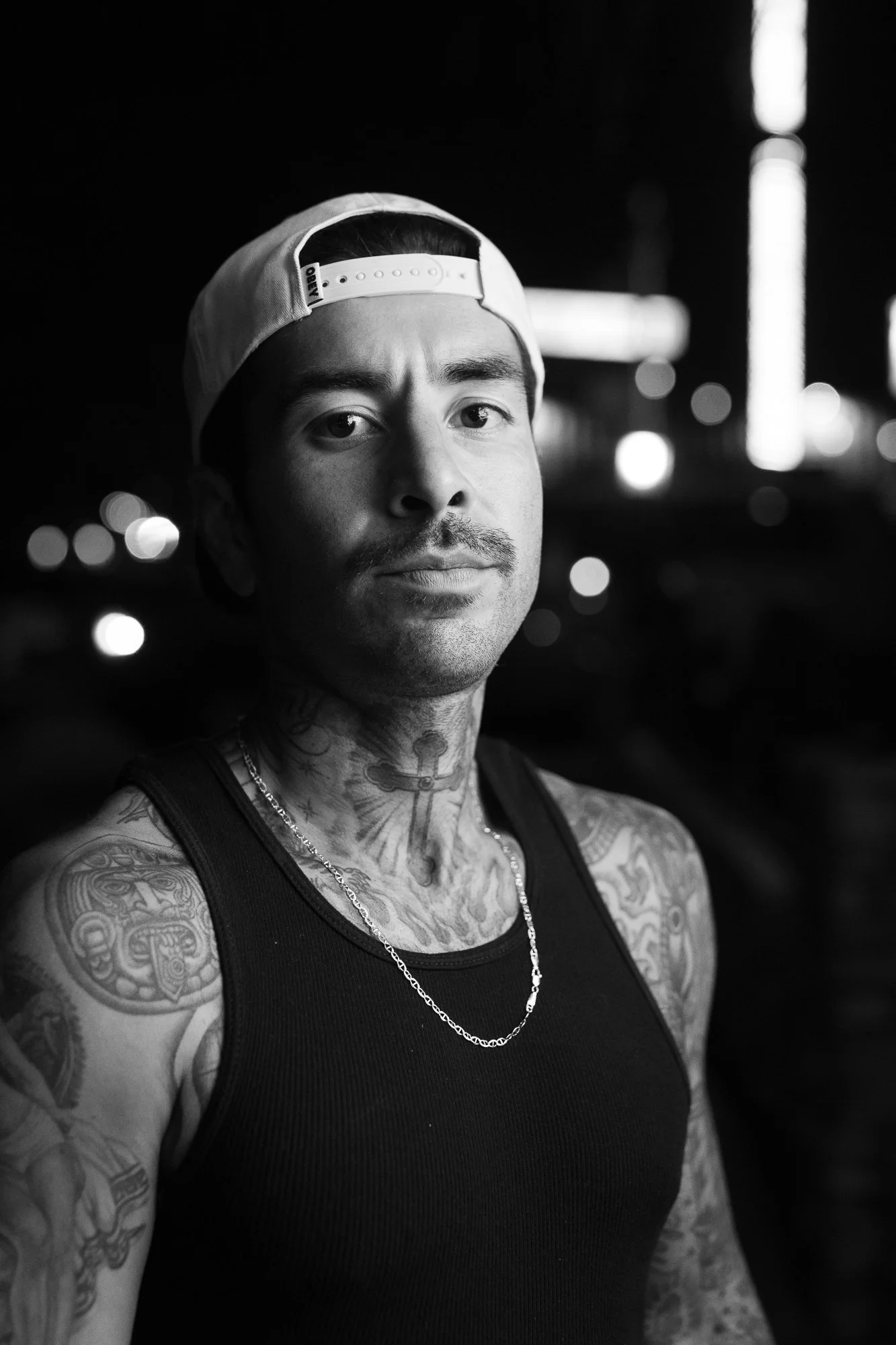
Black and white portrait of Emiliano Zermeno, owner of Leucadia Barbershop in Encinitas, California.

Portrait of Emiliano Zermeno, who continued the family barbershop after the original 1996 location was lost to landlord displacement.

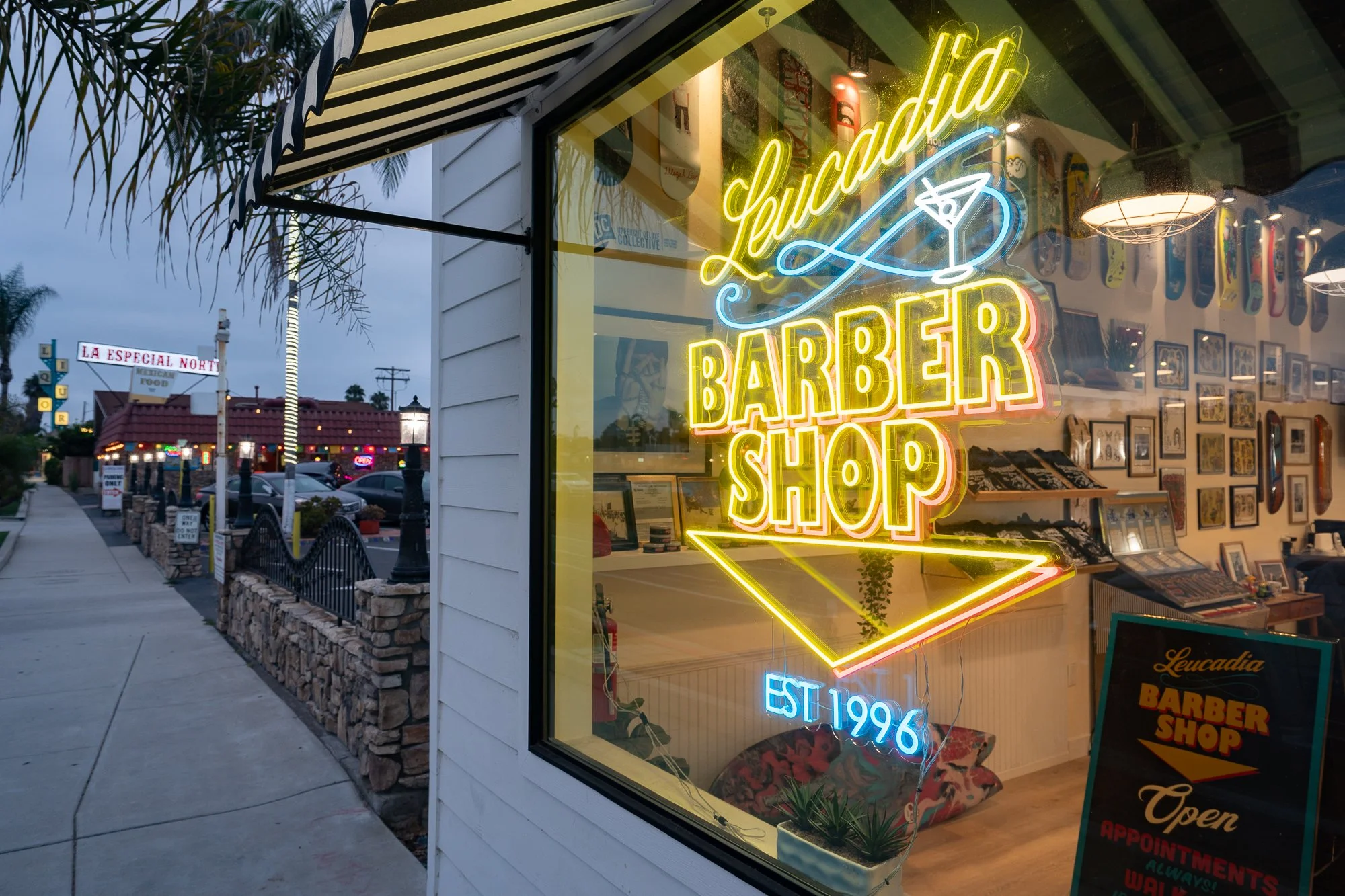
Neon sign at Leucadia Barbershop in Encinitas, California at dusk, established 1996.

The neon sign at Leucadia Barbershop glows over the sidewalk in Encinitas, California. Opened in 1996, the shop has remained part of the coastal community through change and relocation.

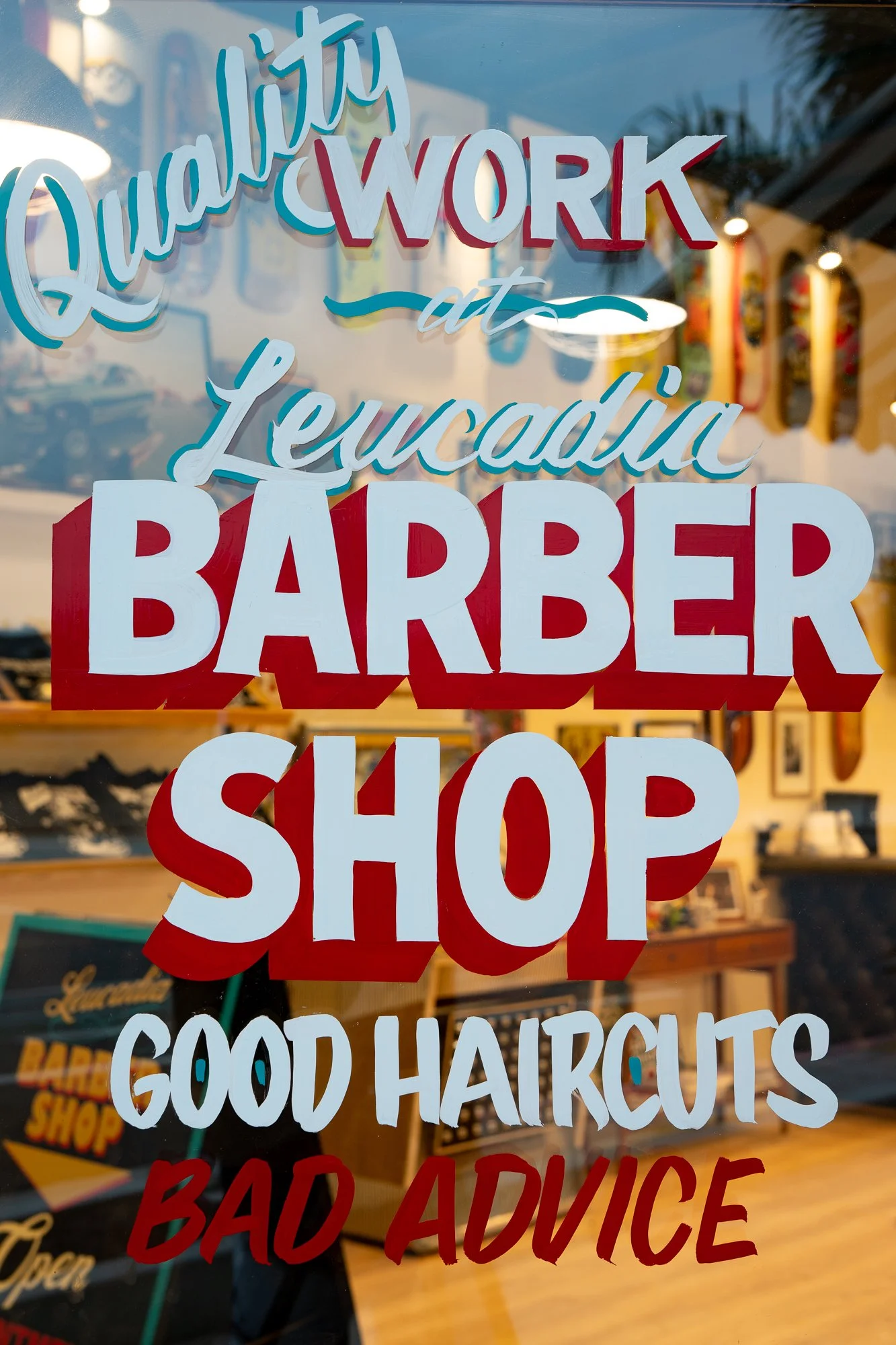
Window lettering reading “Quality Work at Leucadia Barber Shop” on the storefront in Encinitas, California.

Window lettering at Leucadia Barbershop in Encinitas, California. Established in 1996, the shop blends traditional barbering with Southern California character.

Interior of Leucadia Barbershop in Encinitas, California showing barber chairs, framed artwork, and skateboards.

Inside Leucadia Barbershop in Encinitas. The space combines traditional barber chairs with personal artwork and skateboards, creating a shop shaped by the owner’s history.

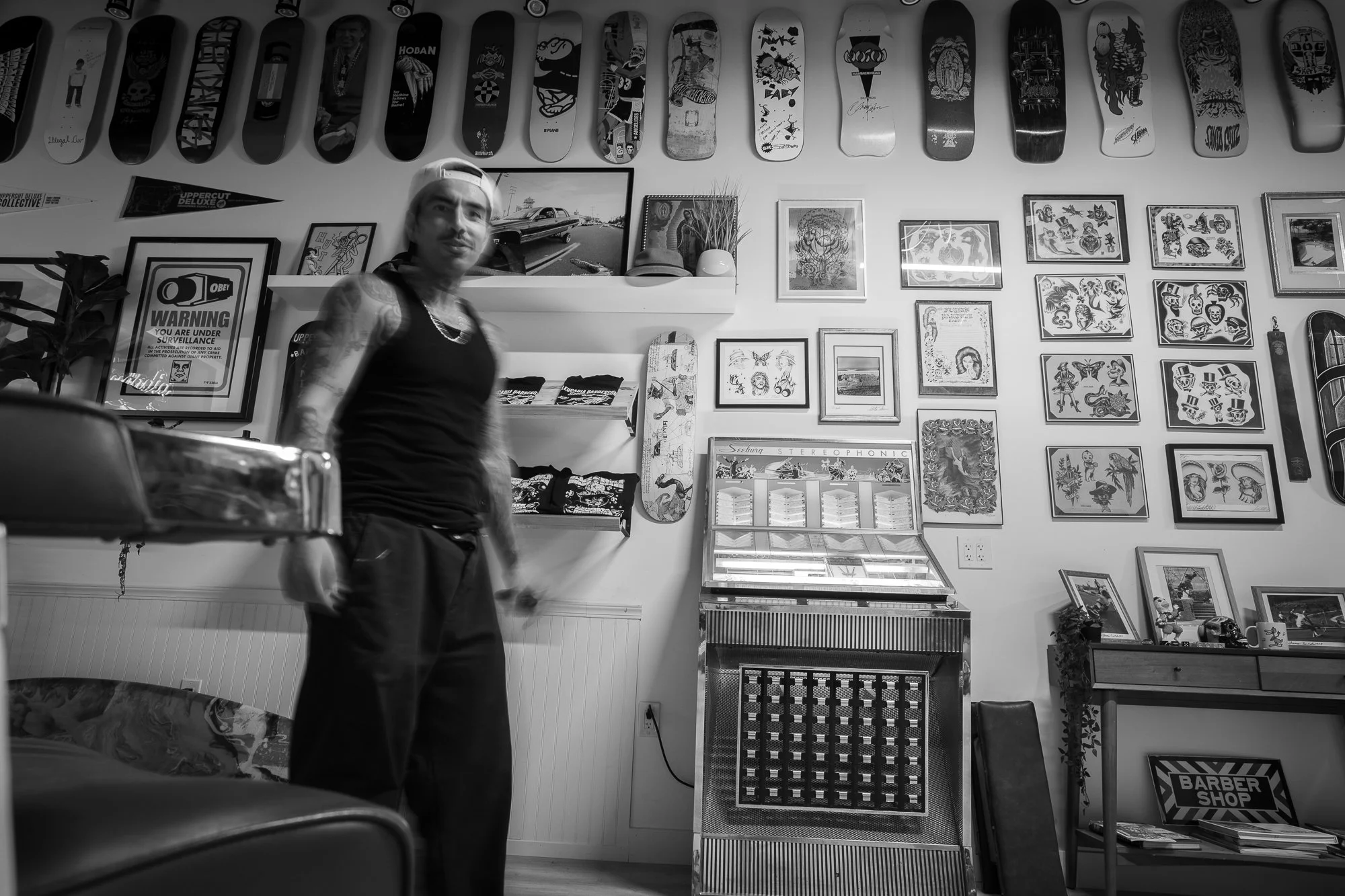
Emiliano Zermeno inside Leucadia Barbershop in Encinitas, California with skateboards displayed on the wall.

Emiliano Zermeno inside Leucadia Barbershop. The skateboards lining the wall reflect his Southern California upbringing and lifelong connection to skate culture.

Black and white photograph of a neon barbershop sign

Barbershop in Encinitas, CA

A Traditional American Barbershop - A Neighborhood Fixture

An Old School Neighborhood Barbershop

I first photographed this barbershop in San Diego in 2011, early on in what would eventually become the Barbershops of America project. At the time, I didn’t fully realize how important these photographs would become. I was simply drawn to places like this — shops that felt unchanged, where time moved a little slower and the barber knew everyone who walked through the door.

This shop, run by Johnny Lovato, was one of those places.

A Shop That Felt Lived In

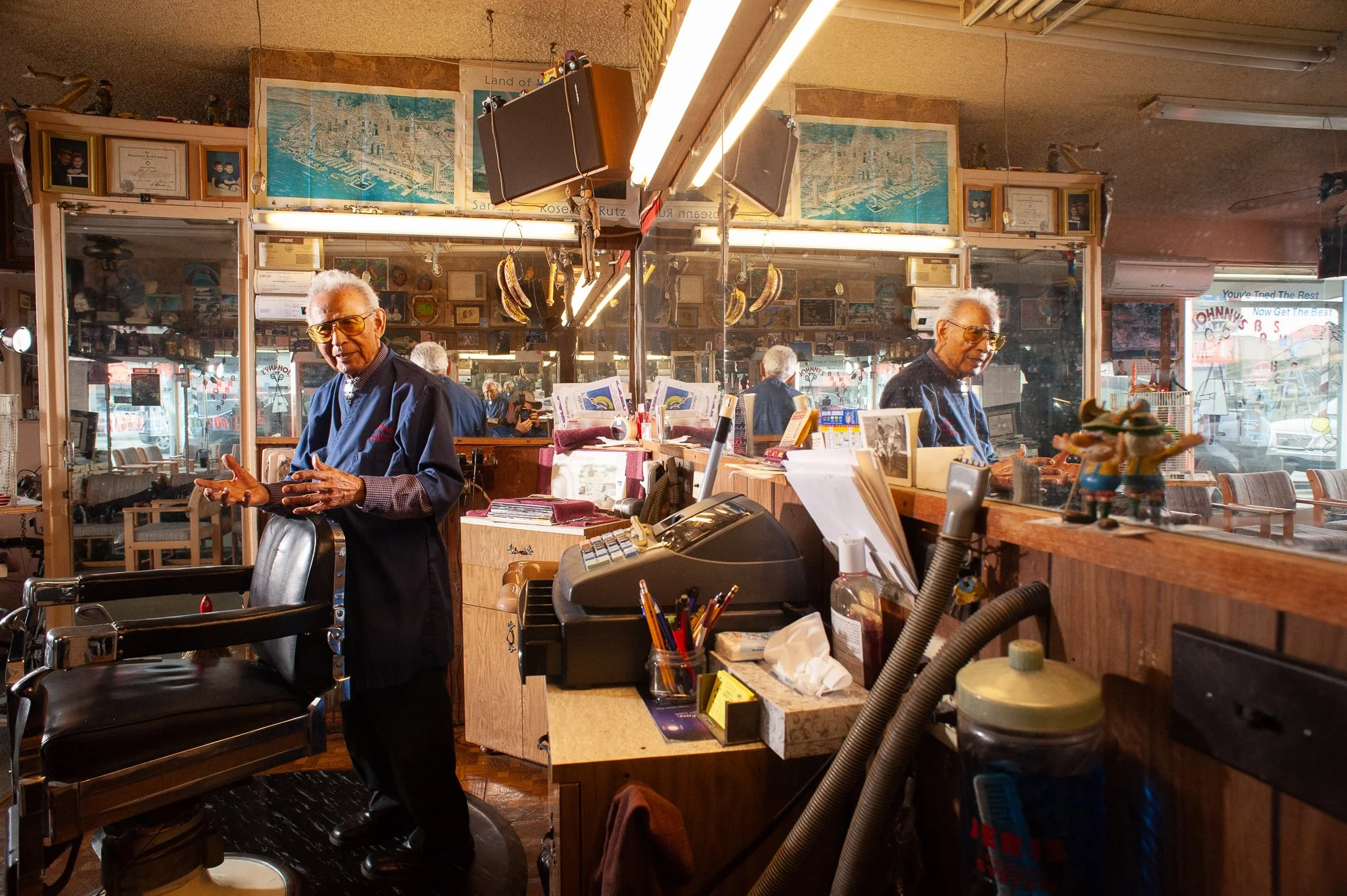
Walking into Johnny’s barbershop felt like stepping into another era. The space wasn’t curated or styled — it was simply lived in. The chairs, the mirrors, the worn floor, the little personal details scattered throughout the shop all told a story without trying to.

These weren’t decorations meant to evoke nostalgia. They were just the things that had accumulated over time. That honesty is what made the shop special and what kept the doors open to the same neighborhood of friendly customers for decades.

The Barber and the Community

Johnny was always kind and welcoming, the type of barber who made time for conversation as easily as he made time for a haircut. His shop wasn’t just a place people came to get cleaned up — it was a place where stories were shared and relationships were maintained.

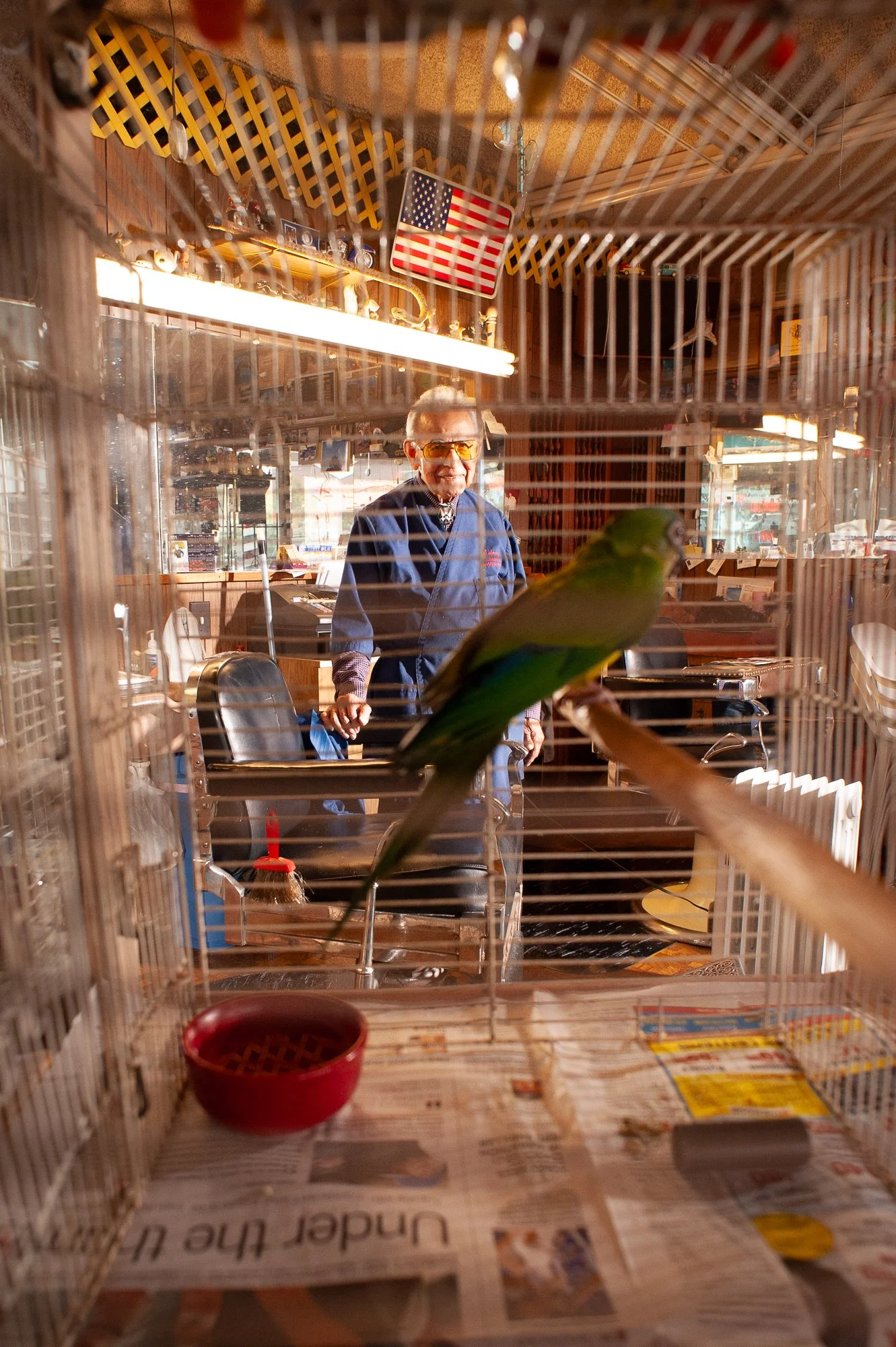
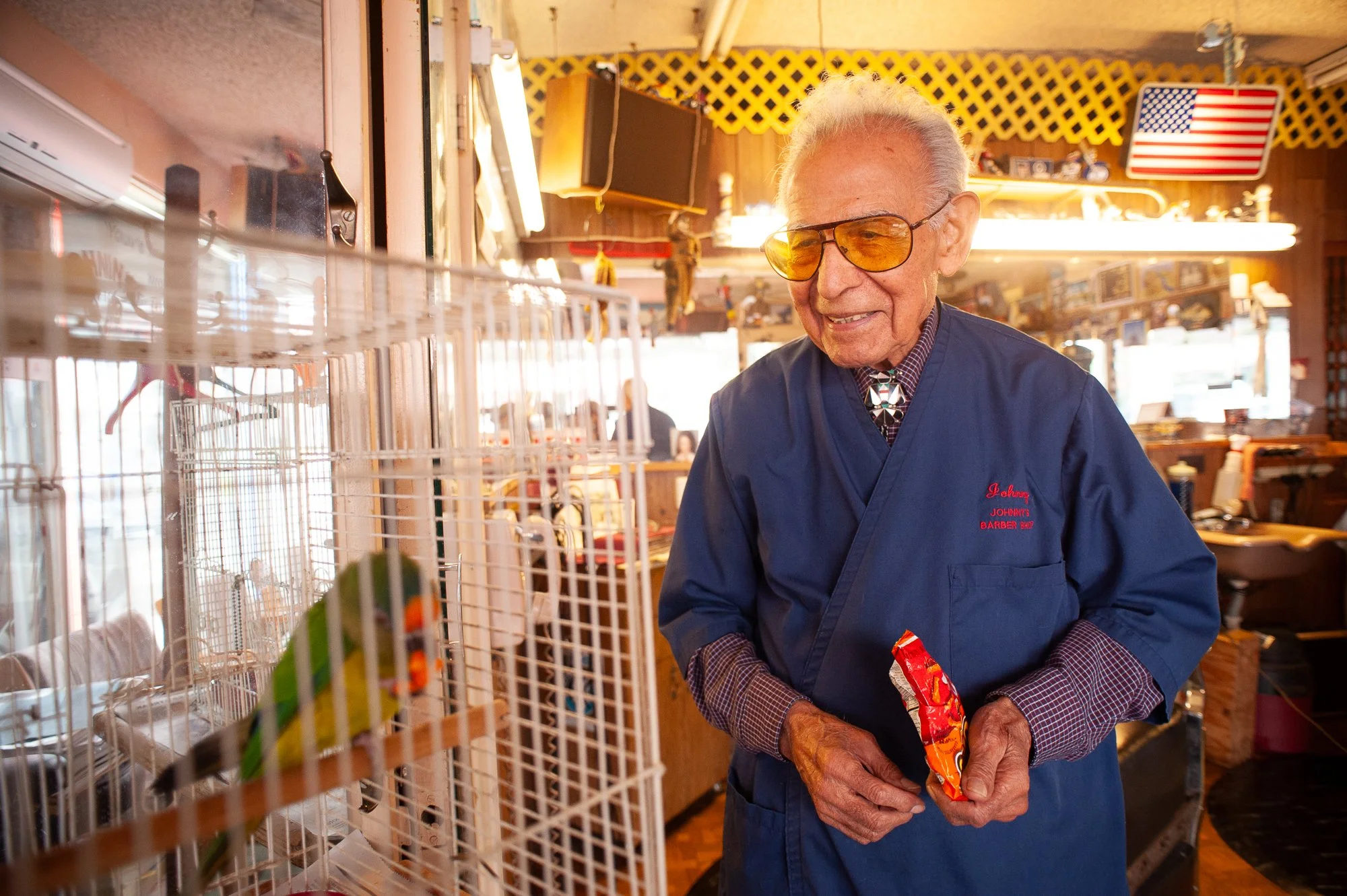
One of the small details I always remember is how happy Johnny was feeding his bird Cheetos. It’s a simple moment, but it perfectly captures the personality of the space and the rhythm of the shop. Those are the moments I’m always looking for when I photograph places like this.

Returning Years Later

I returned to photograph the shop again in 2019. By then, Johnny’s son had taken over the business. Much of the spirit of the shop remained, but time had clearly moved forward — as it always does.

Not long after, the barbershop closed, and the space was eventually transformed into something new, and in my opinion, soulless. That’s the reality for many traditional barbershops across the country. Rising rents, retirement, and redevelopment quietly erase places that once anchored their neighborhoods. Luckily another barber took over the space, so it remains a barbershop, just without the decades of character and memories that once filled it.

Why These Photographs Matter

Barbershops like this rarely close with ceremony. They disappear quietly, often without anyone realizing that a piece of local culture has gone with them.

This series exists so that those places aren’t completely lost. These photographs are not about nostalgia for nostalgia’s sake — they’re about acknowledging the importance of everyday spaces that shaped communities for generations.

Part of a Larger Archive

Johnny Lovato’s barbershop in San Diego is just one small part of a much larger body of work documenting traditional barbershops across the United States. Together, these images form an archive of a disappearing American tradition — one shop, one barber, one story at a time.

More Barbershops of America

View The Book

View The Gallery

Old-school American barbershop interior, Point Loma San Diego documentary photograph

Interior of a traditional barbershop in Point Loma, San Diego, where time-worn chairs and details reflect decades of community history.

Johnny Lovato feeding his pet bird inside his barbershop in San Diego, California

Johnny Lovato, the barber, shares a moment feeding the shop’s pet bird — a small gesture emblematic of daily life in the space.

An old school barber smiles while watching his pet bird

Johnny Lovato smiles after feeding his pet bird at his barbershop in San Diego

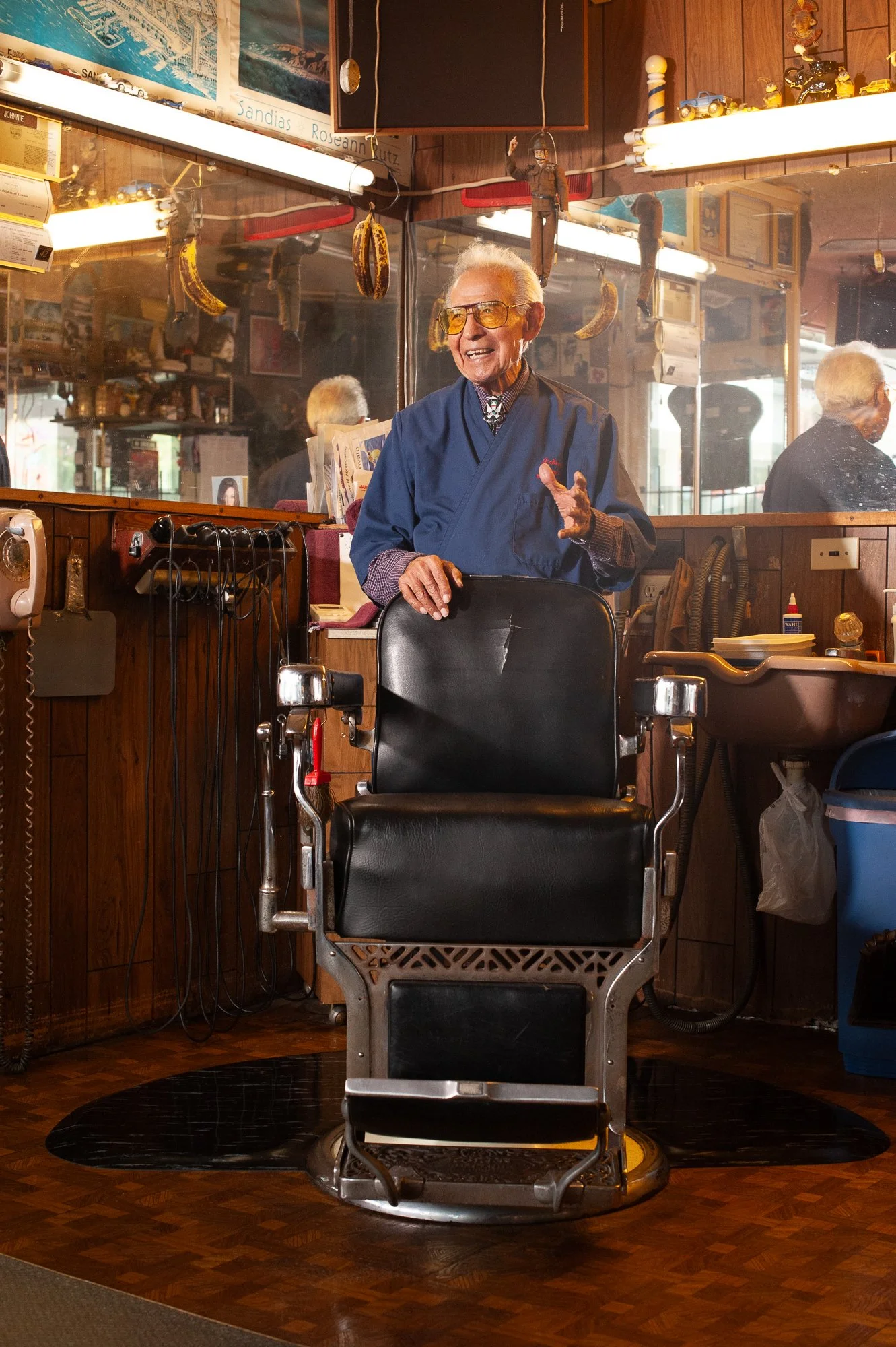
Portrait of a barber standing behind his chair in a traditional San Diego barbershop

Portrait of a barber standing behind his chair — a quiet testament to the people who made these shops more than just businesses.

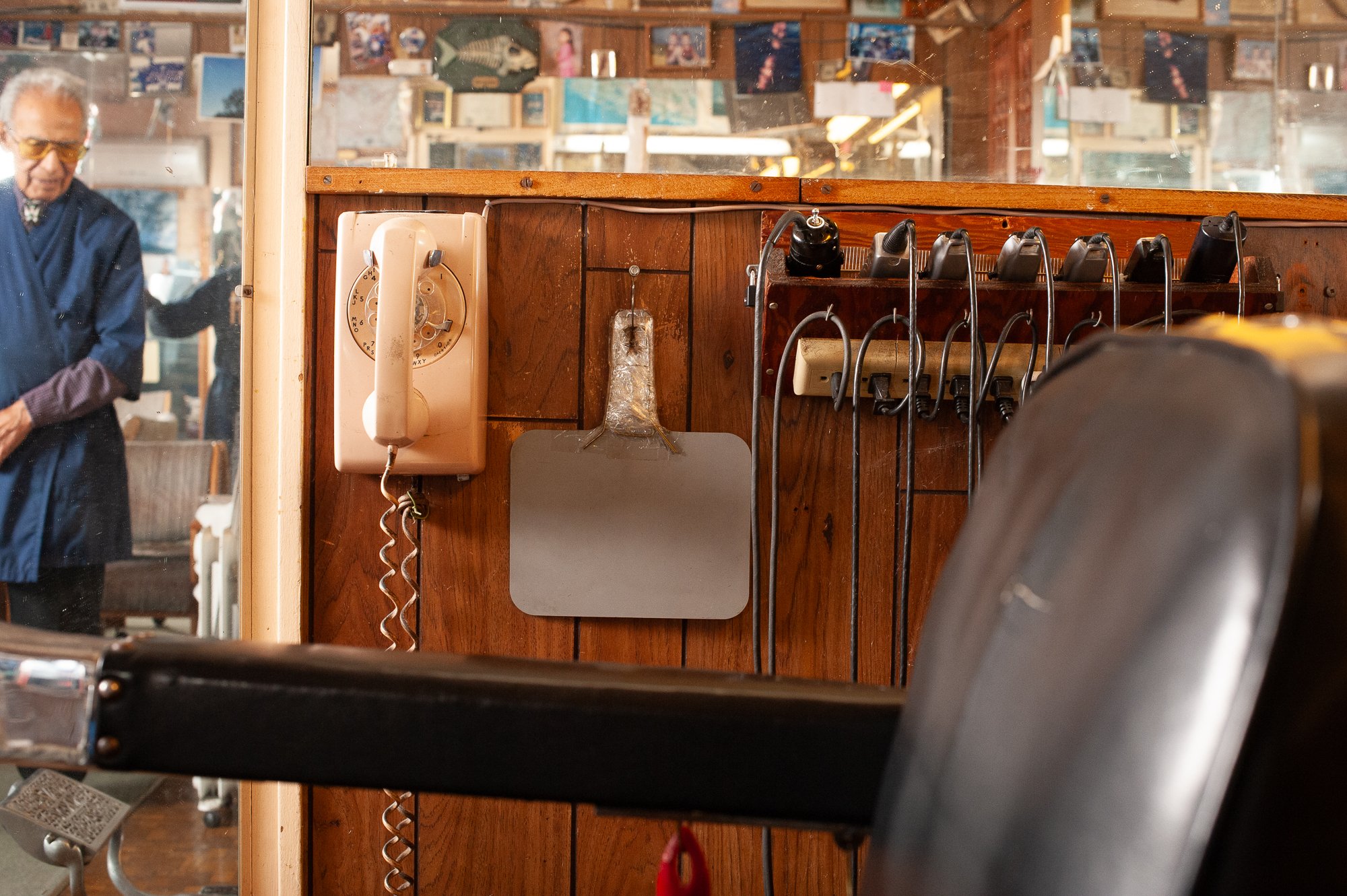
Rotary telephone inside a traditional barbershop, documentary detail photo

An old rotary telephone inside the shop — one of the many small artifacts that speak to the barbershop’s lived-in past

Barber sitting in his chair at a traditional barbershop in San Diego, California

A barber sits in his chair during a quiet moment — a human pause captured in the rhythm of the shop.

Customer getting a haircut in a traditional barbershop in San Diego, California documentary image

A customer receives a haircut — a simple everyday moment that also anchors the narrative of barbershop culture.

Jackson, Mississippi Photography Prints

Bring Home the Charm of Jackson, Mississippi: Wall Art Prints of Historic Landmarks

Jackson, Mississippi, known as the "City with Soul," boasts a rich tapestry of history, culture, and striking landmarks. For photography collectors, the city offers a treasure trove of opportunities to acquire fine art photographs that capture its essence. Whether you're drawn to historical architecture, vibrant street scenes, or serene natural landscapes, Jackson's landmarks provide a stunning canvas for artistic expression.

Why Collect Fine Art Photography of Jackson, Mississippi?

Fine art photography transcends mere documentation—it captures the emotion, texture, and unique character of a place. Jackson’s landmarks, from historic sites to modern attractions, tell stories that resonate with both locals and visitors. Collecting photographs of these iconic scenes allows you to preserve and celebrate the city’s spirit while enhancing your space with meaningful art.

Jackson’s Most Historic Buildings

1. Mississippi State Capitol
A masterpiece of Beaux-Arts architecture, the Mississippi State Capitol has stood proudly since 1903. With its grand dome, intricate columns, and marble interiors, this building serves as the seat of government and a symbol of Jackson’s political heritage. Its grounds feature notable monuments, including the towering Women of the Confederacy statue.

2. Old Capitol Museum
The Old Capitol, constructed in 1839, is one of the most significant landmarks in Mississippi's history. This Greek Revival-style building served as the state’s capitol until 1903 and was the site of major historical events, such as Mississippi’s secession from the Union in 1861. Now a museum, it offers a glimpse into the state’s political past and architectural grandeur.

3. Standard Life Building

The Standard Life Building in Jackson, Mississippi, is a striking example of Art Deco architecture that has stood as a symbol of the city’s history and resilience since its completion in 1929. Once the tallest building in Mississippi, this iconic structure was designed with intricate details, including geometric patterns, elegant terracotta ornamentation, and distinctive setbacks that embody the architectural trends of the era.

4. Cathedral of St. Peter The Apostle
The Cathedral of St. Peter the Apostle in Jackson, Mississippi, is a breathtaking testament to the city's deep religious and architectural heritage. Established in 1847, the cathedral's stunning Gothic Revival style stands tall as a beacon of faith and history. Its pointed arches, intricate stained glass windows, and towering spires evoke a sense of grandeur and spiritual serenity. The cathedral’s presence on the Jackson skyline is both a visual and emotional anchor for the community.

5.LaMar Life Building
The Lamar Life Building is a historic building in Jackson, Mississippi, USA. It was designed in the Gothic Revival architectural style, and it was completed in 1924. It is the twelfth tallest building in Jackson, and was considered Jackson's first skyscraper.

6. Saint Andrew’s Episcopal Cathedral

Saint Andrew’s Episcopal Cathedral is one of Jackson’s most cherished landmarks, a stunning example of English Gothic architecture that blends historical significance with striking beauty. Built in 1903, the cathedral’s soaring spires, intricate stonework, and lush stained glass windows create a visual narrative of both strength and grace. Its hallowed halls have witnessed generations of worshippers, making it a significant symbol of Jackson’s spiritual and cultural life.

Tips for Collectors:

Choosing the Perfect Piece

  • Focus on Quality: Look for prints that showcase exceptional composition, lighting, and attention to detail. High-quality materials such as archival paper or metal prints ensure longevity.

  • Consider the Artist’s Perspective: A fine art photograph should reflect the unique vision of the artist. Consider their ability to tell a story or evoke emotion through their work.

  • Think About Your Space: Consider where the artwork will be displayed. A vibrant cityscape might suit a modern living room, while a tranquil nature scene could enhance a cozy study.All photographs are available as prints for your home of office - rob@robhammerphotography.com

    The Enduring Appeal of Jackson’s Fine Art Photography

    Jackson’s landmarks offer an endless source of inspiration for photographers and collectors alike. Each image tells a story of the city’s past, present, and future, making it a meaningful addition to any art collection. By investing in fine art photography, you’re not only celebrating Jackson’s beauty but also supporting the artists who bring its soul to life. Explore, collect, and let the vibrant spirit of Jackson, Mississippi, enrich your walls and your heart.

    Click here to shop Jackson, Mississippi Wall Art

Photography print of the State Capitol Building in Jackson, Mississippi

Mississippi Capital Building Wall Art

Black and white print of the Standard Life Building in Jackson, Mississippi

Historic black and white photograph of downtown Jackson, Mississippi

The Old Capitol Museum

Black and white print of the LaMar Life Building in Jackson, Mississippi

Photograph of a church in downtown Jackson, MS

Cathedral of St. Peter The Apostle

Fine art print of St. Andrew’s Episcopal Cathedral

Texas Plains Photography: Llano Estacado

Llano Estacado Photographs

The Llano Estacado is easy to misunderstand. It’s often described as flat, empty, or featureless, but spending time there reveals something very different. This high plains region of West Texas is defined less by landmarks and more by distance — by how far the horizon stretches, how light moves across open ground, and how small human presence feels once you slow down enough to notice it.

These photographs were made while traveling through small towns, farmland, and back roads that sit quietly within that vastness. They are not meant to explain the Llano Estacado so much as sit with it.

A Landscape Defined by Absence

There are few visual interruptions on the Llano Estacado. Roads run straight for miles. Fields repeat themselves. Buildings appear only occasionally, and when they do, they often feel temporary — as if they were placed there out of necessity rather than permanence.

That absence becomes the subject. Empty intersections, wind-worked soil, distant structures, and isolated signage take on weight simply because there is so little competing for attention. The photographs rely on restraint: space, quiet geometry, and light doing most of the work.

Small Towns, Everyday Objects

Scattered across the plains are towns built around utility rather than spectacle. Hardware stores, abandoned buildings, hand-painted signs, school stadiums, and roadside memorials all reflect daily life shaped by isolation and self-reliance.

Rather than searching for dramatic moments, this work focuses on ordinary details — objects left where they were last used, buildings holding onto their purpose a little longer than expected. These elements reveal how people adapt to scale, weather, and distance without needing to announce it.

Wind, Agriculture, and Modern Presence

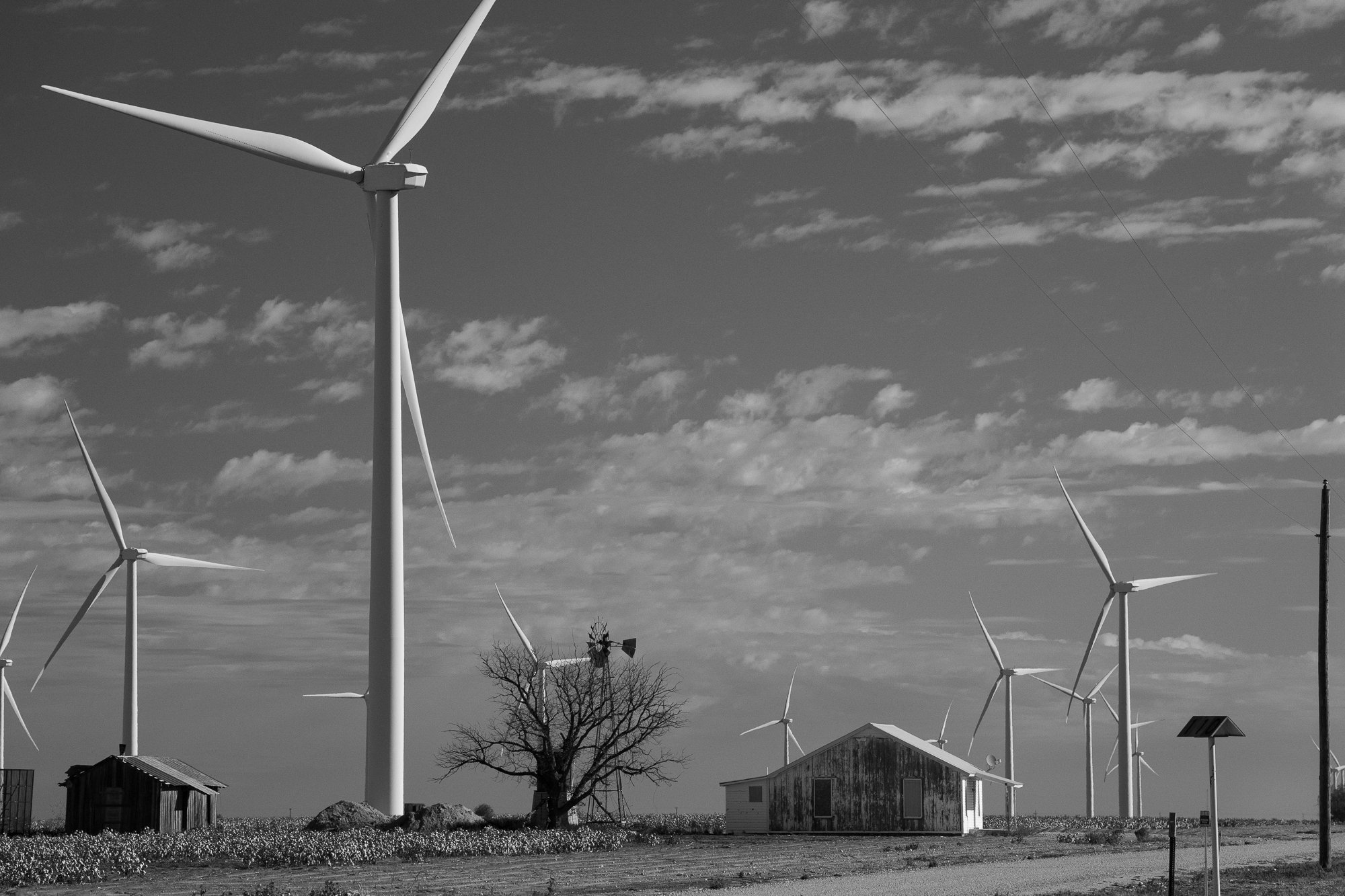
The Llano Estacado is both deeply agricultural and increasingly shaped by modern infrastructure. Wind turbines rise above fields that have been worked for generations. Long rows of crops trace patterns across land that feels otherwise unbroken.

This overlap between old and new is quiet but persistent. The turbines don’t overwhelm the landscape; instead, they become another line on the horizon — another marker of how the region continues to evolve while remaining visually spare.

Photographing the In-Between

These images are less about destinations and more about what exists between them. They were made by pulling over often, driving slowly, and paying attention to what most people pass without stopping.

The goal is not nostalgia, but observation. Not commentary, but presence. The Llano Estacado rewards patience, and these photographs reflect that pace — measured, minimal, and unforced.

Interested in These Photographs?

A selection of photographs from this series is available as fine art prints, and the full body of work is available for editorial and commercial licensing.

If you’d like more information, feel free to get in touch.

View more photography from the American West

Part of a Larger Project

Although the Llano Estacado is an entity in and of itself, it’s also an iconic piece of America, which fits perfectly in my long term project photographing the often overlooked parts of this country.

View more American photography

“It’s a long way, round the Llano Estacado” - Colter Wall

Water for sale sign along a rural road on the Llano Estacado in Texas

A hand-painted water-for-sale sign along a remote Texas highway, underscoring the scarcity and scale of life on the Llano Estacado.

Empty intersection with abandoned buildings on the Llano Estacado

A rural intersection on the Llano Estacado, where roads stretch outward and towns feel held together by distance.

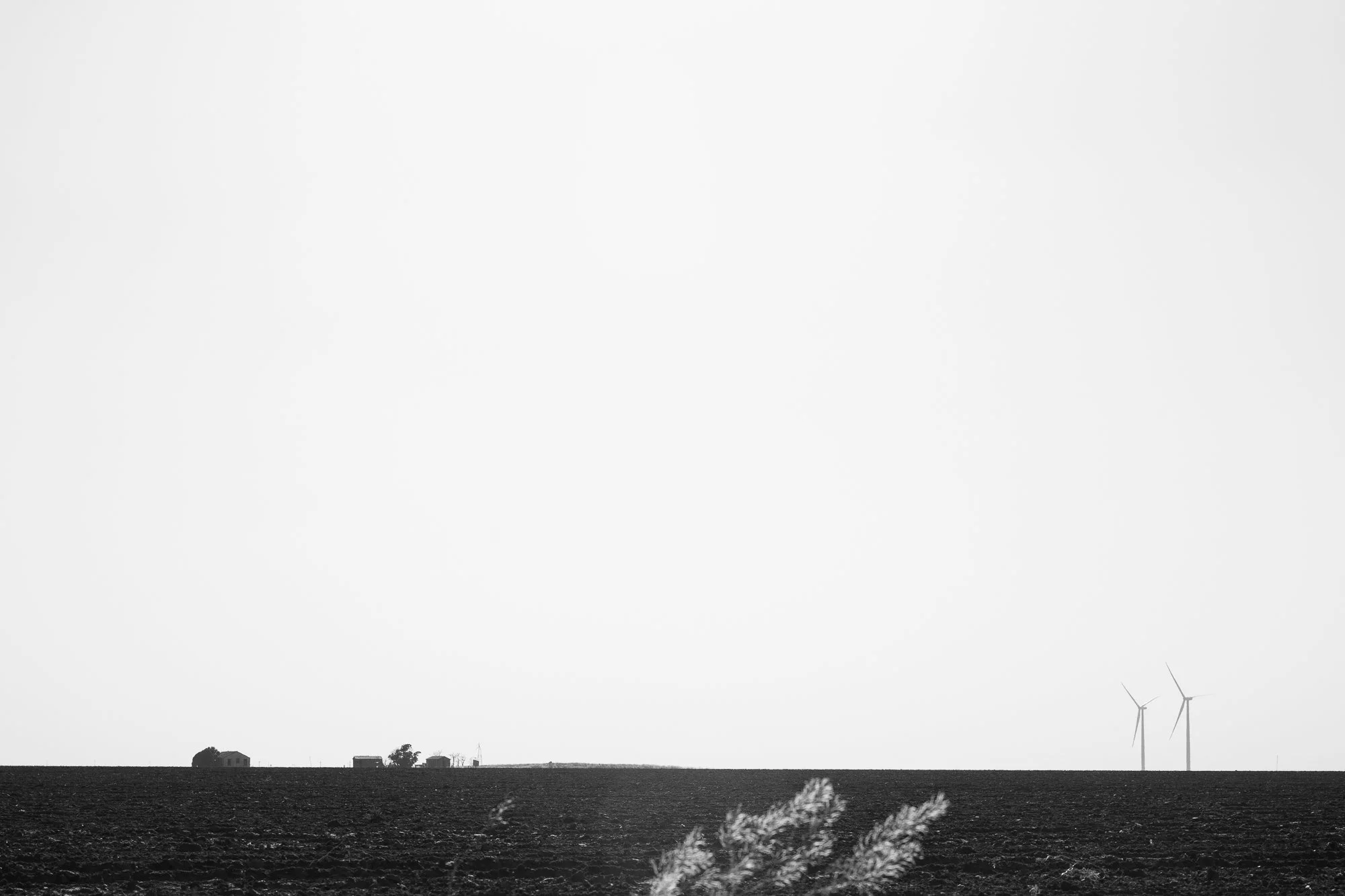
Minimal black and white landscape with distant wind turbines on the Llano Estacado

A spare horizon broken only by distant farm buildings and turbines, emphasizing scale and emptiness on the Llano Estacado.

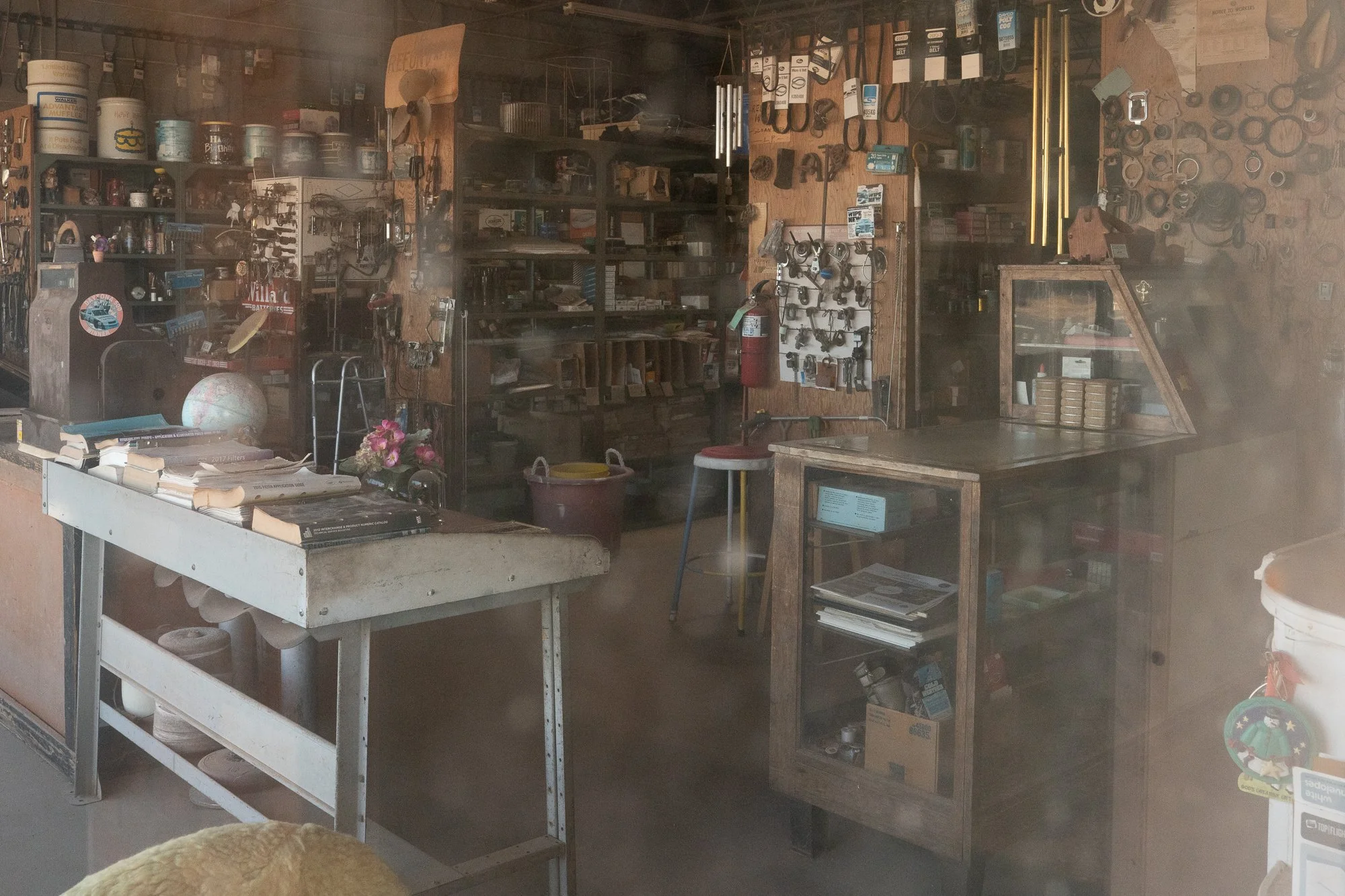
Interior of a small rural hardware store on the Llano Estacado in Texas

Inside a small-town hardware store on the Llano Estacado, where tools, shelves, and light speak to decades of daily use.

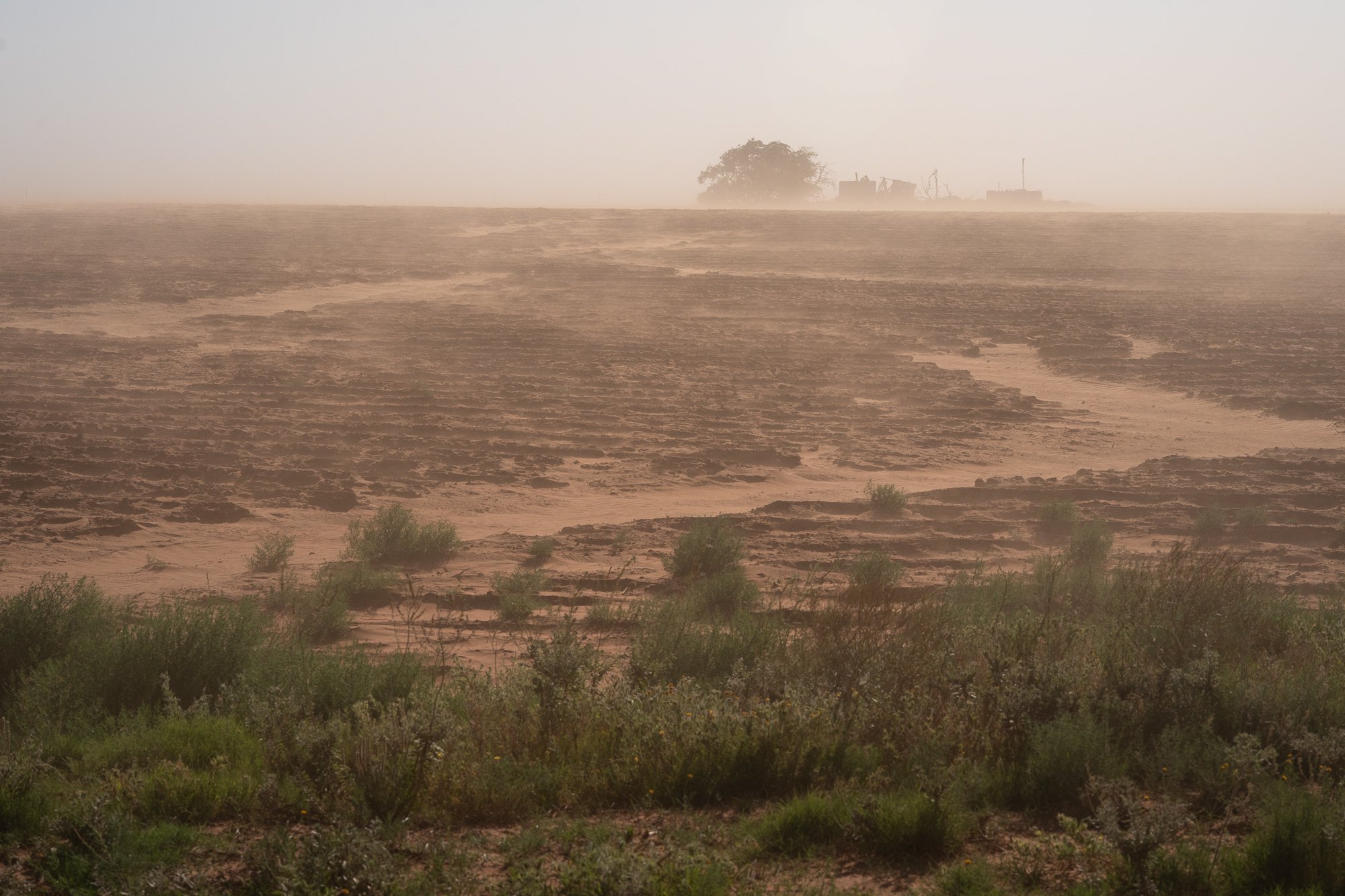
Dust blowing across a plowed field on the Llano Estacado in West Texas

Dust moves across freshly worked earth, softening the horizon on the wide, exposed plains of the Llano Estacado.

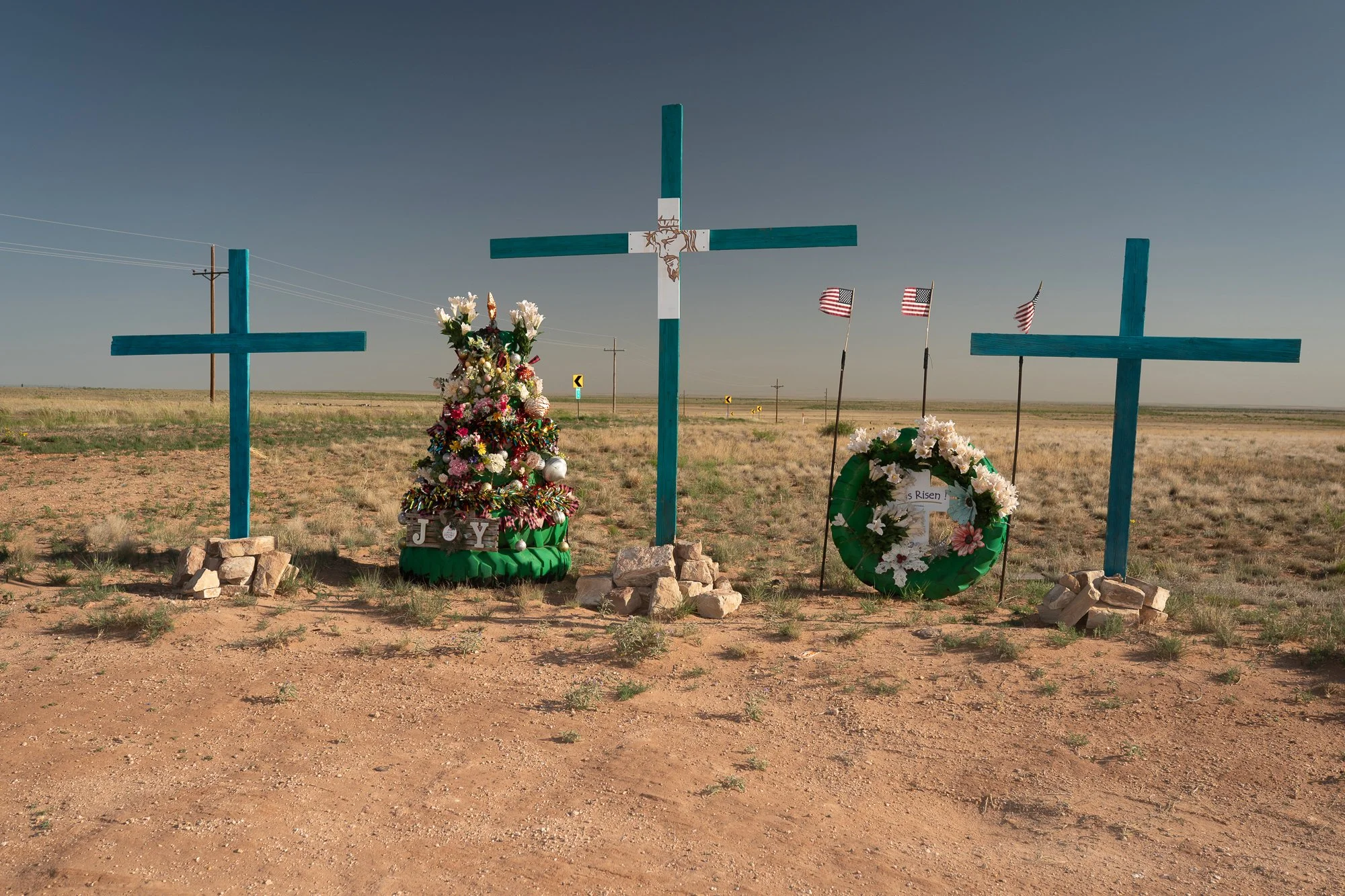
Roadside crosses and memorials in rural West Texas on the Llano Estacado

Roadside crosses stand against the open plains, marking memory, faith, and loss across the Llano Estacado.

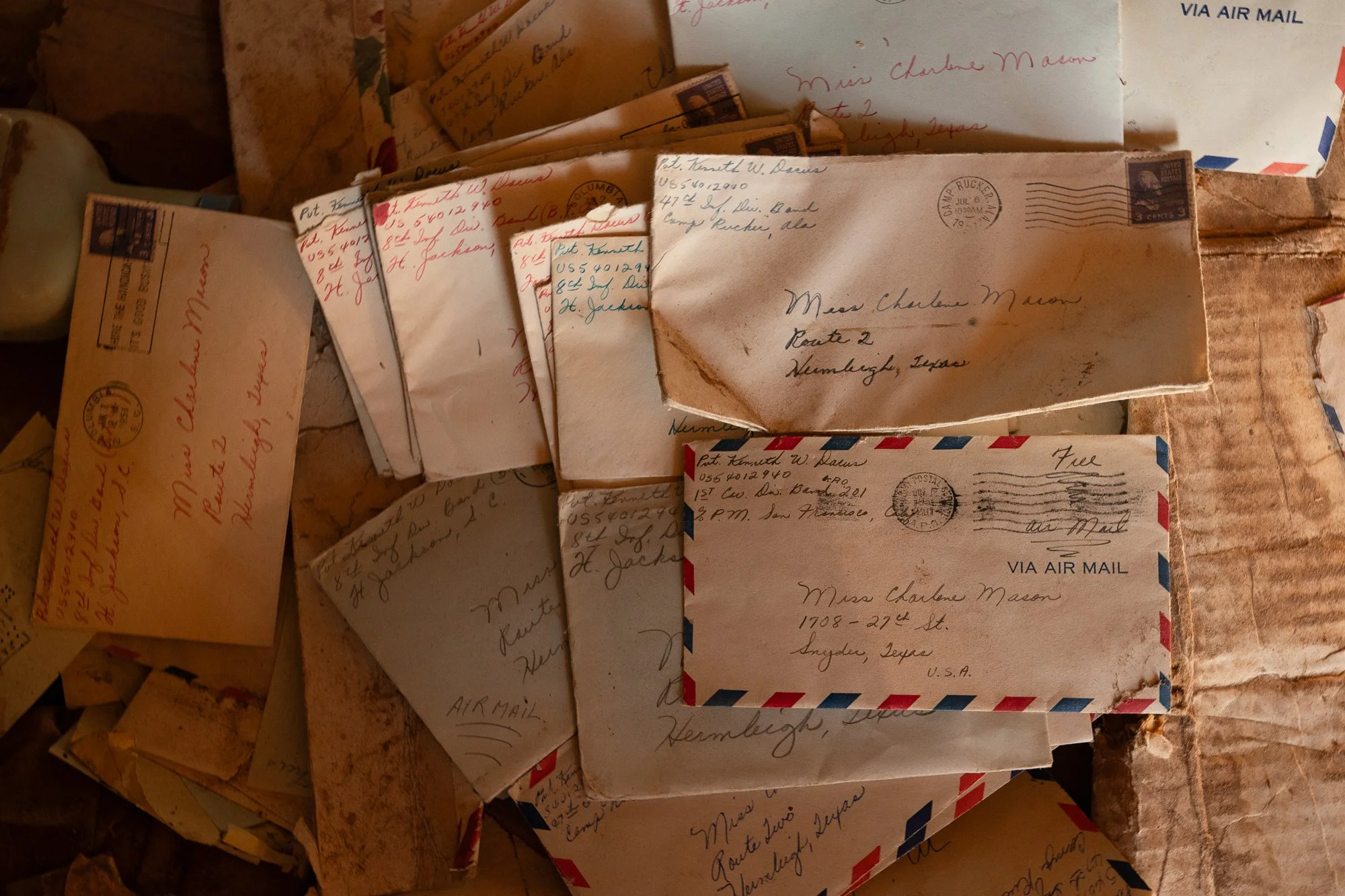
Handwritten letters and envelopes collected in a rural Texas home on the Llano Estacado

Handwritten letters from an abandoned Texas home, marked by distance, memory, and everyday life on the Llano Estacado.

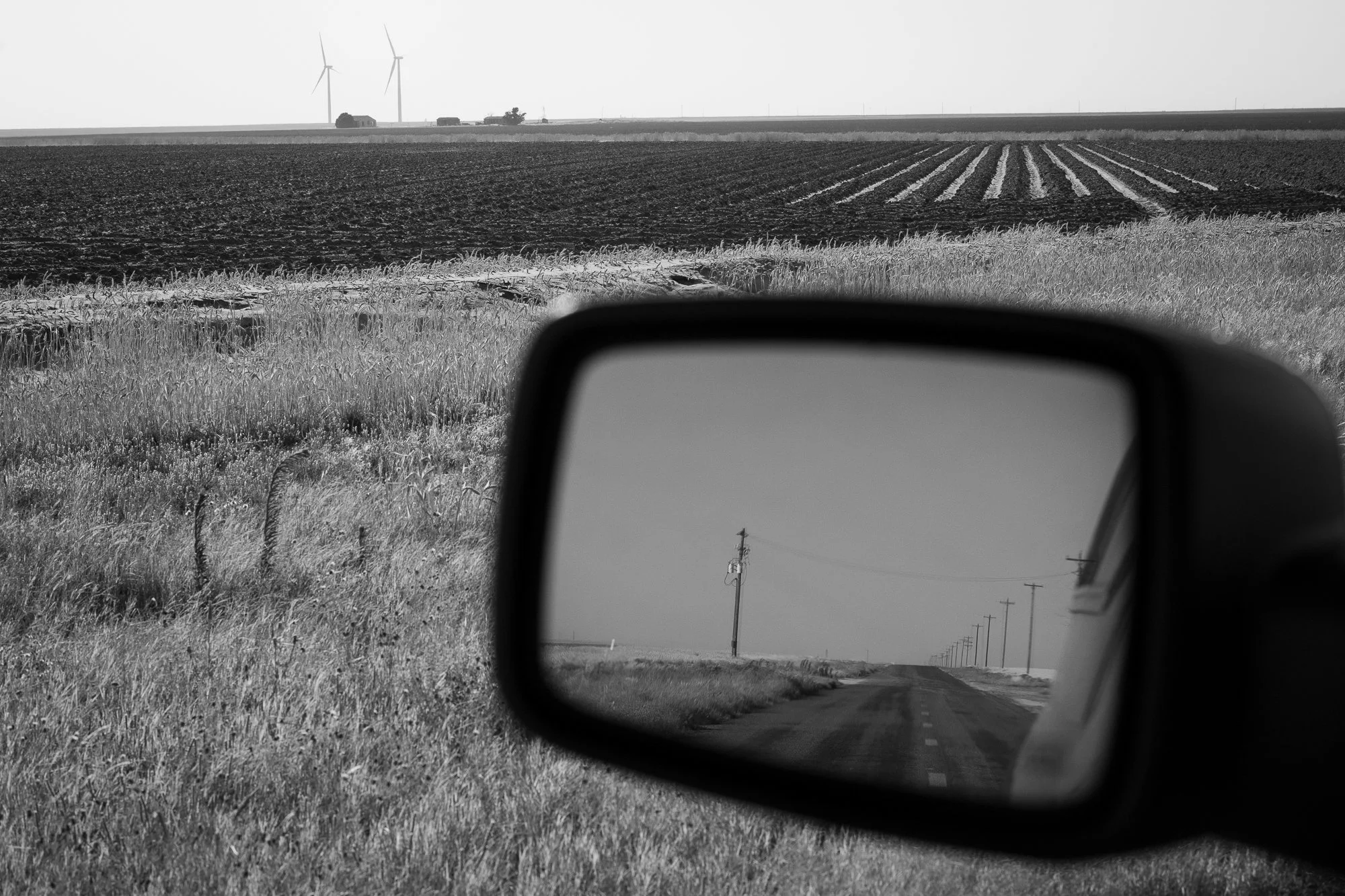
Black and white photograph of farmland reflected in a car mirror on the Llano Estacado

Farmland stretches ahead and behind, reflected in a car mirror while crossing the open roads of the Llano Estacado.

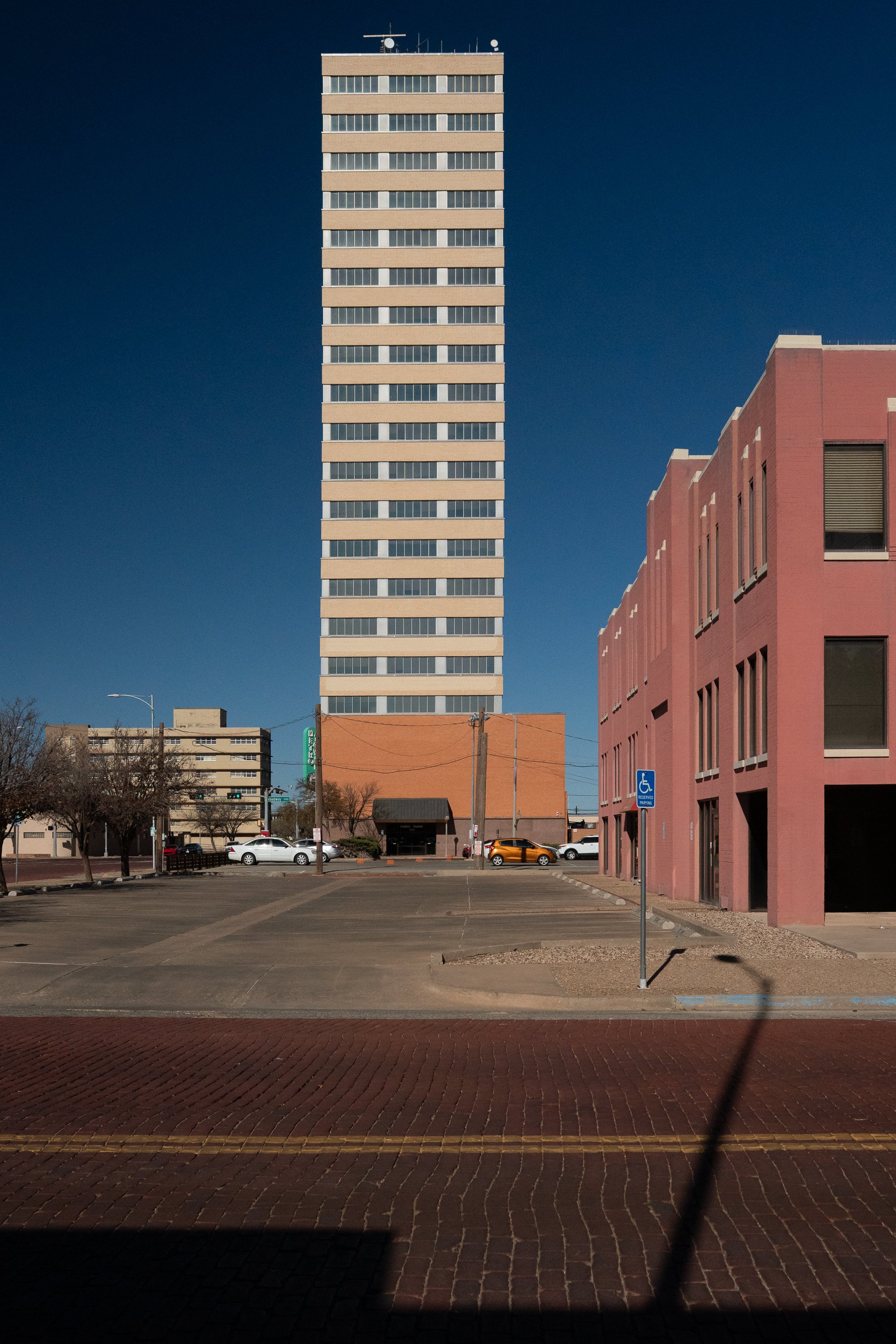
A downtown high rise tower in a small town on the Llano Estacado

A lone midcentury tower rises above a quiet town, emphasizing the scale and openness of the Llano Estacado.

Wind turbines towering over abandoned rural buildings on the Llano Estacado in Texas

Wind turbines rise over aging structures, where modern infrastructure meets long-standing rural life on the Llano Estacado.

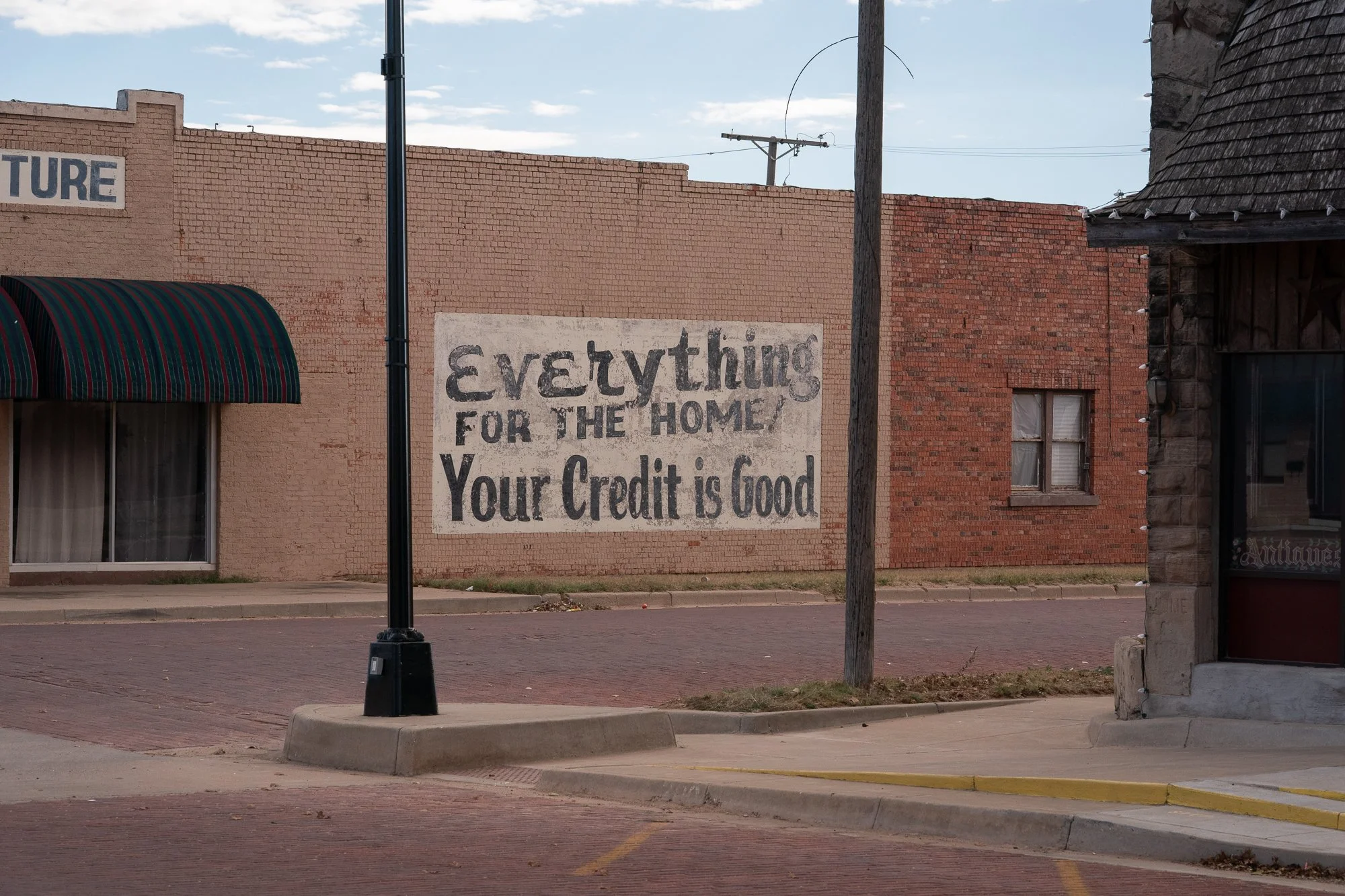
Vintage wall sign reading Your Credit Is Good in a small town on the Llano Estacado

A fading brick wall sign promises trust and familiarity, echoing the economic rhythms of Llano Estacado towns.

Photograph of a dirt road going through the Llano Estacado in Texas

Photograph of a long dirt road on the Llano Estacado in Texas

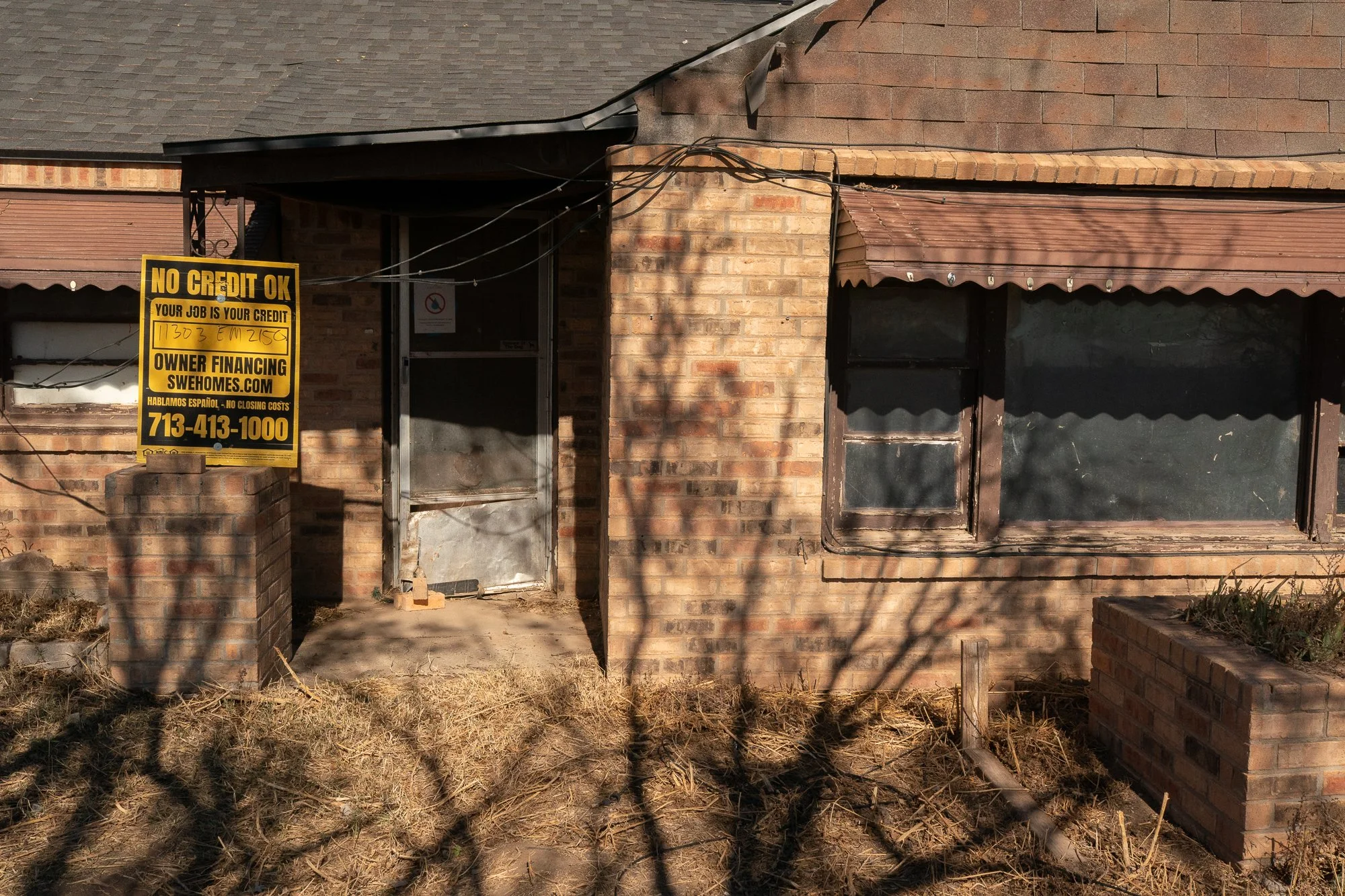
Brick house in rural Texas with an owner financing sign on the Llano Estacado

A modest brick house on the Llano Estacado, where handwritten signs and quiet streets reflect a self-reliant rural economy.

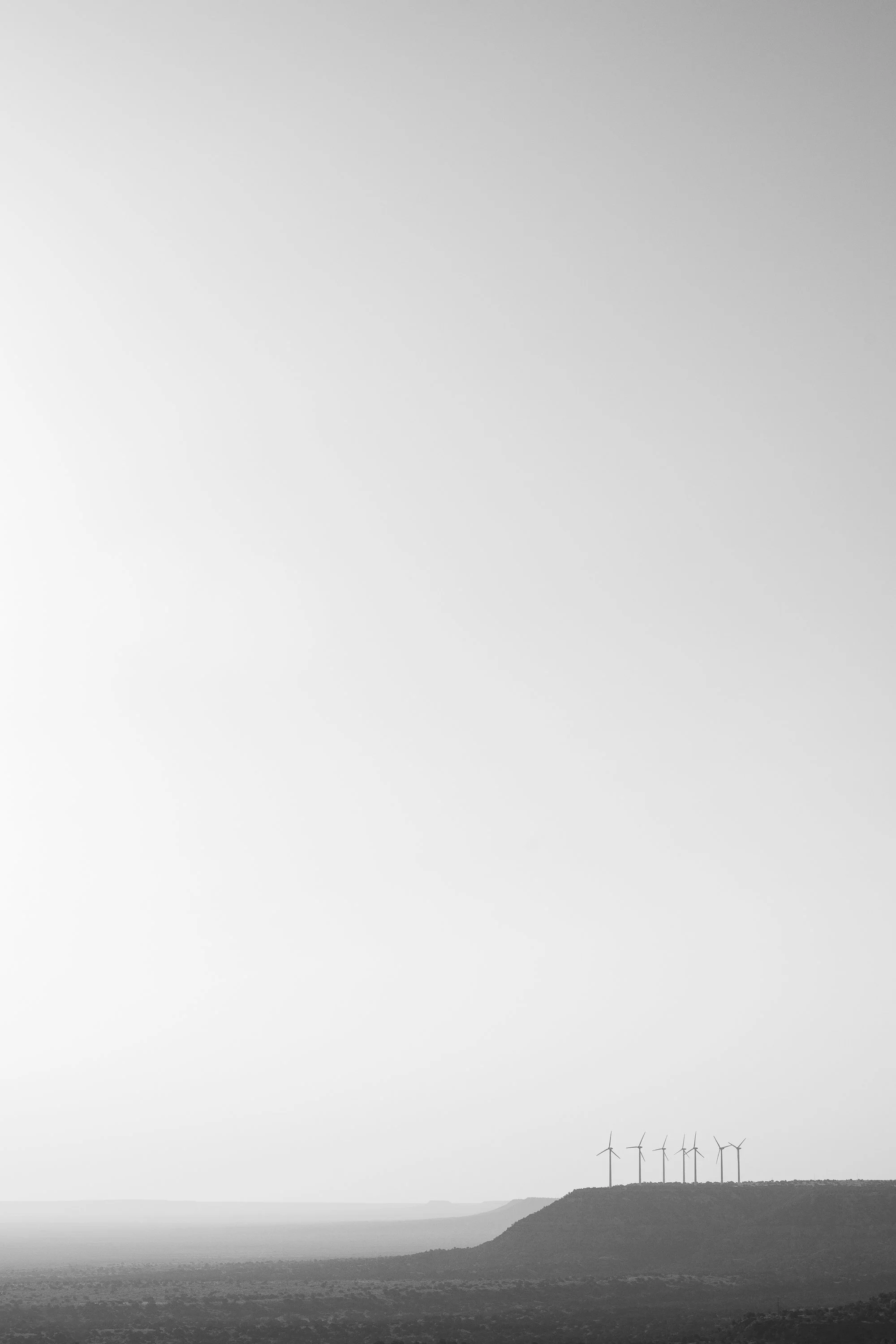
Minimal black and white photograph of a wind farm along the Llano Estacado horizon

A nearly empty frame holds a thin horizon and distant turbines, emphasizing restraint and scale on the Llano Estacado.

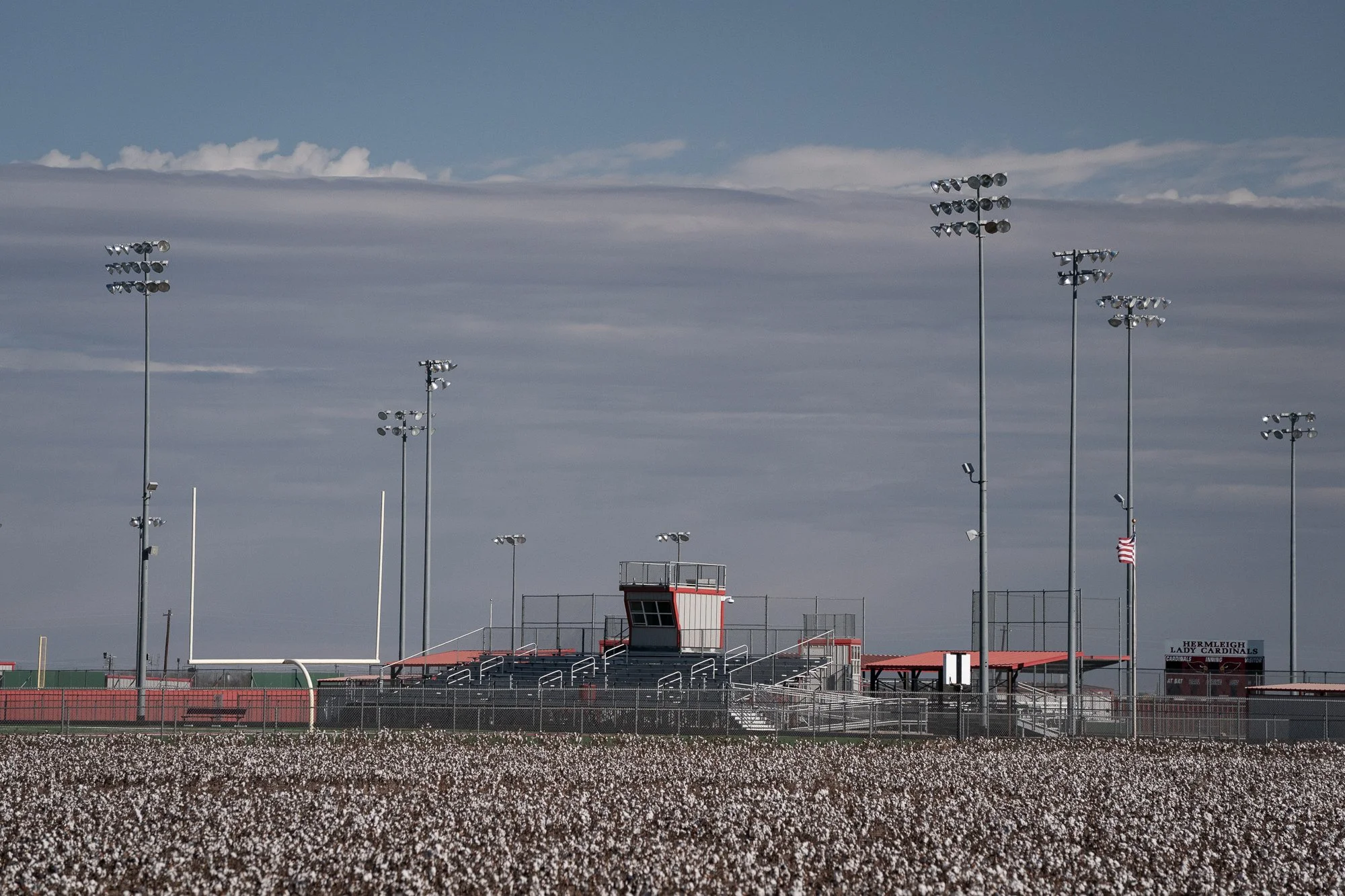
High school football stadium surrounded by farmland on the Llano Estacado in Texas

A high school football stadium sits among cotton fields, reflecting the cultural center of small towns on the Llano Estacado.

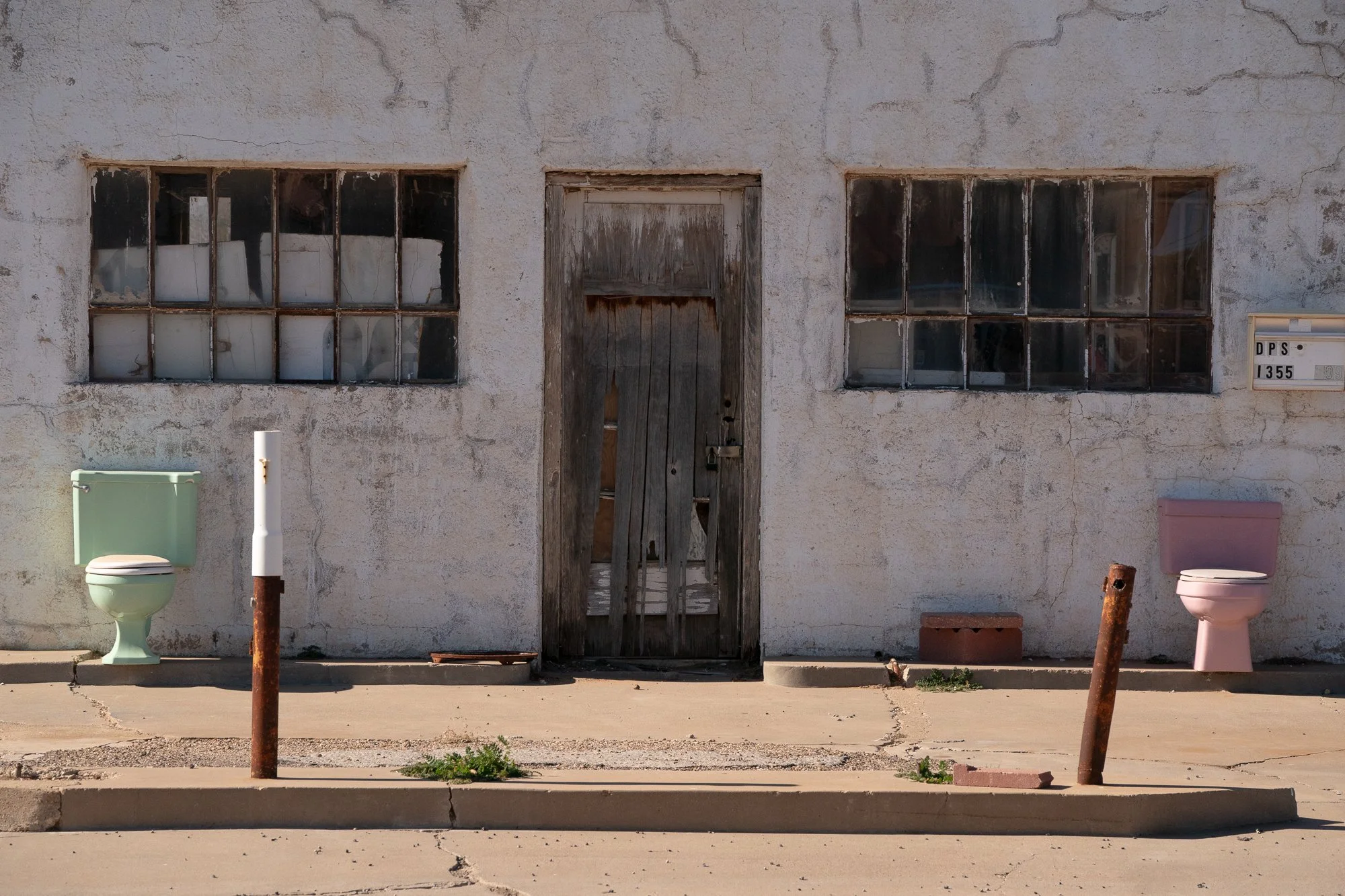
Abandoned building facade with pastel toilets outside on the Llano Estacado in Texas

An abandoned building on the Llano Estacado, where discarded fixtures and faded walls blur the line between utility and quiet absurdity.

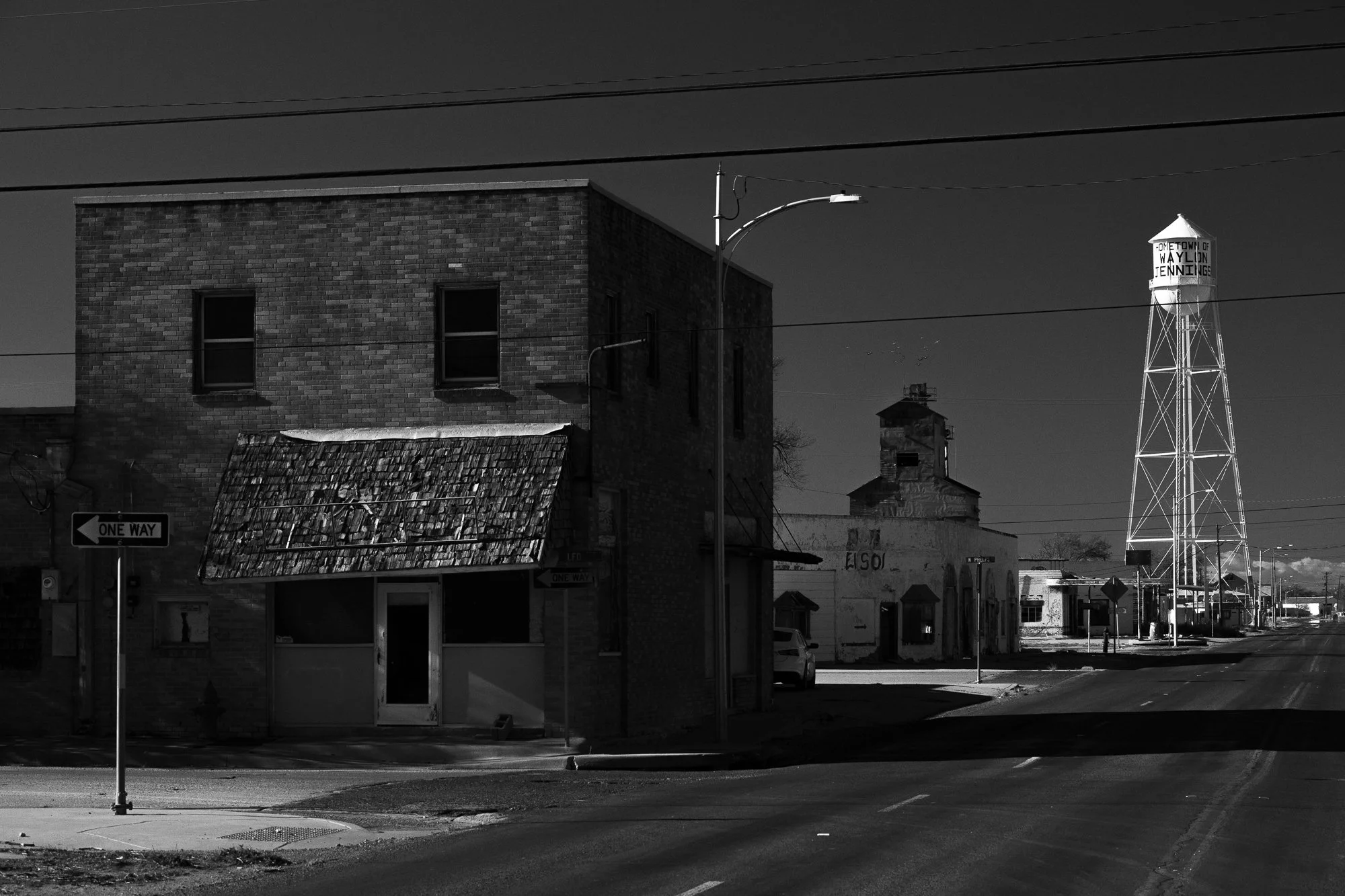
Black and white photograph of Littlefied, Texas with water tower honoring Waylon Jennings

Water tower in Littlefield, Texas - Hometown of Waylon Jennings

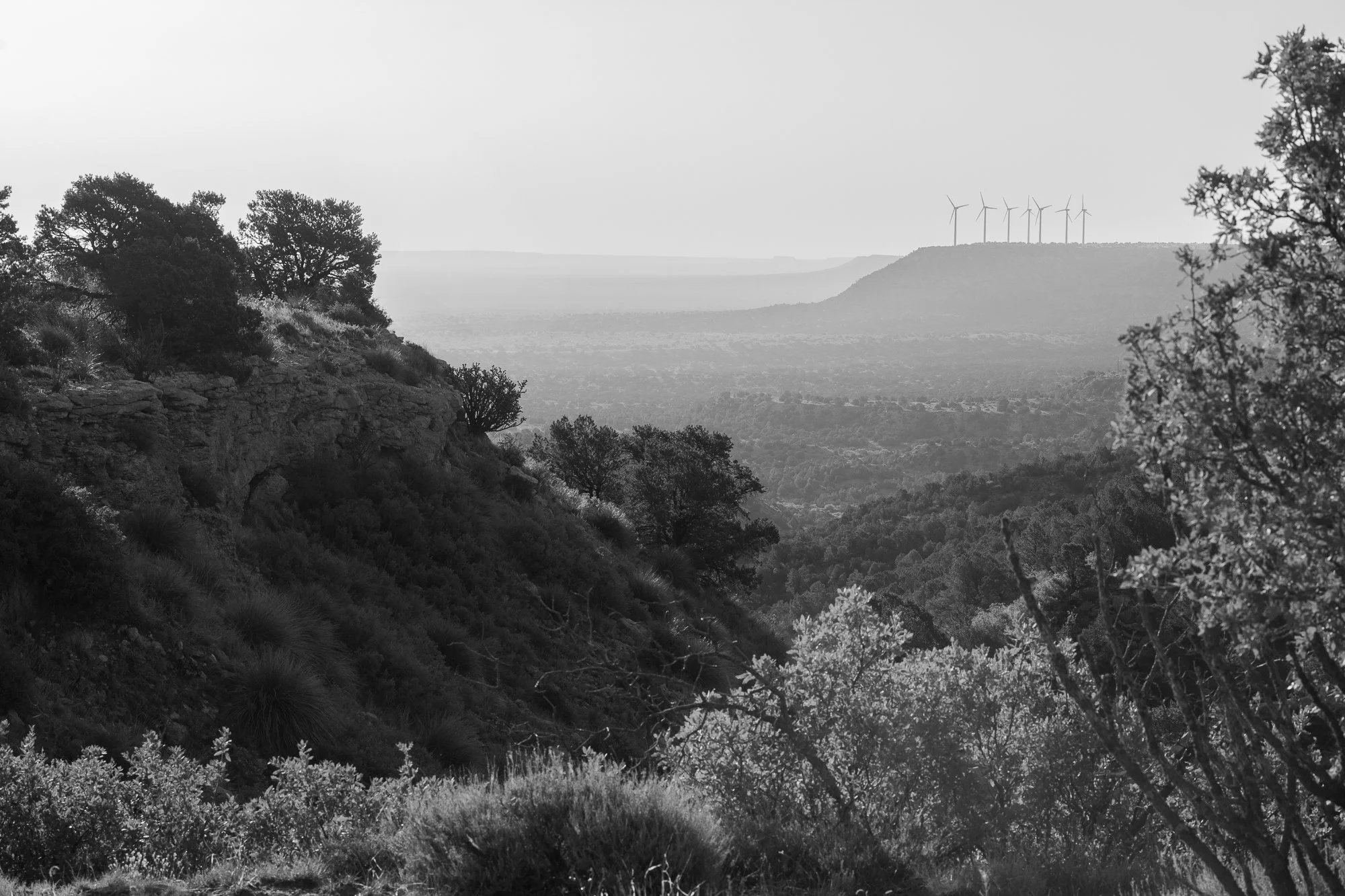
Wind turbines line a distant ridge above the canyon, where industry and landscape quietly coexist on the Llano Estacado.

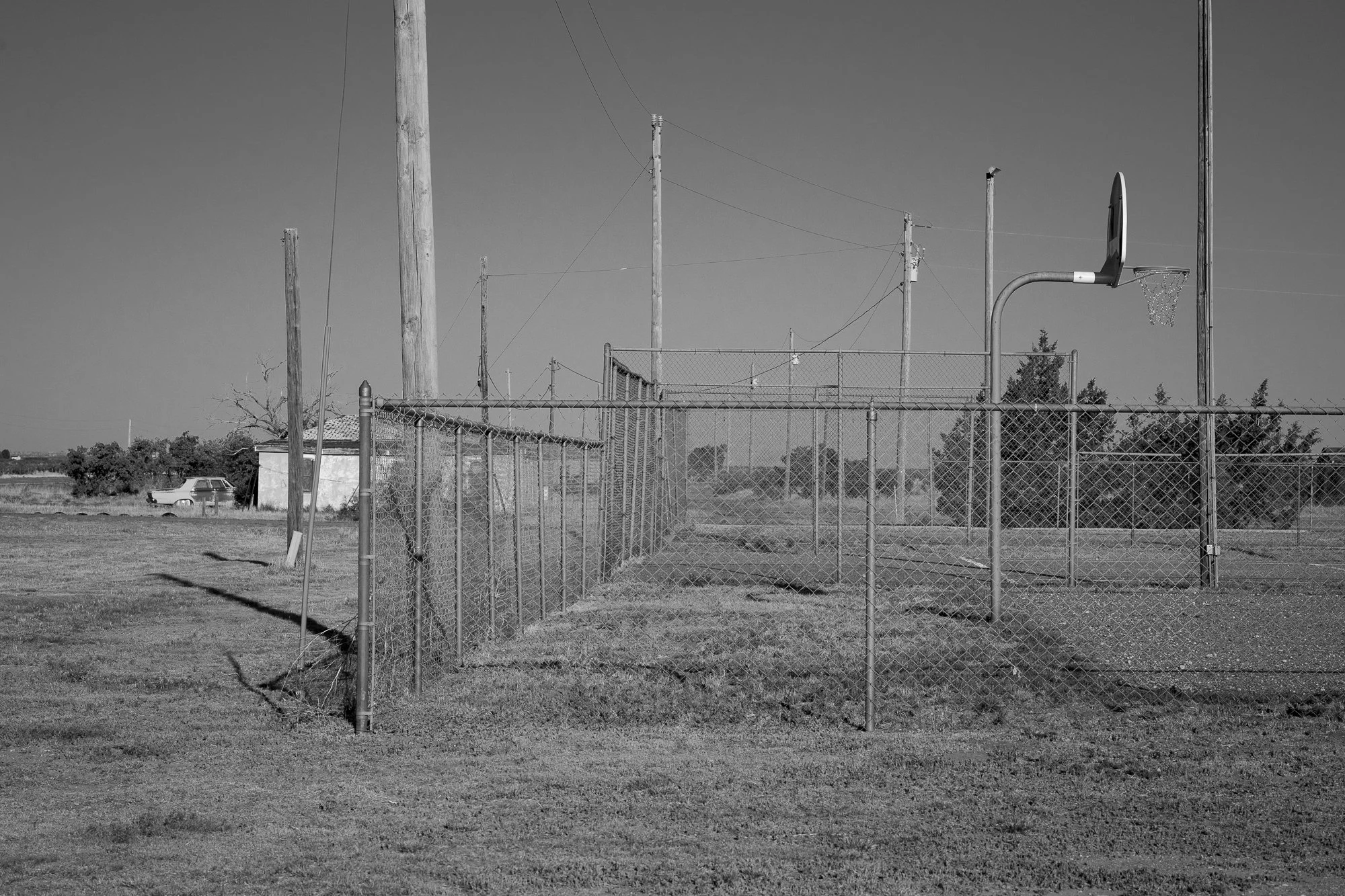
Black and white photograph of a rural basketball hoop behind a chain link fence on the Llano Estacado

A lone basketball hoop stands behind a chain-link fence, hinting at everyday life and quiet routines on the Llano Estacado.

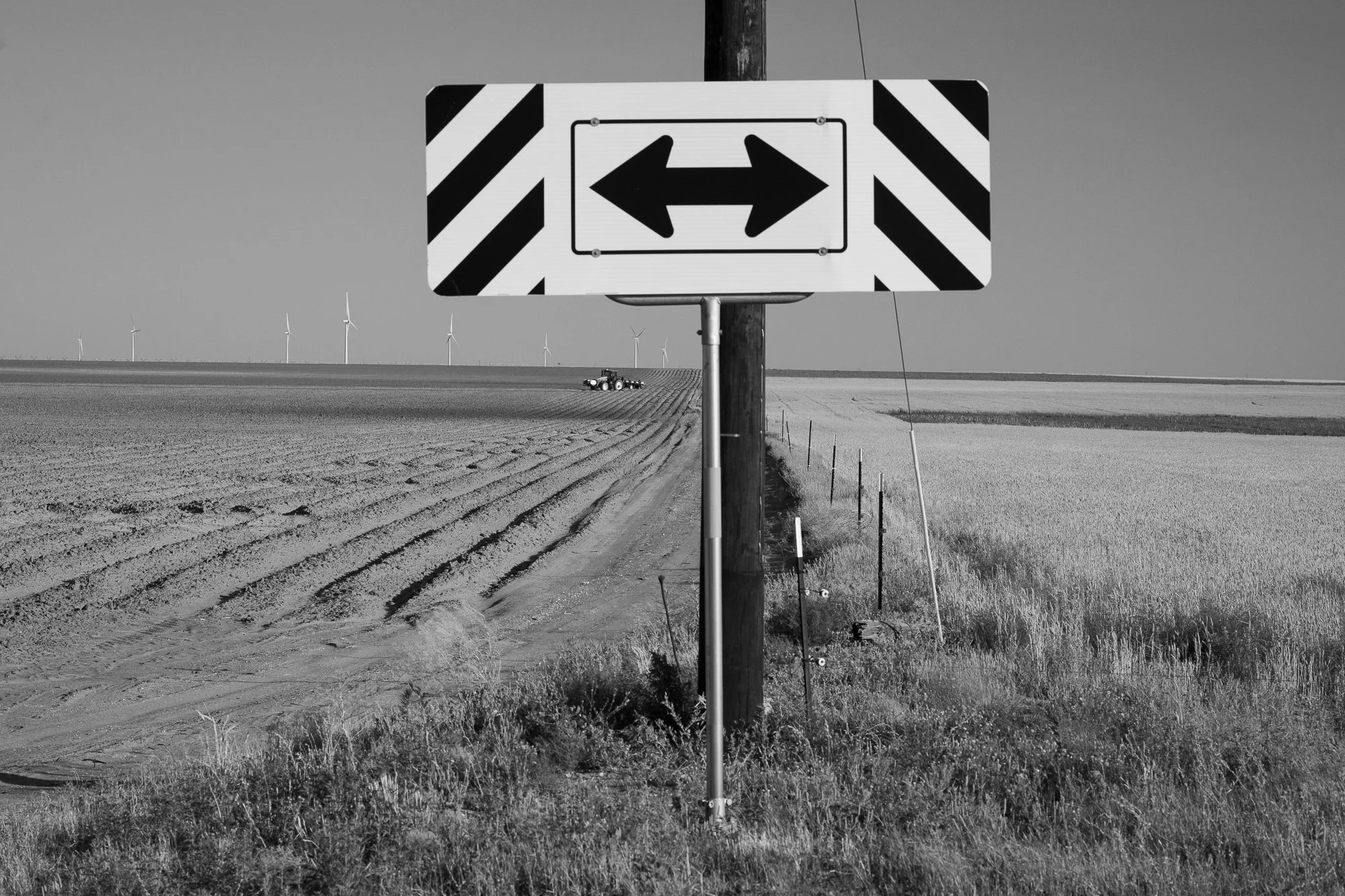
Black and white photograph of a rural directional road sign on the Llano Estacado

A simple directional sign stands between plowed fields, offering choice without urgency on the Llano Estacado.

The Griffin Museum of Photography

Photography Museum - Winchester, Massachusetts

13+ years now I’ve been photographing traditional barbershops in all 50 states of the USA and the layers continue to peel. In the beginning it was just a thing to do because I love barbershops. Then as time went on I felt responsible for documenting them before they all disappeared. Now, in 2024, I see the collective body of work as a historical document of the barbers and shops that served as a staple in their respective communities for 30, 40, 50, 60+ years. On the surface the theme of this project is about a place to get your haircut. Really though, it’s about community, friendship, and human connection. So I’m honored to announce that a selection of these photographs will be shown at the Griffin Museum of Photography in Winchester, MA for their upcoming group show “Vision(ary) which focuses on communities, cultures, and environments. Please go check out the show as well as the other great exhibitions from June 7th-September 27th.

Click here to purchase a copy of Barbershops of America (photo book) and HERE to purchase prints from this series.

Exhibition at the Griffin Museum of Photography

Barbershops of America at The Griffin Museum of Photography

Traditional Barbershop Photography

Historic Barbershop Photography in Birmingham, Alabama

Birmingham, Alabama has a way of holding onto its past. You feel it in the buildings, the neighborhoods, and especially in places like traditional barbershops — spaces that have quietly served their communities for generations.

This barbershop sits just off the main road, easy to miss if you’re not paying attention. Inside, time slows down. The chairs are worn, the mirrors have seen decades of haircuts and conversations, and the rhythm of the shop feels unchanged by whatever year it happens to be outside.

This photograph is part of my ongoing Barbershops of America documentary project — a long-term effort to photograph traditional barbershops across all 50 states and preserve these spaces before they disappear.

A Traditional Barbershop in Birmingham’s Magic City

Birmingham is often called The Magic City, a nickname rooted in how quickly it grew during the industrial boom. But step into a barbershop like this one and you’re reminded that not everything moves fast here.

This is the kind of shop where:

  • Regulars don’t need to explain how they want their haircut

  • Conversations drift from local politics to college football to family stories

  • The barber knows everyone by name

There’s no rush. No appointment system. Just a steady flow of people who’ve been coming here for years — sometimes decades.

From a documentary photography standpoint, these details matter. They’re what separate a real working barbershop from a styled or recreated space. This shop isn’t a set. It’s lived-in.

Photographing Barbershop Culture in the American South

Southern barbershops have a distinct character. They’re often deeply rooted in their neighborhoods, serving as informal gathering places as much as businesses.

When I photograph barbershops like this one in Birmingham, I’m not trying to stage anything. The goal is to let the room speak for itself — the light, the posture of the barber, the way a customer settles into the chair.

The best moments usually happen quietly:

  • A glance in the mirror

  • A pause in conversation

  • The way afternoon light hits the floor

Those moments are what give barbershop photography its emotional weight. They’re small, but they’re honest.

Why Traditional Barbershops Matter

Across the country, independent barbershops are slowly disappearing — replaced by chains, salons, or modern storefronts designed to look old but lack history.

Projects like Barbershops of America exist to document what’s real before it’s gone.

These photographs are not nostalgic recreations. They’re records of working spaces:

  • Where generations of families have gotten their hair cut

  • Where stories are passed down as casually as advice

  • Where community still exists without needing a label

Birmingham’s barbershops are an important part of that story.

Part of the Barbershops of America Documentary Series

This Birmingham barbershop photograph is one piece of a much larger archive. Over the years, I’ve photographed traditional barbershops in cities, small towns, and rural communities across the United States.

The full project is available as:

  • A Barbershops of America photo book

  • Fine art photographic prints

  • Editorial and commercial licensing for publications, exhibitions, and design projects

Each shop adds another chapter to a disappearing part of American culture.

Stories From The Barbershop

It’s been interesting to see how some smaller cities have groupings of barbershops all in one place. Common sense would tell you that isn’t a great business strategy, but what do I know? Birmingham, Alabama is just such a place with multiple shops all on the same block, which was exciting but things didn’t start out so hot.

There was an older gentleman sitting out in front of the first shop I approached. He was talking on the phone while sitting on a stool in front of the door. I introduced myself and said that I’d like to make some photographs of the shop. Before I could even finish he said “I don’t have time”, turned his back to me, and continued his conversation. The shop was completely empty. I tried pushing back politely, stating that I’d been working on this project for 12+ years and published a book on traditional barbershops in all 50 states, etc, etc, etc. It didn’t work. He was angry that I was still standing there trying to talk with him and even more angry that I asked for the owner’s phone number. He wasn’t annoyed. He was angry almost to the point of aggression. Ah well. Can’t win them all. That led to a stop in Magic City Barbershop, which opened it’s doors in 1930! There is a poster on the front window from the Jefferson County Historical Commission that states so, but you don’t need a poster to tell you the place isn’t far off from its 100 year anniversary. You can just feel it.

The shop was empty besides the one barber working. He was a character. Had a witty answer for everything I said or asked.

Me: “Is this your shop?”

Him: “It ain’t yours!”

There were lots of old newspaper clippings on the wall of Martin Luther King and others from the riots and bombings. “Bombingham” as he called it, has a unique past that shaped it into the city it is today. Despite all the racial violence and negativity, it’s fascinating to be in that shop because the city’s history provides an education, experience, and conversation that you’re not likely to get anywhere else in the country. Barbershops provide an unorthodox way of learning about America!

Bringing Barbershop Photography Into Your Space

These photographs are often collected by:

  • Interior designers

  • Architects and creative offices

  • Hotels, restaurants, and barbershops

  • Private collectors interested in Americana and documentary photography

If you’re looking for artwork that feels authentic, grounded, and timeless, traditional barbershop photography offers a quiet strength that works across many environments.

Interested in These Photographs?

Fine art prints from this Birmingham barbershop series are available in multiple sizes and formats. Editorial and commercial licensing is also available.

Contact me here to discuss print options, licensing, or custom projects - rob@robhammerphotography.com

View More From the Barbershops of America Project

Another Barbershop Story

Barbershops of America Photography Gallery

Barbershop Photo Book/Prints

Photograph of barber in Birmingham, Alabama

Magic City Barbershop - Birmingham, Alabama

Photograph of sneakers and shoes for sale at a classic barbershop in Birmingham, Alabama

Sneakers for sale at a barbershop in Birmingham, Alabama

Photograph of a classic barbershop in Birmingham, Alabama

Traditional barbershop photography

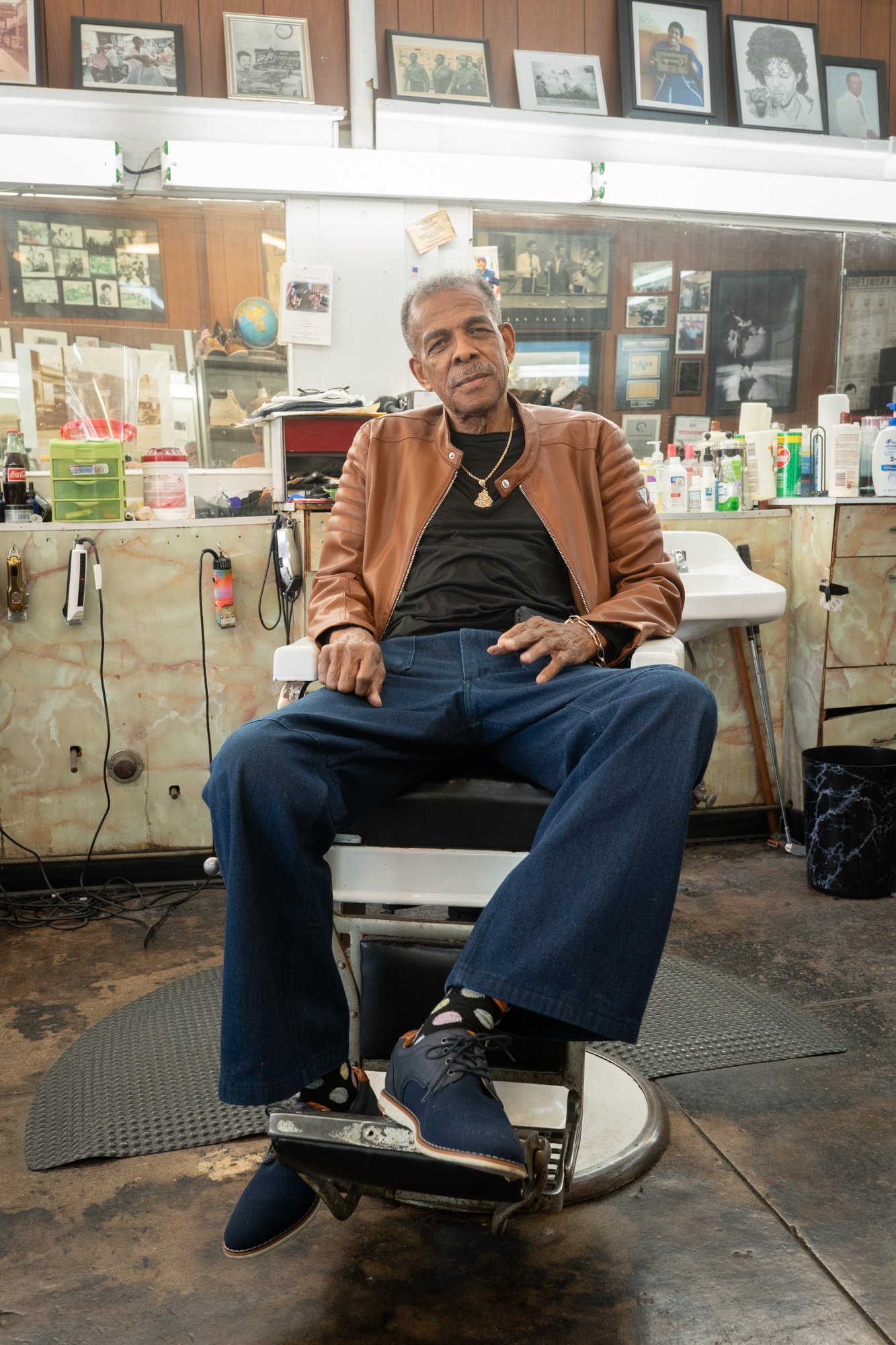
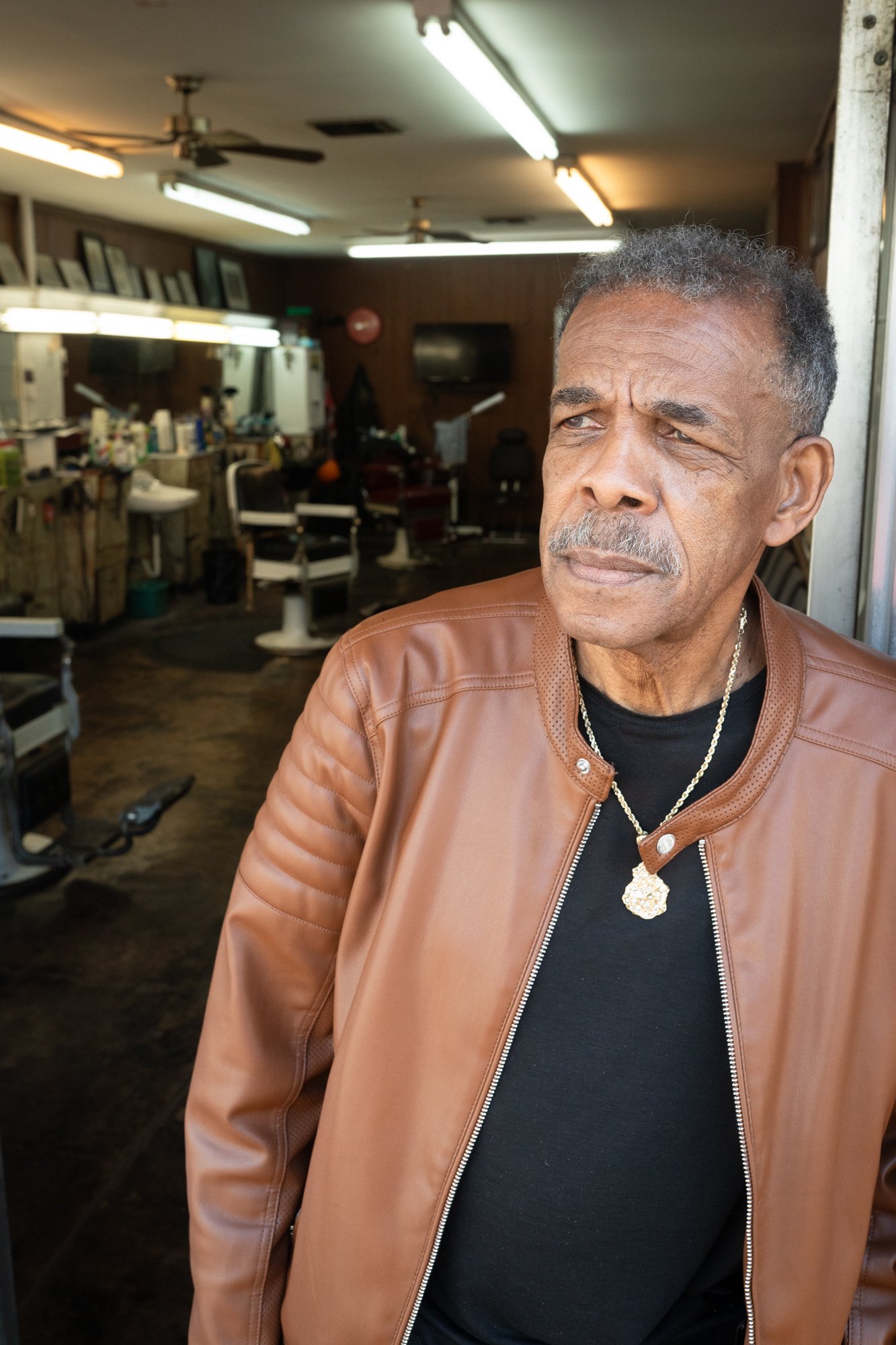
Portrait of barber standing in front of his shop in Birmingham, Alabama

Portrait of a barber in Birmingham, Alabama

Montana Cowboy Photographs

Montana Cowboys through the Lens: Fine Art Prints of Grit, Sky & Tradition

Big Sky Moments & Cowboy Spirit—For Fans of Yellowstone and Real Ranch Life

When I pull up to a Montana ranch with a camera, I'm looking for more than a scene—I’m looking for something true. That first breath of morning air, the way the horizon stretches. Montana cowboys move quietly, with wear on their boots and stories in their hands. They don’t need an audience. Their work—reining, branding, riding out—isn’t performance, but it carries power anyway.

I shoot what feels real: cowboys leaning into saddle leather at sunrise, the sky turning cold and blue above mountain ridges, or riders rounding up cattle under heavy clouds. Moments like that—untouched, gritty, alive—feel like they echo what Yellowstone fans see onscreen: raw Western landscape, ranch life, sweeping skies, authenticity. The Chief Joseph Ranch in Darby plays the role of the Dutton Ranch in the show, but what draws me to Montana is seeing the same rhythm of life behind the scenes.

My prints are made from those moments. Limited edition, archival prints that hold light, dust, sky, and sweat. If you’ve ever watched Yellowstone, the beauty in close‑ups of ranch gear, the way a horse’s muscle works in motion, the golden glow on barn wood—these are the same details I chase. Montana isn’t just setting; it’s character.

Whether you want to hang a Montana cowboy print above a fireplace, in a lodge, or a room that tastes of the outdoors, there’s a piece here for you. A silhouette, a dusty trail, a cowboy’s hat brim catching last light—these aren’t just photographs. They’re windows into a life rooted in land, season, purpose.

Add Western Art to Your Space
Shop Cowboy Wall Art

Montana cowboy wall art

Montana cowboy wall art prints

Cowboy wall art for fans of Yellowstone

Western cowboy photography prints

Small Town North Carolina Barbershop

Granville Barbershop, North Carolina

A Traditional American Barbershop Documented Through Photography

The Granville Barbershop in Grannville, North Carolina is the kind of place that has quietly served its community for decades. No branding overhaul. No attempt to modernize what already works. Just a steady rhythm of haircuts, conversation, and routine that has outlasted trends and redevelopment cycles.

These photographs were made as part of my long-term documentary project, Barbershops of America — an ongoing effort to photograph traditional barbershops across the United States before they disappear. Shops like this are not just businesses; they are cultural fixtures that anchor small towns and neighborhoods.

Why Traditional Barbershops Matter

Traditional barbershops play a unique role in American life. They are spaces built on trust and repetition — places where people return month after month, year after year, to see the same barber in the same chair.

In small towns especially, barbershops function as informal community centers. News is exchanged. Silence is respected. Generations overlap. These are the kinds of everyday environments that rarely feel important in the moment, yet become deeply significant once they’re gone.

Photographing these spaces is about preservation, not nostalgia — recording them honestly, as they exist, without staging or intervention.

The Story

These photographs were made during a drive home to upstate NY for Christmas. The owner was very skeptical of my intentions at first but agreed to let me photograph his shop. During my time there I had some fun interactions with customers, but he never said much. As far as history goes, the shop opened in the 1940’s, and prior to that it was an African American movie theater!! How’s that for Southern?

As with most old shops, the relationship between proprietor and those in his chair was easy, fluid, and quite candid. At one point an older gentleman sauntered in with his head down, dropped a gift on an empty chair, turned back toward the door and said “well, gotta go”. That was it. No interaction. Never even lifted his head up to make eye contact. The barber didn’t seem surprised, nor did he skip a beat on the haircut in progress.

Took about a half hour until I was pleased with the pictures made. Afterward I gave the barber a card and thanked him for the hospitality. He stopped cutting, grabbed a few coins off the back bar, placed them in my hand and in an almost too good to be true accent said “take these two qwwwaaaaaaaatehs back to that machine and get you a pop. I’ll bet you haven’t had a 50 cent pop in yeeeeaaaaaaahs.” Sure enough, there were ice cold sodas coming out of a vintage Coca Cola machine against the back wall. Can’t tell you the last time I even had the desire for a soda, but I wasn’t about to turn that one down.

Interactions like these are what keep Barbershops of America going. Talking to people that give you a very definitive sense of place is gratifying, educational, and fun. Hearing about the shops history in such a dialect not only tells you where you are in the world, but also where you aren’t. I love that.

Continue exploring documentary barbershop photography in the Barbershops of America series

Barbershop Photography Gallery

Barbershop Photo Book/Prints

Another Barbershop Photo Essay

Contact me directly about barbershop photography licensing for your editorial and commercial projects -rob@robhammerphotography.com

Interior view of a traditional barbershop with barber chairs, mirrors, and military flags on the wall

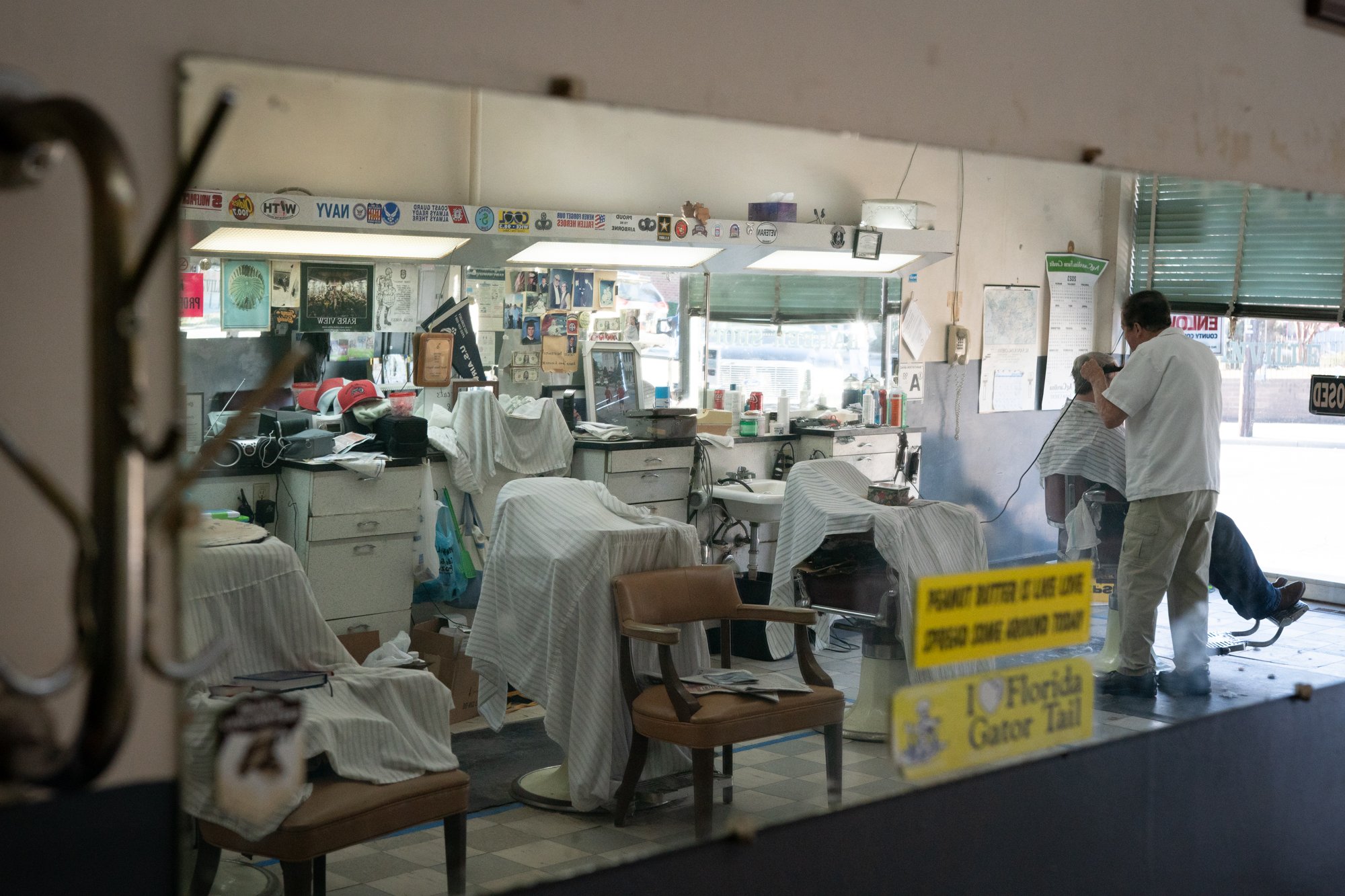
The interior of Granville Barbershop reveals layers of personal history, from worn barber chairs to walls filled with service flags and memorabilia.

Traditional barbershop interior in North Carolina with a barber cutting a client’s hair using clippers

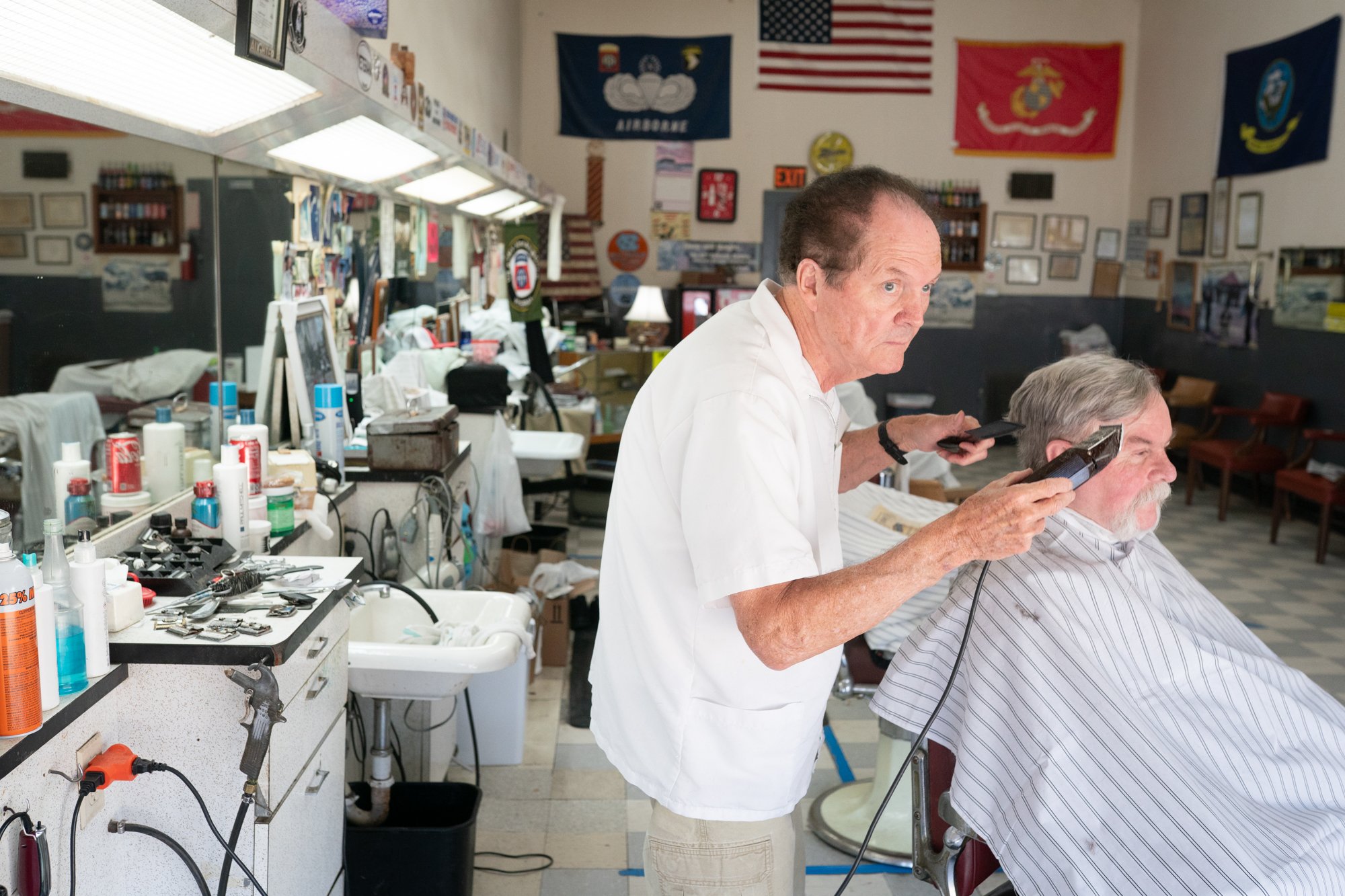
A working barber trims a longtime client inside a traditional North Carolina barbershop, where routine and familiarity define the space.

Exterior of Granville Barbershop in Granville, North Carolina with classic signage and storefront windows

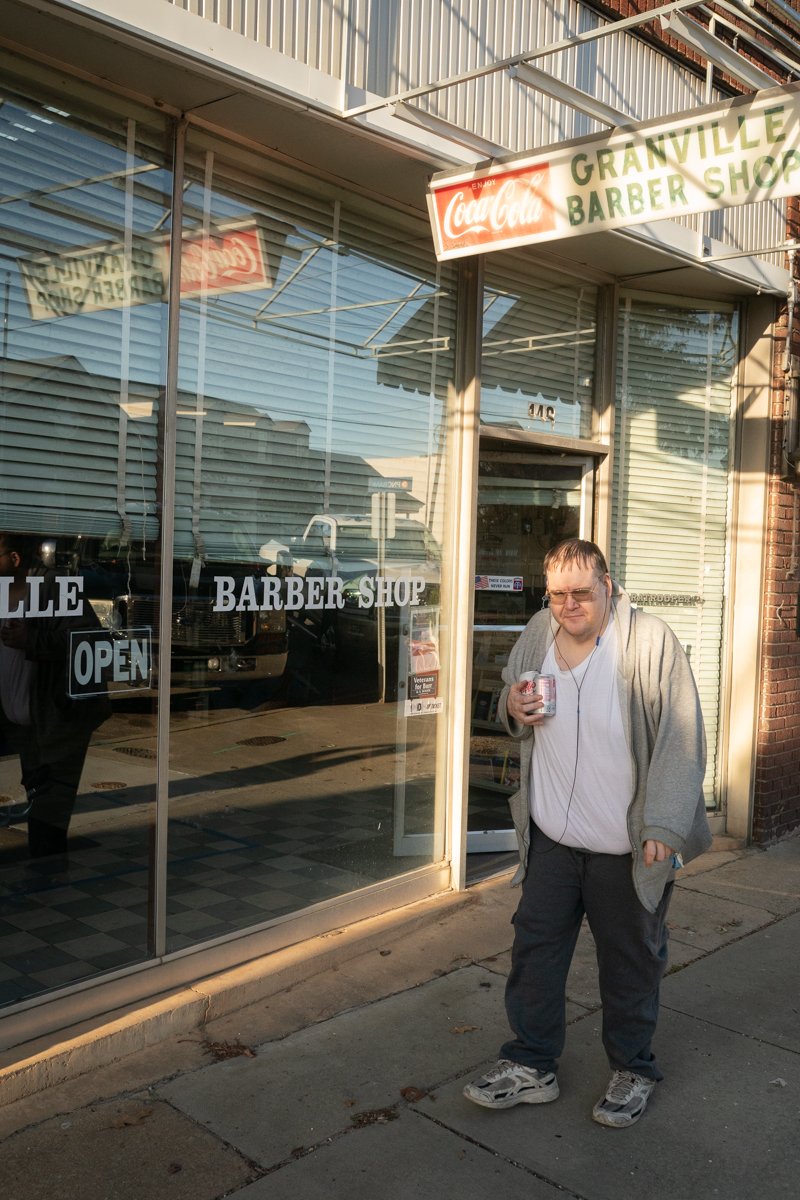
The storefront of Granville Barbershop in Granville, North Carolina, a long-standing fixture of the town’s Main Street.

Documentary photograph of a barber cutting hair inside a small-town North Carolina barbershop

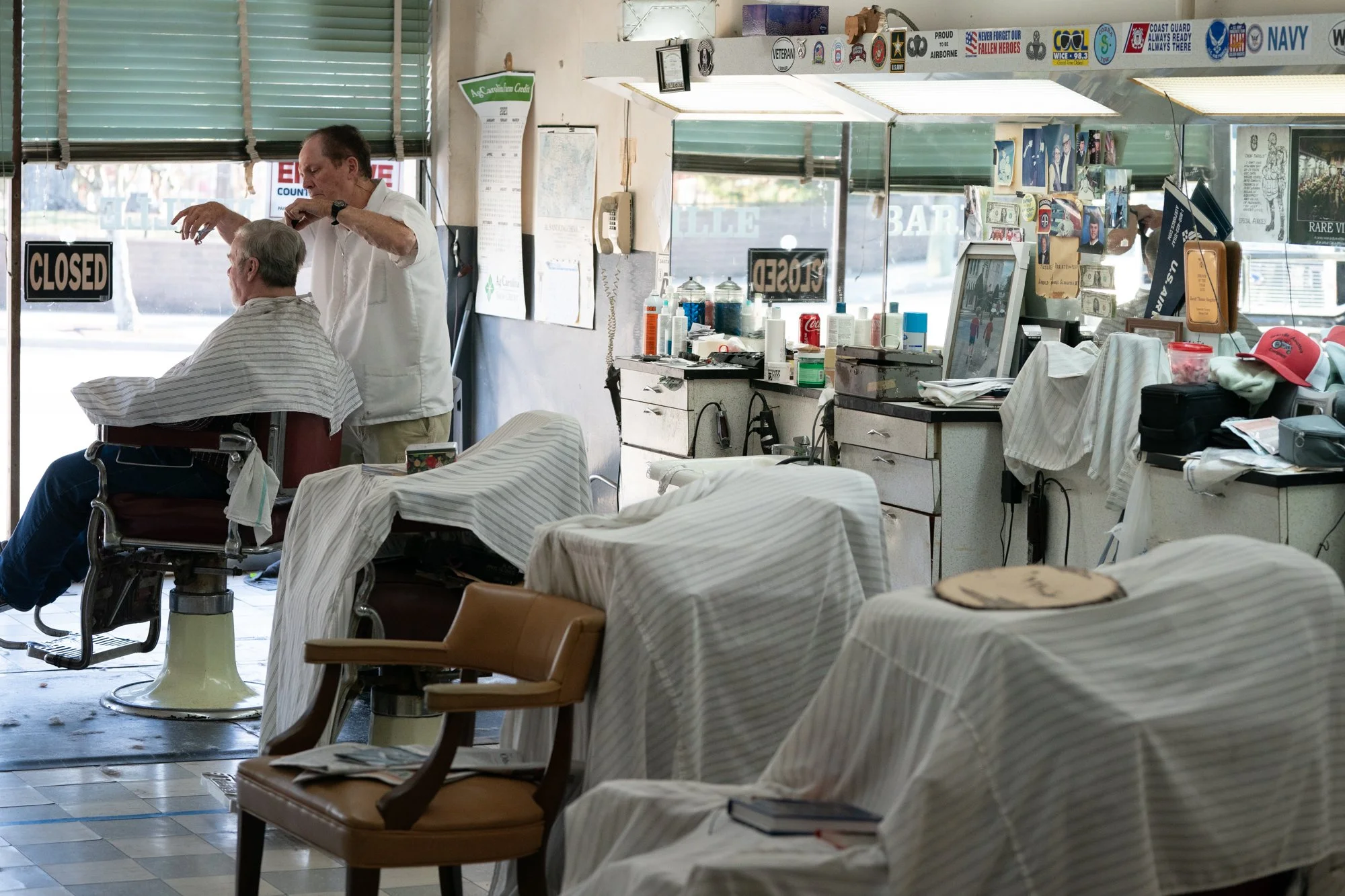
Inside the shop, haircuts continue as they have for decades—unhurried, familiar, and grounded in routine.

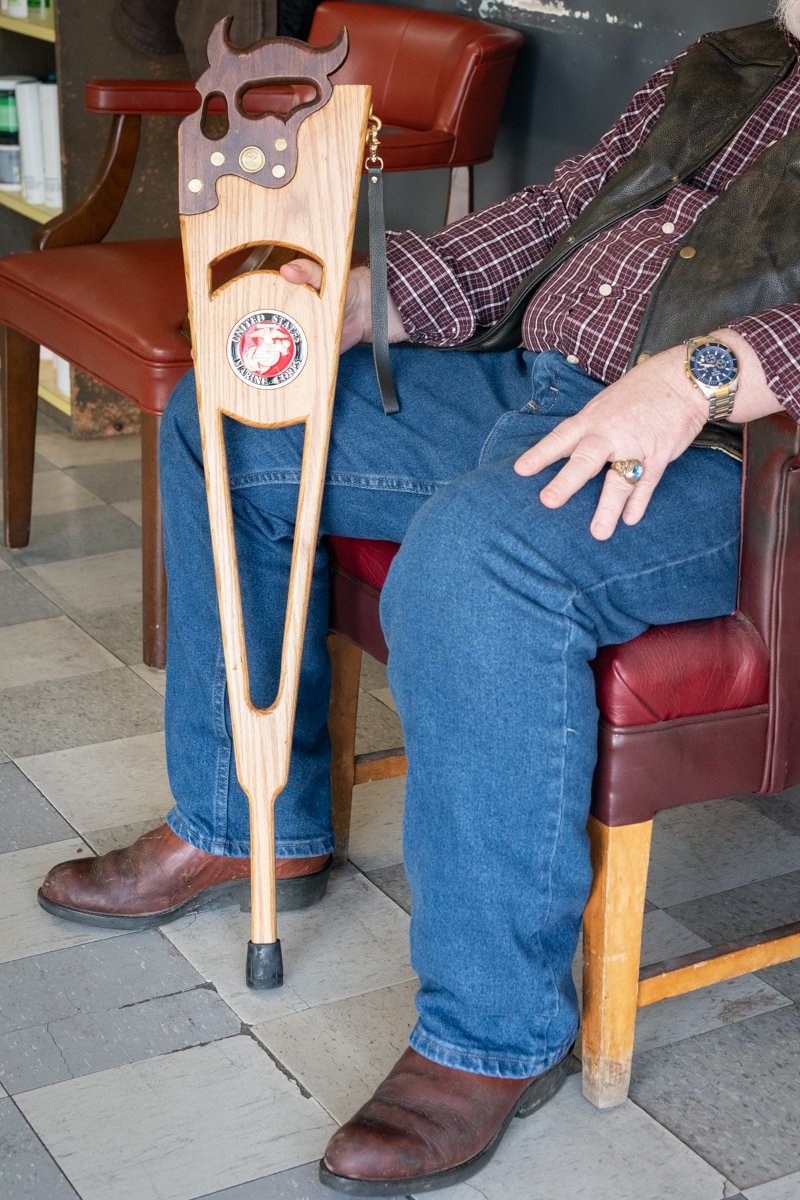
Detail photograph of a custom wooden walking stick resting beside a customer in a North Carolina barbershop

A handmade walking stick rests beside a customer, a small detail that hints at the personal histories carried into the shop.

East Coast Photography

Small Town America - Photography

Road Trip - American Culture

Cross country road trips have been a constant in my life for the past 12+ years, particularly in late December driving from San Diego, CA to upstate NY to visit family for Christmas. This year though, it was significantly shorter as we are currently living in North Carolina. If you want advice on the most soul sucking drive in the USA, it’s I95 from Raleigh to Albany. Avoid it at all costs. I did it once in a straight shot due to a severe lack of time and will never do it again. As a photographer you’re much better off committing to the many backroads that will get you to the same place while also delivering a much better experience. Here are a few images from PA and NY. Pennsylvania has always been a fascinating state. There is a sadness to a lot of the towns, particularly in the rust belt, but they are all undeniably American. Plenty of towns in America could be anywhere in America, but the majority of Pennsylvania makes you acutely aware that you are in a place.

Click here to see more of my American Photography

Union Cemetery - Hudson Falls, NY

Pittston, Pennsylvania

Wilkes-Barre, Pennsylvania

Edwardsville, Pennsylvania

Pittston, Pennsylvania

Pittston, Pennsylvania

Hudson Falls, New York

Photography Books - American Culture

American Photography - Documenting Traditional Barbershops

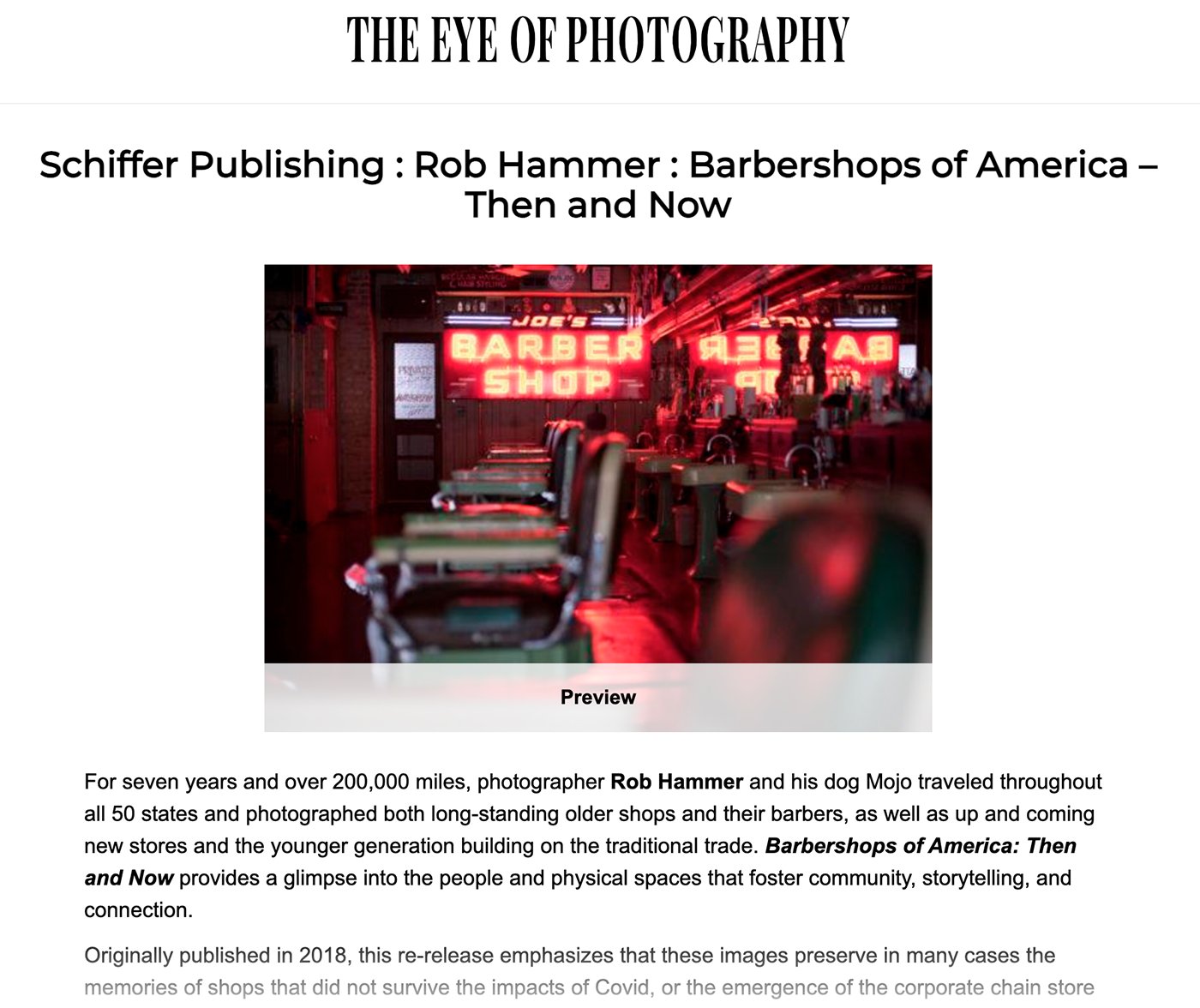
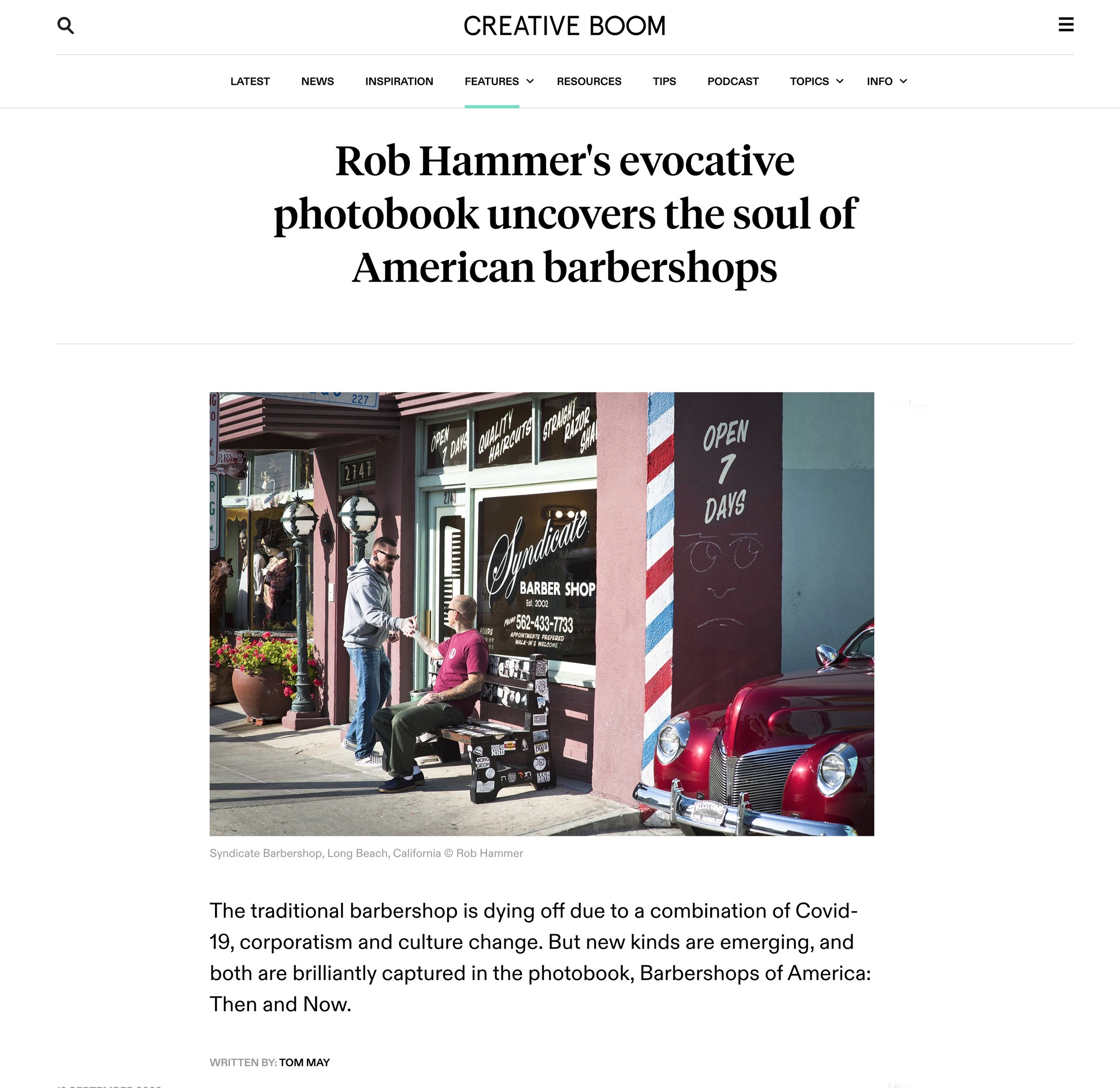
American photography as a genre is hard to define, especially when it comes to art collection and fine art photography. The term is so broad and leaves plenty of room for interpretation. One of my longest running series Barbershops of America fits into that category. Although it’s only been recently that I realized what’s been put together with this series is as much American photography as it is a historical document of a niche piece of American culture. And it occured to me the other day that getting a haircut is just a bonus to the experience you receive from being in a traditional barbershop. Grateful to see this project getting some exposure on Creative Boom and The Eye of Photography.

Click HERE to purchase a copy of Barbershops of American or HERE to purchase fine art prints.

Arizona Cattle Ranch

Cowboy Ranch Life in Arizona — A Working Ranch Photo Essay

Photographing a Working Cattle Ranch in Rural Arizona

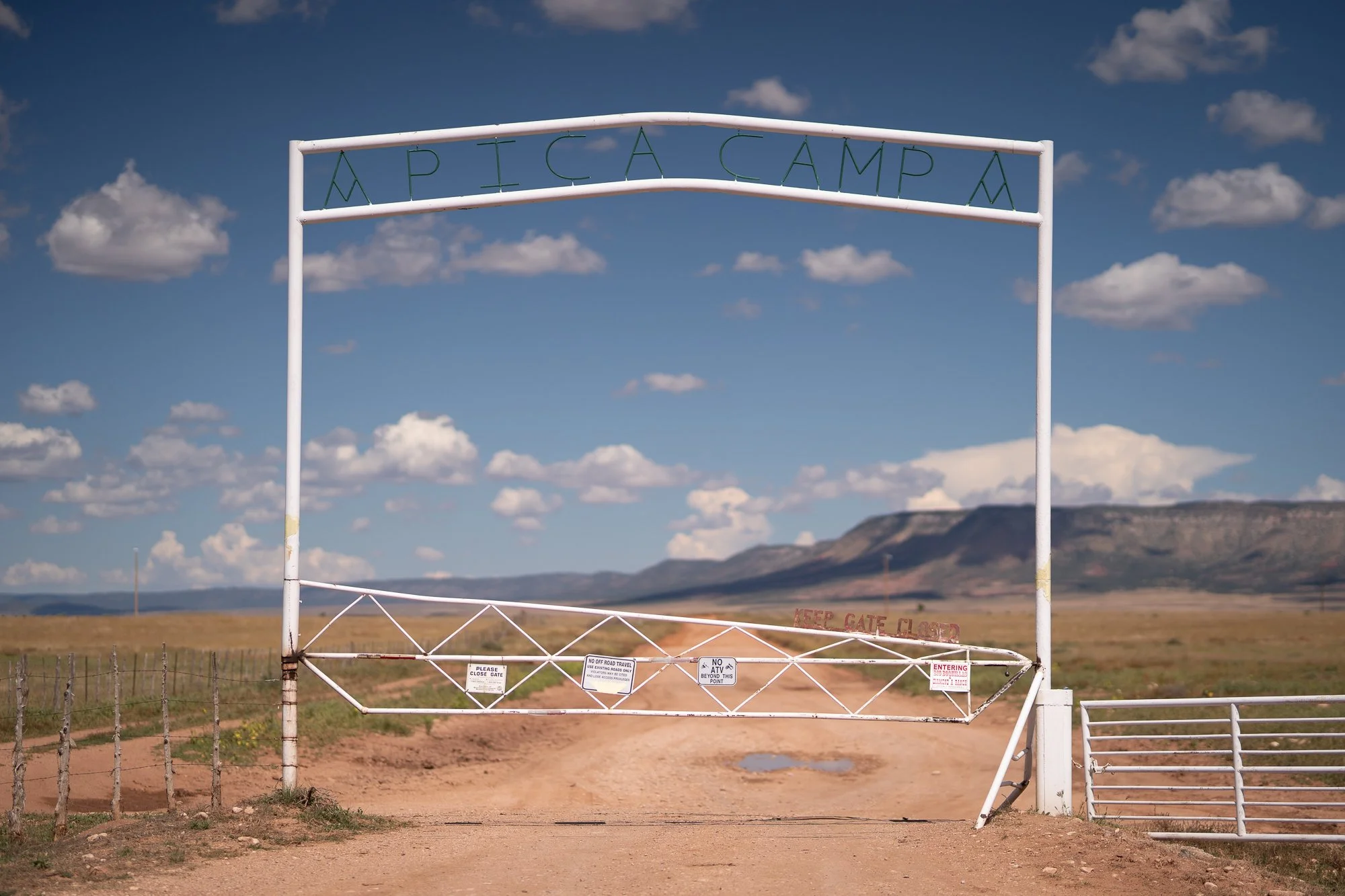
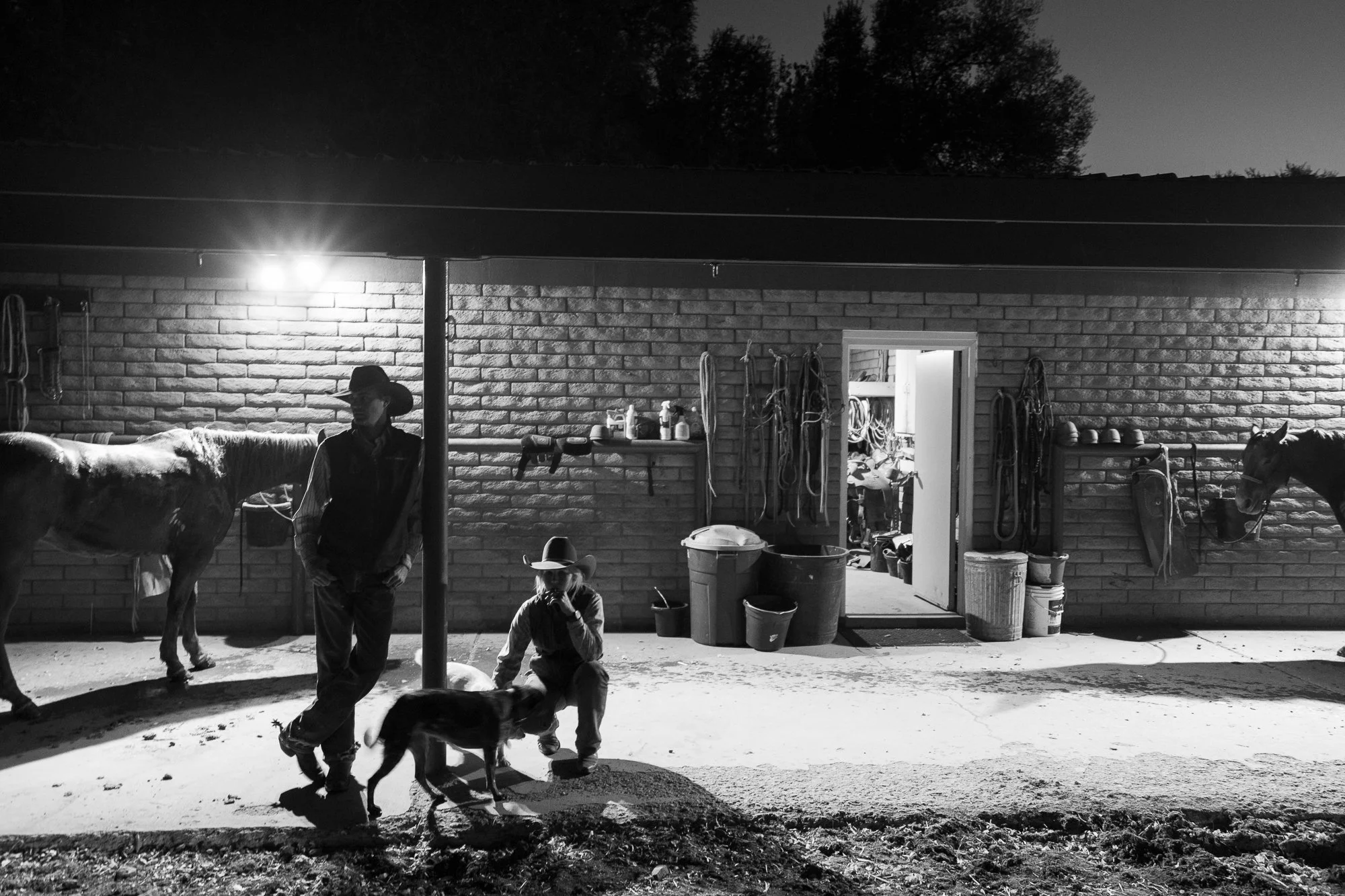
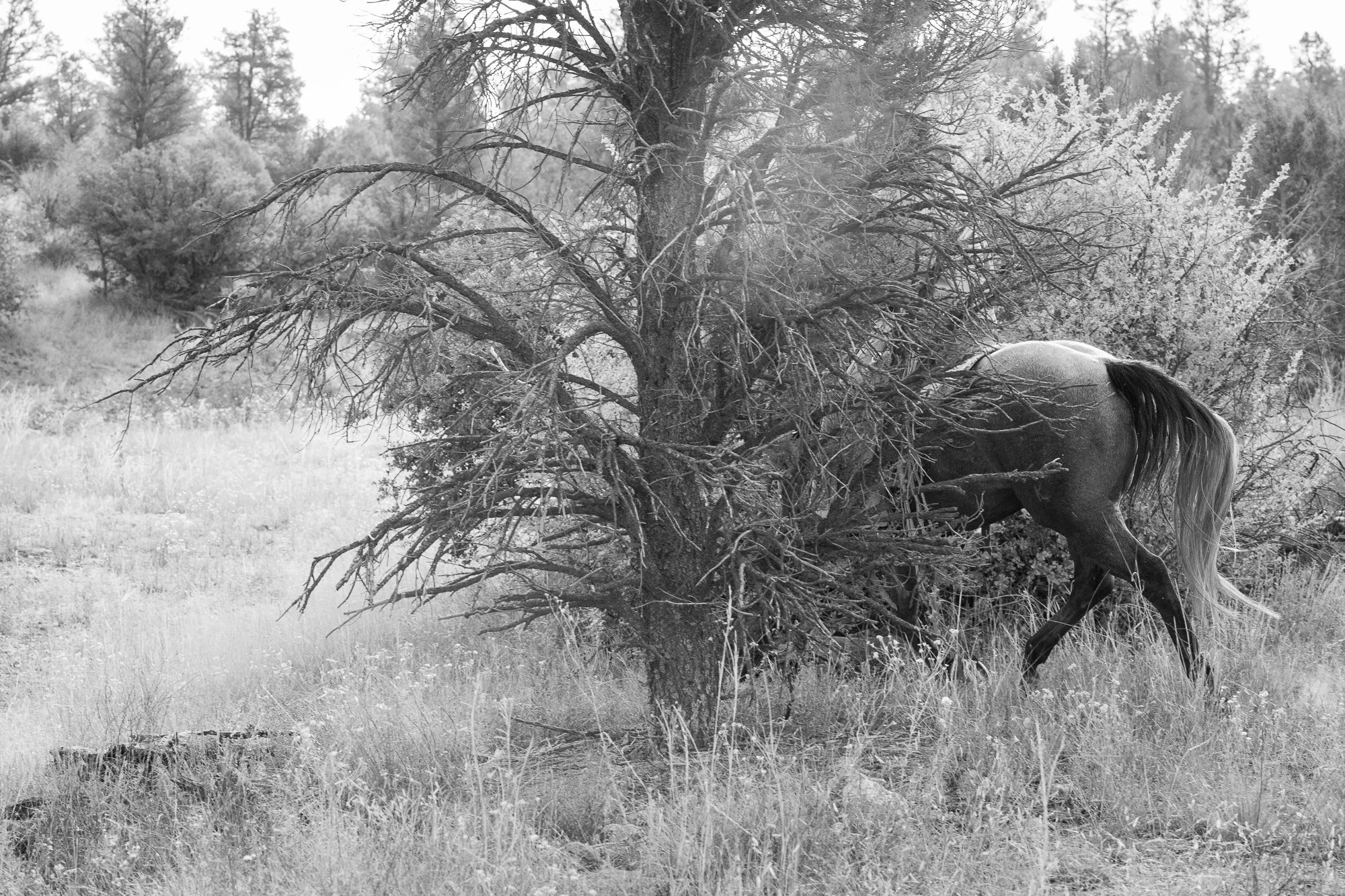
Arizona ranching doesn’t look the way most people imagine it. There are no dramatic mountain backdrops or postcard moments waiting around every corner. Most days are quiet. Dry. Spread out. The work blends into the land in a way that feels almost invisible unless you slow down enough to notice it.

These photographs were made on a working cattle ranch in rural Arizona. No staging. No recreations. Just day-to-day ranch life as it happens — early mornings, long distances, and a rhythm that hasn’t changed much because it doesn’t need to.

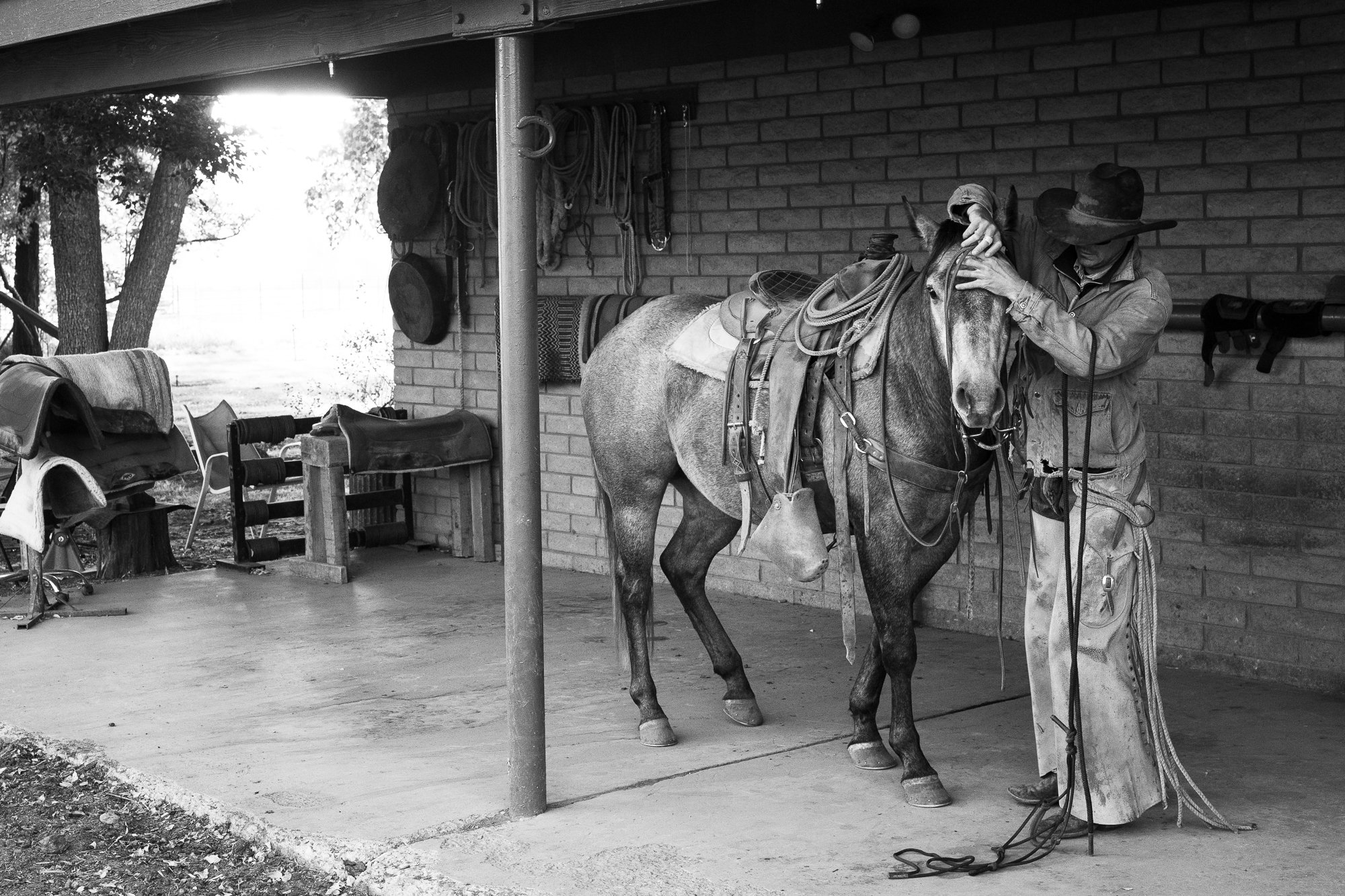
Ranch work in Arizona is shaped by the environment more than anything else. The land dictates the pace. Heat, dust, and long distances through dense brush are part of every decision, and nothing happens quickly unless it has to. You feel that right away when you’re there.

What struck me most wasn’t any single moment, but how steady everything felt. Horses saddled without ceremony. Gates opened and closed out of habit. Work done without commentary. It’s not dramatic, but it’s real — and that’s what makes it worth photographing.

Ranching in Arizona Isn’t Romantic — It’s Practical

A lot of imagery of the American West leans hard into nostalgia. This place doesn’t ask for that. Ranching here is practical and stripped down. The landscape doesn’t allow for much excess.

The cattle are moved when they need to be moved. The horses are tools as much as companions. There’s very little separation between work and daily life, and no sense that anyone is trying to preserve an image for the sake of outsiders. It simply exists.

That honesty is what drew me to photograph here.

The K4 Ranch

The photographs in this series were made at K4 Ranch, a working cattle operation where ranching still follows the land rather than trends. Like many ranches across Arizona, it operates quietly, without much outside attention, doing the same work it has for generations.

Places like this don’t always make headlines, but they form the backbone of ranching culture in the Southwest. They’re also disappearing faster than most people realize.

Why Photograph Places Like This

I’ve spent years photographing working cowboys and ranches across the American West, and the more time I spend in places like this, the more important it feels to slow down and document them honestly.

Not to turn them into symbols — but to show what’s actually there.

These photographs aren’t meant to romanticize ranch life or explain it. They’re simply a record of people working, land being used, and traditions continuing without much concern for being noticed.

Arizona Cowboy Photography Prints

Photographs from this Arizona ranching series are available as museum-quality fine art prints. Each print is produced in small editions and made to live with — not just be scrolled past.

View available cowboy photography prints

This story is also part of a larger, ongoing project documenting real working cowboys and ranch life across the American West.

View the complete cowboy photography gallery

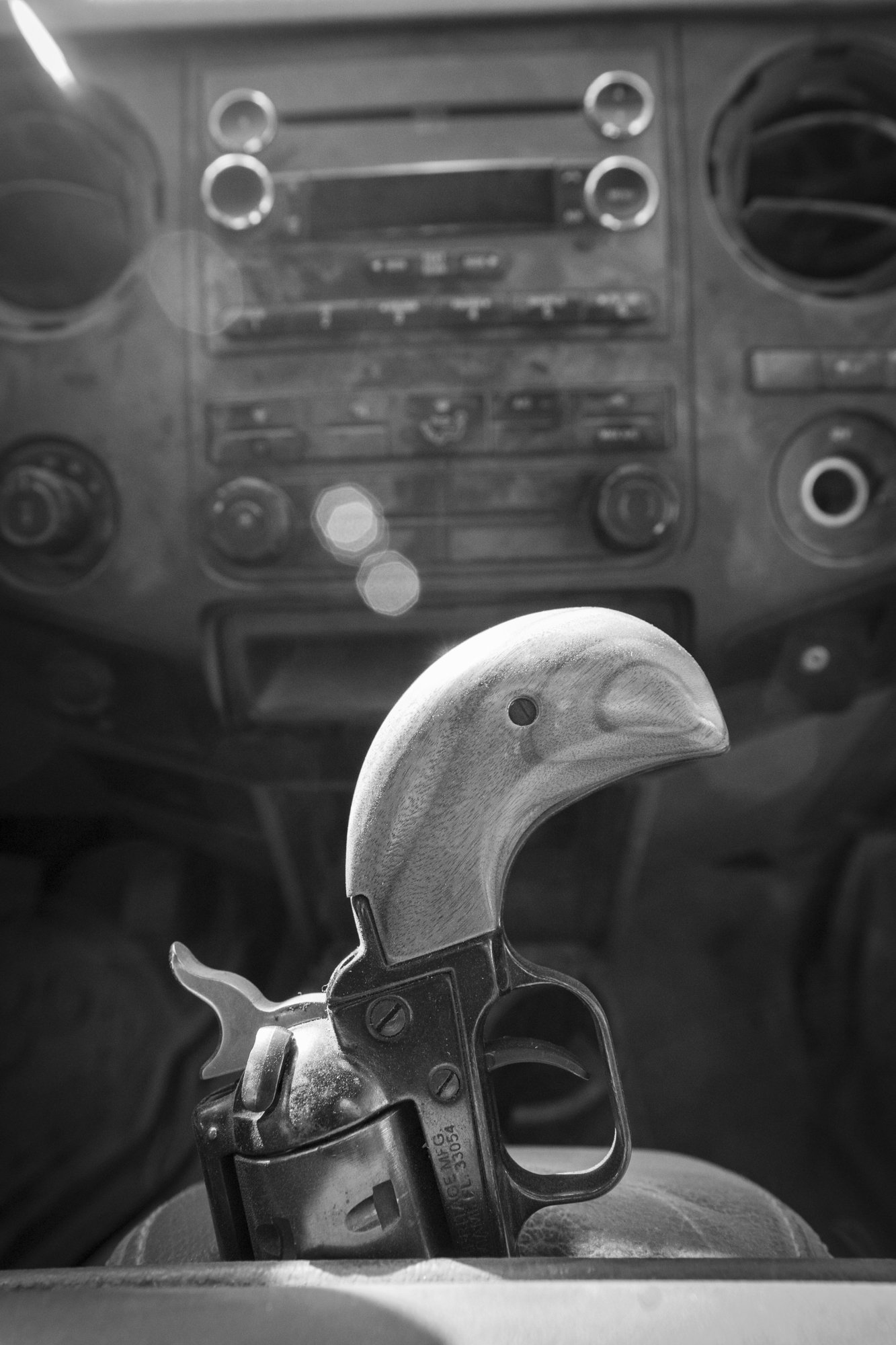
Photograph of a revolver gun in the console of a cowboy's pickup truck

A cowboy’s revolver

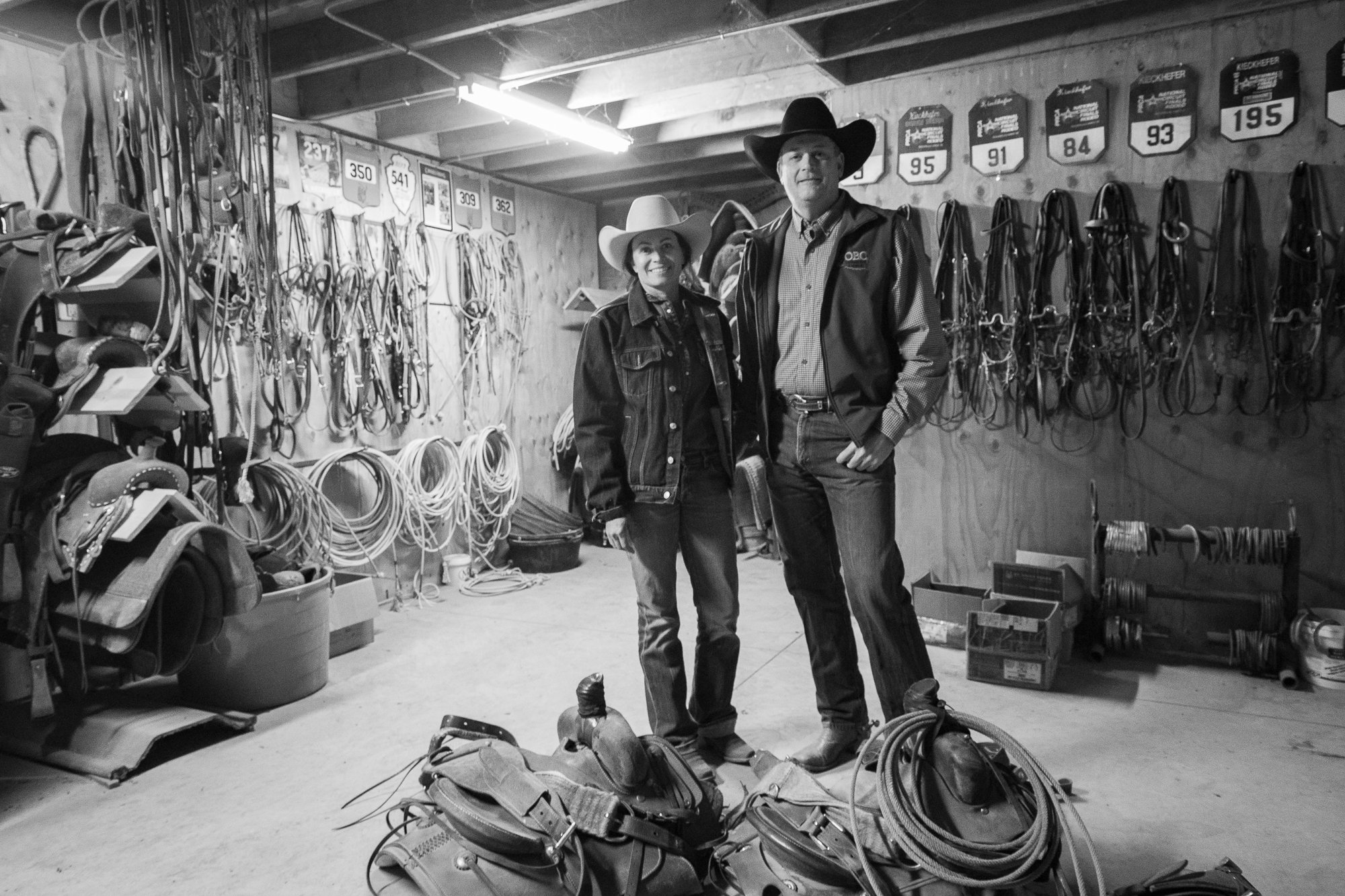
Black and white photograph of husband and wife cowboys

Brady and Marianne Clark - Cowboys

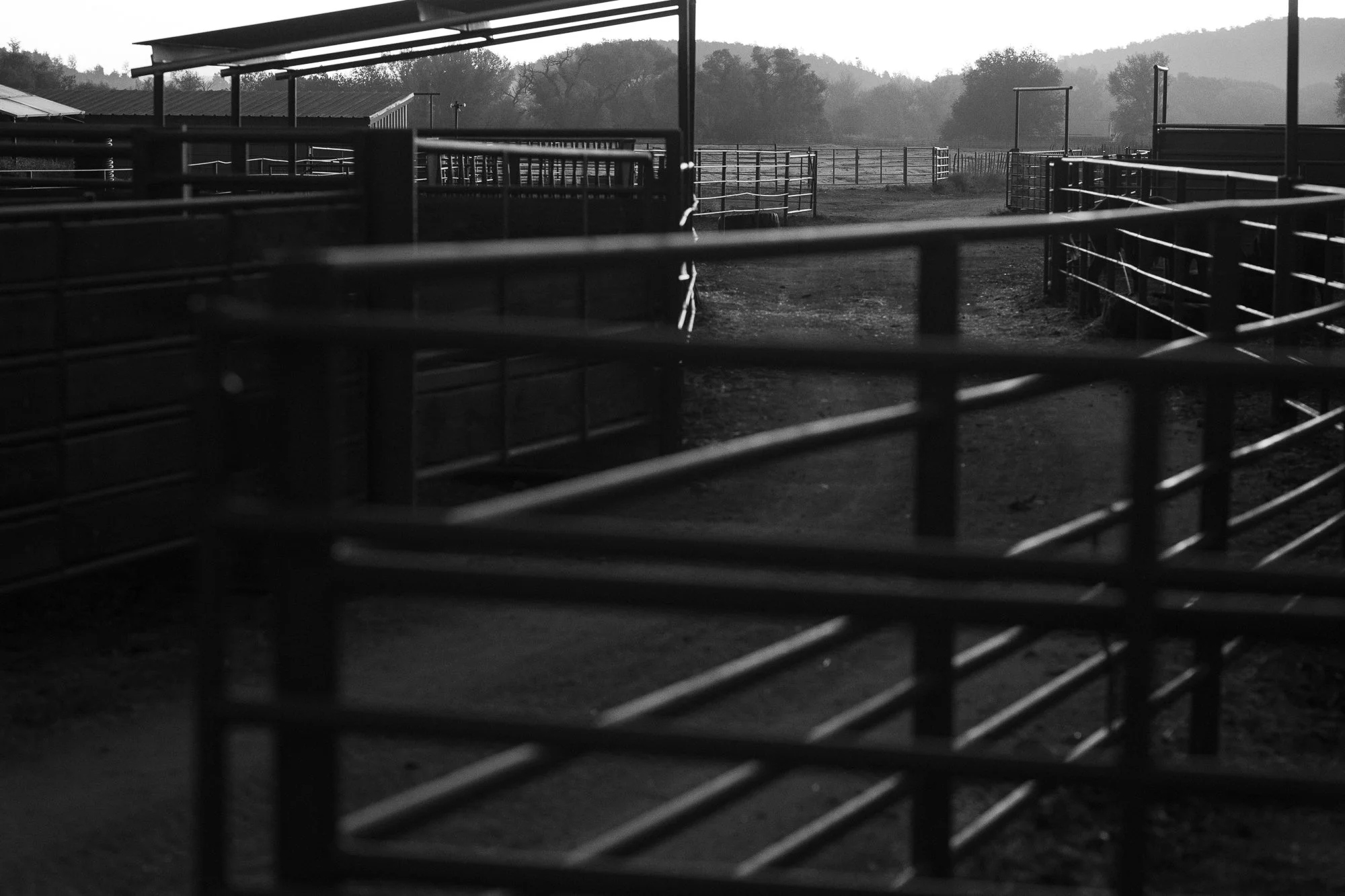
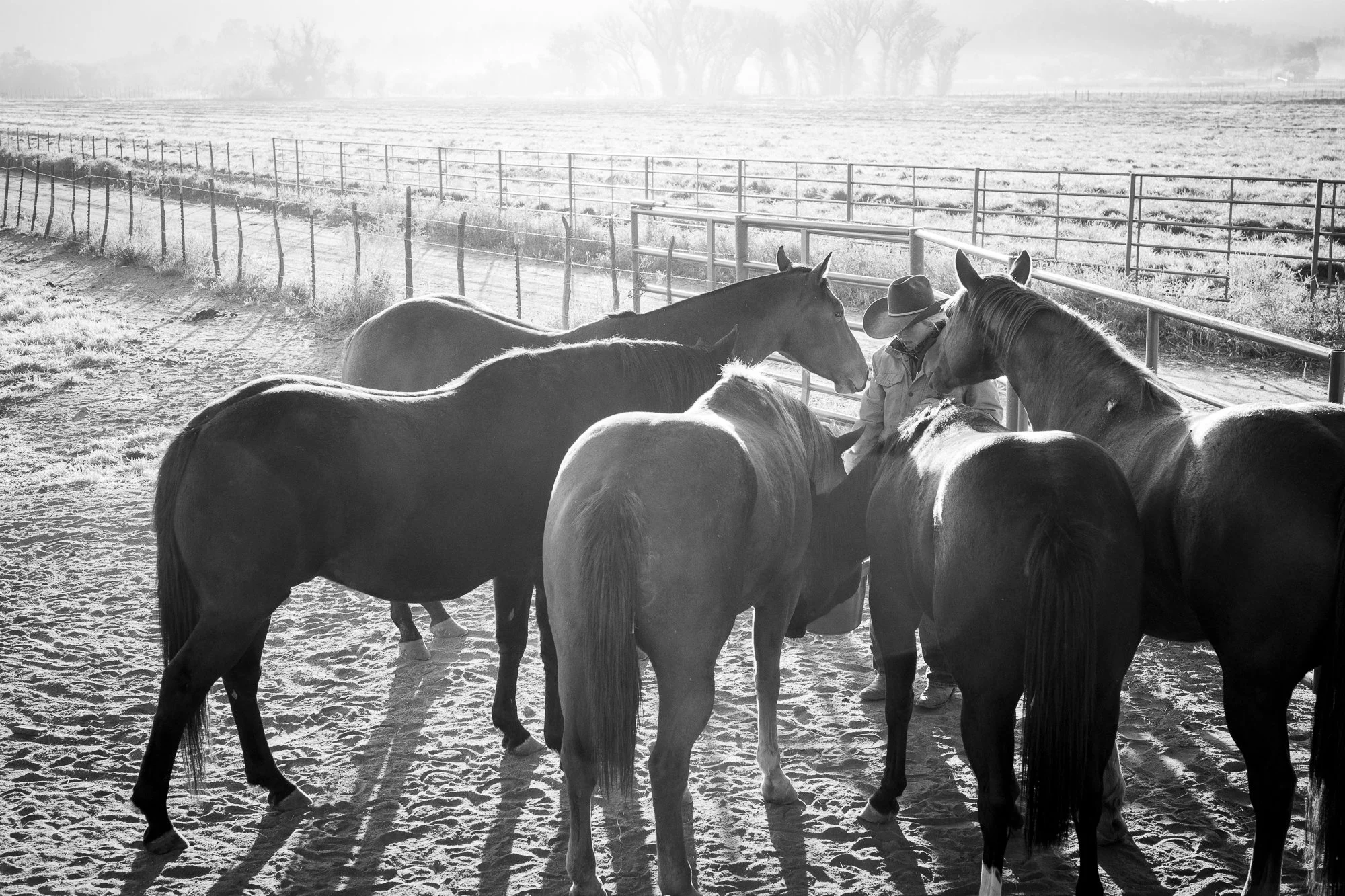
Early morning light illuminates corrals on a working ranch in Arizona

Horse corrals on the K4 Ranch in Prescott Arizona

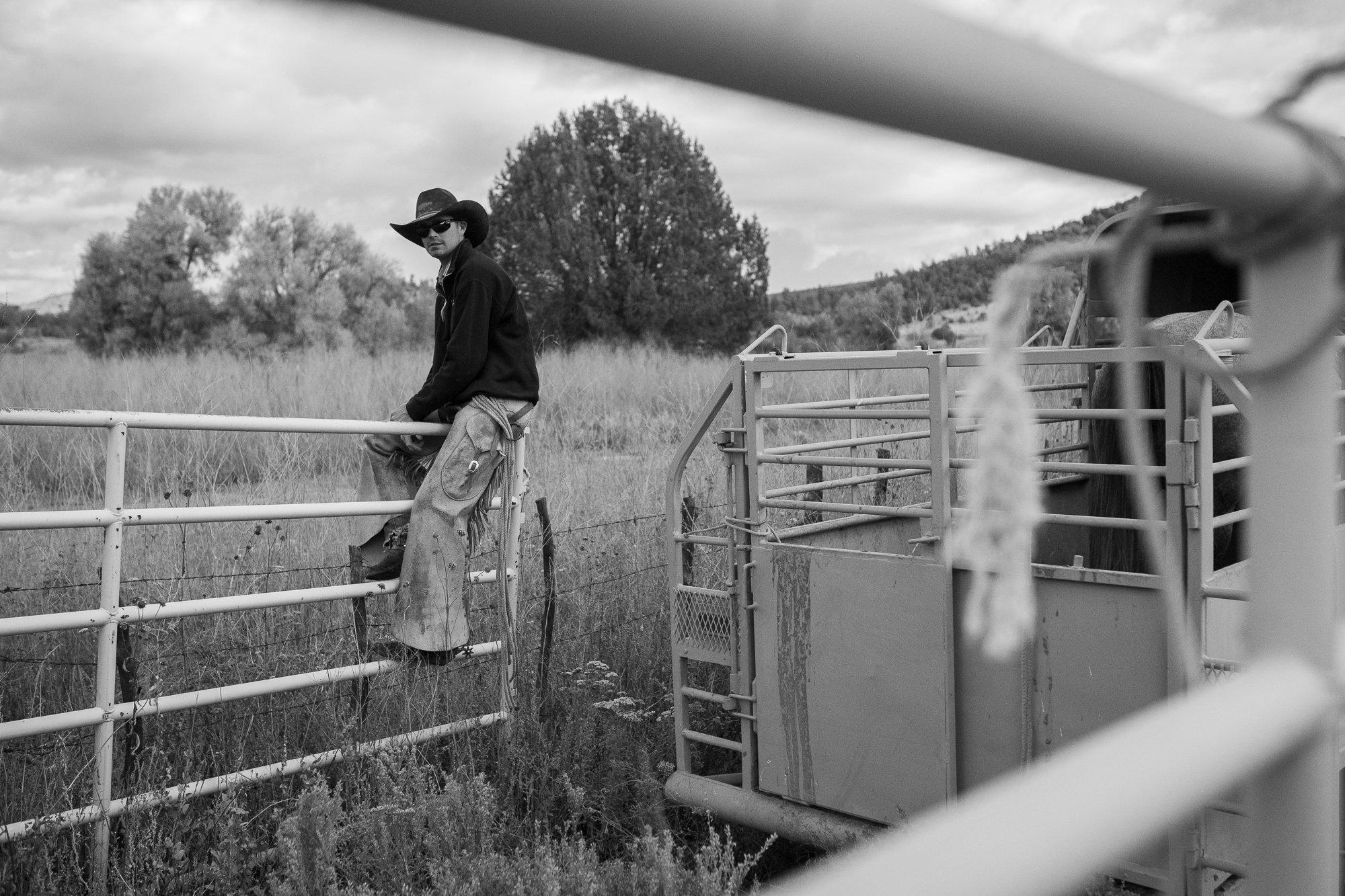
Black and white photograph of a cowboy on an Arizona cattle ranch

Brady Clark - Cowboy

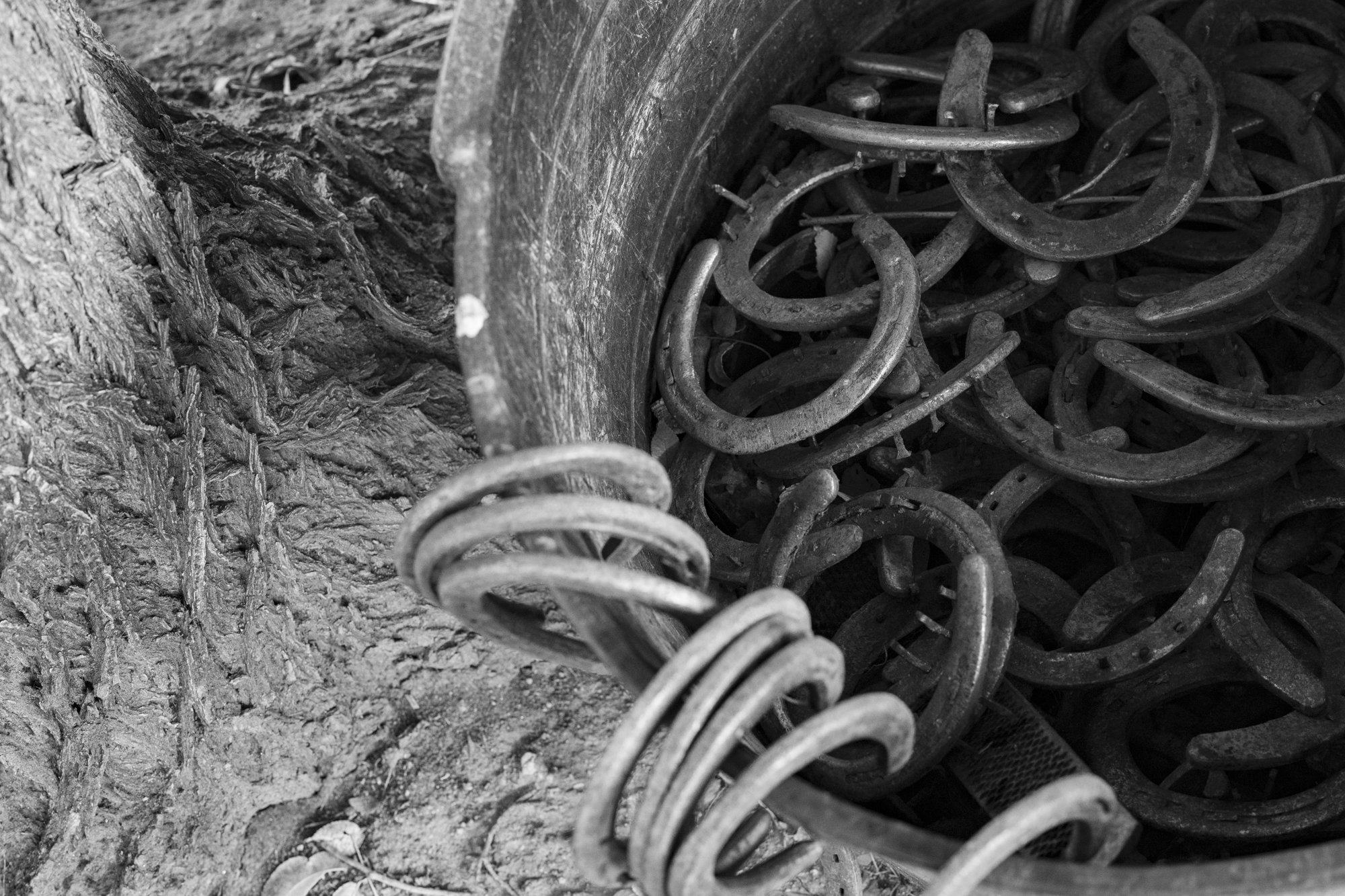
Photograph of a bucket of horseshoes on a cattle ranch in Arizona

Photograph of used horseshoes sitting in a bucket on a cattle ranch in Arizona

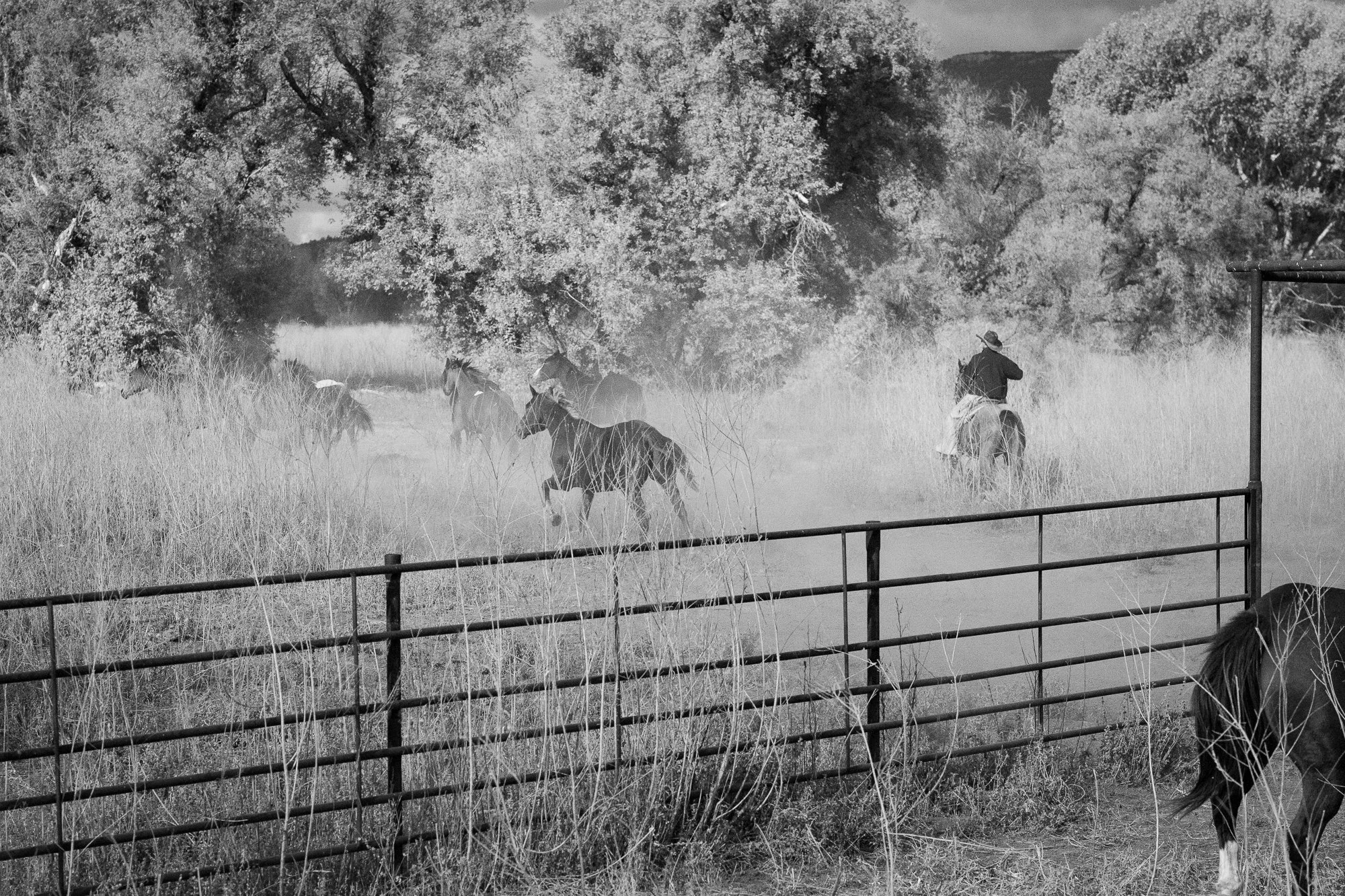
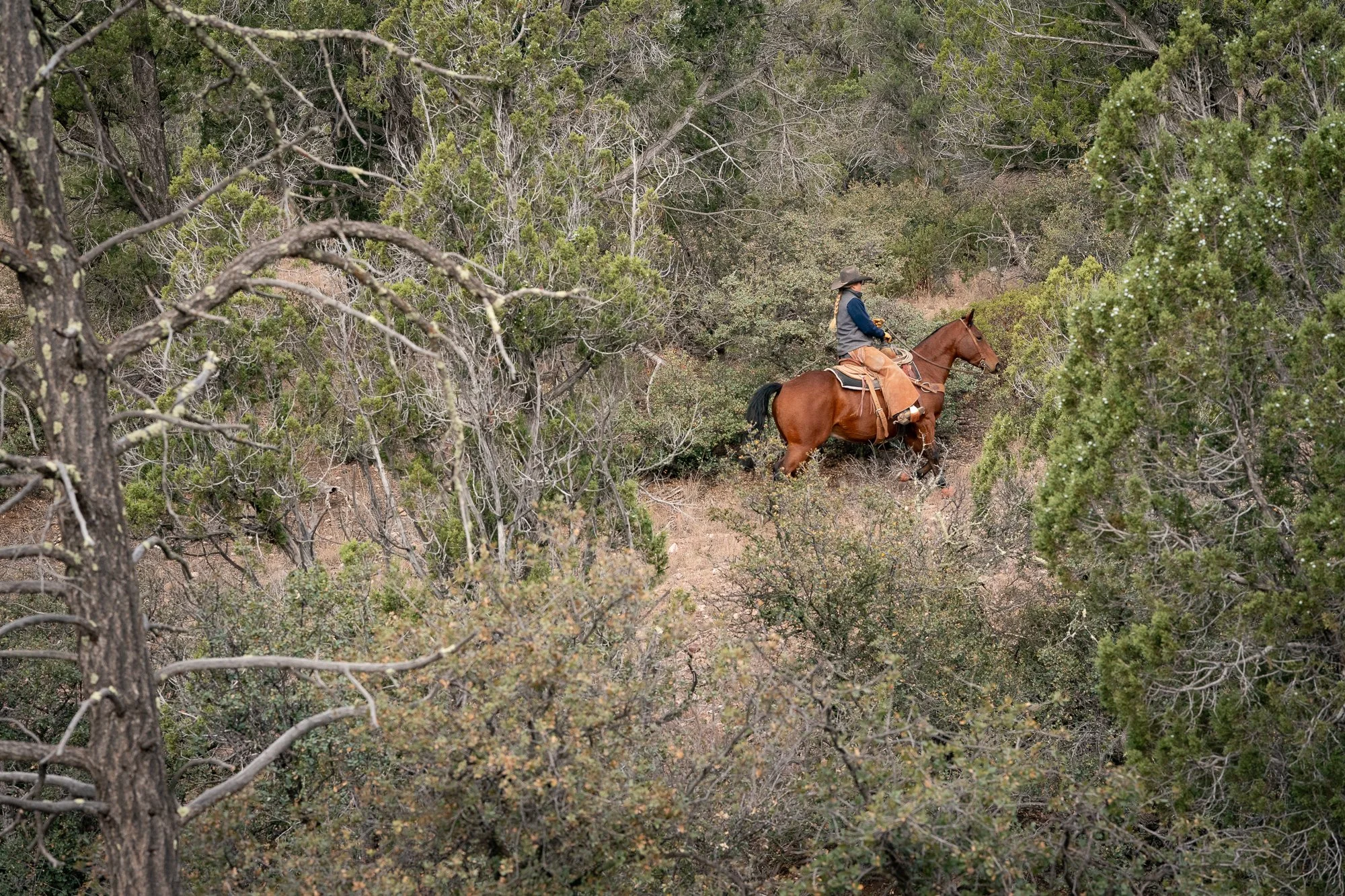
Photograph of a cowboy riding through thick brush on an Arizona cattle ranch

Cowboy riding through thick brush

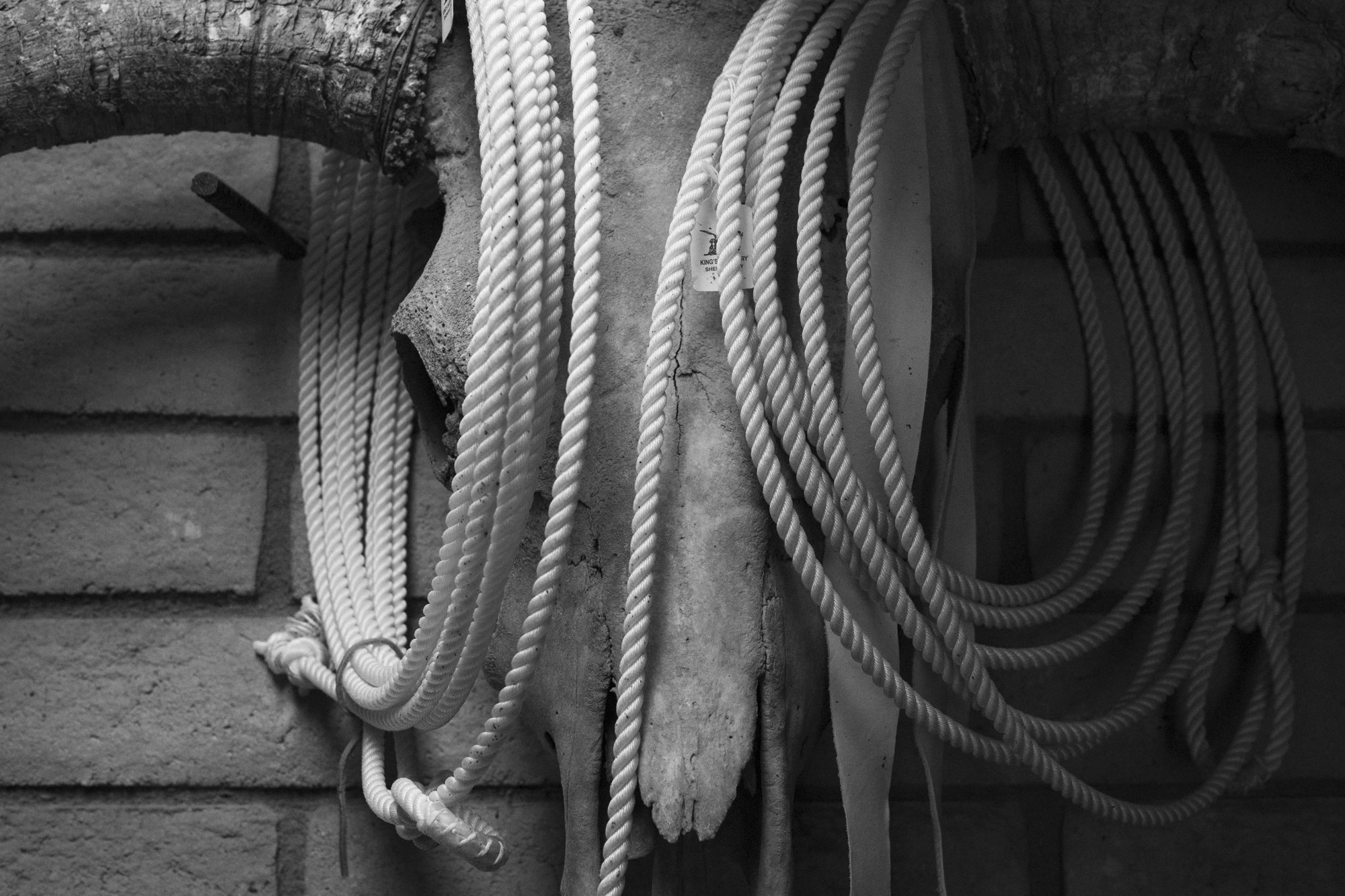
Cowboy lariats hanging on a cattle skull on a working ranch in Arizona

Ropes from King’s Saddlery hang on a cow skull on the K4 Ranch in Prescott, Arizona

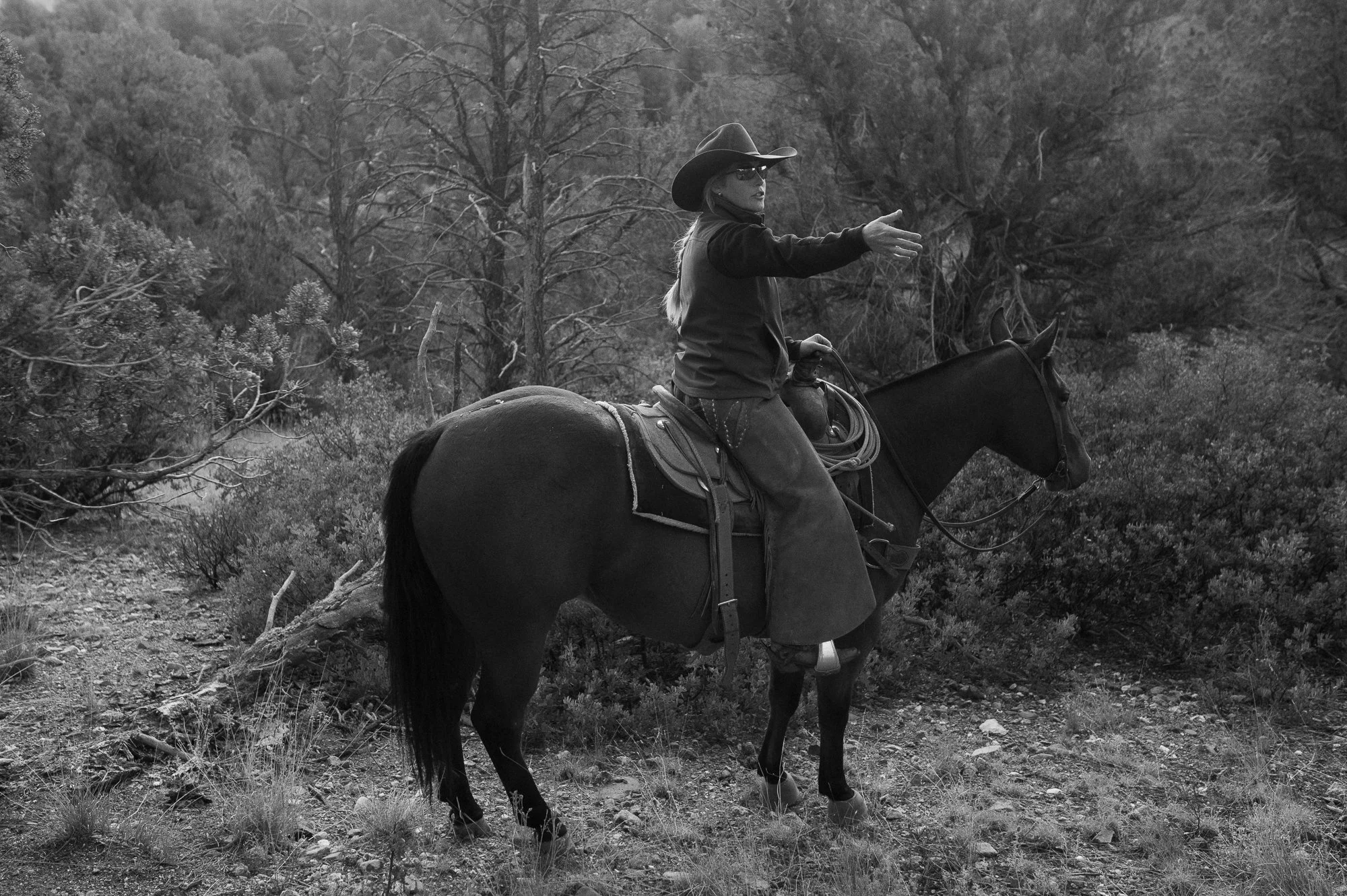
Photograph of a working Arizona cowgirl on her horse in a thick forest

Working Arizona cowgirl - Marianne Clark

Photograph of a cowboys roping dummy

Photograph of a roping dummy on a cattle ranch in the American West

Rick and Sarah Kieckhefer - owners of the largest cattle ranch in the Southwest United States

Rick and Sarah Kieckhefer - Arizona cattle ranchers

Photographs of a cowboys horse shoeing station on a Arizona cattle ranch

A cowboy’s shoeing station for his horse on a cattle ranch in Arizona

Black and white photograph of male and female cowboys mounting horses in Arizona

Arizona cowboys getting on their horses before a day of work

Black and white photograph of a cowgirl feeding horses on a beautiful cattle ranch

Cowgirl feeding horses

A cowboy riding his horse an an Arizona cattle ranch

Horses running free on an Arizona cattle ranch

A cowgirl puts her world champion saddle back in the saddle house on a cattle ranch

World Champion Cowgirl

Photograph of a cowboy saddling his horse on the K4 Ranch in Prescott, Arizona

Saddling a horse on the K4 Ranch in Prescott, AZ

Photograph of an Arizona cowgirl riding her horse through dense forest

Arizona cowgirl riding her horse through rough forest

Photograph of a three legged cattle dog

3 legged cattle dog

Barbershop Photography

Traditional American Barbershops

One of the best/hardest parts of working on long term projects focused on one subject matter is the bar is always rising. And that has definitely been the case for Barbershops of America. Traditional shops are a dying breed as is, and after seeing countless shops (good and bad) over the past 10 years, I’ve become quite specific about which shops I want to include in this project. Despite lots of travel and searching for shops over the past year+, the efforts have been fruitless, finding almost nothing worthy of documentation. Sort of hard to believe, actually. Searching for that long without positive results can make you think hard about the project. Is it done? Have I truly found and photographed all the remaining traditional barbershops in America? All of that doubt was erased recently after finding two incredible shops. Nicholson’s Barbershop in Raleigh, NC has been around for 40 years and Patsy’s Barbershop in Albany, NY first opened its doors in 1930! I was born in Albany, lived nearby for 25 years, have been going back at least twice a year for the past 18 years, and just last week discovered Patsy’s. Even more strange, the current owner is a former bouncer that used to, for good reason, throw my friends and I out of the bar. Funny how life works.

Click here to purchase a copy of Barbershops of America

The best barbershop in Raleigh, North Carolina

Nicholson’s Barbershop - Raleigh, North Carolina

Photograph of a barber's hands
Photograph of a traditional barbershop in Raleigh, North Carolina
The best barbershop in Albany, NY

Patsy’s Barbershop - Albany, NY

Photograph of a beautiful traditional barbershop in Albany, NY

Traditional barbershop in Albany, NY


Boots O'Neal

Boots O’Neal - Cowboy - 6666 Ranch - Texas

Being a photographer has been a great pleasure and an even greater adventure. It’s taken me to some outstanding parts of the earth and allowed me to photograph some of the most famous athletes on it. “Who is your favorite?”, has always been a common question. Until recently that was an impossible question to answer. Now my final is abundantly clear - it’s the legendary Texas cowboy Boots O’Neal. Boots is a 90 year old cowboy on the iconic 6666 Ranch. A more inspiring human you will not meet. To learn more about him continue reading this piece I wrote that was originally published with Wrangler.

View More Cowboy Photography From The American West

Tom Moorhouse - Texas Cowboy

Fine Art Cowboy Prints

Branding Season at the 6666 Ranch

The photographs above are just one piece of a much larger story. Branding season at the 6666 Ranch is a coordinated effort and well oiled machine run by first class cowboys.

→ See the complete 6666 Ranch branding photo series

Photograph of legendary Texas cowboy Boots O'Neal on the 6666 Ranch

Boots O’Neal on his horse working cattle in the corrals at the 6666 Ranch

Boots O’Neal and the Tradition of Ranching in West Texas

Imagine for a moment, waking up in the hospital with 12 broken ribs, a punctured lung, broken vertebrae, and a bleeding brain. Now imagine that pain at 82 years of age. Cal Ripken Jr. was Major League Baseball's “Ironman”. Earning the nickname after playing 2,632 consecutive games. Put those end to end and you’ve got over 7 years of straight baseball. An astonishing stat and impressive feat only possible for a human made from the toughest stock. No offense to Mr. Ripken, but that doesn’t hold a candle to the Texas legend - Boots O’Neal, who's been horseback for the better part of the last 75 years. Despite the aforementioned injuries, piled on a lifetime of other broken body parts, the now 90 year old cowboy shows no desire whatsoever to retire. You’d think someone that’s lived in such a way would have a face much resembling their saddle that’s endured as many miles. Instead, O’Neal’s is endearing, and fixed with a perpetual smile that causes you to do the same. The kind of guy that inadvertently makes you a better person just by being in his presence. 

While we’re on the stat train, let’s dole out a few more just to drive the point home, what an outlier he truly is. The average retirement age in America is 62. The average age of death is 78. And a cowboy will normally take home about $31,466 a year. At a time in life when most folks are either dead or in a nursing home, Boots wakes up every morning with excitement to saddle a horse and work cattle alongside fellow cowpunchers that could be his grandkids. People just aren’t built like him anymore. Not a partier, but it would be safe to put O’Neal in the Keith Richards class. Immortal freaks, in the most beautiful way possible. 

Portrait of Boots O'Neal - Cowboy on the 6666 Ranch in Texas. Available as a photography print.

Portrait of Boots O’Neal

Cowboys in general are a strand of human unlike the rest of us. Born not made. And from birth, it was obvious O’Neal created a category all his own. Growing up in the 30’s he was one of 8 children living in a home without running water. The bathroom was an outhouse, and the bath, a tub filled with water and placed next to the kitchen oven, door open for heat. After 3 or 4 of the kids took their turn, that water was tossed outside to calm down the dust. He was never much for school. The only thing he excelled at was boxing, but usually just looked forward to running off the bus and into the barn to saddle a horse, only coming in when his mother hung a white sheet on the clothesline - their version of a dinner bell. 9th grade was as far as he cared to go, leaving home in August of 49’ at sixteen to cowboy for the JA ($90/week). That job found him on the wagon, sleeping in only a bedroll 6-7 months at a time. A lifestyle that fit him just fine. 

Before we go any further, it would be appropriate to define what makes a real cowboy. The loud mouth sporting a big black hat getting in drunken bar fights makes for good movies, but that’s about it. According to the man himself, a real cowboy is polite. Smooth. Talks gentlemanly to ladies and is good under fire. Dusty Burson (32) - foreman on the Four Sixes and close friend to Mr. O’Neal said it best - “What’s a cowboy? Well, they’re good people. Honest. They do what they say they’re gonna do. If they tell you they’ll be there to help, they’ll be there, and they’ll stay to the end.” If that statement made its way into Websters, the following words should read “also see Boots O’Neal”. 

Photograph of Boots O'Neal branding calves on the 6666 Ranch in Texas. Available for editorial and commercial licensing.

Boots O’Neal branding calves in the early morning on the 6666 Ranch in Texas

Photograph of a famous Texas cowboy

Boots O’Neal’s custom spurs

After the JA, he continued punching cows in different places including a quarter century stay at the Waggoner Ranch. All the while racking up a collection of buckles and saddles from bronc riding in rodeos all over the country. Word is he’s still pretty sticky. A wife (Nelda) also came into the mix as did a daughter (Laurie). Despite being opposites, Boots and Nelda remained in love for 44 years until her passing. She was a proper lady that enjoyed being in town but fully supported his innate need for open country. As their relationship grew, his career did along with it. The 50’s’ found him in Korea with the Army, where he stared out at vast foreign valleys, daydreaming about them filled with 1000 steer, and wondering why in the world they didn’t have any. After two years he was back on a ranch working hard to become a Peace Office and Brand Inspector at a time when cattle were still shipped by railroad. Along with the coveted title came a doubled salary, new clothes, fancy truck, and expense account. A novelty quickly erased by jealousy every time business on a ranch forced him to watch cowboys ride away on horses while he sat in a truck headed back to the office. “I just wanted to punch cows” he said. So he gave back a job that most in the industry would kill for and reclaimed his true love, working cattle from the back of a horse. 

Love is what it takes because the life of a cowboy asks a lot of a person, physically and emotionally. “ Even when I know tomorrow is gonna be a bad deal, and they’re predicting snow, and the wind coming out of the north blowing, and we’re gonna ride straight into it in the morning, I just look forward to getting out there and freezing my tail off” says O’Neal. How many 90 year olds have you ever heard say something like that? Burson again offers some insight - “he wakes up thinking I’m going to be happy today. He doesn’t let circumstances dictate happiness.” Dusty was the one who found the 82 year old O’Neal alone in a pasture, after the horse wreck that would have ended any mortal man. Even if it didn’t put him in the ground, the pain alone would cause a rational person to take a brush with death as a sign and say, ok, it’s been a good run. Burson visited him in the hospital shortly after and recalled the nurse asking why he kept lifting his left leg up in the air. Obviously, it was to keep the mobility of toeing a stirrup. “That’s how bad he wants to be a cowboy when he grows up” says Burson. 6 weeks later, he was back on that same horse and continues riding him today.  

Black and white photograph of Boots O'Neal and Charlie Ferguson talking in the chuck wagon tent on the 6666 Ranch in Texas

Boots O’Neal talks with chuck wagon cook Charlie Ferguson on the 6666 Ranch in Texas

Seems like it came naturally for Boots, but don’t get it twisted, any good cowboy is a student of the trade. Always figuring out a way to get it done better without asking for recognition. All of the best cowboys Boots ever knew and patterned himself after, accomplished unthinkable feats even Taylor Shariden couldn’t script, in the middle of nowhere with only a few people to witness. Another friend and Texas icon Tom Moorehouse (72) is quick to point out “I’ve known Boots almost all my life, and anything I’ve got to say about him is good”. From the outside you might think that cowboying is a physical game. Only for the young. Not so. Sure, you need the gumption to handle extreme physical abuse and relentless weather that doesn’t end after an eight hour shift. But Moorehouse says the thing that separates Boots from the rest is that he’s a “keen observer”. He continues “my dad used to say a real cowboy is somebody that pays attention. Now that doesn’t sound like a good story, but that’s the truth.” There is so much that can go wrong when you’re working with 2,000+lb animals and navigating remote unforgiving terrain. One mistake could mean the end. 

We’ve already established that Boots is an enigma, but for arguments sake, let’s say he got lucky? Somehow the body that’s been broken more times than anyone can count, managed to miss the big one. Even with luck, longevity like his doesn’t just happen. And living on a wagon, eating ranch food, wouldn’t make any blueprint for “healthy living”. Cowboys require hearty meals to get them through their overly demanding lives. So It should be no surprise that beef has made its way to Boots’ plate just about every day for the past 90 years. Along with the beef came biscuits, gravy, and potatoes. Breakfast was peanut butter and syrup sandwiches. All of which goes against everything you’ll read from the so-called nutrition experts. Although pinto beans, prunes, and raisins are foods he now tries to consume regularly along with said beef. The fresh fruit and vegetables he also concentrates on just wasn’t a thing back then.”It wasn’t until I got up in years that I ever worried about putting something bad in my body.”  A chuckle was the only answer given when asked about exercise, but “I’ve never been short on sleep” says O’Neal. Which he believes has been the holy grail to his success. For as long as he can remember, even as a young buck, he’d turn in early, ensuring 8-9 hours of shuteye every night. These days he says “it takes me longer to rest than it does to get tired”, but it becomes obvious shortly after meeting him, that modesty is one of his many virtues. He’ll try and claim that he can’t do this, that, or the other. Then he slips into the saddle and the truth is revealed. “It takes a whole crew to keep me going”, he says. Again, modesty perfected. Perhaps his days aren’t spent aboard wild broncs, but he always gets the job done with grace, and his expertise couldn’t be matched anywhere in the world. Ironic for a guy who’s never considered himself very smart. What Boots has can’t be taught. He’s got a PHD in punching cows. Anybody will tell you he’s on the Mount Rushmore of the cowboy universe, but who the hell else could be up there with him? Is there another human that’s punched cows for almost 8 decades?  “It’s amazing what all he’s got stored up inside him that someone oughta have recorded” Dusty says. A lot of people with such knowledge and history can become high and mighty. Not Boots. He’ll let you mess up, then suggest, in a non degrading way, how to do it better. He knows we’re all in this thing together.

Photograph of the famous Texas cowboy Boot O'Neal

Boots O’Neal offloading his horse from a trailer on the 6666 Ranch in Texas

Photograph of Boots O'Neal dragging a calf to the fire for branding on the 6666 Ranch in Texas

Boots O’Neal roping calves on the 6666 Ranch in Texas

If you think about the human condition and what we’re all after, one of the key ingredients is professional happiness. Everyone wants to spend their waking hours doing something they love. Why is that goal so elusive, so rare? A million dollar question. Even harder than finding that happiness, is keeping it. Somehow Boots O’Neal has managed to do it at one of the most physically demanding jobs on the planet and continues today at a very high level. Maybe the how doesn’t really matter. Maybe we should just use Boots as inspiration to be better humans. The iconic Four Sixes has been his home for the past 26 years. Panhandle, Texas is the closest town to their northern division where we met. The town sign fittingly reads “People of Pride and Purpose”. Just like the dictionary, there might as well be a picture of Boots next to that slogan. He figured IT out and still can’t get enough. He doesn’t need to work in a monetary sense. He wants to work, although it’d be a stretch to hear him use a four letter word like that. Even on a rare day off, he doesn’t look forward to a hobby or a vacation. Instead he’ll watch a rodeo on television or sit in a chair outside his bunkhouse apartment to watch the remuda come in. A sight he says, of 50 horses all running together, is one that most people will never get to see. Bob Dylan wrote a song on this very topic using only 17 words:  

“All the tired horses in the sun…..”

The guy has done it all, taken the beatings, and asked for more. He’s been inducted into every Hall of Fame a cowpuncher could possibly be associated with. Somehow that doesn’t seem enough of an honor though. Boots should be everyone's hero. He’s a national treasure and outstanding human being.  We should all strive to accomplish in our own lives what he has in his. Burson says “Yeah, he’s a cowboy, but he wants to be one tomorrow too”. If more people had that attitude, the world would be a better place. 

We were just about done talking when Boots’ story paused abruptly . A mischievous smile came to his face and the words stopped flowing. His attention fixed on one of the guys in a nearby corral working a young horse that was fixing to blow up. The grin stayed as he reminisced “I rode a lot of bucking horses in years past. I could get on a horse like that, just gather that thing up, and he’d be 3 feet in the air when I got that right stirrup”. Boots is a Christian. If he weren’t, and followed a religion believing in reincarnation, he says that’s what he’d want to come back as, a bucking horse. At 90 years young he knows precisely how good his life has been and isn’t scared of the inevitable. In a very matter of fact way he spoke about his funeral, being buried in the cemetery on the Four Sixes, and the speech by his friend Joe Leathers. When asked what he hopes Joe will say, Boots paused then replied humbly with a far off stare ”He was an honorable man. Done what he said he would. And didn’t mistreat his horses” 

Portrait of Boots O'Neal the famous Texas cowboy

Portrait of Boots O’Neal

Silhouette of a cowboy on his horse at sunrise on a cattle ranch in Texas

Boots O’Neal on his horse at sunrise on the 6666 Ranch in Texas

Boots O'Neal
from $1,200.00