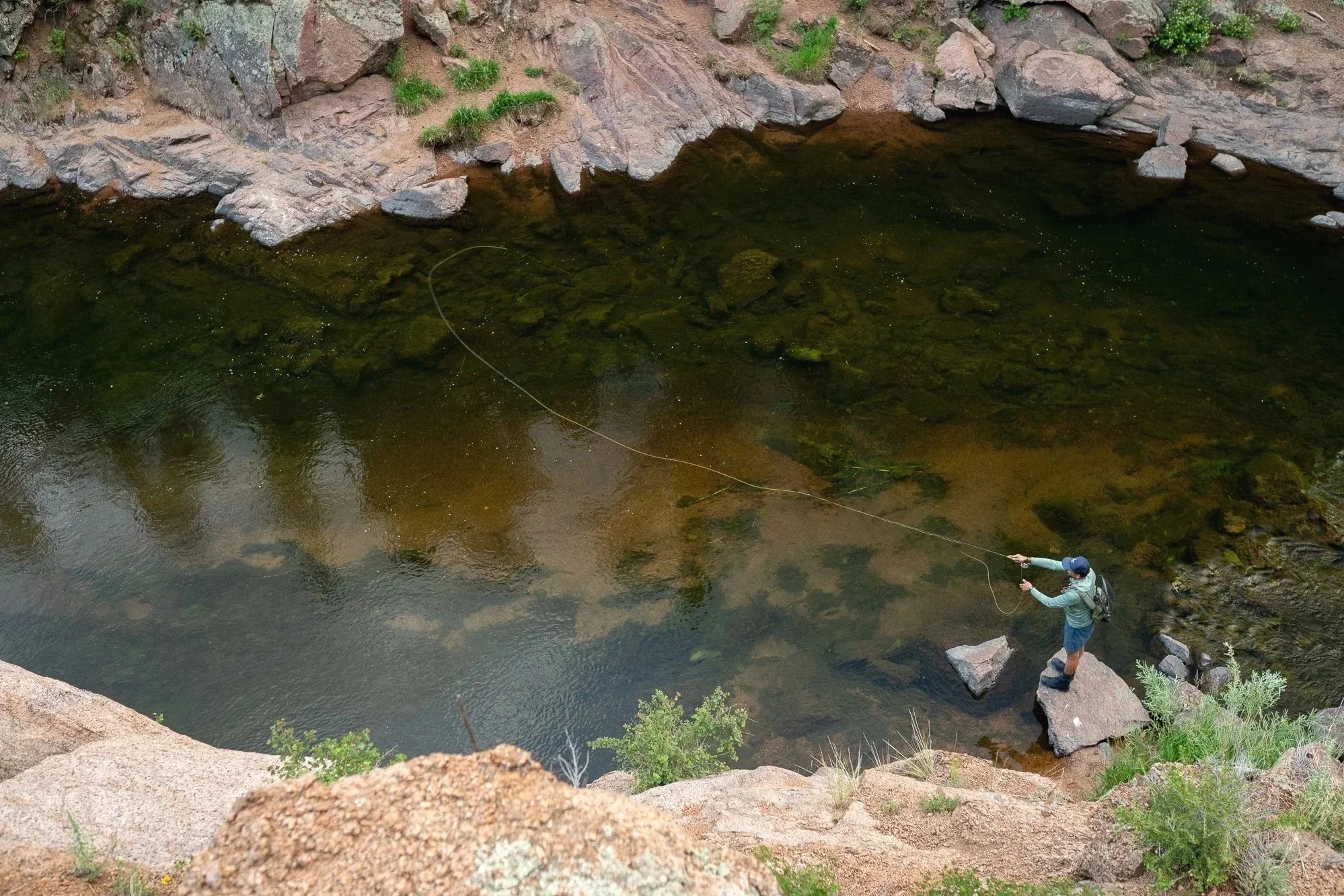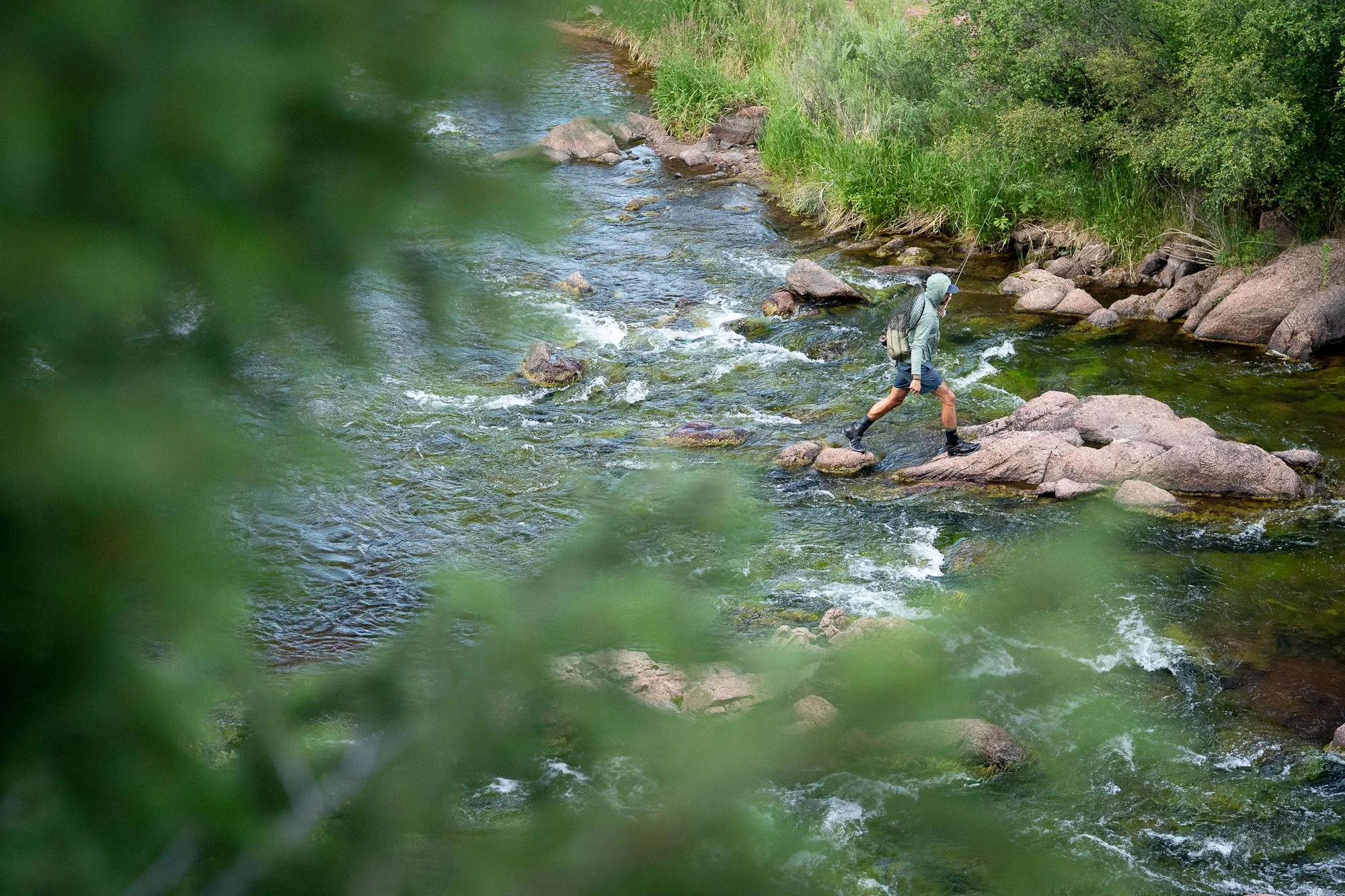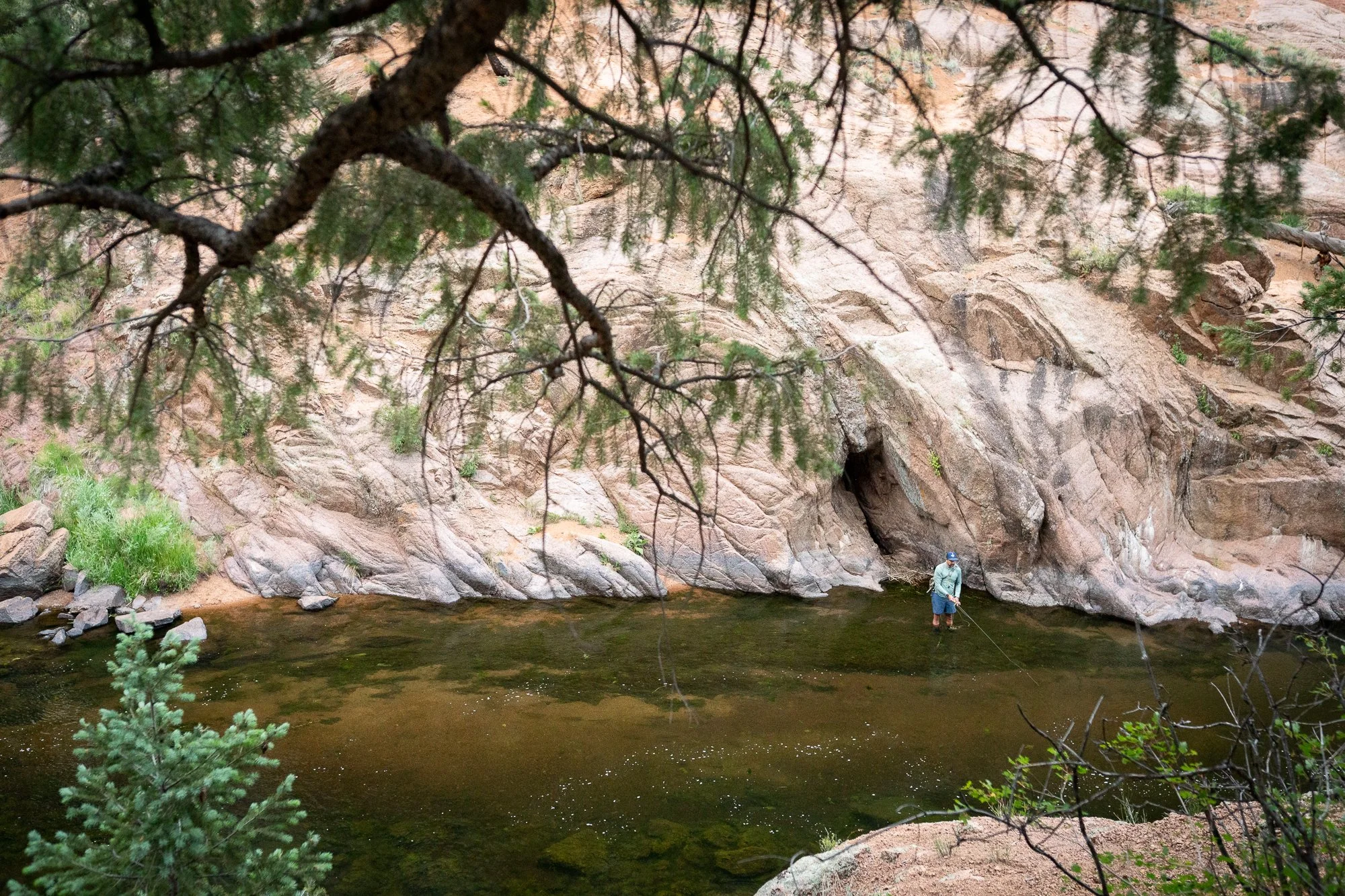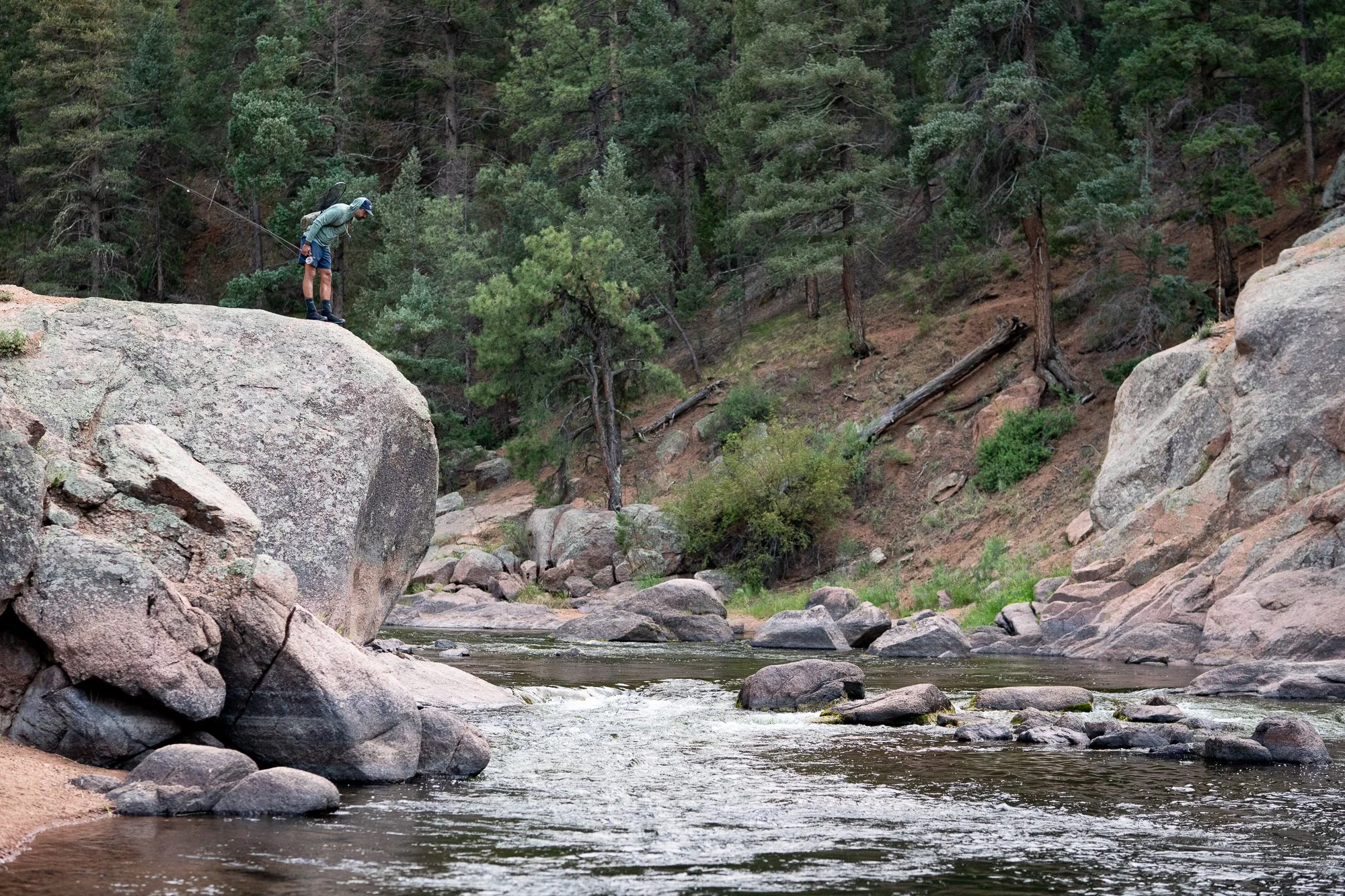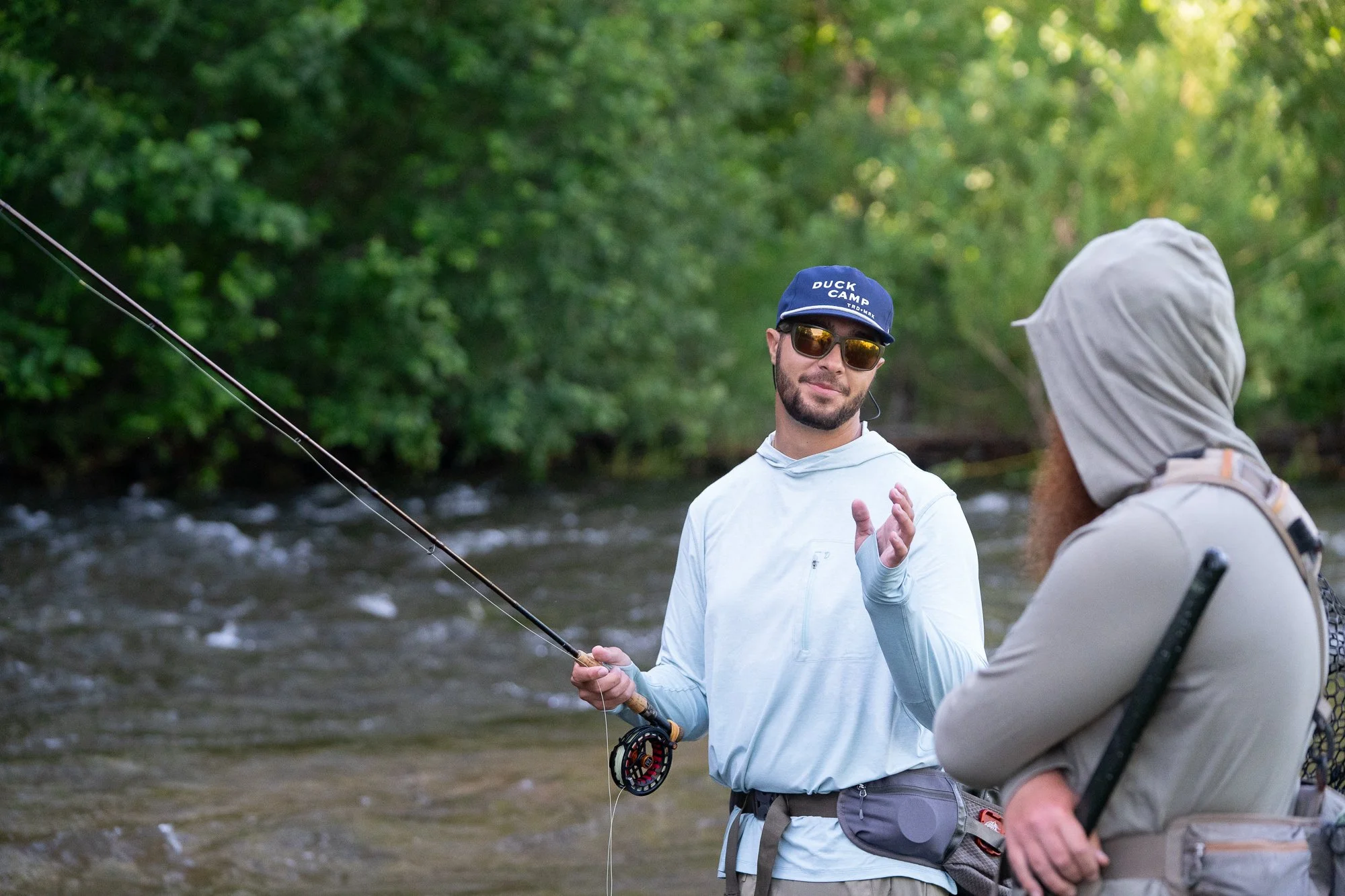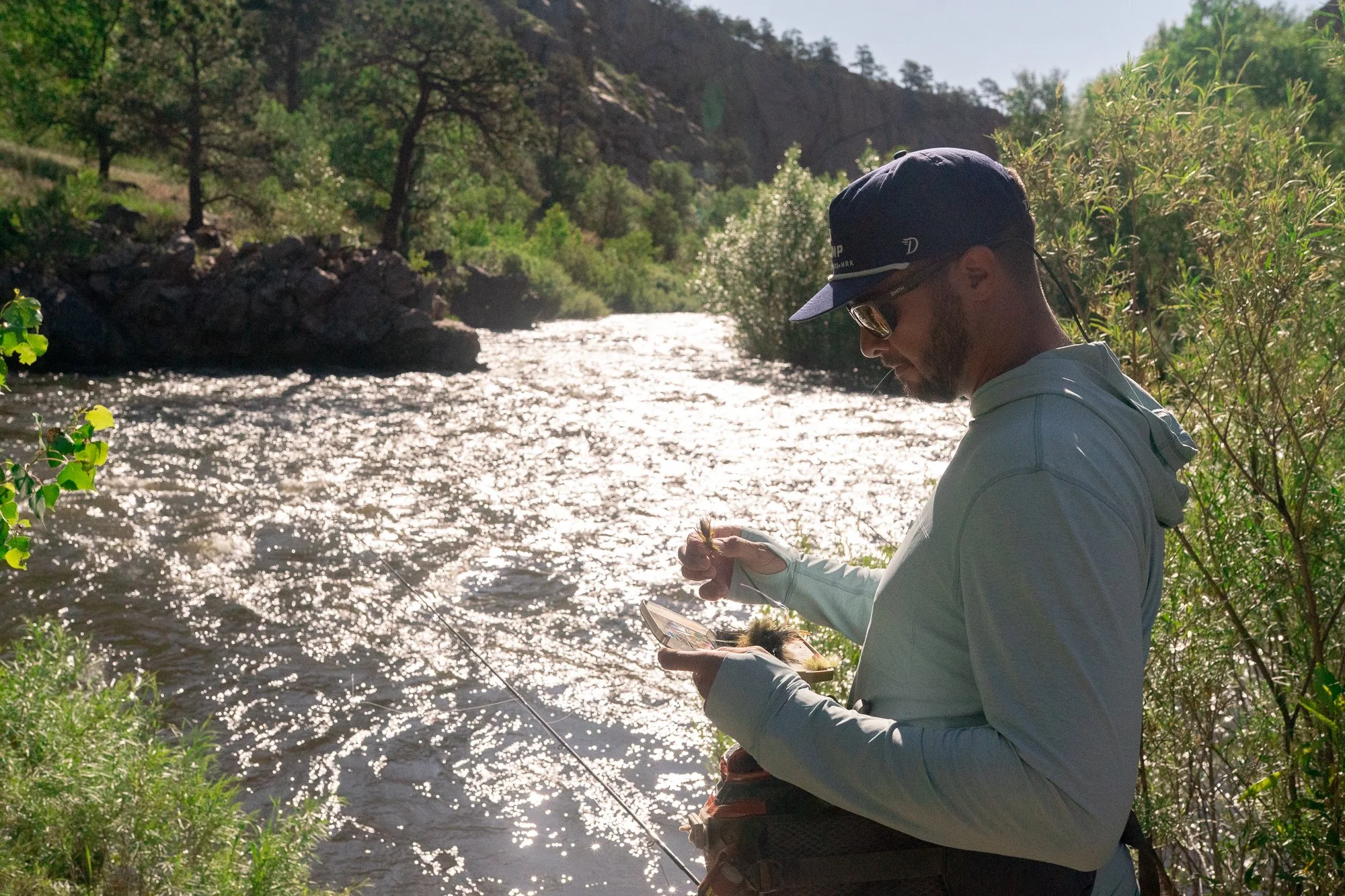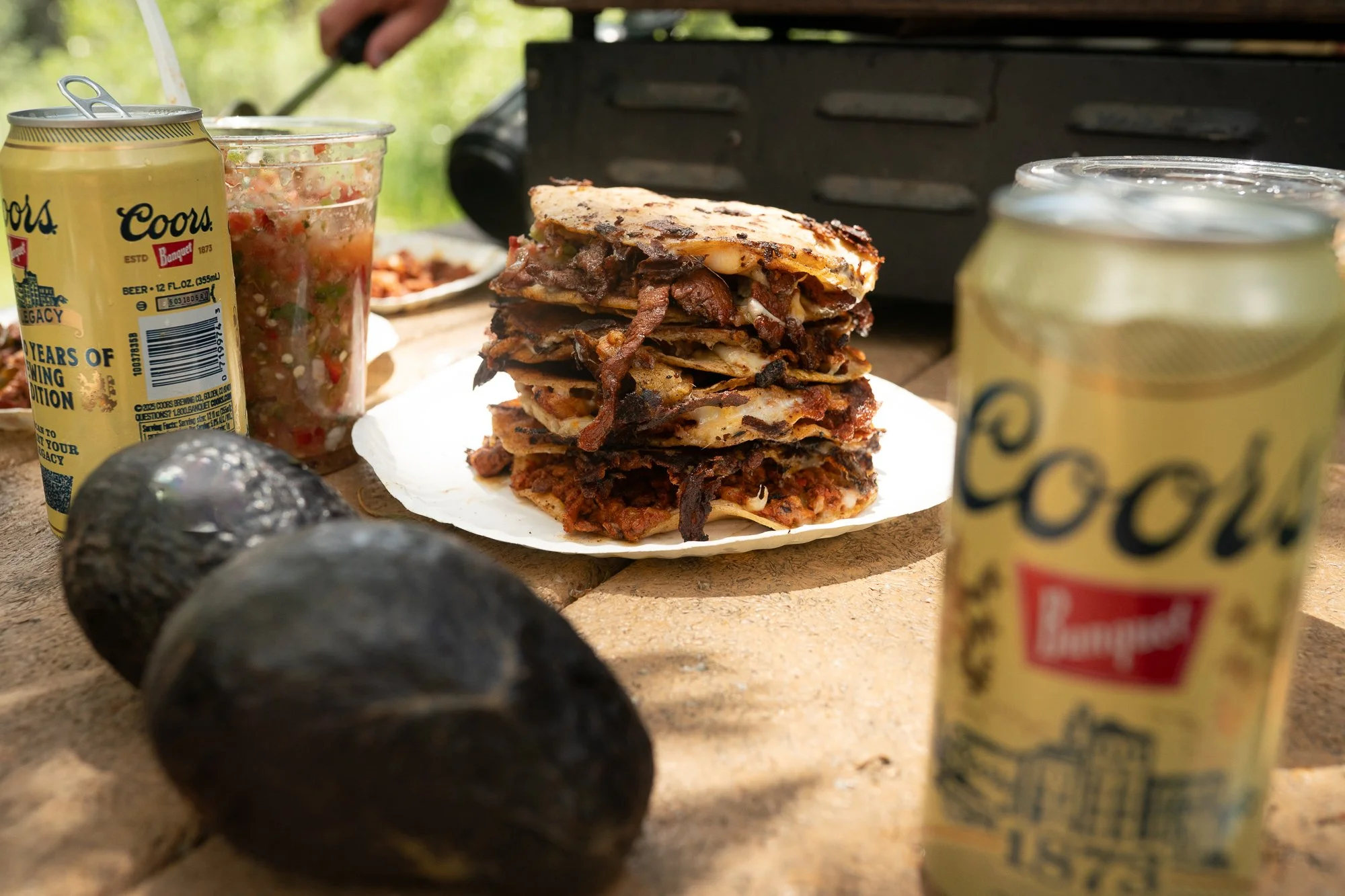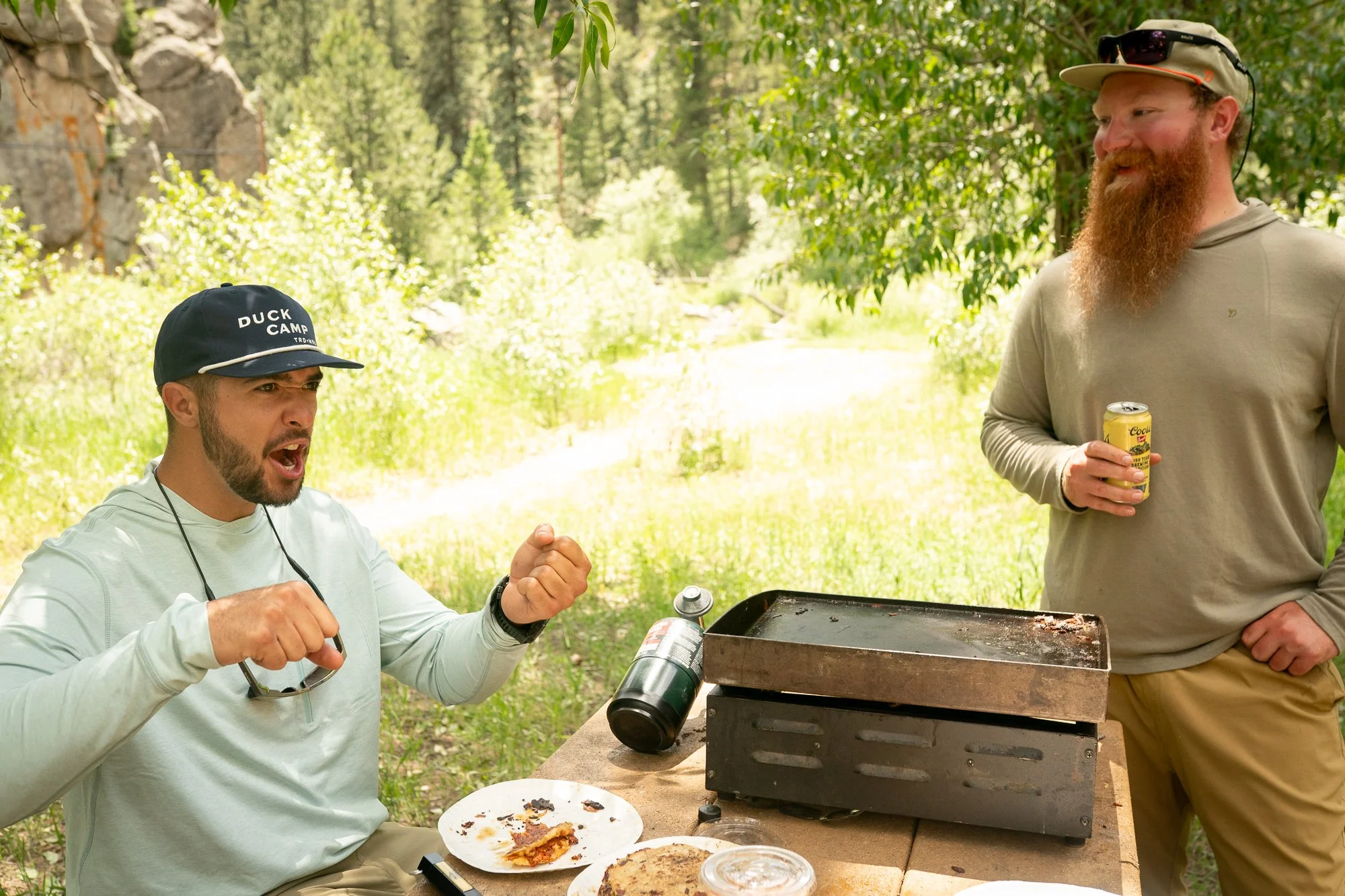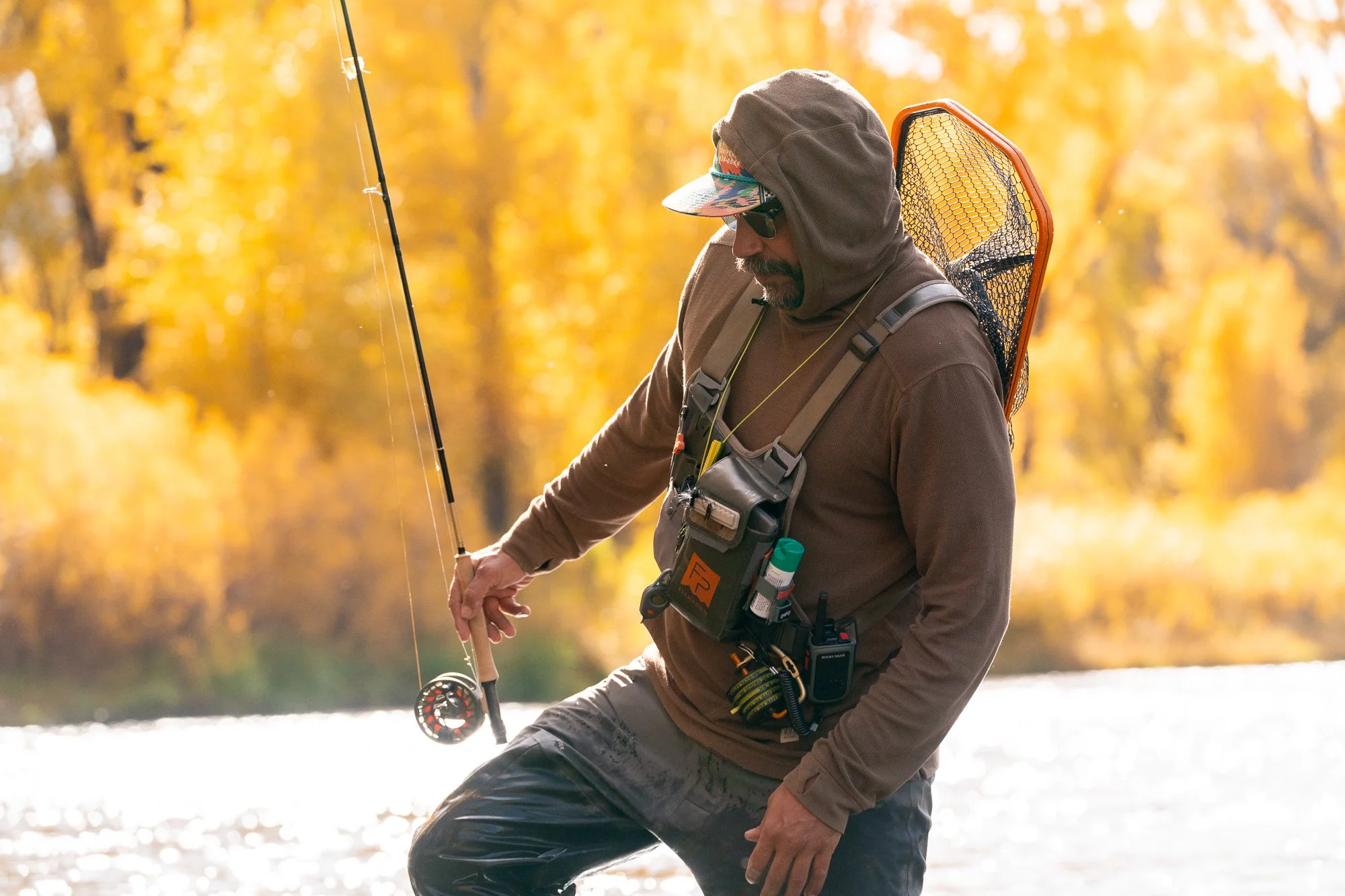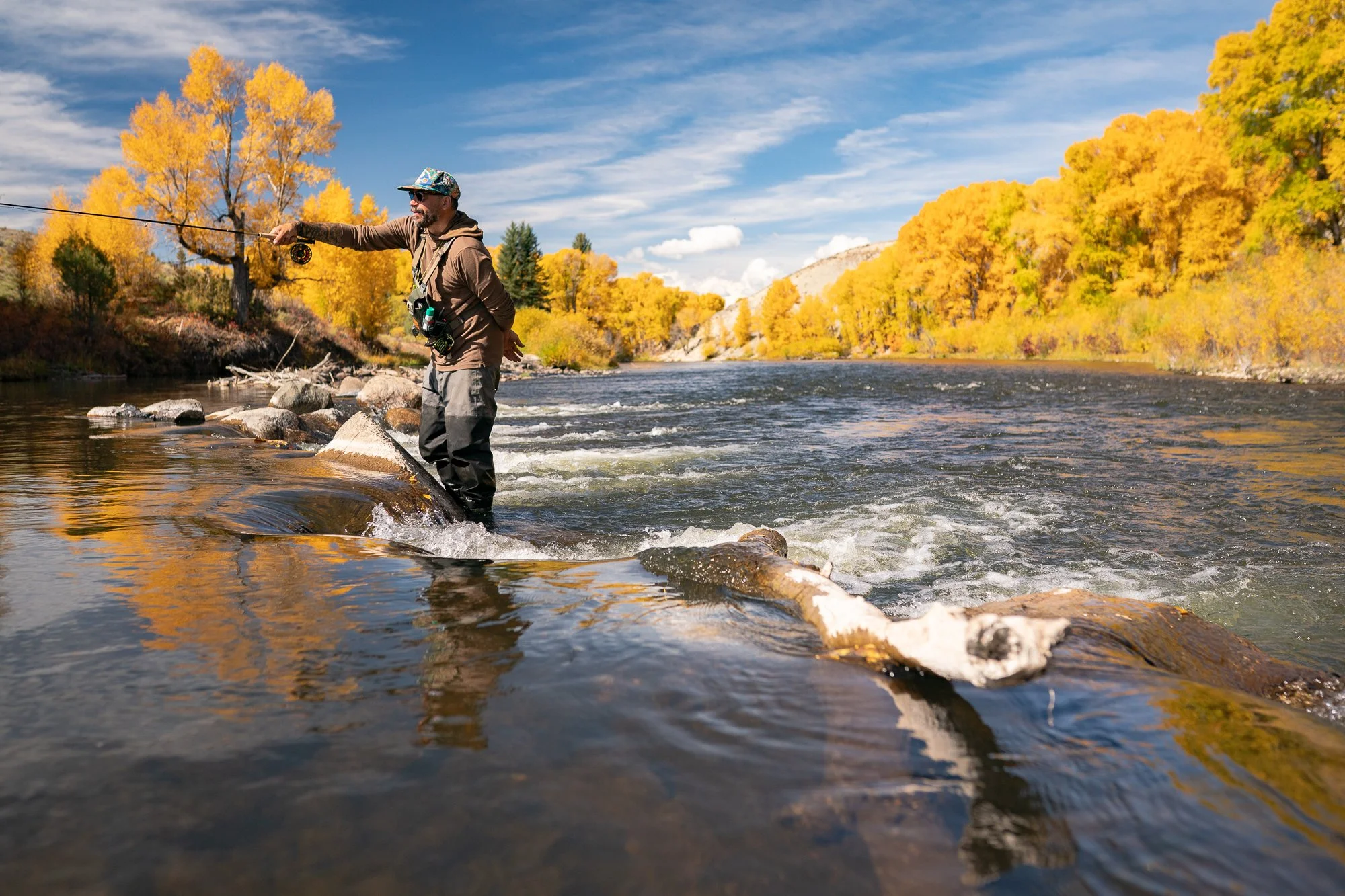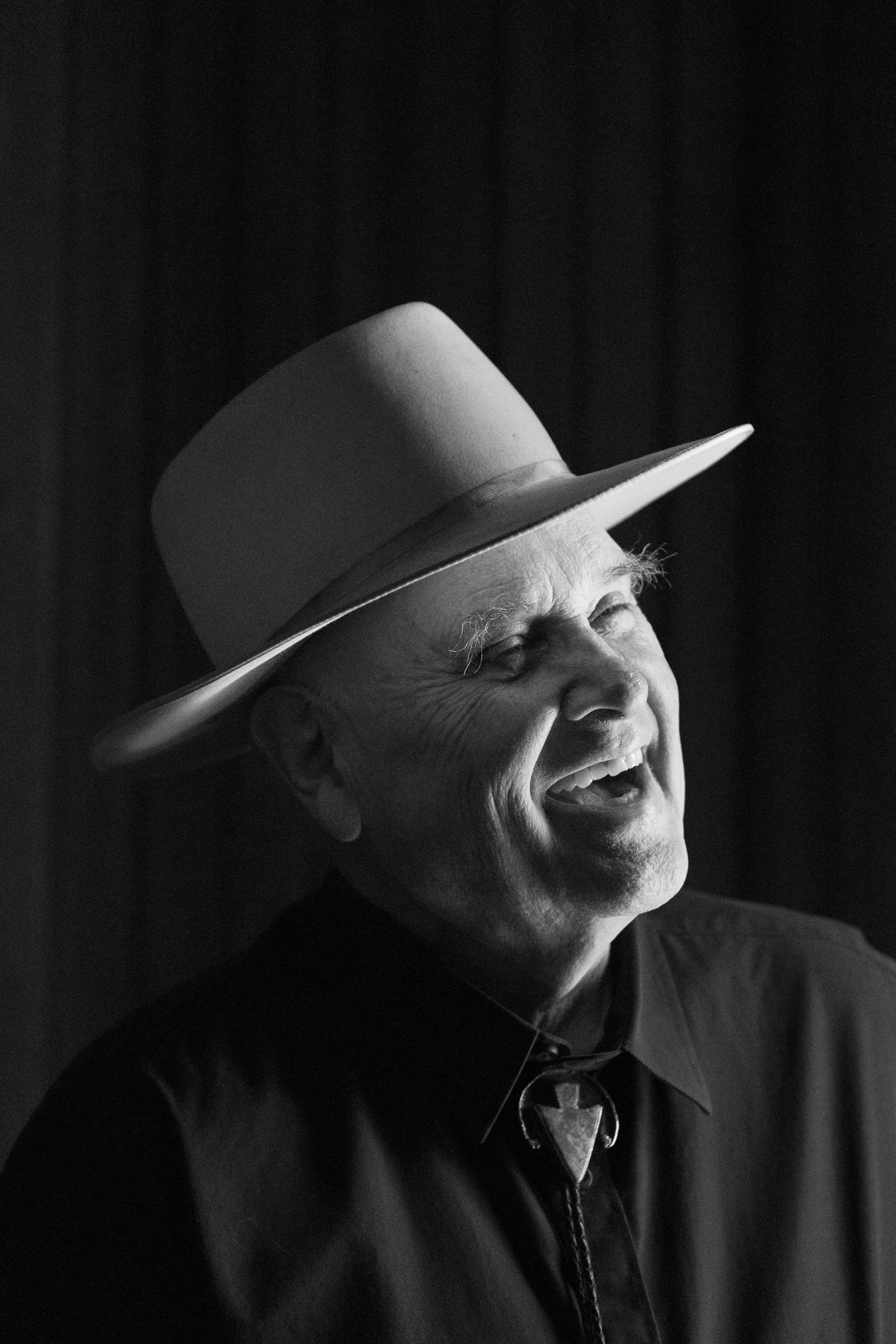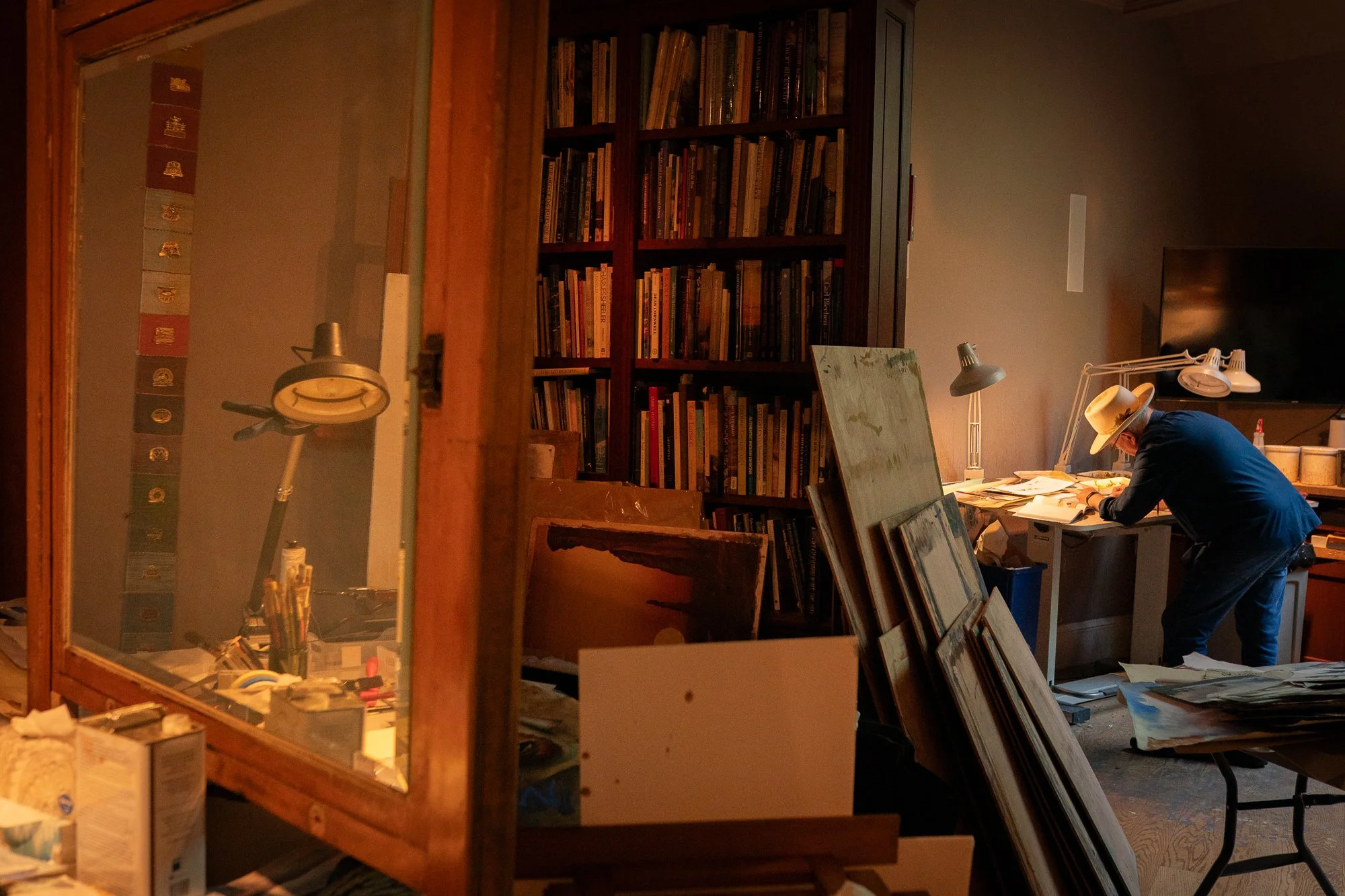
Fly Fishing Photography in Estes Park, Colorado

Fly Fishing Photography Near Denver: Estes Park and the Front Range

Not every fly fishing trip is a destination trip.

Some of the most consistent time on the water happens close to home—quick drives when you only have a couple hours in your work schedule or you need to get back on a plane.

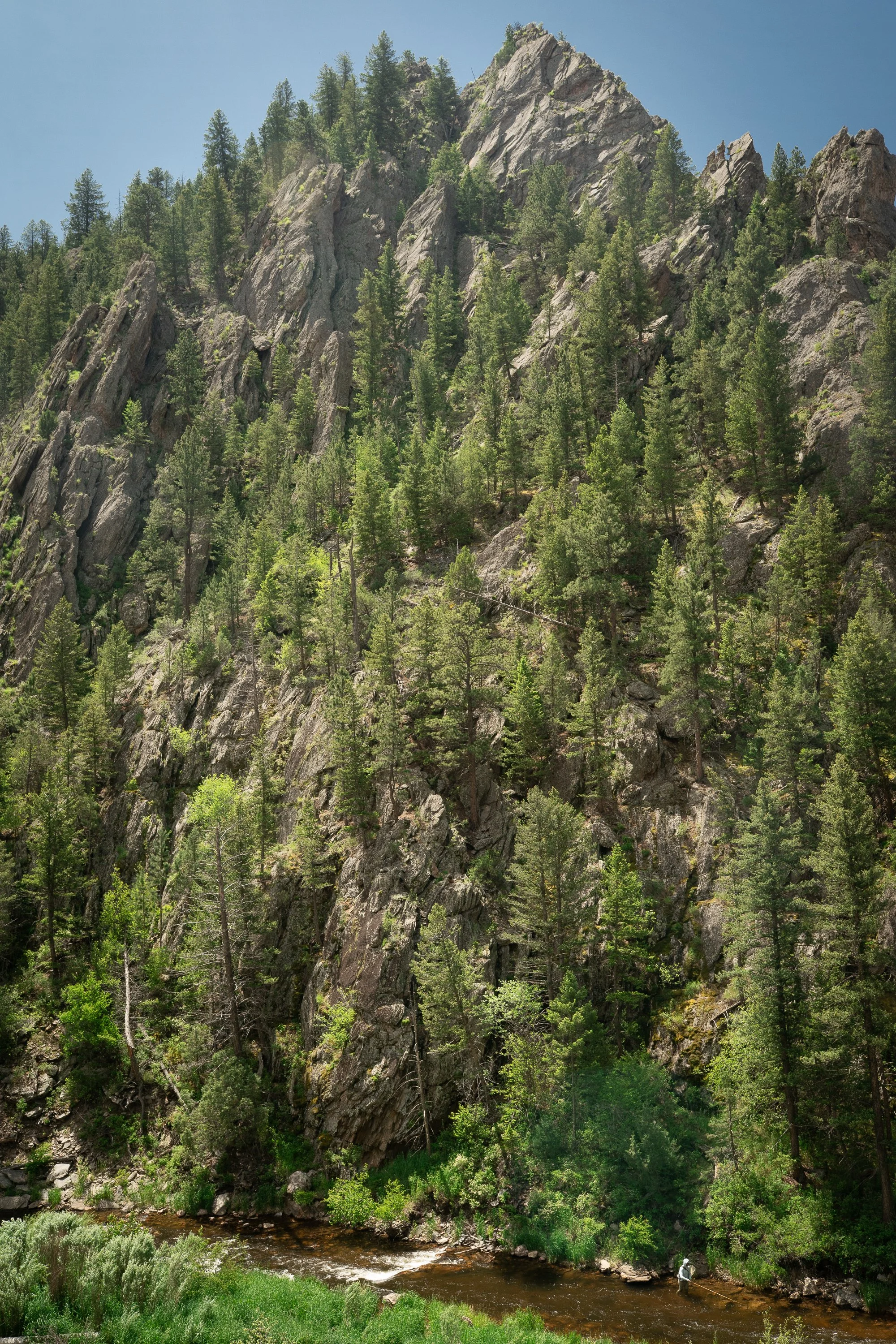
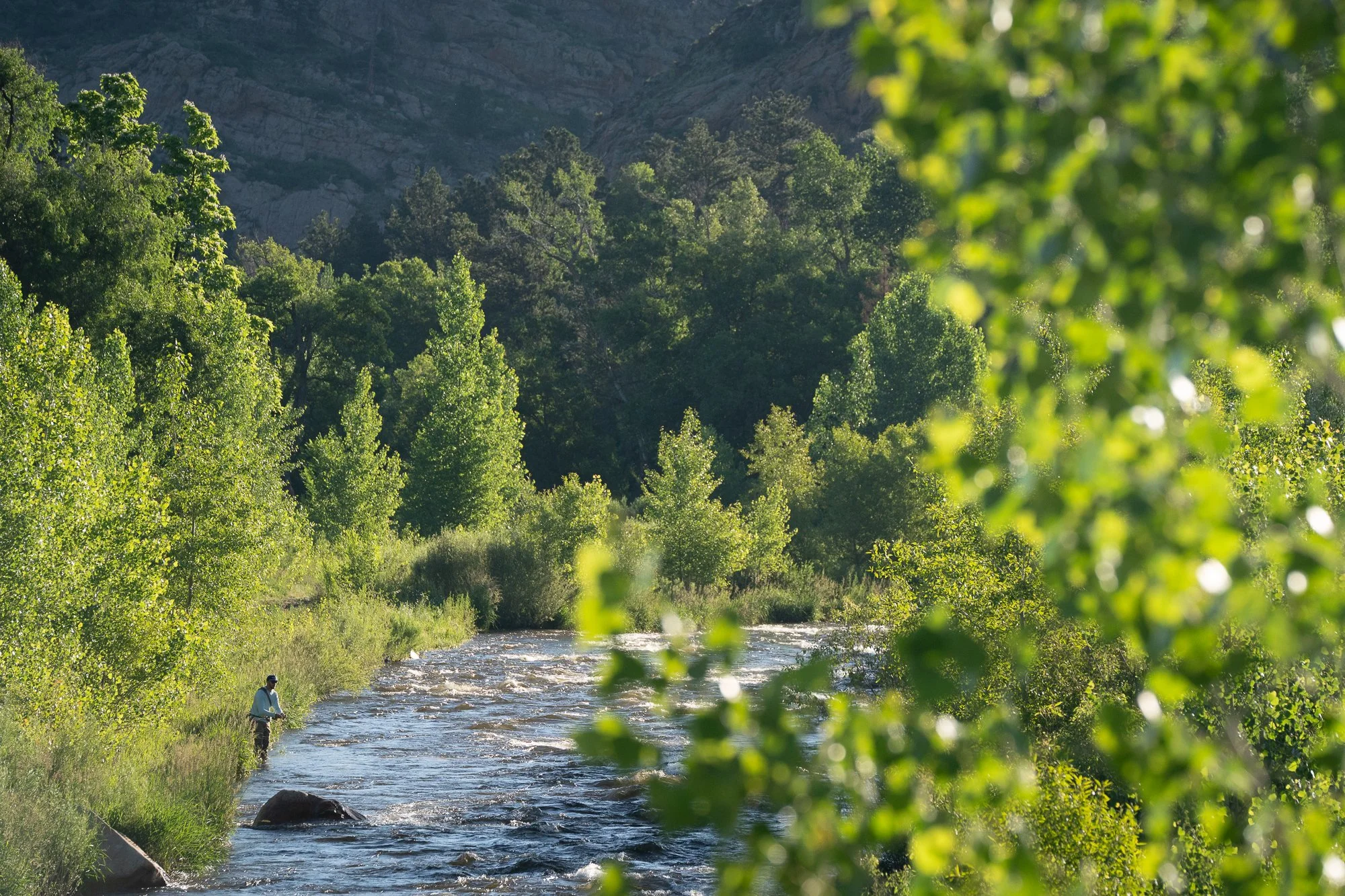
Estes Park sits right on that edge for Colorado’s Front Range. Close enough to Denver to be accessible, but far enough to feel like a different environment entirely. It might not come with all the fanfare of Colorado’s most iconic fly fishing locations, but it sure is pretty.

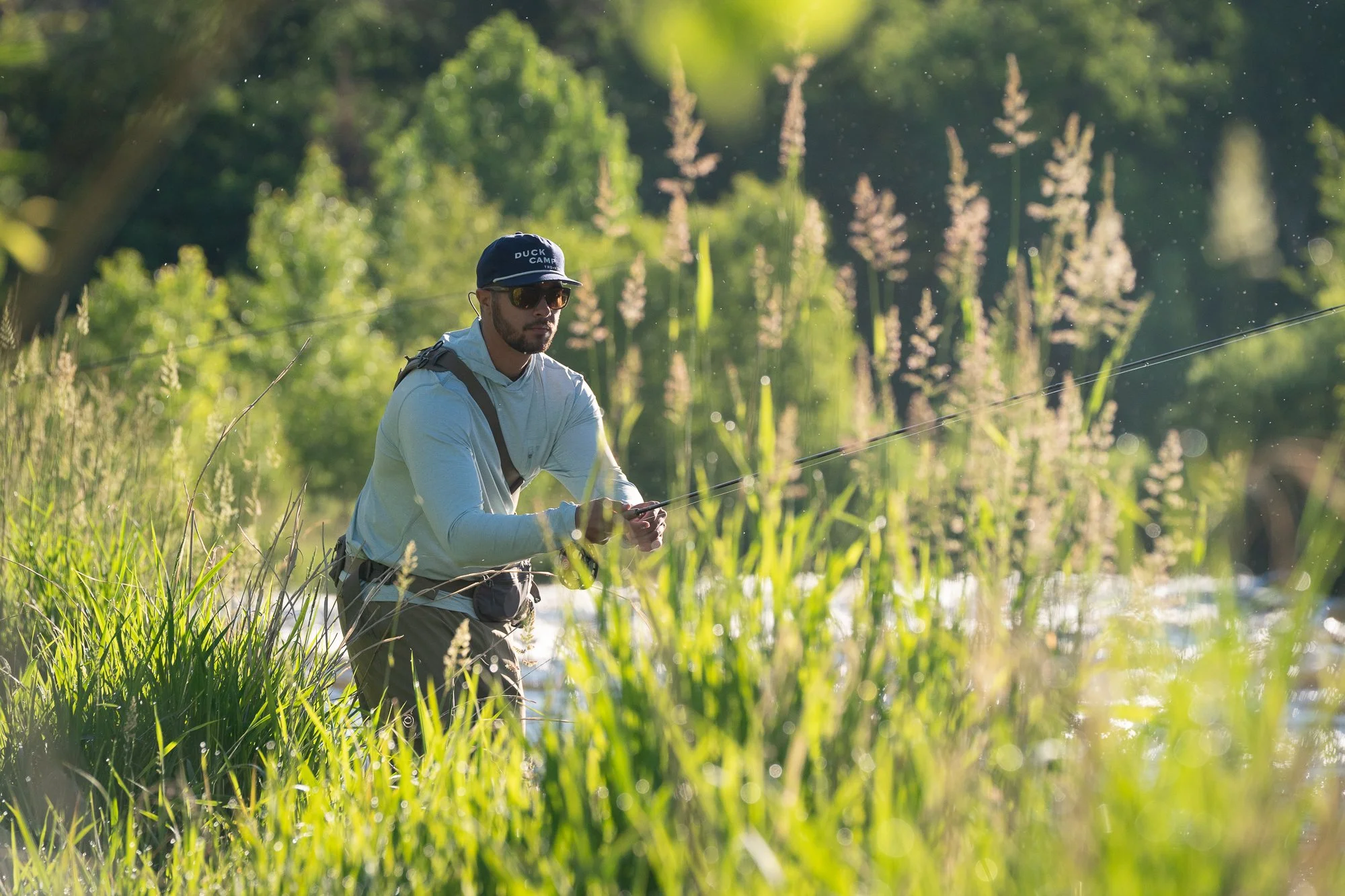
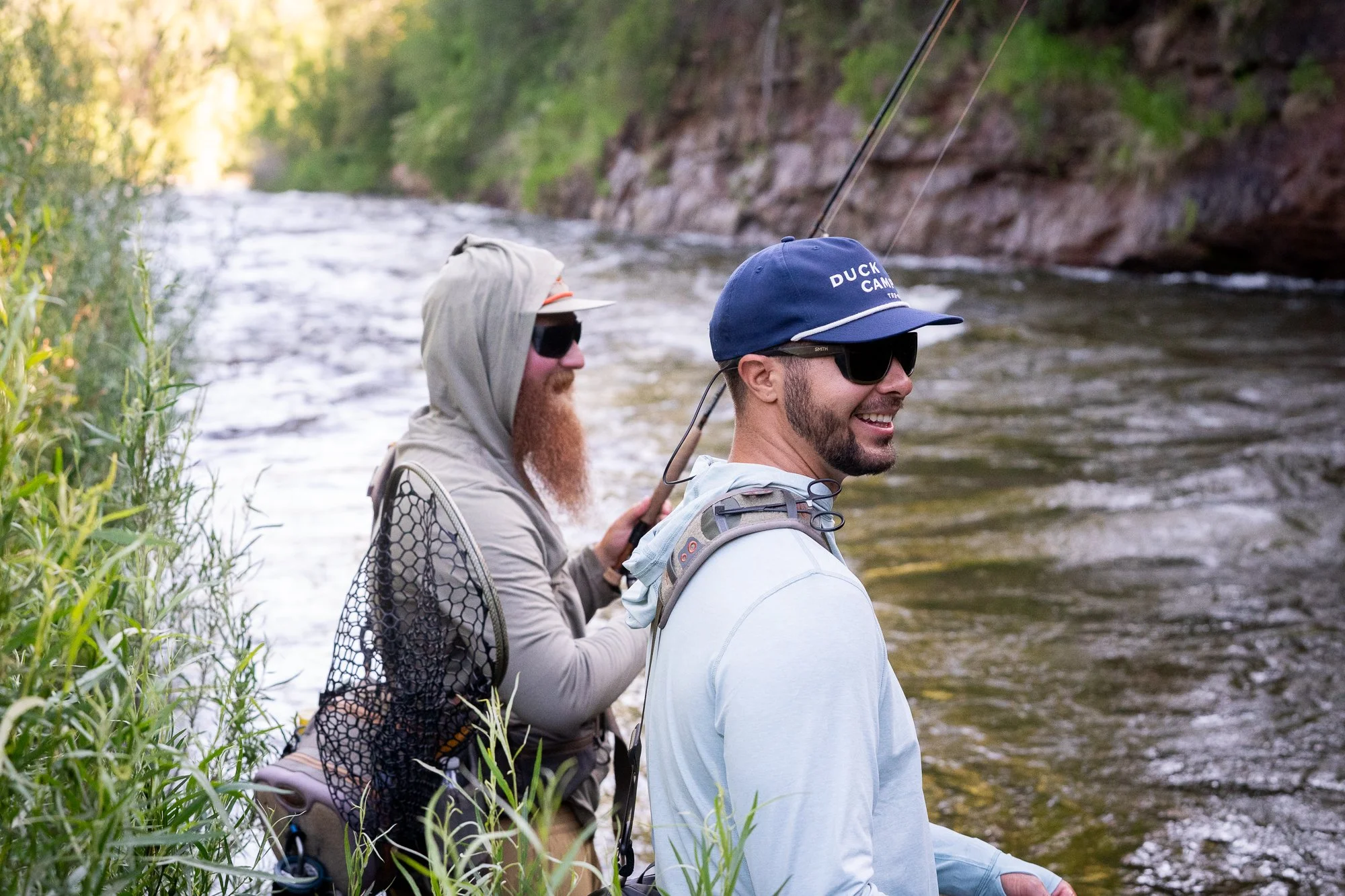
This series of photographs comes from time spent working in that space—fishing and photographing in real conditions, without the pressure of a “big trip” or a big name location.

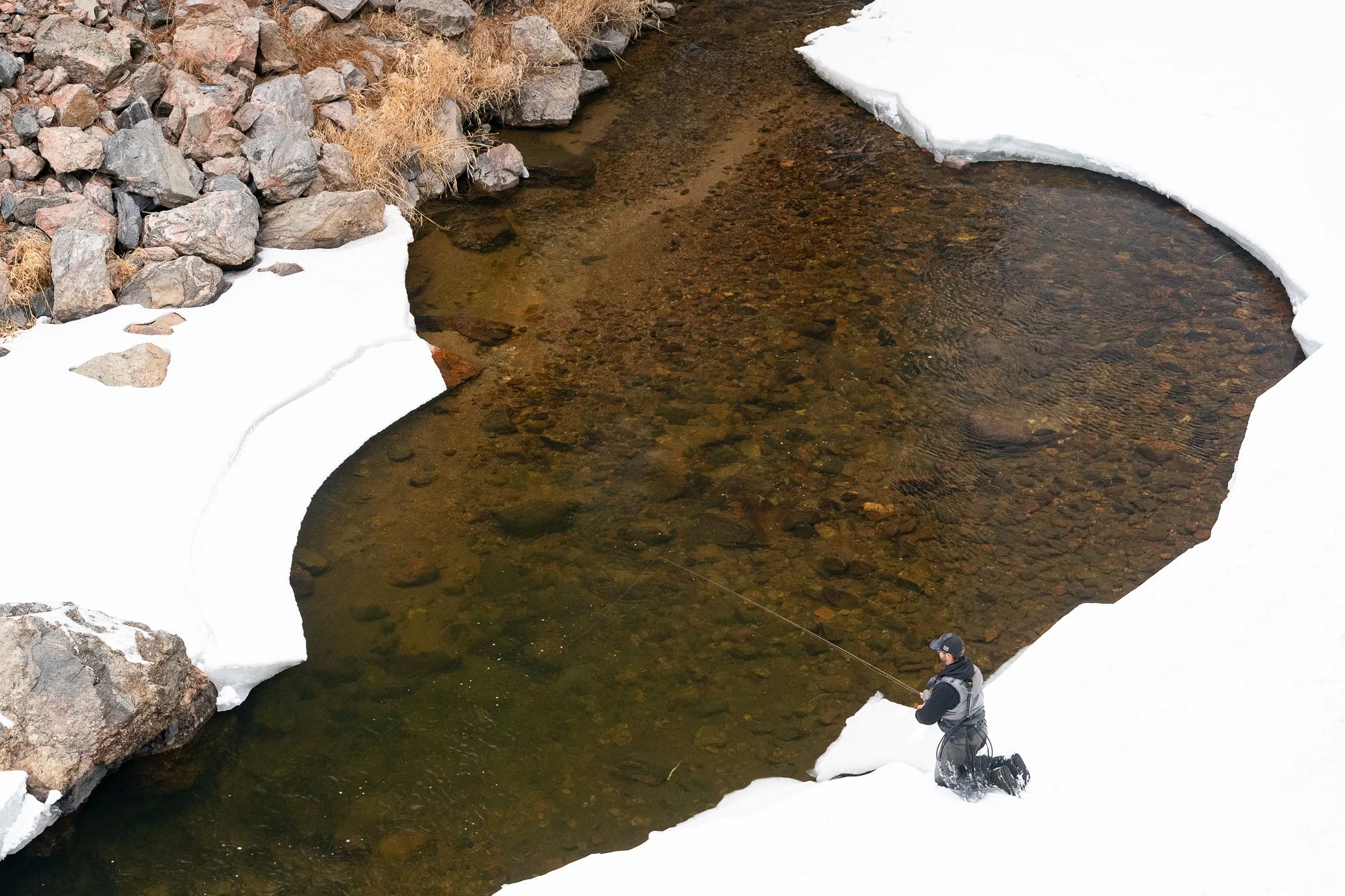
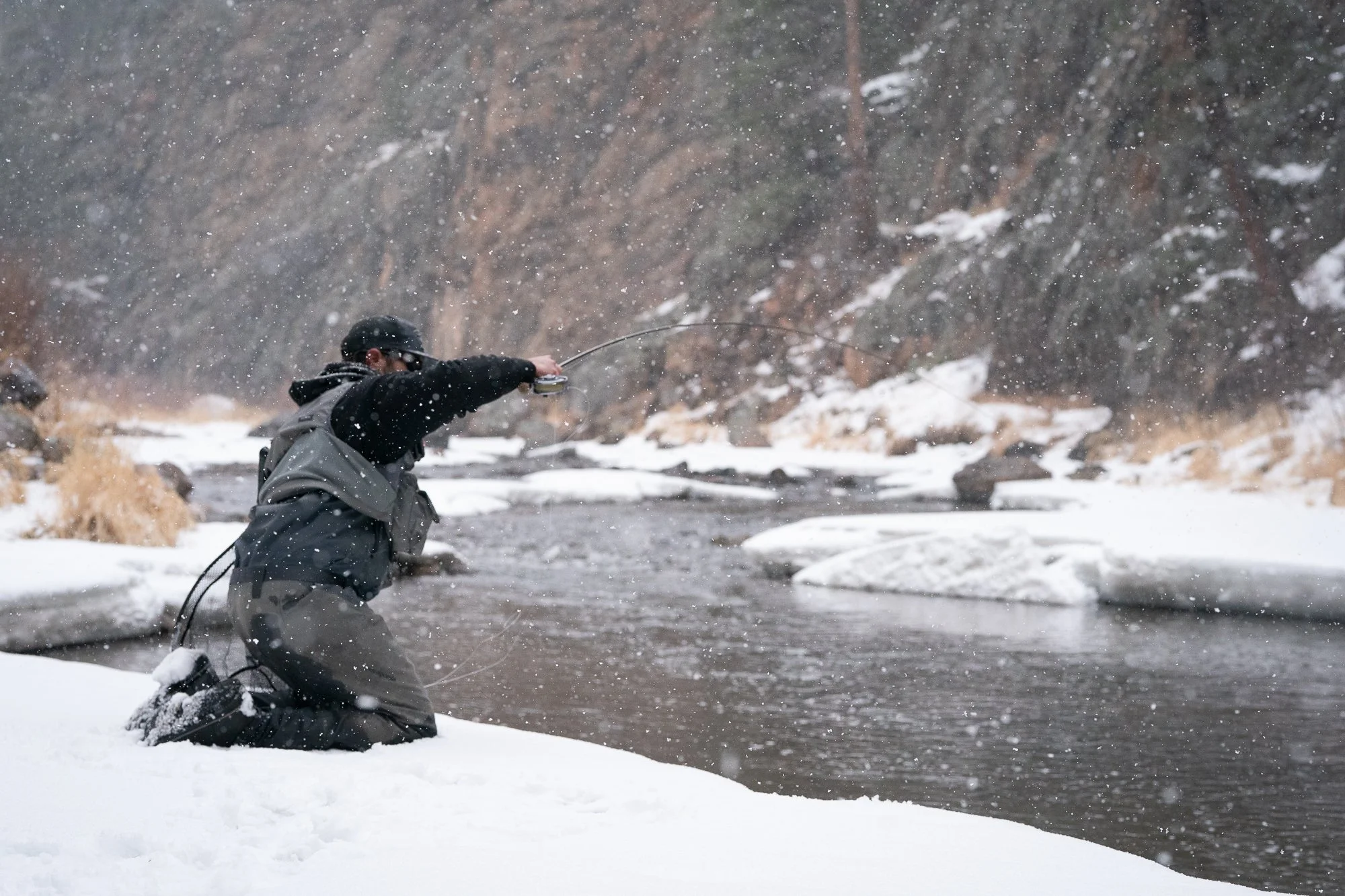
Photograph of a fly fisherman kneeling on ice while casting into the Big Thompson River near Estes Park, Colorado.

Estes Park Fly Fishing

Fly Fishing Close to Denver Changes the Approach

Fishing within reach of Denver means working with limitations:

  • tighter timeframes

  • unpredictable weather

  • more pressure on the water

From a photography standpoint, that changes how you shoot.

You don’t have a full day on the water, so there’s less waiting for perfect conditions and more adapting to what’s in front of you:

  • shifting light through the canyon

  • quick decisions on composition

  • moments that happen once and don’t repeat

It forces a more responsive way of working—and often leads to more honest images.

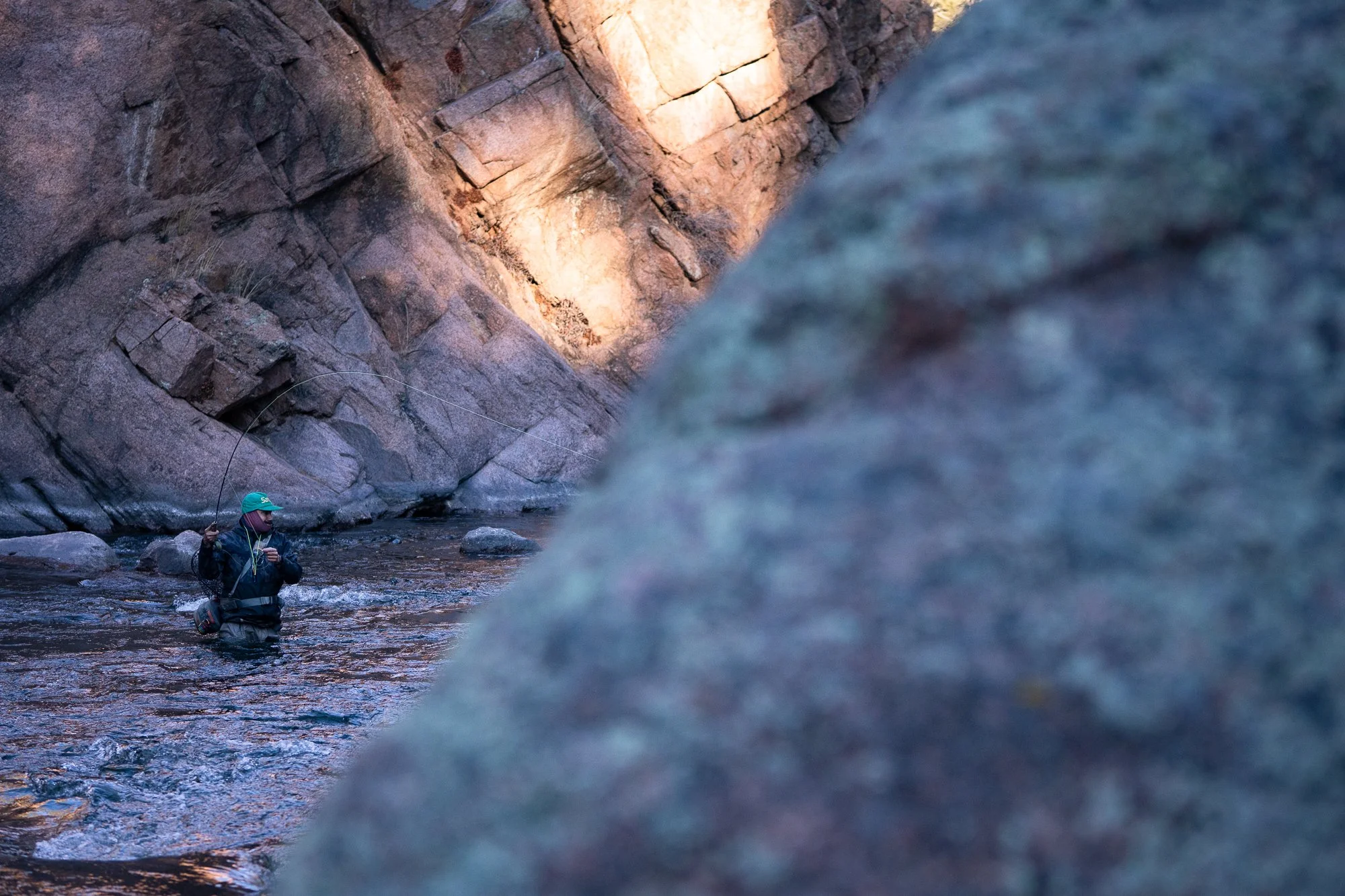
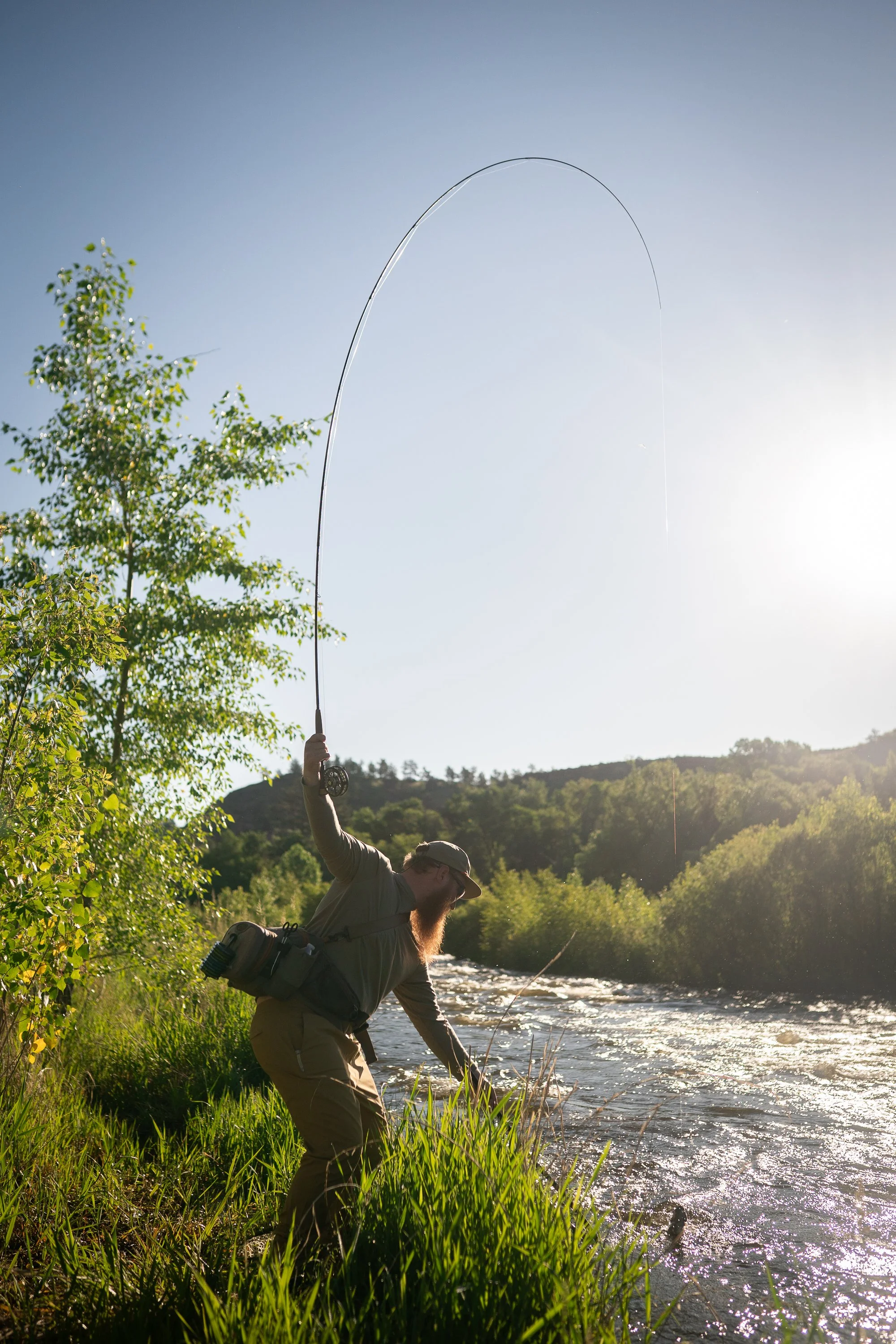
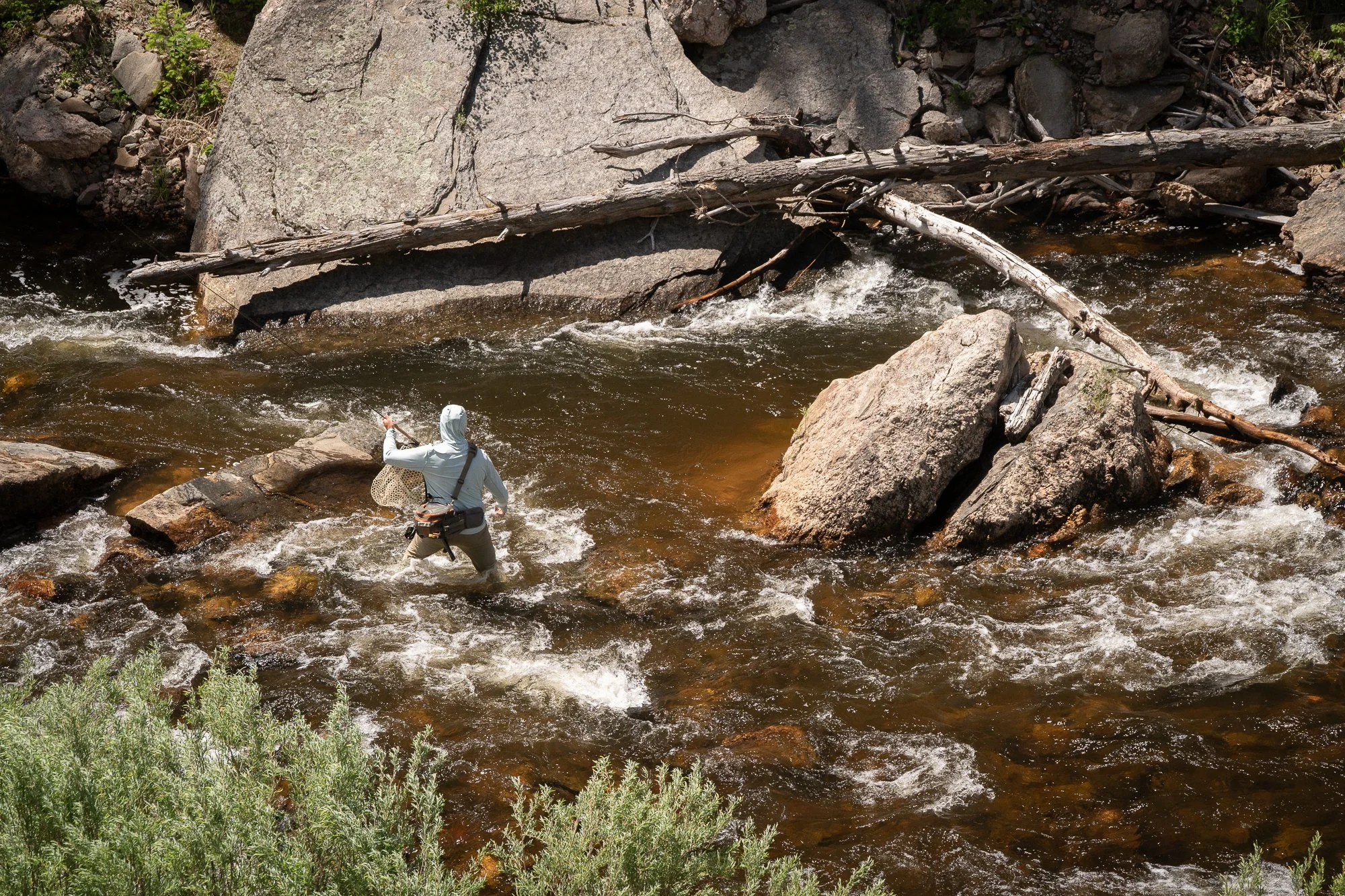
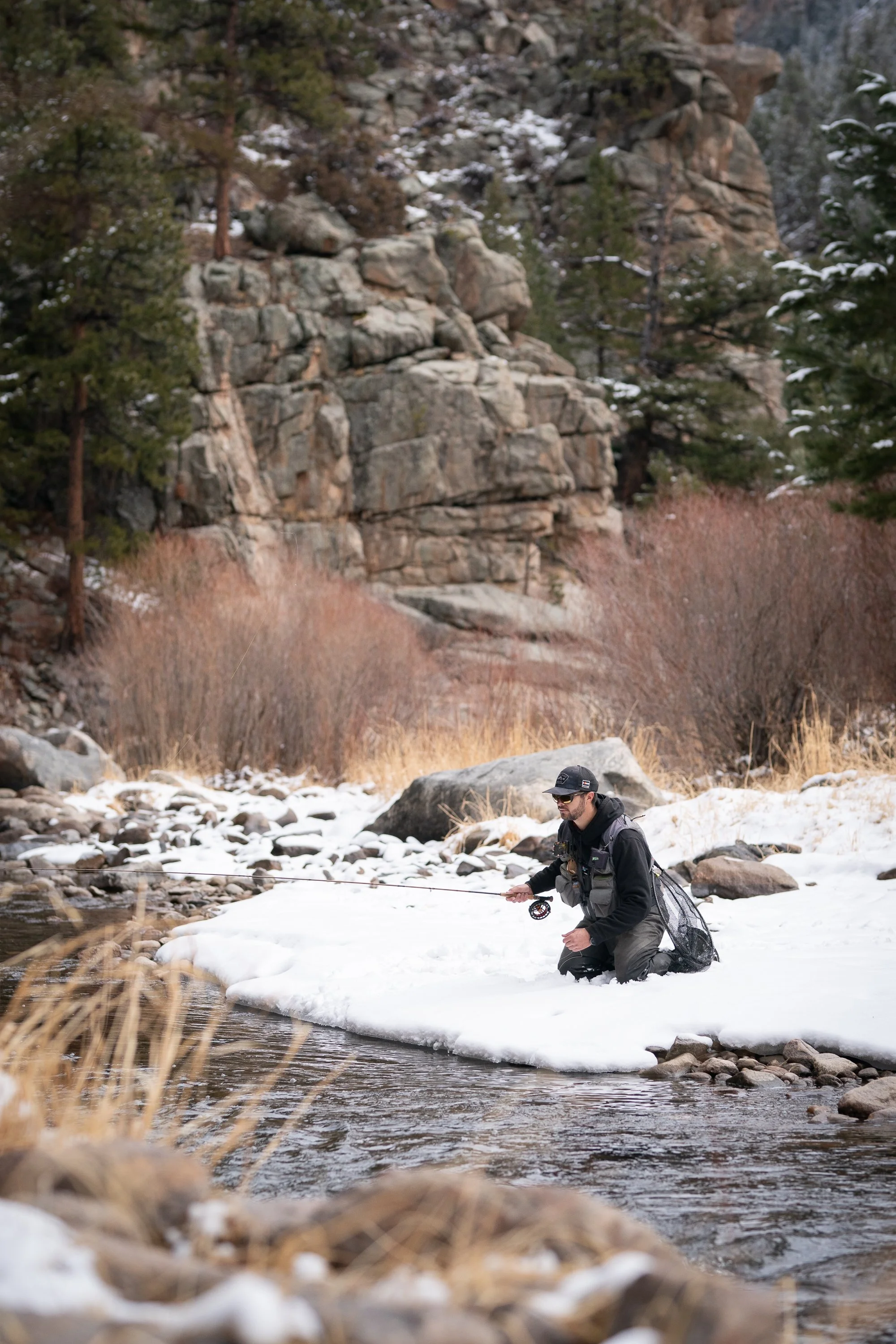
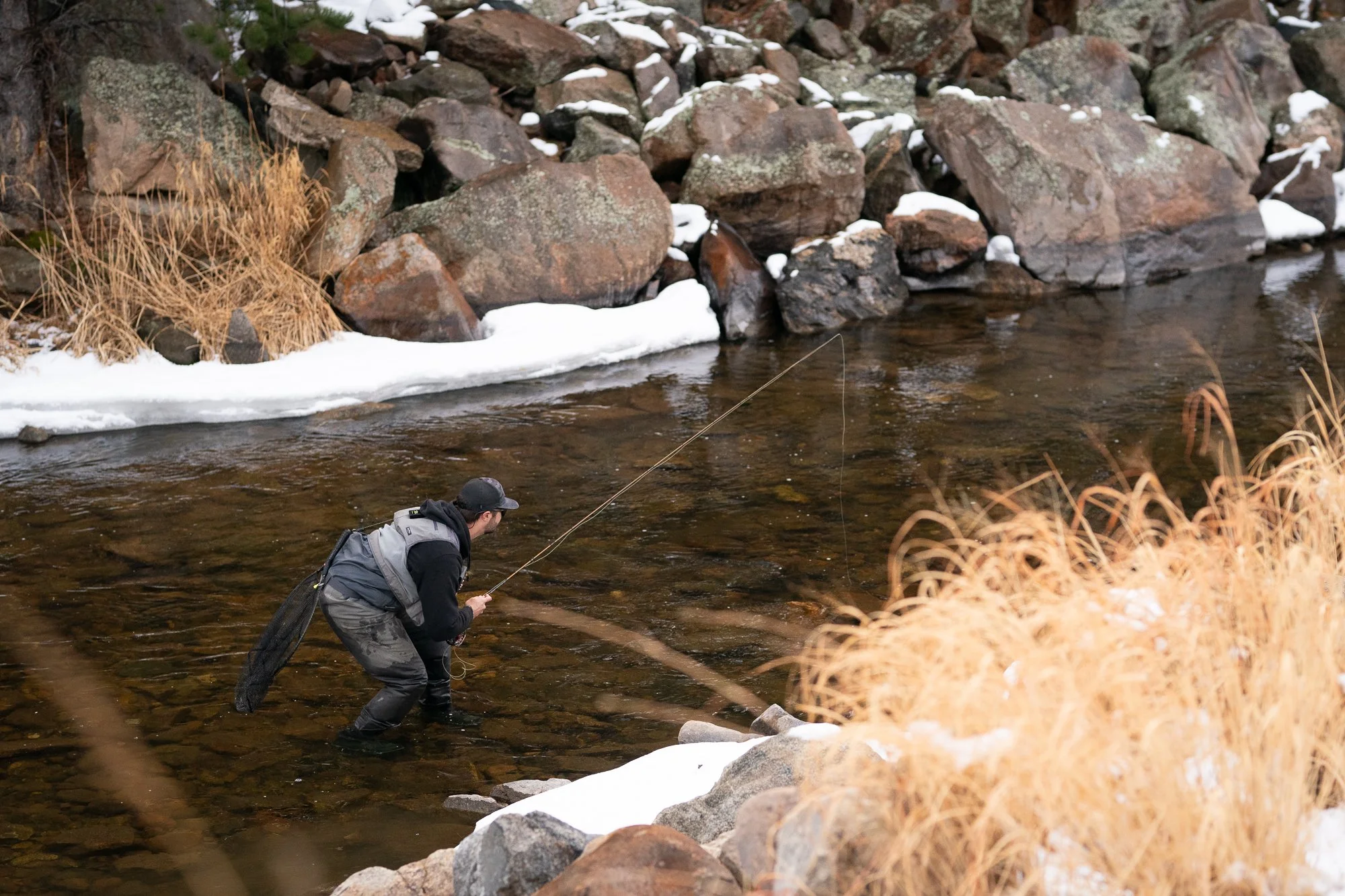
A fly fisherman casting into a winter stream in a rocky canyon near Estes Park, CO

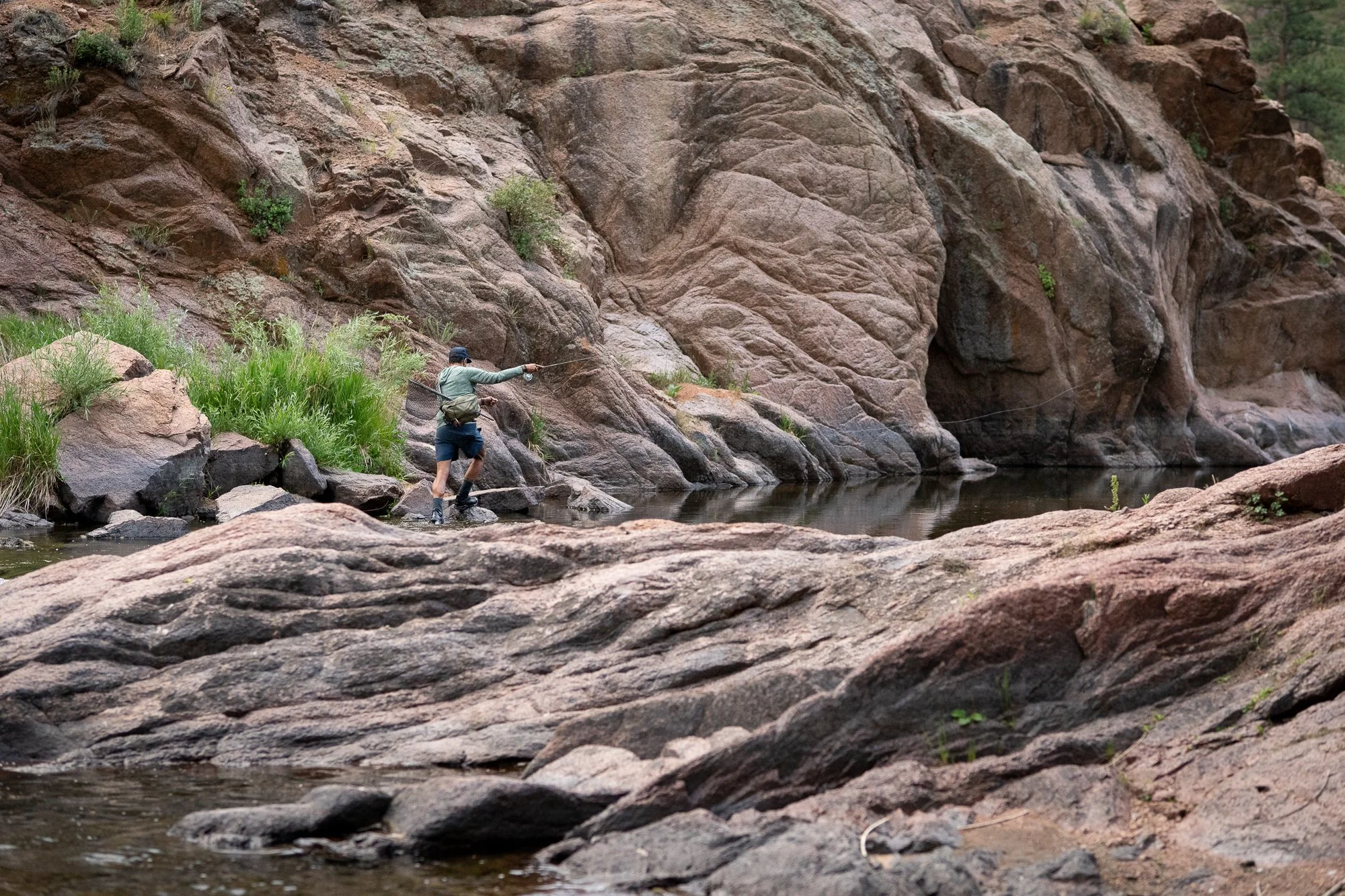
A fly fisherman in a rocky canyon near Estes Park, CO

Real Conditions, Not Ideal Ones

In the Rocky Mountains there is no such thing as ideal conditions, and that’s a lot of the fun - you’re always finding a way to make the most of what comes at you. That part of the process is what’s so addicting about fly fishing and photographing the sport.

Instead of building images around ideal conditions, the focus is on documenting what’s actually there:

  • anglers adjusting on the fly

  • reading water in real time

  • working through imperfect situations

That’s why the work separate from all the polished, staged imagery found out there on the internet for 50 cent a download.

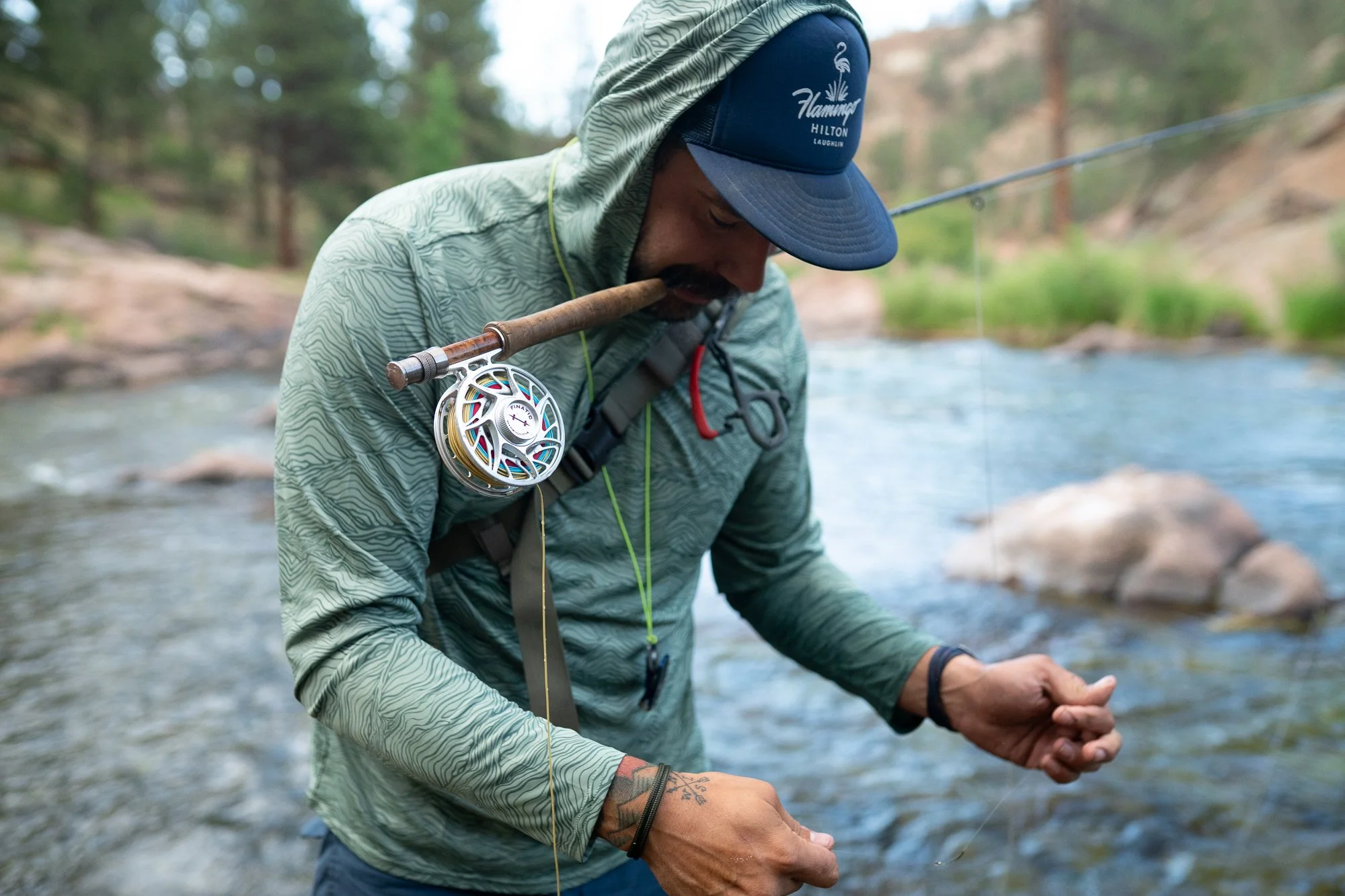
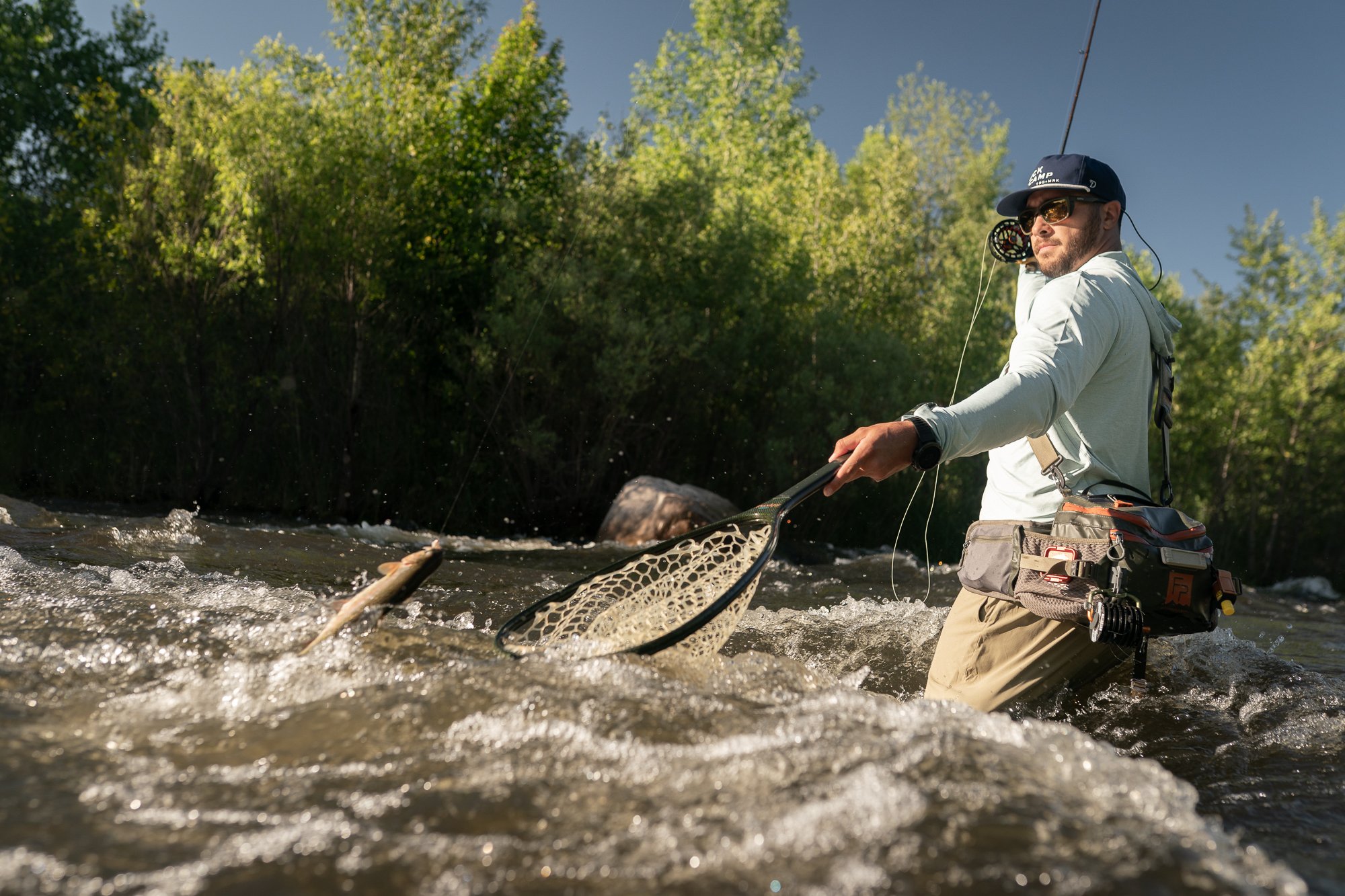
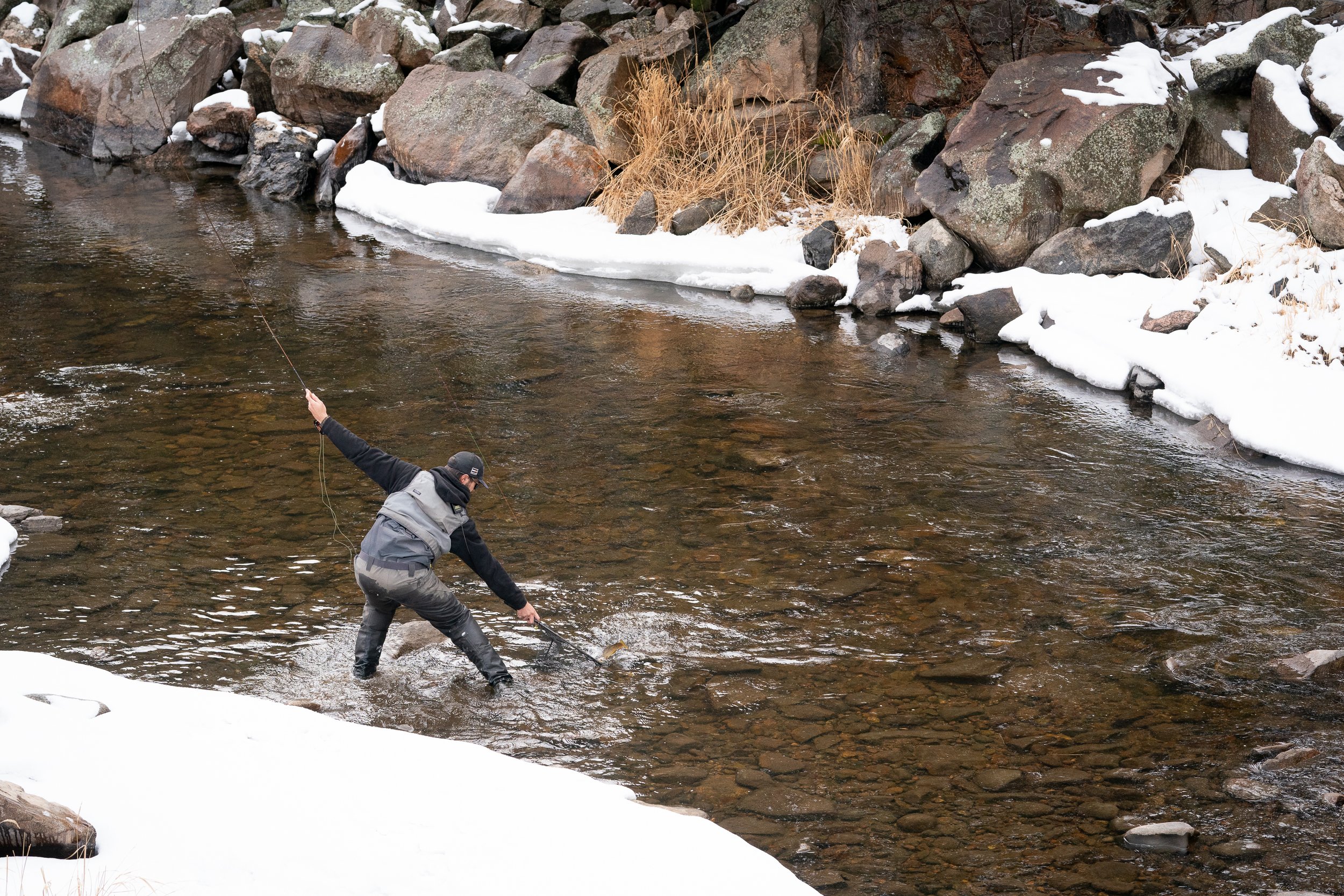
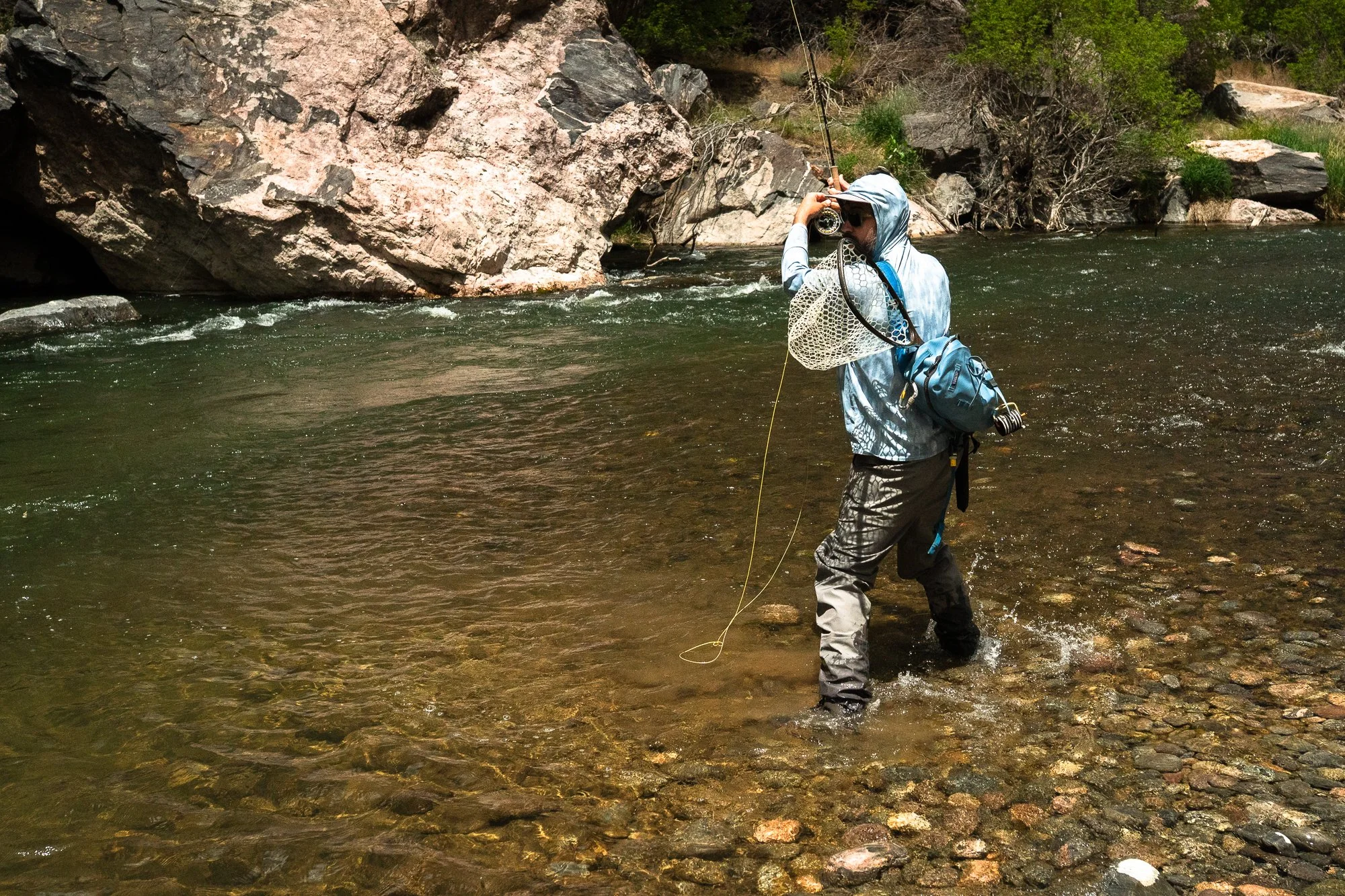
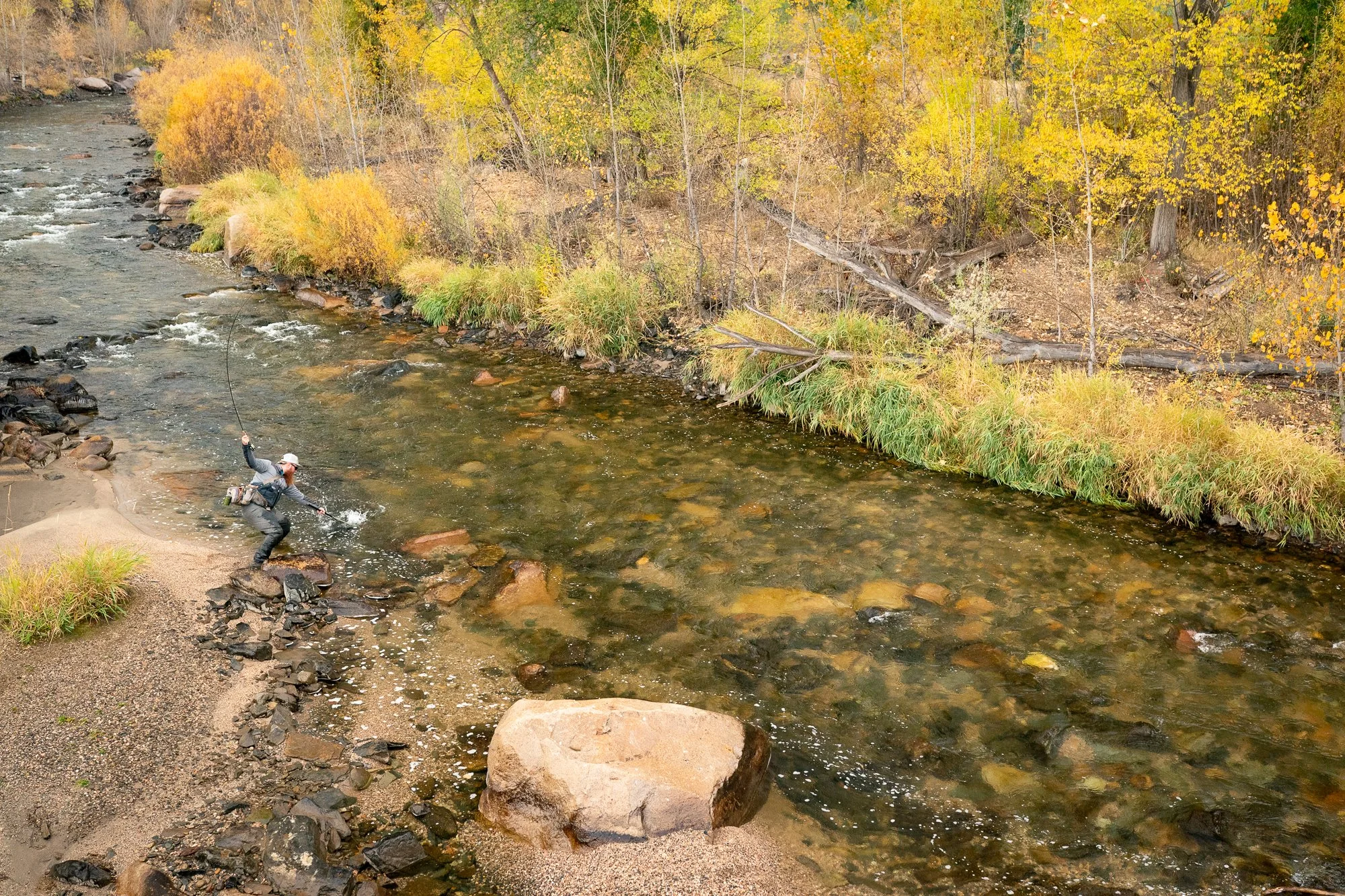
Photograph of a fly fisherman netting a trout in Estes Park, Colorado

Winter trout fishing in the Front Range outside Denver, CO

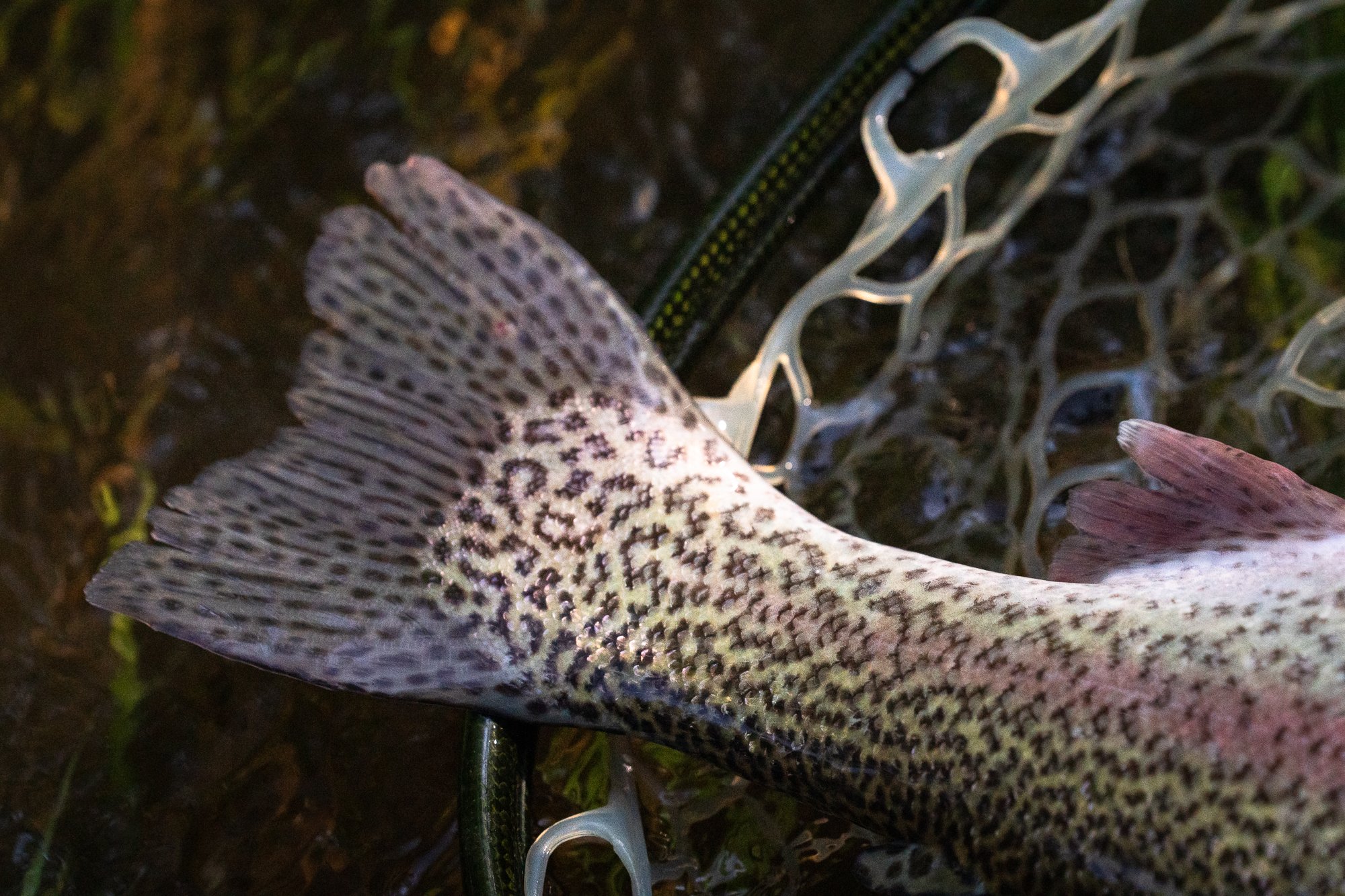
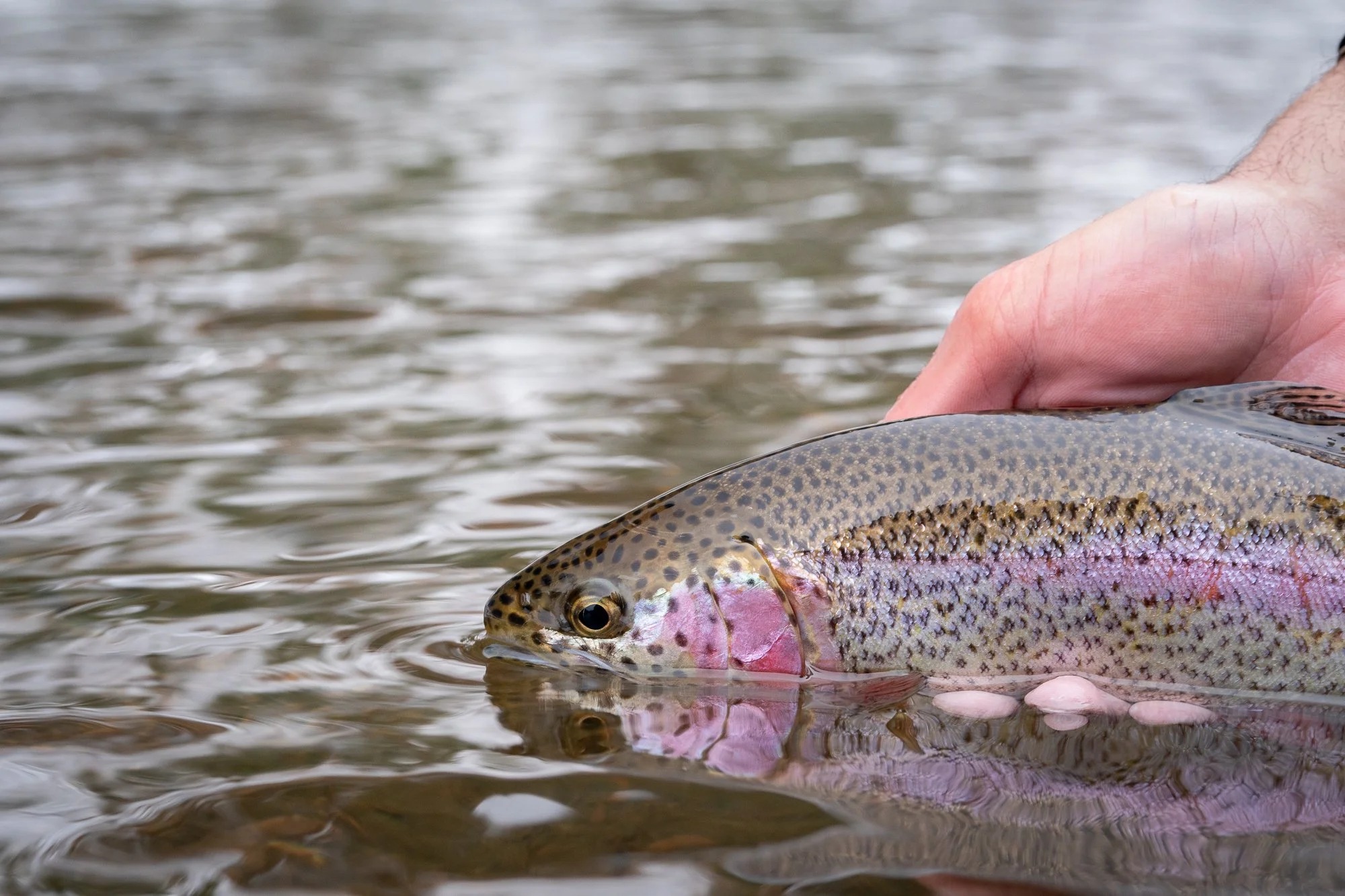
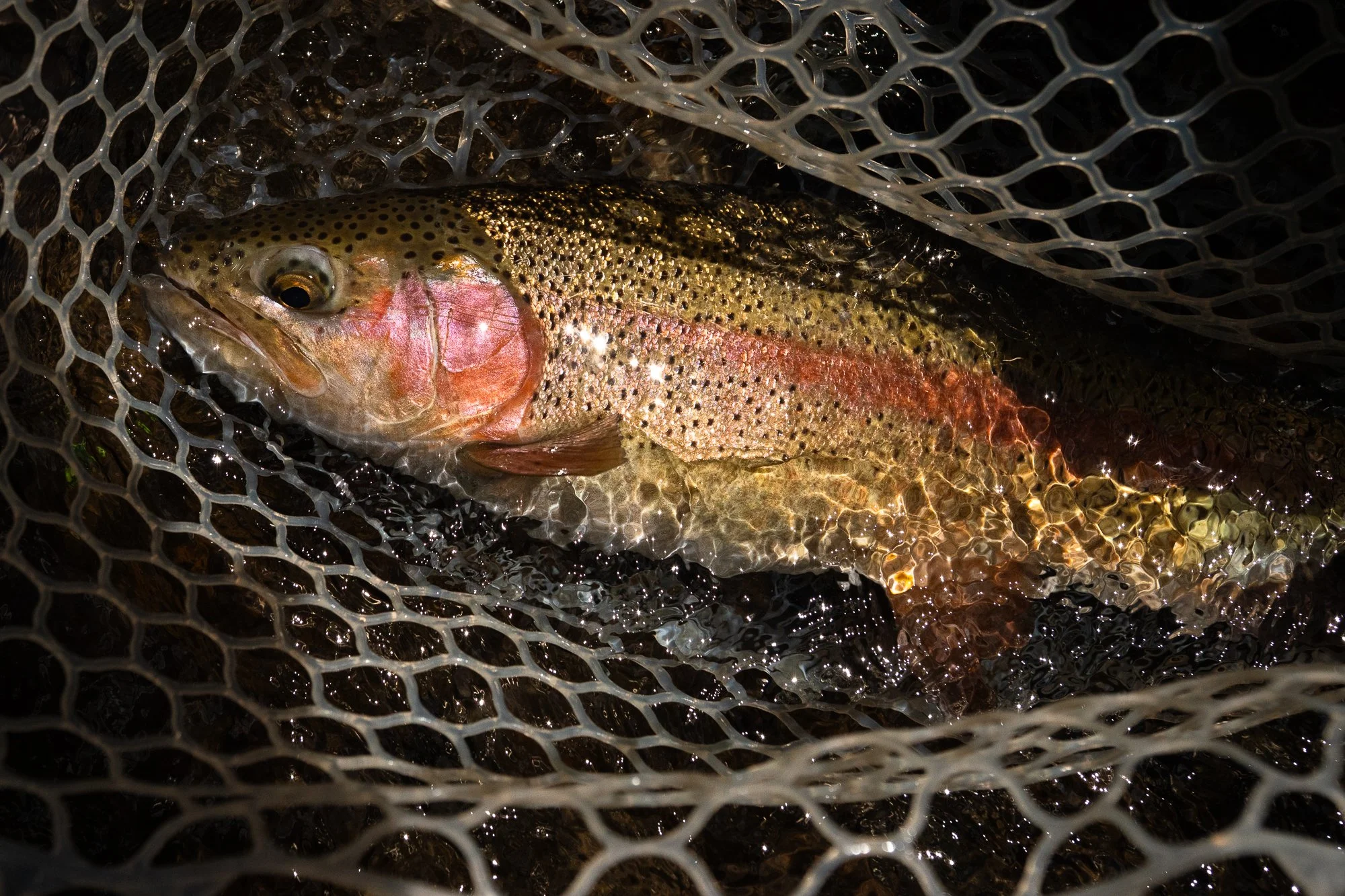
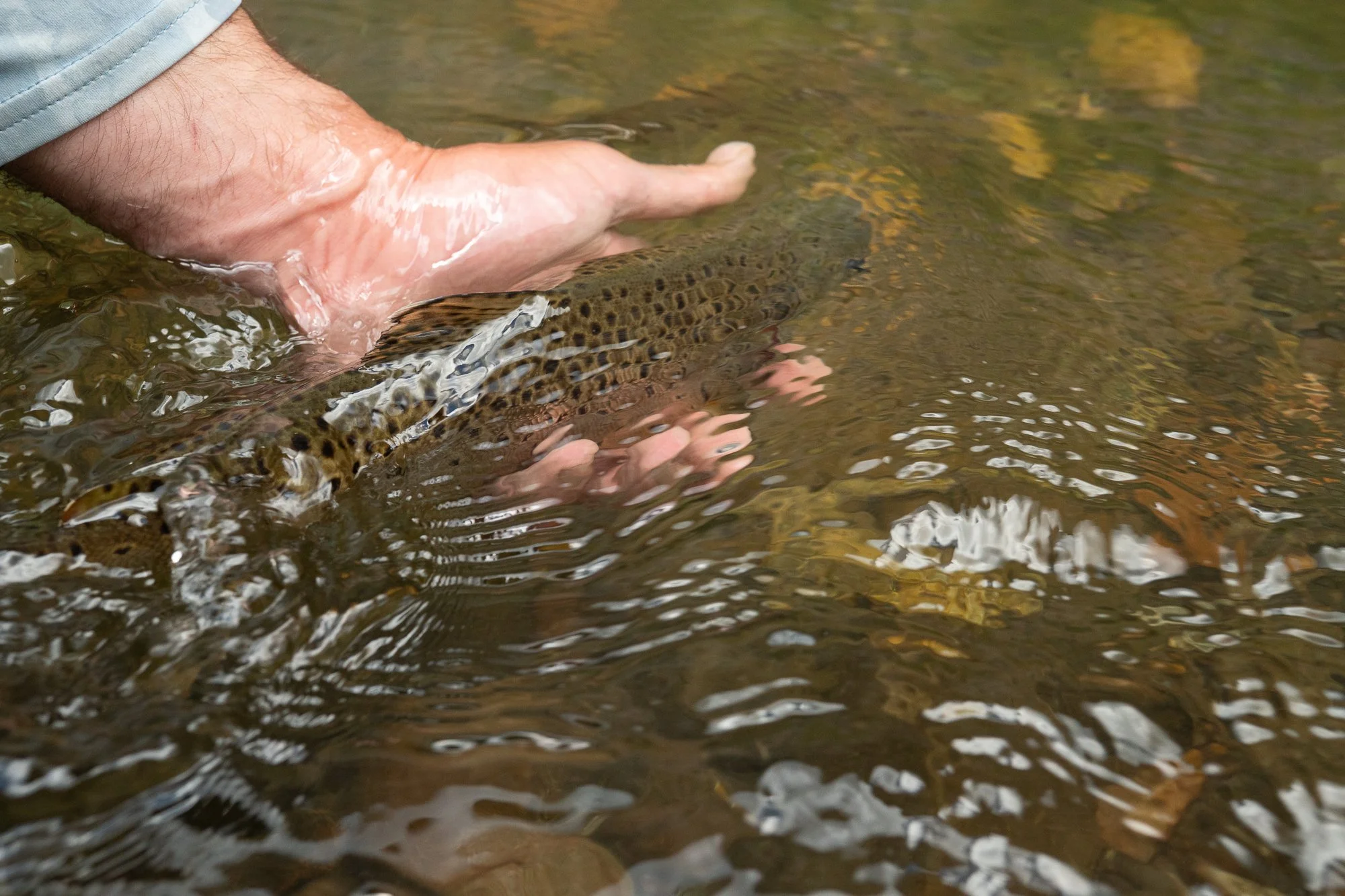
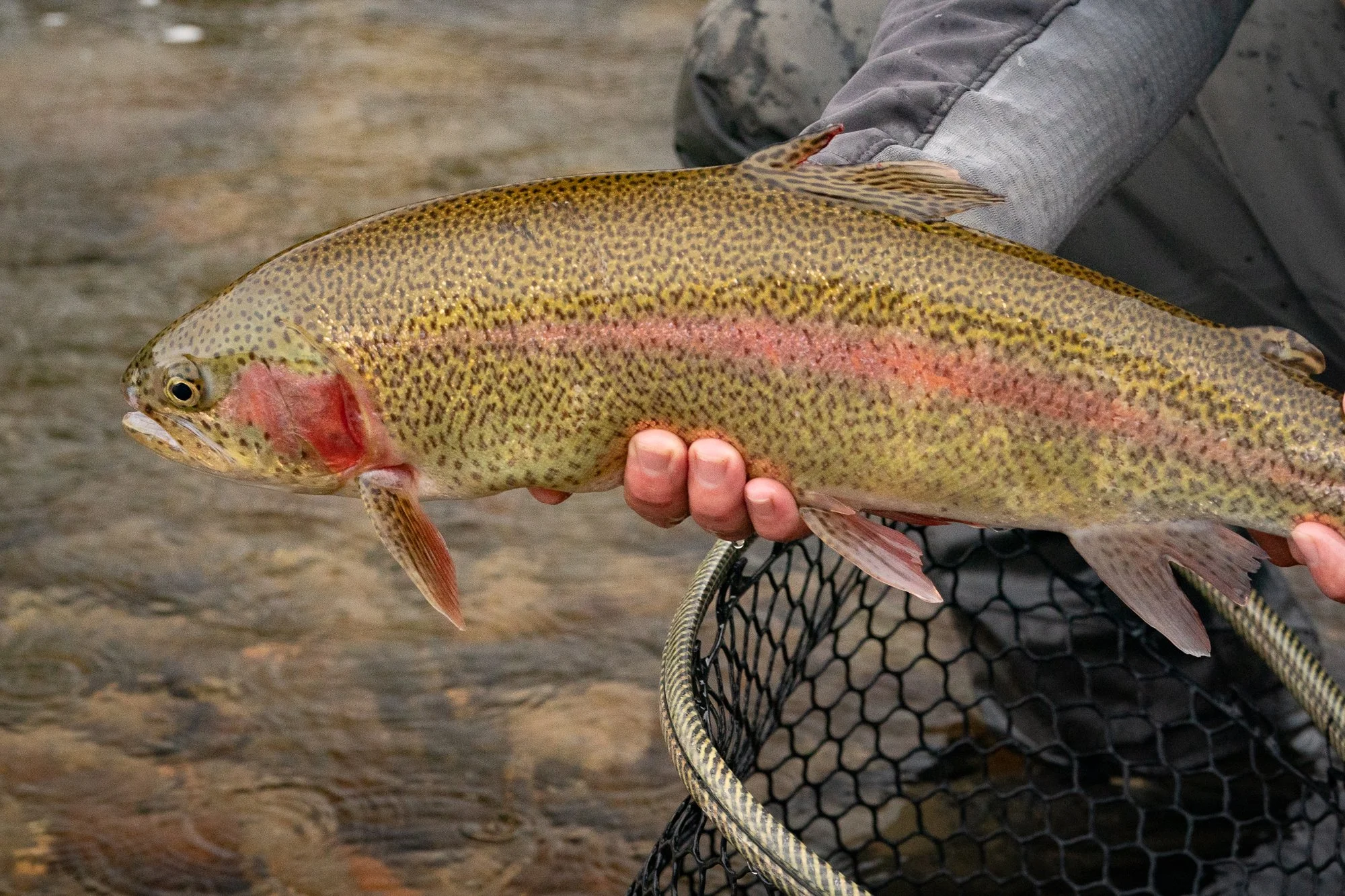
Rainbow trout caught in winter near Estes Park, CO

Rainbow Trout - Estes Park

Why Local Water Produces Strong Photography

When you’re not chasing a “bucket list” location, the mindset shifts.

You’re not trying to prove anything—you’re just paying attention.

That tends to lead to:

  • more observational images

  • better use of available light

  • compositions that feel less forced

Over time, those images become more useful for:

  • editorial storytelling

  • brand work that values authenticity

  • regional campaigns tied to Colorado and the Front Range

Photograph of a fly fisherman in a snowstorm in Colorado near Estes Park

Fly fishing in the snow near Estes Park, CO

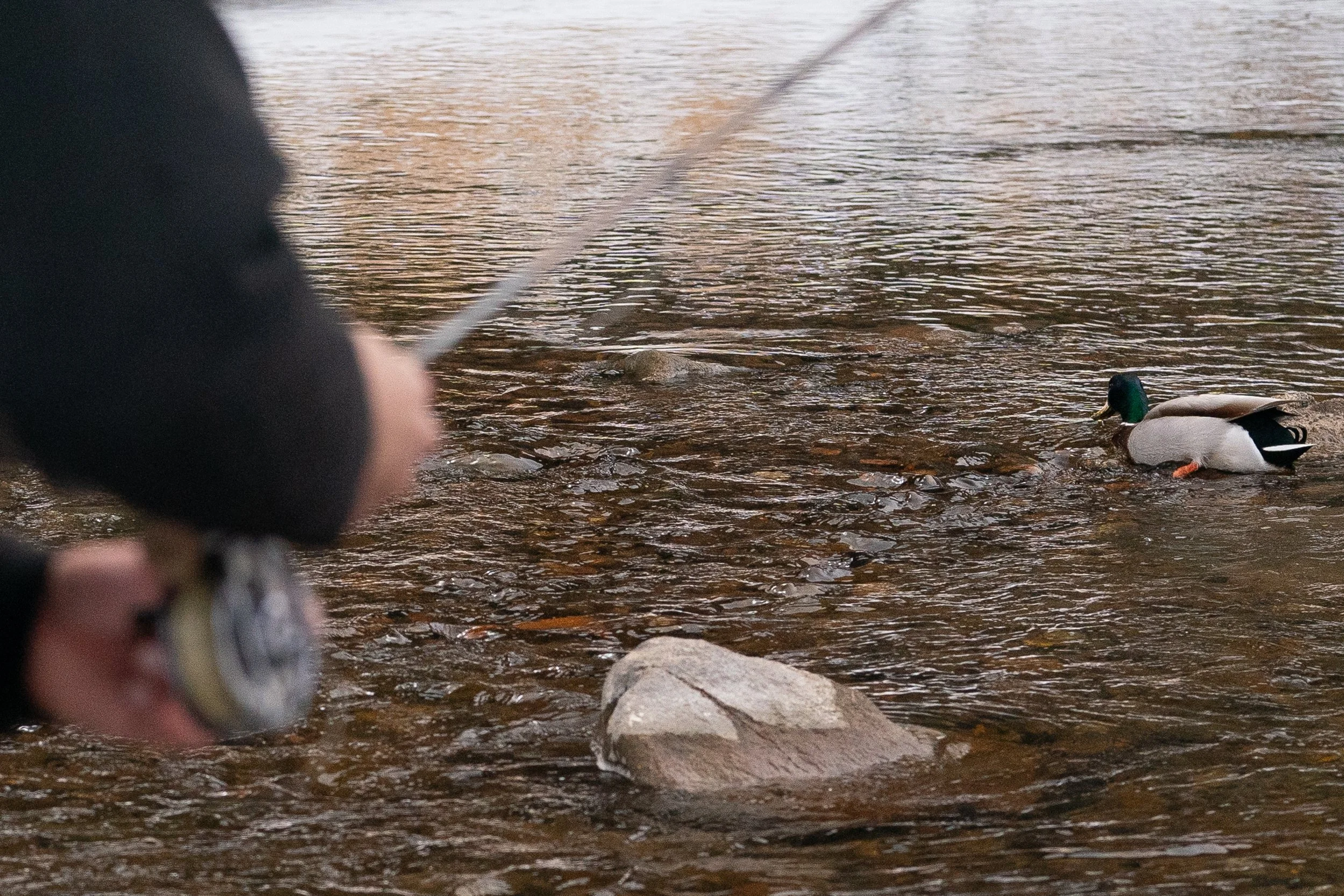
Photograph of a mallard swimming by a fly fisherman

A mallard swims in front of a fly fisherman on the Big Thompson River

Fly Fishing Photography for Regional and National Use

Work created in accessible environments like this often translates well across different uses.

It doesn’t rely on a specific landmark or recognizable destination. Instead, it focuses on:

  • the act of fishing

  • the relationship with the environment

  • moments that feel familiar and repeatable

That makes the images flexible for:

  • outdoor brands

  • editorial features

  • tourism and regional campaigns

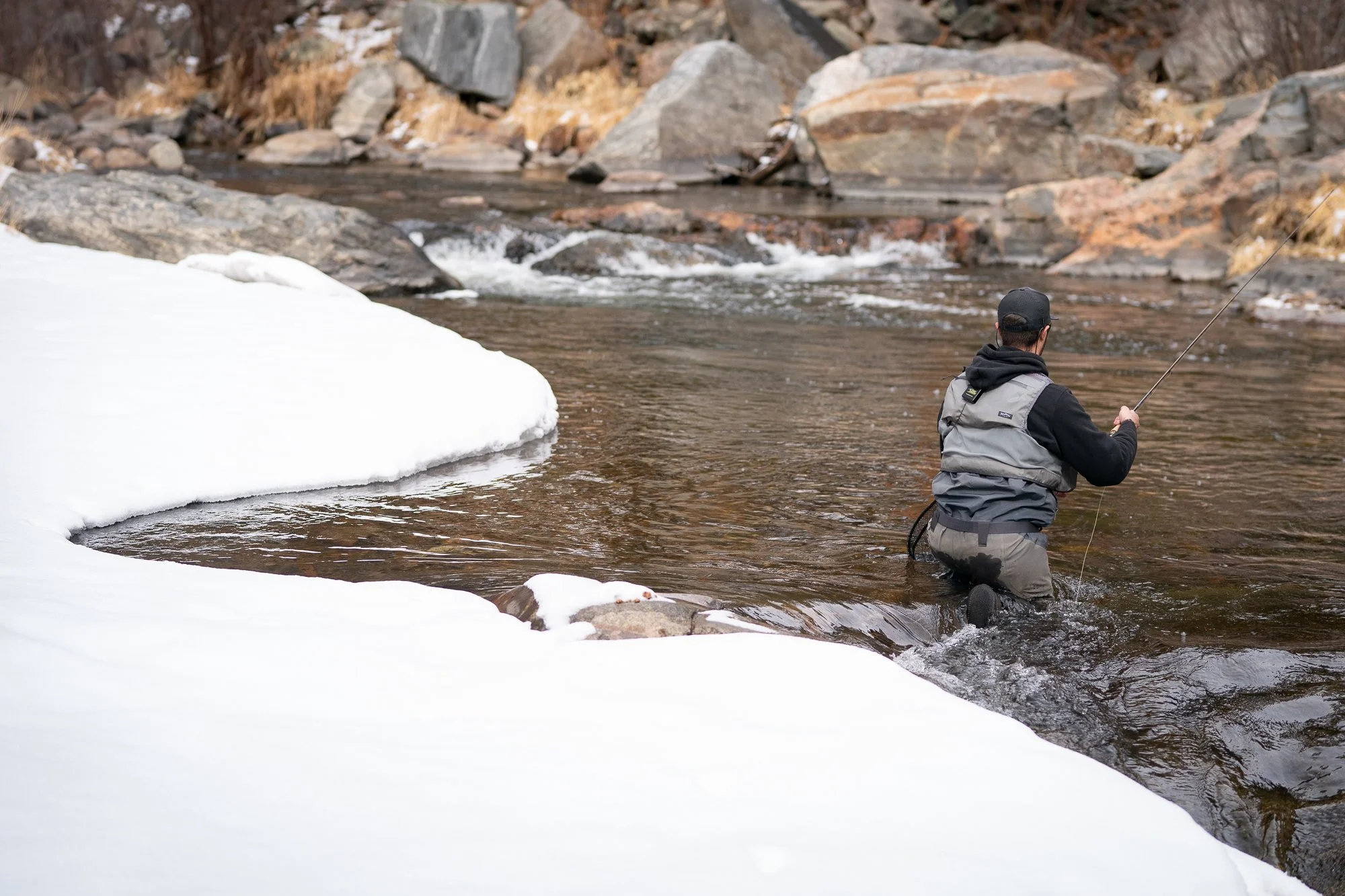
A fly fisherman kneels in a stream next to snow covered banks to avoid spooking fish

A fly fisherman kneels in the river to avoid spooking fish near Estes Park

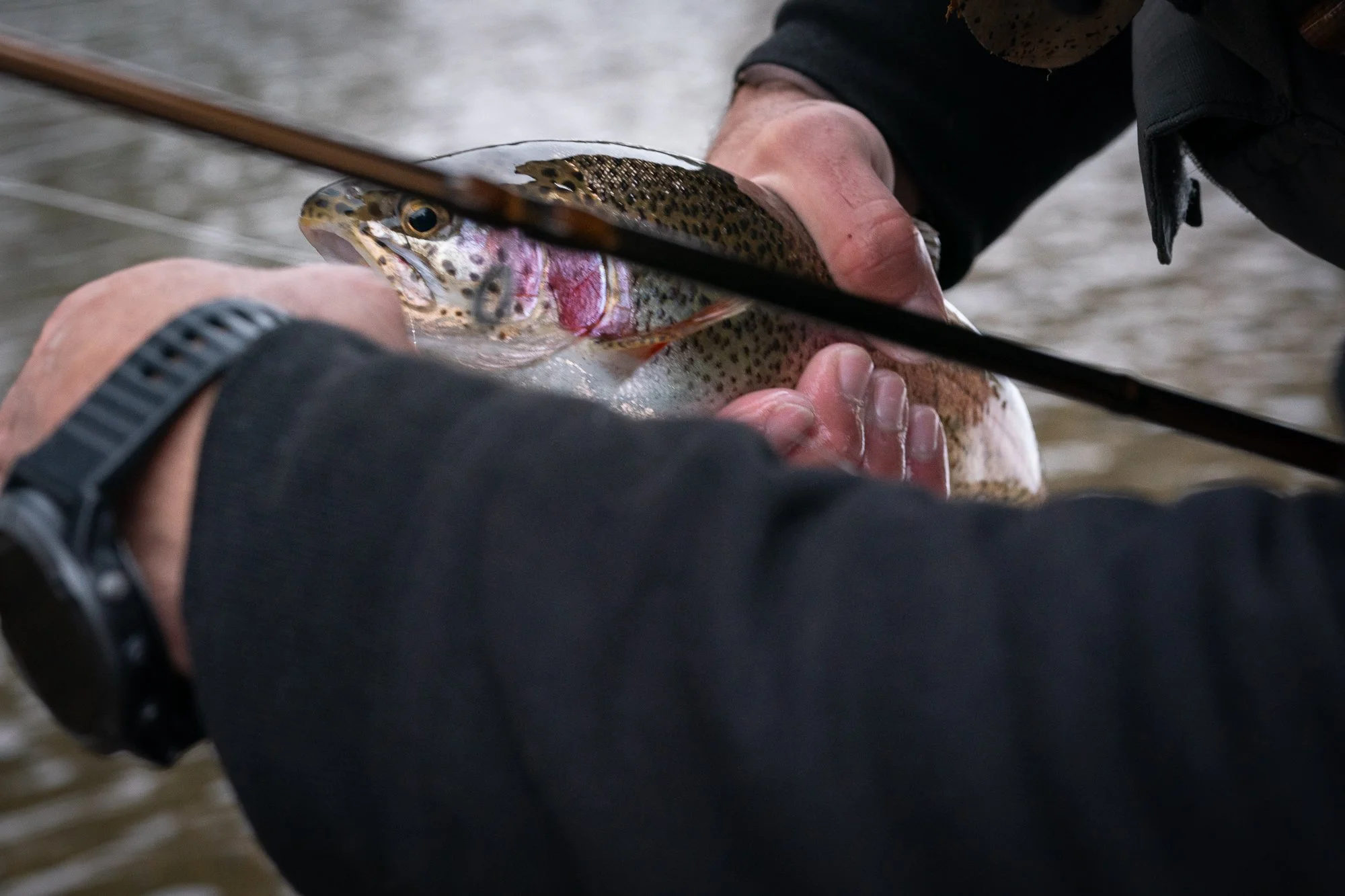
Photograph of a fly fsherman removing a hook from the mouth of a rainbow trout near Estes Park, CO

Removing hook from Rainbow Trout

Part of a Larger Body of Fly Fishing Work

This series connects to a larger and ongoing body of fly fishing photography across different environments:

Each location brings a different pace and visual language, but the approach stays consistent—real conditions, no staging, and a focus on the experience rather than the result.

Photograph of a fly fisherman crouching in the river to avoid being seen by fish

A fly fisherman approaches with stealth to avoid spooking fish

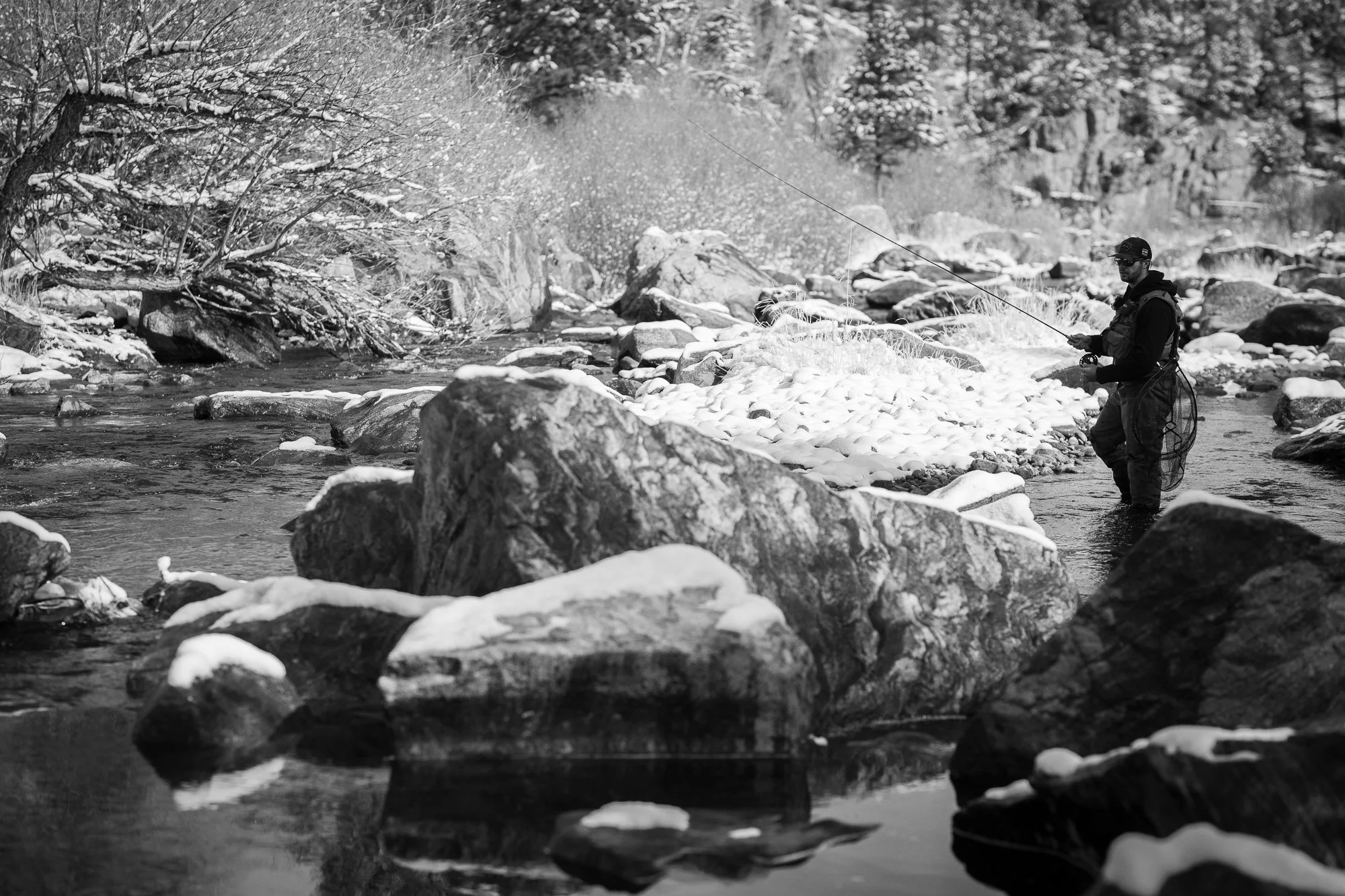
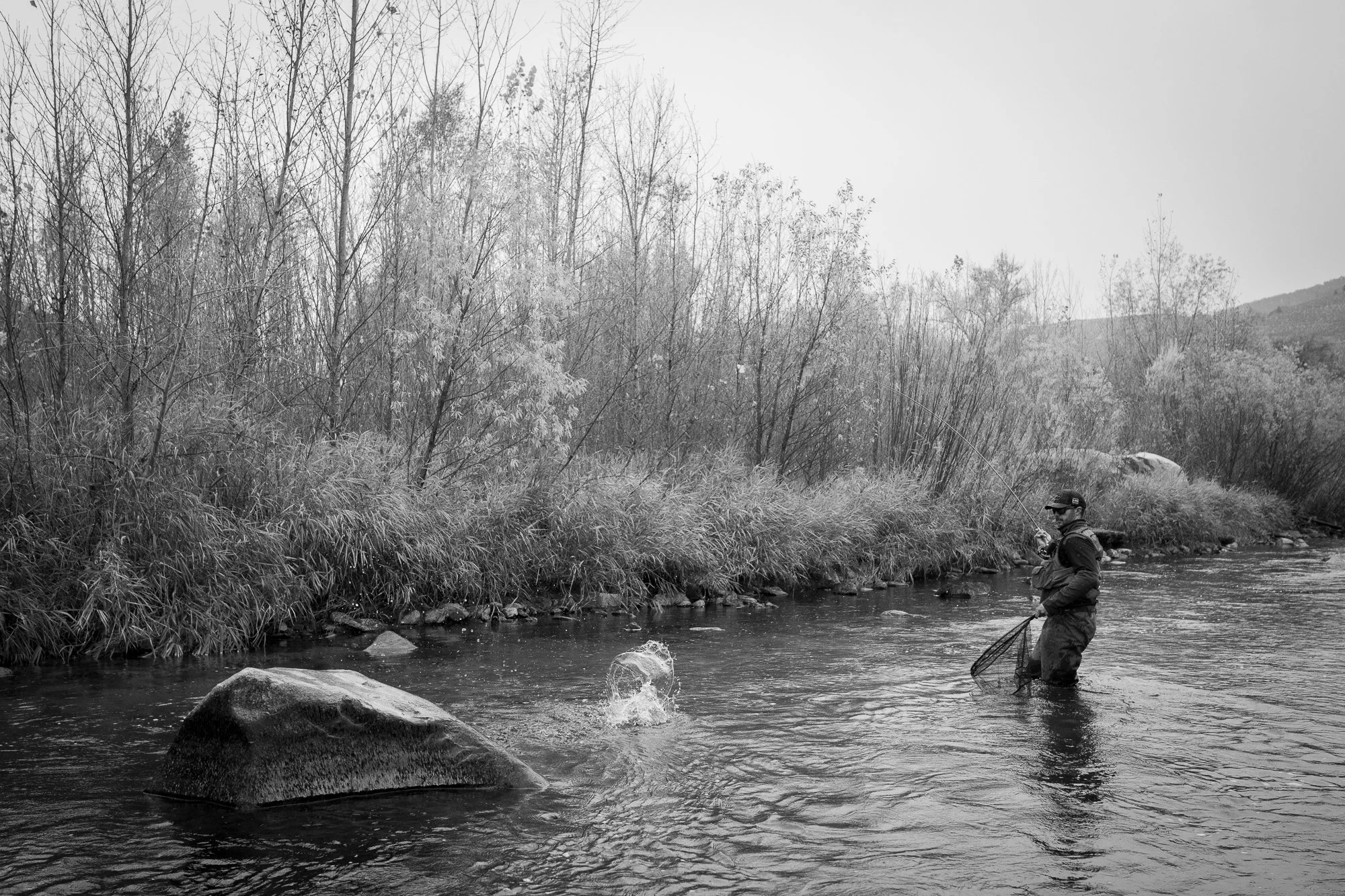
Black and white photograph of a fly fisherman in Big Thomson Canyon near Estes Park

Black and white photo of winter fly fishing in Estes Park

Prints and Licensing

Select images from this series are available as fine art prints, particularly landscape-driven compositions that work well in interior spaces.

View available fly fishing photography prints

Licensing is also available for brands, agencies, and publications looking for fly fishing imagery created in real conditions. Contact me for details - rob@robhammerphotography.com

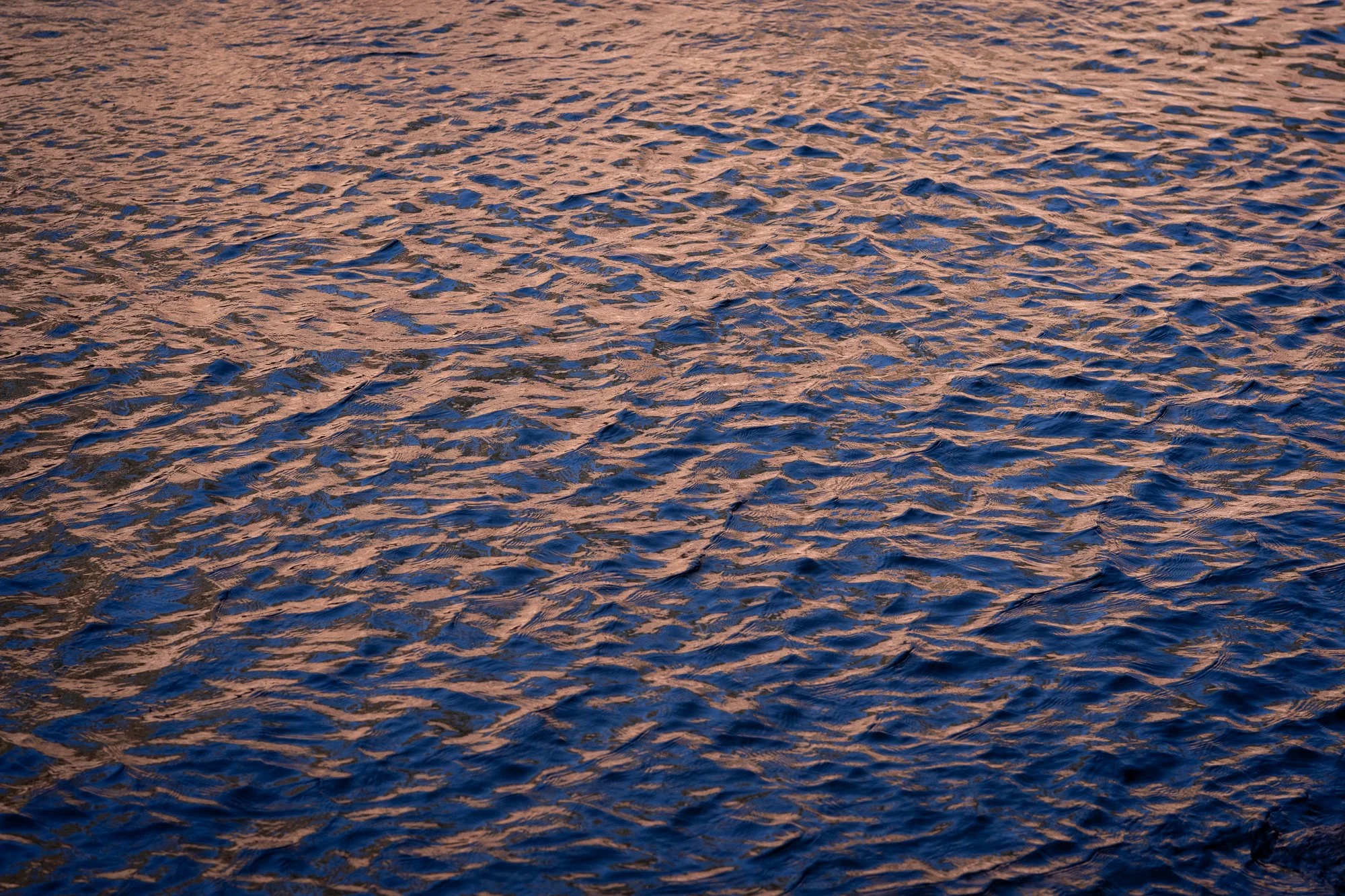
Long exposure photograph of water flowing on a river

Abstract river photograph

Black Canyon of the Gunnison Fly Fishing Photography

Black Canyon of the Gunnison Fly Fishing: A Real Look Inside One of Colorado’s Toughest Fisheries

There are places people talk about, and then there are places that quietly sit on a bucket list for years.

The Black Canyon of the Gunnison is one of those places.

Steep walls, limited access, and a river that doesn’t give much away easily. From the rim, it looks almost impossible to fish. And in a lot of ways, it is.

But that’s exactly why people keep coming back.

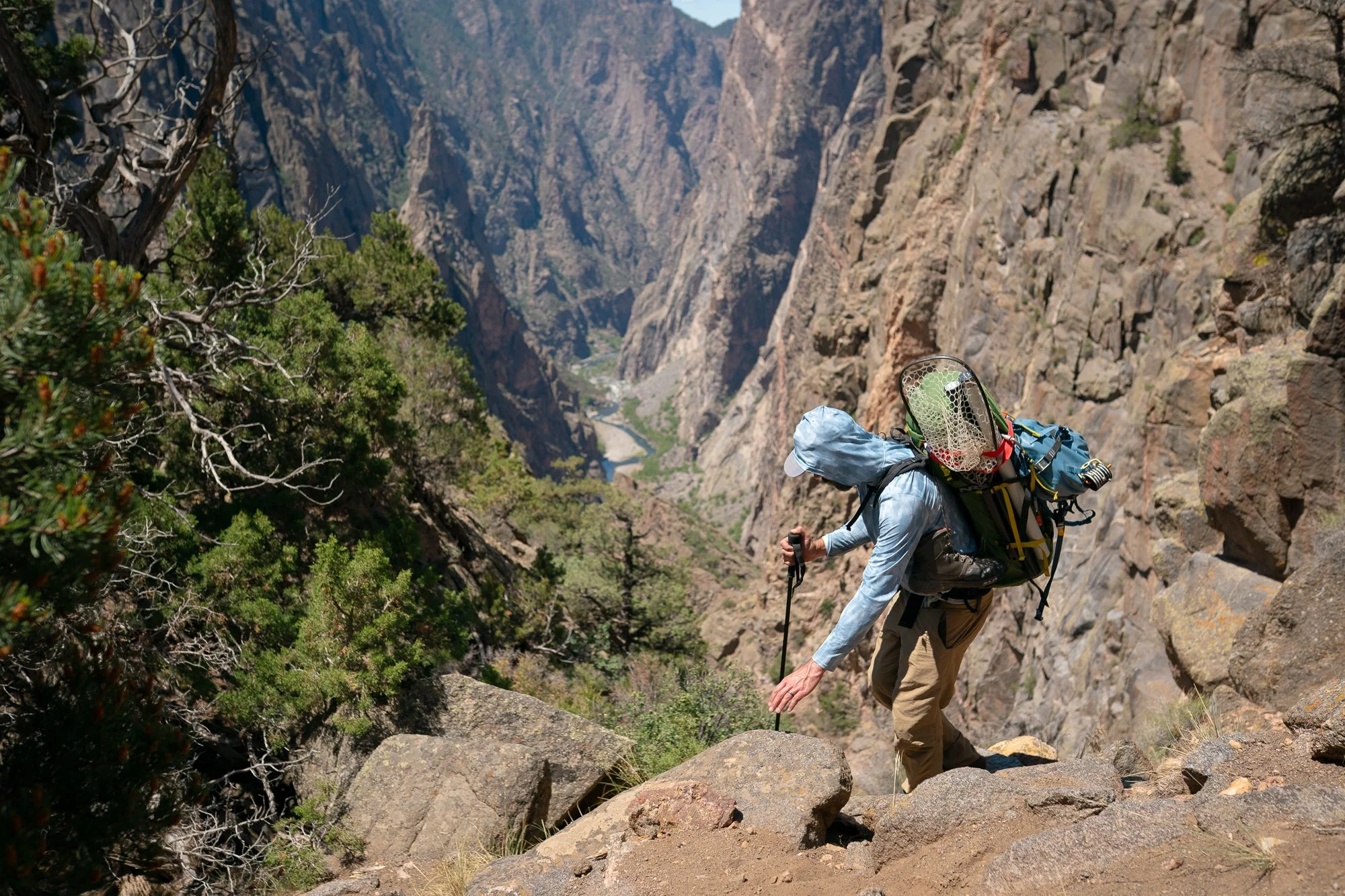
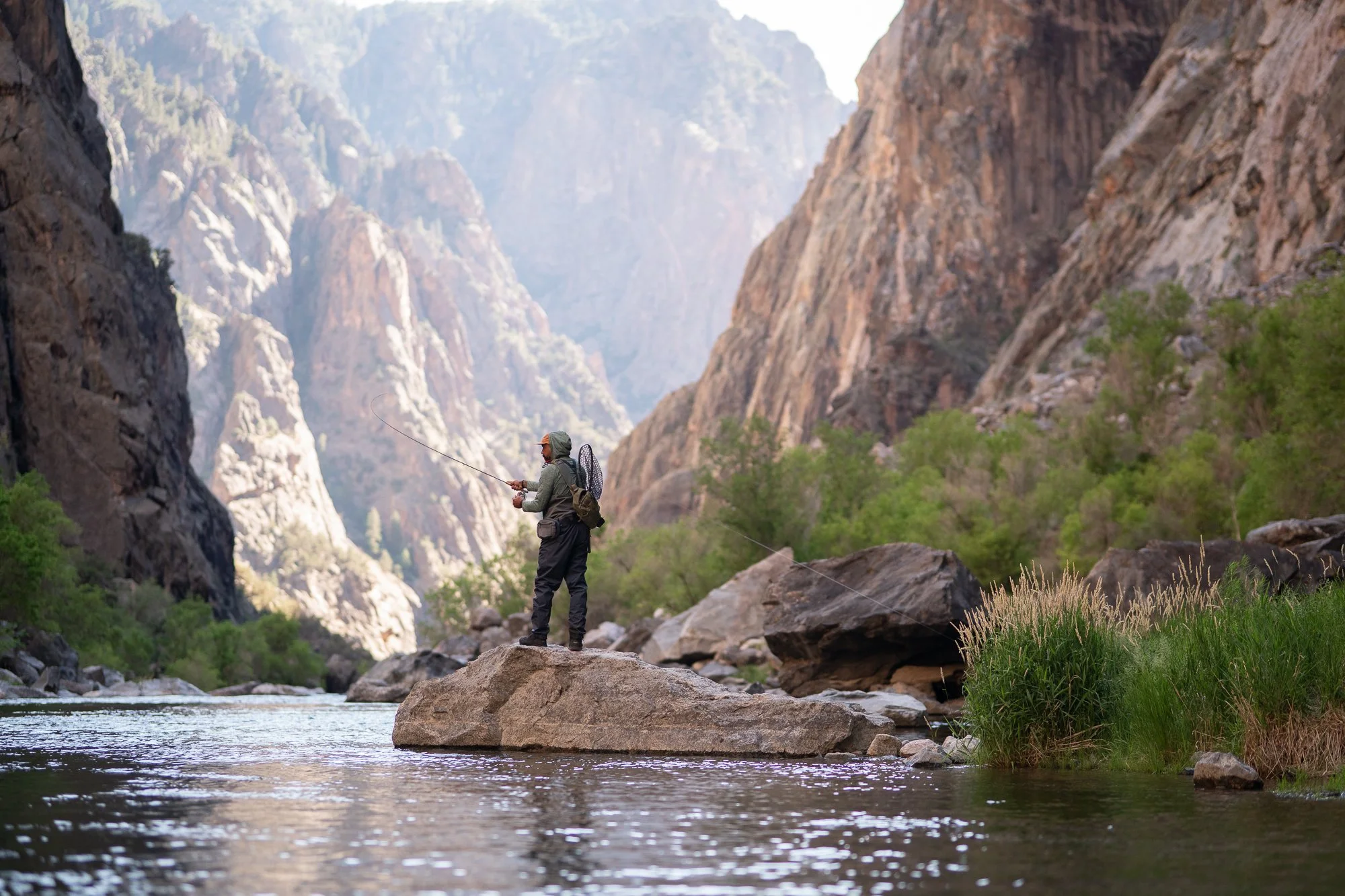
An angler hikes steep canyon terrain with fly fishing gear above Black Canyon of the Gunnison

The brutal climb in and out of Black Canyon is part of what makes this fishery feel earned.

A fly angler climbs steep terrain out of the Black Canyon of the Gunnison

The brutal climb out of the Black Canyon is as much a part of the fly fishing experience as the river itself.

Why the Black Canyon Is Different

Most fly fishing in Colorado gives you options.

The Black Canyon doesn’t.

There are only a handful of routes down to the river, and none of them are easy. Going down S.O.B. Draw is just as brutal as the hike up.

Once you’re down there, the Gunnison River feels like it’s yours. The hike in eliminates 99% of people, so there’s a good chance you might have the whole place to yourself.

It’s not a numbers game. It’s a place where you slow down and soak in a landscape that hasn’t changed in thousands of years.

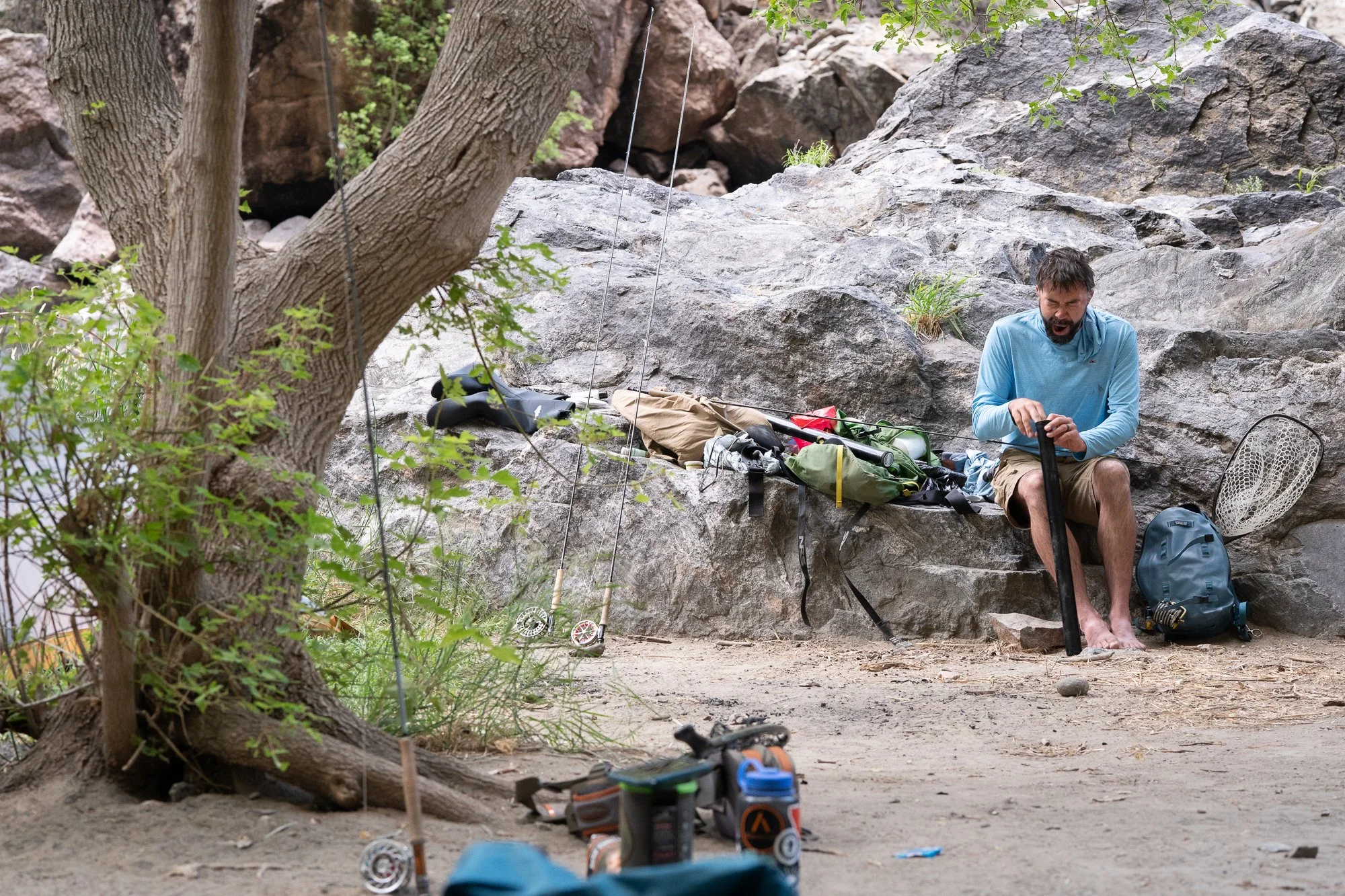
A fly angler prepares gear at riverside camp in the Black Canyon of the Gunnison

An angler yawns while organizing gear at camp just after waking up in the Black Canyon of the Gunnison.

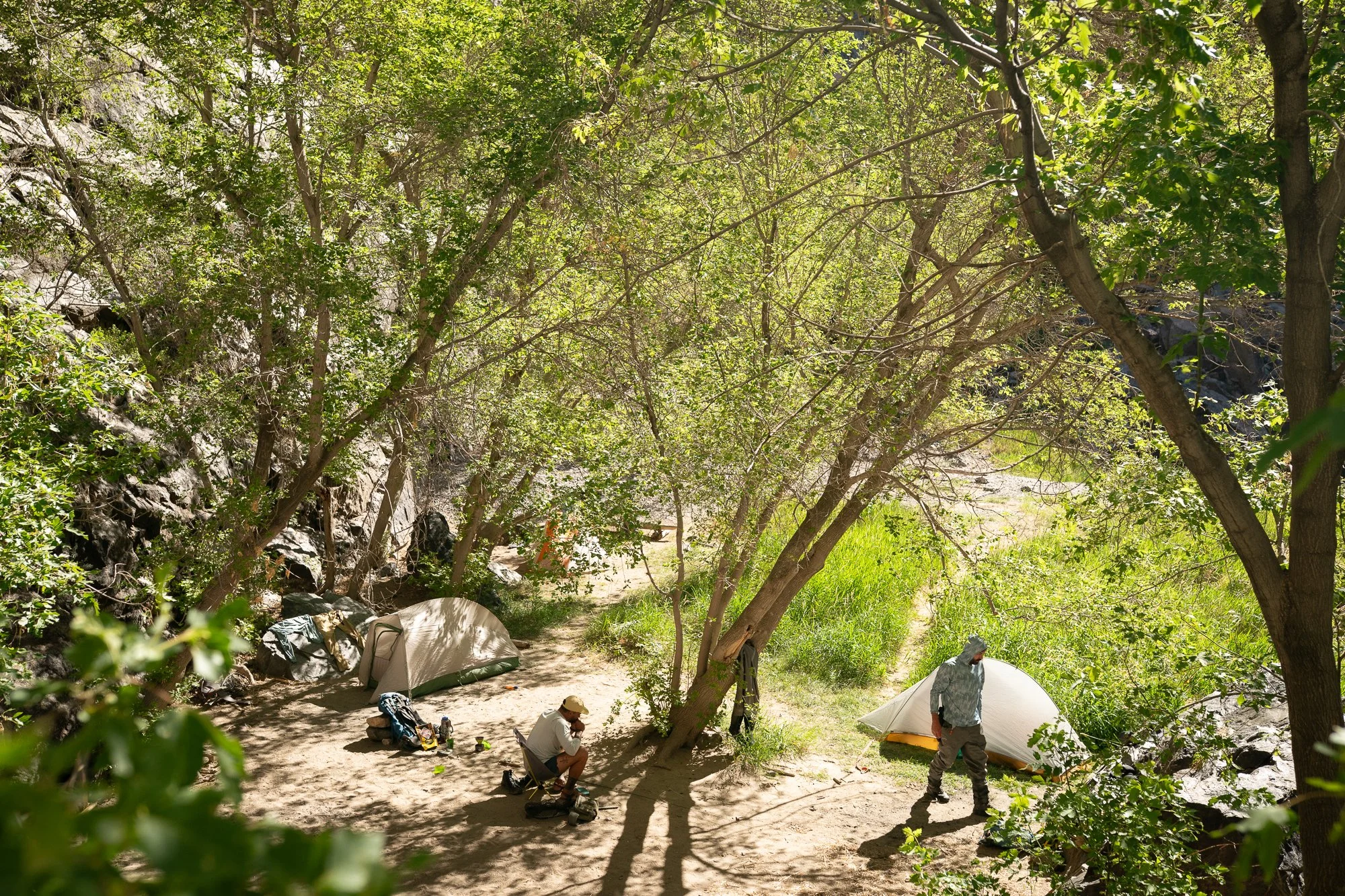
Two tents sit beneath trees at a riverside campsite in Black Canyon

Camp is set beneath the trees along the riverbank, creating shade and shelter deep in Black Canyon.

Access Isn’t the Hard Part—It’s Everything Else

A lot gets made about access—and yeah, it’s real.

But the physical side is just the beginning.

You carry everything in. You manage light that disappears early and returns late. Wind moves through the canyon in ways that don’t show up on a forecast. And the water itself demands precision.

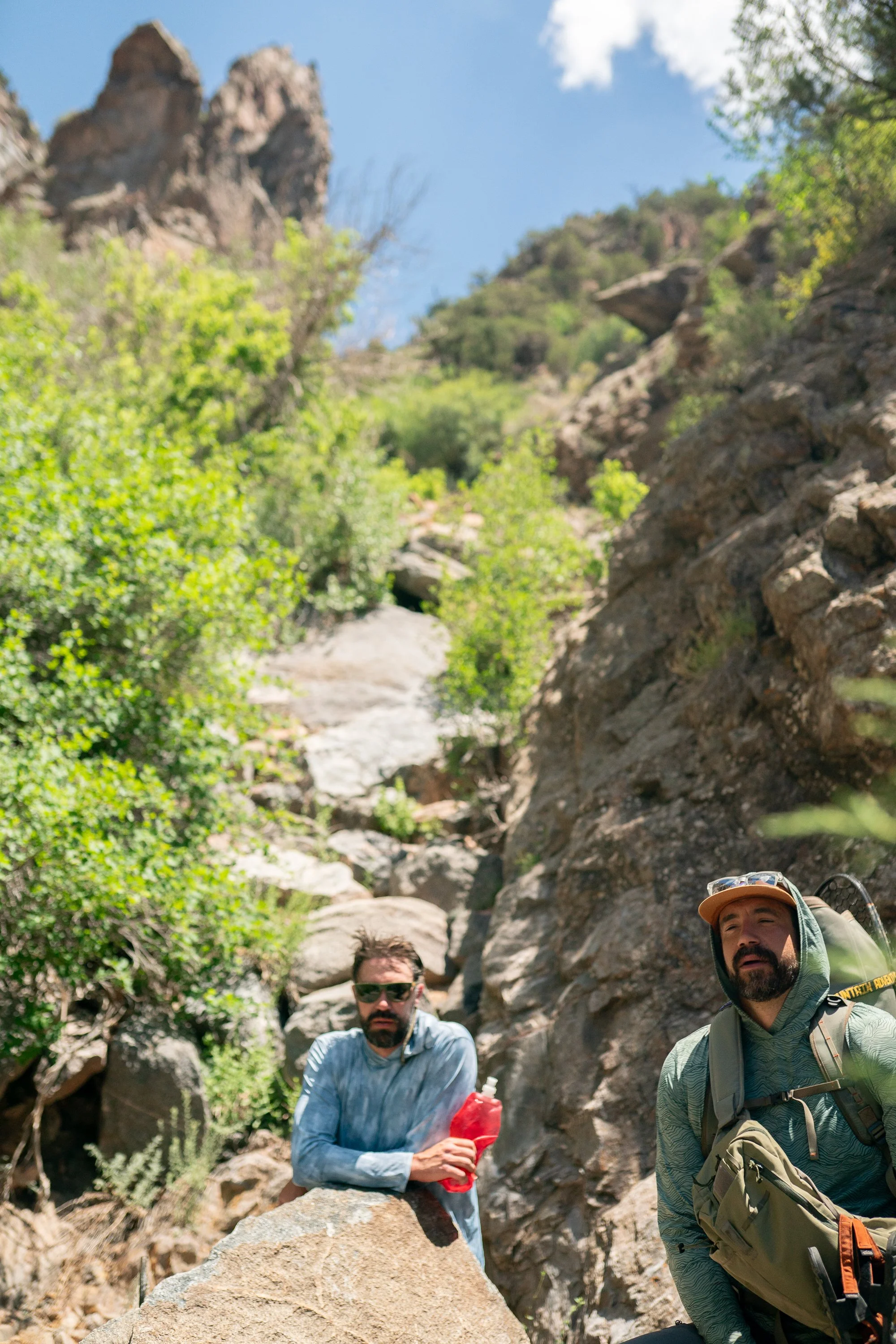
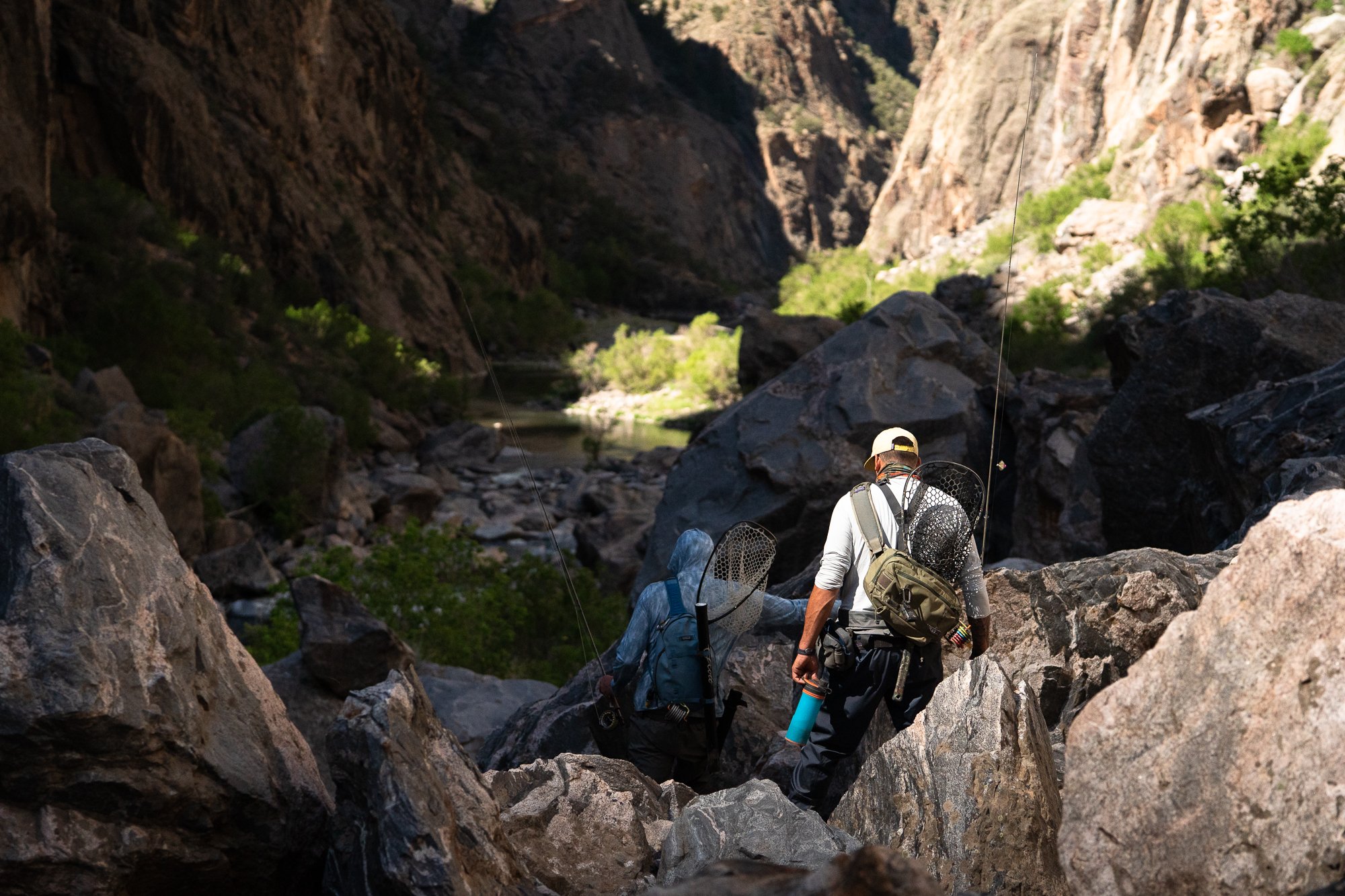
Fly anglers descend rocky terrain into the Black Canyon of the Gunnison with gear

The descent into the Black Canyon demands careful movement over boulders before reaching fishable water.

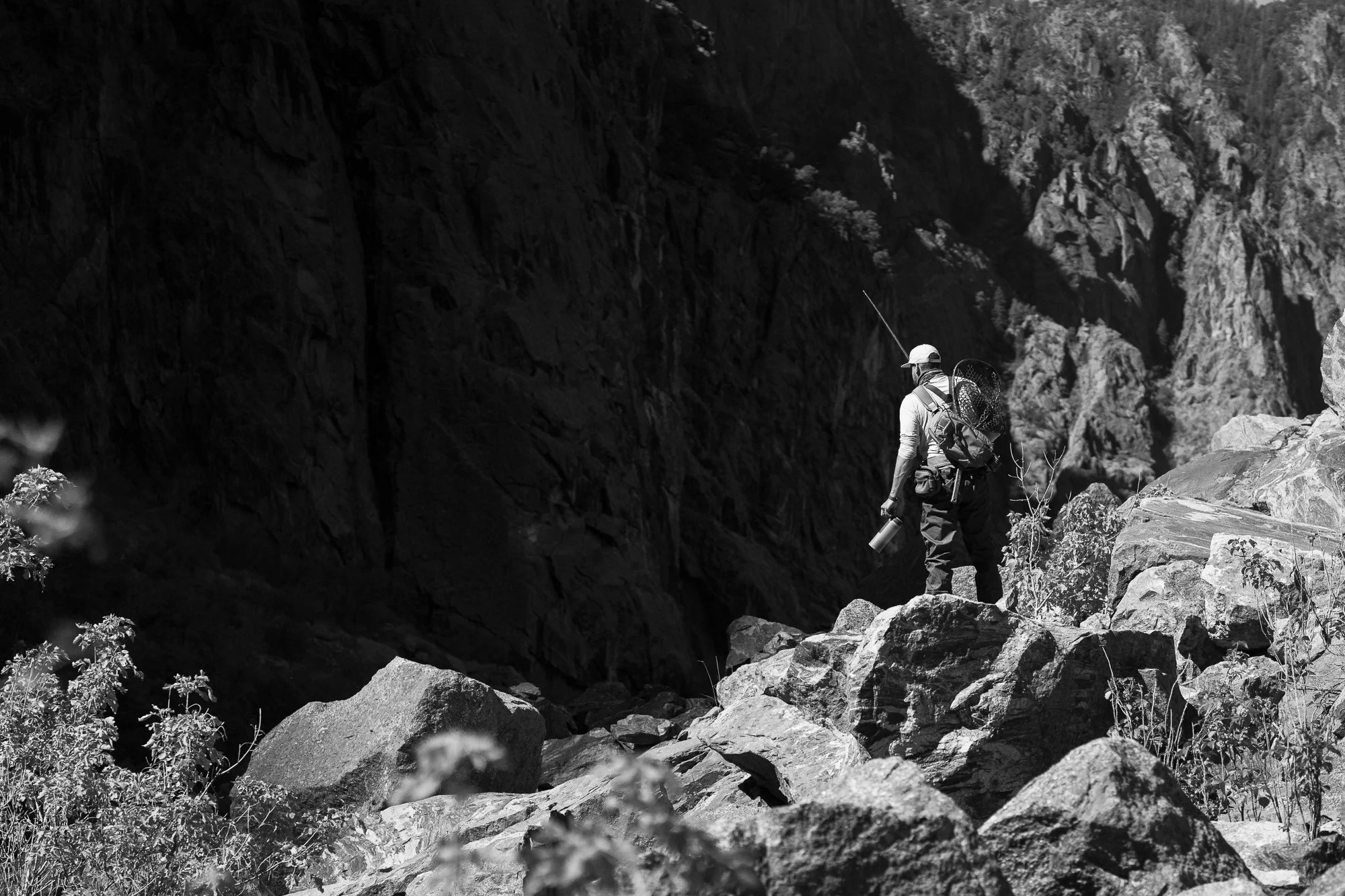
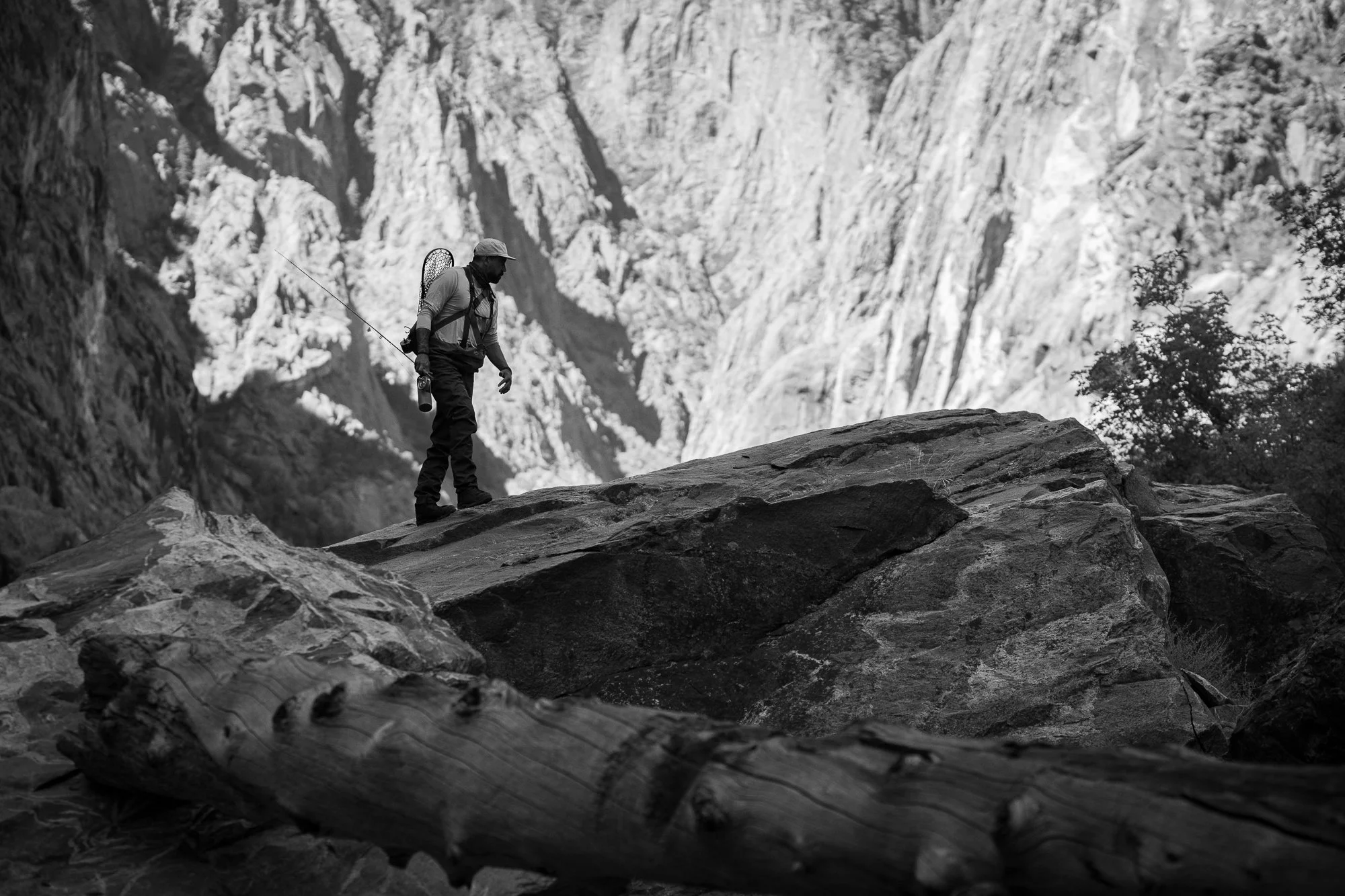
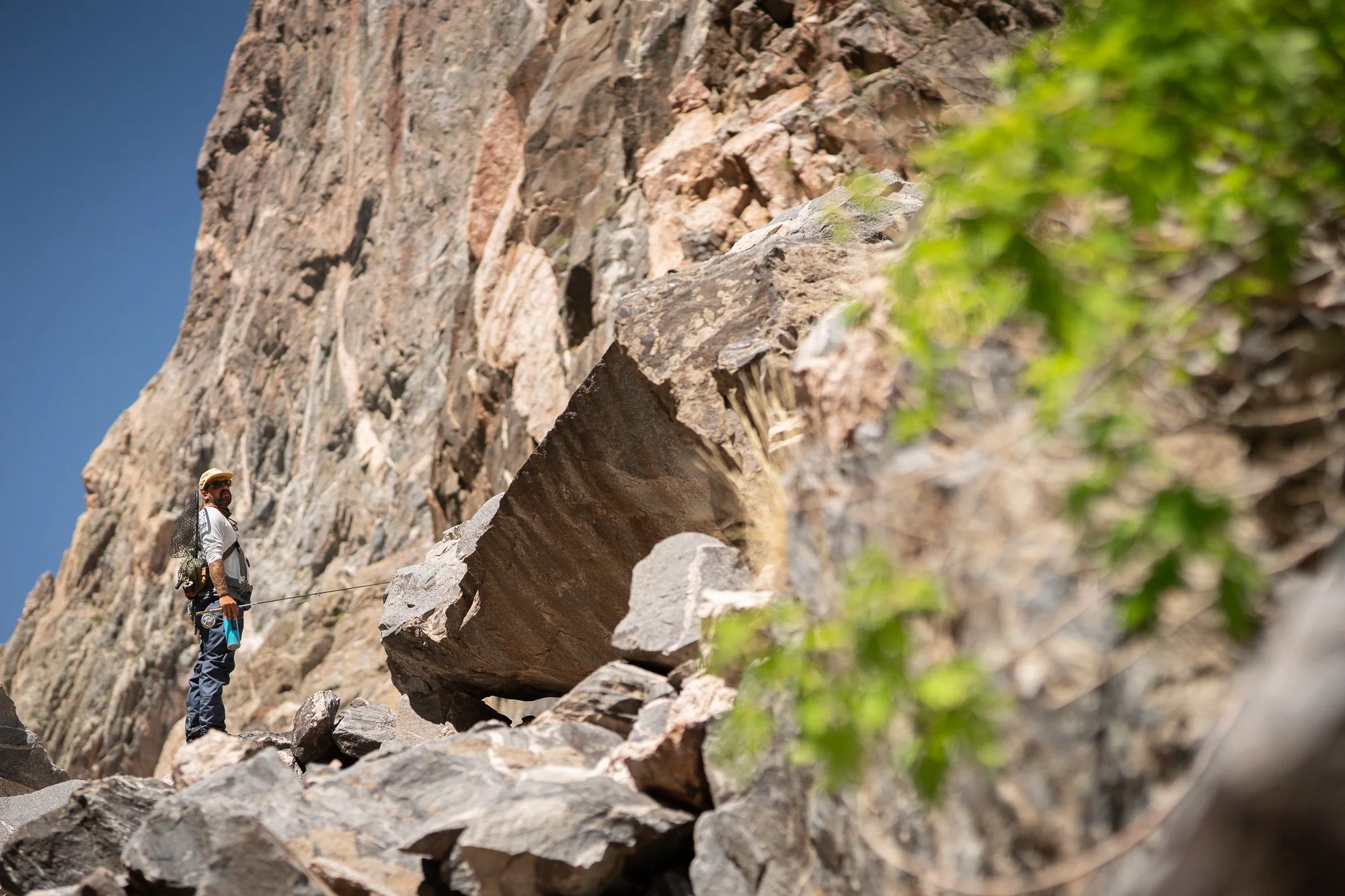
A fly angler stands on rocky terrain inside the Black Canyon of the Gunnison

A fly angler pauses along rugged canyon rock while moving deeper into the Gunnison’s demanding terrain.

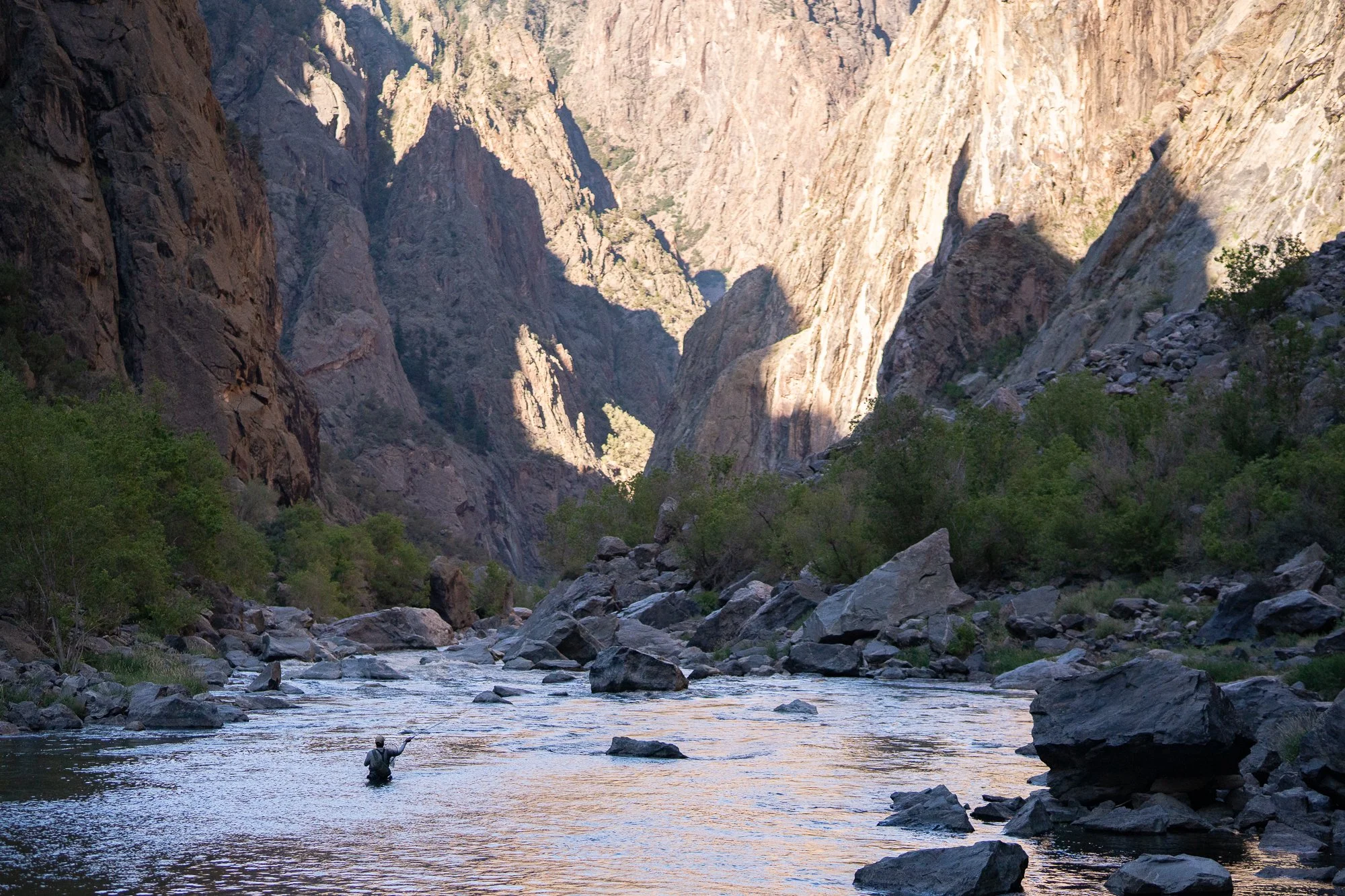
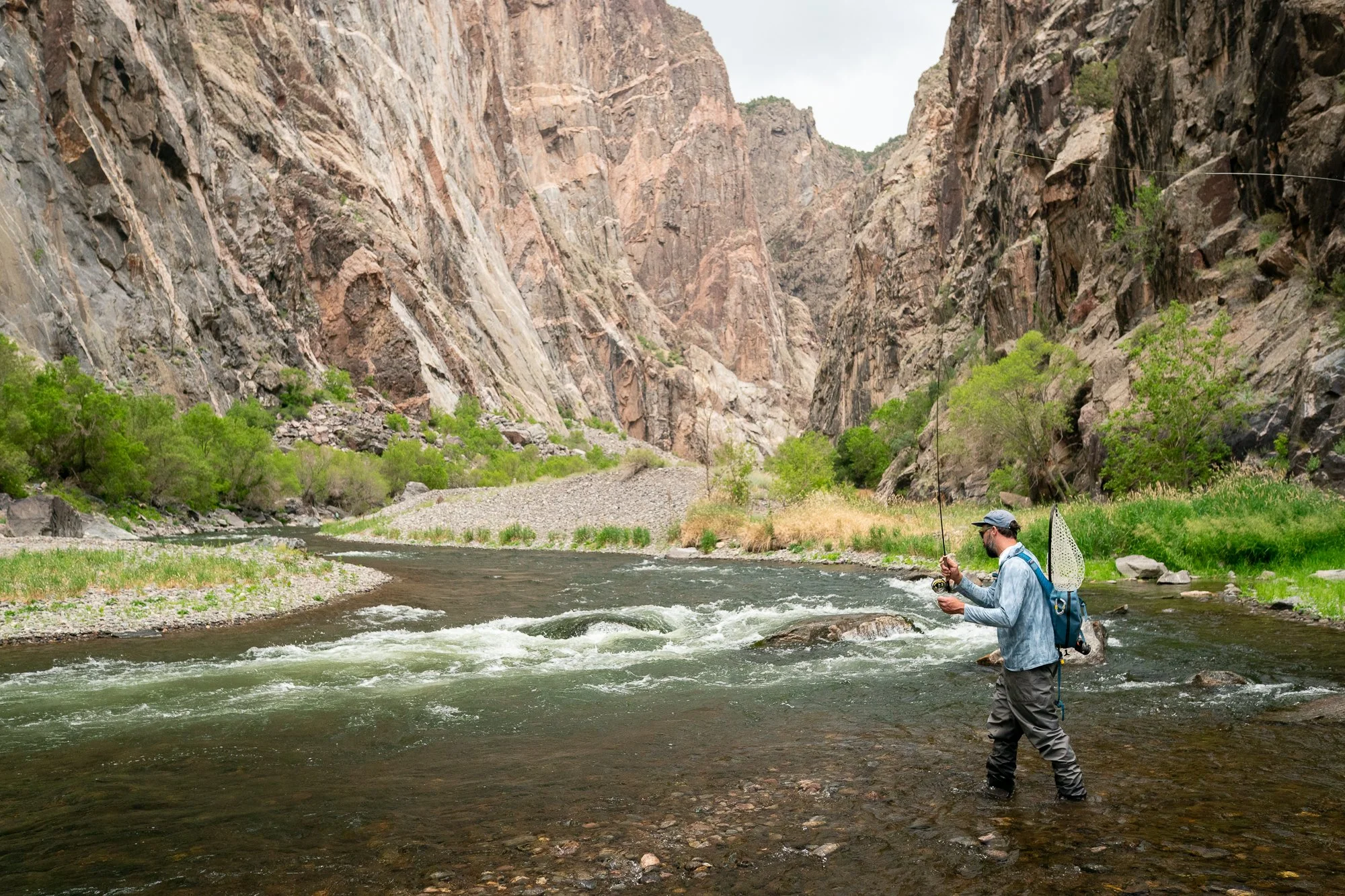
A fly angler fishes the Gunnison River beneath steep canyon walls in the Black Canyon

A lone angler works a quiet stretch of the Gunnison River beneath the steep walls of Black Canyon.

What the Fishing Actually Feels Like

There’s a quiet intensity to fishing here.

You’re not moving fast. You’re not covering miles of water. You’re scrambling over boulders just about the whole time, working small sections carefully, knowing that every fish in this river has survived conditions that make them selective.

When it comes together, it feels earned in a way that’s hard to replicate elsewhere.

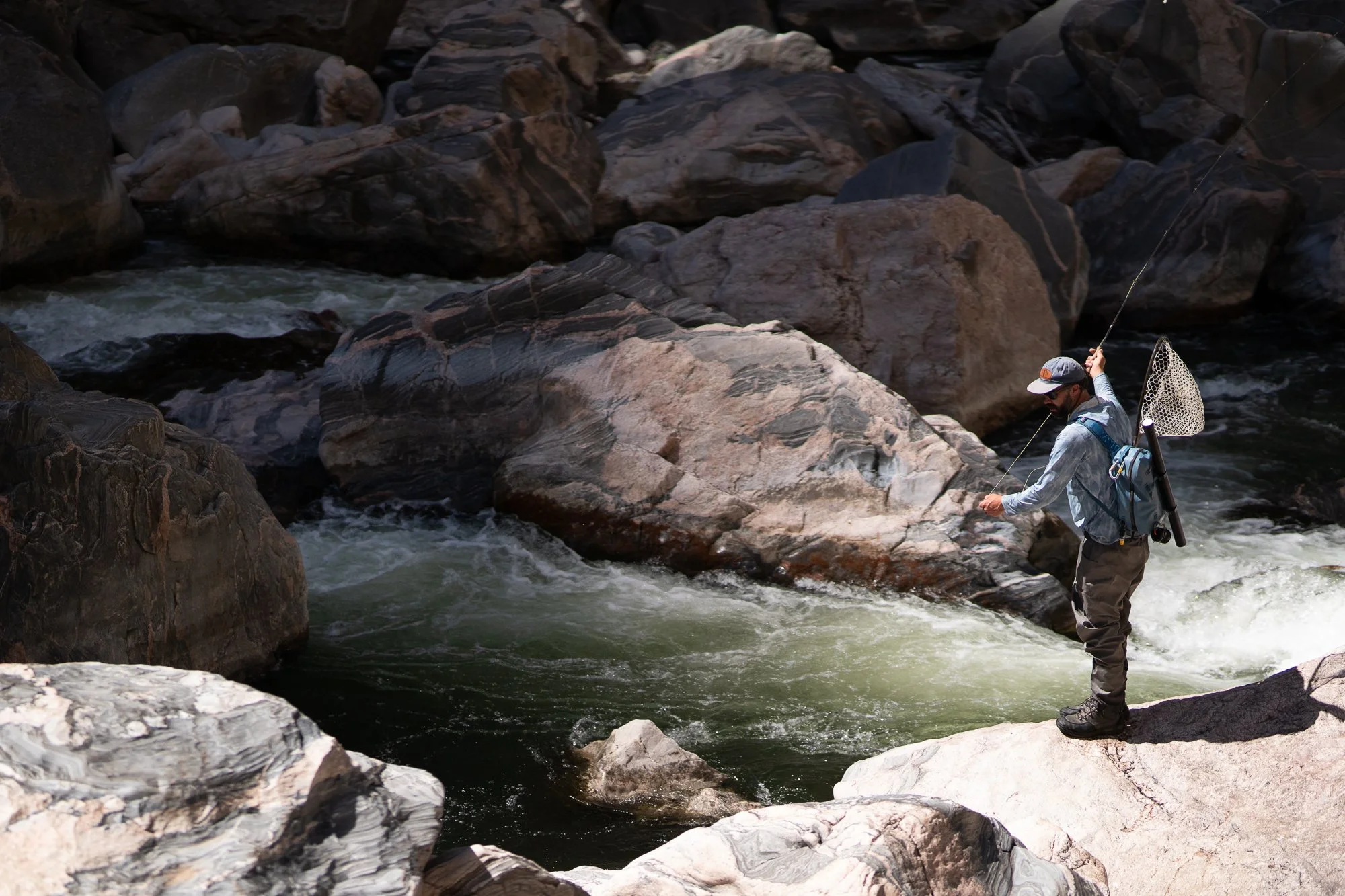
A fly angler casts into technical pocket water in the Black Canyon of the Gunnison

A fly angler works precise casts through technical canyon water shaped by powerful currents and stone.

A fly angler crosses large rock formations inside the Black Canyon of the Gunnison.

Massive canyon rock and technical terrain shape every step along the Gunnison River.

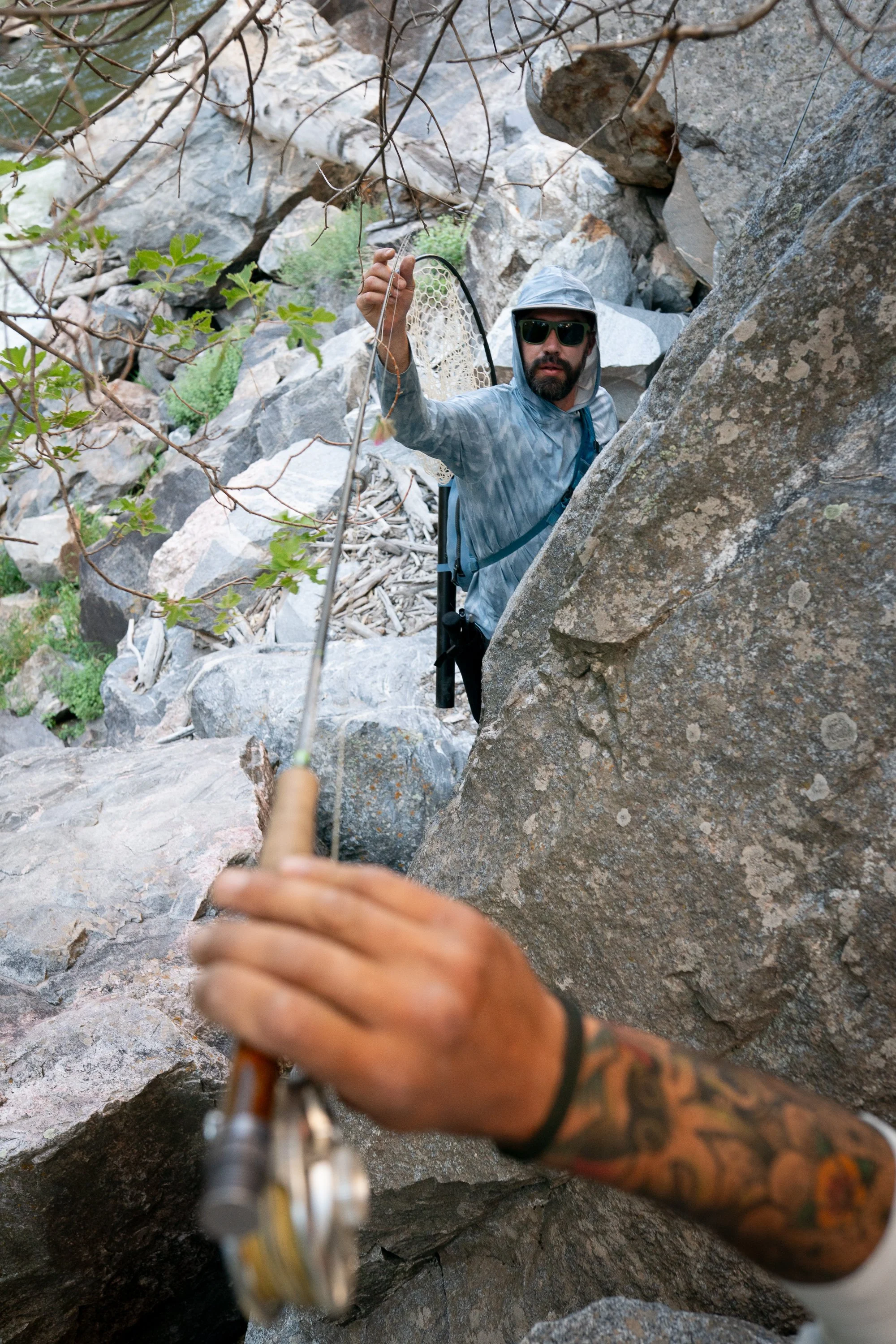
A fly angler reaches through canyon rocks while navigating tight terrain in Black Canyon.

Tight canyon walls and rough terrain make even simple movements part of the challenge.

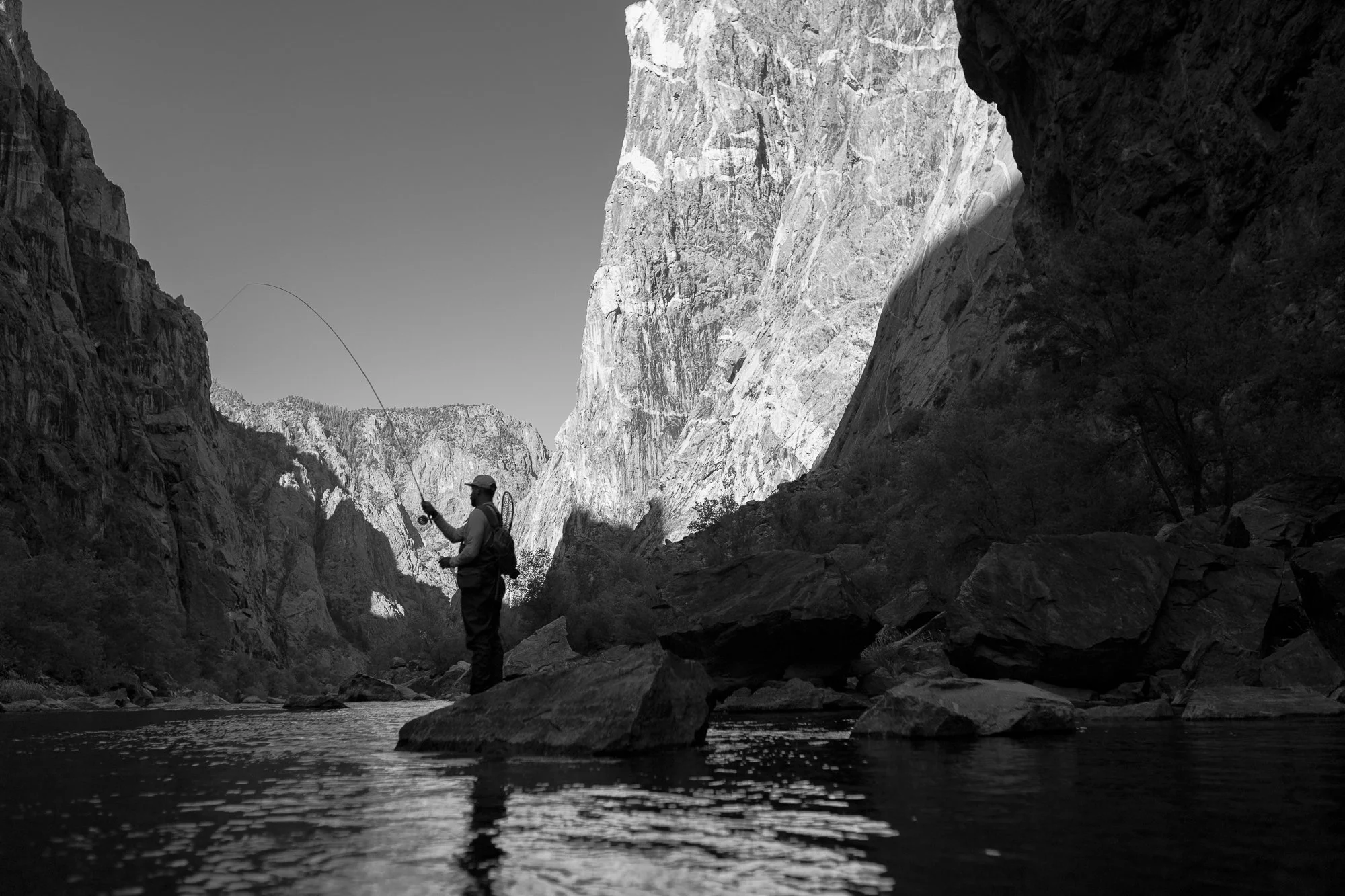
A lone angler stands on river rock surrounded by towering canyon walls in Black Canyon

Solitude and scale shape every hour spent fishing beneath these massive canyon walls.

Why It Stays a Bucket List Fishery

There are easier places to fish in Colorado.

There are places with more fish, easier access, and more predictable conditions.

But very few places feel like this.

The Black Canyon of the Gunnison isn’t about convenience. It’s about immersion—being fully inside a landscape that hasn’t been softened or simplified.

That’s what makes it stick with people.

A fly angler fishes the Gunnison River surrounded by steep canyon walls

A fly angler works the Gunnison River in one of Colorado’s most demanding fly fishing environments.

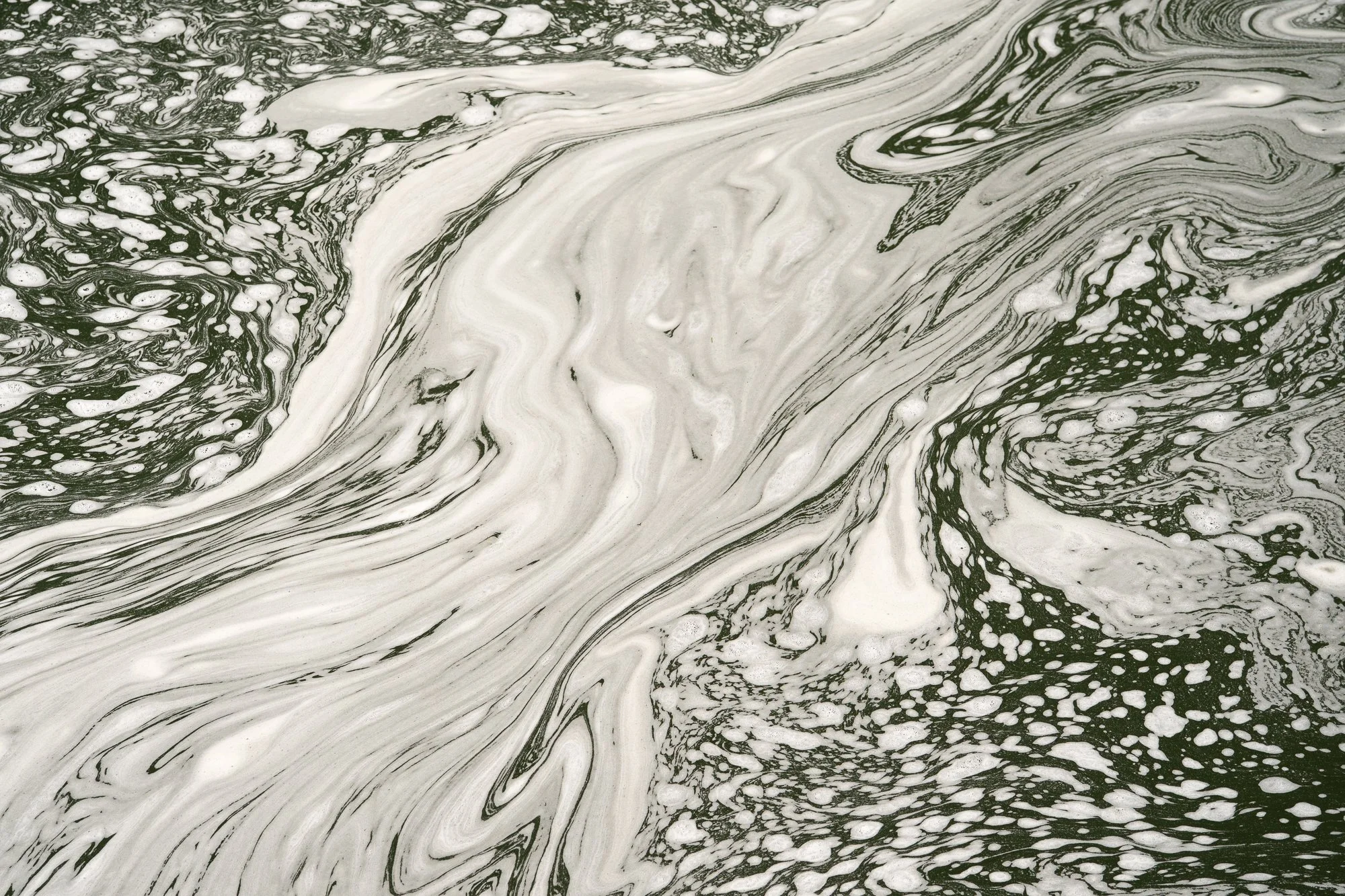
Foam patterns swirl across moving water in the Gunnison River

River foam drifts across canyon current, revealing the movement and complexity of Gunnison water.

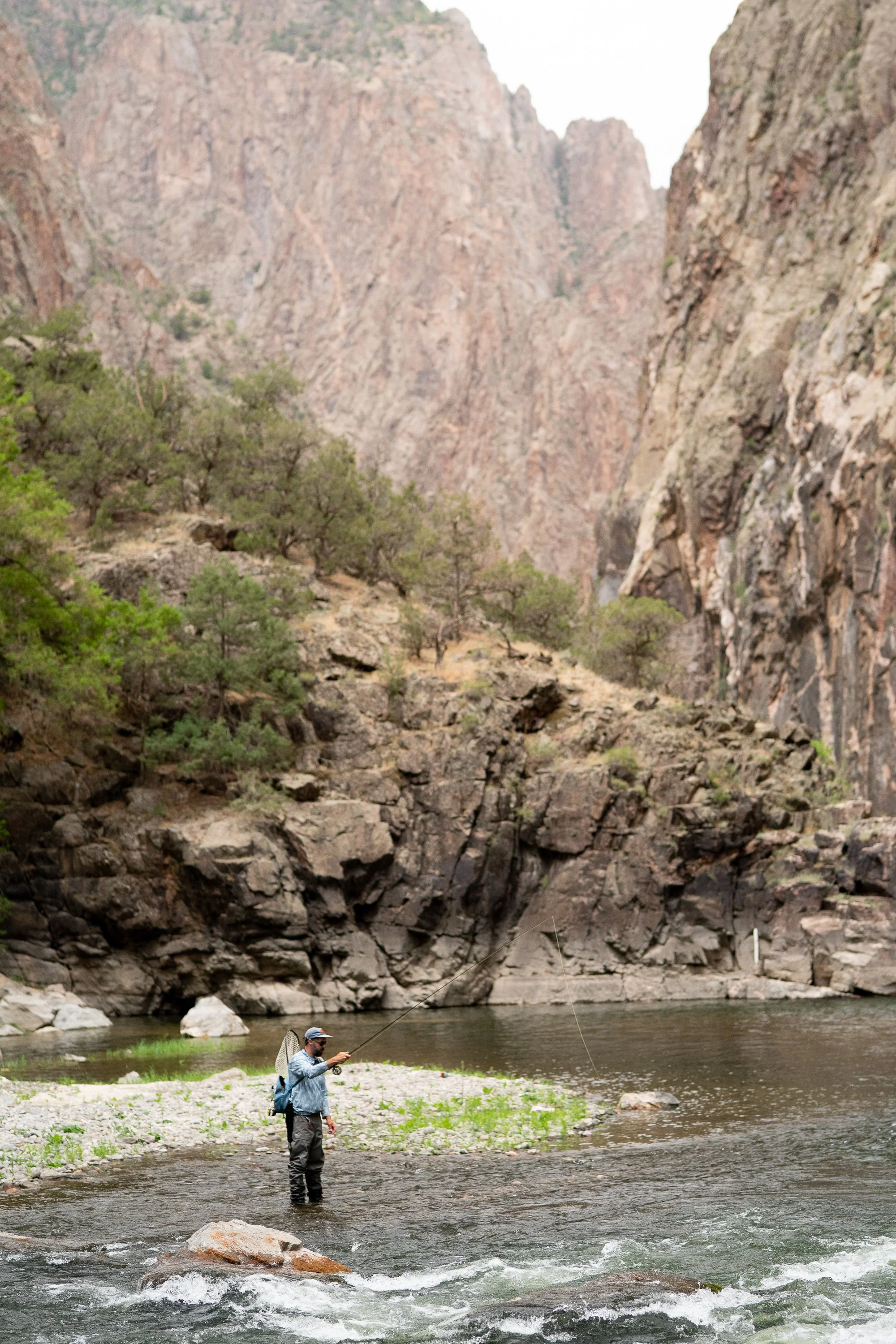
A fly angler stands in the river casting beneath towering canyon walls in Black Canyon

A fly angler casts through canyon water while steep rock walls rise above him in Black Canyon.

A rainbow trout rests in a landing net during fly fishing in the Black Canyon of the Gunnison

A hard-earned trout reflects the precision required in demanding canyon water.

An angler fishes shallow current beneath towering canyon walls in the Black Canyon

Standing mid-river, an angler casts through fast water framed by steep canyon walls.

A Note on Conditions and Planning

If you’re thinking about fishing here, timing matters. Our trip was in July, and the night time temps were rough. Even without clothes on, I was sweating the entire night. Beyond that, flows, access routes, and even basic safety can change quickly depending on the season. This isn’t a place to figure things out on the fly.

For current conditions, it’s worth checking updates through the National Park Service before making the trip.

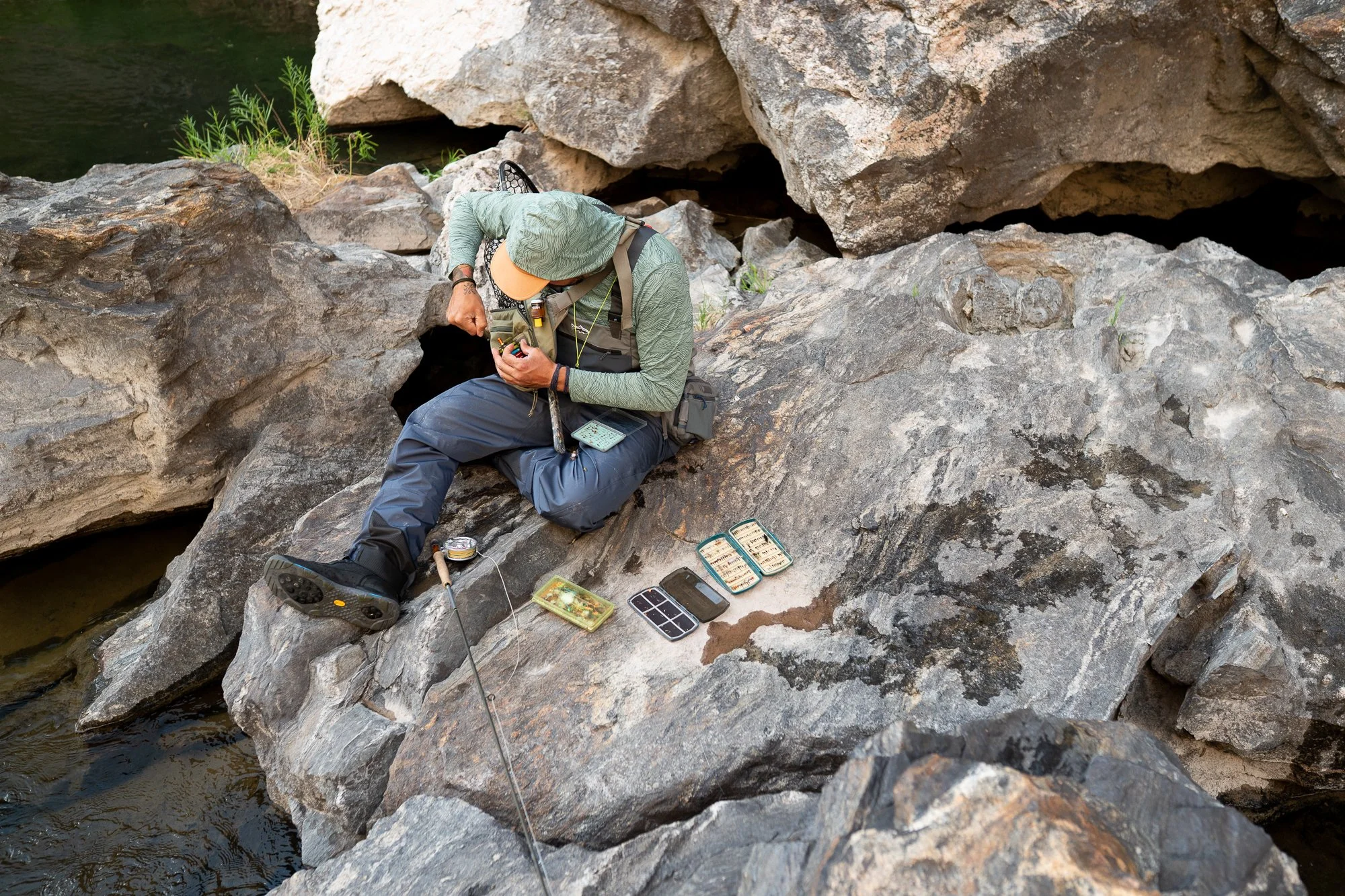
An angler sits on large canyon rocks rigging fly fishing gear beside the river in Black Canyon

An angler rigs flies and tackle on the rocks beside the river, preparing for another stretch of water in Black Canyon.

A fly angler stands beneath steep canyon walls in the Black Canyon of the Gunnison

Towering canyon walls dwarf the angler as he navigates one of Colorado’s most demanding fisheries.

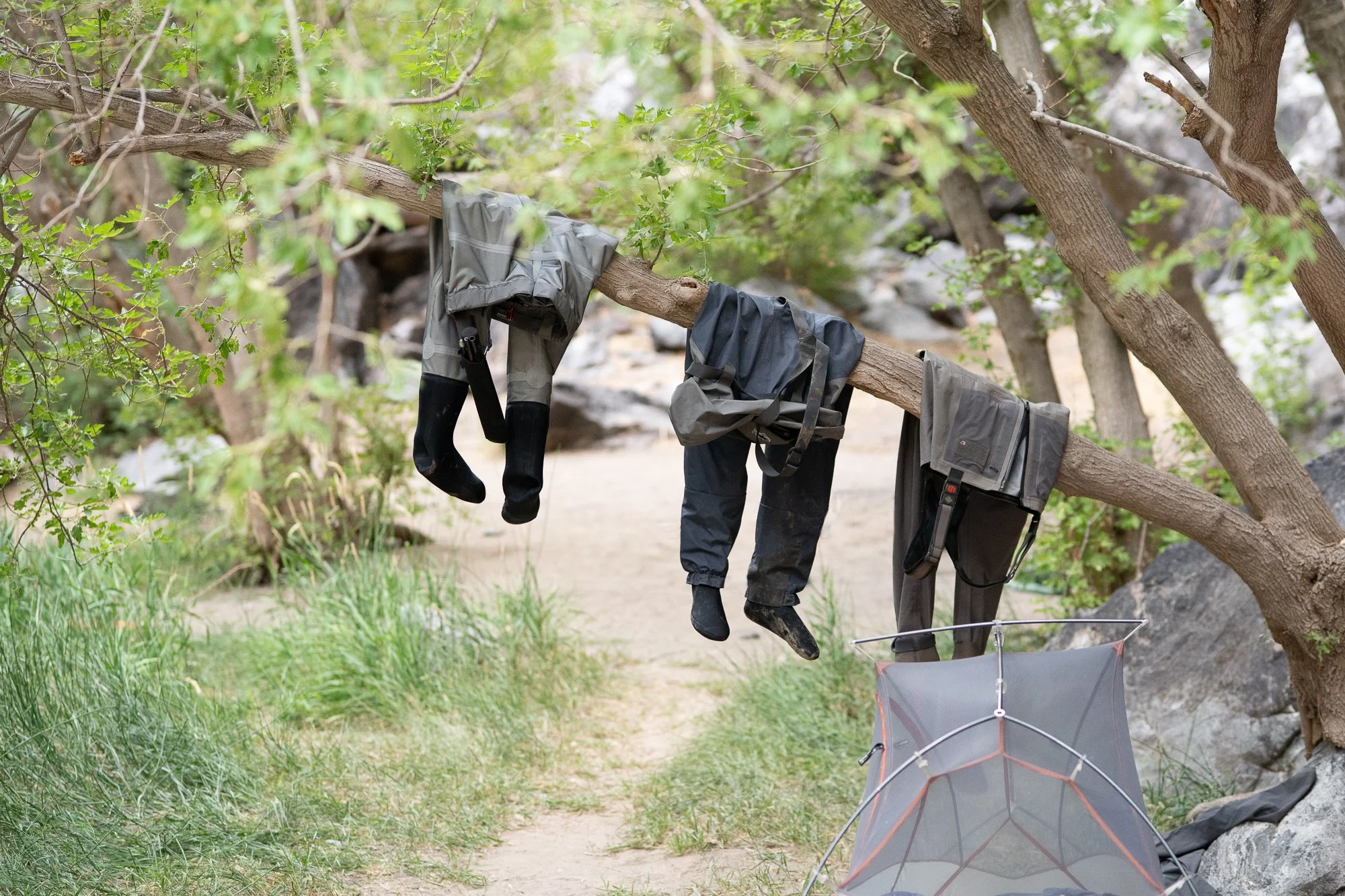
Fly fishing waders dry on a tree brach after a day of fishing in the Black Canyon of the Gunnison

Waders dry at riverside camp as gear rests between long days of fly fishing inside the Black Canyon.

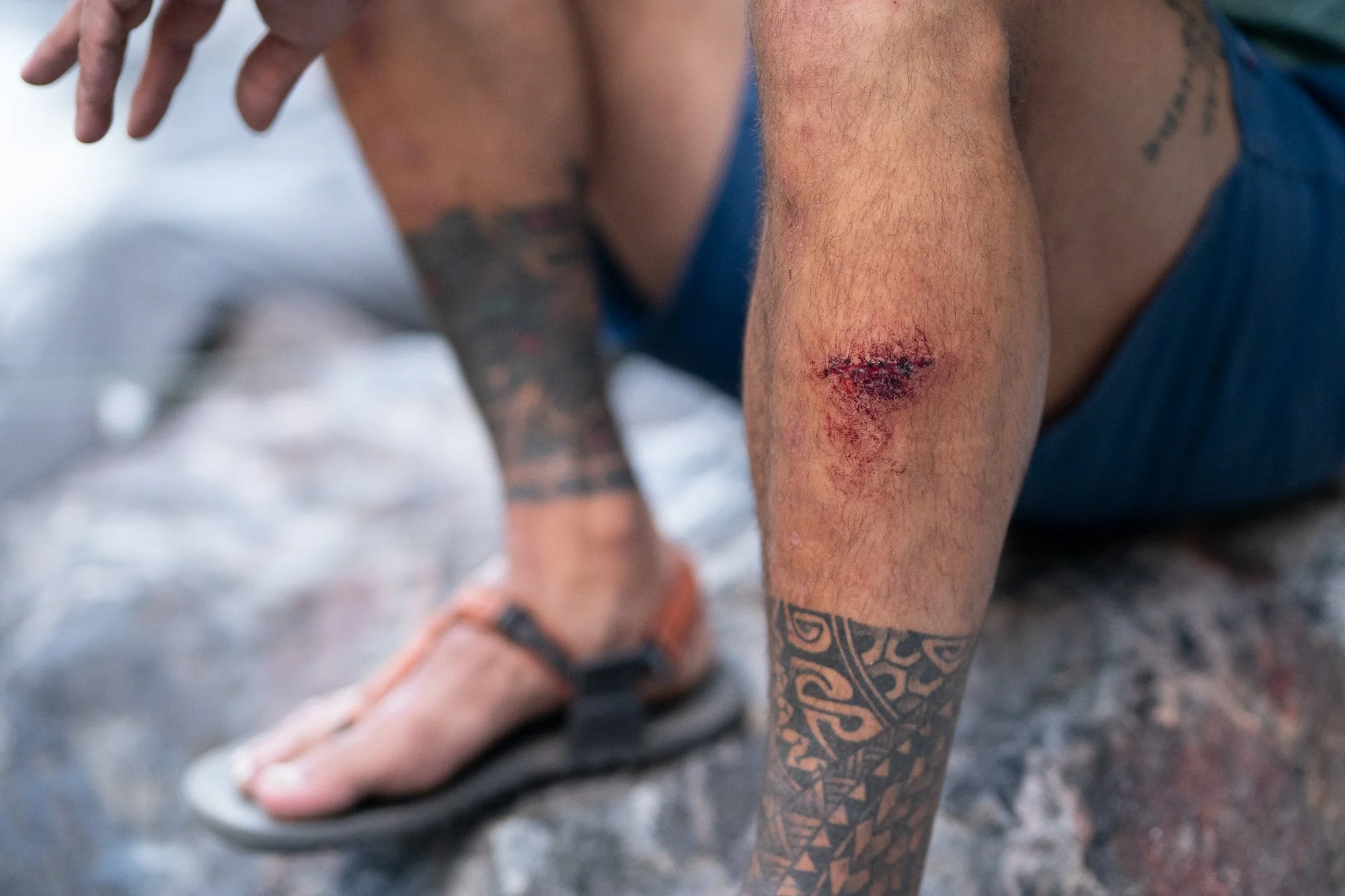
A close-up shows a scraped shin with fresh cuts at camp in Black Canyon

Scrapes and bruises come with navigating the steep rocks and rough terrain of Black Canyon.

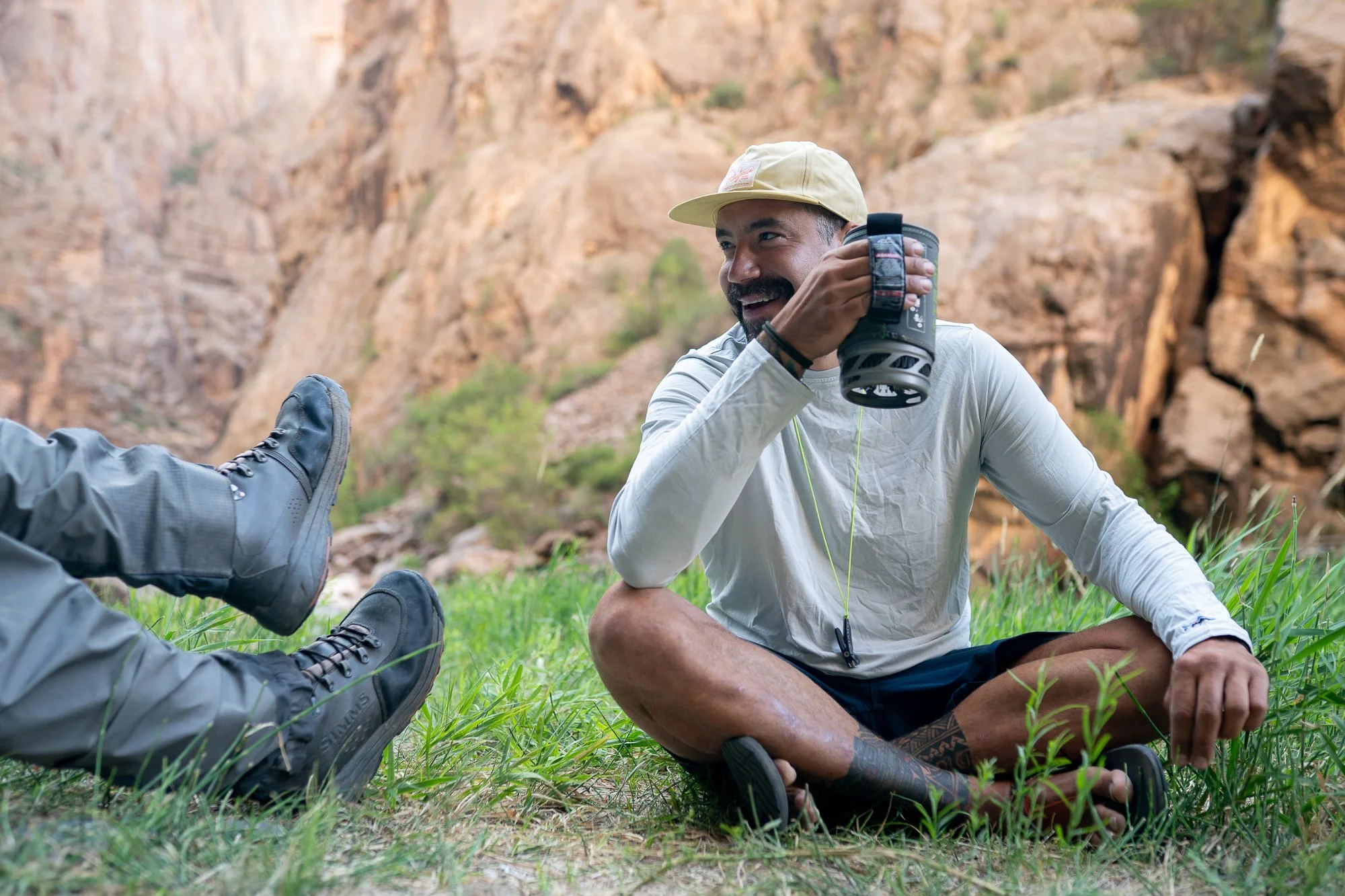
A man sits on the grass in Black Canyon holding a camp stove mug near the river

Morning at camp in Black Canyon, sharing coffee beside the river before heading back on the water.

Part of a Larger Body of Work

This work is part of an ongoing series documenting fly fishing across the American West—focused on real conditions, real environments, and the connection between anglers and the landscapes they move through.

If you’re interested in licensing imagery or working together on projects like this, get in touch - rob@robhammerphotography.com

View Fly Fishing Photography Portfolio

View Fly Fishing Prints

Explore more Colorado Fly Fishing Photography (Fall Foliage)

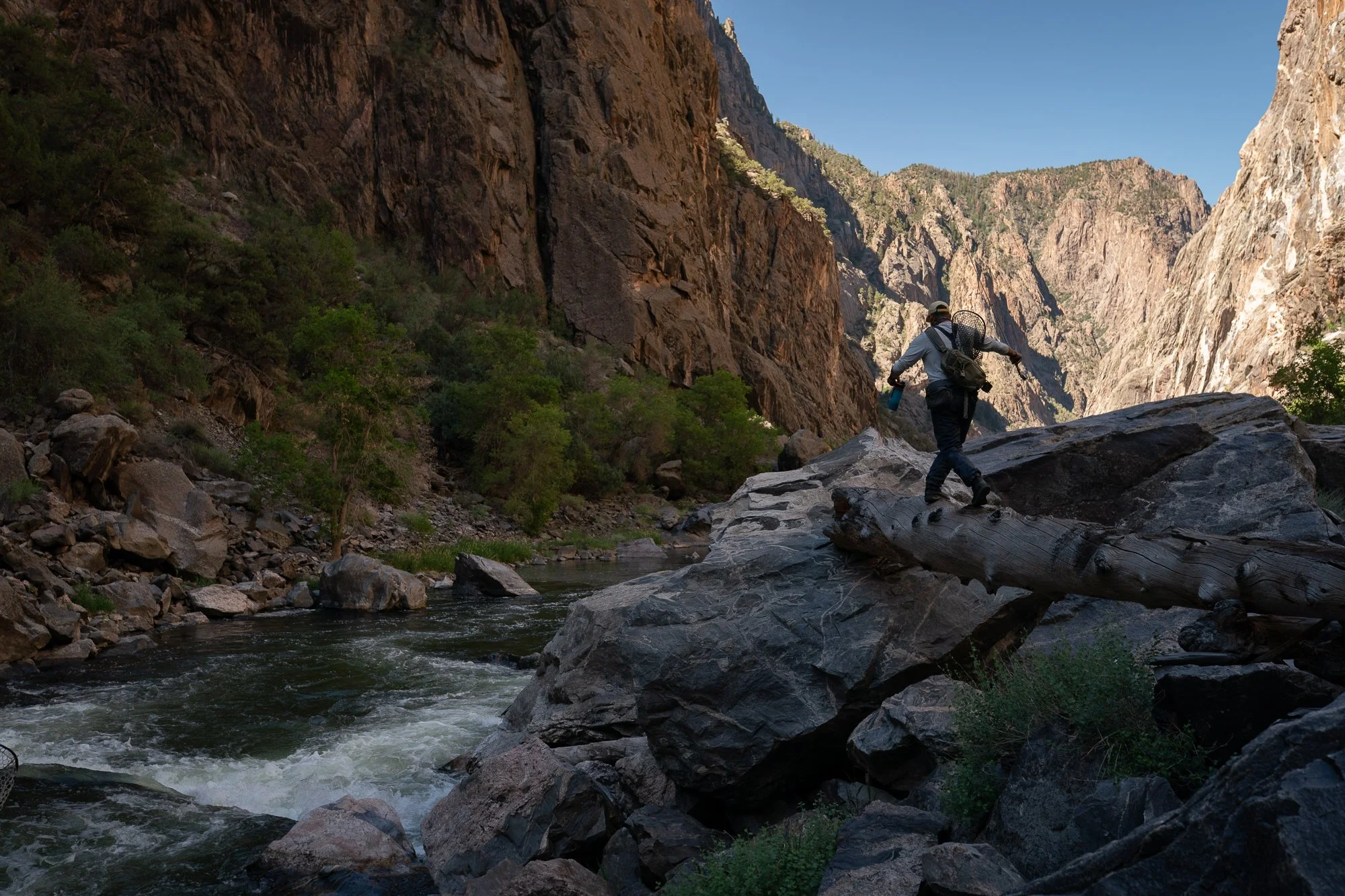
An angler crosses a fallen log above the Gunnison River inside the Black Canyon

Moving through remote canyon water often means navigating unstable crossings before reaching fishable water.

A fly angler stands on massive canyon boulders above fast-moving Gunnison River water

Technical water and unforgiving boulders demand precision at every step.

An angler casts while wading the Gunnison River in the Black Canyon

A fly angler works a slower stretch of river, casting across clear water beneath canyon walls.

A trout slips from an angler’s hand during release in the Gunnison River

A trout slips back into the current after release, disappearing into the clear water of Black Canyon.

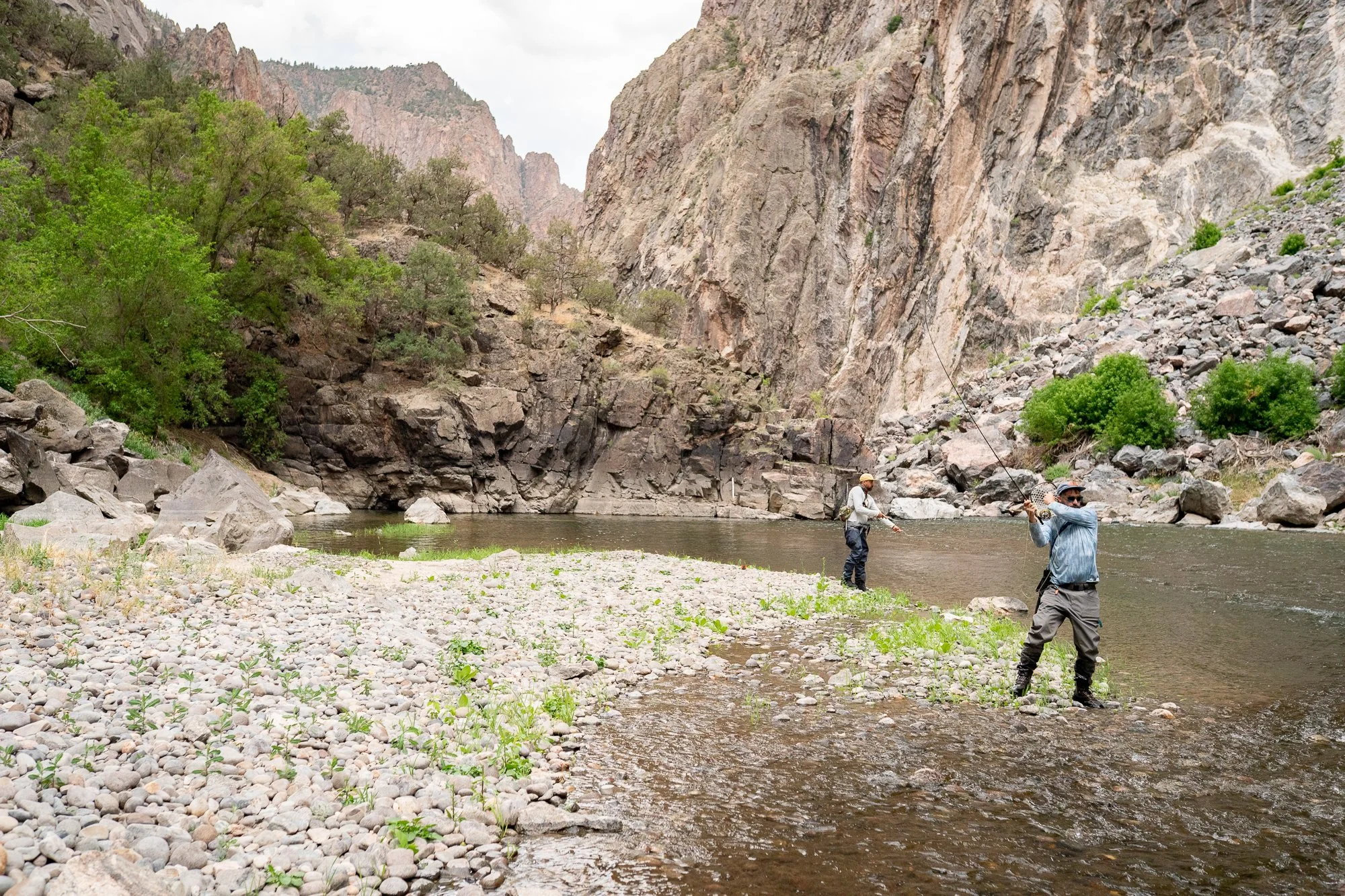
Two anglers fish wide canyon water beneath steep Black Canyon walls

Two anglers work separate seams of water, covering a broad stretch of river in Black Canyon.

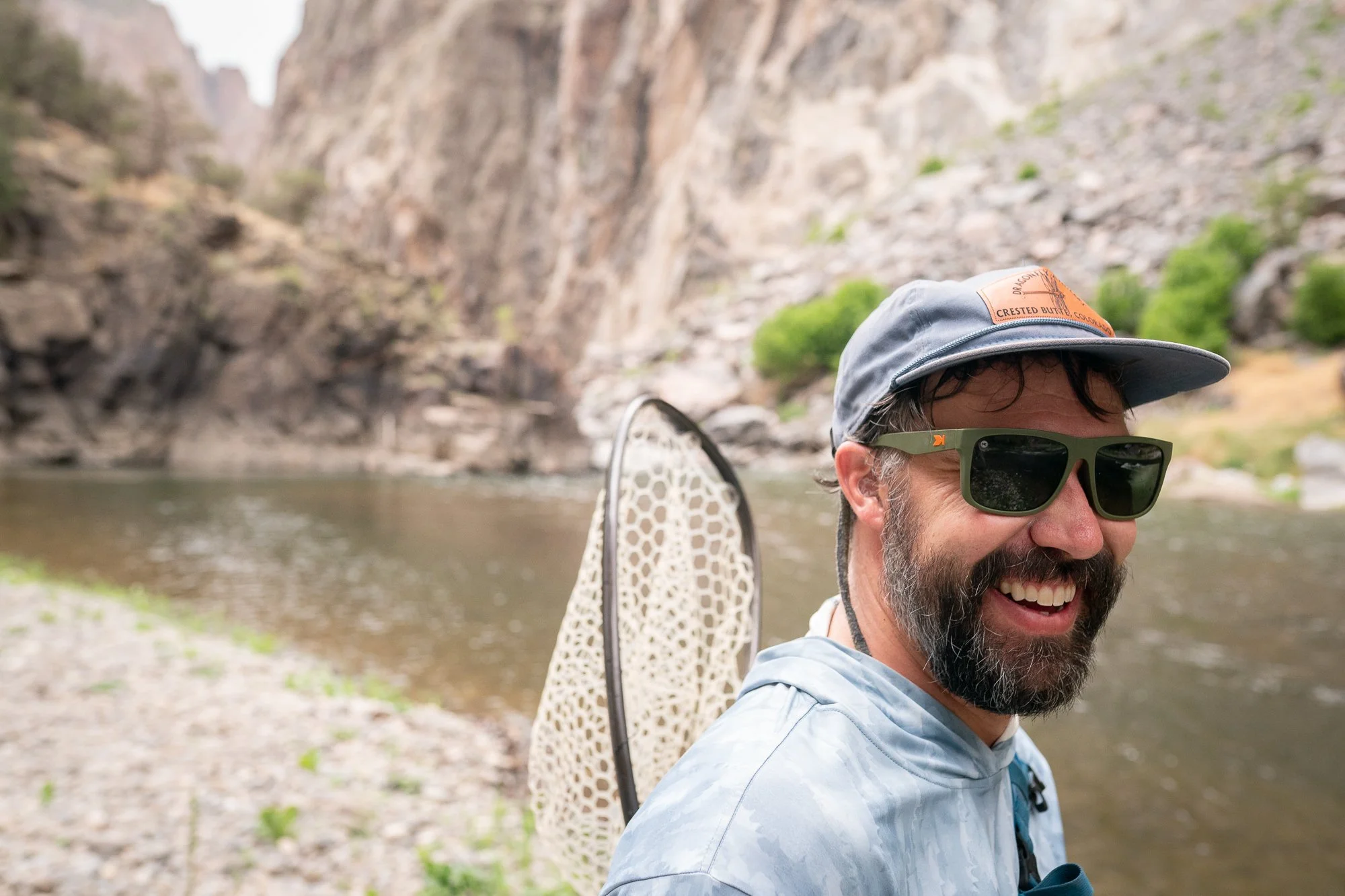
A smiling angler stands beside the Gunnison River after time spent in the Black Canyon

Hard miles and technical water still leave room for moments of earned satisfaction.

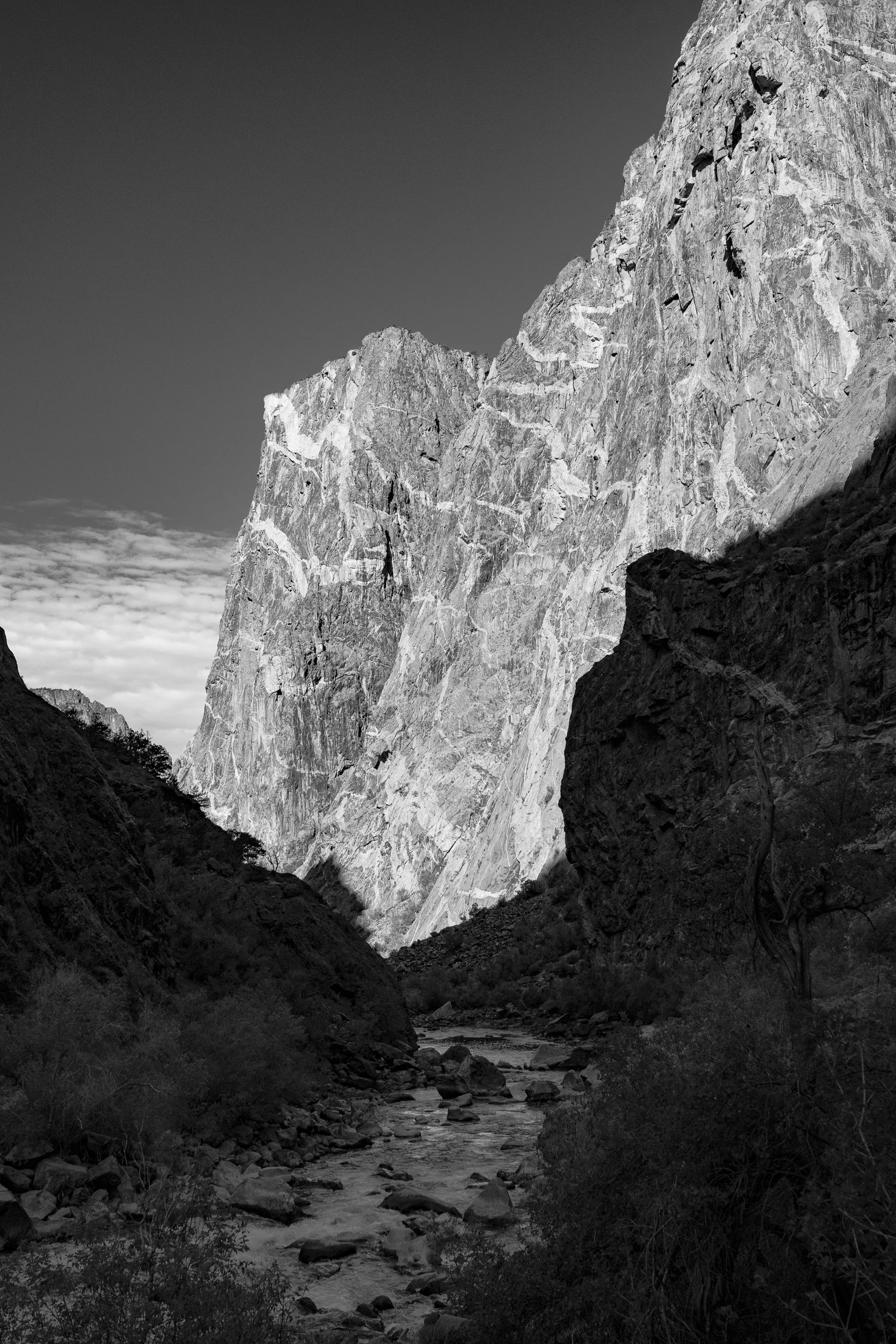
Steep canyon walls rise above the Gunnison River in the Black Canyon of the Gunnison

Massive canyon walls define the landscape, shaping the river corridor through Black Canyon.

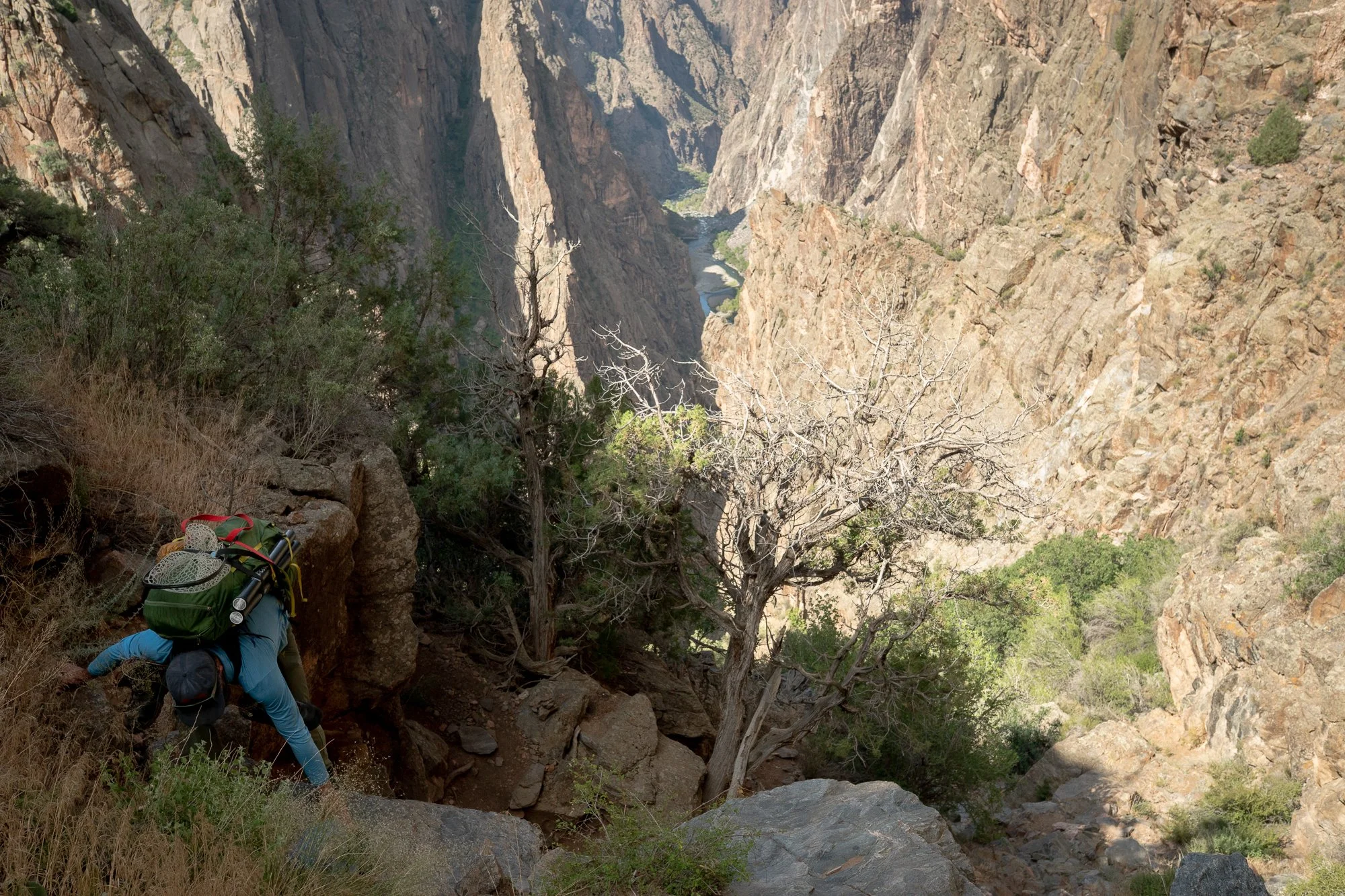
An angler carefully descends steep backcountry terrain above the Gunnison River

Hiking out of the Black Canyon is brutal work, but well worth the effort.

Cowboy Photography on View at the National Western Center in Denver

Western Photography Exhibition in Denver: Cowboy Work at the National Western Center

There’s no shortage of Western imagery in Colorado, but very little of it shows the work as it actually is.

Most people encounter the American cowboy through film, advertising, or nostalgia—images that lean heavily on mythology. What’s often missing is the day-to-day reality: the brutally cold mornings, endless days, the physical toll, and the quiet pride that comes with it.

That’s part of what makes this upcoming exhibition at the National Western Center worth paying attention to. Set inside the Legacy Building, the show brings together a group of photographers whose work engages with the modern American West in a more honest way—grounded in real places and real people.

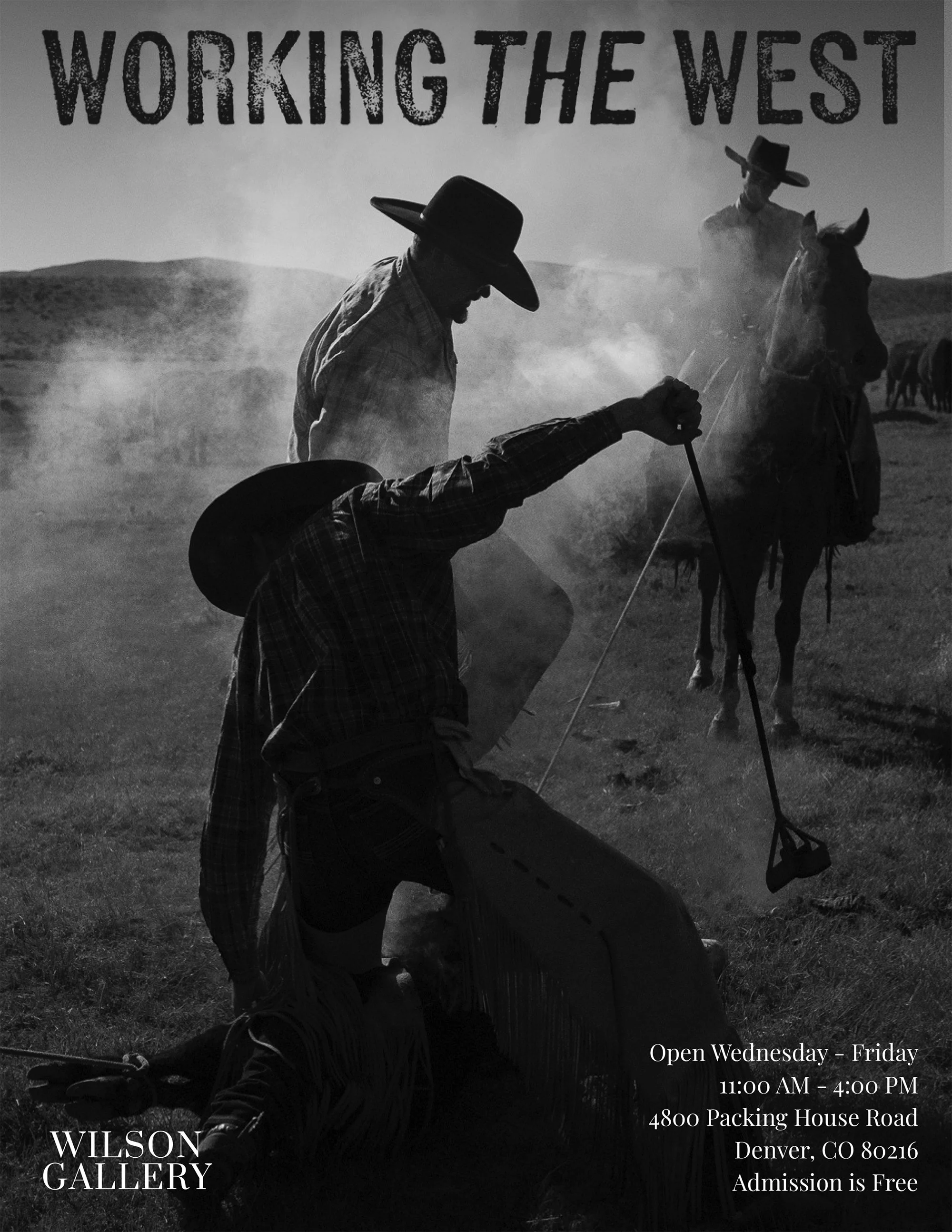
Poster for “Working the West” exhibition featuring cowboys working cattle with gallery details  for Wilson Gallery in Denver, Colorado

Poster for the “Working the West” exhibition at Wilson Gallery in Denver, Colorado, featuring a photograph of cowboys working cattle as part of a larger documentary project.

About the Exhibition at the National Western Center

The exhibition will be held in the Wilson Gallery, a space that has quickly become a focal point for Western art and culture in Denver.

The National Western Center itself is evolving into something more than an event venue. It’s positioning itself as a year-round hub for agriculture, history, and the contemporary West—making it a fitting place for work that sits at the intersection of tradition and modern life.

This particular show brings together a range of photographic perspectives. Some lean toward landscape, others toward portraiture, but all orbit around the same subject: the West as it exists today, not as it’s remembered.

Being included alongside a group of well-known photographers (Anouk Krantz, Jay Dusard, Jim Krantz, and Rob Hammer) adds another layer to the exhibition—not just in terms of visibility, but in how the work is viewed in conversation with others who have spent years documenting similar worlds.

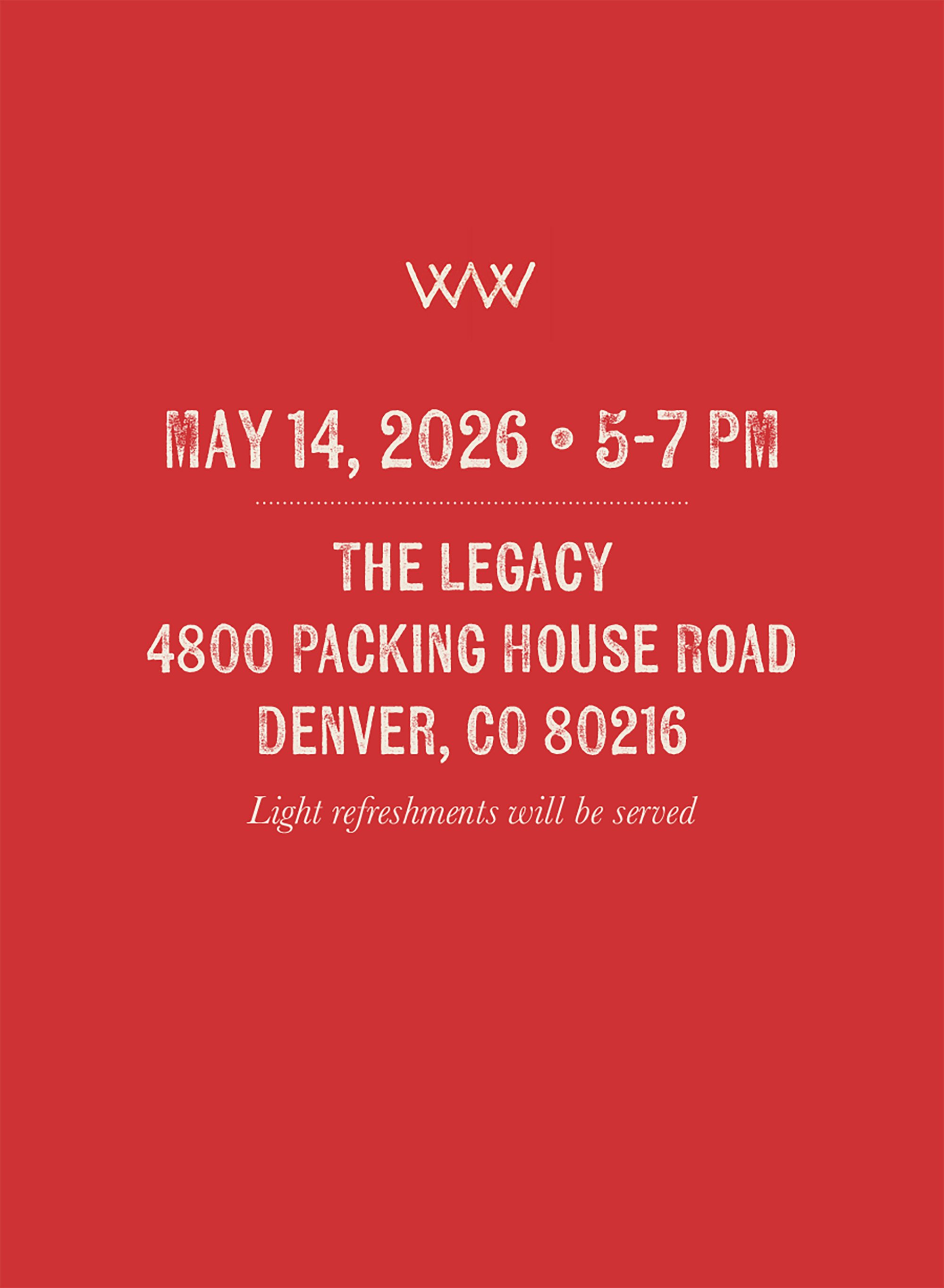
Exhibition poster with date, time, and location details for a Western photography show at the  Legacy Building in Denver, Colorado

A printed graphic listing the date and location for the exhibition at the National Western Center in Denver.

Cowboy Photography as Contemporary Western Art

There’s a tendency to treat cowboy imagery as something fixed in the past. But the reality is that the work hasn’t gone anywhere—it’s just largely out of sight.

Across the American West, cowboys are still doing the same jobs they’ve done for generations: gathering cattle across vast, rugged pastures, branding, doctoring, etc. The tools have changed in small ways, but the core of the work remains the same.

Photographing that world requires access, time, and a willingness to work within it—not around it. The difference shows.

In this context, cowboy photography becomes less about nostalgia and more about documentation. It sits closer to documentary photography than it does to traditional Western art, even if it shares the same visual language.

That shift is subtle, but important—and it’s part of what this exhibition reflects.

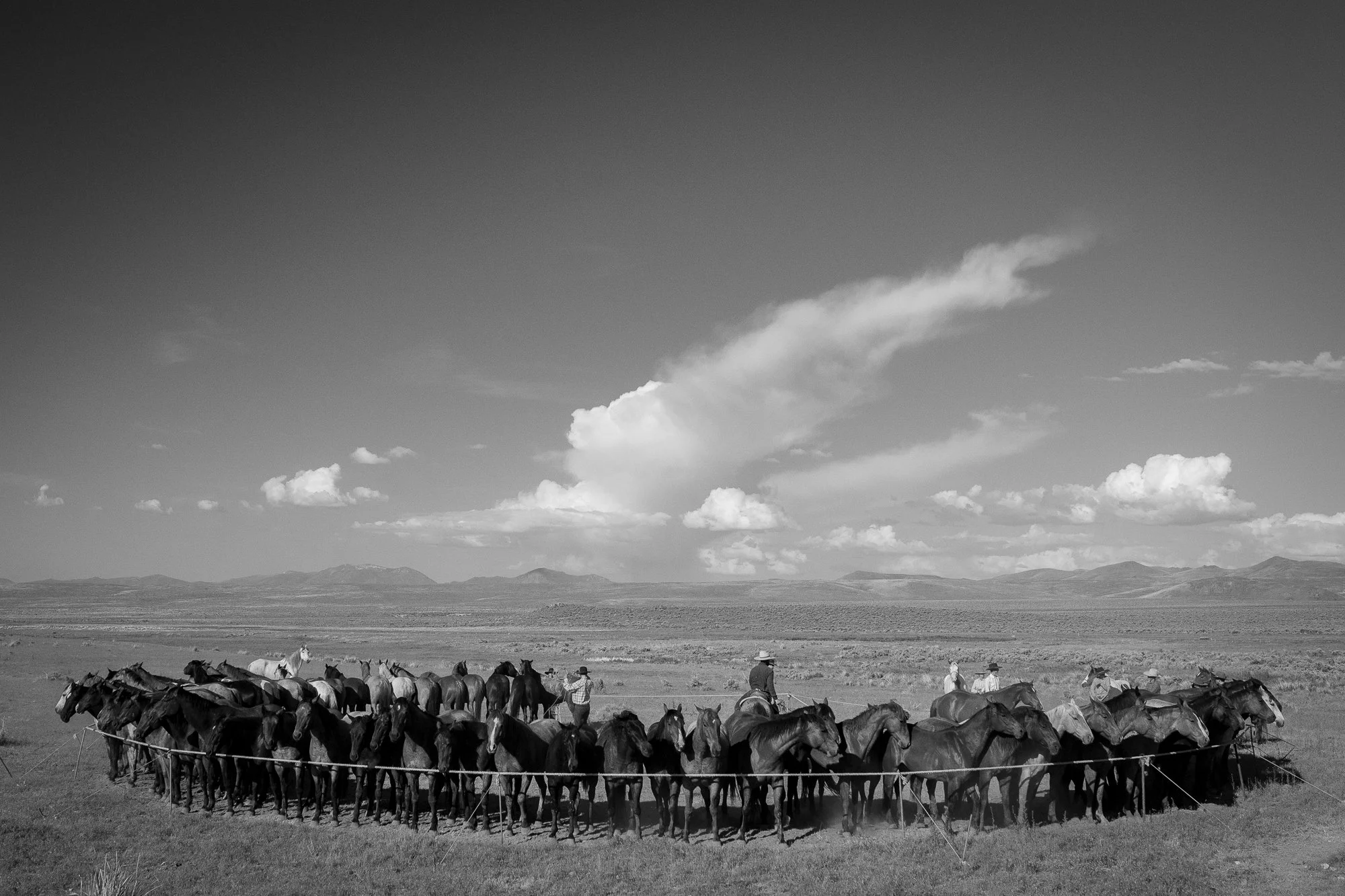
Horses gathered in a line with riders managing them in an open landscape in the  American West

Horses stand grouped in a line while riders move along them, a pause within the ongoing work of managing animals across open range.

Photographs from the Exhibition

The photographs included in this show come from a long-term body of work made across ranches in Texas, Nevada, Arizona, Wyoming, Oregon, Colorado, and Montana.

Rather than isolating dramatic moments, the focus is often on the in-between. These are not staged scenes. They’re fragments of a larger rhythm—one that repeats itself day after day, season after season.

Over time, those moments begin to add up to something more complete: a picture of a way of life that continues largely unchanged, despite the pace of everything around it.

Visiting the Exhibition in Denver

For those in Denver—or passing through—the exhibition offers a chance to see this work in person, outside of a tiny screen or a printed page.

Location: National Western Center
Gallery: Wilson Gallery
Building: Legacy Building

Dates: May 14, 2026 through the middle of July

Seeing the photographs at scale changes the experience. Details that are easy to miss online—subtle expressions, textures, the quality of light—become much more apparent. Come see the work as photographs are meant to be enjoyed, on large fine art paper.

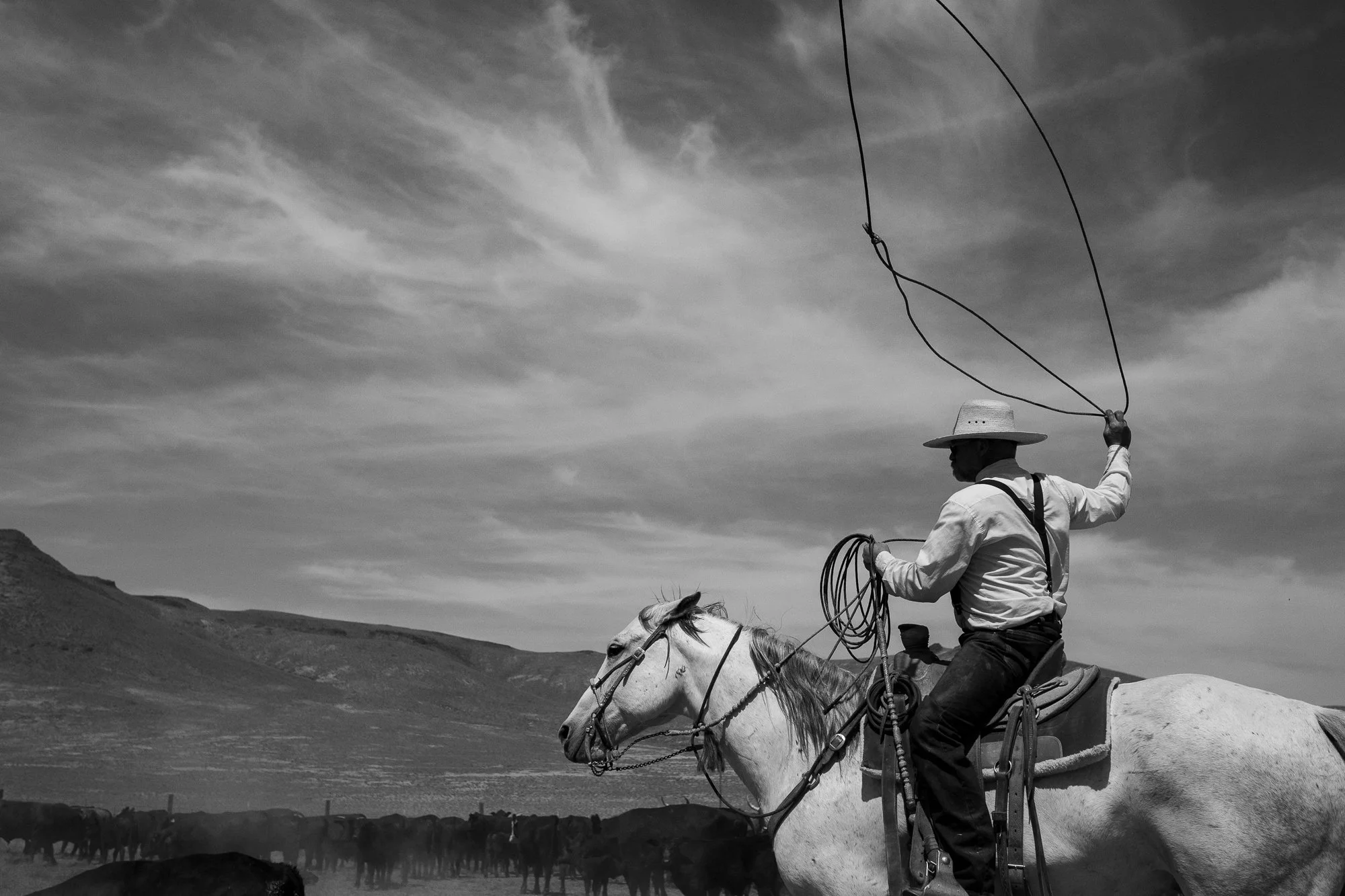
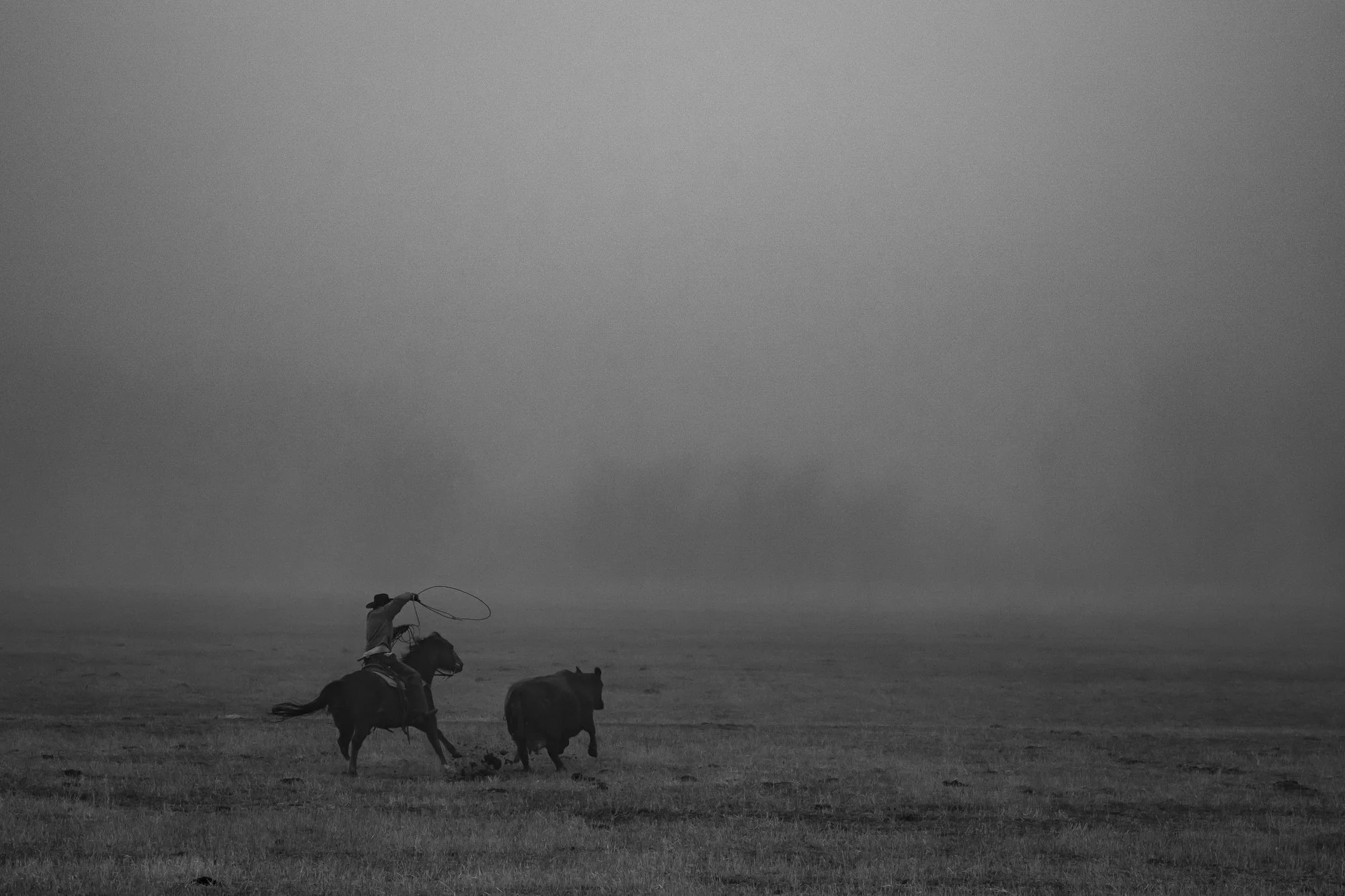
Cowboy on horseback swinging a rope while working cattle in an open landscape in the  American West

A cowboy swings a rope from horseback while working cattle, one of the repeated movements that make up daily ranch work across the American West.

Part of a Larger Body of Work

This exhibition is one piece of a much larger project documenting working cowboys across the American West.

Over the past several years, that work has involved traveling tens of thousands of miles, spending extended time on remote ranches, and building relationships that allow for real access—not just to the work itself, but to the people behind it.

The goal has never been to romanticize the subject, but to show it as it is: demanding and deeply tied to the land.

If you’re interested in seeing more from the series, you can explore the full body of work here:
View the Cowboy Photography Project

A selection of photographs from the project is also available as fine art prints:
View Available Cowboy Photography Prints

For editorial, commercial, or brand licensing inquiries, contact me directly:
Licensing & Assignment Work

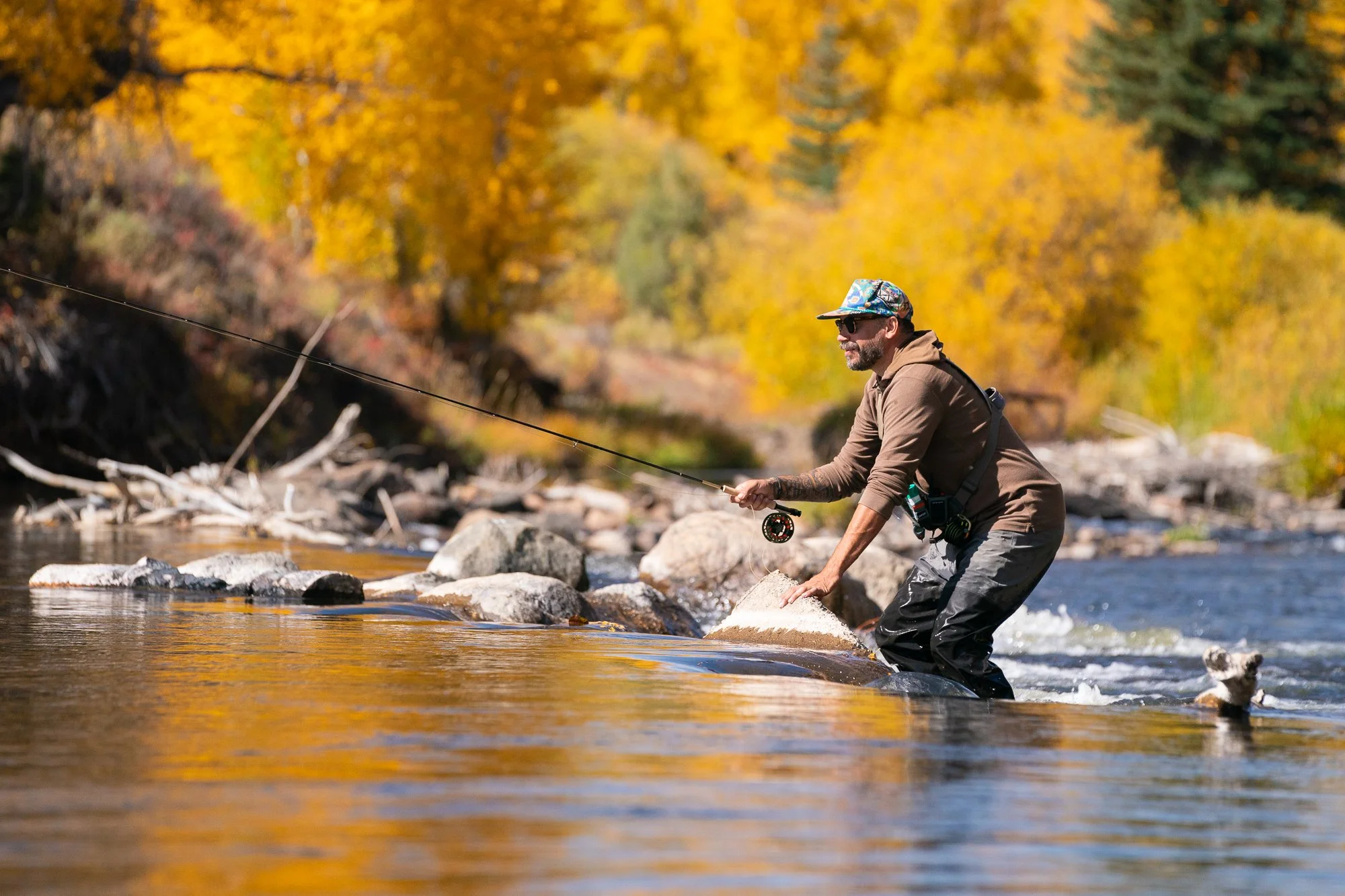
Fly Fishing Colorado’s Fall Colors: Real Anglers on the Colorado River

Colorado River Fly Fishing Photography in Peak Fall Foliage

There’s a short window on the Colorado River every year when the angling and the scenery hit their stride at the same time. The leaves go yellow overnight, the mornings get cold enough to make you second-guess your life choices, and the trout—rainbow and brown—decide that maybe eating one more bug isn’t the worst idea.

If you’re lucky enough to be on the river when this happens, you’ll never forget it. If you’re stubborn enough to be a photographer, you try to make a picture of it that holds onto the truth of the moment. That’s the part no one tells you: the trout aren’t the slippery ones—memory is.

Autumn Light, Golden Aspens, and the Rhythm of the Colorado River

Fall on the Colorado River has its own kind of math. The light comes in at an angle that makes every rock look older and every shadow more serious. The aspens flare up like they’ve been waiting all year for the chance, and the river—never shy—slows down just enough for the reflections to make sense.

Photographing fly fishing in this kind of light is a lot like fishing it: you show up early, stand in the cold, and wait for the thing you hope will happen. Sometimes it does.
Sometimes it doesn’t.
But the truth is, you’d be standing out there anyway.

The angler in these photographs isn’t a models—he’s the kind of person who know which seam holds fish and which one just looks good from the bank. He wades out on their own terms, cast with a little grace and a little grit, and don’t make a big deal out of any of it. That’s why they photograph so well.

The river gives you a backdrop. The anglers give you the story.

On this particular day in this particular location I had a specific shot in mind which involved sitting up on the hill about 100 yards from where the angler was casting, just hoping he would catch a fish. Some time later, sure enough his body language completely changed and it was obvious he connected with a big fish. He fought with that thing for some time while I made some photographs. Entertaining as hell to watch and all the more enjoyable knowing that he had forgotten his net in the truck. Luckily he was able to beach the fish on the side of the river, which was punctuated with a scream heard from 100 yards away! A scene and a fight neither of us will ever forget.

Real Anglers, Real Casting, and True Western Fly Fishing

There’s a difference between someone who’s “out fishing” and someone who’s actually fishing. The former drinks beer out of a can and tells the same stories louder every year. The latter ties knots by feel, argues with themselves about tippet size, and doesn’t mind getting skunked as long as the cast felt right.

These are the anglers in my frames:
the real ones.

Some of these shots are wide—an angler small against a big bend in the river. That’s how it really looks out there. The scale is tilted in the river’s favor, and the angler knows it. The other shots get closer to the action: the line tightening, the water breaking, the moment right before a fish decides whether it’s smarter than you.

If you’ve ever fished fall in Colorado, you know the feeling. If you haven’t, these images get pretty close.

Fine Art Prints and Licensing Options for Brands and Magazines

Every photograph in this series came from a real day on the river, watching for the way autumn light settles across a seam or how a cast runs parallel to a line of yellow trees.

For collectors, these images make strong fine art prints—color-rich landscapes with just enough human presence to pull you in without letting you forget where you are. They hang well in homes, offices, lodges, and cabins, especially among people who know a good drift when they see one.

For brands, outfitters, and magazines, the images are available for editorial and commercial licensing. They were made with real anglers, real rivers, and real weather, which seems to matter more and more these days. If you need authentic Western fly fishing photography for a campaign or feature, these frames will do the job without pretense.
Fall doesn’t last long out here, but the river runs all year.
The photography tries to keep pace.

Fine art prints are are available in my Fly Fishing Print Gallery

You can also view the full collection of fly fishing photographs HERE

For editorial and commercial licensing options or custom assignments on the water, feel free to email me - rob@robhammerphotography.com

Photograph of a fly fisherman walking through trees full of fall foliage

Fall fly fishing lifestyle photograph

Photograph of a fly fisherman casting in a river surrounded by beautiful yellow fall foliage

Colorado fly fishing in fall foliage

Action shot of a fly fisherman on the Colorado River in fall foliage

A fly fisherman surrounded by yellow leaves

Brand photography shoot for fall foliage fly fishing

Fly fishing brand photography

Photograph of a fly fisherman on a river in a large Western landscape surrounded by fall foliage

Fall foliage fly fishing in a Western landscape

Wide angle shot of a fly fisherman on the Colorado River surrounded by trees with bight yellow leaves

Fly fisherman on the Colorado river in fall

Beautiful photograph of a fly fisherman walking through large trees covered in fall foliage. Available for editorial and commercial licensing.

Fly fisherman walking through fall foliage

Western Artist William Matthews

William Matthews – Legendary Western Artist and His Creative Studio in Denver

William Matthews (born 1949) is one of the most influential painters of the American West — best known for his evocative watercolors of working cowboys, landscapes, ranch life, and Western culture. Though he didn’t grow up in the West, his artistic journey has taken him from New York City to studios and ranches across the region. I recently spent time photographing him in his Denver studio to document both the man and the creative space that shapes his work.

Meeting William Matthews — A Western Artist Icon

Although he doesn’t come from The West and wouldn’t restrict himself to the title of Western Artist, there is no denying the indelible effect William Matthew’s work has had on Western culture.

As with most of my subjects in any genre, it’s important that I have a genuine interest. And I’ve long been a fan of Matthews’ art, which was the reason for this collaboration. At 76 years young he’s full of life and still has an insatiable desire to create art at a prolific pace. So having the opportunity to meet and photograph Matthew’s at work in his Denver, CO studio was a gift i’ll always be grateful for. A lot of artists can’t be bothered with this kind of thing, but he was welcoming and generous with conversation throughout our time together.

Shared Stories from Historic Ranches Across the West

Of the many compliments you could say about an artist, perhaps the best is that their style is instantly recognizable. And there’s no mistaking the renowned paintings he created of the American West, specifically of the buckaroos in nothern Nevada. There isn’t another artist alive whose work even vaguely resembled Matthews’. Which could be a big reason for his success, but it was also what drew me to him. Digest his paintings for a while and you’ll know they were created by a person that truly became part of the life. He was there. The light, colors, and textures, and the body chemistry of his subjects could only be made by a person with first hand experience. So naturally we talked a lot about our experiences having visited a lot of the same ranches. Oddly, a few days before writing this post, I came back from the Winecup Gamble Ranch - a place he frequented. A number of his paintings of the ranch grace the walls there and his book “Working The West” sits proudly on the coffee table at the big house. To further the conversation about shared experiences we also spoke about Western Spirit: Scottsdale’s Museum of the West, where I was honored to have work on the walls at the same time as his incredible exhibition.

Capturing the Atmosphere of an Artist’s Workspace

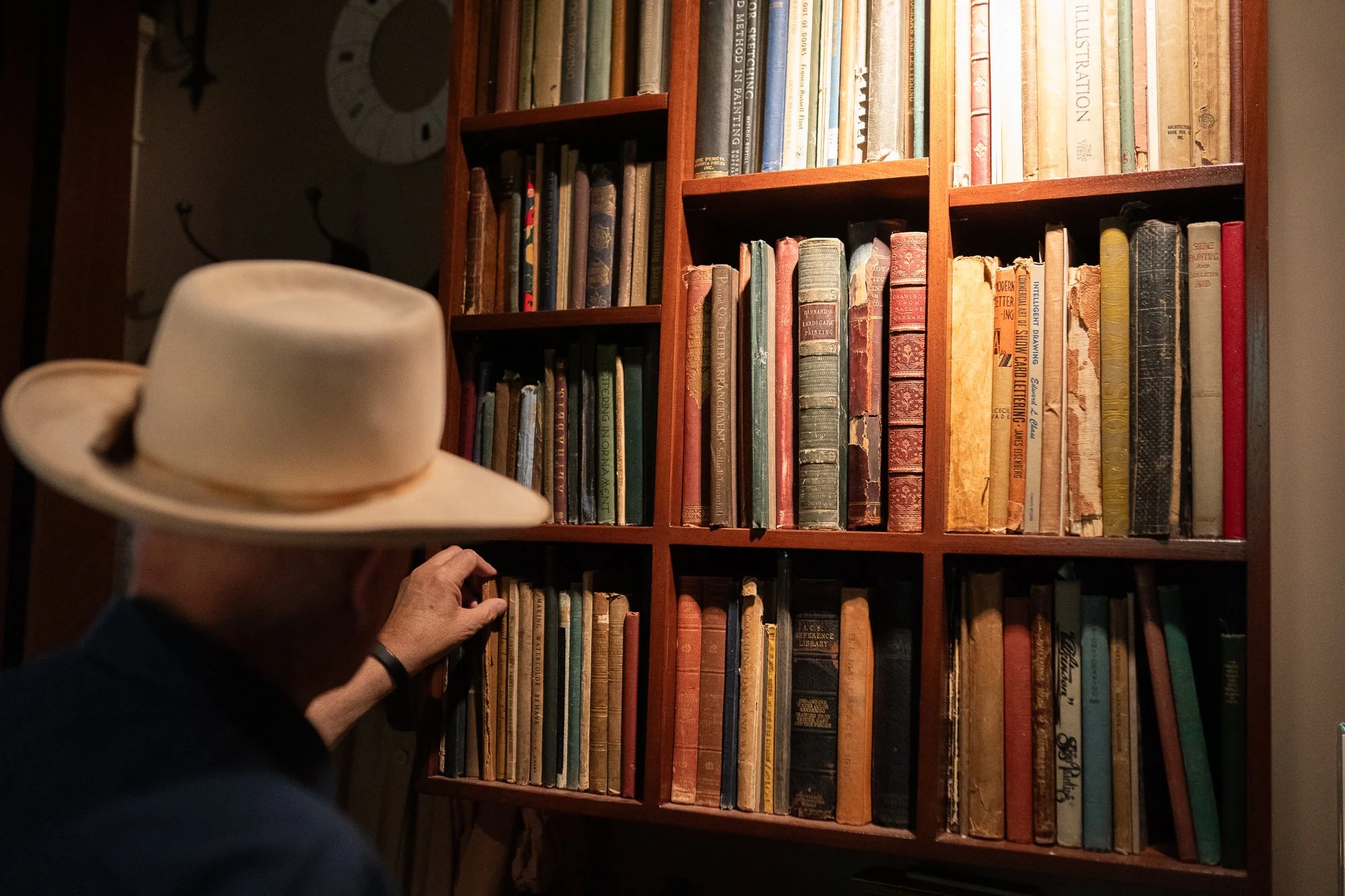
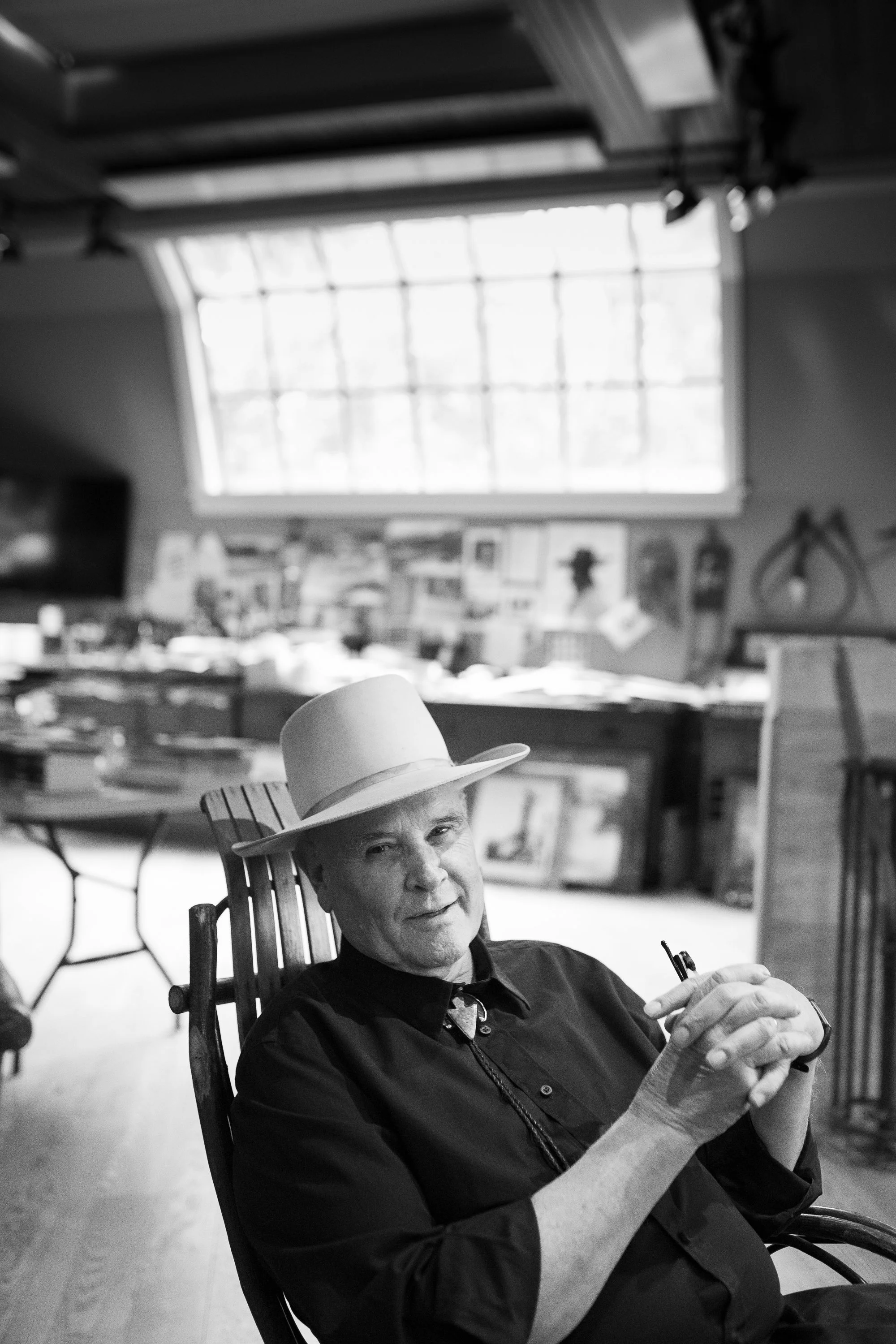
Matthew’s has lived a life in art. It is his life, and that’s obvious when you walk into his beautiful studio, which I’m told he hadn’t ever granted access to. The shelves are filled with books about design - previous profession and gateway into art. The floors are a beautiful hard wood that accents the rich walls filled with momentos from decades of travel, and of course, art. The upstairs loft feels like a break room of sorts, where Matthews goes to play one of the dozen guitars that line the space. All of this is obviously bathed in beautiful light from the north facing window that he designed along with the rest of the studio.

Photographing an artist like this in his sanctuary should never be taken lightly. And there is also a lot to consider when it comes to the plan of attack. First and foremost is respecting their time. Beforehand I had it in my head to set up a few strobes, but quickly realized that half hour would be better spent photographing documentary style as a fly on the wall with available light. For someone like Matthews, all that matters is the art. He doesn’t care about having his photograph made, nor does he need it. So I made it a point to be as effective as possible in as little time as possible so he could get back to it.

How Matthews’ Work Connects to Cowboy Photography

William Matthews has spent decades painting working cowboys — not the Hollywood version, not the myth, but the real men who ride out before the sun and come home only when the work is done. His watercolors aren’t loud or romanticized. They’re quiet, restrained, and deeply observant. The details matter: the way a hat sits after a long day, the posture of a rider checking cattle, the weight of open country pressing against a lone figure.

That’s the same thread that runs through my own cowboy photography, and I have and continue taking heaps of inspiration from Matthews’ Buckaroo paintings.

While Matthews works in watercolor and I work with a camera, the intent feels similar — to pay attention to the people who actually live this life. To show the labor behind the image. To acknowledge that raising cattle and maintaining ranch traditions is demanding, physical work that still feeds communities and shapes the American West.

His paintings slow the viewer down. They invite you to notice subtle shifts in light, gesture, and atmosphere. Photography, at its best, can do the same. Both mediums rely on observation. Both depend on trust — the kind that allows you to step into a rancher’s world without turning it into spectacle.

Spending time in his studio made that connection even clearer. Matthews’ walls are lined with studies, reference images, and decades of visual research. The work doesn’t happen by accident. It’s built on repetition, discipline, and showing up again and again — something I’ve learned firsthand while photographing working cowboys across the West for more than a decade.

Different tools. Same subject. Same respect for the culture.

Photographing Working Cowboys of the American West

If you’re drawn to Matthews’ iconic interpretation of working cowboys, you may also appreciate my ongoing photographic project documenting ranch life across the American West. You can view the full series of working cowboy photographs here.

Another Voice in Contemporary Western Art

William Matthews’ work has helped define the modern image of the working cowboy. I’ve also spent time photographing iconic Western artist Teal Blake — another painter deeply rooted in the culture of the American West. See those photographs here.

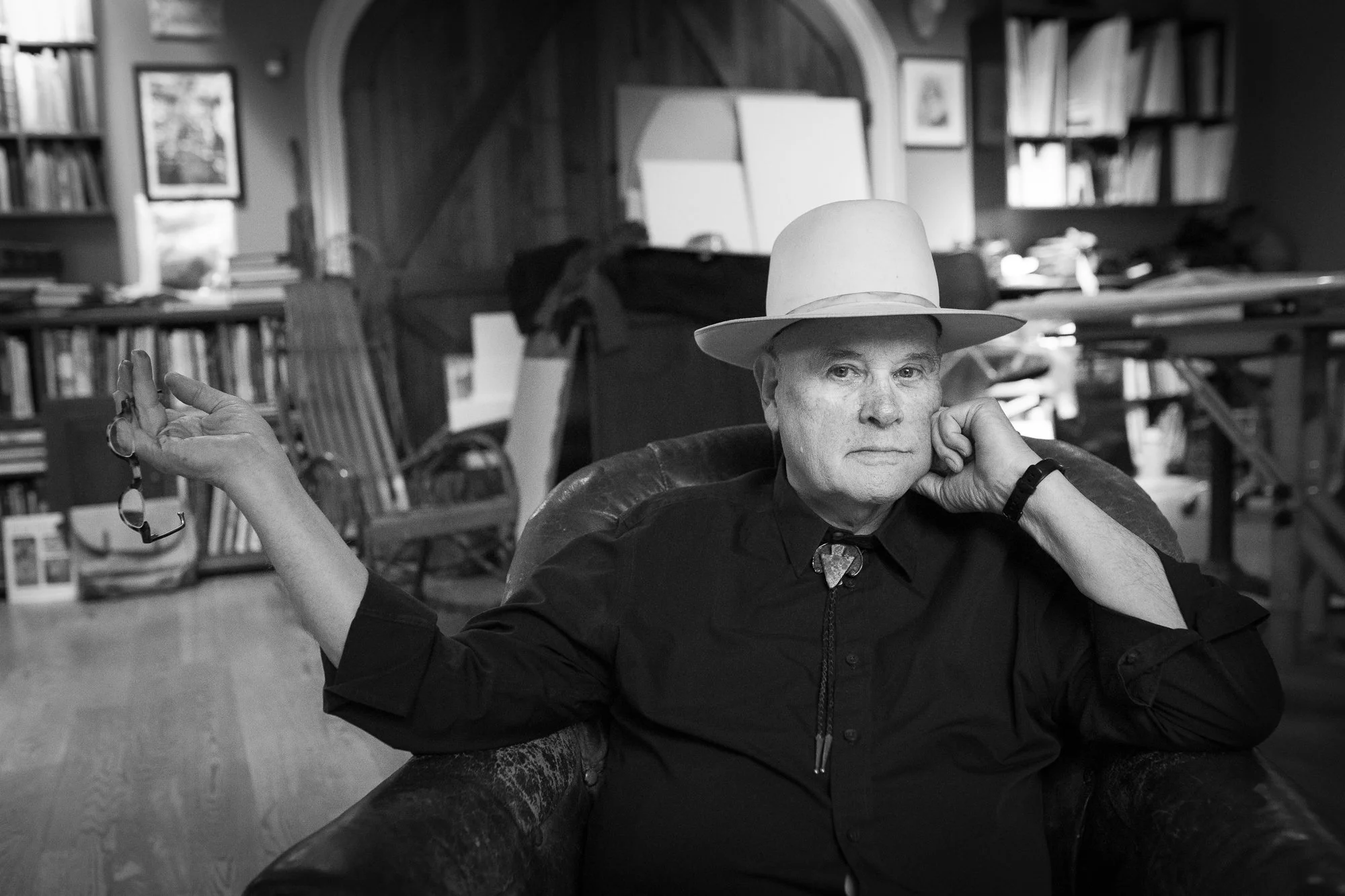
Western artist William Matthews laughing in warm studio light wearing a cowboy hat and bolo tie

William Matthews in a candid moment inside his studio. His paintings of working cowboys and ranch life have become a defining voice in contemporary Western art.

William Matthews working at his desk surrounded by books and paintings in his Western art studio

Matthews at work in his Colorado studio, surrounded by reference books, studies, and decades of accumulated material that inform his paintings of the American West.

Black and white portrait of Western painter William Matthews seated in his studio

A quiet portrait of William Matthews inside his working studio, where his celebrated cowboy paintings take shape.

Watercolor palettes and paint brushes on a table in William Matthews’ studio

Pigment-stained palettes and well-worn brushes — the quiet tools behind Matthews’ watercolor interpretations of cowboy country.

Bookshelves filled with art books inside William Matthews’ Western art studio

A wall of well-worn art books lines the studio shelves. Even an established Western painter remains a lifelong student of the craft.

William Matthews seated in rocking chair inside his art studio under large window

Seated beneath the studio windows, Matthews reflects between works. His paintings have shaped how many collectors visualize the modern cowboy.

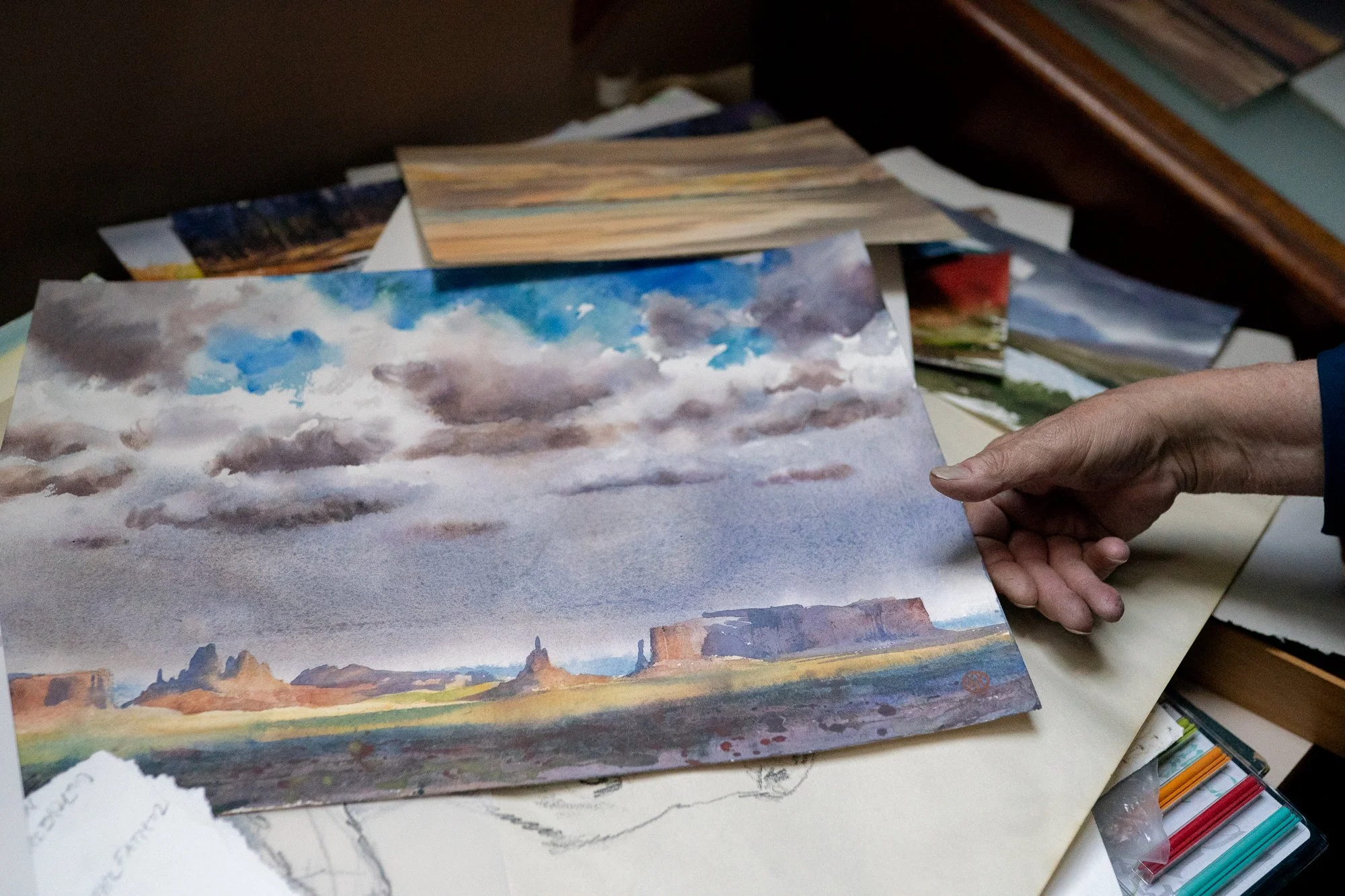
Western landscape watercolor painting featuring mesas and dramatic sky by William Matthews

A watercolor study of the American West, where open sky and distant mesas echo the same landscapes that inspire generations of cowboy artists.

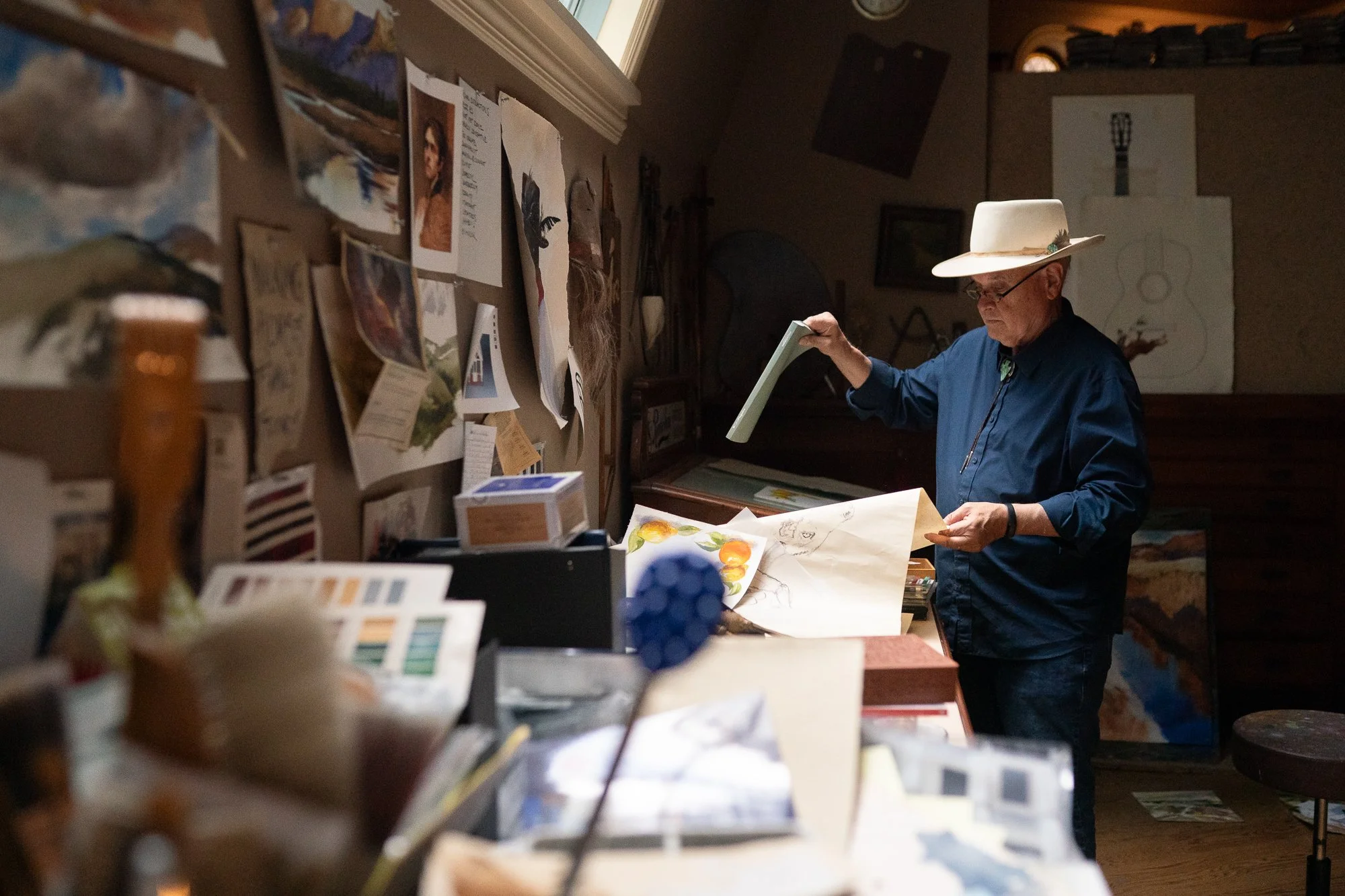
William Matthews examining watercolor painting in his studio workspace

Reviewing a recent watercolor study, Matthews considers light, atmosphere, and restraint — hallmarks of his Western landscapes.

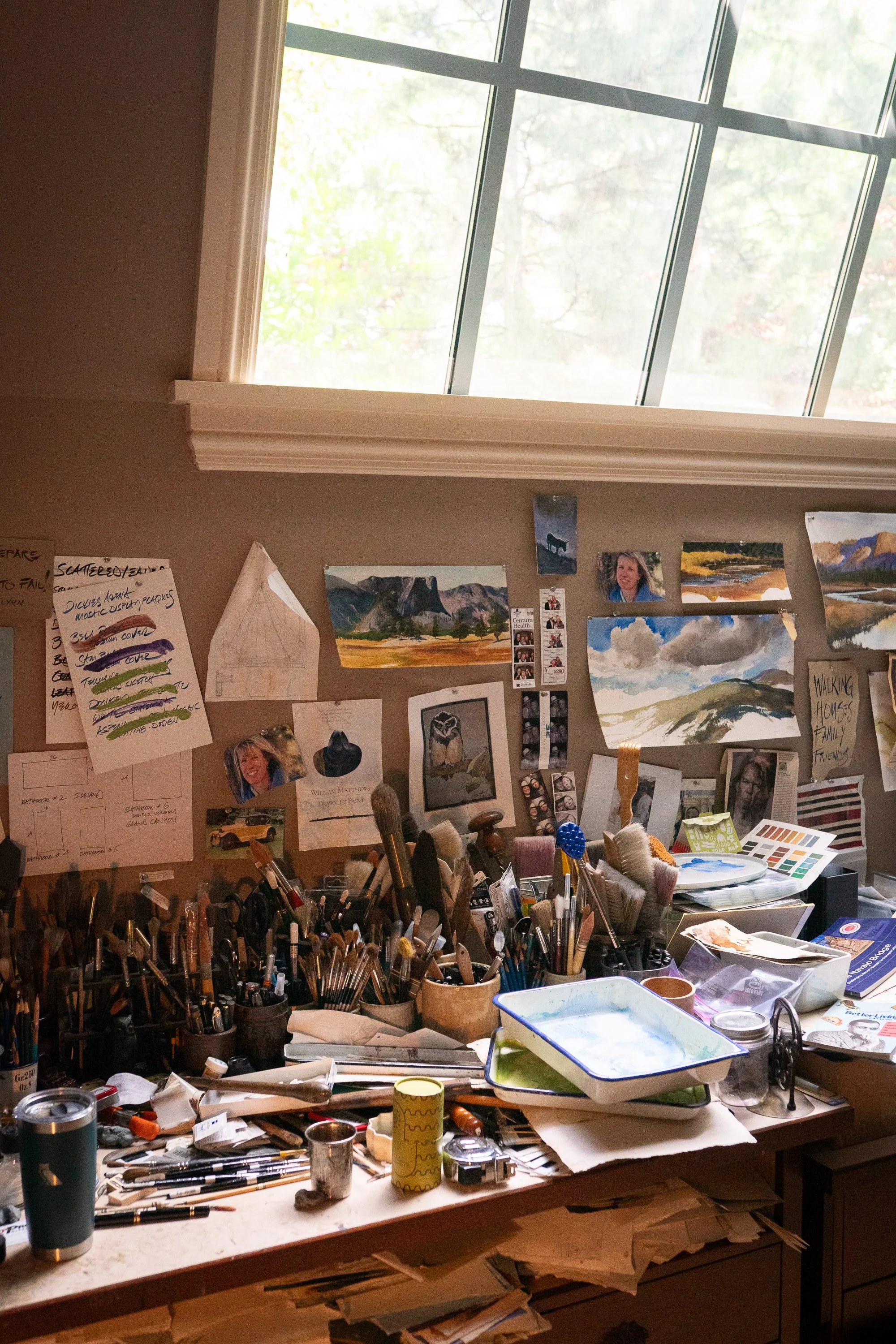
Artist desk filled with brushes, pinned sketches, reference photos and watercolor trays in William Matthews’ studio

Pinned studies, reference photographs, handwritten notes, and brushes crowd the desk — a working studio shaped by decades devoted to painting the West.

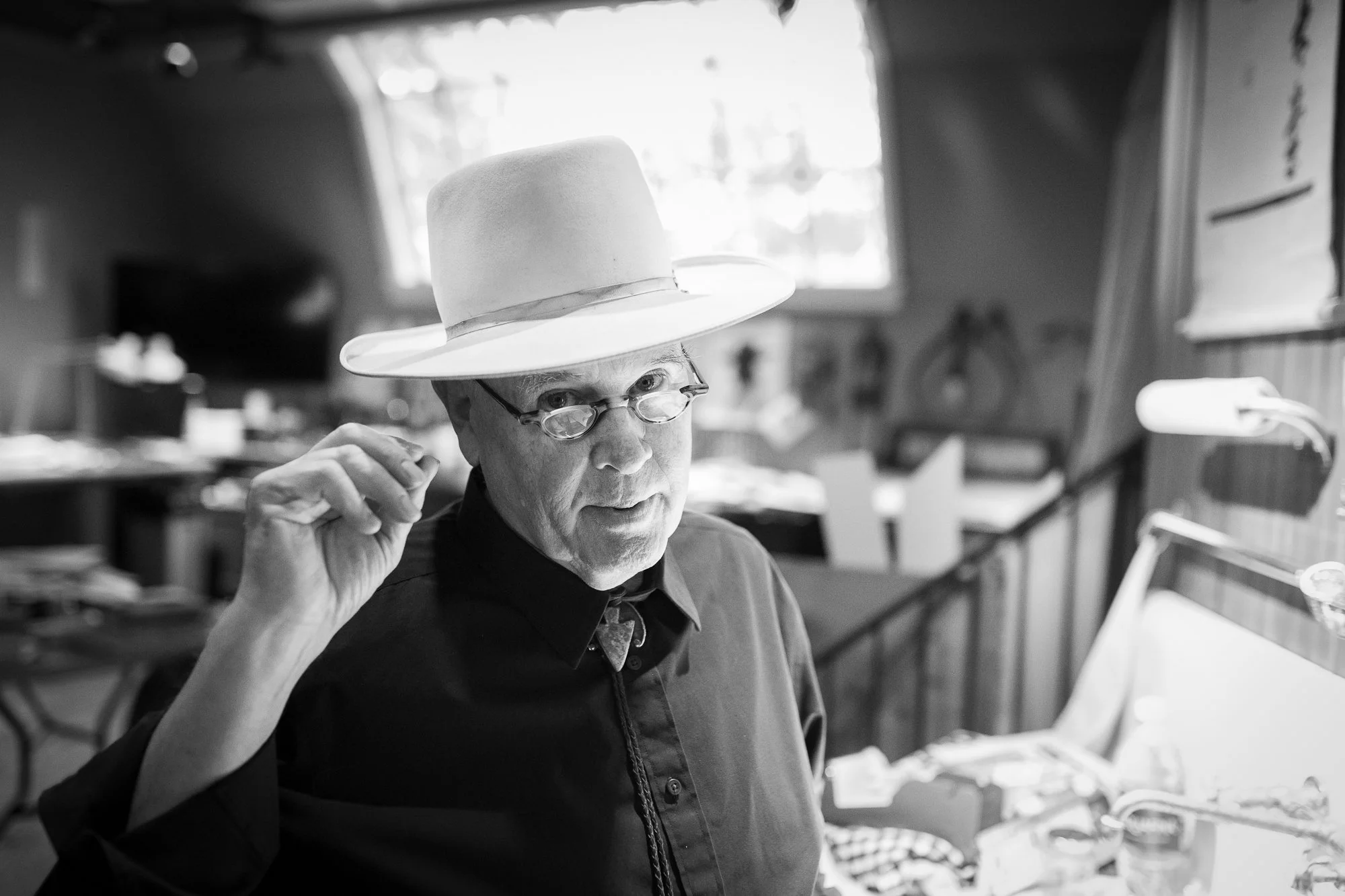
Candid portrait of William Matthews in studio wearing cowboy hat and glasses

Between studies and finished pieces, Matthews pauses at his drafting table — a reminder that Western art begins with careful observation and discipline.

Martin Gerdin: Glass Trout and the Art of Fly Fishing

From Wild Fish to Glass Art: Photographing the Work of Martin Gerdin

A Fly Fishing Artist Who Honors the Fish

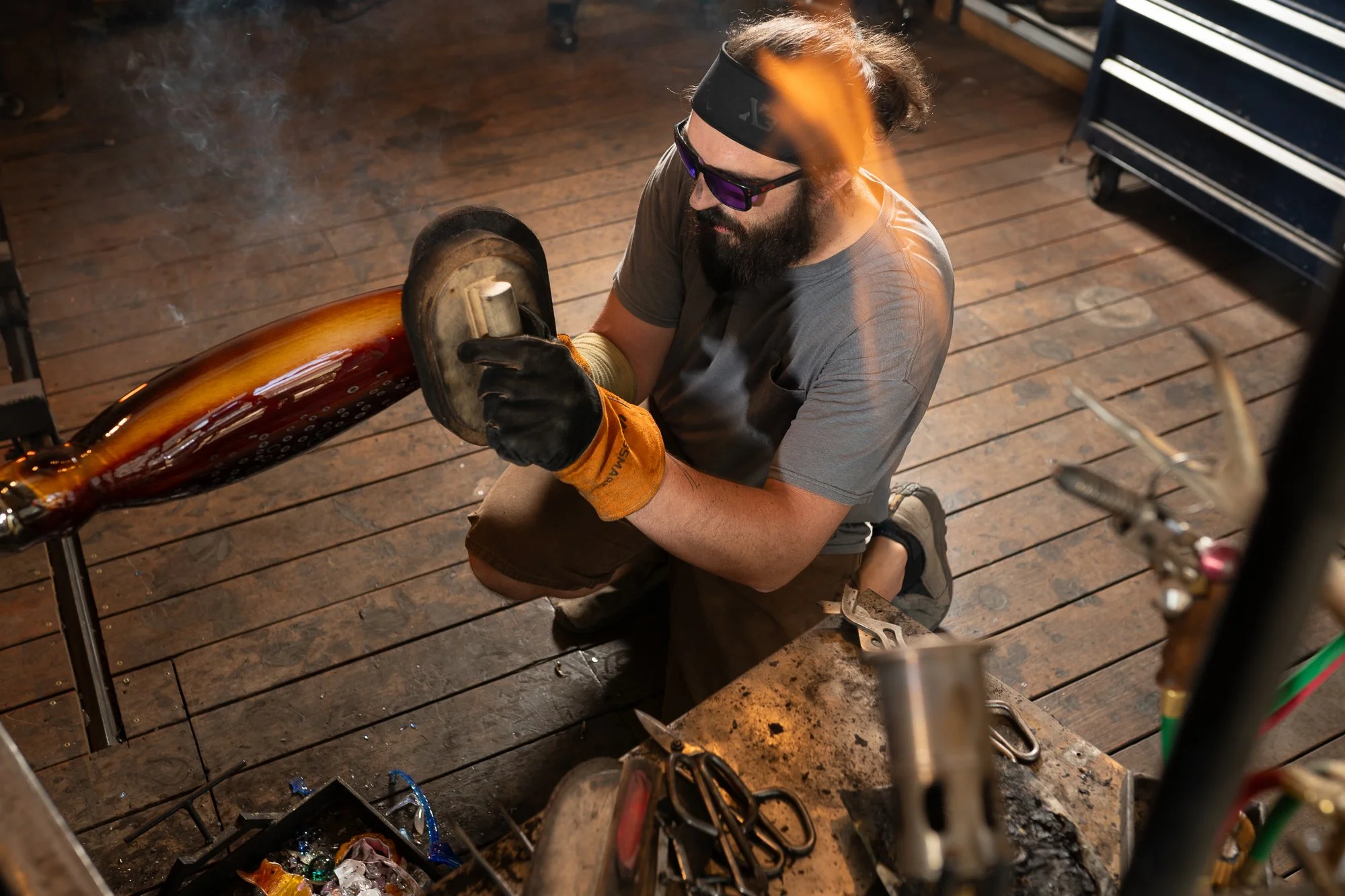
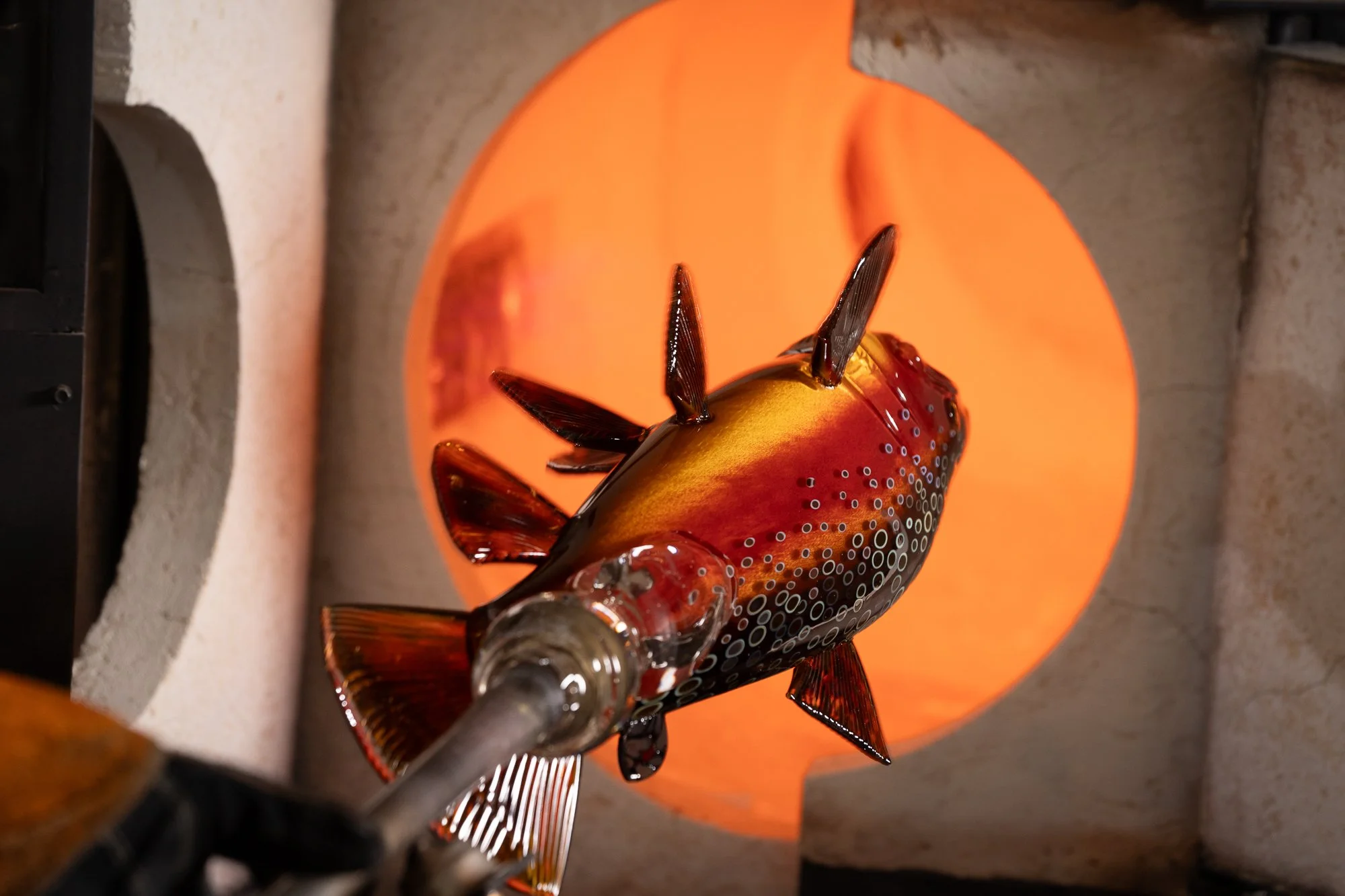
If you spend much time around fly fishing and have an appreciation for art, then you’ve heard the name Martin Gerdin. His hand-blown glass fish are more than just decorative pieces, they’re immaculate tributes. To the fish. To the places they live. To the hours spent chasing them in silence with and without victory. When I had the opportunity to photograph Martin for a recent magazine story, I knew right away this wasn’t just another artist profile. It was a chance to document someone who truly understands what makes fly fishing special.

Photographing the Process Behind the Glass

Martin’s Gerdin’s studio is located in Crawford, a small town in a remote section of southwest Colorado, which tells you a bit about him already. He doesn’t need the fancy street facing storefront, because for him, it’s only about the work. And that’s obvious seeing him in action. He cares. Sure, creating stunning glass blown fish is how he earns a living, but it’s also his passion. Glass blowing is a very delicate art, especially when dealing with a pieces the size of Gerdin’s fish. There are so many steps along the way that can cause each one to be ruined. And when that happens all is lost. Back to the beginning. As a photographer intent on documenting a process that cannot be faked, the only option is to be a fly on the wall and not get in the way. Martin and his team are constantly moving, back and forth from the work bench to the furnace, over and over. For this shoot I wanted to use strobes to light the scene in a way that wouldn’t draw attention to the light itself. Rather as more of a subtle enhancement. So the hard part was finding those places within the studio that the strobes and light stands wouldn’t impede his flow. Which was difficult at times, but he graciously told me when they needed to be moved and everything worked out just fine in the end. To be honest, there were times when I just wanted to sit back and watch. Looking at Gerdin’s work on his website or Instagram is impressive, but to see a final piece come to life before your eyes, is something else altogether.
**If you think creating glass trout for a living is all glamour, think again. It’s well over a hundred degrees in Martin’s studio when the furnace is running.

Where My Work Intersects with His

Martin Gerdin doesn’t create custom glass trout for fly fishing collectors by accident. It started out of his rabid obsession with the sport itself. The assignment to photograph Martin at work also didn’t happen by accident. As a photographer, it’s very important to me that the people and stories I work on, are ones I truly care about and have an interest in. So I pitched the idea to a magazine because I was a fan of his work and am also violently obsessed with fly fishing, which has led to a somewhat unhealthy amount of time on the river with both a fly rod and a camera. Like Martin, it’s my happy place.

See the Full Collection

Want to see more?
You can view my full collection of fly fishing photography prints [here]. Each image is available for purchase, and select pieces are also available for editorial or commercial licensing. If you’re a collector, or simply someone who loves the water, I think you’ll find something that speaks to you.

Photograph of a glass brown trout by Martin Gerdin

Martin Gerdin - Glass Fish Artist

Photograph of a glass artist creating custom art for fly fishing collectors

Fine art glass fish artist Martin Gerdin at work in his studio in Crawford, Colorado

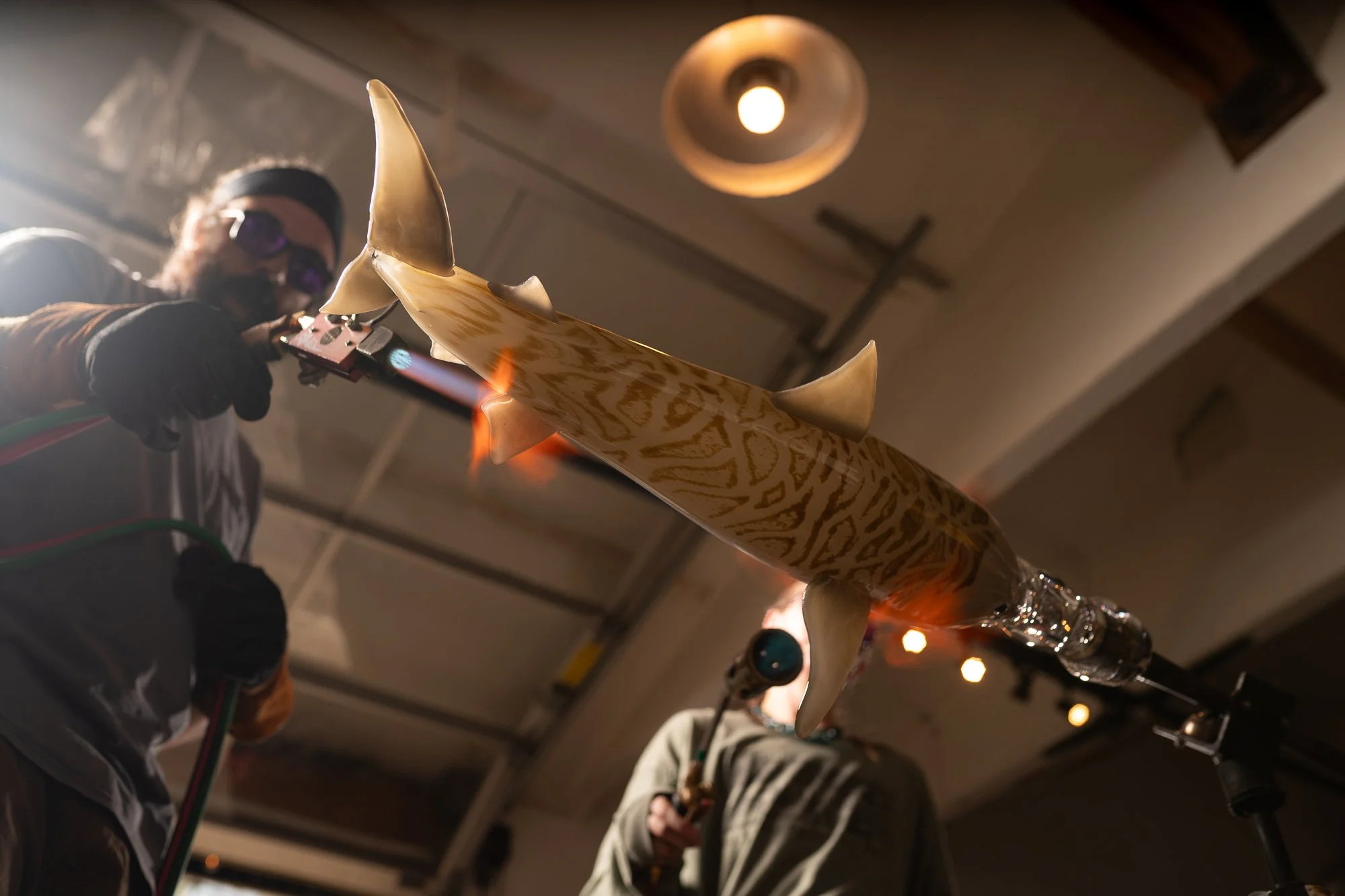
Photograph of a custom glass shark being made by an artist in his studio

Glass fish art

A team of glass blowers creating fly fishing art

Fly fishing artist at work

A glass shark being made at Martin Gerdin's studio in Crawford, Colorado

Hand blown glass shark

Photograph of a hand blown glass shark being made

Photograph of an arist creating a hand blown glass shark

Photograph of Martin Gerdin creating a custom glass brown trout for a fly fishing collector

Hand blown glass brown trout art

Photograph of a glass artist creating a brown trout for a fly fishing collector

Photograph of glass trout being made

Photograph of a glass blown brown trout going into the furnace

A glass blown brown trout going into the furnace

Rocky Mountain National Park Fly Fishing Photos for Editorial and Commercial Use

Rocky Mountain National Park Fly Fishing Photography

Fly fishing in Rocky Mountain National Park doesn’t feel like most places in the West. The water is colder, the air thinner, and the environment can feel both timeless and apocalyptic. Light shifts quickly, weather rolls in without warning, and the fish demand precision.

These photographs were made while fishing and moving through the high country above the Front Range, primarily along the Big Thompson River and surrounding alpine water. Like most of my work, they weren’t staged or built around a production schedule. They came from time on the river—watching light, waiting on conditions, and working within whatever the environment gave back.

A fly fisherman ties a fly to his line while sitting on the back of his car in a beautiful mountain location

Fly fishing guide tying a fly to his line before fishing in front of snow capped peaks

Fly Fishing in Colorado’s High Country

The headwaters of the Big Thompson River and the surrounding water in Rocky Mountain National Park offer a very specific kind of fishing. Tight pockets, fast current, and limited room to move mean every cast matters.

From a photography standpoint, that changes everything.

There’s no stepping back to reset a shot or adjusting positioning for better light. You’re often working in confined space, reacting to what’s happening in front of you rather than directing it. The best frames tend to come from small moments—reading water, adjusting line, moving carefully through current.

That’s what defines fly fishing here, and it’s what these images are built around.

Photograph of a fly fisherman surrounded by rugged terrain and snow capped mountains in Rocky Mountain National Park

Fly fishing in Rocky Mountain National Park

A fly fisherman walking through a beautiful section of the Big Thompson River in Rocky Mountain National Park

Big Thompson River Fly Fishing - Rocky Mountain National Park

Photographing Fly Fishing in Unpredictable Conditions

High-elevation environments don’t offer consistency.

Light can go from flat to harsh in minutes. Wind moves through canyon walls without warning. Temperatures shift quickly, especially in the early morning and late evening. All of it affects how the water looks, how the angler moves, and how the gear performs.

Photographing in these conditions isn’t about controlling the scene—it’s about staying responsive to it.

That approach leads to images that feel grounded in reality rather than constructed. For outdoor brands and editorial use, that difference matters. The details—wet fabric, glare on the water, uneven terrain—are what make the images believable.

Photograph of a fly fisherman putting floatant on his fly while standing in front of snowy mountains

Fly fisherman adding floatant to his fly with snow capped mountains in the background

A fly fisherman walking through the Moraine in Rocky Mountain National Park

Fly fishing the Moraine - Rocky Mountain NP

A fly fisherman netting a fish surrounded by dense brush in rugged terrain

Backcountry fly fishing in Rocky Mountain National Park

Why Places Like Rocky Mountain National Park Matter for Outdoor Brands

The Rocky Mountains are one of the most recognizable landscapes in the United States.

For brands, that recognition carries weight. The terrain is immediately identifiable, but it still feels remote and demanding. It represents a version of fly fishing that’s both accessible and aspirational—something people understand, but still want to experience for themselves.

Photographing in a place like this adds context that goes beyond the product. It connects gear to a real environment—one that requires durability, movement, and adaptability.

That’s what turns a photograph into something usable for advertising or editorial storytelling.

Photograph of a fly fisherman walking through a dense forest of burned trees

Fly fisherman walking through a forest of burned trees in Rocky Mountain National Park

Photograph of a fly fisherman frustrated after losing a fish in Rocky Mountain National Park

Frustrated fly fisherman after losing a fish

A fly fisherman fishing a rugged section of the Big Thomson River

Fly fisherman netting a trout in a backcountry section of the Big Thompson River

Fly Fishing Photography for Commercial and Editorial Use

This work is available for licensing across a range of uses, including:

  • Outdoor and apparel advertising campaigns

  • Editorial features and publications

  • Brand storytelling for web and print

  • Tourism and regional marketing

Because the images are created in real conditions, they hold up across different contexts. They aren’t tied to a single moment or campaign—they’re part of a broader visual record of fly fishing in the American West.

Photograph of a fly fisherman on a high alpine river in Colorado

Rocky Mountain National Park fly fishing

Photograph of a fly fisherman smiling

Smiling fly fisherman

Part of a Larger Fly Fishing Project

These photographs are part of an ongoing body of work documenting fly fishing across Colorado and the greater American West.

Additional work from other locations:

Each location brings a different environment and a different set of challenges, but the approach remains the same—real anglers, real conditions, and an emphasis on the relationship between people and water.

You can view more here:
Fly Fishing Photography Gallery

Licensing & Commercial Work

I work with outdoor brands, publications, and agencies to create fly fishing photography that reflects how the sport actually looks and feels in the field.

For licensing or assignment inquiries please reach out directly: - rob@robhammerphotography.com

A fly fisherman walks up the river past a huge dead tree in Colorado

Authentic fly fishing photography

Leadville Colorado Wall Art Prints – Fine Art Photography

Leadville, Colorado Wall Art

Photographs of The Two Mile High City

Sitting at 10,151 ft above sea level, Leadville is one of Colorado’s more unique towns, and that’s saying a lot for a state with such incredible mountain culture. Not a big place but it’s still racked up a number of nicknames over the years: The Two Mile High City, Oro City, Cloud City, and Slab Town. That alone provides a great hint into Leadville’s rich mining history that began in 1859 during the Pike’s Peak Gold Rush, and that hunt for gold, silver, and lead continued for 130 years. Visiting the small town today, you can still feel what Leadville once was, and that’s a lot of the draw. Only 2 hours from Denver, but it feels a world away, with unprecendented views of the surrounding mountains and no crowds. The architecture is gorgeous and well preserved in a lot of cases like the Delaware Hotel which first opened in 1886. Of course the local jewel is the Silver Dollar Saloon. You’d be hard pressed to find another like it anywhere in the country. Inside you can feel the years (established 1879), and that feeling only gets better once you learn more about it’s history with noted regulars like Doc Holiday! The most surprising part of Leadville is the fact that it has delicious food! I’d recommend checking out The Silver Llama Market and Eatery for breakfast and Treeline Kitchen for dinner. They are conveniently located right next to each other and Treeline has a great rooftop patio that’s open in the warmer months. Mineral 1886 also has good food for lunch and dinner.

Historic Buildings and Local Flavor

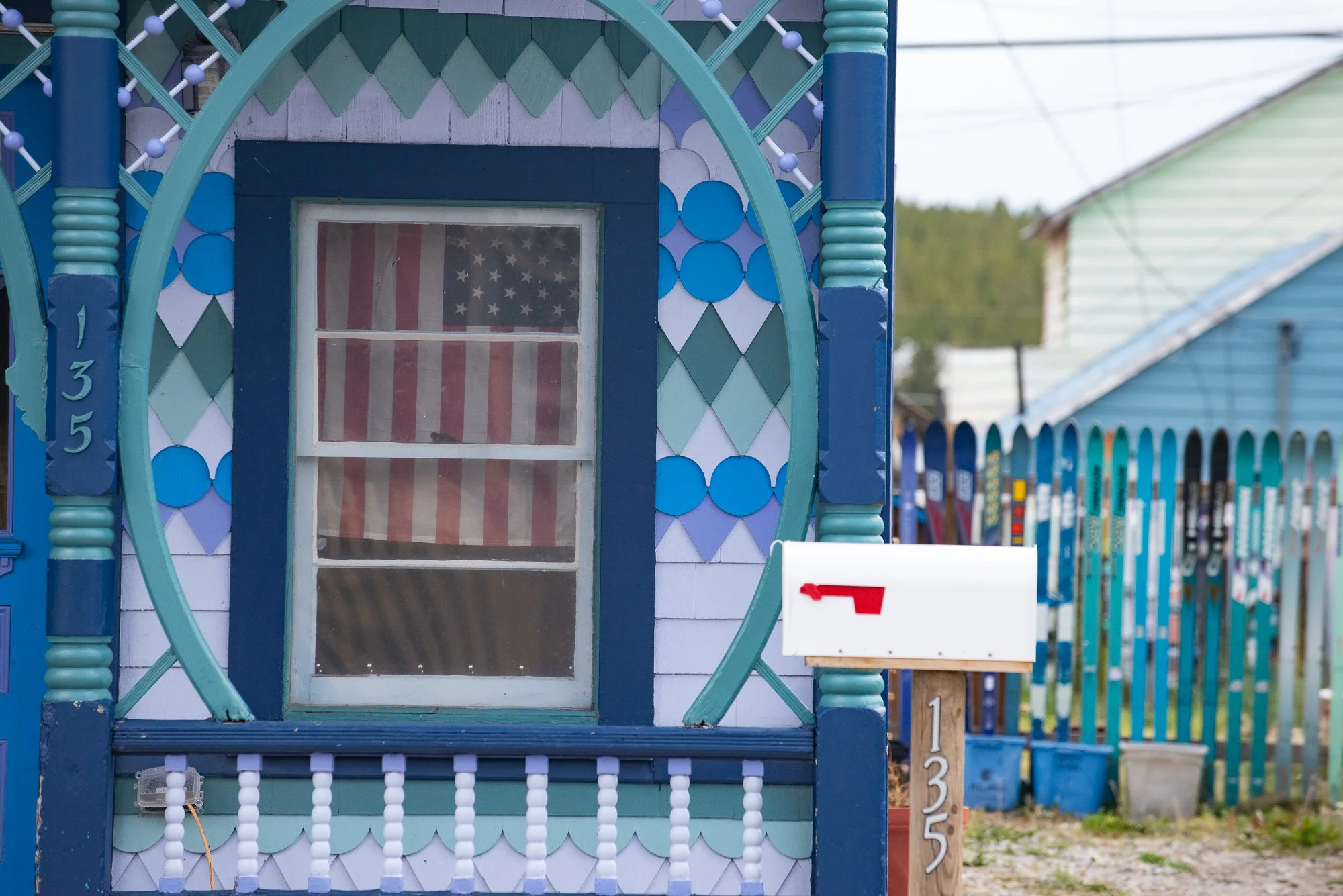
Walking through the neighborhoods is always fun because you’ll get a feel for daily life, and Leadville has some colorful houses that are intricately shingled. If you are looking for more of a workout, the Mineral Belt Trail (12 miles) can provide year round recreation with top notch views of the mountains and will take you up close to some of the old mining claims. Walking, running, and biking in the summer. Fat biking and cross country skiing in the winter. There is a nordic center just outside of Tennessee Pass and endless access to backcountry skiing/snowboarding from all routes in/out of town. And If there’s any reason this little hideaway would sound familiar, that’s because it’s home to one of the hardest mountain bike races in the country - The Leadville 100! That and Melanzana, which is supposedly on a year waitlist for hooded sweatshirts. Perhaps the most redeeming quality about their main drag though, is you won’t see a single chain restaurant or business. They are all locally owned and there is no mistaking that fact! Leadville is a gem of a place that you hope will retain it’s small town charm for decades to come. If you’re looking for a fun getaway with resort crowds, check out Leadville for a couple nights.

Get Your Leadville Print

If you’d like to have a little piece of Leadville to remember your trip and brighten your walls with Colorado culture, contact me directly about photography prints and custom framing options for your home, office, or commercials space. These photographs are also available for editorial and commercial licensing.

Photography print of downtown Leadville, Colorado

Leadville, Colorado Wall Art

Photograph of the Golden Burro Cafe in Leadville, Colorado

The Golden Burro Cafe - Leadville

Photography print of the Silver Dollar Saloon in Leadville, Colorado

Black and white photograph of the Silver Dollar Saloon in Leadville, CO

Black and white photograph of the bar inside the Silver Dollar Saloon in Leadville, Colorado

Photograph of the bar inside the Silver Dollar Saloon

Leadville, CO

Manhattan Bar - Leadville, CO

Photograph of High Mountain Pies Pizzeria in Leadville, Colorado

High Mountain Pies - Leadville, CO

Photograph of an American Flag hanging in the window of a house with colorful shingles and a ski fence in Leadville, CO

Colorful house in Leadville, CO

Photo print of the Silver Dollar Saloon in Leadville, CO

Leadville Saloon

Photograph of bar stools and the old tile floor in the Silver Dollar Saloon in Leadville, CO

Tile floor in the Leadville Saloon

Photograph of the interior of the saloon in Leadville, CO

Pool table and taxidermy inside the Silver Dollar Saloon - Leadville, CO

Hand painted beer sign on an old brick building in Leadville, CO

Beer - Leadville, CO

Photographing Western Apparel in Action

WESTERN LIFESTYLE PHOTOGRAPHER

For more than six years I’ve been photographing real ranch life across the American West. What began as a personal curiosity about cowboy culture slowly turned into a long-term body of work documenting working cowboys, historic ranches, and the landscapes that shape life in cattle country.

Much of the photography labeled “Western lifestyle” today is staged or heavily stylized. My approach has always been different. The goal is simply to spend time on real ranches and photograph what naturally unfolds — long days horseback, early morning gathers, branding fires, and the quiet moments that happen between the work.
Those moments are where the real story of the American West lives.

Photographing Western Lifestyle and Ranch Culture

The culture surrounding ranch life runs deep. On most of the ranches where these photographs were made, traditions have been passed down through generations — how to work cattle, how to read the land, how to handle a horse.

When you spend enough time around ranches, you realize that the cowboy is not a character from a movie. He’s a working professional responsible for managing cattle, horses, land, and weather, often in some of the harshest environments in the country.

As a western lifestyle photographer, the goal is to photograph that reality honestly. There’s no need to manufacture moments when the work itself already contains so much character.

Some days the photographs happen during big events like branding or shipping cattle. Other days they happen quietly while riders move cattle across miles of open country under changing skies.

Working Cowboys of the American West

Much of this work is part of an ongoing project documenting the lives of working cowboys across the American West. Over the years I’ve been fortunate to spend time on several historic ranches where these traditions are still very much alive.

The photographs include moments from ranches such as the OW Ranch in Montana, the legendary 6666 Ranch in Texas, and buckaroo culture in Nevada.

Each place has its own history and rhythm, but the common thread is the same — a deep respect for the land, the animals, and the responsibility that comes with raising cattle.

Photographing these environments requires patience and trust. The best images usually come after spending enough time around the work that people forget the camera is there.

Western Lifestyle Photography for Brands and Publications

Authentic Western imagery has become increasingly important for brands and publications looking to tell real stories about the American West. Companies connected to ranching, agriculture, outdoor gear, and Western culture often need photography that reflects the real environments where their products and stories exist.

Because much of my work takes place on active ranches, the photography naturally reflects the landscape and culture of these places. That authenticity is often what brands and editors are looking for when they search for a western lifestyle photographer.

Rather than recreating Western imagery in controlled environments, the photographs are made where the work actually happens — in the saddle, in the dust, and under the same light that cowboys have worked in for generations.

A Long-Term Documentary Project

What started as a simple interest in cowboy culture has slowly grown into a larger documentary project focused on the traditions of ranching across the American West.

Over time the archive has expanded to include thousands of photographs capturing ranch work, cowboy life, and the landscapes that define cattle country. The project continues to evolve as new ranches, new people, and new stories become part of the work.
You can explore more photographs from this ongoing project here:

Working Cowboys of the American West

Working cowboy roping a calf on the Silver Spur Ranch in Colorado during cattle work.
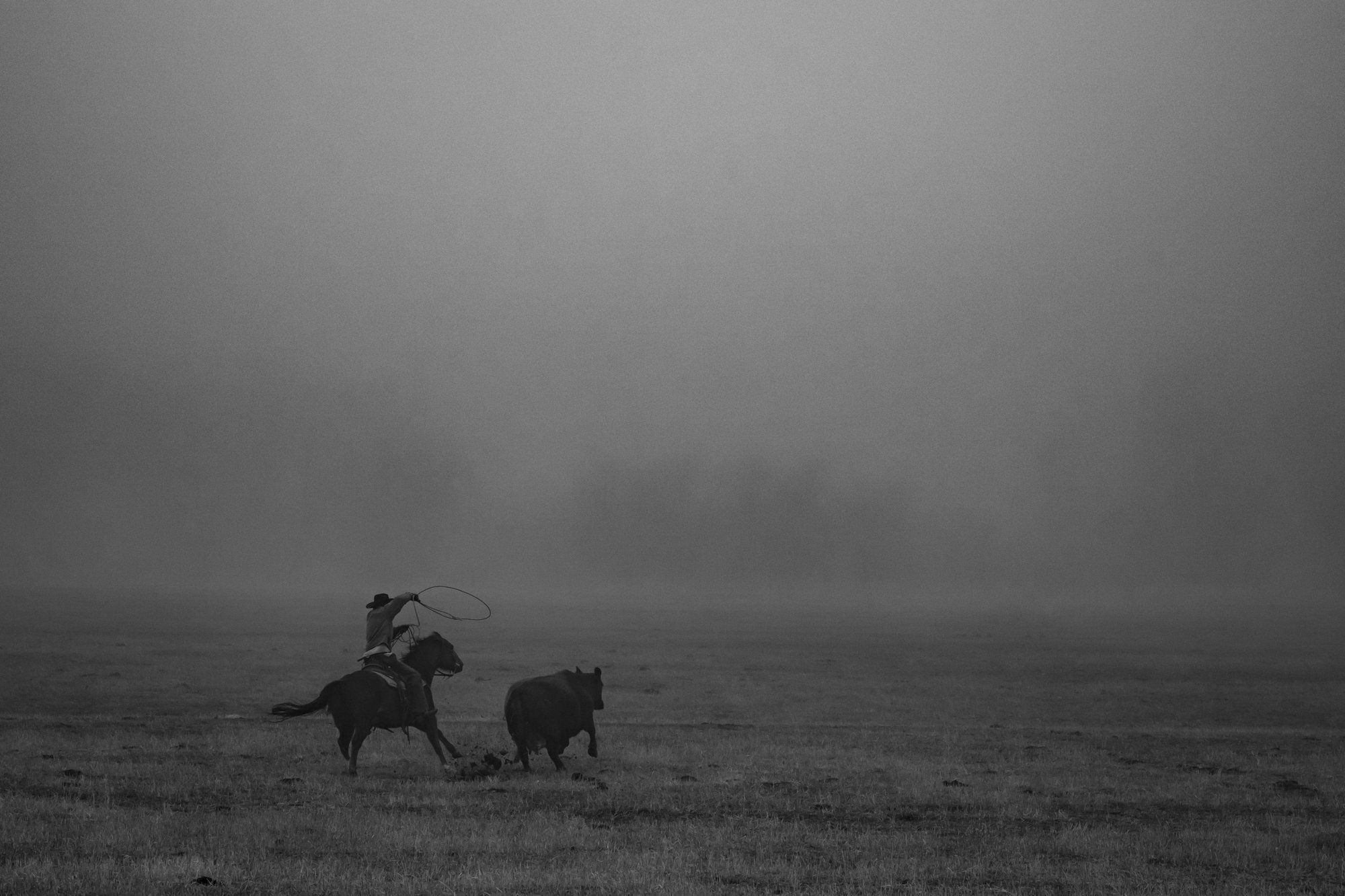
Cowboy roping a calf on the Silver Spur Ranch in Colorado.

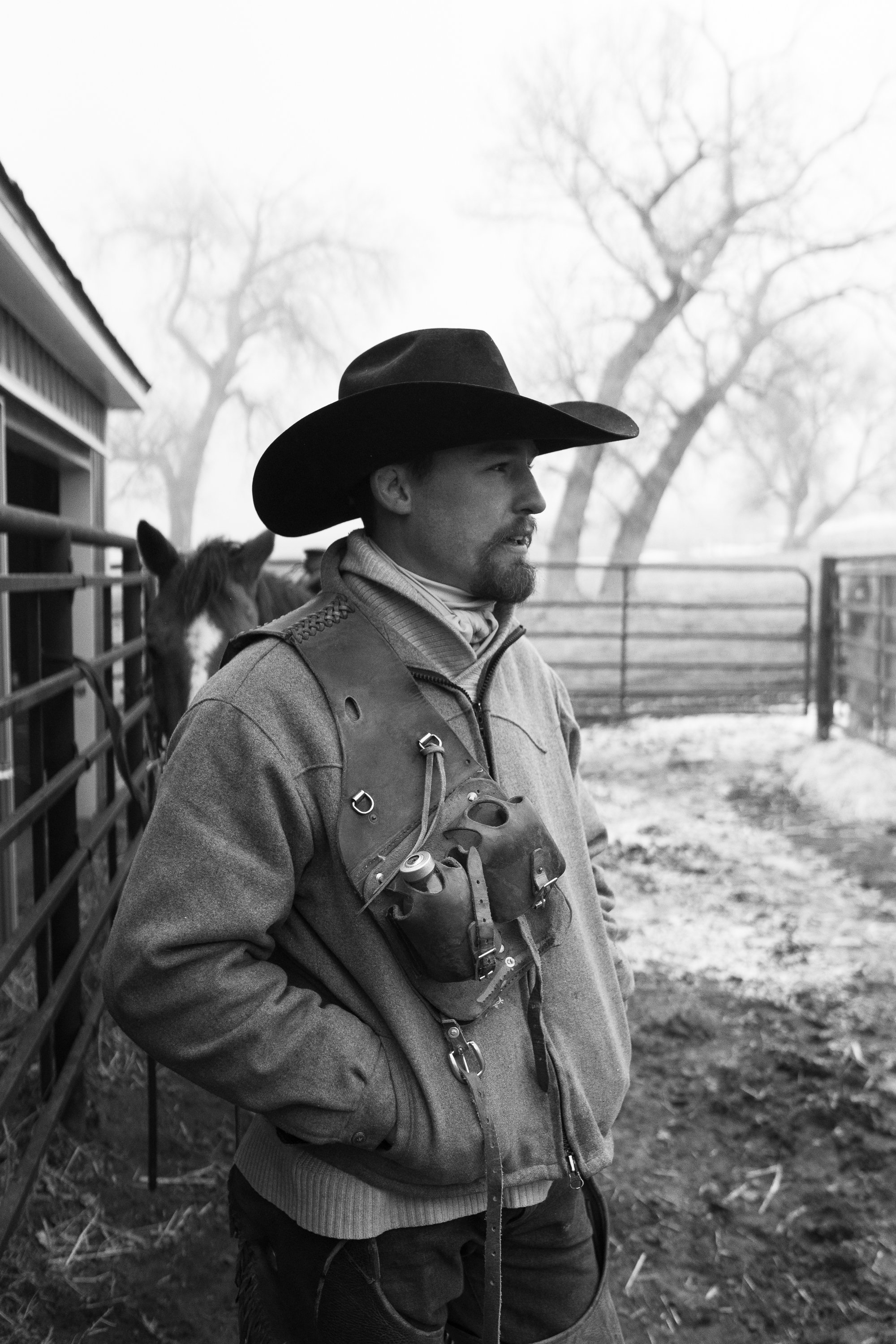
Portrait of a working cowboy photographed on a Colorado cattle ranch by western lifestyle photographer Rob Hammer.

Portrait of a working cowboy on a Colorado cattle ranch.

Cowboy tagging a calf during calving season on a Colorado ranch photographed as western lifestyle photography.

Tagging calves during spring cattle work.
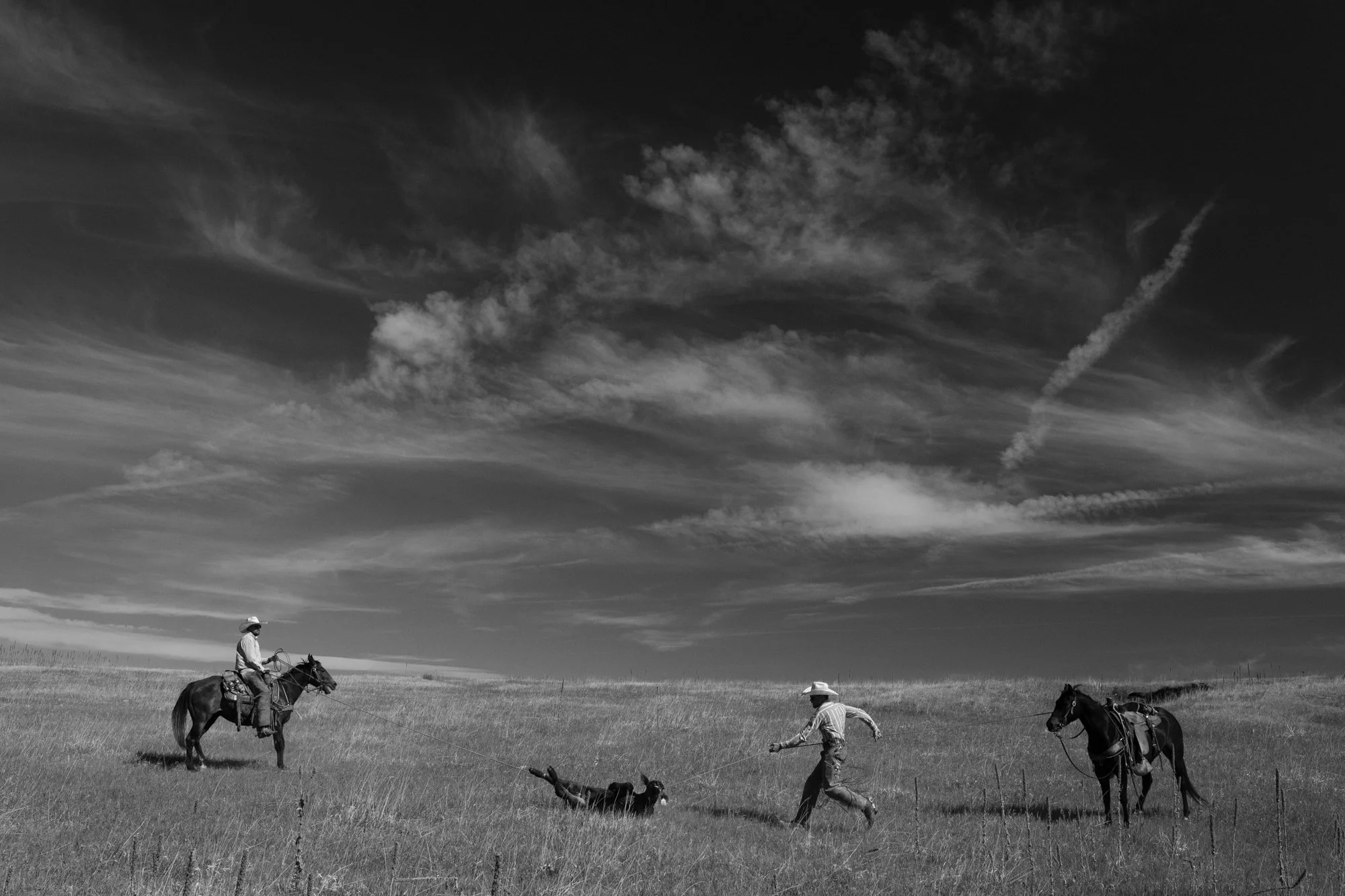
Working cowboy riding a horse through brush on a Colorado cattle ranch photographed in western lifestyle style.

Riding through thick country looking for cattle.

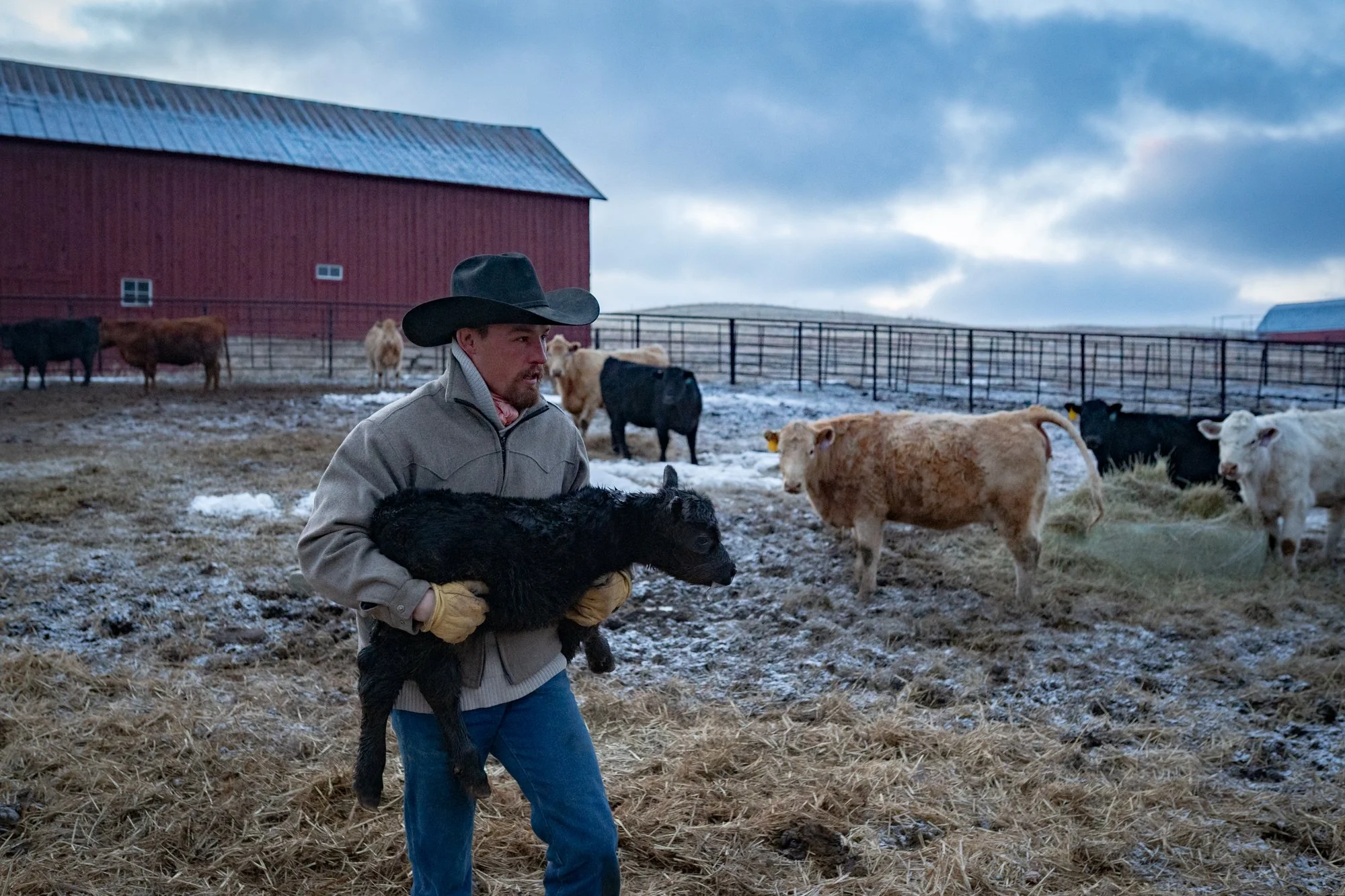
Cowboy carrying a newborn calf across snow on a Colorado cattle ranch during calving season.

Carrying a newborn calf during calving season.

Portrait of a Colorado cowboy wearing traditional ranch gear photographed as western lifestyle photography.

Portrait of a cowboy in working gear.

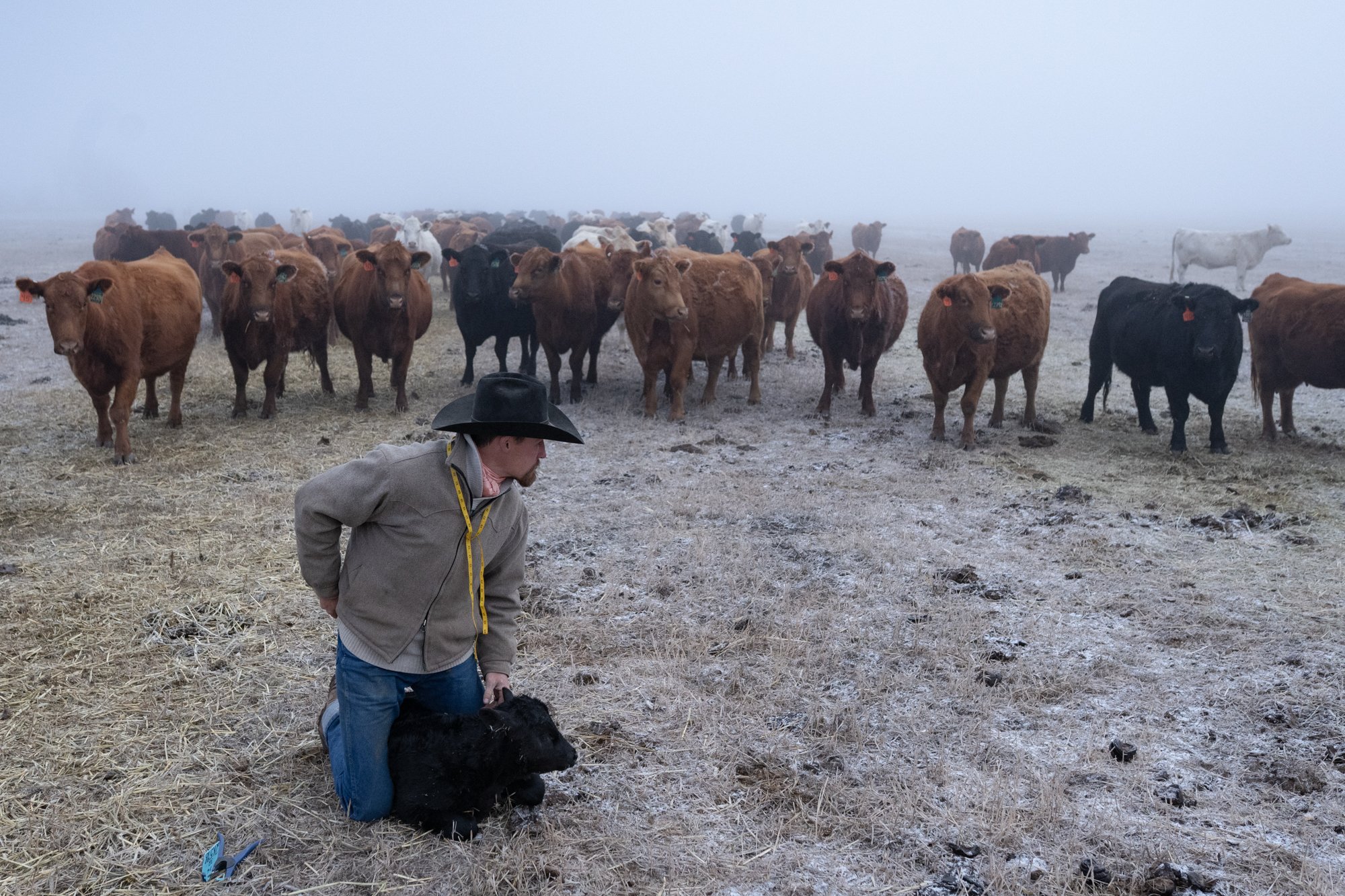
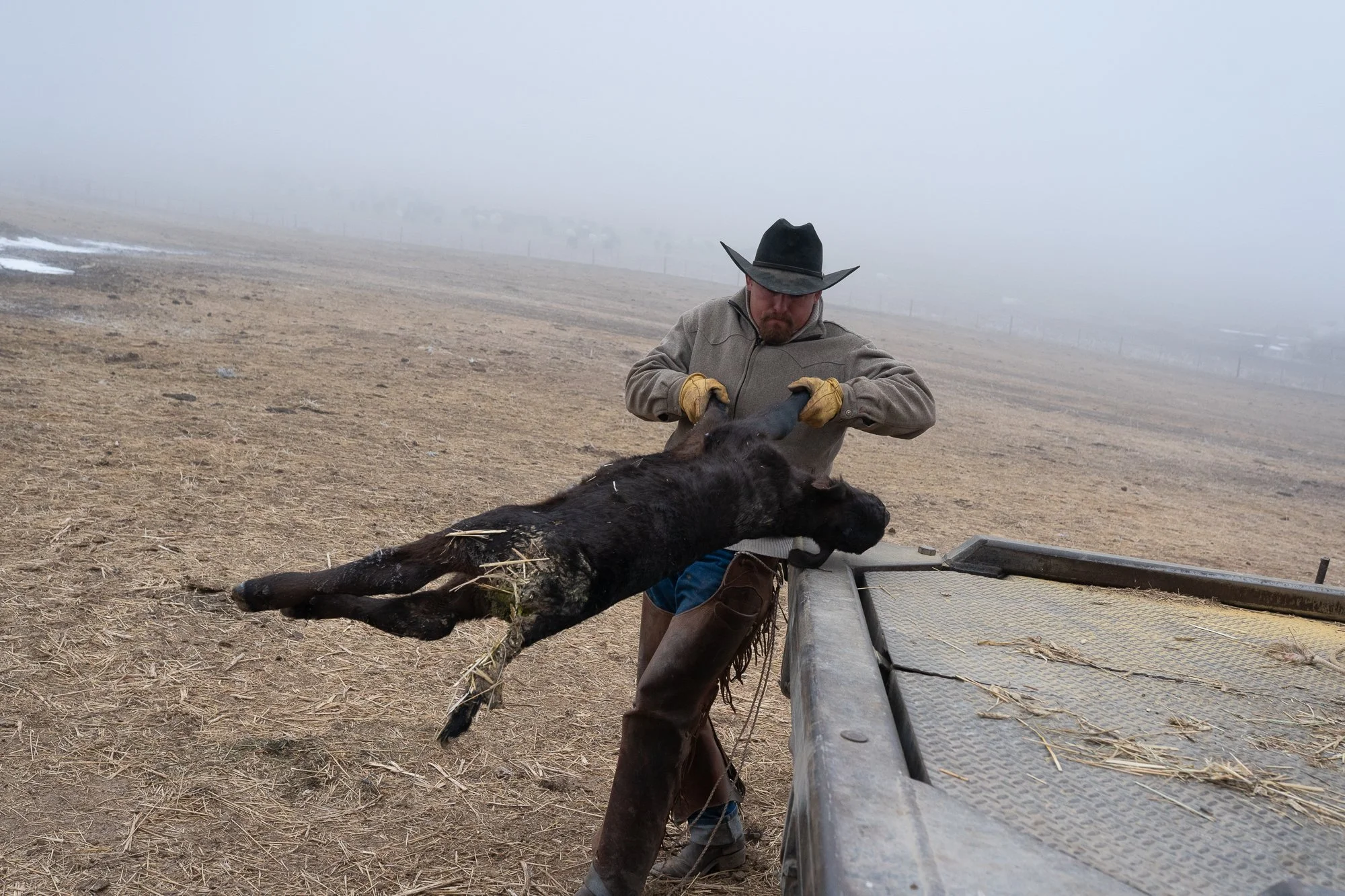
Working cowboy handling livestock during calving season on a Colorado ranch photographed as authentic western lifestyle photography.

The harder side of ranch life.

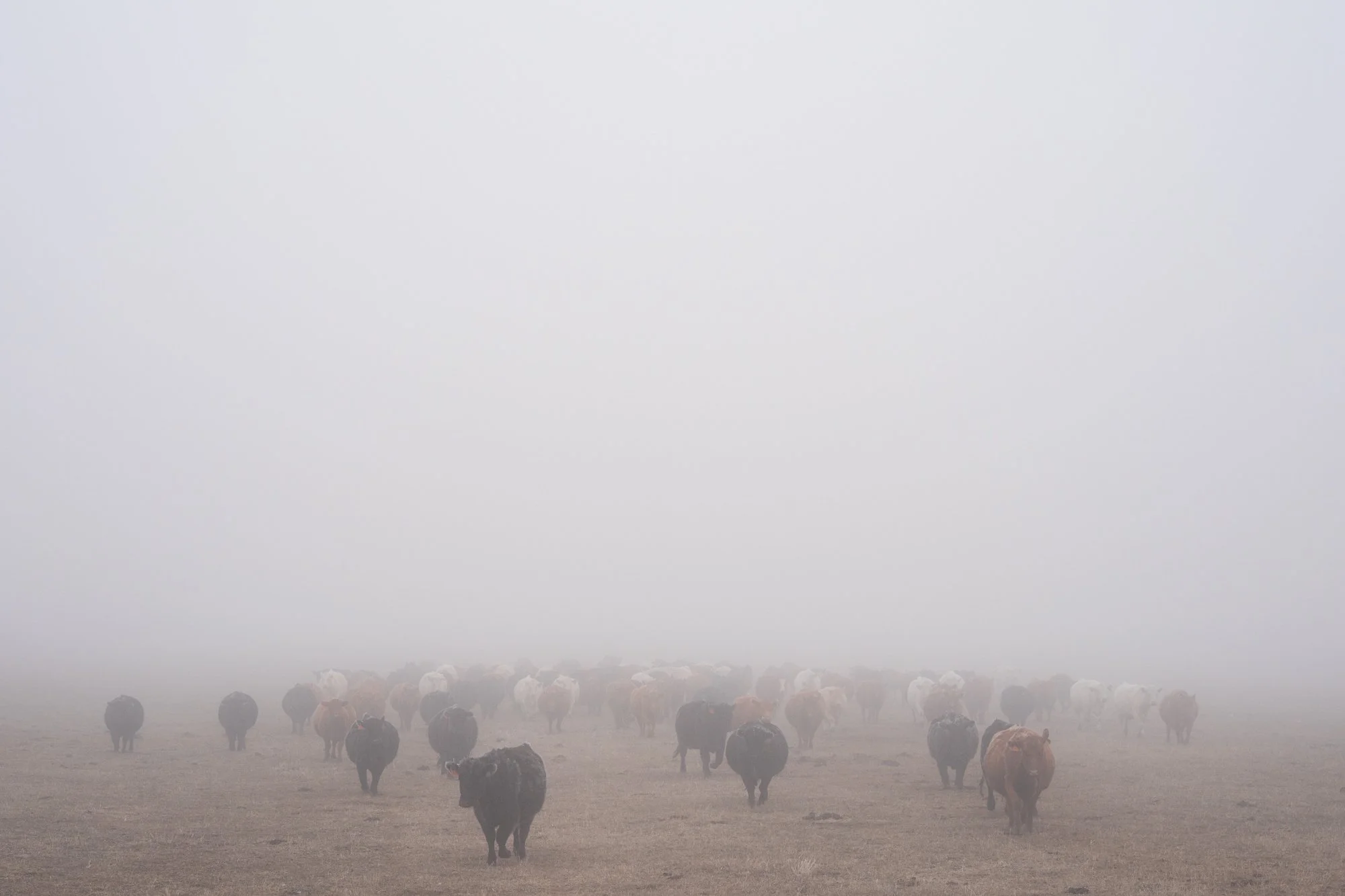
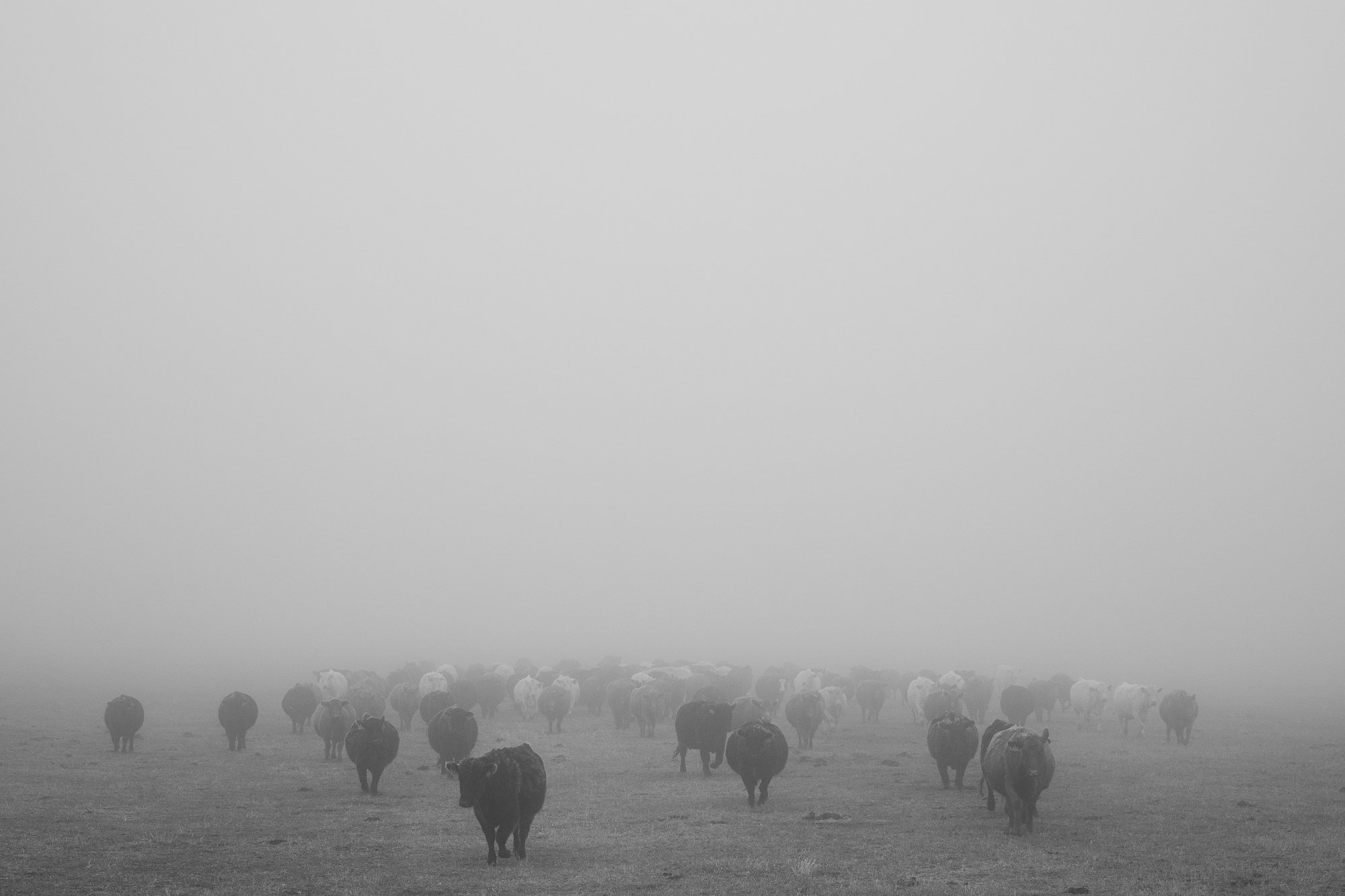
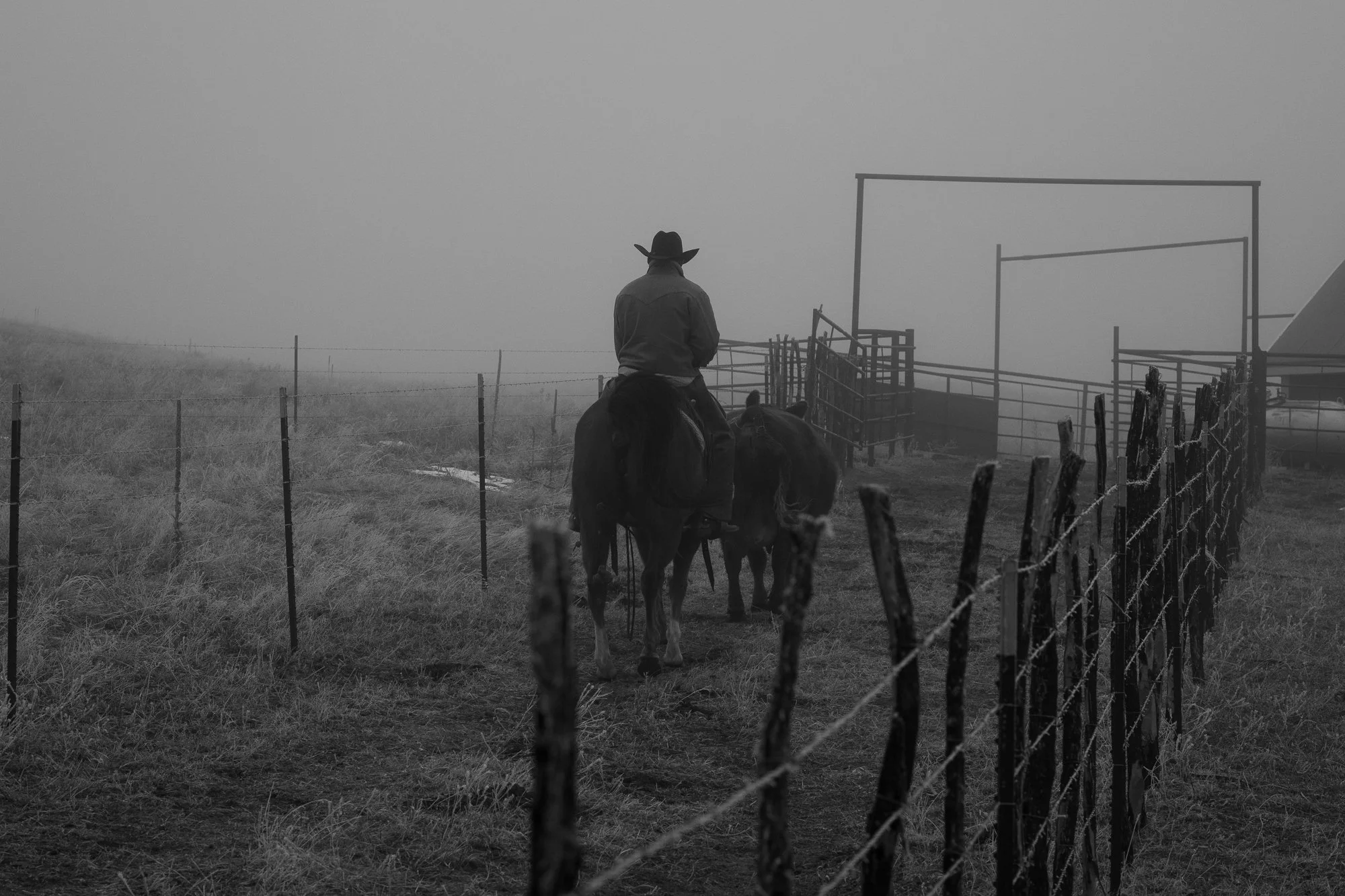
Cattle herd standing in fog on a Colorado cattle ranch pasture photographed as western ranch lifestyle imagery.

Cattle walking in the early morning fog.

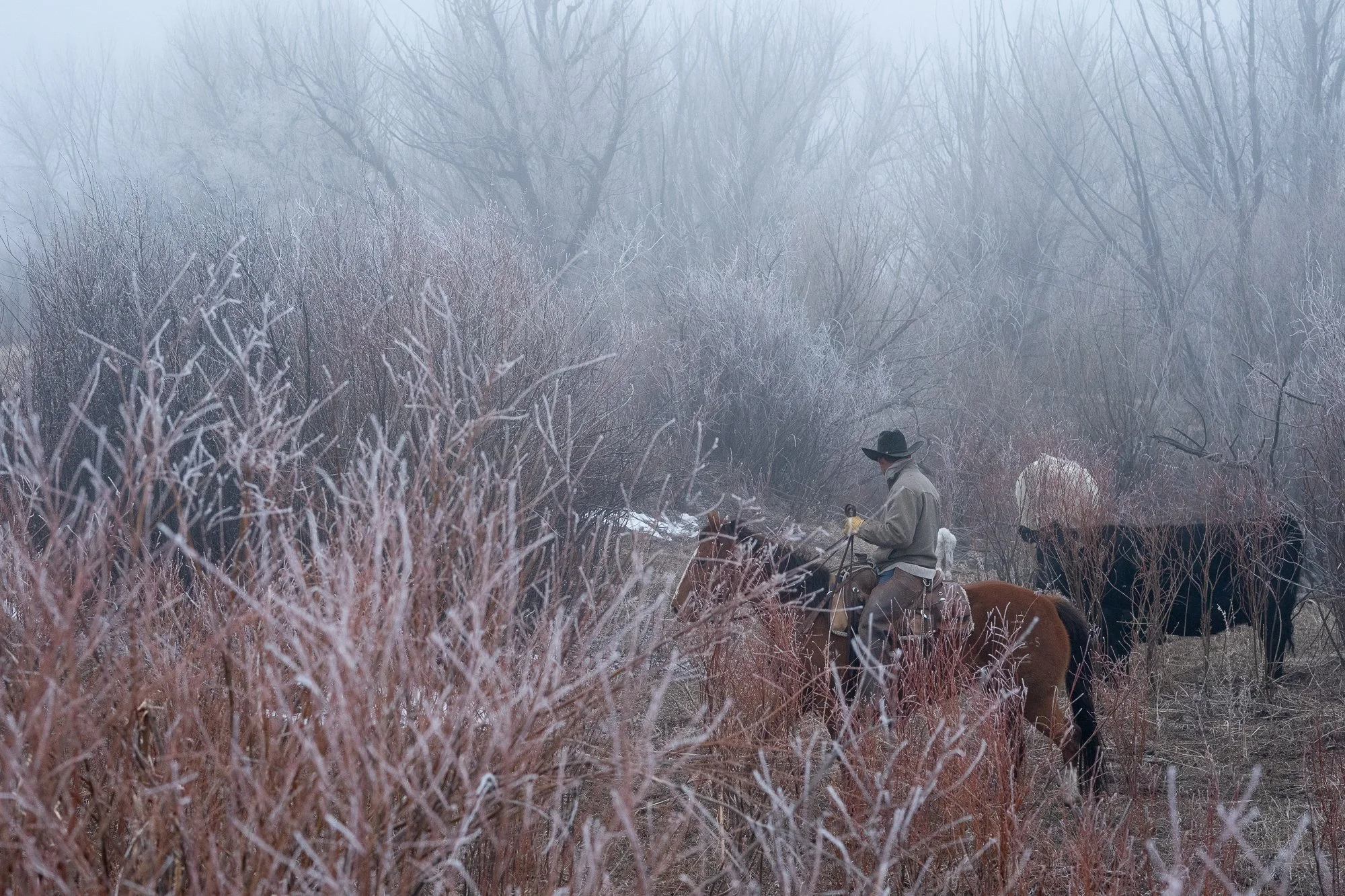
Cowboy riding through brush searching for cattle on a Colorado ranch photographed as western lifestyle imagery.

Searching thick country for cattle.

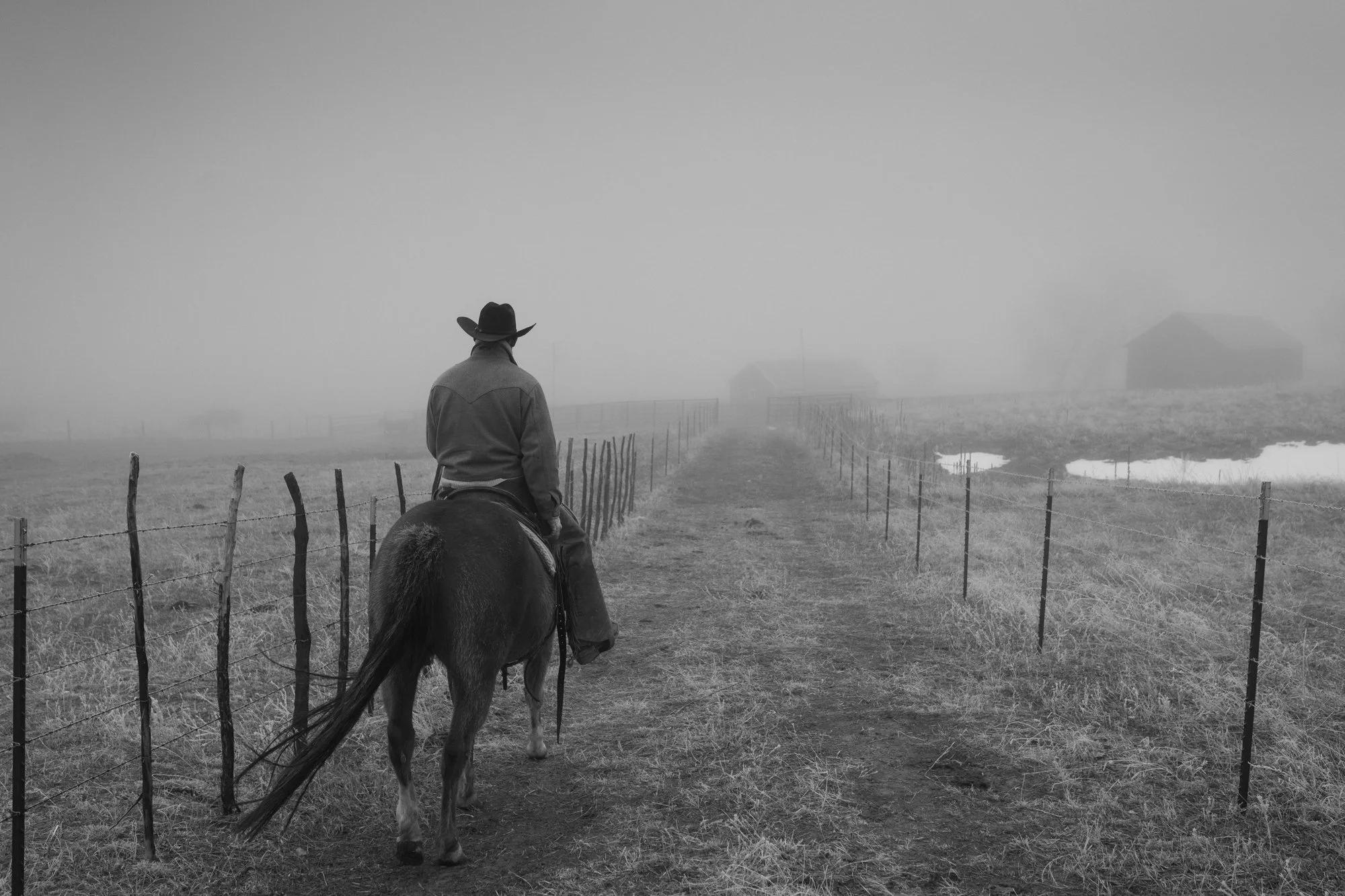
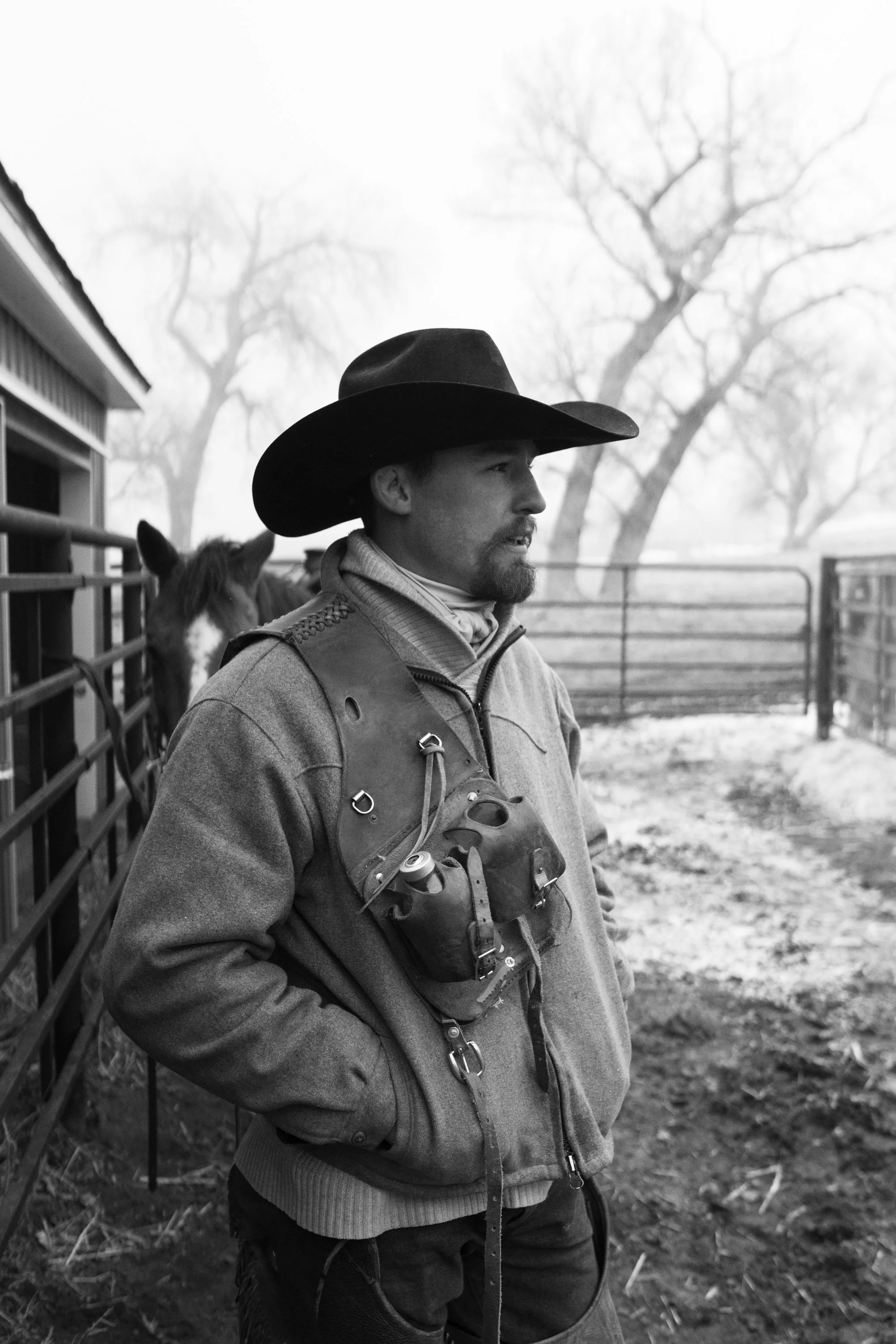
Black and white photograph of a working cowboy in Colorado

Black and white cowboy photograph

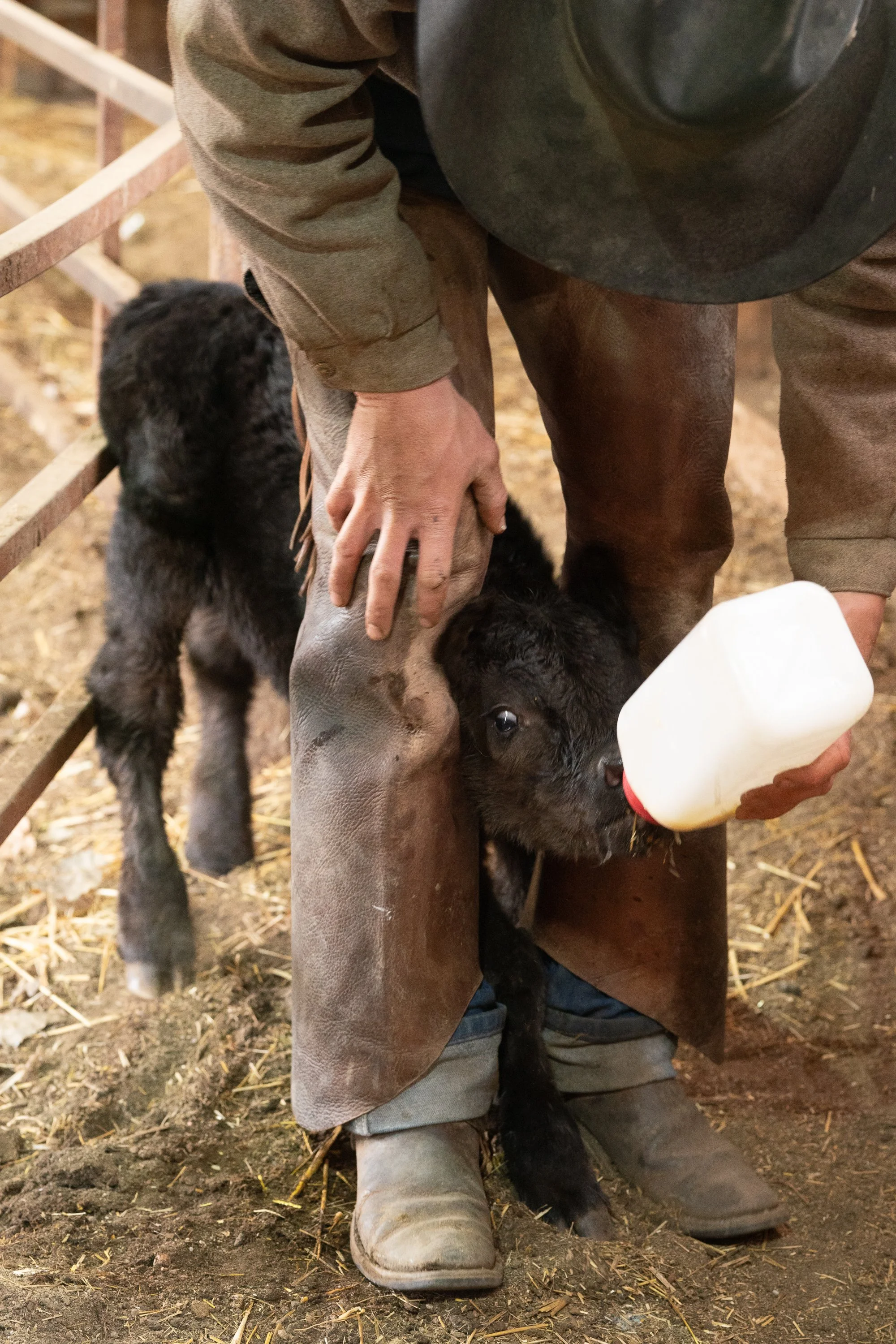
Photograph of a cowboy bottle feeding a baby calf

Bottle feeding a baby calf

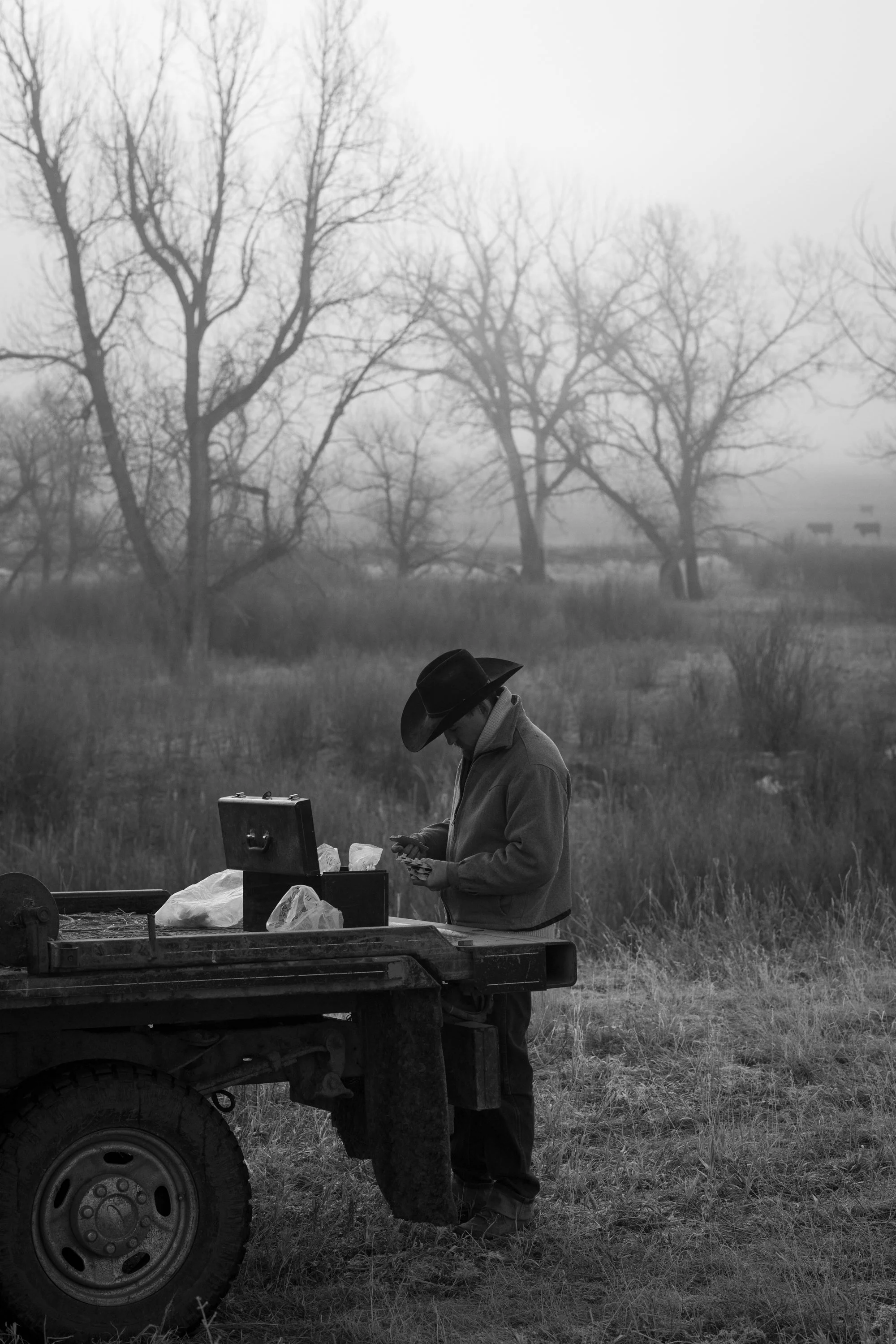
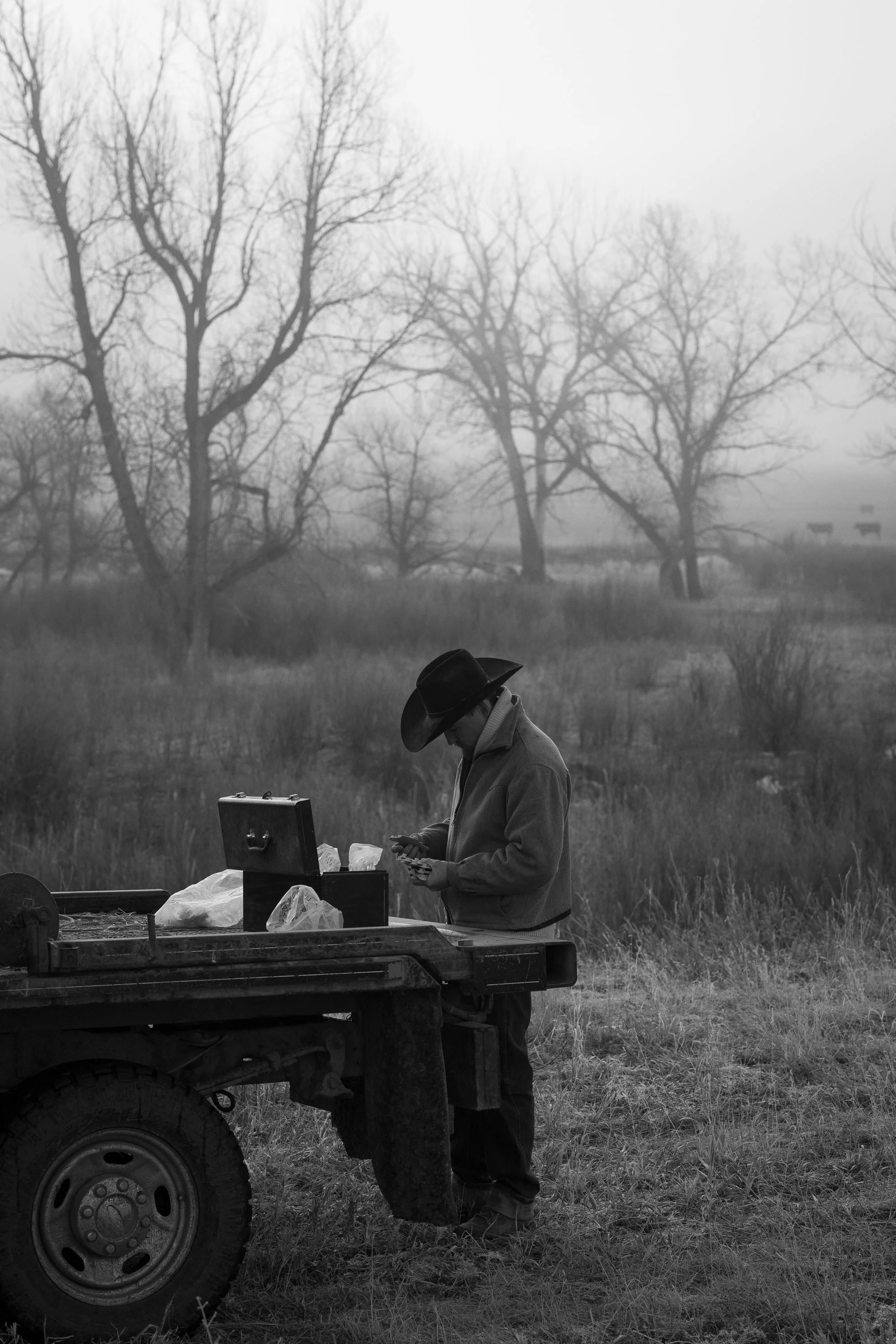
Cowboy counting ear tags on a pickup truck tailgate during cattle work on a Colorado ranch.

Counting ear tags during cattle work.
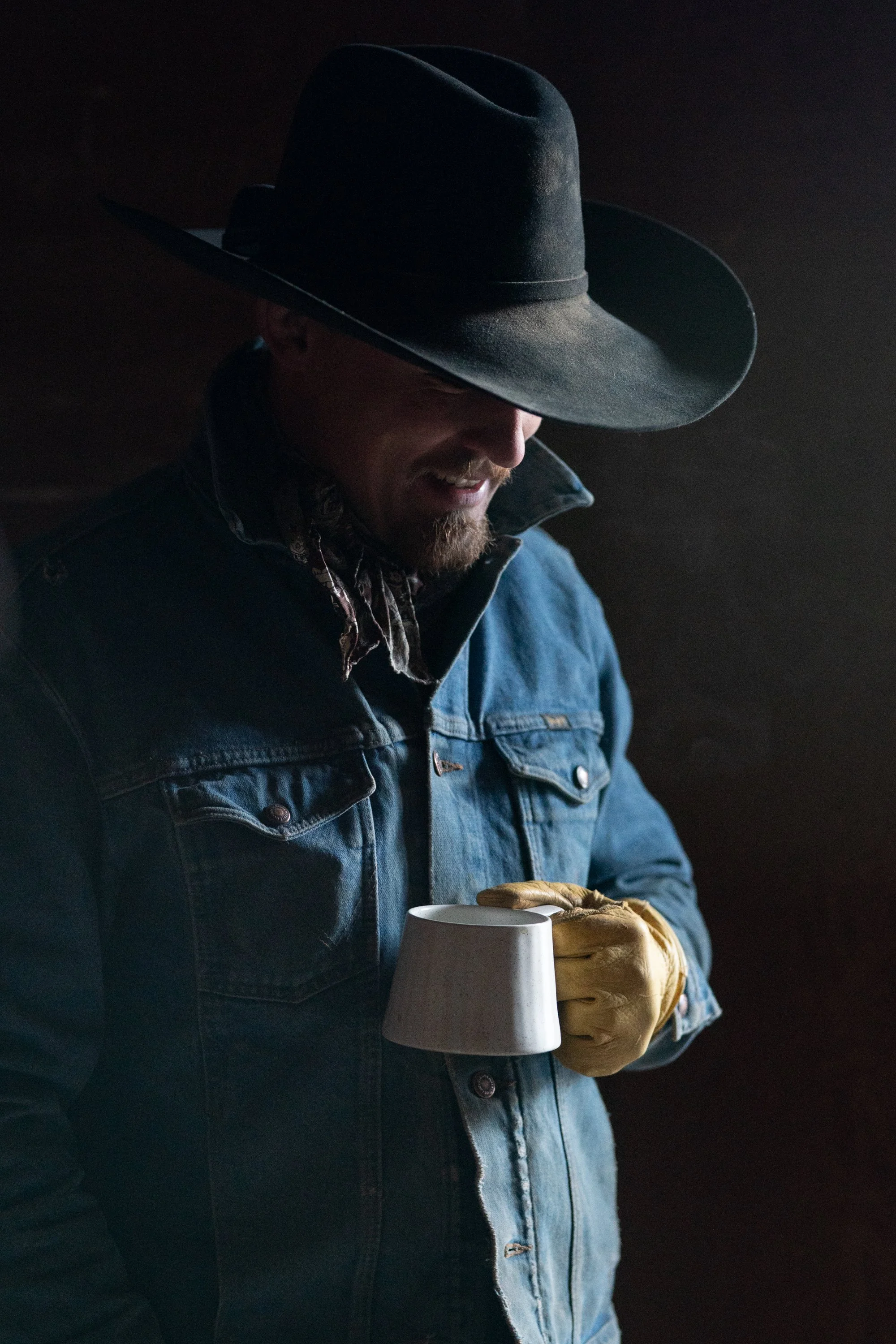
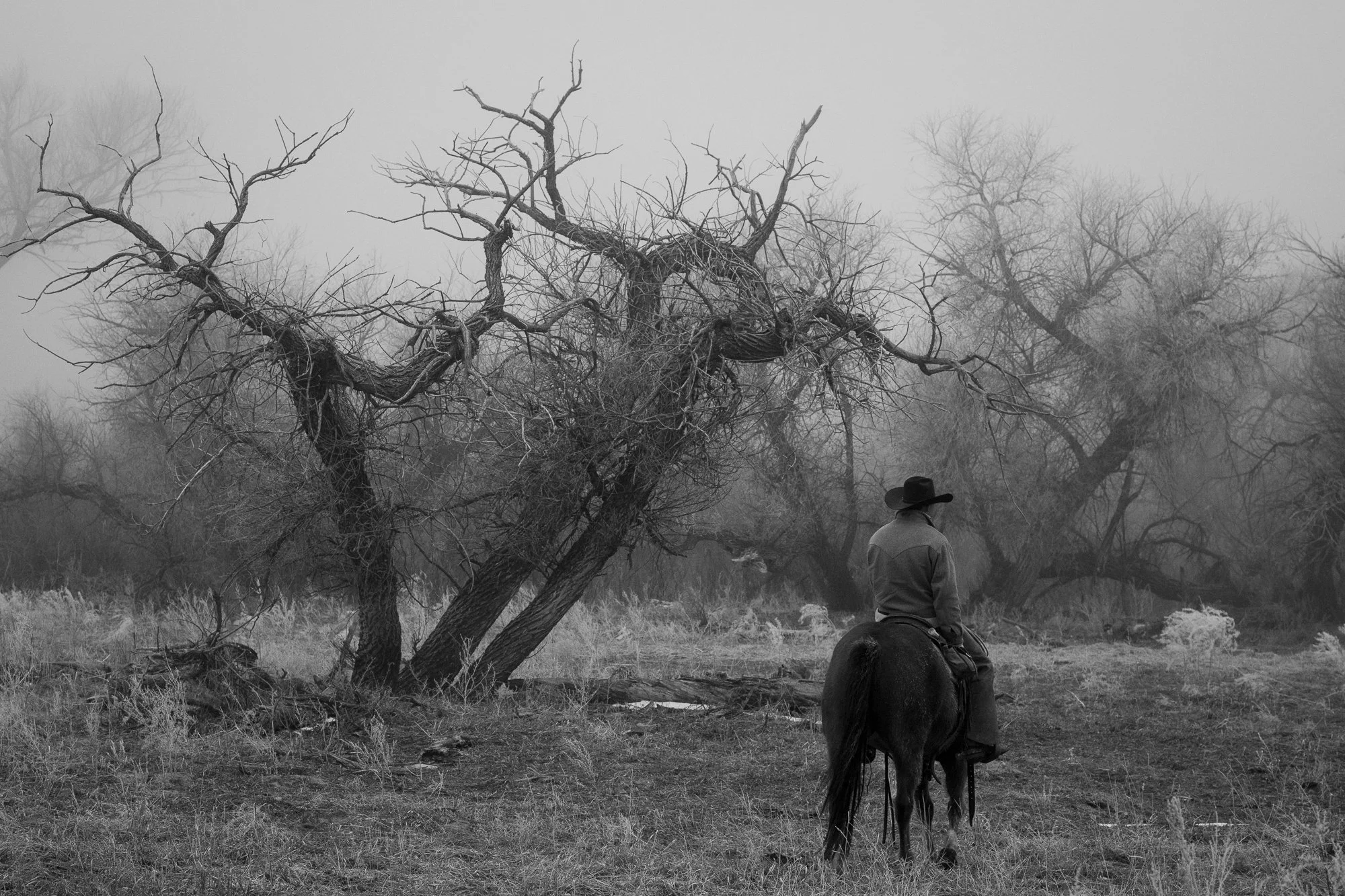
Photograph of a Colorado cowboy on his horse

Colorado cowboy riding his horse through thick country

Chasing Trout and Capturing Moments: Fly Fishing the Big Thompson River

Fly Fishing Photography Print & Licensing — Big Thompson River, Colorado

Authentic fly-fishing photography from one of Colorado’s most underrated rivers

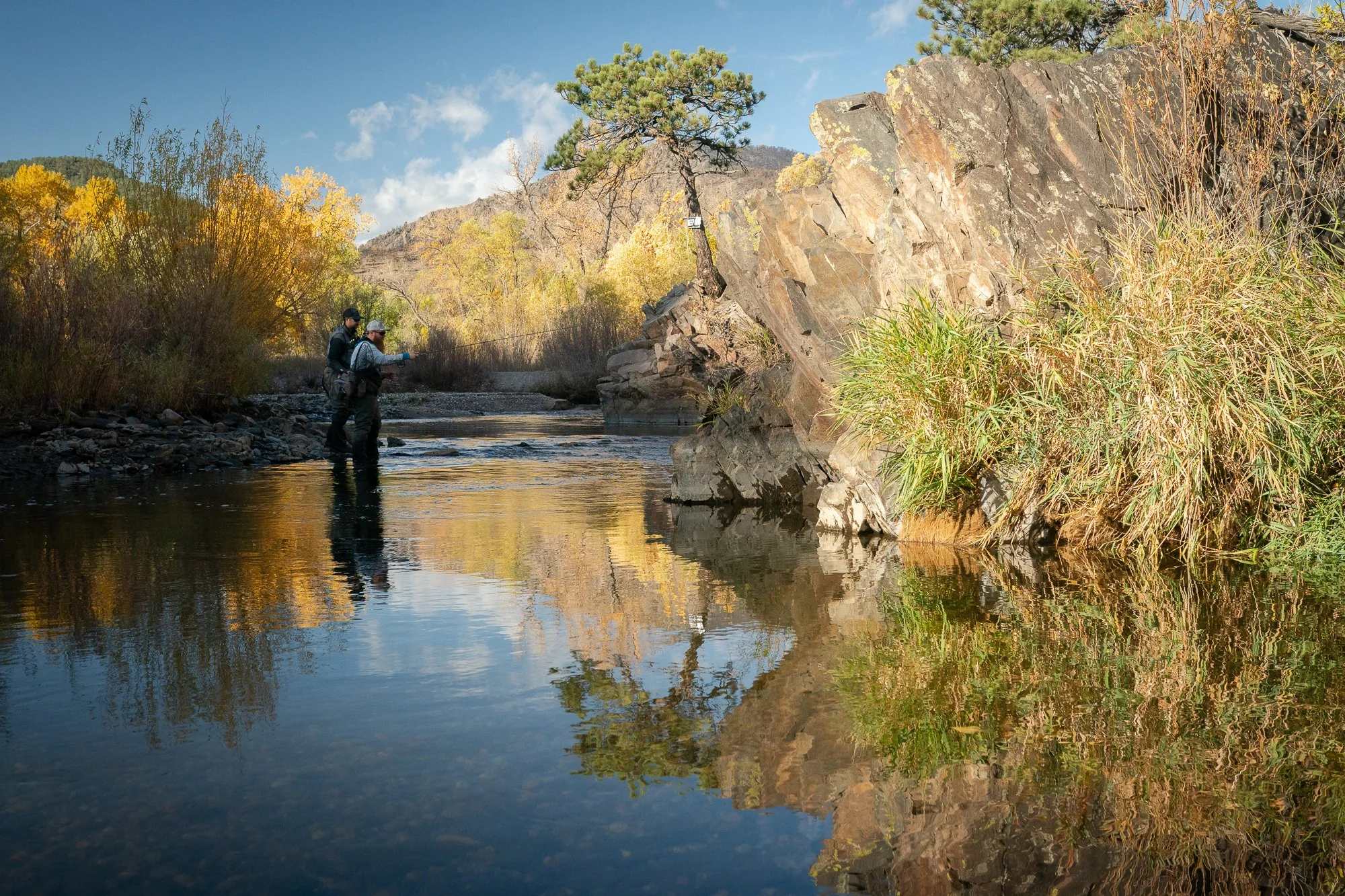
The Big Thompson River has always felt like one of Colorado’s more underrated fisheries - quiet, accessible, and full of character. On this particular fall day, I was out on the water with a couple guides from Front Range Anglers - John Brown and Charlie Schaeffer, documenting what turned into a textbook session of Euro-nymphing. No setups, no staging, just real moments of passionate fly fisherman doing what they do best.

The river was clear and low, which made for sharp visuals and technical fishing. Golden leaves clung to the canyon walls, and every part of the vibe was a reminder of why people fall in love with fall fly fishing in Colorado.

Why These Photographs Matter

Fly-fishing has always carried a mythology of patience and solitude, but for me, it’s the honest, working rhythm that’s most powerful. Shooting on the Big Thompson wasn’t about chasing a hero shot — it was about capturing how the river feels. The pace, the texture of the current, the breath between casts.

These are the kinds of moments that brands and publications can’t fake. They come from time on the water, earned through cold mornings, missed casts, and small successes. That’s what I want every image to carry — the truth of place and process.

Fine Art Prints

Select photographs from this series are available as museum-quality fine art prints, made with archival inks on heavyweight cotton paper. Each print is produced to highlight the depth and tonal range of the original negative — the way it was meant to be seen.

Perfect for homes, cabins, hospitality spaces, or offices that connect to the American West, these prints bring the stillness and authenticity of the outdoors inside.

Editorial & Commercial Licensing

For outdoor brands, magazines, or tourism boards seeking authentic visual storytelling, this collection is available for editorial and commercial licensing. The images offer an unfiltered look at fly fishing in Colorado’s high country — natural light, real anglers, and an atmosphere that can’t be staged.

Licensing is available directly through the studio. Please reach out to discuss usage and rates:
📩 rob@robhammerphotography.com

Click here to view my photo essay on Colorado fly fishing artist Martin Gerdin

Black and white photograph of fly fisherman on the Big Thompson River

Colorado Fly Fishing Photography

Photograph of fly fisherman and guide on the Big Thompson River

Fly fishing guides on the Big Thompson River

Colorado fly fishing photo for licensing

Fly Fishing in fall color in Colorado

Fly fishing in fall foliage

Fly fisherman walking through fall colors in Colorado

Black and white photo of a fly fisherman in Big Thompson Canyon

Fly fishing a canyon section of the Big Thompson River

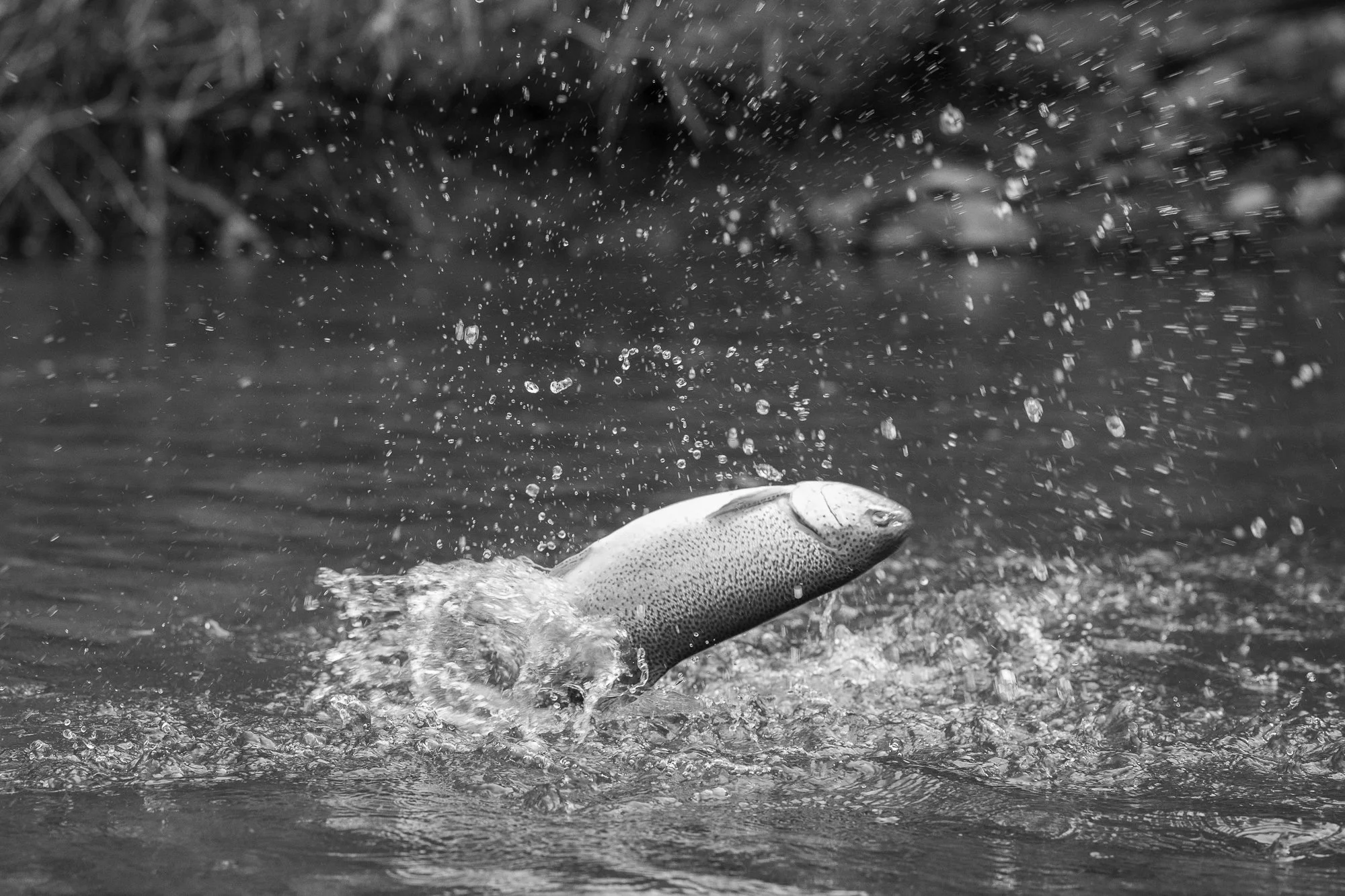
Photograph of trout jumping out of the Big Thompson River

Rainbow trout jumping out of the river

Fly fishing photograph for licensing

Netting a Rainbow Trout on the Big Thompson River

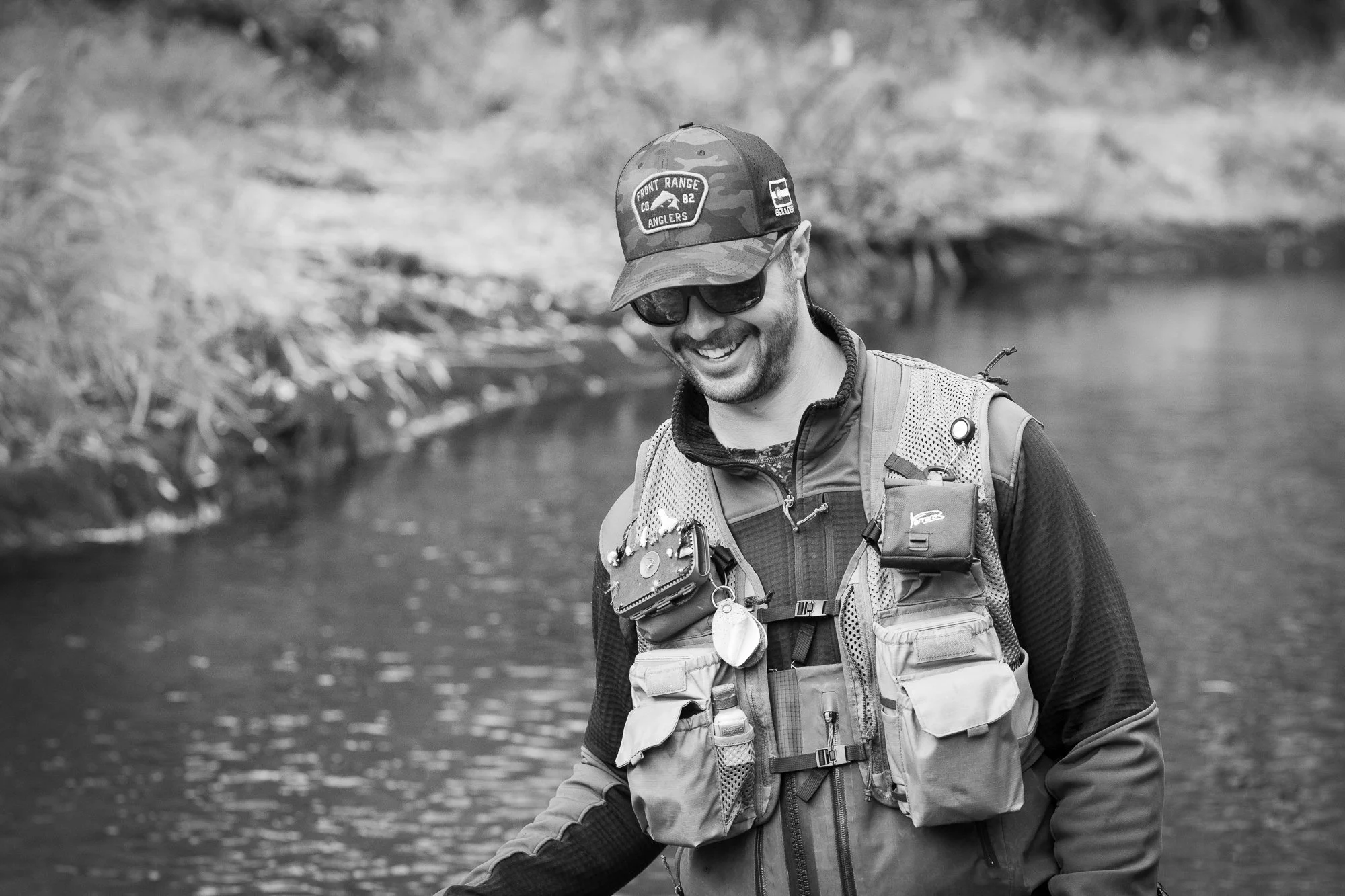
Black and white portrait of a fly fishing guide

John Brown of Front Range Anglers having a laugh during a day on the river

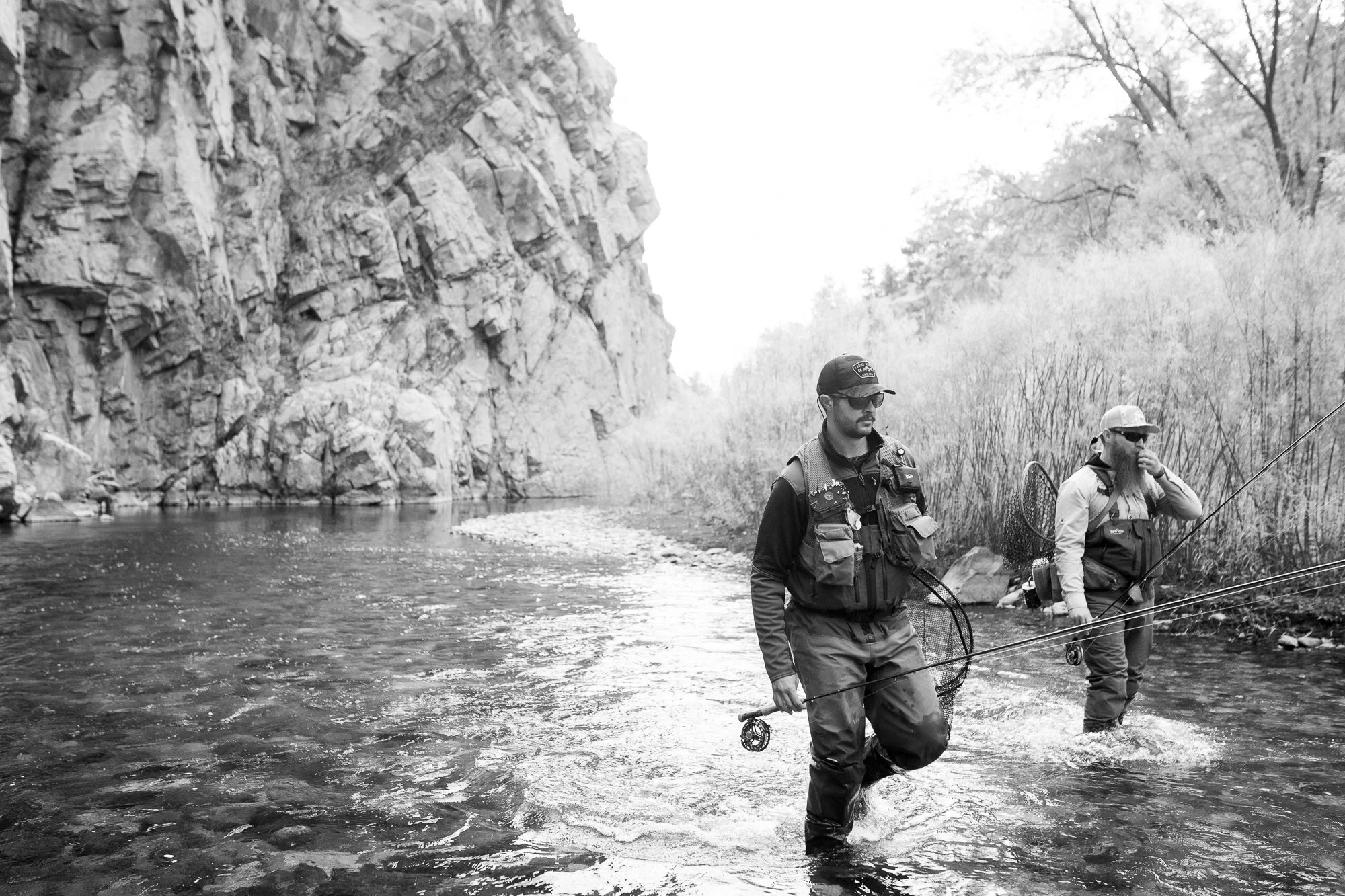
Black and white photo of two fly fisherman walking up a river - available for licensing

Fly fishing guides from Front Range Anglers

Photograph of a fly fisherman and guide walking up a river in beautiful light

Looking for trout on the Big Thompson River

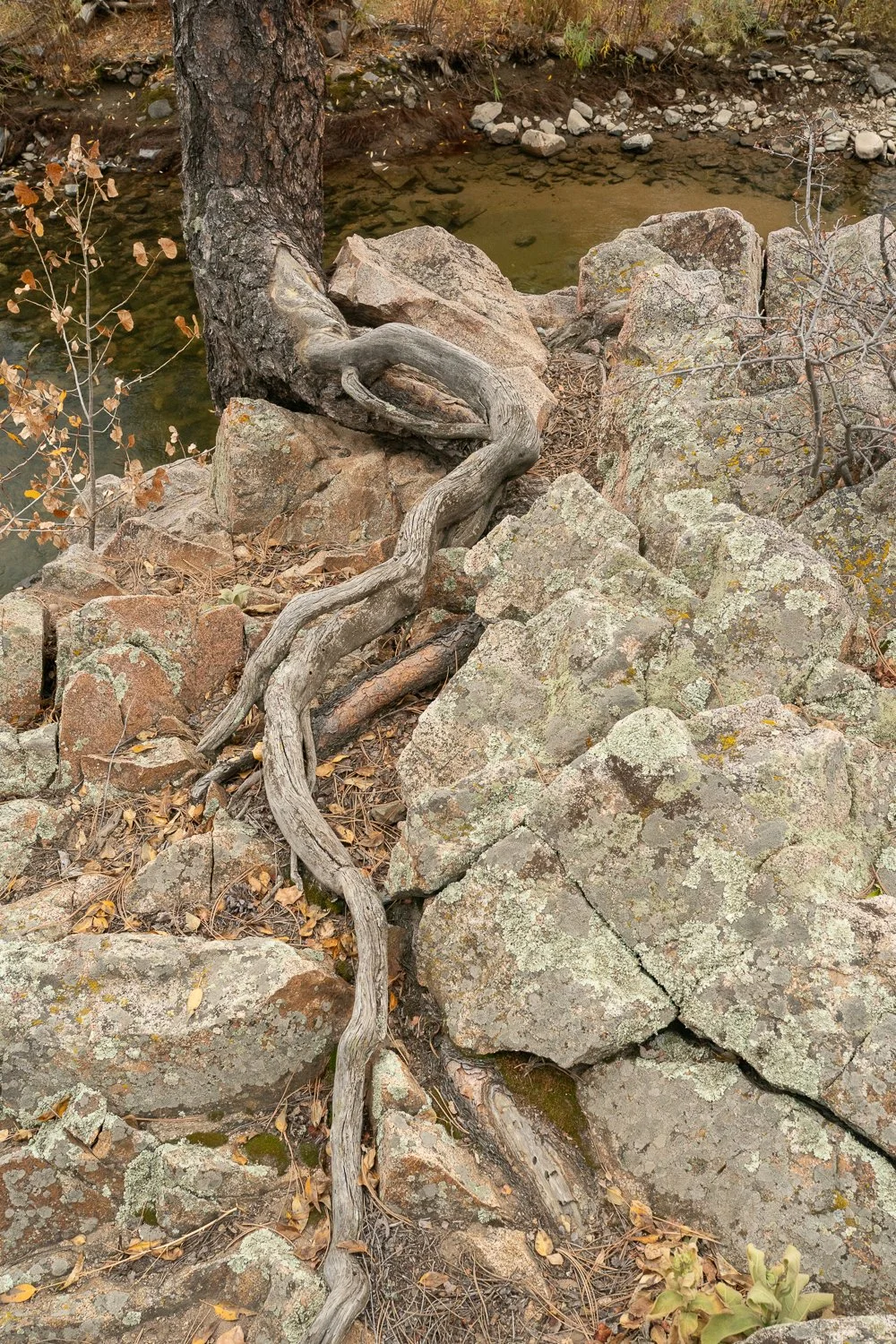
Photograph of a tree growing out of a rock along the Big Thompson River

Tree roots growing out of a rock

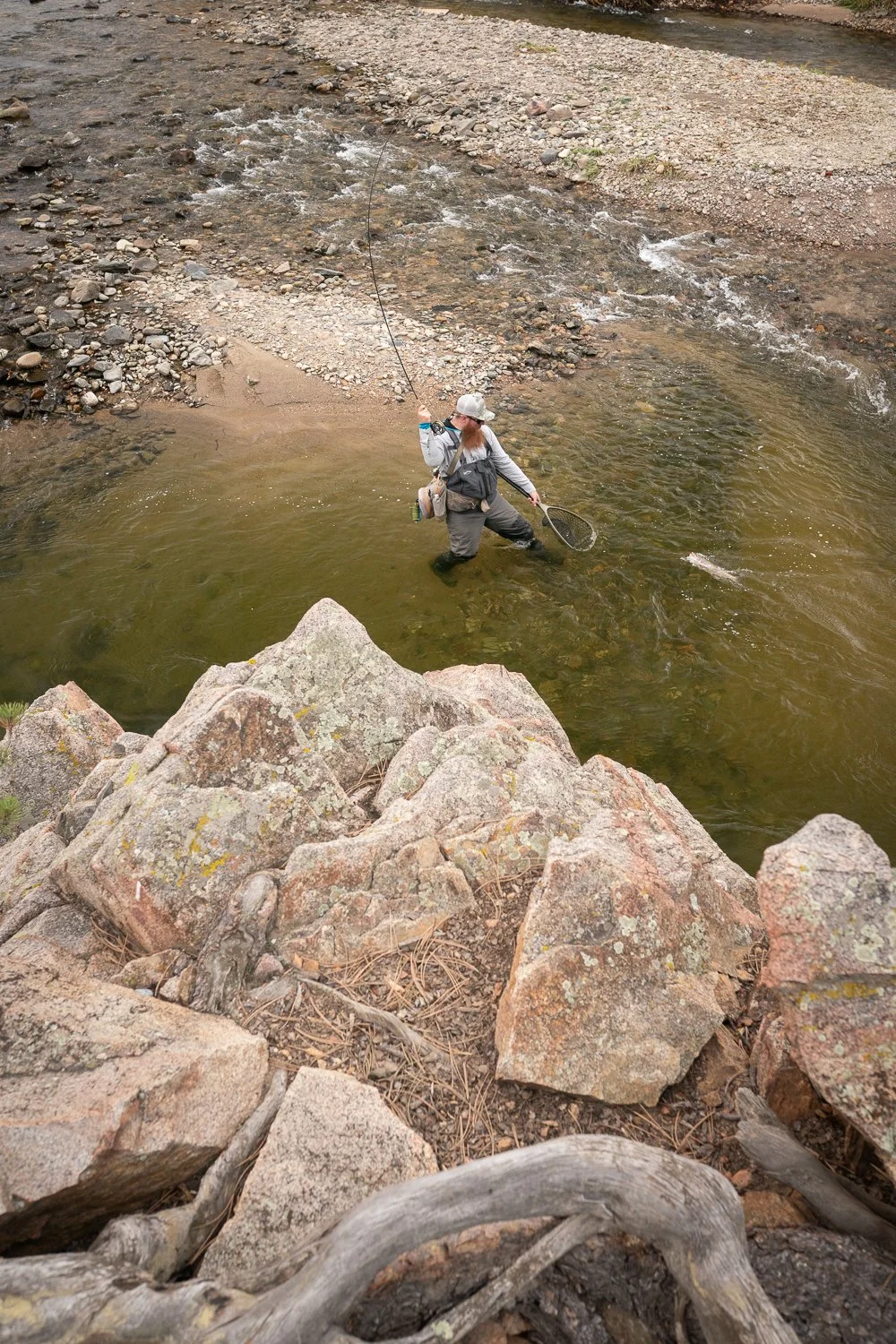
Photograph of a fly fisherman netting a large trout in a rugged setting on a river in Colorado

Charlie Schaefer netting a trout on the Big Thompson River outside Loveland, Colorado

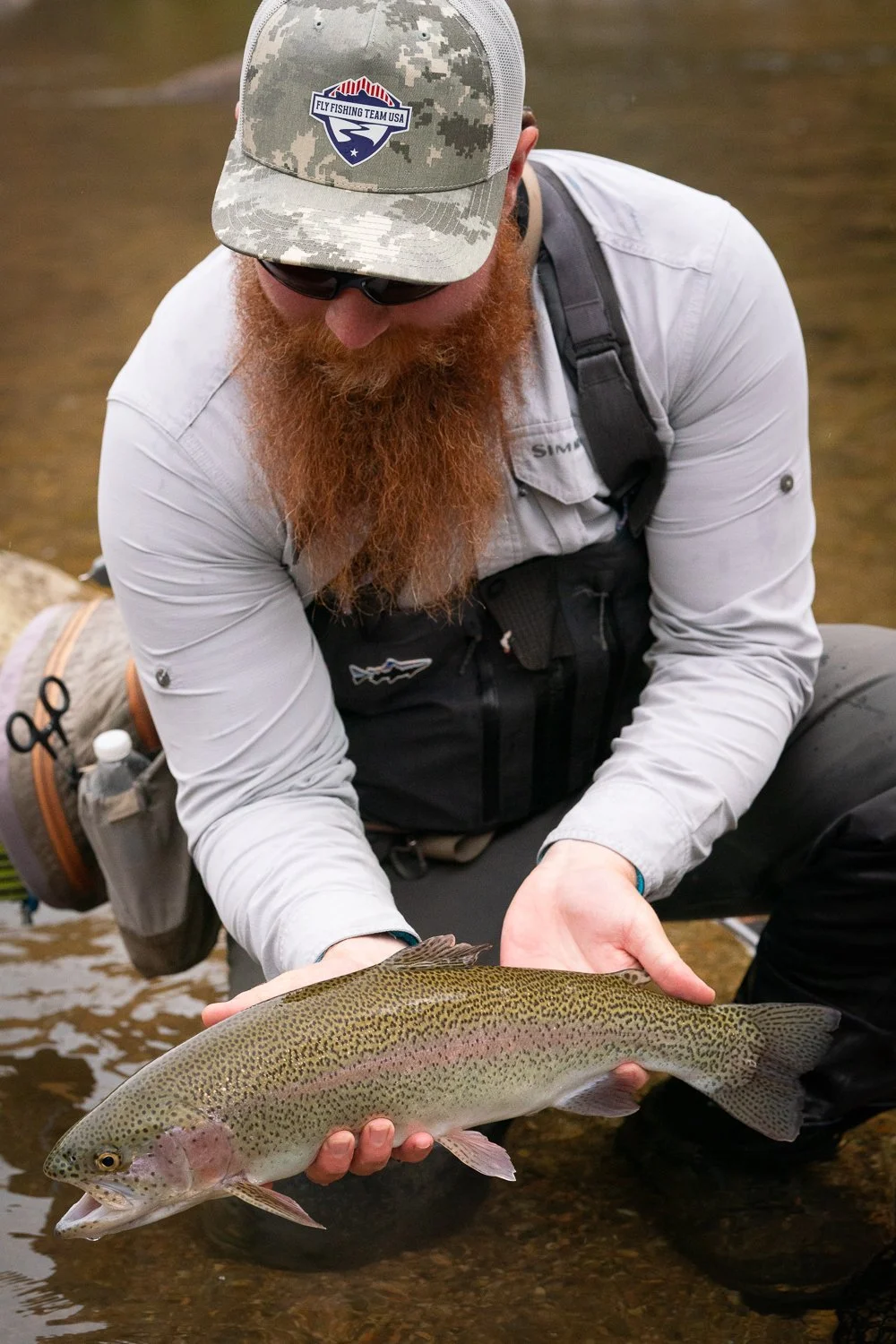
Photograph of a fly fisherman holding a trophy trout on the Big Thompson River

A beautiful Rainbow Trout

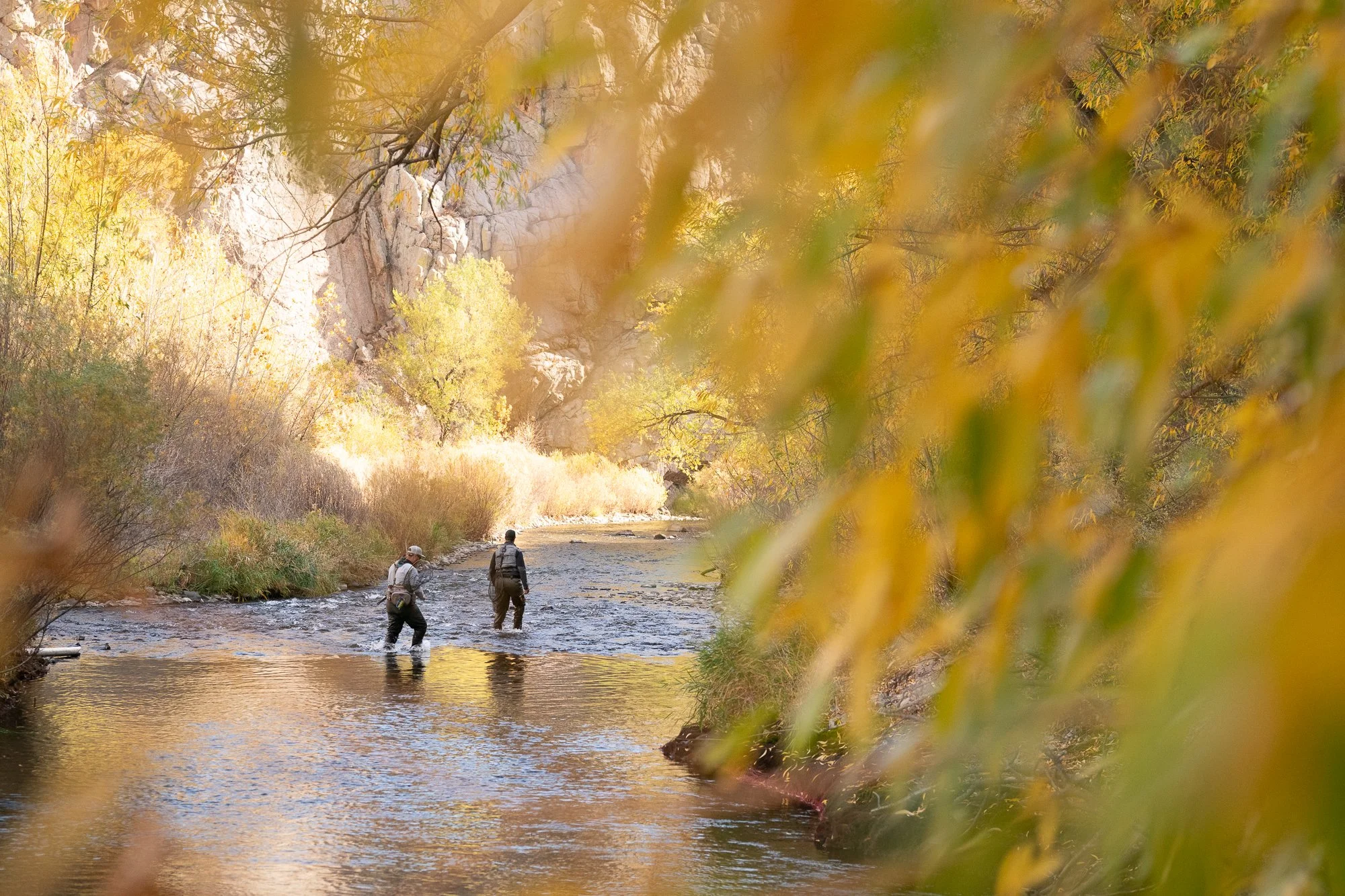
Two fly fisherman walking through fall foliage on the Big Thompson River in Colorado

Fall colors in the river in Colorado

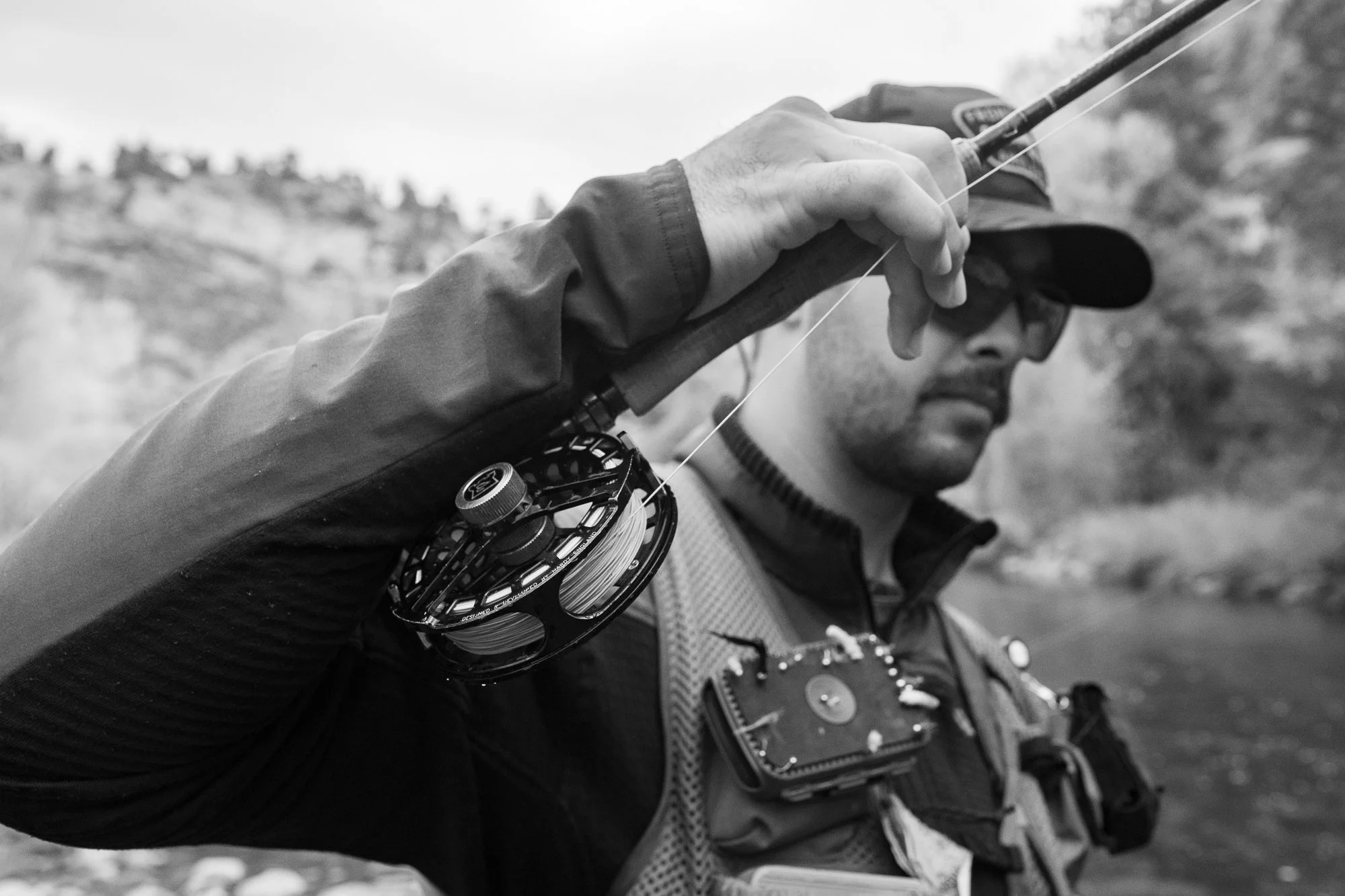
Black and white photograph of a fly fisherman holding a rod and reel on the river

Hardy fly rod and reel

Black and white photograph of a fly fishing guide in Colorado available for licensing

One handed

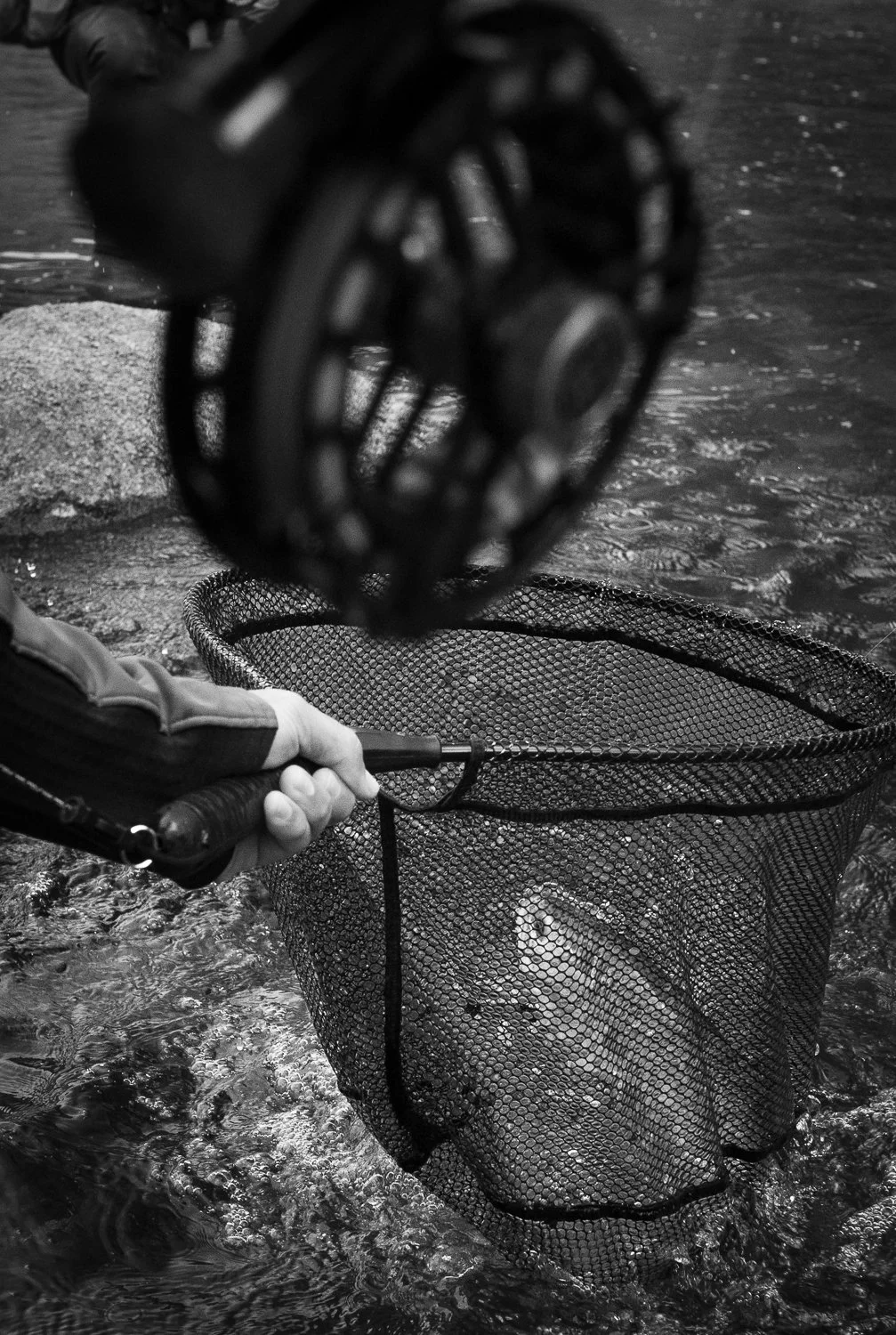
Photograph of a large trout in a net caught by a fly fisherman

Netting a large Rainbow Trout

A fly fisherman smiles while holding a trophy Rainbow trout

Trophy Trout - Colorado

Fly fisherman on the Big Thompson River in Colorado - Black and White Photography

Big Thompson River Fly Fishing

Close-up photograph of a fly fisherman's arm setting the hook on a trout

Setting the hook

Photograph of a Boulder, CO fly fishing guide on the Big Thompson River

A proper bend in the rod

Close-up photograph of a fly fisherman's hand holding a trophy rainbow trout

Won’t forget this one

Photograph of a Colorado fishing guide available for licensing

Charlie Schaefer - Front Range Anglers

Photograph of a fly fisherman trying to net a fish on the Big Thompson River

The big ones put up a good fight

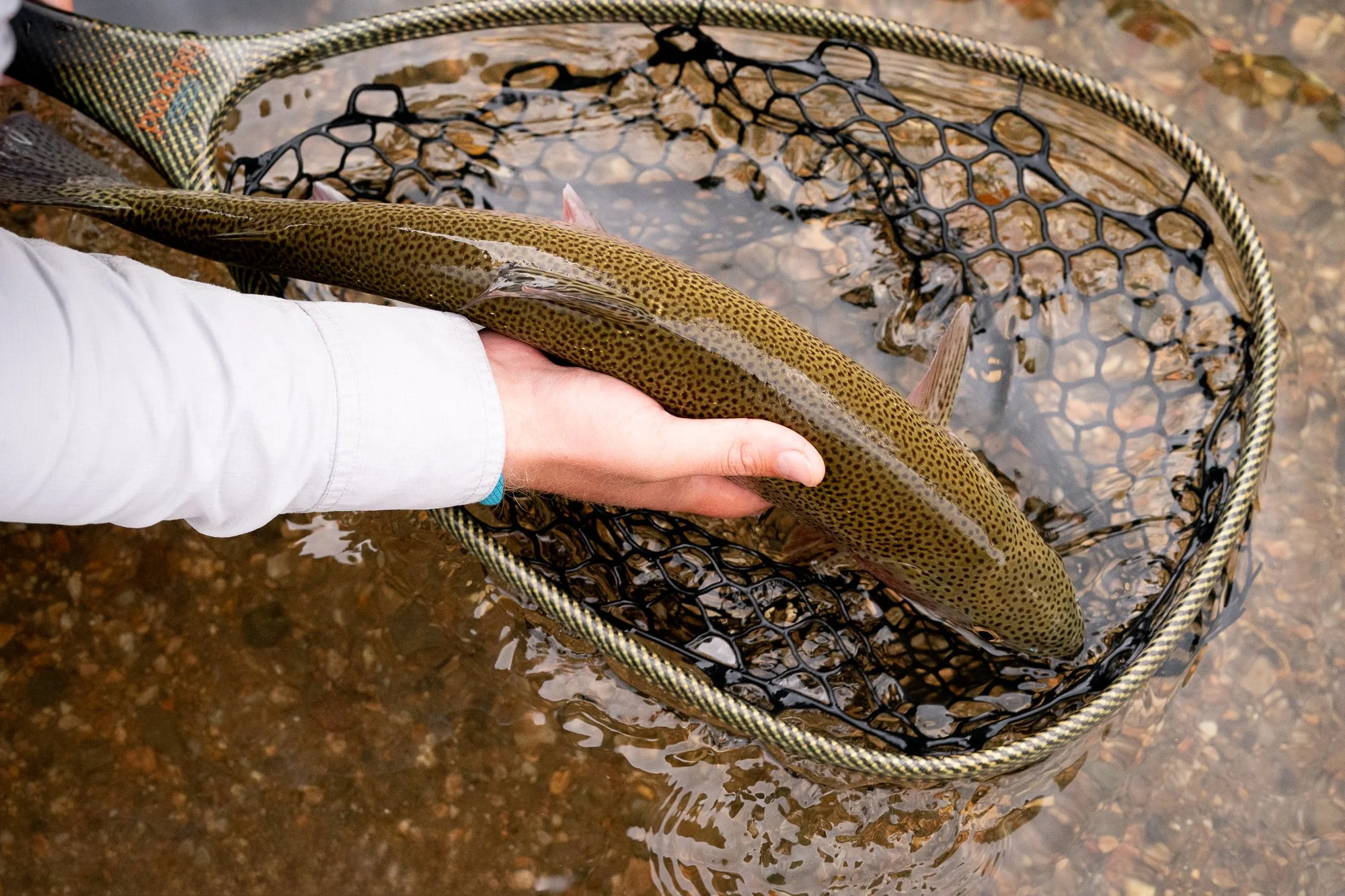
Photograph of a beautiful rainbow trout caught on the Big Thompson River in Colorado

Textbook Rainbow Trout

Aerial view of a fly fisherman walking up river

Fly fisherman moving up river

Photograph of a fly fisherman netting a trout surrounded by fall colors in Colorado

Fly Fishing the Big Thompson River surrounded by fall color in Colorado

Fly Fishing - Crested Butte, Colorado

Crested Butte, Colorado Fly Fishing Photography

San Juan Mountains

Crested Butte, Colorado is hands down one of my favorite places to go fly fishing in the country. It’s just one of my favorite places period. Combine the stunning views with their mountain town culture and access to all sorts of fly fishing, and the place is hard to beat. Summertime anywhere in the San Juan mountains will seduce you whether you’re aware of it or not. The images are from a recent backcountry fly fishing trip with friends to a small creek that shall go unnamed for obvious reasons. There is plenty of easy fishing access around around Crested Butte on the Taylor River, East River, and Gunnison River, so blowing up such a remote spot like this would cause me to lose sleep. Just looking at these photographs is FOMO inducing. Can’t wait to get back out there.

Click here to see more of my fly fishing photography.

Summer fly fishing near Crested Butte, Colorado

Fly fishing in Crested Butte, Colorado

Photograph of two friends fly fishing a small creek in Colorado

Fly fisherman wading up a river in Crested Butte, Colorado

Photograph of a fly fisherman climbing over a pile of logs along a stream

A fly fisherman climbing over a pile of trees and branches on the side of a river outside Crested Butte, Colorado

Photograph of a fly fisherman casting in a beautiful section of stream near Crested Butte, Colorado

Fly fishing a picturesque stream in the San Juan Mountains

Photograph of beers cooling off in a pool off on the side of a stream in Colorado

Cans of Coors Banquet chilling in river water during a fly fishing trip in Colorado

Catching trout on a backcountry stream in Colorado

Backcountry fly fishing in Colorado

A fly fisherman netting a trout in a small stream surrounded by canyon walls in Colorado

Fly fisherman laughing after a fun day on the river in Crested Butte, Colorado

Fly fishing wading boots and wading socks drying on a tree

Cheesman Canyon Fly Fishing Photographs

Cheesman Canyon Fly Fishing Photography – Prints & Licensing

That old saying, “you get what you put in,” always seems to ring true with fly fishing — especially in Cheesman Canyon. Some folks only fish a couple of minutes from their truck, others hike deep into the canyon for solitude, but no matter how far you go, the river has a way of revealing something new.

The South Platte River in Cheesman Canyon, Colorado is a local favorite for anyone living in the Denver/Boulder area and a destination for people flying in from out of town, for good reason, it’s got great fishing and incredible views. As a photographer it’s one of my favorite places to shoot. The canyon walls, shifting light, and relentless water create a stage that’s never the same twice. These photographs are my attempt to capture that feeling — part of an ongoing collection that’s available as fine art prints and for licensing to magazines, brands, and editors.

Why Cheesman Canyon Inspires Me

Standing knee-deep in the South Platte, you start to feel the rhythm of the place. You have to work to get there and landing fish is never ever a given. A cast that feels ordinary in tamer water takes on a different kind of weight here. Photographing it is no easier — reflections, shadows, and current can ruin a frame in a second.

But that’s why it’s worth it. The challenge makes the images stronger, and the story behind them richer.

Moments from the River — Cast, Water, Light

Every frame I made here comes back to the thing I hold in the highest regard when it comes to fly fishing photography, and that’s authenticity. I photograph real people really fly fishing for real fish. None if it is posed or planned out. Each photograph is a reminder that Cheesman Canyon demands patience. Both from the fisherman, and from the photographer.

How These Images Work for Brands, Magazines & Editors

These aren’t just personal snapshots — they’re images built for storytelling.

They work especially well for:

  • Magazines & editorial features on fly fishing, conservation, or outdoor life.

  • Gear & apparel brands needing authentic lifestyle and environment shots.

  • Travel and adventure outlets highlighting Colorado’s rivers and landscapes.

  • Lodges, outfitters, and conservation groups looking for fine art displays.

Every client’s needs are different — usage territory, exclusivity, duration, and medium all shape licensing. If you’re building a feature, campaign, or branded content and need images from this series, just reach out.

Behind the Lens: Gear, Challenges & Intent

Cameras don’t like rushing water, and neither do tripods in slick current. But the mistakes — falling in, missing a cast — are part of why I keep coming back.

I look for the action, but just as important are the moments between action. The way light reflects off a canyon wall, or the way an angler waits with rod tip down. Sometimes the strongest images come after the catch, when the canyon quiets down again.

That’s what I try to photograph — not just the fish, but the entire experience of being there.

Get Prints or License These Shots

If you’d like a framed print, a large-scale wall piece, or want to license images for editorial, branding, or advertising, get in touch:

📩 rob@robhammerphotography.com

I’m happy to send you usage options, pricing, and custom packages depending on your needs.

You can also see more fly fishing photography HERE and prints HERE.

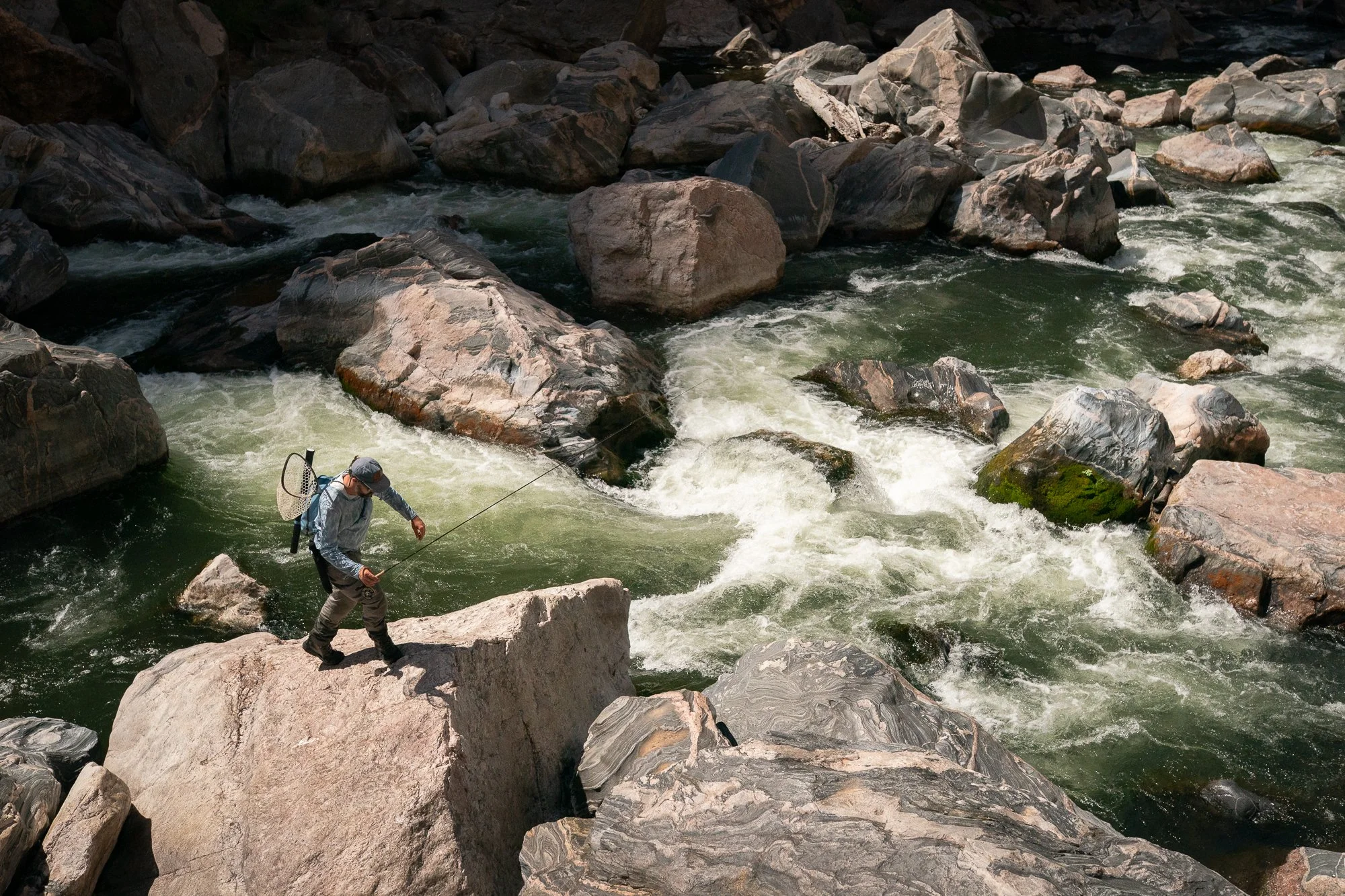
A fly fisherman hops from rock to rock on the South Platte River in Cheesman Canyon, Colorado

A fly fisherman navigating rocks in Cheesman Canyon

A person standing on top of a large boulder looking into the South Platte River during a day of fly fishing for rainbow trout and brown trout  in Cheesman Canyon, Colorado

Looking for trout from atop a boulder

Overhead view of a Fly Fisherman casting into the South Platte River in Cheesman Canyon, Colorado

Overhead view of a fly fisherman’s casst

A fly fisherman walks through large boulders on the South Platte River in Cheesman Canyon, Colorado

A fly fisherman walking underneath large boulders

A fly fisherman jumps from boulder to boulder on the South Platte River in Cheesman Canyon, Colorado

A fly fisherman leaps from rock to rock in a picturesque Colorado trout stream

A large trout in the South Platte River in Colorado

A trout illuminate by beautiful light

A fly fisherman wades through a beautiful section of the South Platte River in Cheesman Canyon, Colorado

Wading across South Platte River

A photo with motion blur of a fly fisherman casting into the South Platte River in Colorado

Motion blur photograph of fly fisherman

A Fly Fisherman hiking up a rocky cliff with a bottle of whisky in Cheesman Canyon, Colorado

Fly fisherman with a bottle of whisky

A fly fisherman on the South Platte River casting near large rock cliffs in Cheesman Canyon, Colorado. Available for editorial and commercial licensing.

Fly fishing in Cheesman Canyon - Colorado

Stock photograph of a a fly fisherman on the South Platte River navigates a rocky section in Cheesman Canyon, Colorado

The rocky cliffs of Cheesman Canyon

A fly fisherman rigs up his rod while sitting on rocks in Cheesman Canyon near Deckers, Colorado

A fly fisherman sitting on a rock preparing his gear

A fly fisherman on a beautiful rocky section of the South Platte River nets a fish in Cheesman Canyon, Colorado

Netting a trout in Cheesman Canyon

A stock photograph of a fly fisherman hiking into a remote section of the South Platte River in Cheesman Canyon, Colorado. Available for editorial and commercial licensing.

Fly fisherman hiking out of Cheesman Canyon

American Road Trip

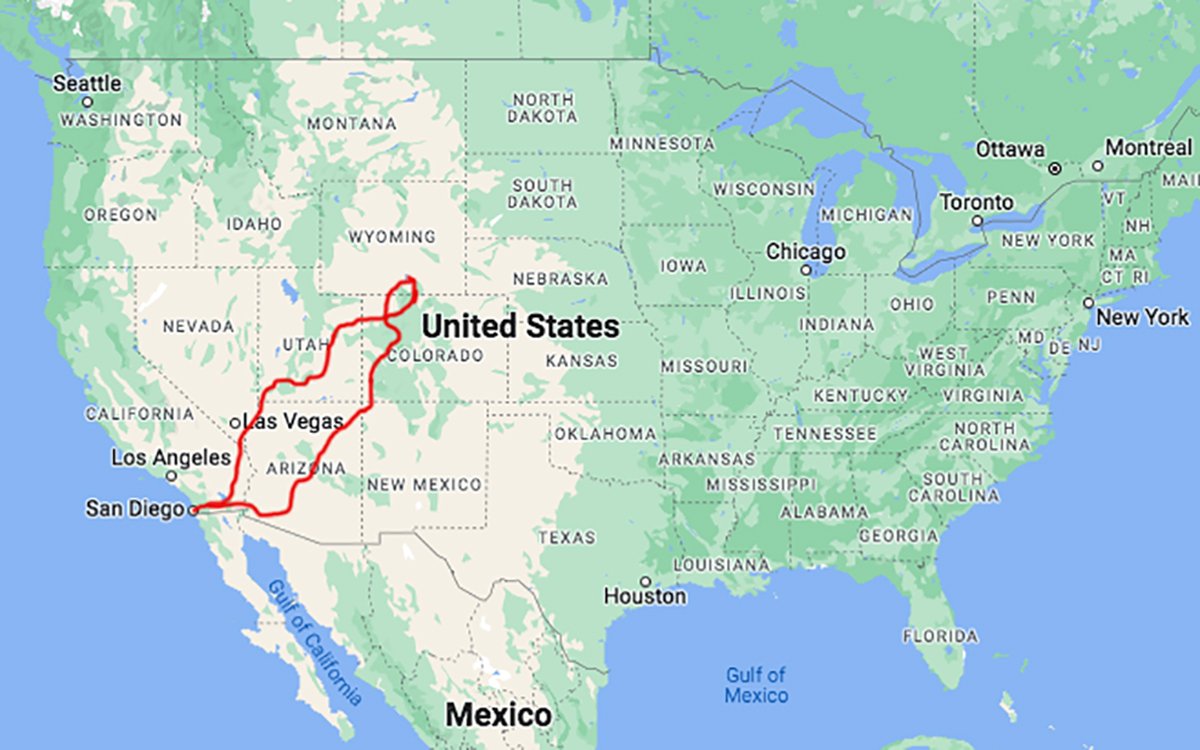
It seems like every road trip has its own personality filled with unique findings and activities. Of course photography is always the main focus of these trips, but there are also auxiliary goals that I try to squeeze in as well. Ranching, fly fishing, friends, and hunting are just a few of the things that happened in the squiggly red lines on the map. So far it seems like the results are good in the photography category and a hell of a lot of good times were had along the way. Excited to share more the miles soon.

View the American Roadtrip Gallery

Shop my American Roadtrip Photography Book

Smithsonian Magazine

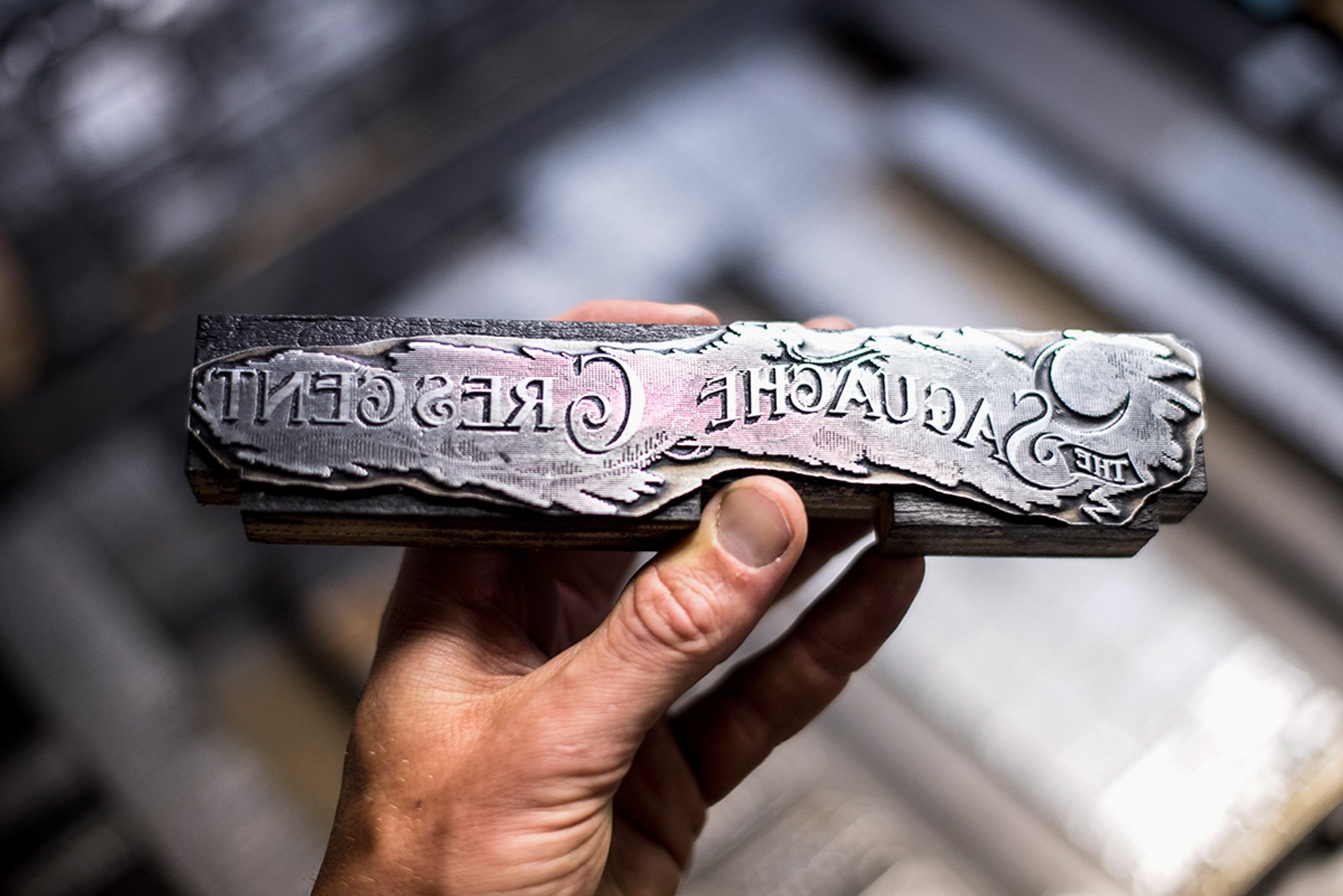
The Saguache Crescent

Small Town Newspaper - American Culture - Publishing

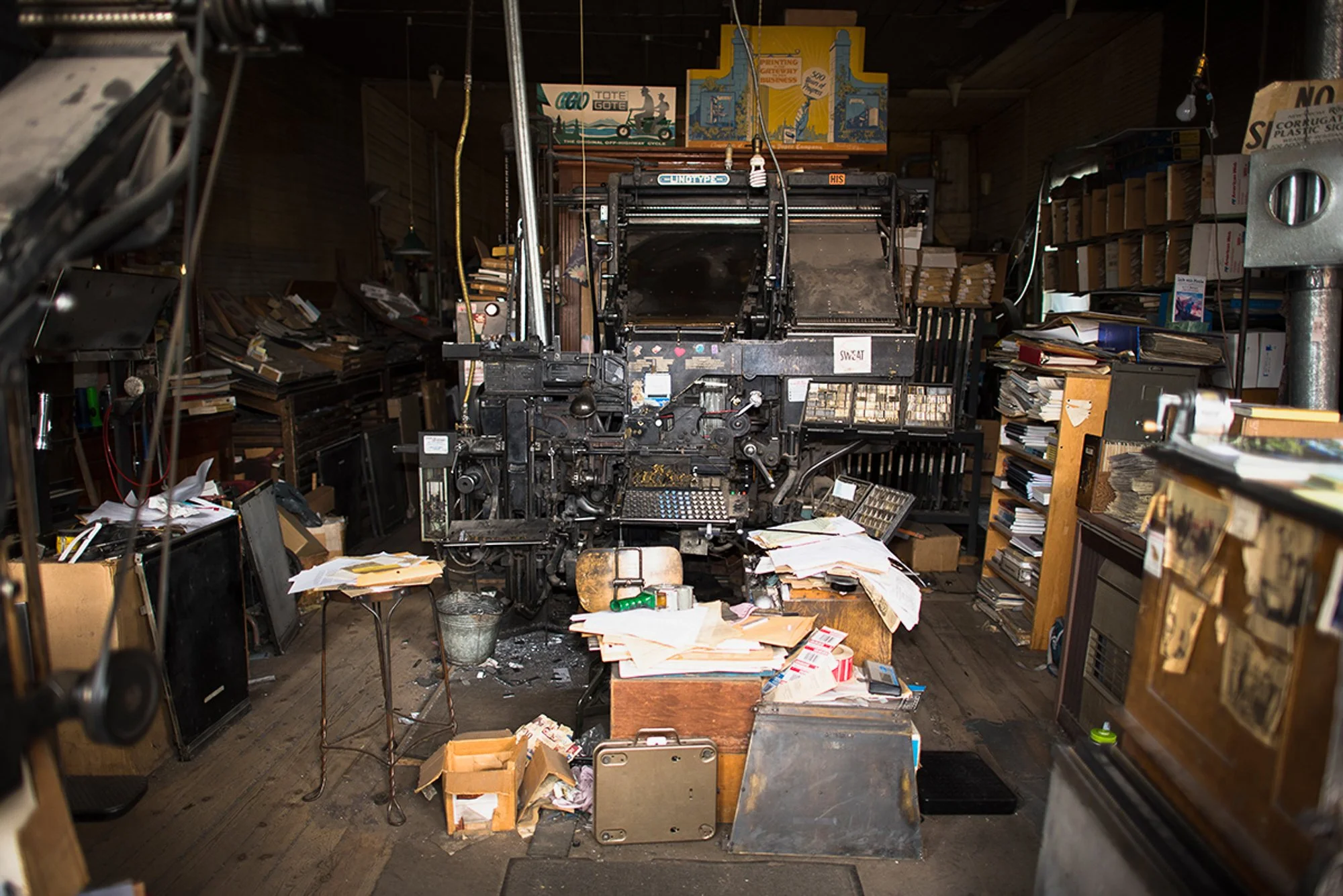
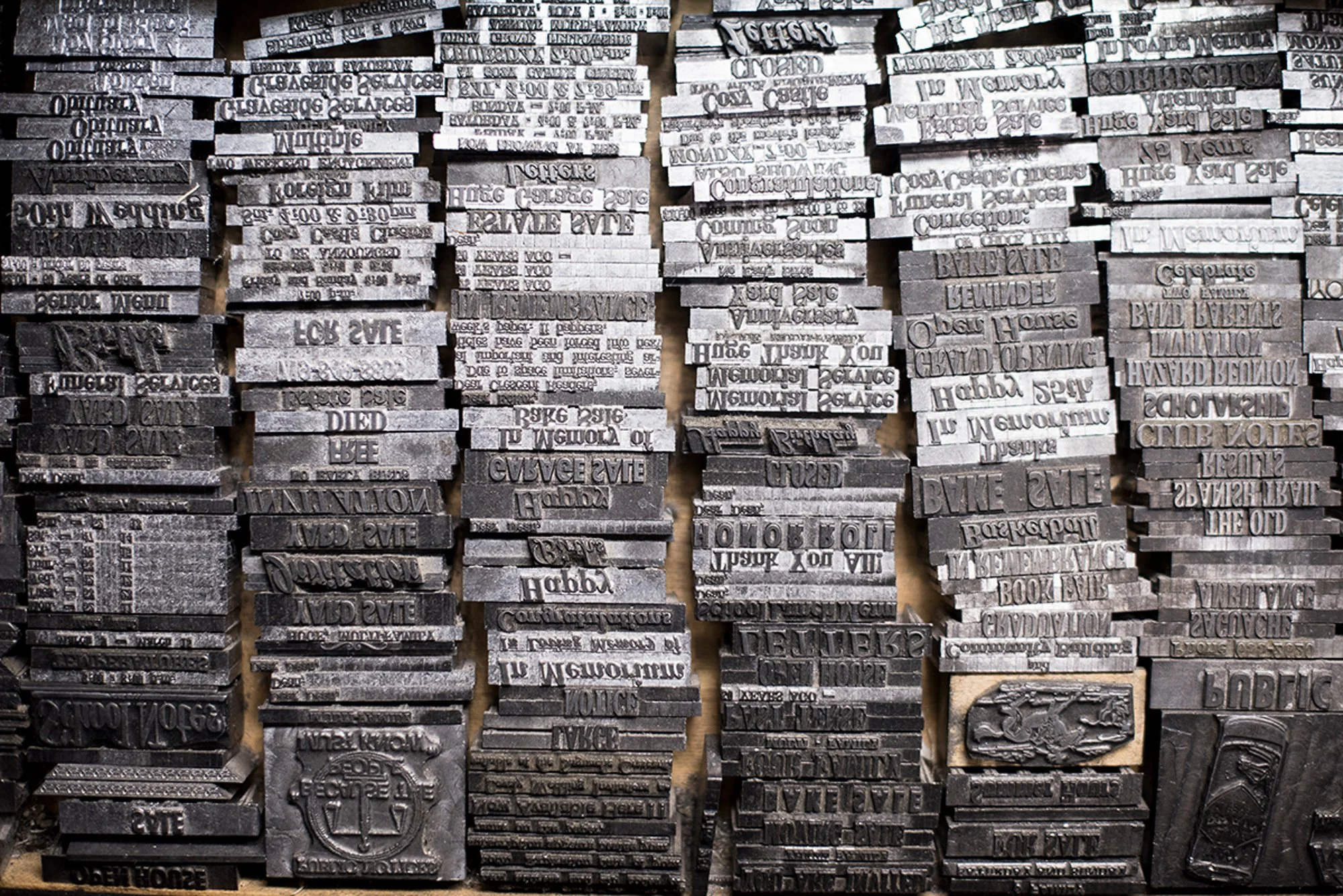
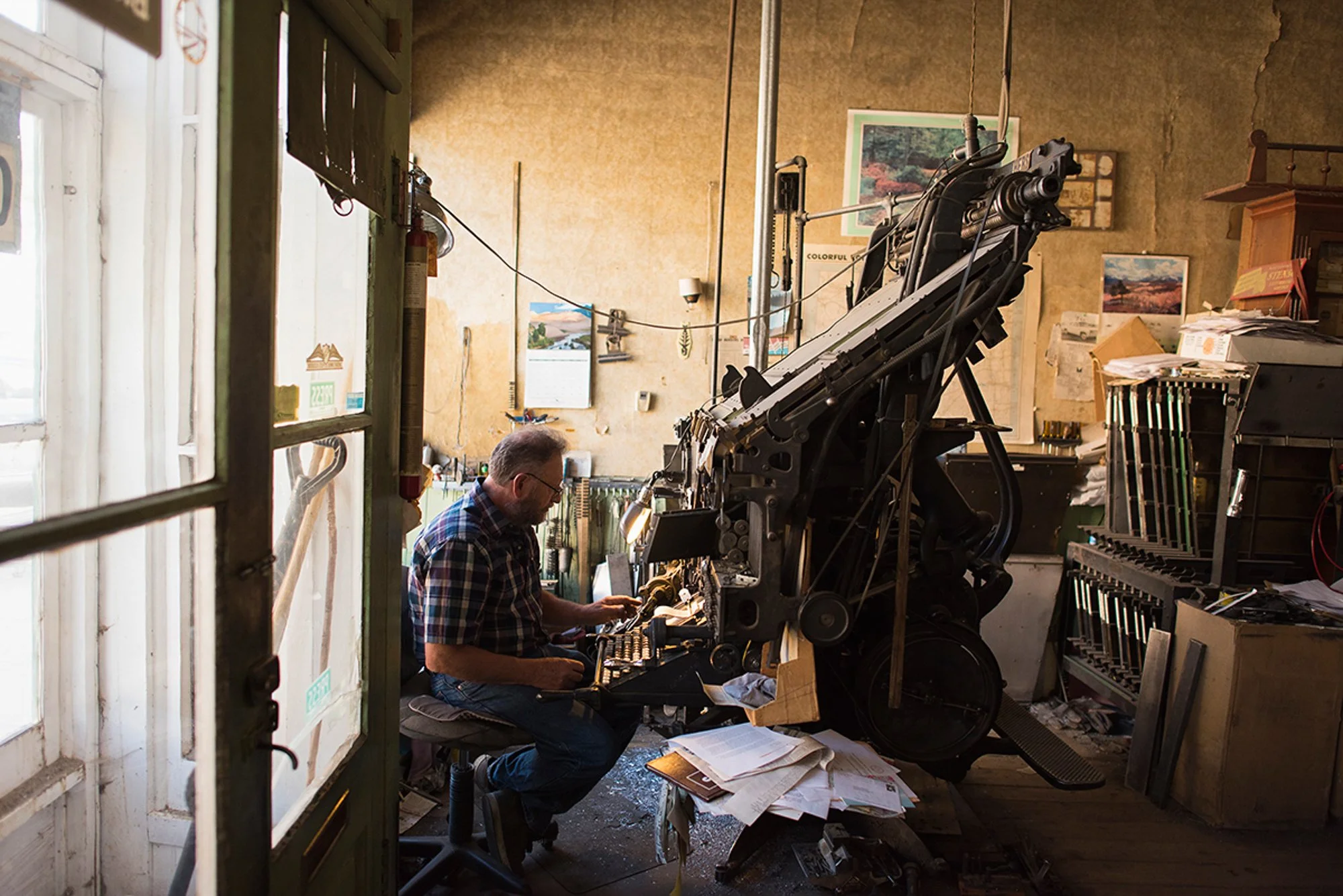
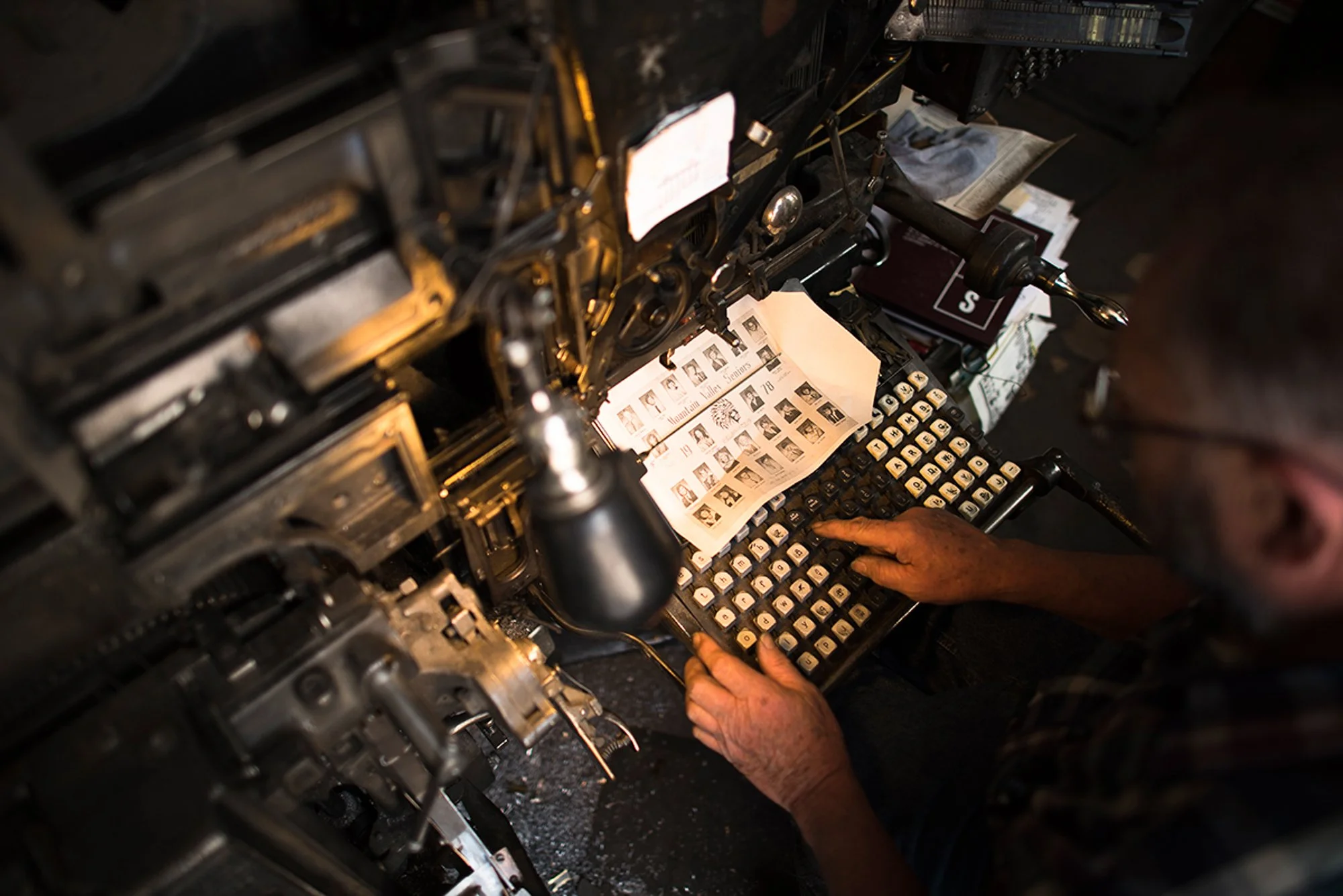
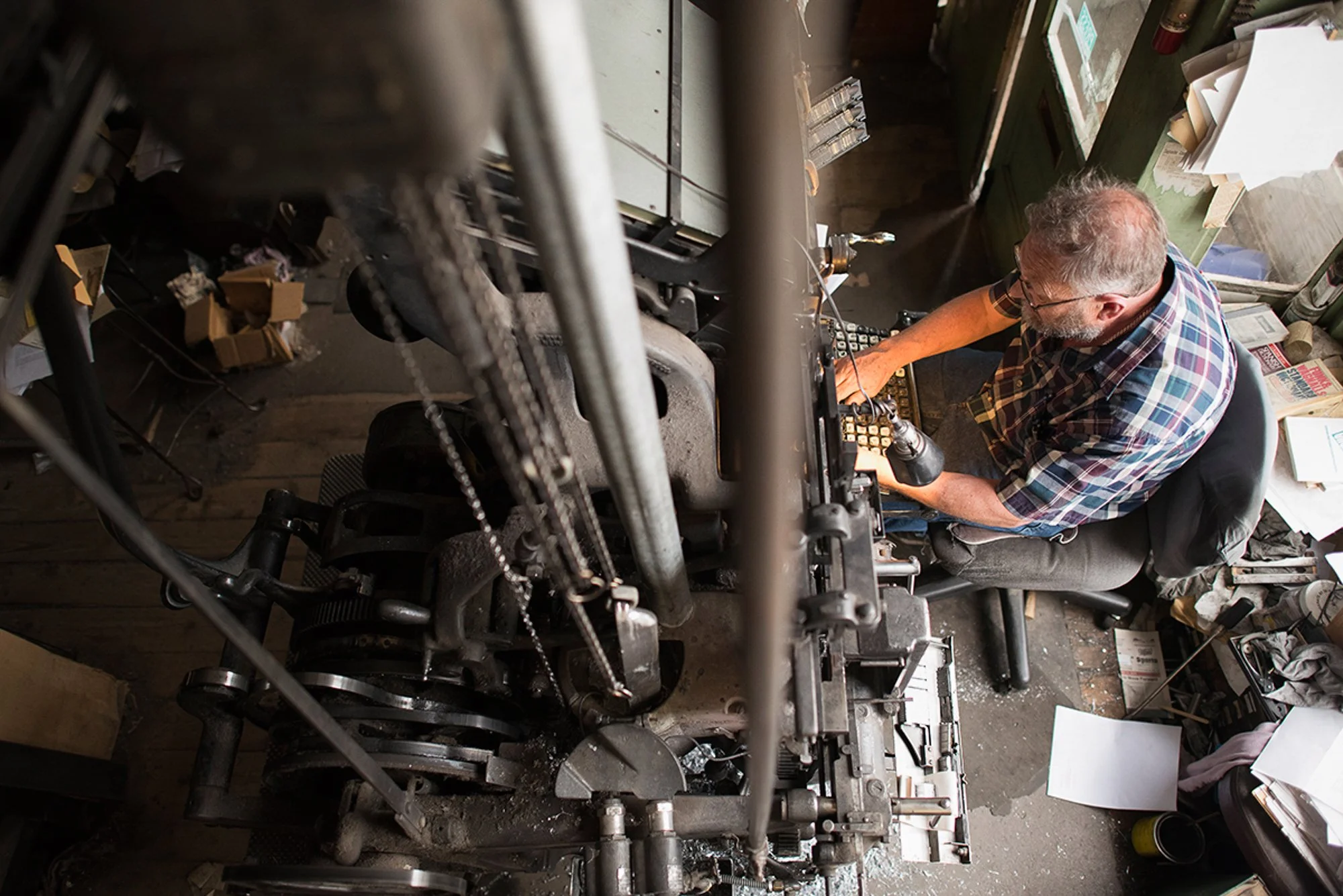
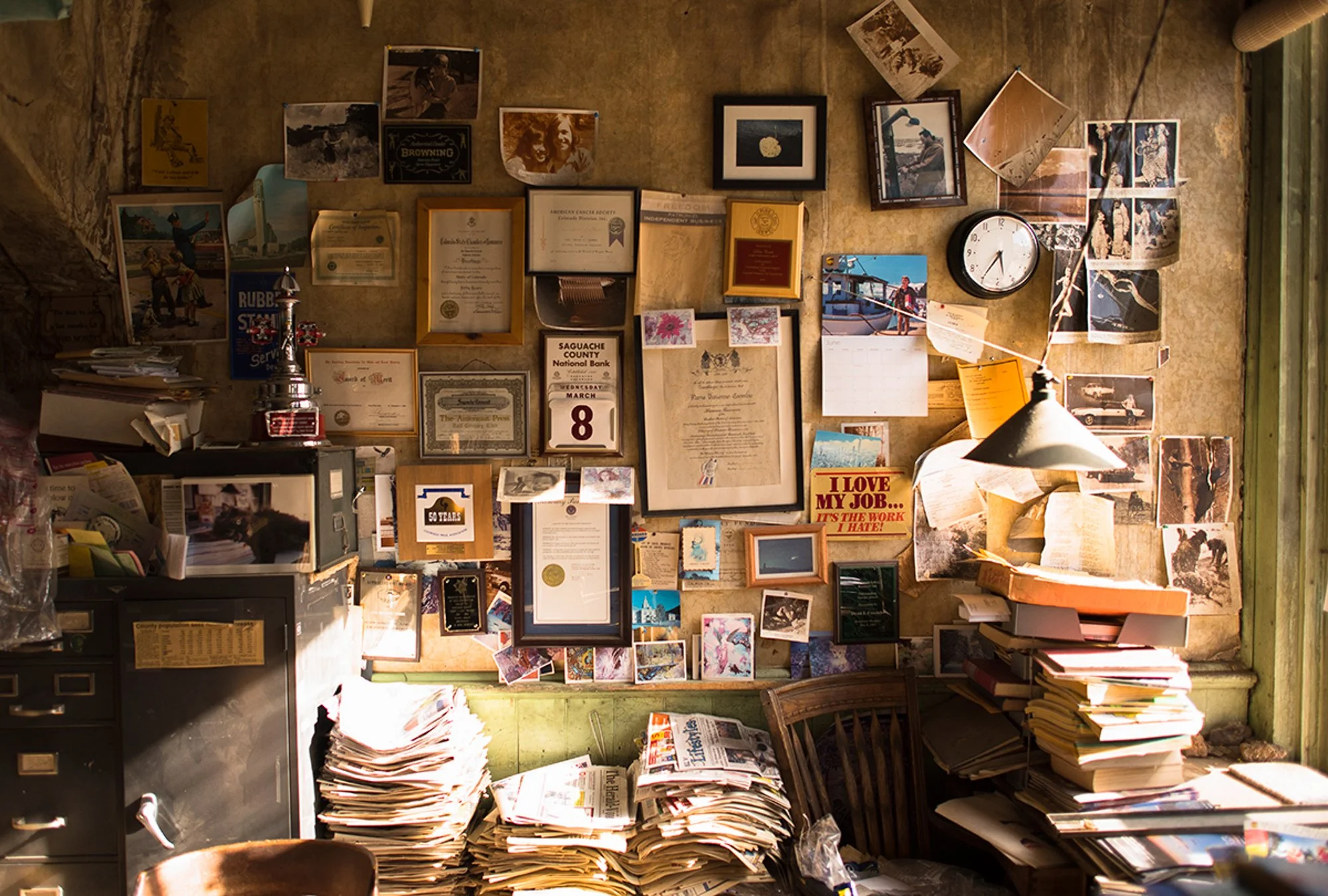
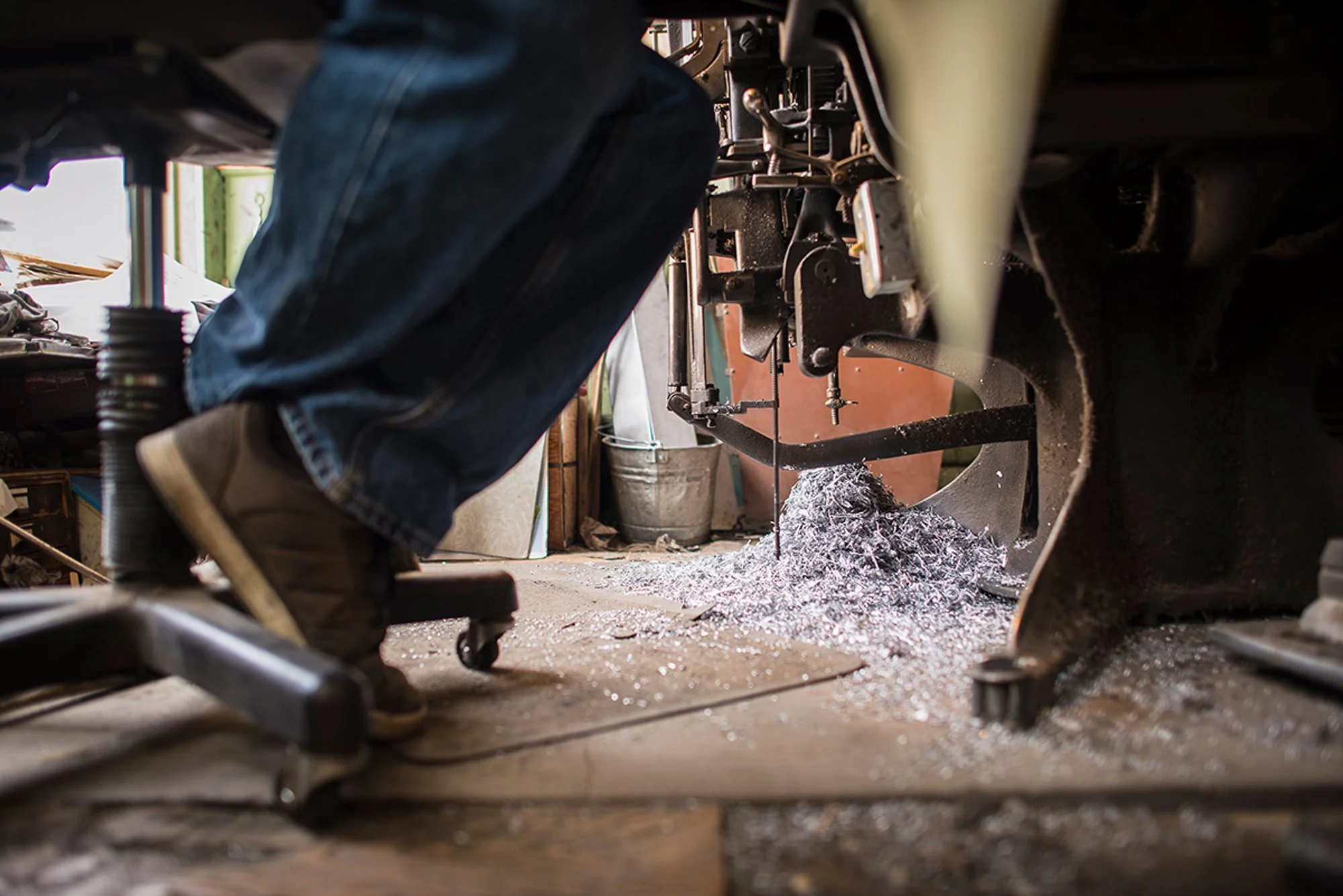
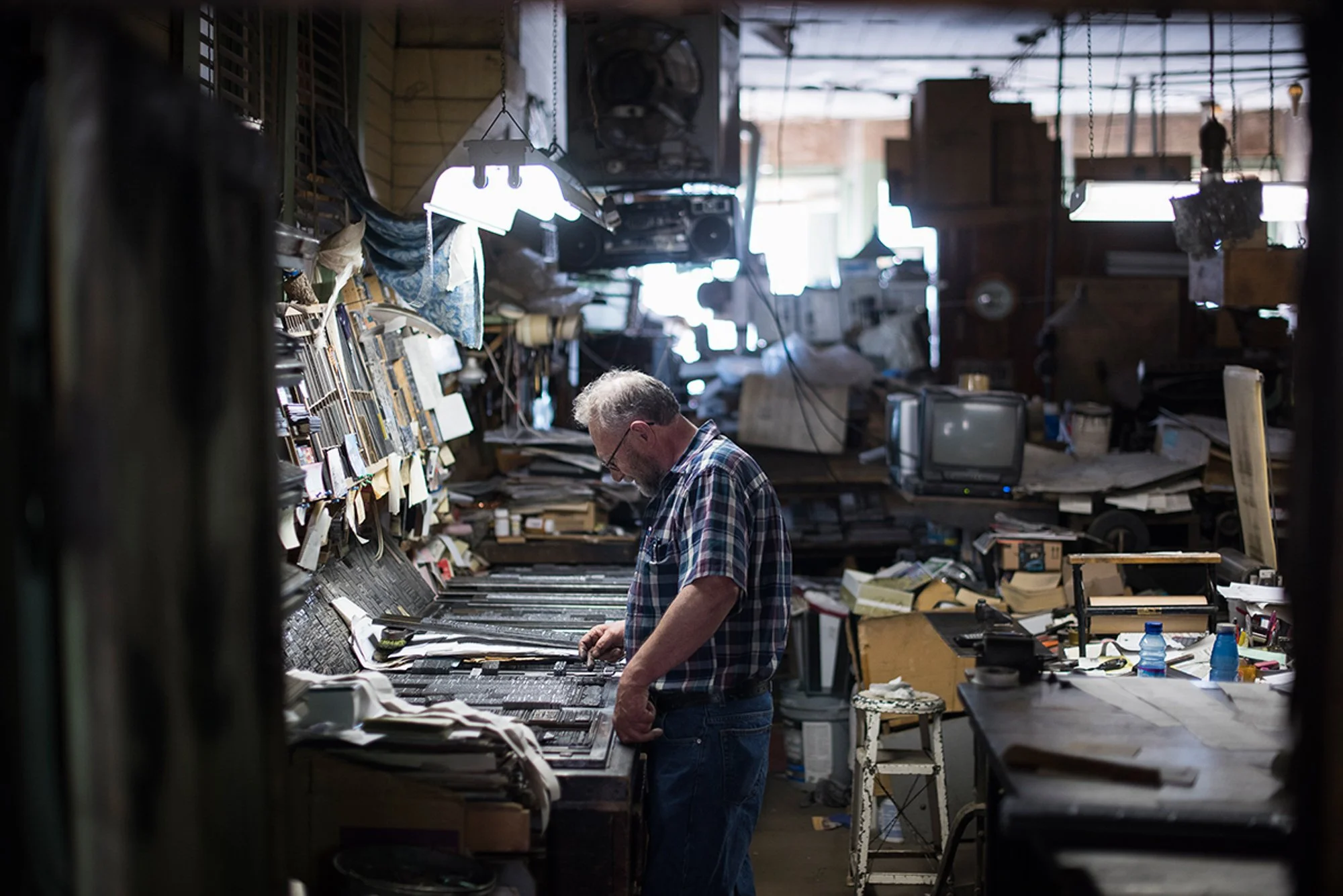
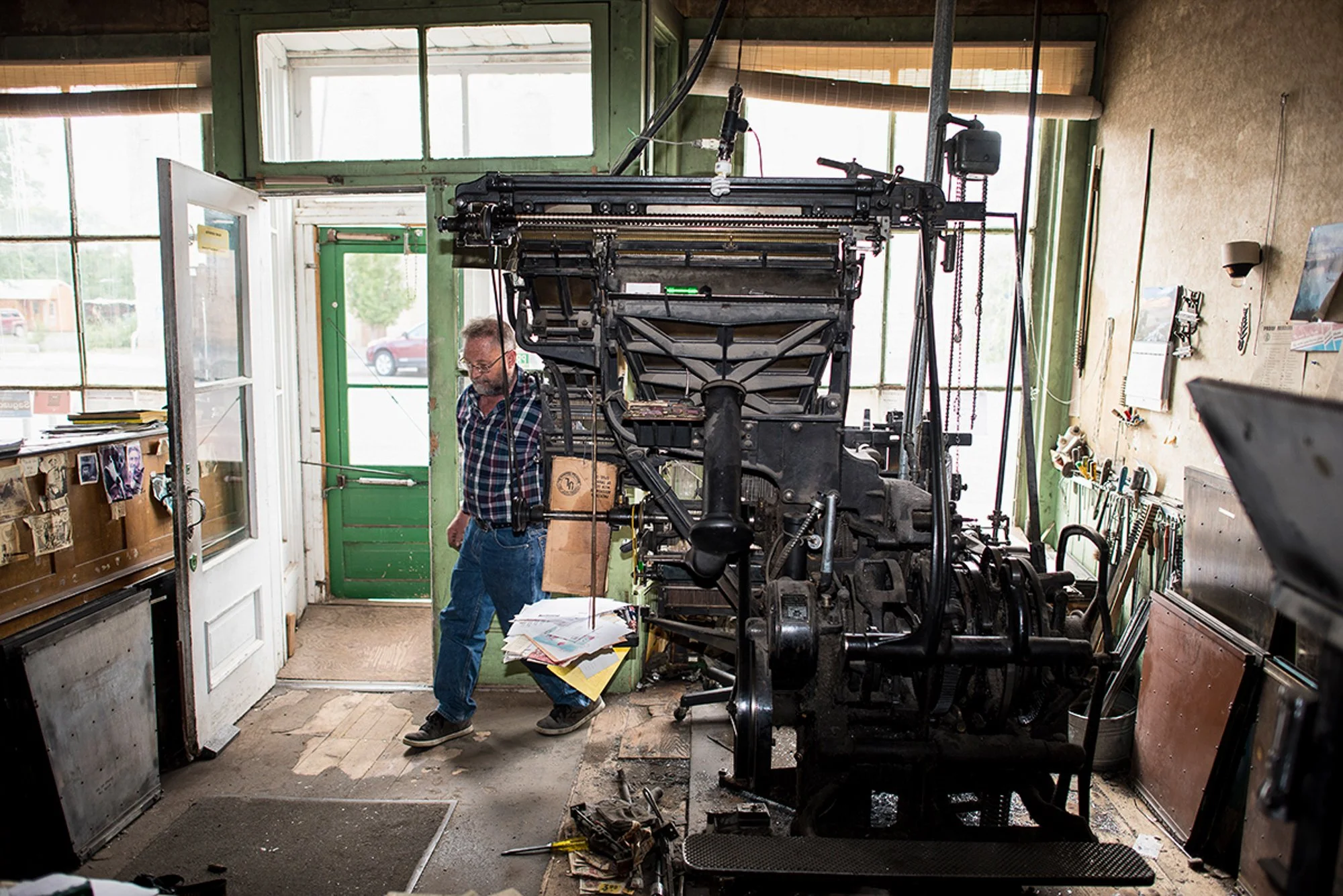
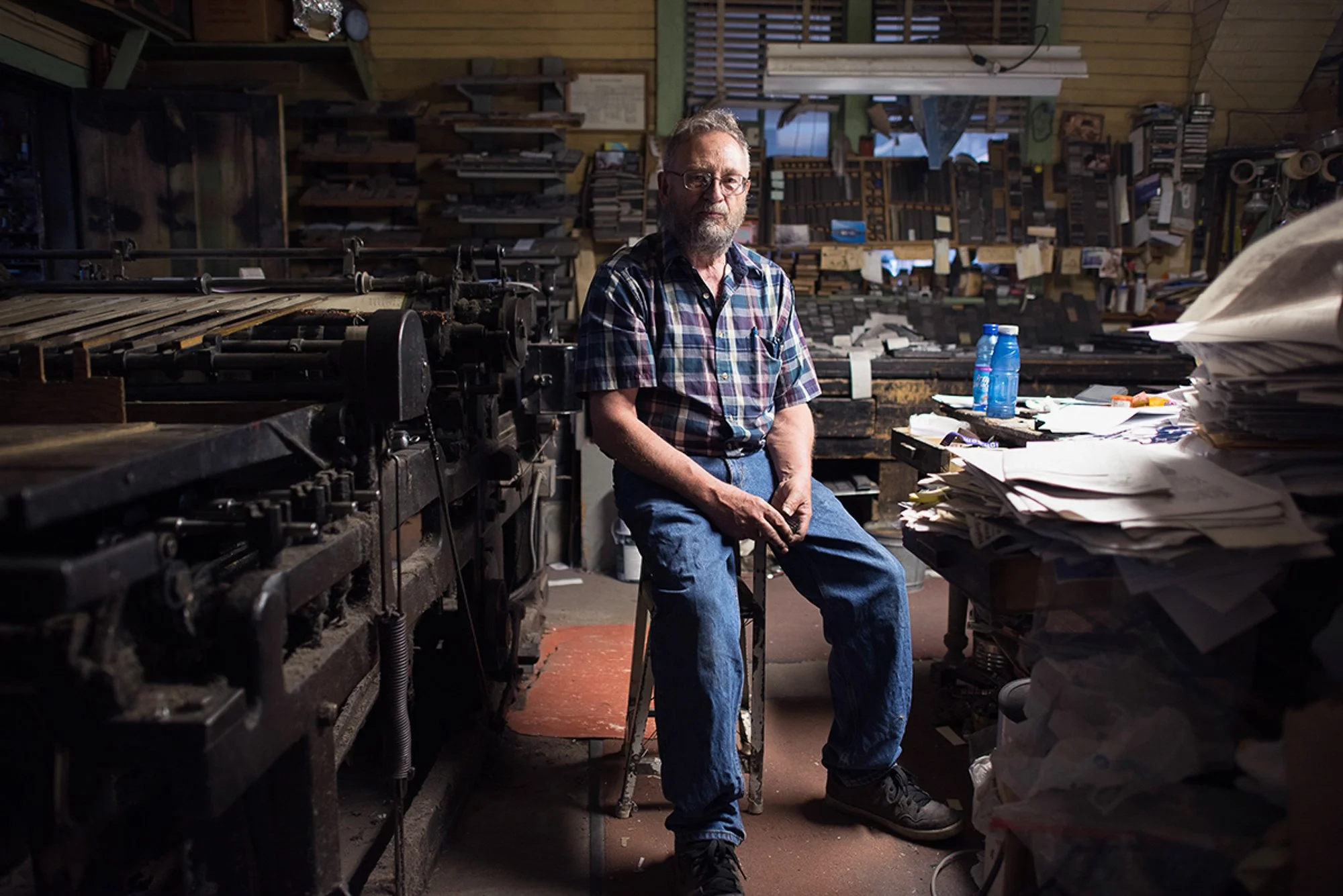
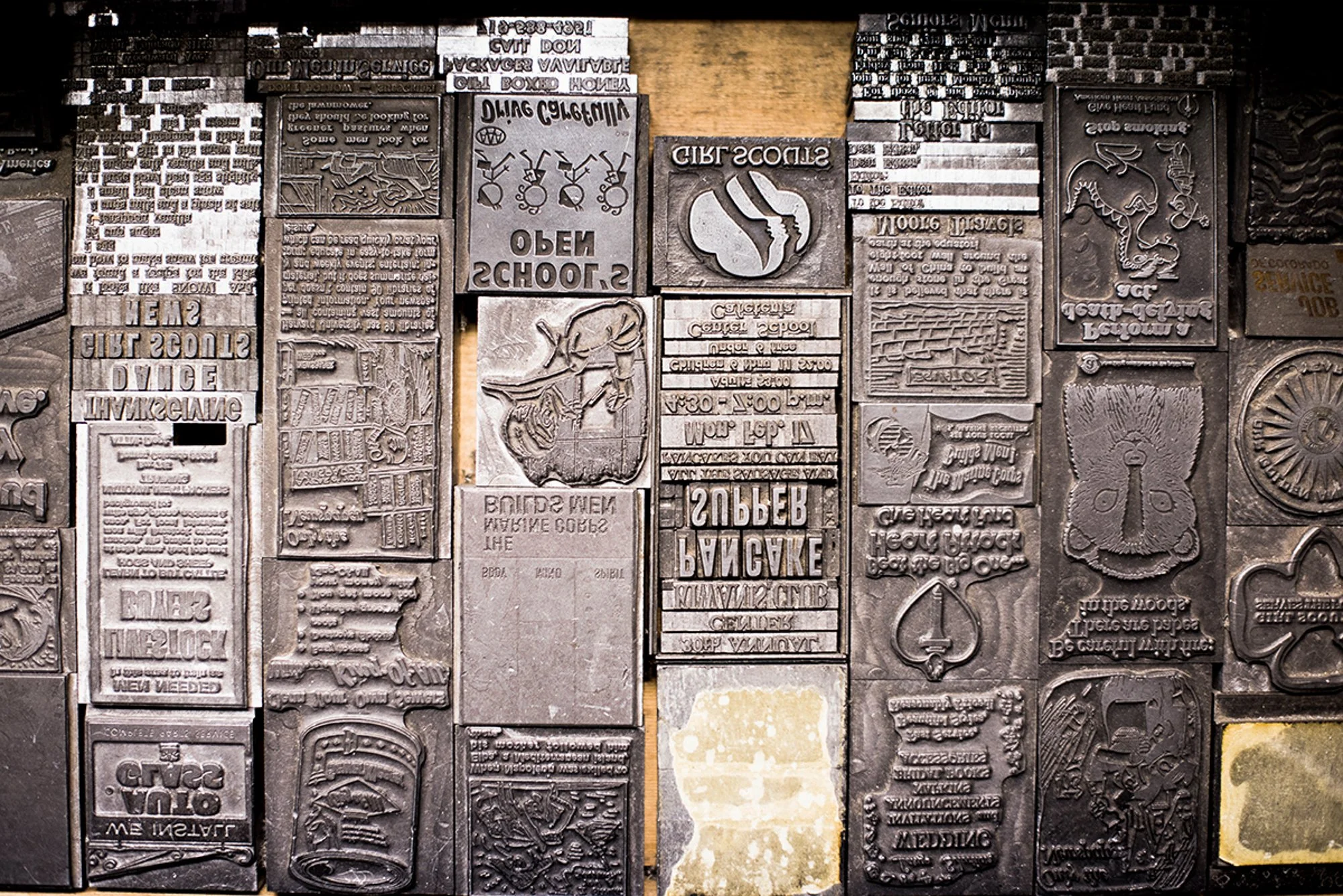
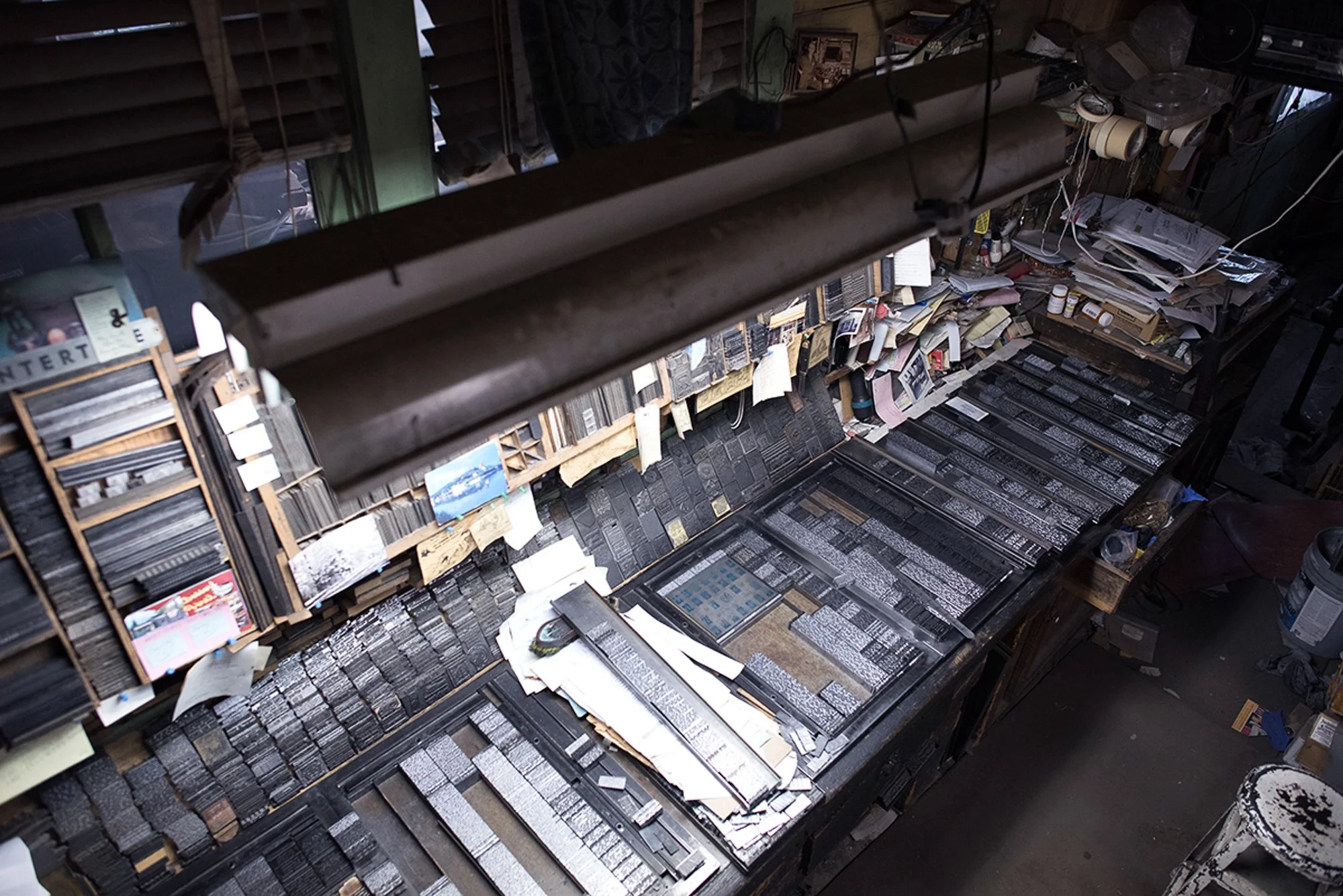
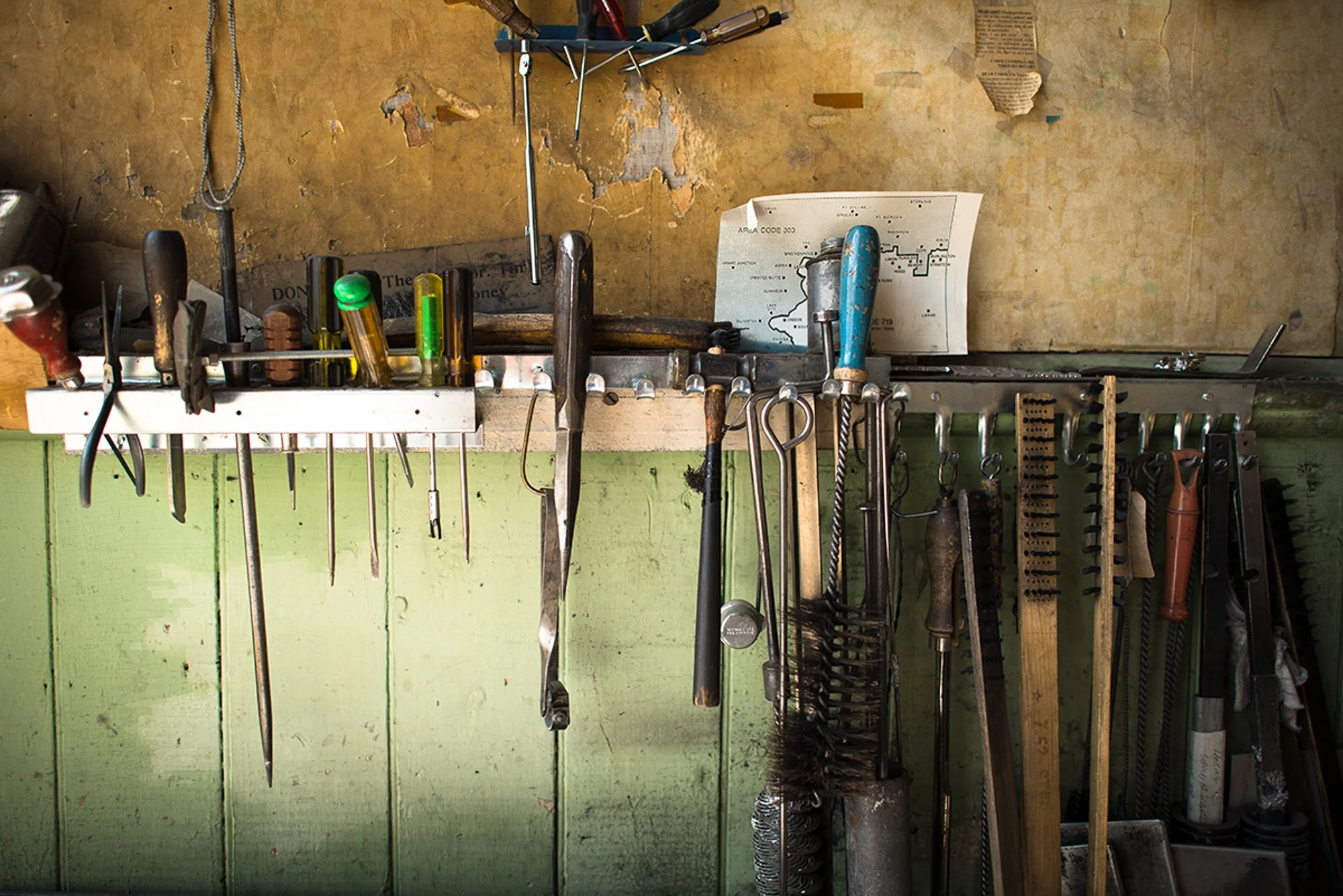
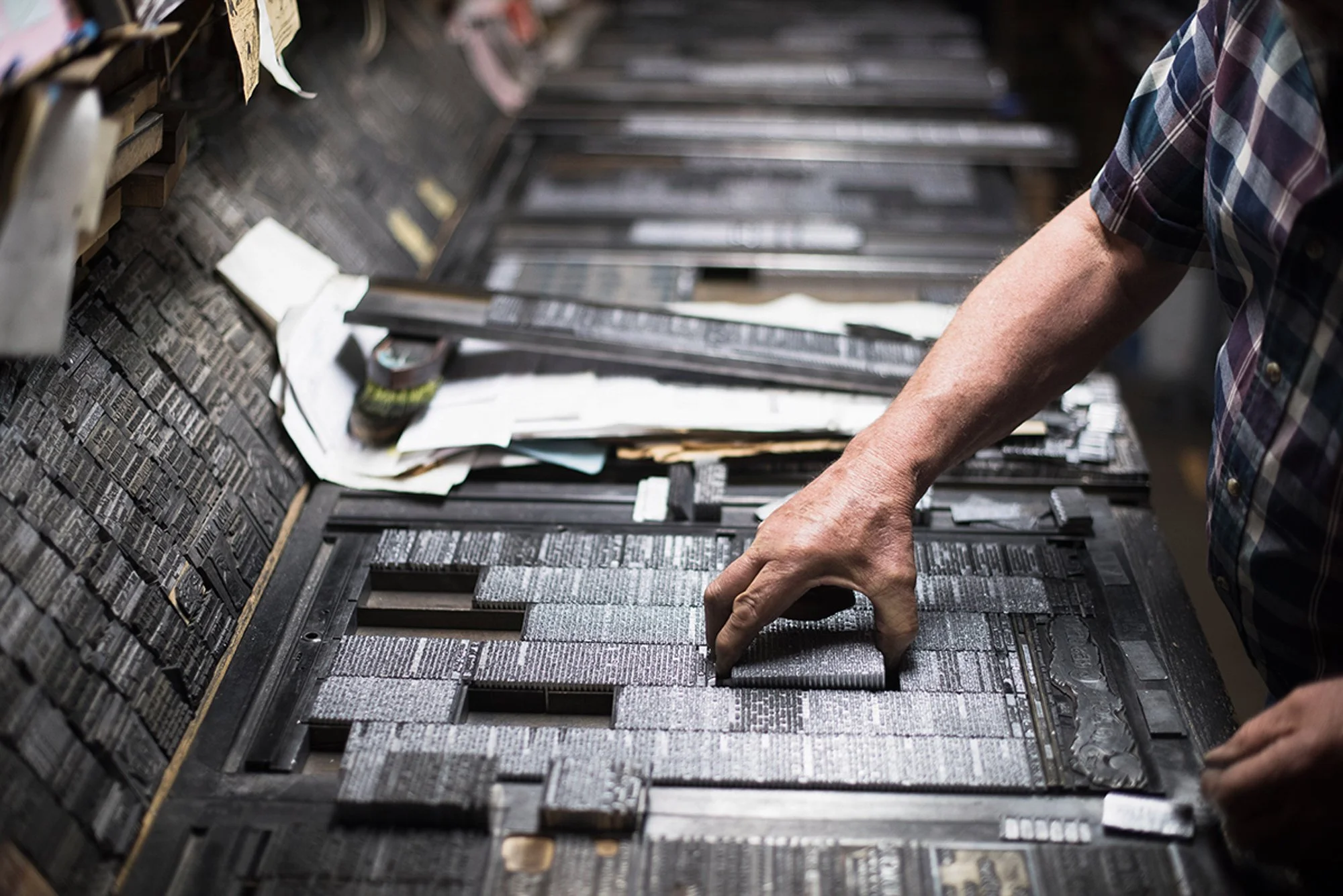
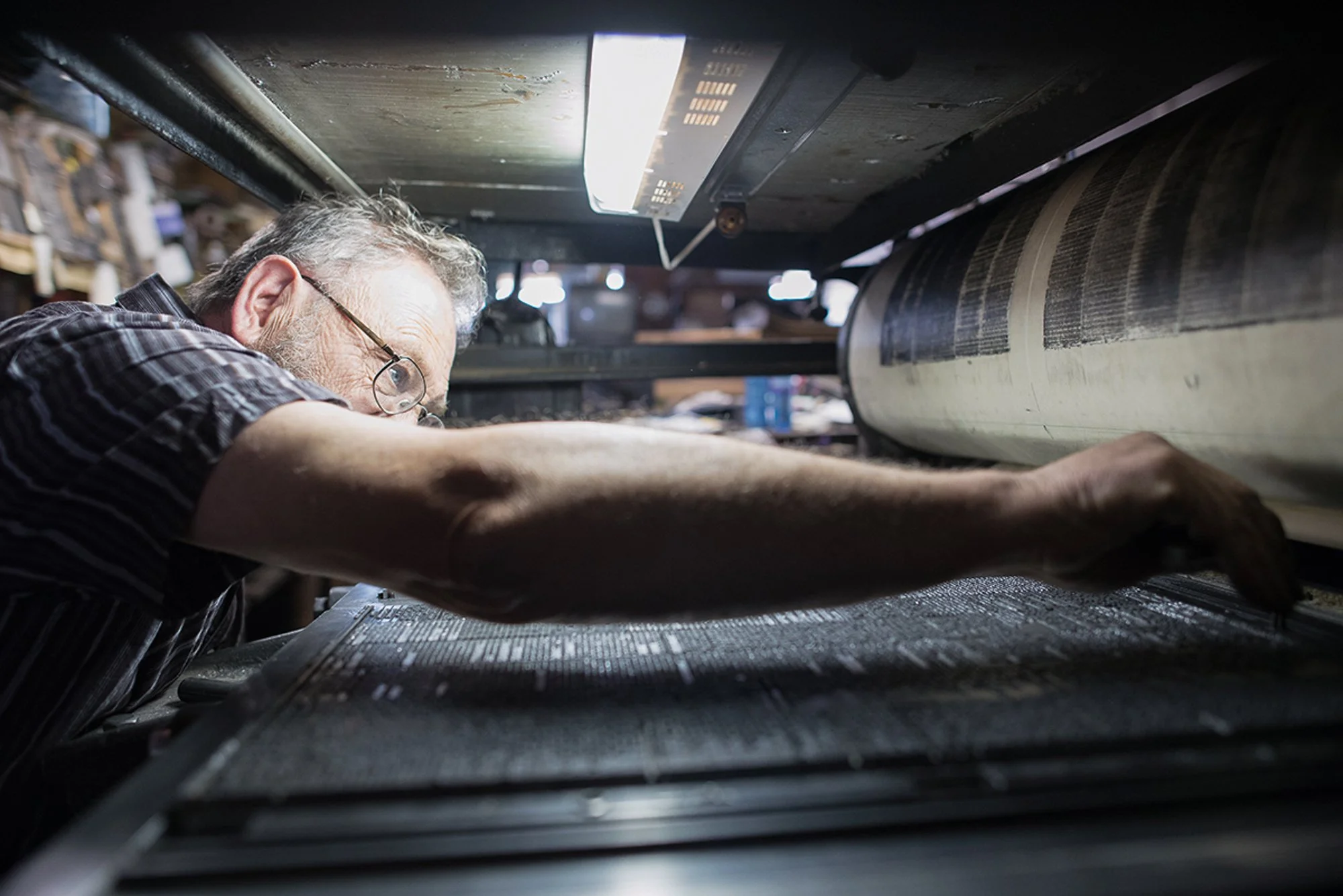
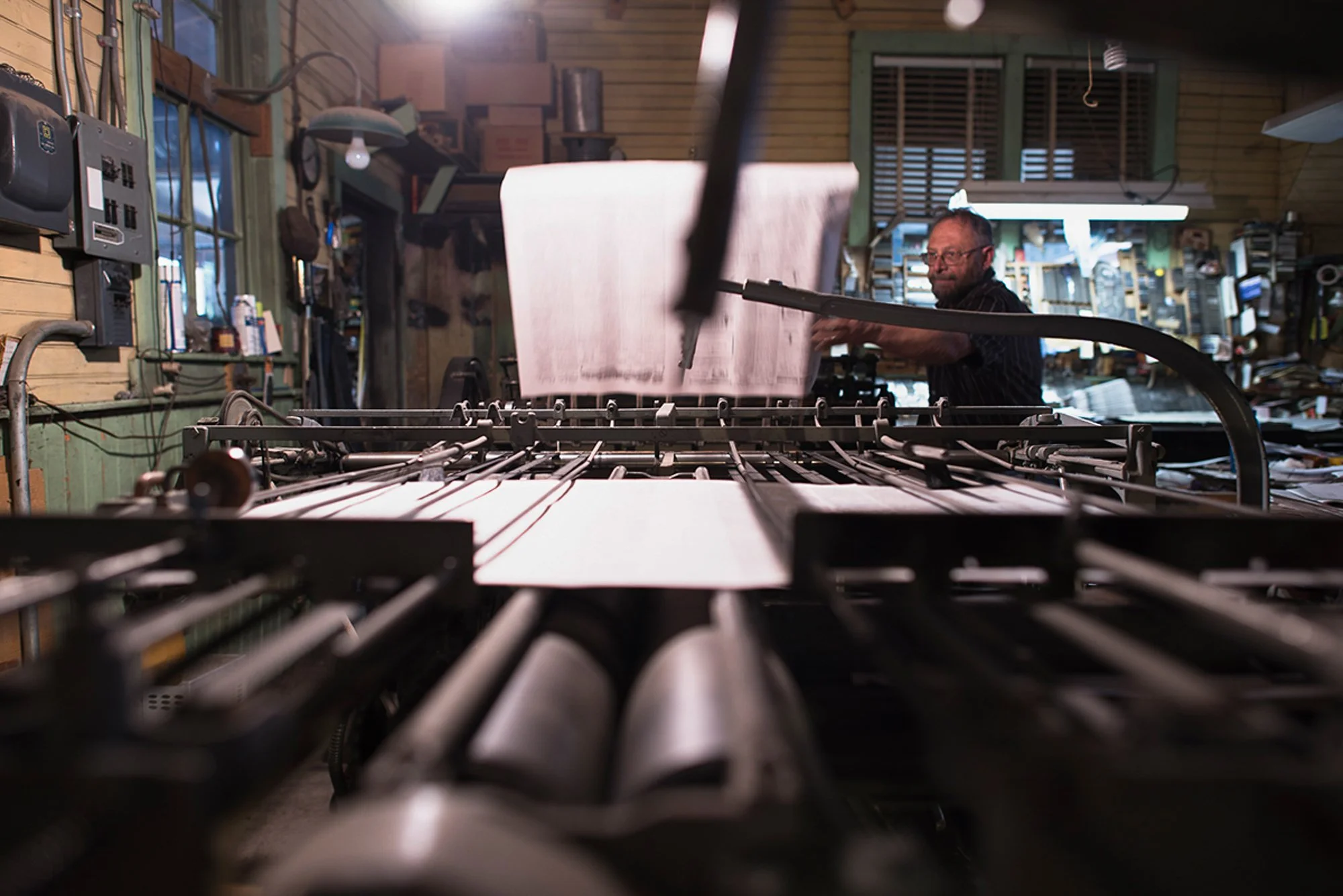
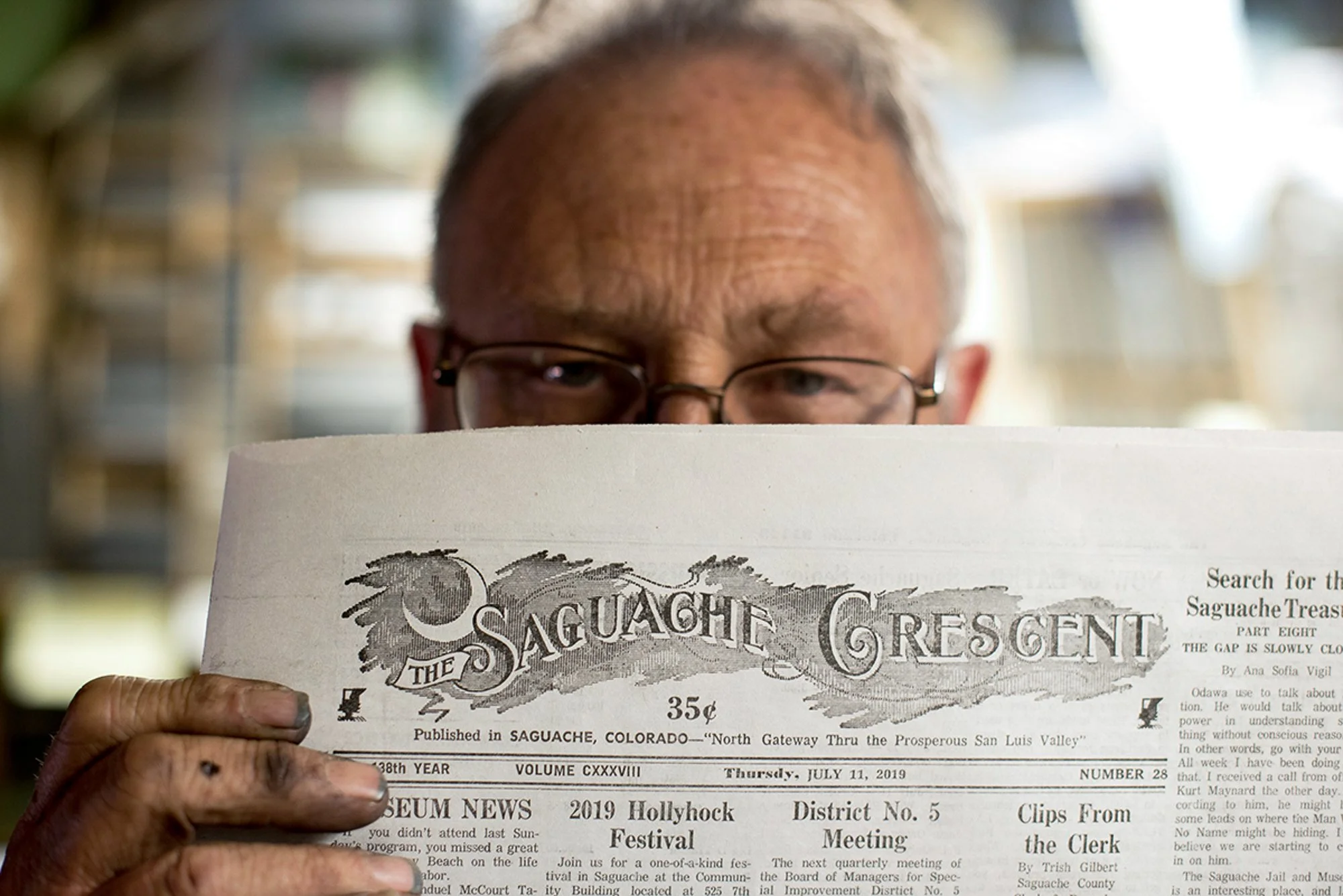
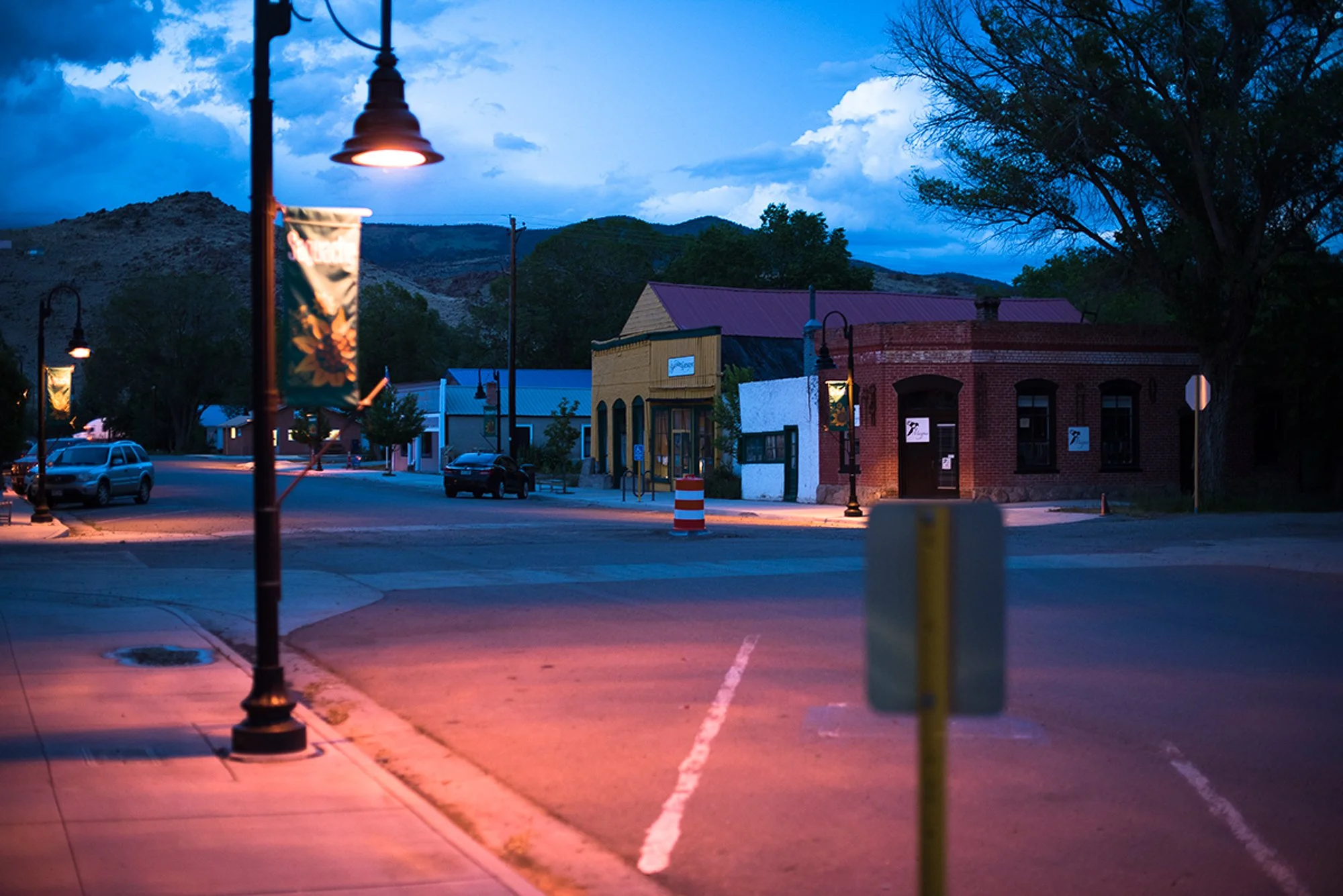
If you’re not interested in hearing more talk about personal projects than skip this one. It will be a familiar topic forever though, so get used to it if you’re going to stick around. Shot these images back in July of 2019 during a road trip out to Colorado. There was a final destination in mind but the route was unplanned. One of the small towns that popped up along the way was Saguache, CO. And by small, I mean population 424 small. Driving down “Main St” I noticed a very peculiar yet unmarked storefront. Inside the front window was an unidentifiable machine that looked like it came from a different age. (Findings like this are one of the many romantic draws to small towns). The screen door was open so I went in and was greeted not by a person, but a space filled with unexplainable life. A monstrosity of metal, tools, and papers from front to back, but I couldn’t figure out what year it was or what it all meant. There was nobody inside so I tried the jewelry store next door hoping for an answer. Sitting calmly behind the counter was the man I later found out ran the business I had so many questions about. That business turned out to be the town newspaper, the last of it’s kind still being printed on a linotype machine. A what? A linotype machine. The industry standard before the invention of computers. Now they are dinosaurs. Dean was very lackadaisical toward my request to photograph him at work, but nevertheless we made plans to meet again after my 4th of July camping trip. So about 5 days later I was back in a town I had never previously heard of, working on a story about Dean Coombs and The Saguache Crescent. My two days with Dean and the town of Saguache was quite memorable. It all seemed like living in a time capsule. Life there happens in a bubble because Saguache has nothing to draw any tourists, so the only people you’ll ever see are locals. Learning about Dean’s process what both educational and humbling. The patience required by one person to put out a weekly newspaper on a linotype is unfathomable. Hats off to Dean and all the people around the world dedicated to similar tasks.

One morning at the local cafe I sat quietly at the bar waiting for a breakfast burrito that turned out to be the size of a piece of firewood. Haven’t found anything even close to that size since. But just as memorable was a 90 year old man in conversation with a friend, who picked up a jar of sugar and did a 10 second pour into his cup of coffee. Kinda threw all the science about health and longevity out the window.

A while after the trip an edit of images was put together and sent around to a few places and got picked up by The National. We were happy with the placement as The National is a very reputable/long running publication. Then Covid hit and everything went to shit. The piece needed a new home. We received warm feedback from a contact at National Geographic. She liked the photos/story even though it wasn’t a good fit and suggested we pitch it to the Smithsonian Magazine. So we did and 1.5 years later here we are. It can be hard waiting so long for a piece to find a home. The wait is well worth it though when that home winds up being The Smithsonian.

If someone handed me a billion dollars tomorrow I’d still be working on these type of projects. Telling stories about people like Dean and the last newspaper in the world being made on a linotype machine. I’m grateful for the opportunity to tell his story my own way and to collaborate with Nick Yetto on the writing. And to have a personal project end up at a place like the Smithsonian.

Long live the personal project!

Click HERE to read the article on Smithsonian’s website

Fly Fishing Deckers Canyon

Fly Fishing Photography - Colorado - Deckers

There is no end to the pleasures that fly fishing can provide a person once they get past the initial suffering that comes along with the sport. That’s not to say it ever gets easy, you just learn how to screw up less. For me, one of the great pleasures is watching the way light, or the lack thereof, can transform a river. Might not look like it, but this was a cold December day on the South Platte River in Deckers Canyon. The solitude a canyon brings is great. It also brings endless shifts of light that can be equal parts beautiful, tricky, and frustrating from a photography perspective. One of my biggest difficulties with fly fishing is a positive one; deciding whether to fish or to photograph. After years of deliberation the obvious conclusion presented itself - fish when the light sucks.

Click HERE to see more of my fly fishing photography.

American Photography

American Photography - Road Trip - Travel

Americana - Wall Art - Photo Prints - Open Road

Taking time to think about a body of work is such and important part of the process as you continue to build it. And as time goes on attention needs to be given to the “holes” that are inevitably lurking in said work. Interiors are one of the many holes that I need to fill. For ten years now I’ve happily traveled around America photographing various aspects of it. And lately, collaboration in the form of outside eyeballs/opinions has been a major focus in order to figure out exactly what is or isn’t working. When we create in a bubble as so many photographers do, it’s easy to get lost on a track that might not be going the right direction. There are so many questions we need to ask ourselves all along the way, which probably won’t get brought up if we don’t receive input from other unbiased people. So, while I never plan on stopping my America series, I’m trying to be much more focused and open about what to shoot and what horses I’ve already beaten to death. Much more than that though, how many other photographers have already done what you’re doing? If the answer is “a lot”, then how can you change your contribution to offer the viewer something different?
Click here to see more from my AMERICA series.

Fly Fishing - Crested Butte, CO

Taylor River Fly Fishing

Fly Fishing Photography - Colorado

Sometimes you think the sun is going to help with the cold and on certain days is does. For all the rest of the days, it’s easiest to just accept the fact that you won’t feel your hands again until you get back to the truck. At which point you’ll need to put a koozie around your beer just so they don’t get any worse. Thankfully this wasn’t one of those. It’s only the middle of October but that doesn’t matter. If you spend time in the mountains then you know an early summer morning can feel oddly similar to winter. It’s got to be part of that whole love/hate thing.
It’s safe to assume that most western fly fisherman, in the beginning at least, are only concentrated on the rainbow trout. It’s put up on a pedestal. The trophy. The goal. Won’t deny having those same feelings, but that’s all changed over time, as everything does. Now, in my opinion, brown trout are king. Their colors and markings are really special.Now, In the name of transparency this isn’t my fish, but my friend caught it while I was shooting. Which means I was sort of catching it vicariously through him. That’s the only way I’ve found to calm the urge to set the camera down and replace it with a fly rod. It’s a vicious cycle that I’m trying to be at peace with. On the scale of problems, it’s a good one to have. Snowboarding is the only thing I do that absolutely won’t involve a camera unless it’s the one on my phone. Fly fishing on the other hand is a constant battle.

Good times on the Taylor River that day.

Click here to see more of my Fly Fishing photography

Colorado Fly Fishing Photographer

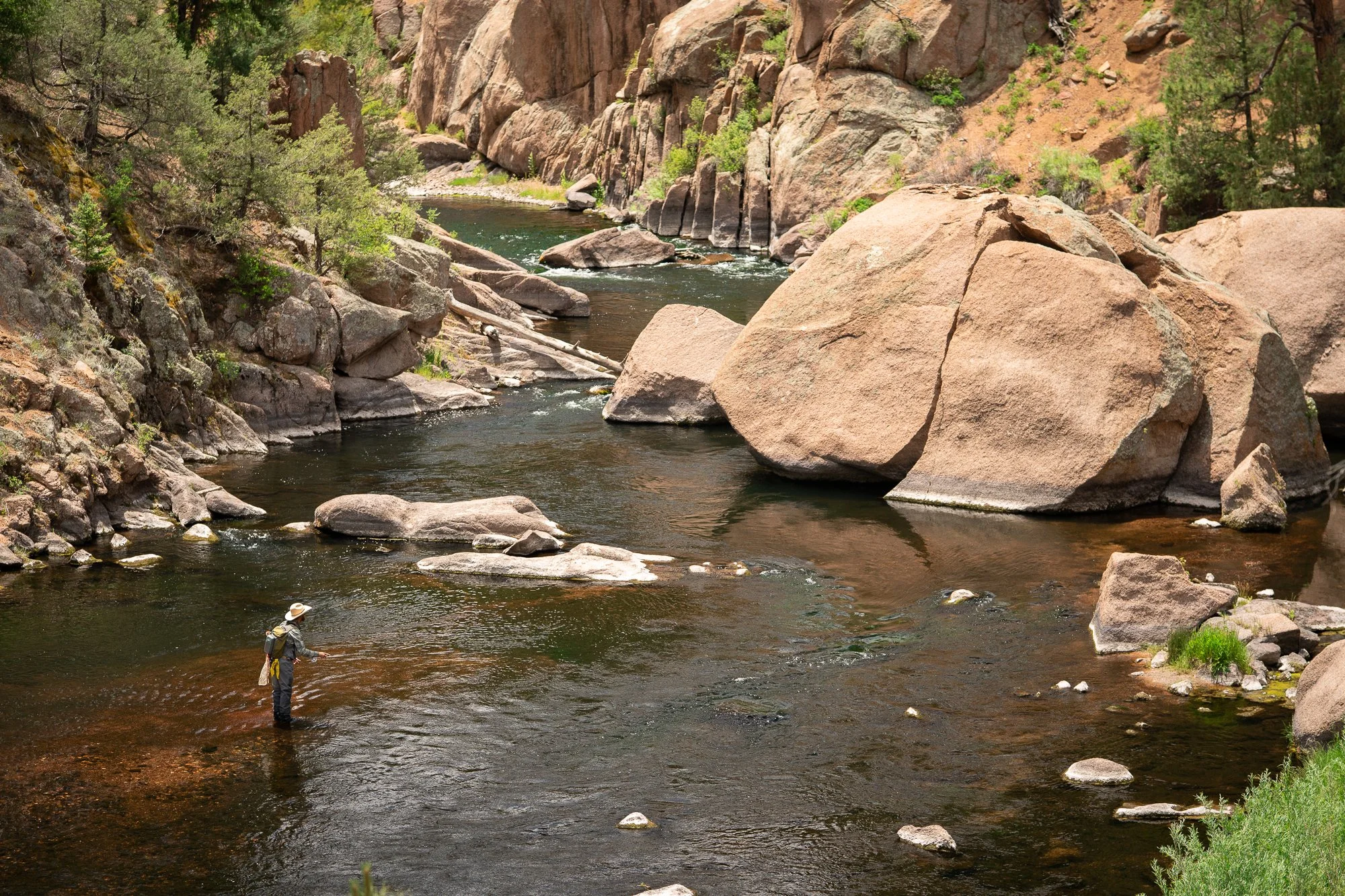
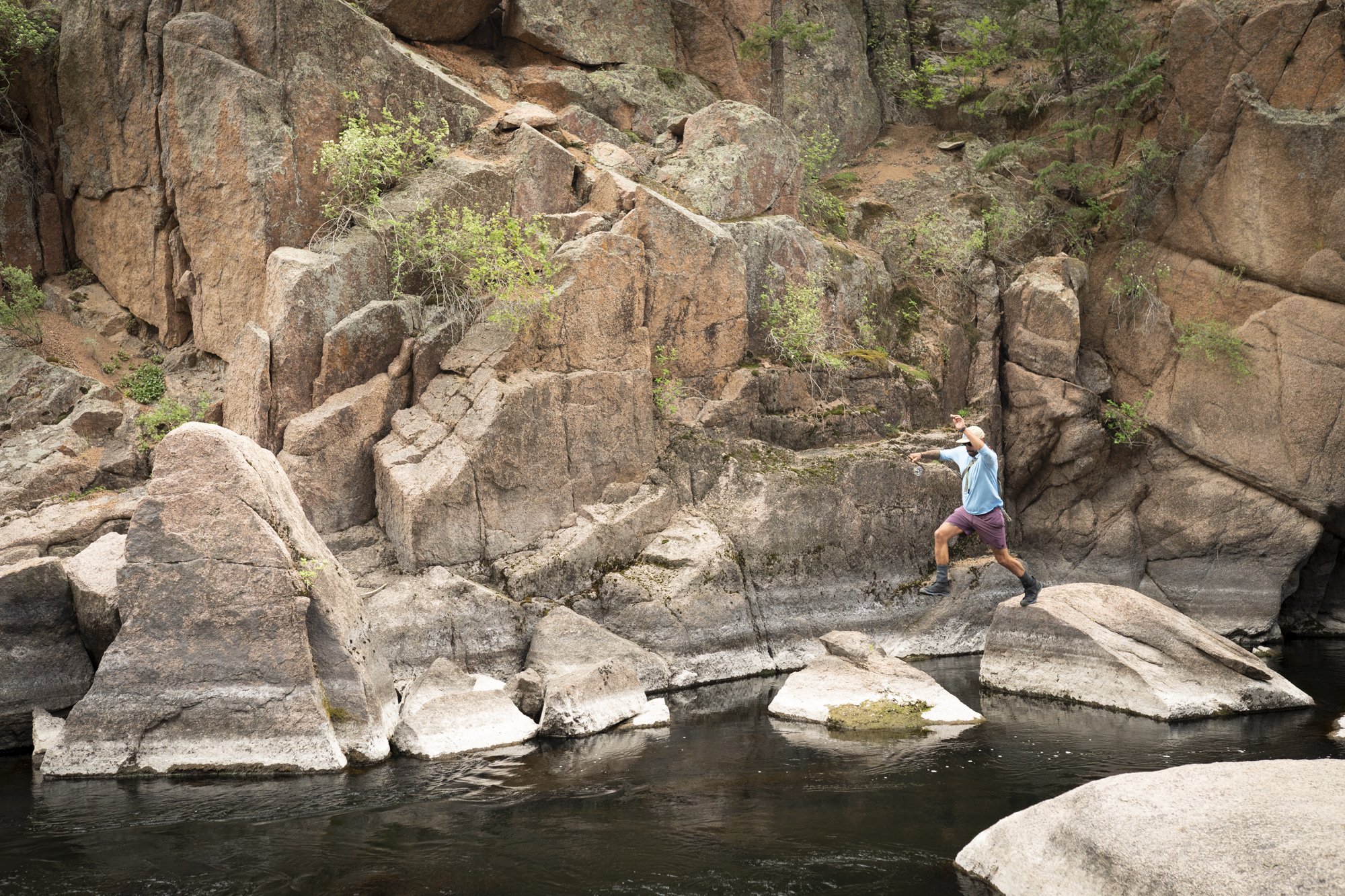
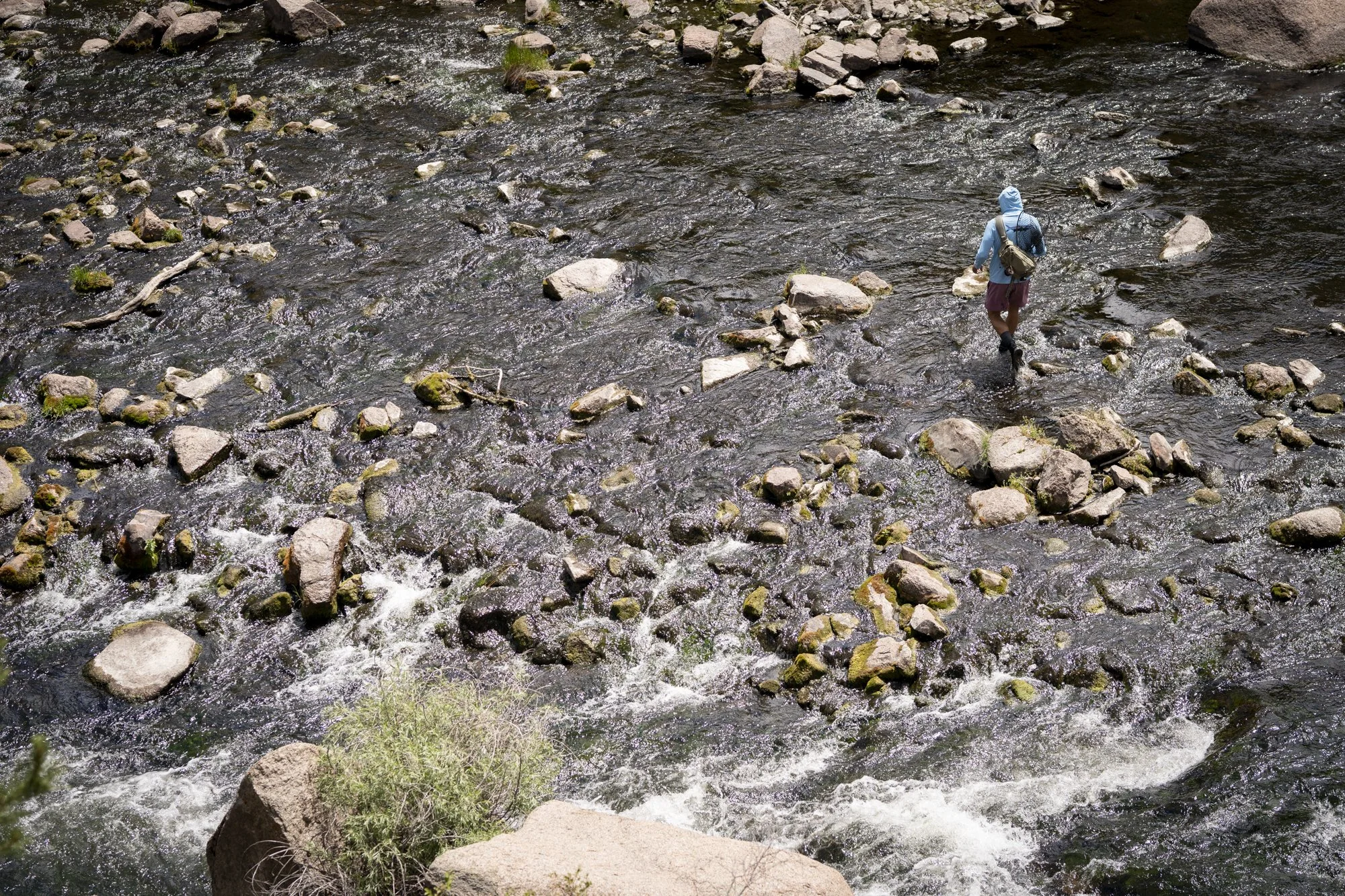
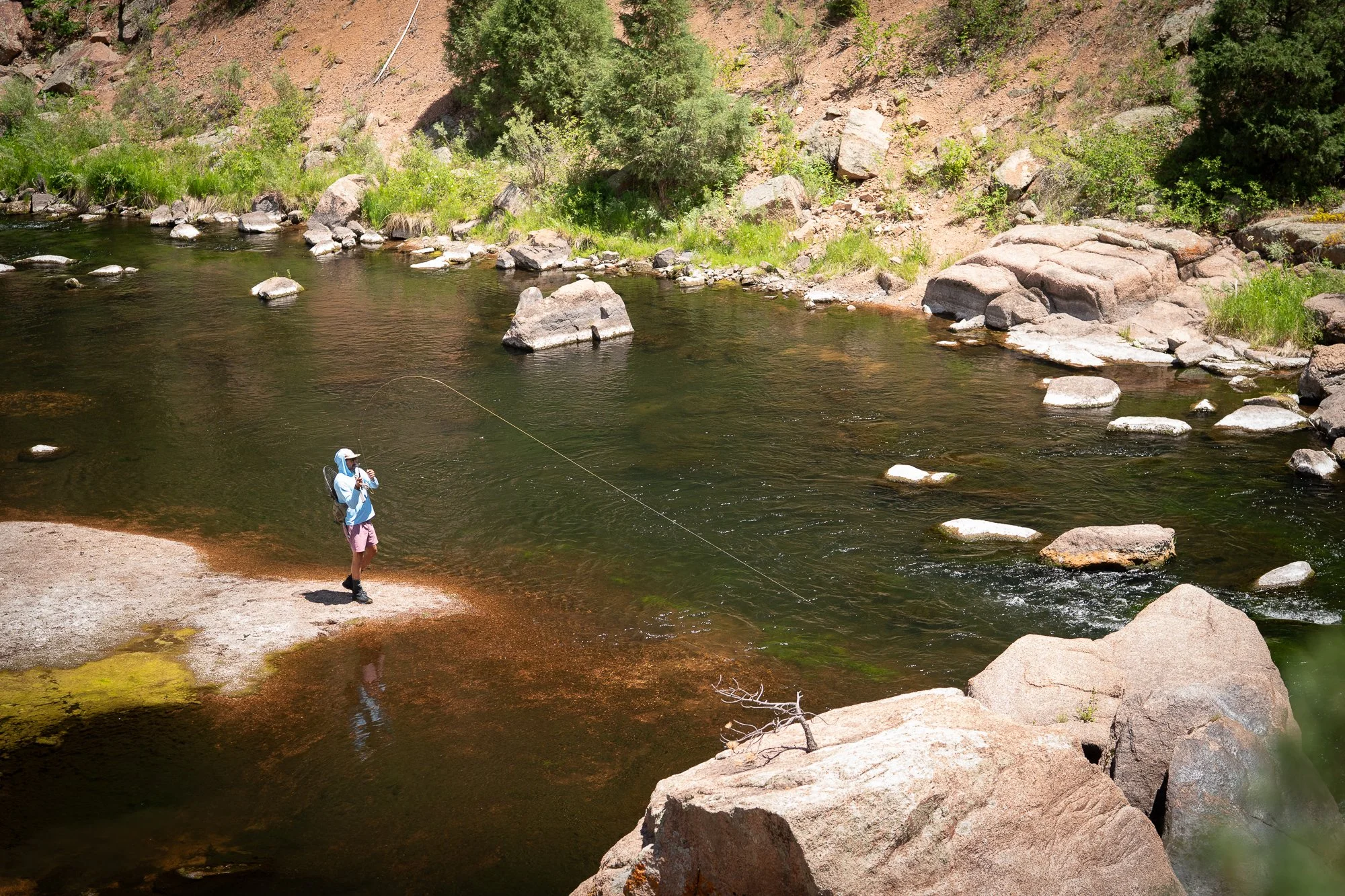
11 Mile Canyon Fly Fishing - Colorado

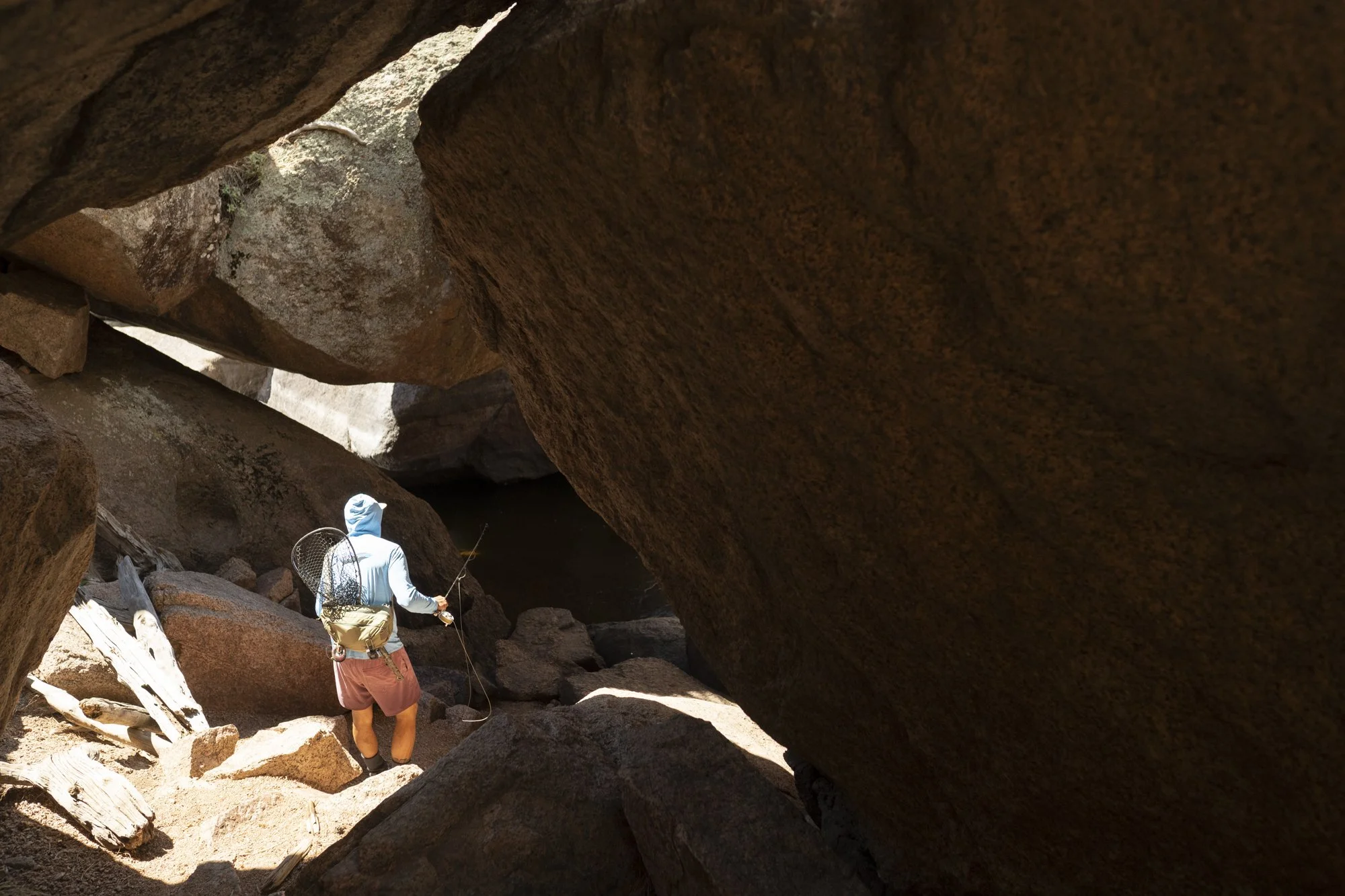
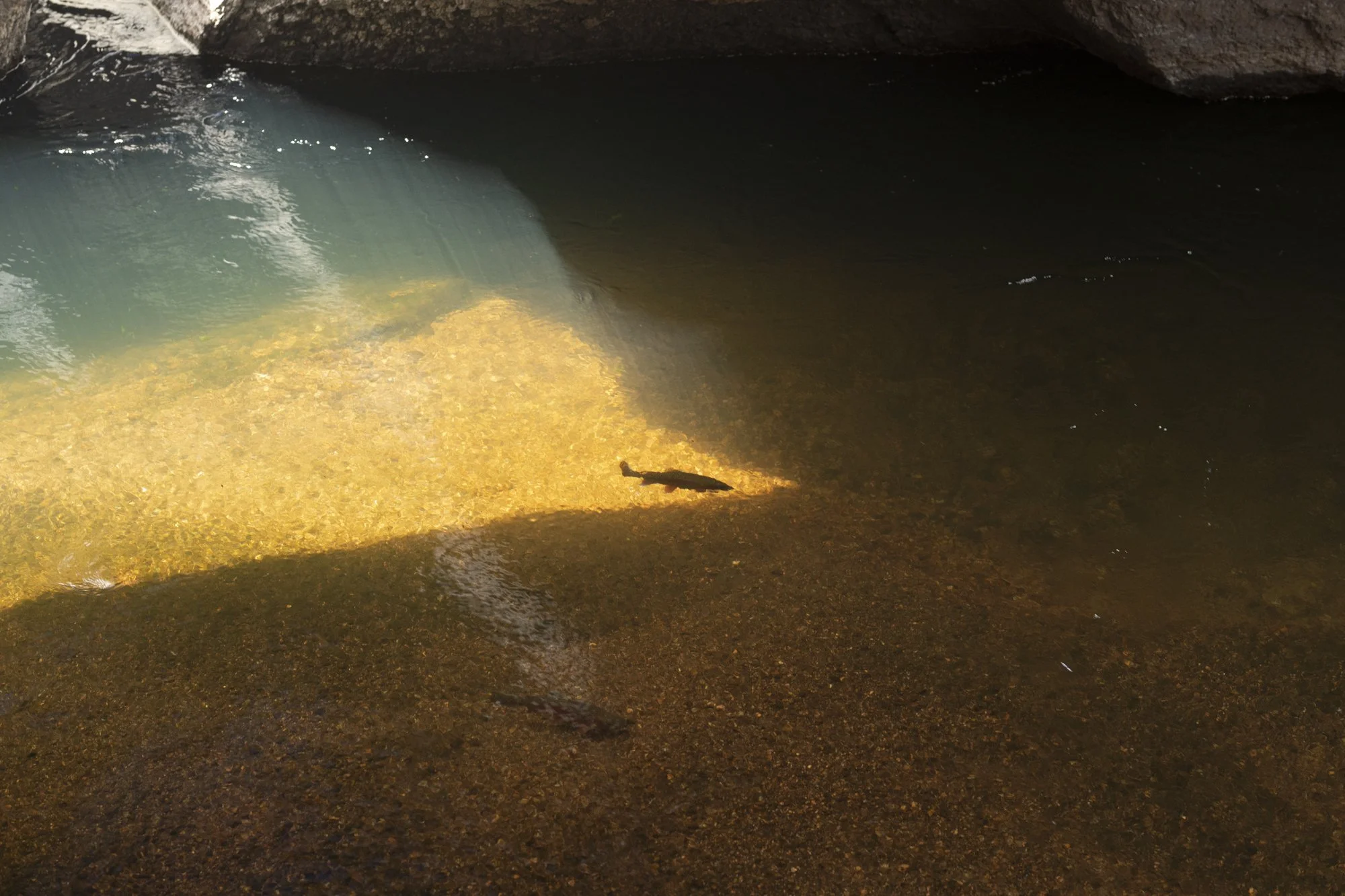
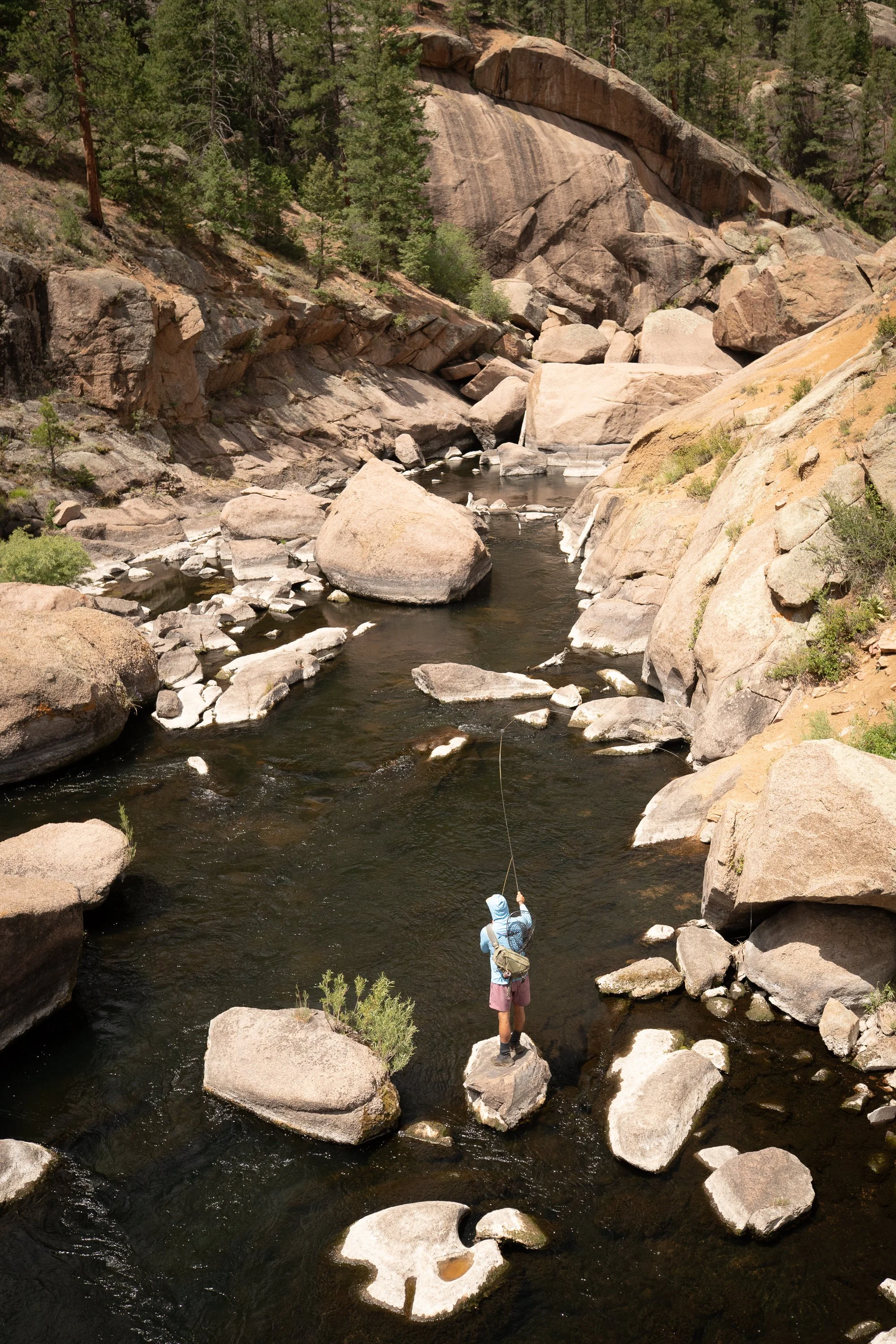
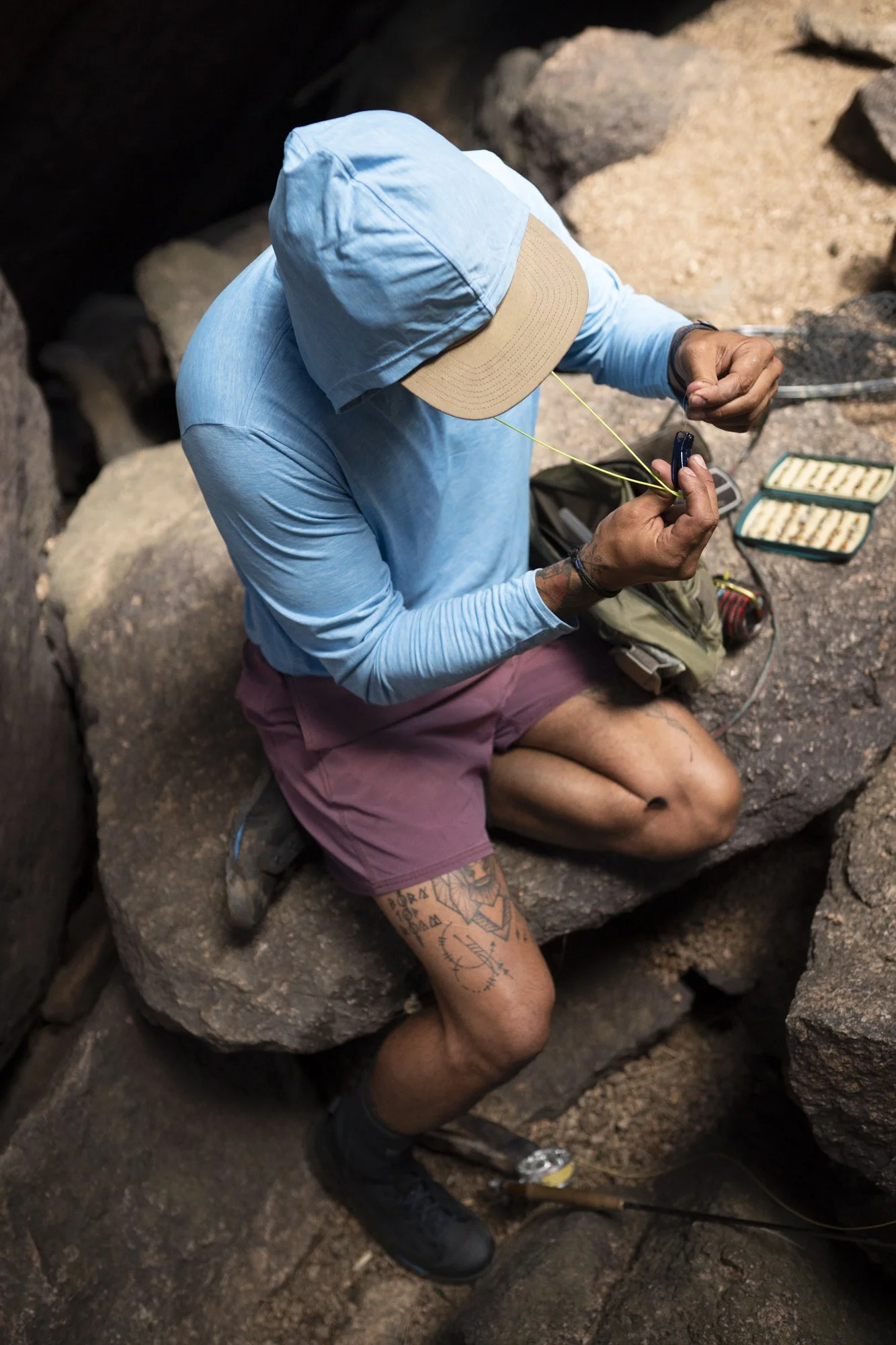
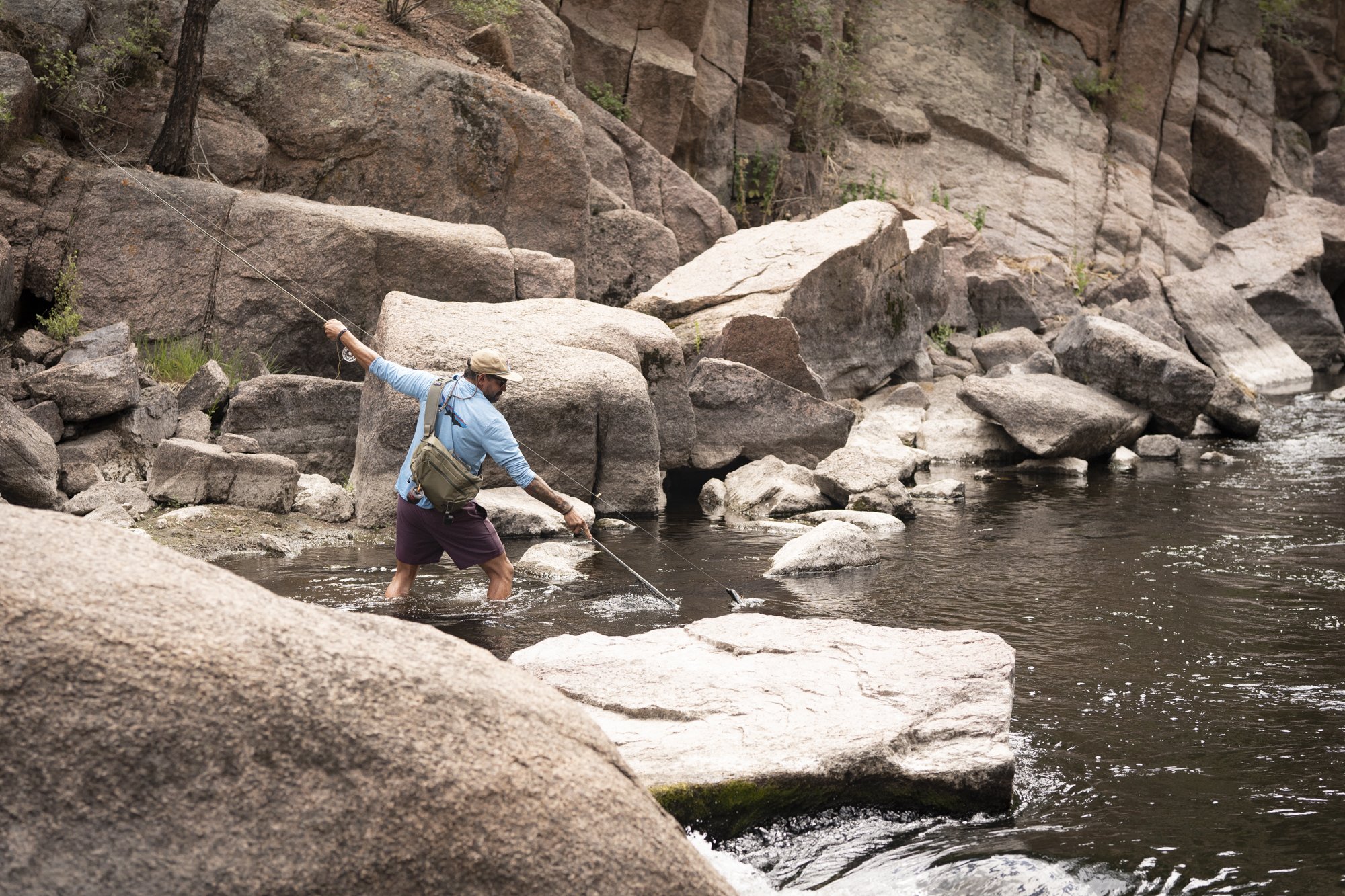
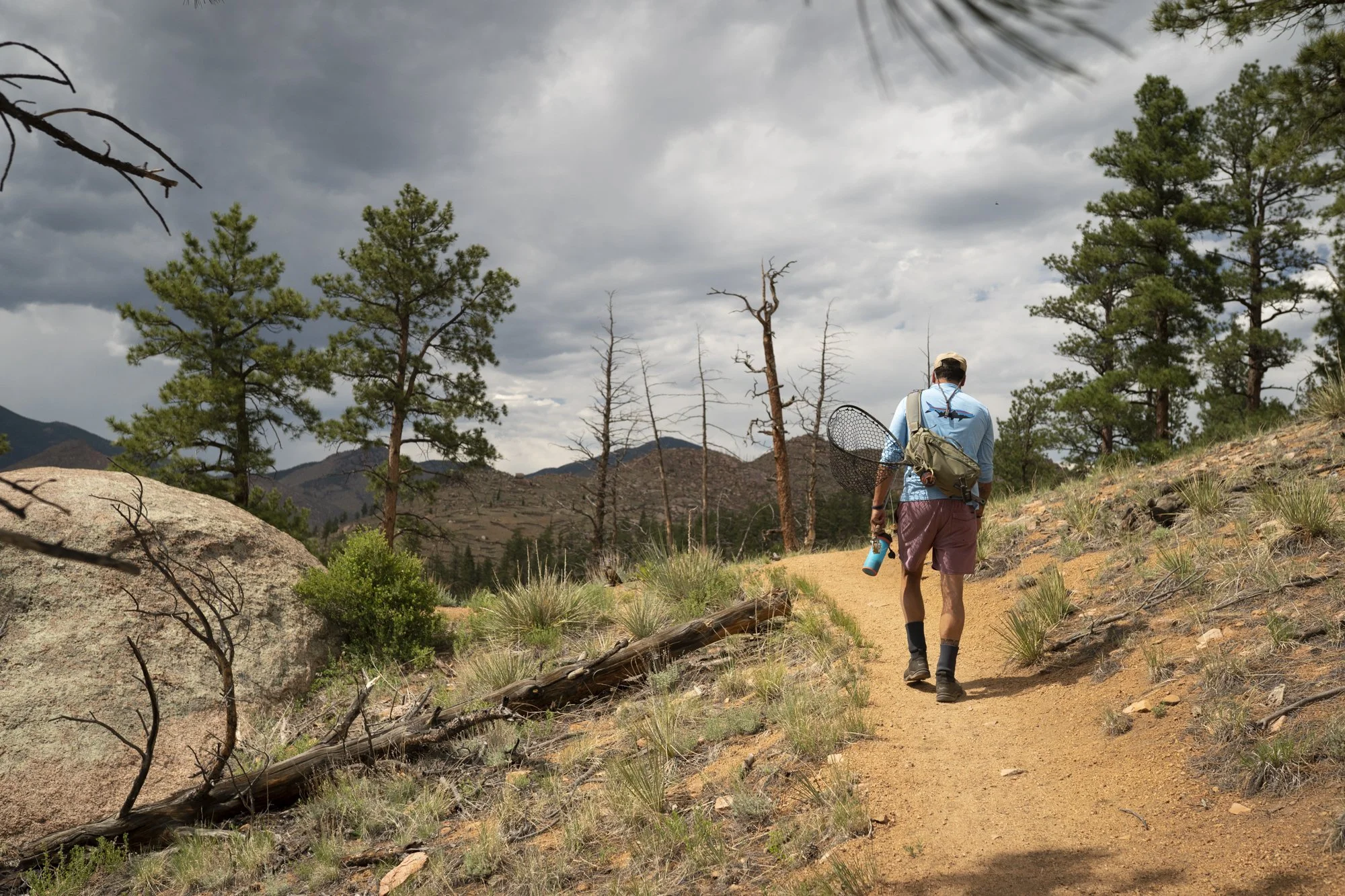
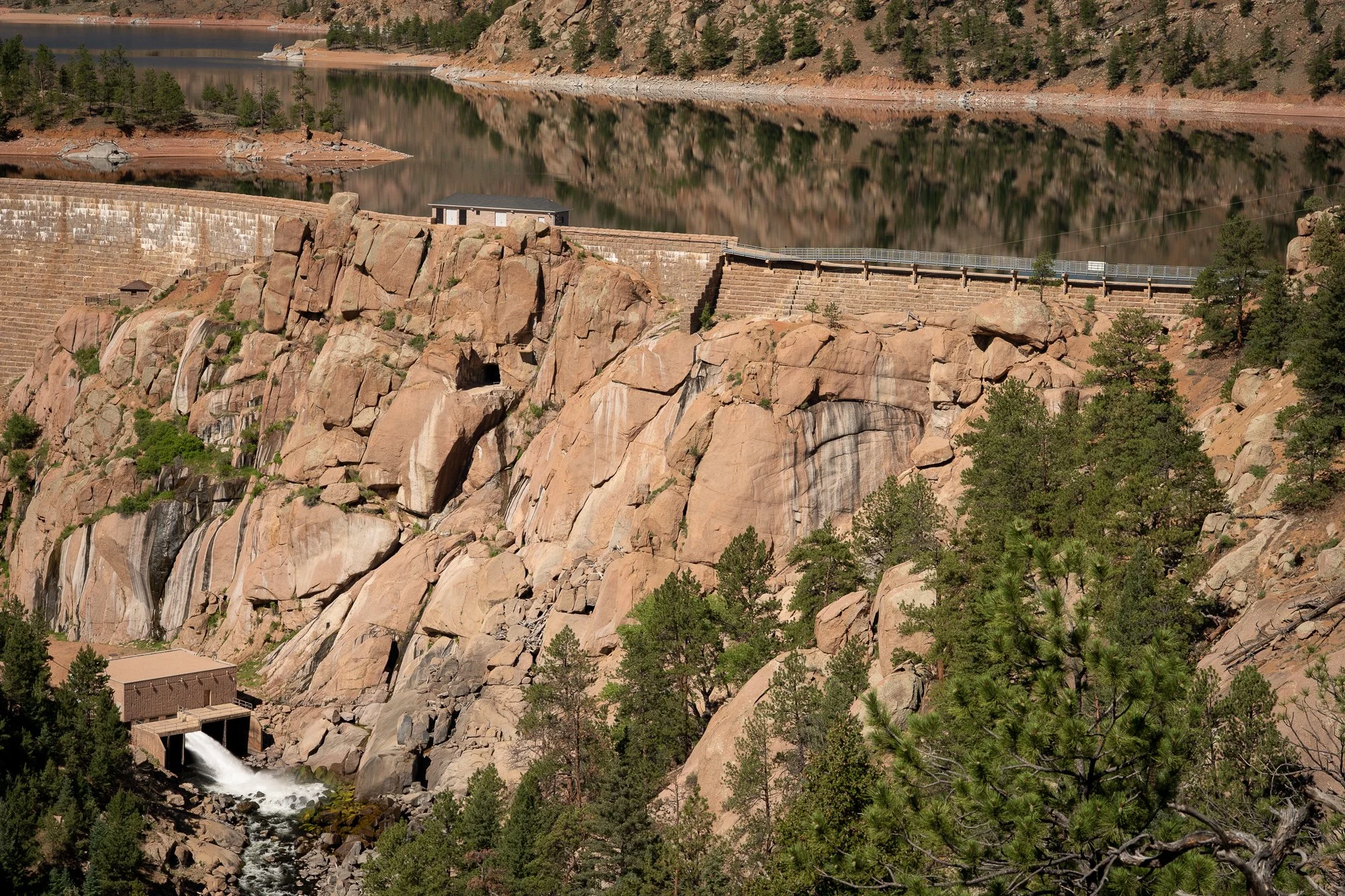
Nestled in the heart of the Rocky Mountains not far from Lake George, Colorado - 11 Mile Canyon is a breathtaking destination that attracts fly fishing aficionados with its crystal-clear waters, stunning scenery, and abundant fish species that offer an unforgettable experience for anglers. Colorado is known for its breathtaking mountain ranges, lush forests, and serene lakes. The backcountry canyon section of the South Platte River offers a unique opportunity to escape the crowds of fisherman, immerse yourself in nature, and find solitude on the water. Fly fishing in these remote areas not only allows you to connect with the environment but also gives you access to wild, untouched fisheries teeming with life.

If you’re going to spend a few days fly fishing in 11 Mile Canyon, there are designated campsites along the way, with Spillway Campground being the best. Just to be clear, this is not dispersed camping. It is a campground where you’ll have neighbors, but the sites are adequately spread out, and your literally steps from the South Platte River in a section with large, hungry trout. Early mornings there are great for quiet fishing before anyone wakes up, but don’t wait too long or there will be people on every corner. At that point, I’d recommend making some breakfast, then heading down canyon where you’ll find stunning stretches of river and solitude if you’re willing to work a little bit. Some of the canyon sections are a lot harder to access than others because a short hike down a steep hill is required for river access. It’s all worth the effort though to be surrounded by rocks cliffs and pristine water. Then, when the sun starts going down, head back to camp for some food and beer, and you’ll be just in time for the evening hatch. I’ve heard a lot of people talk about success throwing mice patterns there in the dark, but have never done it myself. Usually at that point the itch has been more than scratched, and beers around the fire is too appealing.

Click here to shop my fly fishing wall art and contact me directly about licensing photographs for editorial/commercial usage - rob@robhammerphotography

Photograph of two friends on a fly fishing road trip in a classic truck

Fly fishing road trip

11 Mile Canyon Fly Fishing

Scenic Colorado Fly Fishing

Black and white fly fishing print - 11 Mile Canyon

Take a break on the river - tying flies

Netting a trout on the South Platte River

Fly fisherman walking through a tunnel in 11 Mile Canyon, Colorado

Fly fisherman on a scenic section of the South Platte River in 11 Mile Canyon, Colorado

Black and white photograph of a fly fisherman netting a trout on the South Platte River

Boulder hopping in 11 Mile Canyon

Fly fishing in 11 Mile Canyon

Afternoon rainstorm in Colorado

Photograph of two friends putting their fly rods into a roof top holder at sunset in a scenic mountain location

End of the day - 11 Mile Canyon

ROAD TRIP

Hopefully I’m wrong but this is probably the last road trip of the winter. If that’s the case, I’m thankful it was so productive. Started with some personal shooting, then a commercial shoot in Nevada, more personal shooting, and then some incredible snowboarding with friends in the San Juan’s. Really grateful for all of it, but also hate saying goodbye to winter. It’s never long enough. Or maybe I’m just greedy?

Click here to see imagery from my America series.

Map321.jpg