Black & White Fine Art Photography of the American West

Black and White Cowboy Photography

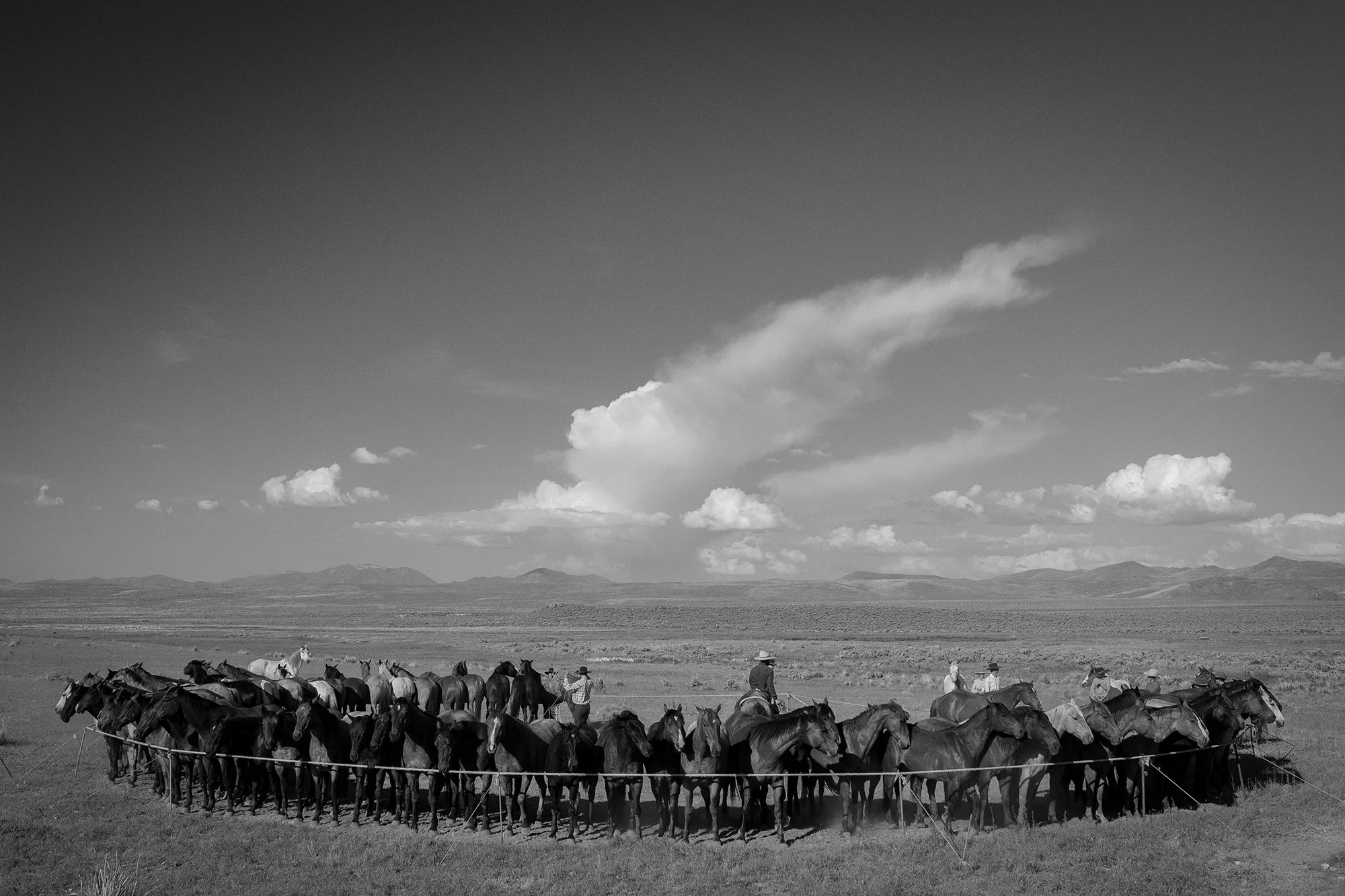
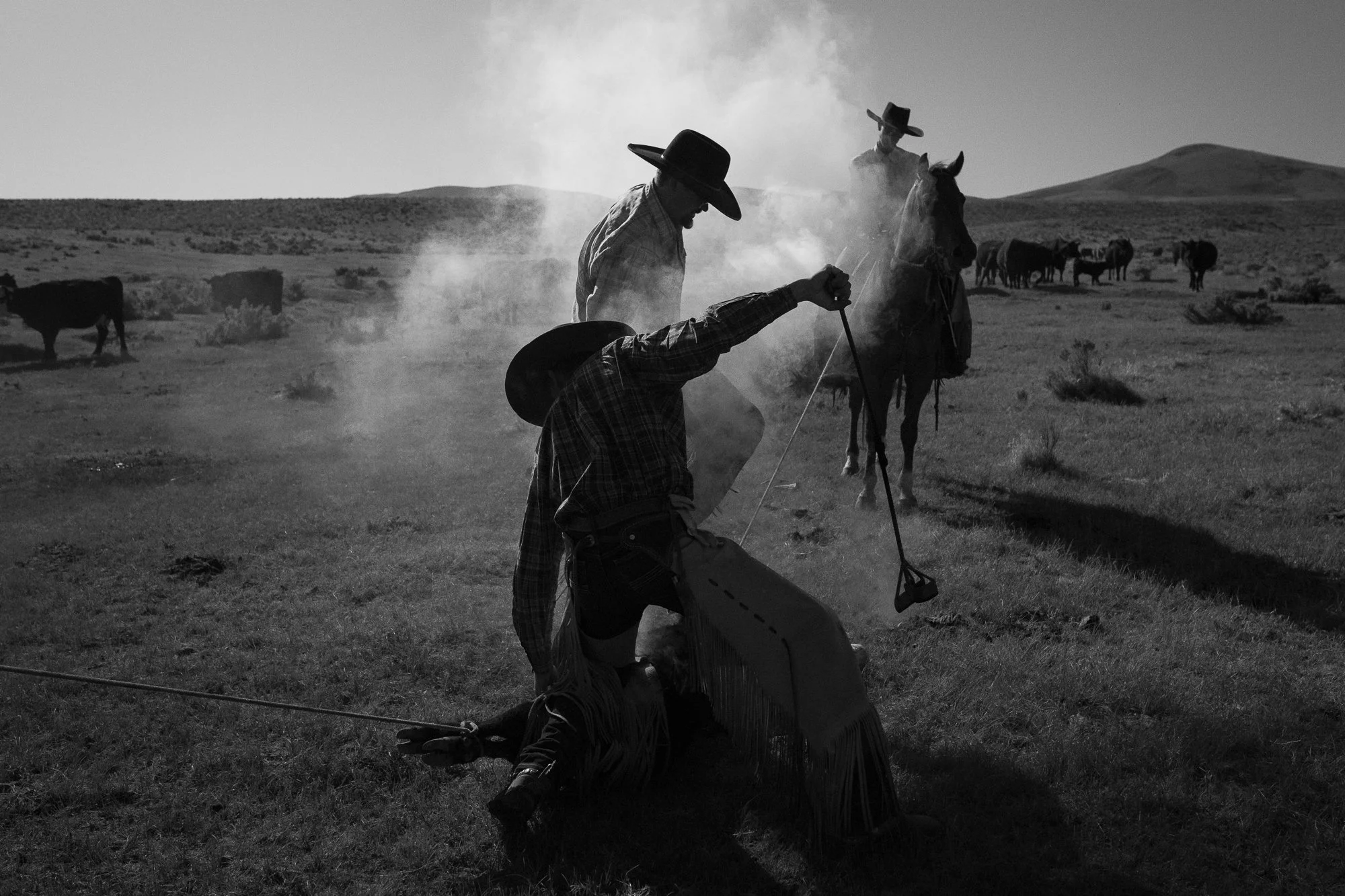
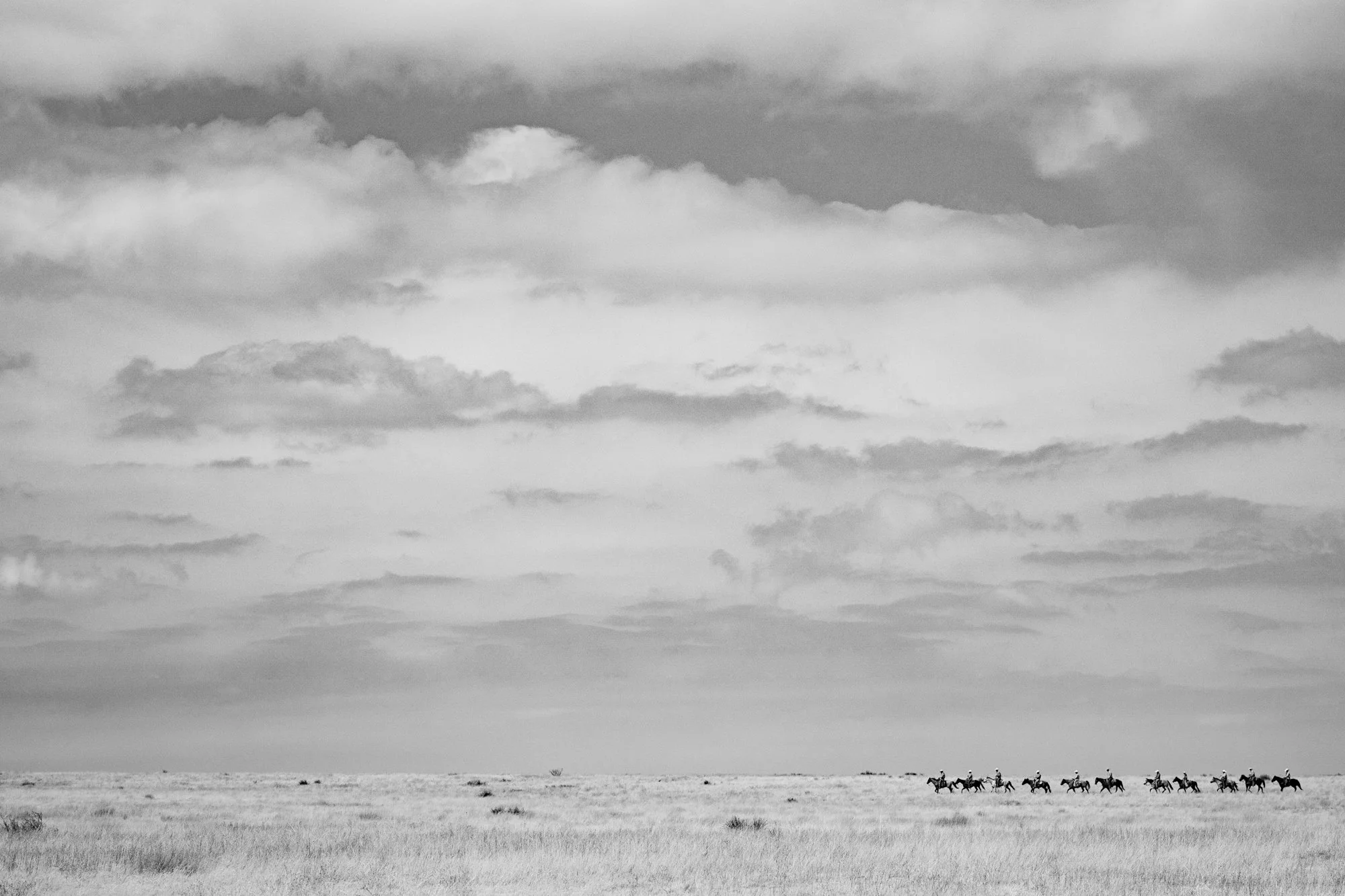
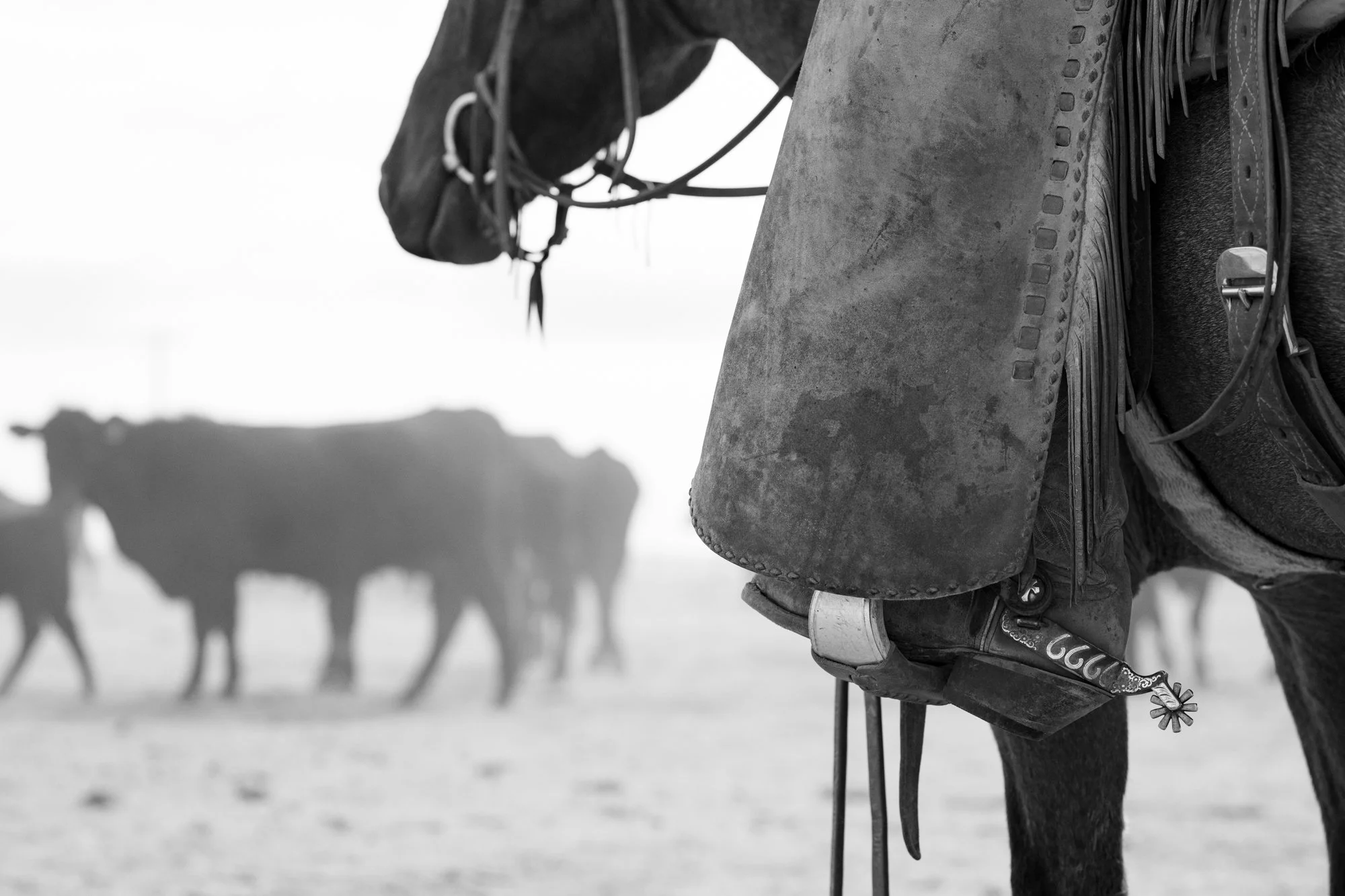
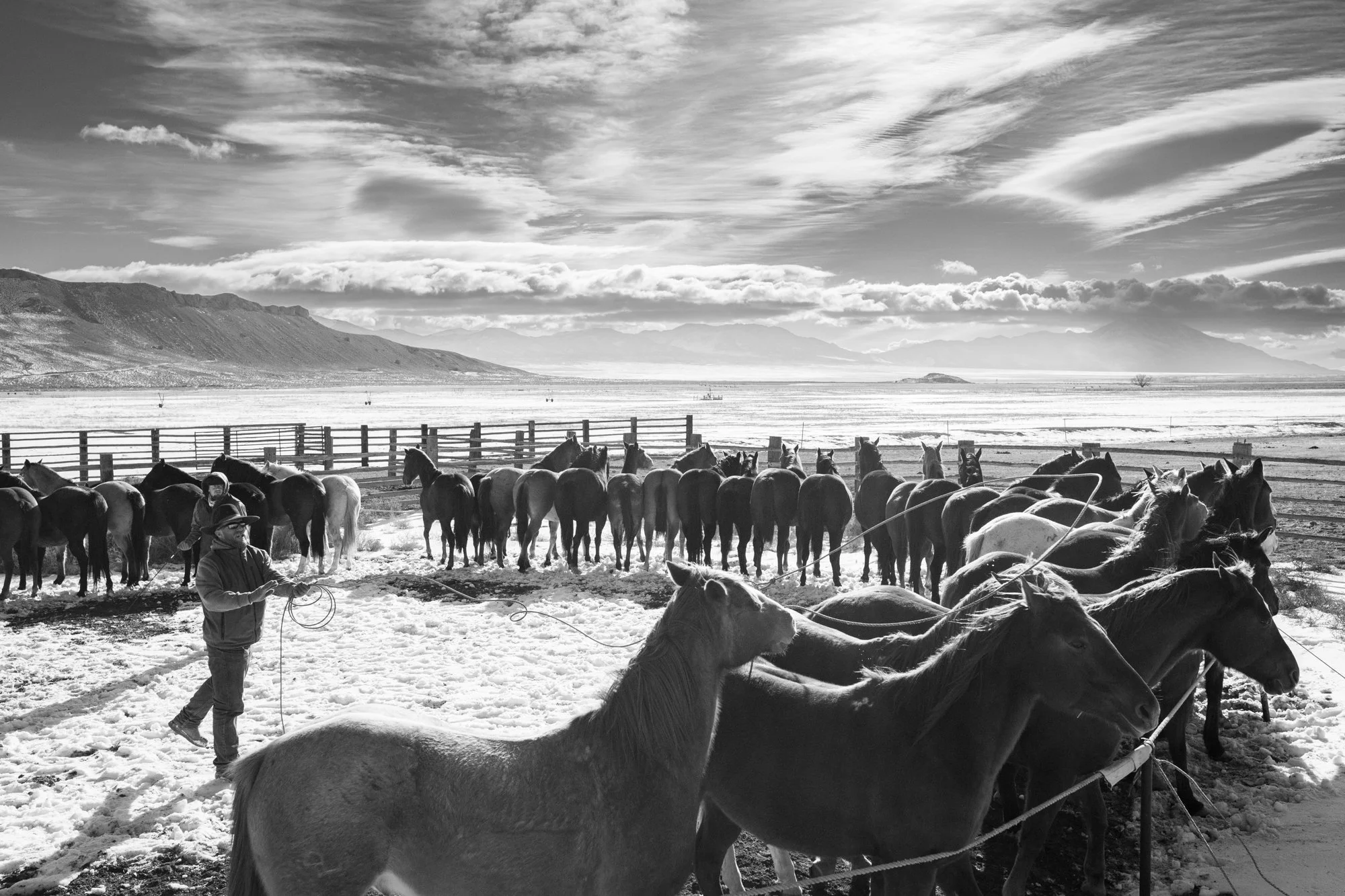
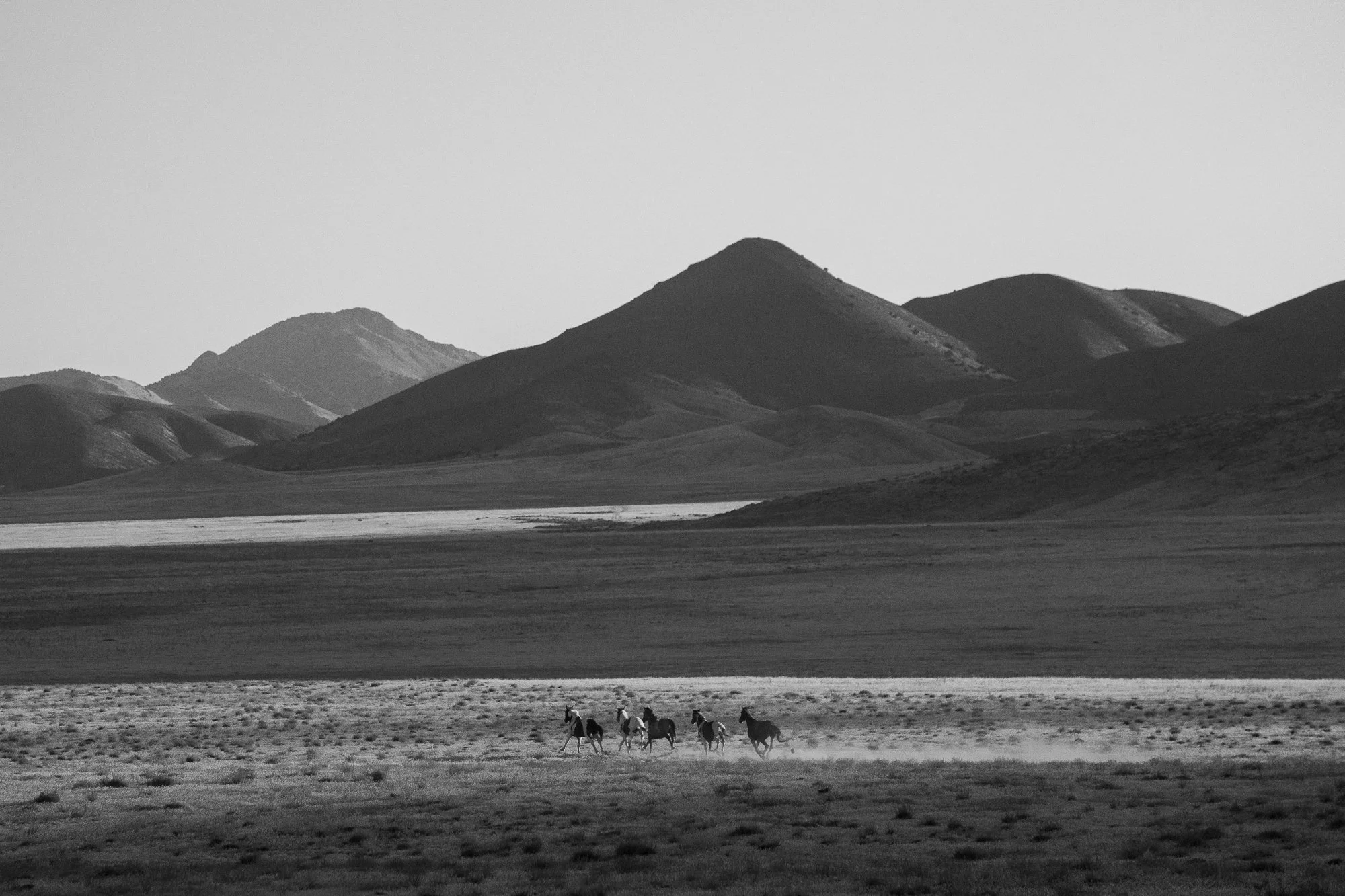
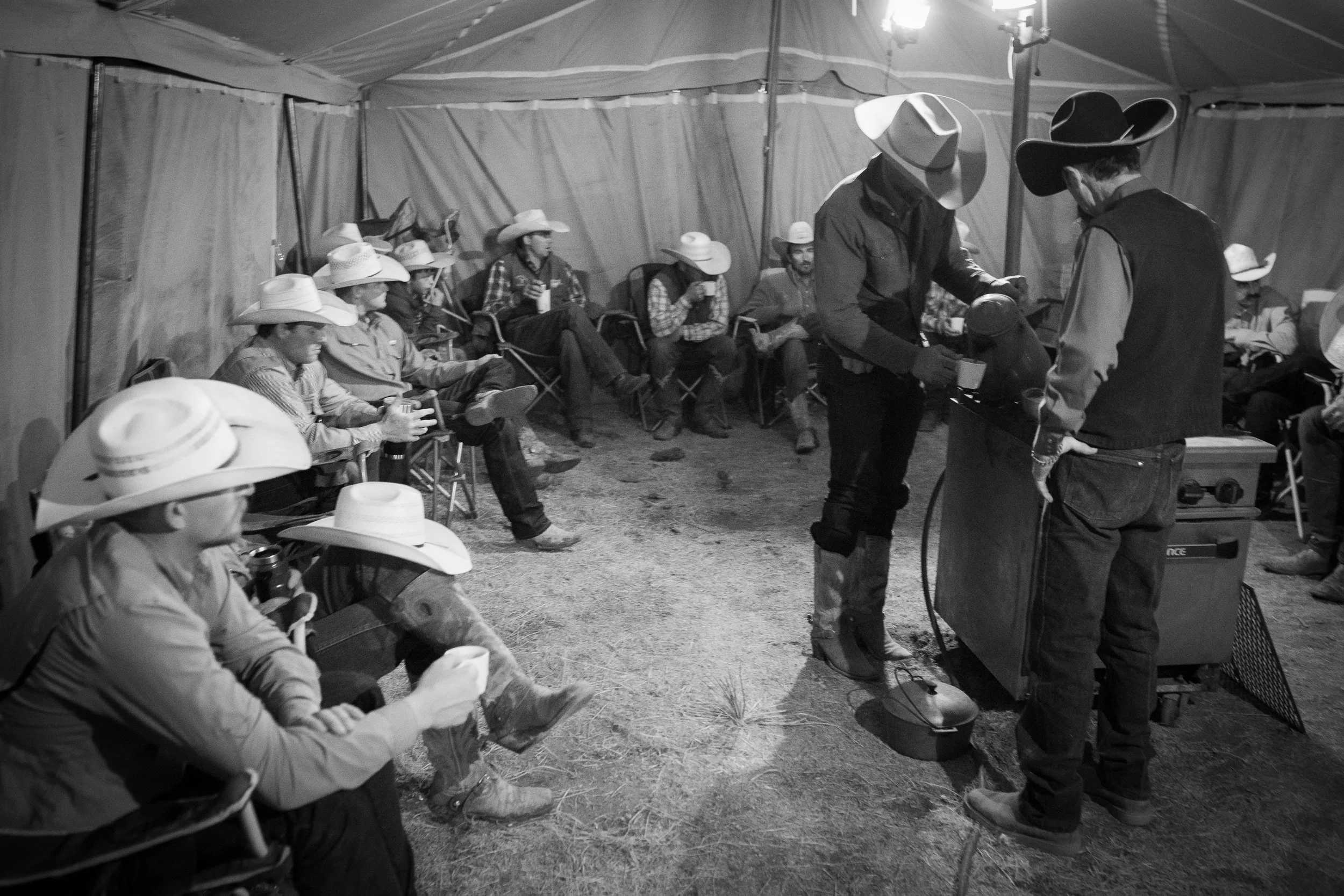
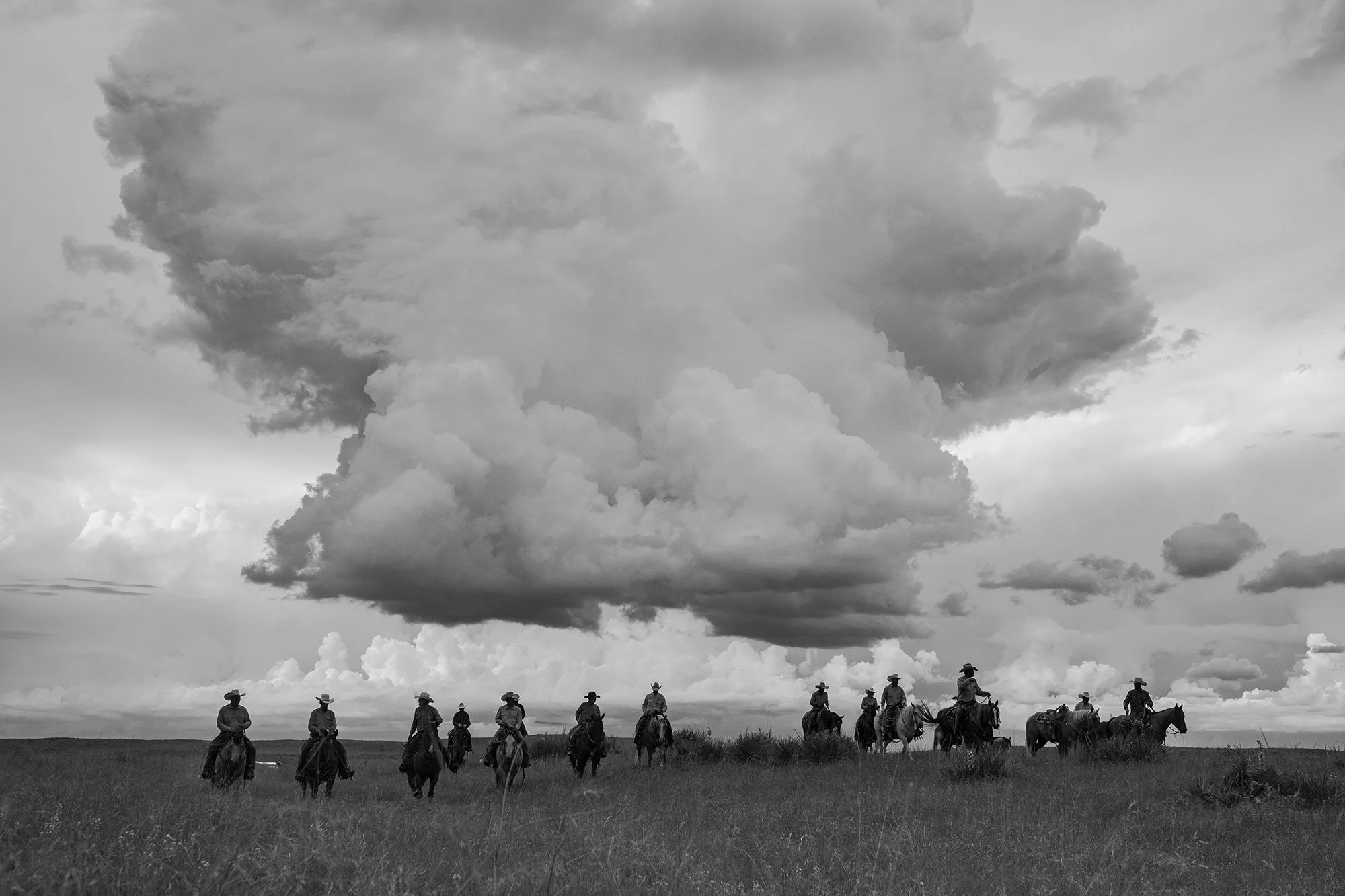
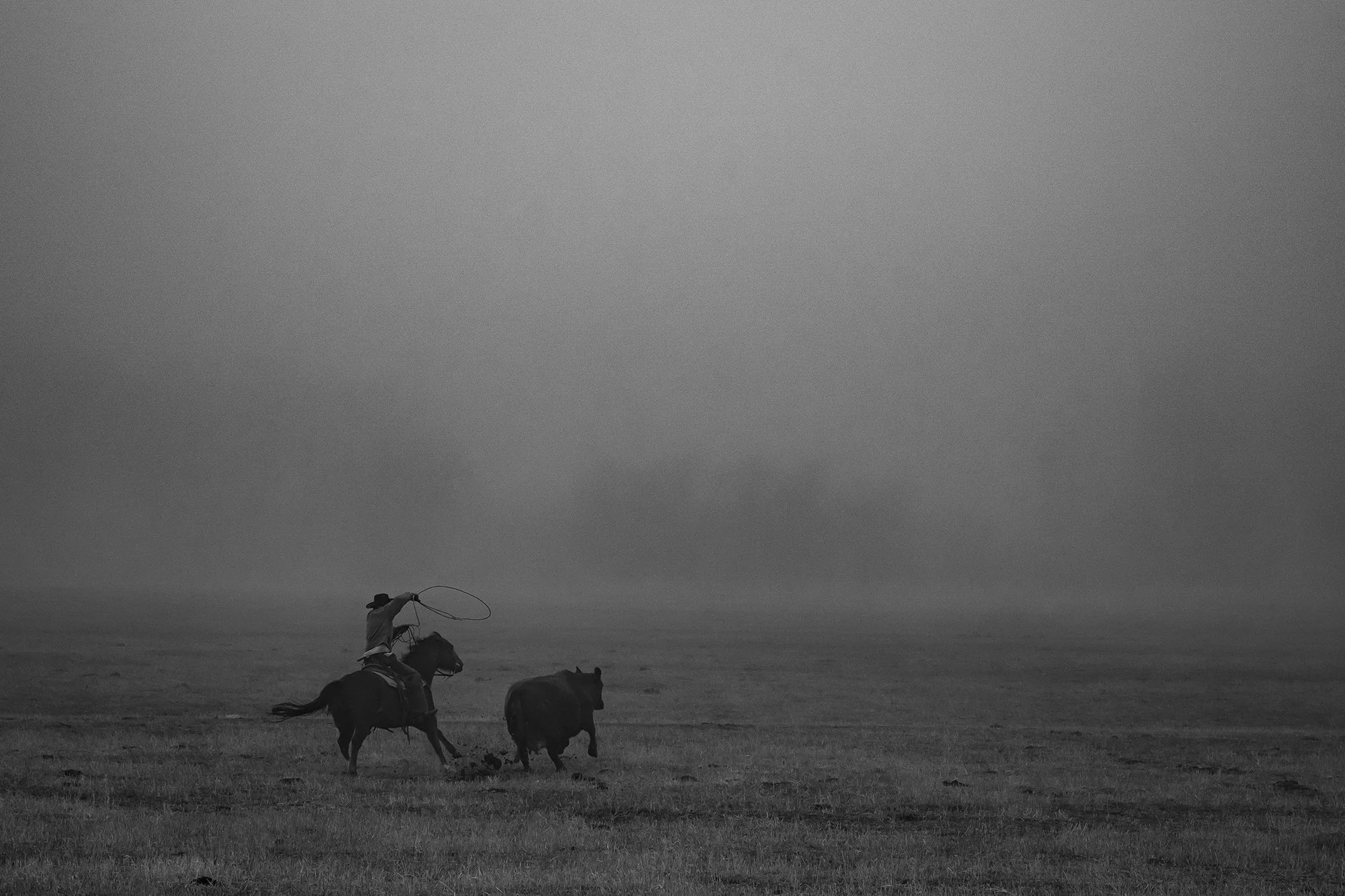
Black and white cowboy photography strips the American West down to its essentials. Without color, the emphasis shifts to light, texture, weather, and gesture — the dust on denim, the worn leather of a saddle, the way a horse and rider move together through long days of work. These photographs are less about nostalgia and more about presence: moments observed as they unfold on working ranches across the West.

For generations, black and white imagery has been used to document labor, place, and tradition. In the context of cowboy life, it carries a particular weight. The absence of color removes distraction and places focus on form, grit, and endurance — qualities that define both the landscape and the people who work it. The resulting photographs feel timeless, echoing earlier documentary traditions while remaining grounded in the present.

This body of work was created through long-term access to real ranches and real working cowboys, photographed in the course of everyday ranch life rather than staged scenarios. The goal is not romanticization, but clarity — an honest visual record of a way of life that continues to evolve while remaining deeply tied to history.

Further down this page, you’ll find information for collectors, designers, and institutions interested in acquiring prints or licensing imagery from this series.

Black and White as a Documentary Language

Black and white has long been the visual language of documentary photography. Without the influence of color, attention shifts to structure, contrast, and moment — the quiet details that might otherwise be overlooked. In the context of cowboy life, this approach emphasizes the physical realities of the work: weathered hands, sweat-soaked shirts, dust rising behind cattle, and the geometry of fences, corrals, and open land.

These photographs are made in the course of real ranch work. Nothing is staged or directed. The scenes unfold naturally, shaped by long days, changing weather, and the rhythm of life on working ranches. Black and white allows those elements to exist without embellishment, presenting cowboy life as it is rather than how it is often imagined.

A Timeless Approach to the American West

Color often ties an image to a specific era. Black and white, by contrast, removes that timestamp. The photographs in this series could belong to many decades at once, reflecting a continuity that runs through generations of working cowboys and ranch families.

This timelessness is not about nostalgia. It’s about continuity — the persistence of skills, routines, and values that remain essential despite modern equipment and changing economics. The absence of color reinforces the idea that the work itself, not the era, is the subject.

Photographing Real Working Cowboys

This body of work was created through long-term relationships and repeat visits to ranches across the American West. Access comes from trust built over time, allowing moments to unfold naturally rather than for the camera.
The photographs focus on:

  • daily ranch labor

  • quiet moments between tasks

  • the physical connection between cowboy, horse, and land

  • the spaces where work happens — barns, corrals, pastures, and open range

The goal is documentation rather than spectacle. These images exist as a record of contemporary cowboy life, grounded in reality rather than performance.

Black and White in Contemporary Fine Art Photography

Within fine art photography, black and white continues to hold a unique place. It invites slower looking and emphasizes composition and mood over immediacy. In gallery and exhibition settings, black and white work often encourages viewers to engage more deeply with subject matter and form.

In the context of the American West, this approach places cowboy photography within a broader documentary and fine art tradition, rather than isolating it as purely Western or regional imagery.

Prints, Licensing, and Institutional Use

For collectors, designers, and institutions interested in this work, photographs from this series are available in a range of formats, including limited and open edition prints, large-scale exhibition prints, and custom framed pieces. These works are often placed in private collections, ranch homes, hospitality spaces, and curated environments where quieter, contemplative imagery is appropriate.

The archive also supports editorial, commercial, and exhibition use. Images from this project have been shown in galleries and museums and published in magazines and books focused on Western culture, photography, and documentary work.

Interested in this body of work?
A curated selection of black and white cowboy photographs from this project is available as fine art prints.

VIEW AVAILABLE WORKS
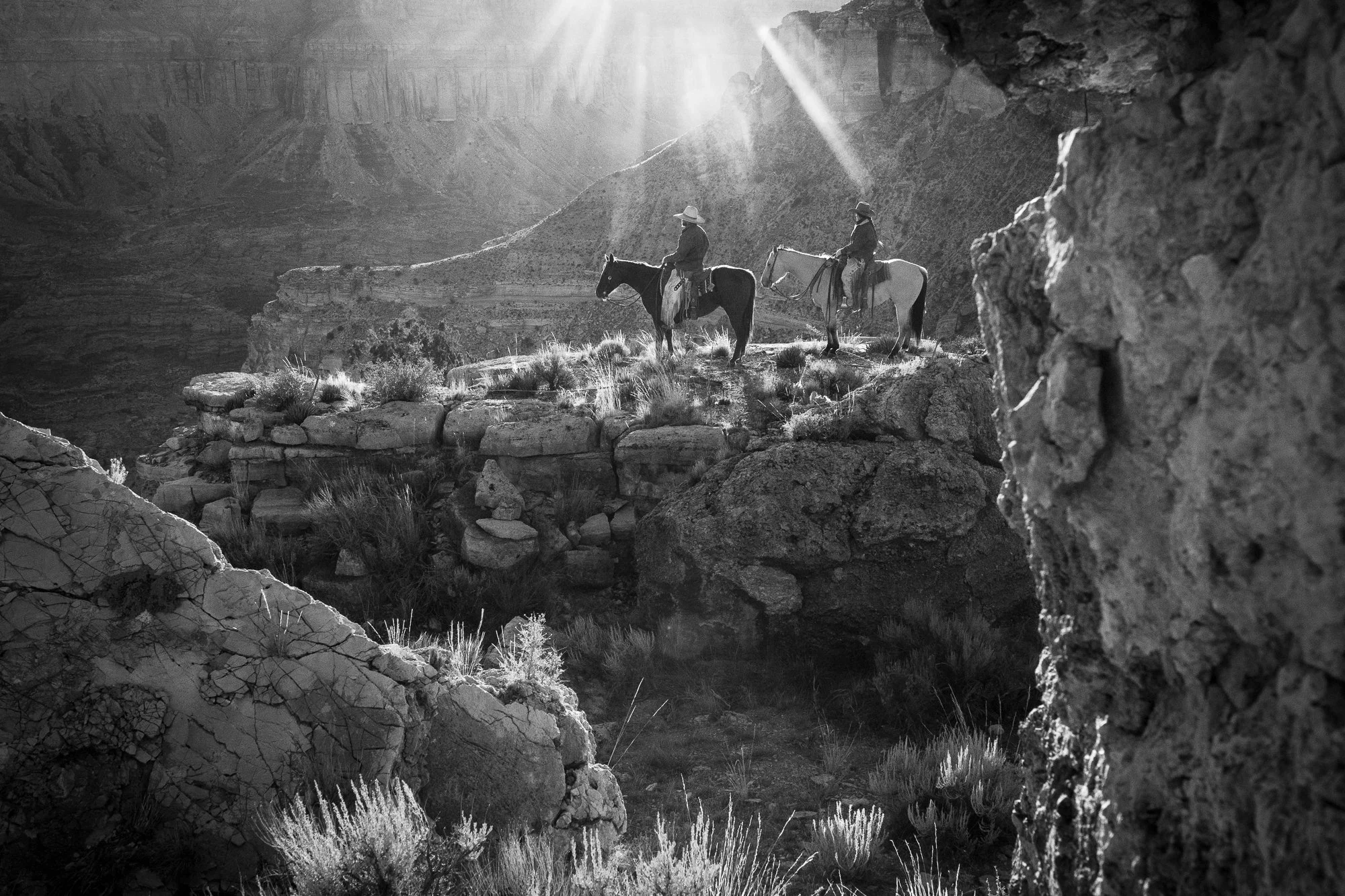
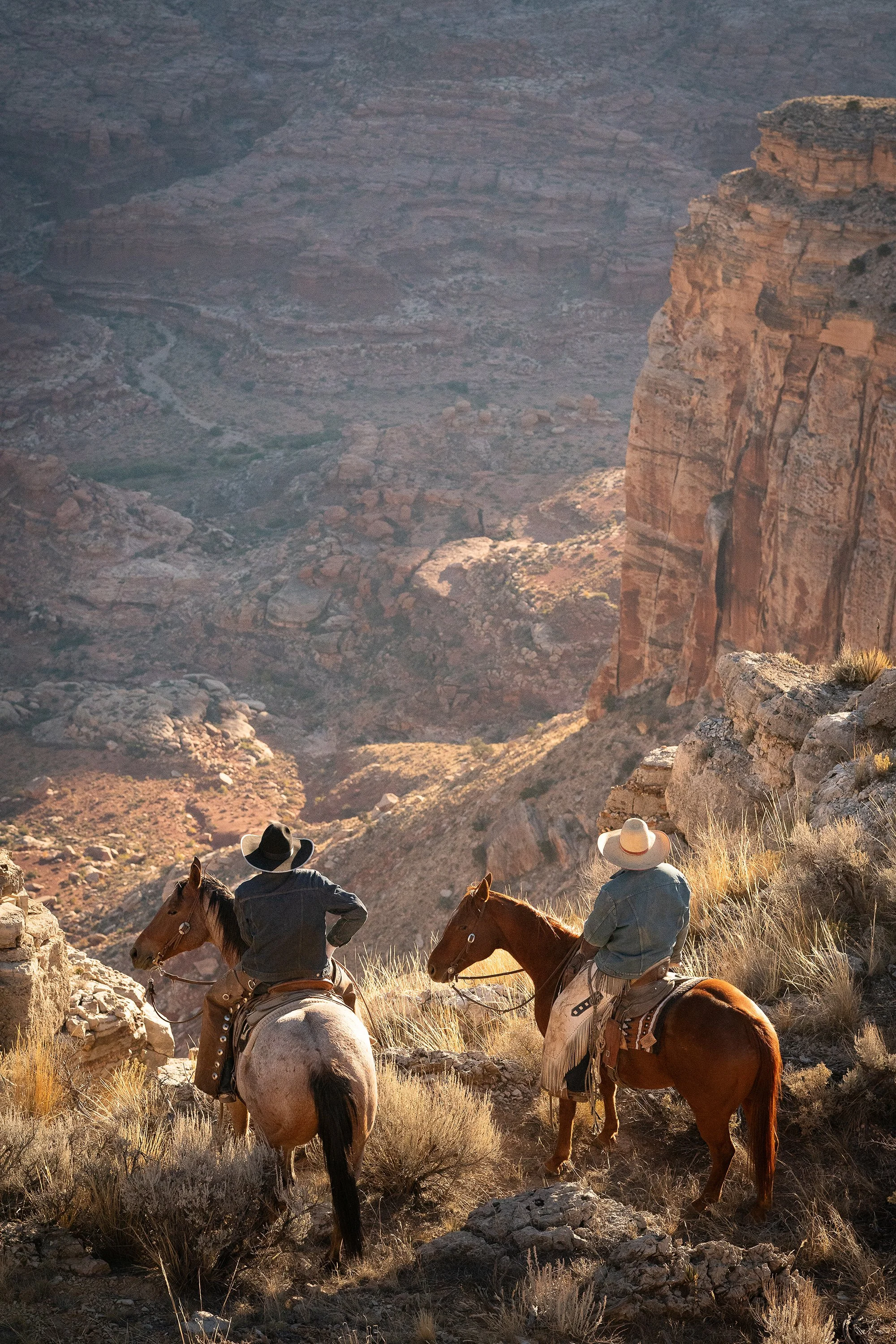
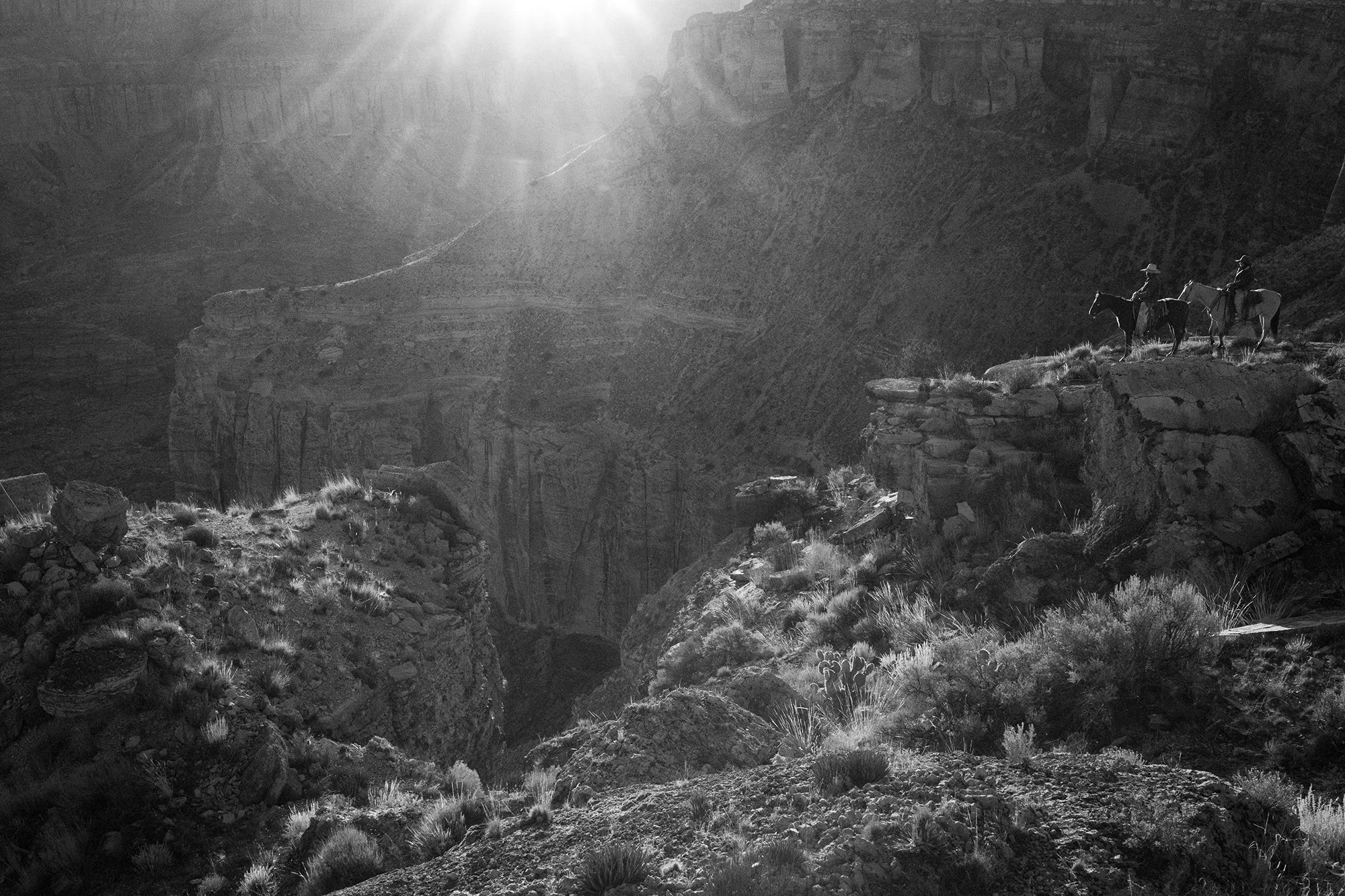
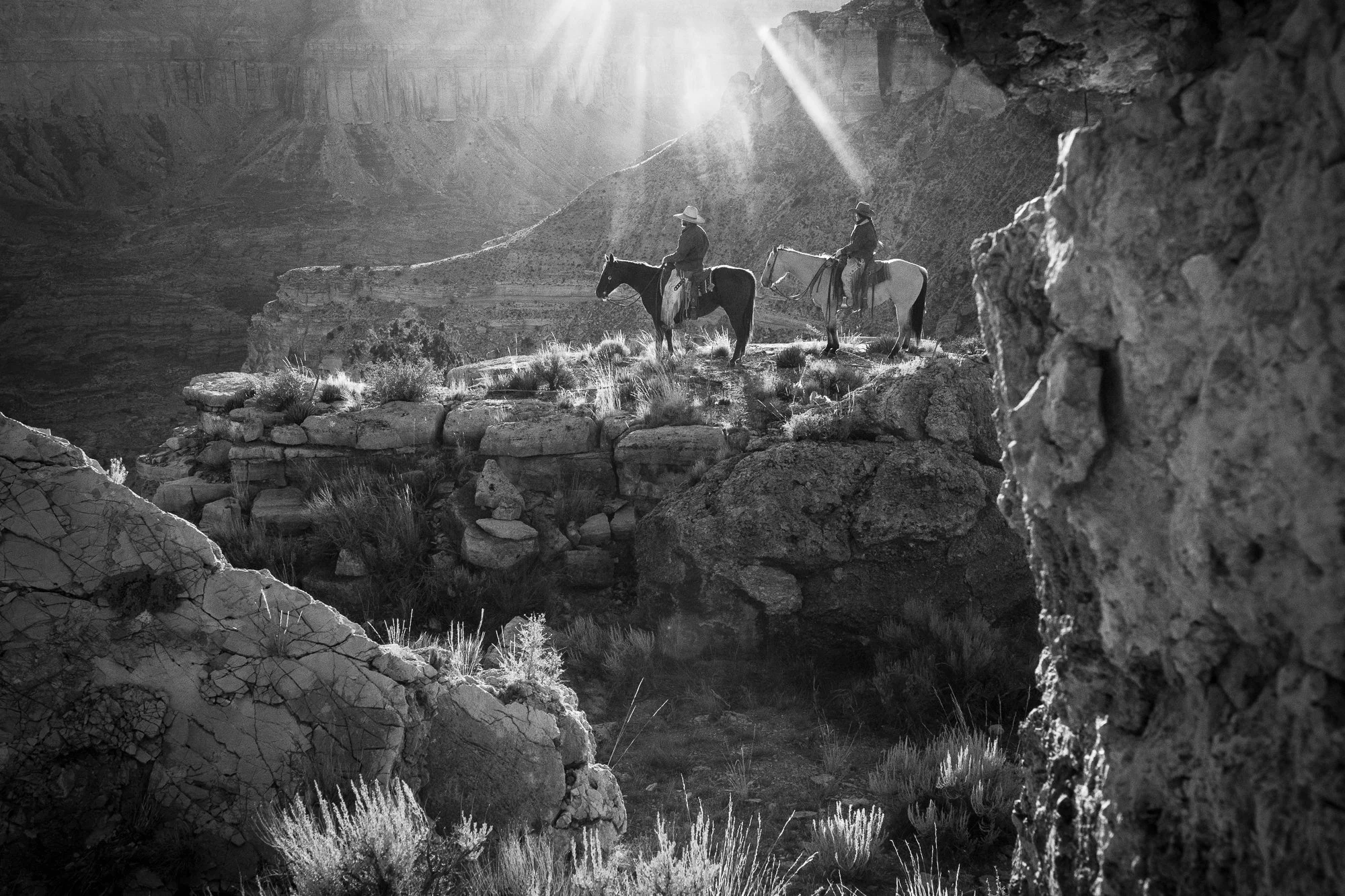
Cowboys on horseback overlooking a canyon in the American West, black and white photograph.

Cowboys on horseback overlooking a canyon during a pause in the workday.

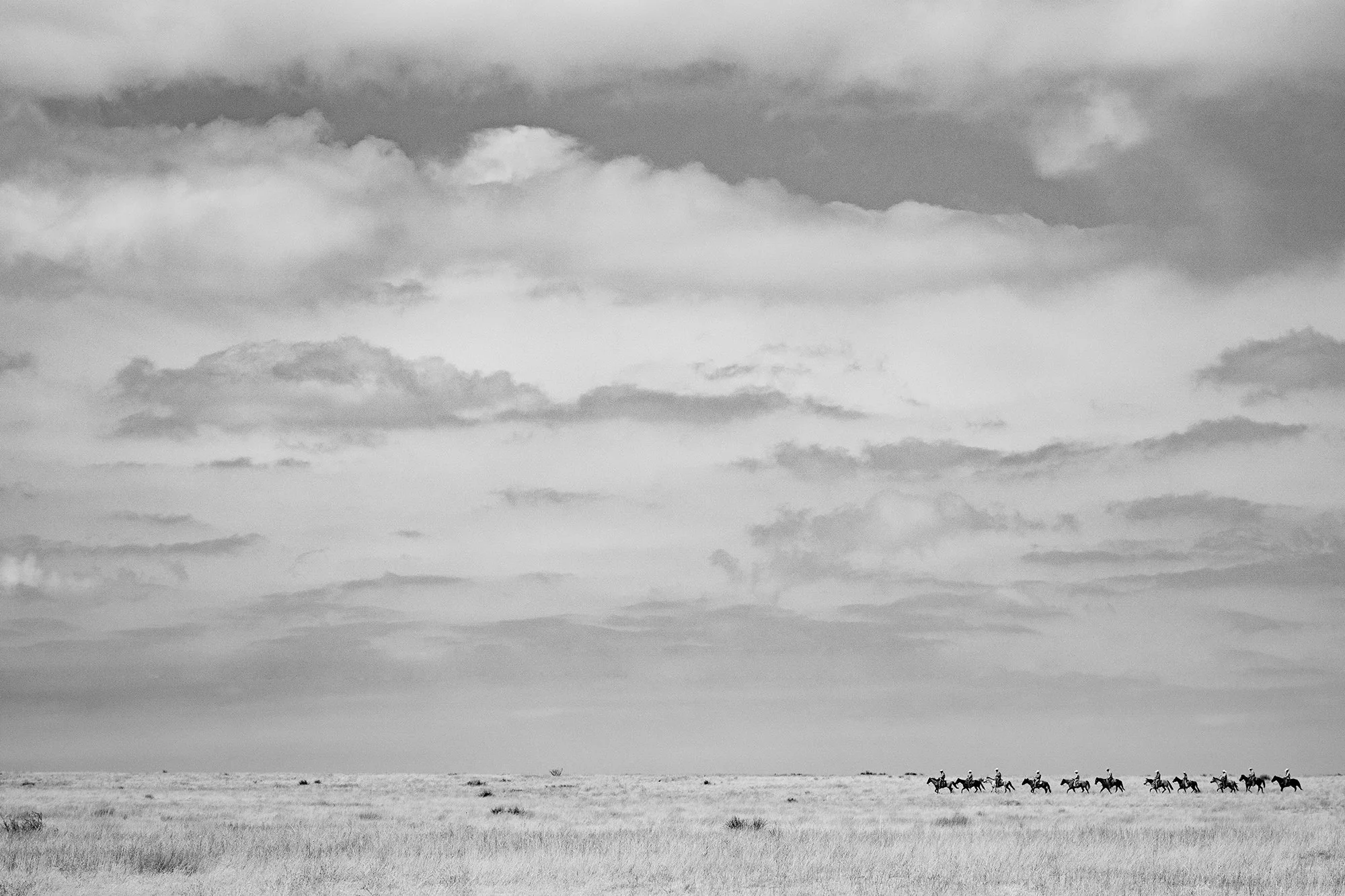
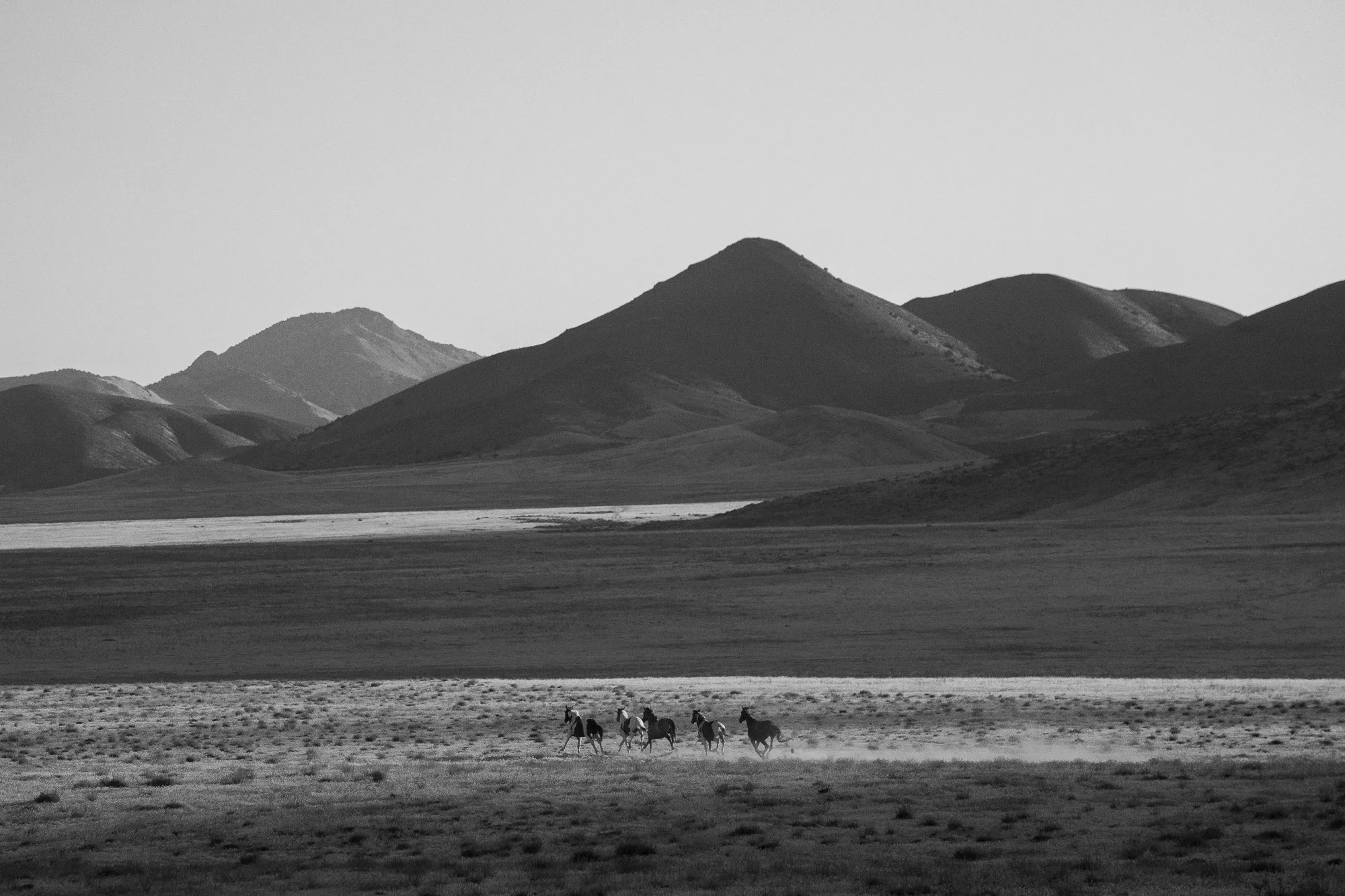
Horses running across open range in the American West, black and white photograph.

Horses moving across open range, dust rising in the distance.

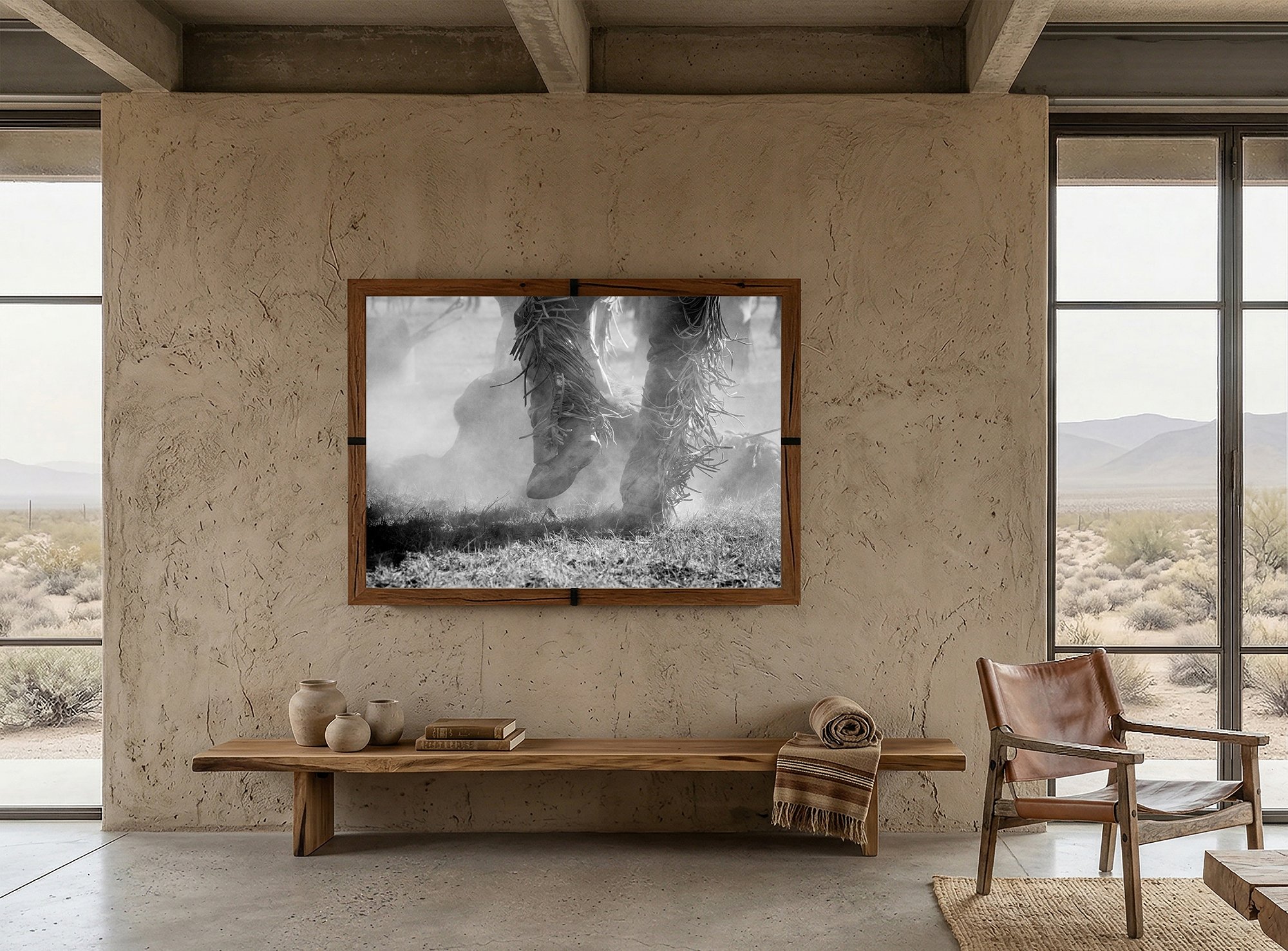
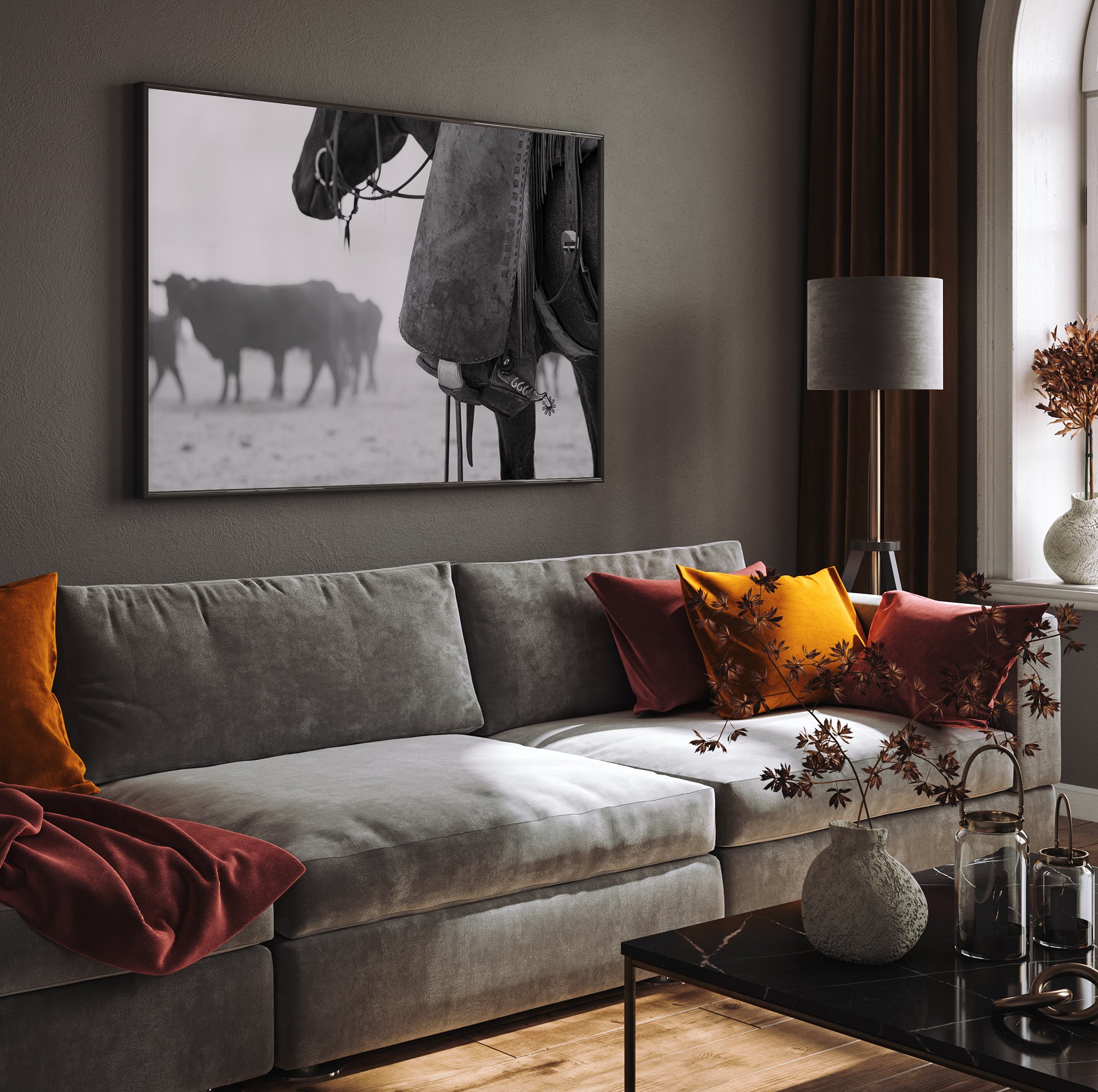
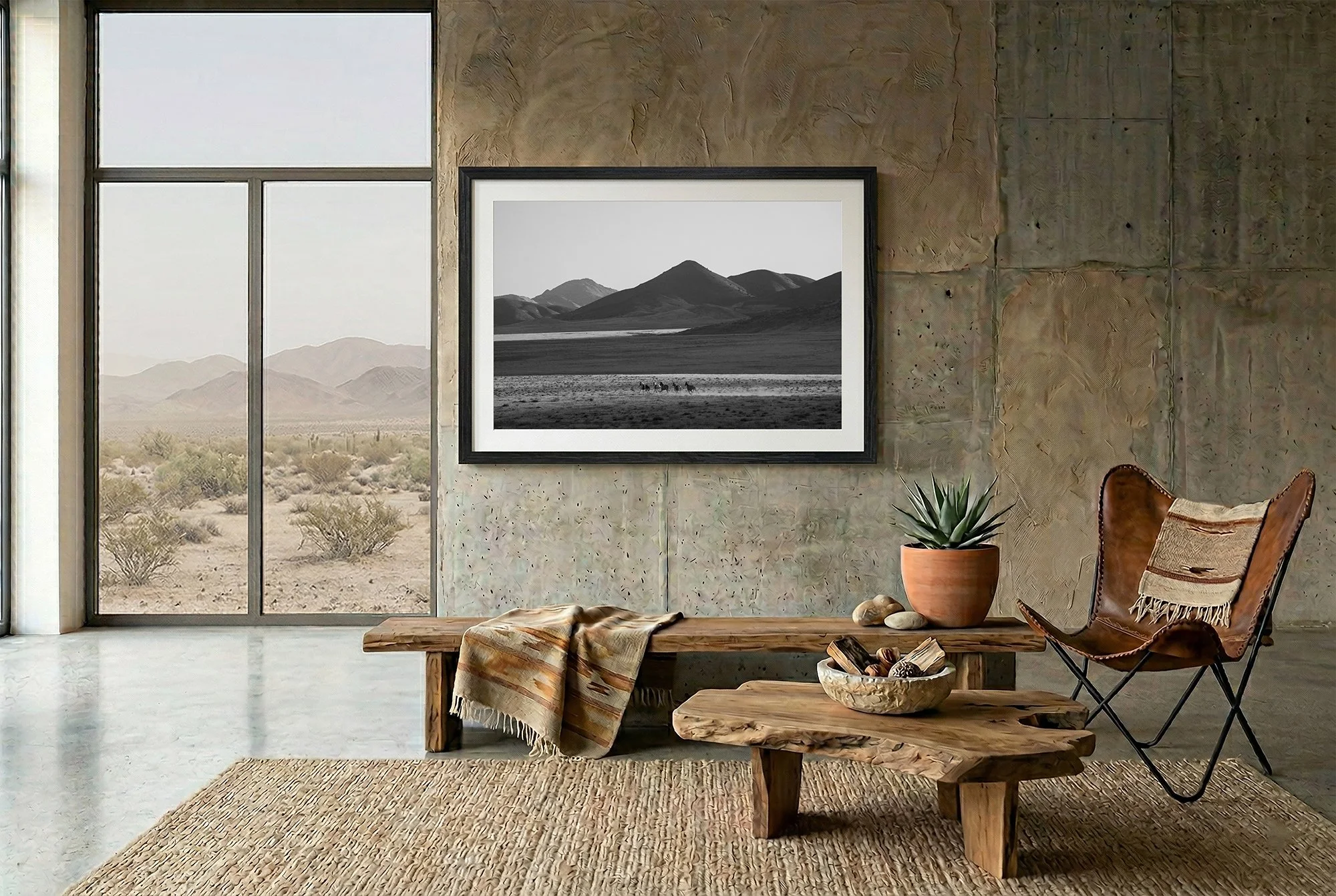
Black and white cowboy photograph installed in a private interior setting.

Black and white cowboy photograph installed in a private interior.

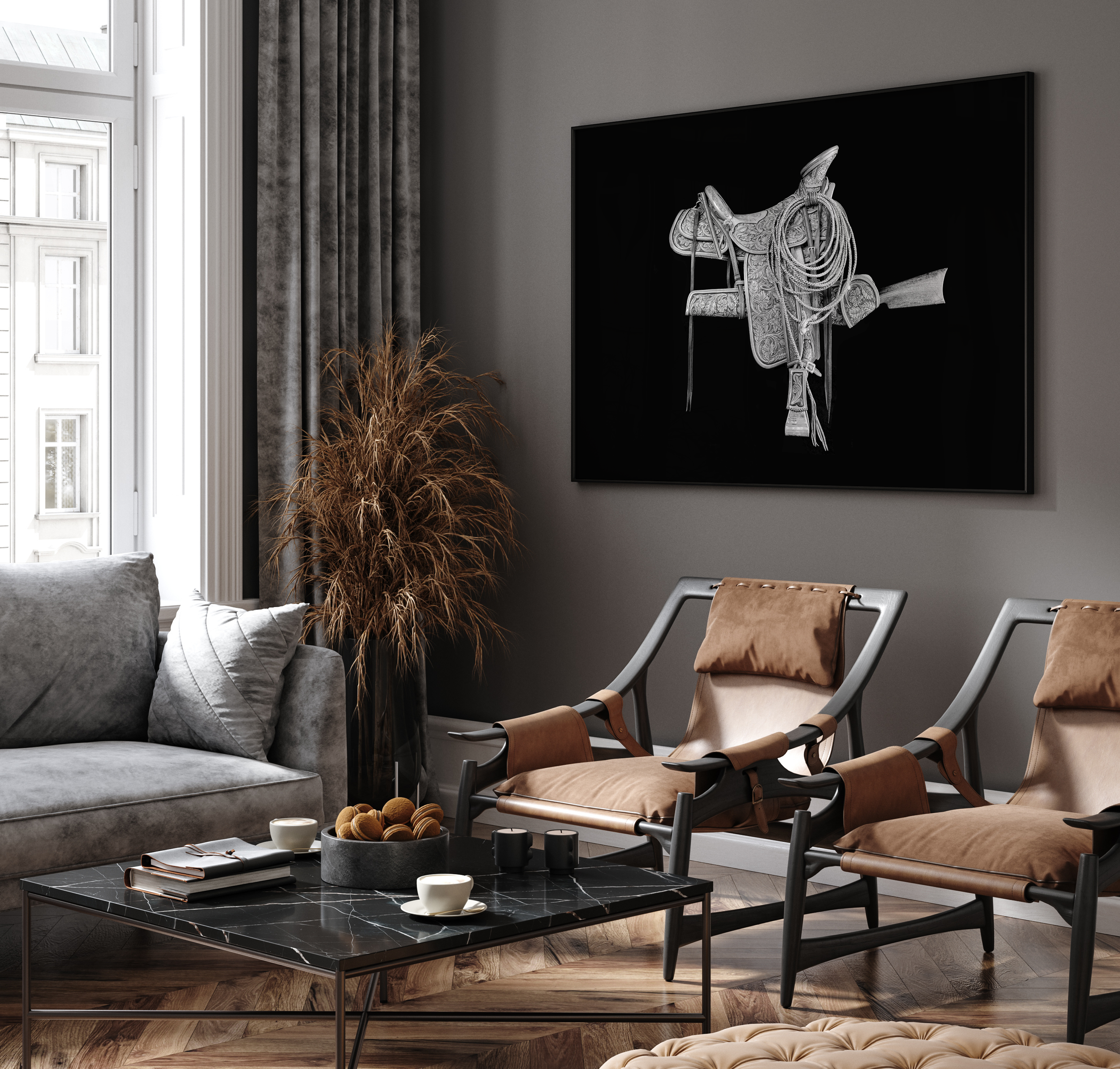
Studio photograph of a Western saddle displayed in a contemporary interior.

Studio photograph of a Western saddle displayed in a contemporary interior.

Martin Gerdin: Glass Trout and the Art of Fly Fishing

From Wild Fish to Glass Art: Photographing the Work of Martin Gerdin

A Fly Fishing Artist Who Honors the Fish

If you spend much time around fly fishing and have an appreciation for art, then you’ve heard the name Martin Gerdin. His hand-blown glass fish are more than just decorative pieces, they’re immaculate tributes. To the fish. To the places they live. To the hours spent chasing them in silence with and without victory. When I had the opportunity to photograph Martin for a recent magazine story, I knew right away this wasn’t just another artist profile. It was a chance to document someone who truly understands what makes fly fishing special.

Photographing the Process Behind the Glass

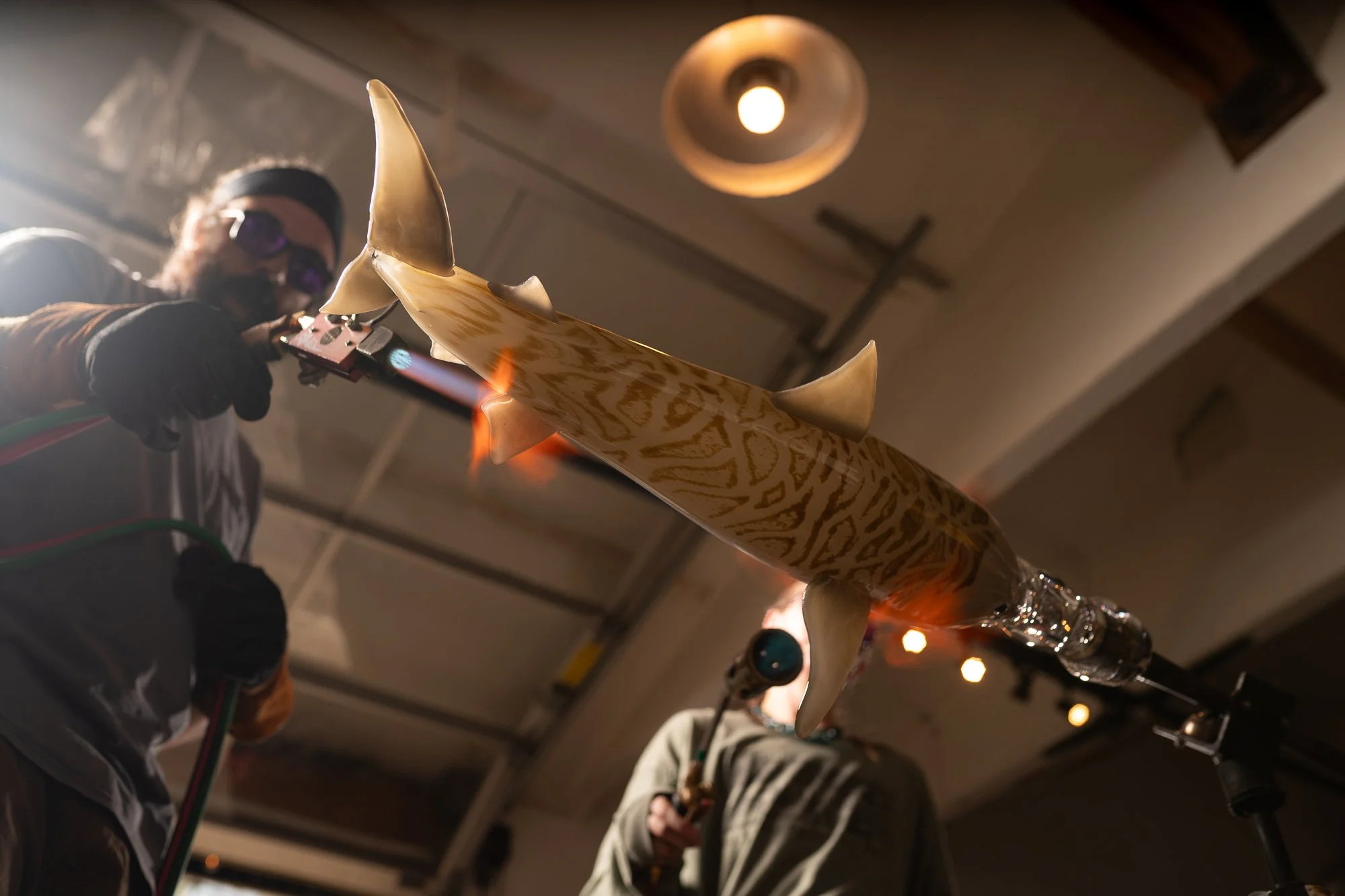
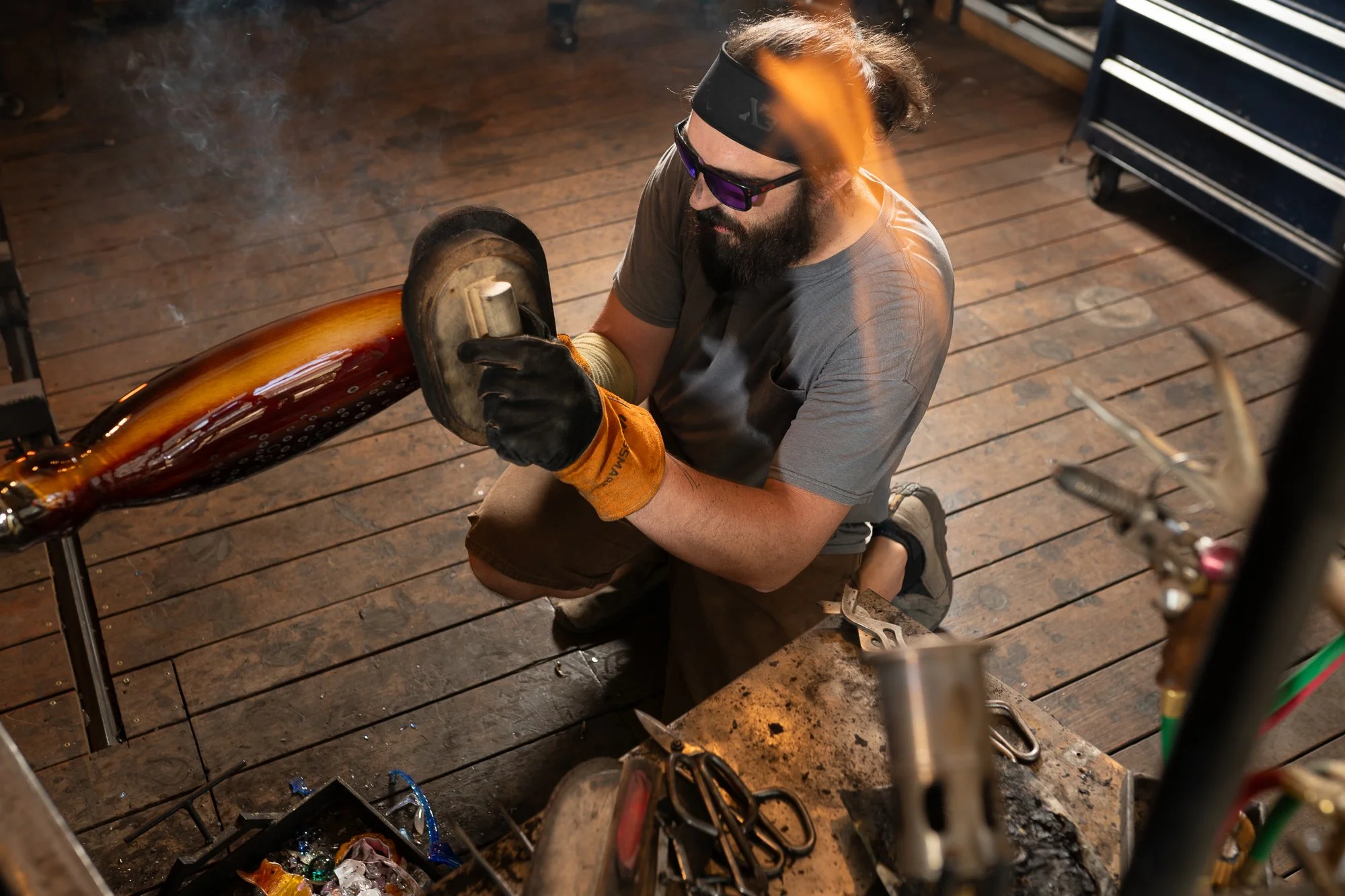
Martin’s Gerdin’s studio is located in Crawford, a small town in a remote section of southwest Colorado, which tells you a bit about him already. He doesn’t need the fancy street facing storefront, because for him, it’s only about the work. And that’s obvious seeing him in action. He cares. Sure, creating stunning glass blown fish is how he earns a living, but it’s also his passion. Glass blowing is a very delicate art, especially when dealing with a pieces the size of Gerdin’s fish. There are so many steps along the way that can cause each one to be ruined. And when that happens all is lost. Back to the beginning. As a photographer intent on documenting a process that cannot be faked, the only option is to be a fly on the wall and not get in the way. Martin and his team are constantly moving, back and forth from the work bench to the furnace, over and over. For this shoot I wanted to use strobes to light the scene in a way that wouldn’t draw attention to the light itself. Rather as more of a subtle enhancement. So the hard part was finding those places within the studio that the strobes and light stands wouldn’t impede his flow. Which was difficult at times, but he graciously told me when they needed to be moved and everything worked out just fine in the end. To be honest, there were times when I just wanted to sit back and watch. Looking at Gerdin’s work on his website or Instagram is impressive, but to see a final piece come to life before your eyes, is something else altogether.

**If you think creating glass trout for a living is all glamour, think again. It’s well over a hundred degrees in Martin’s studio when the furnace is running.

Where My Work Intersects with His

Martin Gerdin doesn’t create custom glass trout for fly fishing collectors by accident. It started out of his rabid obsession with the sport itself. The assignment to photograph Martin at work also didn’t happen by accident. As a photographer, it’s very important to me that the people and stories I work on, are ones I truly care about and have an interest in. So I pitched the idea to a magazine because I was a fan of his work and am also violently obsessed with fly fishing, which has led to a somewhat unhealthy amount of time on the river with both a fly rod and a camera. Like Martin, it’s my happy place.

See the Full Collection

Want to see more?
You can view my full collection of fly fishing photography prints [here]. Each image is available for purchase, and select pieces are also available for editorial or commercial licensing. If you’re a collector, or simply someone who loves the water, I think you’ll find something that speaks to you.

Photograph of a glass brown trout by Martin Gerdin

Martin Gerdin - Glass Fish Artist

Photograph of a glass artist creating custom art for fly fishing collectors

Fine art glass fish artist Martin Gerdin at work in his studio in Crawford, Colorado

Photograph of a custom glass shark being made by an artist in his studio

Glass fish art

A team of glass blowers creating fly fishing art

Fly fishing artist at work

A glass shark being made at Martin Gerdin's studio in Crawford, Colorado

Hand blown glass shark

Photograph of a hand blown glass shark being made

Photograph of an arist creating a hand blown glass shark

Photograph of Martin Gerdin creating a custom glass brown trout for a fly fishing collector

Hand blown glass brown trout art

Photograph of a glass artist creating a brown trout for a fly fishing collector

Photograph of glass trout being made

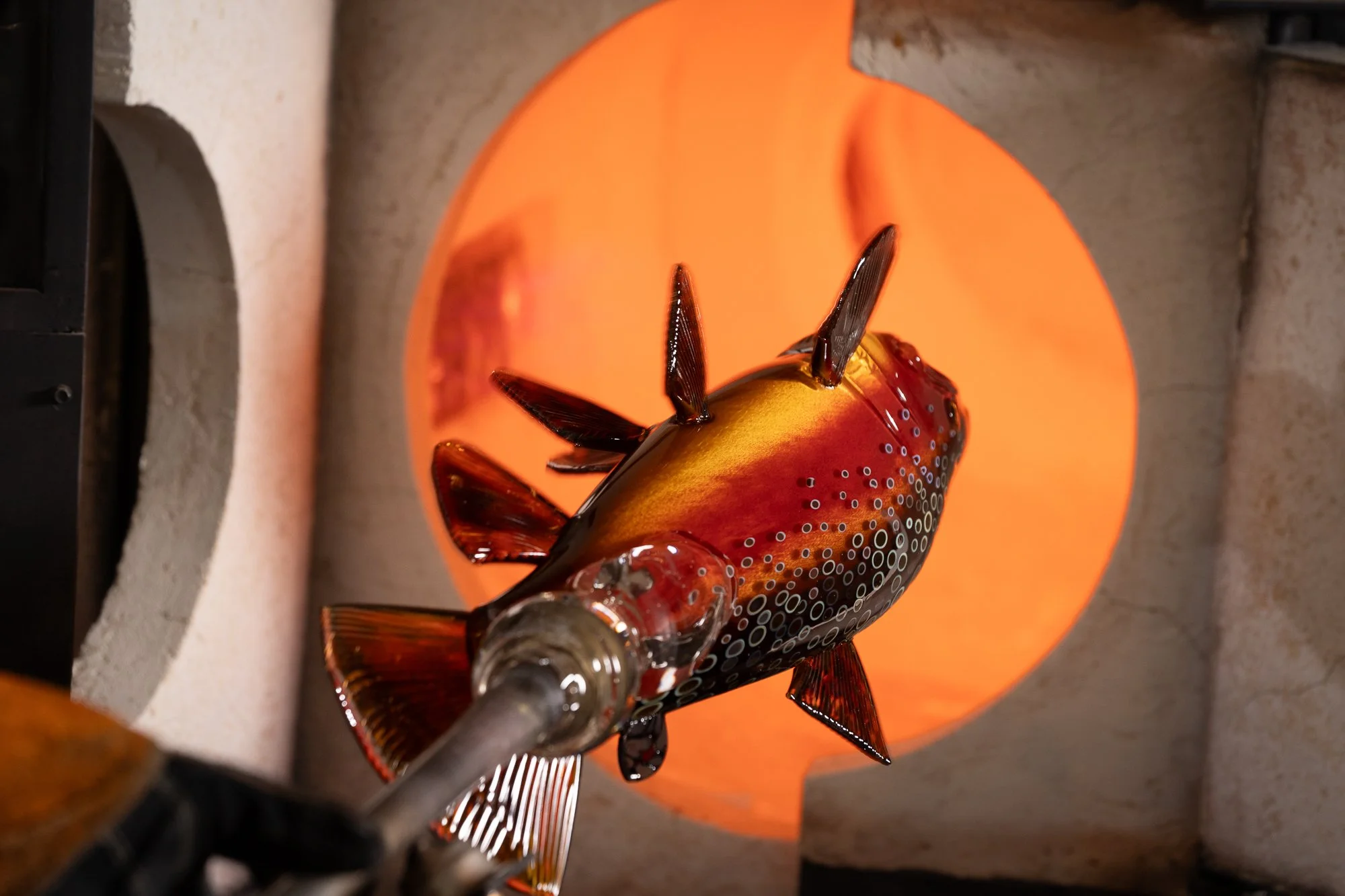
Photograph of a glass blown brown trout going into the furnace

A glass blown brown trout going into the furnace

Fine Art Basketball Hoop Photography Featured in Courtside Candy by Gestalten

Basketball Art + Culture Book - Courtside Candy by Gestalten

Where Streetball Becomes Sculpture

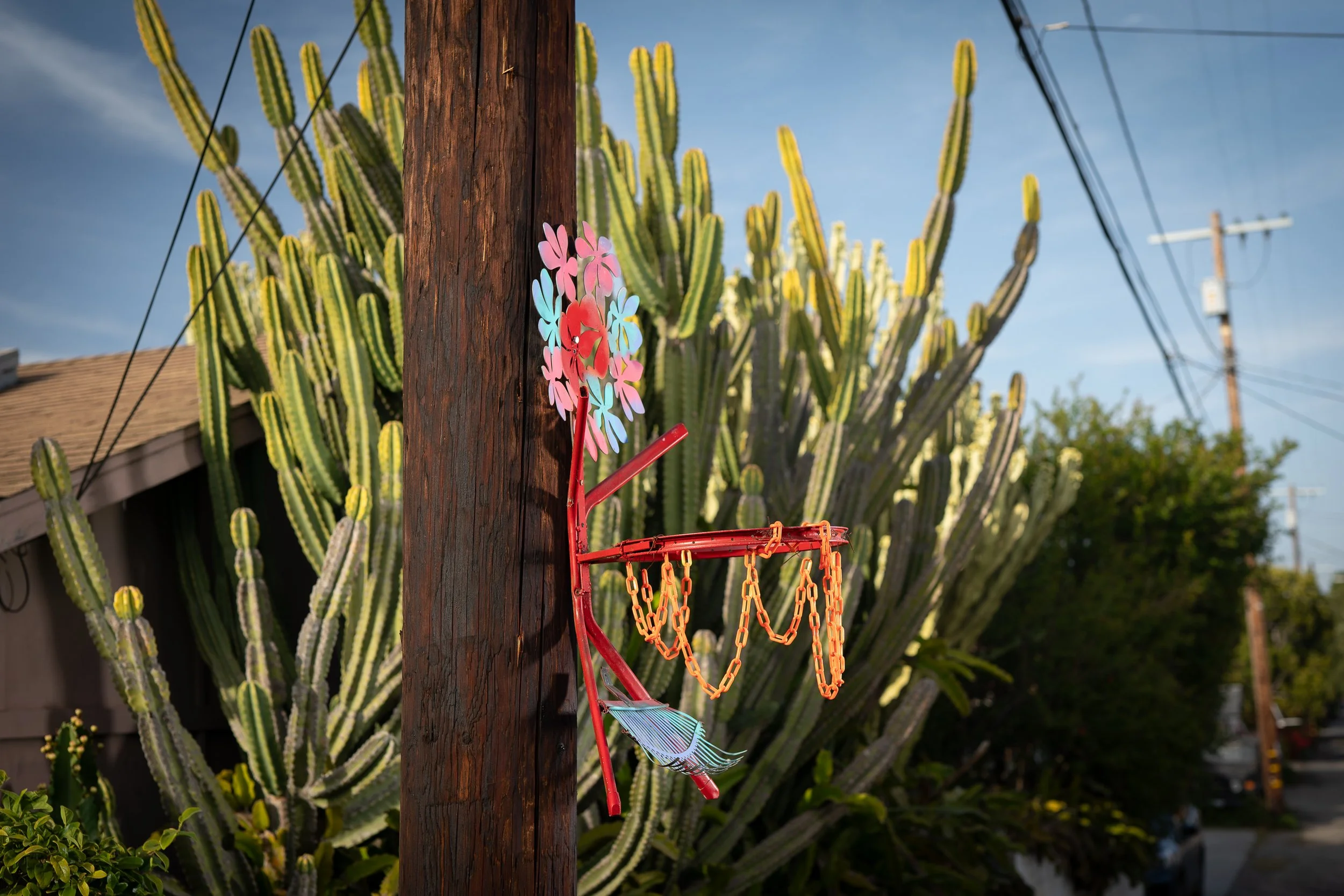
The basketball hoops I photographed in Courtside Candy weren’t made in factories or sponsored by brands. They were made by an artist (Nick Ansom), welded together in backyards, bolted to alleyway walls, and patched together with whatever materials were around; bike rims, plywood scraps, milk crates, rusted steel. In Venice Beach, this isn’t junk. It’s basketball art.

Each hoop reflects a specific personality. Sometimes playful, sometimes gritty, always creative. They’re part of a larger story about the culture of the game. These aren’t just functional backboards; they’re sculptures. And like all good art, they say something about the people who built them.

Venice Beach: A Legacy of Basketball and Creativity

Venice Beach has always been more than a postcard, it’s one of the most iconic basketball communities in the country. It’s where pickup games turn into performances, and where the court is as much a canvas as the chaos and mural-covered buildings around it.

Courtside Candy lives in that space between sport and expression. The hoops in this series represent the DIY spirit that runs through Venice’s streetball scene. They speak to resourcefulness, style, and the love of the game without any need for polish or perfection. In a place where surfing, skateboarding, painting, music, and basketball all collide, these hoops feel right at home.

About the Courtside Candy Book

The Courtside Candy book is a visual archive of this subculture, a historic collection representing the culture of basketball, celebrating the infinite ways the game has been translated into art by people all over the world.

Each piece unique on its own, but collectively, and along with the beautiful writing by Ben Osborne, the book tells a different and vitally important story about the games influence.

Click here to view and purchase available prints or contact me directly if you’d like a basketball print of any photograph not already listed.

Fine art sports book about the culture of basketball
Photograph of handmade basketball hoop in Venice Beach, part of a series featured in Gestalten’s Courtside Candy book

Part basketball hoop, part sculpture. This Venice Beach alley setup is a reminder of how the game adapts to its surroundings

Artistic street basketball installation in Los Angeles representing urban basketball culture

One of the many hoops that reimagine basketball as public art, photographed in the back alleys of Venice

Photograph of handmade basketball hoop built from found objects in a Venice Beach alley, featured in Courtside Candy by Gestalten

Basketball hoop made from found materials, photographed as part of an international basketball art book

Creative basketball hoop sculpture photographed in Los Angeles for an international basketball culture photography book

This photograph is part of a published series that explores the creative edge of basketball culture in America’s urban spaces

Basketball culture photography print from a series featured in Courtside Candy, capturing urban creativity through sport

Equal parts sculpture and sport, this Venice Beach hoop transforms function into form, blurring the line between art installation and basketball court

More than just a place to shoot around - this hoop turns a back alley in Venice Beach into a public statement about the game’s reach and creativity

From the streets of LA to the pages of Courtside Candy, these handmade hoops carry a different kind of history.

Photographs of Albany, New York - Historical Landmarks & Architecture

ALBANY, NEW YORK PHOTOGRAPHS

Growing Up Around Albany, New York

I grew up in the Albany area, and my relationship with the city has always been shaped by familiarity rather than novelty. It’s a place I knew long before I ever photographed it—through daily routines, changing neighborhoods, and the quiet rhythms of a city that rarely tries to impress anyone.

That familiarity is what eventually pulled me back with a camera. Photographing Albany wasn’t about rediscovery so much as paying closer attention. I wasn’t looking for defining moments or iconic views. I was interested in the spaces that felt ordinary enough to be overlooked, yet permanent enough to hold memory.

Photographing Albany as a Lived-In City

This photography series is rooted in observation rather than spectacle. Albany is a city layered with history—Federal and Victorian architecture, civic buildings, industrial remnants, and residential streets shaped by decades of quiet change. Much of that history lives in plain sight.

I gravitated toward scenes that reflect that lived-in quality: empty streets, weathered facades, winter light, and moments where architecture and atmosphere intersect. These photographs are intentionally restrained. They aren’t meant to dramatize the city, but to reflect it honestly.

The goal is not to explain Albany, but to let it exist as it is.

Architecture, Atmosphere, and the In-Between

Many of the photographs in this series focus on architecture, but not in a formal or celebratory way. I’m less interested in buildings as symbols than as backdrops for daily life—structures shaped by use, time, and weather.

Light plays an important role. Fog, snow, and low winter sun soften edges and slow the pace of looking. These conditions reveal details that might otherwise go unnoticed, and they echo how the city often feels to move through: quiet, deliberate, and grounded.

This approach mirrors how I work across my broader documentary projects—allowing place to speak without forcing a narrative.

A Long-Term Documentary Project

This Albany photography project is ongoing. The city continues to change, and my relationship to it continues to evolve as well. Returning with a camera allows me to see familiar spaces with fresh attention, while still photographing from a position of understanding rather than distance.

The photographs aren’t meant to define Albany, but to contribute to a broader visual record of American cities—particularly those that exist outside the usual spotlight.

From the Project to the Prints

While this page focuses on the documentary work itself, many of these photographs are available as fine art prints. The prints are produced with the same care and intention as the photographs, emphasizing longevity, material quality, and thoughtful presentation.

If you’re interested in viewing available work from this series, you can explore the print collection below.

View available Albany photography prints

Click HERE to view my photographs of Troy, NY

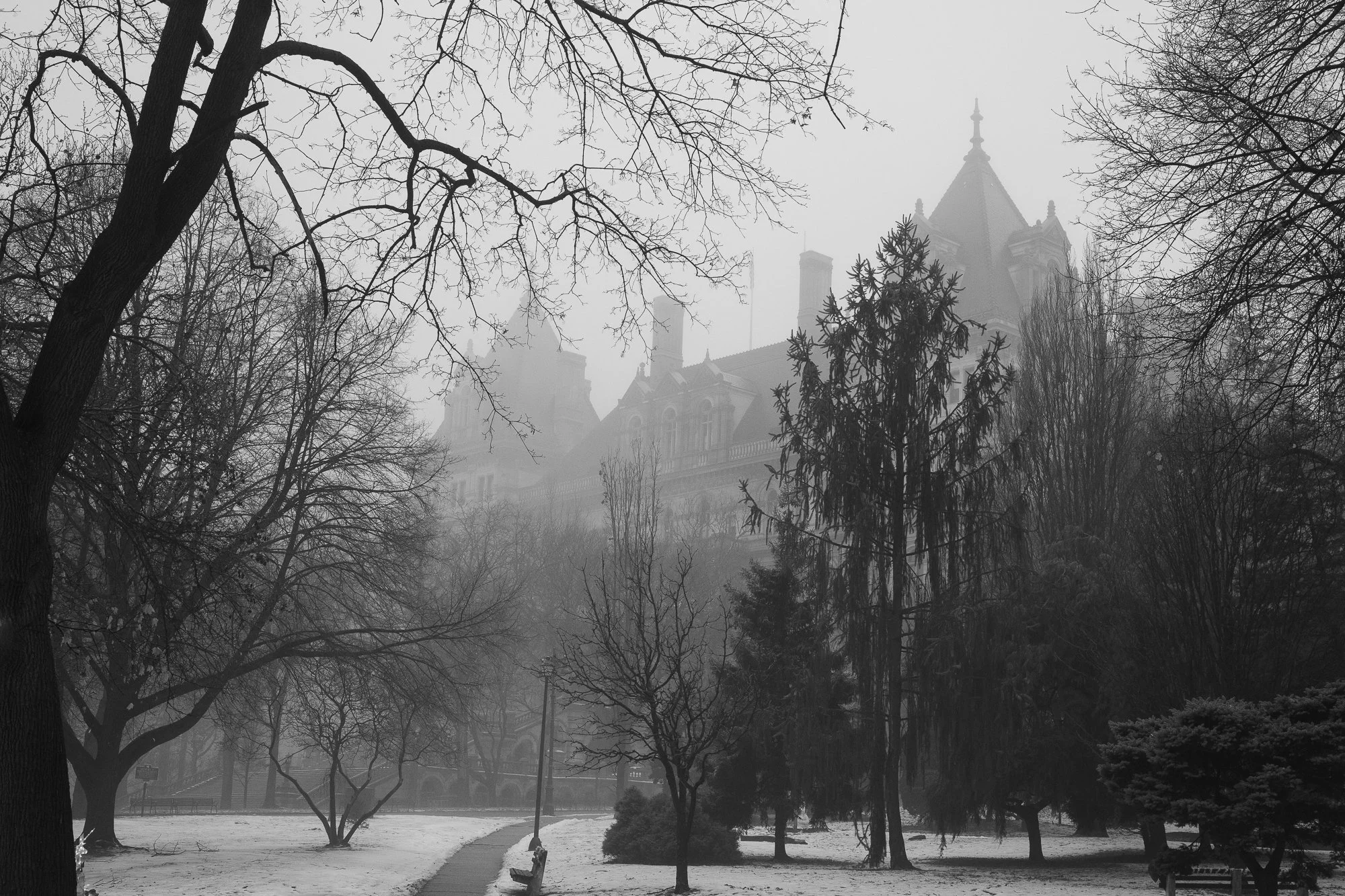
Black and white photograph of the New York State Capitol partially obscured by winter trees in Albany

The New York State Capitol recedes behind bare winter trees as fog softens its presence in Albany, NY

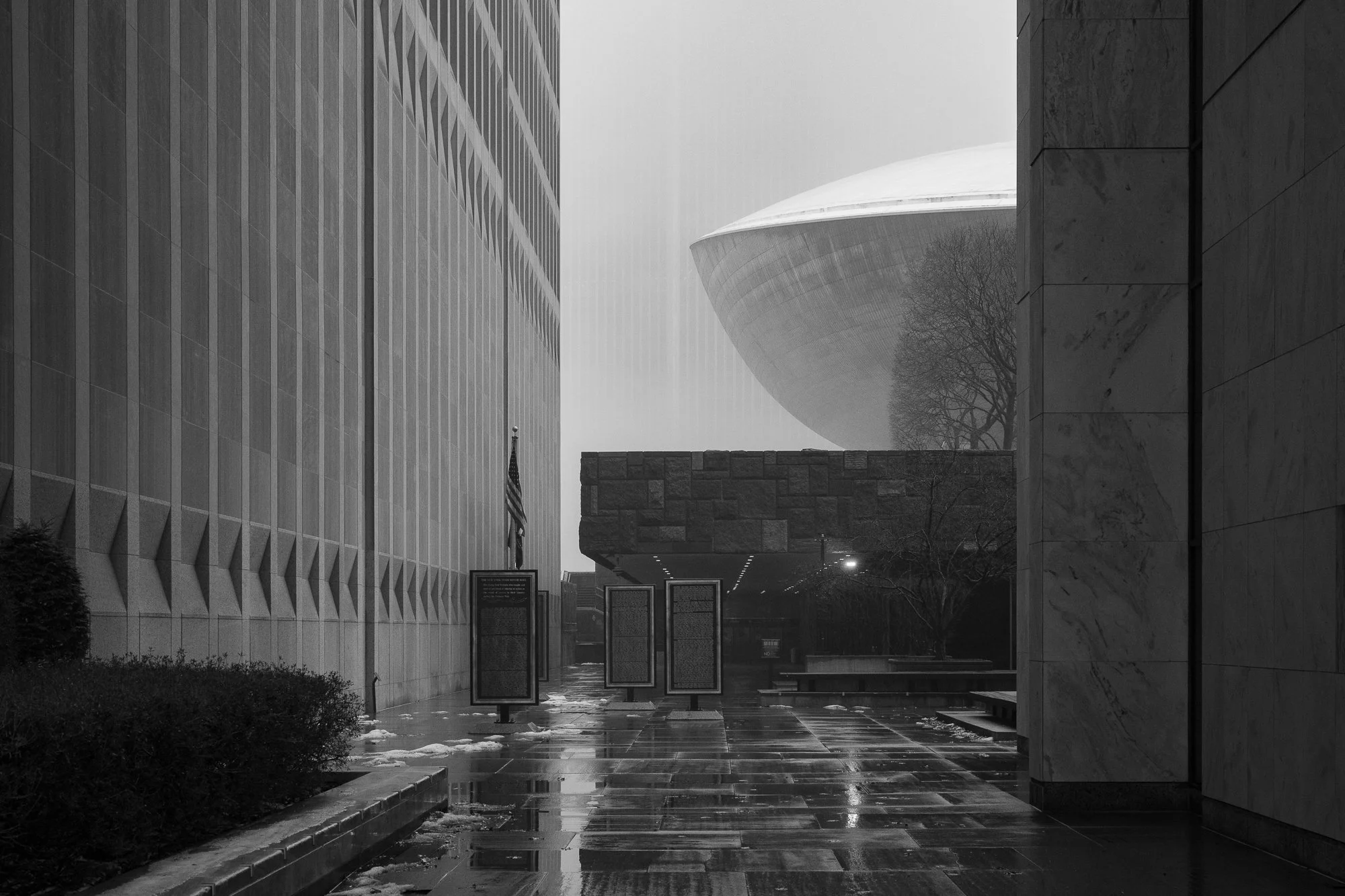
Black and white architectural photograph of Empire State Plaza buildings in Albany, New York

Empire State Plaza emerges through fog, emphasizing clean lines, scale, and negative space.

Timeless black and white photograph of Albany, New York

Classic black and white photograph of Albany, NY

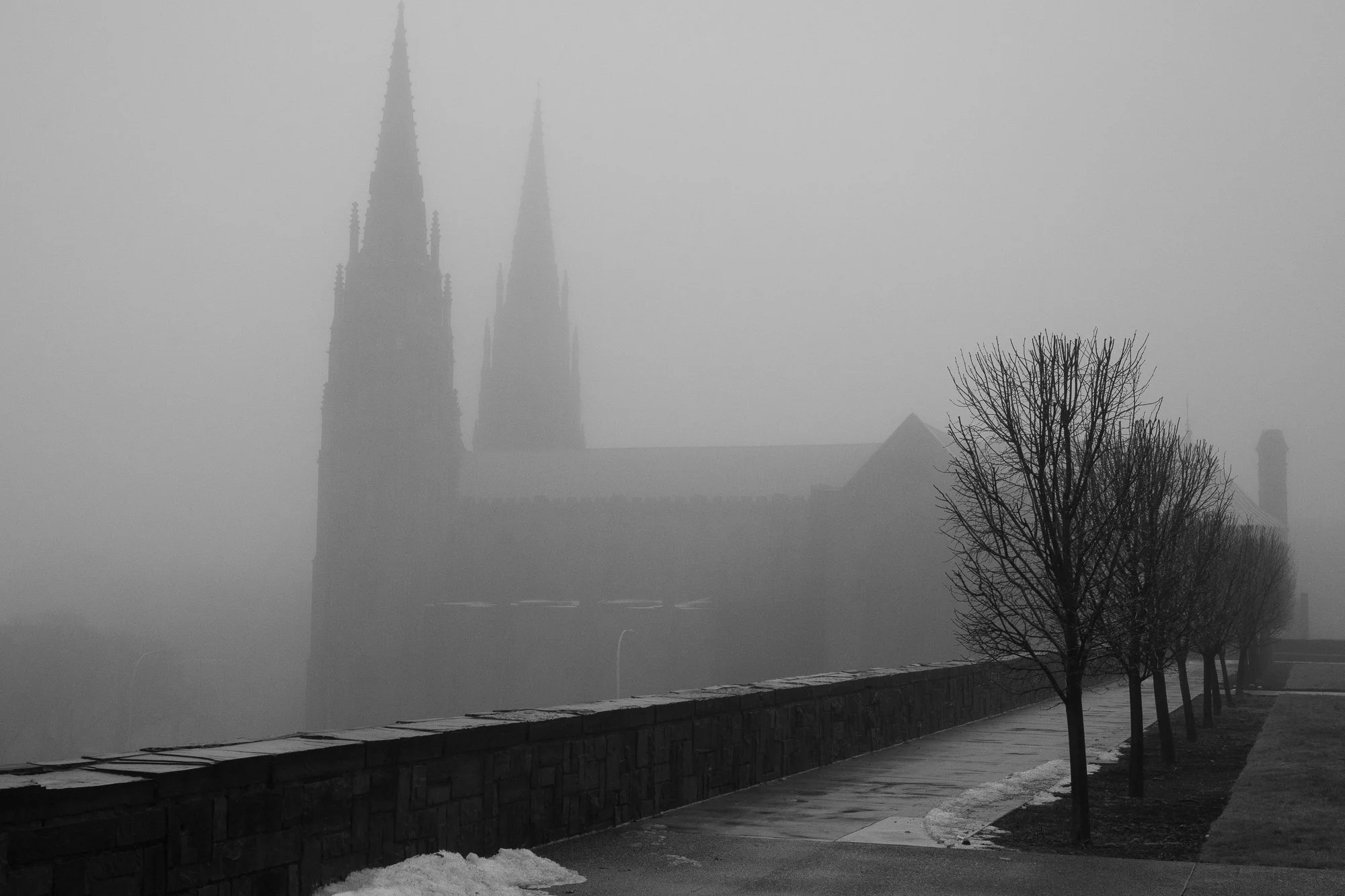
Black and white photograph of cathedral spires emerging through fog in Albany, New York

Cathedral spires of the Church of the Immaculate Conception in Albany, NY rise quietly through dense fog, reducing the city to silhouette and form.

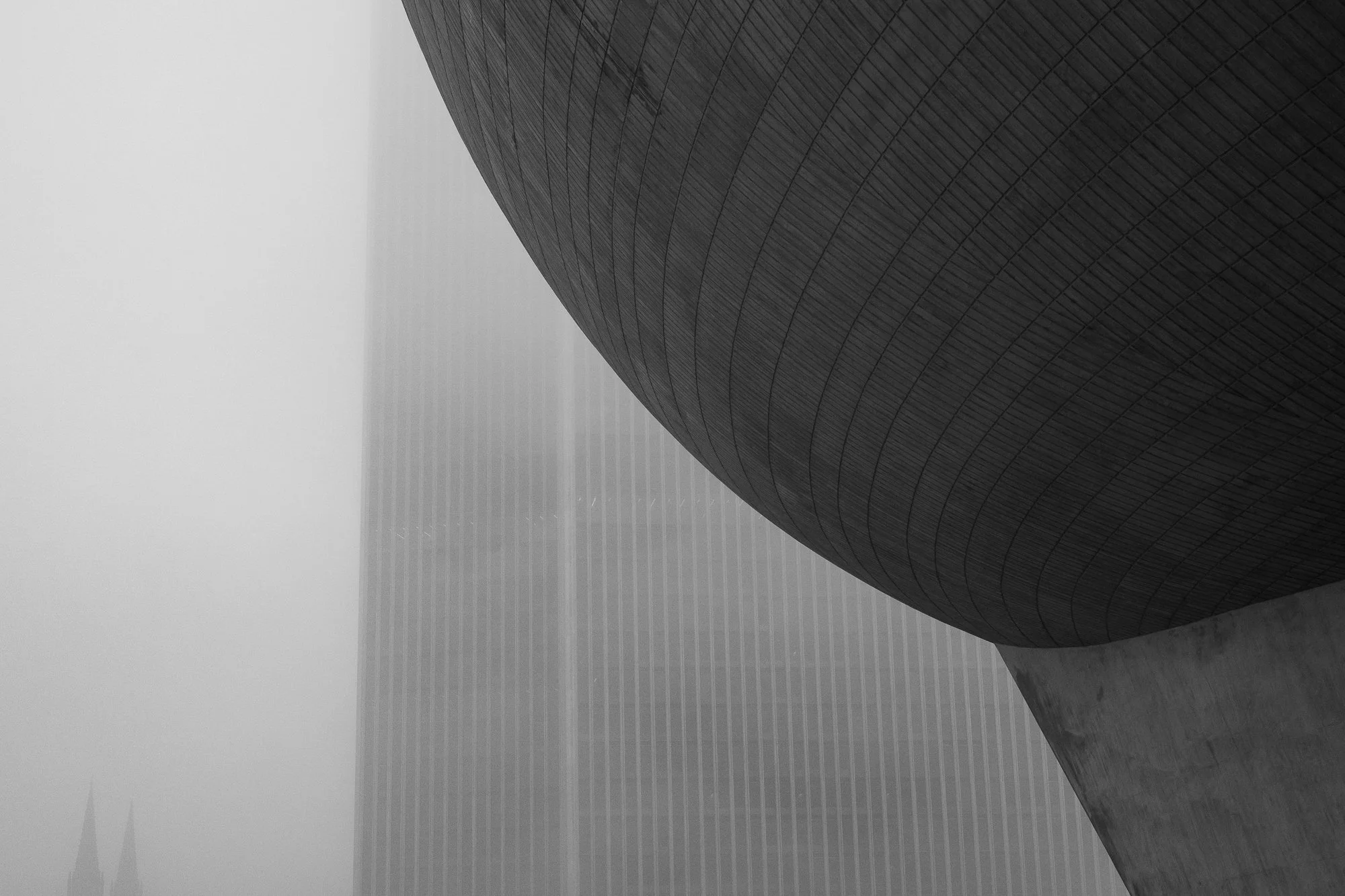
Black and white photograph of The Egg performing arts center in Albany, New York

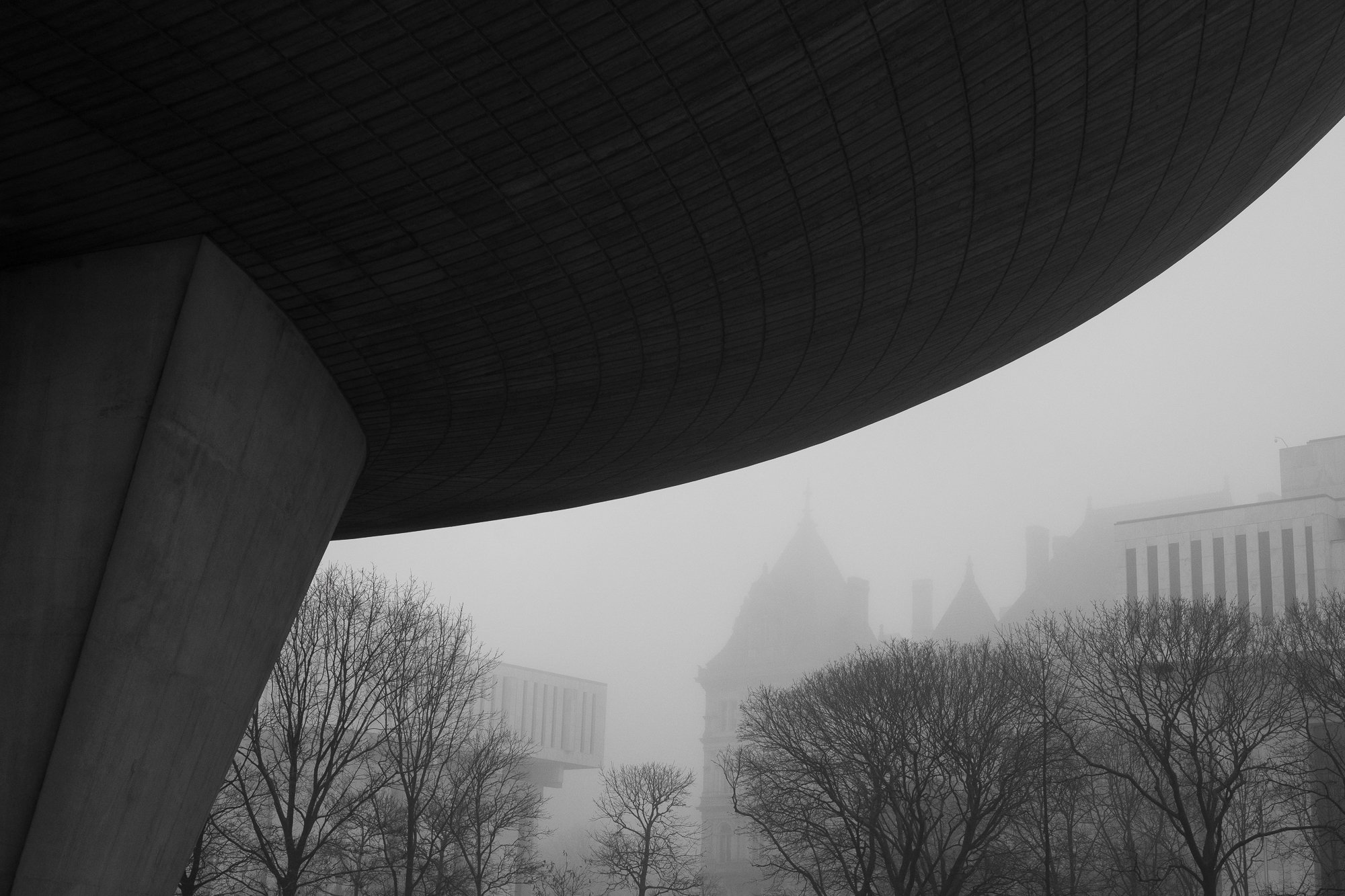
Empire State Plaza - A close architectural study of The Egg, where curve and concrete dominate the frame.

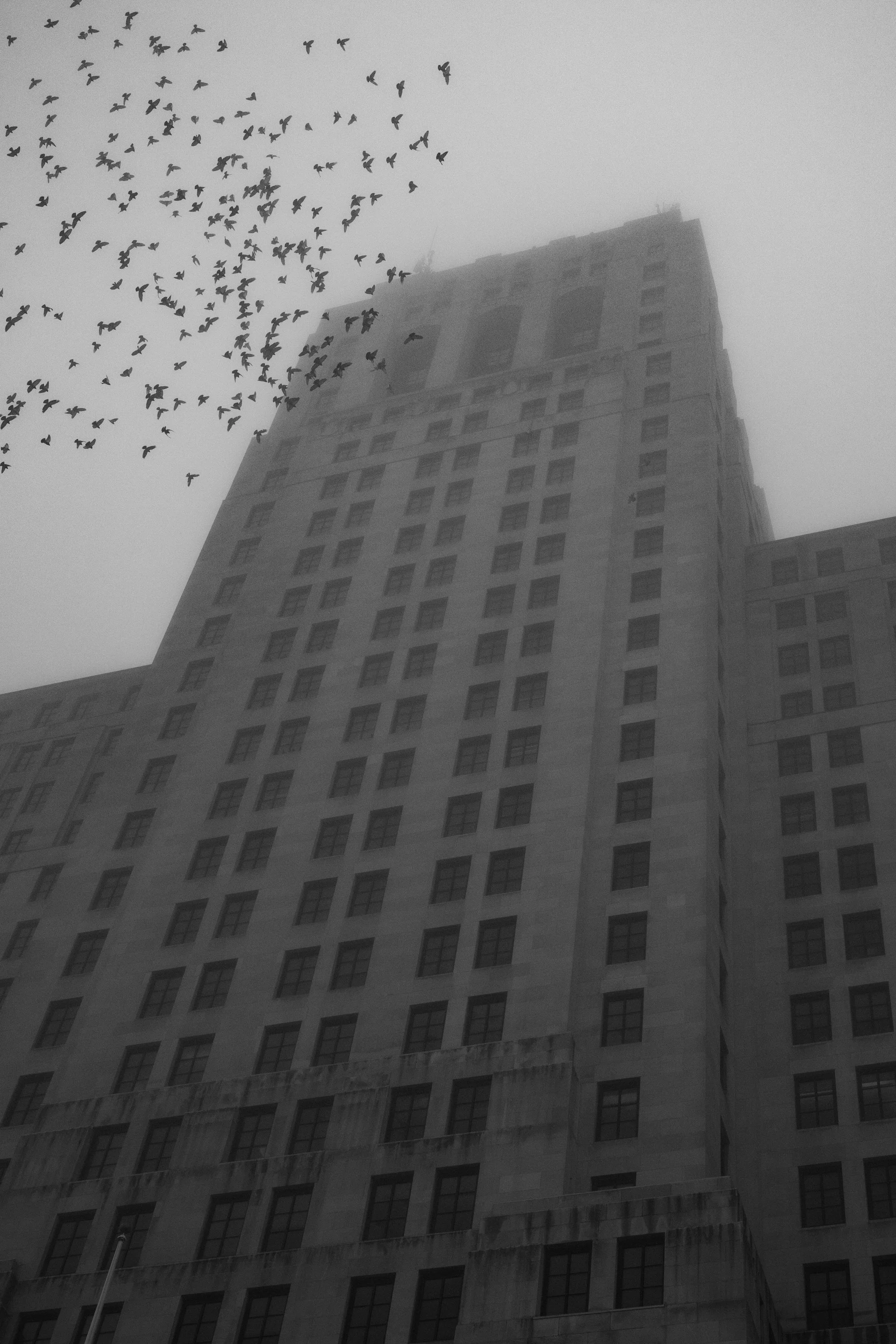
Black and white photograph of birds flying past a tall government building in Albany, New York

A flock of birds breaks the stillness above the Alfred E. Smith building, adding movement to an otherwise rigid form.

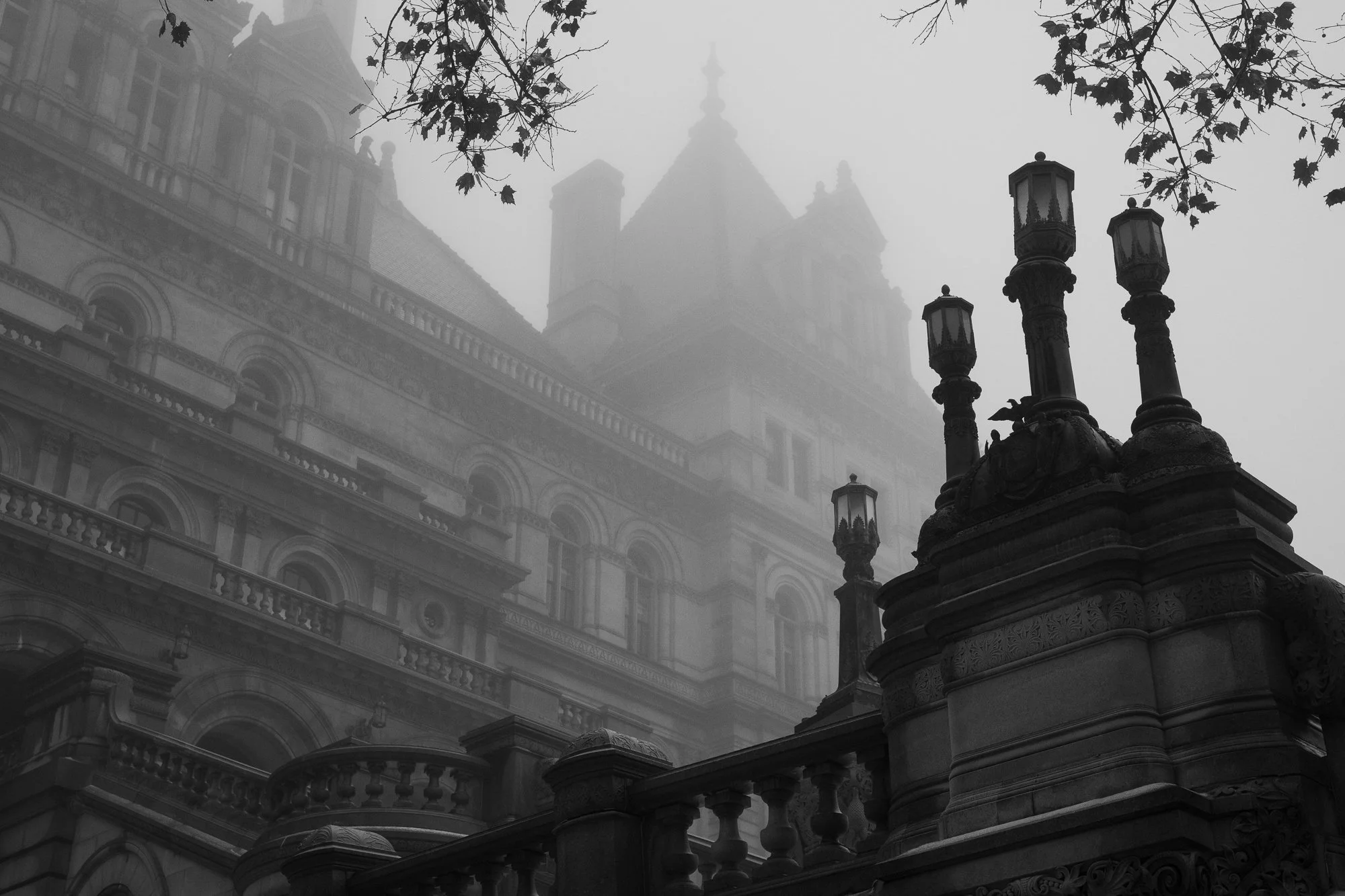
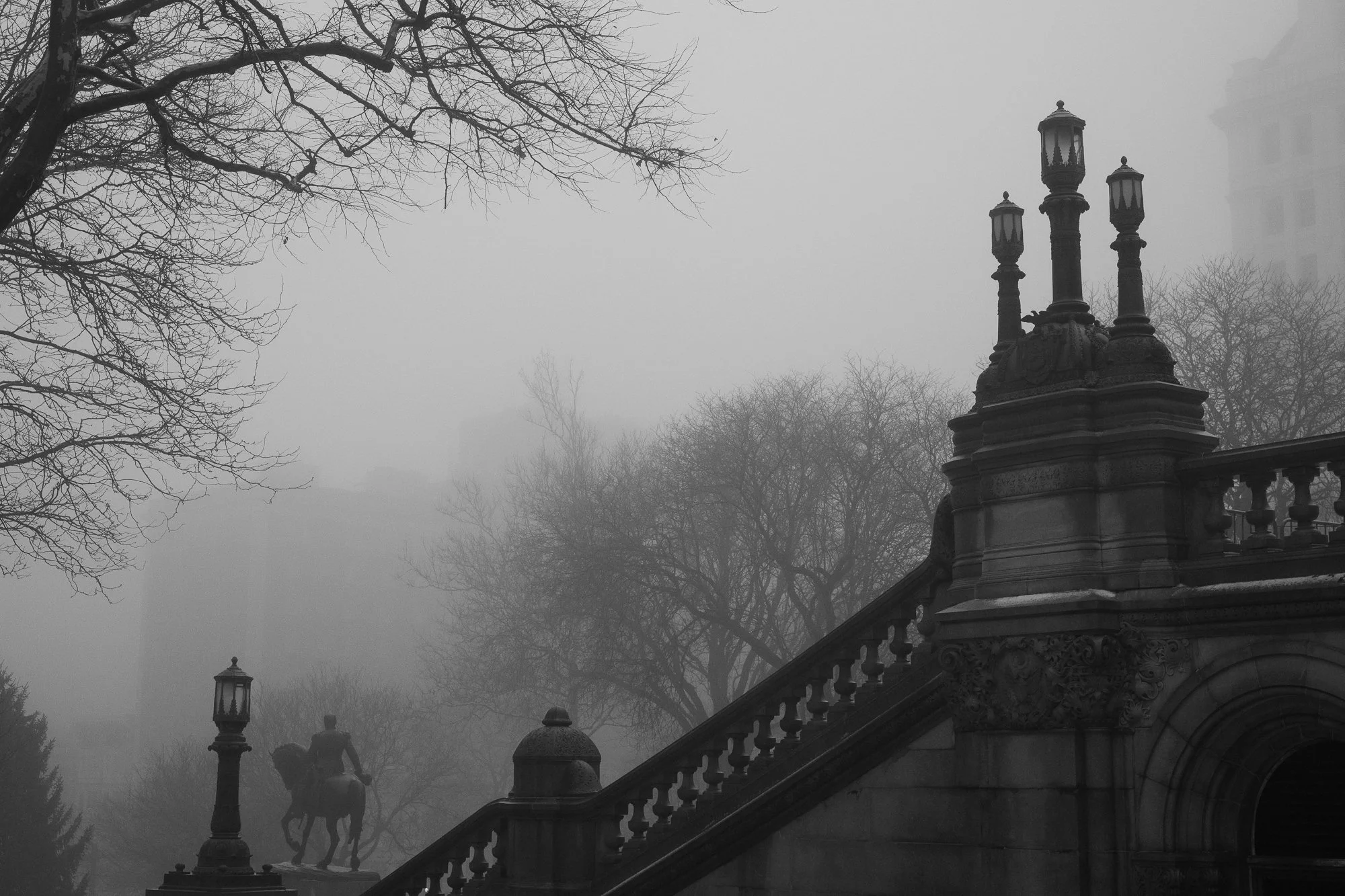
Black and white photograph of decorative balustrades and lampposts at the New York State Capitol in fog

Decorative stonework and lampposts lead the eye toward the Capitol as fog softens the background.

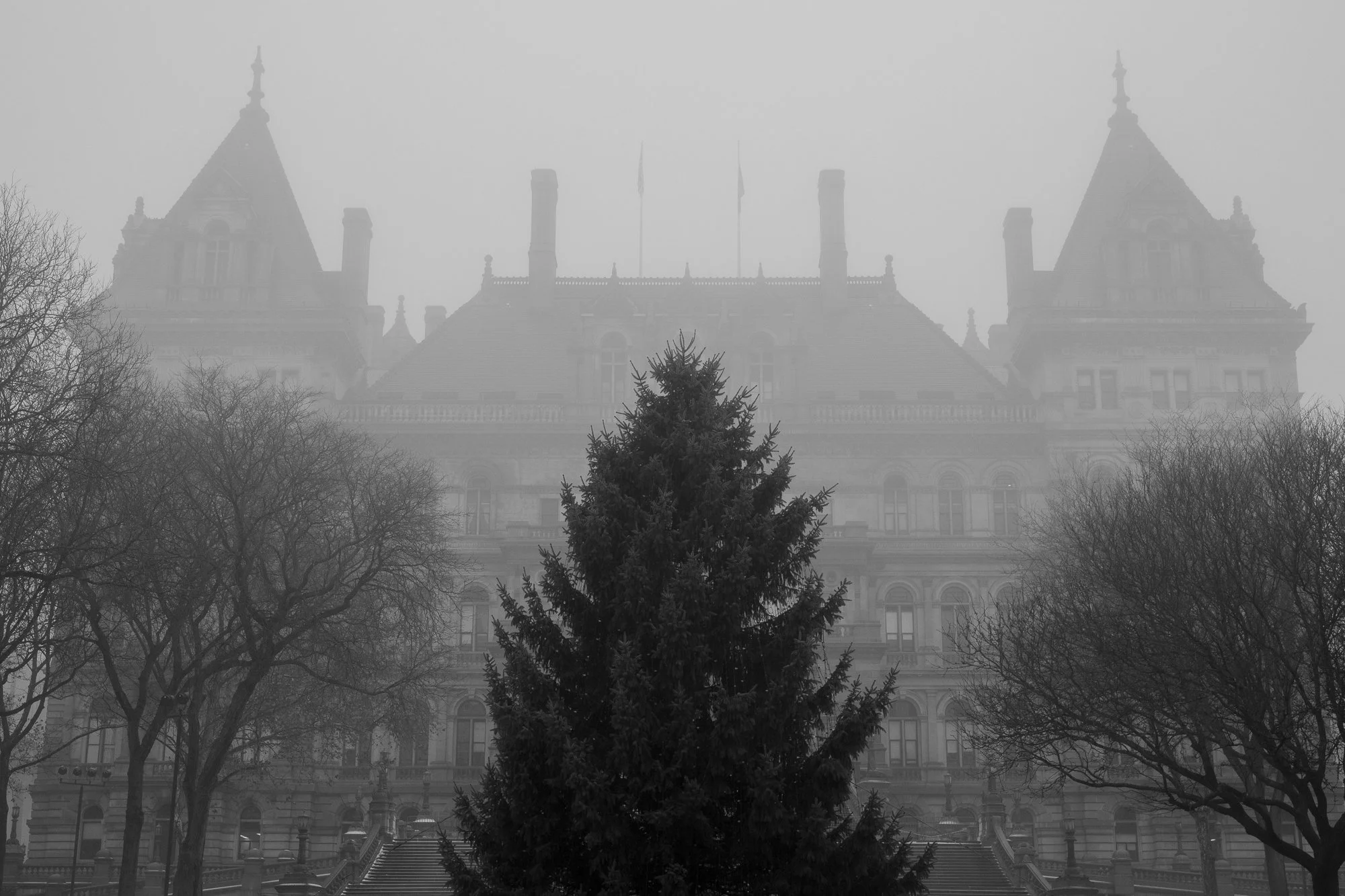
Black and white photograph of the New York State Capitol with symmetrical towers and a central evergreen

Symmetry, fog, and restrained contrast reduce the the New York Sate Capitol building to pure form. This photograph is offered as a fine art print that works especially well in offices and interiors where quiet authority matters.

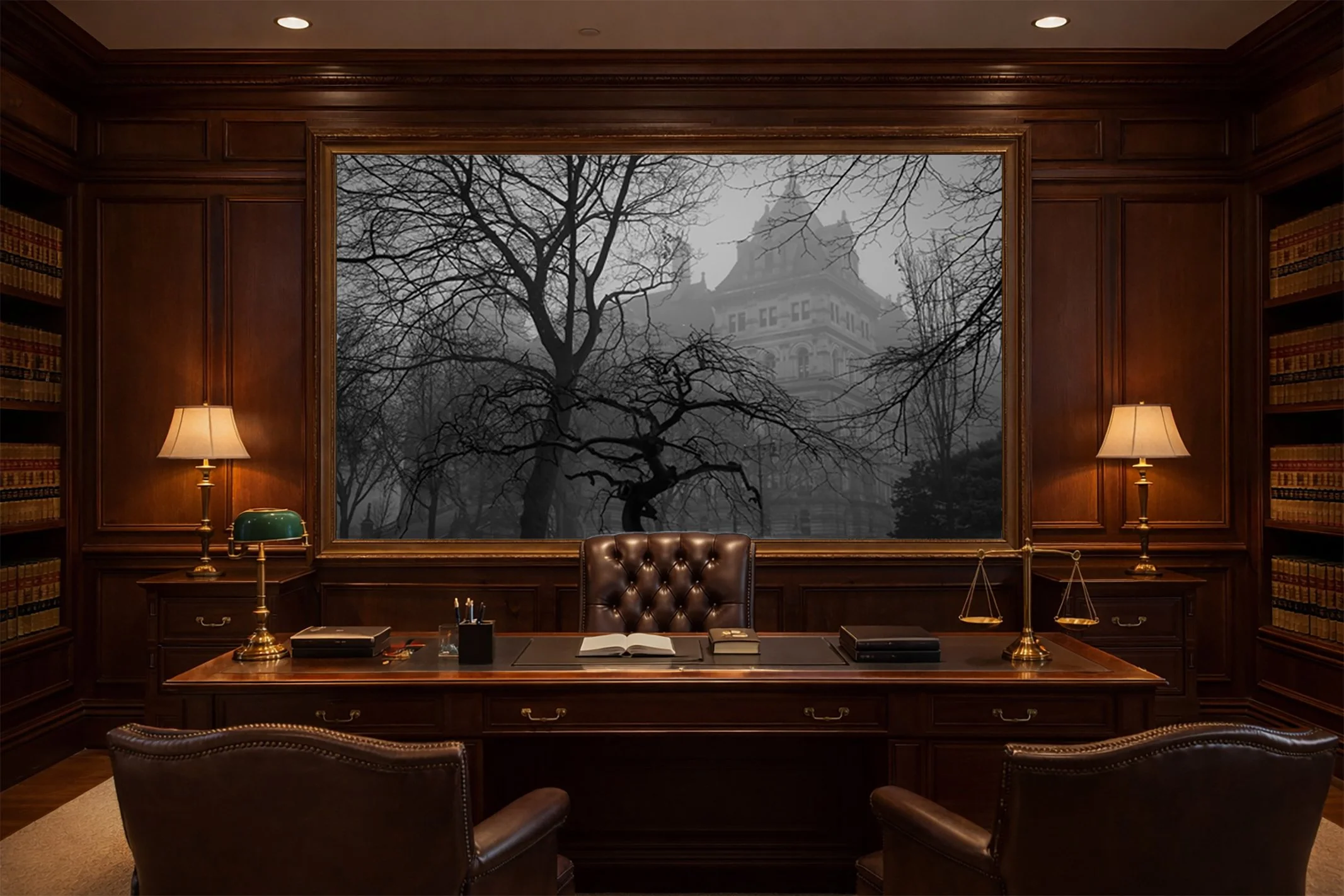
Black and white architectural photograph of an Albany, New York landmark displayed in a high-end attorney’s office with dark wood paneling and classic furnishings

A black and white architectural photograph of Albany, New York, shown here installed in a high-end attorney’s office. The fog-softened historic architecture and bare winter trees bring a quiet sense of permanence and authority to a refined professional space.

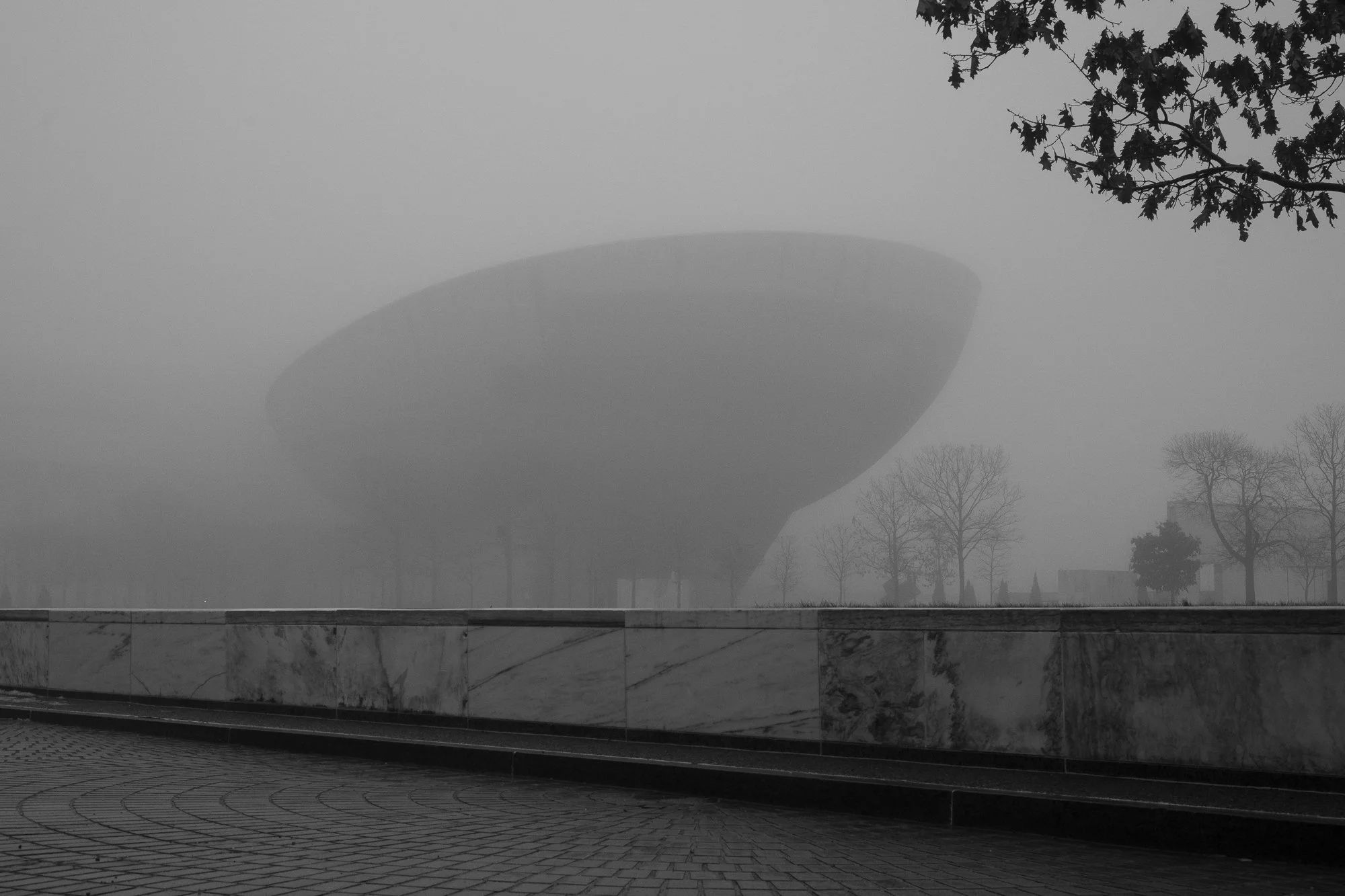
Black and white photograph of The Egg performing arts center partially obscured by fog in Albany

The Egg appears as a softened form within heavy fog, emphasizing scale and negative space.

Black and white photography print of historic Albany, NY architecture

Photograph of the New York State Education Department building in Albany, NY

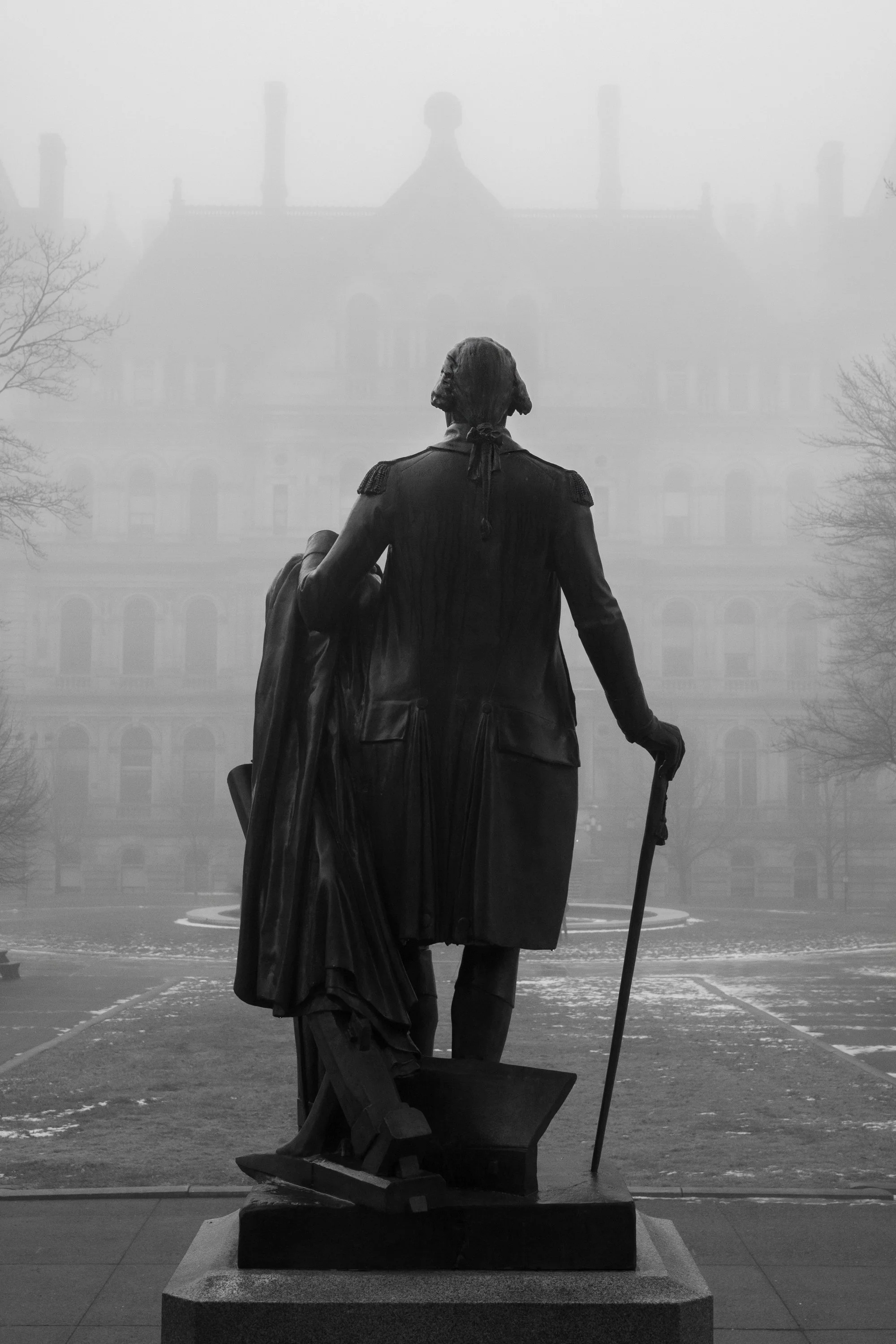
Black and white photograph of a statue in Washington Park framed by bare tree branches in Albany

A statue of George Washington stands quietly framed by winter branches and softened by fog.

Black and white photography print of the statue and staircase in front of the Capital building in Albany, NY

Timeless black and white photograph of Albany, NY architecture

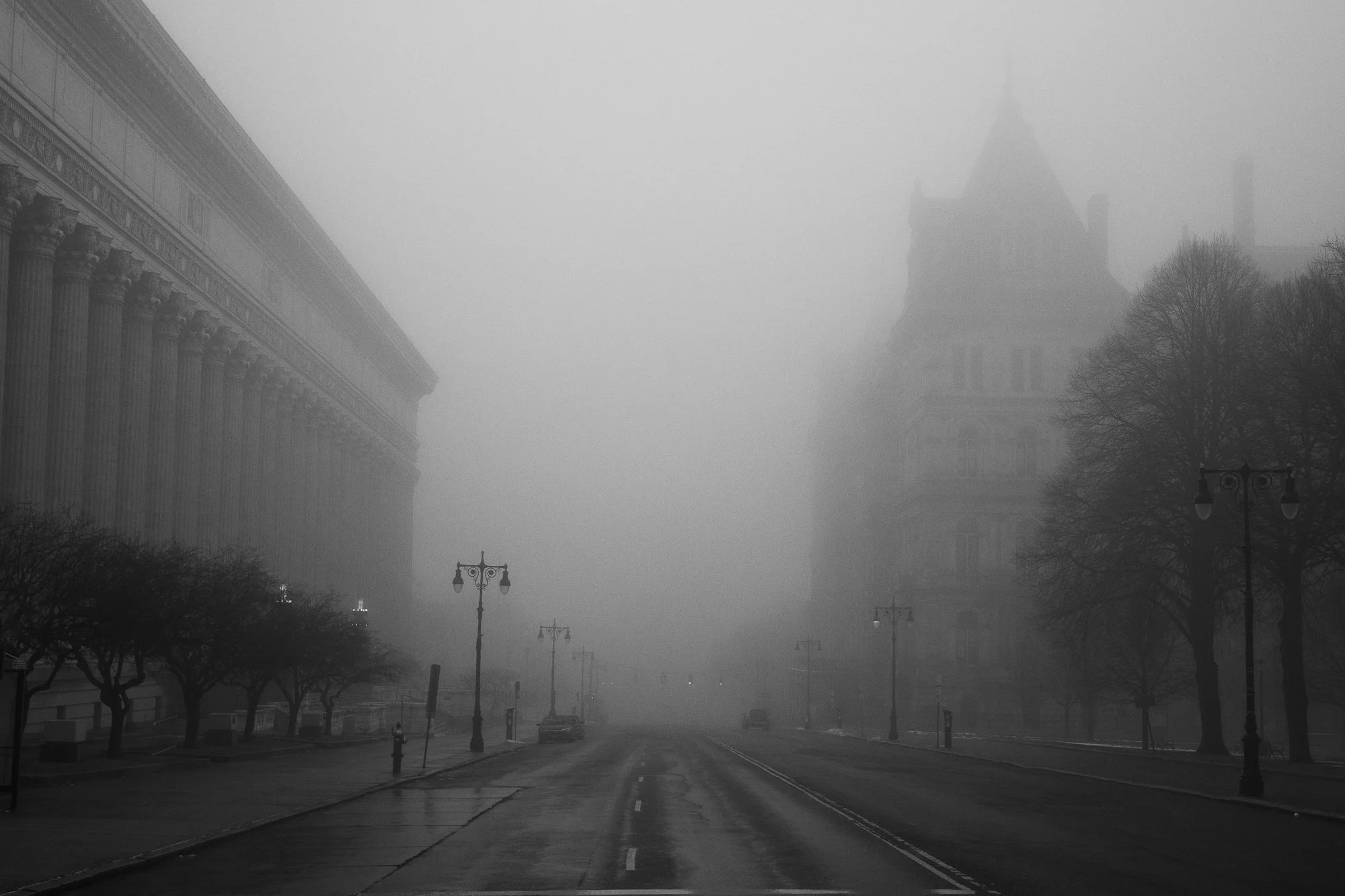
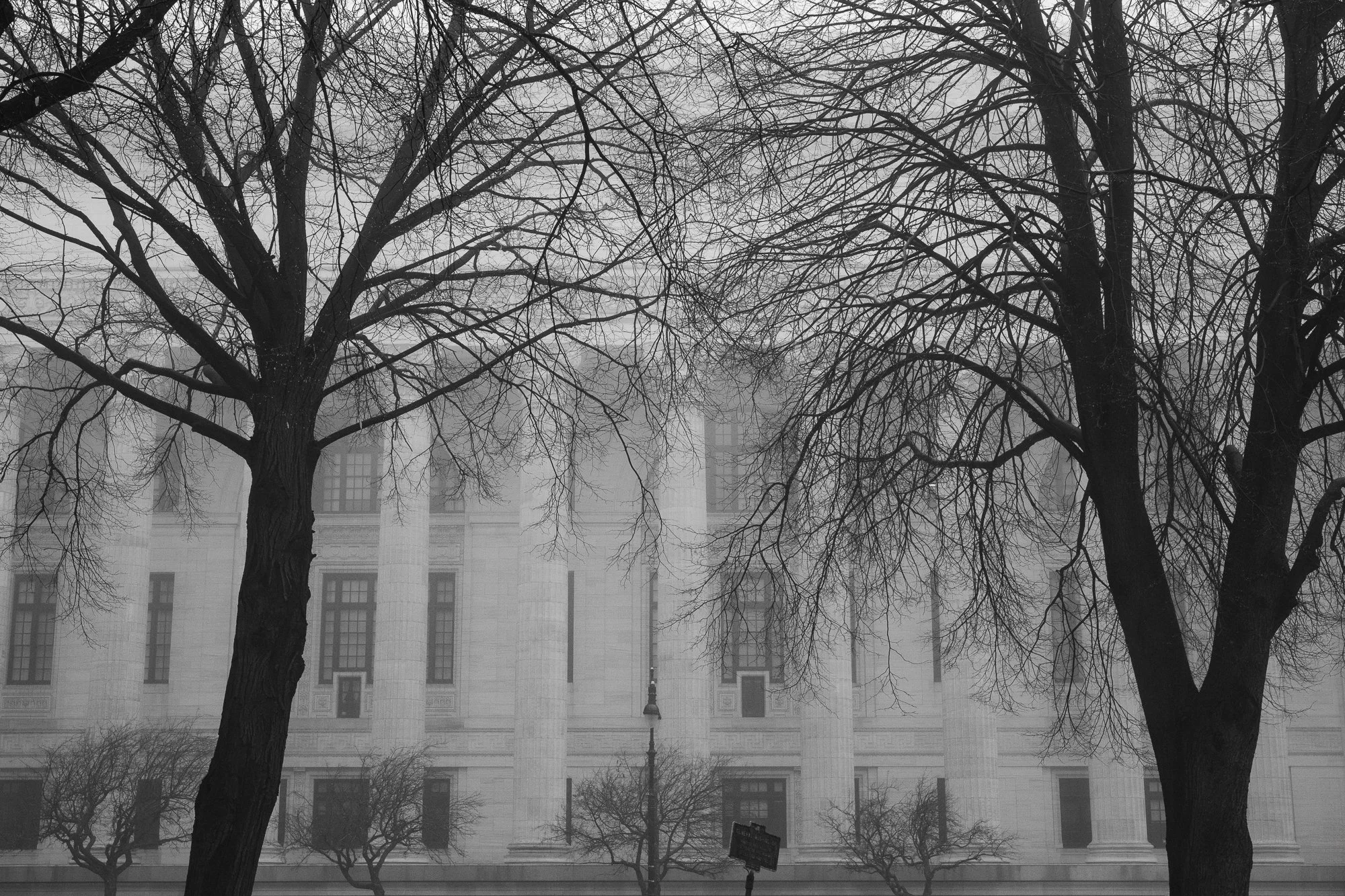
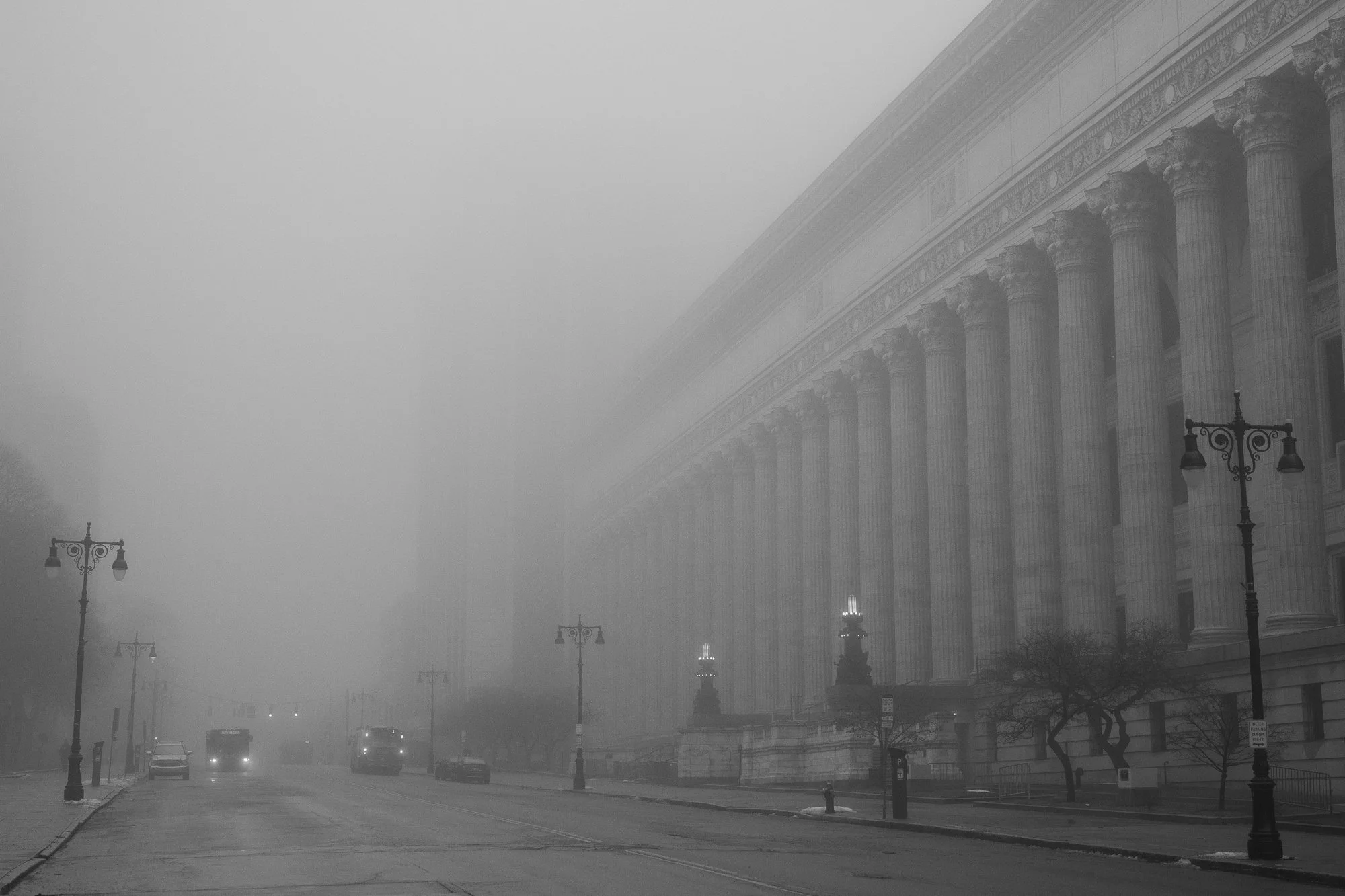
Black and white photograph of a columned government building along an empty street in Albany

A long row of columns fades into fog along a quiet Albany street, emphasizing repetition and scale.

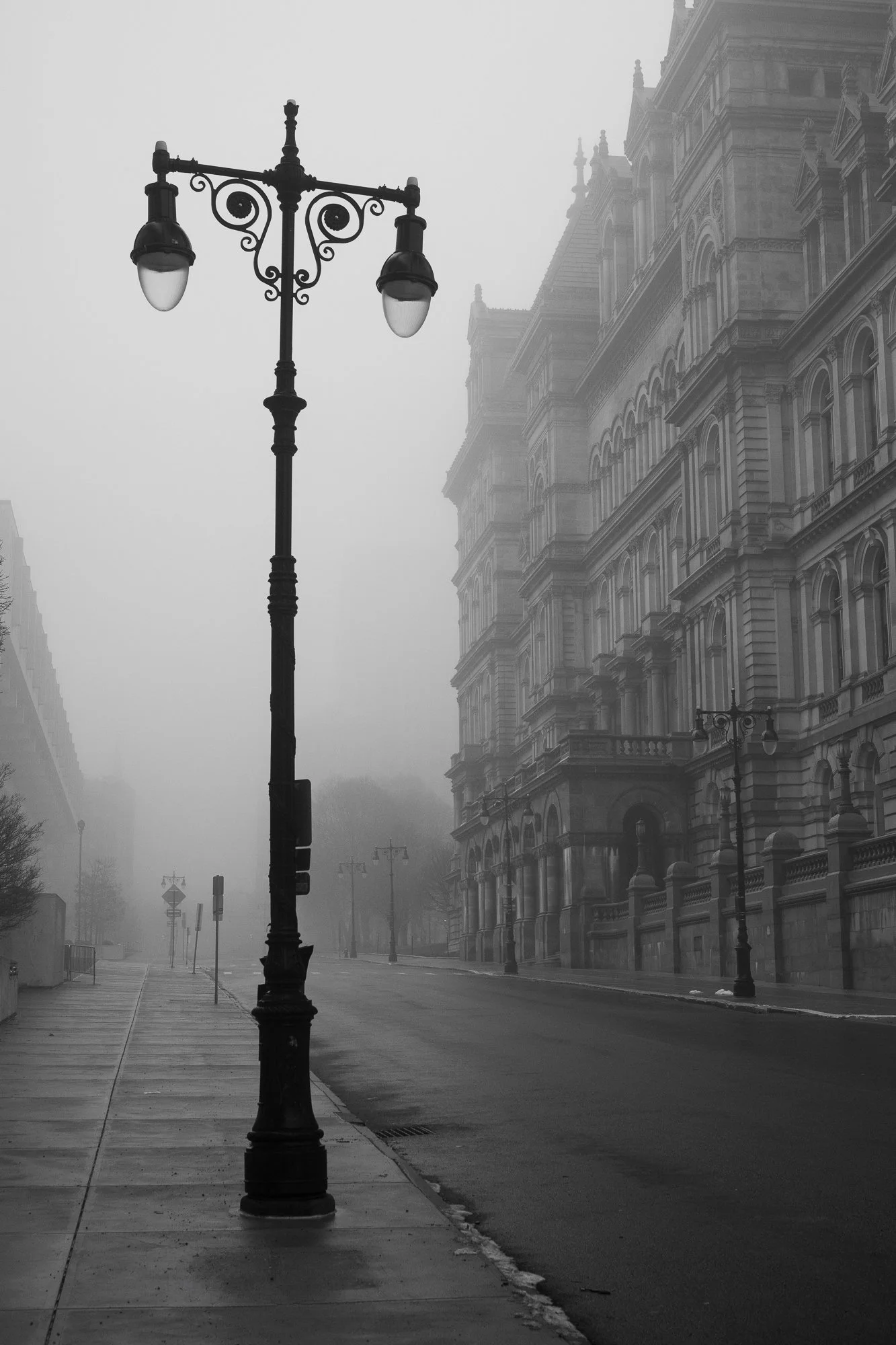
Black and white photograph of Albany, NY architecture

A single lamppost anchors an empty Albany street as fog dissolves the surrounding architecture.

Black and white fine art photograph of The Egg and architecture in Albany, NY

The sweeping curve of The Egg floats above Albany’s softened skyline as fog reduces detail and scale.

A Traditional American Barbershop - A Neighborhood Fixture

An Old School Neighborhood Barbershop

I first photographed this barbershop in San Diego in 2011, early on in what would eventually become the Barbershops of America project. At the time, I didn’t fully realize how important these photographs would become. I was simply drawn to places like this — shops that felt unchanged, where time moved a little slower and the barber knew everyone who walked through the door.

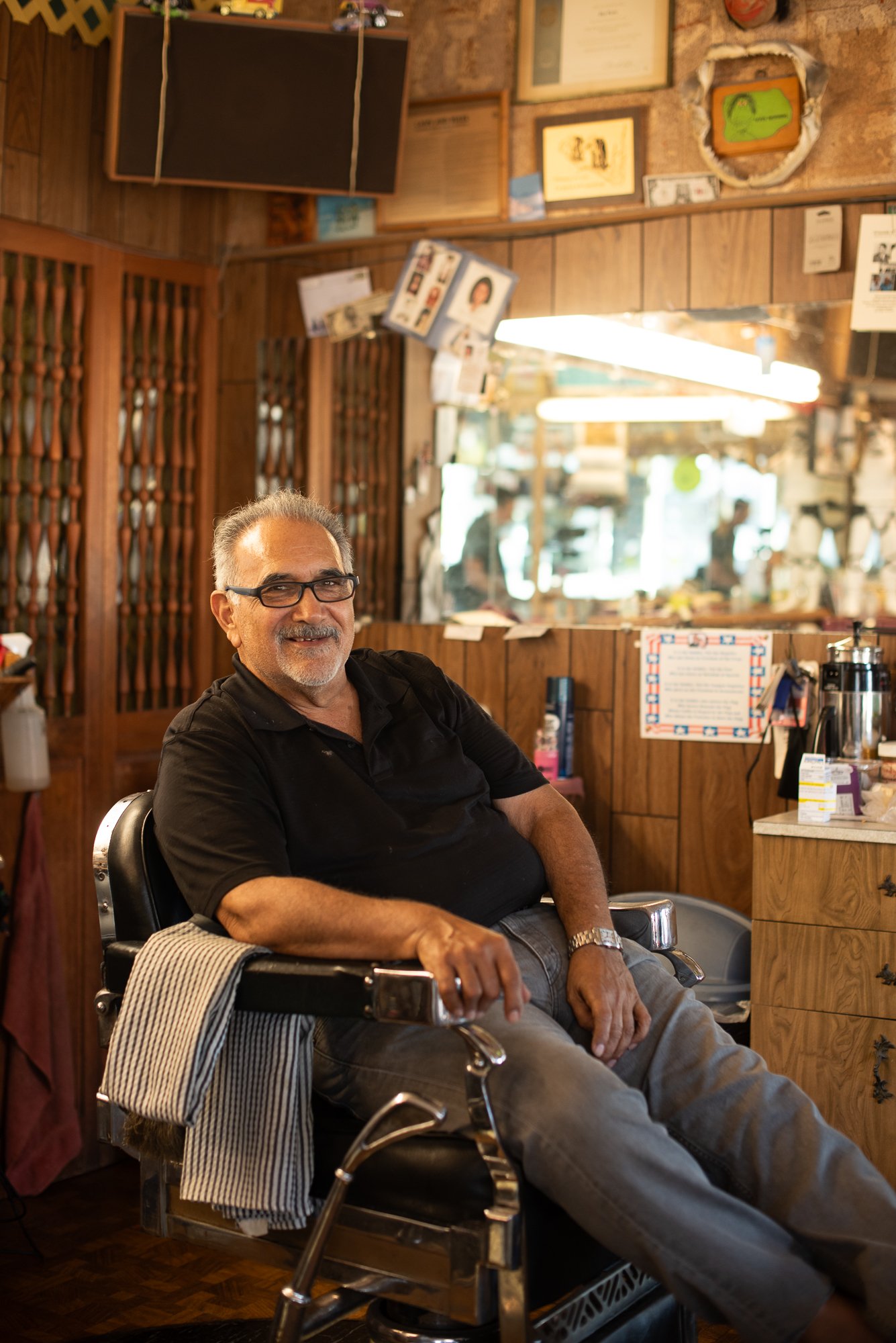
This shop, run by Johnny Lovato, was one of those places.

A Shop That Felt Lived In

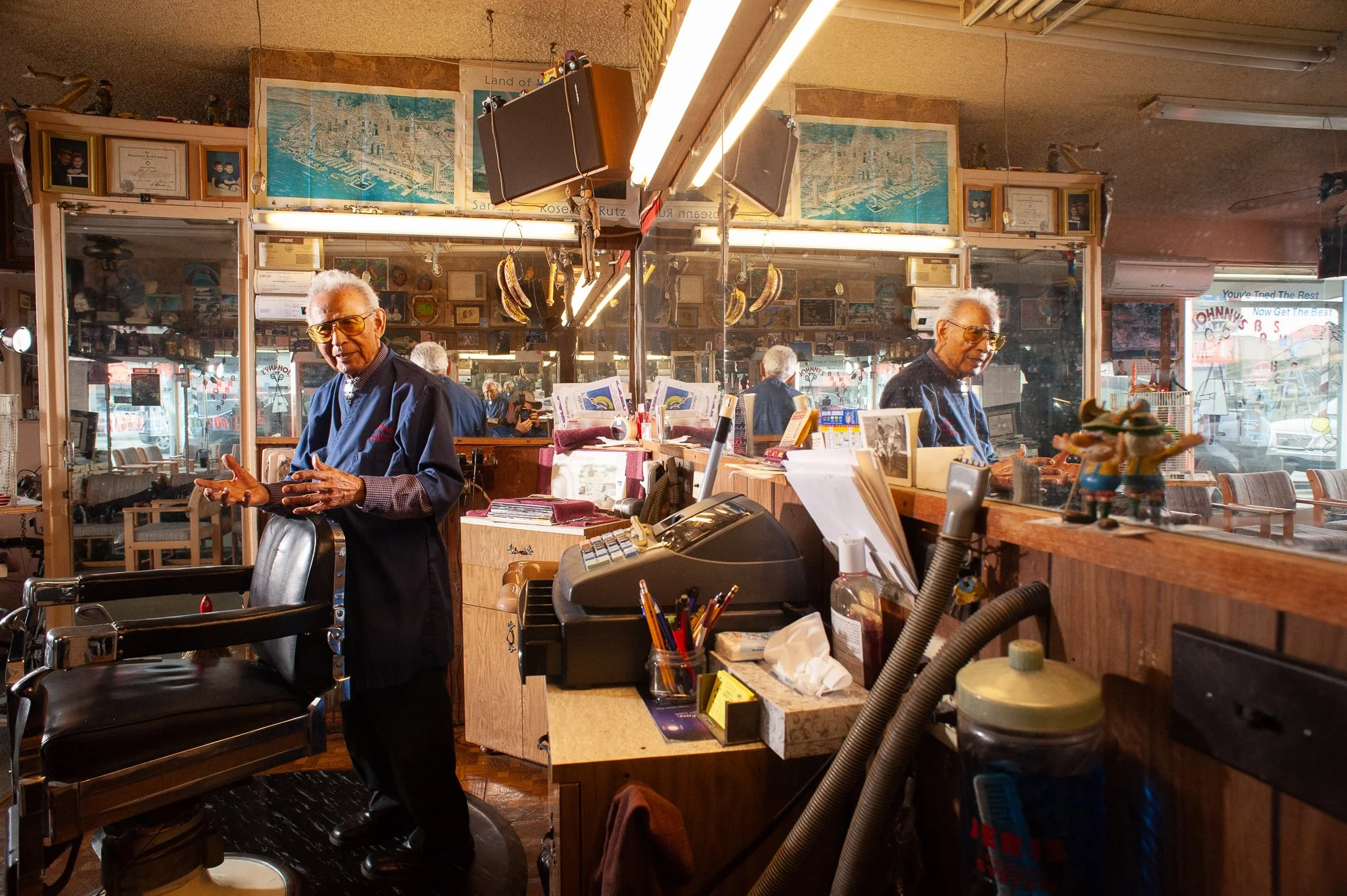
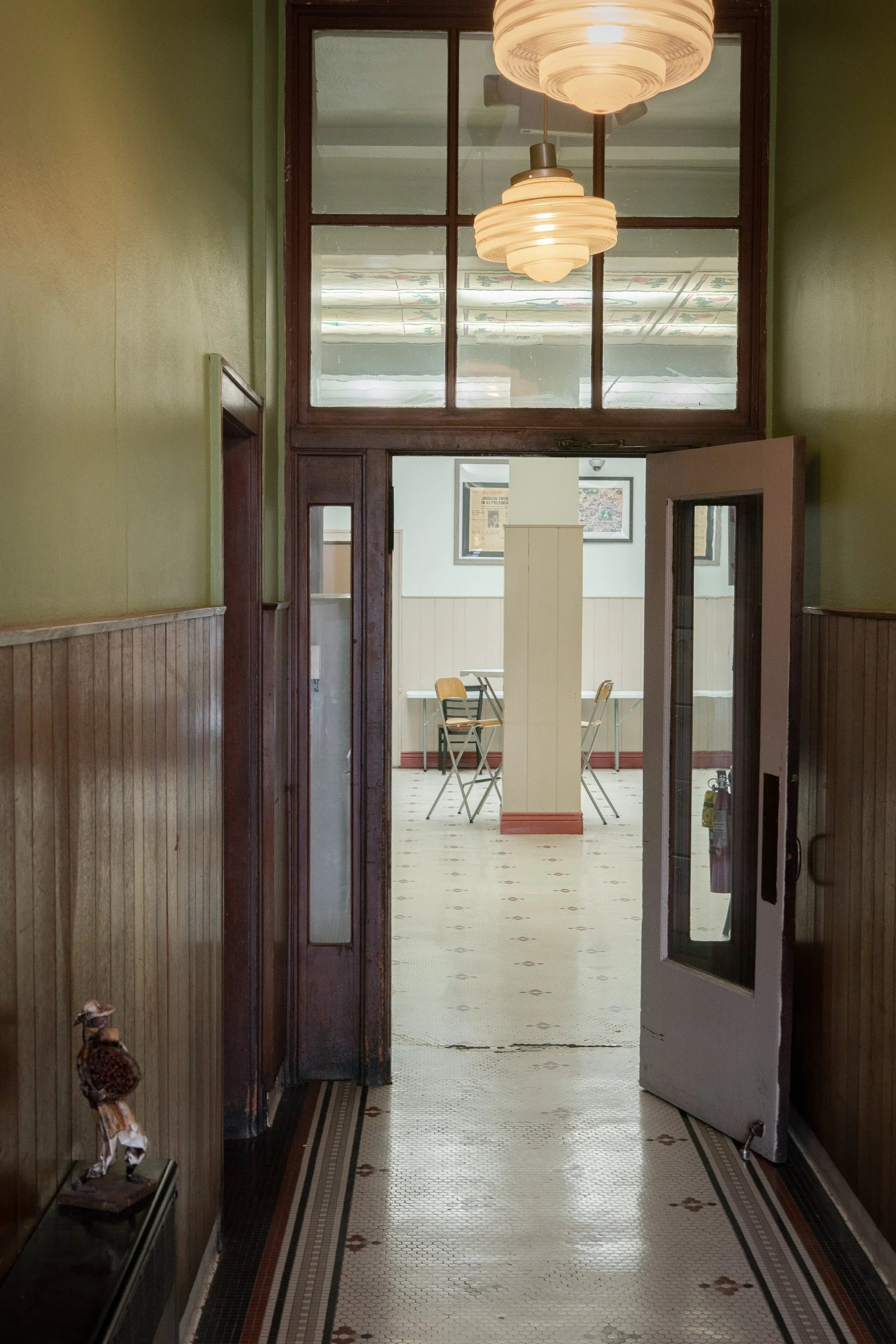
Walking into Johnny’s barbershop felt like stepping into another era. The space wasn’t curated or styled — it was simply lived in. The chairs, the mirrors, the worn floor, the little personal details scattered throughout the shop all told a story without trying to.

These weren’t decorations meant to evoke nostalgia. They were just the things that had accumulated over time. That honesty is what made the shop special and what kept the doors open to the same neighborhood of friendly customers for decades.

The Barber and the Community

Johnny was always kind and welcoming, the type of barber who made time for conversation as easily as he made time for a haircut. His shop wasn’t just a place people came to get cleaned up — it was a place where stories were shared and relationships were maintained.

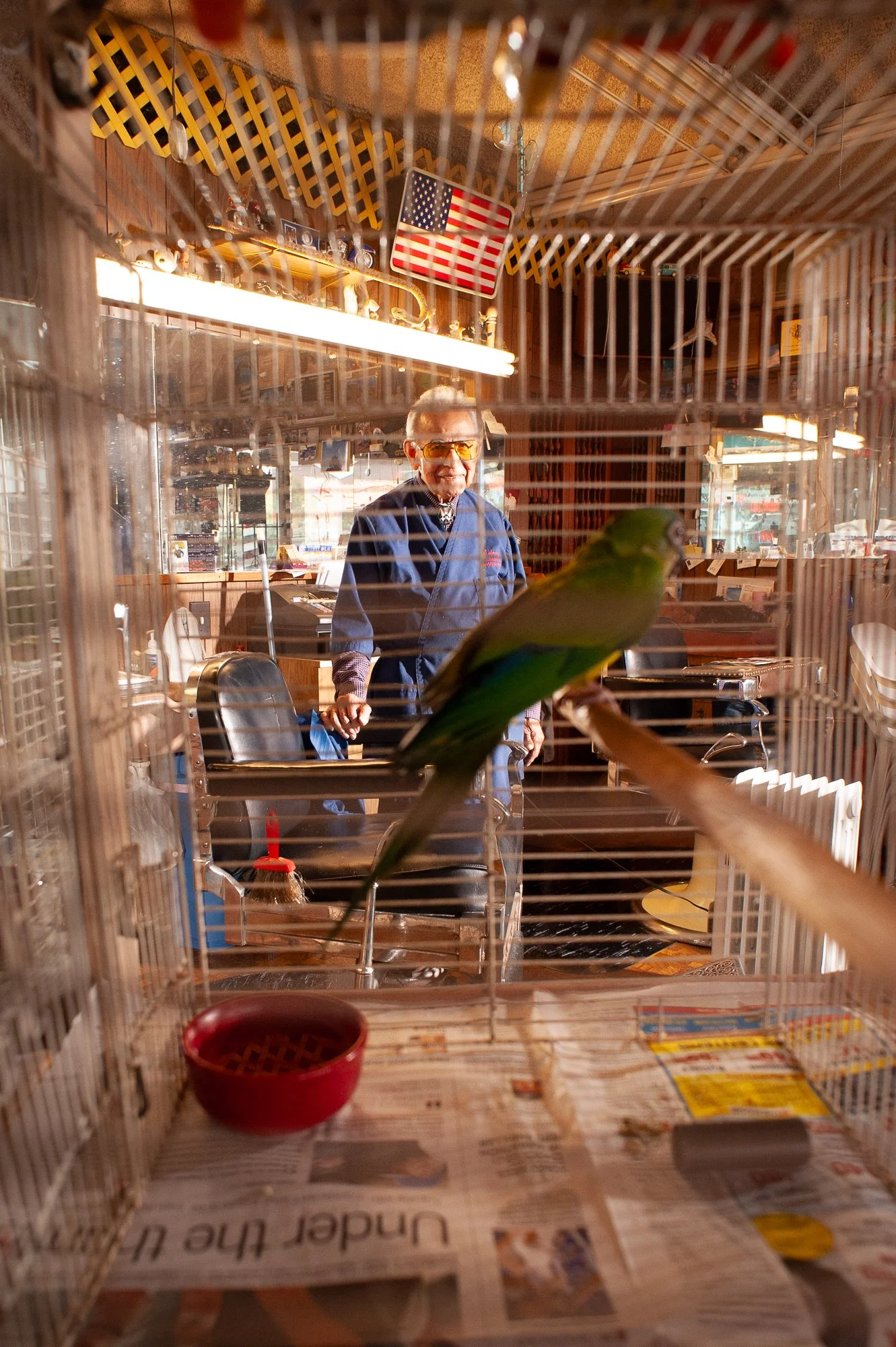
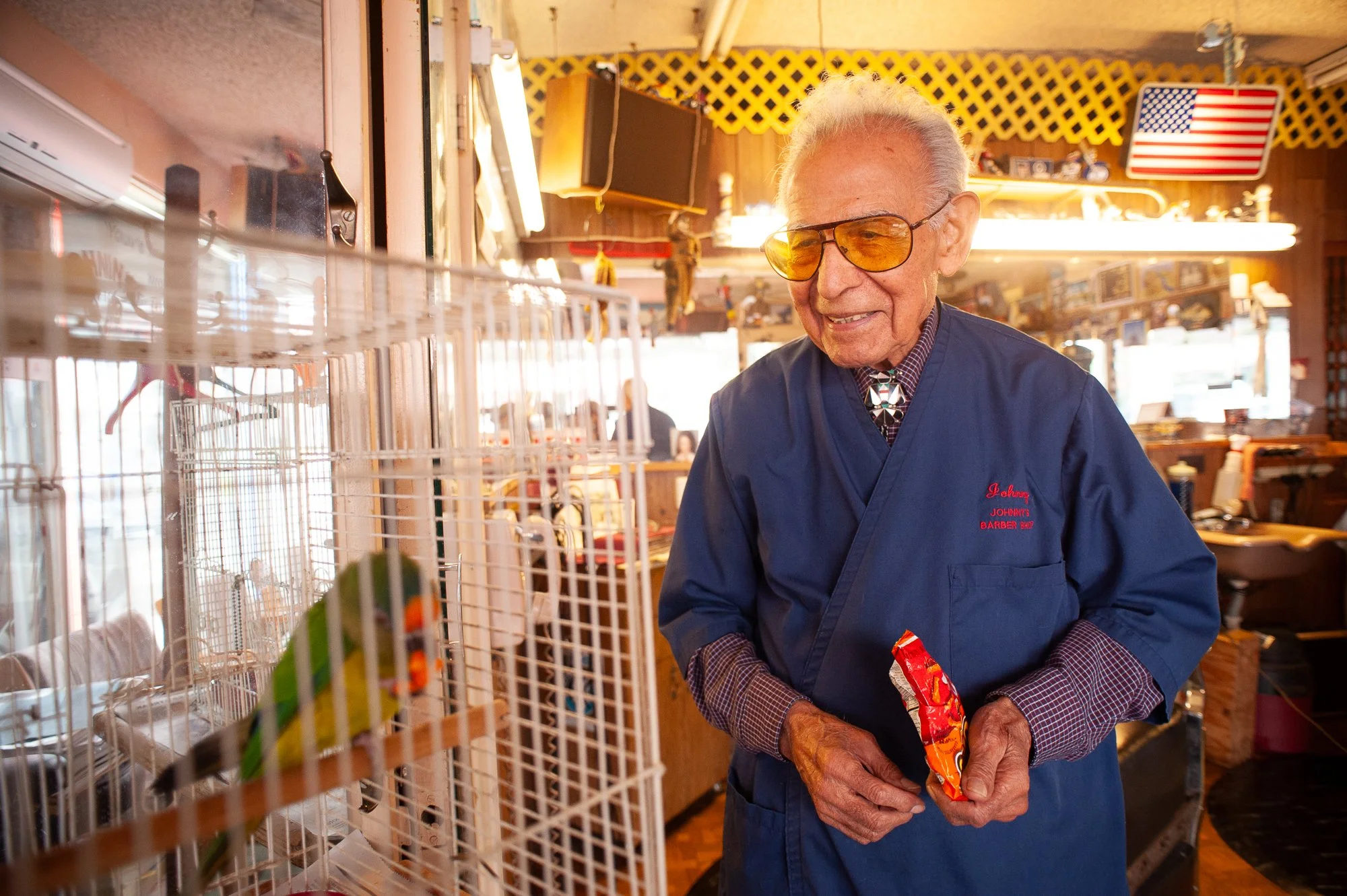
One of the small details I always remember is how happy Johnny was feeding his bird Cheetos. It’s a simple moment, but it perfectly captures the personality of the space and the rhythm of the shop. Those are the moments I’m always looking for when I photograph places like this.

Returning Years Later

I returned to photograph the shop again in 2019. By then, Johnny’s son had taken over the business. Much of the spirit of the shop remained, but time had clearly moved forward — as it always does.

Not long after, the barbershop closed, and the space was eventually transformed into something new, and in my opinion, soulless. That’s the reality for many traditional barbershops across the country. Rising rents, retirement, and redevelopment quietly erase places that once anchored their neighborhoods. Luckily another barber took over the space, so it remains a barbershop, just without the decades of character and memories that once filled it.

Why These Photographs Matter

Barbershops like this rarely close with ceremony. They disappear quietly, often without anyone realizing that a piece of local culture has gone with them.

This series exists so that those places aren’t completely lost. These photographs are not about nostalgia for nostalgia’s sake — they’re about acknowledging the importance of everyday spaces that shaped communities for generations.

Part of a Larger Archive

Johnny Lovato’s barbershop in San Diego is just one small part of a much larger body of work documenting traditional barbershops across the United States. Together, these images form an archive of a disappearing American tradition — one shop, one barber, one story at a time.

More Barbershops of America

View The Book

View The Gallery

Old-school American barbershop interior, Point Loma San Diego documentary photograph

Interior of a traditional barbershop in Point Loma, San Diego, where time-worn chairs and details reflect decades of community history.

Johnny Lovato feeding his pet bird inside his barbershop in San Diego, California

Johnny Lovato, the barber, shares a moment feeding the shop’s pet bird — a small gesture emblematic of daily life in the space.

An old school barber smiles while watching his pet bird

Johnny Lovato smiles after feeding his pet bird at his barbershop in San Diego

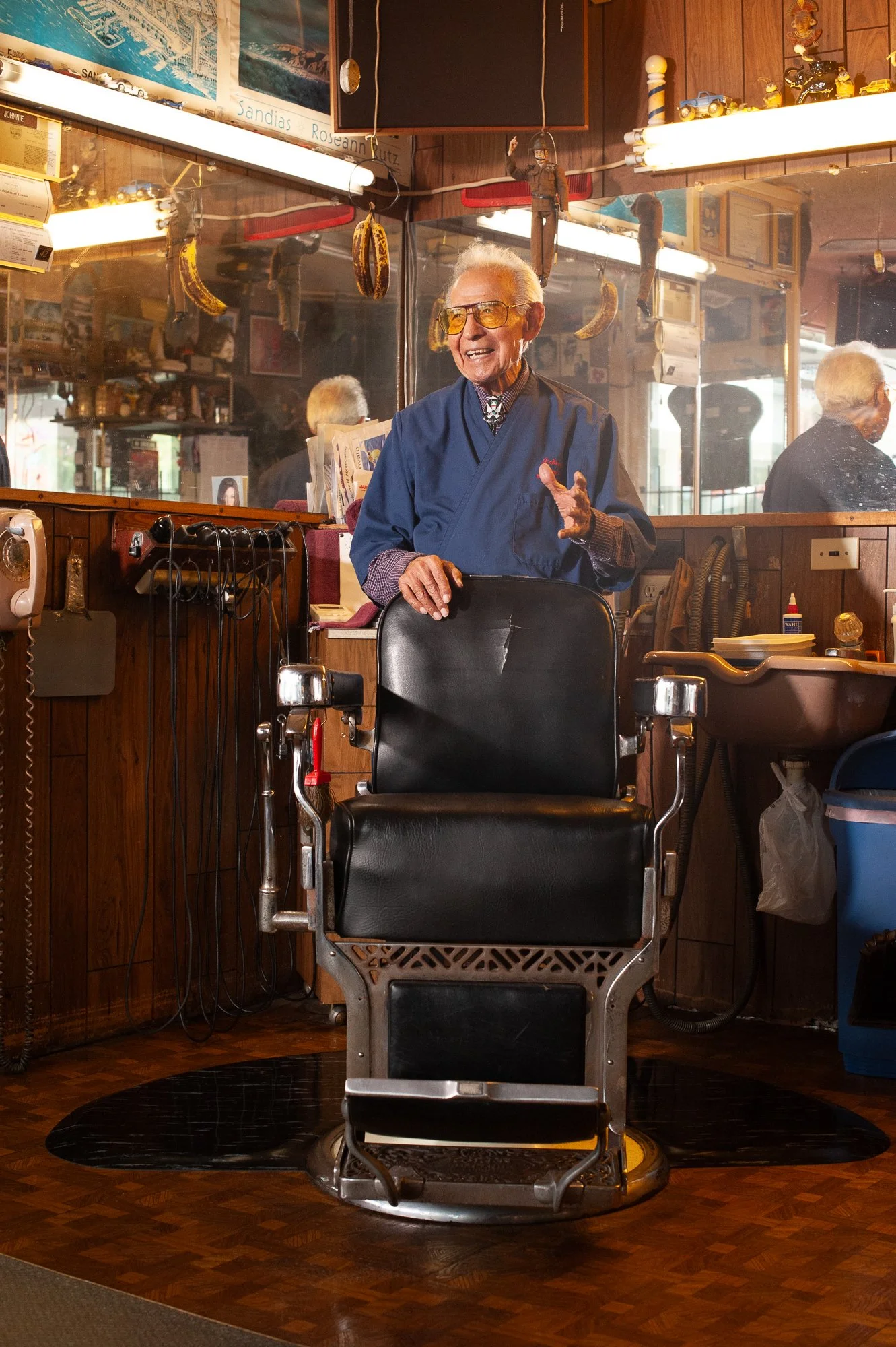
Portrait of a barber standing behind his chair in a traditional San Diego barbershop

Portrait of a barber standing behind his chair — a quiet testament to the people who made these shops more than just businesses.

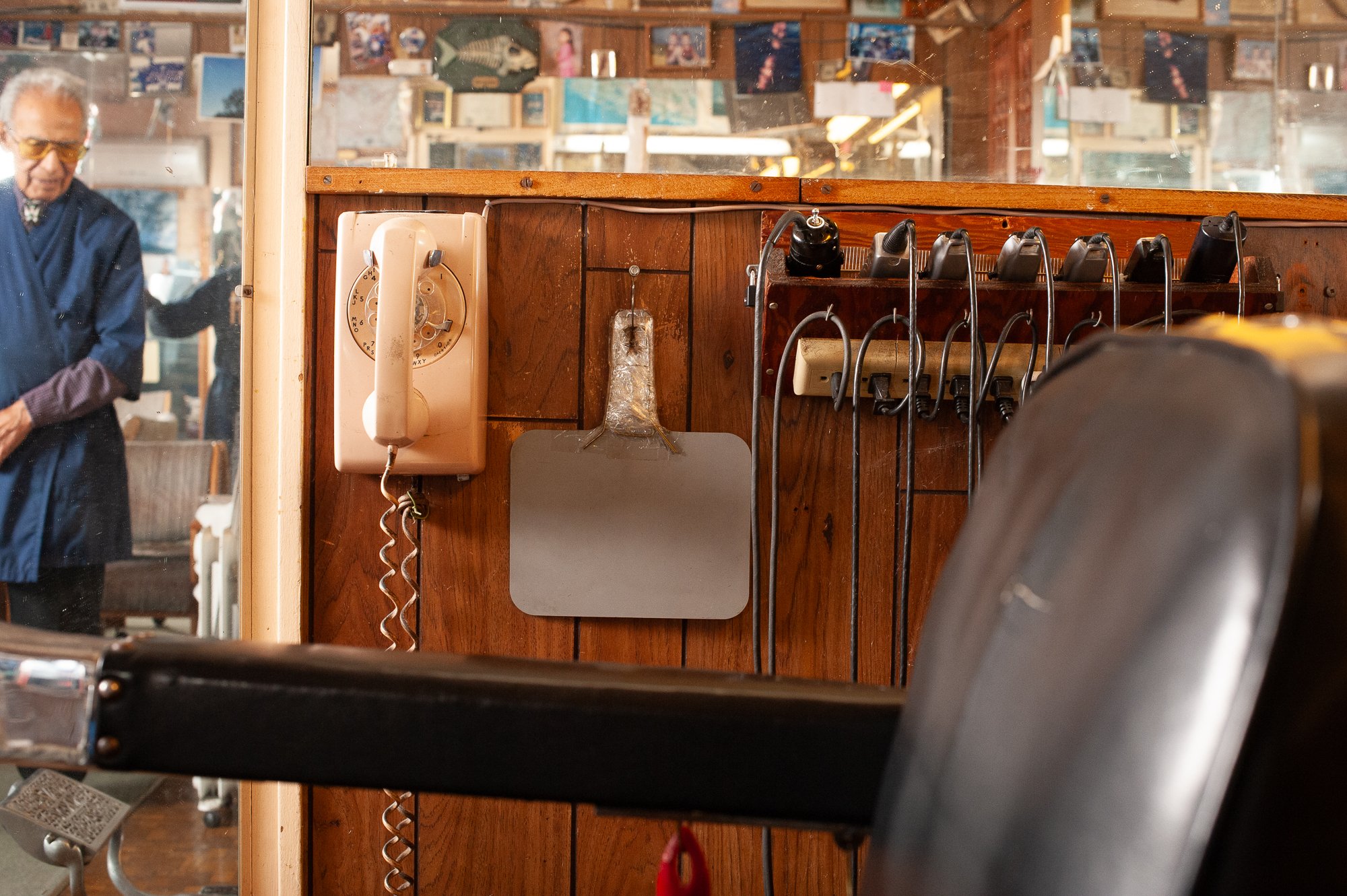
Rotary telephone inside a traditional barbershop, documentary detail photo

An old rotary telephone inside the shop — one of the many small artifacts that speak to the barbershop’s lived-in past

Barber sitting in his chair at a traditional barbershop in San Diego, California

A barber sits in his chair during a quiet moment — a human pause captured in the rhythm of the shop.

Customer getting a haircut in a traditional barbershop in San Diego, California documentary image

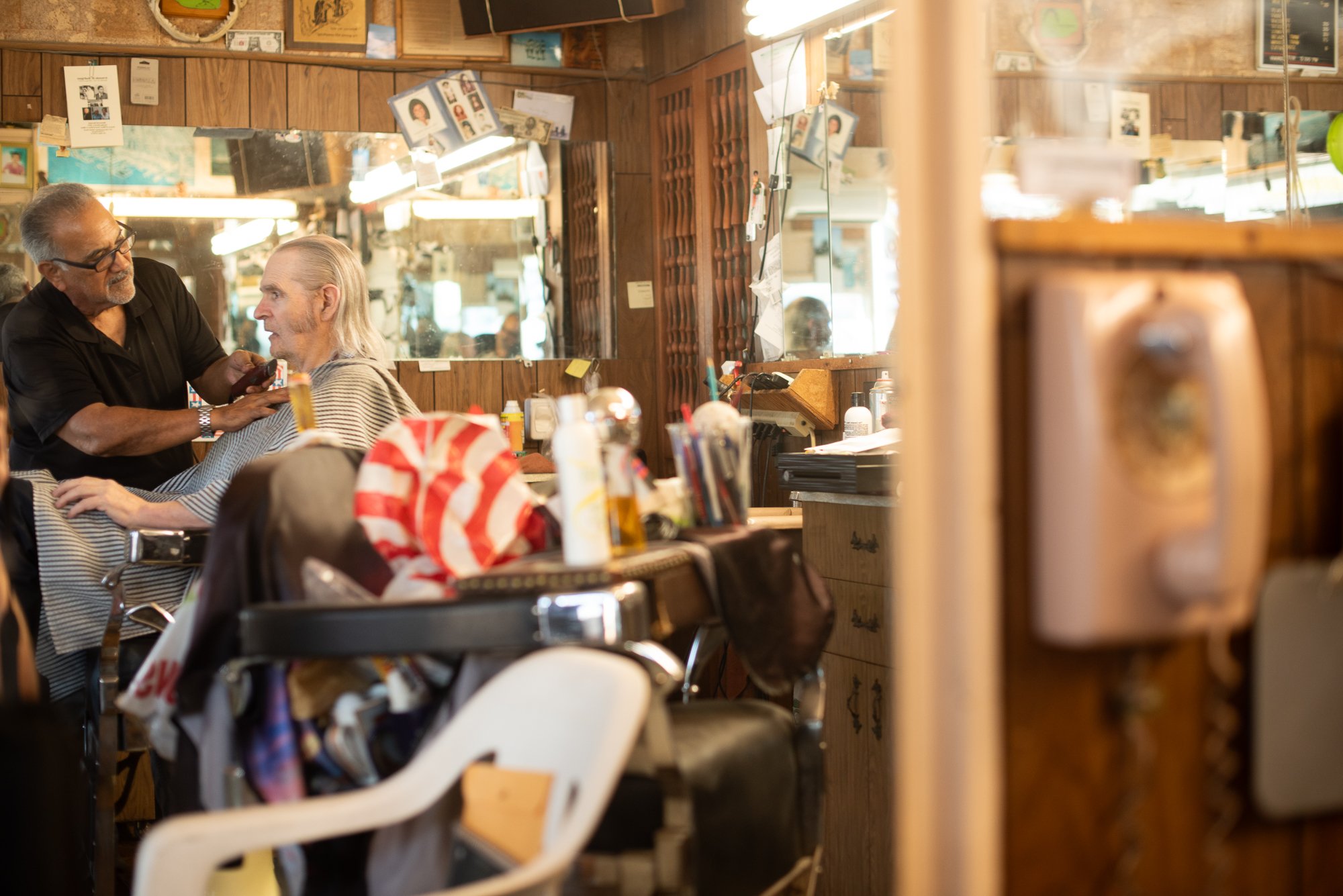
A customer receives a haircut — a simple everyday moment that also anchors the narrative of barbershop culture.

Paris Street Photography – Black & White Fine Art Prints for Collectors & Licensing

Paris Street Photographs — An Intimate Visual Journey

Paris in Candid Street Photographs

Paris moves quickly, but its most revealing moments happen quietly.

Away from the monuments and postcards, the city reveals itself in passing glances, small gestures, and the subtle choreography of people moving through shared space. These Paris street photographs were made while walking without an agenda — observing light, waiting for alignment, and responding instinctively when form, expression, and atmosphere briefly came together.

Rather than chasing iconic scenes, this body of work focuses on the in-between moments that define everyday Paris: café conversations, solitary figures crossing wide intersections, brief pauses along the Seine, and the unspoken language of posture and movement.

These photographs are not souvenirs. They are visual records of time and place, created to live on the wall as fine art prints.

What You’ll See in This Paris Street Photography Series

This ongoing collection reflects a broad, honest view of the city as it is lived:

  • Quiet exchanges at cafés and sidewalk tables

  • Figures moving alone through architectural space

  • Subtle interactions between strangers

  • Parisian streets shaped as much by people as by buildings

  • Moments of stillness within constant motion

Each image exists as both a documentary moment and a compositional study — balancing structure with spontaneity.

The Process Behind the Photographs

These images were made through patience rather than pursuit.

Street photography, at its core, is about observation — learning how light moves through a space, understanding how people occupy it, and waiting for those elements to align naturally. Many of these photographs came from standing in one place, or simply letting scenes unfold rather than forcing them.

The goal is not spectacle, but authenticity. Nothing staged. Nothing repeated. Each frame represents a singular moment that will never occur again in quite the same way.

Fine Art Prints of Paris Street Photography

All photographs in this series are available as museum-quality fine art prints, produced with longevity and tonal depth in mind.

  • Printed on archival, gallery-grade paper

  • Professional pigment inks for rich blacks and subtle midtones

  • Available in multiple sizes, including large-scale statement prints

  • Select images available as signed, limited editions

These prints are designed for collectors, interior spaces, and anyone who values photography as a lasting object rather than a disposable image.

Custom sizing, framing guidance, and edition details are available upon request.
Collecting Paris, One Moment at a Time

Street photography preserves what would otherwise disappear — a look exchanged, a pause mid-step, a moment of reflection before the city moves on.

If you’re drawn to Paris not as a destination, but as a living, breathing place shaped by human presence, these photographs offer a quieter way to bring the city into your space.

Explore the images below to view available fine art prints, or contact me directly to discuss editions, sizing, and framing options.

CONTACT ROB ABOUT PRINTS/LICENSING
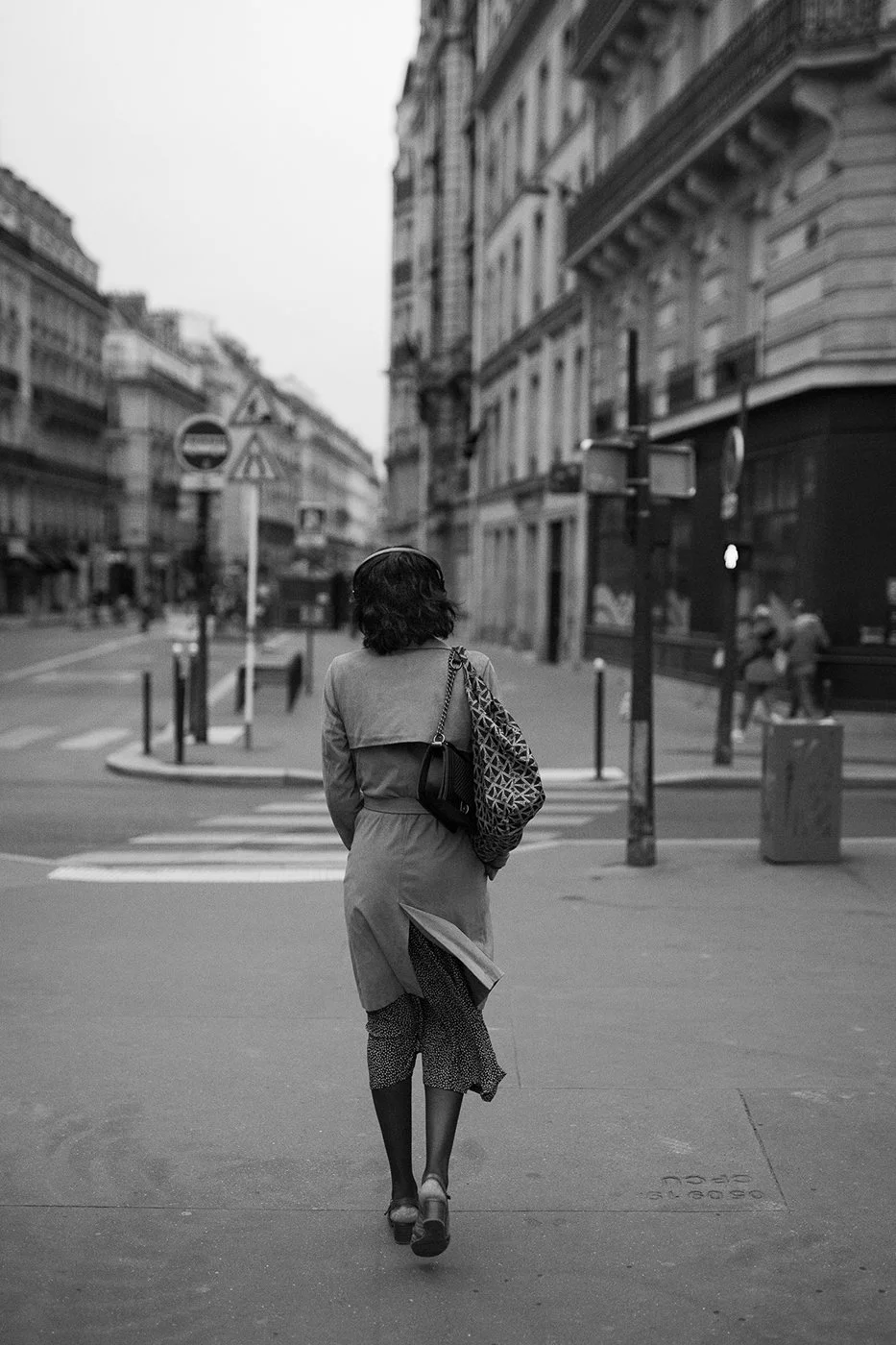
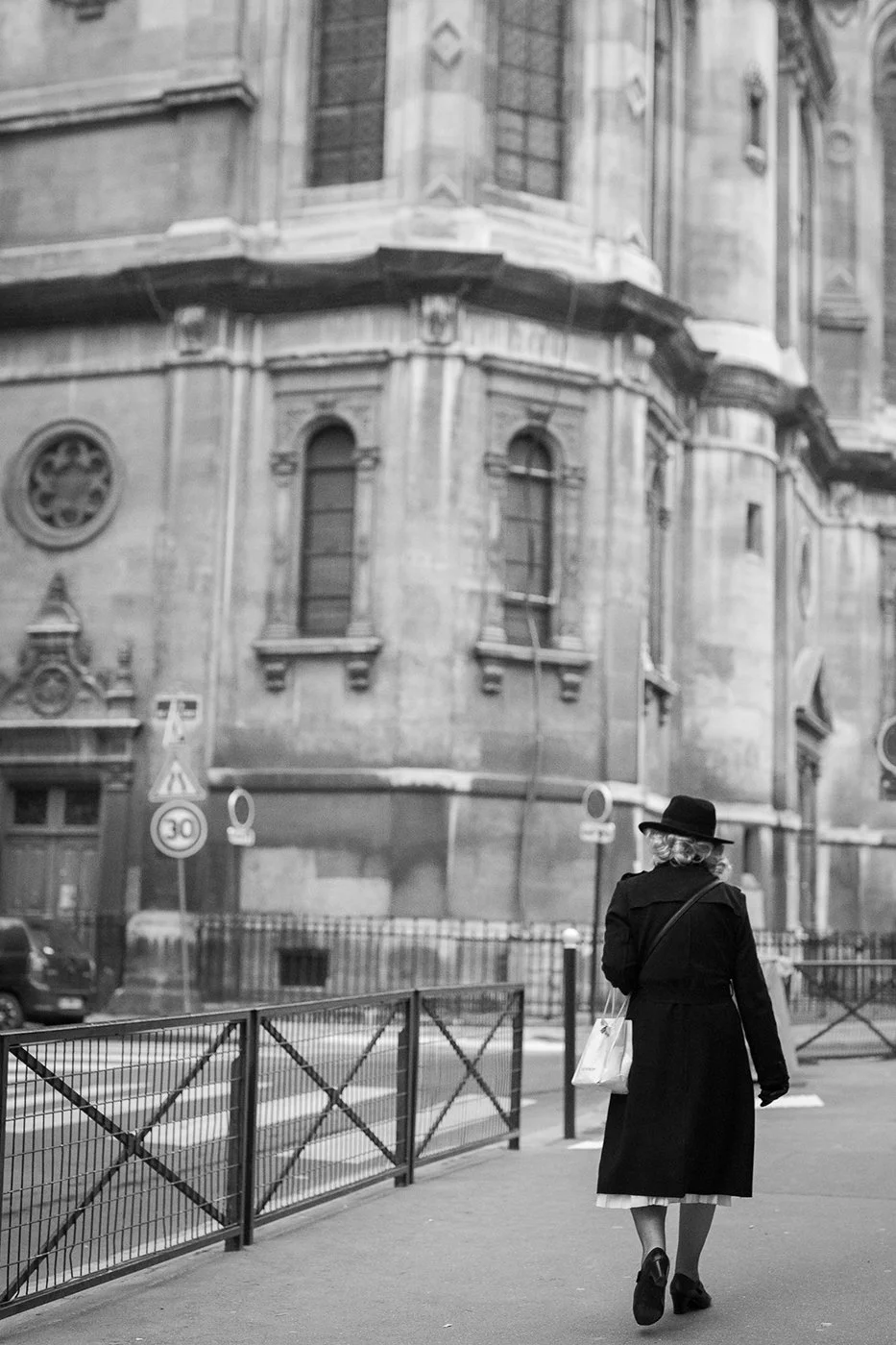
Black and white photograph of a fashionable woman walking alone through a Paris intersection

A solitary figure moves through Paris, framed by architecture and empty space.

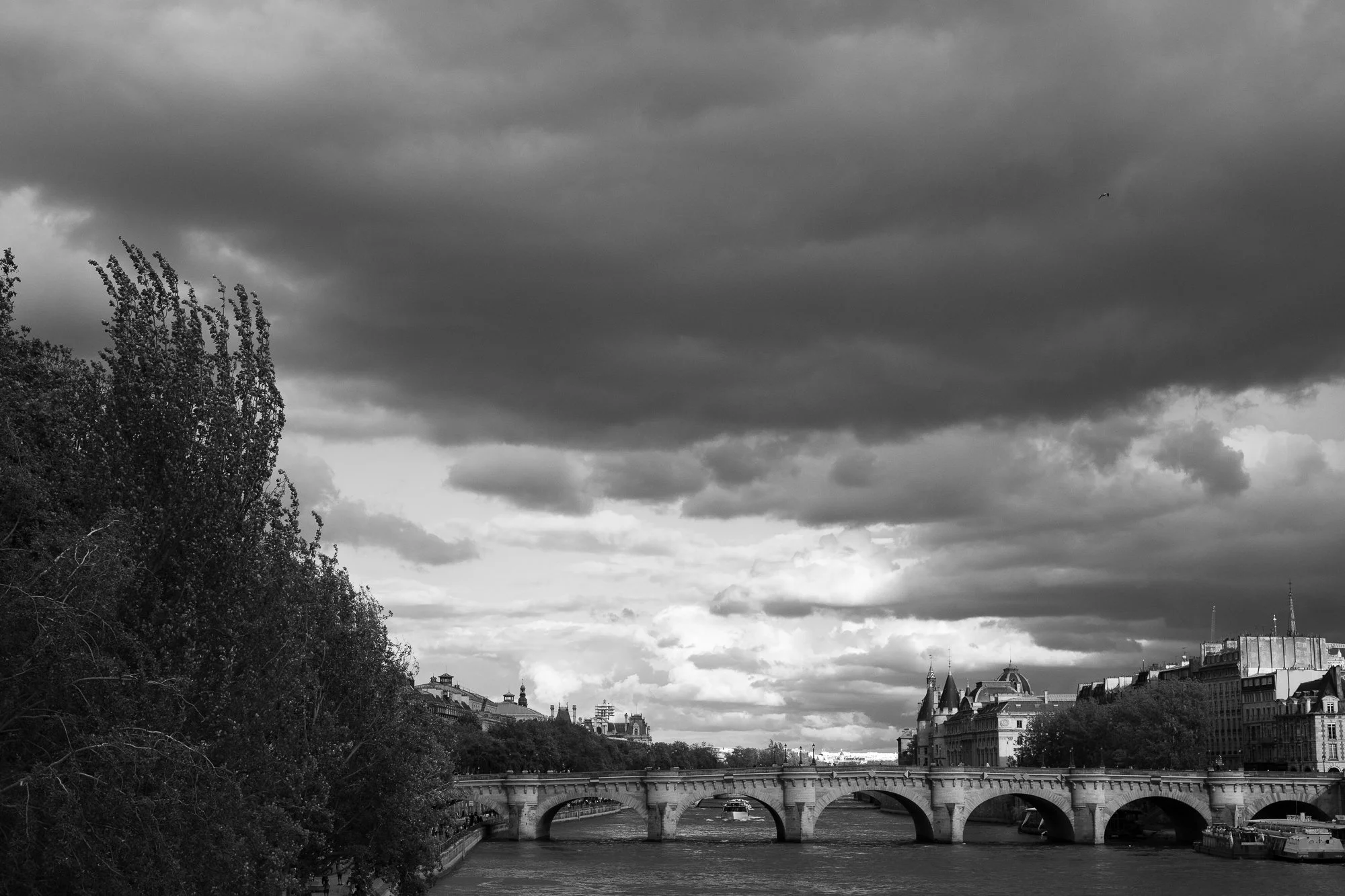
Black and white photograph of a bridge over the Seine beneath dramatic clouds

A quiet moment along the Seine as dark clouds gather over Paris.

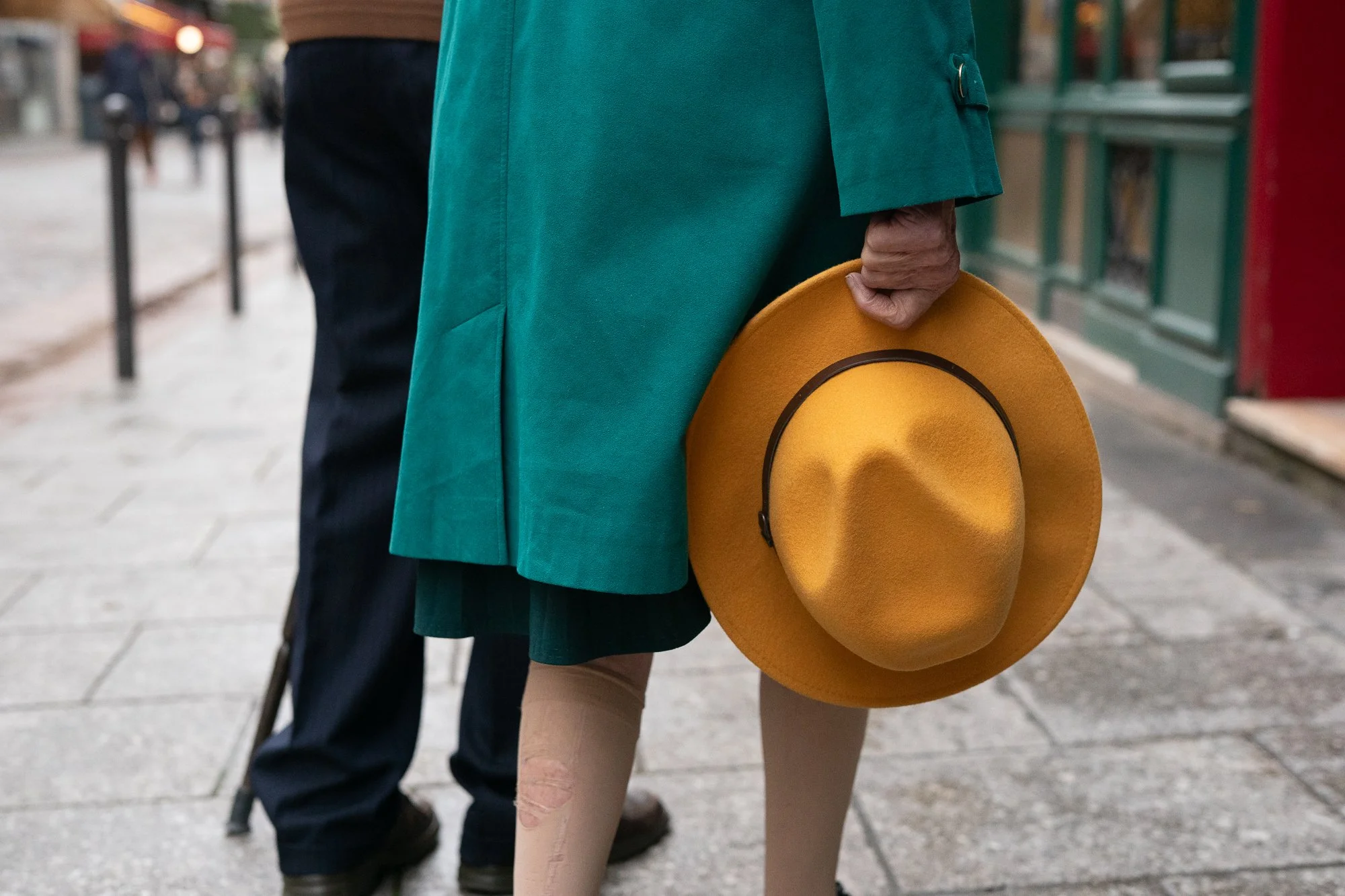
Woman in a green coat holding a mustard yellow hat on a Paris sidewalk

A fleeting Paris moment—color, posture, and gesture captured without interruption.

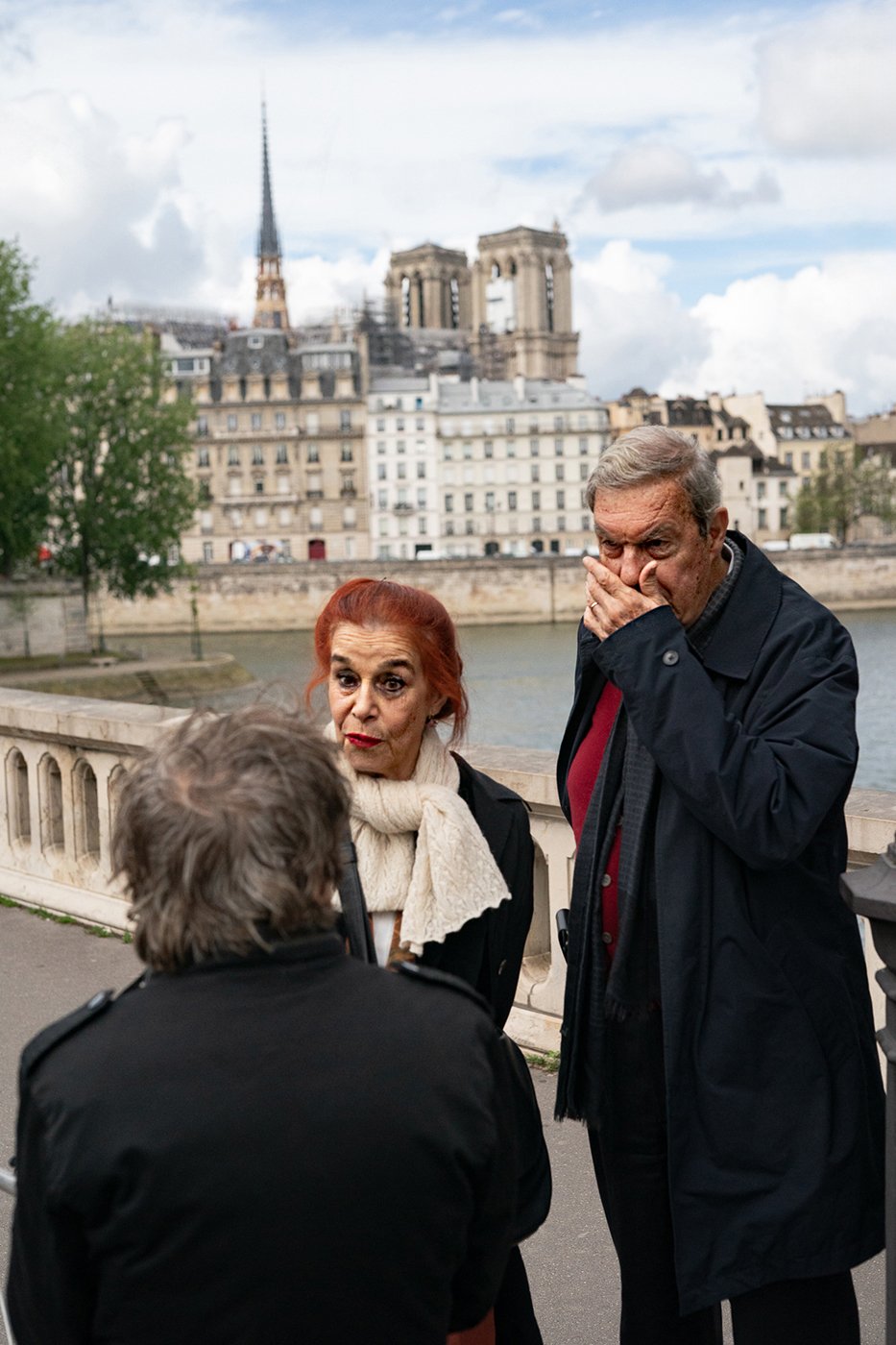
Candid street portrait of people talking along the Seine in Paris

An unguarded exchange along the Seine, framed by the city’s familiar architecture.

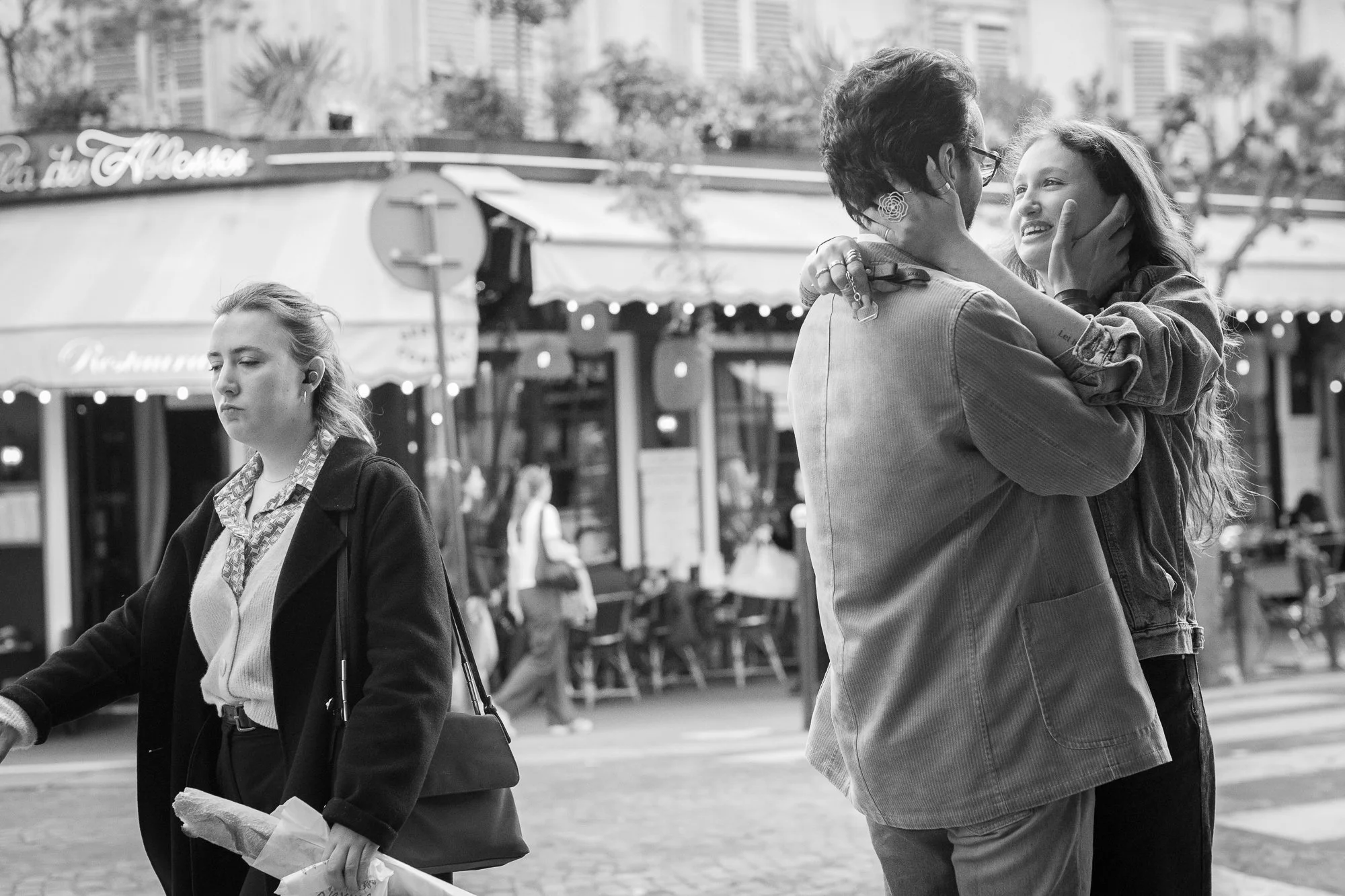
Black and white photograph of a tender moment between two people on a Paris street

Photograph of a couple embracing on the street in Paris, France

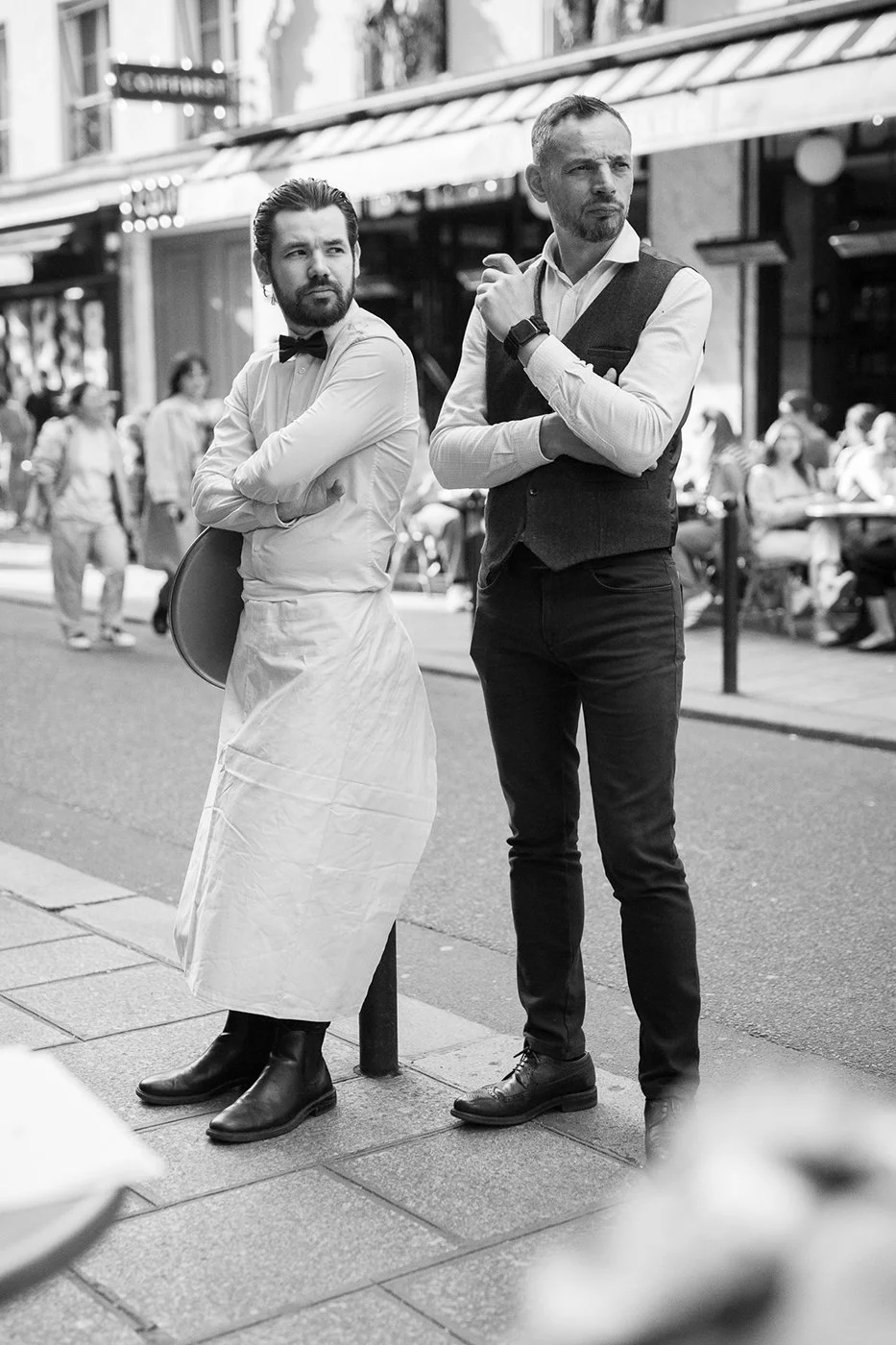
Black and white photograph of café workers standing on a Paris street

Café workers pause between moments, grounded in posture and presence.

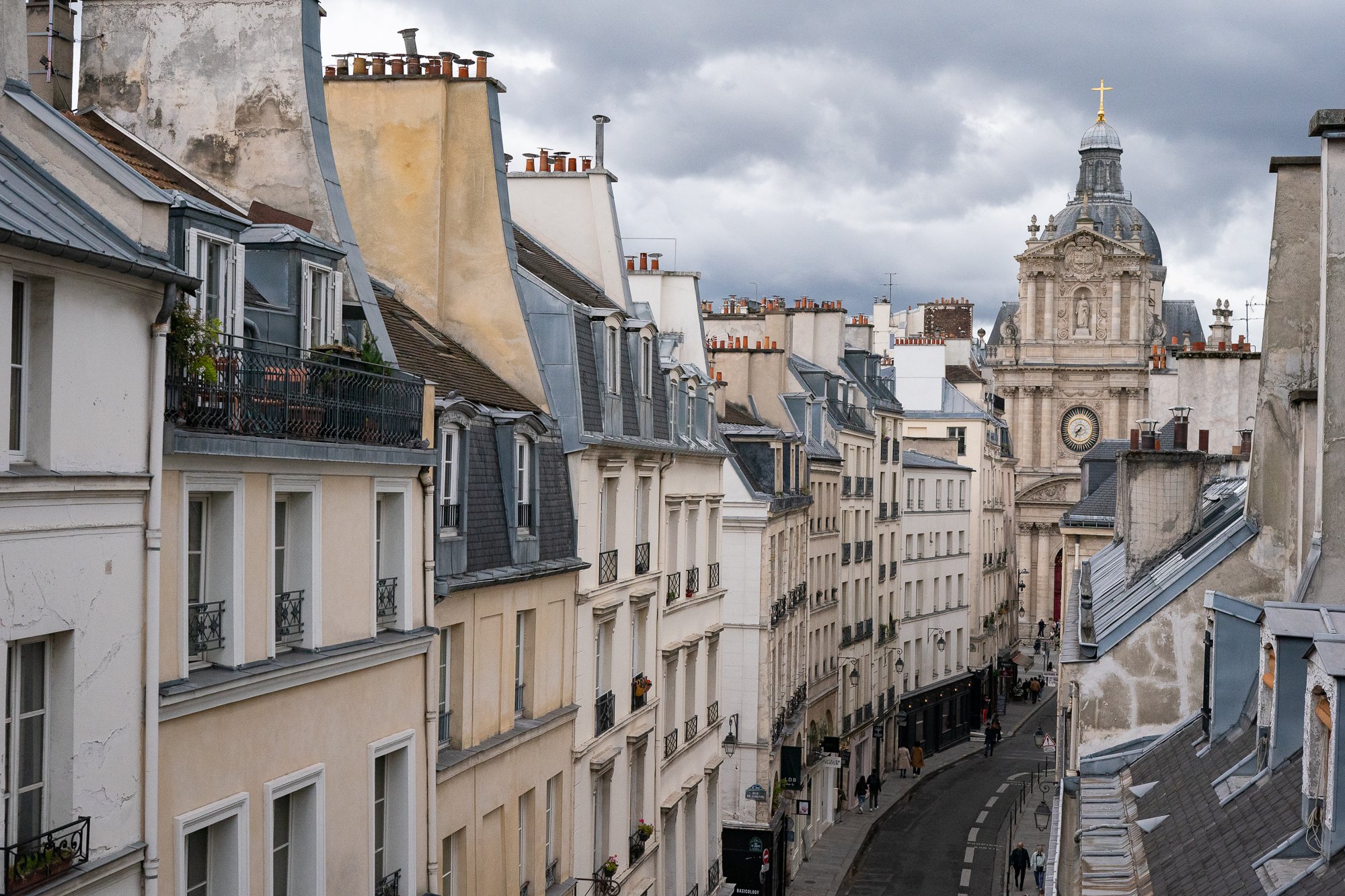
Paris rooftops leading toward Saint-Étienne-du-Mont under a cloudy sky

Paris rooftops unfold toward Saint-Étienne-du-Mont, capturing the layered geometry and muted tones of the city.

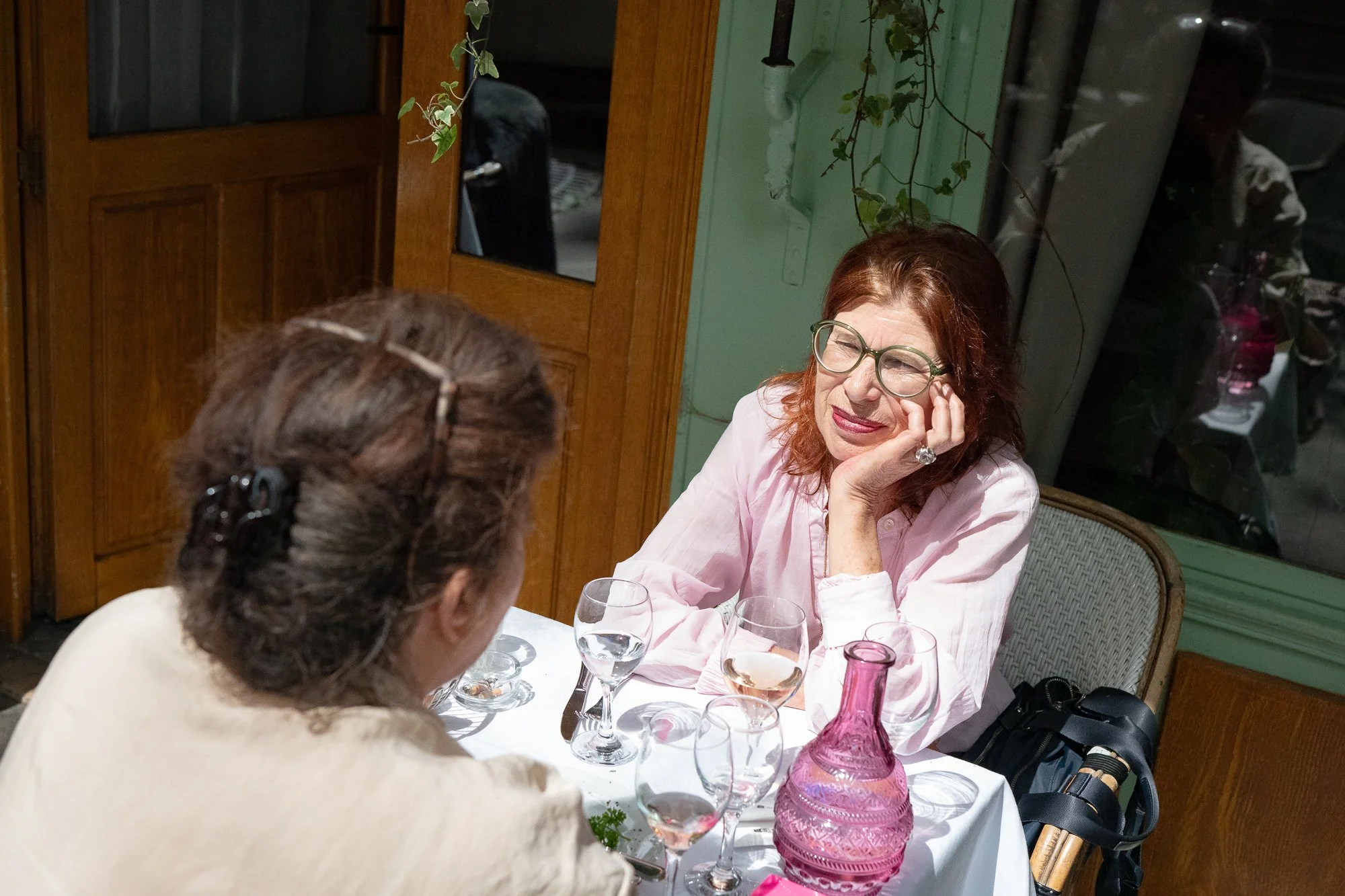
Two women seated at a café table in Paris, engaged in quiet conversation

Photograph of two women drinking at a cafe in Paris, France

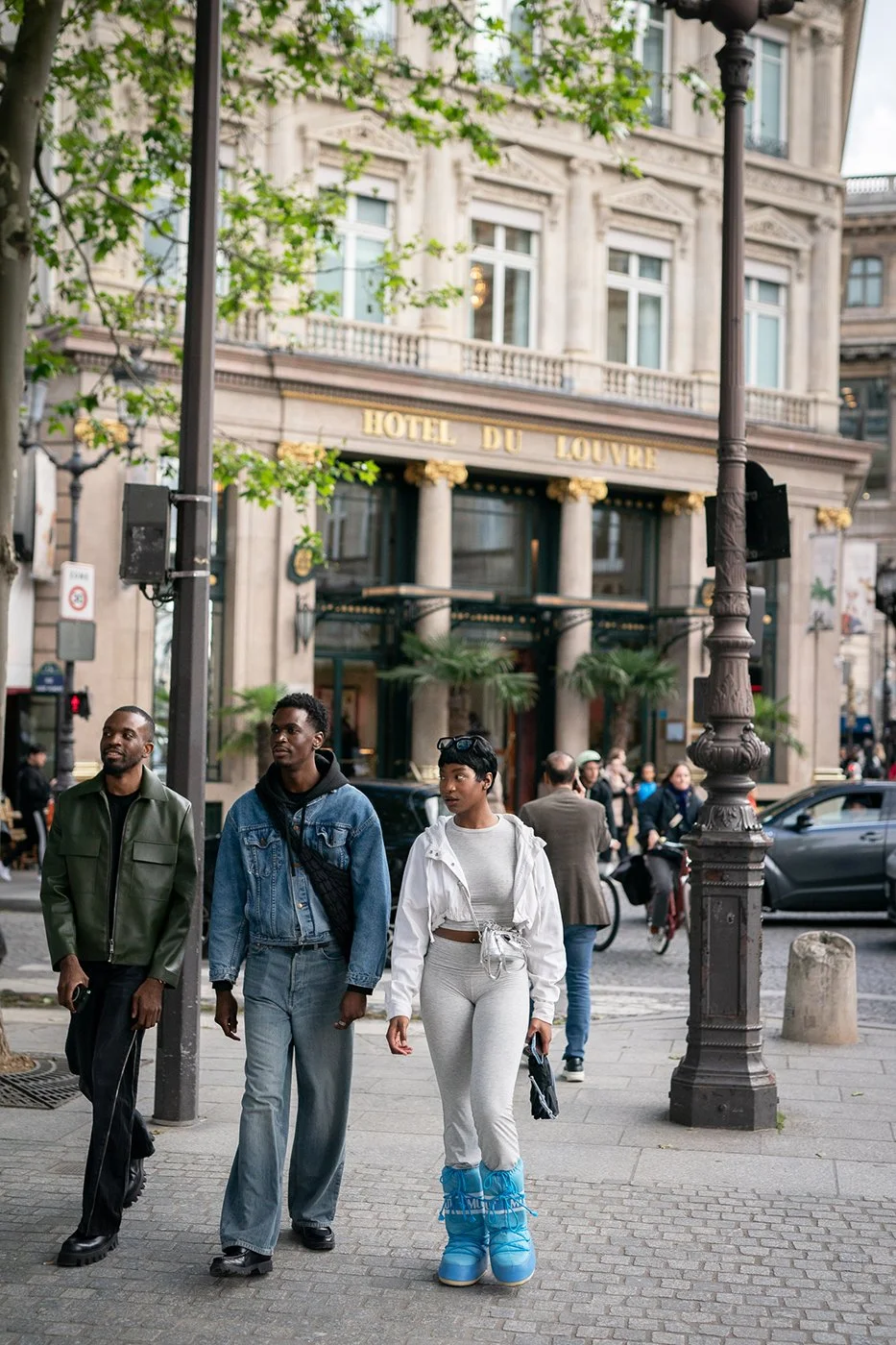
People in fashionable clothing walking near Hôtel du Louvre on a Paris street

Pedestrians move through central Paris, where historic architecture meets modern pace and fashion

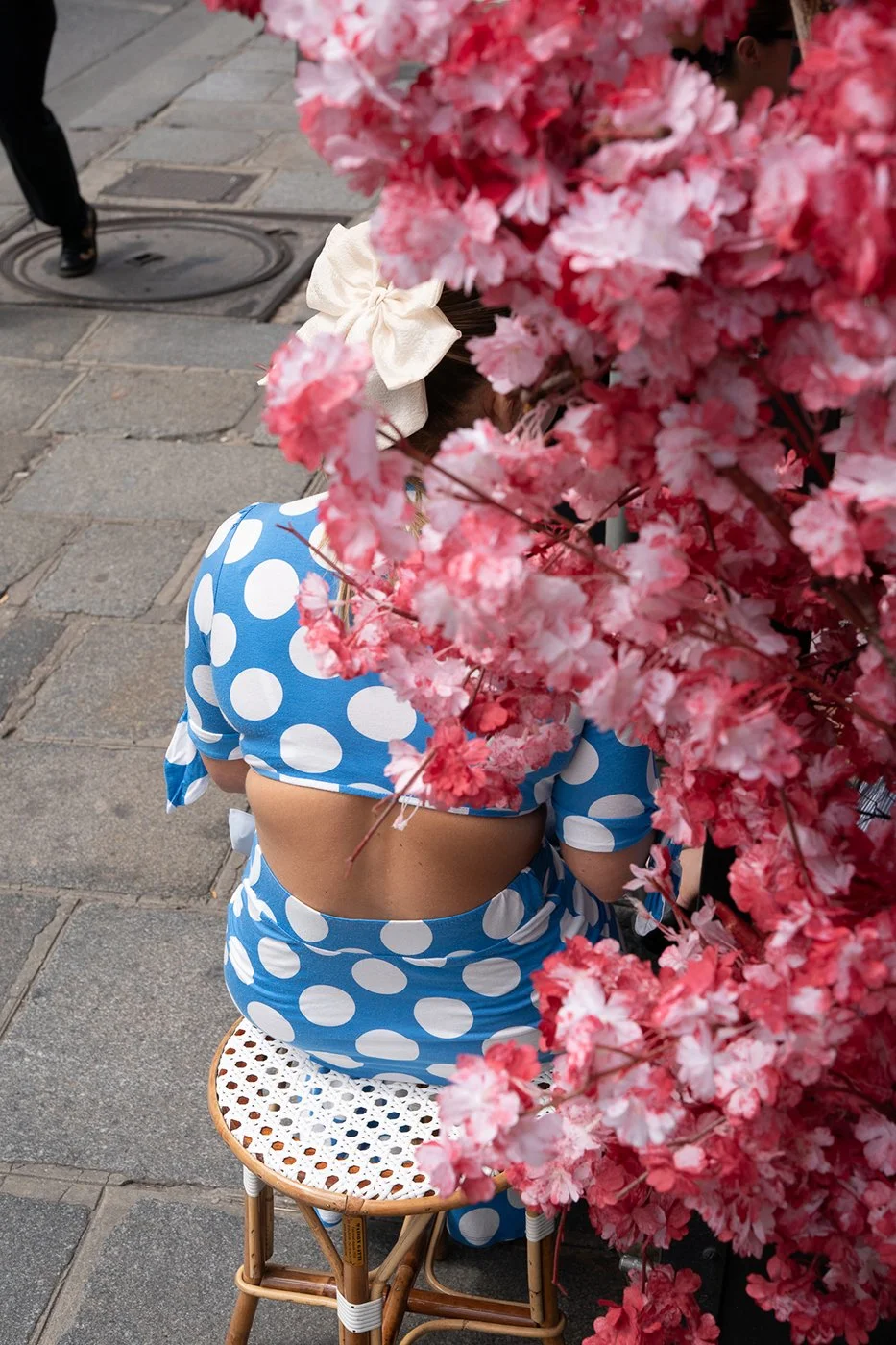
Woman in a polka dot dress partially obscured by pink flowers in Paris

Color and form intersect as a passerby blends into the visual rhythm of the street.
Black and white photograph of a woman walking past historic Paris architecture

Photograph of a well dressed woman walking in Paris, France

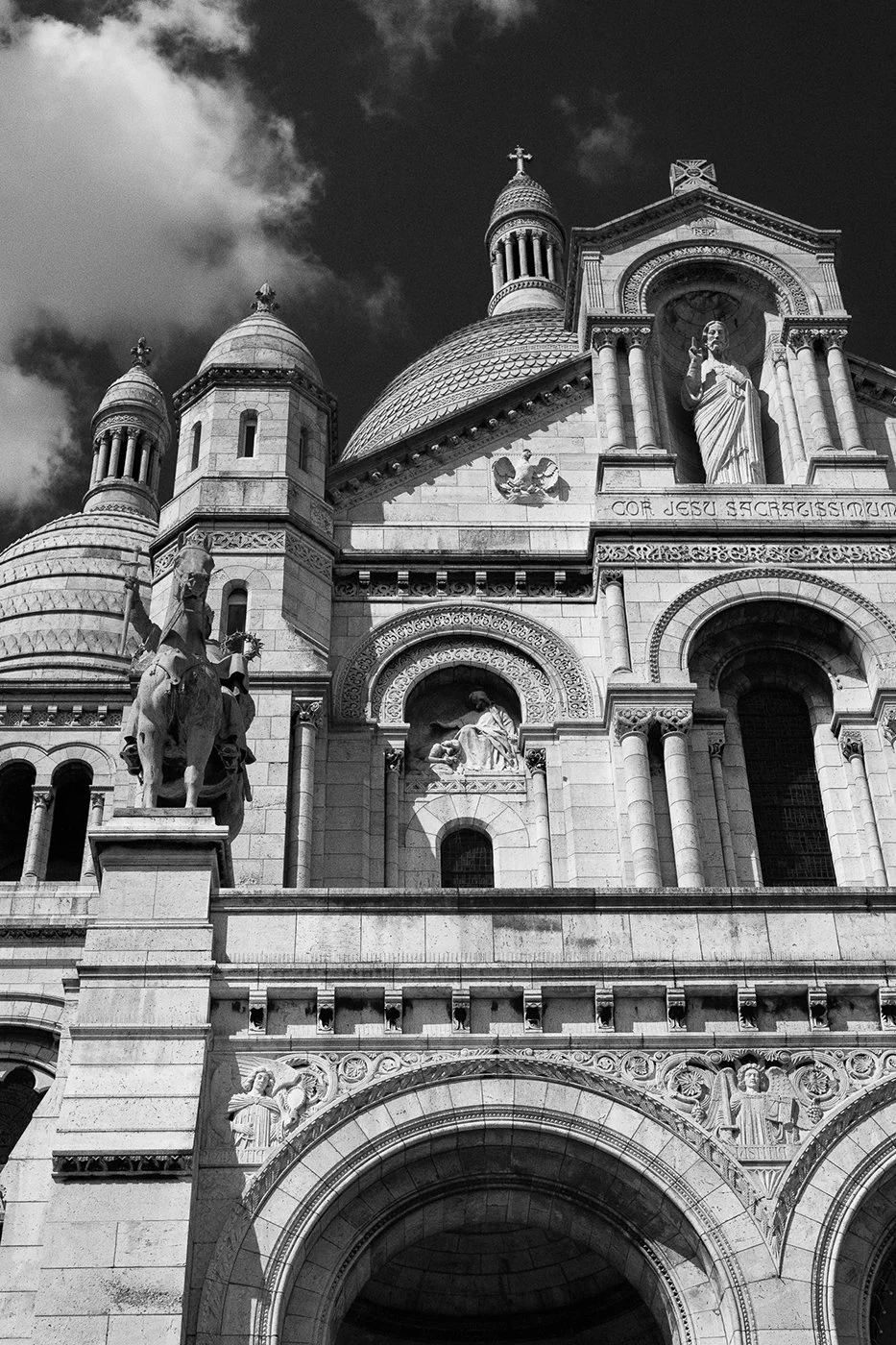
Black and white photograph of Sacré-Cœur Basilica in Paris under dramatic clouds

The Basilica of Sacré Coeur de Montmartre

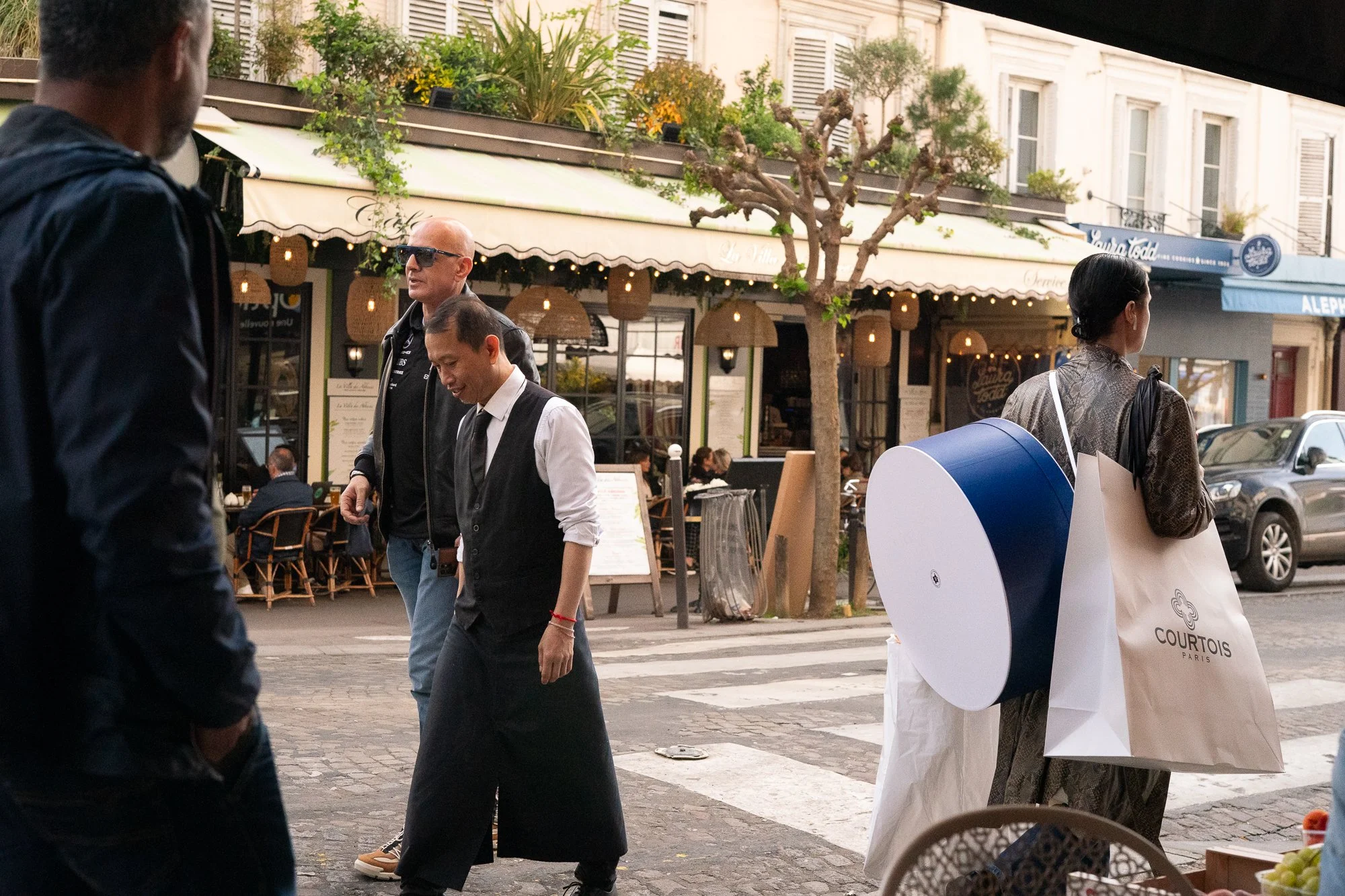
Woman carrying a large hat box crosses a Paris street in front of a neighborhood café, capturing a candid moment of everyday Paris life.
A woman carrying an oversized hat box moves through a café-lined crosswalk in Paris, a small, surreal detail that turns an ordinary street moment into something quietly cinematic.

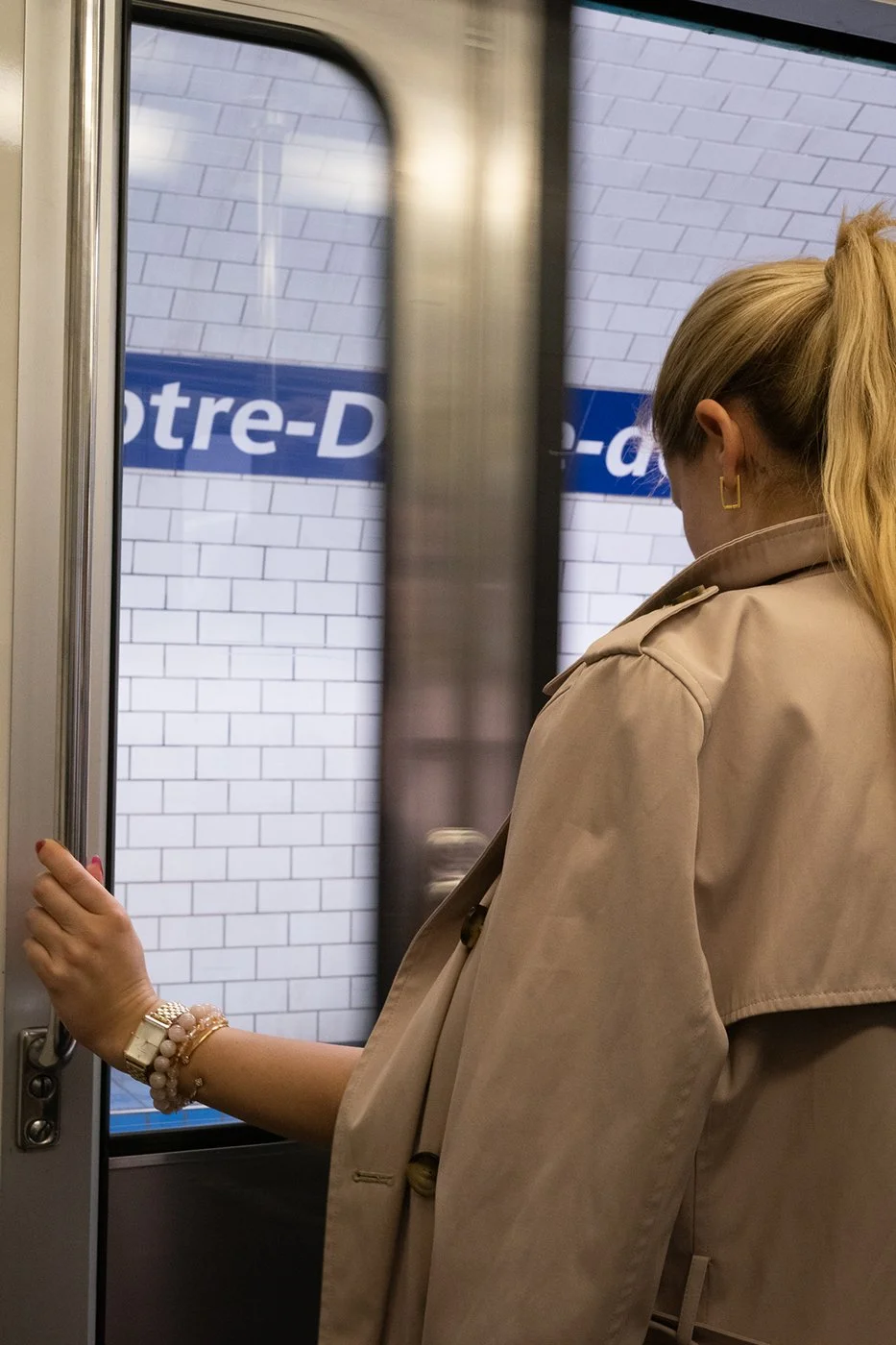
Woman standing inside a Paris metro car near the Notre-Dame station

A fleeting pause inside the Paris metro, where movement and stillness briefly align.

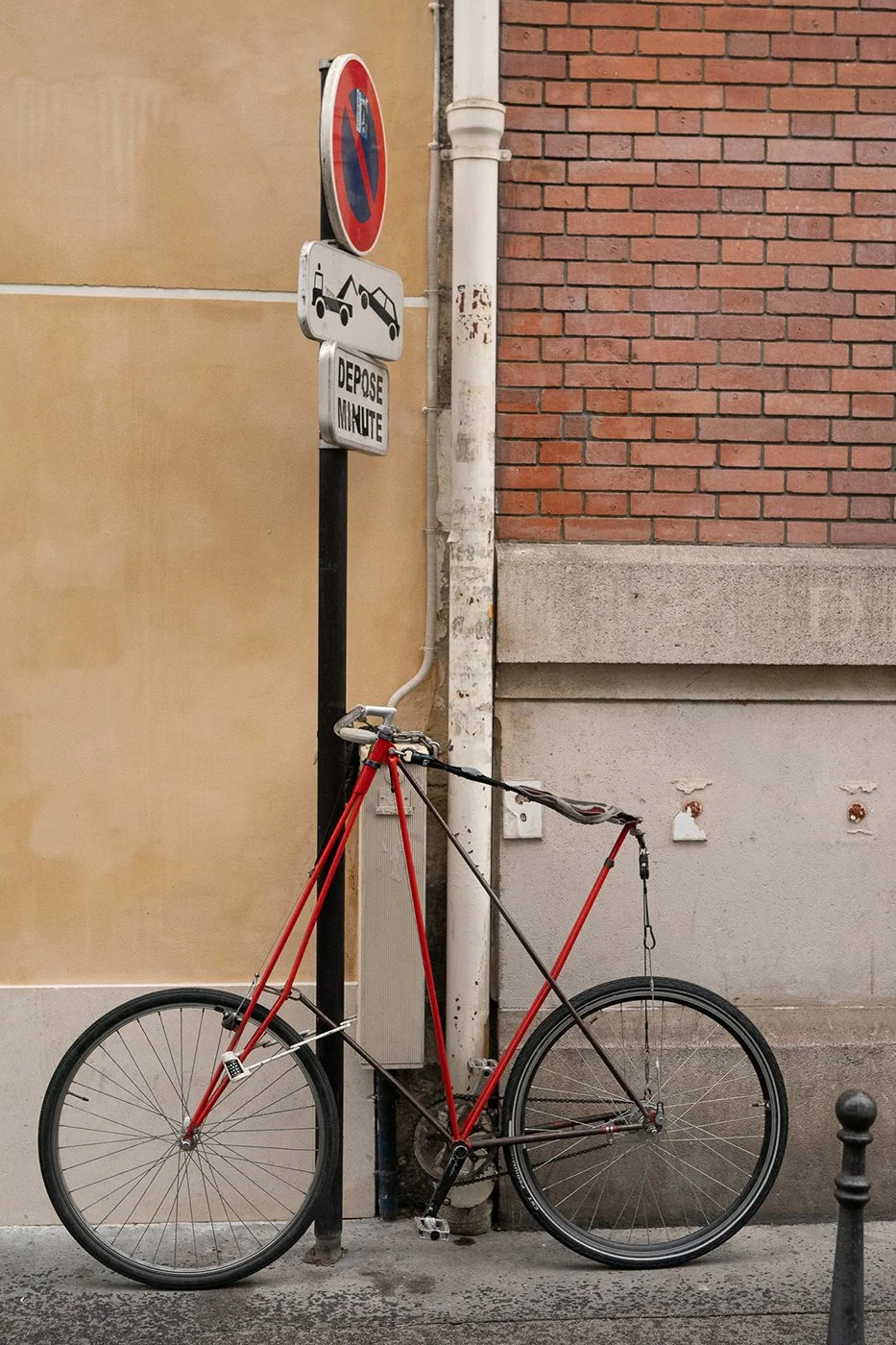
Red bicycle locked to a street sign against textured Parisian walls in France

A red bicycle rests against a worn Paris wall, a quiet study of color, texture, and everyday city life.

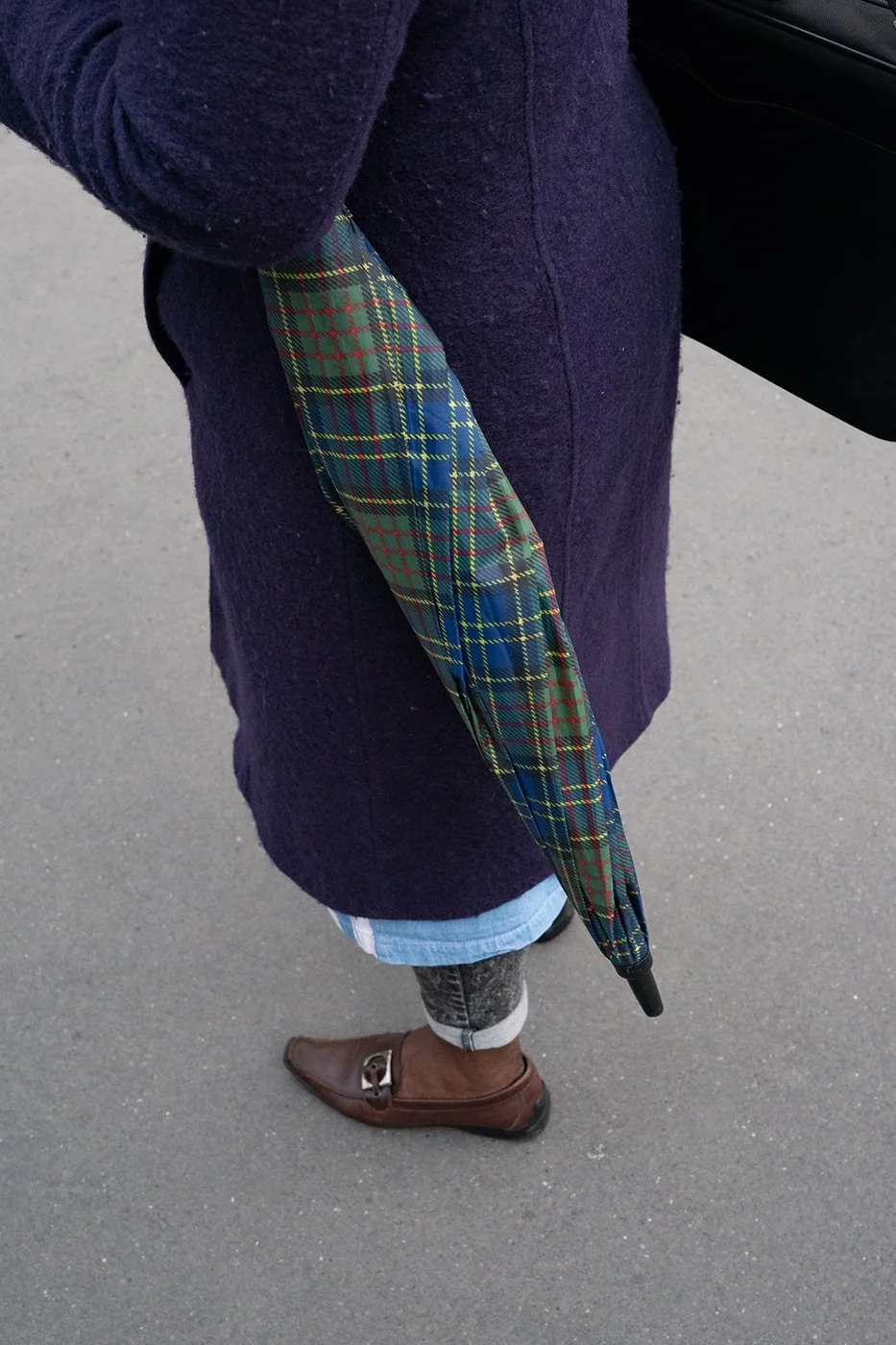
Close-up of a folded umbrella and clothing details on a Paris street

A study of pattern and texture—small details that define everyday Paris.

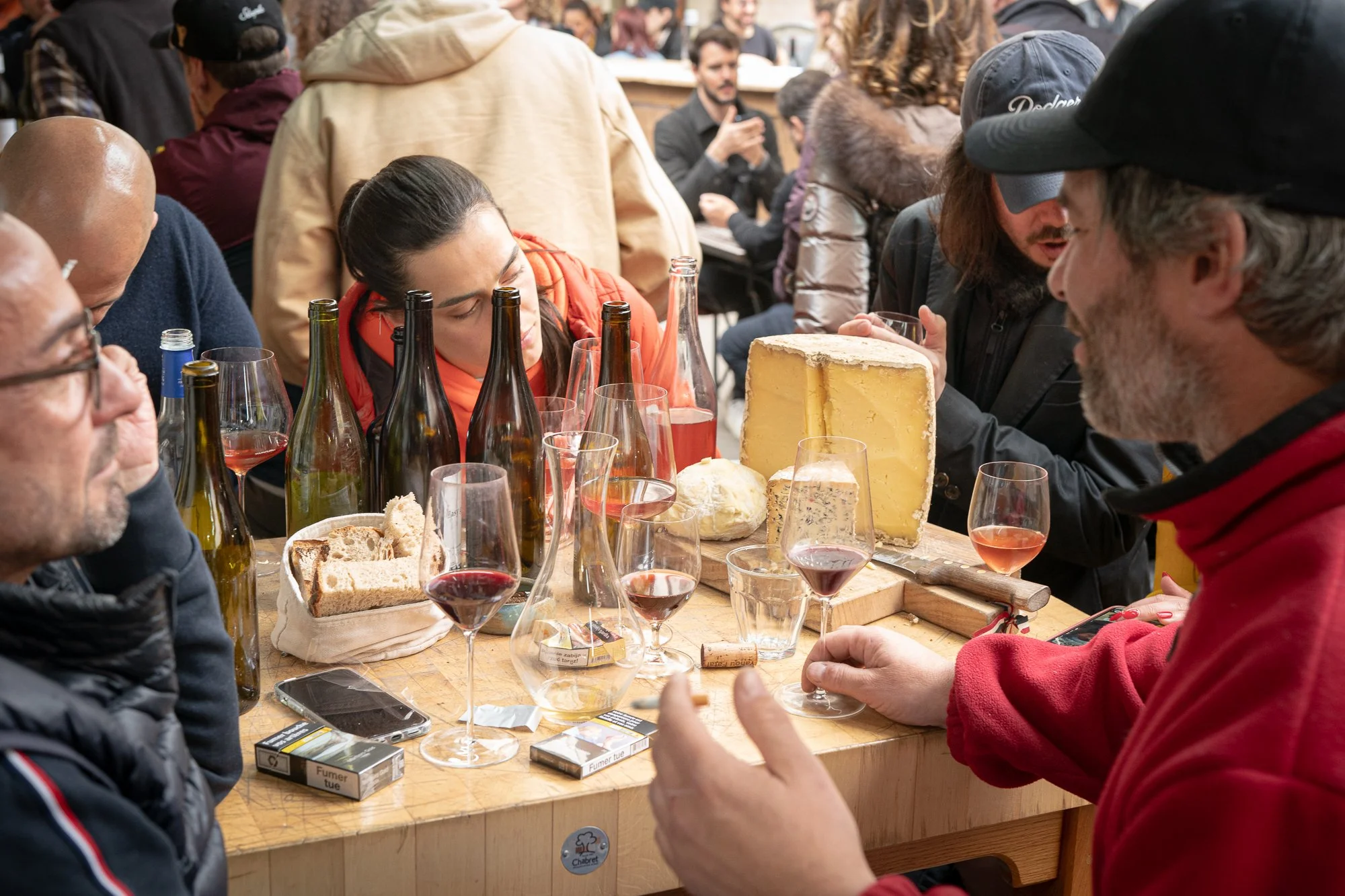
Group of people sharing wine and cheese at an outdoor table in Paris

An afternoon unfolds around wine and cheese, capturing the social rhythm of everyday Paris.

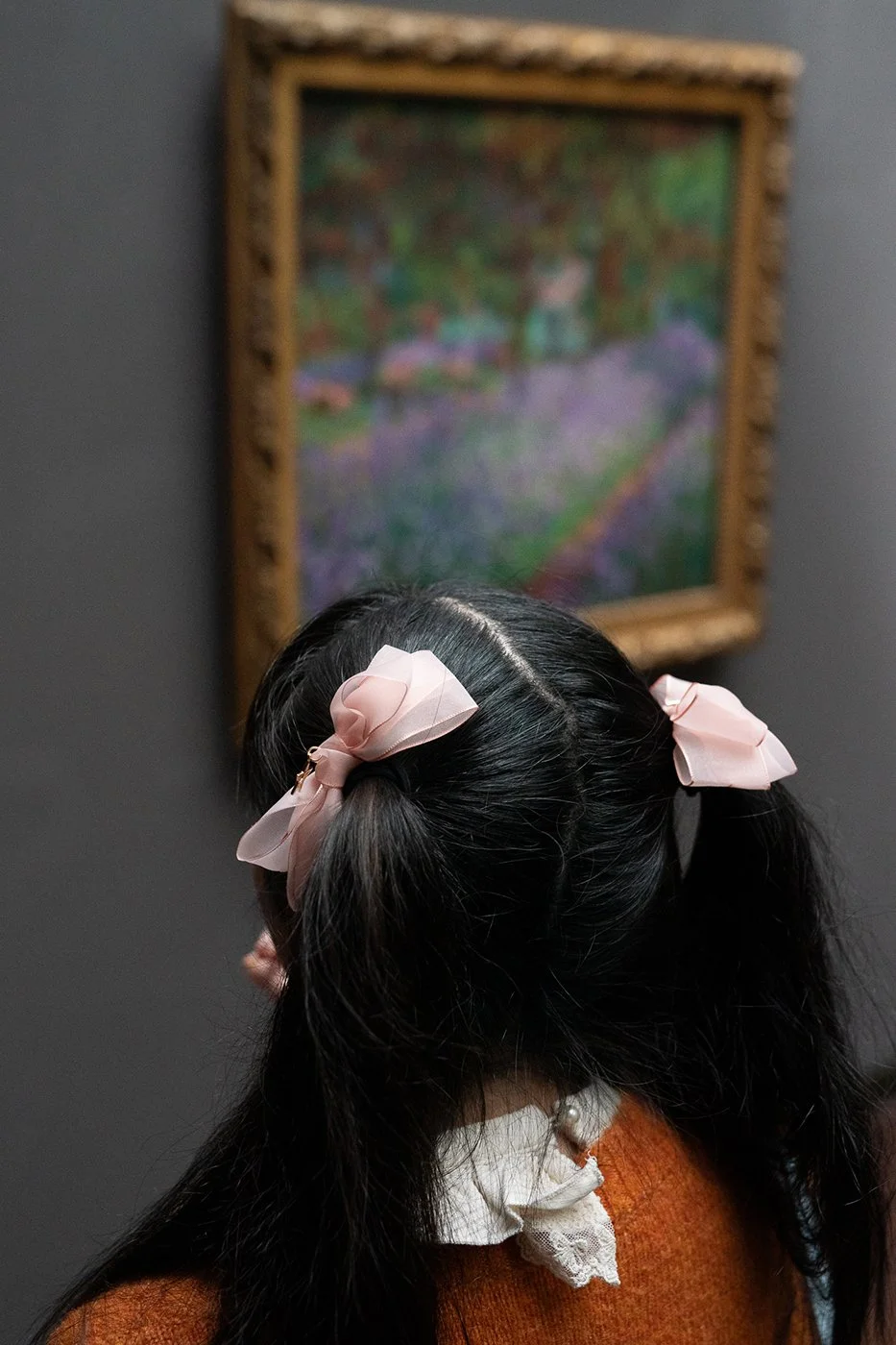
Visitor viewing a painting inside a Paris museum, seen from behind

A quiet exchange between viewer and artwork inside a Paris museum (La Louvre)

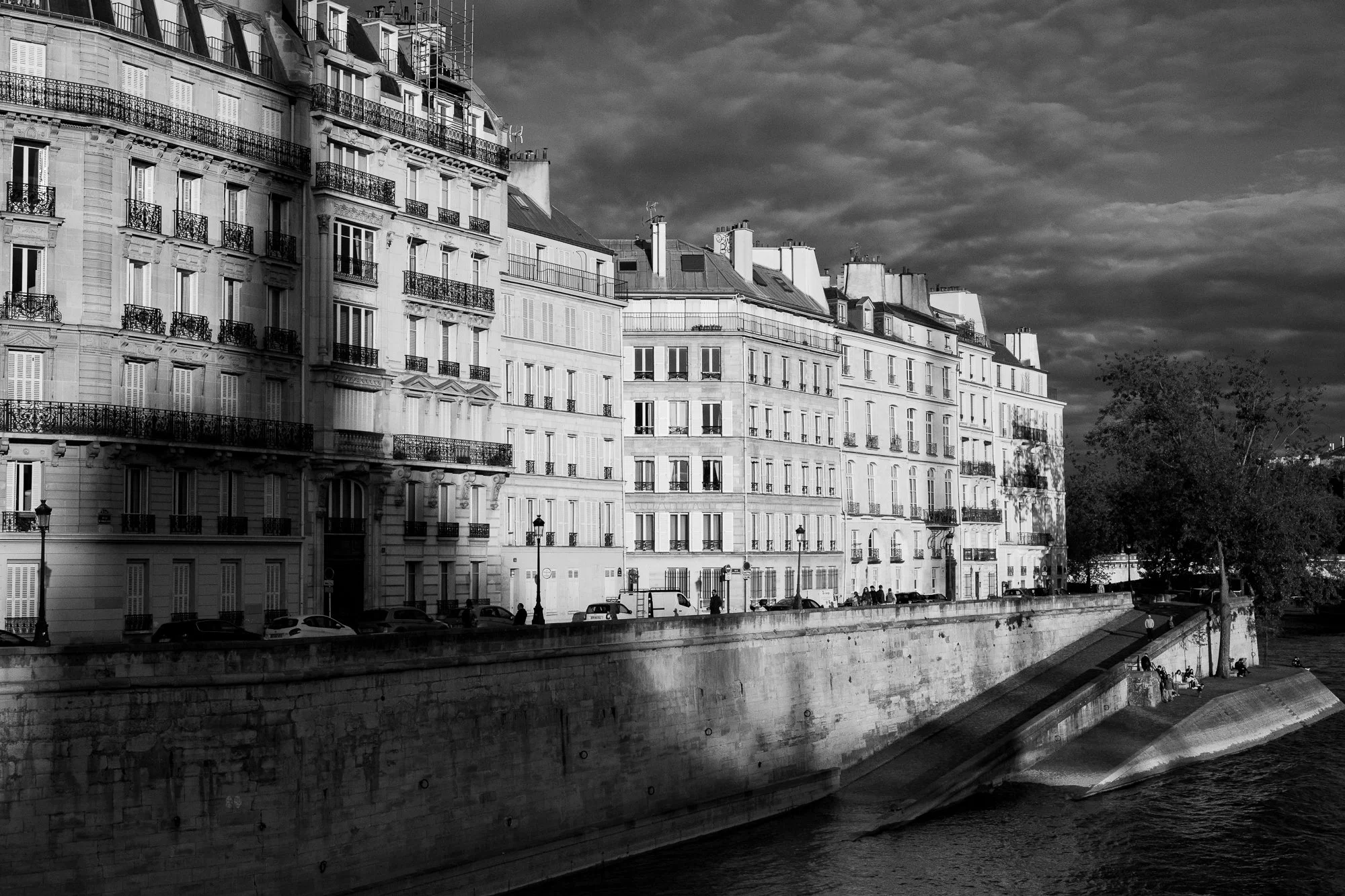
Black and white photograph of classic Paris buildings along the Seine River

Shadow the Notre Dame Cathedral on buildings along the Siene River in Paris, France

The Griffin Museum of Photography

Photography Museum - Winchester, Massachusetts

13+ years now I’ve been photographing traditional barbershops in all 50 states of the USA and the layers continue to peel. In the beginning it was just a thing to do because I love barbershops. Then as time went on I felt responsible for documenting them before they all disappeared. Now, in 2024, I see the collective body of work as a historical document of the barbers and shops that served as a staple in their respective communities for 30, 40, 50, 60+ years. On the surface the theme of this project is about a place to get your haircut. Really though, it’s about community, friendship, and human connection. So I’m honored to announce that a selection of these photographs will be shown at the Griffin Museum of Photography in Winchester, MA for their upcoming group show “Vision(ary) which focuses on communities, cultures, and environments. Please go check out the show as well as the other great exhibitions from June 7th-September 27th.
Click here to purchase a copy of Barbershops of America (photo book) and HERE to purchase prints from this series.

Exhibition at the Griffin Museum of Photography

Barbershops of America at The Griffin Museum of Photography

Oregon Landscape Photography Prints

Oregon Wall Art - Landscape Photography

Oregon is a special place. Not just as a part of America, but of the world. It’s truly unique, with a vibe you can’t find anywhere else. Going through these images has been a lot of fun, revisiting past road trips through the state, as well as a gentle reminder that it’s been far too long since seeing that magical place. The photographs stir up great memories of being on the road with Mojo. One in particular several years back in the middle of winter. We were driving late at night on a backroad through the Cascade Range. No towns. No street lights. Nothing. It was freezing cold and the entire landscape was covered in a fresh blanket of snow. At some point I started feeling a very bizarre energy that was totally unexplainable, but it persisted long enough to make me think. “Pulsing” is the only way I can describe it. The sensation continued for a while, so I pulled over, got out of the truck and just stood there. There were no signs of civilization at all. And after my eyes adjusted to the darkness, I could see massive snow covered peaks on all corners of the horizon that seemed to be glowing. One of them was Mt. Hood, not sure what the rest of them were. Either way, I’d never experienced anything like it before or after that day. I was totally in awe at the sight and energy they were putting off. And to see so many prominent peaks so far away all at once, seemed totally surreal. All I could do was stand there and take it in. No images were made that night, but it’s a memory that will never leave me.

Click here to check out my American Road Trip photography book

Send an email if you’d like any of my Oregon wall art for your home, office, or commercial space - rob@robhammerphotography.com

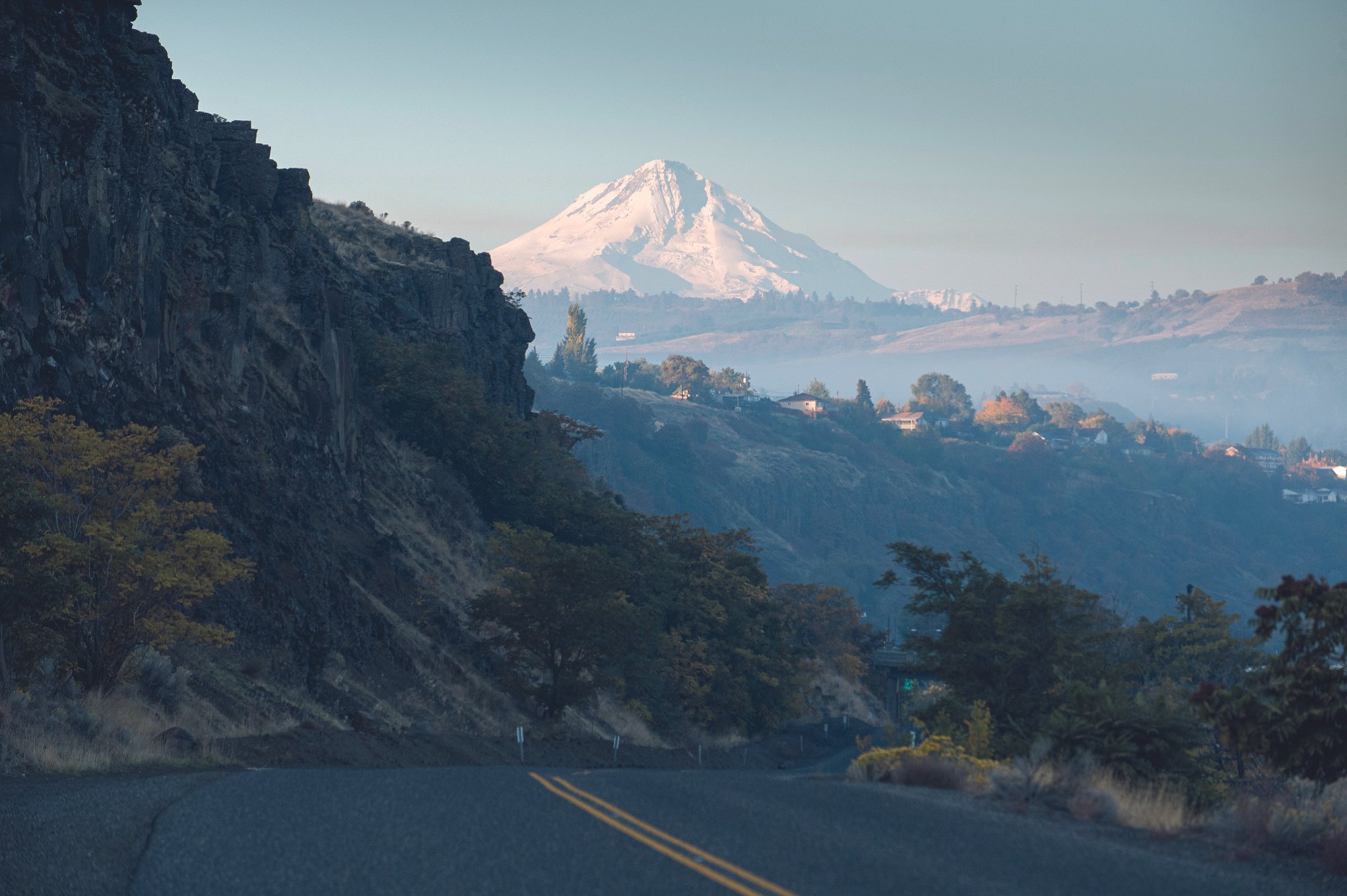
Mt. Hood Landscape Photography Print

Mt. Hood Wall Art

Photography print of Lake Albert in Oregon

Lake Albert - Oregon - Photography Print

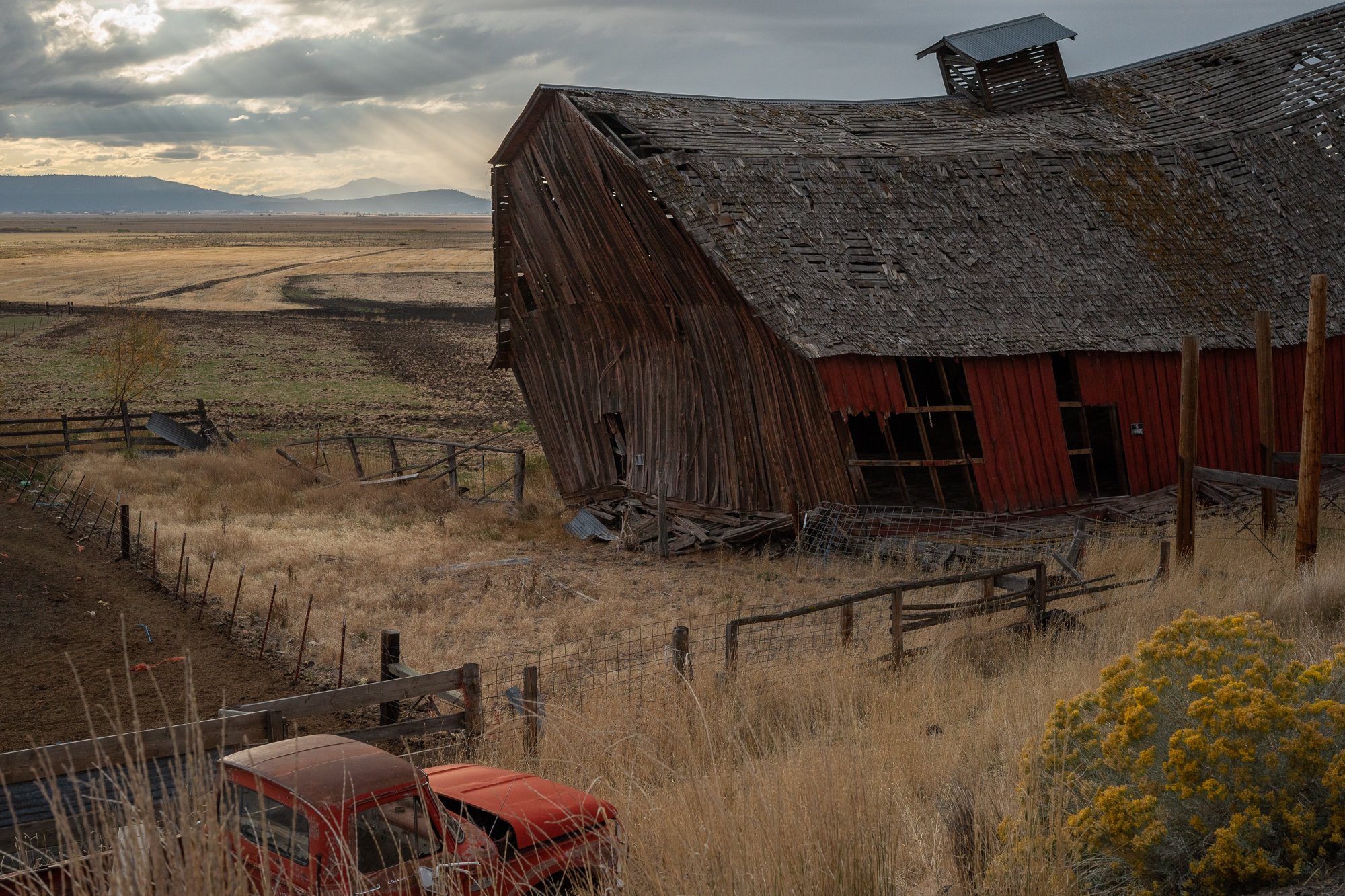
Photography of an old barn in Oregon

Oregon Photography

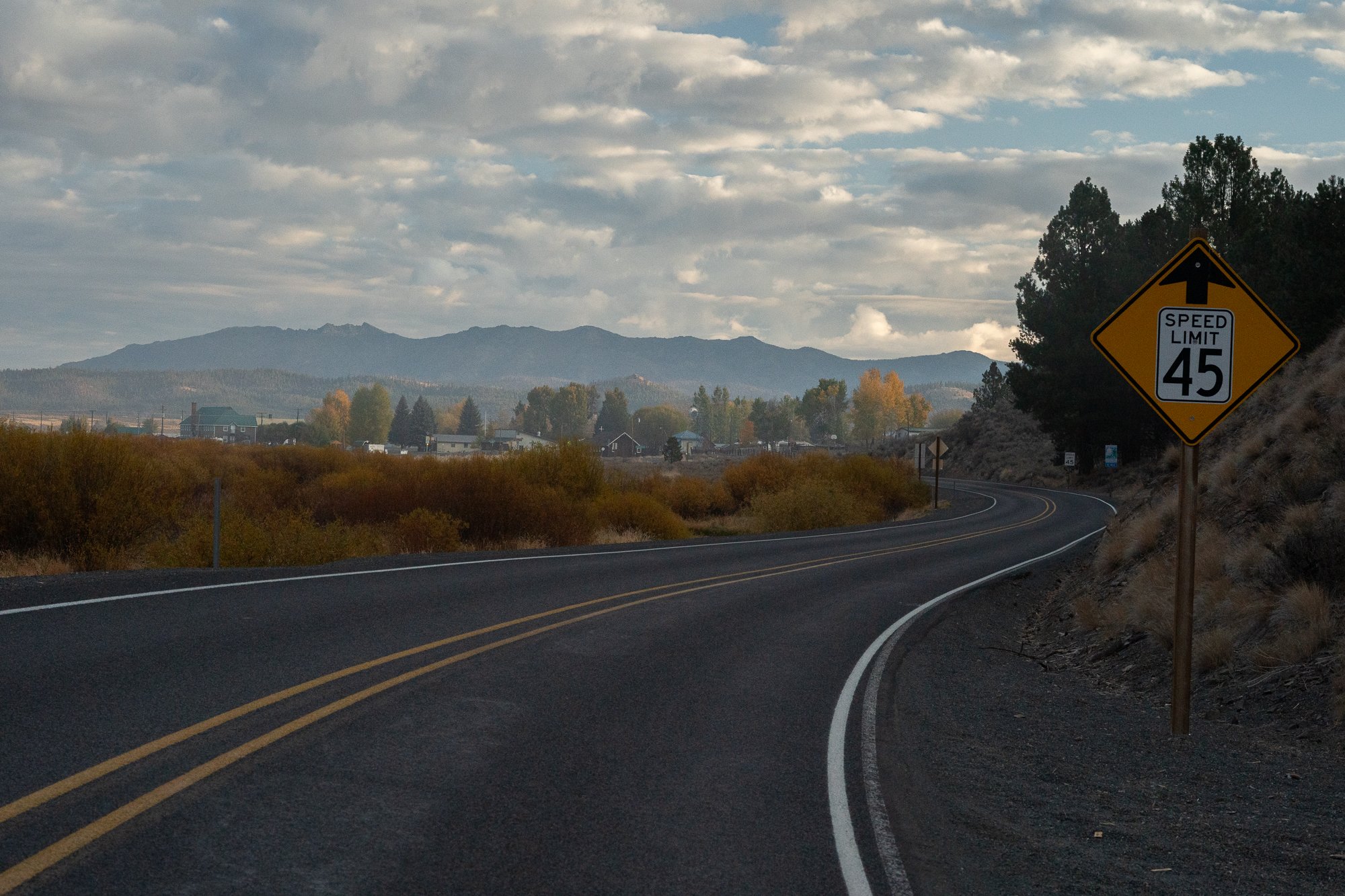
Photography print of a country road in Oregon

Country Road in Oregon

Photography of Seneca, Oregon

Seneca, Oregon

Lake Albert Oregon Landscape Wall Art

Lake Albert, Oregon - Wall Art

Photography of Highway 395 going through a beautiful section of Oregon at sunset near Lake Albert

Highway 395 - Oregon

Photograph of country roads leading to Mt. Hood in Oregon

Mt. Hood Photography Print

Photograph of a country road in Oregon

Country road in Oregon

Photograph of a country road in Oregon

Oregon Road Trip

The Basketball Hoops Project

Just a reminder that I'm having a show at Fathom Gallery tonight after the Kobe jersey retirement ceremony at Staples Center. I'll have a bunch of limited edition prints on display, along with some 1/1 signed Kobe game jerseys by a group of really talented street artists. Hope to see you all there! 

HOOPS GALLERY

Fathom Gallery: 110 East 9th St. Suite CL002, Los Angeles, CA 90079


American Basketball Photography

Fine Art Basketball Photography Prints

I always think to myself that any photographer who really gives a shit will invest heavily in personal projects. That's not to say you have to spend a lot of money, but invest yourself. Shoot something that's just for you and let that project develop a life of it's own. You'll be glad you did.  I also think that a photographers personal project begins without even knowing it. In your own time you shoot what you're randomly and naturally drawn to. Then over time, a small collection or series of images comes together that you didn't even realize you were creating. The even greater part is over the same period of time, that body of work naturally grows followers of people with similar interests. Those people can be totally random, but they can also be commercial clients who want to buy your images or pay you to make something similar. That's a win on all levels. No longer are you searching for the right clients. Now the right clients are looking for you.

I don't care who you are, things can get slow from time to time. And what happens during those lows, is that you take assignments you're not right for. Maybe it's not your speciality, or maybe you just don't give a shit? Either way, you shouldn't have taken it because it always shows up in the work. Everyone who views an image can tell if it's right or not. When a photographer wants to make a great image he'll do whatever he can to make it. But when the interest isn't there, or they just took the job for the money, you can see it. I decided a long time ago that I'd rather be broke than take assignments that aren't right for me. I use to take them all the time, and it just led to bad relationships and bad images. Definitely not the kind of thing you want out in the world as a freelance photographer. So I started investing heavily in my own projects while also shooting commercially. And after years of building up different portfolios, all that work is starting to pay off. One of them in particular is starting to get really fun, The Basketball Hoops Project. Last February the project had it's first exhibition in New Orleans for NBA All-Star Weekend. And just recently I signed on with Fathom Gallery in Los Angeles. They will not only be sourcing shows for the project and selling prints, but also seeking commercial licensing. I'm really excited about this partnership, and look forward to seeing where it goes. 

Creating images for the right clients is always fun. For a company to choose you out of all the other photographers in the world is a great compliment. When your personal projects start to take flight though, that's the real reward. Hugh Hefner died yesterday. Calling him a legend would be an understatement. Among the many great things he's ever said, my favorite has to be "Life is too short to be living someone else's dream". 

Go out and create for yourself. 

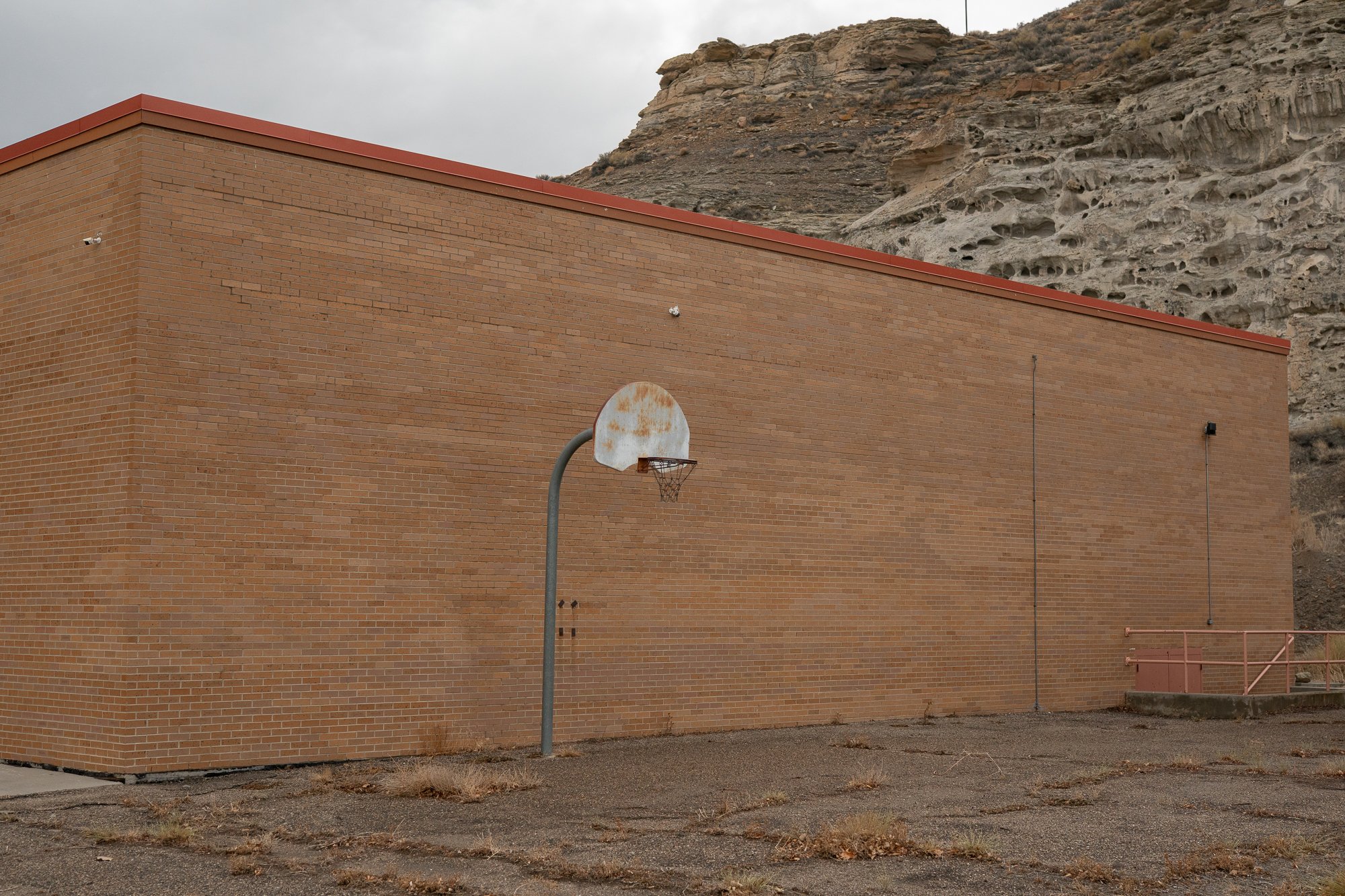
I made this image back in April of 2011 during a road trip with my mother. At the time the Hoops Project wasn't even a thought. Yesterday though,  after stumbling on this,  it made me wonder if it was? 

Click here to see more of my basketball hoop photography

Basketballhoop-066.jpg