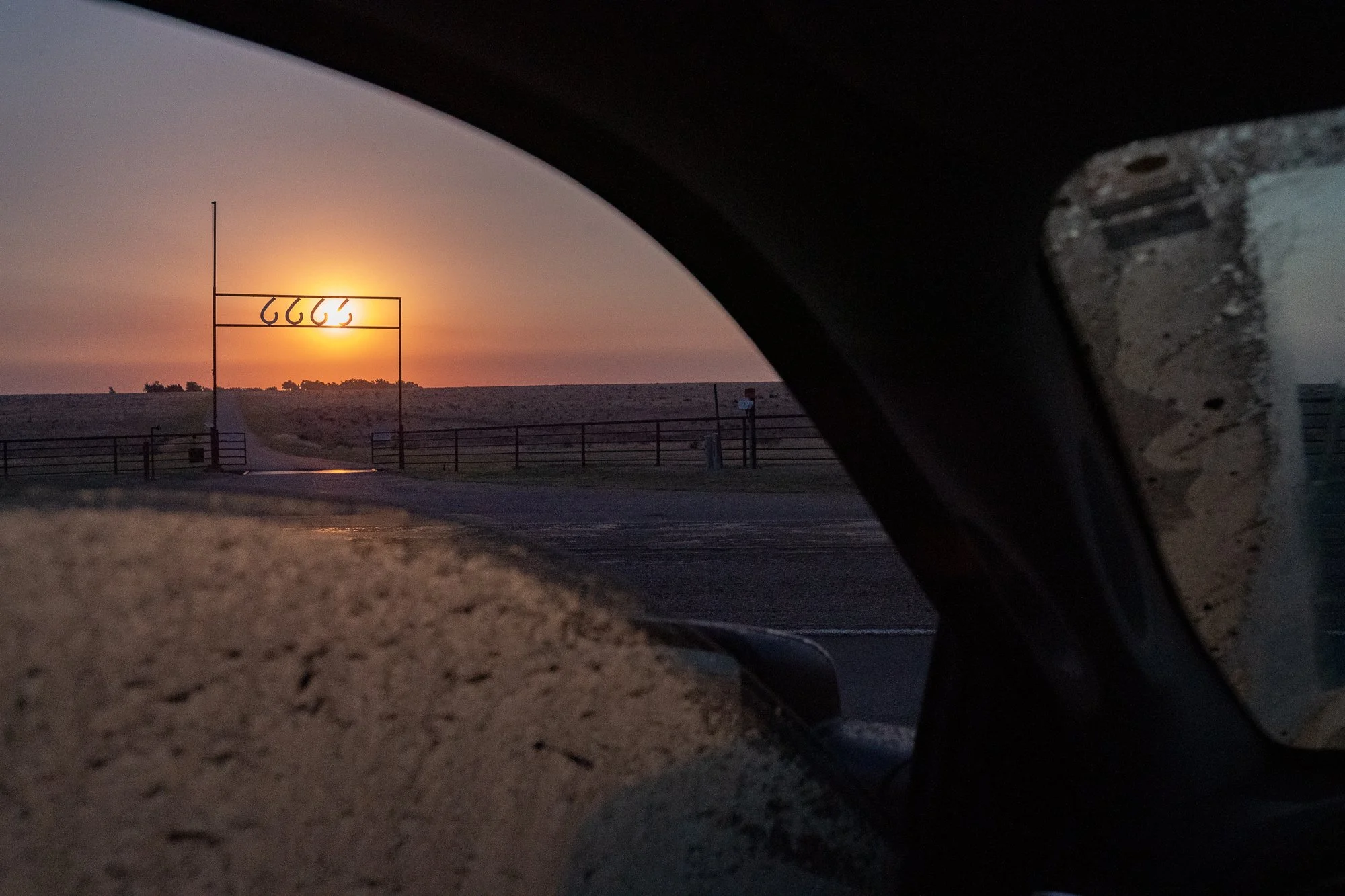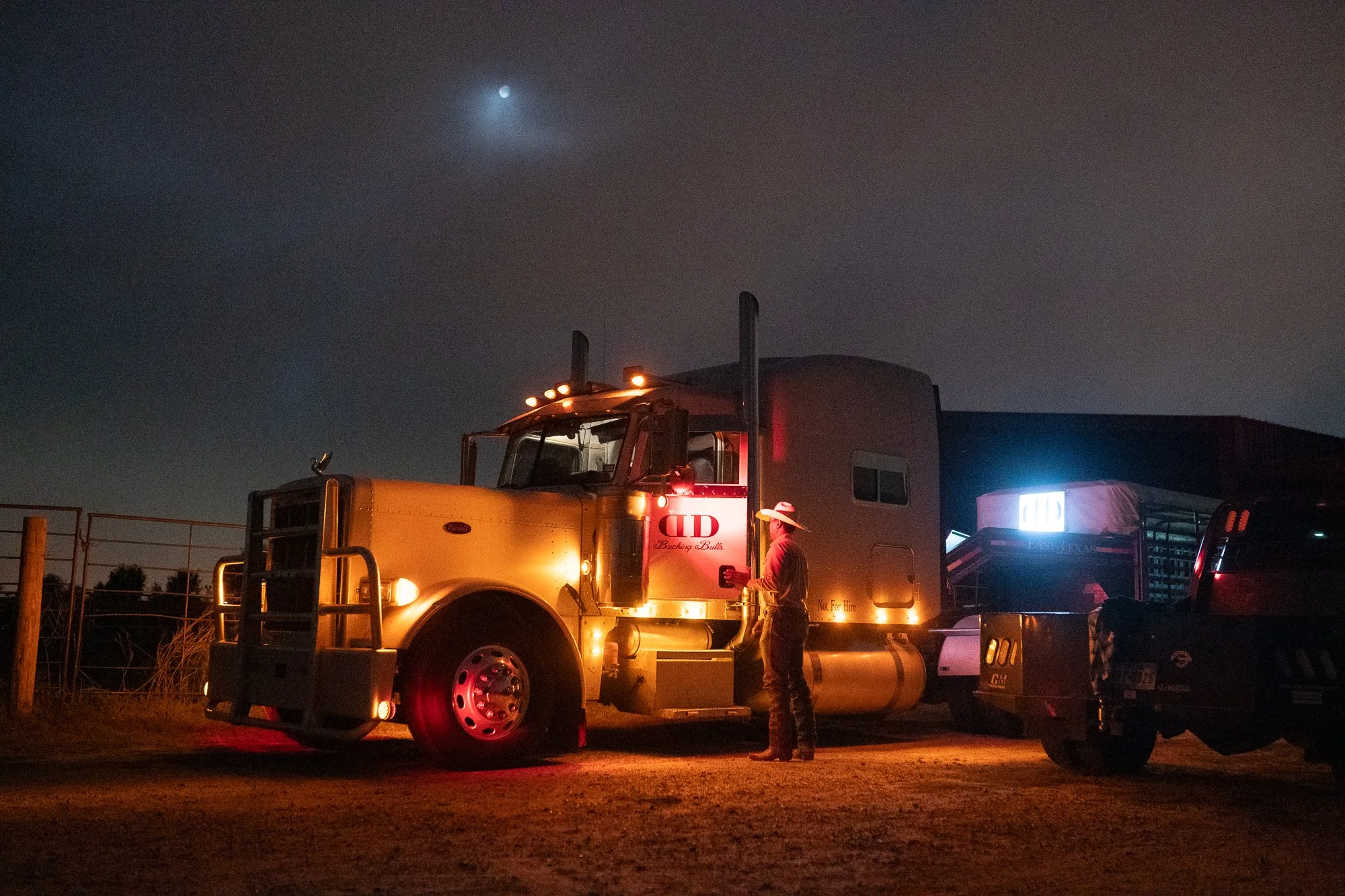
Authentic Western Brand Photography in Texas with Bucking Bull Trainer Dennis Davis

Behind the Lens of a Commercial Western Photoshoot in Texas

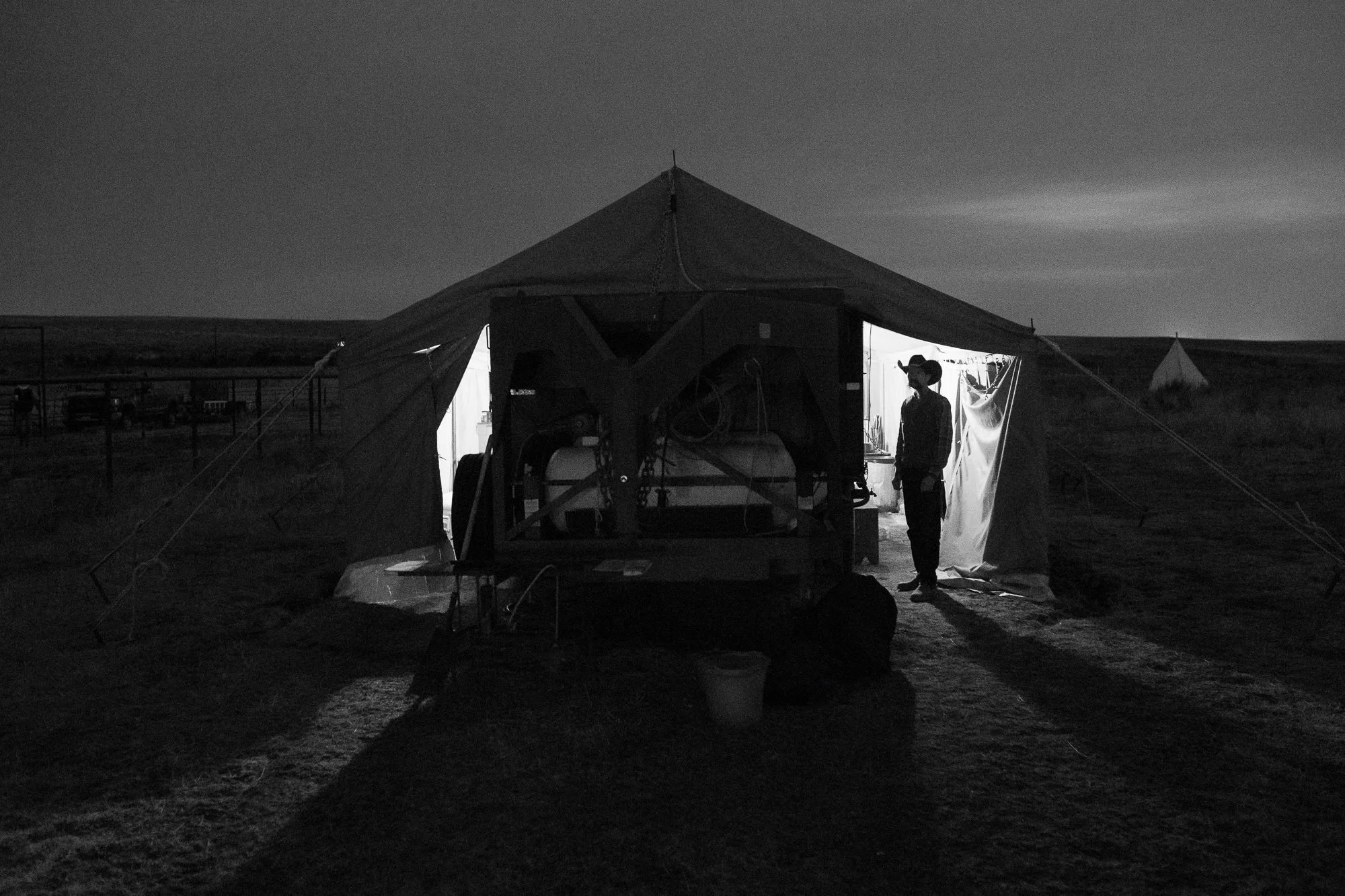
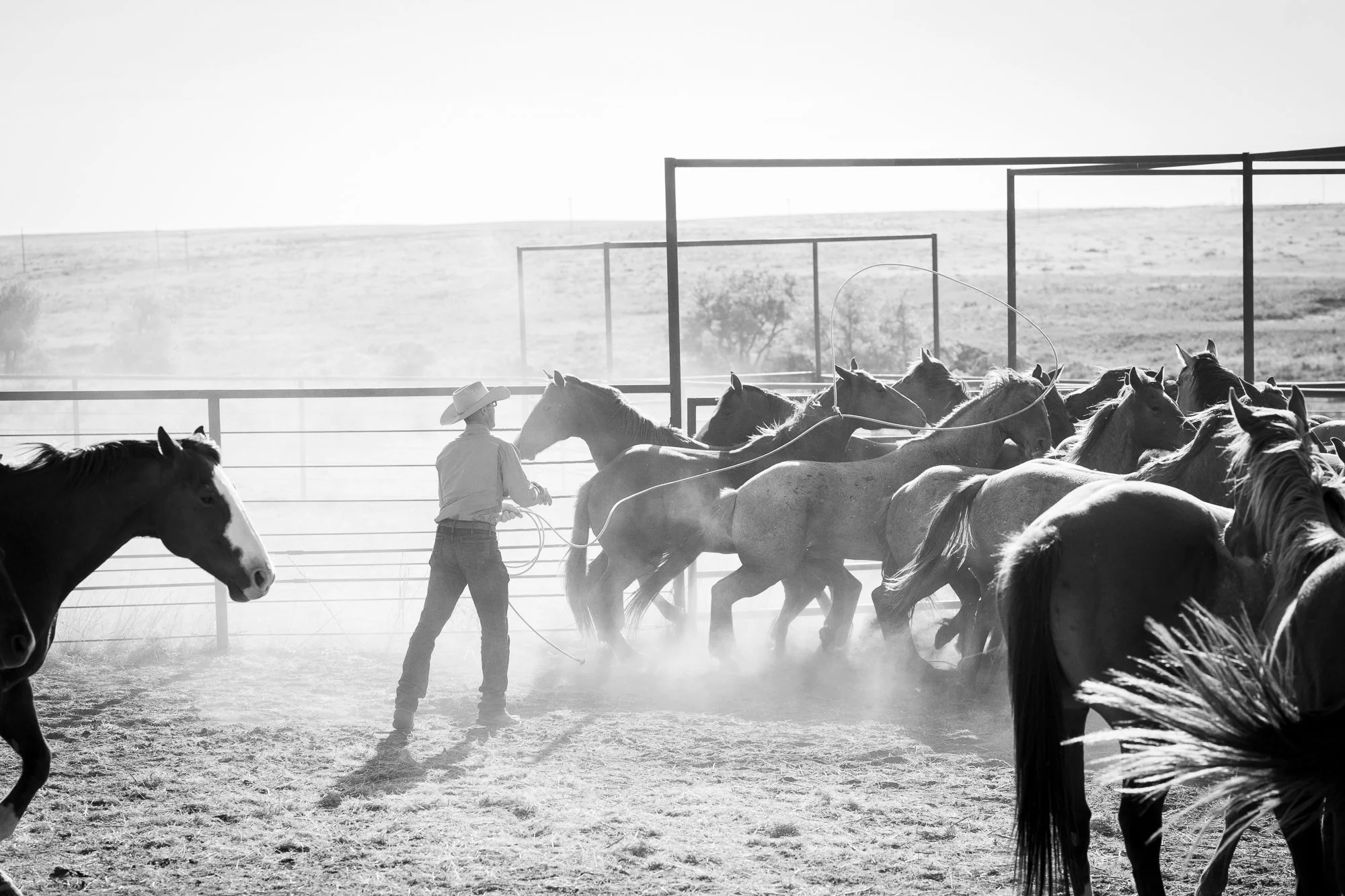
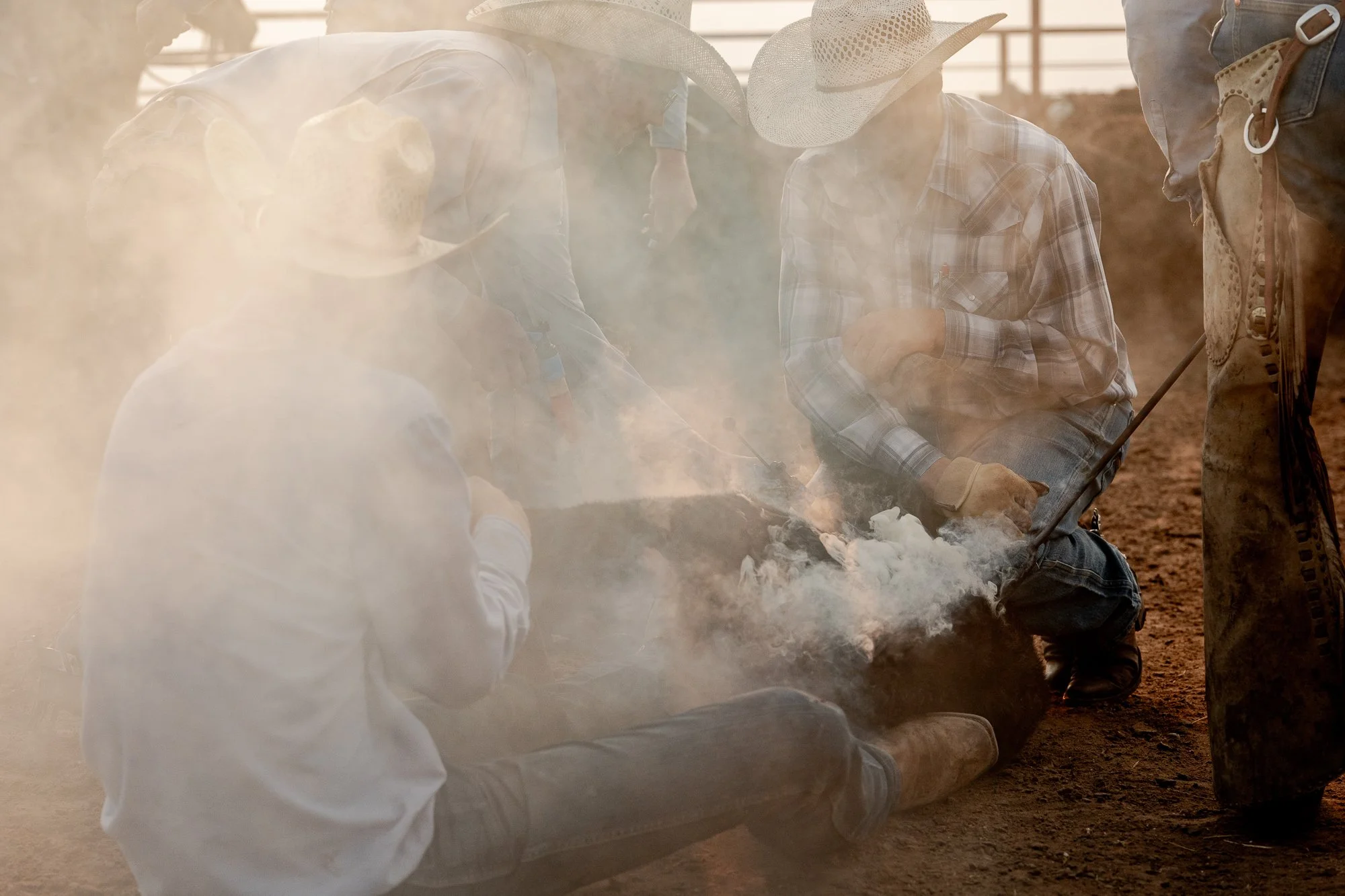
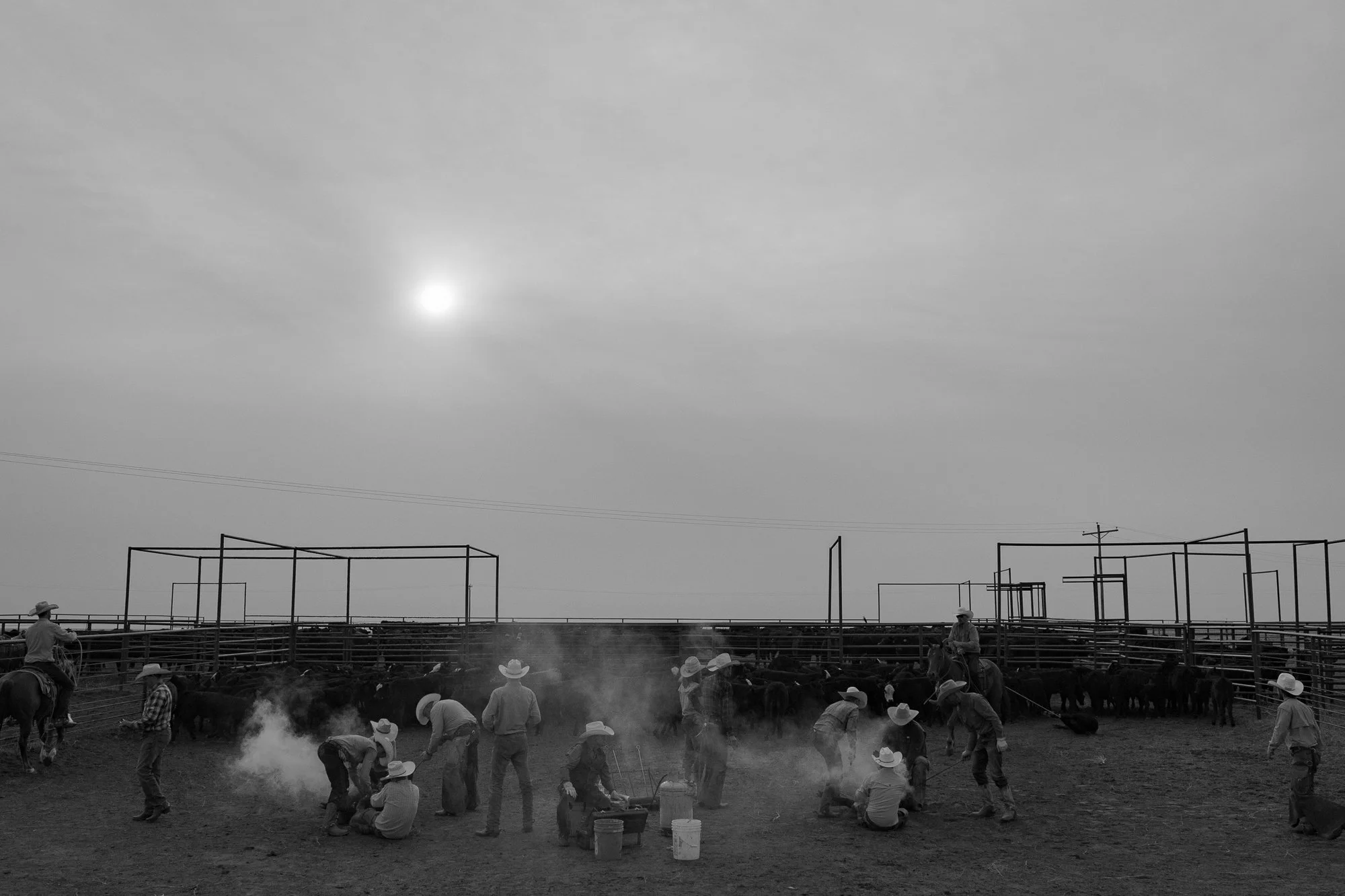
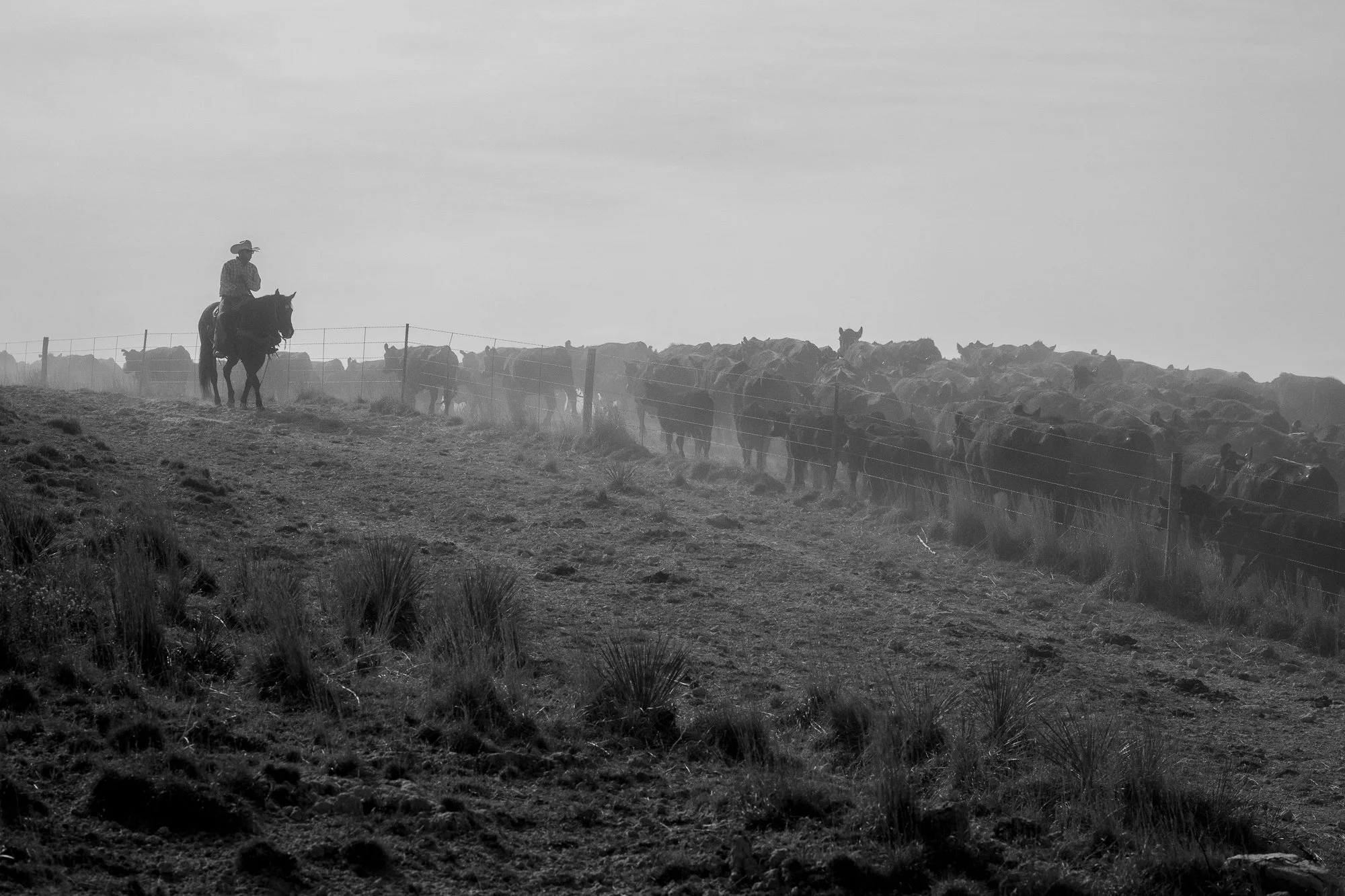
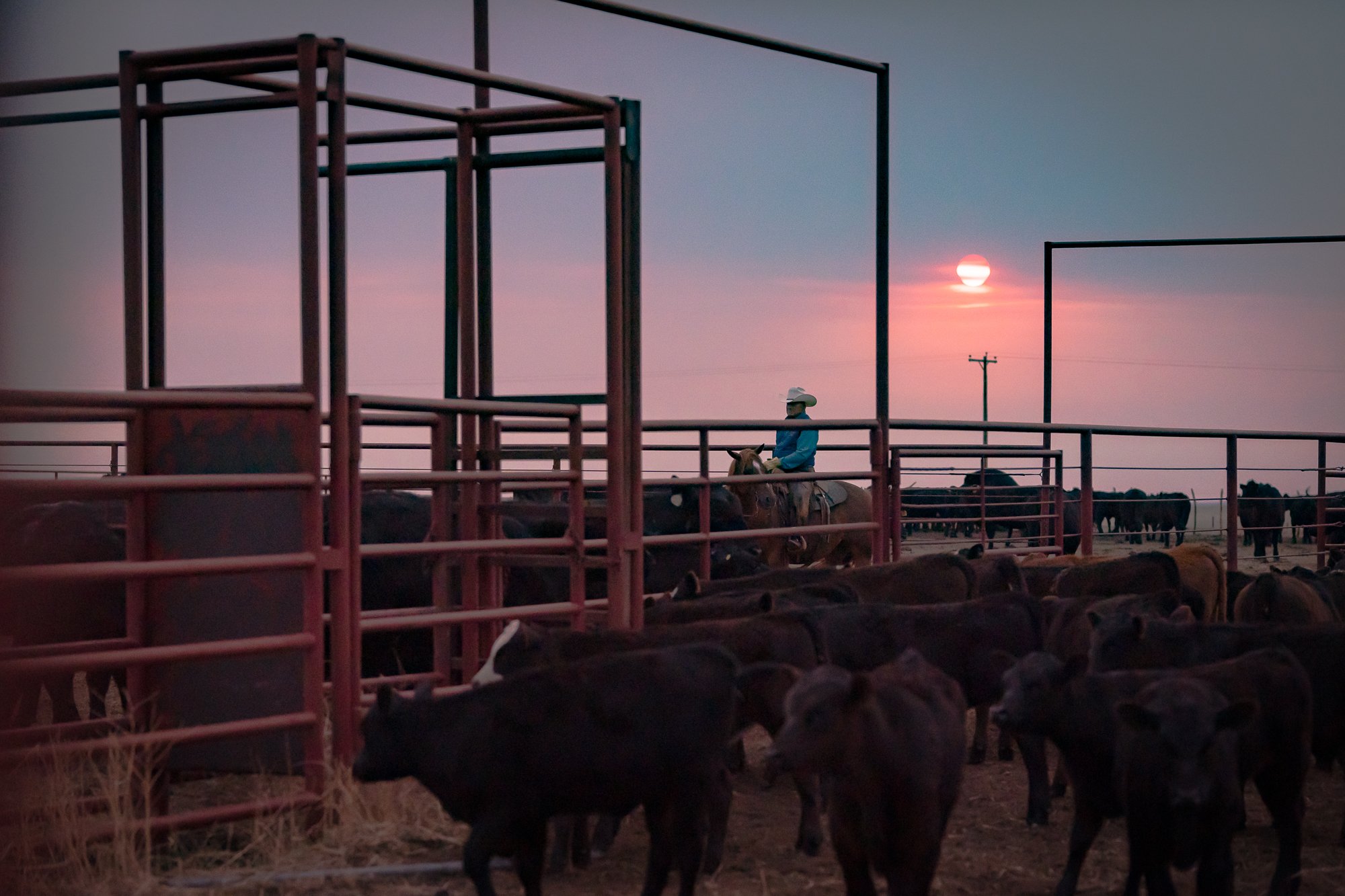
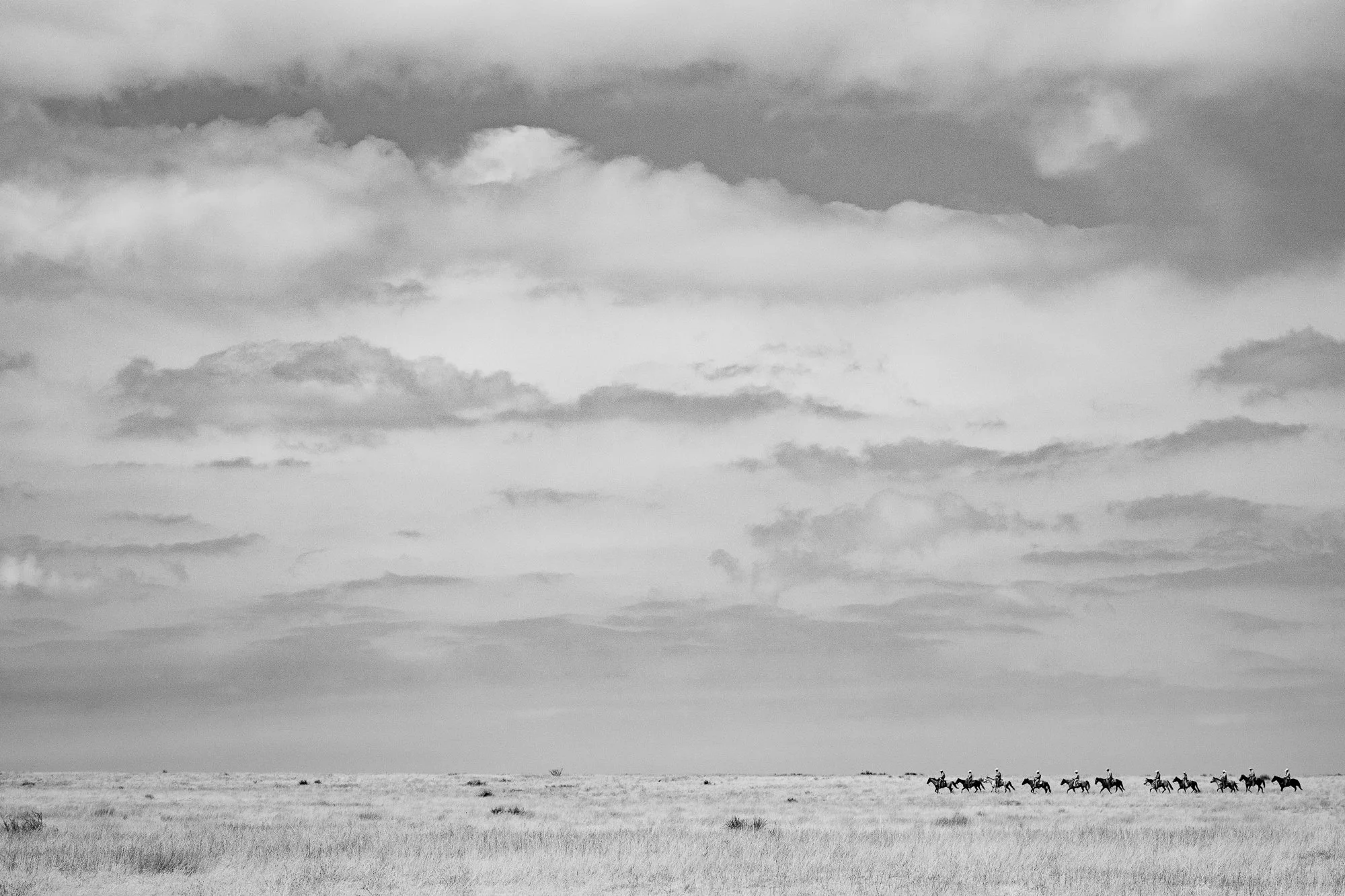
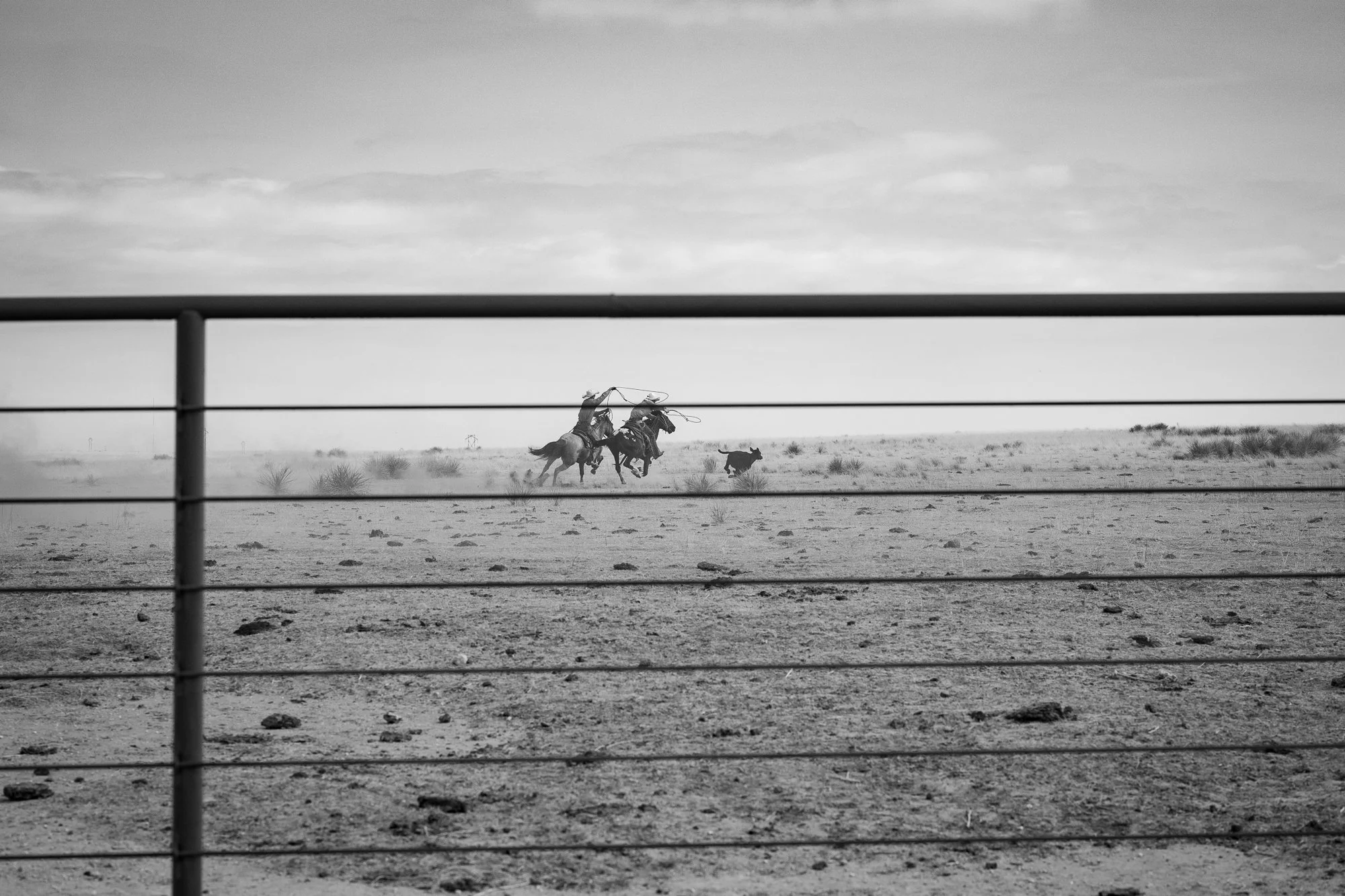
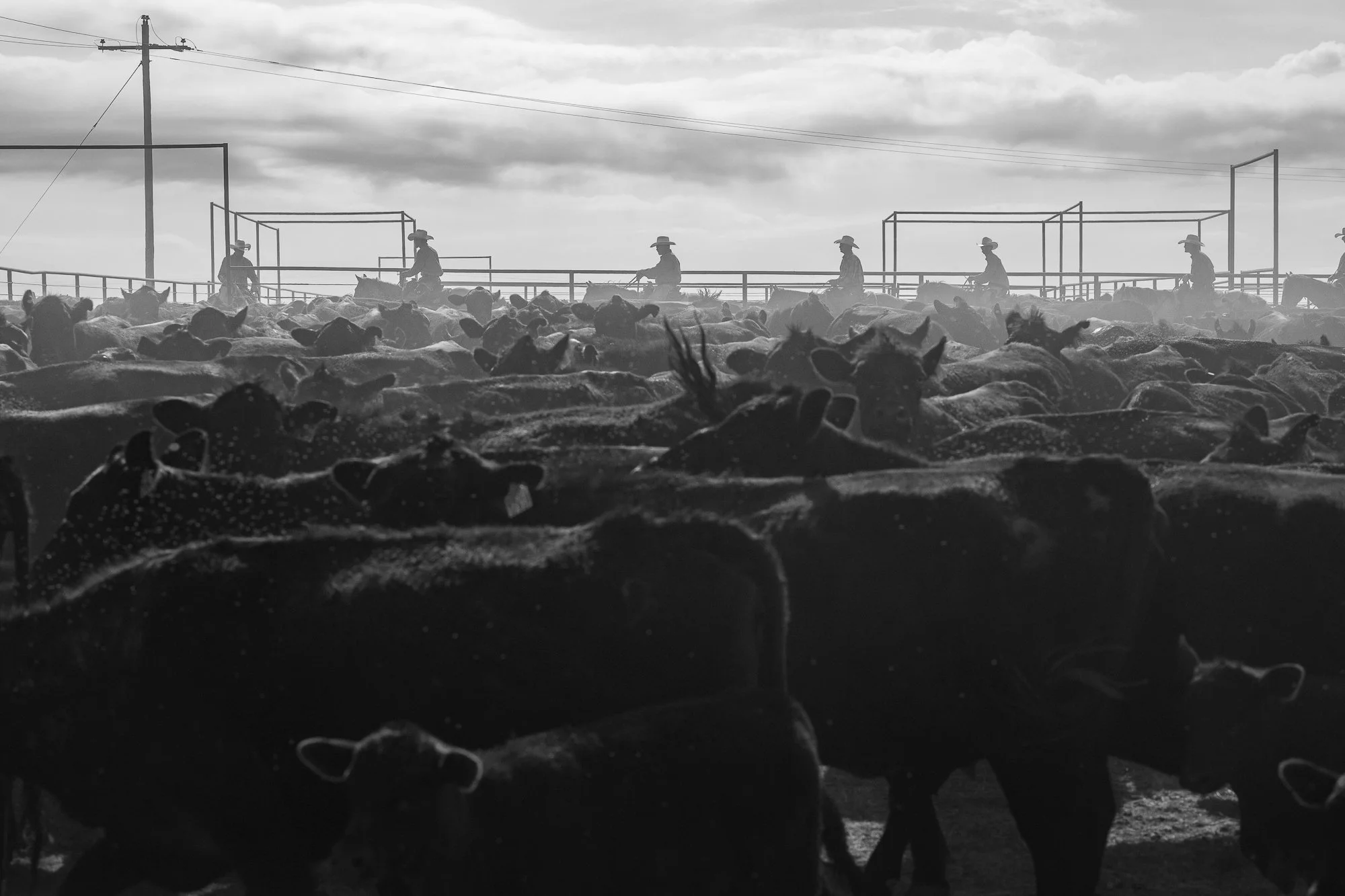
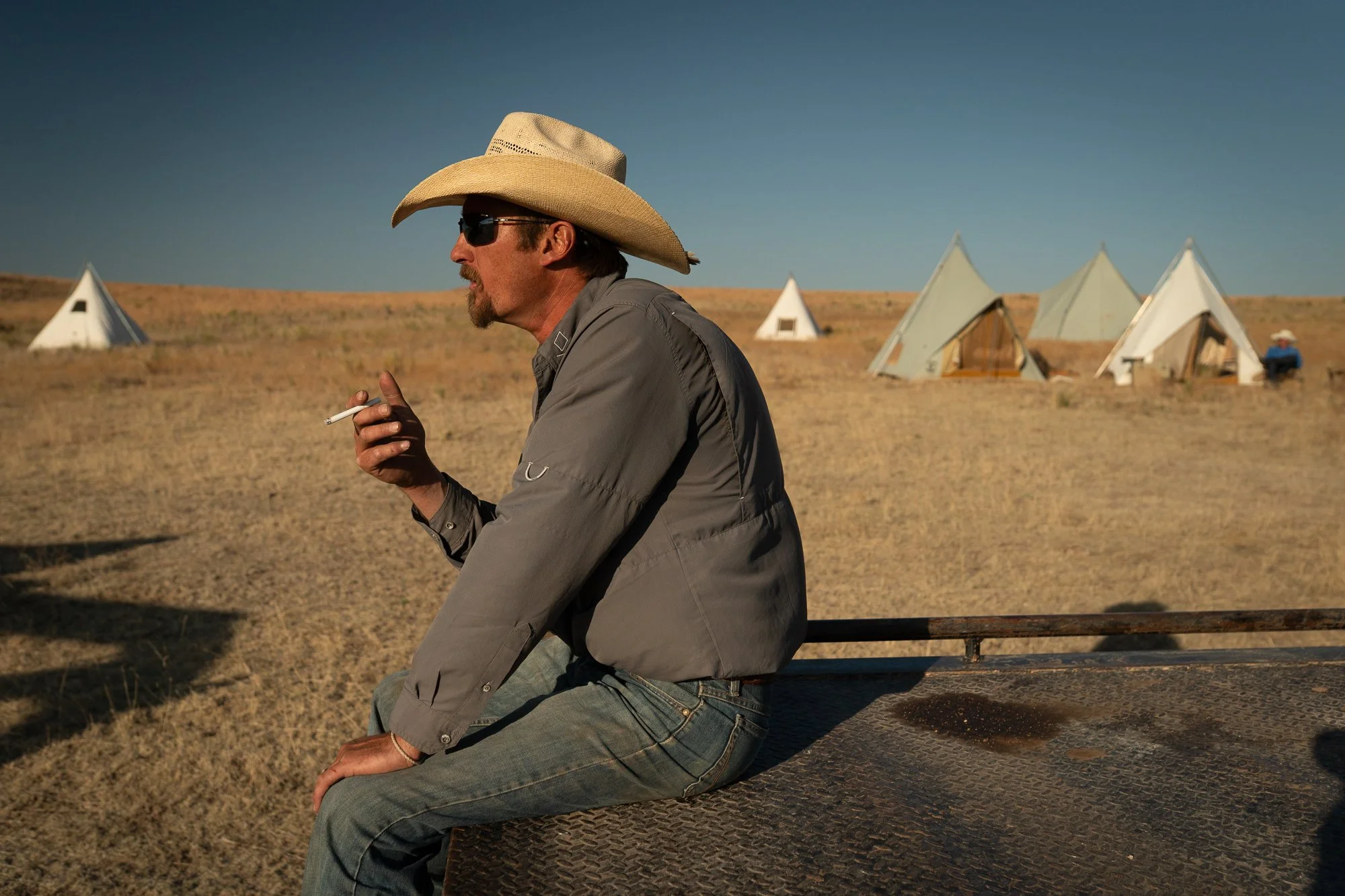
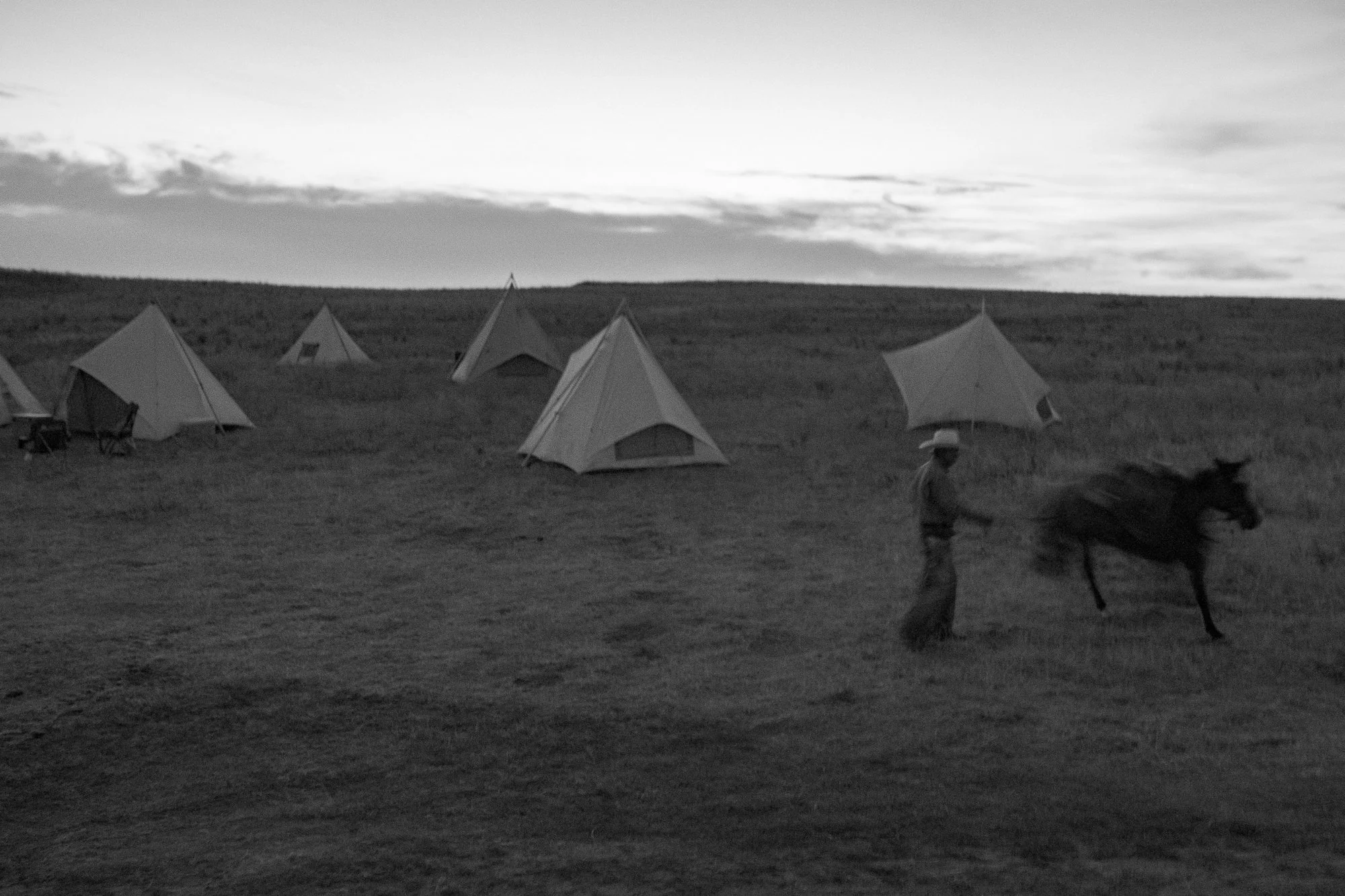
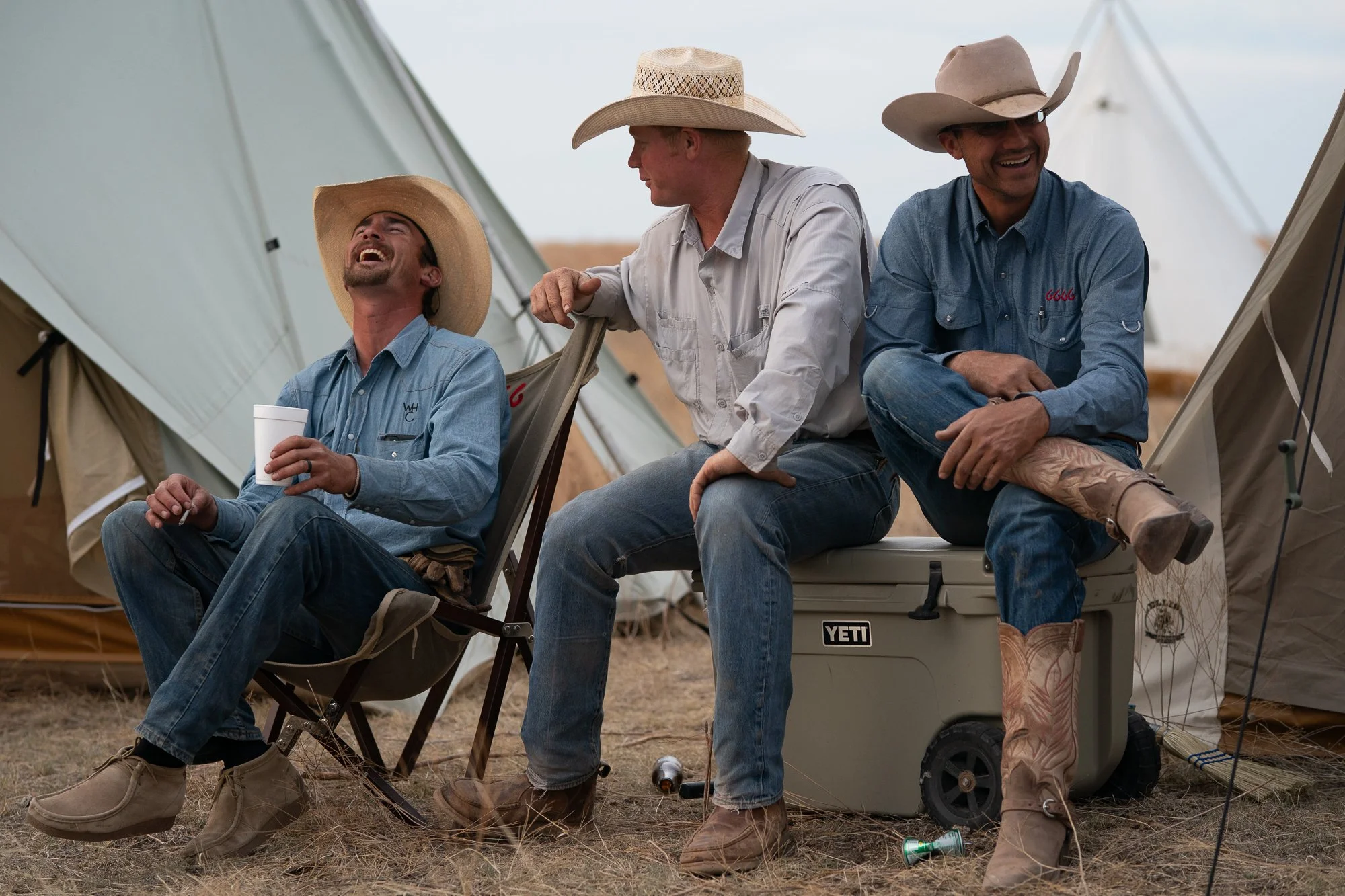
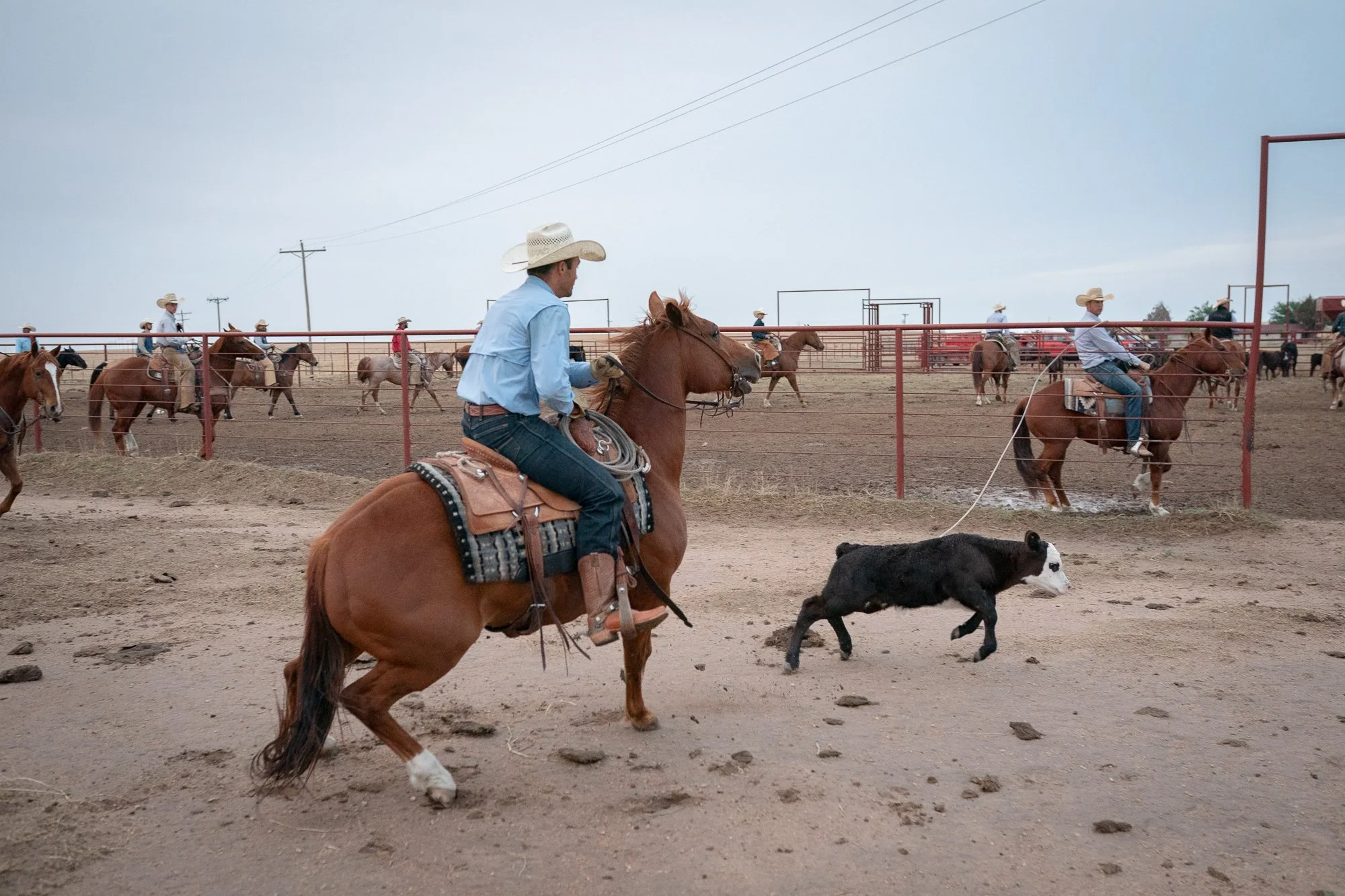
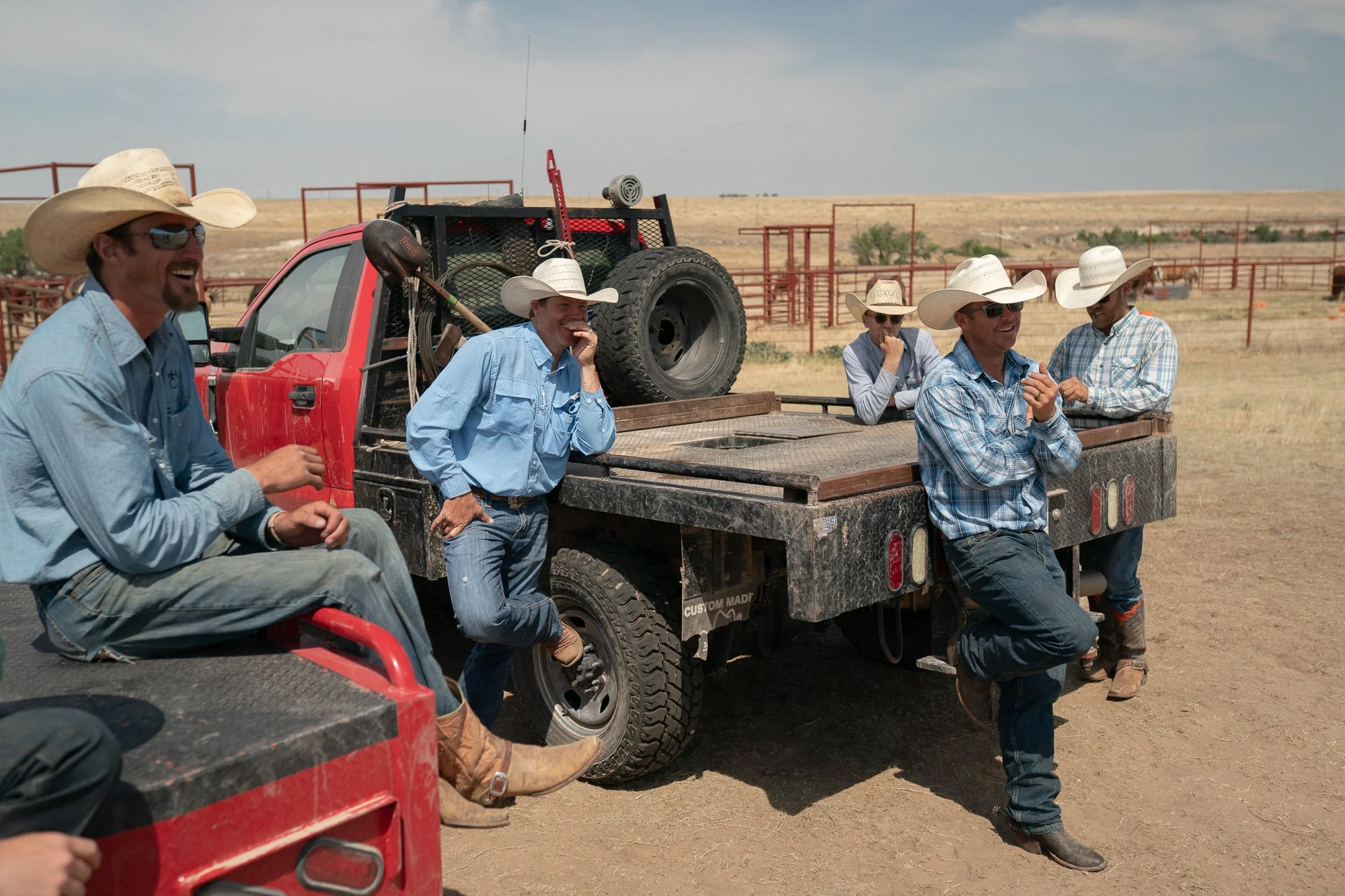
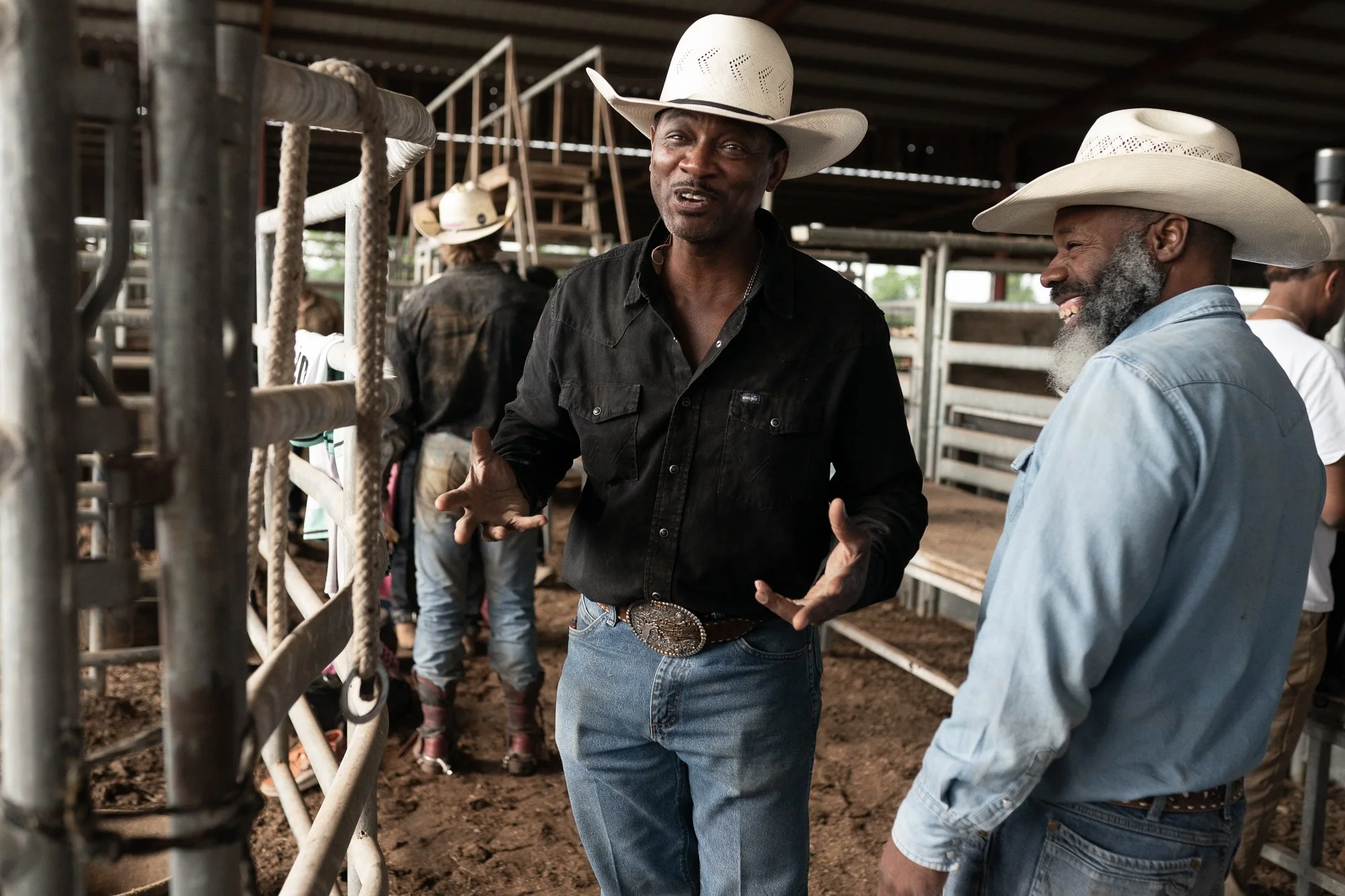
When Boot Barn called me to photograph a project with Dennis Davis, a bucking bull trainer in Texas, I knew it was going to be one of those shoots where everything lined up — the subject, the setting, and the story.

Dennis lives and breathes the Western lifestyle. His world is built around the kind of grit and determination that can’t be staged. That’s why people like Dana White trust him with their bulls, and that’s the kind of authenticity brands like Boot Barn want in their photography. It’s also the kind of work I love to produce.

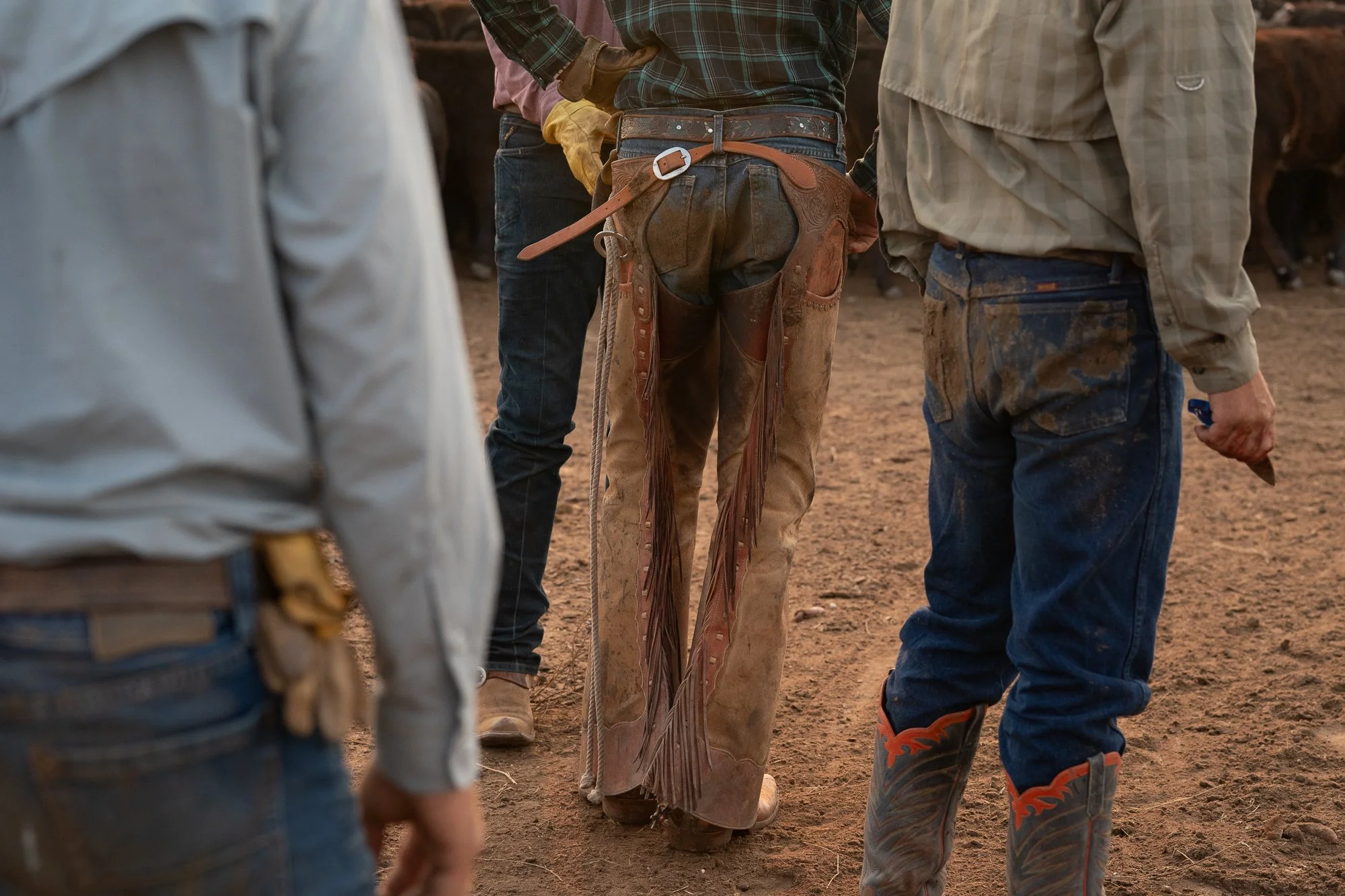
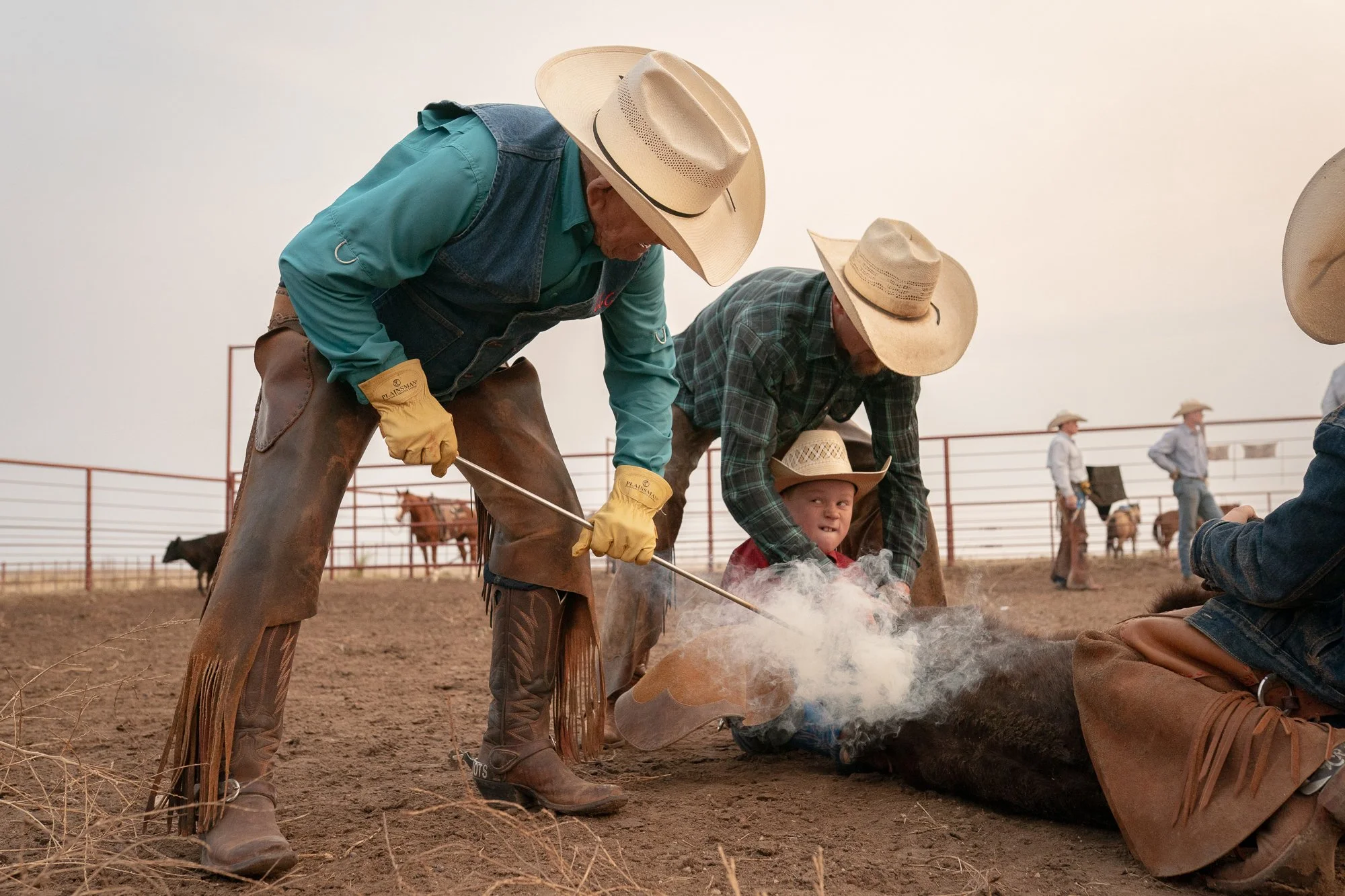
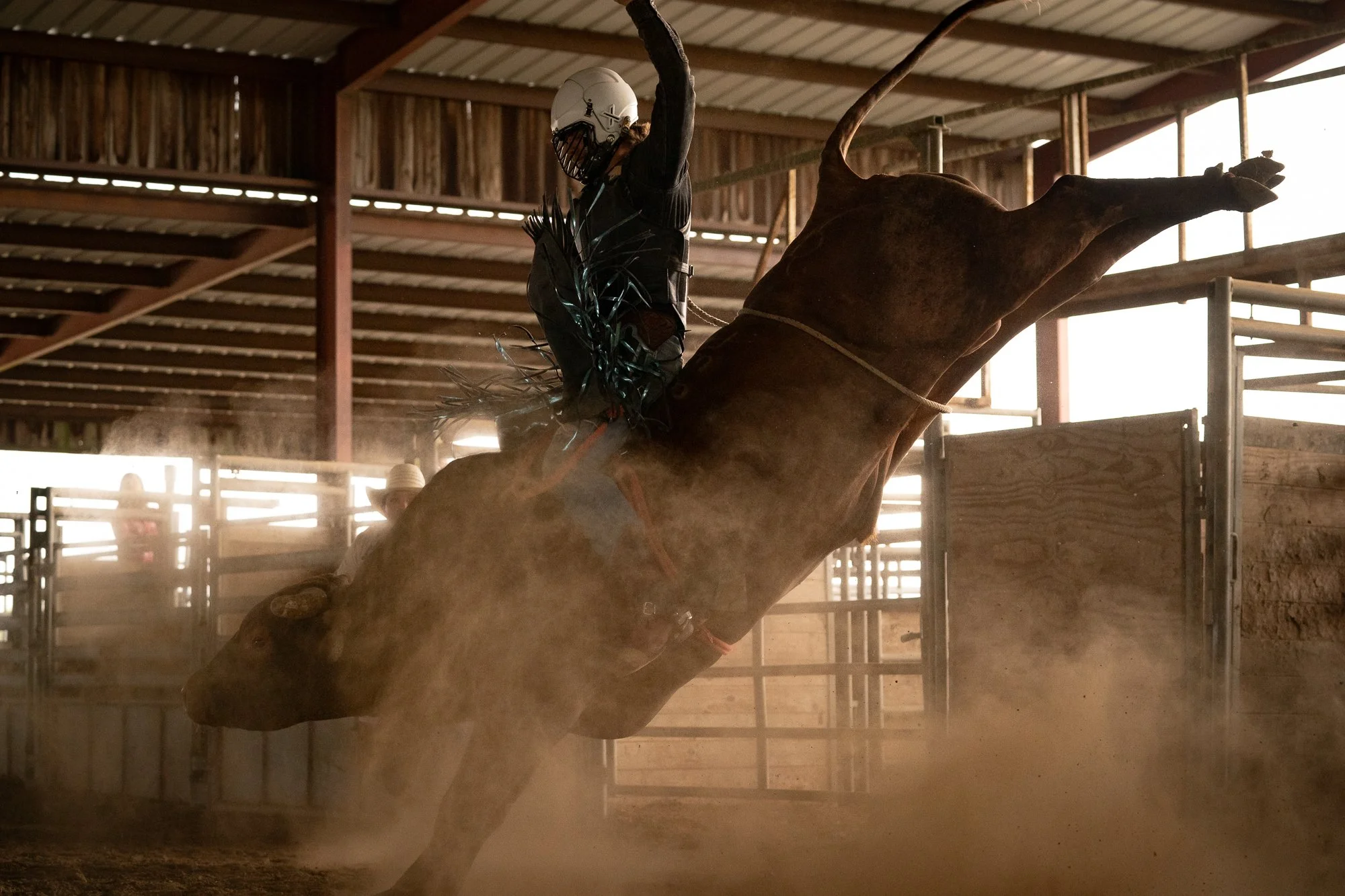
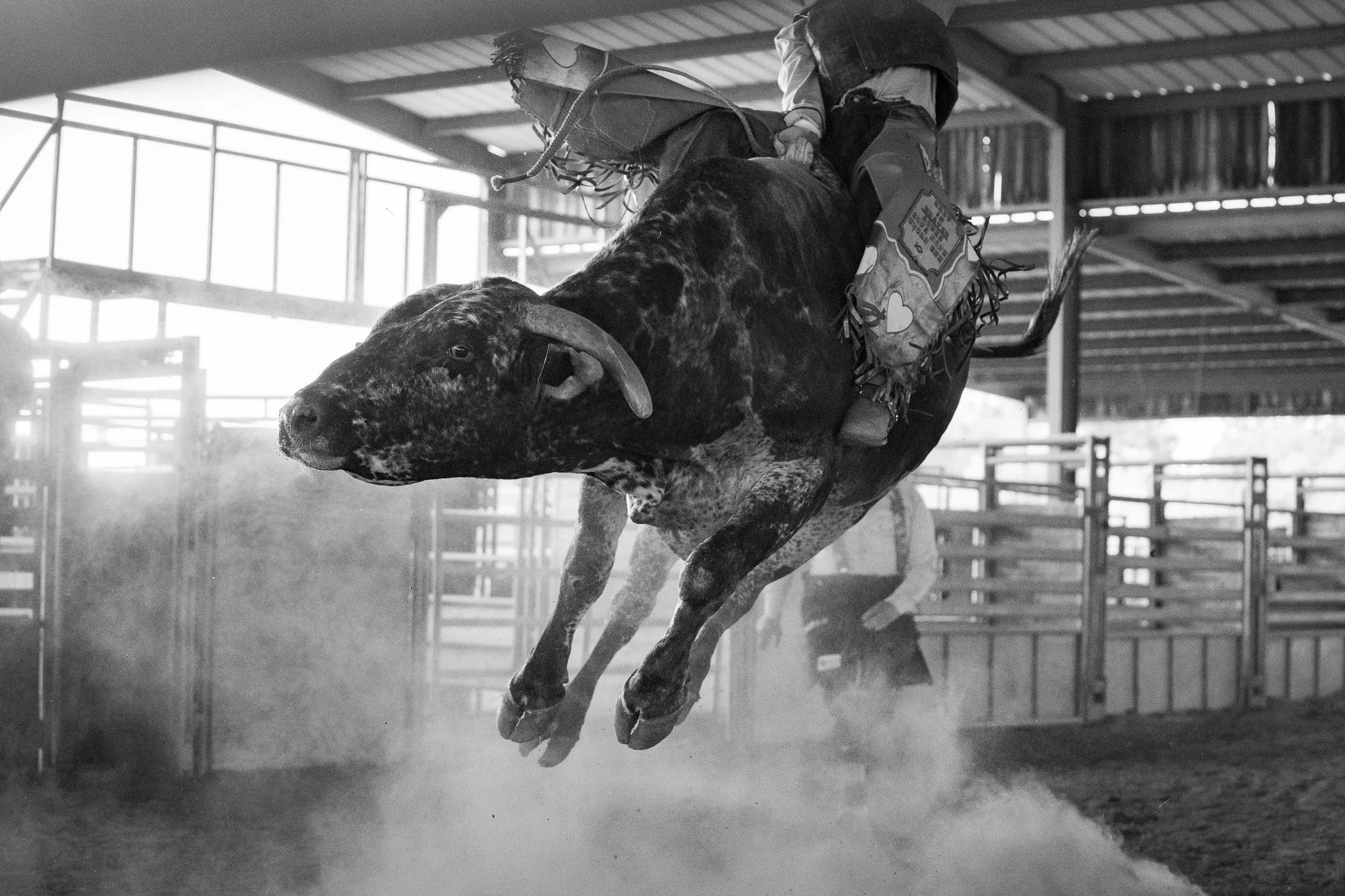
From a production standpoint, shoots like this are where preparation meets adaptability. Bulls don’t wait for lighting setups, and Dennis can’t hit pause so we can get the perfect angle. The key is building trust, staying mobile, and knowing when to step in and when to step back. Every shot has to feel as natural as the dust and sweat in the air. So my tactic is to just be a fly on the wall, with the confidence that all my experience leads me to the right wall at the right time.

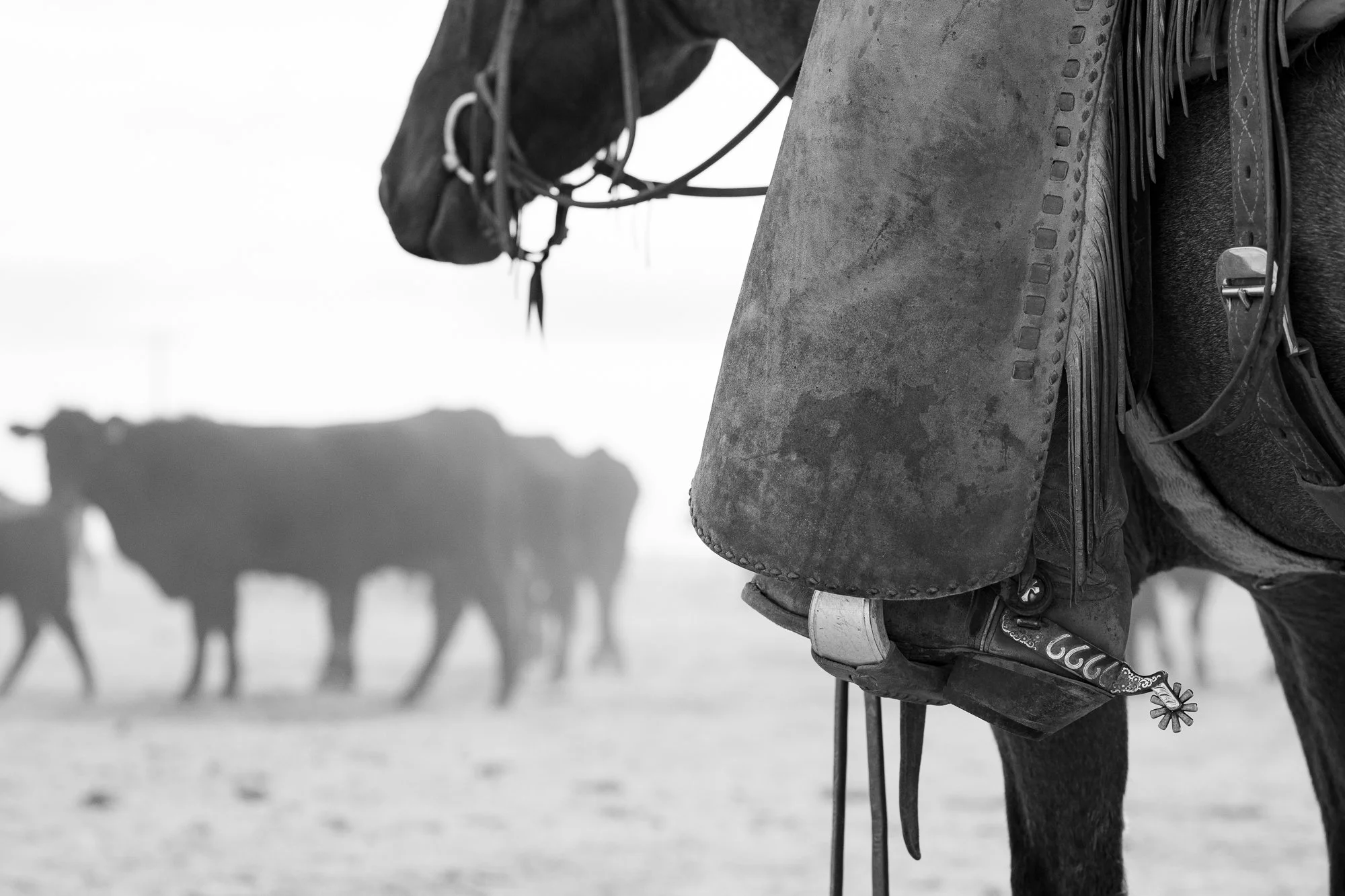
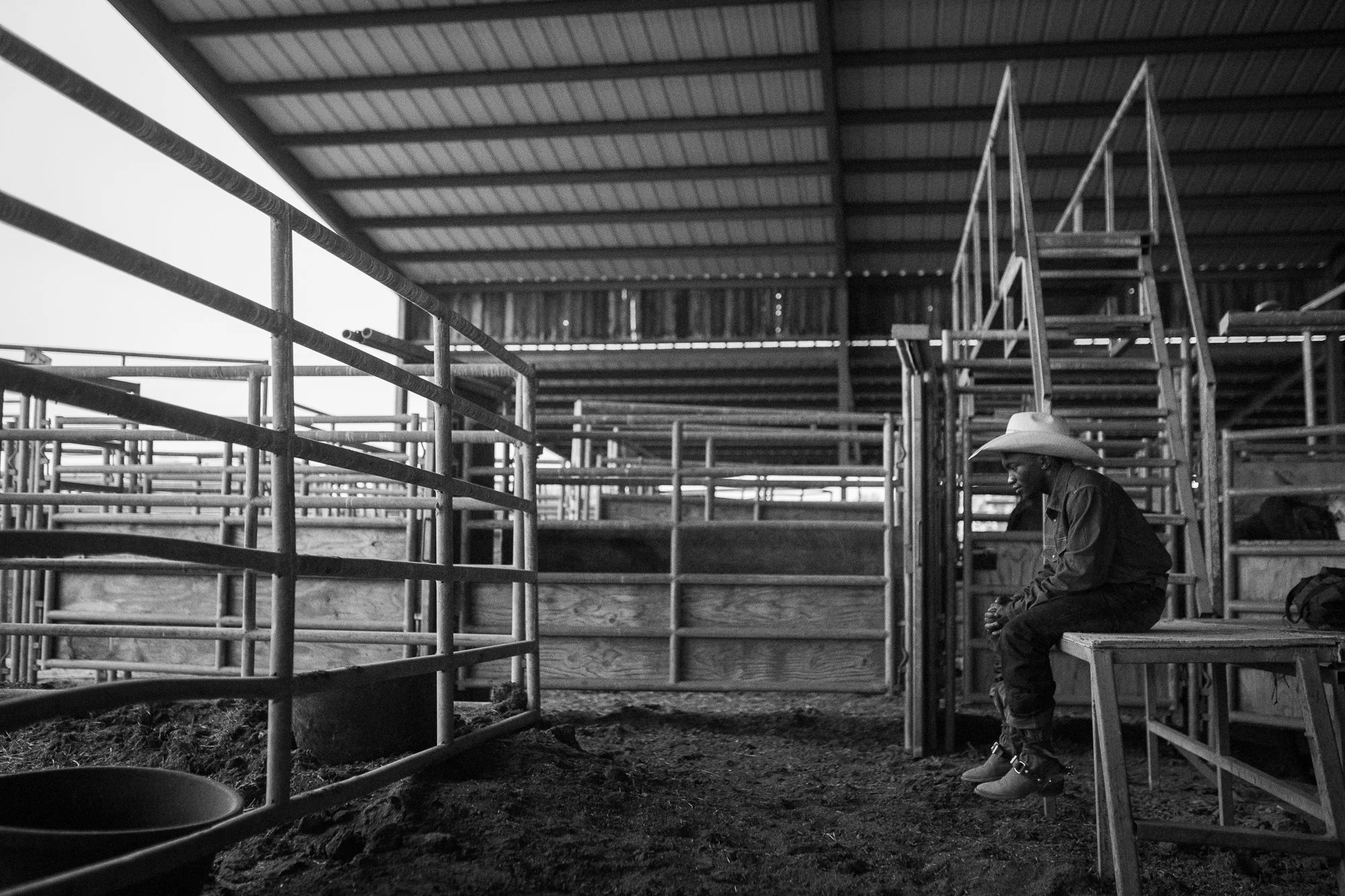
Working with Boot Barn meant balancing their brand vision with the reality of Dennis’ day-to-day routine that would both tell a story and sell clothes. We mapped out a shot list, but the best images came from leaning into what was happening in the moment: Dennis working a bull through the chute, quiet pauses between runs, the weathered textures of the arena, and of course action photos of the riders in action. Those unscripted moments are what connect an audience to a brand. For brands, that’s the value of hiring a photographer who has spent years documenting real Western culture. It’s not just about sharp images — it’s about telling stories that feel lived-in and true, while still delivering the polished assets a campaign demands.

Why Authenticity Matters for Brand Photography

Audiences are sharp. They can spot staged from a mile away, especially in the Western world. Photographing someone like Dennis Davis for Boot Barn wasn’t about staging cowboys and bulls — it was about showing the raw power and quiet pride of the work as it really happens. That kind of authenticity is what gives a brand’s imagery staying power.

What Brands Can Expect Working With Me

Every brand has its own story. My job is to translate that story into imagery that feels both true and visually striking. On shoots like this, that means:

  • Clear communication before the shoot to align on goals.

  • Flexibility on location to work with real-world conditions.

  • An eye for the unexpected that creates the strongest images.

  • Fun - if we can’t have fun on a photoshoot while still getting the job done, then you’re in the wrong business.

  • Deliverables ready for campaigns across print, web, and social.

That’s the same approach I bring whether it’s a shoot for Boot Barn, a fitness campaign, or photographing working cowboys in the middle of Nevada. So if your brand is looking for imagery that feels as real as the people wearing your gear, I’d love to help bring that story to life -rob@robhammerphotography.com

To view the short documentary Boot Barn made about Dennis Davis go HERE.

To view more of my Western cowboy photography go HERE.

Shop Fine Art Cowboy Photography Prints

Portrait of the bucking bull trainer Dennis Davis

Portrait of professional bucking bull trainer Dennis Davis

Photograph of a bull trainer getting into his truck in the early morning before sunrise on a Texas ranch

Dennis Davis getting into his big rig truck used for hauling bulls

Early morning photograph of a bucking bull being unloaded from a trailer

Dennis Davis unloads a bucking bull from a trailer

Photograph of bull rider Jacob Law walking into an outdoor rodeo arena

Jacob Law - bull rider

Detail photograph of a bull riders belt buckle

Close-up photograph of a bull riders belt buckle

Photograph of a dusty bull ride at a practice arena in Texas

Gritty photograph of a bull ride in Texas

Silhouette portrait of a bull rider standing in the entrance of an arena

Dramatic portrait of a bull rider

Photograph of a bull rider quietly preparing for a ride

Quiet moment of contemplation before riding a bull

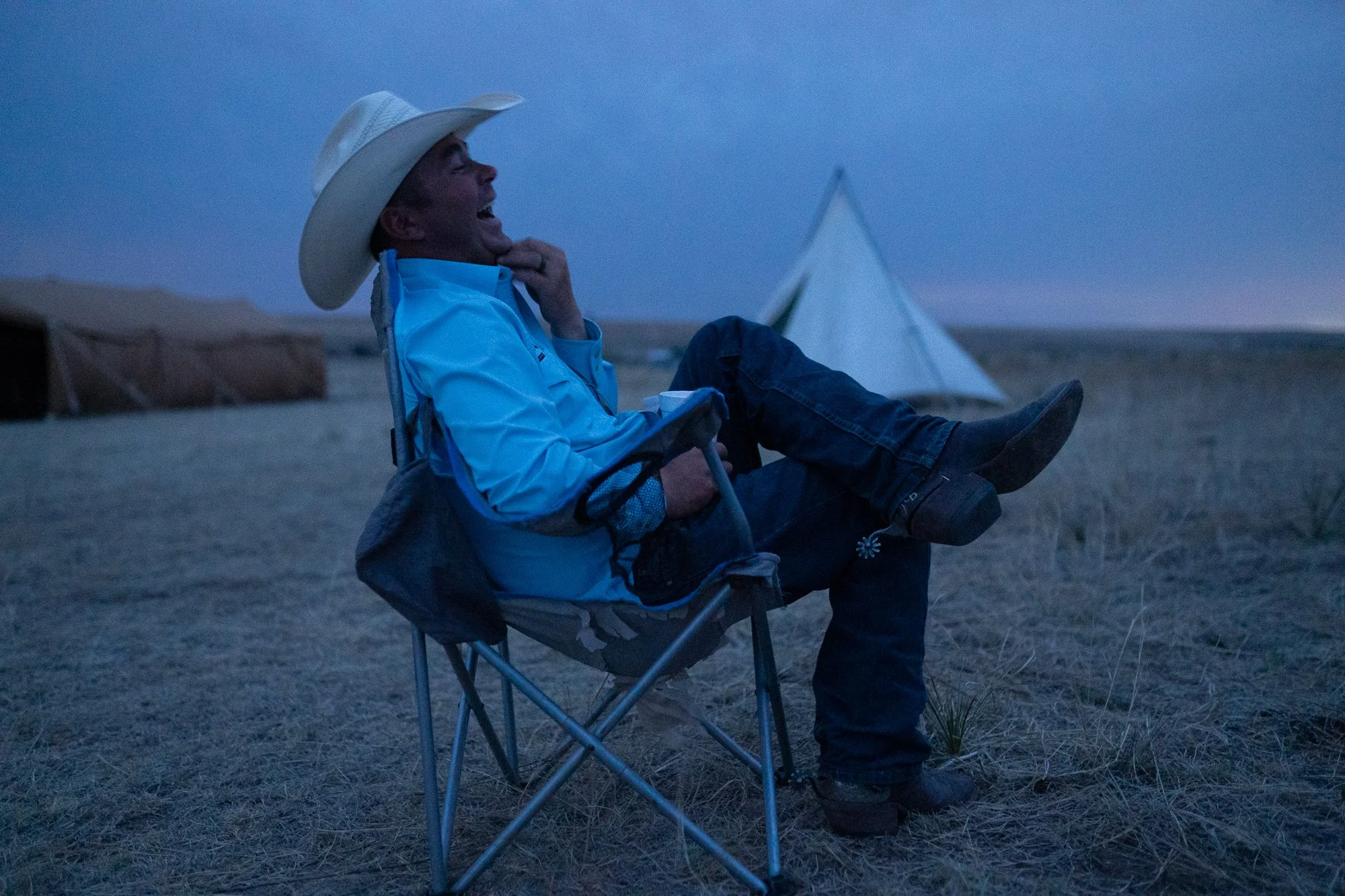
Photograph of a bull trainer laughing with friends at a practice arena

Dennis Davis laughing with friends during a bull training session

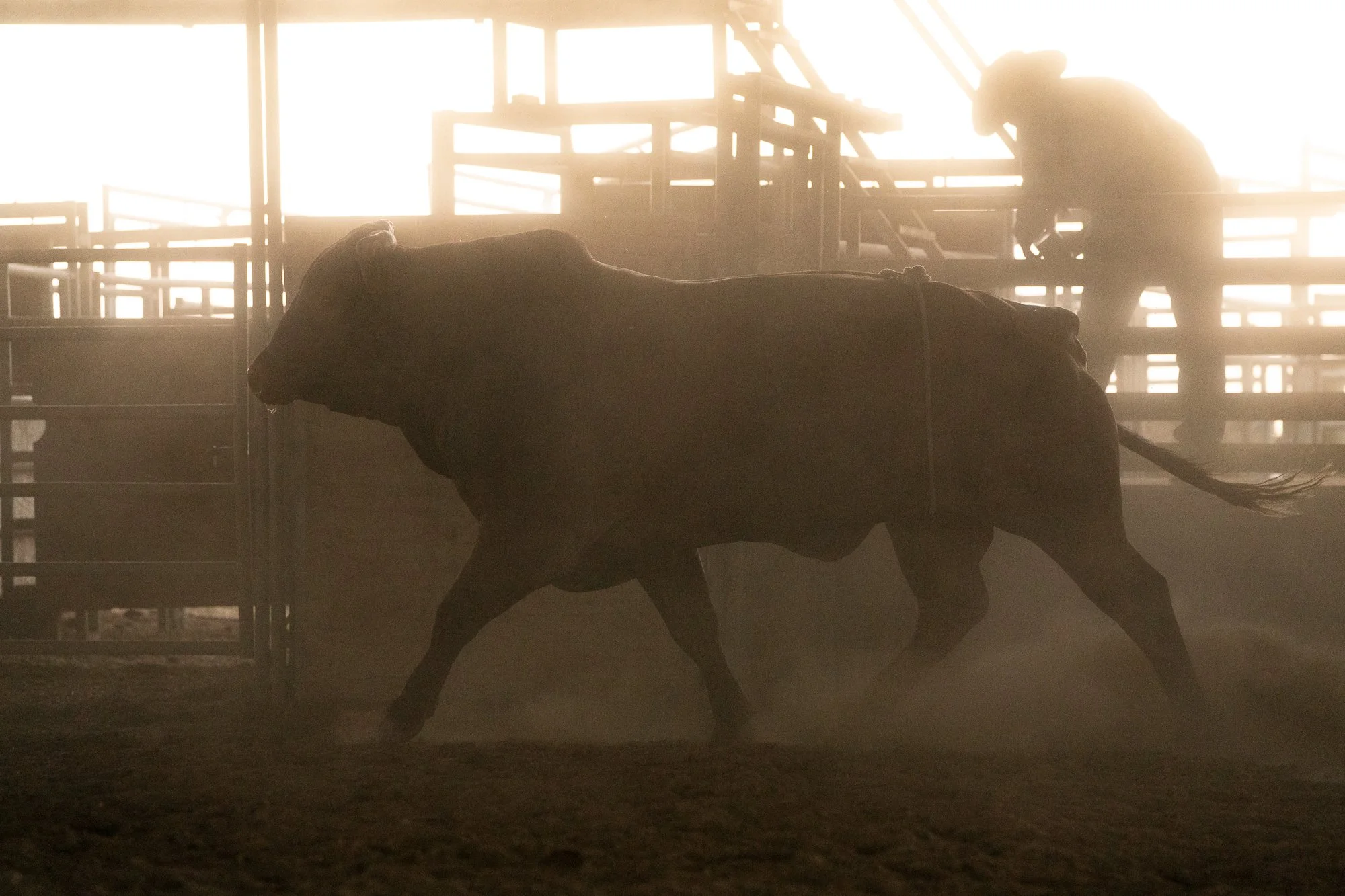
Photograph of a bucking bull in beautiful light at an outdoor arena in Texas

Dramatic photograph of a bucking bull

Photograph of a bull rider before a ride

Photograph of a bull rider before a ride

Gritty Action photograph of a bucking bull and rider in mid air

Action photograph of a bucking bull in mid air

Anthony Smith- bull rider- laughing with friends during training

Anthony Smith - Bull Rider

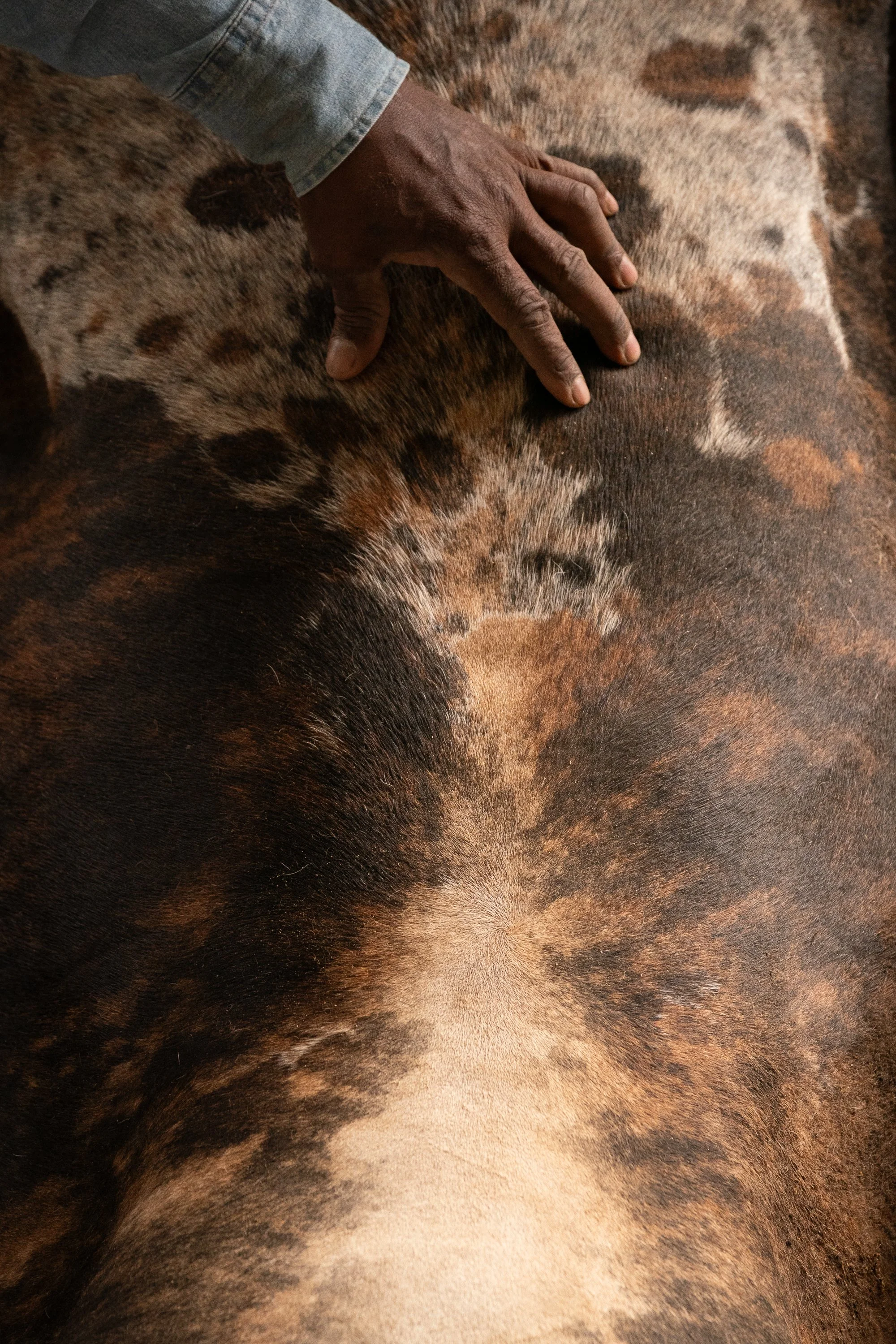
Photograph of a trainers hand petting the back of a bucking bull

Dennis Davis petting the back of a bucking bull

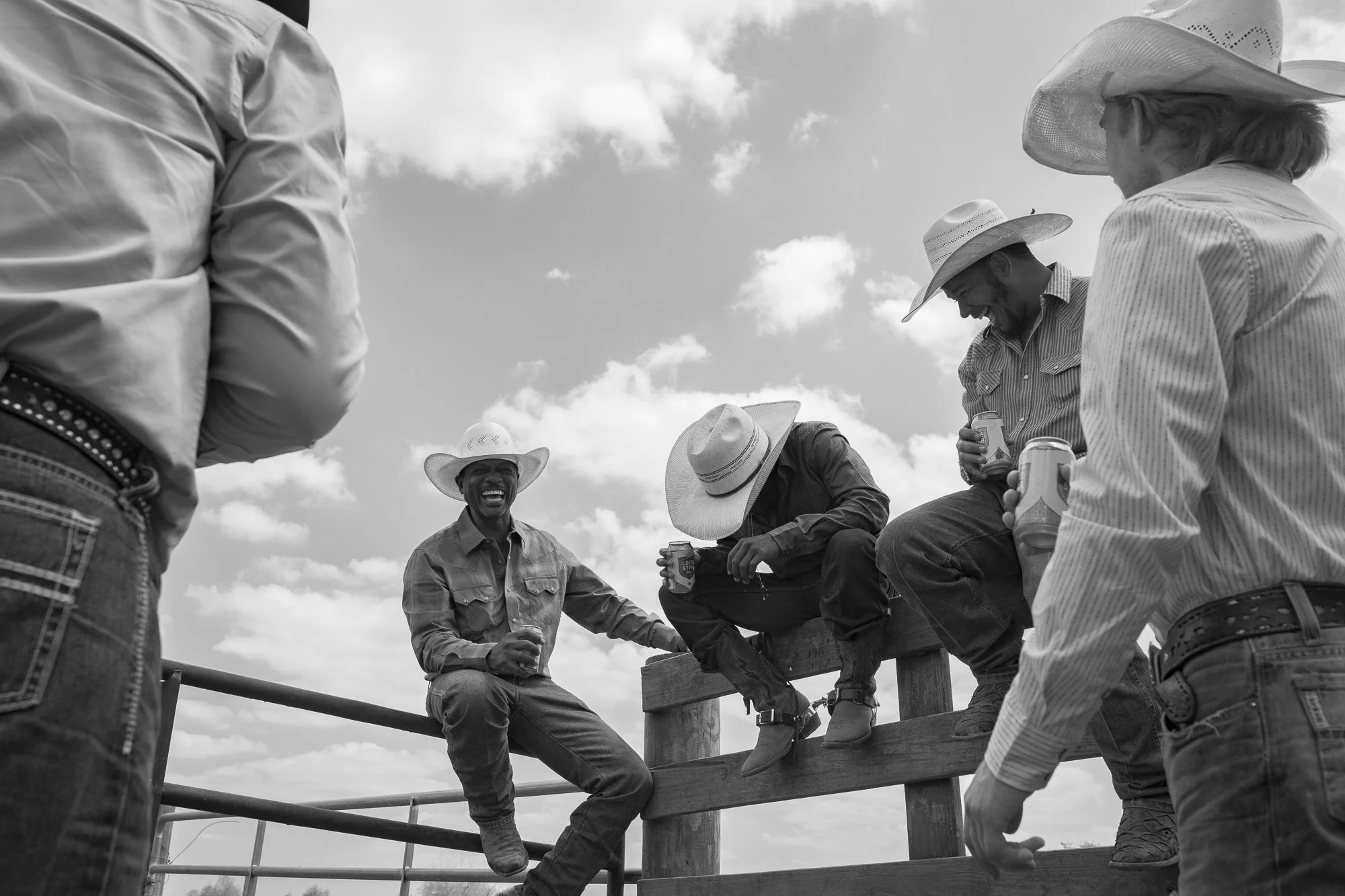
Photographs of cowboys laughing while drinking Lone Star beer on a ranch in Texas

Bull trainer Dennis Davis laughing with friends while drinking beer

Photograph of an ear tag on a bull with Dennis Davis' logo

Dennis Davis Bucking Bulls

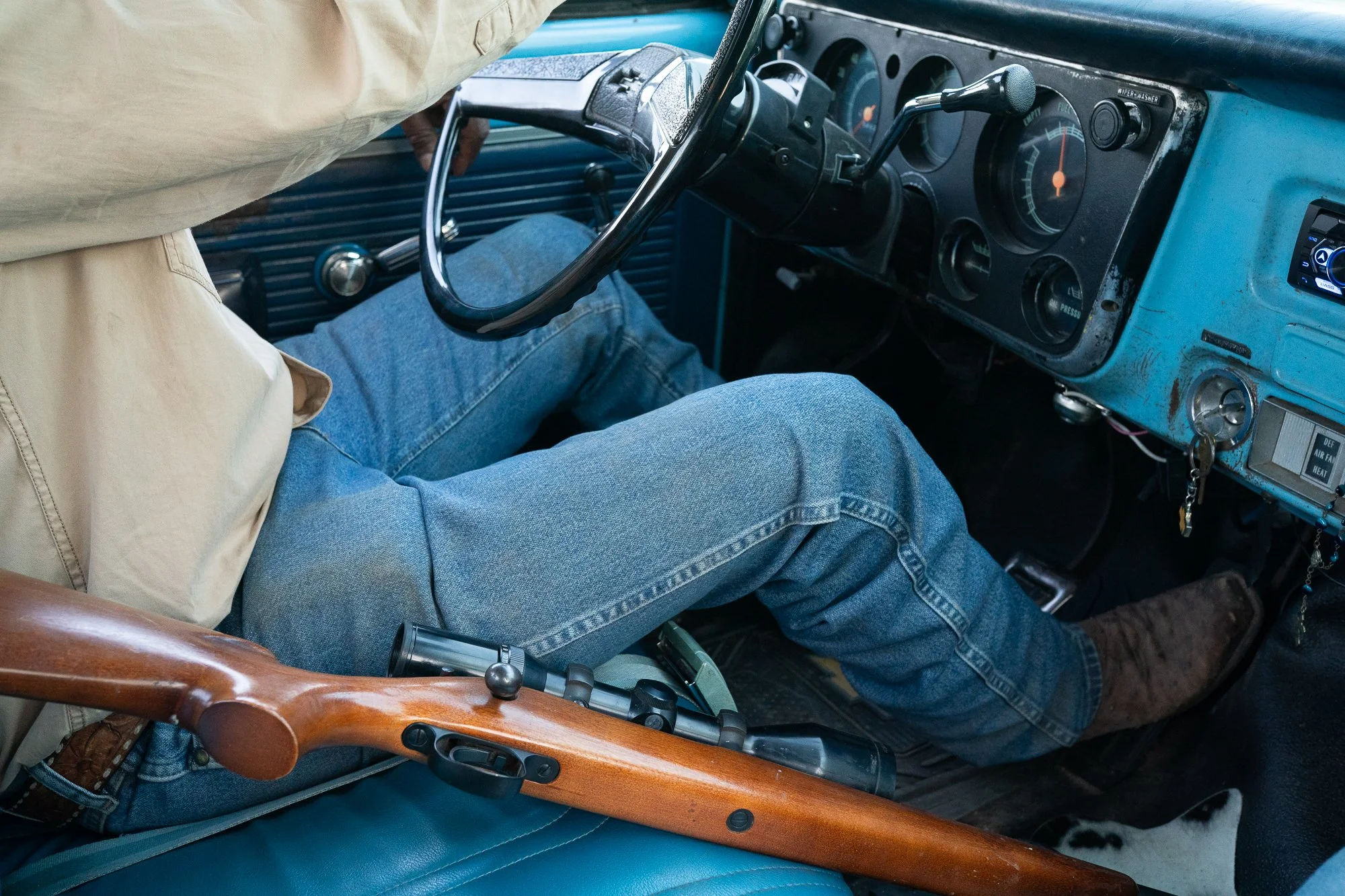
Detailed photograph of a cowboy driving in a classic truck with a rifle by his side

Sunset pickup truck ride on a ranch in Texas

Photograph of a cowboy riding in the back of a pickup truck at sunset

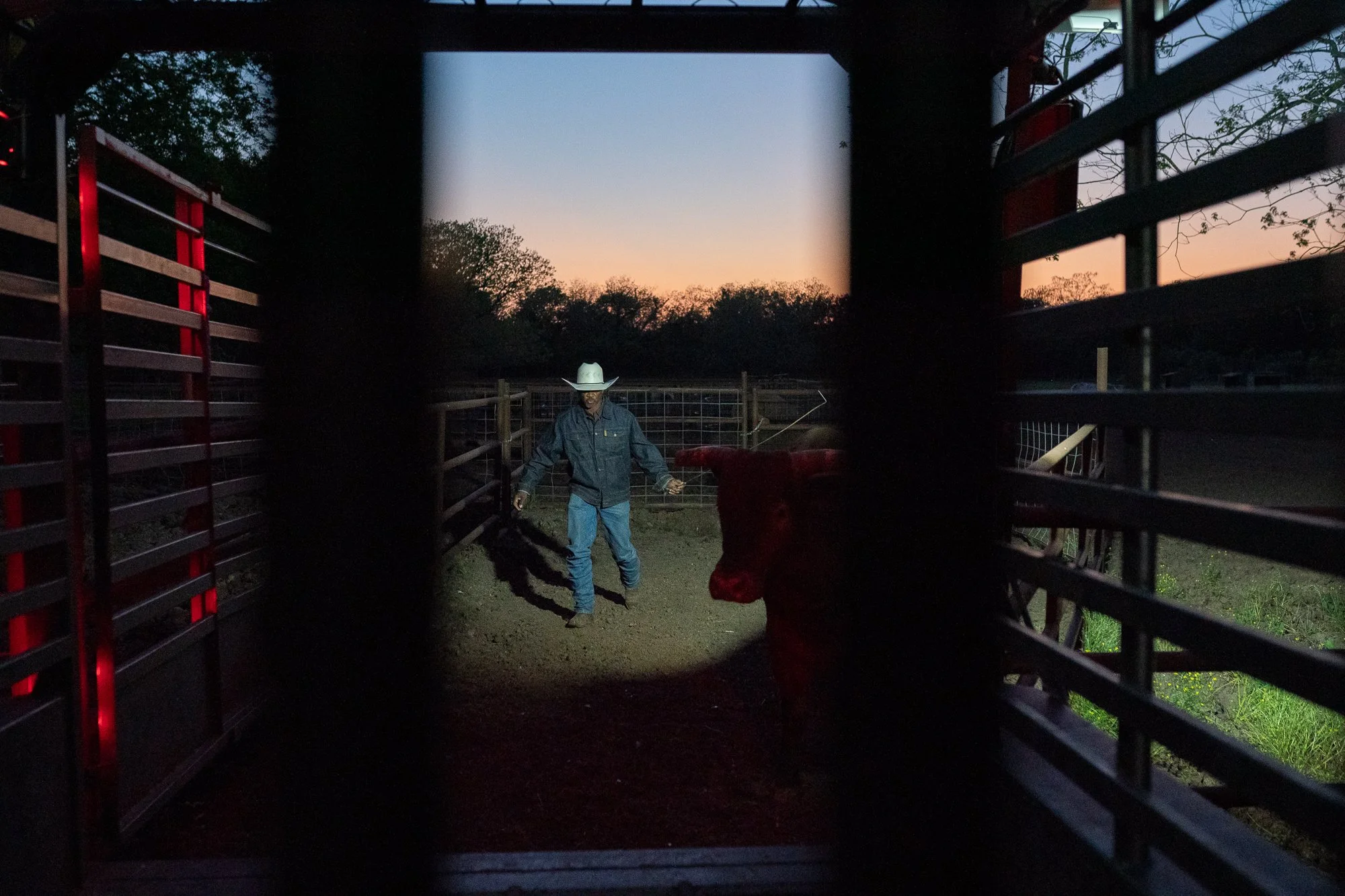
Dennis Davis loading a bull into a trailer at dusk

Bucking bull trainer Dennis Davis loading a bull onto a trailer at dusk

ML Leddy Cowboy Boots

Custom Cowboy Boot Photographs

Legendary Western Craftsmanship

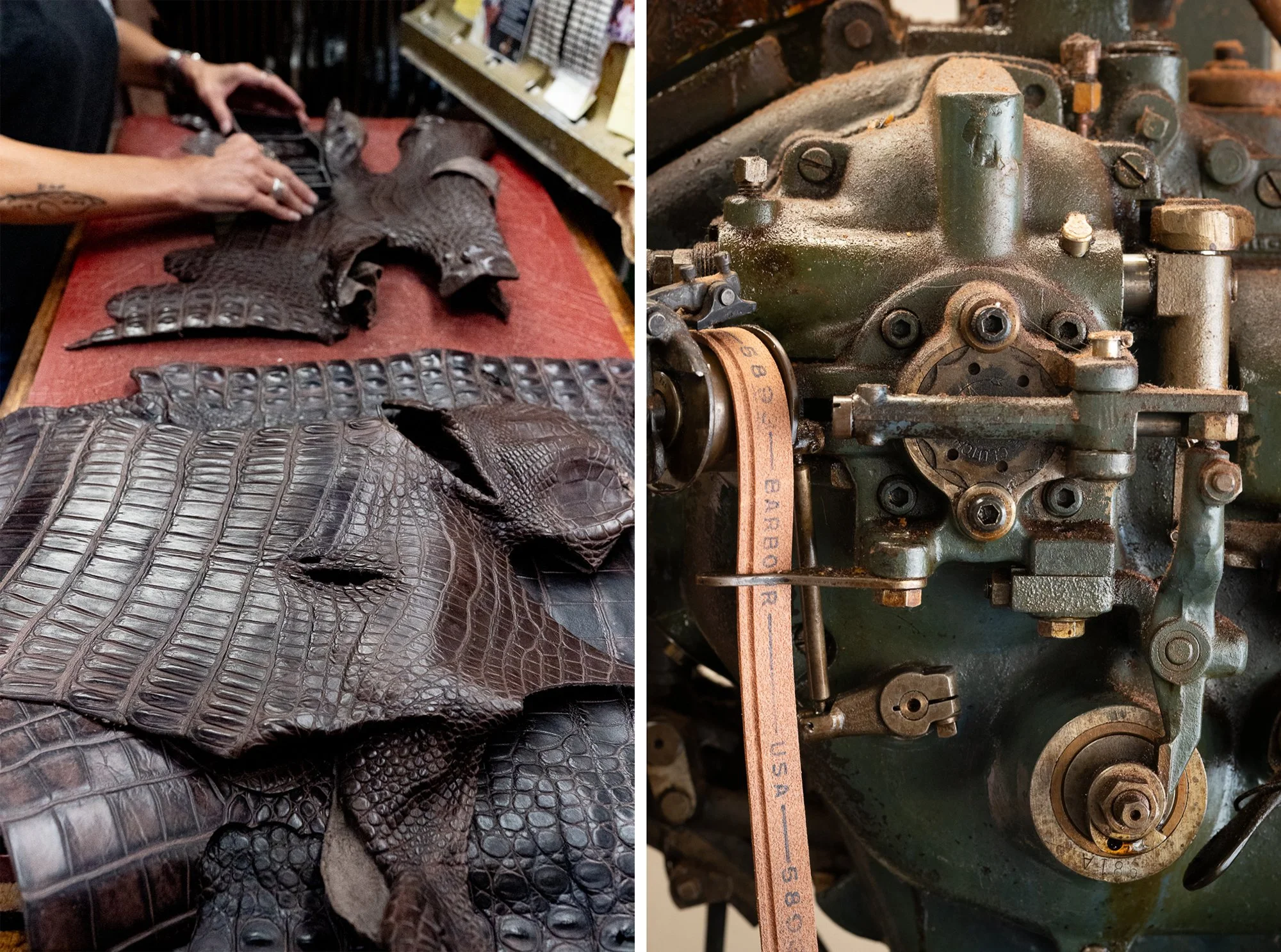
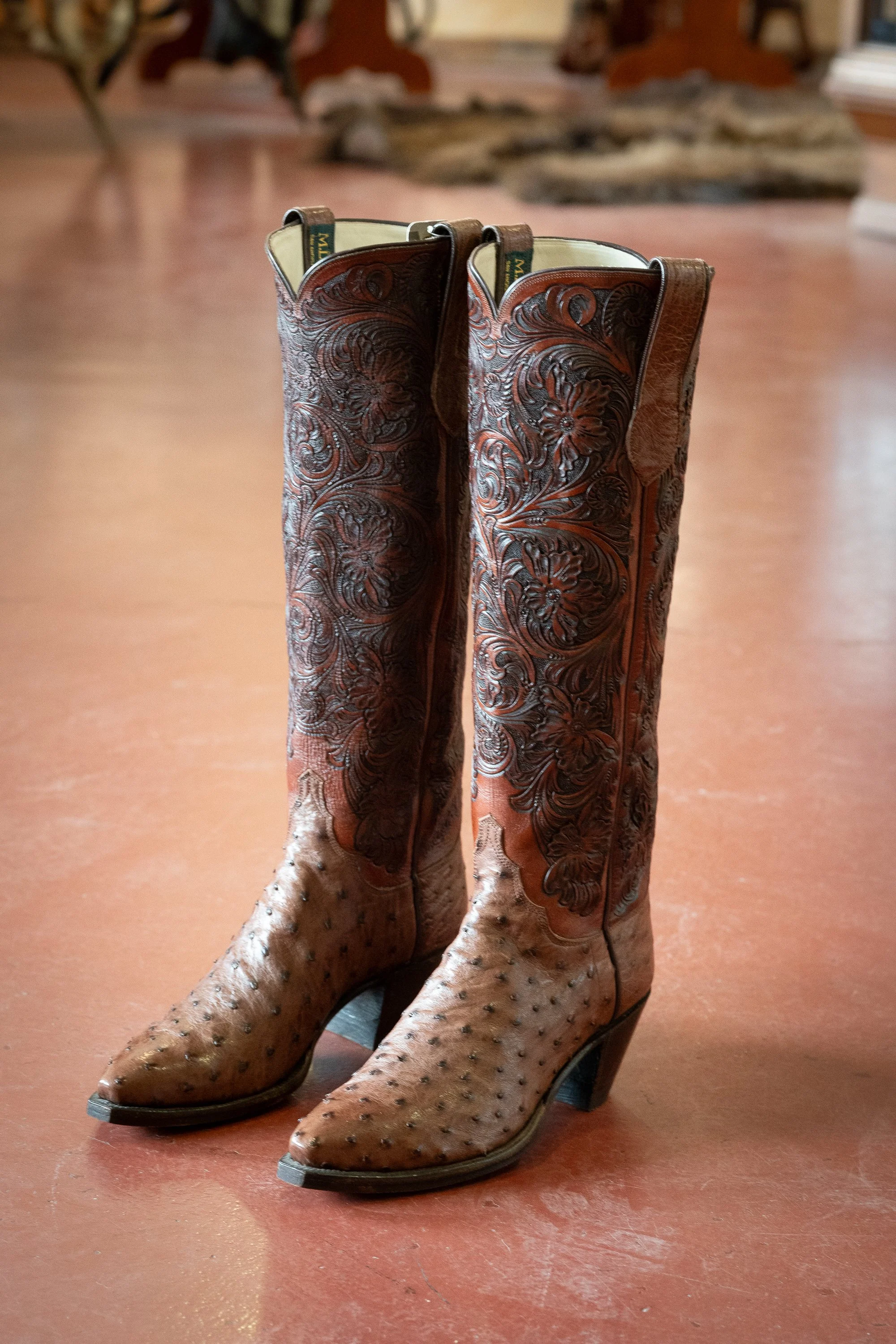
ML Leddy’s has been making custom cowboy boots in Texas since 1922, and you can feel every bit of that history when you step into their workshop in San Angelo. The storefront is polished and proud—rows of exquisite boots, saddles, and a name that’s been part of Western tradition for over a century. But it’s what’s happening in the back that really caught my attention.

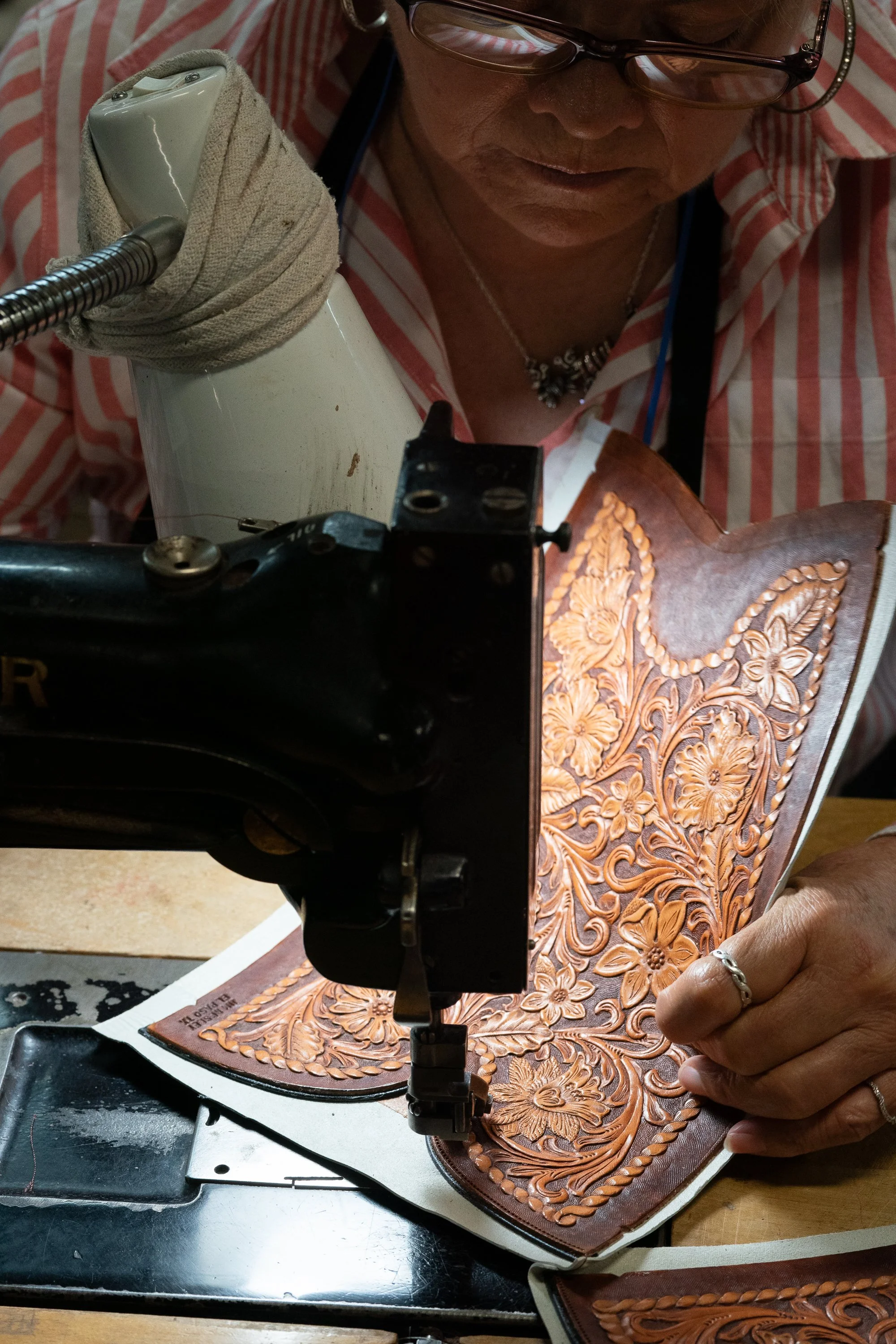
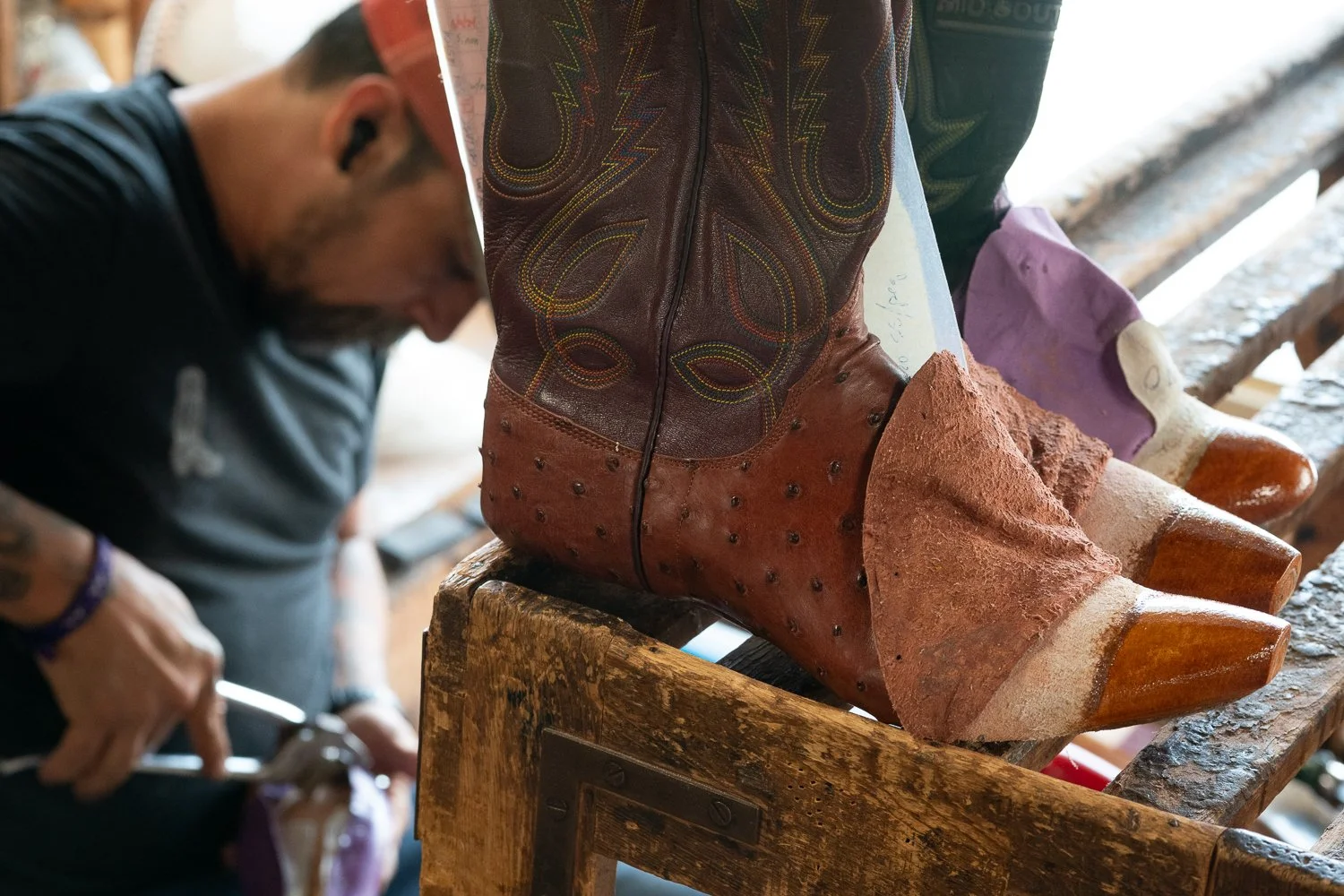
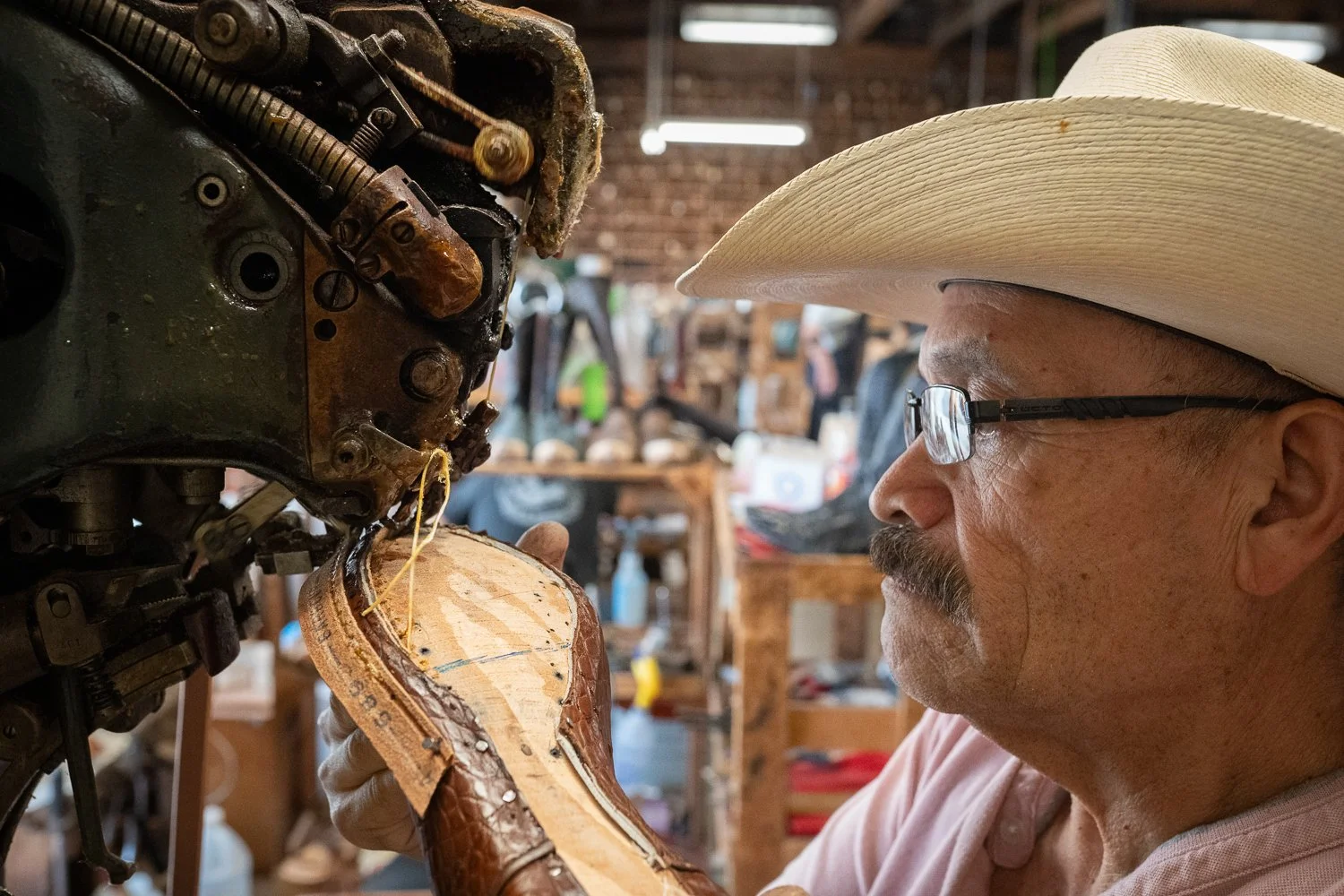
That’s where I spent the day, photographing the boot makers. No models, no staging, just real craftsmen doing the work like it’s been done for generations. Some of these guys have been with Leddy’s for decades. They know the smell of each kind of leather, the sound of a good stitch, the weight of the right tool. Nothing leaves that shop without passing through their hands.

The space itself isn’t glamorous. Harsh light, scuffed floors, machines that look older than most of us. But that’s the point. This isn’t about trends, it’s about tradition. Watching them work, you realize these boots aren’t just footwear. They’re a continuation of something bigger. A legacy. A relationship between maker and wearer that starts long before the first fitting and lasts well beyond the last step.

Photographing in that room felt less like documenting a product and more like honoring a process. This is cowboy culture too, not just on the back of a horse, but in the quiet focus of someone building something with care, precision, and pride. Something that each loyal customer will wear with pride for the rest of their lives.

Fine Art Prints and Licensing

View more western photography

Shop cowboy photography prints

And contact me directly to discuss editorial/commercial licensing options

Contact Rob
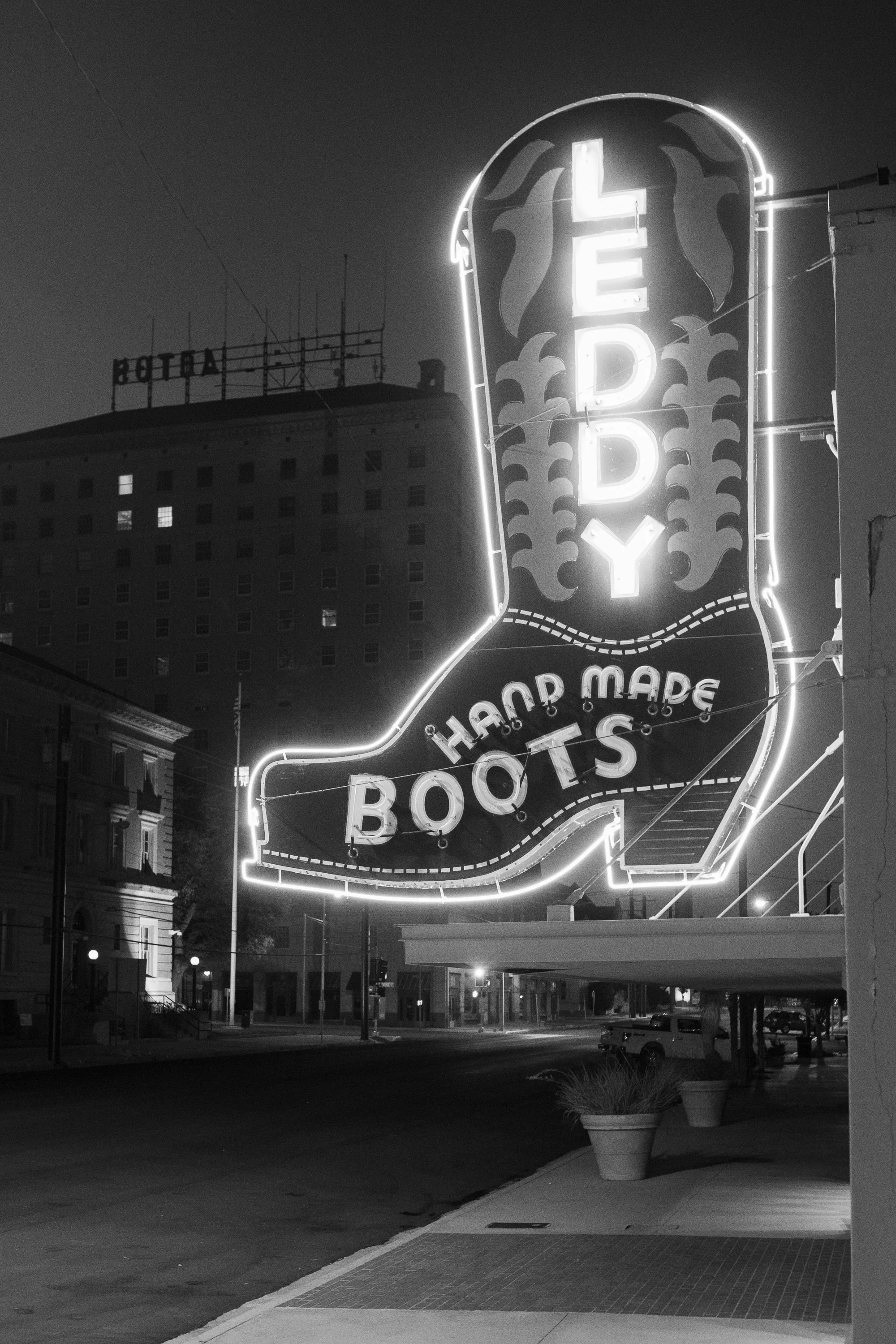
ML Leddy’s handmade boots neon sign glowing at night in San Angelo Texas

The iconic neon boot outside ML Leddy’s lights the streets of San Angelo, marking one of the West’s most respected handmade boot shops.

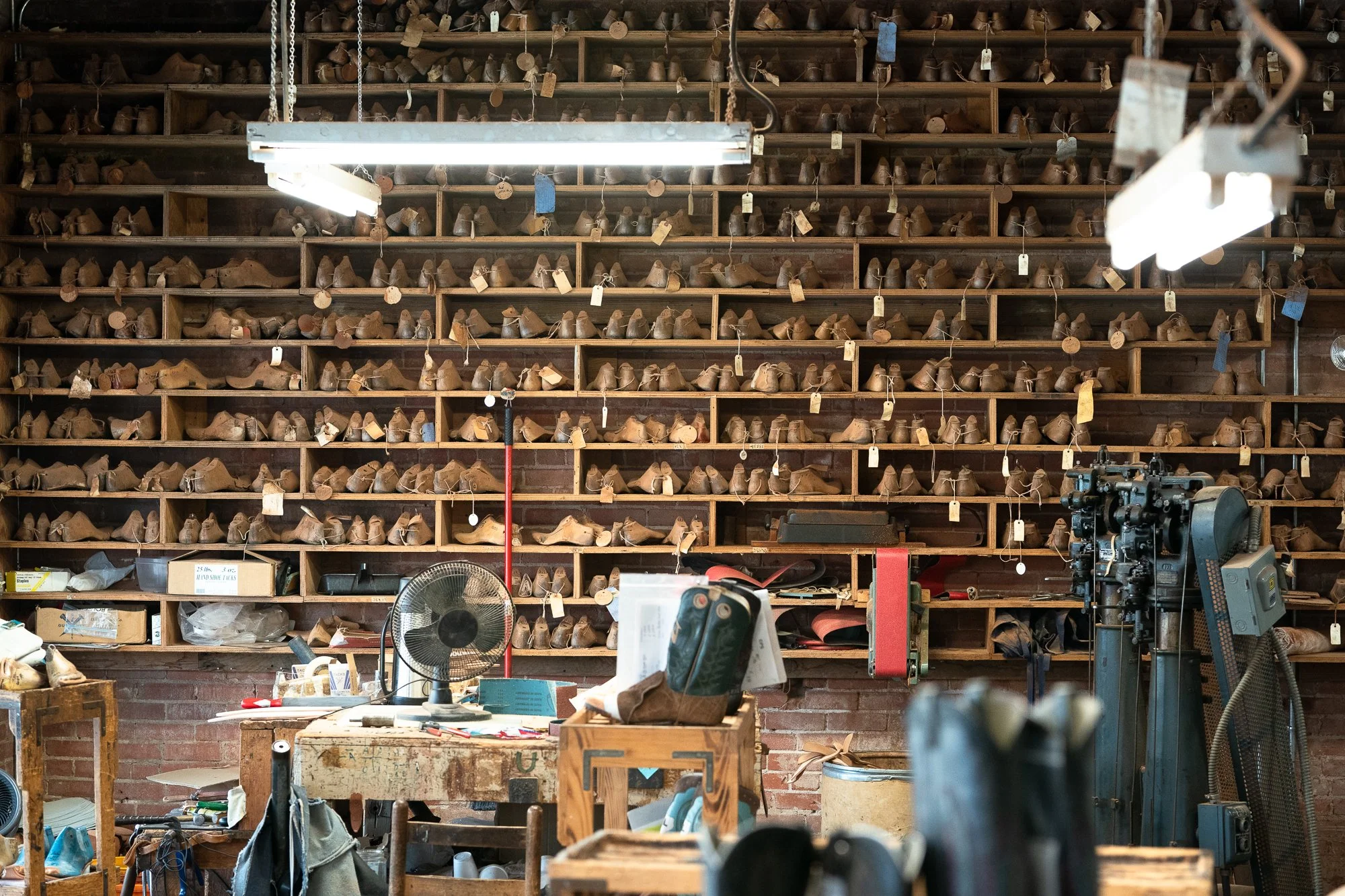
Interior of ML Leddy’s boot workshop with shelves of wooden lasts in San Angelo Texas

The ML Leddy’s workshop is lined with wooden lasts, each one tied to a customer and a specific fit.

Exotic leather hides prepared for handmade cowboy boots at ML Leddy’s

Exotic leathers are carefully selected and cut by hand, each hide destined for a custom pair of cowboy boots.

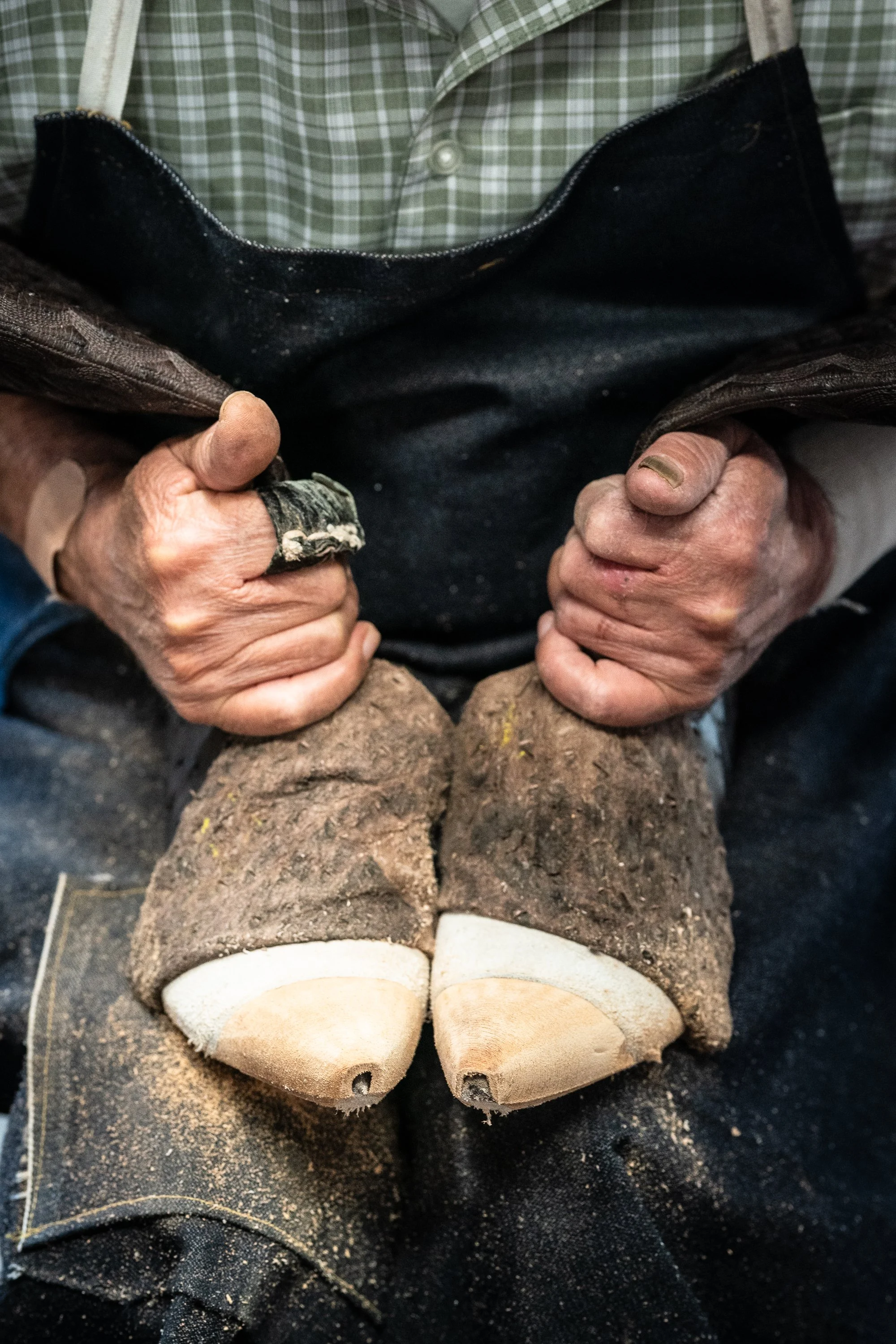
Bootmaker shaping leather over wooden lasts at ML Leddy’s boot shop

Leather is stretched and shaped directly over wooden lasts, a physical process that defines the character of each boot.

Custom cowboy boots resting on a workbench during construction at ML Leddy’s

A pair of custom boots waits between stages of construction, surrounded by the quiet rhythm of daily work inside the shop.
Craftswoman stitching decorative leather panels for cowboy boots at ML Leddy’s

Decorative stitching is completed on vintage machines, guided by practiced hands and years of experience.

Measuring a boot last for handmade cowboy boots in Texas

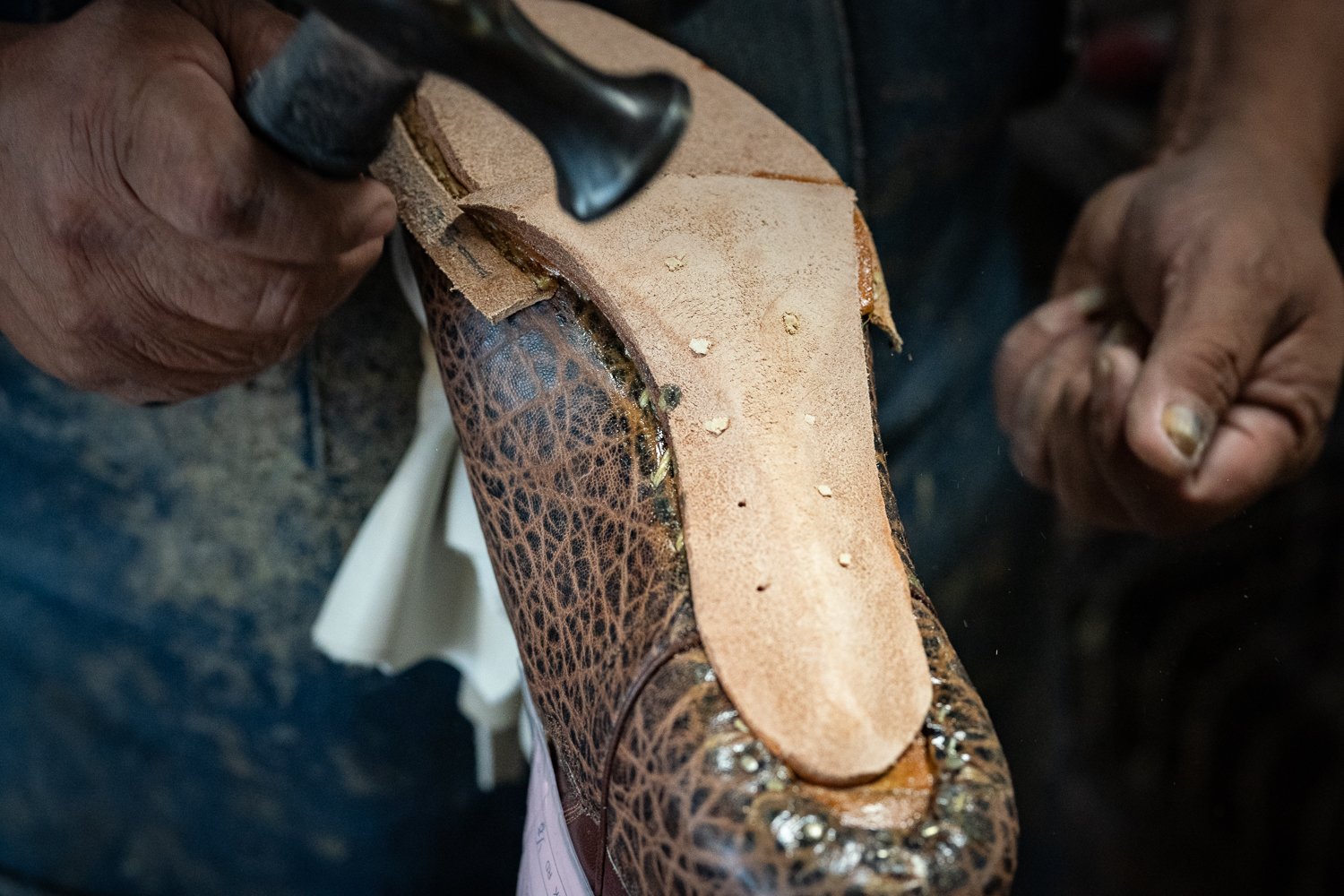
Bootmaker hammering leather sole onto a handmade cowboy boot at ML Leddy’s

Every nail is set by hand, reinforcing the sole using techniques passed down through generations of bootmakers.

Bootmaker hand-lasting a cowboy boot inside ML Leddy’s workshop in San Angelo Texas

Handmade cowboy boots in Texas

Custom boot lasts at a cowboy boot store in Texas

Custom boot lasts

Discarded cowboy boot parts after repair at ML Leddy's in San Angelo, TX

Old cowboy boot parts

Finished pair of handmade cowboy boots by ML Leddy’s in San Angelo Texas

A finished pair of handmade cowboy boots, built start to finish inside the ML Leddy’s workshop in Texas.


Texas Plains Photography: Llano Estacado

Llano Estacado Photographs

The Llano Estacado is easy to misunderstand. It’s often described as flat, empty, or featureless, but spending time there reveals something very different. This high plains region of West Texas is defined less by landmarks and more by distance — by how far the horizon stretches, how light moves across open ground, and how small human presence feels once you slow down enough to notice it.

These photographs were made while traveling through small towns, farmland, and back roads that sit quietly within that vastness. They are not meant to explain the Llano Estacado so much as sit with it.

A Landscape Defined by Absence

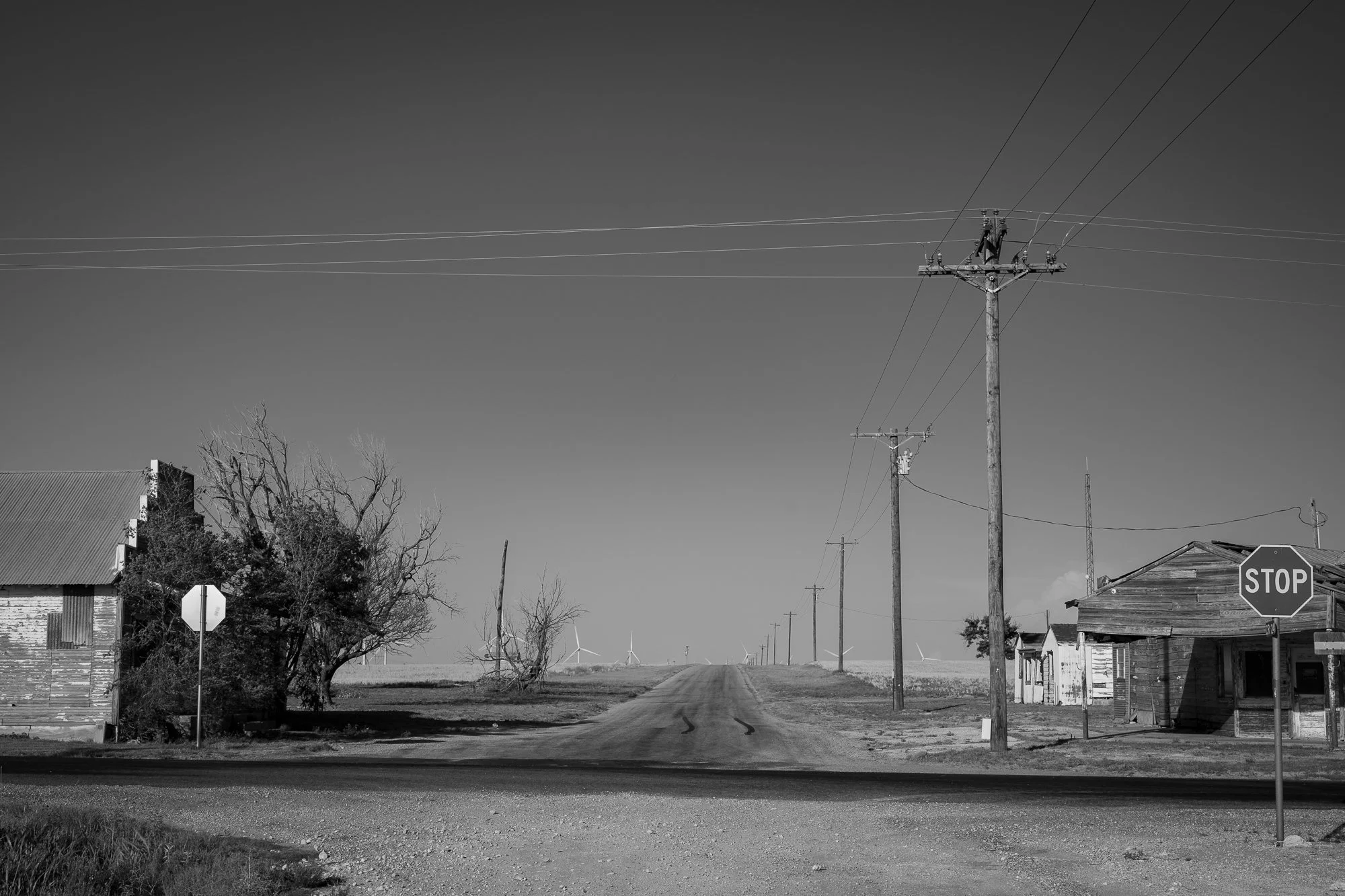
There are few visual interruptions on the Llano Estacado. Roads run straight for miles. Fields repeat themselves. Buildings appear only occasionally, and when they do, they often feel temporary — as if they were placed there out of necessity rather than permanence.

That absence becomes the subject. Empty intersections, wind-worked soil, distant structures, and isolated signage take on weight simply because there is so little competing for attention. The photographs rely on restraint: space, quiet geometry, and light doing most of the work.

Small Towns, Everyday Objects

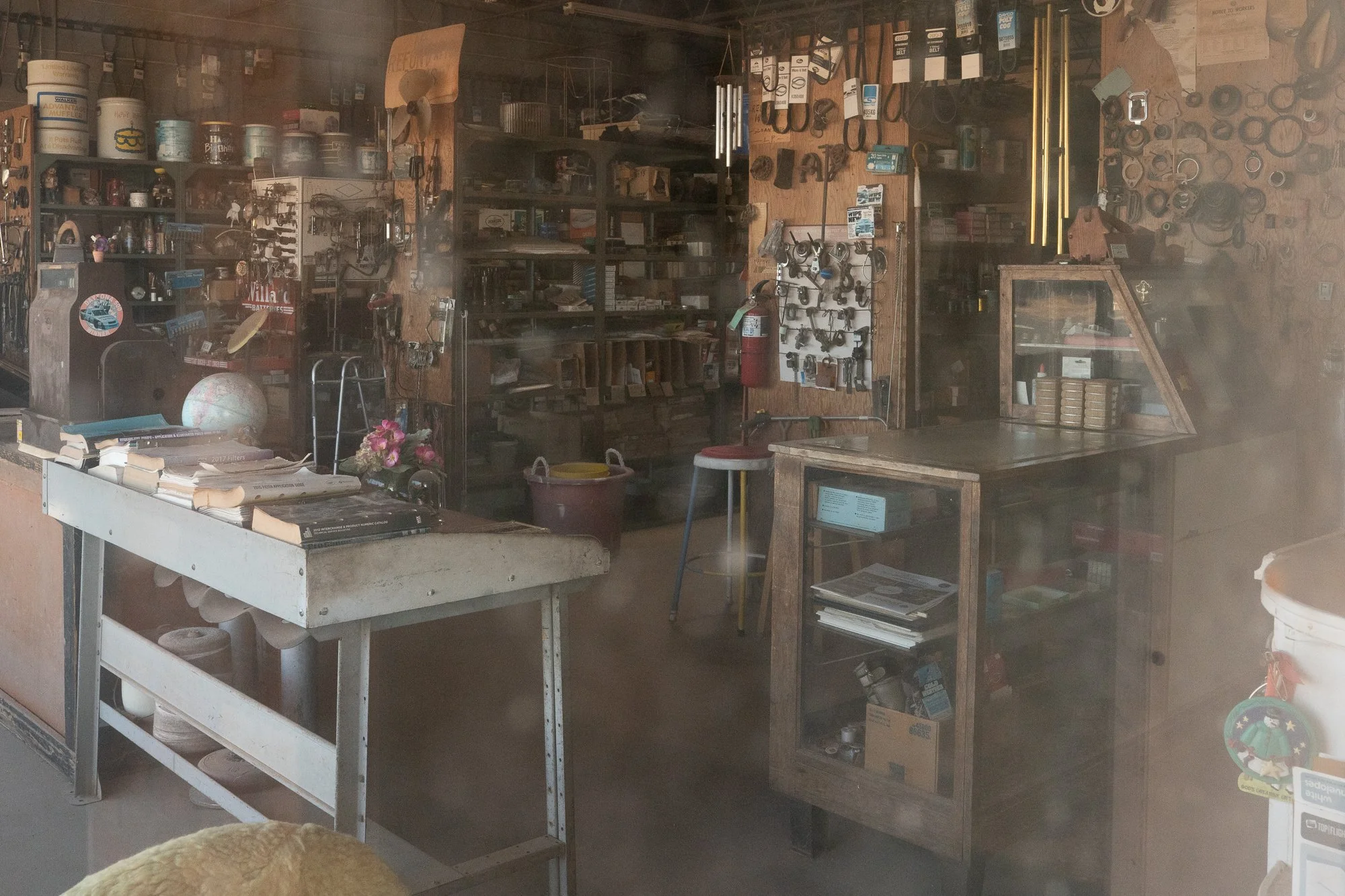
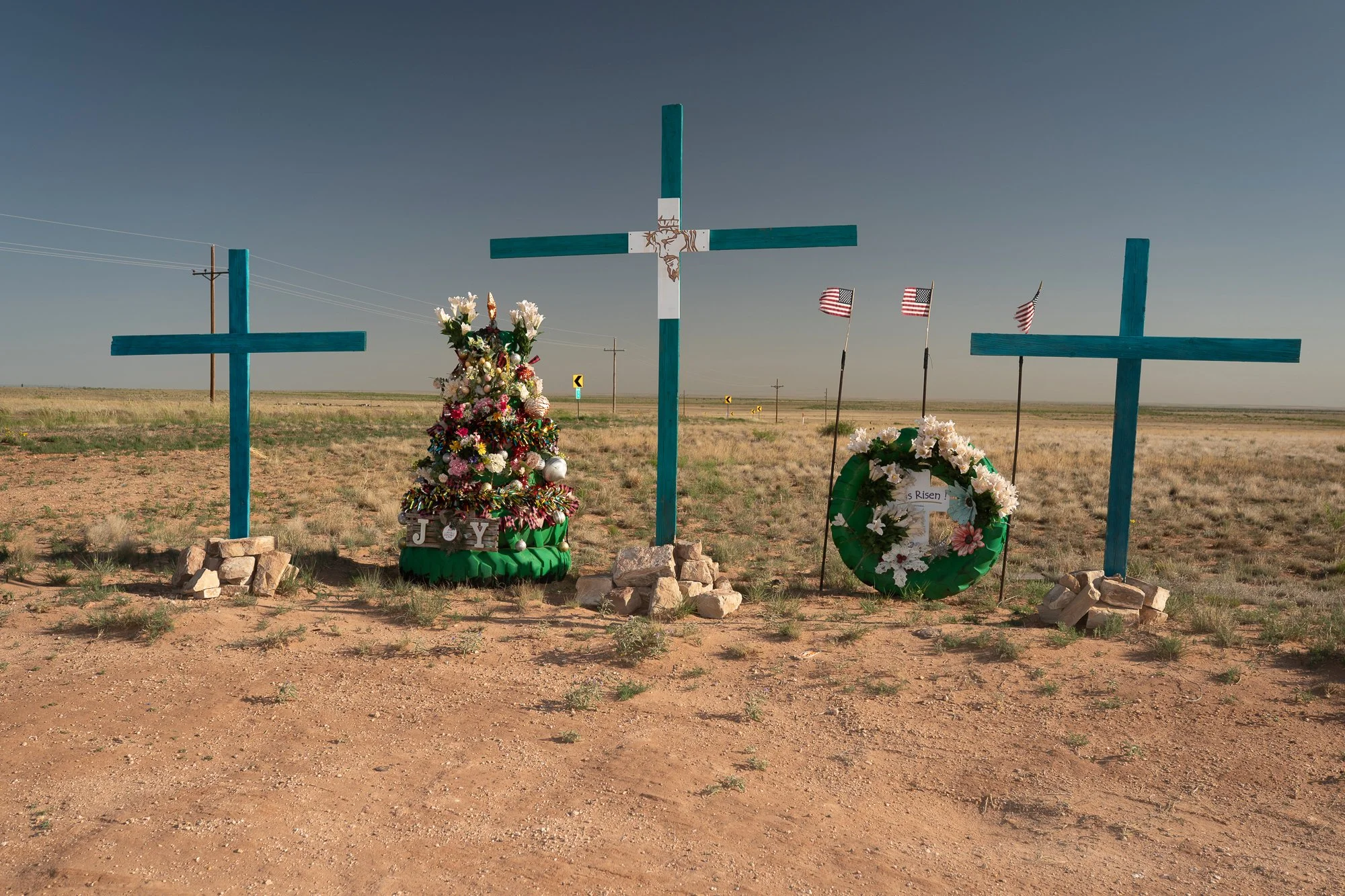
Scattered across the plains are towns built around utility rather than spectacle. Hardware stores, abandoned buildings, hand-painted signs, school stadiums, and roadside memorials all reflect daily life shaped by isolation and self-reliance.

Rather than searching for dramatic moments, this work focuses on ordinary details — objects left where they were last used, buildings holding onto their purpose a little longer than expected. These elements reveal how people adapt to scale, weather, and distance without needing to announce it.

Wind, Agriculture, and Modern Presence

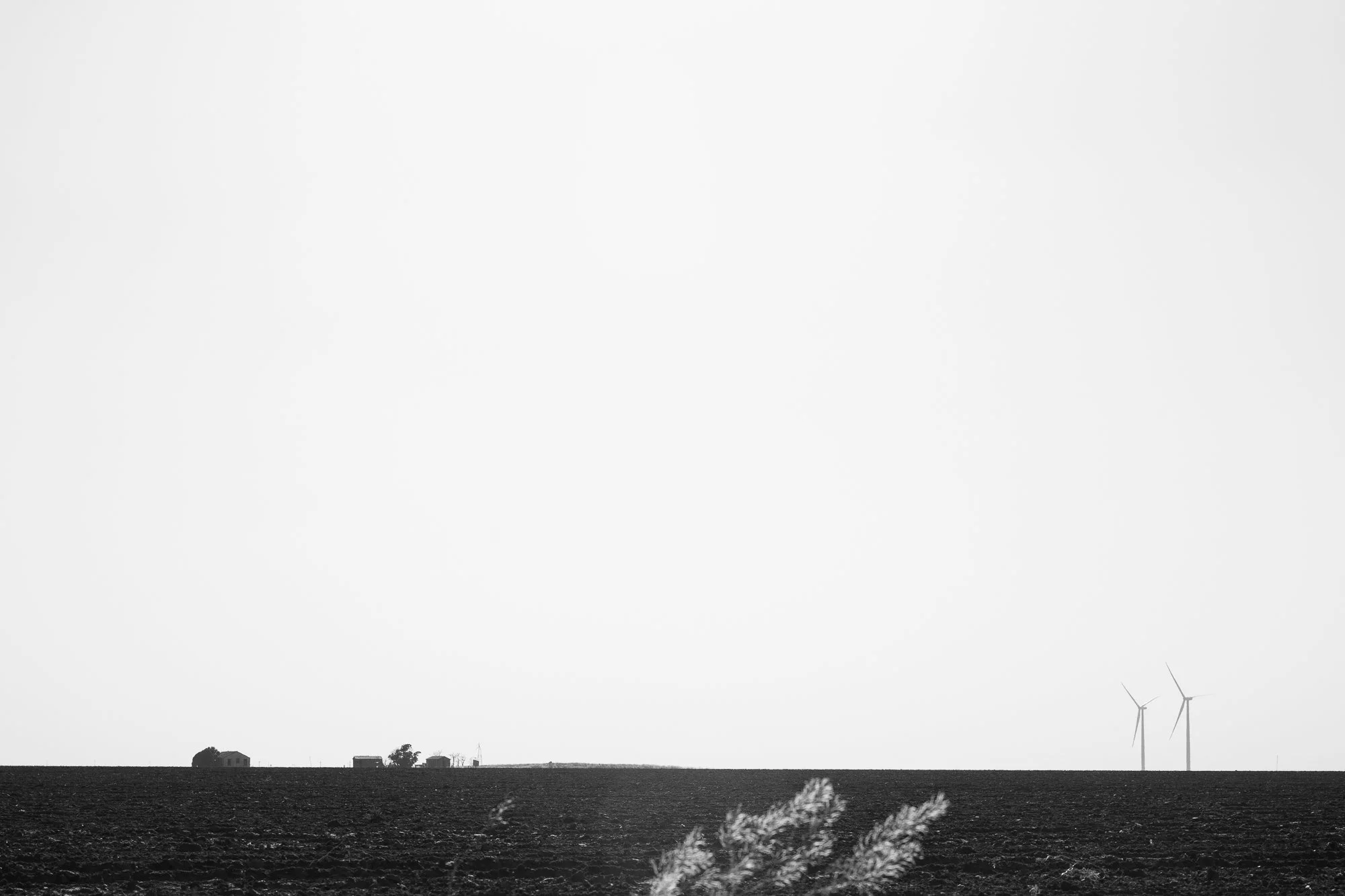
The Llano Estacado is both deeply agricultural and increasingly shaped by modern infrastructure. Wind turbines rise above fields that have been worked for generations. Long rows of crops trace patterns across land that feels otherwise unbroken.

This overlap between old and new is quiet but persistent. The turbines don’t overwhelm the landscape; instead, they become another line on the horizon — another marker of how the region continues to evolve while remaining visually spare.

Photographing the In-Between

These images are less about destinations and more about what exists between them. They were made by pulling over often, driving slowly, and paying attention to what most people pass without stopping.

The goal is not nostalgia, but observation. Not commentary, but presence. The Llano Estacado rewards patience, and these photographs reflect that pace — measured, minimal, and unforced.

Interested in These Photographs?

A selection of photographs from this series is available as fine art prints, and the full body of work is available for editorial and commercial licensing.

If you’d like more information, feel free to get in touch.

View more photography from the American West

CONTACT ROB

“It’s a long way, round the Llano Estacado” - Colter Wall

Water for sale sign along a rural road on the Llano Estacado in Texas

A hand-painted water-for-sale sign along a remote Texas highway, underscoring the scarcity and scale of life on the Llano Estacado.

Empty intersection with abandoned buildings on the Llano Estacado

A rural intersection on the Llano Estacado, where roads stretch outward and towns feel held together by distance.

Minimal black and white landscape with distant wind turbines on the Llano Estacado

A spare horizon broken only by distant farm buildings and turbines, emphasizing scale and emptiness on the Llano Estacado.

Interior of a small rural hardware store on the Llano Estacado in Texas

Inside a small-town hardware store on the Llano Estacado, where tools, shelves, and light speak to decades of daily use.

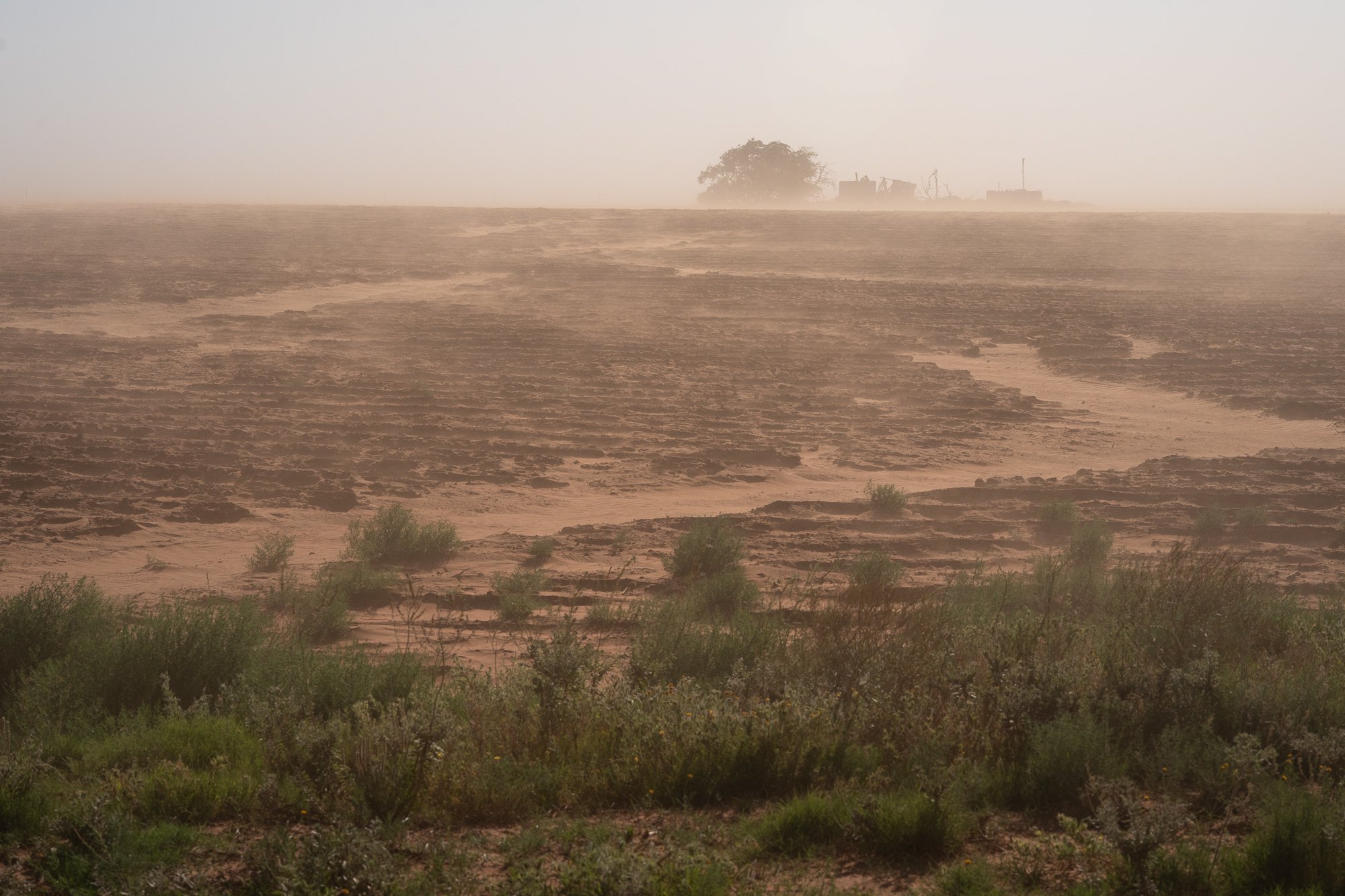
Dust blowing across a plowed field on the Llano Estacado in West Texas

Dust moves across freshly worked earth, softening the horizon on the wide, exposed plains of the Llano Estacado.

Roadside crosses and memorials in rural West Texas on the Llano Estacado

Roadside crosses stand against the open plains, marking memory, faith, and loss across the Llano Estacado.

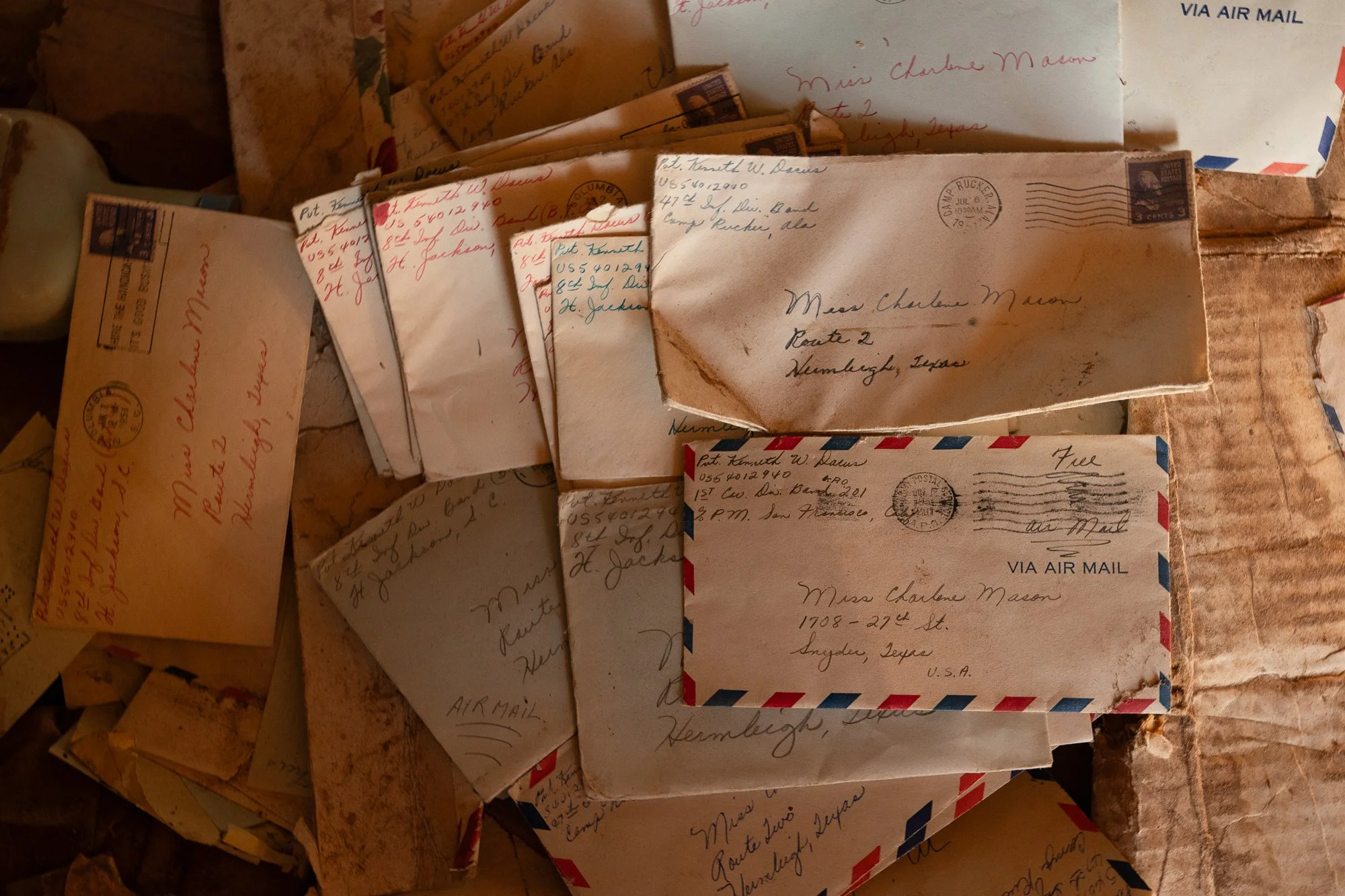
Handwritten letters and envelopes collected in a rural Texas home on the Llano Estacado

Handwritten letters from an abandoned Texas home, marked by distance, memory, and everyday life on the Llano Estacado.

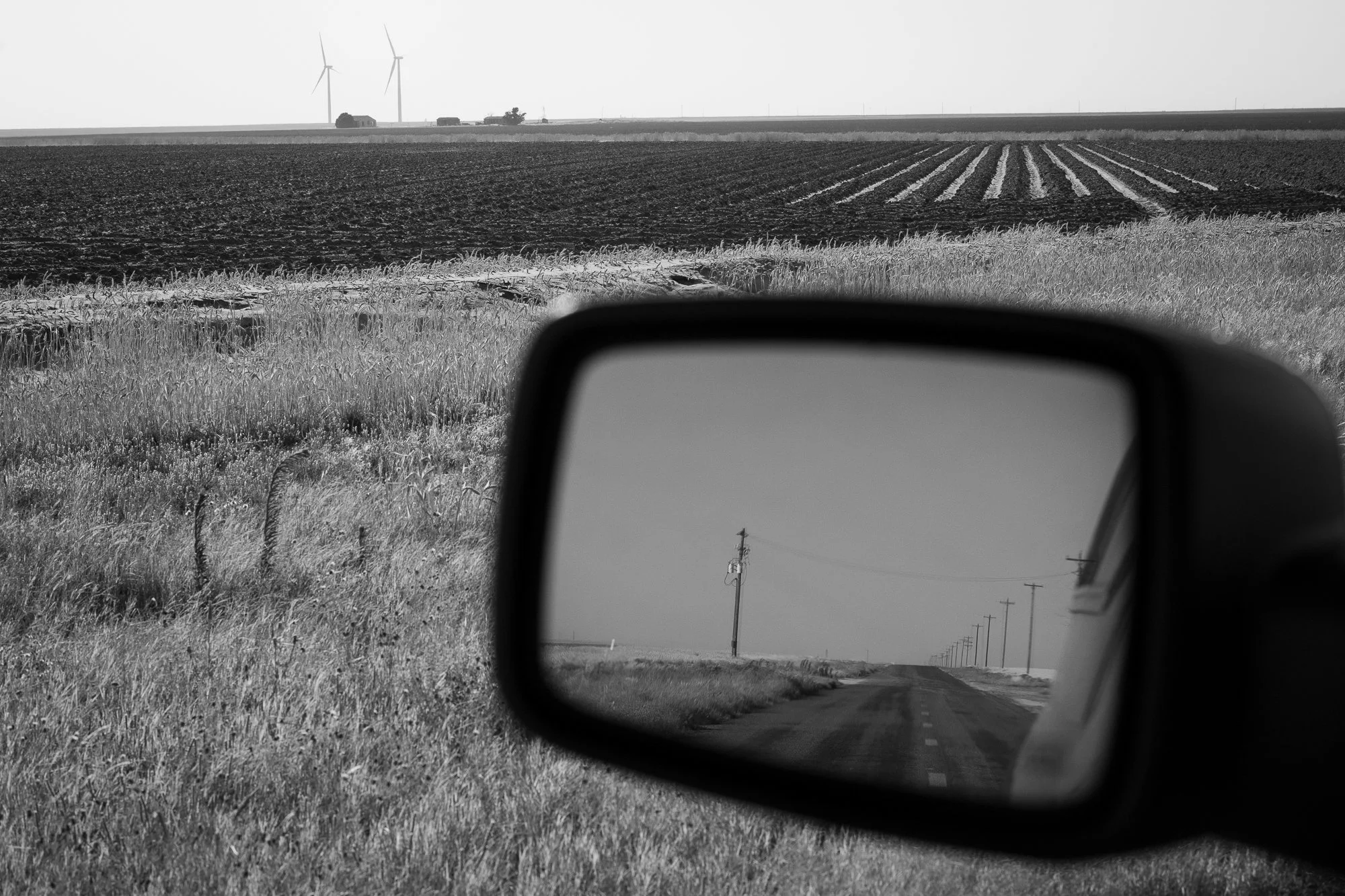
Black and white photograph of farmland reflected in a car mirror on the Llano Estacado

Farmland stretches ahead and behind, reflected in a car mirror while crossing the open roads of the Llano Estacado.

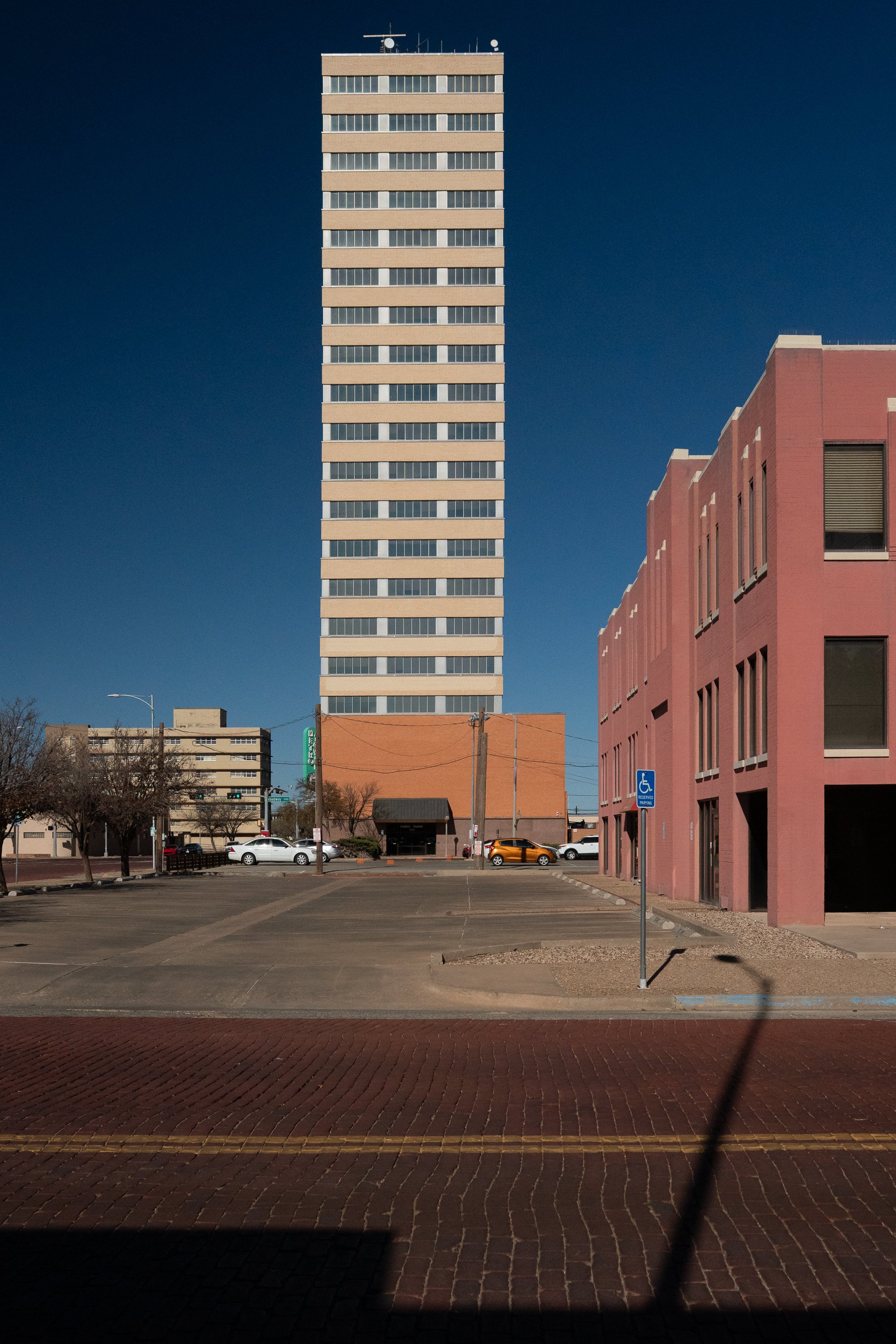
A downtown high rise tower in a small town on the Llano Estacado

A lone midcentury tower rises above a quiet town, emphasizing the scale and openness of the Llano Estacado.

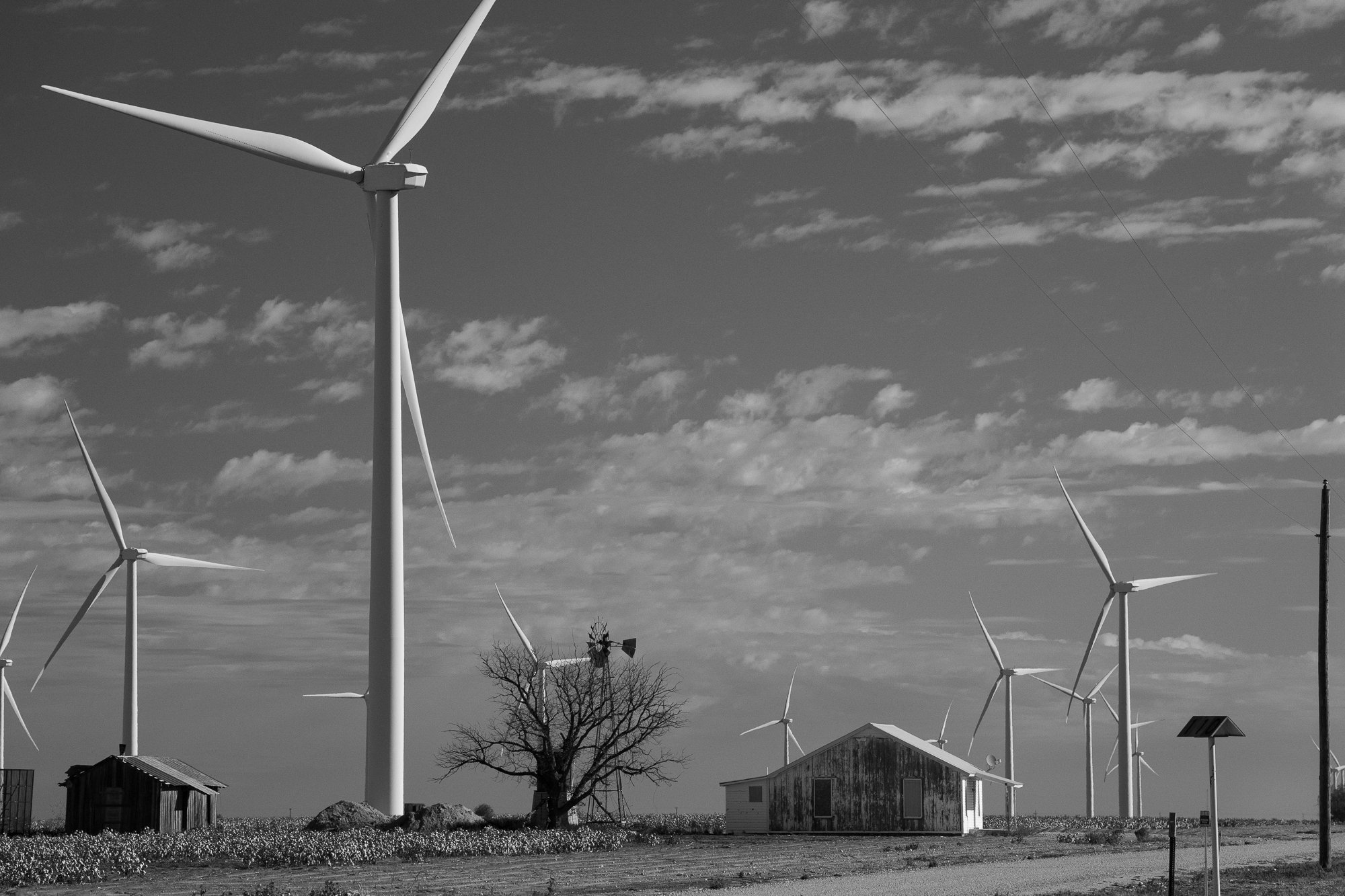
Wind turbines towering over abandoned rural buildings on the Llano Estacado in Texas

Wind turbines rise over aging structures, where modern infrastructure meets long-standing rural life on the Llano Estacado.

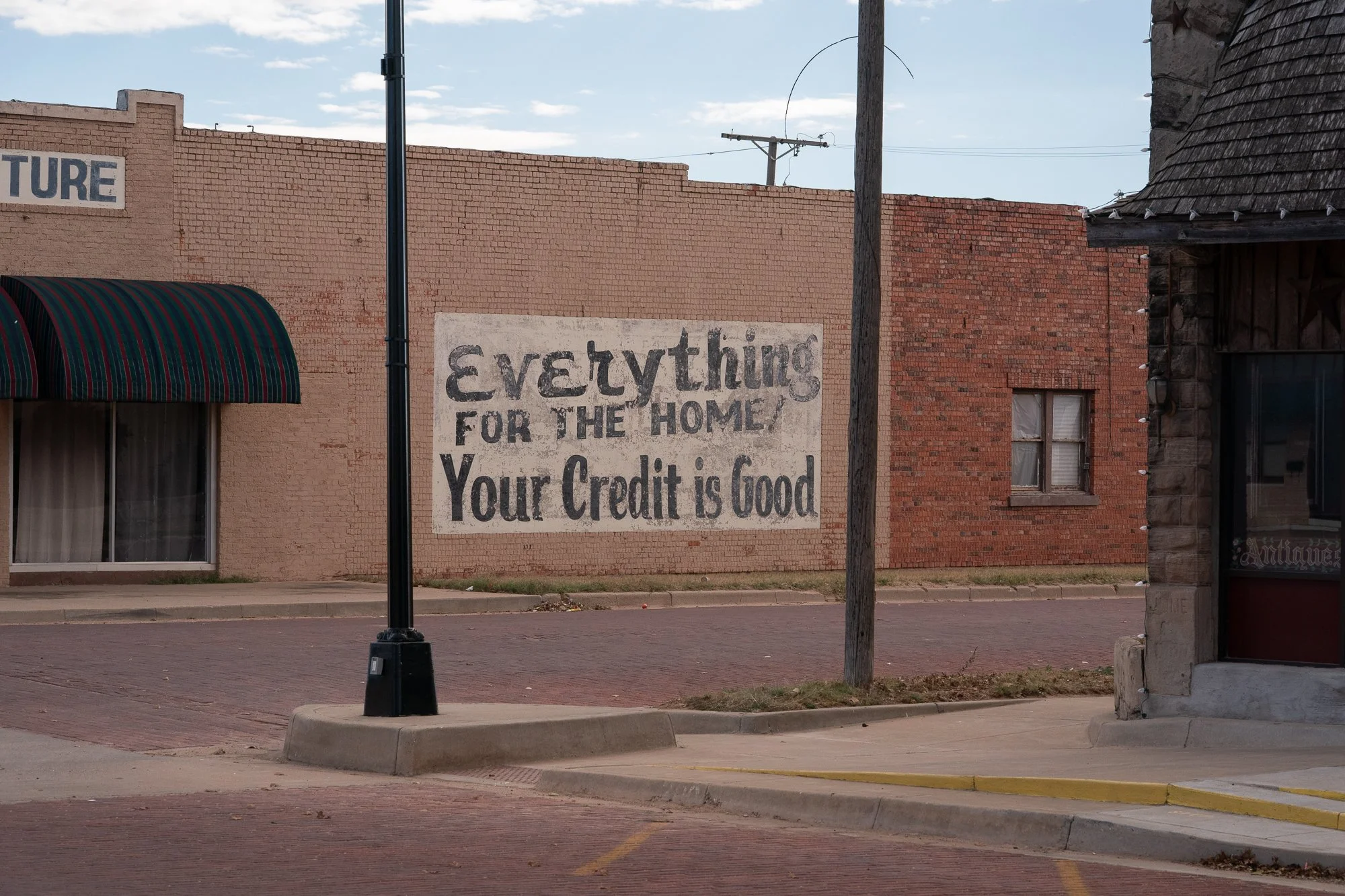
Vintage wall sign reading Your Credit Is Good in a small town on the Llano Estacado

A fading brick wall sign promises trust and familiarity, echoing the economic rhythms of Llano Estacado towns.

Photograph of a dirt road going through the Llano Estacado in Texas

Photograph of a long dirt road on the Llano Estacado in Texas

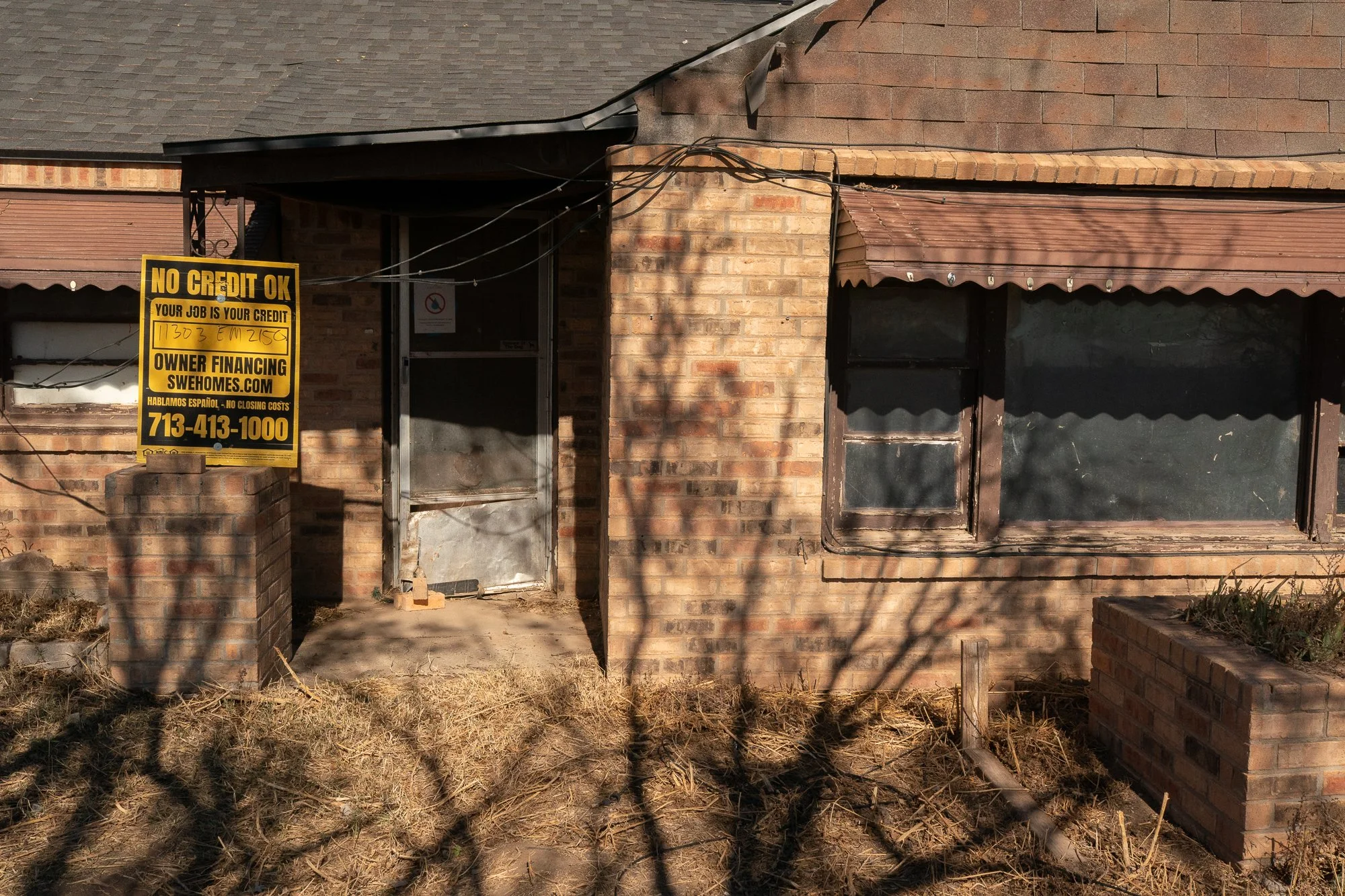
Brick house in rural Texas with an owner financing sign on the Llano Estacado

A modest brick house on the Llano Estacado, where handwritten signs and quiet streets reflect a self-reliant rural economy.

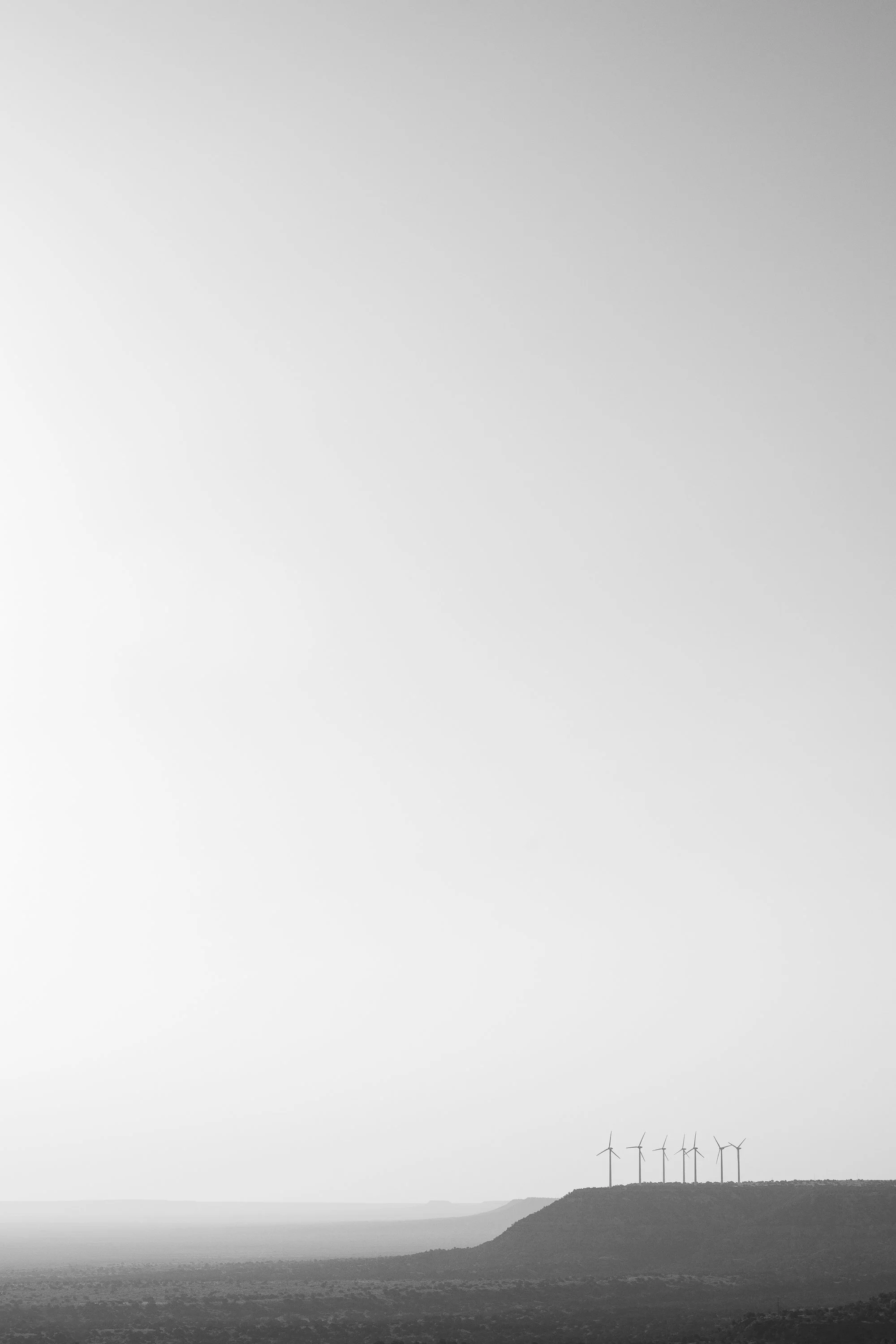
Minimal black and white photograph of a wind farm along the Llano Estacado horizon

A nearly empty frame holds a thin horizon and distant turbines, emphasizing restraint and scale on the Llano Estacado.

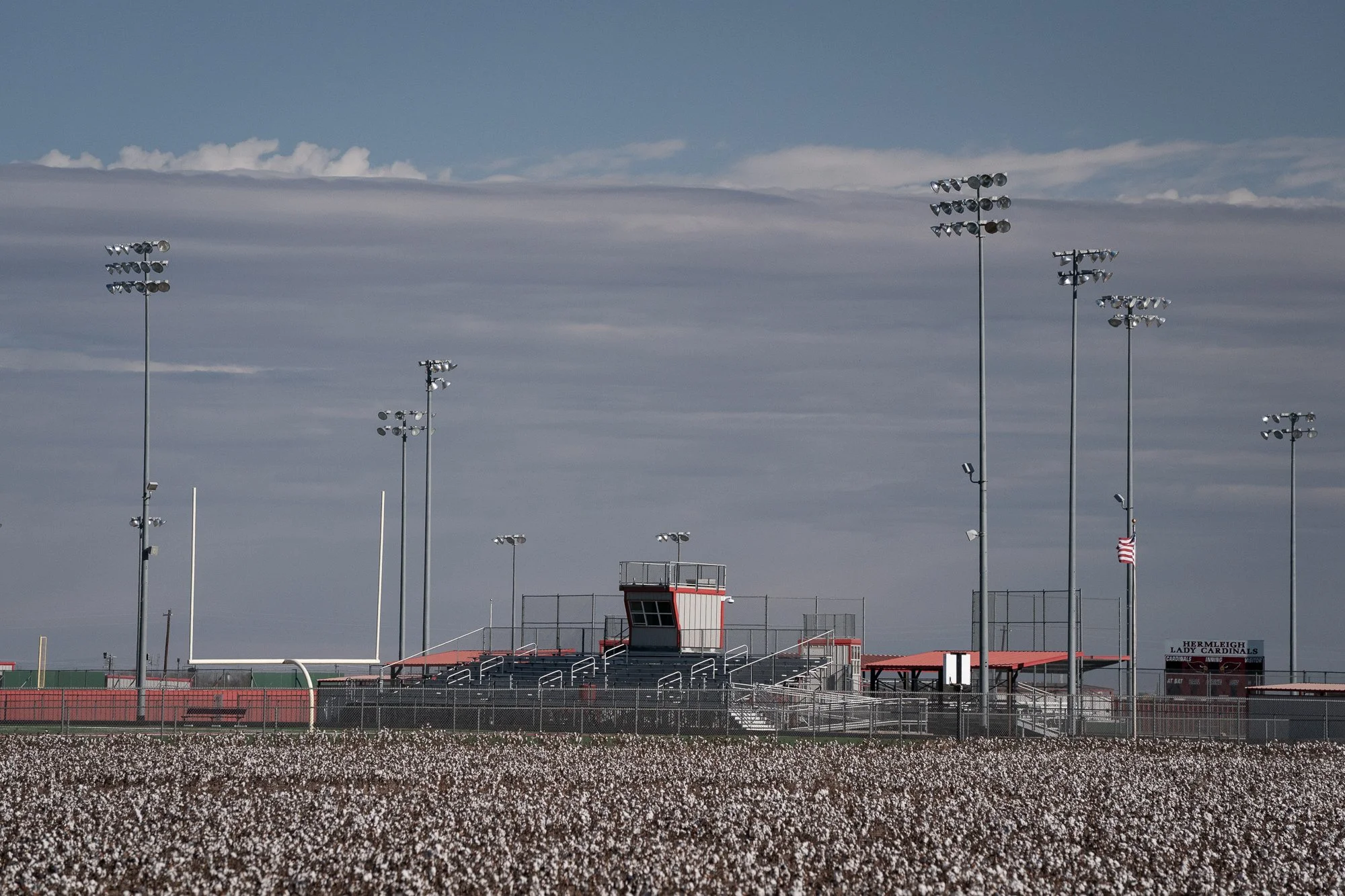
High school football stadium surrounded by farmland on the Llano Estacado in Texas

A high school football stadium sits among cotton fields, reflecting the cultural center of small towns on the Llano Estacado.

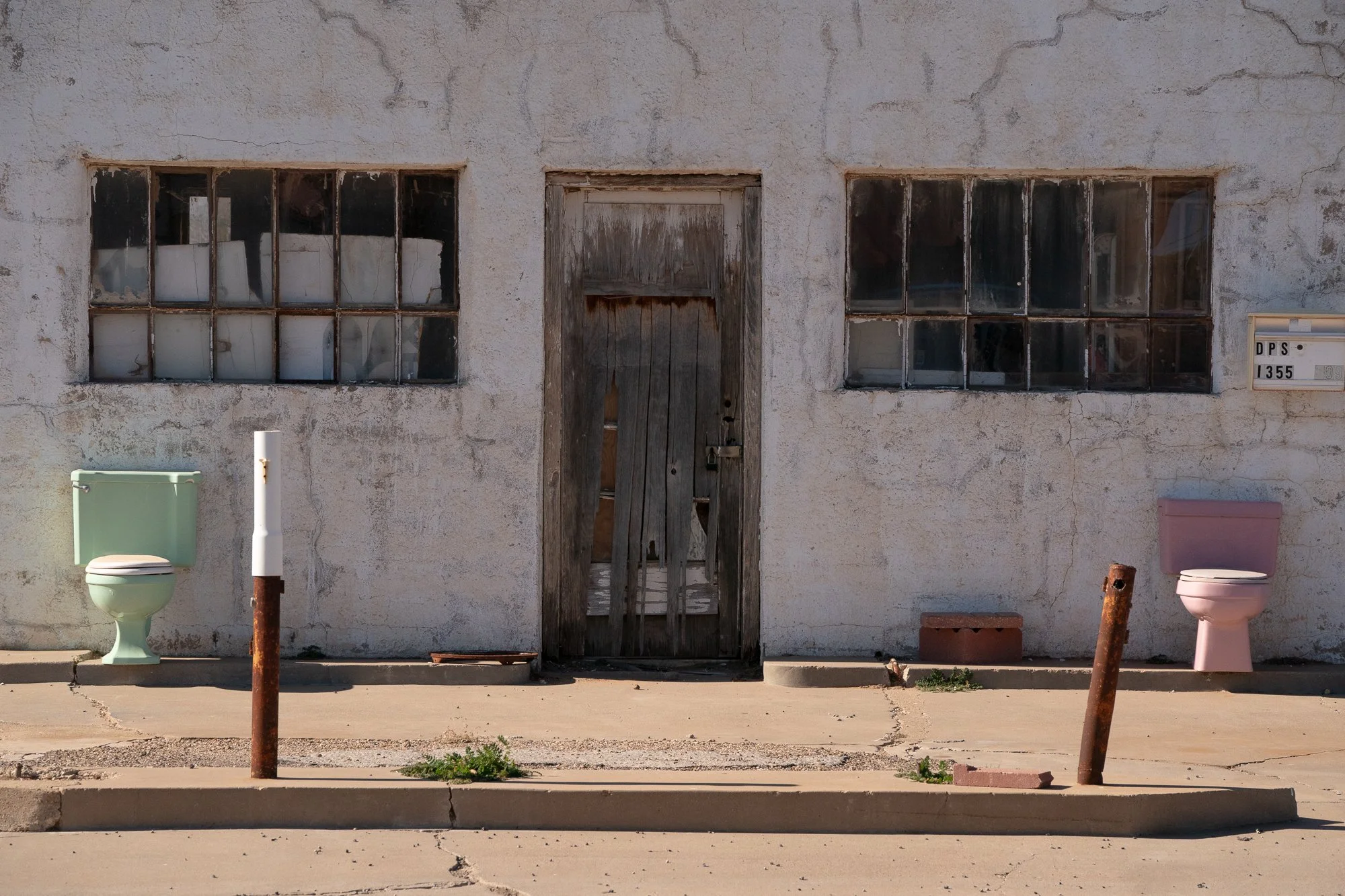
Abandoned building facade with pastel toilets outside on the Llano Estacado in Texas

An abandoned building on the Llano Estacado, where discarded fixtures and faded walls blur the line between utility and quiet absurdity.

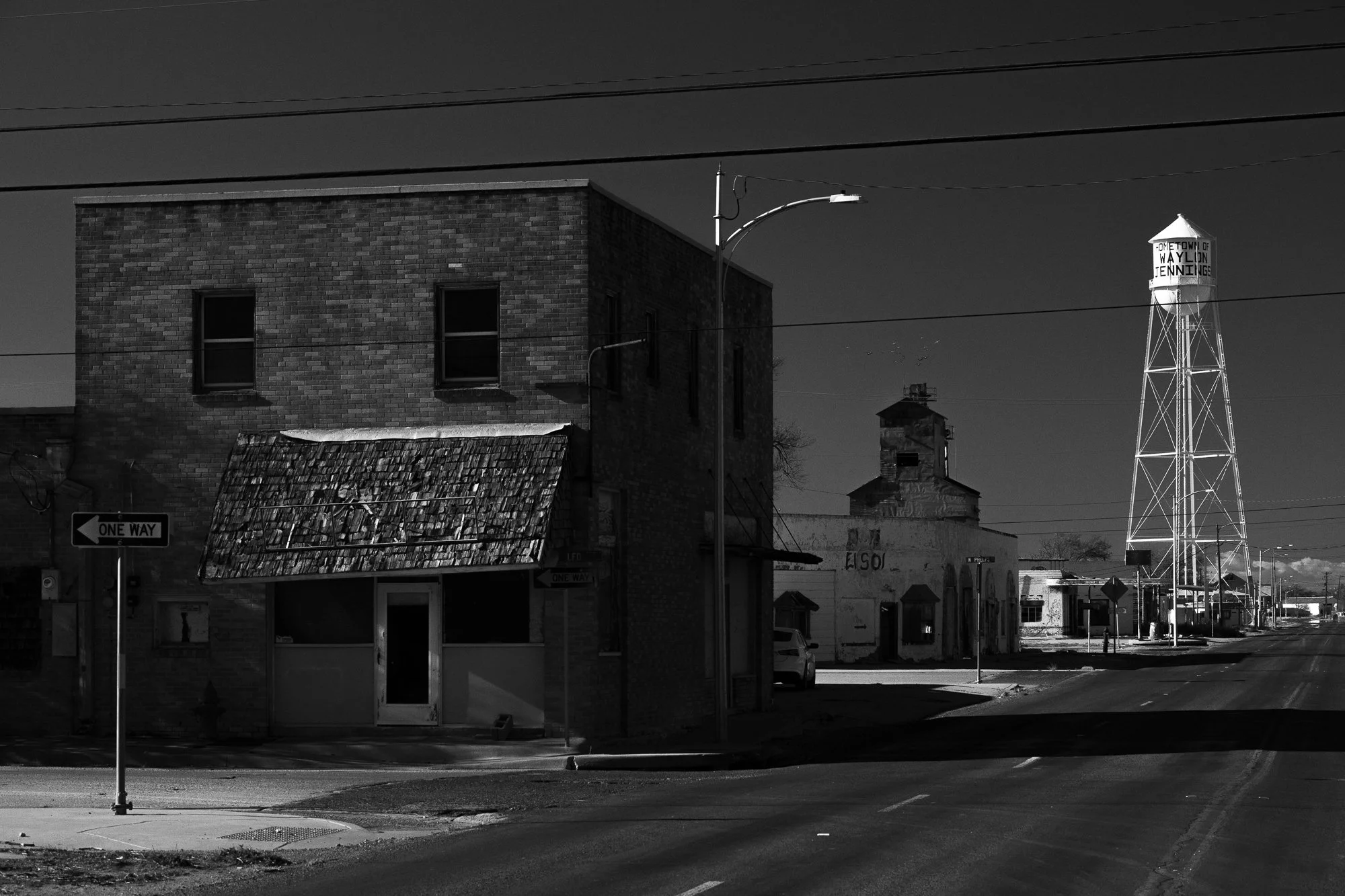
Black and white photograph of Littlefied, Texas with water tower honoring Waylon Jennings

Water tower in Littlefield, Texas - Hometown of Waylon Jennings

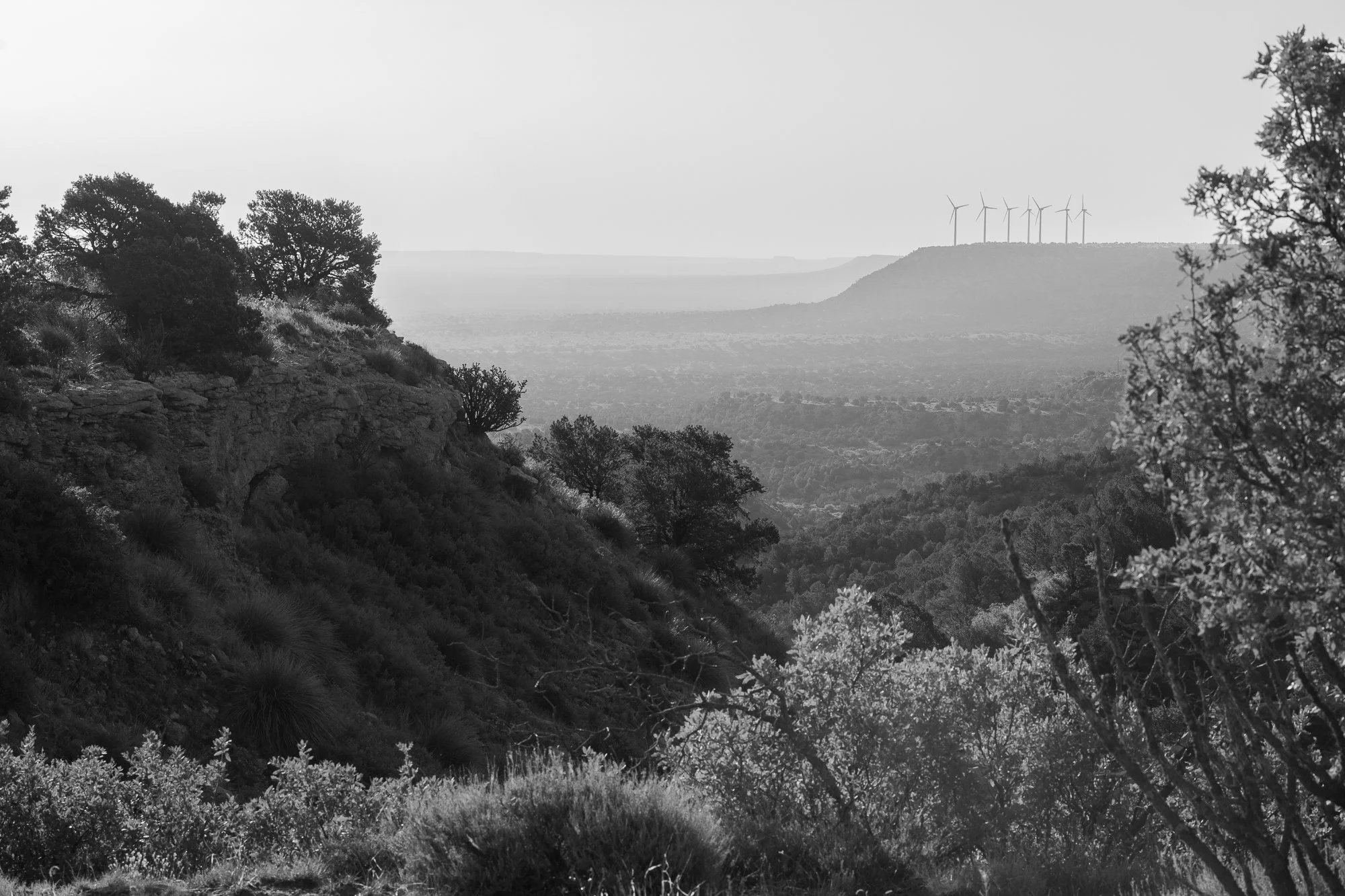
Wind turbines line a distant ridge above the canyon, where industry and landscape quietly coexist on the Llano Estacado.

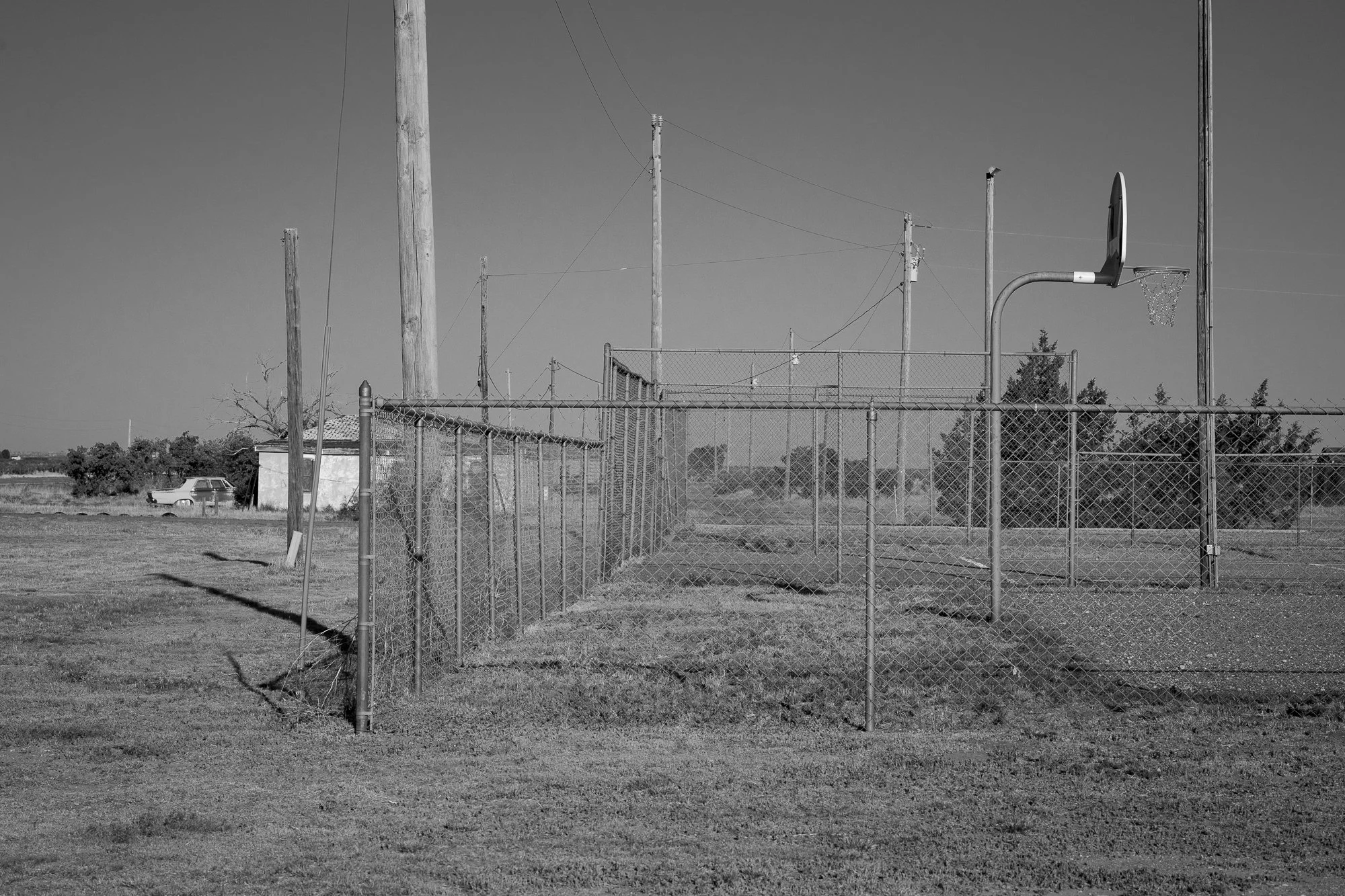
Black and white photograph of a rural basketball hoop behind a chain link fence on the Llano Estacado

A lone basketball hoop stands behind a chain-link fence, hinting at everyday life and quiet routines on the Llano Estacado.

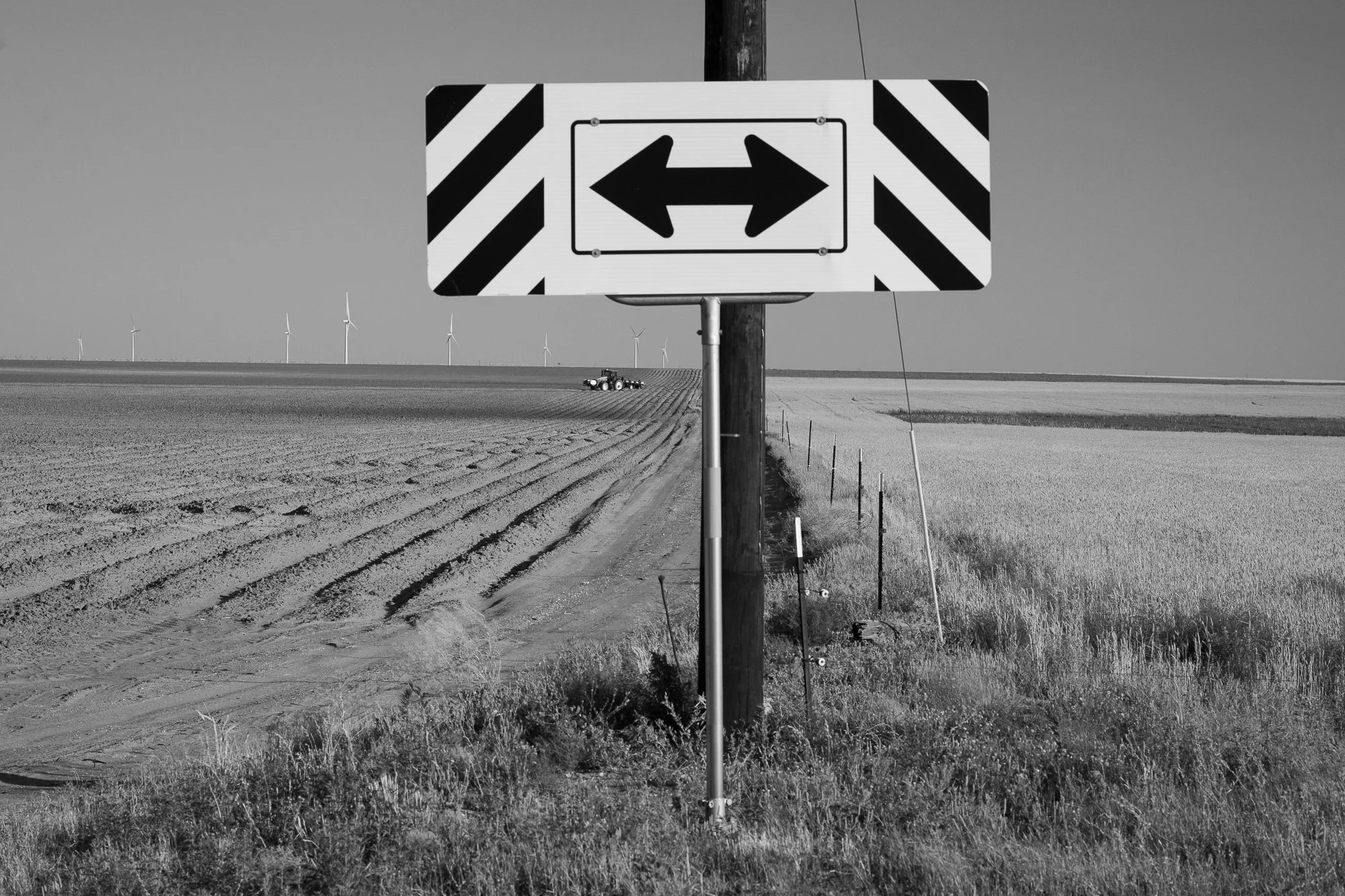
Black and white photograph of a rural directional road sign on the Llano Estacado

A simple directional sign stands between plowed fields, offering choice without urgency on the Llano Estacado.

Boots O'Neal

Boots O’Neal - Cowboy - 6666 Ranch - Texas

Being a photographer has been a great pleasure and an even greater adventure. It’s taken me to some outstanding parts of the earth and allowed me to photograph some of the most famous athletes on it. “Who is your favorite?”, has always been a common question. Until recently that was an impossible question to answer. Now my final is abundantly clear - it’s the legendary Texas cowboy Boots O’Neal. Boots is a 90 year old cowboy on the iconic 6666 Ranch. A more inspiring human you will not meet. To learn more about him continue reading this piece I wrote that was originally published with Wrangler.

All of my photographs of Boots are available as prints as well as for editorial/commercial licensing. Contact me for details.

Browse available cowboy photography prints and wall art

View the complete cowboy photography gallery

Contact Rob
Photograph of legendary Texas cowboy Boots O'Neal on the 6666 Ranch

Boots O’Neal on his horse working cattle in the corrals at the 6666 Ranch

Boots O’Neal and the Tradition of Ranching in West Texas

Imagine for a moment, waking up in the hospital with 12 broken ribs, a punctured lung, broken vertebrae, and a bleeding brain. Now imagine that pain at 82 years of age. Cal Ripken Jr. was Major League Baseball's “Ironman”. Earning the nickname after playing 2,632 consecutive games. Put those end to end and you’ve got over 7 years of straight baseball. An astonishing stat and impressive feat only possible for a human made from the toughest stock. No offense to Mr. Ripken, but that doesn’t hold a candle to the Texas legend - Boots O’Neal, who's been horseback for the better part of the last 75 years. Despite the aforementioned injuries, piled on a lifetime of other broken body parts, the now 90 year old cowboy shows no desire whatsoever to retire. You’d think someone that’s lived in such a way would have a face much resembling their saddle that’s endured as many miles. Instead, O’Neal’s is endearing, and fixed with a perpetual smile that causes you to do the same. The kind of guy that inadvertently makes you a better person just by being in his presence. 

While we’re on the stat train, let’s dole out a few more just to drive the point home, what an outlier he truly is. The average retirement age in America is 62. The average age of death is 78. And a cowboy will normally take home about $31,466 a year. At a time in life when most folks are either dead or in a nursing home, Boots wakes up every morning with excitement to saddle a horse and work cattle alongside fellow cowpunchers that could be his grandkids. People just aren’t built like him anymore. Not a partier, but it would be safe to put O’Neal in the Keith Richards class. Immortal freaks, in the most beautiful way possible. 

Portrait of Boots O'Neal - Cowboy on the 6666 Ranch in Texas. Available as a photography print.

Portrait of Boots O’Neal

Cowboys in general are a strand of human unlike the rest of us. Born not made. And from birth, it was obvious O’Neal created a category all his own. Growing up in the 30’s he was one of 8 children living in a home without running water. The bathroom was an outhouse, and the bath, a tub filled with water and placed next to the kitchen oven, door open for heat. After 3 or 4 of the kids took their turn, that water was tossed outside to calm down the dust. He was never much for school. The only thing he excelled at was boxing, but usually just looked forward to running off the bus and into the barn to saddle a horse, only coming in when his mother hung a white sheet on the clothesline - their version of a dinner bell. 9th grade was as far as he cared to go, leaving home in August of 49’ at sixteen to cowboy for the JA ($90/week). That job found him on the wagon, sleeping in only a bedroll 6-7 months at a time. A lifestyle that fit him just fine. 

Before we go any further, it would be appropriate to define what makes a real cowboy. The loud mouth sporting a big black hat getting in drunken bar fights makes for good movies, but that’s about it. According to the man himself, a real cowboy is polite. Smooth. Talks gentlemanly to ladies and is good under fire. Dusty Burson (32) - foreman on the Four Sixes and close friend to Mr. O’Neal said it best - “What’s a cowboy? Well, they’re good people. Honest. They do what they say they’re gonna do. If they tell you they’ll be there to help, they’ll be there, and they’ll stay to the end.” If that statement made its way into Websters, the following words should read “also see Boots O’Neal”. 

Photograph of Boots O'Neal branding calves on the 6666 Ranch in Texas. Available for editorial and commercial licensing.

Boots O’Neal branding calves in the early morning on the 6666 Ranch in Texas

Photograph of a famous Texas cowboy

Boots O’Neal’s custom spurs

After the JA, he continued punching cows in different places including a quarter century stay at the Waggoner Ranch. All the while racking up a collection of buckles and saddles from bronc riding in rodeos all over the country. Word is he’s still pretty sticky. A wife (Nelda) also came into the mix as did a daughter (Laurie). Despite being opposites, Boots and Nelda remained in love for 44 years until her passing. She was a proper lady that enjoyed being in town but fully supported his innate need for open country. As their relationship grew, his career did along with it. The 50’s’ found him in Korea with the Army, where he stared out at vast foreign valleys, daydreaming about them filled with 1000 steer, and wondering why in the world they didn’t have any. After two years he was back on a ranch working hard to become a Peace Office and Brand Inspector at a time when cattle were still shipped by railroad. Along with the coveted title came a doubled salary, new clothes, fancy truck, and expense account. A novelty quickly erased by jealousy every time business on a ranch forced him to watch cowboys ride away on horses while he sat in a truck headed back to the office. “I just wanted to punch cows” he said. So he gave back a job that most in the industry would kill for and reclaimed his true love, working cattle from the back of a horse. 

Love is what it takes because the life of a cowboy asks a lot of a person, physically and emotionally. “ Even when I know tomorrow is gonna be a bad deal, and they’re predicting snow, and the wind coming out of the north blowing, and we’re gonna ride straight into it in the morning, I just look forward to getting out there and freezing my tail off” says O’Neal. How many 90 year olds have you ever heard say something like that? Burson again offers some insight - “he wakes up thinking I’m going to be happy today. He doesn’t let circumstances dictate happiness.” Dusty was the one who found the 82 year old O’Neal alone in a pasture, after the horse wreck that would have ended any mortal man. Even if it didn’t put him in the ground, the pain alone would cause a rational person to take a brush with death as a sign and say, ok, it’s been a good run. Burson visited him in the hospital shortly after and recalled the nurse asking why he kept lifting his left leg up in the air. Obviously, it was to keep the mobility of toeing a stirrup. “That’s how bad he wants to be a cowboy when he grows up” says Burson. 6 weeks later, he was back on that same horse and continues riding him today.  
Black and white photograph of Boots O'Neal and Charlie Ferguson talking in the chuck wagon tent on the 6666 Ranch in Texas

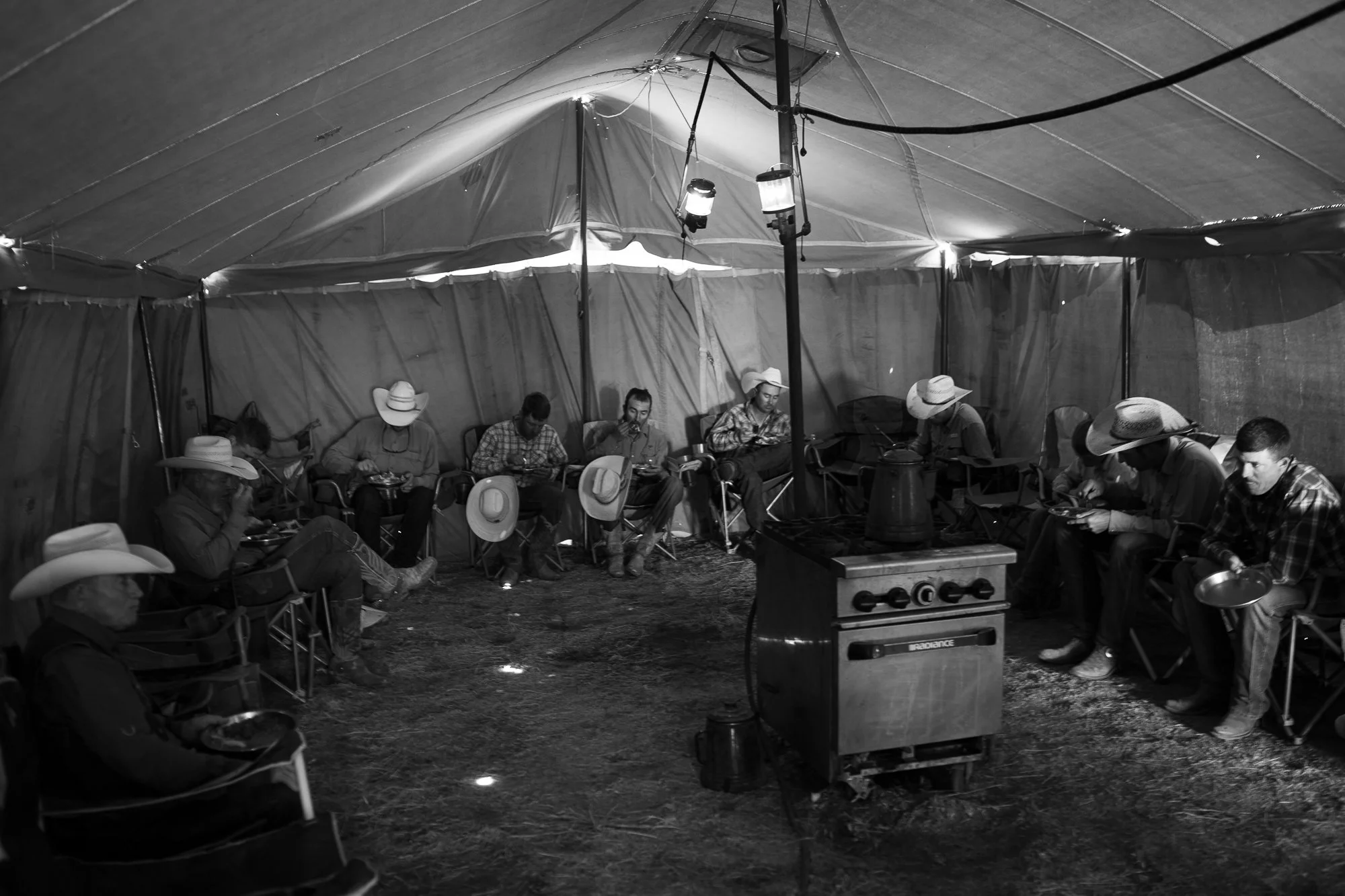
Boots O’Neal talks with chuck wagon cook Charlie Ferguson on the 6666 Ranch in Texas

Seems like it came naturally for Boots, but don’t get it twisted, any good cowboy is a student of the trade. Always figuring out a way to get it done better without asking for recognition. All of the best cowboys Boots ever knew and patterned himself after, accomplished unthinkable feats even Taylor Shariden couldn’t script, in the middle of nowhere with only a few people to witness. Another friend and Texas icon Tom Moorehouse (72) is quick to point out “I’ve known Boots almost all my life, and anything I’ve got to say about him is good”. From the outside you might think that cowboying is a physical game. Only for the young. Not so. Sure, you need the gumption to handle extreme physical abuse and relentless weather that doesn’t end after an eight hour shift. But Moorehouse says the thing that separates Boots from the rest is that he’s a “keen observer”. He continues “my dad used to say a real cowboy is somebody that pays attention. Now that doesn’t sound like a good story, but that’s the truth.” There is so much that can go wrong when you’re working with 2,000+lb animals and navigating remote unforgiving terrain. One mistake could mean the end. 

We’ve already established that Boots is an enigma, but for arguments sake, let’s say he got lucky? Somehow the body that’s been broken more times than anyone can count, managed to miss the big one. Even with luck, longevity like his doesn’t just happen. And living on a wagon, eating ranch food, wouldn’t make any blueprint for “healthy living”. Cowboys require hearty meals to get them through their overly demanding lives. So It should be no surprise that beef has made its way to Boots’ plate just about every day for the past 90 years. Along with the beef came biscuits, gravy, and potatoes. Breakfast was peanut butter and syrup sandwiches. All of which goes against everything you’ll read from the so-called nutrition experts. Although pinto beans, prunes, and raisins are foods he now tries to consume regularly along with said beef. The fresh fruit and vegetables he also concentrates on just wasn’t a thing back then.”It wasn’t until I got up in years that I ever worried about putting something bad in my body.”  A chuckle was the only answer given when asked about exercise, but “I’ve never been short on sleep” says O’Neal. Which he believes has been the holy grail to his success. For as long as he can remember, even as a young buck, he’d turn in early, ensuring 8-9 hours of shuteye every night. These days he says “it takes me longer to rest than it does to get tired”, but it becomes obvious shortly after meeting him, that modesty is one of his many virtues. He’ll try and claim that he can’t do this, that, or the other. Then he slips into the saddle and the truth is revealed. “It takes a whole crew to keep me going”, he says. Again, modesty perfected. Perhaps his days aren’t spent aboard wild broncs, but he always gets the job done with grace, and his expertise couldn’t be matched anywhere in the world. Ironic for a guy who’s never considered himself very smart. What Boots has can’t be taught. He’s got a PHD in punching cows. Anybody will tell you he’s on the Mount Rushmore of the cowboy universe, but who the hell else could be up there with him? Is there another human that’s punched cows for almost 8 decades?  “It’s amazing what all he’s got stored up inside him that someone oughta have recorded” Dusty says. A lot of people with such knowledge and history can become high and mighty. Not Boots. He’ll let you mess up, then suggest, in a non degrading way, how to do it better. He knows we’re all in this thing together.

Photograph of the famous Texas cowboy Boot O'Neal

Boots O’Neal offloading his horse from a trailer on the 6666 Ranch in Texas

Photograph of Boots O'Neal dragging a calf to the fire for branding on the 6666 Ranch in Texas

Boots O’Neal roping calves on the 6666 Ranch in Texas

If you think about the human condition and what we’re all after, one of the key ingredients is professional happiness. Everyone wants to spend their waking hours doing something they love. Why is that goal so elusive, so rare? A million dollar question. Even harder than finding that happiness, is keeping it. Somehow Boots O’Neal has managed to do it at one of the most physically demanding jobs on the planet and continues today at a very high level. Maybe the how doesn’t really matter. Maybe we should just use Boots as inspiration to be better humans. The iconic Four Sixes has been his home for the past 26 years. Panhandle, Texas is the closest town to their northern division where we met. The town sign fittingly reads “People of Pride and Purpose”. Just like the dictionary, there might as well be a picture of Boots next to that slogan. He figured IT out and still can’t get enough. He doesn’t need to work in a monetary sense. He wants to work, although it’d be a stretch to hear him use a four letter word like that. Even on a rare day off, he doesn’t look forward to a hobby or a vacation. Instead he’ll watch a rodeo on television or sit in a chair outside his bunkhouse apartment to watch the remuda come in. A sight he says, of 50 horses all running together, is one that most people will never get to see. Bob Dylan wrote a song on this very topic using only 17 words:  

“All the tired horses in the sun…..”

The guy has done it all, taken the beatings, and asked for more. He’s been inducted into every Hall of Fame a cowpuncher could possibly be associated with. Somehow that doesn’t seem enough of an honor though. Boots should be everyone's hero. He’s a national treasure and outstanding human being.  We should all strive to accomplish in our own lives what he has in his. Burson says “Yeah, he’s a cowboy, but he wants to be one tomorrow too”. If more people had that attitude, the world would be a better place. 

We were just about done talking when Boots’ story paused abruptly . A mischievous smile came to his face and the words stopped flowing. His attention fixed on one of the guys in a nearby corral working a young horse that was fixing to blow up. The grin stayed as he reminisced “I rode a lot of bucking horses in years past. I could get on a horse like that, just gather that thing up, and he’d be 3 feet in the air when I got that right stirrup”. Boots is a Christian. If he weren’t, and followed a religion believing in reincarnation, he says that’s what he’d want to come back as, a bucking horse. At 90 years young he knows precisely how good his life has been and isn’t scared of the inevitable. In a very matter of fact way he spoke about his funeral, being buried in the cemetery on the Four Sixes, and the speech by his friend Joe Leathers. When asked what he hopes Joe will say, Boots paused then replied humbly with a far off stare ”He was an honorable man. Done what he said he would. And didn’t mistreat his horses” 
Portrait of Boots O'Neal the famous Texas cowboy

Portrait of Boots O’Neal

Silhouette of a cowboy on his horse at sunrise on a cattle ranch in Texas

Boots O’Neal on his horse at sunrise on the 6666 Ranch in Texas

Boots O'Neal
from $75.00

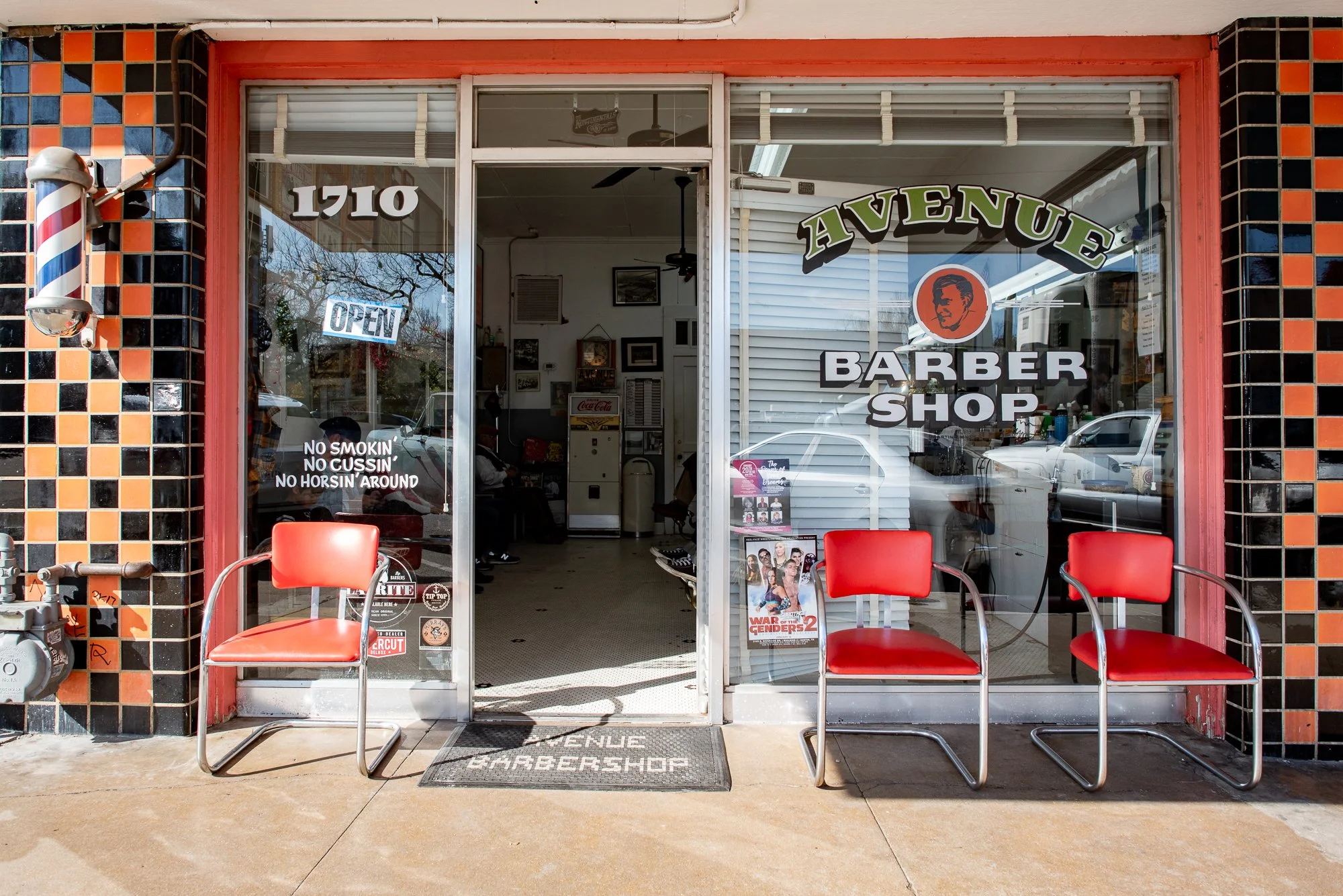
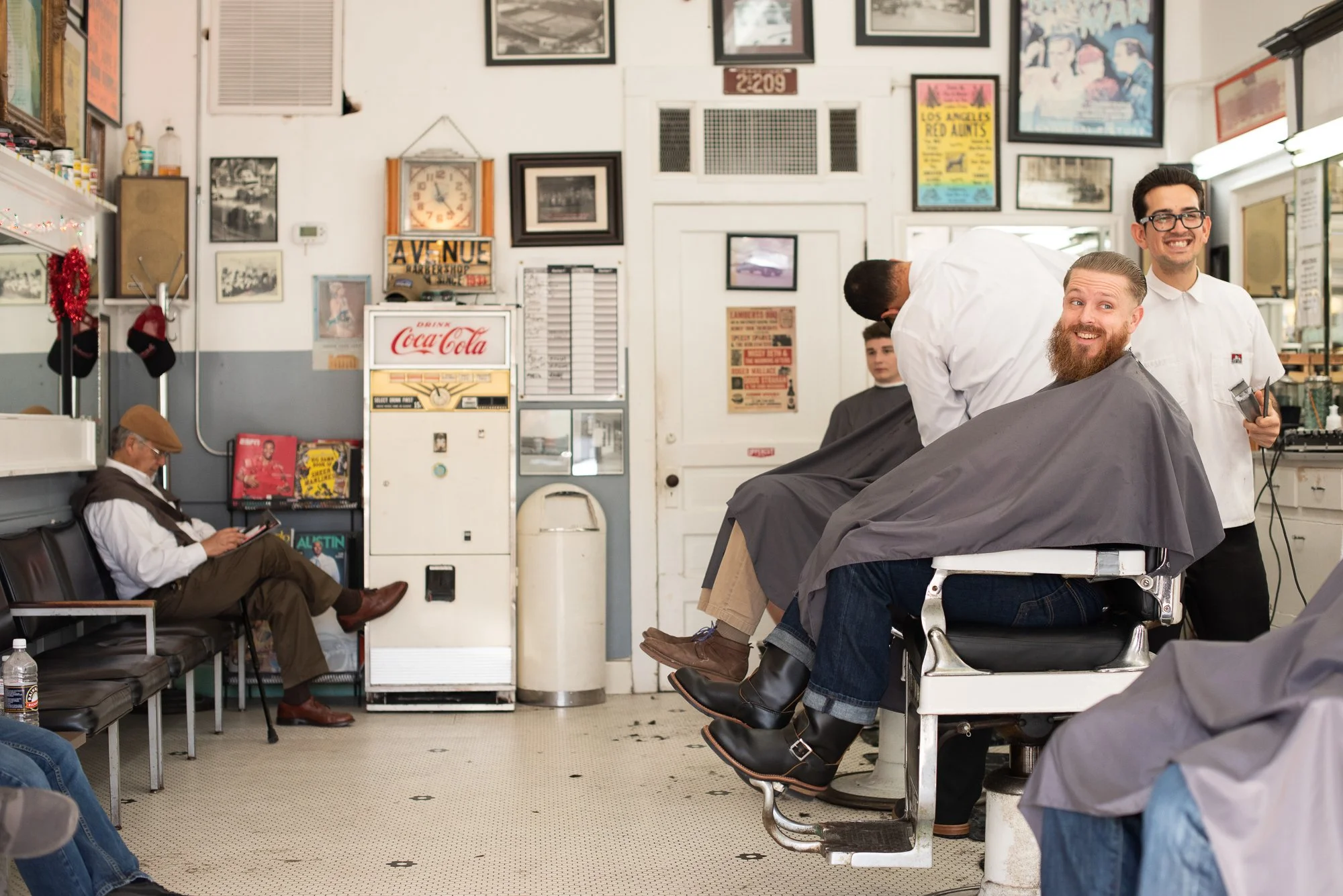
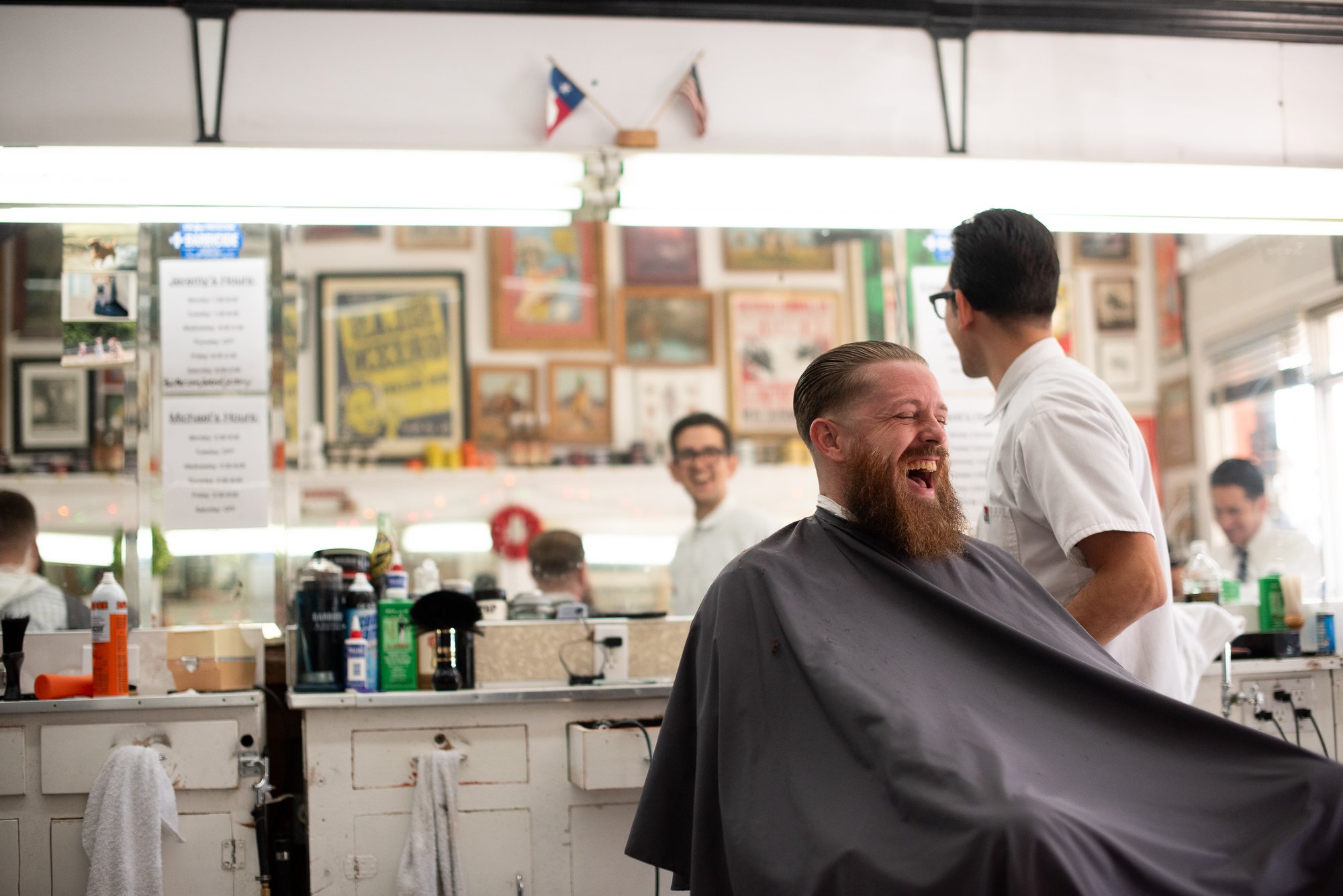
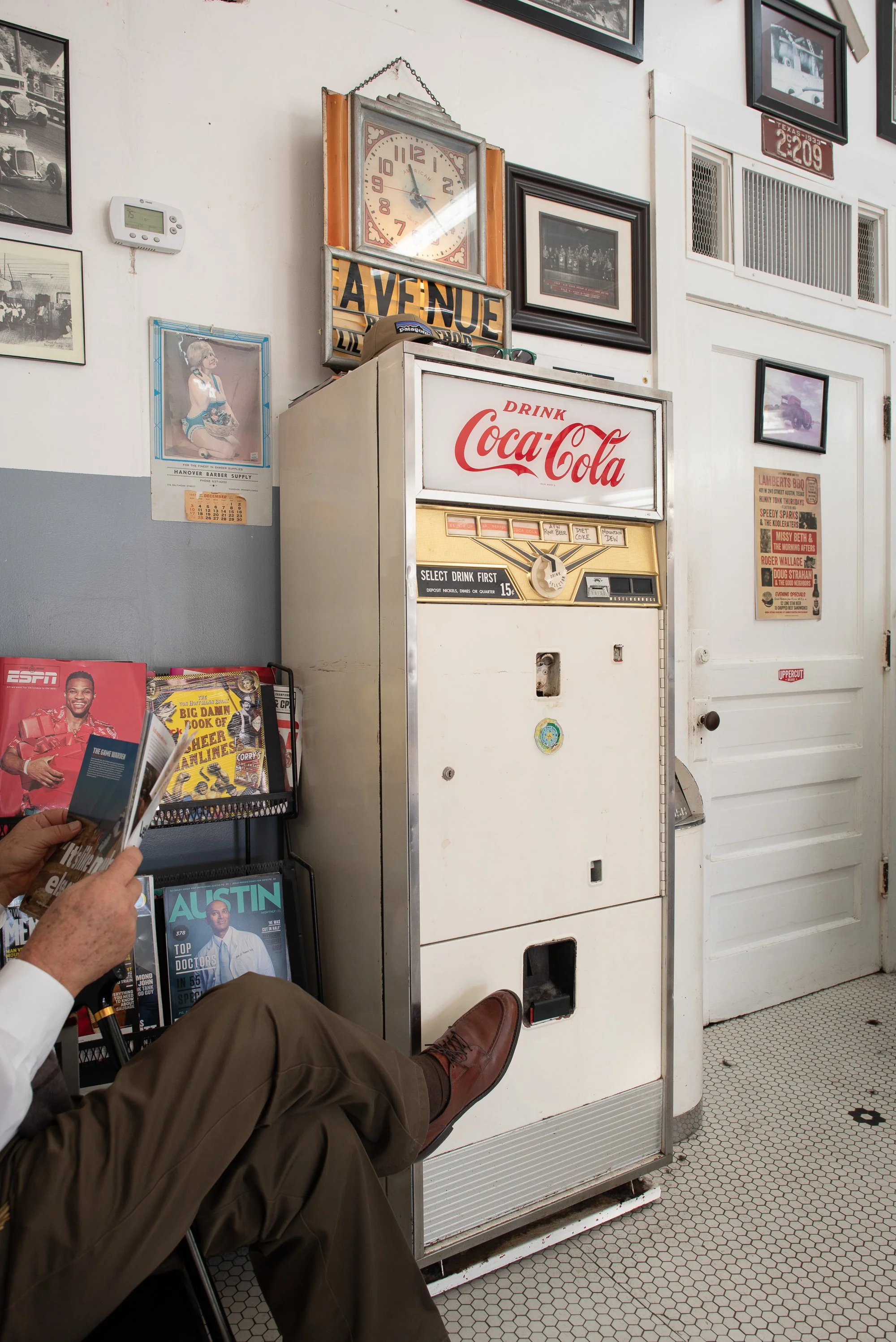
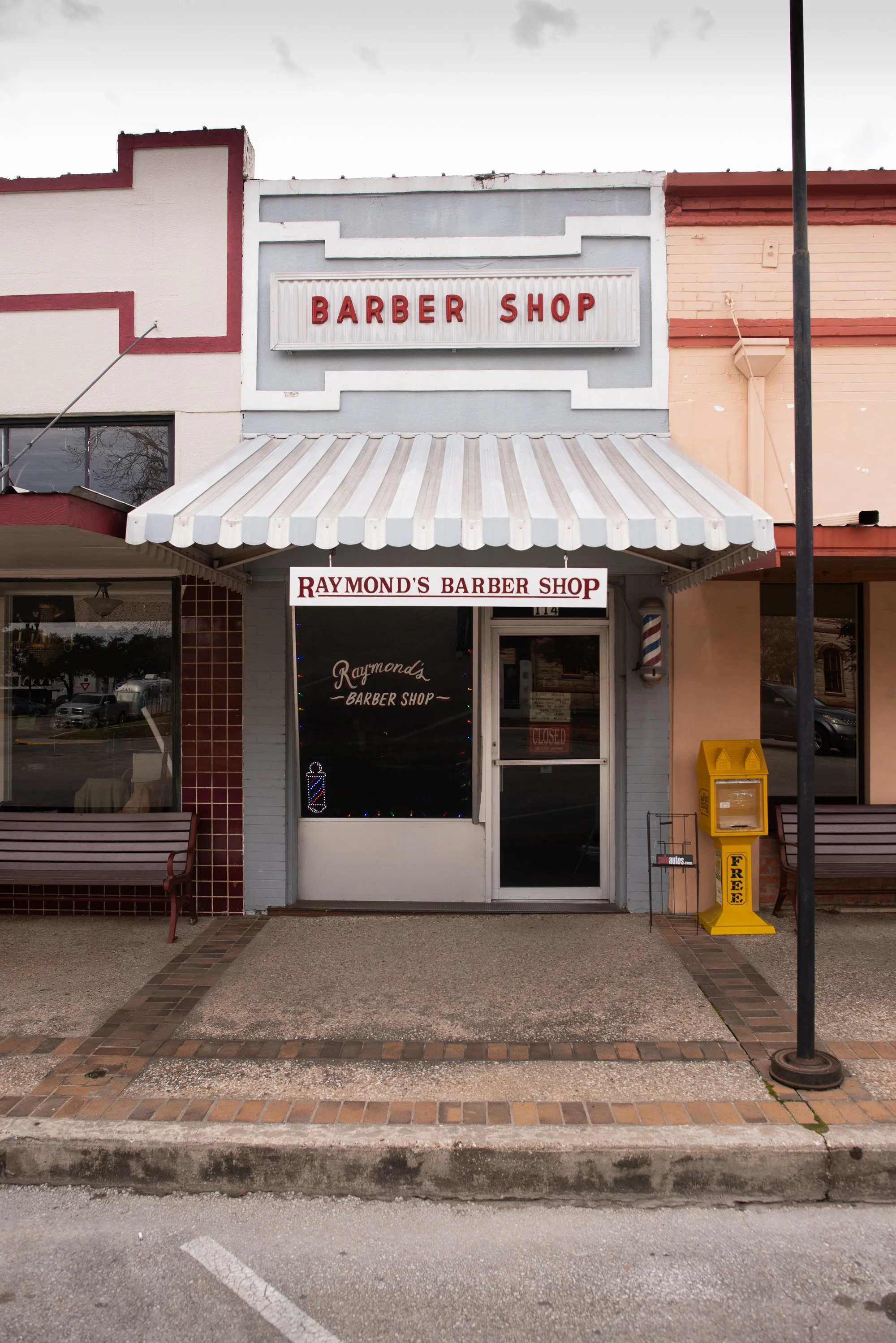
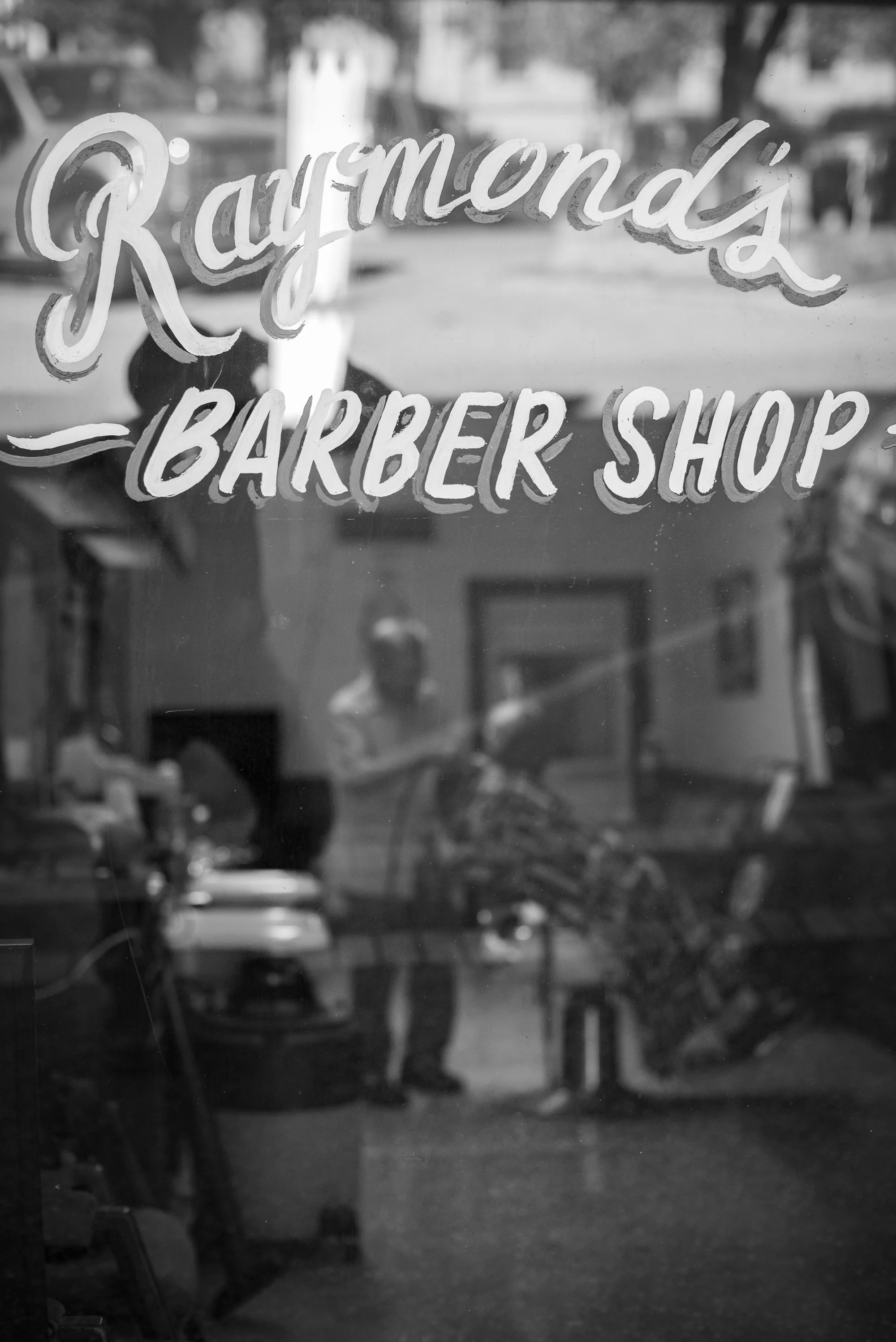
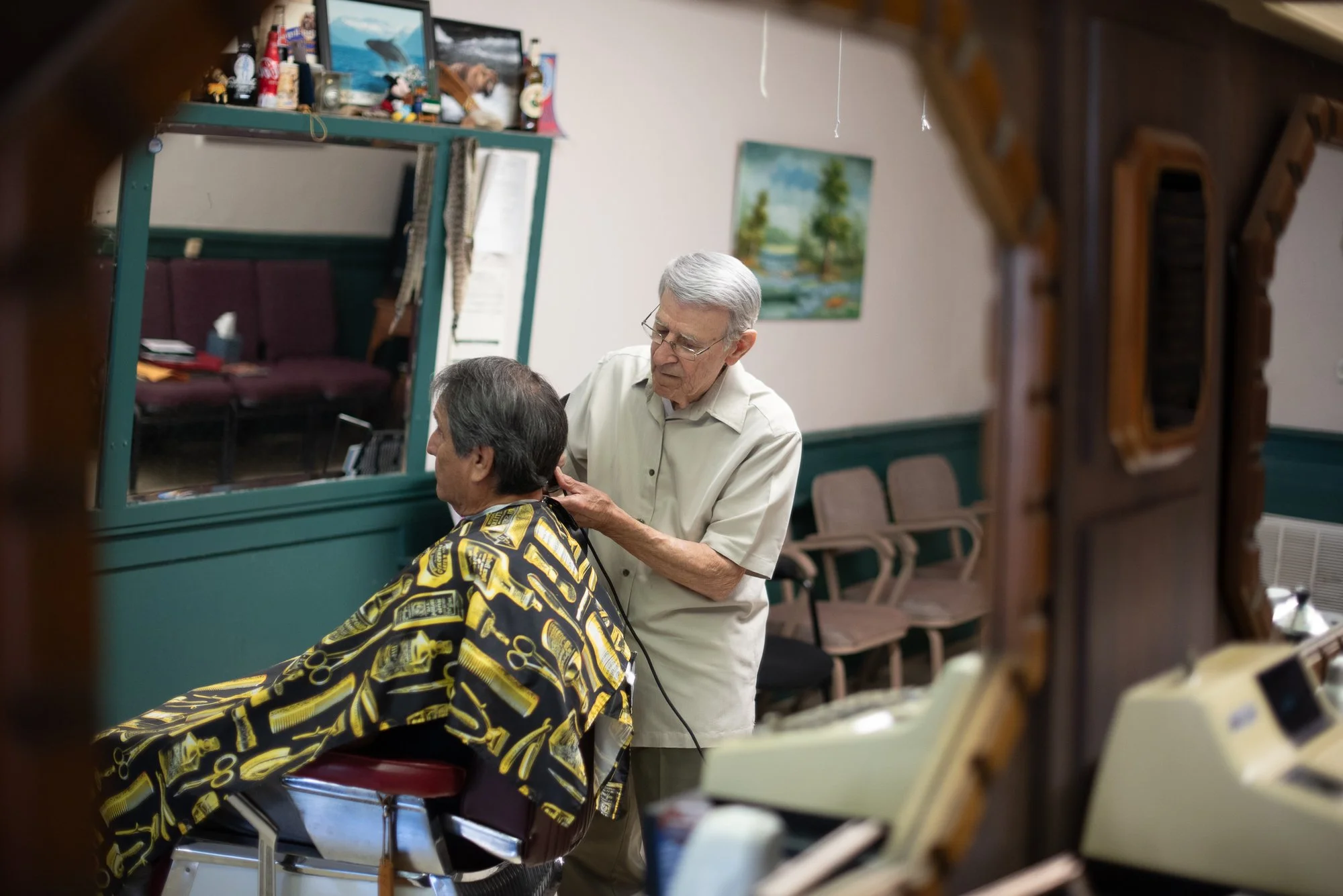
Texas Barbershop

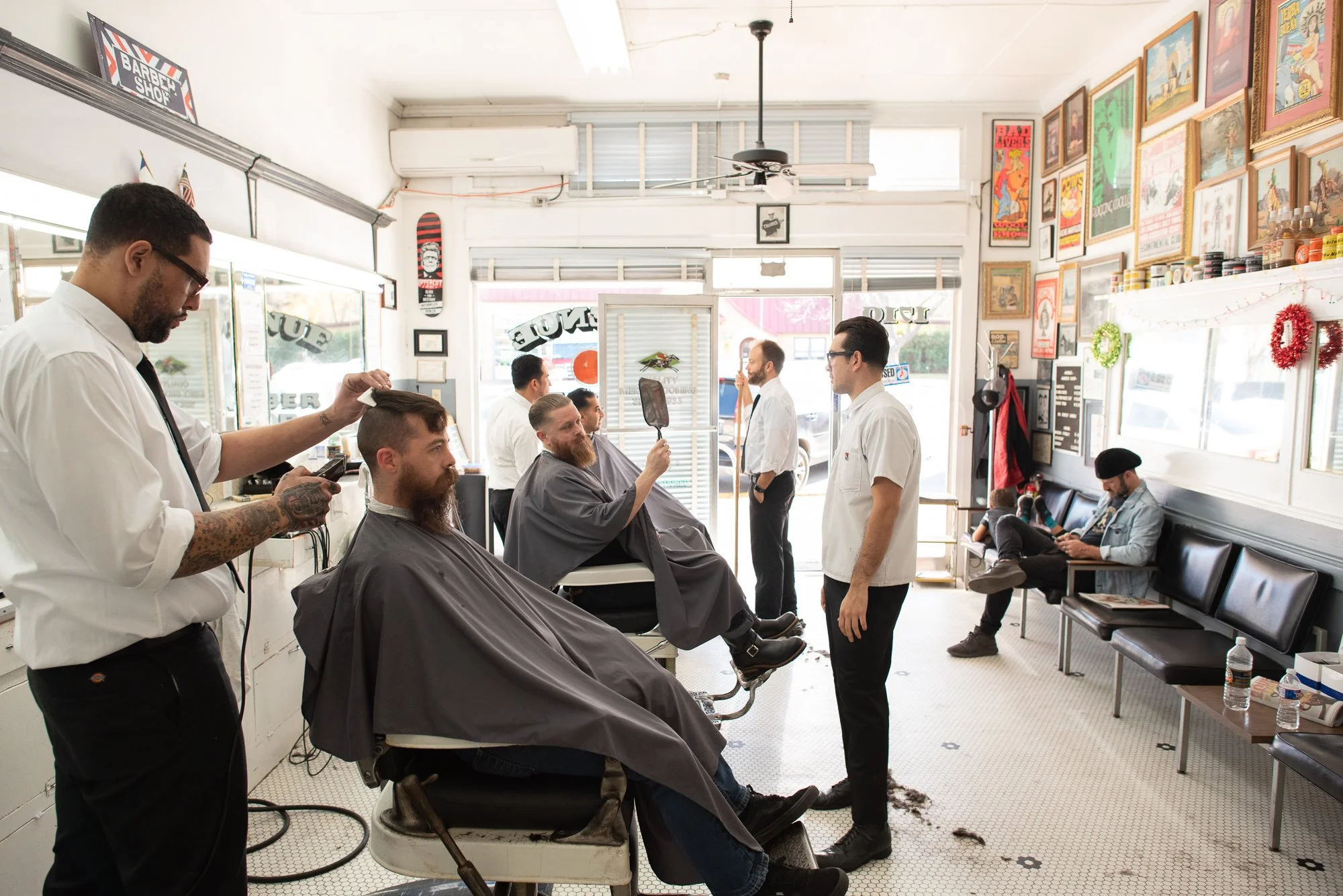
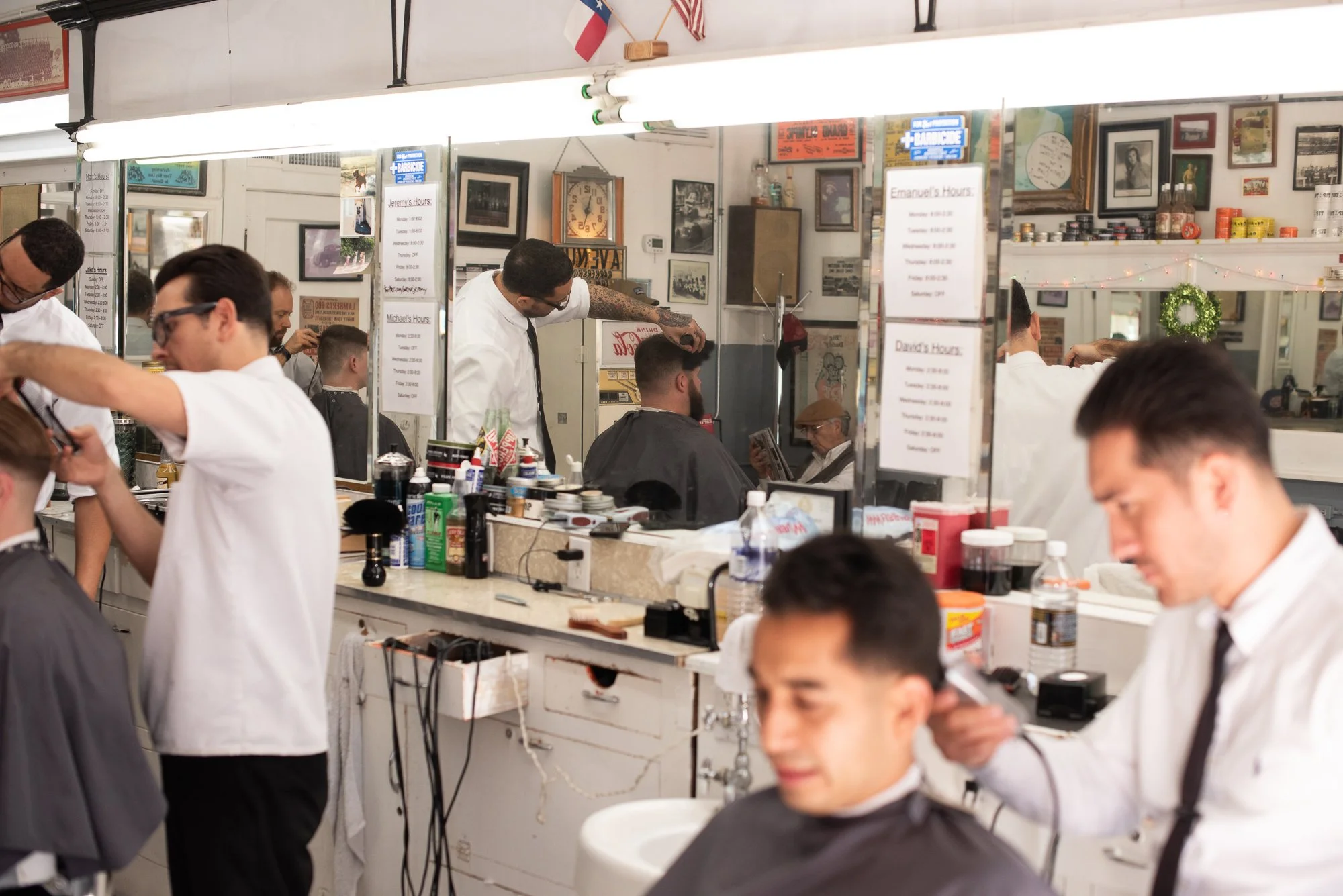
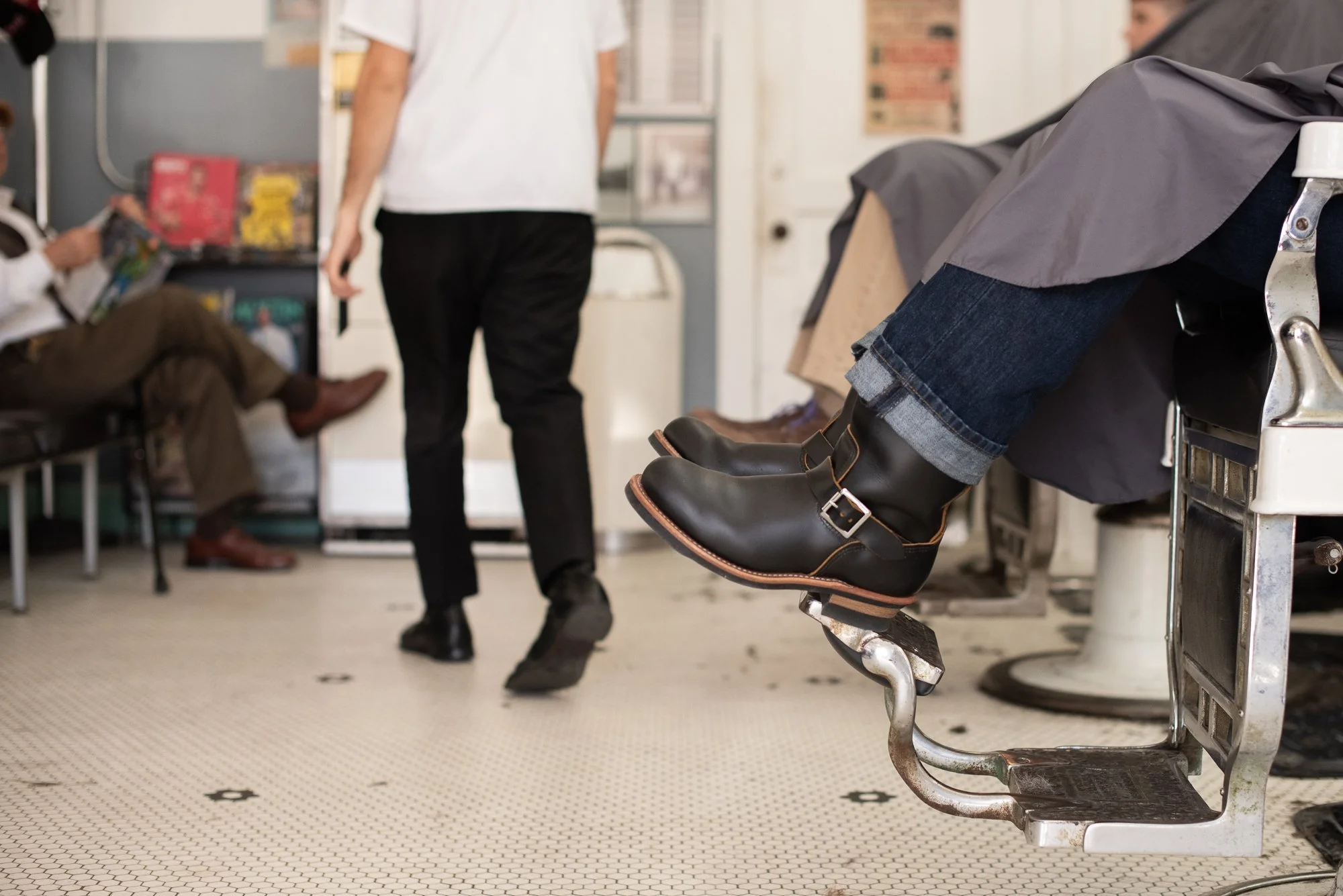
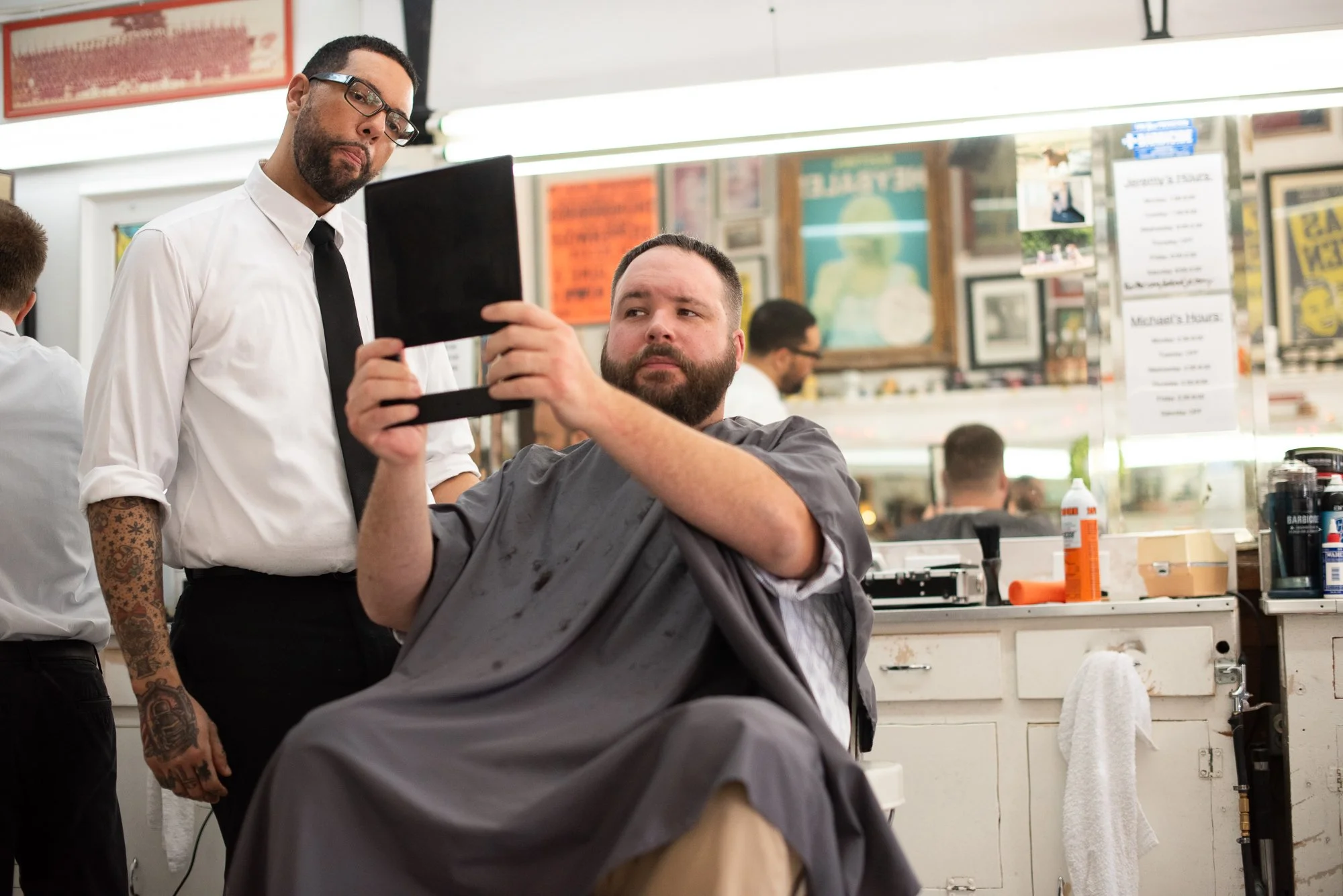
Lockhart, Texas Barbershop

Photography - Prints - Wall Art

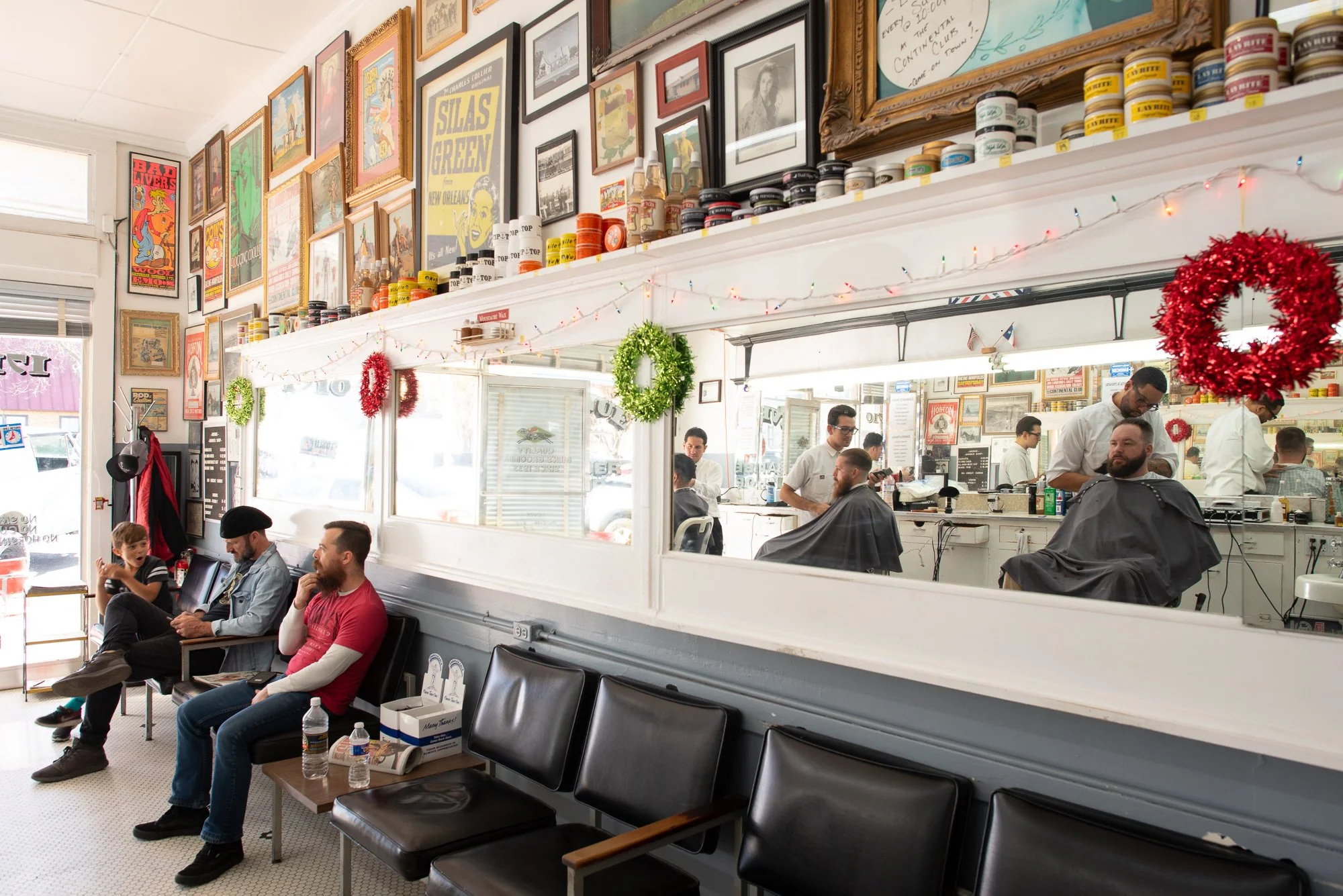
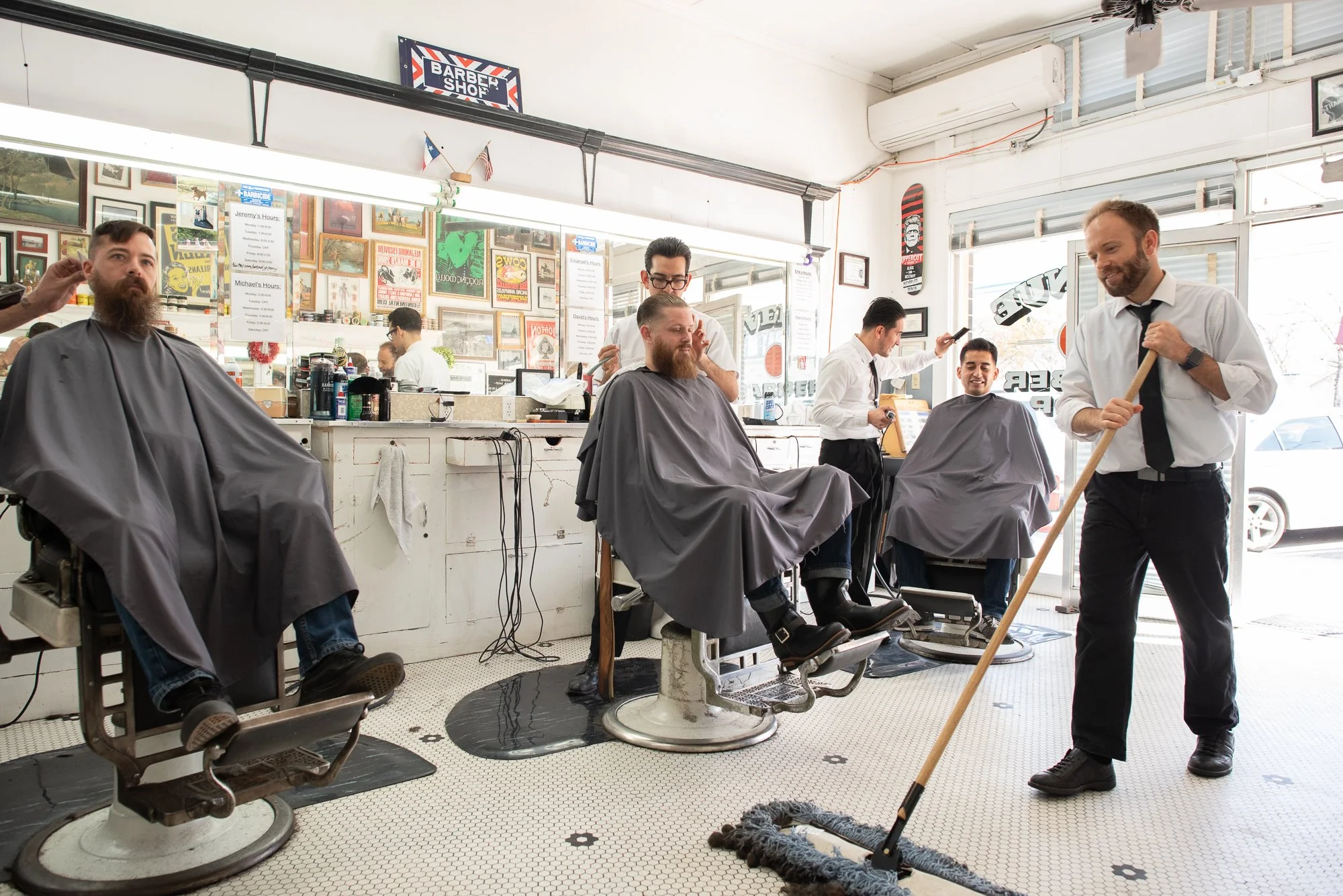
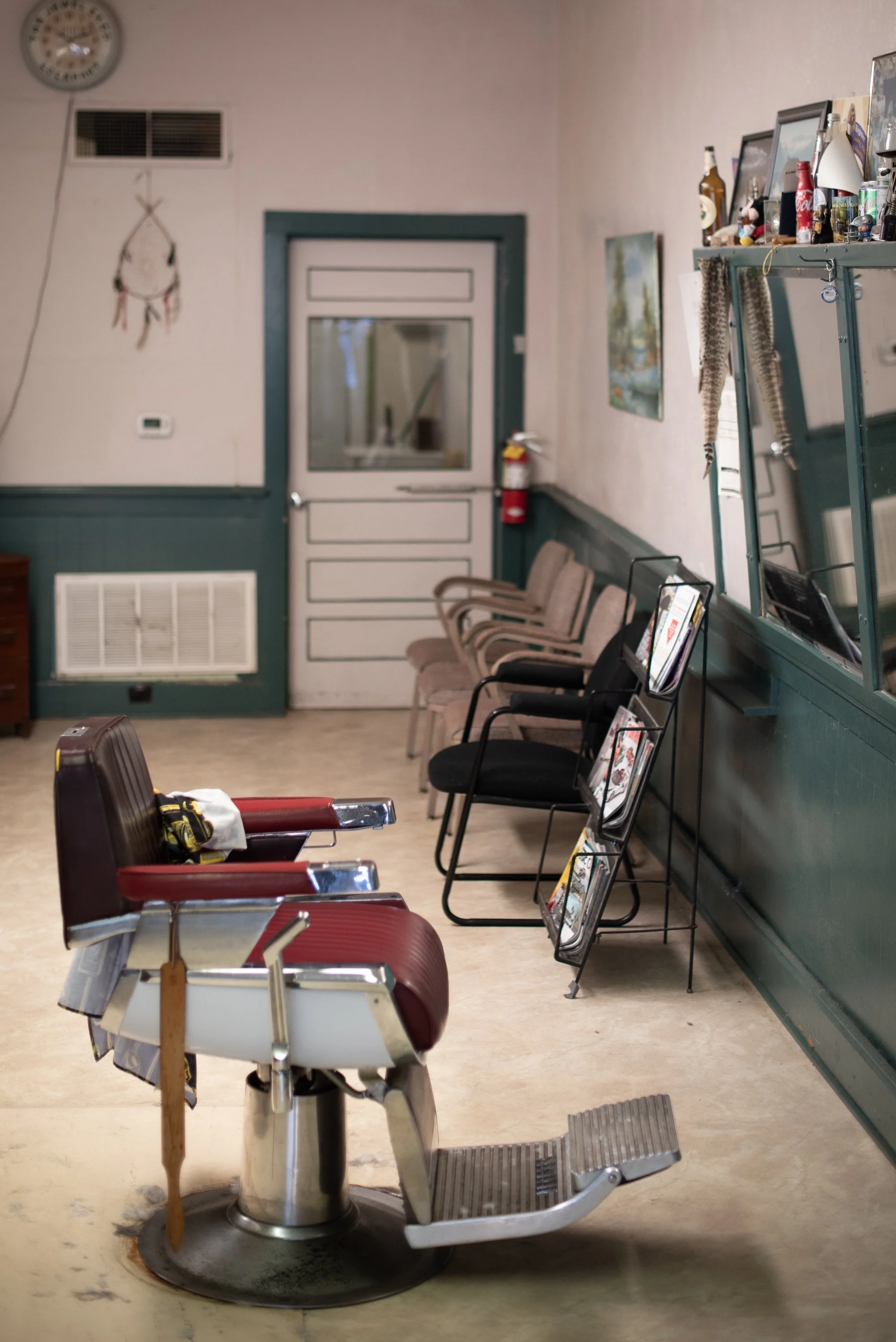
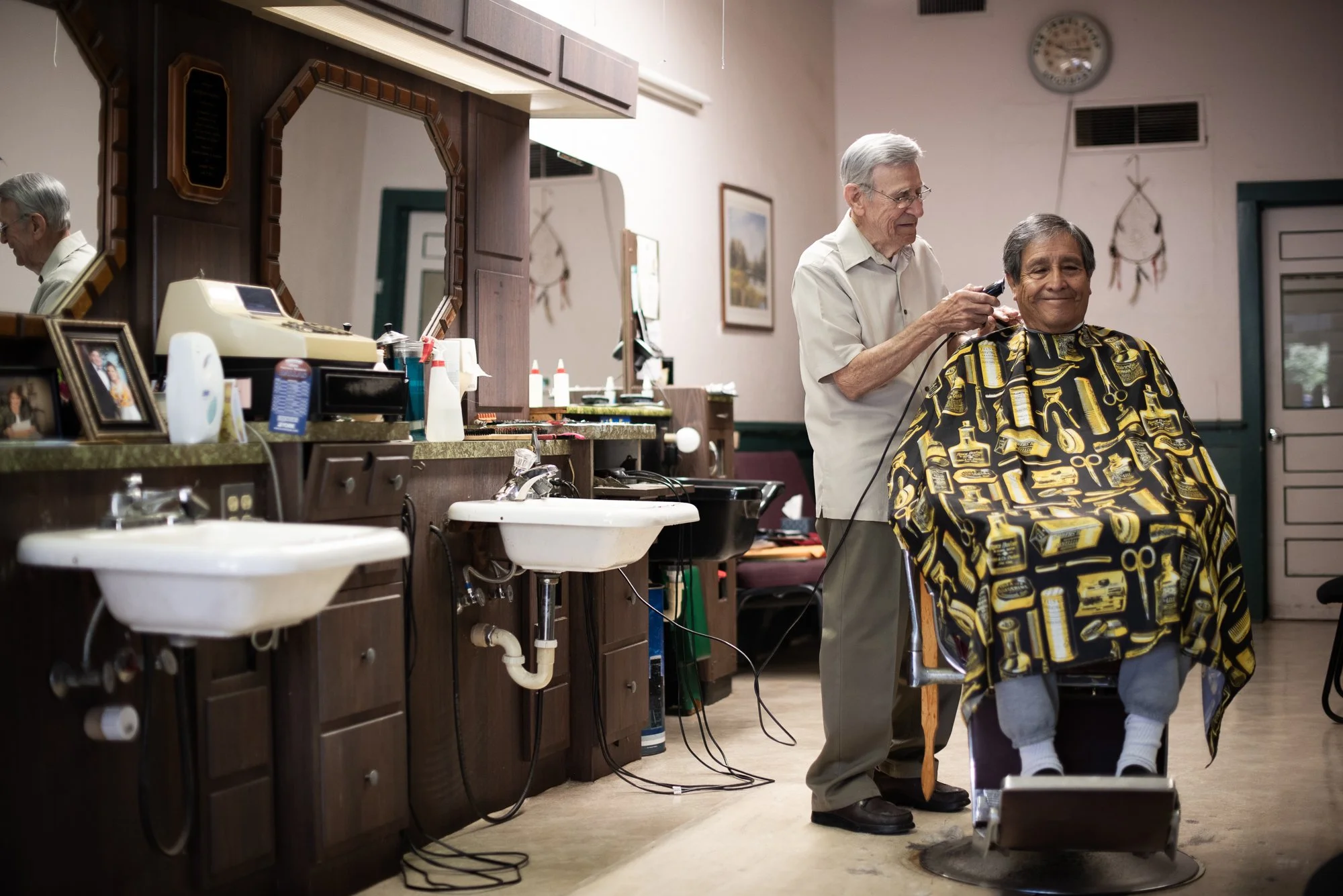
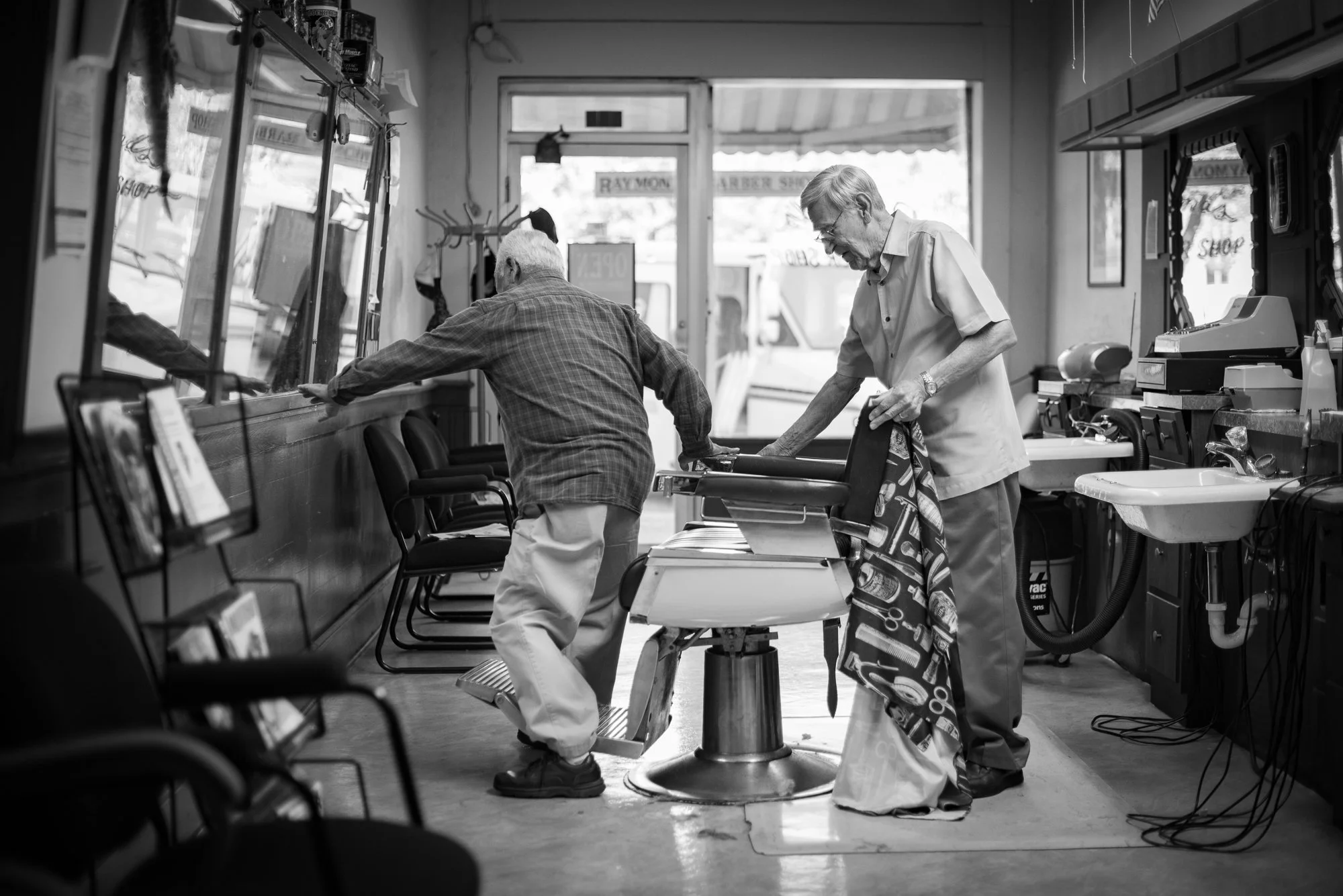
Not sure what the trigger was, but it hit me the other day that I never post updates about Barbershops of America. It’s been over two years since the last book came out and so much has happened since then. What an incredible journey this project continues to be. I’m really grateful for it. Even with all the other series in the works, I can’t seem to keep myself out of barbershops.

The image here are from Raymond’s Barbershop in Lockhart, TX. For those of you that live in the BBQ world, you know Lockhart is Mecca. And honestly, that’s the only reason these images exist. During a cross country trip a few years back, the BBQ itch needed to be scratched. After overdoing it at Smitty’s, I stumbled up Raymond’s with some heavy meat sweats. That’s just how the road goes though. Some days you search and search and search without finding a damn thing. Other days it just falls in your lap with a side of brisket.

Click HERE to pick up a copy of Barbershops of America .

Contact me directly for fine art barbershop prints for your home, office, or commercial space - rob@robhammerphotography.com

ROAD TRIP

THE BAD:This past week was the first time in a while since I’ve been on this particular route through Arizona, New Mexico, and Texas. The findings were not good economically. It was hard to see so many familiar small town restaurants and hotels closed, boarded up, or in the process of being demolished. Maybe the timing was a coincidence, but you have to wonder if it was all the result of COVID? Either way it’s a shame.

THE GOOD: Road trips are always so much fun, educational, and therapeutic. This one had me shooting on a cattle ranch (The Four Sixes) in the Texas panhandle where I met some great people and had a hell of a lot of fun shooting with them. Will be a while until I can post those images. So for now you can click HERE to see more of my Cowboy photography.

Kreuz Market - Lockhart Texas

Texas BBQ Photography at Kreuz Market in Lockhart, Texas


Documenting Texas BBQ Culture, Pitmasters, and Historic Smokehouses

If you know BBQ, then you know Kreuz Market. They’ve been slinging world class BBQ since the early 1900’s in Lockhart, Texas. Which, some say is the BBQ capital of the world, and anyone that would argue otherwise is just a moron. In the span of a square mile (give or take) you can hit 3 world class BBQ joints with a handful of others also in the area. Aside from Kreuz, you’ve also got Smitty’s and Black’s. I’d personally vouch for all 3.

Kreuz Market and the Tradition of Texas Barbecue

Kreuz Market dates back to the early 1900s, long before BBQ became a national trend or social media spectacle. The emphasis here has always been on meat, smoke, fire, and consistency — no gimmicks, no unnecessary theatrics.

Photographing this environment means working fast and respectfully. The pits burn hot. The spaces are tight. The people working there have done this thousands of times before — and the rhythm of their work becomes part of the story.

What interests me most isn’t just the food, but the process:
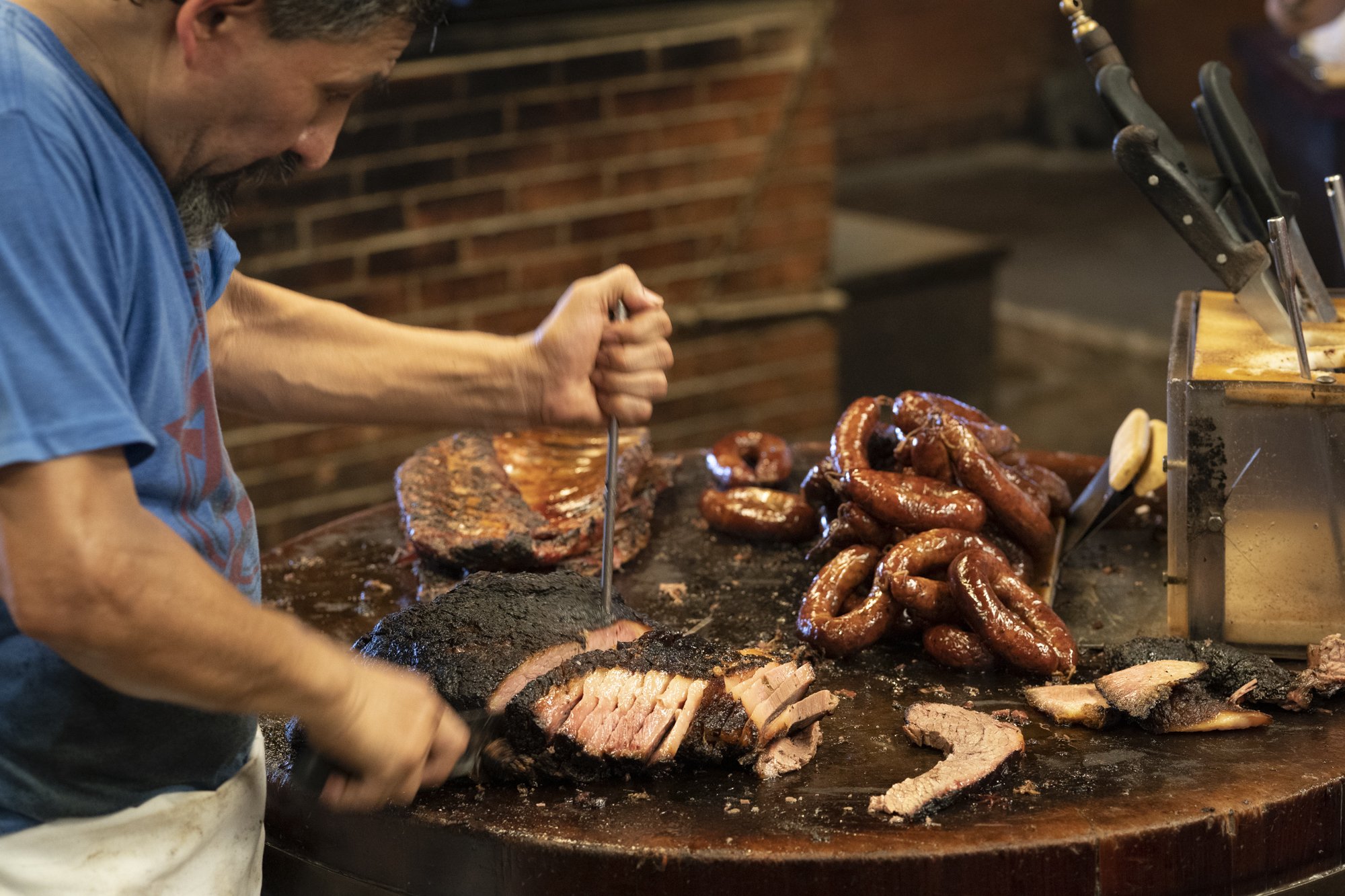
hands lifting heavy cuts of meat, smoke drifting across brick walls, knives resting on worn butcher blocks, the quiet confidence of people who have mastered their craft over decades.

These photographs aim to document Texas BBQ as lived culture, not as a stylized food trend.

Texas BBQ Photography Prints Available

Images from Kreuz Market are available as fine-art photography prints. These prints work especially well in:

  • Kitchens and dining rooms

  • Restaurants and hospitality spaces

  • Offices, studios, and creative workplaces

  • Homes that appreciate Americana, craft, and documentary storytelling

Each print is produced with archival materials and museum-grade standards, with an emphasis on tonal depth, texture, and longevity.

Texas BBQ Photography Licensing & Editorial Use

This Texas BBQ photography archive is available for editorial licensing, commercial use, advertising campaigns, restaurant branding, cookbook publishing, tourism marketing, cultural storytelling projects, etc. If you’re producing work related to Texas food culture, barbecue, hospitality, or American regional identity, feel free to get in touch about licensing or custom image selections.

See My Photographs from Smitty’s Market — Another Texas BBQ Landmark →

CONTACT ROB

Smitty's Market - Lockhart, Texas

Legendary Texas BBQ at Smitty’s Market

If you love Texas barbecue long enough, you eventually find yourself in Lockhart. The state legislature crowned it the “Barbecue Capital of Texas,” and more recently Smithsonian singled out this little town, and its heavy-hitters like Smitty’s Market, Kreuz, and Black’s, as one of the best small towns in America to visit.

Smitty’s is the one I kept coming back to with my camera. Not because it’s shiny or modern, but because it feels like barbecue preserved in amber — smoke-stained, stubborn, and honest.

A Barbecue Story That Starts in 1948

The story of Smitty’s starts long before there was a sign on the door that said “Smitty’s Market.” In 1948, a butcher named Edgar “Smitty” Schmidt bought Kreuz Market, the old-school meat market and barbecue joint in downtown Lockhart.

For decades, that brick building on South Commerce was the beating heart of Lockhart barbecue. When the family eventually split in 1999, Smitty’s daughter, Nina Schmidt Sells, kept the original downtown building and reopened it as Smitty’s Market, keeping the fires, and the history, right where they’d always been.

That’s what you feel when you walk in: not just a restaurant, but a place that’s been seasoned by generations of smoke, grease, and conversations over butcher paper.

Walking the Long, Smoky Hallway

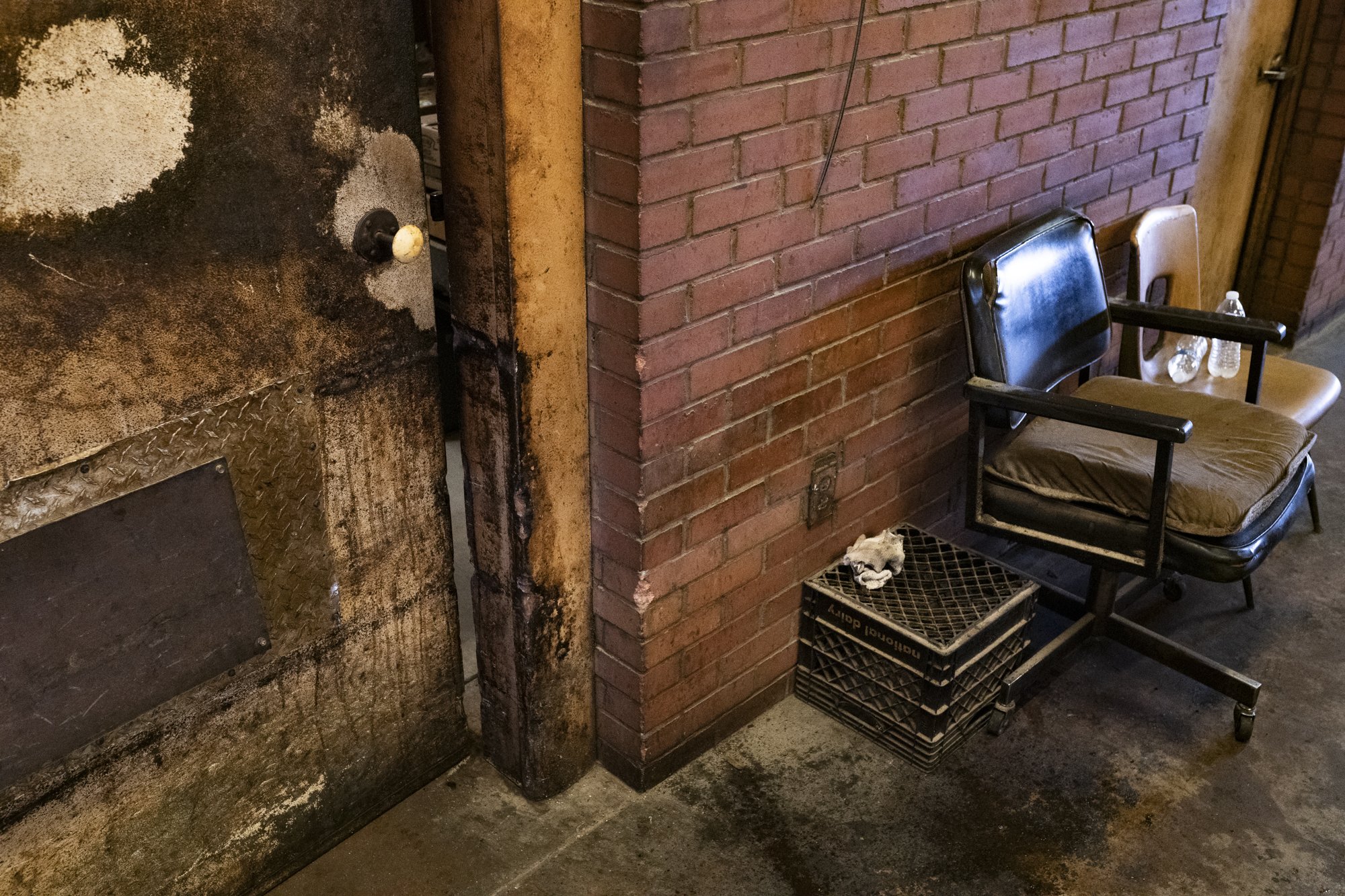
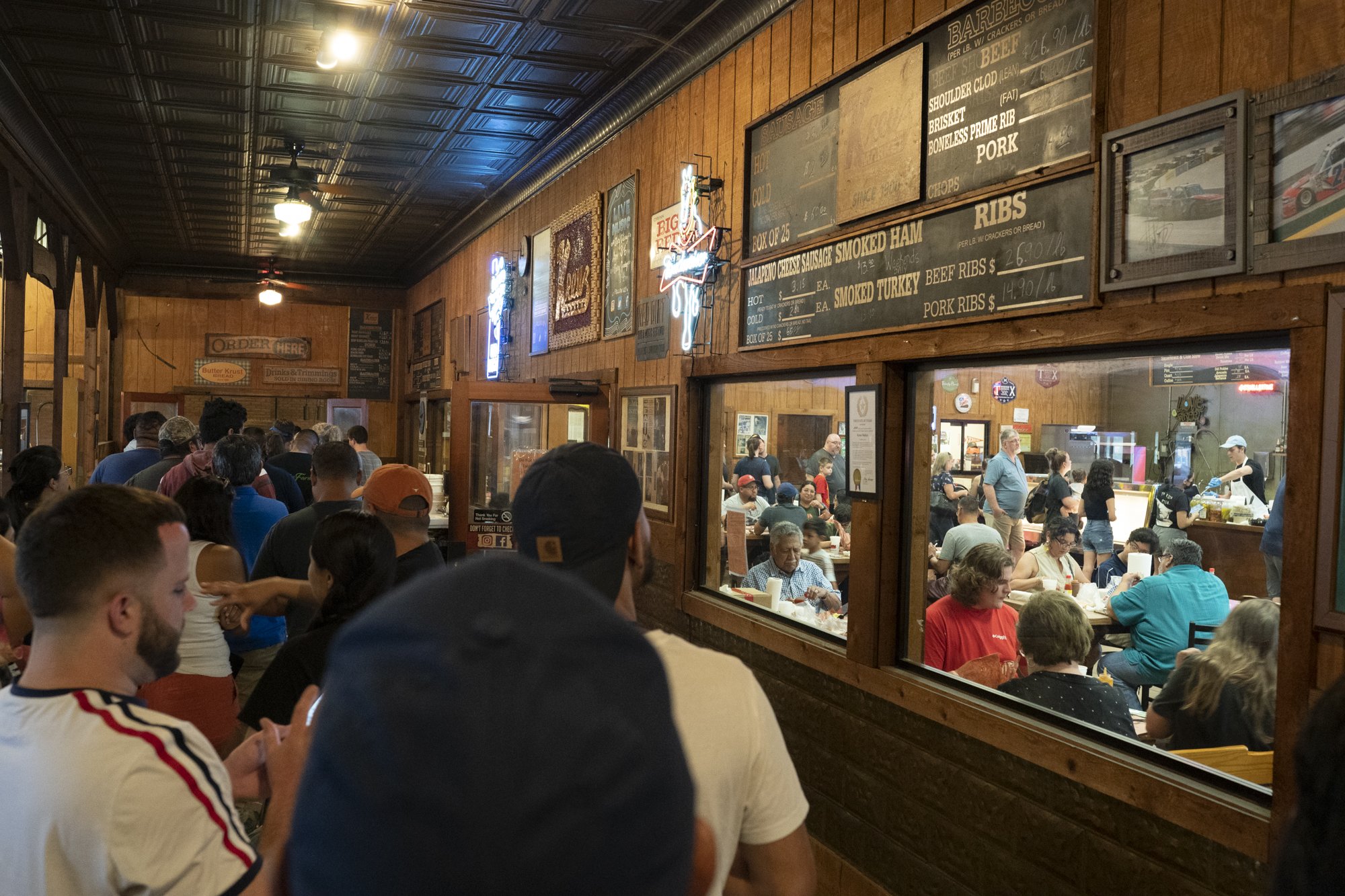
If you’ve been, you know the approach. You step in off the Lockhart square and into that long, dark hallway. The air is thick and warm, the floors worn smooth by decades of boot traffic, and the smoke hangs low like a permanent weather system.

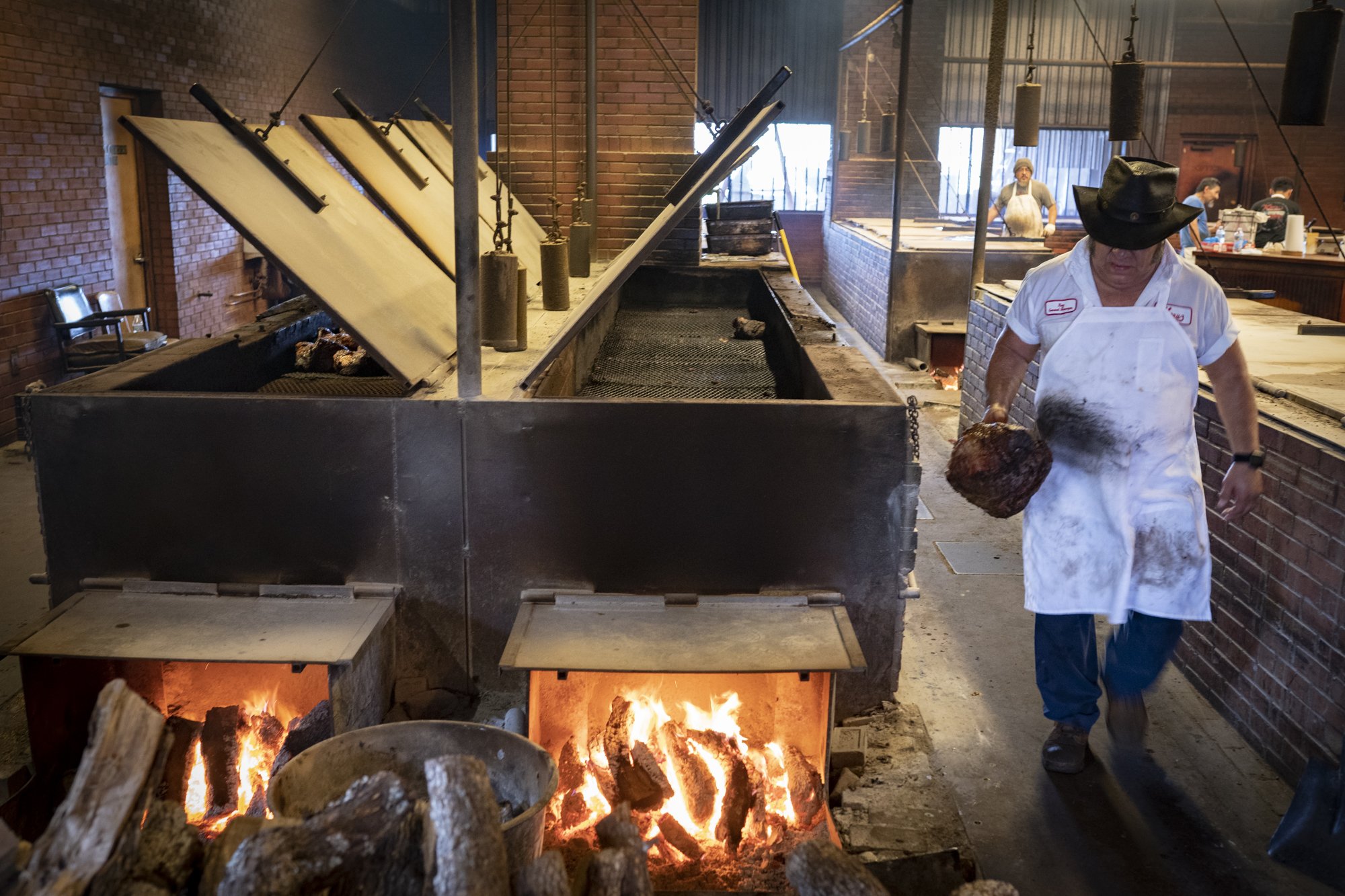
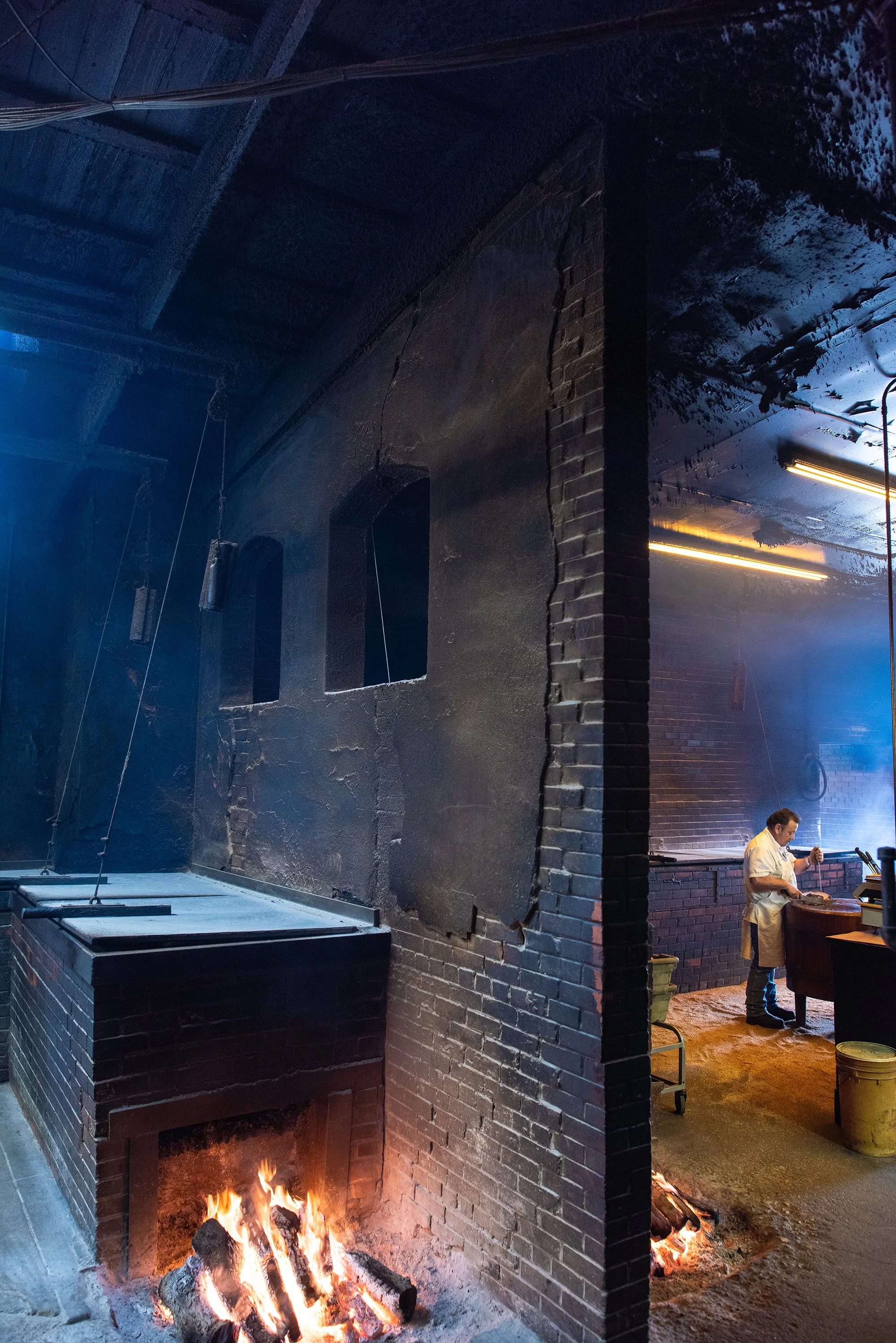
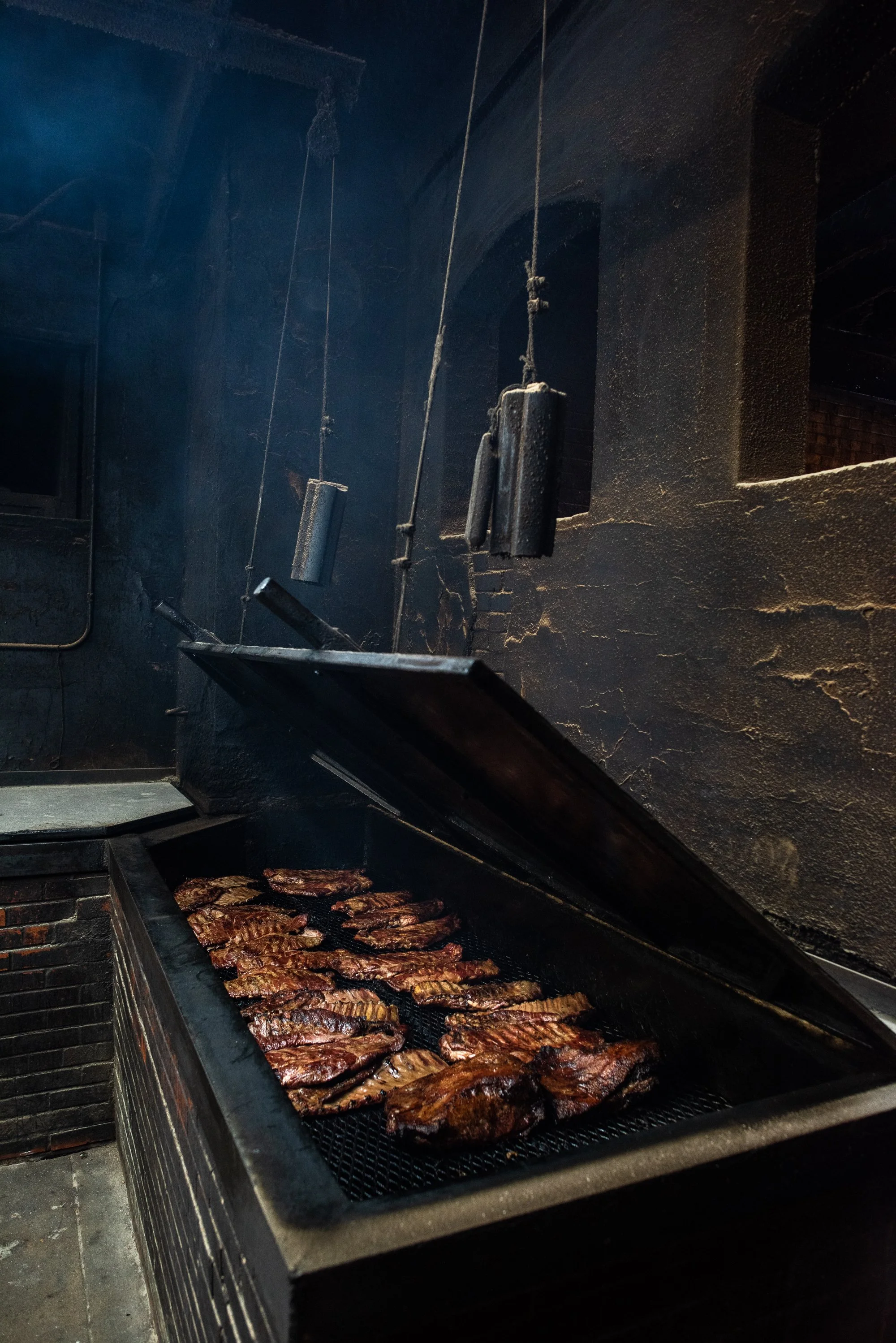
Follow your nose and the temperature climbs. Then the pits reveal themselves — massive brick beasts with open fires glowing on the floor, logs stacked and burning right beside the line. It’s dramatic and a little wild, and it’s part of why Smitty’s leaves such a mark on people.

In a world of spotless stainless-steel kitchens and carefully hidden cook lines, Smitty’s shows you everything: the fire, the coals, the meat, the sweat. You feel like you’re walking through the engine room of Texas barbecue.

What’s on the Butcher Paper

Smitty’s lives firmly in the Central Texas tradition: meat first, everything else second. No plates, no fuss. Your order arrives on butcher paper with maybe a stack of white bread, pickles, and onions if you’re doing it right.

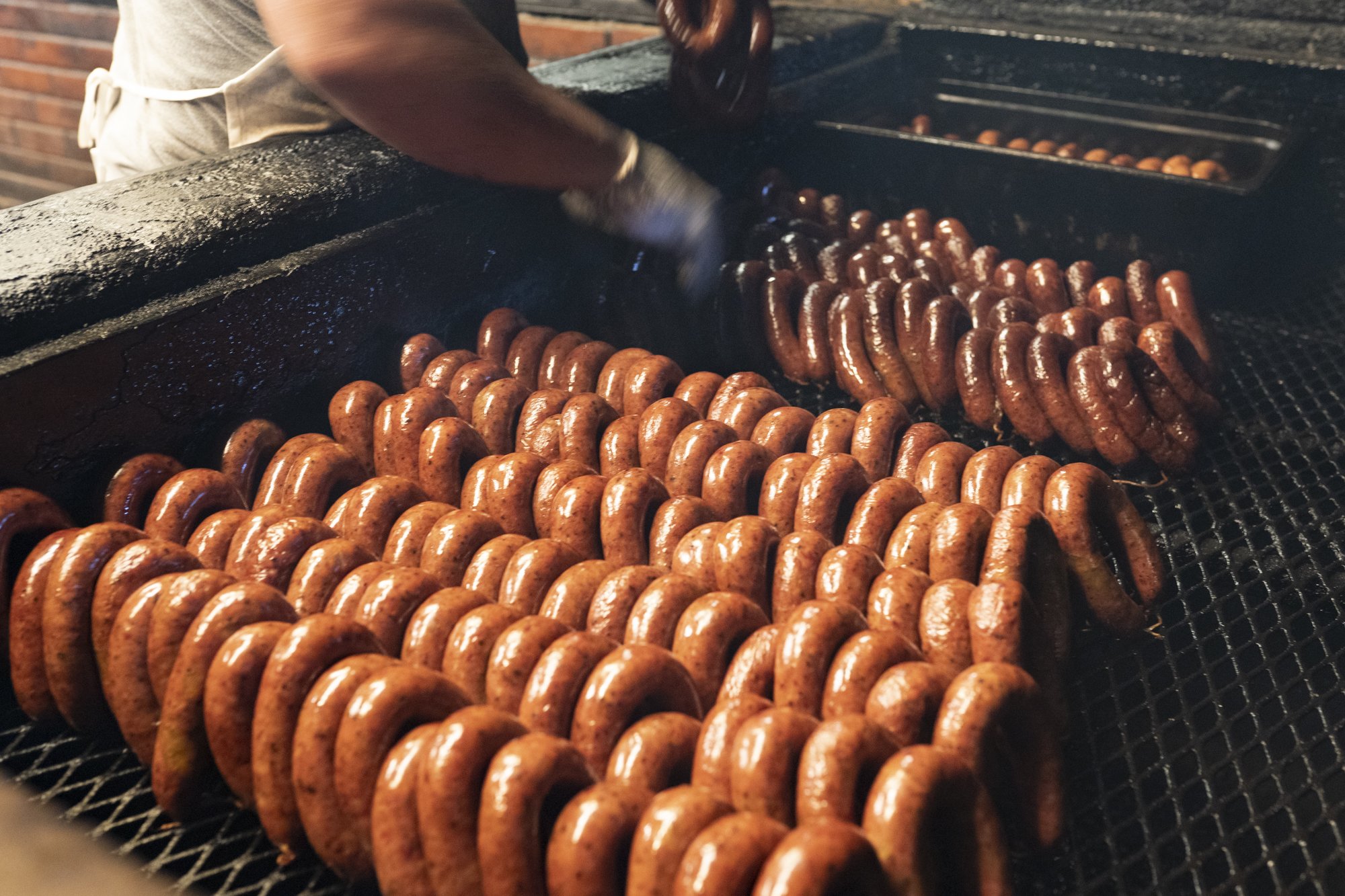
On any given day you’ll see brisket, prime rib, pork chops, ribs, smoked turkey, and, of course, those famous sausage links hitting the paper. The sausage, especially, has built a devoted following — peppery, smoky, with that satisfying snap when you bite into it.

Smitty’s cooking style is so emblematic of “old school” Central Texas barbecue that it’s been featured nationally — including on the Travel Channel’s Food Paradise as a go-to spot for slow-smoked brisket and signature sausage.

Like any legendary joint, opinions about the brisket can spark friendly arguments that last longer than the meal. Some folks swear it’s among the best in the state; others come mainly for the sausage and the atmosphere. But that’s barbecue — subjective, seasonal, and human.

Photographing a Living Time Capsule

Places like Smitty’s are why I haul cameras and lenses across Texas. The moment you step inside, you’re standing in a living time capsule:

  • The orange glow of the open fires against the dark pit room

  • Smoke curling through shafts of window light

  • Long tables packed with families, road-trippers, and locals in feed-store caps

  • Hands passing butcher paper, breaking bread, and building sandwiches in that very Texas way

My photographs from Smitty’s focus less on the close-up food porn and more on the world around it — the way the smoke stains the ceiling, the rhythm of people sliding through that hallway, the quiet concentration of the pitmen tending the fires. It’s the intersection of architecture, ritual, and appetite that makes this place feel like Texas in one room.

For me, Smitty’s isn’t just a stop on a barbecue tour; it’s part of a larger story about American spaces that refuse to modernize just because trends say they should. The pits, the hallway, the dining room — everything still carries the weight of 1948 and all the years since.

For Collectors, Editors, and Brands

If you’re a barbecue fan, I hope these photographs feel like stepping back into that smoky hallway — you can almost smell the oak and feel the heat on your face.

If you’re a collector, these Smitty’s Market images are available as fine art prints. They’re meant to hang in homes, restaurants, and offices as quiet reminders of what “real” Texas barbecue looks like when you strip away the marketing and leave only fire, brick, and tradition.

For editors, publishers, and brands working on stories about Texas, Lockhart, or the culture around barbecue, the images are also available for licensing — from wide environmental scenes that set the mood to tighter, more graphic frames from the pit room and dining area. They work equally well for travel features, restaurant coverage, or campaigns that want an authentic Central Texas feel rather than a staged set.

Why Smitty’s Still Matters

Lockhart’s barbecue landscape has changed over the years, but Smitty’s holds its ground as one of the core stops on what people call the Lockhart BBQ Trail — a lineup that includes Kreuz Market, Black’s BBQ, and other local institutions that keep the town worthy of its “Barbecue Capital” title.

Smitty’s isn’t trying to reinvent anything. The fires still burn in the old building on the square, the pits are still right there in your face, and the meat still hits butcher paper just like it has for generations.

That’s why I keep pointing my camera at it. In a state that’s constantly chasing the next big thing, Smitty’s Market is content to do what it’s always done: smoke meat, feed people, and let the walls slowly absorb another layer of history — one plate at a time.

If you’ve stood in that hallway, I hope the photographs bring you right back. And if you haven’t made it to Lockhart yet, consider this your nudge to go stand in the smoke for yourself.

If these photographs made you smell the smoke, take one home.
Prints and licensing inquiries are welcome — get in touch and I’ll help you find the right piece for your space or project.

Contact Rob
Open fire burning beneath the brick pits at Smitty’s Market in Lockhart, Texas, with a pitmaster working in the smoky room beyond.

Fire in the foreground, work in the distance — the heat, smoke, and rhythm that define a day inside Smitty’s Market.

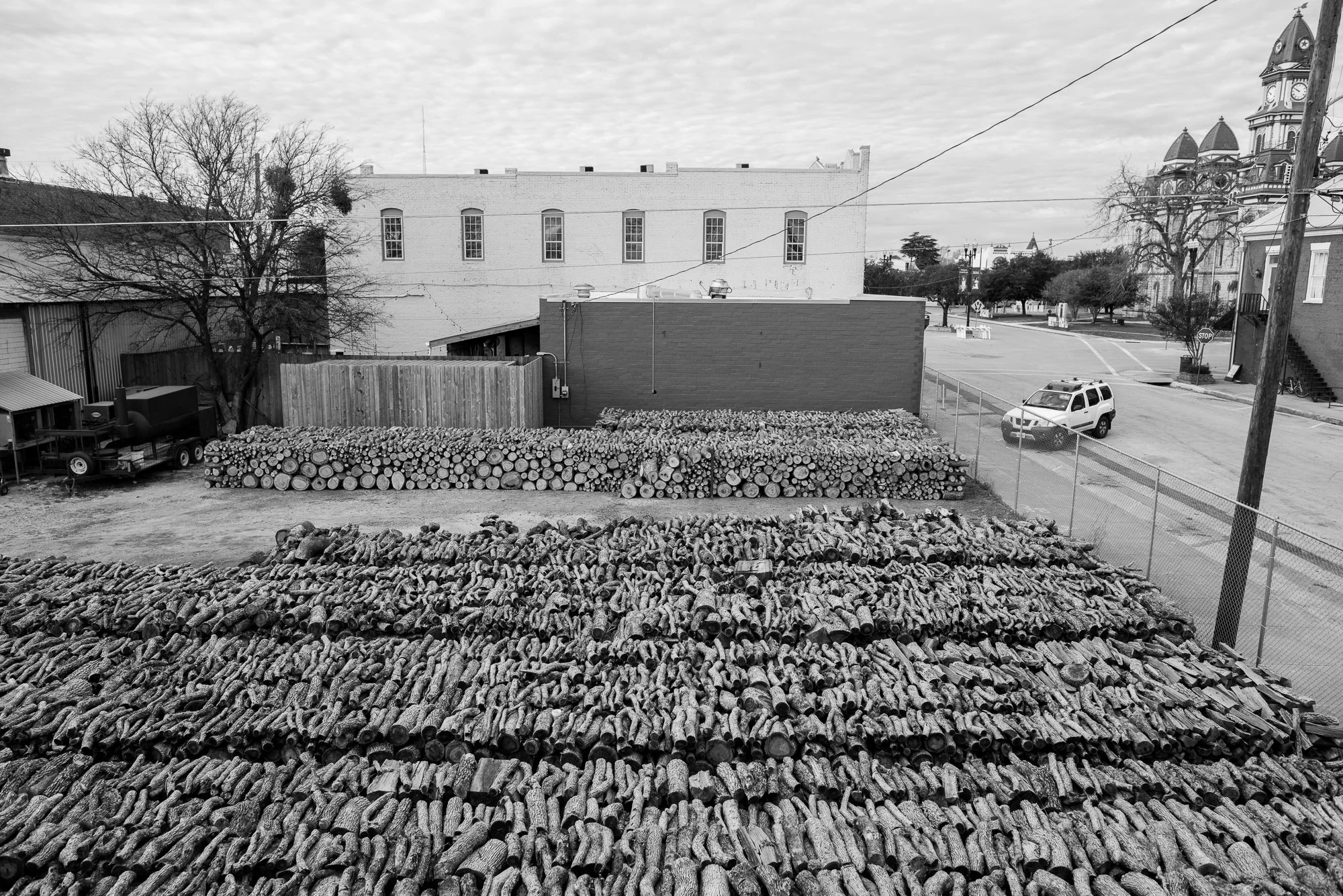
Large stacks of split oak firewood behind Smitty’s Market in Lockhart, Texas, used to fuel the legendary barbecue pits.

Stacks of oak firewood behind Smitty’s Market — the fuel that keeps the old brick pits alive every day.

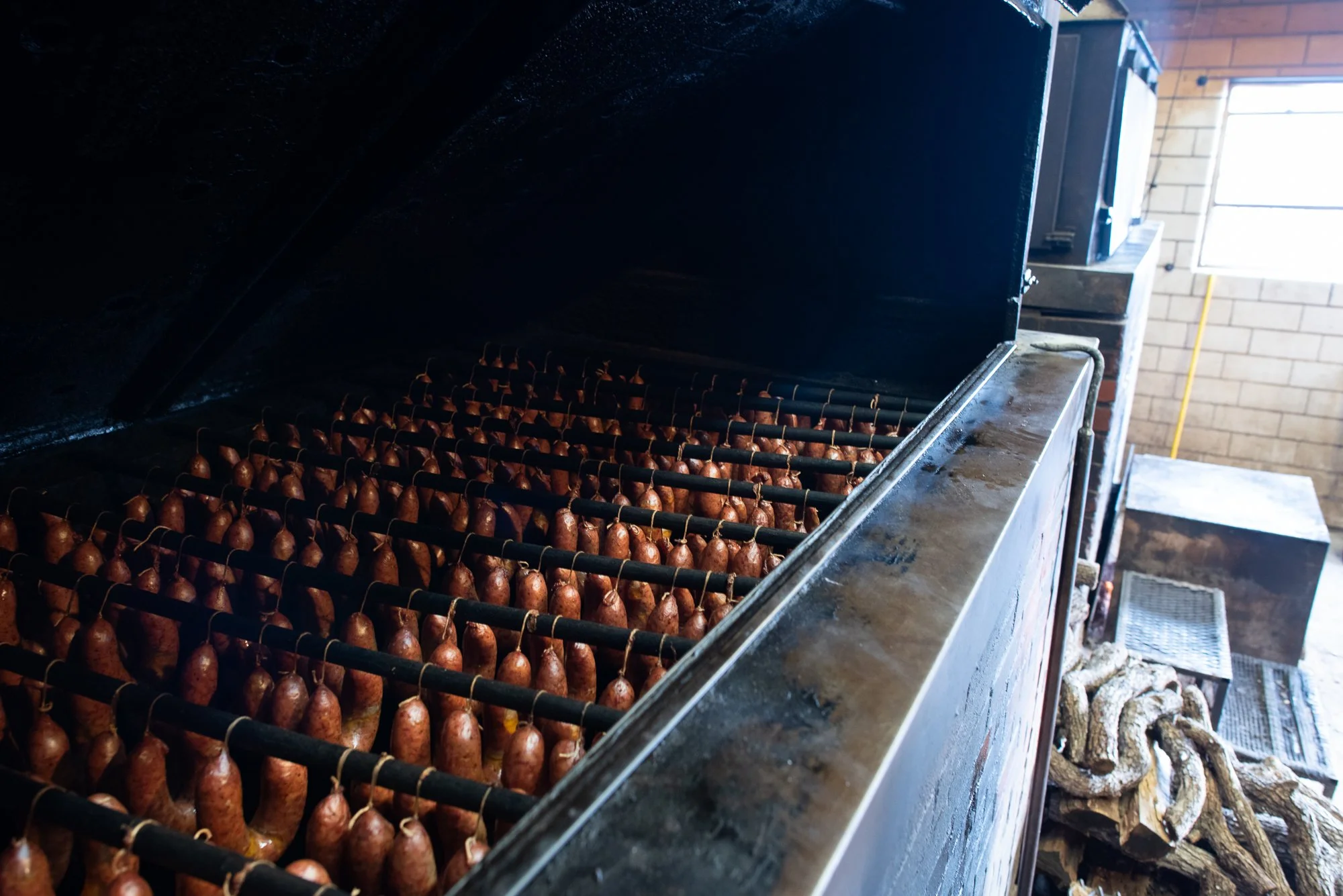
Rows of sausage links smoking inside one of Smitty’s Market’s historic brick pits.

Fresh links smoking low and slow inside one of Smitty’s historic pits.

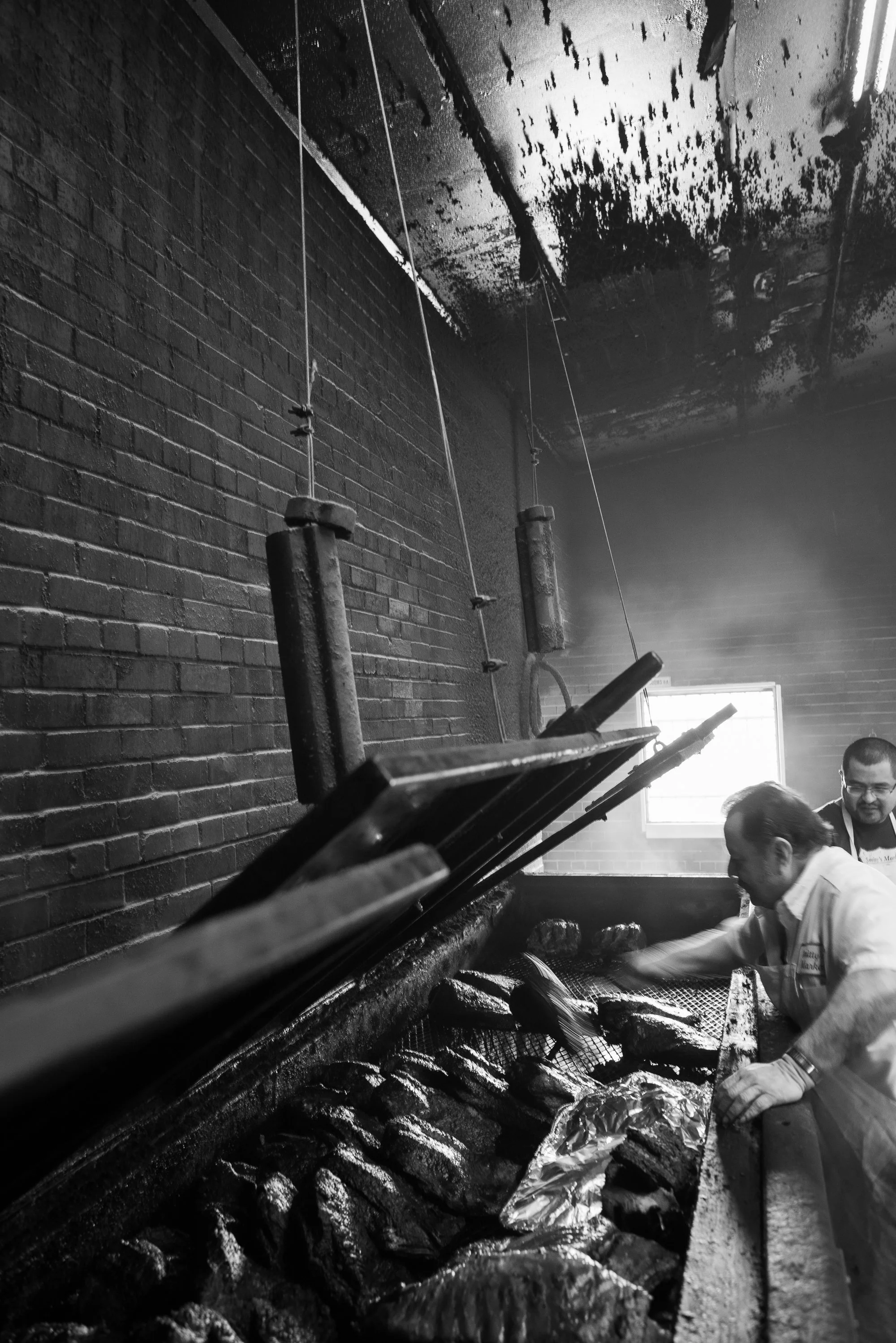
Smoke-blackened ceiling and brick walls above the pits at Smitty’s Market, with pitmasters tending brisket below.

The smokehouse above and below — decades of soot overhead and pitmen working the briskets beneath it.

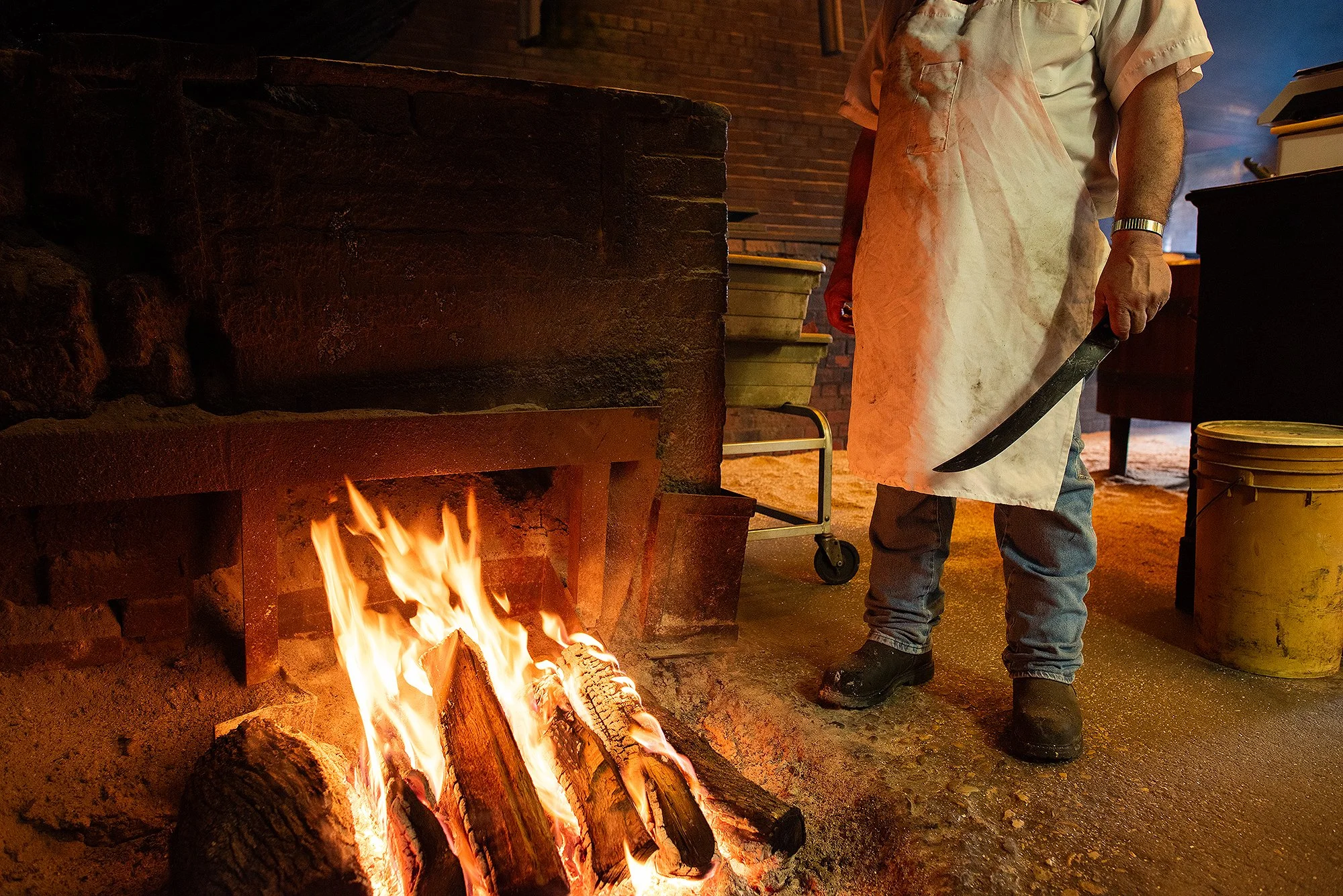
Pitmaster standing beside an open fire at Smitty’s Market, holding a long carving knife.

The fire that starts it all — a pitman standing ready beside the flames that shape every bite.

Pitmaster tending the sausage pits at Smitty’s Market, surrounded by stacks of oak wood.

A Smitty’s pitman tending the sausage pits, surrounded by the oak that feeds the fires.

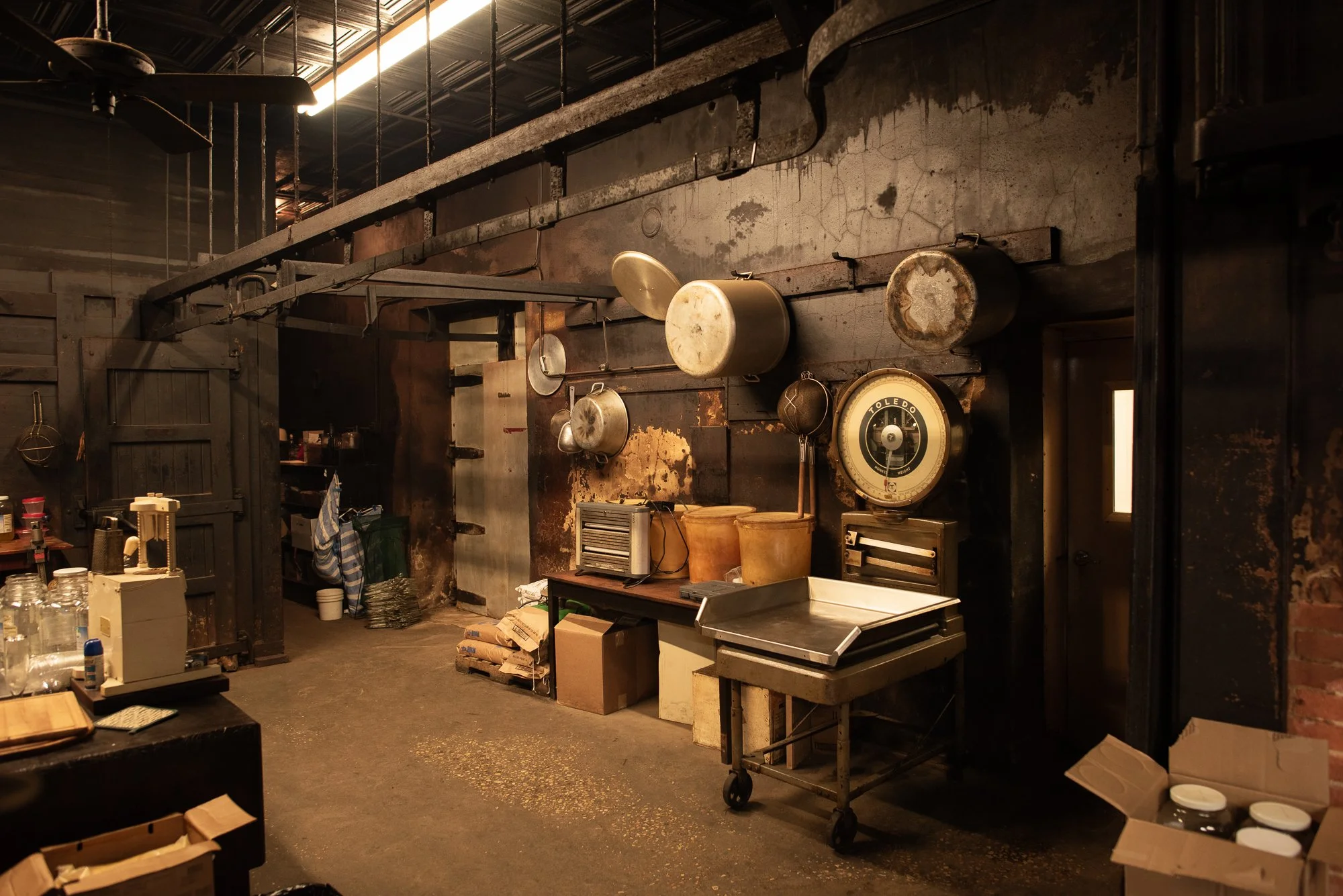
Old preparation room inside Smitty’s Market with pots, scales, and smoke-stained walls.

The back room at Smitty’s — decades of tools, textures, and smoke layered into the walls.

Smoked ribs cooking inside one of Smitty’s Market’s open brick pits, surrounded by rising smoke.

Ribs smoking over the open brick pits — heat, oak, and patience doing their work.

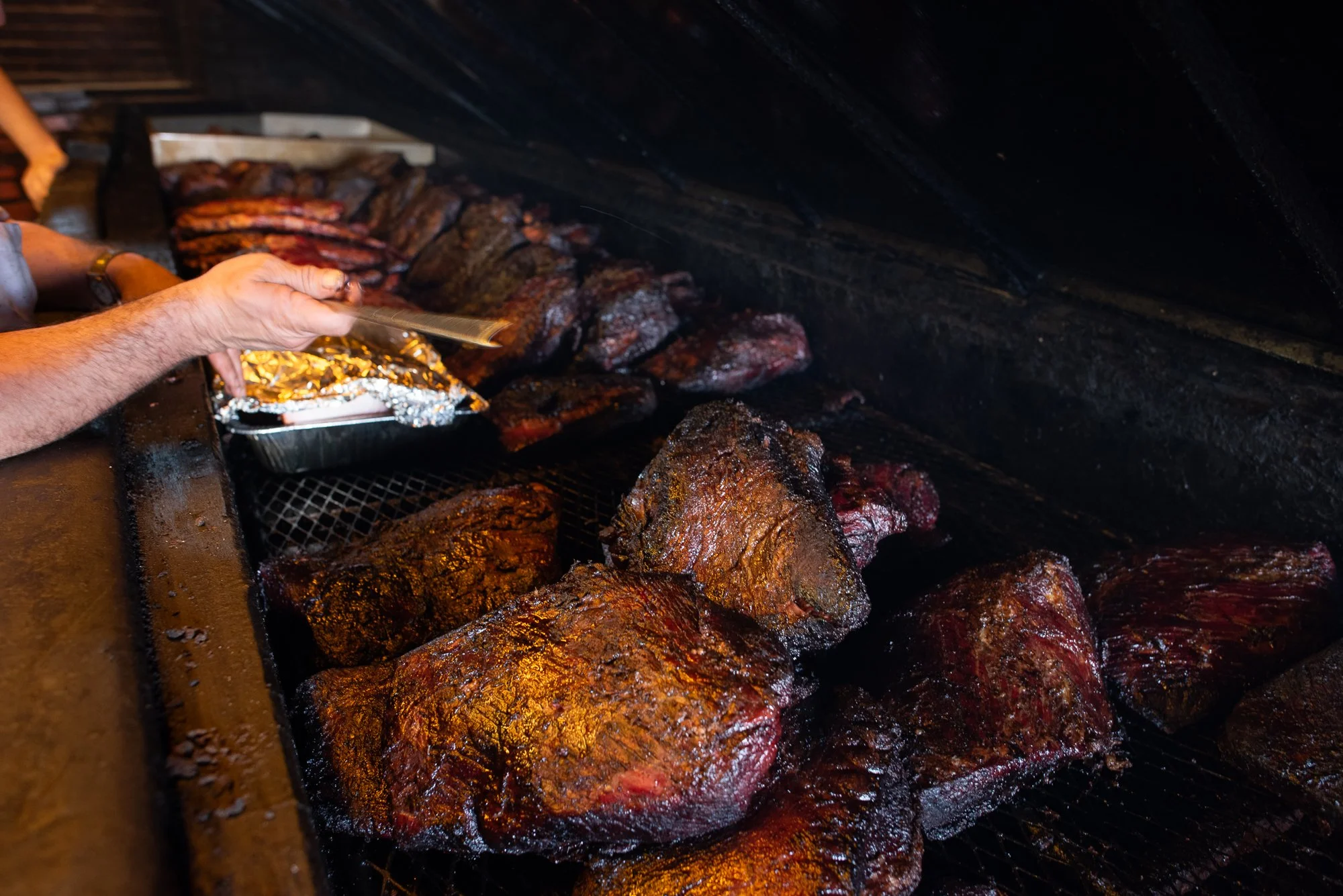
Pitmaster reaching across a pit full of briskets inside Smitty’s Market smokehouse.

A pitman working a full load of briskets inside the dark, smoky heart of Smitty’s.

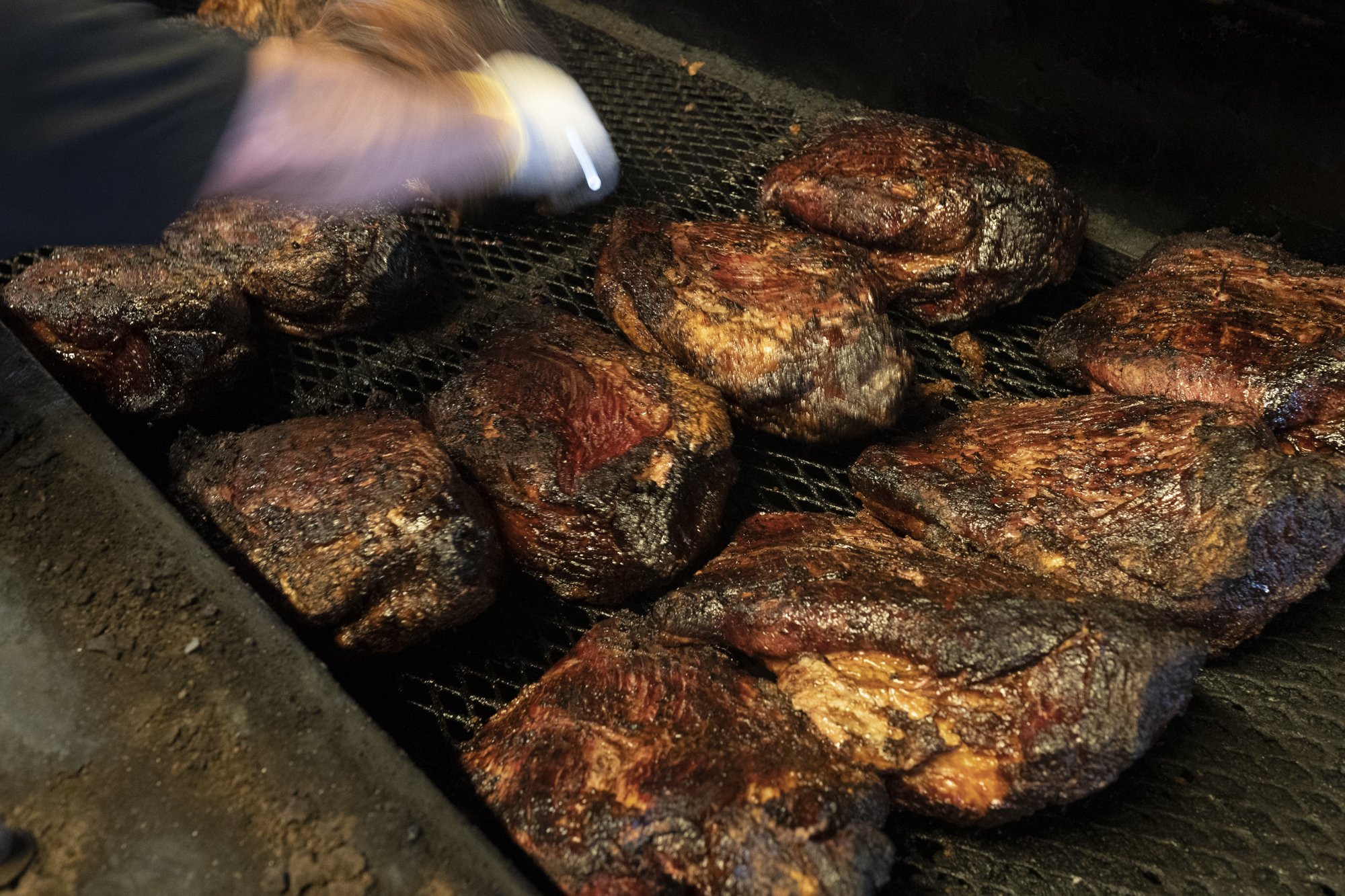
Close-up of briskets sizzling on the pit at Smitty’s Market, showing bark, color, and smoke.

Briskets deep in the cook — bark forming, fat rendering, smoke wrapping around every surface.

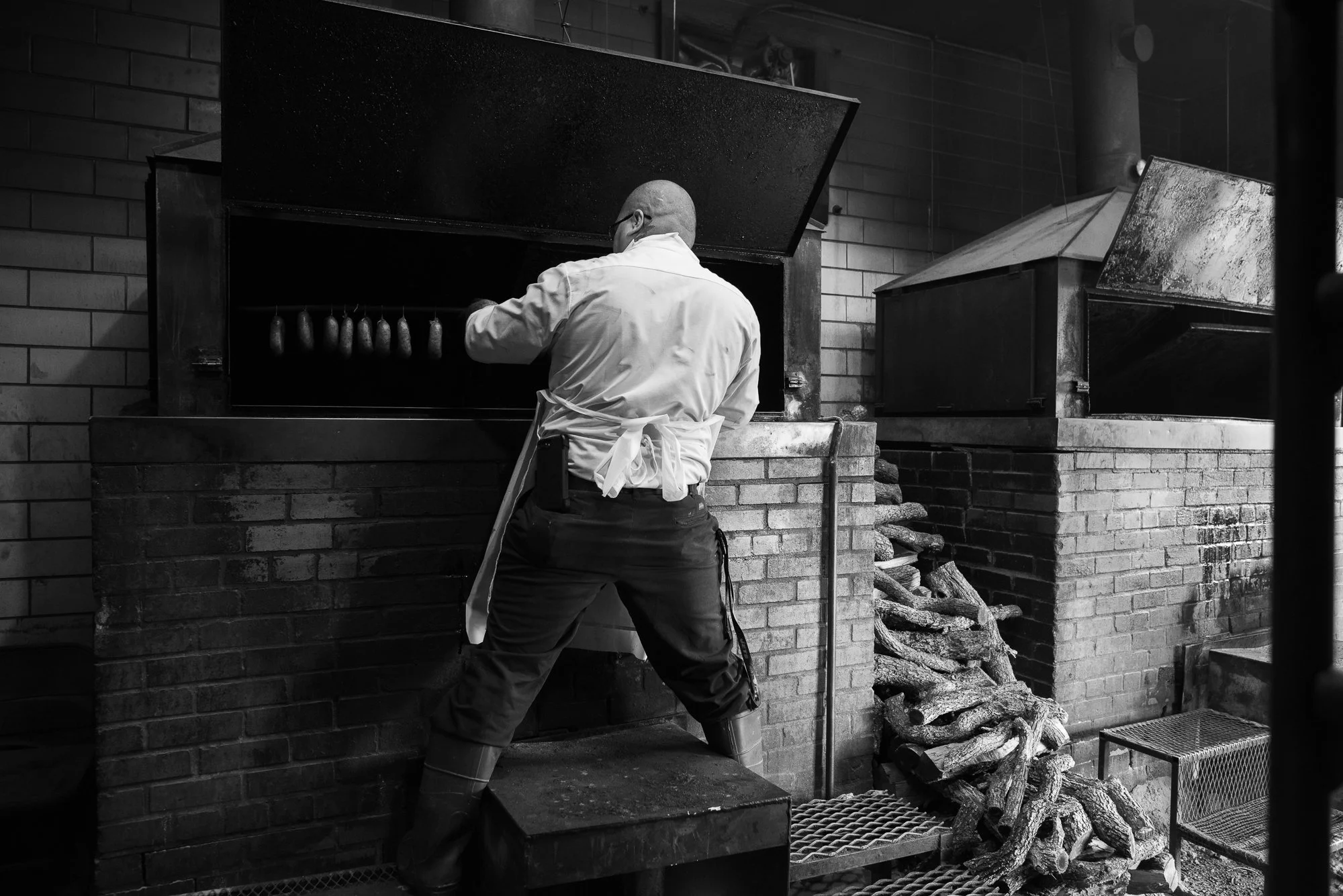
Pitmaster adjusting hanging sausage links inside the smokehouse at Smitty’s Market in Lockhart.

Checking the links inside the smokehouse — one of the daily rituals behind Smitty’s iconic flavor.