Sweeney Todd's Barbershop

Sweeney Todd’s Barbershop, Los Angeles

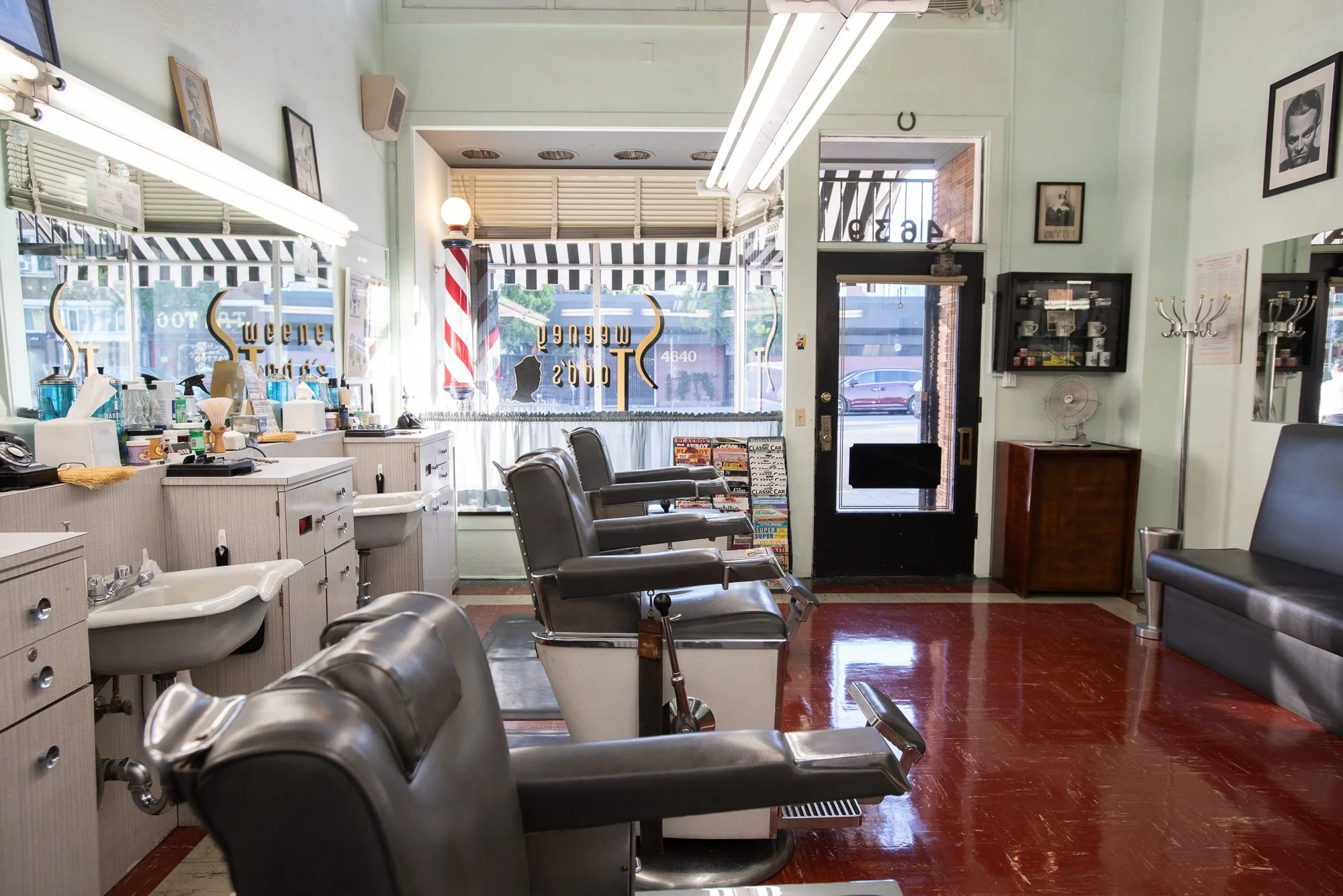
Tucked into the Los Feliz neighborhood of Los Angeles, Sweeney Todd’s barbershop carries a kind of visual weight that comes from it’ impeccable design. Walking in there for the first time you’d have to seriously question whether or not you’d been transported to a different era. All of the shops layered objects, textures, and details reflect something different than our current reality. It’s so well done that the only clue hinting at present day, is the clothing warn by customers.

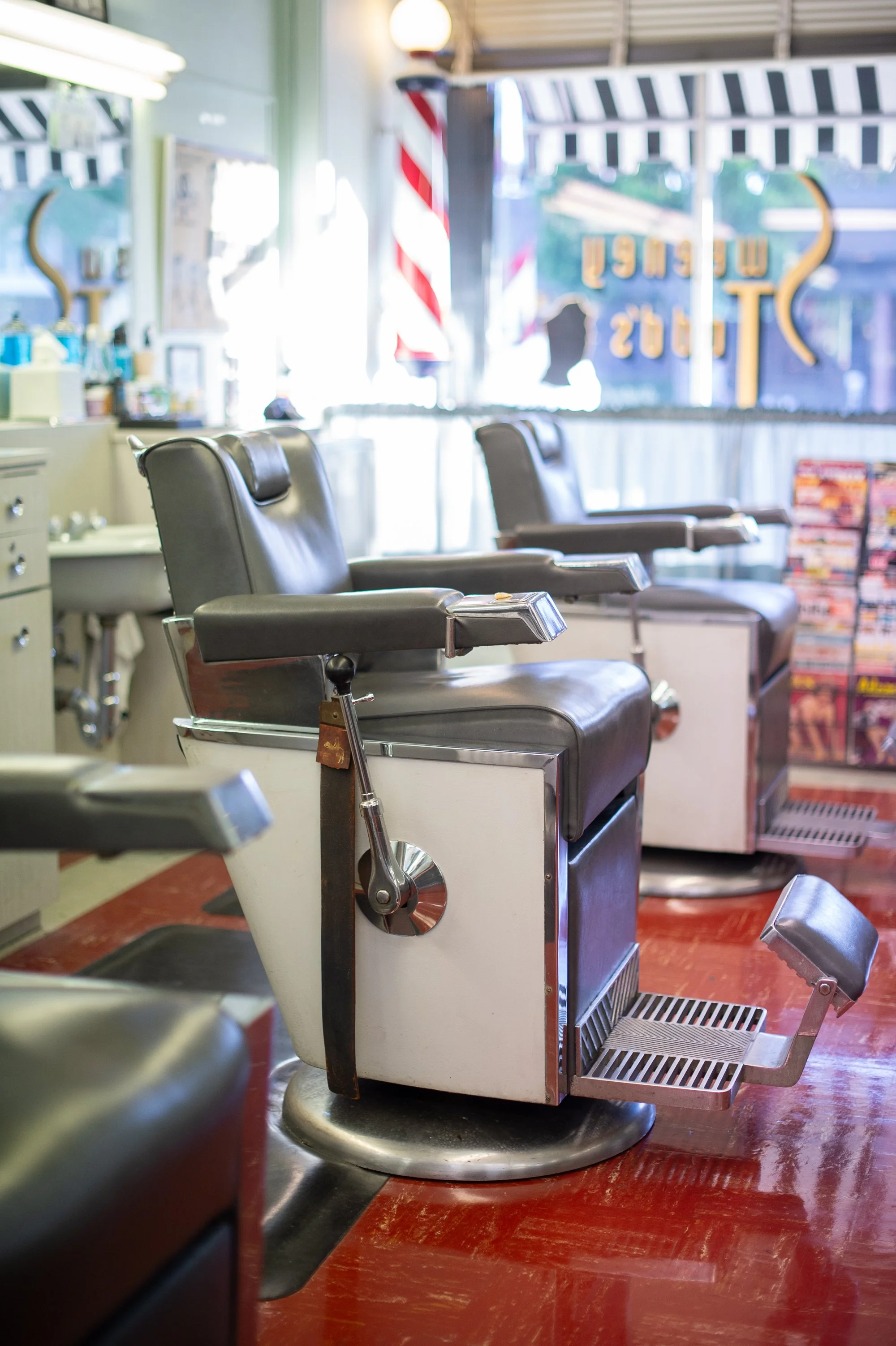
Row of empty vintage chrome and leather barber chairs at Sweeney Todd's Barbershop with barber pole and Sweeney Todd's gold window lettering reflected behind them

The chairs sit empty between cuts, chrome bases and worn leather catching the light. Through the front window, the barber pole turns and the gold lettering reads in reverse. The shop is open.

A Shop Defined by Atmosphere

The first thing that stands out isn’t any one object—it’s the density of the space. The walls are filled, but not cluttered. Vintage signage, photographs, tools, and ephemera stack up in a way that feels intentional without being precious. There’s empty wall space, but none of it begs for decoration. Everything already has a purpose.

The lighting is a mix of classic barbershop interior and a steady flow of California sunshine, creating pockets of contrast across the room. It highlights the patina of worn wood, the shine of old metal fixtures, and the texture of well-used barber chairs. It’s the kind of environment that feels cinematic without trying to be.

Nothing feels new. And that’s exactly the point.

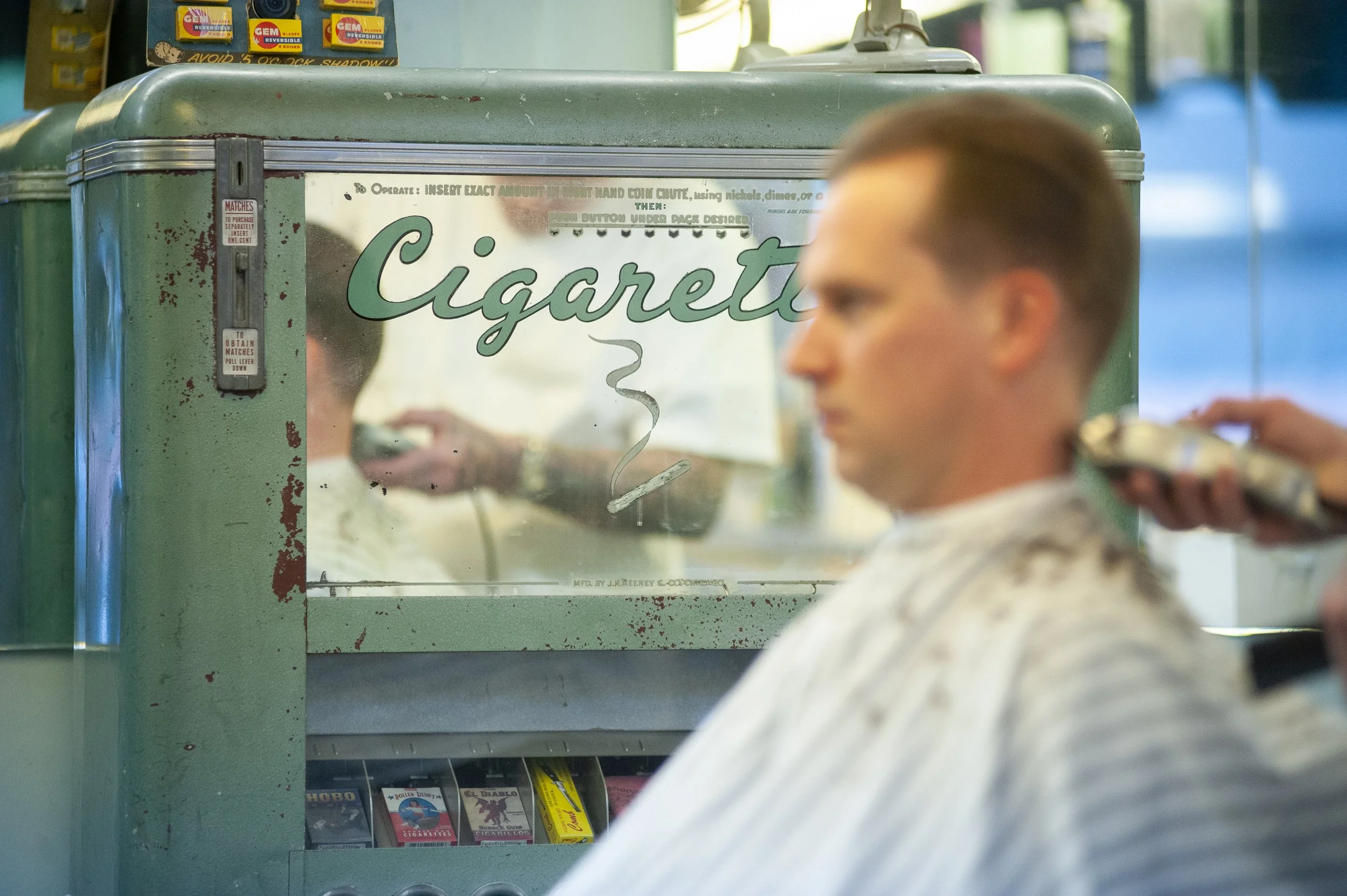
Vintage green cigarette vending machine at Sweeney Todd's Barbershop in Los Angeles, with a caped client being clippered in the foreground

A haircut is happening in the foreground. In the background, a vintage cigarette machine holds its ground, paint worn, decals faded. The shop doesn't explain what it keeps.

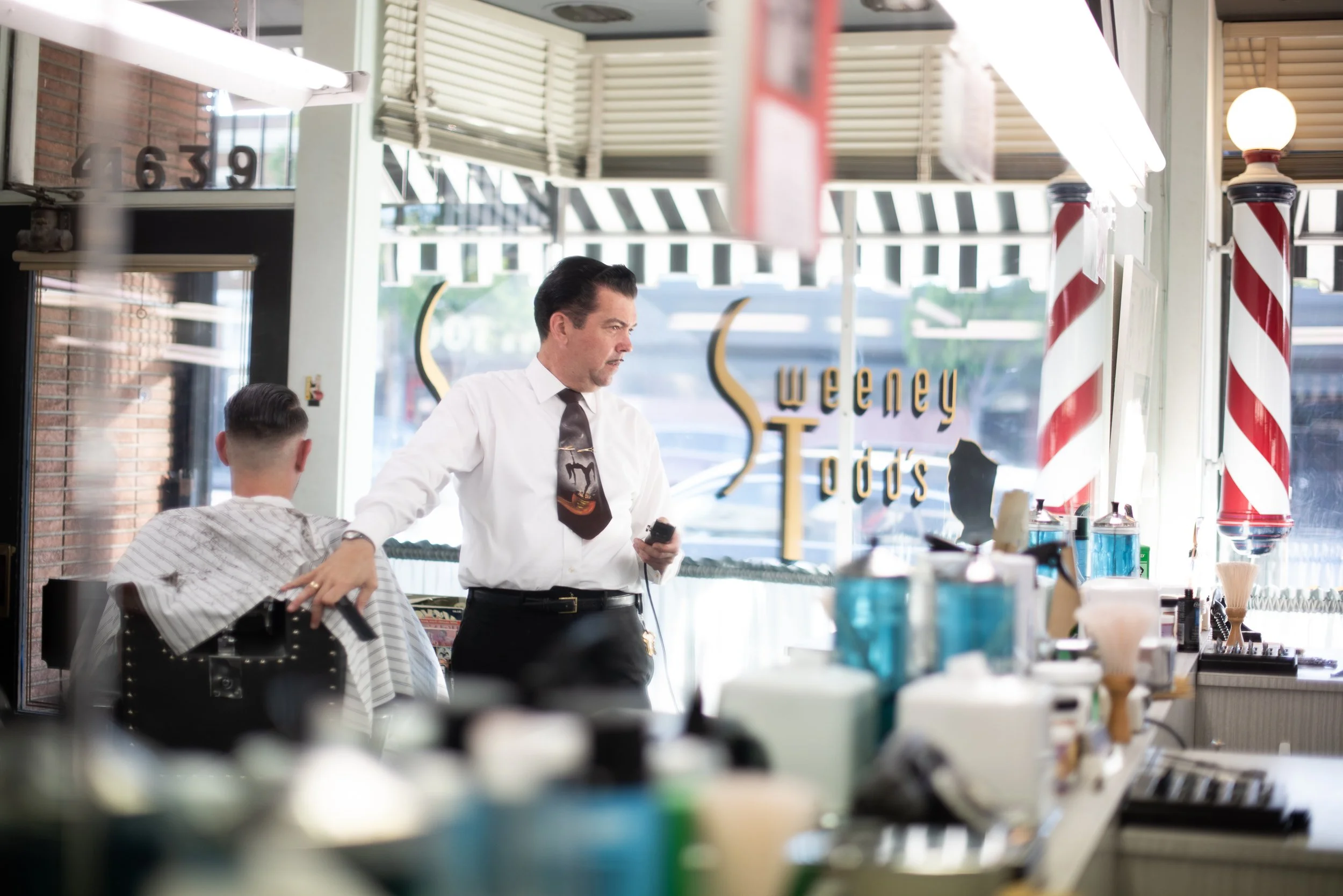
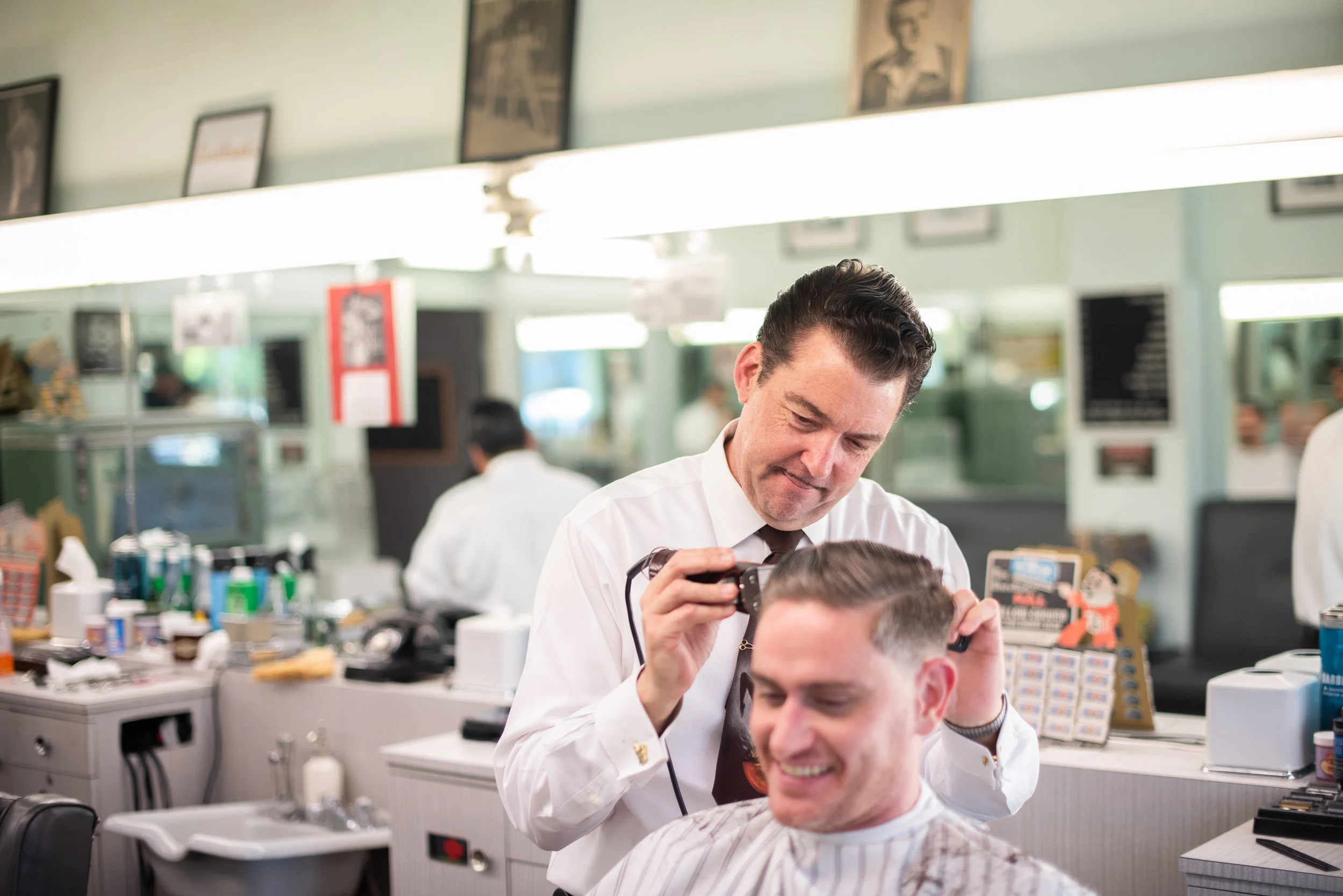
Barber in white shirt and tie pausing with clippers to assess a client's cut at Sweeney Todd's Barbershop, framed by gold storefront lettering and barber pole in the window

He steps back and looks over the cut, clippers still in hand, not finished yet. The Sweeney Todd’s sign sits in the window behind him, the barber pole off to the side, the counter lined with tonics and brushes.

The Details That Matter

Look closer and the shop reveals itself in pieces:

Old barber chairs that have seen decades of use. Each barber wearing classic smocks. Mirrors that reflect not just the customer, but the entire layered environment behind them.
Shelves lined with tools and products that feel chosen over time, not stocked overnight.

Even the small things—Playboy Magazines, perfectly dated photos, worn edges on countertops—contribute to the larger story. These are the details that can’t be manufactured quickly. They accumulate.

And in a city like Los Angeles, where so much is constantly being built, rebuilt, and rebranded, that kind of permanence stands out.

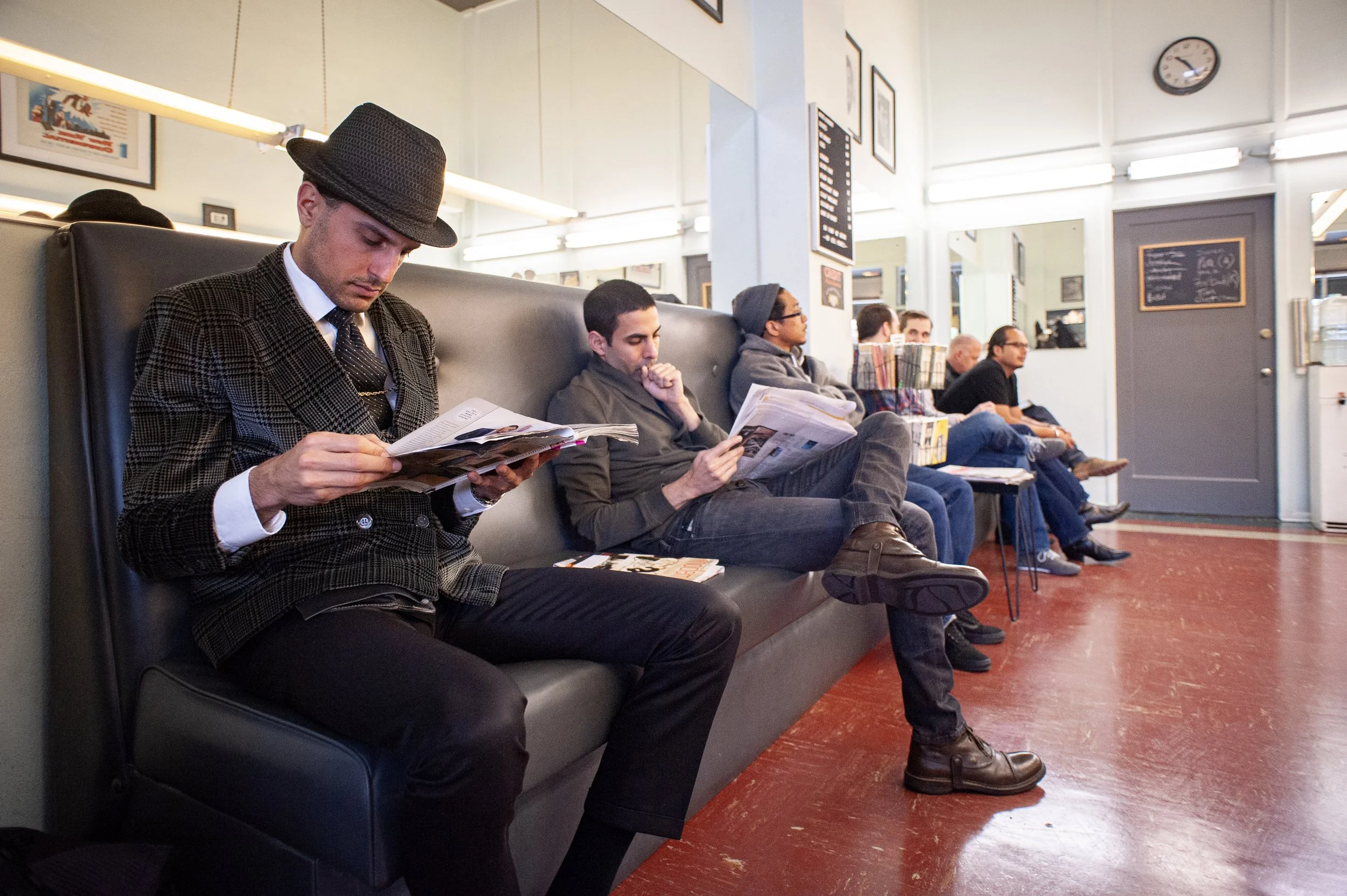
Row of men seated along a bench in Sweeney Todd's waiting area reading magazines and newspapers, with red linoleum floor, wall clock, and framed photographs behind them

The waiting area fills up. Men sit shoulder to shoulder with magazines and newspapers, the red linoleum floor reflecting the fluorescent light above. Nobody's in a hurry.

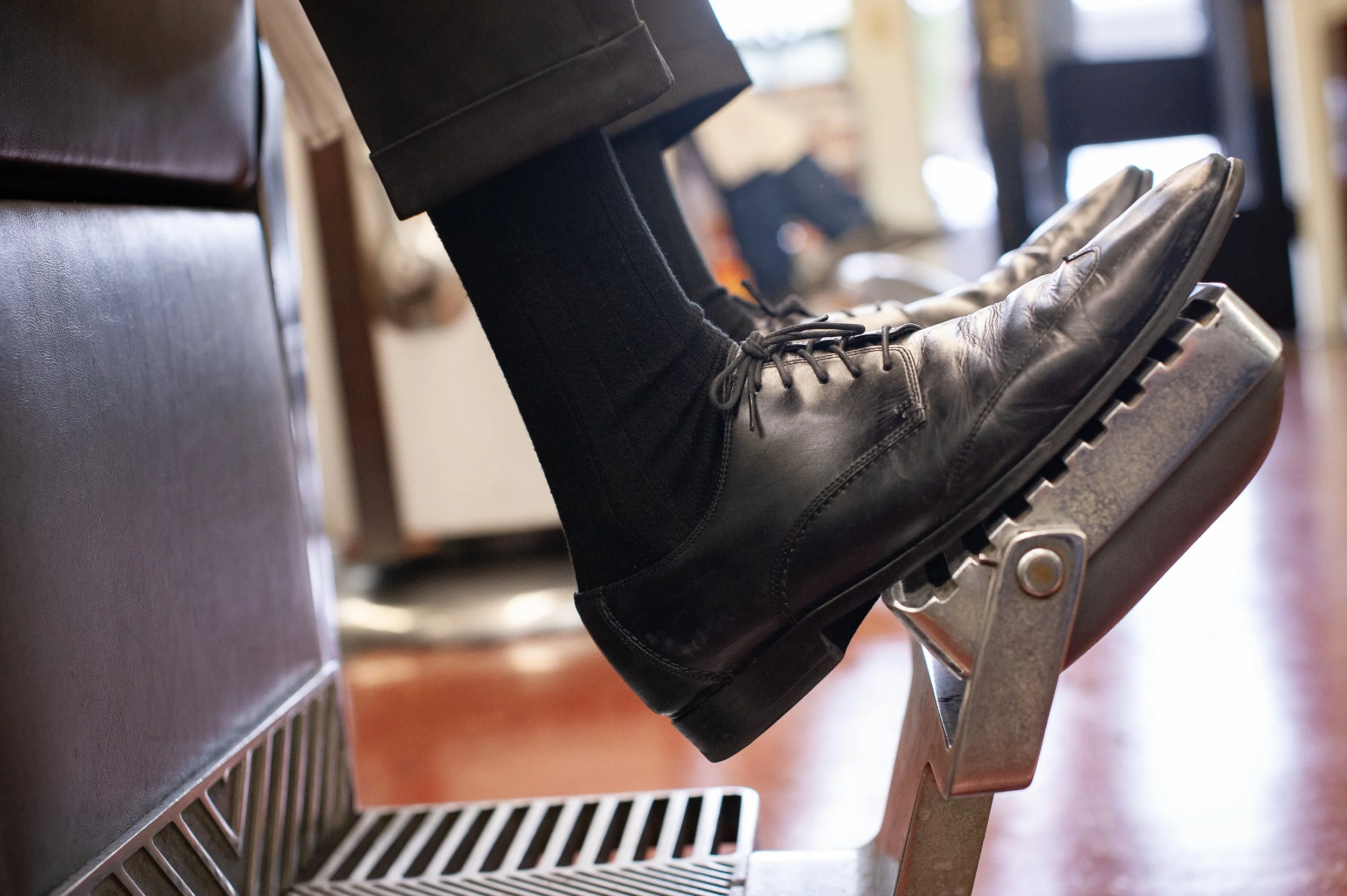
Close-up of a polished black leather oxford resting on the chrome footrest of a vintage barber chair at Sweeney Todd's Barbershop

Black leather on chrome — shoe polished, footrest built to last. The kind of detail you notice when everything else in the shop is exactly where it belongs.

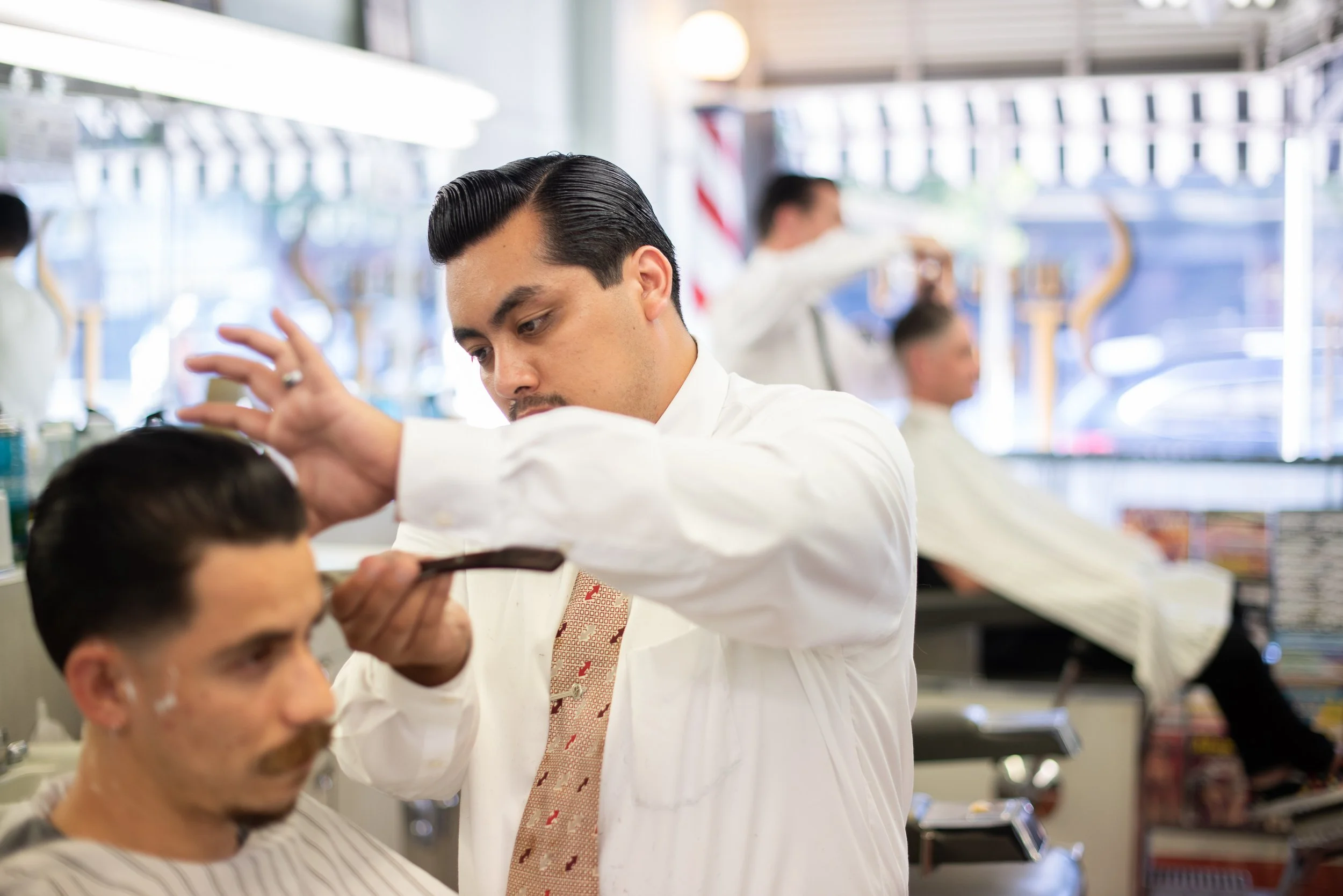
Barber in white shirt and tie working a straight razor along a client's hairline at Sweeney Todd's Barbershop, second barber and client visible in background

The straight razor comes out for the detail work. The barber's eyes stay on the line. In the background, through the fluorescent-lit mirrors, the shop keeps moving.

A Working Shop, Not A Set

Sweeney Todd’s could and should be used for a movie set, but what makes the place compelling isn’t just how it looks—it’s how it functions. This isn’t a space preserved for aesthetics. It’s actively used, day in and day out.

Sween and his barbers move through the space with such familiarity that it almost feels like a choreographed dance. Tools are exactly where they need to be. Clients settle into chairs that have held thousands before them. There’s a rhythm to it that only comes from repetition and trust.

It’s easy to imagine a place like this being imitated elsewhere. It would be much harder to recreate what actually gives it value: time, consistency, and a community that returns again and again.

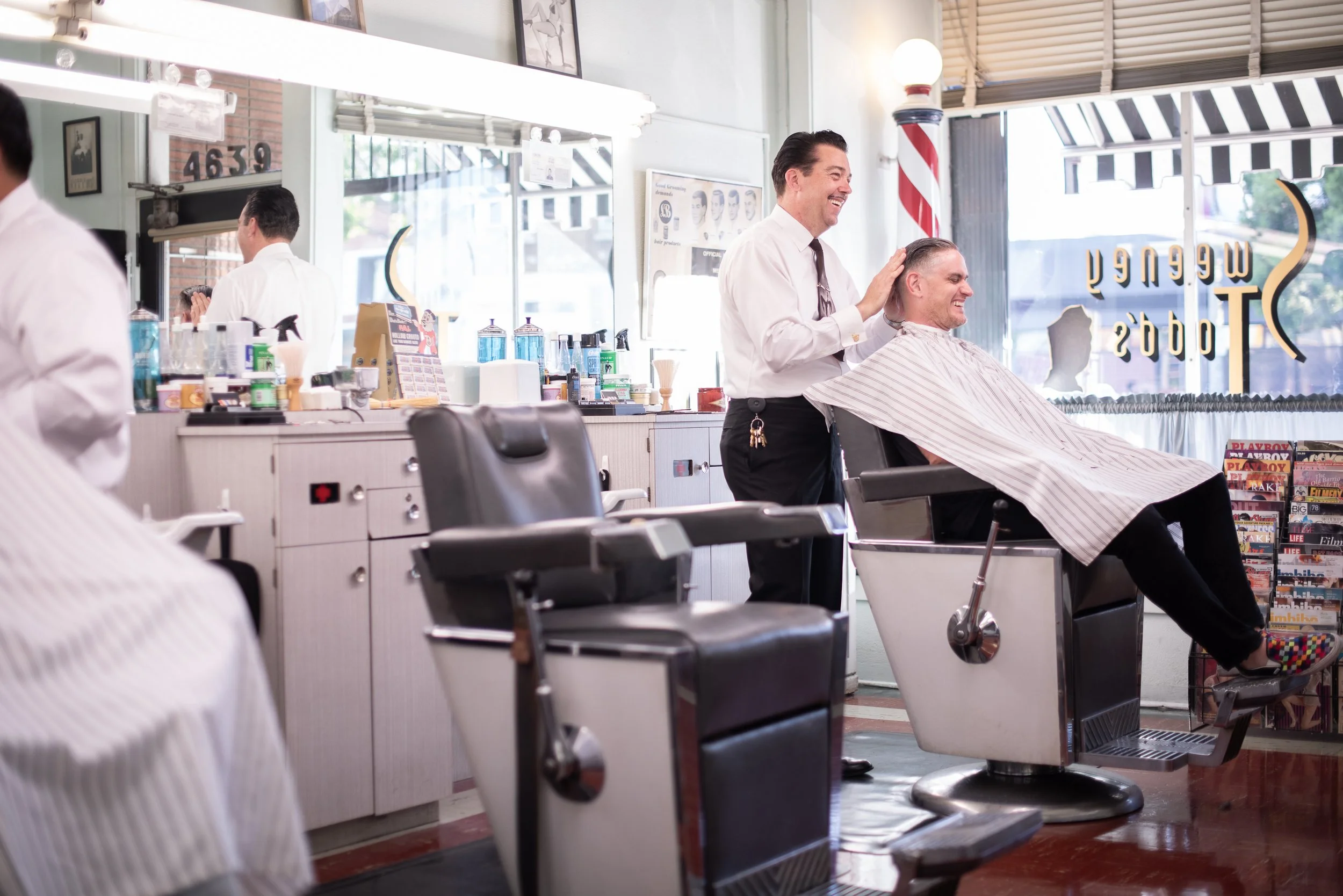
Wide interior shot of Sweeney Todd's Barbershop with barber adjusting a caped client's cape in a vintage chair, barber pole and gold window sign visible in the background

The full room in one frame, vintage chairs and a red floor, the Sweeney Todd’s sign reading backward in the front window. A barber adjusts the cape while the client sits already smiling.

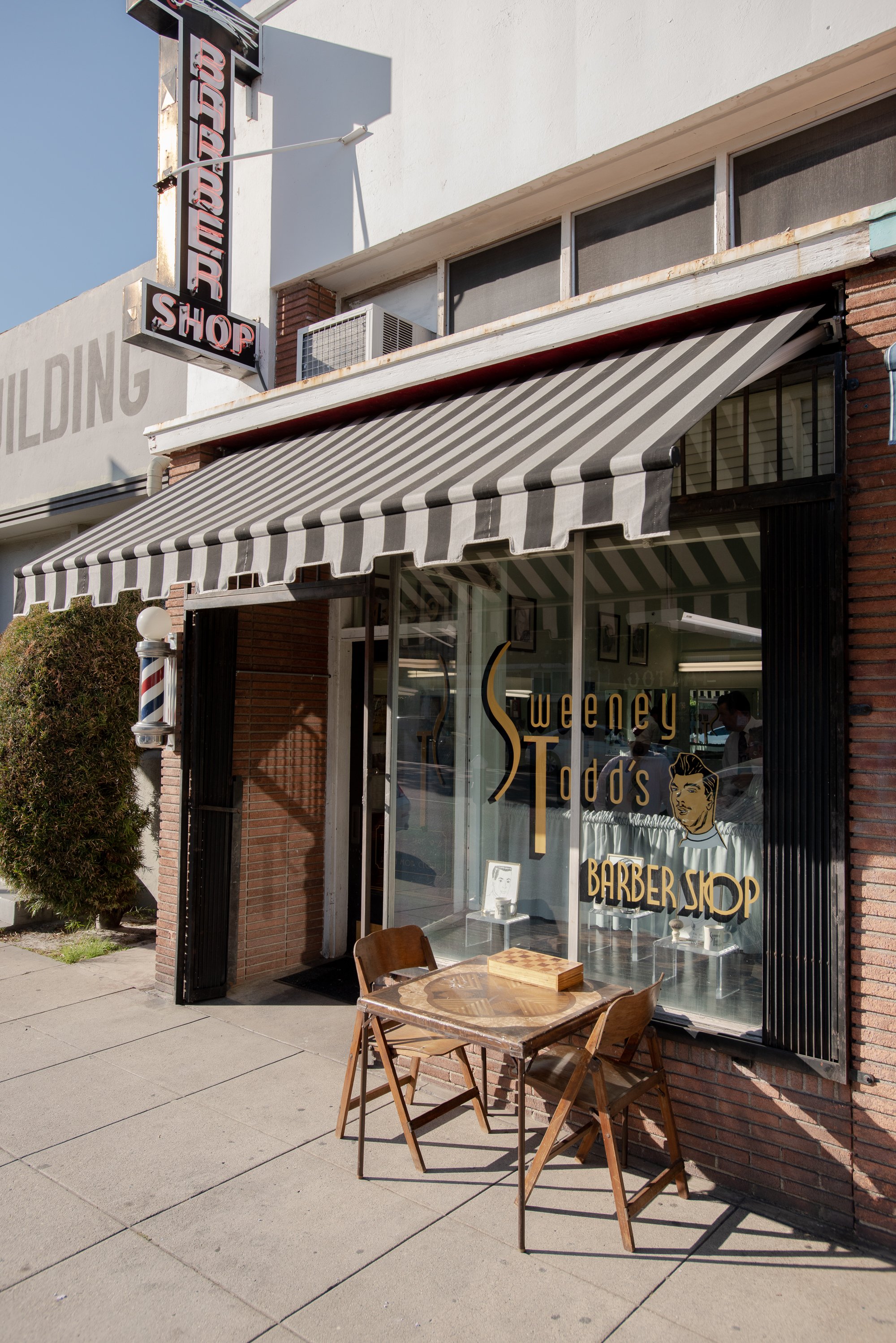
Exterior of Sweeney Todd's Barbershop in Los Angeles showing striped black and white awning, gold script window lettering, barber pole, and sidewalk table with chairs

From the sidewalk it reads clearly as a barbershop, the striped awning, the barber pole, and gold script on the glass. A small table and two chairs sit out front, the door left open.

Part of a Larger Story

Sweeney Todd’s Barbershop is one piece of a much larger body of work documenting barbershops across America. Over the course of 15 years, the project has traced spaces like this in all 50 states—some still operating, others long gone.

What ties them together isn’t just the act of cutting hair. It’s the way each shop reflects its surroundings. The architecture, the objects, the clientele—they all carry subtle clues about the neighborhood, the city, and the era the shop has lived through.

In that context, Sweeney Todd’s becomes more than a single location. It becomes part of a visual record of a trade that continues to evolve while still holding onto its roots.

View the Barbershops of America gallery

Barber in white shirt and dark tie smiling while using clippers on a laughing client's head at Sweeney Todd's Barbershop, mirrors and vintage wall decor visible behind them

Something lands and they both laugh, the barber mid-clip and the client mid-cut. The exchange stays easy and personal. The room allows for it without calling attention to it.

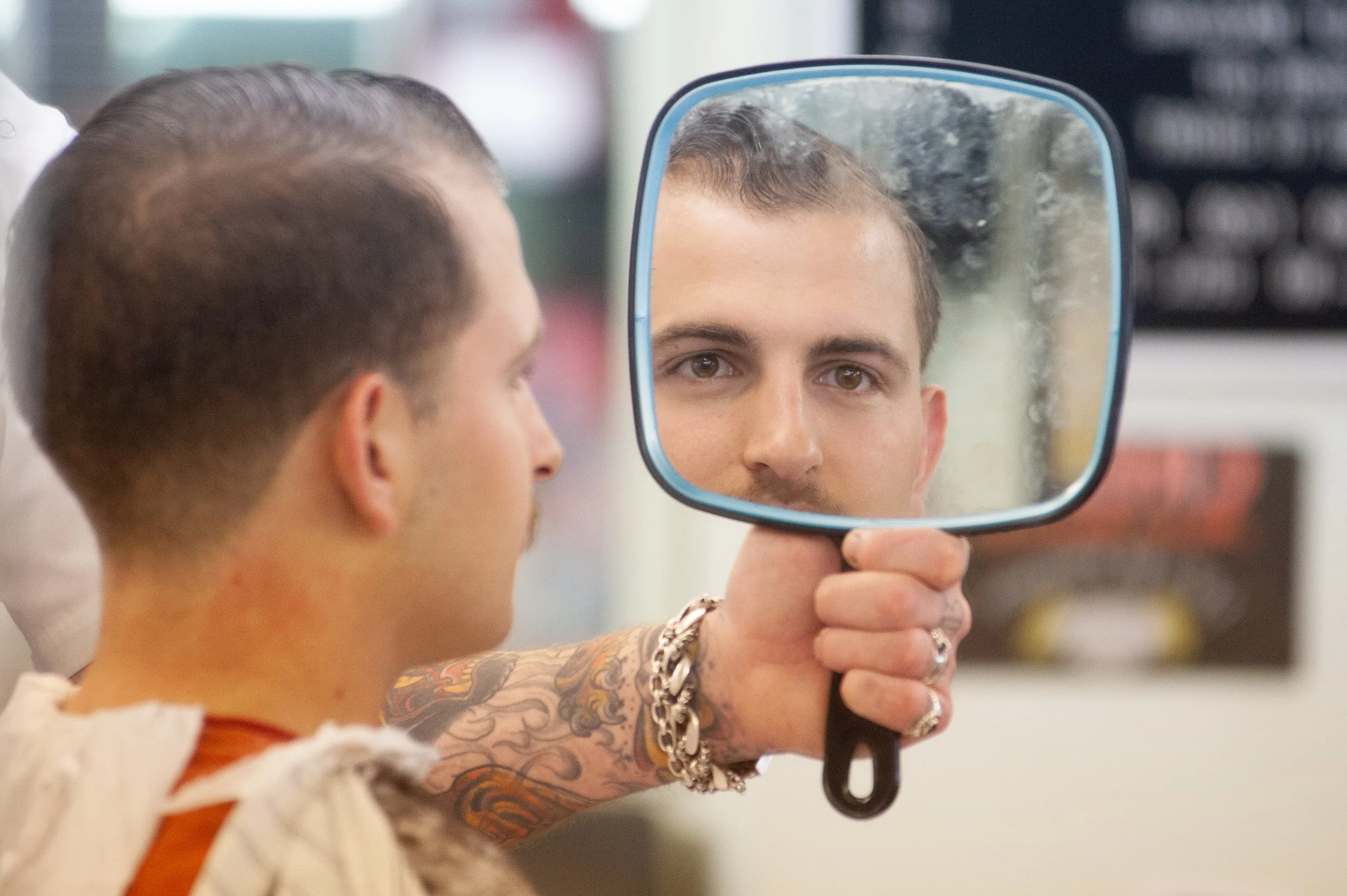
Tattooed barber's hand holding a square hand mirror up to a caped client checking his fresh haircut at Sweeney Todd's Barbershop in Los Angeles

The barber holds the mirror steady with a tattooed hand, a chain bracelet and rings catching the light, as the client checks the back. A moment that’s played out here countless times.

Collect Fine Art Barbershop Prints

Select photographs from this project are available as museum-quality fine art prints. Each piece is produced to highlight the texture, light, and character that define these spaces.

If this shop resonates with you, there are others in the collection that carry a similar sense of place.

Shop Barbershop photography prints

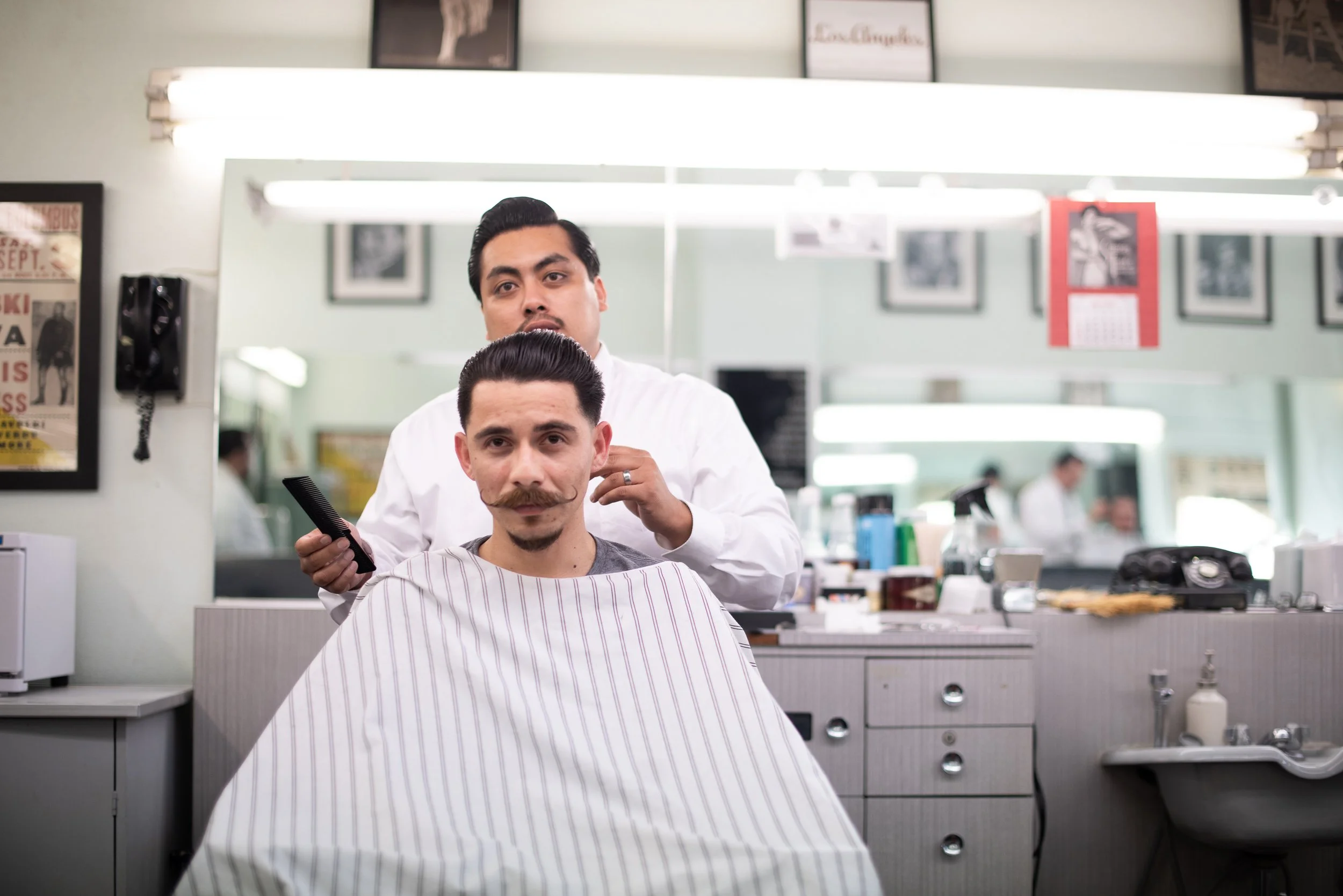
Barber in white shirt standing behind a caped client with a slicked pompadour and waxed mustache at Sweeney Todd's Barbershop, both facing the camera

Barber and client, face to camera. One in the cape, one holding the comb. The cut is clean, the mustache is waxed, the framed photographs line the wall above the mirror.

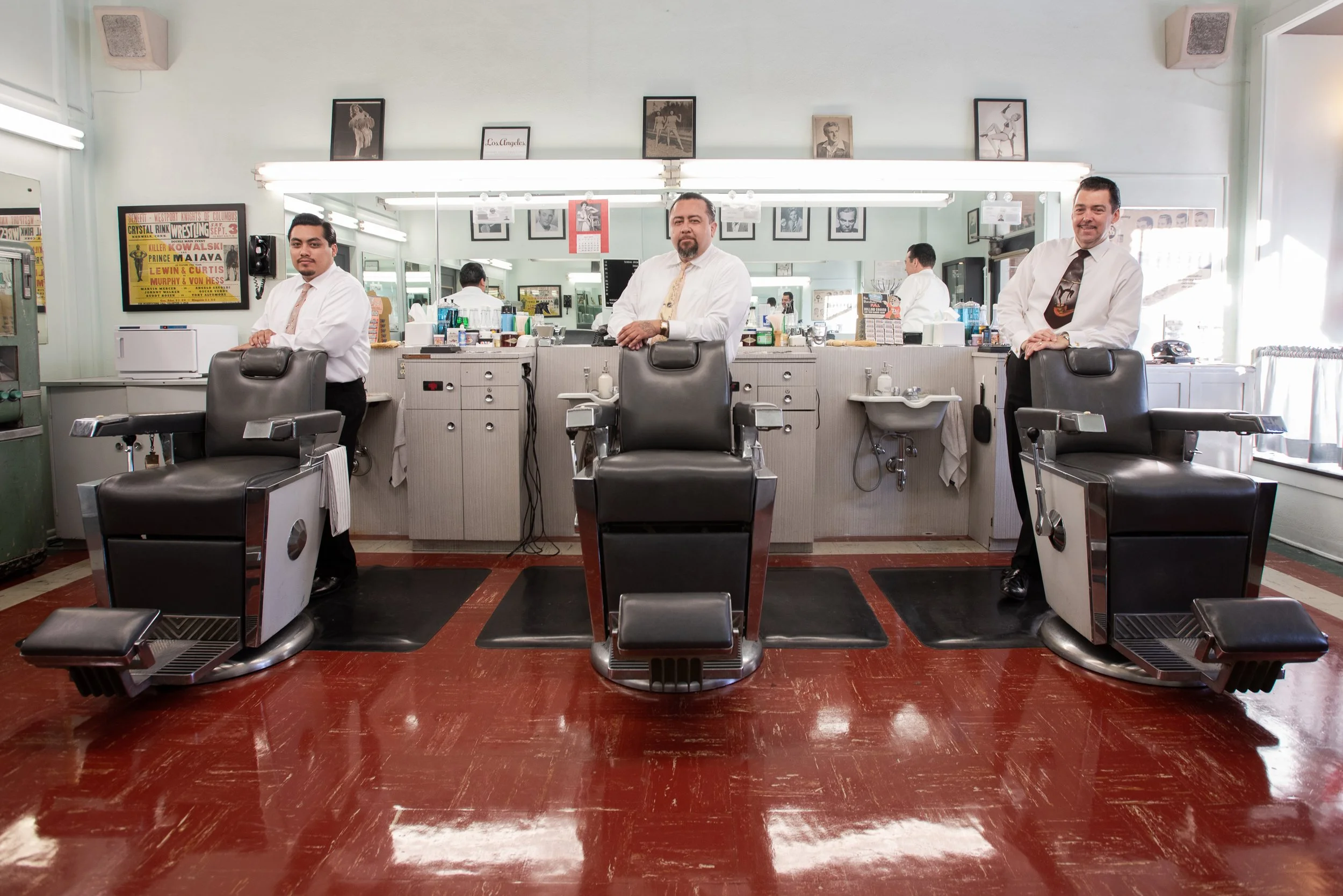
Three barbers in white shirts and ties standing behind three vintage barber chairs at Sweeney Todd's Barbershop, reflected in wall mirrors with vintage framed photographs and wrestling poster above

The crew stands behind their chairs in white shirts and ties, the red floor clean underfoot. The mirror carries the room back again. This is how the place sits when it’s ready.

Why Places Like This Matter

Shops like Sweeney Todd’s don’t just disappear overnight—but when they’re gone, they’re gone for good. The details that define them rarely get preserved in any formal way. They fade with time, replaced by something newer, cleaner, and often less personal.

Photographing these spaces is less about nostalgia and more about recognition. Recognizing that there’s value in places that aren’t trying to be anything other than what they are.

Sweeney Todd’s Barbershop is exactly that—a place shaped by years of work, repetition, and presence. And in a city built on constant change, that kind of consistency is worth paying attention to.

Photograph of a Sweeney Todd's Barbershop early in the morning before any customers fill the chairs

Wide view of Sweeney Todd’s Barbershop in Los Angeles before the rush comes in.

Licensing & Editorial Use

These photographs are available for licensing for editorial features, brand campaigns, and commercial projects looking for authentic barbershop environments.

If you’re working on a project that needs real spaces with real history, this archive was built for exactly that.

Inquire about licensing

Explore More California Barbershops

California has no shortage of character when it comes to barbershops. From long-standing neighborhood staples to newer shops with deep roots in classic barbering, the range is wide—and worth exploring.

Browse more California barbershop features

Shane's Barbershop - San Mateo, CA

Shane’s Barbershop, San Mateo

A Standard That Hasn’t Been Matched

There was a time when if you cared about getting a proper haircut in San Mateo, you knew exactly where to go.

Shane’s Barbershop didn’t run on normal hours. The lights were on at 3:00 in the morning. Guys heading to work, early shifts, long days—they could count on Shane being there before most of the city was even awake. That alone set him apart. But it wasn’t the reason people kept coming back.

The work did that.

Shane Nesbitt built a reputation the hard way—one cut at a time, day after day, year after year. His standards were high, and he didn’t bend them. There was a level of consistency to what he did that a lot of shops never reach. Clean fades, sharp lines, no shortcuts. You sat in his chair, you knew what you were getting.

And other barbers paid attention.

Shane was, and still is, a reference point—someone peers and younger barbers looked to, whether they realized it or not. The kind of barber who quietly raises the bar for everyone else in the room. Not by talking about it, but by showing up and doing the work.

A Shop Built on Culture

Shane’s Barbershop was curated, but not overdone. It felt lived in. And a natural extension of Shane’s life.

There was a strong undercurrent of skateboard culture in the space—something that came through in the details more than anything obvious. The music, the energy, the way people moved through the shop. It wasn’t trying to be anything. It just was.

That mattered.

Because the best barbershops aren’t built around aesthetics or trends. They’re built around identity. Around the people who spend their time there. Around the conversations, the routines, the repetition of daily life.
Shane’s shop had that.

It was a place where working people came through the door, where time moved a little differently, where the day started early and didn’t slow down until it was done.

The Hours, The Work, The Reputation

Opening at 3:00am isn’t something you do for show.

It’s a reflection of who you are and who you’re there for.

Shane understood his customers—guys who didn’t have the luxury of showing up midday, who needed to be in and out before the rest of their day started. That schedule built a kind of loyalty you can’t manufacture.

And over time, that kind of consistency turns into something else.

Respect.

Not just from customers, but from other barbers. From people who know how hard it is to maintain that level of work, that kind of schedule, that kind of focus over years.
Shane was ahead of his time. He was the first barber to become a brand - selling t-shirts, stickers, even his own custom branded straight razors. Nobody else was doing that. Most importantly though, Shane knew that he was there to serve. A lot of barbers these days have giant egos and think their clients don’t deserve to sit in the chair. Yet despite Shane’s status, he knew he was there for the customer!

A Barbershop That’s No Longer There

The shop is closed now.

Things change. Life moves on. That’s part of it.

But places like Shane’s don’t just disappear. They stick with the people who spent time there. In the routines. In the stories. In the way other barbers approach their own work after seeing what was possible.

For a lot of people, Shane Nesbitt wasn’t just another barber.

He was the blueprint.

Part of a Larger Archive

This set of photographs is part of a long-term project documenting barbershops across America—places like this that define their communities, shape local culture, and, in many cases, quietly disappear over time.

Some shops are still open. Others, like Shane’s, live on through the people who remember them.

If you’ve spent enough time in barbershops, you know the difference between a place that cuts hair and a place that means something.

Shane’s was the latter.

Explore the Barbershops of America gallery

Read another barbershop story - Spanky’s Barbershop - Covington, KY

View Barbershop Prints + Photo Book

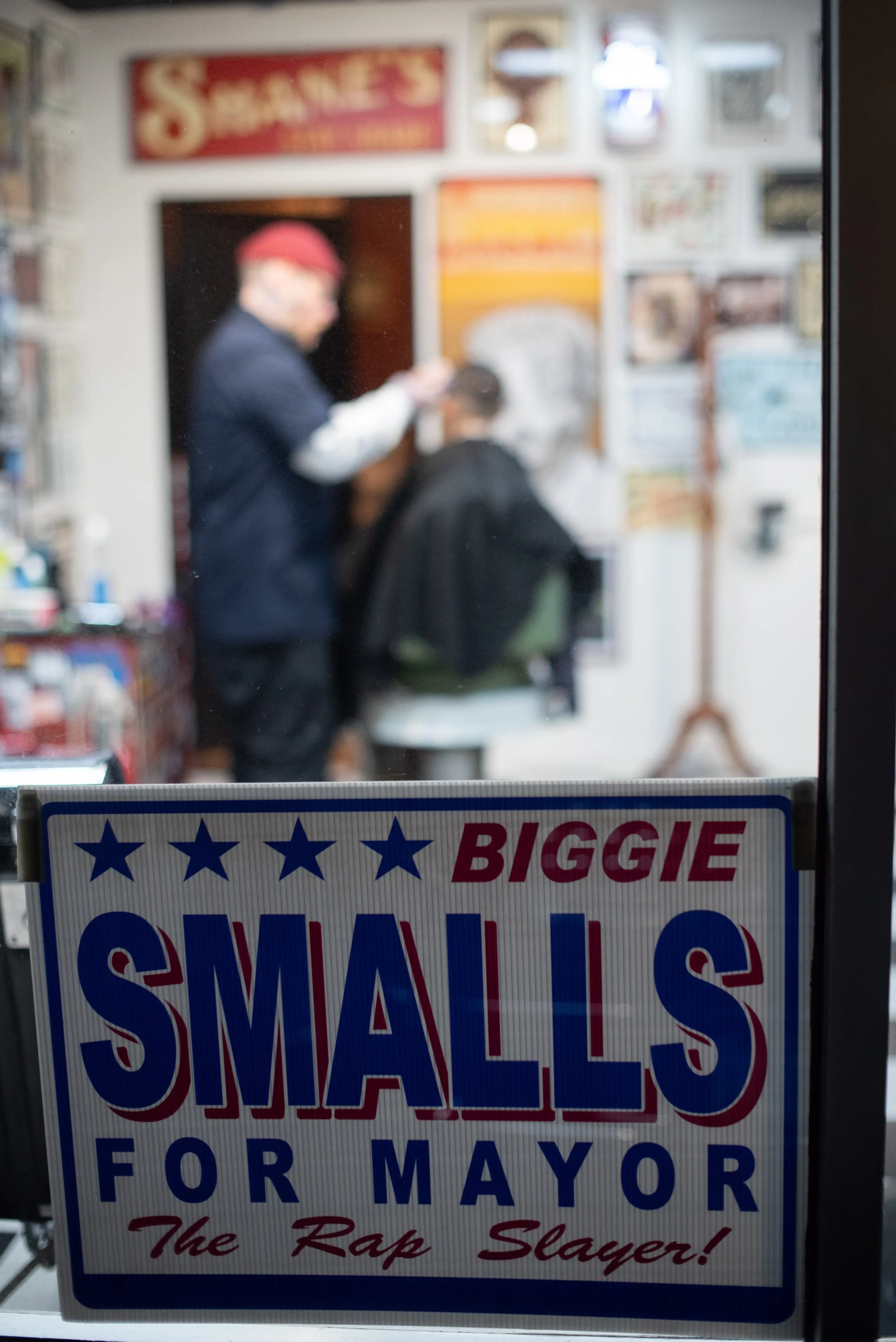
view through window into Shane's Barbershop San Mateo with barber cutting hair and campaign sign in foreground

View into Shane's Barbershop in San Mateo capturing everyday life inside the shop from the street

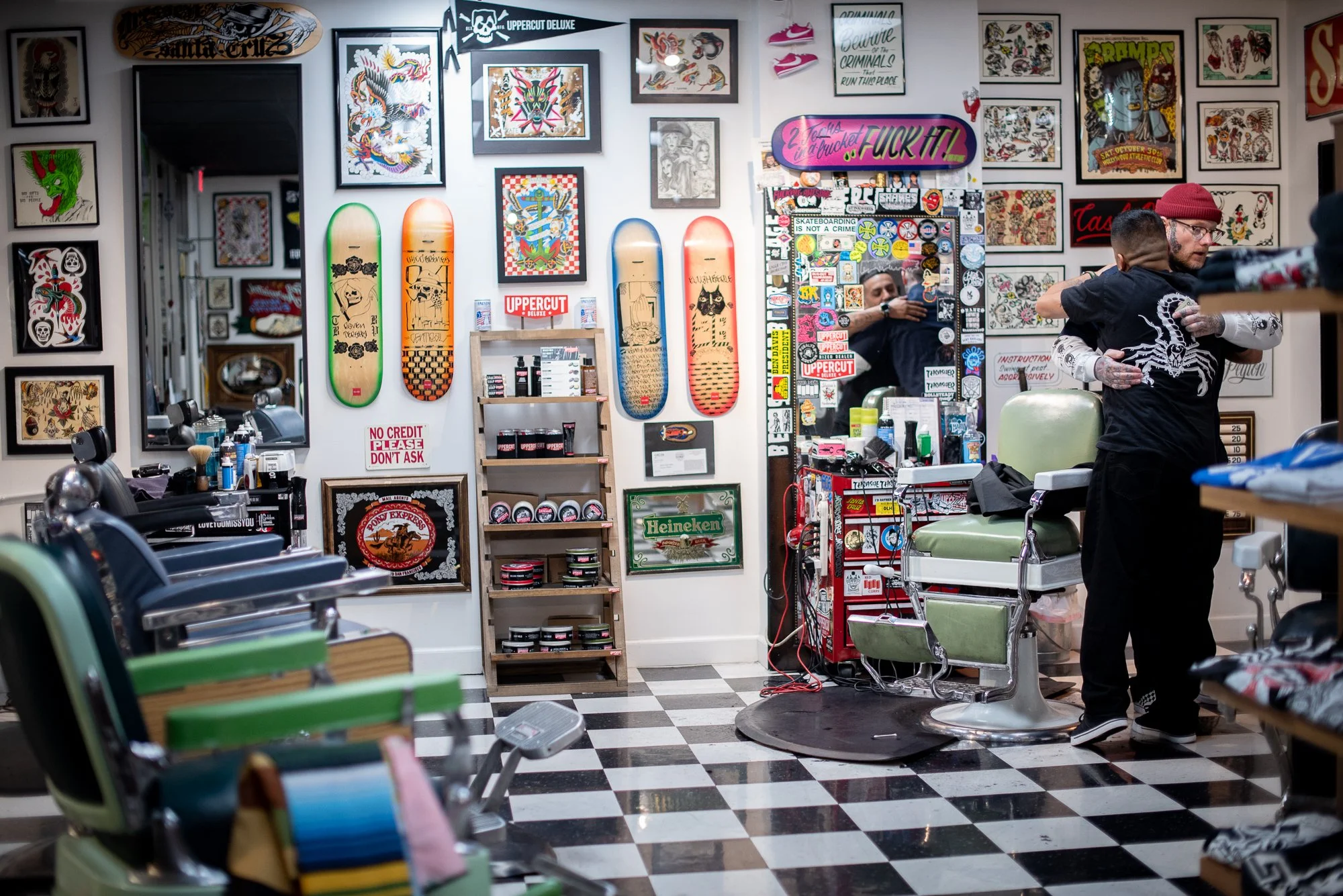
interior of Shane's Barbershop San Mateo with barber hugging client and tattoo artwork walls

Barber Shane Nesbitt shares a moment with a client inside his San Mateo shop surrounded by tattoo art and personal memorabilia

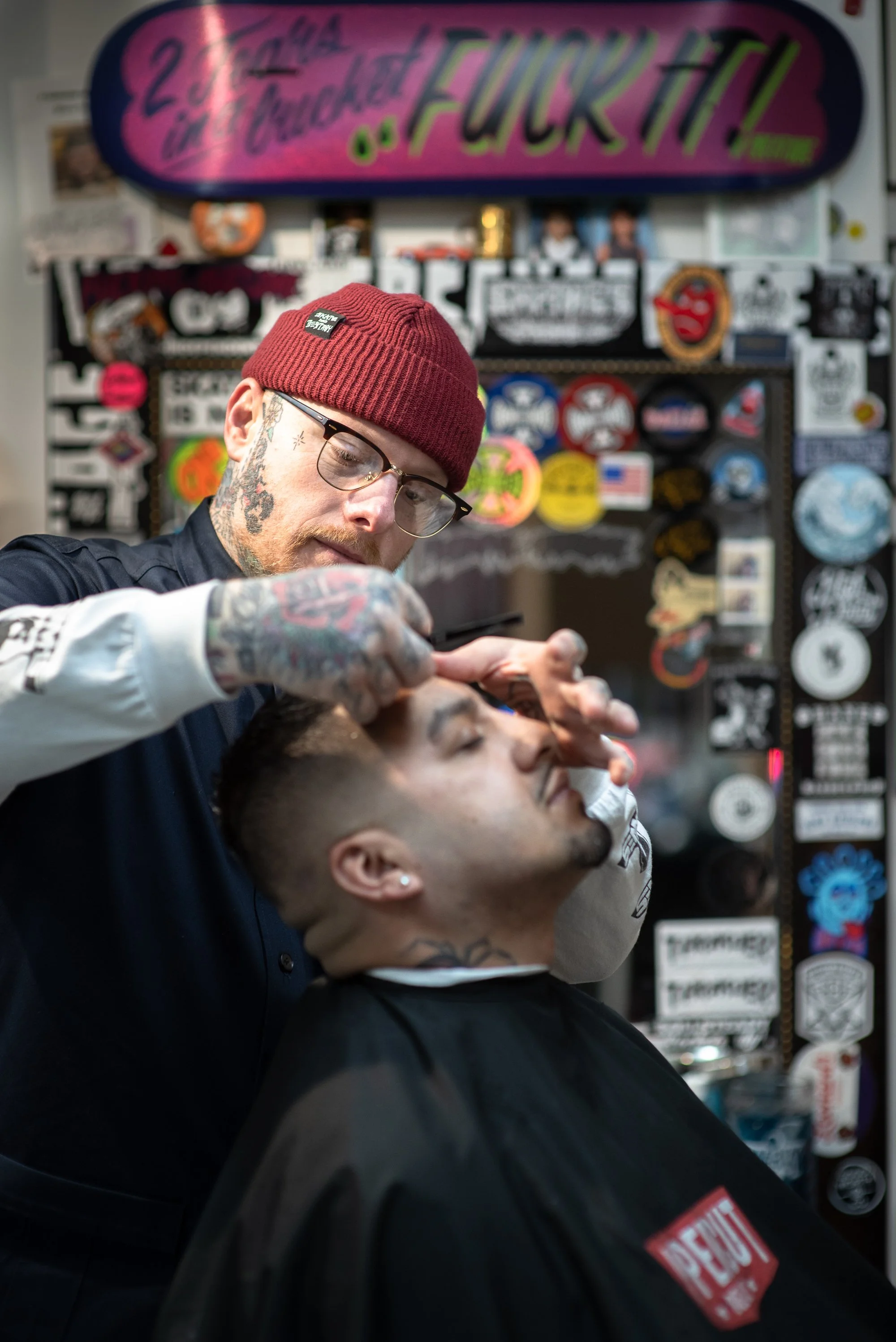
barber Shane Nesbitt giving detailed haircut to client inside Shane's Barbershop San Mateo

California barber Shane Nesbitt focuses on precision haircut inside Shane's Barbershop in San Mateo

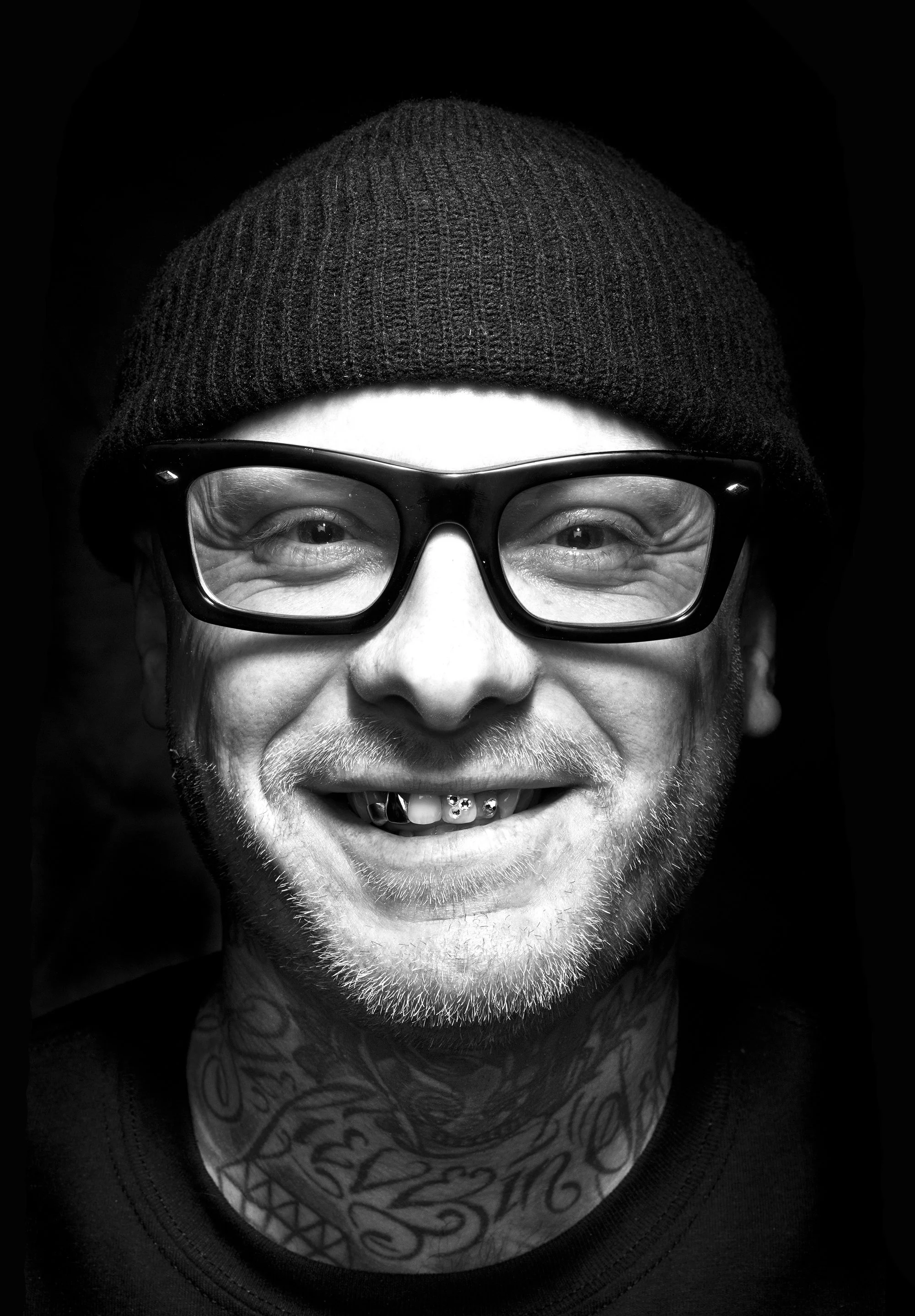
Black and white portrait of barber Shane Nesbitt wearing glasses and a beanie, San Mateo California

Shane Nesbitt, photographed in his San Mateo barbershop. For years, he set the standard—opening before dawn, cutting hair for working people, and building a reputation that reached far beyond the shop itself.

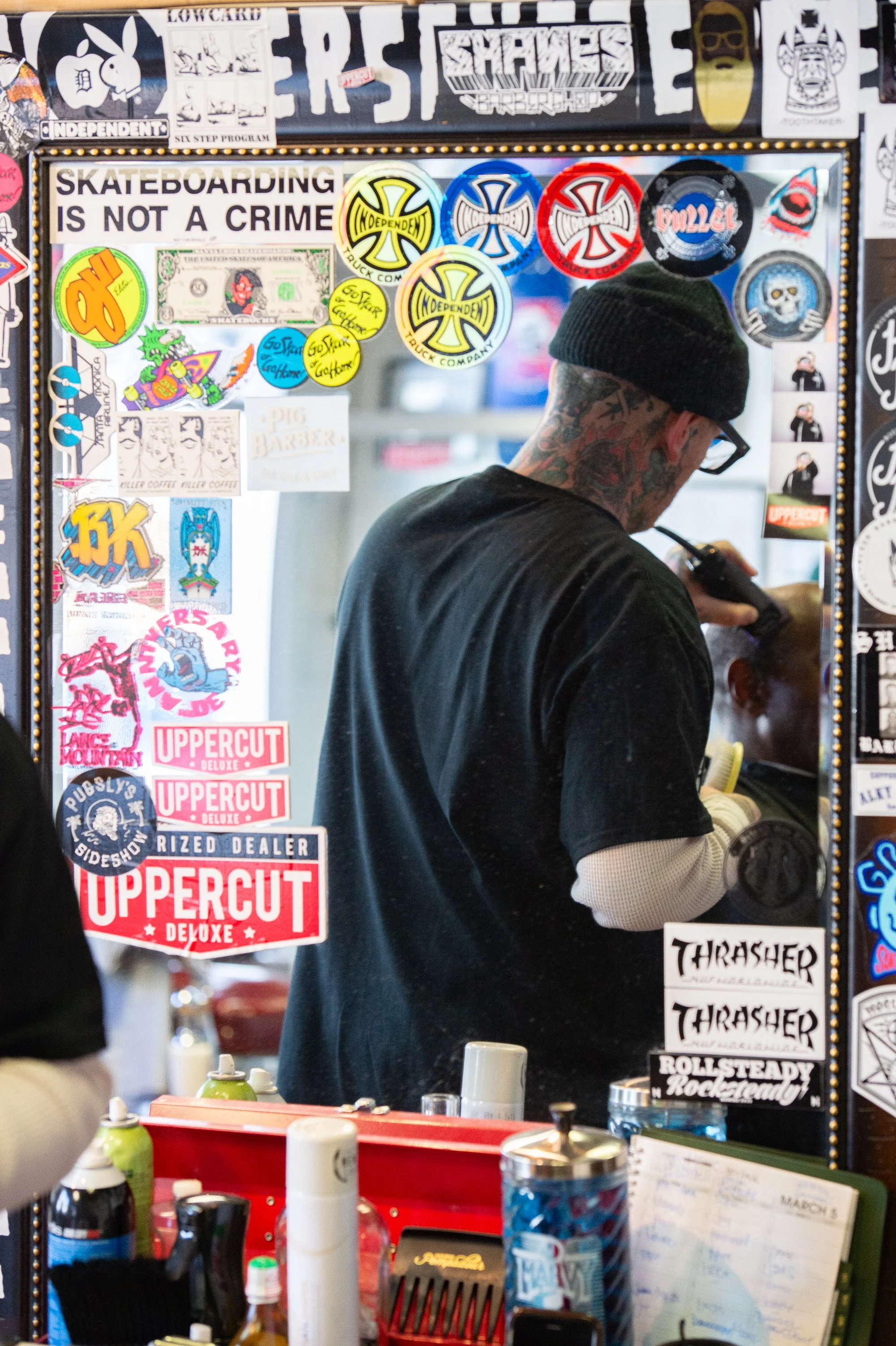
barber working through mirror covered in stickers inside Shane's Barbershop San Mateo

Barber Shane Nesbitt works through a sticker-covered mirror reflecting the layered skateboard culture inside his San Mateo shop

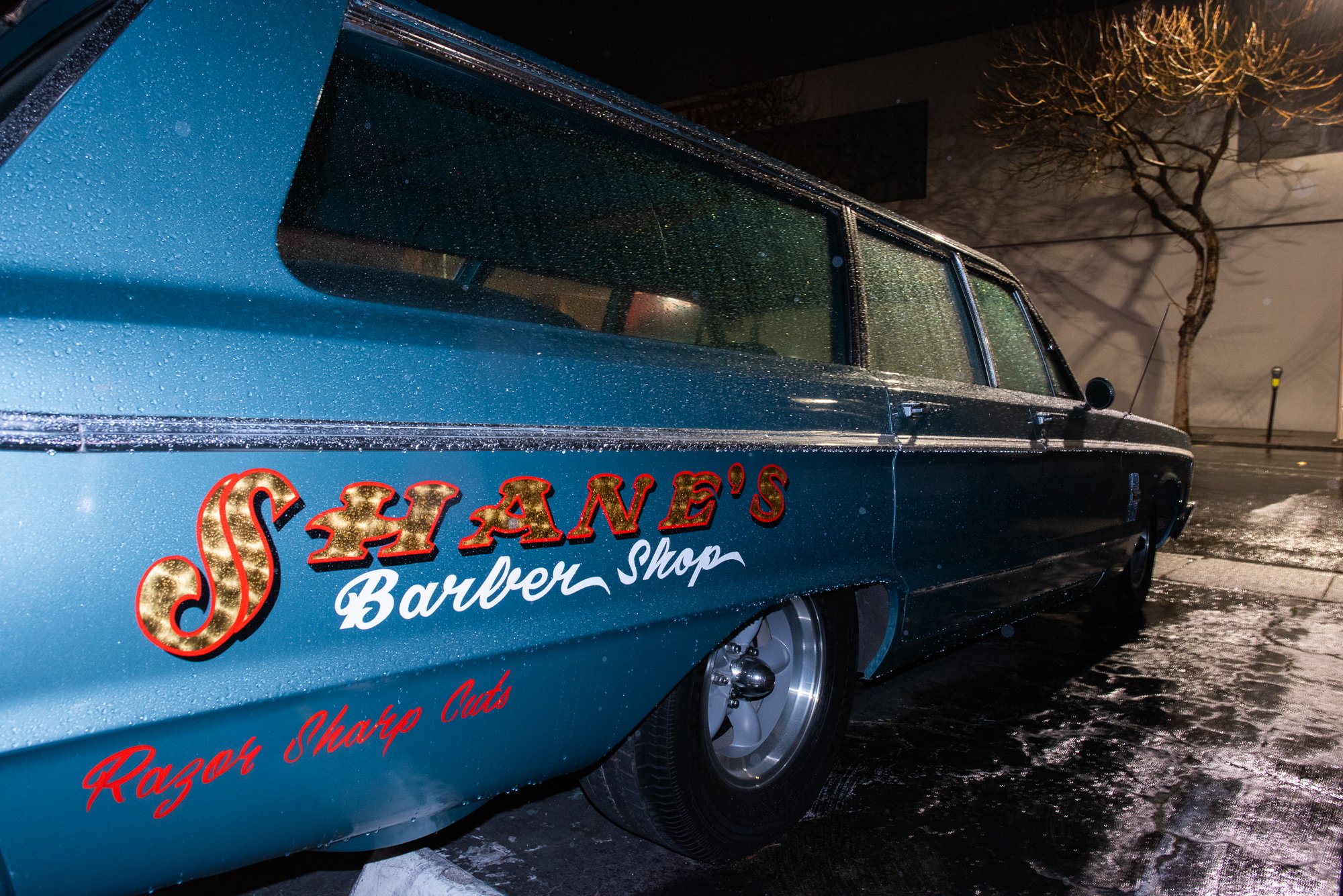
hearse with Shane's Barbershop lettering parked outside at night San Mateo

California custom hearse with Shane's Barbershop branding parked outside at night reflecting the personality of the shop

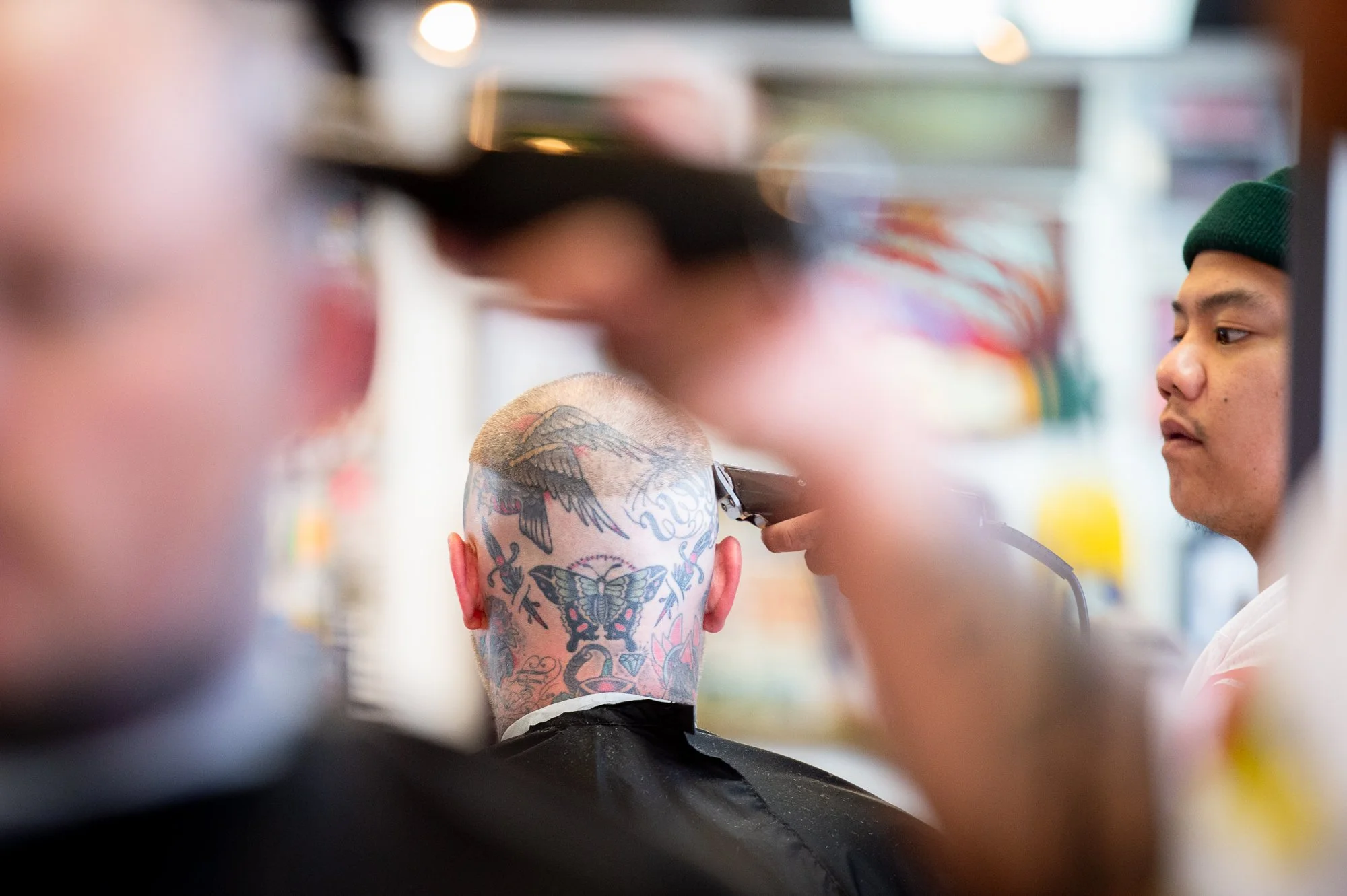
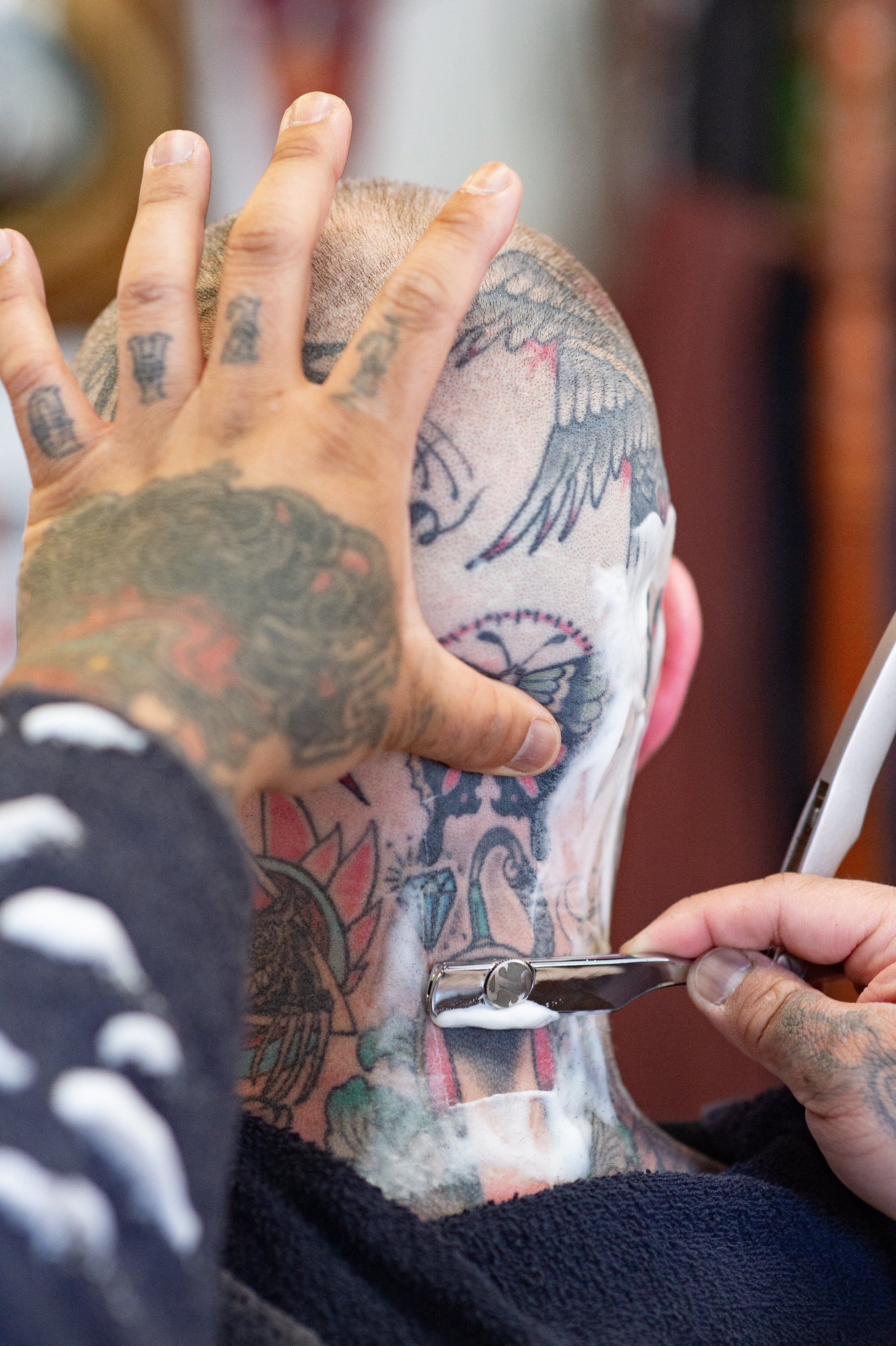
client with tattooed head getting haircut inside Shane's Barbershop San Mateo

Close-up of Shane’s tattooed head receiving a haircut highlighting the detail and individuality inside Shane's Barbershop

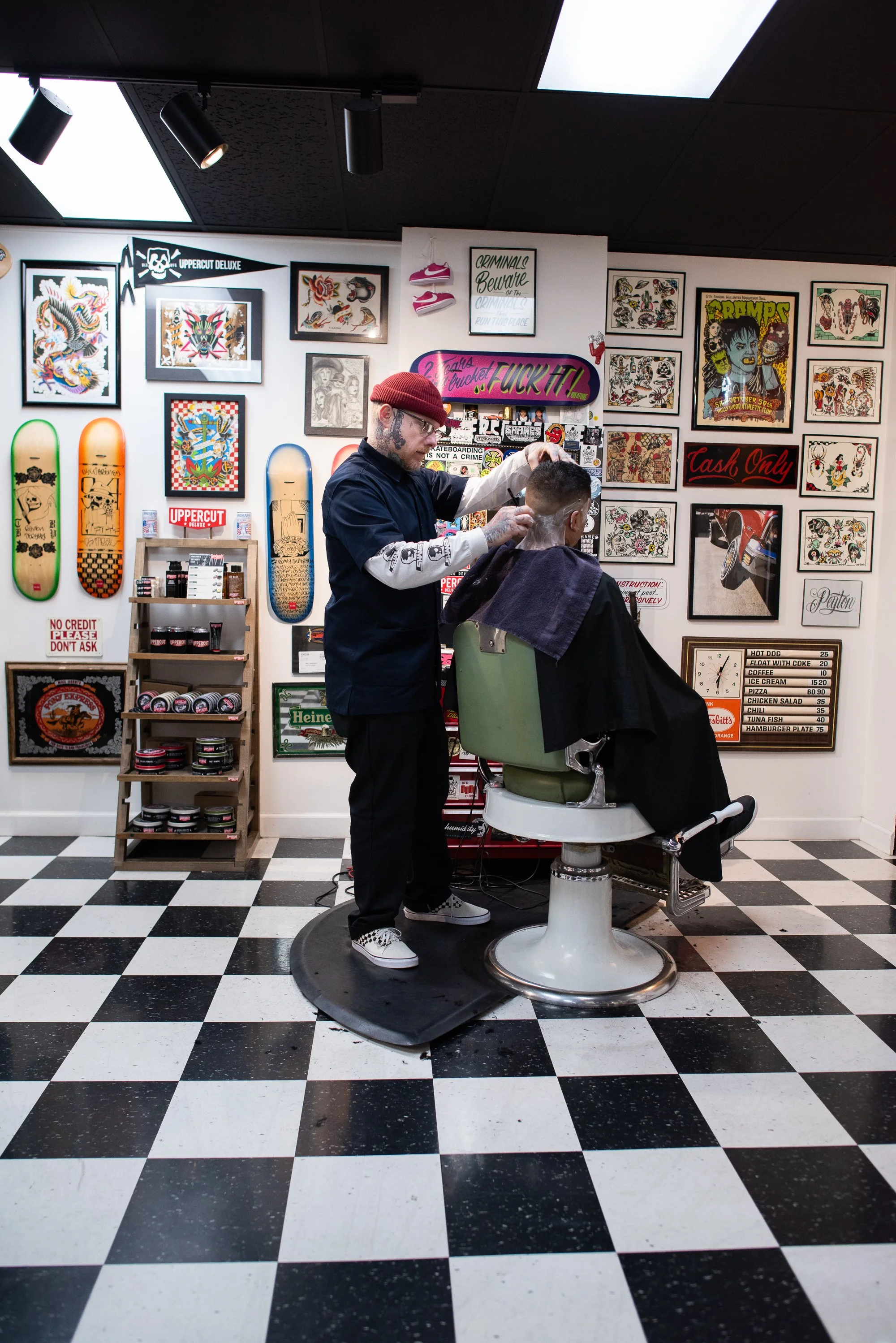
barber Shane Nesbitt cutting hair in vintage barber chair inside Shane's Barbershop San Mateo

Wide view of Shane Nesbitt cutting hair in his San Mateo barbershop surrounded by artwork and classic barber chairs

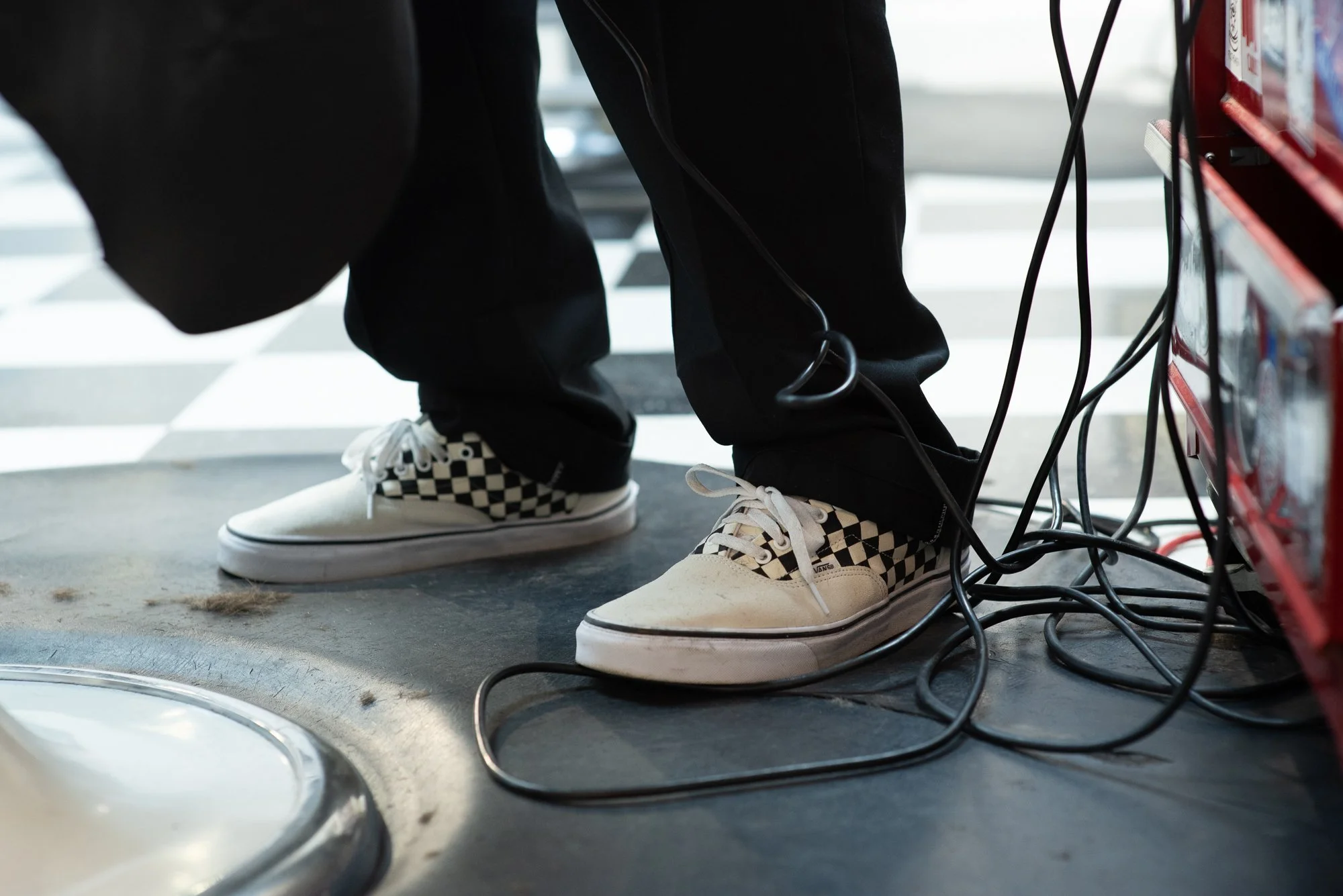
Checkerboard Vans shoes standing on barbershop floor with hair clippings and electrical cords

Hair on the floor, cords underfoot, and long days on your feet—details like this are what defined the rhythm inside Shane’s Barbershop.

straight razor shave on tattooed head inside Shane's Barbershop San Mateo

Close-up of straight razor shave highlighting the craftsmanship and trust inside Shane's Barbershop in San Mateo

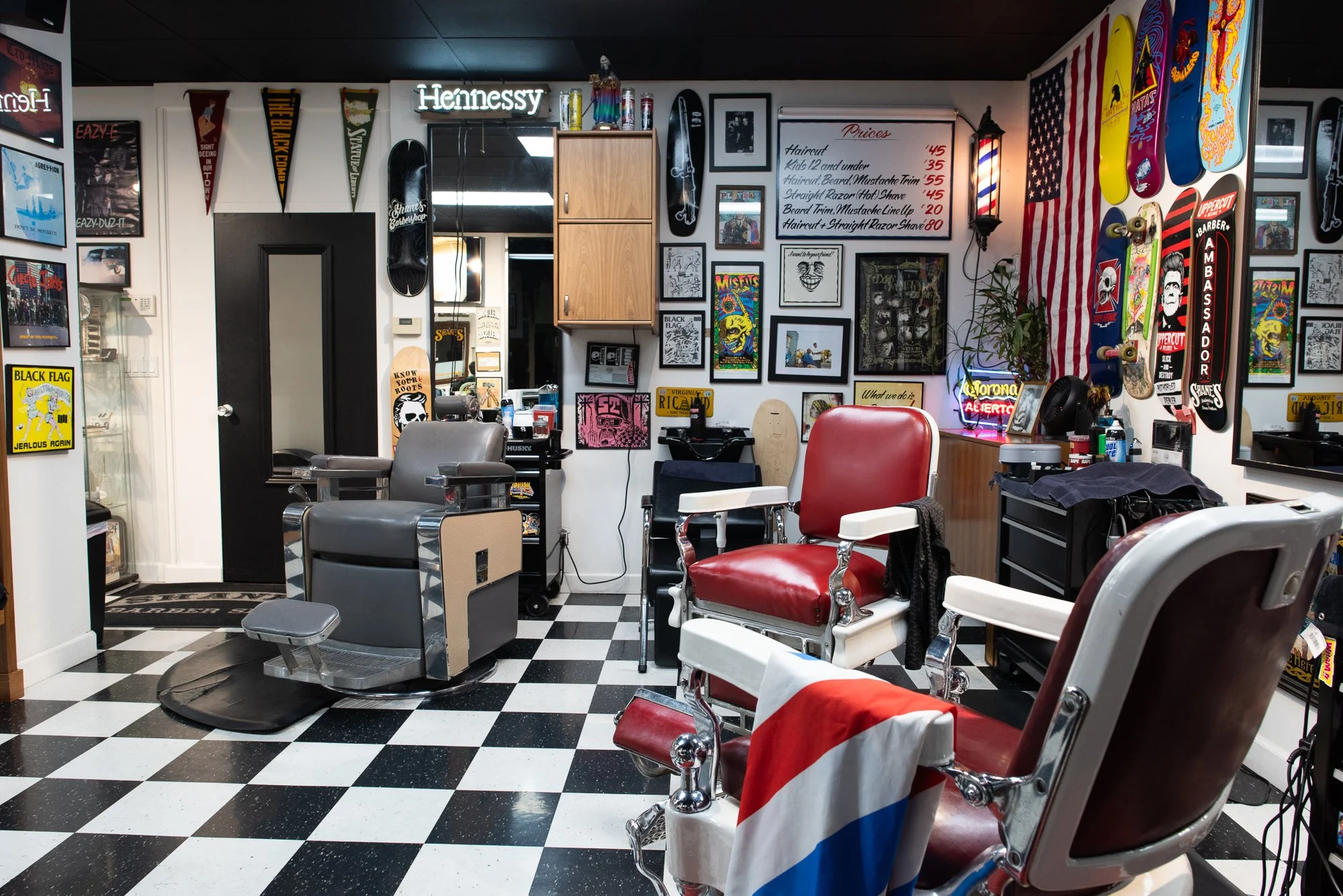
empty interior of Shane's Barbershop San Mateo with barber chairs and artwork on walls

Interior of Shane's Barbershop in San Mateo showing the space that once served its community

Leucadia Barbershop in Encinitas, CA

Leucadia Barbershop – A California Chapter of Barbershops of America

Leucadia Barbershop has been part of Encinitas since 1996, when Emiliano Zermeno’s family first opened the doors at its original location. Like many small barbershops, the business was eventually forced out due to landlord pressures—a familiar story across the country. Instead of closing, Emiliano rebuilt the shop in a new space, carrying forward what his family started while shaping it into something distinctly his own.

A Family Barbershop Rooted in Leucadia Since 1996

Emiliano grew up inside the shop his family created. The rhythm of haircuts, the conversations, the regulars—it wasn’t a concept or aesthetic. It was daily life. When displacement forced the original location to close, the continuity of that space could have ended. Instead, it shifted. The new Leucadia Barbershop carries the same foundation, just reinterpreted through a different generation.

Southern California Skate Culture Inside a Barbershop

The new space reflects Emiliano himself—a Southern California kid who grew up with a love for skateboarding and still carries that passion today. The shop feels less like a preserved relic and more like a lived-in extension of coastal California: relaxed, personal, rooted in community. The design choices, the atmosphere, even the pace of the room mirror the culture that shaped him.

Emiliano didn’t just take over the business to make his family proud, he took it to the next level. Which is obvious when you look at his shop, but more importantly, you see it in his cuts. He’s a member of the Uppercut Deluxe team - a sign of quality, and another layer that further represents the skateboarding culture.

Photographing Leucadia Barbershop

Leucadia Barbershop was photographed as part of a long-term effort to document traditional American barbershops in all 50 states before they disappear or change beyond recognition. Each shop carries its own story. In Encinitas, that story includes family continuity, displacement, and the culture of Southern California itself.

View More Traditional Barbershops

Leucadia Barbershop is one of many shops documented across the country as part of a 15-year archive focused on preserving everyday American spaces.

→ View the full Barbershops of America gallery
You can also view another California barbershop photographed as part of the same series:

→ Read the blog post about a traditional barbershop in San Diego

Black and white portrait of Emiliano Zermeno, owner of Leucadia Barbershop in Encinitas, California.

Portrait of Emiliano Zermeno, who continued the family barbershop after the original 1996 location was lost to landlord displacement.

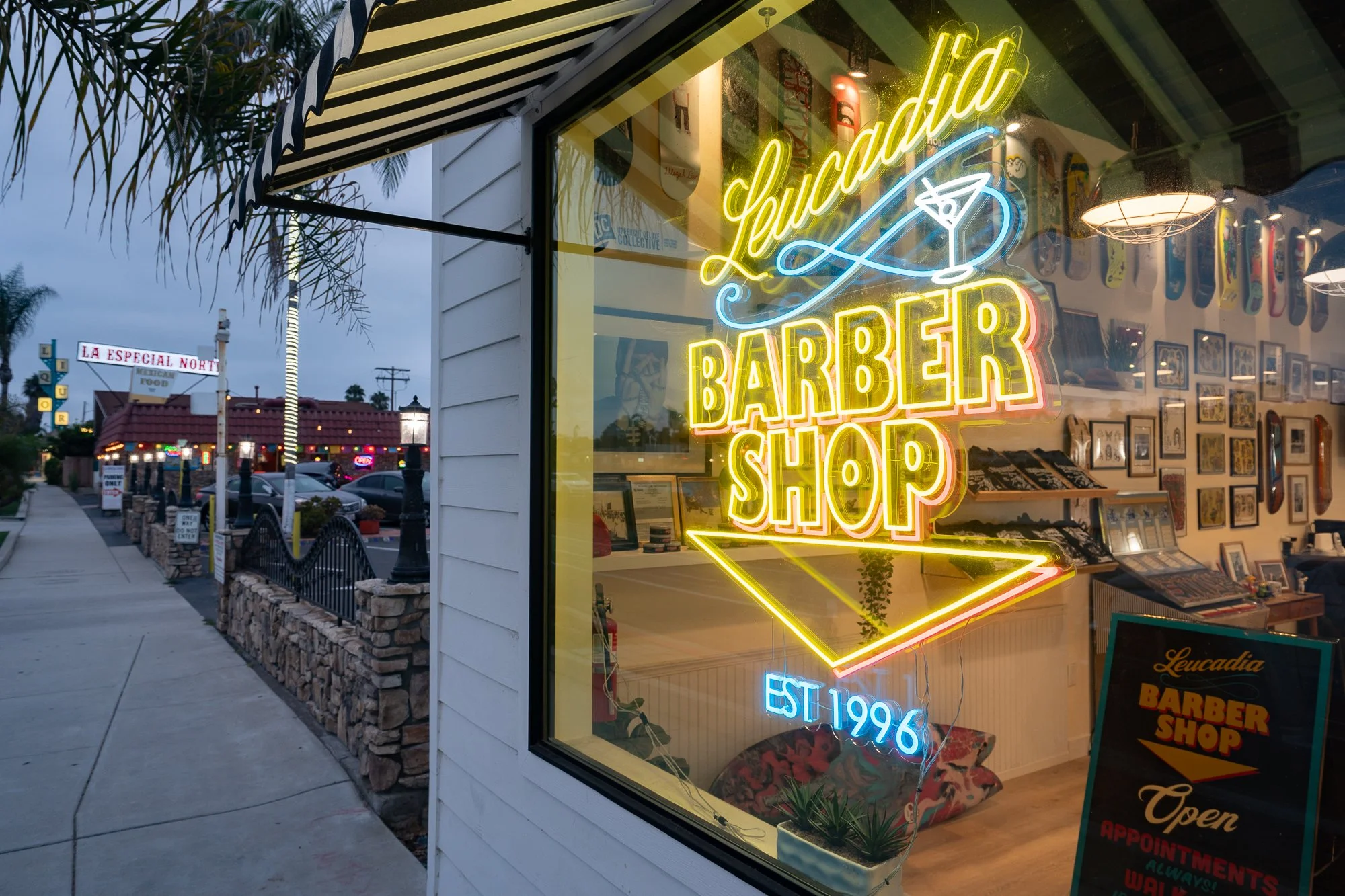
Neon sign at Leucadia Barbershop in Encinitas, California at dusk, established 1996.

The neon sign at Leucadia Barbershop glows over the sidewalk in Encinitas, California. Opened in 1996, the shop has remained part of the coastal community through change and relocation.

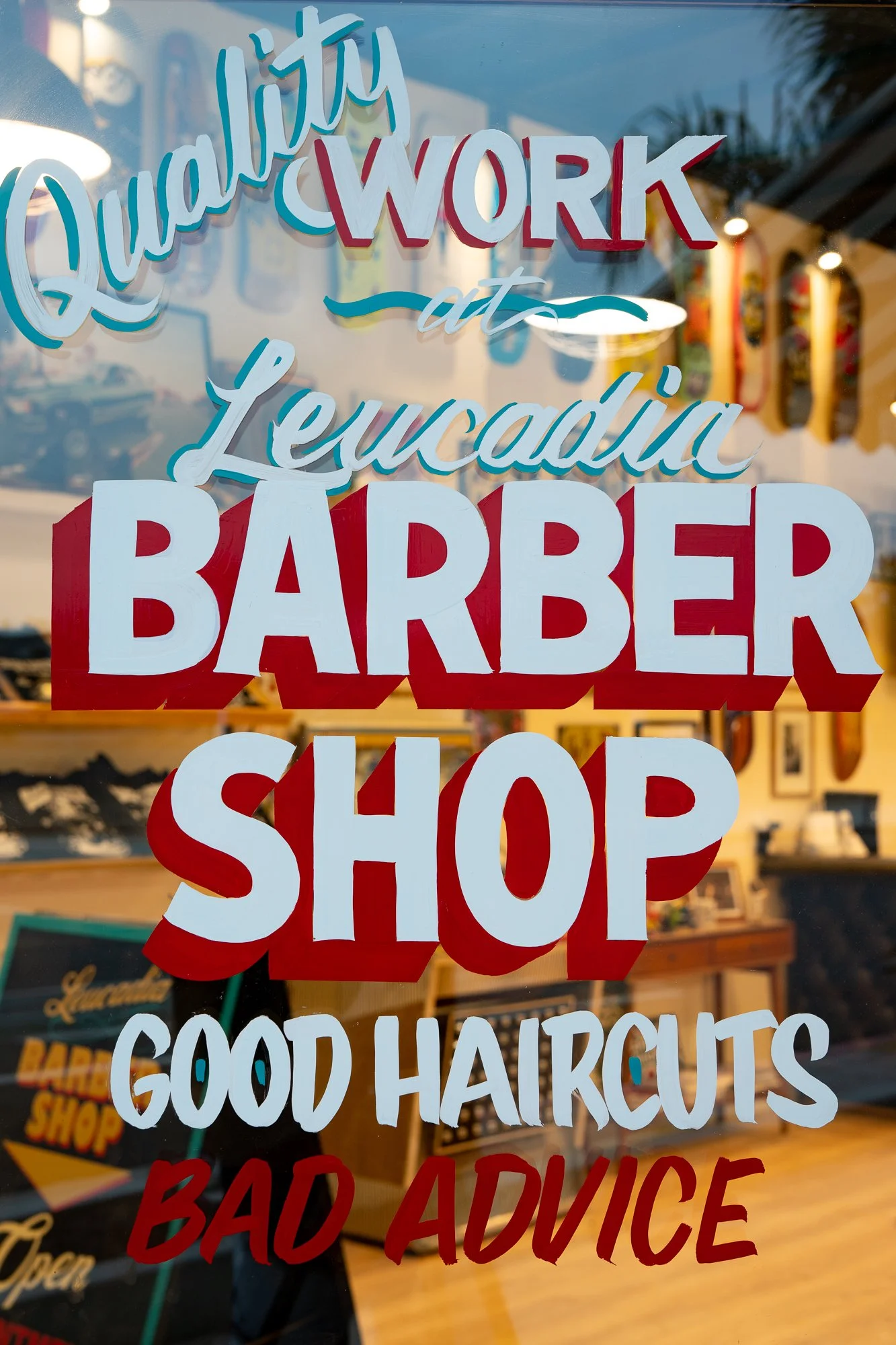
Window lettering reading “Quality Work at Leucadia Barber Shop” on the storefront in Encinitas, California.

Window lettering at Leucadia Barbershop in Encinitas, California. Established in 1996, the shop blends traditional barbering with Southern California character.

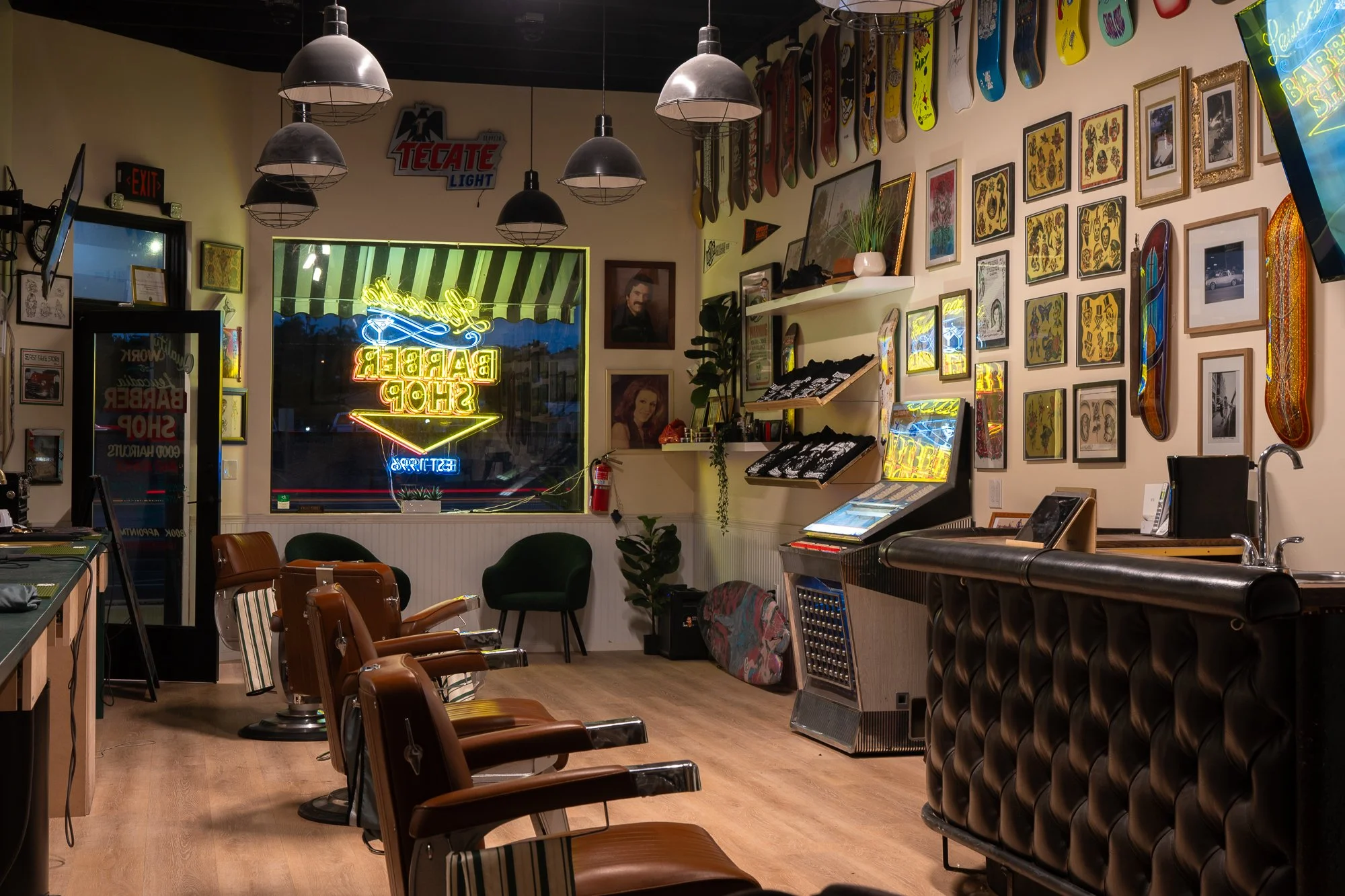
Interior of Leucadia Barbershop in Encinitas, California showing barber chairs, framed artwork, and skateboards.

Inside Leucadia Barbershop in Encinitas. The space combines traditional barber chairs with personal artwork and skateboards, creating a shop shaped by the owner’s history.
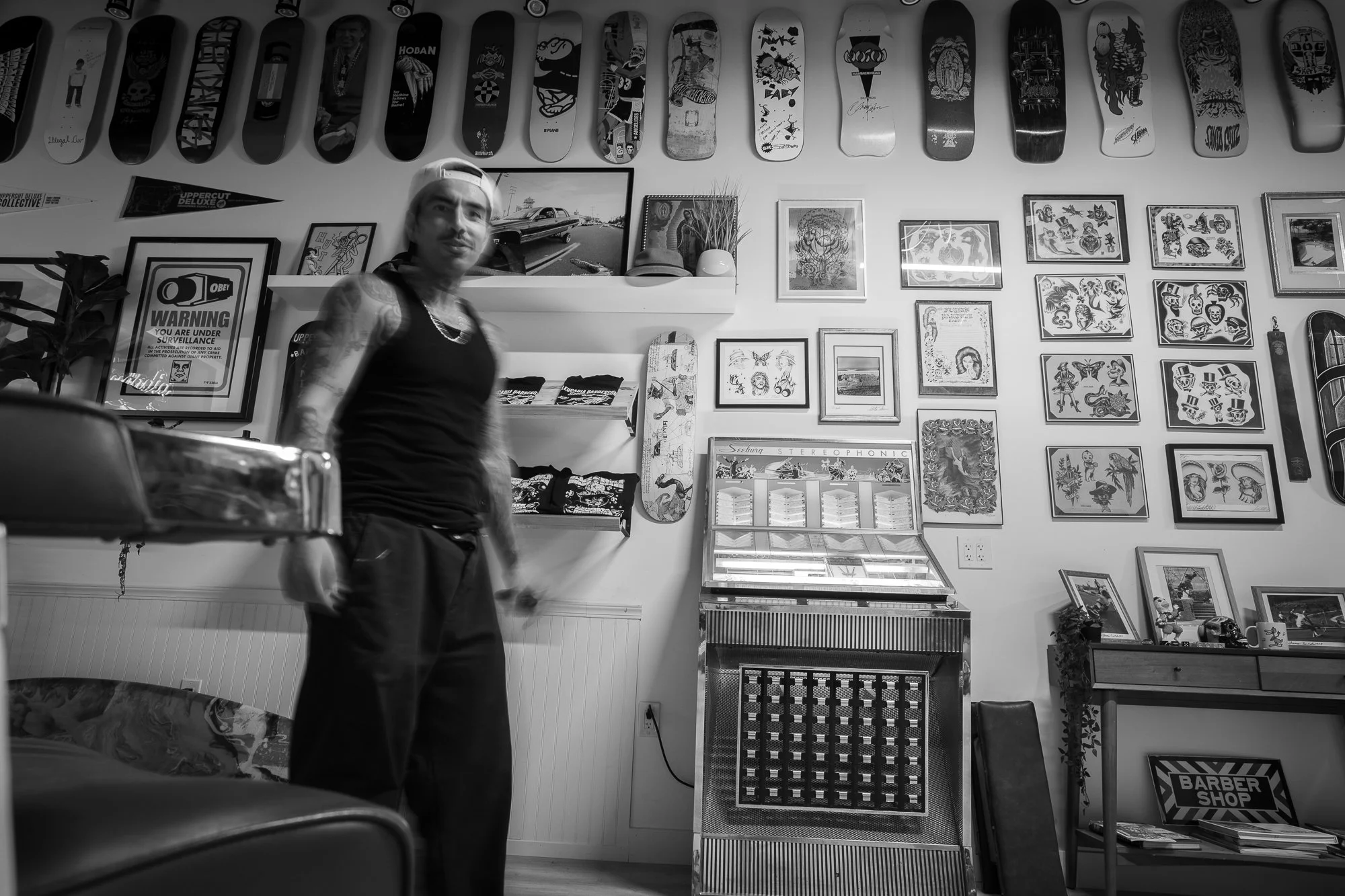
Emiliano Zermeno inside Leucadia Barbershop in Encinitas, California with skateboards displayed on the wall.

Emiliano Zermeno inside Leucadia Barbershop. The skateboards lining the wall reflect his Southern California upbringing and lifelong connection to skate culture.

Black and white photograph of a neon barbershop sign

Barbershop in Encinitas, CA

A Traditional American Barbershop - A Neighborhood Fixture

An Old School Neighborhood Barbershop

I first photographed this barbershop in San Diego in 2011, early on in what would eventually become the Barbershops of America project. At the time, I didn’t fully realize how important these photographs would become. I was simply drawn to places like this — shops that felt unchanged, where time moved a little slower and the barber knew everyone who walked through the door.

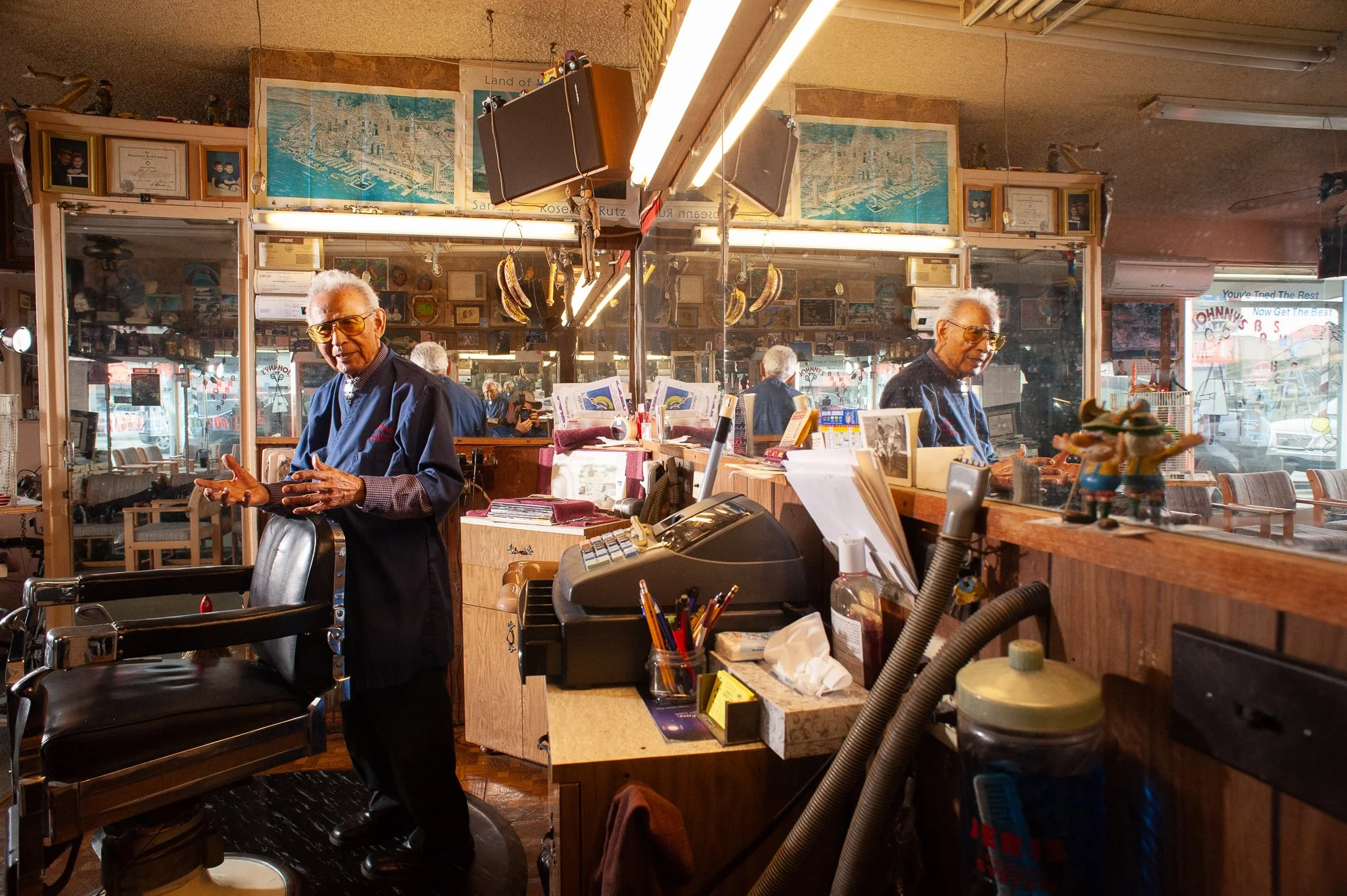
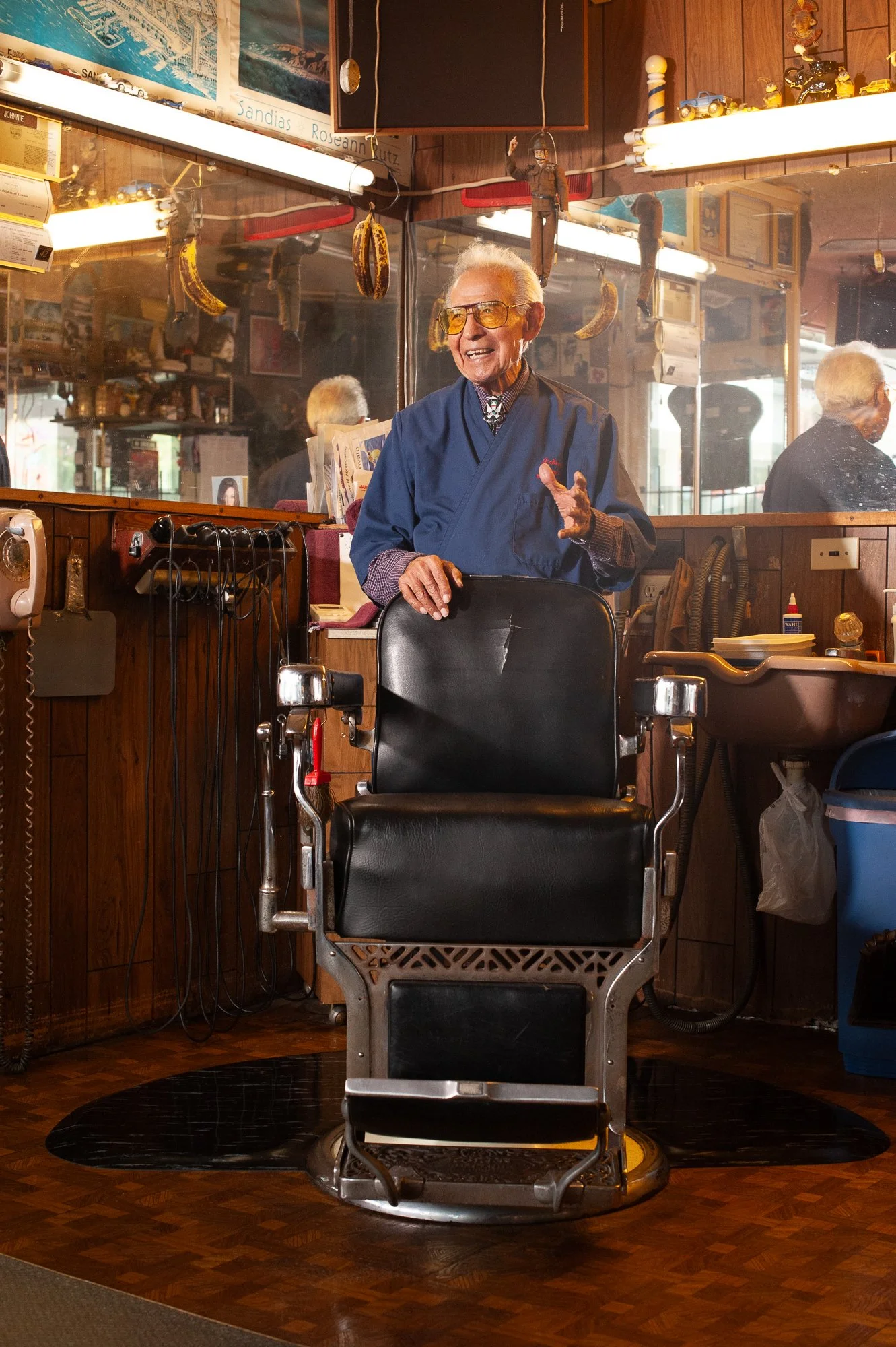
This shop, run by Johnny Lovato, was one of those places.

A Shop That Felt Lived In

Walking into Johnny’s barbershop felt like stepping into another era. The space wasn’t curated or styled — it was simply lived in. The chairs, the mirrors, the worn floor, the little personal details scattered throughout the shop all told a story without trying to.

These weren’t decorations meant to evoke nostalgia. They were just the things that had accumulated over time. That honesty is what made the shop special and what kept the doors open to the same neighborhood of friendly customers for decades.

The Barber and the Community

Johnny was always kind and welcoming, the type of barber who made time for conversation as easily as he made time for a haircut. His shop wasn’t just a place people came to get cleaned up — it was a place where stories were shared and relationships were maintained.

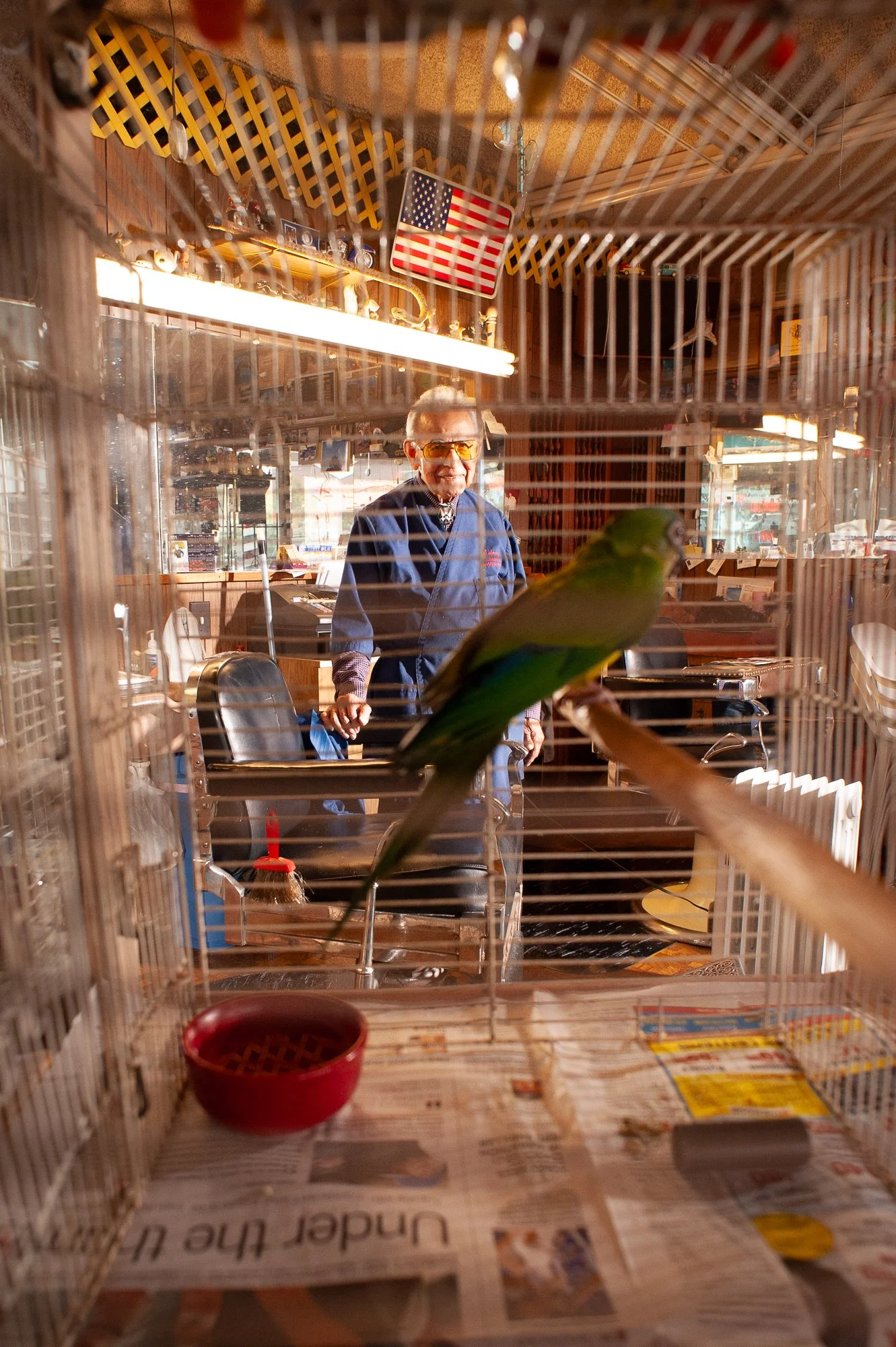
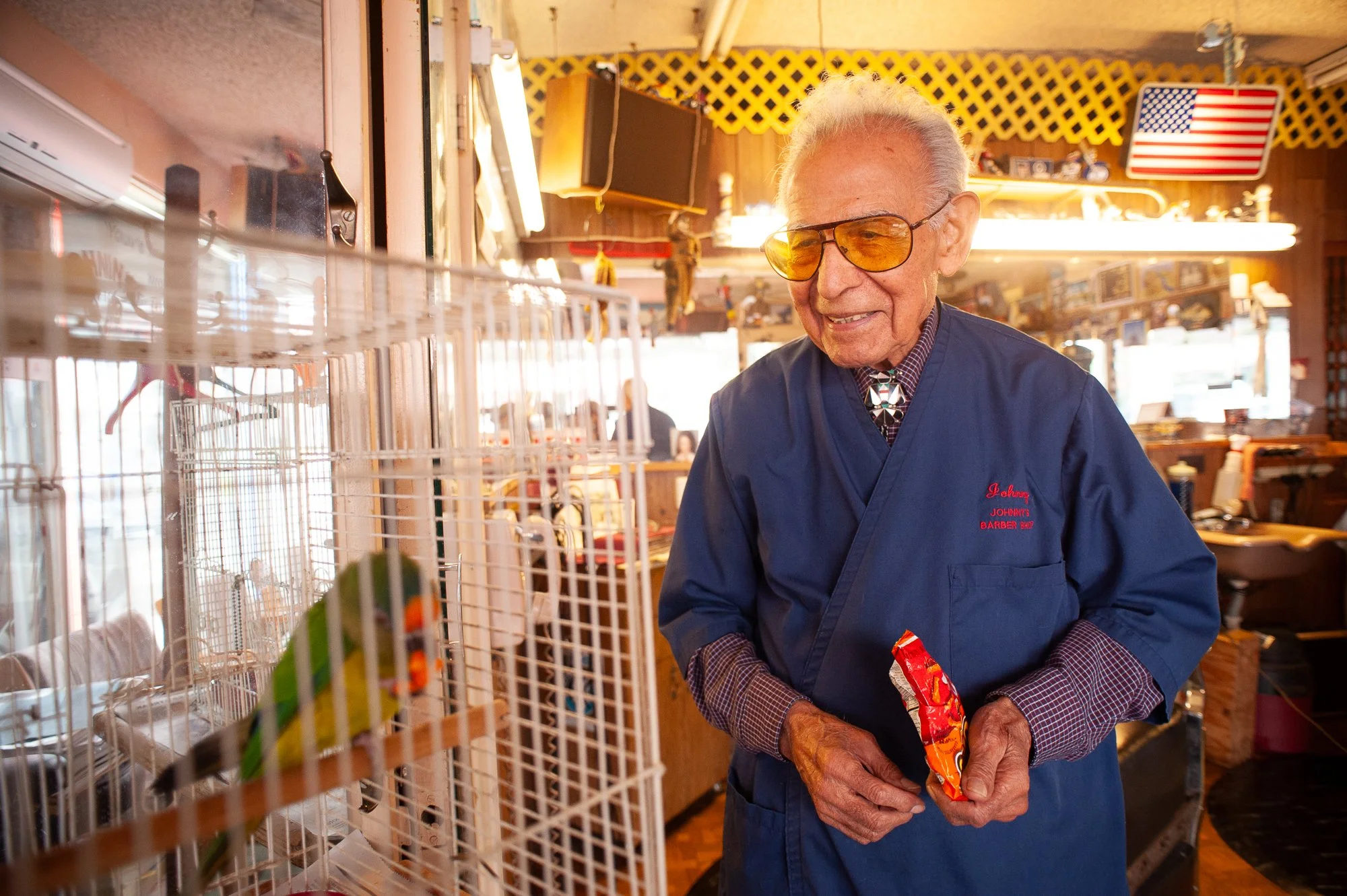
One of the small details I always remember is how happy Johnny was feeding his bird Cheetos. It’s a simple moment, but it perfectly captures the personality of the space and the rhythm of the shop. Those are the moments I’m always looking for when I photograph places like this.

Returning Years Later

I returned to photograph the shop again in 2019. By then, Johnny’s son had taken over the business. Much of the spirit of the shop remained, but time had clearly moved forward — as it always does.

Not long after, the barbershop closed, and the space was eventually transformed into something new, and in my opinion, soulless. That’s the reality for many traditional barbershops across the country. Rising rents, retirement, and redevelopment quietly erase places that once anchored their neighborhoods. Luckily another barber took over the space, so it remains a barbershop, just without the decades of character and memories that once filled it.

Why These Photographs Matter

Barbershops like this rarely close with ceremony. They disappear quietly, often without anyone realizing that a piece of local culture has gone with them.

This series exists so that those places aren’t completely lost. These photographs are not about nostalgia for nostalgia’s sake — they’re about acknowledging the importance of everyday spaces that shaped communities for generations.

Part of a Larger Archive

Johnny Lovato’s barbershop in San Diego is just one small part of a much larger body of work documenting traditional barbershops across the United States. Together, these images form an archive of a disappearing American tradition — one shop, one barber, one story at a time.

More Barbershops of America

View The Book

View The Gallery

Old-school American barbershop interior, Point Loma San Diego documentary photograph

Interior of a traditional barbershop in Point Loma, San Diego, where time-worn chairs and details reflect decades of community history.

Johnny Lovato feeding his pet bird inside his barbershop in San Diego, California

Johnny Lovato, the barber, shares a moment feeding the shop’s pet bird — a small gesture emblematic of daily life in the space.

An old school barber smiles while watching his pet bird

Johnny Lovato smiles after feeding his pet bird at his barbershop in San Diego

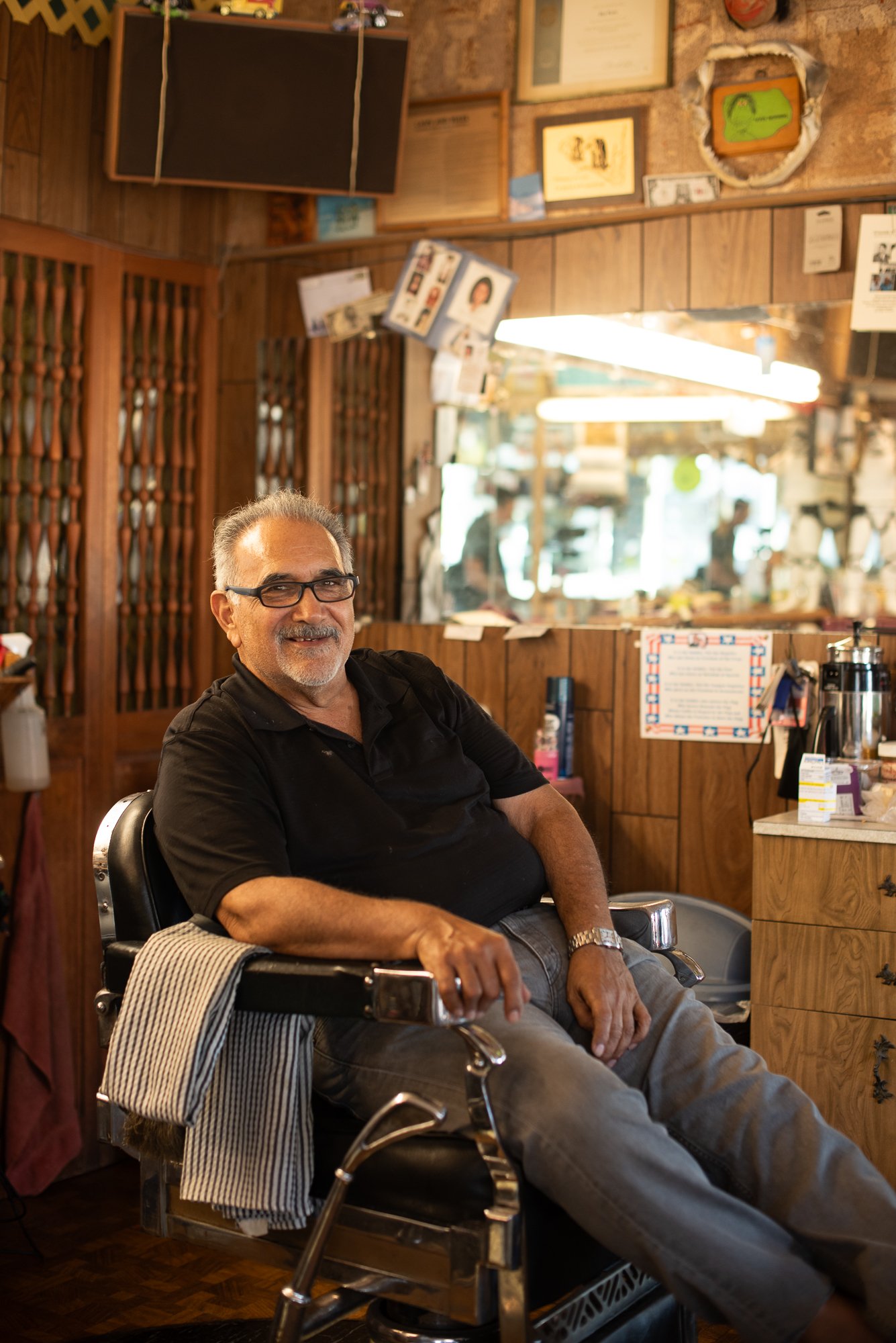
Portrait of a barber standing behind his chair in a traditional San Diego barbershop

Portrait of a barber standing behind his chair — a quiet testament to the people who made these shops more than just businesses.

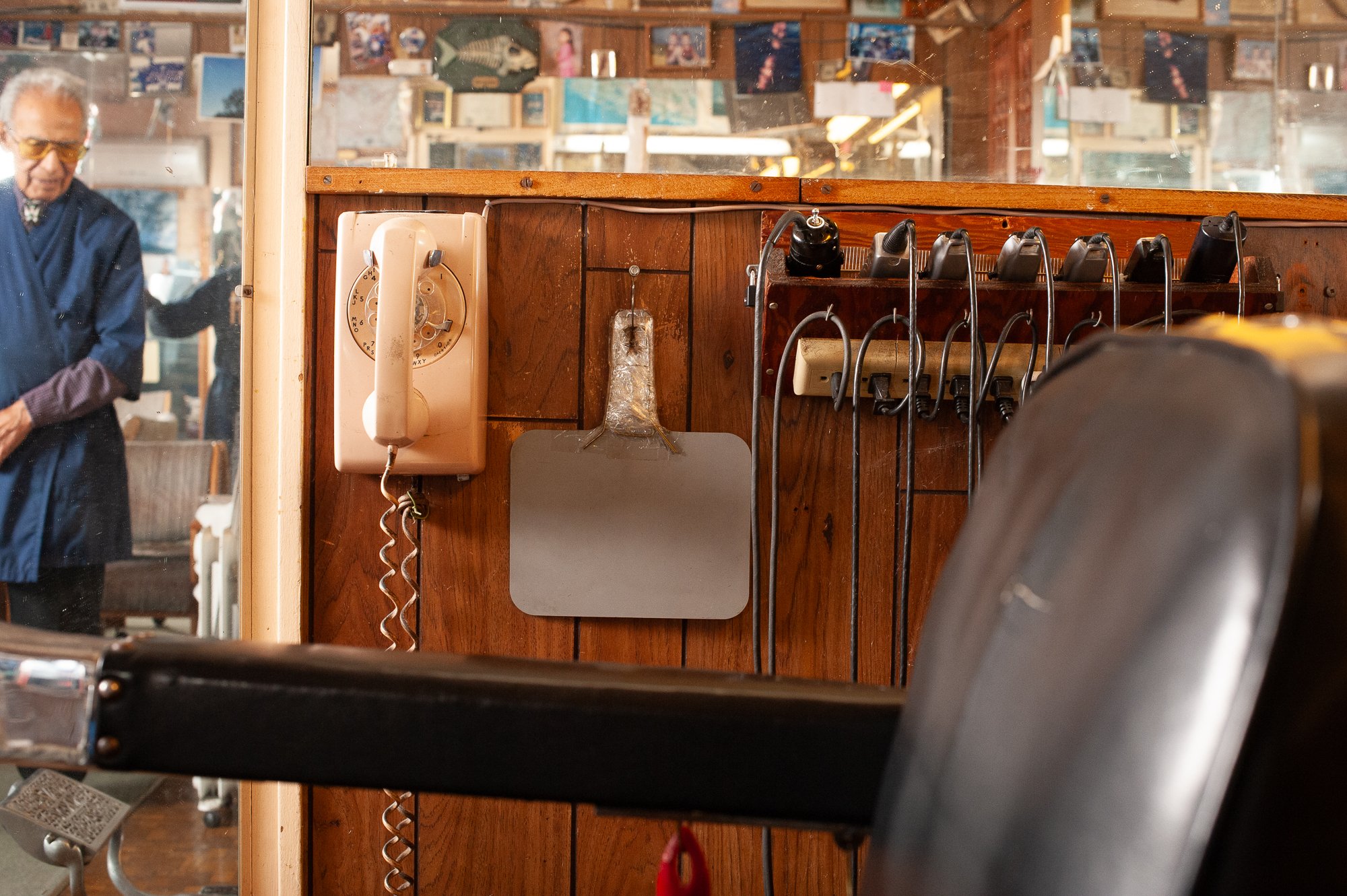
Rotary telephone inside a traditional barbershop, documentary detail photo

An old rotary telephone inside the shop — one of the many small artifacts that speak to the barbershop’s lived-in past

Barber sitting in his chair at a traditional barbershop in San Diego, California

A barber sits in his chair during a quiet moment — a human pause captured in the rhythm of the shop.

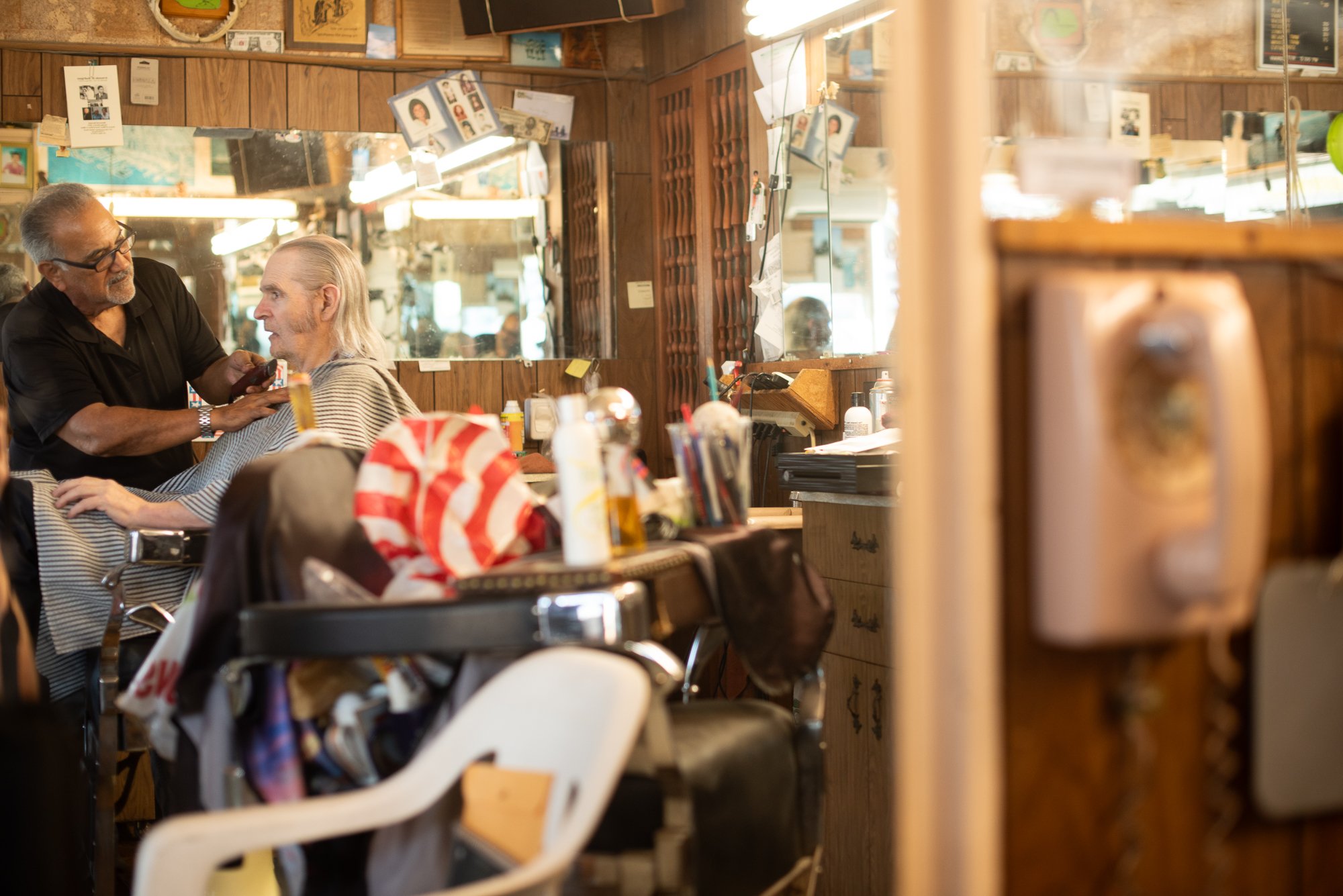
Customer getting a haircut in a traditional barbershop in San Diego, California documentary image

A customer receives a haircut — a simple everyday moment that also anchors the narrative of barbershop culture.

University Club - San Diego

University Club - San Diego, California

Recently had a great opportunity to present some of my cowboy photography to members at The University Club in San Diego, California. Sitting on the 34th floor of the Symphony Towers, the club has the best view in all of America’s Finest City! It was a pleasure just being up there, but even more so presenting work along a couple other photographs that I’m lucky to call friends - Nick Nacca and Gary Allard as well as APA San Diego. It was a great night all the way around. The three of us had fun presenting our work and everyone in attendance was very engaged during and after. I’m grateful for the opportunity to share!!

Go here to shop my fine art cowboy photography prints

Fine art photography at the University Club in San Diego

Photography presentation at The University Club in San Diego, California

Photograph of fine art photographers presenting work at The University Club in San Diego, California

Color photographs taken by Tim Hardy

Black and white photo taken by Rich Soublet

The Photographic Journal

Basketball Photo Essay - The Photographic Journal

Southern California Basketball Culture

Over the past couple years I’ve been quietly working on a series of photographs about the unique basketball culture that exists in Southern California. It’s been an incredibly fun project and a huge contrast to the American Backcourts photographs of hoops from far off places all across the country. So it’s great to see the series featured on The Photographic Journal - a website that puts together beautiful photo essays. Click HERE to check it out.

American Road Trip Photography

The Great American Road Trip - Photography

When are you supposed to say enough is enough and move on to another subject? Roadside Meditations was published a few months back, which would (should?) be the logical line in the sand stating ok, you did the thing, now try something else! And a person smarter than myself would probably do that! History thus far does not comply. My long term personal project are just that, personal. So I might partially focus on a new subject, but I’m always on the look-out for images that fit the older projects too. It’s not intentional. It just is. I love these projects and can’t help myself.

Click HERE to purchase a copy of Roadside Meditations or contact me directly to inquire about prints of my American road trip photography.

Photograph of a road going through a beautiful cattle ranch in Montana

Wyola, Montana

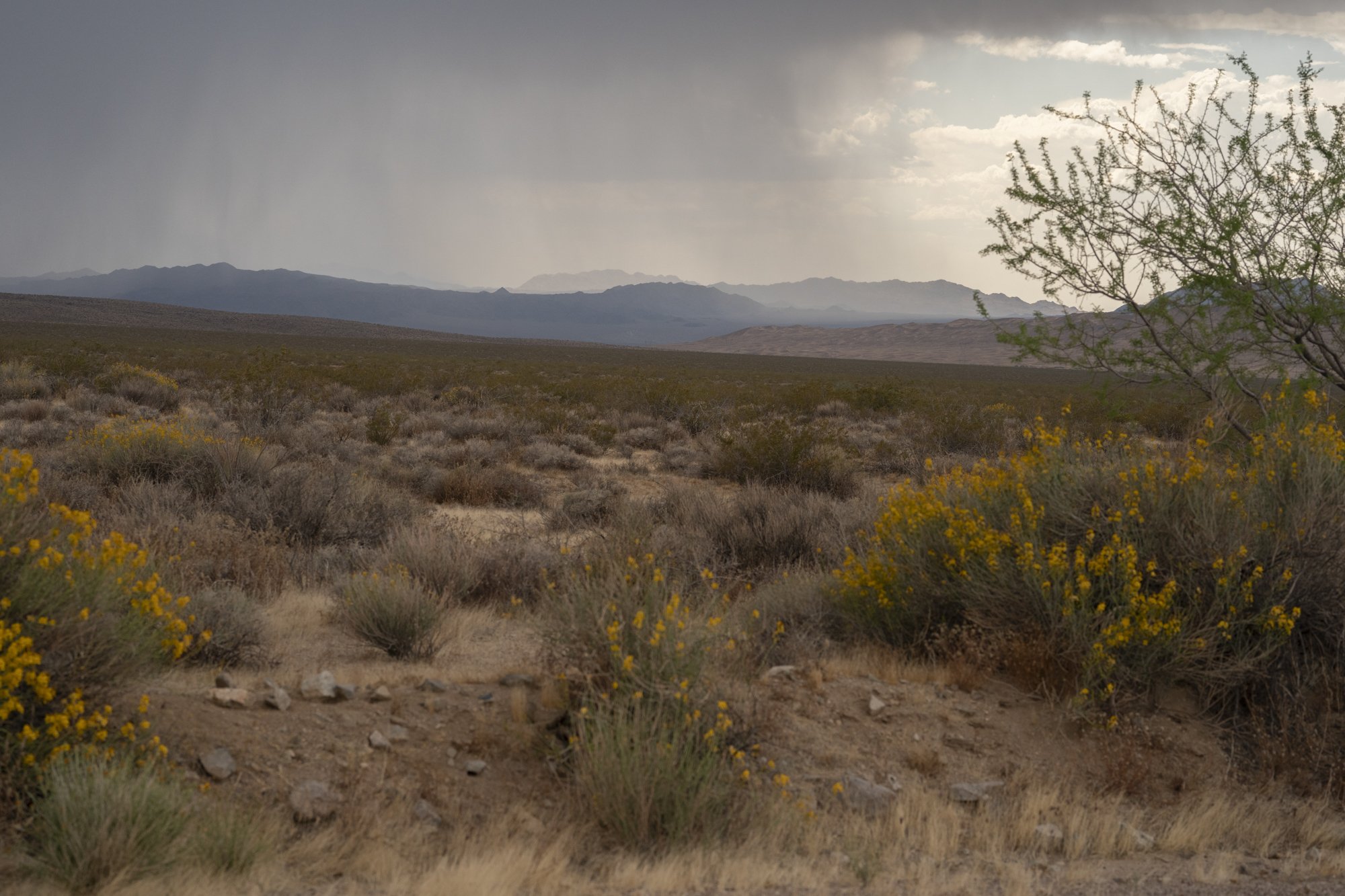
Landscape photo of the California desert

California desert

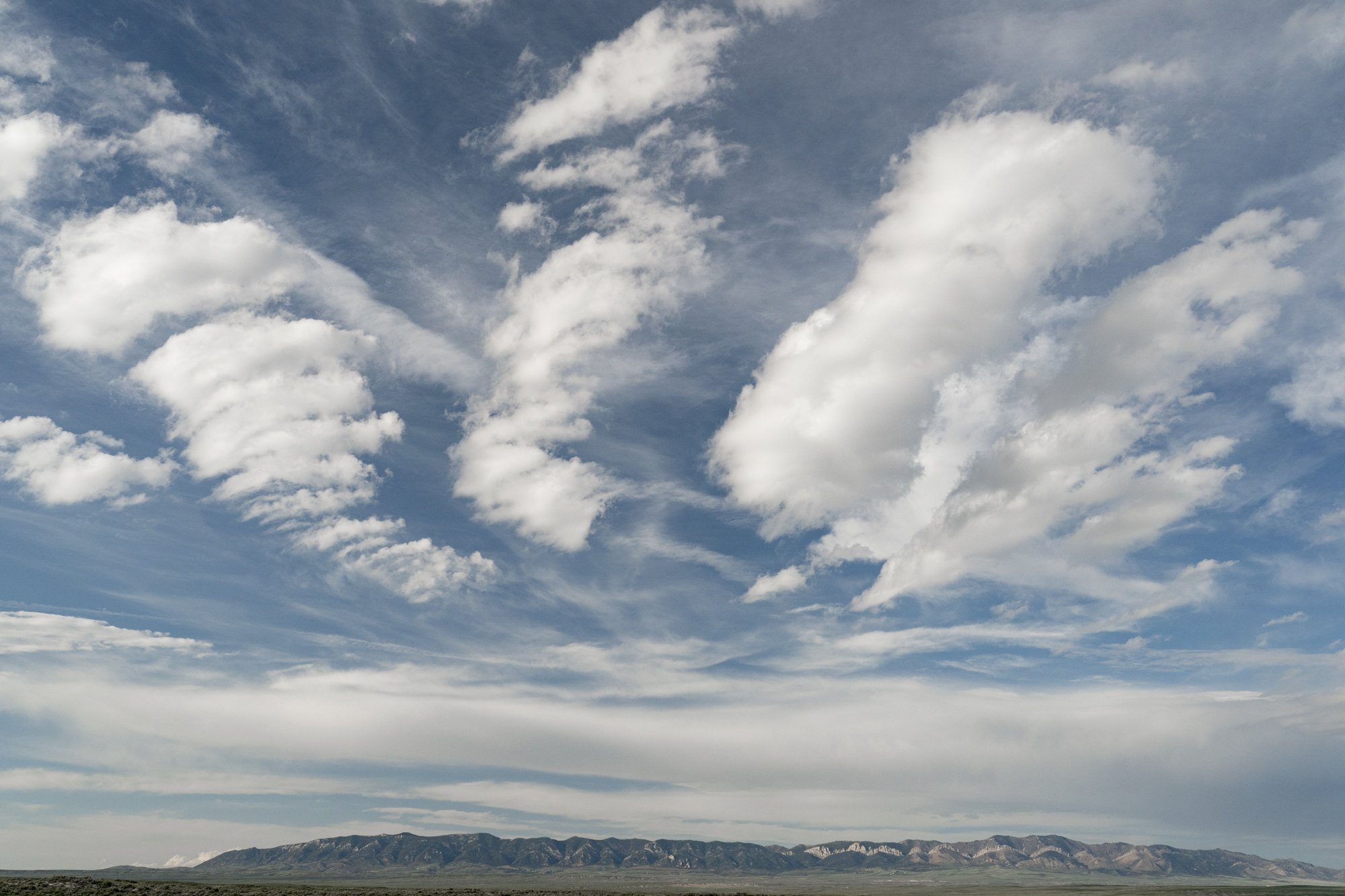
Photograph of a vast Wyoming landscape

Wyoming

Landscape photo of the California desert

California desert

Photograph of a train going through the landscape of Parker, Wyoming

Parker, Wyoming

California desert road trip photo

California desert

Photograph of plants in the California desert

California desert

Aerial Photograph of a road going through a desolate section of the California desert

California desert

Cowboy Photography - American West

Western Cowboy Photography

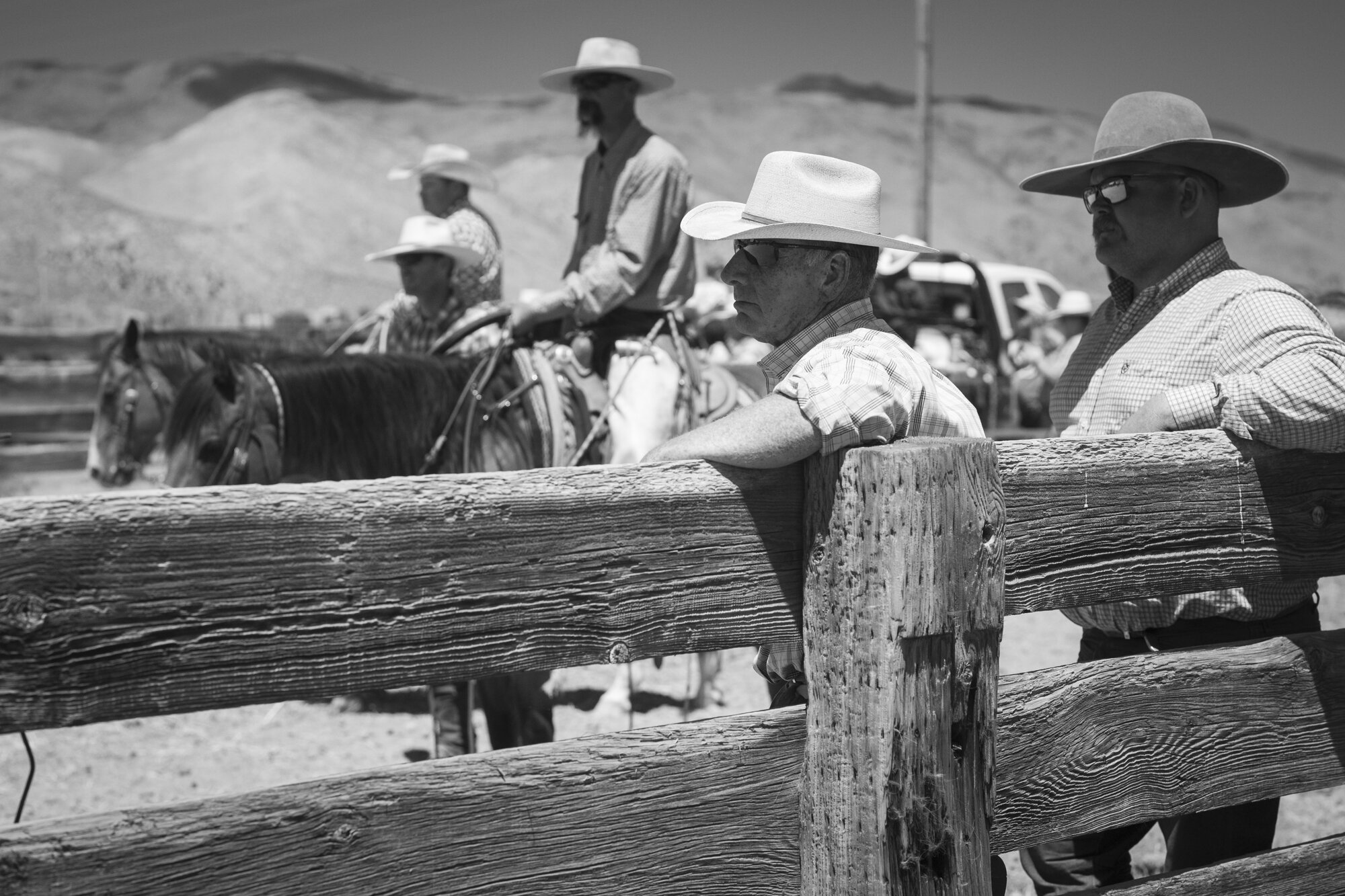
Photographing cowboys in the American West has been so many adjectives. Just scrolling through images to make this blog post gives me even more appreciation for the work, life, and culture of these people. As of this writing I’ve been lucky to photograph on cattle ranches in Nevada, California, Texas, Arizona, Idaho, and Wyoming. Which has been an education in and of itself, seeing all the differences from region to region. Not sure how long thing has been going on no, but the desire to continue only grows with each ranch visited. Certainly my favorite project to date.

Click here to see more of my cowboy photography and contact me directly to purchase wall art from the American Cowboy series. All of my images are available as prints for your home, office, or commercial space.

Sunrise photograph of two saddled horses with pogonip in the background

Fulstone Ranch - Bridgeport, California

Black and white portrait of a Wyoming cowboy

Dave Ennis - Wyoming Cowboy

Photograph of a cowboy working cattle in a chute

Diamond A Ranch - Seligman, Arizona

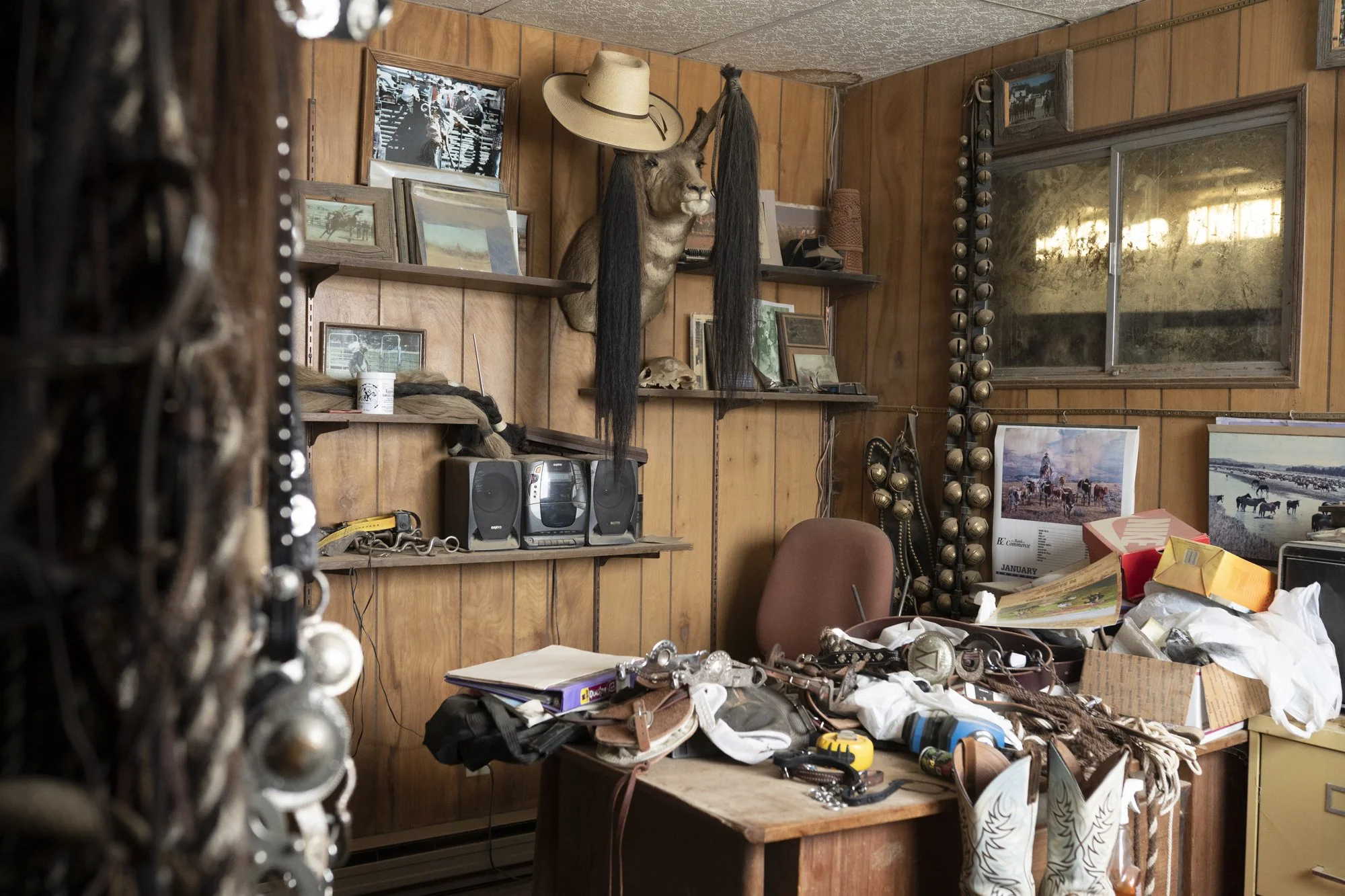
Photograph of the clutter in a cowboys office in Idaho

Cowboy “Office” - Idaho

Photograph of Dwight Hill - Idaho cowboys

Dwight Hill - Buckaroo - Idaho

Black and white photograph of cowboys riding out into open range

Diamond A Ranch - Seligman, Arizona

Photograph of Dwight Hill practicing with his horse in Idaho

Dwight Hill - Buckaroo -Idaho

Winter Storm Photography in Mammoth, California

Photographing a Winter Snow Storm in Mammoth

I’ve spent a lot of time in Mammoth over the years, mostly chasing snowstorms and long days on a snowboard. When a real storm rolls in, the town changes completely. Roads disappear, buildings soften, sound drops, and everything starts to feel slower and heavier. Those are the days I usually trade the board for a camera because the mountain tends to shutdown during heavy storms.

These images were made during an active winter snow storm in Mammoth, California. Not the postcard version of winter, but the kind where visibility comes and goes, snow stacks up faster than you expect, and the landscape feels stripped down to its essentials.

Living and Riding Through Winter Storms in Mammoth

If you spend enough winters here, storms stop feeling like events and start feeling like part of daily life. You wake up early to check the wind, ride when it’s good, wait it out when it’s not, and move through town while everything is still half-buried.

That familiarity makes it easier to photograph in tough conditions. I’m not chasing drama — I’m paying attention to how snow reshapes familiar places. A parking lot becomes abstract. A road turns into a line of tone and texture. Scale shifts constantly as the storm moves through.

Photographing Snow, Wind, and Scale

Winter storm photography is less about spectacle and more about restraint. Snow simplifies scenes, but it also hides detail. Light flattens quickly. Wind erases edges. The challenge is working within those limits without forcing a moment that isn’t there.

Most of these photographs were made quietly, between riding and driving, while the storm was actively changing the landscape. I’m drawn to scenes where human presence feels temporary — plowed roads, snow-covered buildings, tracks that won’t last long.

Why Winter Storm Photography Matters

Severe weather has a way of revealing place. In the mountains, storms expose how people build, move, and adapt. They show scale in a way clear days don’t. For editors, designers, and brands, winter storm imagery can communicate isolation, endurance, calm, and intensity without explanation.

These photographs aren’t about tourism or ski culture. They’re about atmosphere and environment — images that work as visual anchors in editorial layouts, books, campaigns, and long-form storytelling.

Editorial and Commercial Licensing

This series of winter storm photographs from Mammoth, California is available for editorial and commercial licensing. The images are well suited for magazines, books, outdoor and lifestyle brands, environmental storytelling, and large-format applications where mood and scale matter.

If you’re looking for cinematic winter imagery made from lived experience rather than a one-day shoot, I’m happy to help you find the right images or build a custom edit for your project.

Images from this series are also available as fine art prints. Contact me for details.

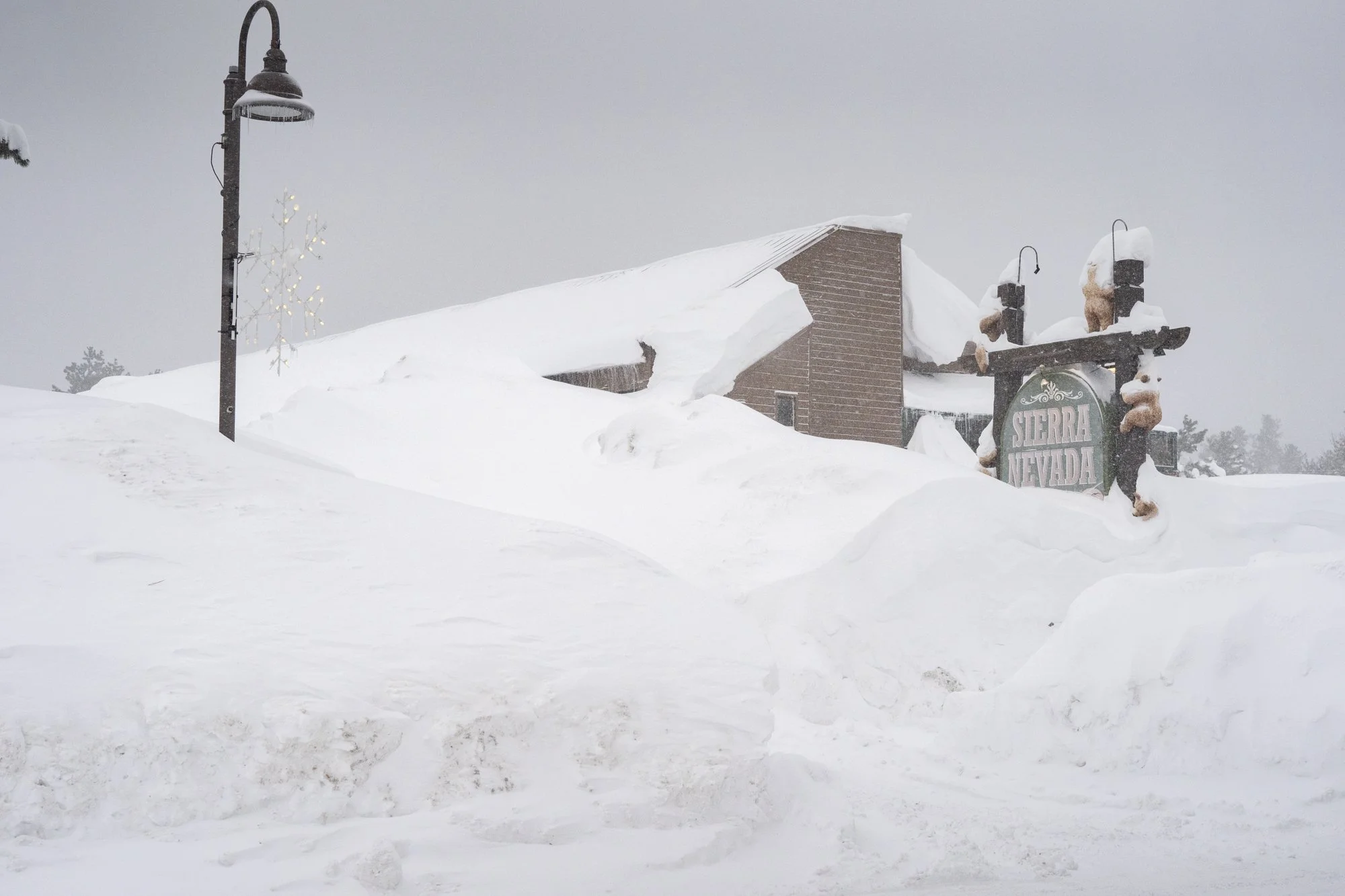
The Sierra Nevada Resort in Mammoth Lakes, California after a huge winter snowstorm

Sierra Nevada Resort covered in snow after a winter storm

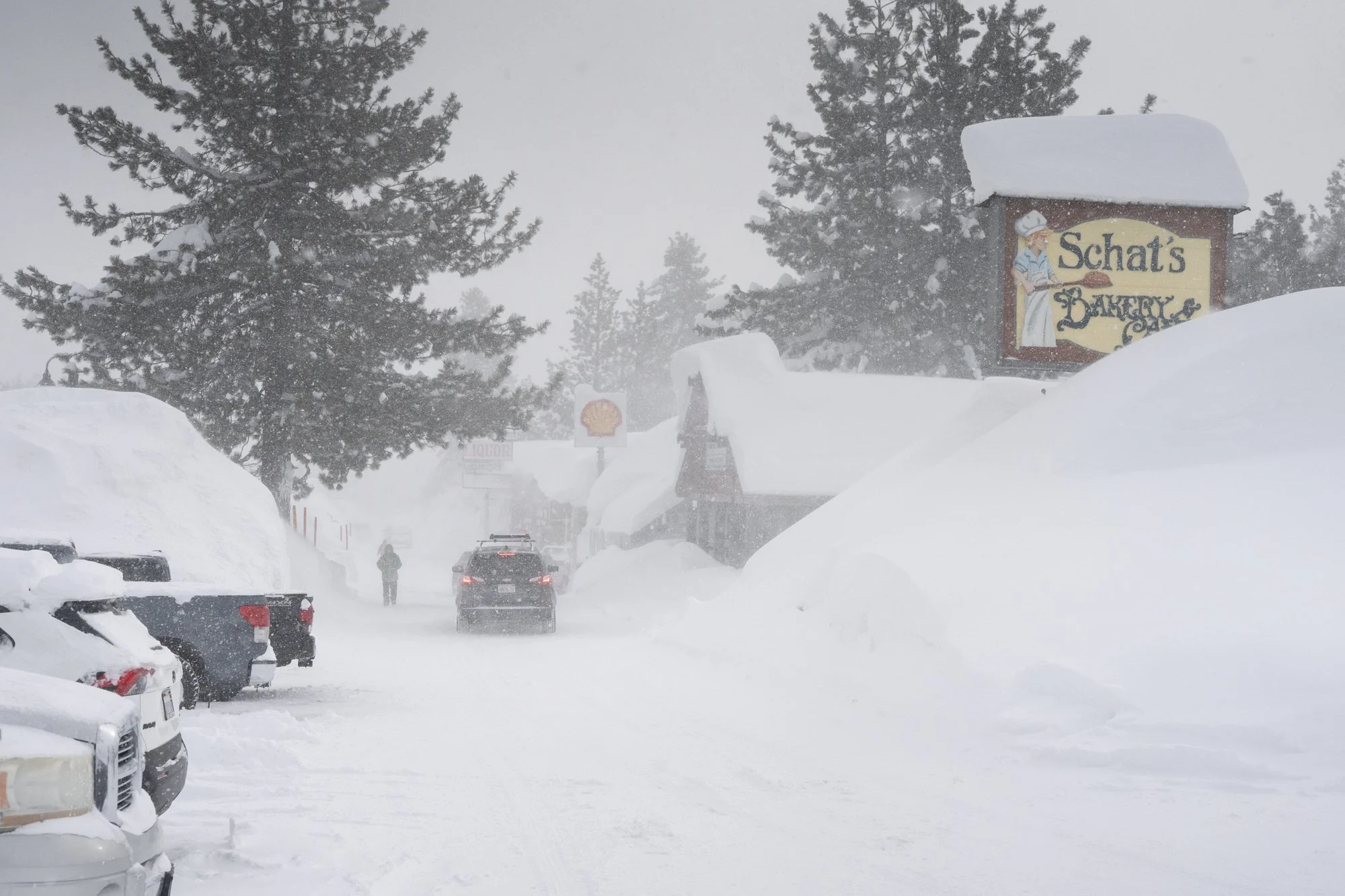
Schat's Bakery in Mammoth Lakes, California covered in snow after a massive snow storm

Schat’s Bakery in Mammoth, California covered in snow

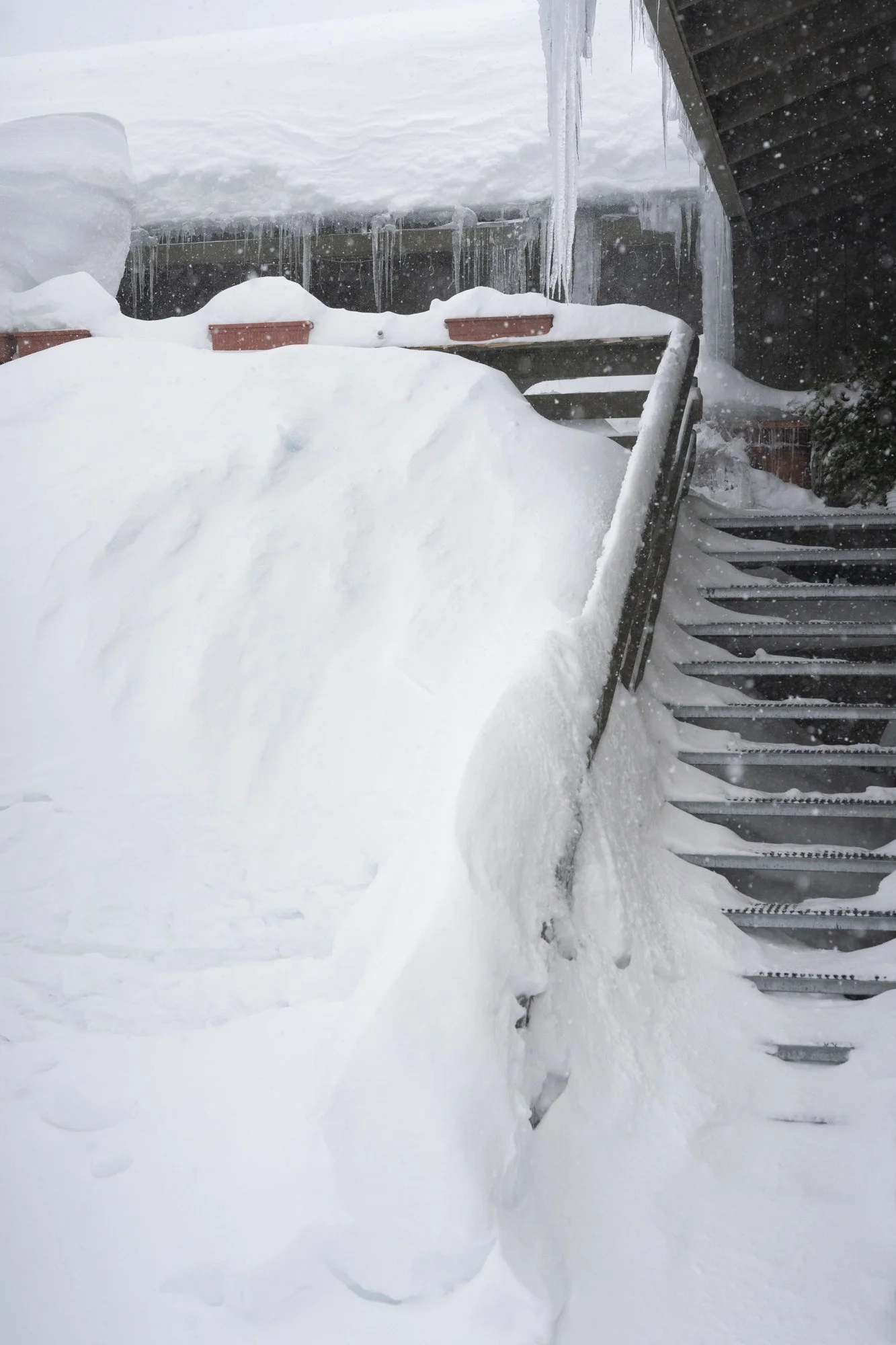
Photograph of a house covered in deep snow after a storm in Mammoth, CA

Photograph of a record breaking snow storm in Mammoth Lakes, CA

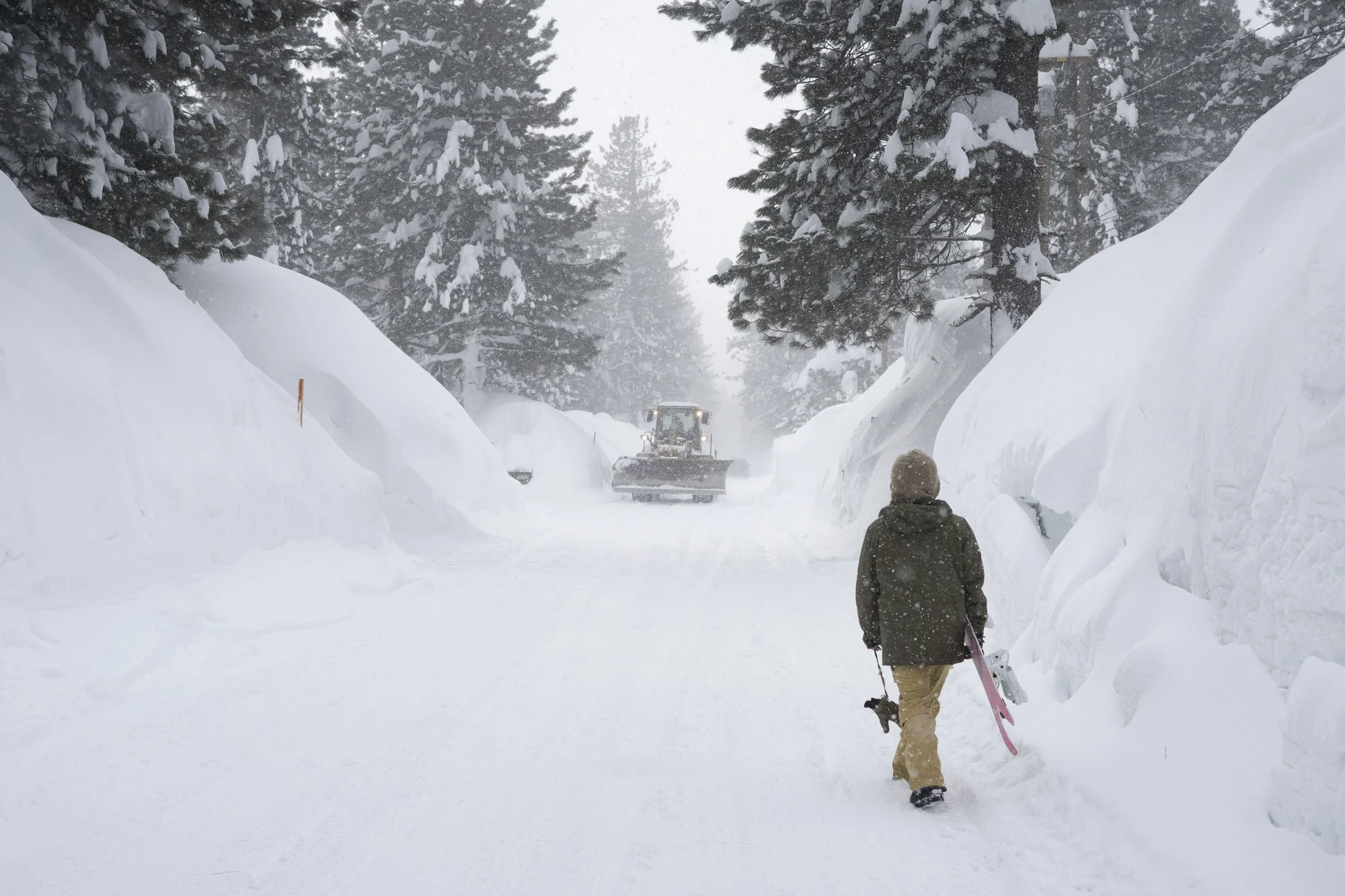
A snowboarder walks down the street after a massive winter snow storm in Mammoth Lakes, California

Streets covered in snow after a record storm in Mammoth Lakes, CA

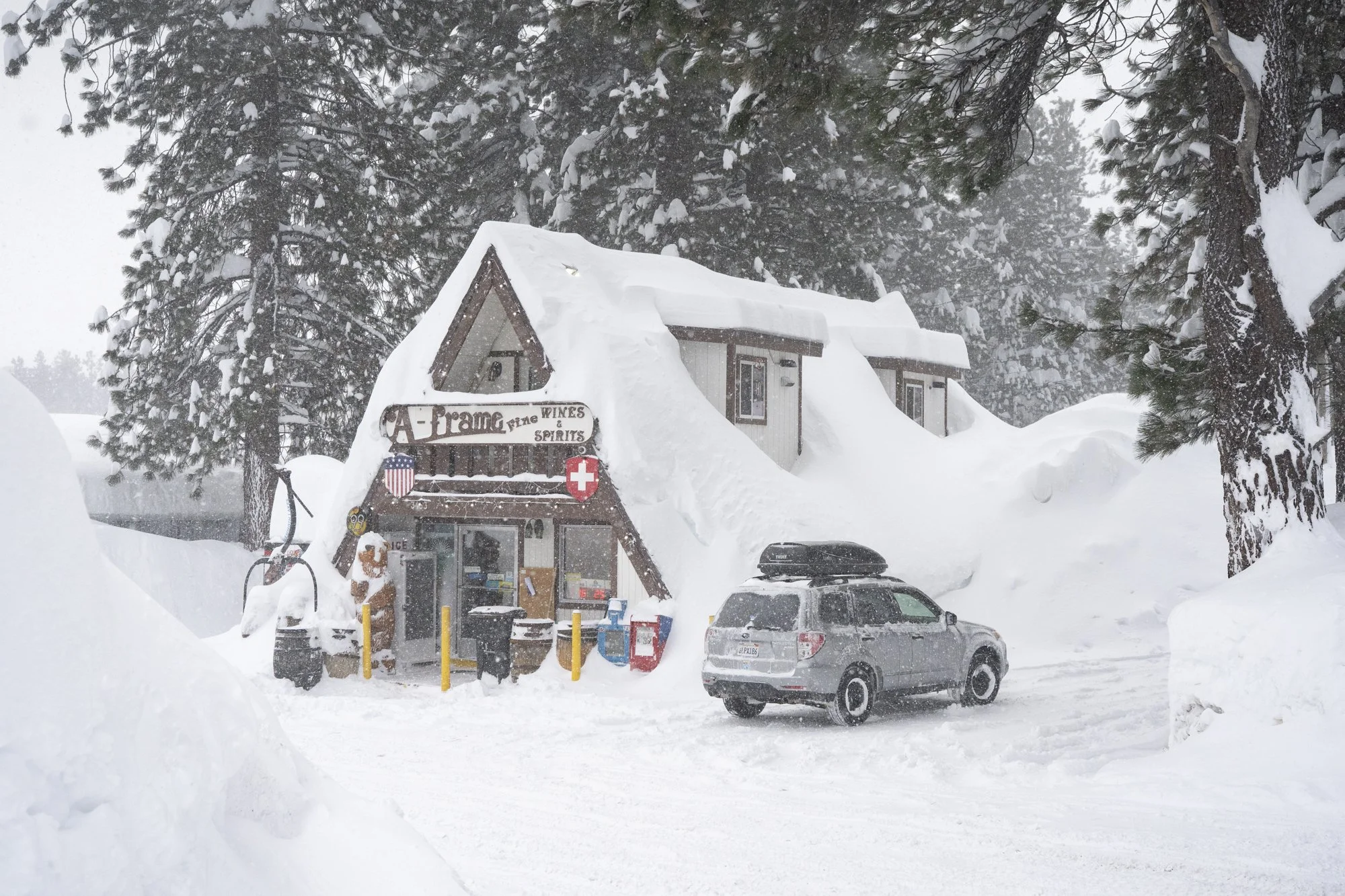
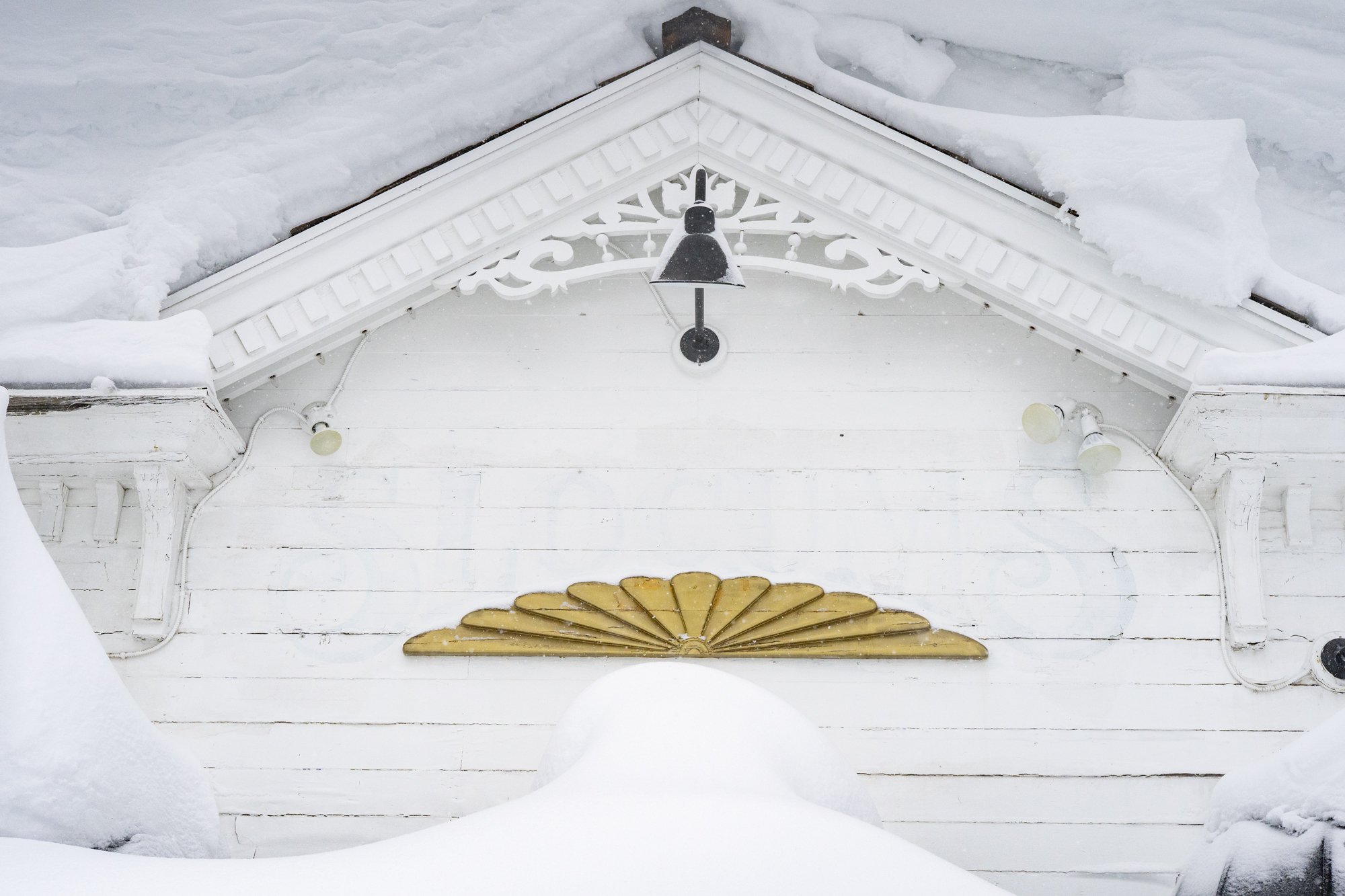
A-Frame Liquor store covered in snow after a record breaking winter storm in Mammoth Lakes, California

A-Frame Liquor covered in snow after a winter storm in Mammoth Lakes, CA

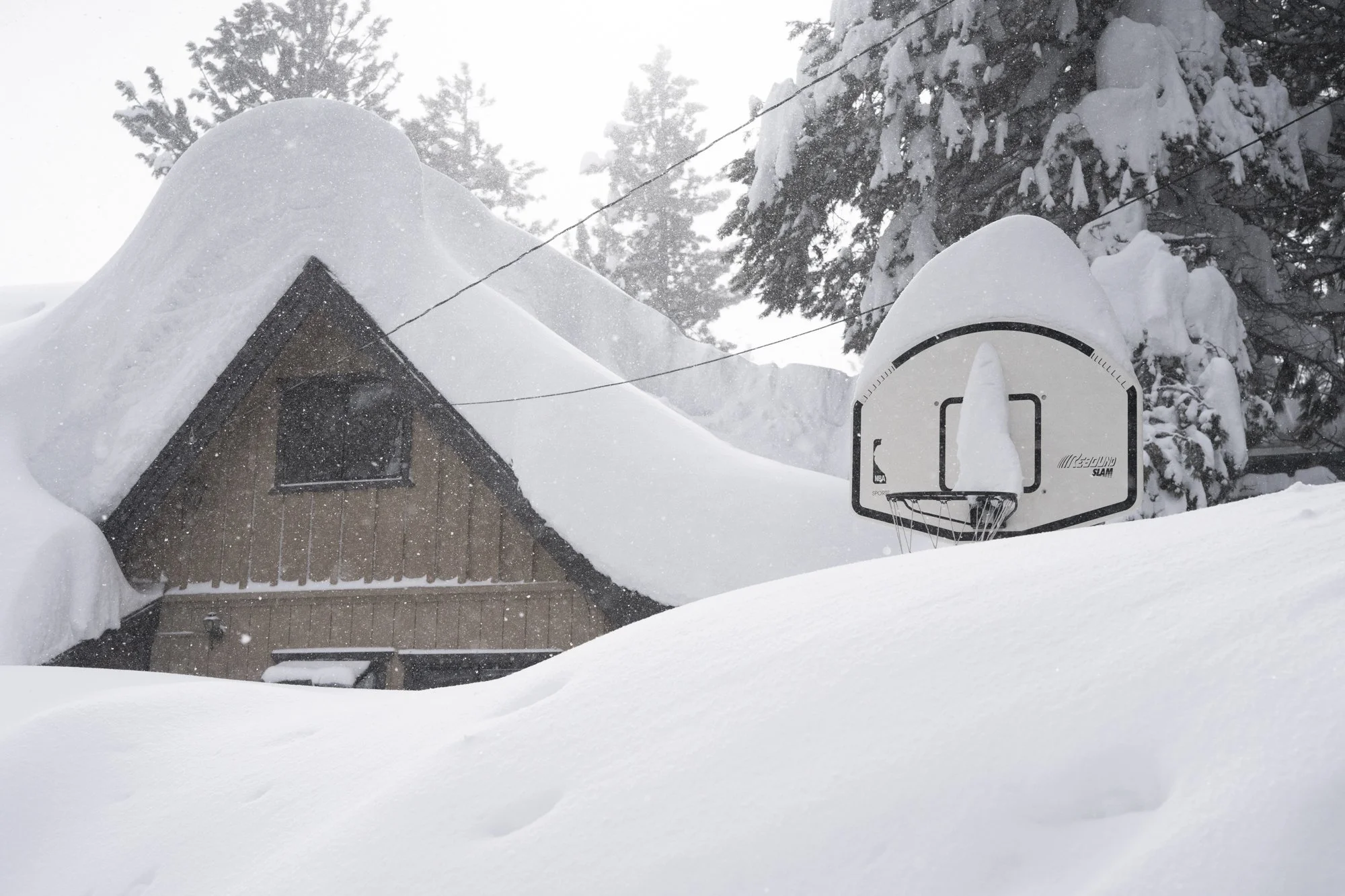
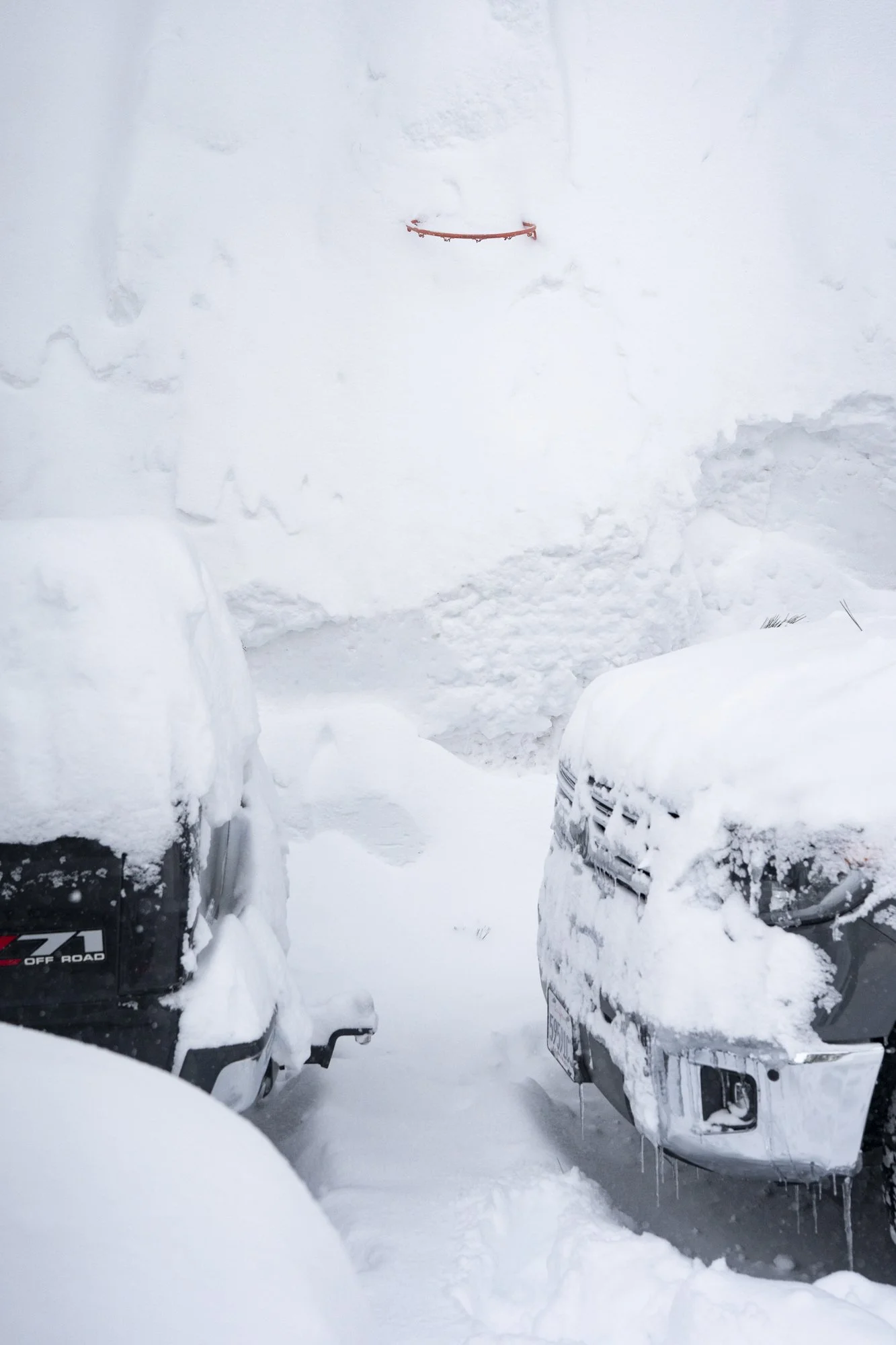
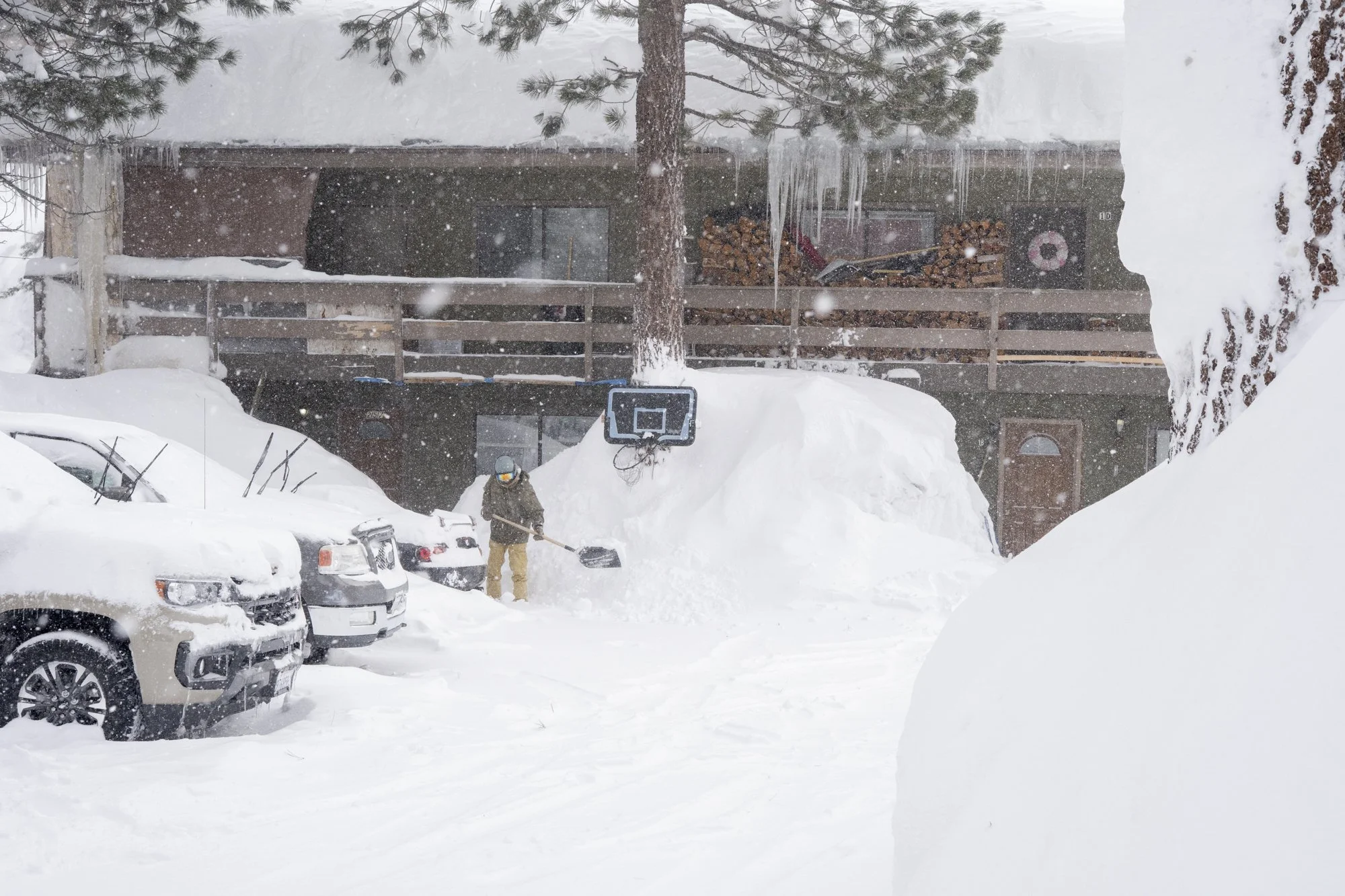
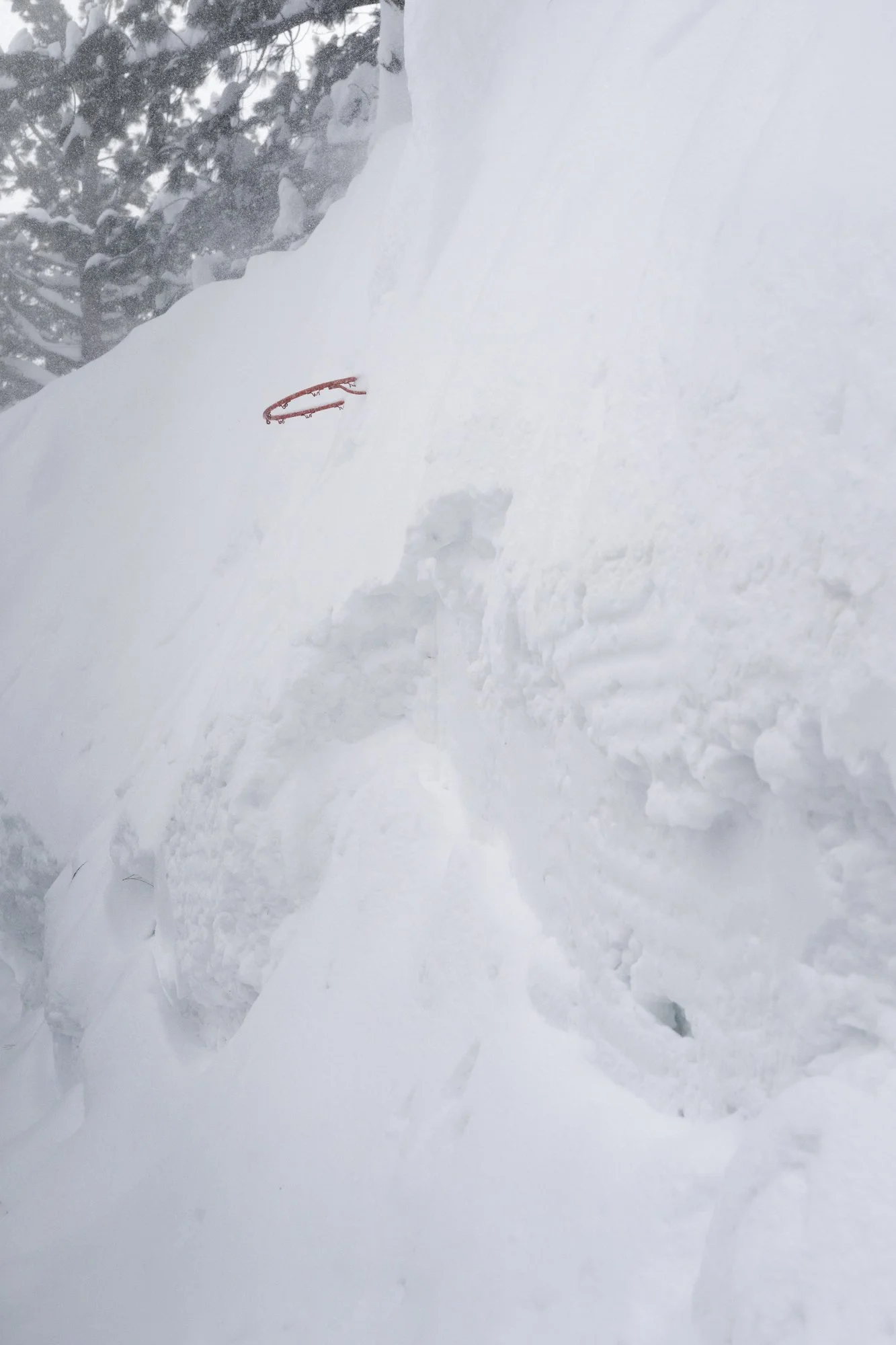
A basketball hoop completely covered in snow after a record breaking winter storm in Mammoth Lakes, California

A basketball hoop sticking out of a snow bank after a record breaking storm in Mammoth,CA

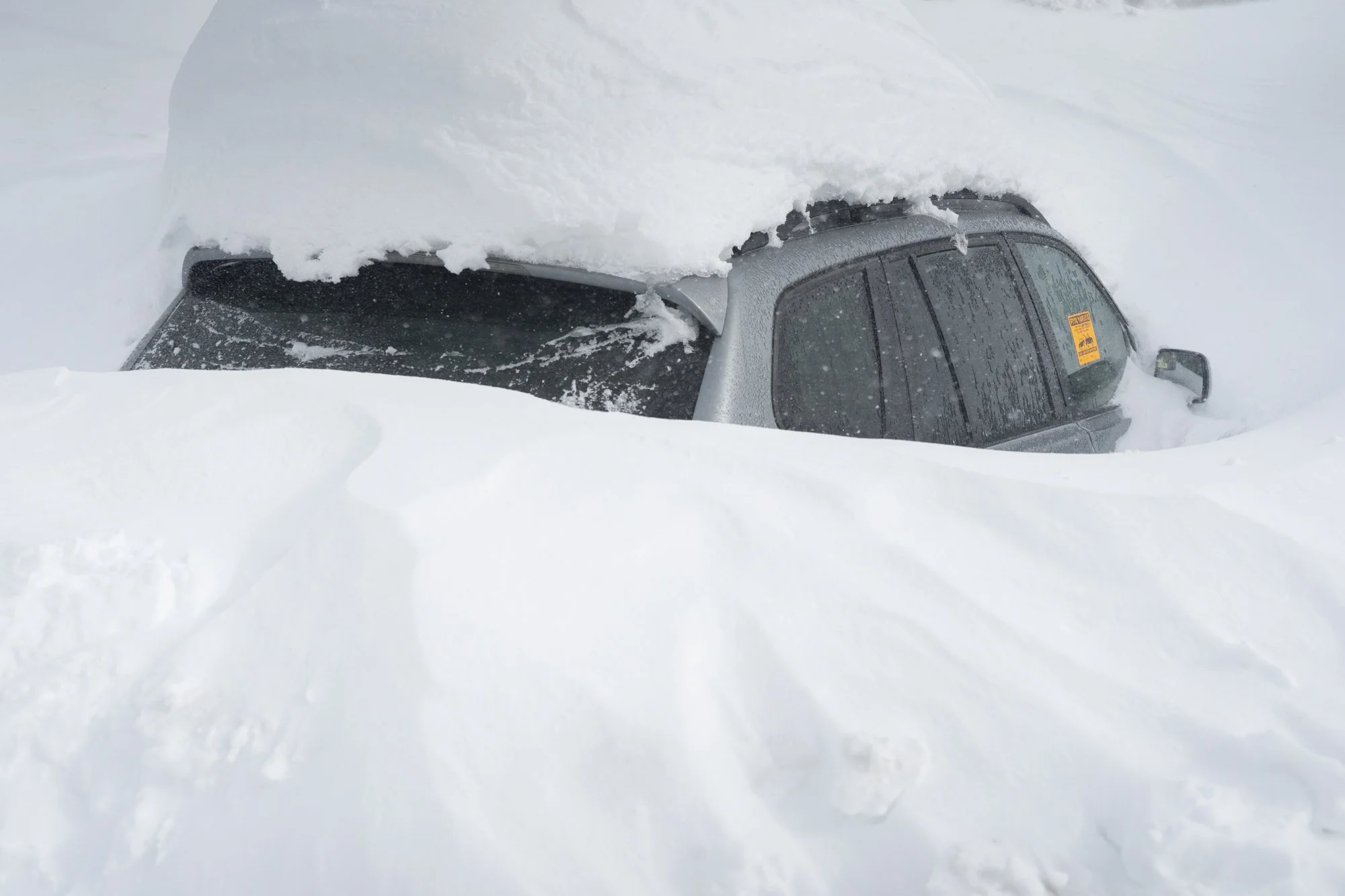
A car completely covered in snow after a massive winter storm in Mammoth Lakes, California

Photograph of a car covered in snow after a storm in Mammoth Lakes, CA

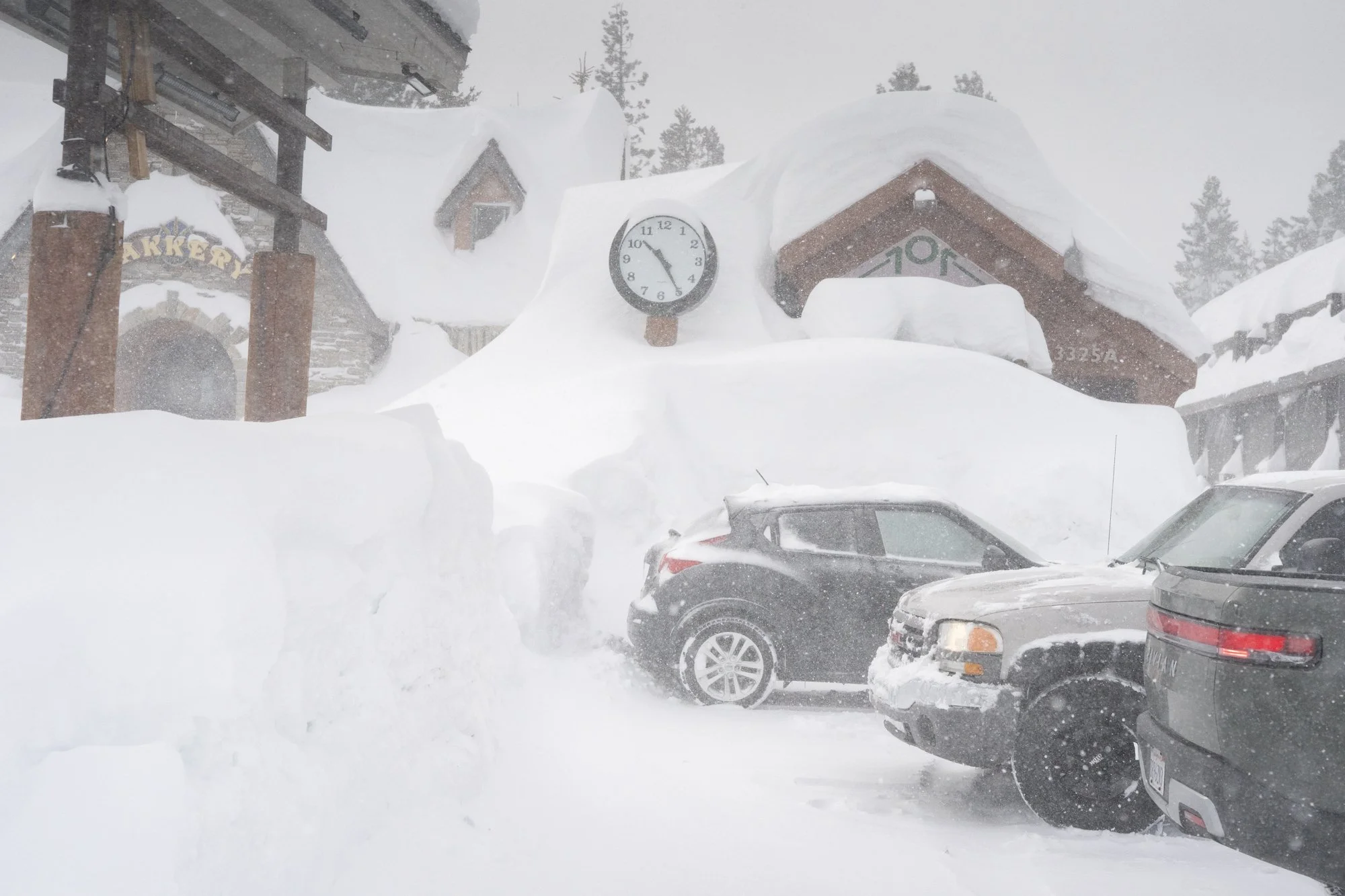
Schat's Bakery and other local businesses covered in snow after a massive winter storm in Mammoth Lakes, California

Snow storm in Sierra Nevada Mountains in California

Buildings covered in snow after a record breaking winter storm in Mammoth Lakes, California

Photograph of a Mammoth California restaurant covered in snow

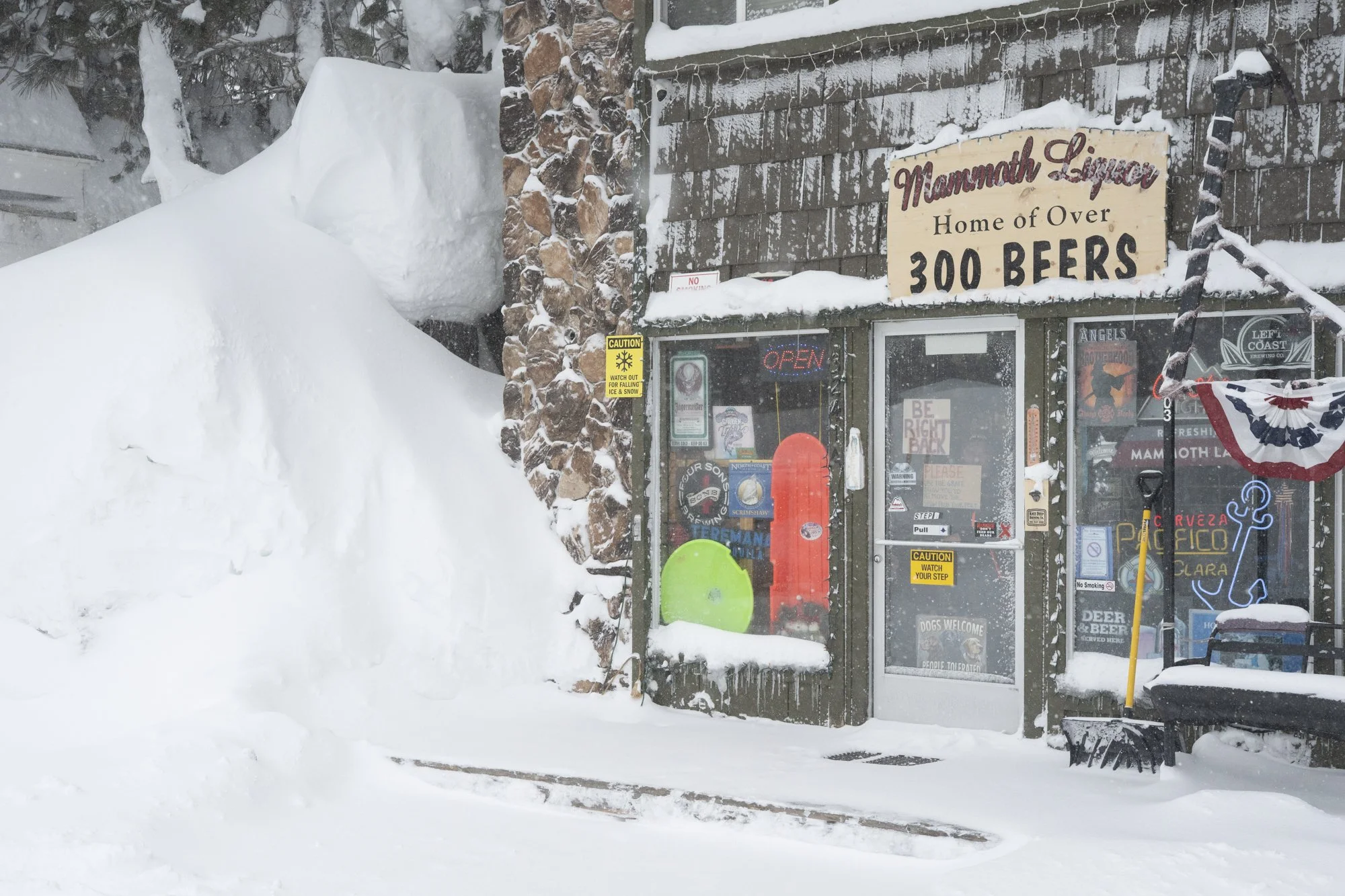
Mammoth Liquor Store covered in snow after a record breaking storm in Mammoth Lakes, California

Photograph of Mammoth Liquor covered in snow after a record breaking storm

San Francisco Photography

Street Photography - San Francisco

Candid Moments From The City By The Bay

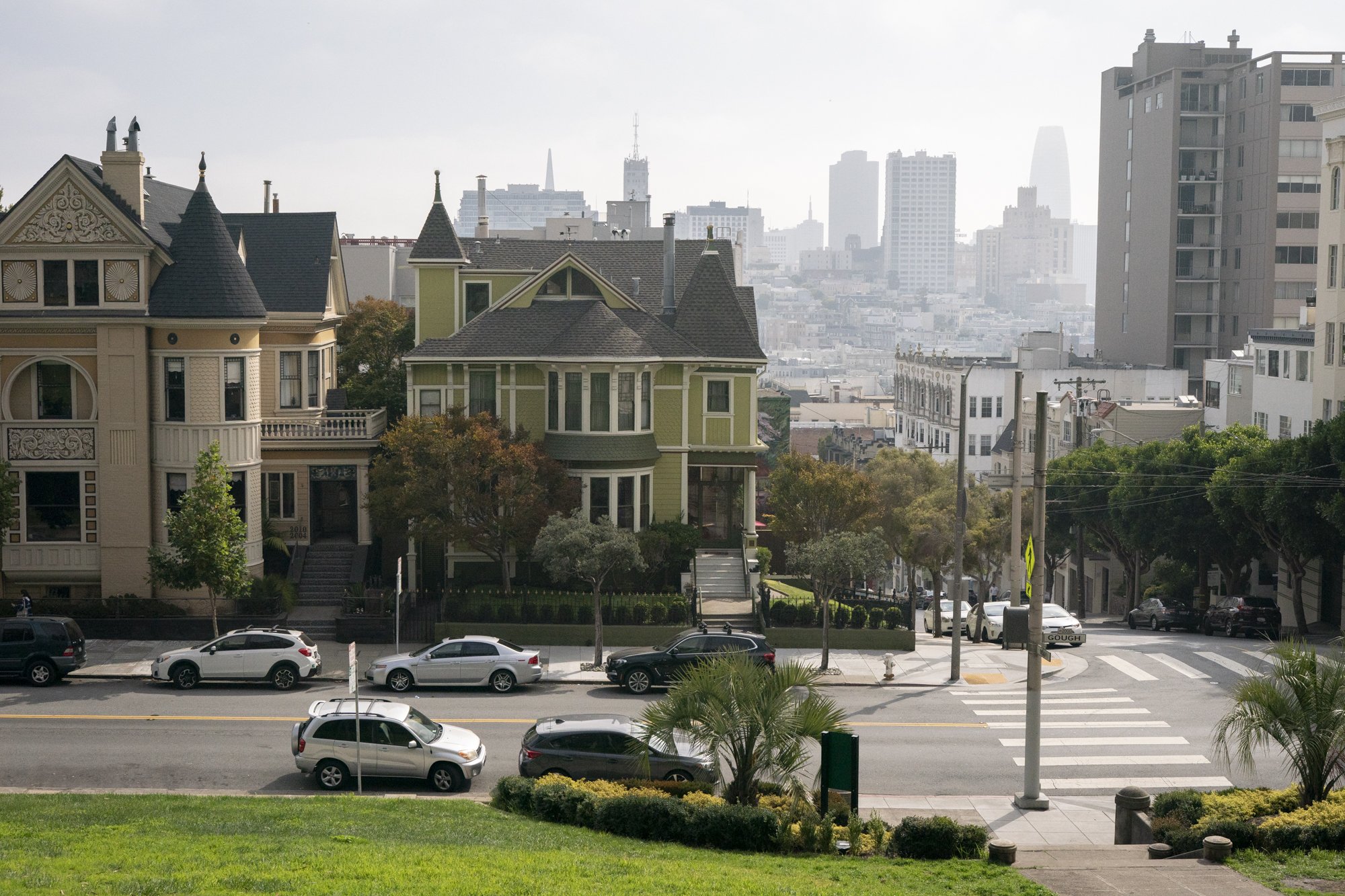
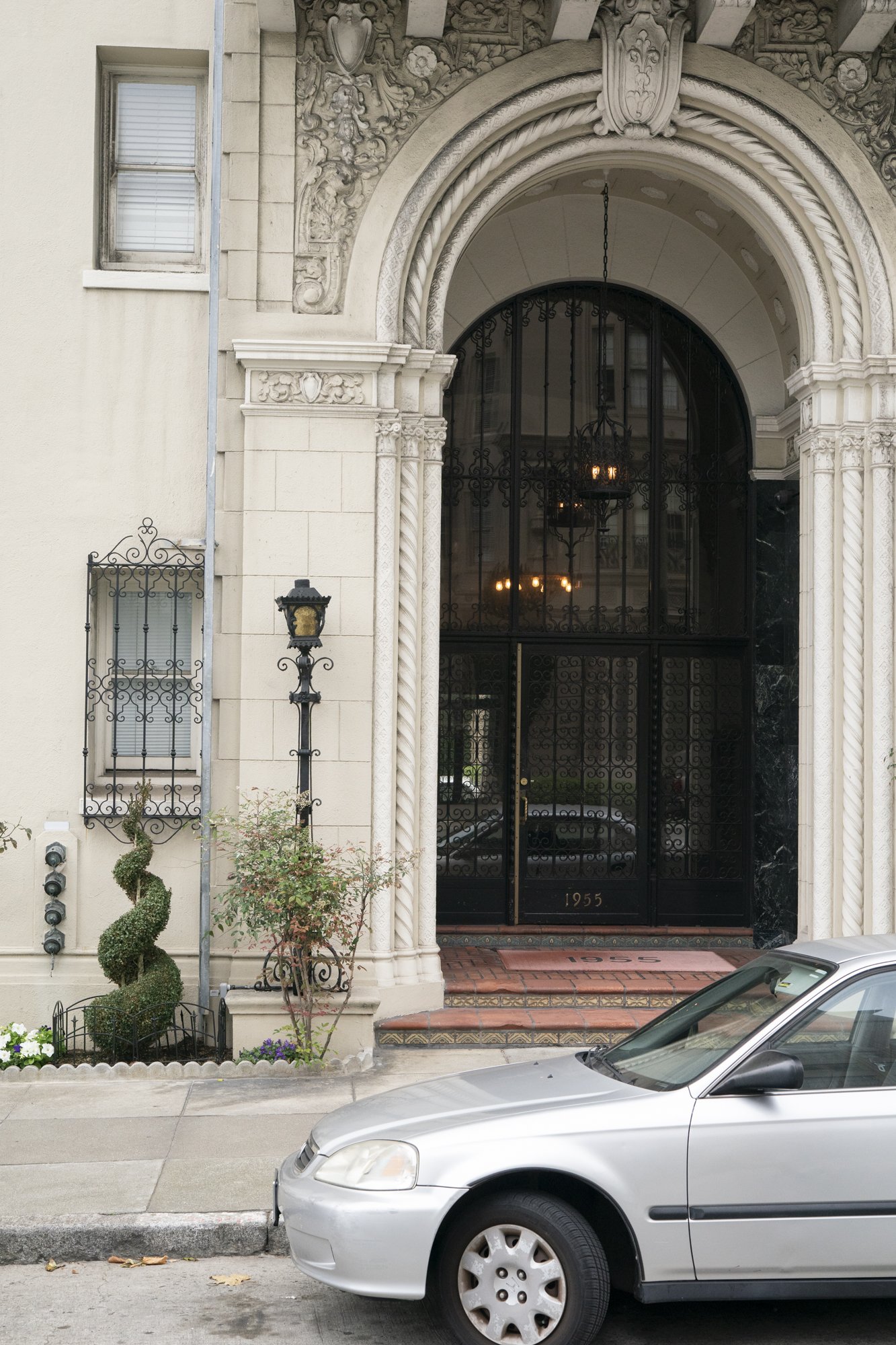
Had another commercial shoot in San Francisco a while ago and planned a little extra time to play around in the streets. It’s always a fun way to relax and grow as a photographer. No idea what the bigger picture is for this ongoing series, but that doesn’t matter. Even if it’s just a personal documentation of the city, that’s ok too. This particular day got interesting about an hour in to the walk, when a women pulled up in her car and asked what I was doing. She didn’t like my simple answer and continued to disagree with everything that came after. So I went on my way, only to have her creep behind me for an hour, watching from a distance. At one point our paths crossed closely and her window was down, so I asked if she was having fun. She replied with an entitled grin as if she had cracked the case of the century, saying “I know what you’re after, mailboxes and garages”. I just kept walking. Eventually she couldn’t follow any longer after my path went through a park. People are funny. Did I handle the situation properly? Probably not. If there was a business card in my pocket it would have went immediately to her, but there was not. And her attitude was such shit, that it seemed like a losing battle to convince her of anything other than what she already had in her head. Moral of the story: always carry a business card to show Karen??

View The Full Gallery of San Francisco Street Photography

Street photography from the streets and neighborhoods of San Francisco, California by Rob Hammer

San Francisco street photography

San Francisco street photography

San Francisco street photography

San Francisco Street Photography

San Francisco photography

San Francisco Street Photography

San Francisco street photography

Street Photography in San Francisco, California

Street photography - San Francisco, CA

Photography - San Francisco, California - Street Photography

San Francisco, CA

Street Photography - San Francisco, California

San Francisco, CA

Street Photography - San Francisco, California

Street Photography - San Francisco, CA

Street Photography - San Francisco, California

San Francisco street photography

San Francisco Street Photography

Street photograph of a San Francisco neighborhood

Street Photography - San Francisco, California

San Francisco, CA

San Francisco Street Photography

Photo of a beautiful home in San Francisco

Street Photography San Francisco, California

San Francisco street photography

San Diego Botanical Gardens

Lightscape - San Diego Botanical Gardens

Christmas Light Show - Photography

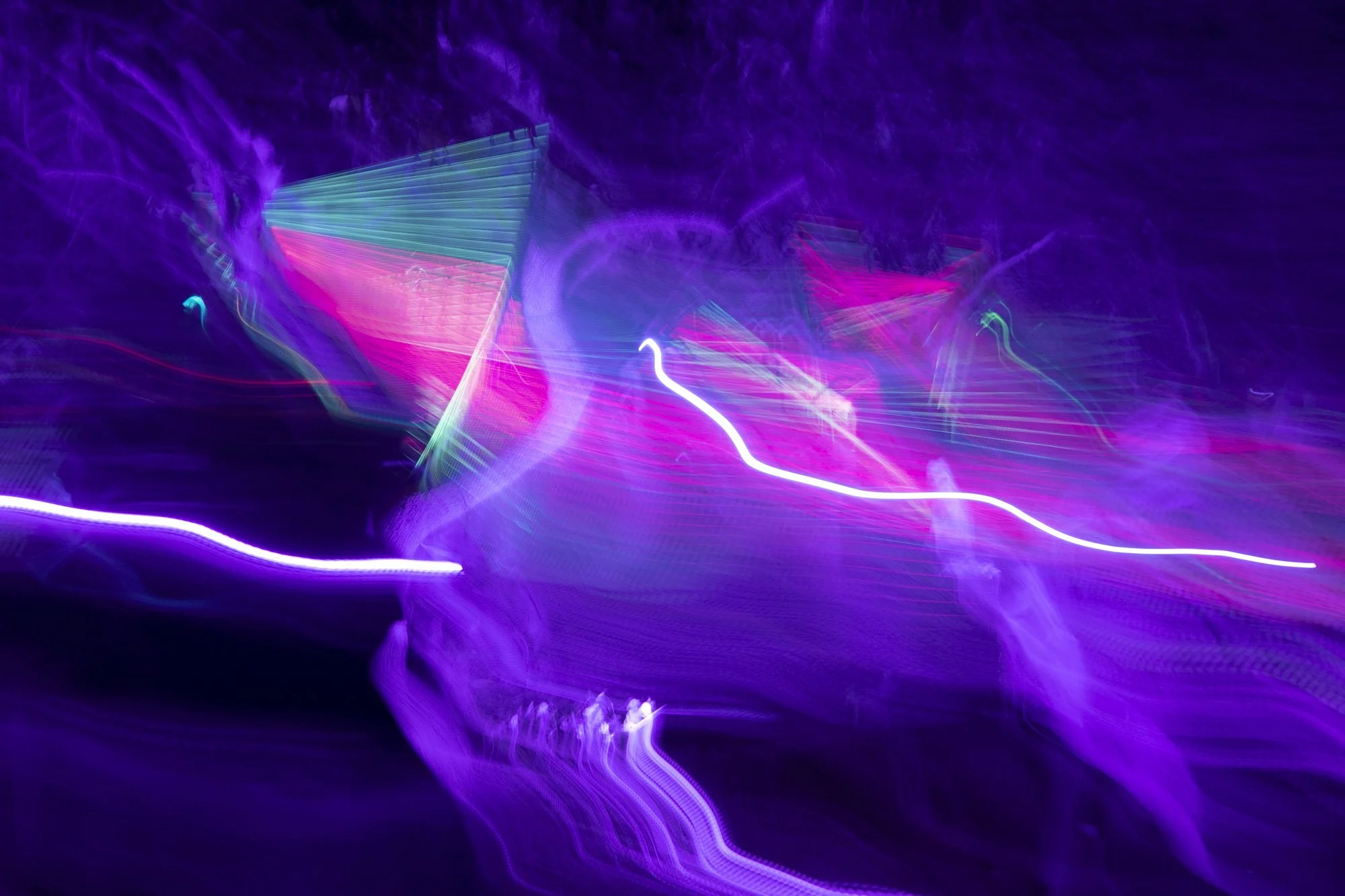
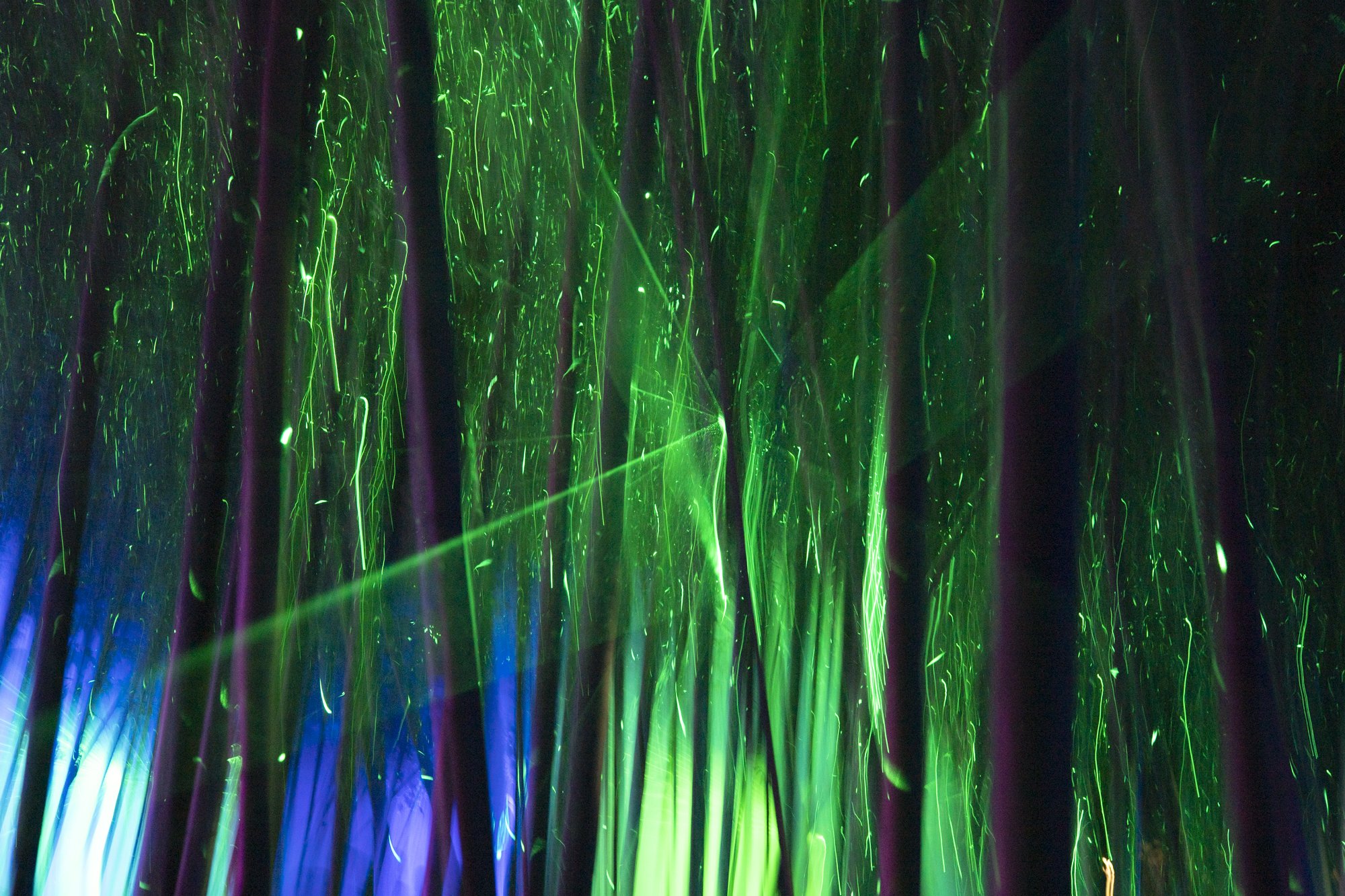
The last few weeks haven’t seen much action with the camera, unfortunately. Instead the days have been filled with end of the year business nonsense that I don’t enjoy. Going for any amount of time without making images causes a bit of uneasiness, so I brought the camera for a walk through Lightscapes at the San Diego Botanical Gardens, and played around with some hand held long exposures. It confused a number of workers that we would actually walk to the event, instead of driving.

Lightscapes - San Diego Botanical Gardens
Holiday Light Show - San Diego, California
Lightscape - San Diego Botanical Gardens - Encinitas - Photos
Christmas Light Show - San Diego
Long exposure abstract light trail photographs
Lightscape - San Diego Botanical Gardens - Encinitas - Photos

The Open Road - Photography

American Road Trip Photography

There’s been a hold up with the delivery of Roadside Meditations from Germany, so the release date is looking more like early to mid December. Instead of using this blog post to vent, it seems like a better opportunity to share some new work from the series. They were made over the past two months during two separate road trips to Wyoming and Arizona while working on the new cowboy series.

Looking at these photographs now, there is certainly a calming meditative nature to them. The thing that stands out though, is they aren’t something I could have or would have made 6 months or a year ago. That’s called progress, isn’t it? They aren’t landscapes. So what are they? Not sure you really need to classify them at all. If they are pleasant to look, provide a documentation, or education, that’s what’s important.

Will keep you all posted with updates on the new book as soon as possible.

Utah fine art photography. A beautiful landscape in a rural part of Utah.

Utah

Fine art landscape photos made in a beautiful remote section of Utah, USA.

Utah

Utah Fine art landscape photos by Rob Hammer

Utah

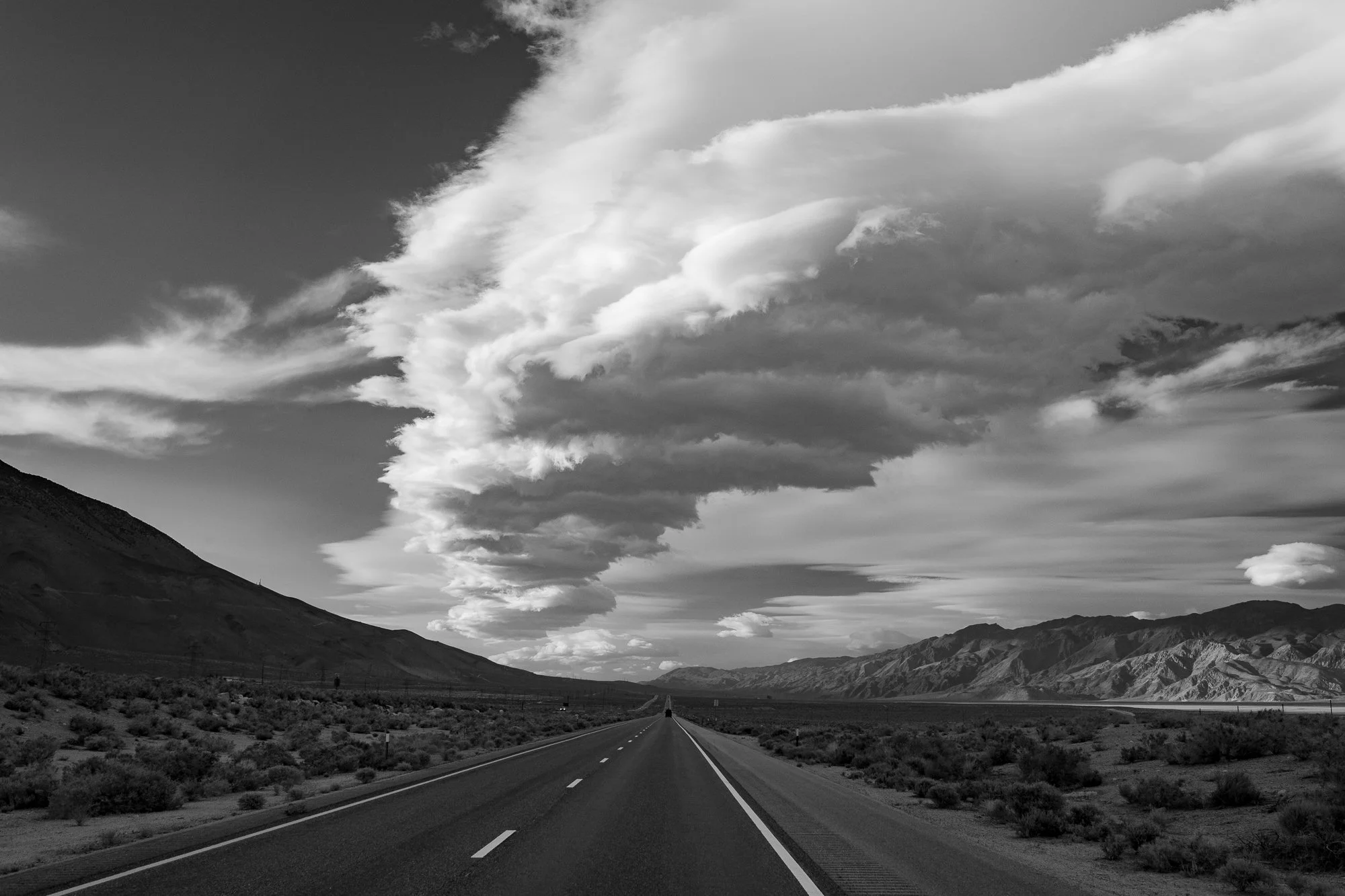
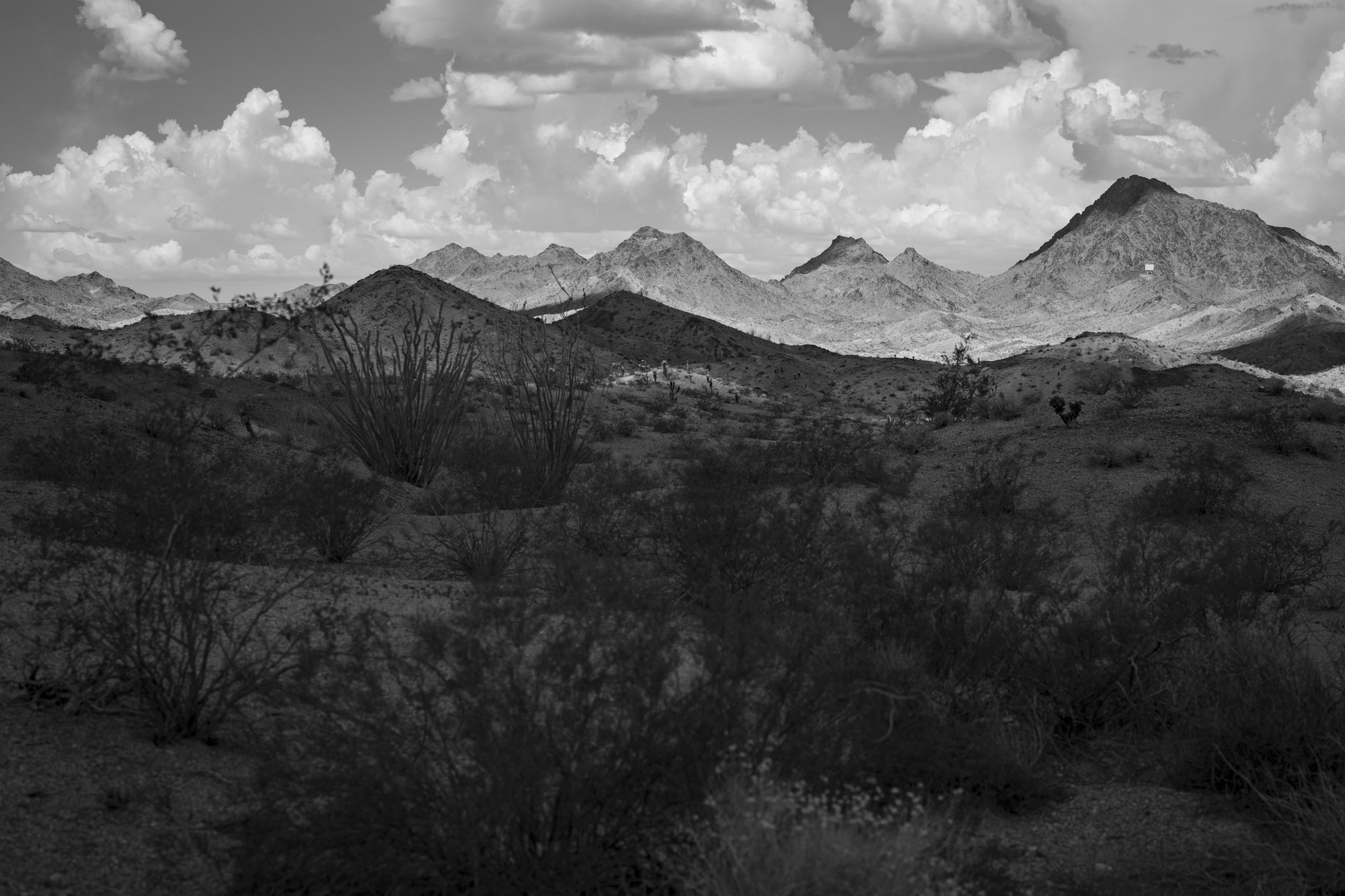
Fine art photo of the California desert. Black and white desert photo.

California

California Desert Road Trip

Road Trip Photography - America - Travel - California Desert

It’s interesting how certain places can grow on you that at first didn’t seem so appealing. And light seems to be one of the biggest determining factors of that in my opinion. It doesn’t have be traditionally beautiful light either. It just has to be interesting light. Or, maybe light that you understand how to work with? That knowledge is part of growing as a photographer. Most people focus so much on that “perfect” light that occurs during a sunrise or sunset, but beautiful images can be made at all times of day if you know how to work under different conditions. Even midday sun can transform a scene from completely forgettable to “I can’t wait to come back here”.

Click here to shop the Roadside Meditations book

Contact me directly about prints of my American road trip photography for your home, office, or commercial space - rob@robhammerphotography

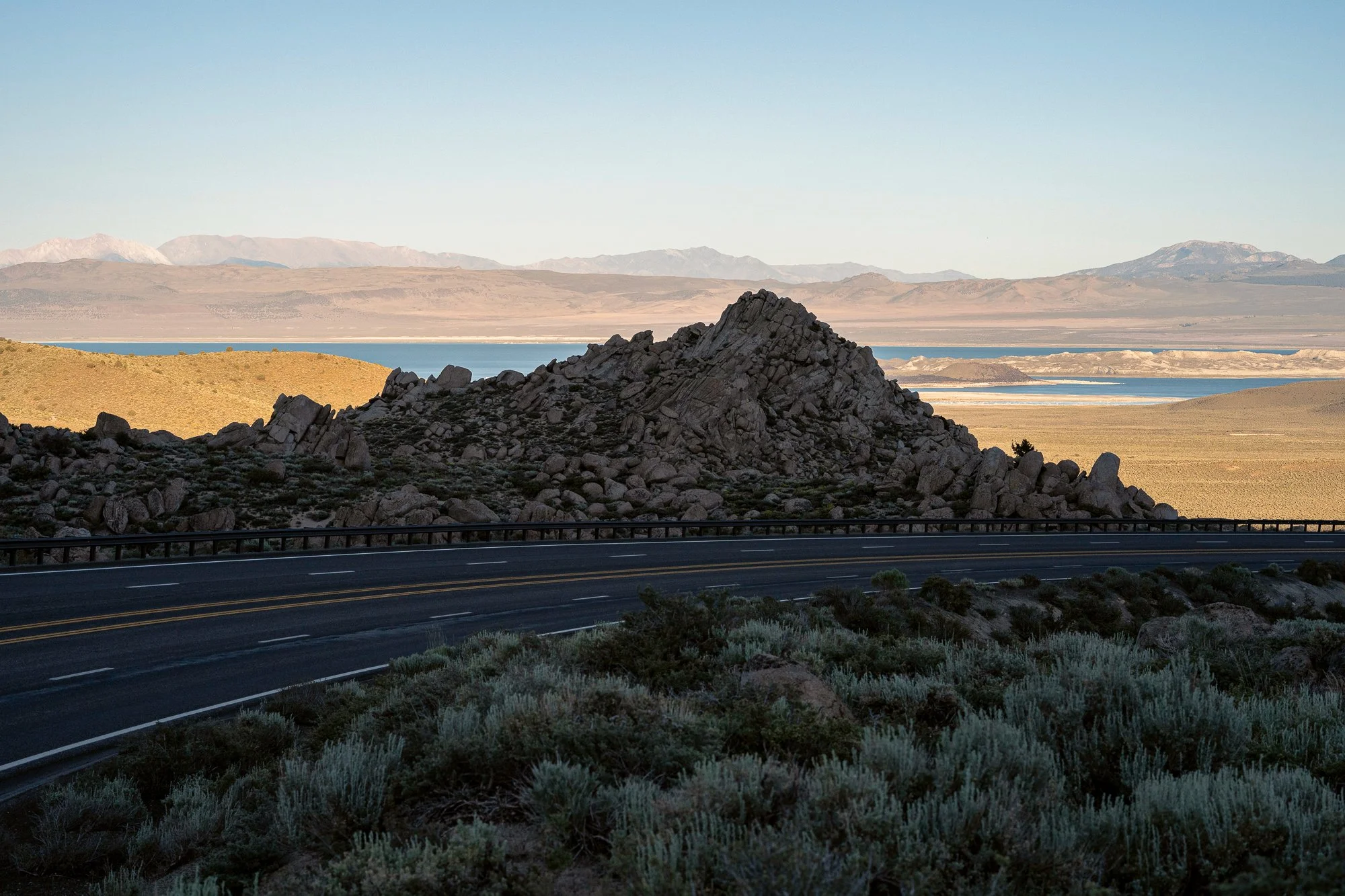
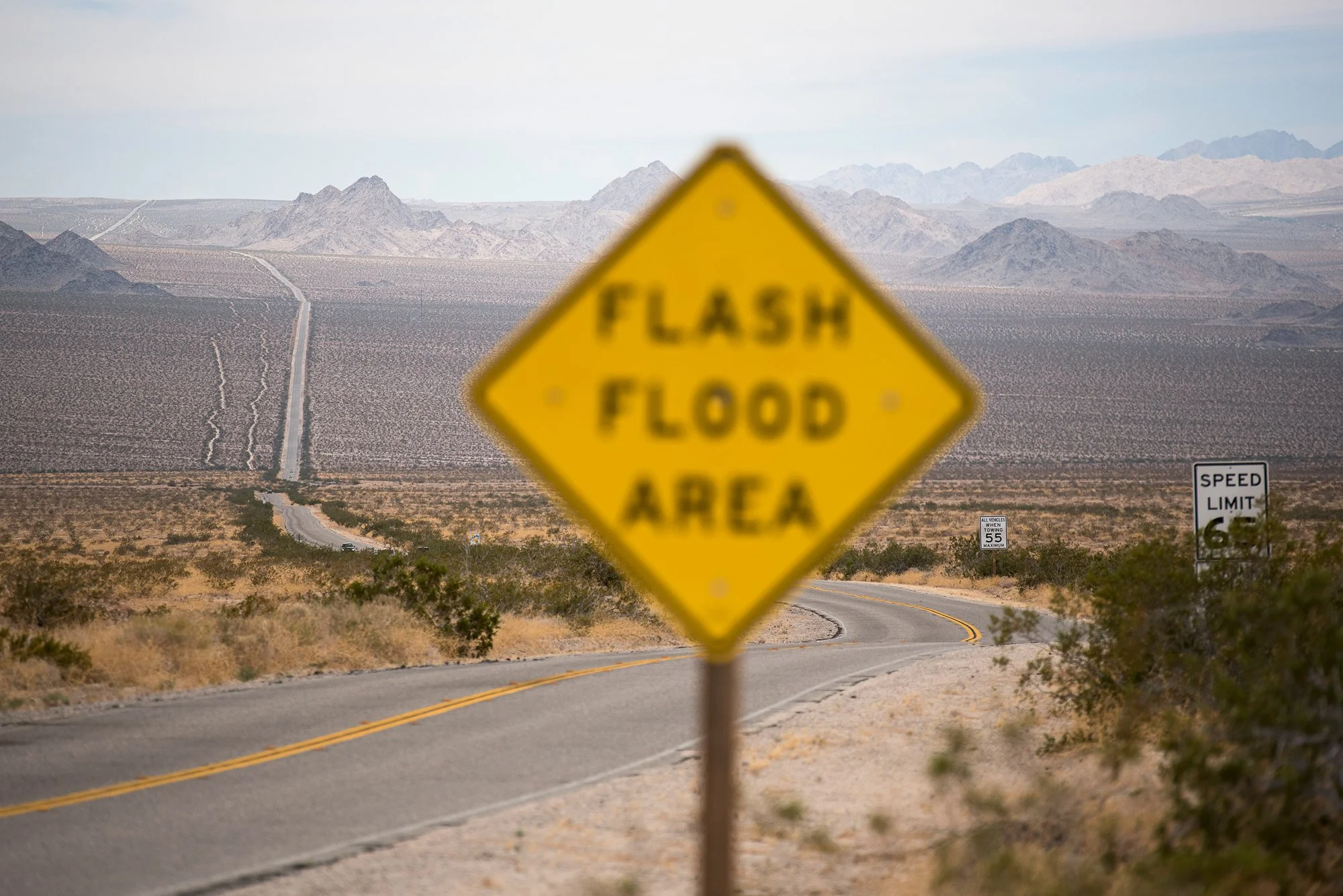
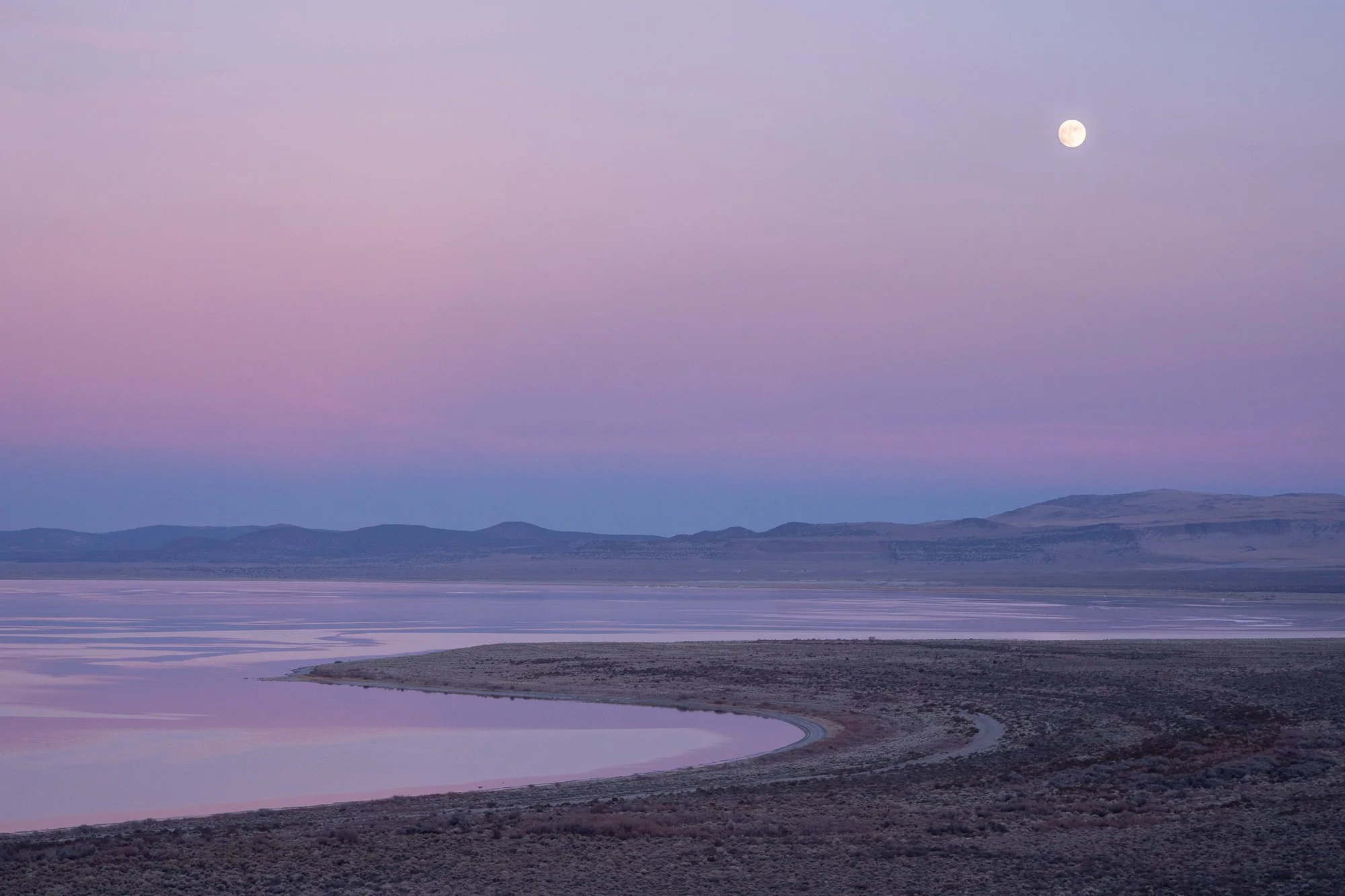
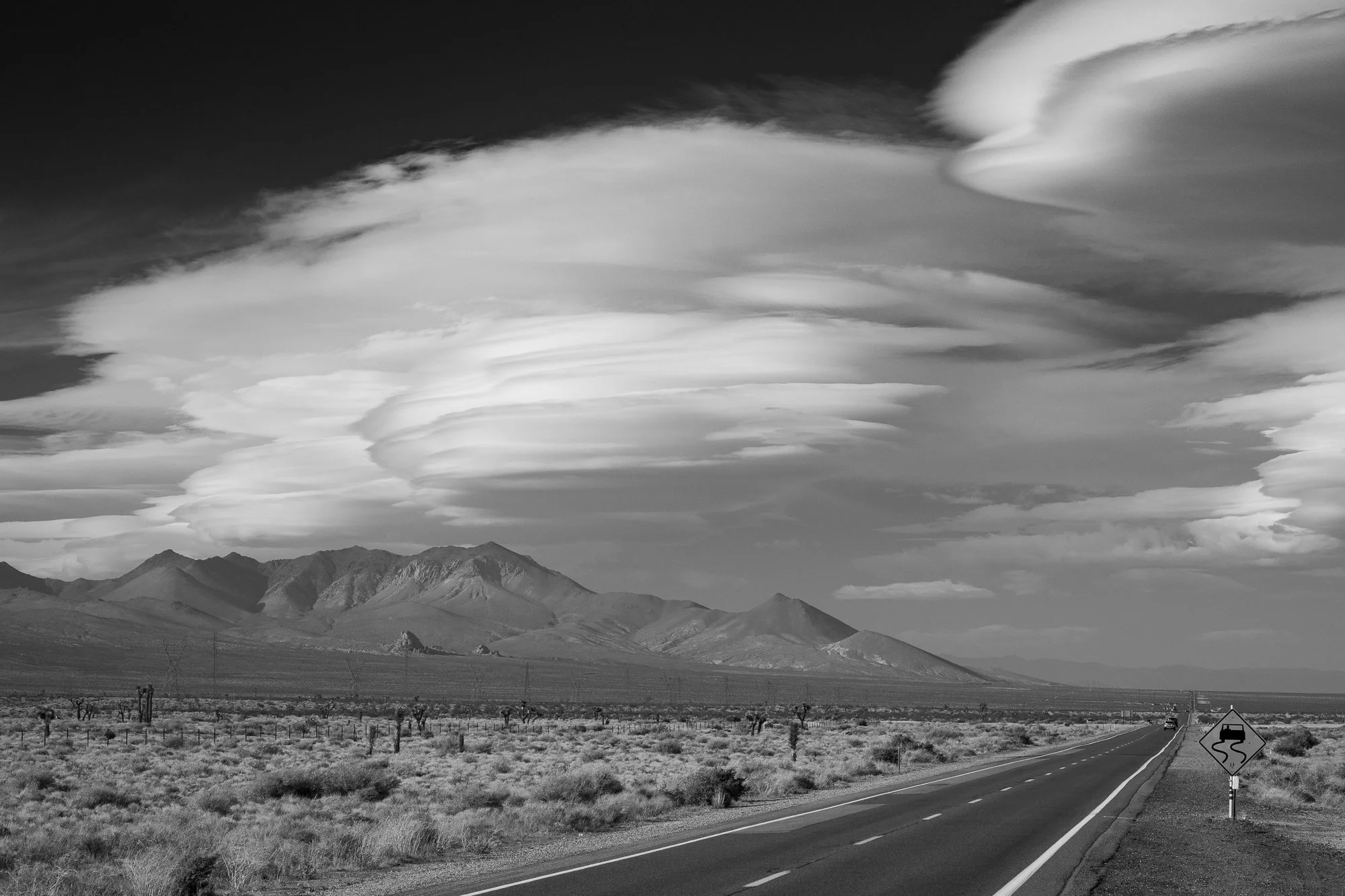
Mountains in the California desert along Highway 395. American road trip photography by Rob Hammer.

American road trip photography

American Photography. Back roads near the desert town of Mojave, California. American road trip photography.

California desert - Mojave, CA

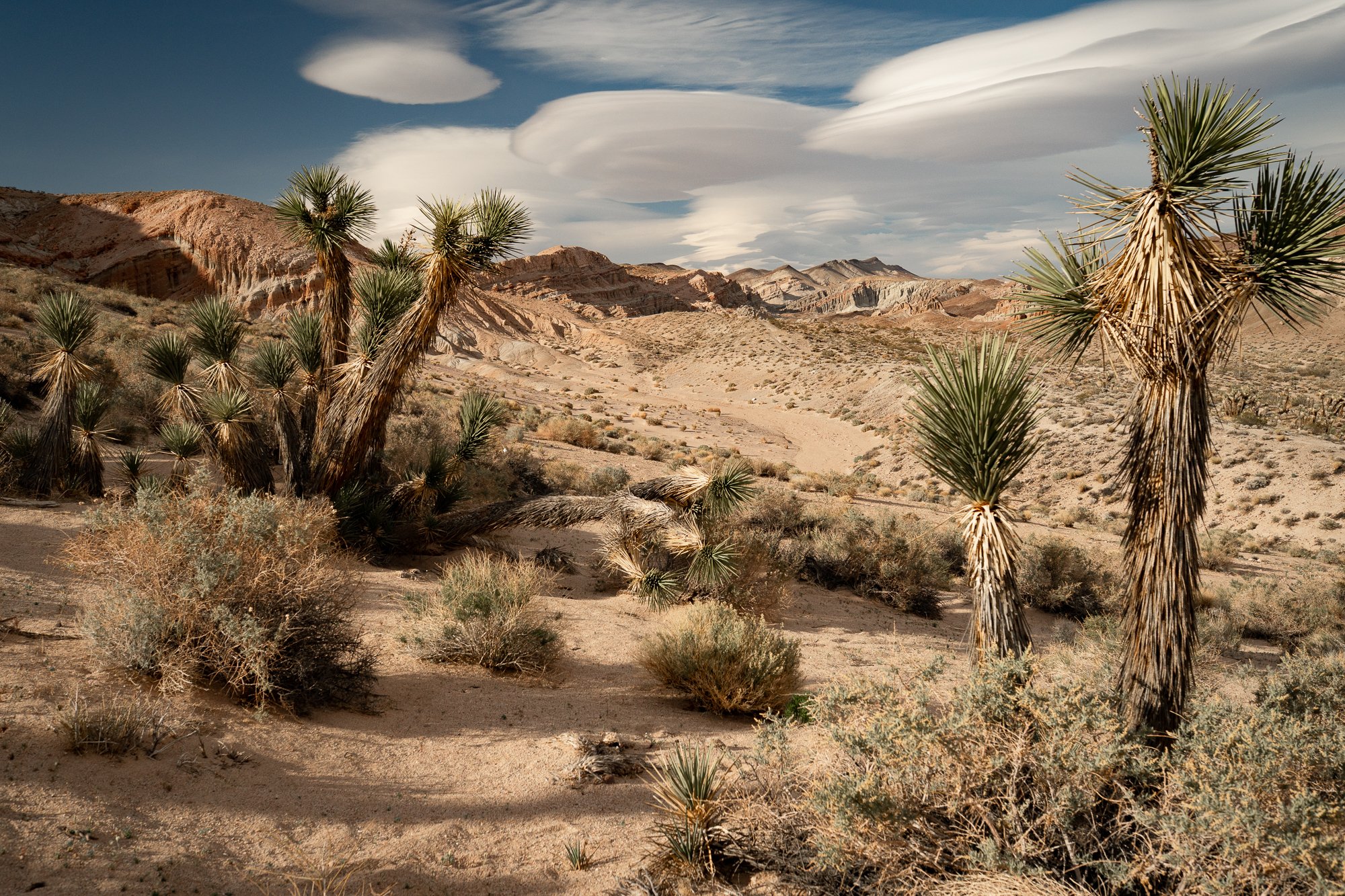
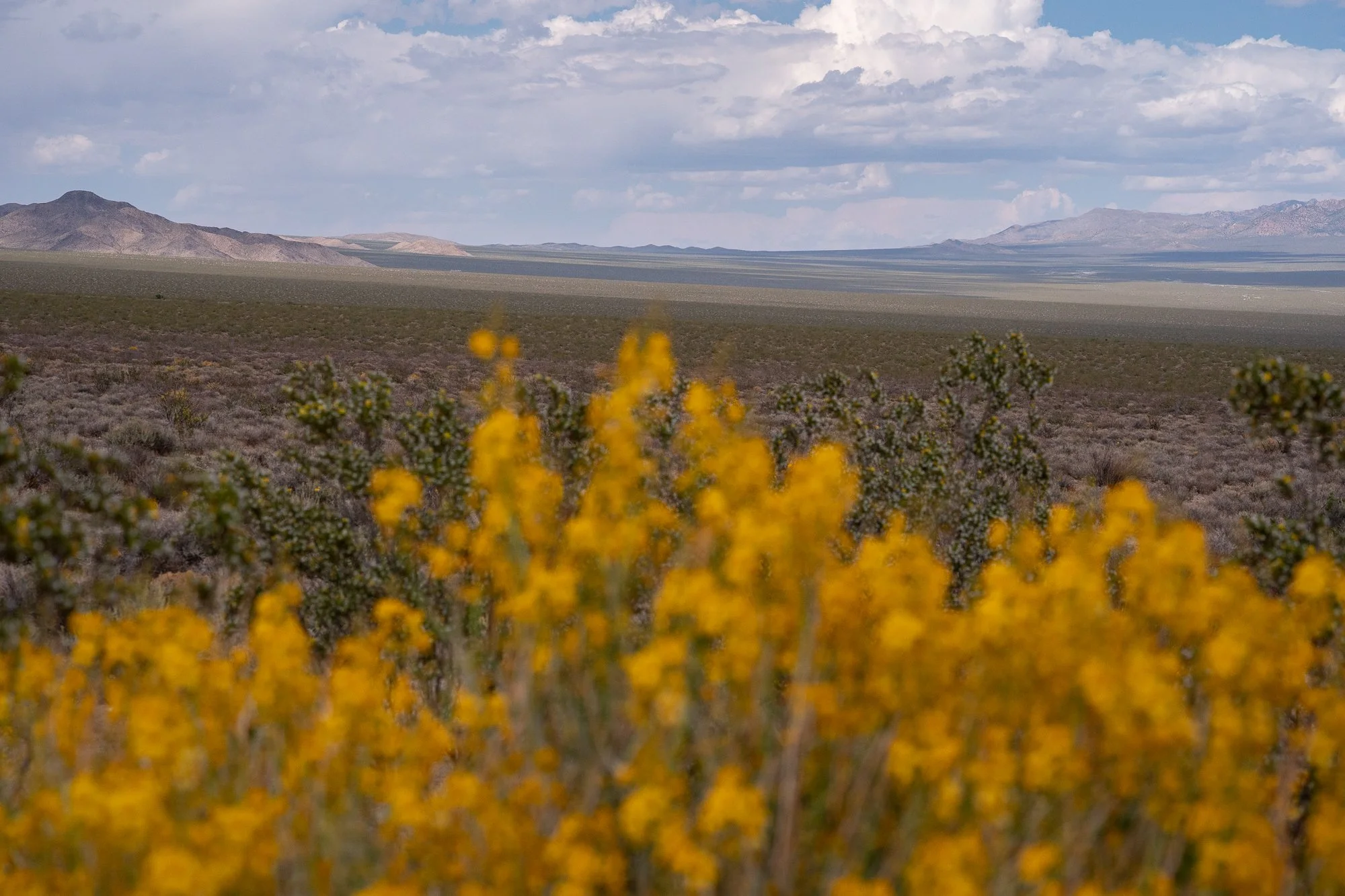
Wall art  of Joshua Trees growing in the California desert. Desert vibes photo.

Mojave Desert

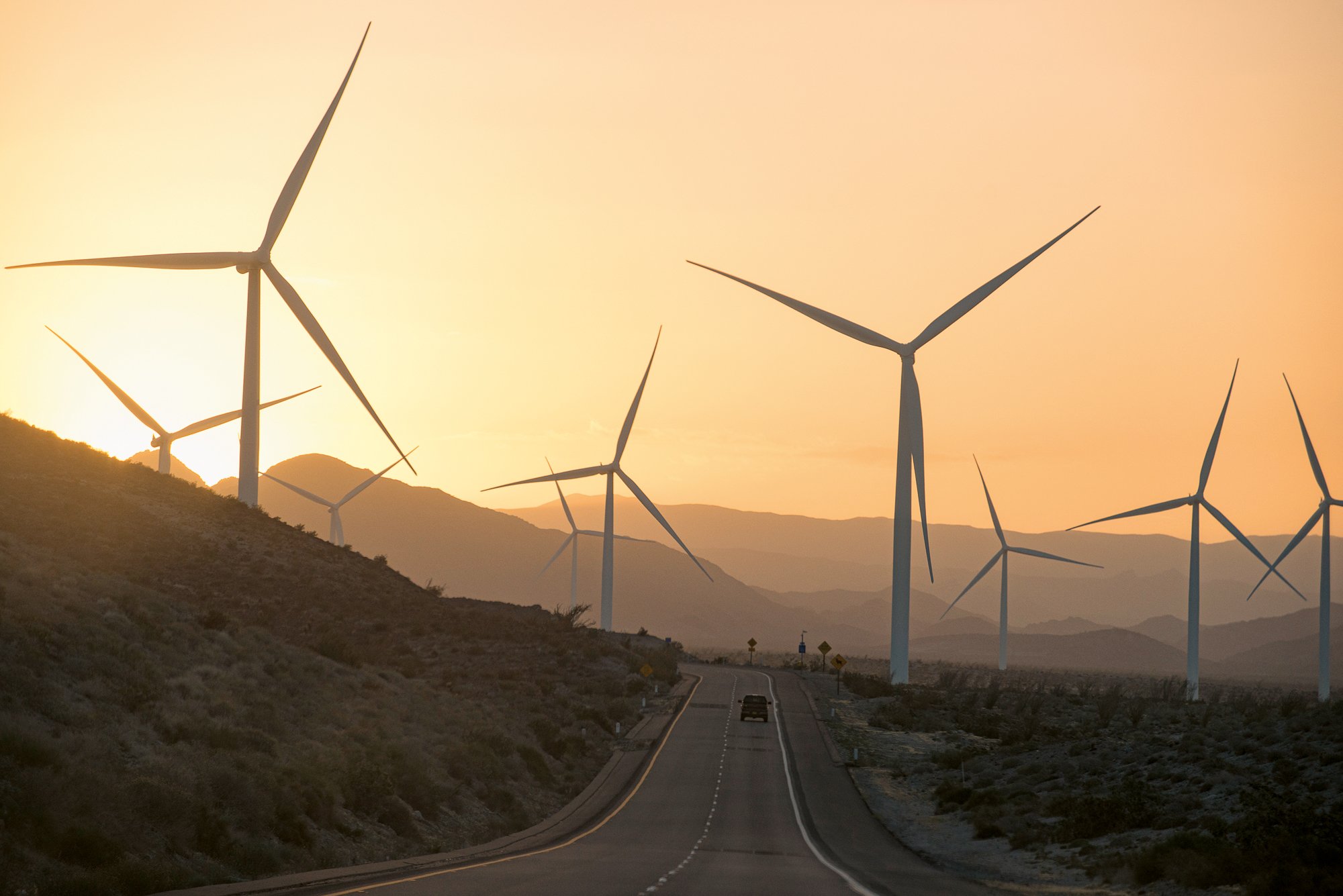
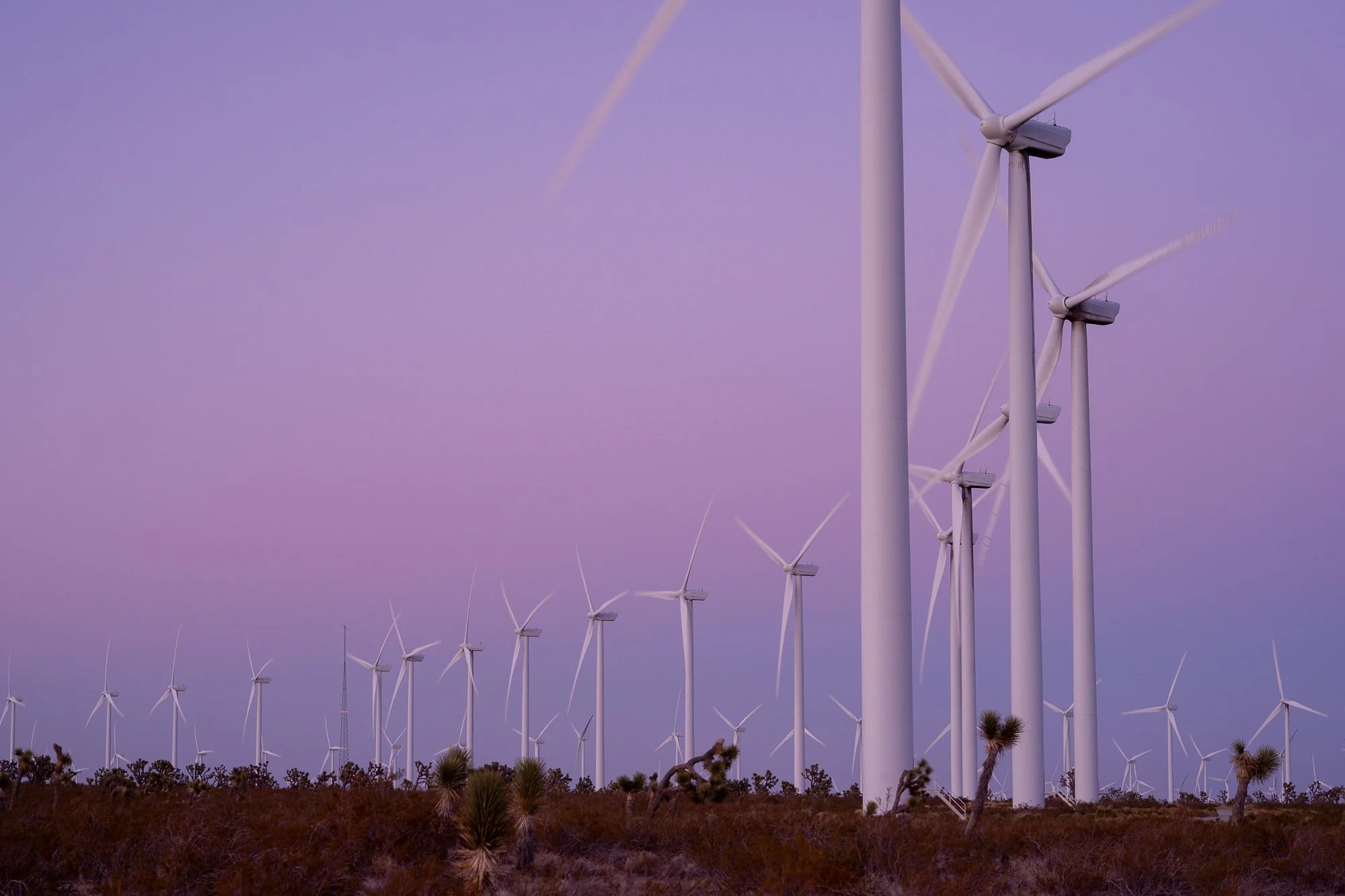
A sky filled with clouds behind a windmill farm in Mojave, California. Alternative energy photos.

Windfarm in Mojave, California

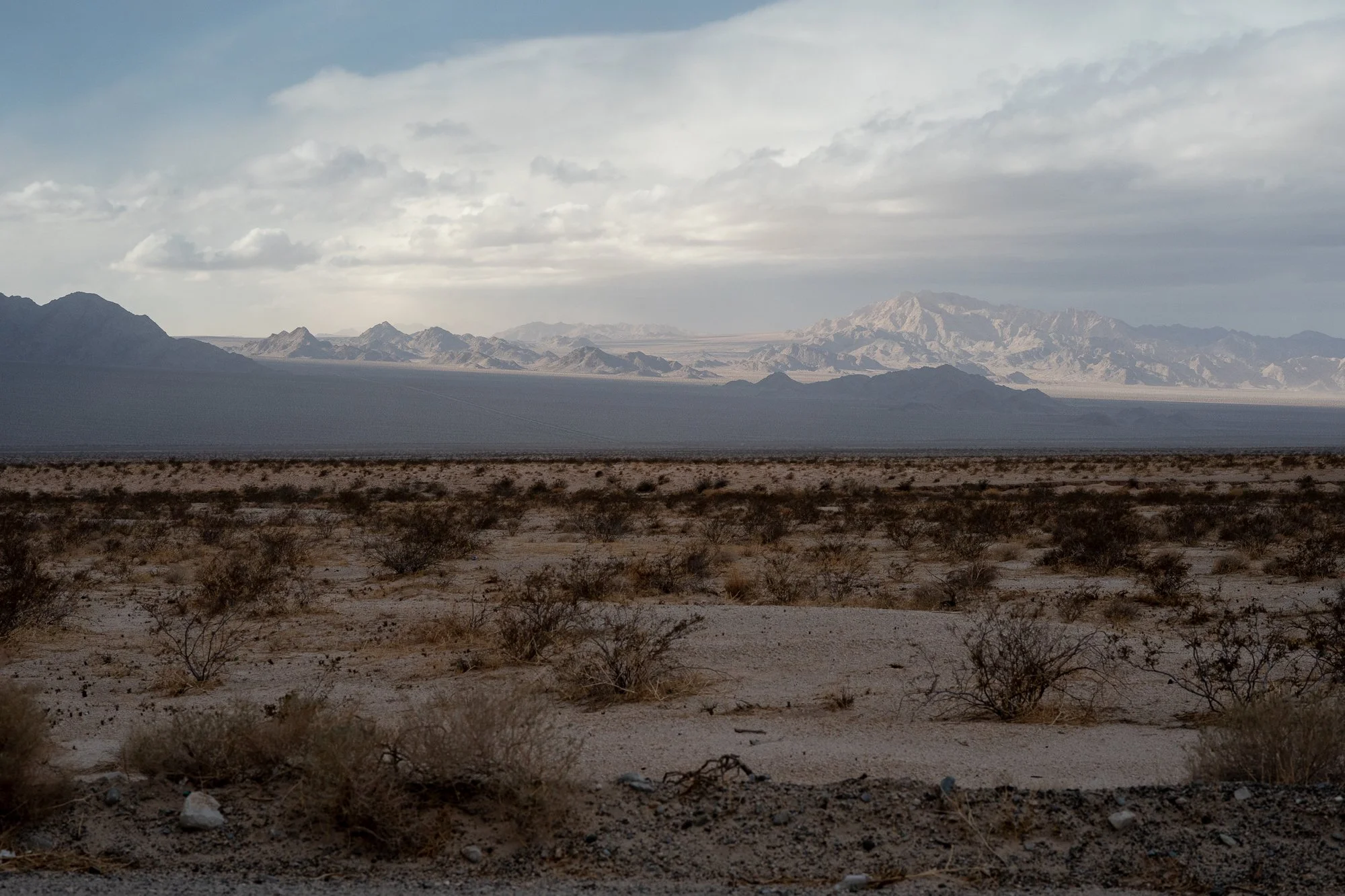
A desert landscape along Highway 395 near Lone Pine, California. Desert Vibes.

California desert near Lone Pina

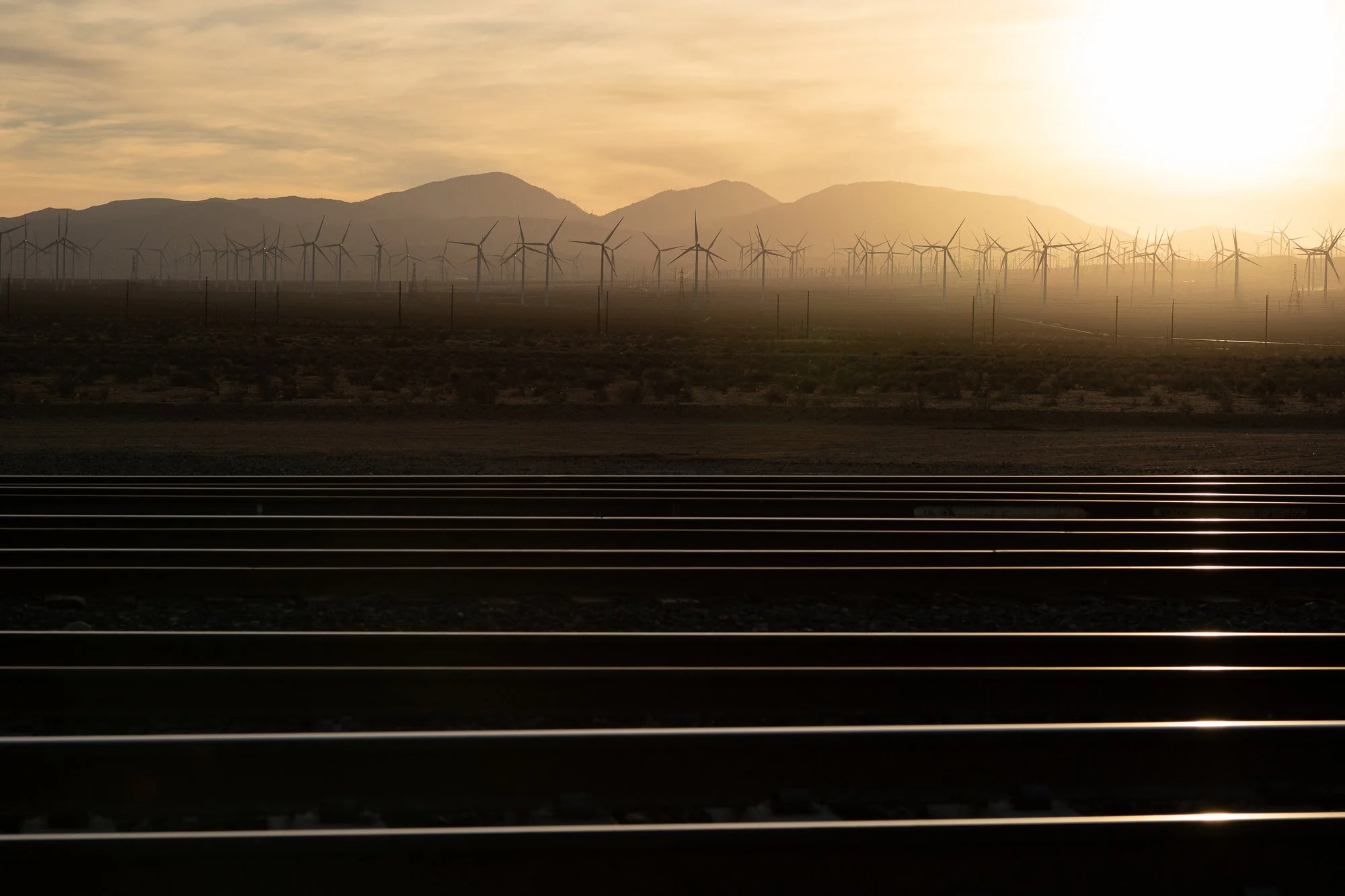
Windmills in the desert near Mojave, California. Alternative energy photos.

Mojave, CA

Photo of a small town in the California desert

Road Trip Photography

A train going through the small desert town of Mojave, California

A train going through the desert town of Mojave, CA

San Francisco Photography

No need to go on and on about my obsession with San Francisco as it’s been well noted here in the past. However, it will be an ongoing project with updates, so I decided to give this thing it’s own gallery here on the site. Shooting has been fun and beyond that I started working with a professional photo editor to whittle down the edit into something that feels cohesive. In the past one of the bigger mistakes I’ve made among a lot of others, is waiting too long to get eye balls on a series to hear about what if anything is making sense. No more. For this and every other series I’ll be gaining outside/unbiased feedback from a professional. The collaboration is really fun as well as educational.

Click HERE to see the edited gallery of my San Francisco Street Photography

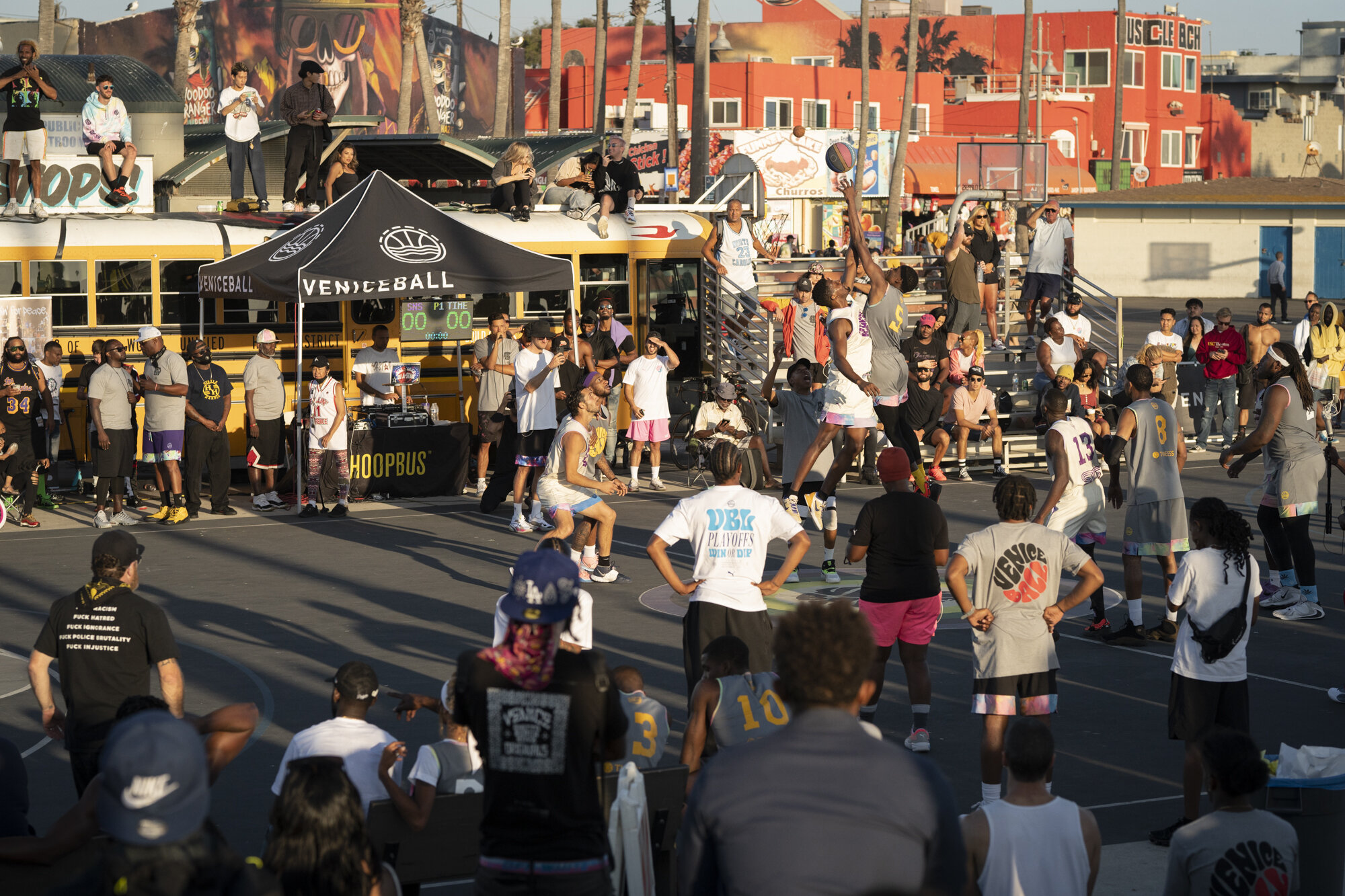
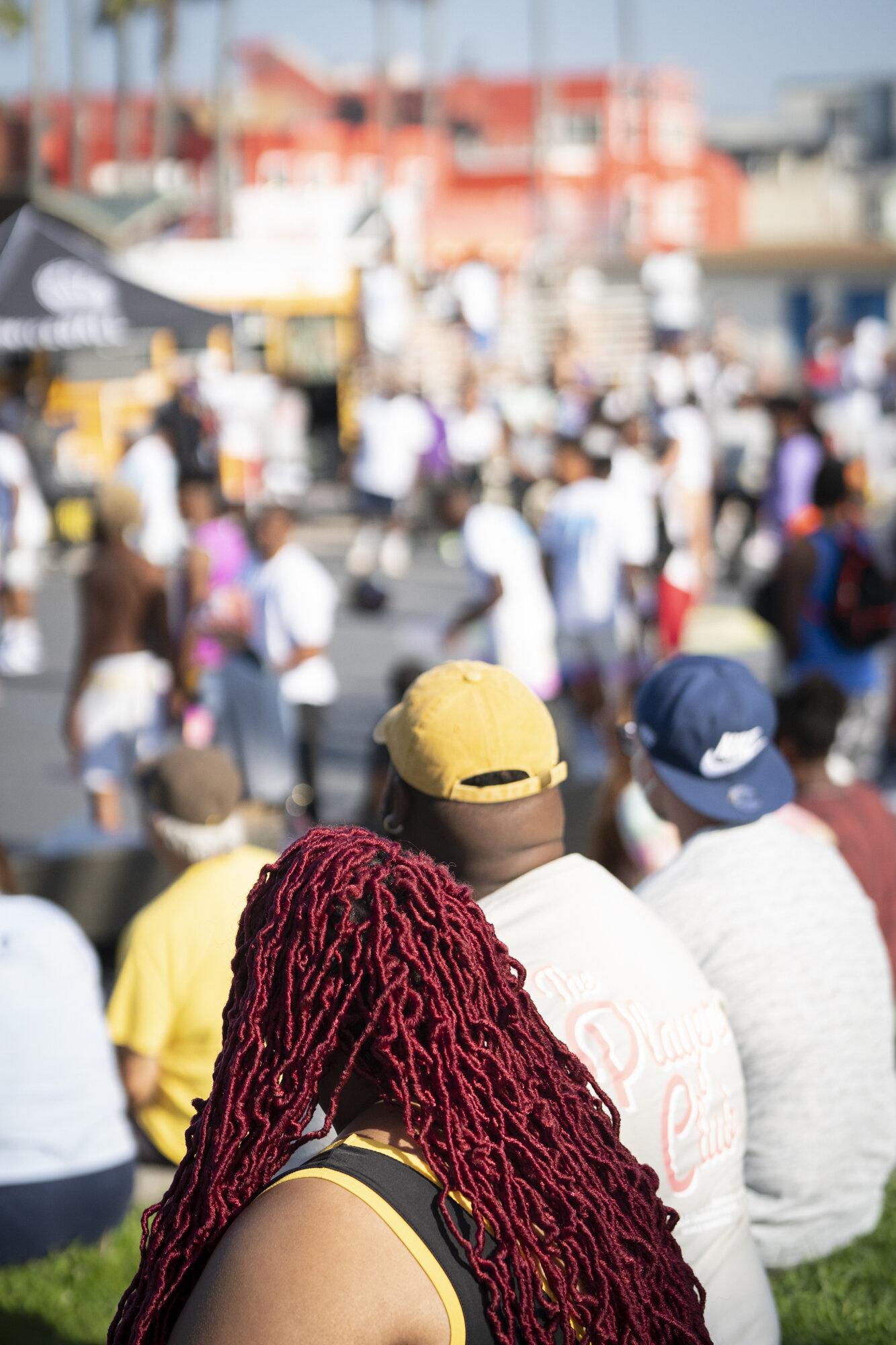
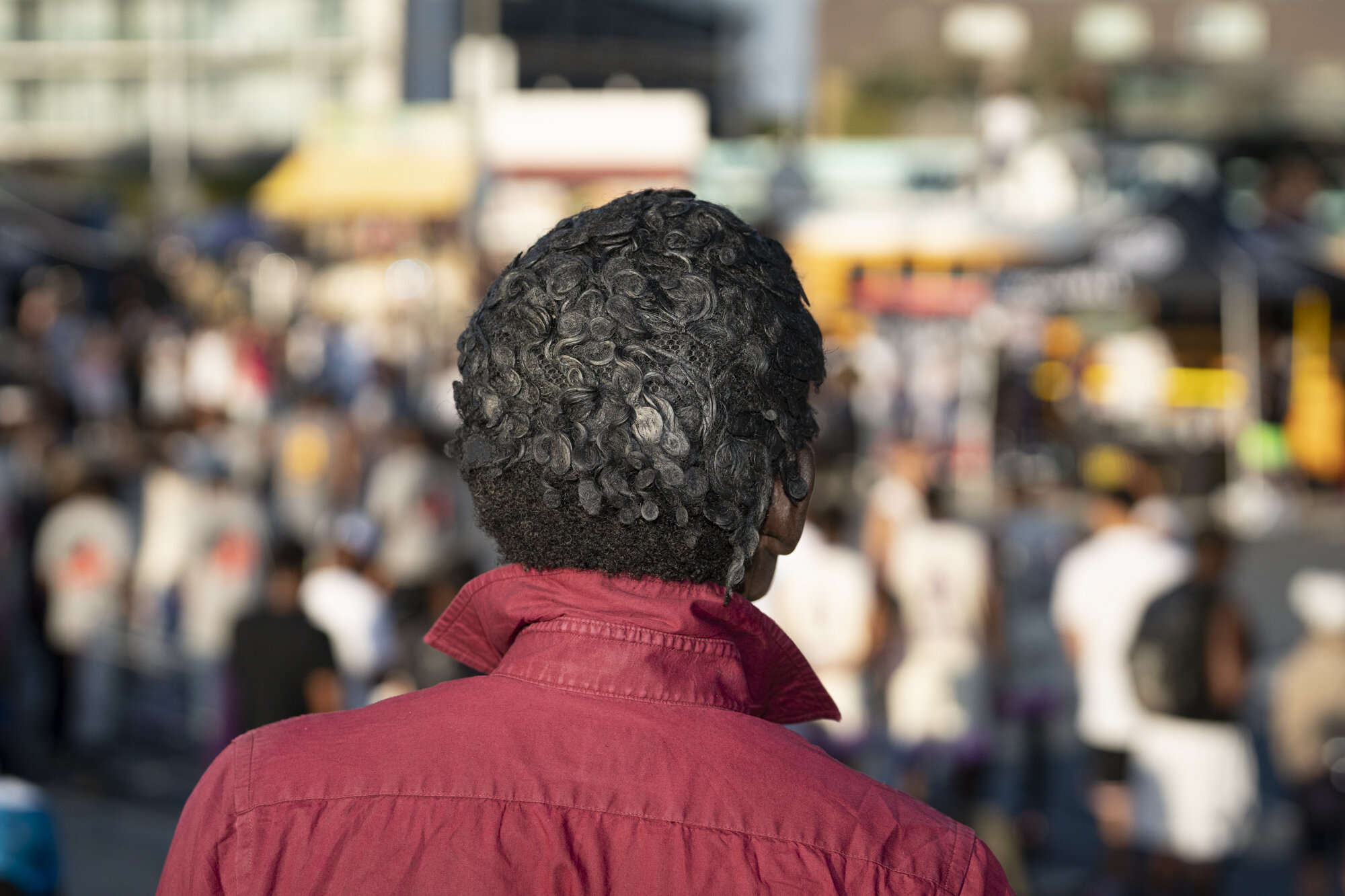
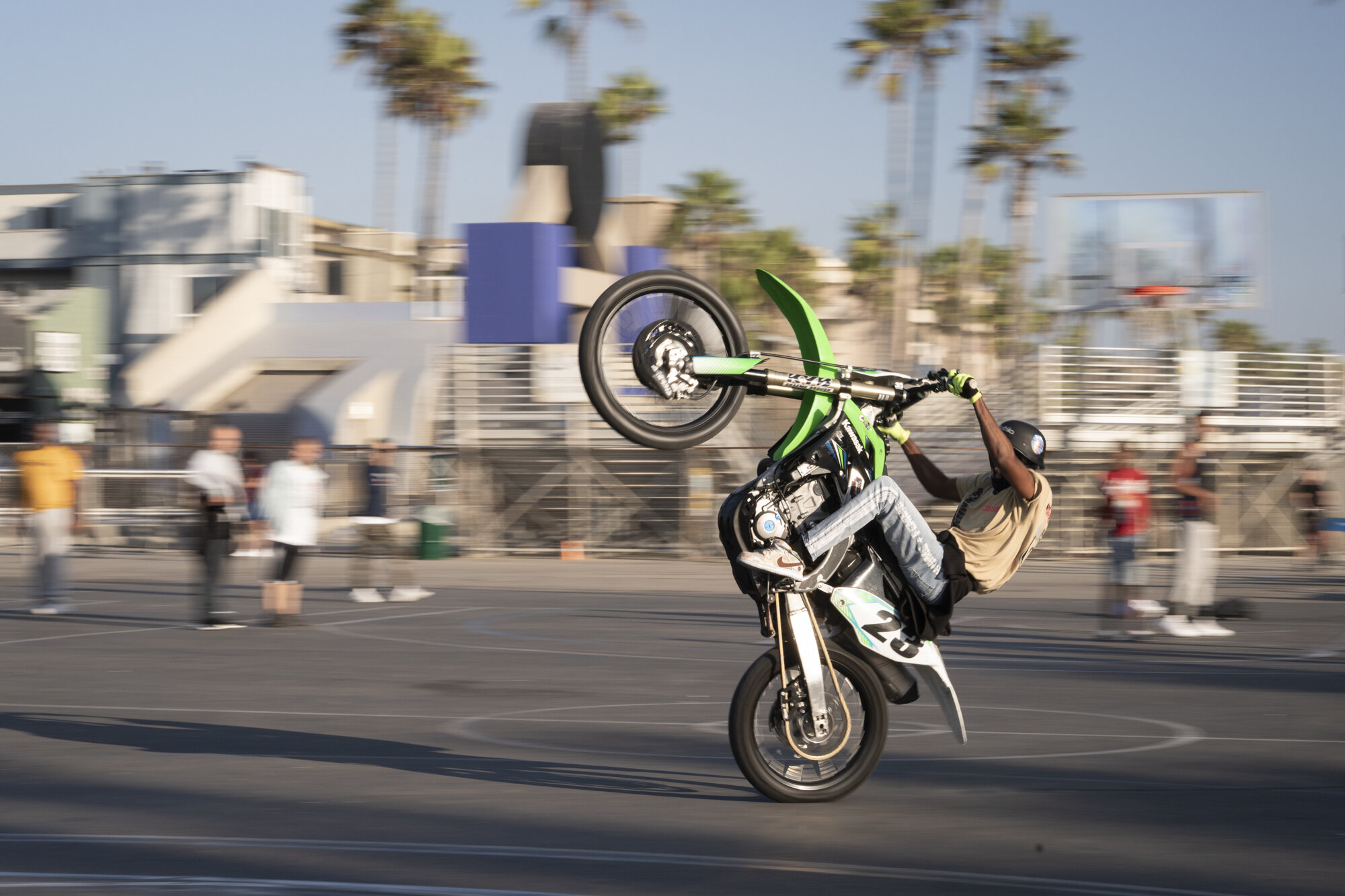
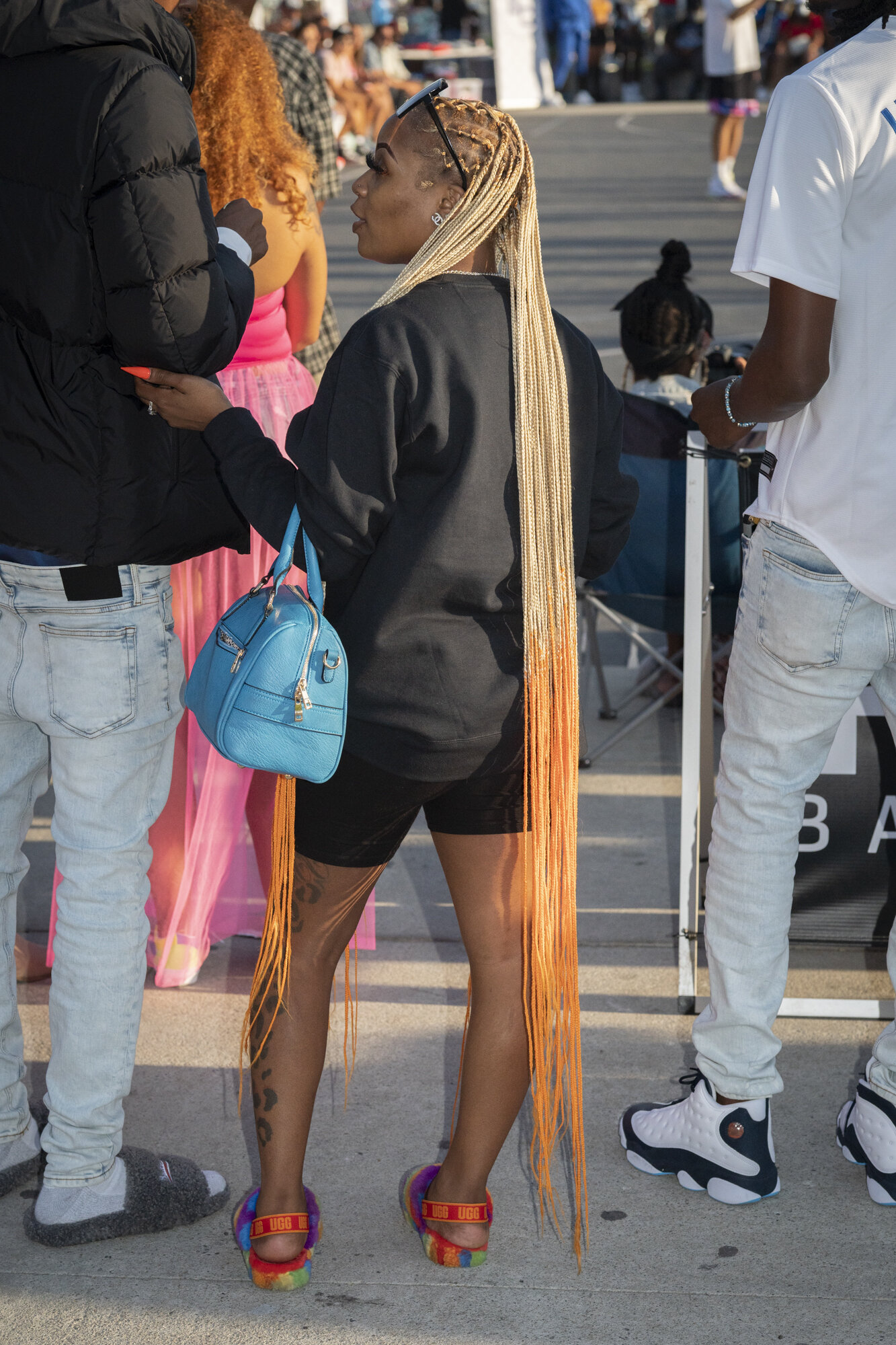
Los Angeles Streetball Culture - Venice Beach

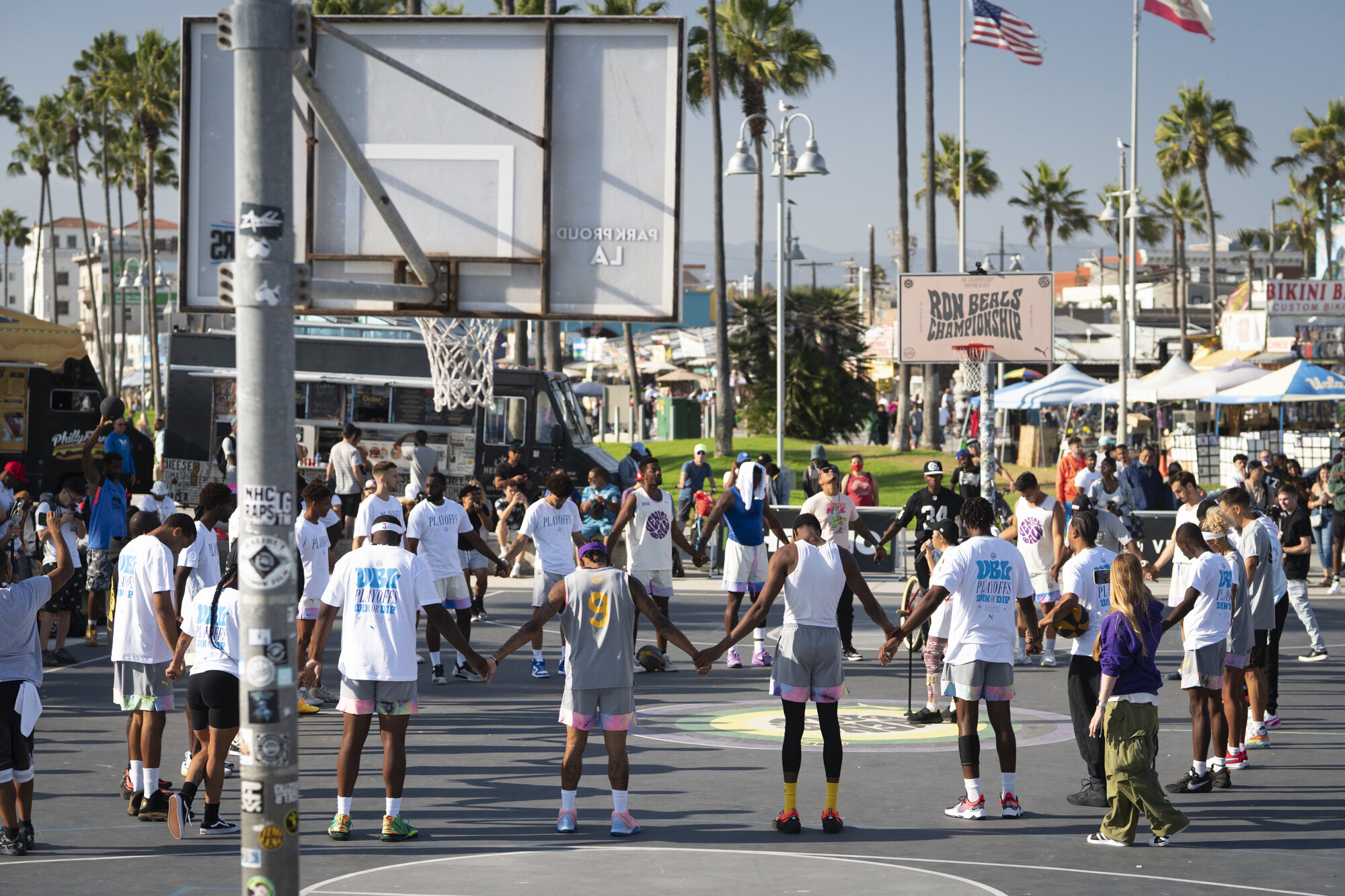
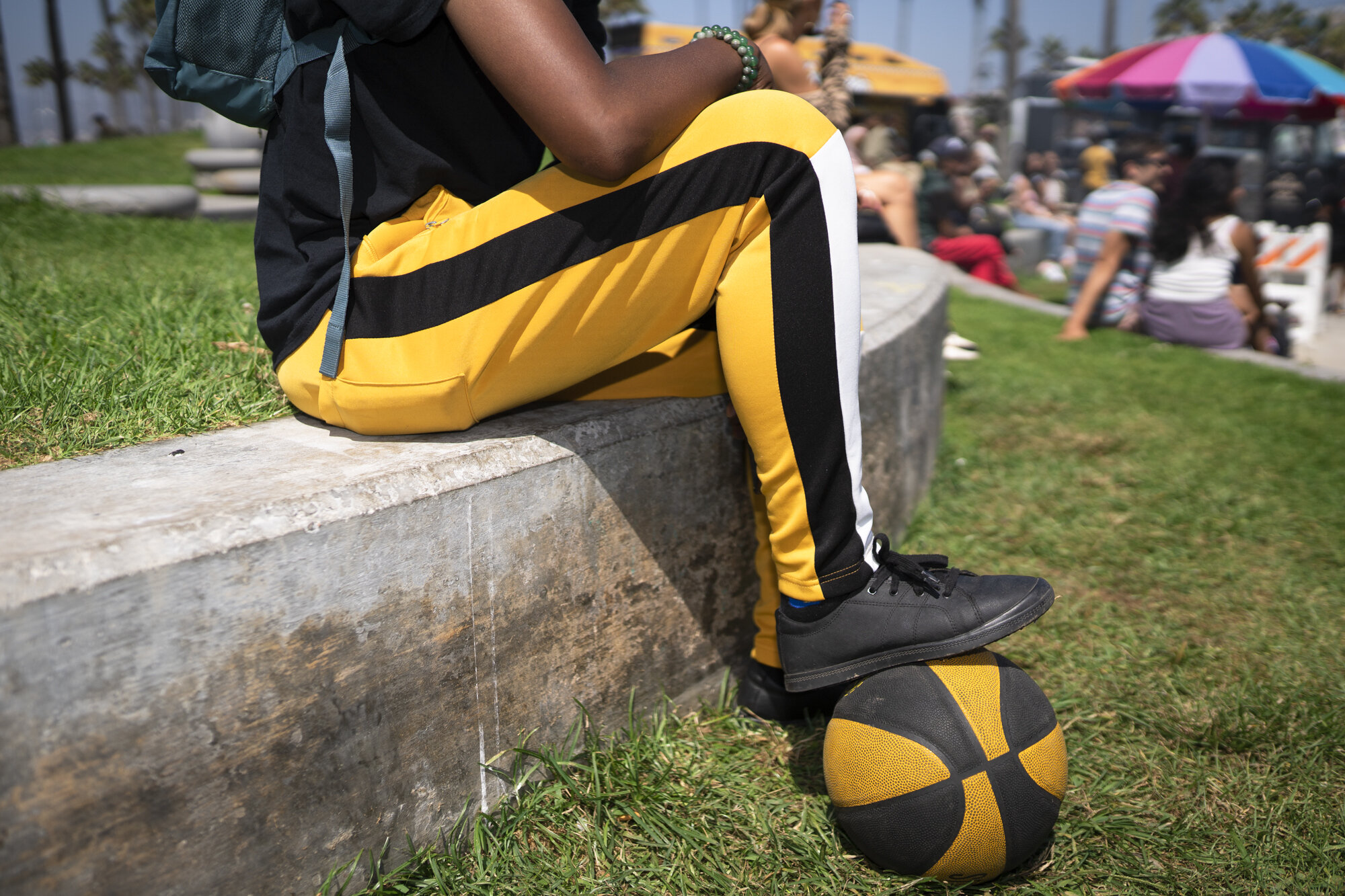
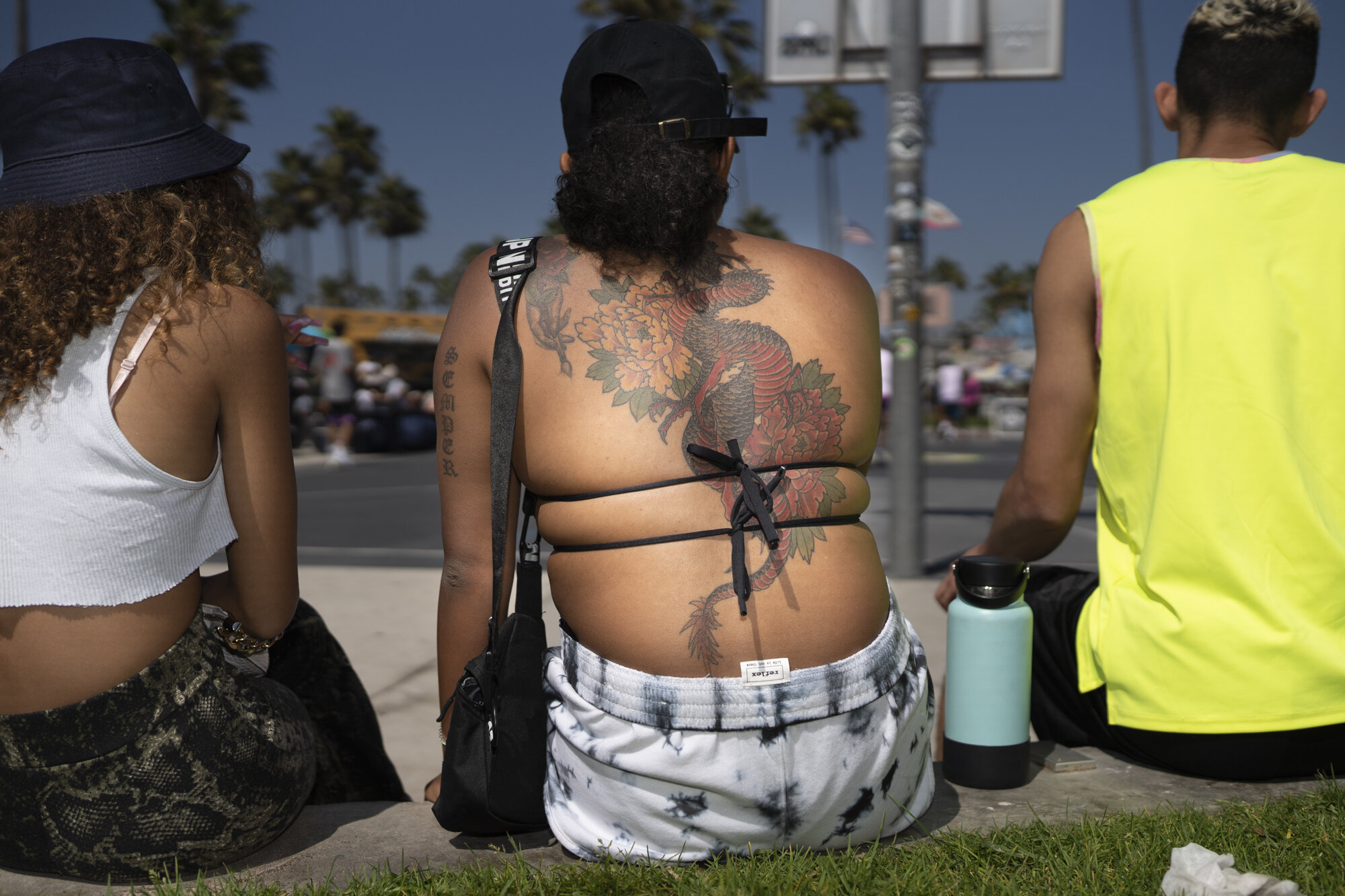
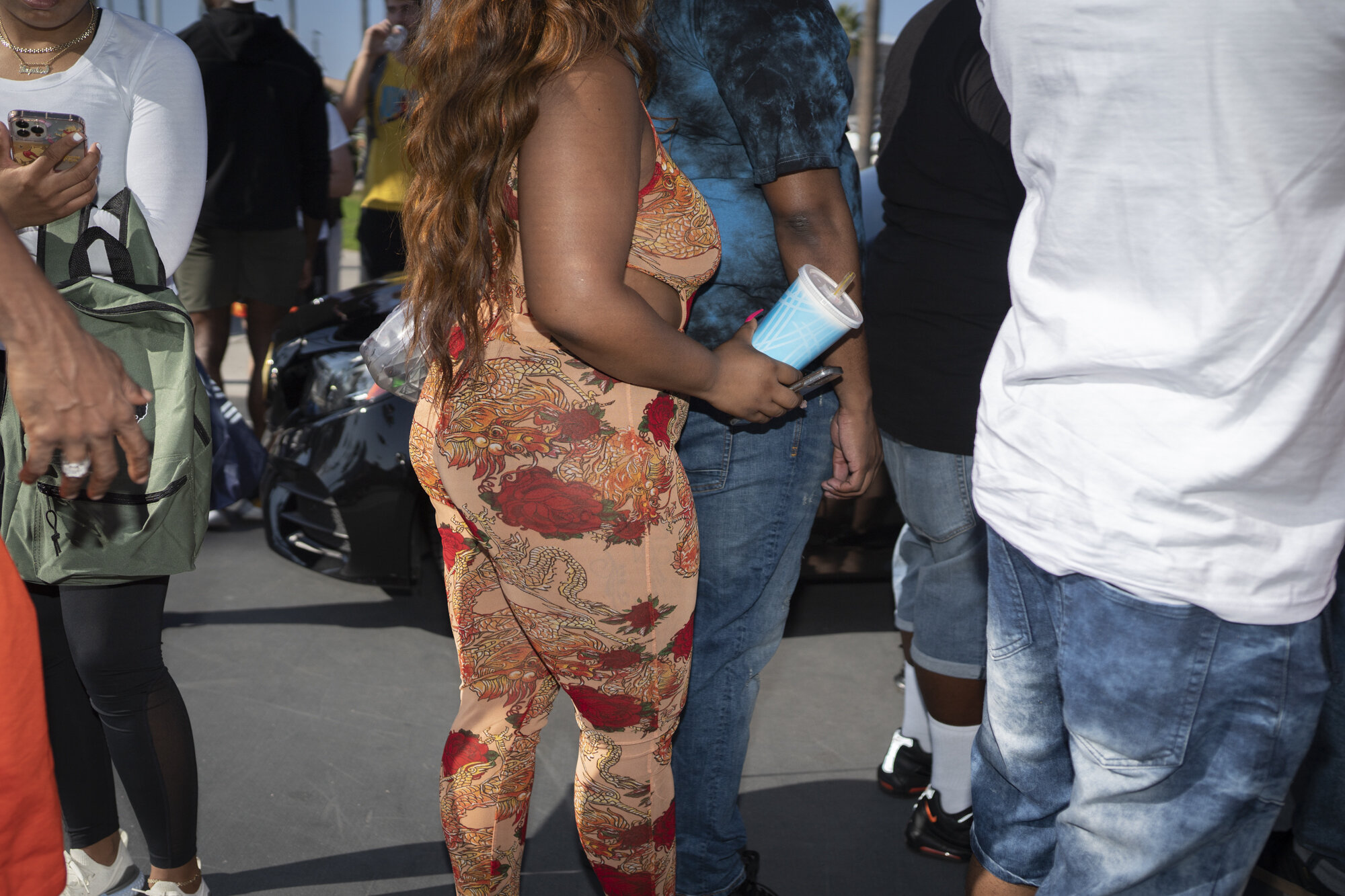
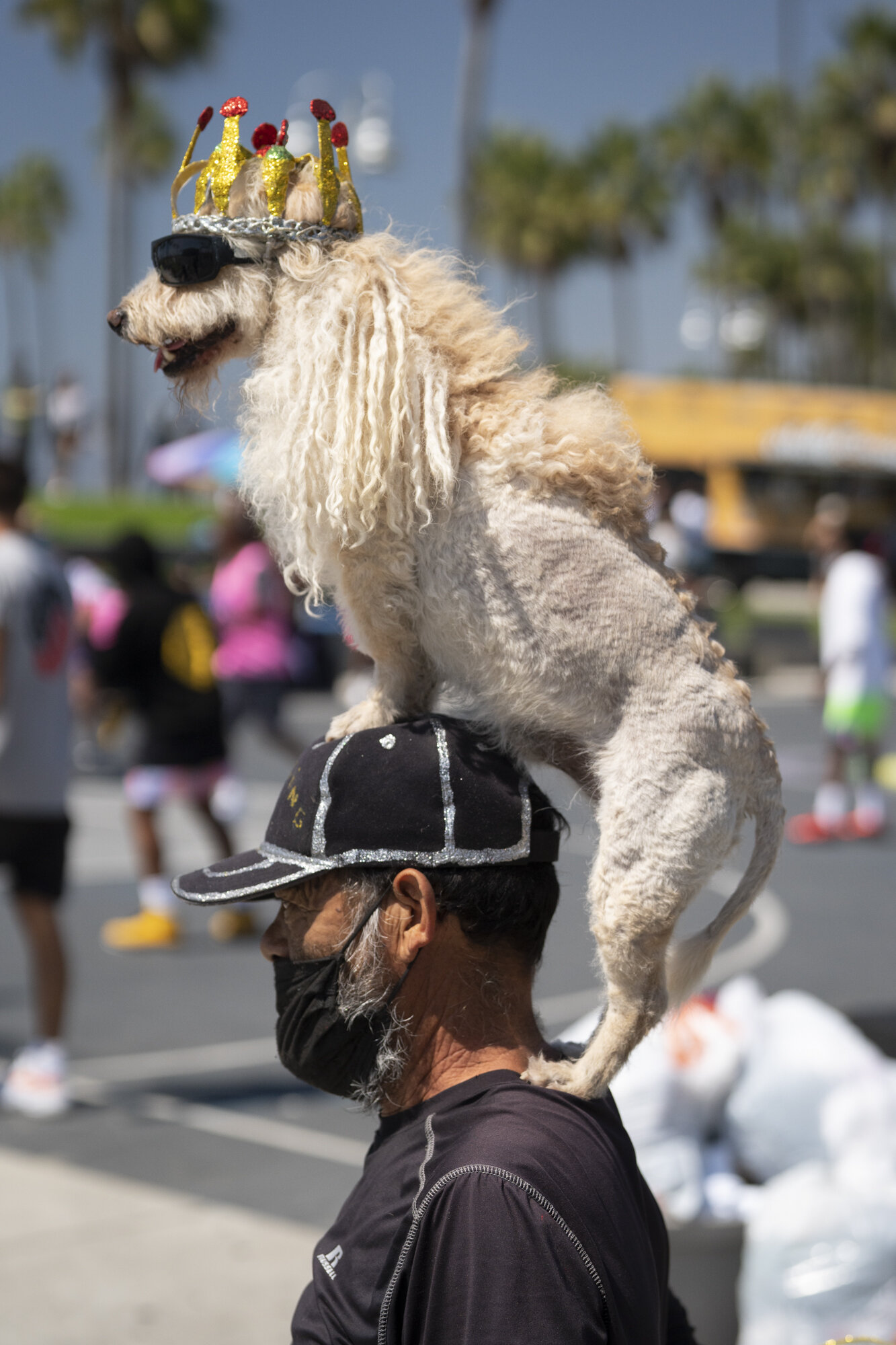
Venice Beach Basketball Courts & the Venice Basketball League

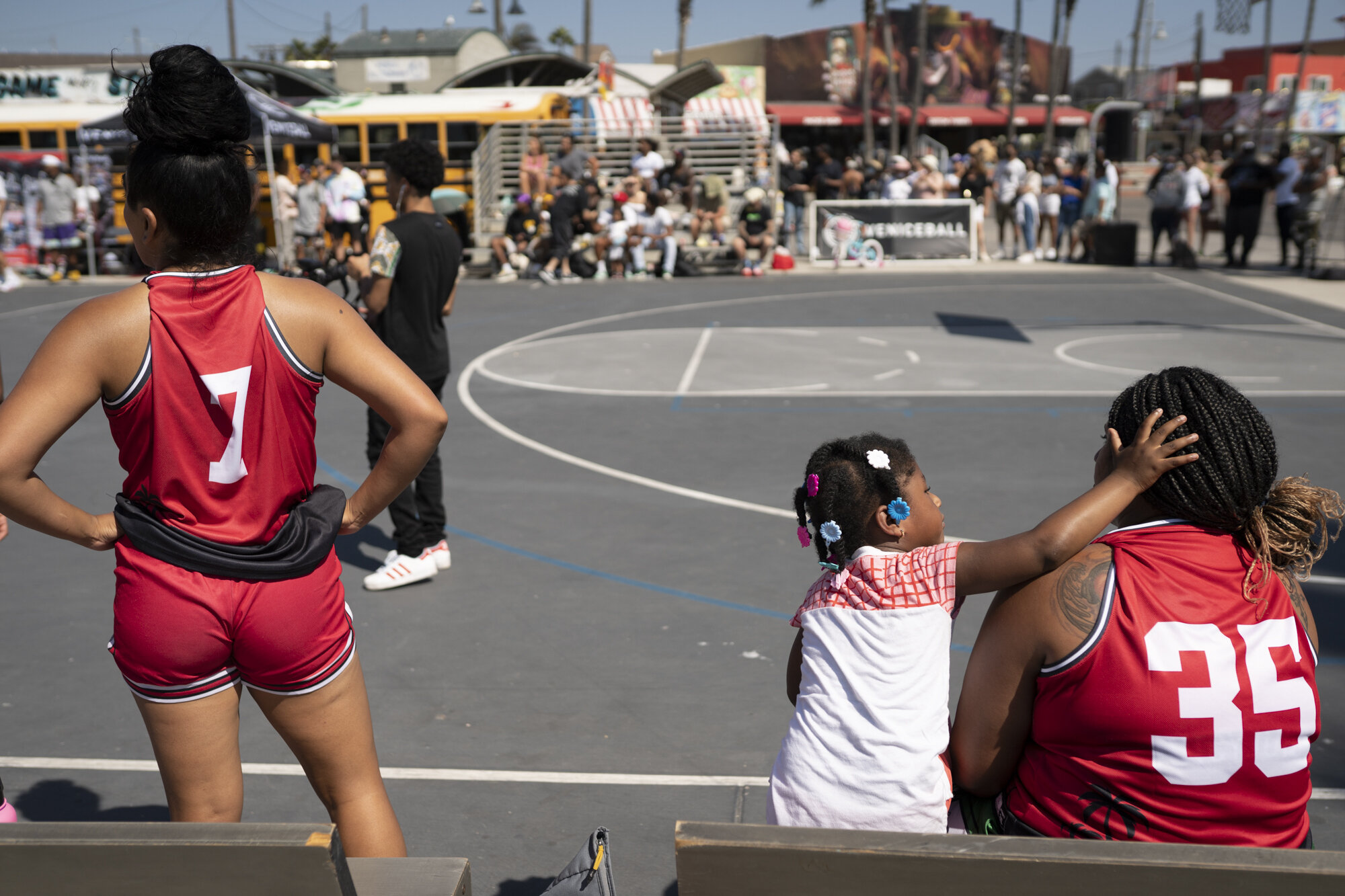
There are places where basketball feels bigger than the game itself, and Venice Beach Basketball Courts is one of them. The courts sit just steps from the Pacific, surrounded by noise, movement, and a constant flow of people, but once a game starts, everything narrows in. The Venice Basketball League has been played here for decades, drawing a mix of locals, pros, and travelers into something that feels equal parts competition and performance.

Where Streetball Becomes a Stage

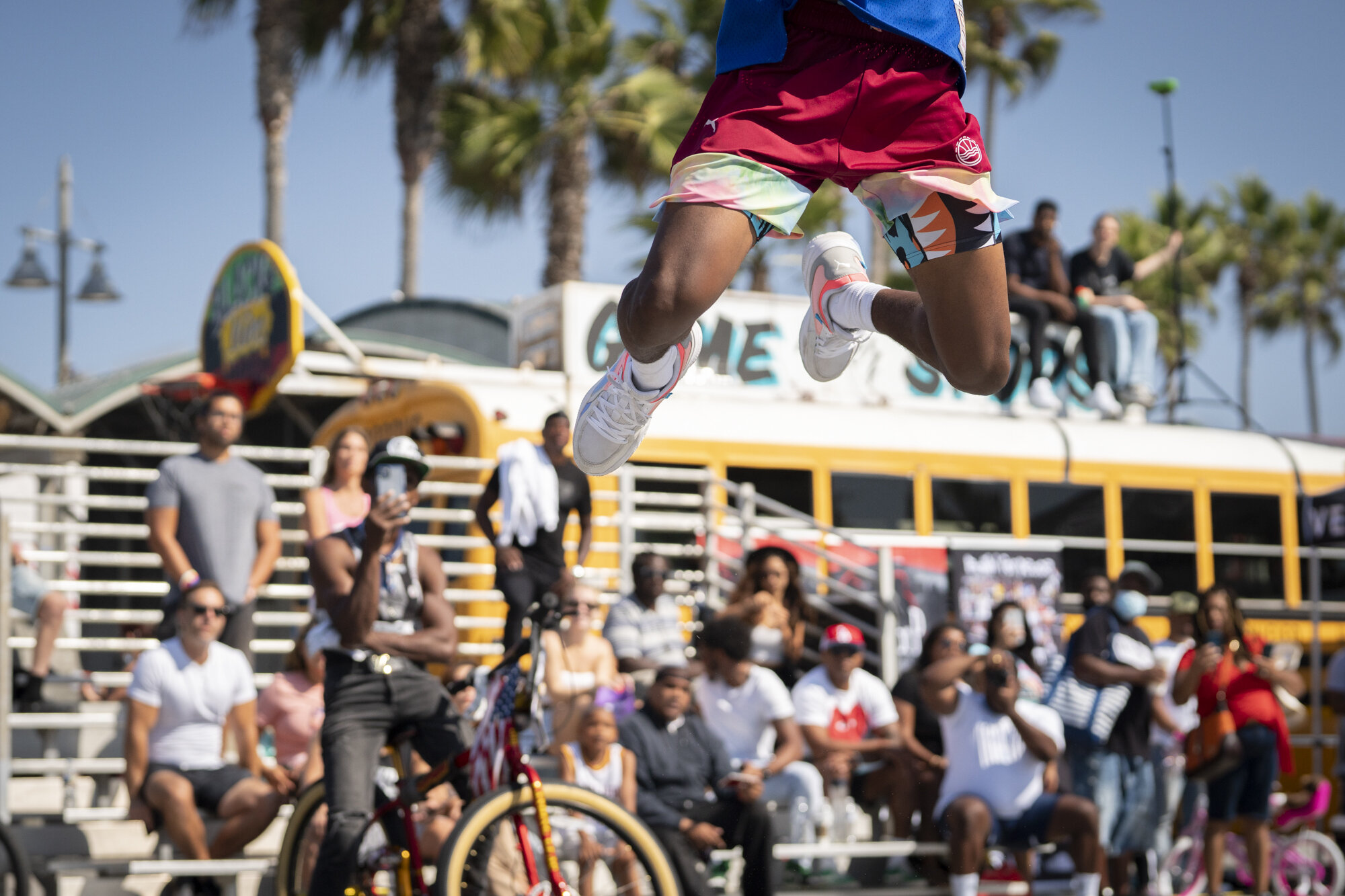
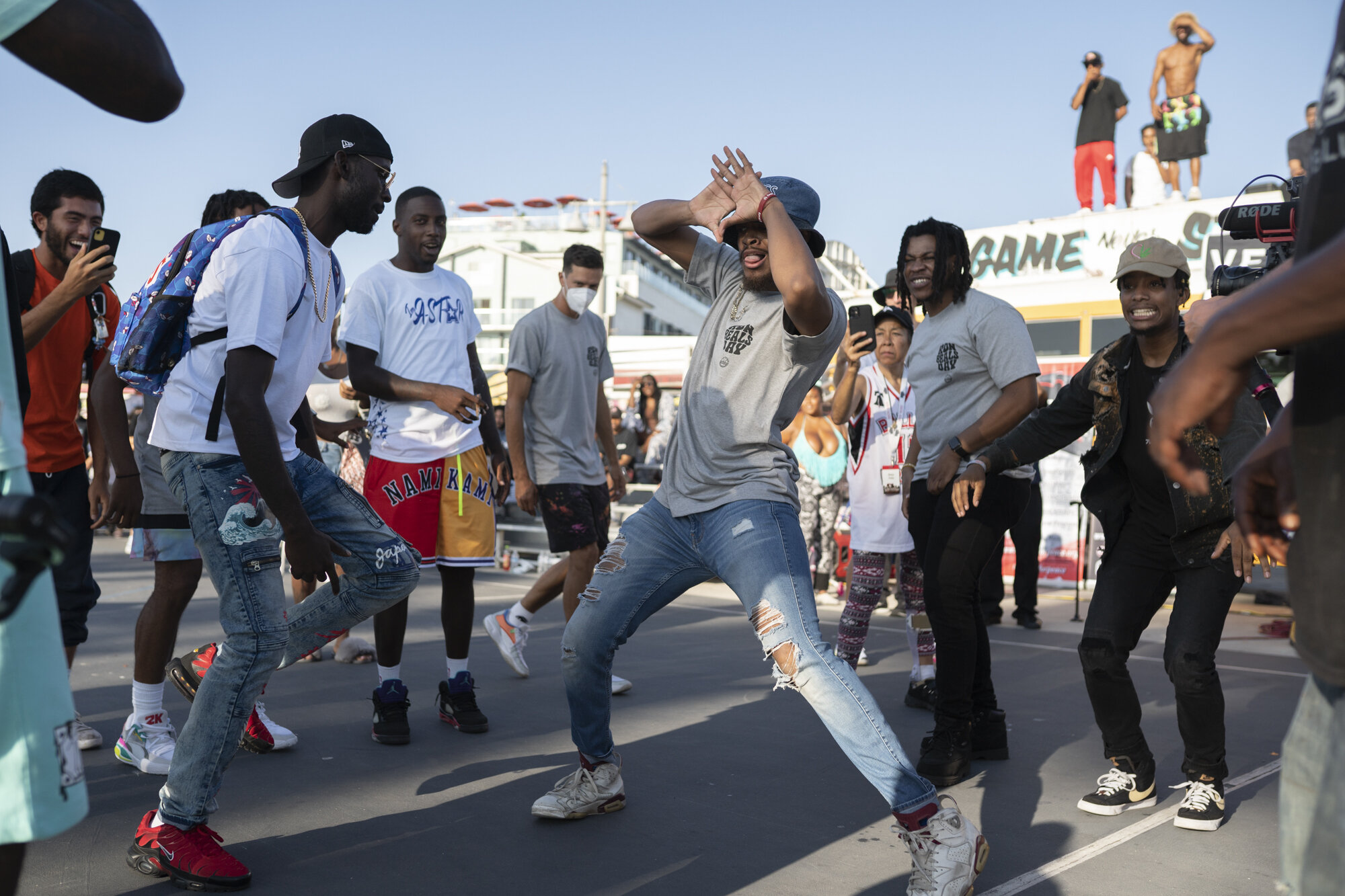
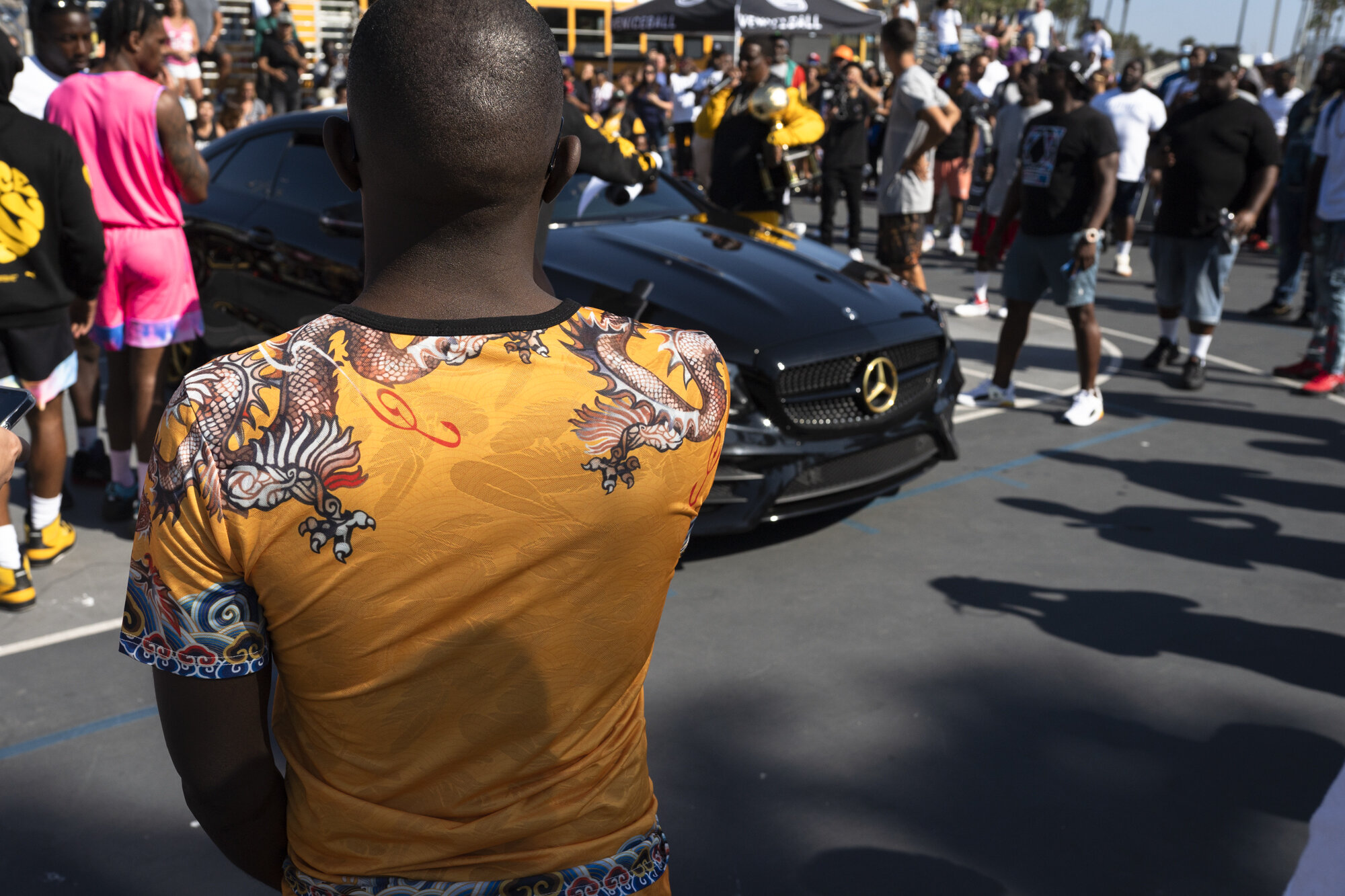
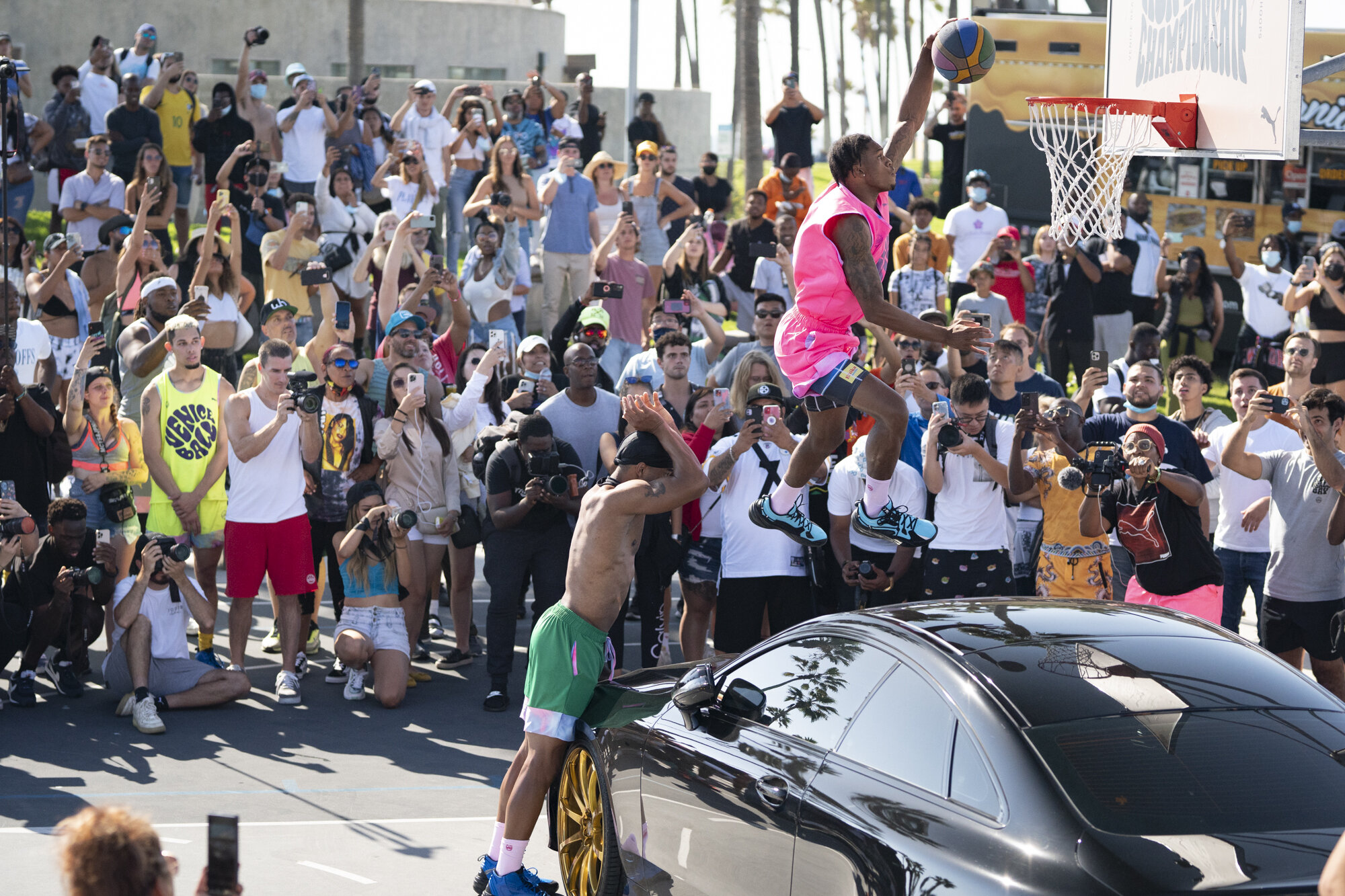
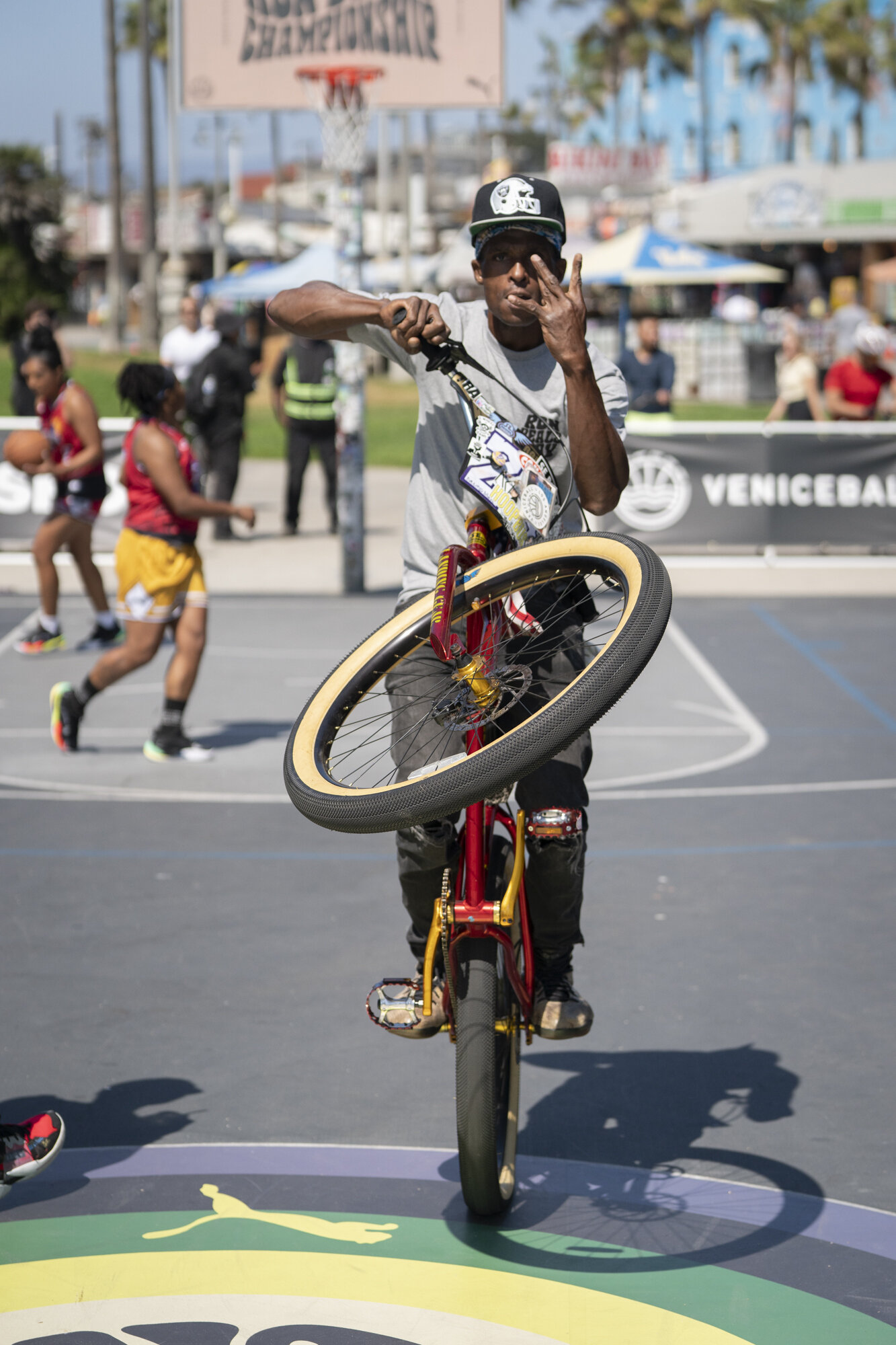
There’s a rabid energy to these courts that you don’t find anywhere else. Games unfold with an audience just feet away—tourists, regulars, salty characters, players waiting for the next run—all watching closely. Every possession matters, but so does how it looks. Style, confidence, and presence carry as much weight as the score. Make no mistake, ball in Venice is a show!

The setting adds to it. Ocean air moves through the courts, music drifts in from the boardwalk, and the light changes quickly as the sun drops behind the horizon. It’s not just a place to play—it’s a place to be seen.

The Venice Basketball League

The Venice Basketball League has built a reputation as one of the most competitive outdoor leagues in the country. Games are physical, fast, and often unpredictable. You’ll see former college players, overseas pros, and local legends sharing the same court.

What makes it different isn’t just the level of play—it’s the environment. There’s no separation between players and spectators. The energy sits right on top of the game, and you feel it in every possession.

Basketball as a Universal Language

Over the years, I’ve photographed basketball in small towns, backyards, alleys, and places most people would never think to look. What stands out in Venice is how all of that comes together in one place.

People from all over the world pass through these courts, but the game stays the same. No introductions needed. You step on the court, and you understand the rules immediately. It’s one of the clearest examples of how basketball connects people across completely different backgrounds.

More Venice Beach Basketball Photography

Over the years I’ve linked up with Nick Ansom on a number of fun projects, including his “Survival Hoops” - a collection of hoops made from junk then hung in the alleyways of Venice.

View the hidden alley basketball hoops of Venice

Part of a Larger Project: American Backcourts

These photographs are part of a long-term body of work documenting basketball hoops and courts across the country. While much of that work focuses on quiet, overlooked places—barns, driveways, rural towns—Venice Beach sits at the opposite end of that spectrum.

It’s loud. It’s visible. It’s constantly moving.

But it’s the same game.

That contrast is what ties it all together. Whether it’s a handmade hoop in a small town or a packed court on the California coast, the feeling is consistent. The game shows up everywhere.

View the full collection of basketball culture photography
Inquire about editorial and commercial image licensing

If you’re interested in seeing how this fits into the broader series, you can view the full project here:

American Backcourts

Western Photography

Cowboy Photography - American West - Cattle Ranching

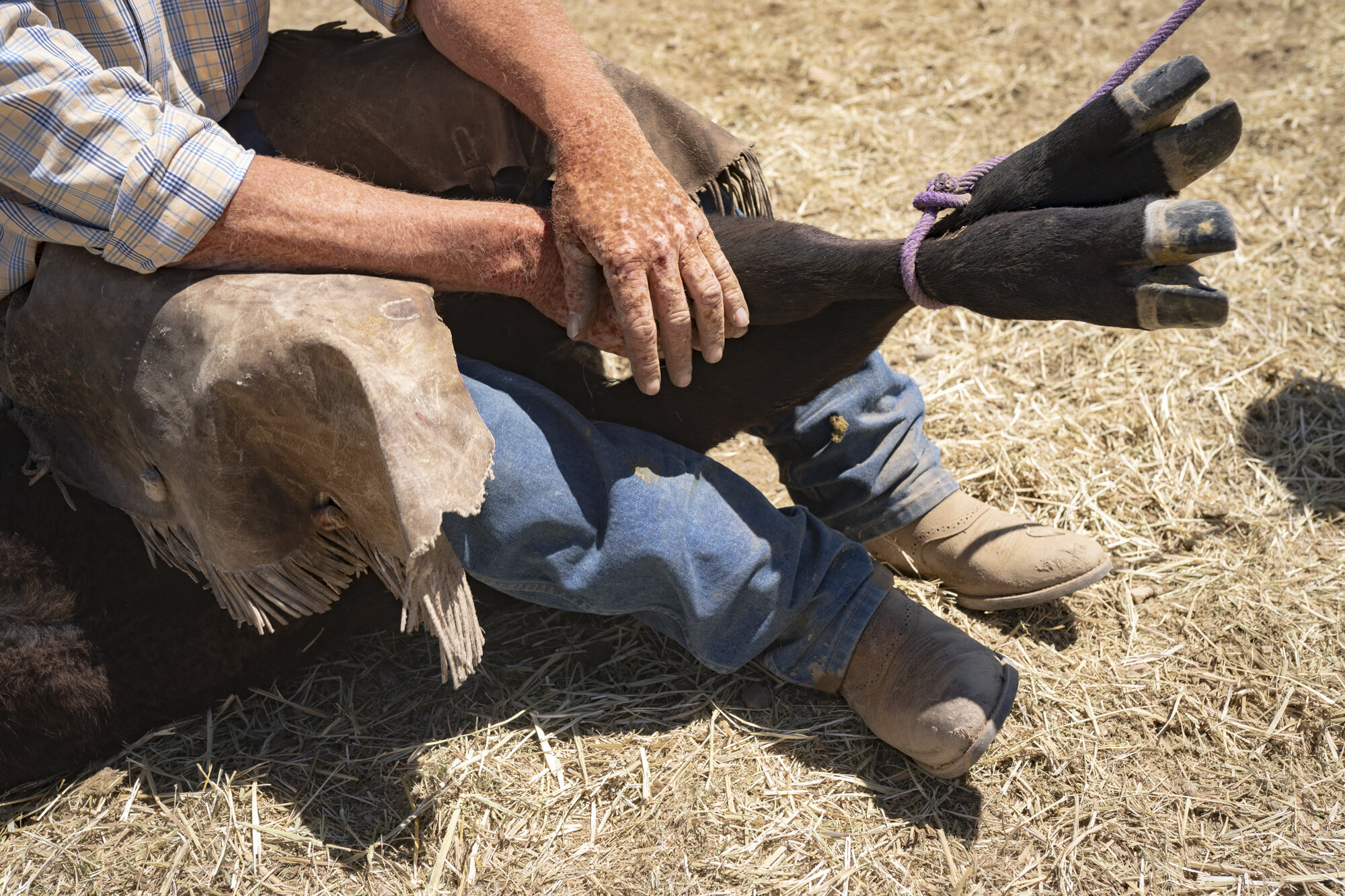
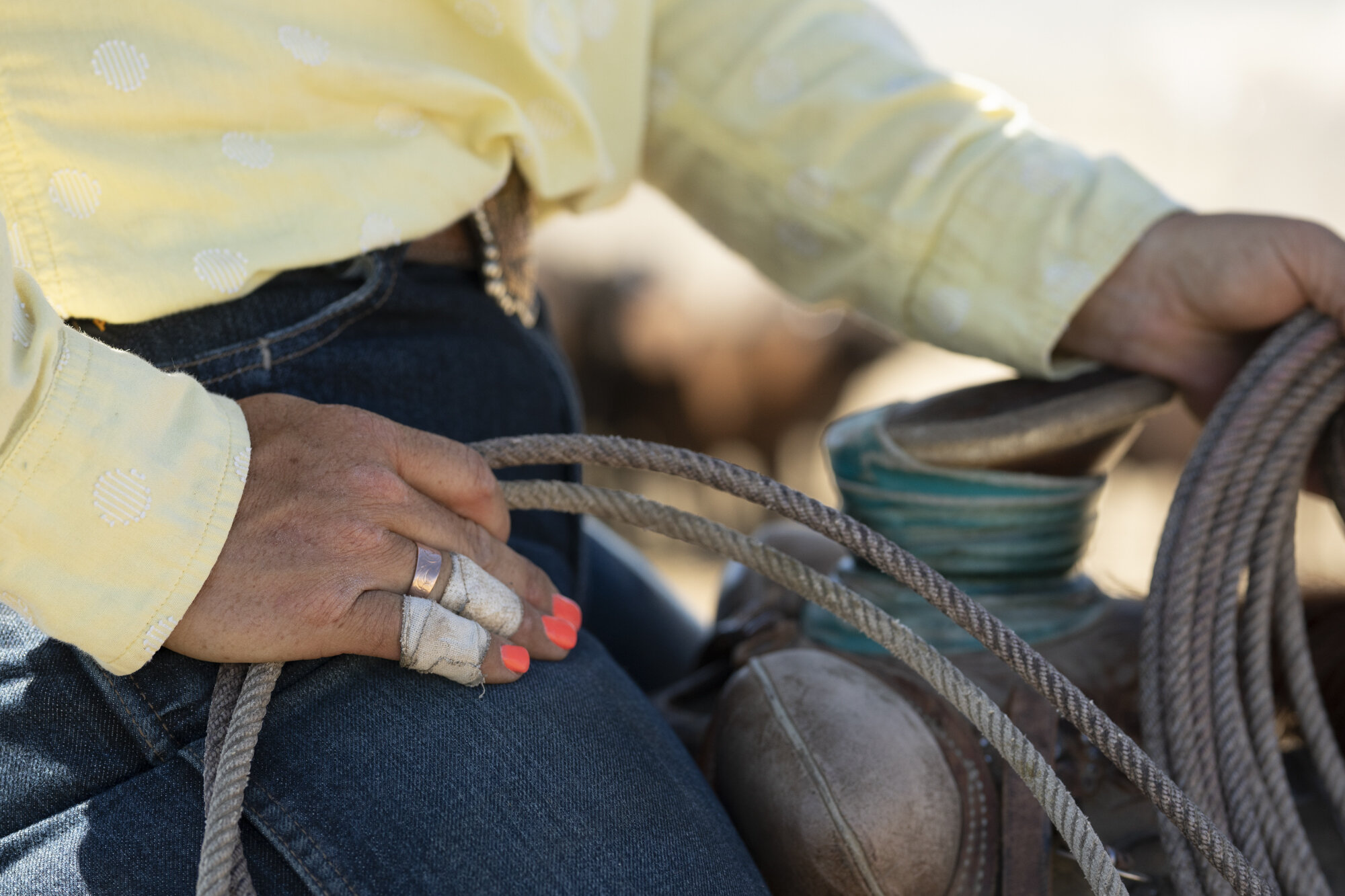
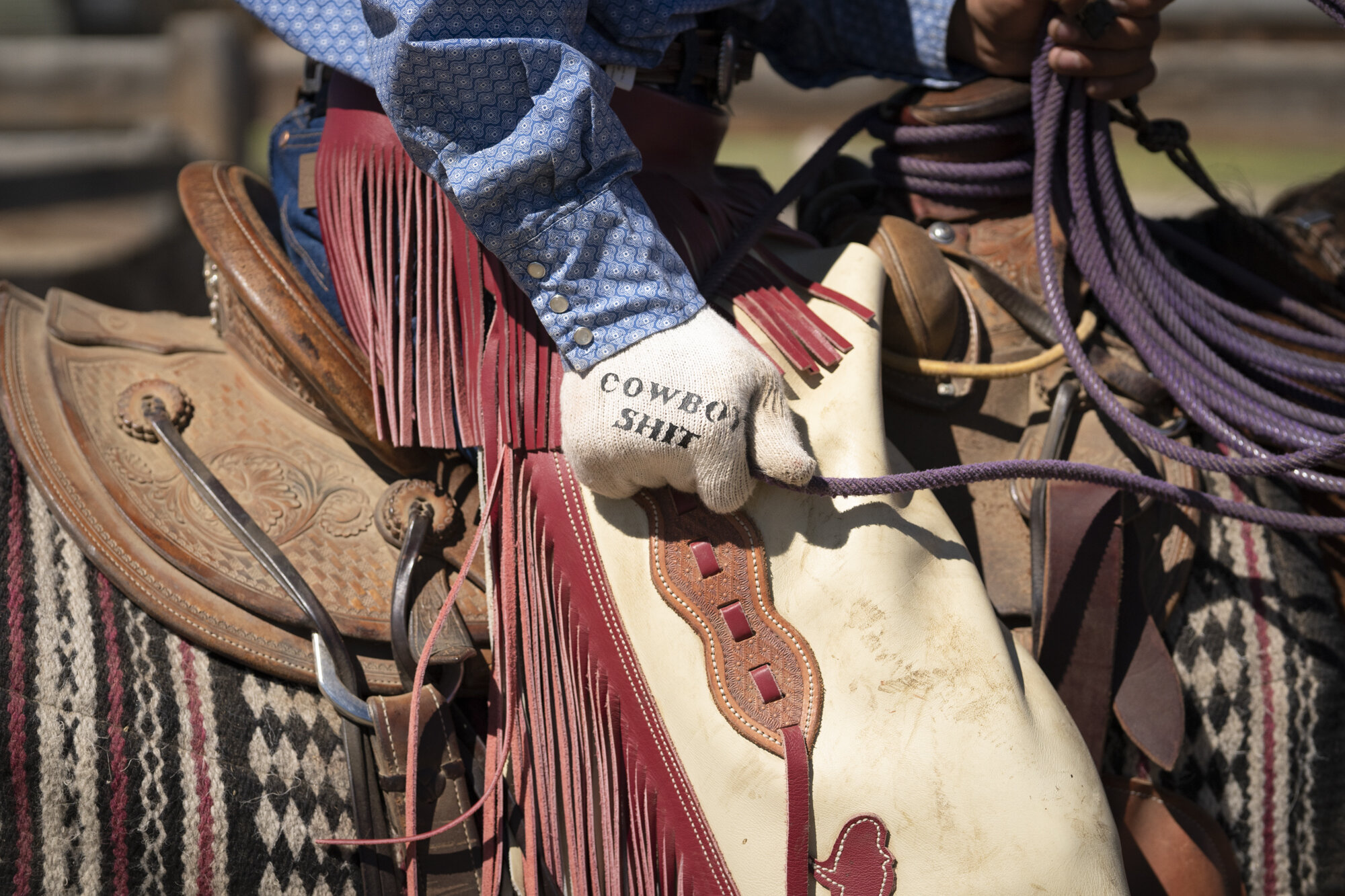
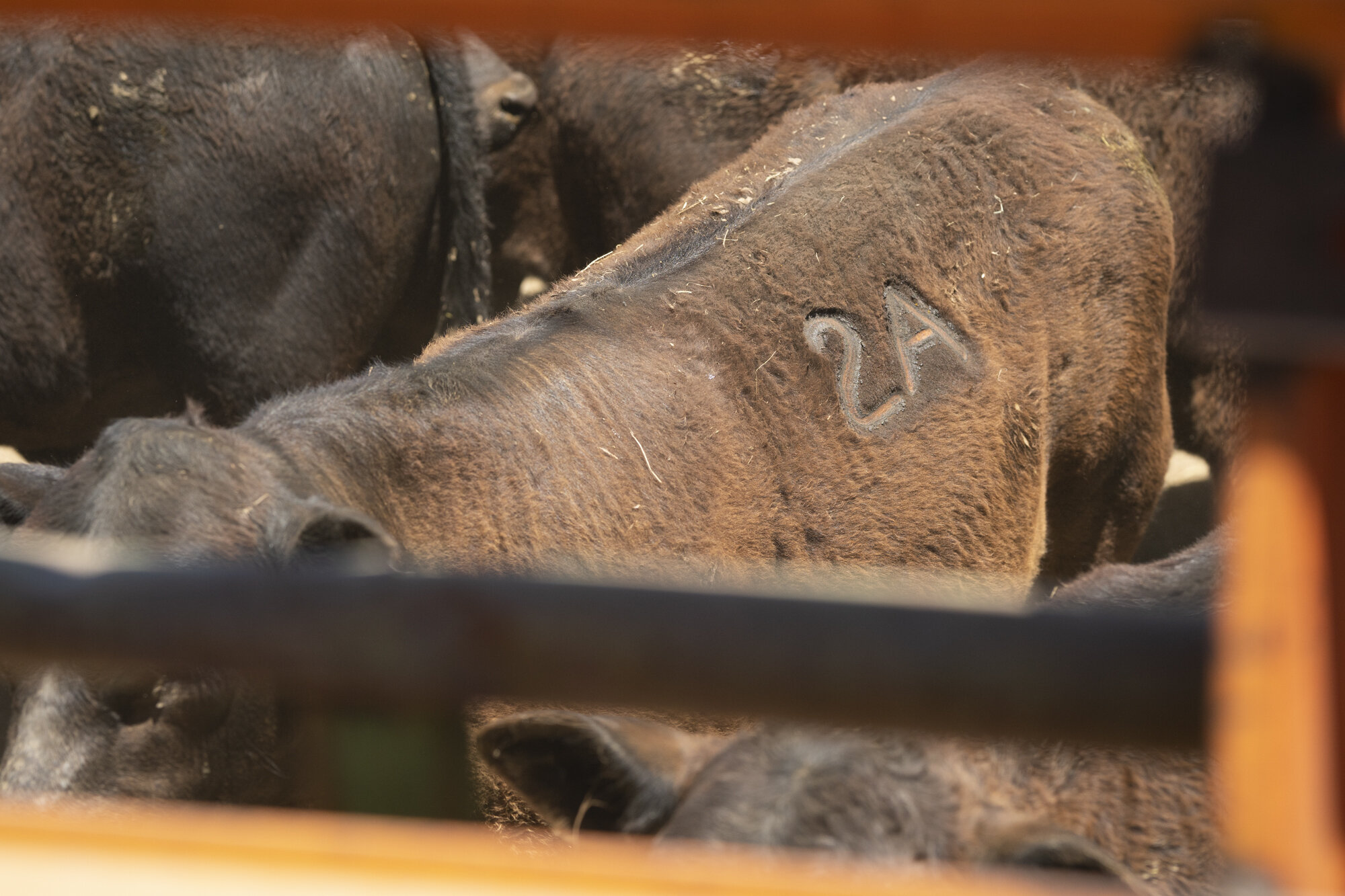
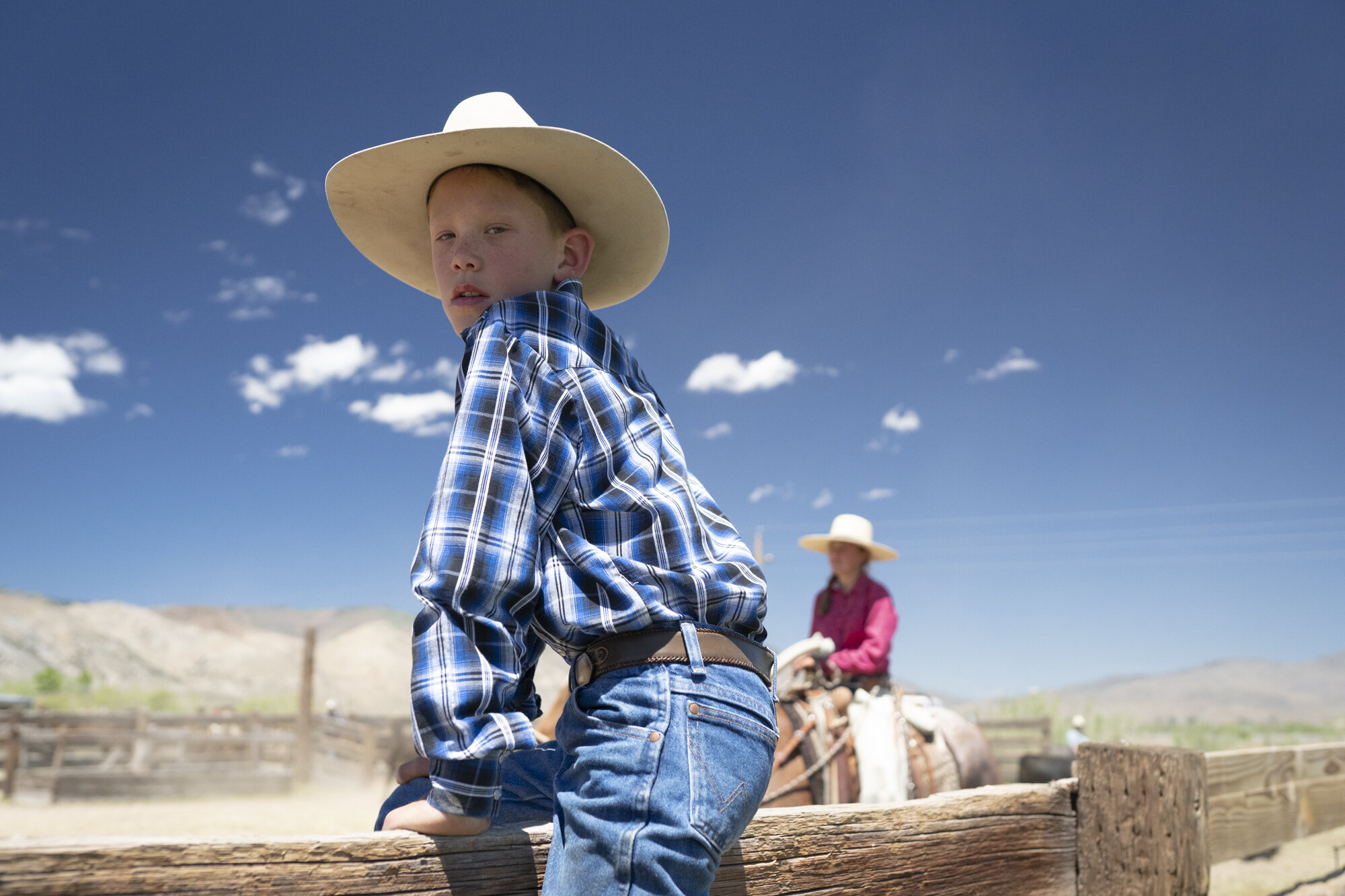
Maybe it’s the nostalgia? Maybe it’s the hats? I don’t know. However you spin it though, I appreciate everything going on in the pictures here. To really boil it down though, there are a couple factors that turn me on to this culture and lifestyle. First is the freedom. Cowboys/ranchers/farmers. Whatever you want to call them. They work their asses off, but they do so on their own terms, not someone else’s. They freelance, like me. I always say that if I’m not exhausted, dirty, or bloody by the end of a shoot, then chances are it wasn’t that much fun. And I wouldn’t dare to compare the work I do in a day to that of a cowboy, but I certainly connect with it. Another part is their “work” hasn’t changed that much since the old days. Sure there are more laws and guidelines, especially in California, but the bones of it is pretty much the same. And there’s a lot to be said for that, especially since everything else in the world changes minute by minute, and not usually for the better. The simplicity of their trade is another parallel to draw. That’s not to say that what they do is easy, because it certainly isn’t. Quite the opposite. With photography everyone is so focused on gear, gear, gear. Gotta get the latest and greatest piece of gear. Gotta light this with 12 strobes or it won’t look good! Admittedly, I was guilty of that in the past too. At a certain point though, I realized that was all about false impressions. Yes, your equipment needs to be at a certain level to operate as a professional, but that doesn’t mean you constantly need to be upgrading. Having a better camera doesn’t make you a better photographer. Hell, if you know what you’re doing, you could make an entire career with one camera and one lens. So you don't need that new 150 megapixel Medium Format bullshit. Fun to play around with? Yup. Not what matters though. Focus on making images not on the gear. That’s what I mean by simplicity. Location is the last thing I’ll mention. In general, the places where these people live and work is also something I connect with. Living in San Diego has a lot of pluses, but I’d much rather be out in the mountains or the country. It feels more like home and fits my personality/interests much more. Along with the location comes a certain type of attitude or lack there of. City people and country people are just different. No way around it. I prefer the later.

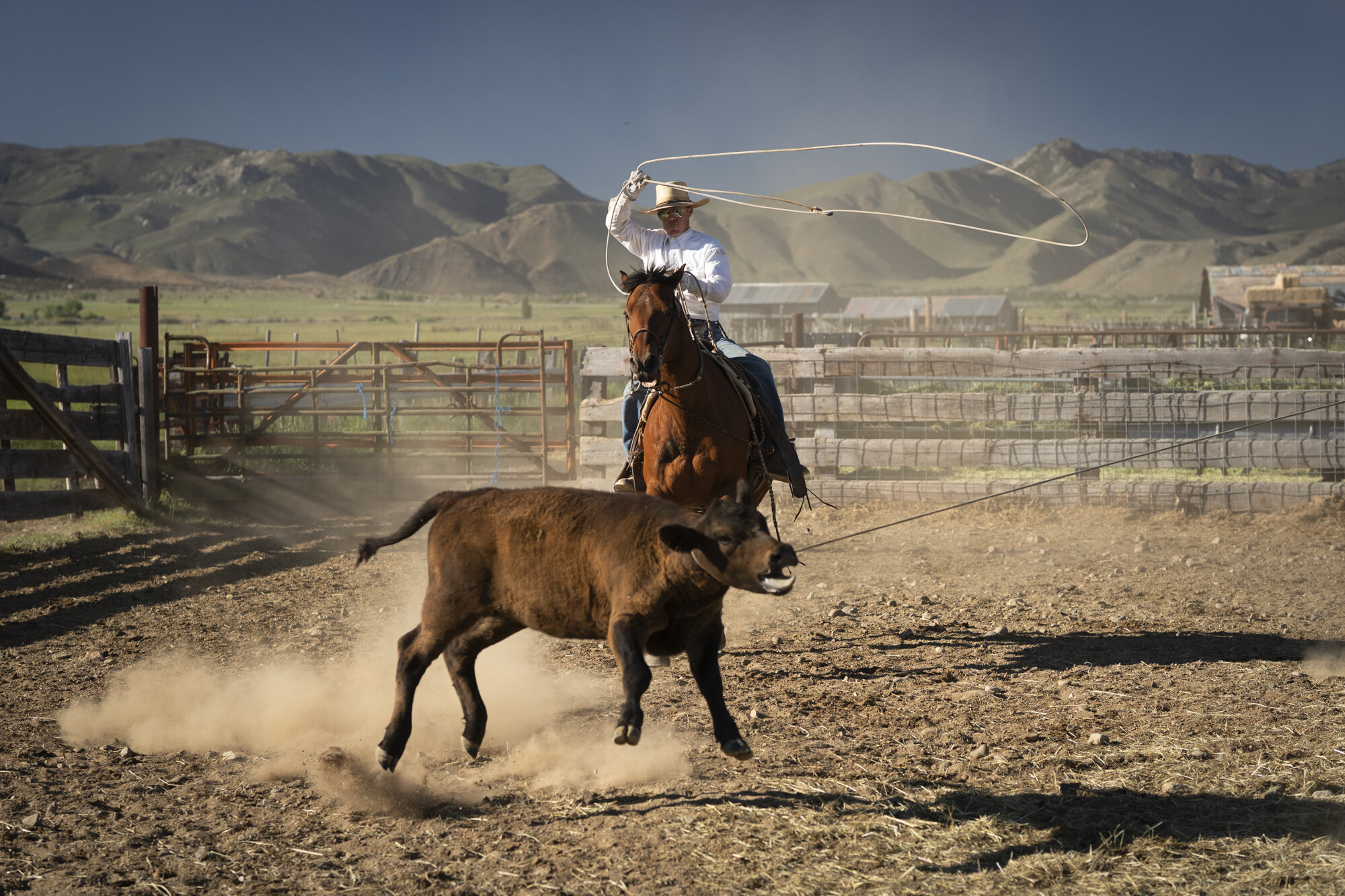
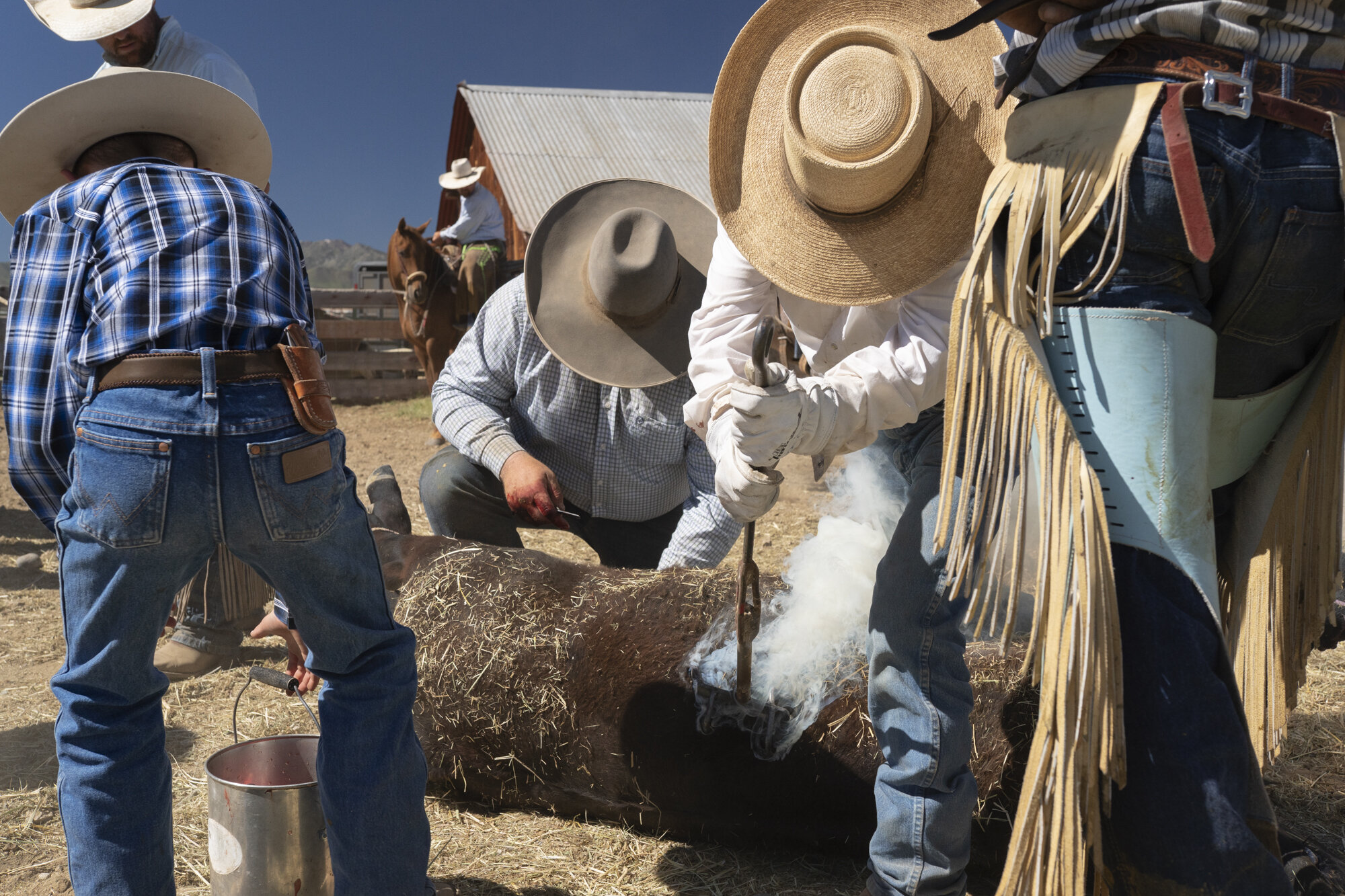
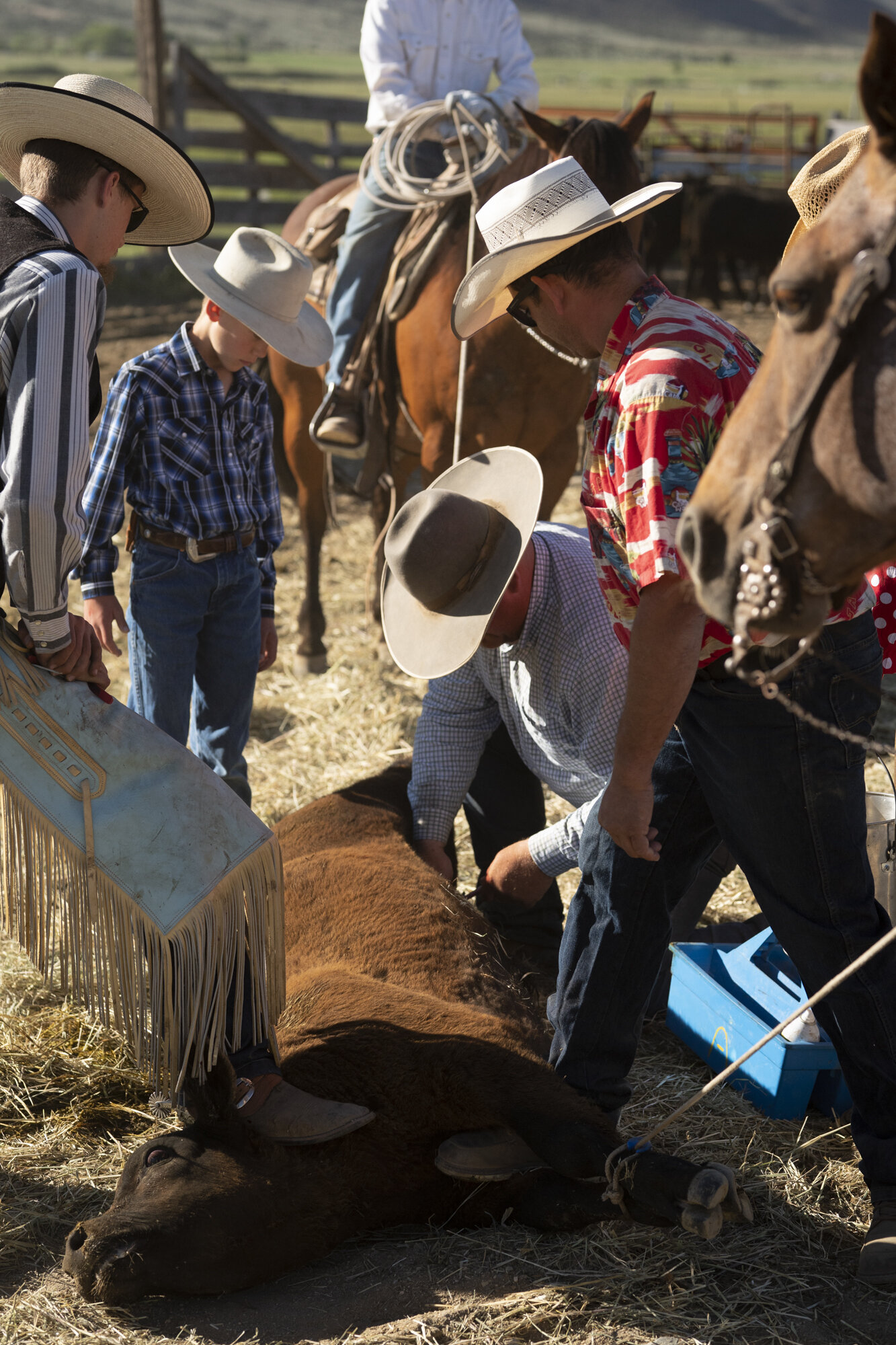
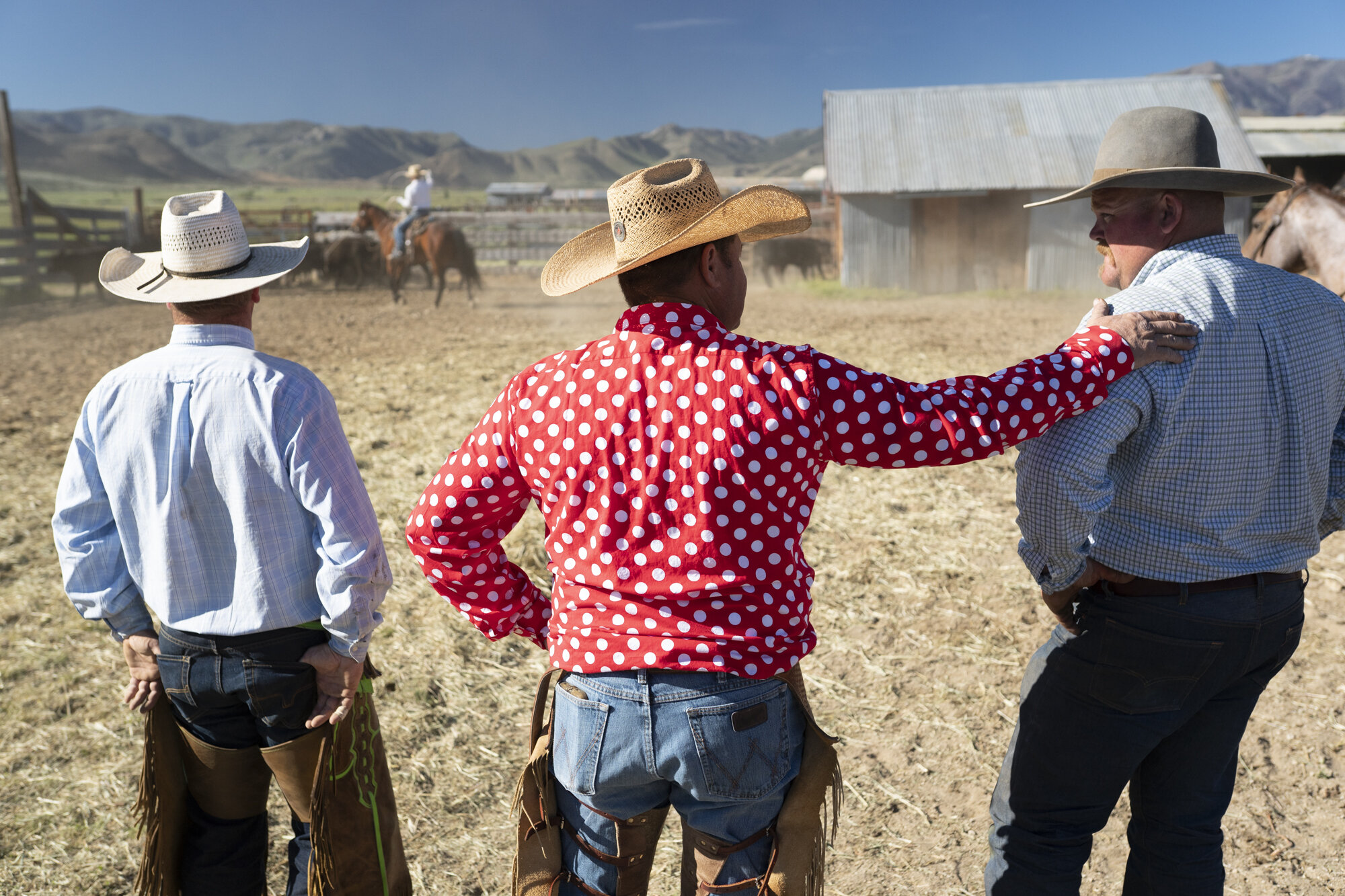
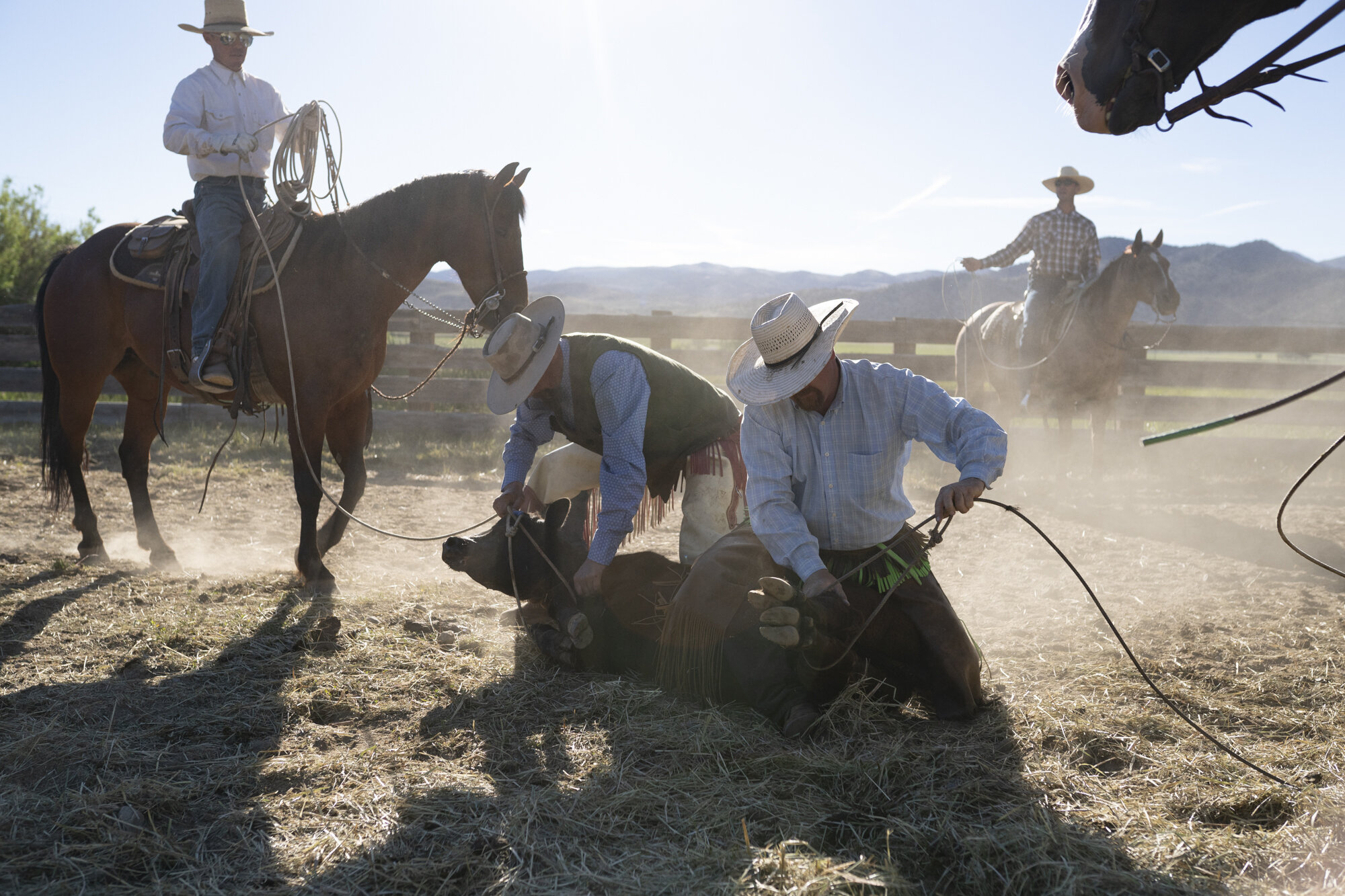
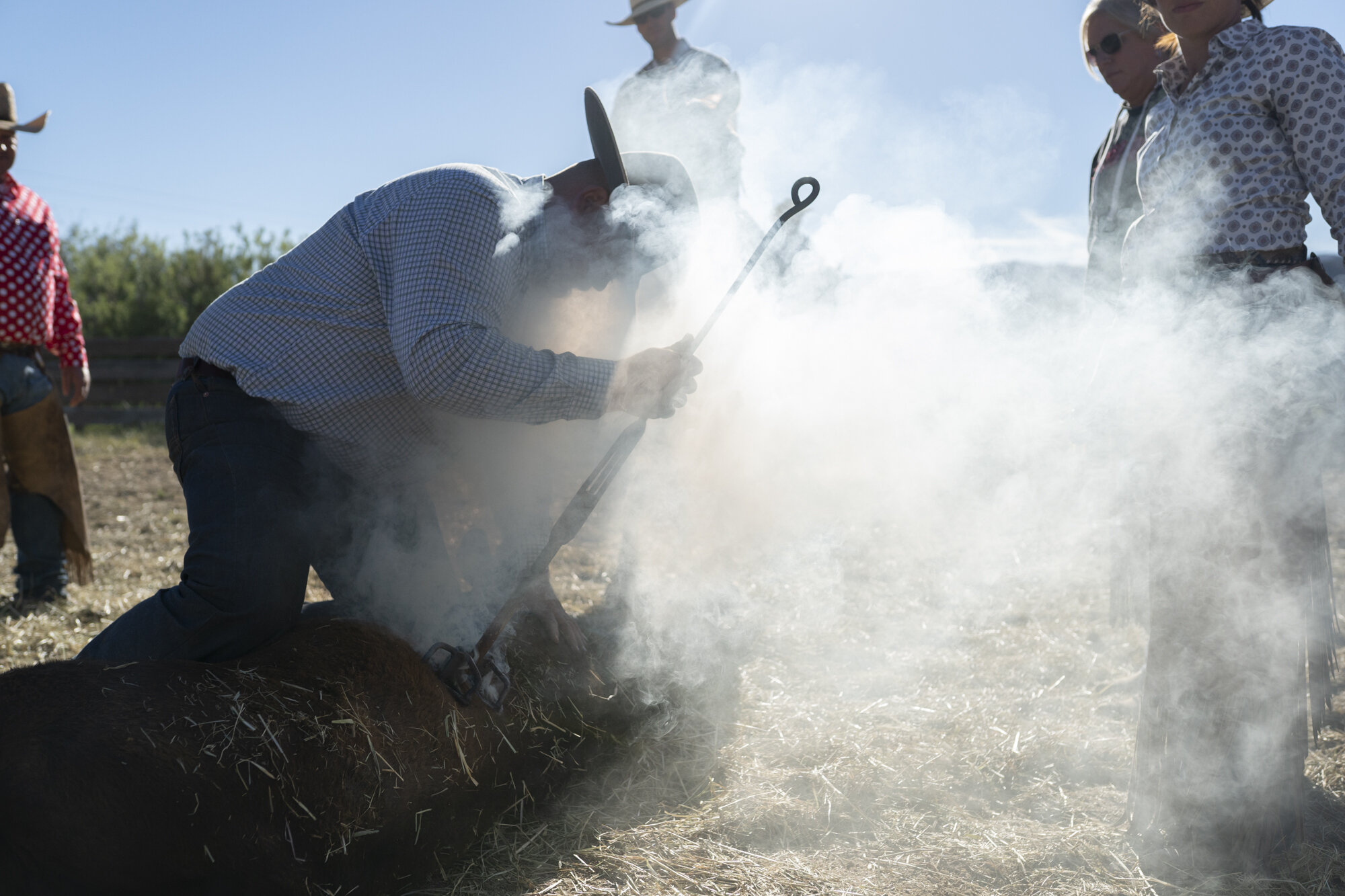
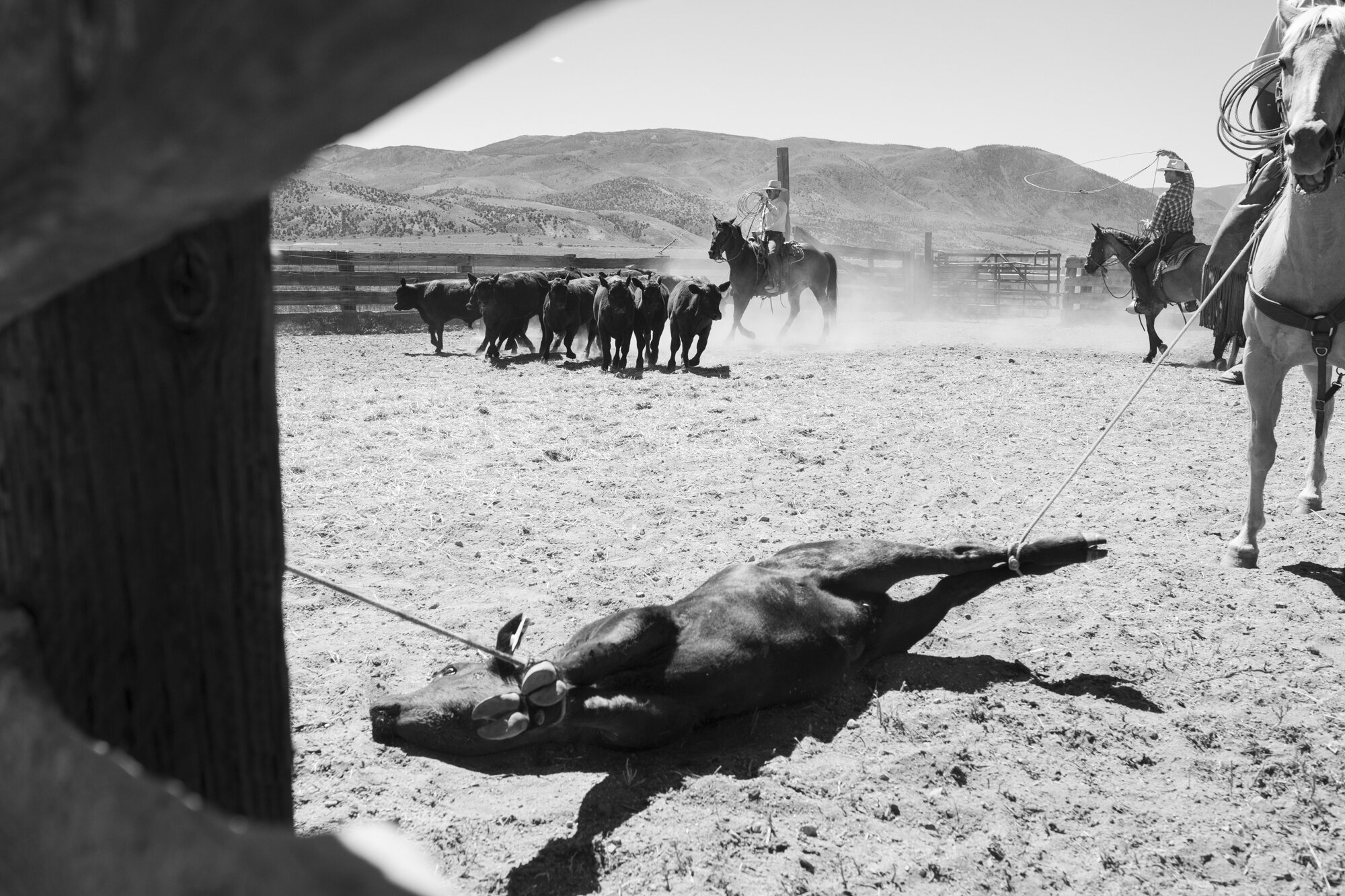
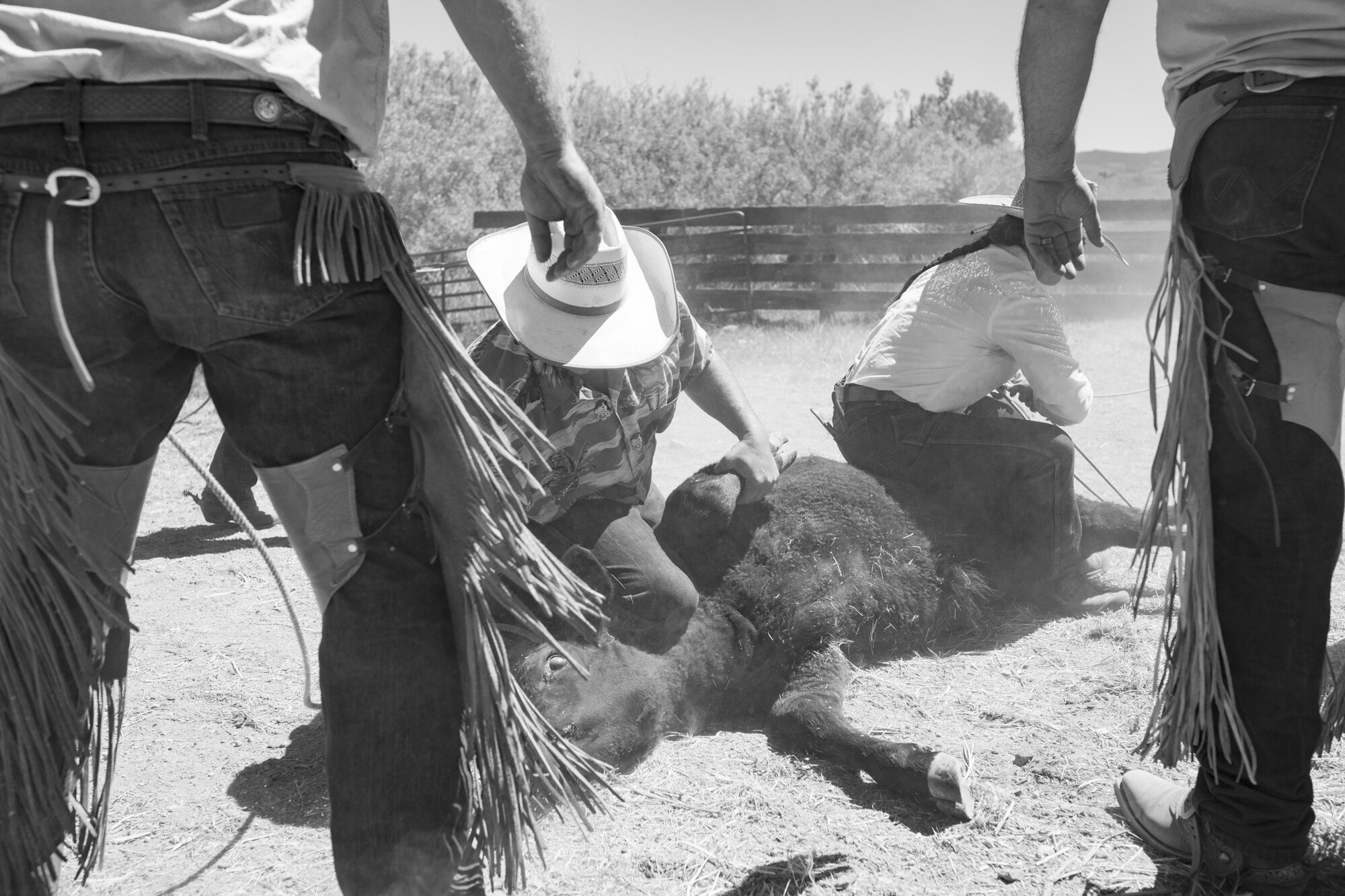
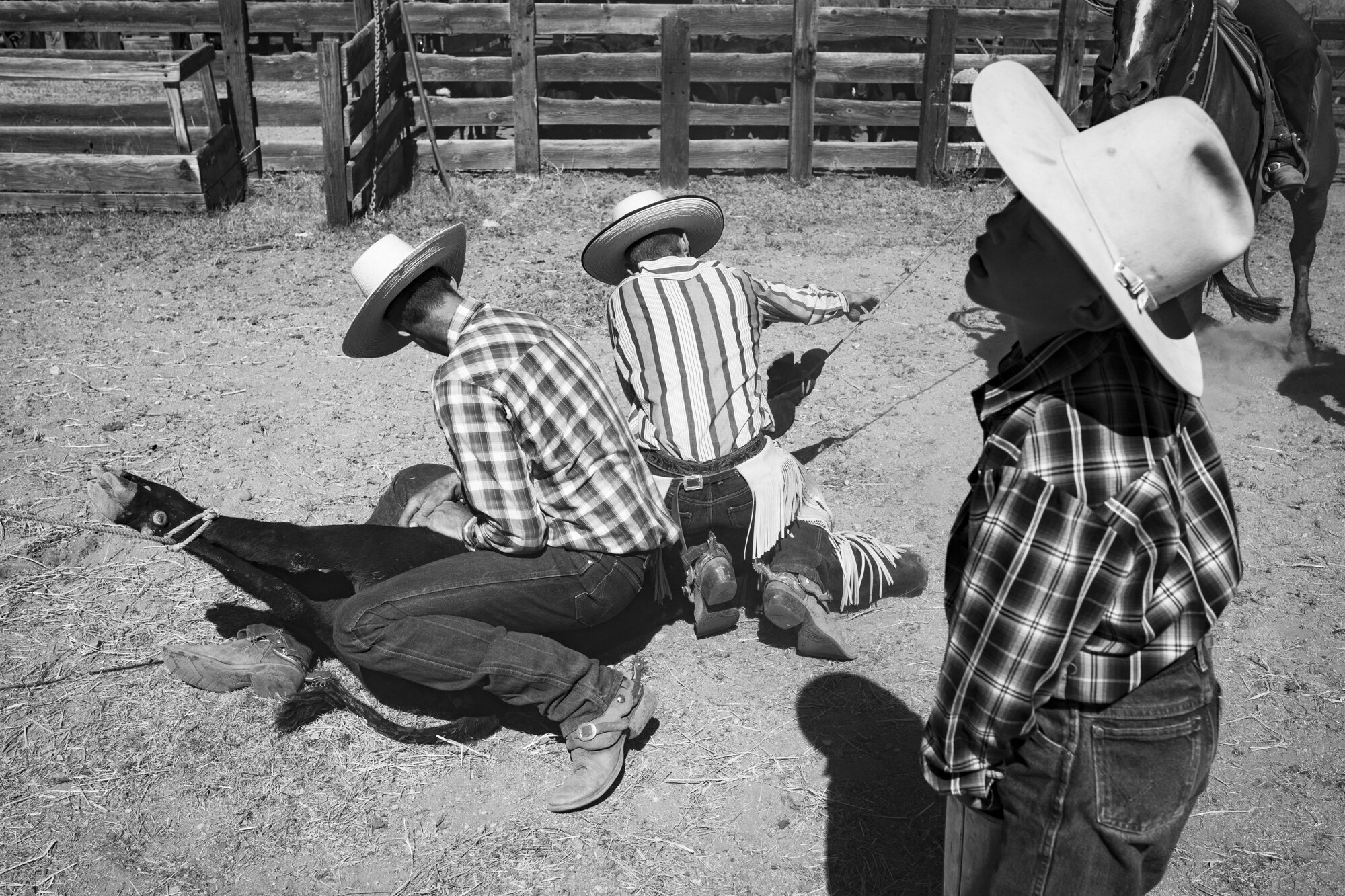
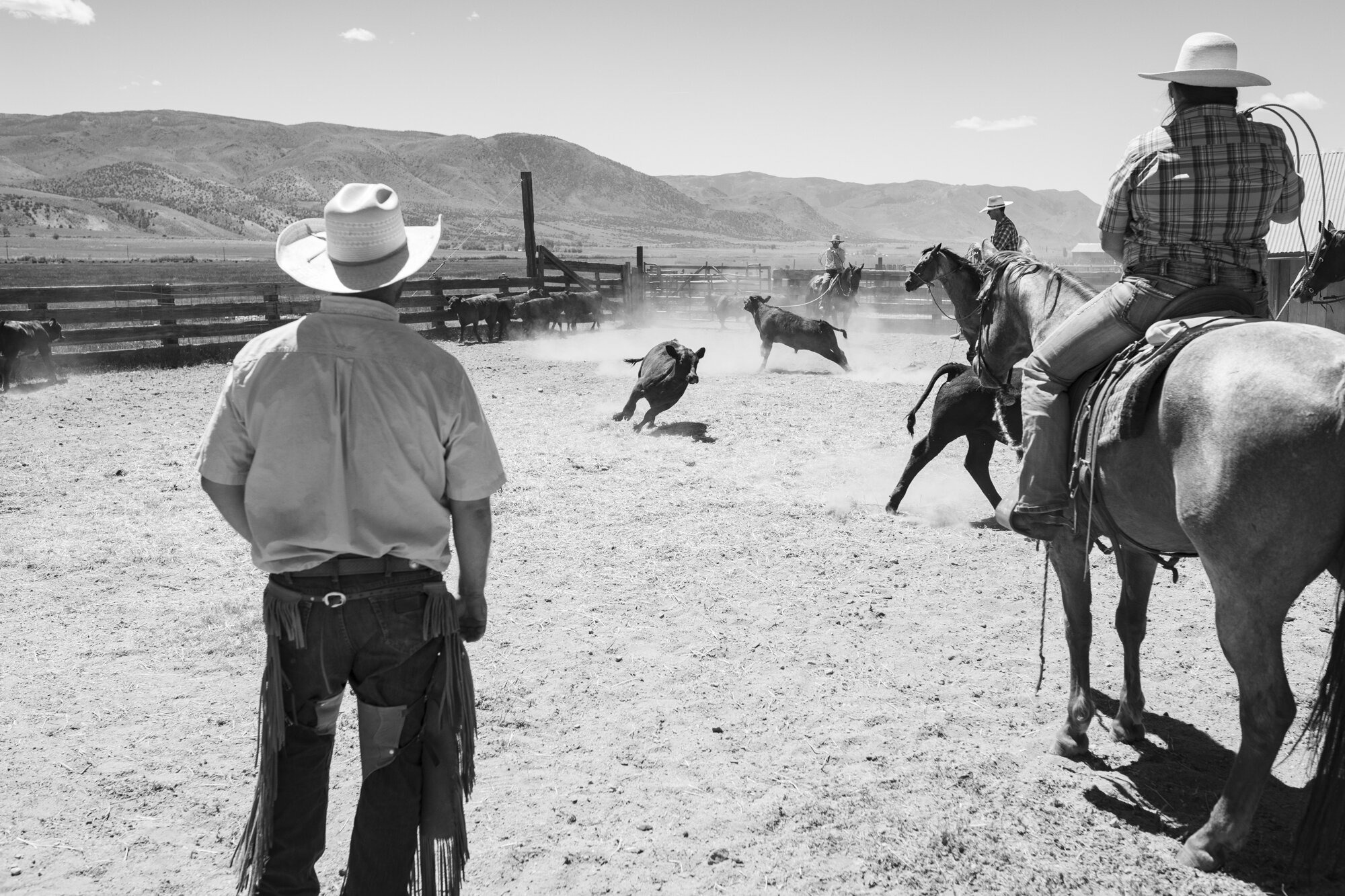
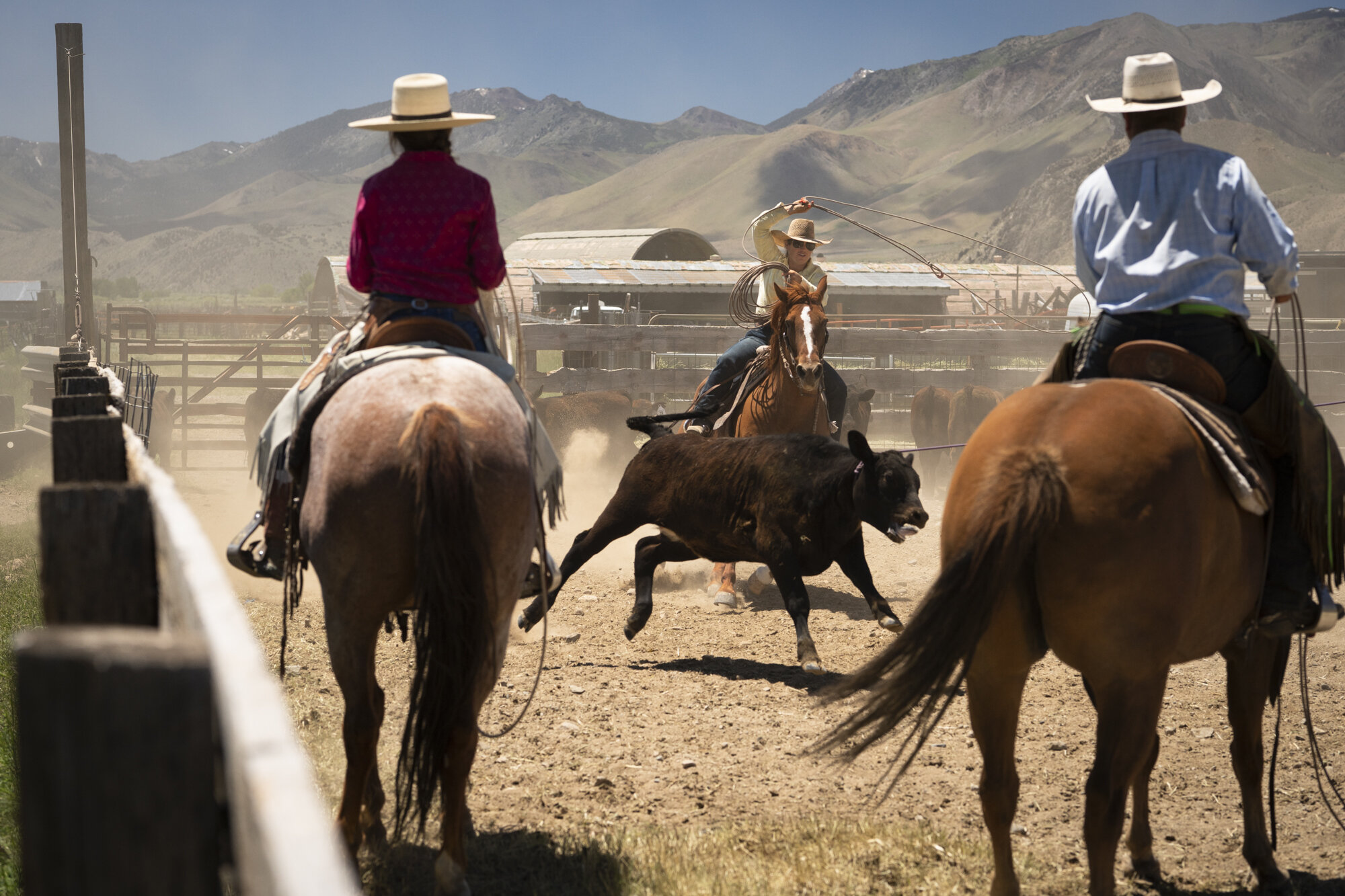
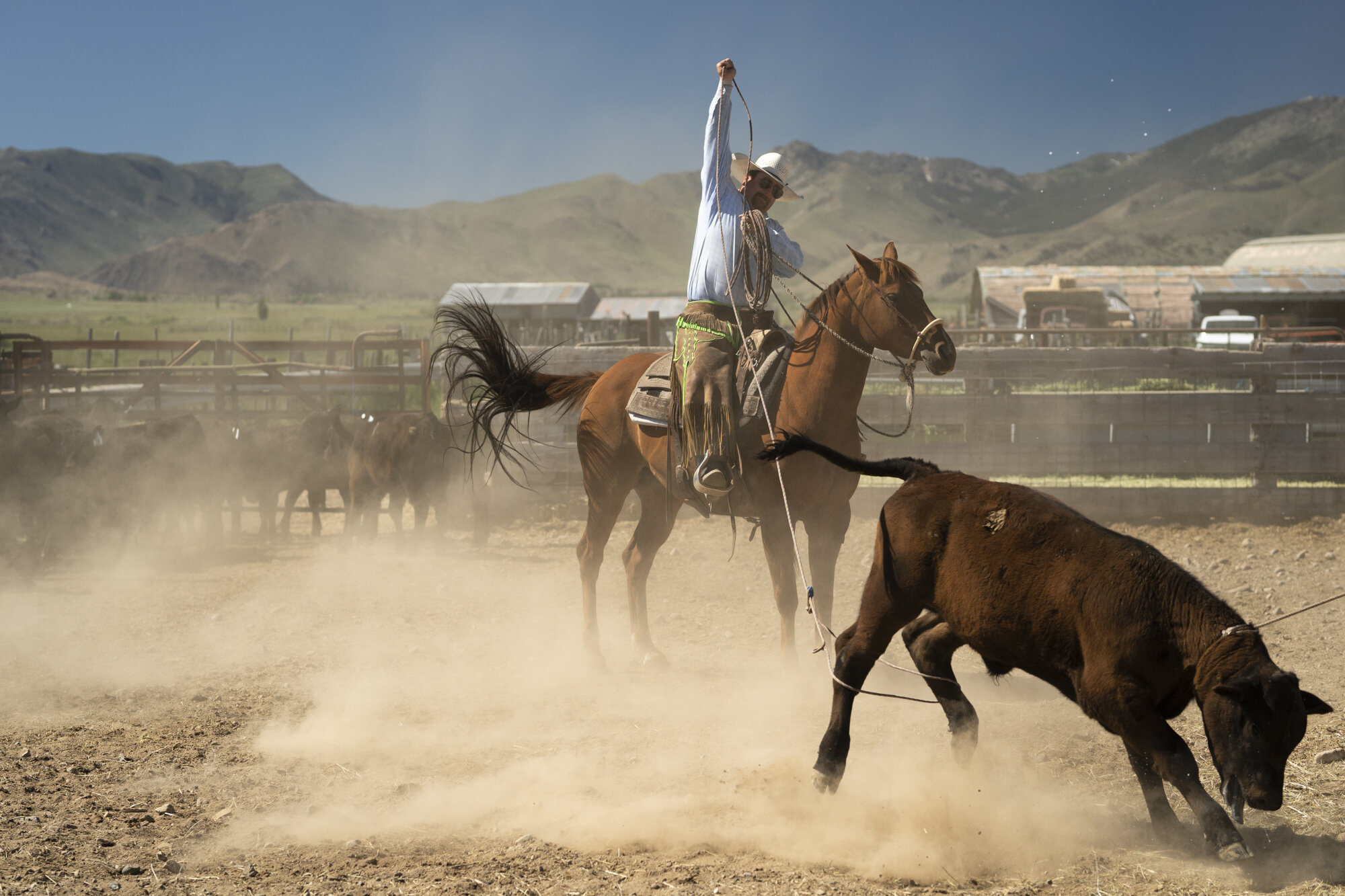
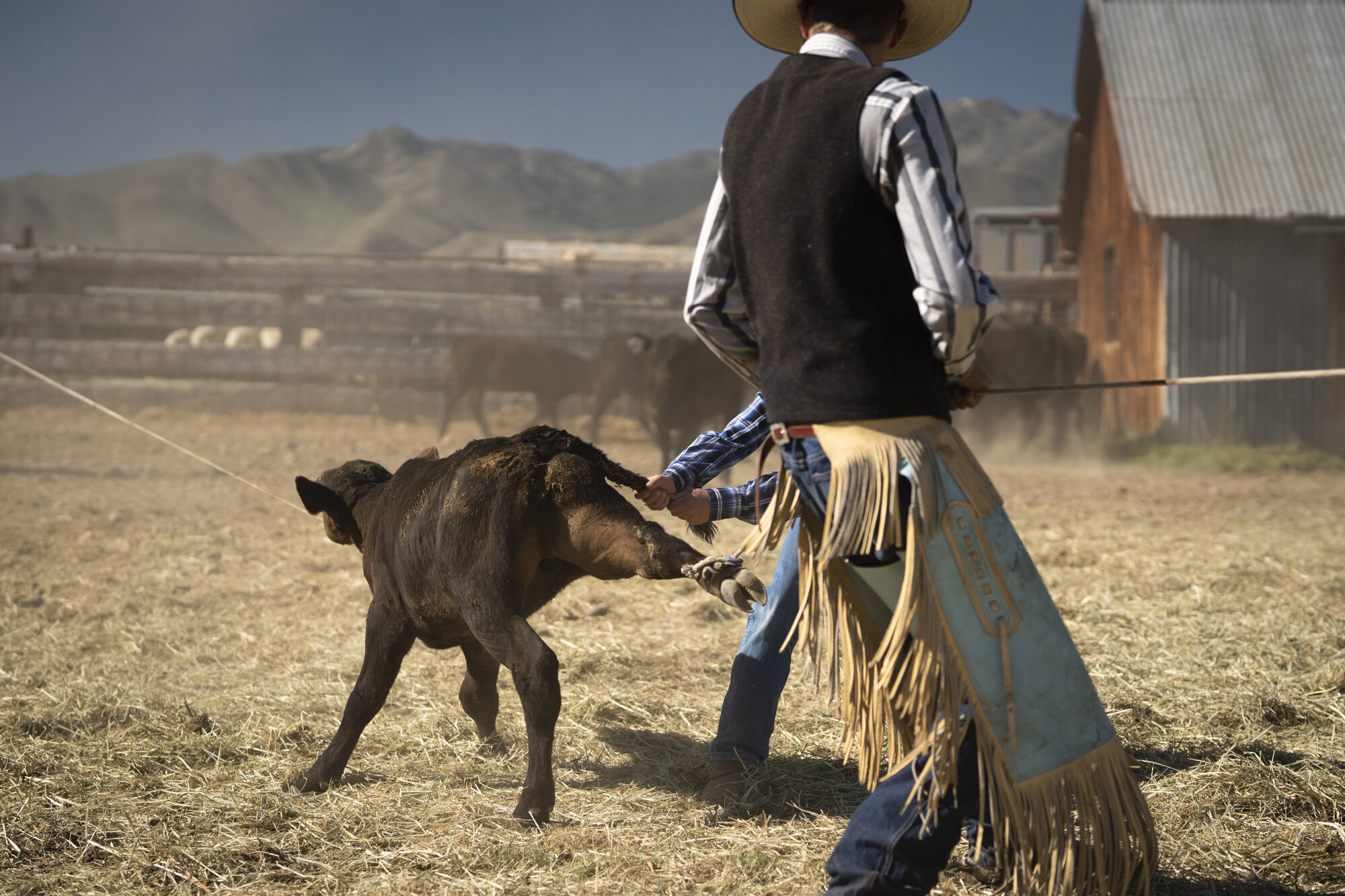
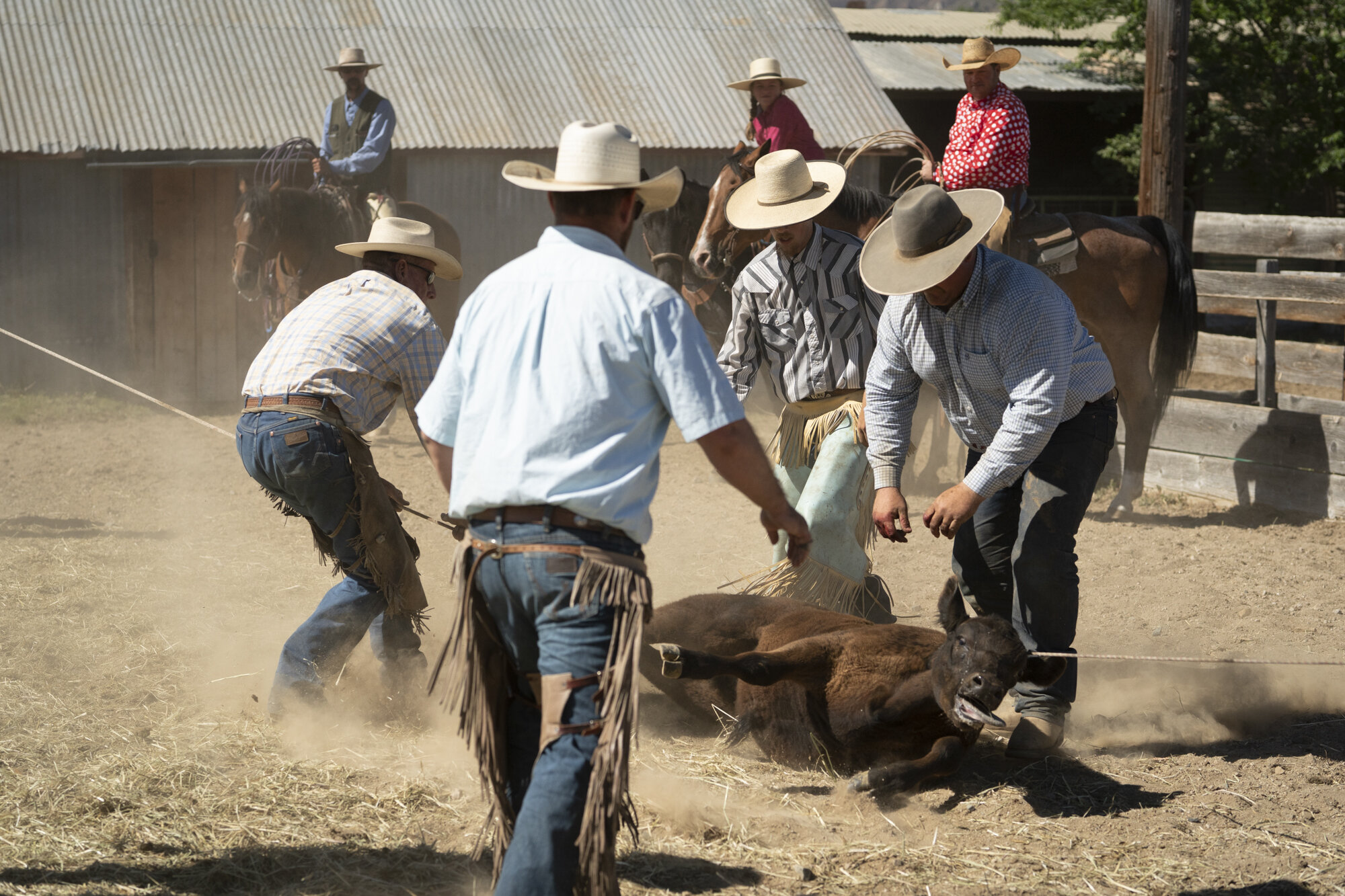
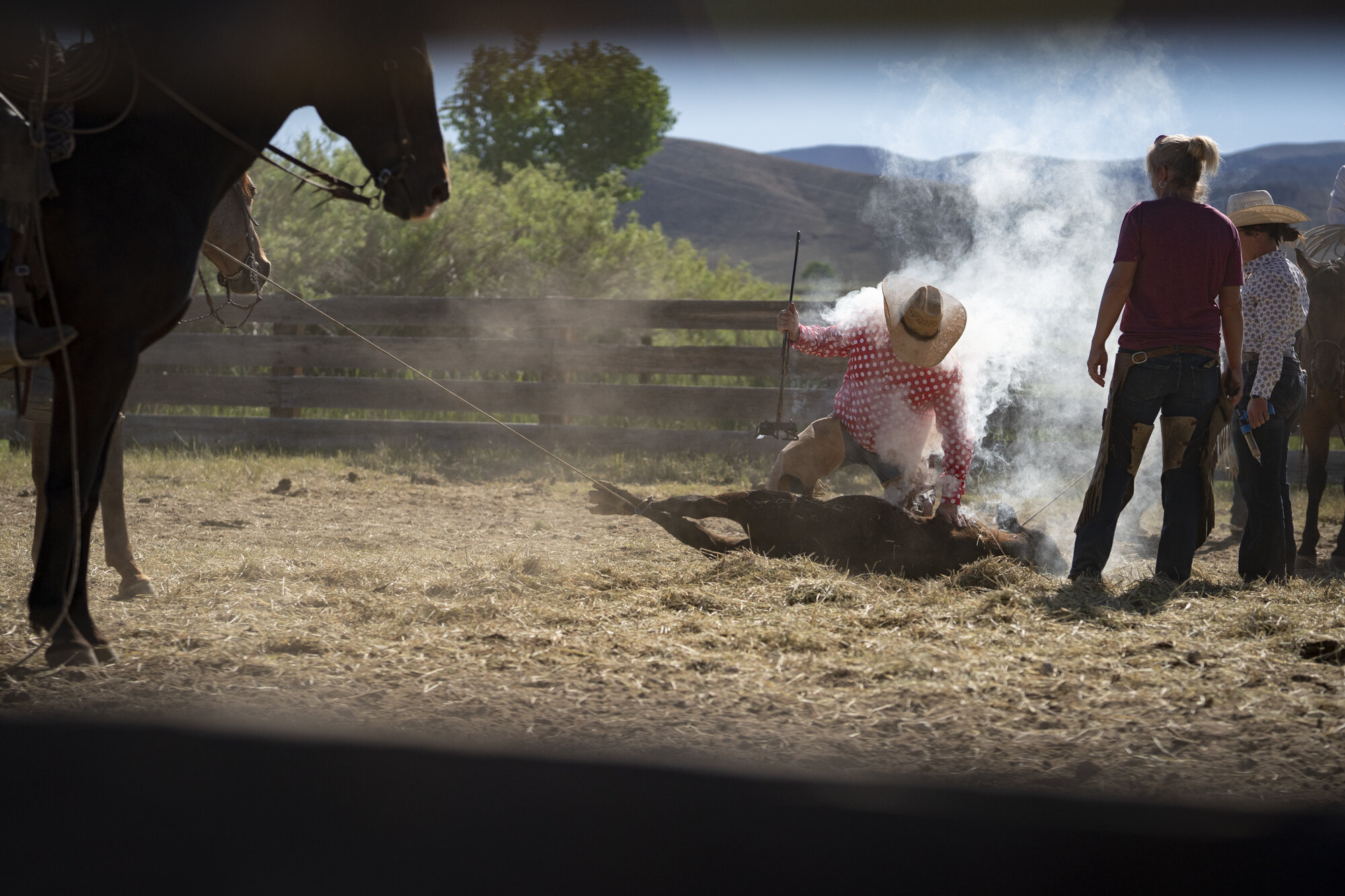
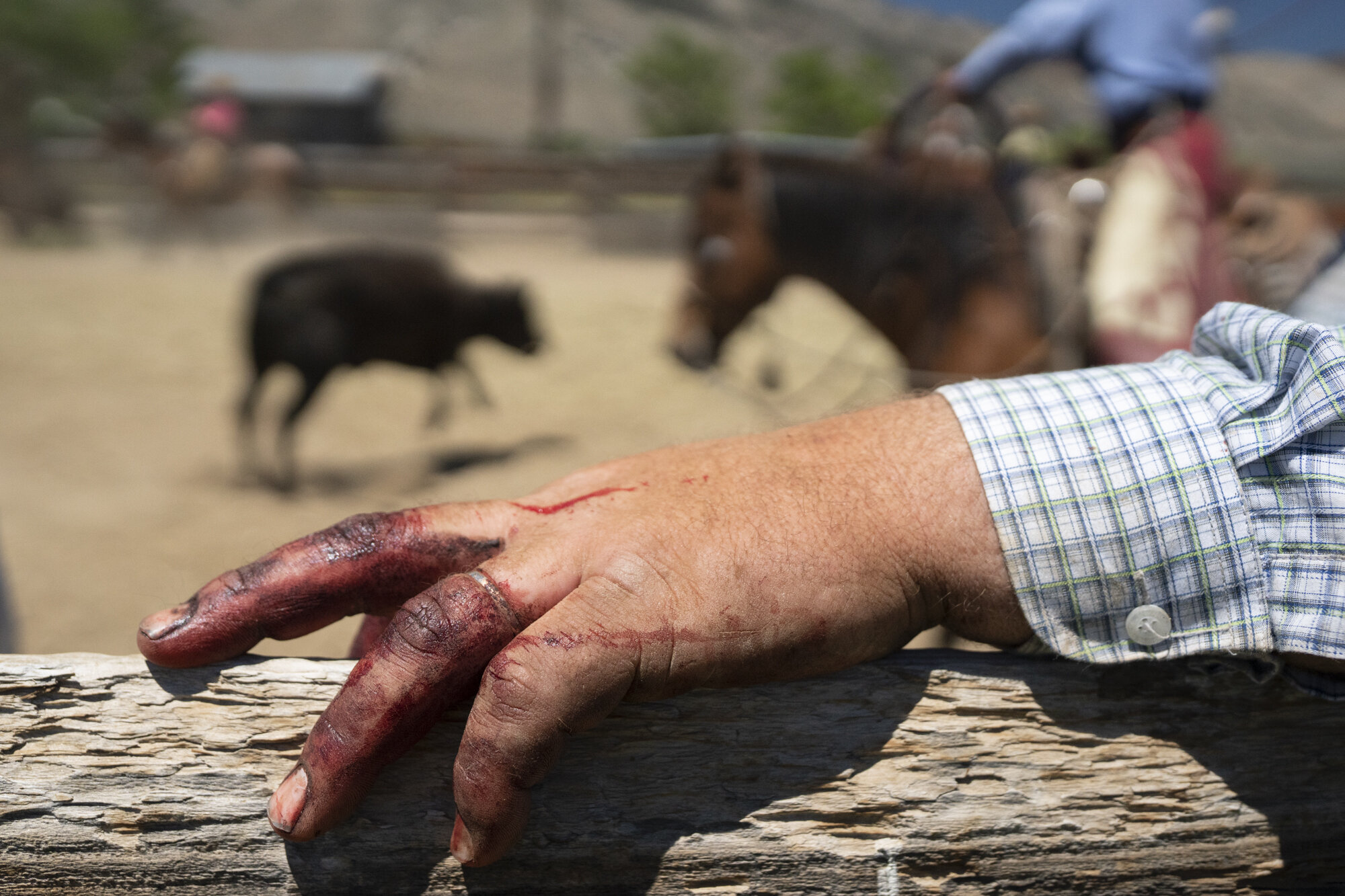
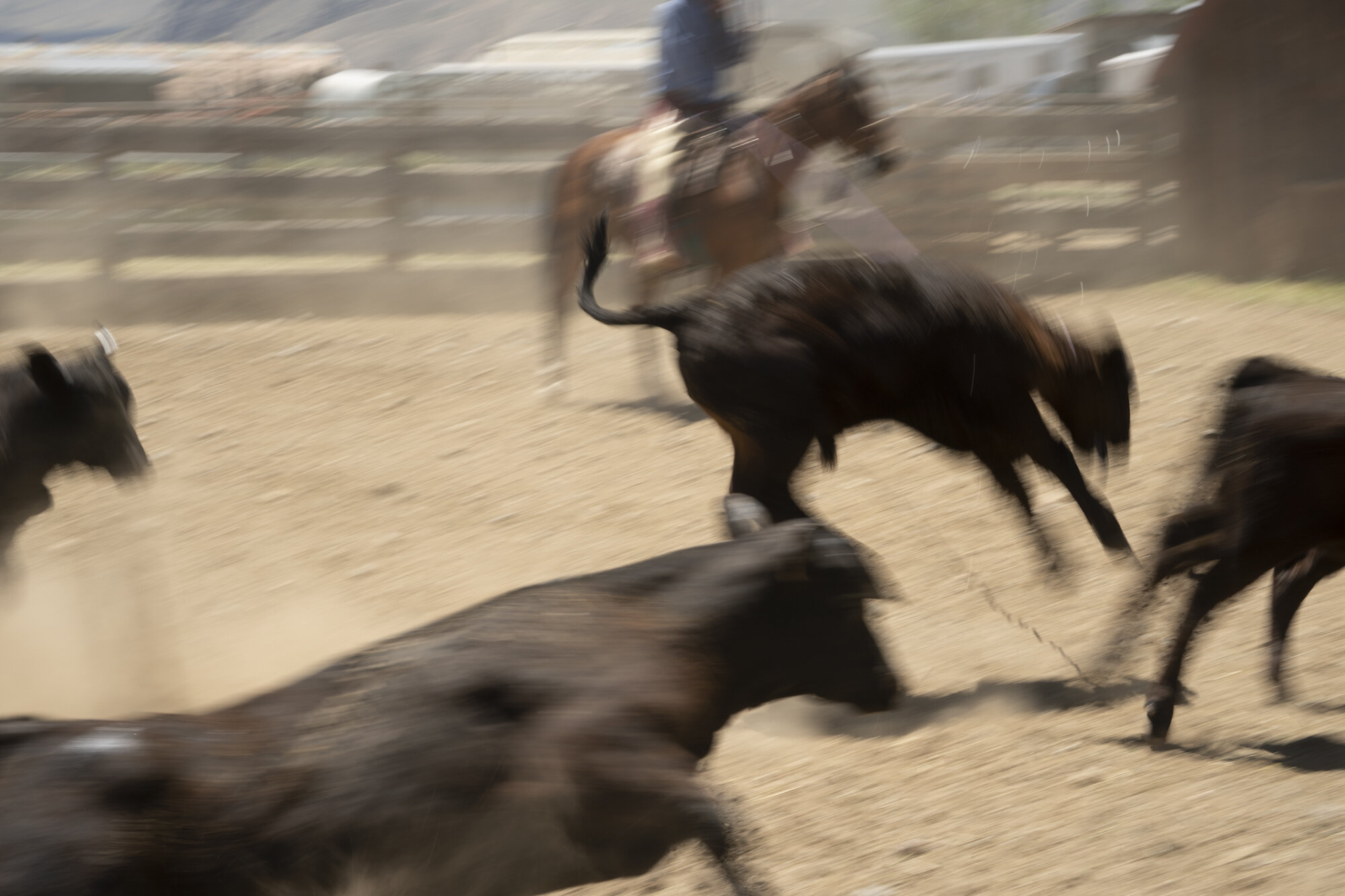
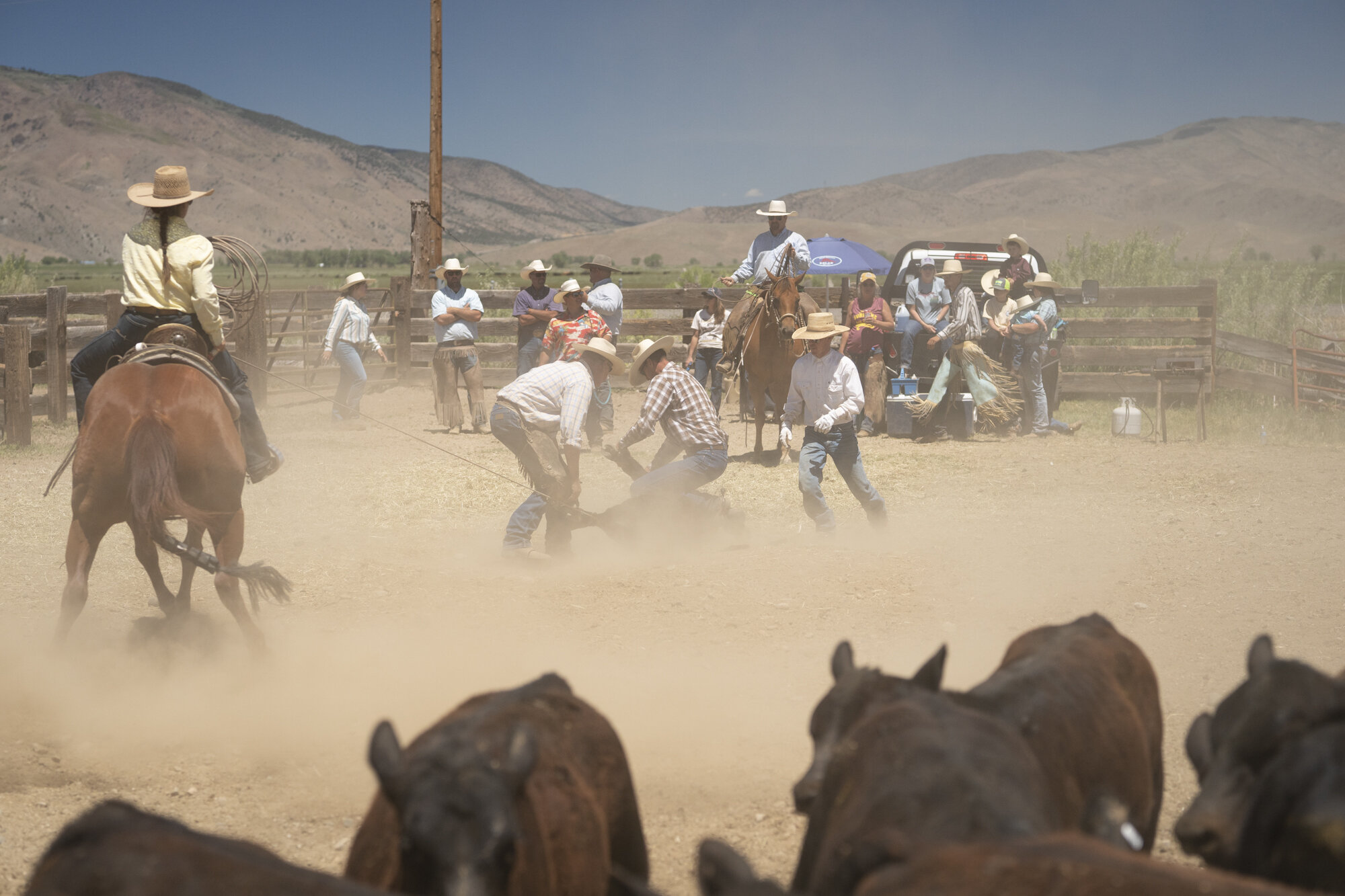
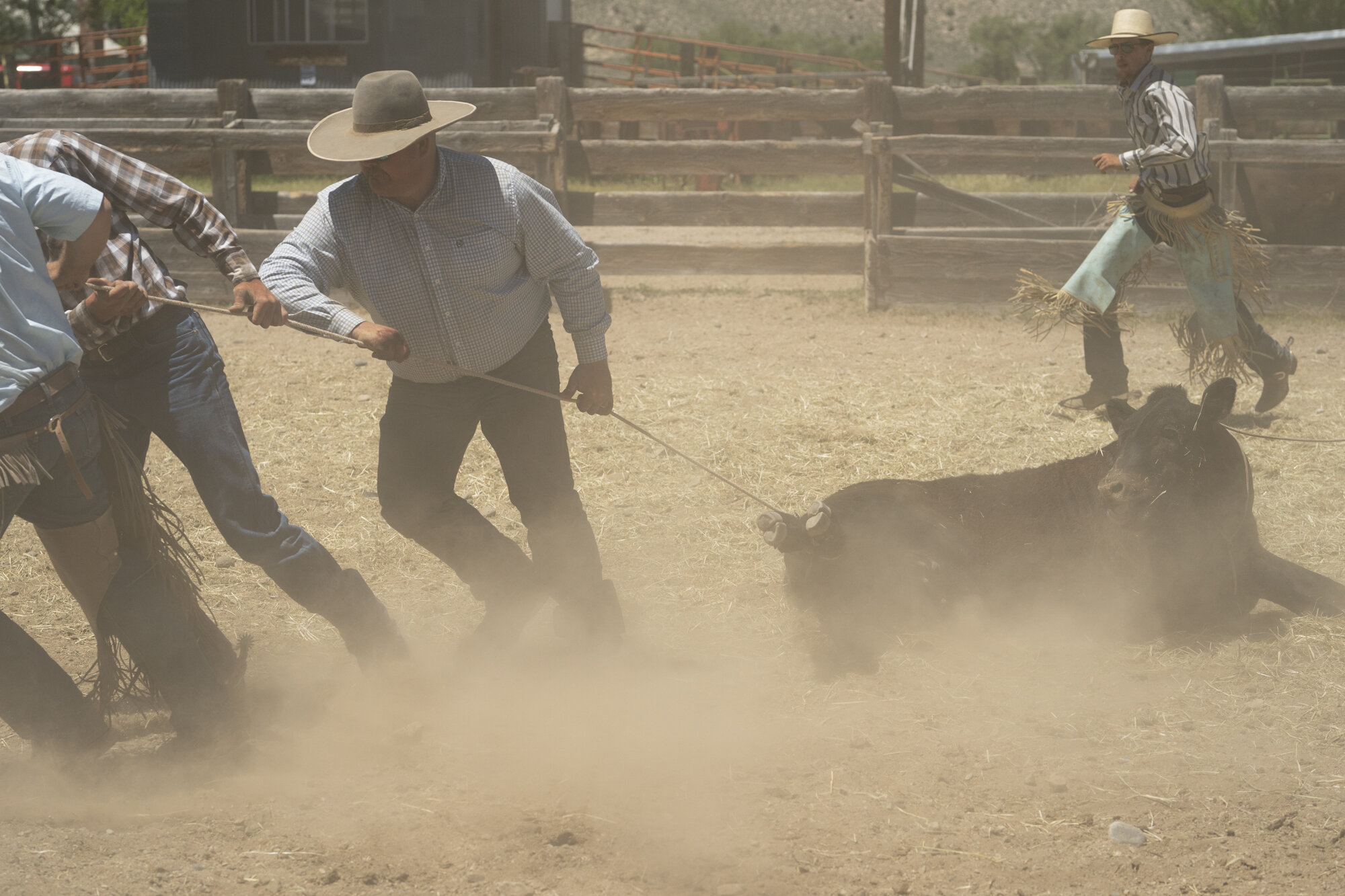
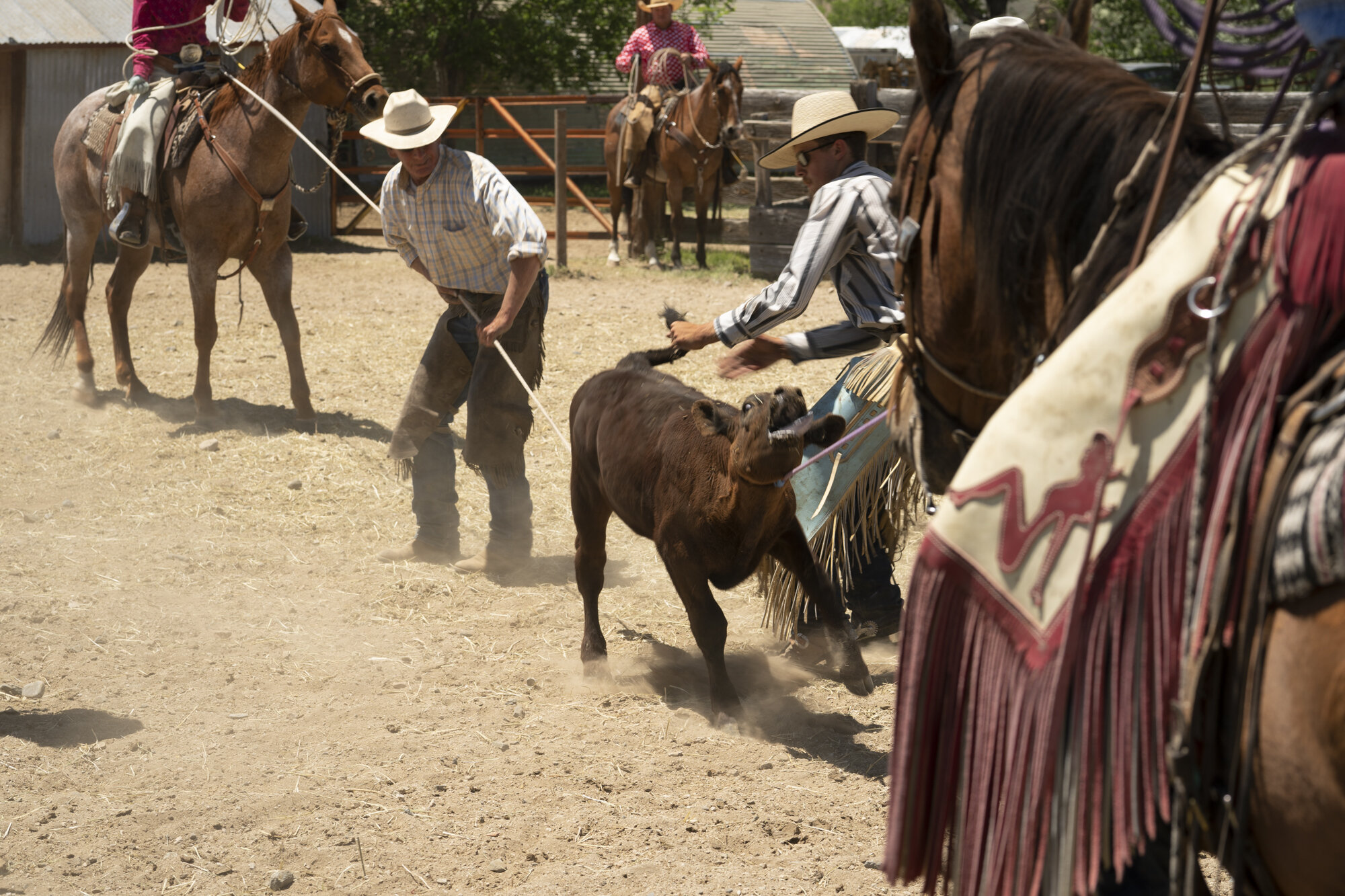
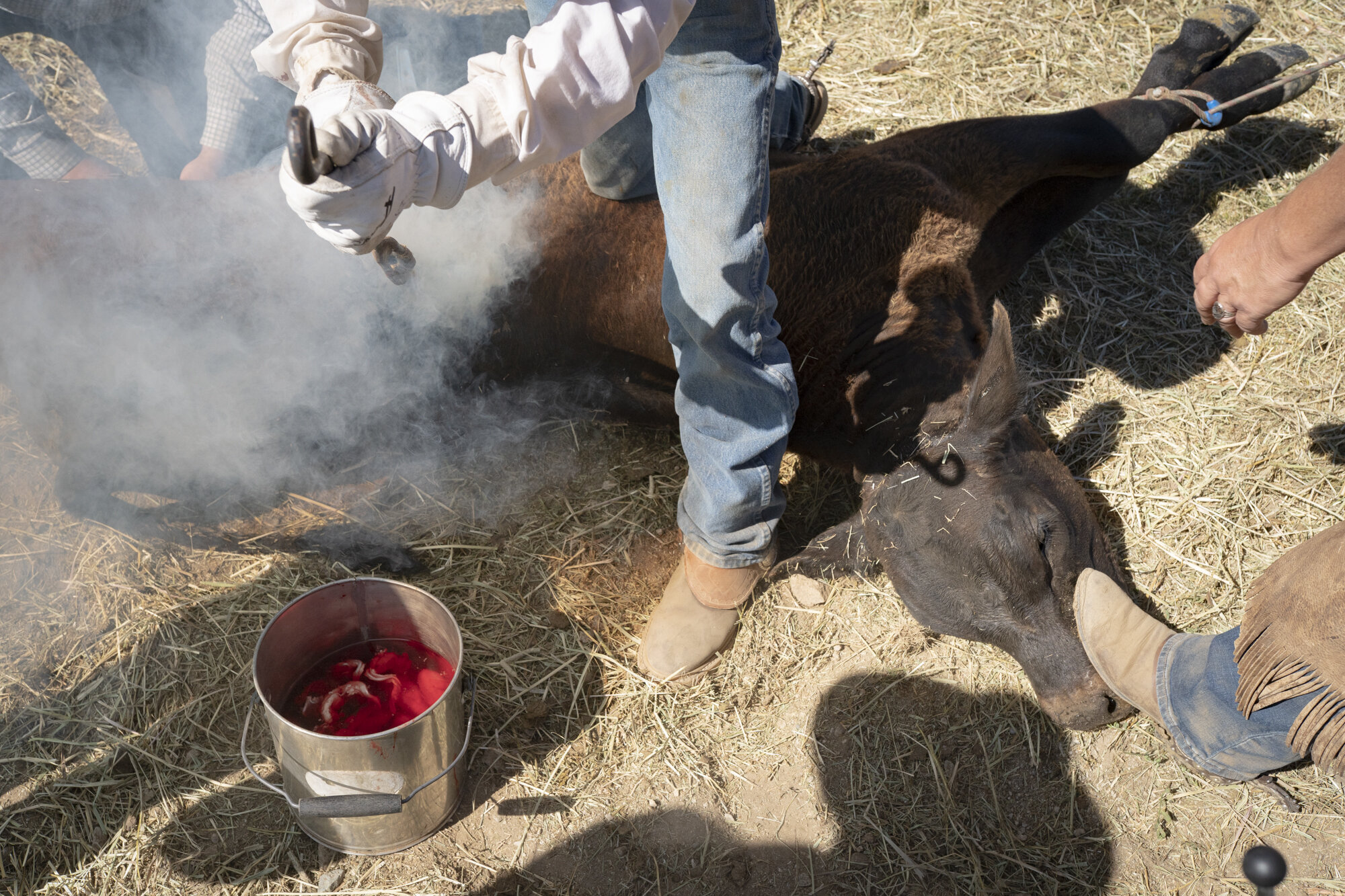
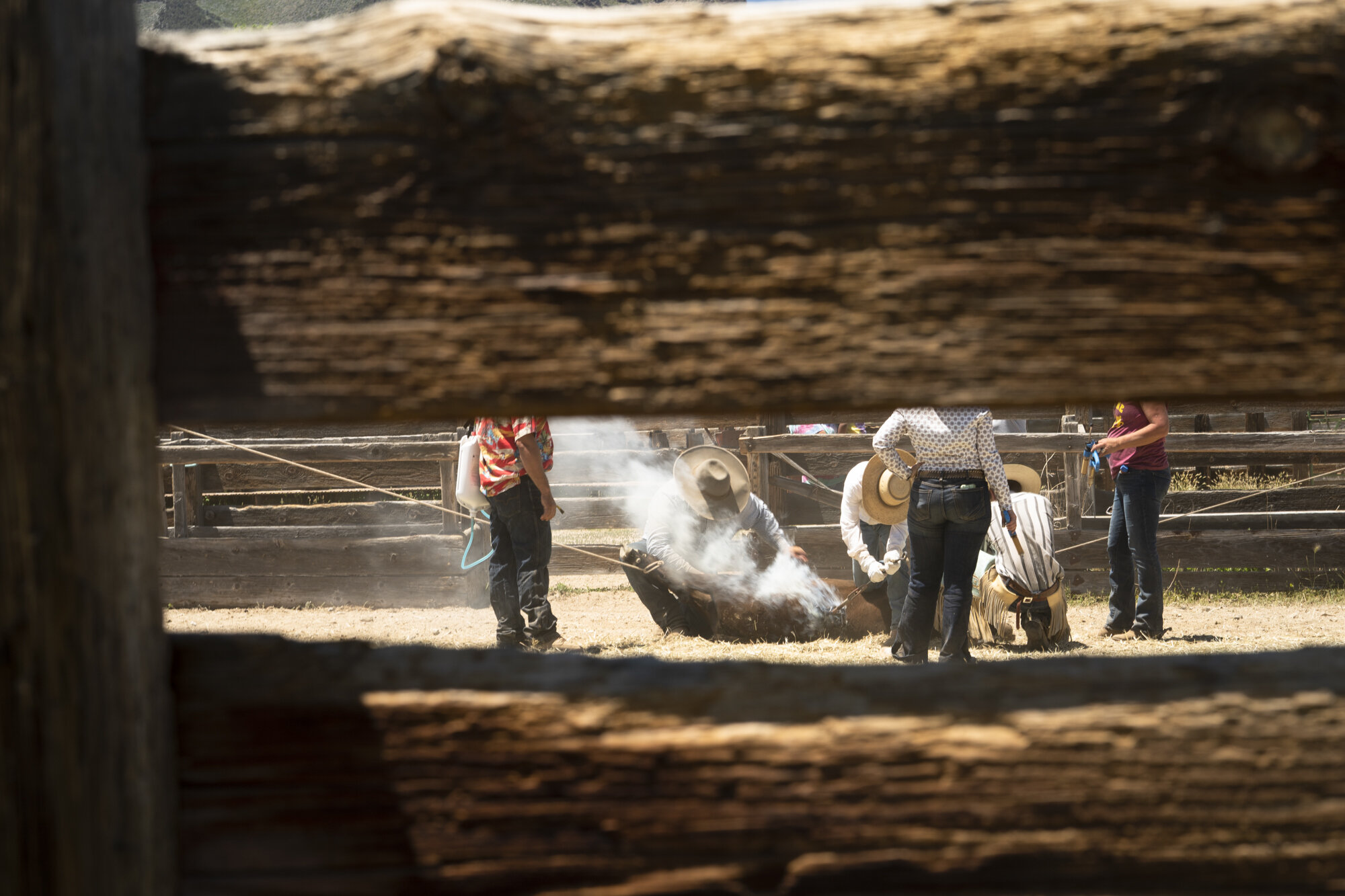
What a day this was with Spencer and Jessica of the Anderson Cattle Company (click to buy some of their beef) and their crew. Really grateful to have documented the work done by these folks. Not only was it fun, but also incredibly impressive. Watching the control they had over their horses and the way they used them as vehicles was a pleasure. That goes for the women too. They can rip. At the end of the day I asked one of the guys how long it took until he was comfortable with that sort of environment. To which he replied that you don’t, really. “Controlled chaos”. You just get use to the controlled chaos, he said. A very fair and accurate way to describe that type of event.

Something well worth noting in my opinion is that none of the people you see in these pictures were paid to be there. They are all friends of the Anderson’s and volunteered to work their asses off in the hot sun. A favor that is always returned over and over again throughout their lifetimes. On this day they helped on their ranch, but next time the Anderson’s will be the one’s lending a hand. The way life should be.

One of my favorite photographers of all time is William Albert Allard. He made a great deal of photographs in the American West documenting the lifestyle and I’d argue that nobody has ever done it better. In one of his books he talked about time spent on a ranch with some cowboys in Nevada. He asked one of the guys if he was ever afraid of being replaced by a machine. “Bill, they just ain’t come up with nothin’ yet that’ll take as much abuse as a cowboy”.

Follow along with the Anderson’s on IG @2aranchwife

More Western Cowboy Photographer here

Lake Tahoe Photography

Street Photography - South Lake Tahoe - California

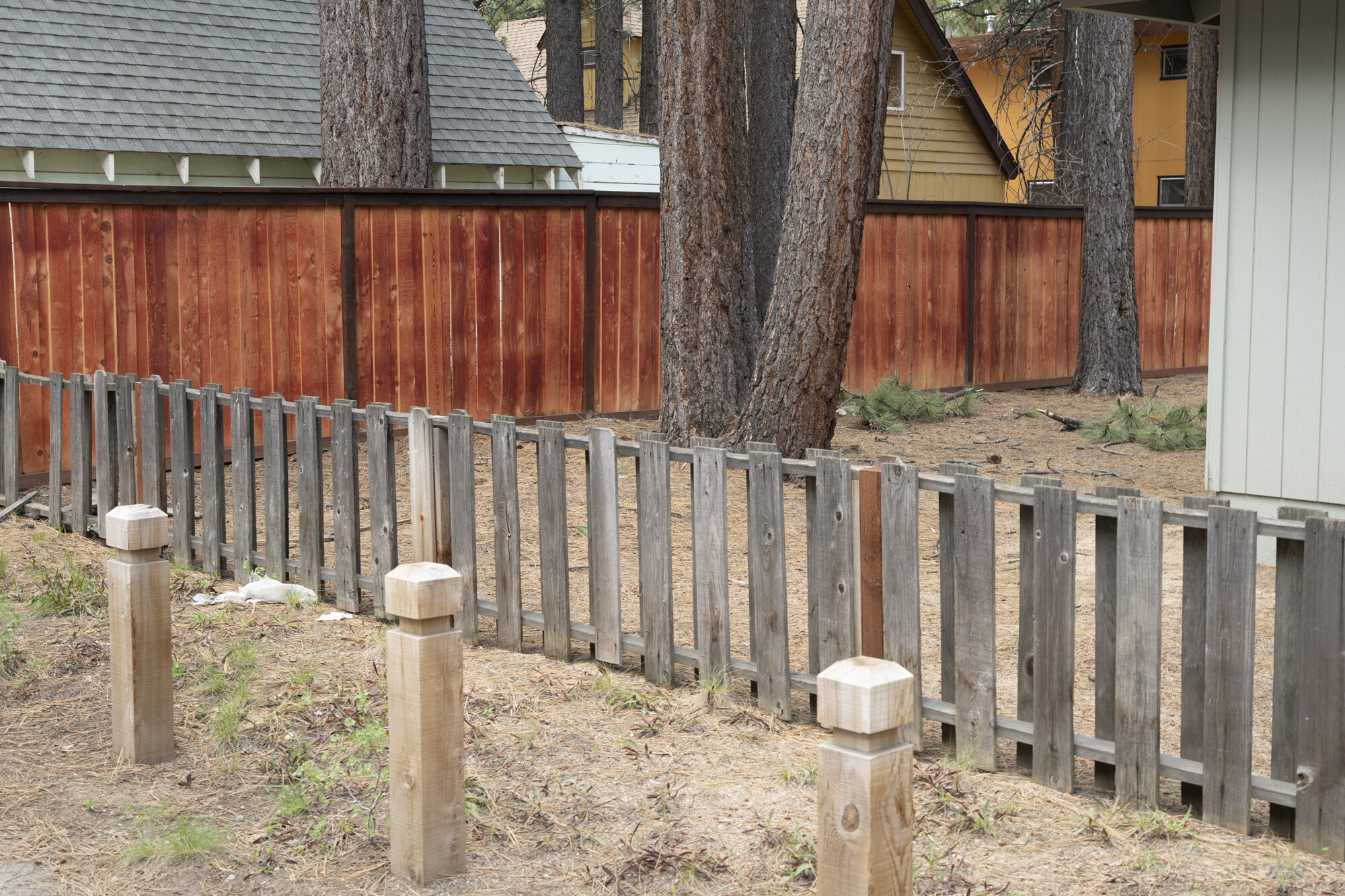
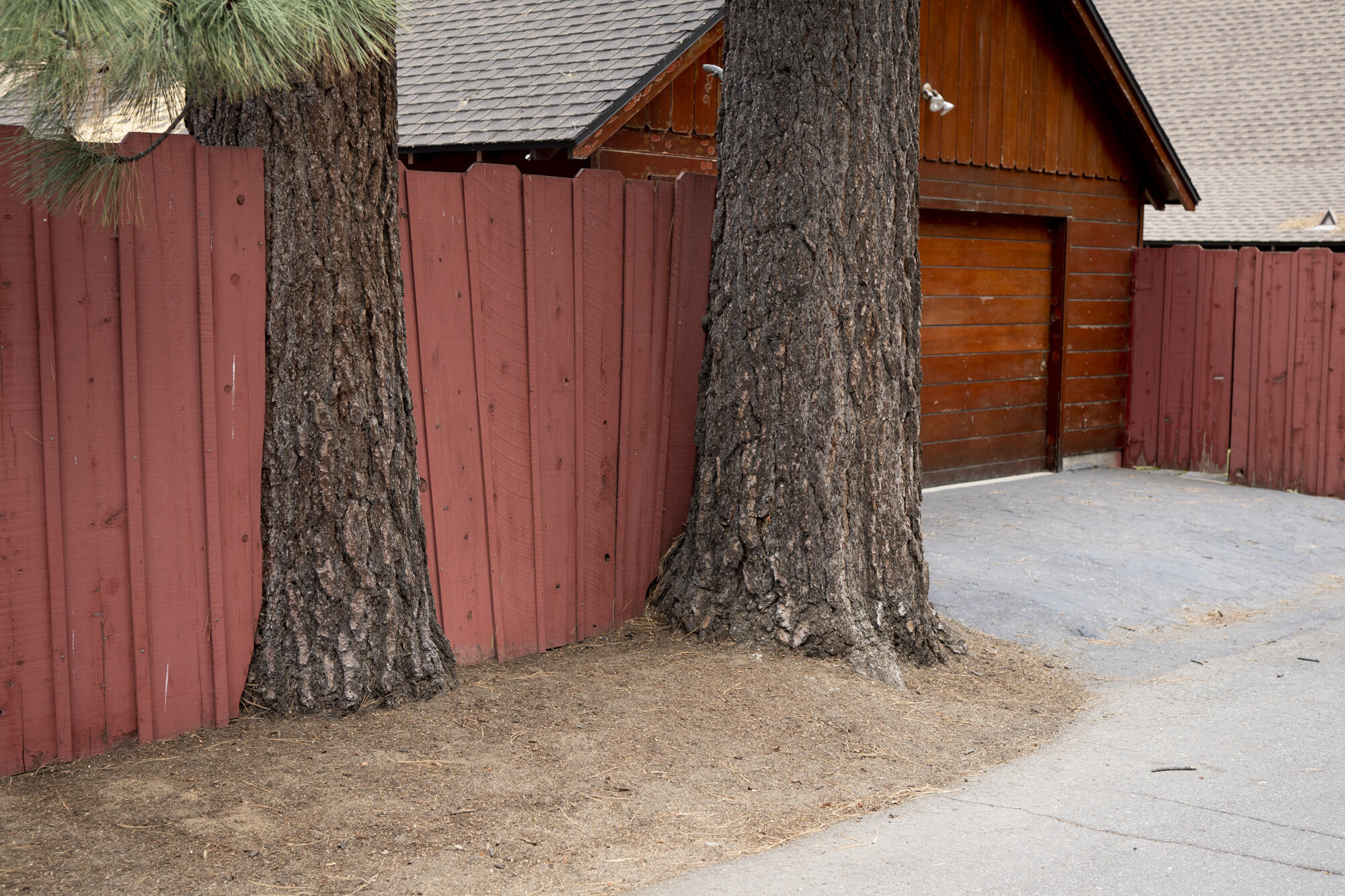
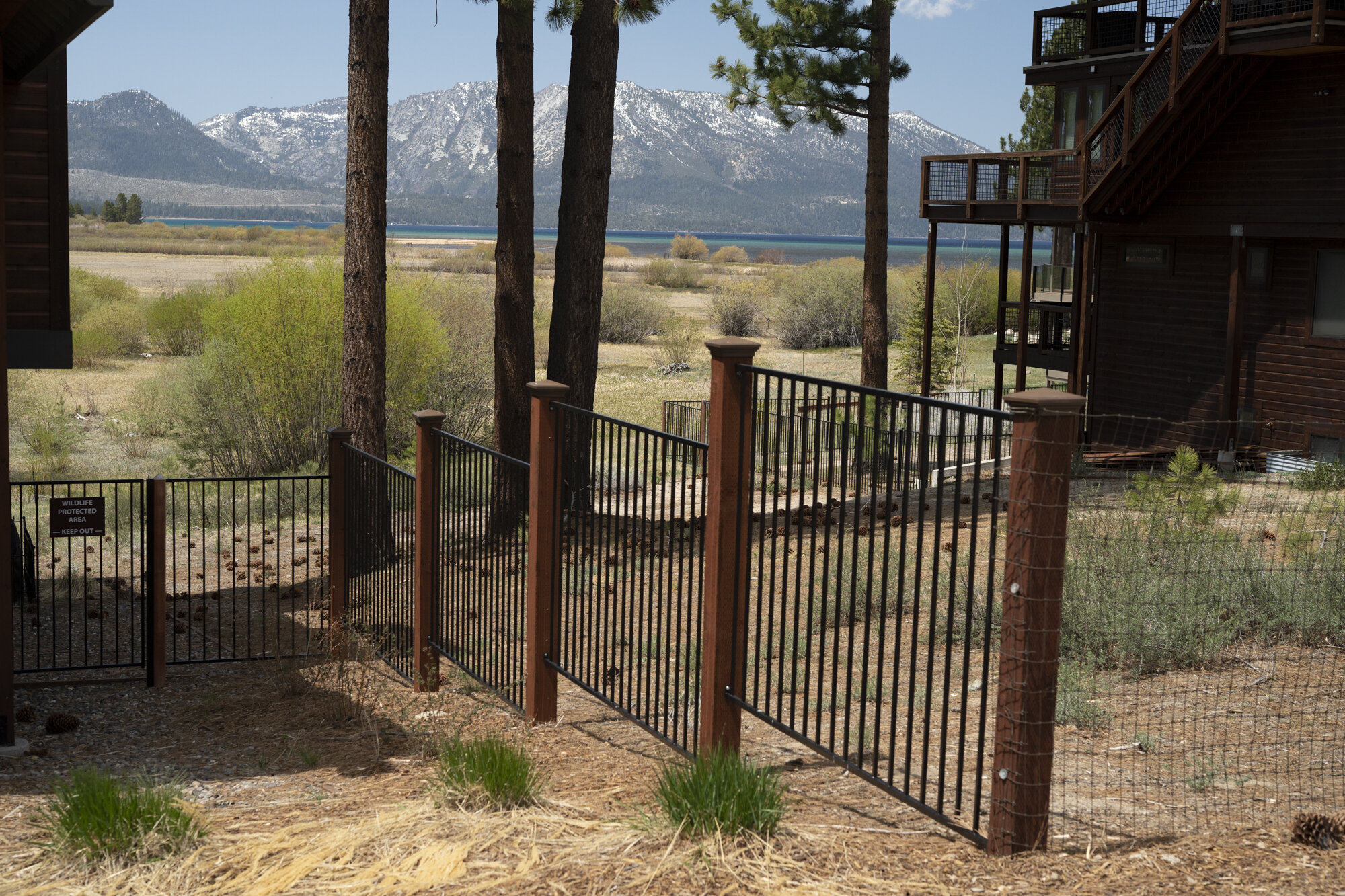
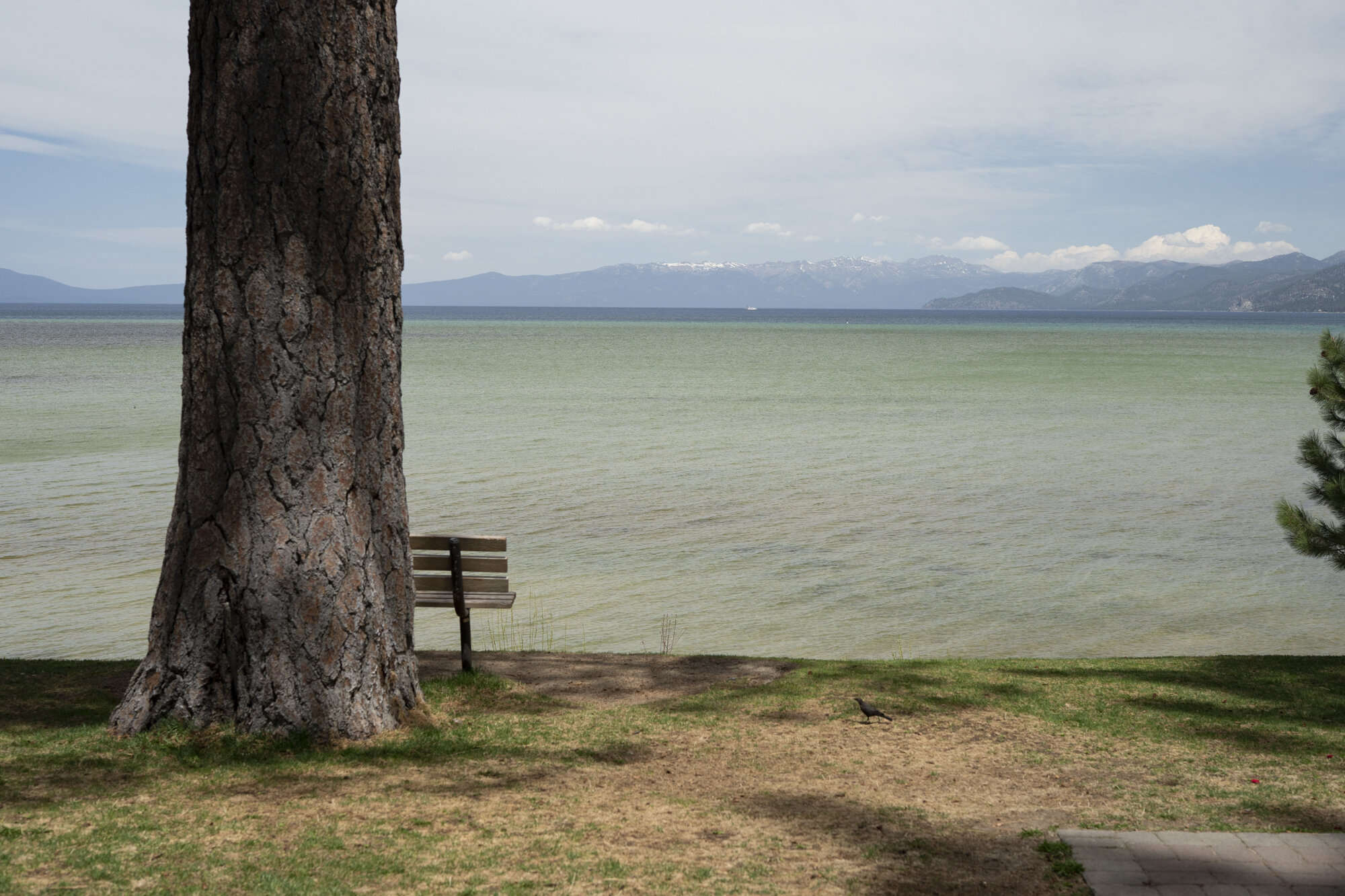
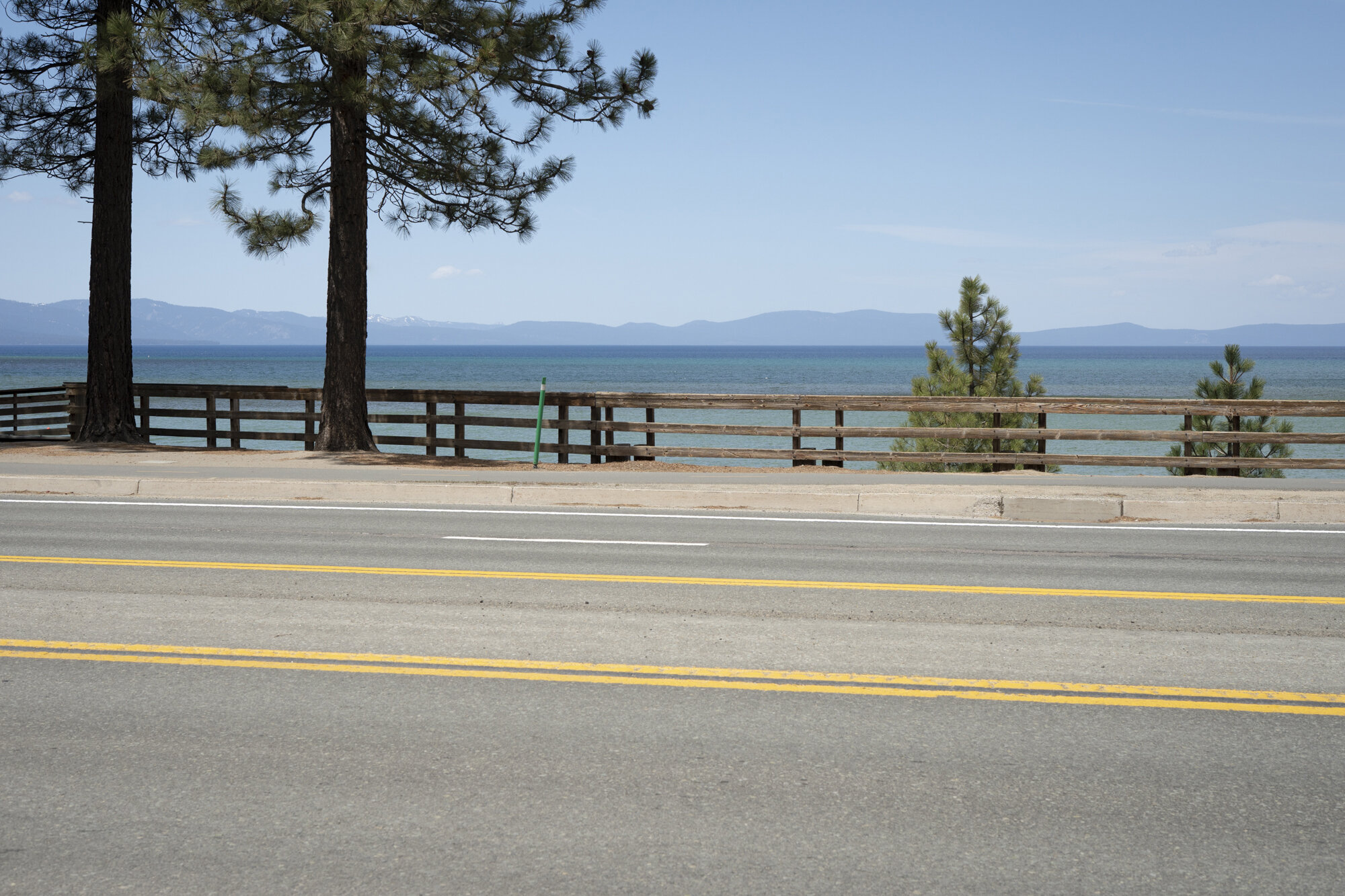
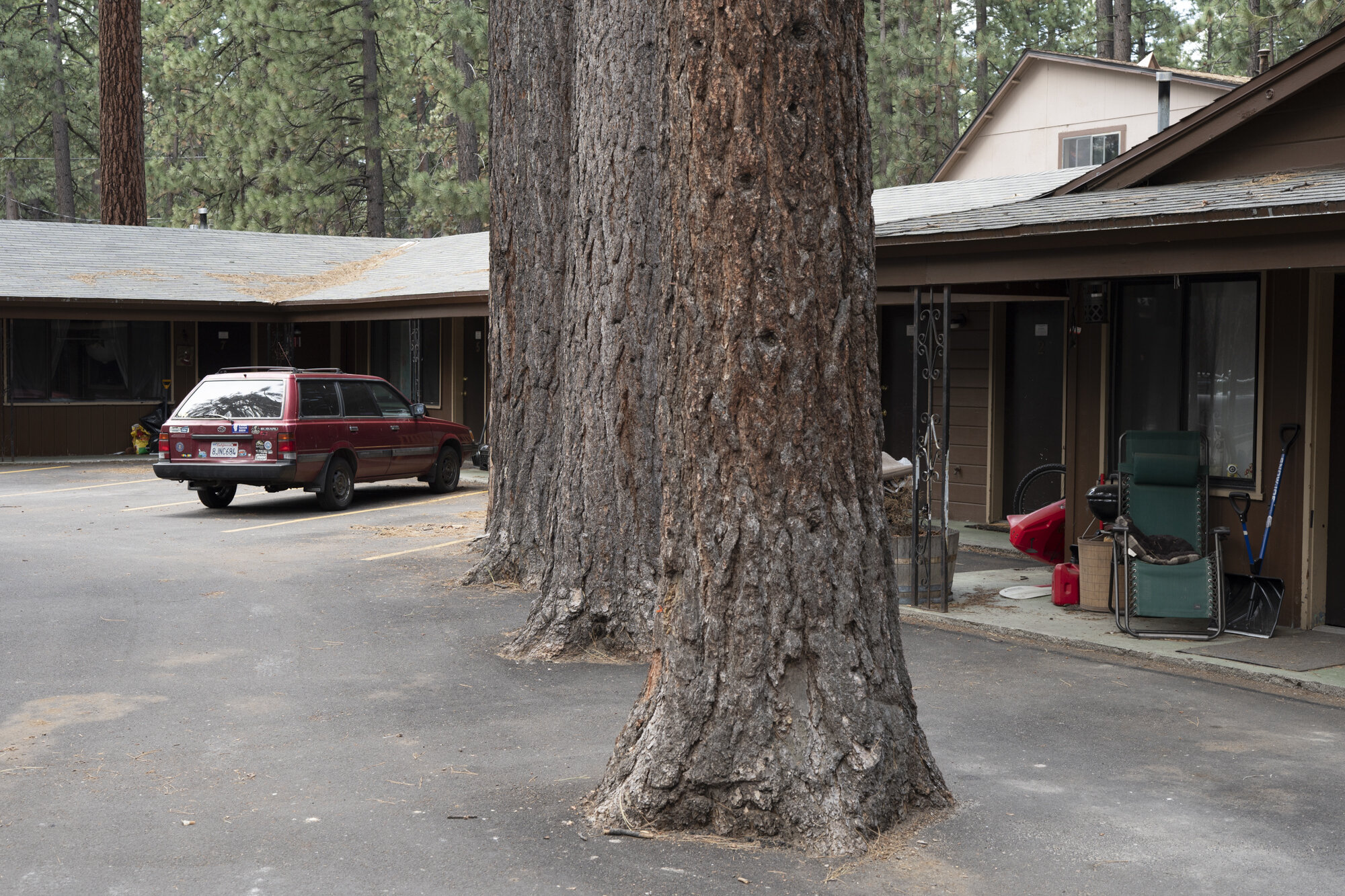
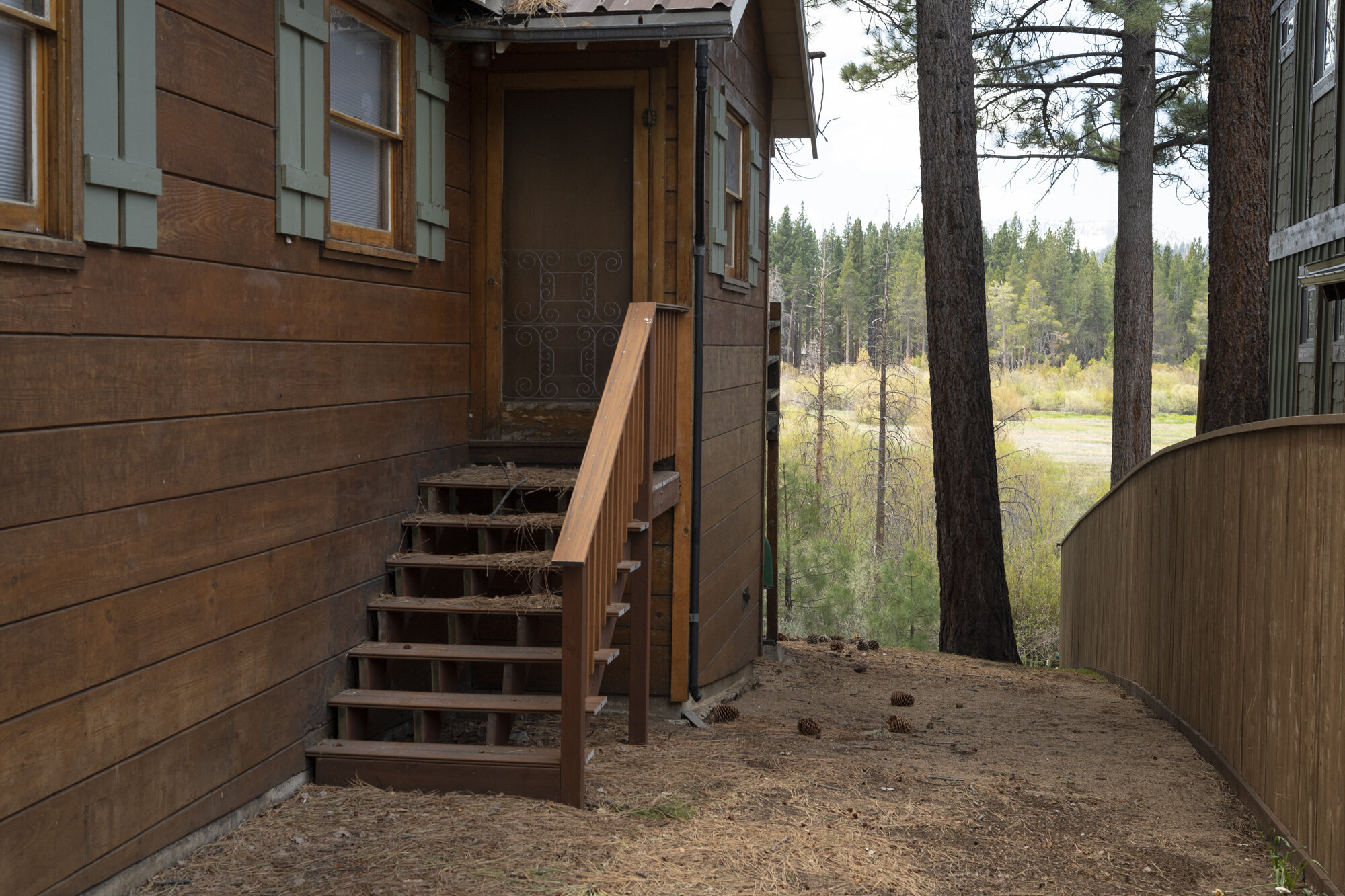
Another edition of making time to shoot for yourself. There’s a book title in there somewhere actually. Had some free time on a multi-day commercial shoot up in Tahoe recently and put it to good use walking around the neighborhoods making street photographs. Specifically these are from South Lake Tahoe which has changed quite a bit since my first visit there 10-ish years ago. Not my favorite ski town, but damn is it gorgeous. Unbelievably so. When you take the time to get out and see the lake and all that comes with it, you’re appreciation for the place as a whole completely changes. It’s not a town where you could spend a lot of time unless your days are spent recreationally doing any of the countless activities that the lake/mountains offer. All that said, I’m starting to love it there.

Click here to see more of my street photography

Culture Brewing Company - Encinitas

Feels so good to see the world opening back up. Over the last week especially there has been so much life out on the street and in the local shops, restaurants, and bars. Grateful to have the opportunity to be social again while sharing some work from American Backcourts. So if you’re in San Diego during the month of June, stop on by Culture Brewing Company in Encinitas to check out some fine art prints while enjoying some delicious craft beer in the sunshine.

AmericanBackcourtsCulture.jpg