Jackson, Mississippi Photography: Historic Architecture and the Changing American South
Jackson, Mississippi has a visual weight to it that’s difficult to explain until you spend time there. The downtown buildings still carry the scale and ambition of another era — old banks, churches, government buildings, hotels, and storefronts that feel rooted in the history of the American South. Even in changing light and shifting weather, the city holds onto a strong sense of place.
These photographs were made while walking through Jackson with a camera, paying attention to the way architecture, atmosphere, and light shape the mood of the city. Rather than documenting landmarks in a purely historical sense, the goal was to photograph the character that still exists around them today.
The work is part of a larger long-term documentary photography project focused on American cities, overlooked downtowns, and the evolving landscape of the United States.
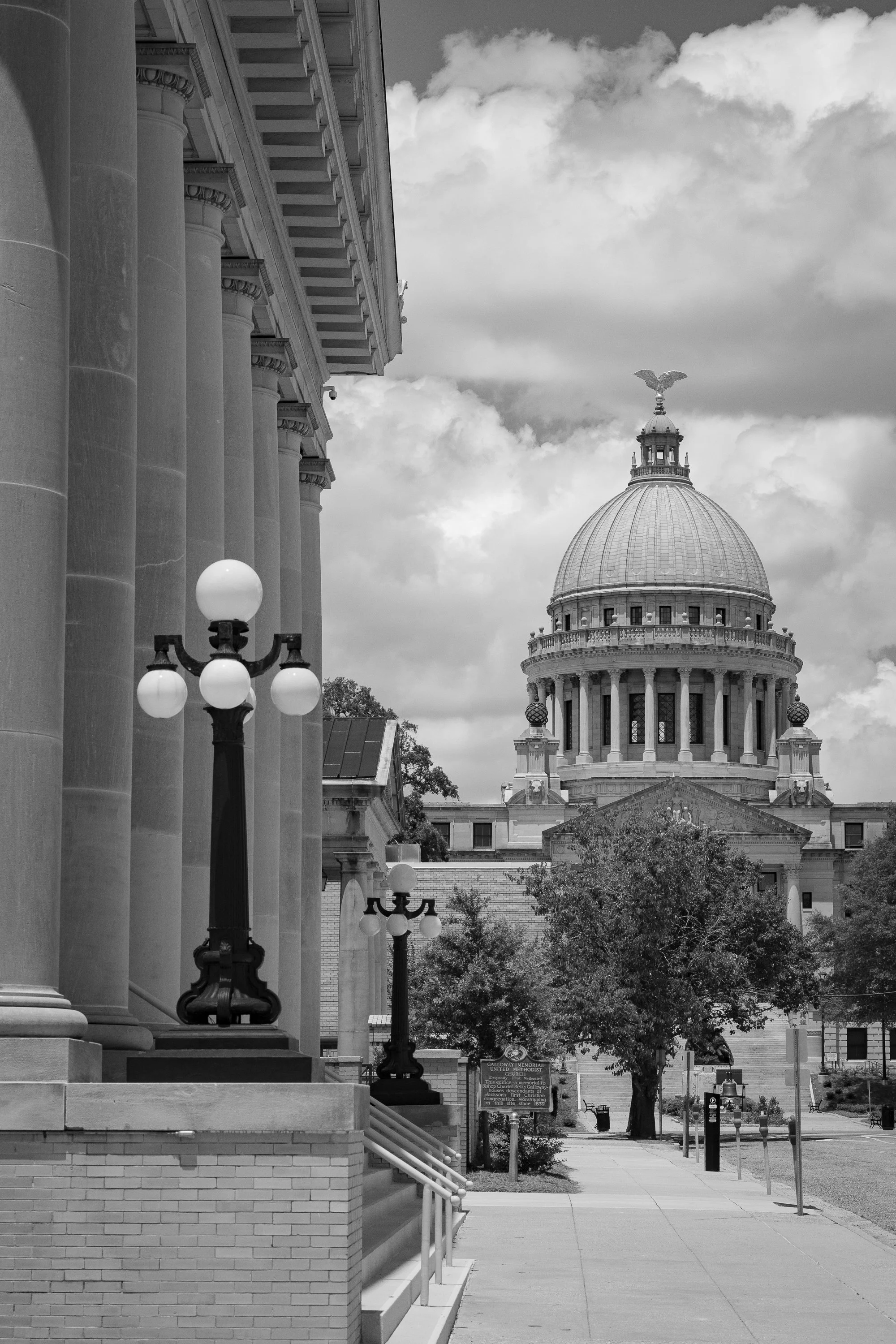
Mississippi Capital Building Wall Art
Collecting Prints From Jackson, Mississippi
Photographs from this series are available as museum-quality archival pigment prints produced on Hahnemühle fine art paper.
Prints are available in multiple sizes for collectors, interior spaces, offices, and commercial projects. Because sizing and presentation vary depending on the image, prints are currently available by direct inquiry rather than through an online storefront.
For print availability, sizing, or licensing inquiries, please contact me directly through the website.
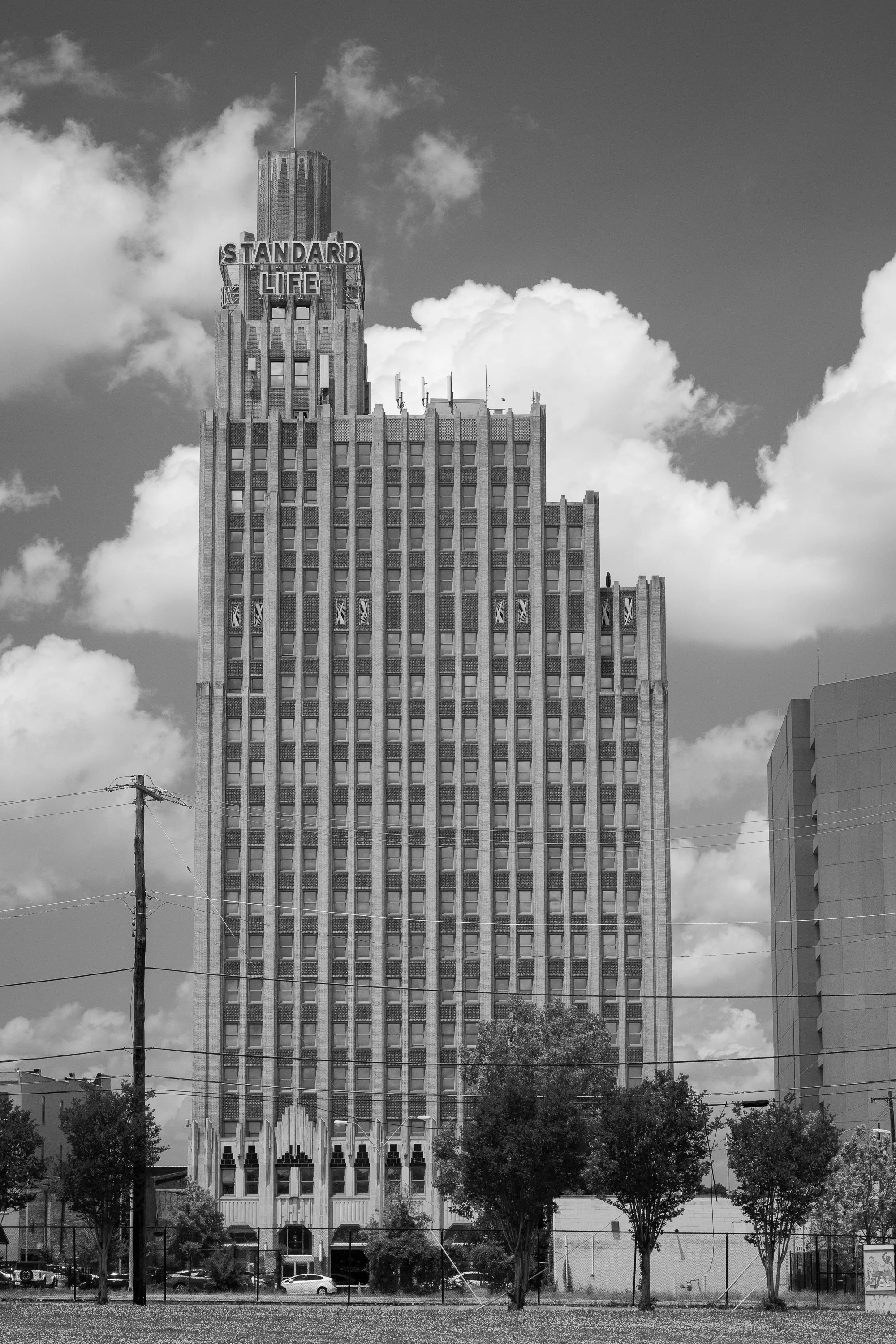
Black and white print of the Standard Life Building in Jackson, Mississippi
Photographing Historic Architecture in Jackson
One of the things that stood out immediately in Jackson was the range of architectural styles packed into a relatively compact downtown area. Art Deco towers stand near government buildings, older churches, mid-century signage, and historic commercial blocks that still carry the texture of decades past.
Unlike cities that have been heavily redeveloped, parts of Jackson still retain the feeling of an older American downtown. There’s wear in the buildings, layers in the surfaces, and moments where the city feels suspended between different eras.
That atmosphere became central to the photographs.
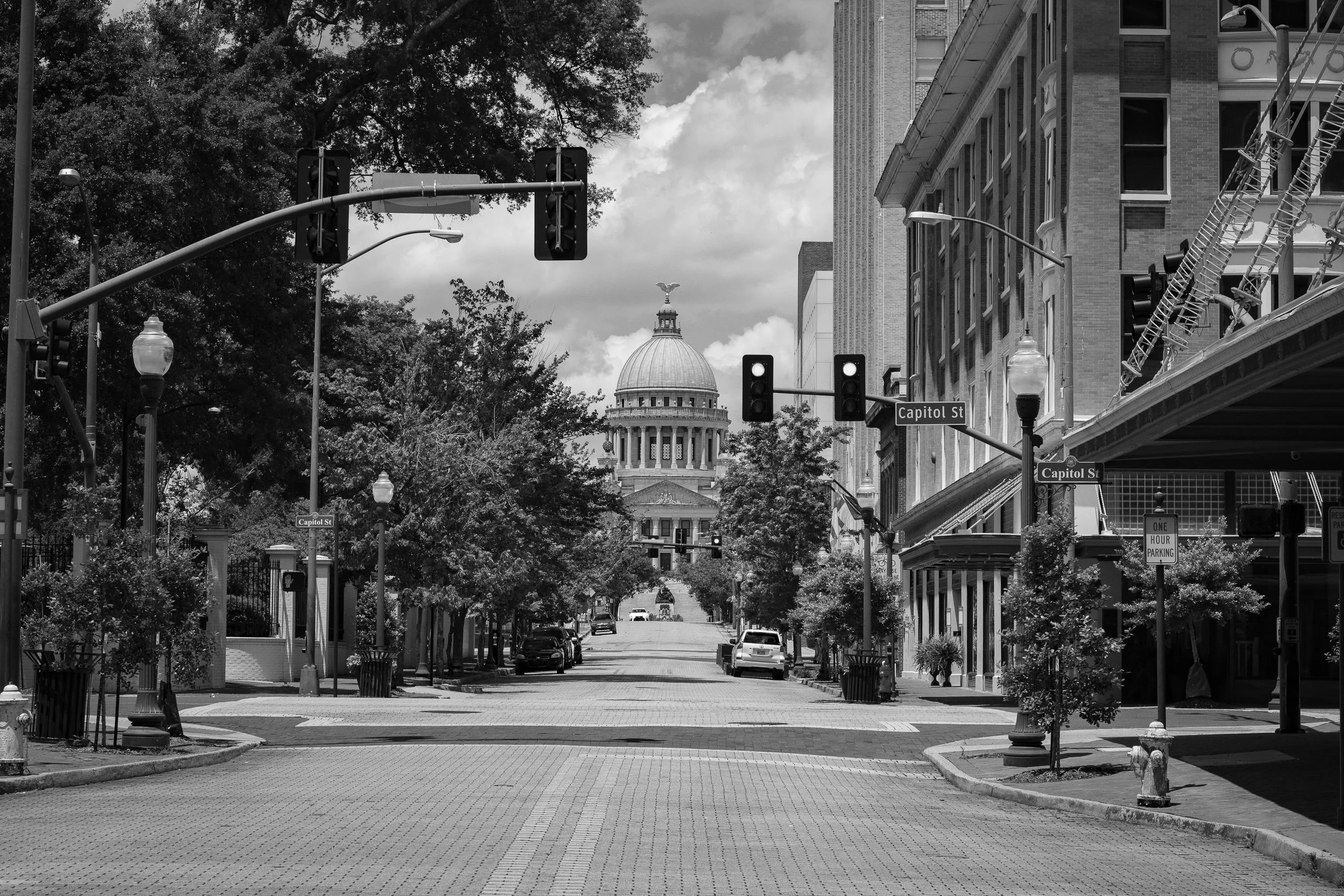
Rather than isolating buildings as architectural studies, I was more interested in photographing the way they exist within the larger environment — changing weather, empty streets, fading light, power lines, reflections, and the quiet details that often go unnoticed when moving quickly through a city.
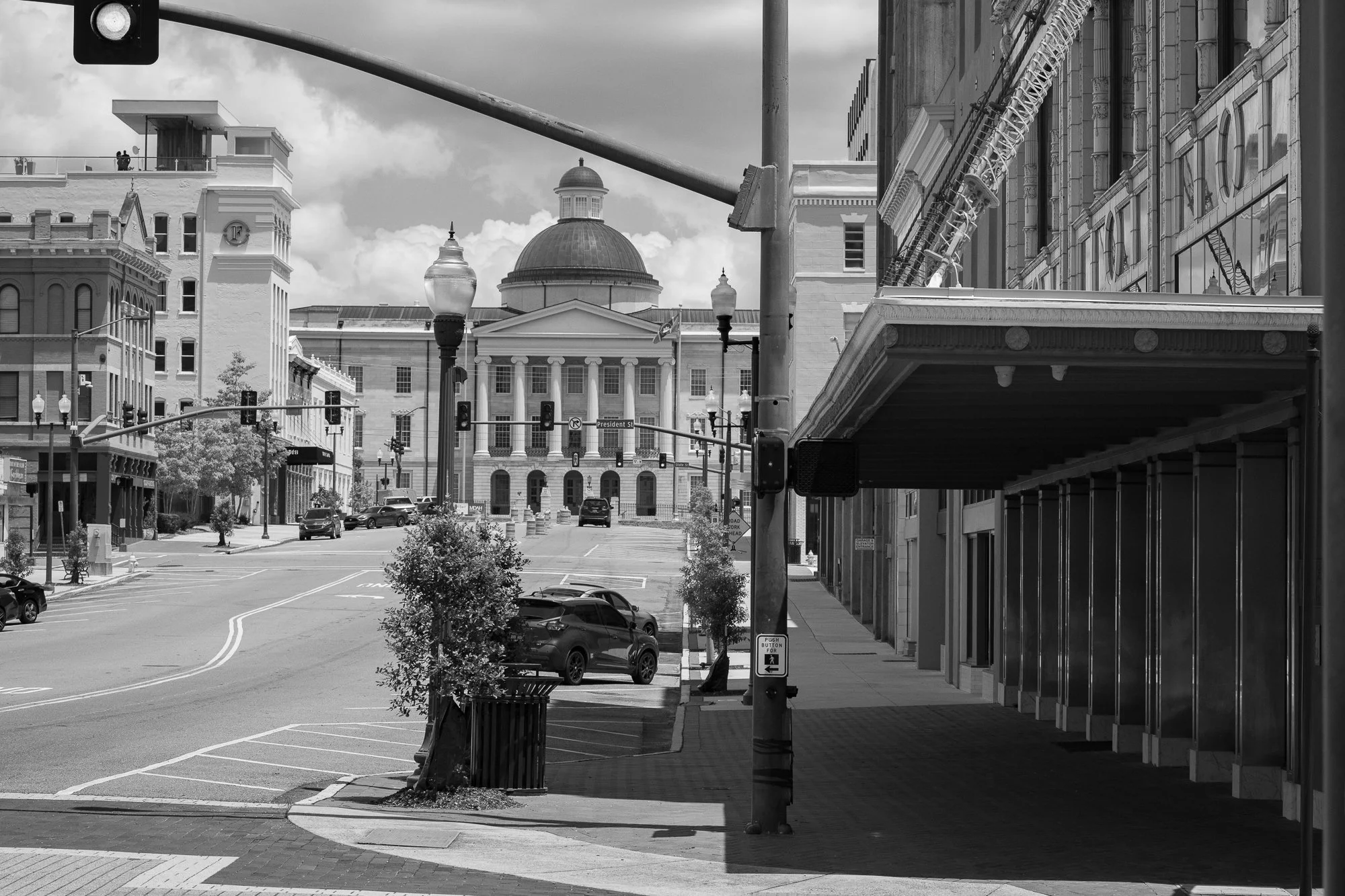
The Old Capitol Museum
Black and White Photography and Southern Architecture
These photographs were made in black and white because it simplified the scenes down to light, structure, and texture. Without color competing for attention, the geometry of the buildings and the atmosphere of the streets became more pronounced.
Jackson’s architecture works especially well in monochrome. The stone, concrete, brick, glass, and aging surfaces all carry a certain depth that feels connected to the broader visual history of the American South.
Black and white photography also helped unify the body of work into something that feels less like travel photography and more like a sustained visual study of place.
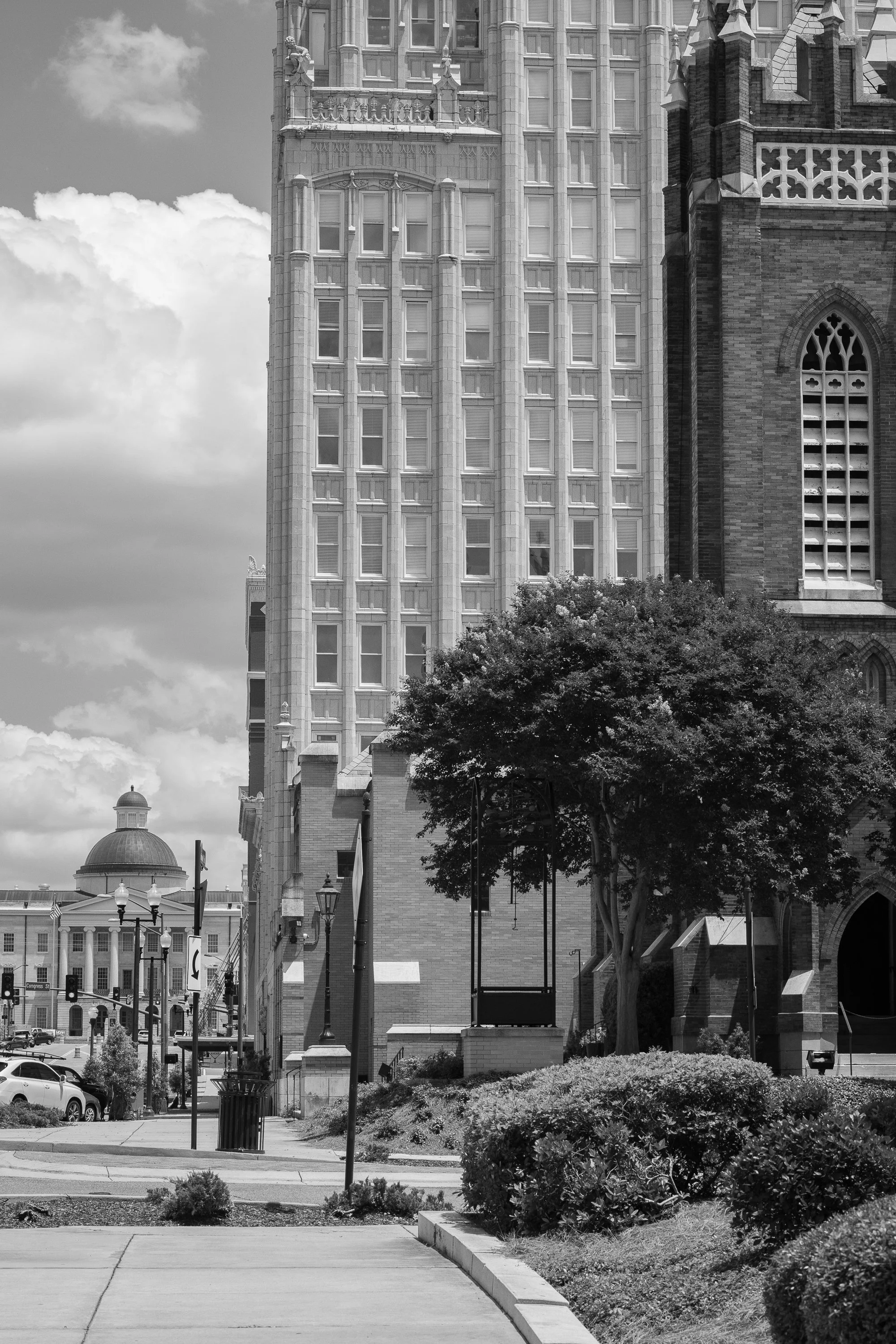
Black and white print of the LaMar Life Building in Jackson, Mississippi
A Different Kind of Southern Documentary Photography
A lot of photography of the South leans heavily into nostalgia or symbolism. What interested me more in Jackson was the quieter reality of the city — not dramatized moments, but ordinary scenes shaped by time, weather, architecture, and history.
That approach has become a consistent thread throughout my larger America project. Over the past fifteen years, I’ve driven hundreds of thousands of miles photographing cities, small towns, roadside spaces, and overlooked parts of the country that often exist outside the dominant narratives of American photography.
Cities like Jackson, Richmond, Virginia, and Albany, New York all share something in common despite their differences. They contain layers of American history that remain visible in the built environment — older downtowns, government buildings, churches, industrial structures, fading commercial districts, and streets that still reflect earlier eras of the country.
Photographing those spaces has become less about documenting individual landmarks and more about documenting atmosphere, permanence, change, and memory within the American landscape.
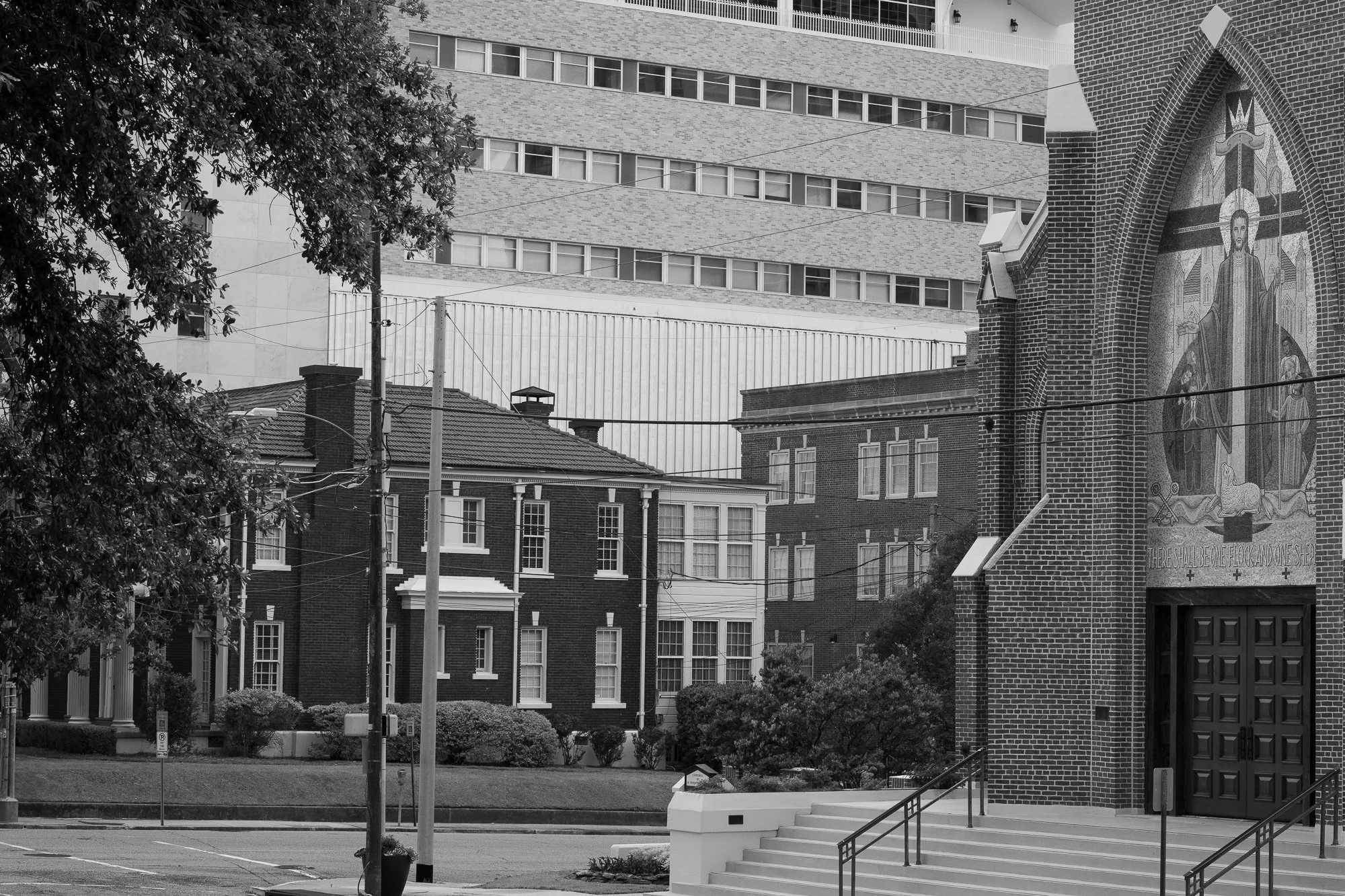
Cathedral of St. Peter The Apostle
Part of the America Project
These photographs are part of an ongoing long-term documentary photography project focused on the overlooked landscapes and built environments that continue to shape America.
From historic Southern cities to small Western towns, old motels, neighborhood barbershops, basketball courts, and roadside architecture, the project aims to photograph places that are often passed by without much attention, despite their strong connection to the identity of the country itself.
Related bodies of work from the project include photographs made throughout the American South, the Mountain West, and older cities with a focus on historic architecture including Richmond, Virginia and Albany, New York.
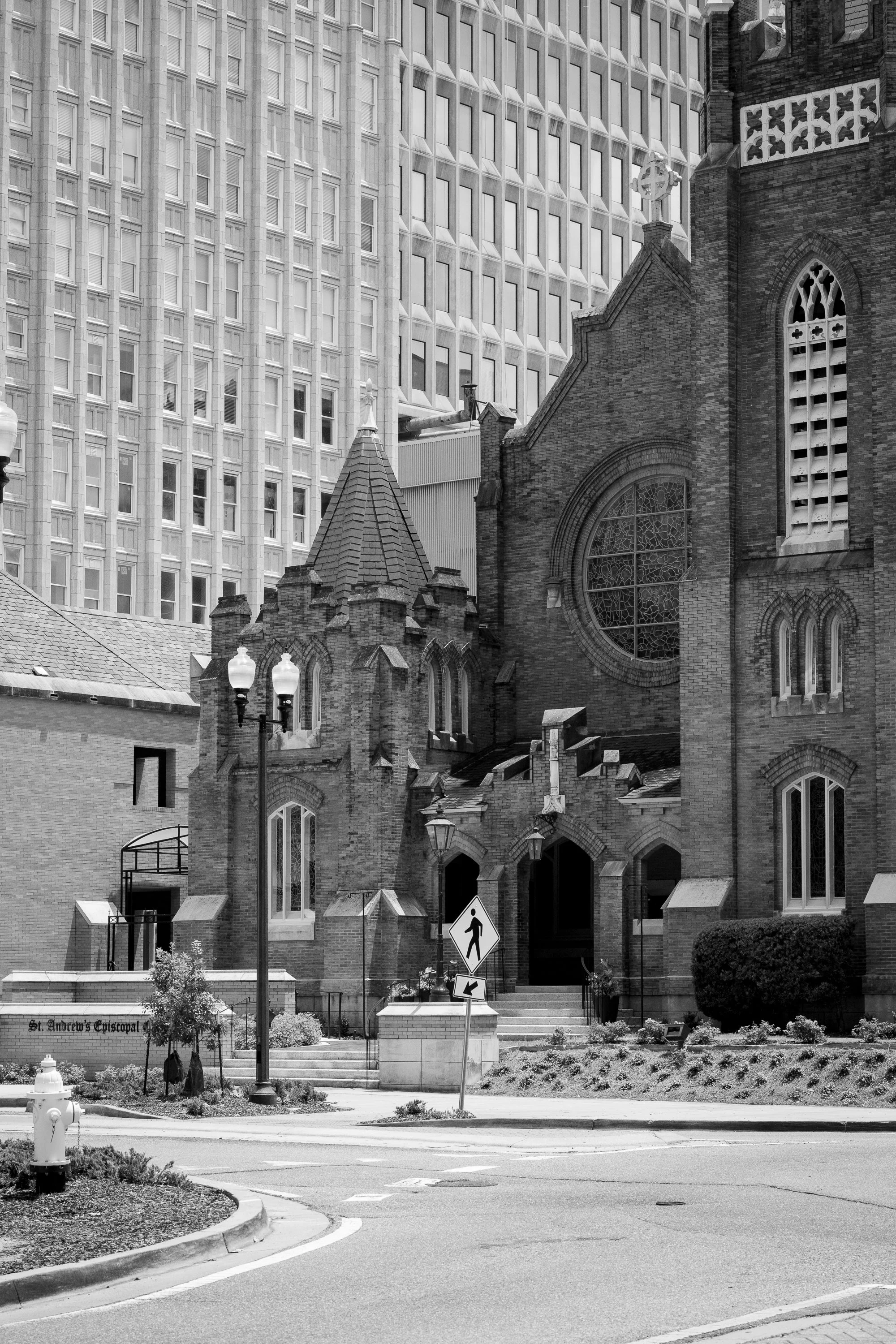
Fine art print of St. Andrew’s Episcopal Cathedral