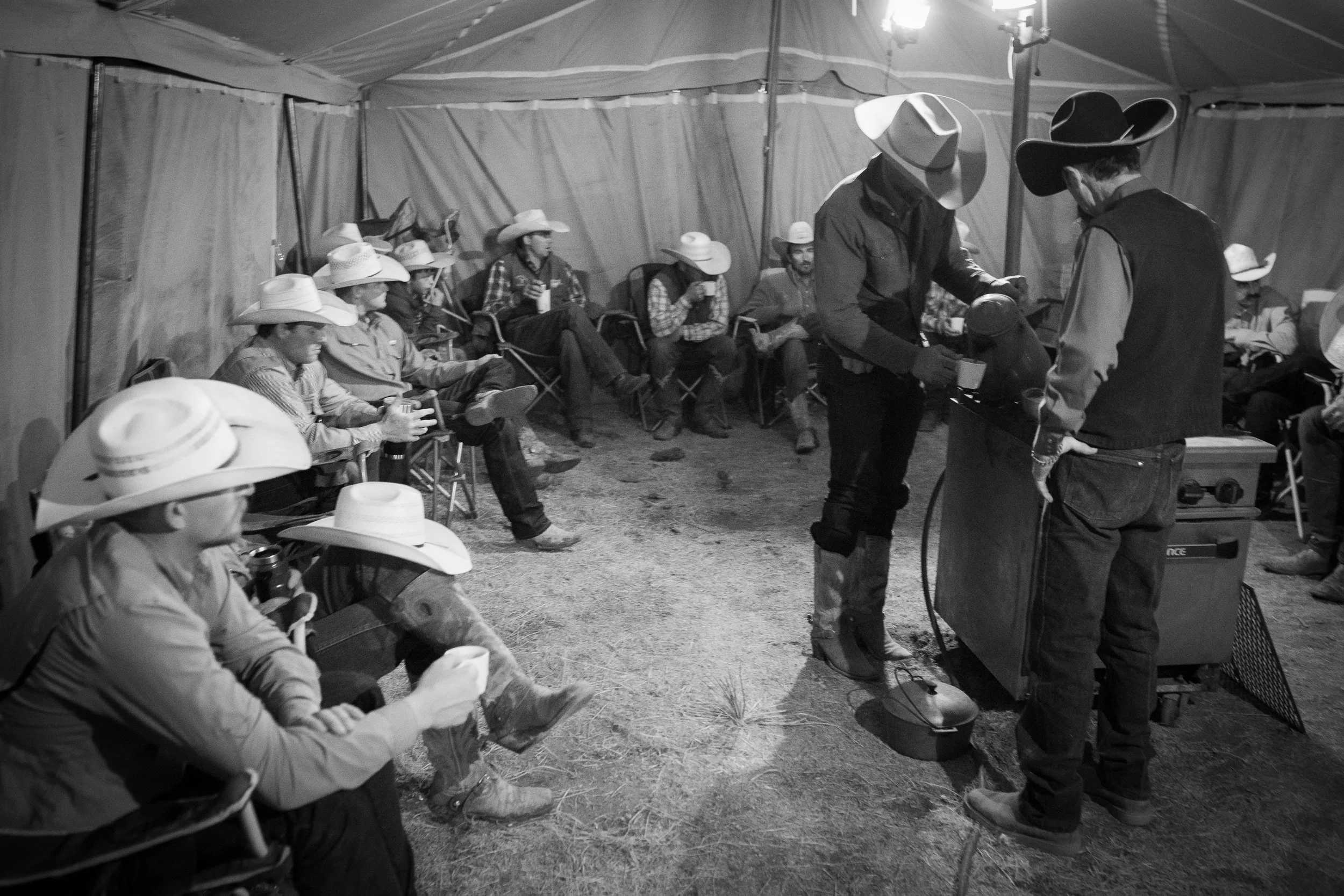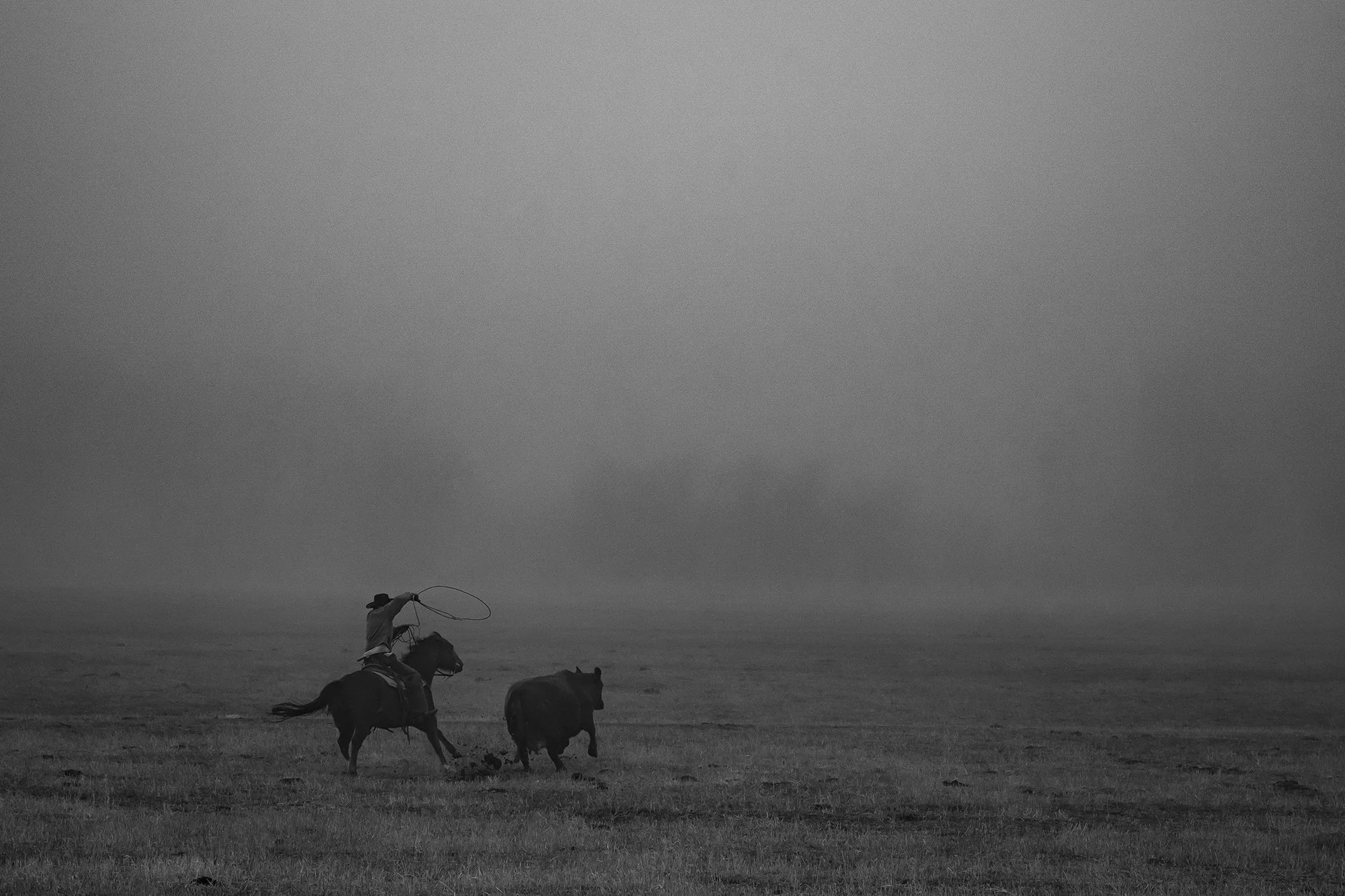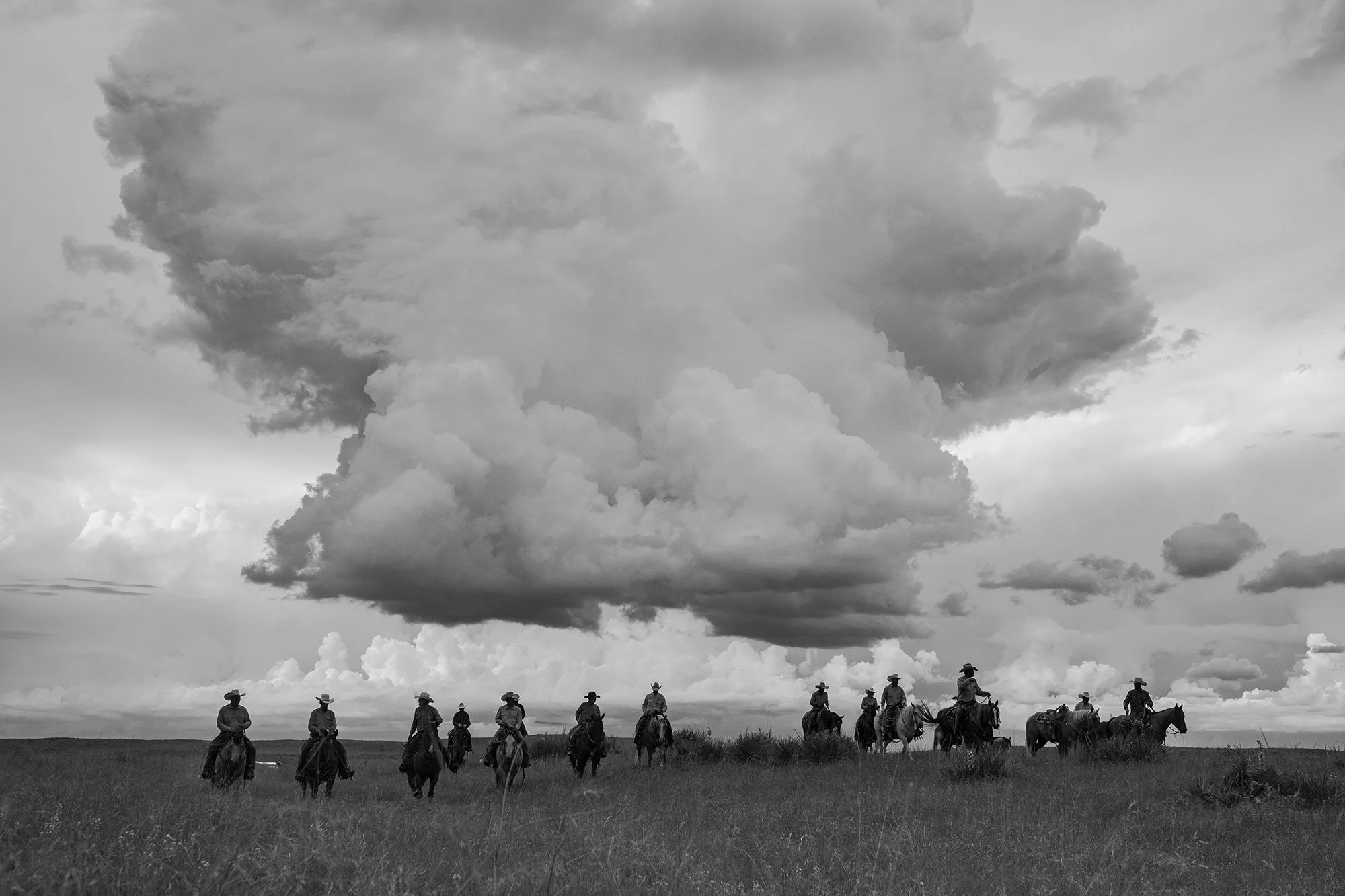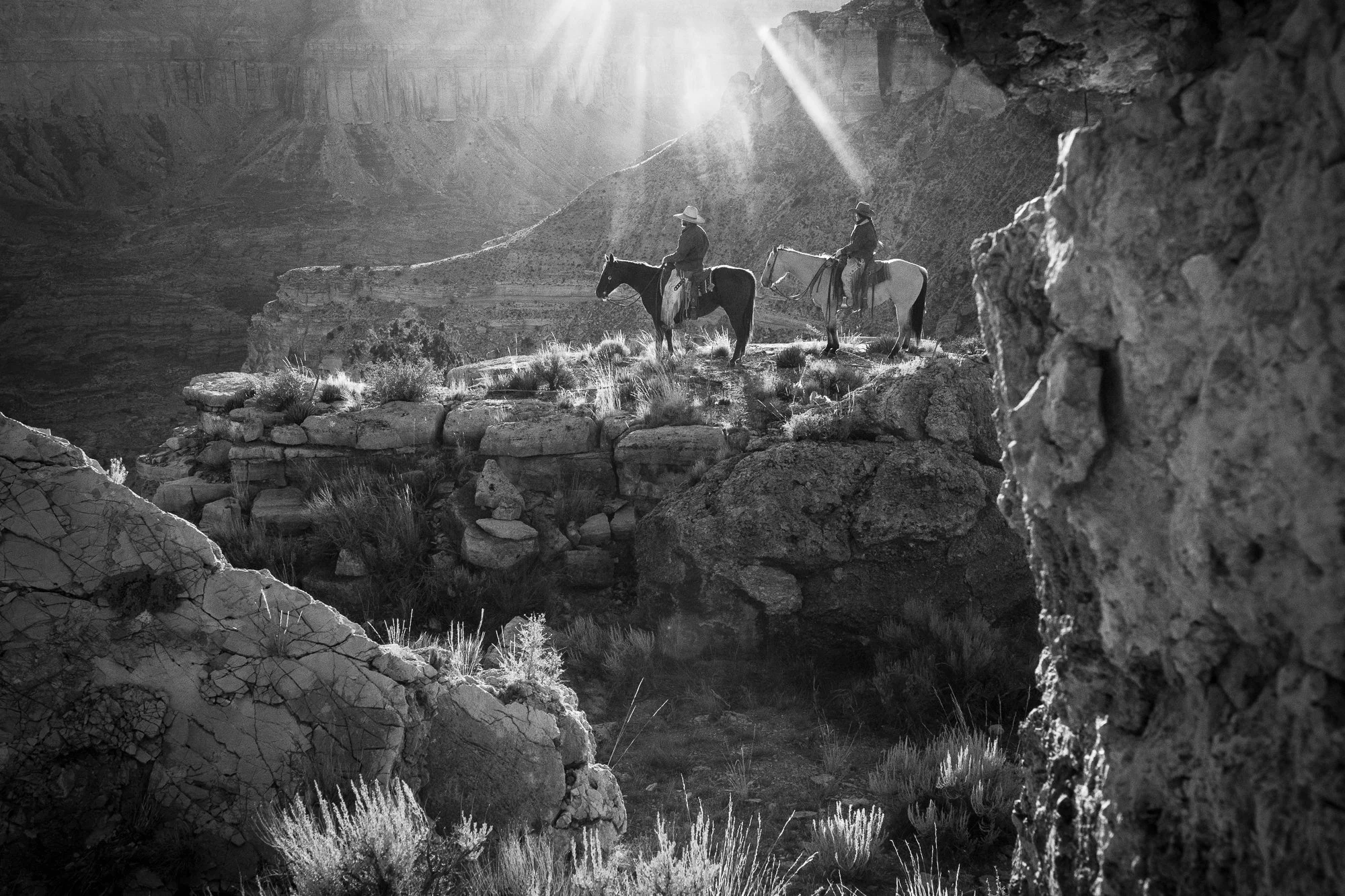
Black & White Fine Art Photography of the American West

Black and White Cowboy Wall Art for Western Homes

There’s a reason black and white photography has always had a place in Western homes.

It doesn’t compete with the space. It settles into it.

In ranch houses, mountain homes, and Western interiors, the strongest wall art isn’t loud or decorative. It reflects the land, the work, and the people connected to it. Black and white cowboy photography does that naturally—stripping everything down to light, texture, and moment.

But not all cowboy wall art is the same.

Why Black and White Works in Western Interiors

Western homes tend to be built around natural materials—wood, leather, stone, steel. Color photography can sometimes fight those elements.

Black and white doesn’t.

It fits into:

  • rustic ranch houses

  • mountain cabins

  • modern Western interiors

  • offices and hospitality spaces

Instead of overpowering, it becomes part of the room in complimentary way.

That’s why so many collectors and designers gravitate toward black and white cowboy wall art. It feels timeless, not tied to trends.

Black and White Cowboy Photography Prints vs Western Decor

Most Western wall art you find online is designed to match a theme. Bright colors. Clean outfits. Staged scenes. But real cowboy photography comes from a completely different place.

These photographs are made:

  • on working ranches across the American West

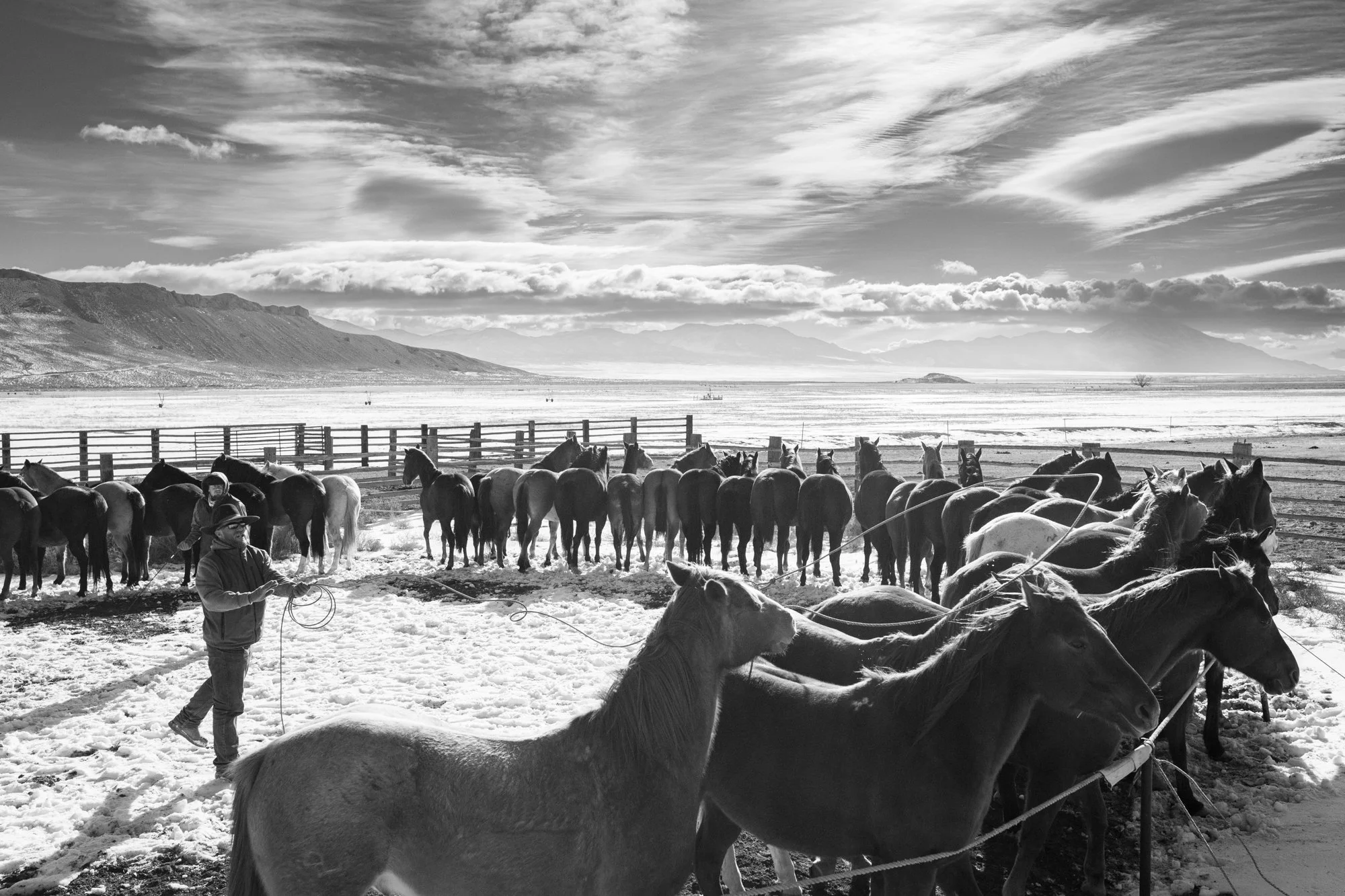
  • during branding, roping, and everyday ranch work

  • in harsh conditions, not controlled environments

The difference shows.

There’s a weight to these images that doesn’t come from styling—it comes from reality.

That’s what separates authentic cowboy photography prints from mass-produced Western decor.

The Power of Black and White in Cowboy Photography

Without color, the focus shifts.

You start to see:

  • the dust in the air

  • the tension in a rope

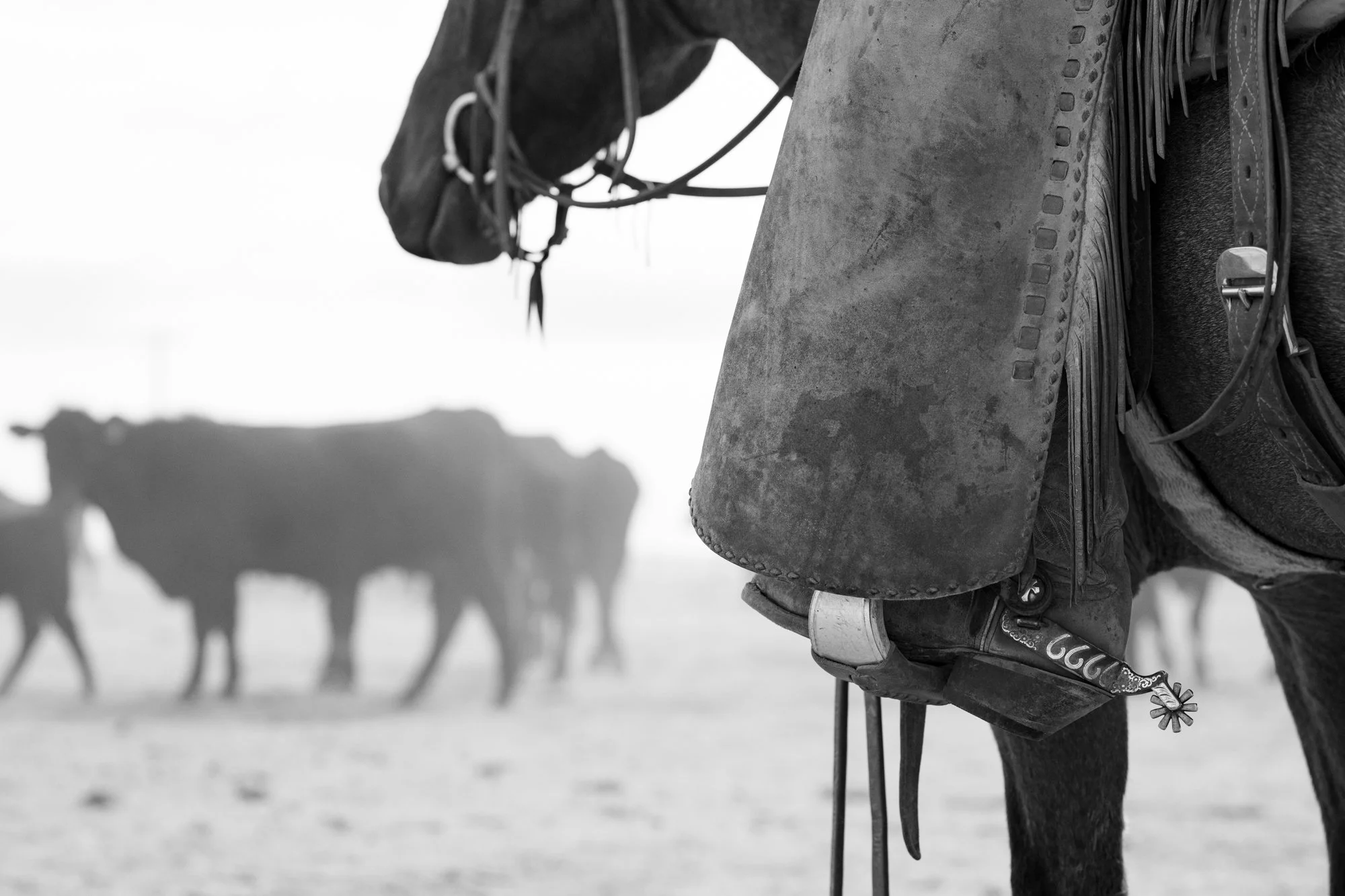
  • the wear in a saddle

  • the expression on a cowboy’s face after a long day

Black and white removes distraction and leaves only what matters.

It turns a moment into something more permanent.

That’s why this style has been used for decades to document the American West—and why it continues to resonate with collectors today.

Museum-Quality Cowboy Photography Prints

Not all prints are created the same way.

For collectors and interior designers, the difference comes down to craftsmanship:

  • archival, museum-grade paper

  • precise tonal range in black and white

  • large-format printing

  • carefully limited editions

These details aren’t always obvious at first glance, but they determine how the work holds up over time.

Shop Black and White Cowboy Photography Prints

If you’re looking for black and white cowboy wall art created on working ranches across the American West, you can view the full collection here:

Shop Cowboy Photography Prints

Part of a Larger Documentary Project

For more than a decade, this work has focused on photographing the daily lives of working cowboys across the West.

Not staged. Not recreated.

Just the work as it happens.

To see more from the full project:

Authentic Cowboy Photography Project

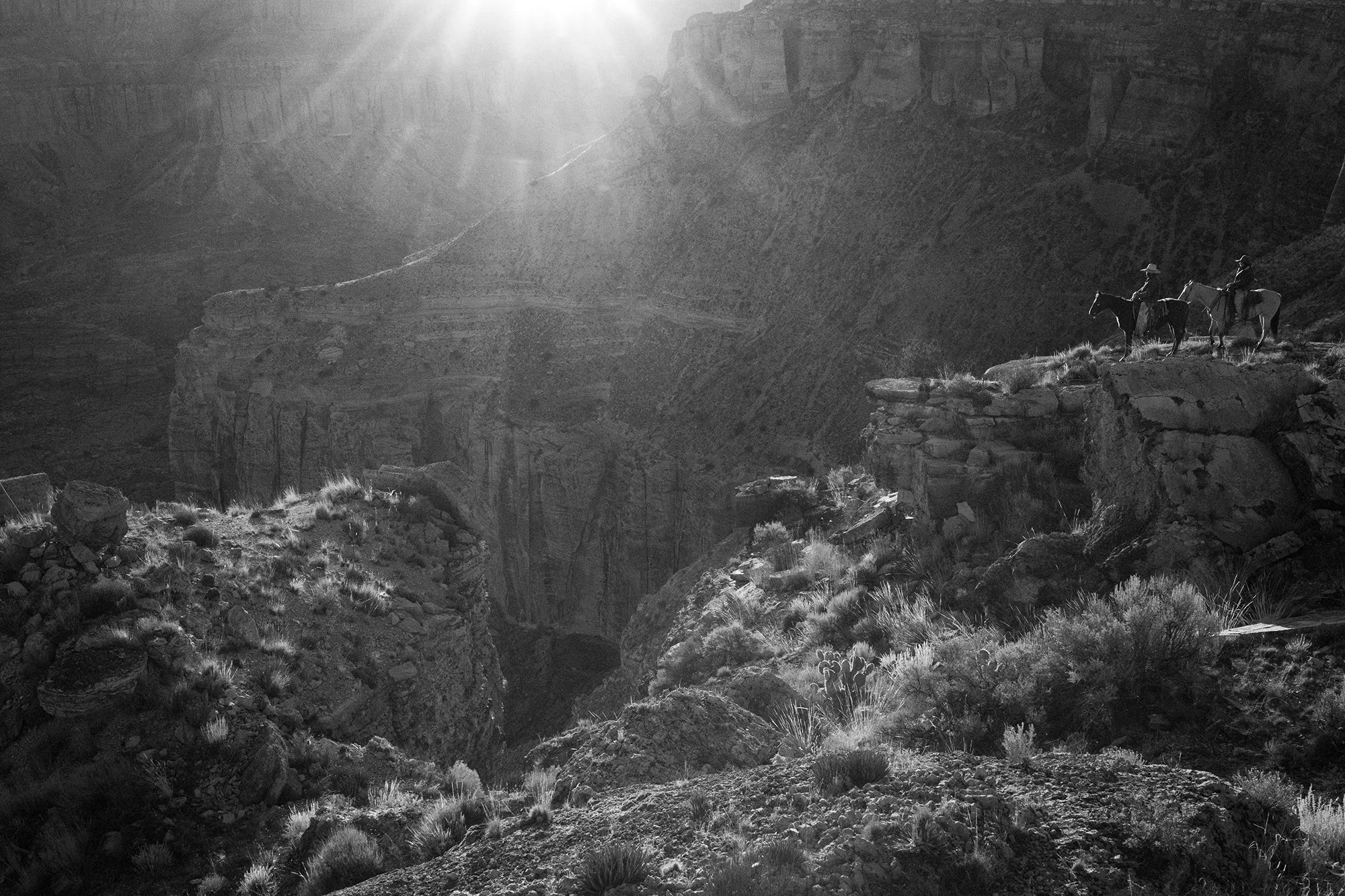
Cowboys on horseback overlooking a canyon in the American West, black and white photograph.

Cowboys on horseback overlooking a canyon during a pause in the workday.

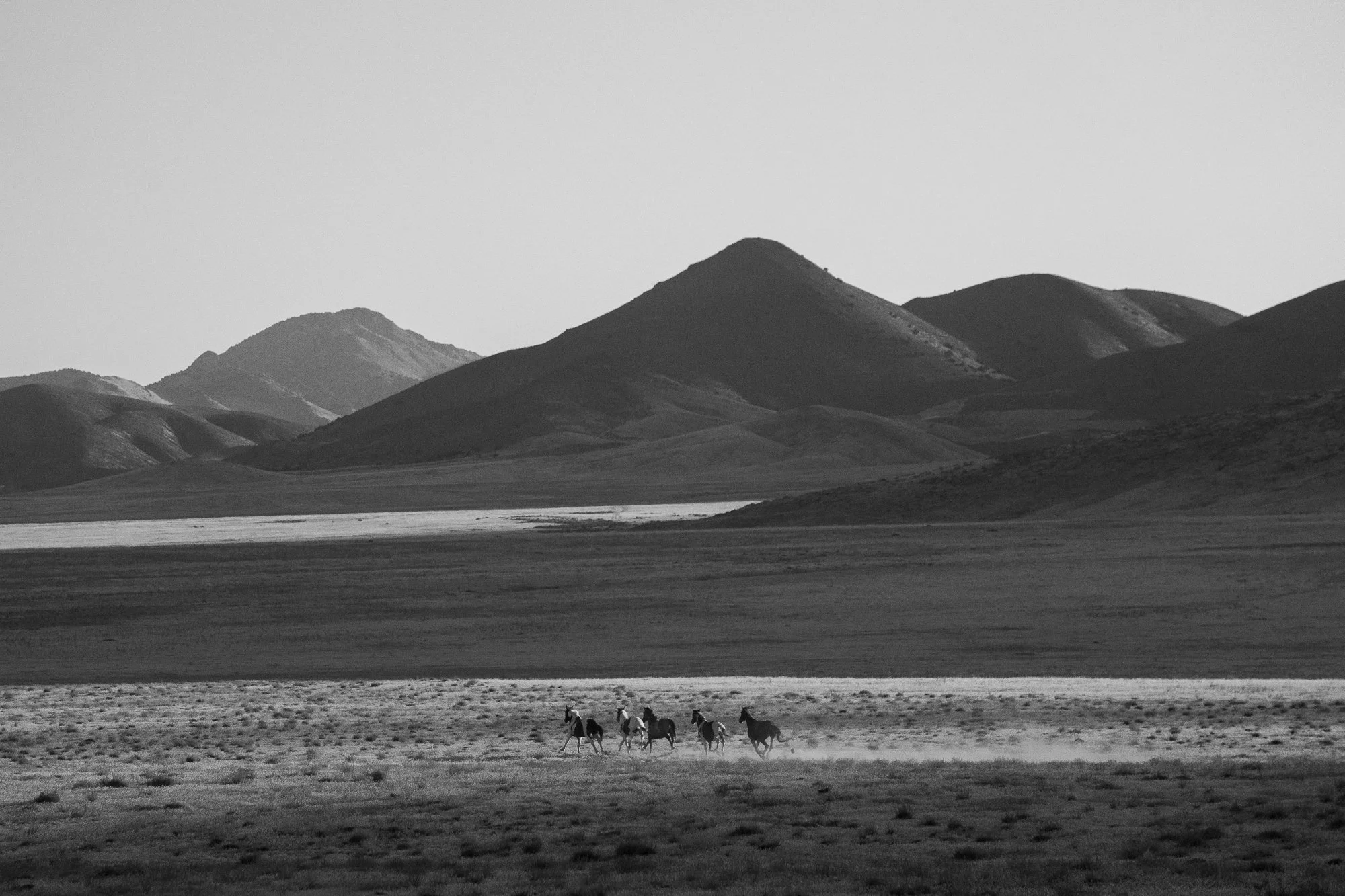
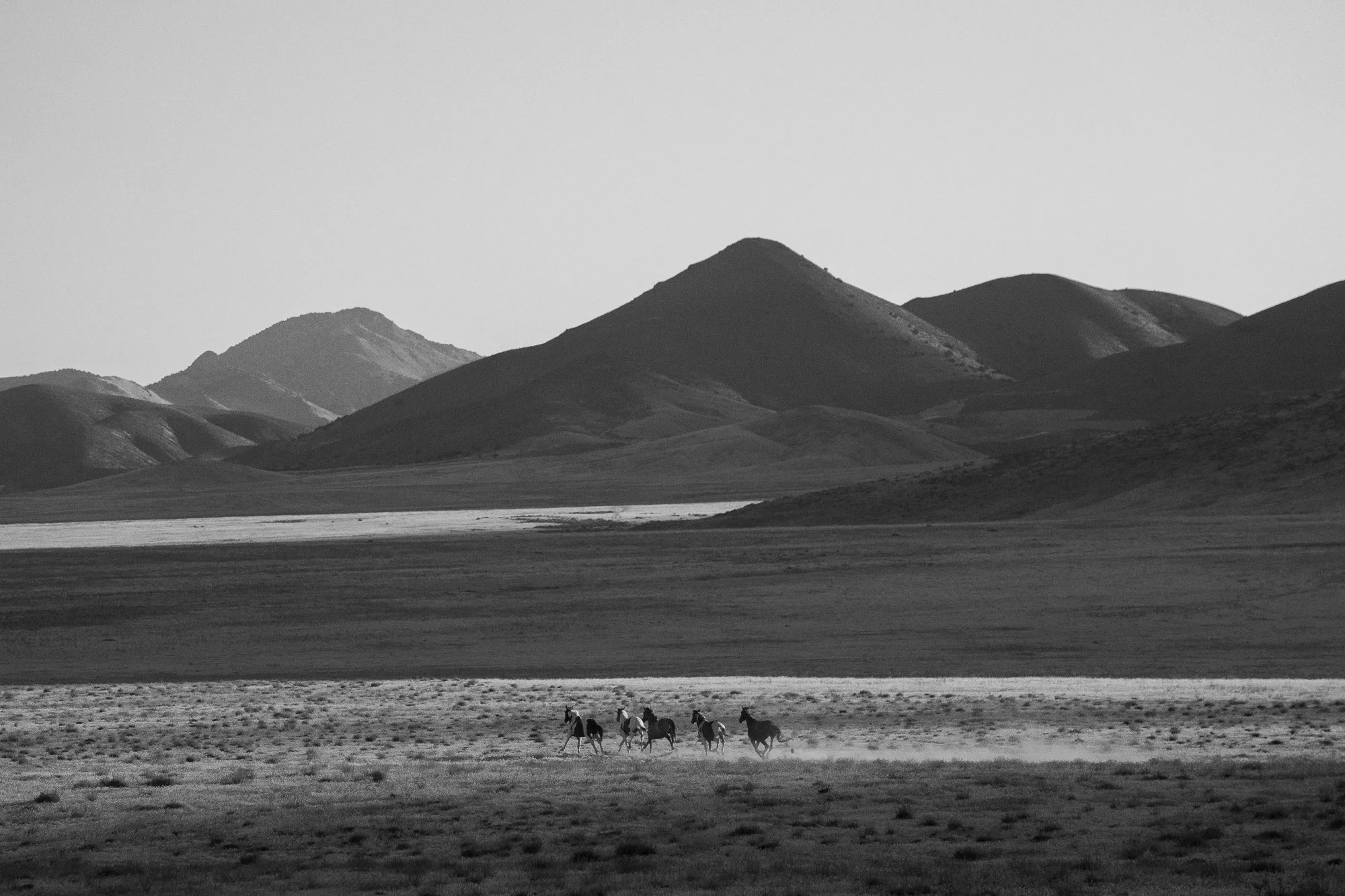
Horses running across open range in the American West, black and white photograph.

Horses moving across open range, dust rising in the distance.

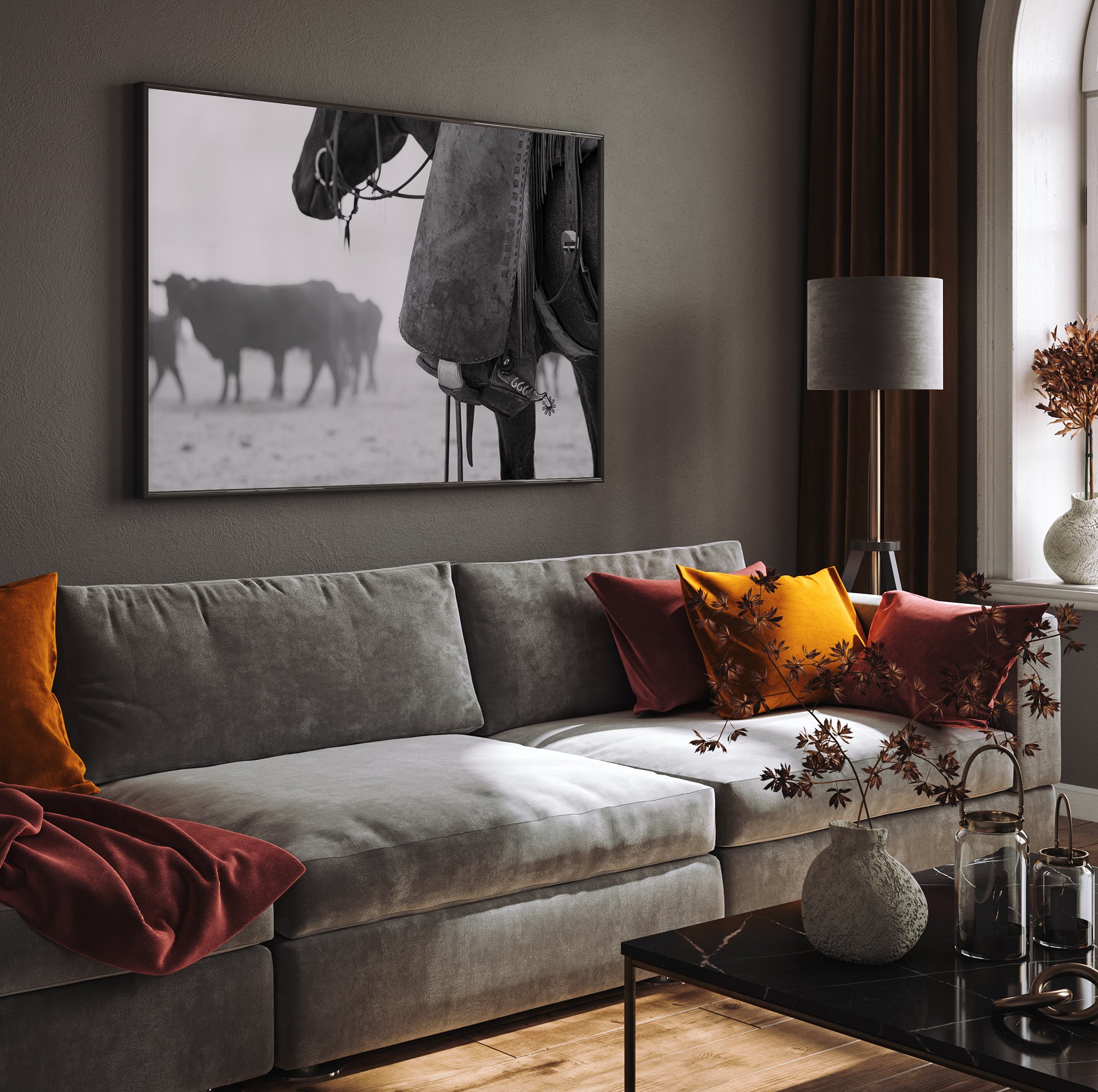
Black and white cowboy photograph installed in a private interior setting.

Black and white cowboy photograph installed in a private interior.

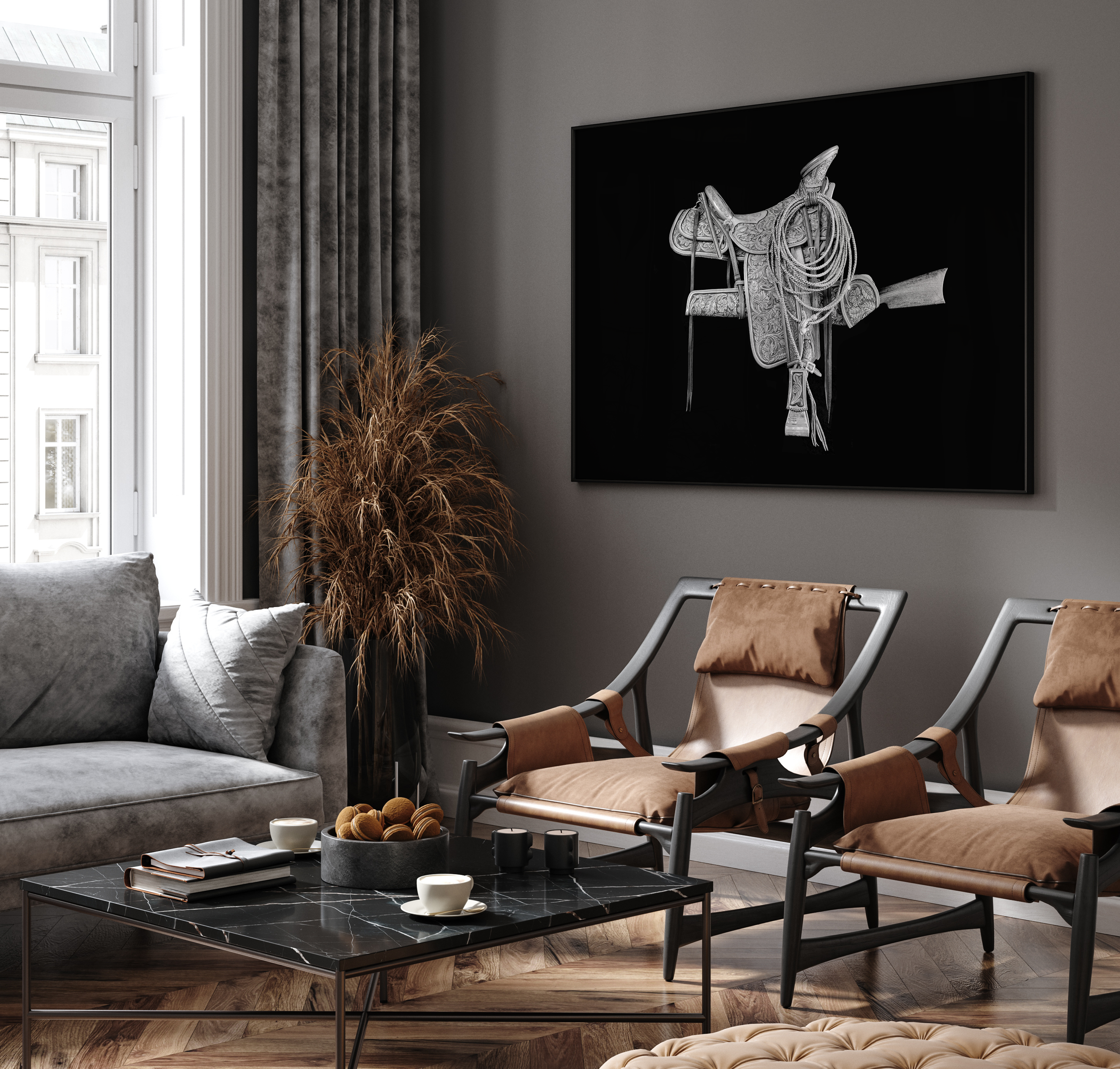
Studio photograph of a Western saddle displayed in a contemporary interior.

Studio photograph of a Western saddle displayed in a contemporary interior.

Photographs of Albany, New York - Historical Landmarks & Architecture

ALBANY, NEW YORK PHOTOGRAPHS

Growing Up Around Albany, New York

I grew up in the Albany area, and my relationship with the city has always been shaped by familiarity rather than novelty. It’s a place I knew long before I ever photographed it—through daily routines, changing neighborhoods, and the quiet rhythms of a city that rarely tries to impress anyone.

That familiarity is what eventually pulled me back with a camera. Photographing Albany wasn’t about rediscovery so much as paying closer attention. I wasn’t looking for defining moments or iconic views. I was interested in the spaces that felt ordinary enough to be overlooked, yet permanent enough to hold memory.

Photographing Albany as a Lived-In City

This photography series is rooted in observation rather than spectacle. Albany is a city layered with history—Federal and Victorian architecture, civic buildings, industrial remnants, and residential streets shaped by decades of quiet change. Much of that history lives in plain sight.

I gravitated toward scenes that reflect that lived-in quality: empty streets, weathered facades, winter light, and moments where architecture and atmosphere intersect. These photographs are intentionally restrained. They aren’t meant to dramatize the city, but to reflect it honestly.

The goal is not to explain Albany, but to let it exist as it is.

Architecture, Atmosphere, and the In-Between

Many of the photographs in this series focus on architecture, but not in a formal or celebratory way. I’m less interested in buildings as symbols than as backdrops for daily life—structures shaped by use, time, and weather.

Light plays an important role. Fog, snow, and low winter sun soften edges and slow the pace of looking. These conditions reveal details that might otherwise go unnoticed, and they echo how the city often feels to move through: quiet, deliberate, and grounded.

This approach mirrors how I work across my broader documentary projects—allowing place to speak without forcing a narrative.

A Long-Term Documentary Project

This Albany photography project is ongoing. The city continues to change, and my relationship to it continues to evolve as well. Returning with a camera allows me to see familiar spaces with fresh attention, while still photographing from a position of understanding rather than distance.

The photographs aren’t meant to define Albany, but to contribute to a broader visual record of American cities—particularly those that exist outside the usual spotlight.

From the Project to the Prints

While this page focuses on the documentary work itself, many of these photographs are available as fine art prints. The prints are produced with the same care and intention as the photographs, emphasizing longevity, material quality, and thoughtful presentation.

If you’re interested in viewing available work from this series, you can explore the print collection below.

View available Albany photography prints

Click HERE to view my photographs of Troy, NY

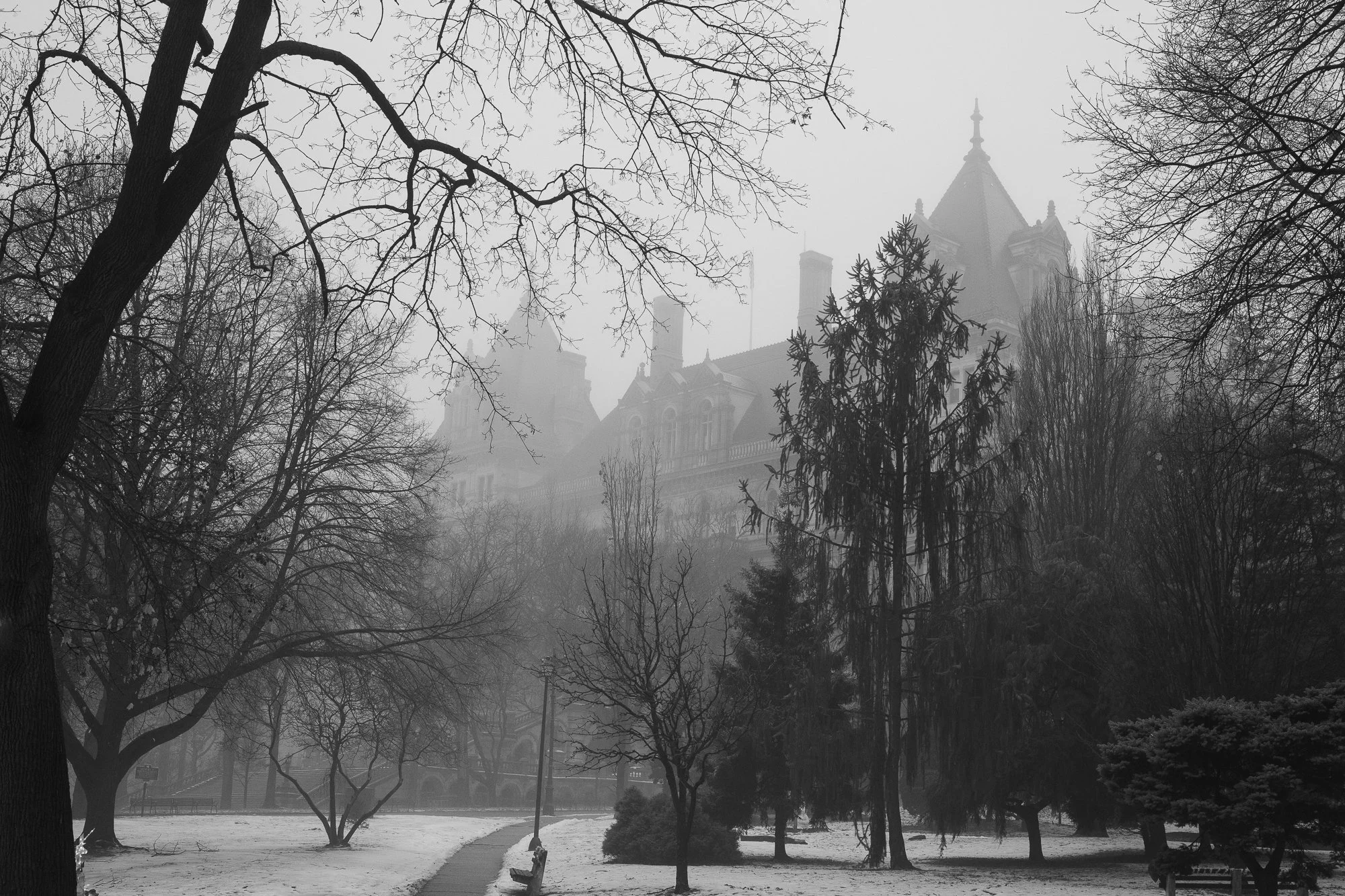
Black and white photograph of the New York State Capitol partially obscured by winter trees in Albany

The New York State Capitol recedes behind bare winter trees as fog softens its presence in Albany, NY

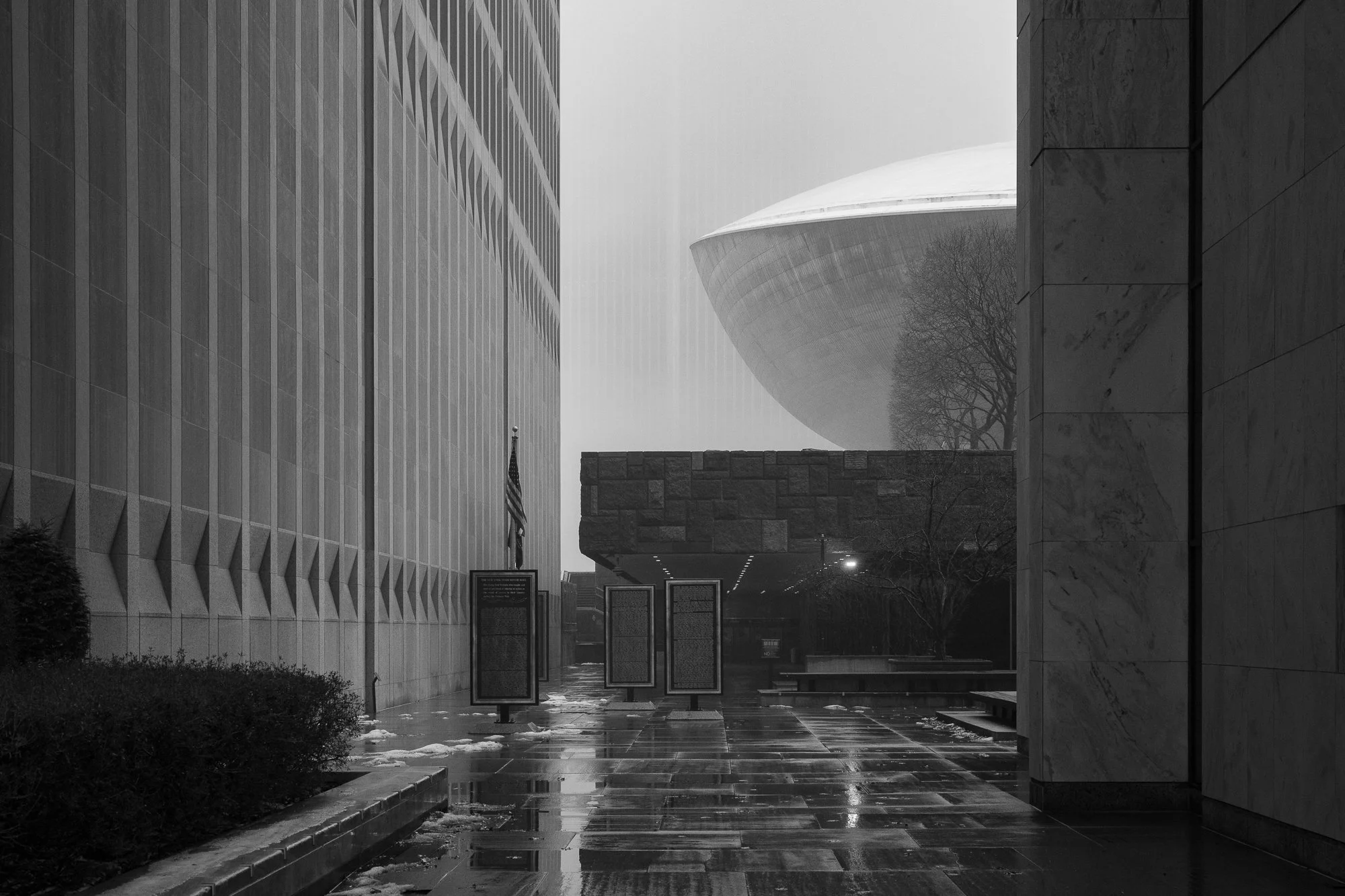
Black and white architectural photograph of Empire State Plaza buildings in Albany, New York

Empire State Plaza emerges through fog, emphasizing clean lines, scale, and negative space.

Timeless black and white photograph of Albany, New York

Classic black and white photograph of Albany, NY

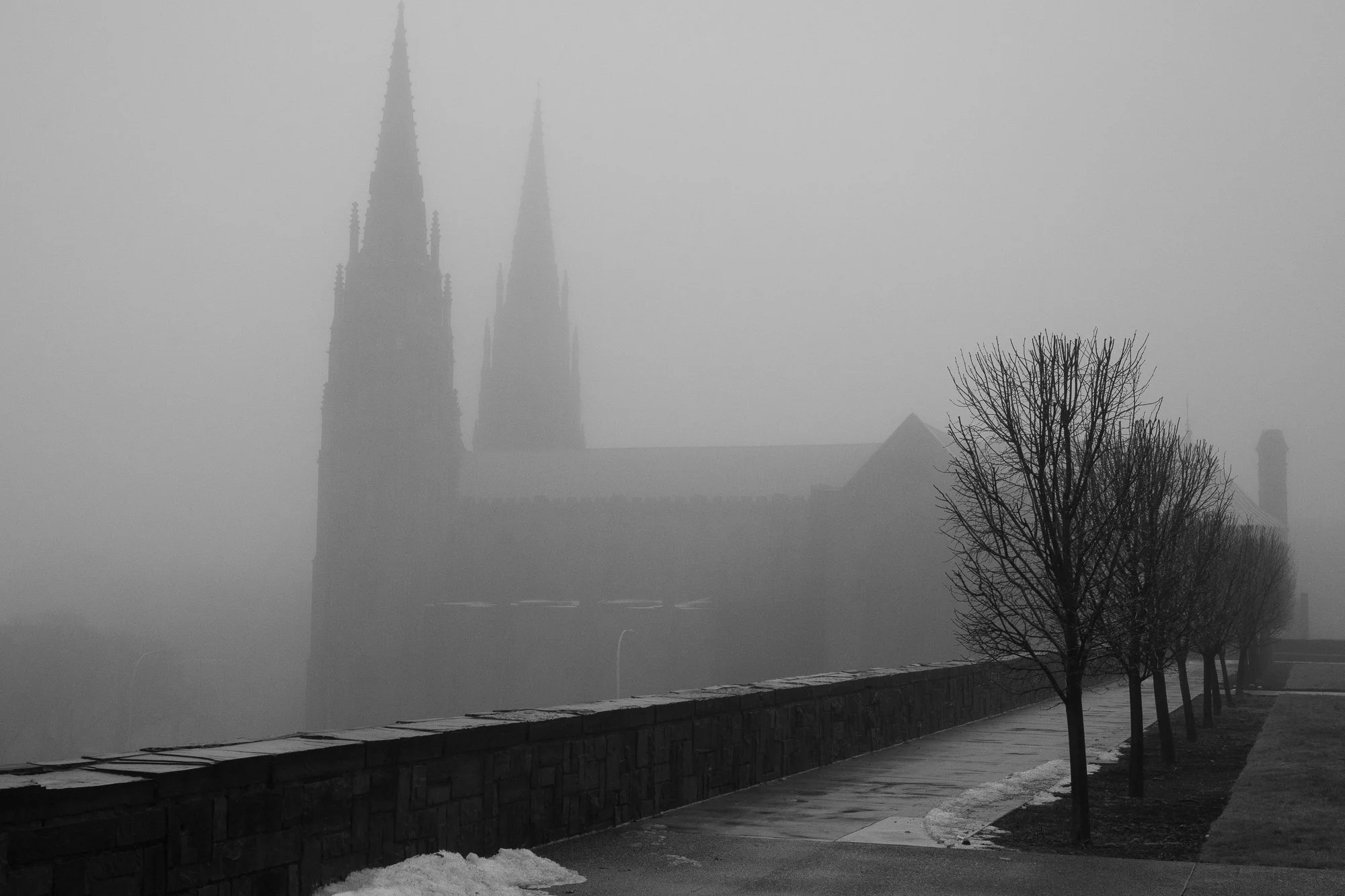
Black and white photograph of cathedral spires emerging through fog in Albany, New York

Cathedral spires of the Church of the Immaculate Conception in Albany, NY rise quietly through dense fog, reducing the city to silhouette and form.

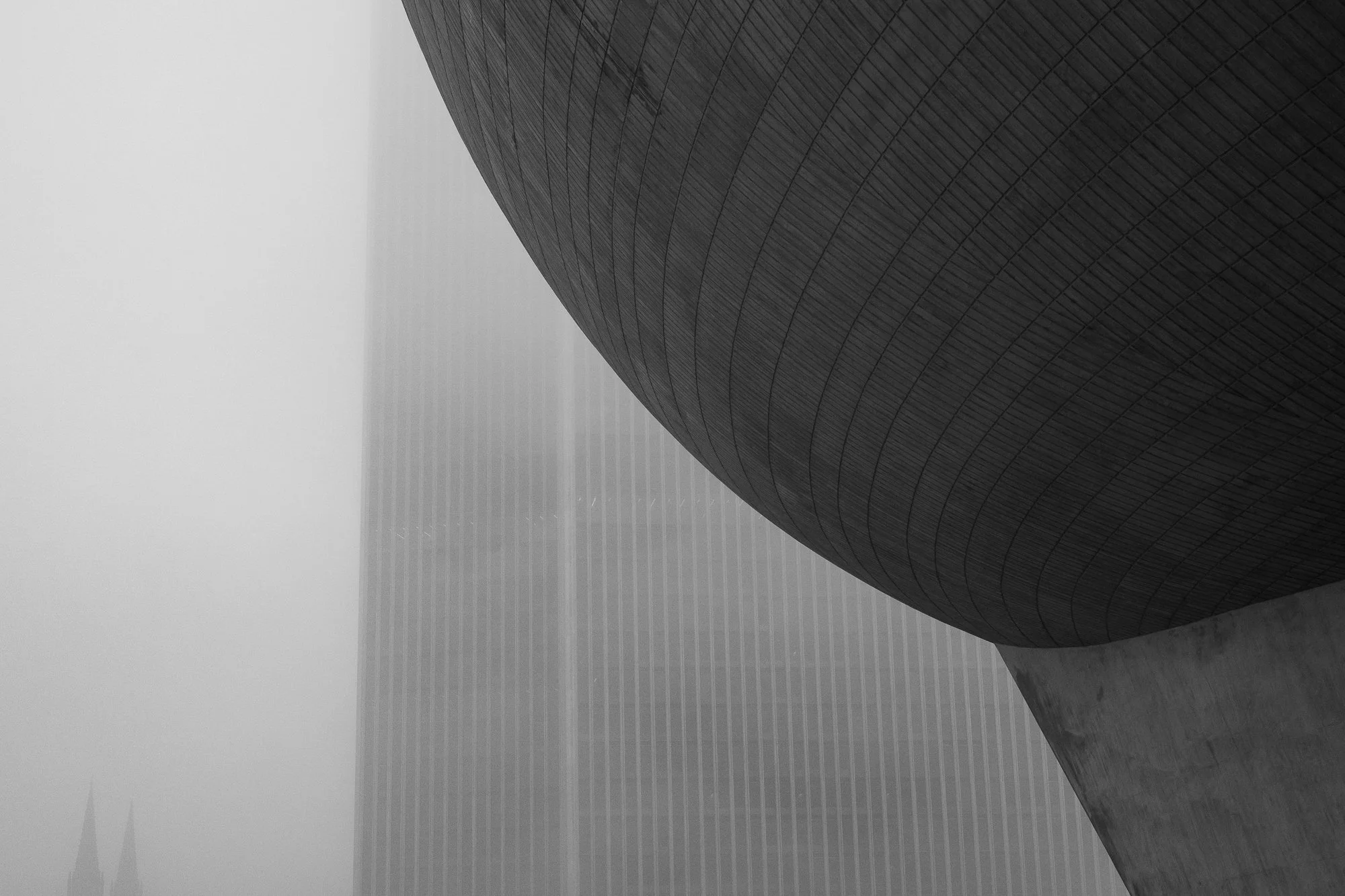
Black and white photograph of The Egg performing arts center in Albany, New York

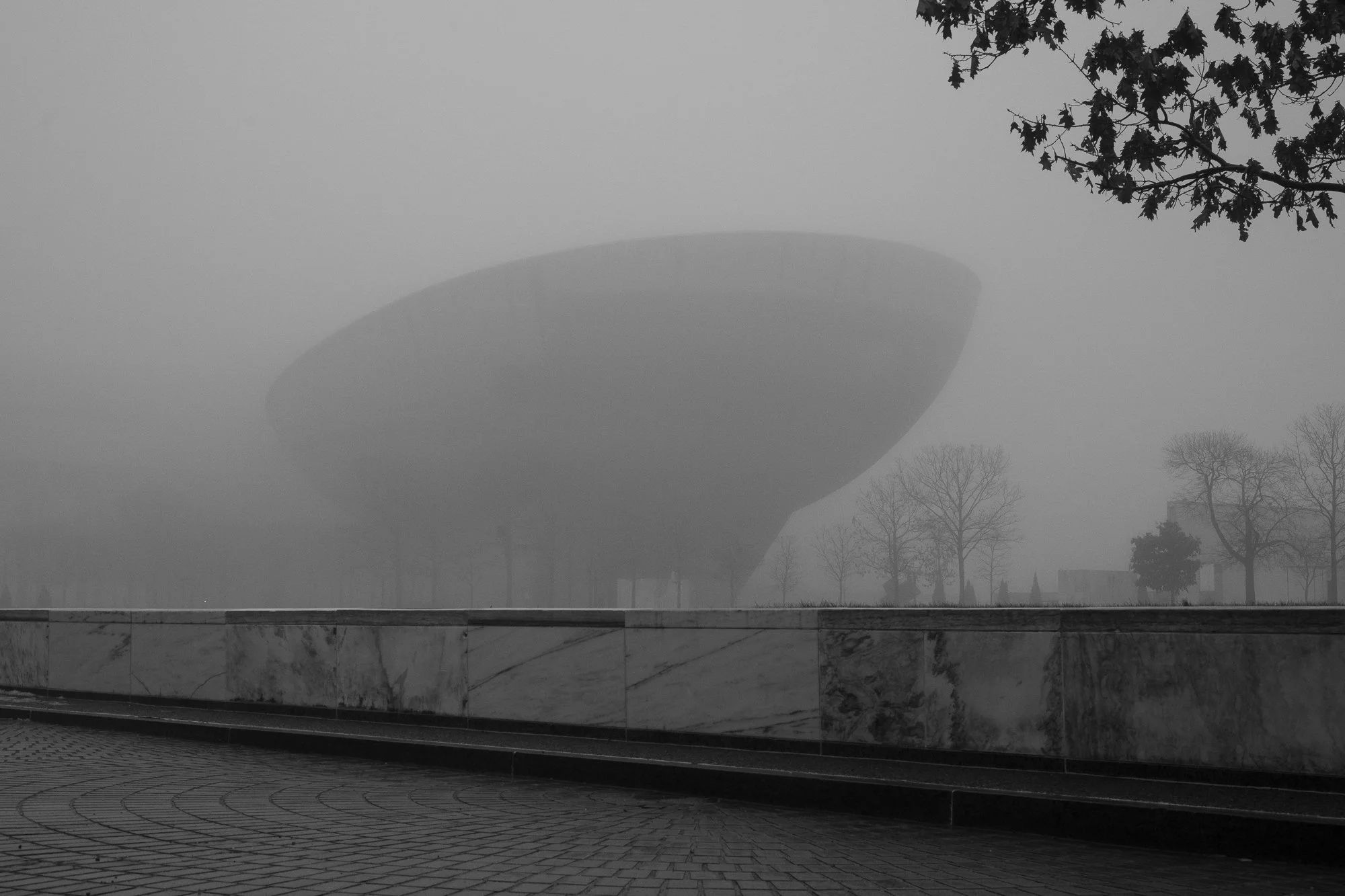
Empire State Plaza - A close architectural study of The Egg, where curve and concrete dominate the frame.

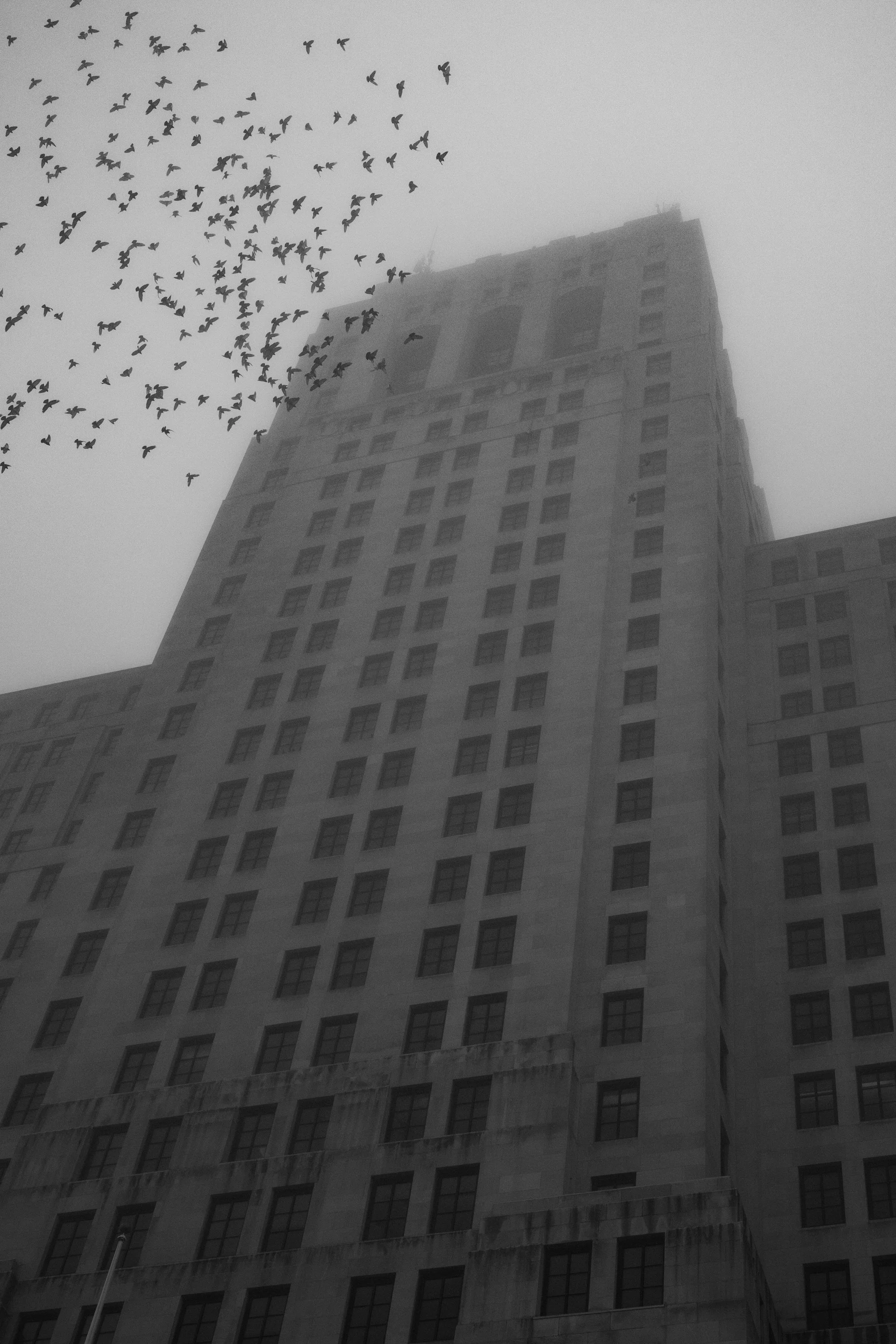
Black and white photograph of birds flying past a tall government building in Albany, New York

A flock of birds breaks the stillness above the Alfred E. Smith building, adding movement to an otherwise rigid form.

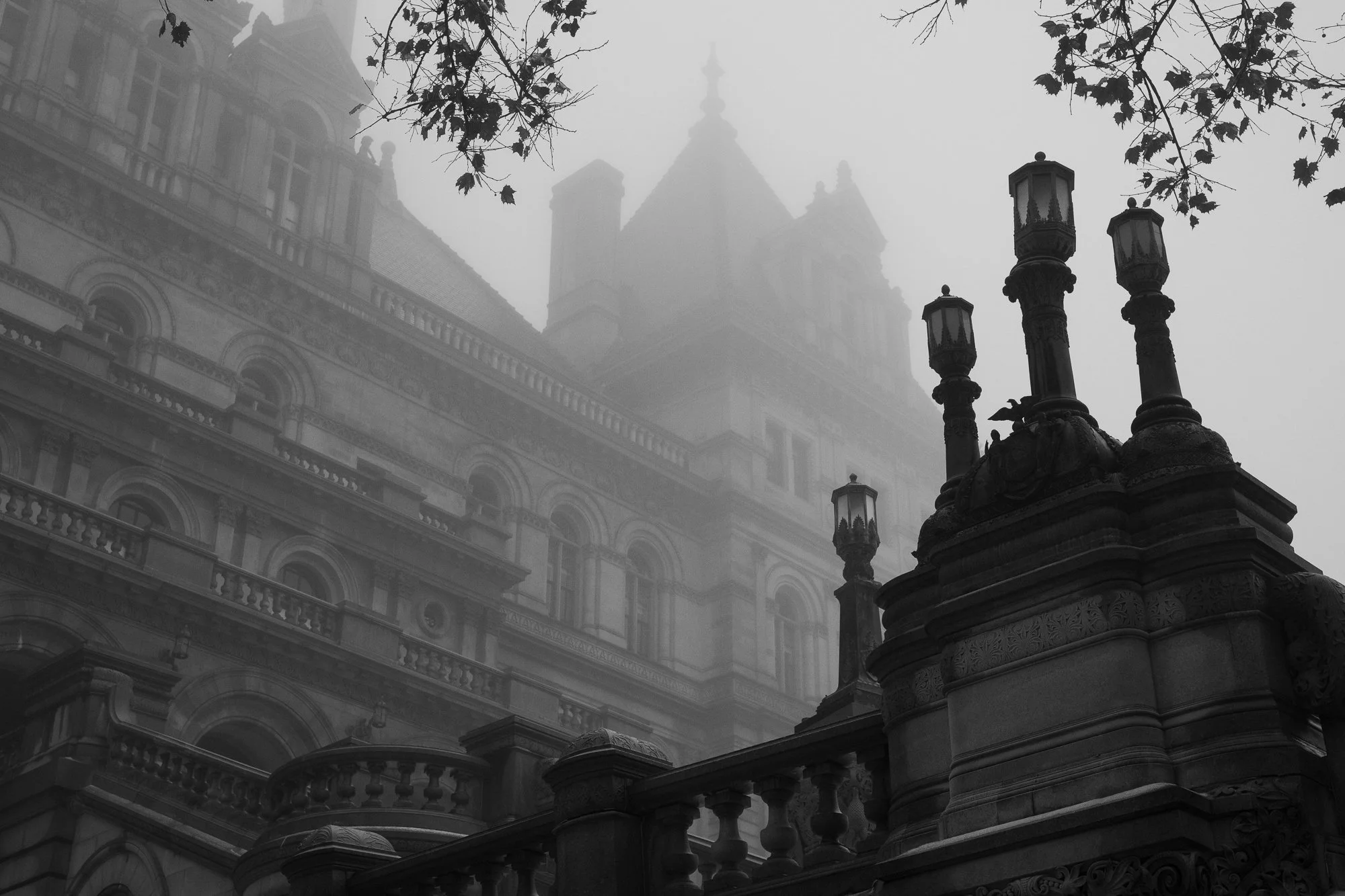
Black and white photograph of decorative balustrades and lampposts at the New York State Capitol in fog

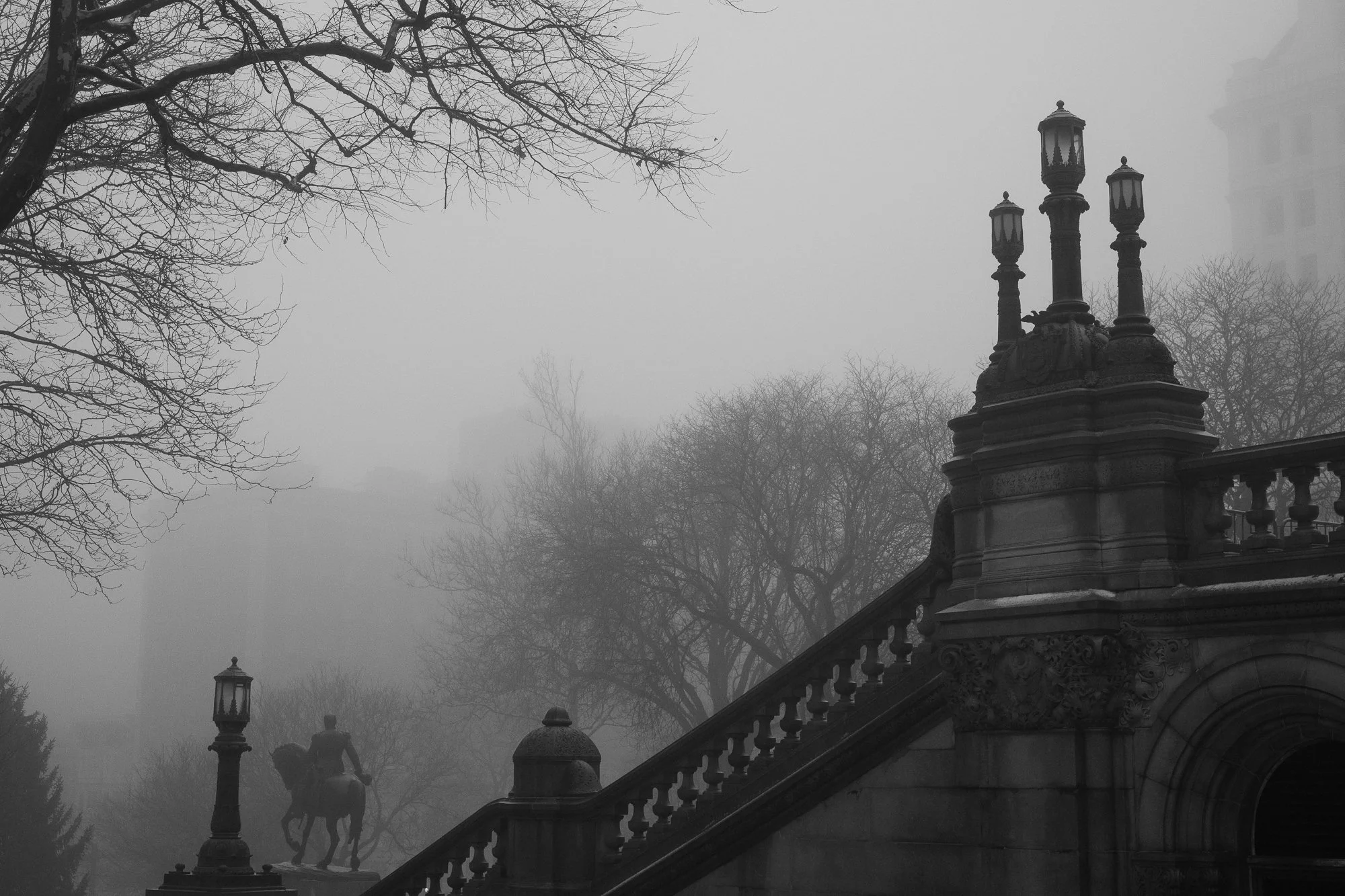
Decorative stonework and lampposts lead the eye toward the Capitol as fog softens the background.

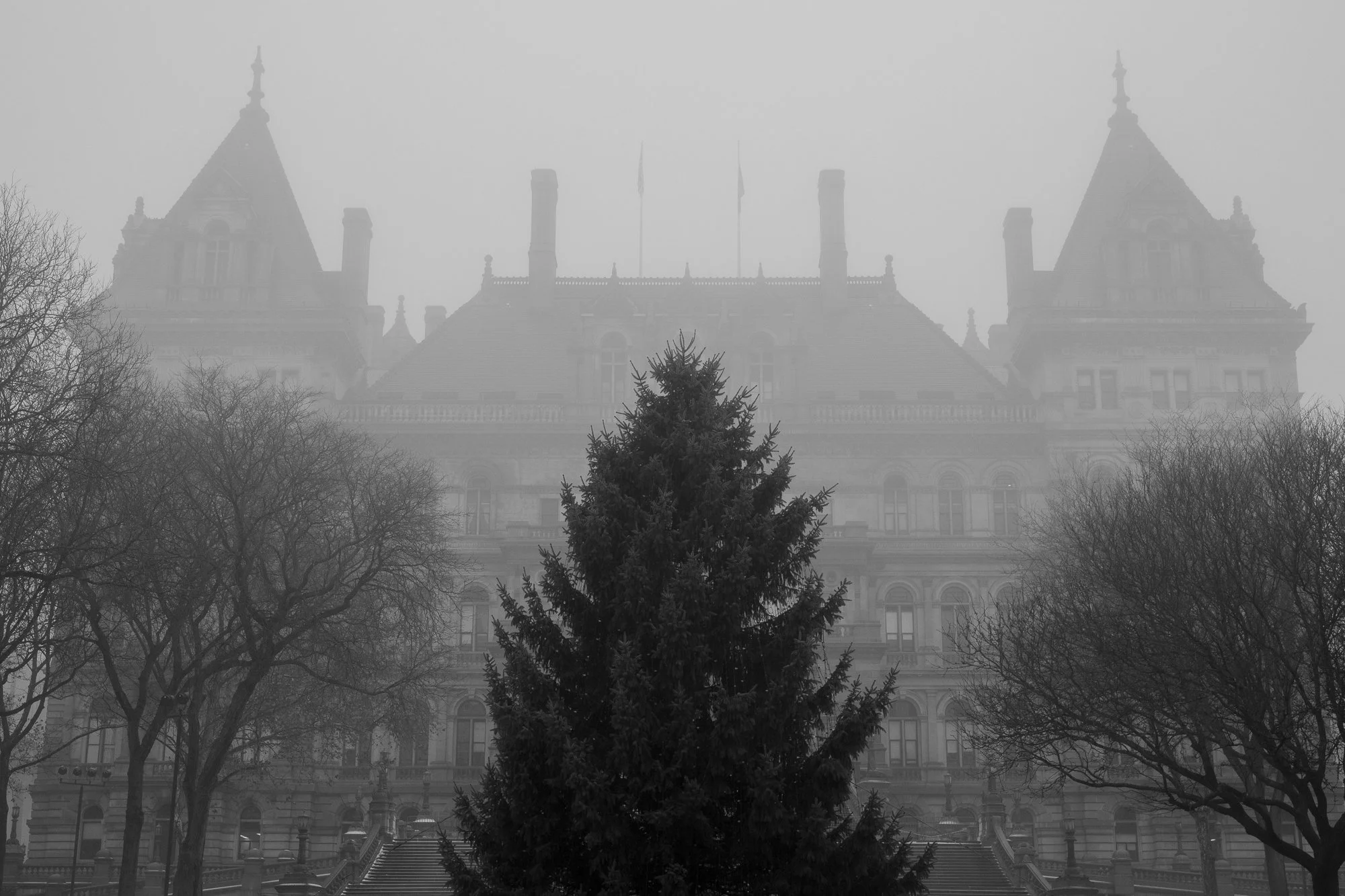
Black and white photograph of the New York State Capitol with symmetrical towers and a central evergreen

Symmetry, fog, and restrained contrast reduce the the New York Sate Capitol building to pure form. This photograph is offered as a fine art print that works especially well in offices and interiors where quiet authority matters.

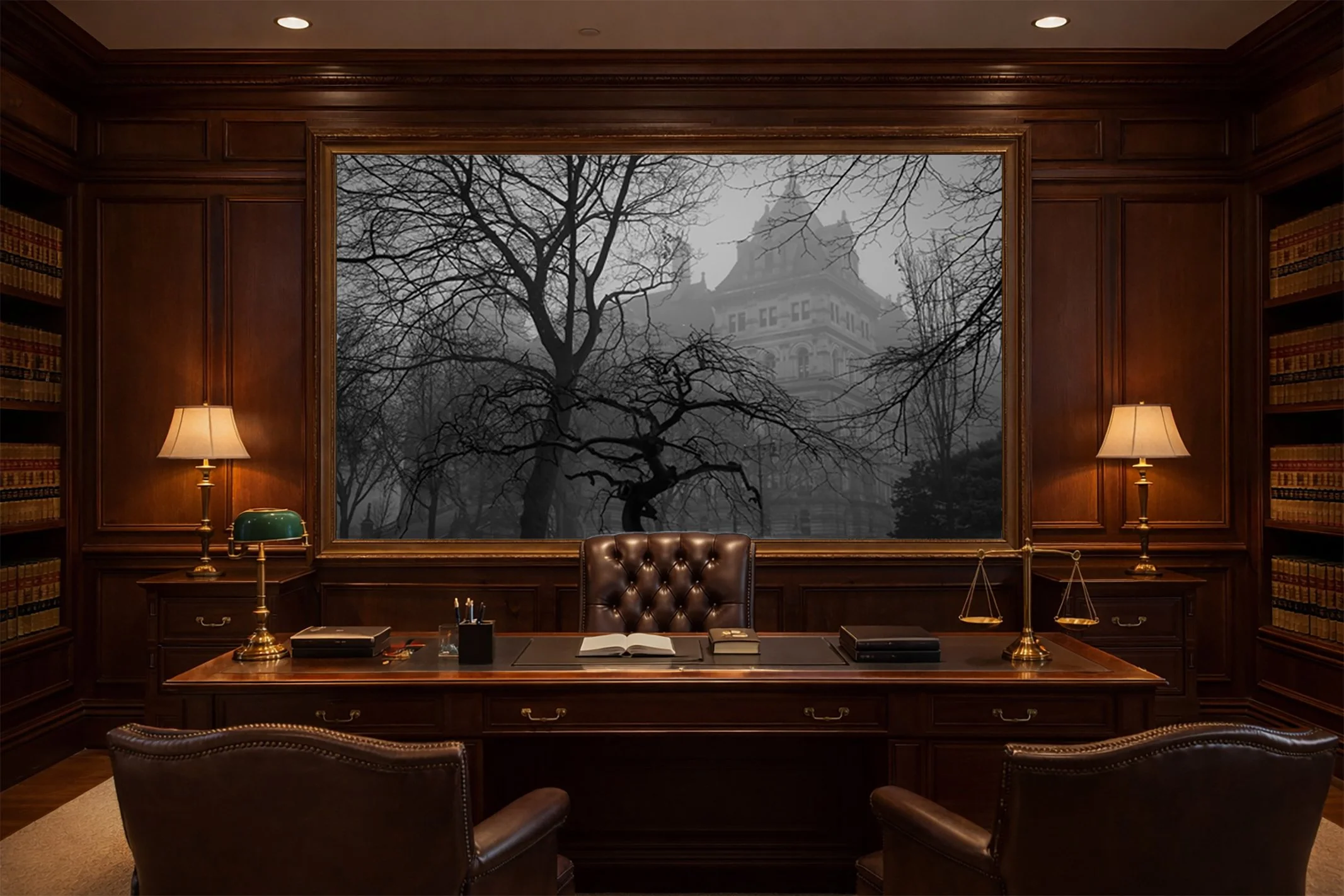
Black and white architectural photograph of an Albany, New York landmark displayed in a high-end attorney’s office with dark wood paneling and classic furnishings

A black and white architectural photograph of Albany, New York, shown here installed in a high-end attorney’s office. The fog-softened historic architecture and bare winter trees bring a quiet sense of permanence and authority to a refined professional space.

Black and white photograph of The Egg performing arts center partially obscured by fog in Albany

The Egg appears as a softened form within heavy fog, emphasizing scale and negative space.

Black and white photography print of historic Albany, NY architecture

Photograph of the New York State Education Department building in Albany, NY

Black and white photograph of a statue in Washington Park framed by bare tree branches in Albany

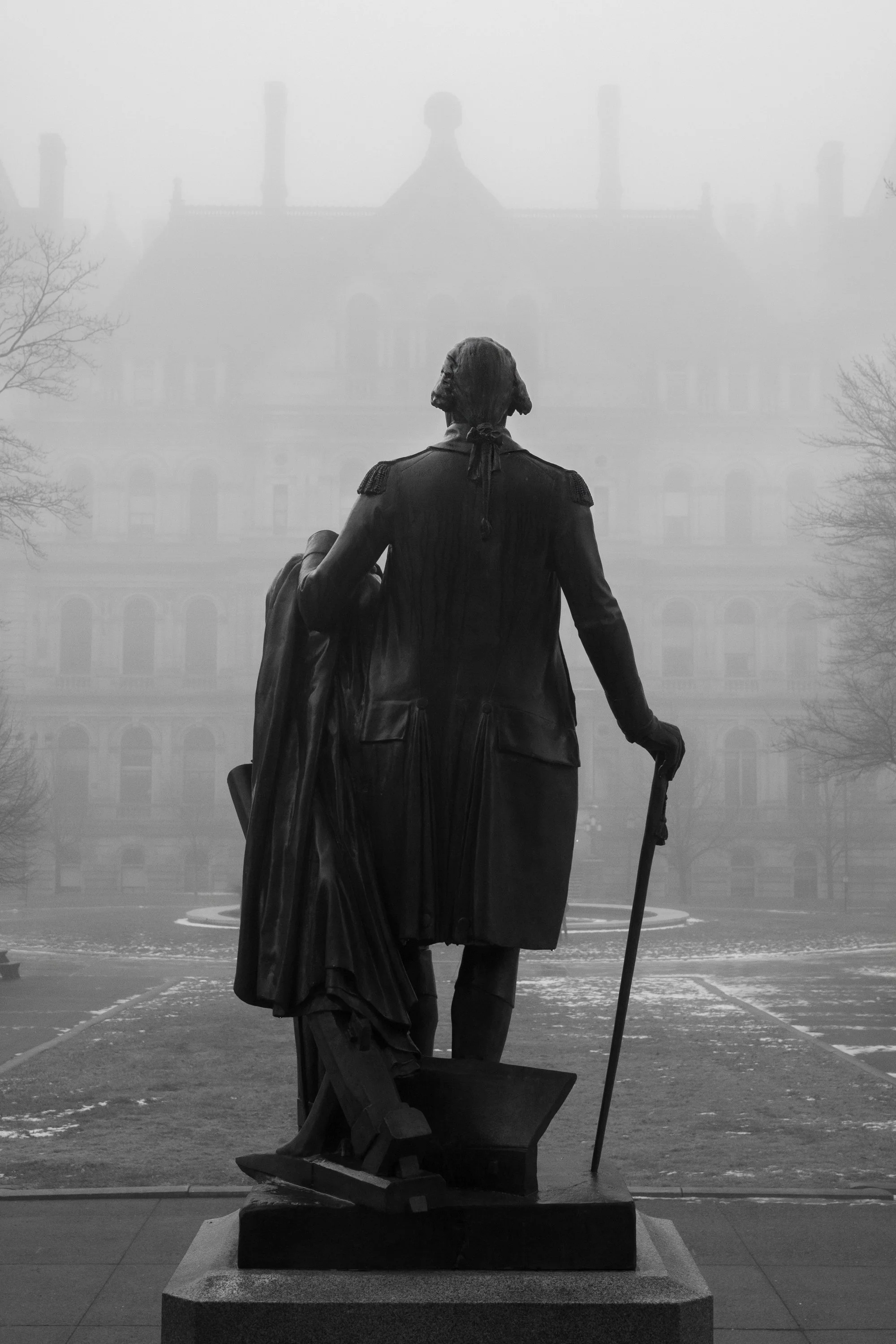
A statue of George Washington stands quietly framed by winter branches and softened by fog.

Black and white photography print of the statue and staircase in front of the Capital building in Albany, NY

Timeless black and white photograph of Albany, NY architecture

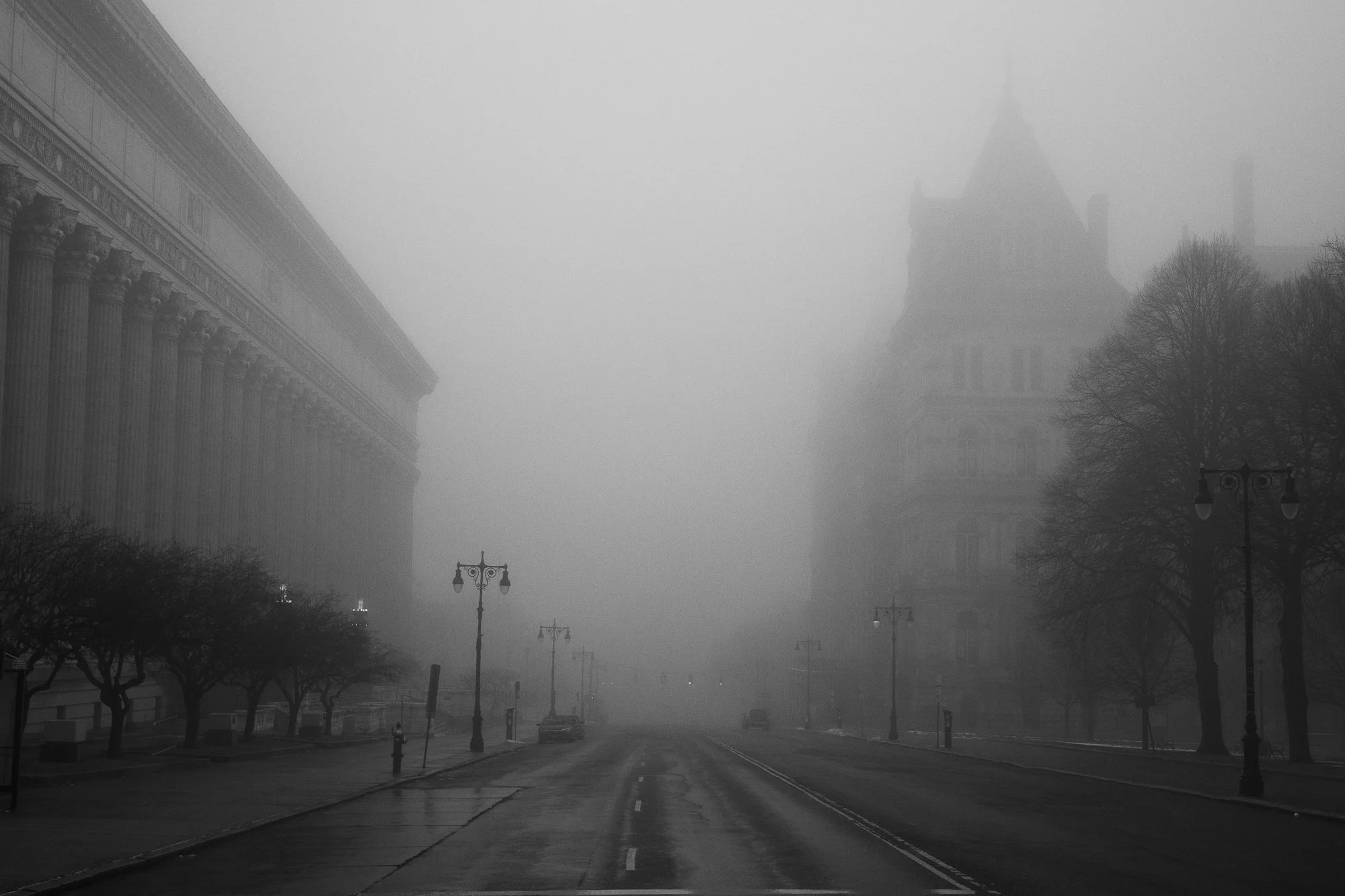
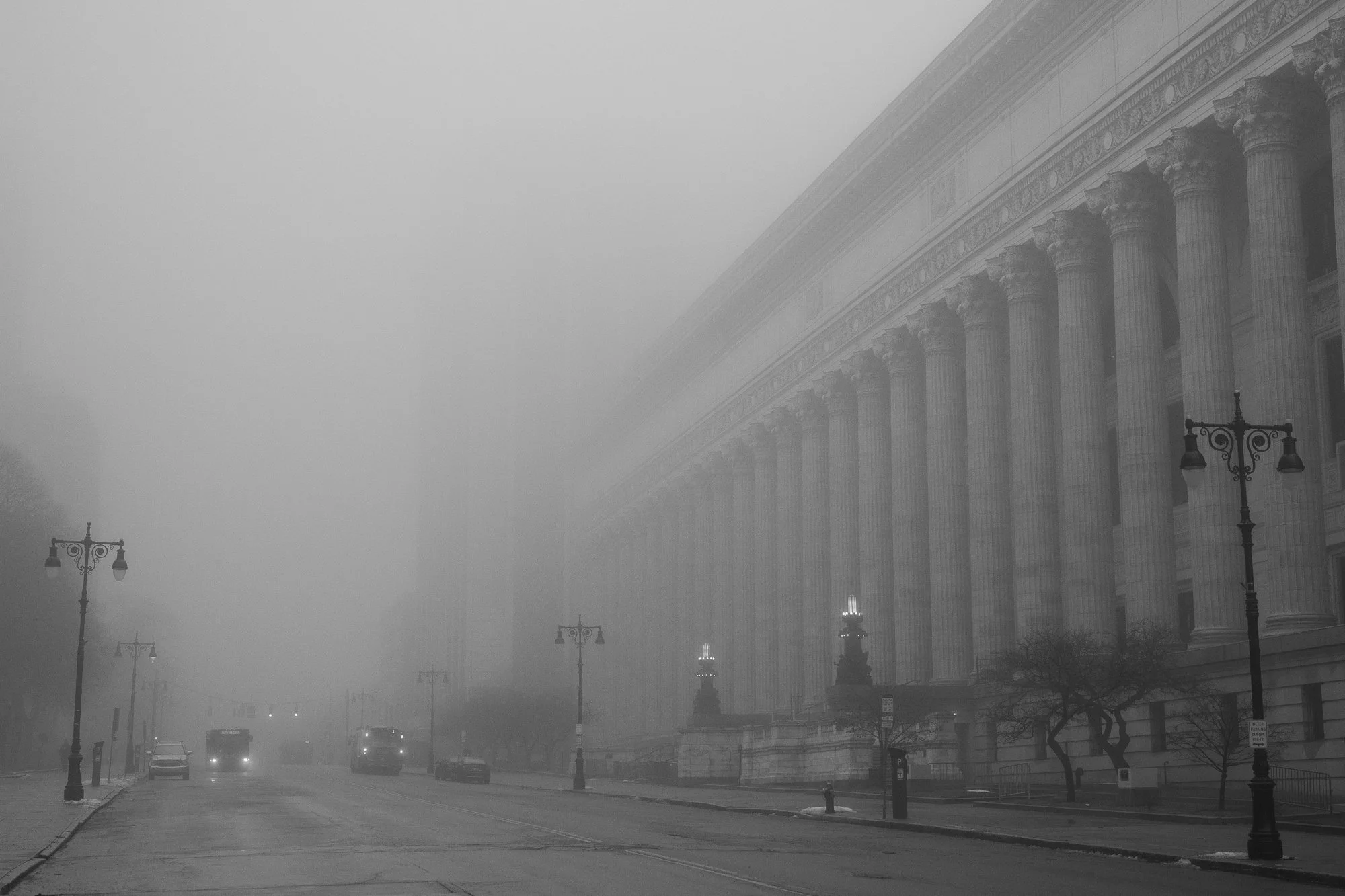
Black and white photograph of a columned government building along an empty street in Albany

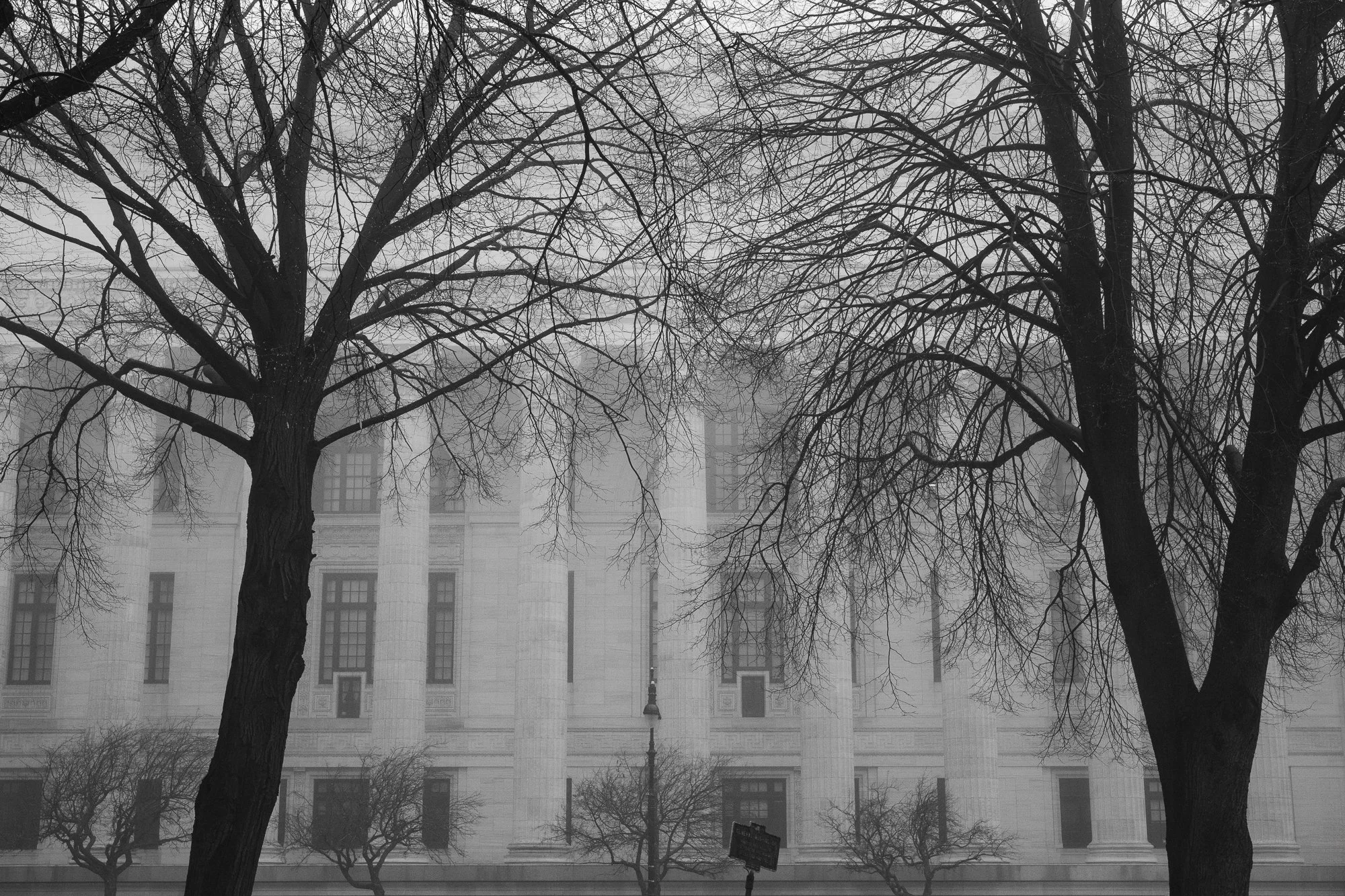
A long row of columns fades into fog along a quiet Albany street, emphasizing repetition and scale.

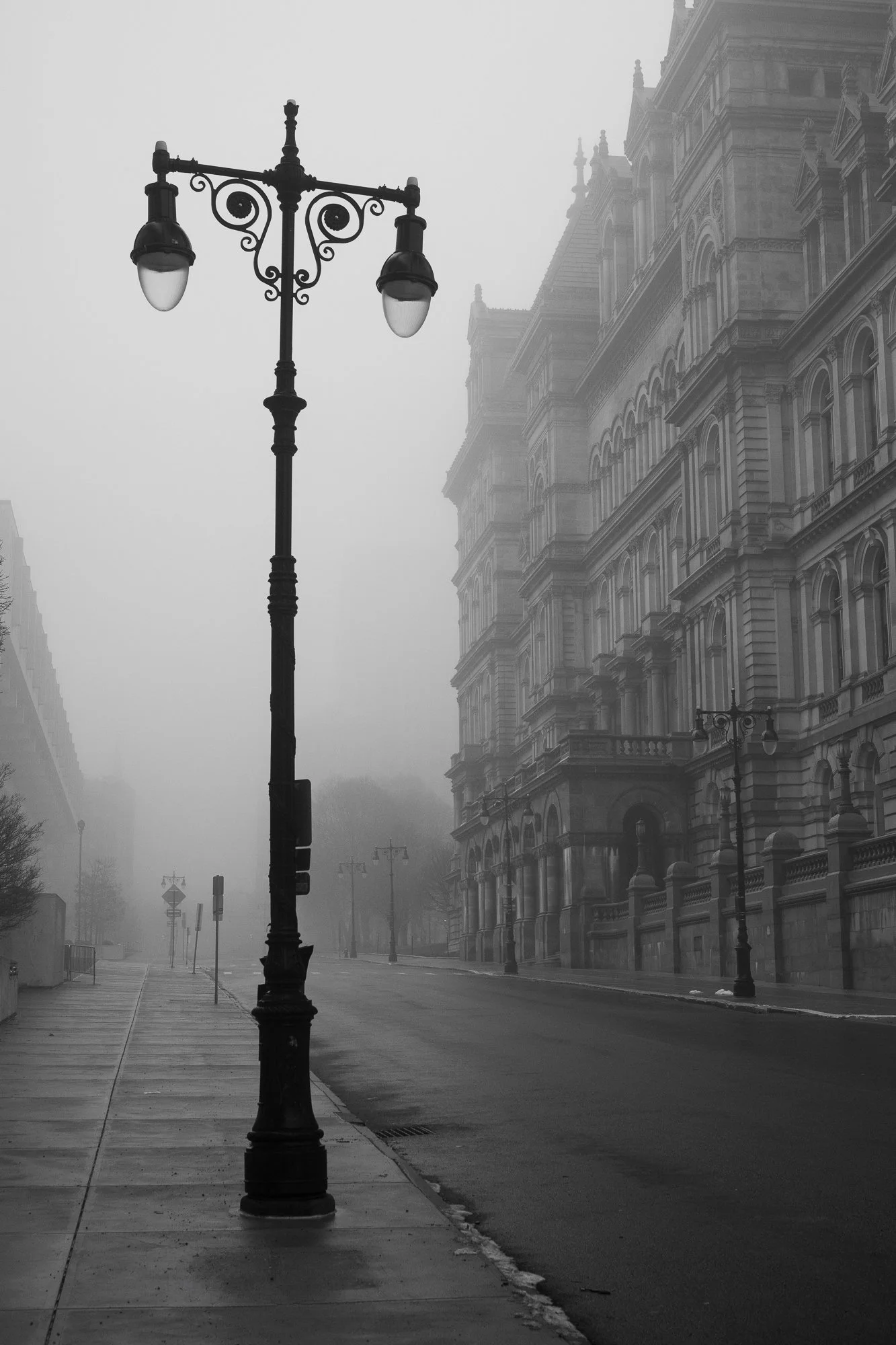
Black and white photograph of Albany, NY architecture

A single lamppost anchors an empty Albany street as fog dissolves the surrounding architecture.

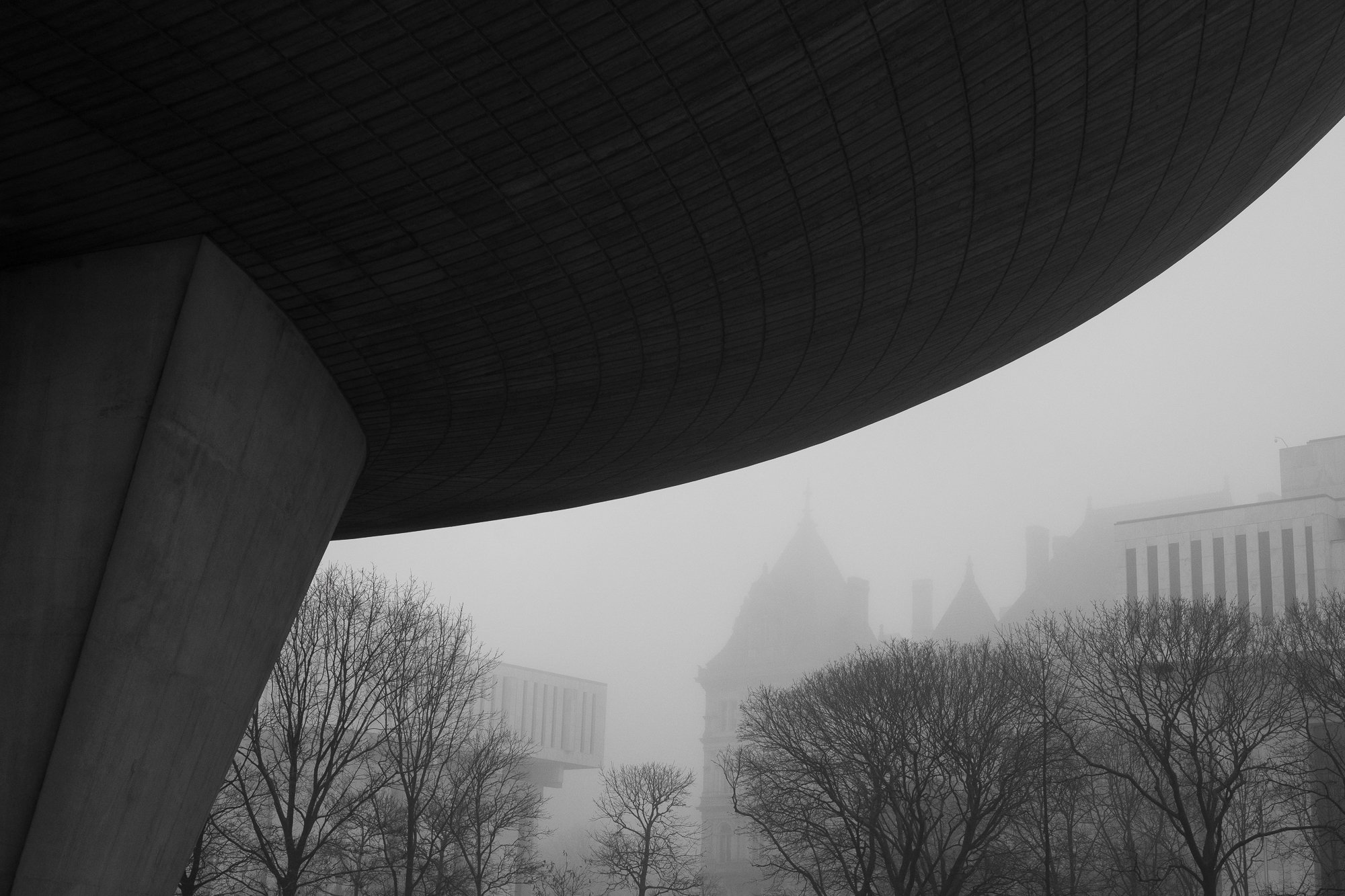
Black and white fine art photograph of The Egg and architecture in Albany, NY

The sweeping curve of The Egg floats above Albany’s softened skyline as fog reduces detail and scale.

Tom Moorhouse

Tom Moorhouse — A Working Cowboy of the American West

Tom Moorhouse is not a cowboy preserved in nostalgia, but one shaped by decades of work, responsibility, and lived experience. His life reflects a version of the American West that still exists, though often overlooked—one built on passion, land stewardship, and a deep understanding of cattle and country. These photographs documents Moorhouse as he is, without performance or reenactment, focusing instead on the quiet realities of a working cowboy’s life.

A Life Shaped by Ranching and Responsibility

Tom Moorhouse’s connection to ranching runs deep. His knowledge of cattle, land, and horsemanship comes not from imitation, but from years spent working within the rhythms of ranch life. Days begin early and end late, shaped by weather, animals, and the constant demands of the job. There is little separation between work and identity here—ranching is not something done for effect, but something lived every day.

In a culture often romanticized from the outside, Moorhouse represents the reality behind the image. The work is physical, repetitive, and exacting, requiring patience and long-earned skill. These photographs aim to reflect that truth by focusing on presence rather than action, and on character rather than spectacle.

A Texas Legend Recognized

Tom Moorhouse’s induction into the Texas Cowboy Hall of Fame and his Golden Spur Award speaks to the respect he has earned within the ranching community. This recognition is not about mythmaking, but about contribution—acknowledging a lifetime spent working cattle, preserving ranching traditions, and passing along knowledge built through experience.

Rather than elevating him above the work, this honor underscores the importance of people like Moorhouse in sustaining the culture of the American West. His story is inseparable from the land and the labor that define it.
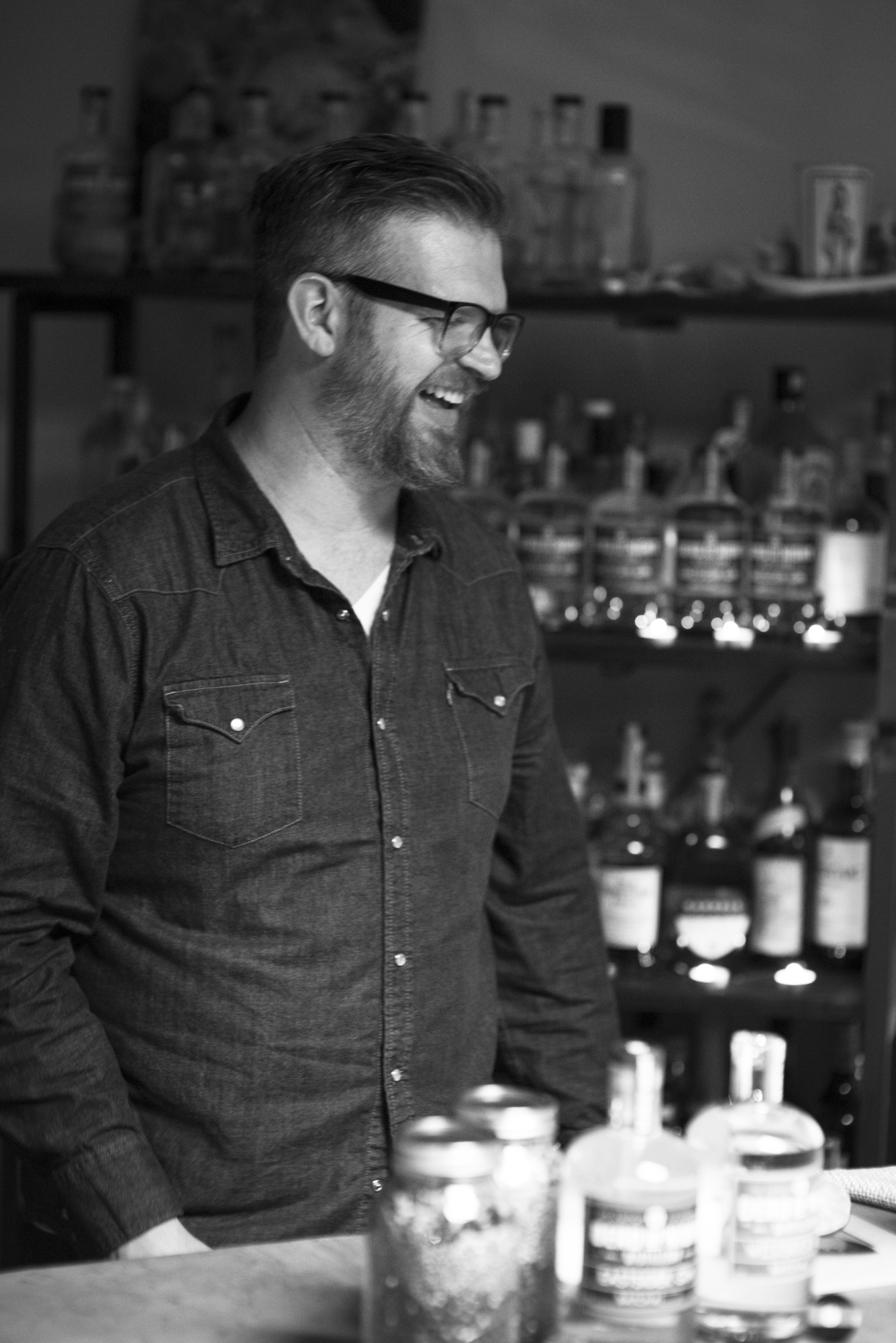
Photographing the Quiet Side of Cowboy Culture

This portrait series was approached with restraint and intention. The goal was not to dramatize cowboy life, but to observe it honestly. Natural light, minimal direction, and an emphasis on stillness allow the details to speak.

By focusing on the spaces between moments, the photographs reveal a side of cowboy culture that often goes unseen. The tools, the wear, and the environment all carry history, and together they form a more complete picture of a life lived through work rather than performance.

Cowboy Photography as Cultural Documentation

Projects like this exist to document a way of life that continues quietly across the American West. Working cowboys like Tom Moorhouse are central to that story, yet they are rarely the focus of contemporary visual records. These photographs are part of a broader effort to create a long-term archive of cowboy culture as it exists today—not as a reenactment, but as lived experience.
Licensing Cowboy Photography for Editorial and Commercial Use

These photographs of Tom Moorhouse are available for editorial and commercial licensing. The work is well suited for magazines, books, brand storytelling, exhibitions, and cultural institutions seeking authentic representations of working cowboy life in the American West. Licensing inquiries are welcomed for projects that value accuracy, context, and visual honesty, with images available as individual selections or as part of a larger cowboy photography archive.
View More Cowboy Photography from the American West

This portrait of Tom Moorhouse is part of an ongoing series documenting working cowboys across the American West.
View the full Cowboy Photography series
Boots O’Neal - Another Texas Legend

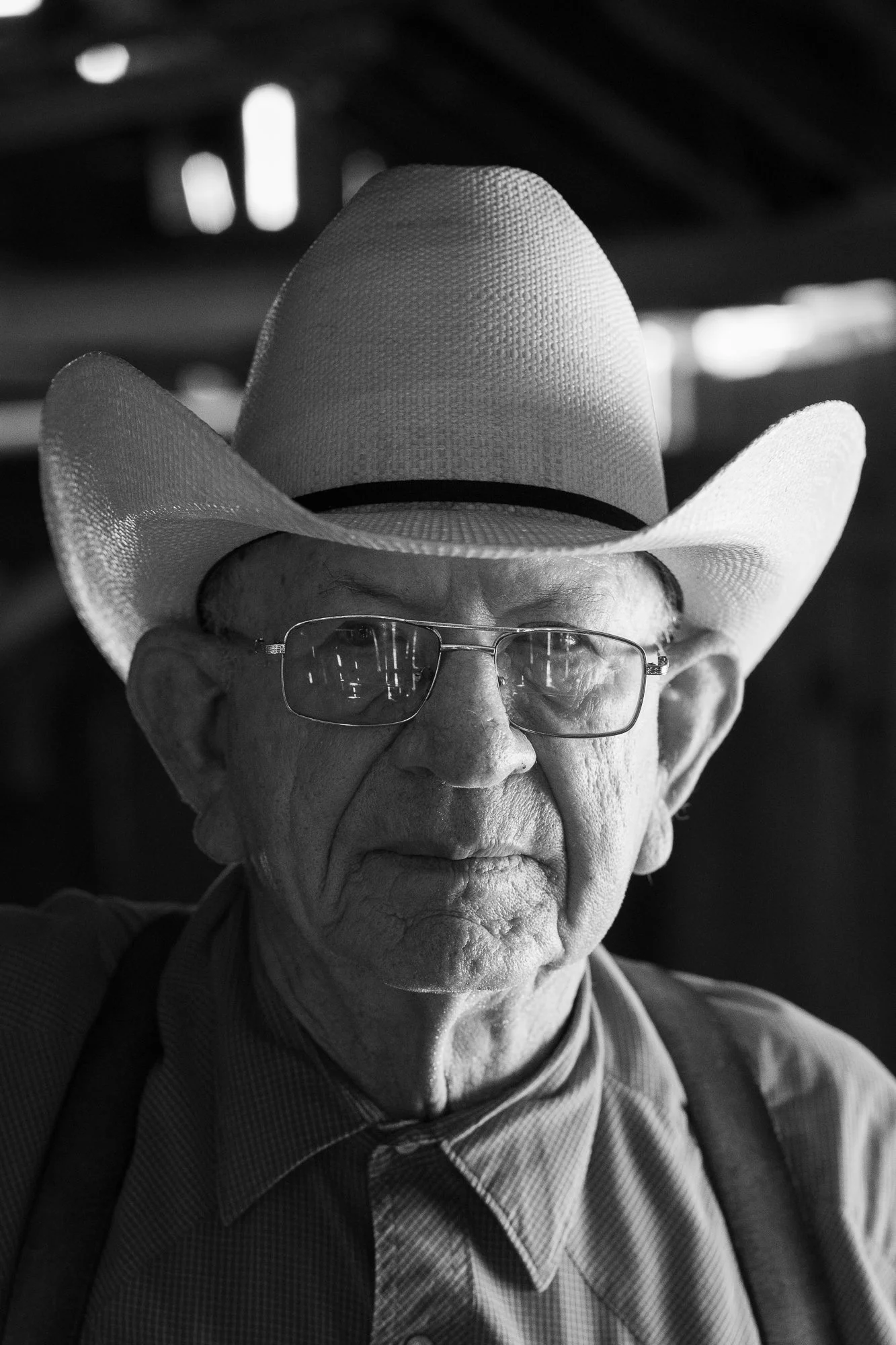
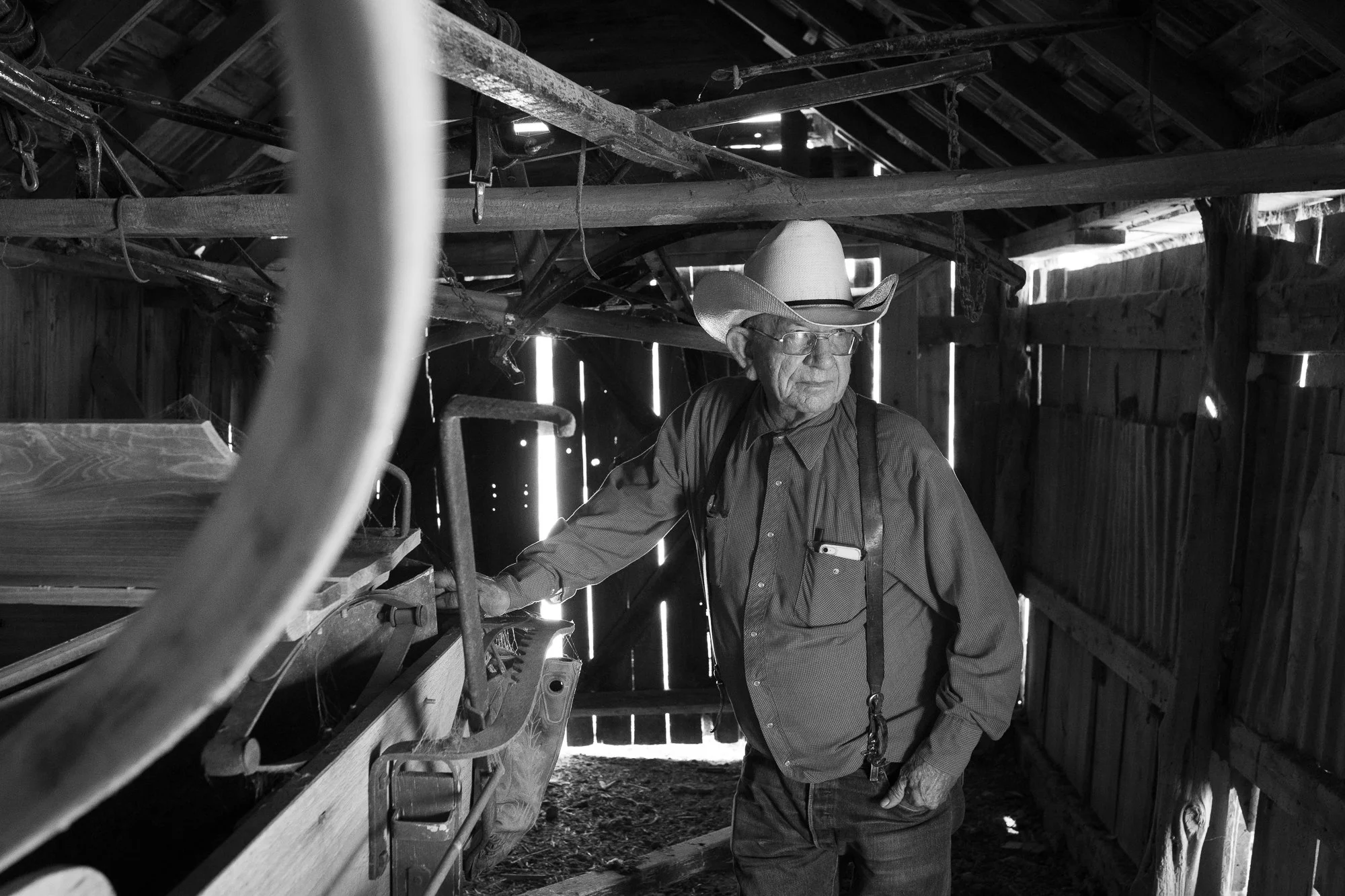
Black and white portrait of famous Texas cowboy Tom Moorhouse

Tom Moorhouse - Texas Cowboy

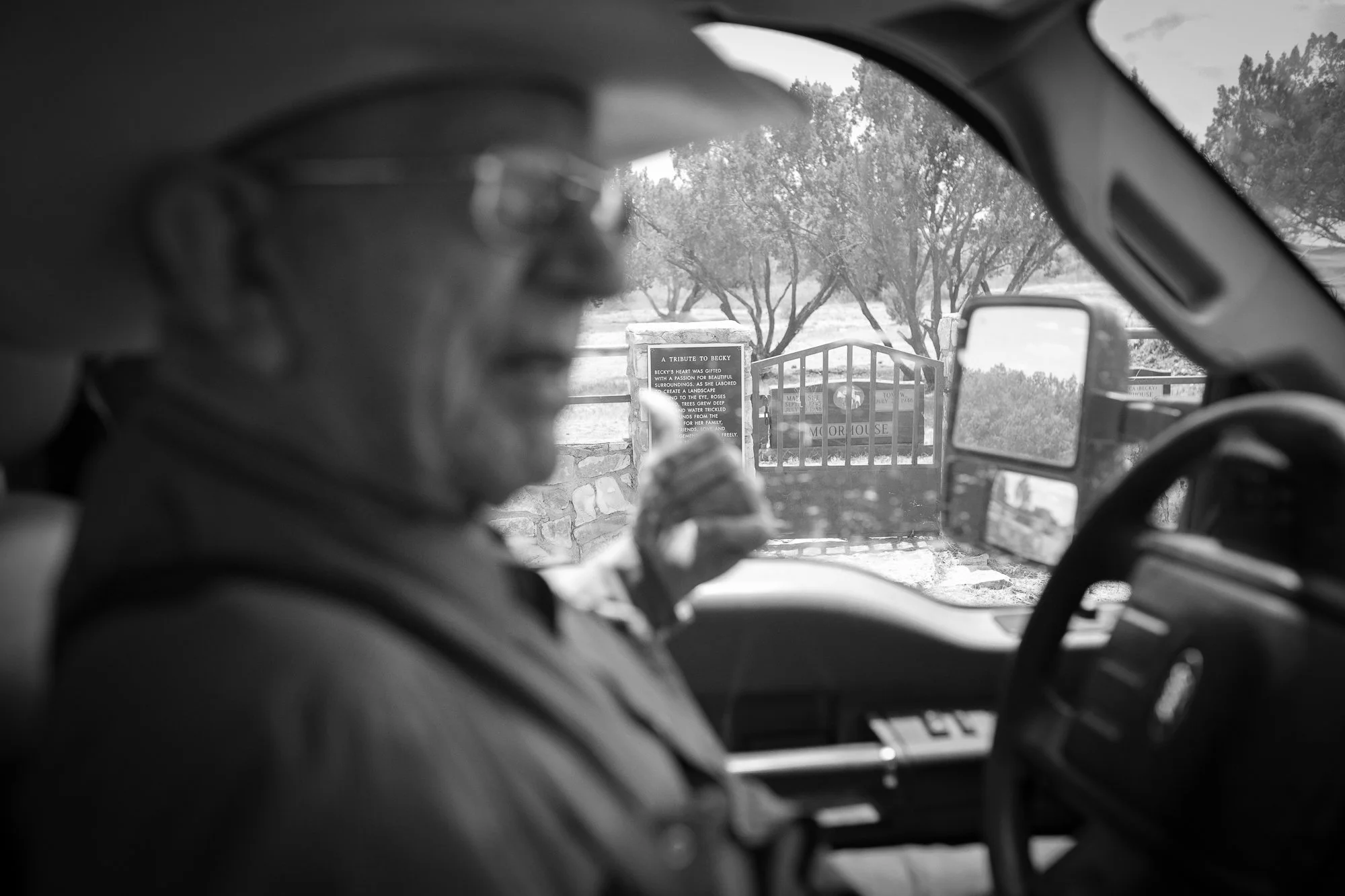
Photograph of Tom Moorhouse at the cemetery on his ranch

Legendary Texas Cowpuncher - Tom Moorhouse

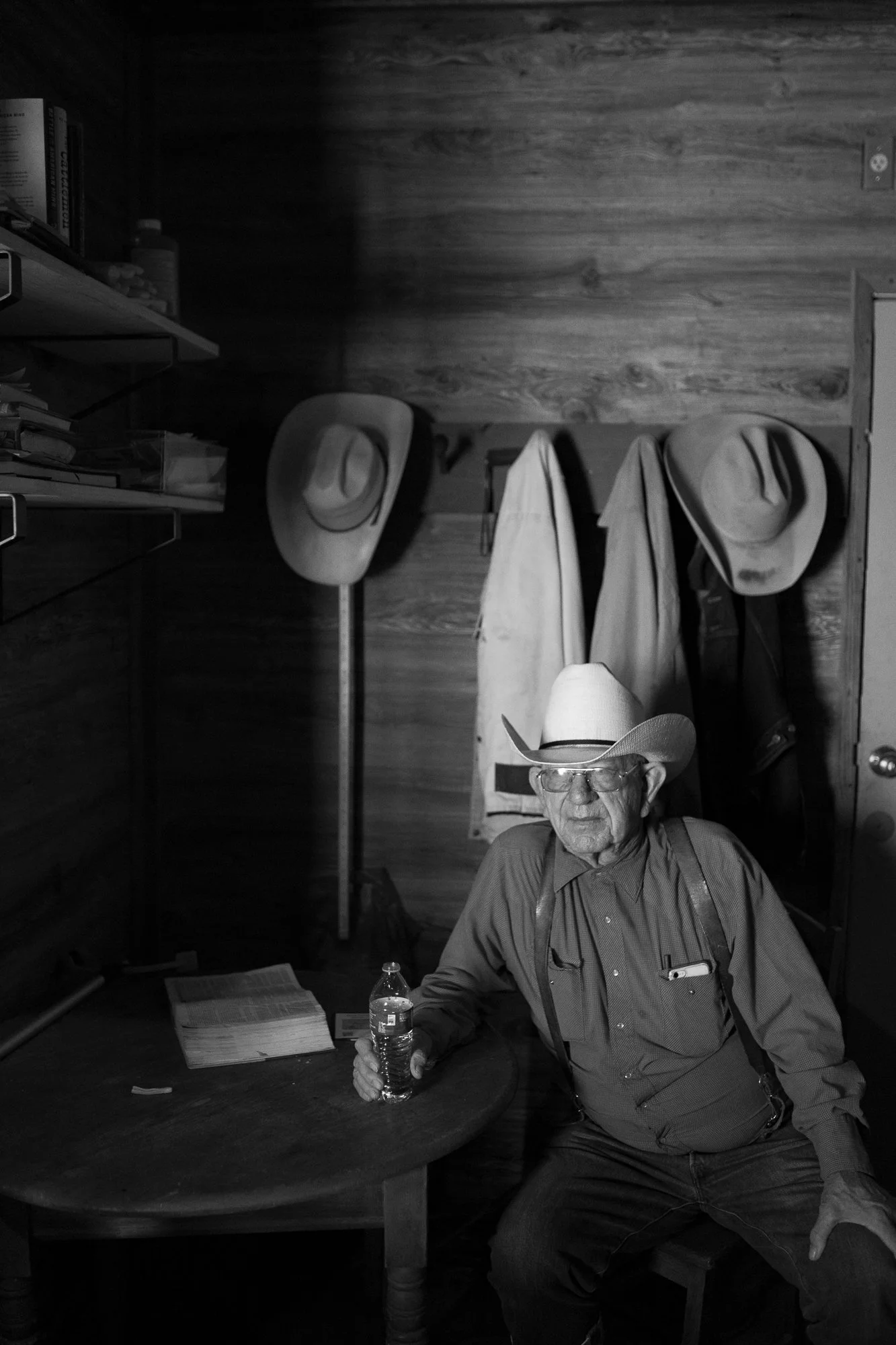
Portrait of legendary Texas cowboy Tom Moorhouse

Portrait of legendary Texas cowboy Tom Moorhouse

Black and white portrait of cowboy Tom Moorhouse on his ranch in Texas

Tom Moorhouse at his ranch in Texas


Texas Plains Photography: Llano Estacado

Llano Estacado Photographs

The Llano Estacado is easy to misunderstand. It’s often described as flat, empty, or featureless, but spending time there reveals something very different. This high plains region of West Texas is defined less by landmarks and more by distance — by how far the horizon stretches, how light moves across open ground, and how small human presence feels once you slow down enough to notice it.

These photographs were made while traveling through small towns, farmland, and back roads that sit quietly within that vastness. They are not meant to explain the Llano Estacado so much as sit with it.

A Landscape Defined by Absence

There are few visual interruptions on the Llano Estacado. Roads run straight for miles. Fields repeat themselves. Buildings appear only occasionally, and when they do, they often feel temporary — as if they were placed there out of necessity rather than permanence.

That absence becomes the subject. Empty intersections, wind-worked soil, distant structures, and isolated signage take on weight simply because there is so little competing for attention. The photographs rely on restraint: space, quiet geometry, and light doing most of the work.

Small Towns, Everyday Objects

Scattered across the plains are towns built around utility rather than spectacle. Hardware stores, abandoned buildings, hand-painted signs, school stadiums, and roadside memorials all reflect daily life shaped by isolation and self-reliance.

Rather than searching for dramatic moments, this work focuses on ordinary details — objects left where they were last used, buildings holding onto their purpose a little longer than expected. These elements reveal how people adapt to scale, weather, and distance without needing to announce it.

Wind, Agriculture, and Modern Presence

The Llano Estacado is both deeply agricultural and increasingly shaped by modern infrastructure. Wind turbines rise above fields that have been worked for generations. Long rows of crops trace patterns across land that feels otherwise unbroken.

This overlap between old and new is quiet but persistent. The turbines don’t overwhelm the landscape; instead, they become another line on the horizon — another marker of how the region continues to evolve while remaining visually spare.

Photographing the In-Between

These images are less about destinations and more about what exists between them. They were made by pulling over often, driving slowly, and paying attention to what most people pass without stopping.

The goal is not nostalgia, but observation. Not commentary, but presence. The Llano Estacado rewards patience, and these photographs reflect that pace — measured, minimal, and unforced.

Interested in These Photographs?

A selection of photographs from this series is available as fine art prints, and the full body of work is available for editorial and commercial licensing.

If you’d like more information, feel free to get in touch.

View more photography from the American West

Part of a Larger Project

Although the Llano Estacado is an entity in and of itself, it’s also an iconic piece of America, which fits perfectly in my long term project photographing the often overlooked parts of this country.

View more American photography

“It’s a long way, round the Llano Estacado” - Colter Wall

Water for sale sign along a rural road on the Llano Estacado in Texas

A hand-painted water-for-sale sign along a remote Texas highway, underscoring the scarcity and scale of life on the Llano Estacado.

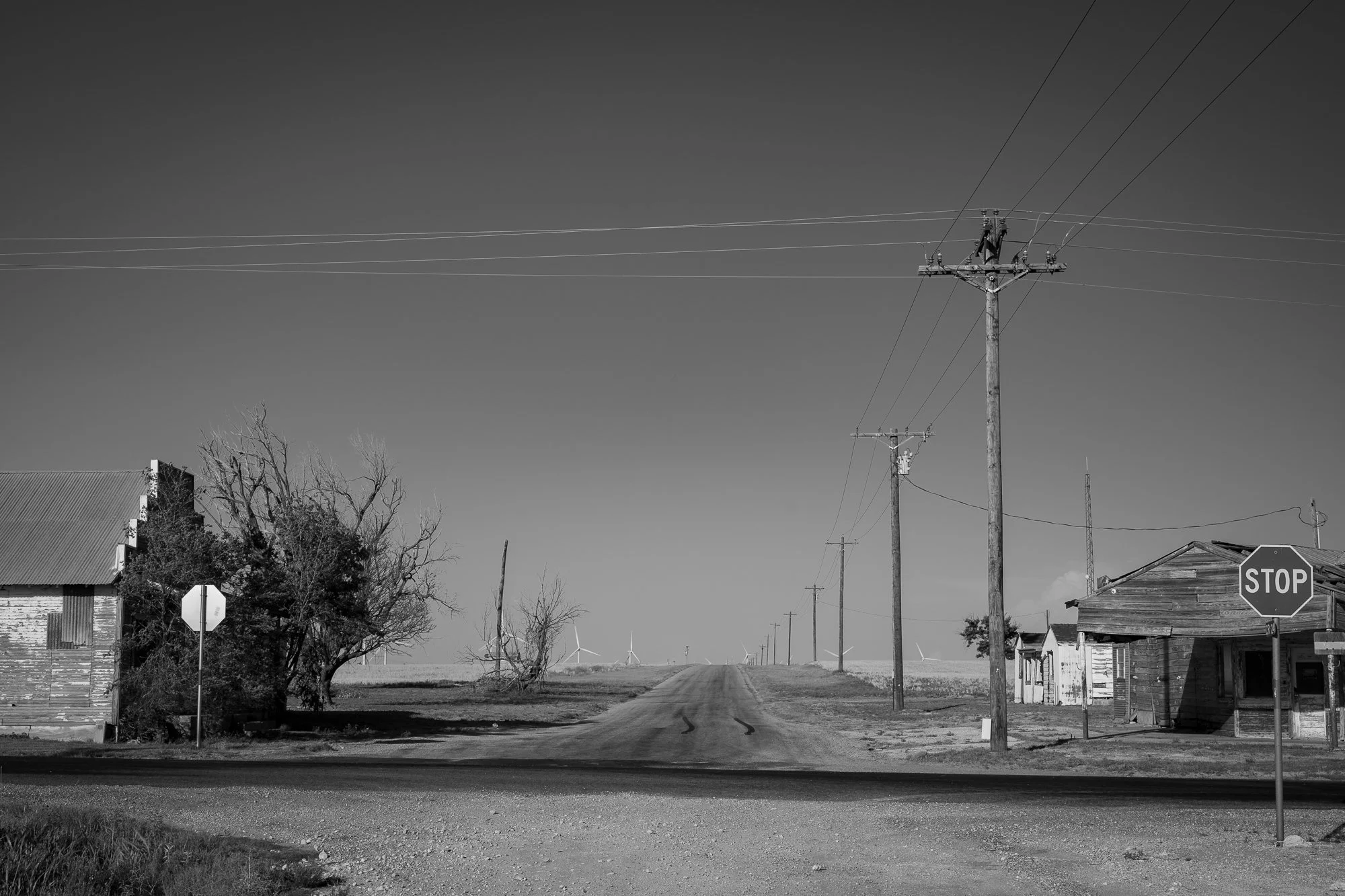
Empty intersection with abandoned buildings on the Llano Estacado

A rural intersection on the Llano Estacado, where roads stretch outward and towns feel held together by distance.

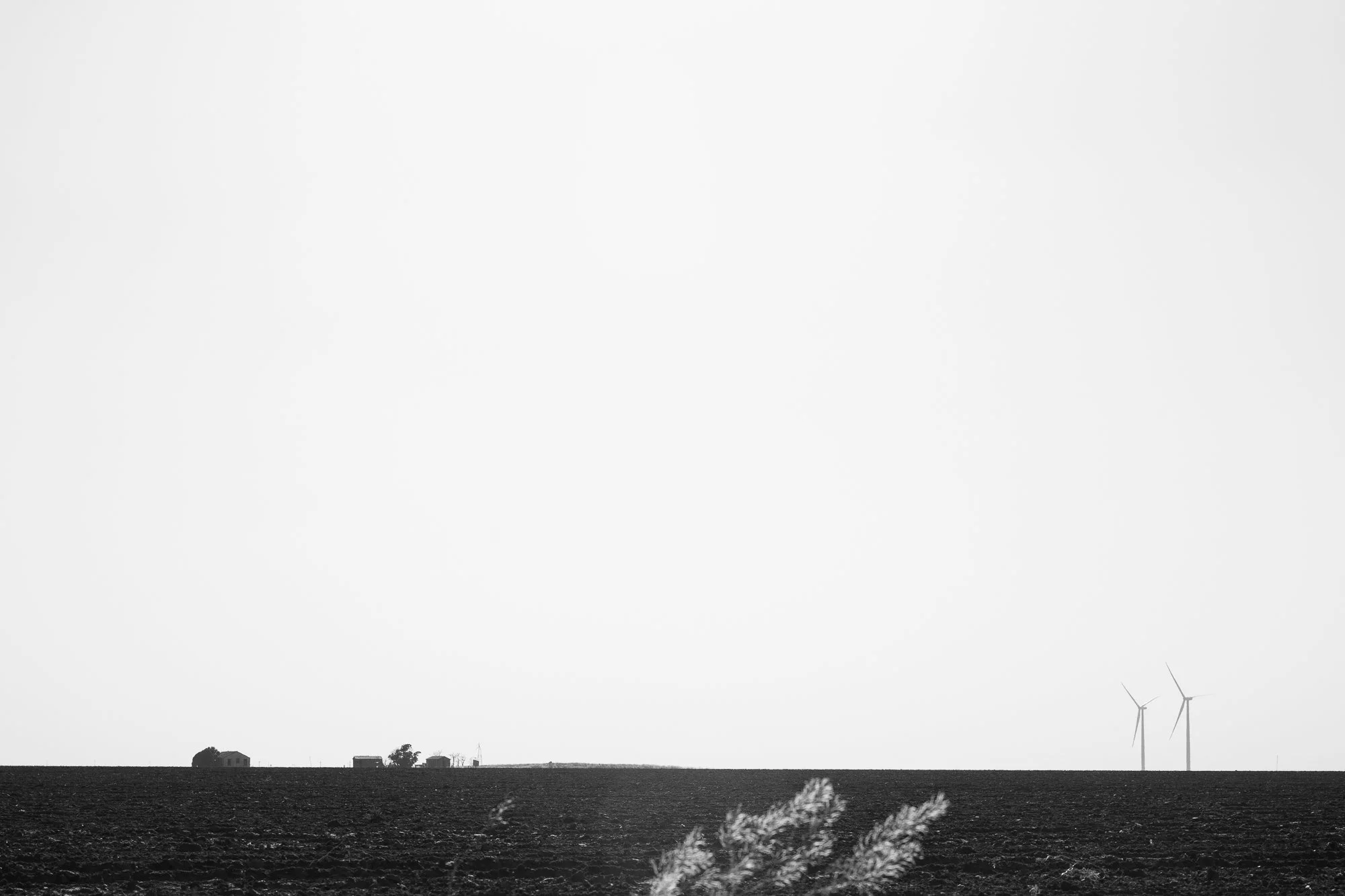
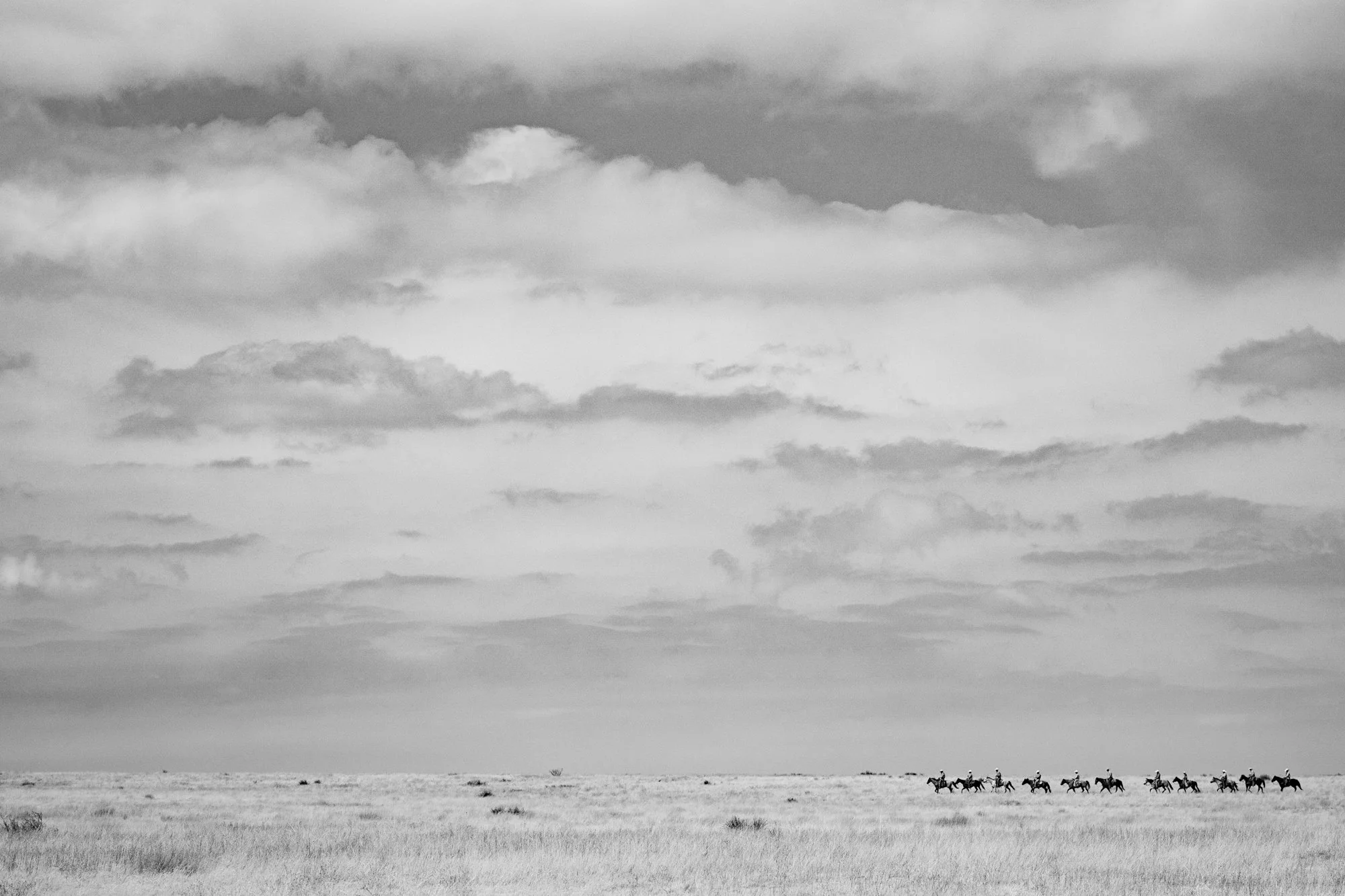
Minimal black and white landscape with distant wind turbines on the Llano Estacado

A spare horizon broken only by distant farm buildings and turbines, emphasizing scale and emptiness on the Llano Estacado.

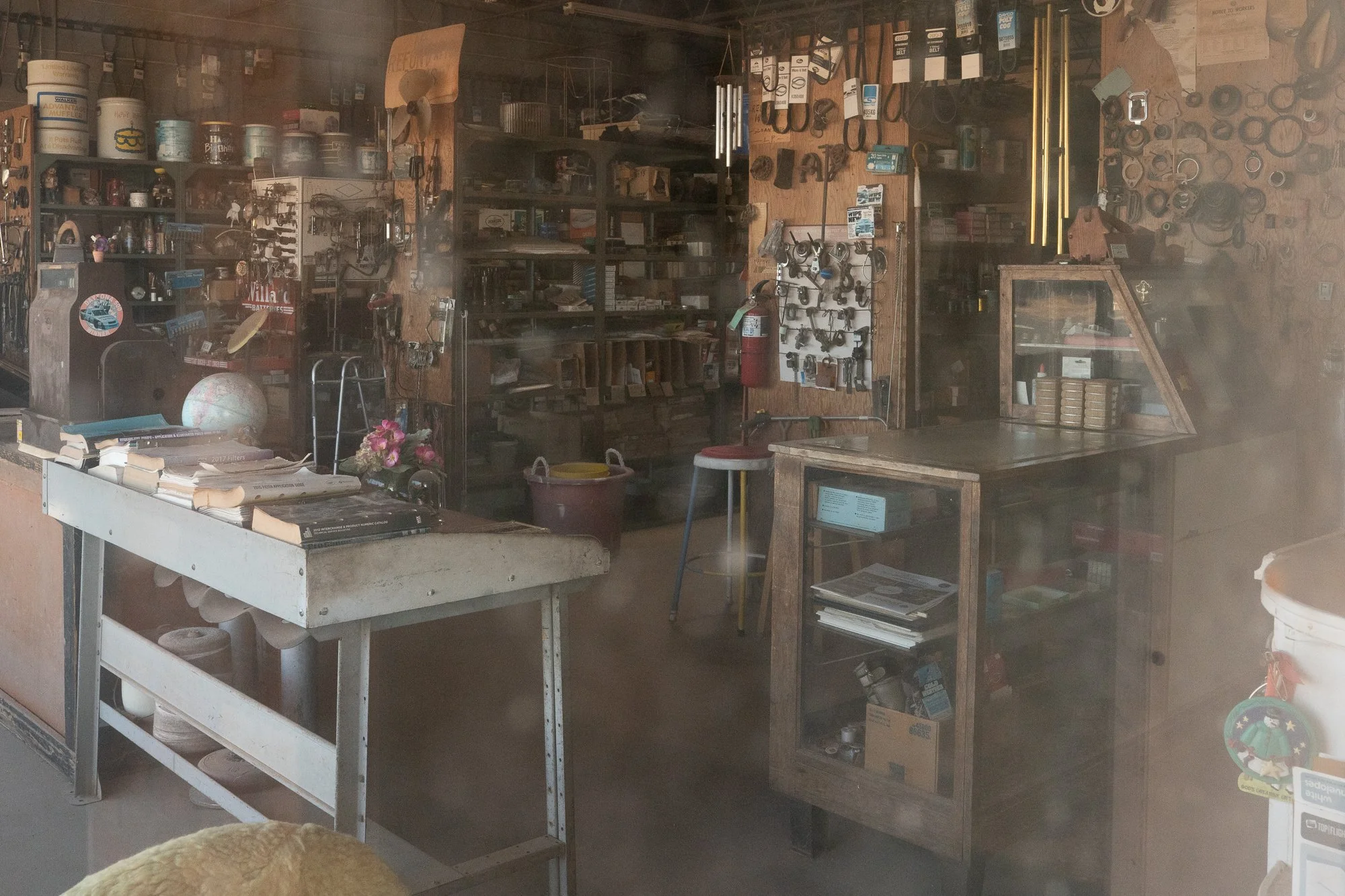
Interior of a small rural hardware store on the Llano Estacado in Texas

Inside a small-town hardware store on the Llano Estacado, where tools, shelves, and light speak to decades of daily use.

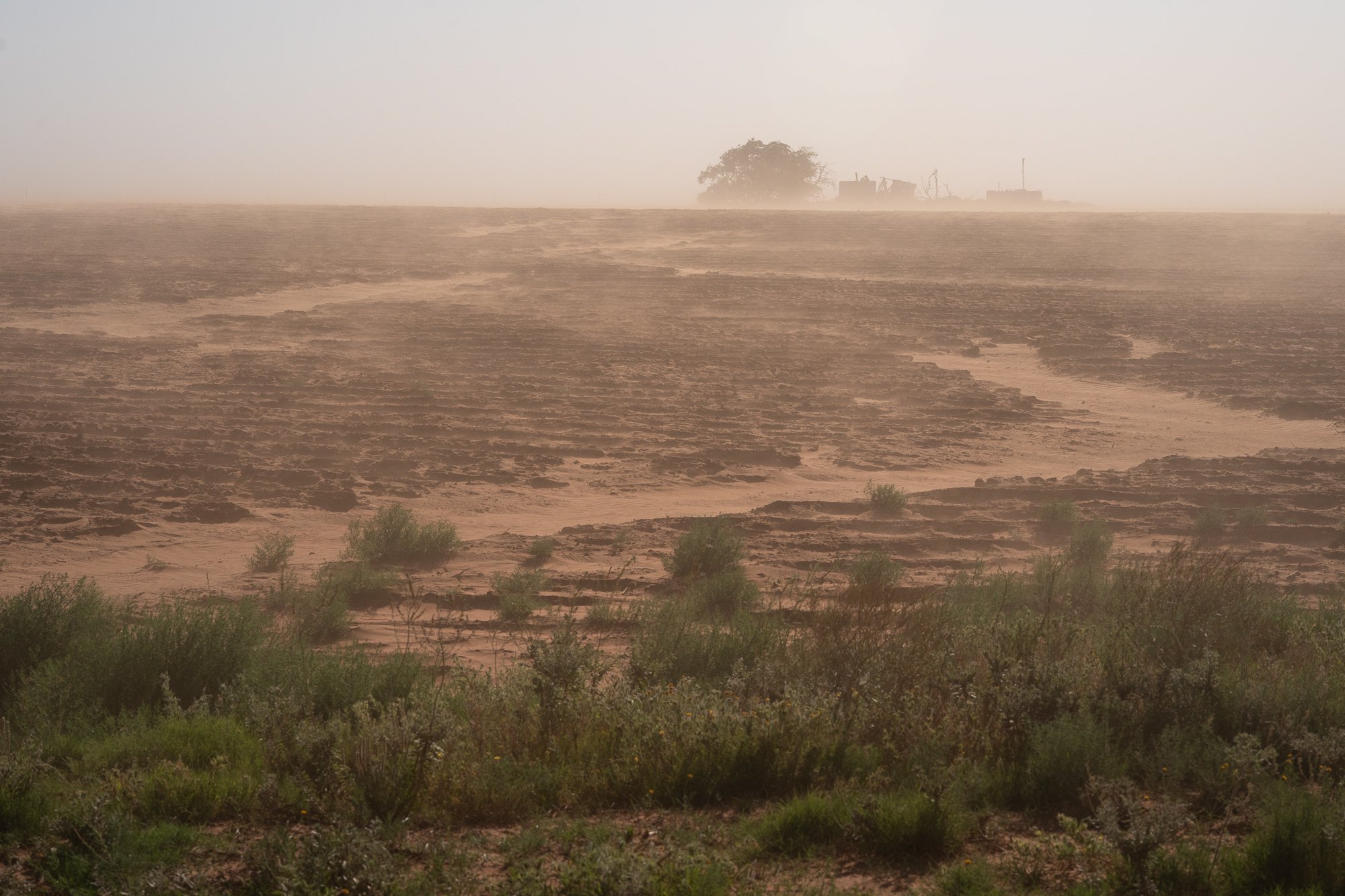
Dust blowing across a plowed field on the Llano Estacado in West Texas

Dust moves across freshly worked earth, softening the horizon on the wide, exposed plains of the Llano Estacado.

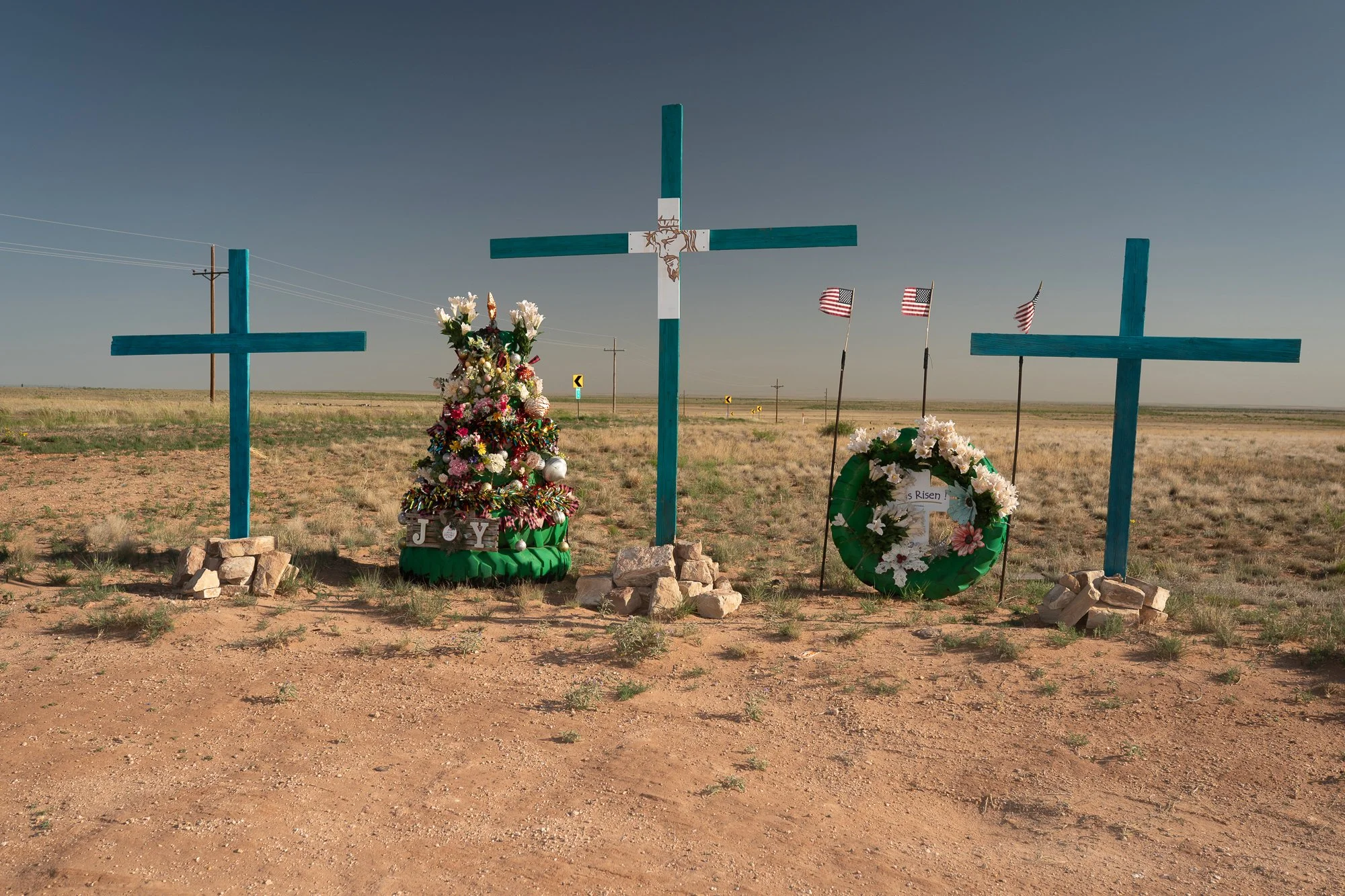
Roadside crosses and memorials in rural West Texas on the Llano Estacado

Roadside crosses stand against the open plains, marking memory, faith, and loss across the Llano Estacado.

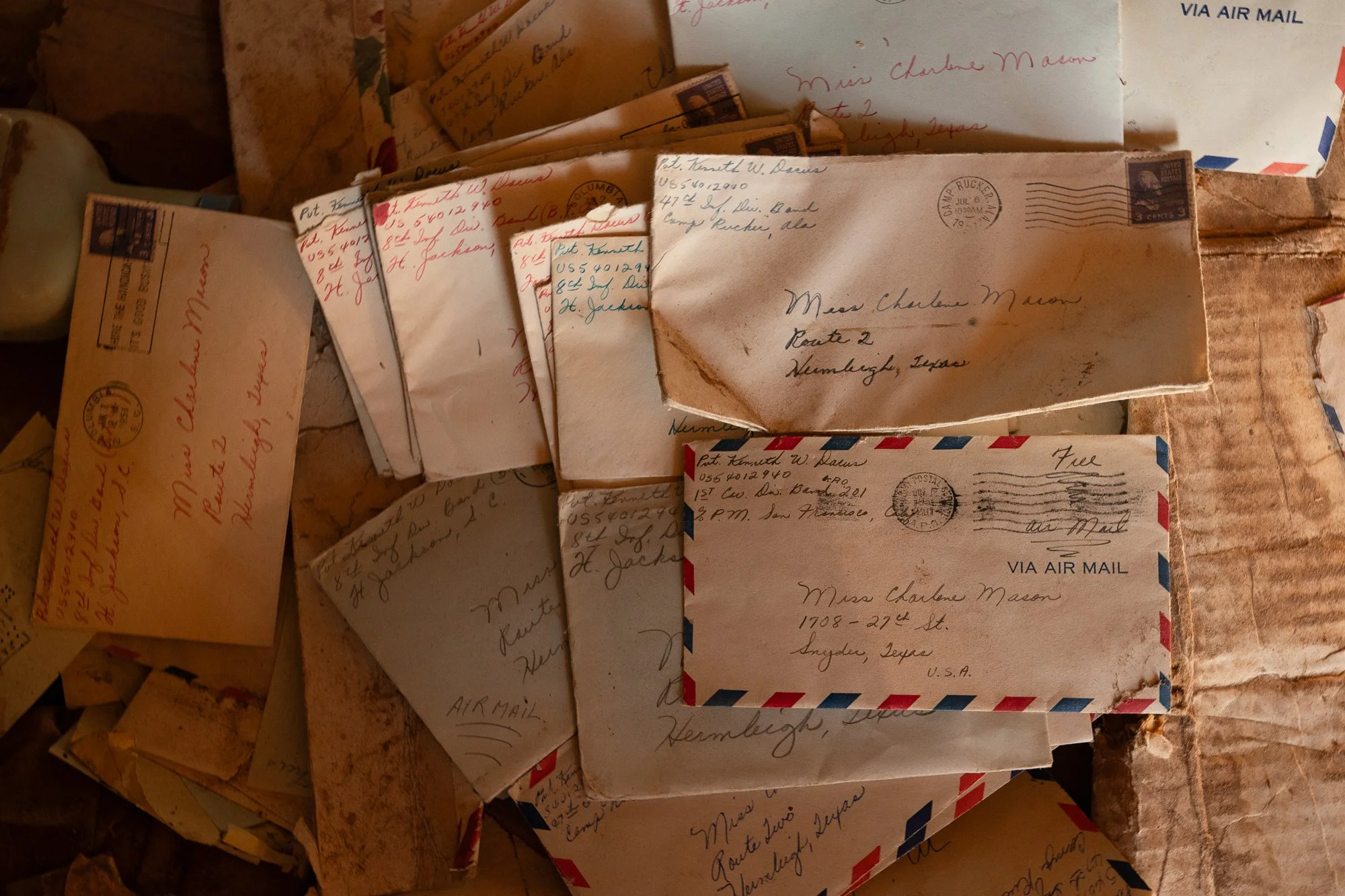
Handwritten letters and envelopes collected in a rural Texas home on the Llano Estacado

Handwritten letters from an abandoned Texas home, marked by distance, memory, and everyday life on the Llano Estacado.

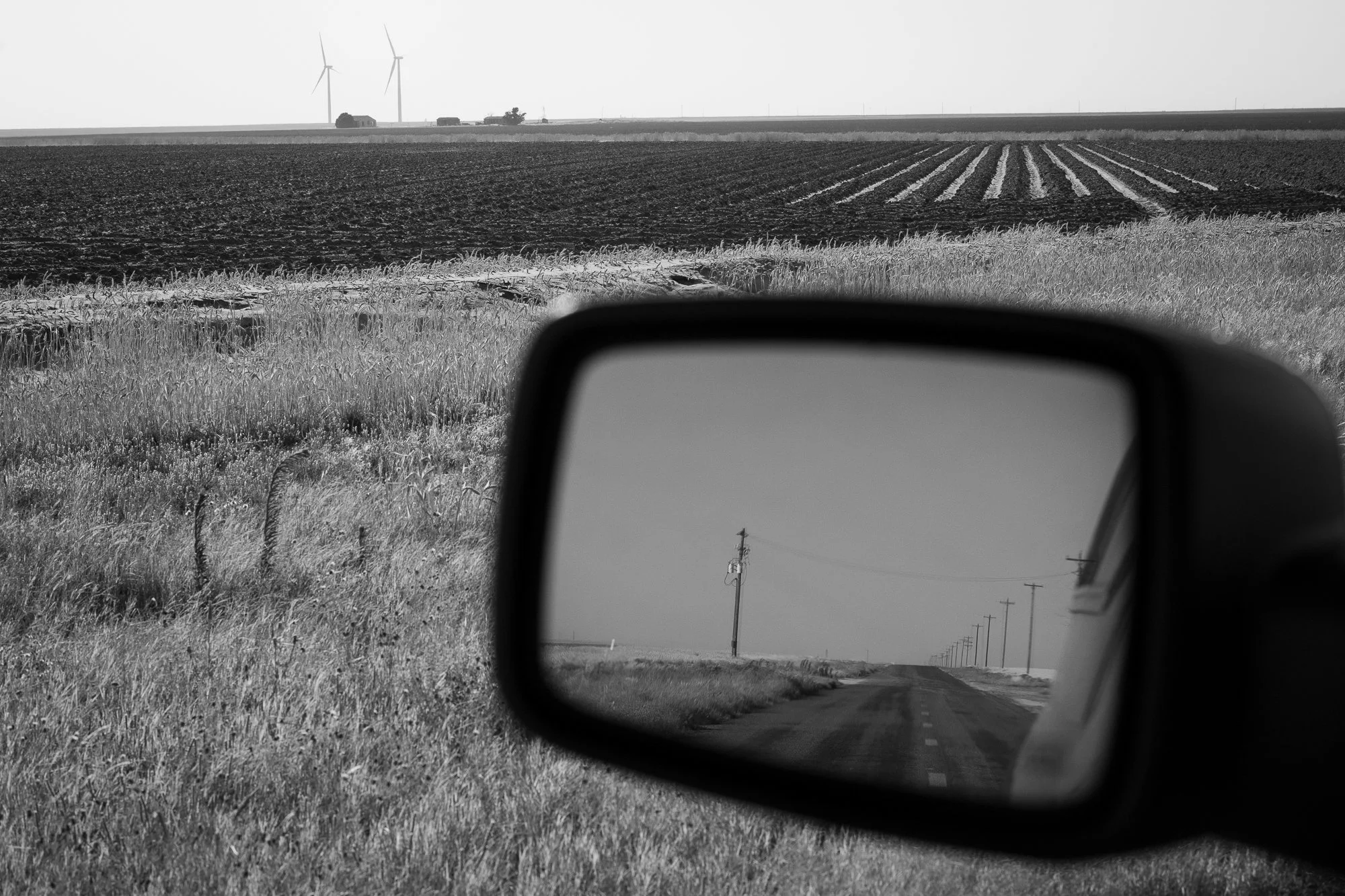
Black and white photograph of farmland reflected in a car mirror on the Llano Estacado

Farmland stretches ahead and behind, reflected in a car mirror while crossing the open roads of the Llano Estacado.

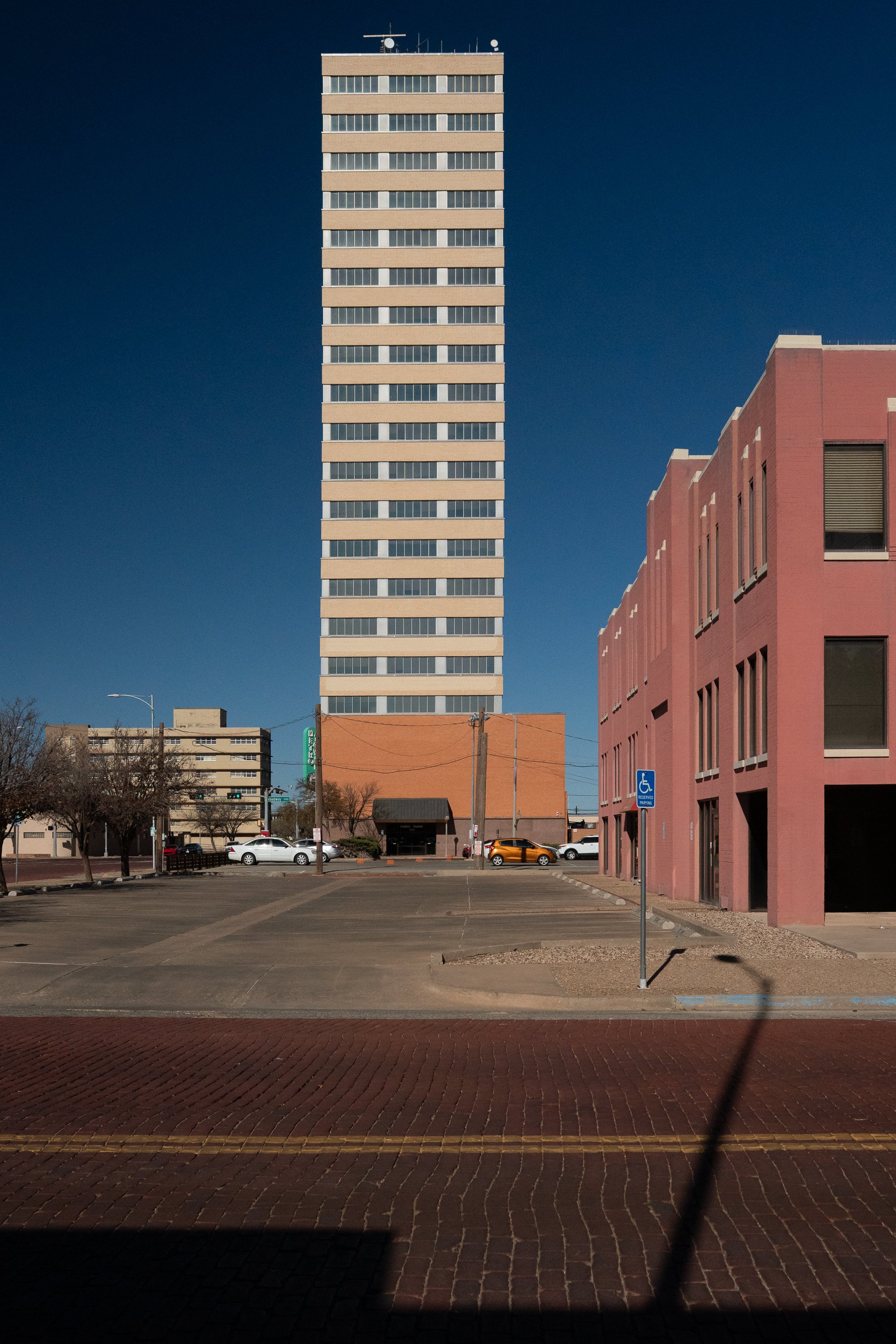
A downtown high rise tower in a small town on the Llano Estacado

A lone midcentury tower rises above a quiet town, emphasizing the scale and openness of the Llano Estacado.

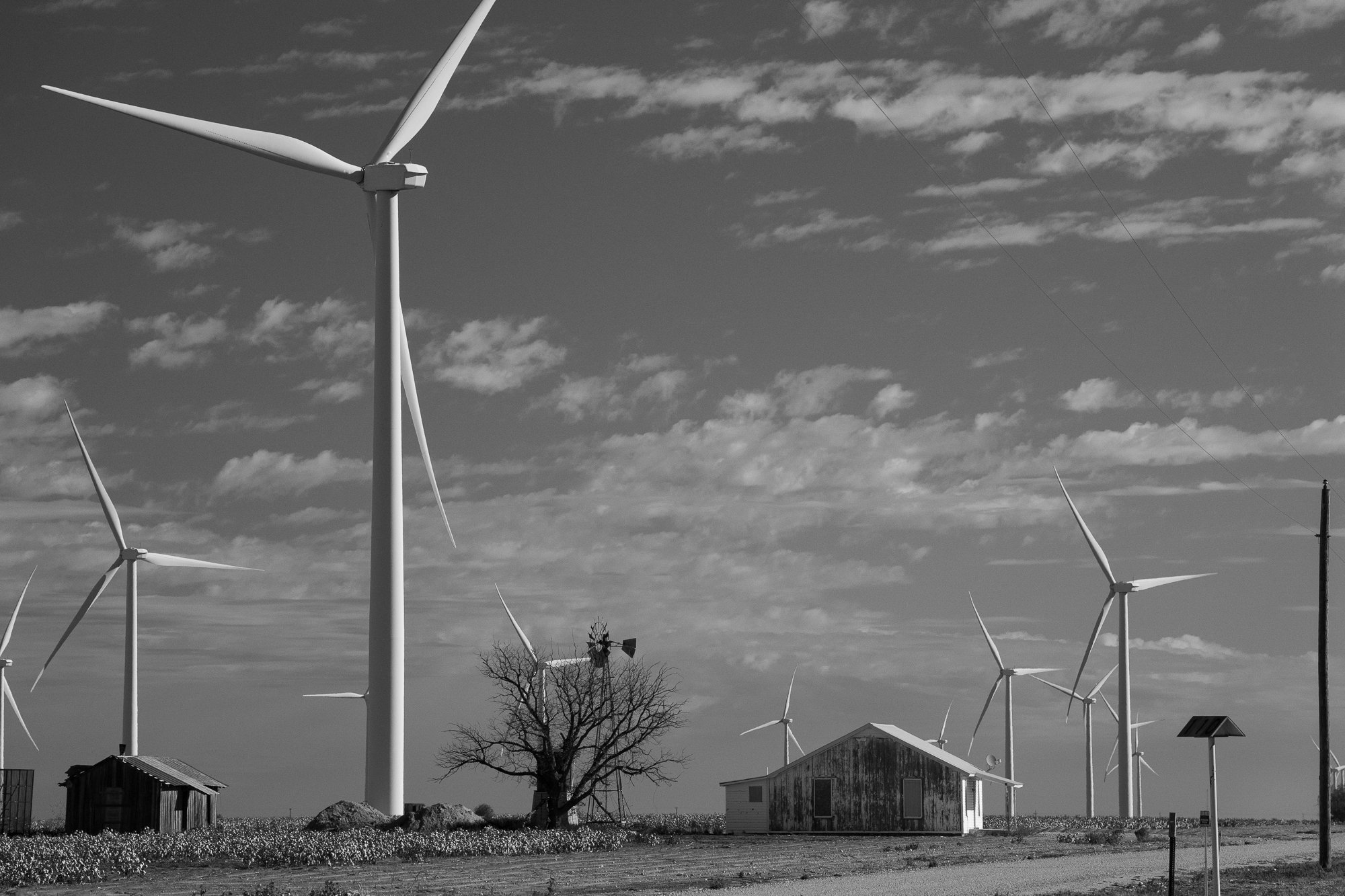
Wind turbines towering over abandoned rural buildings on the Llano Estacado in Texas

Wind turbines rise over aging structures, where modern infrastructure meets long-standing rural life on the Llano Estacado.

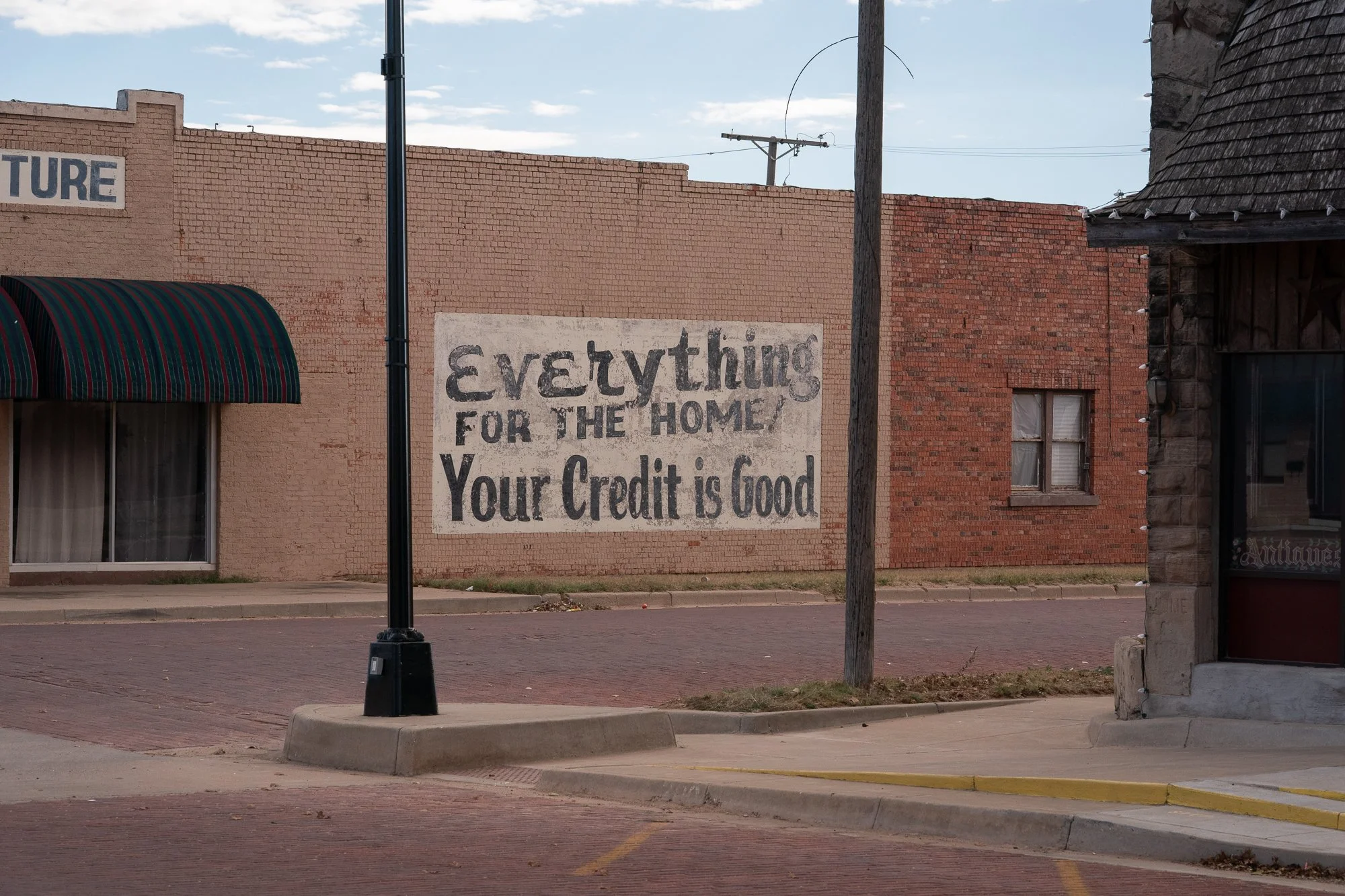
Vintage wall sign reading Your Credit Is Good in a small town on the Llano Estacado

A fading brick wall sign promises trust and familiarity, echoing the economic rhythms of Llano Estacado towns.

Photograph of a dirt road going through the Llano Estacado in Texas

Photograph of a long dirt road on the Llano Estacado in Texas

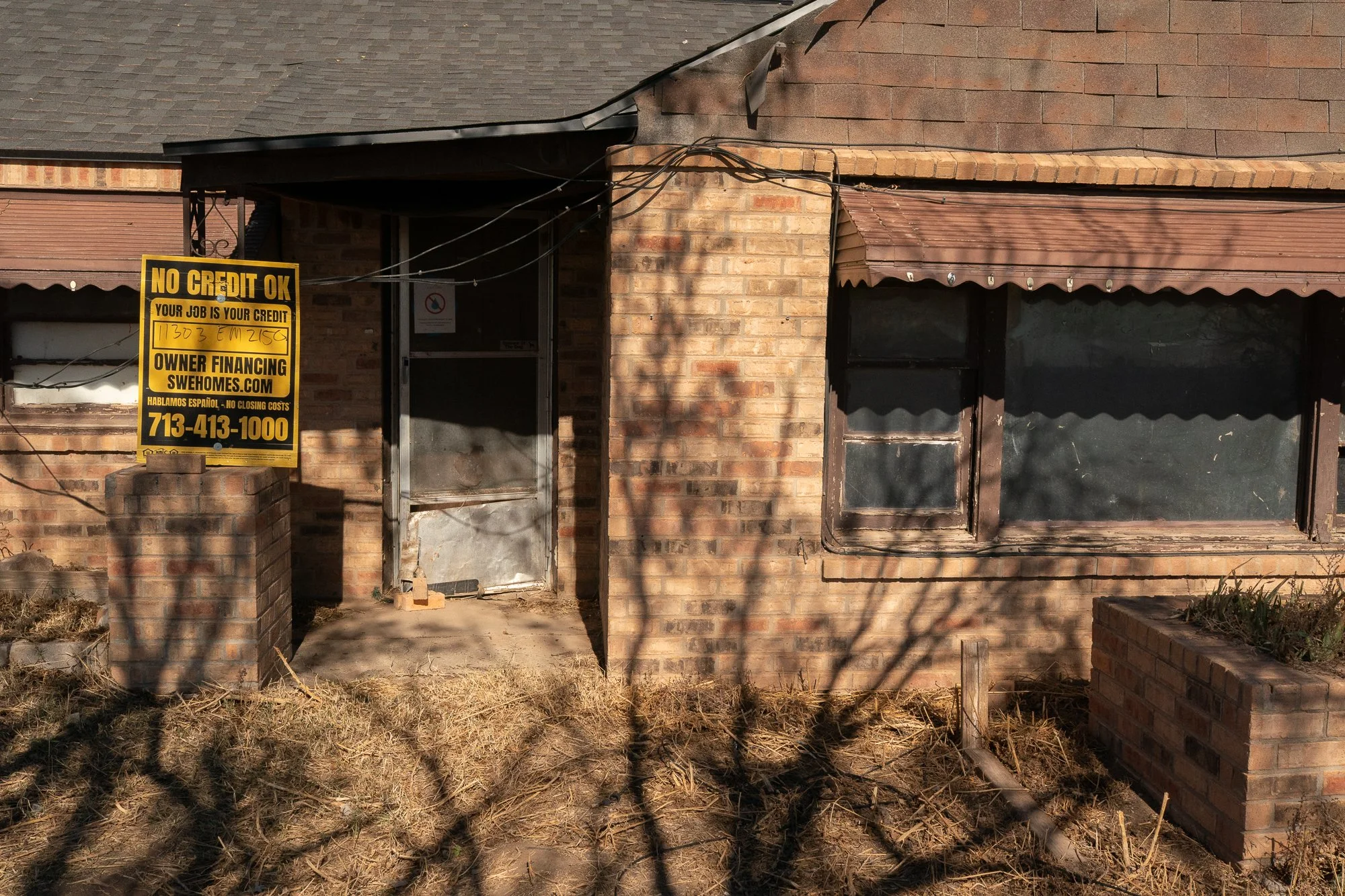
Brick house in rural Texas with an owner financing sign on the Llano Estacado

A modest brick house on the Llano Estacado, where handwritten signs and quiet streets reflect a self-reliant rural economy.

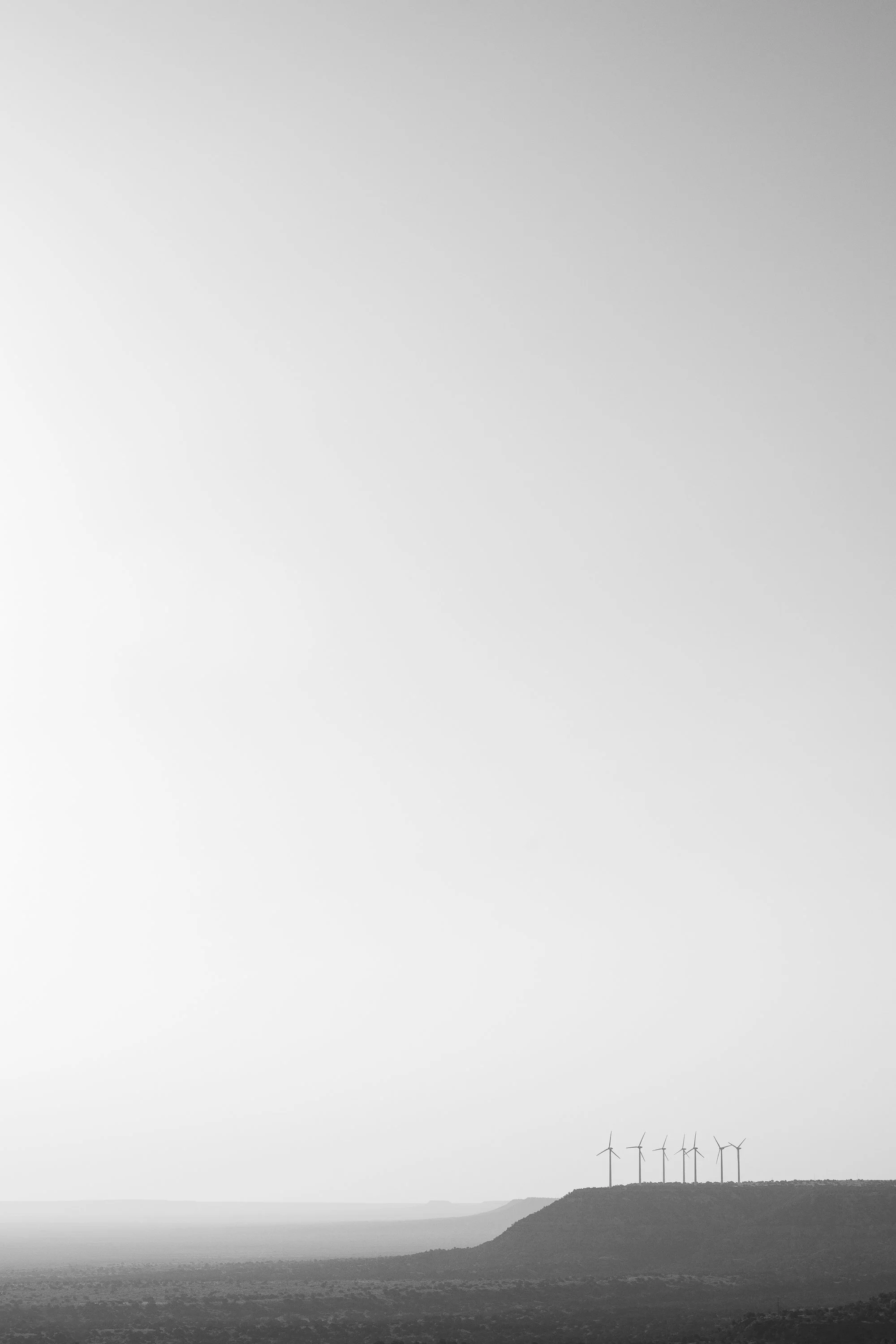
Minimal black and white photograph of a wind farm along the Llano Estacado horizon

A nearly empty frame holds a thin horizon and distant turbines, emphasizing restraint and scale on the Llano Estacado.

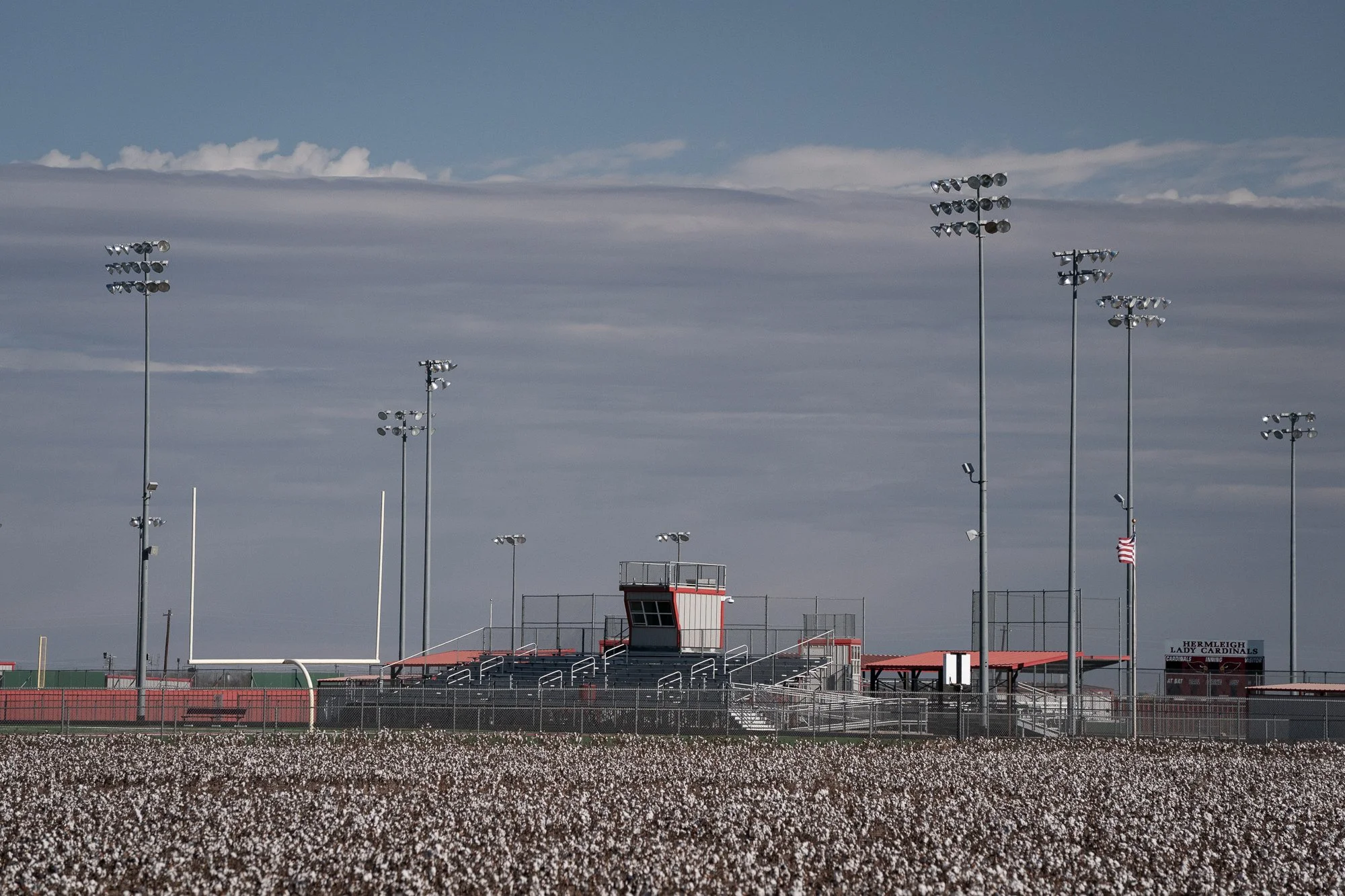
High school football stadium surrounded by farmland on the Llano Estacado in Texas

A high school football stadium sits among cotton fields, reflecting the cultural center of small towns on the Llano Estacado.

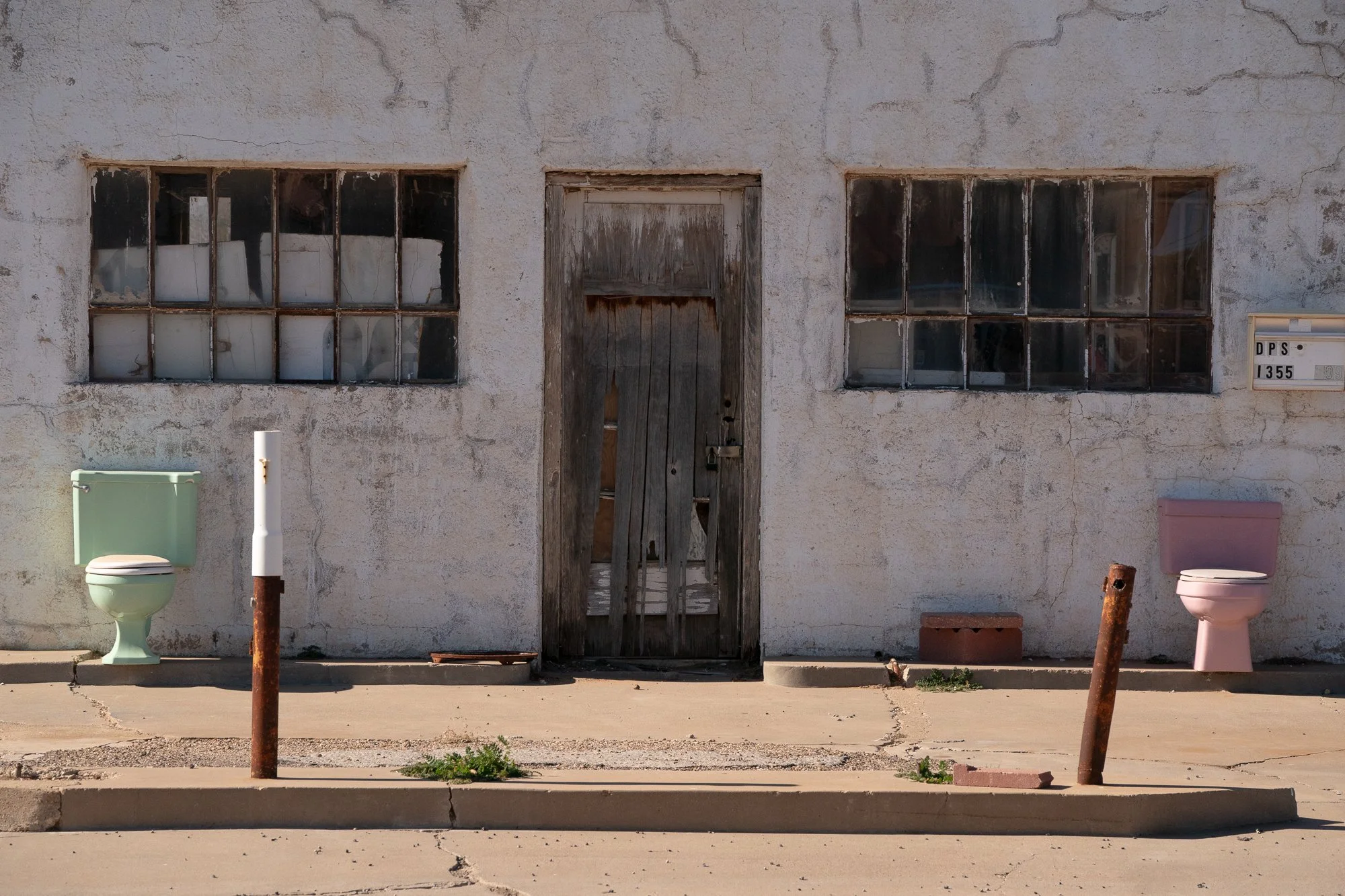
Abandoned building facade with pastel toilets outside on the Llano Estacado in Texas

An abandoned building on the Llano Estacado, where discarded fixtures and faded walls blur the line between utility and quiet absurdity.

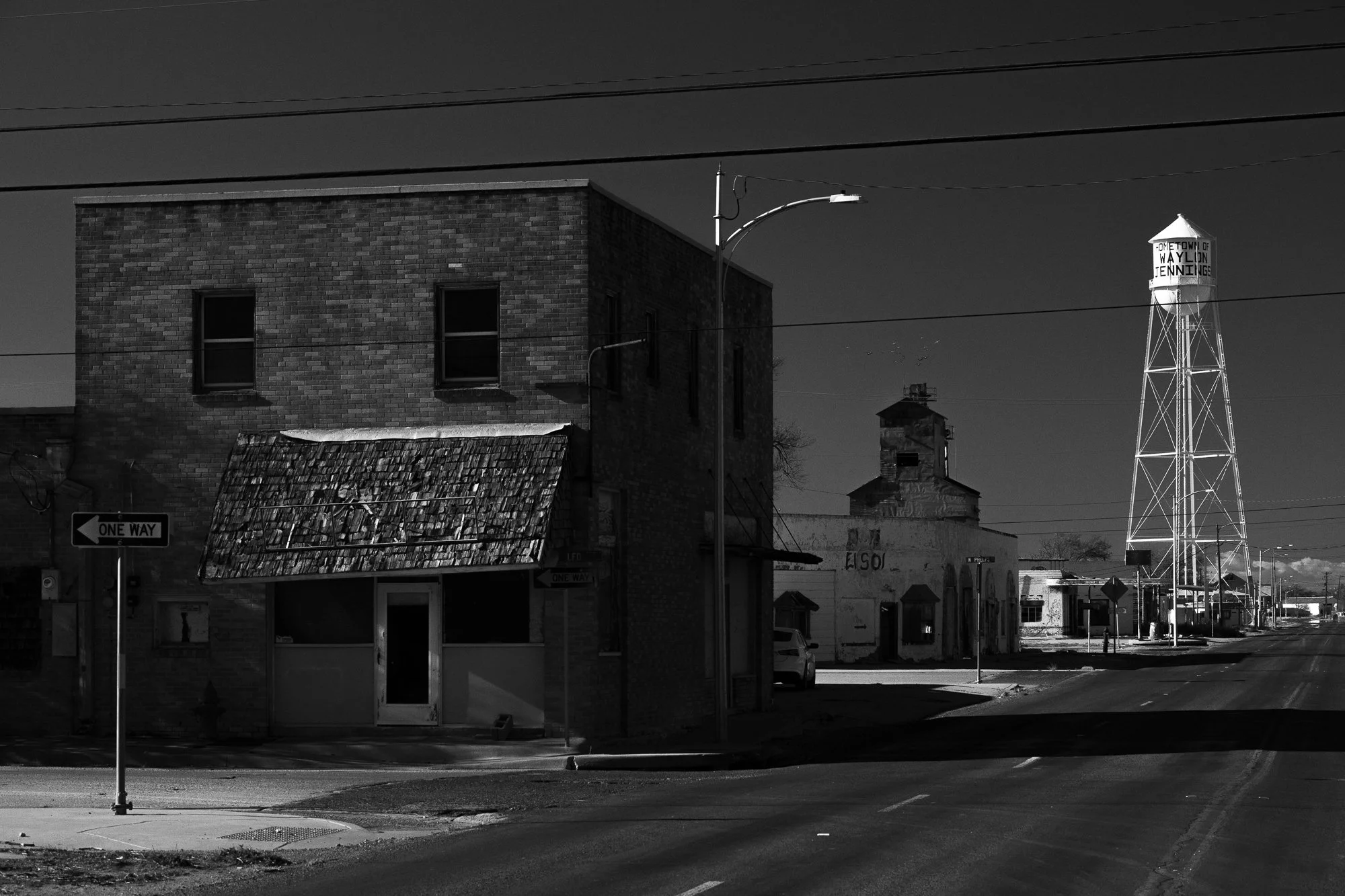
Black and white photograph of Littlefied, Texas with water tower honoring Waylon Jennings

Water tower in Littlefield, Texas - Hometown of Waylon Jennings

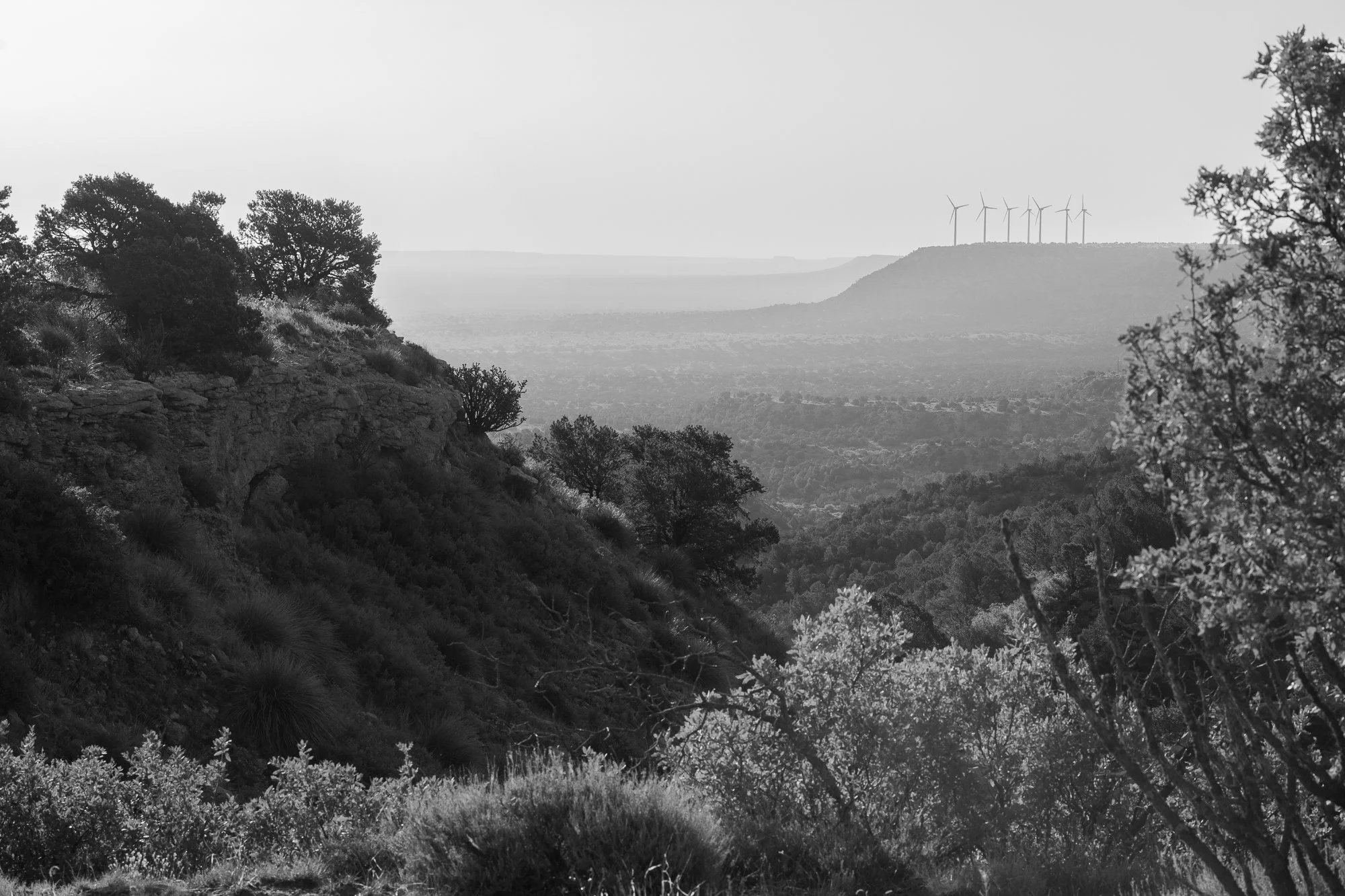
Wind turbines line a distant ridge above the canyon, where industry and landscape quietly coexist on the Llano Estacado.

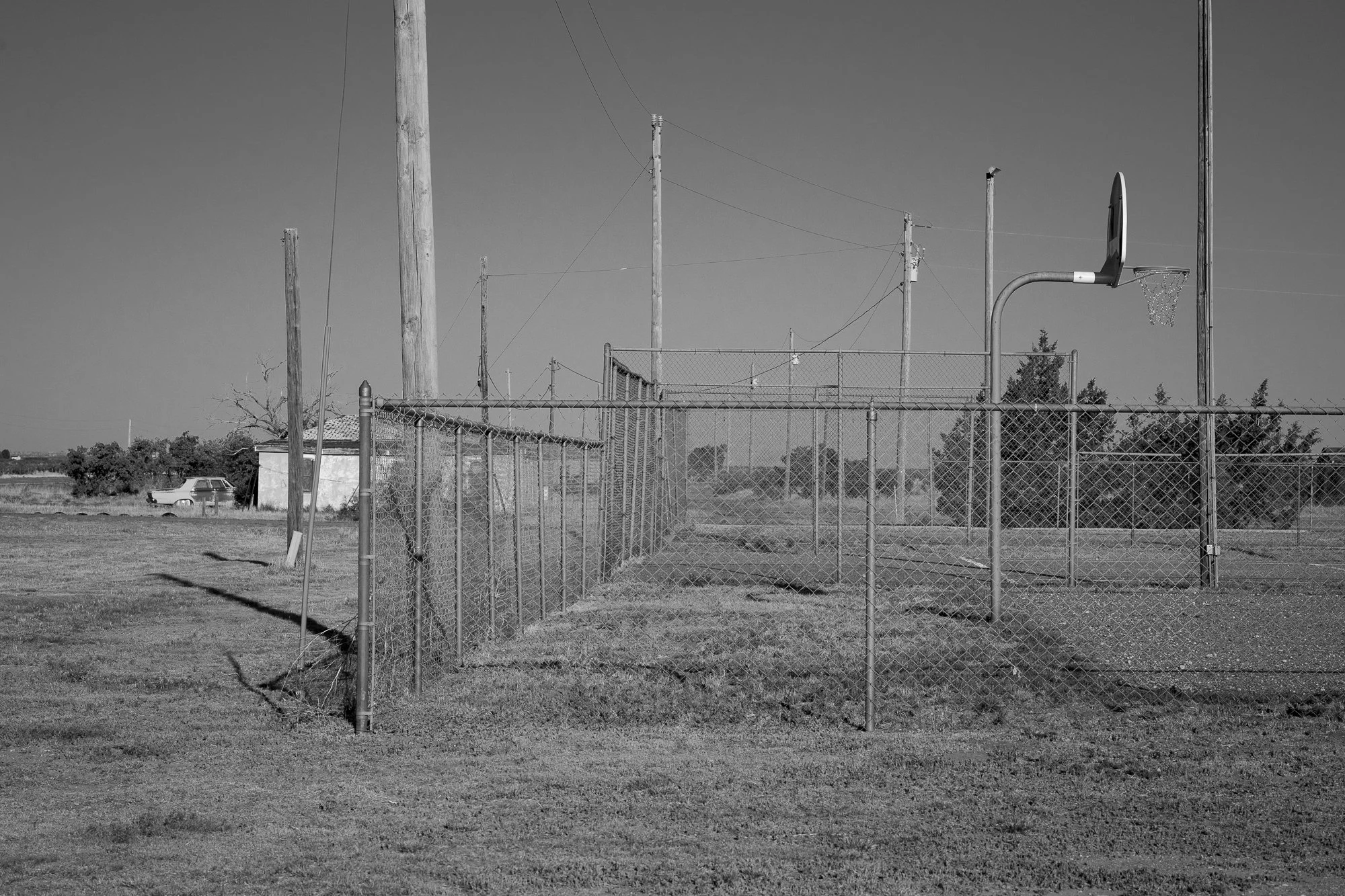
Black and white photograph of a rural basketball hoop behind a chain link fence on the Llano Estacado

A lone basketball hoop stands behind a chain-link fence, hinting at everyday life and quiet routines on the Llano Estacado.

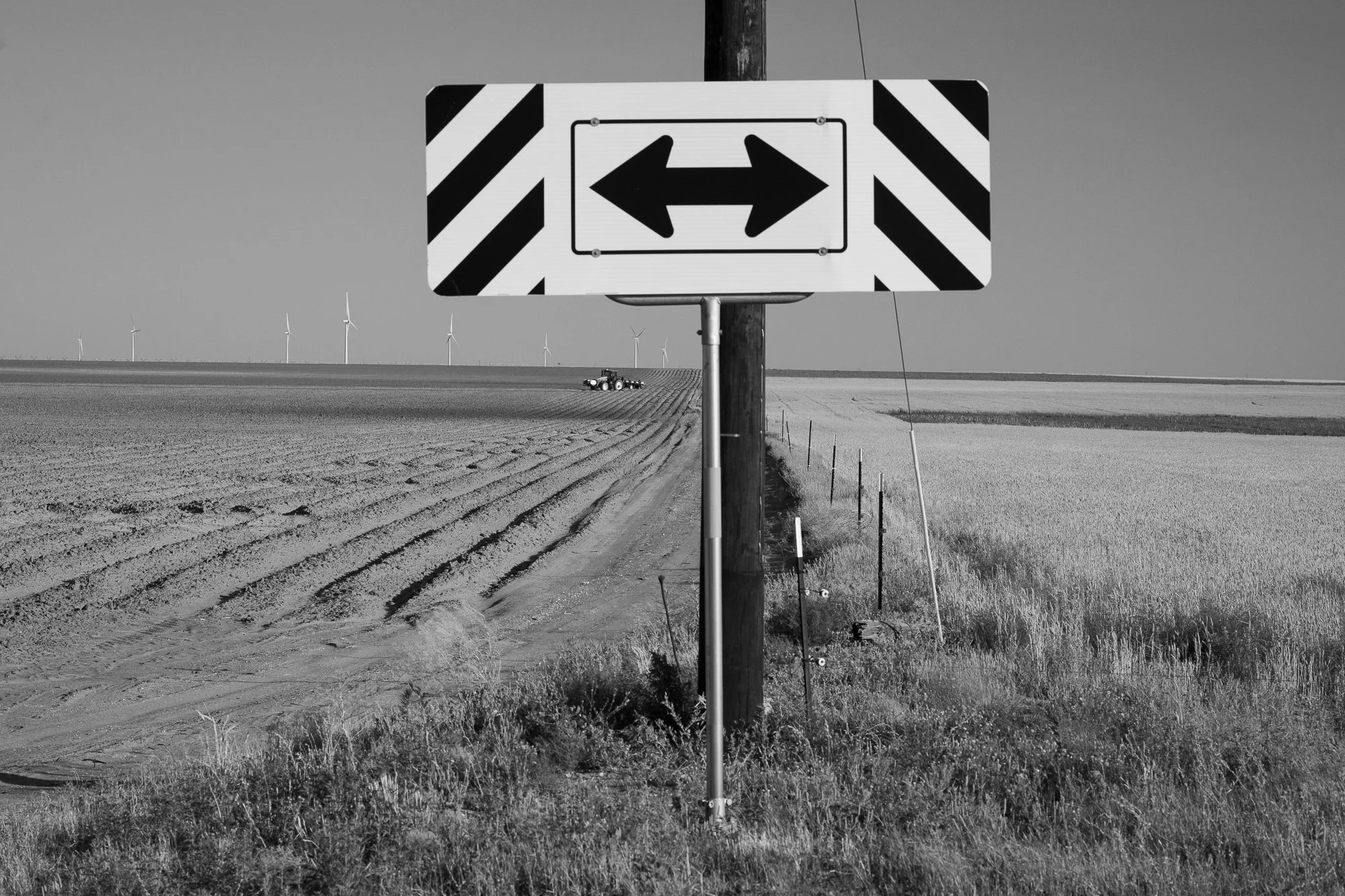
Black and white photograph of a rural directional road sign on the Llano Estacado

A simple directional sign stands between plowed fields, offering choice without urgency on the Llano Estacado.

Capture the Beauty of Blowing Rock: Fine Art Photography Prints

Bring the Charm of Blowing Rock, North Carolina Into Your Home With Stunning Photography Prints

Glen Burney Falls Trail

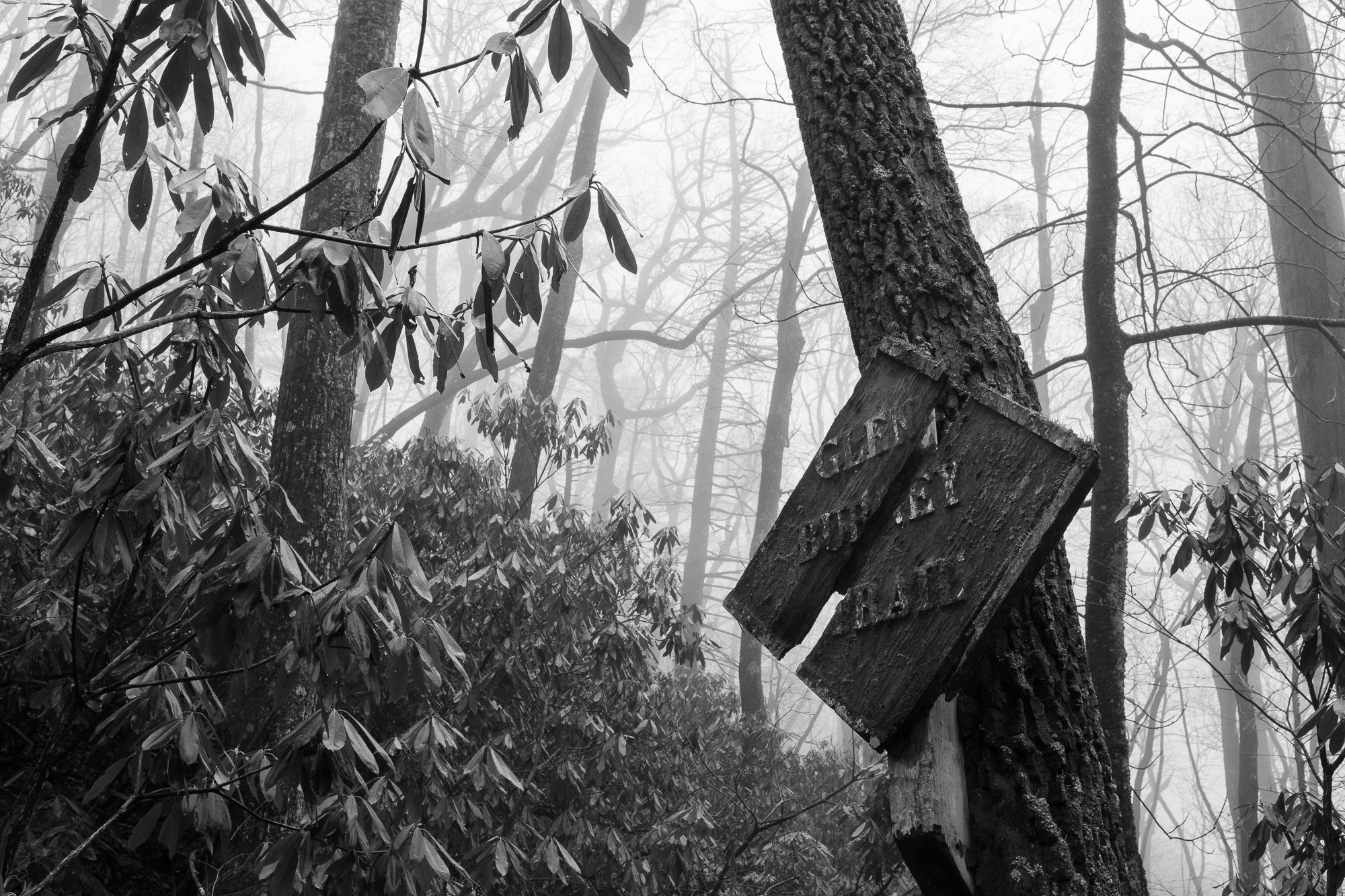
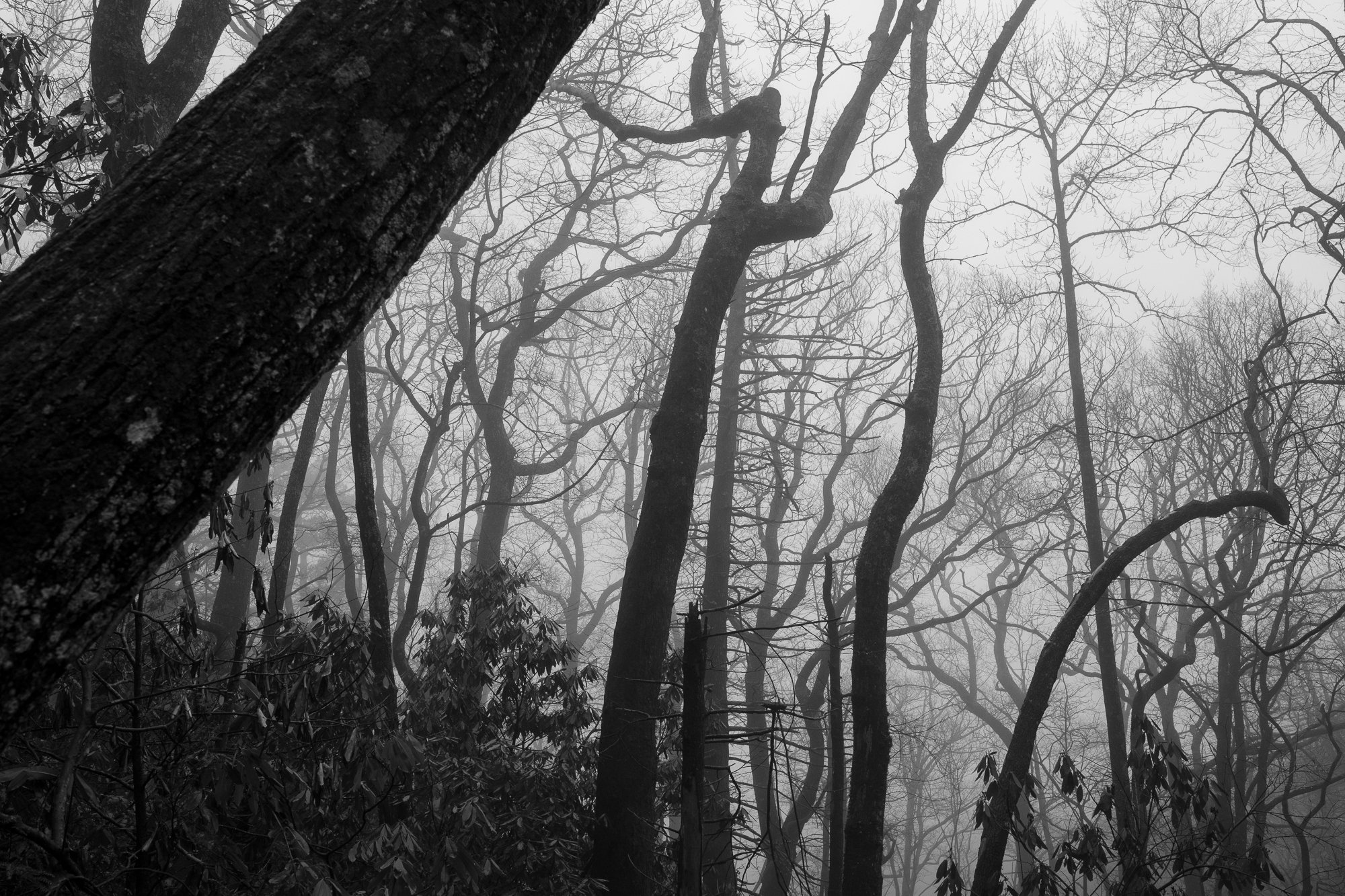
Blowing Rock is a special little mountain town in western North Carolina along the Blue Ridge Parkway. Thankfully it doesn’t get the traffic that Boone does because that would take away all of it’s charm. The Glen Burney Falls Trail starts just a few blocks off Main St. so you can get there from anywhere. Normally these easily accessible attractions are forgettable if not a total let down. Not this one. We were blown away. Granted the day we decided to hike, the forest put on special show with a thick layer of fog and mist that provided an eerie but beautiful vibe. Even without that, it’s still a beautiful trail winds gently through the woods providing great views of the waterfalls all along the way. It’s not a particularly hard hike either. In fact, it’s more of an aggressive walk than anything. so if you’re in Blowing Rock, add this short hike to the list. For only an hour or so of you’re time it provides a great mental checkout and check in with nature.
After you’re done, stop in to the Speckled Trout for lunch or dinner. They have great food and cocktails/beer. I really enjoyed the trout, grits, and collard greens. The vibe there is just great and helped along by a staff of waiters and bartenders than genuinely seem to enjoy their jobs.

If you’re visiting for a fly fishing trip, then definitely go to the Speckled Trout’s guide shop, which also has a bar in it!! I’ve been to a hell of a lot of mountain towns and lot of fly shops. Never once seen a fly shop with a bar. What a great little piece of America that you can only hope resists the massive commercialization that will inevitably be forced upon it in the future.

Blowing Rock Photography Prints

Celebrate your connection to nature and remember your visit to Glen Burney Falls with a fine art photograph that speaks to your heart. Every image in this collection is a testament to the beauty of this special trail, crafted to inspire and transport you back to one of North Carolina’s most beloved destinations. Contact me if you’d like wall art prints of the Glen Burney Falls Trail for your home, office, or commercial space - rob@robhammerphotogaphy.com
Best hike in Blowing Rock, North Carolina

Hiking in Blowing Rock, North Carolina

North Carolina Nature Wall Art - Black and White

Black and White North Carolina Wall Art

North Carolina Nature Wall Art

North Carolina Nature Photography

North Carolina Black and White Nature Photography

Glen Burney Falls Trail

Glen Burney Trail Photography Prints

North Carolina Nature Photography Prints

Best hike in Blowing Rock, North Carolina

Doug Monson - Western Charcoal Artist

A Charcoal Artist in Wyoming Preserving the Spirit of the American West

Western Art That Comes From Experience, Not Interpretation

There’s a noticeable difference between Western art made from observation and Western art made from experience. The best work doesn’t try to explain the West. It comes from living in it.

Doug Monson’s charcoal drawings aren’t romanticized versions of cowboy life. They carry the weight of real work—long days, unpredictable conditions, and a deep familiarity with cattle, horses, and the land itself.

That’s something I’ve seen again and again while photographing ranches across the West. The people who live this life don’t exaggerate it. And the artists closest to it don’t either.

A Chance Encounter With a Western Charcoal Atist

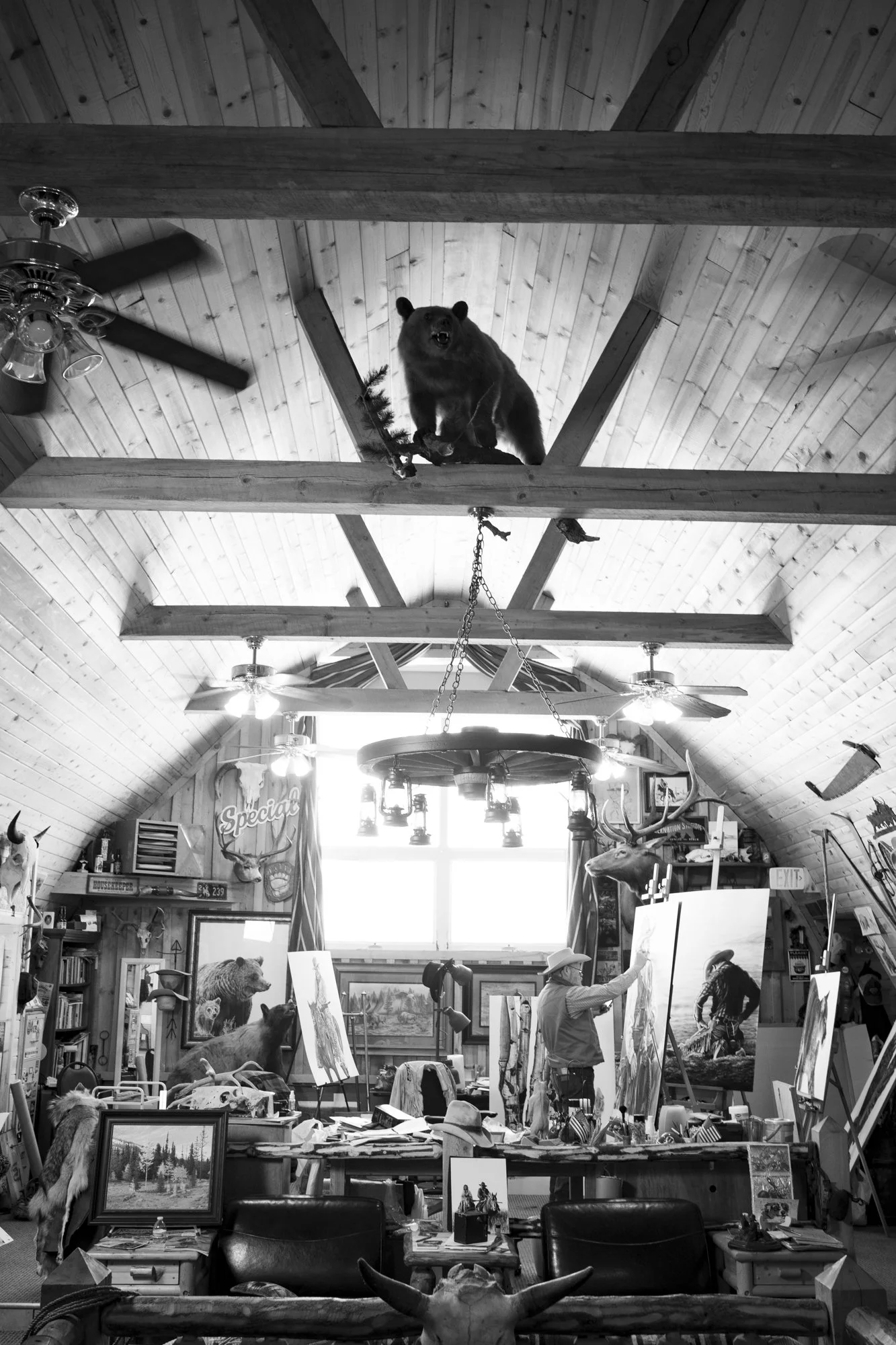
It’s always amazing how the universe brings people together. During a trip to Jackson Hole I was on a big gallery kick and spent quite some time taking in the top tier art that Jackson’s galleries have to offer. After the trip was over I began the drive back home. At the time I was living in San Diego and decided on a route that happened to go through Afton, WY - home of the Western Skies Fine Art - a gallery I had no knowledge of. Still having a thirst for art though, I popped in and was greeted by the owner Doug Monson He showed me around the gallery and his breathtaking studio upstairs. Next thing you know, I pulled the camera gear out of the track and was photographing Doug at work. Prior to that day I never even knew who Monson was. It was a pleasure spending time with him though. He’s a talented artist and a hell of a nice guy.

Why Wyoming Still Matters for Western Artists

Wyoming holds onto something a lot of places have already let go. There’s still space. Still working ranches. Still a culture that hasn’t been completely reshaped for an audience.

For artists—whether working in charcoal, photography, or anything else—that matters.

It means the subject isn’t manufactured. You’re not documenting a version of the West built for tourists. You’re seeing something that still functions the way it always has.

That’s why so much of my own work continues to bring me back to places like this.

Documenting the Same World Through Photography

While Monson works in charcoal, the intent overlaps closely with what I’ve been building through photography. For the past several years, I’ve been documenting working cowboys across the American West—on ranches where traditions like branding, roping, and horsemanship are still part of daily life. It’s not staged. It’s not styled. It’s not built for content. It’s just the work, as it happens. That same honesty is what makes both forms of work resonate. Whether it’s a drawing or a photograph, the goal is the same: create something that holds up over time because it’s rooted in reality.

The Importance of Western Crafts and Artists

There’s a broader ecosystem around cowboy culture that often gets overlooked — Saddle makers. Rawhide braiders. Bootmakers. And artists like this one working in charcoal.

These aren’t separate from Wester culture—they’re part of it. And as fewer people continue these traditions, documenting them becomes more important. Not in a nostalgic way. In a factual one. Because once these skills disappear, they don’t come back.

Collecting Authentic Western Art and Photography

For collectors, there’s a difference between work that references the West and work that comes directly out of it.

That difference shows up over time.

It’s in the details. The restraint. The lack of exaggeration.

Whether it’s a charcoal drawing or a photograph, the strongest pieces tend to be the ones that don’t try too hard. They just reflect what’s there.

If you’re interested in collecting work like this, it’s worth paying attention to where it comes from—and who made it.

A Larger Project Documenting the American West

This visit is part of a much larger body of work focused on documenting the people, places, and traditions that still define the American West.

It’s taken me across ranches in multiple states, often working in remote environments where this way of life still operates largely unchanged.

If you’re interested in seeing more:

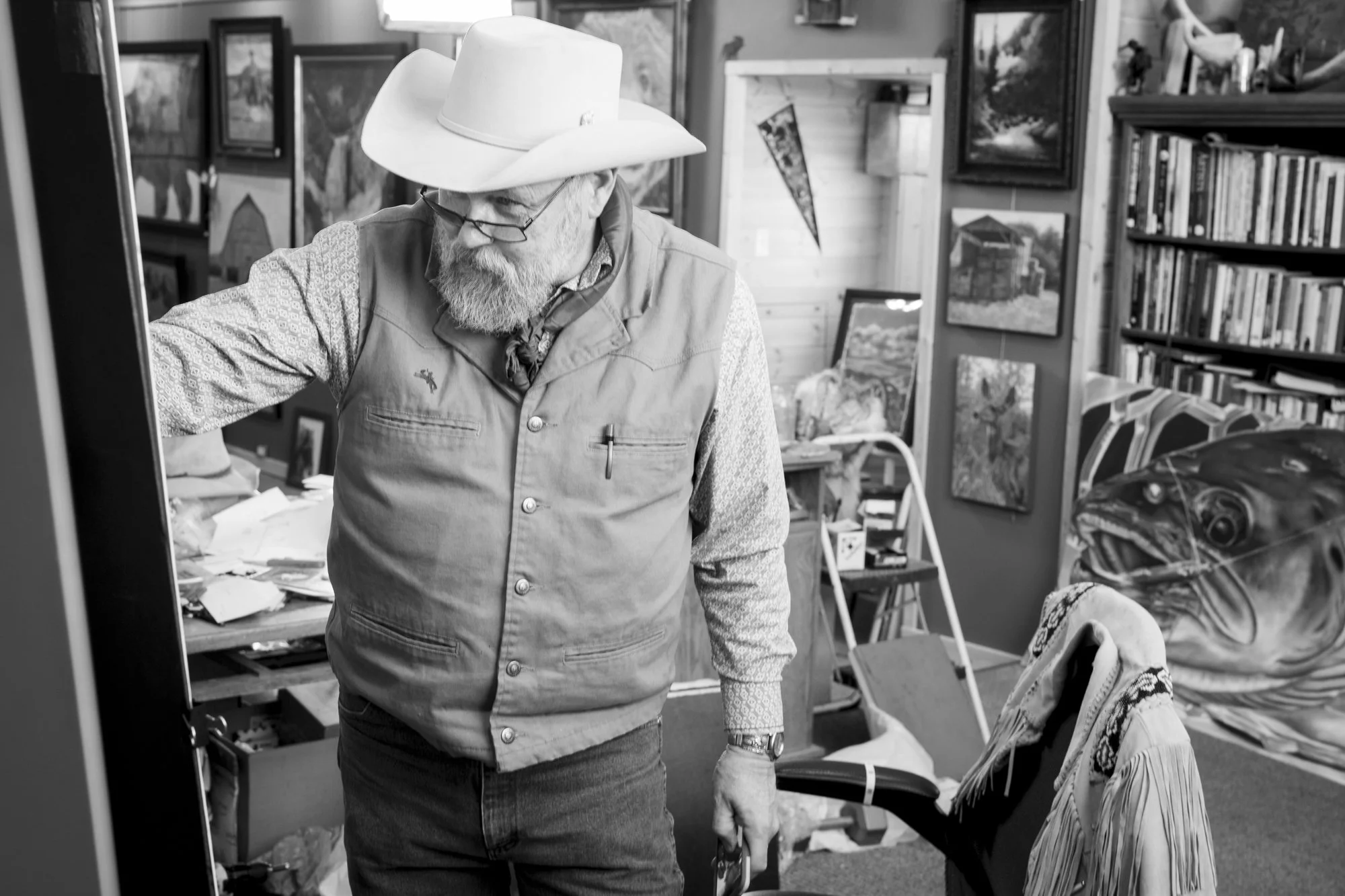
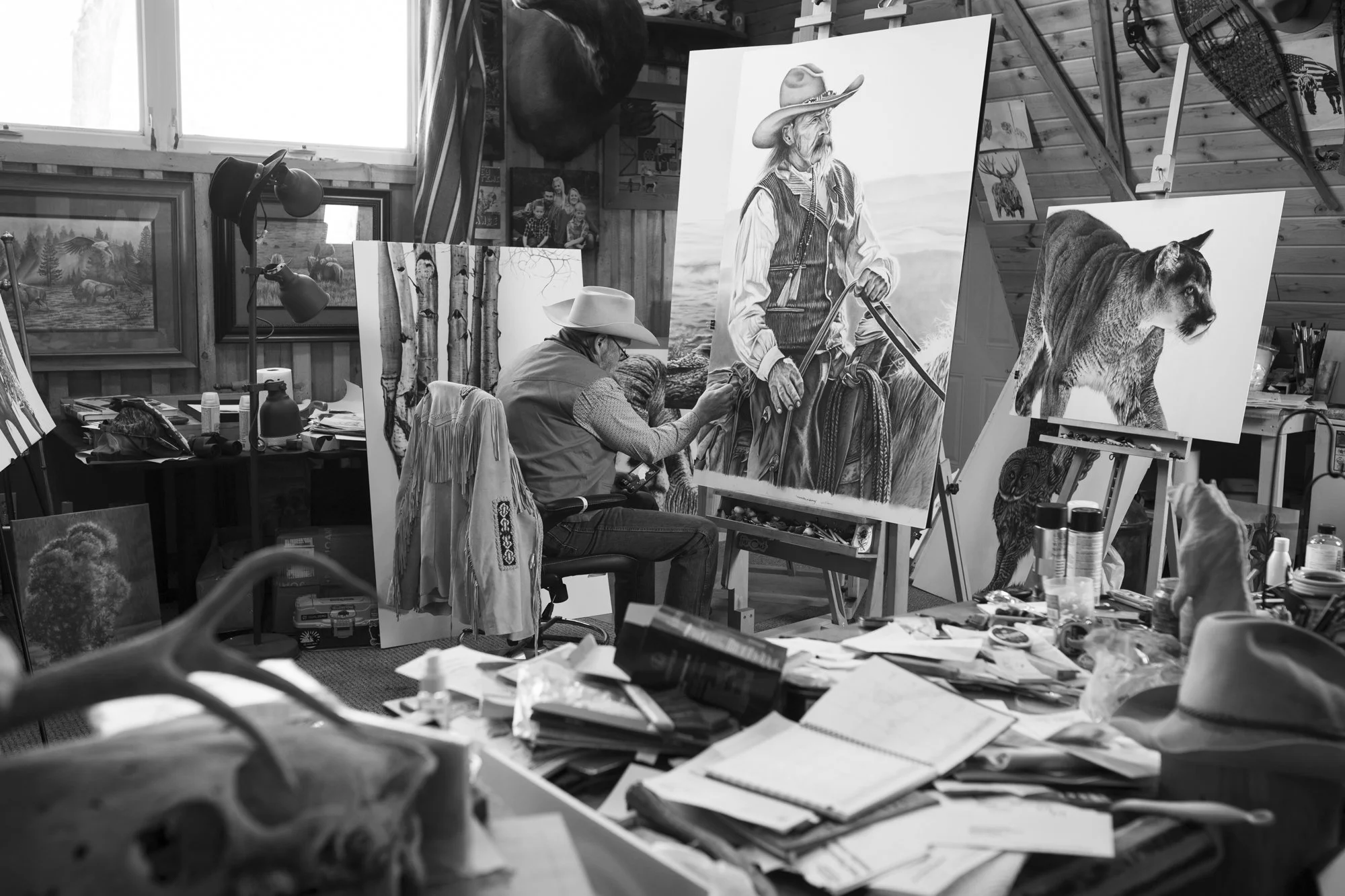
Charcoal artist Doug Monson at work in his studio at the Western Skies Gallery in Afton, Wyoming

Charcoal artist Doug Monson at work in his daylight studio

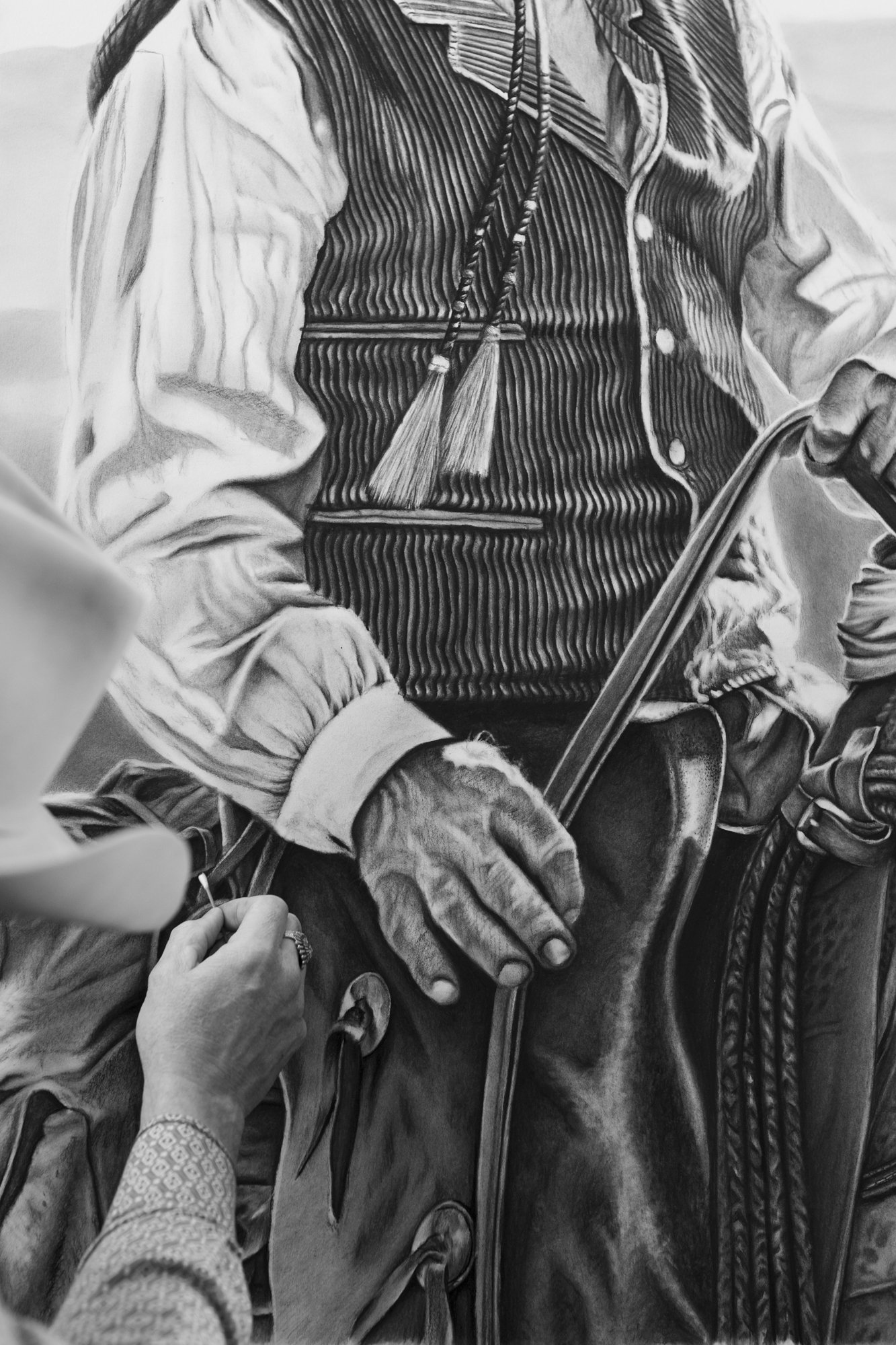
A western charcoal artist drawing a cowboy

Monson drawing a cowboy with charcoal on paper

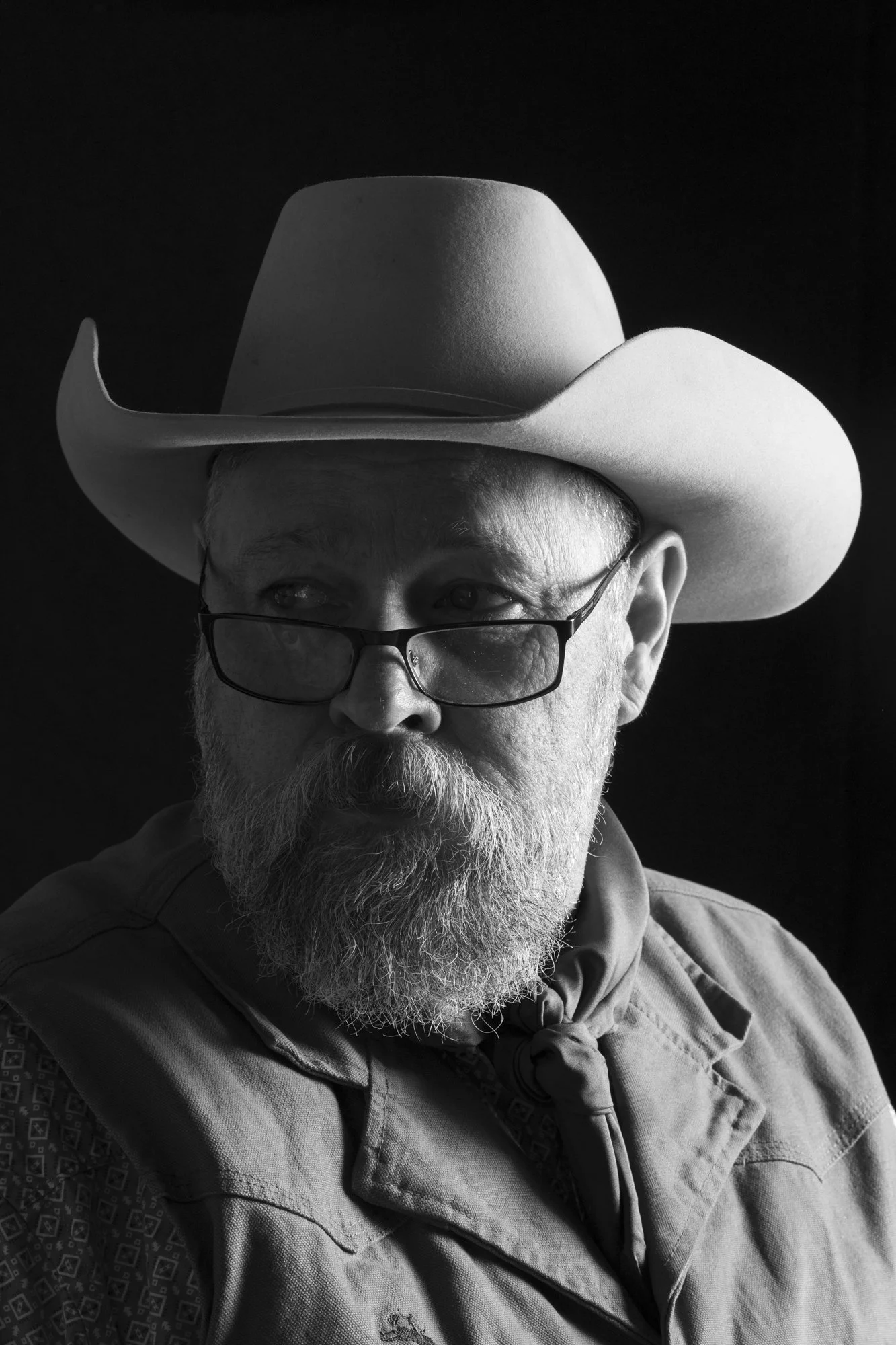
Portrait of a Western charcoal artist

Portrait of artist Doug Monson

Western charcoal artist Doug Monson working on a drawing at the Western Skies Gallery

Doug Monson at work on a drawing in the Western Skies Gallery

Black and white photograph of a Western artist in his studio surrounded by drawings and art supplies

Doug Monson surrounded by art in his studio


Best Distillery in Los Angeles

Dead of Night Distillery

Craft Spirits - Los Angeles

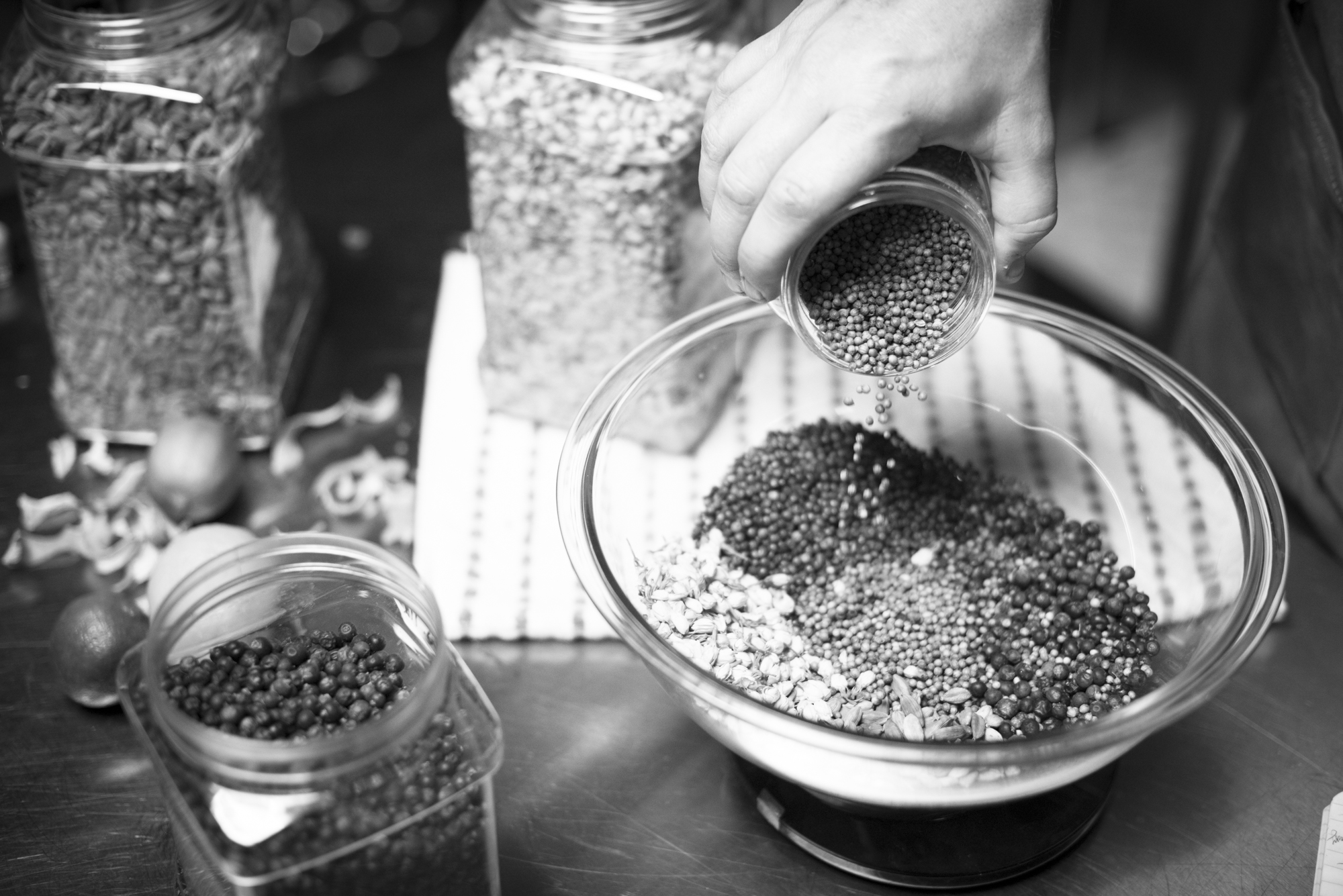
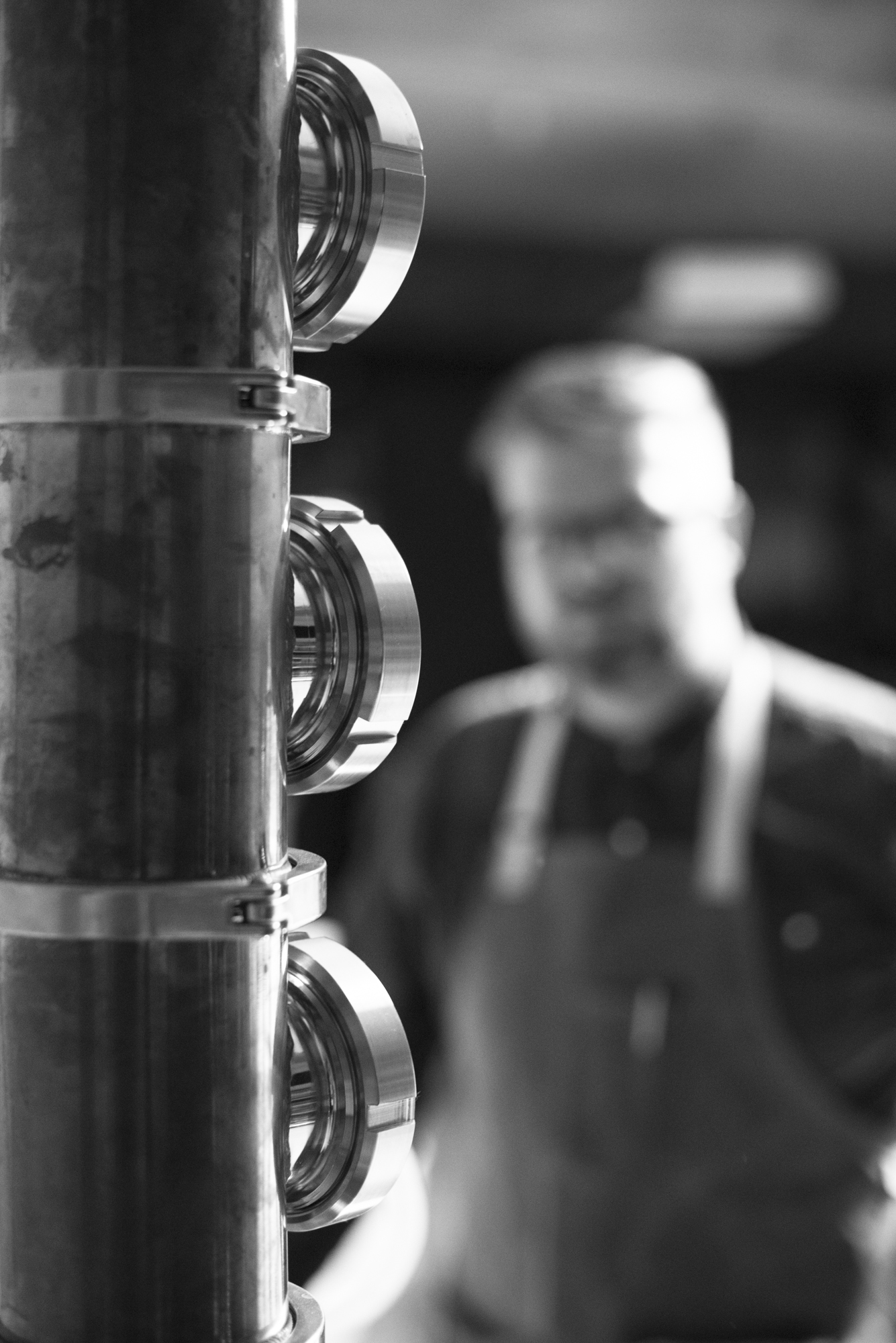
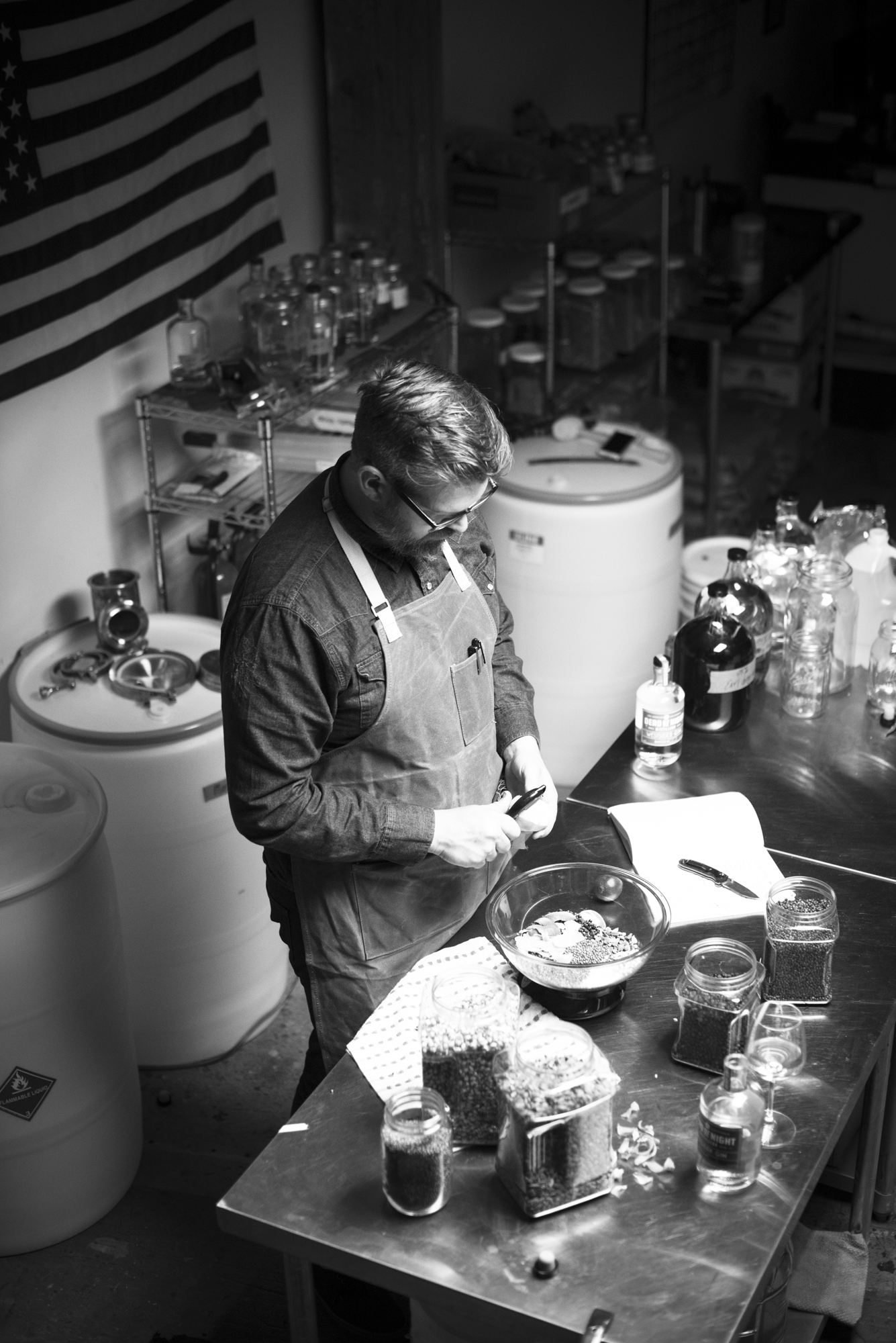
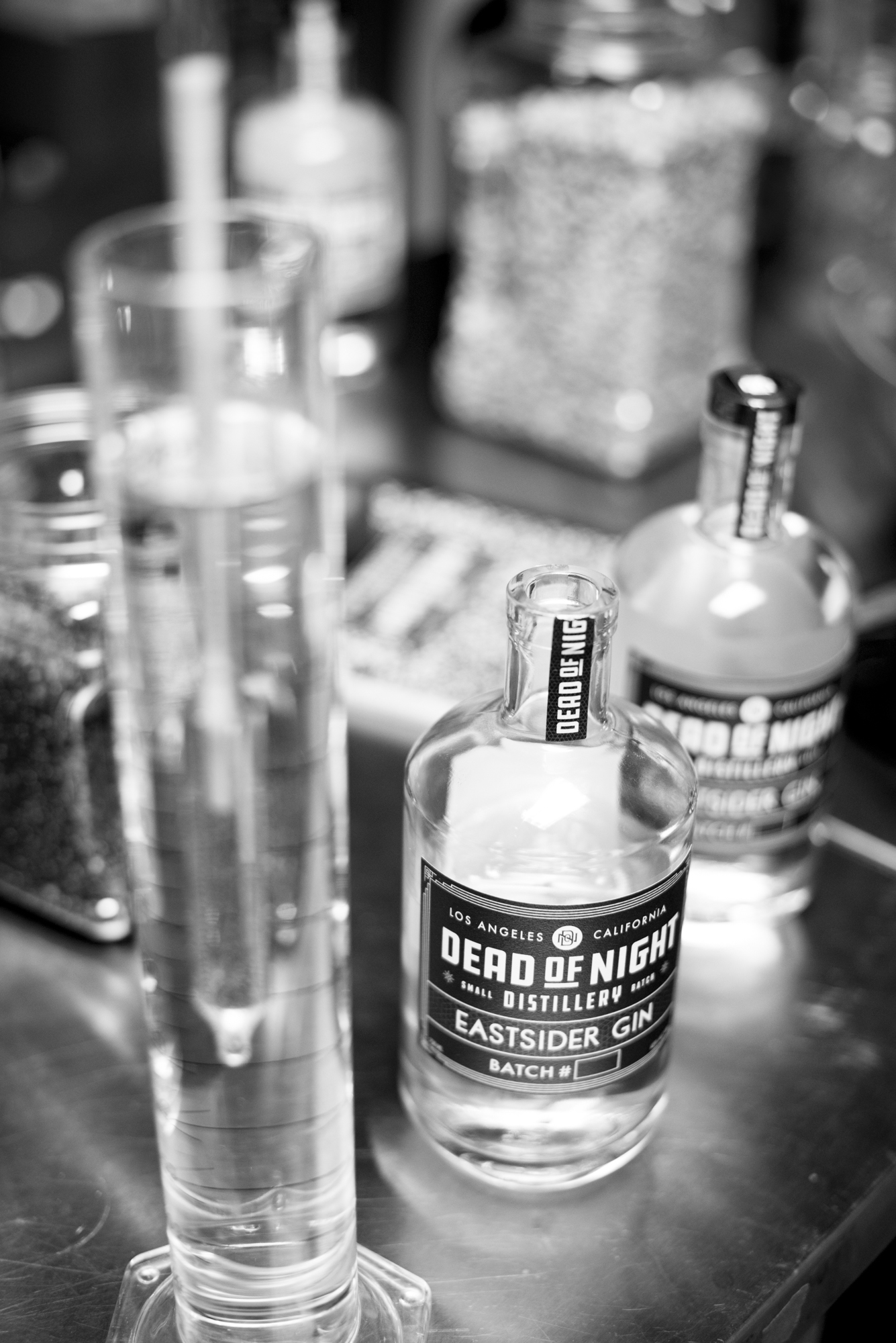
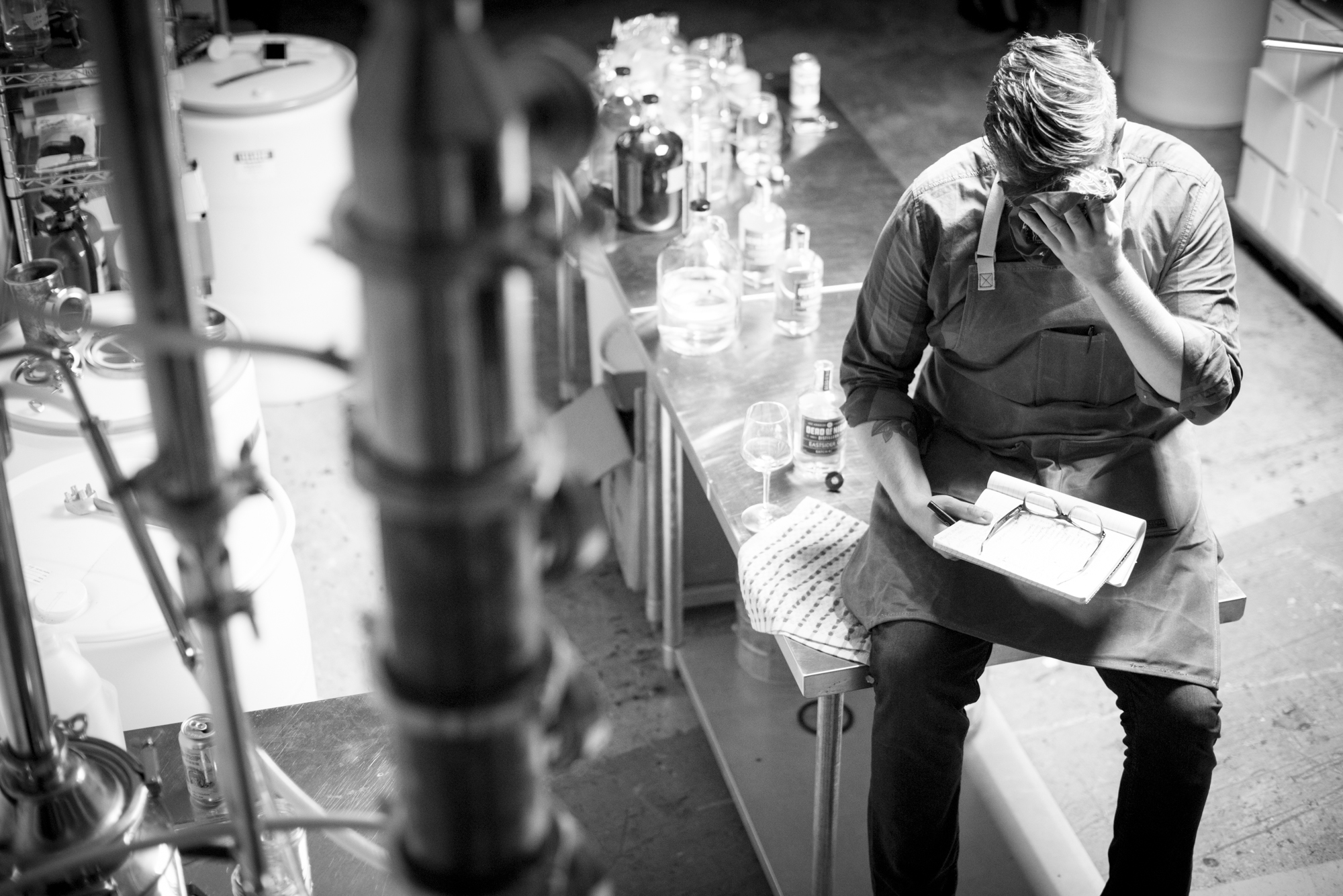
It seems that most people think of gin as that nasty pine needle tasting liquor that your grandfather had at his house. And I used to think the same thing. 6 months ago if you offered me a gin drink, I would have ignorantly turned it down thinking that all gin just tastes like floor cleaner. Dead of Night Distillery has completely changed my mind though. I’ve always been a beer guy, never much for liquor, but tasting this gin and the cocktails made with it, has me singing a different tune. Really great stuff and i’m excited to see where this recently opened distillery goes. If you’re anywhere in the Los Angeles and looking for spirits to make great craft cocktails, look up where to buy Dead of Night’s products. Aside from their vodka, gin, and rum, the head distiller also creates incredible small batch experimental spirits like limoncello, aquavit, and amaro.

Follow them on Instagram @dead_of_night_distilery or go to their WEBSITE.