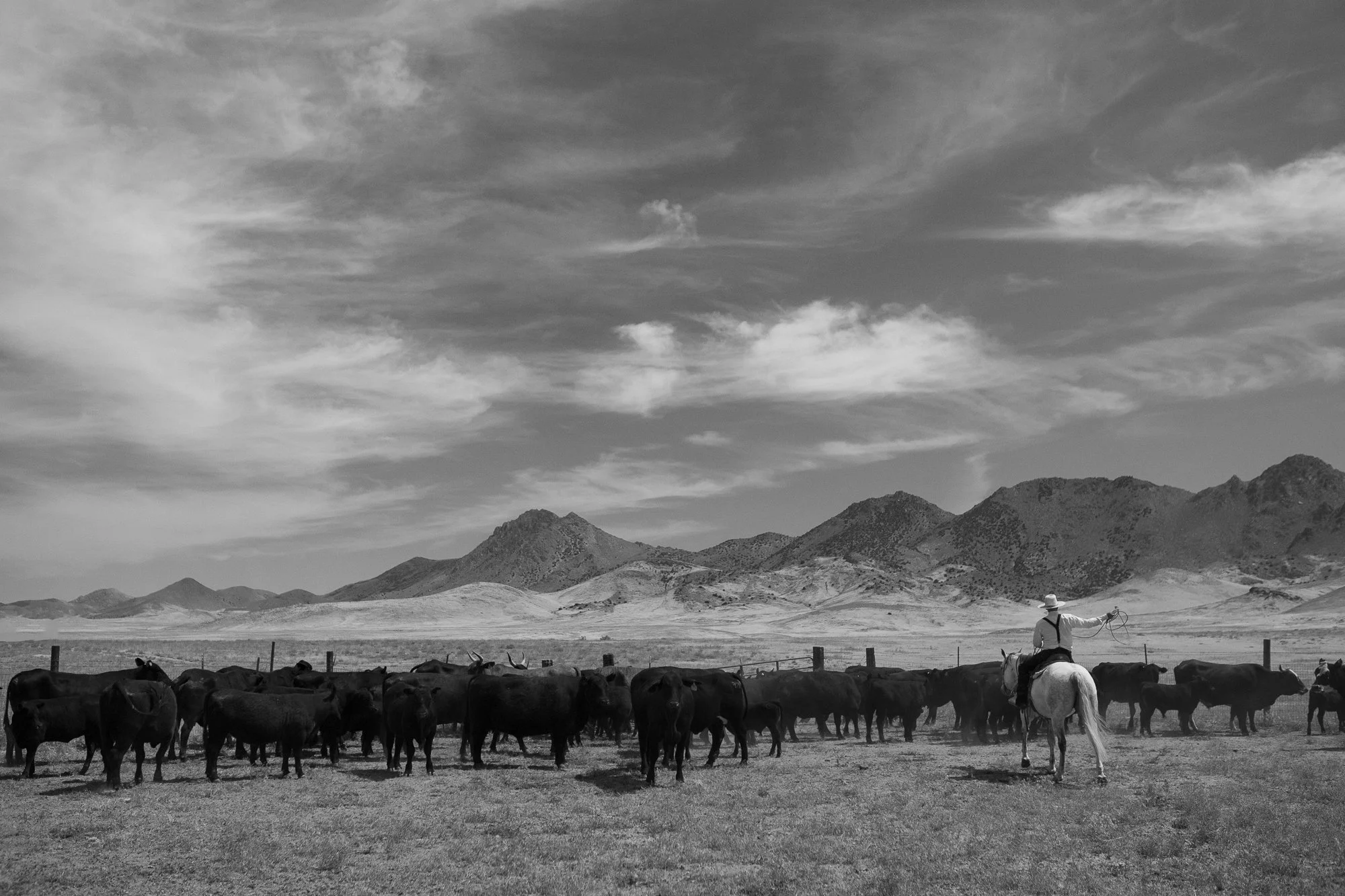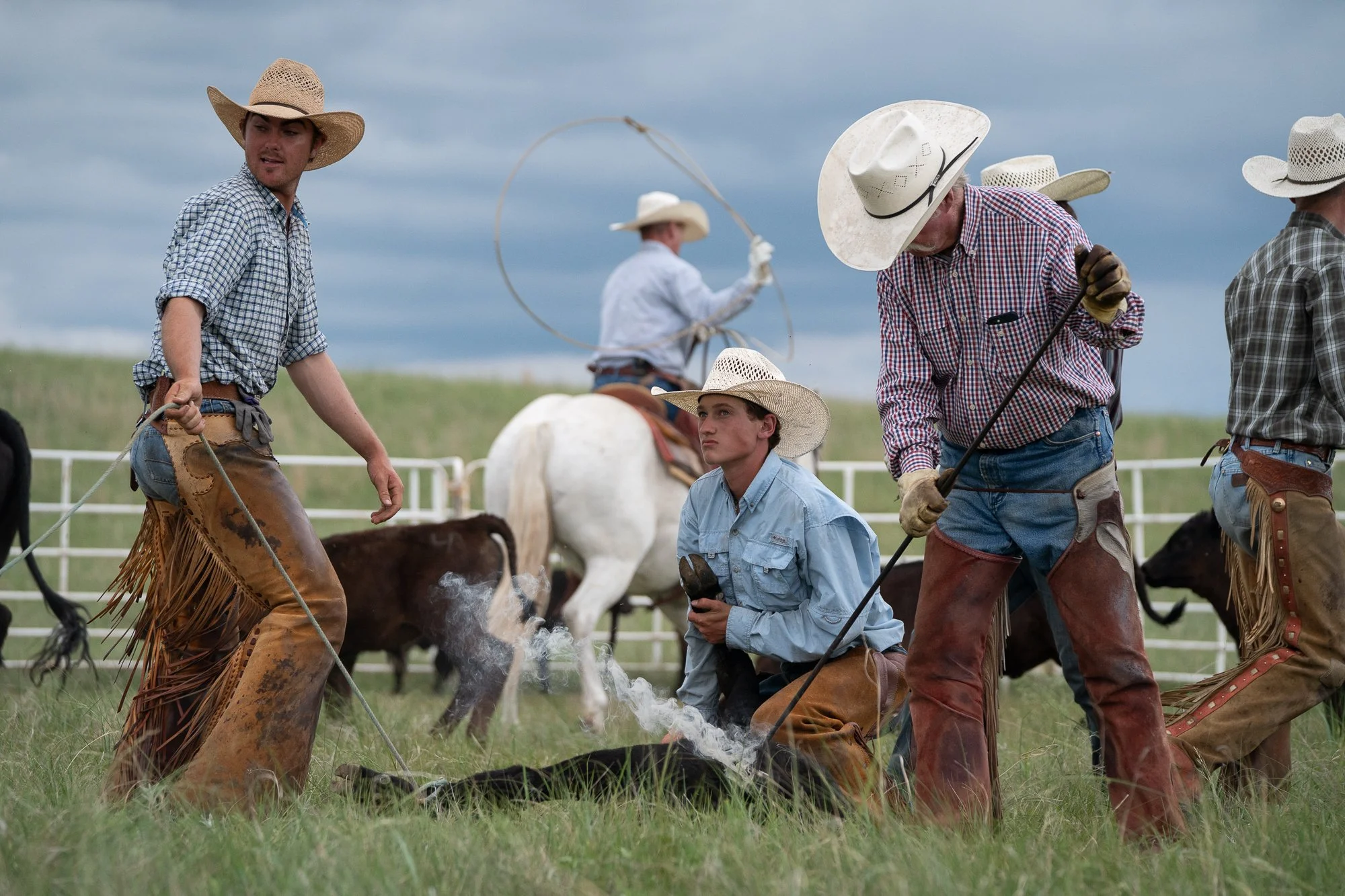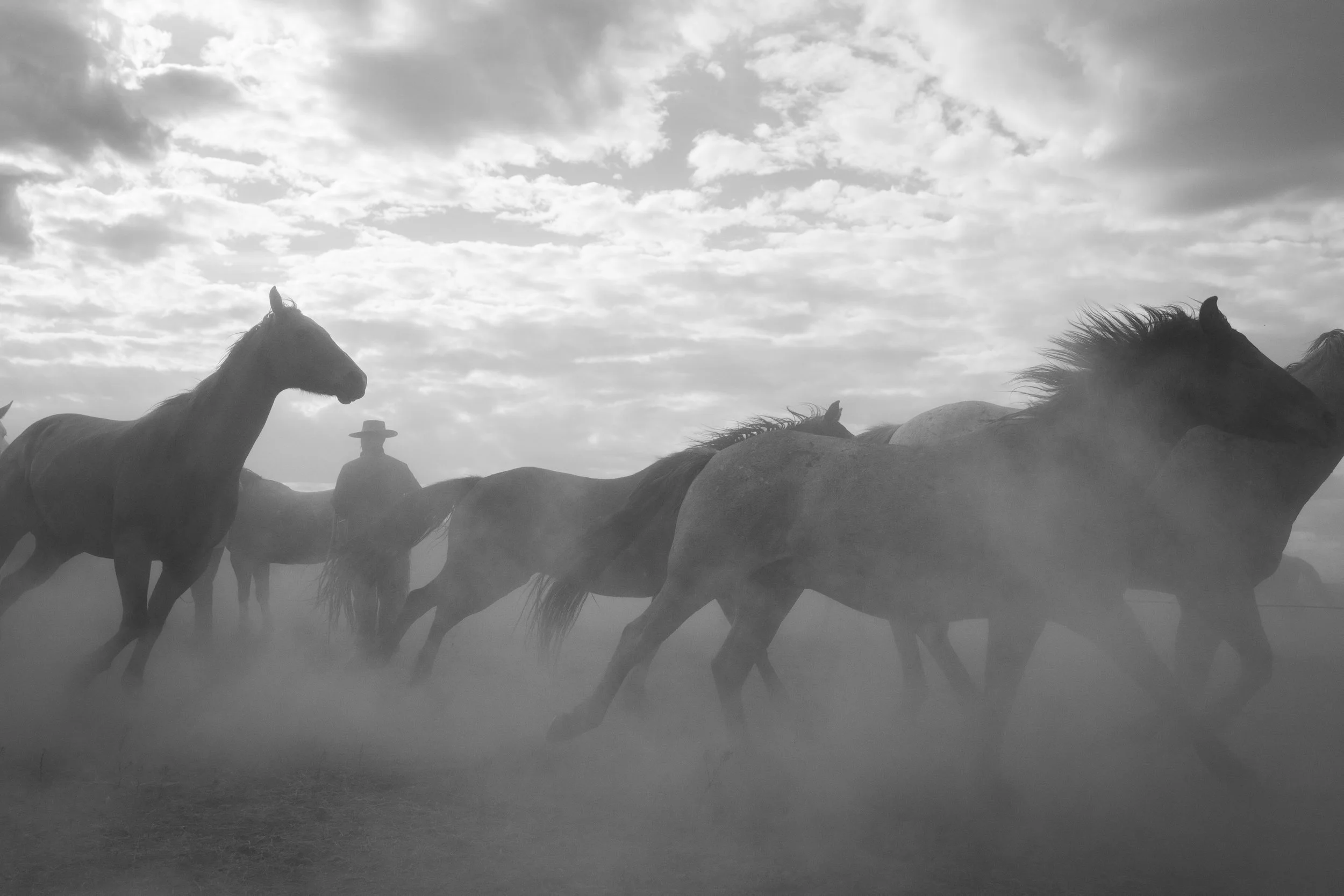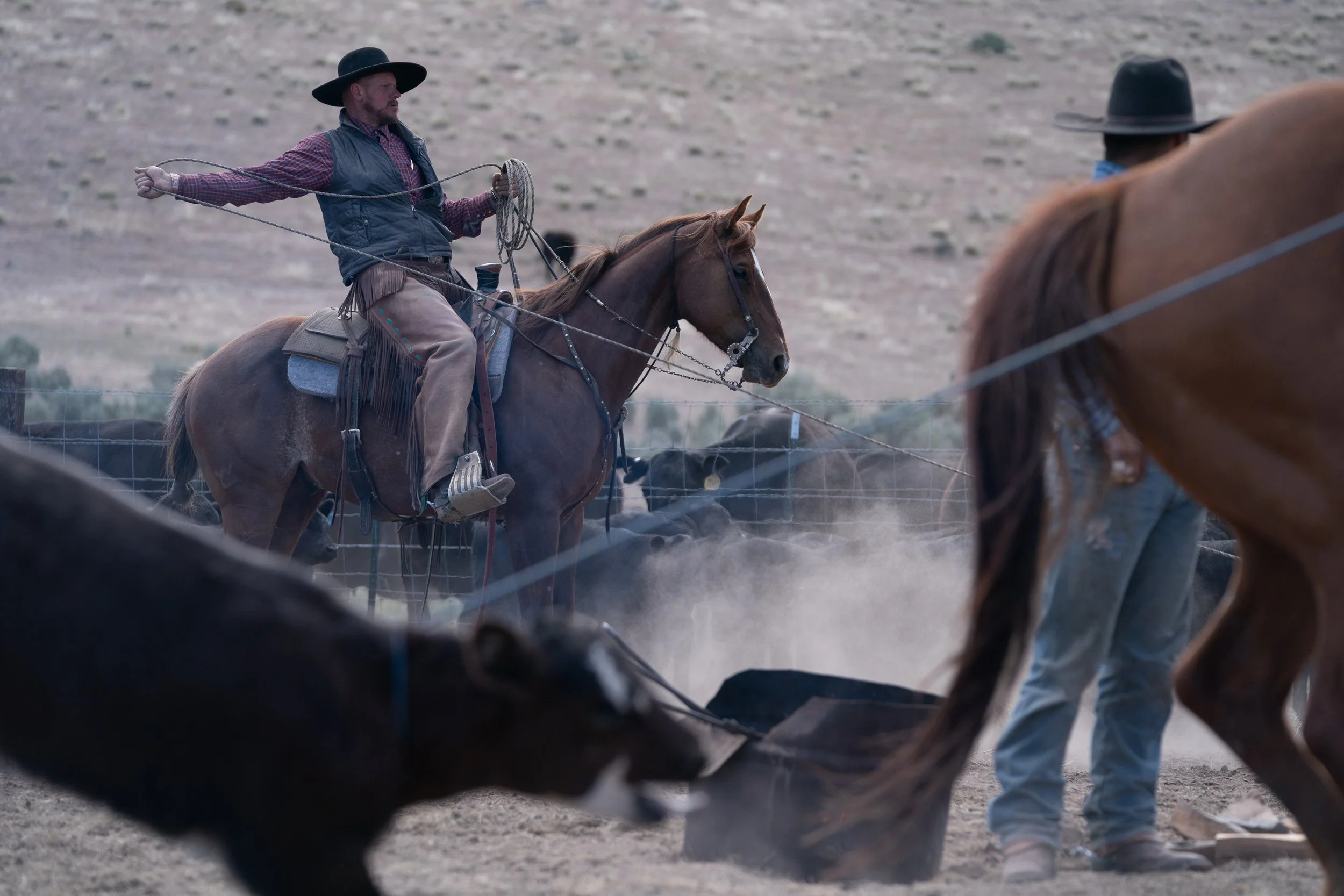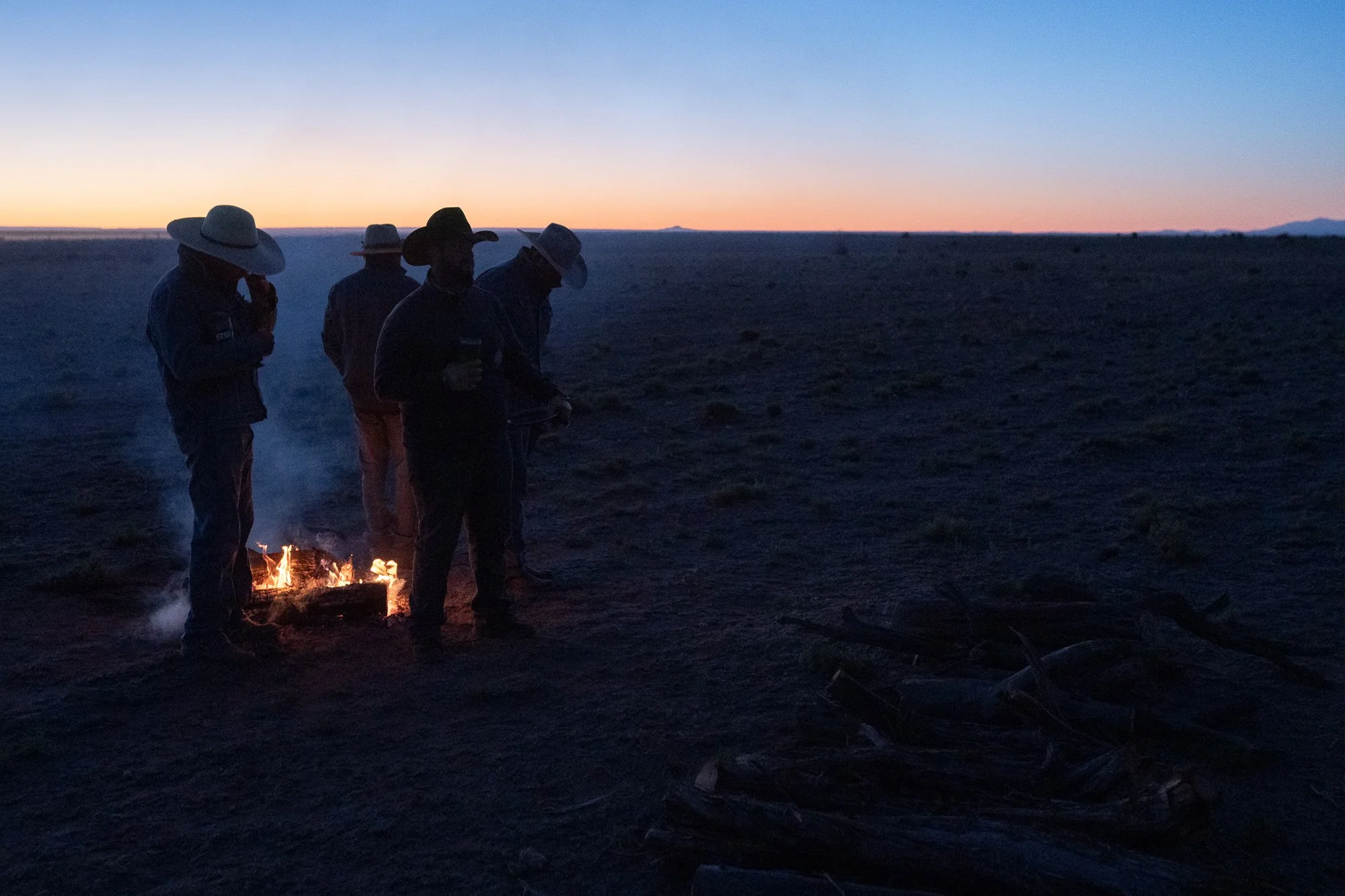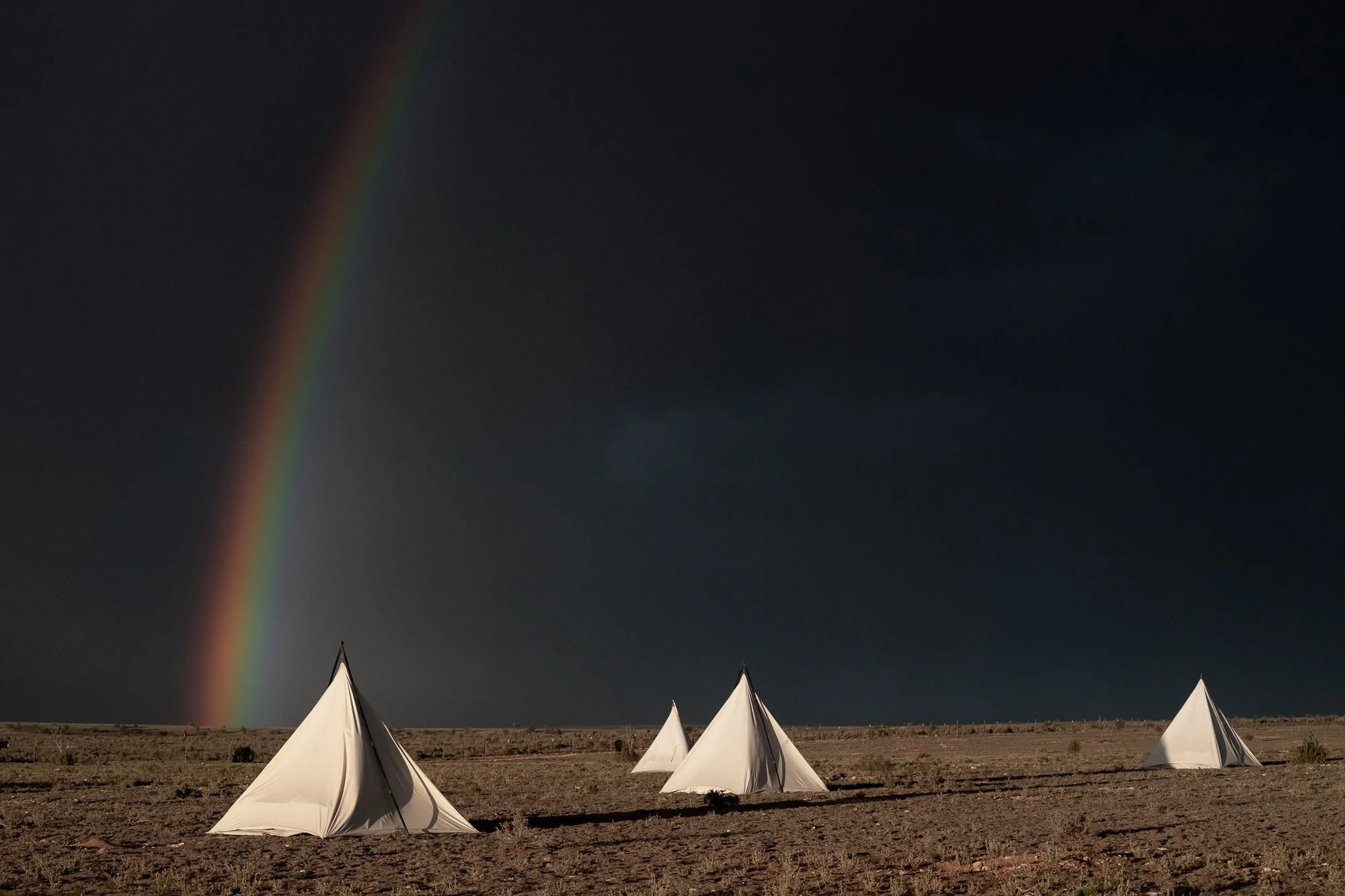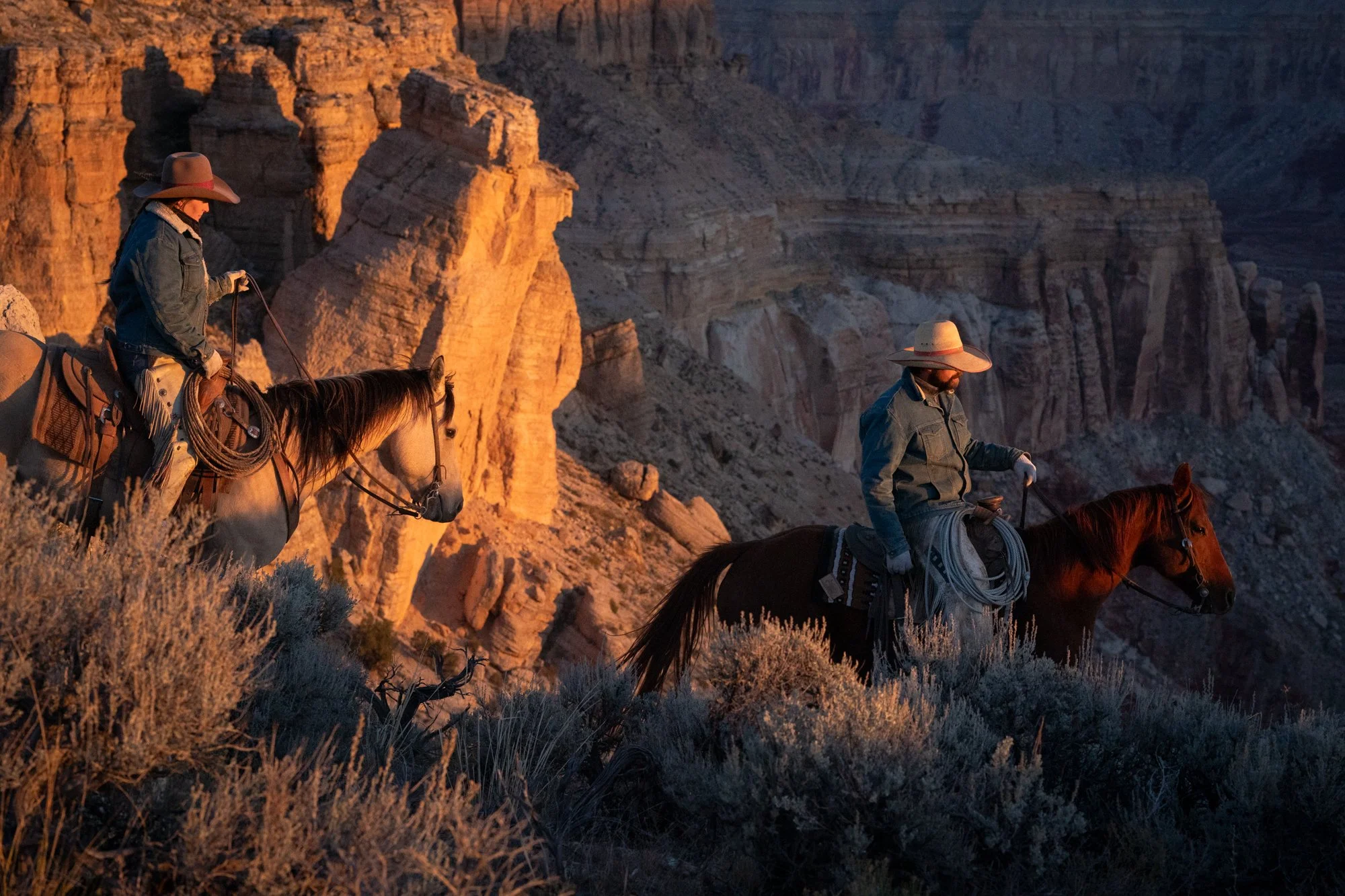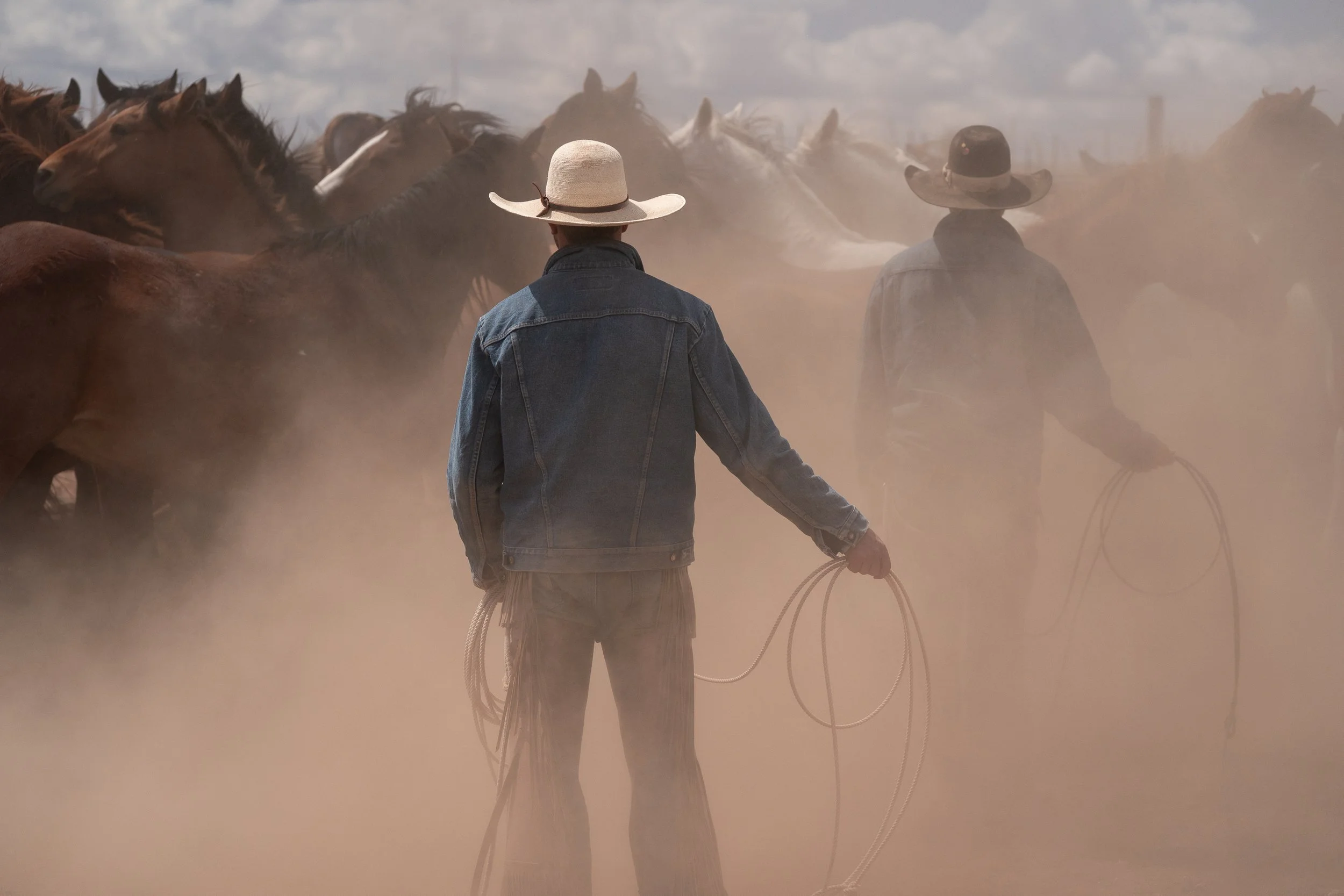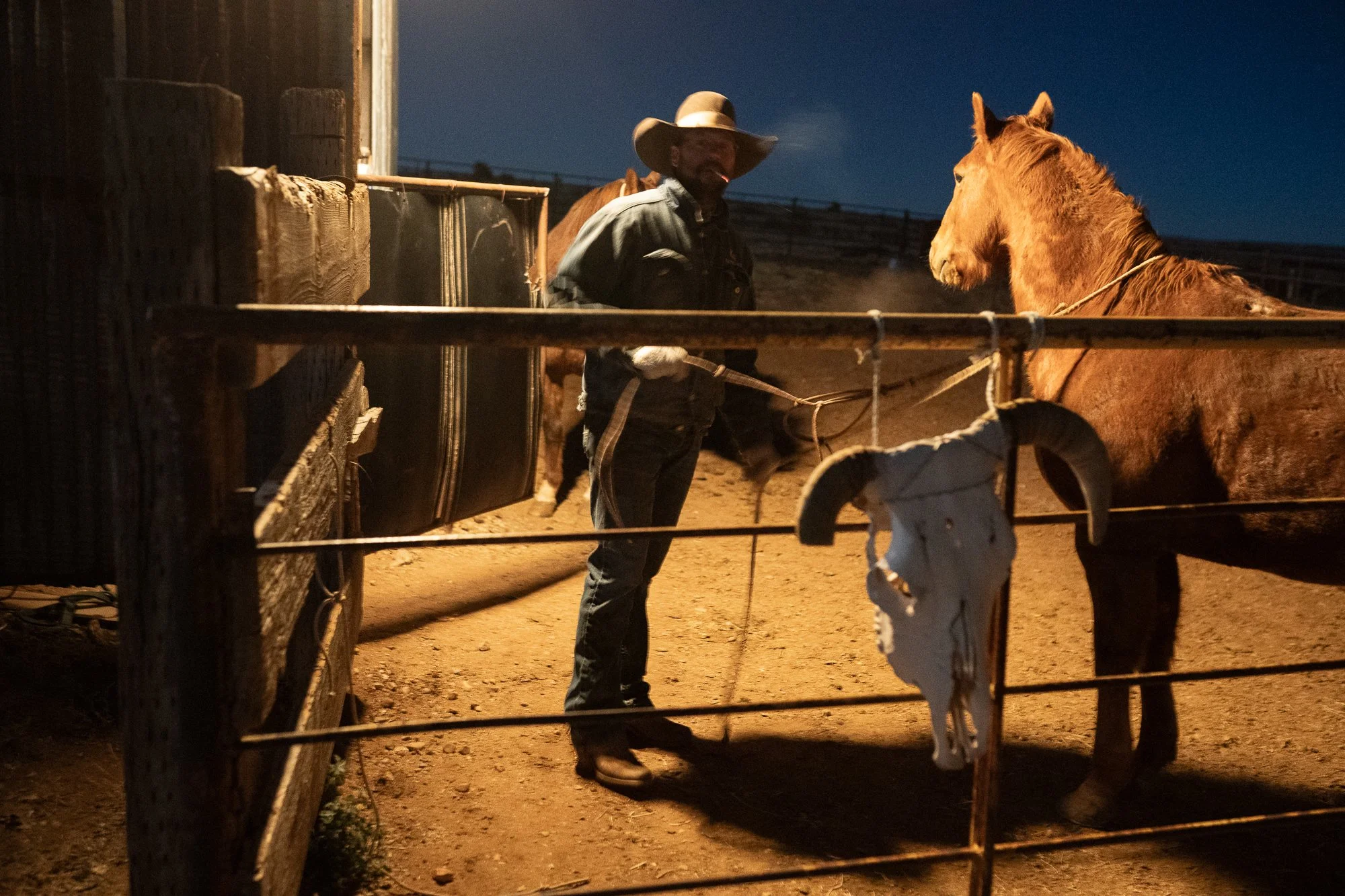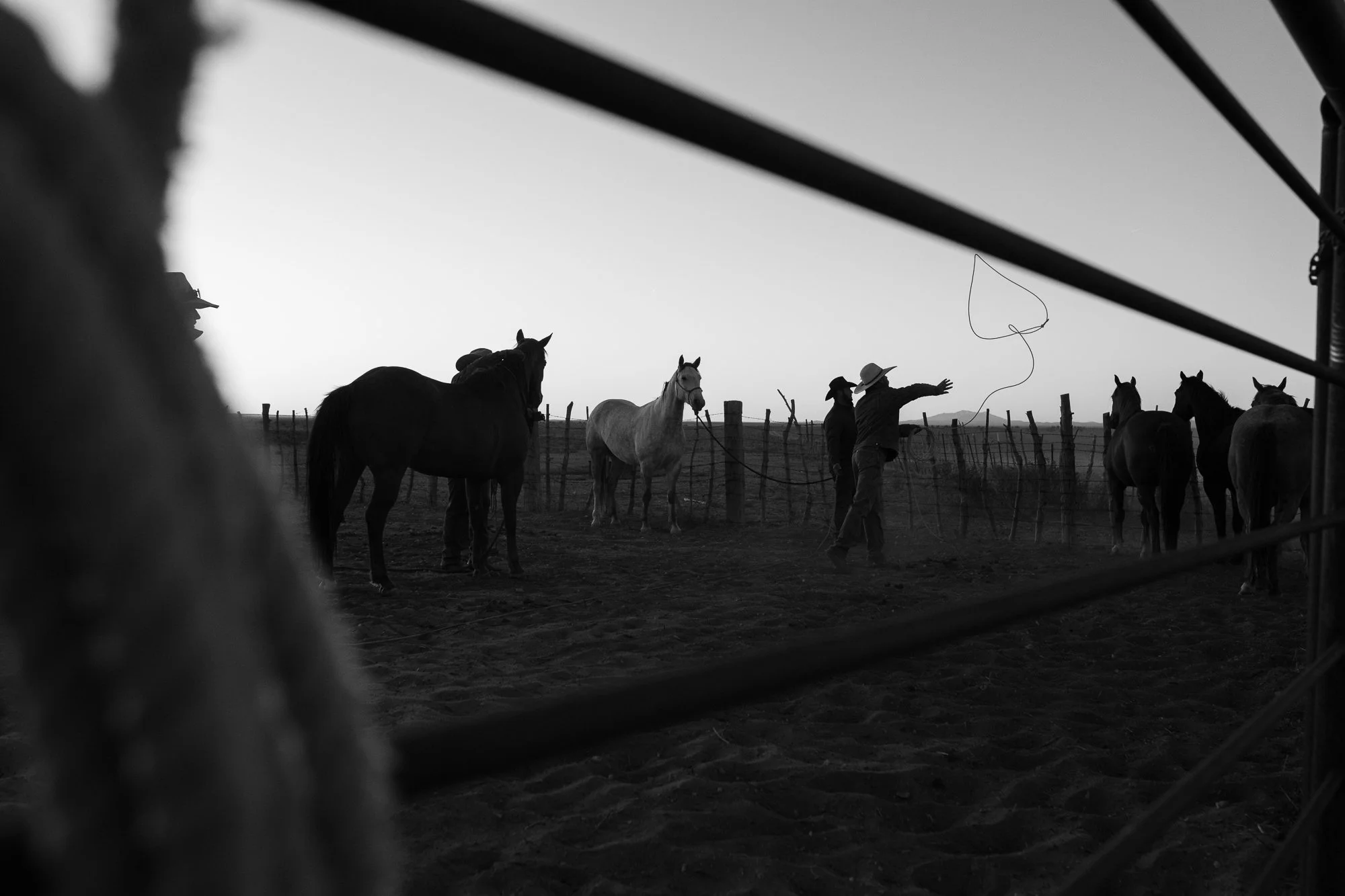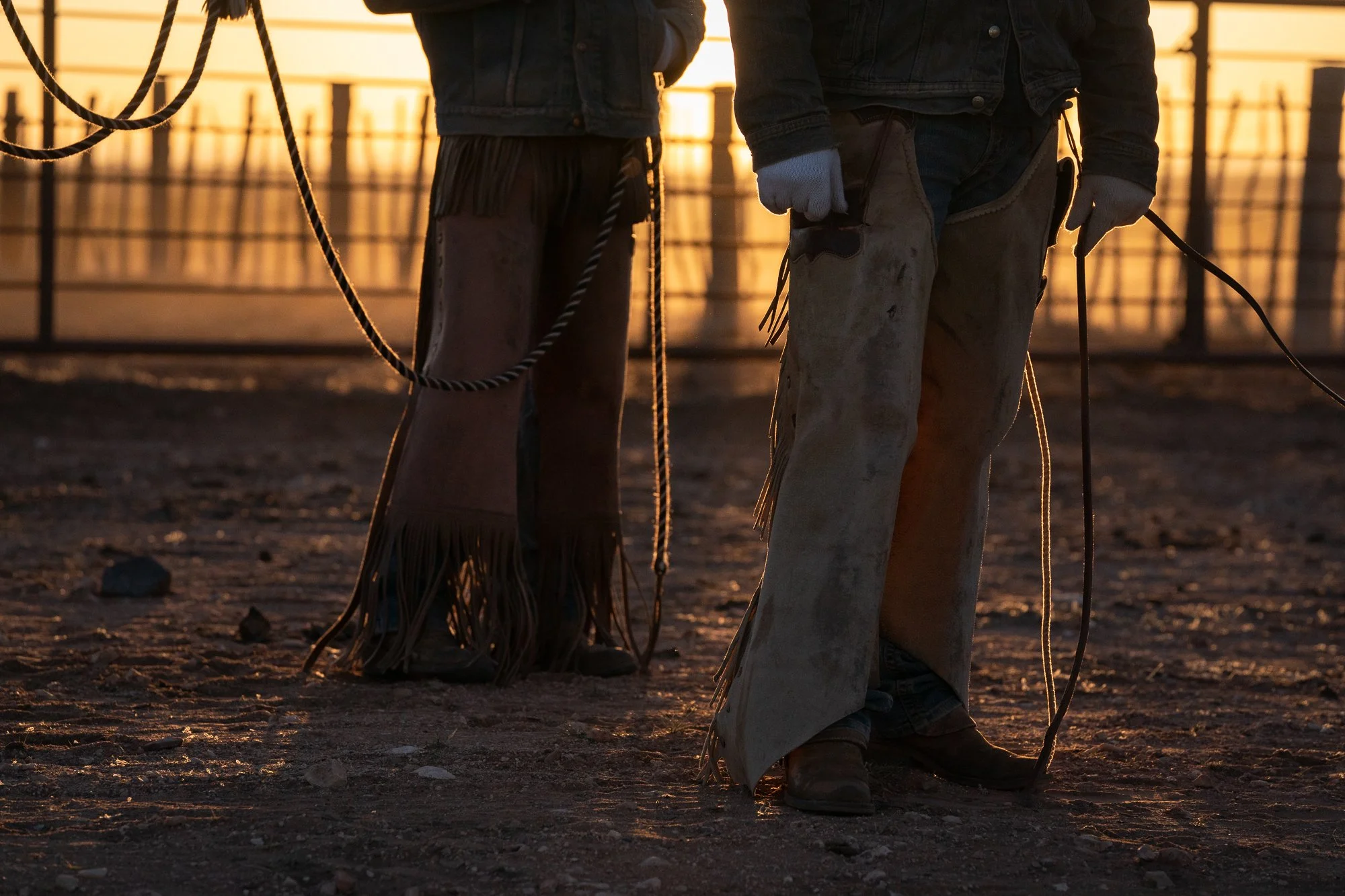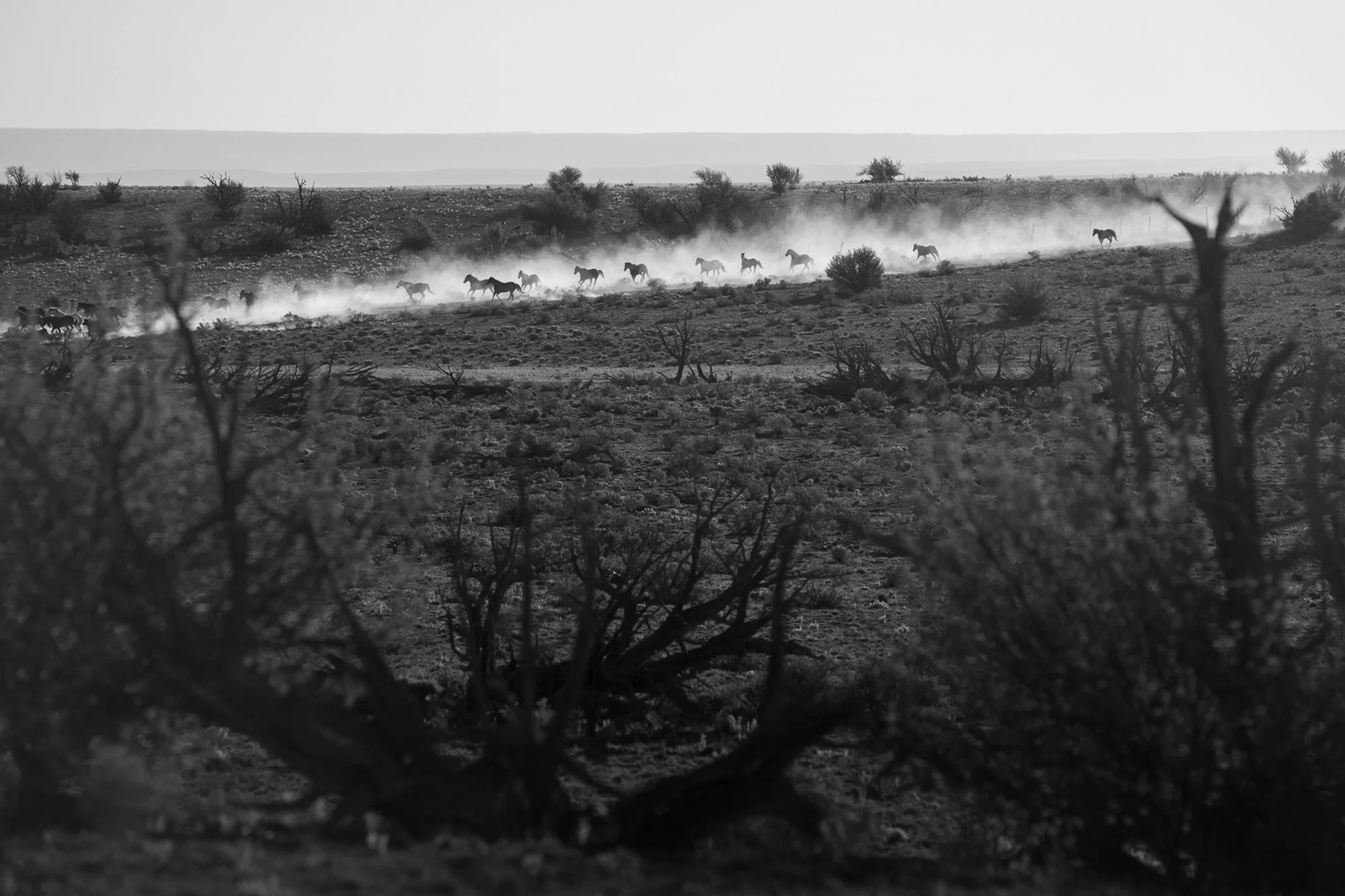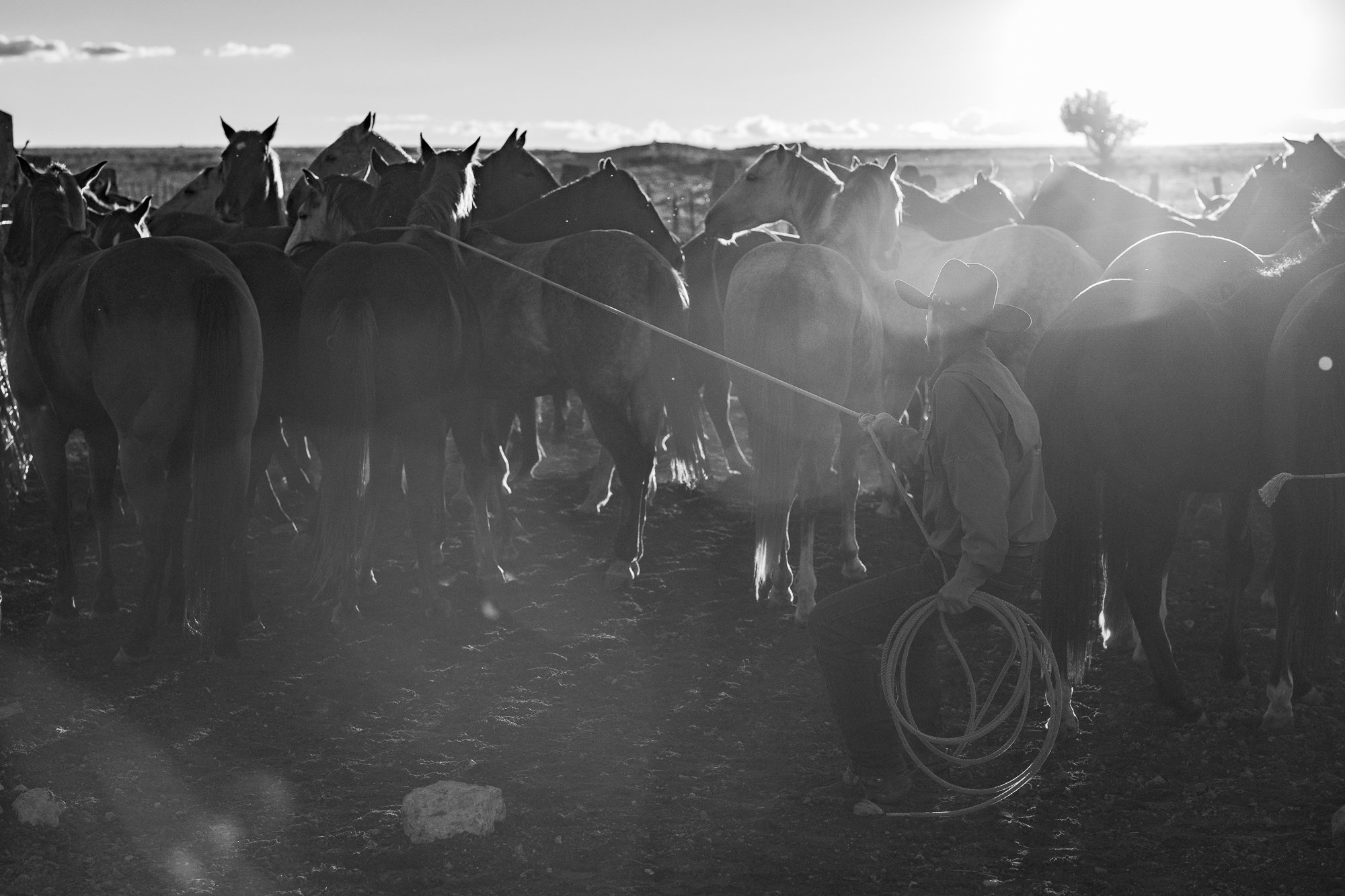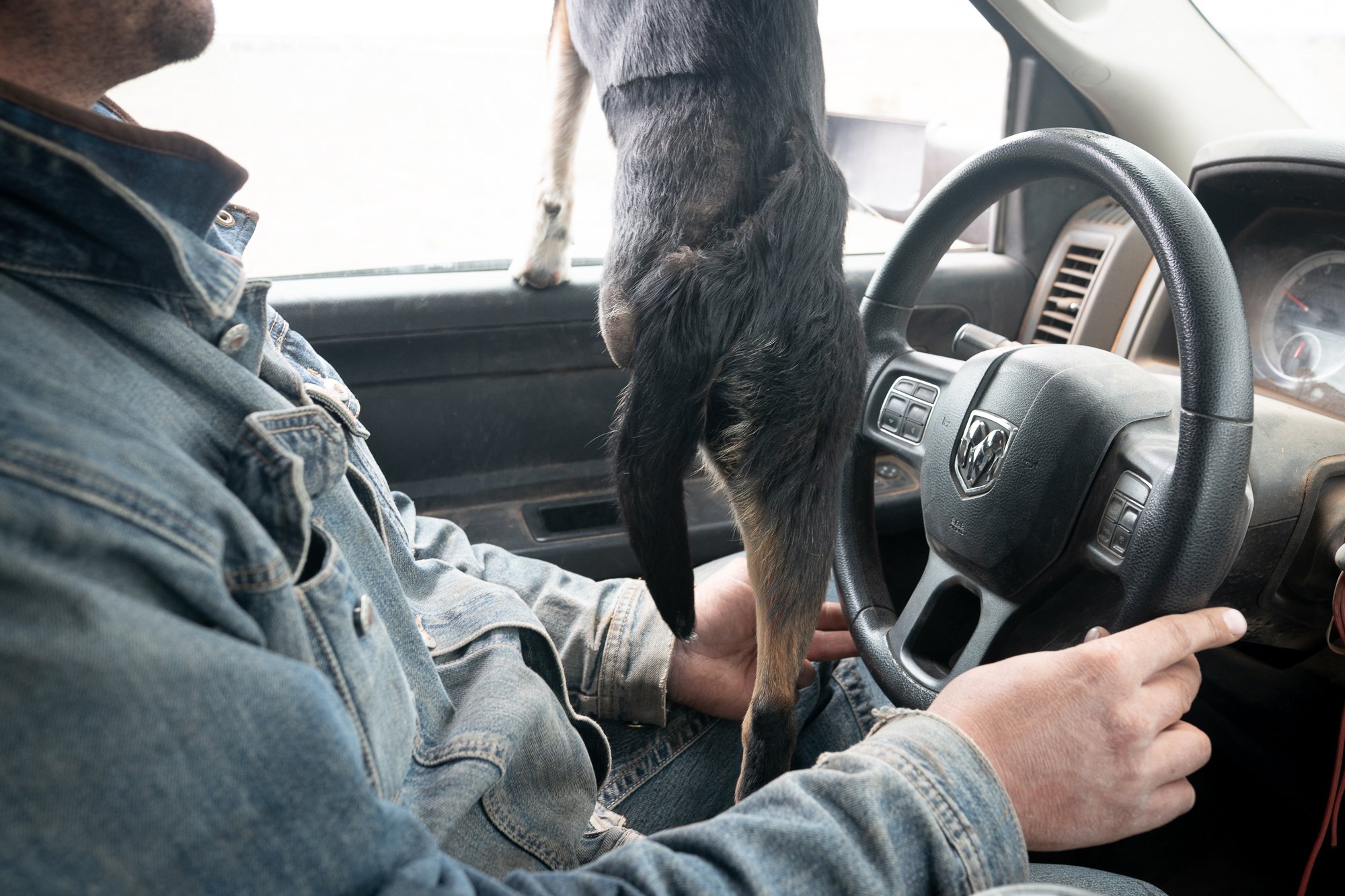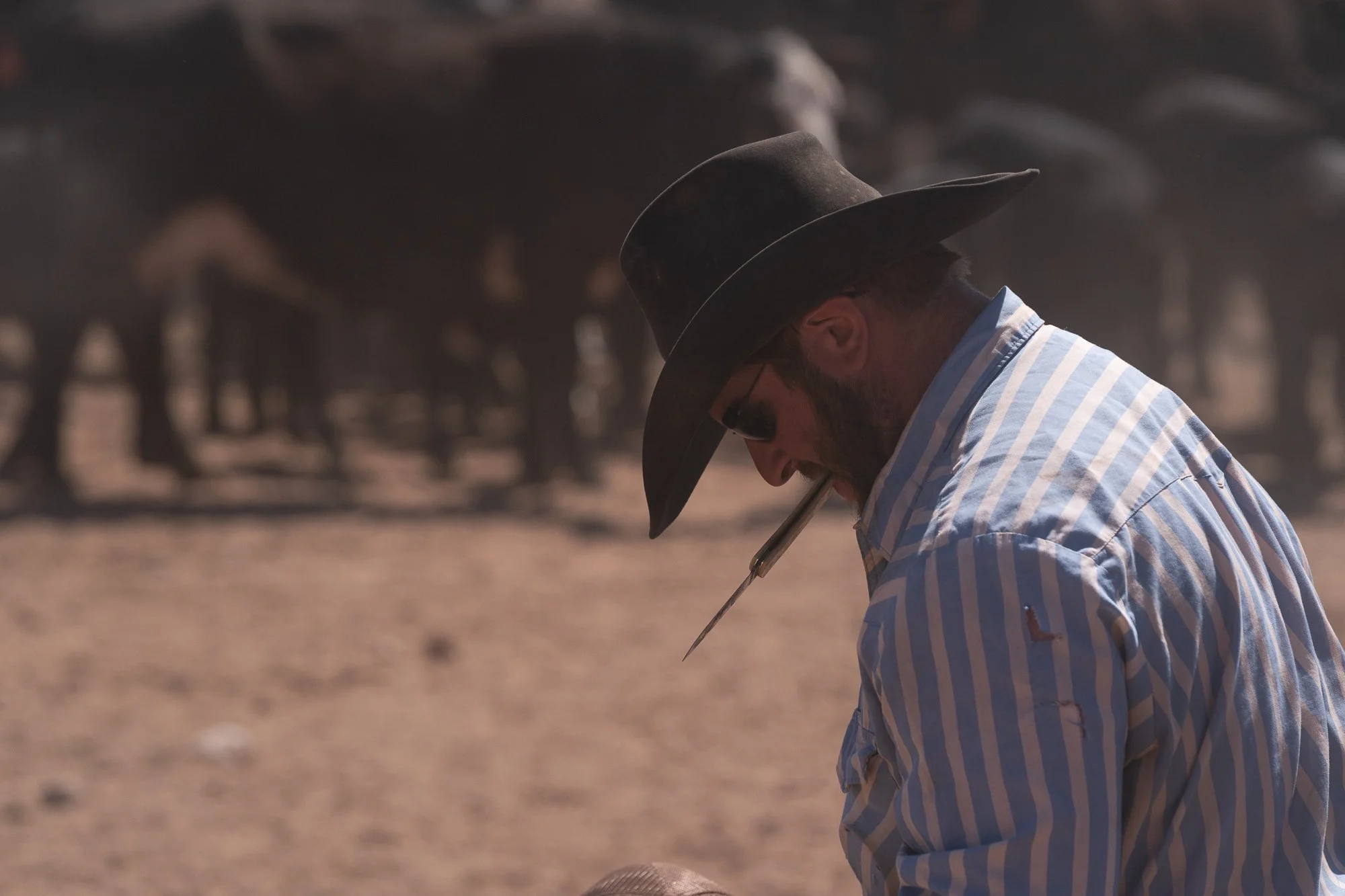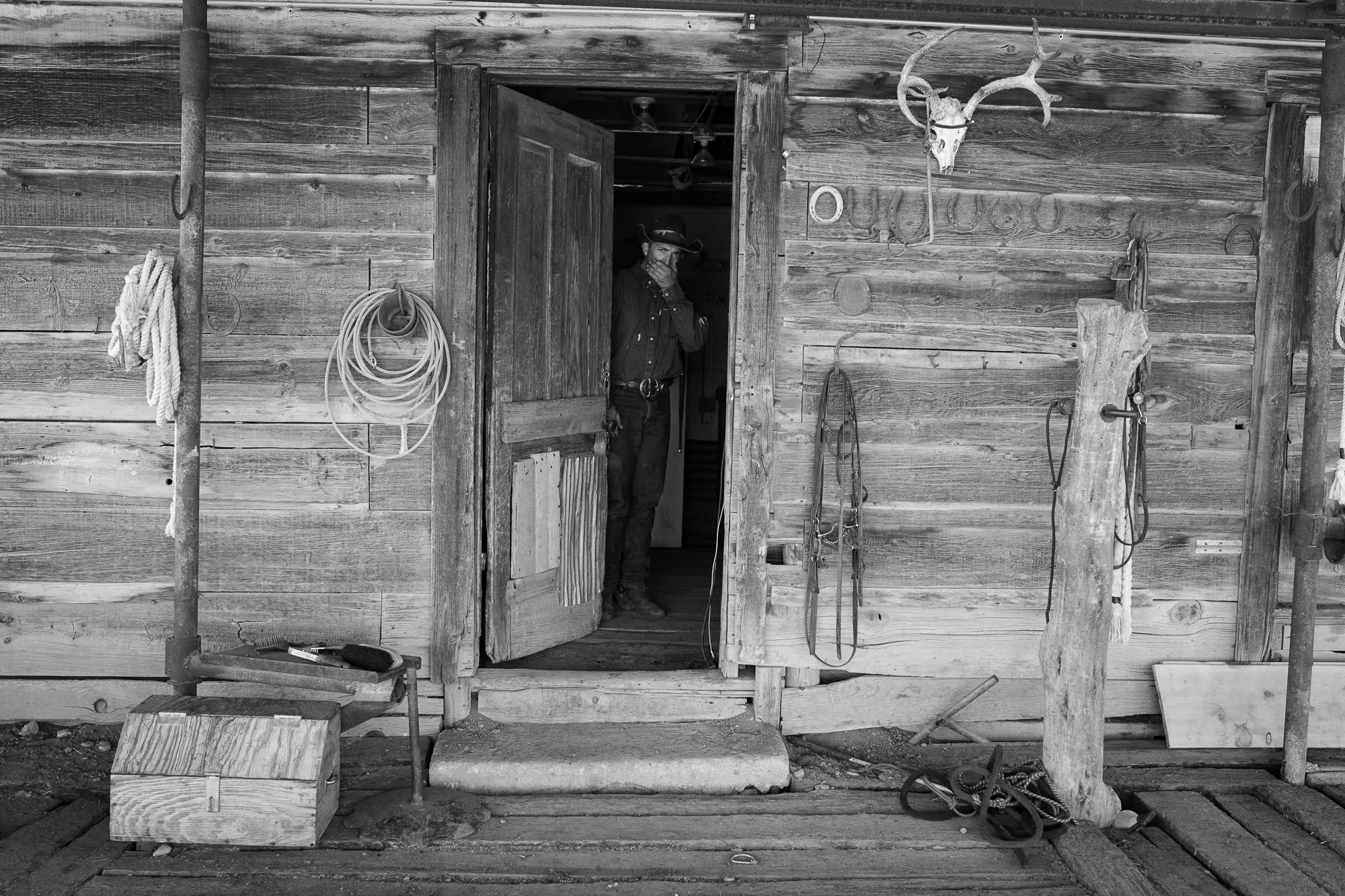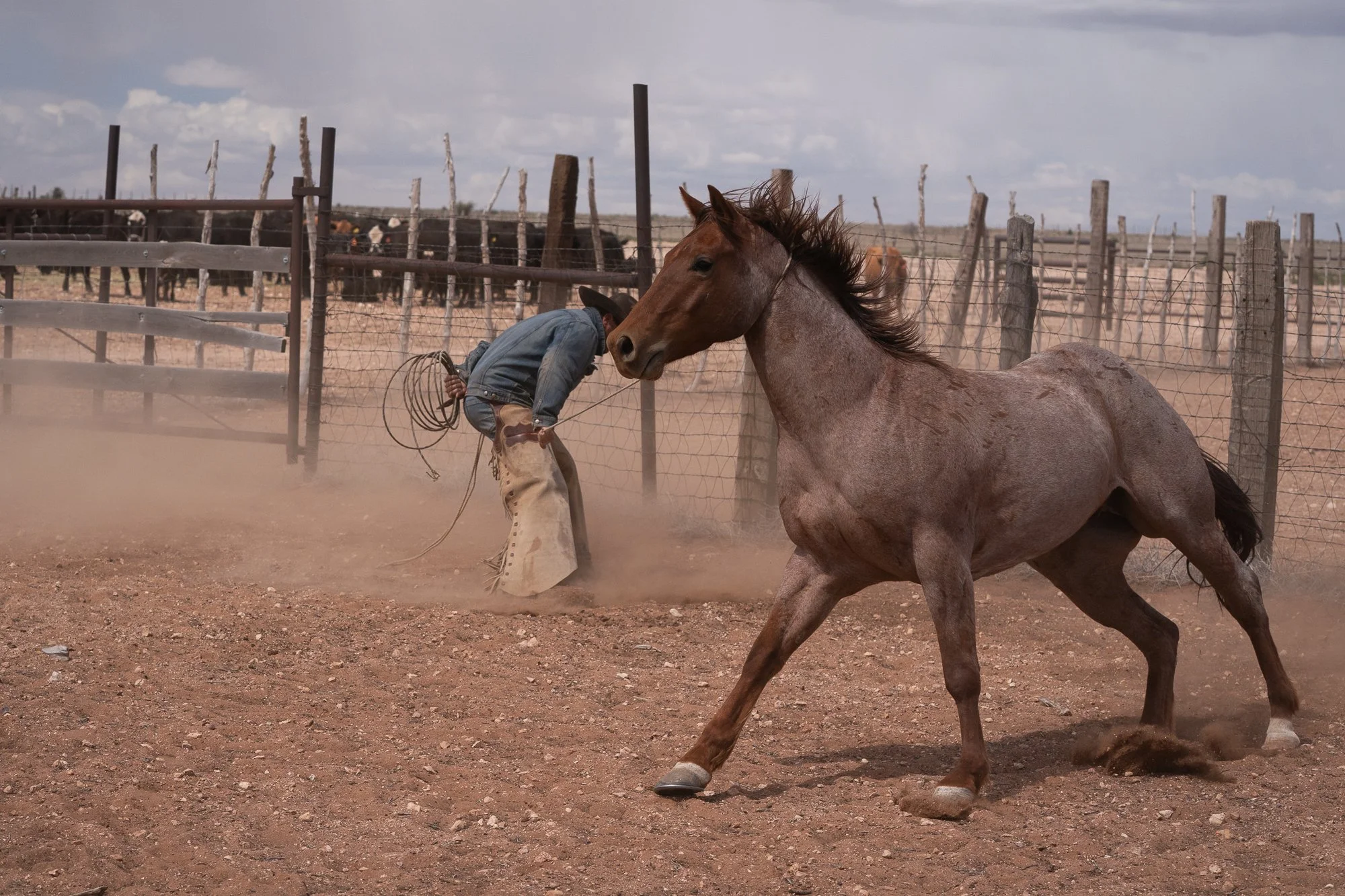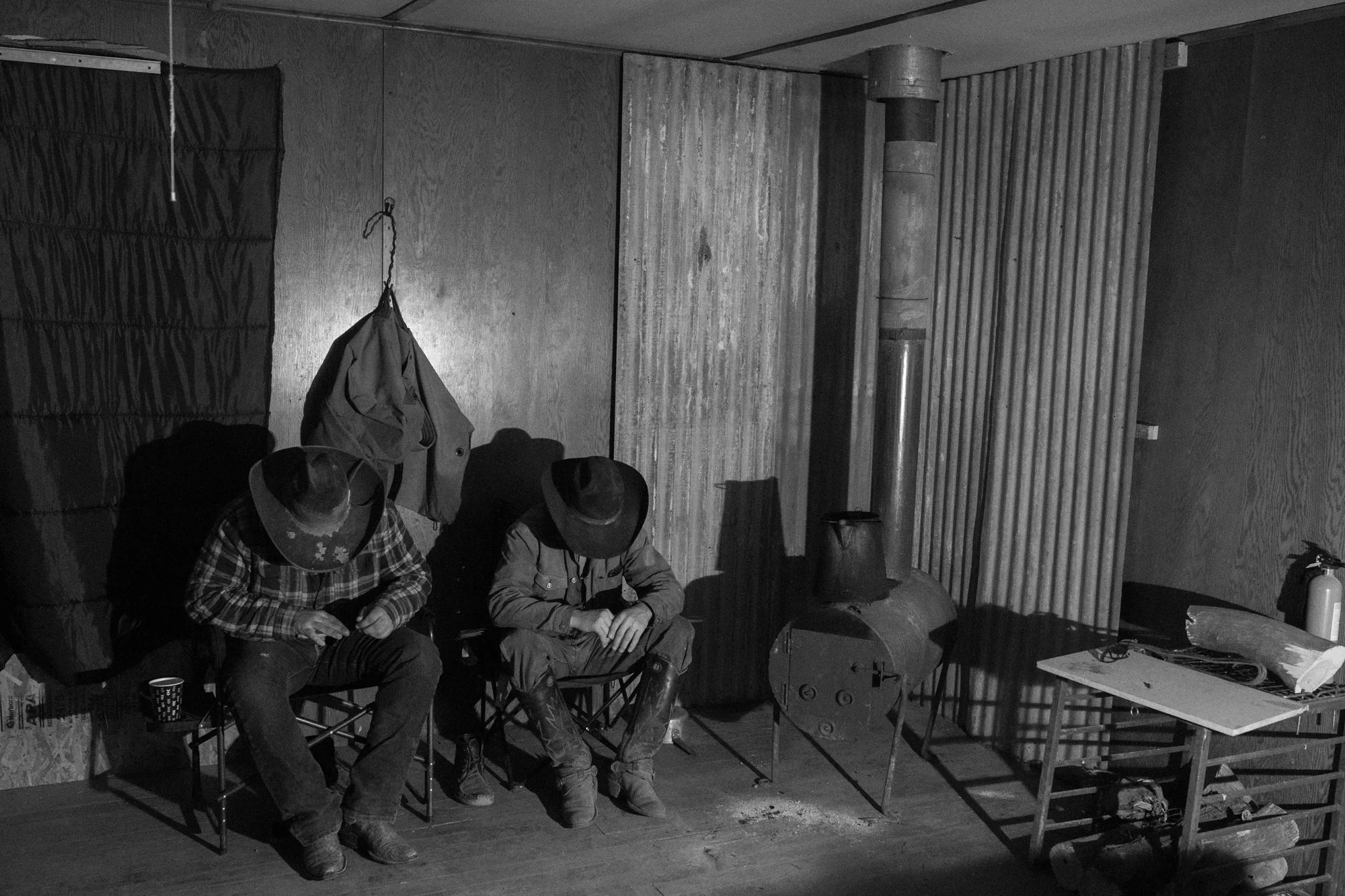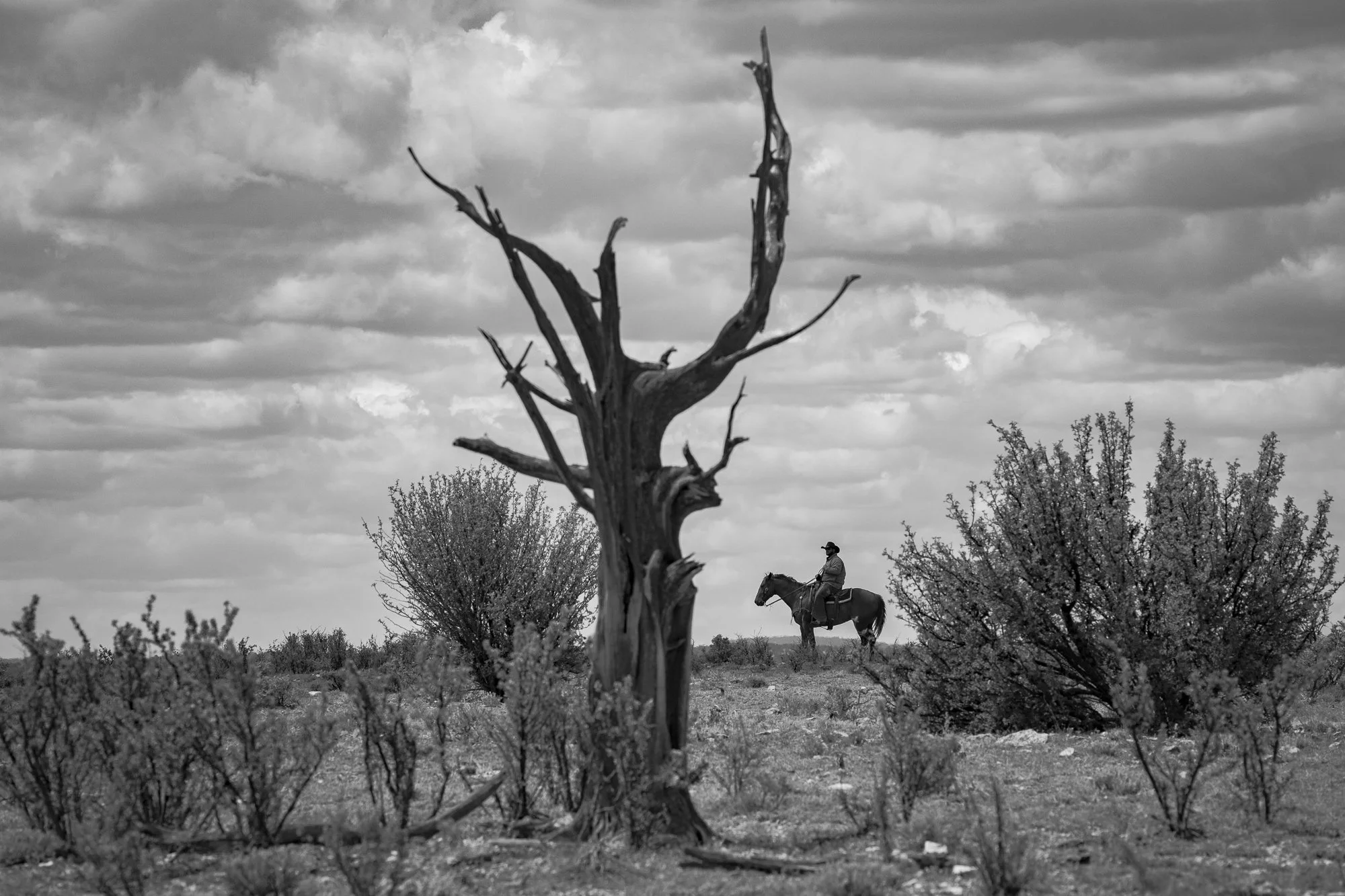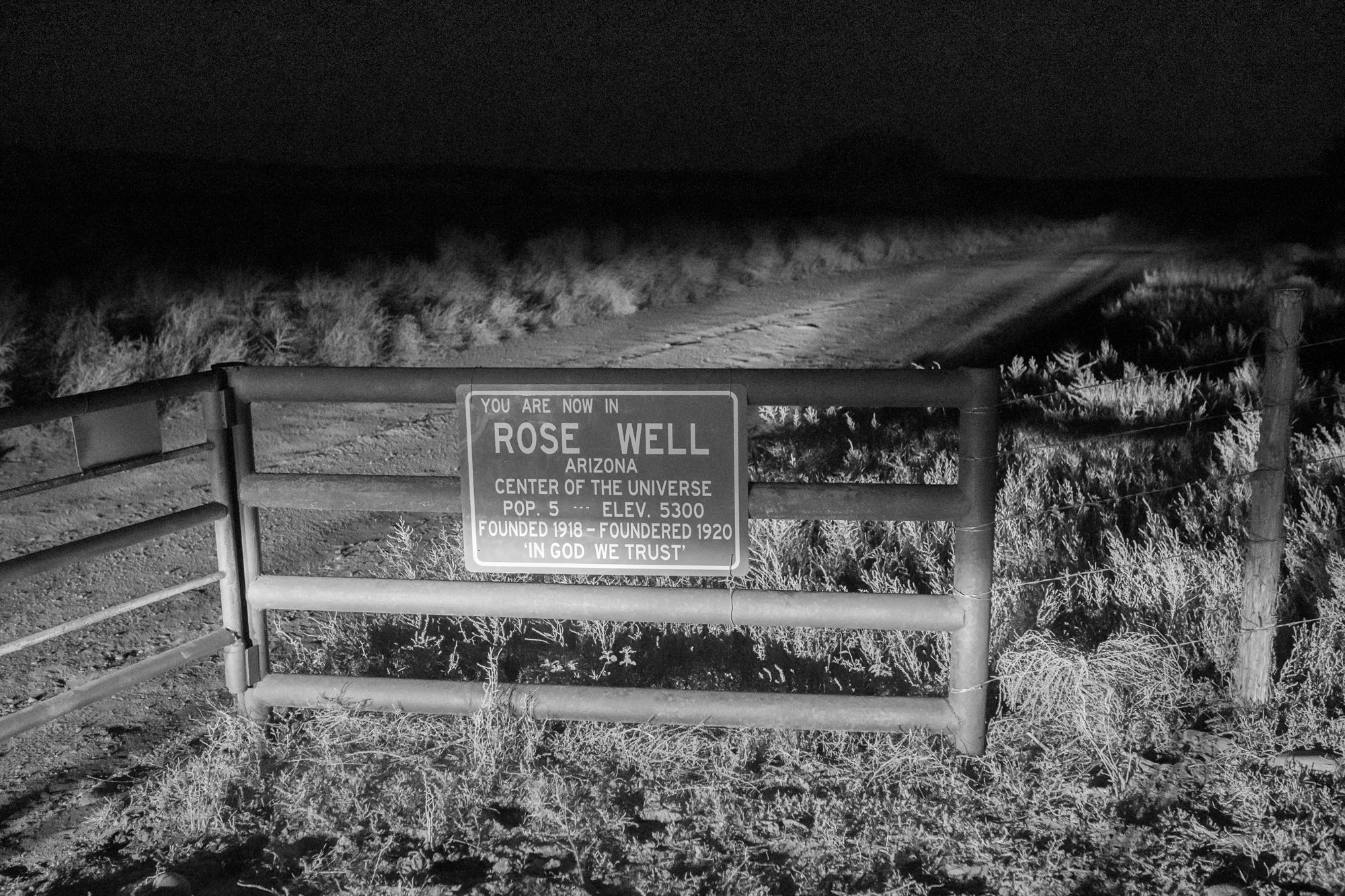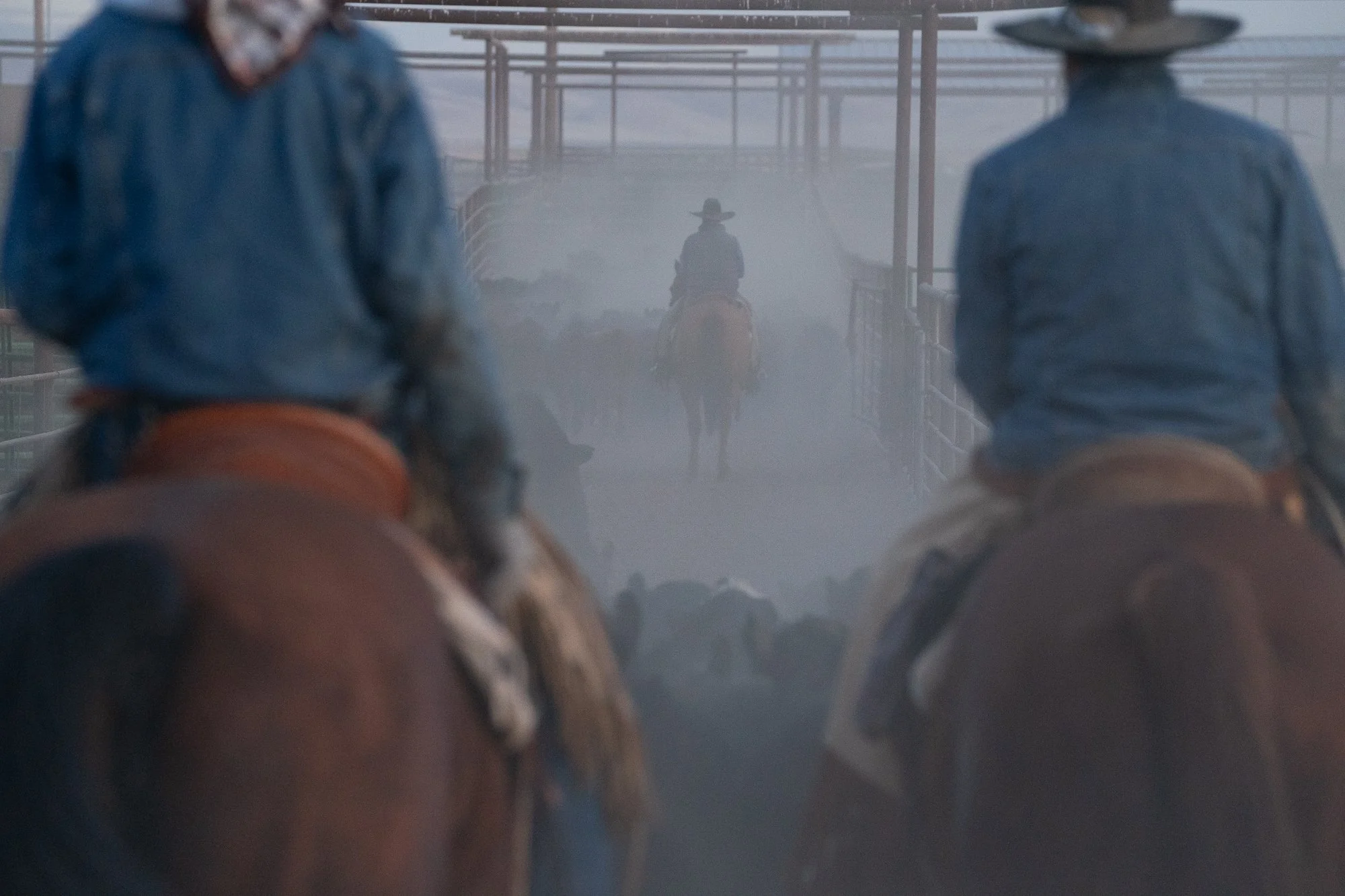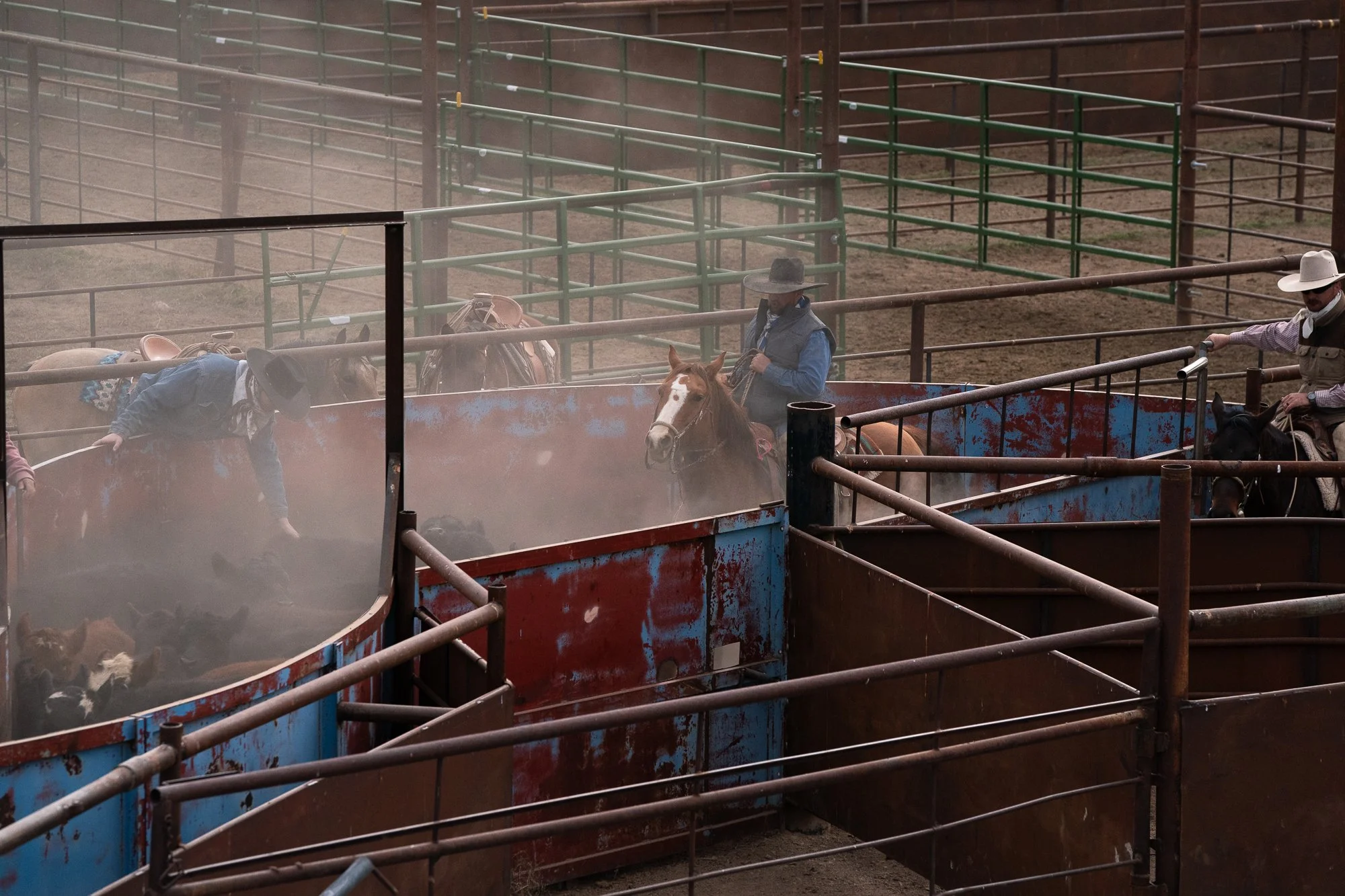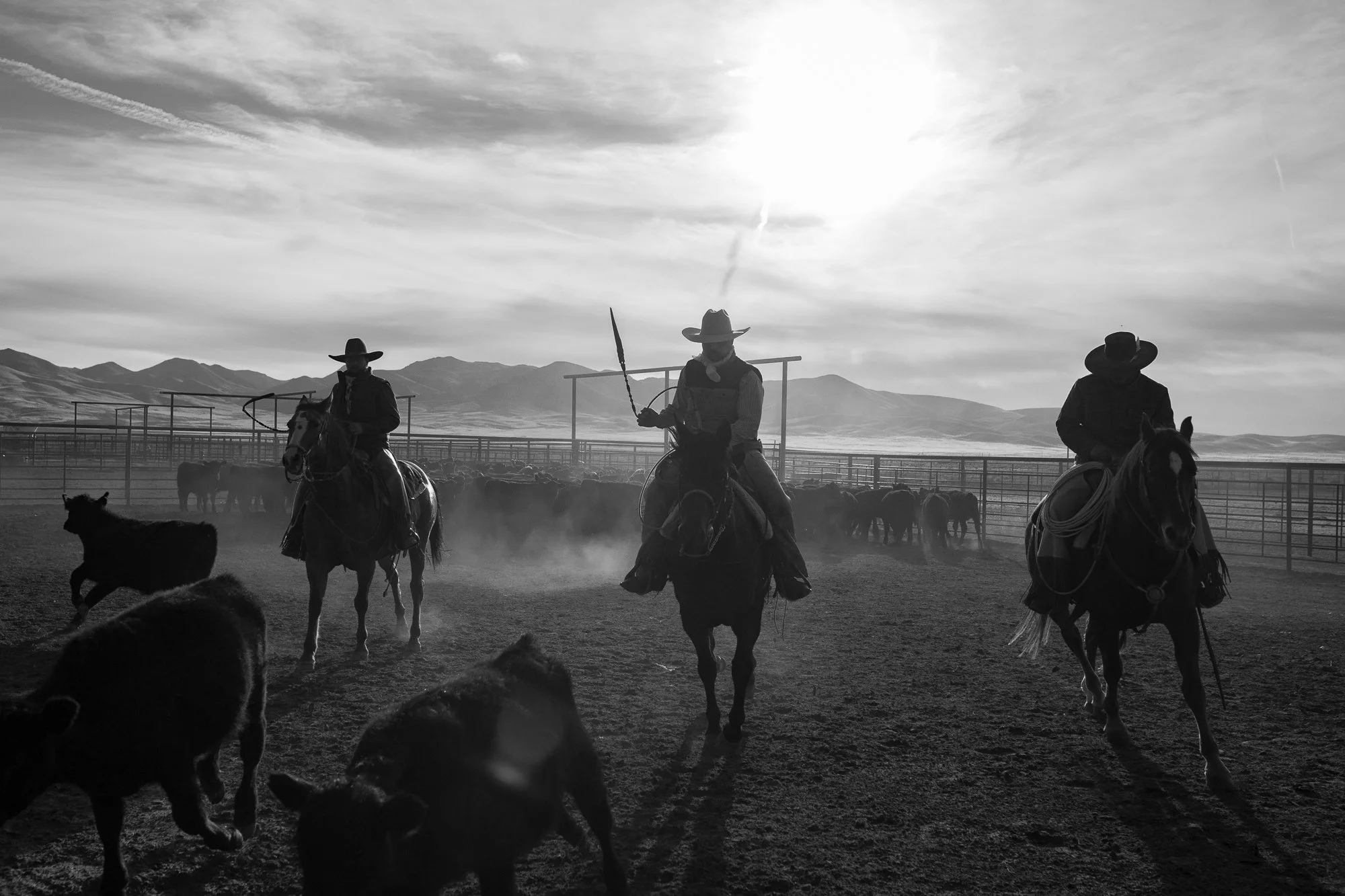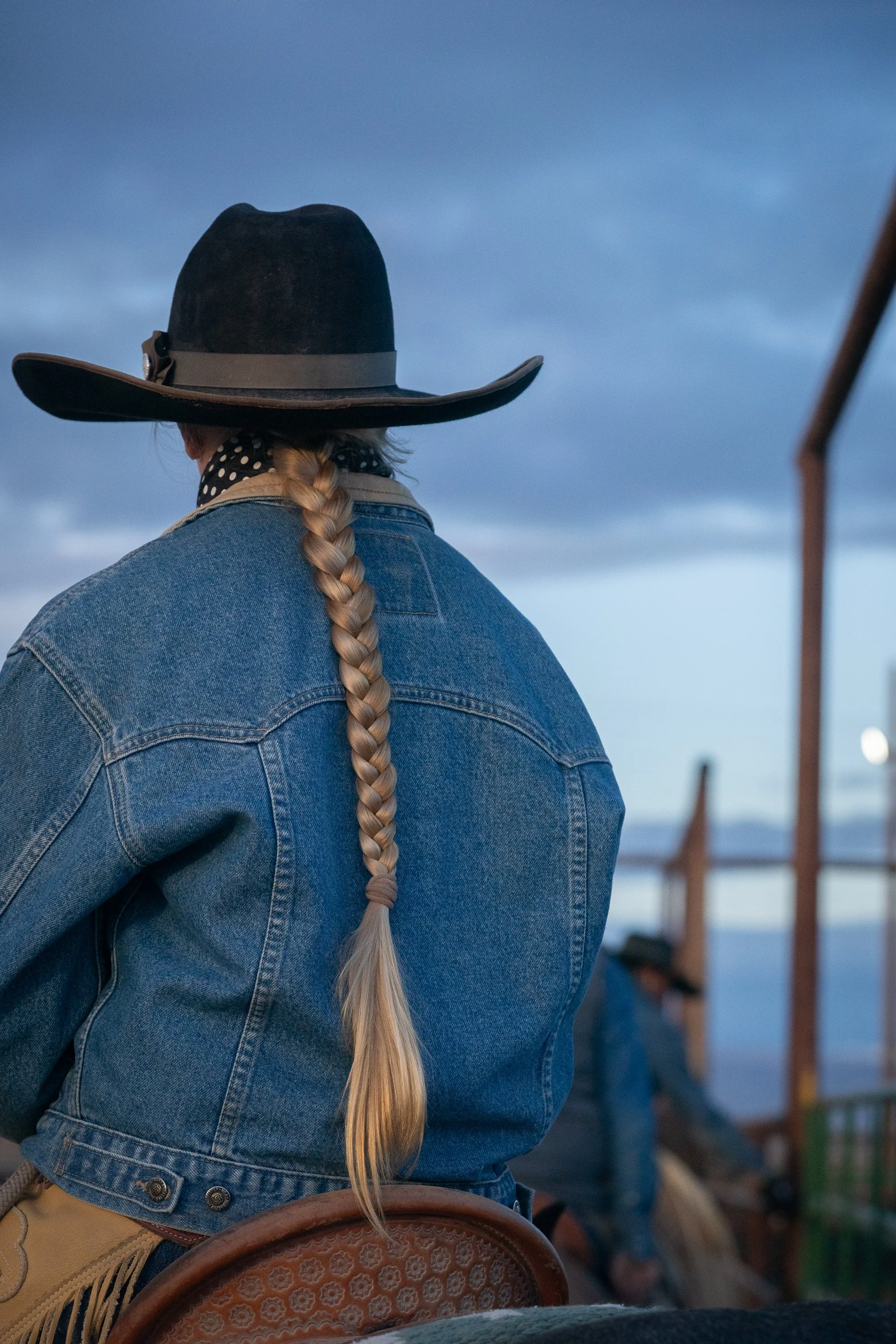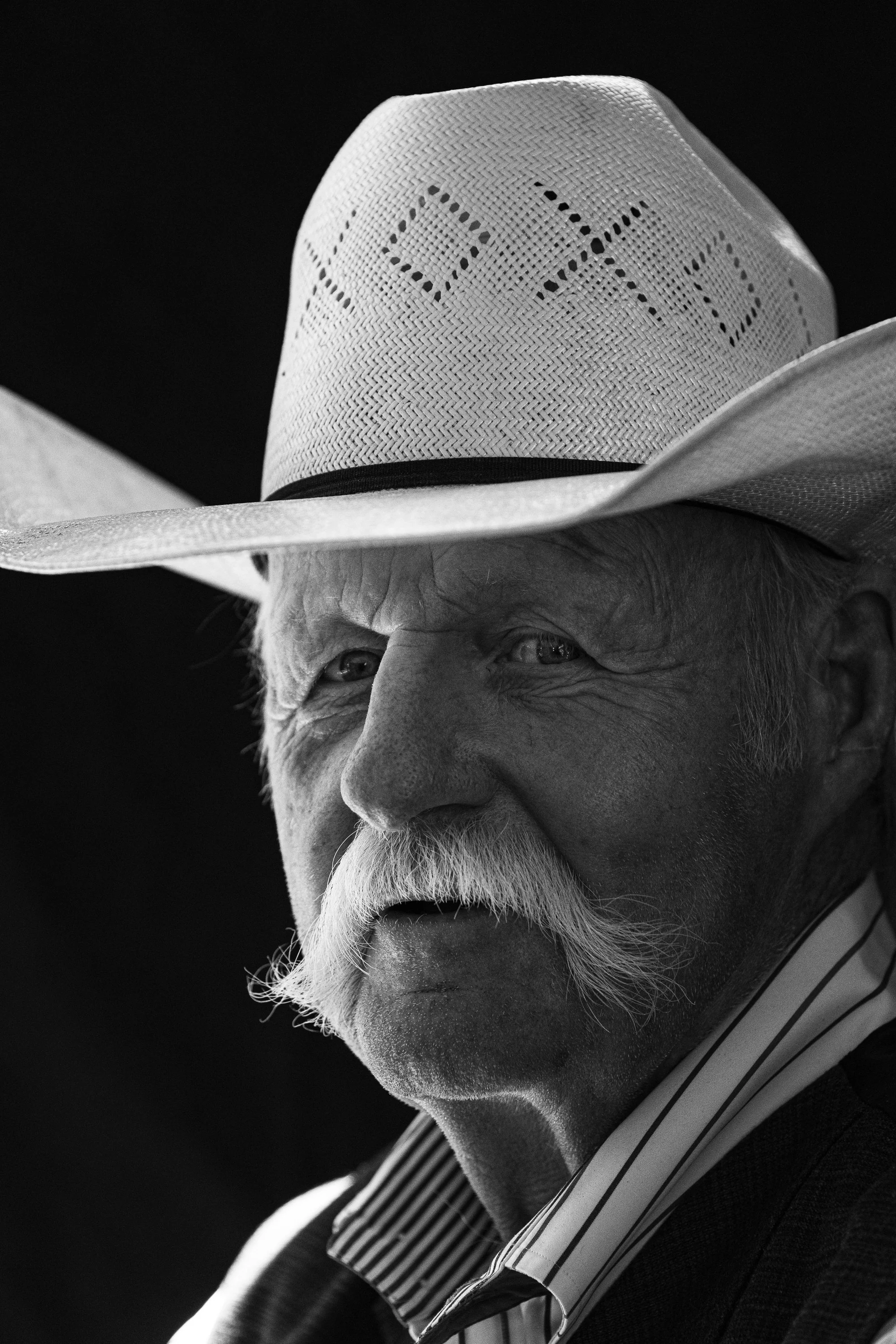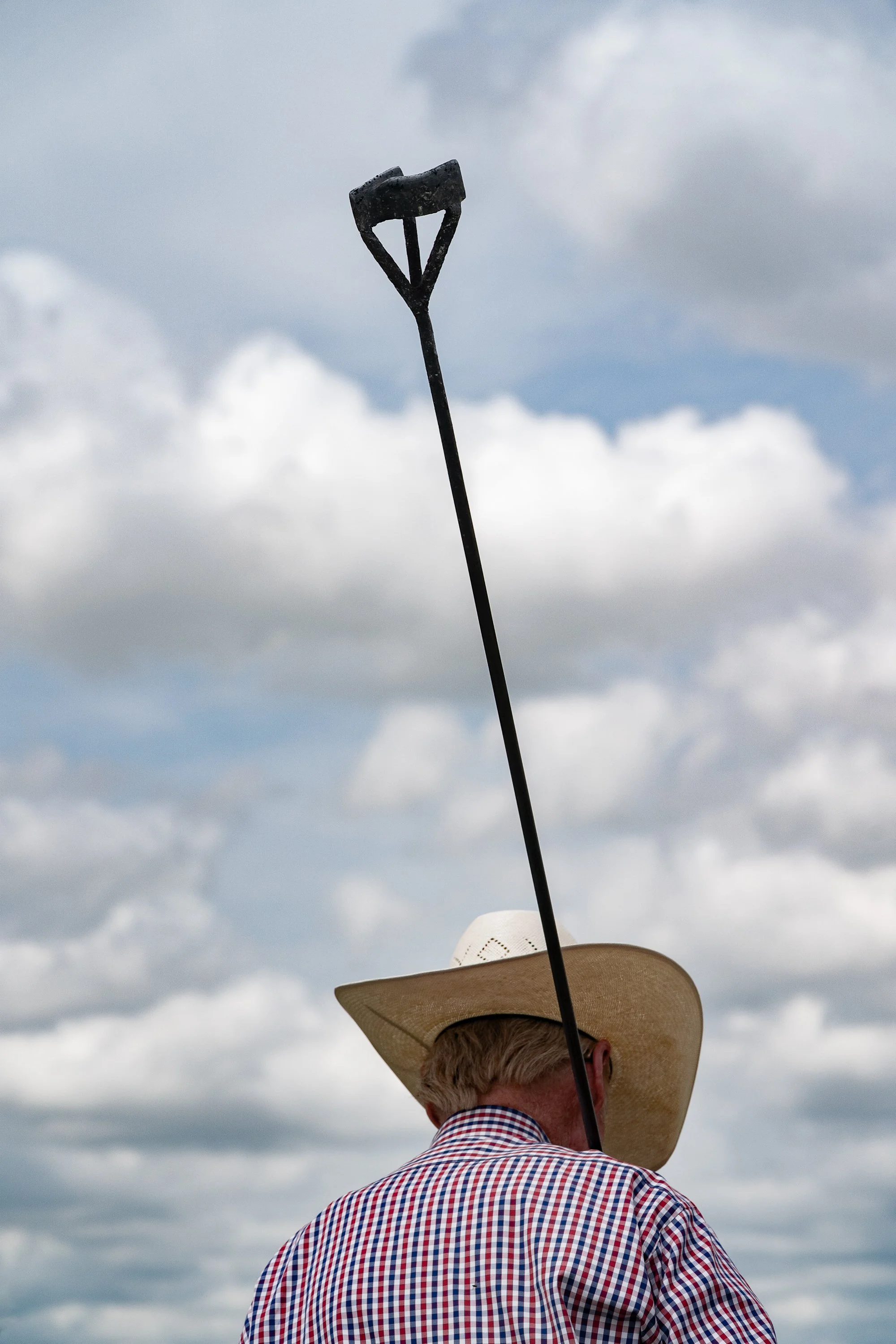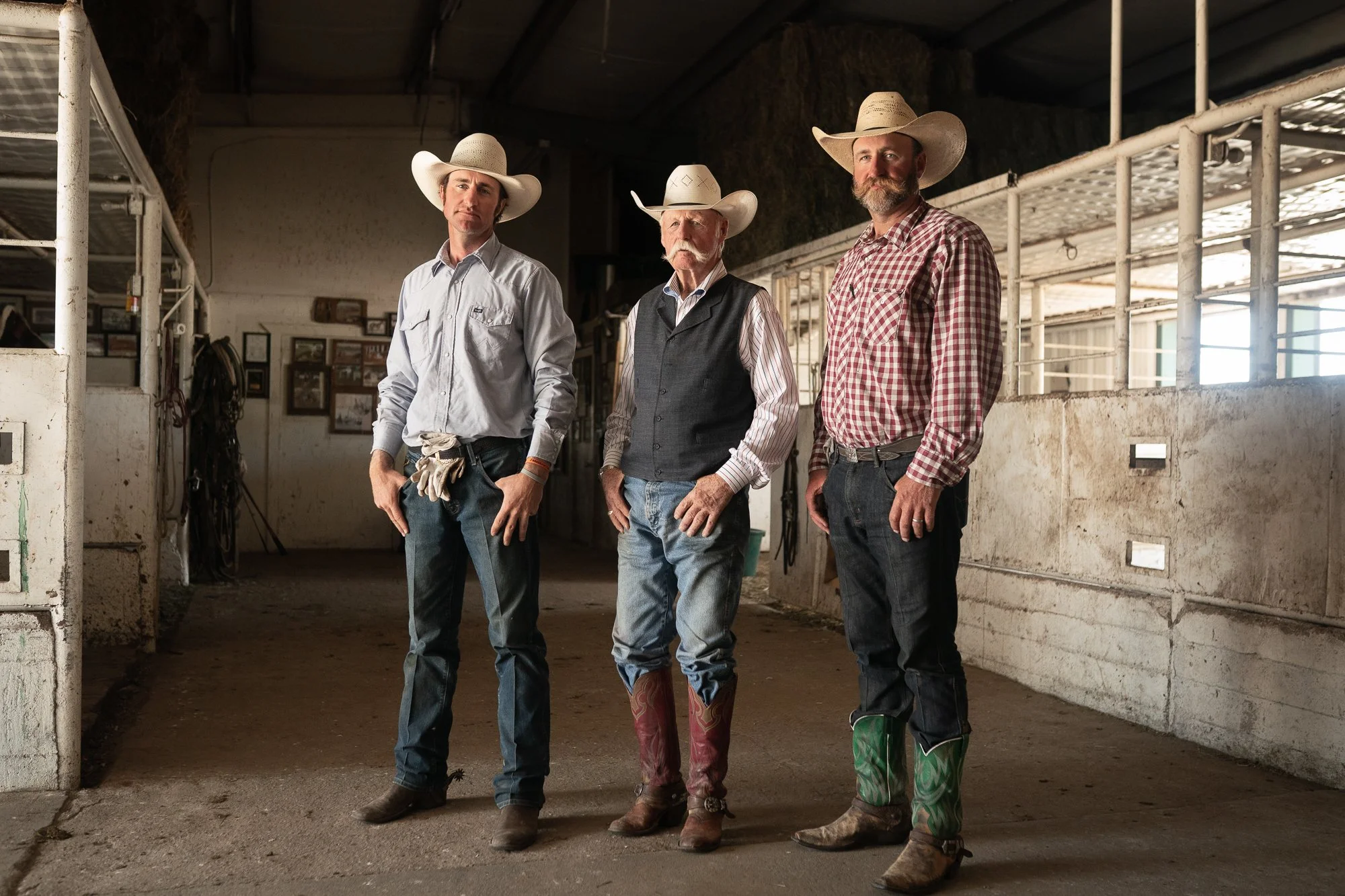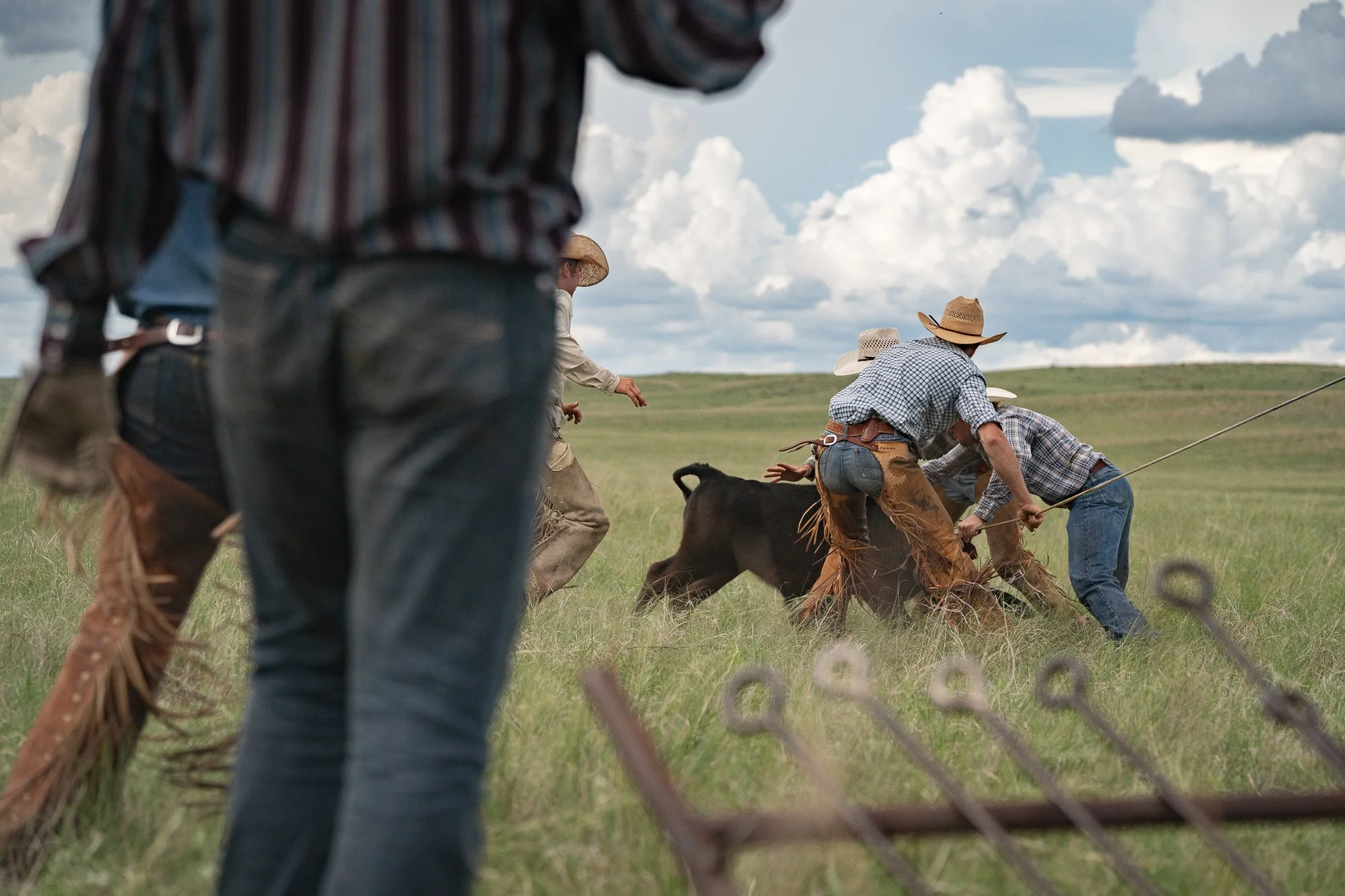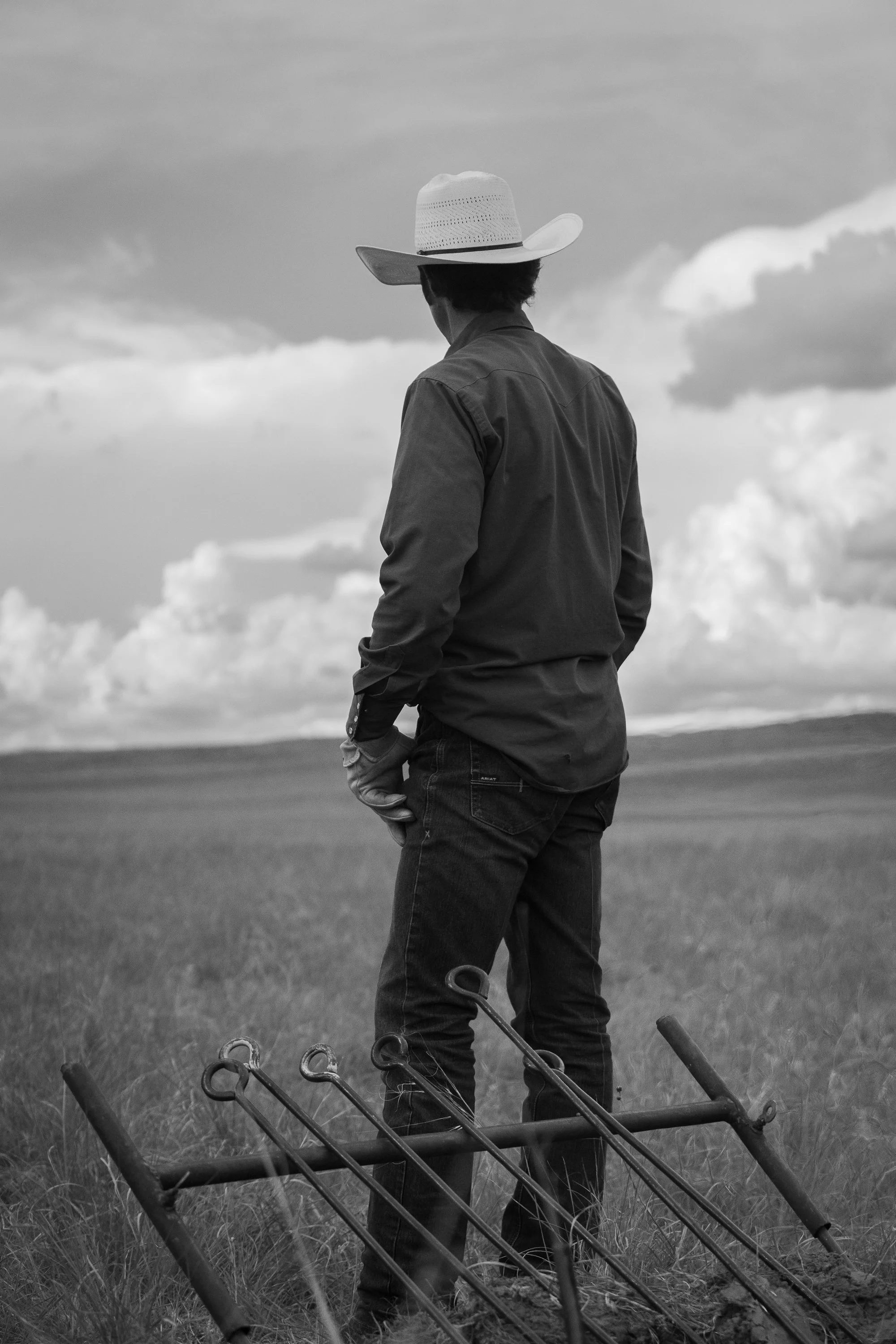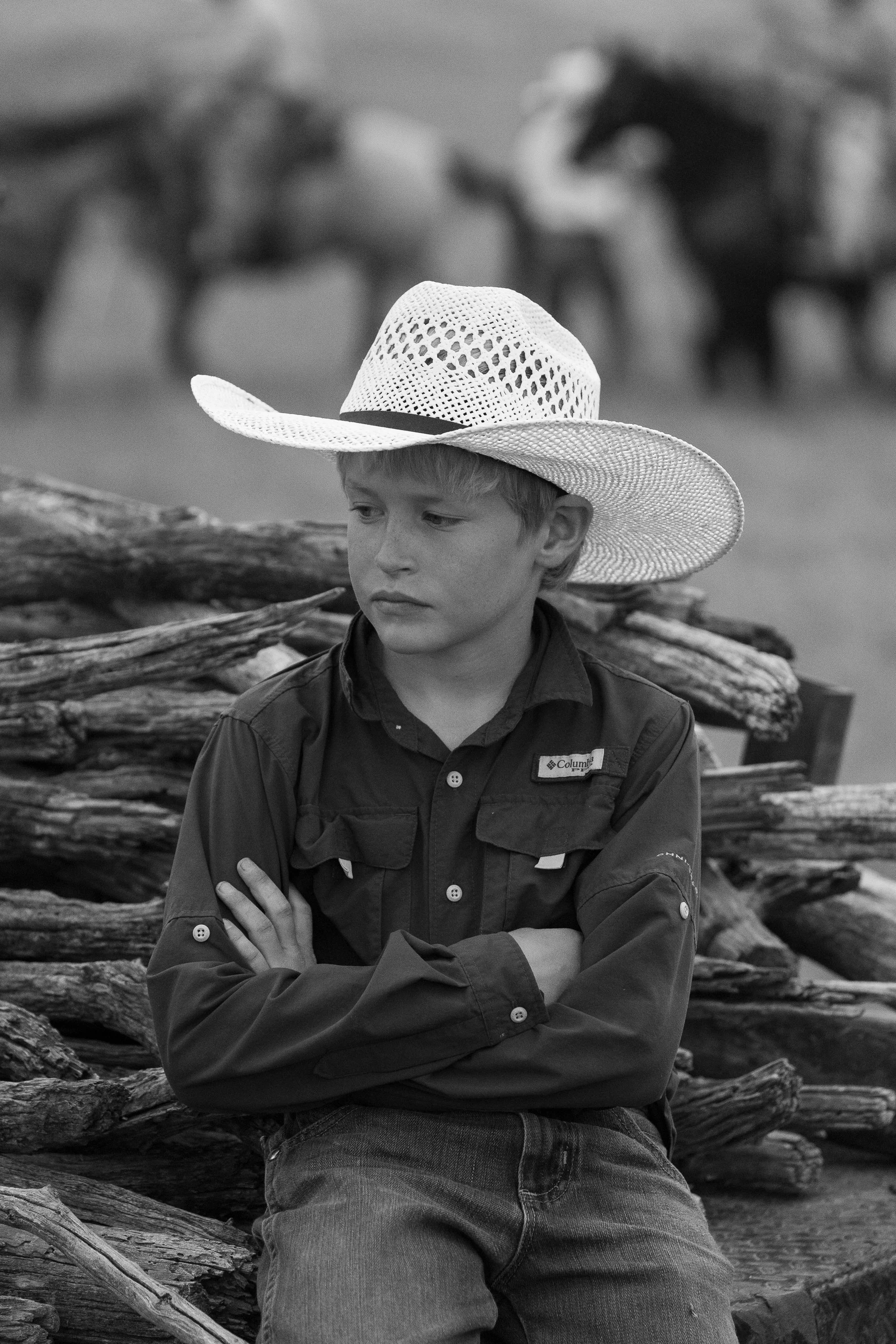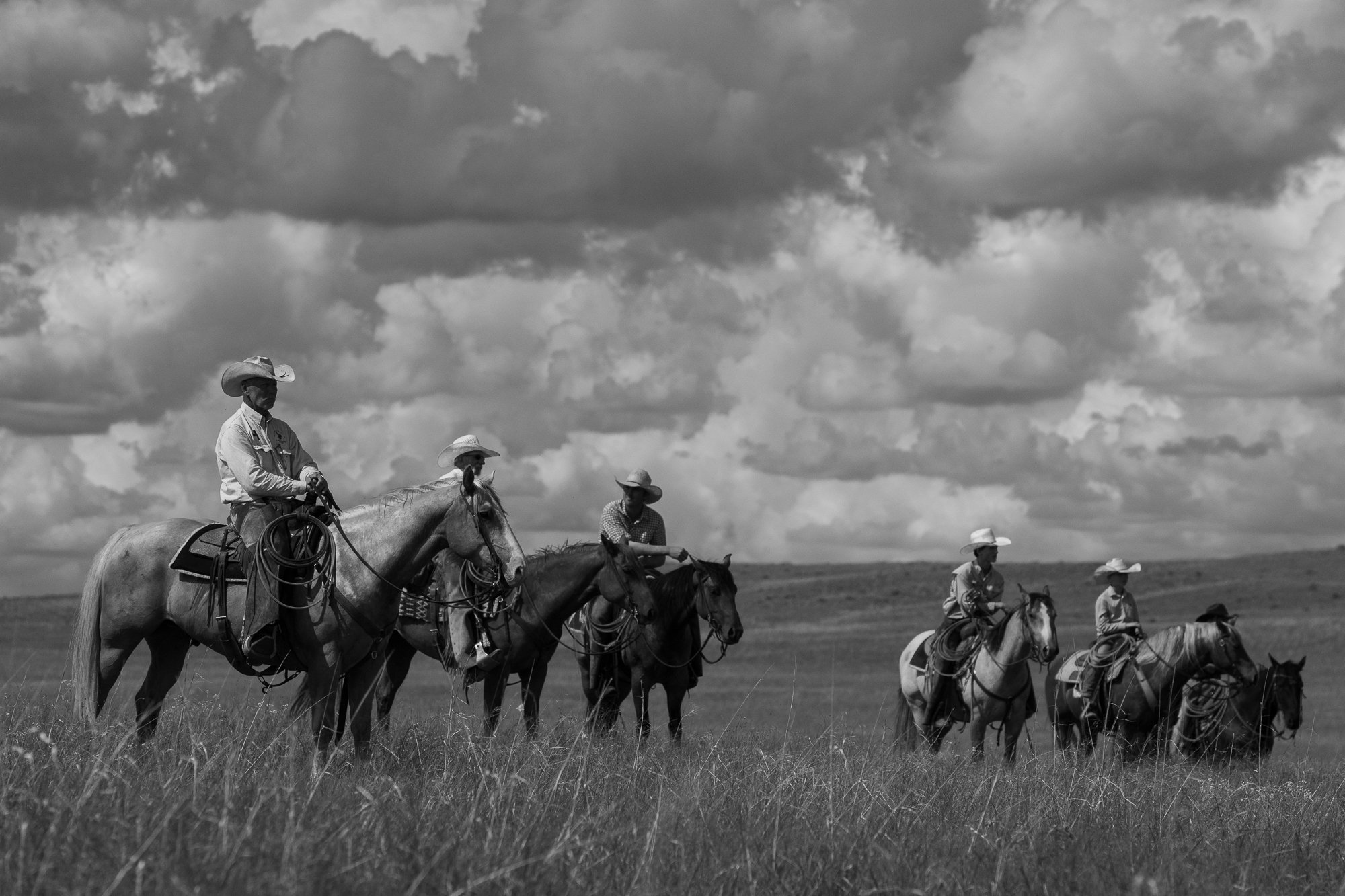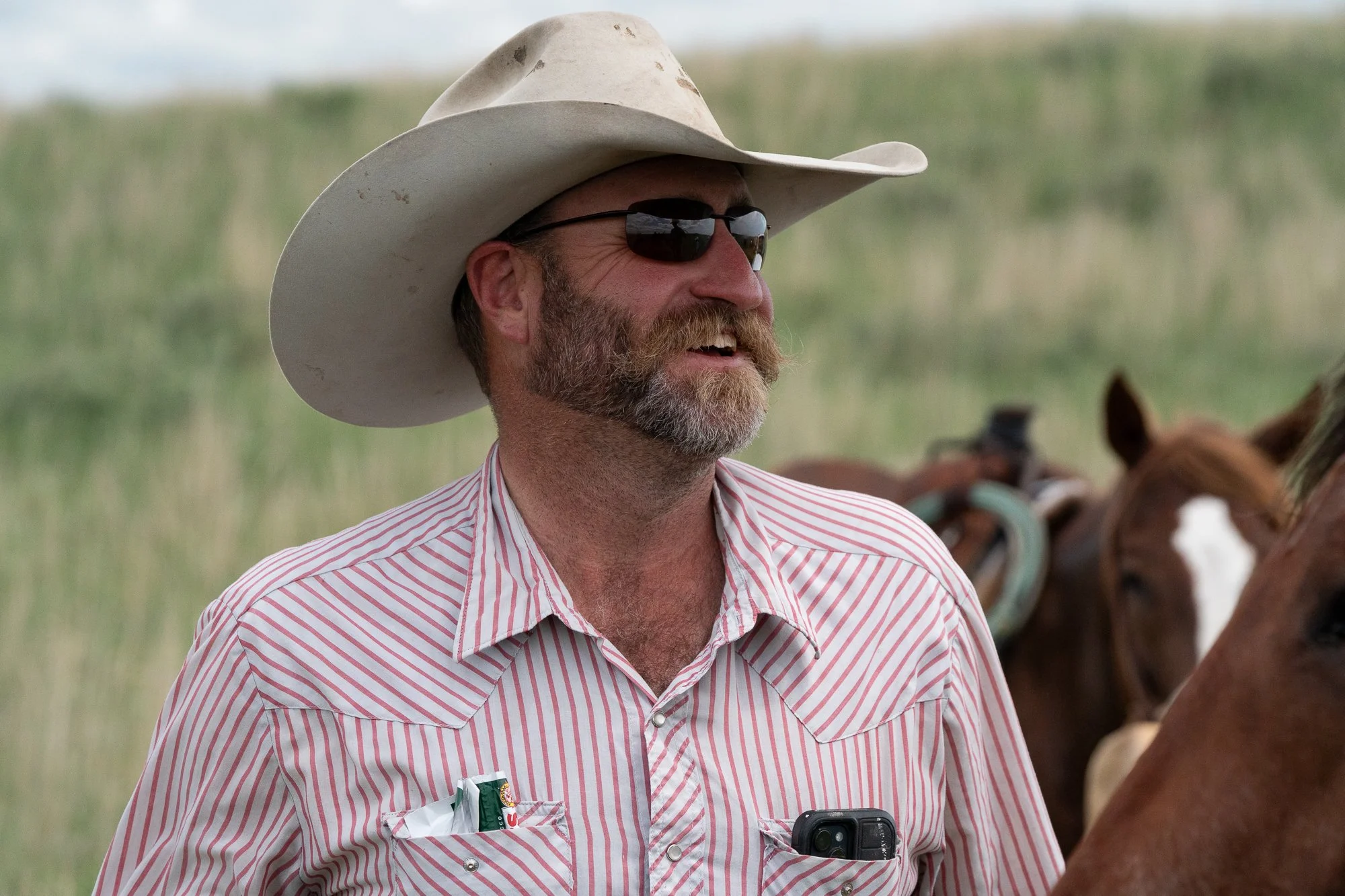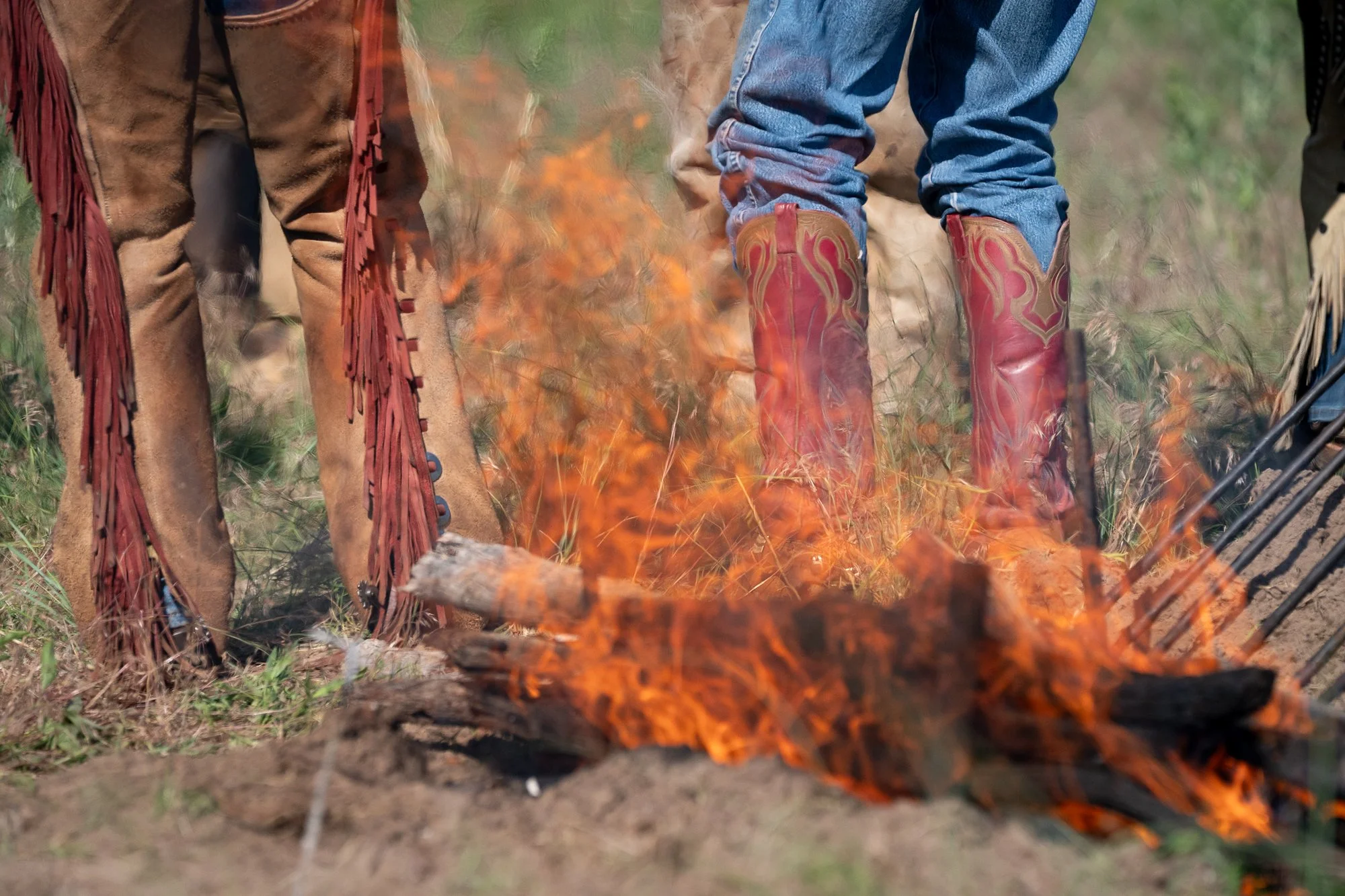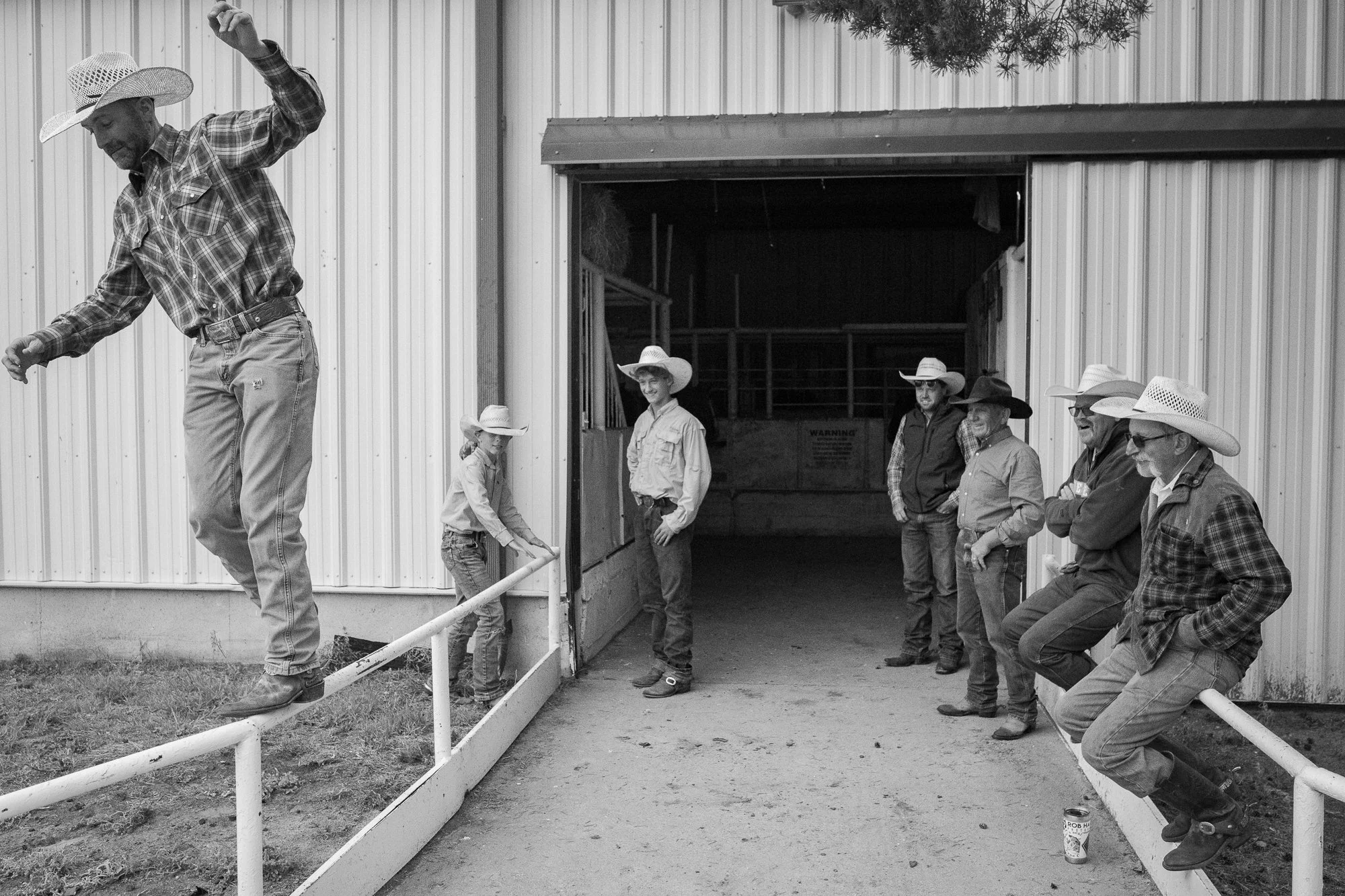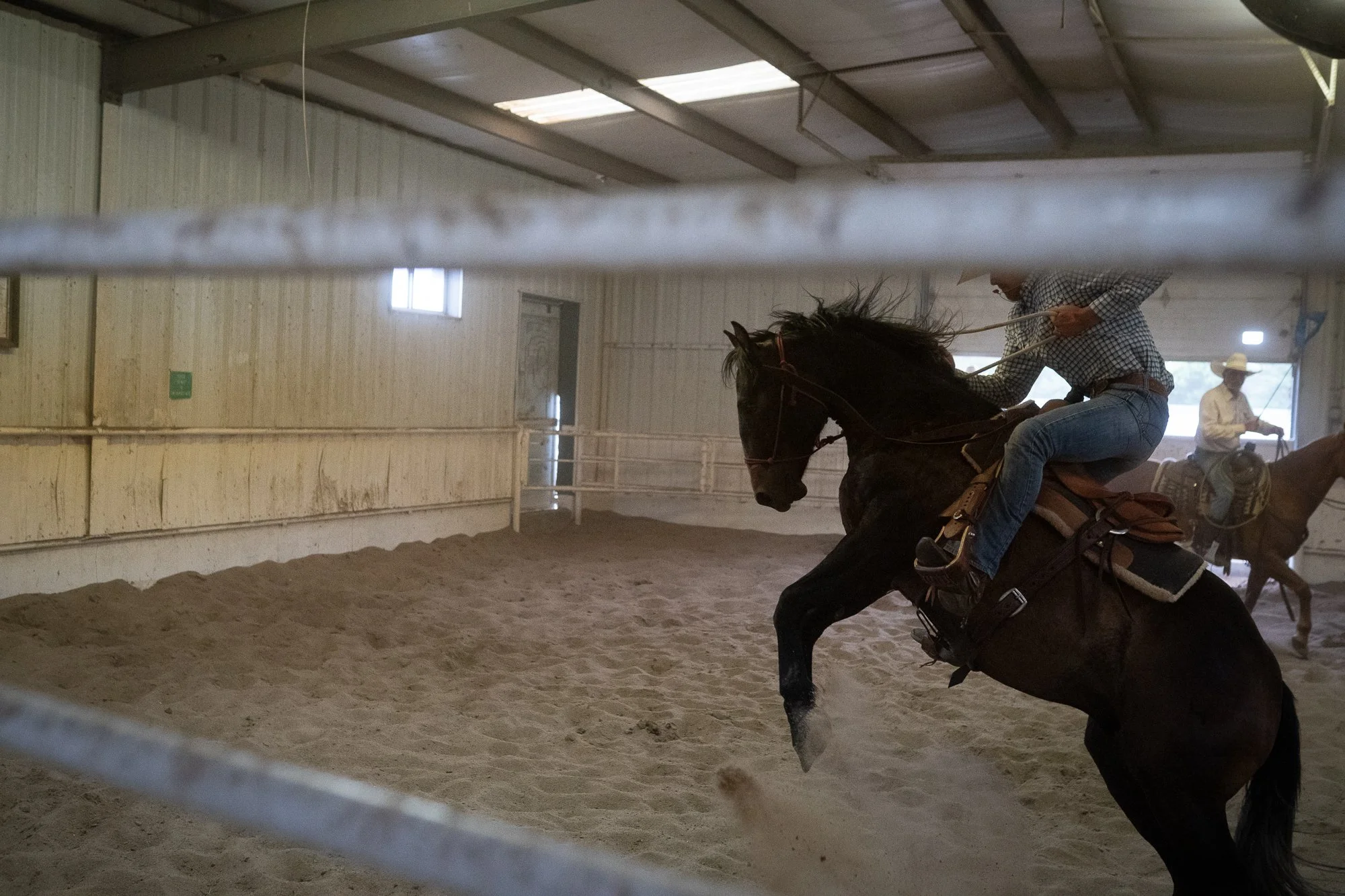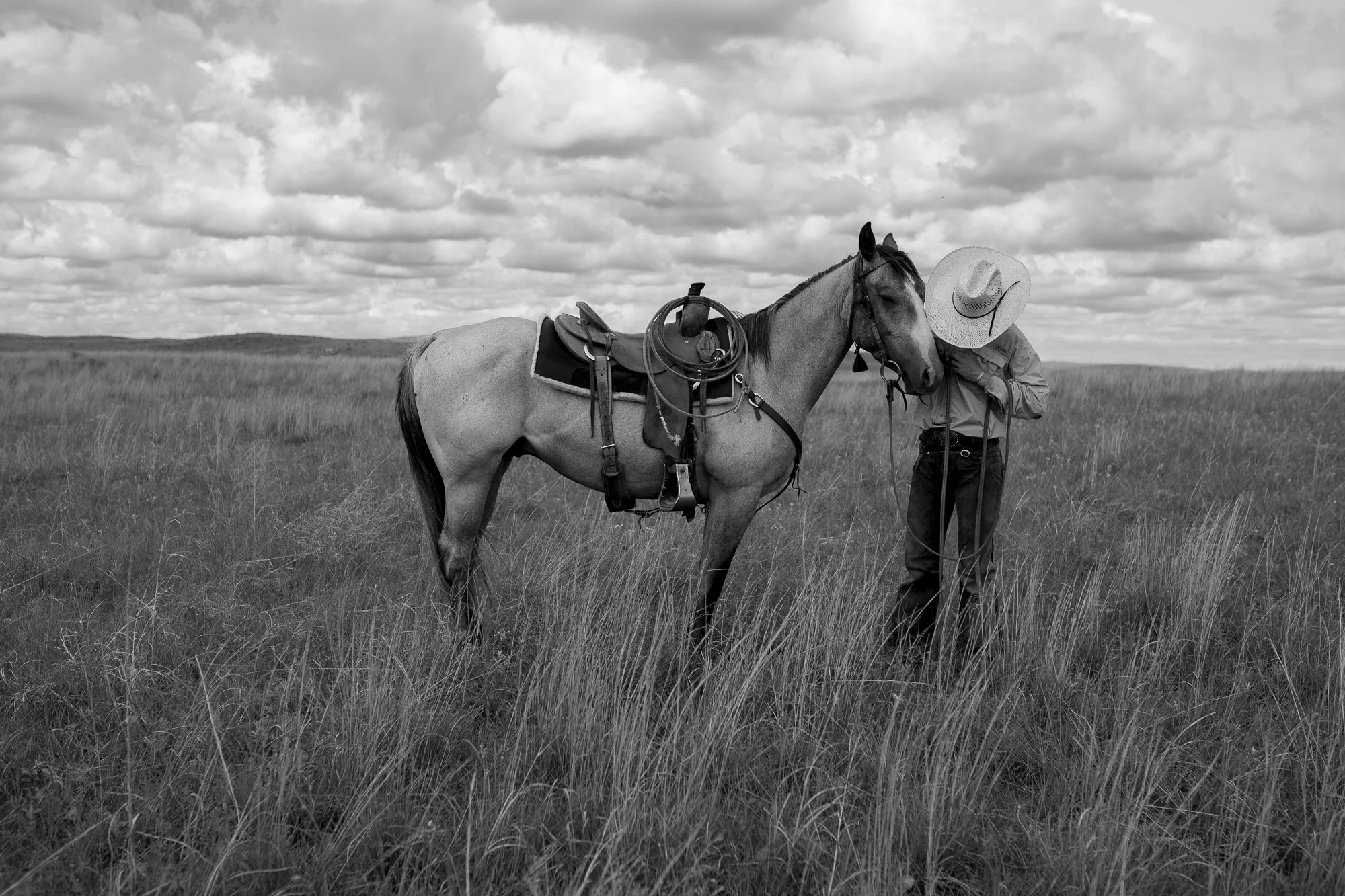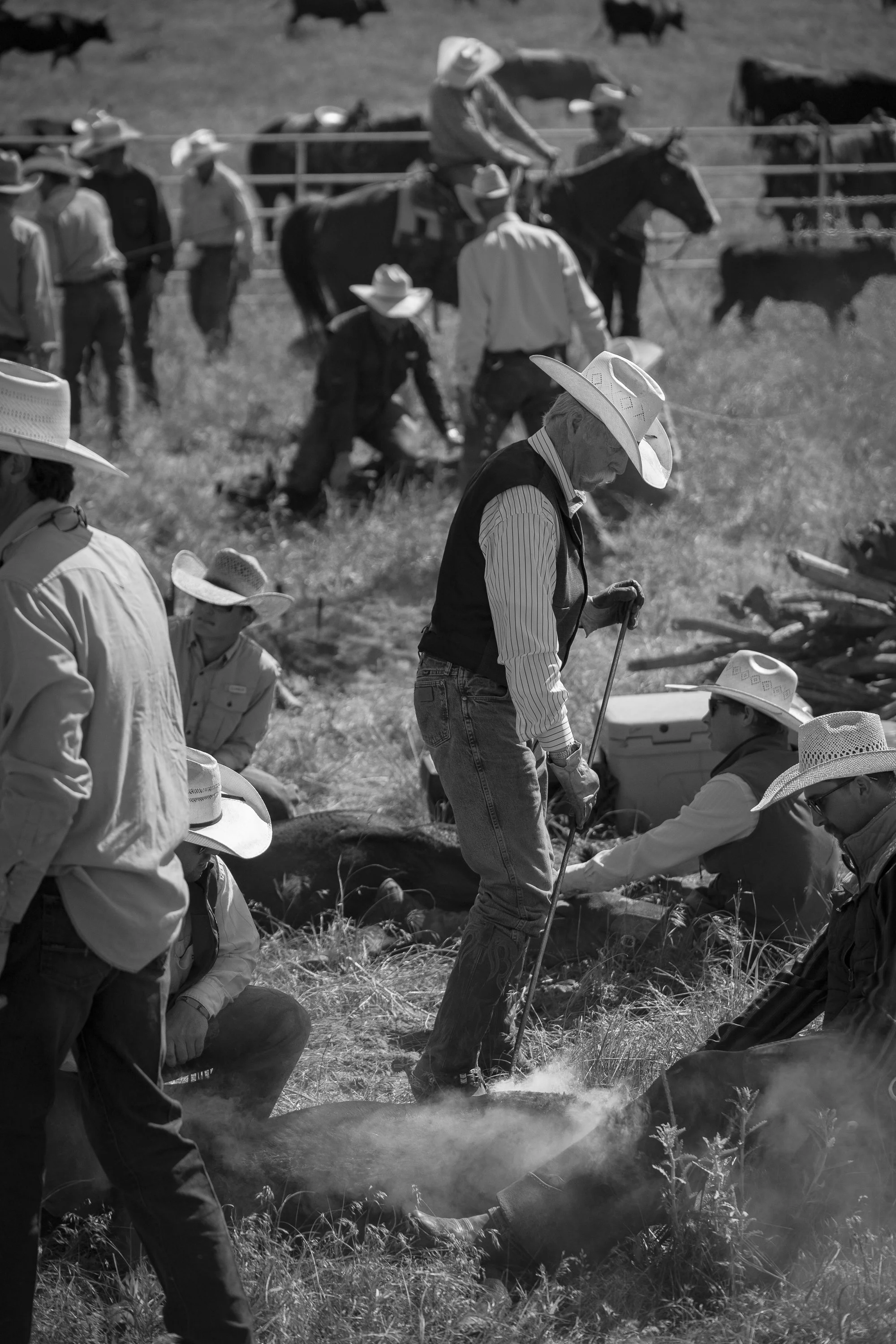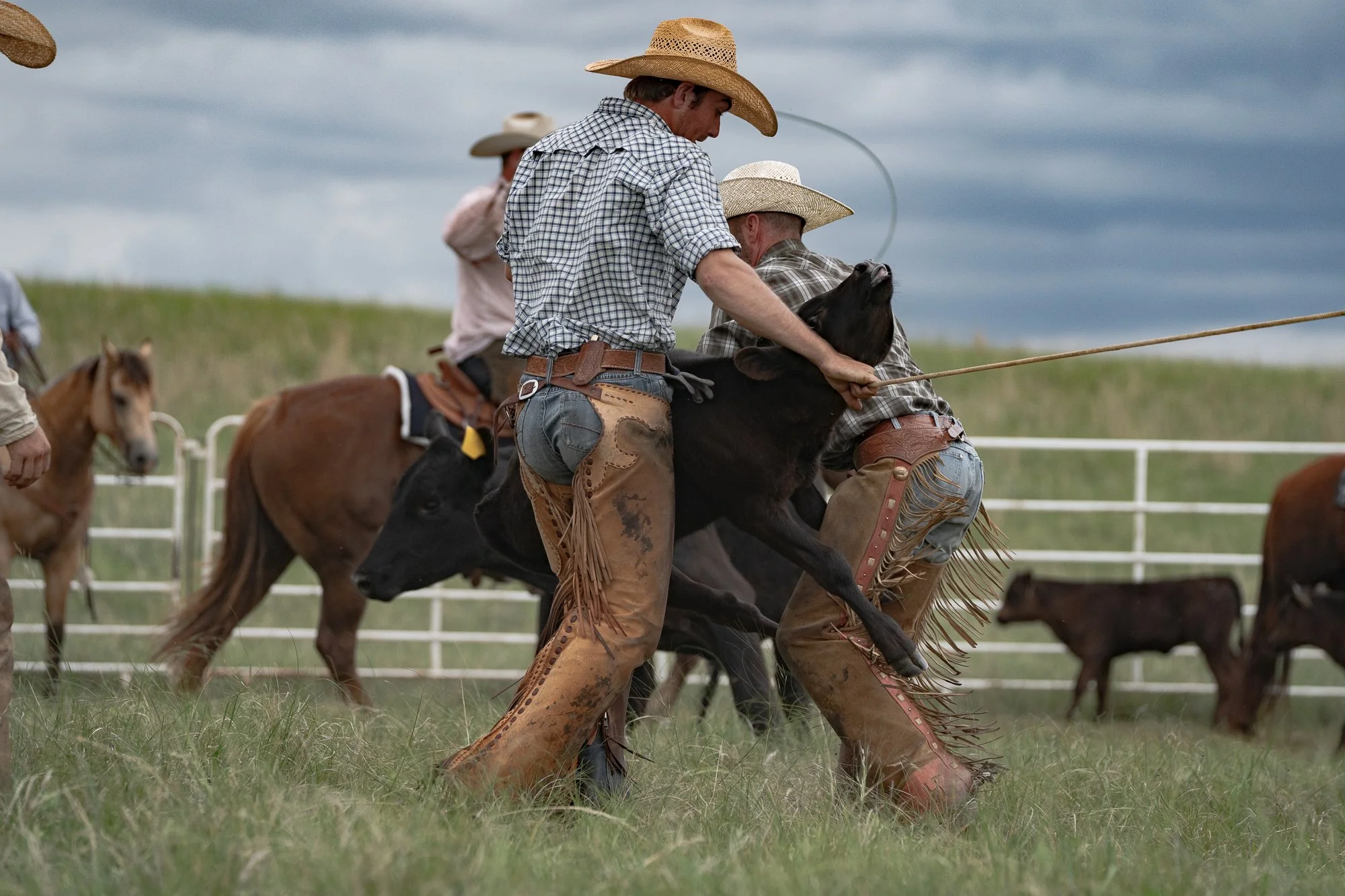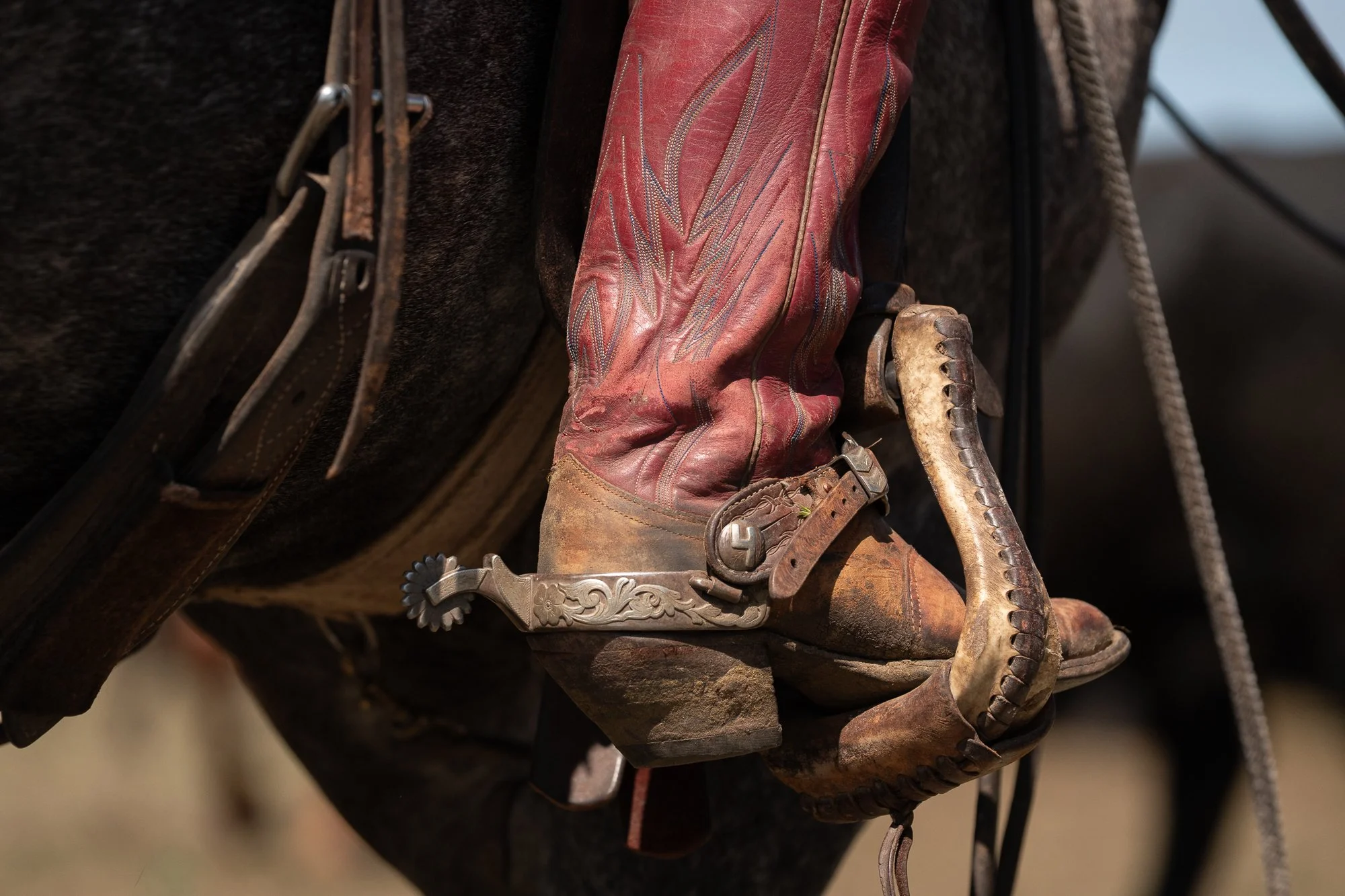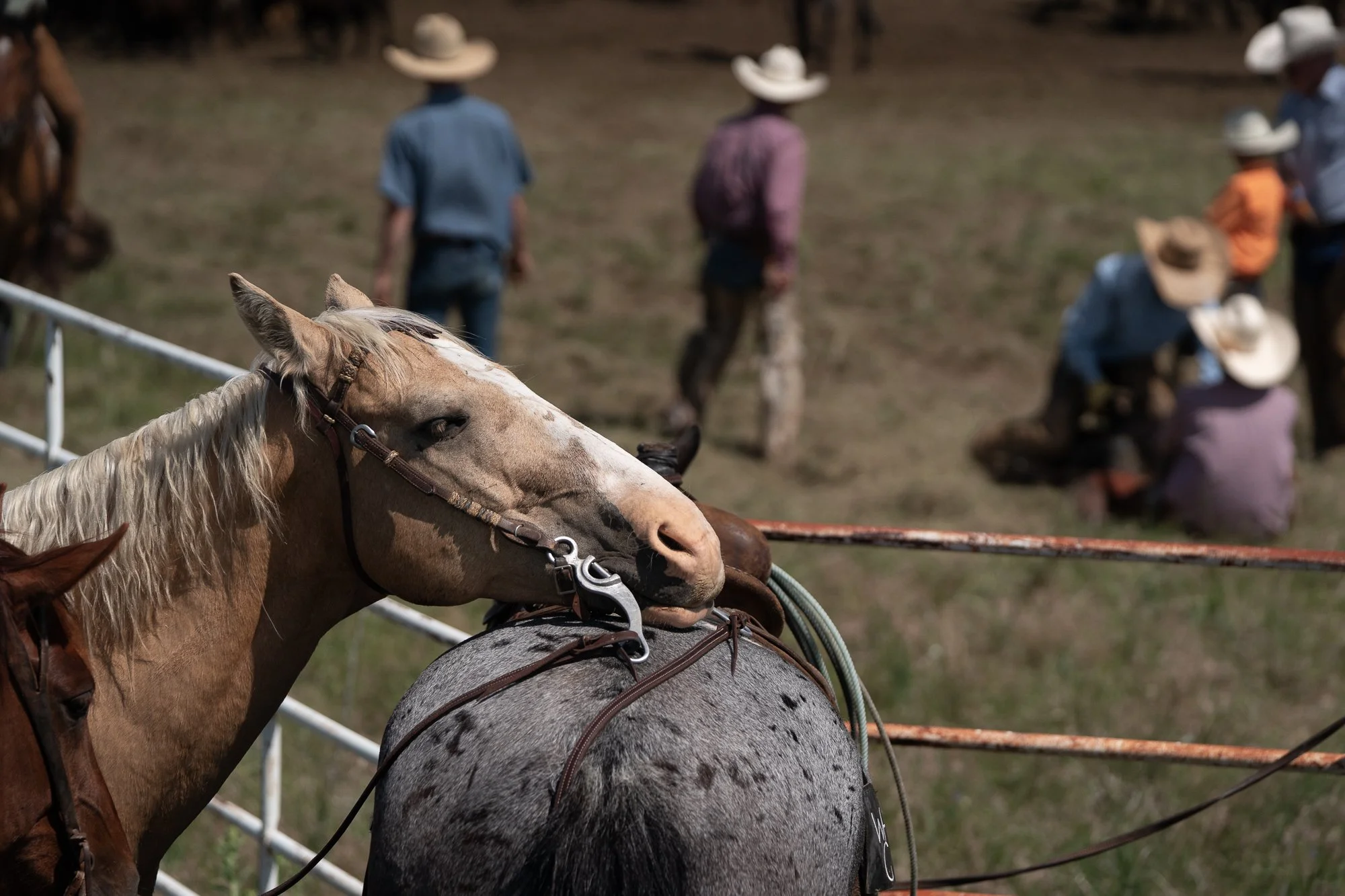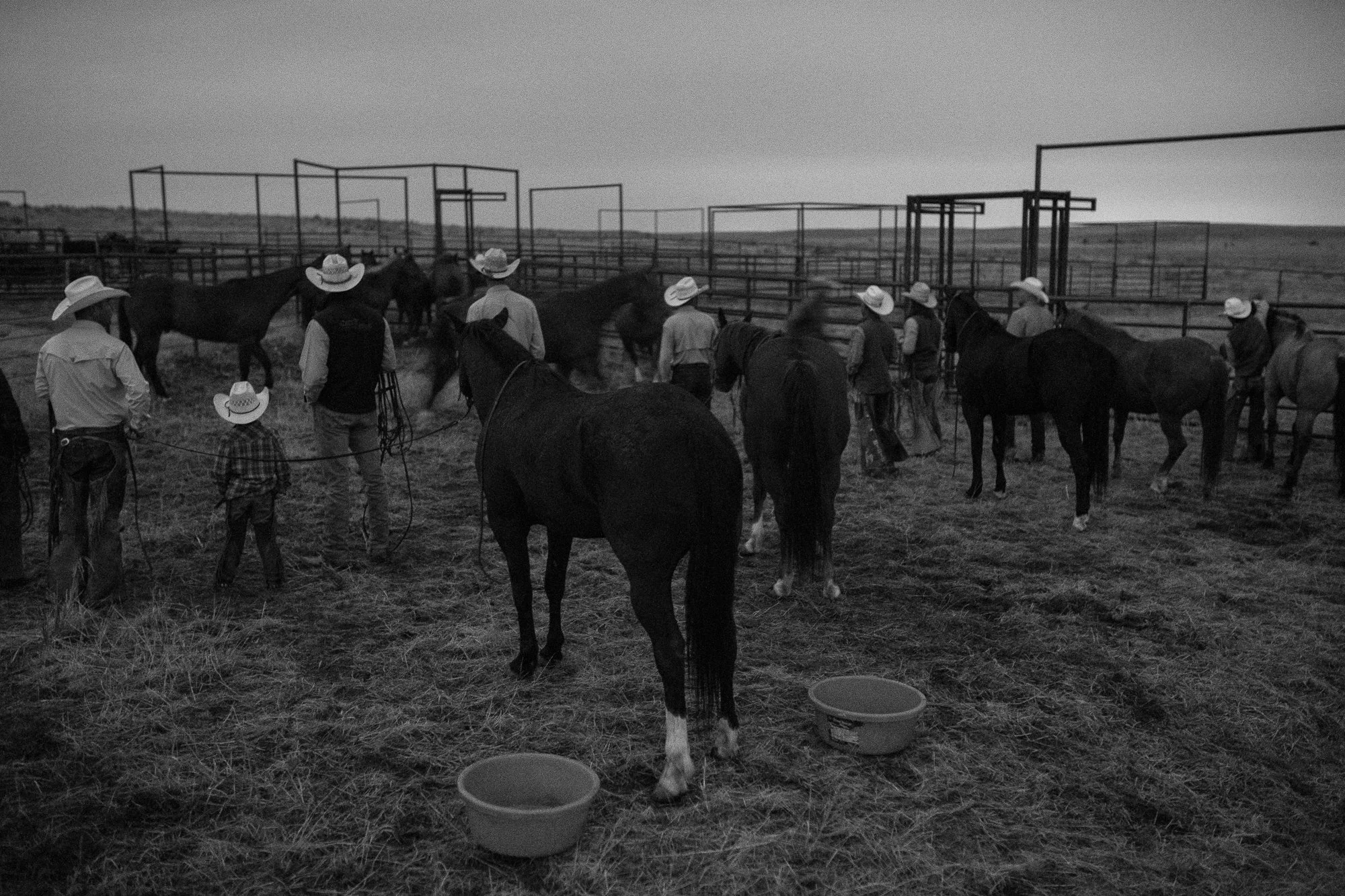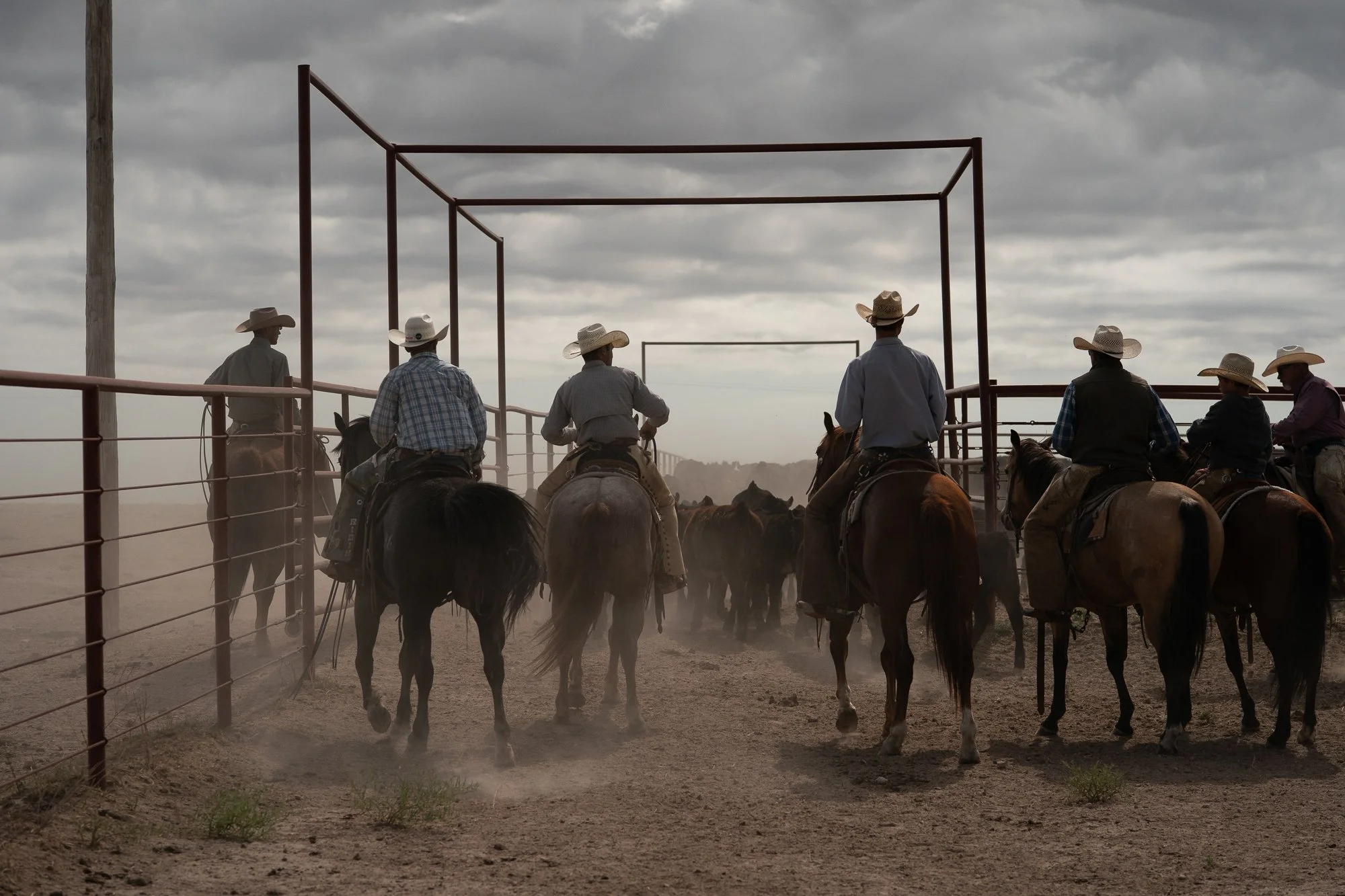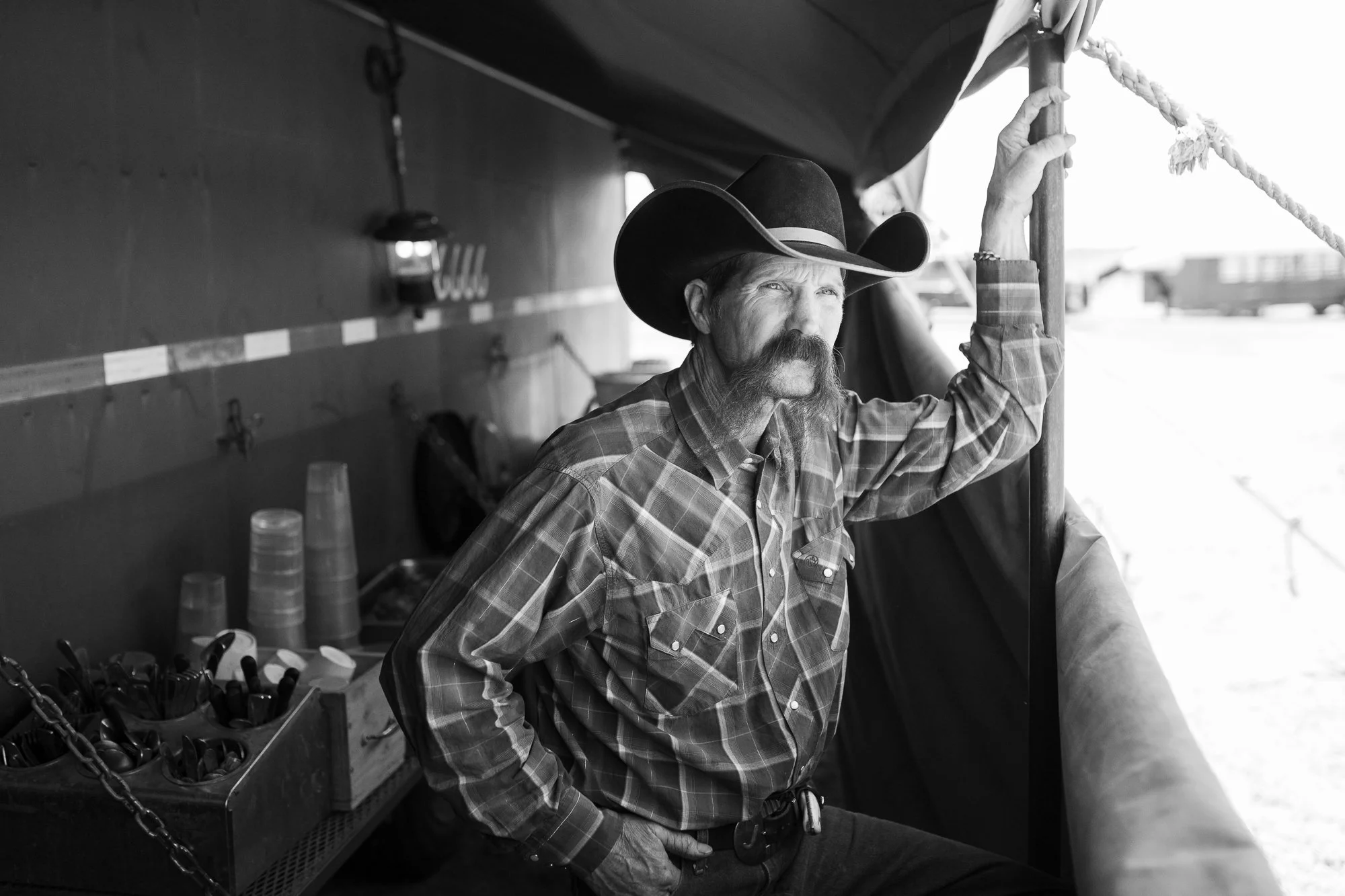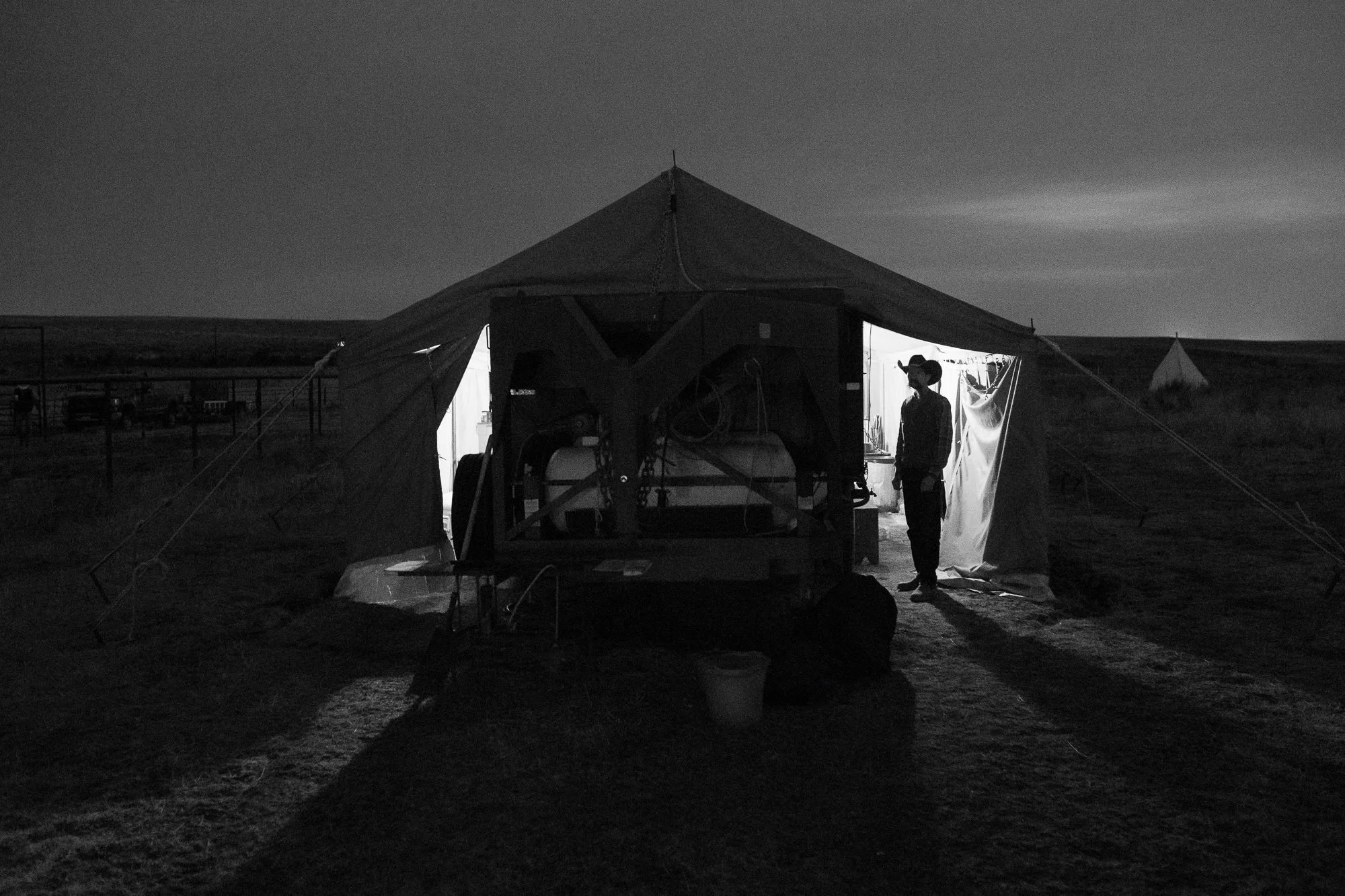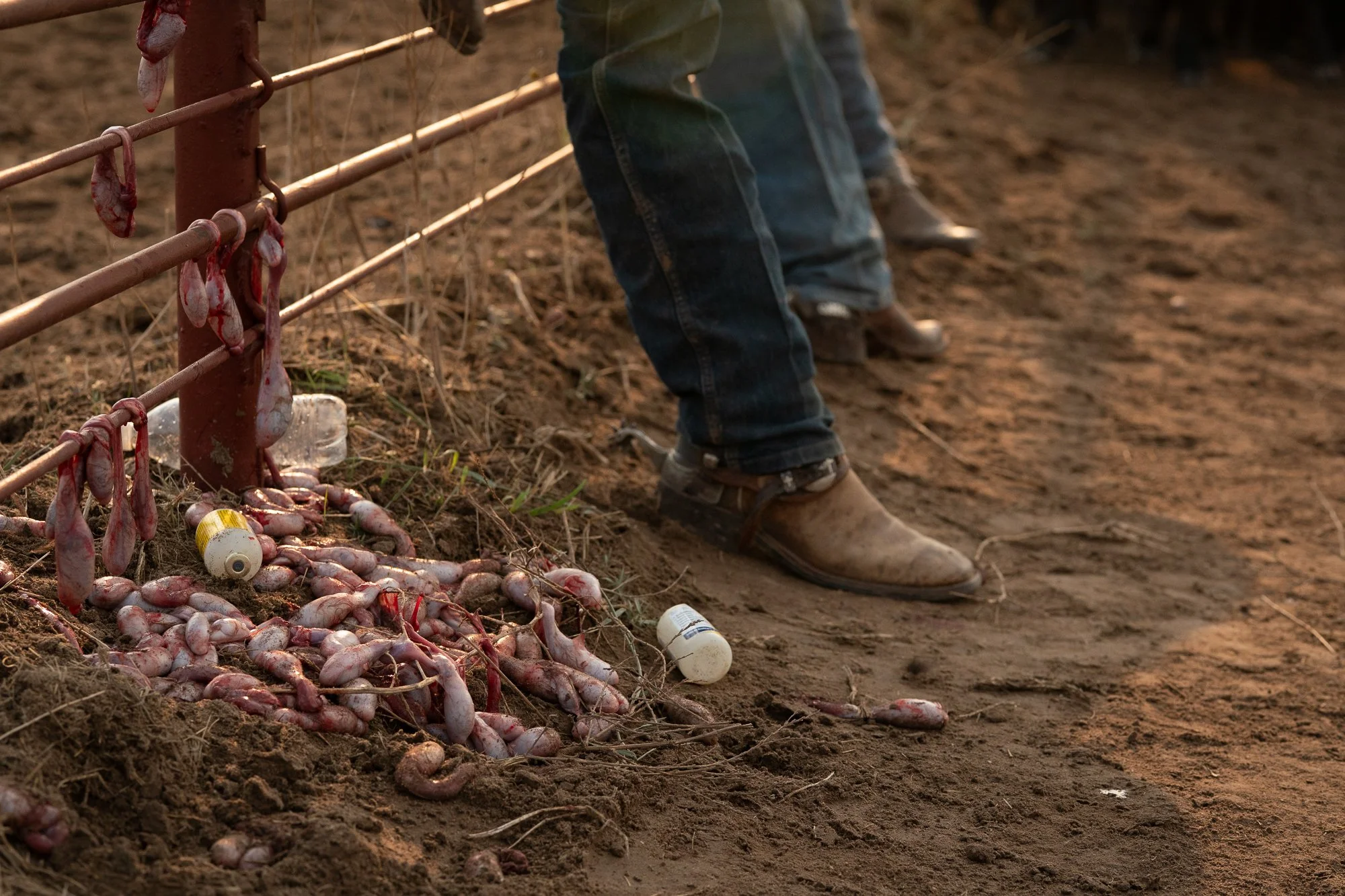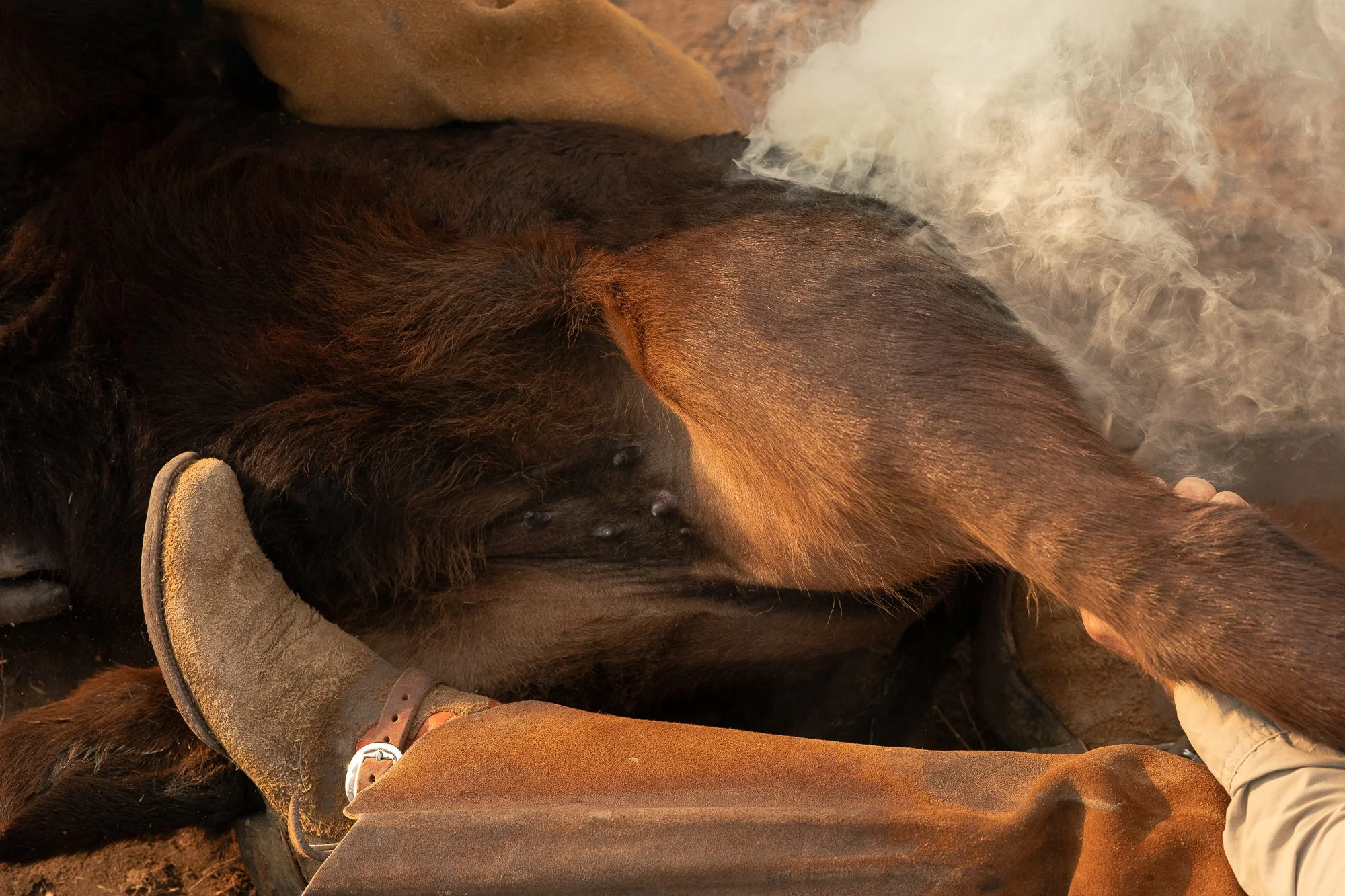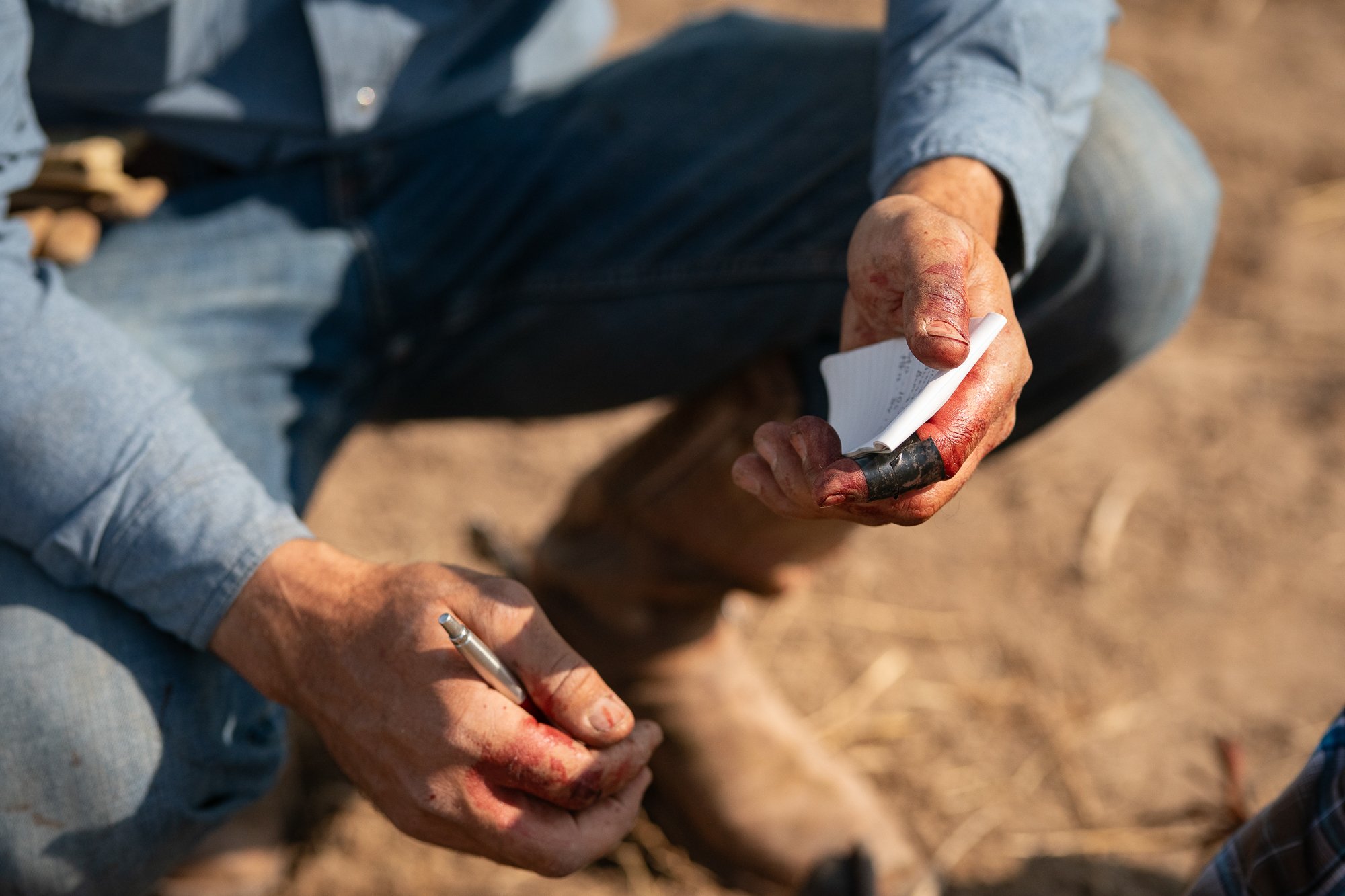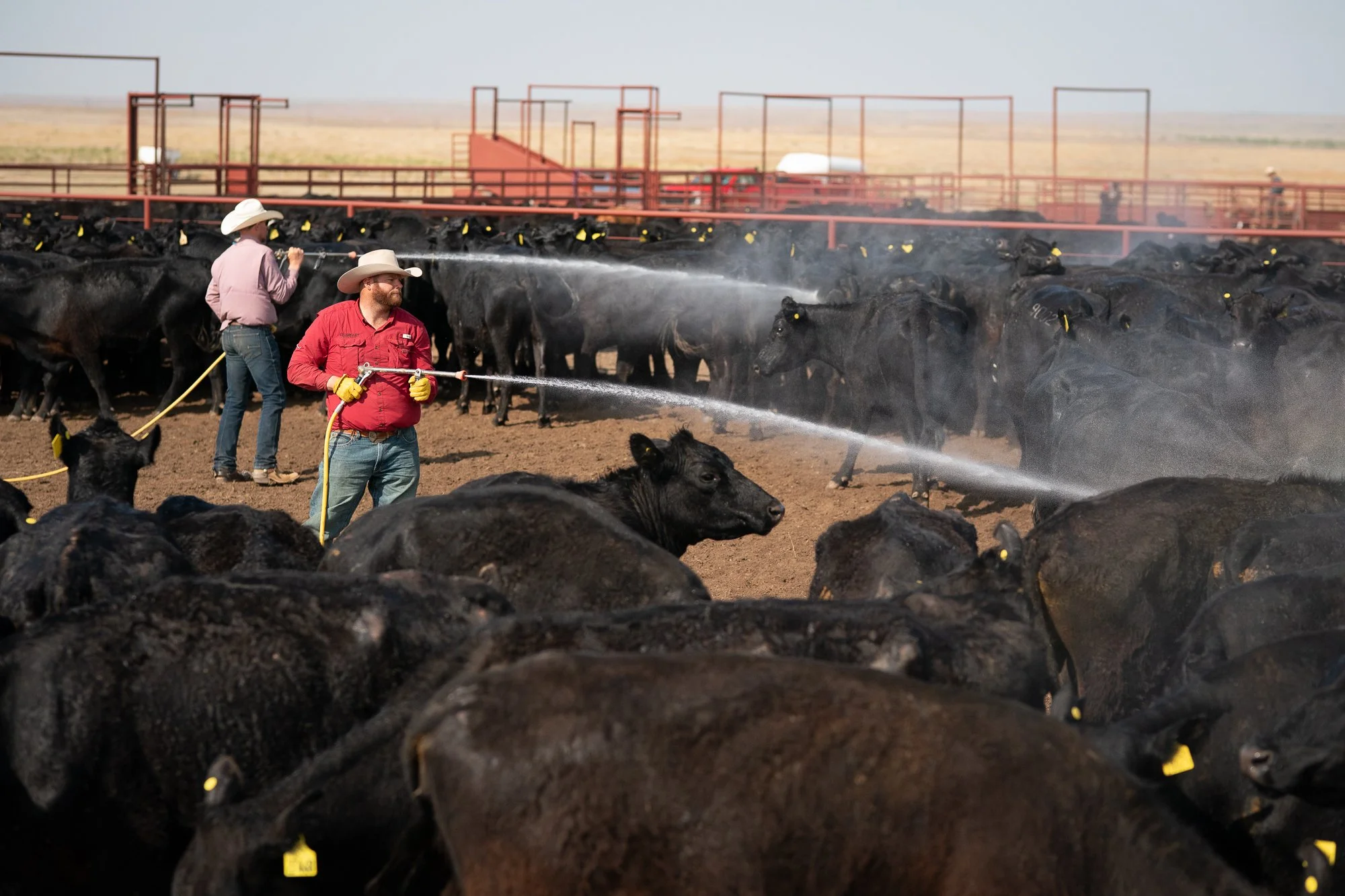
Inside The TS Ranch: A 156-Year-Old Working Cattle Ranch

TS Ranch: 156 Years of Buckaroo Tradition in the American West

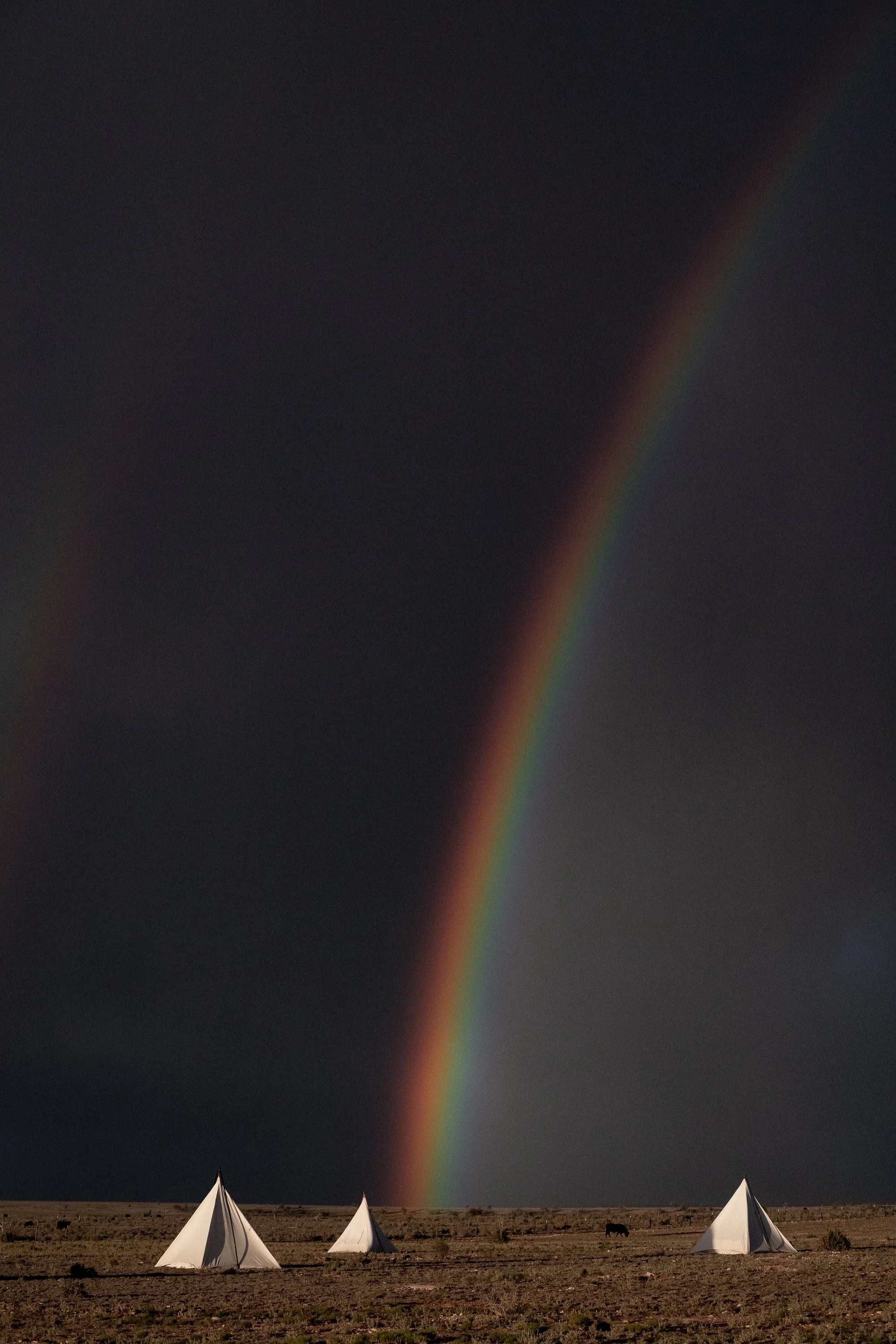
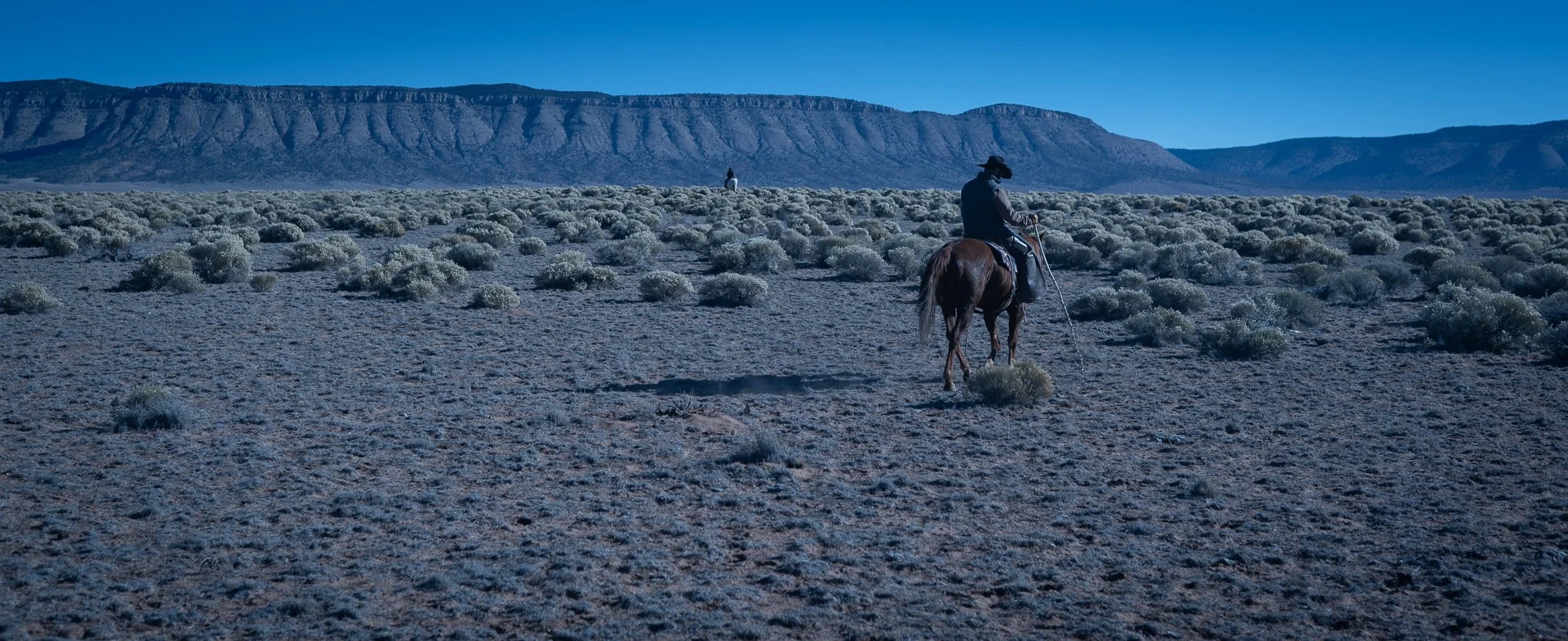
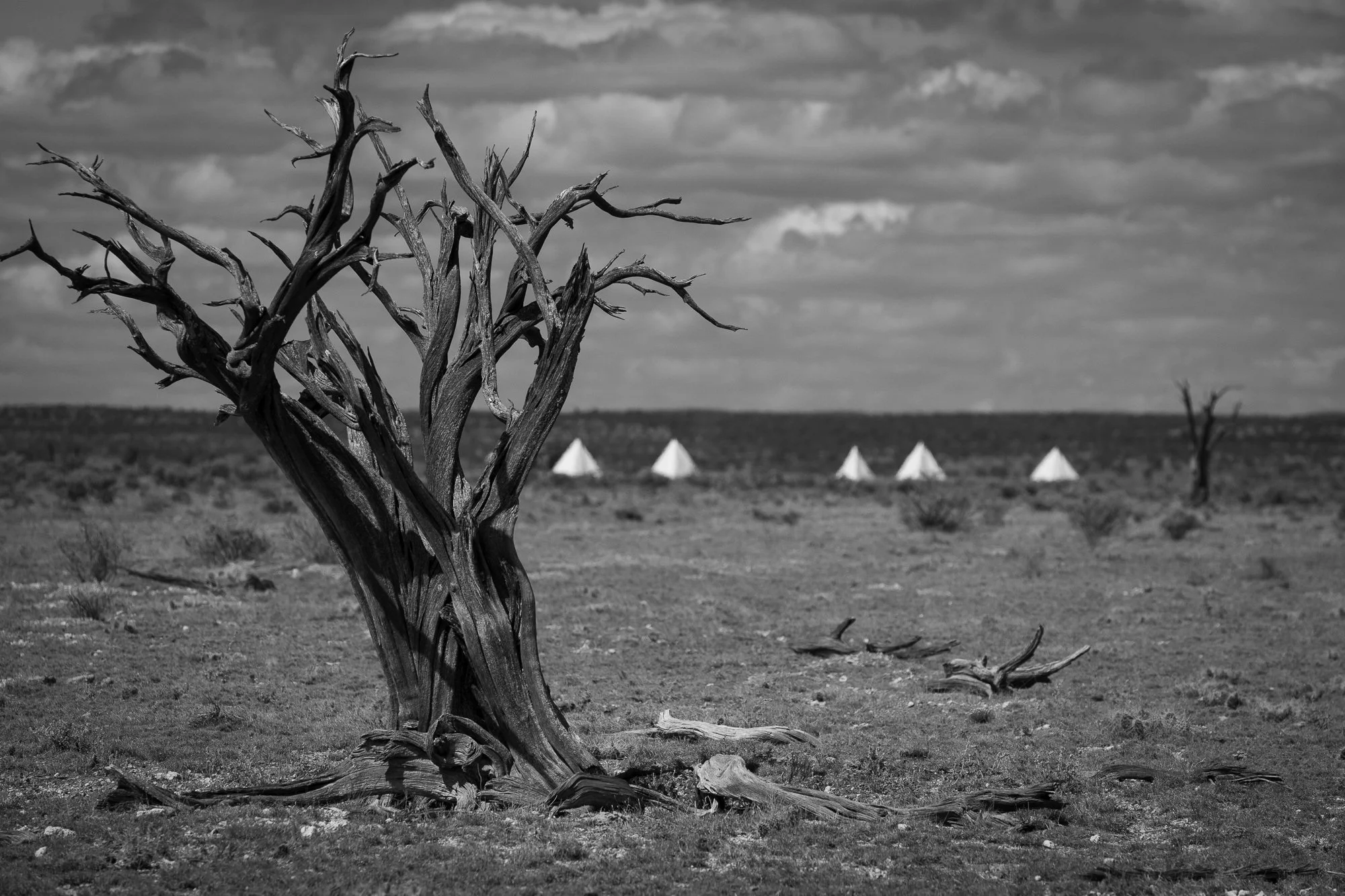
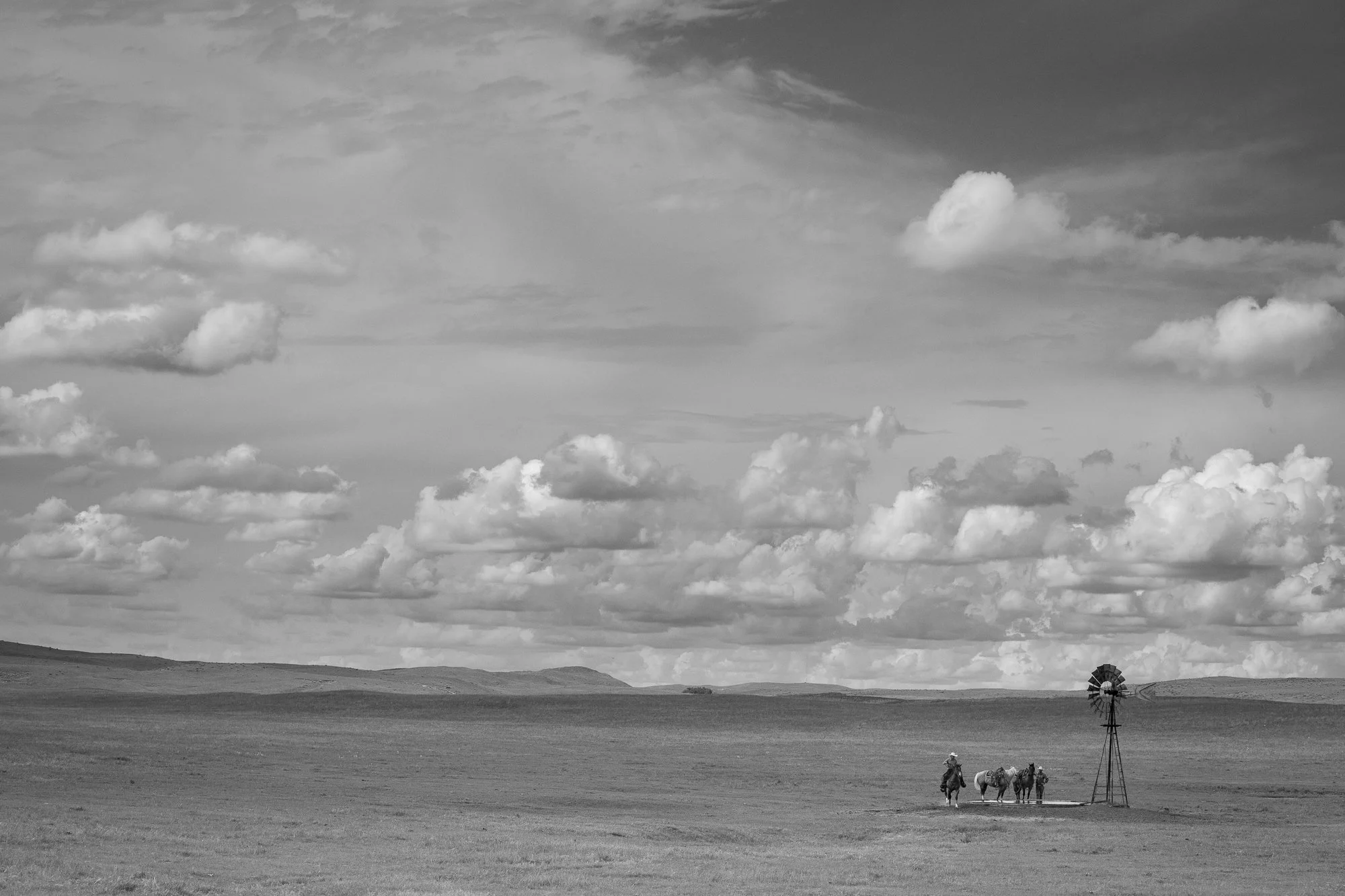
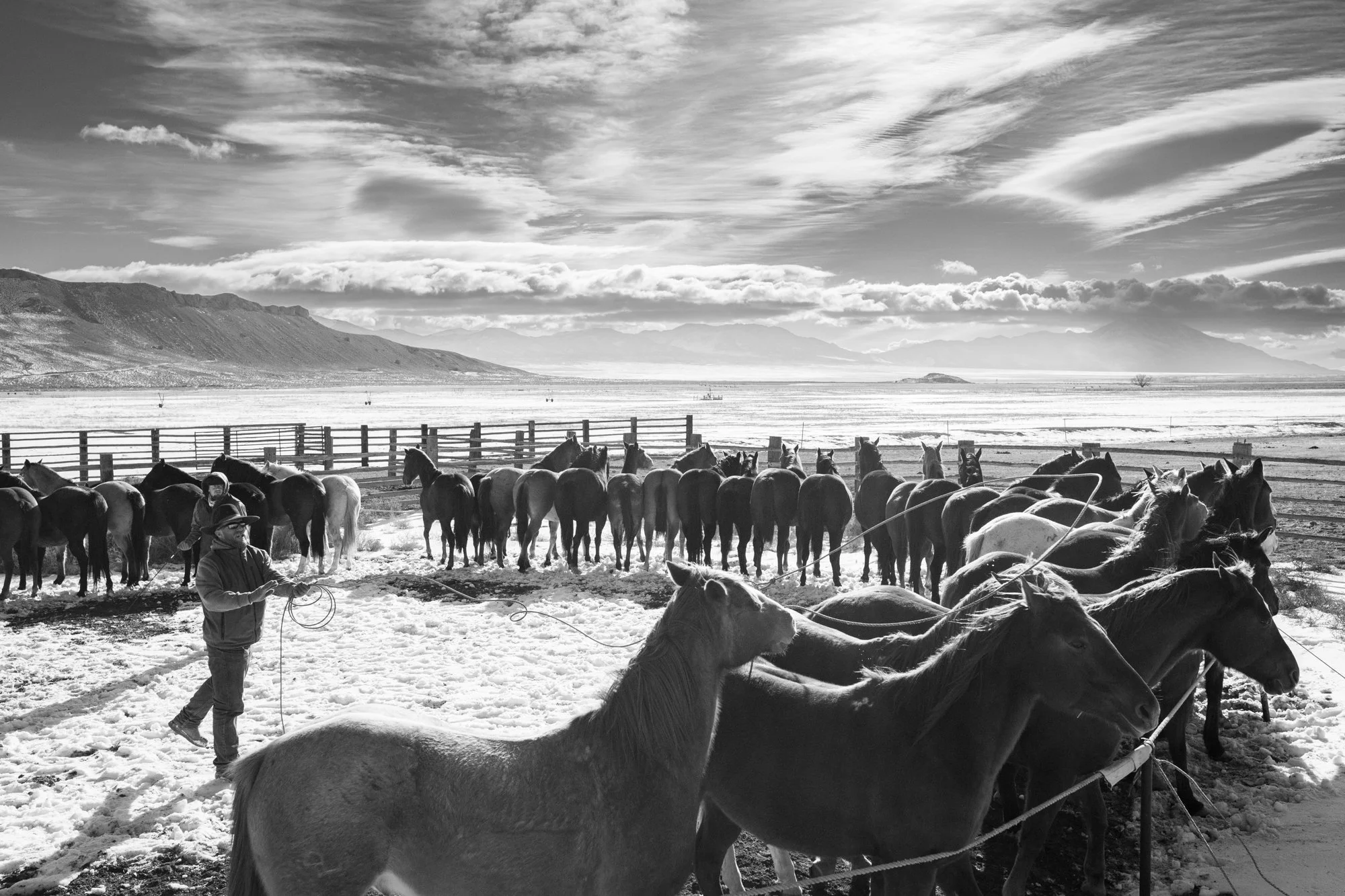
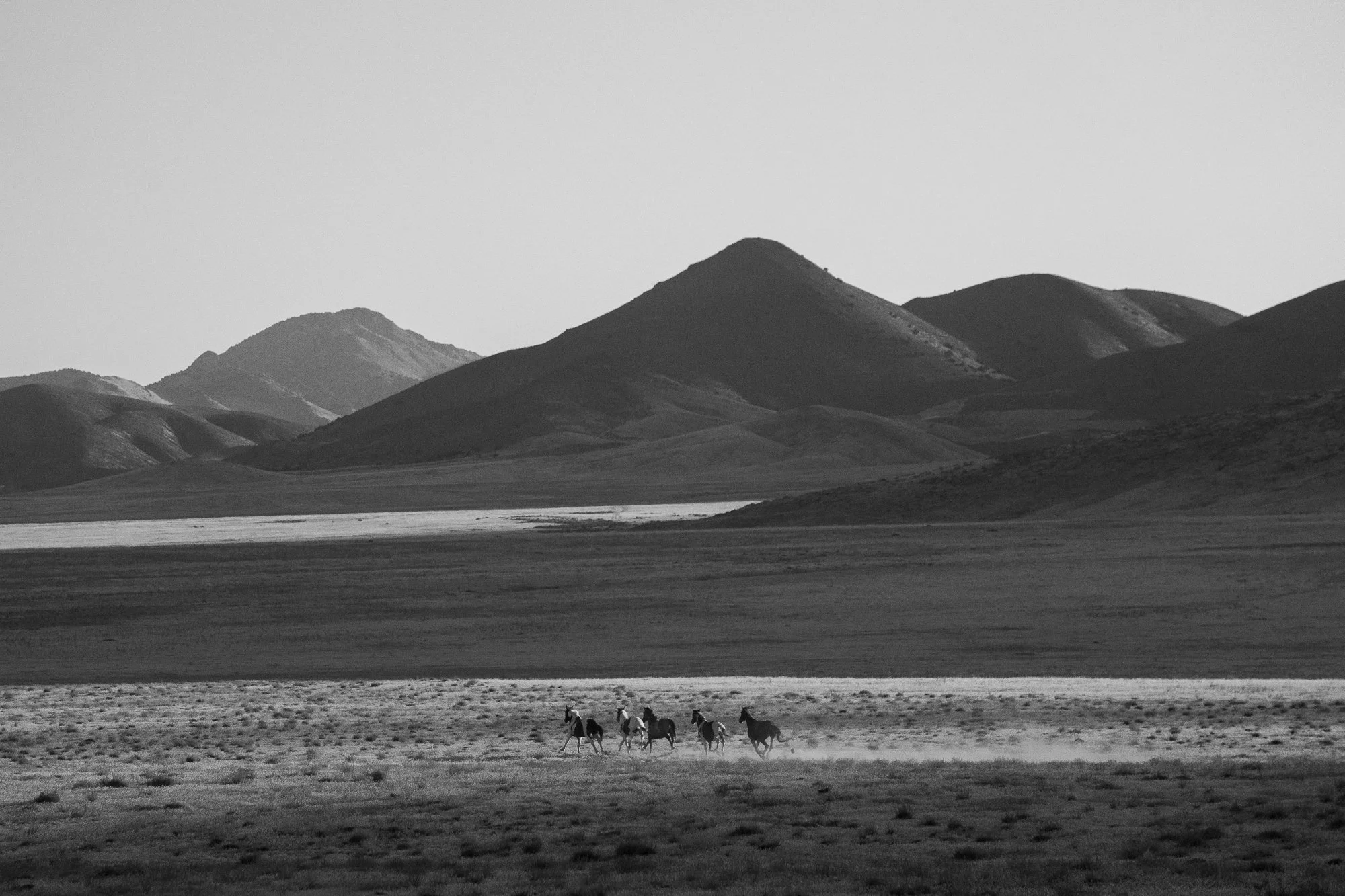
The TS Ranch sits in northeastern Nevada, in the country stretching between Carlin and Battle Mountain—part of the larger Great Basin where cattle ranching has operated on open range for well over a century.

Originally known as the T Lazy S Ranch, the operation has long been tied to the development of both ranching and mining in this part of Nevada. Like many ranches in the region, its history isn’t isolated—it’s connected to the broader story of land use in the West, where cattle operations and resource extraction have overlapped for generations.

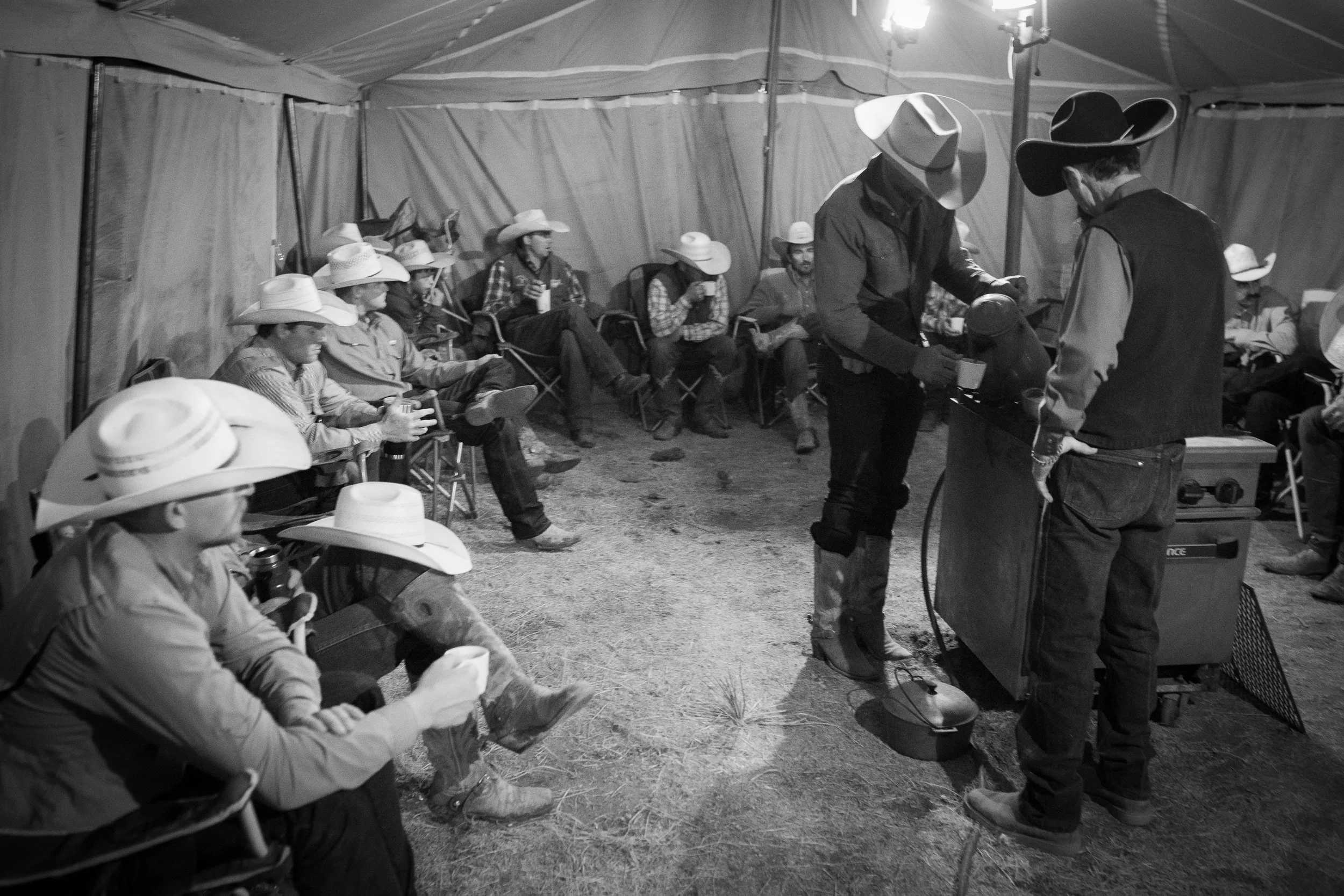
The ranch itself is owned by Nevada Gold Mines, but that doesn’t matter much to the cowboys, because they just want to cowboy. Although it does give them plenty of room to roam, as the mines own almost 3 million acres of earth between all of their ranches.

Ranching in the Carlin and Battle Mountain Country

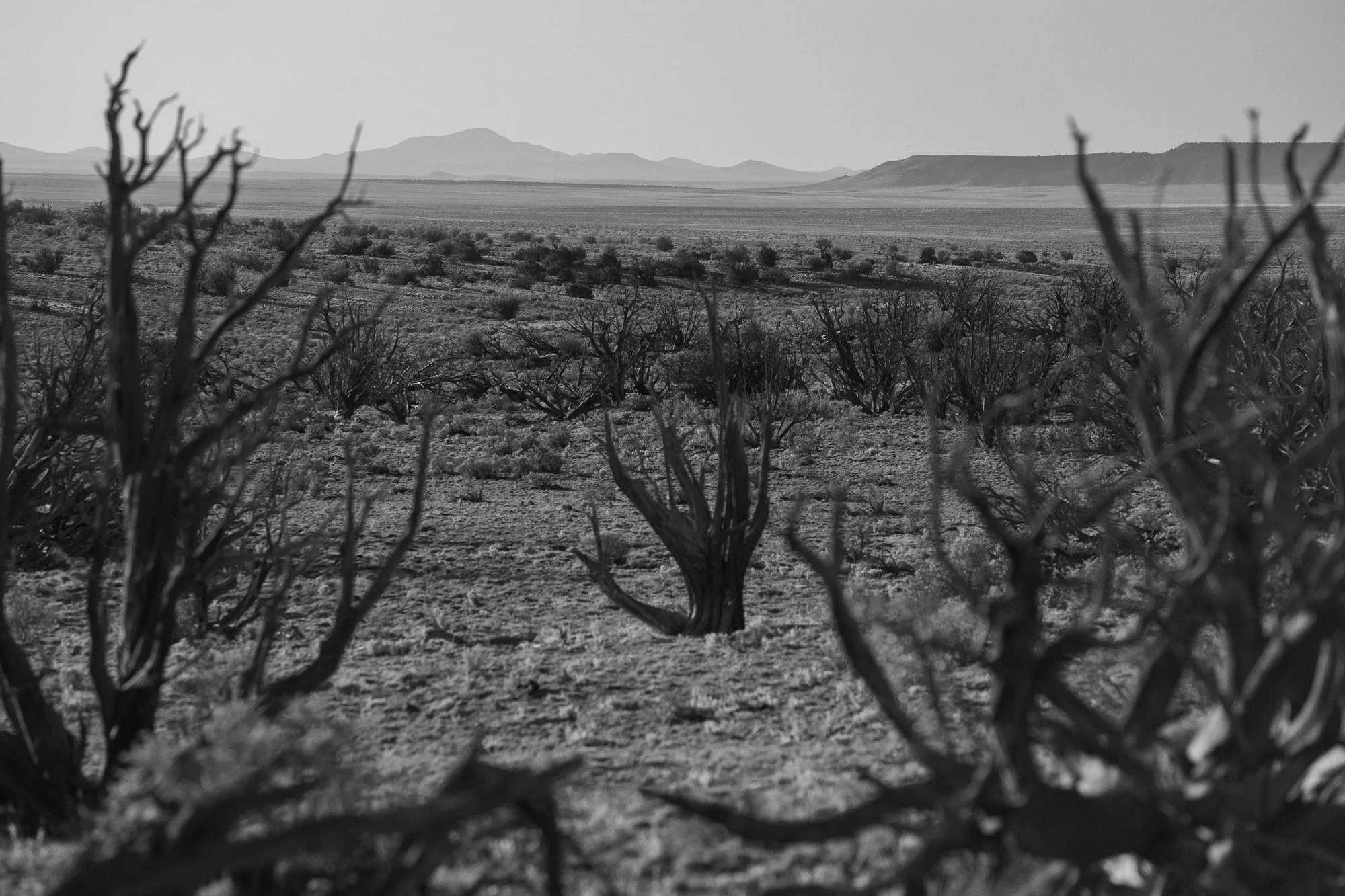
This part of Nevada is defined by distance.

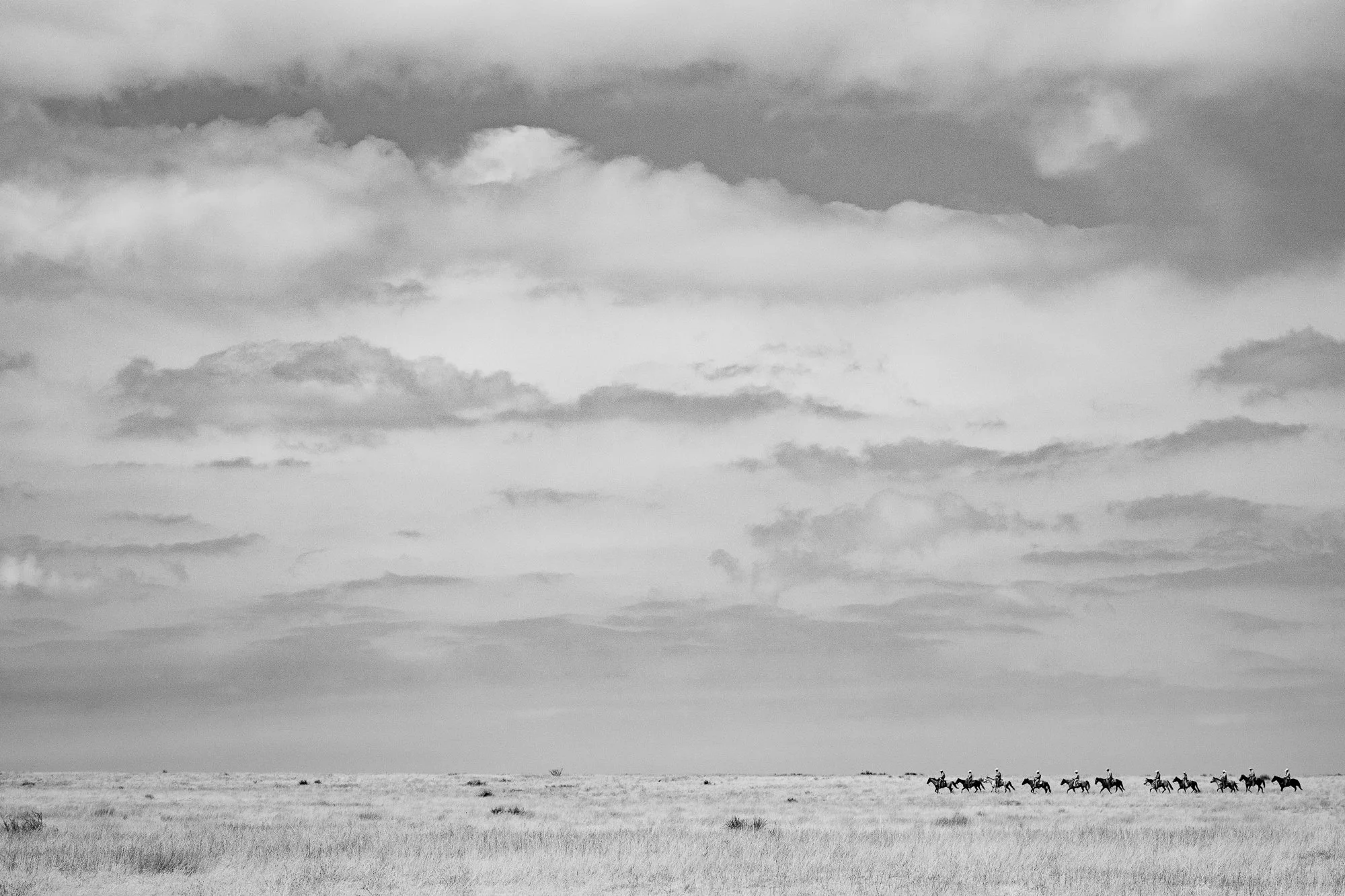
The land is dry, open, and expansive—sagebrush valleys broken by low mountain ranges, with limited water and long seasonal swings. Ranching here has always required movement. Cattle are spread across large allotments, often miles apart, and gathering them means covering serious ground on horseback.

At the TS Ranch, that hasn’t changed.

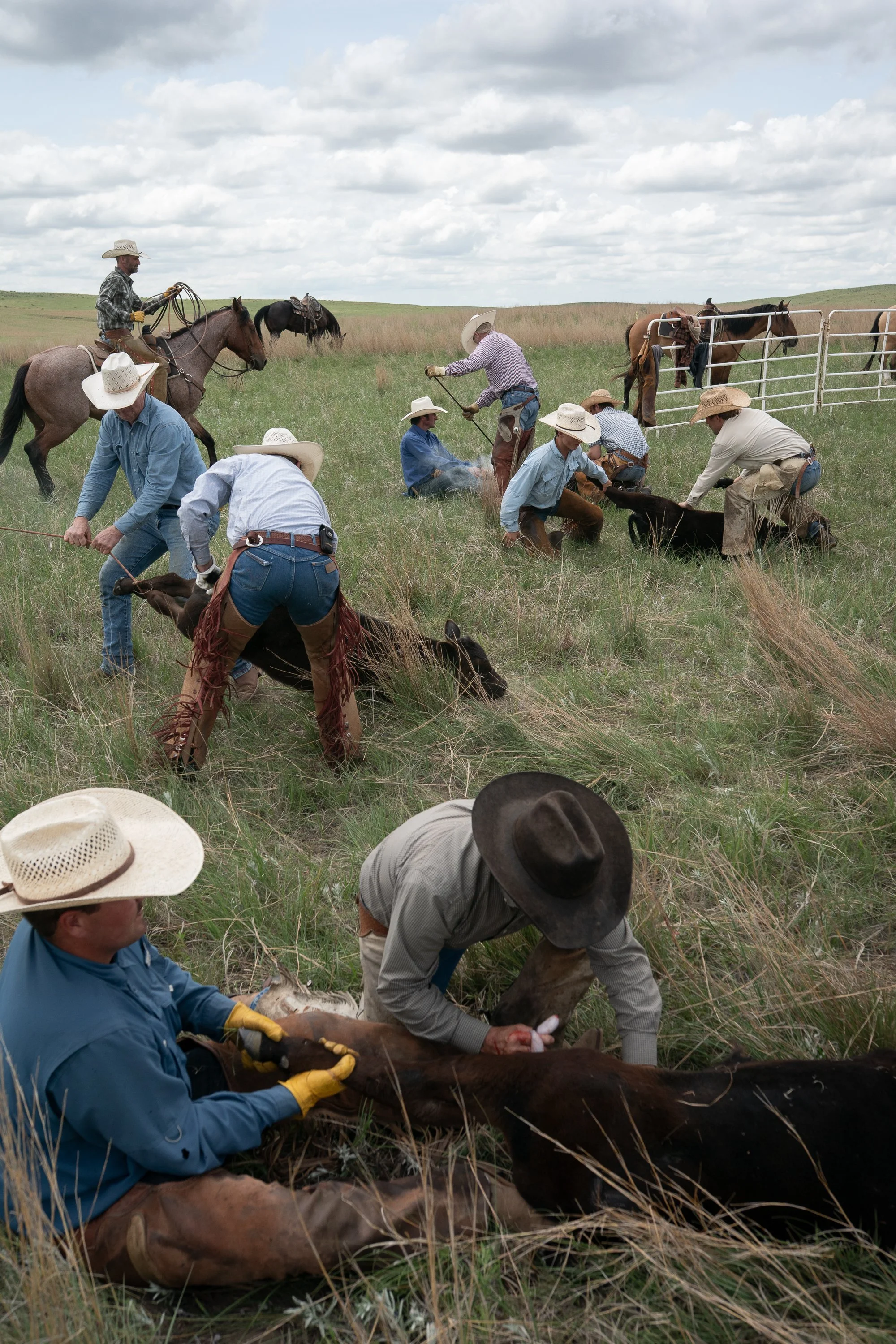
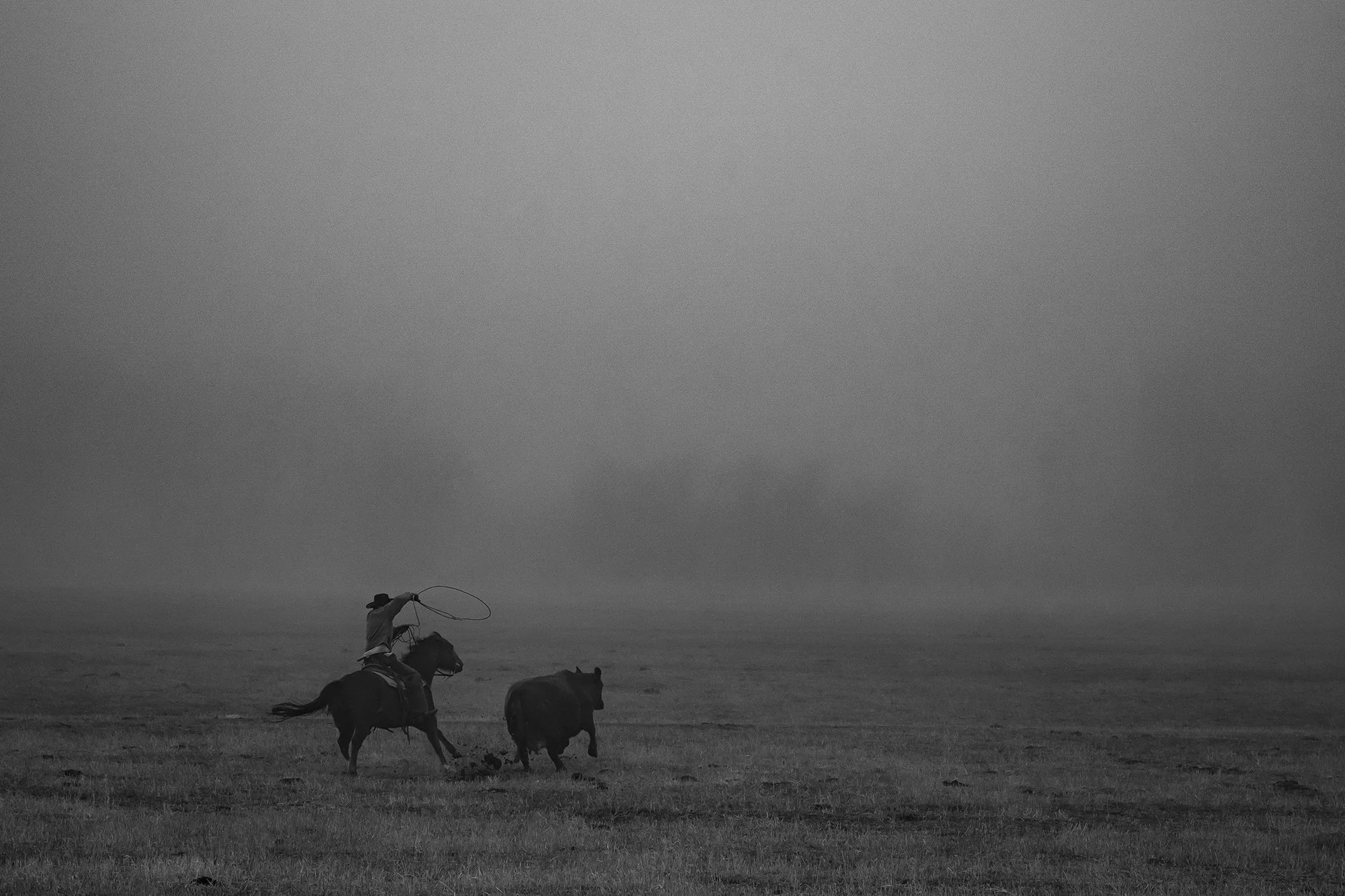
The work still follows the same patterns established generations ago: long days in the saddle, trailing cattle across open range, managing herds in terrain that offers very little room for error. Efficiency comes from experience, not speed.

From T Lazy S to TS Ranch

The ranch’s earlier identity as the T Lazy S reflects a period when large, independently run cattle operations dominated northern Nevada.

As mining expanded in the Carlin Trend—one of the most significant gold-producing regions in the world—land ownership and management structures began to shift. Ranches like this became part of a broader landscape where livestock production and mining interests coexisted.

Despite those changes, the function of the ranch itself remained consistent.

Cattle still move across the same country. Riders still gather and trail them the same way. The systems in place today are less about ownership on paper and more about what continues to work on the ground.

Photographing TS Ranch

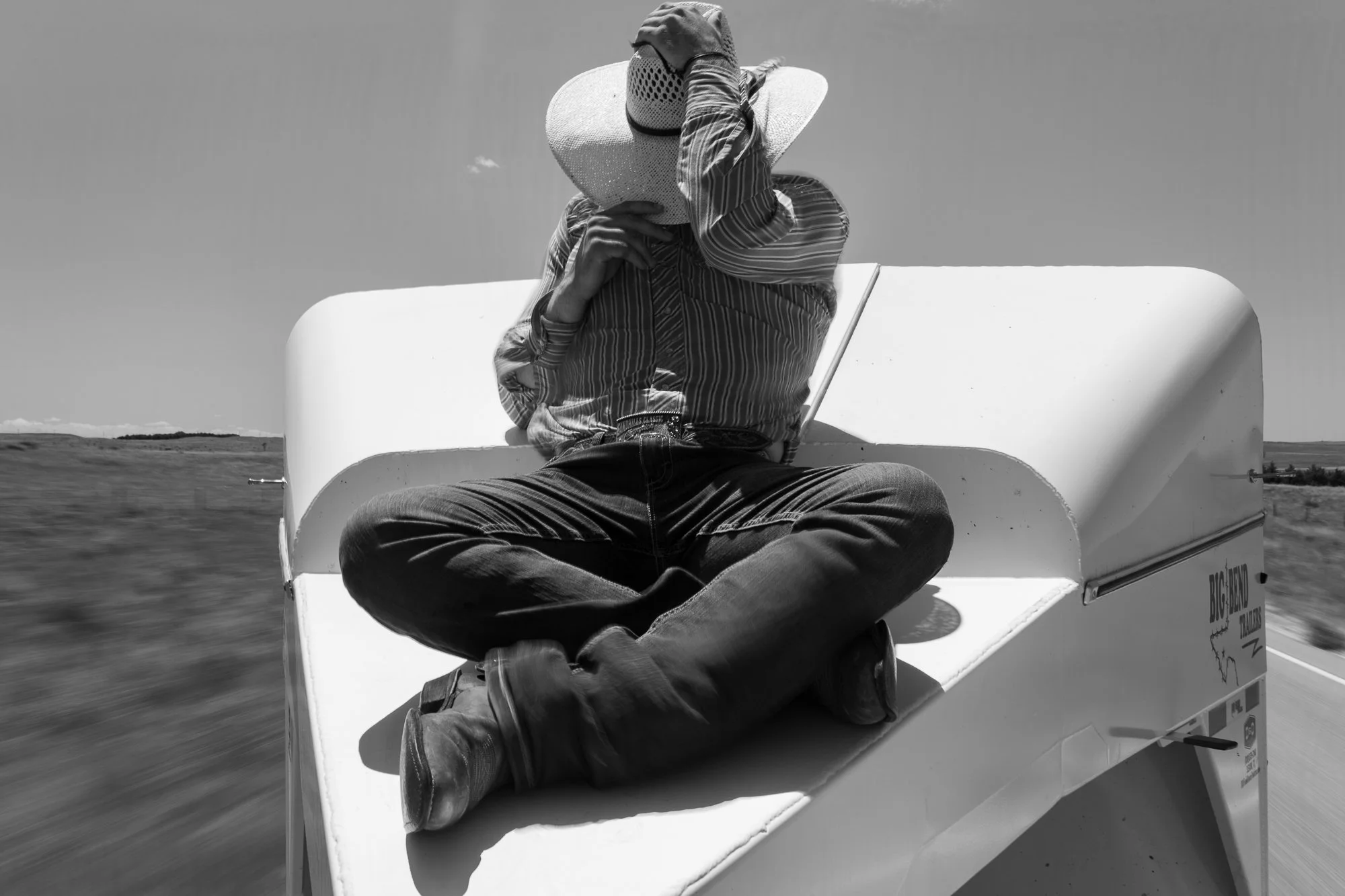
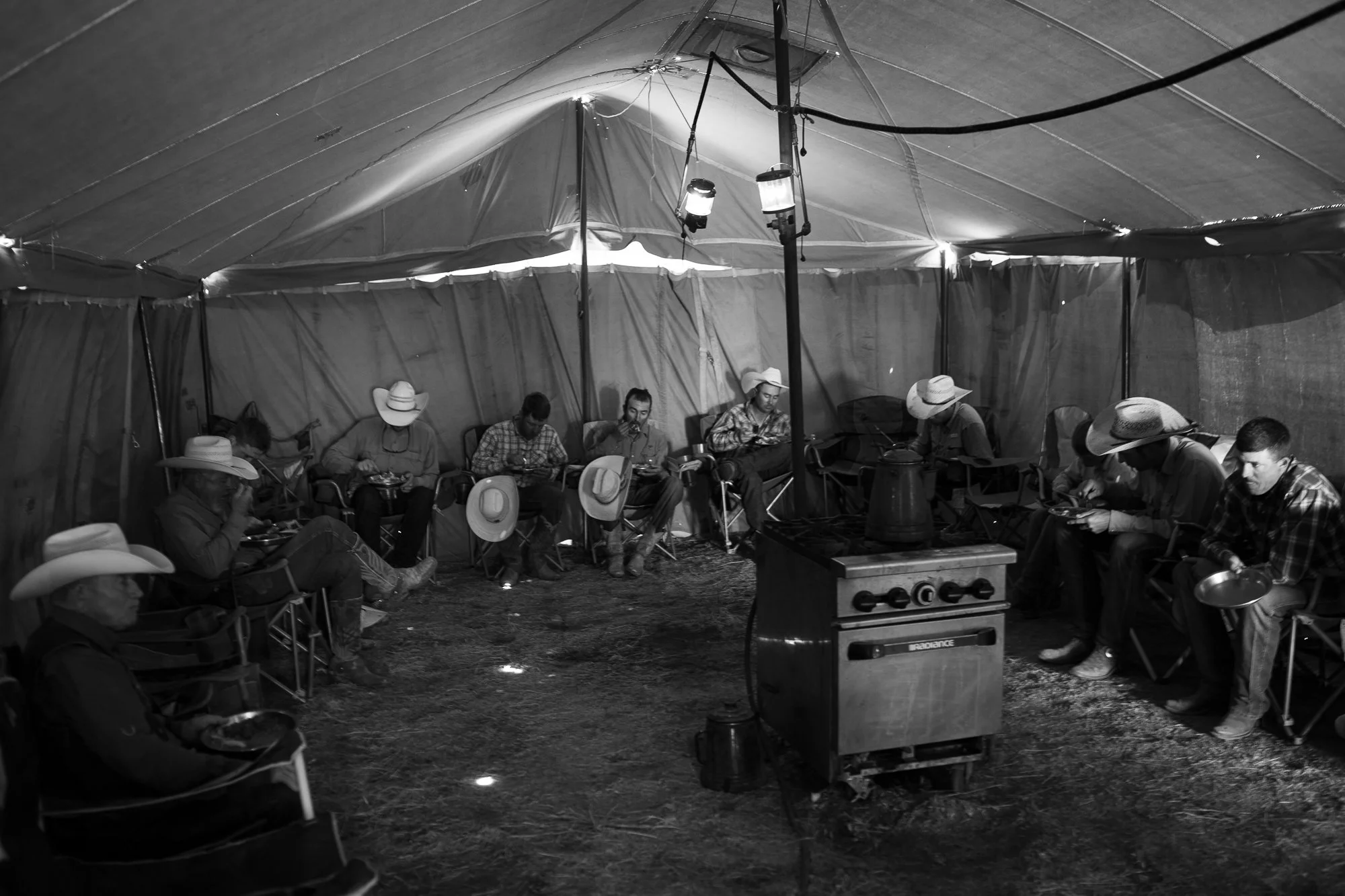
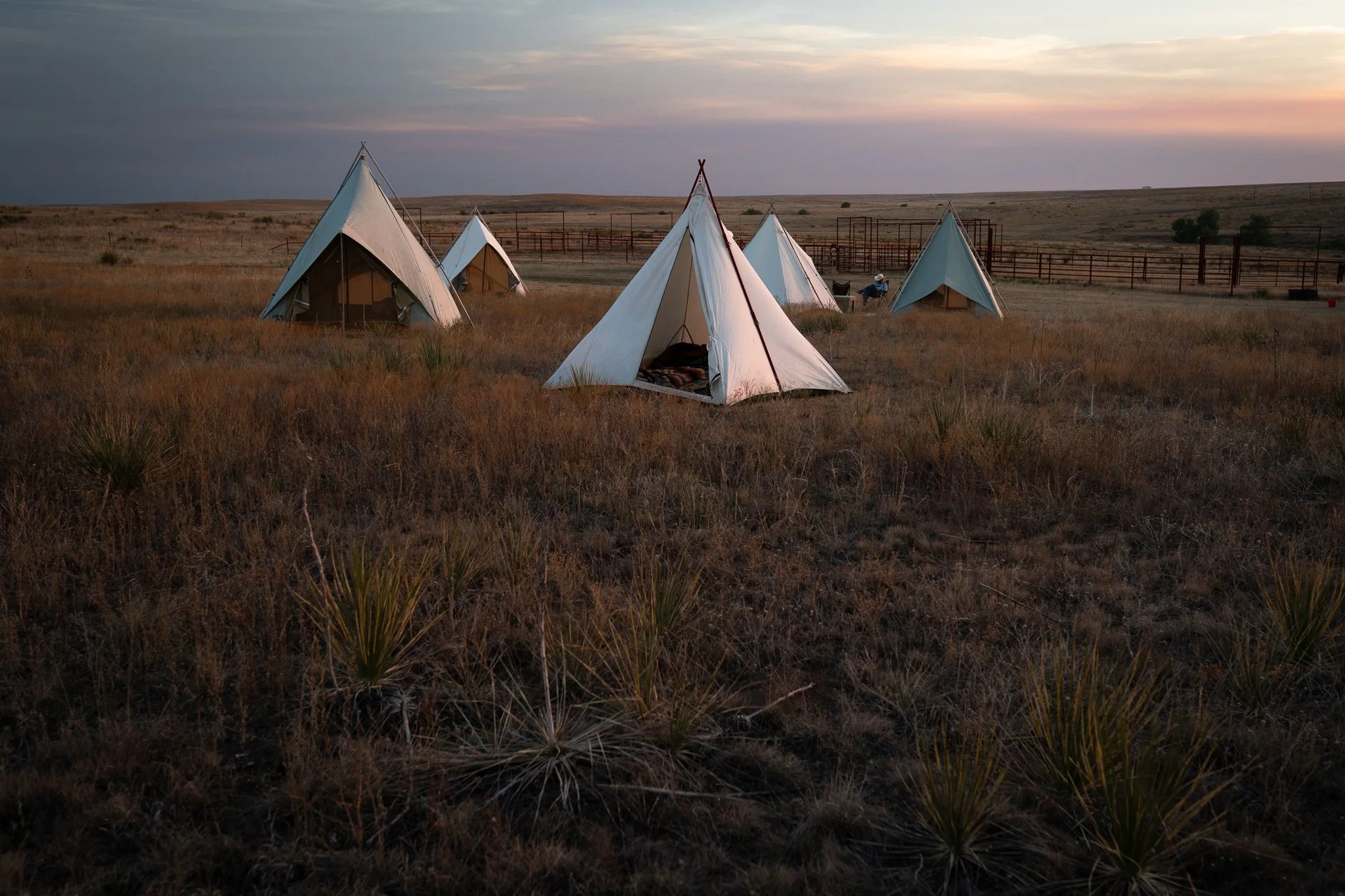
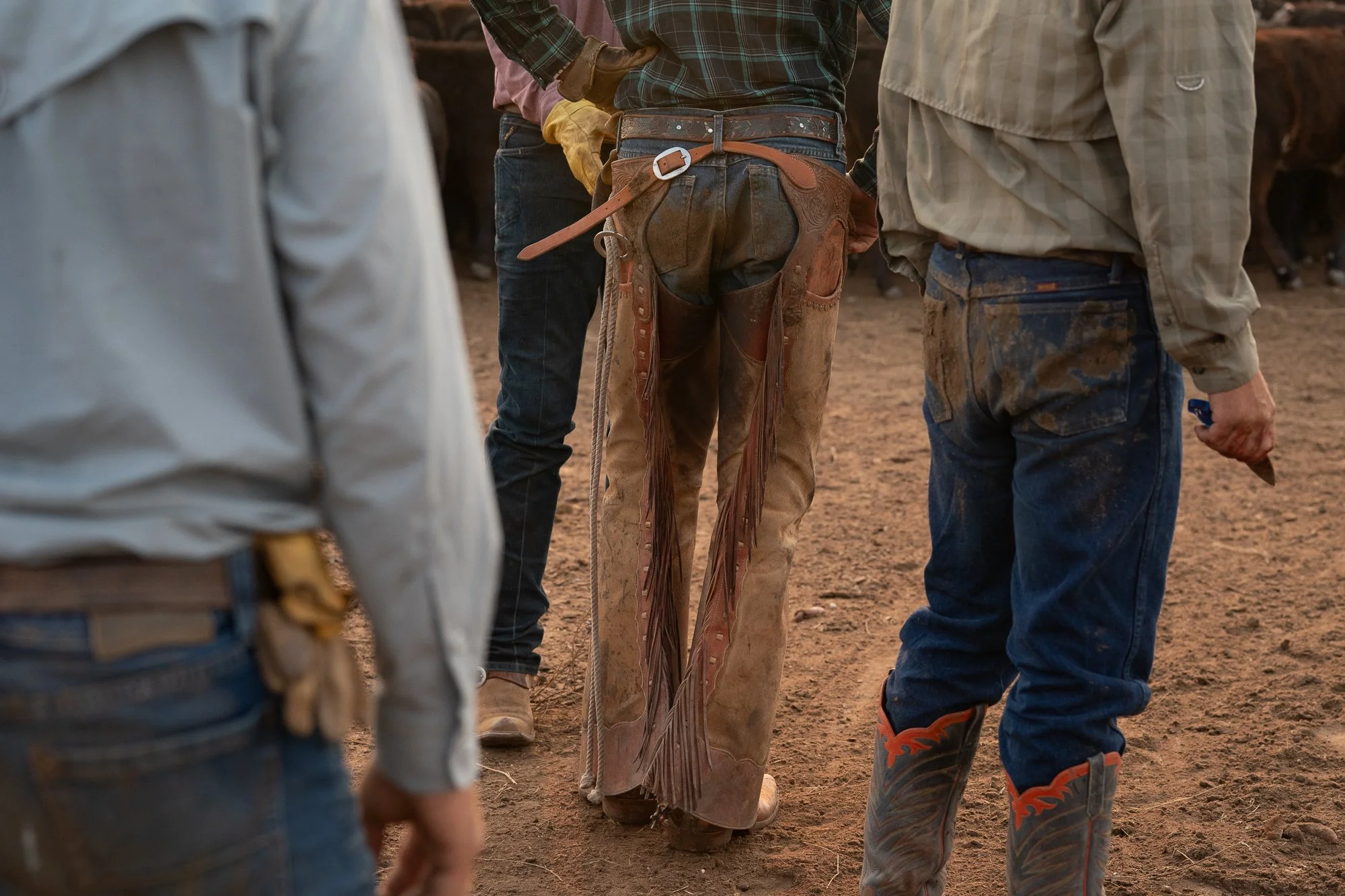
I’ve said this before, but I’m partial to the ranches in Nevada, and love photographing on them. Everything from the buckaroo style, to the nature of the land, colors, and textures is, in my opinion, exceptional. Ranches in this part of the world represent a culture unique in itself, yet still part of the greater cowboy universe. Photographing here means working within the rhythm, not interrupting it.

Nothing is staged. Nothing is slowed down. The work happens whether a camera is present or not.

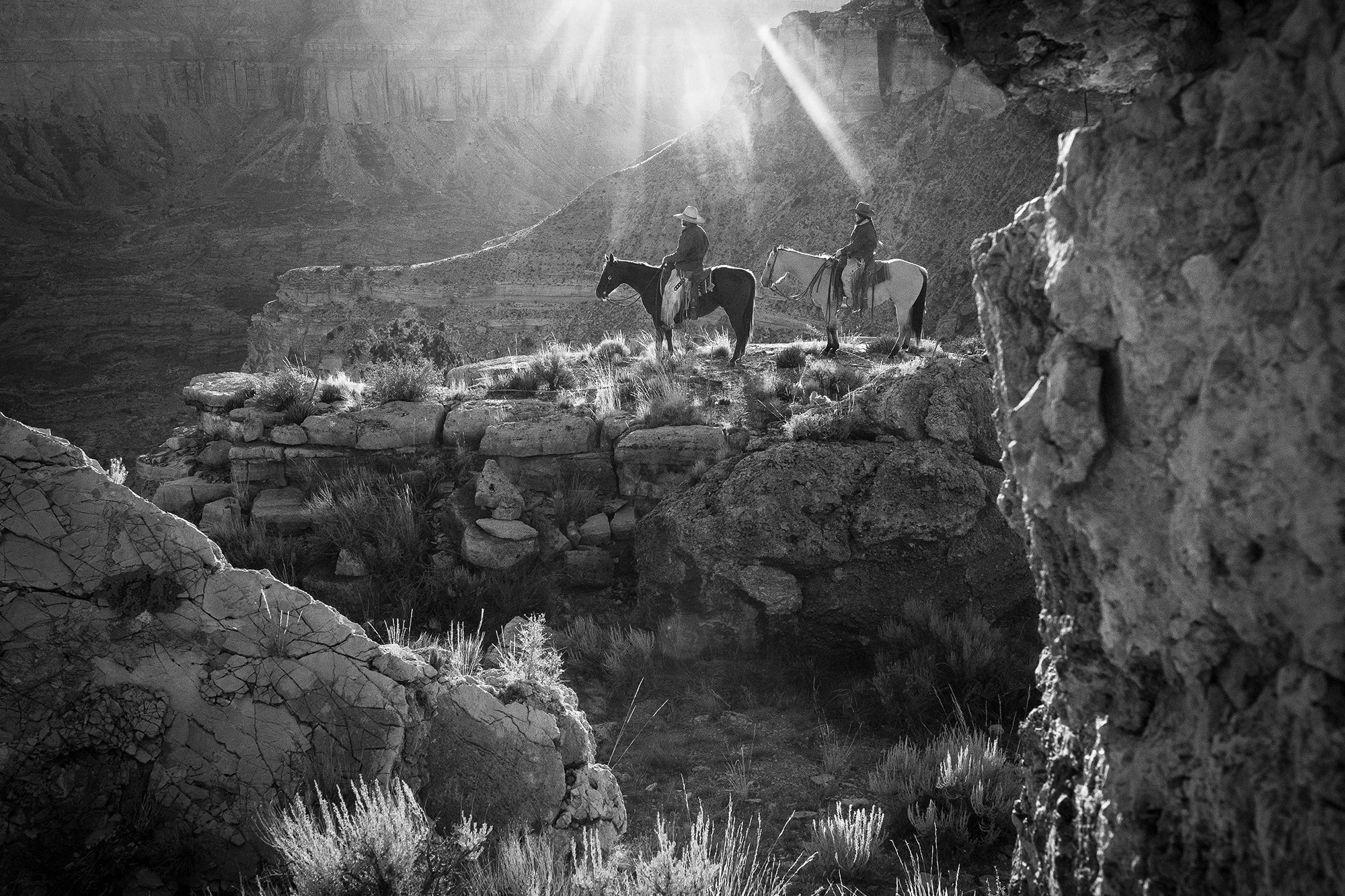
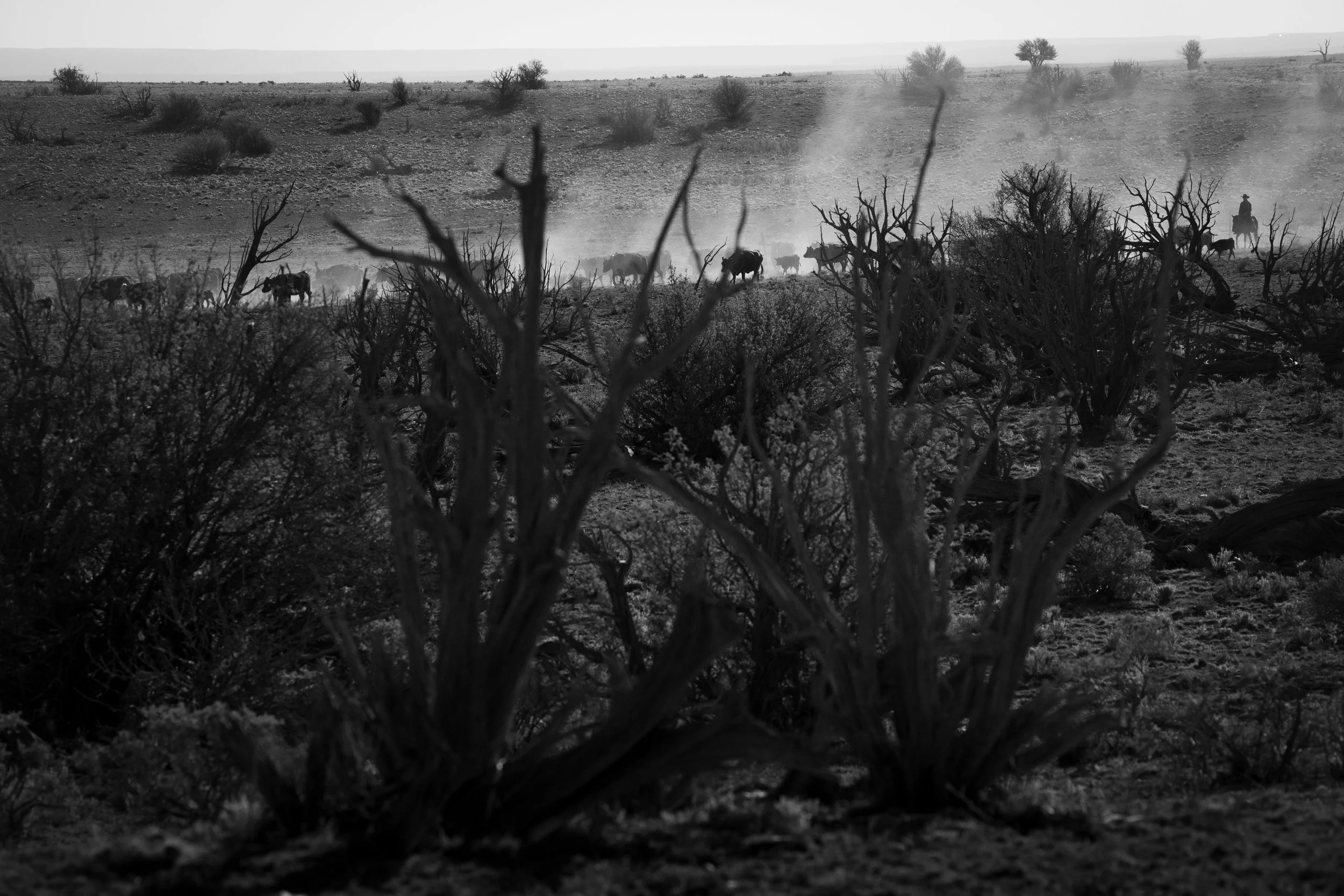
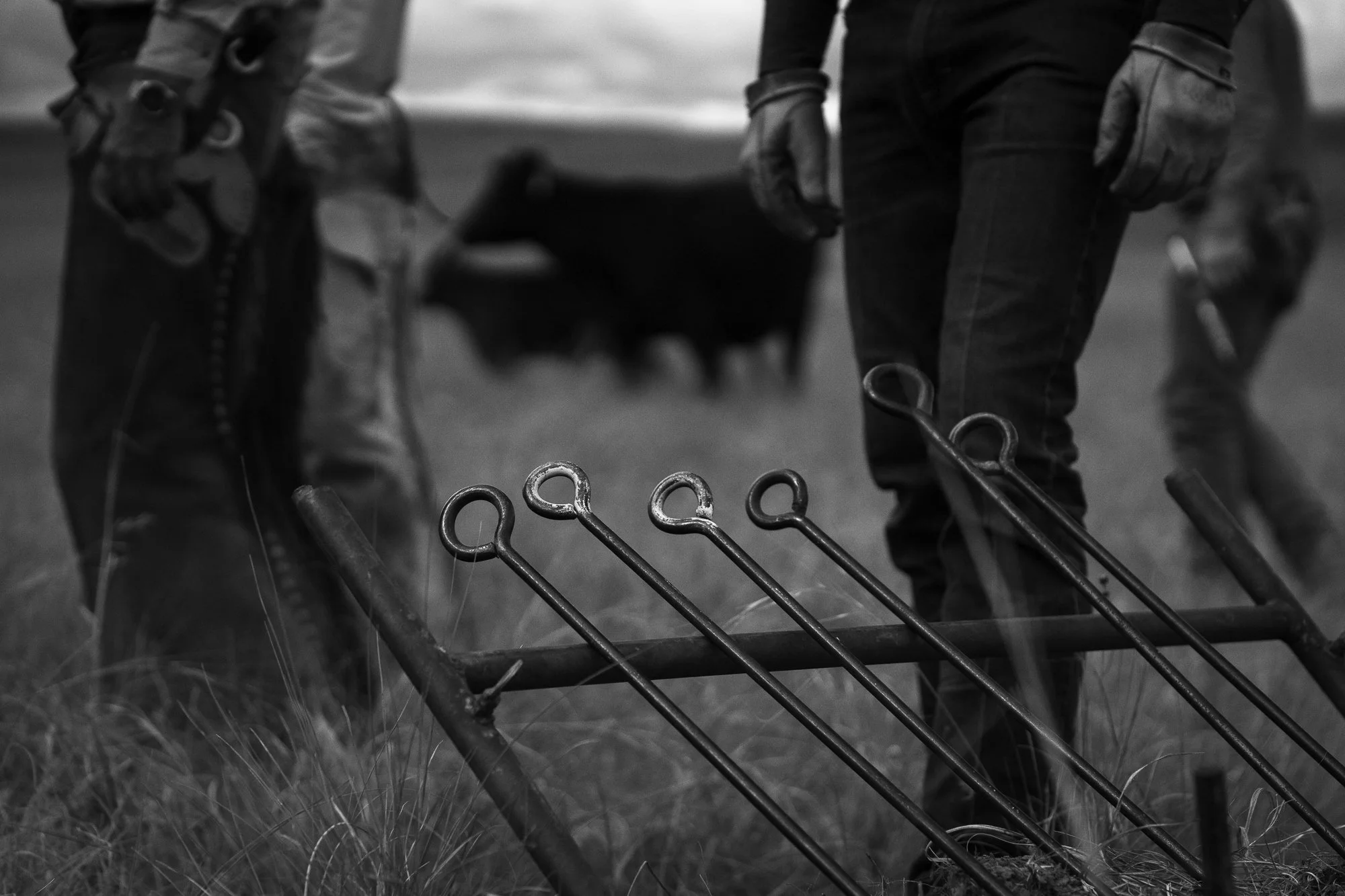
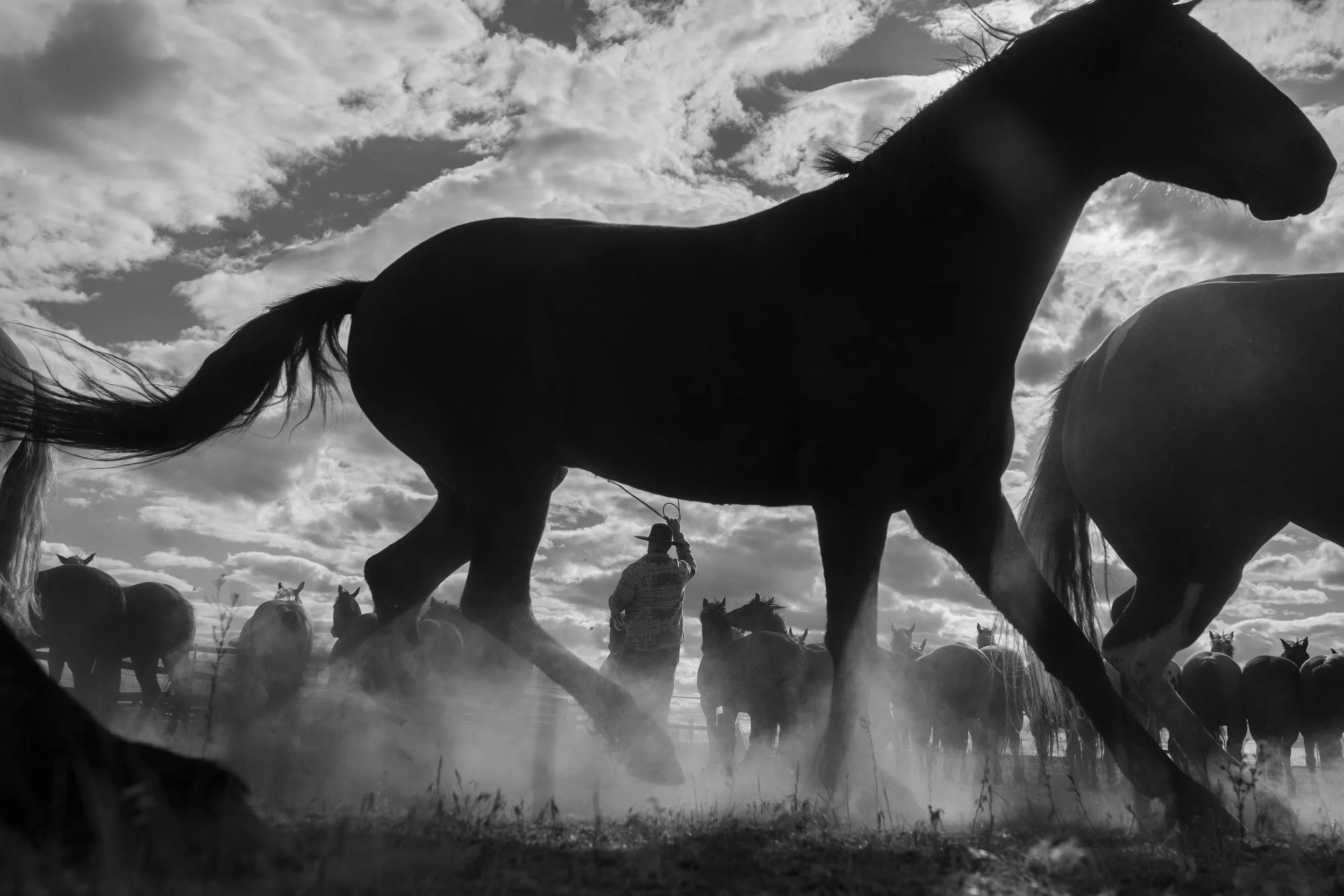
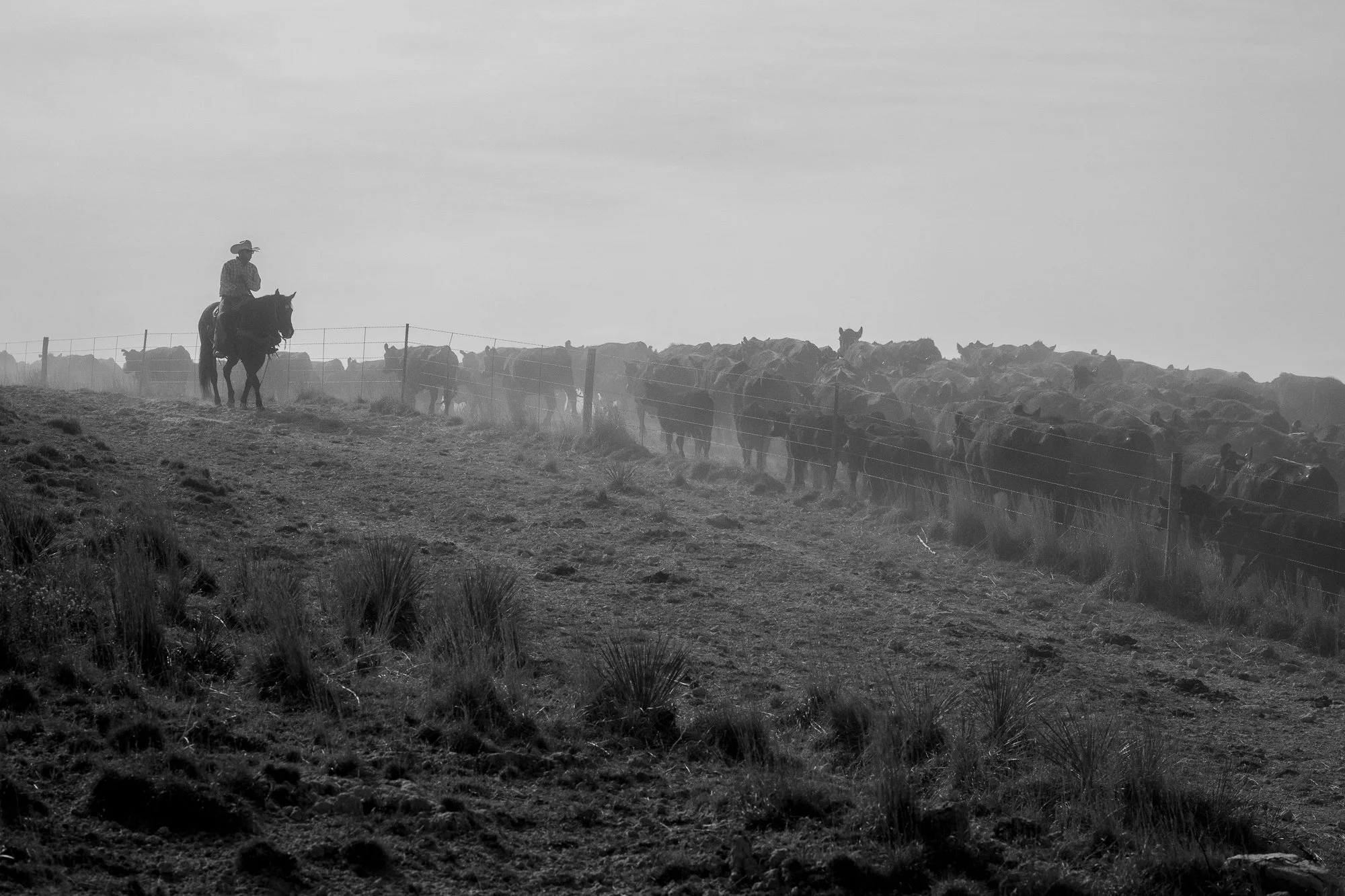
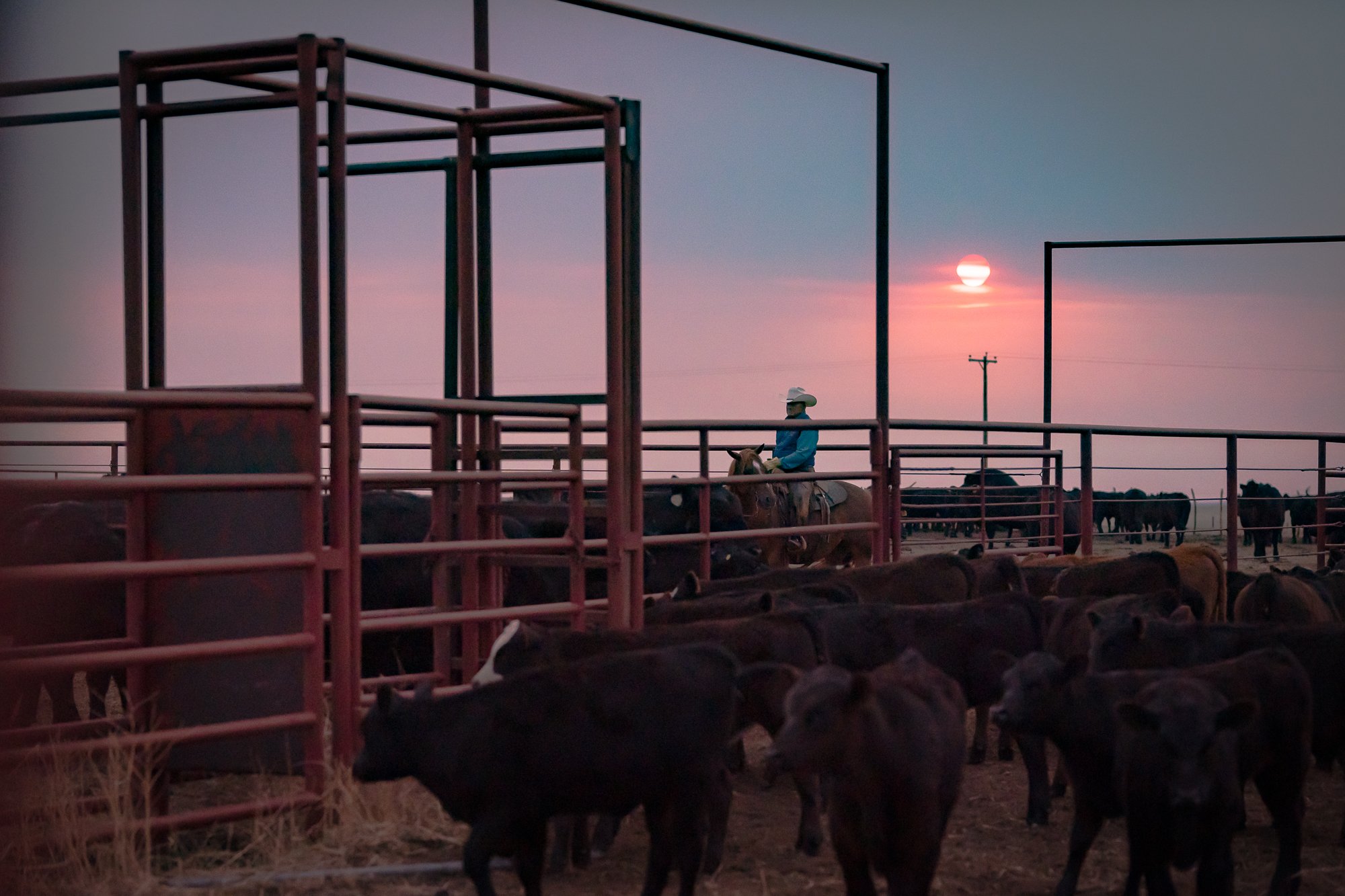
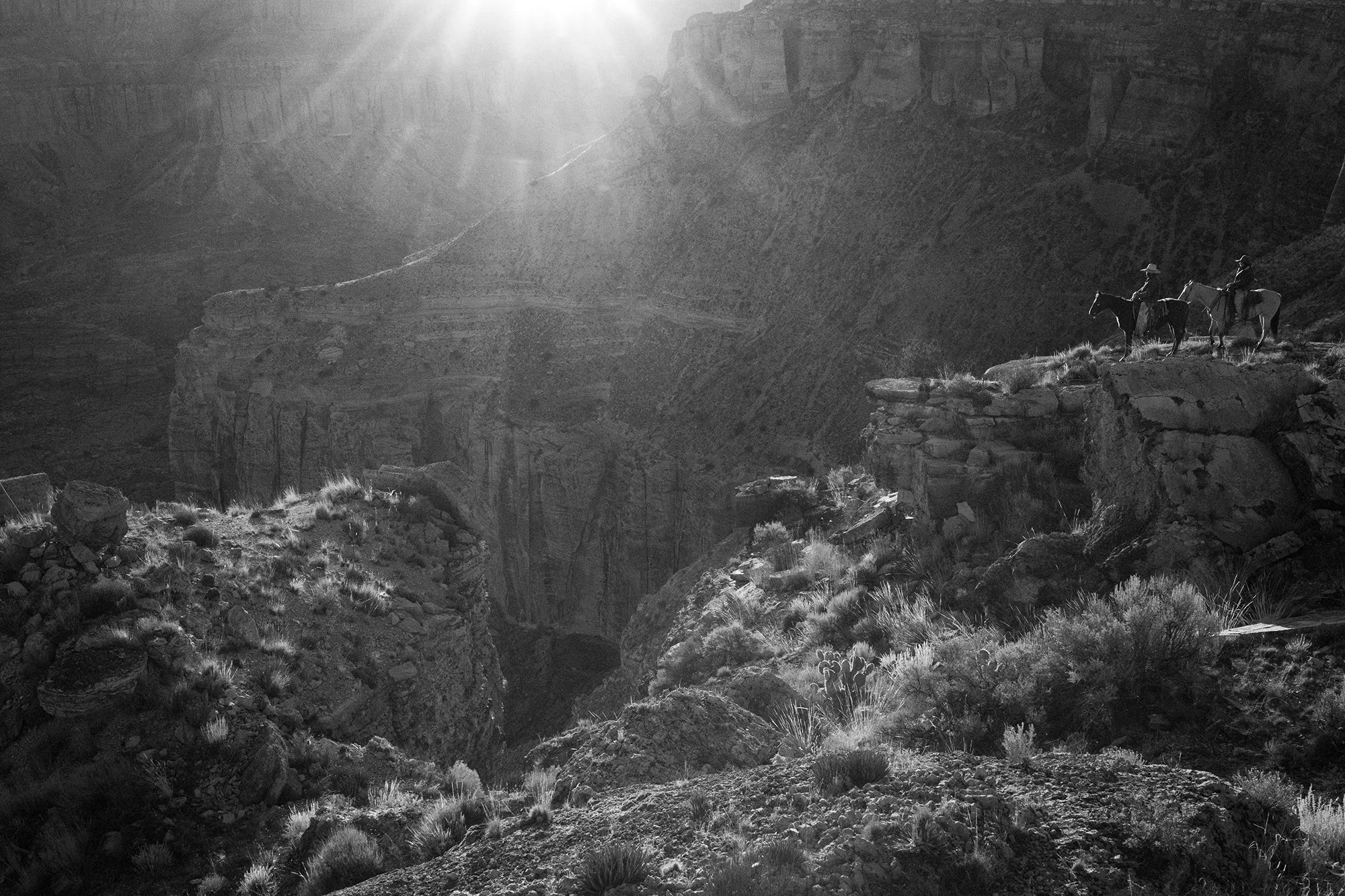
The photographs come from paying attention to what’s already there—dust hanging in the air during a gather, a rider holding position on a ridge, cattle settling at the end of a long push. Over time, those moments build into a more accurate picture of what ranching in this part of Nevada actually looks like.

I’m grateful to the whole crew for letting me be a small part of their work and look forward to being back on The TS. They are a good bunch of humans with a great chemistry that was fun to take in from the outside.

Part of an Ongoing Western Project

The photographs from TS Ranch are part of a larger body of work focused on working cowboys across the American West.

This project has been developed over years of access to ranches where the work is still done horseback, across open range, and without alteration for the camera. Each image is part of a broader effort to document a way of life that continues largely out of public view.

View the full project

Limited edition prints from this series are available for collectors

View more photographs from another historic Nevada cattle ranch - The C-Punch

Contact me directly for editorial and commercial licensing - rob@robhammerphotography.com

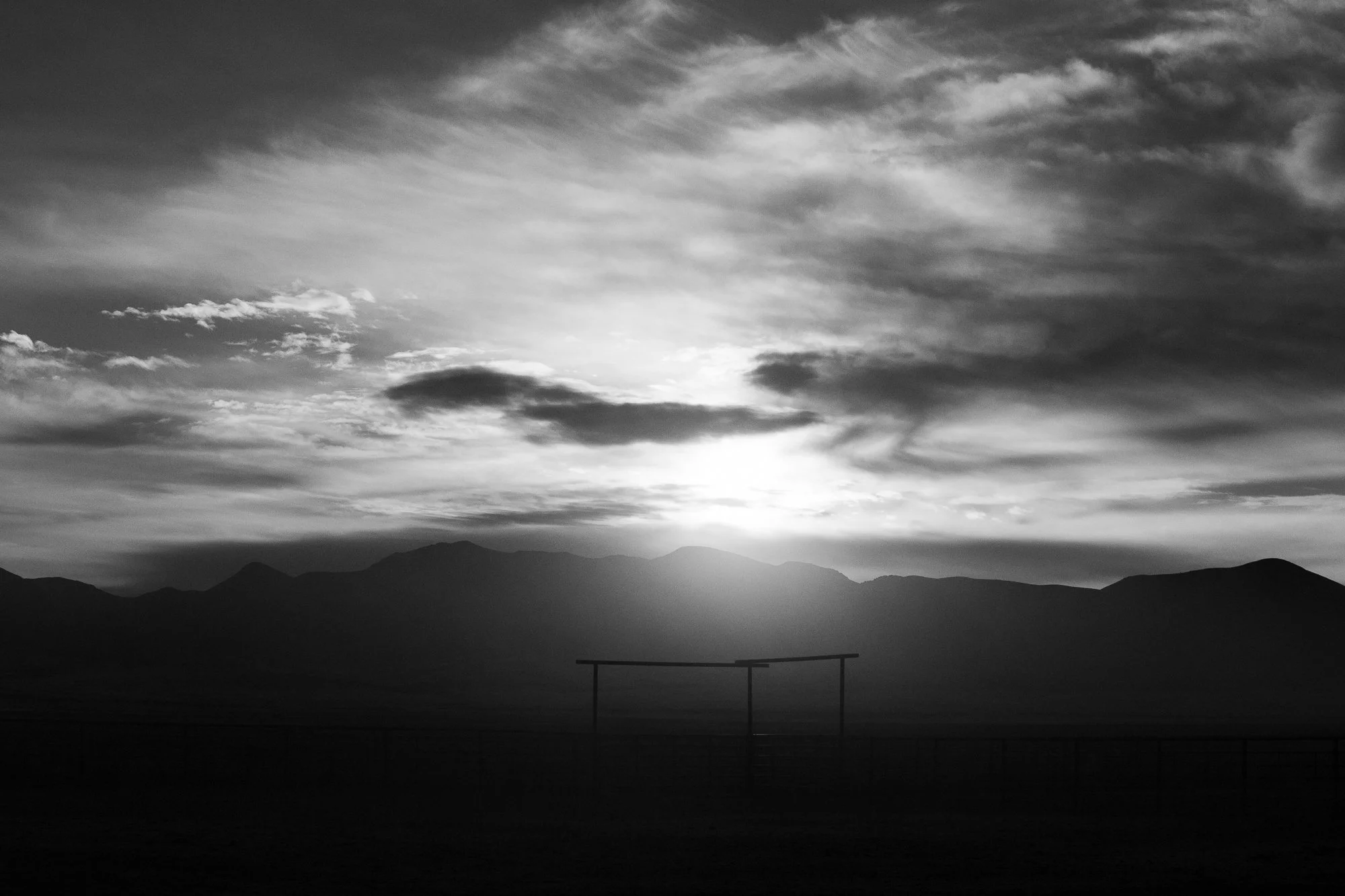
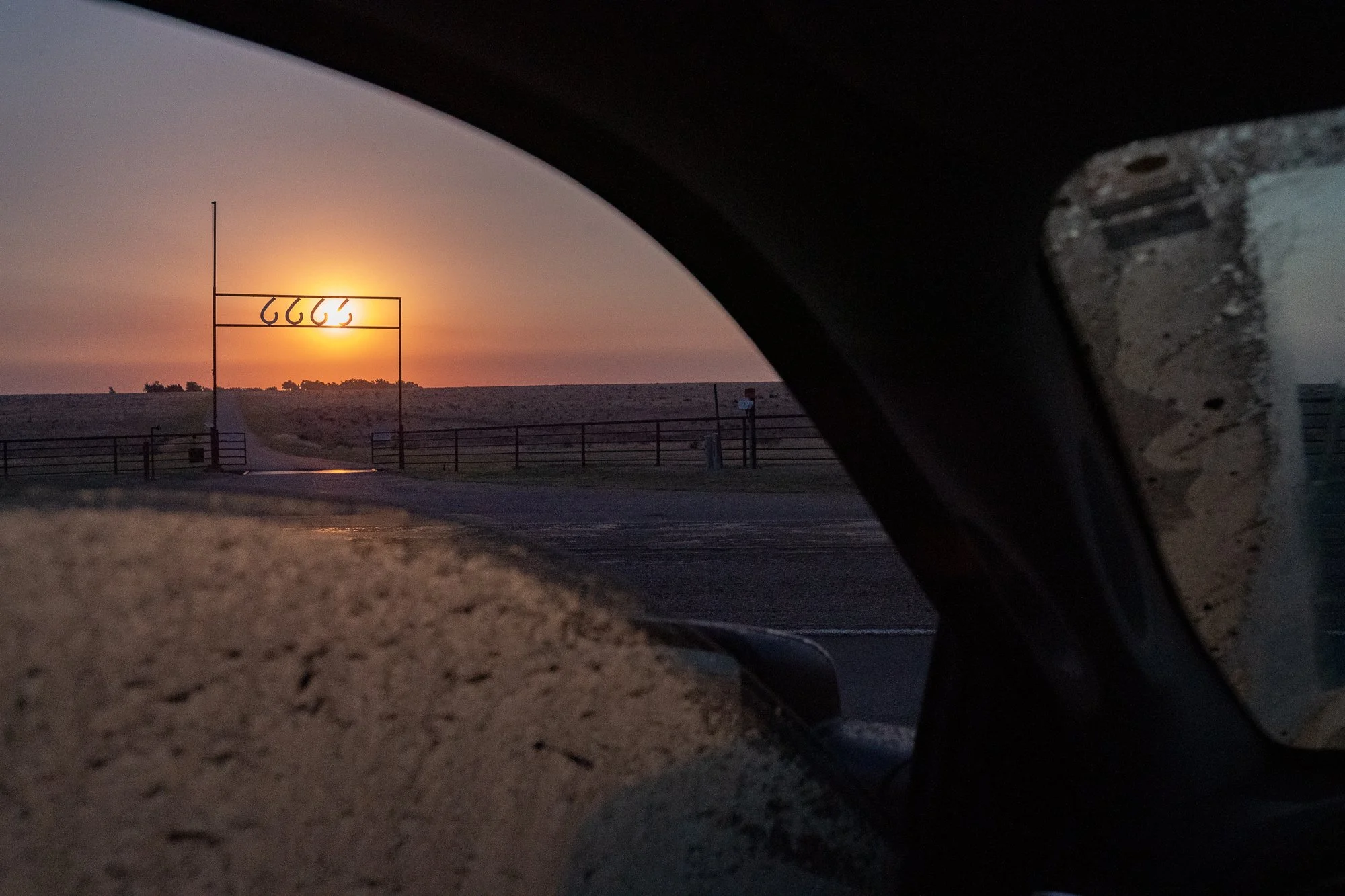
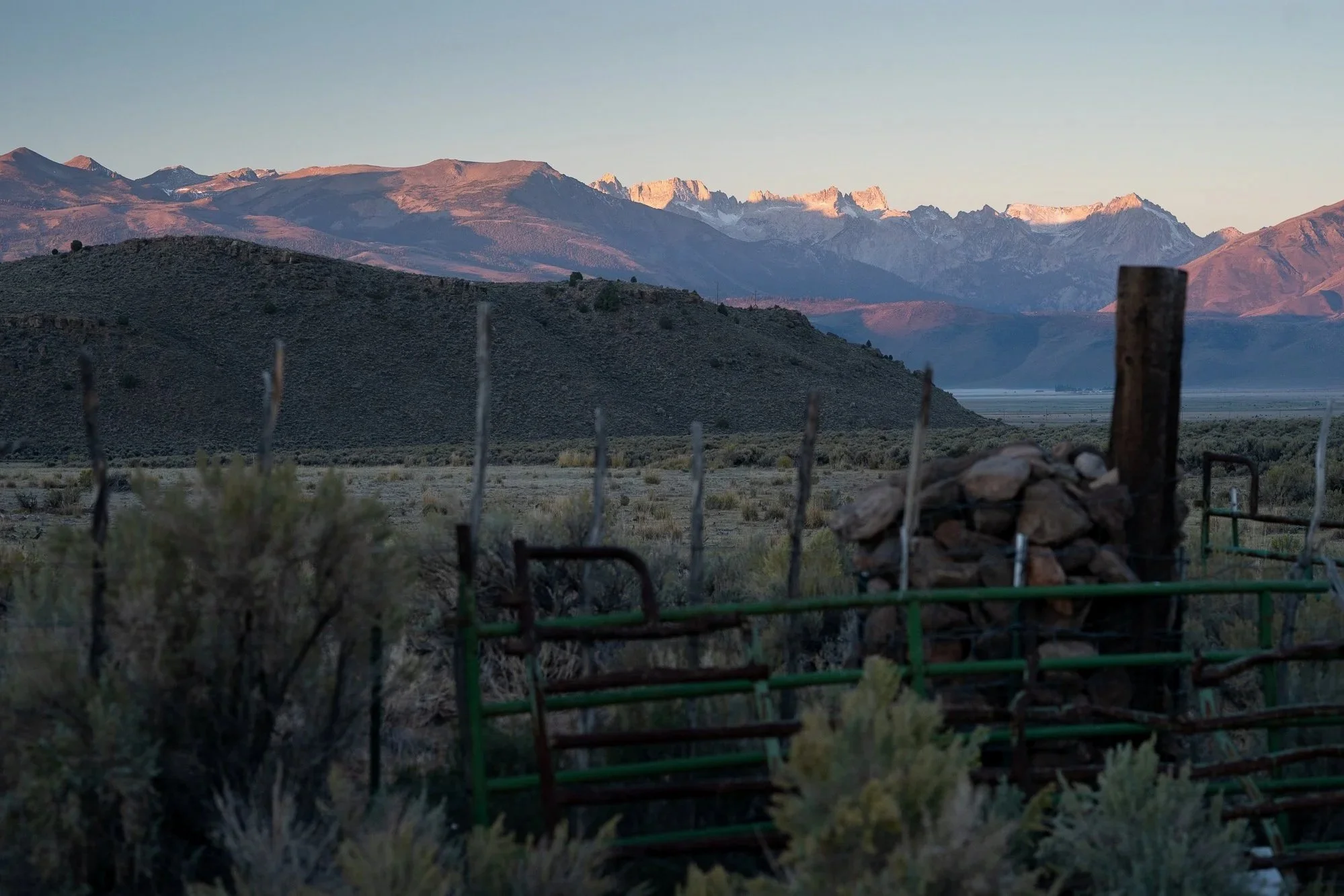
Sunrise over mountains and ranch land at TS Ranch

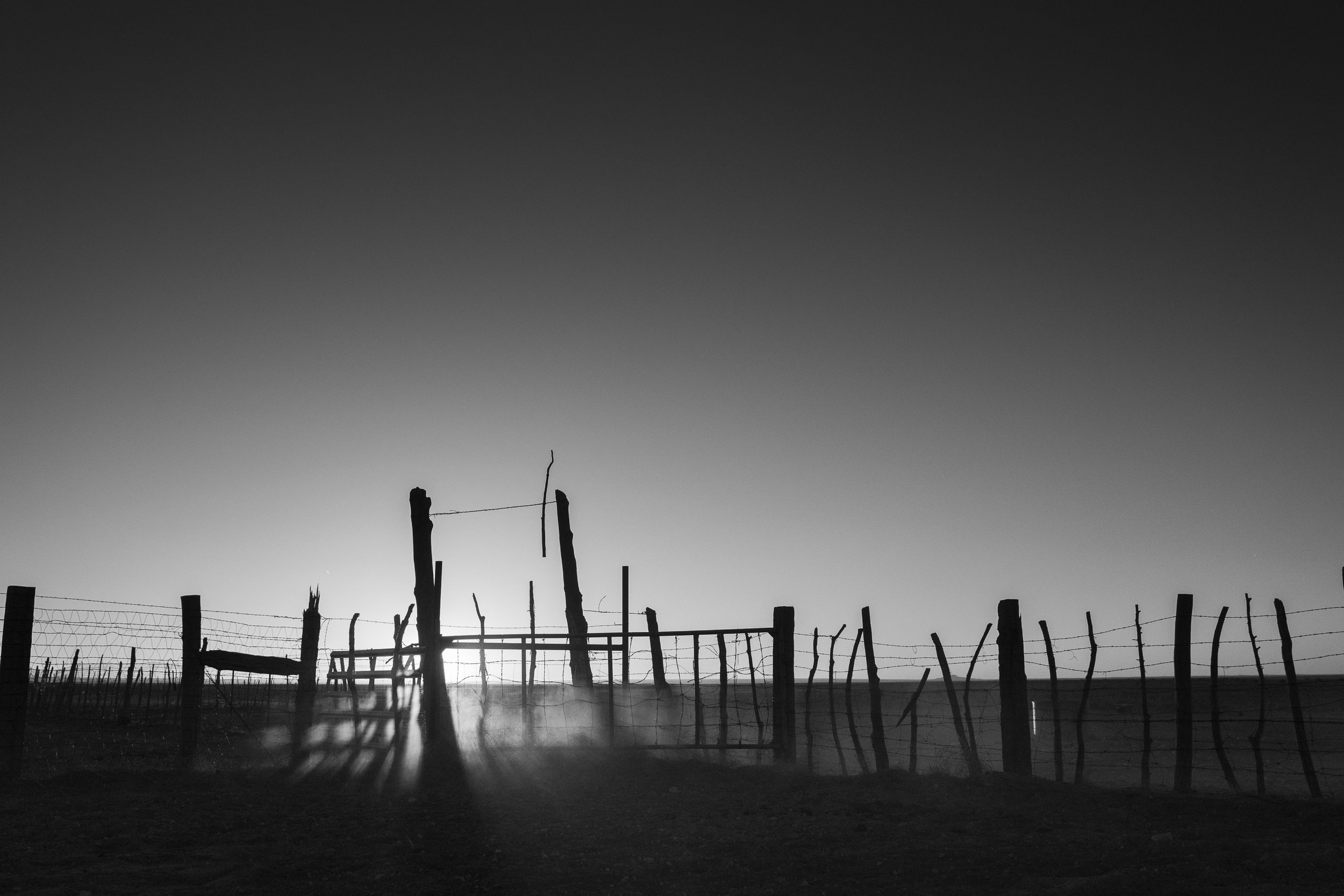
The first light breaks over the mountains, casting long shadows across the open ranch land.

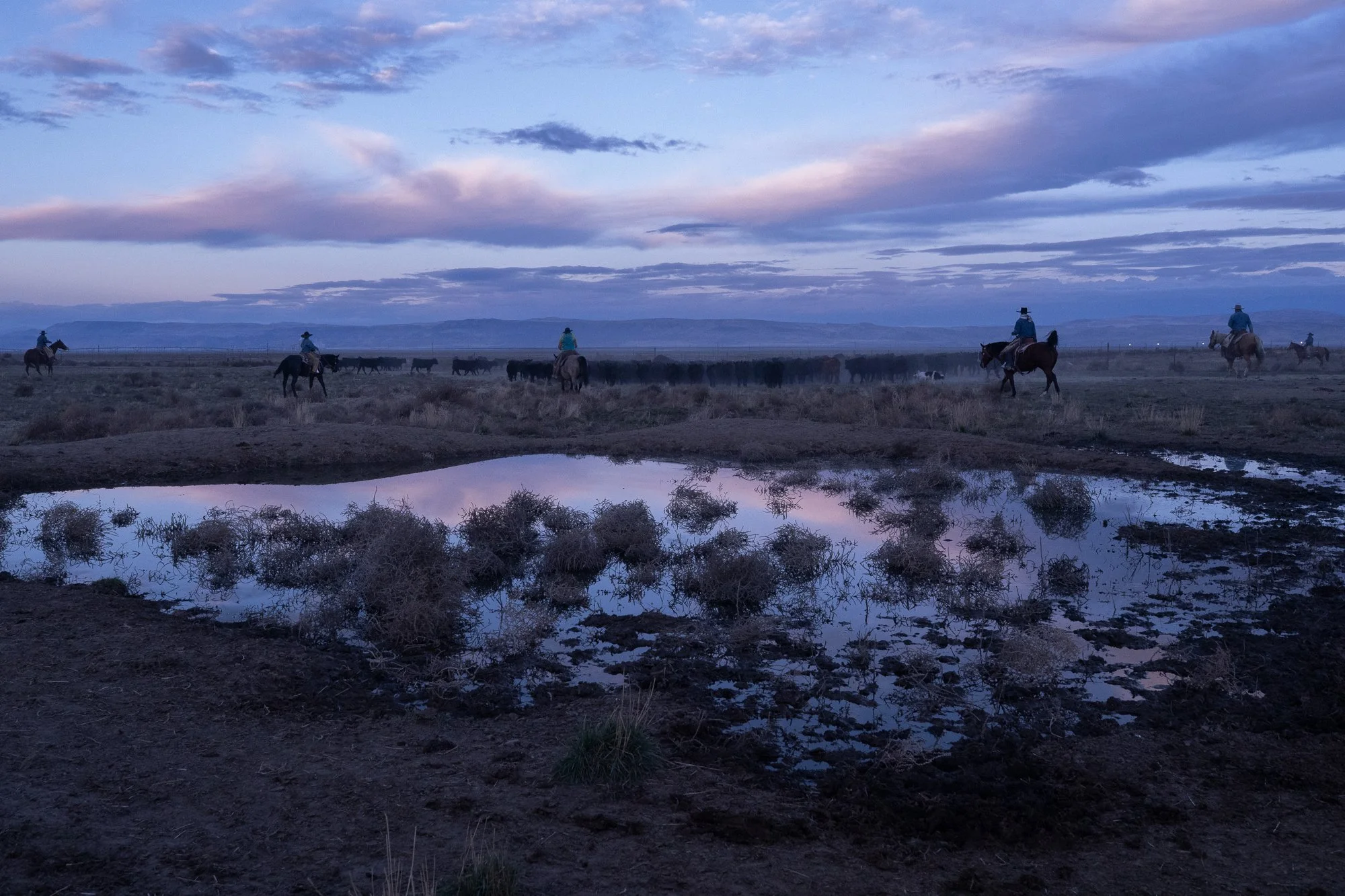
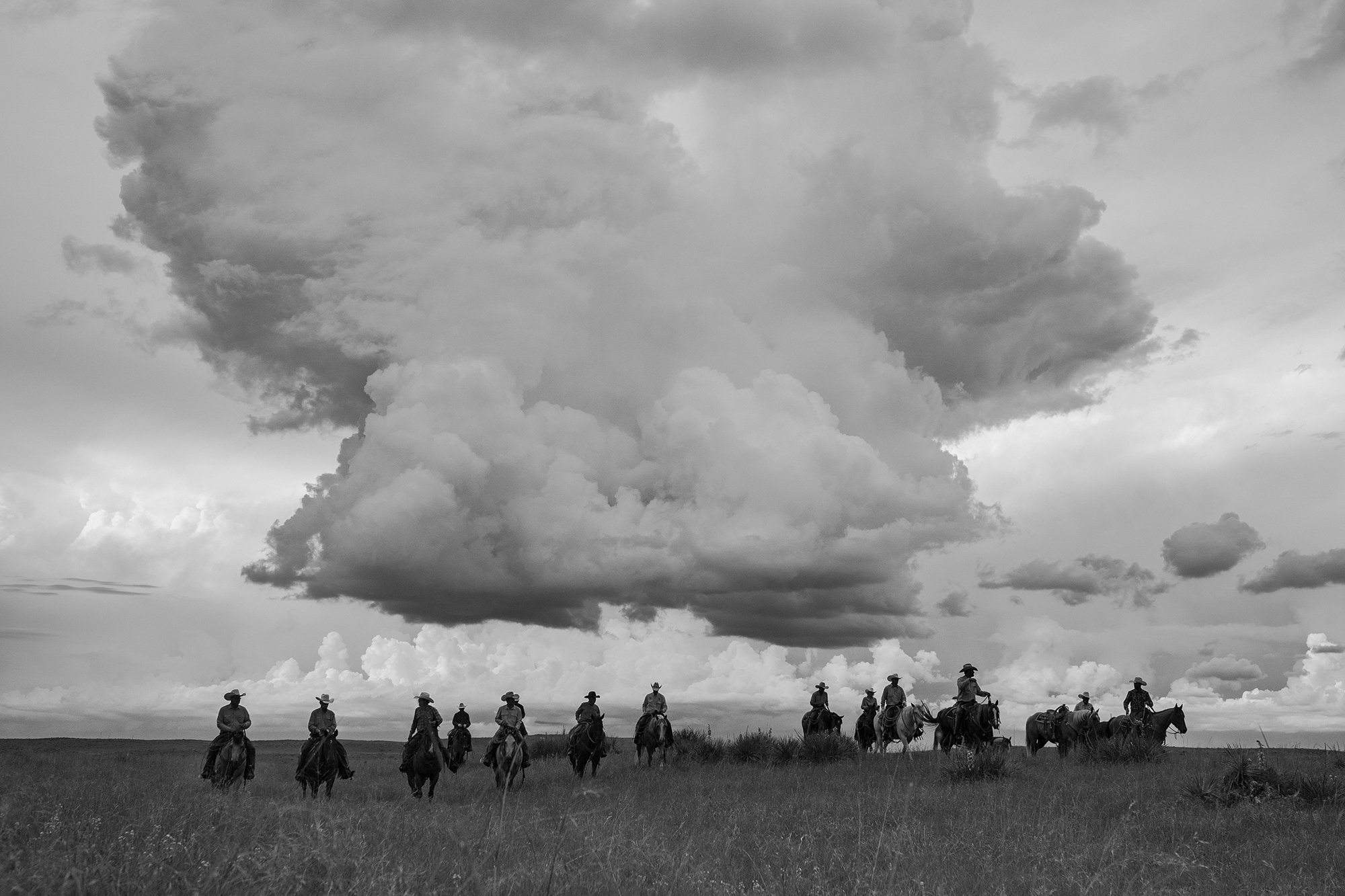
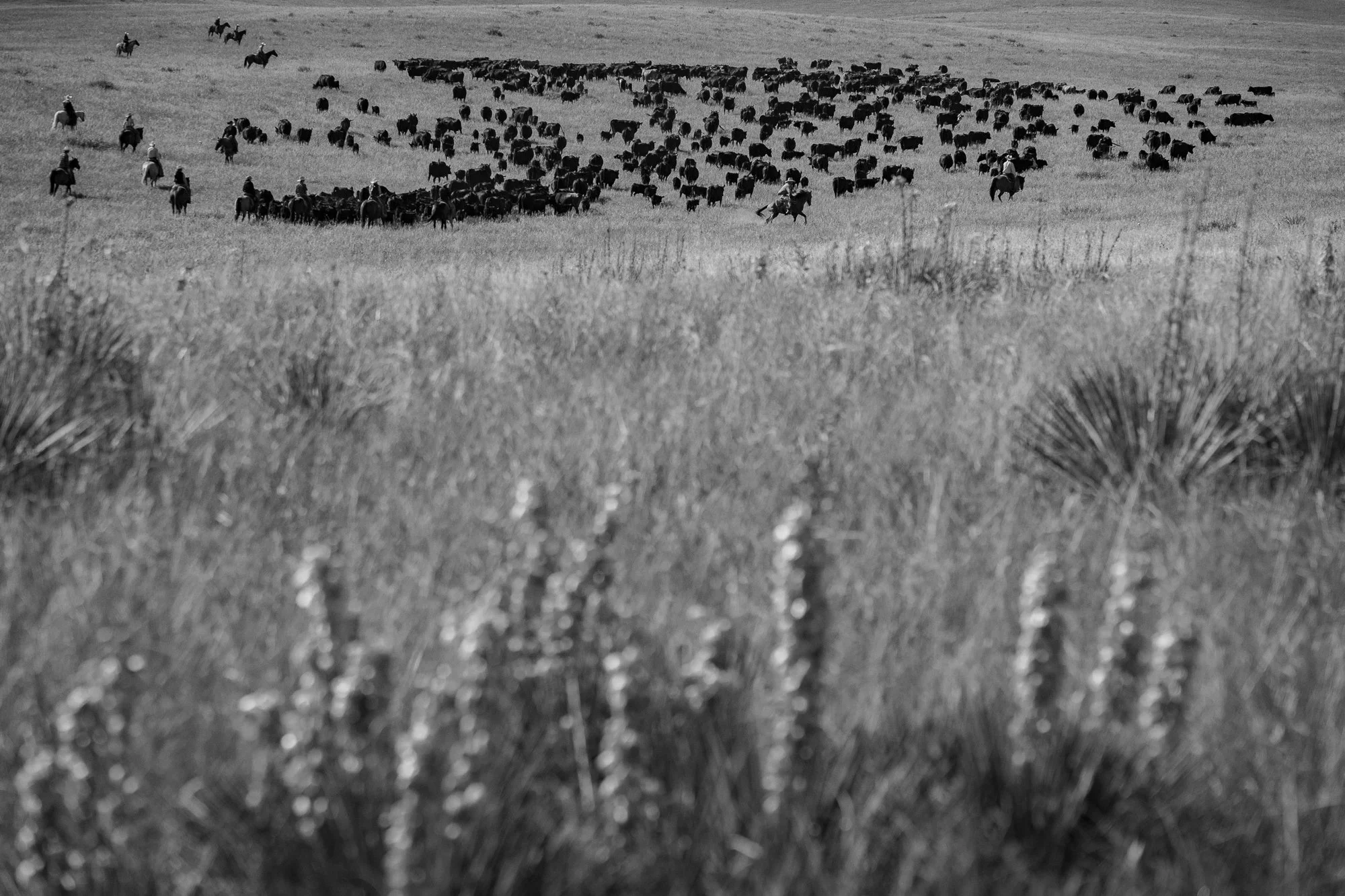
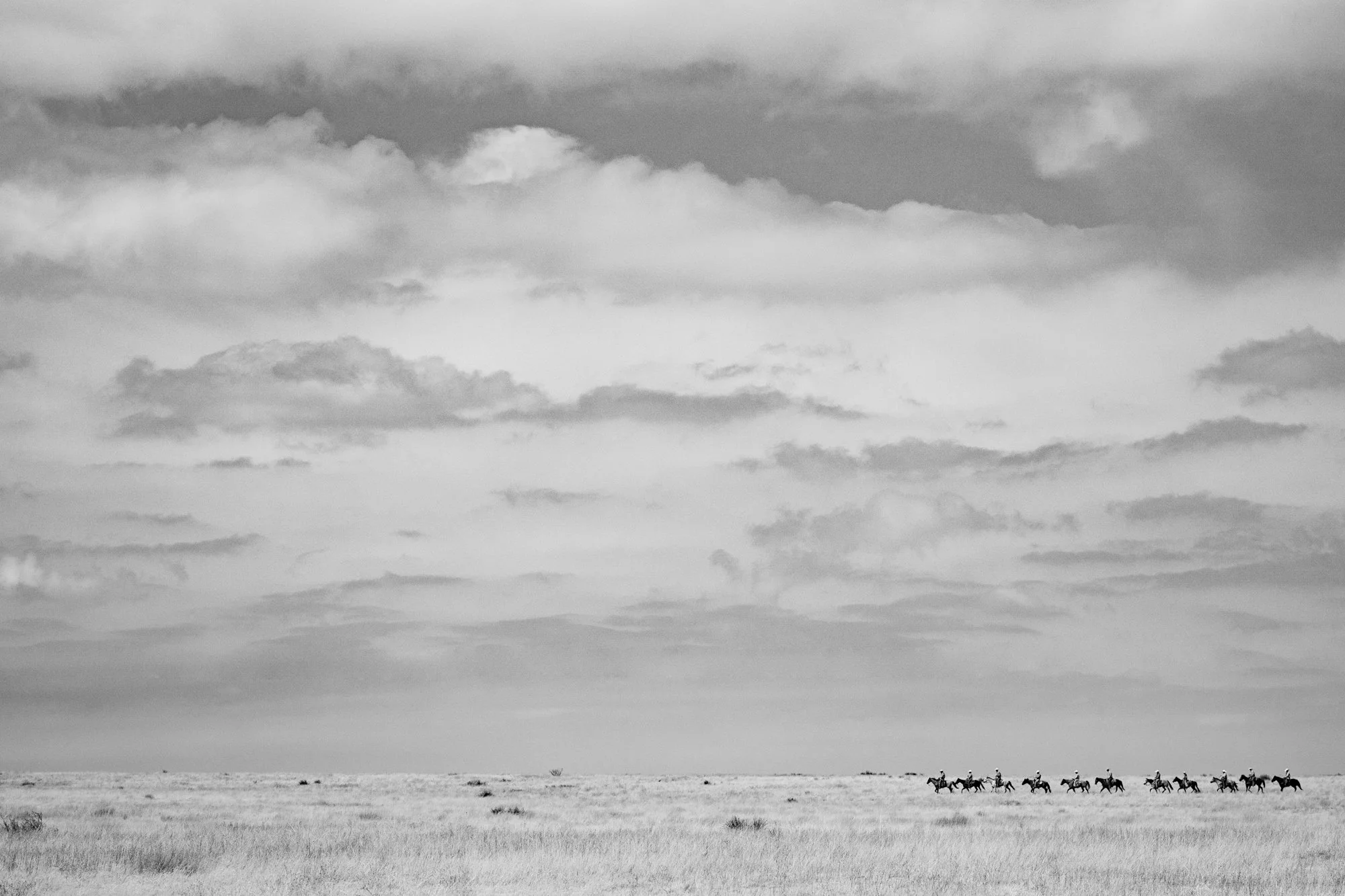
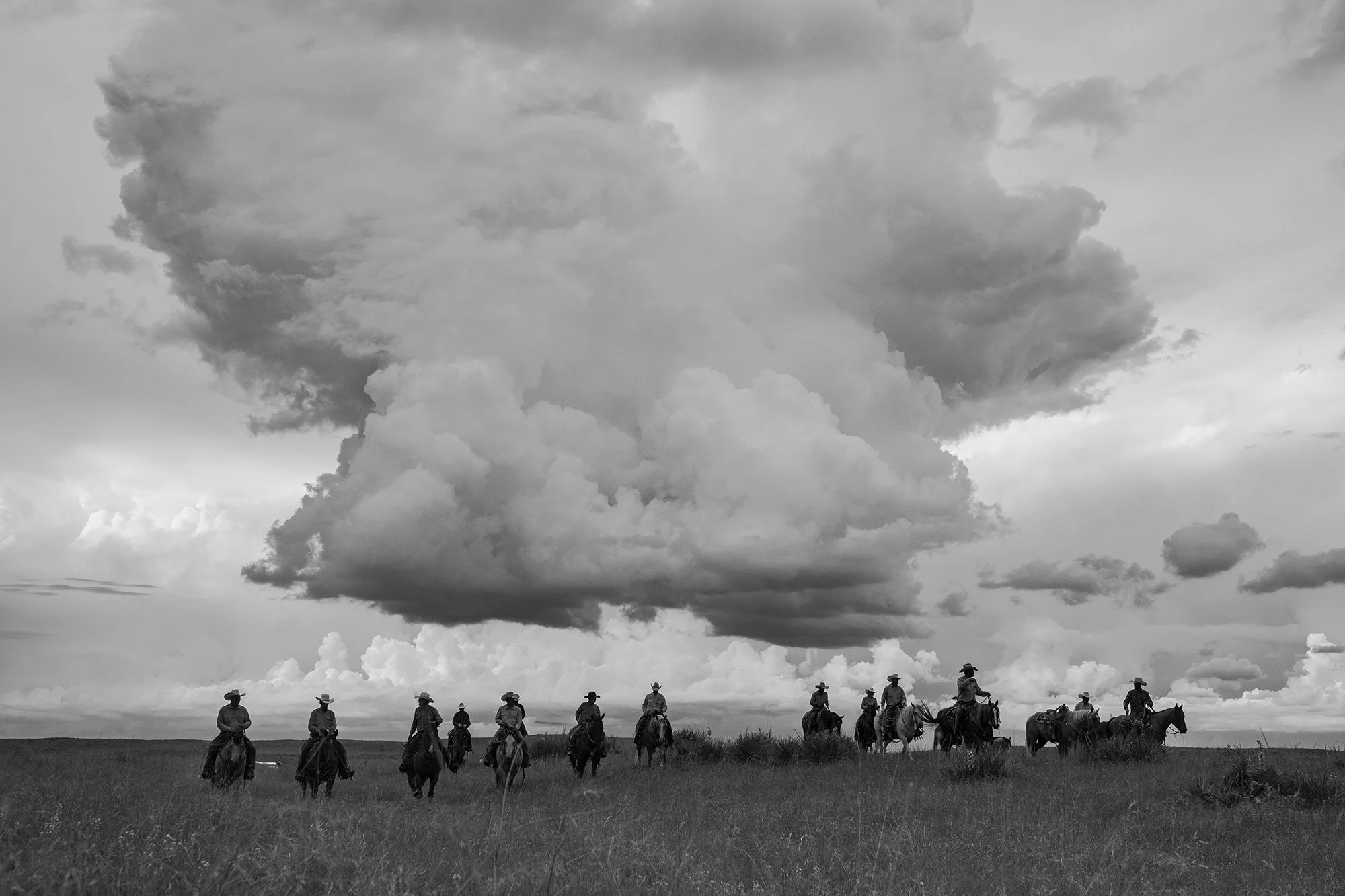
Cowboys gathering cattle across open high desert landscape at TS Ranch

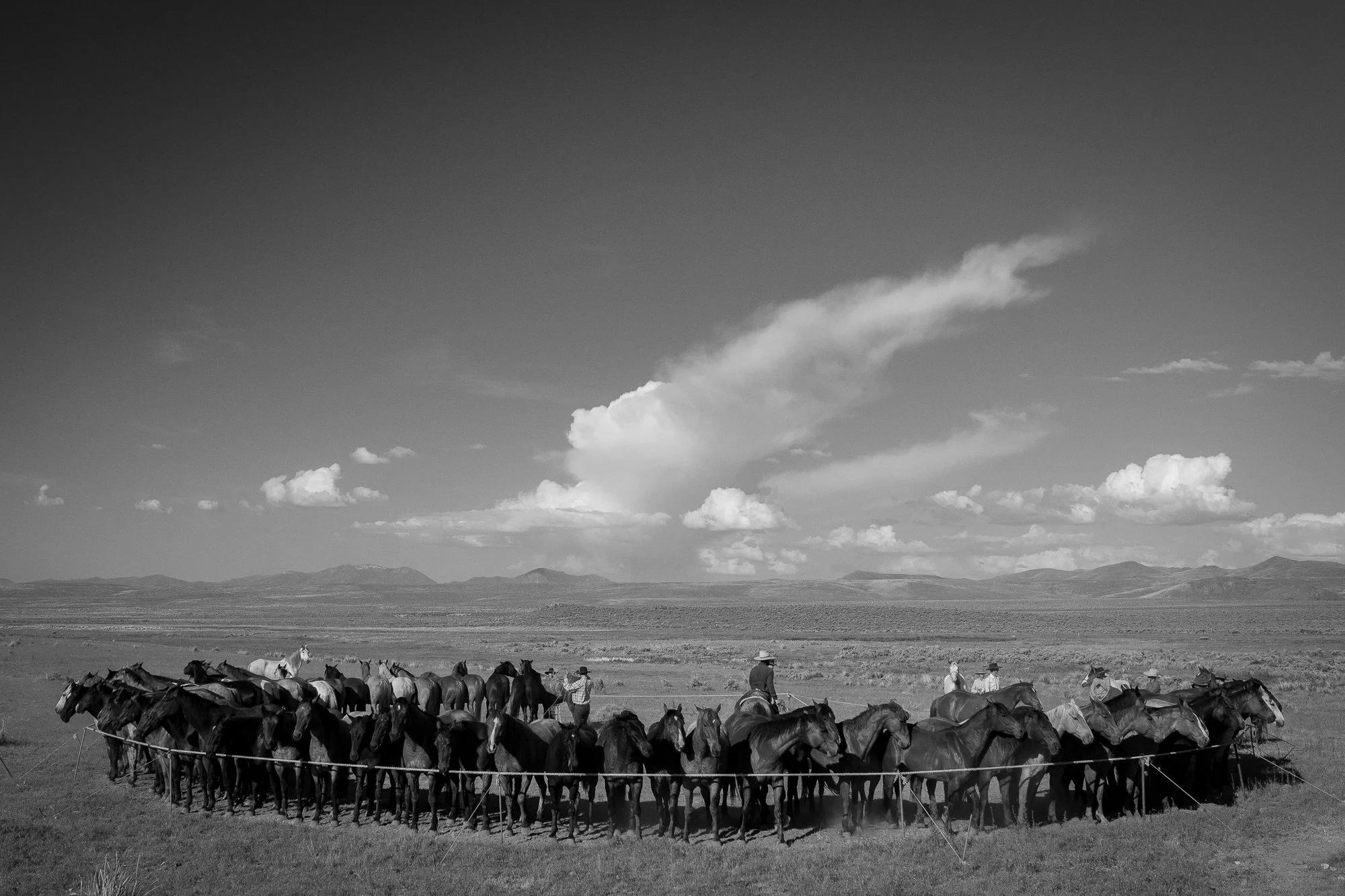
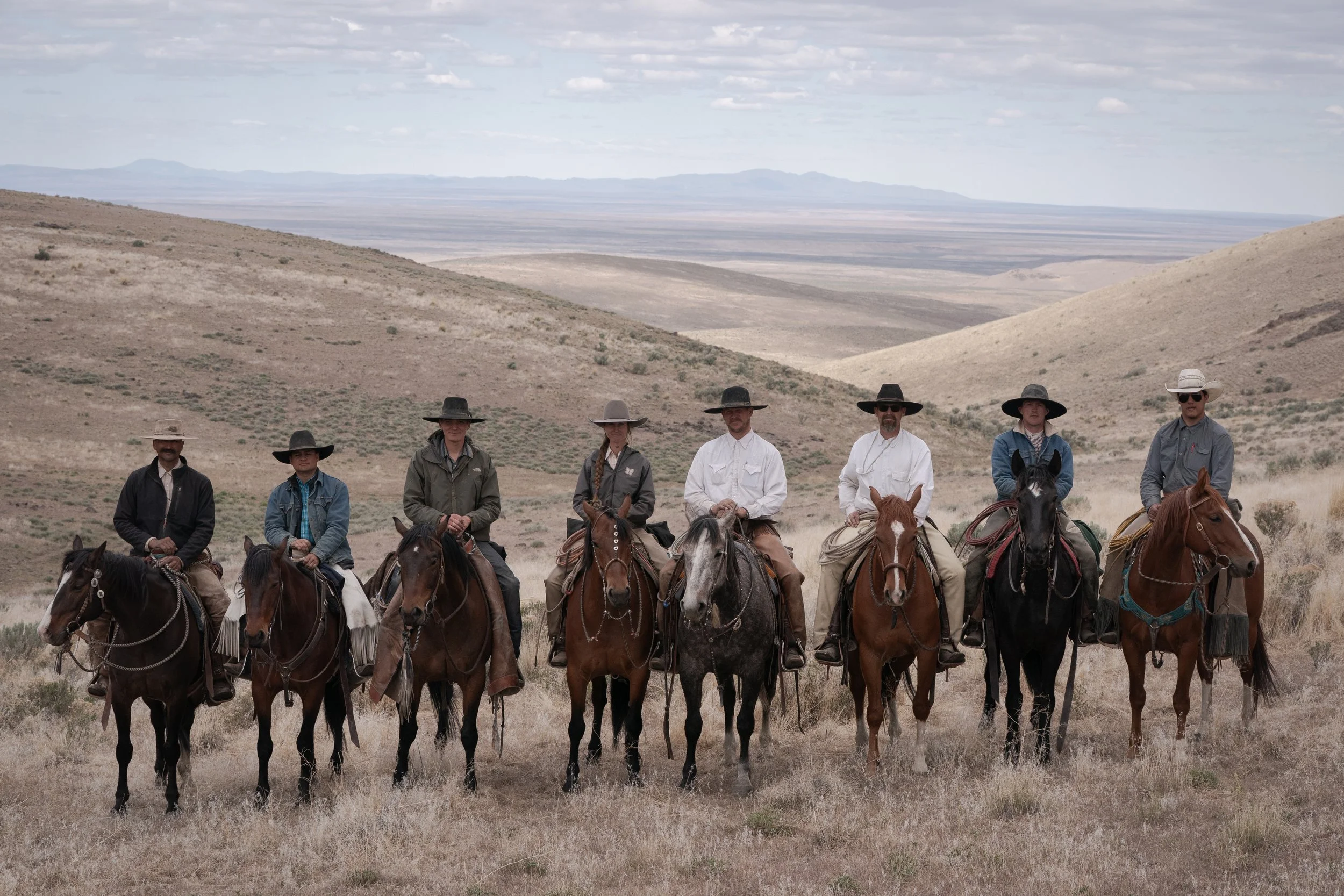
Buckaroos spread out across the range, slowly gathering cattle as the morning light settles over the high desert.

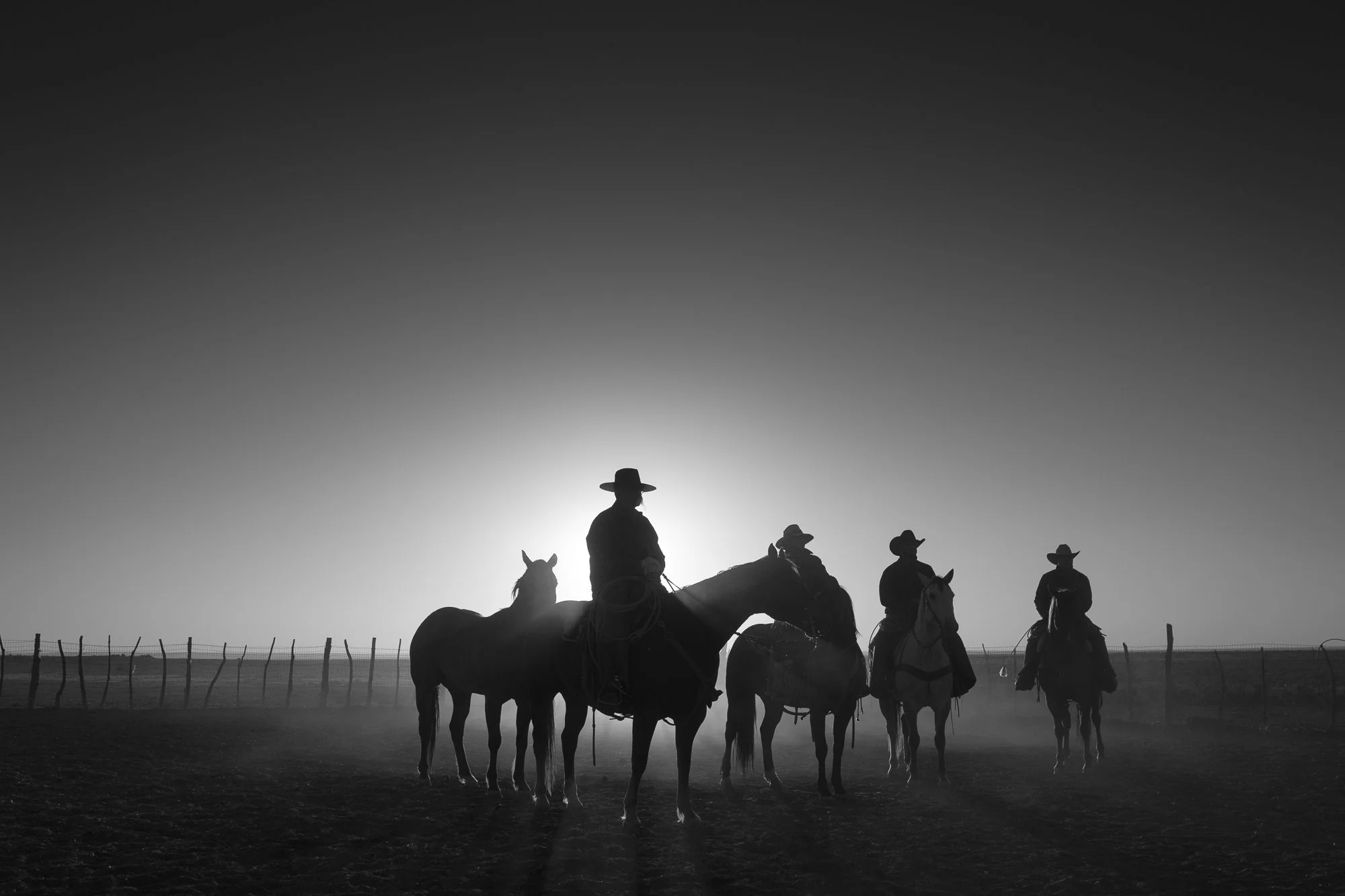
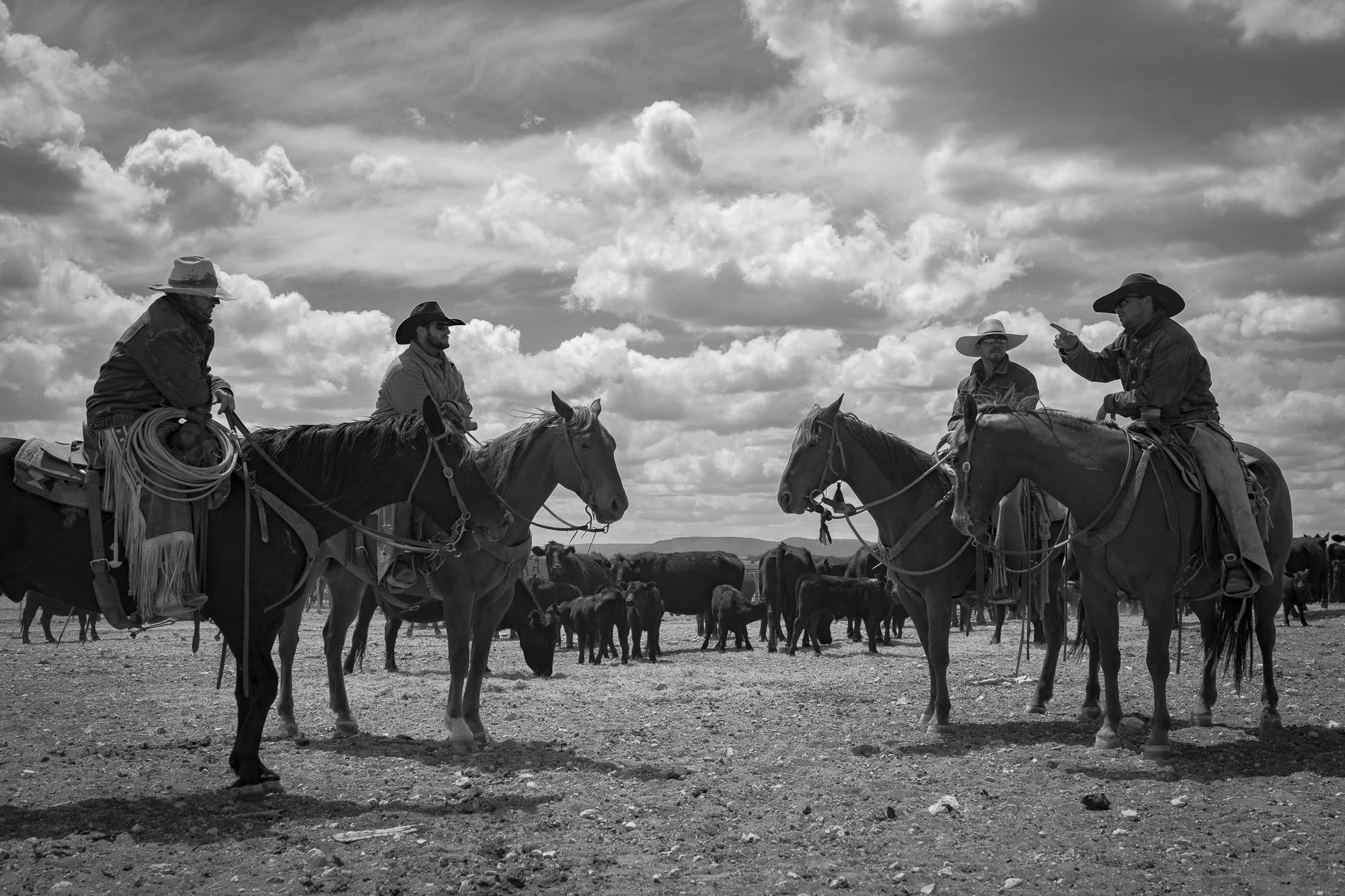
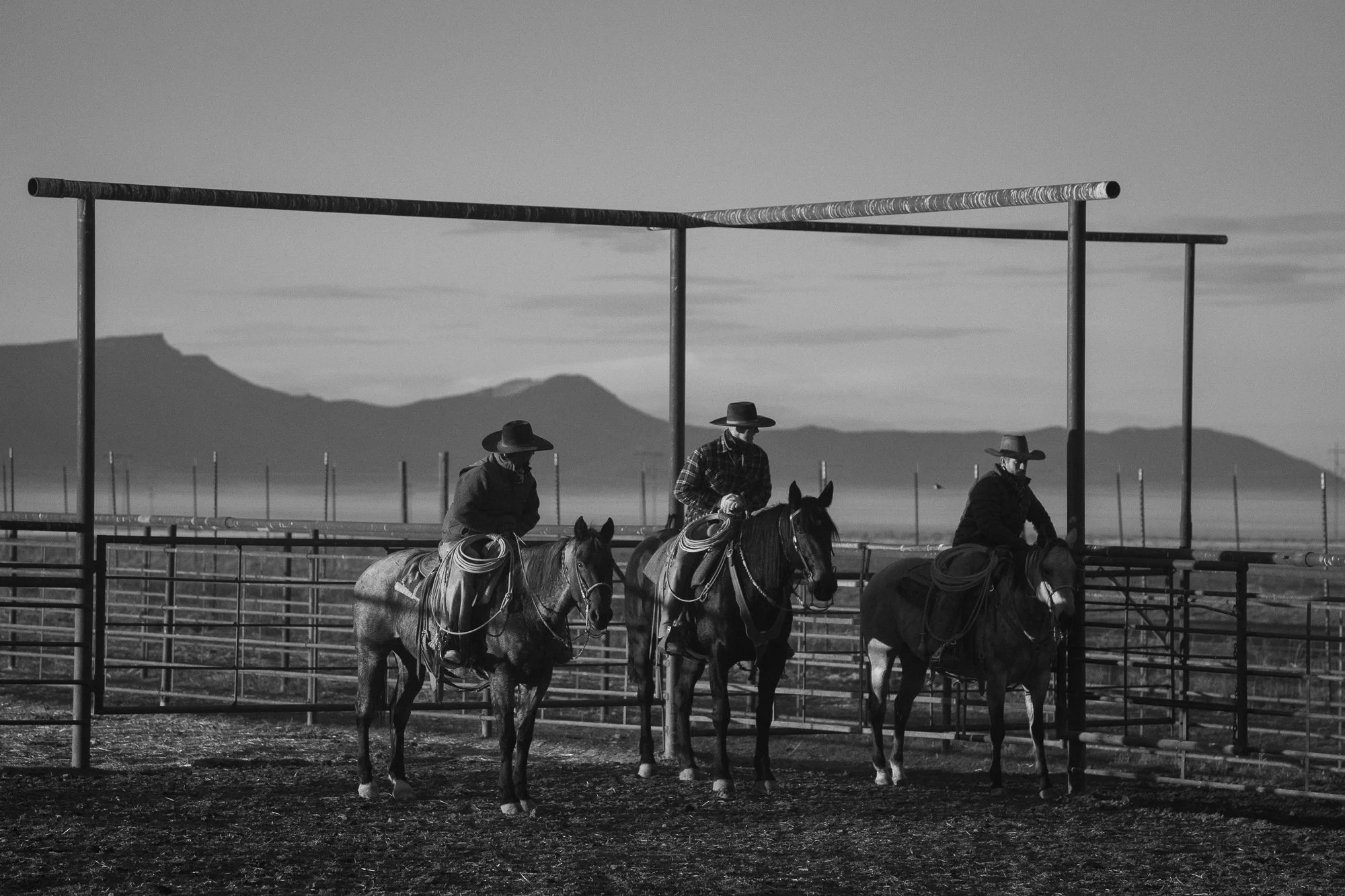
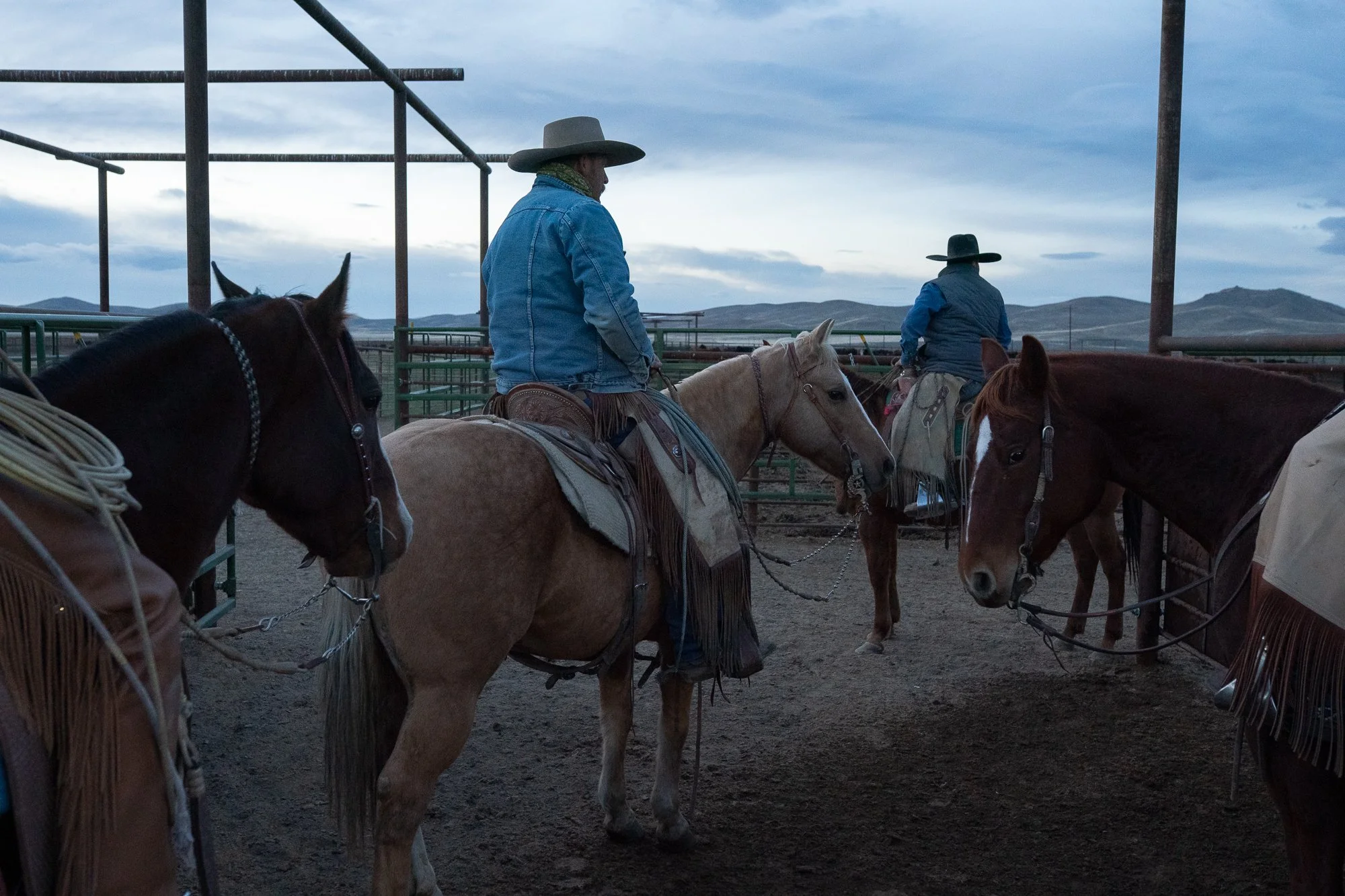
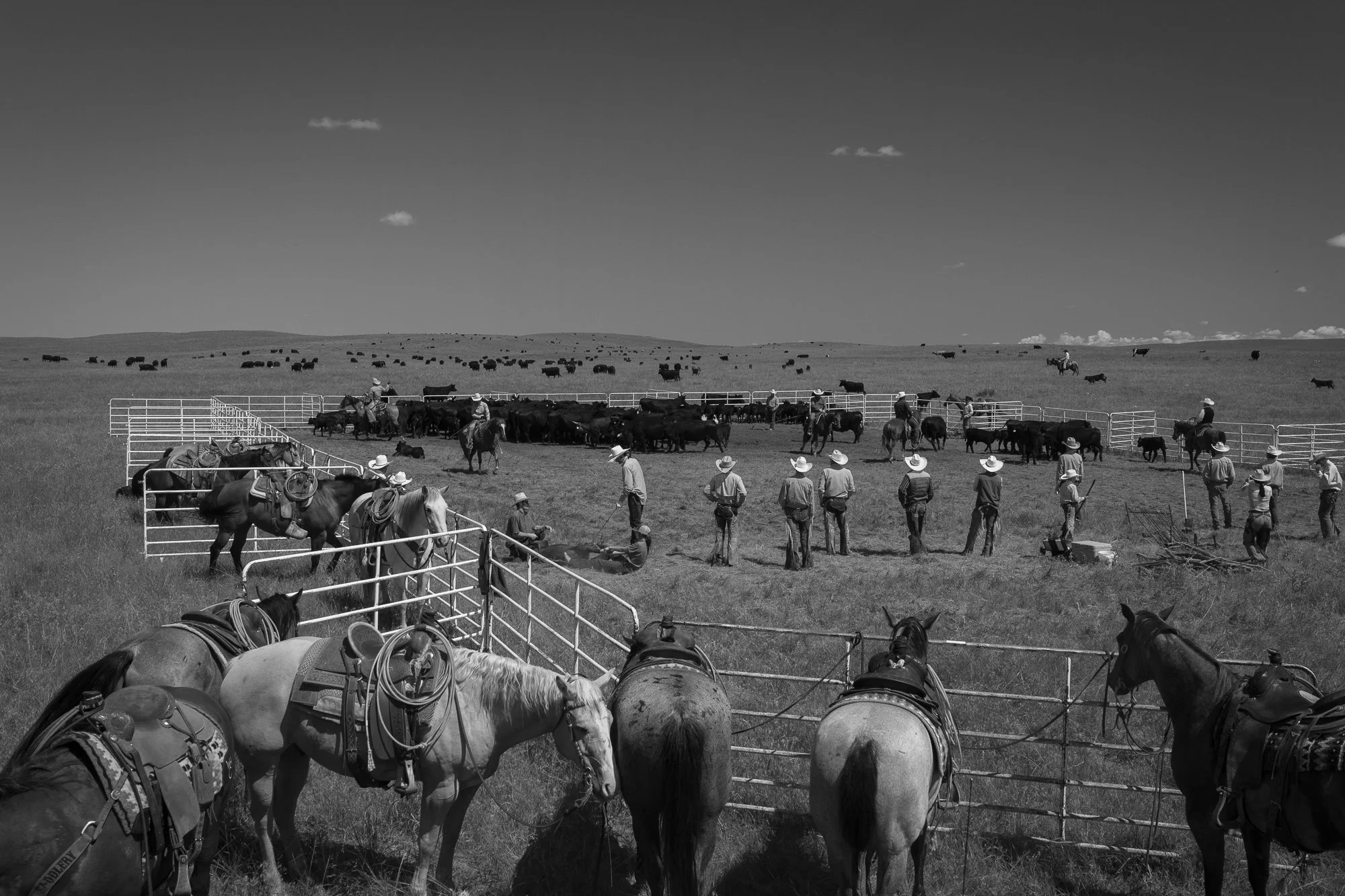
Group of buckaroos on horseback waiting in cattle pens at TS Ranch

Buckaroos sit mounted in the pens, waiting for the next move as cattle work begins to unfold.

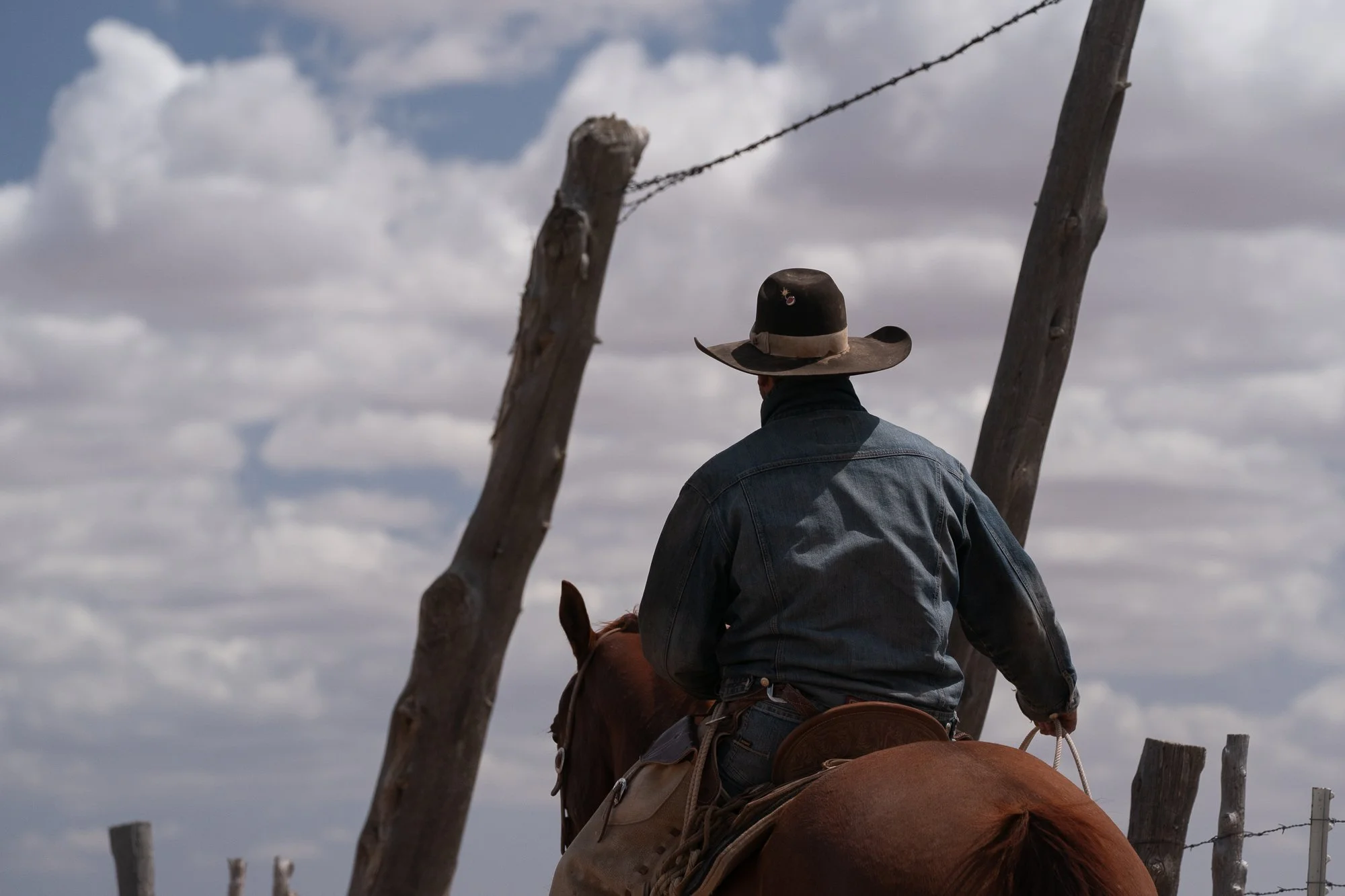
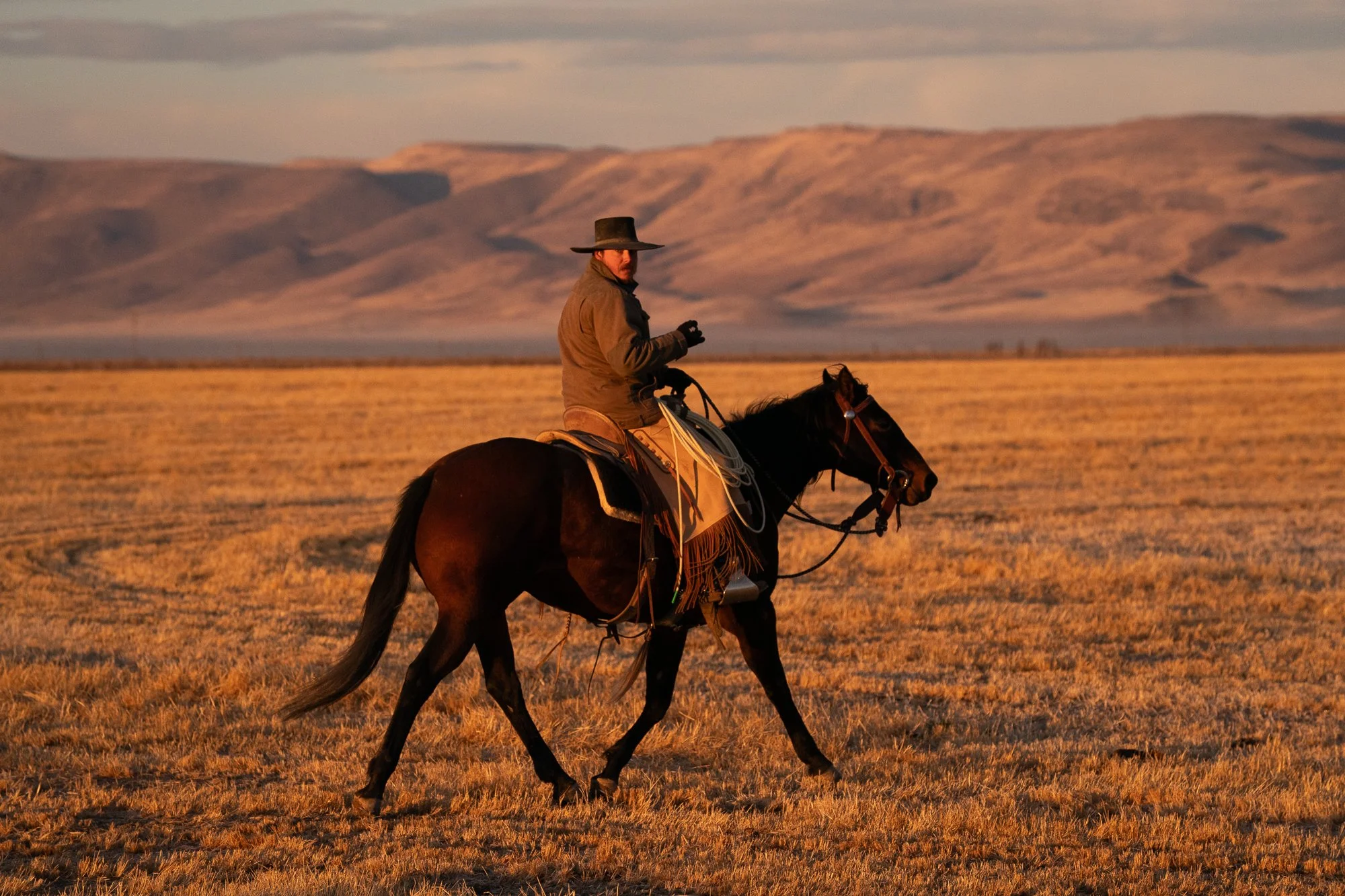
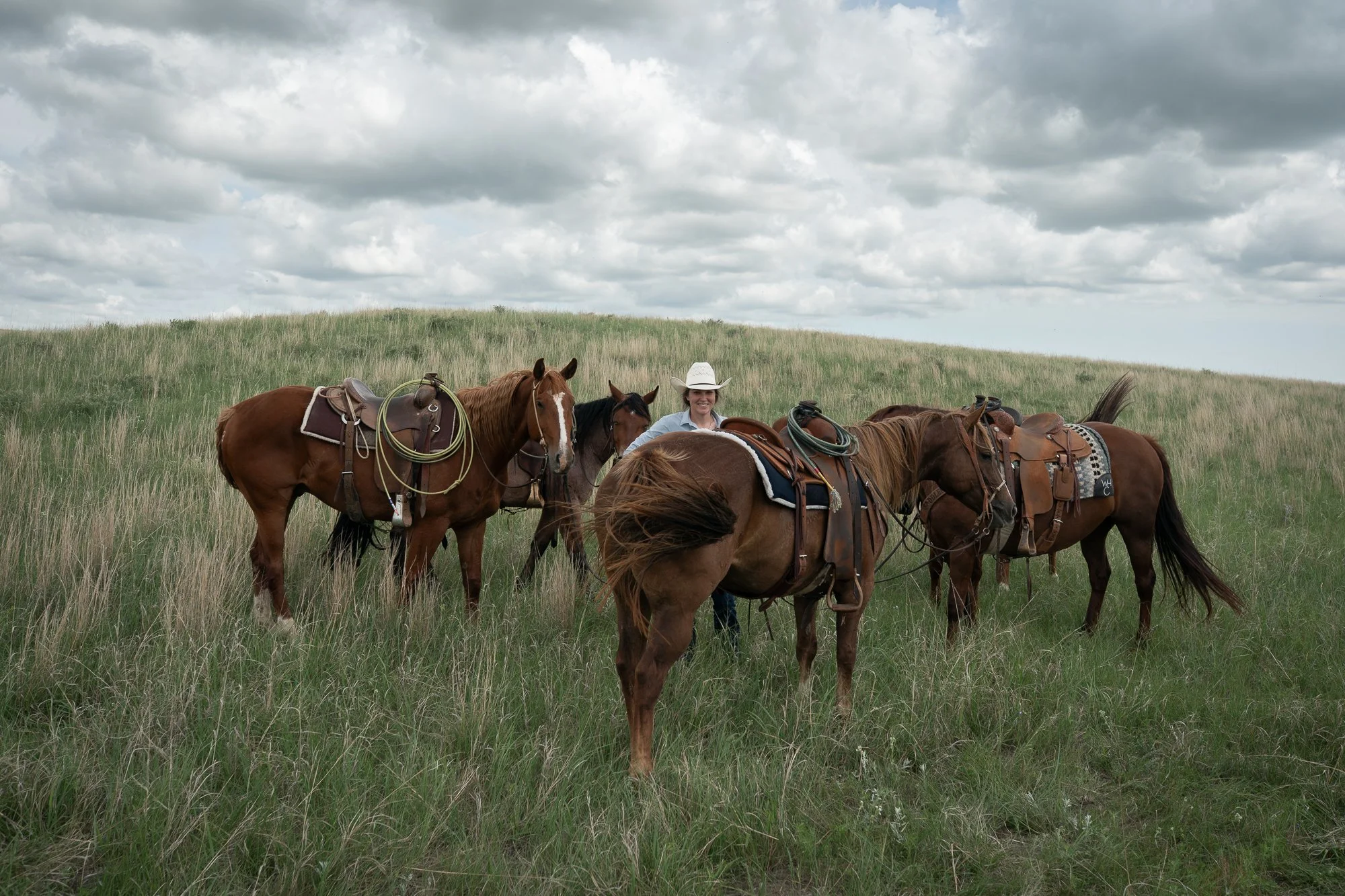
Buckaroo riding horseback across open desert landscape at TS Ranch

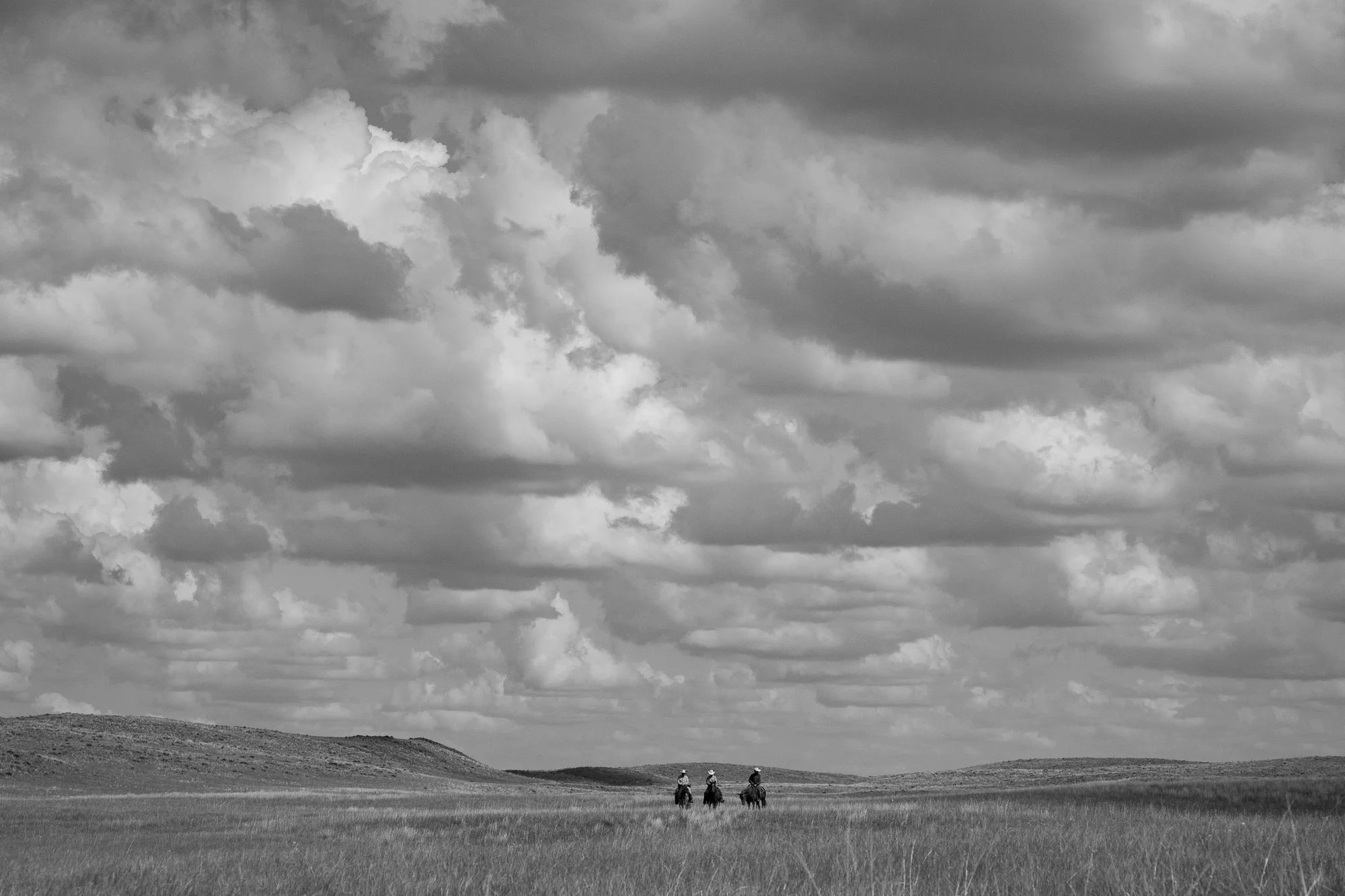
A buckaroo rides across the open range at TS Ranch, the high desert stretching out beneath the evening light.

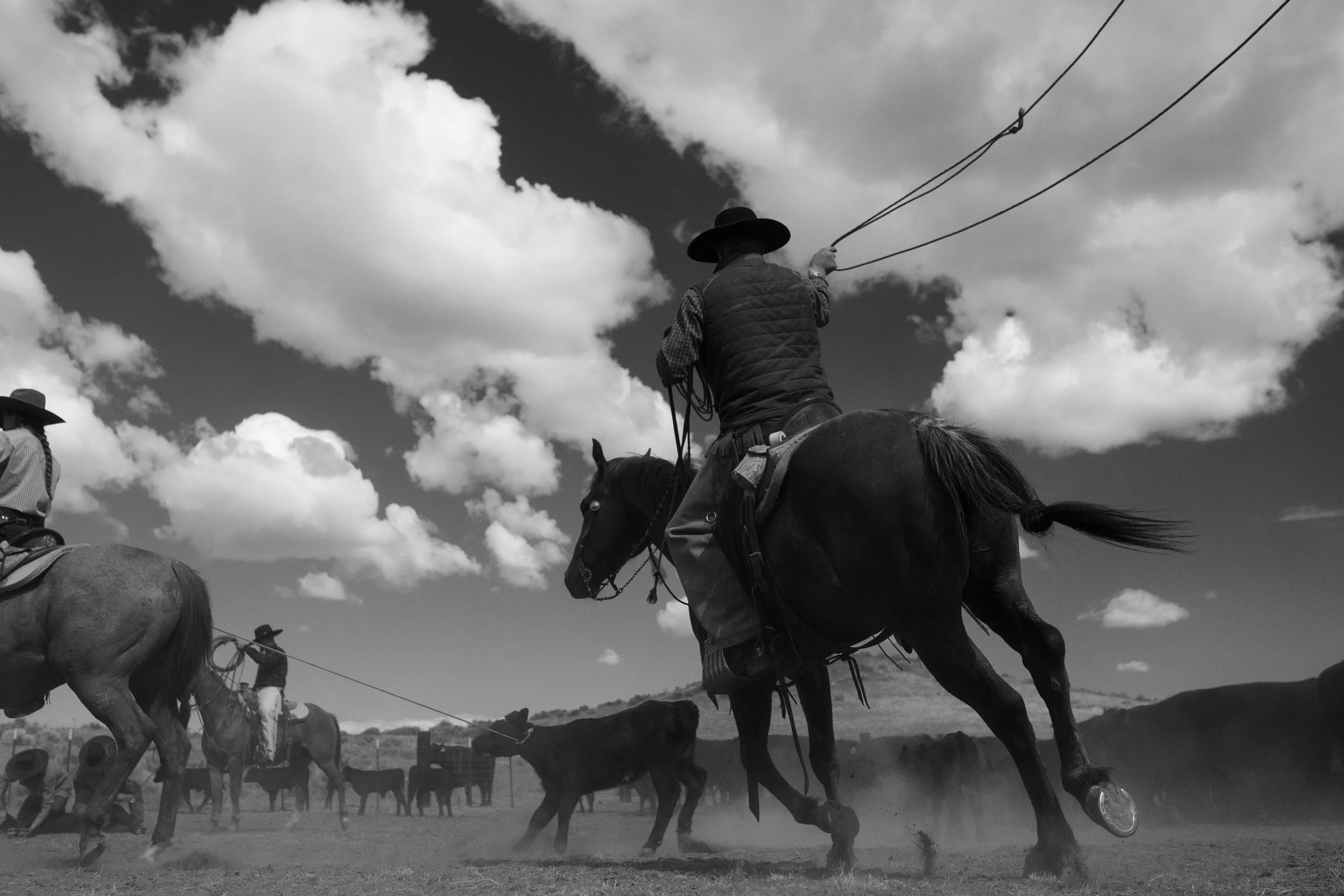
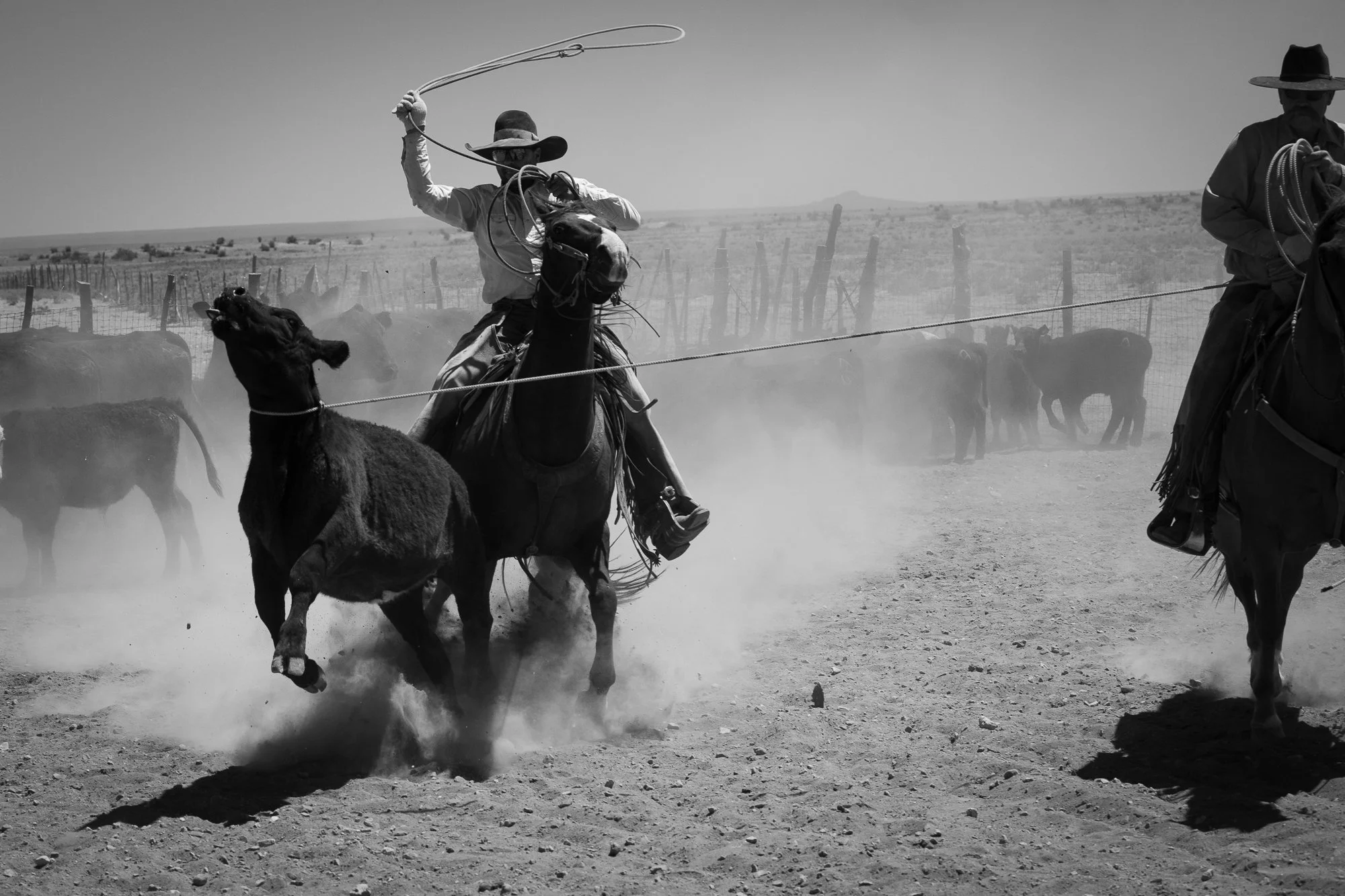
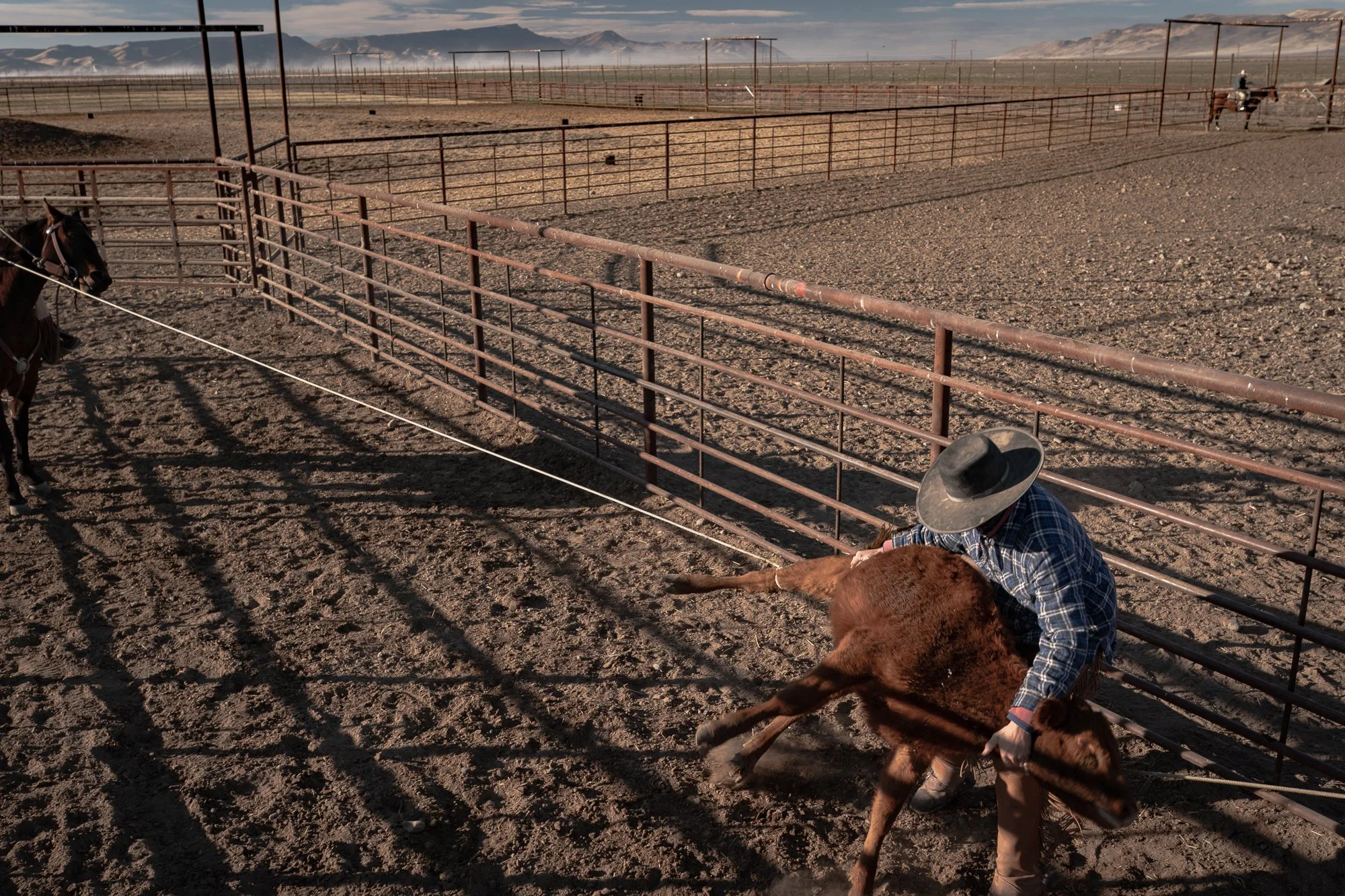
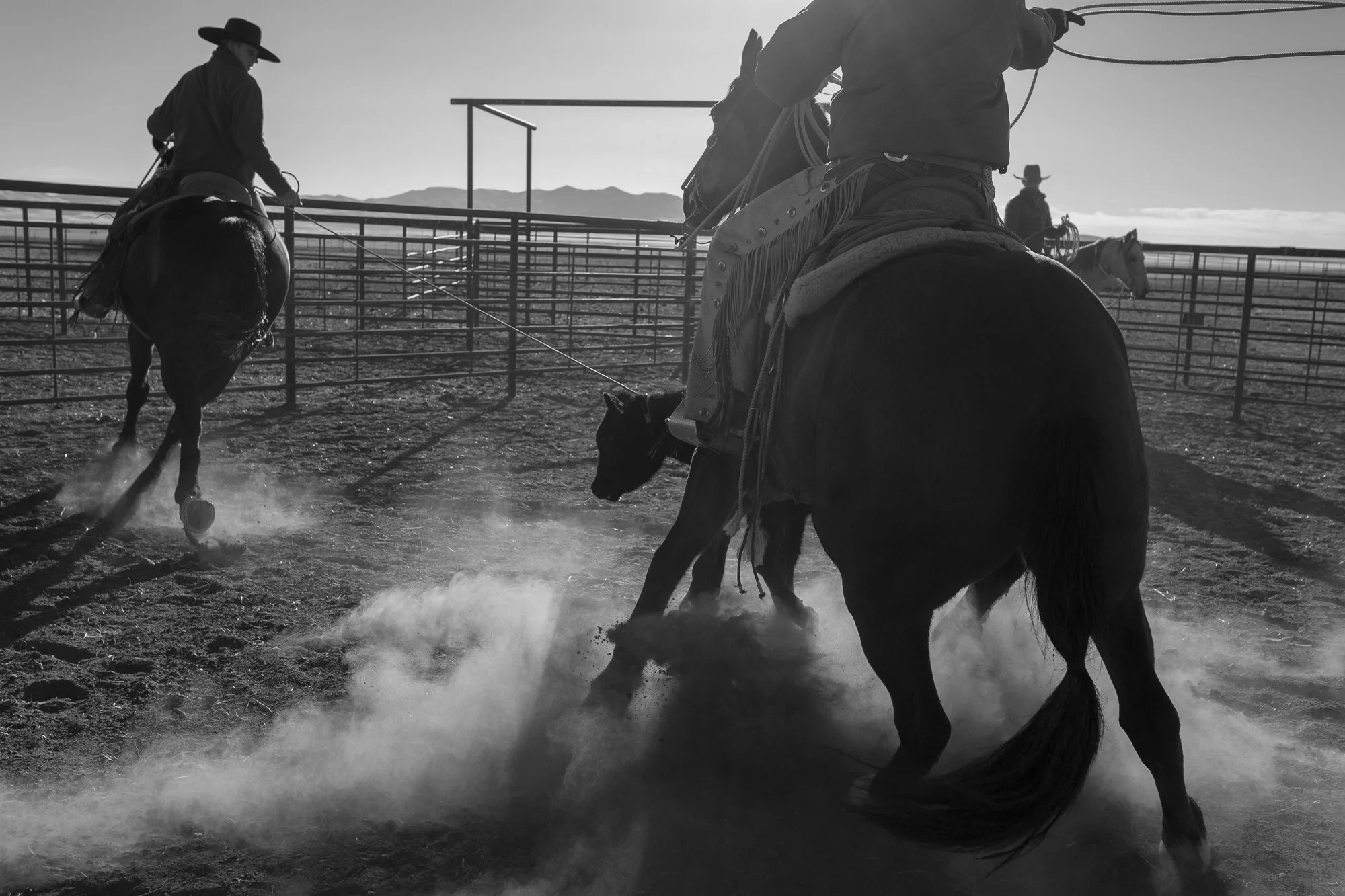
Cowboy roping a calf in the branding pen at TS Ranch

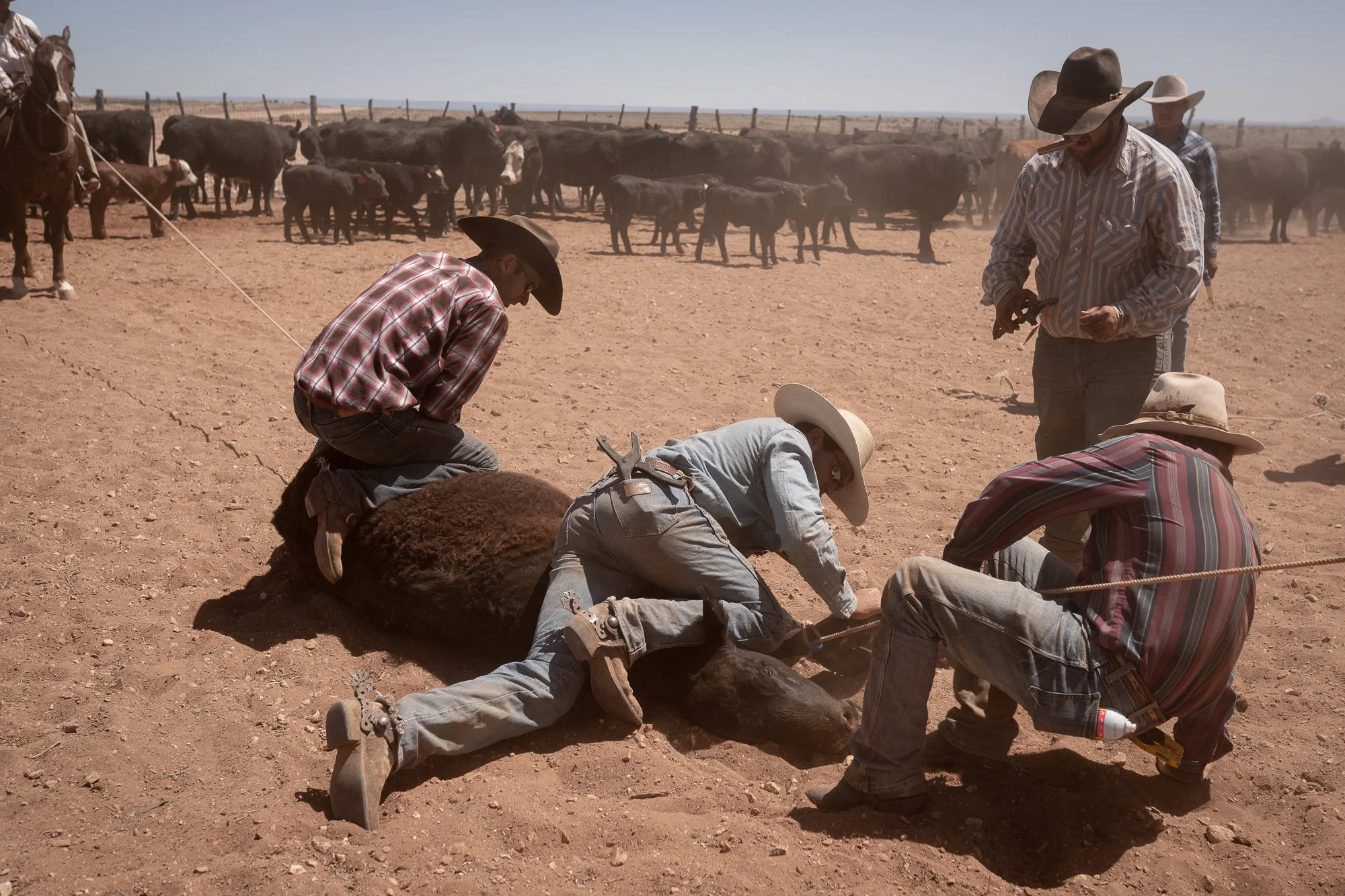
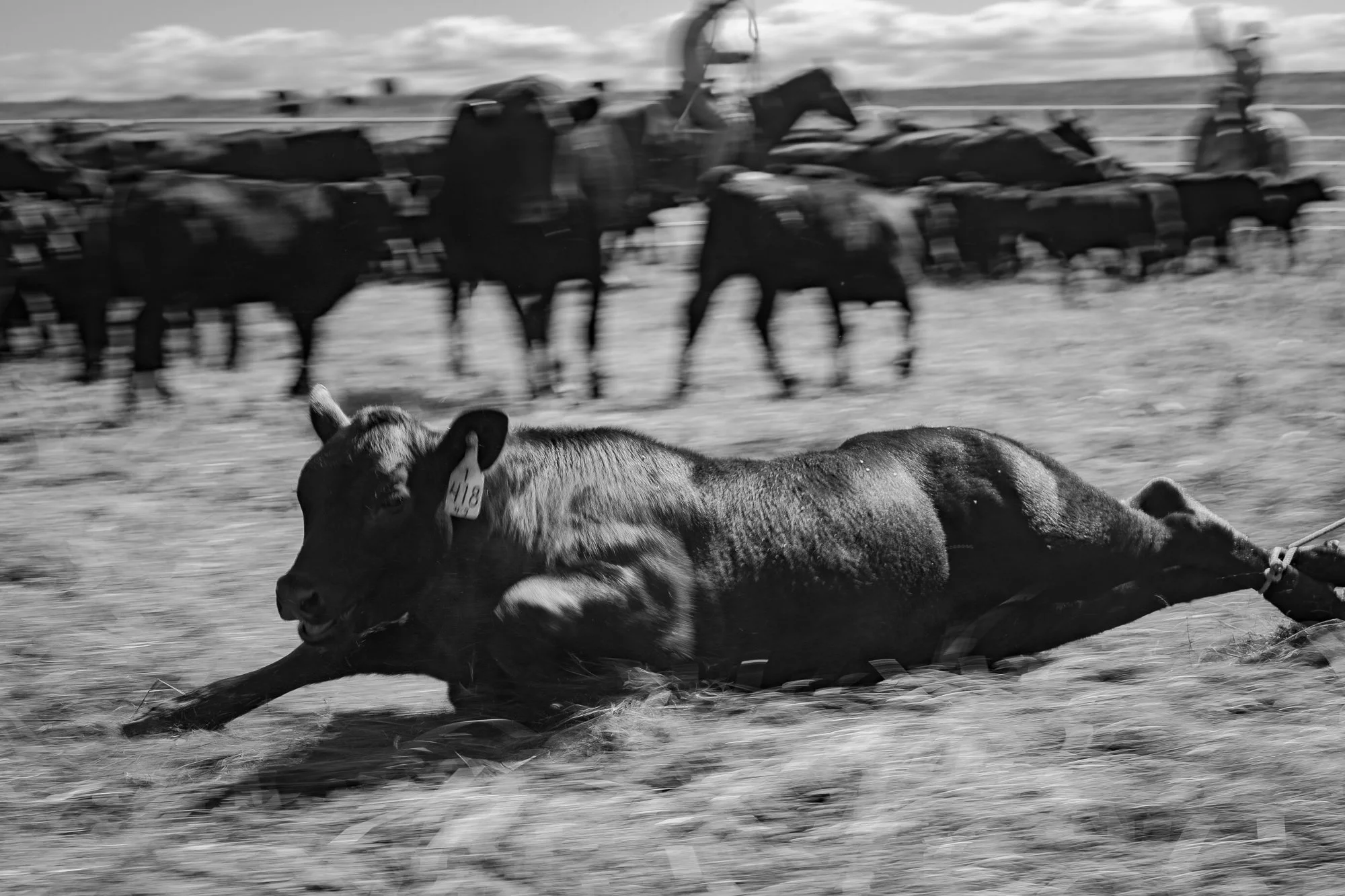
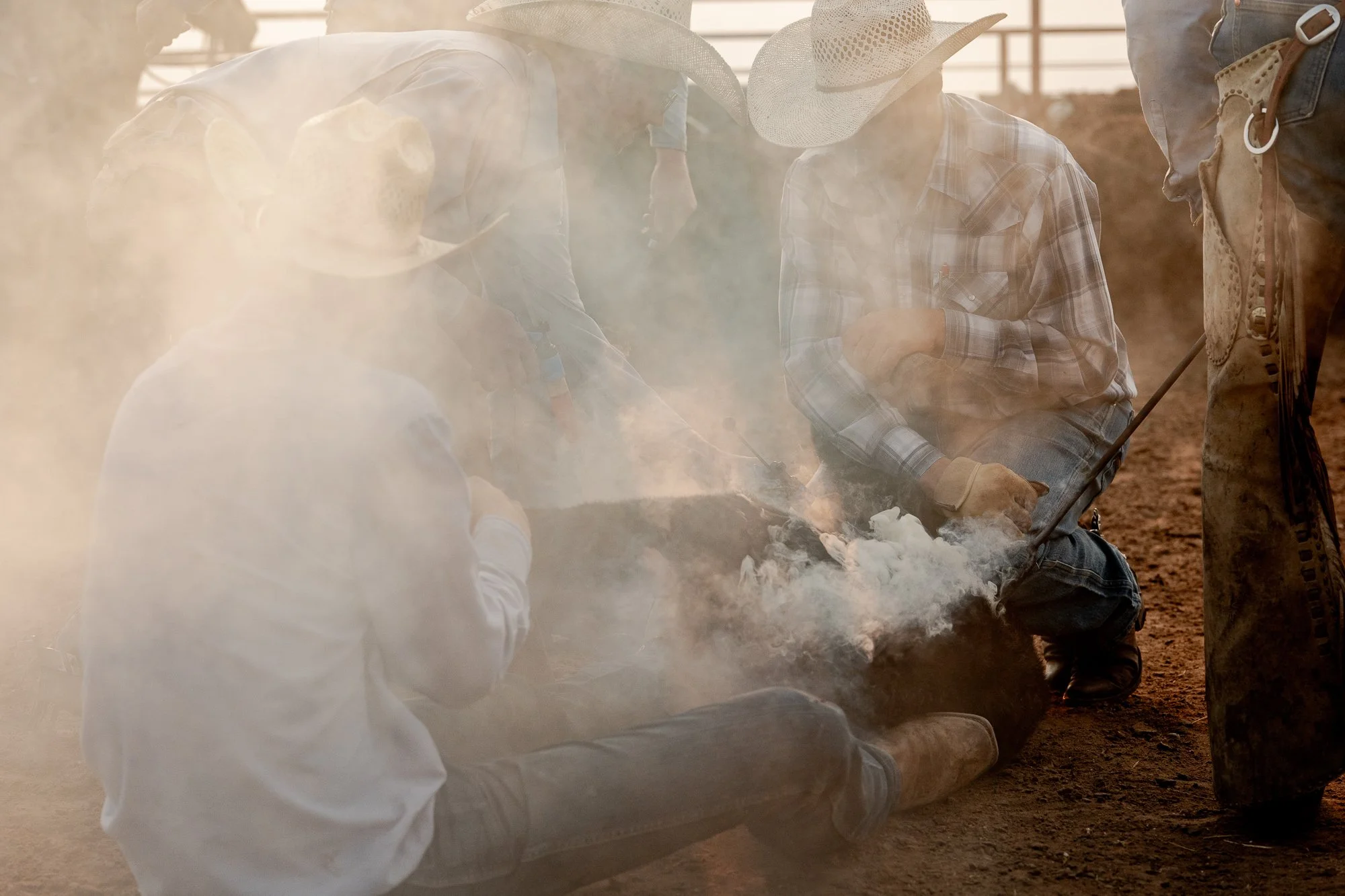
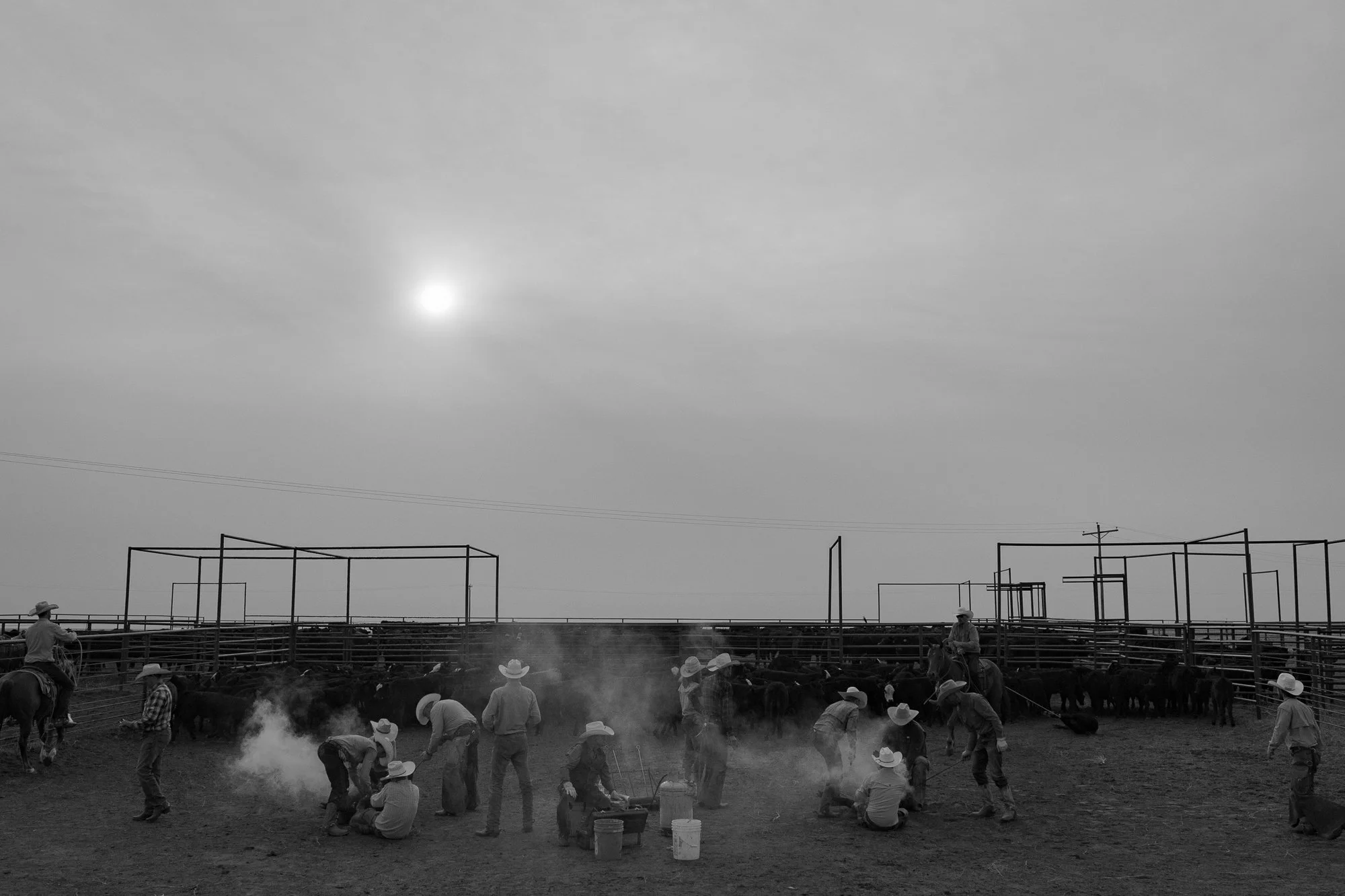
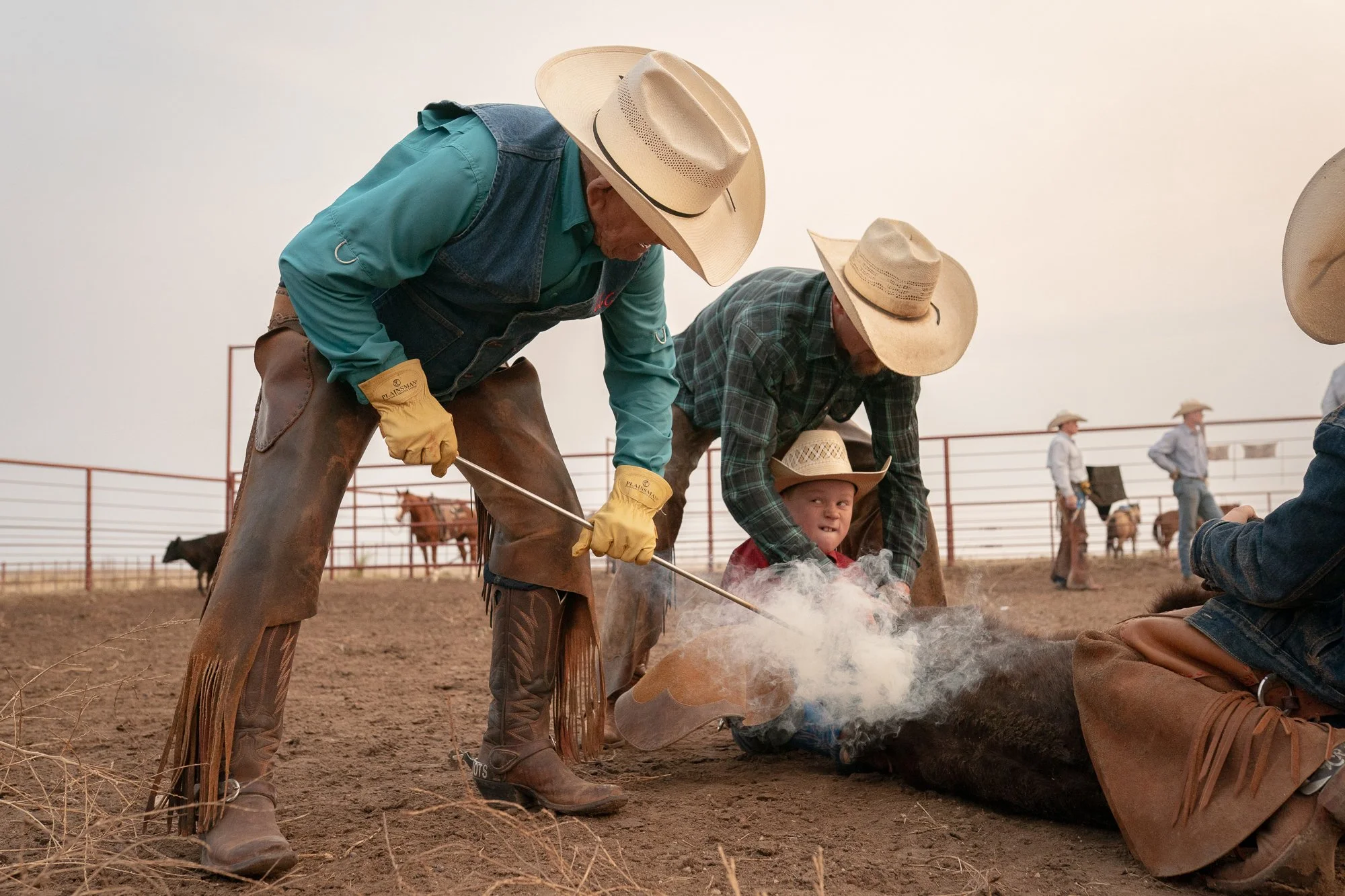
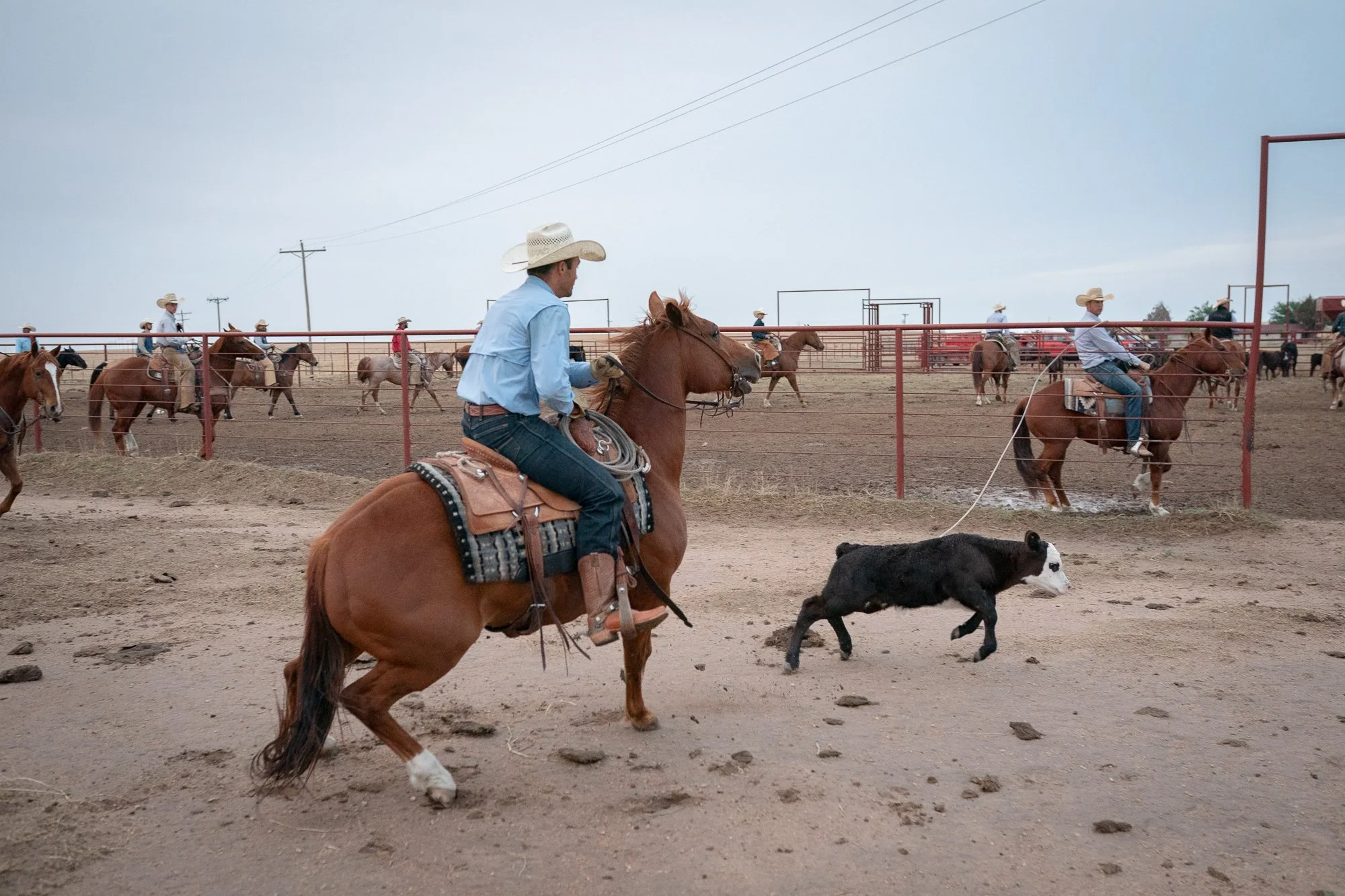
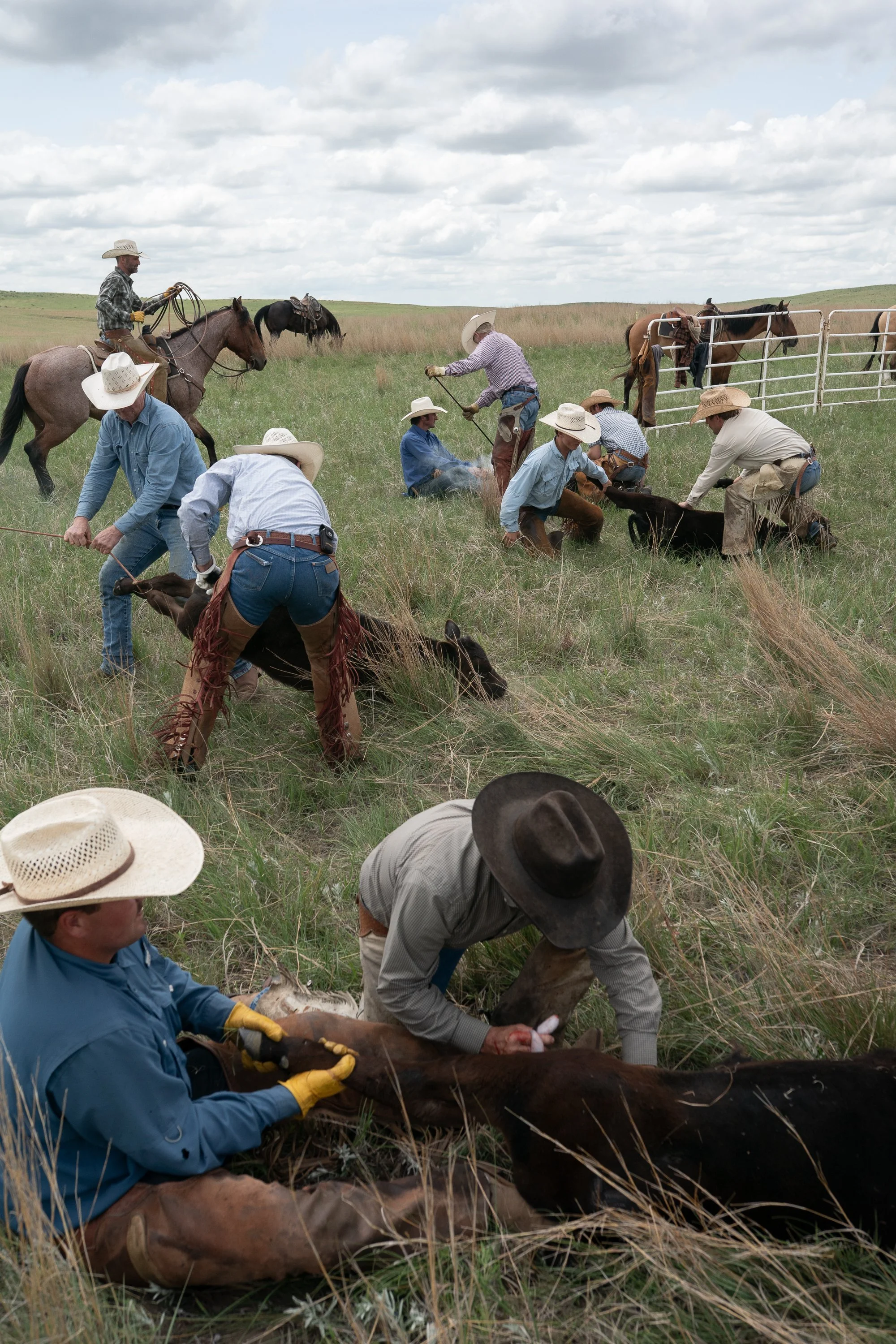
A calf is roped and held steady in the branding pen, a routine part of cattle work that has remained unchanged for generations.

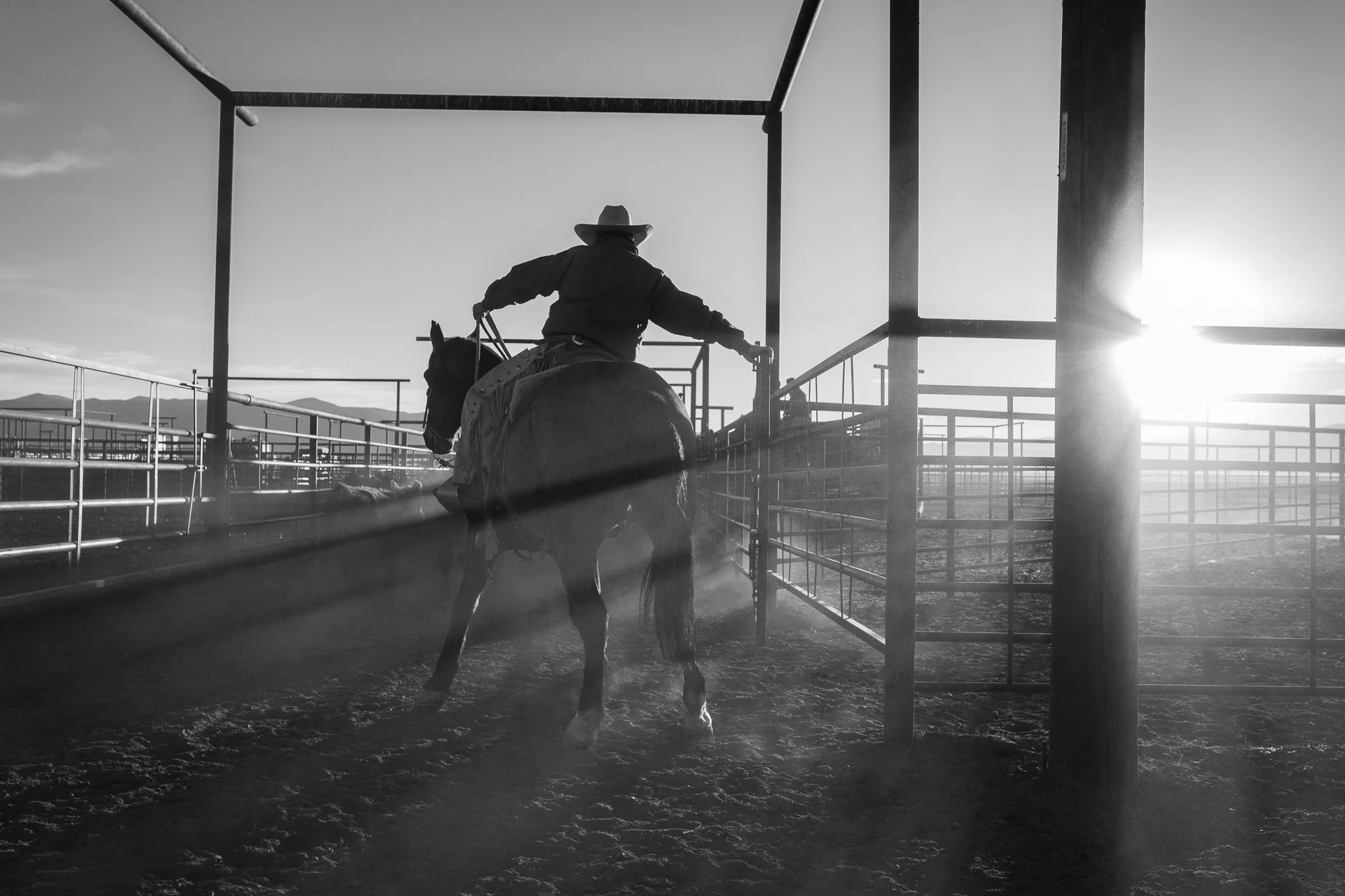
Buckaroo riding through dusty cattle pens at sunrise at TS Ranch

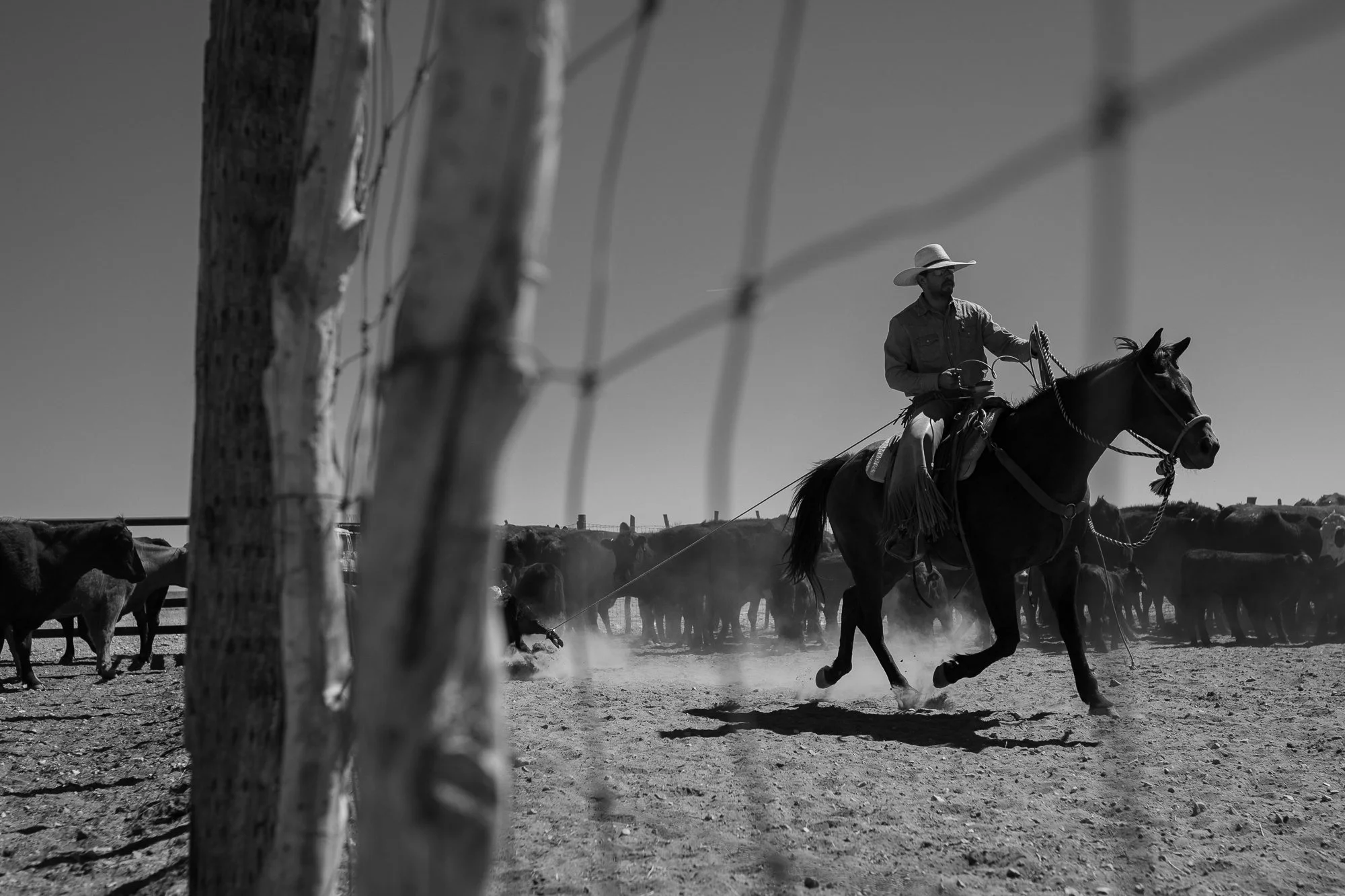
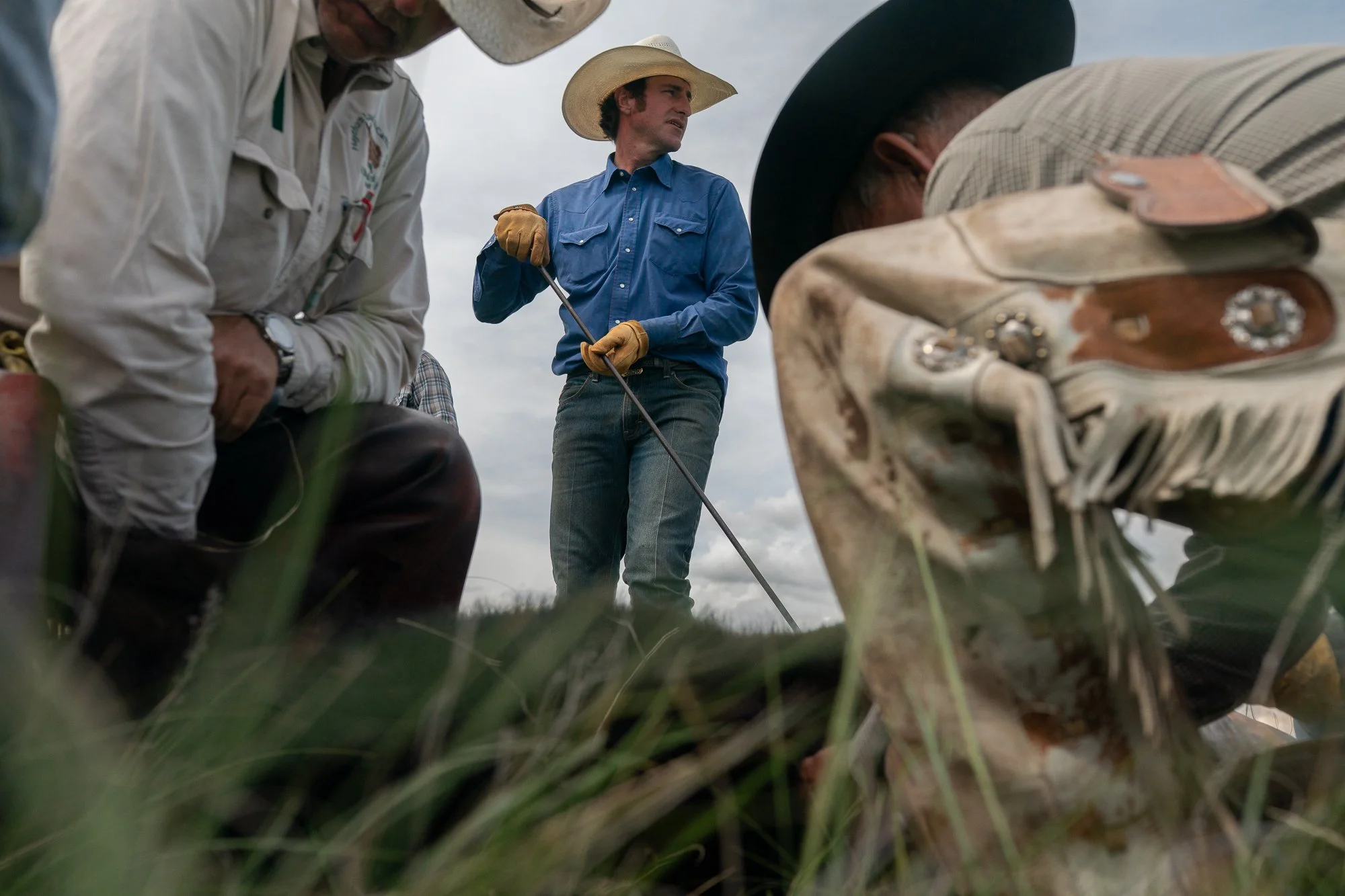
A buckaroo moves through the cattle pens at first light, dust catching the sun as the day’s work begins at TS Ranch.

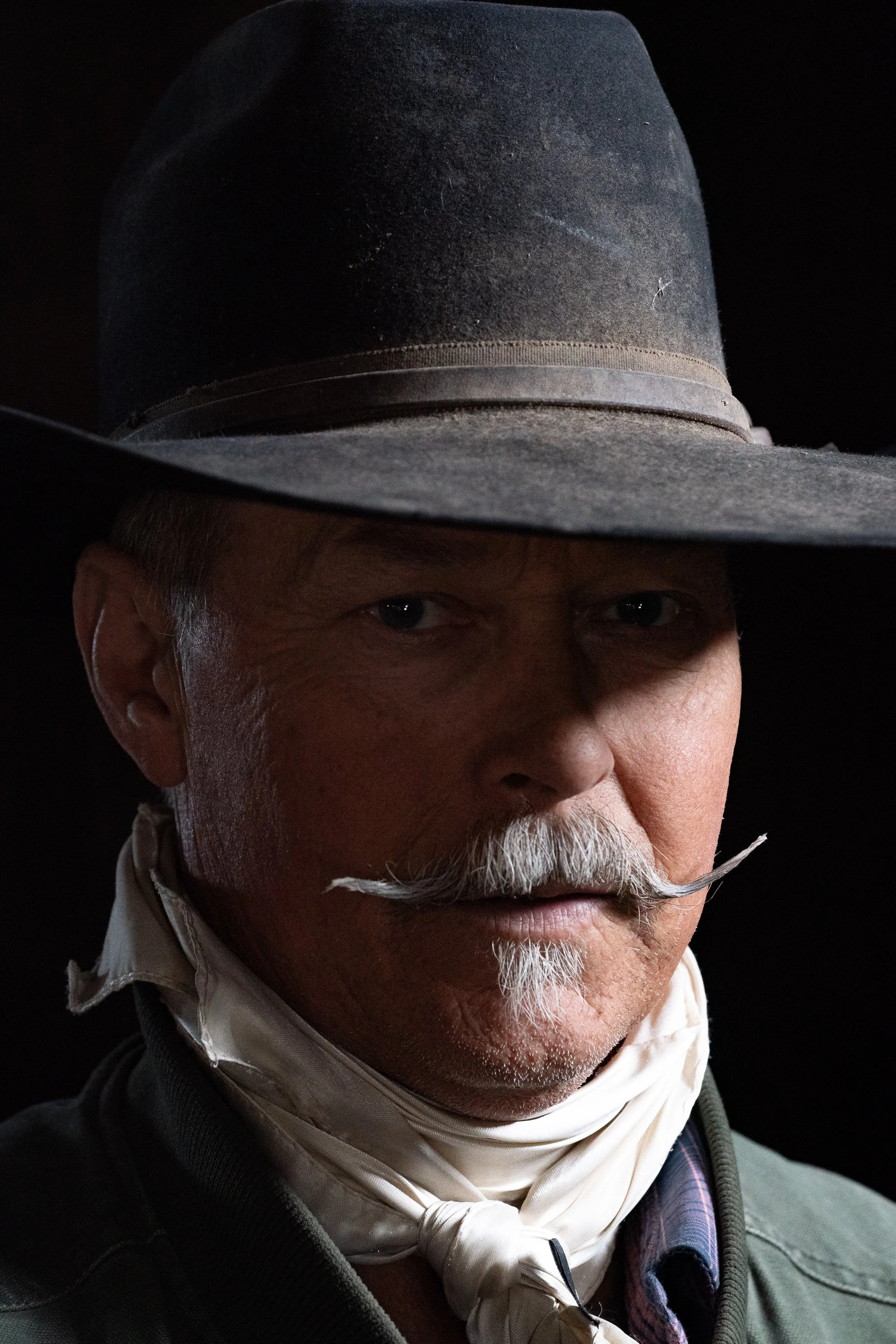
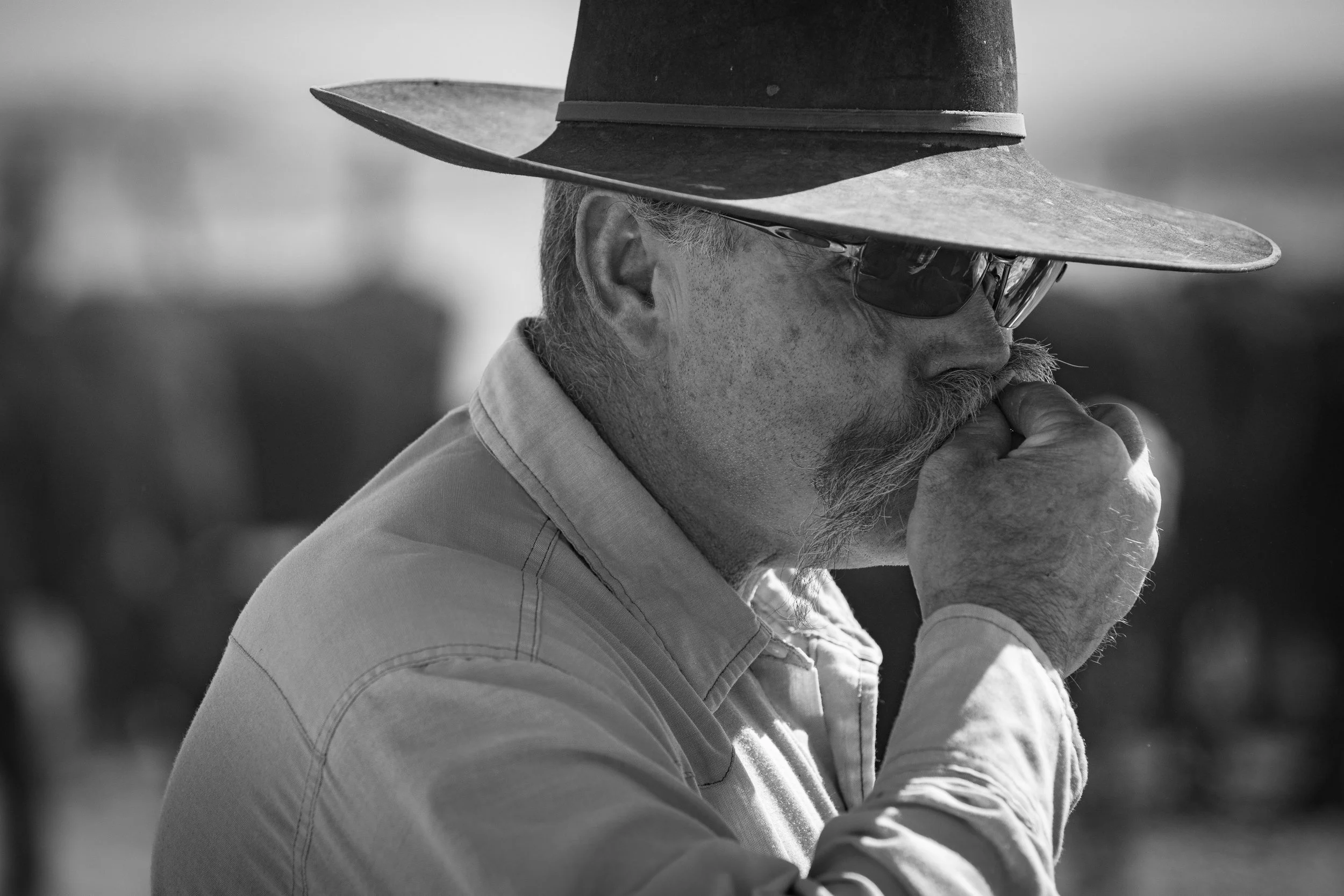
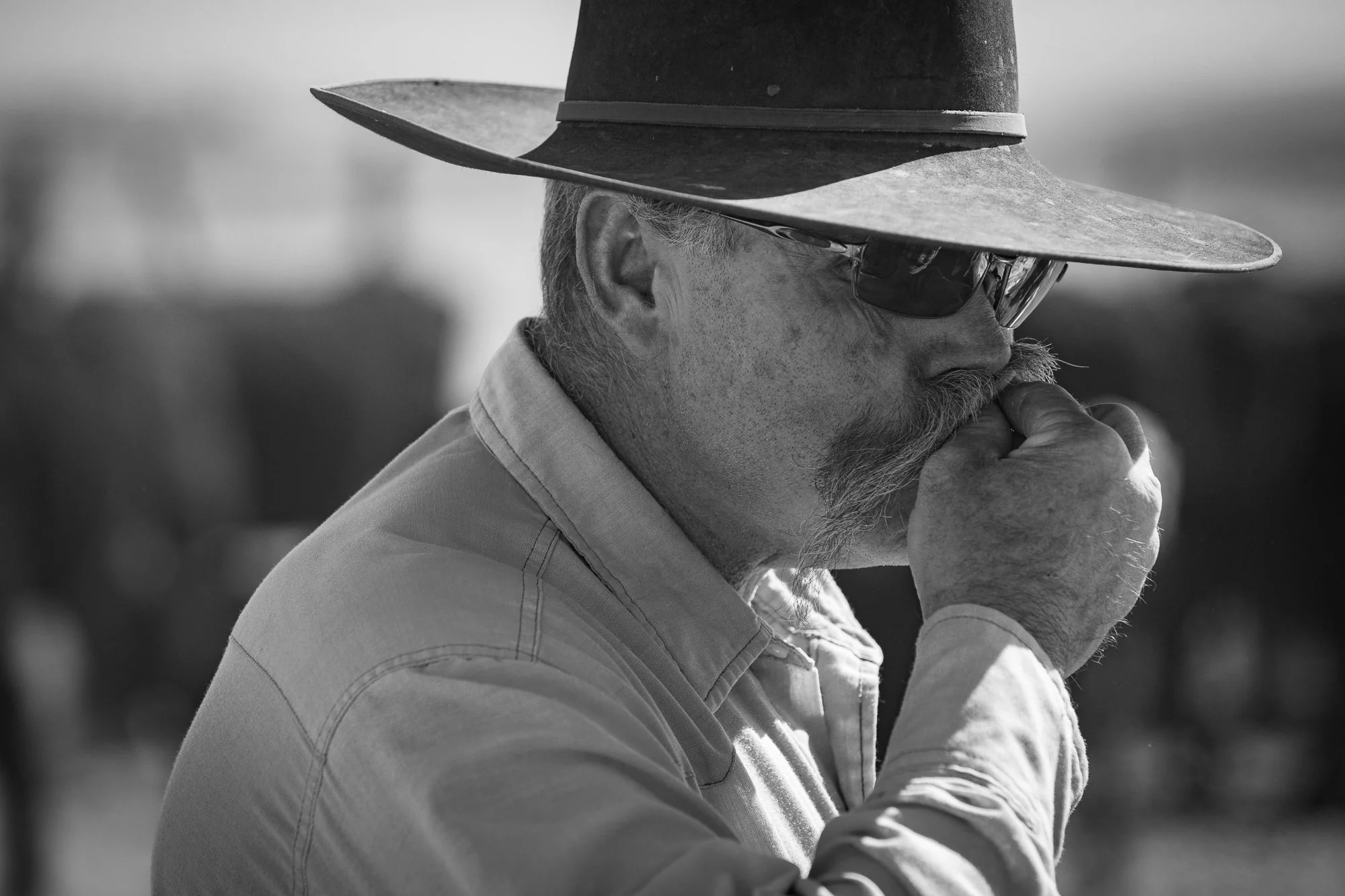
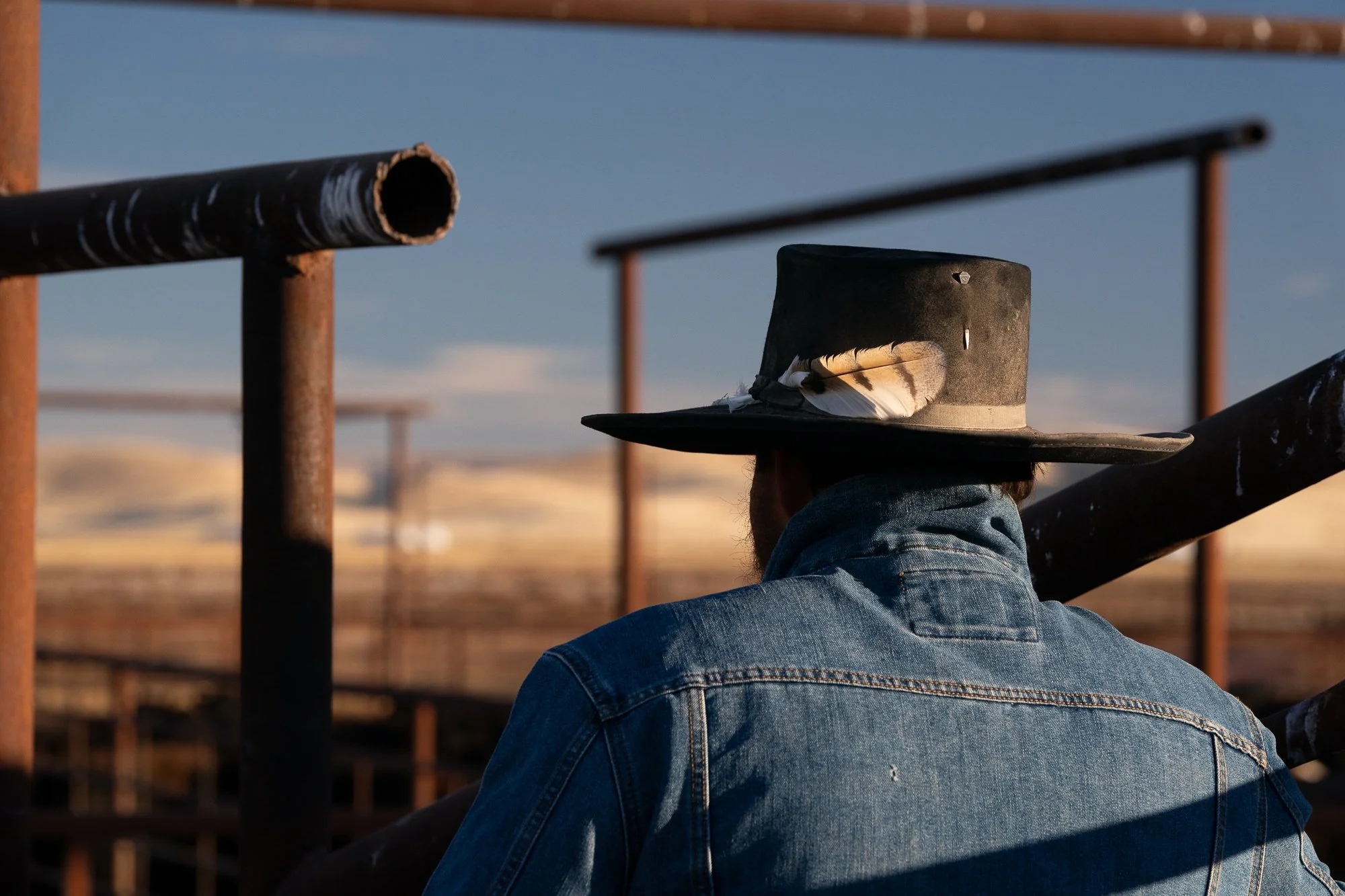
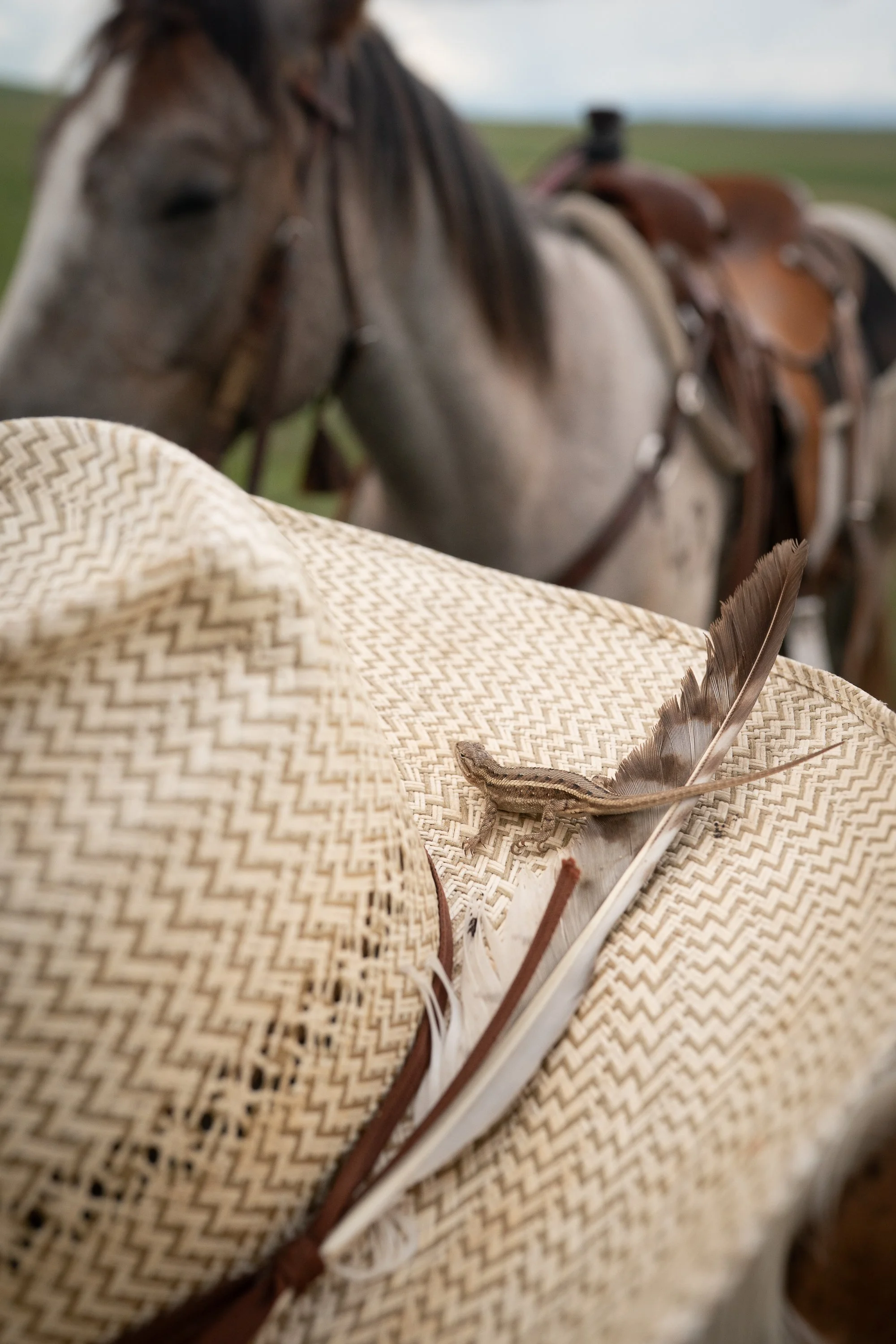
Close-up of buckaroo hat in early morning light at TS Ranch

A worn hat catches the early light, a quiet detail that reflects the long days and tradition behind the work.

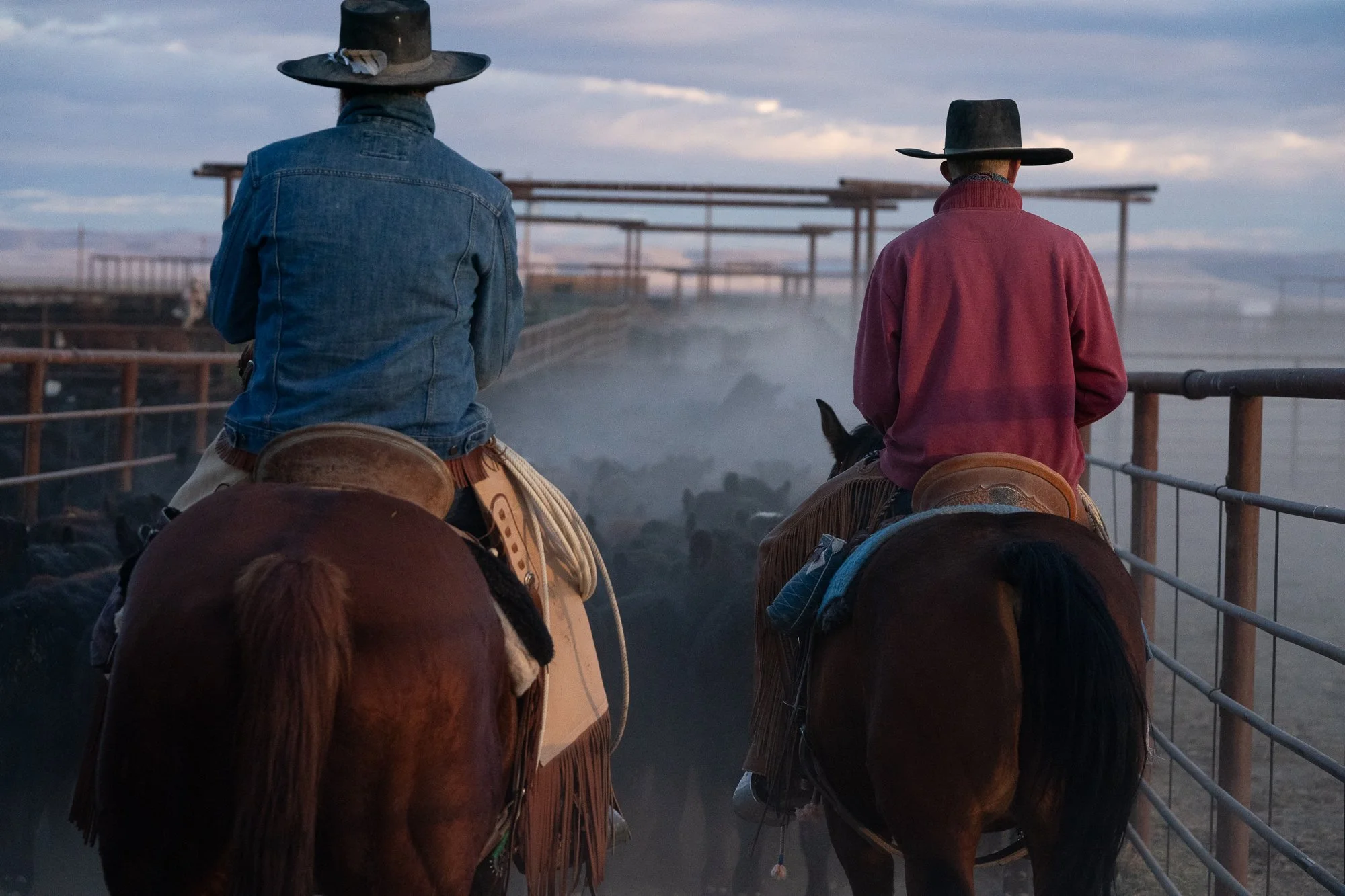
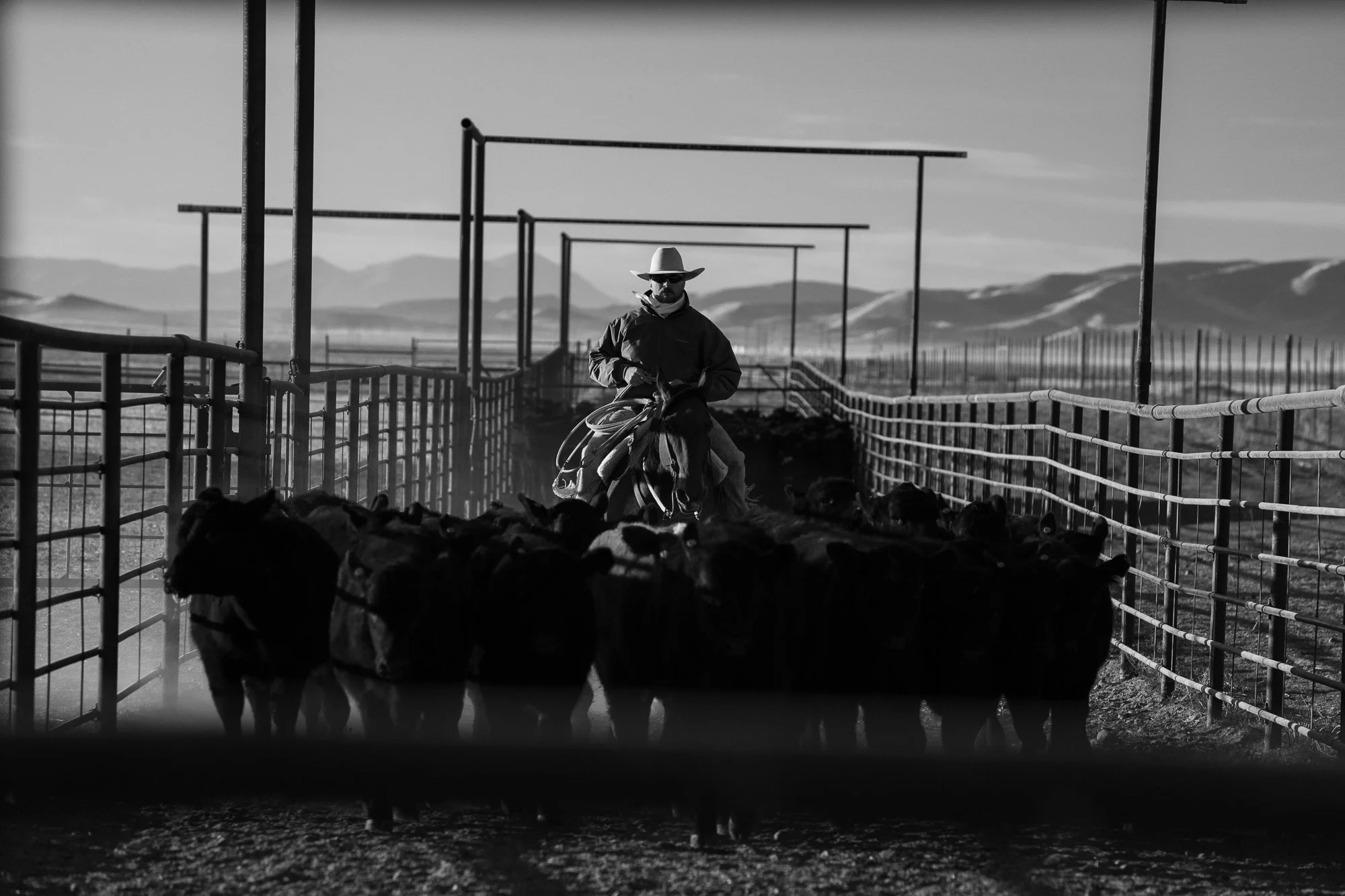
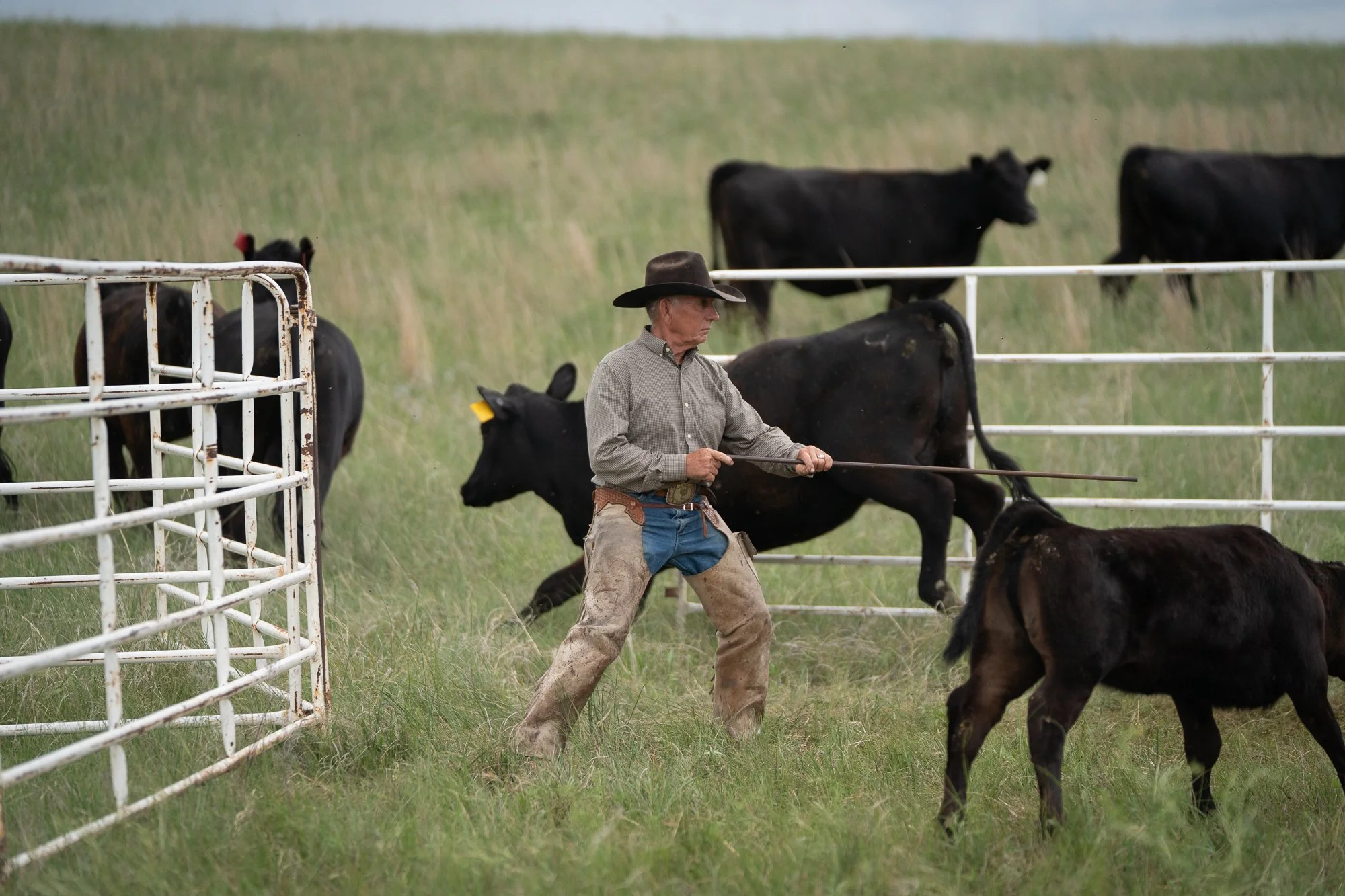
Cowboy pushing cattle through narrow alley in ranch pens at TS Ranch

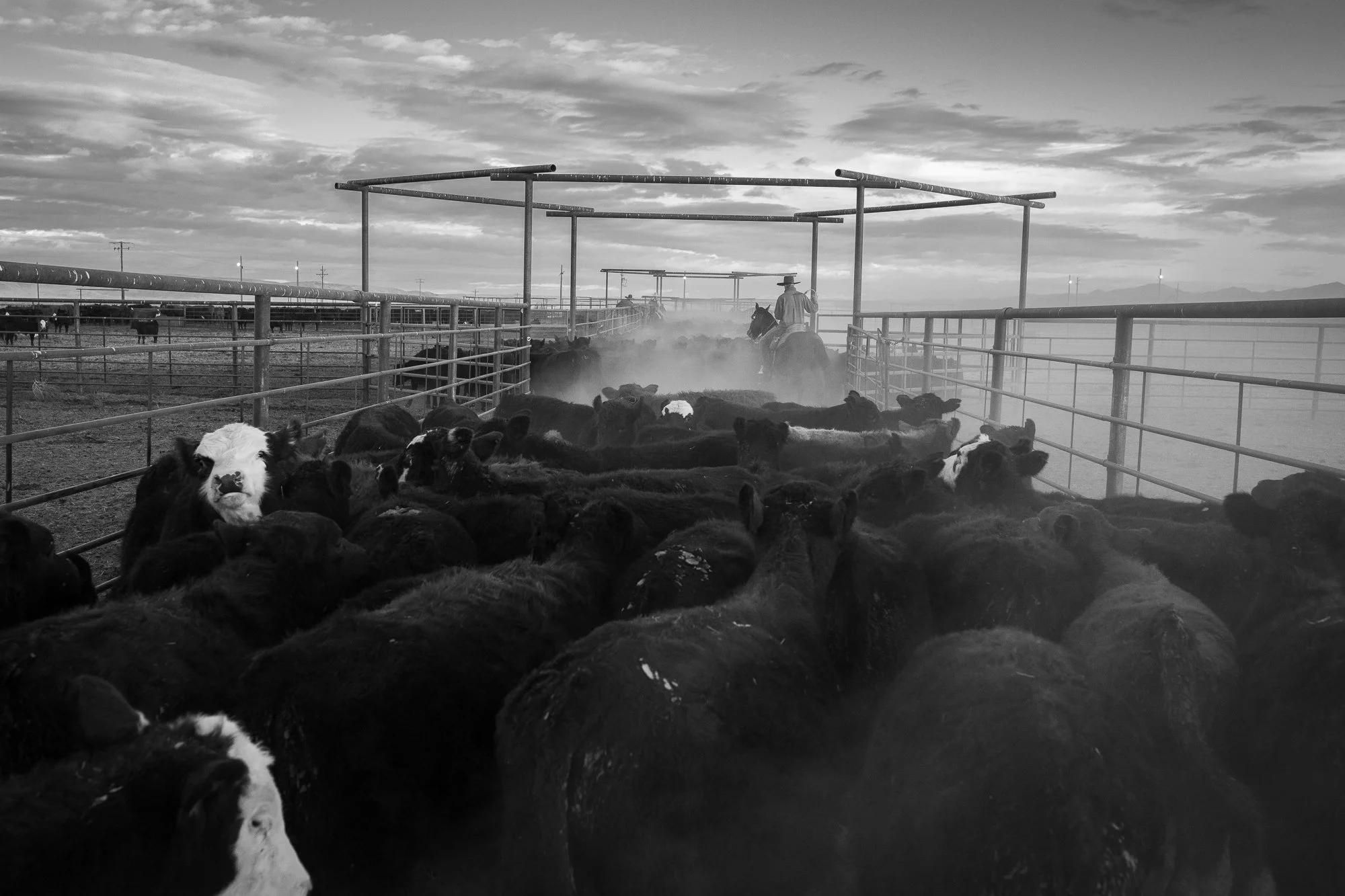
A buckaroo pushes cattle through the alleyway, guiding the herd forward through the maze of steel pens.

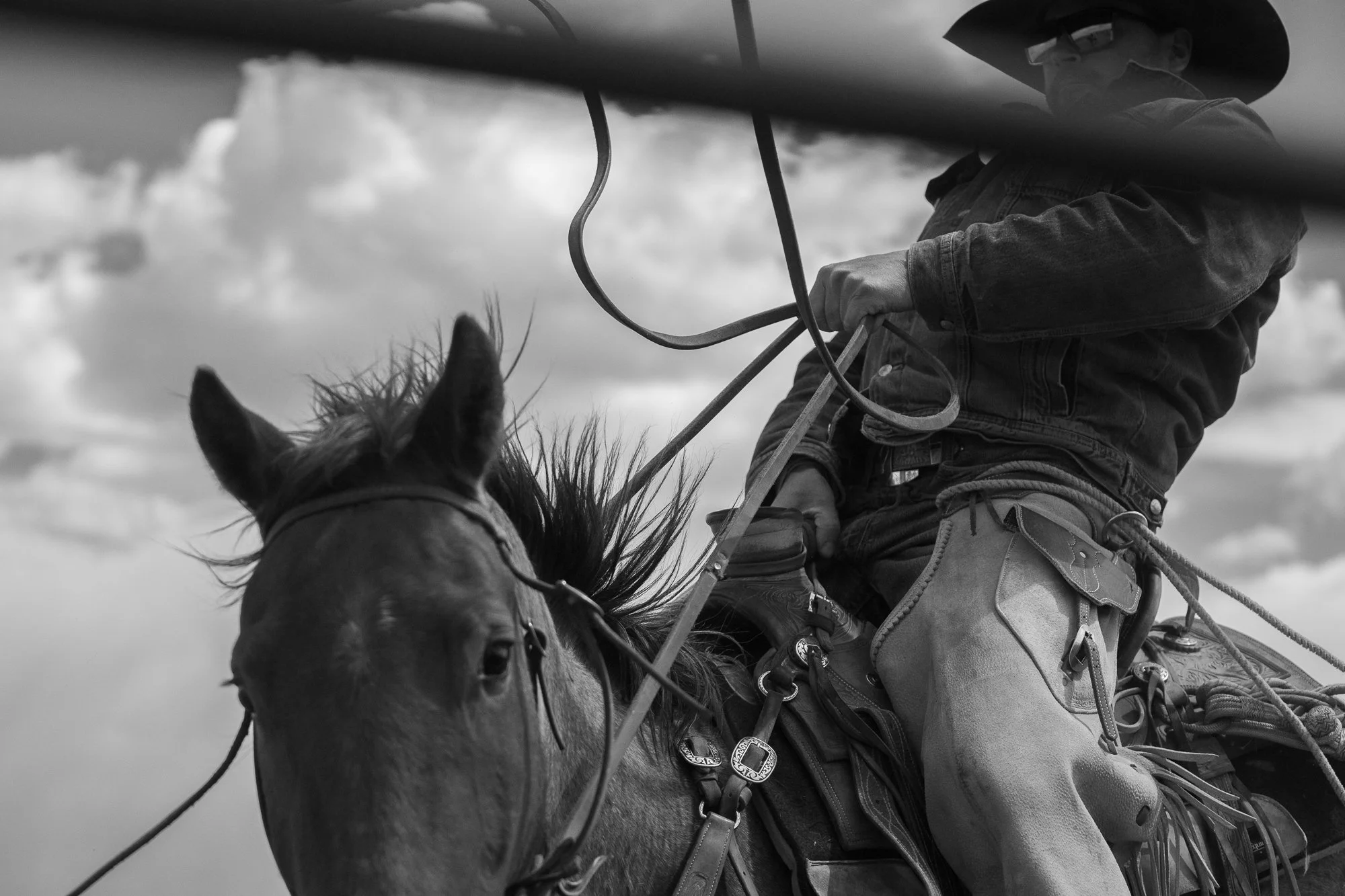
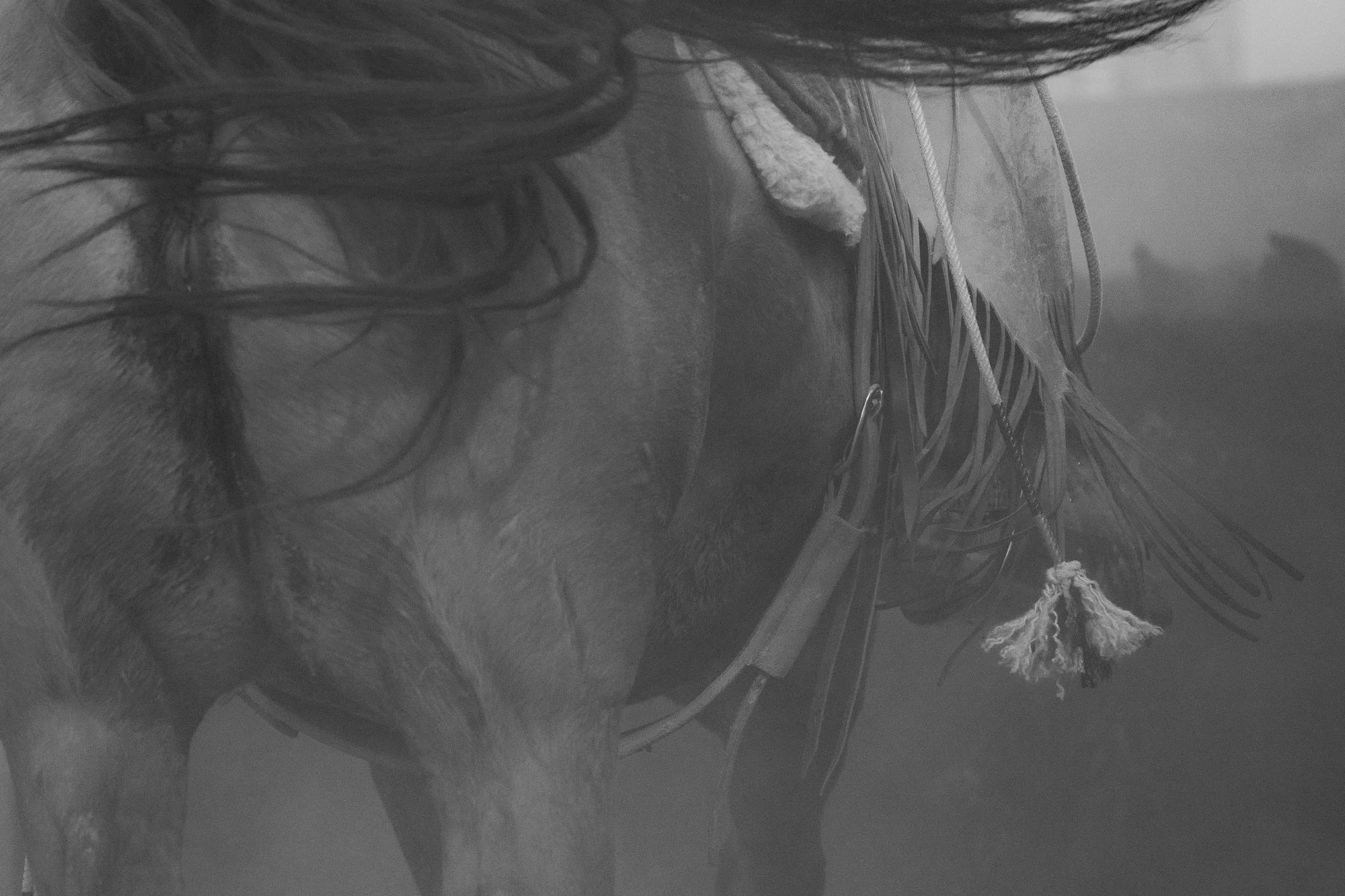
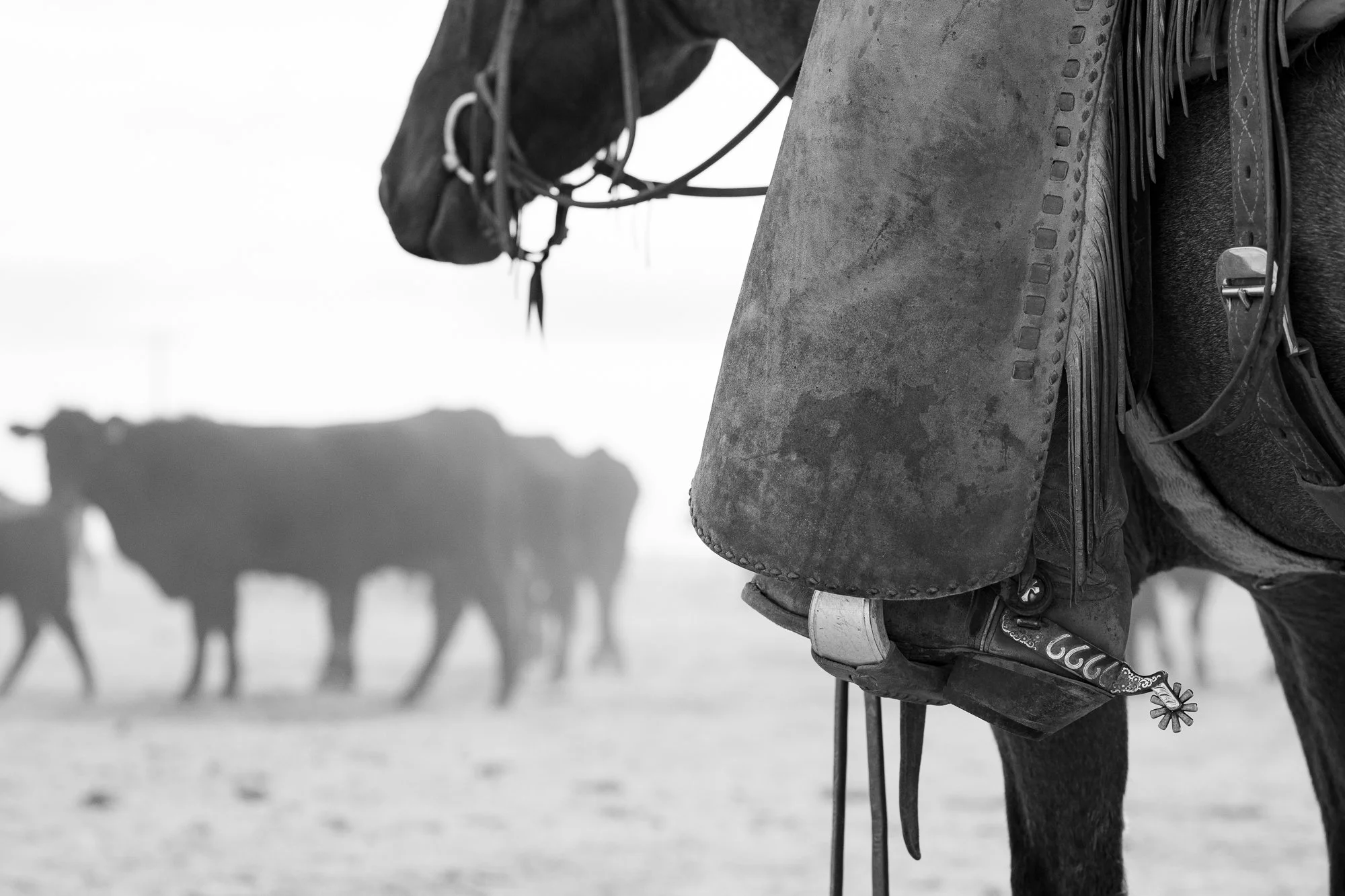
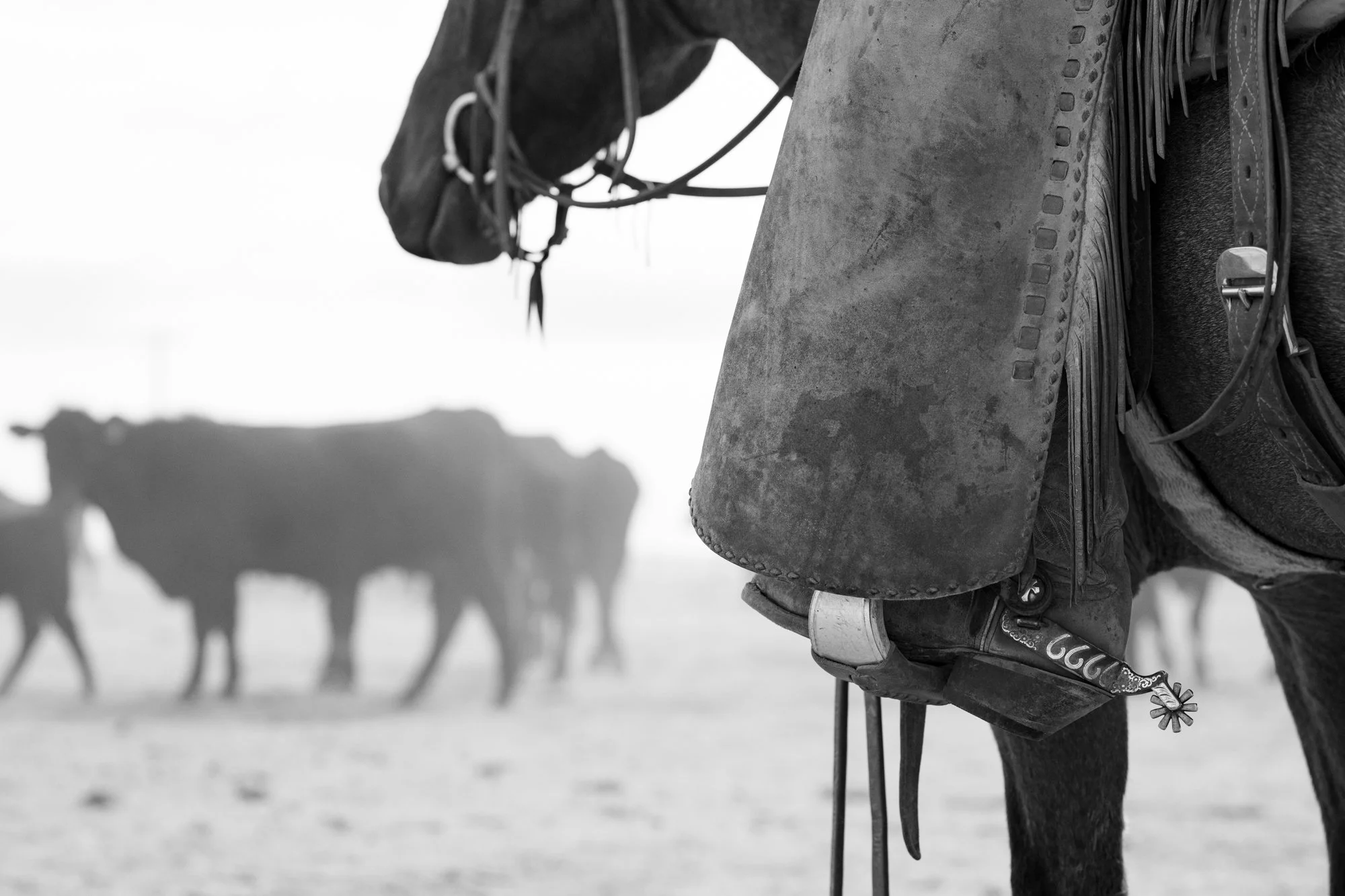
Close-up of horse and western tack in dusty ranch environment at TS Ranch

A close study of horse and gear, where movement and dust soften the edges of the scene.

Buckaroo sorting cattle inside working pens at TS Ranch

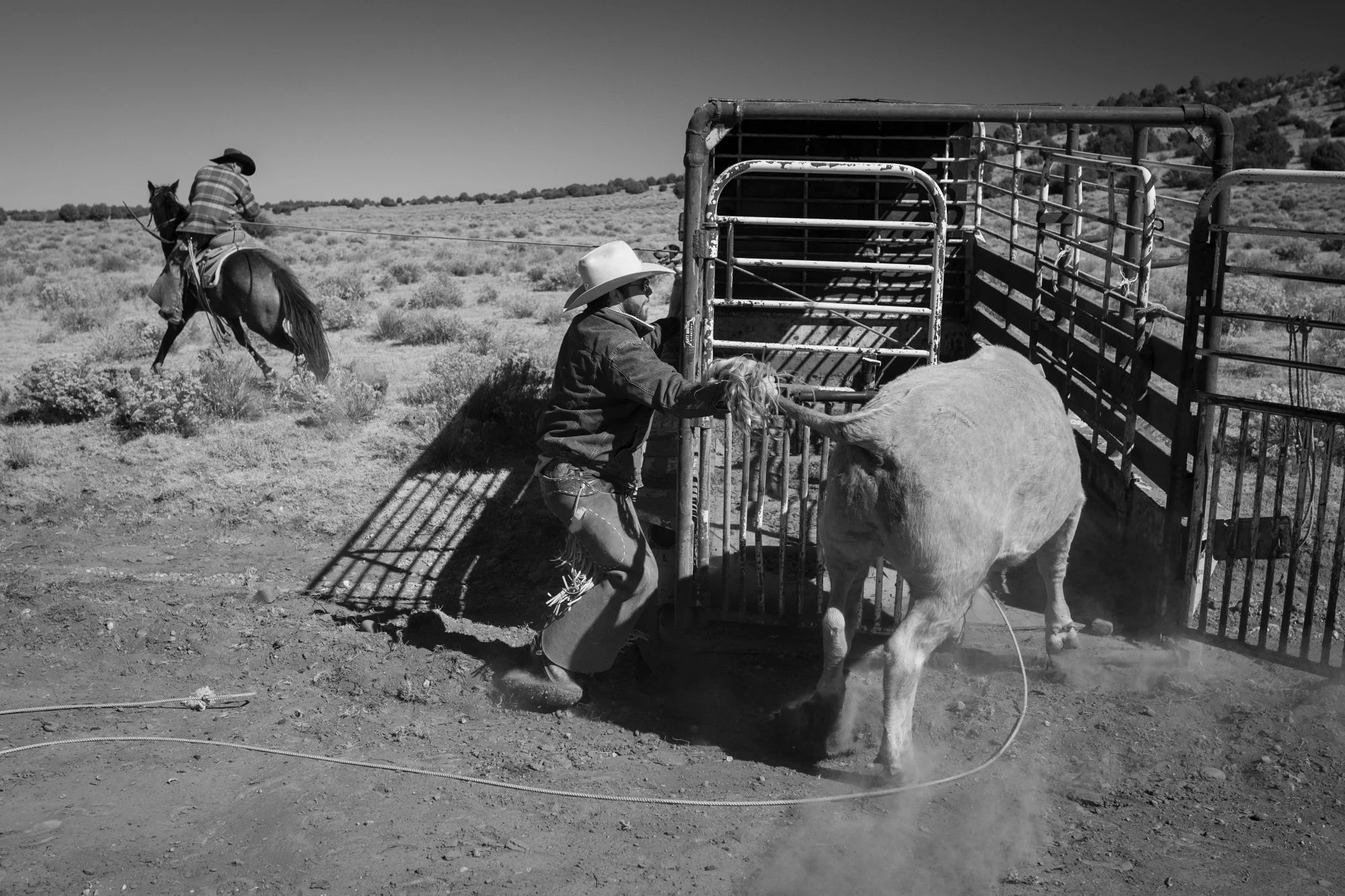
A buckaroo counts cattle inside the pens, before they are loaded onto the shipping truck.

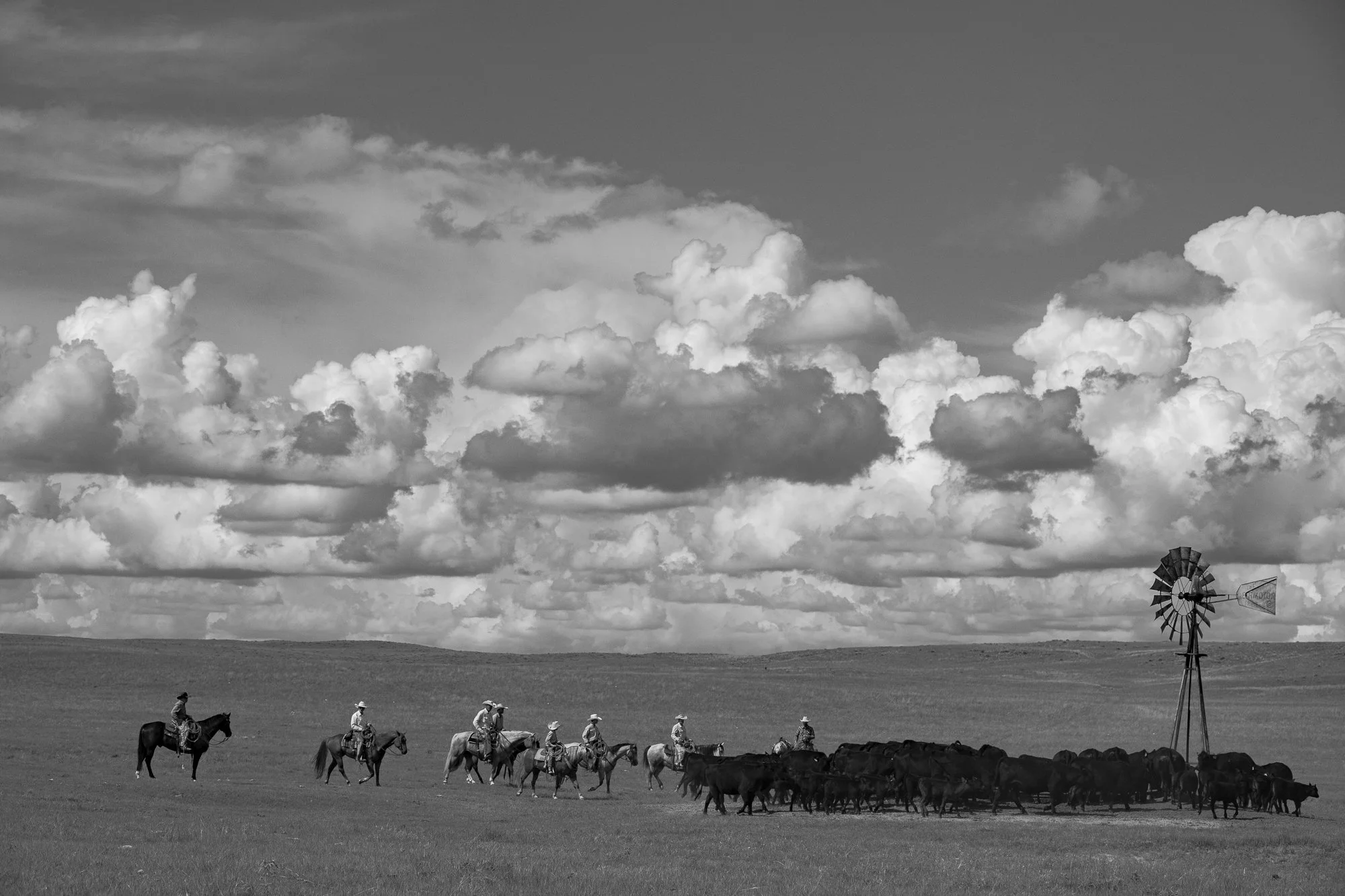
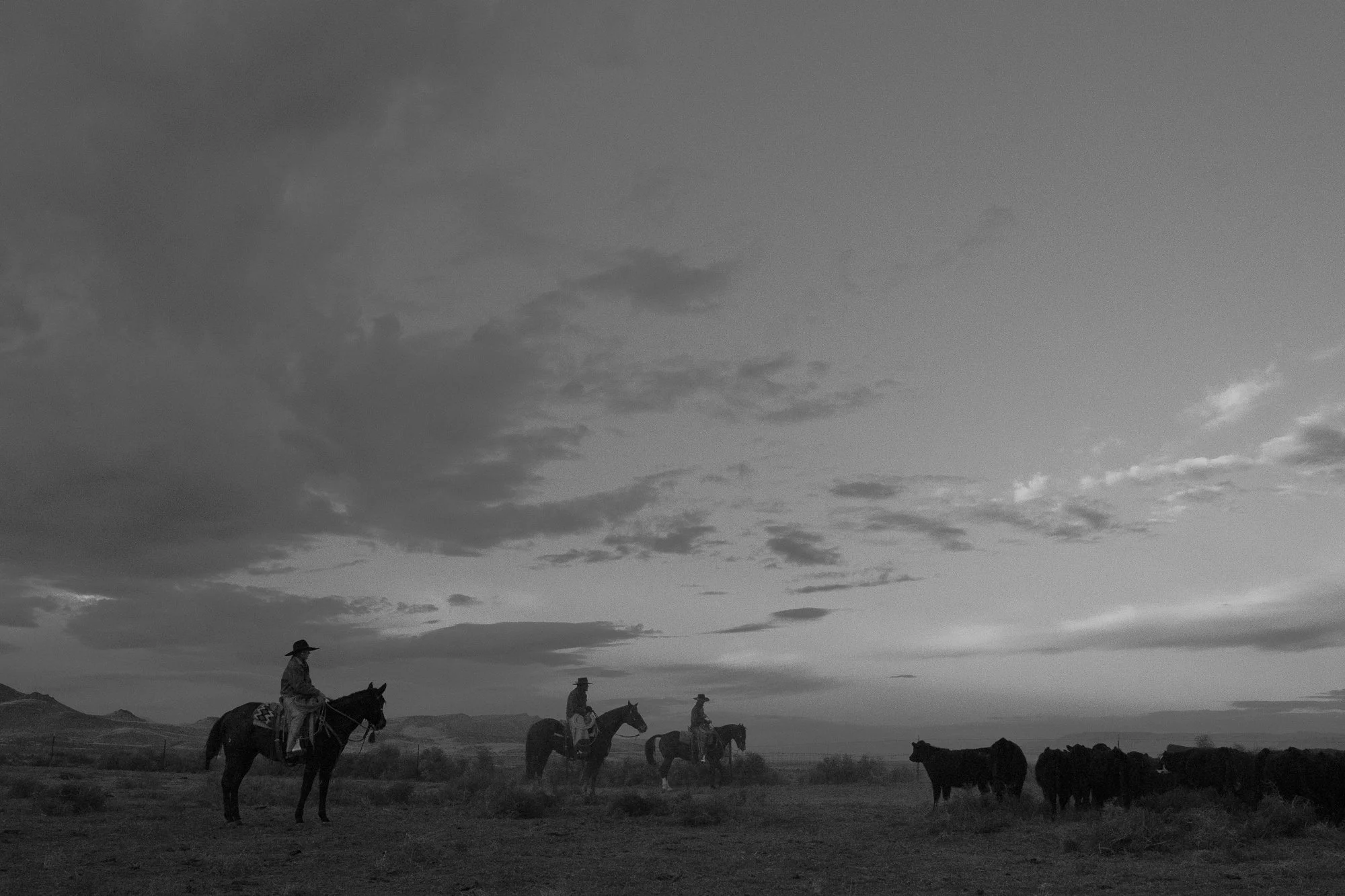
Buckaroos holding cattle herd across open range at TS Ranch

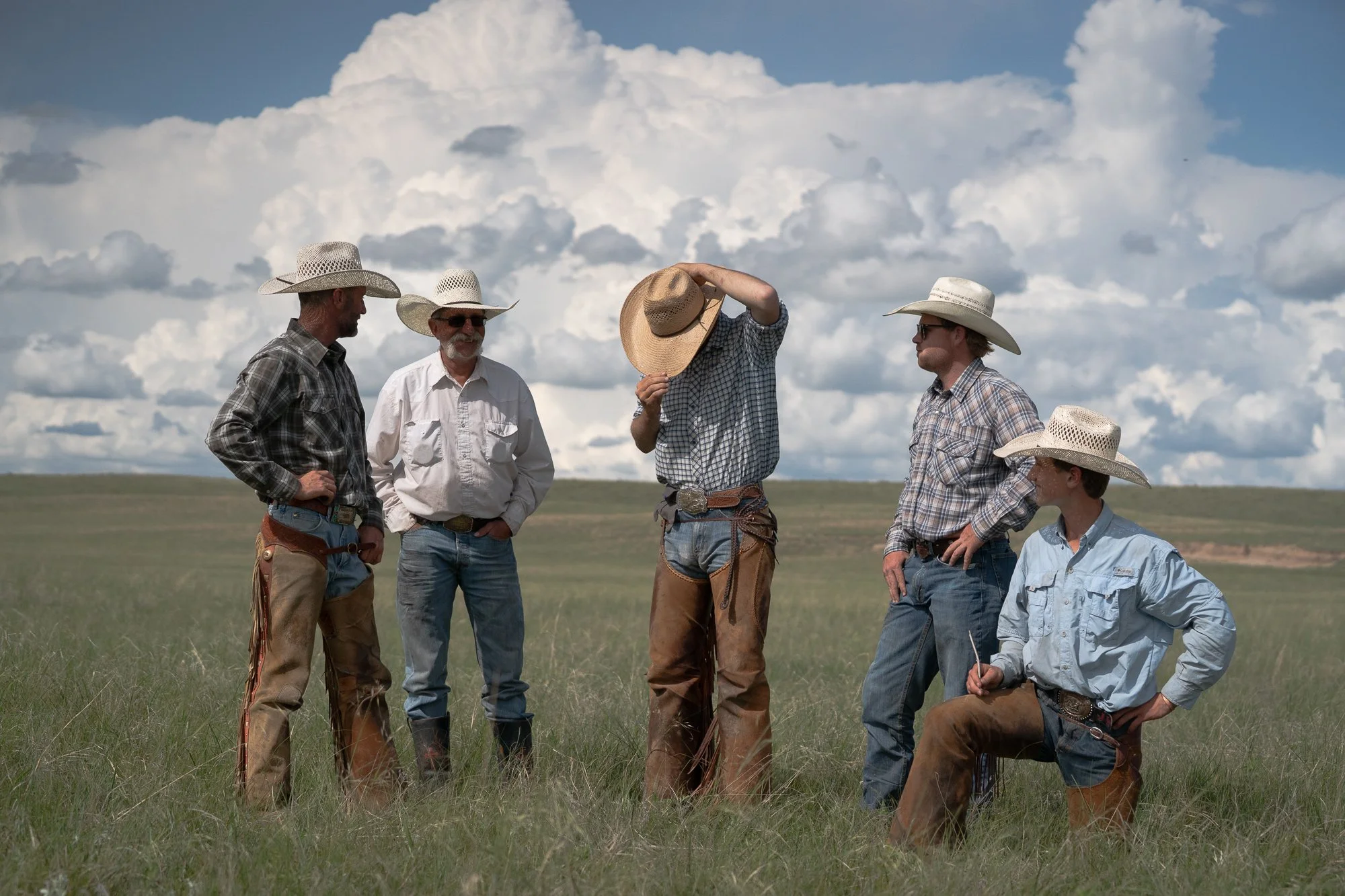
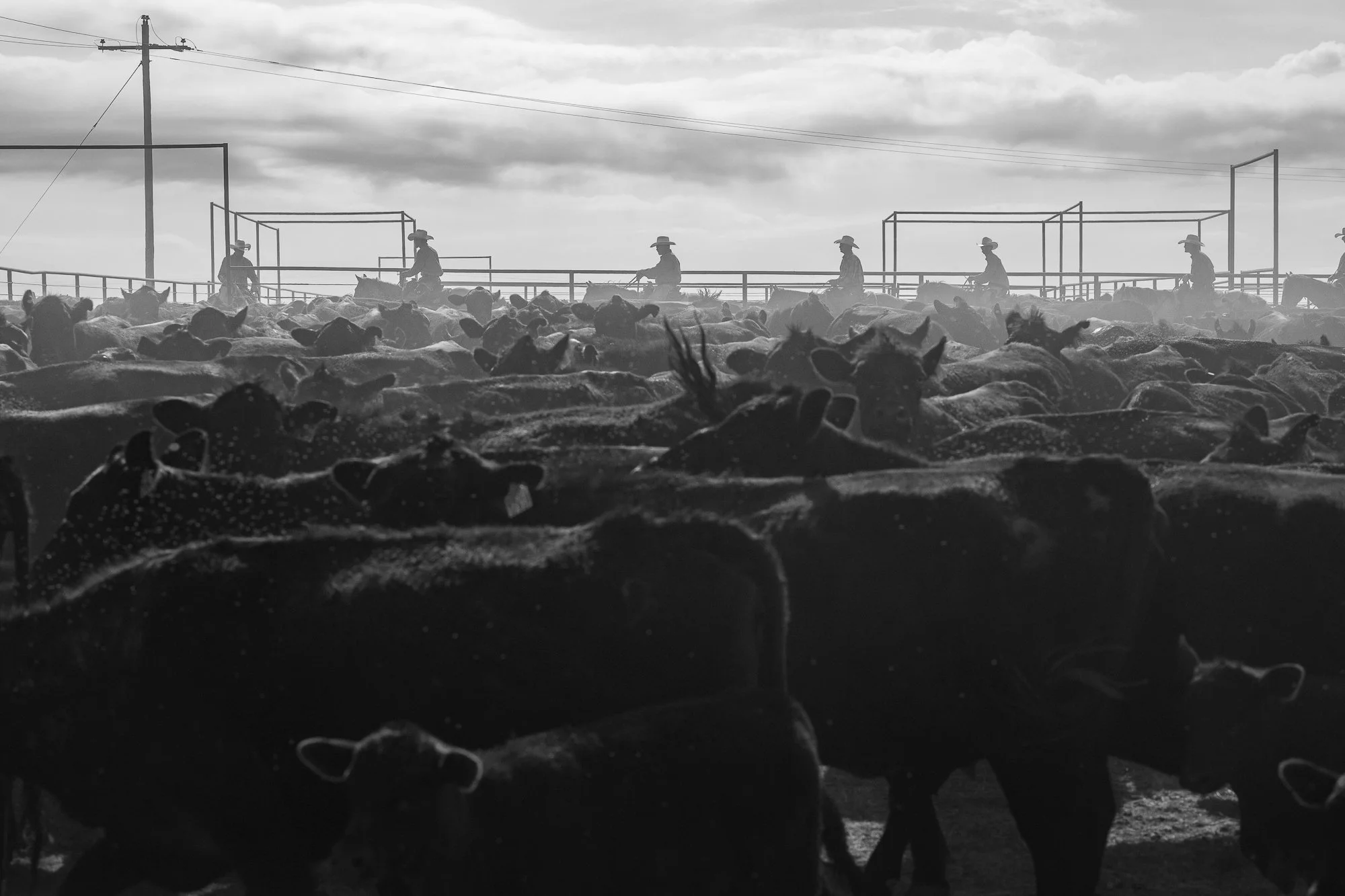
Buckaroos hold the herd in place, spacing themselves across the landscape to keep the cattle settled.

Buckaroo holding cattle herd in dusty pasture at TS Ranch

A buckaroo holds position behind the herd, keeping the cattle together as they move through the corrals.

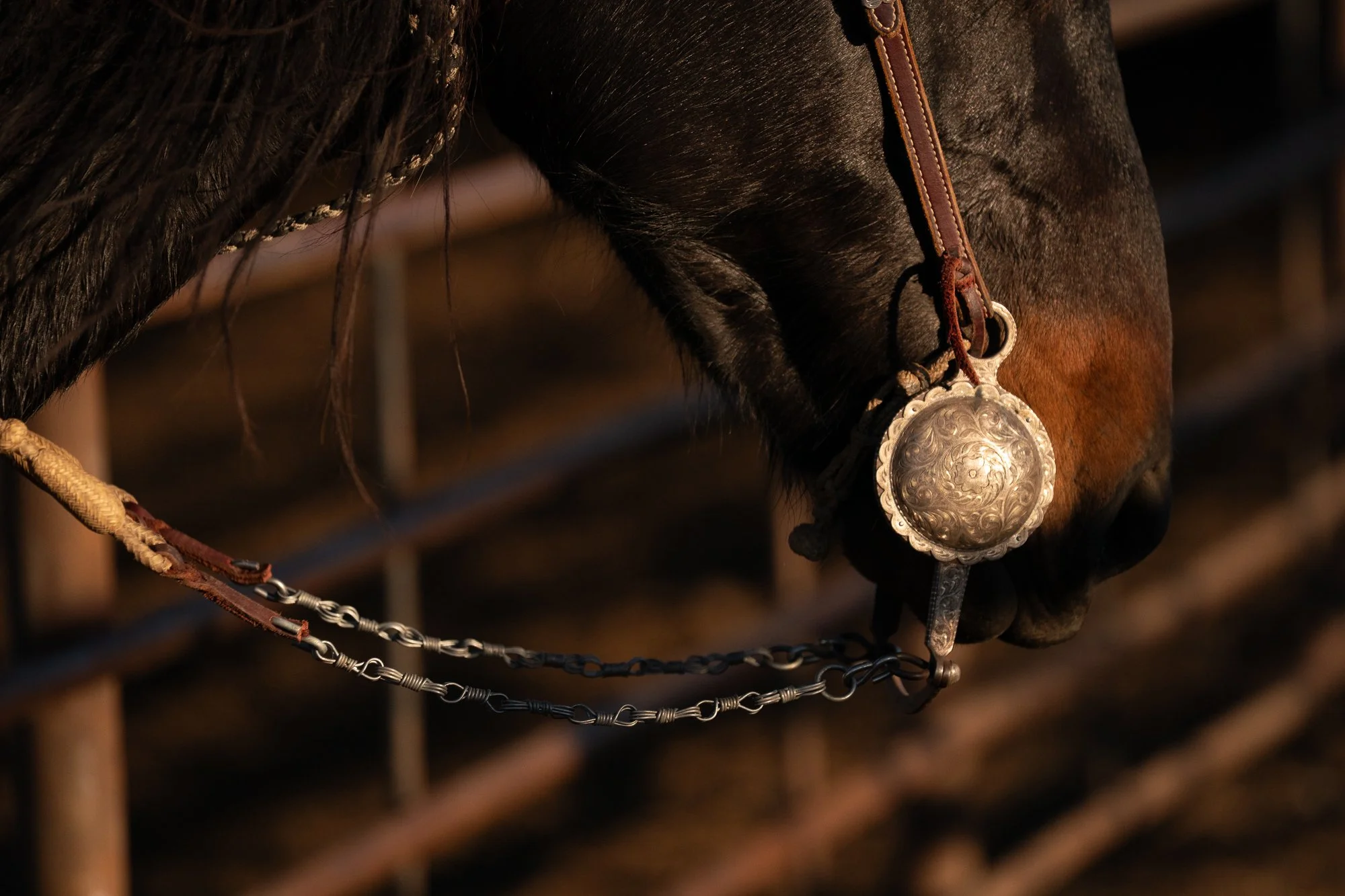
Close-up of horse bridle with silver concho detail at TS Ranch

A close look at the craftsmanship of a working bridle, worn and used daily in the rhythm of ranch work.

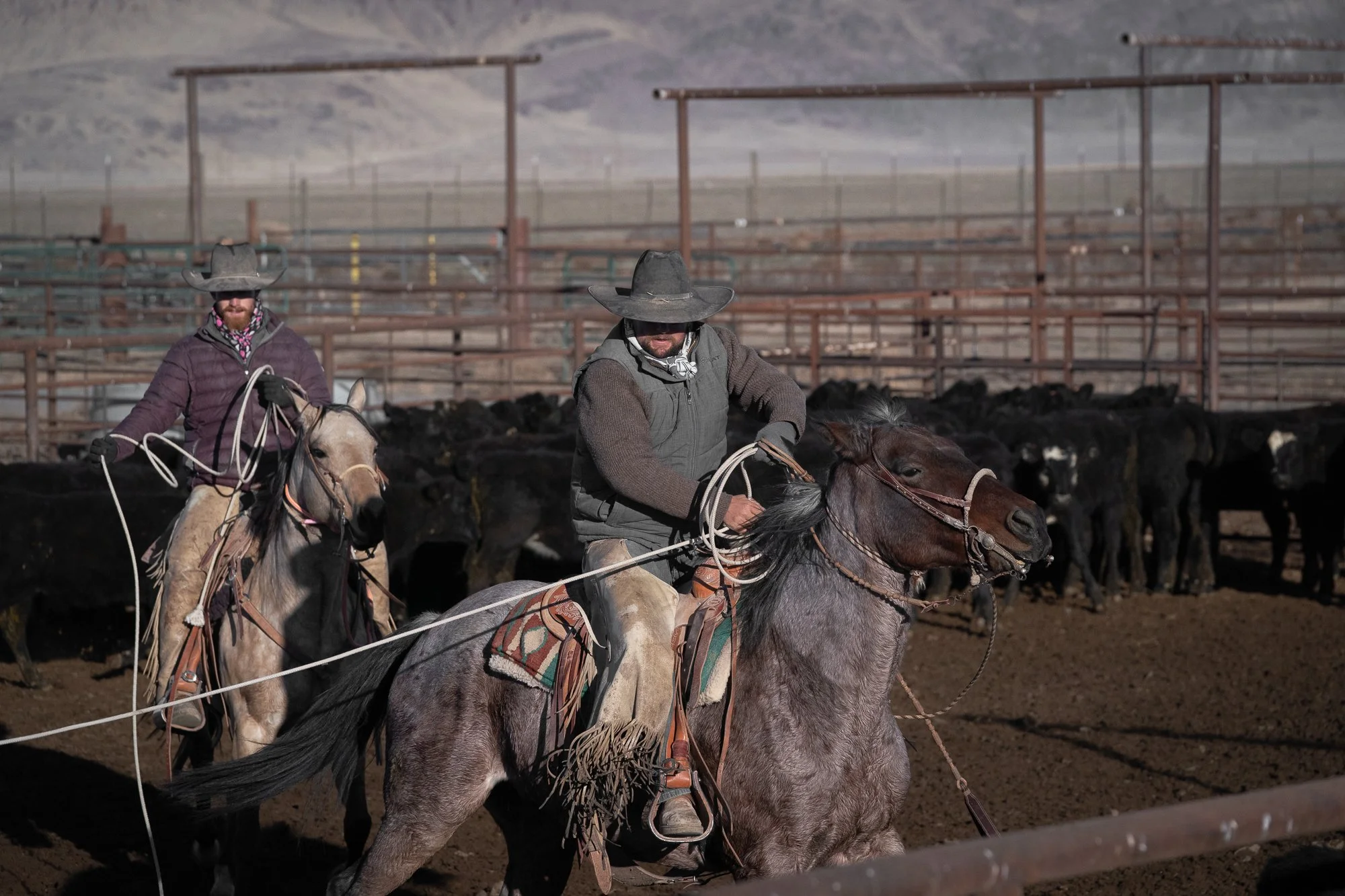
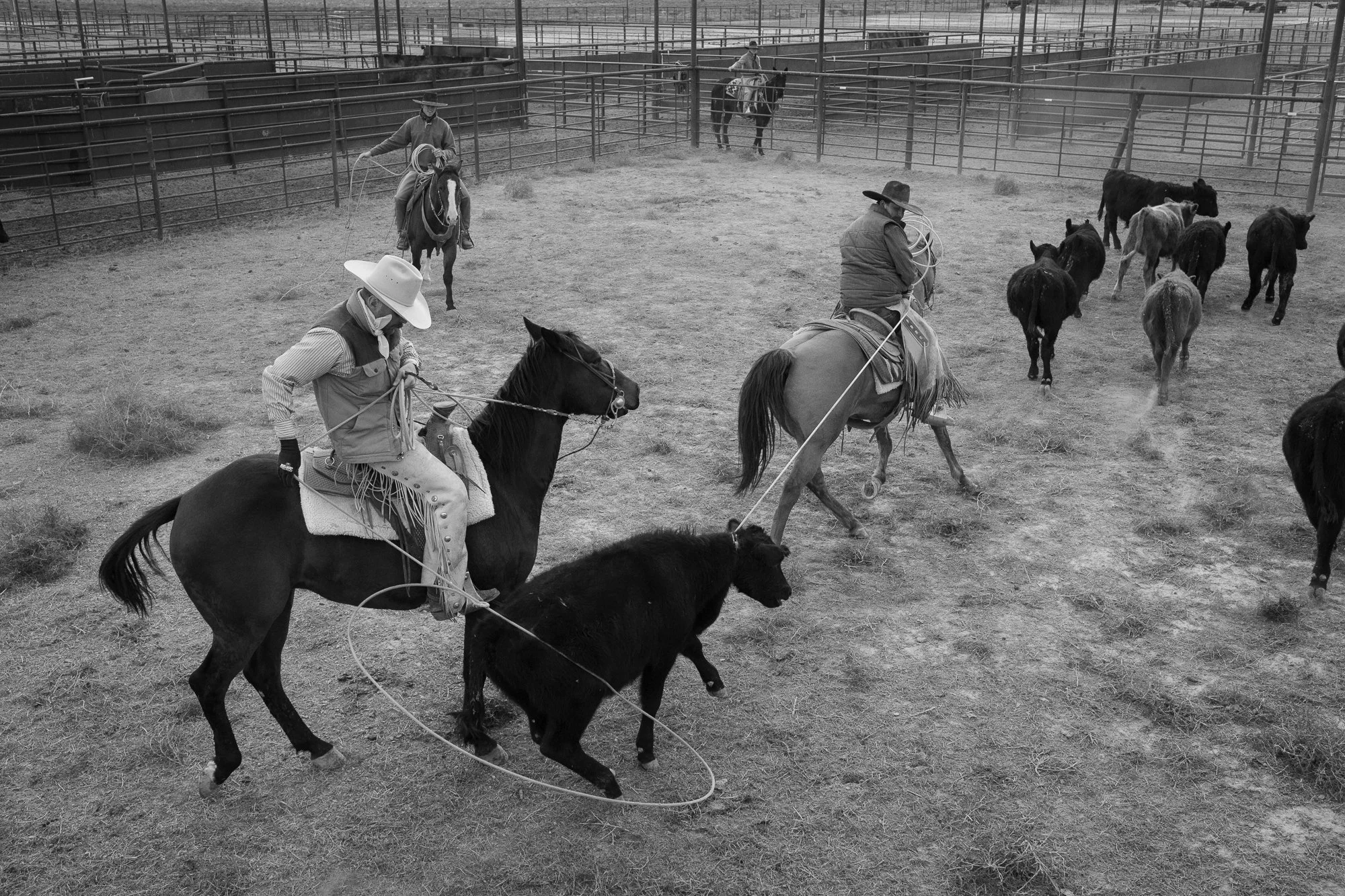
Two buckaroos roping cattle in ranch pens at TS Ranch

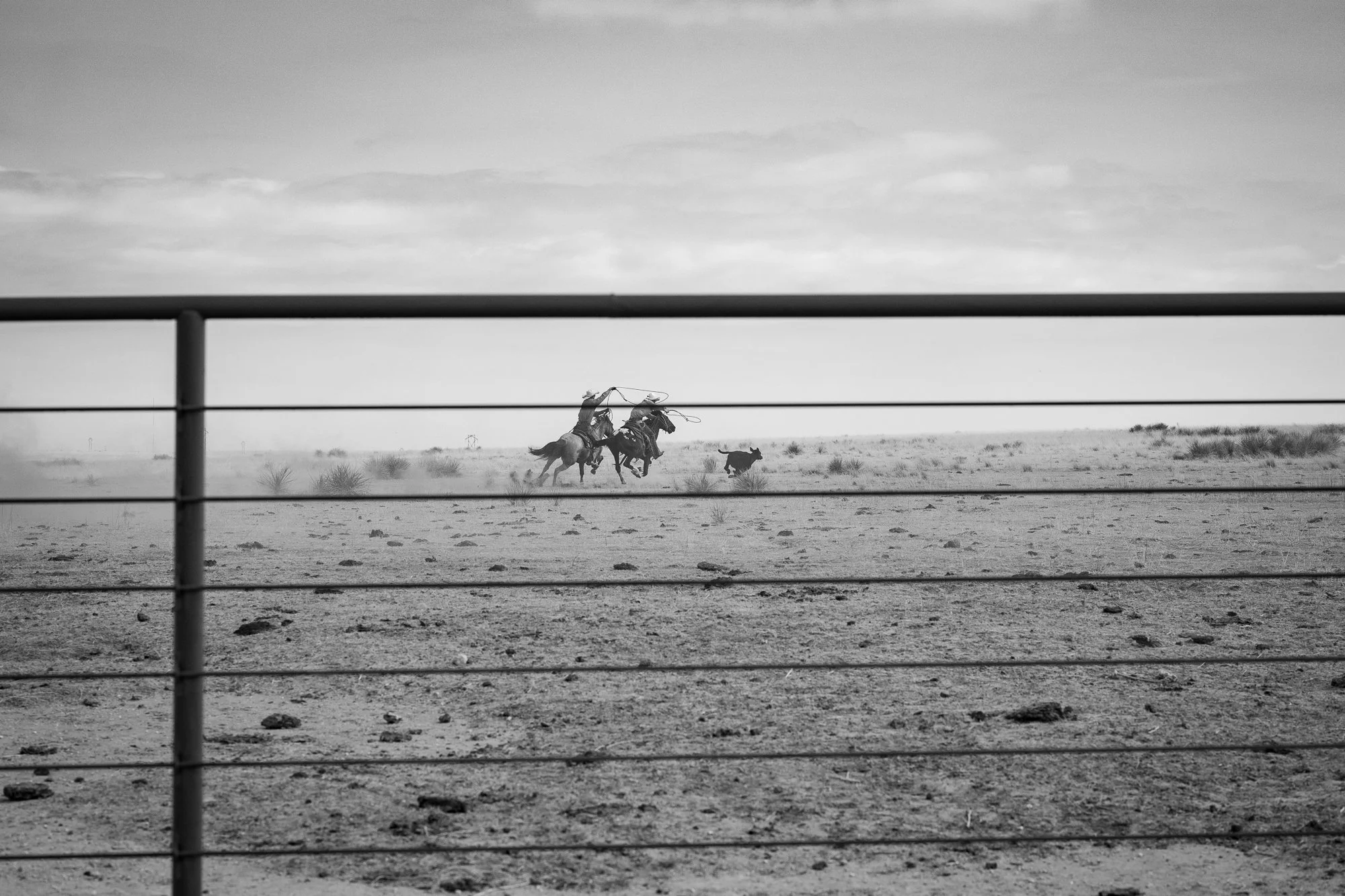
Two buckaroos rope cattle in the pens, working together to manage the herd with precision and control.

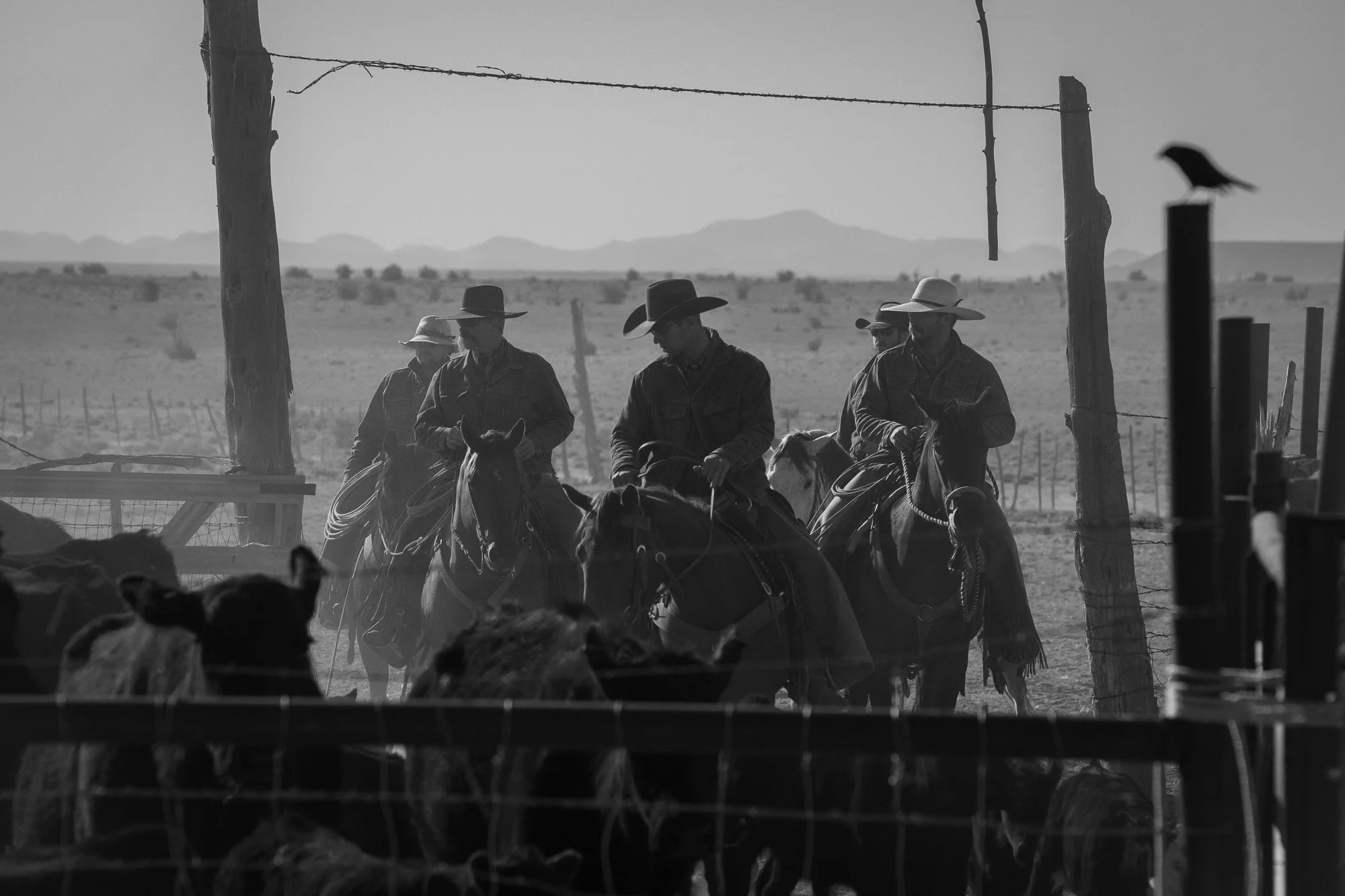
Buckaroos on horseback in cattle pens at sunrise at TS Ranch

Buckaroos sit mounted in the pens at first light, preparing for the day’s work as the ranch comes to life.

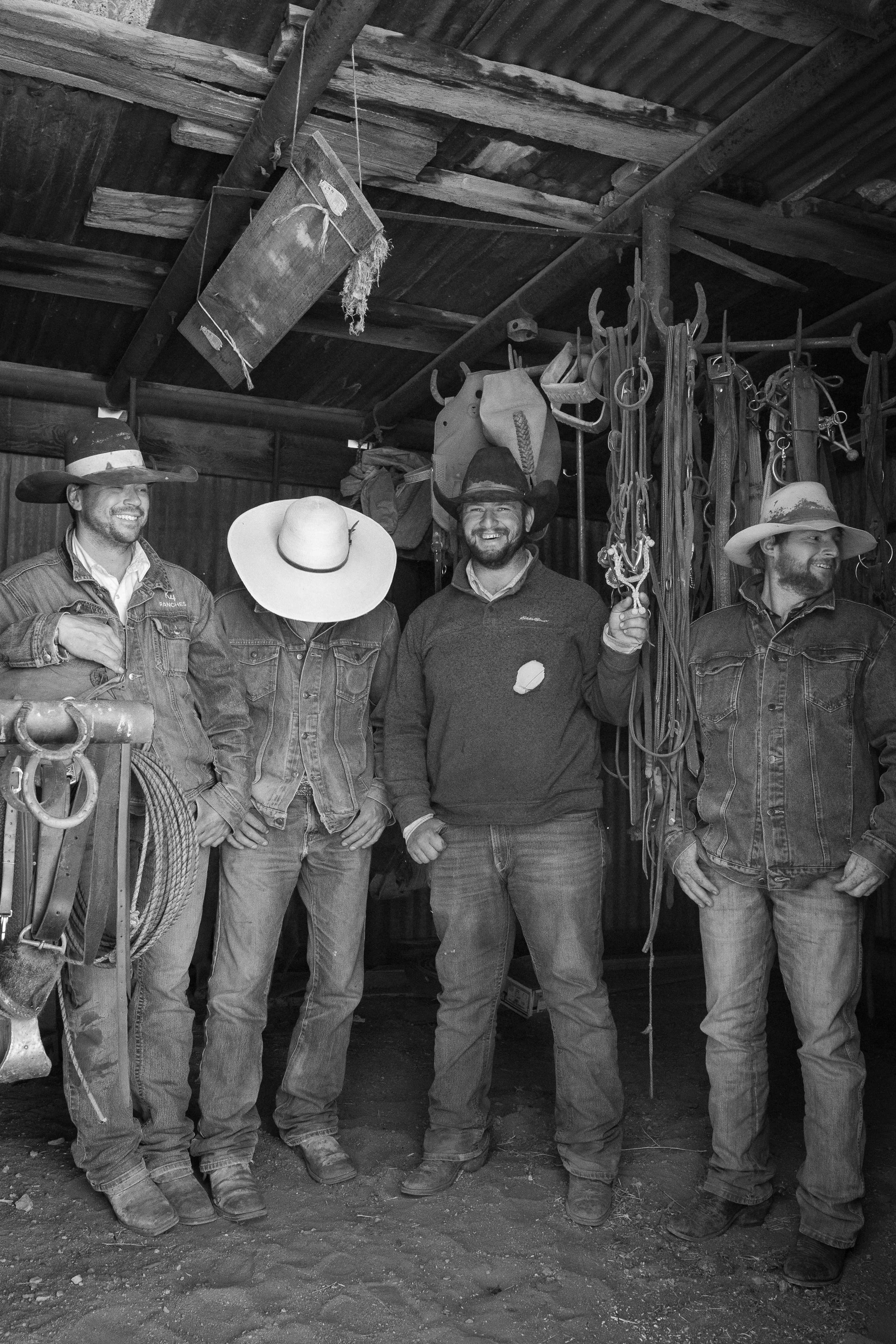
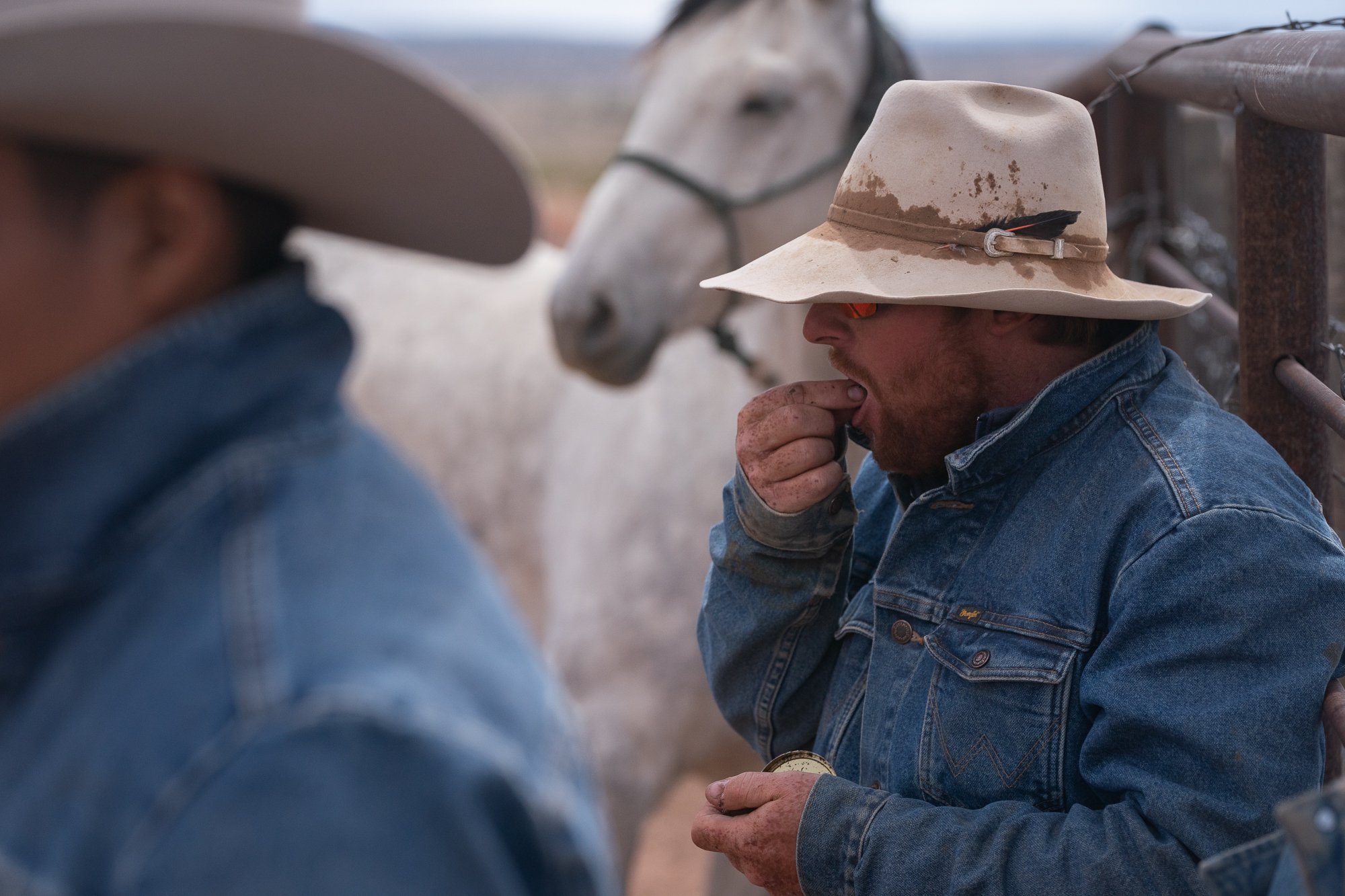
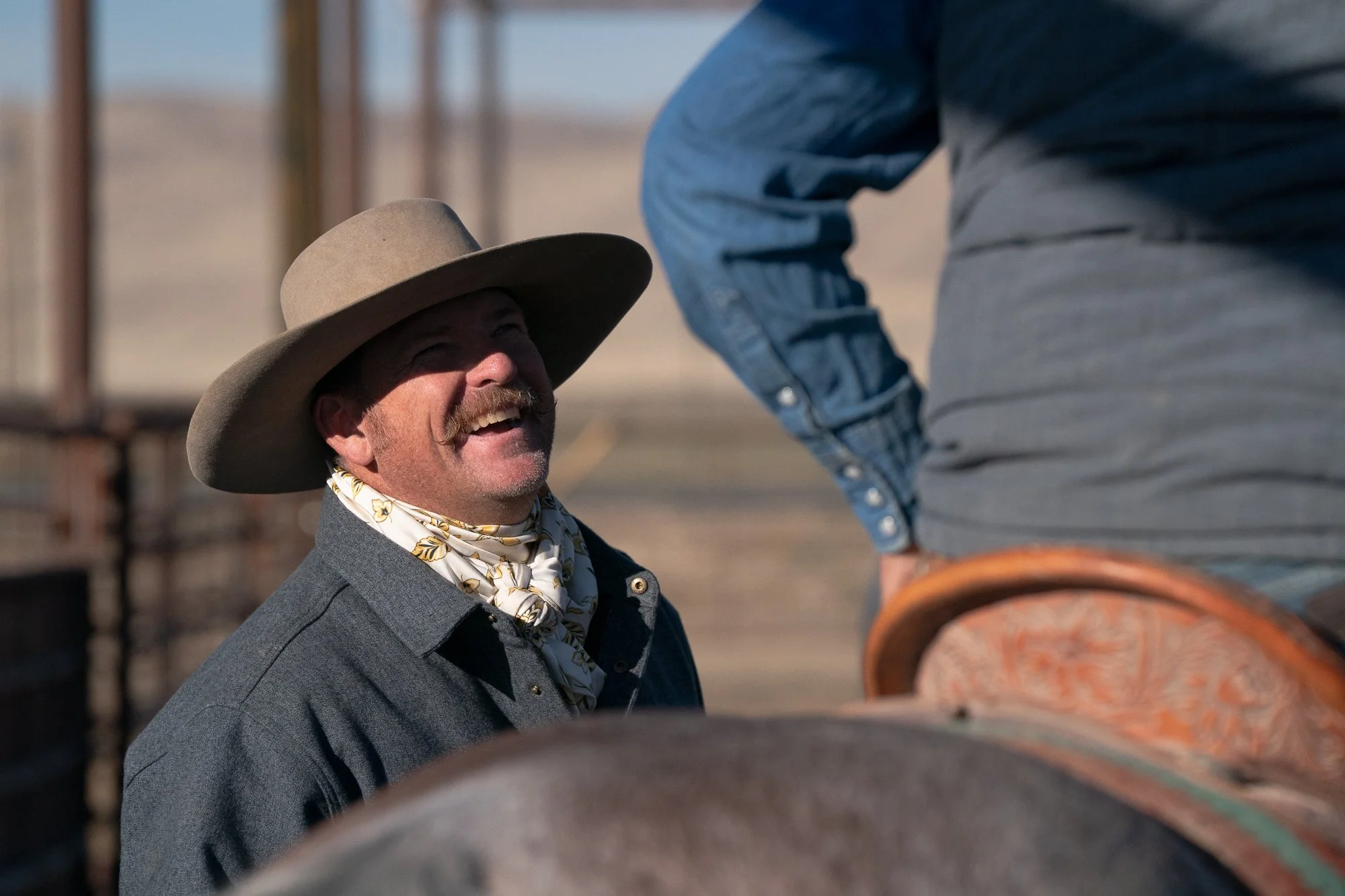
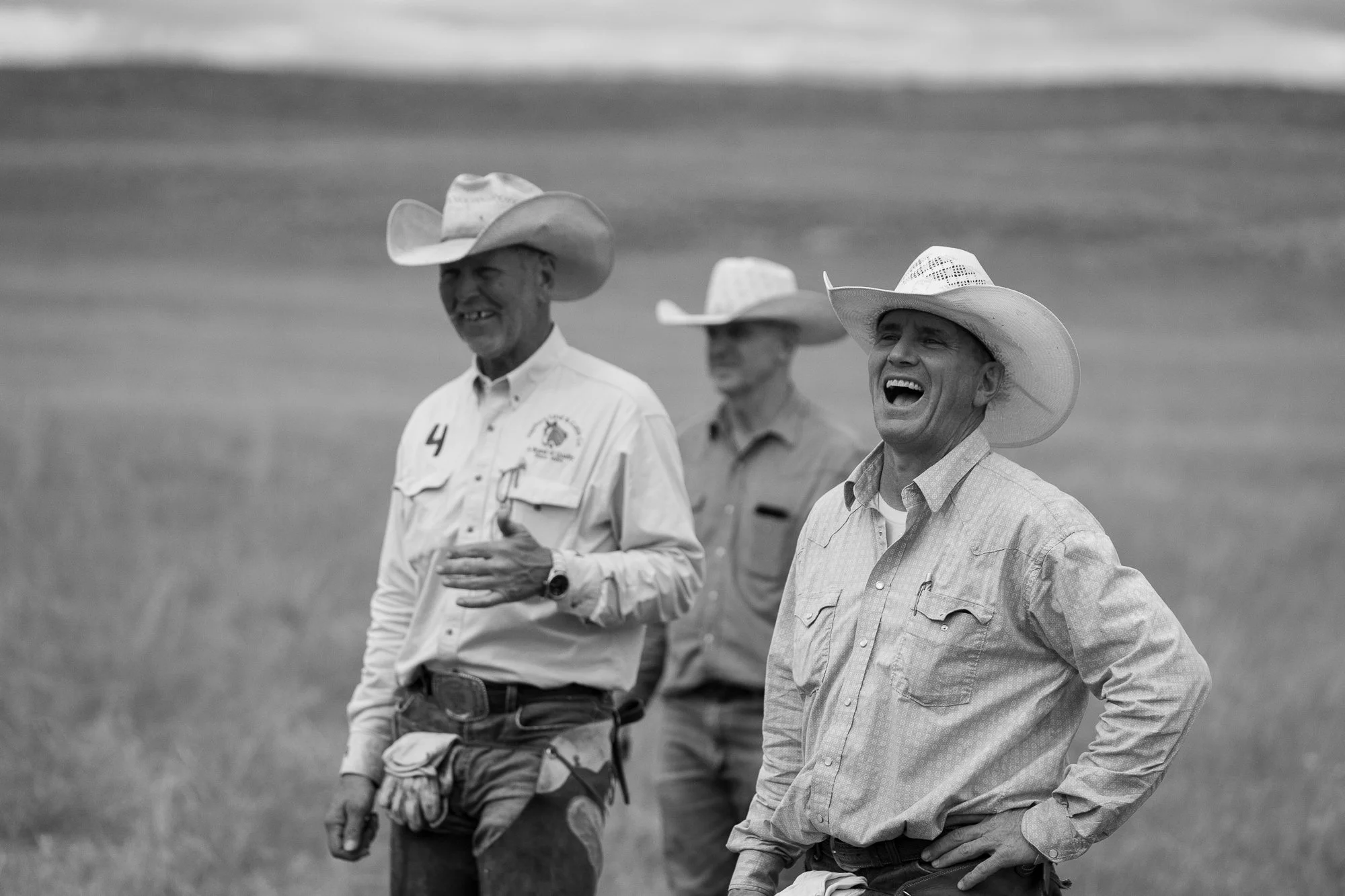
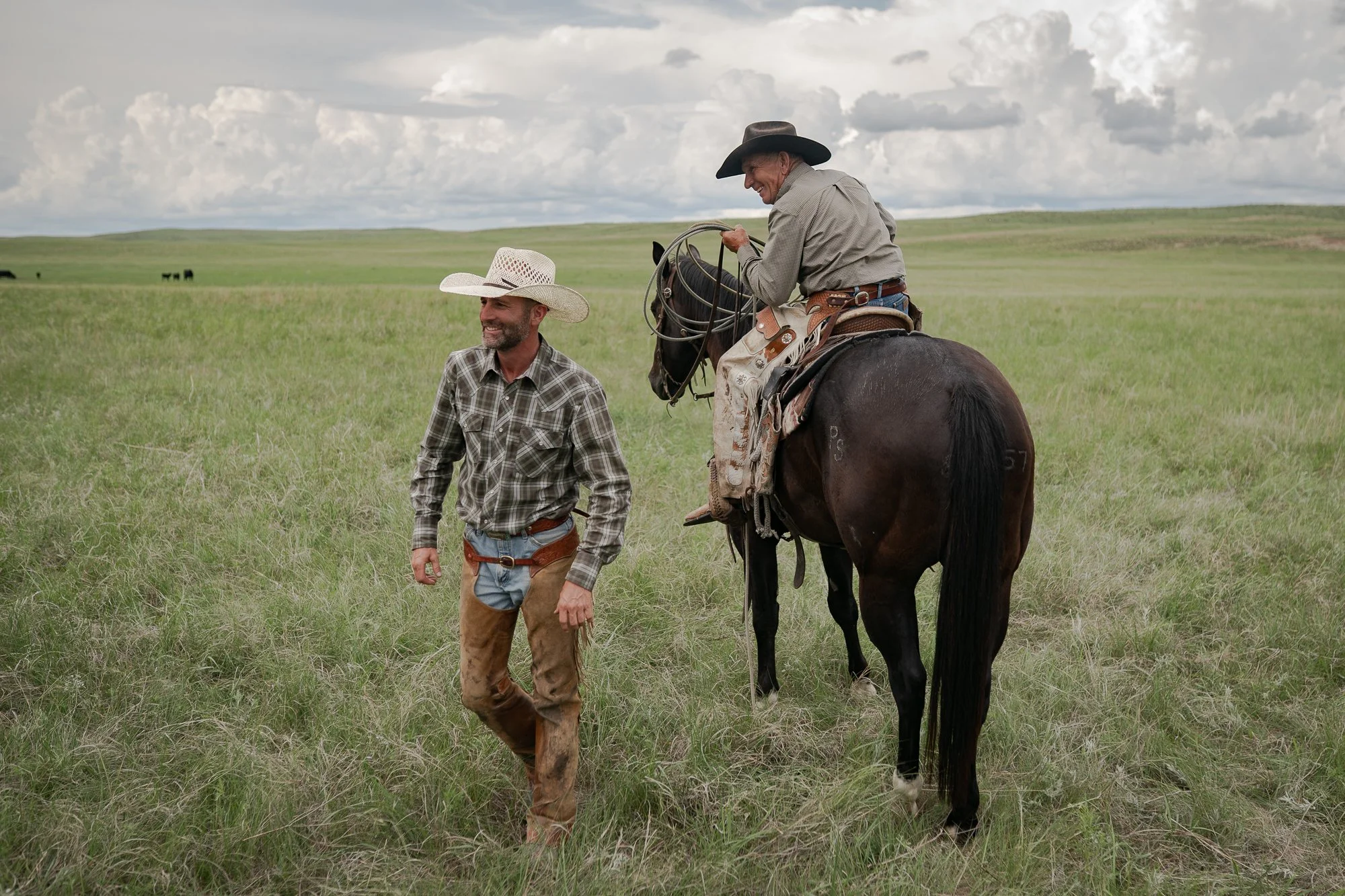
Candid portrait of cowboy smiling during ranch work at TS Ranch

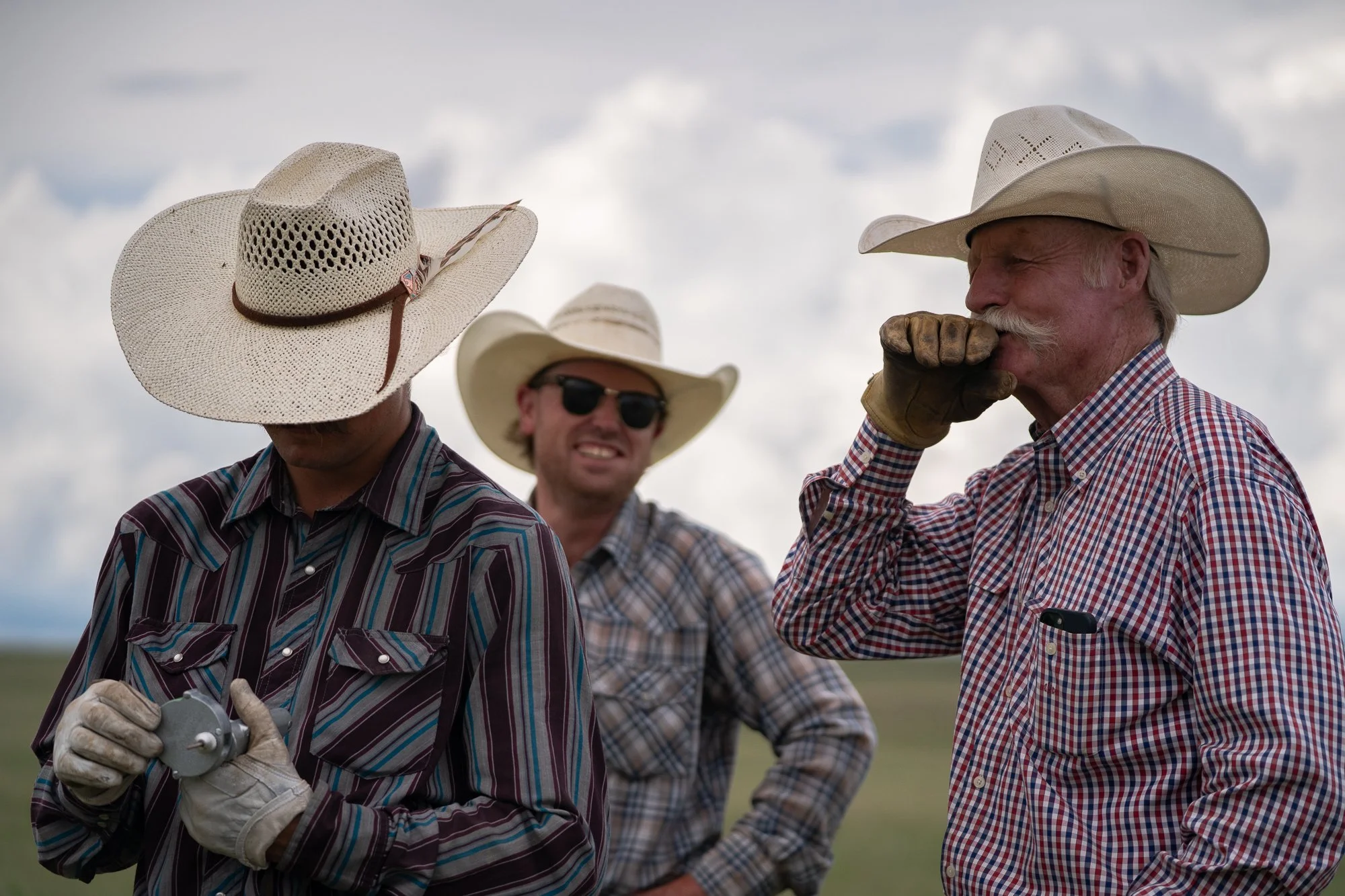
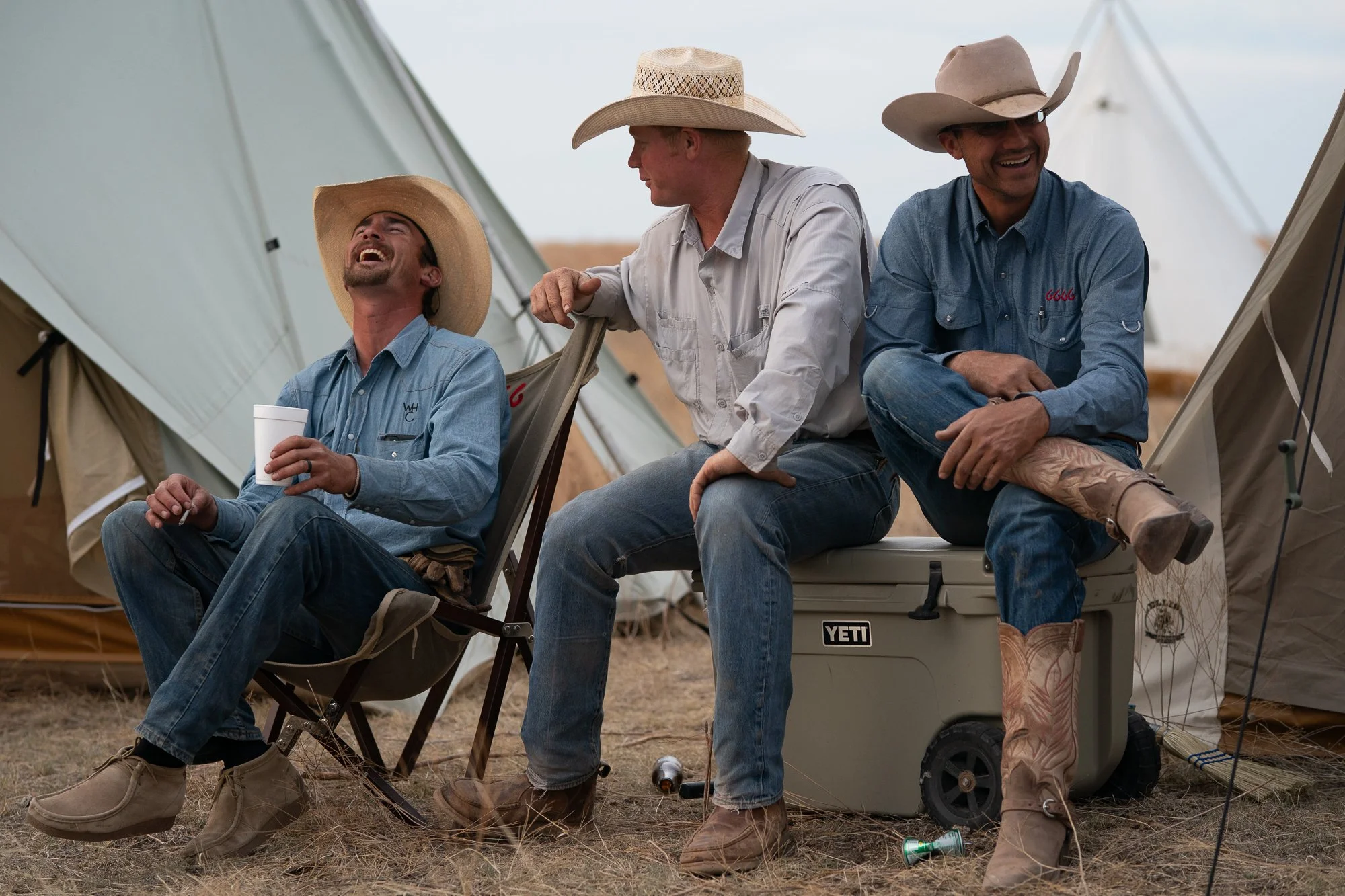
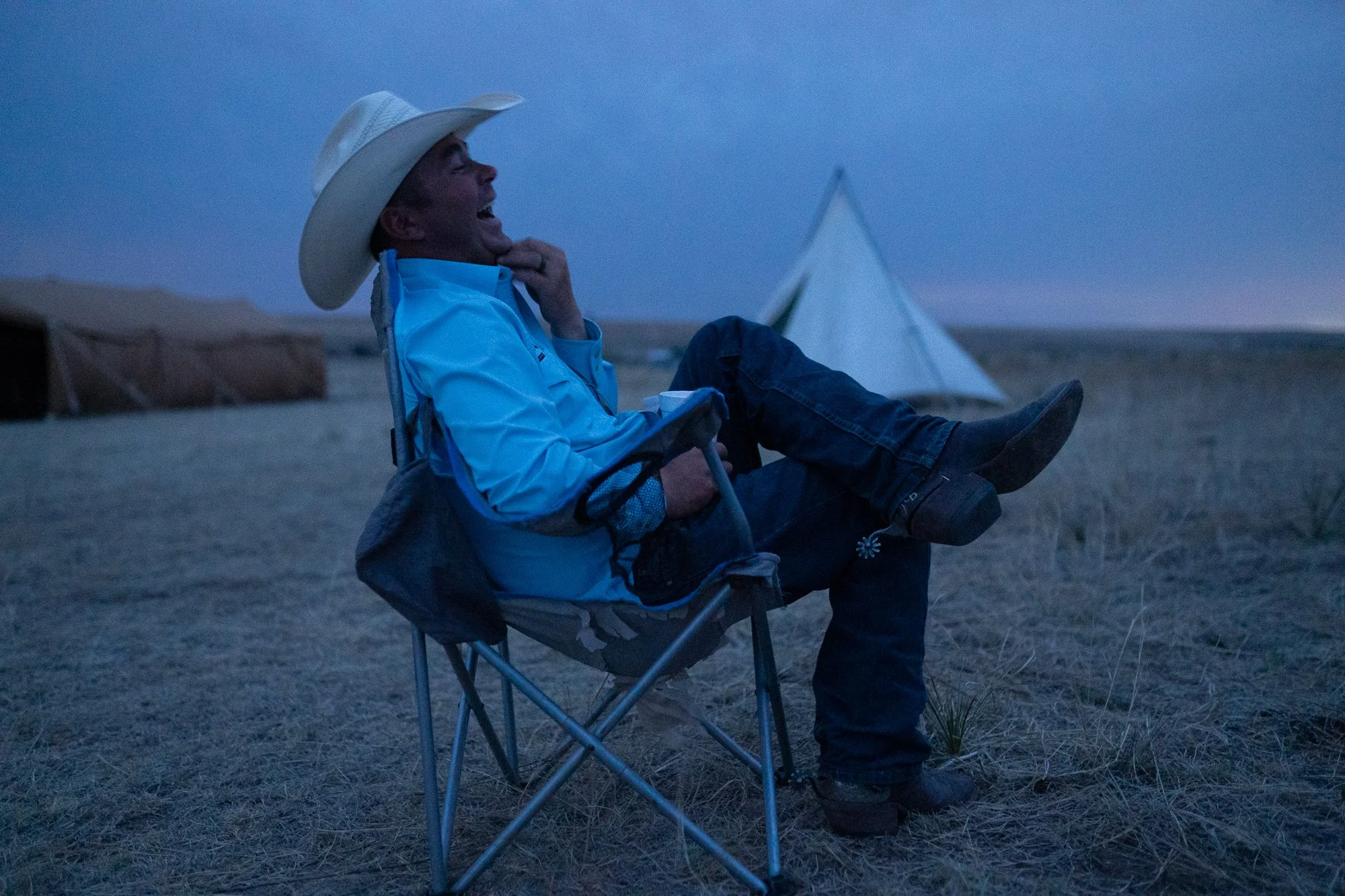
A quiet moment between tasks, where conversation and humor break up the rhythm of the day.

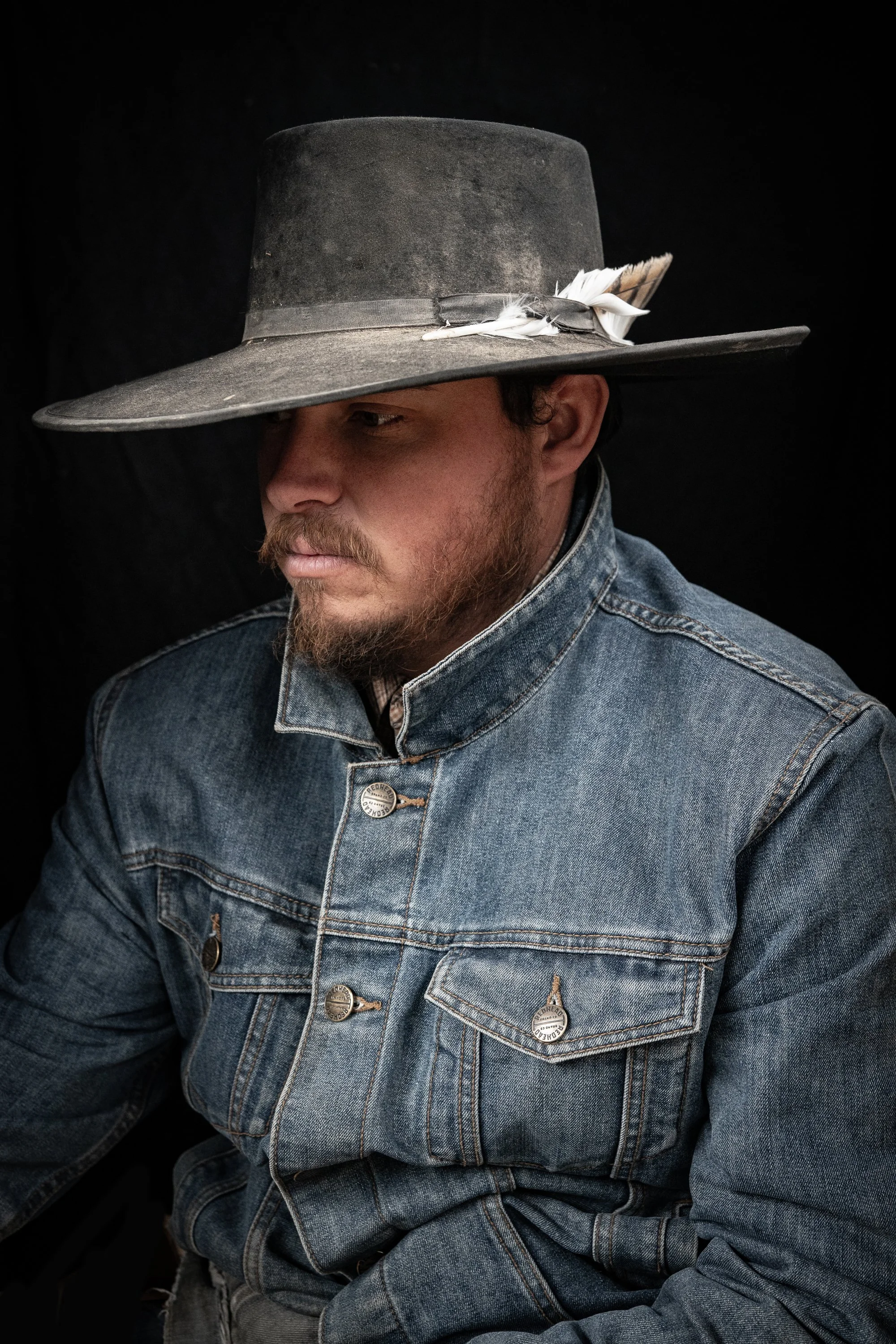
Portrait of cowboy in denim jacket and hat at TS Ranch

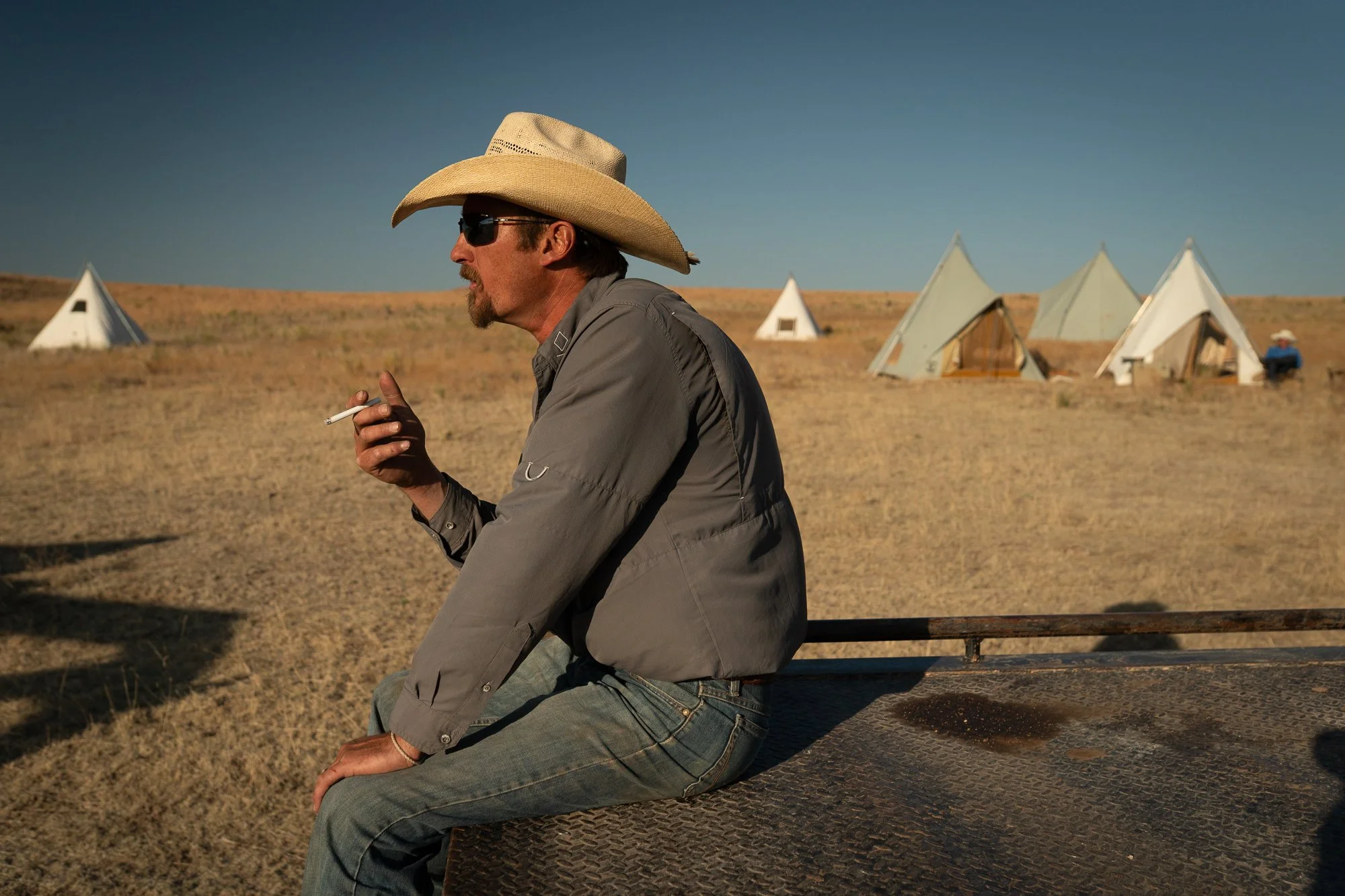
A quiet portrait of a buckaroo, worn denim and dust marking years of work in the West.

Cowboy roping cattle in dusty ranch pen at TS Ranch

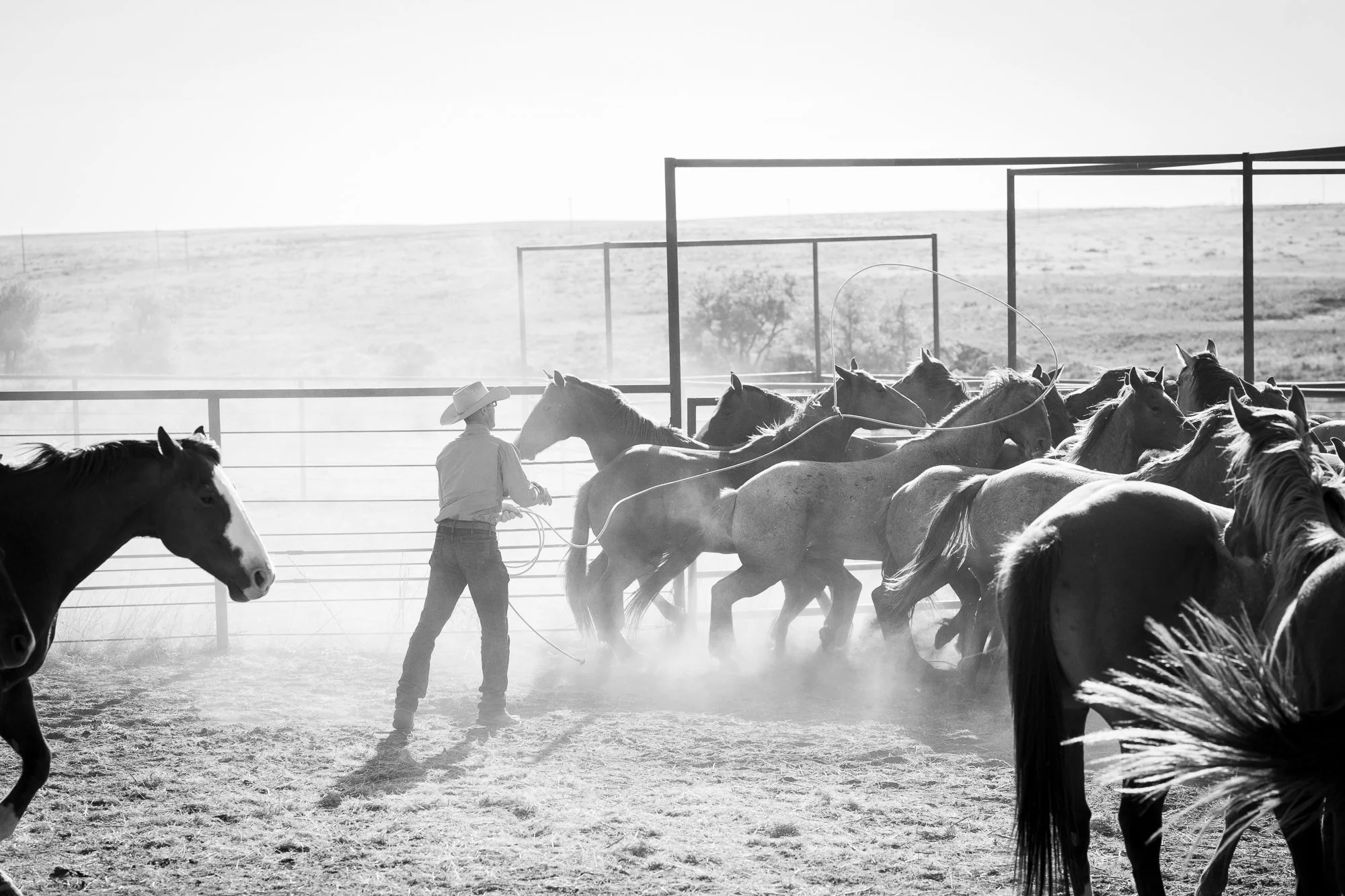
A rope swings through the dust as a buckaroo works cattle in the pens, the movement quick and deliberate.

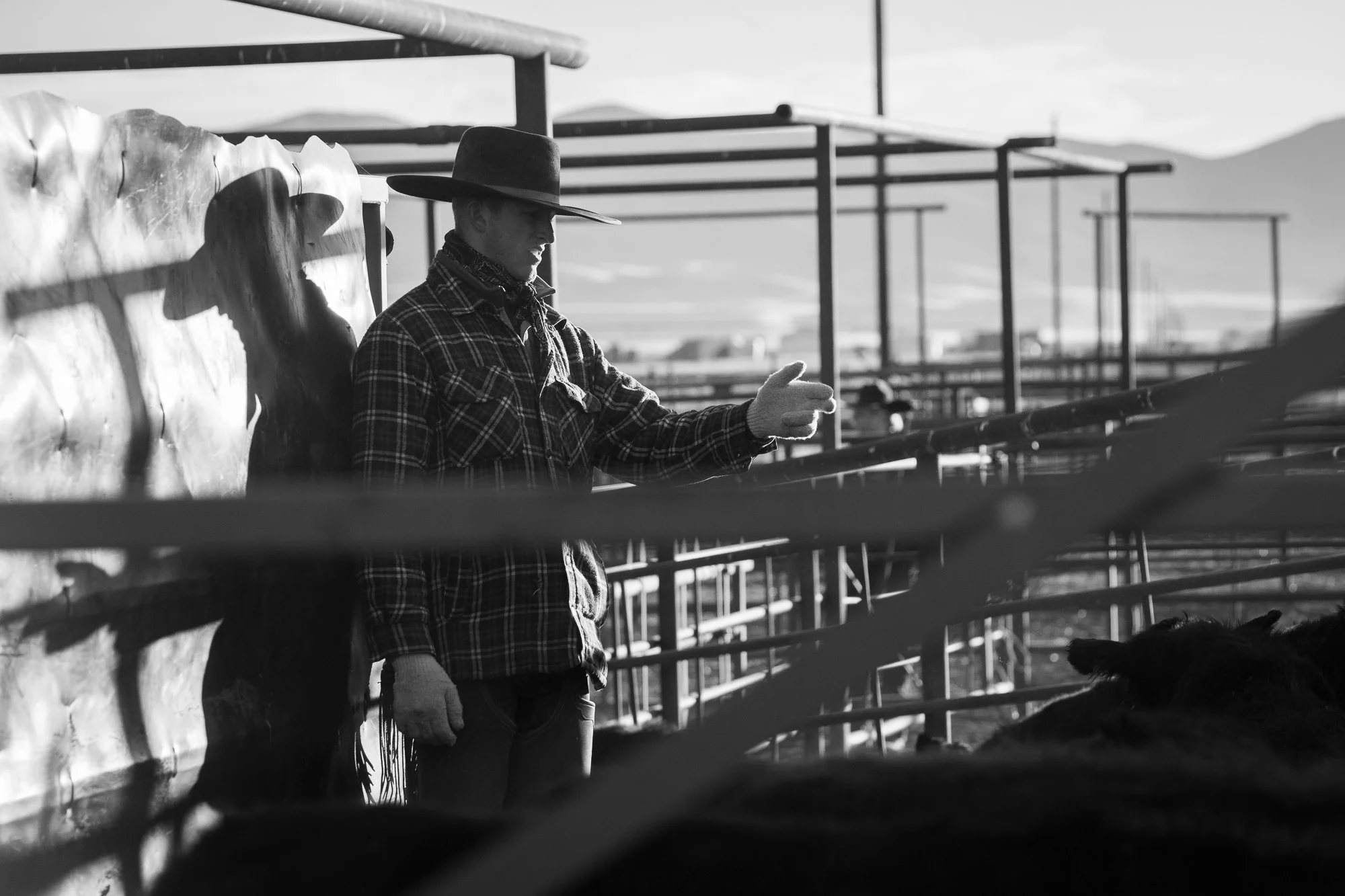
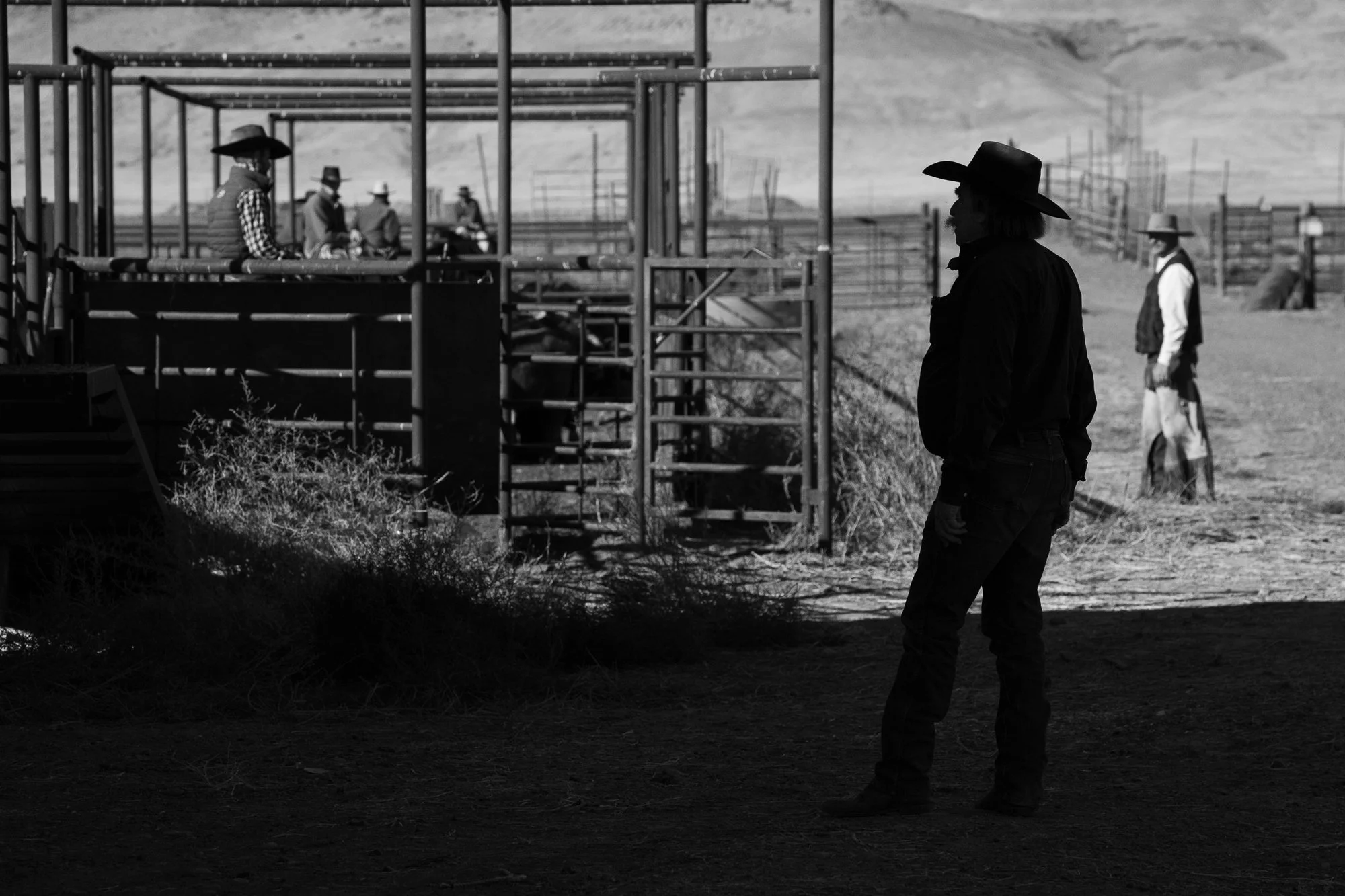
Cowboy standing and observing cattle work in ranch pens at TS Ranch

A quiet moment on the edge of the pens, where observation is just as important as action.

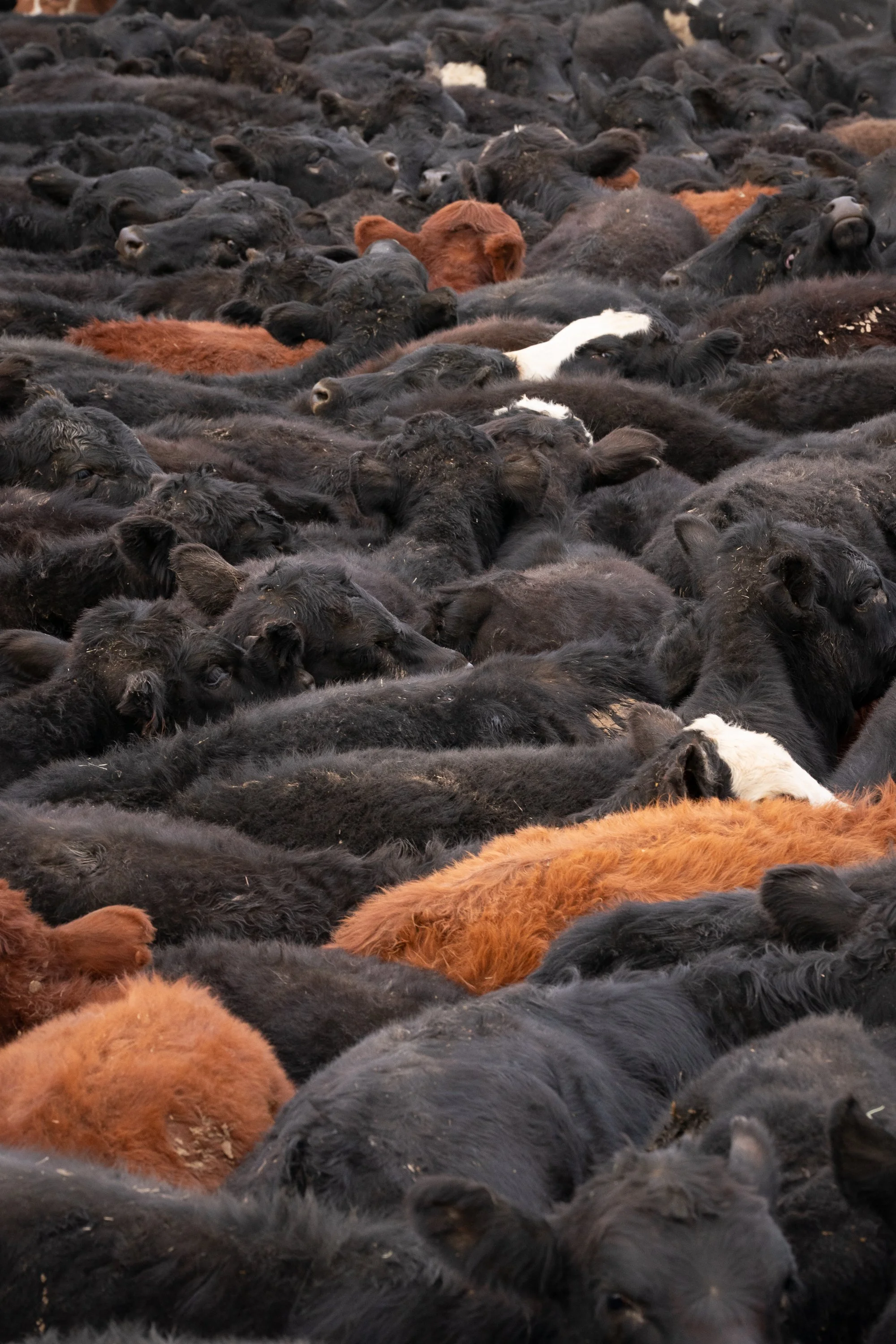
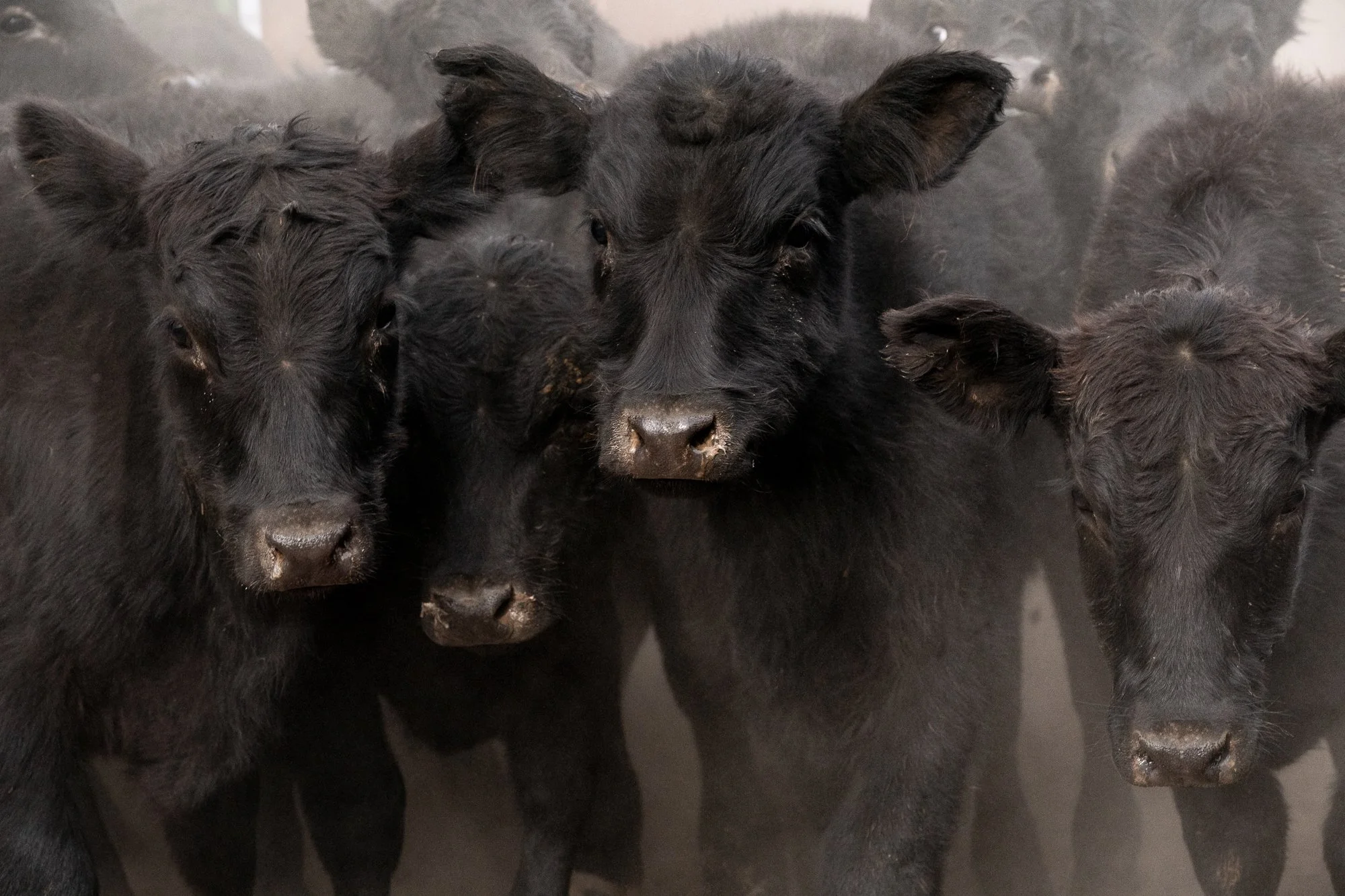
Close-up of dense cattle herd showing texture and movement at TS Ranch

Packed tightly together, the herd becomes a study of movement, texture, and weight.

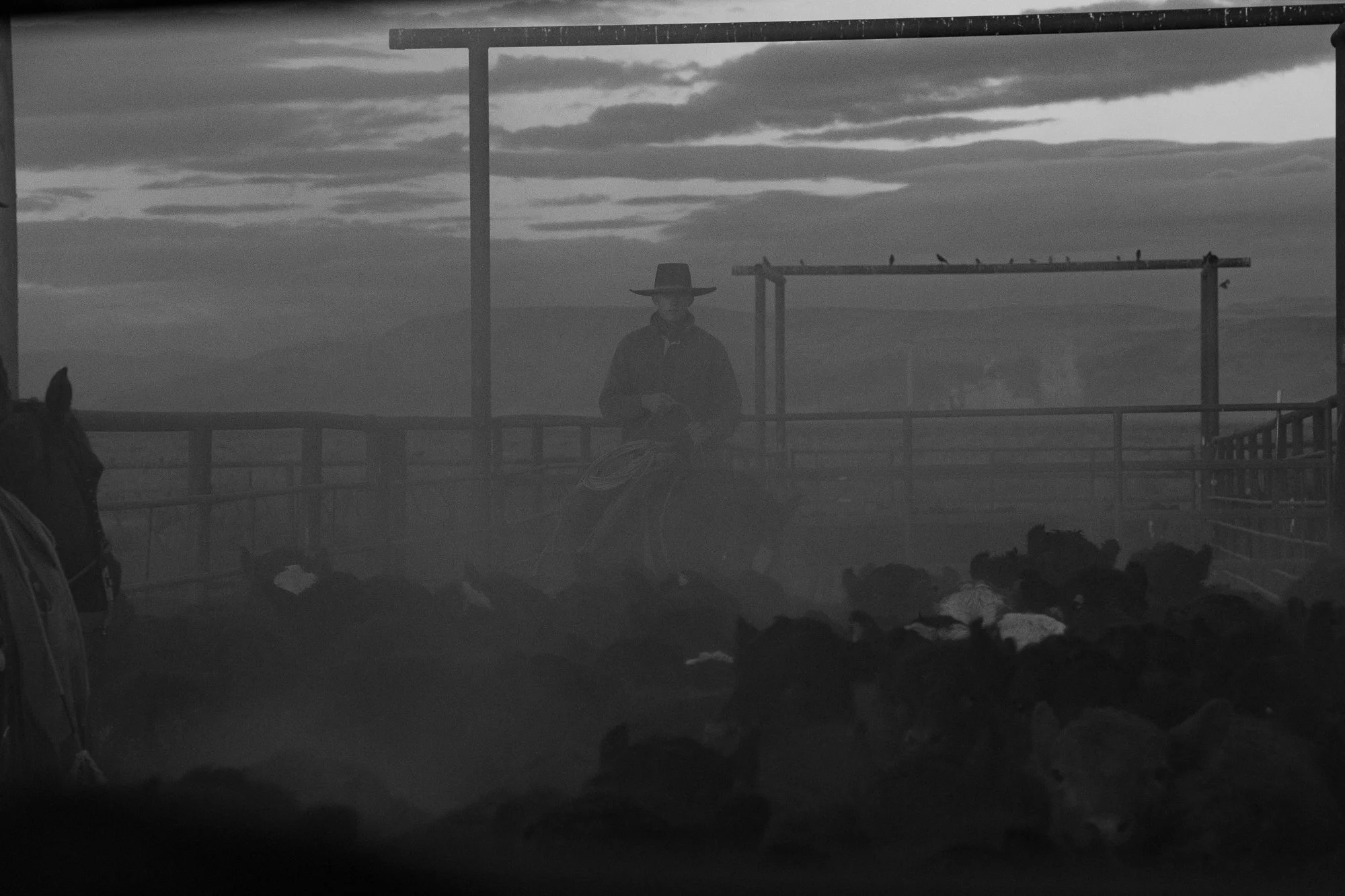
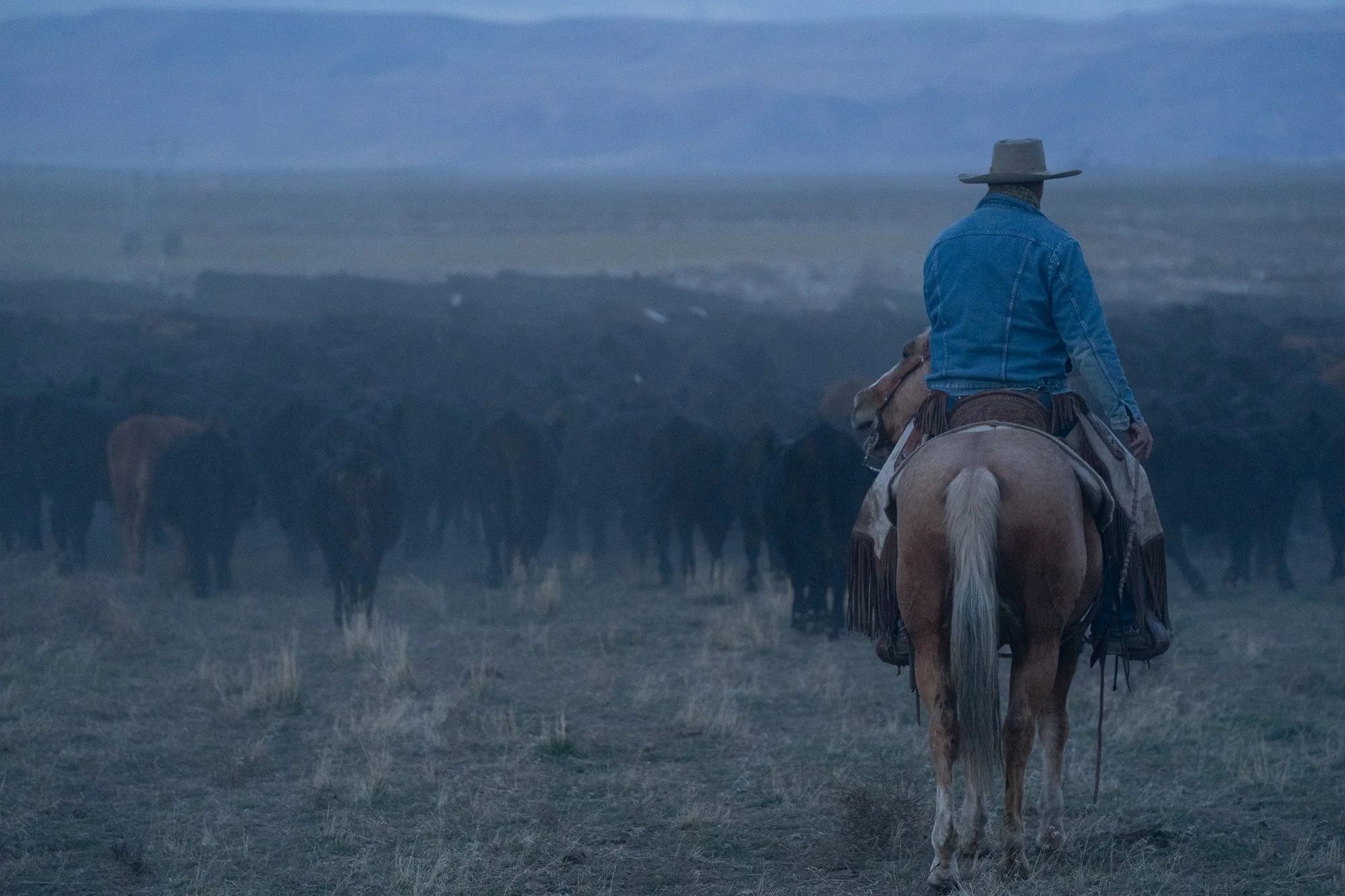
Buckaroo riding horseback into cattle herd in morning haze at TS Ranch

A buckaroo moves into the herd through the morning haze, guiding cattle forward as the dust begins to rise.

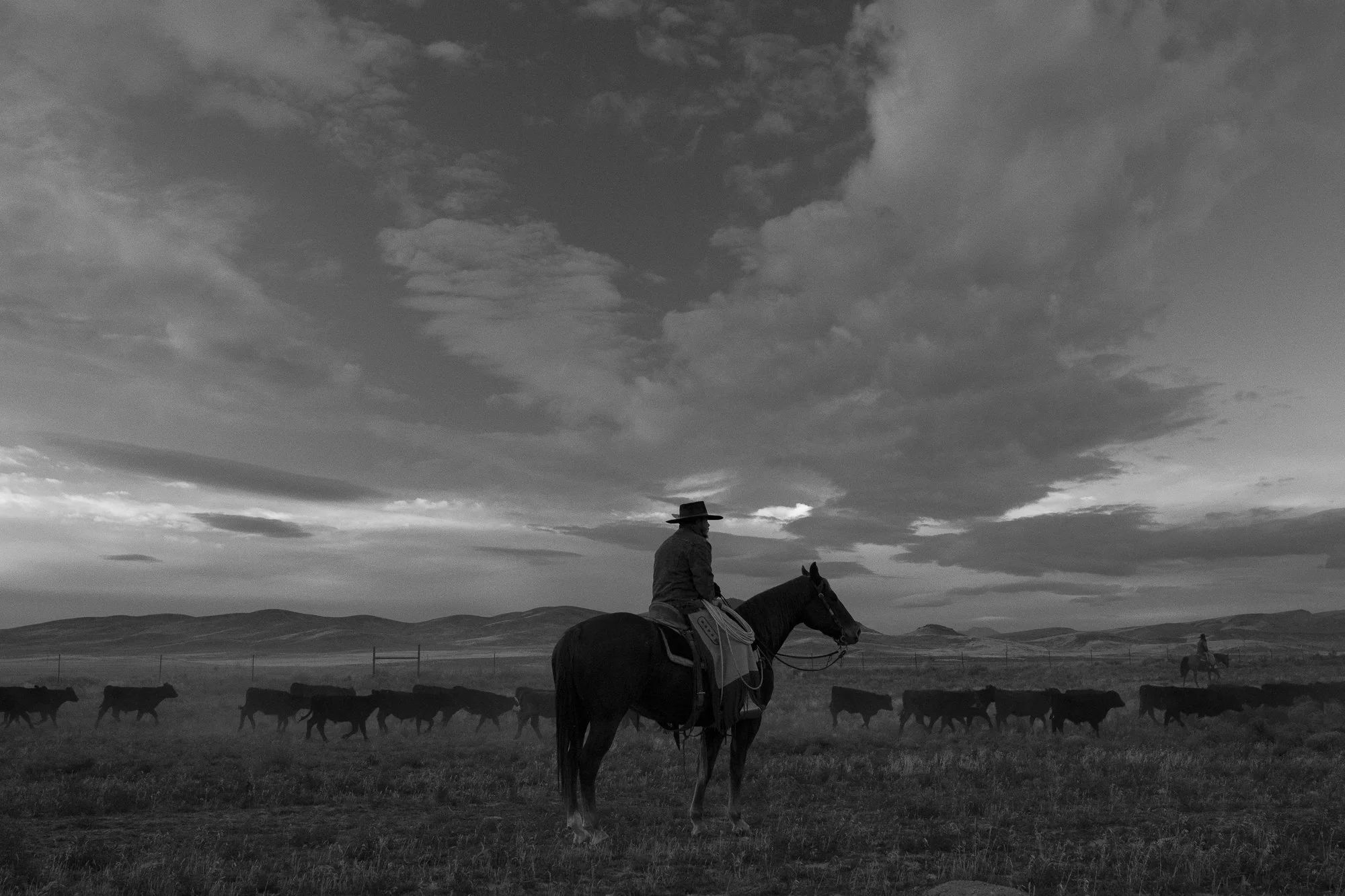
Buckaroo on horseback holding position as cattle move across open range at TS Ranch

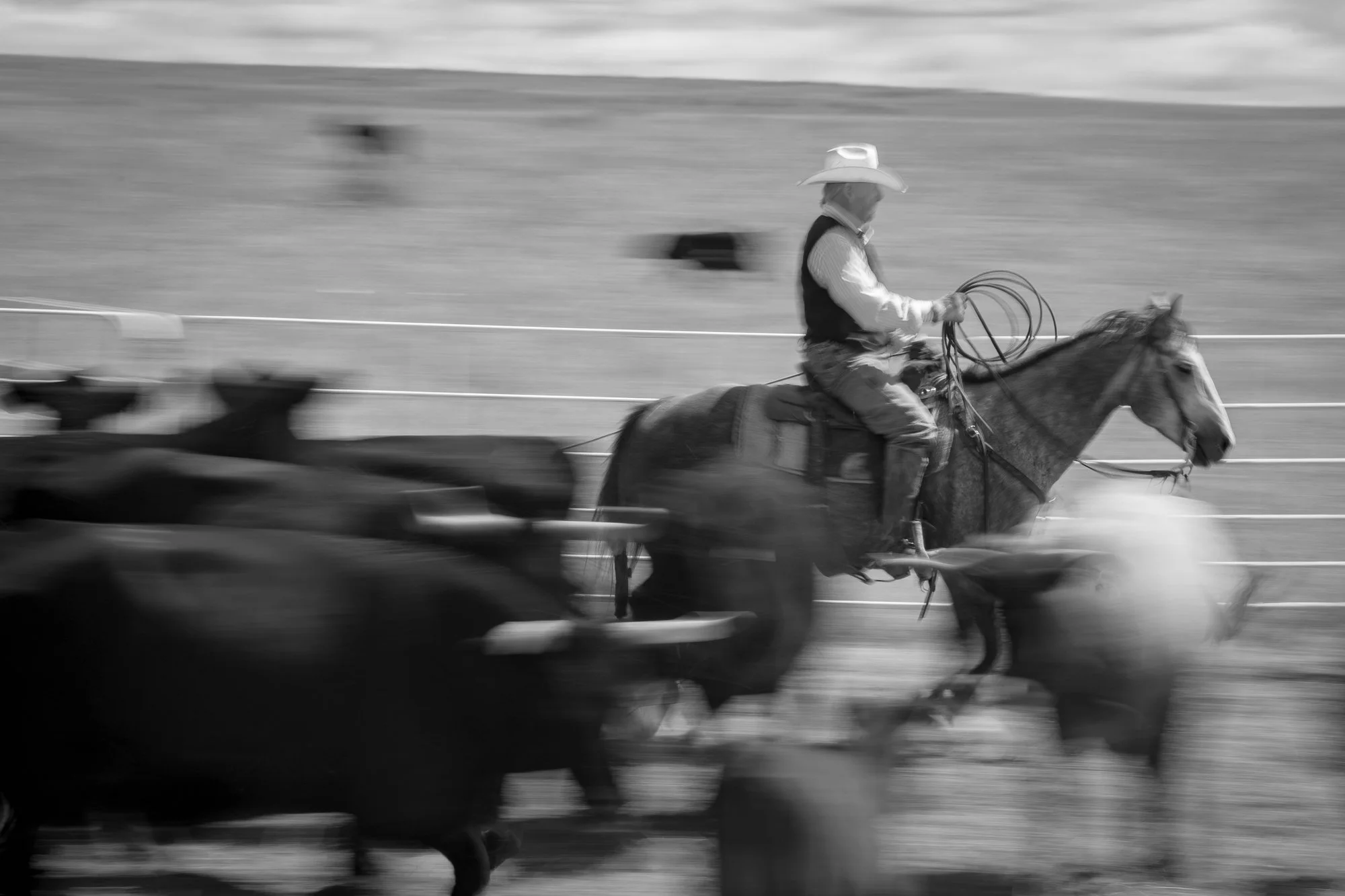
A buckaroo sits steady as cattle drift across the range, holding position while the herd moves past.

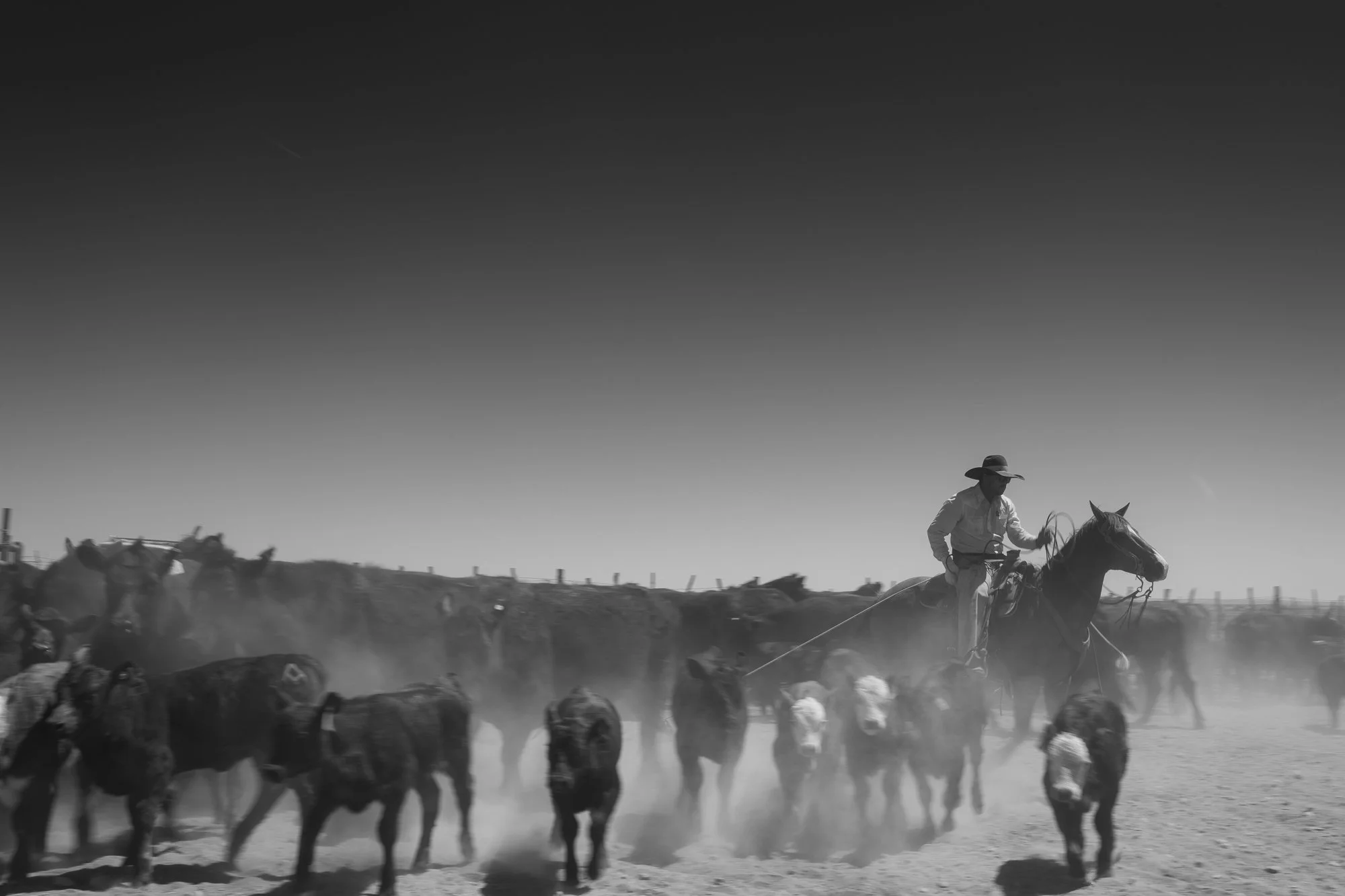
Cowboys pushing cattle through dusty pens at TS Ranch

Buckaroos push cattle through the pens, the air thick with dust as the herd moves forward.

Cowboys sorting cattle in dusty ranch pens at TS Ranch

Buckaroos work cattle through the maze of pens, guiding movement through dust and steel.

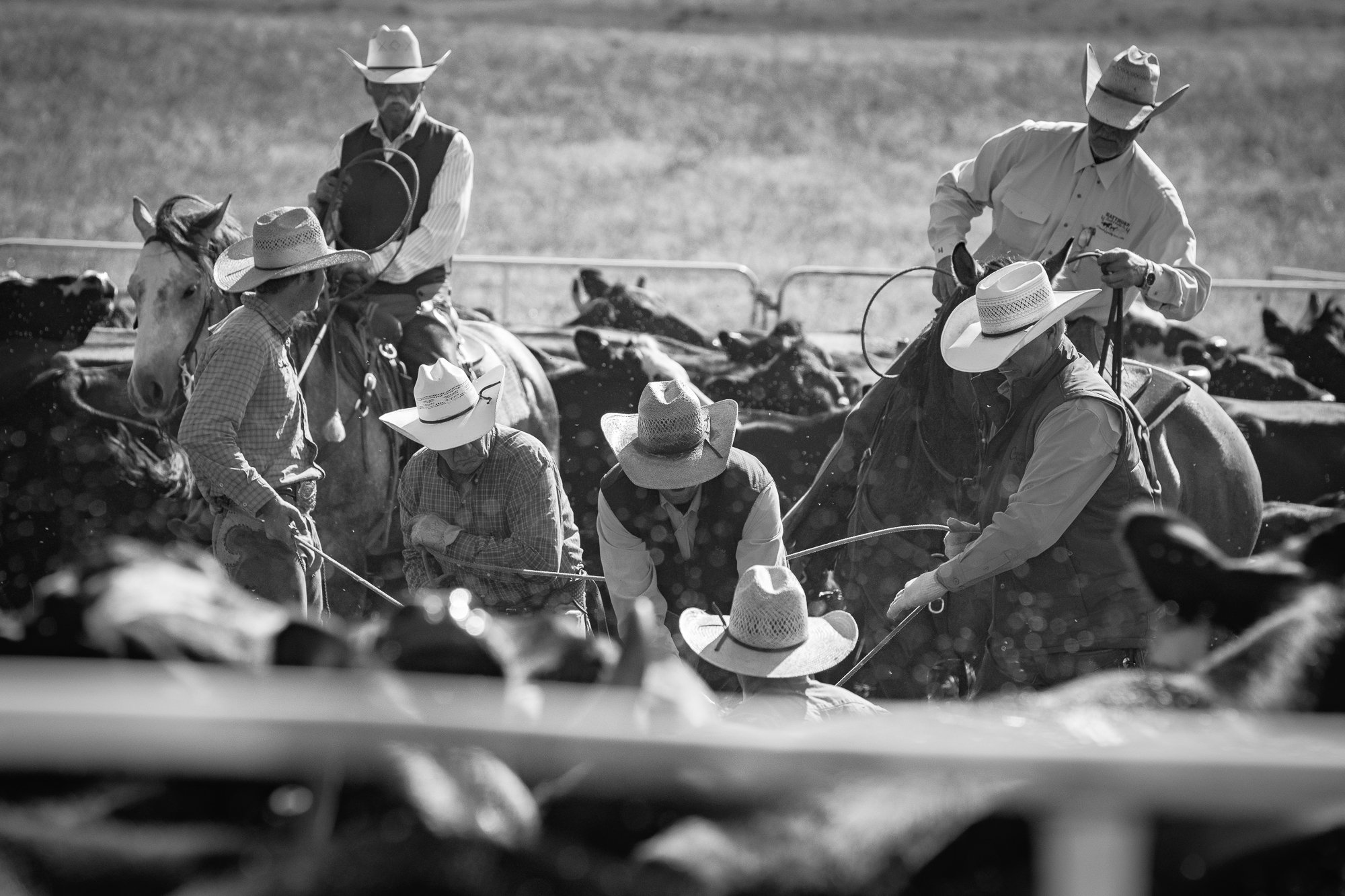
Three cowboys on horseback working cattle in dusty pens at TS Ranch

Three buckaroos move in sync, guiding cattle through the pens with quiet precision.

Close-up of buckaroo hair braid and hat from behind at TS Ranch

A long braid falls down the back of a denim jacket, a quiet detail rooted in buckaroo tradition.

Cattle herd moving through ranch pens with cowboy on horseback at TS Ranch

Cattle press forward through the pens as a buckaroo guides them from horseback, the air thick with dust.

Interior of livestock trailer with light and shadow at TS Ranch

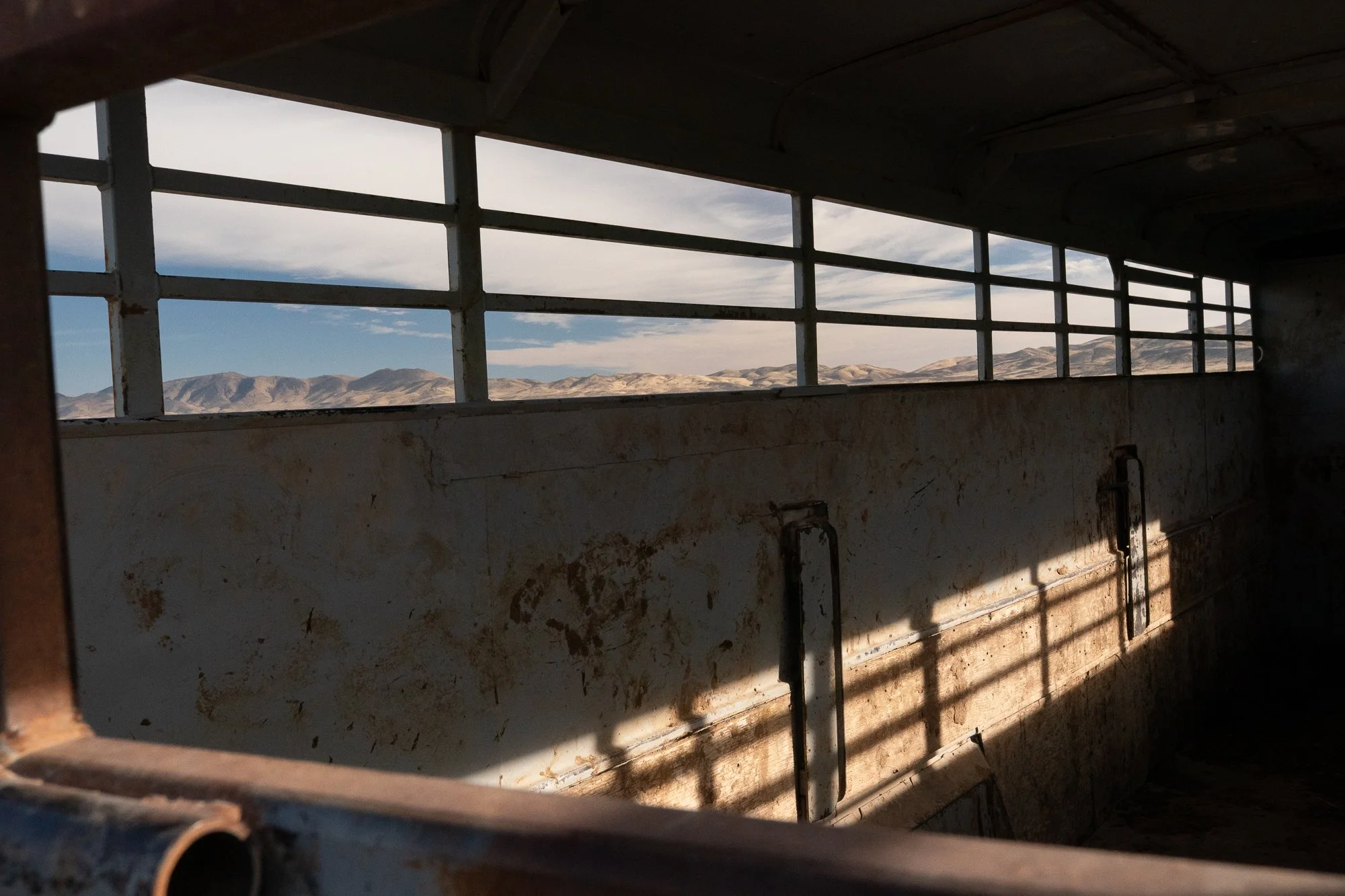
Light cuts through the slats of a stock trailer, revealing the worn surfaces shaped by years of use.

Cattle herd grouped tightly in ranch pens with cowboy on horseback at TS Ranch

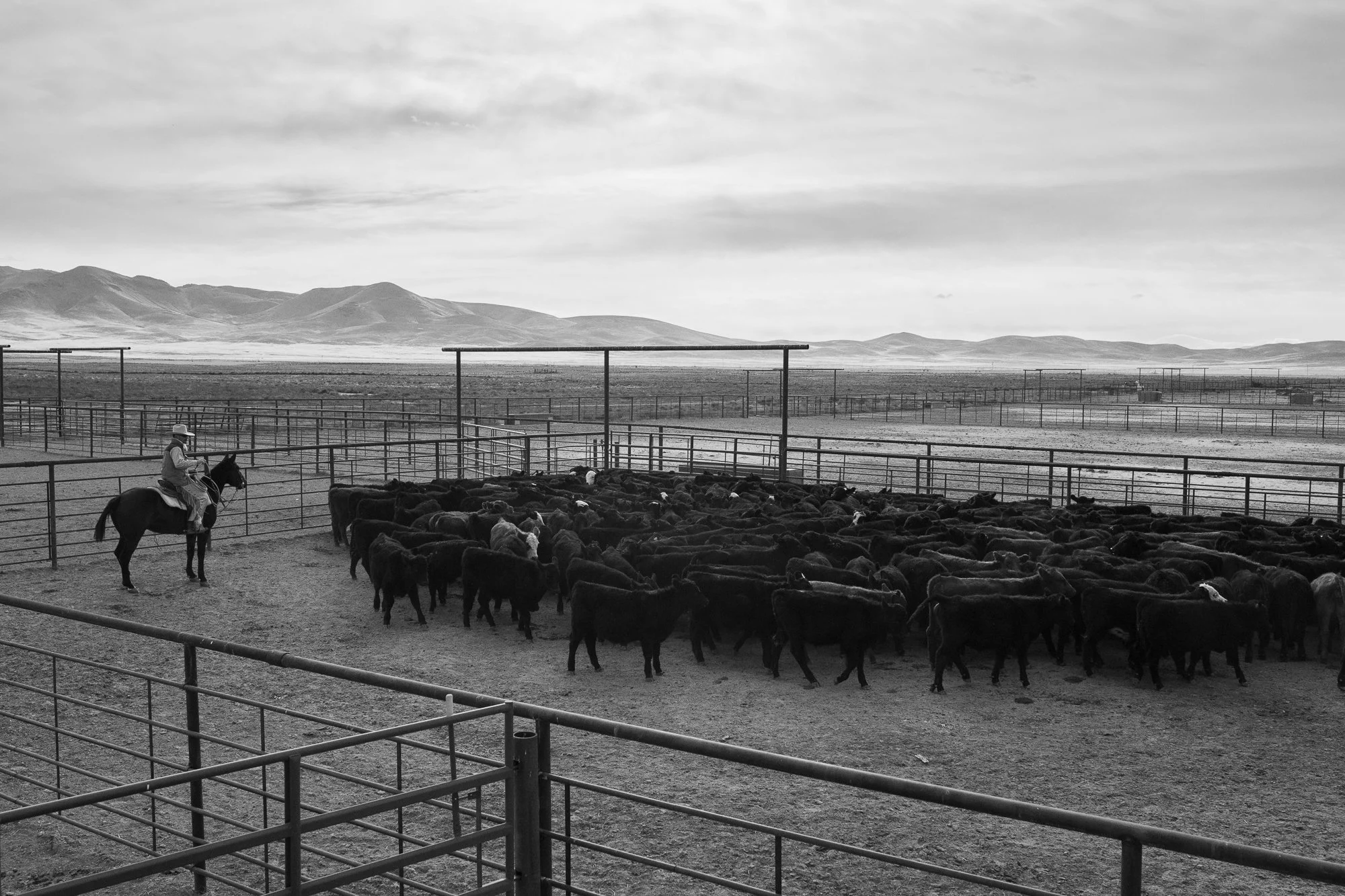
A buckaroo watches over a tight group of cattle, keeping them settled inside the pens.

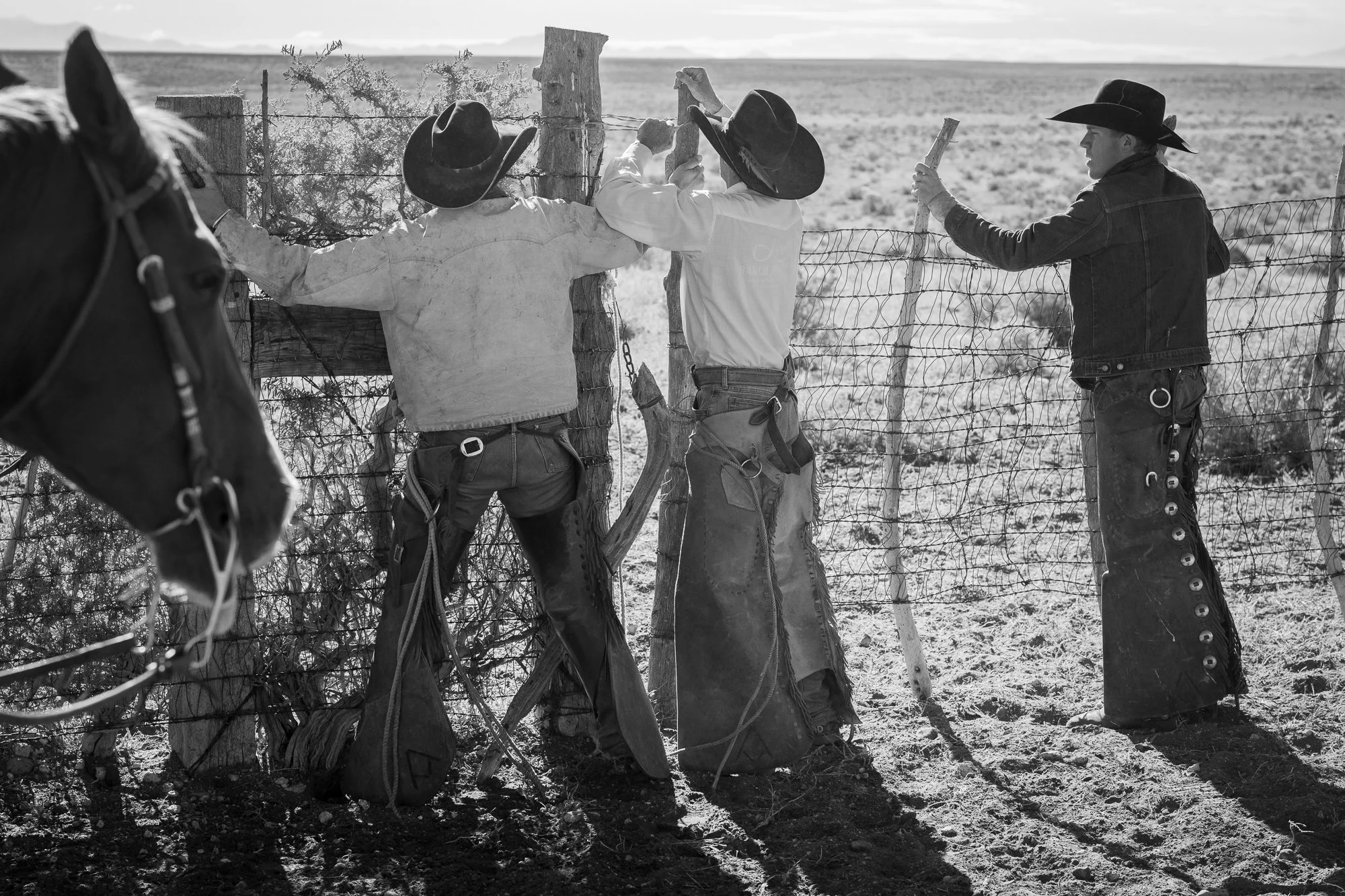
Two buckaroos standing at fence watching cattle work at TS Ranch

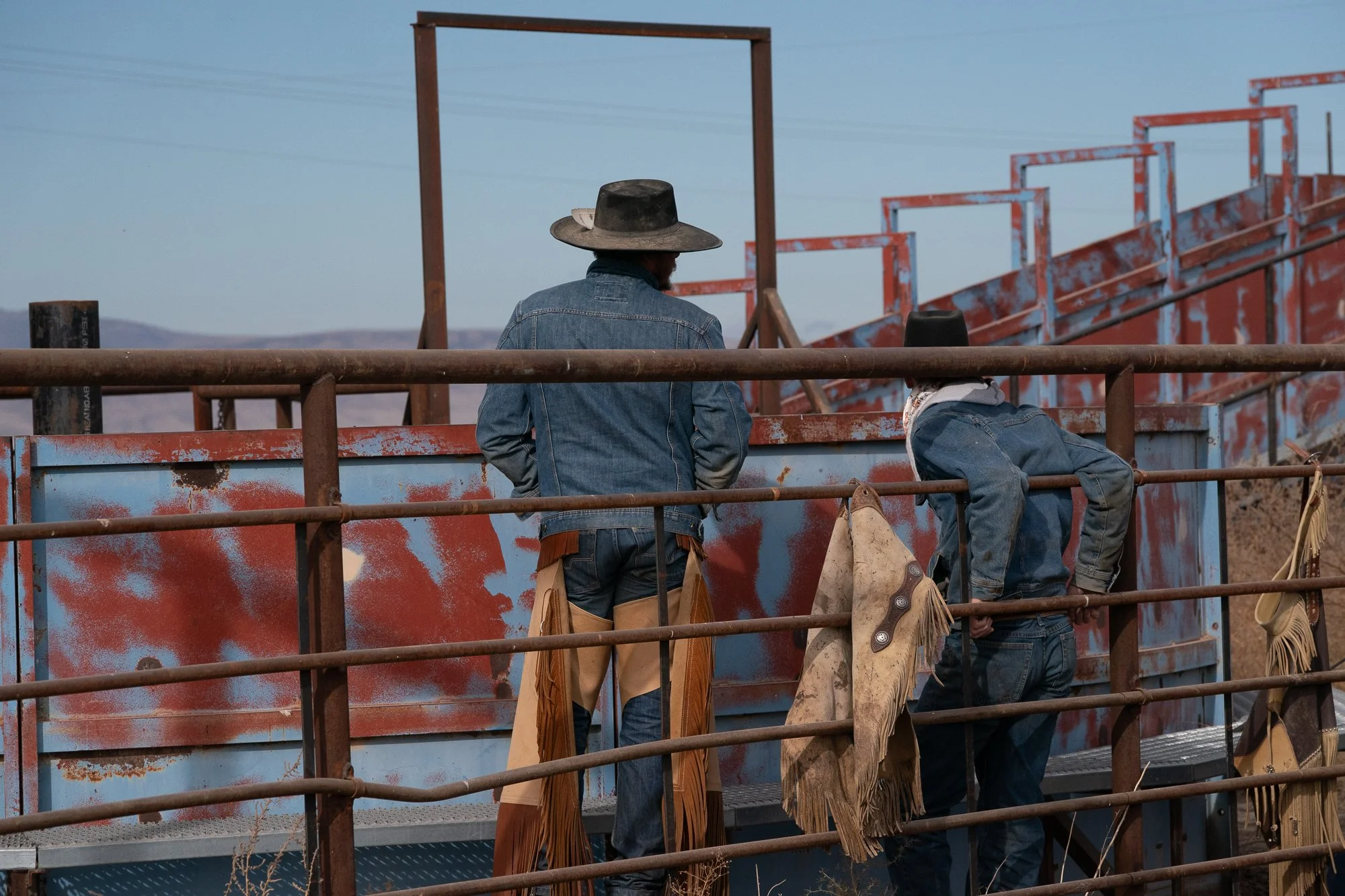
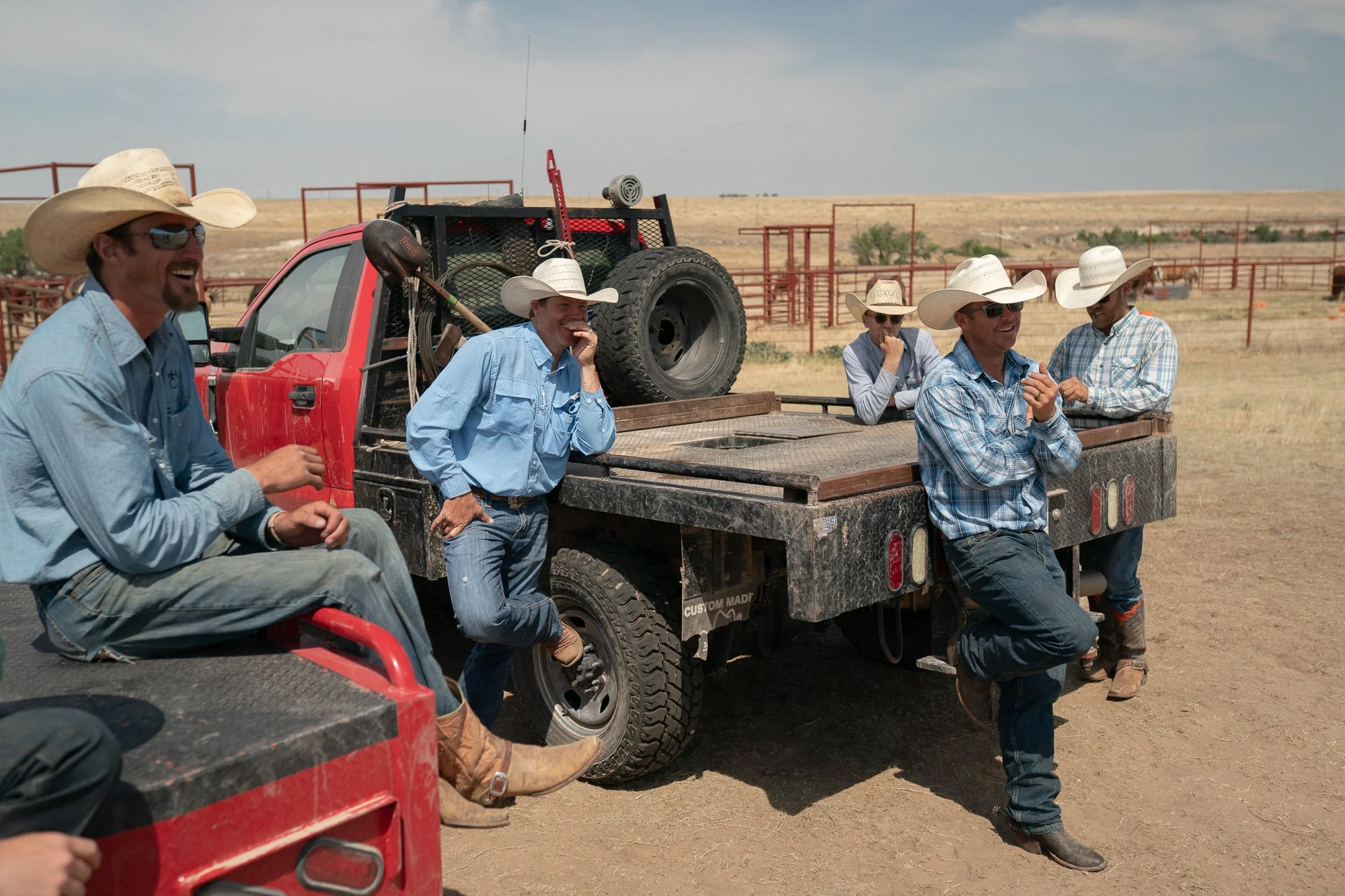
Two buckaroos lean against the fence, watching the work unfold between runs through the pens.

Close-up of cattle faces in herd at TS Ranch

A few heads rise above the herd, each animal alert as dust hangs in the air.

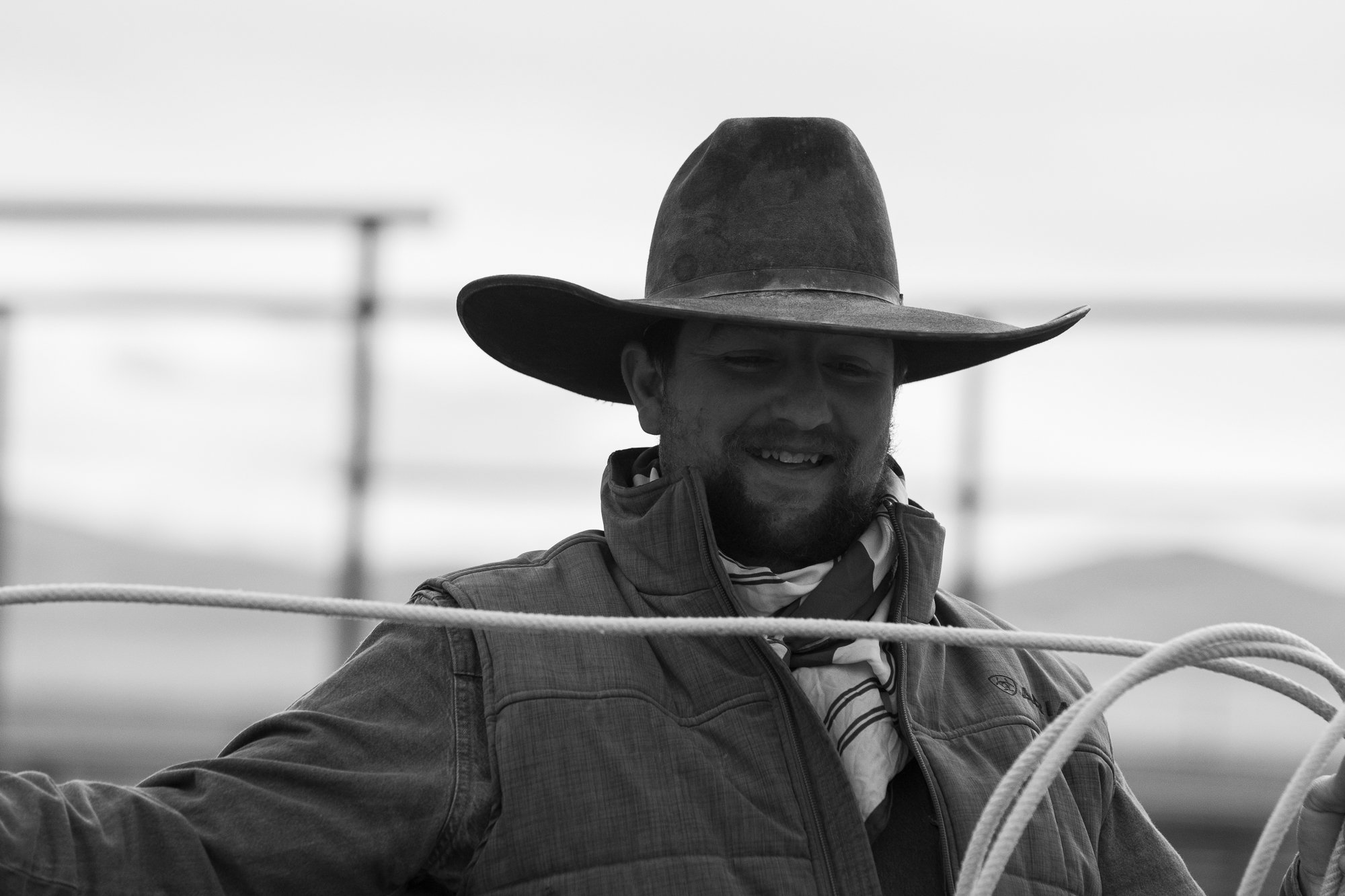
Black and white portrait of smiling cowboy at TS Ranch

A moment of ease breaks through the work as a buckaroo smiles between tasks.

Cowboy roping calf in cattle pens during ranch work at TS Ranch

A buckaroo steps into position, roping a calf as others guide cattle across the pen.

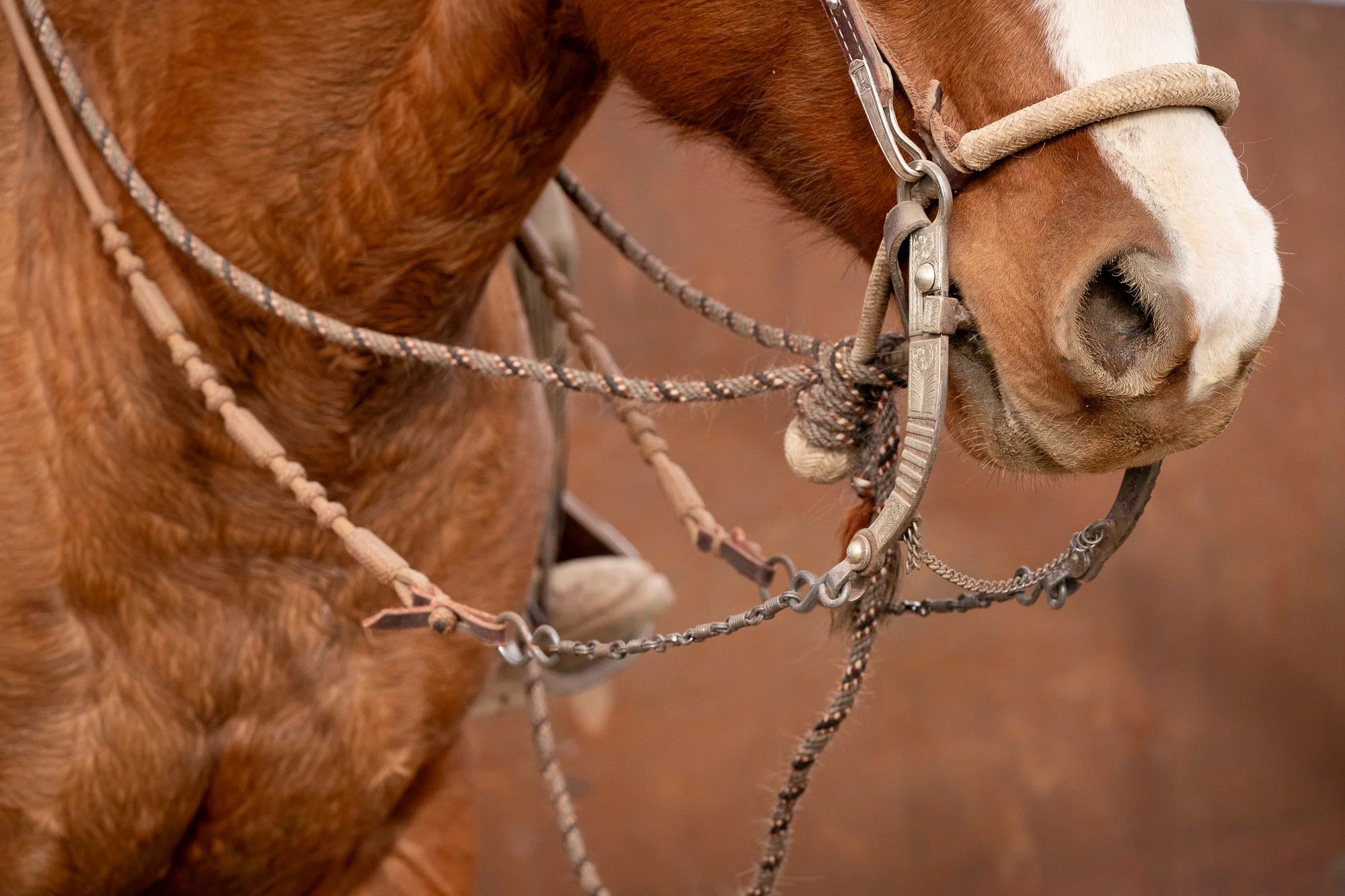
Close-up of horse bridle and bit showing western tack detail at TS Ranch

A close look at the reins and bridle, where craftsmanship and daily use meet.

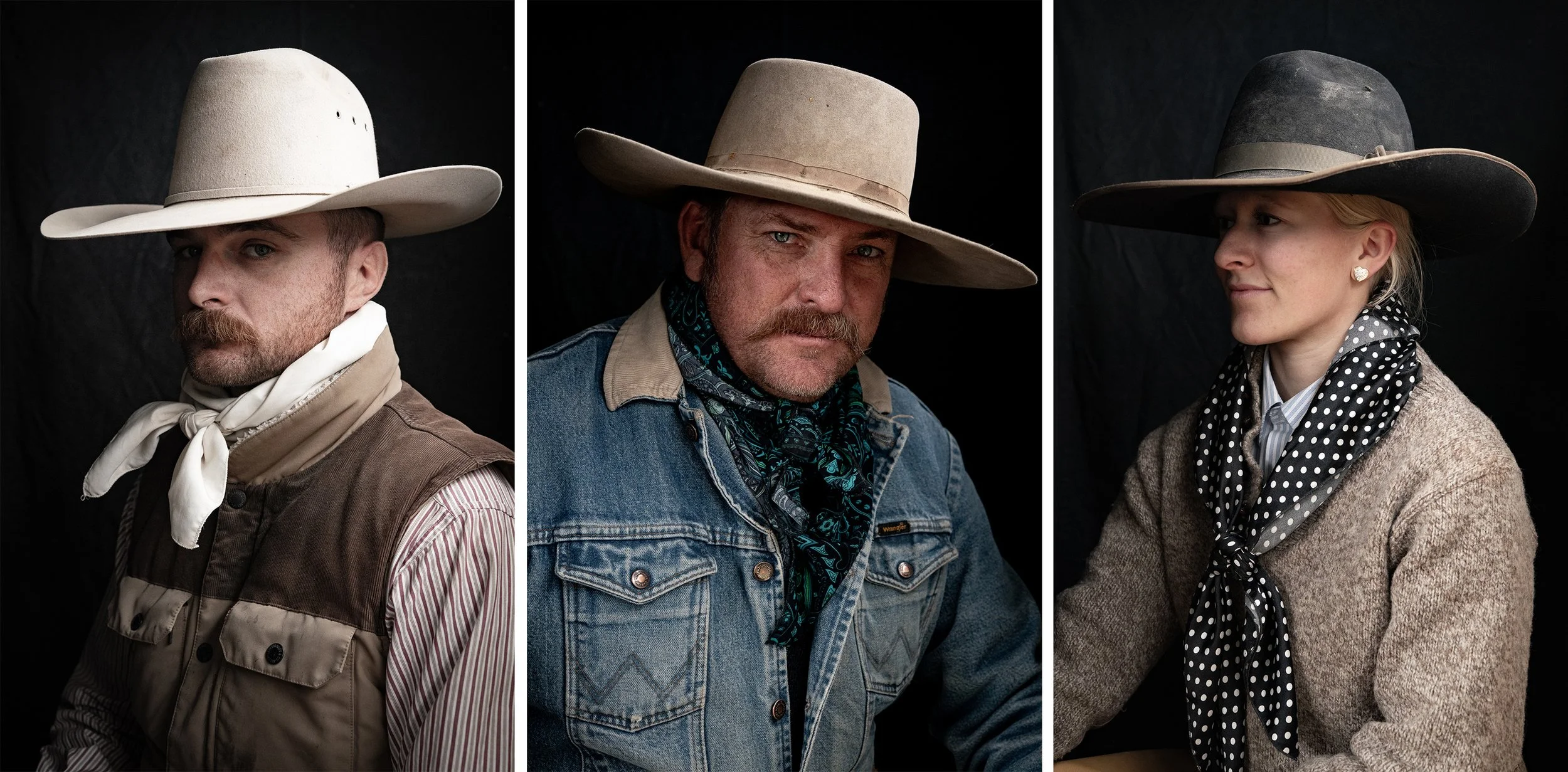
Group of cowboy portraits showing western clothing and character at TS Ranch

A series of buckaroo portraits, each shaped by the work and traditions of the American West.

Old Corrals of the American West | Western Photography Prints for Sale

Corral Photography Prints for Western Wall Art


Fine Art Western Photography Prints

“I like old corrals and sagebrush,” Ian Tyson once sang, and that line has stayed with me for years. Not because it’s poetic—though it is—but because it’s accurate. Old corrals say more about the American West than most people realize.

This collection of corral photography prints focuses on structures shaped by work, weather, and time. Built to serve a purpose rather than to last, these corrals now remain as quiet markers of a working past—sun-bleached posts, worn rails, and enclosures slowly returning to the land.

These images are part of a larger body of work documenting corrals across the American West.
View the full corral photography gallery

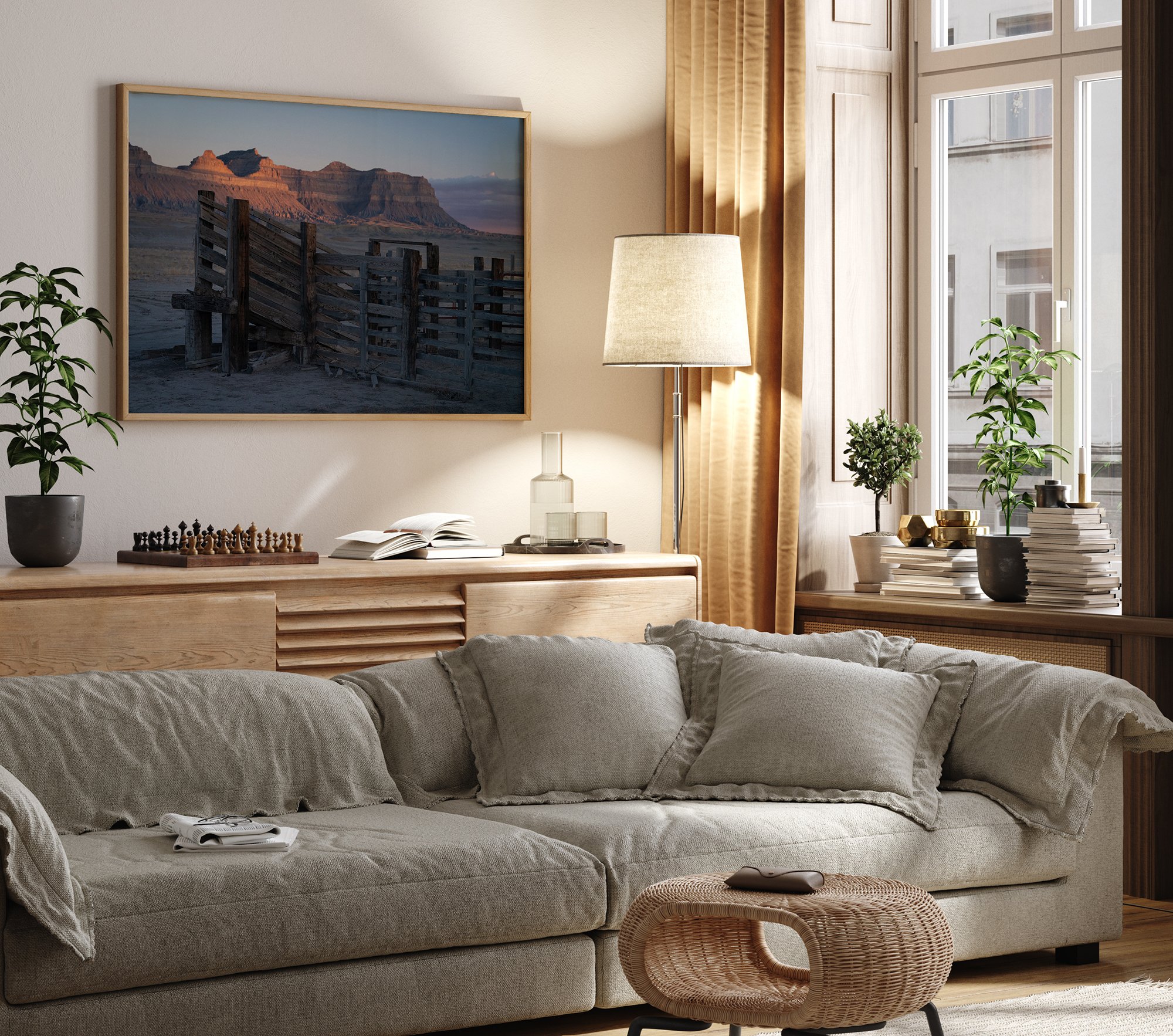
Corral photography print shown in a modern western interior, highlighting how authentic working landscapes translate into refined wall art

Photographing Old Corrals in the American West

I’ve spent years photographing working landscapes across the West—ranches, grazing land, water sources, and the structures that support them. Corrals often sit in the places you least expect, easy to pass without notice. But when you slow down, they begin to reveal something deeper.

Most of this work was made on active or former ranches, where access is limited and the structures still carry a functional history. There’s no staging, no reconstruction—just what remains.

These corral photographs are made using natural light and a documentary approach. I’m not interested in recreating the past, but in acknowledging it as it exists now.

An old corral isn’t nostalgia. It’s evidence.

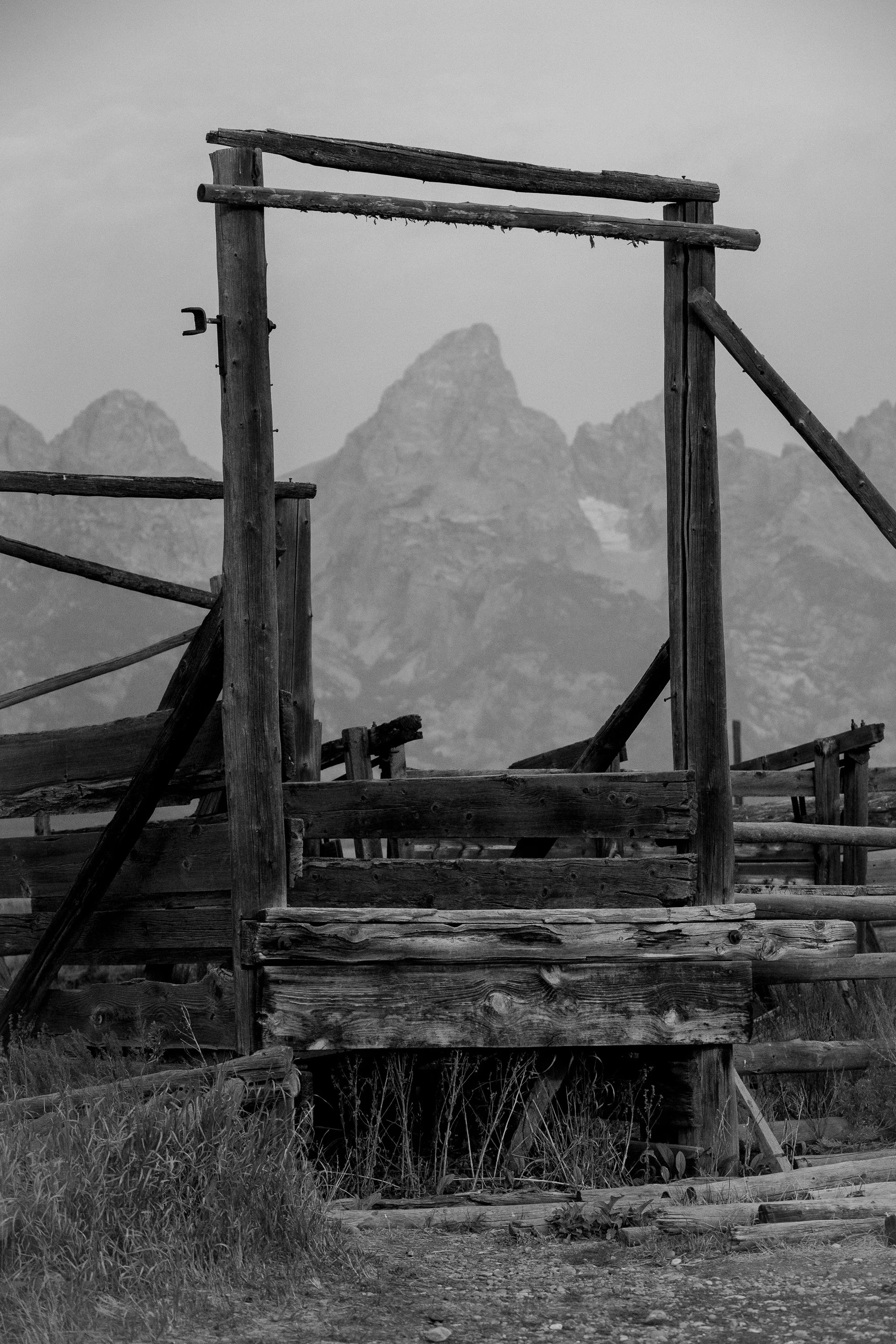
Black and white fine art photograph of the a wood cattle corral with the Grand Tetons in the background

An old wood cattle corral in front of the Grand Tetons in Wyoming - Black and White Fine Art Photography

An old corral gate and stone post on a remote ranch, photographed at dusk with the mountains of the American West beyond.

Why Old Corrals Still Matter

Corrals are where cattle were gathered, sorted, branded, treated, and shipped. They are places of work—defined by repetition, pressure, and routine. Over time, many have been replaced or abandoned as ranching operations changed.

What remains tells a quieter story:

  • Land use shifting over time

  • Families moving on or adapting

  • Work that once defined entire regions

Corrals are rarely photographed as standalone subjects, yet they hold the structure of the work itself. Photographing them preserves a record of a West that still exists—but is increasingly easy to overlook.

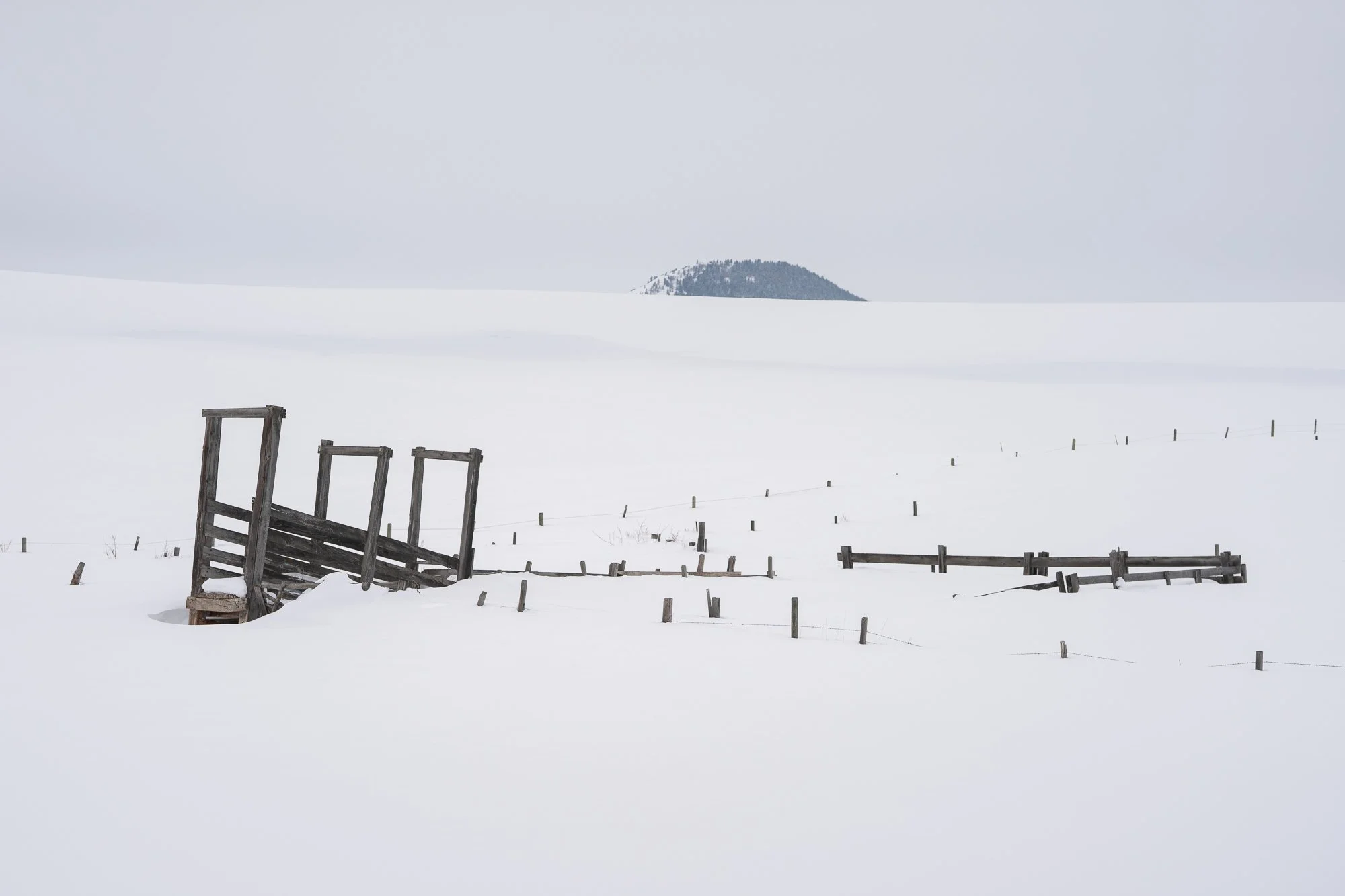
Old corral partially buried in snow on an open ranch landscape in the American West

An abandoned ranch corral slowly disappearing beneath winter snow, photographed in the American West

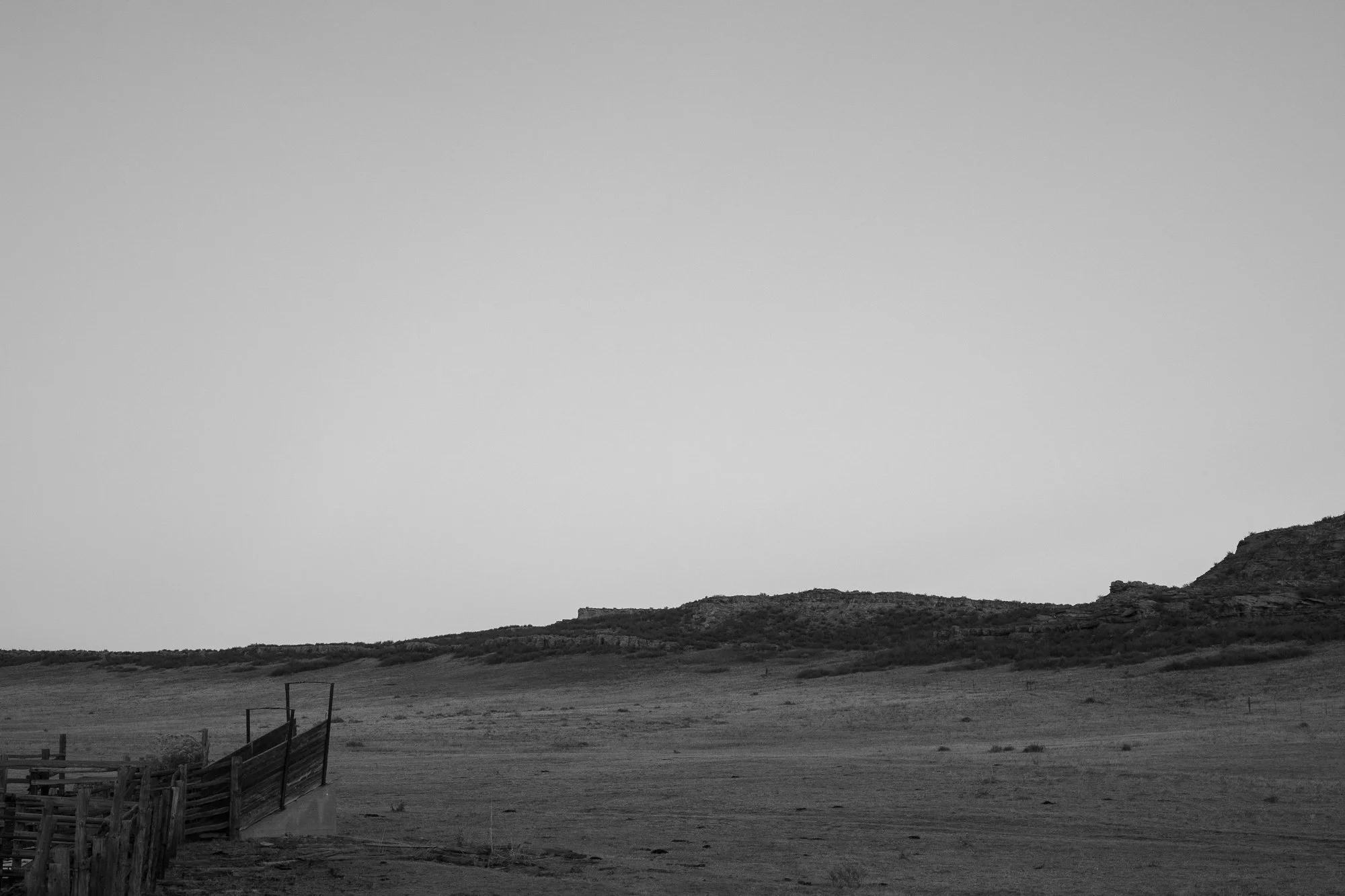
Black and white photograph of a corral set within an open Western landscape

A corral set into a wide, open Western landscape, photographed in black and white.

Why Corral Photography Works as Western Wall Art

Corral photography offers something different from traditional Western imagery.

Instead of action or portraiture, these photographs focus on structure, space, and restraint. Weathered wood, repeated lines, and open landscapes create compositions that feel grounded rather than decorative.

That’s why they tend to work well in a range of spaces:

  • Western homes and ranch properties

  • Modern interiors looking for texture and depth

  • Hospitality spaces and lodges

  • Offices and environments shaped by regional identity

The imagery doesn’t rely on spectacle. It holds attention more quietly—through detail, balance, and a strong sense of place.

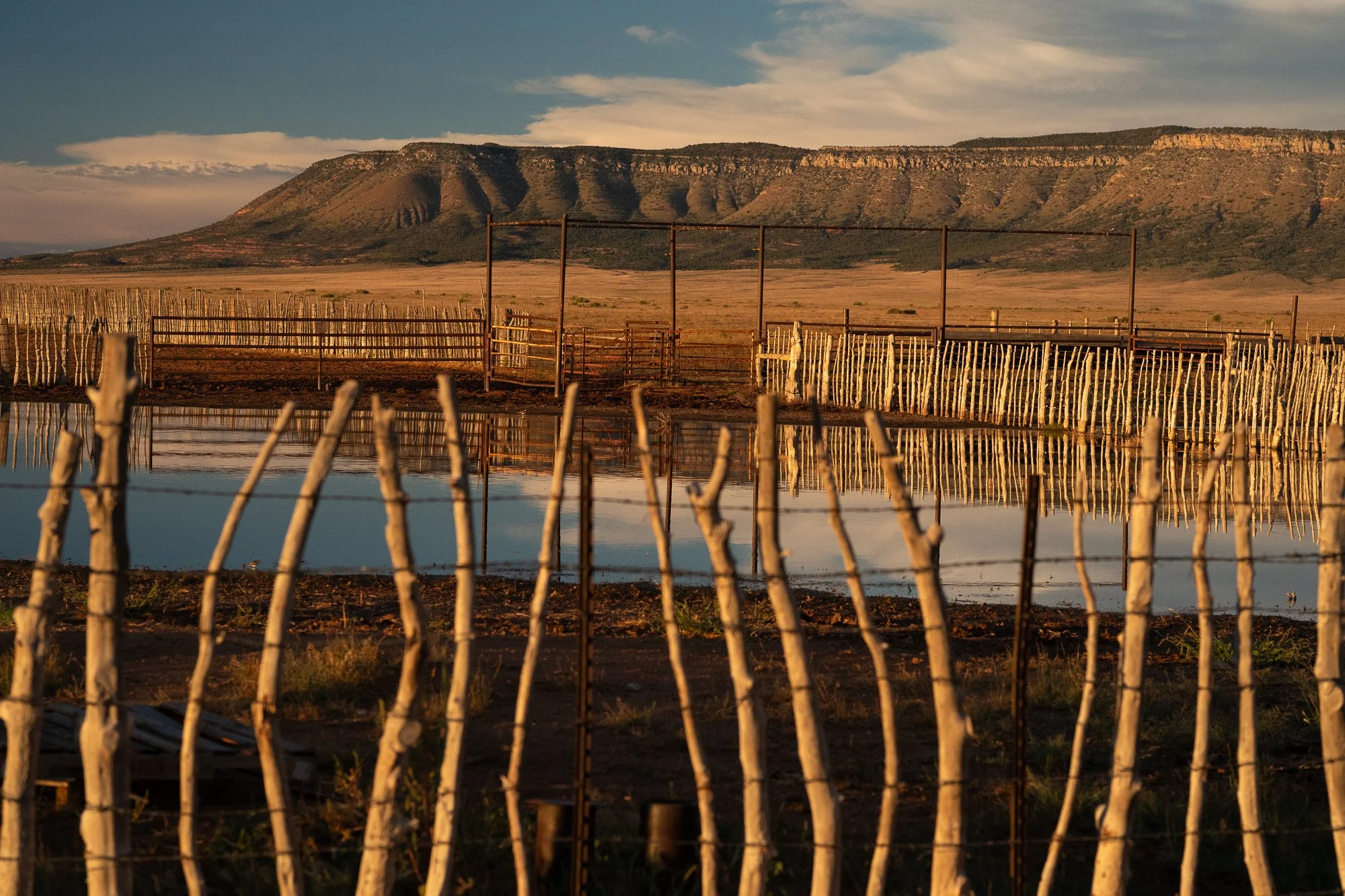
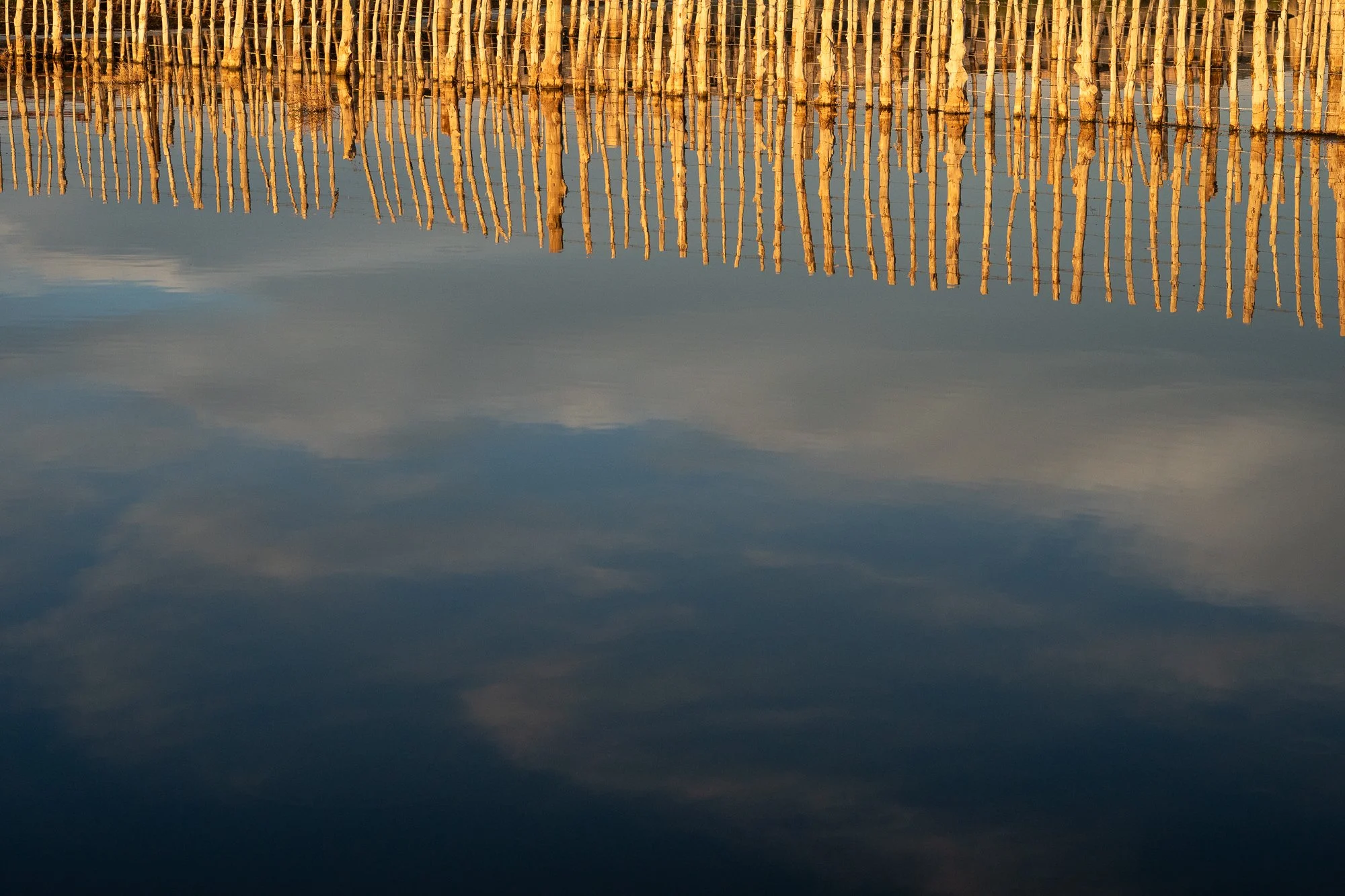
Wooden corral fence posts reflected in still water on a ranch in the American West

Wooden corral fence posts reflected in still water, photographed on a ranch in the American West.

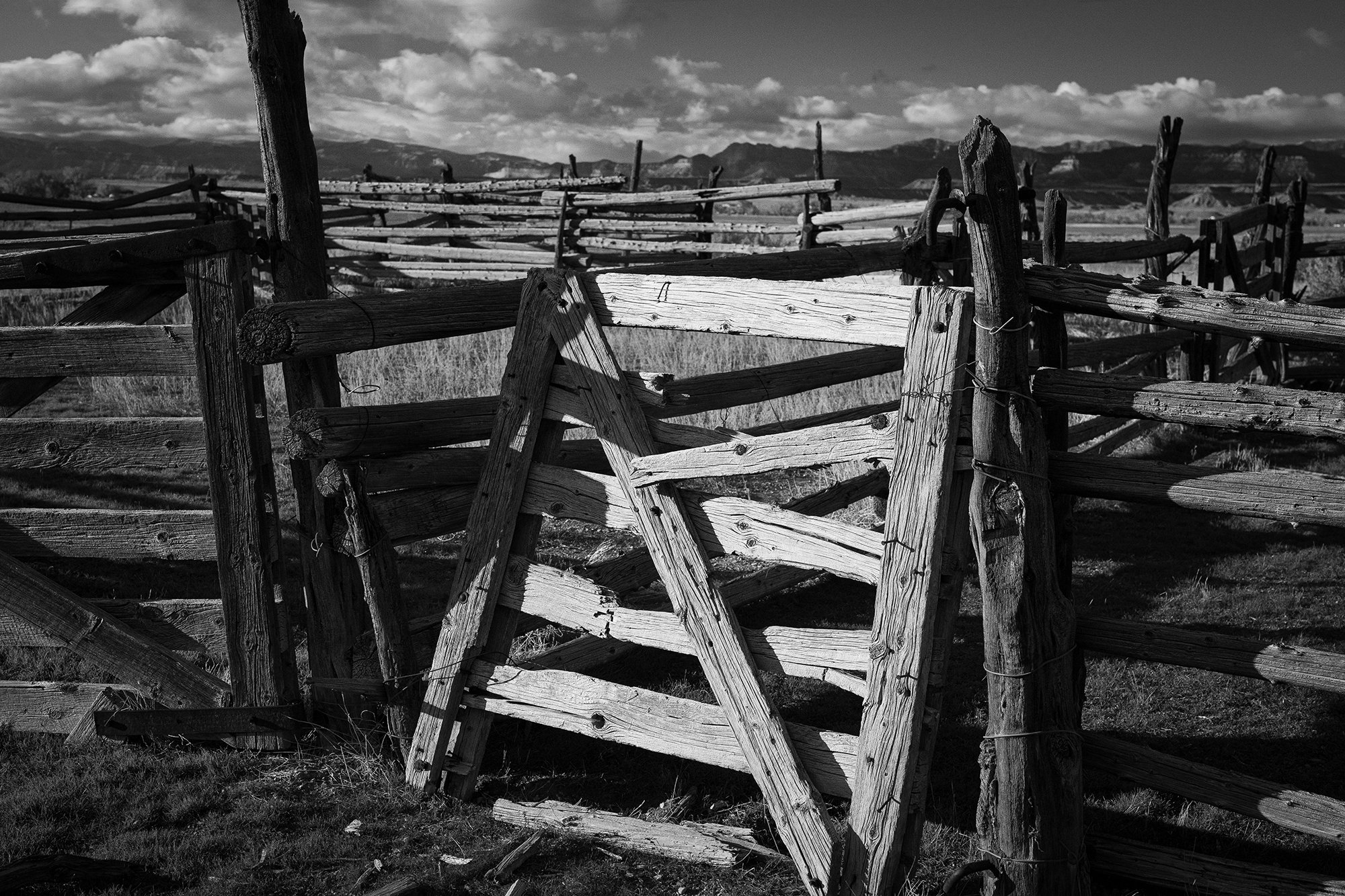
Black and white photograph of a weathered wooden cattle corral in the American West

A weathered cattle corral built from rough-cut timber and wire, photographed in black and white.

Fine Art Corral Photography Prints

A selection of these corral photographs is available as limited-edition fine art prints.

Each print is produced using archival materials and a museum-quality process, intended to reflect the tone and detail of the original photograph.

  • Printed on archival fine art paper

  • Limited editions

  • Multiple sizes available

  • Signed by the photographer

These are not mass-produced reproductions. They are part of a long-term body of work, created to last and to hold meaning over time.

A selection of corral photography prints is available to view online.

View Available Corral Photography Prints
Explore the Full Cowboy Photography Project

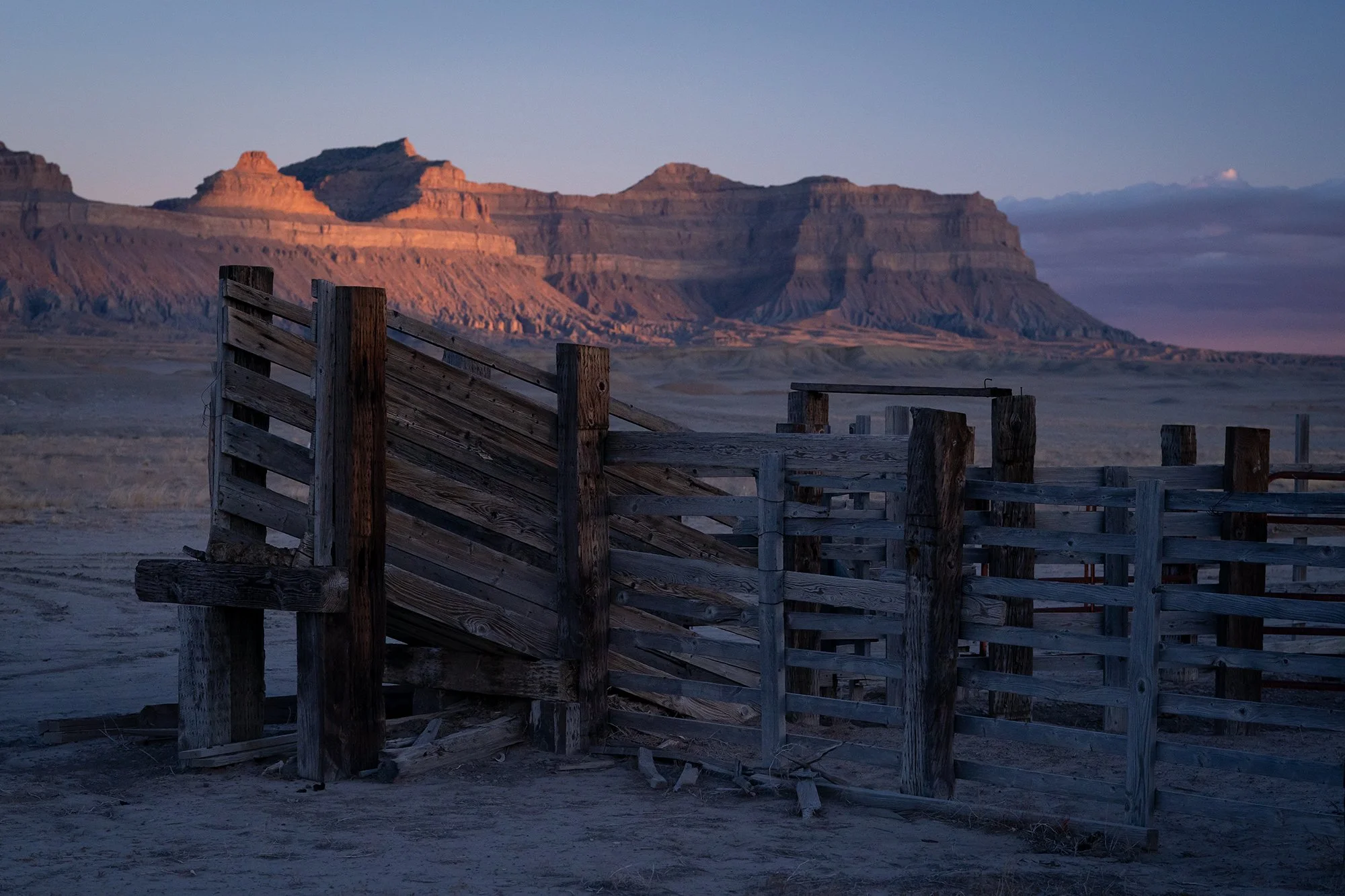
Fine art photography of a wood cattle corral at sunset in front of a beautiful desert mesa in the American West

An old cattle corral on a remote Utah ranch, set against the layered desert landscape of the American West.

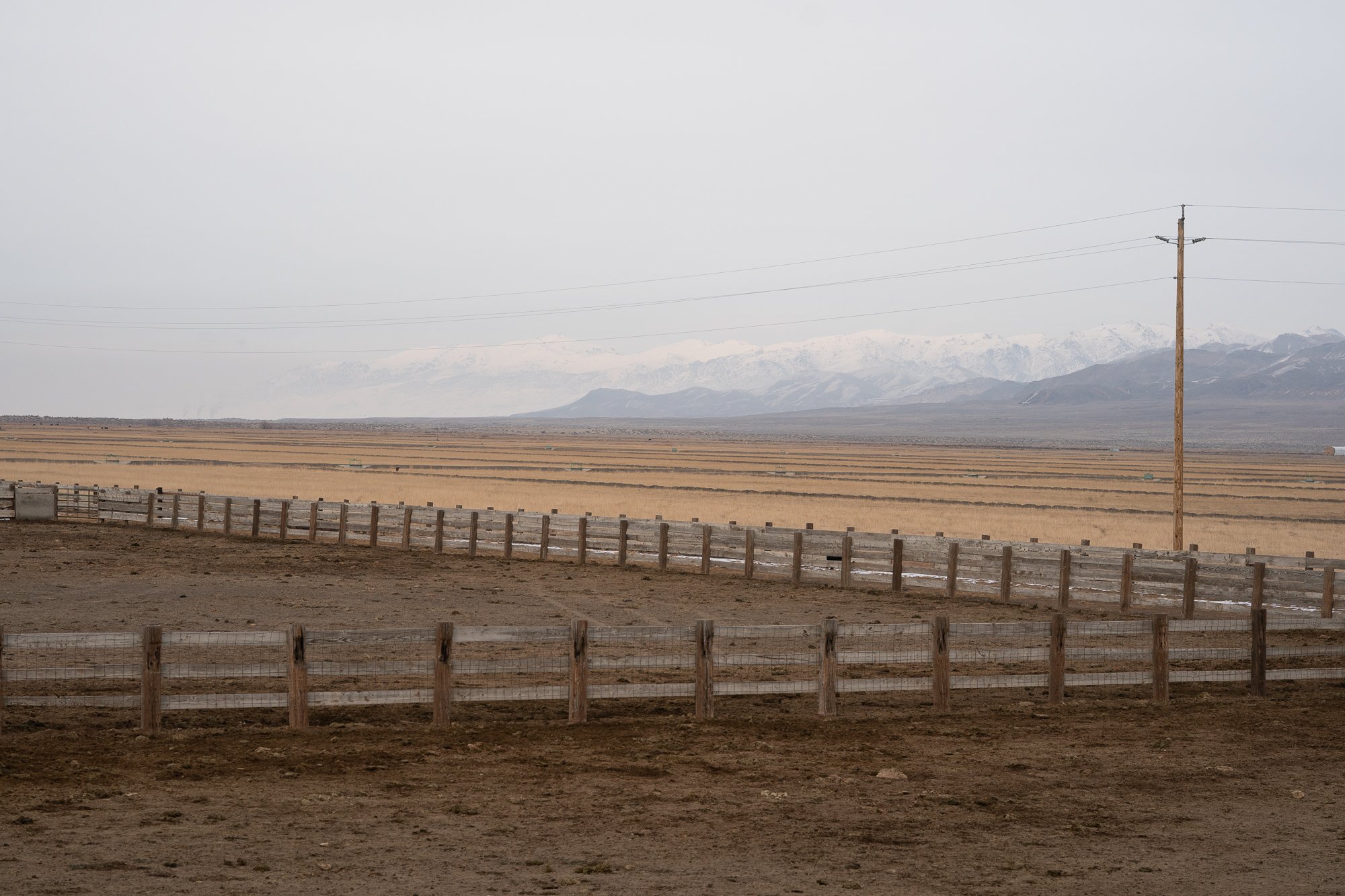
Wooden corral fencing on a working ranch with open agricultural land and distant mountains in the American West

Corral fencing stretching across a working ranch landscape, with open fields and distant mountains in the American West.

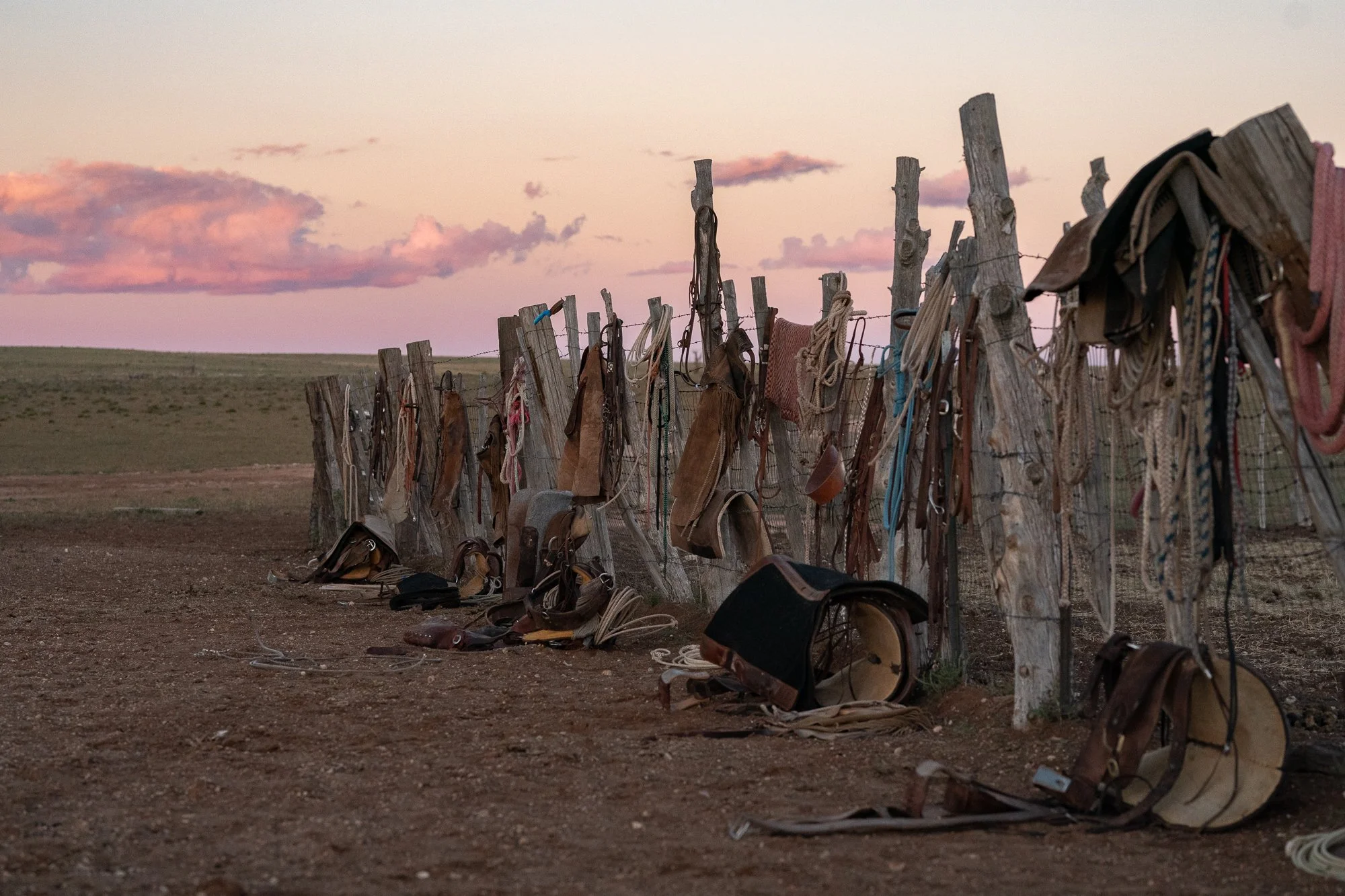
Saddles and ranch tack hanging along a corral fence at sunset on a working ranch in the American West

Saddles and working ranch tack hanging along a corral fence at sunset, part of daily life on a working Western ranch.

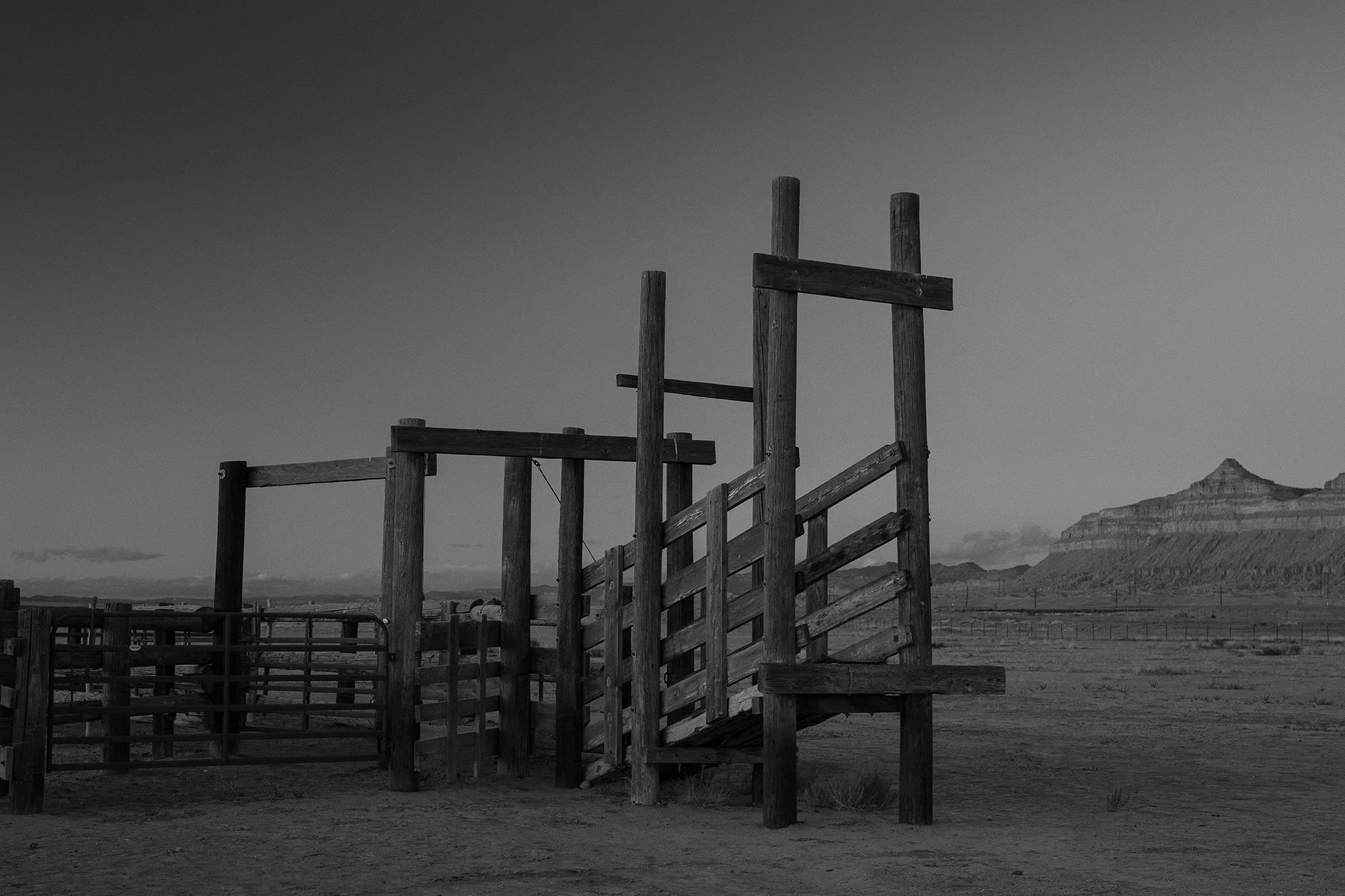
Wooden cattle loading chute and corral structure on a working ranch in the American West

A wooden cattle loading chute and corral structure used in everyday ranch work in the American West.

Why Choosing the Right Western Photography Gallery Makes All the Difference

What a True Western Photography Gallery Offers You

How to Recognize Authentic Cowboy Prints & Find the Gallery That Delivers

When someone searches for a Western Photography Gallery, they aren’t just shopping for images. They’re shopping for moments—stories framed in dust, sky, horses, and grit. If you’re on that path, you want work that goes beyond decor. You want pieces that truly bring you into the West.

Here’s what separates an ordinary gallery from one that shows Western photography worth owning—and why browsing the right gallery’s prints matters.

What Realness Looks Like

The most memorable Western photography galleries don’t rely on props or polished scenes. They show real cowboys, working through weather, dawn light, and hard ground. The best prints are made on working ranches (not back lots), shot in conditions most photographers don’t love: dust, heat, early light, or cold wind. That “grit,” the unscripted moments, give each photo life.

Details Matter, & They Tell Stories

  • Print Quality & Materials: Look for archival paper, fine art printing processes, signed and numbered editions. You don’t want distortion, bad color, or flimsy framing when it’s hanging in your living room.

  • Story & Location: Where was this shot? What season? Who is in the frame? Knowing it was taken at a historic ranch in Texas, or under heavy skies in Nevada, adds meaning.

  • Range of Styles: Cowboys roping, branding, open range, strong cloudscapes, old barns, quiet moments, motion blur—variety signals someone curating with intention.

Why My Gallery Is Different

Here’s how my gallery aims to hit what you’re looking for when you type in Western Photography Gallery:

  • Prints of real cowboys doing real work—no models, no stage setups.

  • Both black & white and color pieces that capture light, weather, and texture.

  • Locations from working ranches across the American West—Texas, Montana, Nevada.

  • Thoughtfully produced limited editions, signed, numbered, ready to hang or frame.

  • Enough selection to find something that speaks to you—whether you like dynamic action, sweeping landscapes, or intimate portraits.

How to Use This Gallery Right Now

If you want to see Western photography prints that match what you’re searching for:

  • Visit my gallery page - Out of a few favorites? Compare sizes and print make—think about where you’ll hang it.

  • Need framing suggestions? Reach out. I’m happy to help visualize a piece in your space.

  • Not ready yet? Bookmark the gallery or join the email list—new work drops regularly, and limited editions sell.

Gallery of western cowboy photography prints

Western cowboy photography prints

Black and white photography print of a cowboy on the 6666 Ranch in Texas

Cowboy Photography Gallery

Fine art black and white photography print of the Grand Teton Mountains

Western landscape photography print

Limited edition cowboy cattle branding photography print

Cattle branding photography print

Authentic black and white cowboy photography print

Black and white cowboy print

Black and white photograph of cowboys trailing cattle on a ranch in Montana

Photograph of a Montana cattle drive

Authentic photography prints of American Cowboys

Western Photography Gallery

Eugene, Oregon Photo Gallery

Photography at Oregon

Maude Kerns Art Center

Honored to share that 12 of my black and white cowboy photography prints are part of an invitational group show at the Maude Kerns Art Center with Photography at Oregon. Along with my prints will be others by Barbara Bakalarova, Tracy Barbutes, Sarah Grew, Eric Kunsman, Willie Osterman, Osceola Refetoff, and Nolan Streitberger. If you’re in Eugene, Oregon area please stop in to check out the work from May 10-June 7. They will be having an opening reception on May 10th and an artist talk on June 1st. I’m not able to attend either day, but I still encourage you to check out the show.

Click here to shop my fine art cowboy photography prints

Photography exhibition at Maude Kerns Art Center - Eugene, Oregon

Montana Cowboy Photographs

Montana Cowboys through the Lens: Fine Art Prints of Grit, Sky & Tradition

Big Sky Moments & Cowboy Spirit—For Fans of Yellowstone and Real Ranch Life

When I pull up to a Montana ranch with a camera, I'm looking for more than a scene—I’m looking for something true. That first breath of morning air, the way the horizon stretches. Montana cowboys move quietly, with wear on their boots and stories in their hands. They don’t need an audience. Their work—reining, branding, riding out—isn’t performance, but it carries power anyway.

I shoot what feels real: cowboys leaning into saddle leather at sunrise, the sky turning cold and blue above mountain ridges, or riders rounding up cattle under heavy clouds. Moments like that—untouched, gritty, alive—feel like they echo what Yellowstone fans see onscreen: raw Western landscape, ranch life, sweeping skies, authenticity. The Chief Joseph Ranch in Darby plays the role of the Dutton Ranch in the show, but what draws me to Montana is seeing the same rhythm of life behind the scenes.

My prints are made from those moments. Limited edition, archival prints that hold light, dust, sky, and sweat. If you’ve ever watched Yellowstone, the beauty in close‑ups of ranch gear, the way a horse’s muscle works in motion, the golden glow on barn wood—these are the same details I chase. Montana isn’t just setting; it’s character.

Whether you want to hang a Montana cowboy print above a fireplace, in a lodge, or a room that tastes of the outdoors, there’s a piece here for you. A silhouette, a dusty trail, a cowboy’s hat brim catching last light—these aren’t just photographs. They’re windows into a life rooted in land, season, purpose.

Add Western Art to Your Space
Shop Cowboy Wall Art

Montana cowboy wall art

Montana cowboy wall art prints

Cowboy wall art for fans of Yellowstone

Western cowboy photography prints

American West Photography

Cowboy Photography

It’s always great to get press on your work, especially when it’s a big outlet like the Daily Mail. If you want to go on “followers’, they come in at 22+million on Facebook, whatever that means. Either way, I’m honored to have them do a feature on my cowboy photography - a project I love. It’s also quite young compared to some of the others like Barbershops of America or American Backcourts, which have both been going on now for ten years!

Click here to see more of my cowboy photography. Or contact me directly if you’re looking Western prints / wall art for your home, office, or commercial space.
Wyoming Cattle Ranch

Wyoming Cowboy Photography

American West

A cowboy gathering cattle on a ranch outside Laramie, Wyoming. Cowboy Photographer Rob Hammer.

Wyoming cattle drive

Wyoming is a land rich in rugged beauty, where open plains meet towering mountain ranges, and the cowboy way of life still thrives. One of the most iconic images that evokes the spirit of the American West is that of a working cowboy on a Wyoming cattle ranch. These photos not only showcase the breathtaking landscapes but also the hard work, dedication, and heritage that define ranch life.

A cattle drive on a large ranch in Wyoming by cowboy photographer Rob Hammer.

Cowboys moving cattle on a ranch in Wyoming

A cowboy lets his horse drink from a pond during a long cattle drive on a ranch in Wyoming by cowboy photographer Rob Hammer.

Black and white cowboy photography print

Cowboys herd cattle on a rugged section of open ranch in Wyoming by cowboy photographer Rob Hammer

Wyoming cowboys

At Work

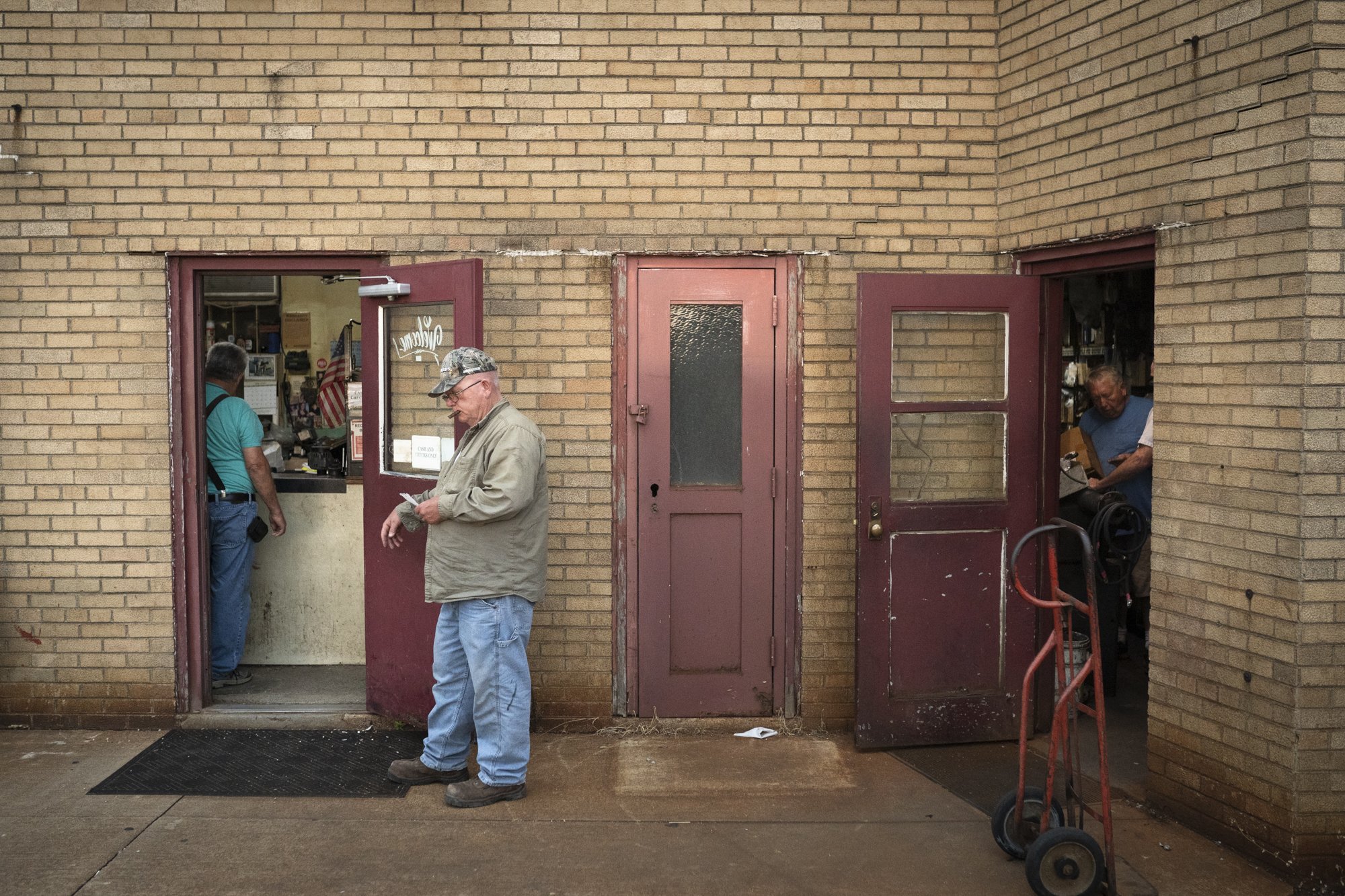
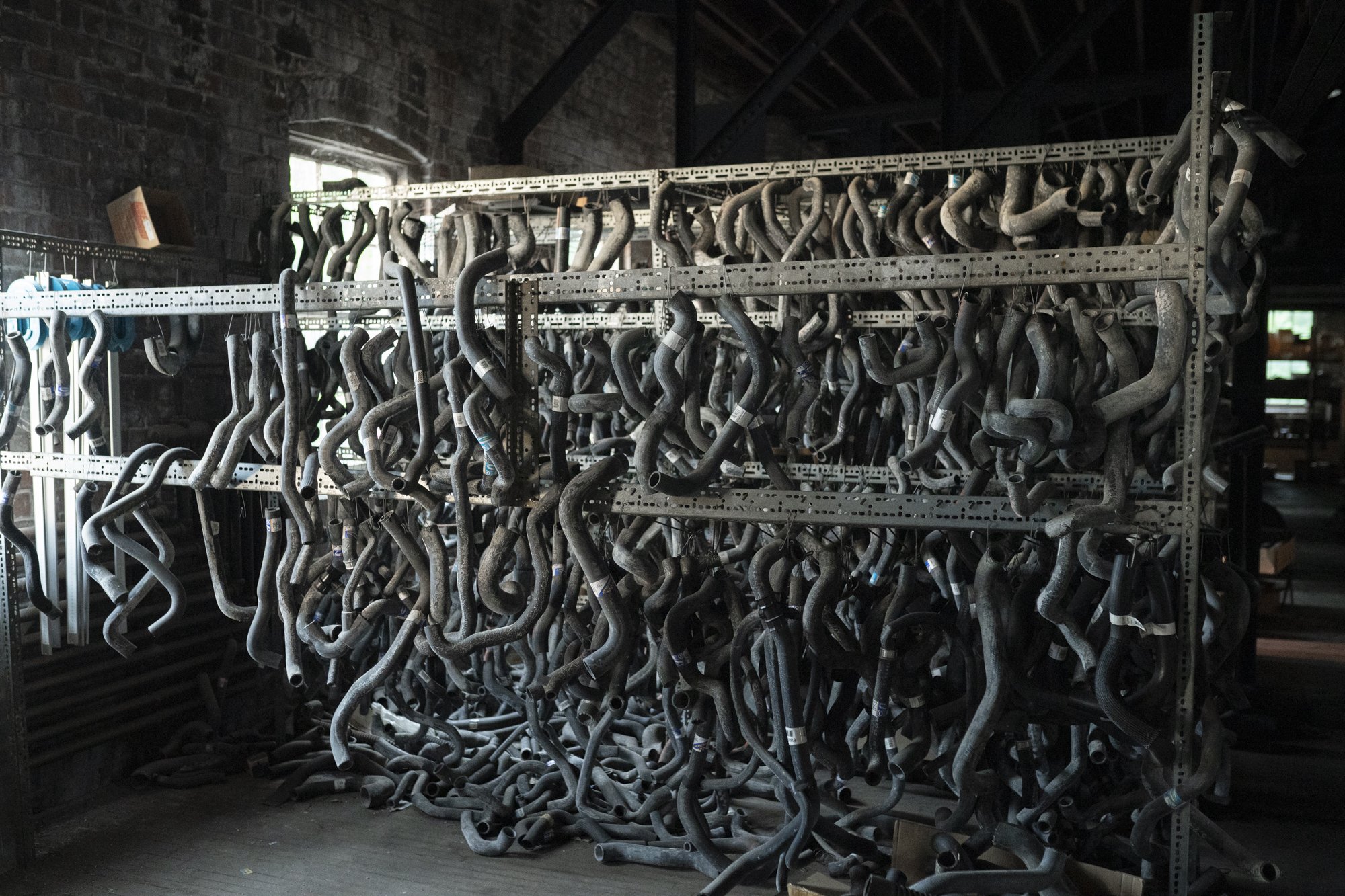
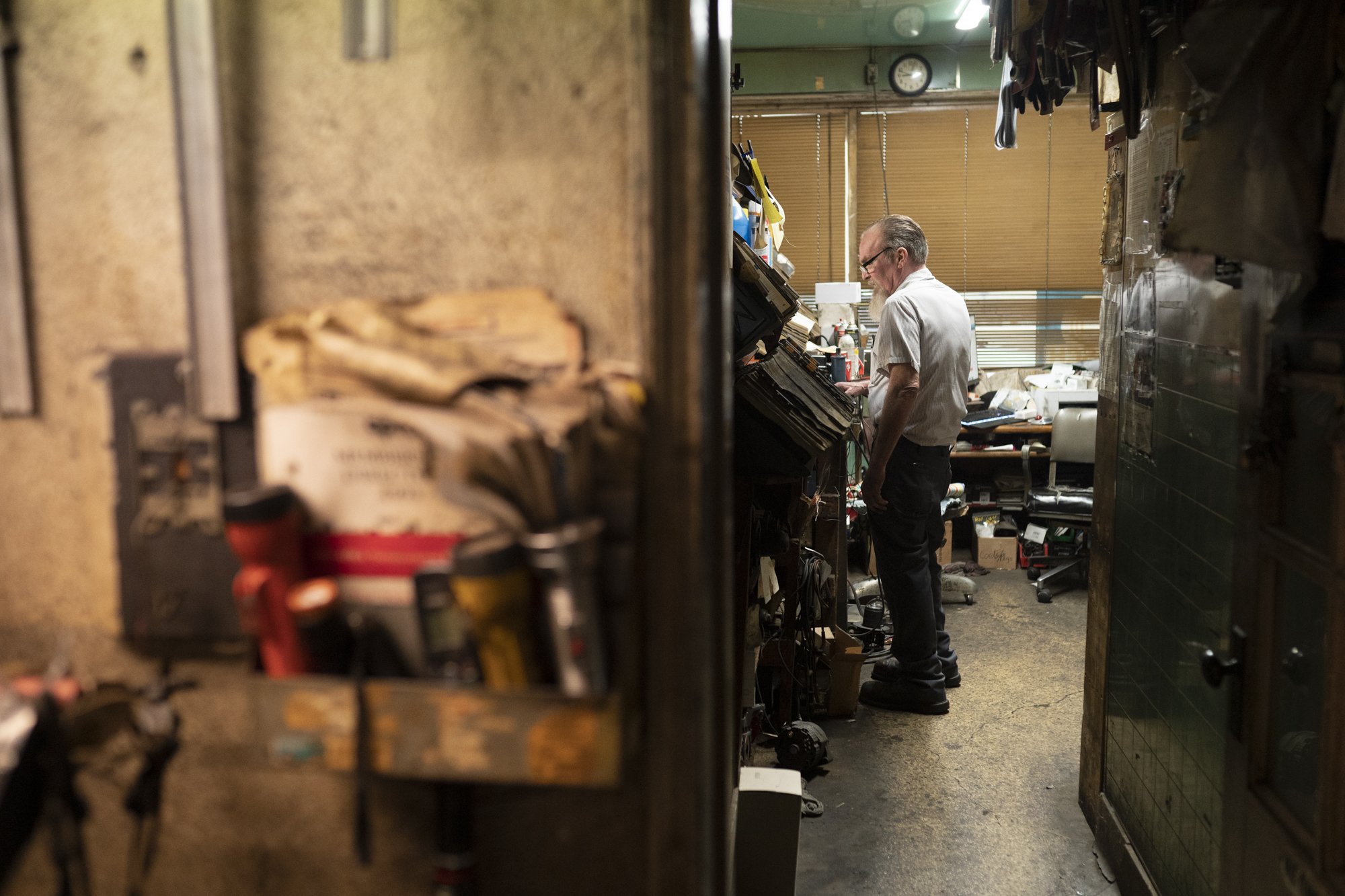
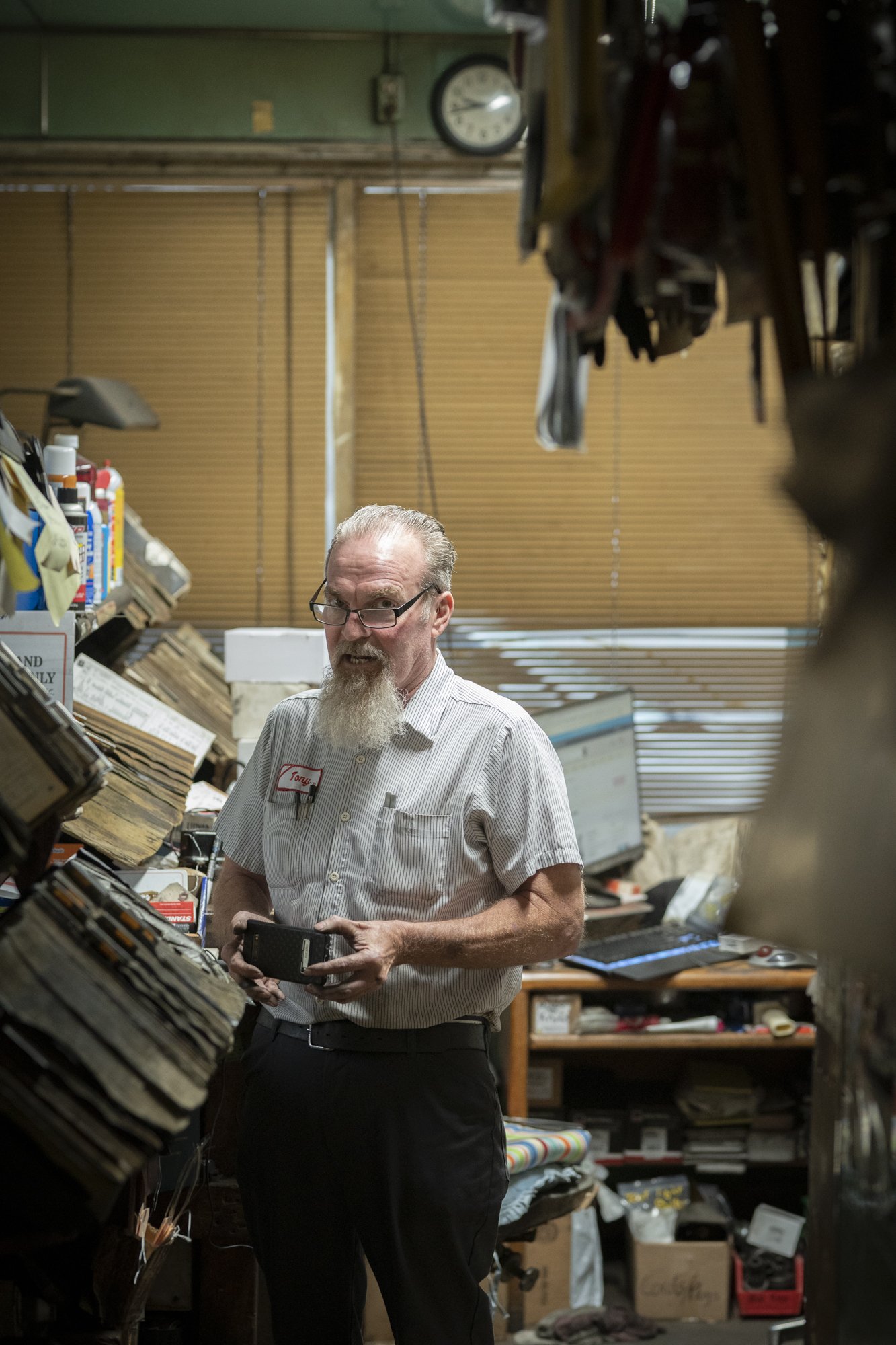
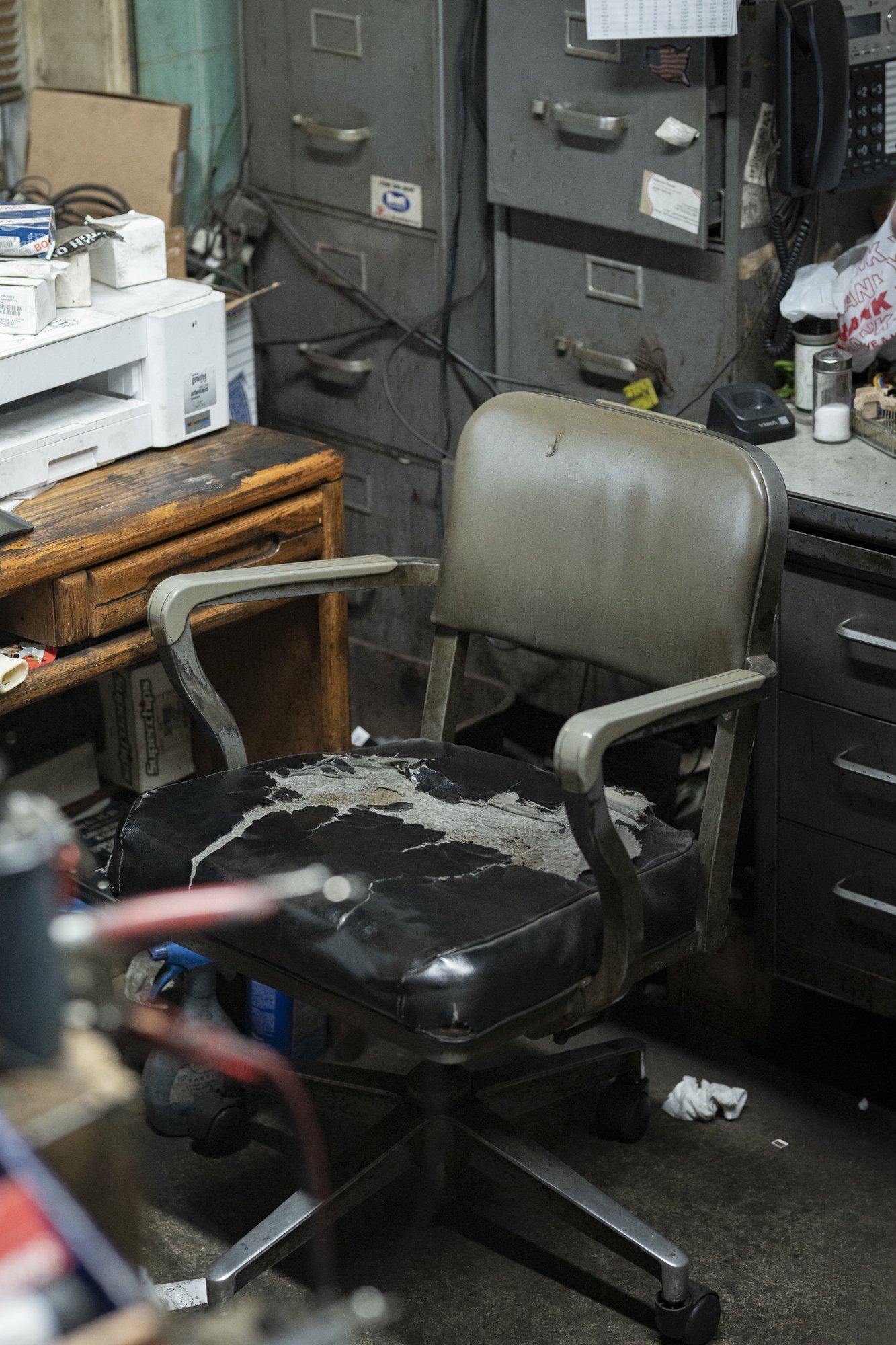
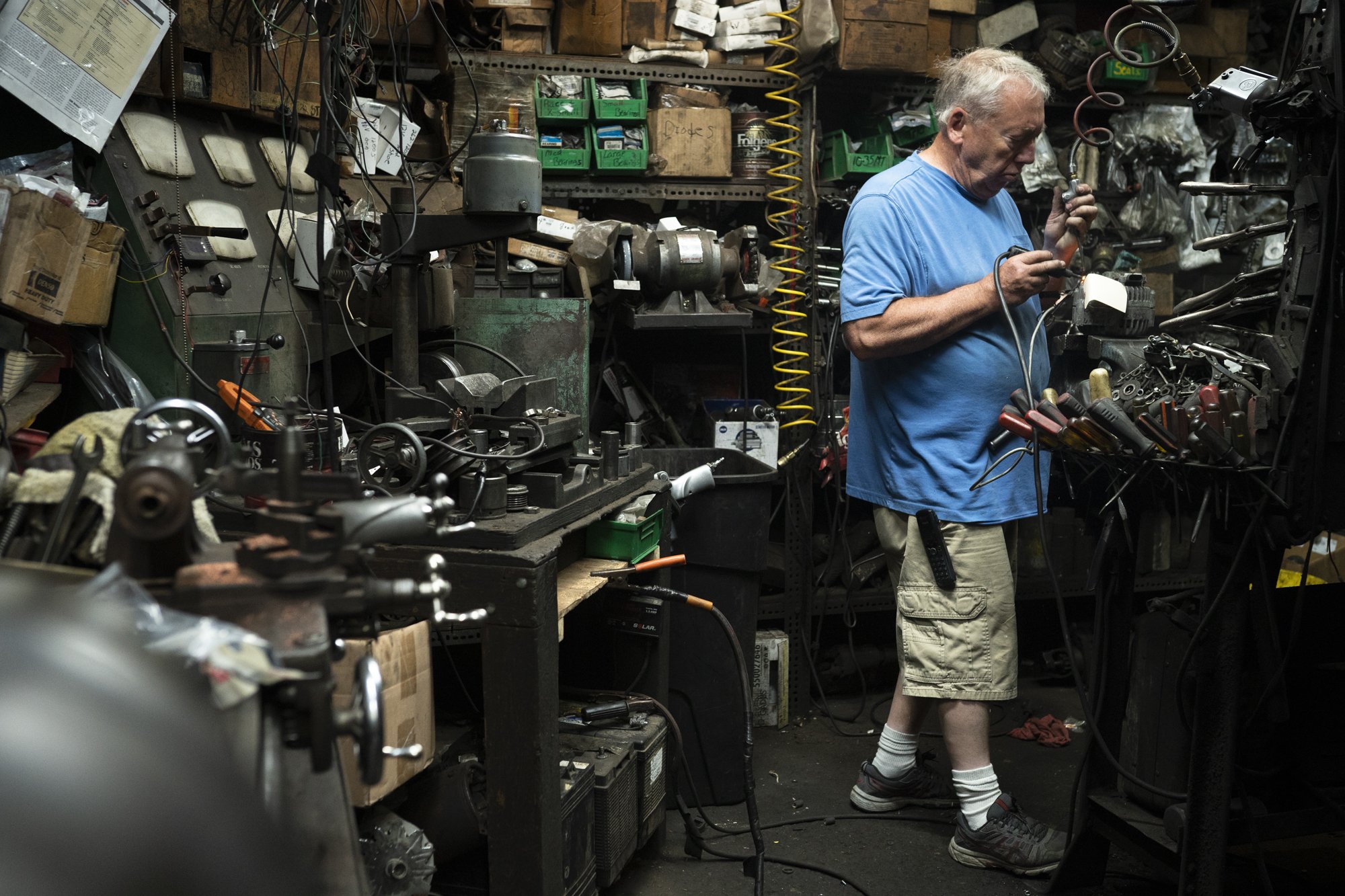
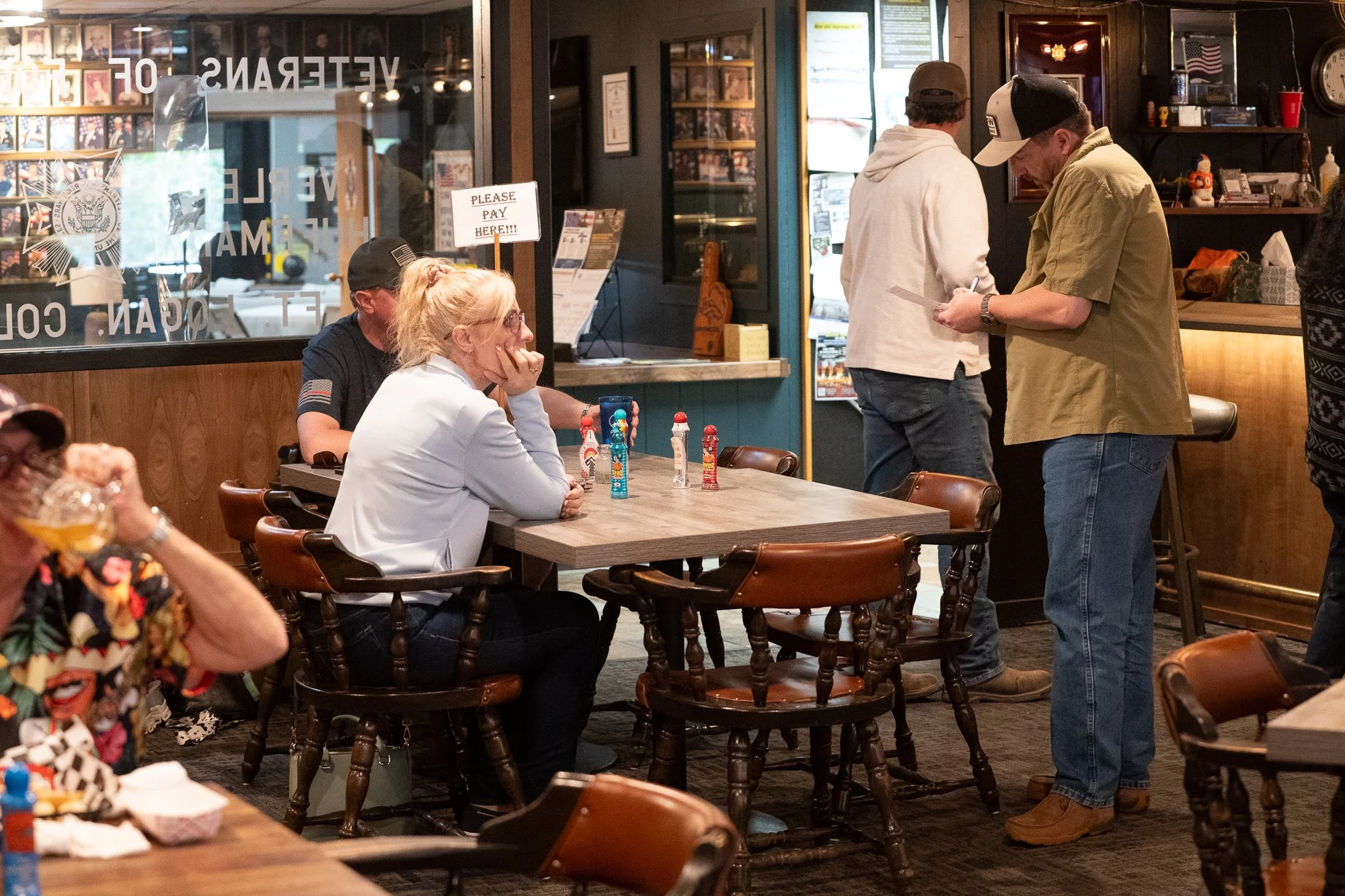
There are a lot of strategies for being productive while on the road. One of them is the “pop-in”. It’s become my go-to when rain won’t let you do much outside. That’s precisely how these images came to be. The pop-in isn’t for everybody. It used to scare the hell out of me. Then you realize there are only two answers, yes or no. If it’s a no, who cares? Just move on. Tony, the owner of this garage, was happy to let me hang out for a few minutes to make some images. Confused as to why, but it didn’t bother him any. Obviously they are going into my “At Work” series that has been so much fun to shoot. Some of the images you’ll see in the gallery are personal and others were made for clients. Better yet, some of them are personal assignments that were later published. Love when that happens.