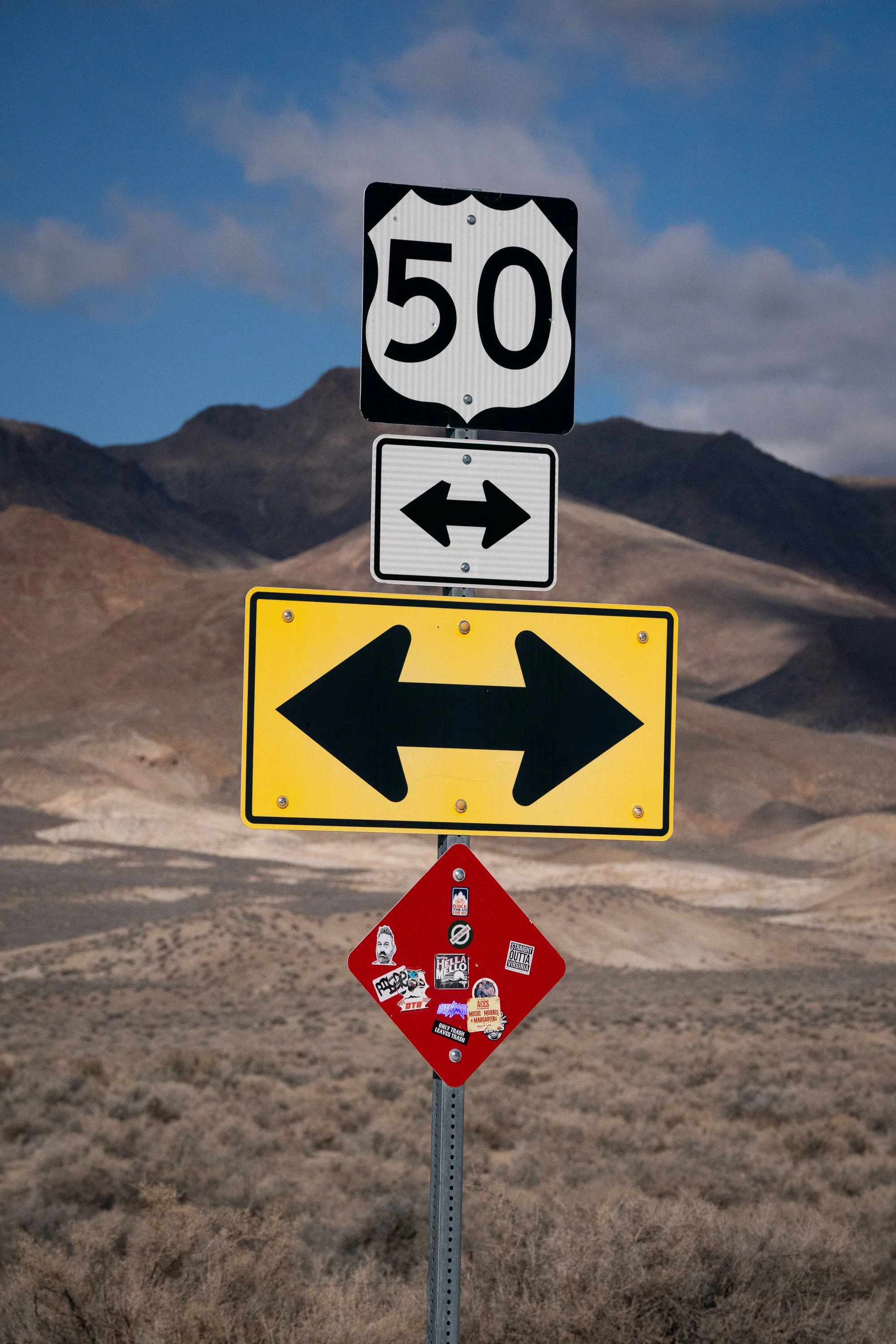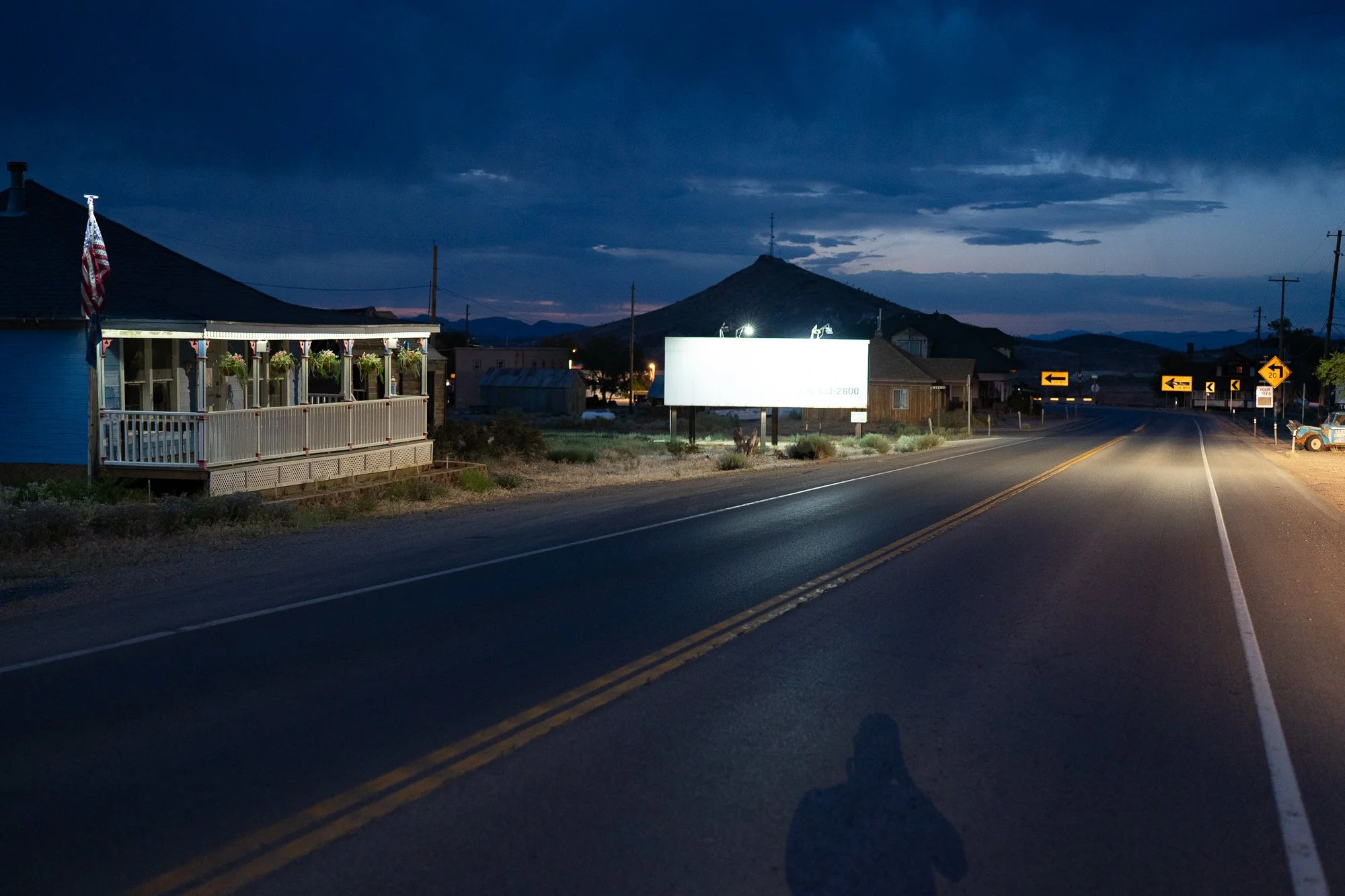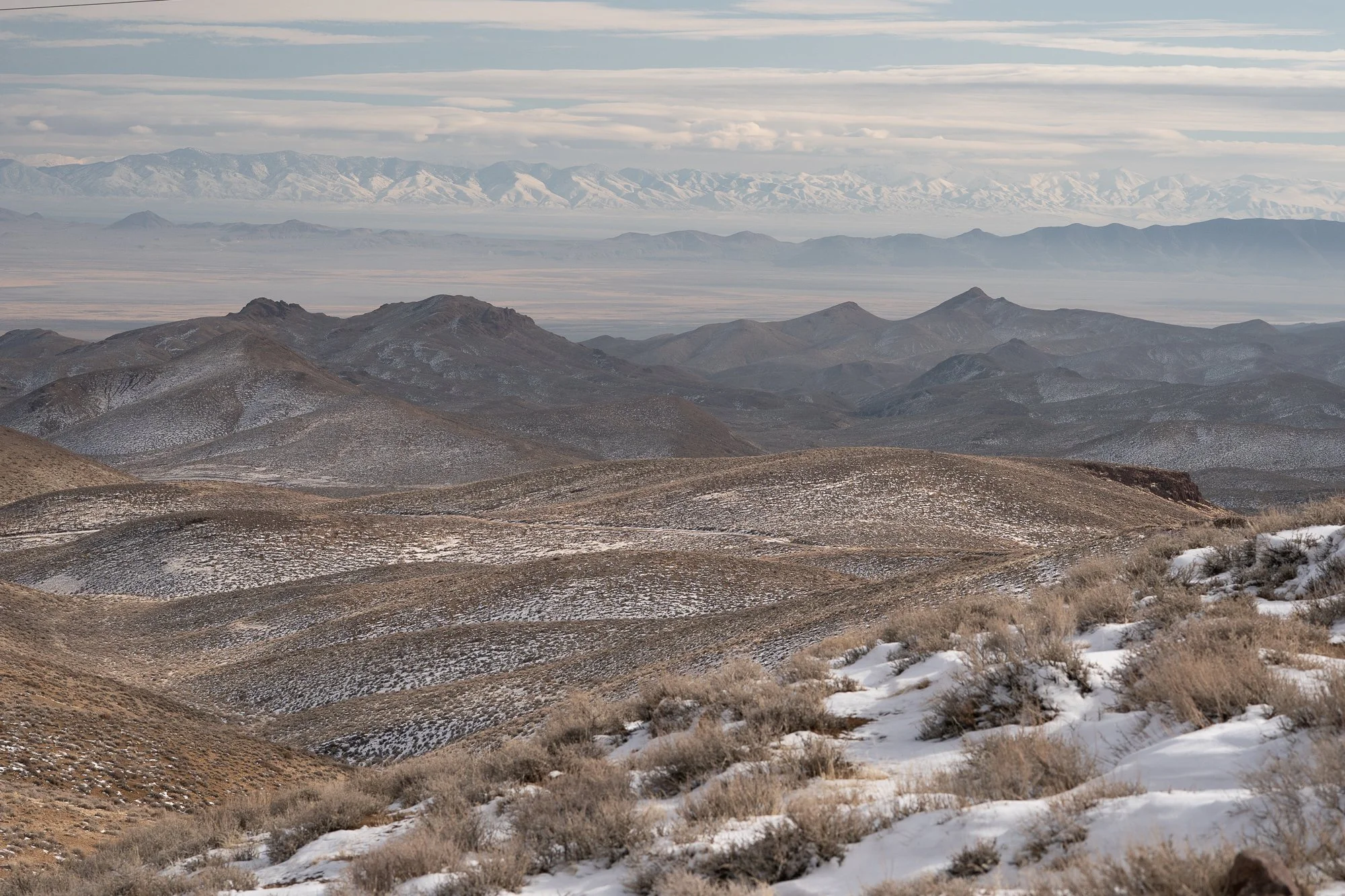
Photographing Wyoming: Cowboys, Ranches & the Open Road

Wyoming Photography: Cowboys, Ranches, Small Towns & the American West
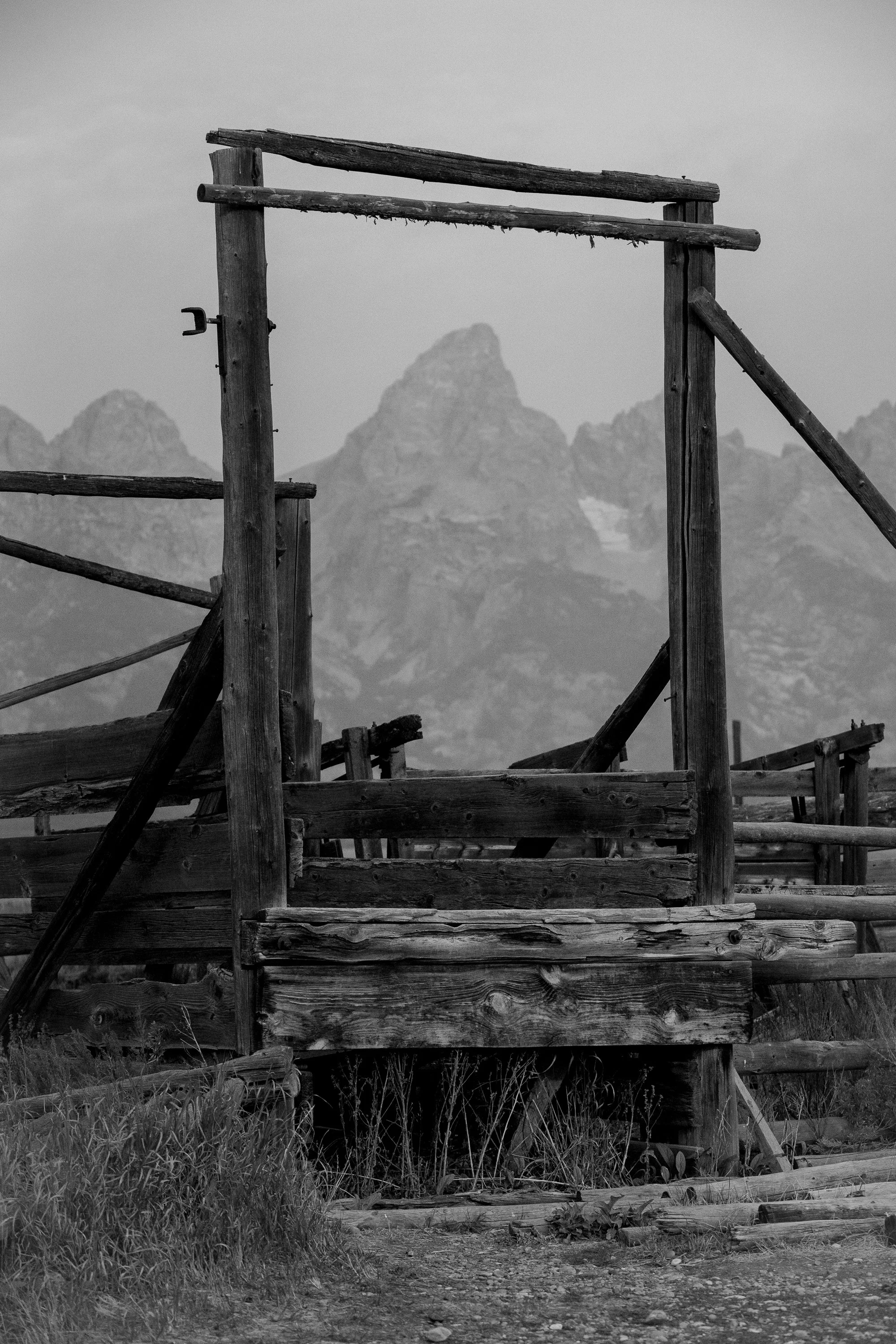
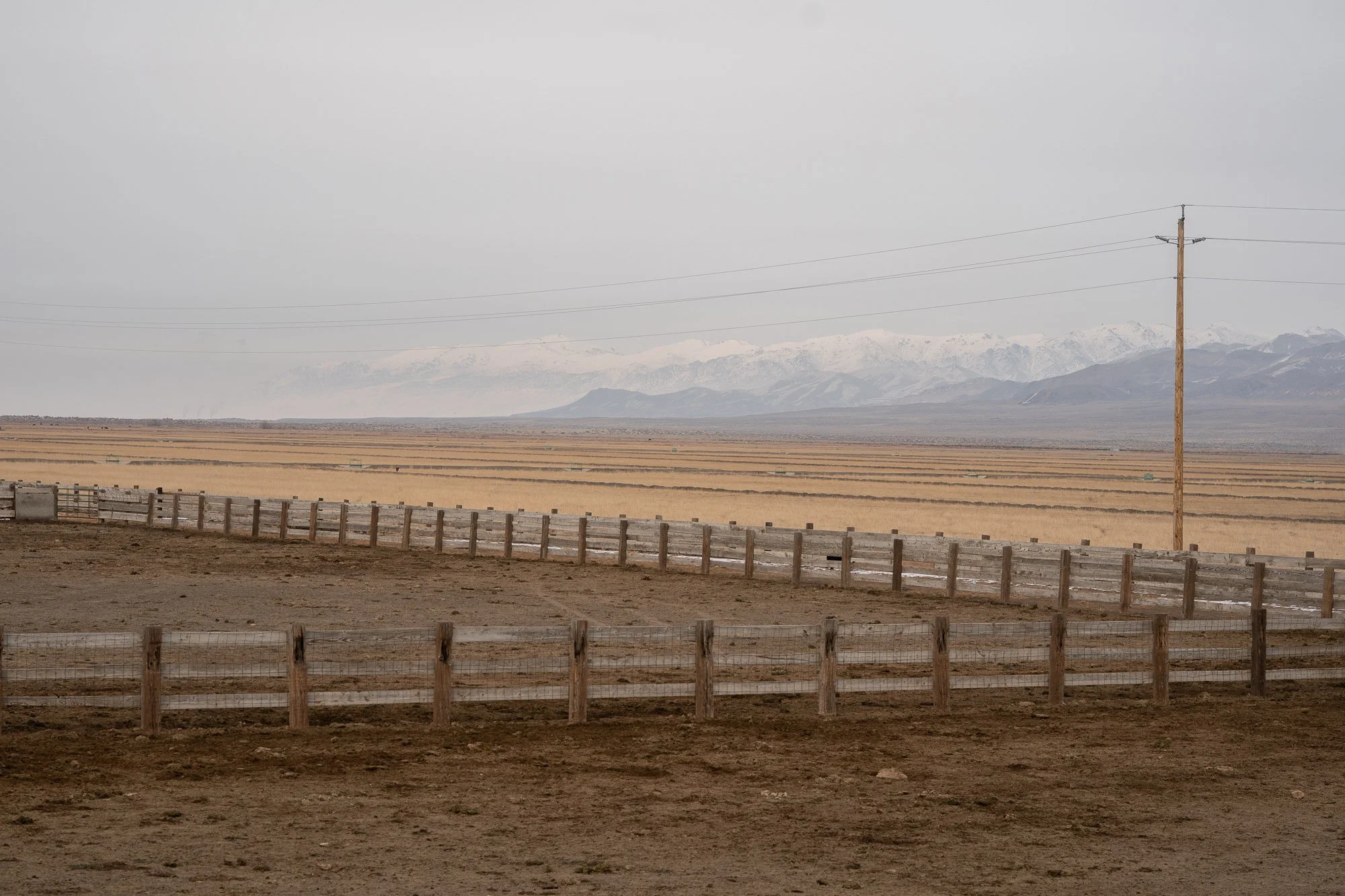
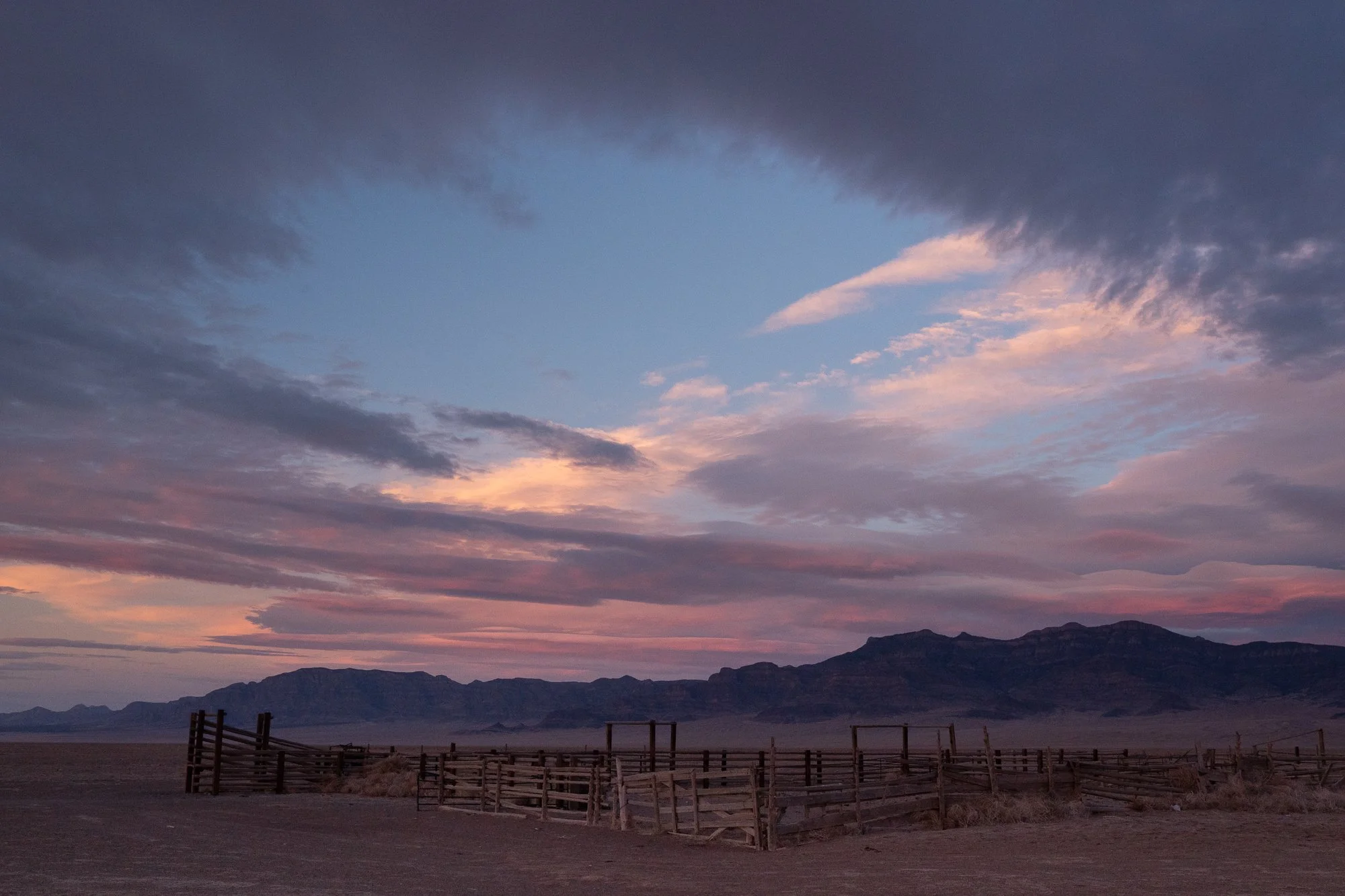
Weathered wooden ranch corrals with Wyoming mountains in the distance

Weathered wooden corrals sit against the mountains in the distance.

I've spent a lot of time driving through Wyoming over the years, usually with somewhere specific to be and enough time built into the trip to stop when something catches my attention. And in Wyoming, that happens a lot.

Most photography of Wyoming understandably focuses on the obvious places. Yellowstone, wildlife, etc etc. All of which deserve the attention they get. But that's never really been what keeps me coming back with a camera.

I'm more interested in the Wyoming between those places.

The working ranches. Cowboys. Small towns. Rodeos. Bars. Old motels. Empty highways. People going about their lives. And all the strange, quiet things you find after enough hours on the road.

Over the years, those photographs have become part of several long-term bodies of work documenting the American West. Taken together, they tell a story about Wyoming that has less to do with its famous scenery and more to do with what it feels like to spend time there.
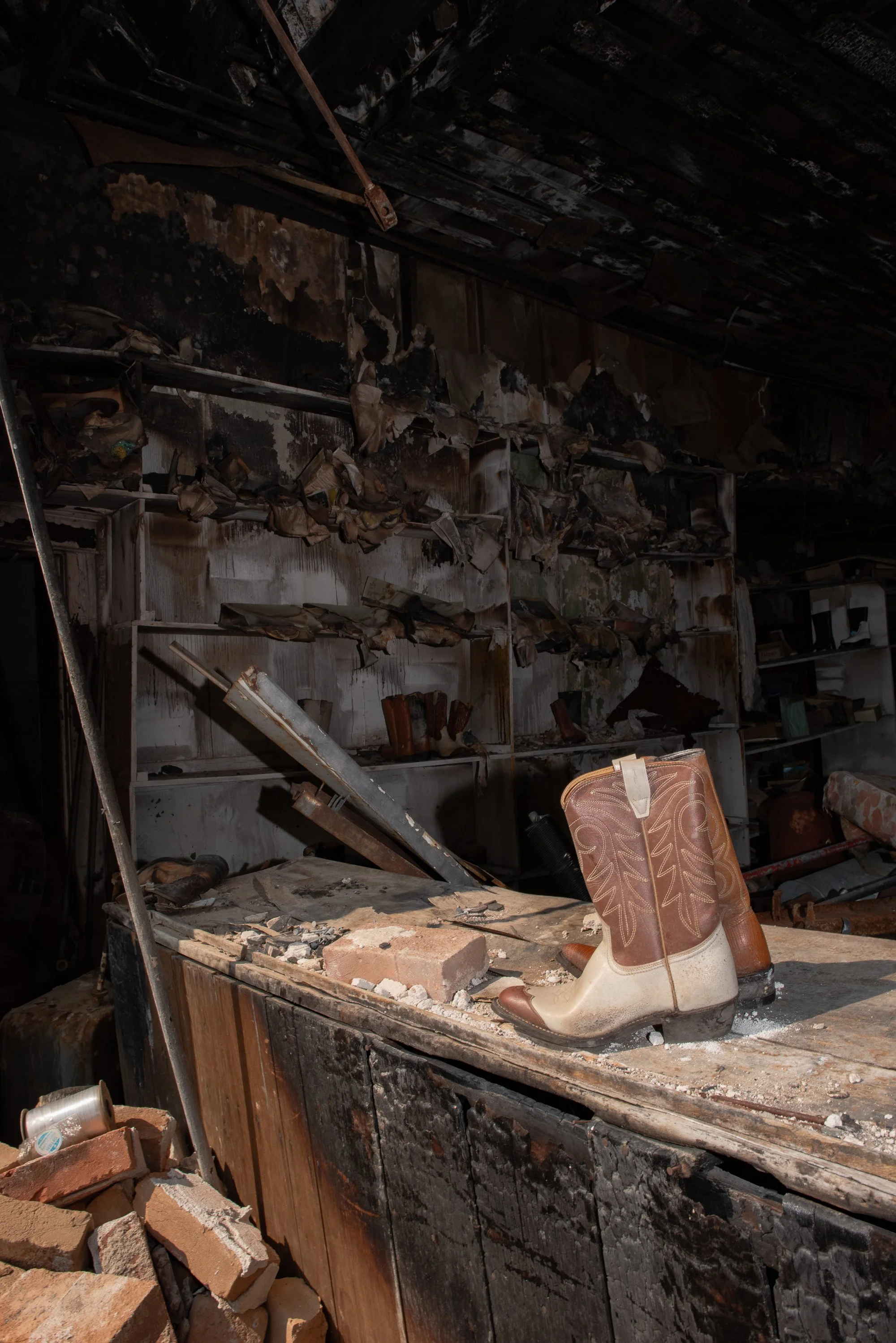
Worn cowboy boots resting on a workbench inside an old Western building

Worn cowboy boots sit among the tools and debris in a burned out building.

Photographing Wyoming Beyond The Instagram Hot Spots

There probably isn't another state in America as visually associated with the West as Wyoming. It's hard to separate the place from the mythology surrounding it.

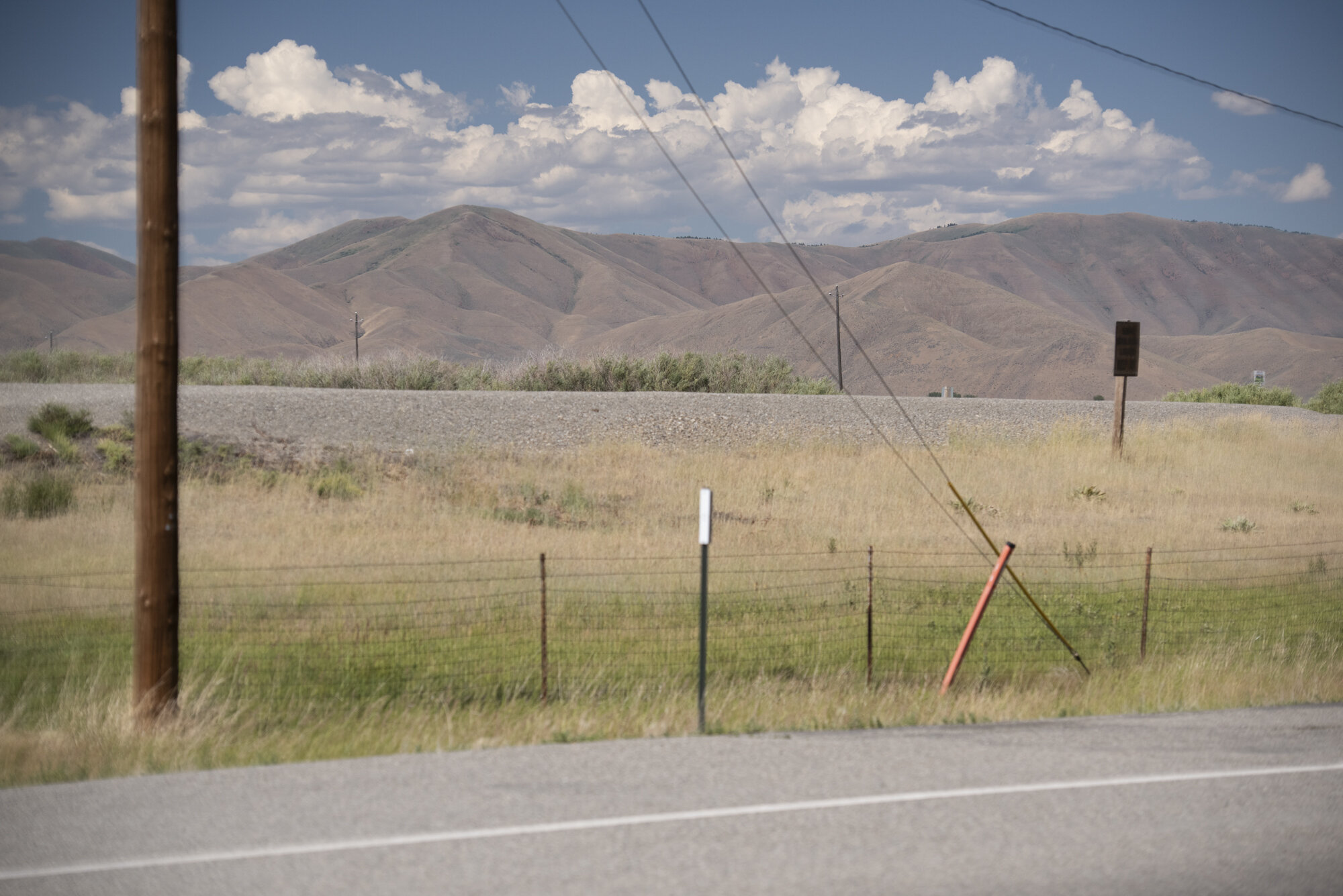
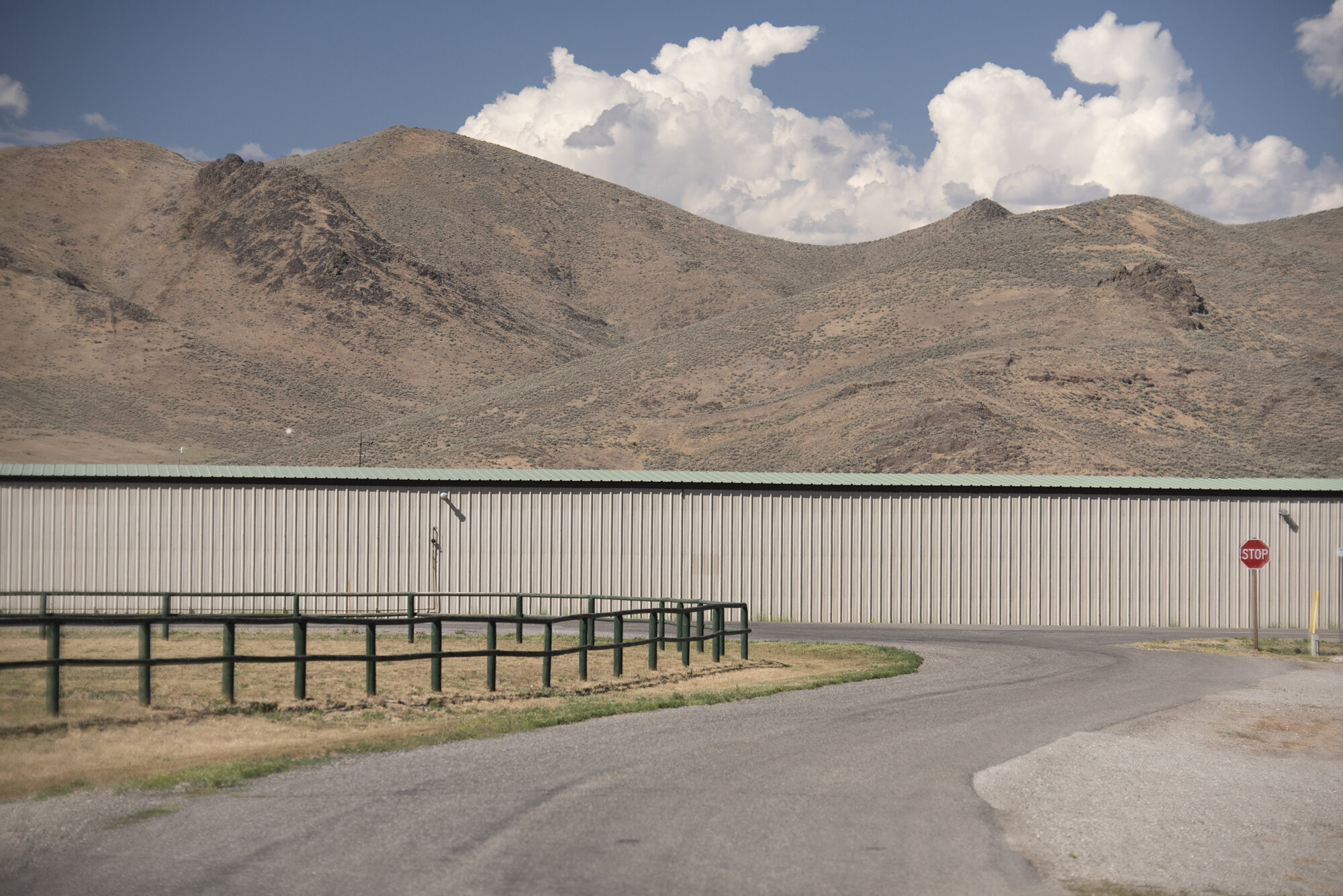
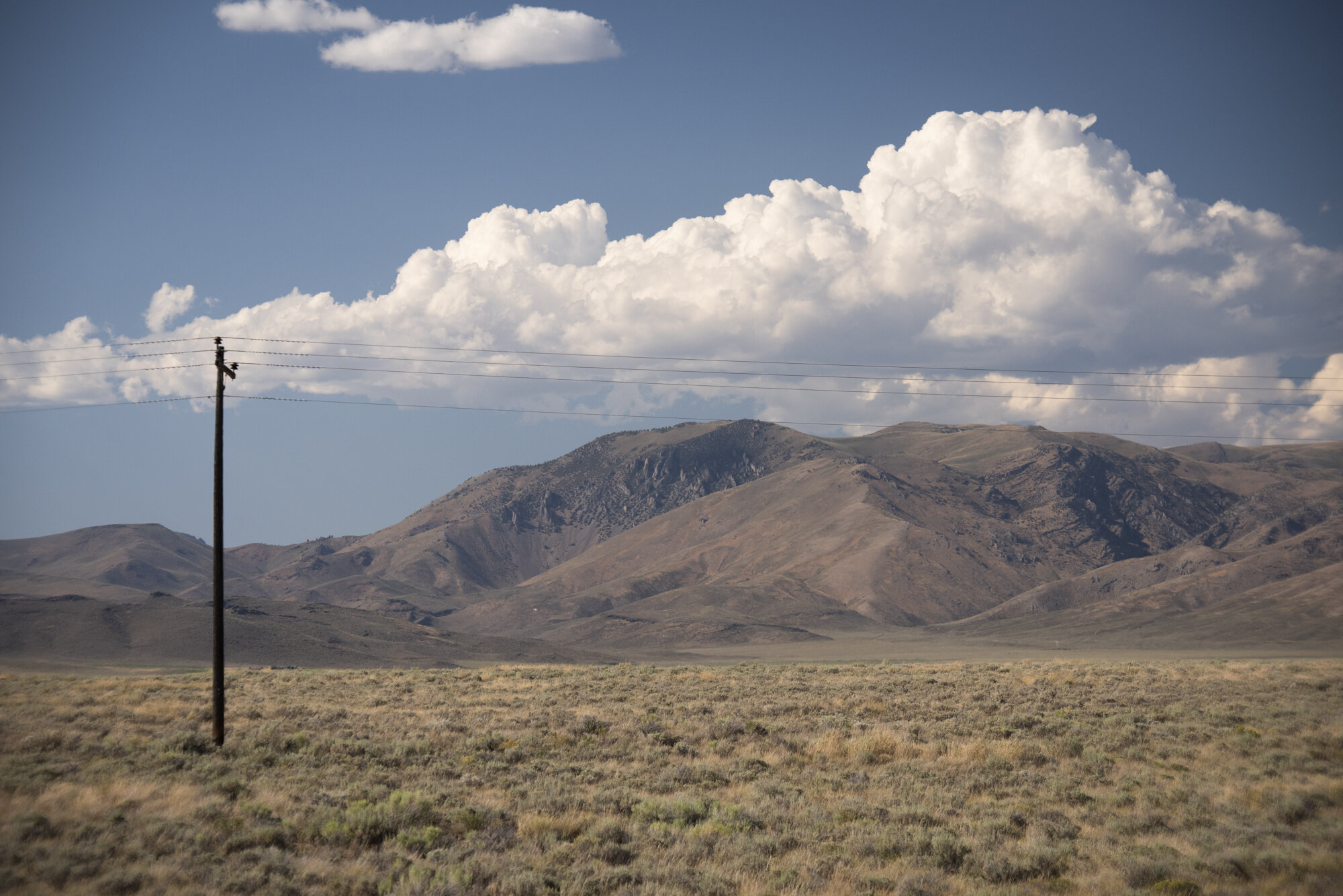
The landscape certainly has something to do with that. Everything feels bigger. Towns are separated by enormous stretches of nothing. Weather can change quickly. Mountains appear on the horizon and stay there for hours.

But the longer I've photographed Wyoming, the more interested I've become in the evidence of people living inside that landscape.

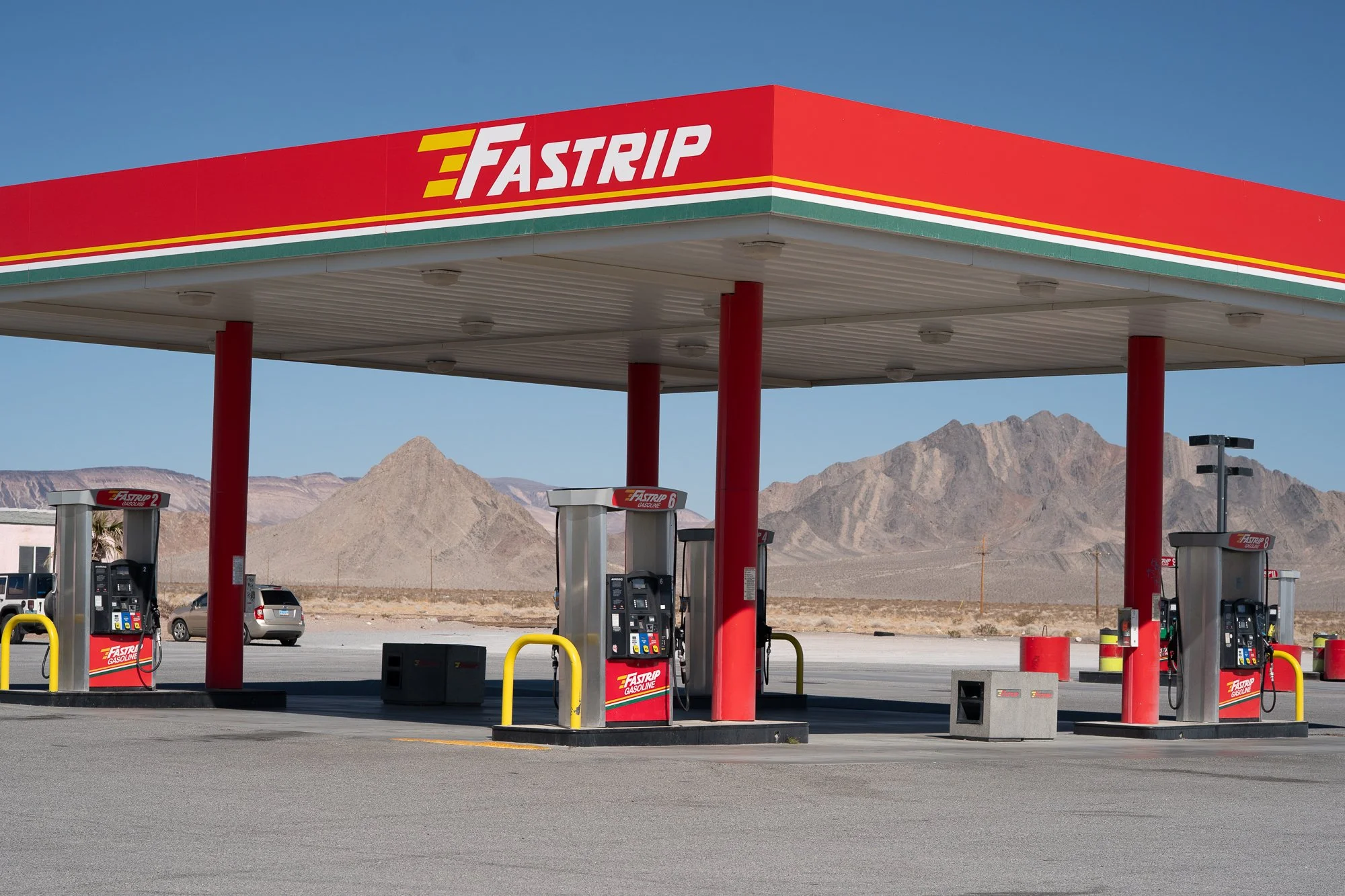
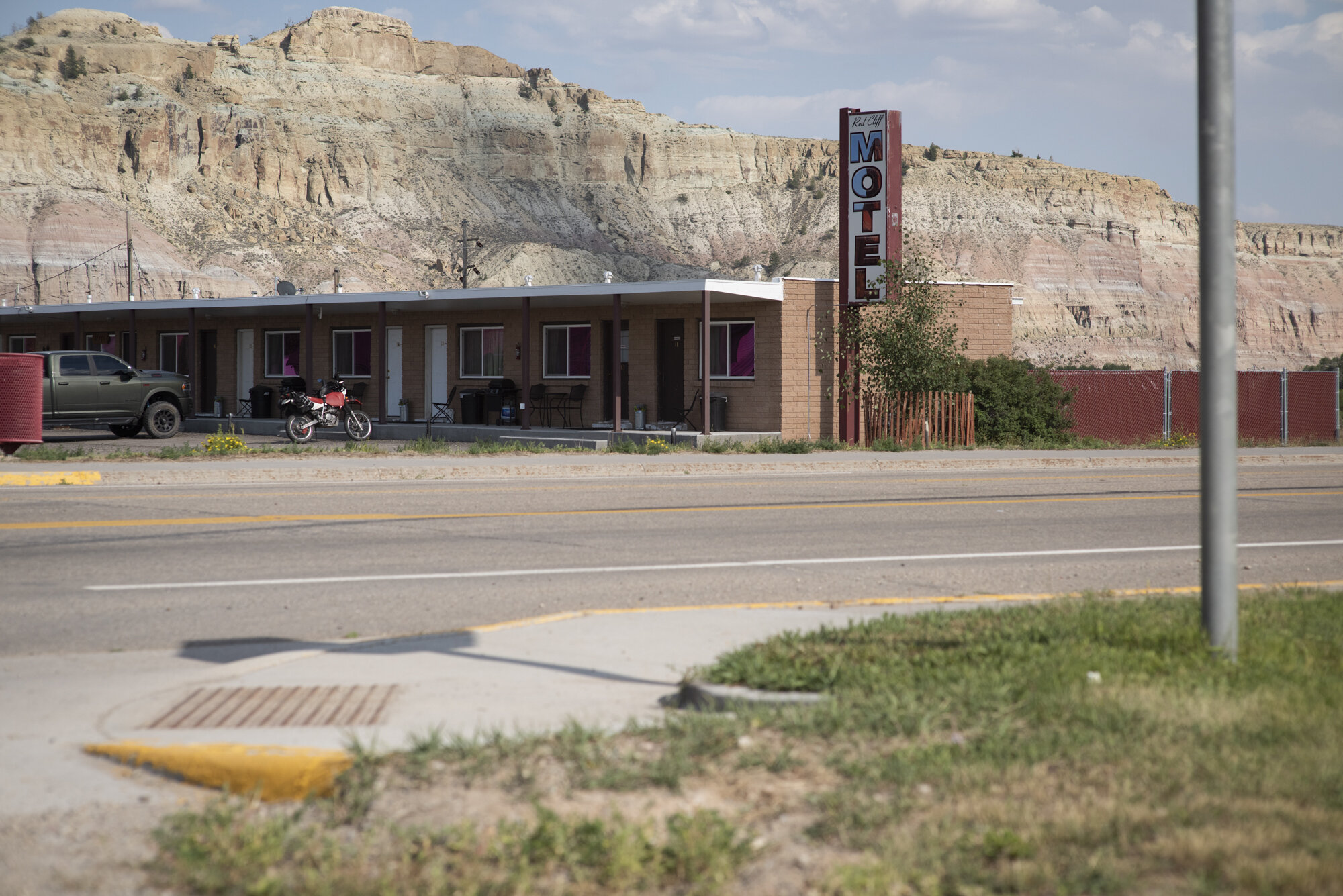
A faded motel sign. An old truck parked outside a bar. A gas station in the middle of nowhere. Horses standing behind a fence. A main street that looks like it hasn't changed much in 40 years.

None of those things are unique to Wyoming on their own. Together, though, they start to describe the place in a way that another photograph of the Tetons can't.

That's the Wyoming I keep looking for.
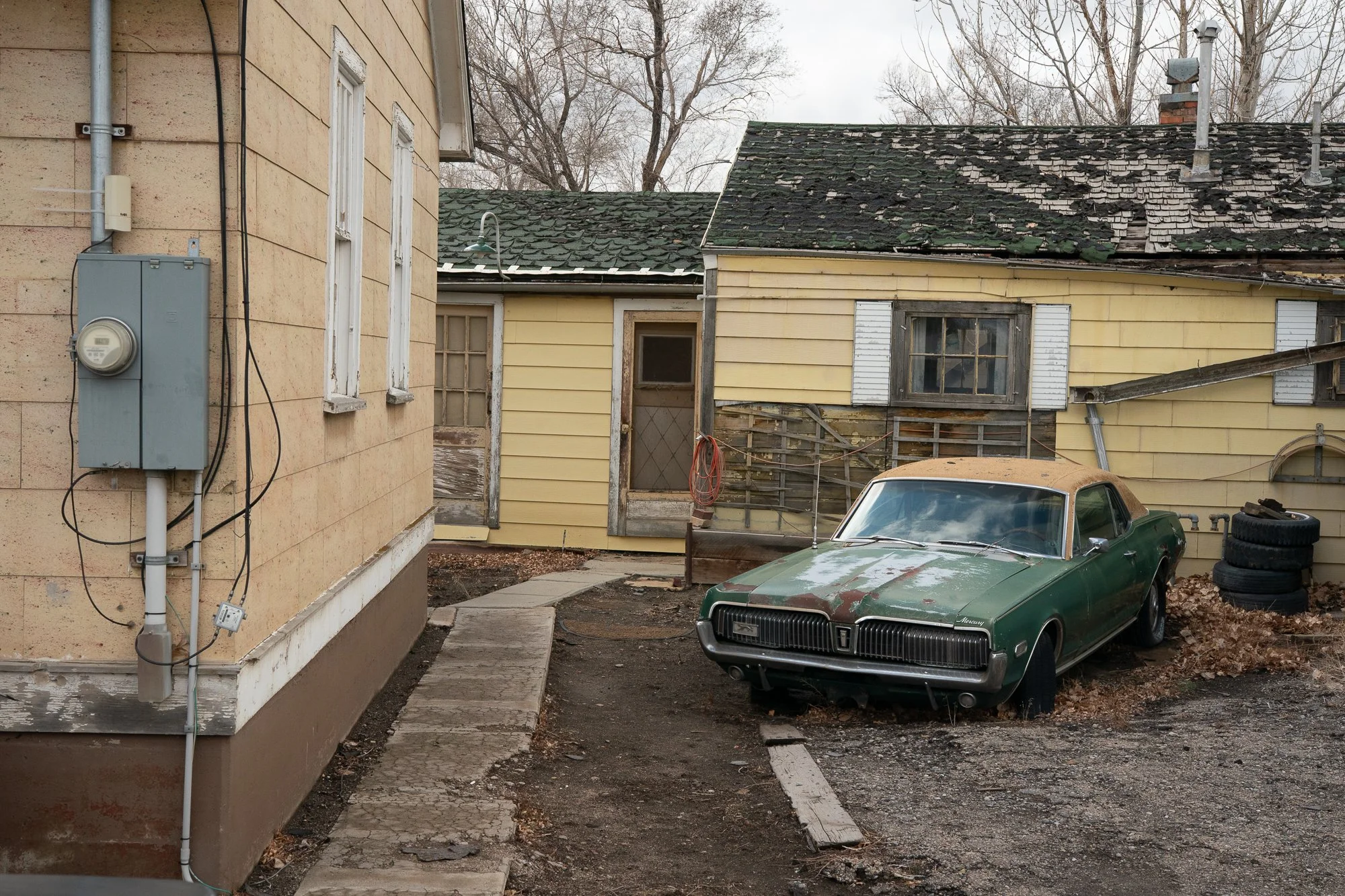
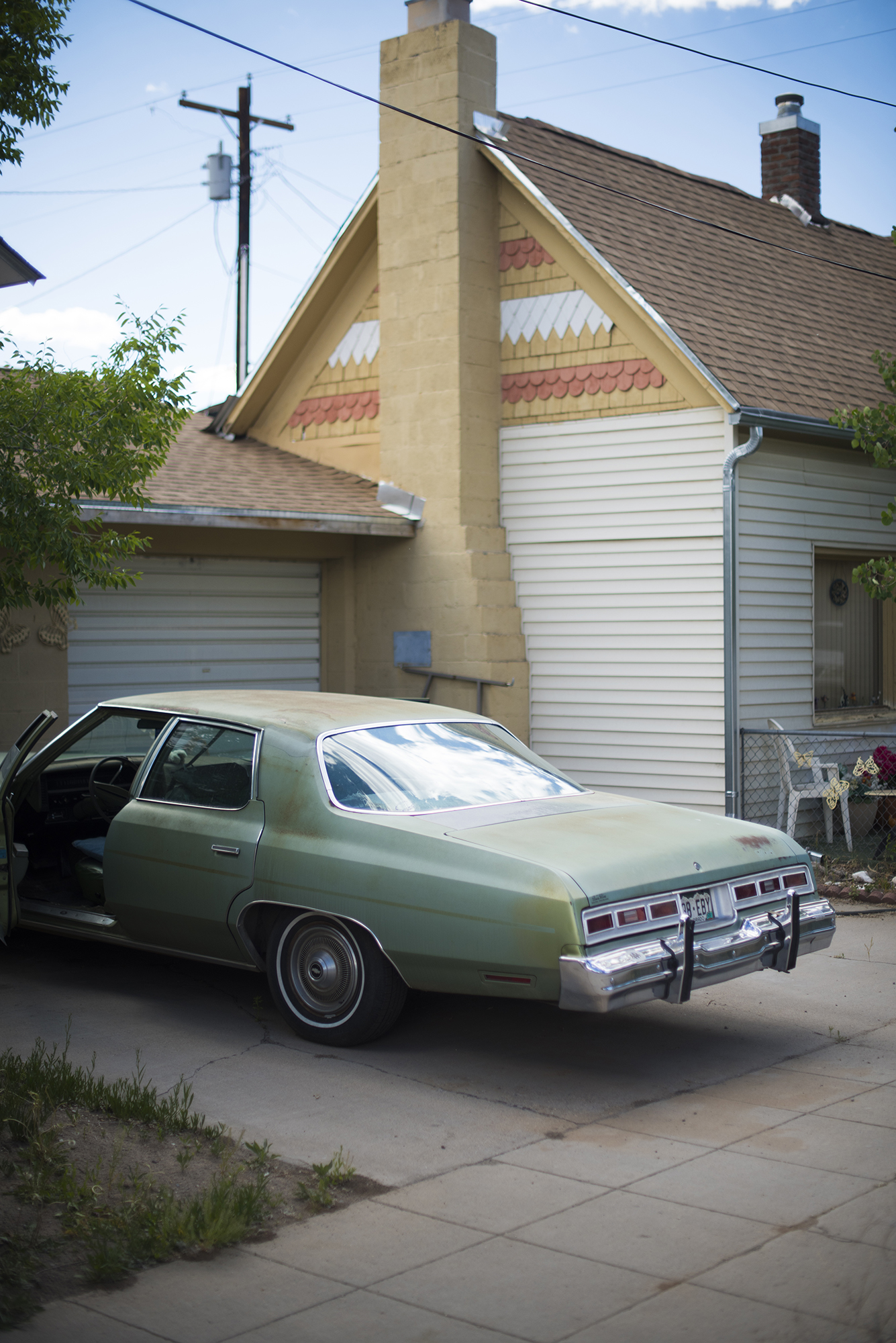
Weathered green vintage car parked beside an old Wyoming building

An old car parked beside a dilapidated building adds another detail along the road.
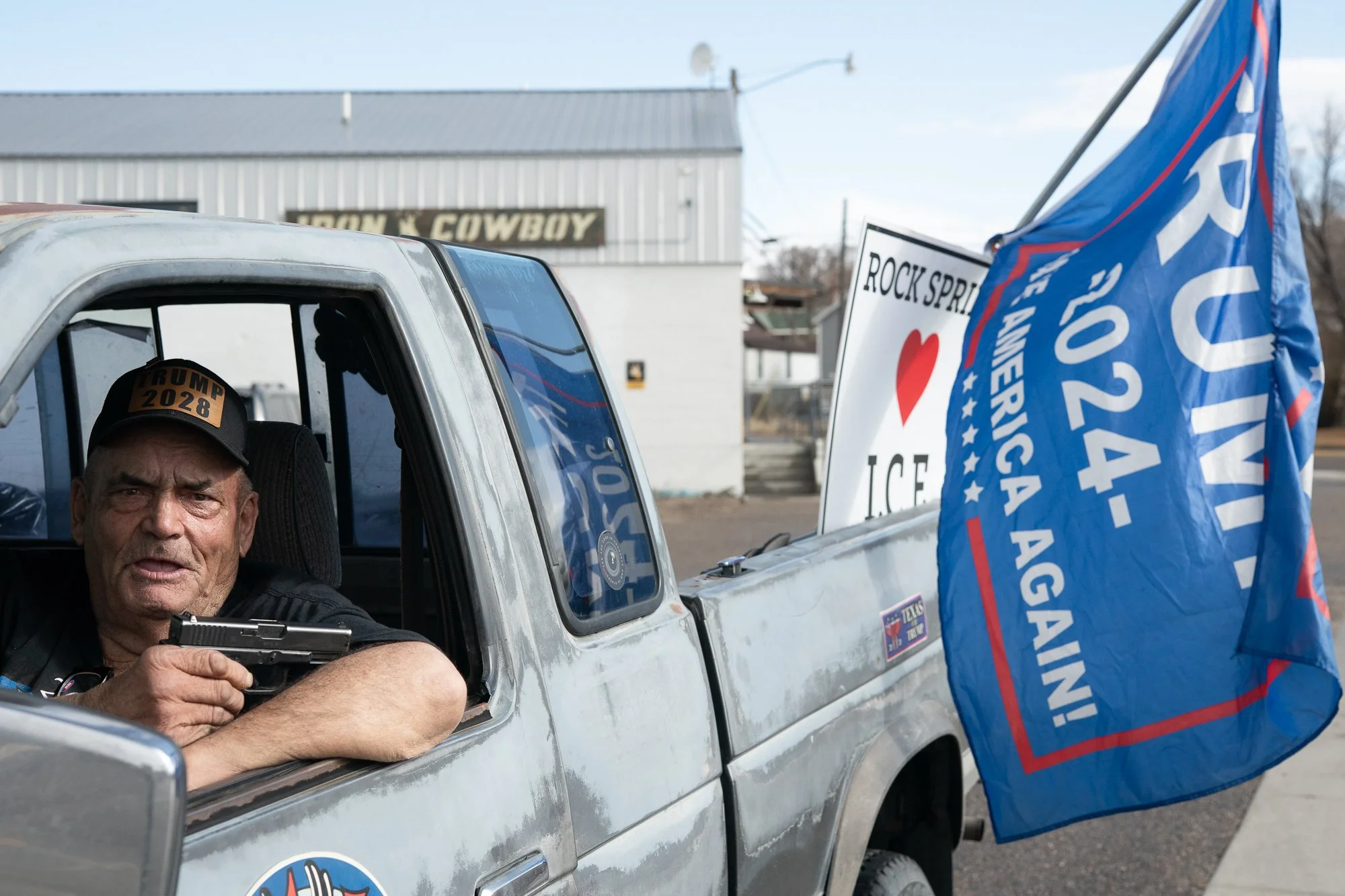
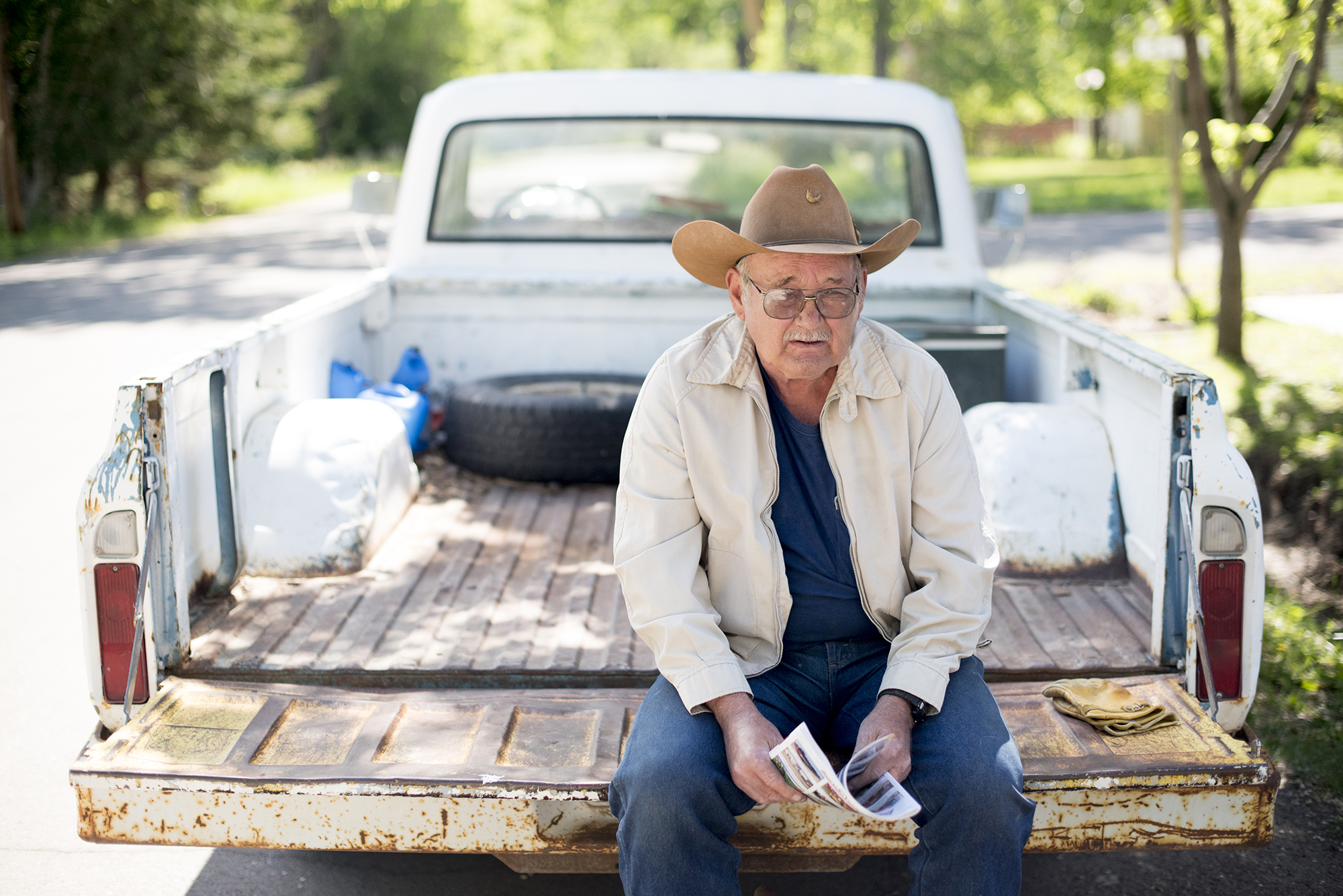
Man sitting in a pickup truck with an American flag on a Wyoming street

A man holding a gun sits in his truck with a Trump flag hanging off the tailgate.
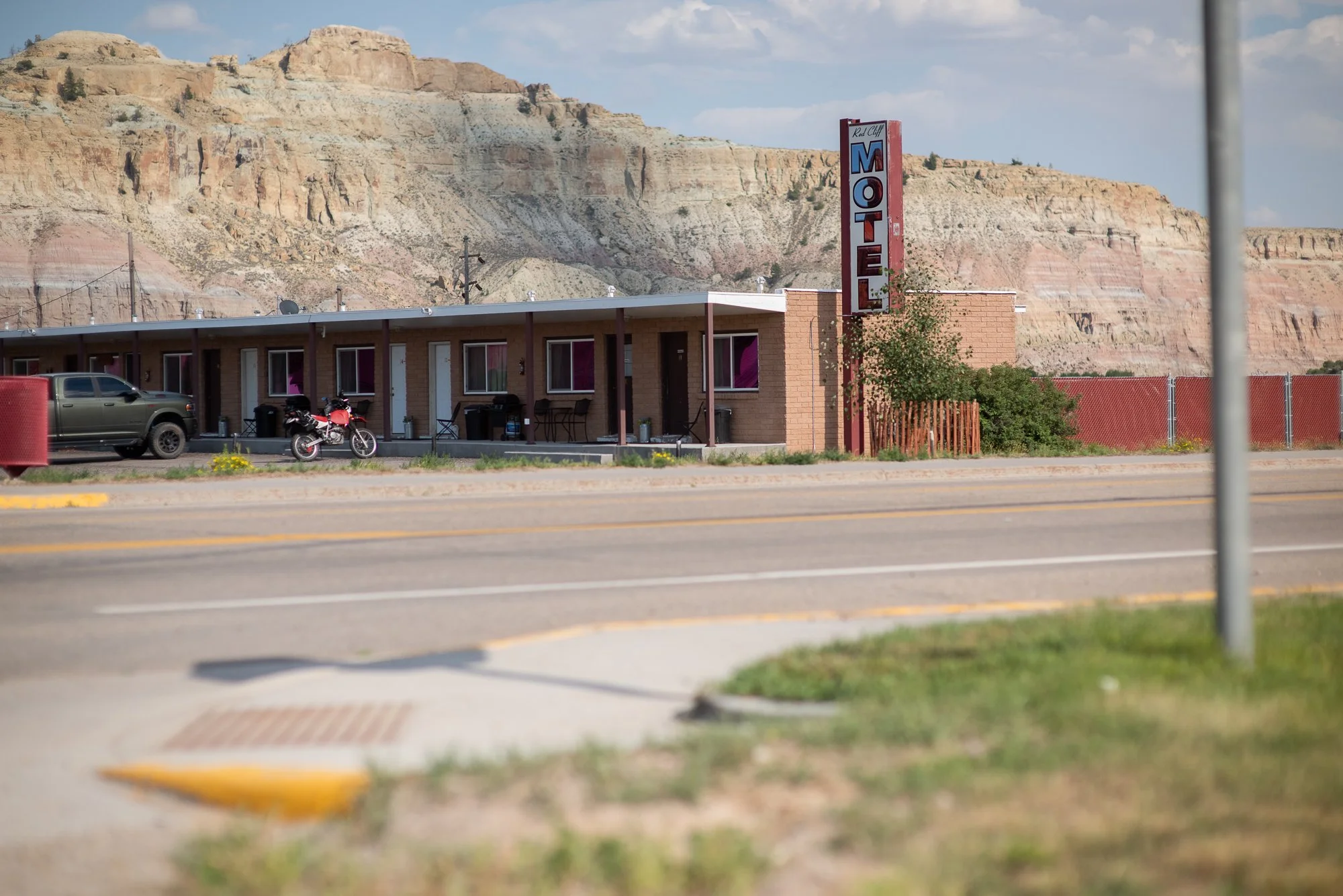
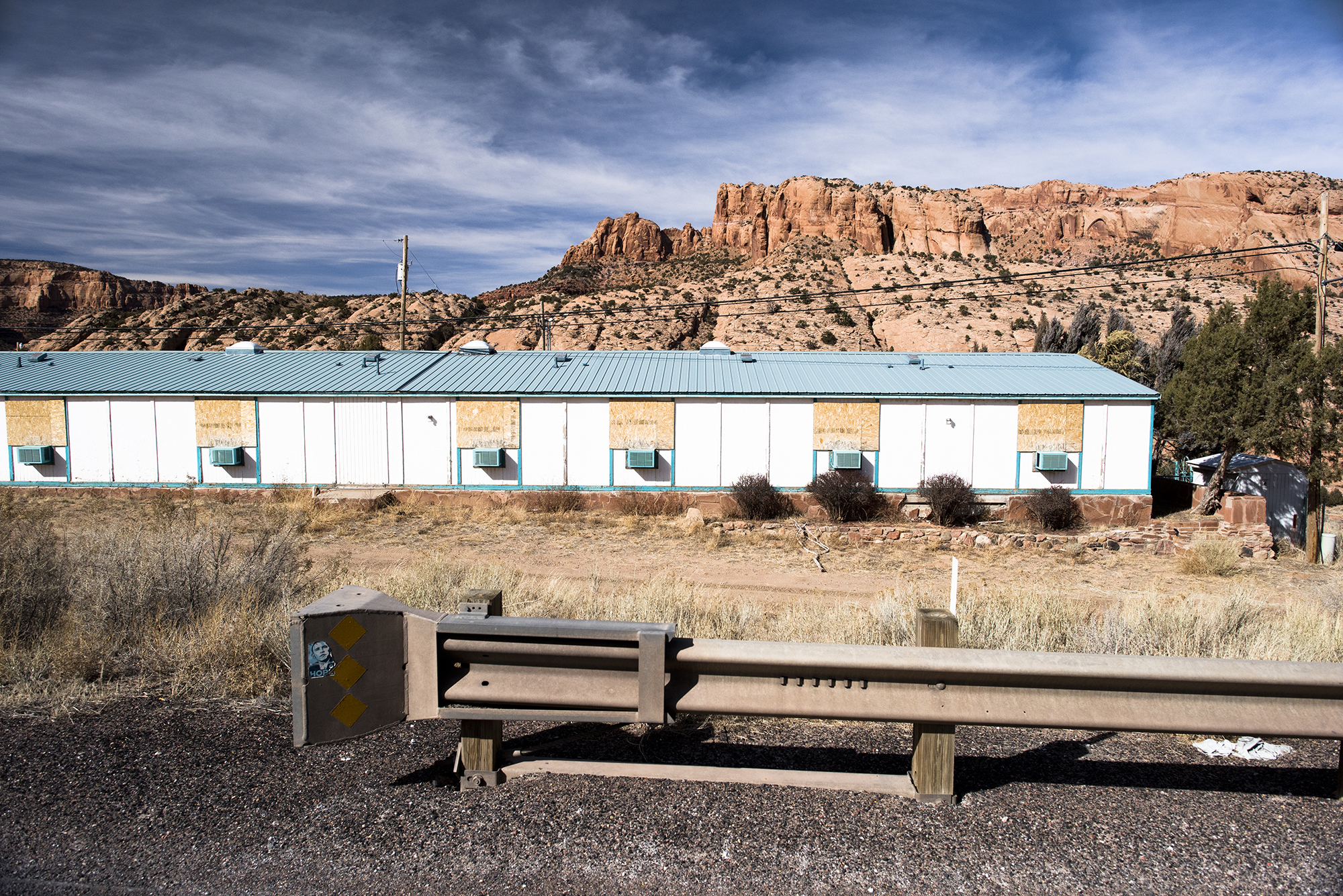
Old motel beside a Wyoming road with rocky cliffs behind it

The old motel sits beside the road with rocky cliffs behind it.
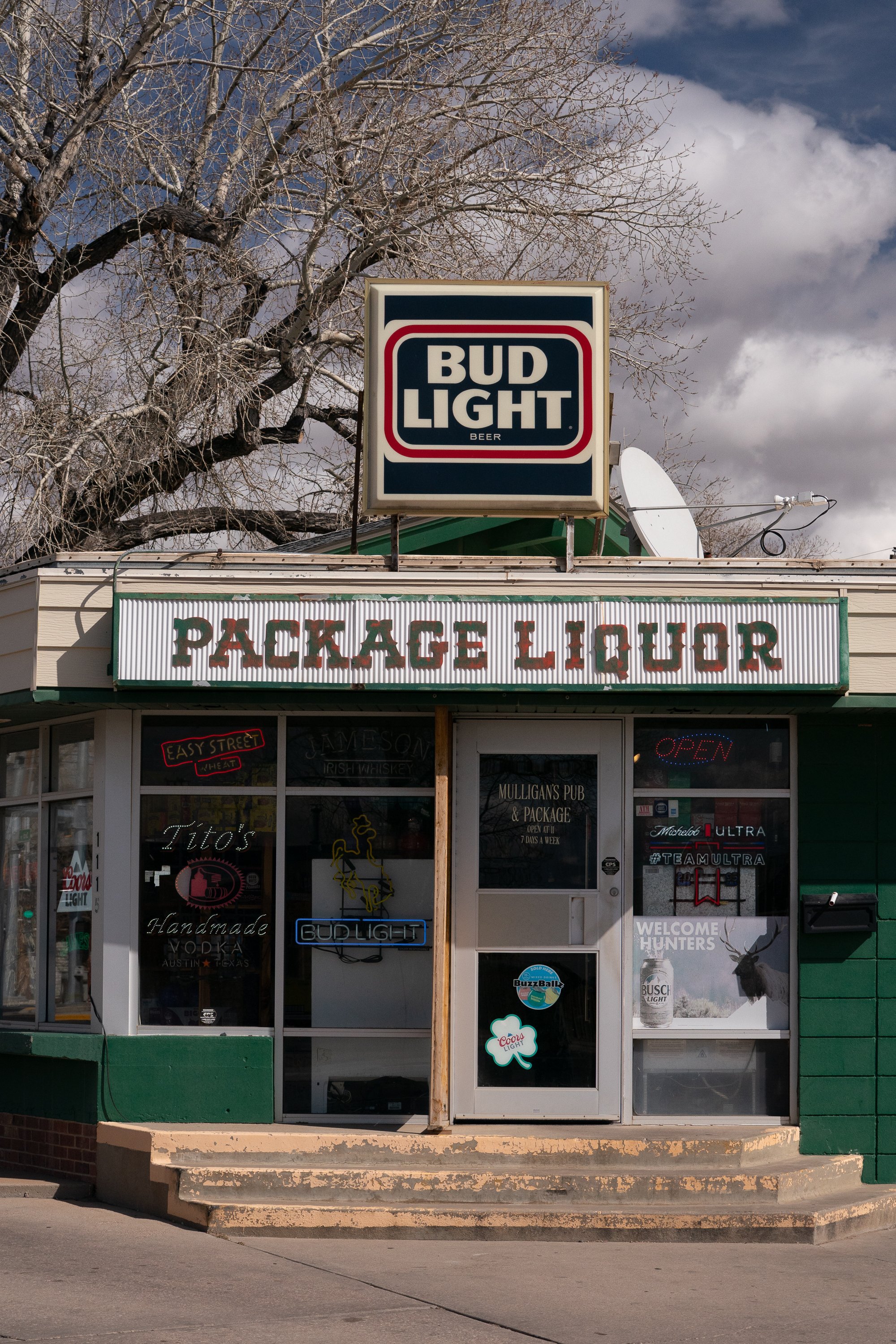
Package liquor storefront with Bud Light sign in a Wyoming town

Old signs and storefronts are part of the small-town landscape.

Wyoming Cowboy Photography

For the past several years, a significant part of my work has focused on working cowboys and ranches throughout the American West.

There's an enormous difference between photographing the idea of a cowboy and photographing someone who actually makes a living horseback.

The work isn't performed for the camera. Cattle need to be gathered and moved. Calves need to be branded. Fences need fixing. Horses need to be saddled. The weather doesn't care that you're trying to make photographs.

That's precisely what makes it interesting.

When I'm photographing cowboys in Wyoming, I'm not interested in manufacturing some romantic version of the West that doesn't exist. I'm interested in the things that happen naturally when people are doing work they've spent their lives learning how to do.

A rider disappearing into a cloud of dust. The way a horse and cowboy move together while sorting cattle. Frozen hands early in the morning. Long stretches where nothing particularly dramatic happens, followed by thirty seconds when everything happens at once.

Those moments are what have kept me working on this project year after year.

They also serve as a reminder that the American cowboy isn't simply a historical character. Ranching culture is still very much alive in Wyoming.
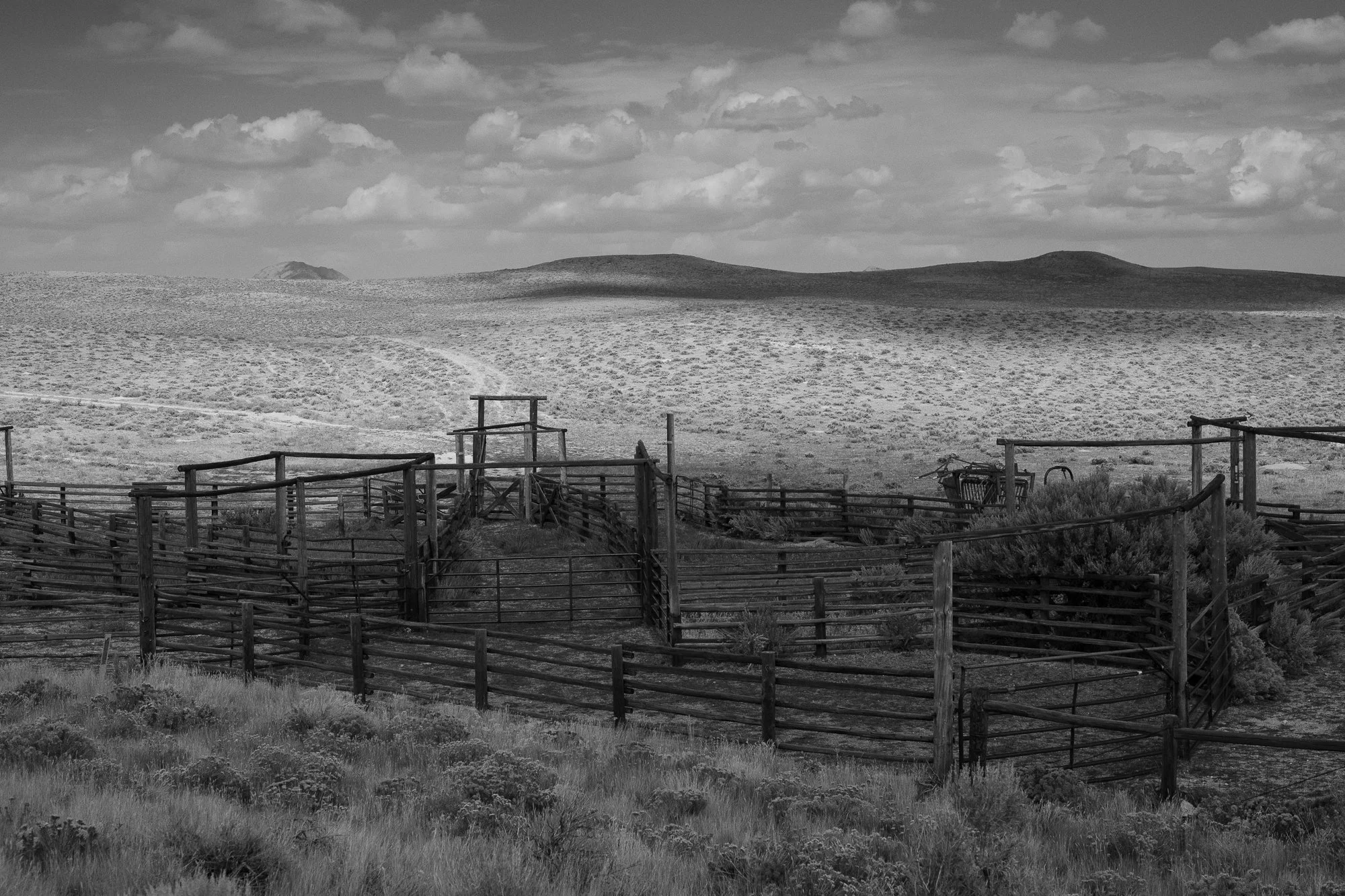
Weathered wooden cattle corrals on a working ranch in Wyoming

Weathered cattle corrals sit below the rolling hills on a working ranch in Wyoming.
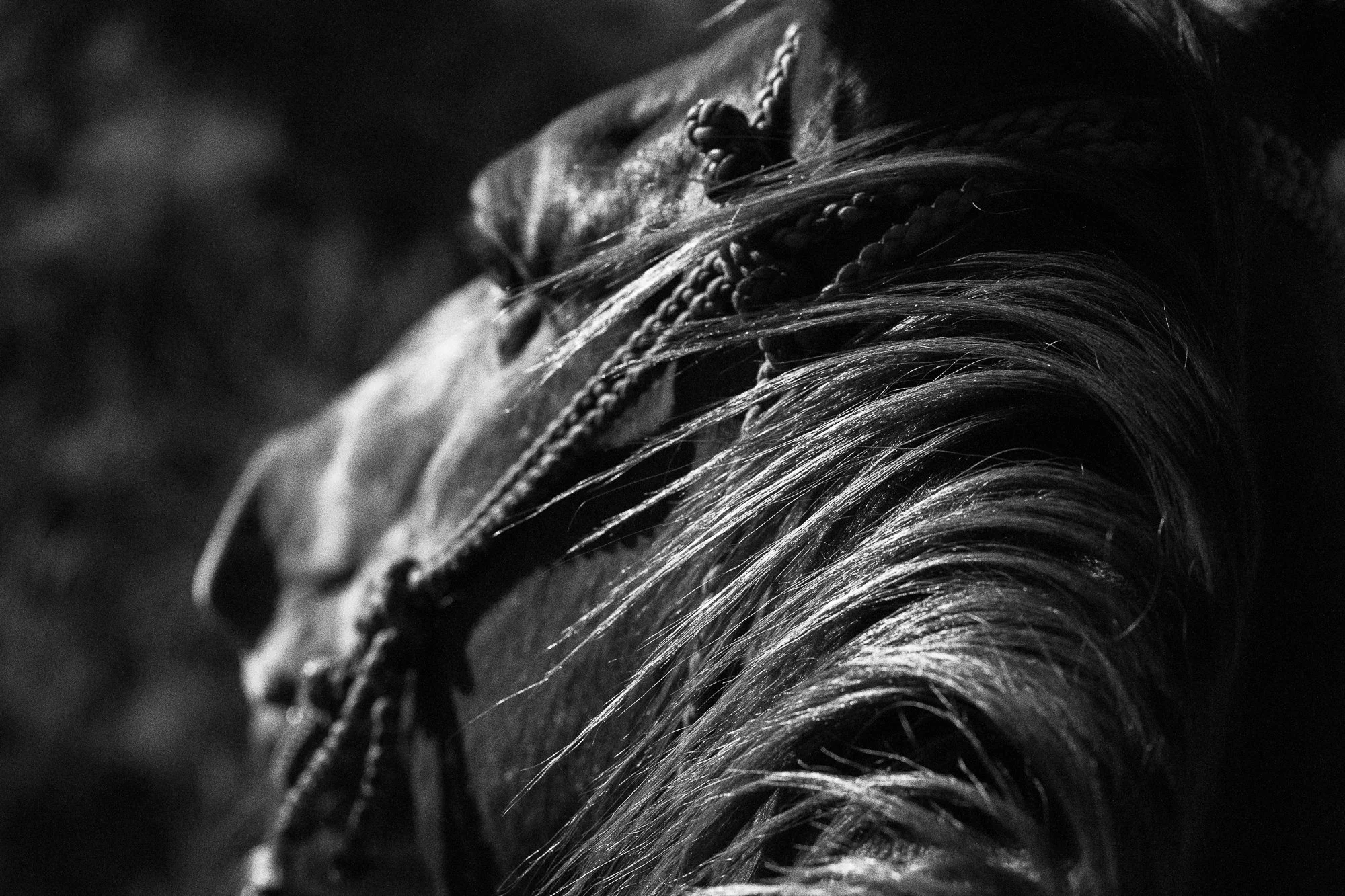
Close view of a cowboy's horse wearing a worn Western bridle

First light illuminates a horses face on a working cattle ranch.
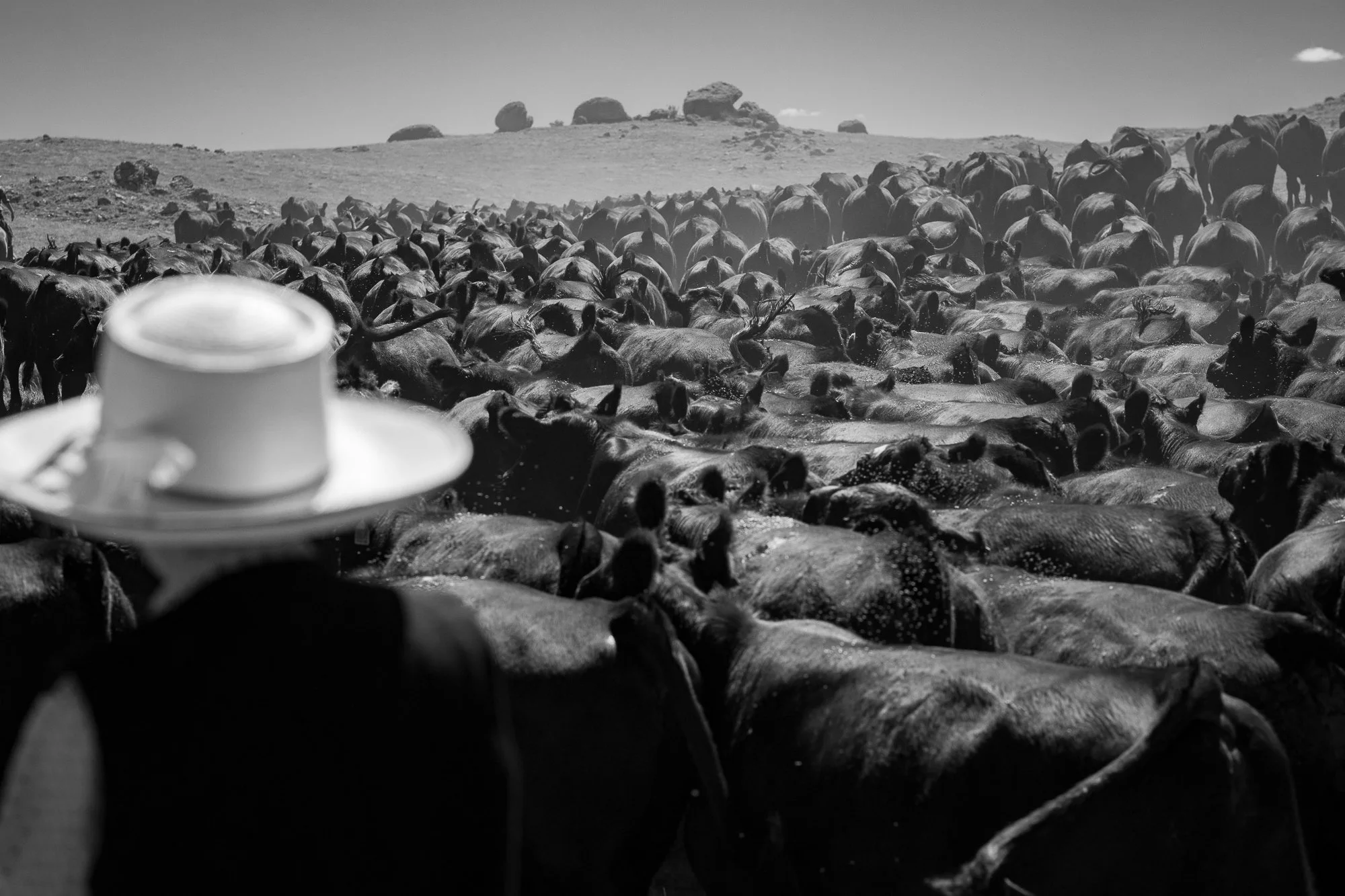
Cowboy on horseback moving cattle across a Wyoming ranch

Working cattle brings the cowboy, horses, and land into the same frame.

Photographing Working Ranches in Wyoming

Access is everything when photographing ranches.

You can't understand much about a place by showing up for twenty minutes, making a few photographs and leaving. The pictures get better when people stop paying attention to the camera.

That takes time.

Over the years I've been fortunate to spend time on working ranches throughout the West, documenting cattle drives, brandings, roundups and the everyday work that happens between those bigger events.

Some of my favorite photographs aren't necessarily of cowboys at all.

They're the details surrounding the work. Saddles worn smooth from years of use. A pair of gloves sitting on a fence post. Steam coming off a horse on a cold morning. Trucks covered in dirt. Dogs waiting for something to happen. People standing around talking after the work is finished.

Those details say as much about ranching as the dramatic moments do.

The landscape is always present too. In Wyoming, it's impossible for it not to be. Ranching happens at a scale that can make a rider on horseback look insignificant against the country surrounding them.

That relationship between people, animals and land is a large part of what I'm trying to photograph.
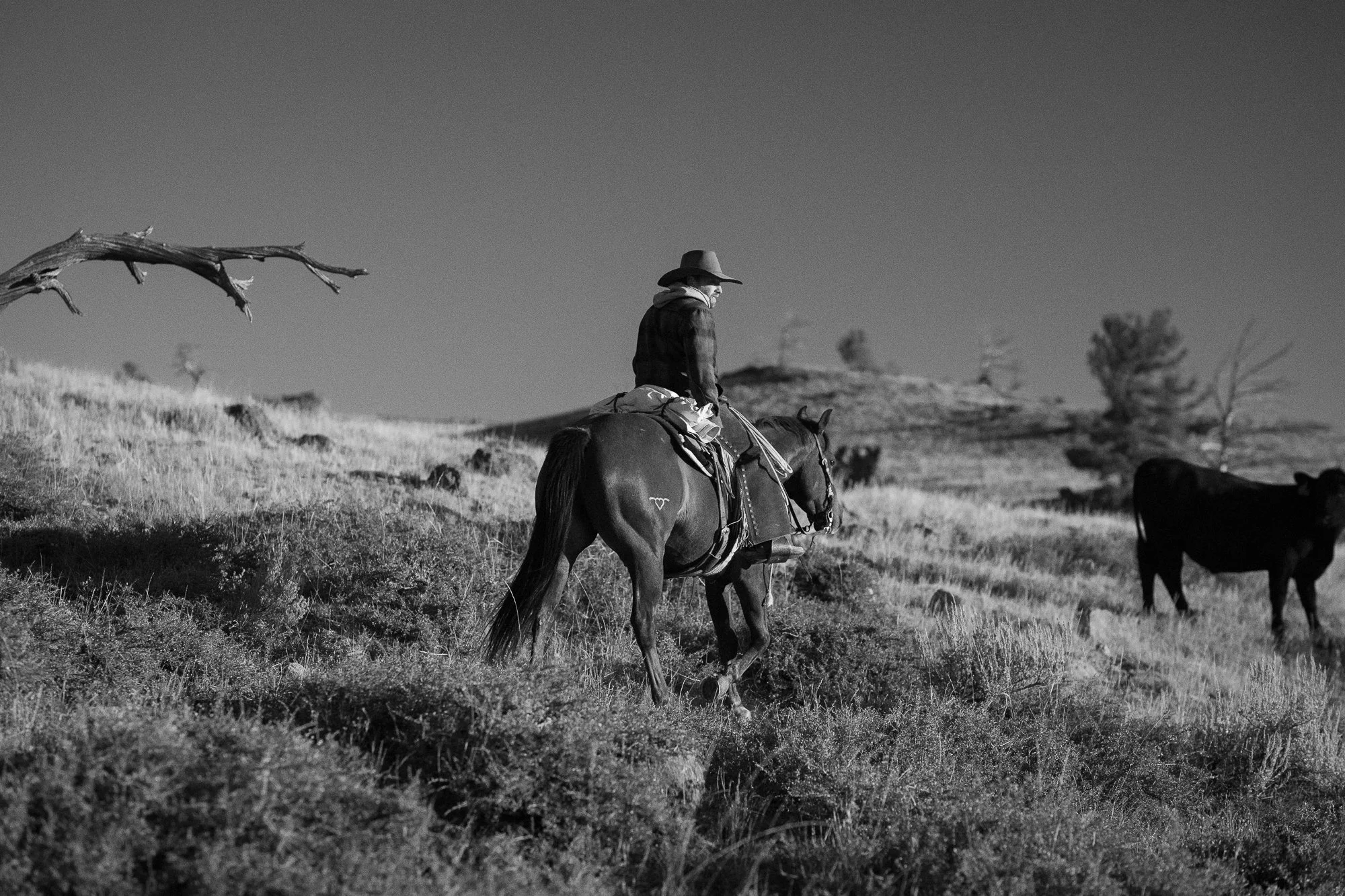
Cowboy on horseback moving cattle across a Wyoming ranch

Horse and rider move through the pasture as cattle gather nearby.
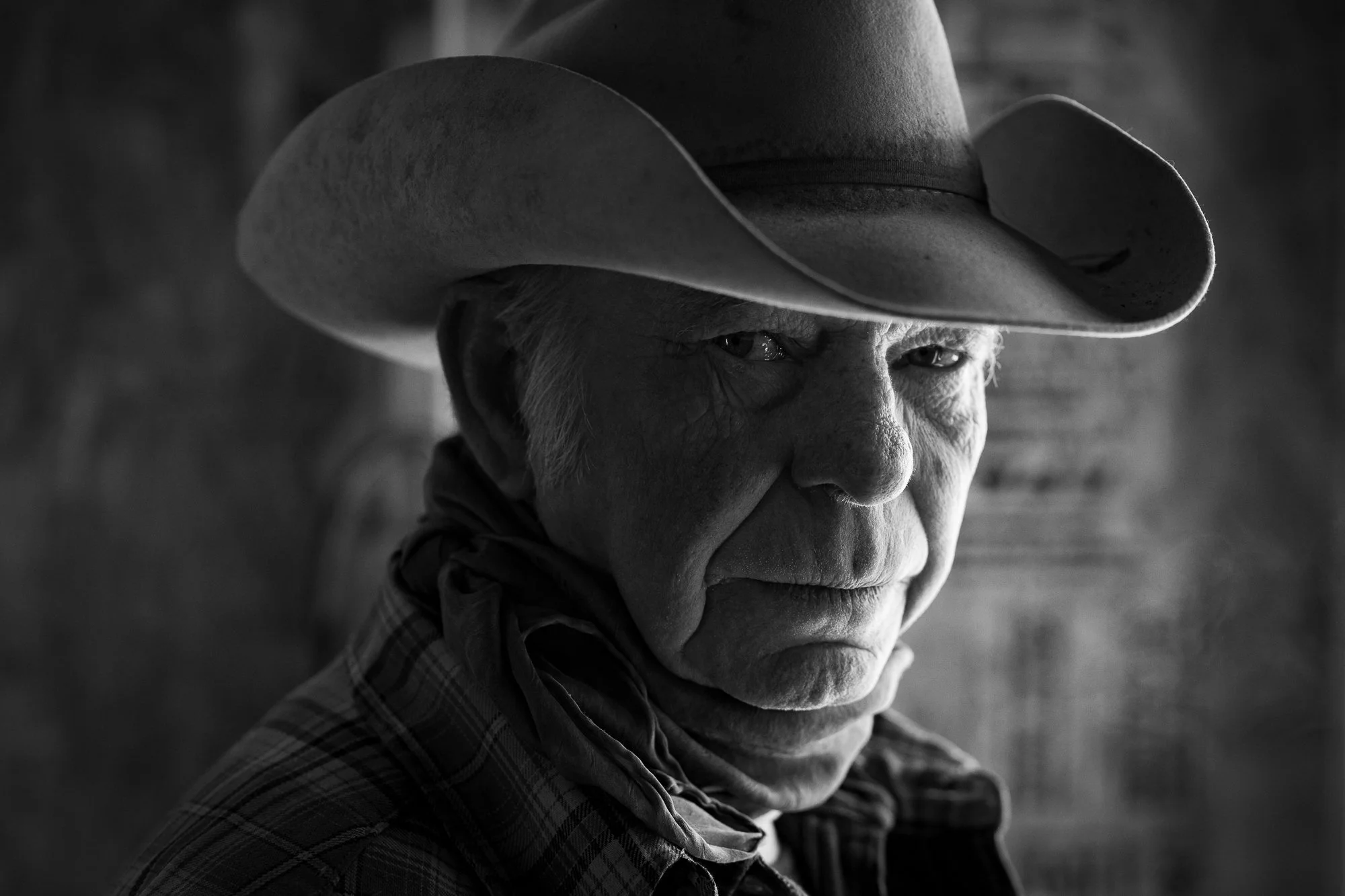
Portrait of a cowboy wearing a hat and bandana

Cowboy portrait inside a working ranch workshop.

Small Town Wyoming

Long before I started seriously photographing cowboys, I was photographing the American road.

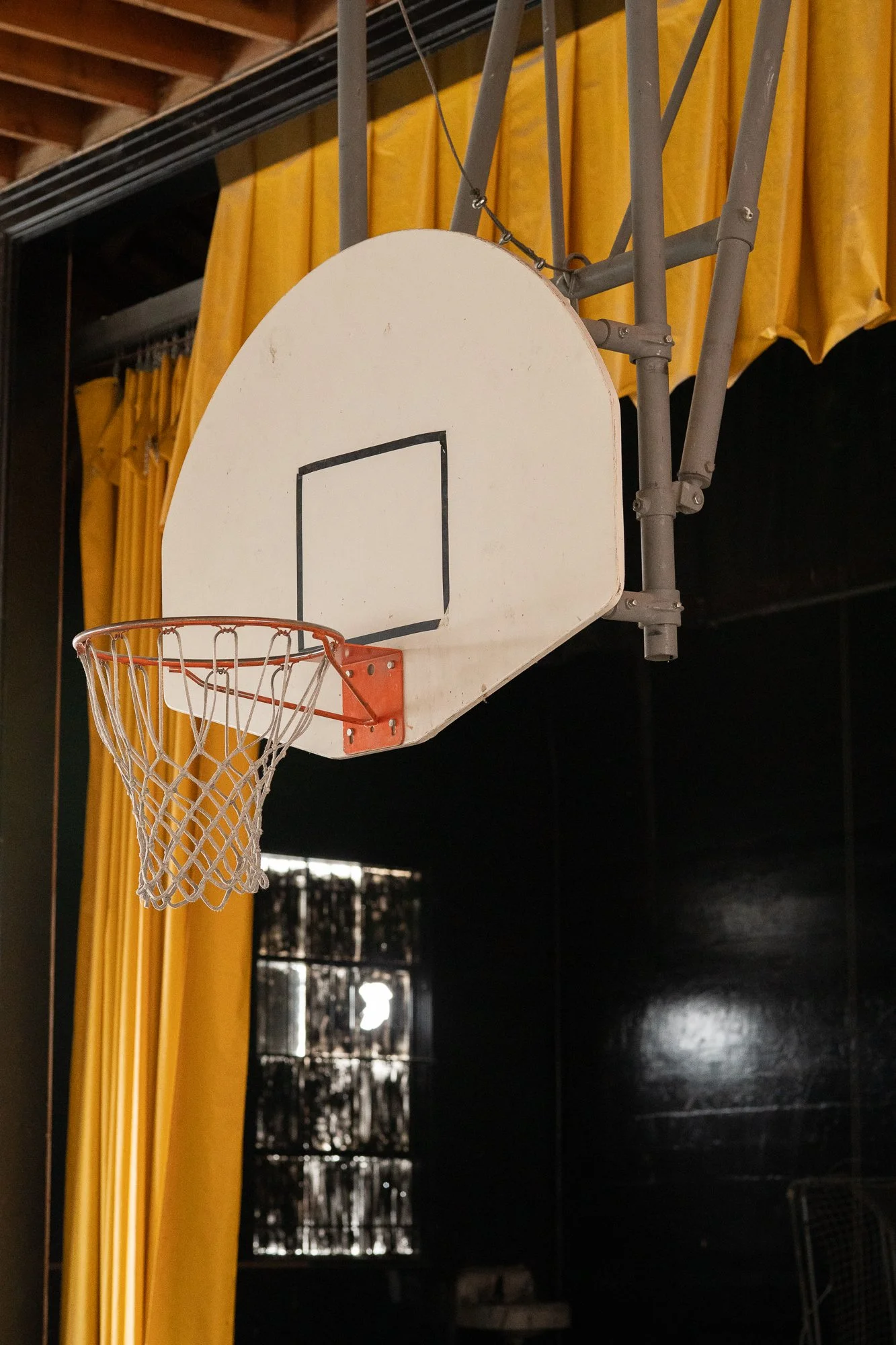
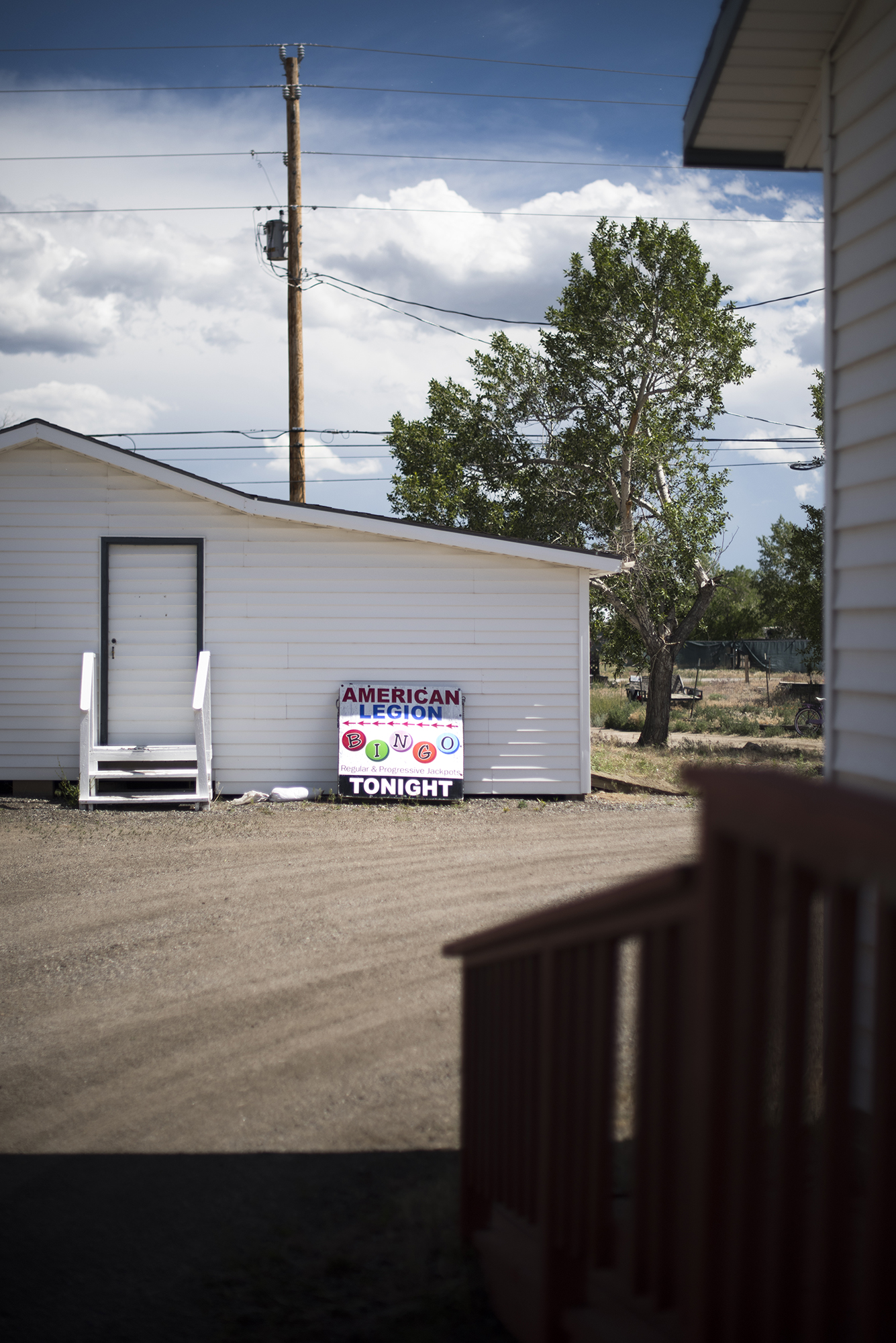
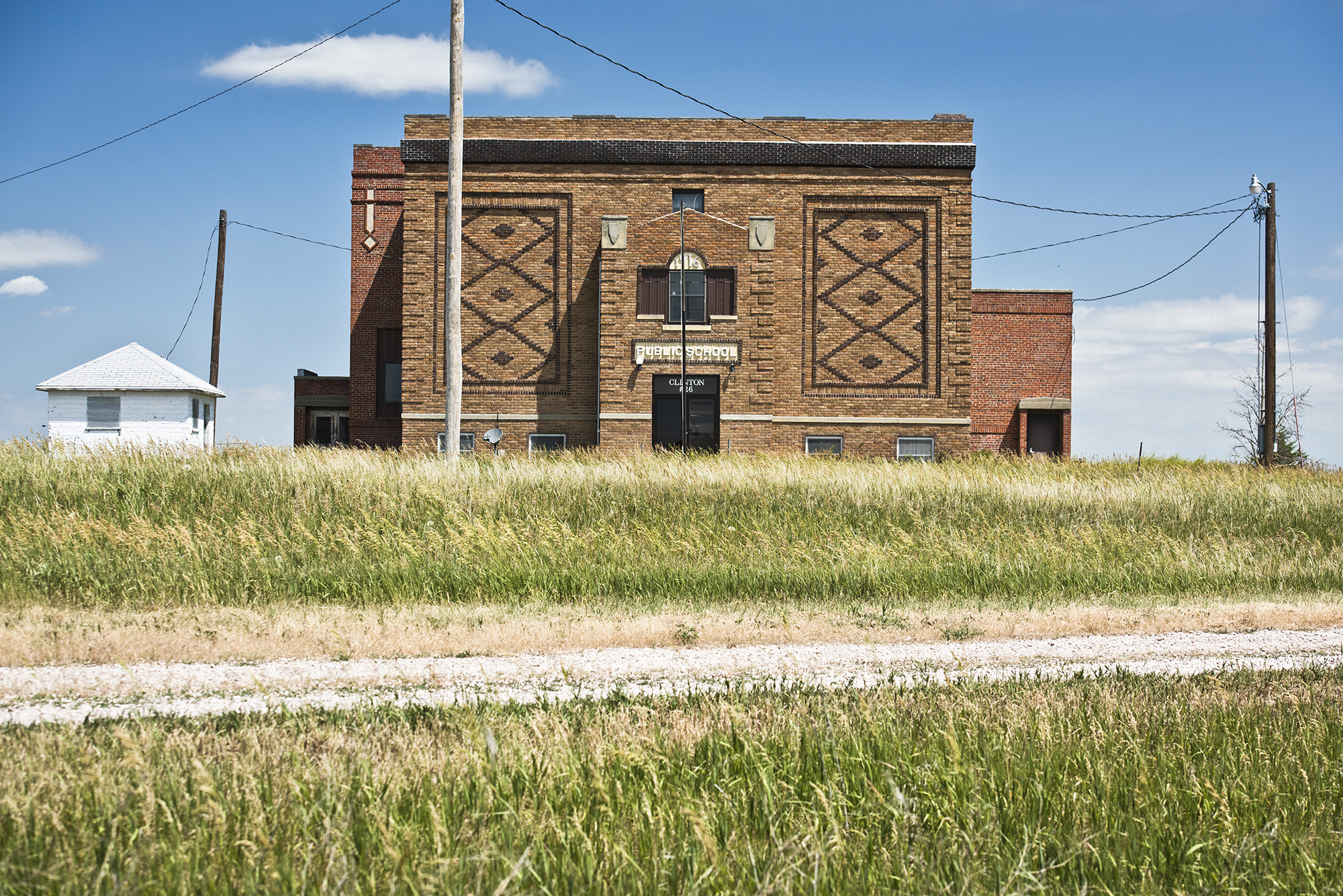
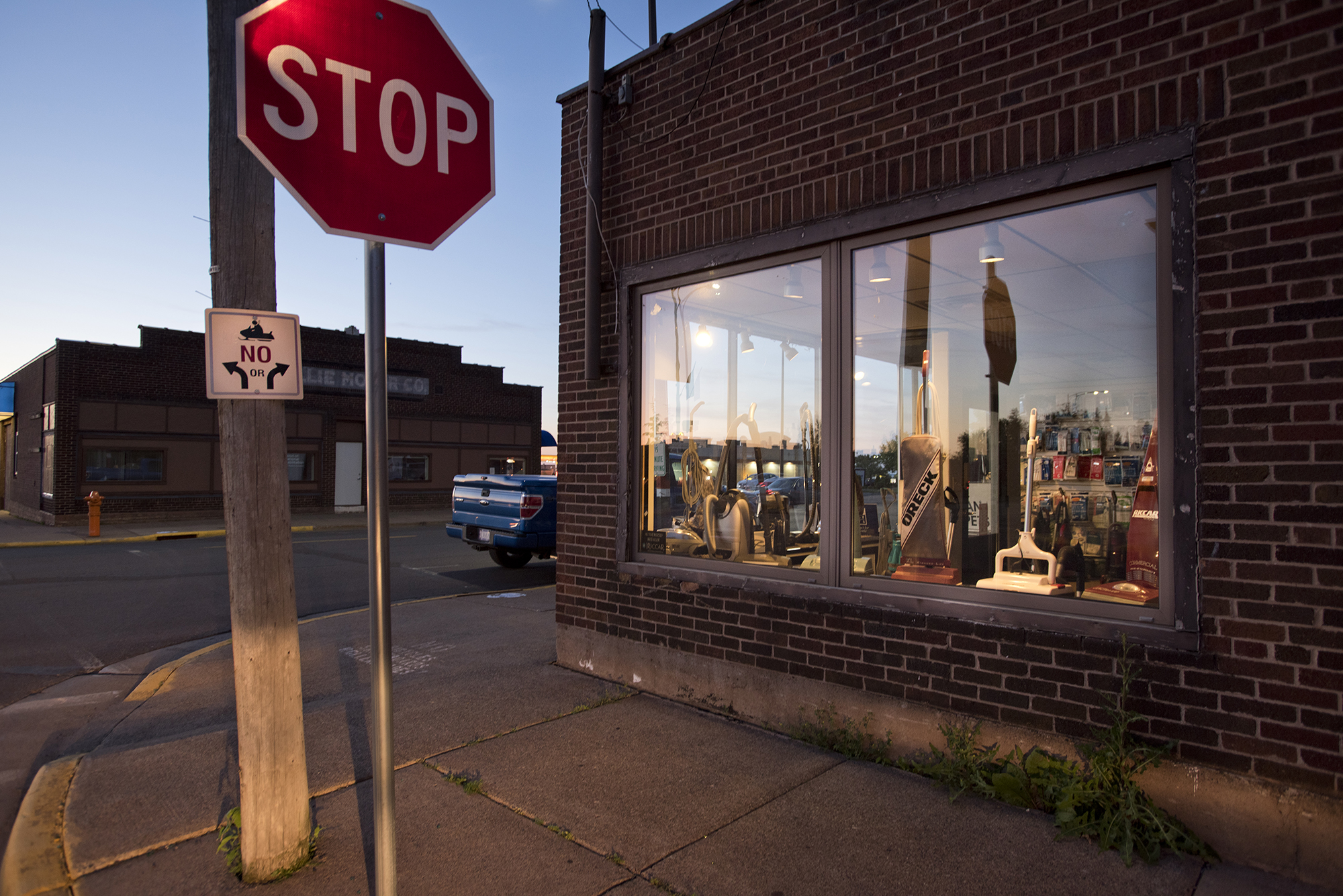
For years I've driven around the country making photographs of places and objects that aren't typically considered important enough to photograph. Motels. Diners. signs. Abandoned buildings. Old cars. Storefronts. Bars. Basketball hoops. And whatever else makes me pull over.

Wyoming is particularly good for that kind of wandering.

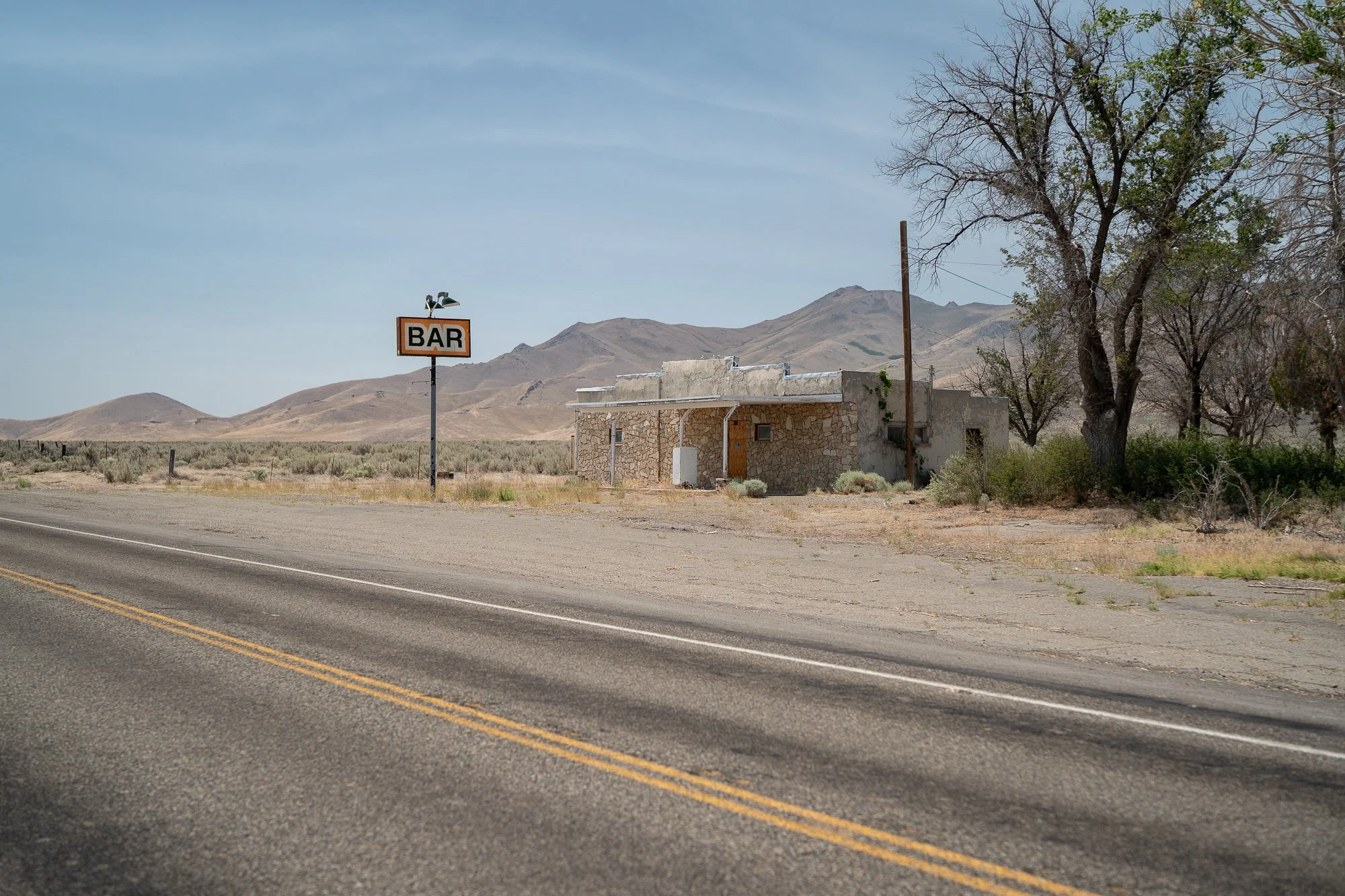
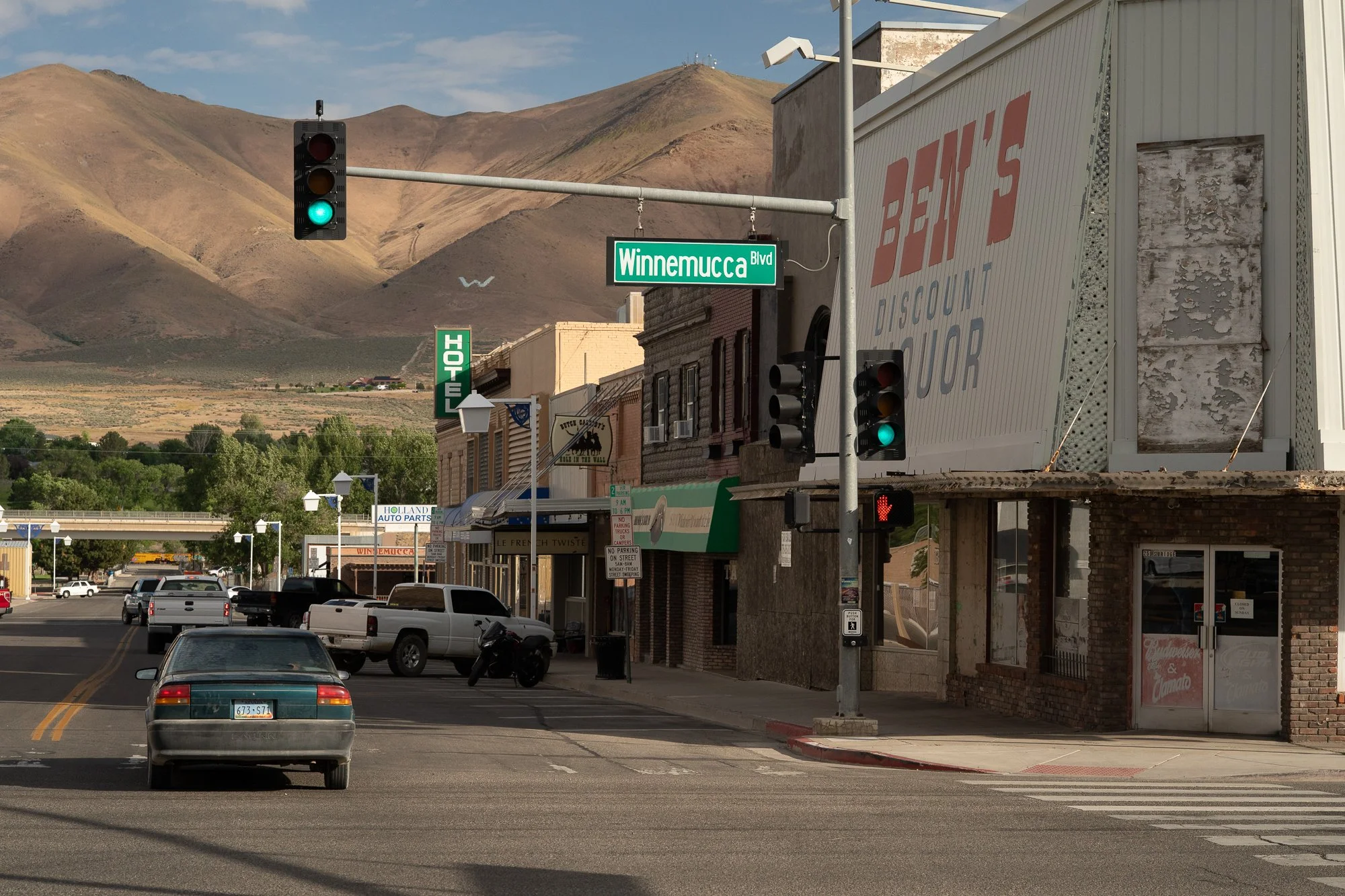
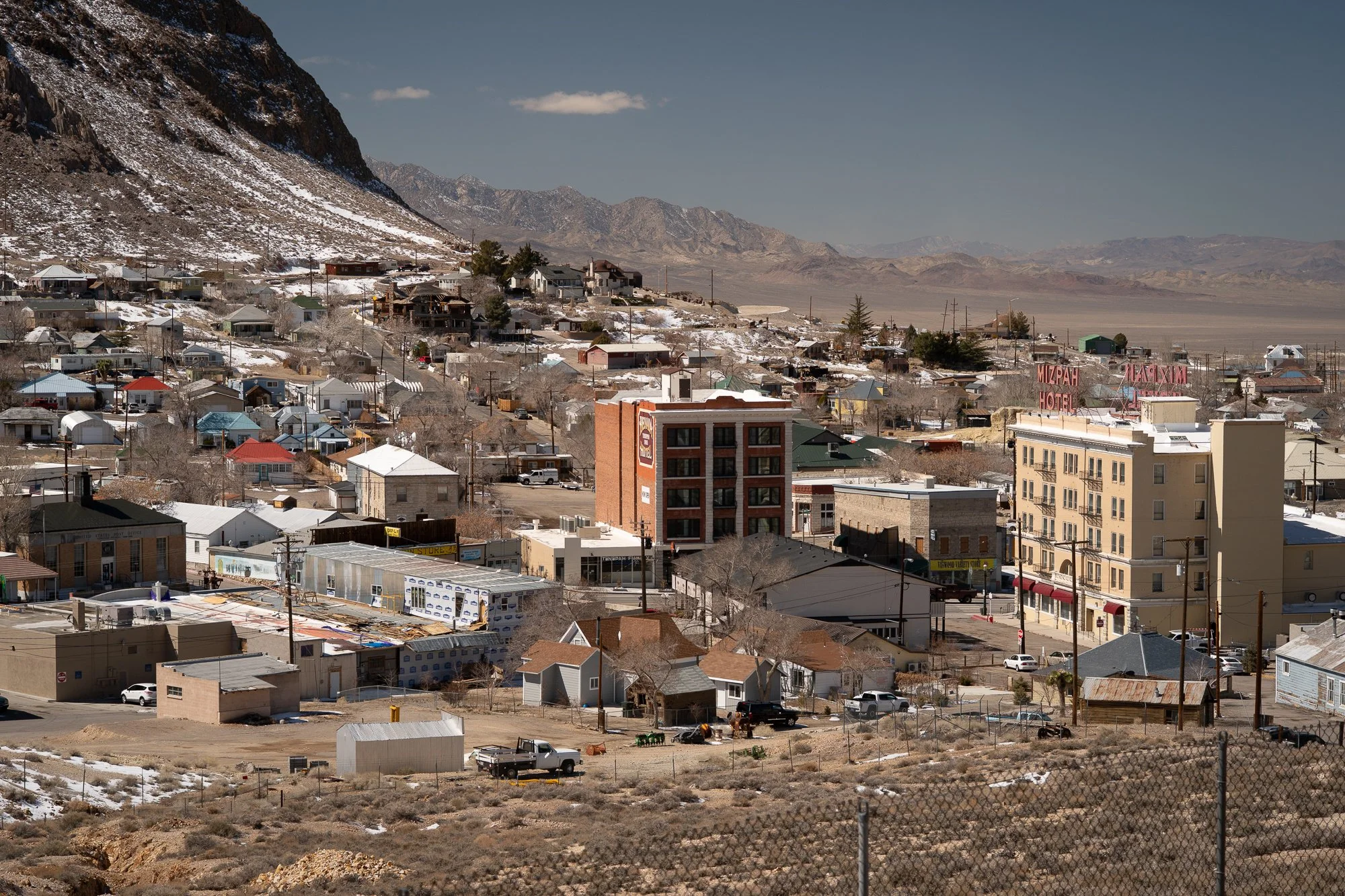
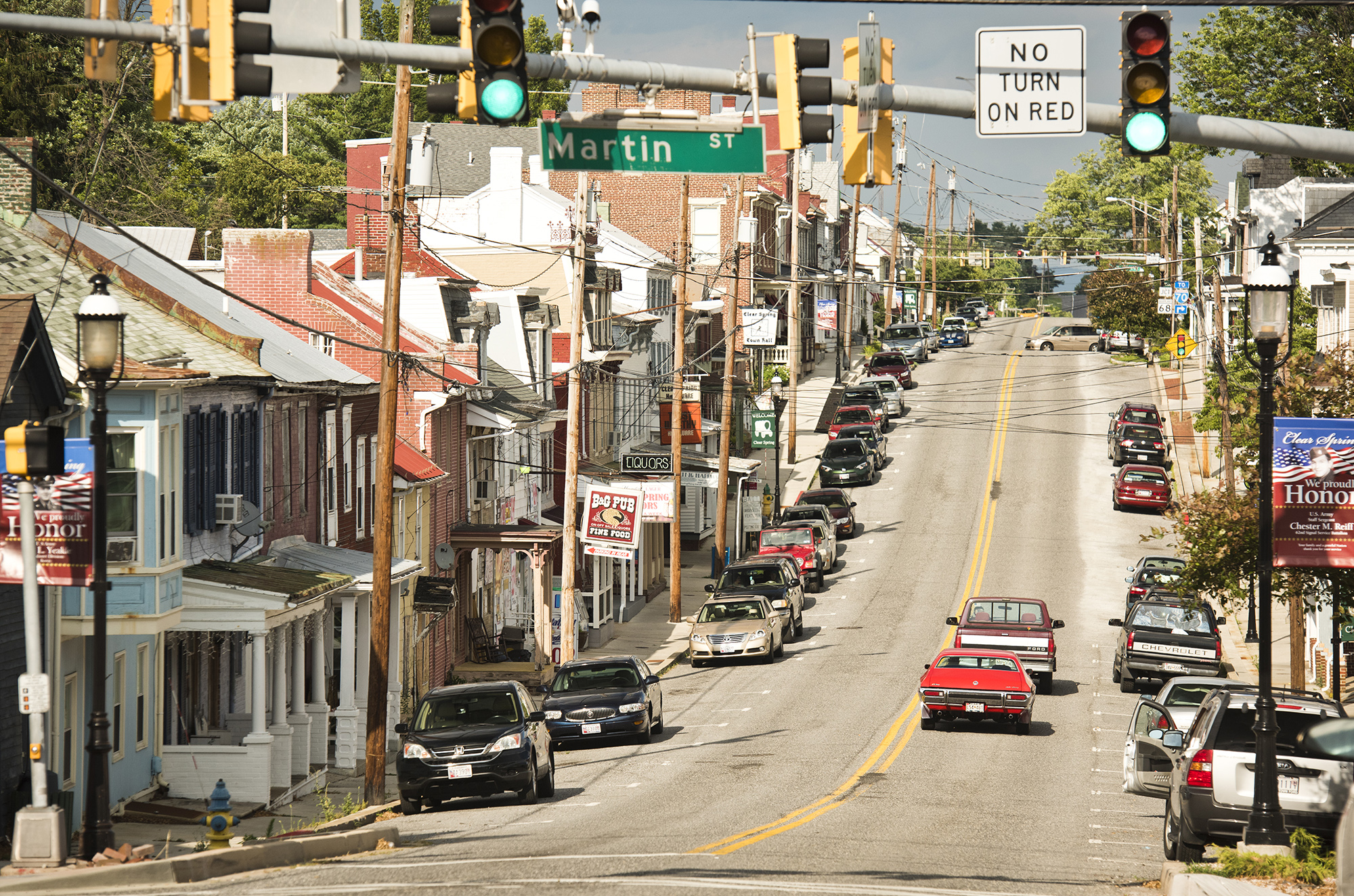
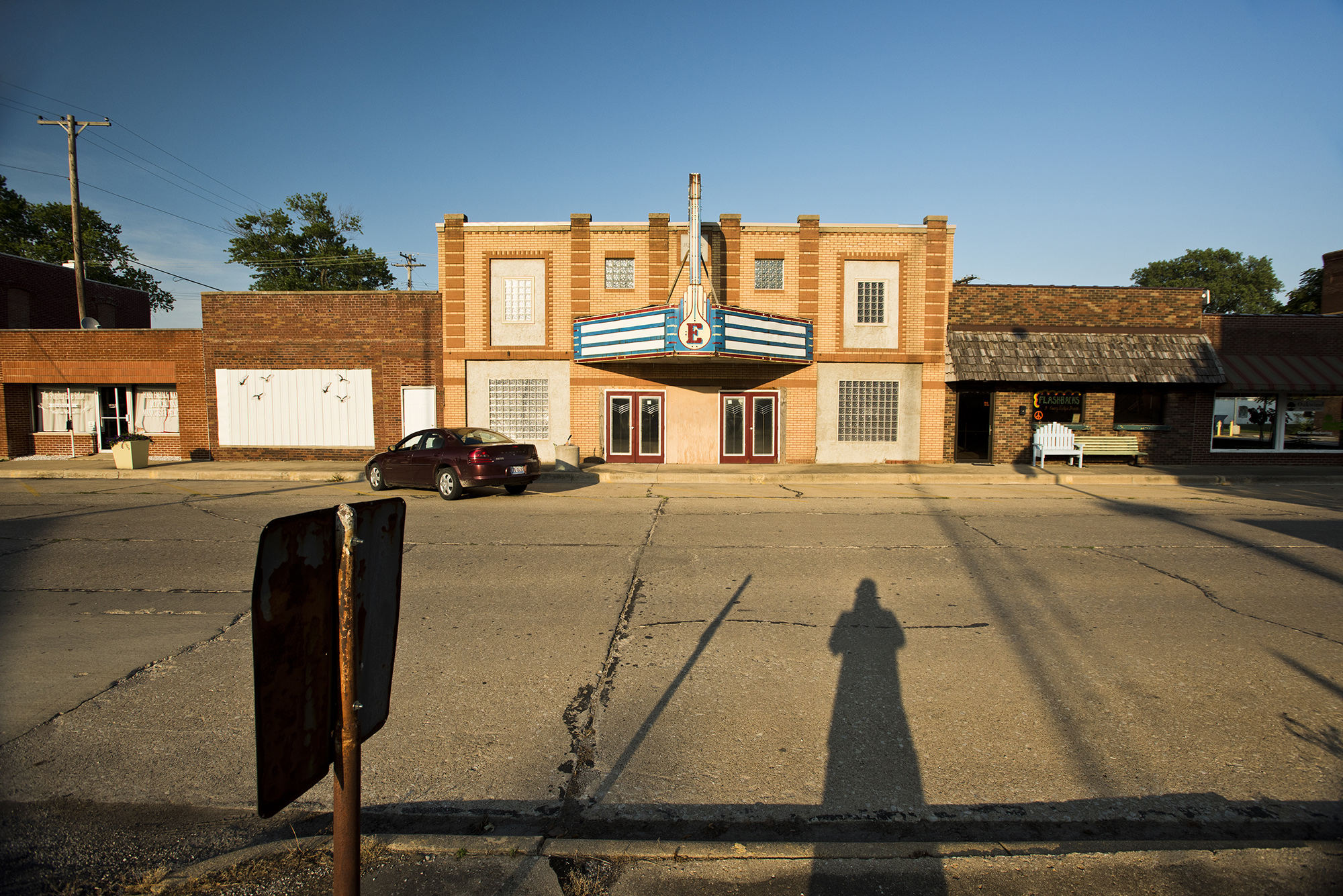
There are towns where the main street seems disproportionately wide for the number of people living there. Bars that might be the only place open for miles. Old motels hanging on beside highways that travelers now pass through without stopping.

Some places are changing quickly. Others feel like they exist in their own time zone.

That's what interests me.

Road trips are usually organized around destinations, but photography has taught me that the spaces between those destinations are often more interesting.

Wyoming has a lot of space between destinations.

And I've learned not to hurry through it.
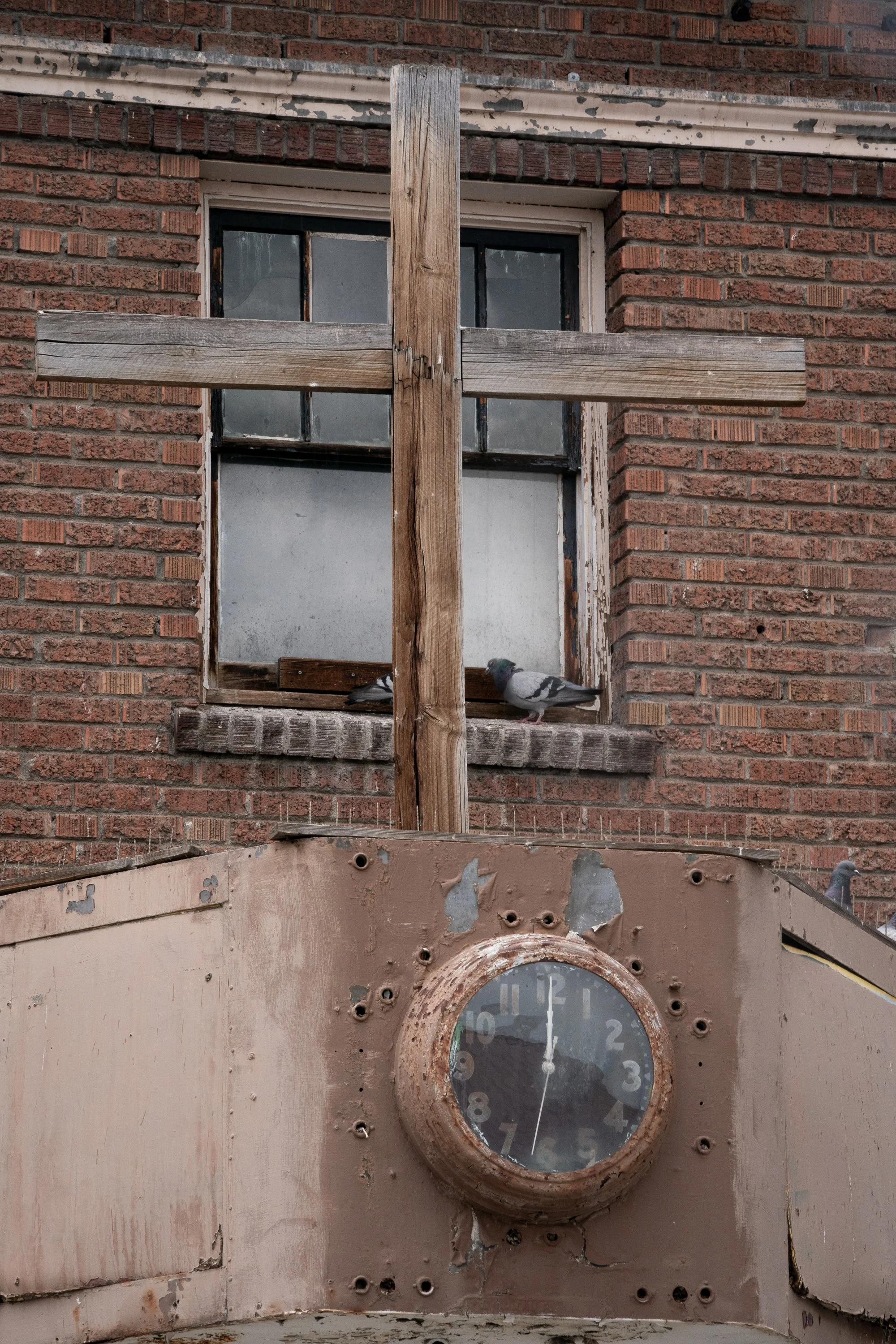
Weathered brick building with an old clock and boarded window in Wyoming

Old clocks, weathered brick, and worn storefronts are part of the small-town landscape.
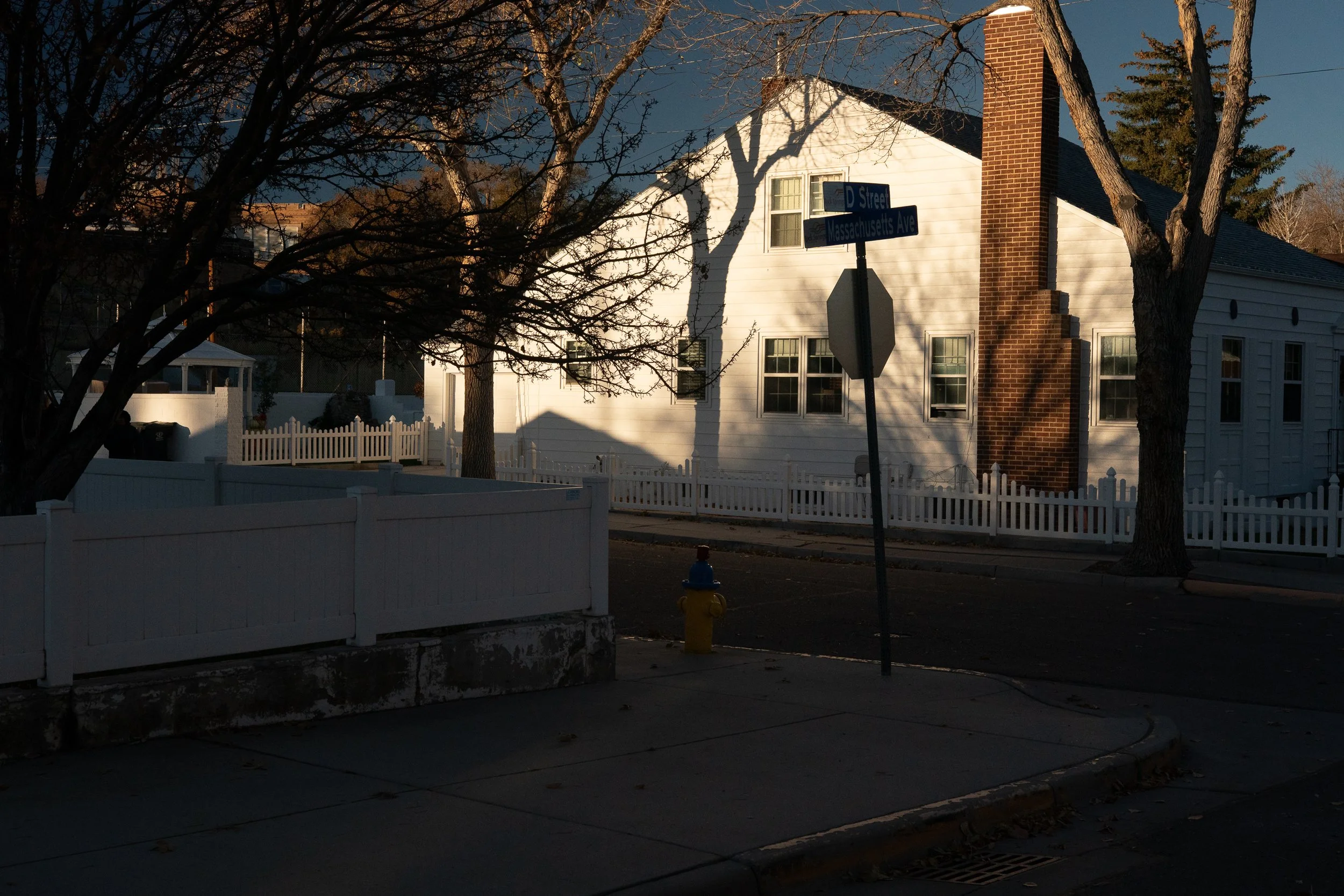
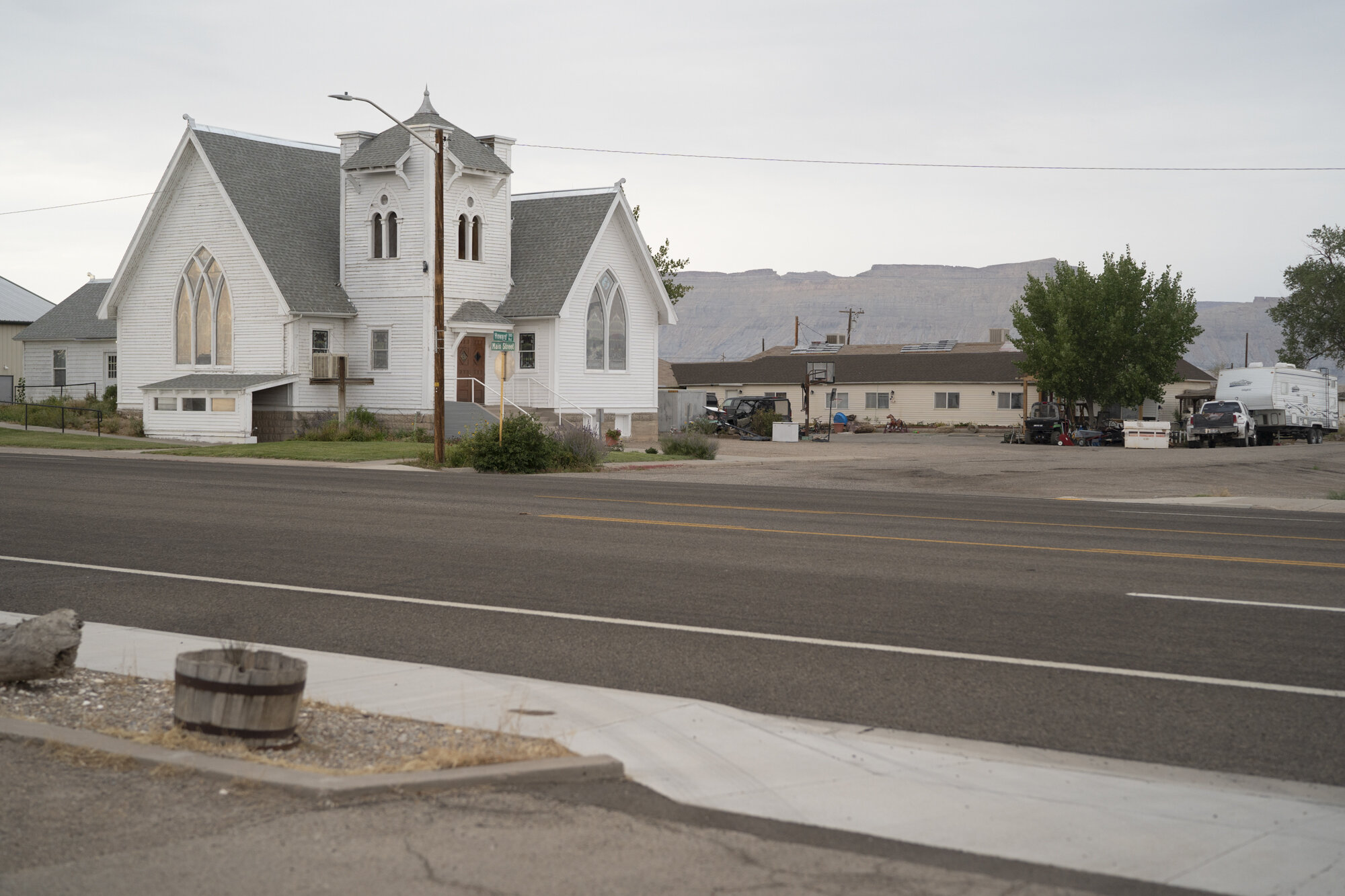
White church and quiet main street in a small Wyoming town

Small-town streets like this make it easy to slow down and look around.
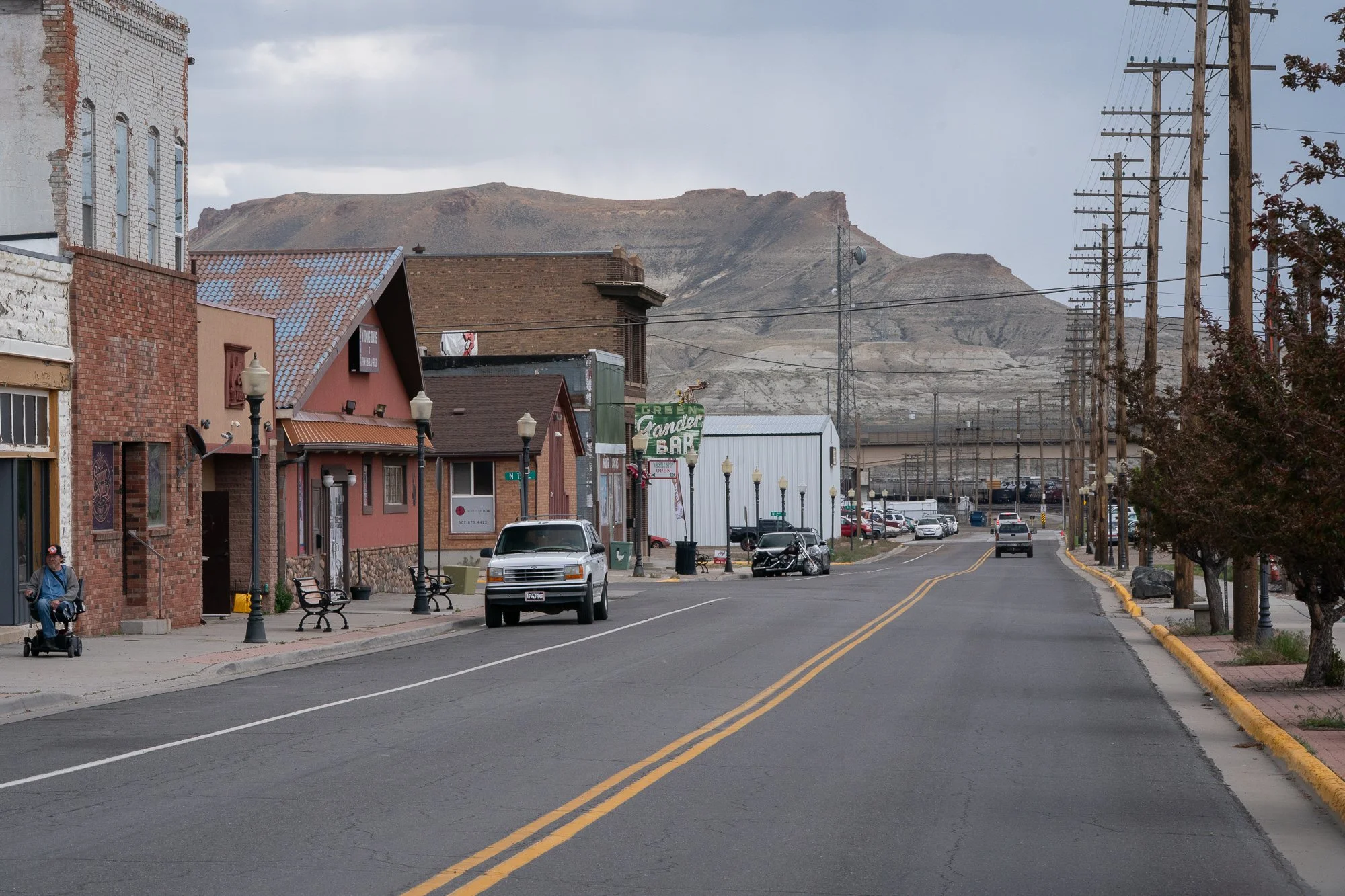
Wyoming small town street with storefronts and mountains in the distance

Wyoming's main streets often run straight toward the mountains, with businesses and storefronts along the road.
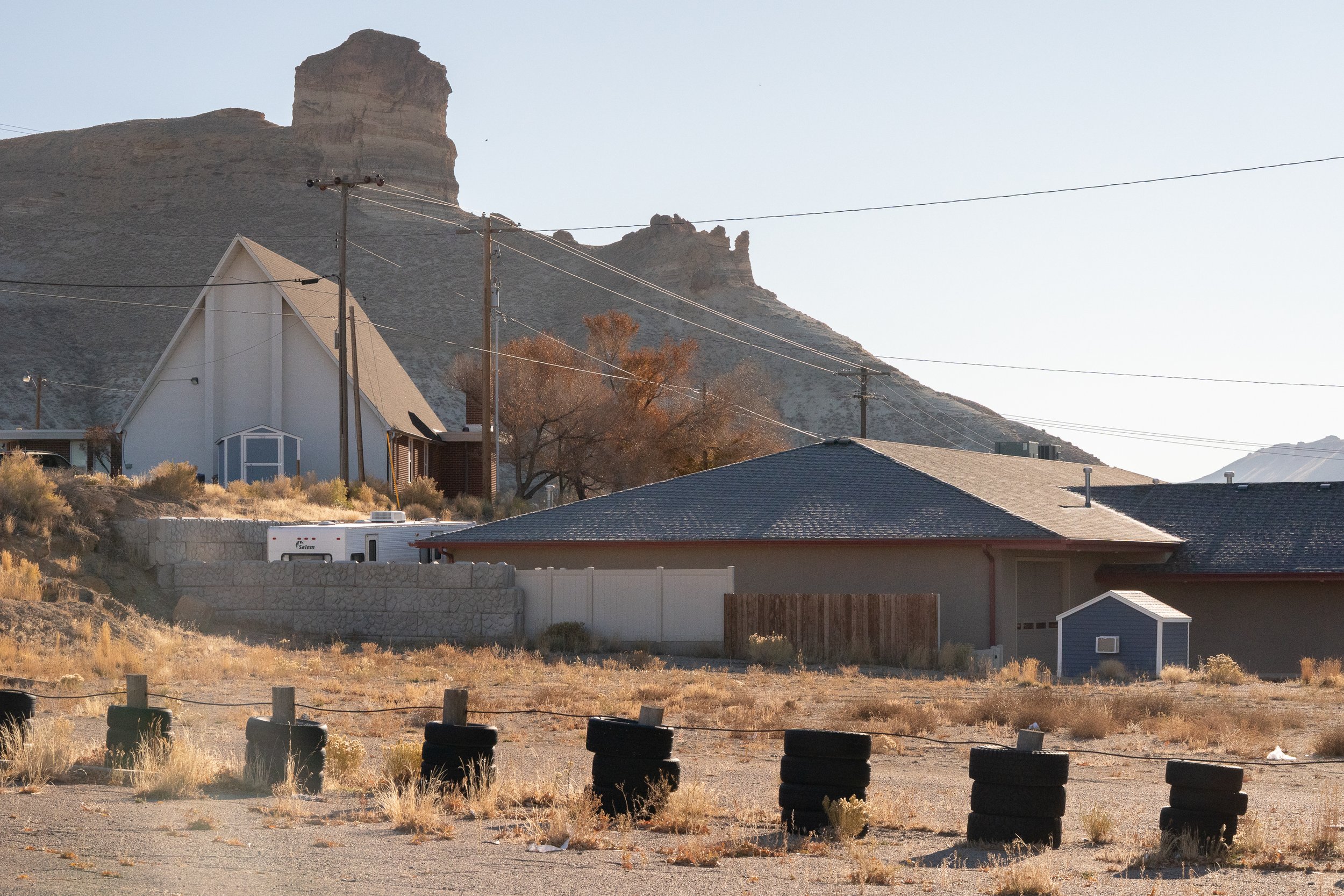
Small Wyoming town with homes and a mountain rising behind them

The mountains rise behind the houses and streets of town.
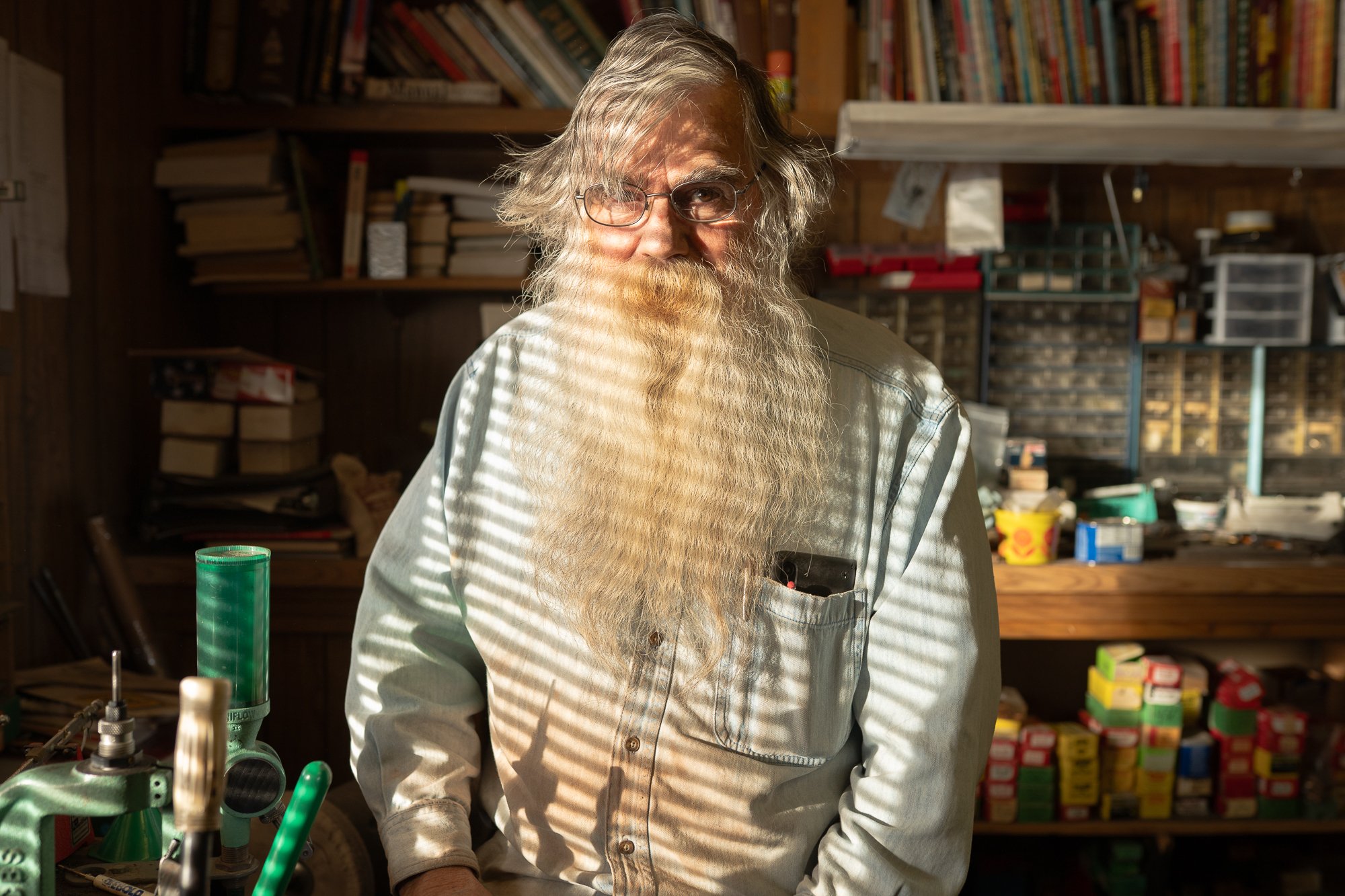
Portrait of a man standing inside a Western workshop in Wyoming

Light from the window adds detail to the portrait.
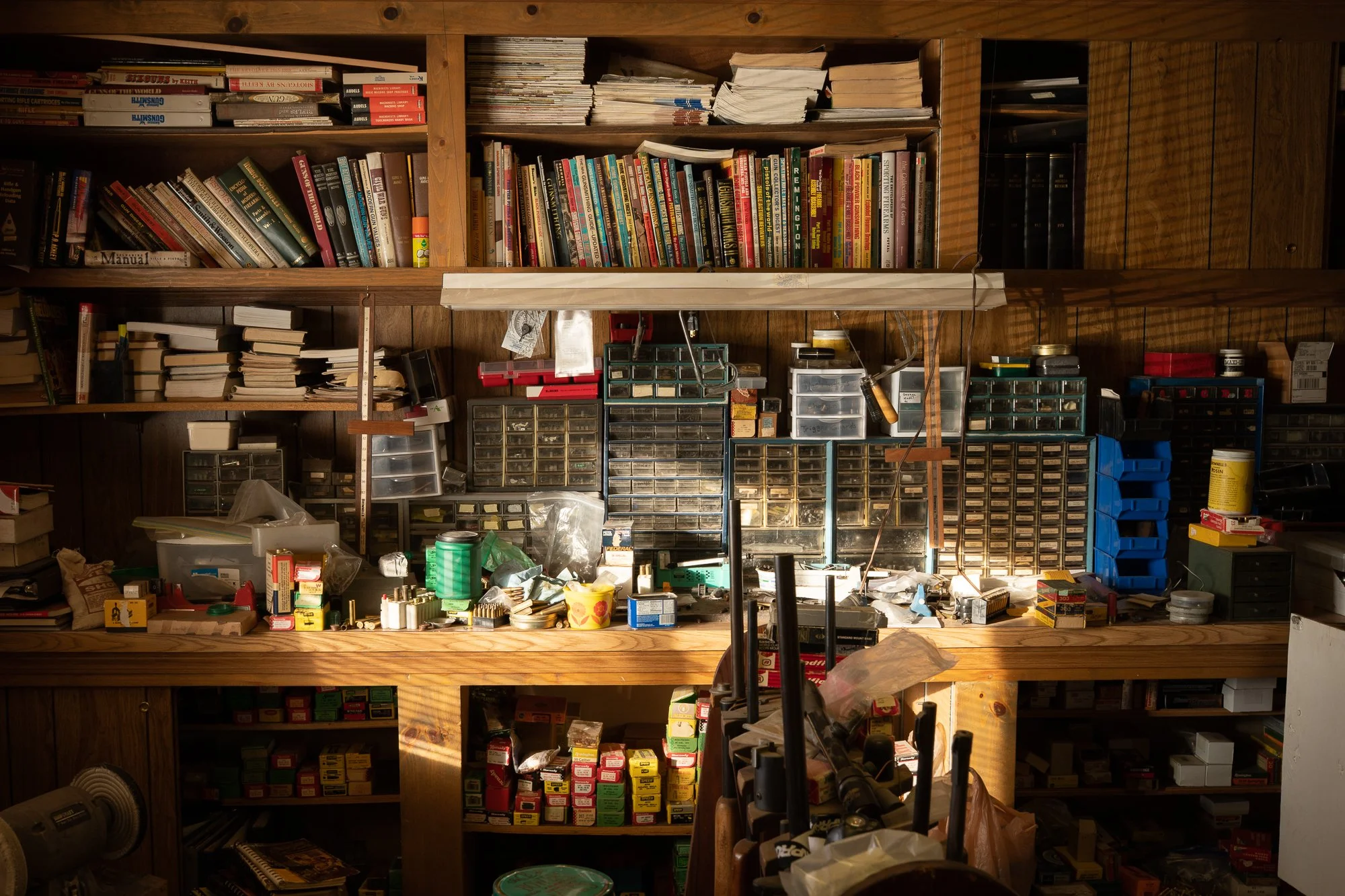
Books tools and supplies on shelves inside a Wyoming ranch workshop

Books, tools, and supplies fill the shelves and workbench of the shop.
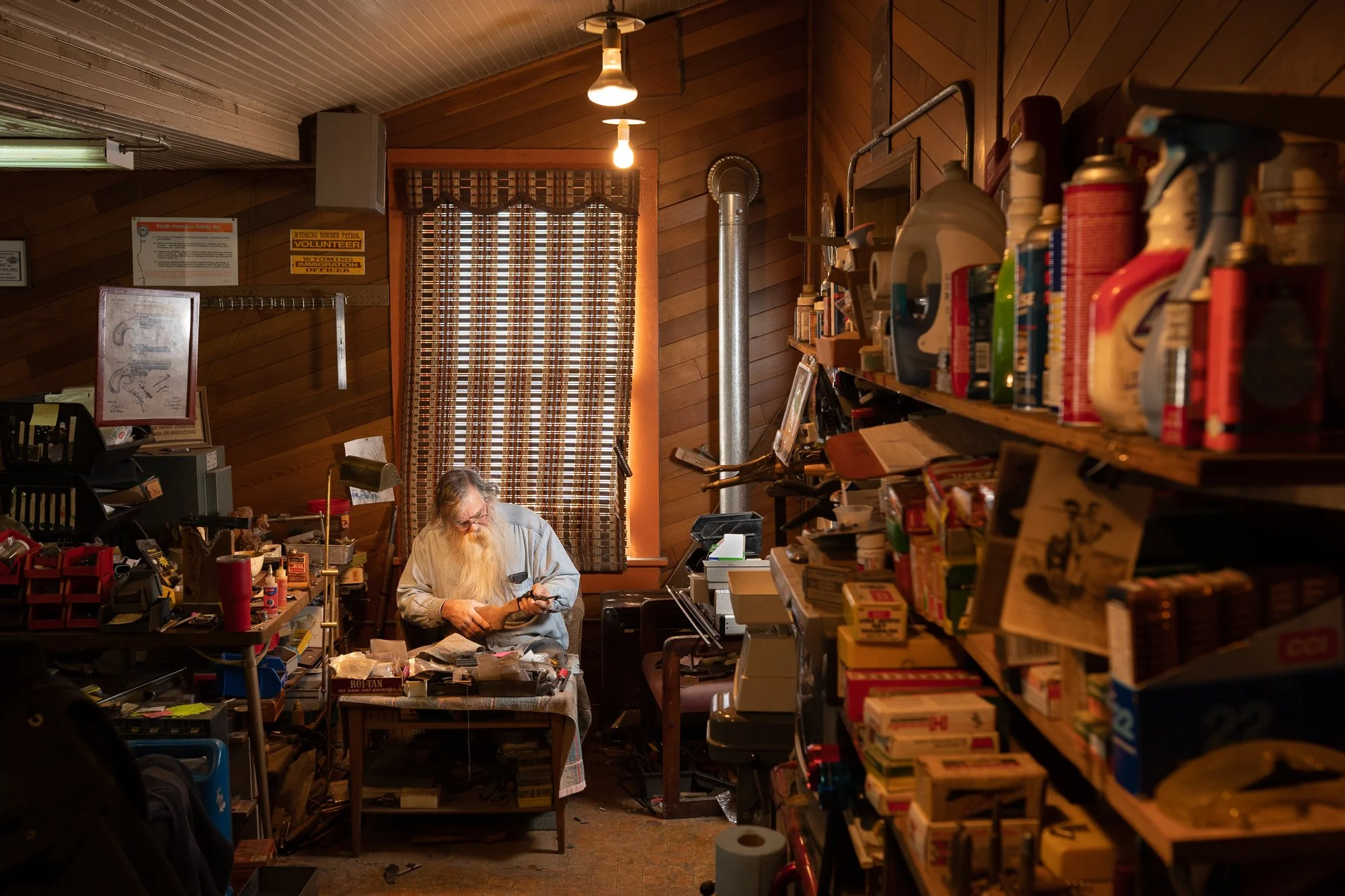
Man working on a rifle at a cluttered workbench in a Wyoming shop

A man works on a rifle at the crowded workbench.
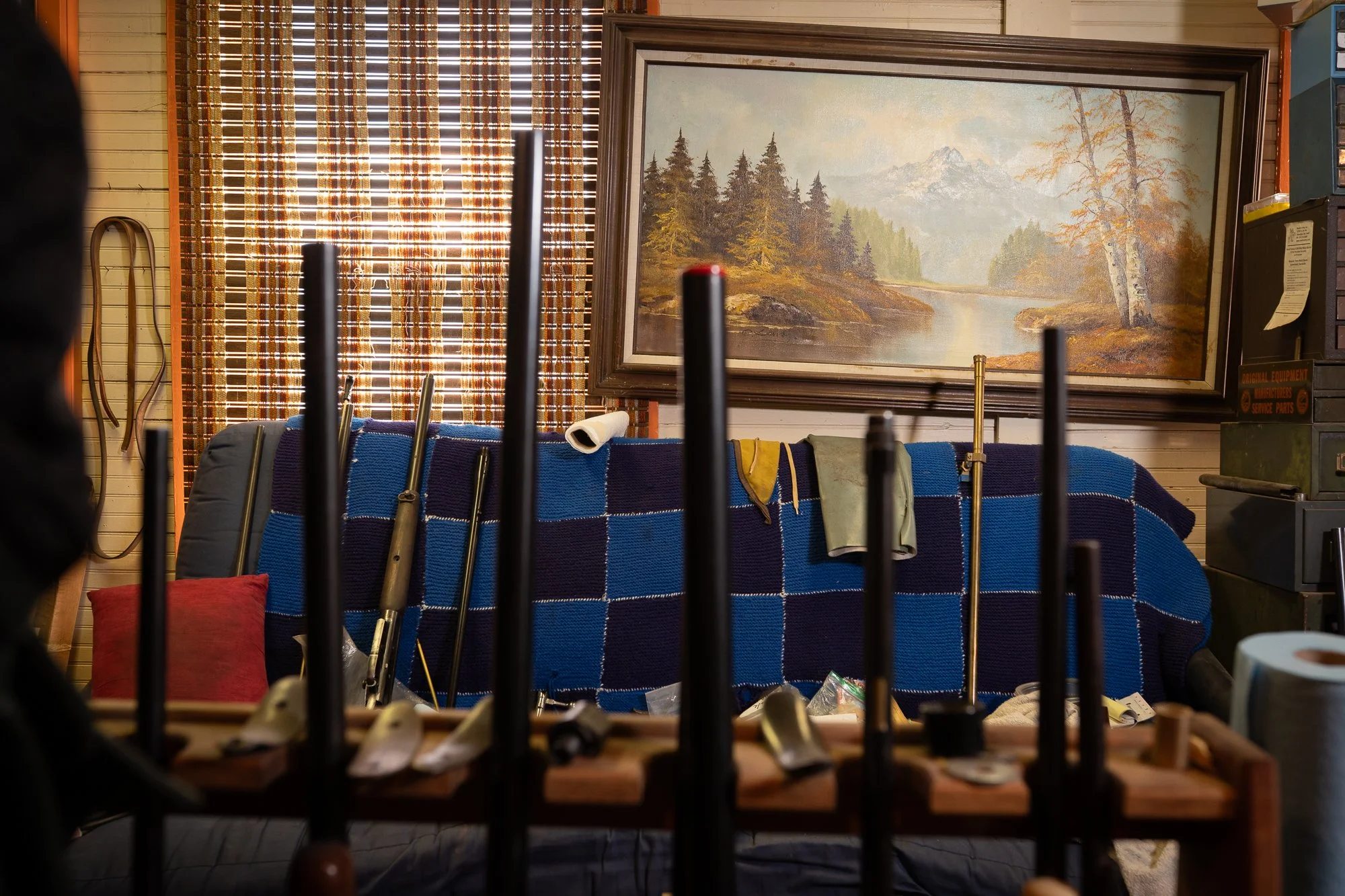
Saddles and Western ranch gear inside a Wyoming ranch building

Saddles and ranch gear fill the interior of the building.

Rodeo Culture in Dubois, Wyoming

Dubois is a small town in western Wyoming with a population of roughly a thousand people. During the summer, Friday nights mean rodeo.

I went there expecting to photograph the rodeo and came away much more interested in everything surrounding it.

Of course there were cowboys, horses, broncs and bulls. But there were also kids running around behind the chutes, families sitting in the stands, competitors talking before their events and all the little interactions happening away from the arena.

Afterward, a lot of the same people ended up at the local bar.

That's where the story became more interesting to me.

Cowboys who had been competing a few hours earlier were drinking, talking and dancing. Rodeo spectators mixed with locals. The distinction between the event and everyday life disappeared.

Those photographs became less about rodeo and more about a small Western community.

That's generally where I want the camera to be.
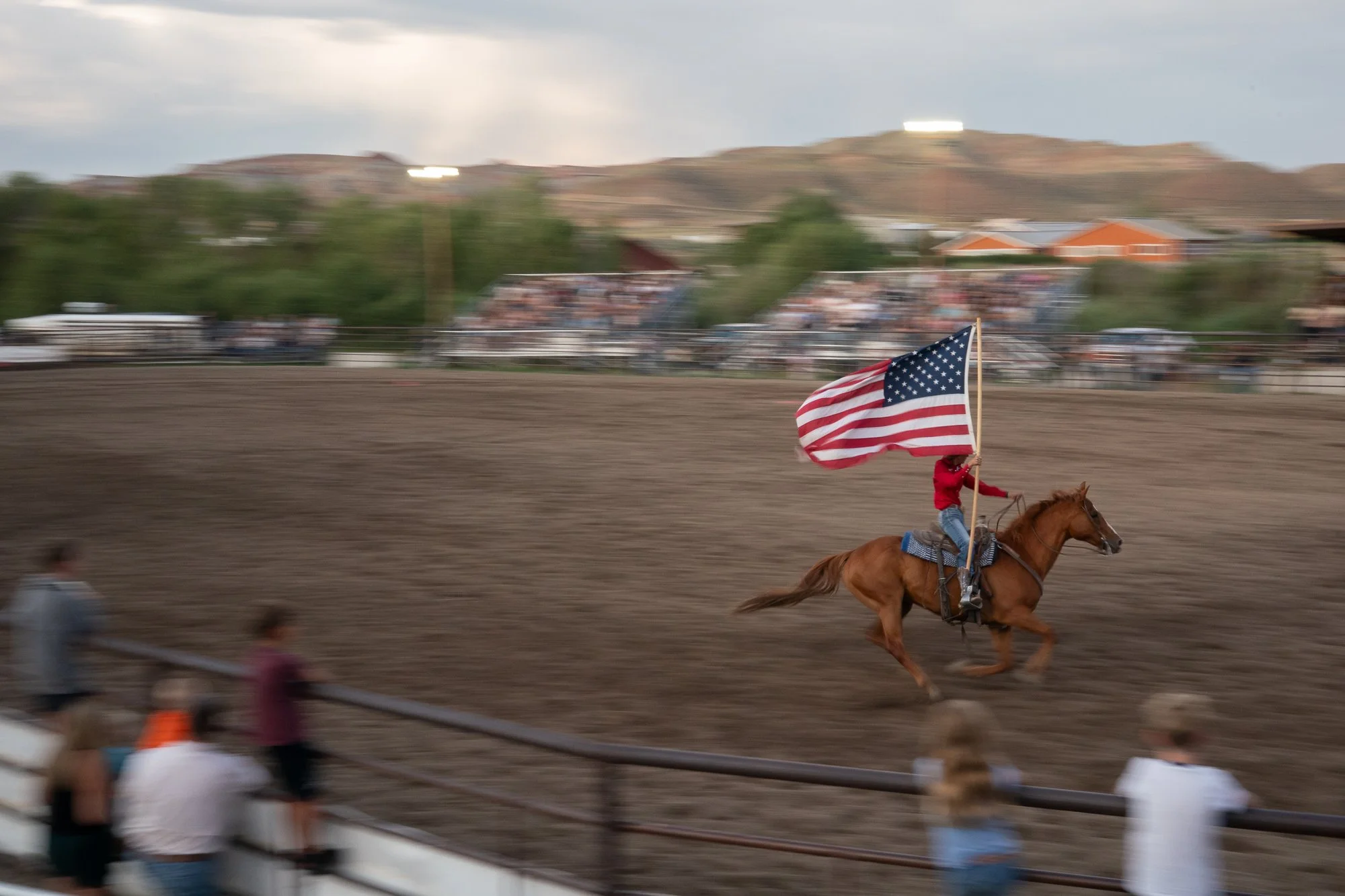
Cowboy on horseback carrying an American flag at a Wyoming rodeo

A cowboy carries an American flag through the rodeo arena.
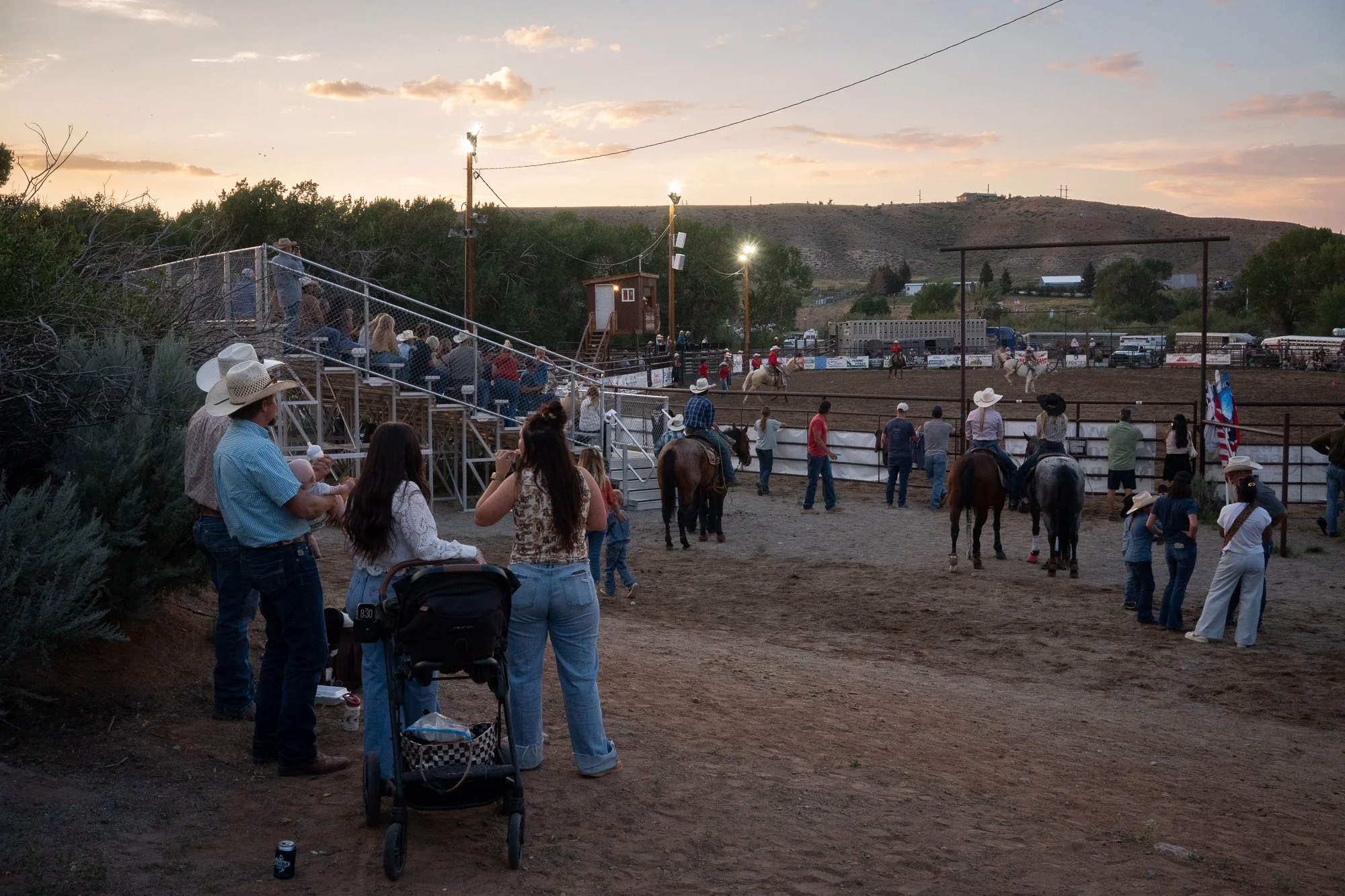
Cowboys and spectators gathered at a Wyoming rodeo in the evening

Cowboys and spectators gather around the rodeo as the evening gets underway.
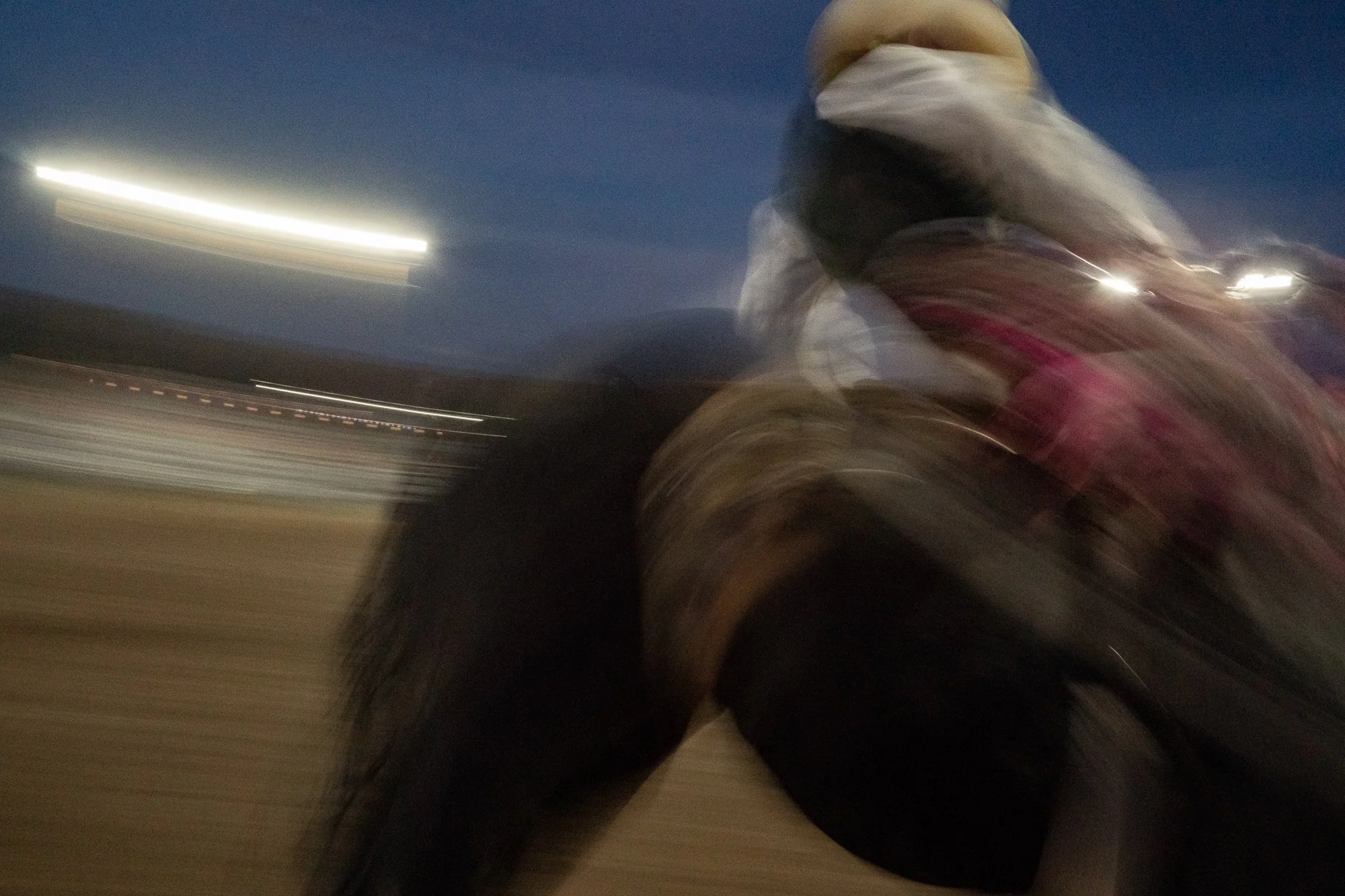
Cowboy riding a horse at a Wyoming rodeo in low light

Horse and rider move through the arena in a blur of motion.
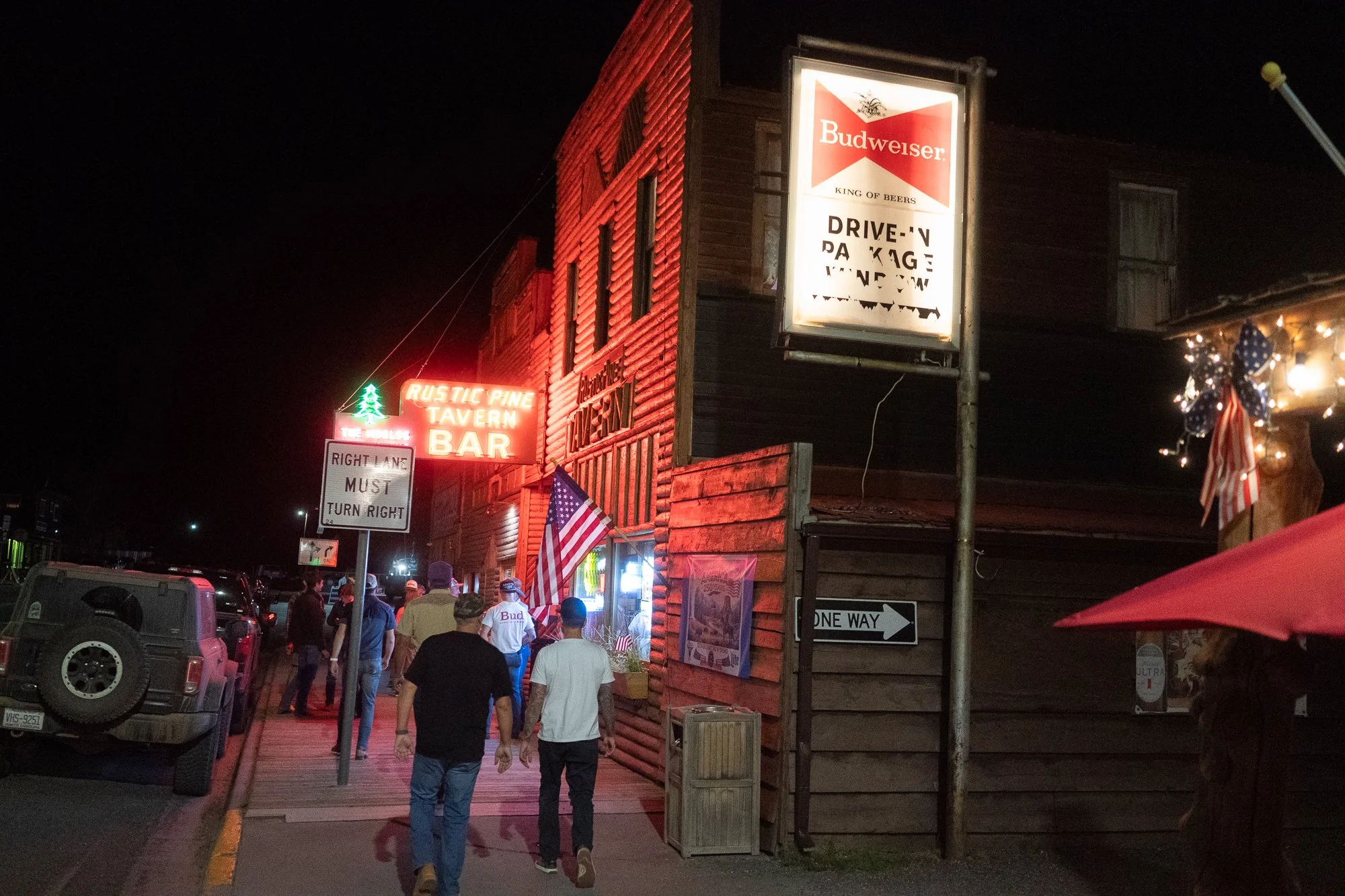
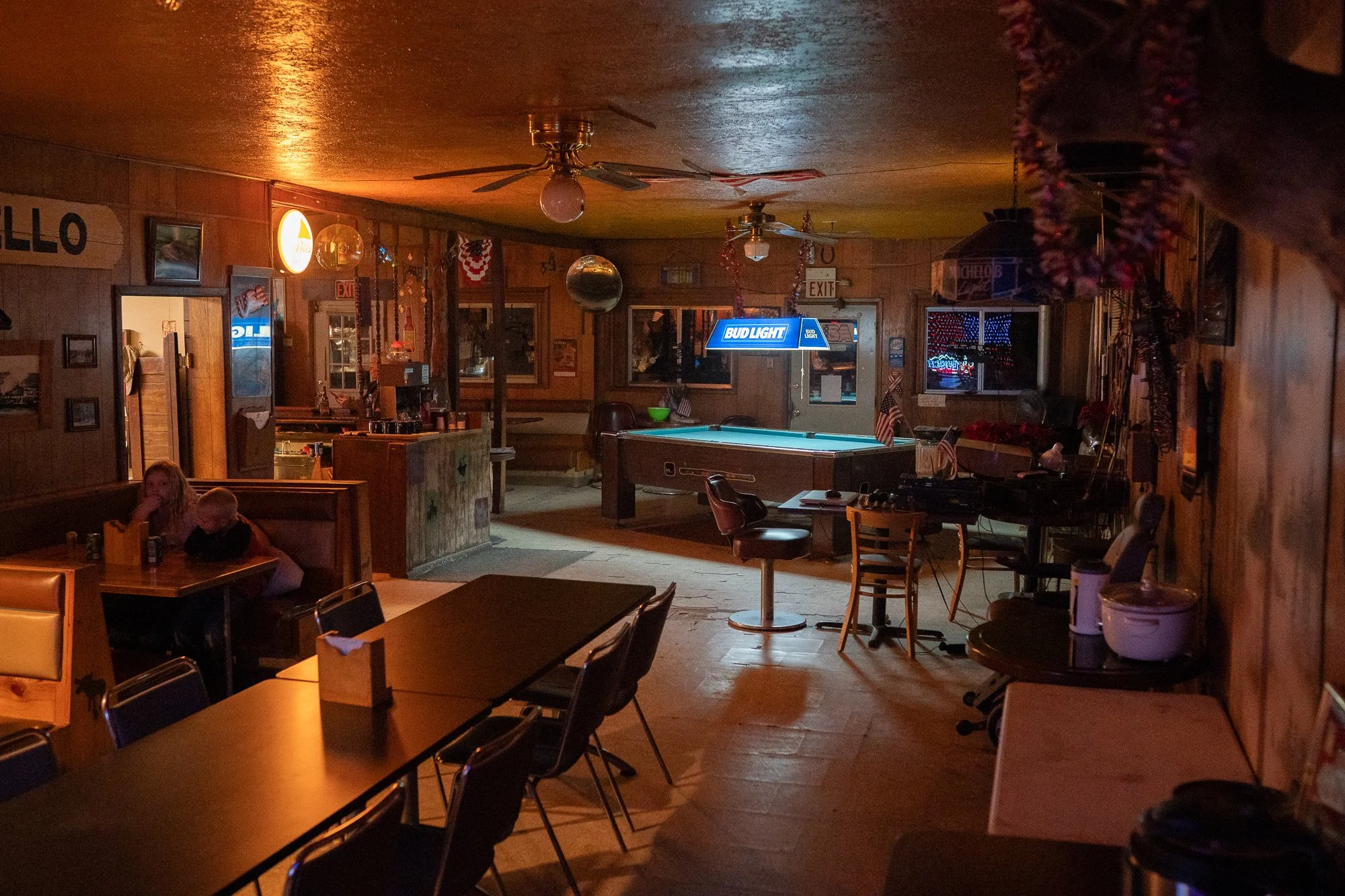
Crowded Western bar at night in a Wyoming town after a rodeo

The night continues at the local bar after the rodeo.
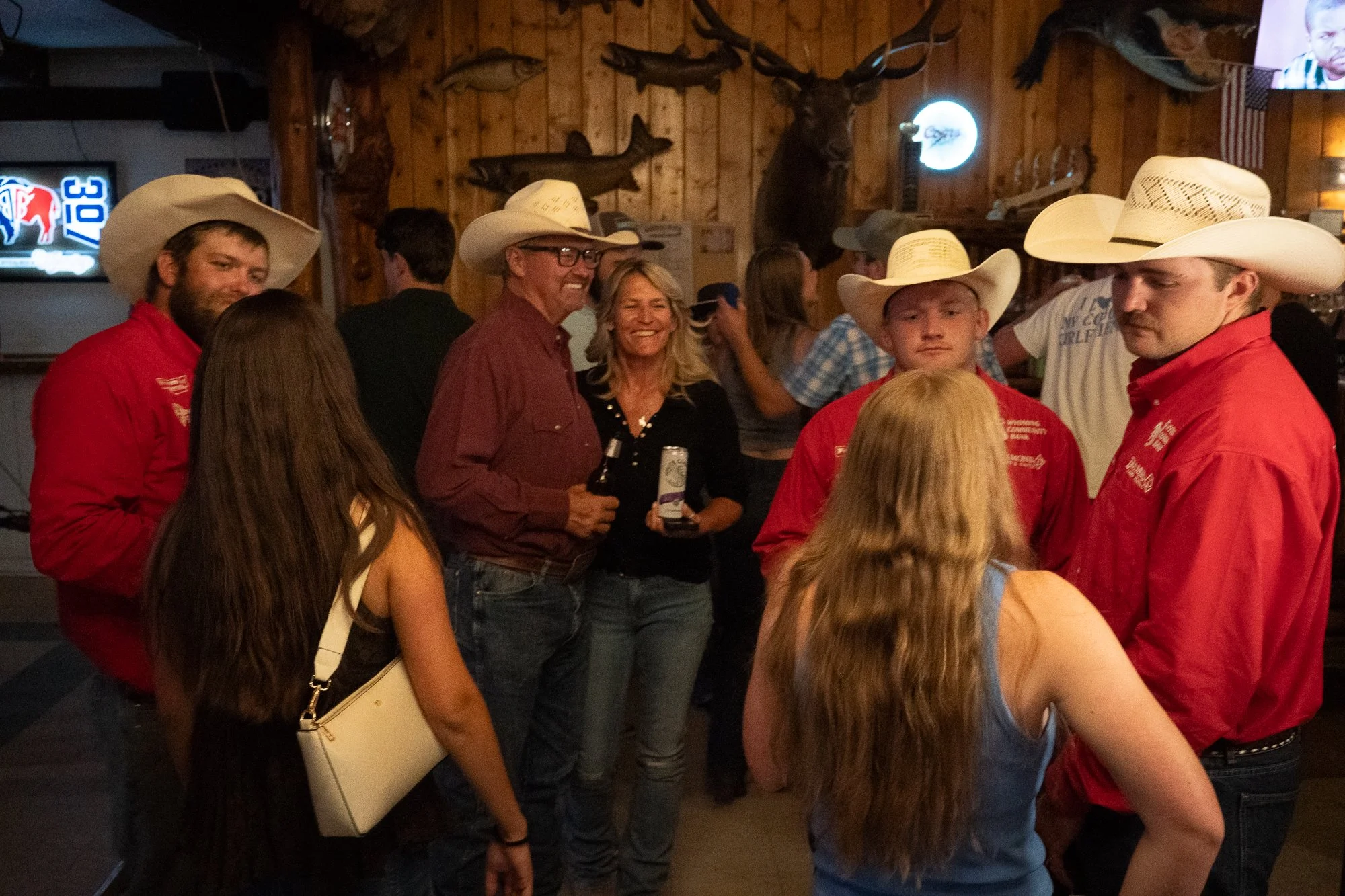
Cowboys and spectators gathered inside a Wyoming bar after a rodeo

Rodeo competitors and spectators mix together inside the bar after the events.
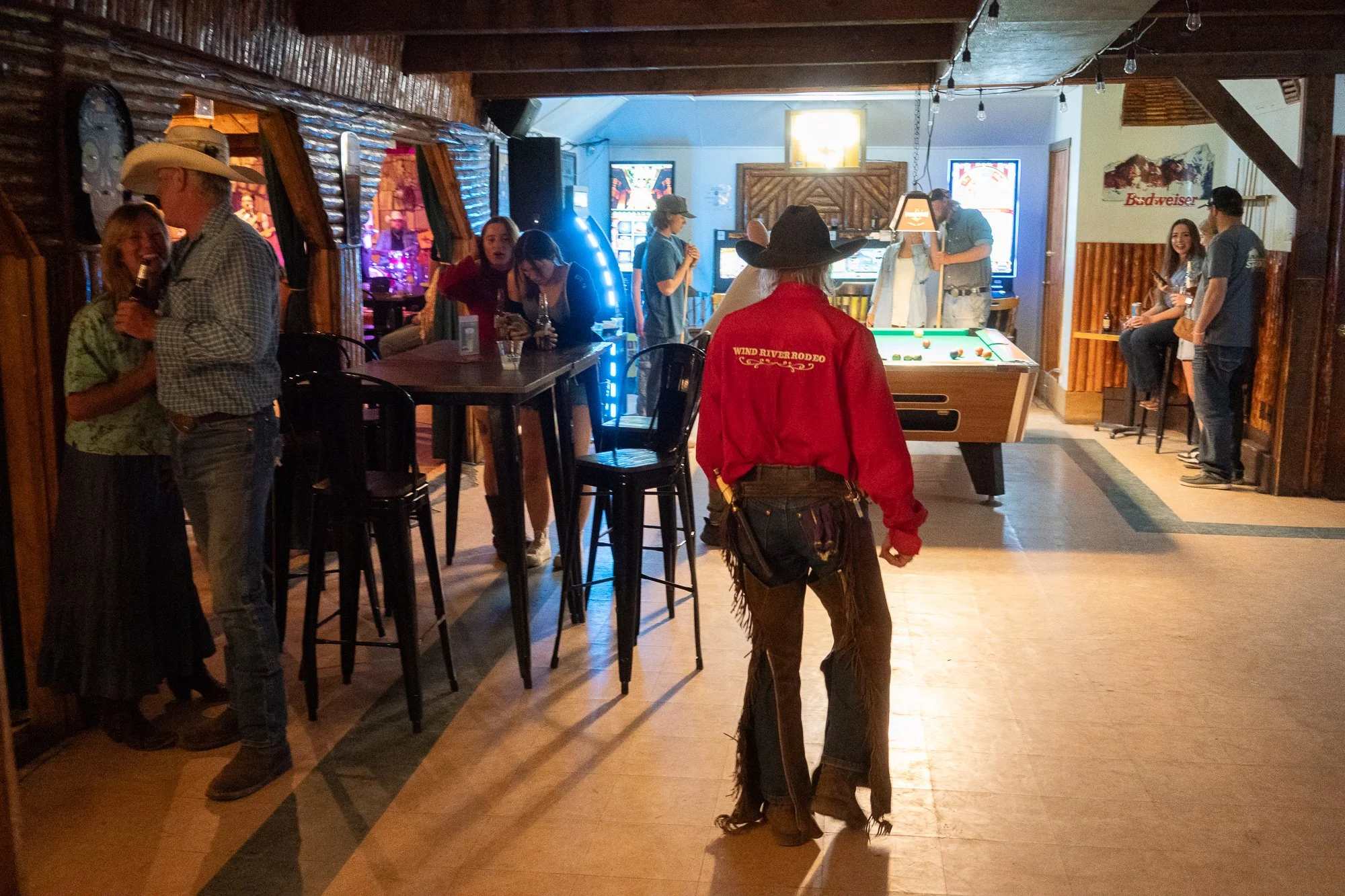
Rodeo participant in Western clothing walking through a Wyoming bar

The rodeo continues into the evening at the local bar.

Wyoming Road Trip Photography

Driving is an enormous part of making this work.

There isn't really another way around it.

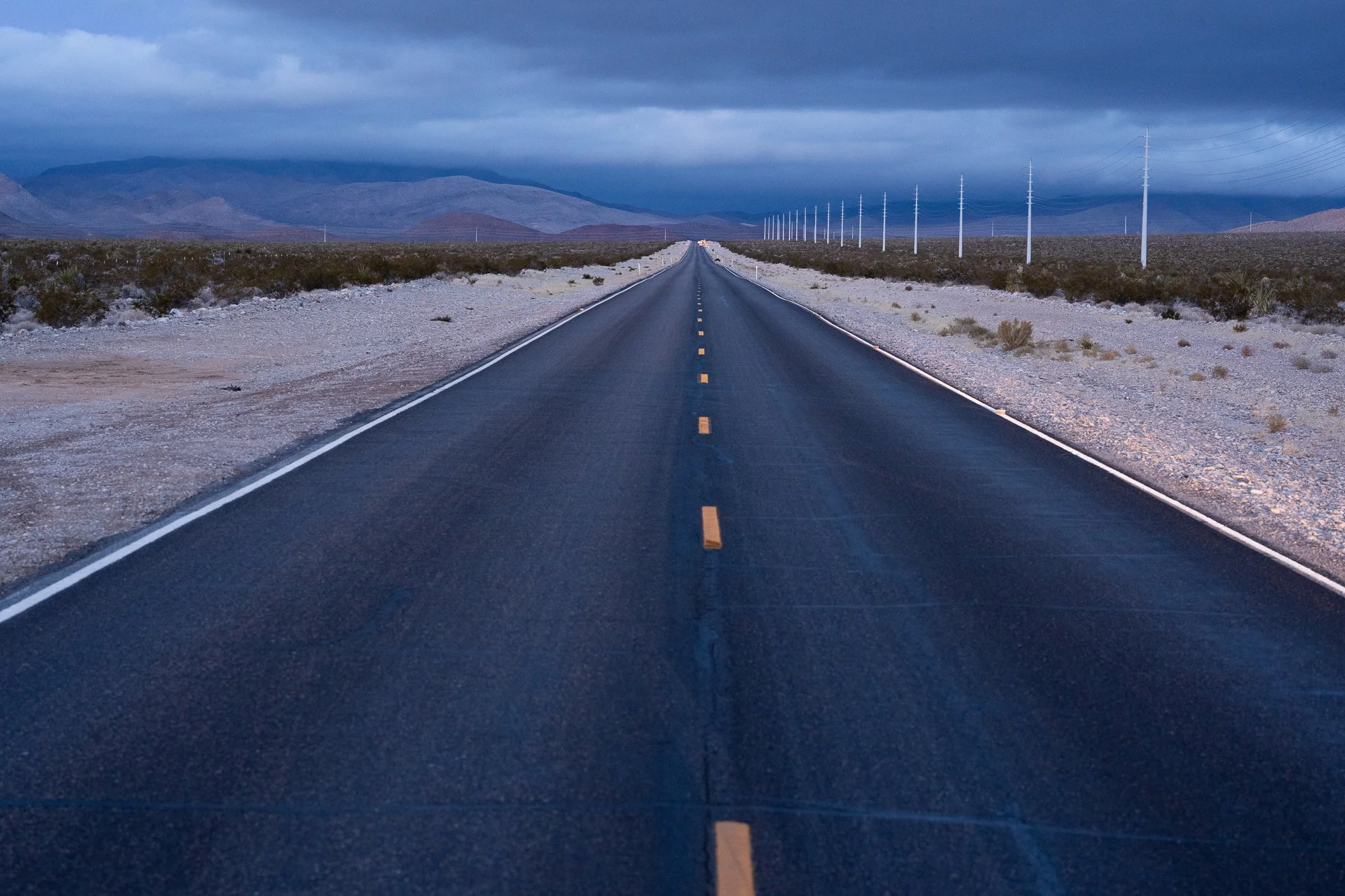
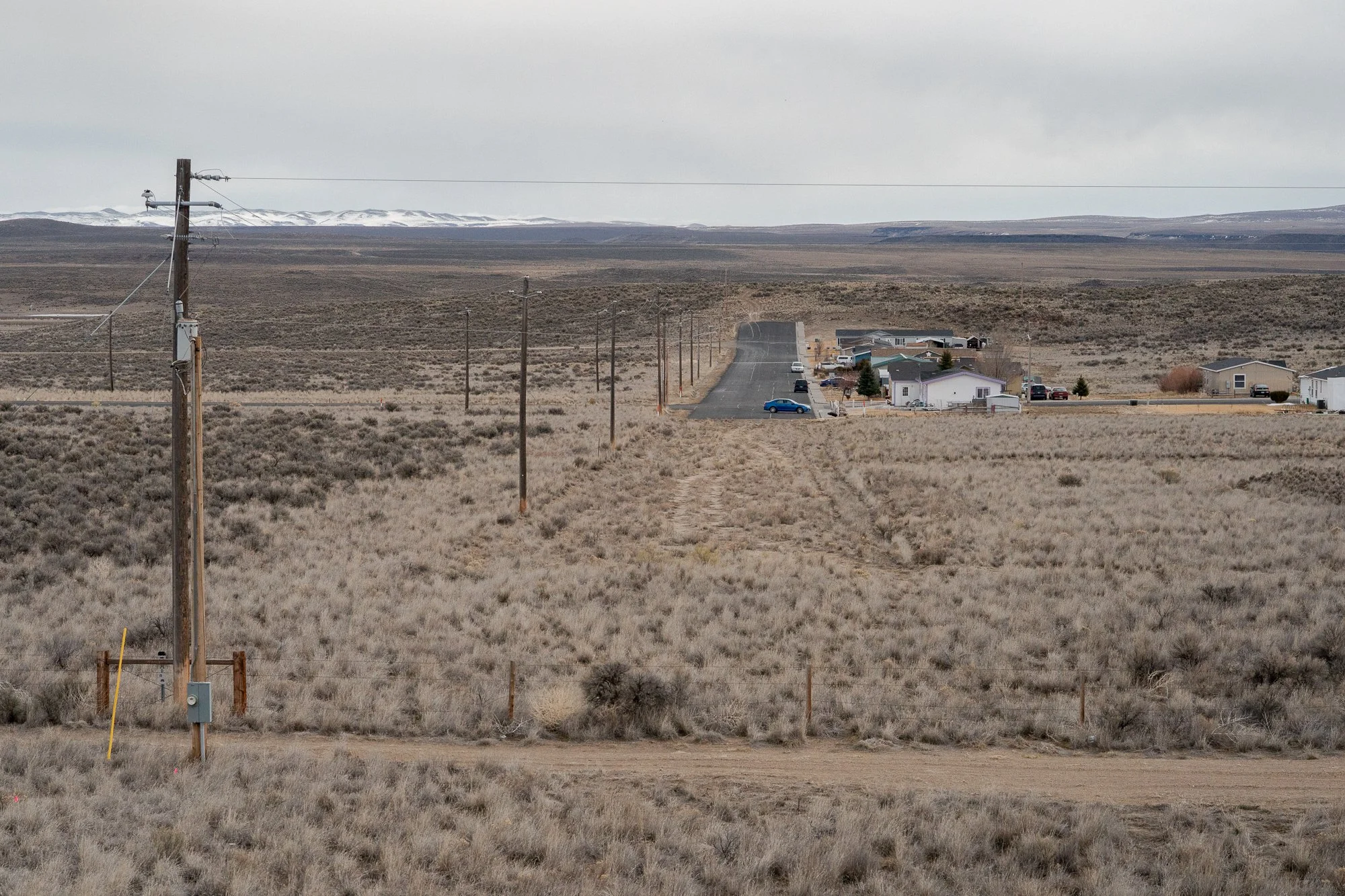
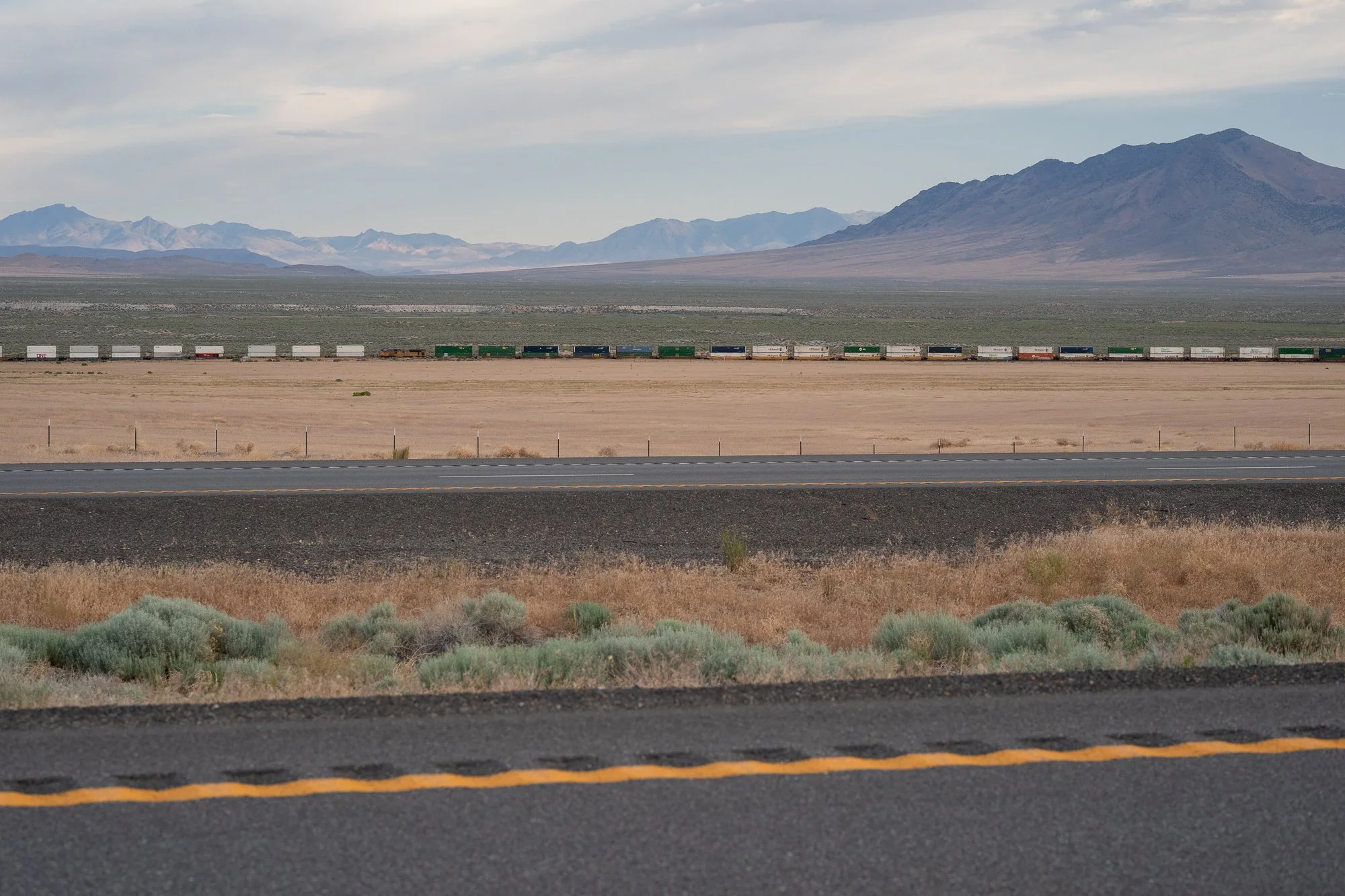
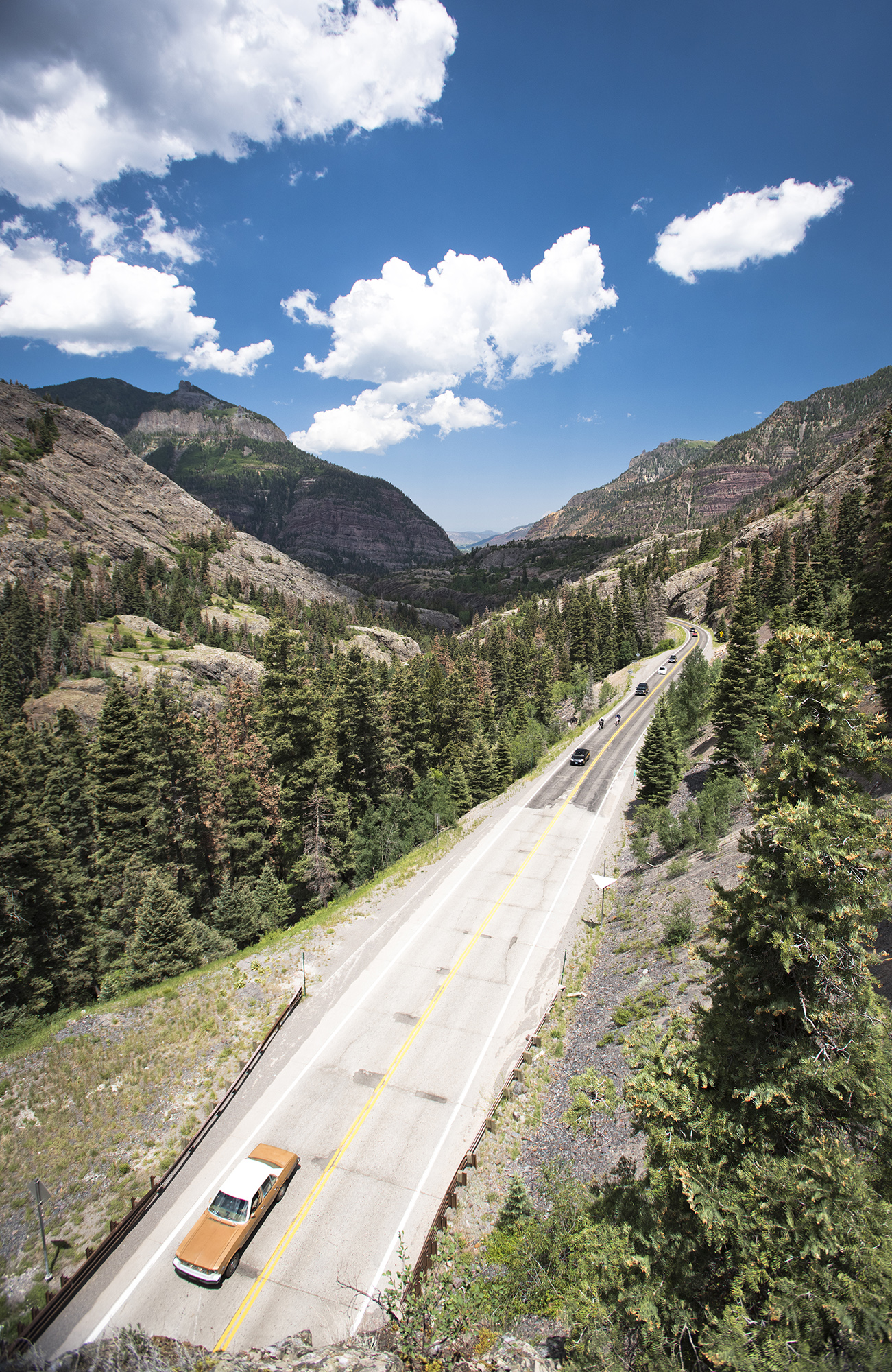
Wyoming rewards that kind of travel because the distances force you to slow down. You can drive for hours through country that initially appears empty before realizing how much is actually there.

Weather systems move across the horizon. Light changes constantly. Pronghorn appear beside the highway. Towns come and go in a few minutes.

Then there's all the human stuff.

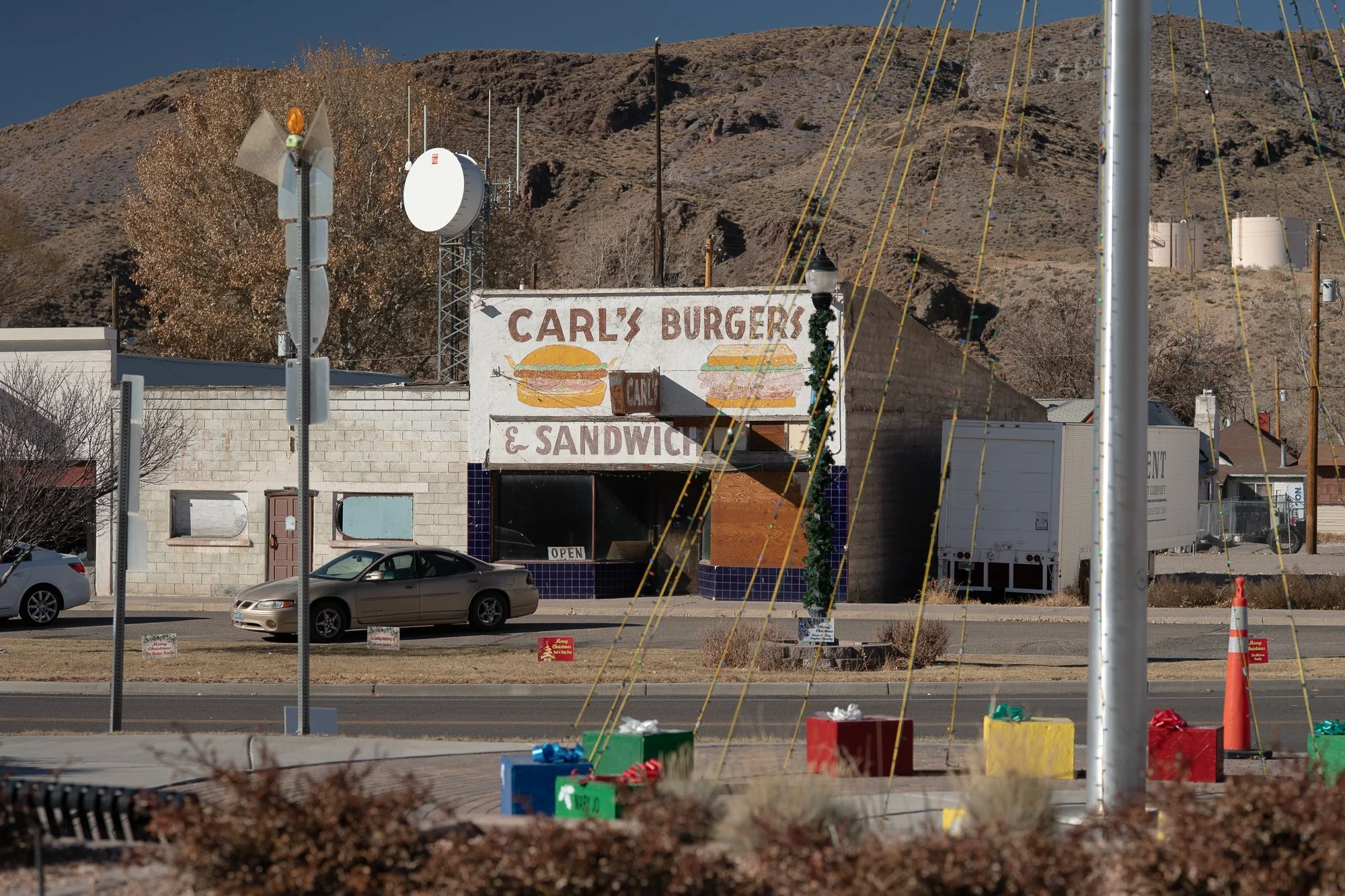
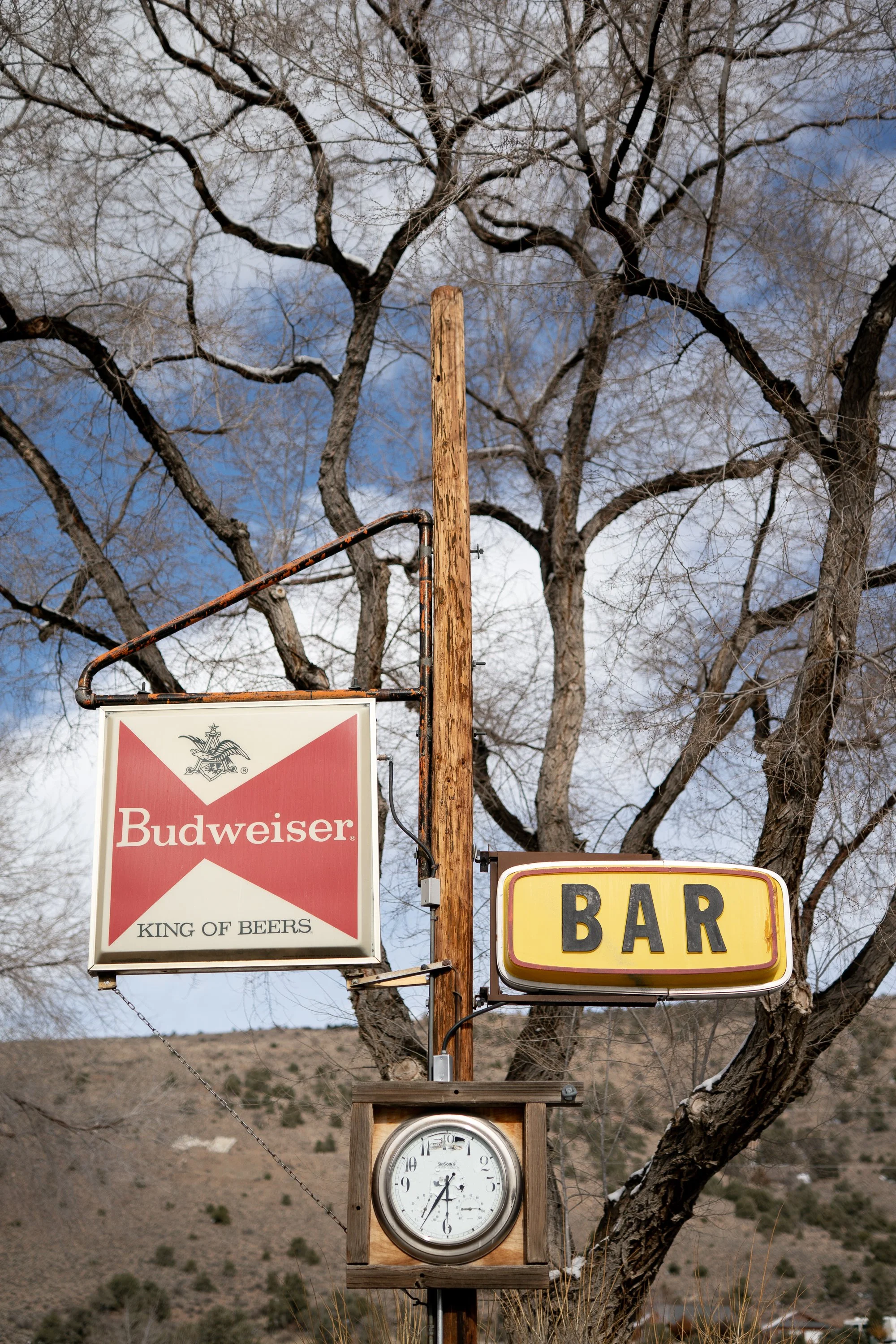
Hand-painted signs. Old bars. Gas stations. Churches. Trucks. Motels. Ranch entrances. Buildings whose original purpose isn't immediately obvious.

I've missed plenty of photographs because I told myself I'd stop on the way back.

I've learned not to do that anymore.

If something makes me look twice, I turn around.

Sometimes it turns into a photograph. Most of the time it doesn't. That's part of the process.

There isn't a checklist for this kind of Wyoming road trip photography. I'm not driving from one famous overlook to another trying to reproduce photographs I've already seen.

The whole point is not knowing what I'm looking for until I see it.
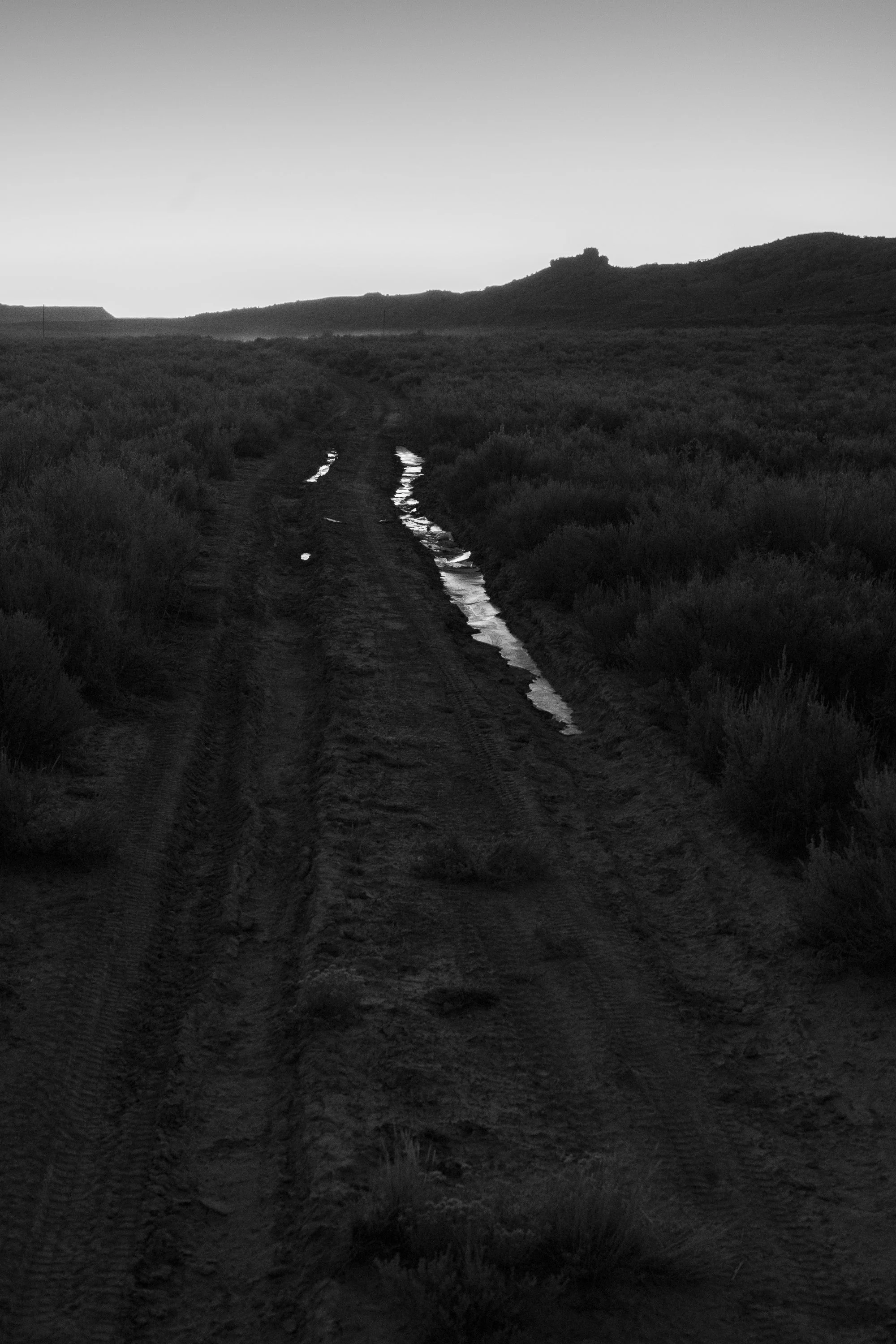
Dirt road winding through sagebrush and open Wyoming countryside

The dirt road cuts through the open country and sagebrush.
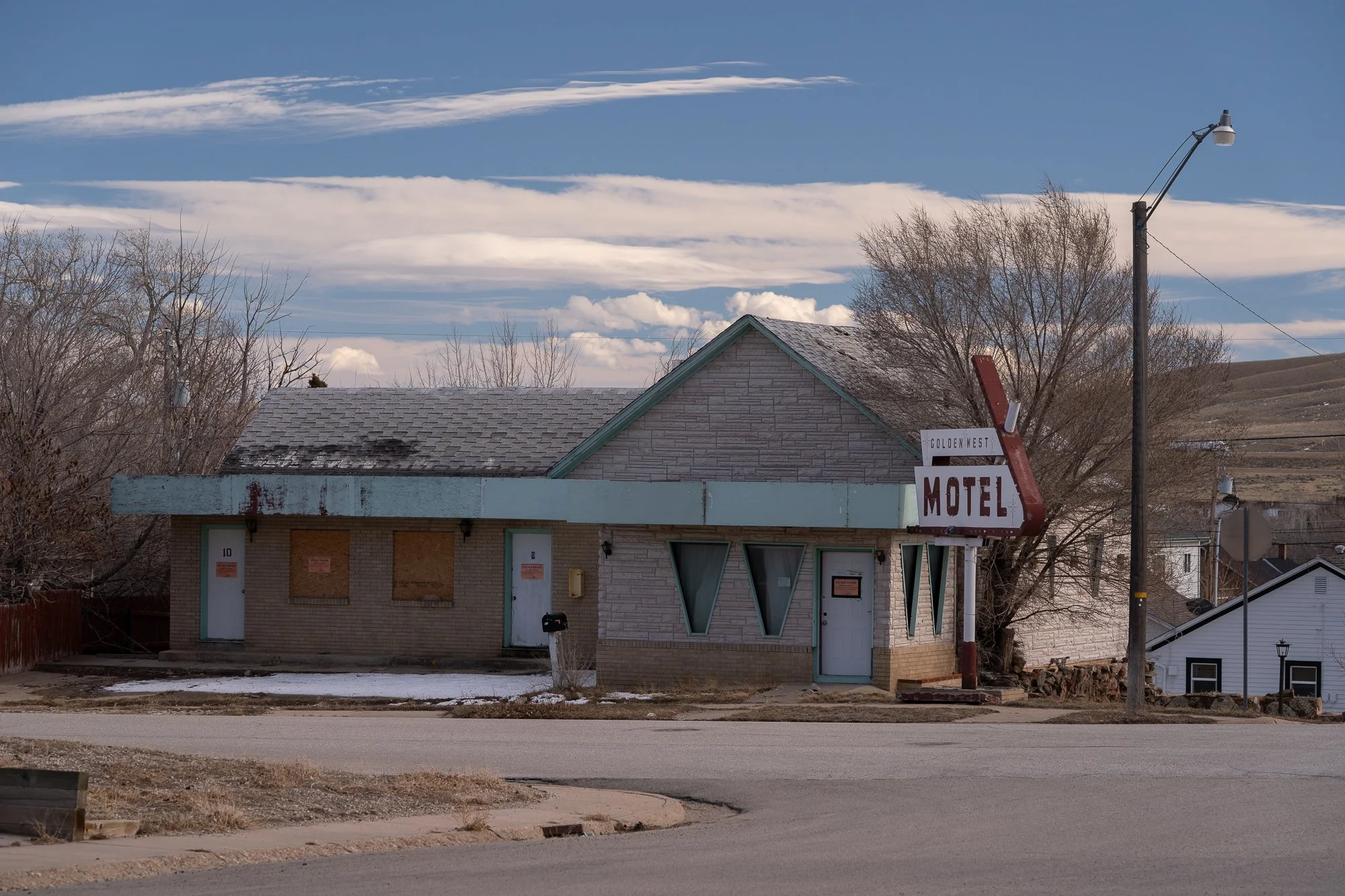
Golden West Motel sign and weathered building in a Wyoming town

Mountains rise behind the Golden West Motel and its roadside sign.
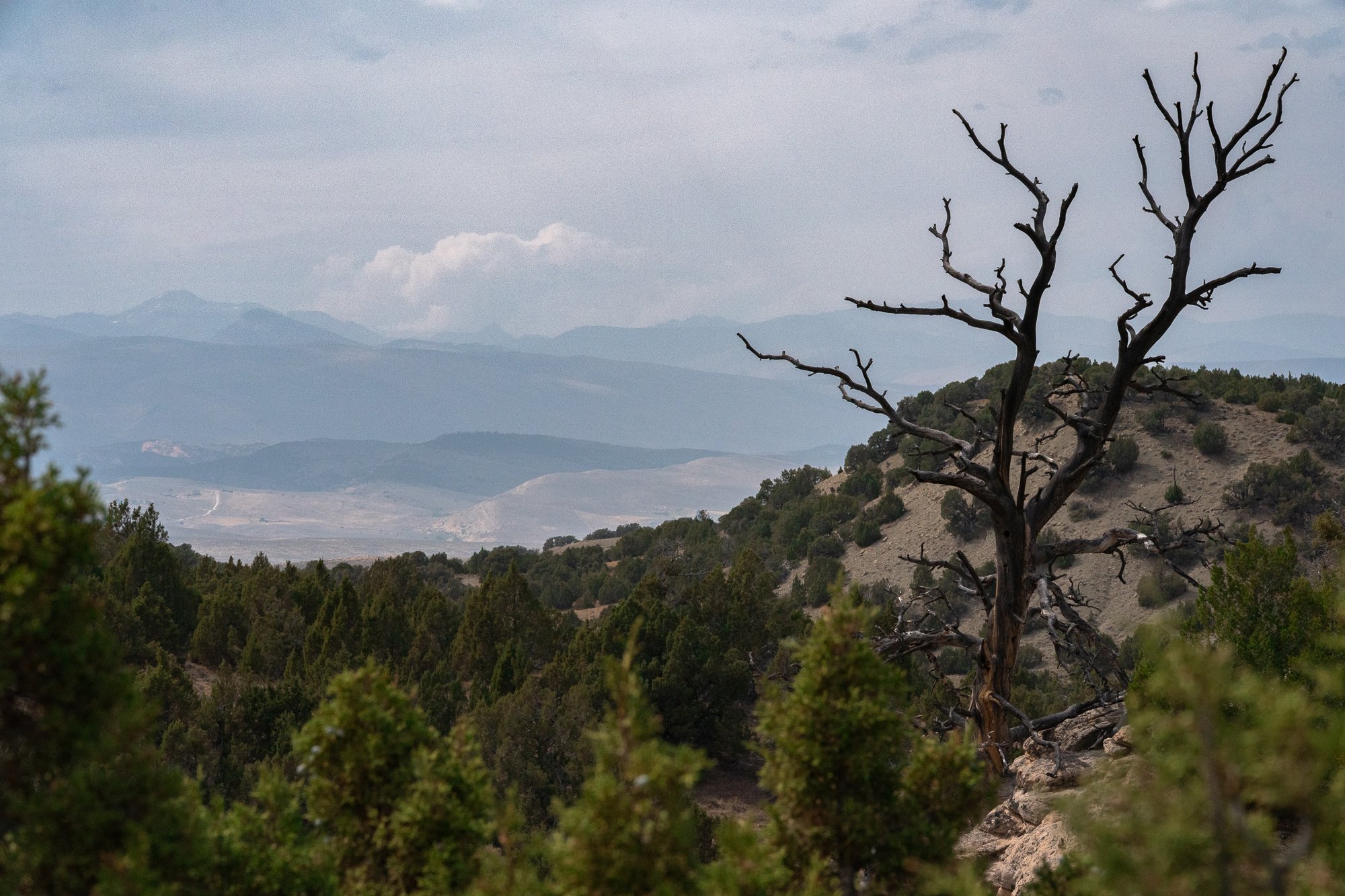
Open Wyoming landscape with a mountain ridge and lone tree

Open country and scattered trees stretch toward the mountains.
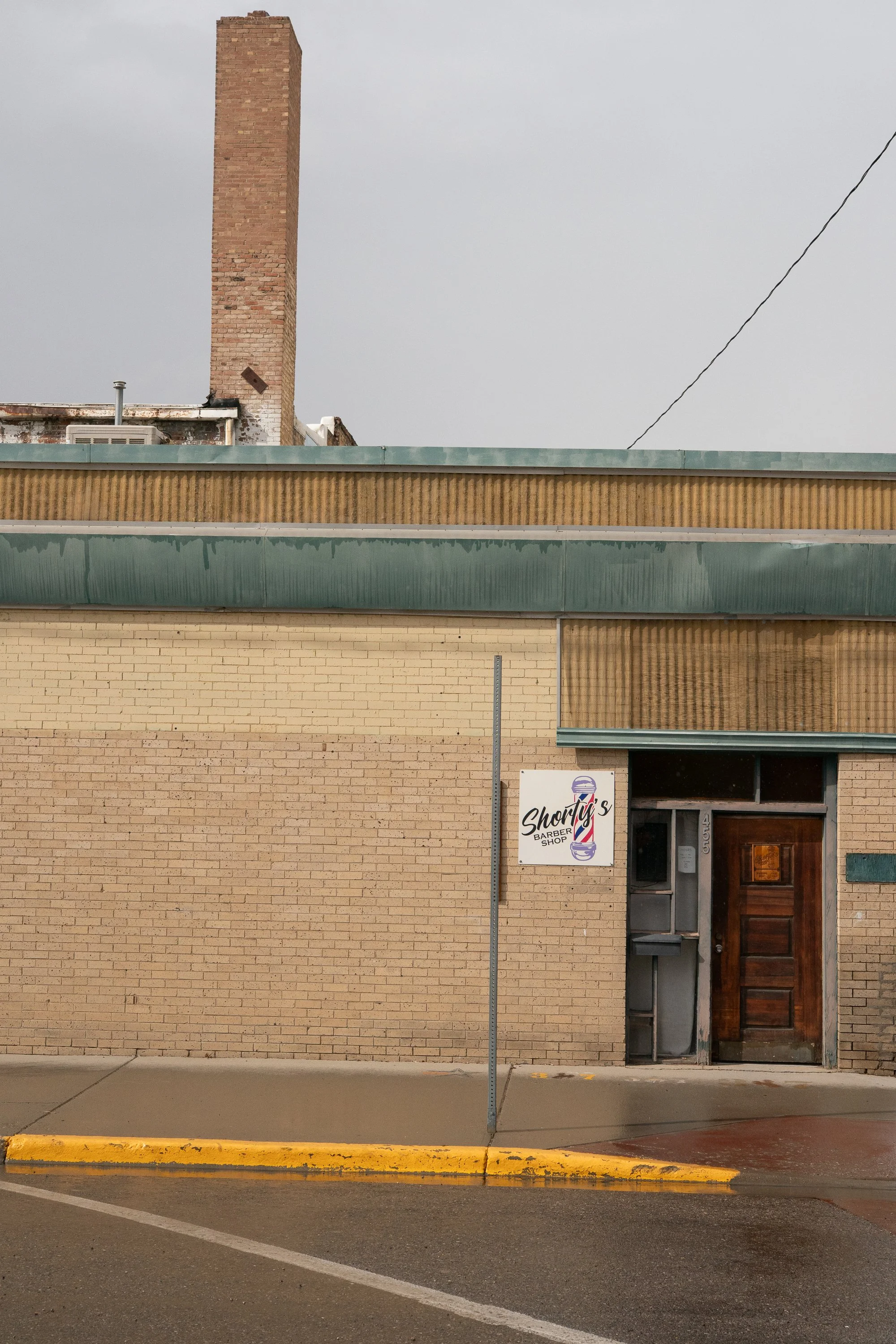
Weathered brick storefront with chimney and entrance in Wyoming

Weathered brick and an old storefront show the age of the building.
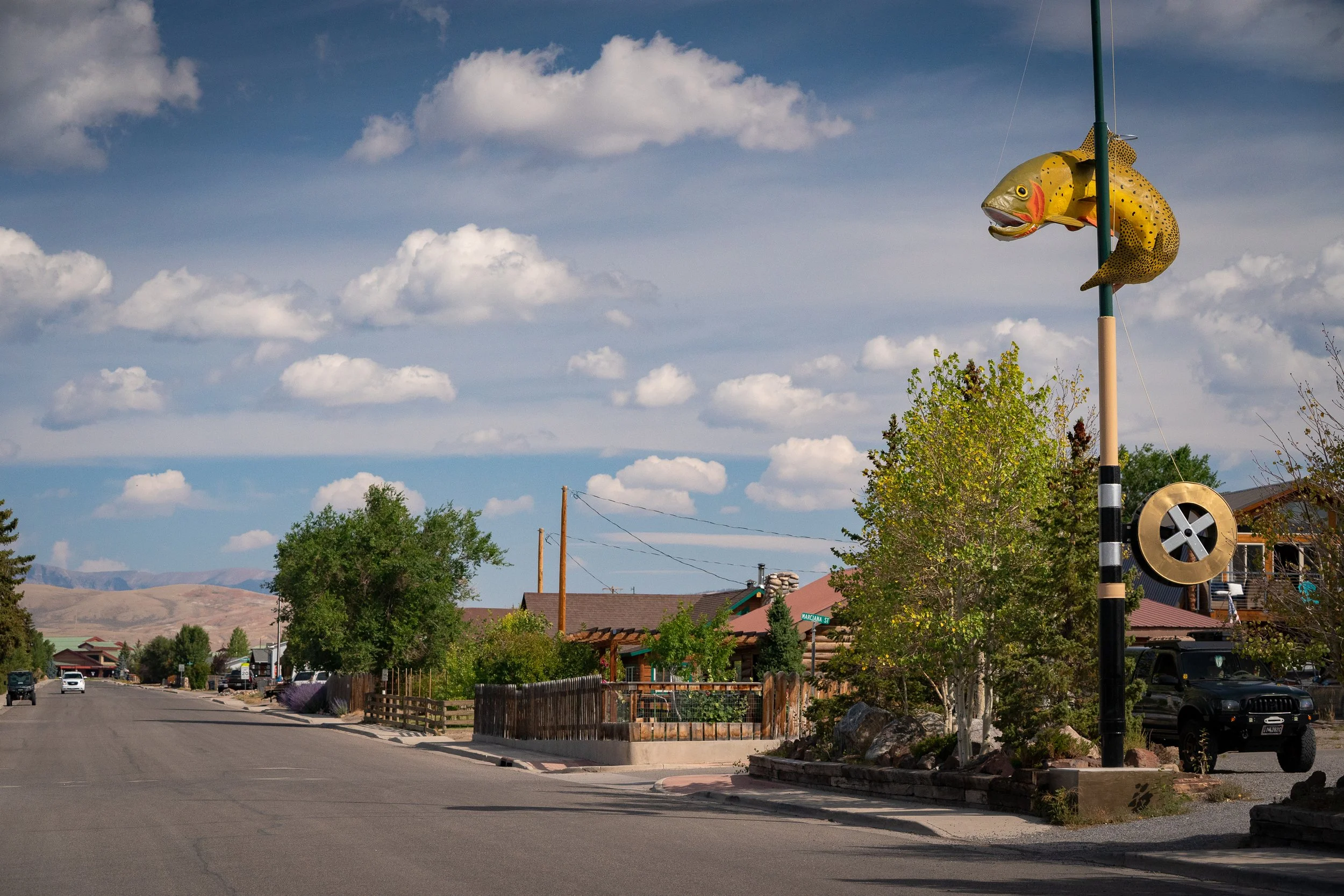
Fish shaped sign above a street in a small Wyoming town

A fish-shaped sign adds another unexpected detail to a small Wyoming town.

Why I Keep Photographing Wyoming

The West has changed enormously, and it continues to change.

That's part of the reason I feel an urgency to keep photographing it.

I'm not interested in pretending Wyoming is frozen in some earlier era. It isn't. New houses go up. Old businesses disappear. Ranches change hands. Towns grow. People leave and other people arrive.

At the same time, there are aspects of life here that remain closely connected to the state's history.

People still make their living raising cattle. Cowboys still spend long days horseback. Small-town rodeos still bring communities together on summer nights. There are still roads where you can drive a long time without seeing another car.

The tension between those things interests me.

Photography can't preserve a place, but it can preserve evidence of what it looked and felt like at a particular moment.

That's enough reason for me to keep going back.

There will always be another road I haven't driven, another ranch I haven't visited, another town I've passed through too quickly.

And probably another reason to turn the truck around.
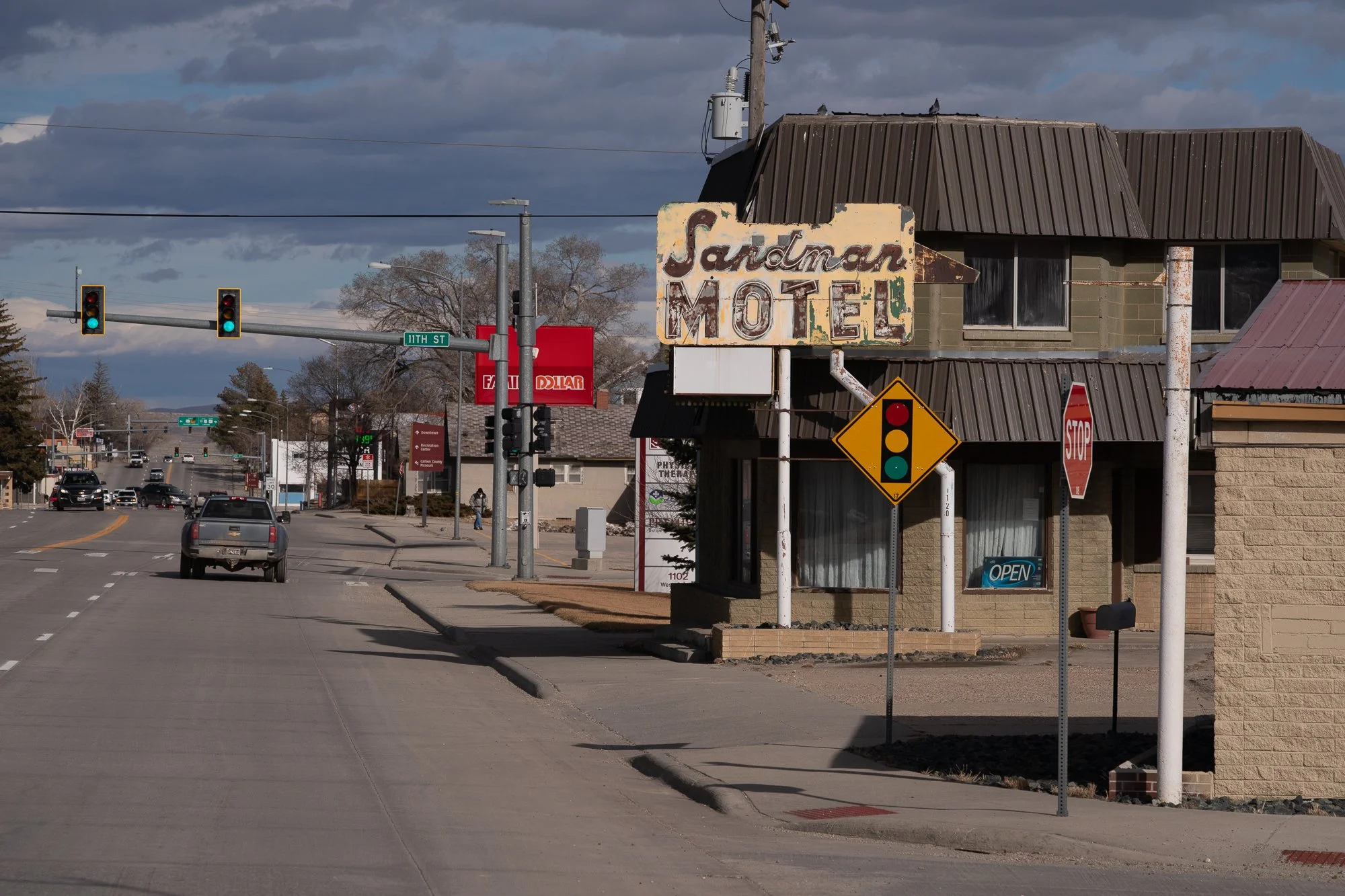
Sandman Motel sign and storefront along a Wyoming street

The Sandman Motel sign stands beside the road in town.
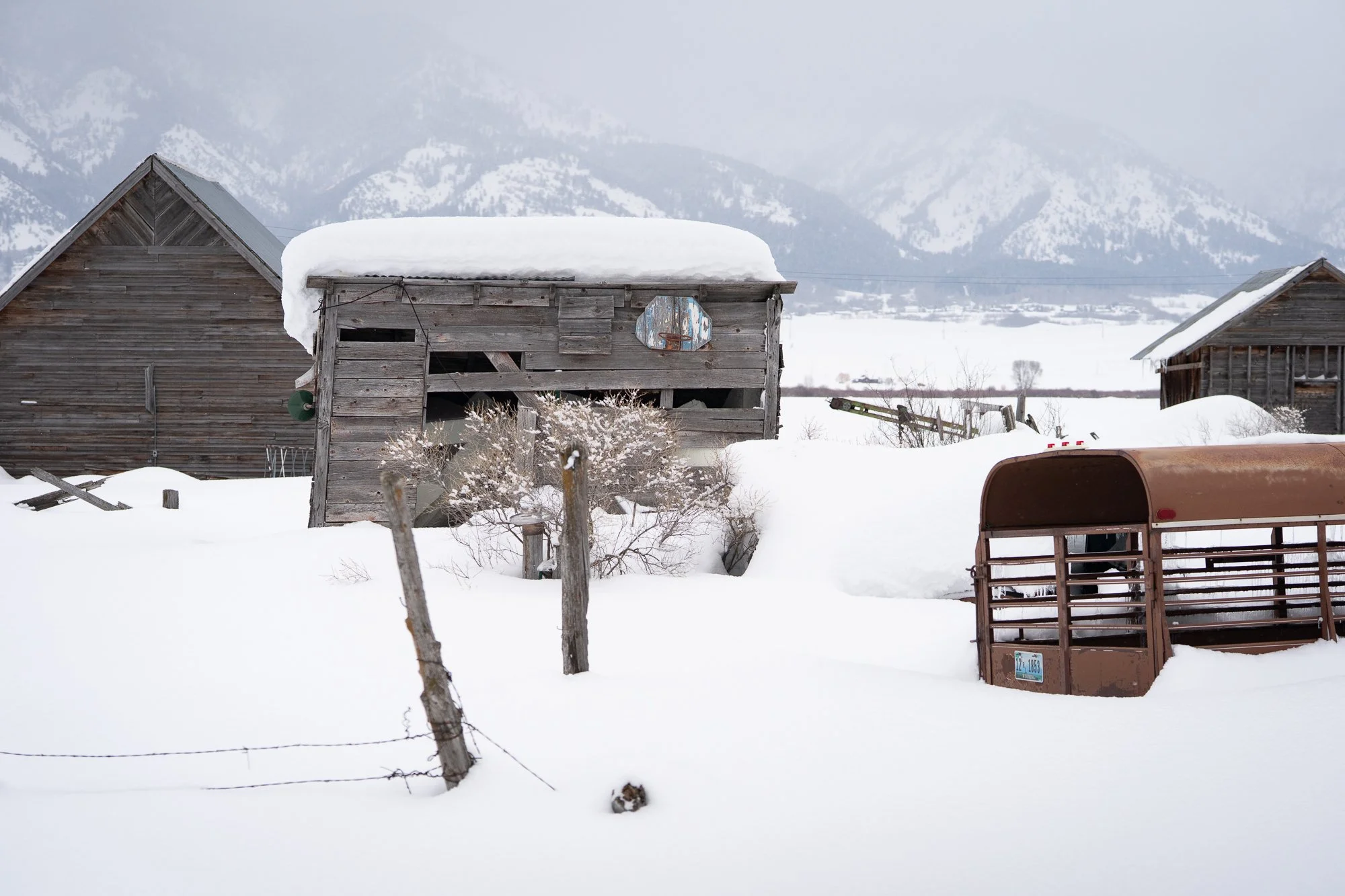
Snow covered ranch buildings and livestock trailer beneath Wyoming mountains

Ranch buildings and a livestock trailer sit in the snow below the mountains.
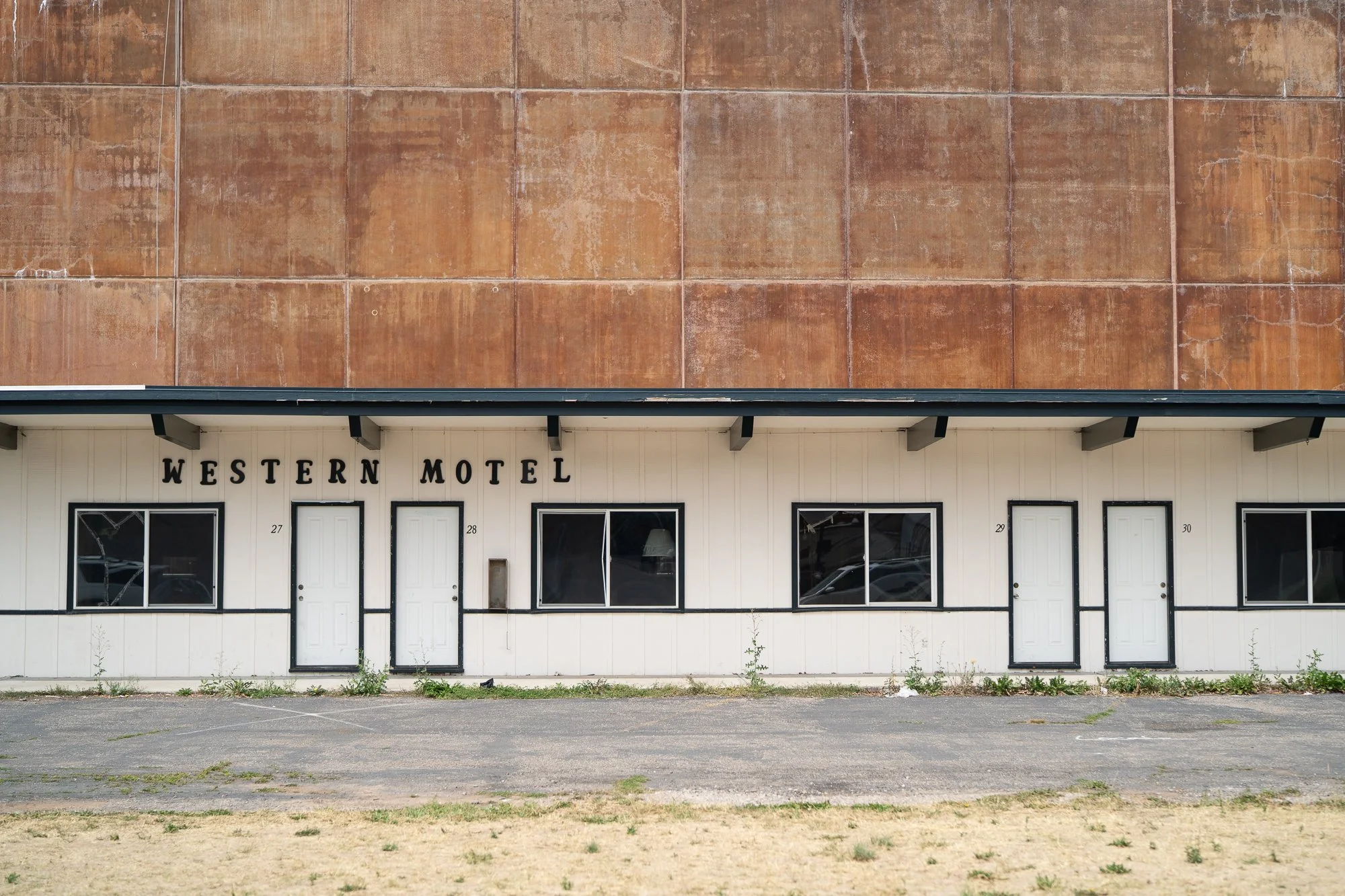
Western Motel building and sign in a small Wyoming town

The Western Motel sits along the road beneath the rocky cliffs.
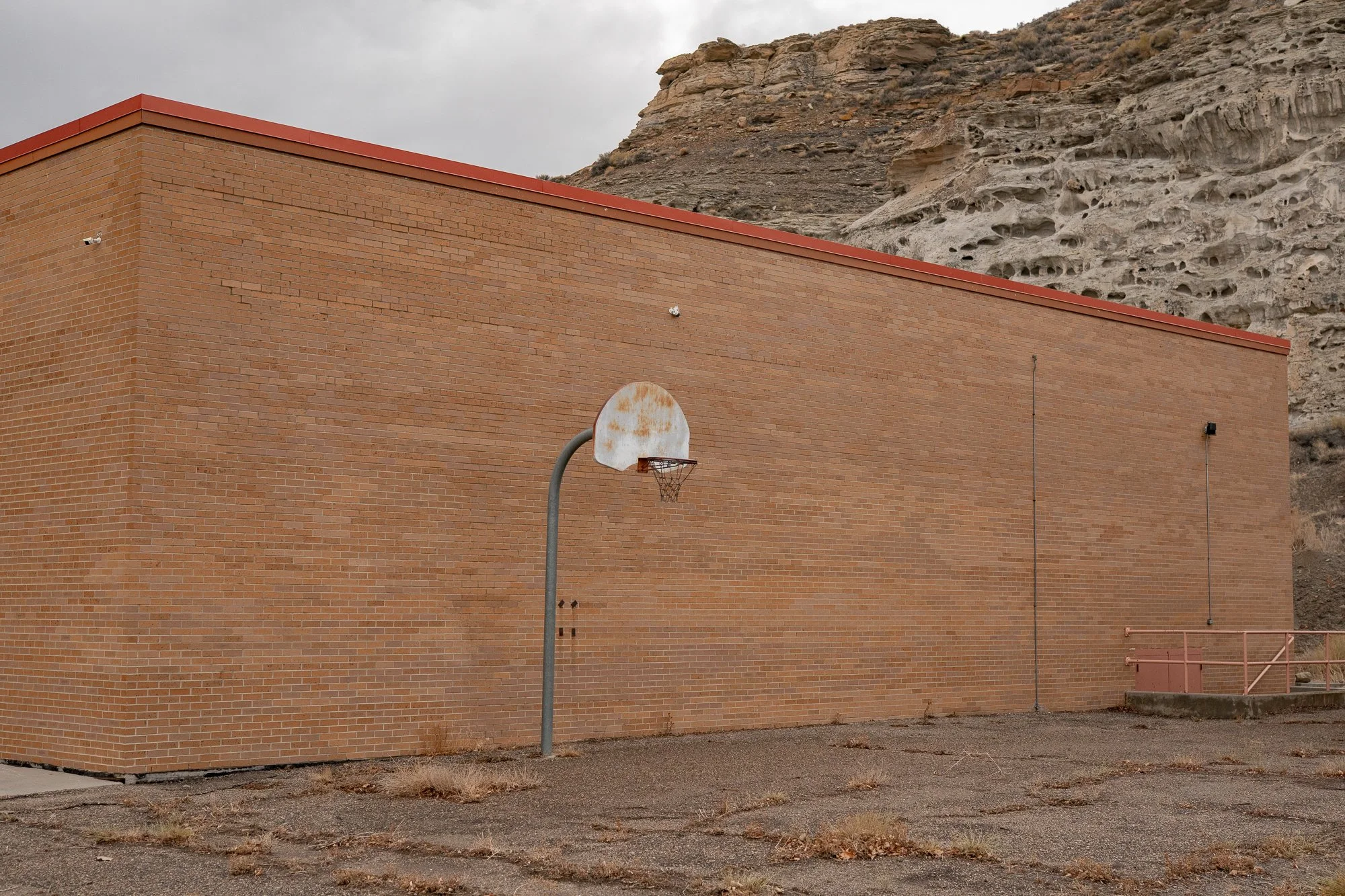
Basketball hoop mounted against a brick building beneath a Wyoming hillside

A basketball hoop stands against a brick building below the rocky hillside.

Fine Art Photography of Wyoming & the American West

These Wyoming photographs are part of my larger ongoing documentation of cowboy culture, working ranches, rural communities and everyday life throughout the American West.

A selection of the work is available as limited-edition fine art photography prints, produced using archival materials and available in a range of sizes and custom framing options.

The photographs aren't intended to present a polished or invented version of the West. They're records of people, places and moments I've encountered after years of traveling and photographing this part of America.

View the Full Cowboy Gallery

View Cowboy Photography Prints

View More Roadtrip Photography

View my Roadtrip Photography Book

Wyoming road leading through open country toward a mountain

The road runs through open country toward the mountains.
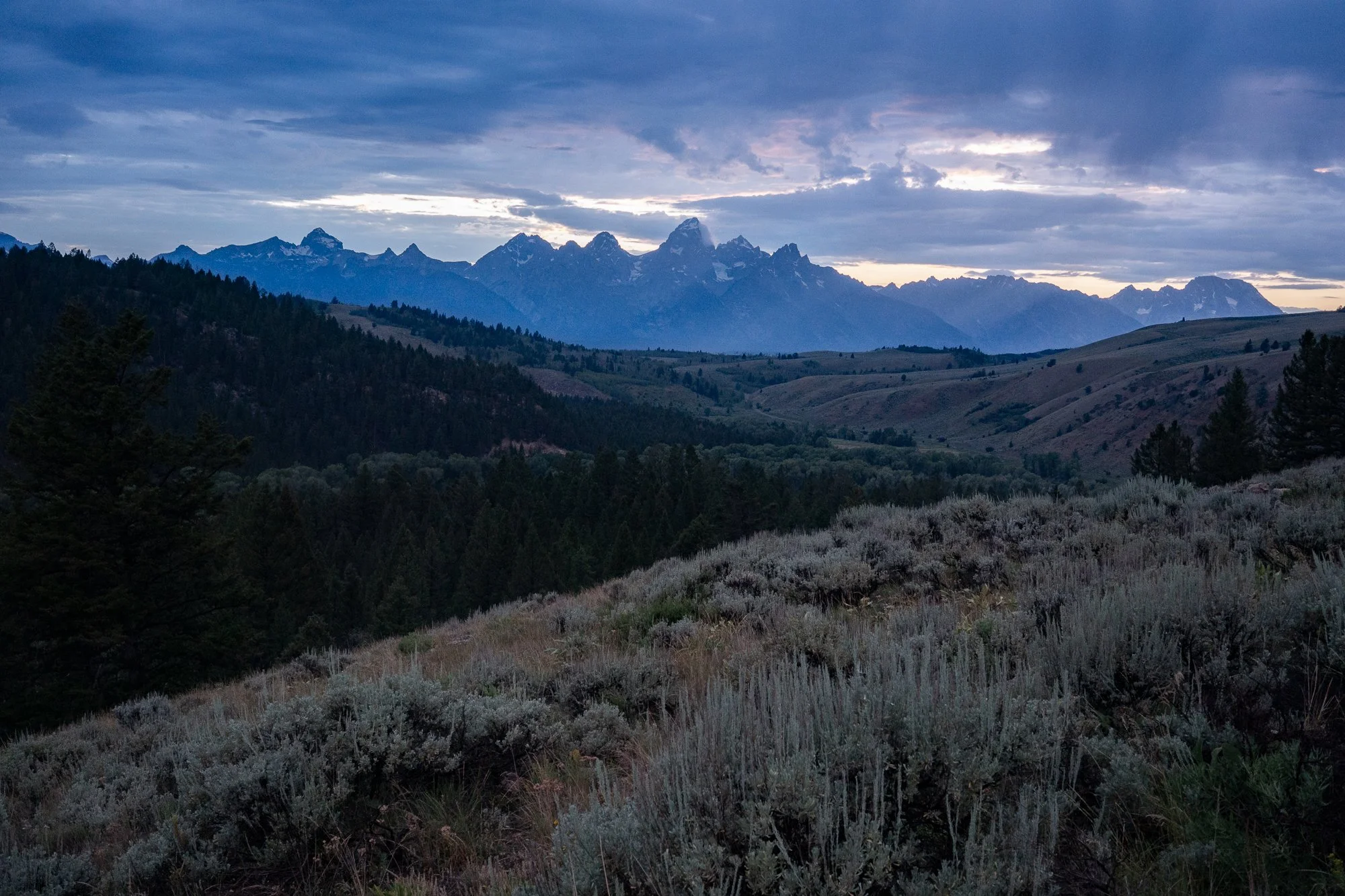
Wyoming mountain range beyond a sagebrush covered hillside

Sagebrush and open country stretch toward the mountain range.
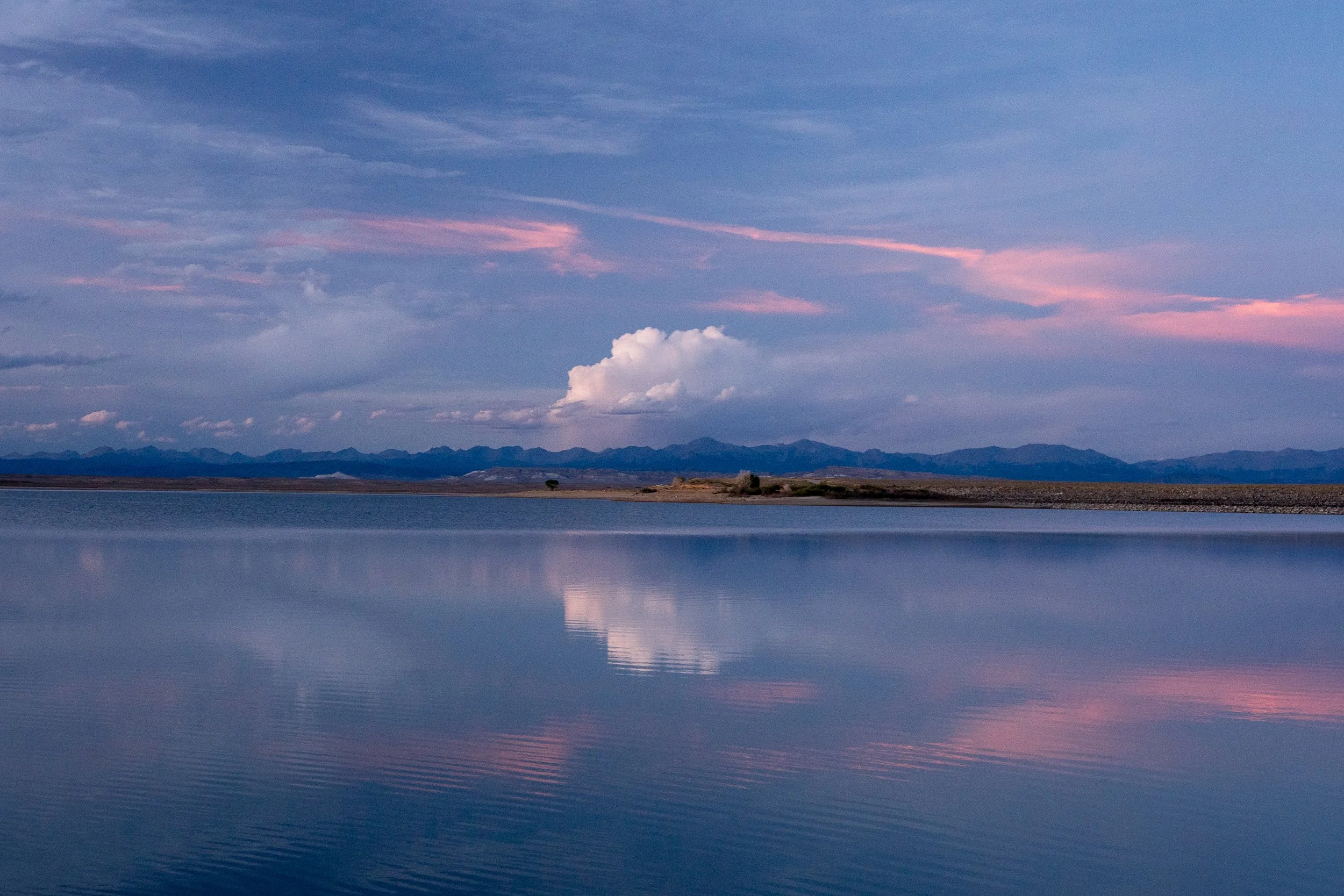
Wyoming lake reflecting mountains and clouds across the open landscape

The lake reflects the mountains and clouds across the open country.
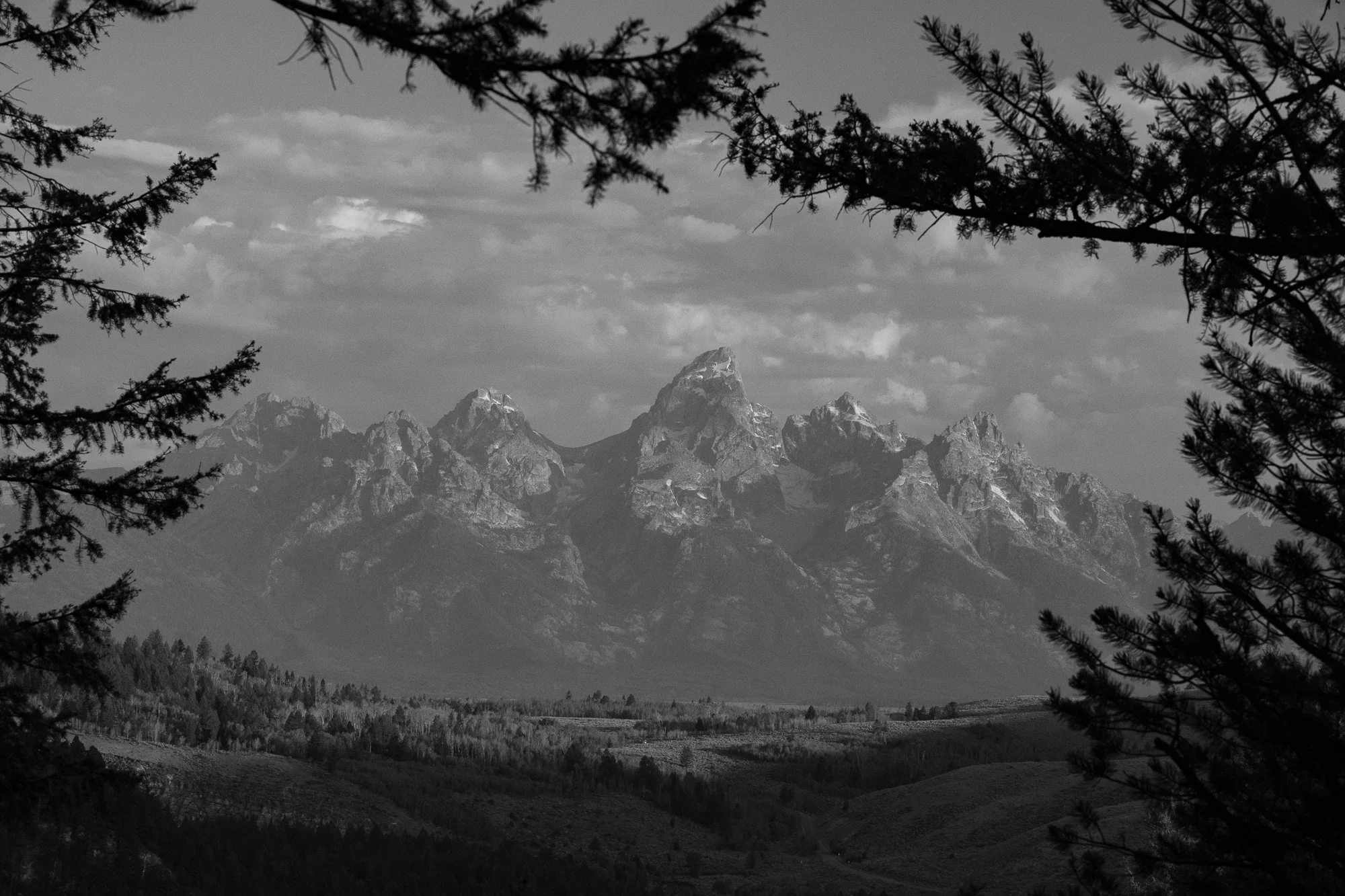
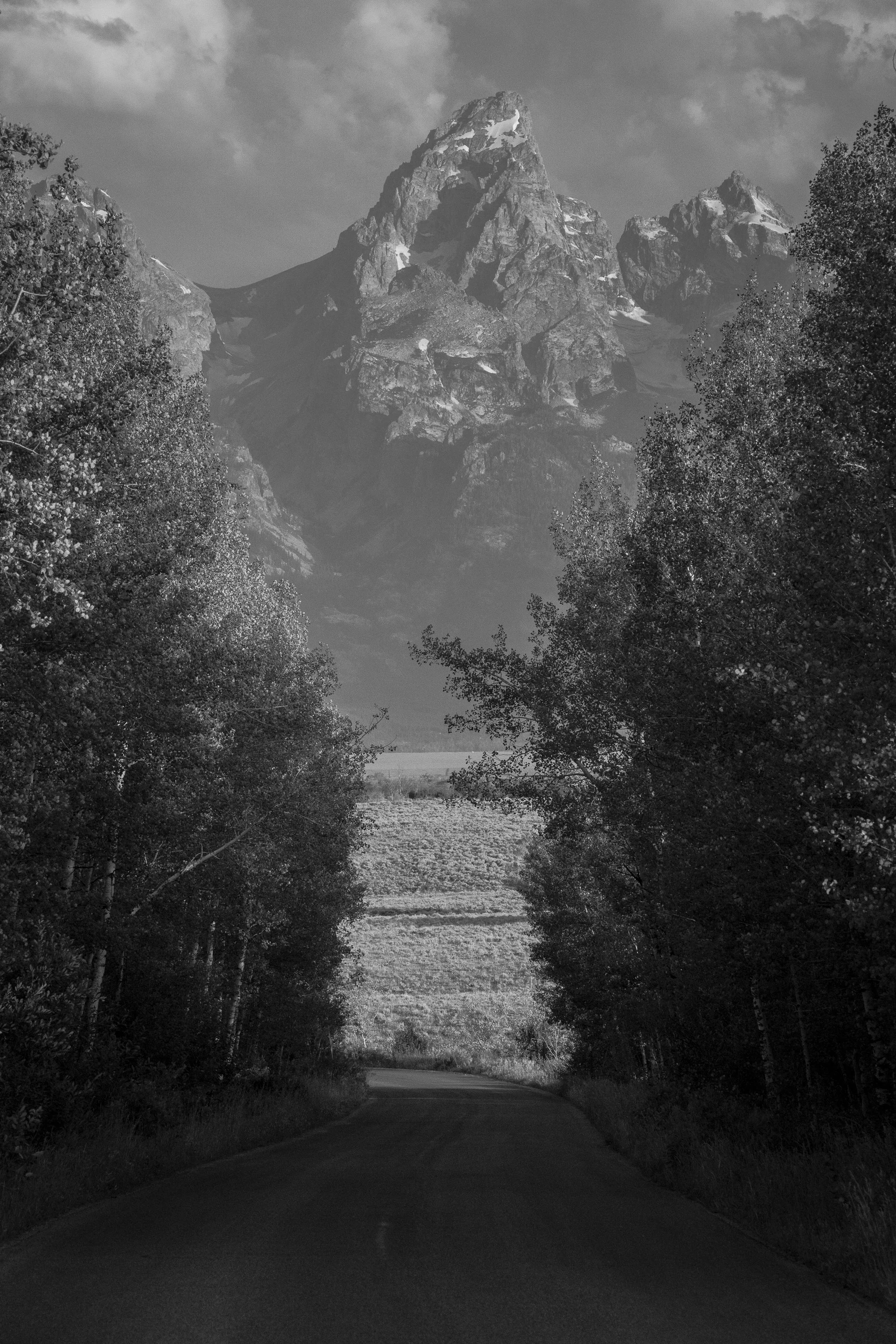
Grand Teton mountain range rising above the Wyoming landscape

The Grand Teton range rises above the landscape.
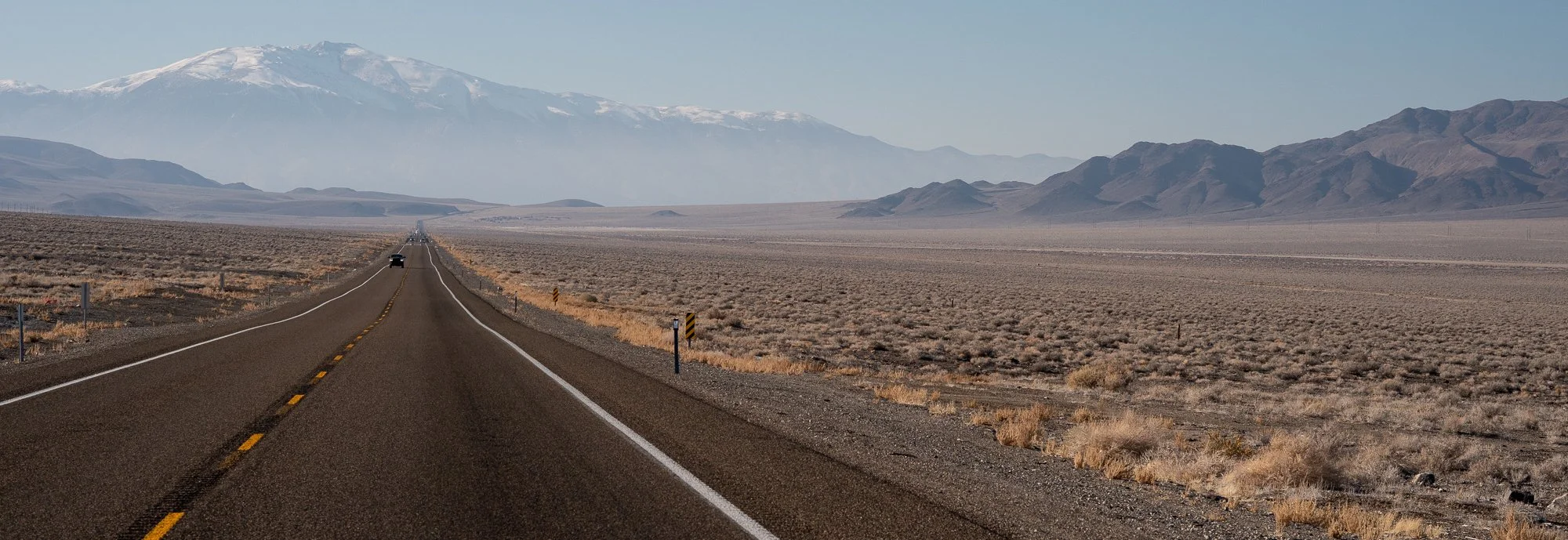
Photographs of Helper, Utah: From coal town to creative heaven

Helper, Utah Photography — Historic Town & Creative Community

Helper, Utah — nestled in eastern Utah along U.S. Routes 6 and 191 is a historic railroad and coal mining town that has become a vibrant creative community with galleries, murals, and architectural character. Through this fine art photography essay, I explore Helper’s unique blend of West-side grit and artistic reinvention, capturing both the visual texture and the spirit of place. These photographs are available for editorial and commercial licensing or fine art prints.

Finding Helper by Accident

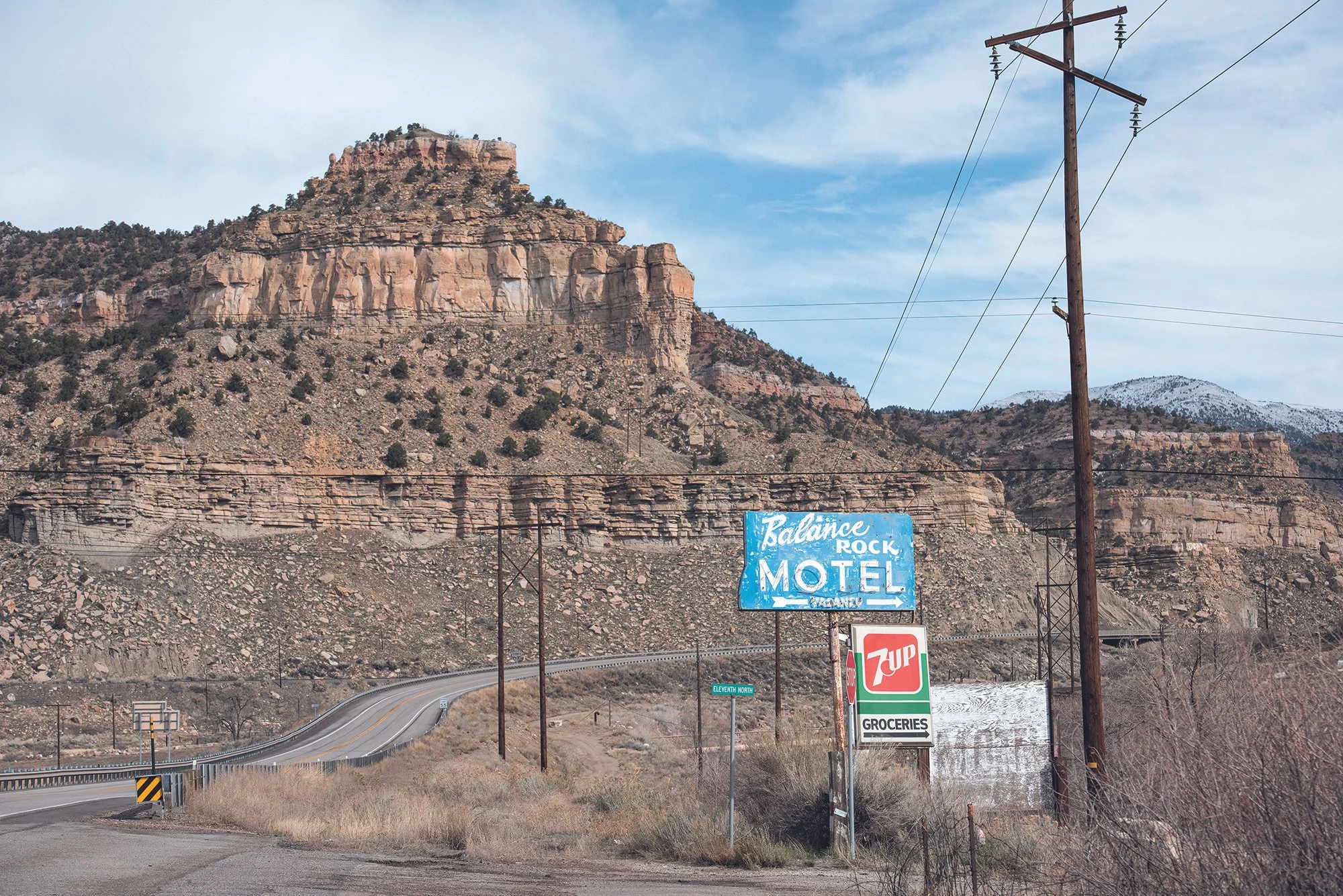
Helper is one of the seemingly endless gems available to any road tripper willing to get off the beaten path while exploring Utah. Years ago I was driving up the 191 and stopped to make a photograph of the old sign for the Balance Rock Motel. I’m a sucker for vintage signage anyway, but this was particularly interesting with the stark desert features in the background. Add in the 7up sign and it became a must stop. Looking around there was no inclination of any sort of civilization, let alone an entire town. While standing there making photographs a policeman stopped to ask what I was doing and seemed satisfied enough with the answer. Afterward I continued on my way, thinking there was nothing else in the area at all to photograph. Some ten years later I discovered a thriving artist community in Helper, tucked away off the 191—a stunning backroad for people driving south from Salt Lake City and continuing east on the 70. Driving into town is sort of a “holy shit” moment. Why is this town here and how does it survive? And the only real answer is art! Helper, Utah is an artist community in the middle of nowhere filled with galleries! It’s such an incredibly unique place. In all my travels I’ve never really seen anything like it. And the excitement that comes from discovering such a town is what keep me addicting to road trips!

The History & Character of Helper, Utah

Helper earned its name from the extra locomotives — “helper engines” — that once assisted trains climbing the steep grades of Price Canyon. Built around coal mining and railroads, the town became home to generations of immigrant workers and working families tied to industry.

Today, while traces of that history remain in brick storefronts and aging infrastructure, Helper has evolved into something more layered. Art galleries now sit beside historic buildings. Murals appear along alleyways. The town has quietly become a creative community while still holding onto its industrial backbone.

That mix of railroad grit and artistic reinvention gives Helper a visual character that feels distinctly Western — but not romanticized.

Photographing Main Street & Roadside Landmarks

Much of this series focuses on the visual details that define Helper’s personality. These aren’t dramatic landscape icons. They are quieter observations — architectural lines, faded paint, shadow, typography, and the space between buildings. The kinds of details that reveal how a town actually lives.

Photographing Helper wasn’t about spectacle. It was about slowing down long enough to notice what remains.

Helper Within the Larger American Road Project

This work fits into a long-term body of photography documenting small towns and overlooked places across America. For over 15 years, I’ve driven hundreds of thousands of miles searching for places that feel visually honest — towns shaped by time rather than reinvention.

Helper stands out because it holds both histories at once: the industrial past and a creative present. It reflects a broader story about rural America adapting without fully erasing itself.

In many ways, Helper represents what draws me back to the road again and again — not the famous destinations, but the towns in between.

Image Licensing — Helper, Utah Photography

These photographs of Helper, Utah are available for editorial and commercial licensing. The work documents a historic railroad and mining town in transition — architecture, signage, Main Street storefronts, and the evolving character of a creative Western community.

The images are well suited for:

  • Editorial features on small town revitalization

  • Travel and regional publications

  • Western heritage stories

  • Cultural and architectural essays

  • Brand campaigns rooted in authentic American settings

Each photograph is available for licensed use in print or digital formats. If you’re interested in discussing usage, publication, or commercial applications, please reach out directly.

Continue Exploring the American West

Helper is just one chapter in a larger body of work documenting small towns, desert highways, and overlooked corners of the American landscape.
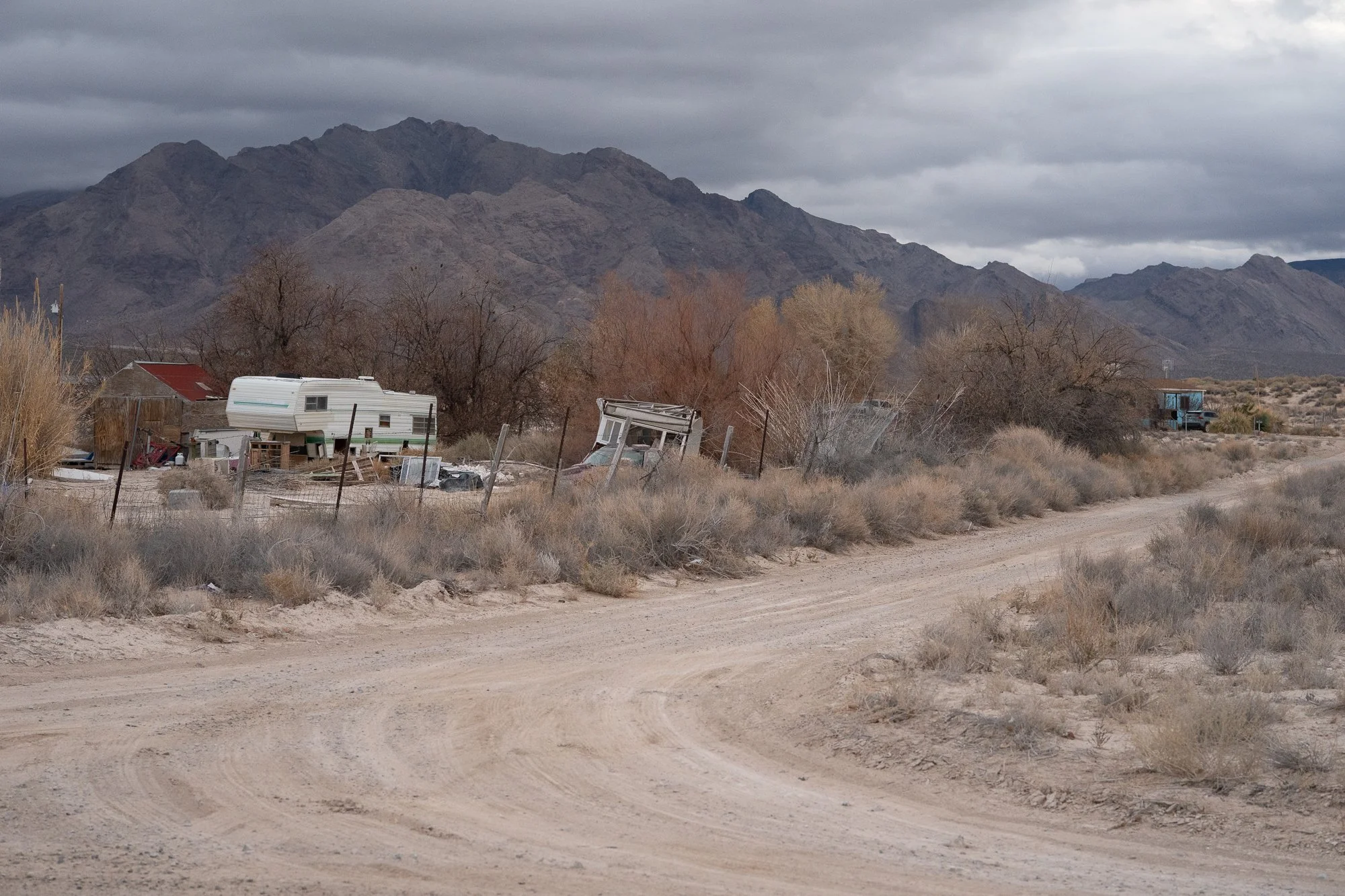
View the full Utah Fine Art Photography Gallery to see more images from across the state, or explore the broader American Road Trip Photography Collection featuring small towns and roadside scenes from across the country.

The Balance Rock Motel - Helper, Utah

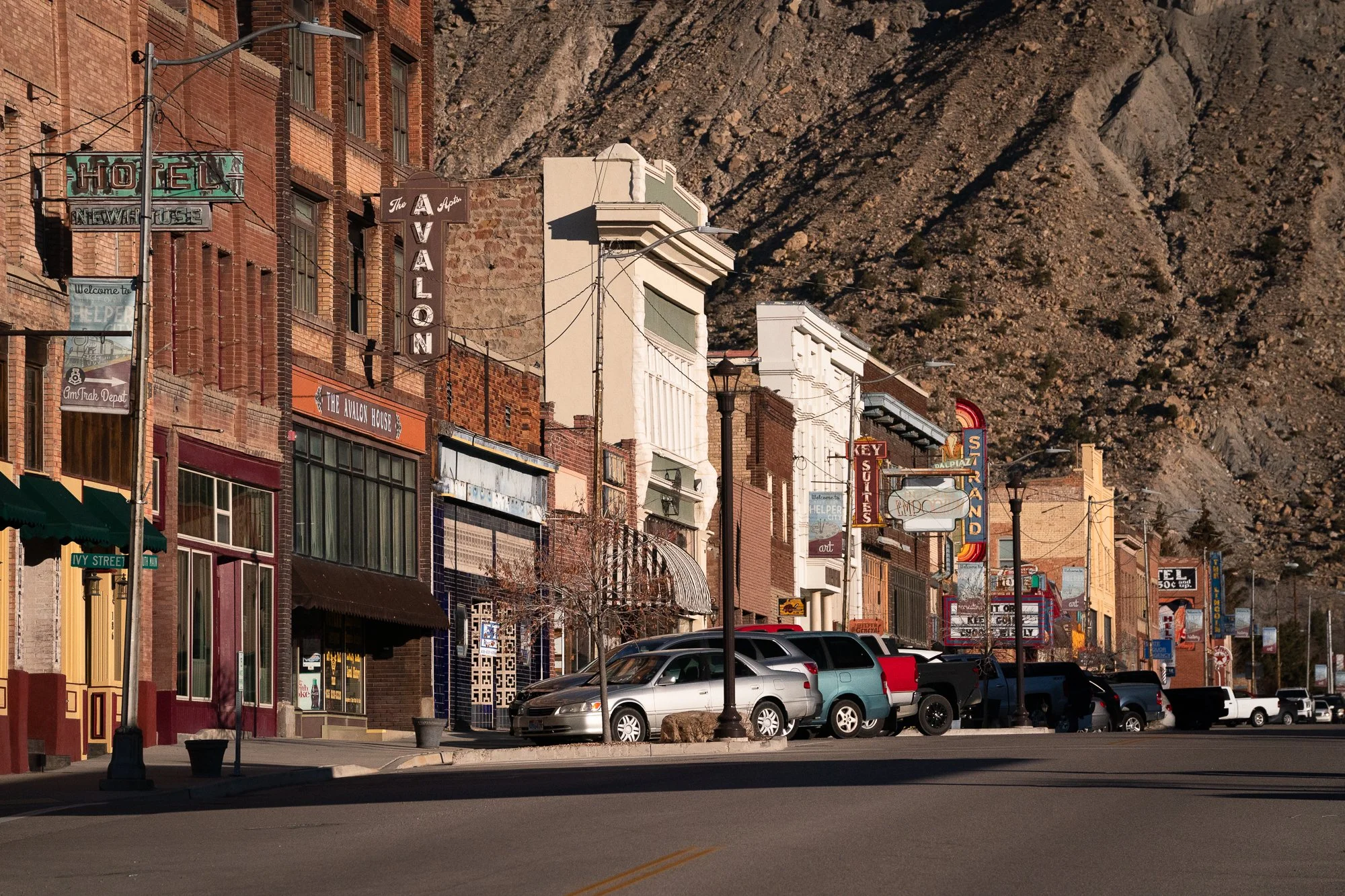
Historic Main Street in Helper Utah with brick buildings and cliffs

Historic brick storefronts line Main Street in Helper, Utah, pressed tightly against the towering Book Cliffs.

Photograph of the Lasalle restaurant in Helper, Utah

Vintage signage at Lasalle’s on Main Street in Helper, Utah

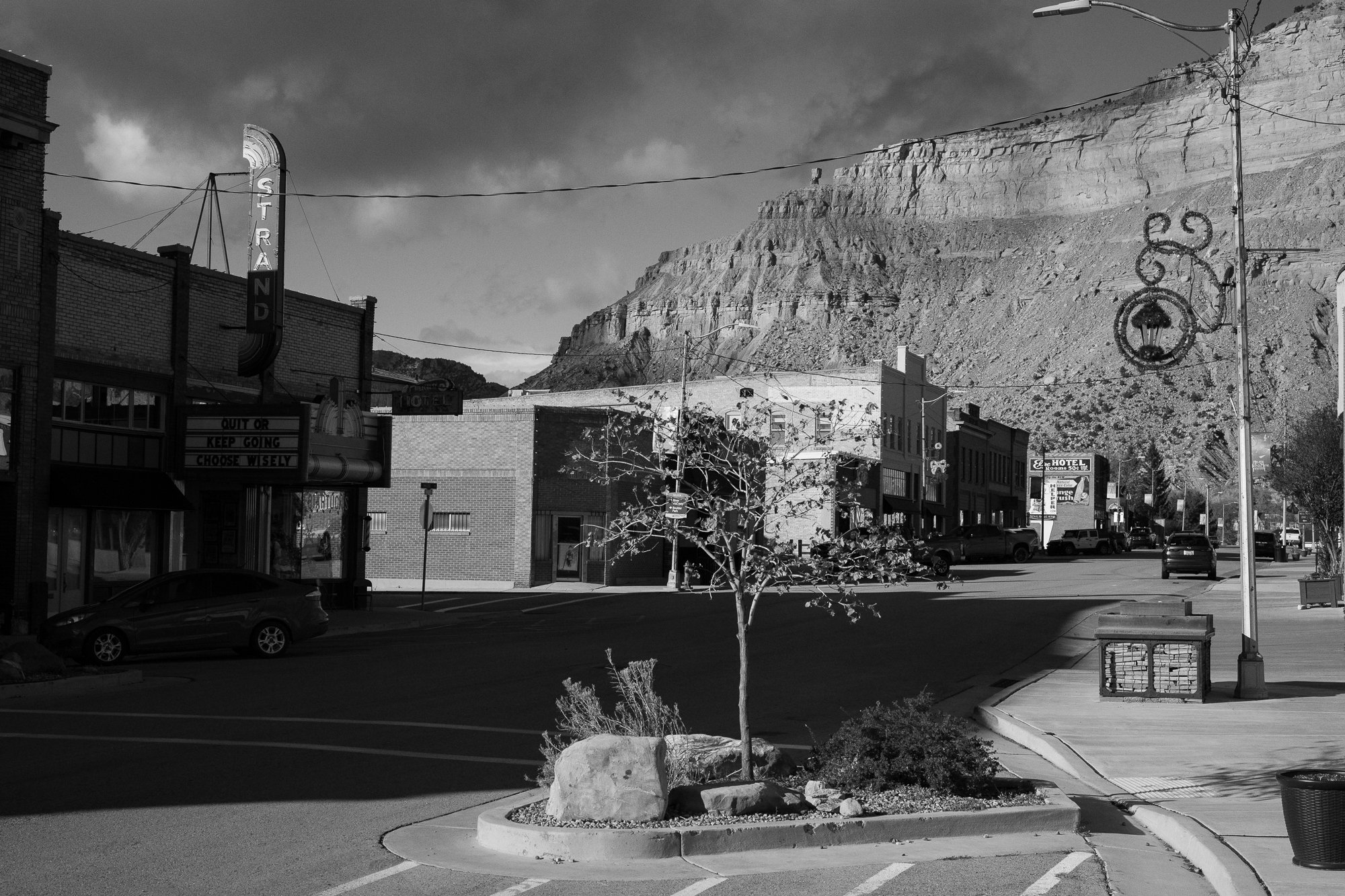
Black and white photograph of the view up Main Street in Helper, Utah

Main St. - Helper, Utah

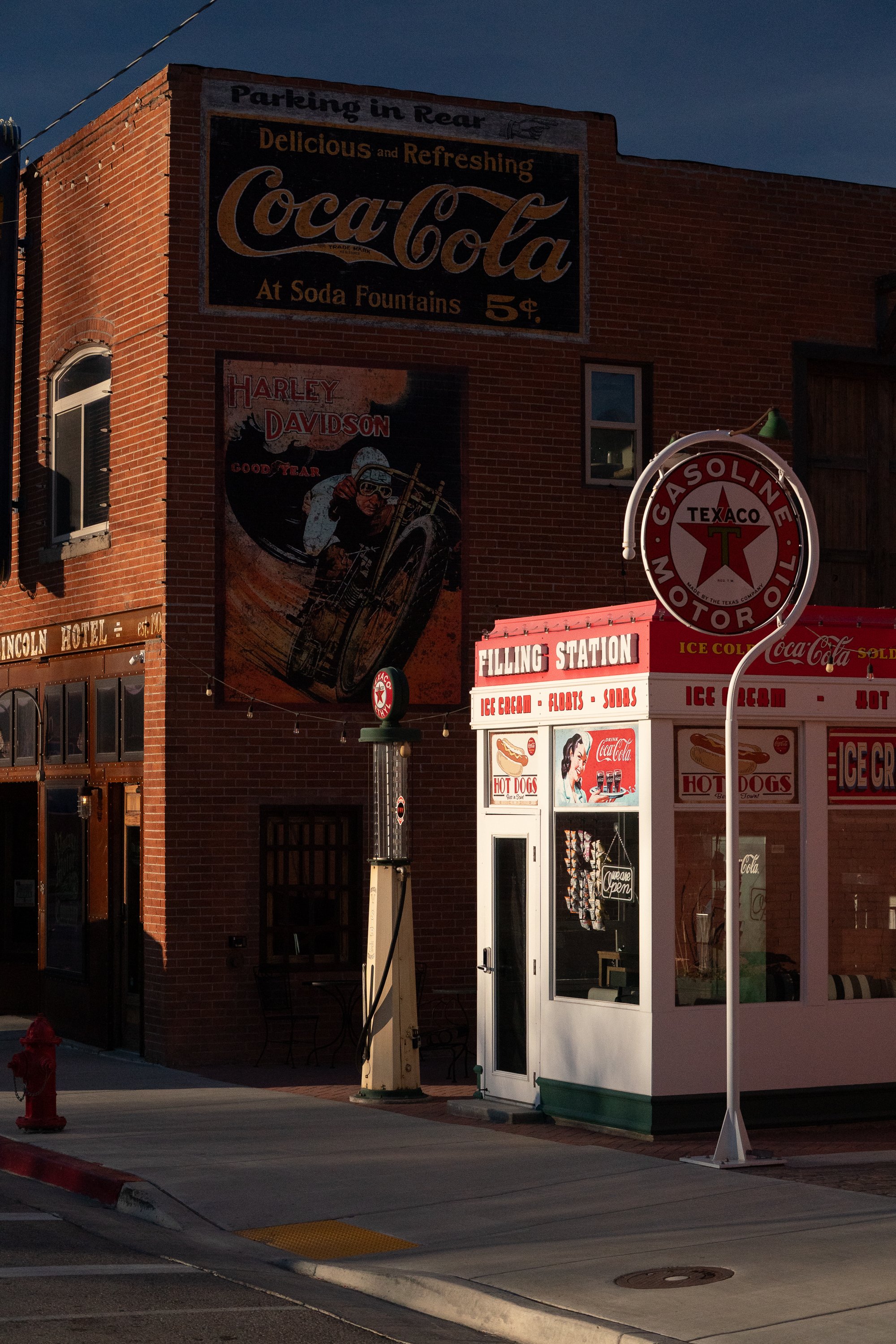
Lincoln Hotel and Texaco gasoline sign in downtown Helper Utah

The Lincoln Hotel corner glows in late light — Coca-Cola signage, Texaco branding, and filling station details capturing the Americana character of Helper, Utah.

Photograph of the Strand Theater on Main St. in Helper, Utah

The Strand Theater in Helper, Utah

Black and white photograph of the Hotel Newhouse in Helper, Utah

The Hotel Newhouse

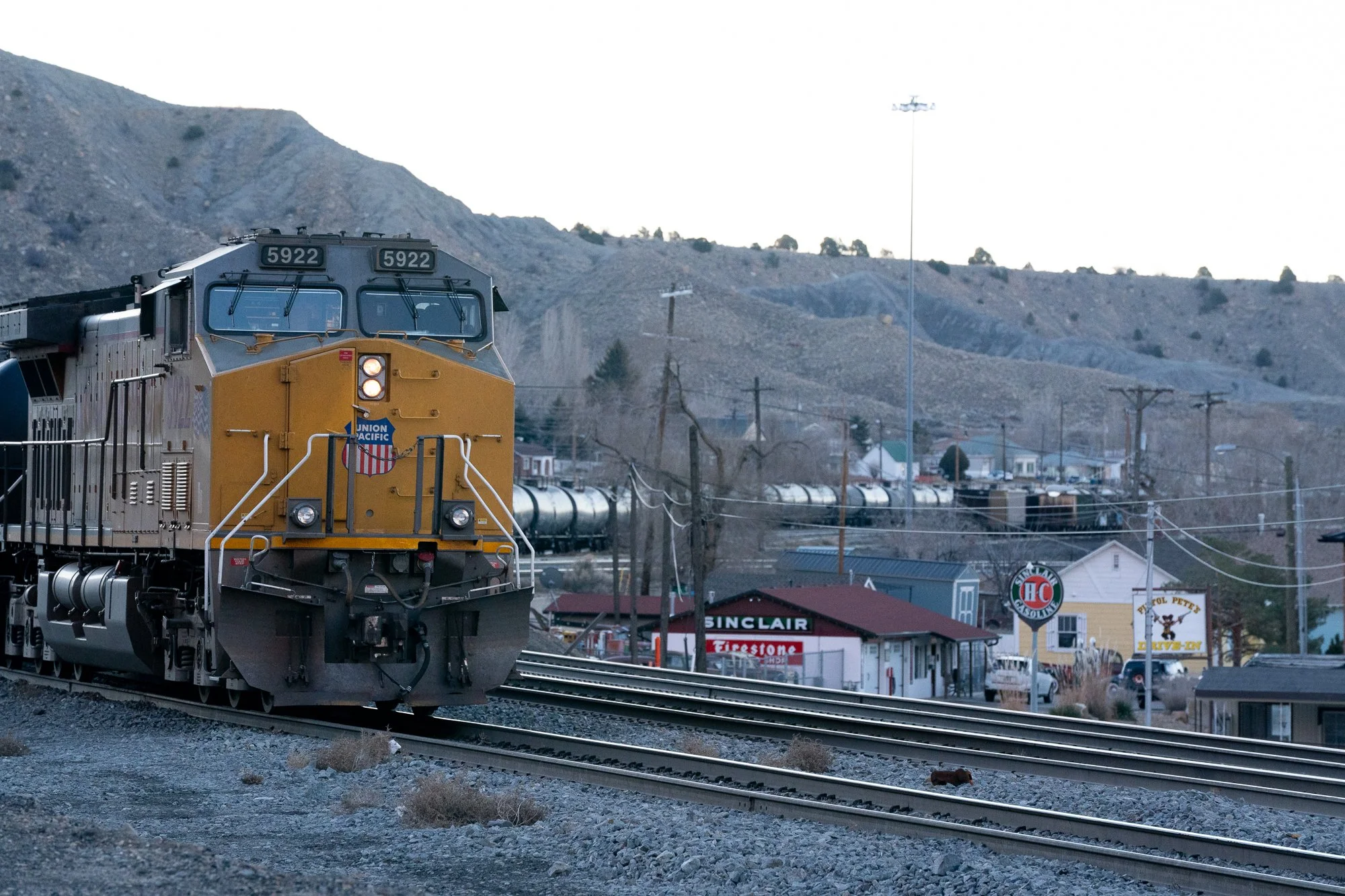
Union Pacific freight train passing through Helper, Utah with Book Cliffs in background

A Union Pacific freight locomotive rolls into Helper, Utah beneath the Book Cliffs — a reminder of the town’s railroad and coal mining roots in eastern Utah.

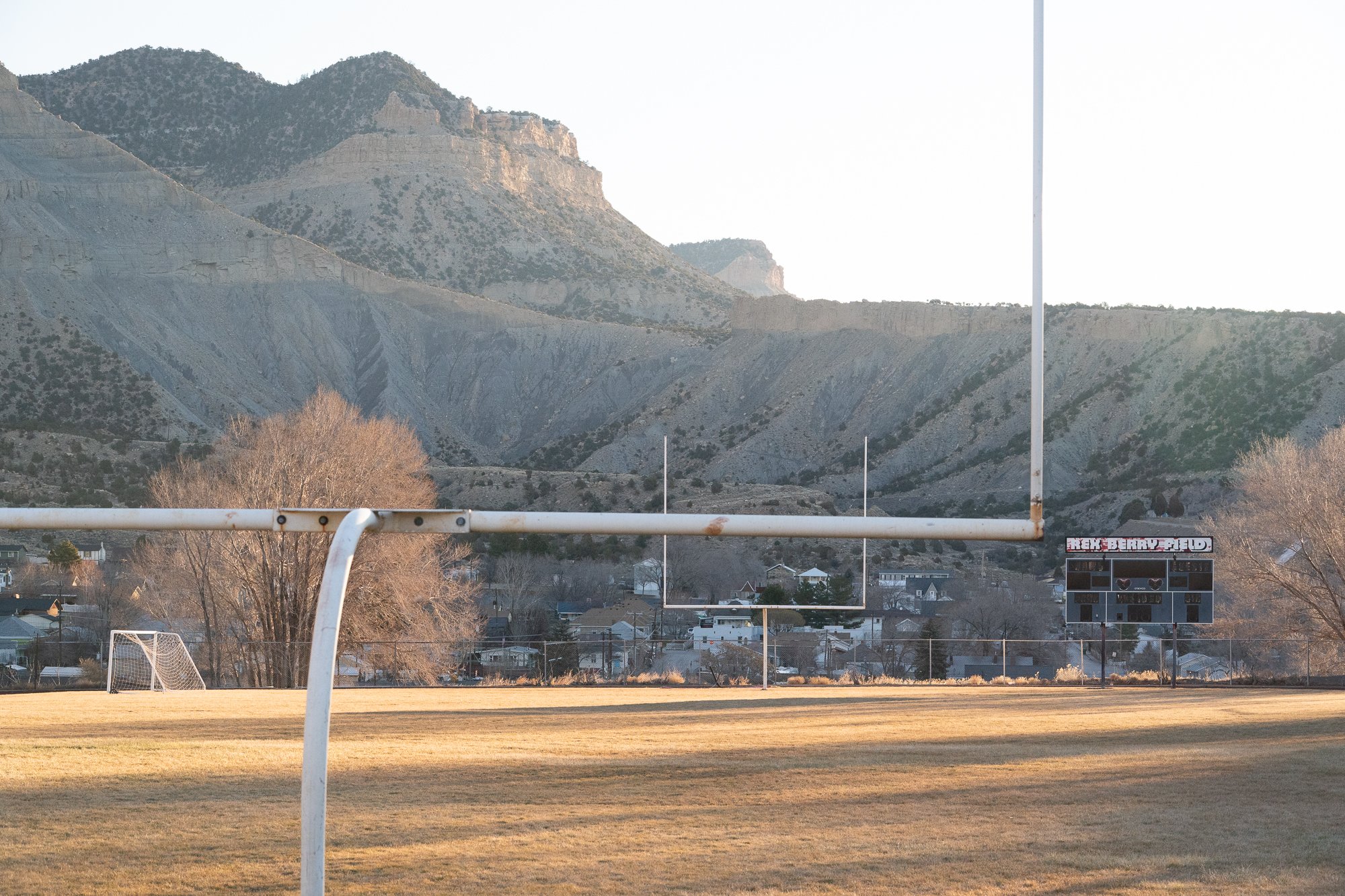
Rex Berry Field football stadium in Helper Utah with Book Cliffs behind

Rex Berry Field sits quietly beneath the dramatic Book Cliffs, where high school football and desert landscape meet in Helper, Utah.

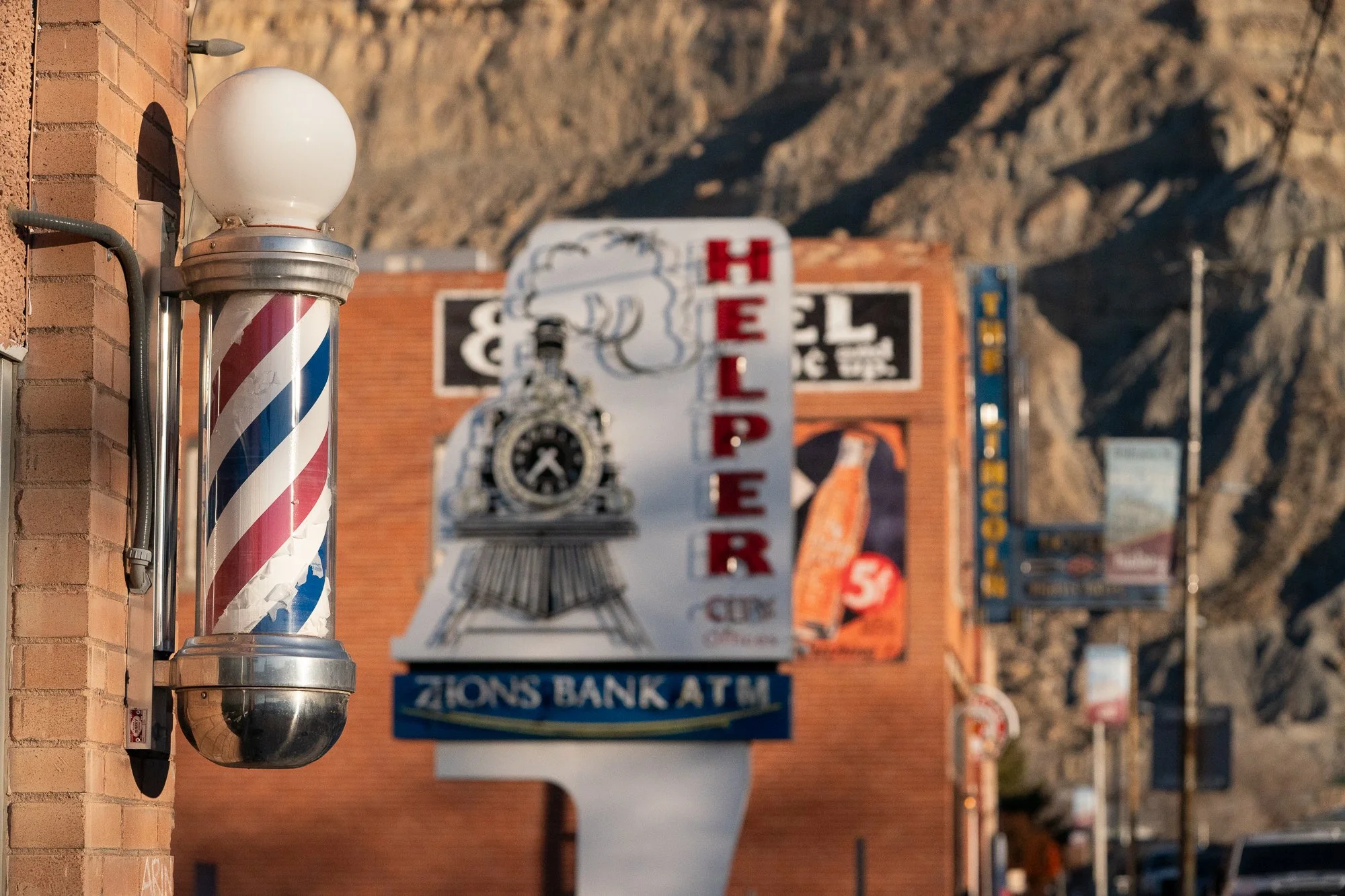
Classic barber pole on Main Street in Helper Utah with vintage signs

A traditional barber pole stands along Main Street in Helper, Utah, framed by layered signage and historic storefronts.

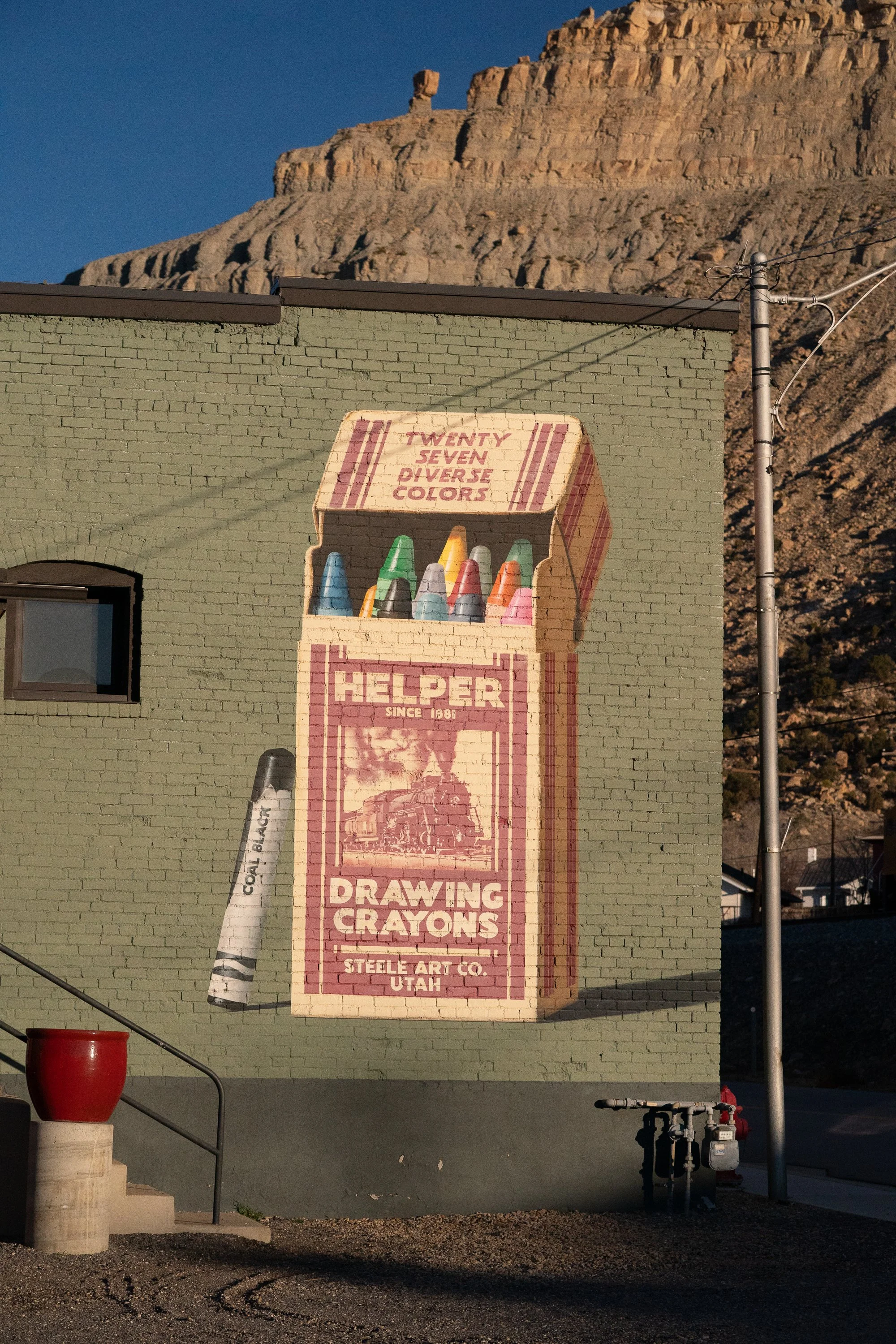
Helper Drawing Crayons mural painted on brick wall in Helper Utah

A large “Helper Drawing Crayons” mural reflects the town’s creative revival, set against the rugged cliffs that define eastern Utah.

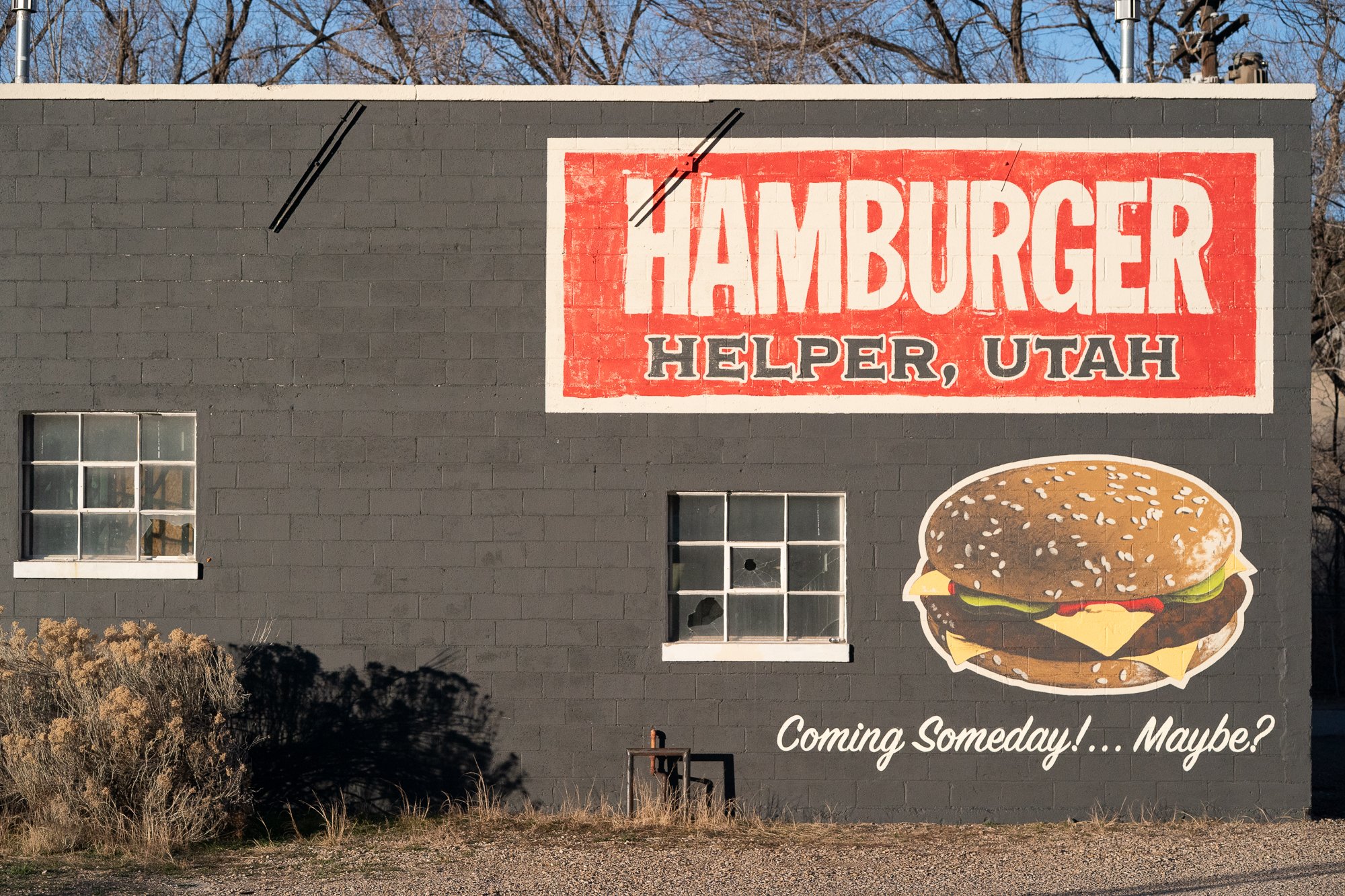
Hamburger Helper Utah mural with painted burger and vintage lettering

A bold “Hamburger — Helper, Utah” mural reads “Coming Someday… Maybe?” — small-town humor painted large on a downtown wall.

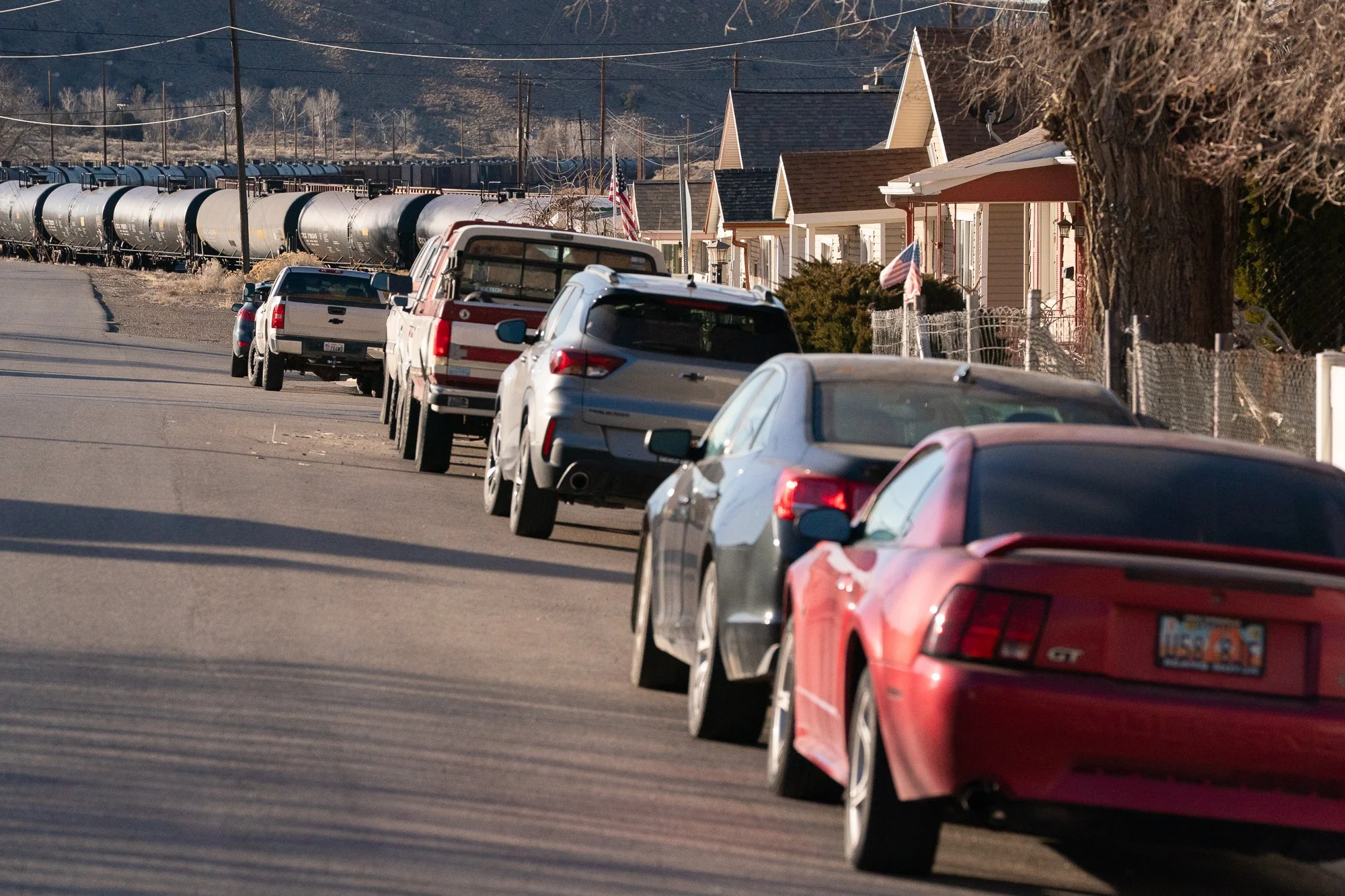
Residential street in Helper Utah with tanker rail cars in background

Parked cars line a quiet residential street while black tanker rail cars stretch across the horizon — industry and daily life intersecting in Helper, Utah.

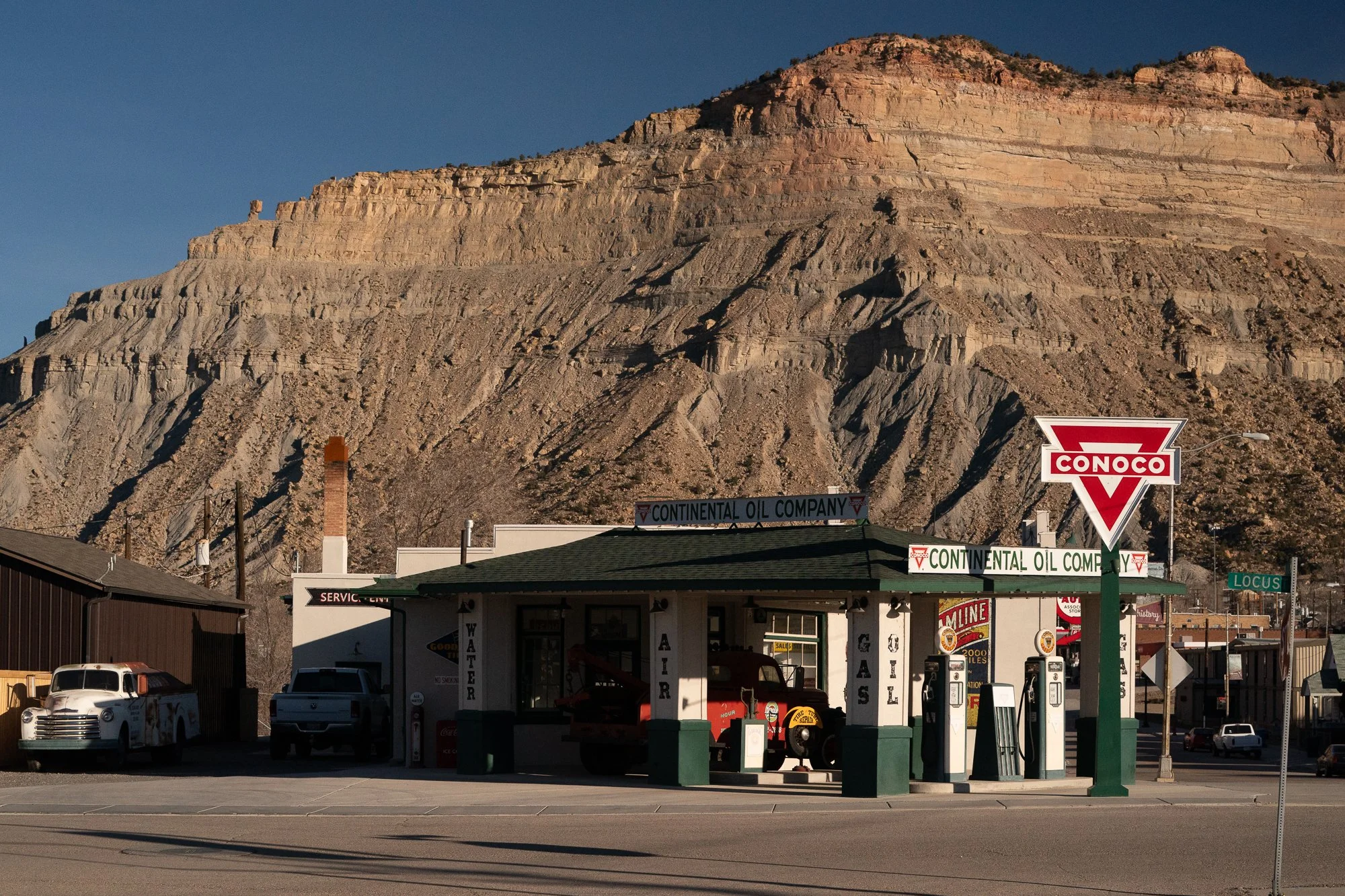
Continental Oil Company Conoco gas station in Helper Utah

The restored Continental Oil Company station stands beneath the desert cliffs in Helper, Utah — vintage petroleum branding framed by Western landscape.
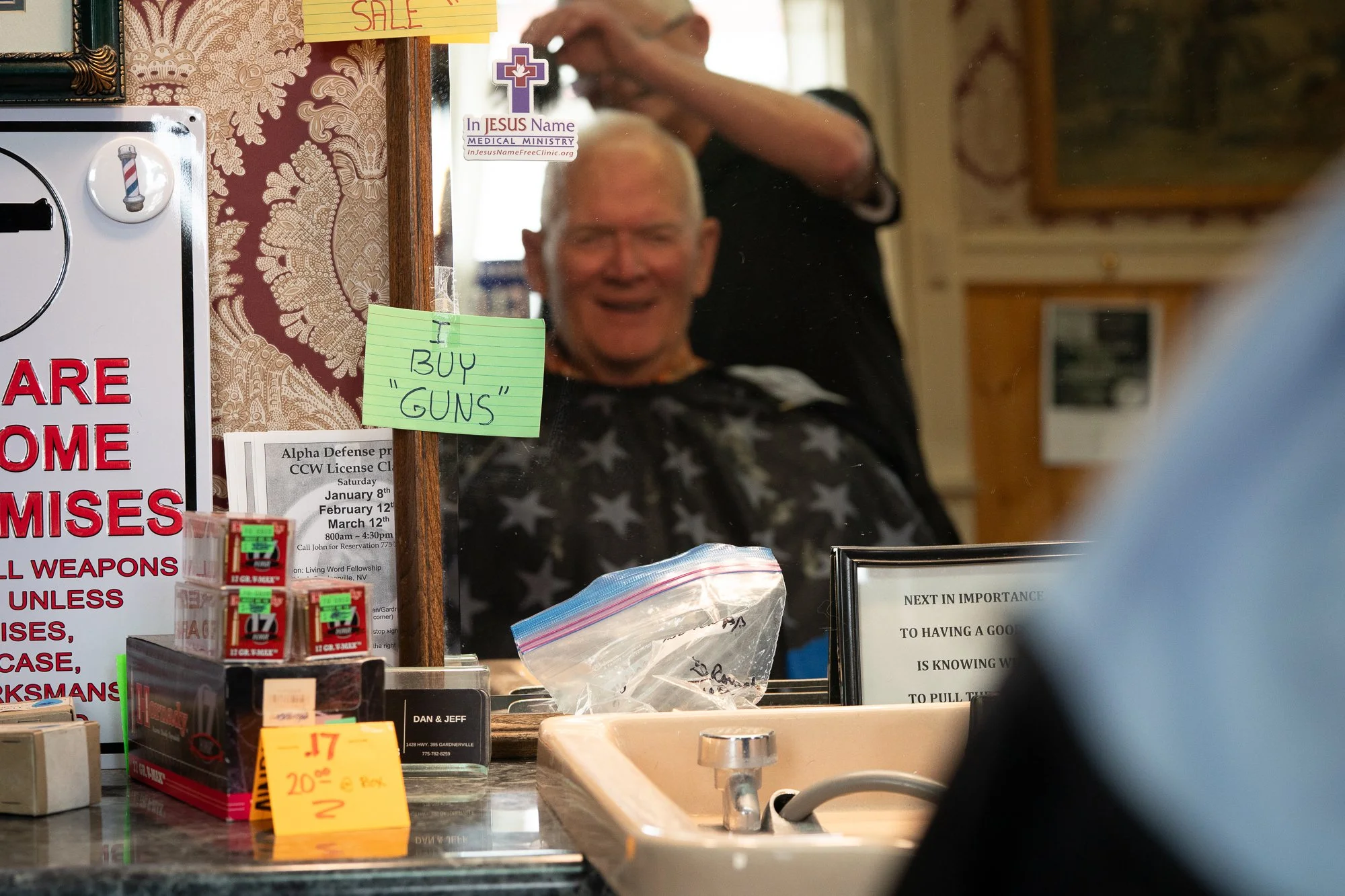
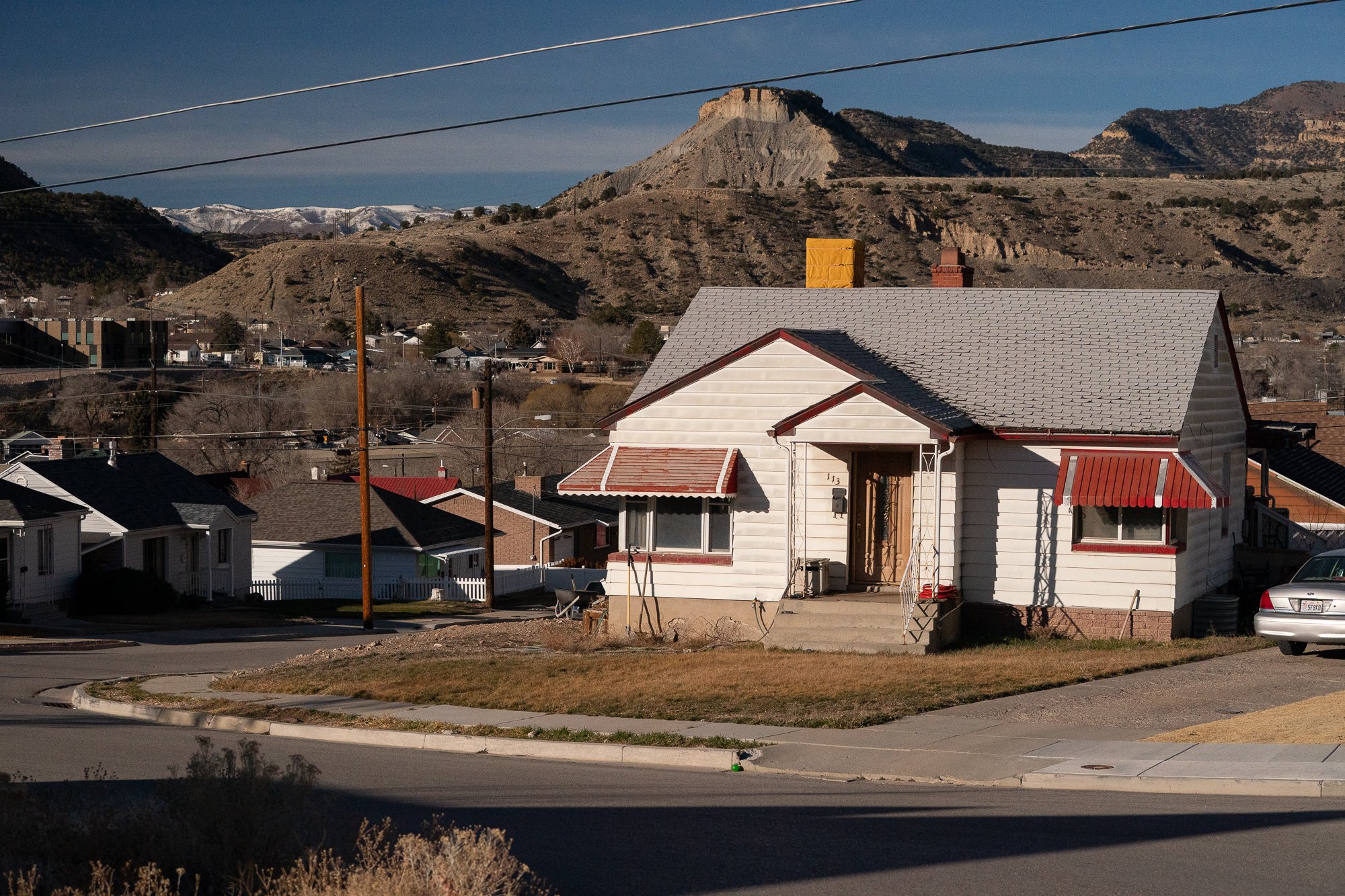
Small hillside home in Helper Utah with Book Cliffs and neighborhood behind

A modest hillside home overlooks Helper, Utah, framed by layered desert mesas and distant snow along the Book Cliffs — residential life set against the vast Western landscape.
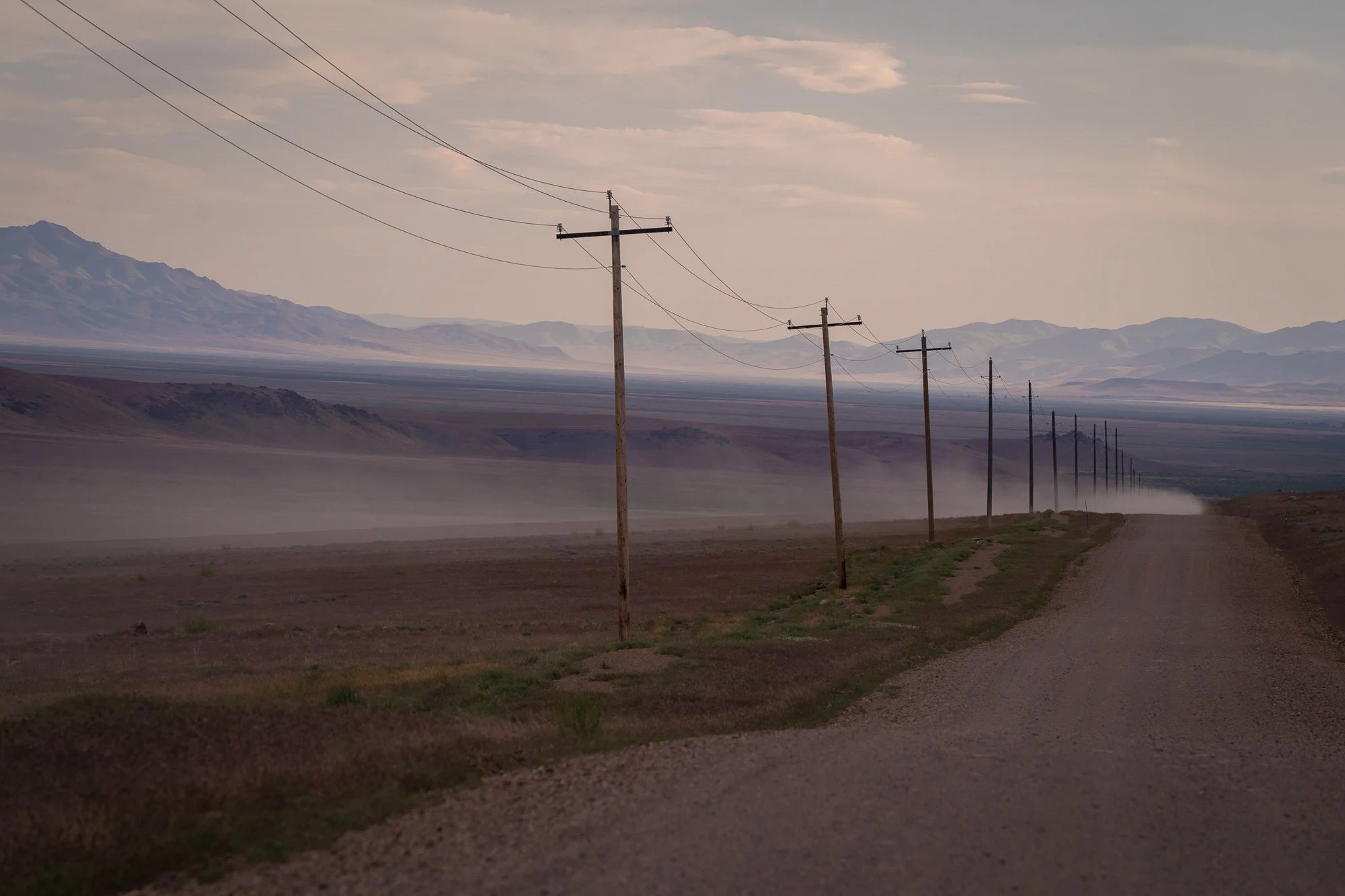
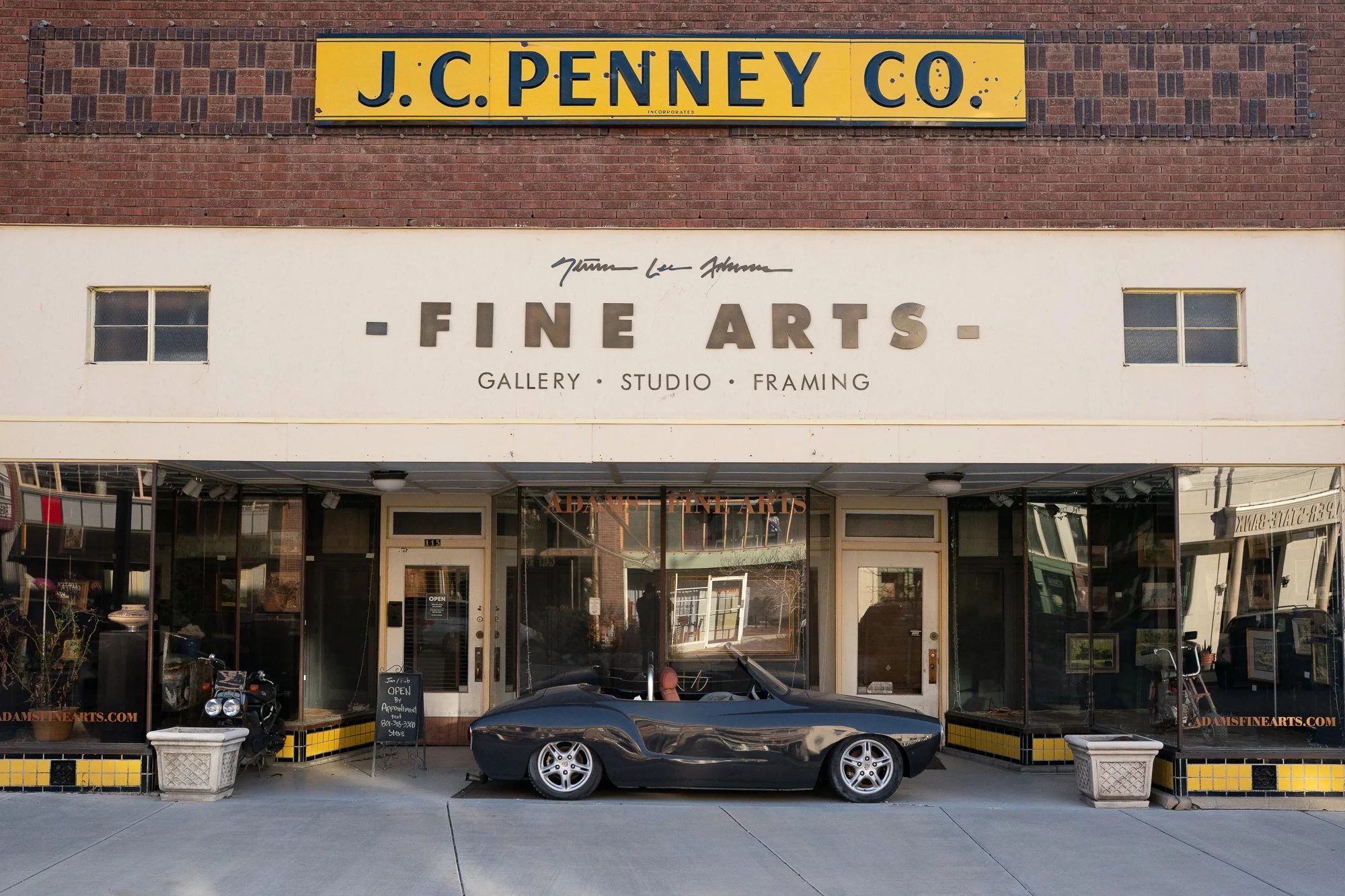
Historic J.C. Penney building now Fine Arts gallery in Helper Utah

The former J.C. Penney building now houses a Fine Arts gallery in downtown Helper, Utah — a retail relic reimagined as part of the town’s creative revival.

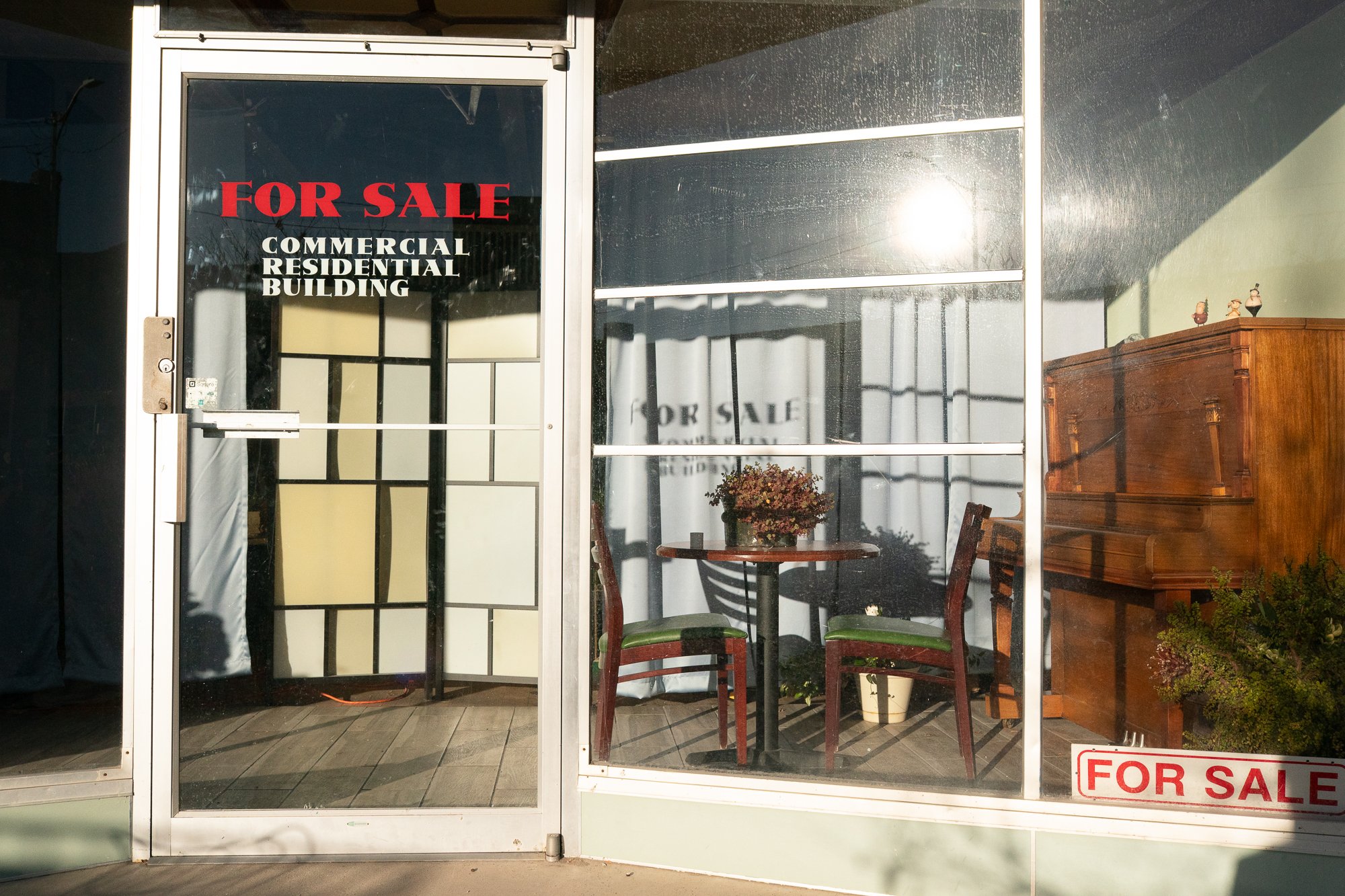
For sale sign on commercial storefront window in Helper Utah

A “For Sale” sign reflects in the glass of a downtown Helper storefront — a quiet indicator of economic transition in this historic railroad town.

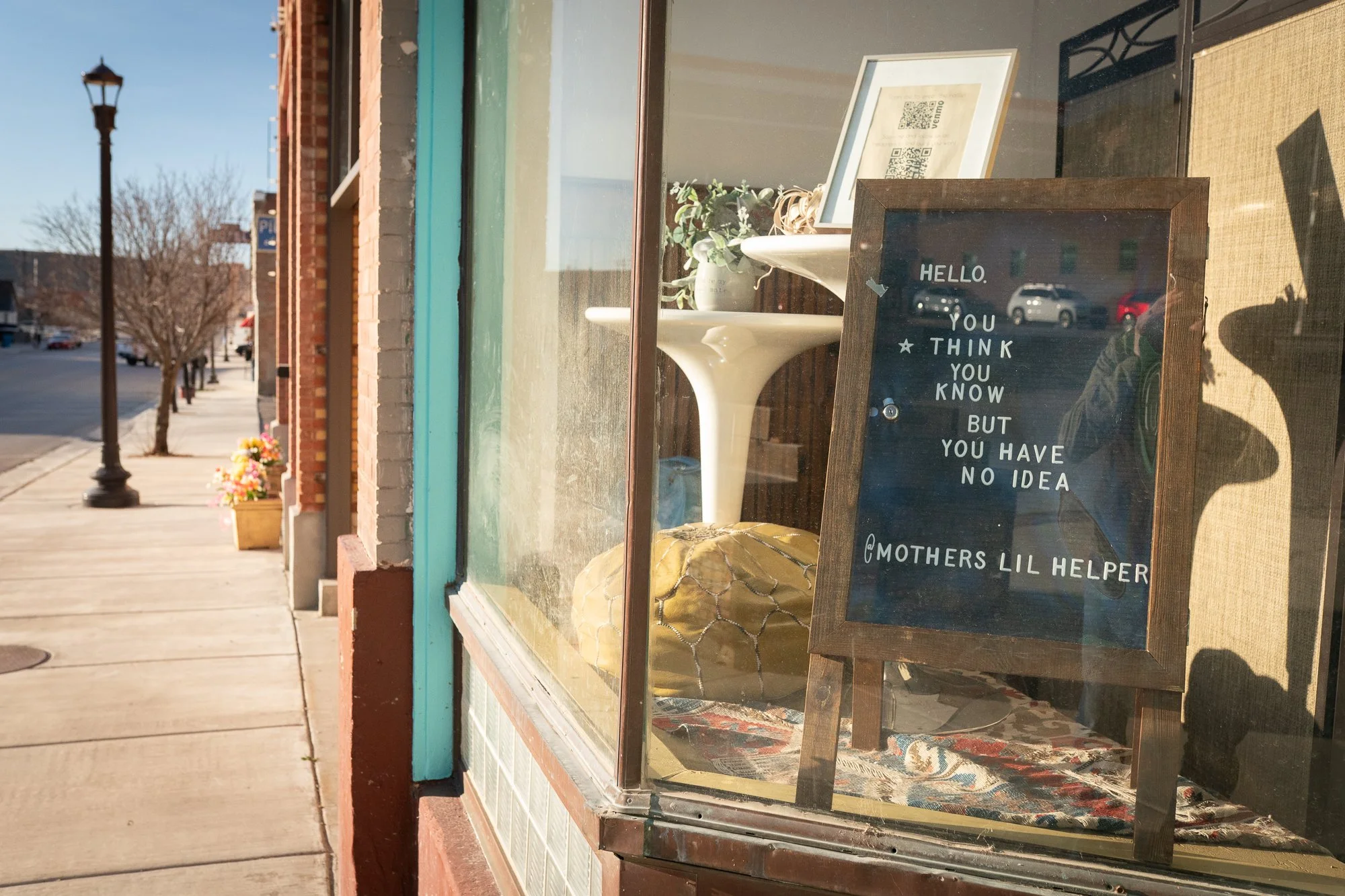
Mothers Lil Helper shop window display on Main Street in Helper Utah

A storefront display on Main Street reads, “Hello… You Think You Know But You Have No Idea” — a subtle reminder of the layered identity of Helper, Utah.

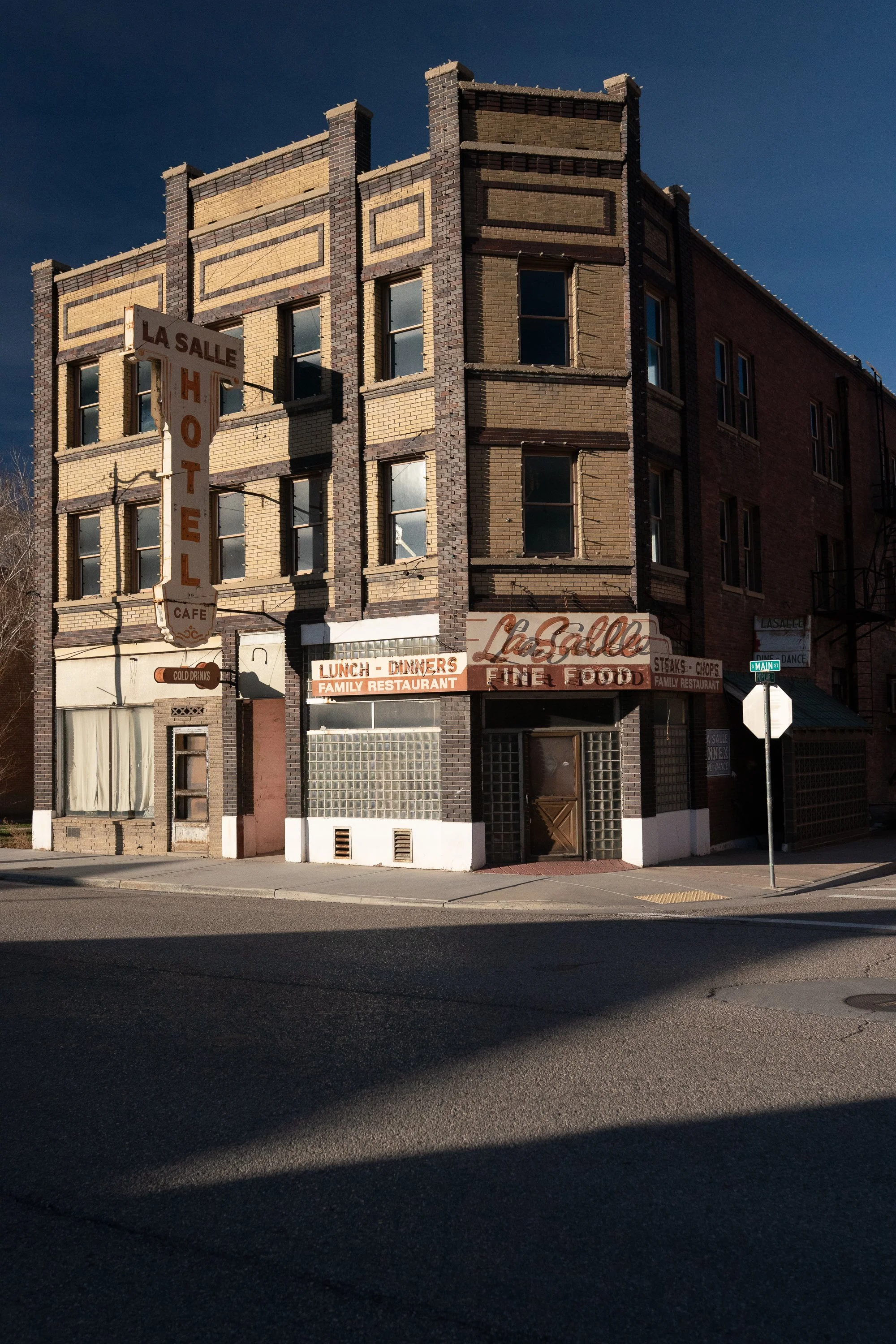
La Salle Hotel historic brick building in Helper Utah

The La Salle Hotel stands at a quiet corner in Helper, Utah — brick facade, vertical hotel sign, and long shadows marking a century of Western travel history.

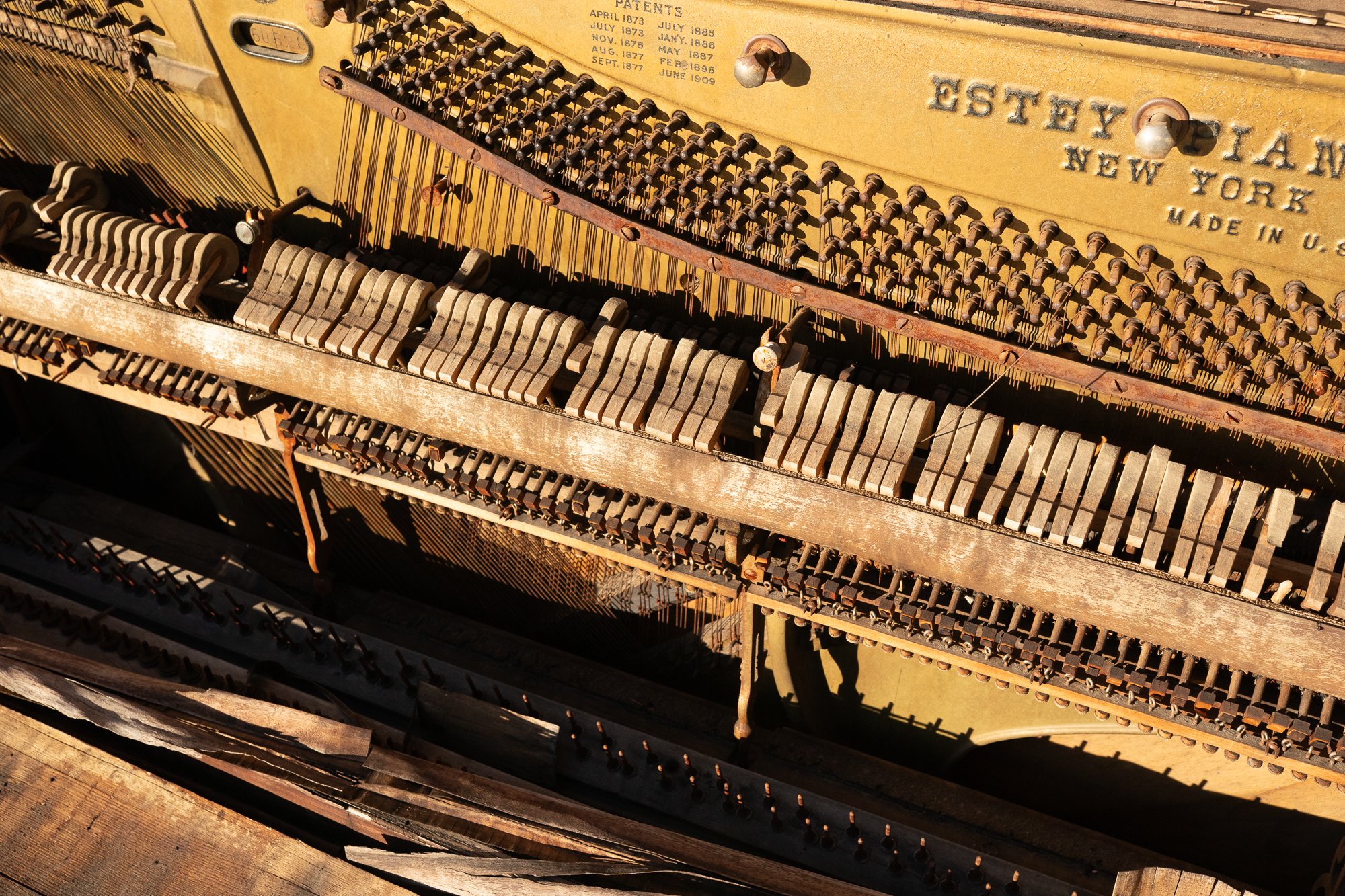
Antique Estey piano interior mechanism photographed in Helper Utah

An exposed Estey piano mechanism reveals aged wood, metal, and string — a close study of craftsmanship discovered in Helper, Utah.

Driving across America

Cross Country Road Trip - America - Photography

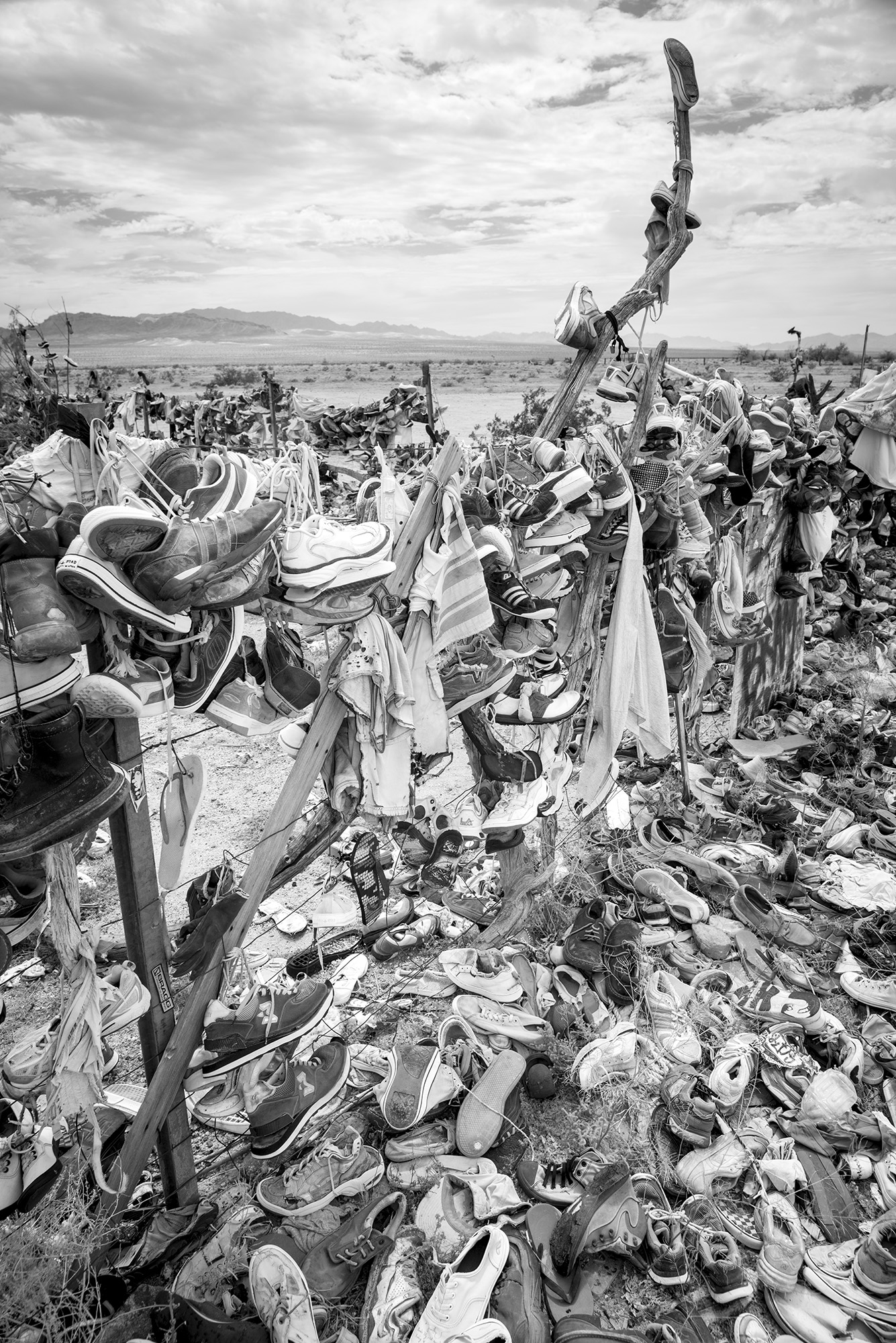
There aren’t a lot of positive things things to say about American highways. Whenever possible I try avoid the soulless stretches of poorly maintained pavement that teach you very little about the country and the towns/people that inhabit it. The 15 on the other hand is something special. It’s one very long stretch of highway that’s as fascinating as any “blue highway” (backroad) in the USA. I’ve personally been traveling this road since 2006 during the move from Upstate, NY to San Diego, CA. It blew my mind then and still does today. Once you get north of the clusterfuck that is Los Angeles /Riverside County and into the desert, there’s a lot to love. Images can be made from the highway or, if you want to get more intimate, try ducking off into one of the many small towns along the way.
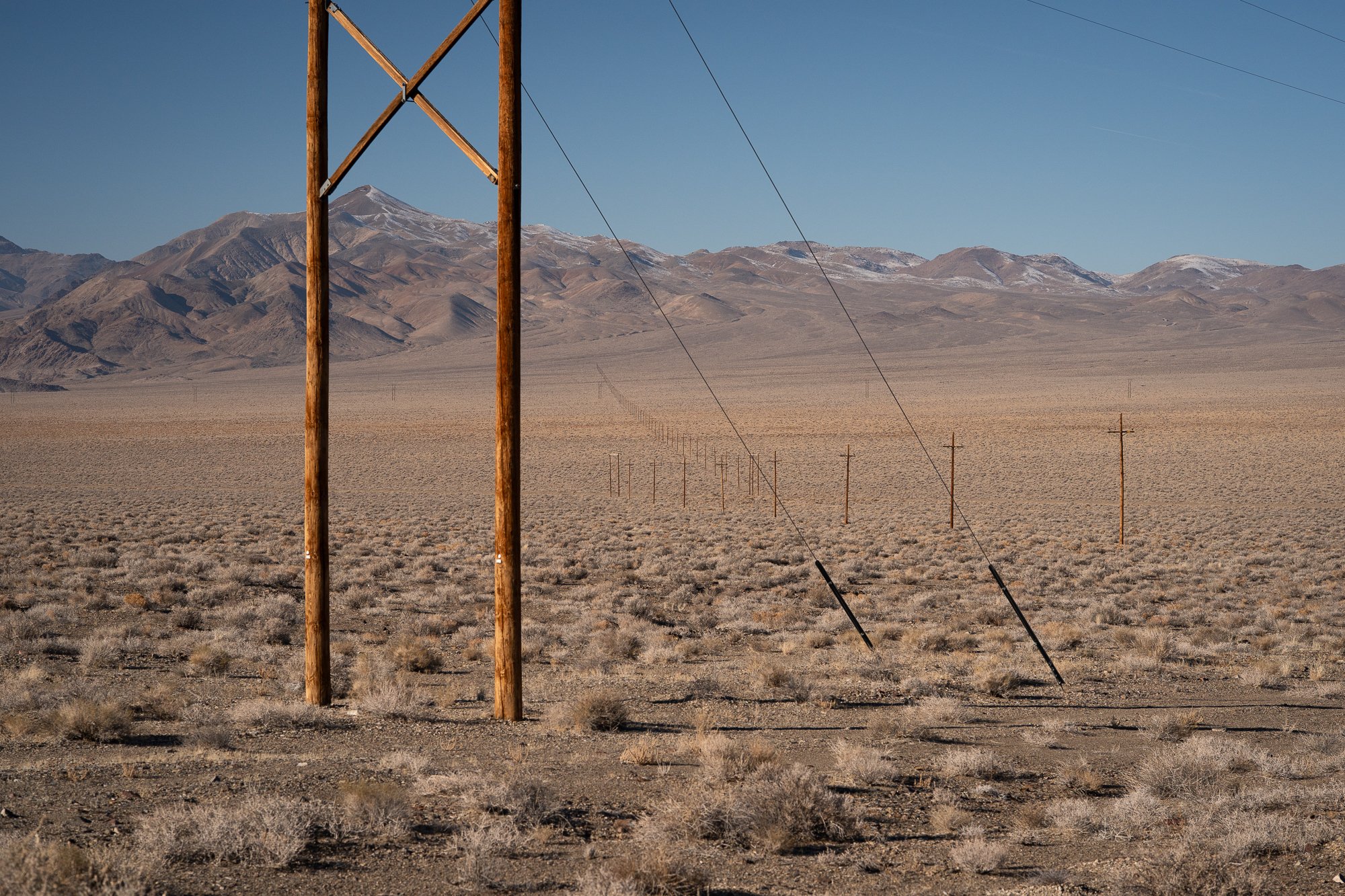
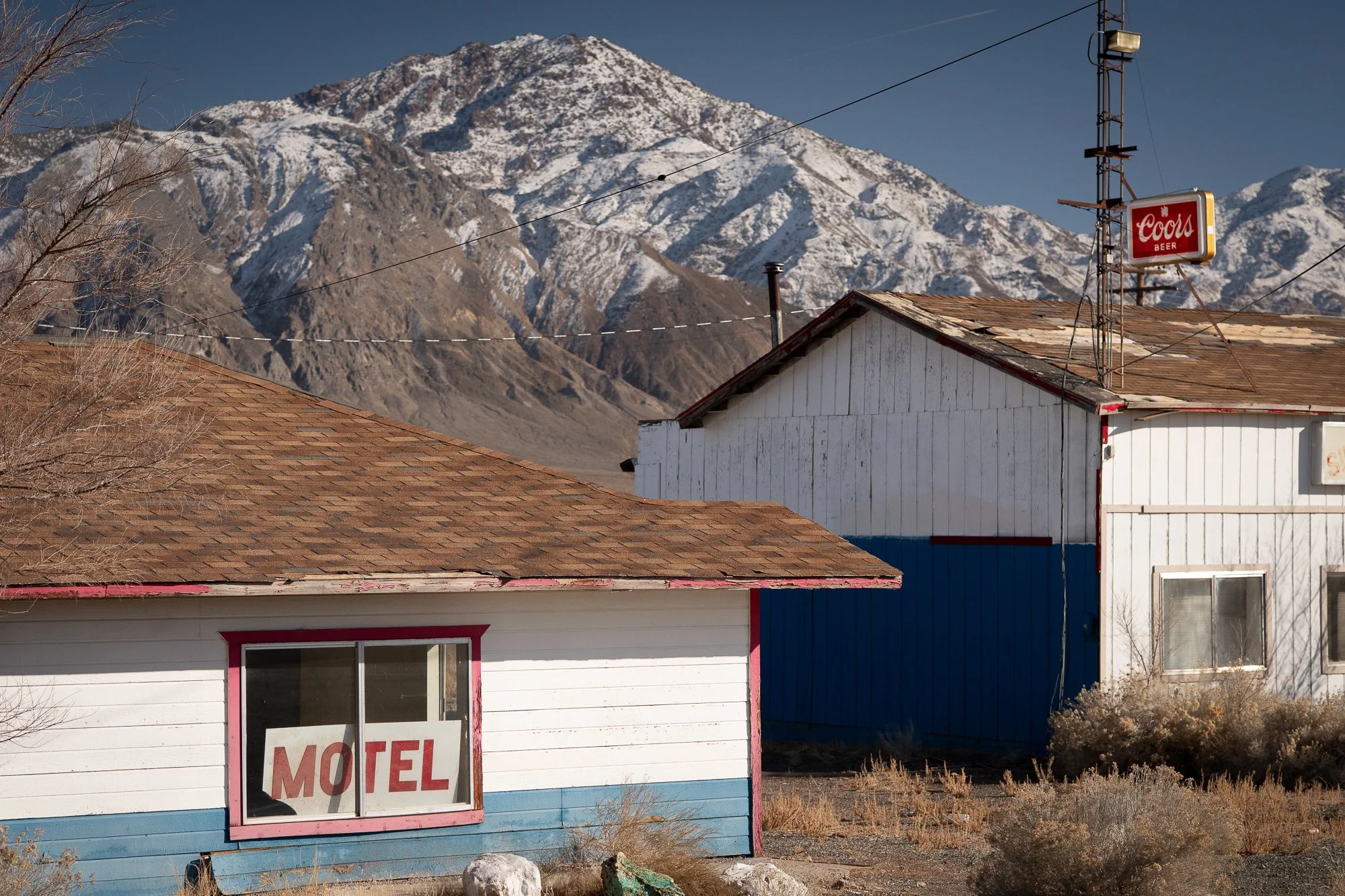
Last month I was working on a a few stories up in Montana without a ton of time to get there, so The 15 it was, straight up north from southern California. Regardless, I ALWAYS find time in-between destinations for one or many of my ongoing series. This trip found images that will fit nicely into the “America” and “Hotel” series.

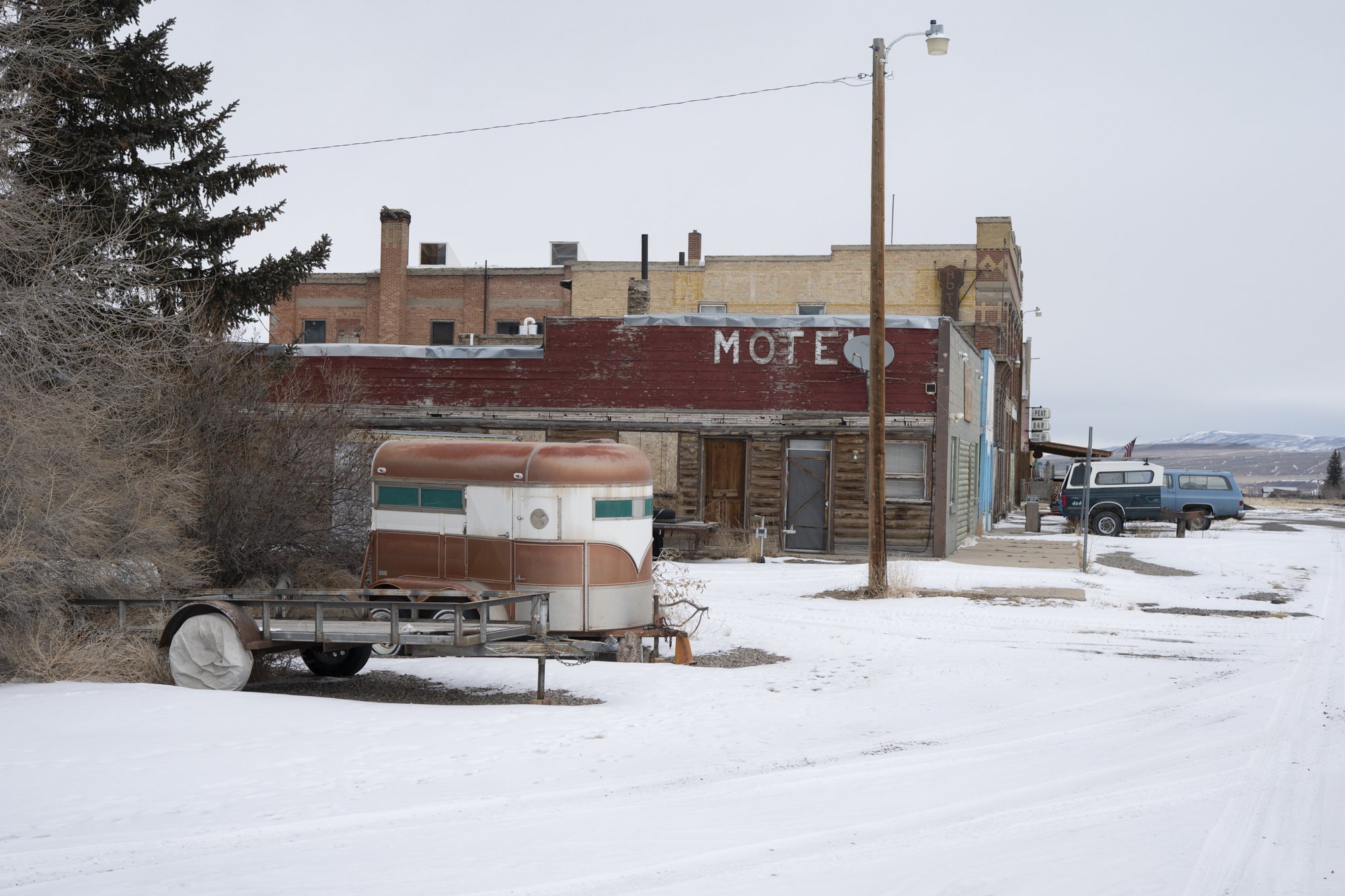
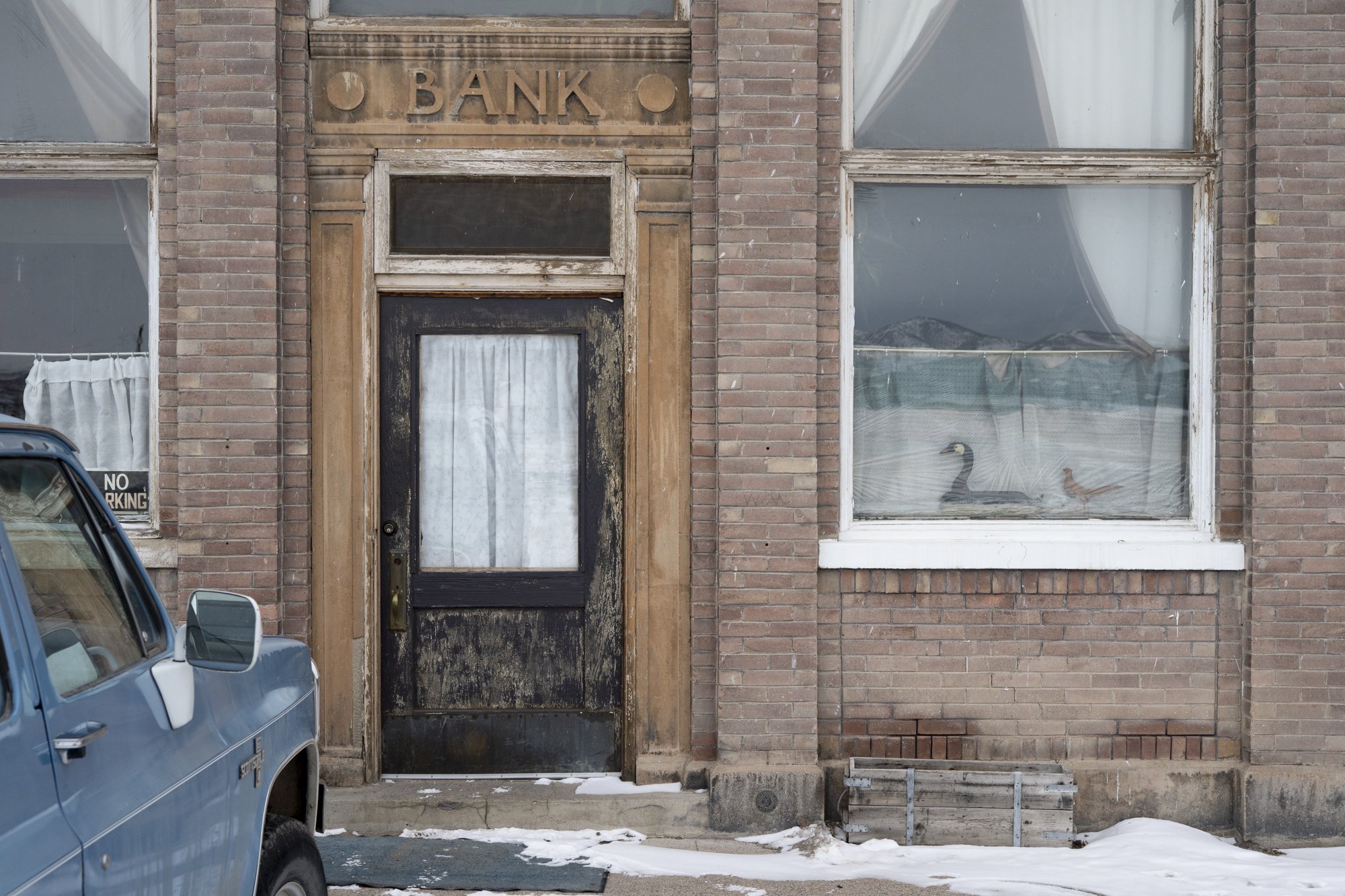
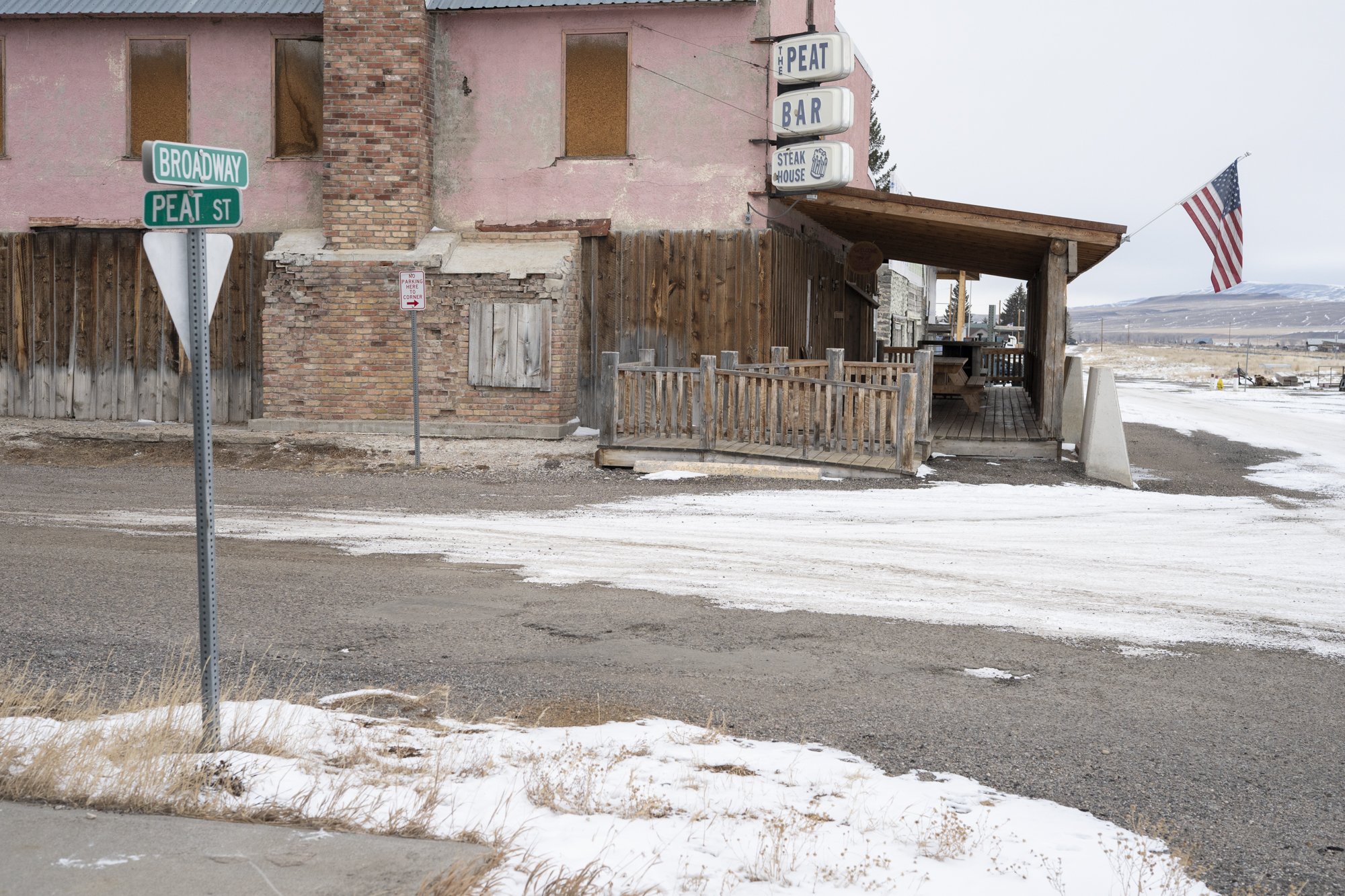
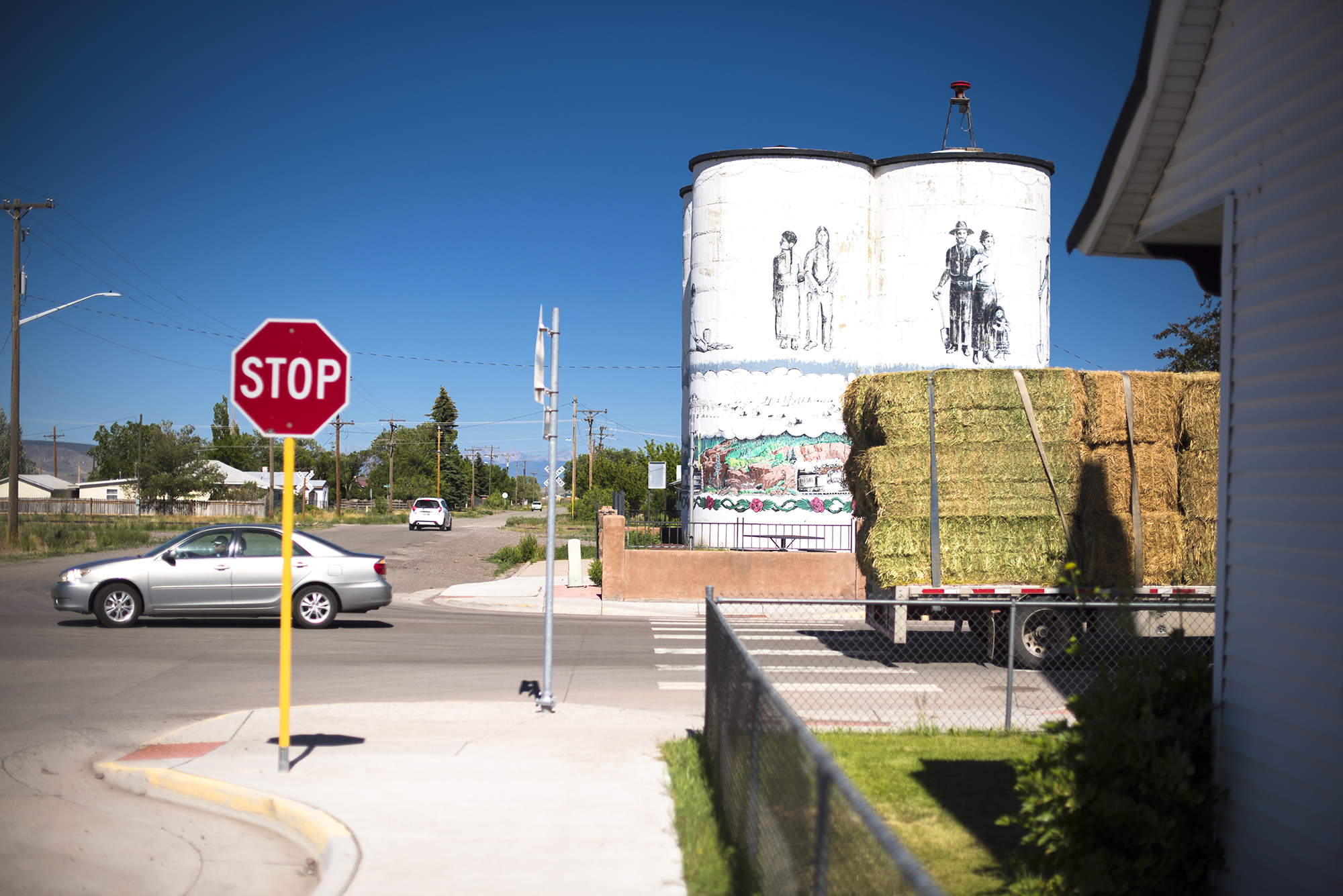
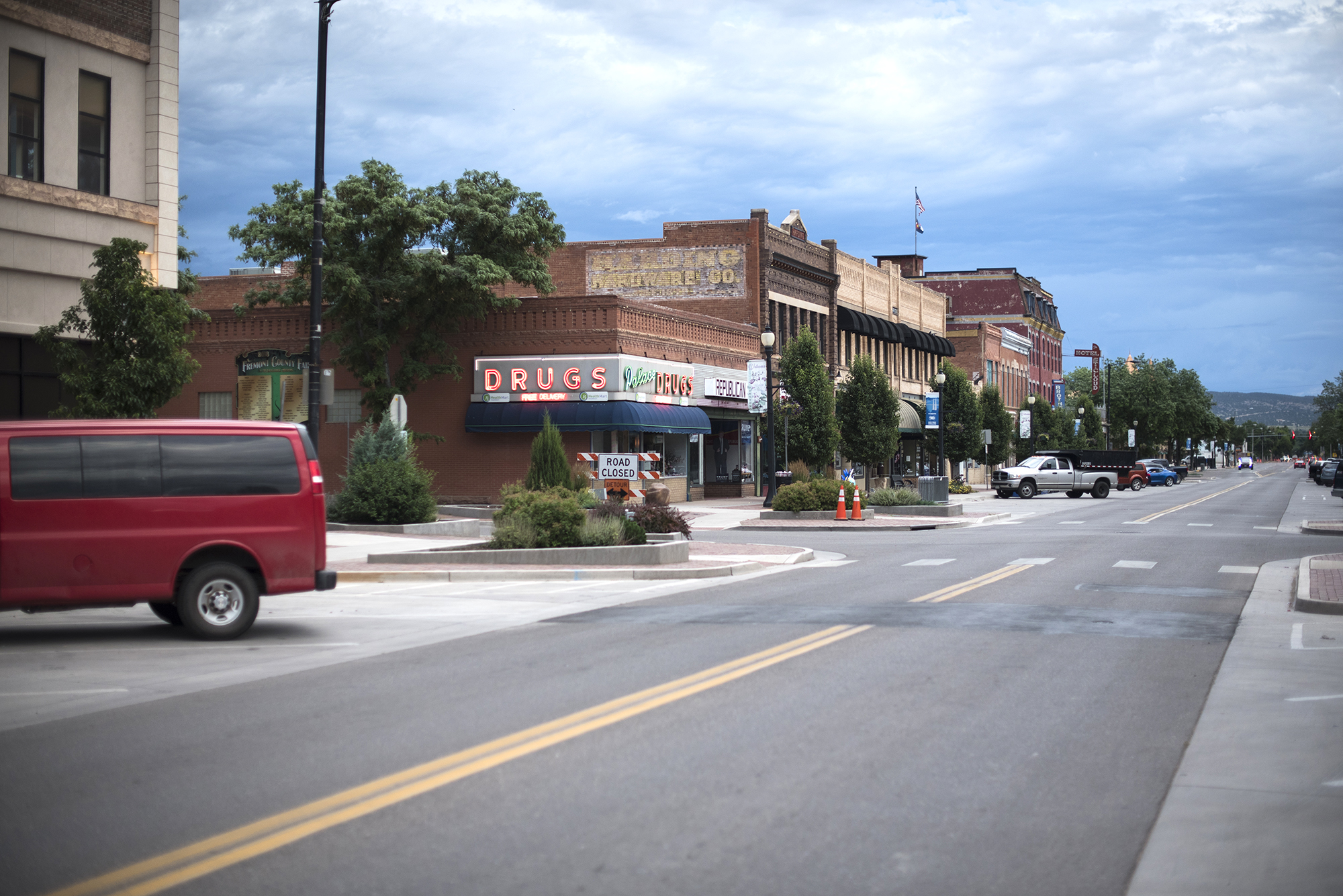
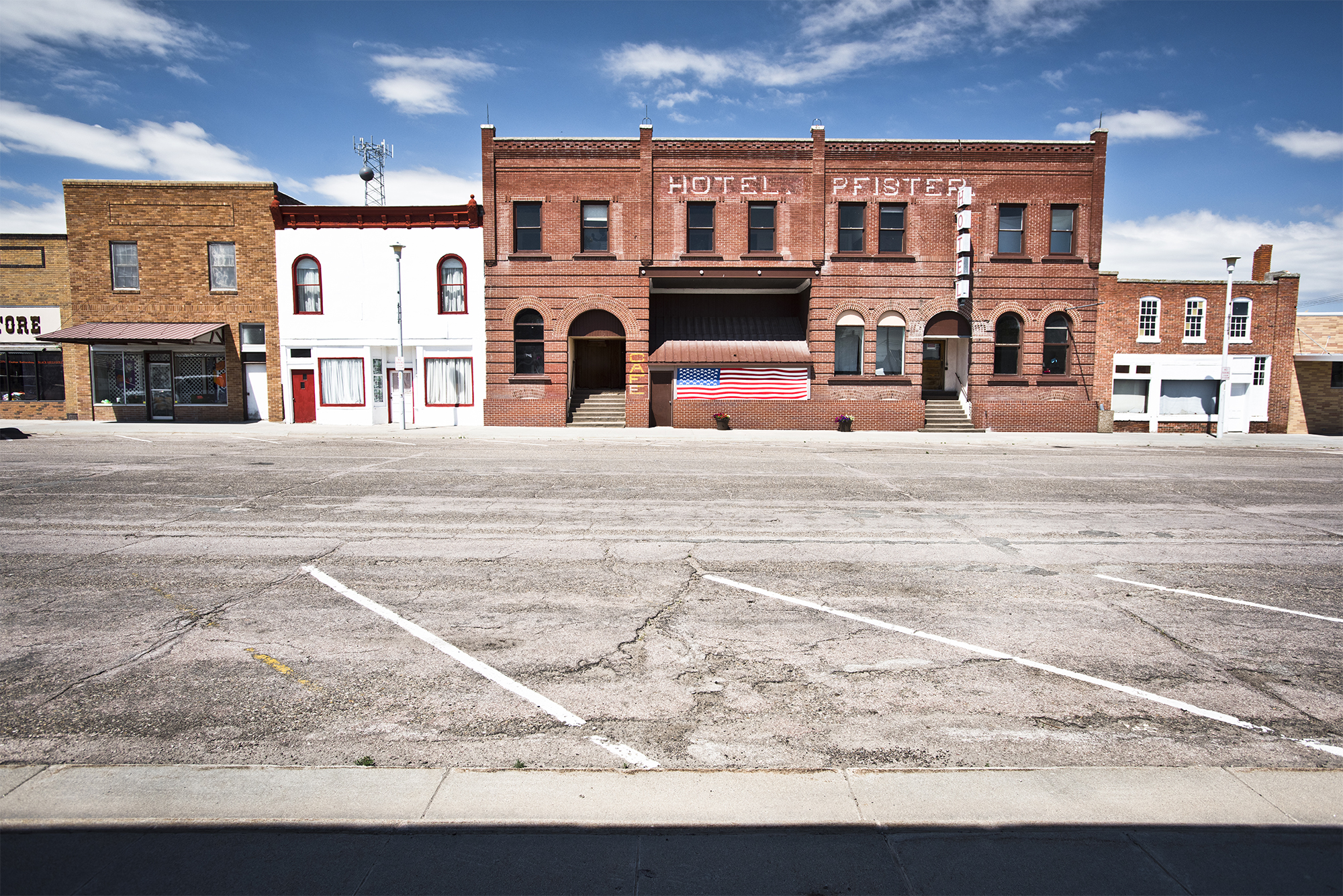
Places like Lima, Montana are endlessly fascinating no matter how many small towns I see. As someone who lives in a frustratingly populated place, it’s stimulating to stand in and see the beginning and end of a town only 75 yards long surrounded by nothing but rolling hills. You can’t help but wonder what everyday life is life for the people of that community.
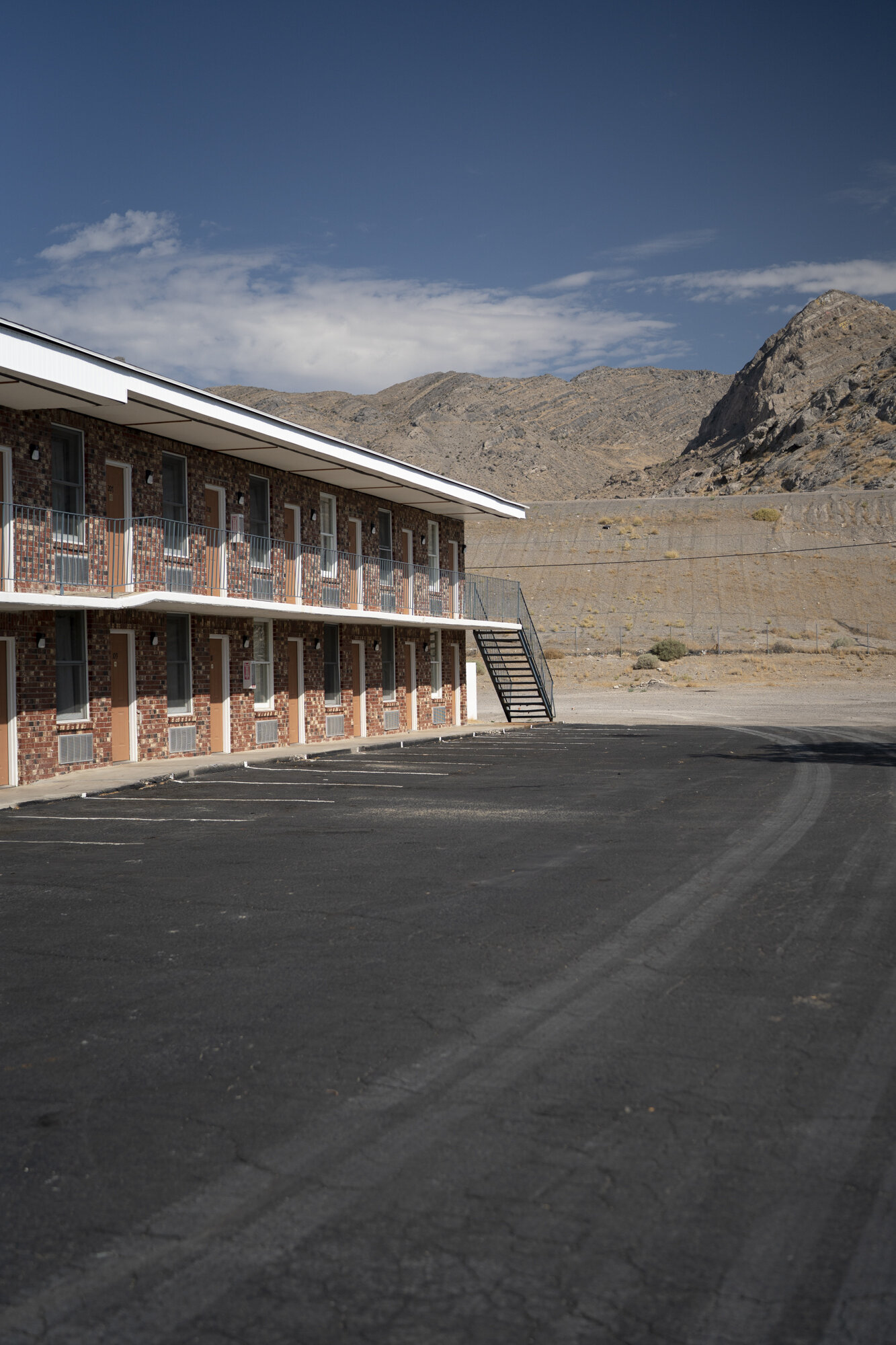
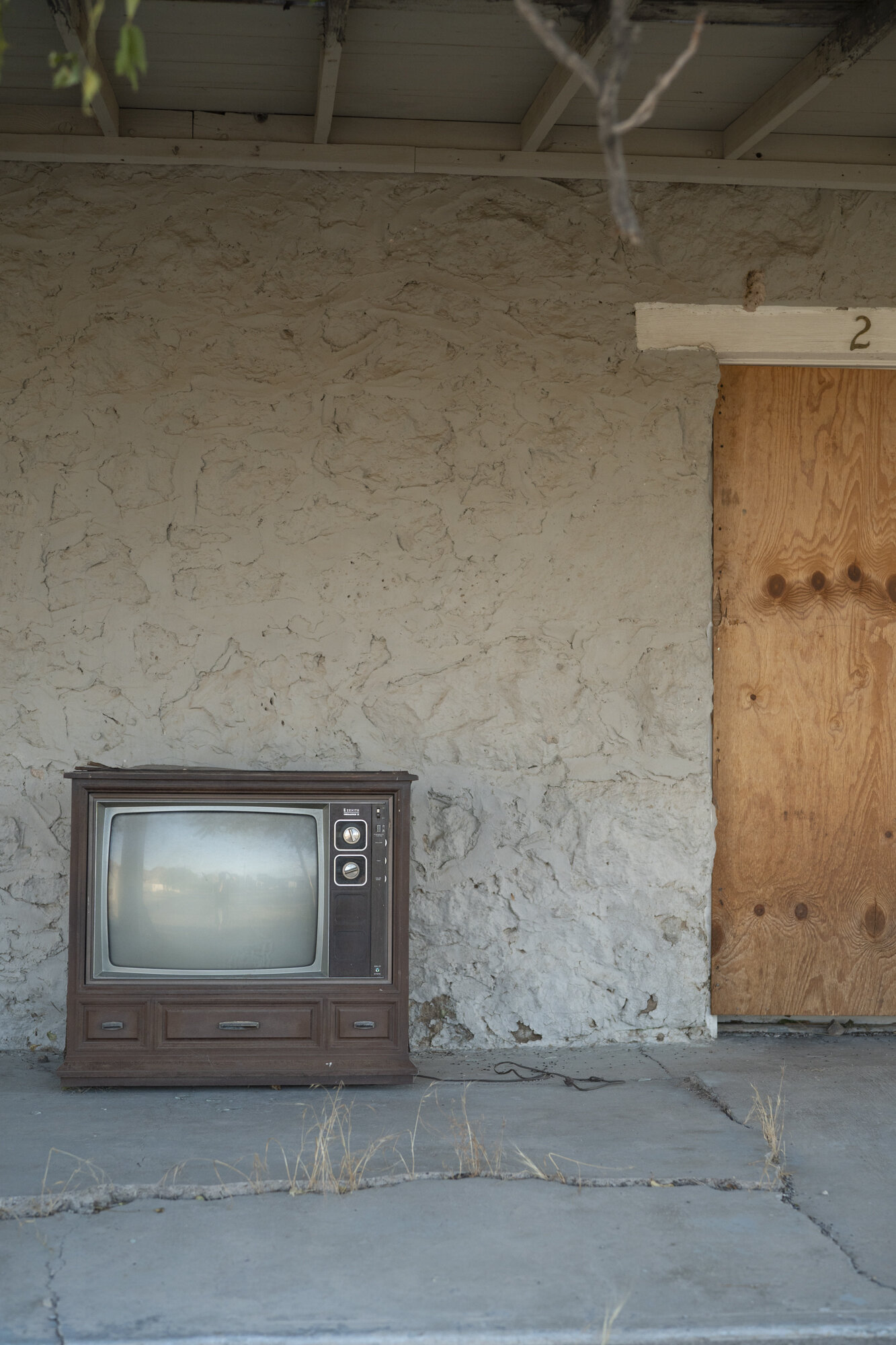
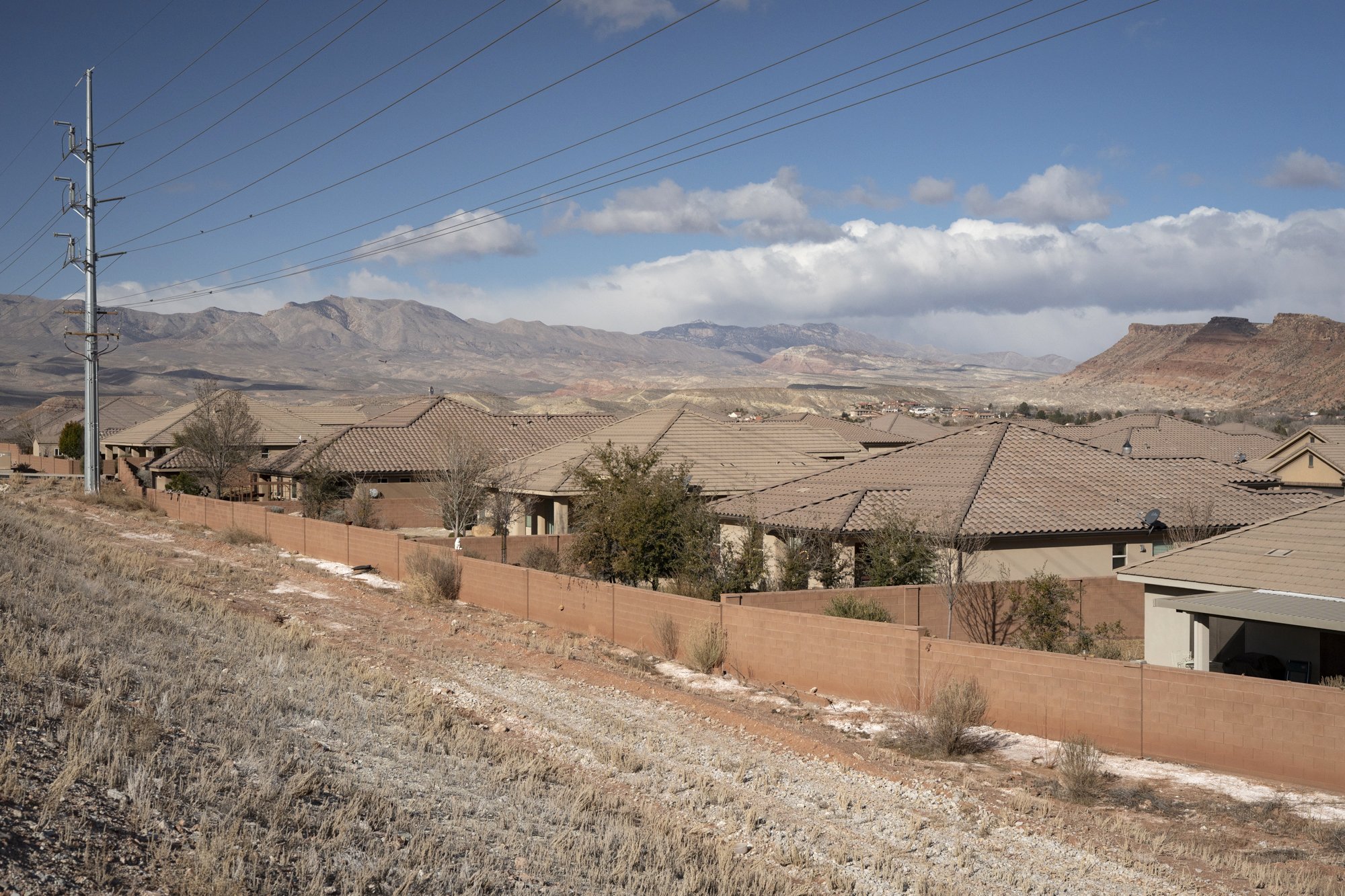
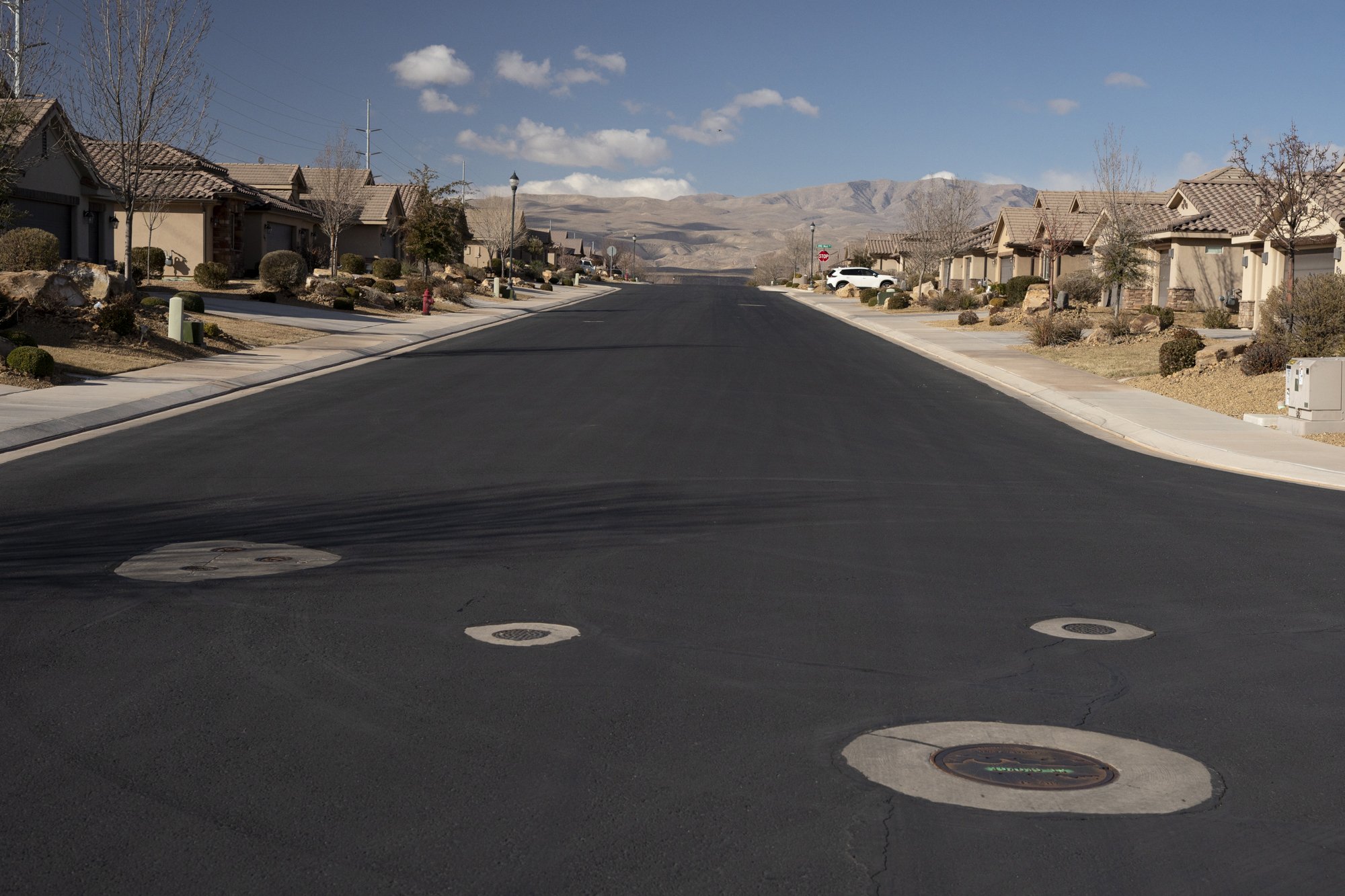
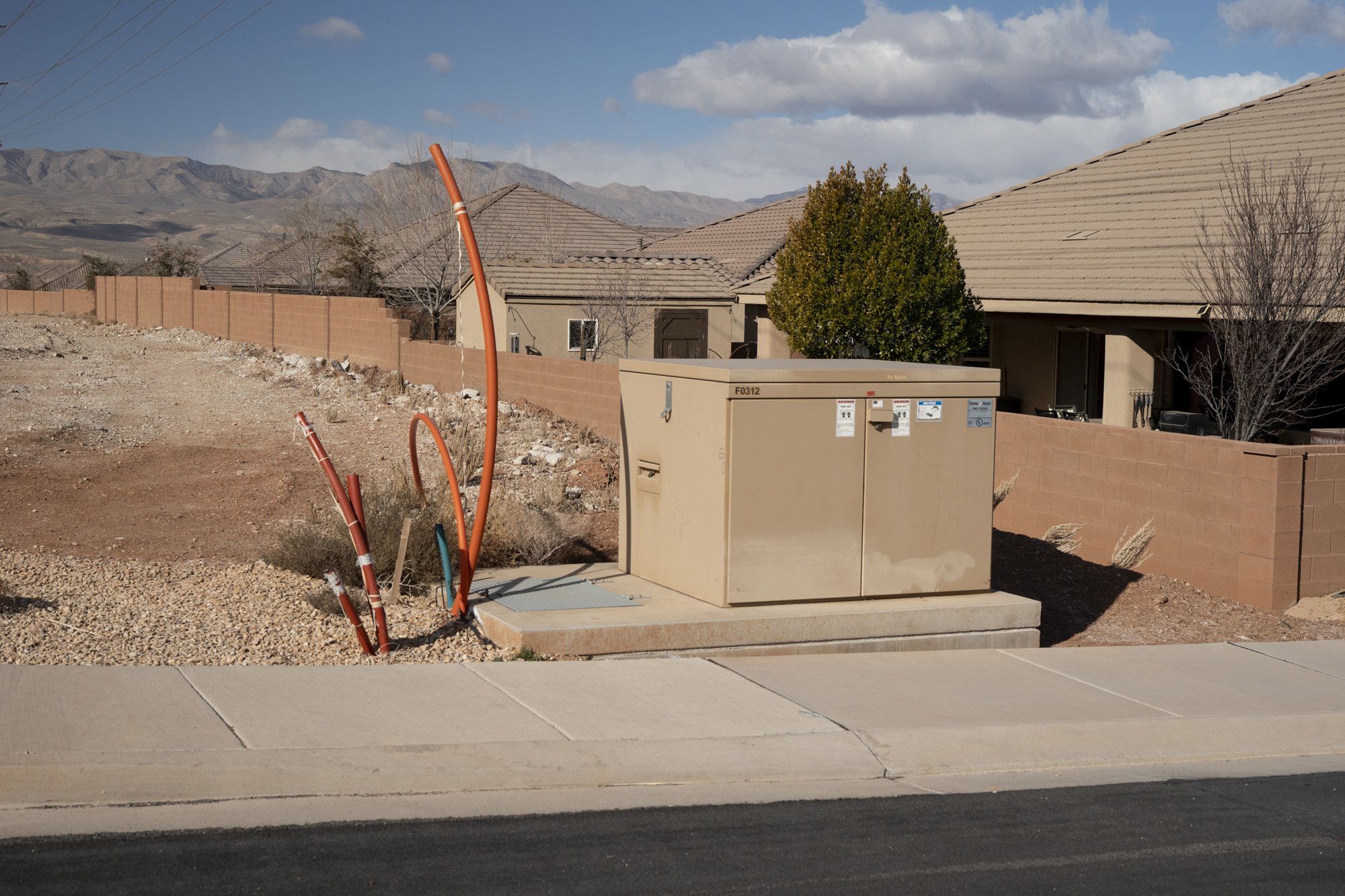
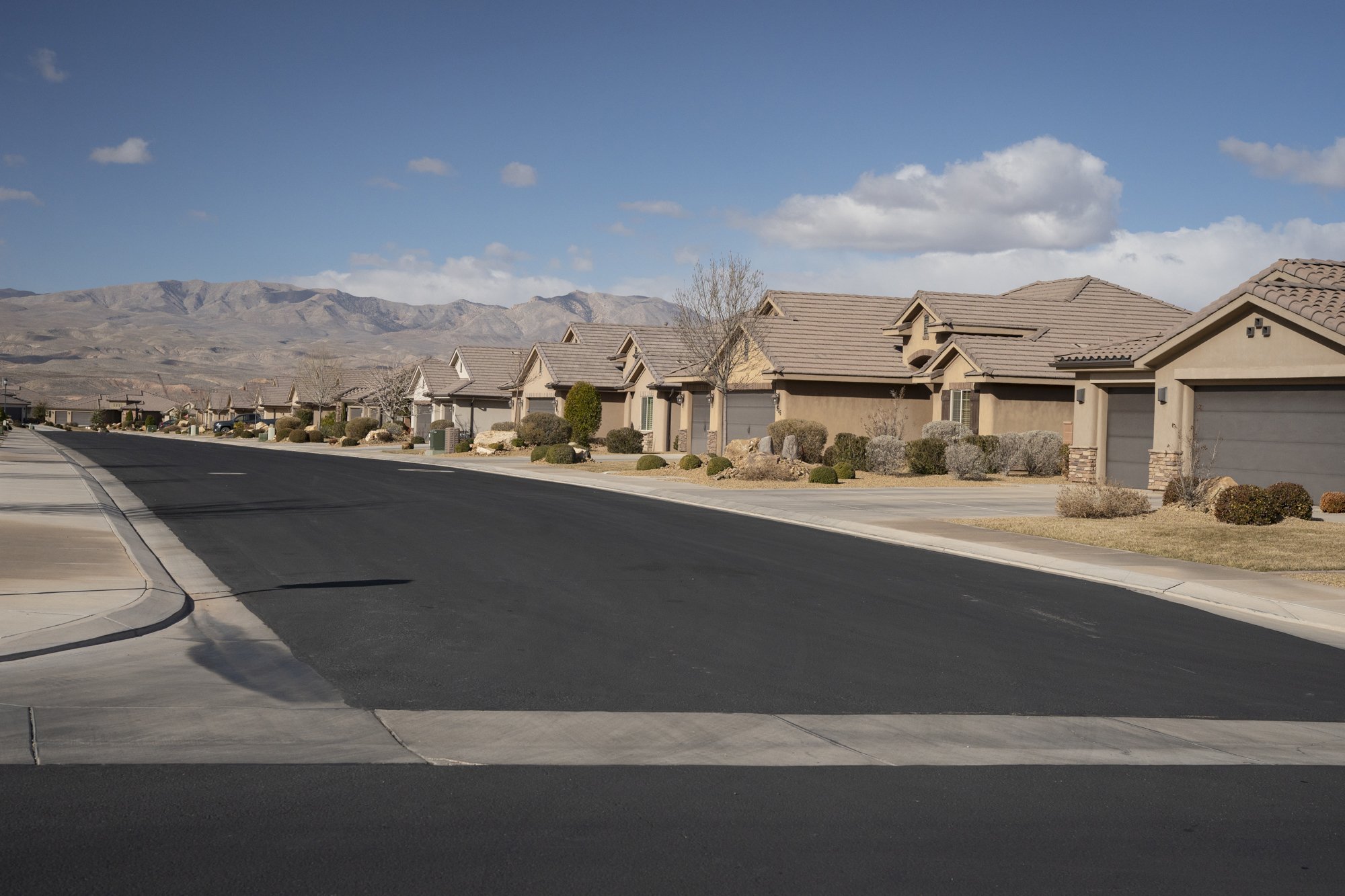
The second set of images were made in St. George, Utah. Also interesting for different reasons. Although much bigger than Lima, it’s still a small town “in the middle of nowhere”. One thing that stands out is the way they build homes there to blend in to the environment. The color palette matches almost seamlessly.

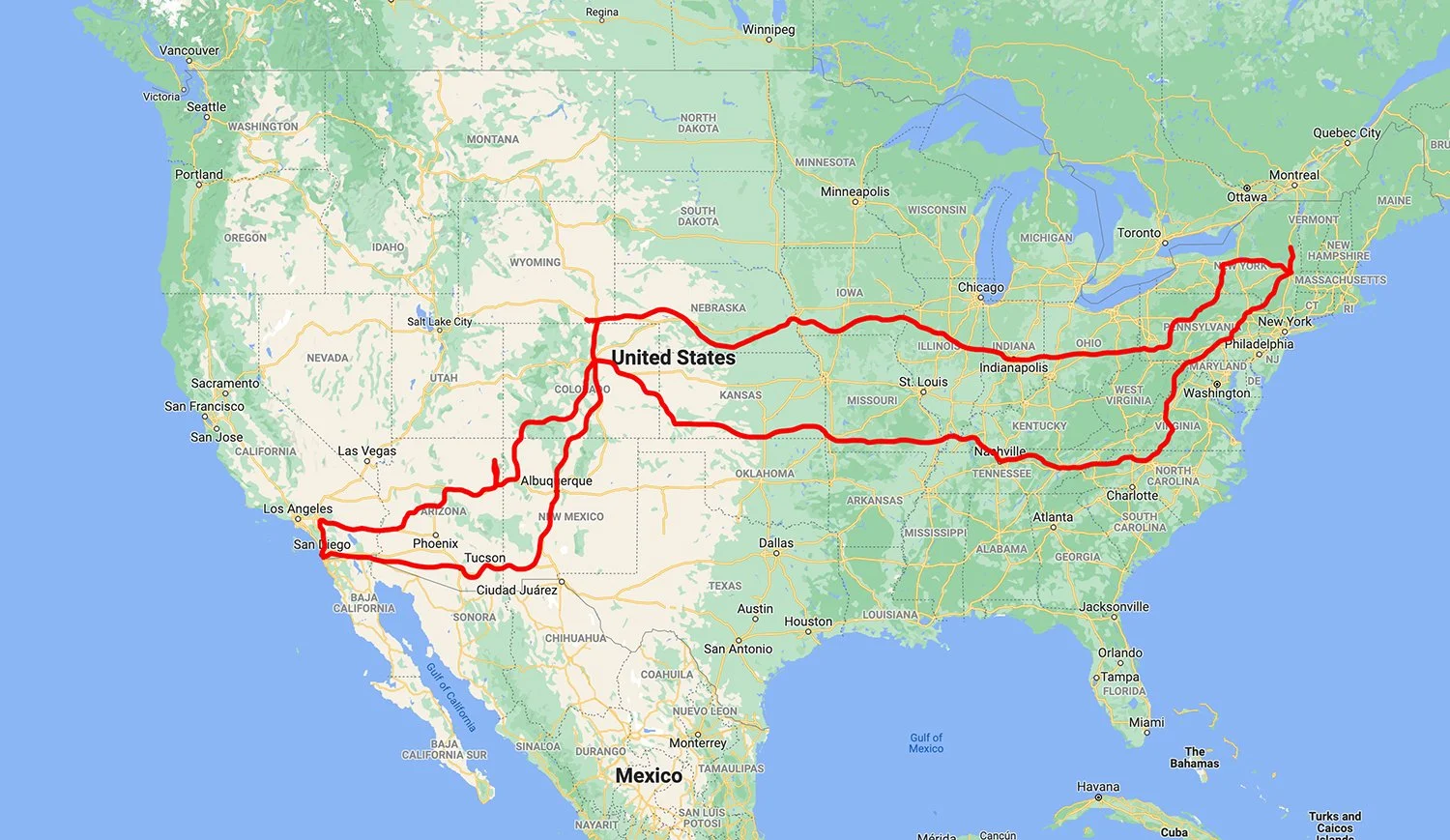
Road Trip Map

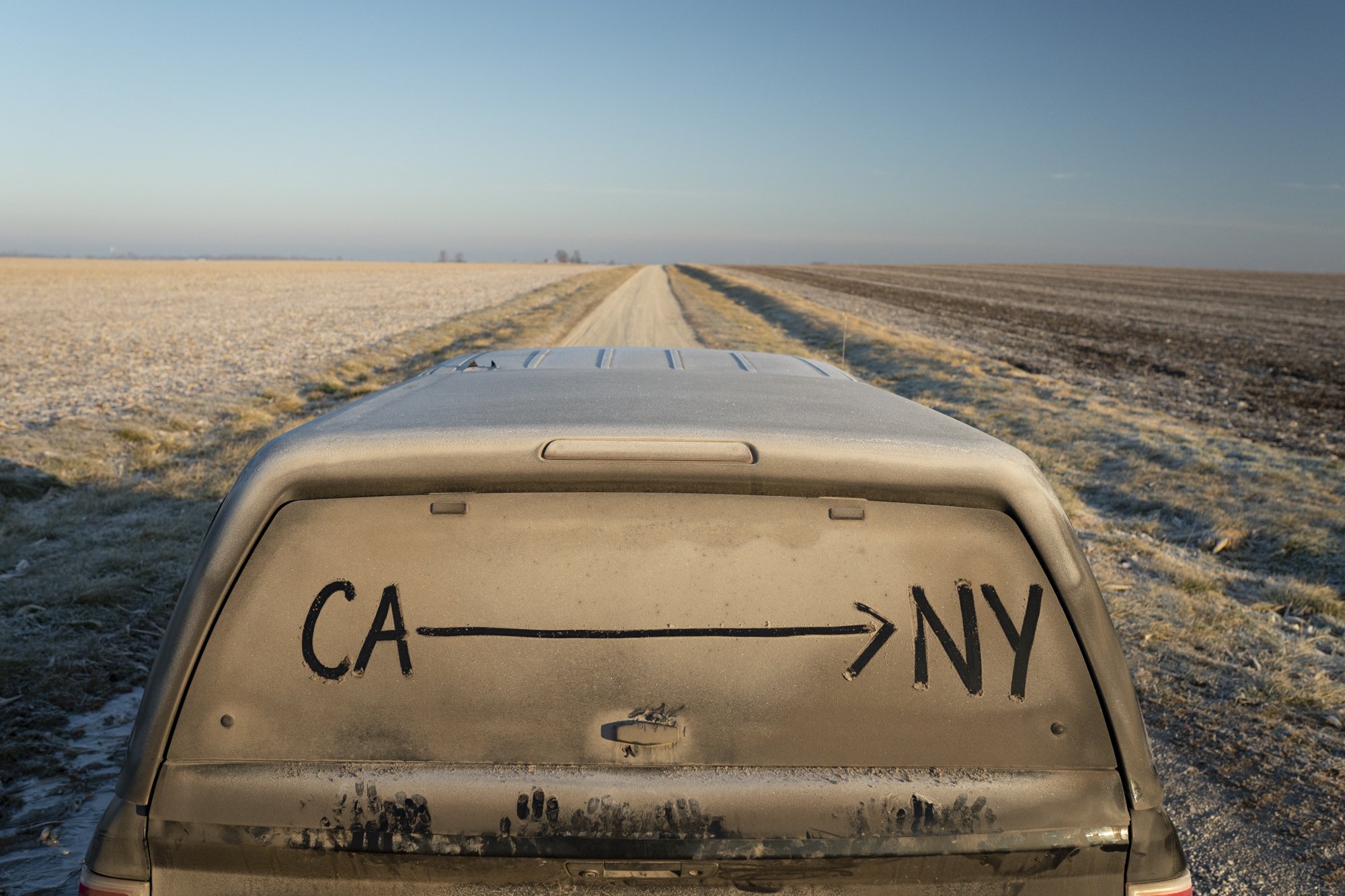
Mojo and I did it again. Another lap around the country filled with good times, foul weather, family, friends, and if all went even remotely well, a solid handful of images that I’m happy with. These trips never stop surprising me and hopefully they never do. Some days on the road you’ve got to scratch and claw to find just one decent frame. There were numerous times I asked myself “Is this America project done? Have I seen all there is to see?” Of course that’s complete nonsense. It was just frustration and exhaustion talking. A person could spend a lifetime traveling this great country and never see all it has to offer. The flip side is those days where you can’t seem to stop shooting. Those are a gift. You find that honey hole, you’re seeing really well, and the frames just start stacking up. That’s the best feeling in the world because you know it’s fleeting. You know it might not happen again for a couple days or 1,000+miles. There are so many factors at play that you can’t possibly pretend to know what’s going to happen out there. That’s the best part though. The not knowing. The hunt. It’s a drug.

Have a lot on the plate right now but will be going through this batch of images soon, so check back to see what I came up with out there.

American Photography

American Photography

Colorado - Utah

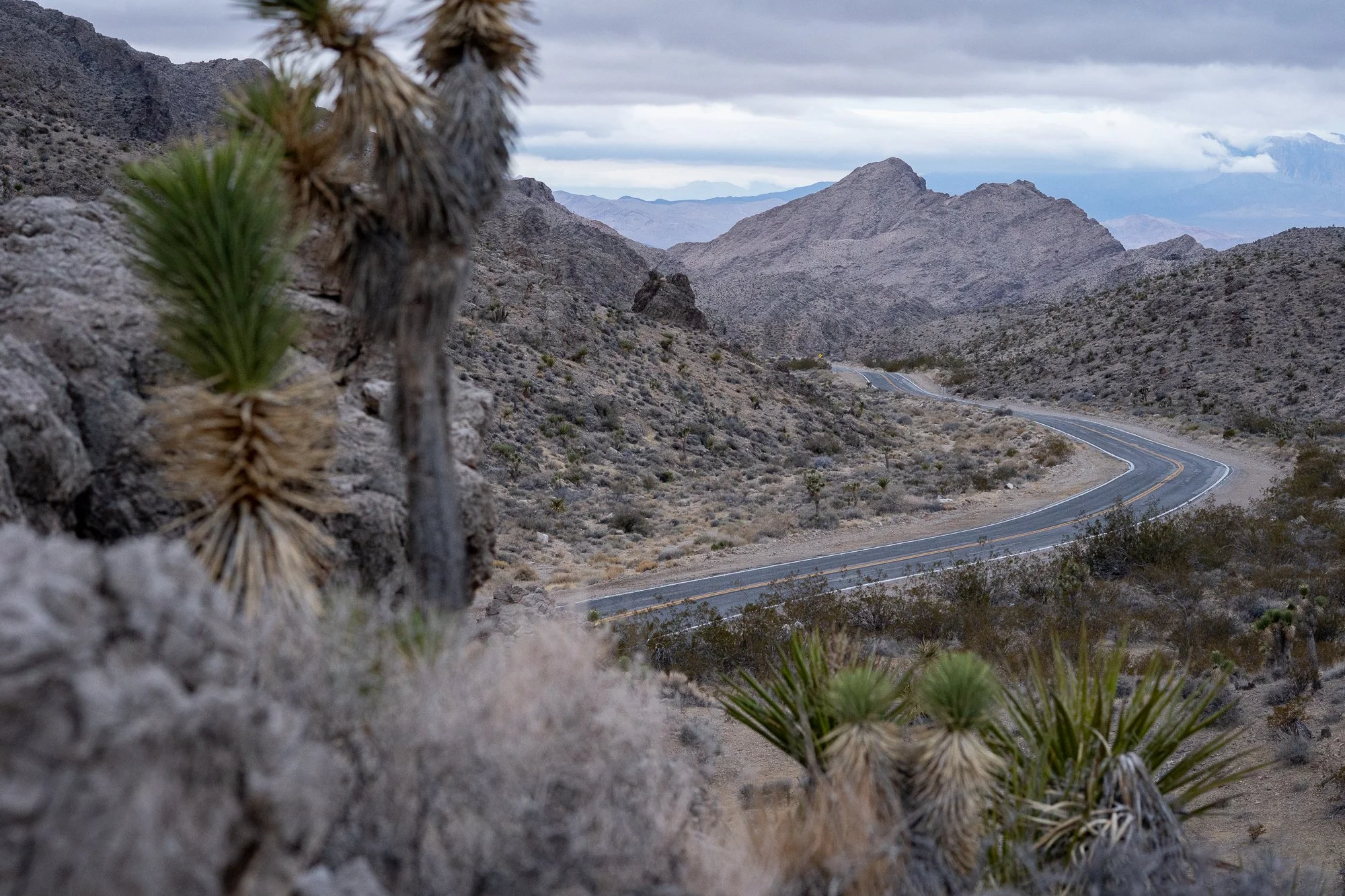
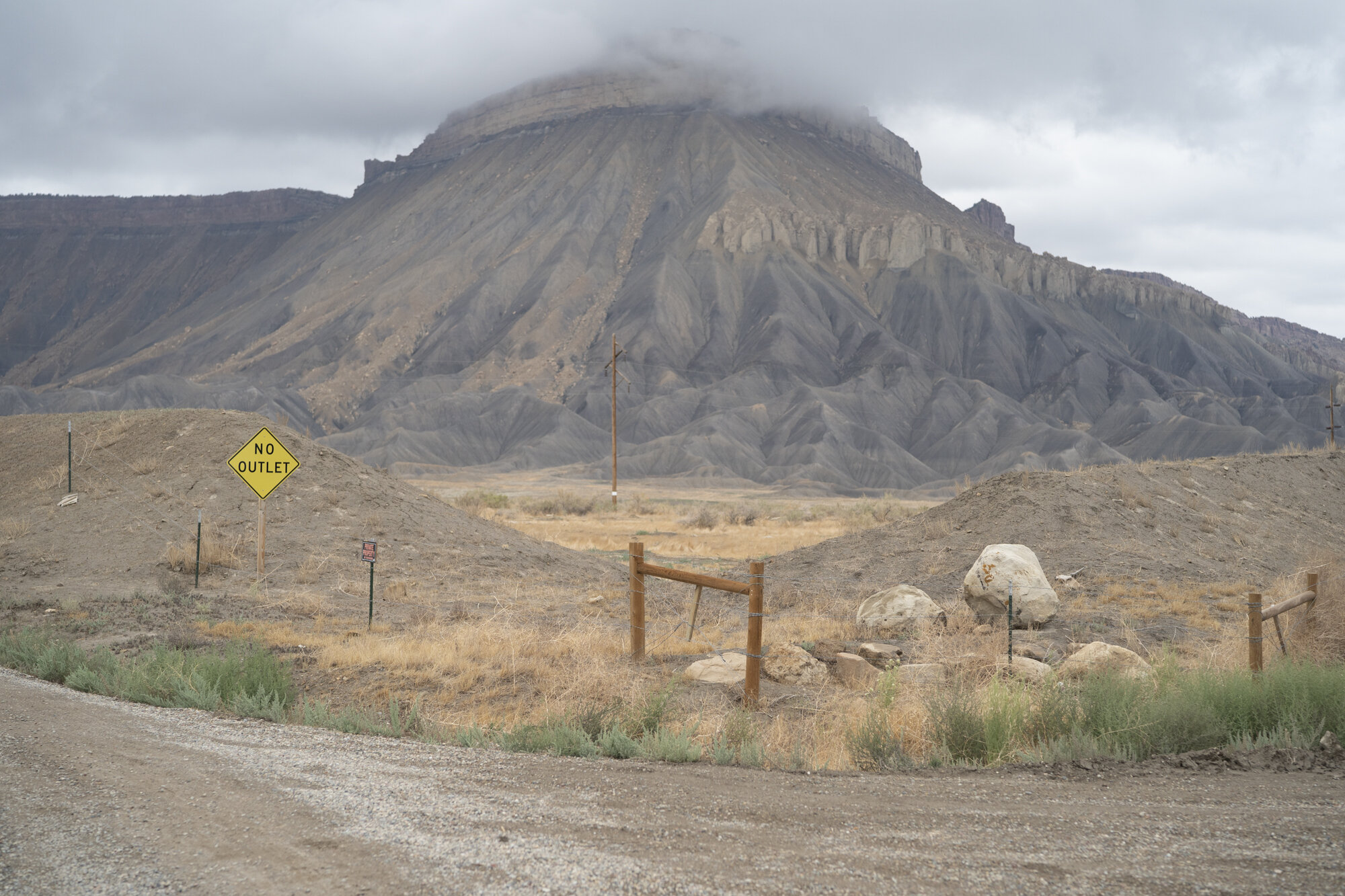
Whenever possible I make it a point to take new routes even when the destination might be a place (like Denver) I’ve been a hundred times. That way it’s easier to be inspired by new sights. Occasionally though, when you don’t have a ton of extra time, you find yourself on a familiar highway just motoring from A to B. At this point I’d be confident in my ability to drive from San Diego to Denver with a blindfold on. Still though, it’s a world class stretch of road that should never be taken for granted. Keeping this in mind, I returned to places along the way that I’ve photographed before, while remaining open to things that might have been missed before. Happy with the outcome.

Click here to see more from the AMERICA series.

American Photographs

American Photography - Nevada - Utah - Idaho

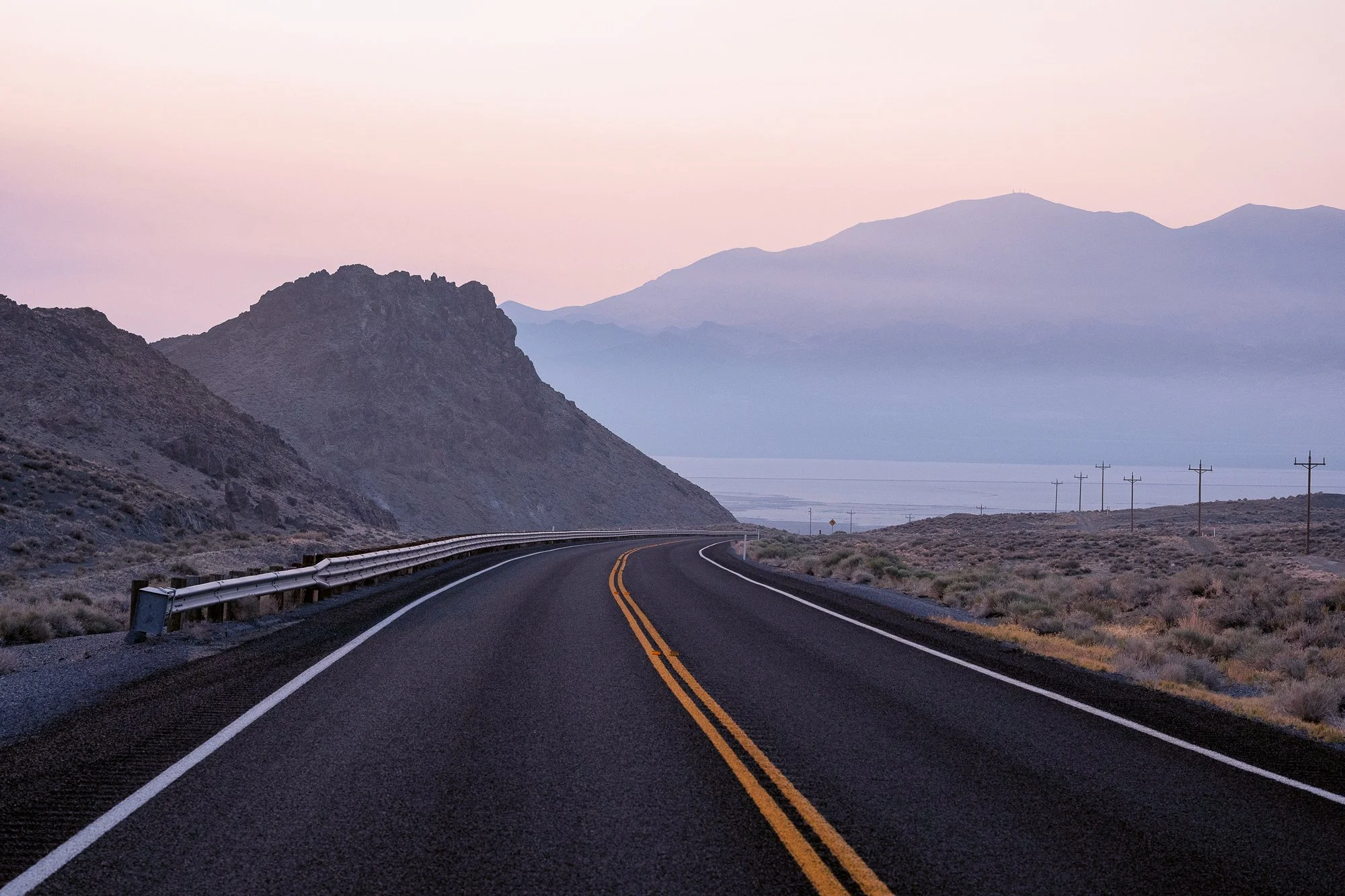
Finally getting caught up from last months road trip. These images are from the portion I did solo before Emily and Mojo met me in San Francisco after a commercial shoot. This section was fun, as all road trips are, but fu*#!ng hot. The first day driving up the western border of Nevada my trucks thermometer read 117 degrees. That’s just not the kind of weather humans are supposed to live in. And quite frankly, it takes all the damn fun out of being there. You know it’s bad when the heat smacks you in the face the second you turn the air condition off. Like the AC is just doing it’s best to hold the heat at bay, but it’s a losing battle. Aside from all that, I really enjoyed seeing new parts of Nevada. It’s a very interesting state, that most take for granted as one enormous desert that holds Las Vegas in it somewhere. Would like to spend more time there once the temperature drops, otherwise it’s just not feasible to shoot outdoors for more than a few minutes. Maybe that’s just me? Suppose other people can handle it better than I can??!! Getting up into Idaho it was more like 100-108, which felt like a vacation from 117. Then on into Wyoming where the weather was just right up in the Tetons. Met some friends there are did some fly fishing/backpacking. More on that later.

Click here to see more from my AMERICA series.


American Motels

American Motels - Road Trip Photography

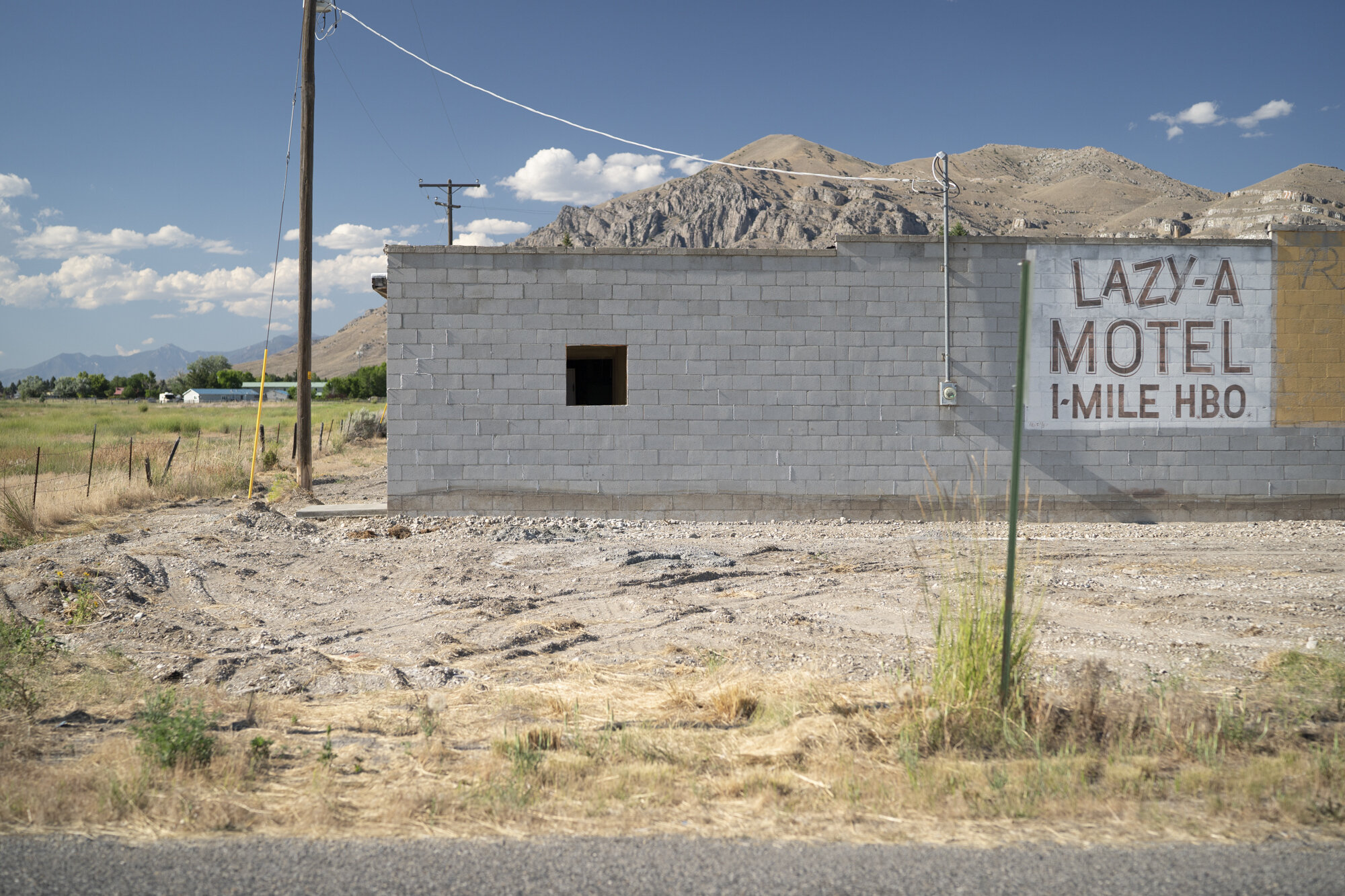
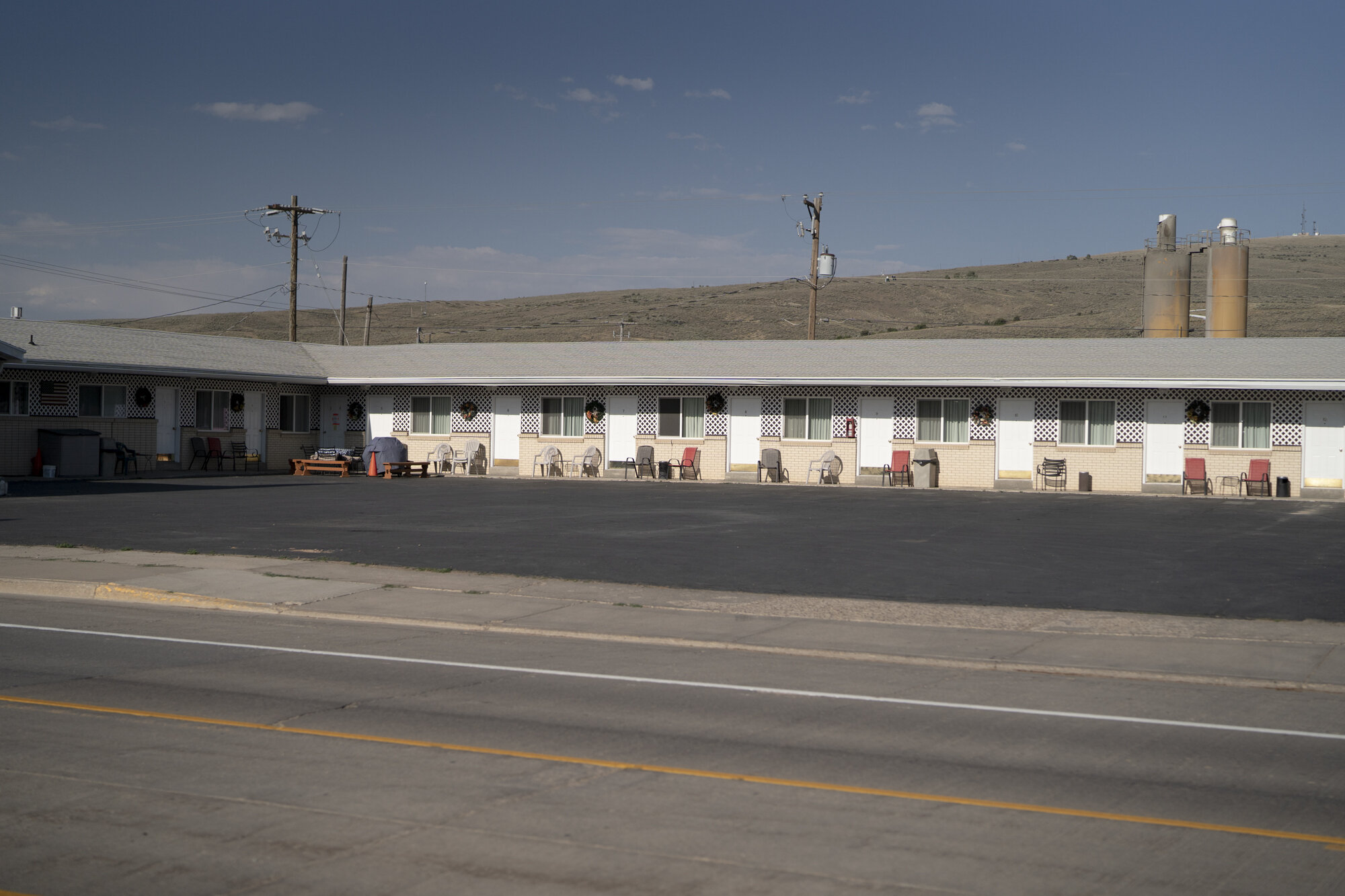
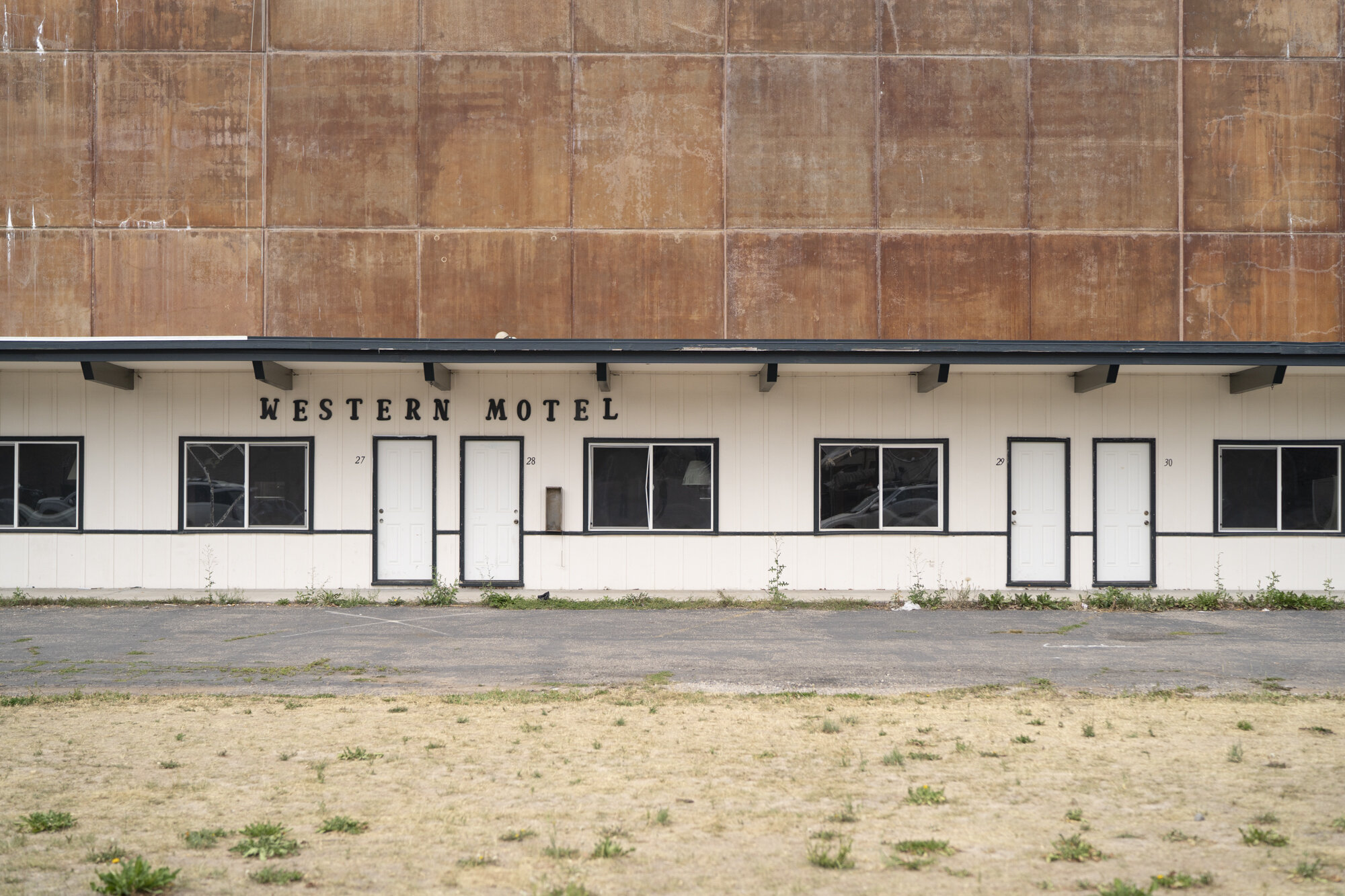
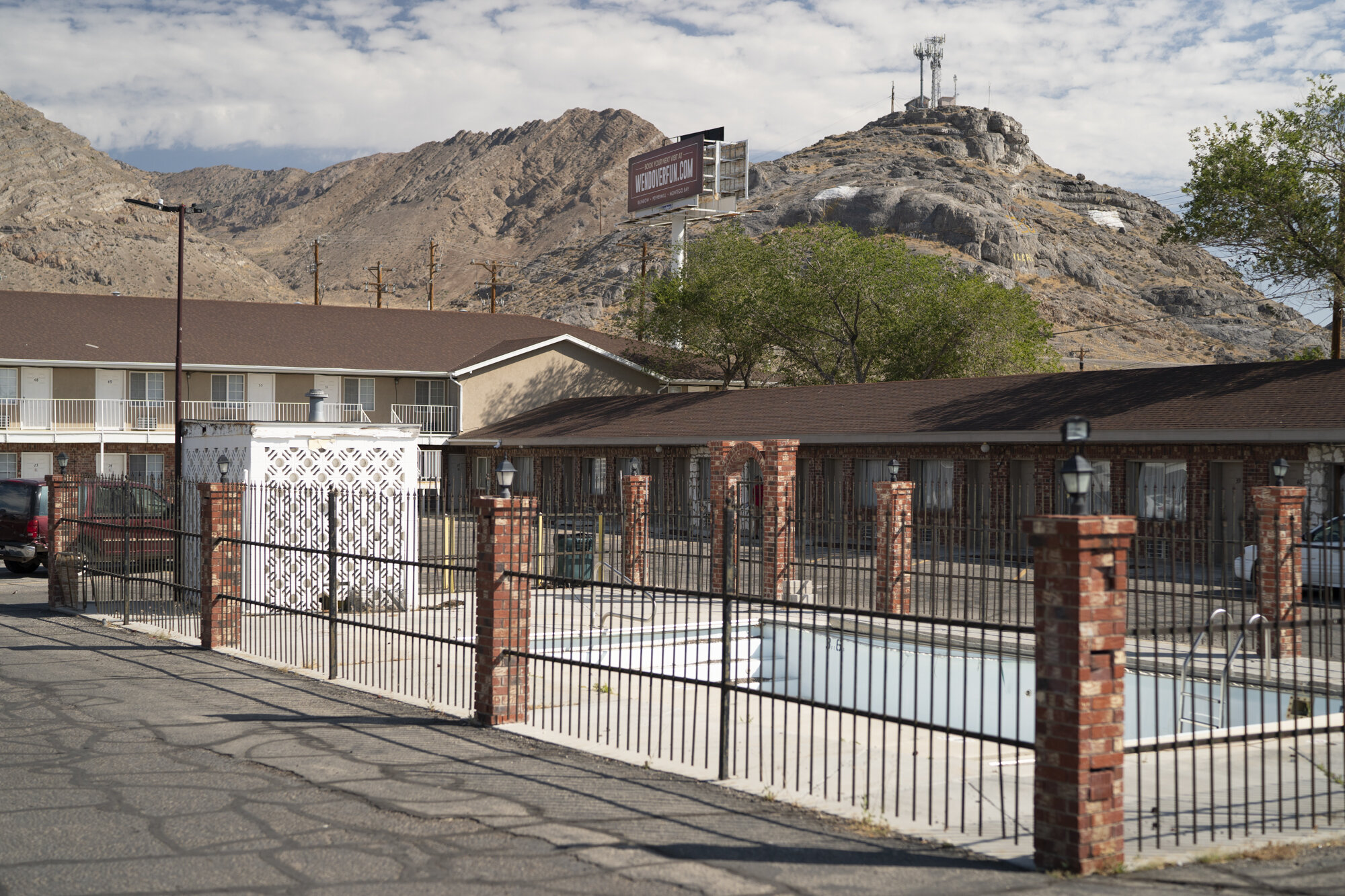
Apparently my fascination with small town motels continues? Not sure what that is. Perhaps it’s because I’ve stayed in so many during all my time on the road, but they fit nicely into my America series either way.

Click here to see more from the America series.

American Photography

Photographing America - Road Trip

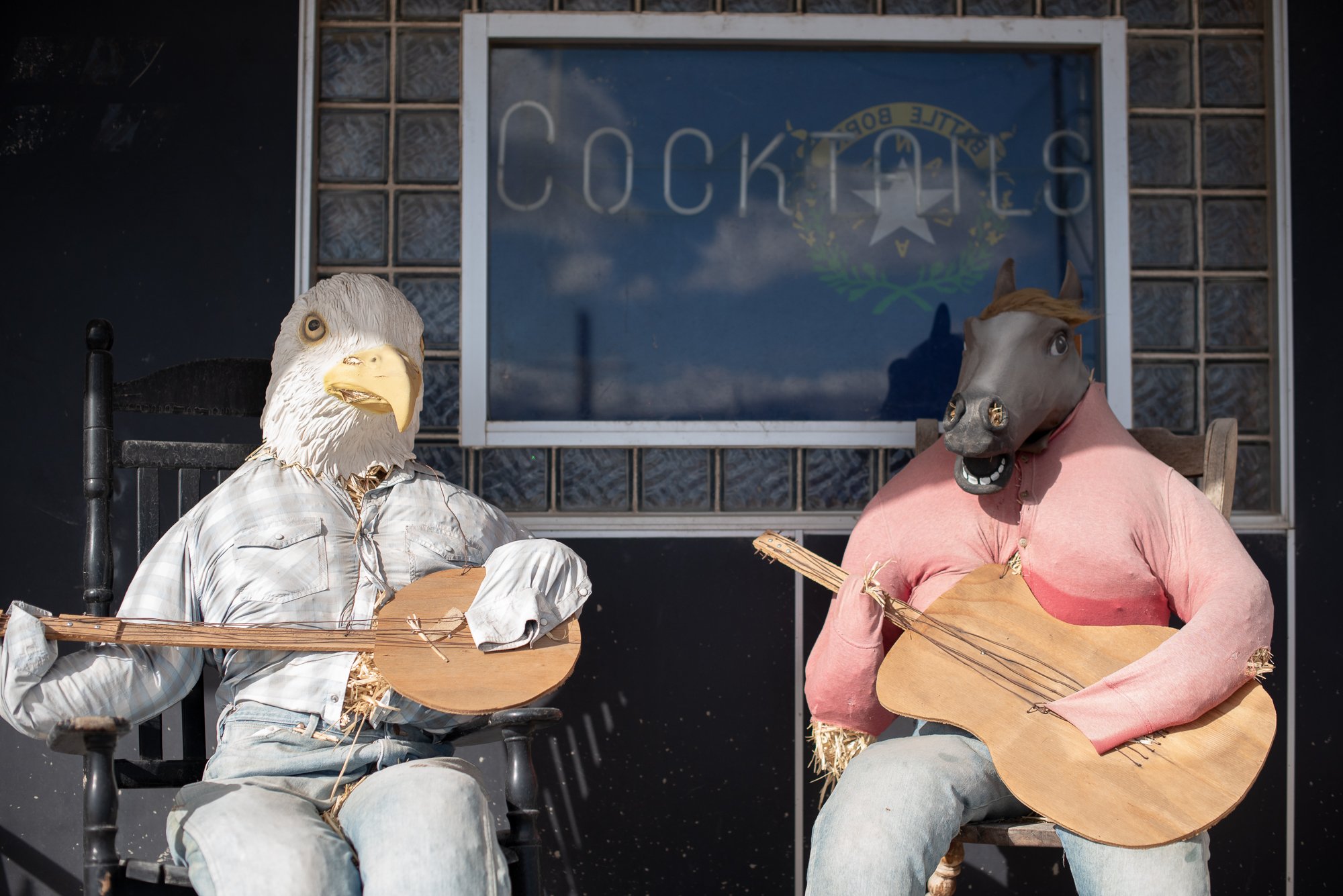
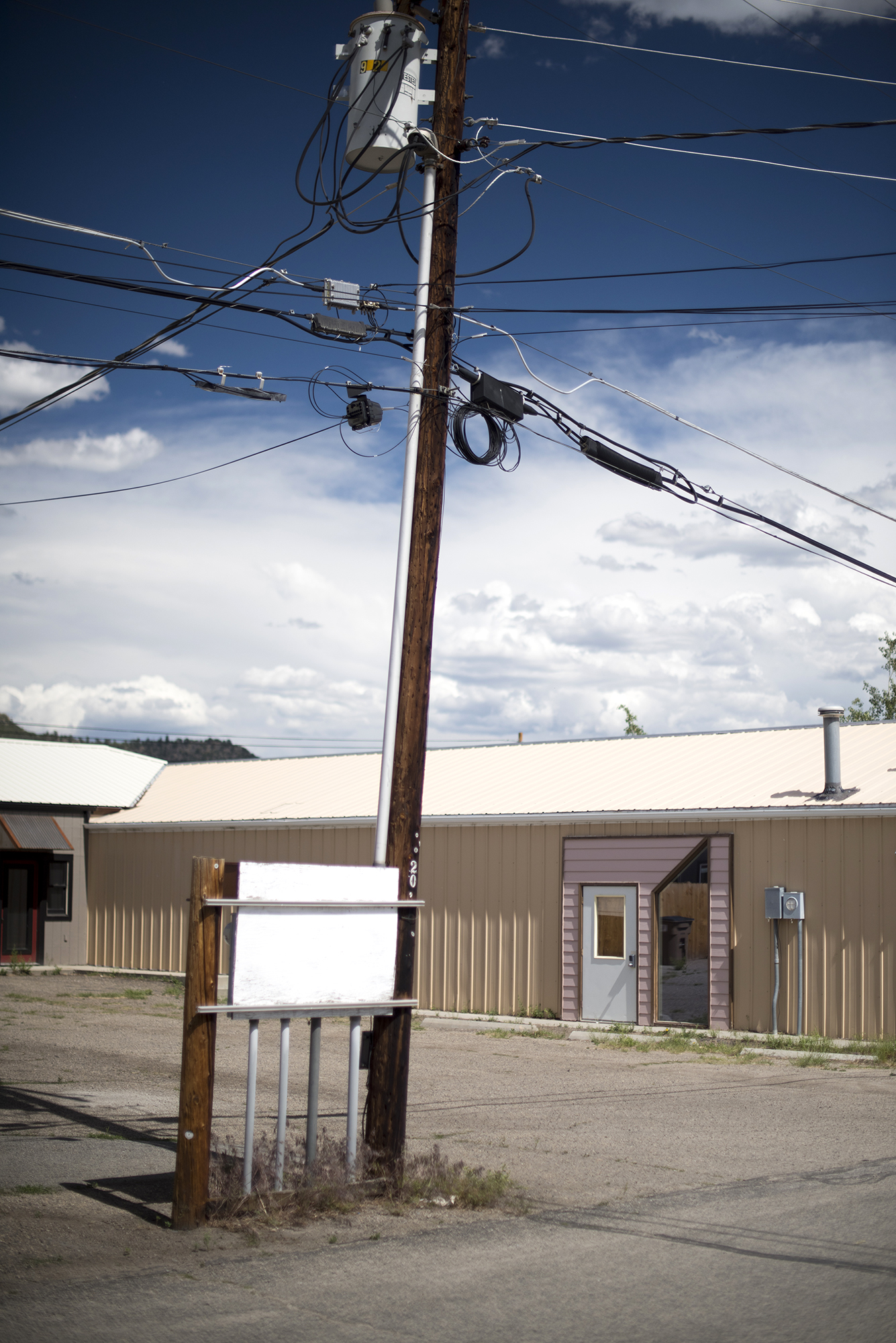
Suppose the only way to describe this set of images is quirky? If you come up with something better, let me know. They were all made on a recent road trip from San Diego to Colorado and back. This kind of shooting wasn’t the main focus, but it is always a focus while on the road. Did a lot of with the 50mm, which has been sitting on a shelf for the better part of 5+ years. Odd how you fall in and out of love with different lenses. Could have cared less about it for these last 5+ years, now I can’t get enough of it.

Click here to check out more from my America series.

Source: www.robhammerphotography.com/blog/america719

America

Last month I watched an on-line talk given by a photographer that I very much respect. He dished out a lot of great information, and briefly mentioned something about another photographer that he very much respected. The remark was about a book that photographer was about to publish, and the speaker said "I already know what it looks like". He hadn't seen the book, or any of the images, but was referring to the fact that the photographer was very predictable. And that stuck with me. He also didn't mean any disrespect at all, was just stating a fact. After thinking about it for a while, I realized how important it is to constantly be charging ahead in different directions. That's something I've always believed, but it was cool to hear from his perspective. As a photographer, you'll always have your "bread and butter", but it's boring to rest on that. Branch out and try new things. Develop portfolios in areas that your audience is expecting. Challenge yourself even if it means failing miserably for a while. In the long term, I believe that's the only way to make it. 

Last month I did another cross-country trip from San Diego to as far as Plymouth, Massachusetts. Time on the road was shorter than I initially planned for, but it's always great. Shot a lot of images that are probably a lot different my norm, and people might not connect with them right away, but whatever. Some of them are certainly winners. I enjoy looking at them, and can see this stuff developing into a much larger portfolio. My main objective on this trip was to wrap up shooting on the barbershop project. So all of this "America" stuff was on the side, but I love it, and am always eager for more. 

Click here for more AMERICA. 


American Photography

My America gallery of images is the one that gets the least attention and interest from people/clients. Which I find strange because sometimes I think it's my best stuff?  Either way it's something I've been shooting for a long time, and will continue shooting forever. Lately I've been getting a lot of images request from clients for other bodies of work, which is always a gift because it forces you to go back through old hard drives, causing me to look at images I haven't seen in a long time. And whatever it is about time, that factor has made turned me on to images that I thought were worthless in the past. That might be a problem, but then again it might just be part of the process. Regardless, I'm happy to have stumbled upon these images that have been during road trips from as far back as  2011, and as recently as a few months ago. Can't wait to get back out on the road. 

Photographing America

American Road Trip Photography

My truck is just hitting 8 months old, and she's already got 30,000+ miles on it. That's a solid 8 months. This most recent (8,519 mile) road trip was memorable for a lot of reasons, just like all the others. I love looking through the images, and this is the quickest I've ever posted after a trip. But it's not usually until many months down the line, that I realize what was the most enjoyable. And on the flip side, what I fucked up on. There are always a few images that make me wish I had kept shooting at that particular location. Sometimes you can't though because it's unsafe, too dark, or whatever. So learning to except it, is a must. One thing I definitely learned is the necessity of keeping a journal. After driving 8k+ miles, it's real easy to forget locations and other important details about the images you make.  Those details will, at some point down the line, become very important. These images aren't supposed to be beautiful in the traditional sense. I don't care at all about that. They are supposed to accurately show the smaller places of our country that most people never see.  Some days I think this is my favorite type of shooting. And some days I think the images are dog shit. Either way, I can't wait to get back on the road.