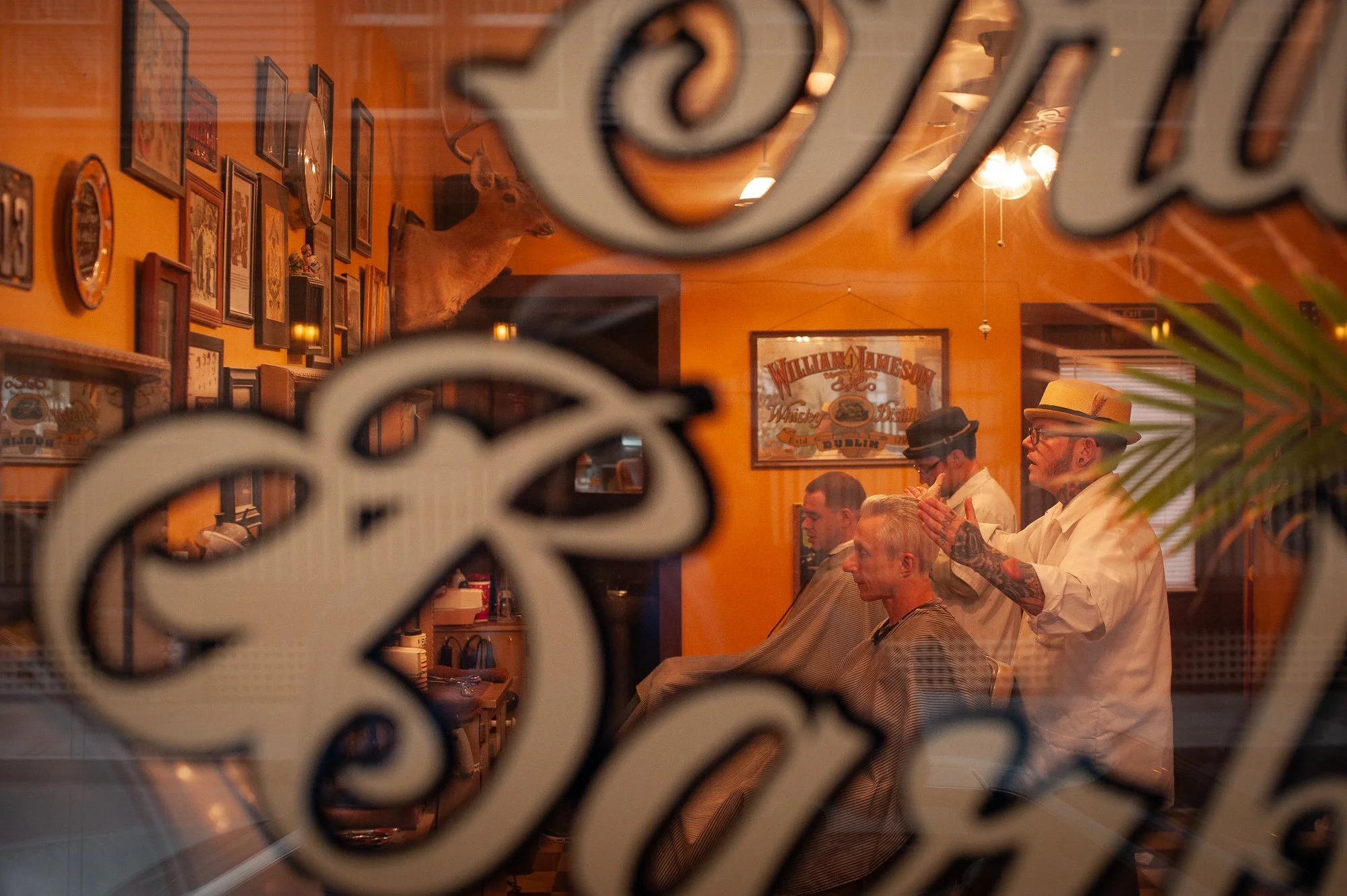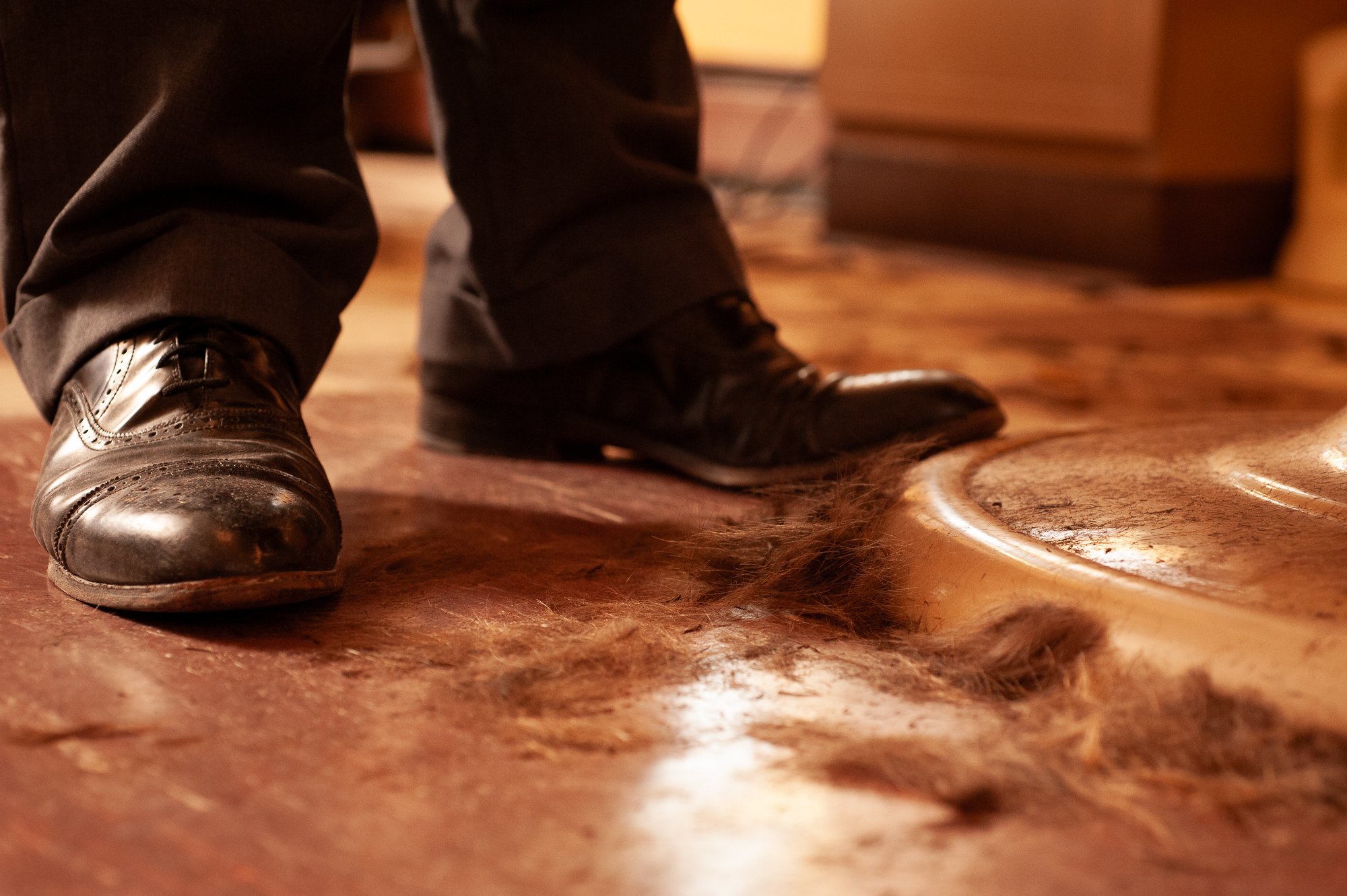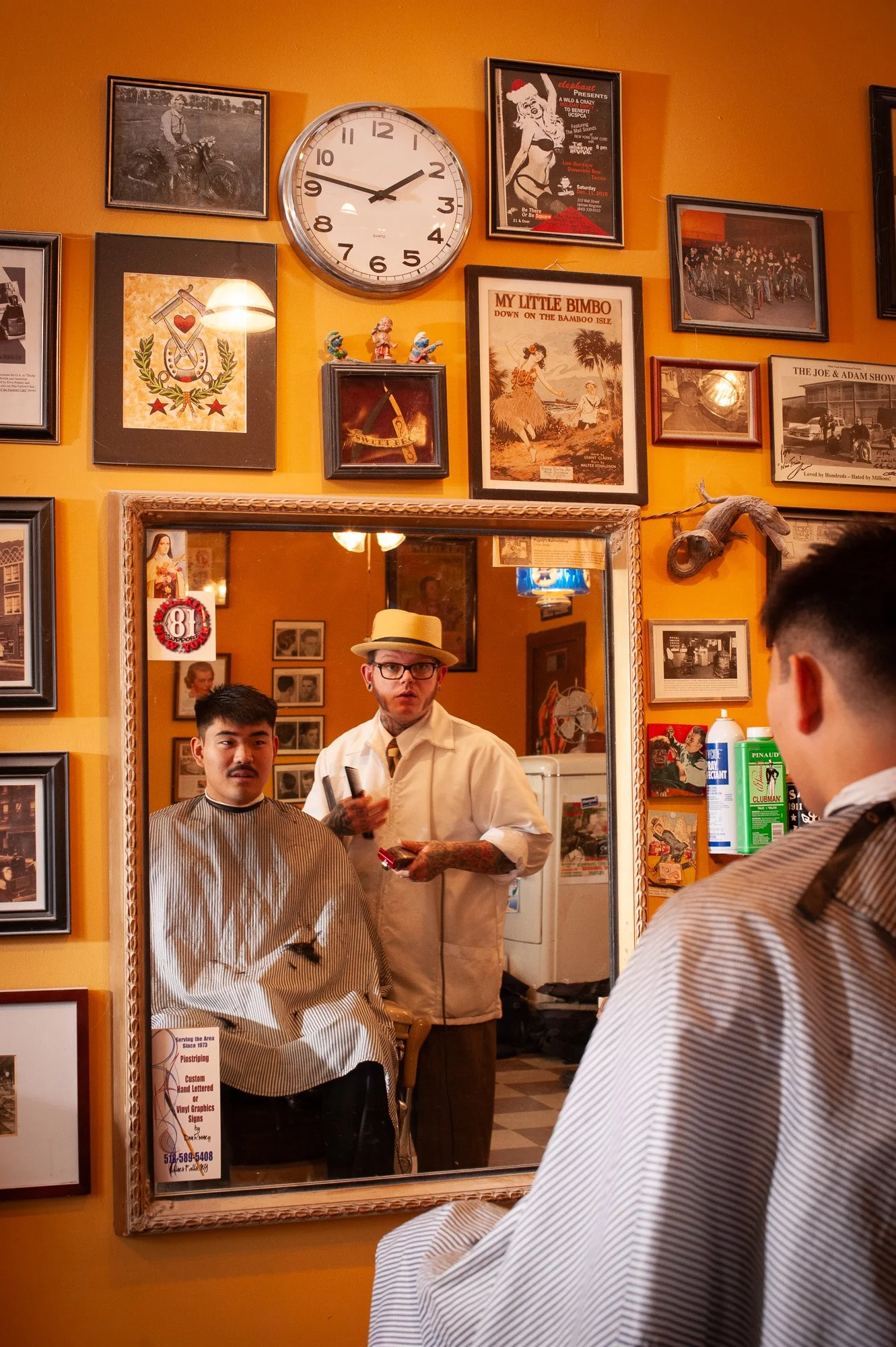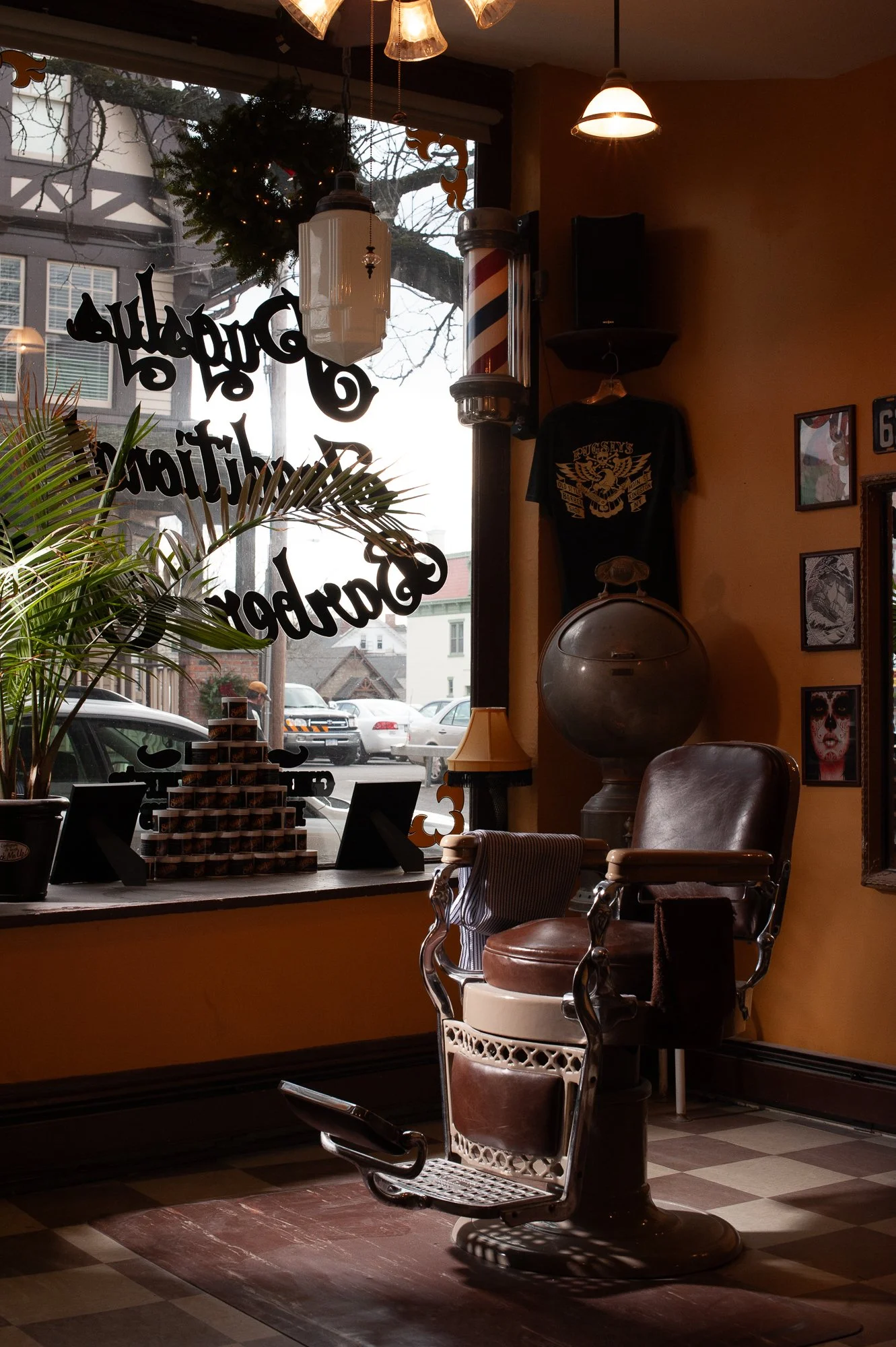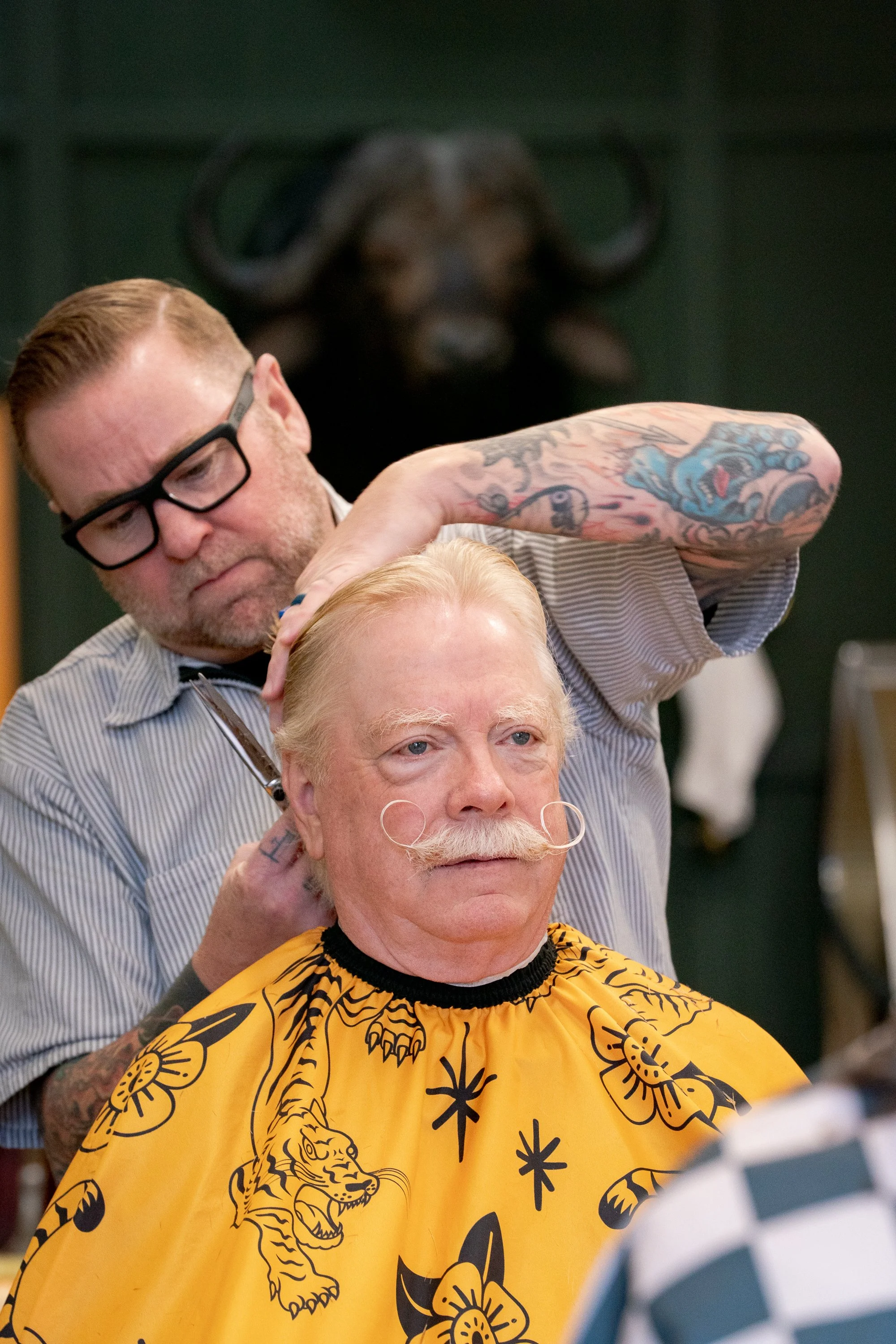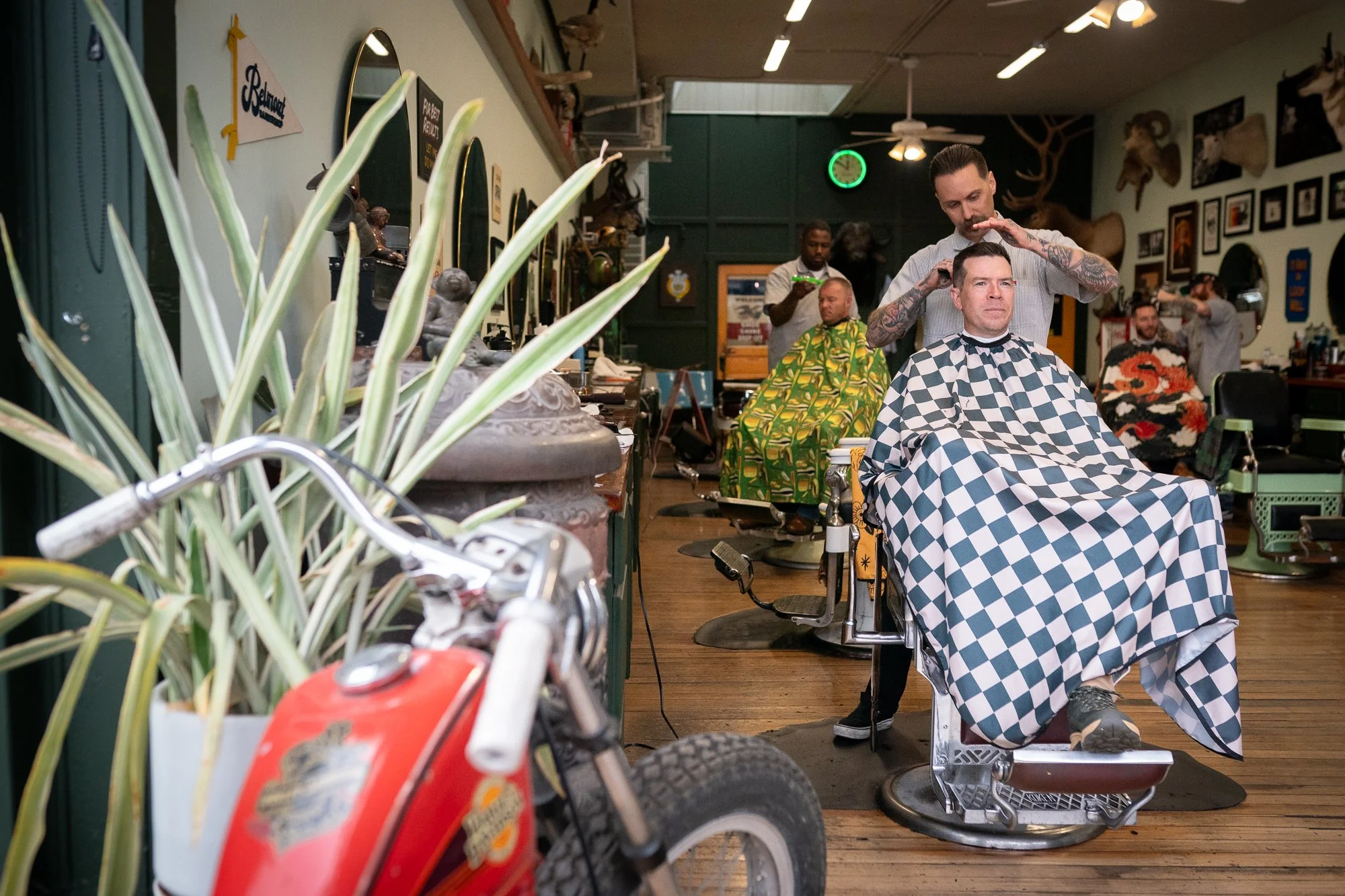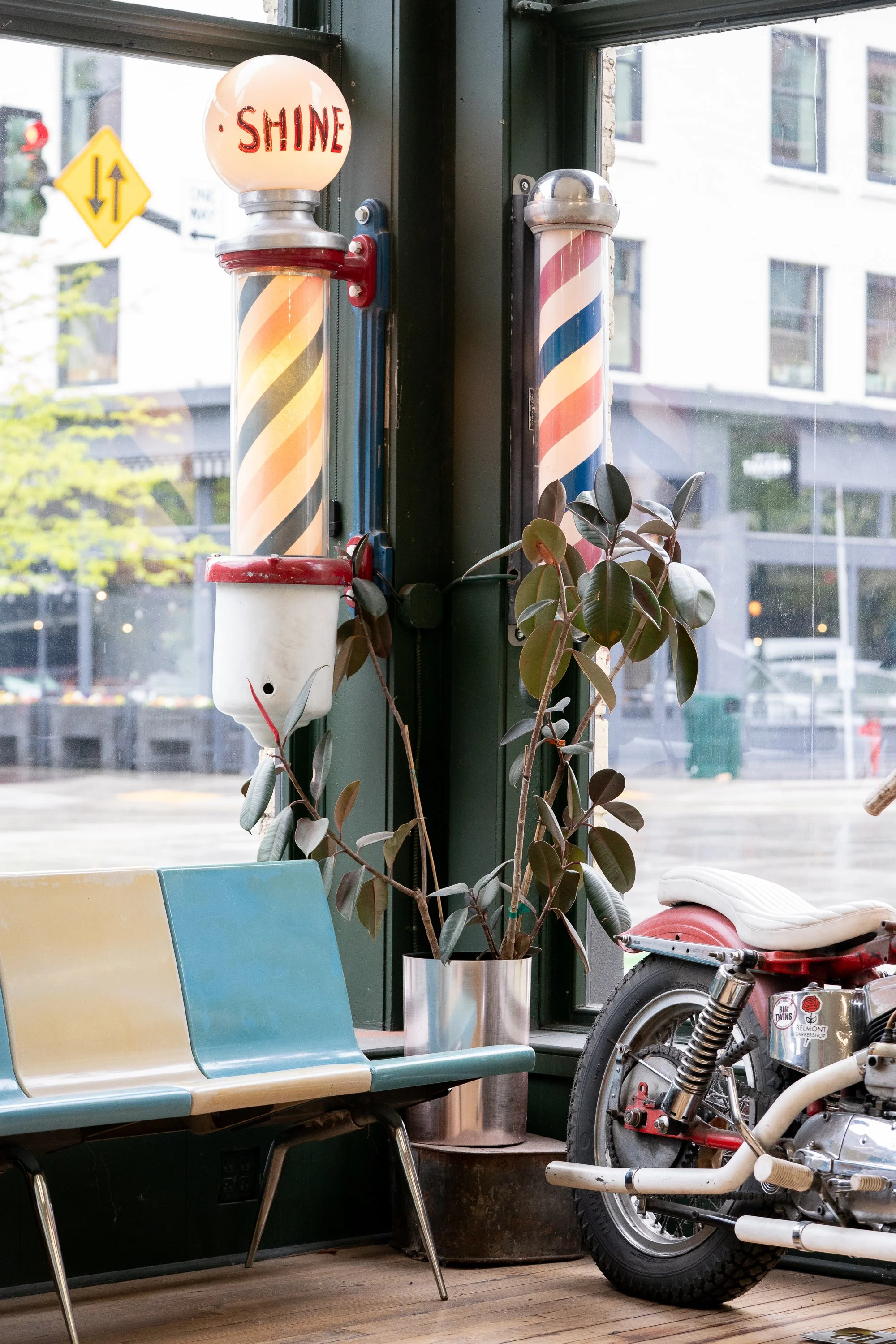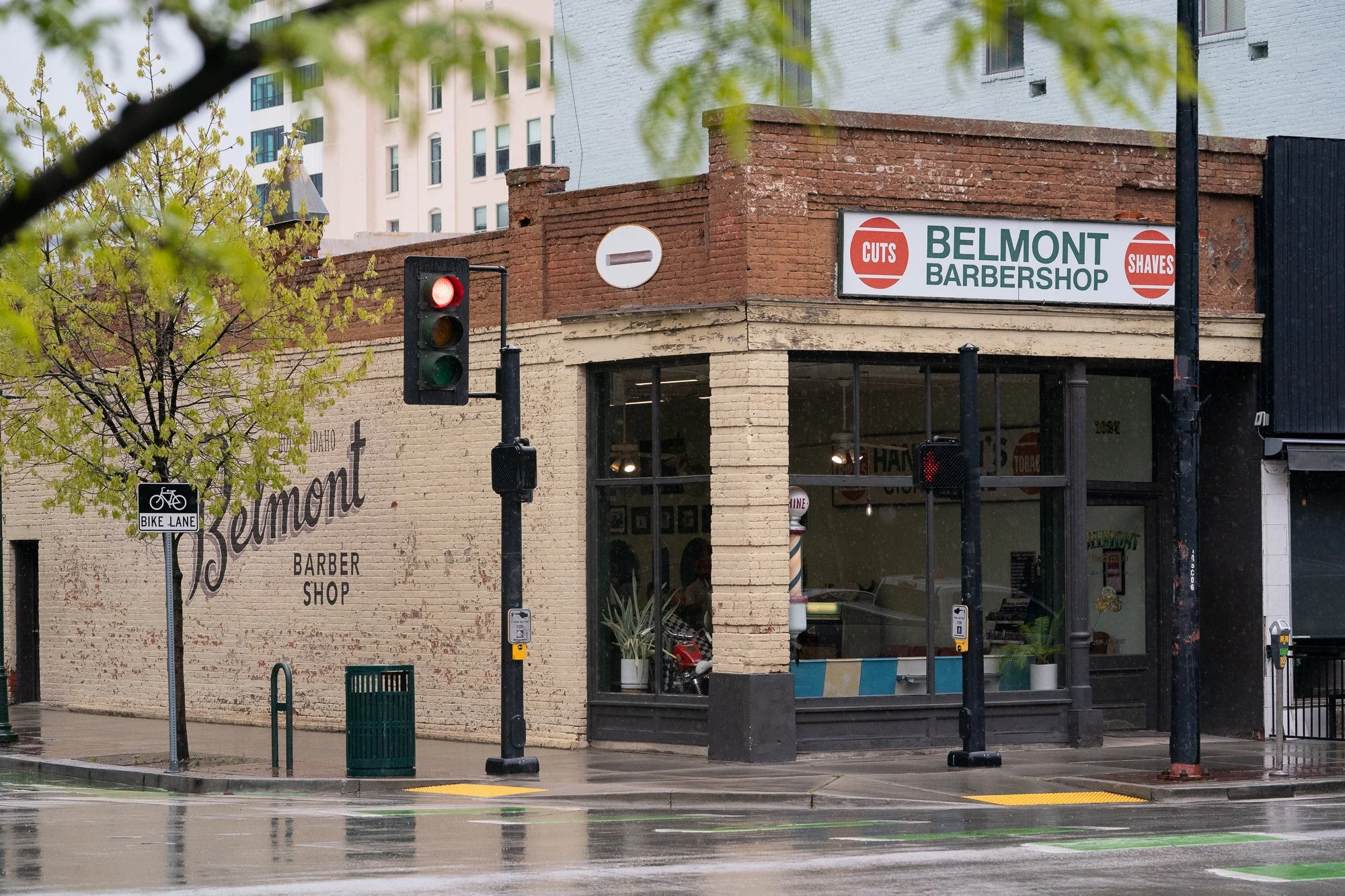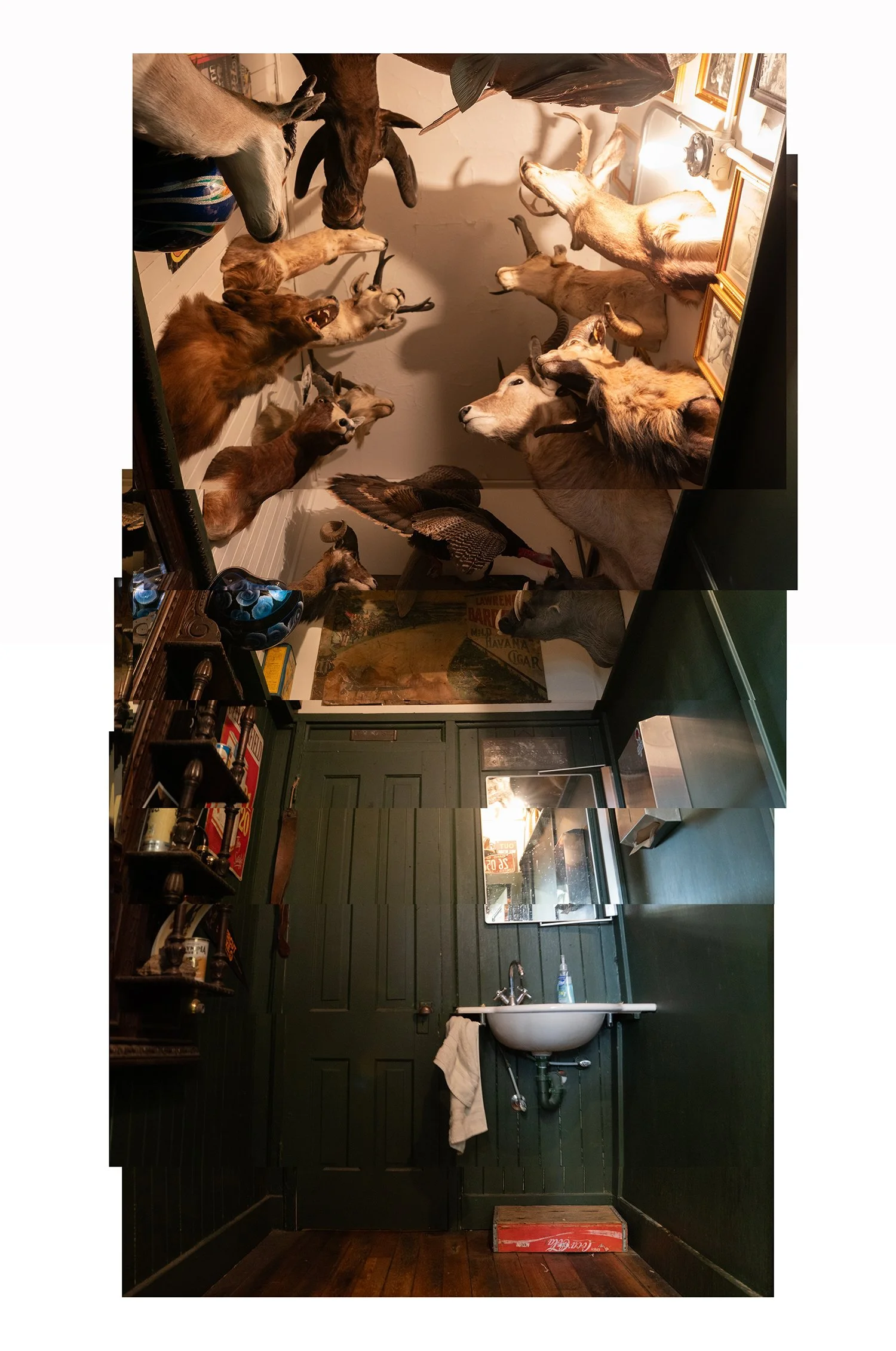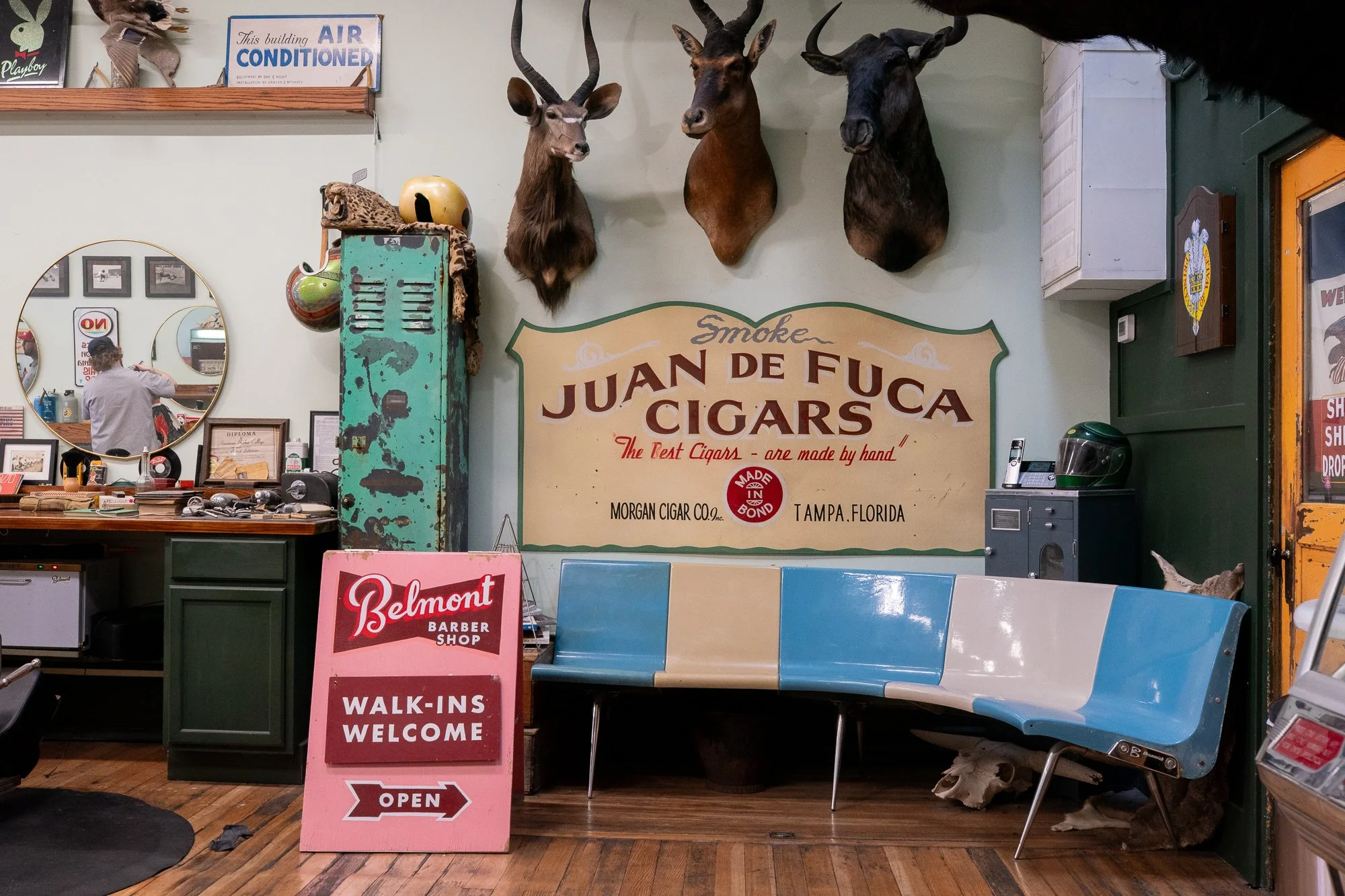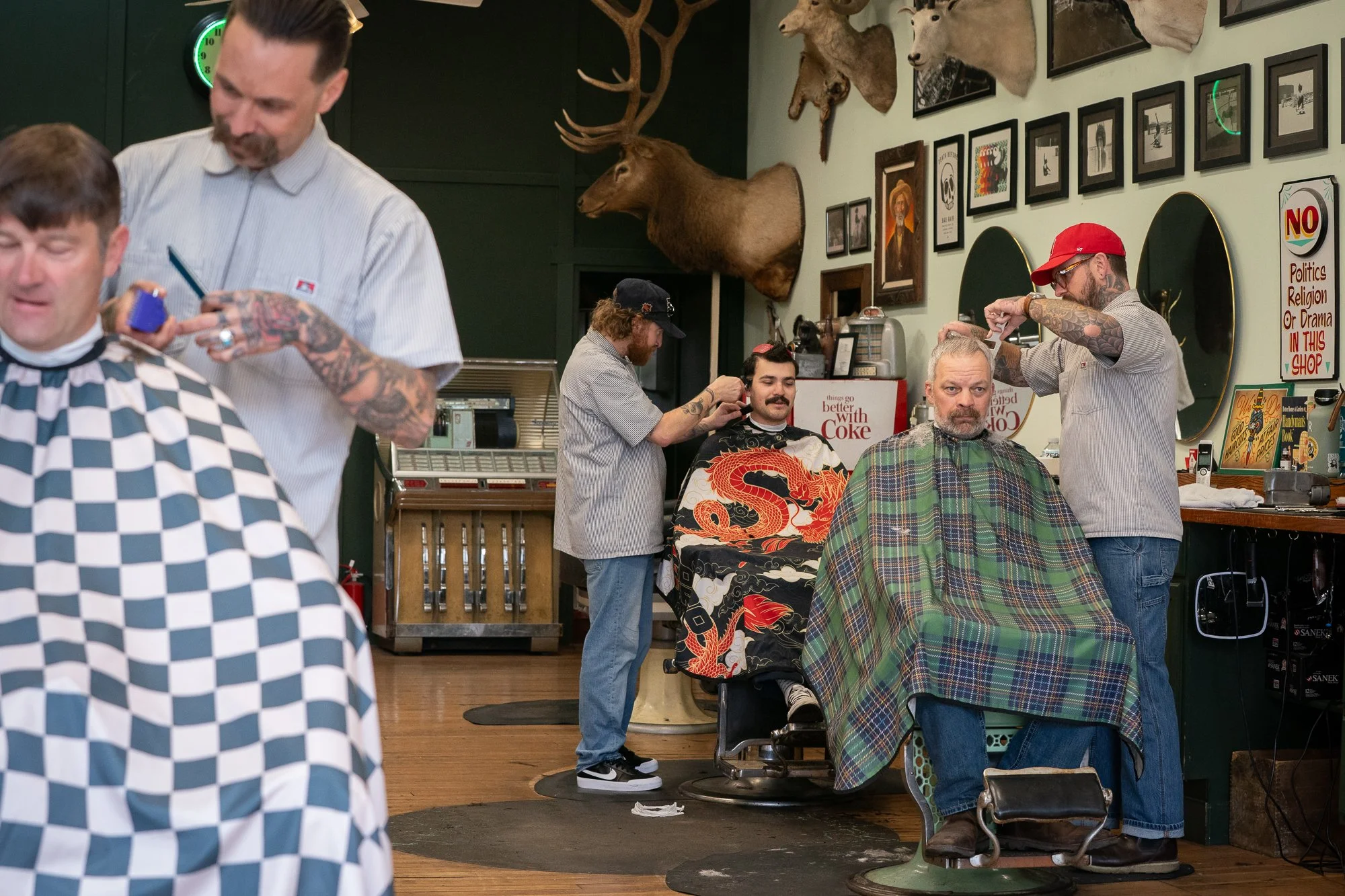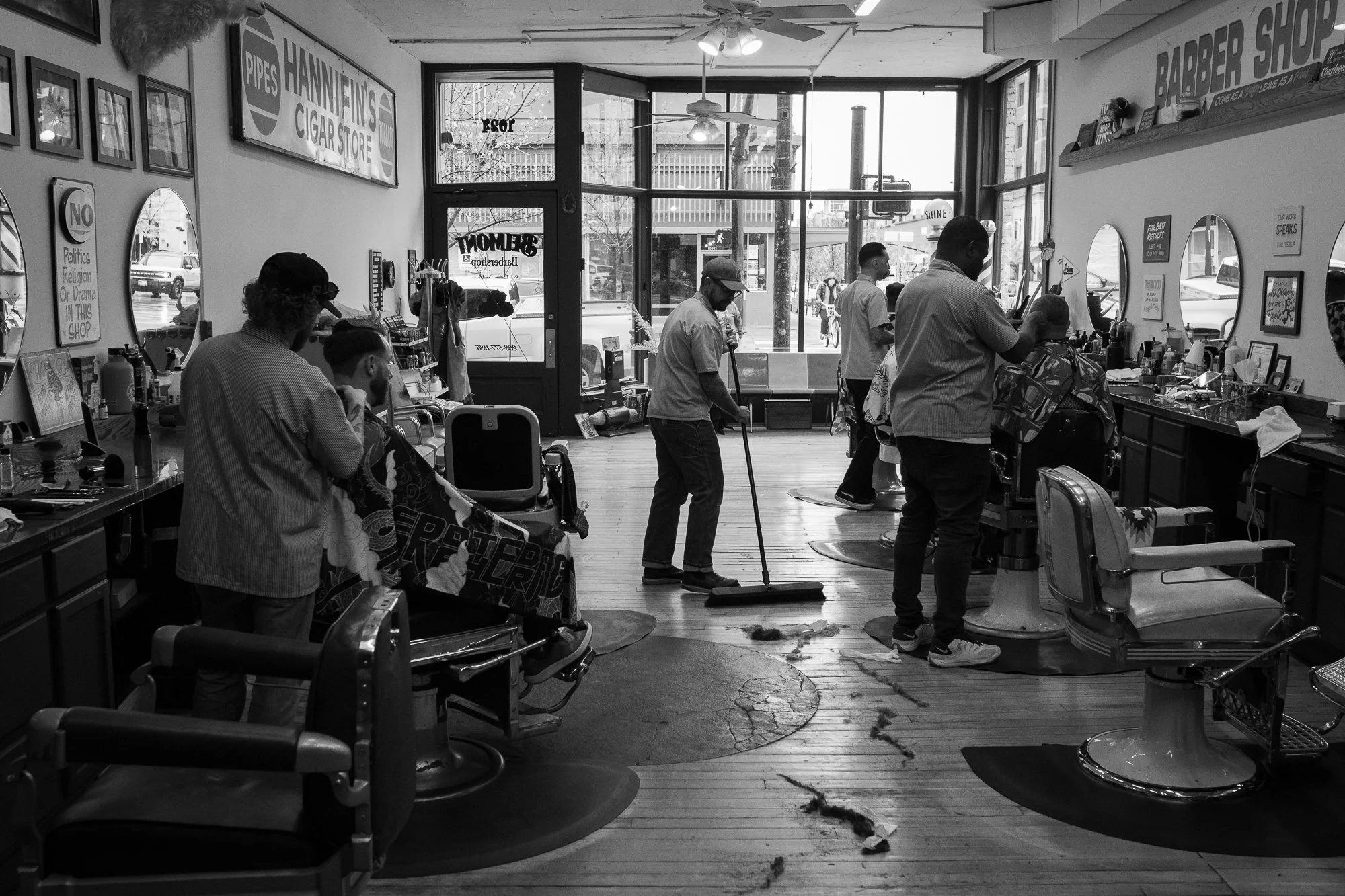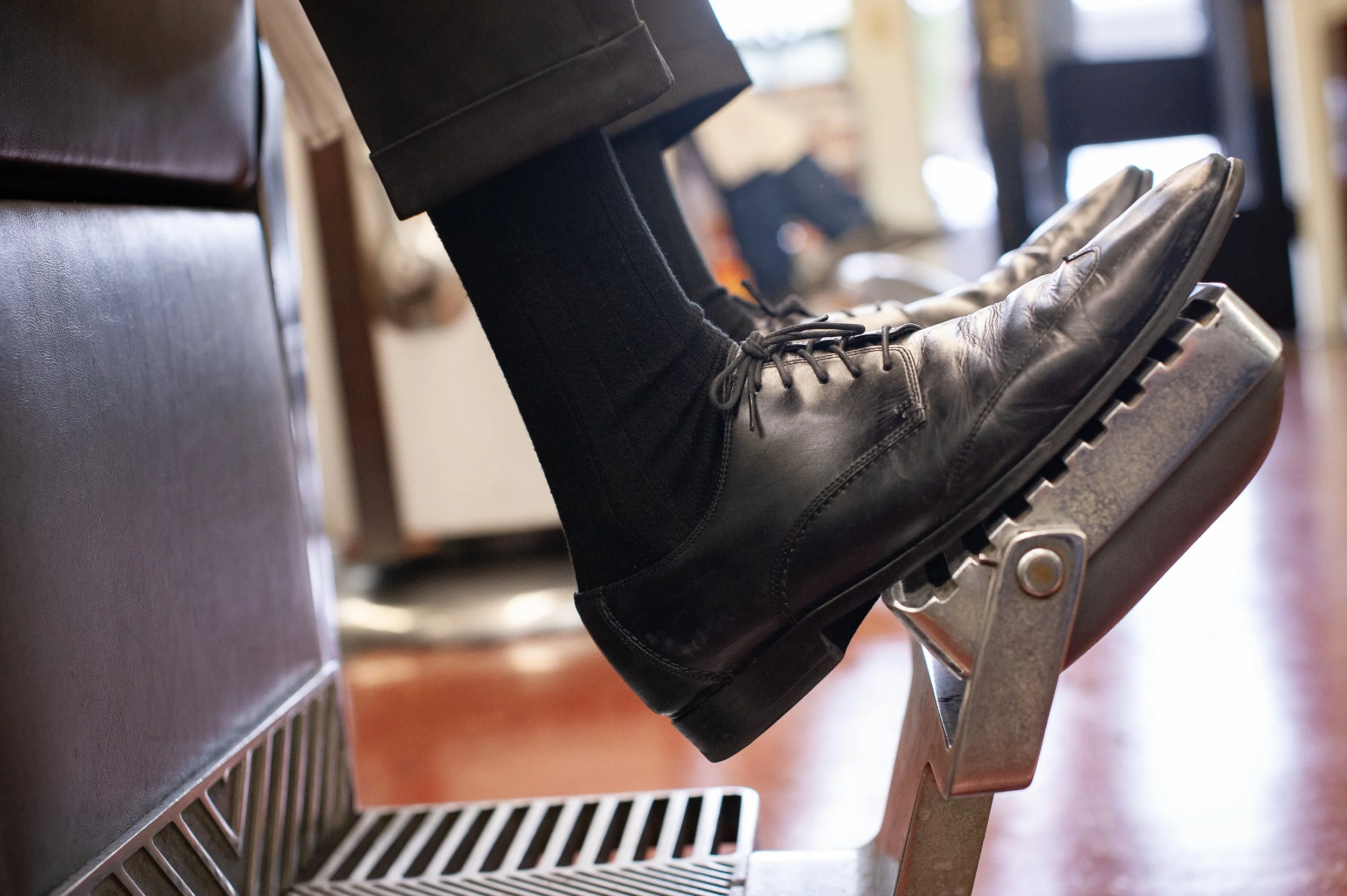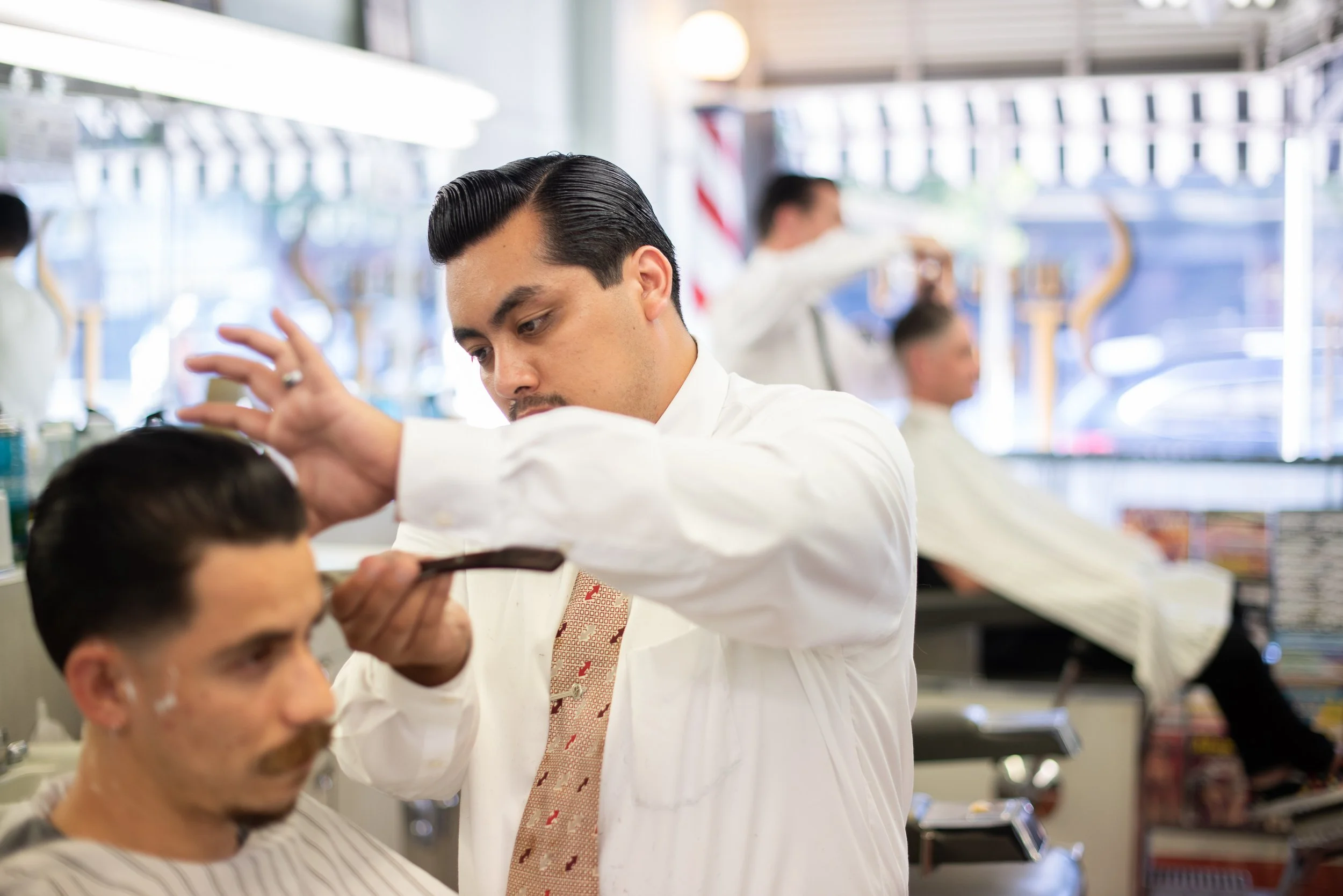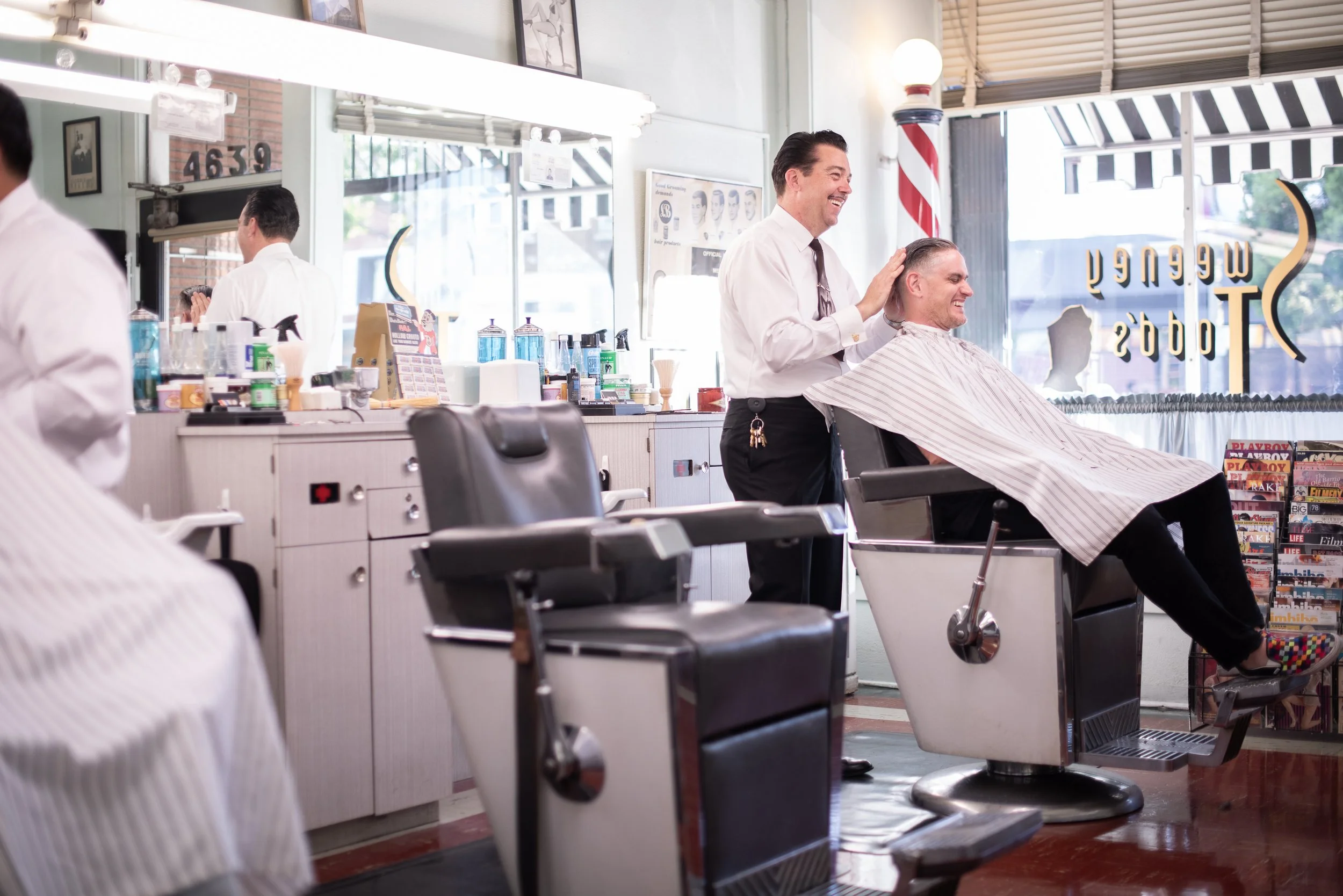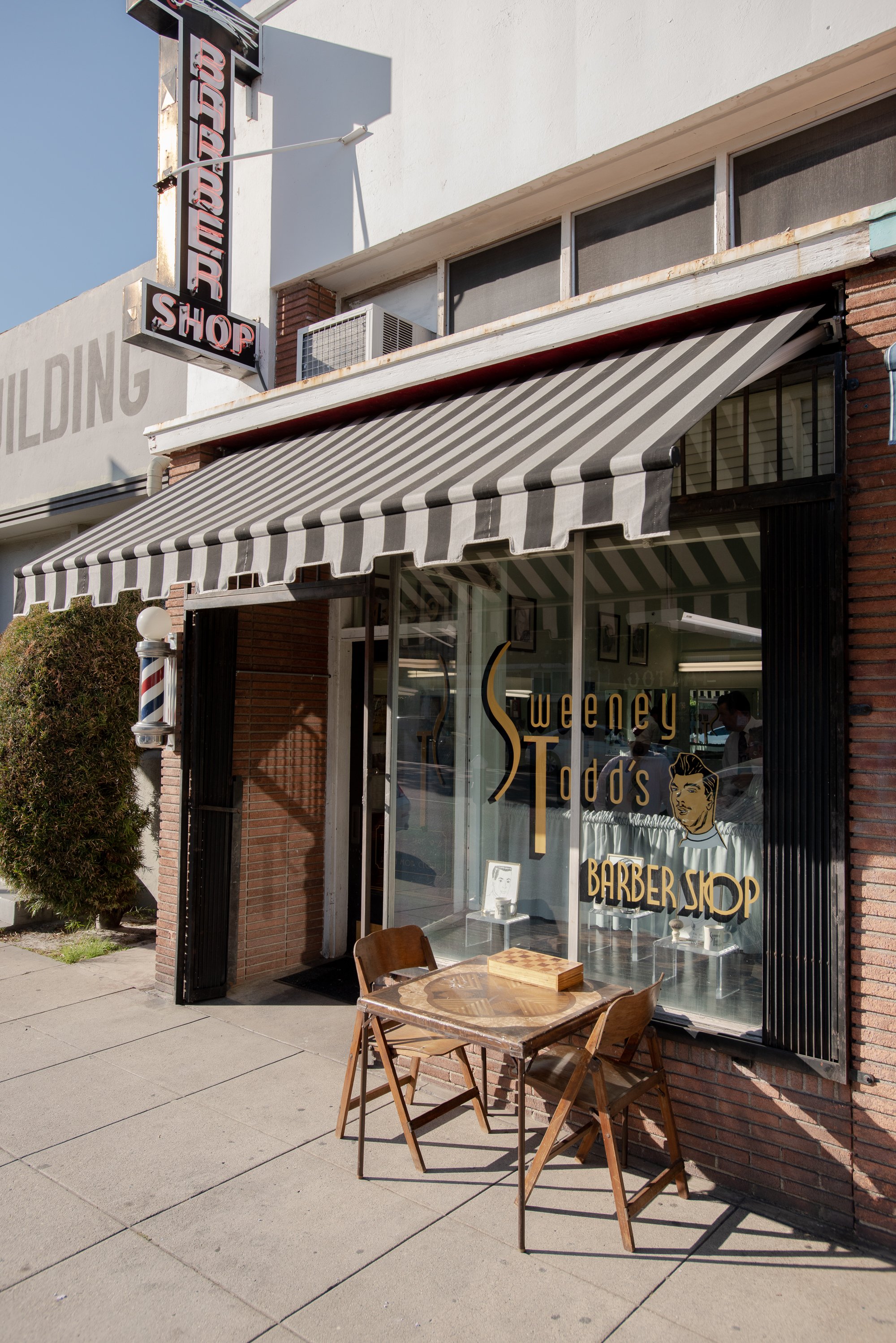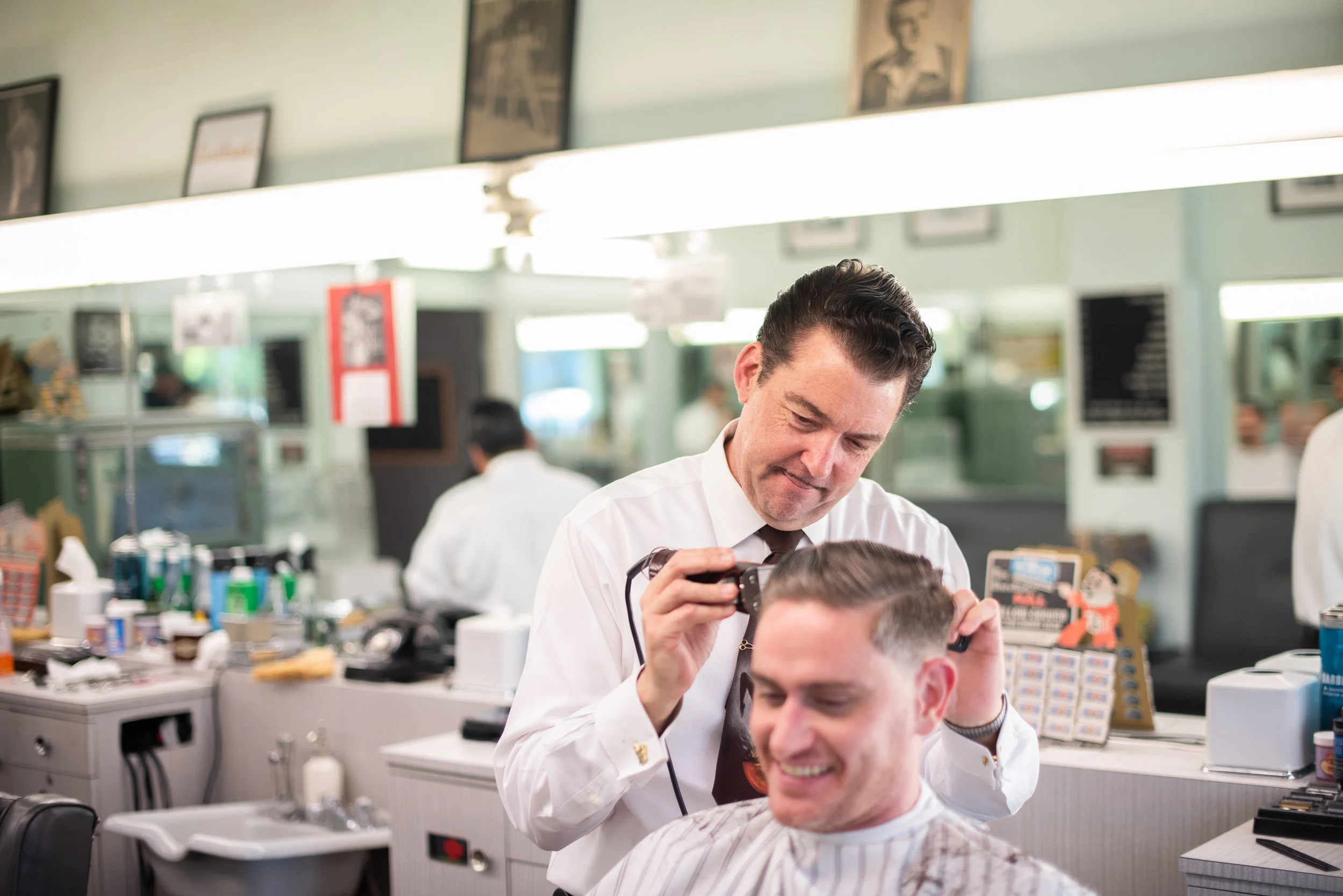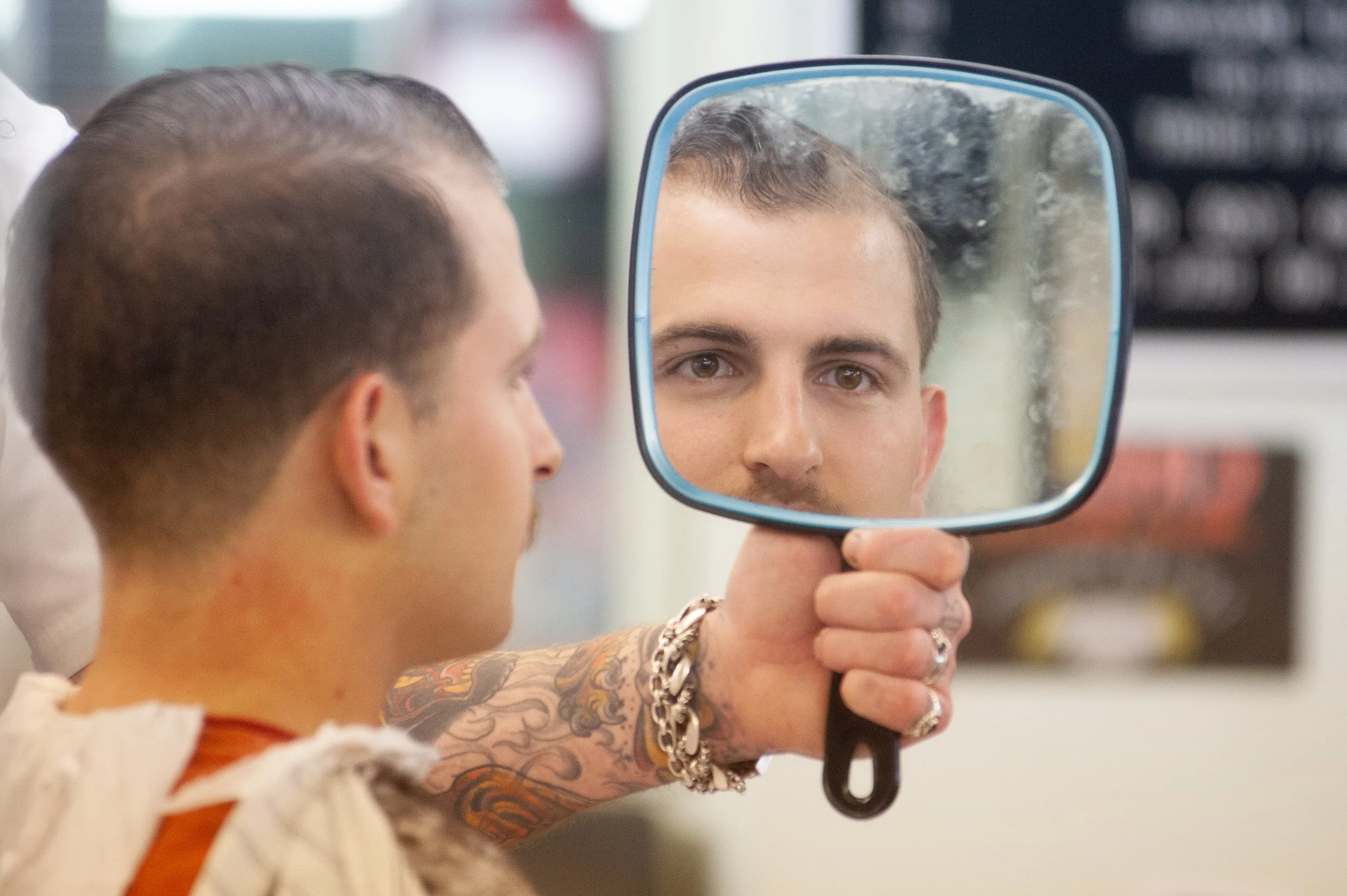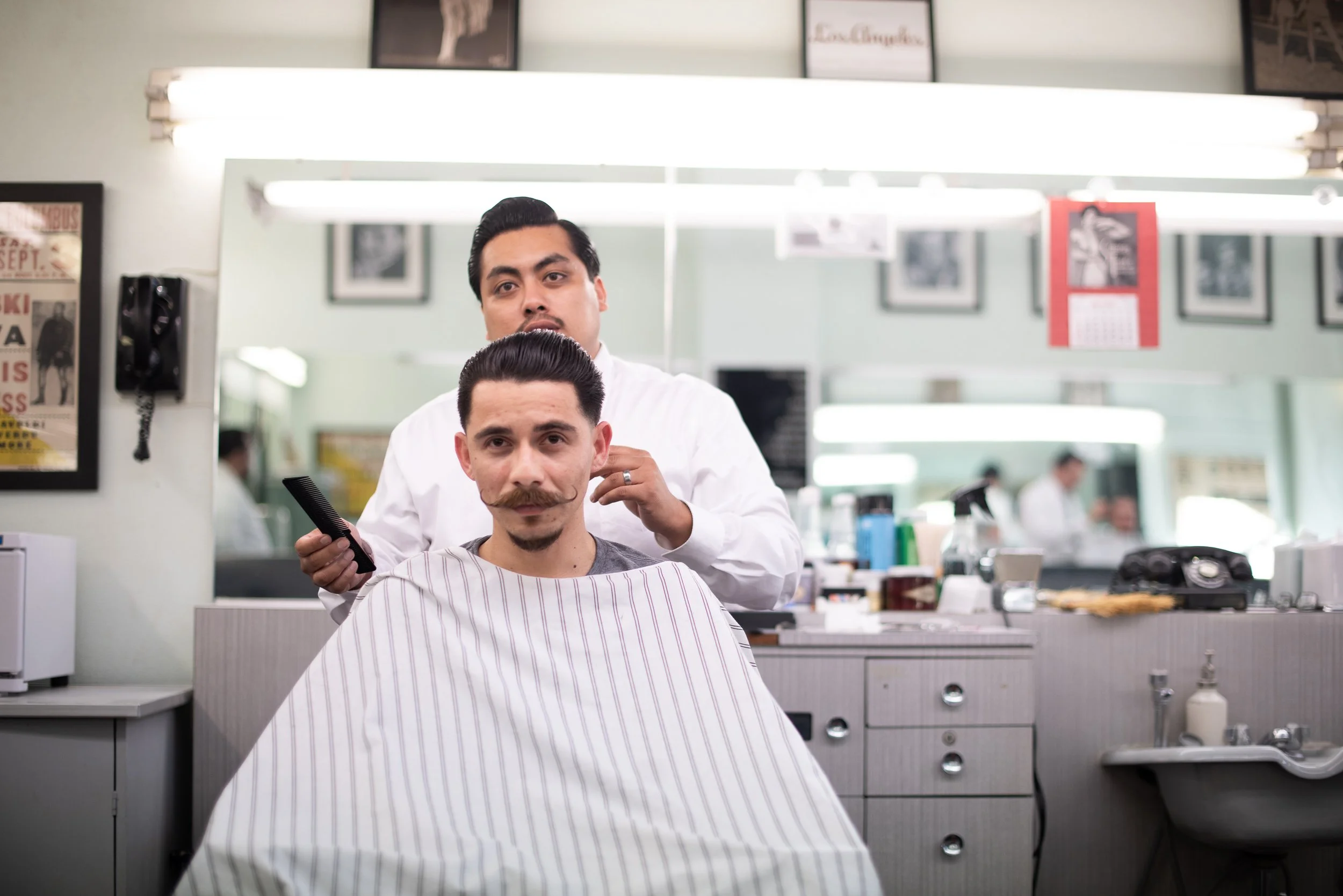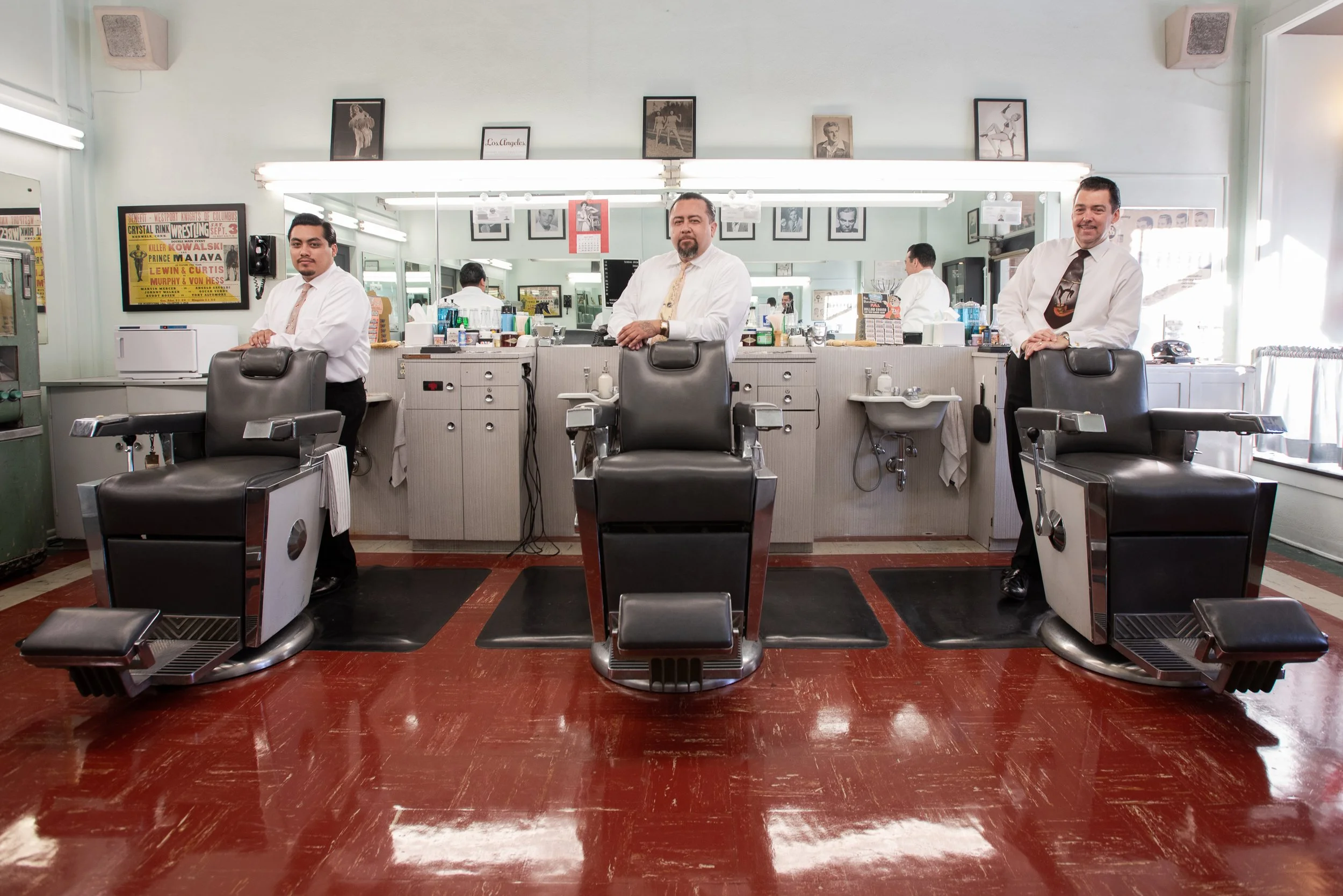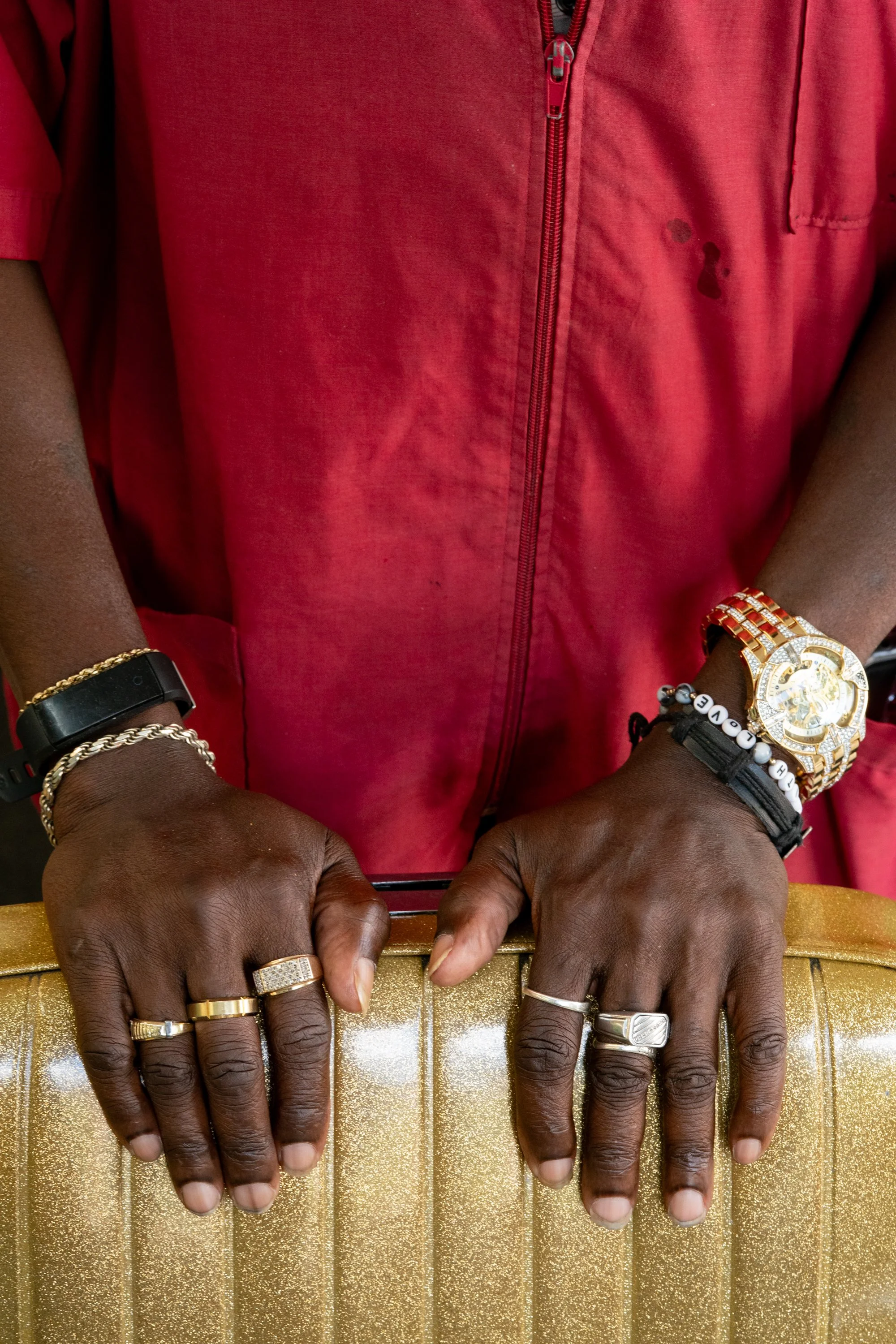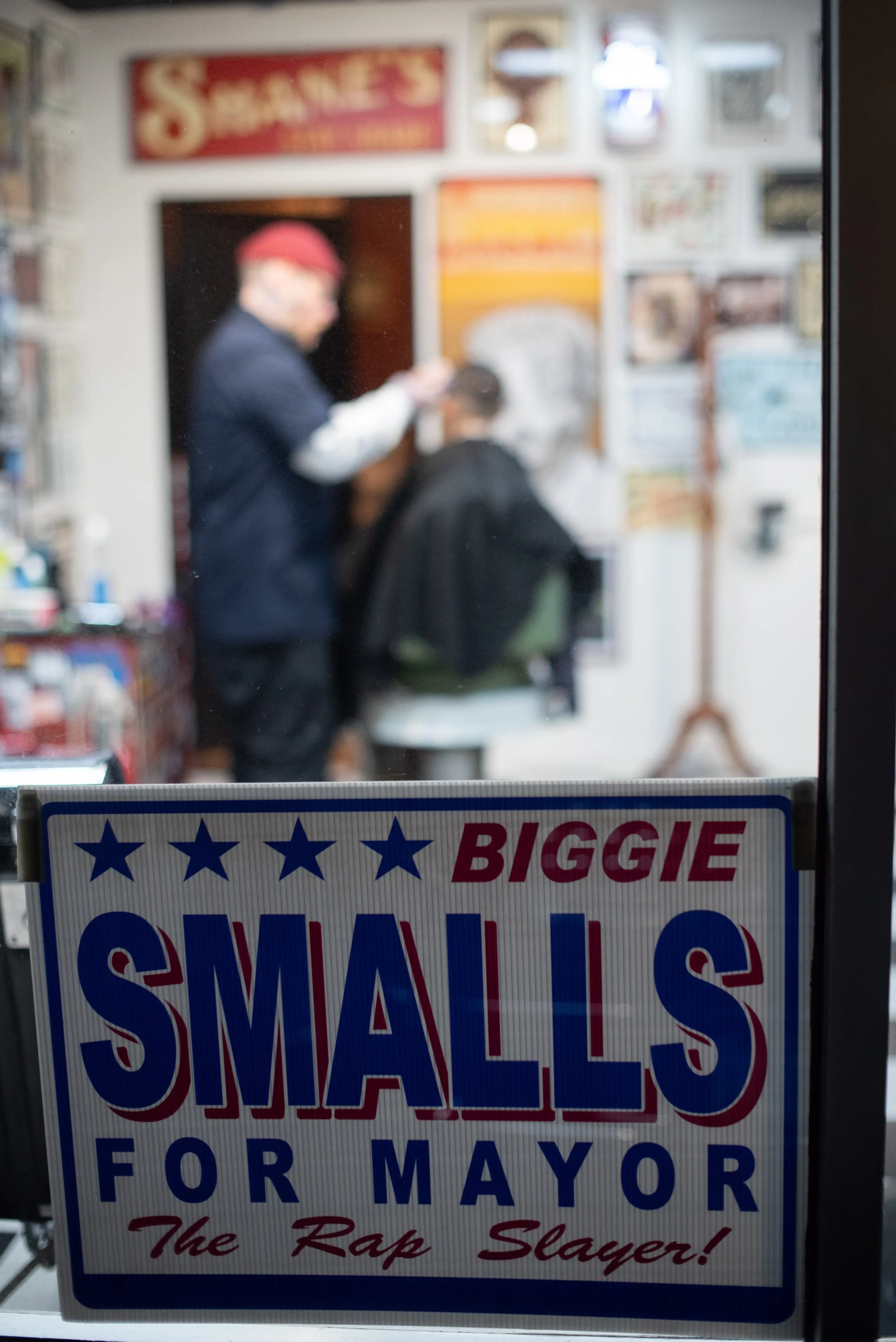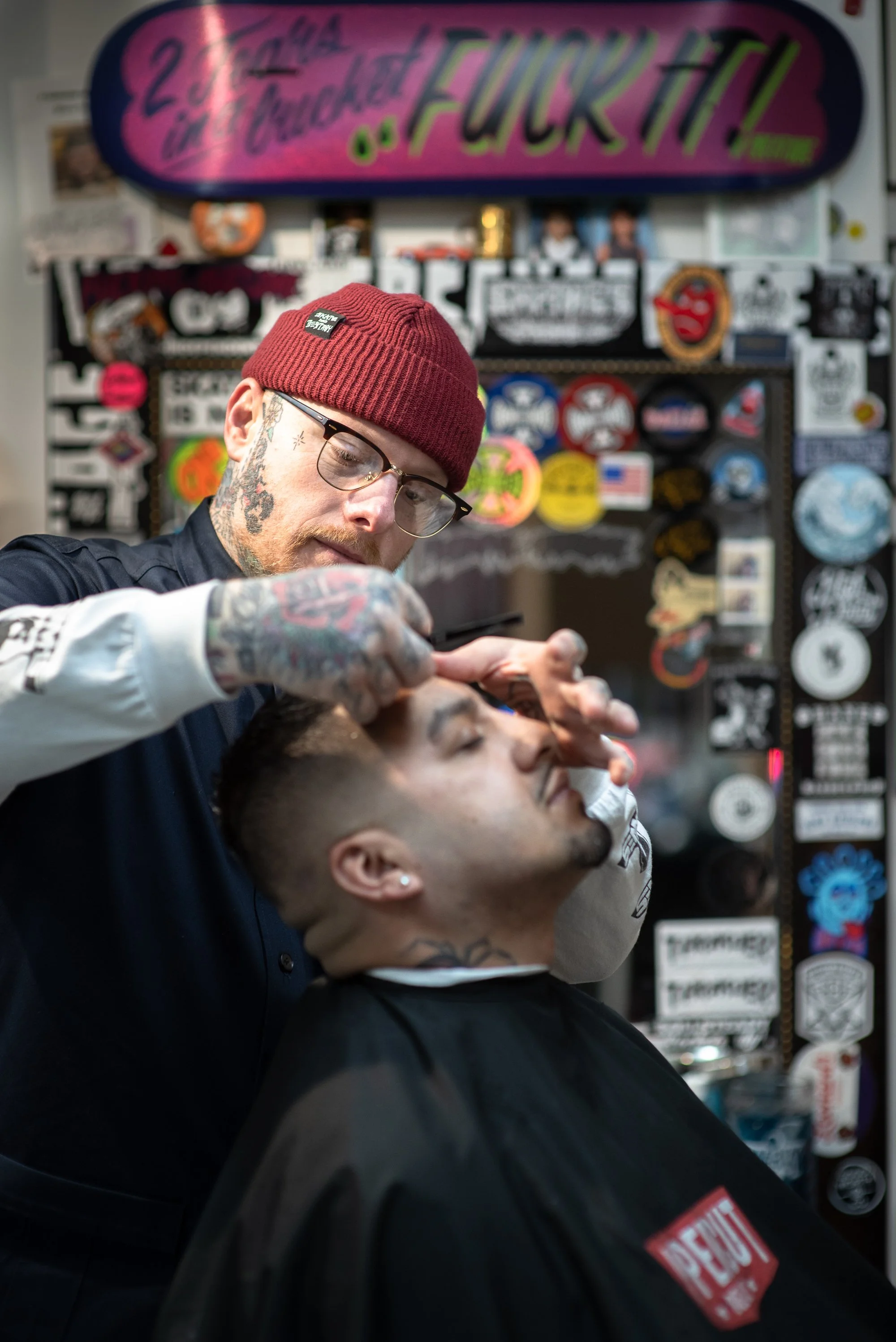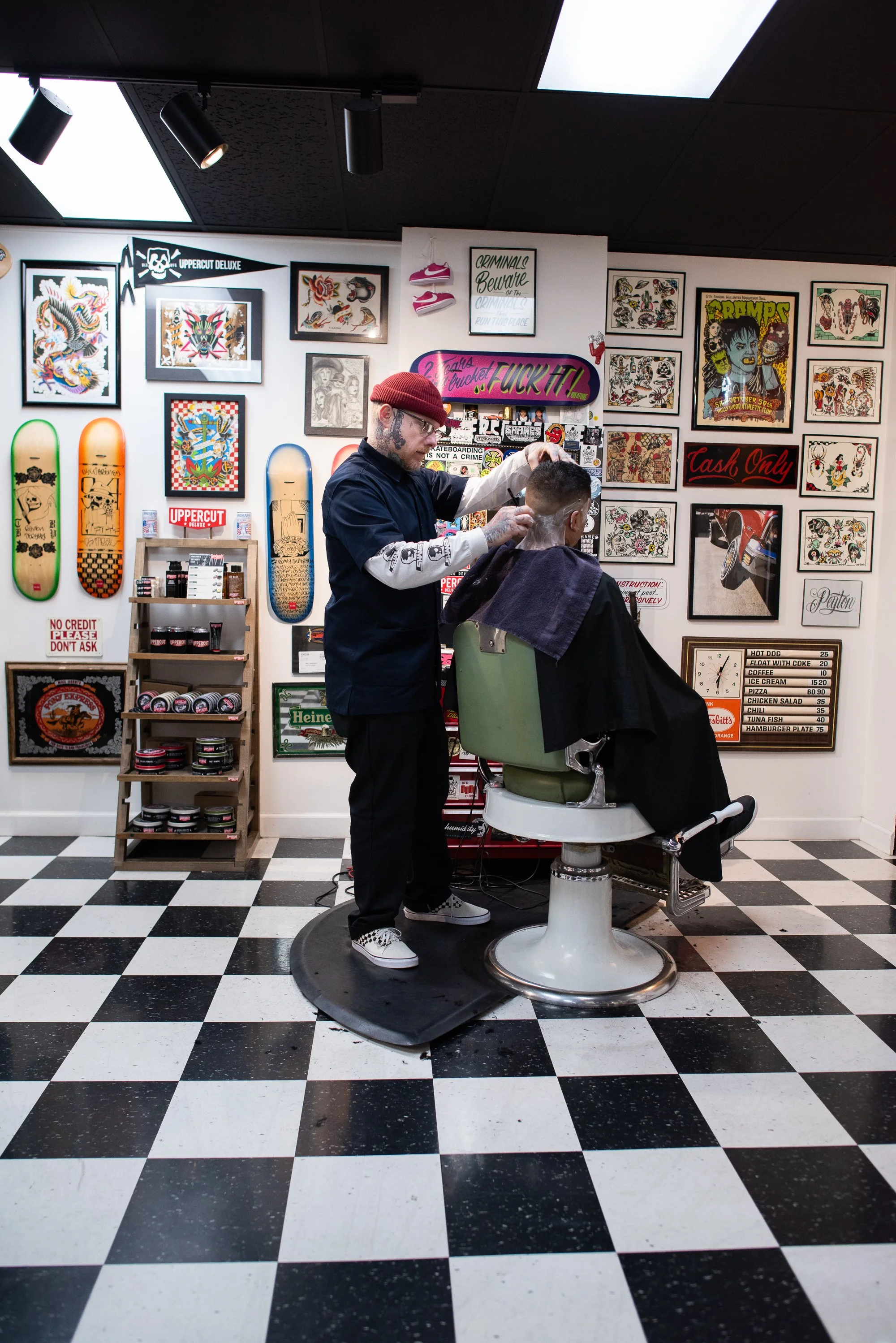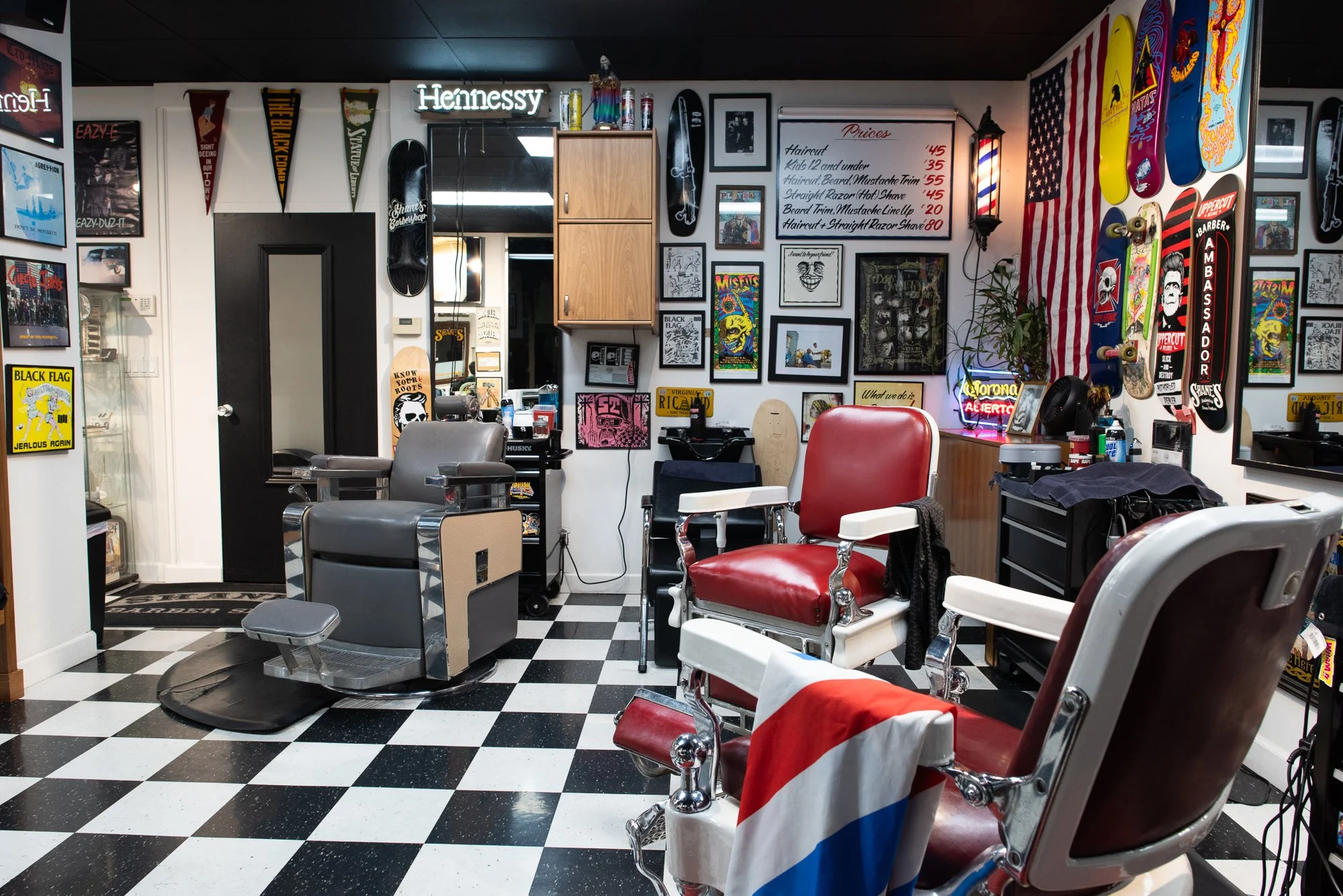
Spanky’s Barbershop, Covington KY: Modern Design Rooted in Craft

Spanky’s Barbershop in Covington, Kentucky

Covington, Kentucky sits just across the river from Cincinnati, but in recent years it has developed a rhythm all its own. Historic storefronts are being restored. Independent businesses are opening their doors. There’s a steady sense of momentum — not loud, not flashy — but real.

Spanky’s Barbershop is part of that shift.

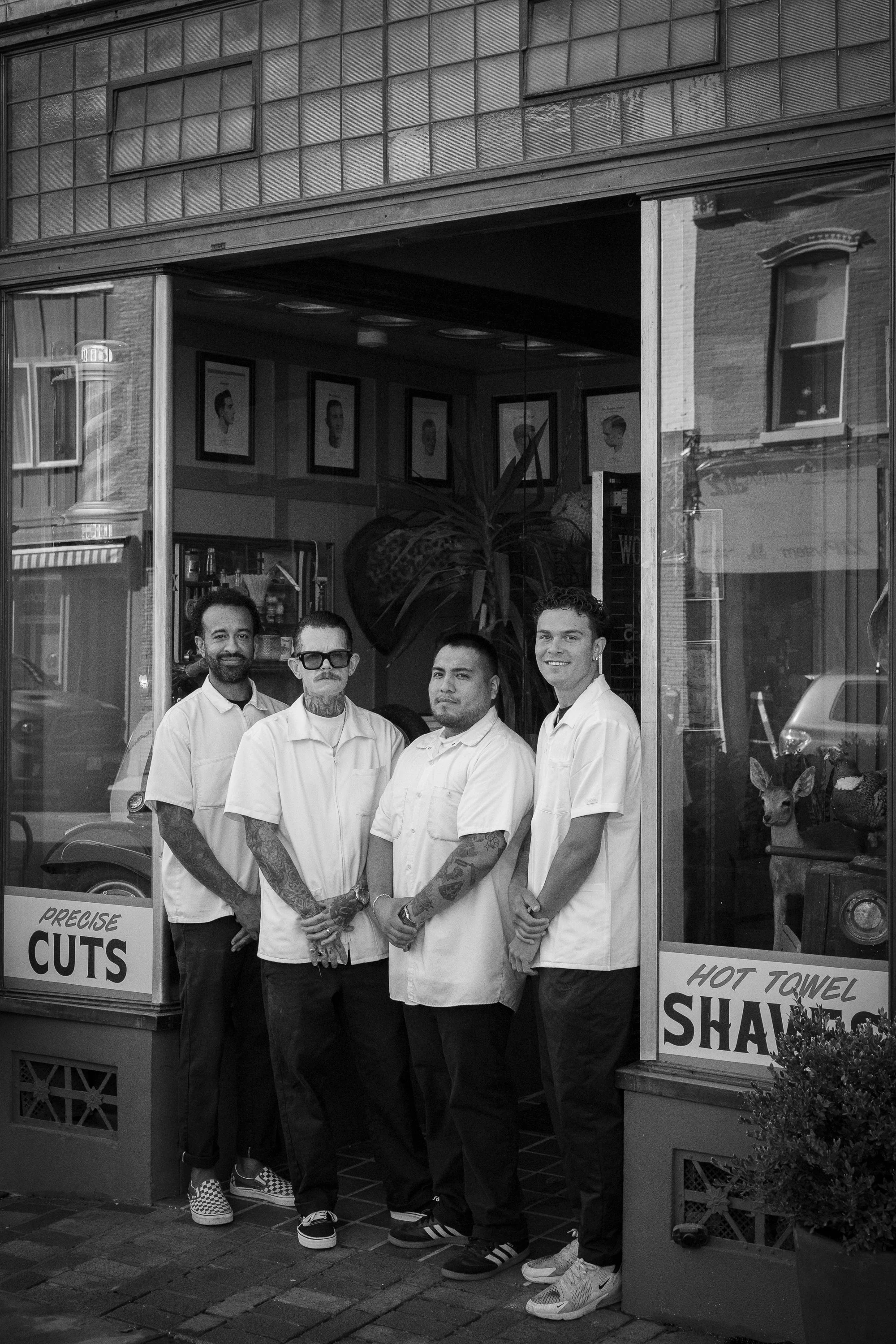
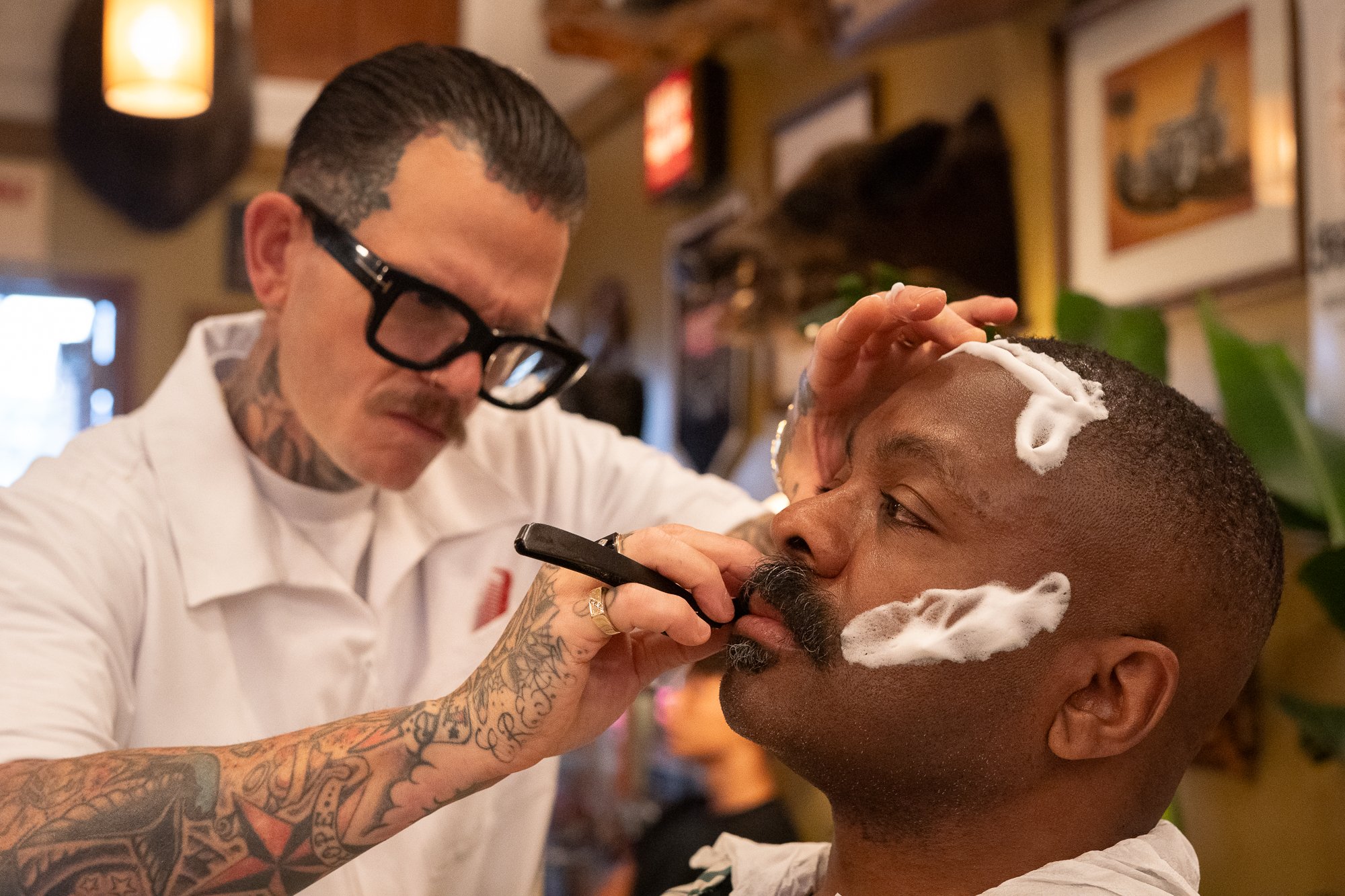
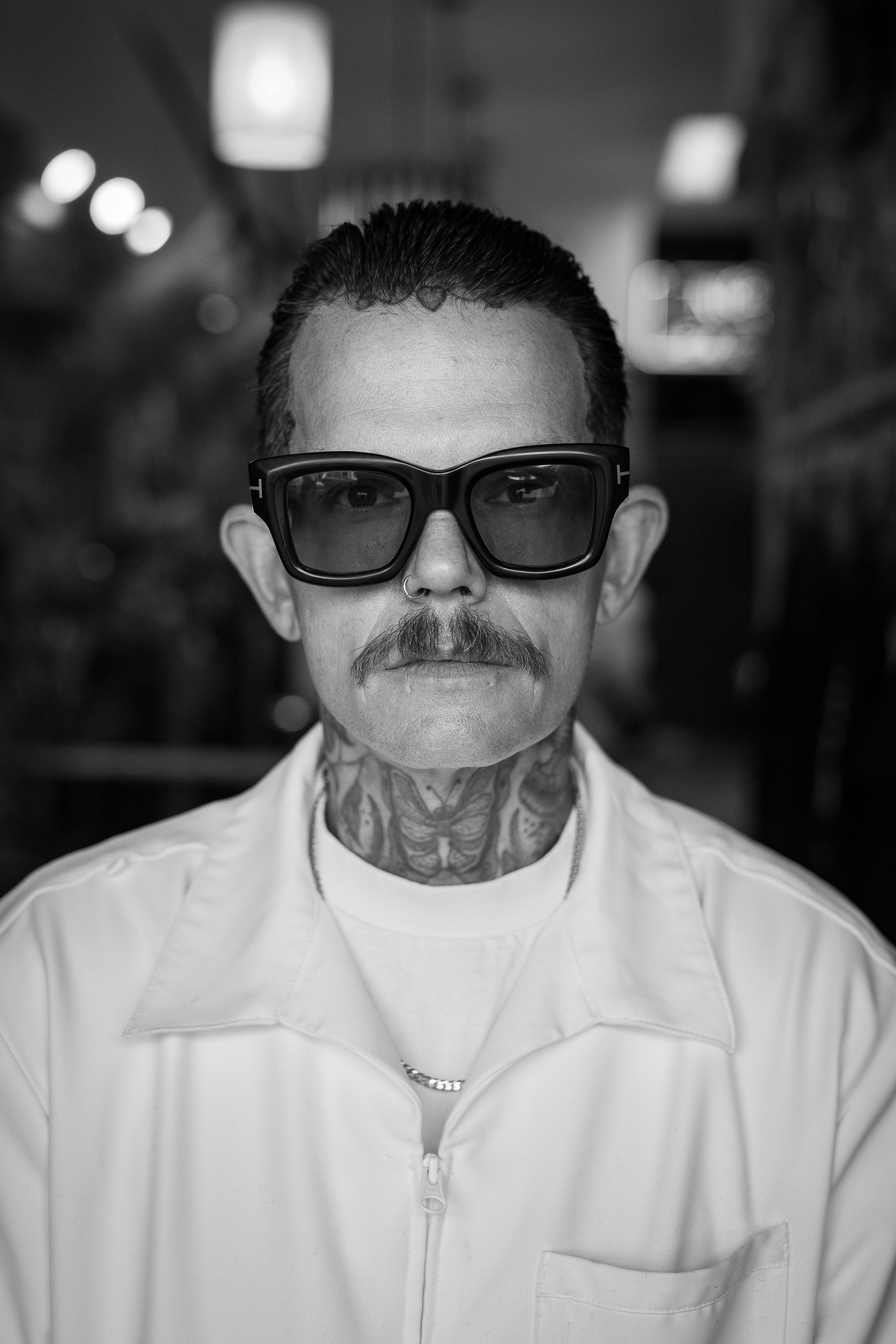
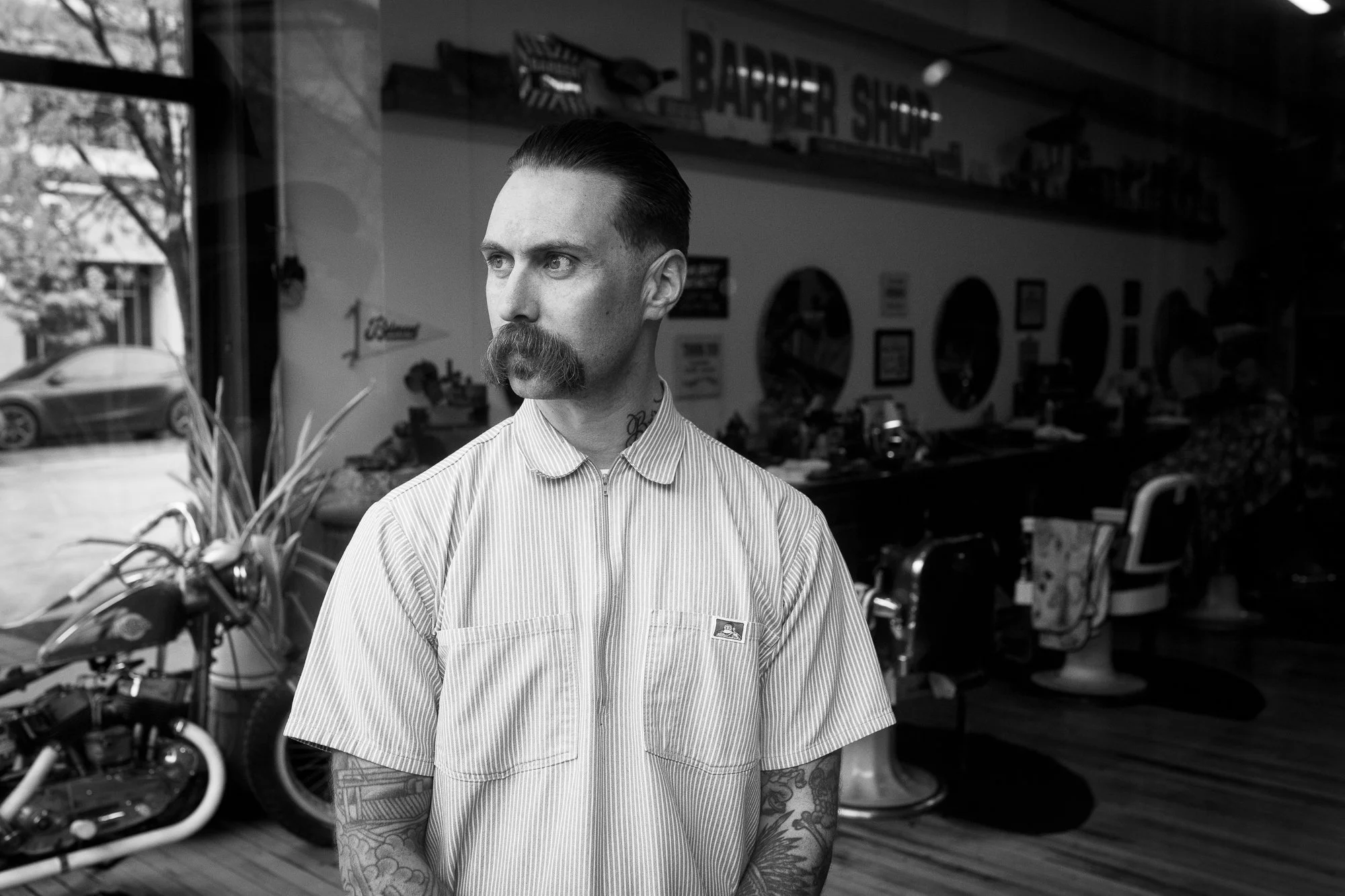
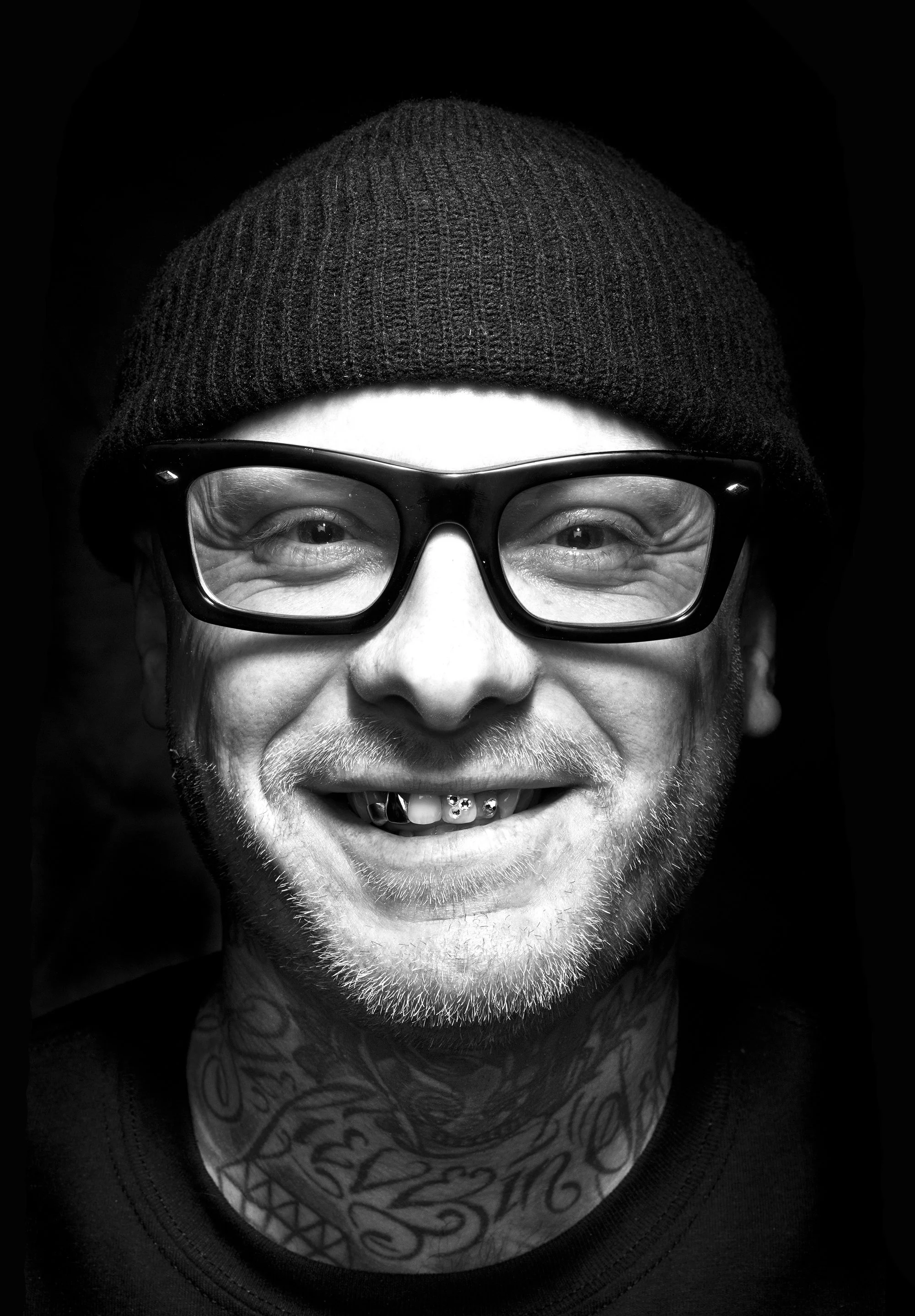
I first met Sean Caudill — known to most simply as Spanky — years ago at his first shop in the same area. It was a beautiful shop, but when I returned to photograph this second location, it was clear he was building something much bigger.

A Second Shop Built from Experience

Spanky’s new Covington location wasn’t opened just for a bigger footprint — it’s the result of his unique personality, years behind the chair, and having a distinct vision for the future of his business.

When I first photographed Spanky at the old shop, he was know for his skills behind the chair. The foundation was there: strong cuts, loyal clients, a clear identity. What stands out now is the confidence that comes from time.

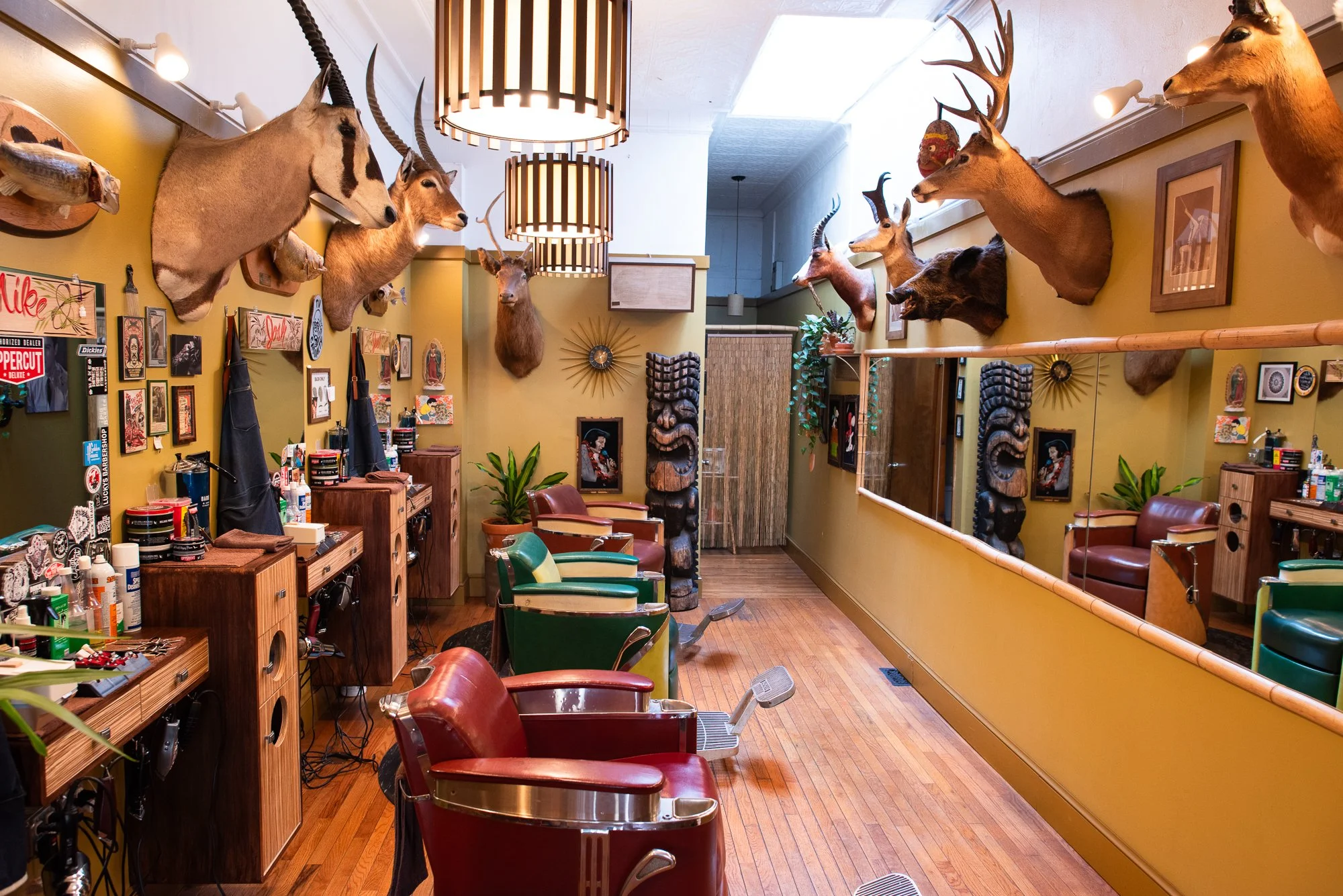
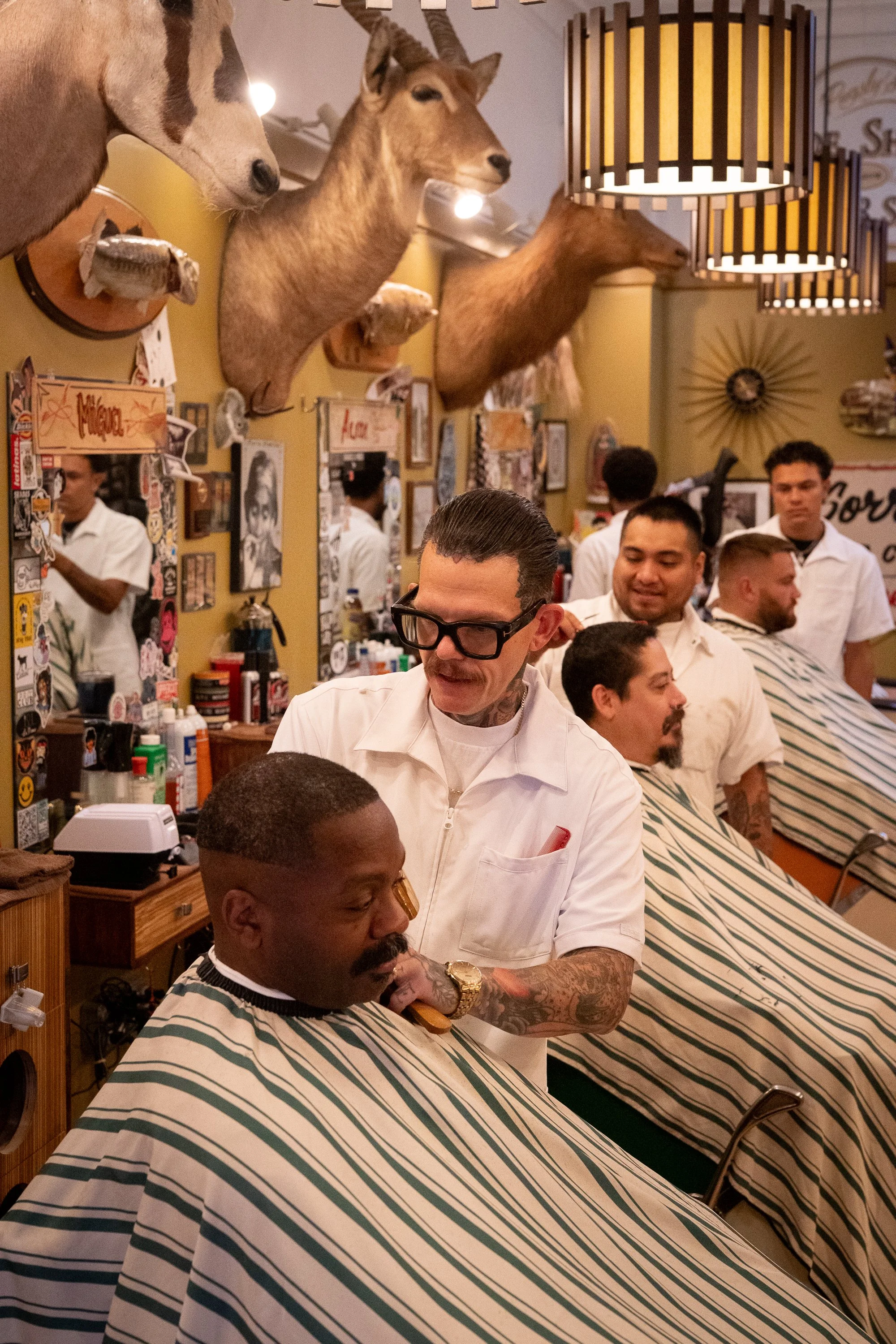
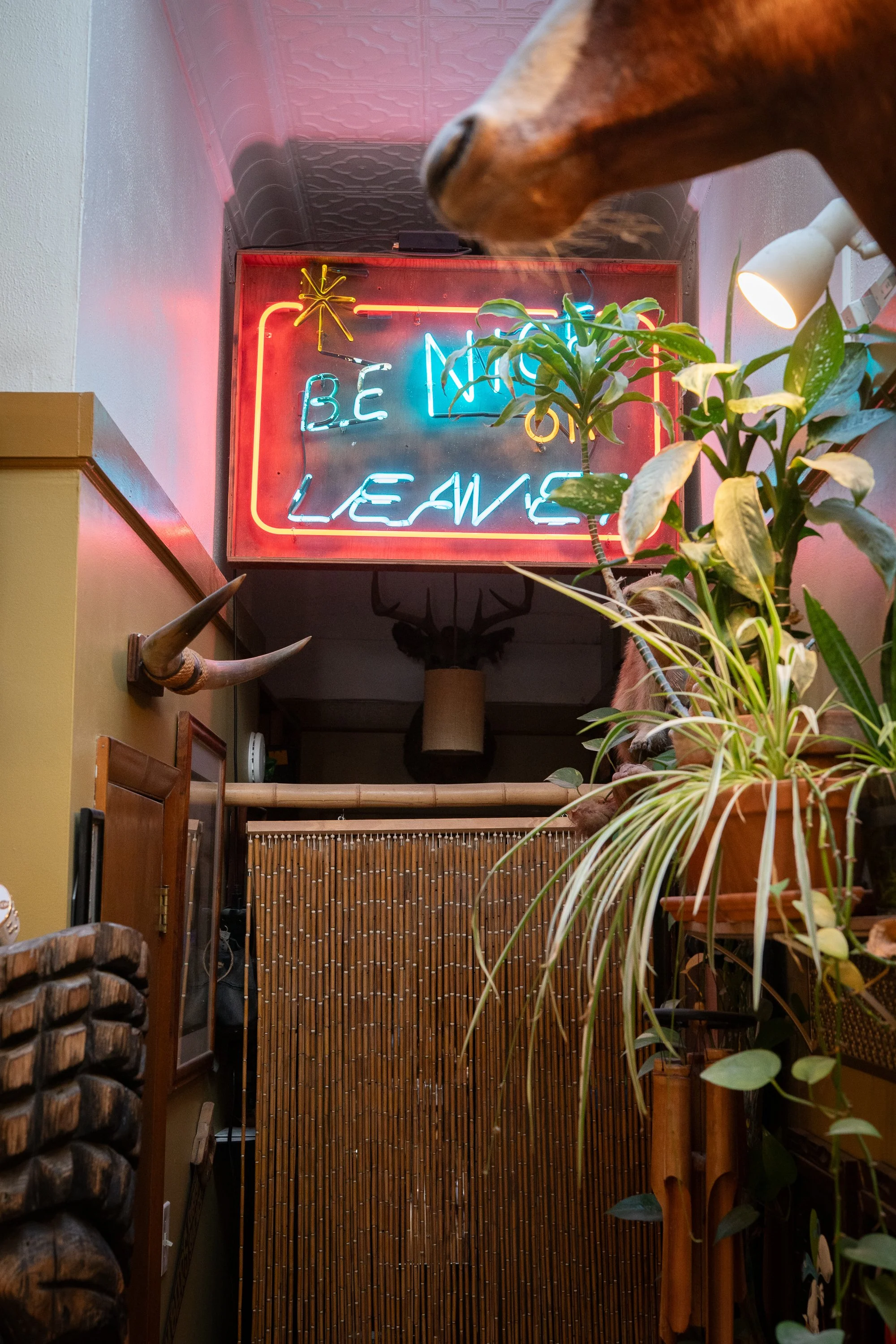
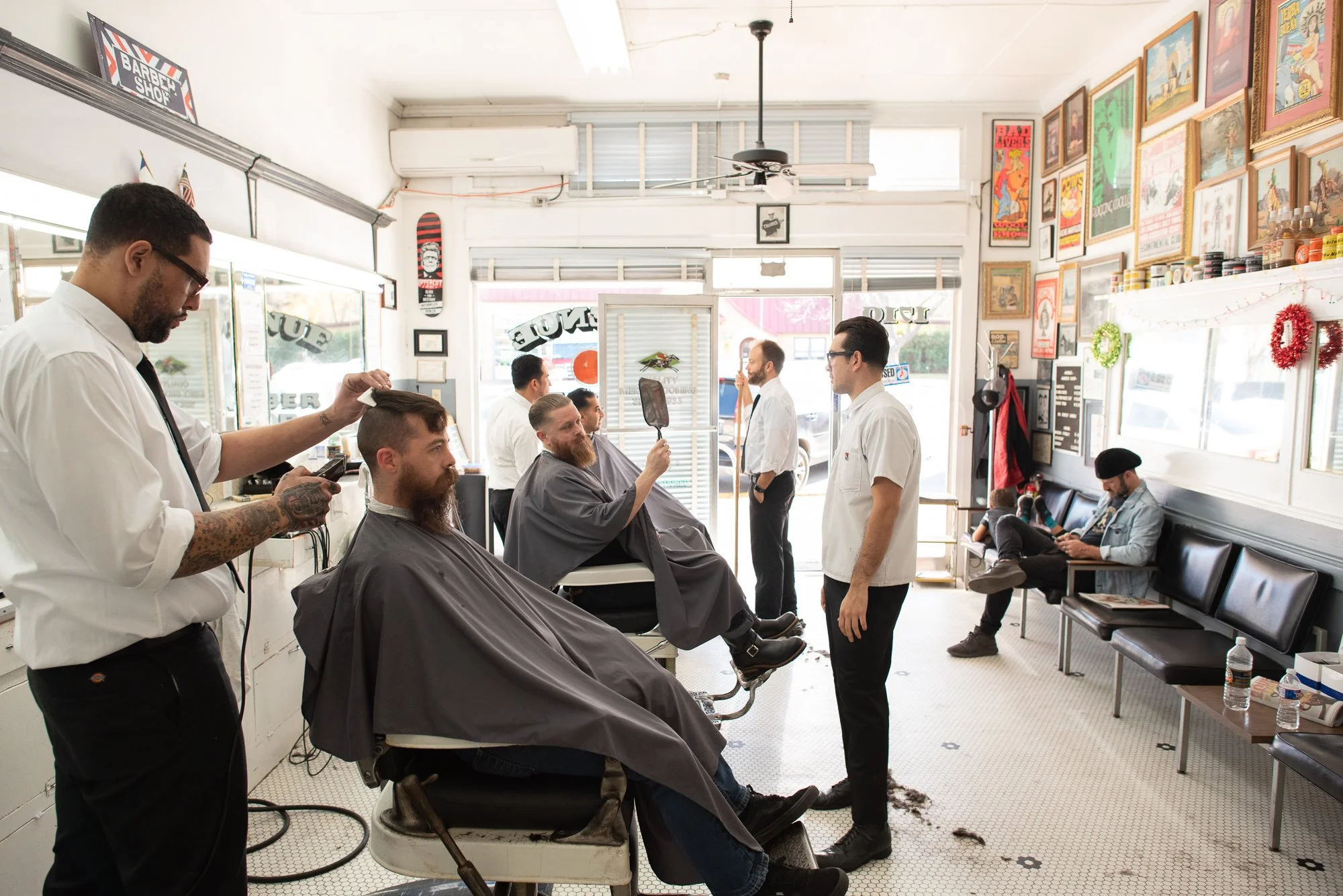
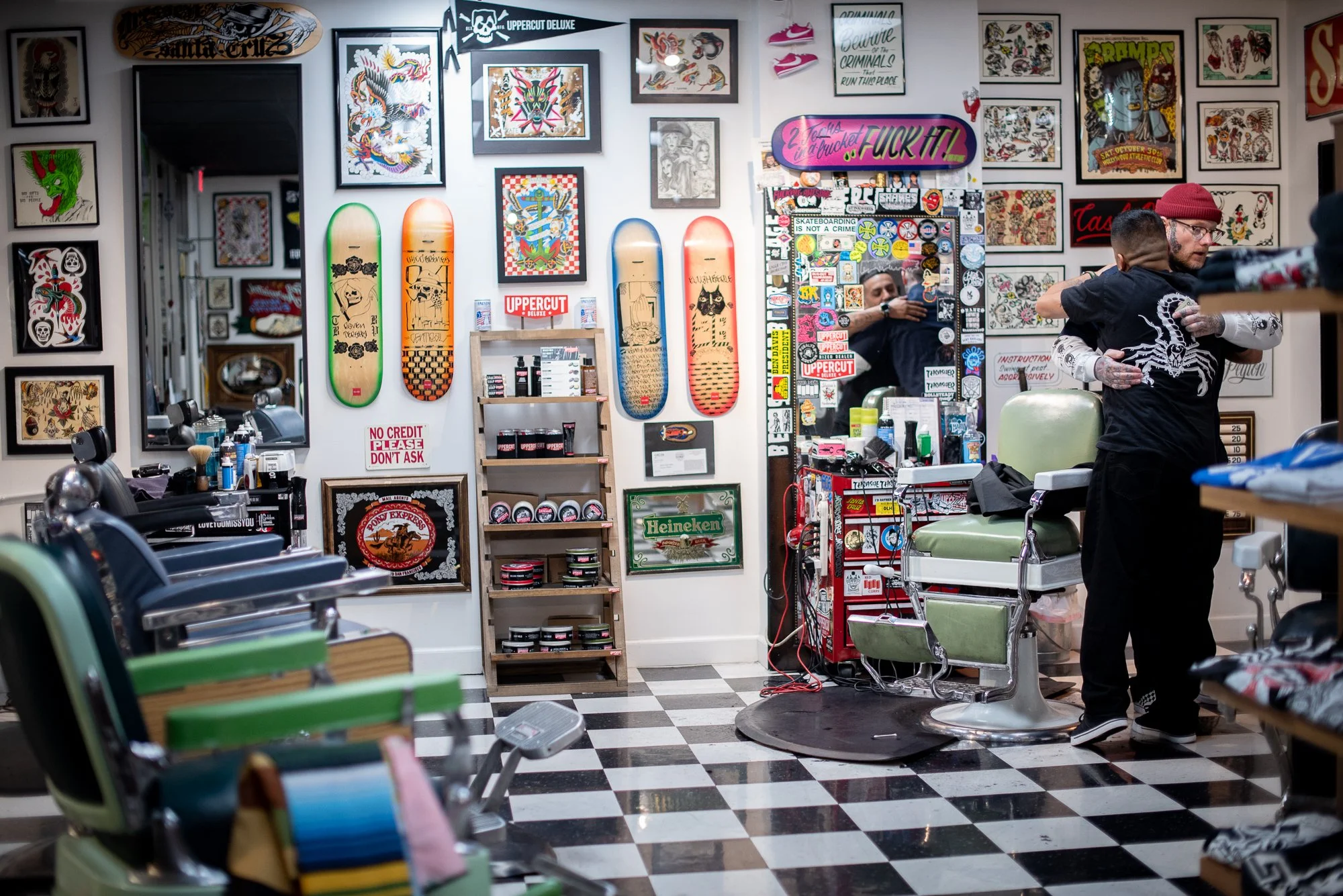
This shop feels curated. Every design decision — from layout to lighting to branding — carries the weight of experience. It’s what happens when a barber has spent years refining his craft and understands exactly how he wants a space to function.

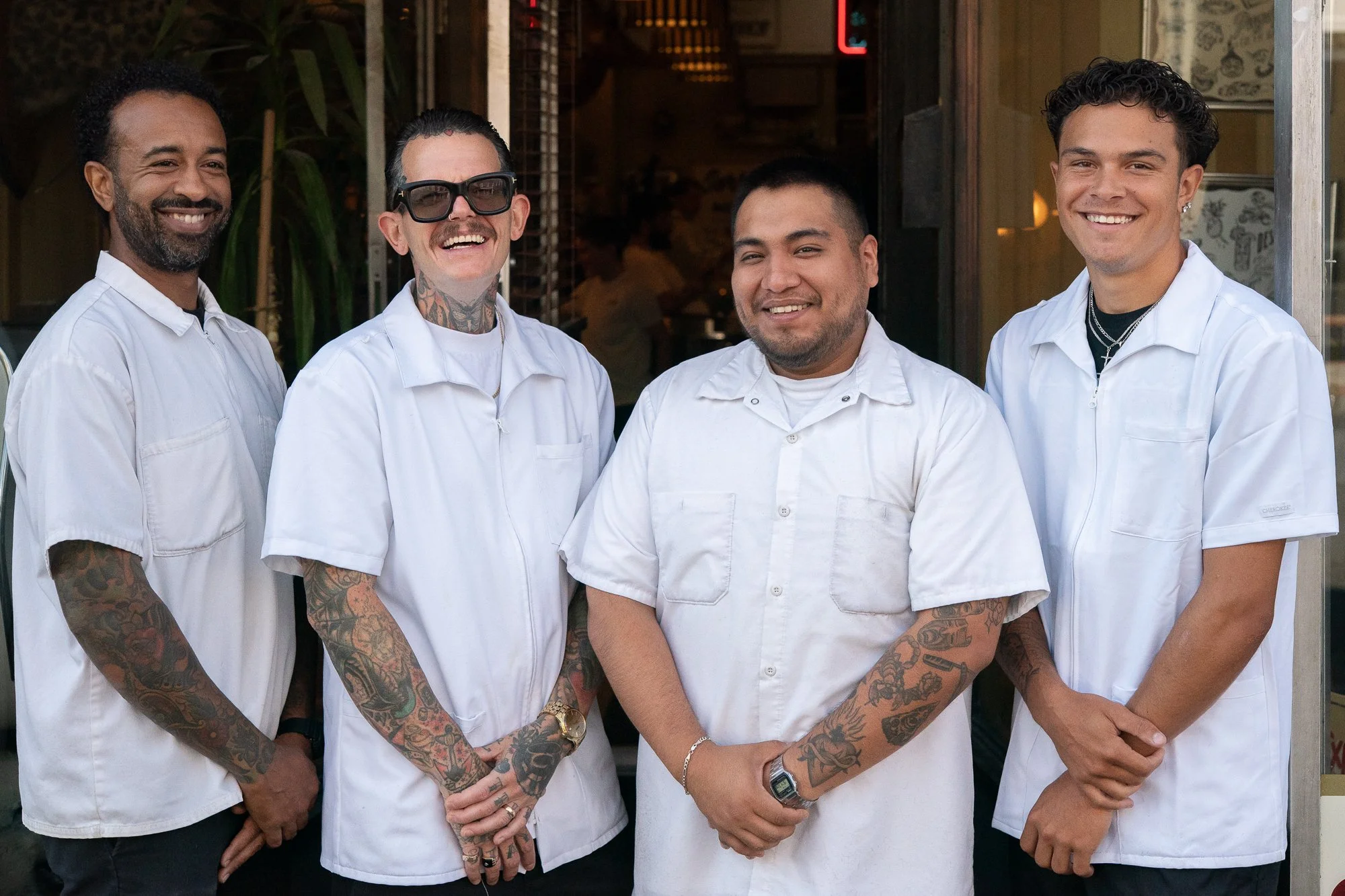
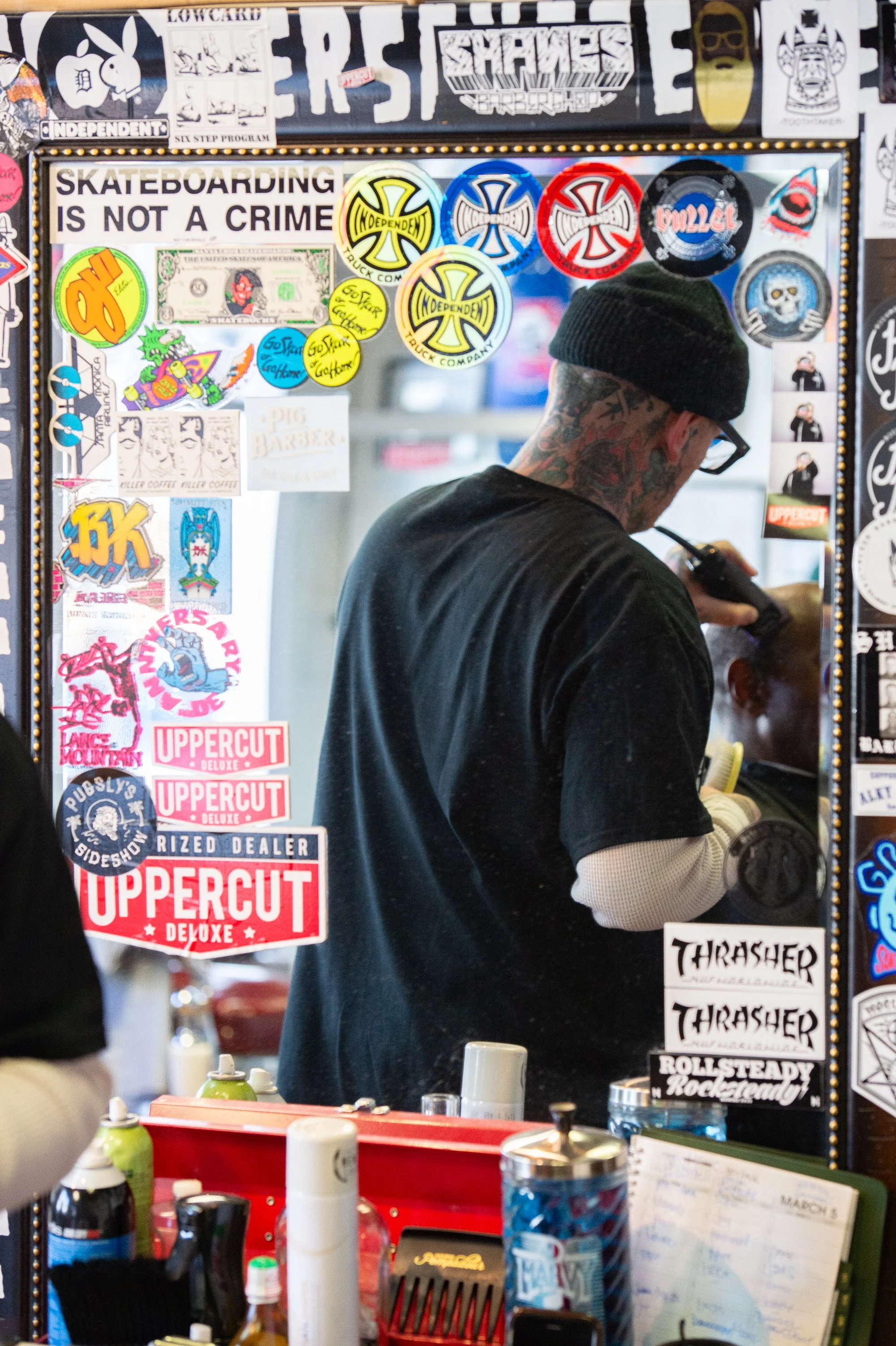
Sean is damn fine human being. As kind and welcoming as they come. He’s also part of the crew at Uppercut Deluxe, a globally respected pomade company known for aligning with some of the strongest barbers in the industry. That level of professional connection shows. Not in excess, but in execution.

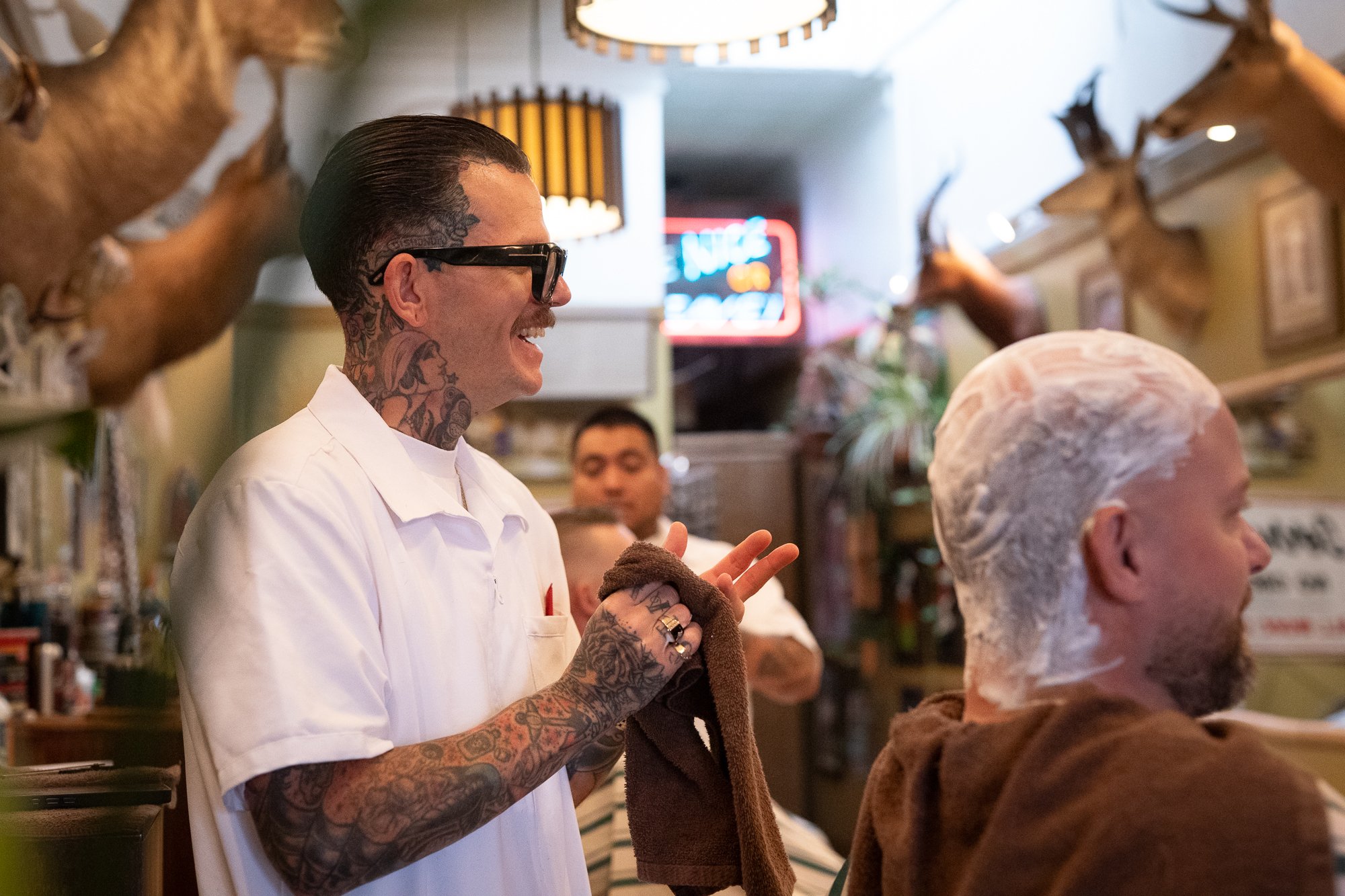
The result is a shop that feels intentional without feeling over-designed. Confident without trying too hard. Built by someone who knows the culture from the inside and wants everyone who walks through his door to feel like they belong.

Inside Spanky’s Barbershop – Design & Atmosphere

From a design standpoint, the shop is as good as it gets these days.

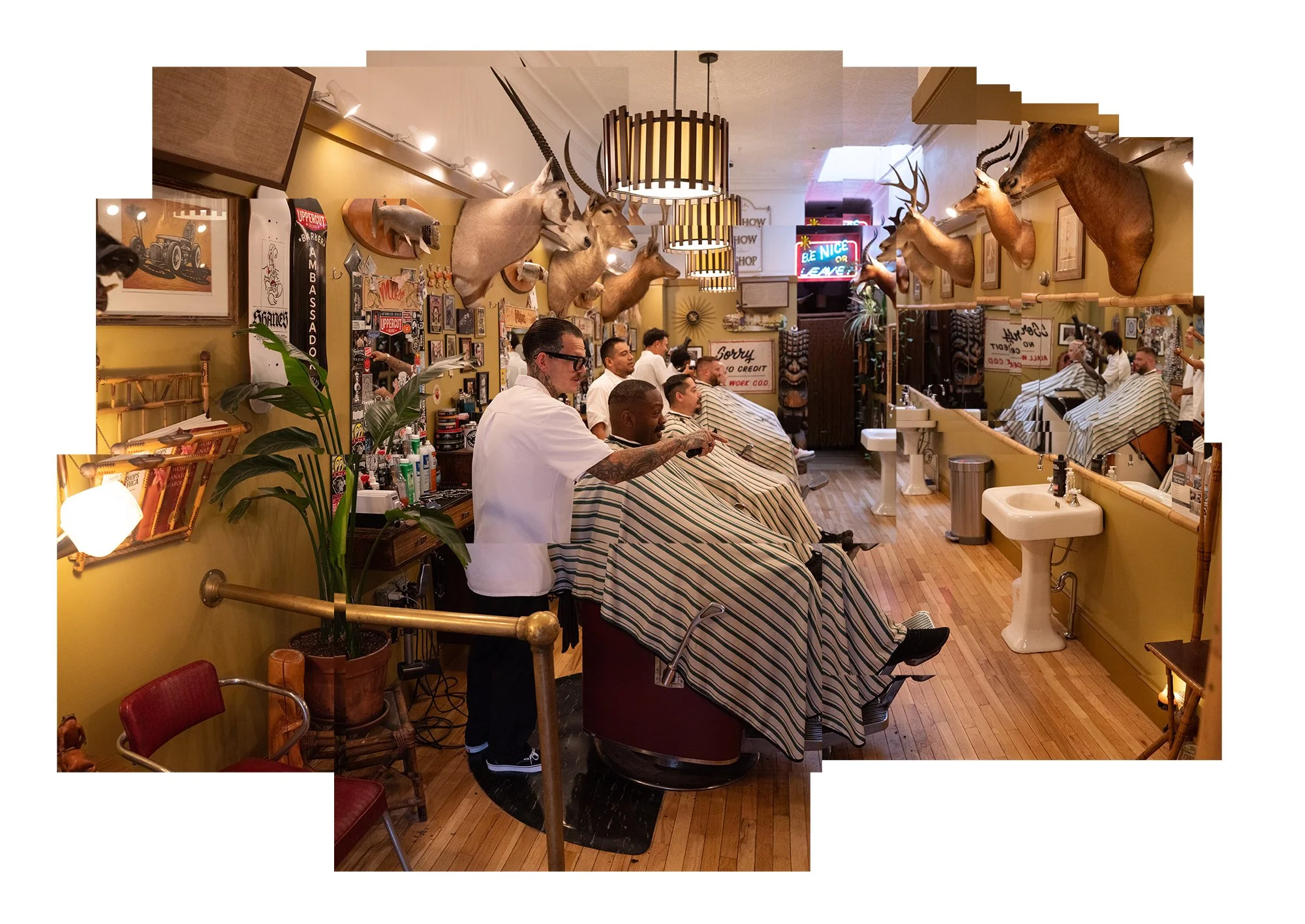
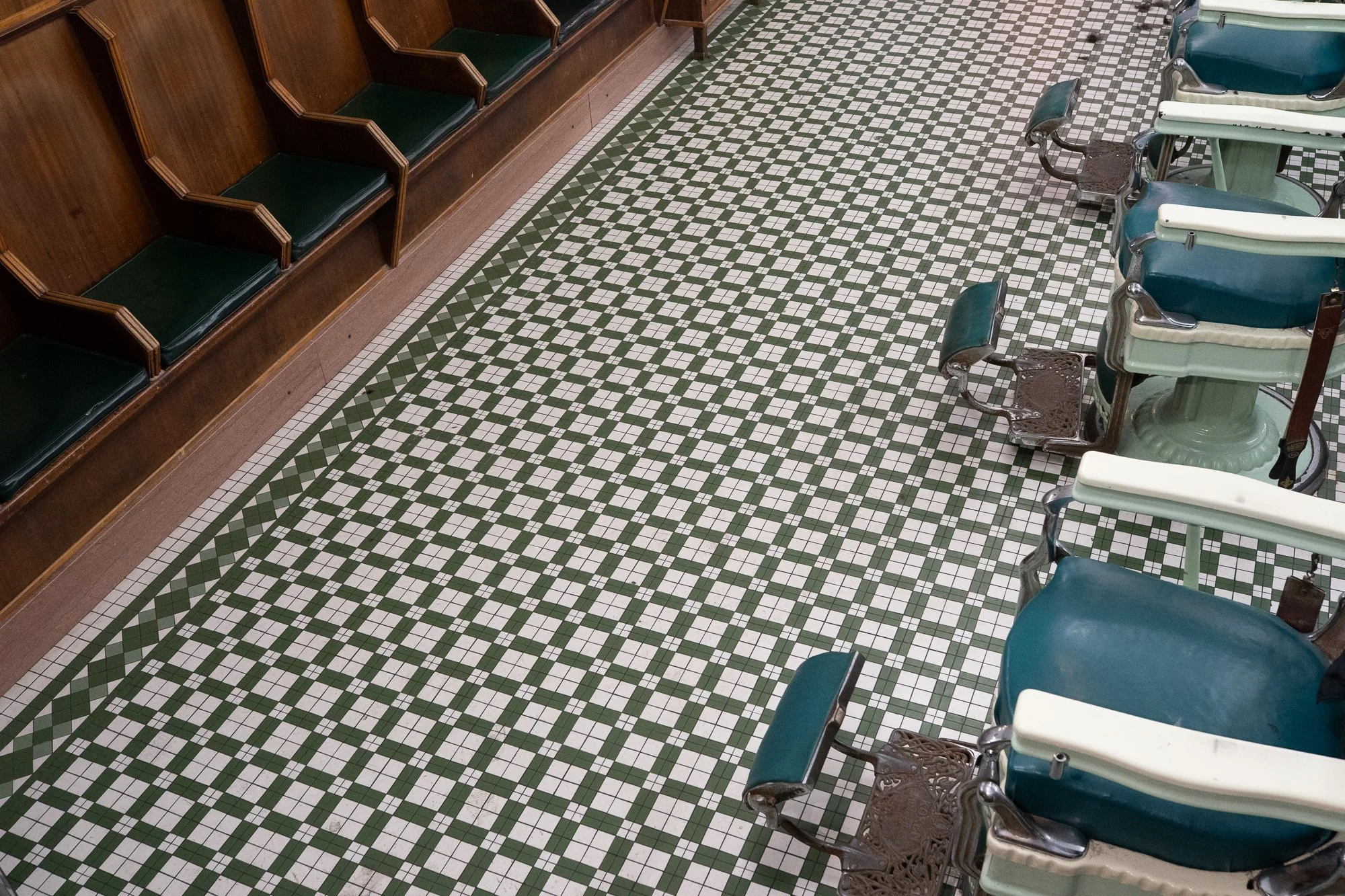
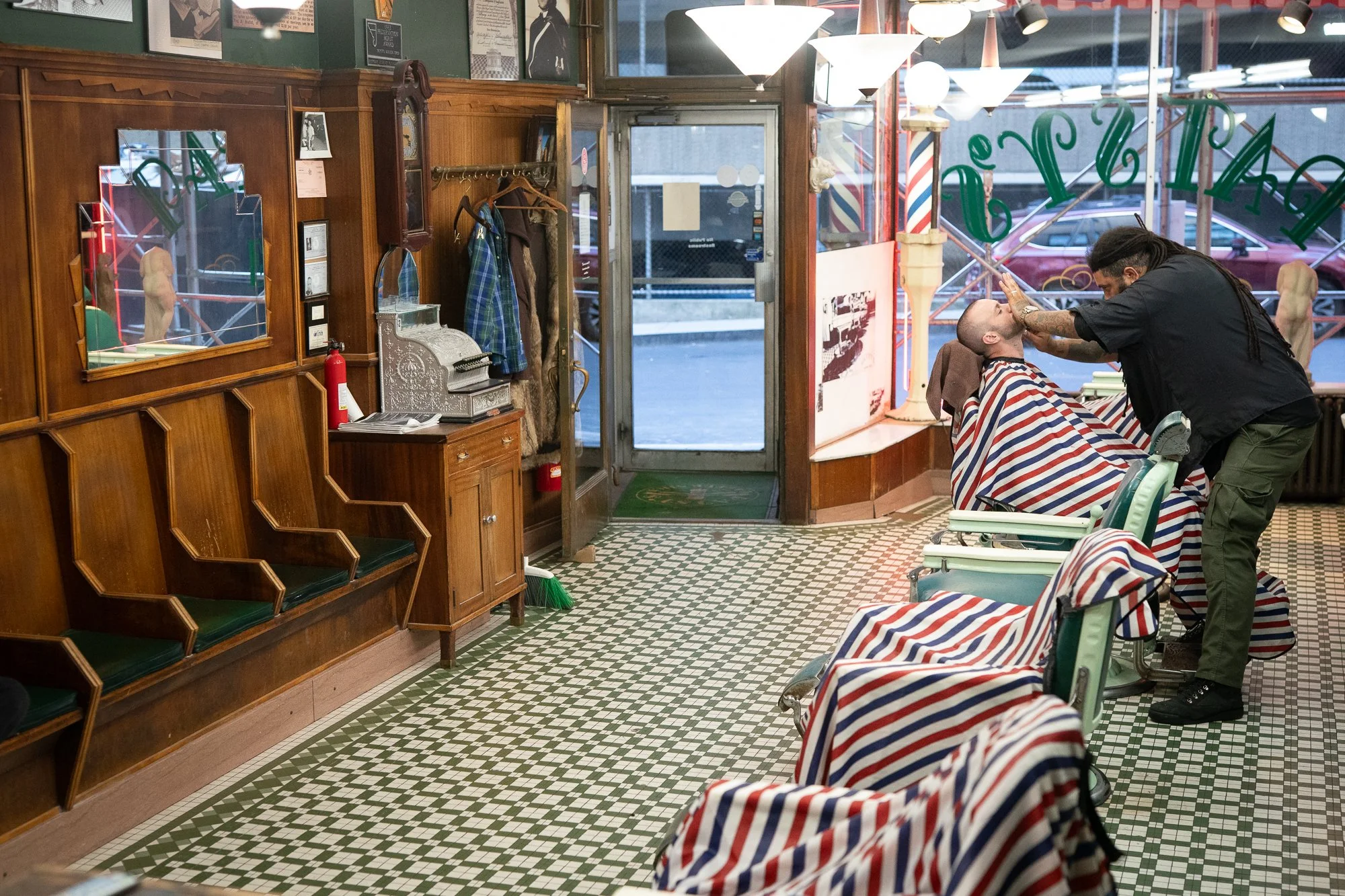
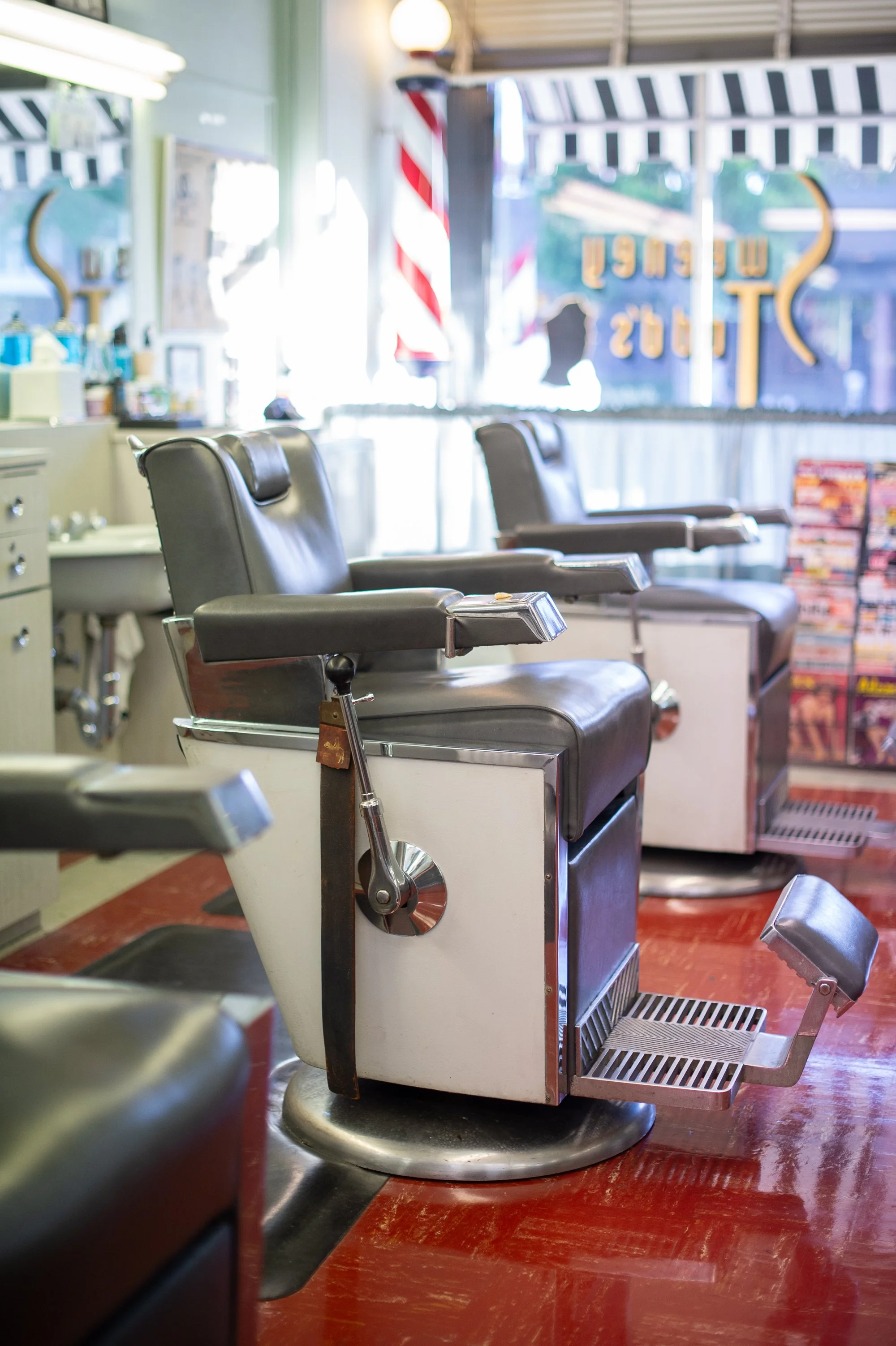
The materials feel grounded and intentional. The lighting is clean but warm. The stations are arranged with space to move, but without losing the intimacy that makes a traditional barbershop work.

There’s balance here — modern but not sterile. Classic but not nostalgic.

This is what makes strong barbershop interior design compelling: it respects tradition without being trapped by it.

The chairs, mirrors, floor color, and decor work together as a unified environment rather than individual pieces. It feels cohesive. Confident. Functional.

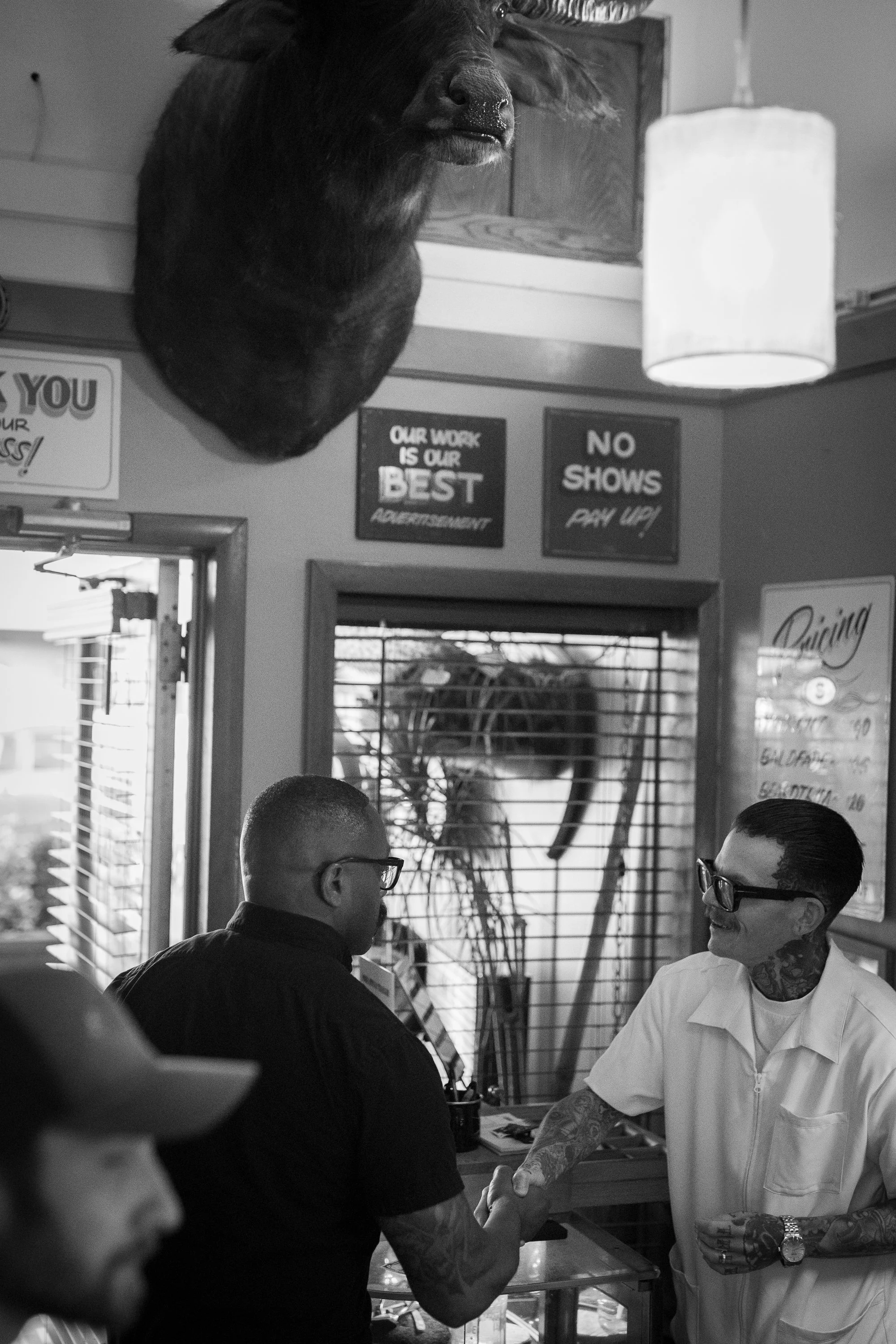
And above all, it feels lived in — not staged. Stepping into Spanky’s place, you know it was put together by a person with passion, not a group of executives in a highrise.

For a city like Covington, where small businesses are helping redefine entire blocks, spaces like this matter. They become visual anchors. They build neighborhood identity.

Covington’s Growth and Independent Energy

Northern Kentucky has been steadily growing, especially with its proximity to Cincinnati. But Covington has developed its own personality — one built around independent restaurants, bars, and retail rather than chains.

Spanky’s Barbershop fits that model perfectly.

It’s not corporate.
It’s not trend-driven.
It’s personal.

As neighborhoods evolve, businesses like this often become the steady presence — the kind of place people return to weekly or monthly, long after other storefronts have changed hands.

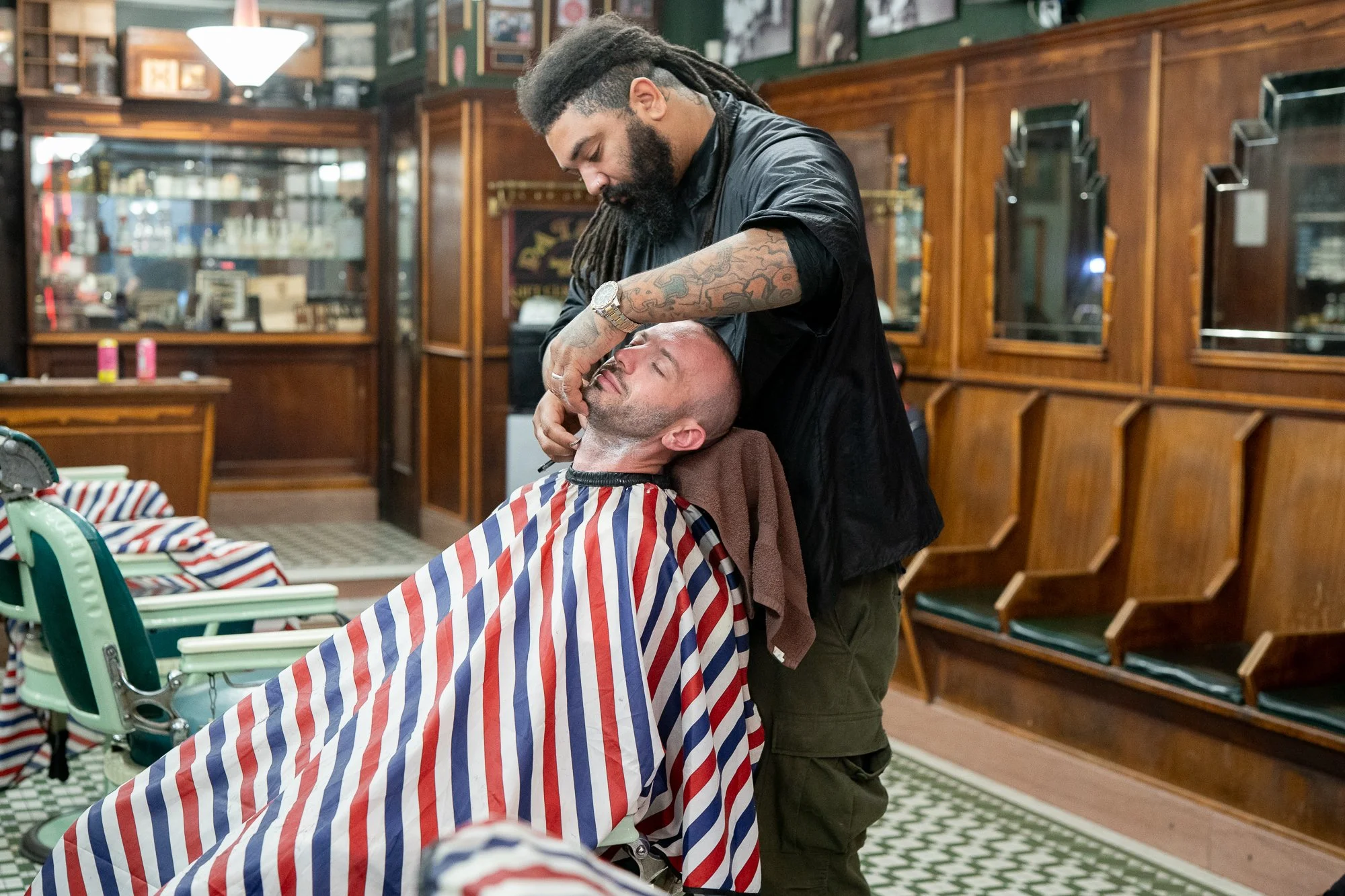
Barbershops, at their best, are consistent. They operate on routine and relationship. That consistency becomes more valuable as cities shift.

Barbershops of America – The Long View

This shop is part of my ongoing 15+ year project, Barbershops of America, documenting traditional and independent barbershops across all 50 states.

Most shops I photograph represent continuity — decades in one location, sometimes passed down through generations.

Spanky’s second location represents something slightly different: progression.

It shows what happens when a barber grows with his city.

It shows what happens when craft meets momentum.

Not every shop closes. Not every shop fades. Some expand. Some adapt. Some refine their space and raise their standard.

Those stories deserve to be documented too.

Fine Art Prints & Licensing

Photographs from Spanky’s Barbershop are available as limited edition fine art prints and for editorial or commercial licensing.

For interior designers, hospitality spaces, and collectors interested in contemporary American craftsmanship and small business culture, this body of work reflects both design and identity.

View the full Barbershops of America gallery here.
Explore fine art prints+photobook here.
Contact for licensing inquiries - rob@robhammerphotography.com

Continue Through the Archive

Spanky’s Barbershop is one of hundreds of shops photographed across all 50 states.

→ View a traditional barbershop in Marfa, Texas

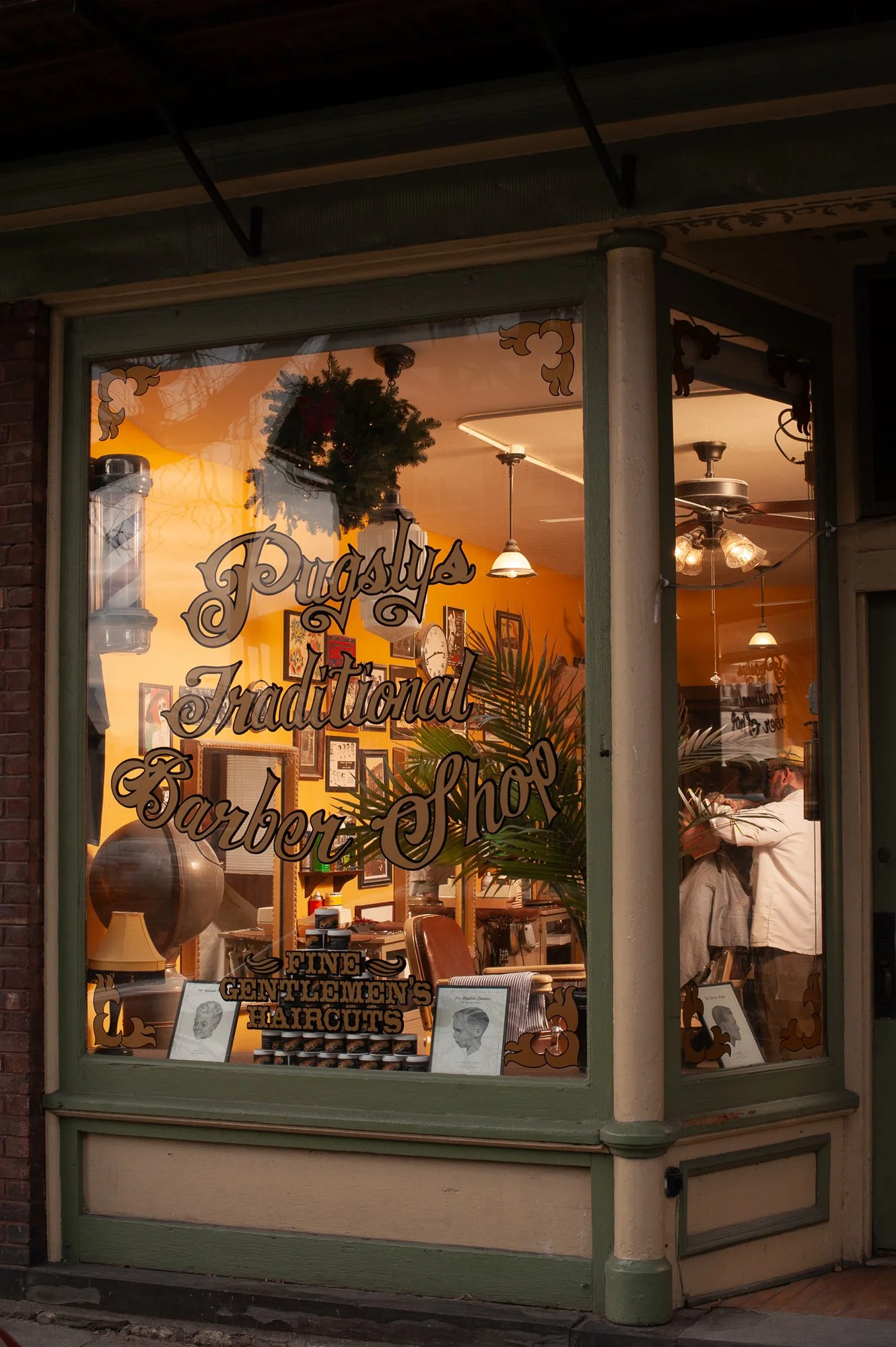
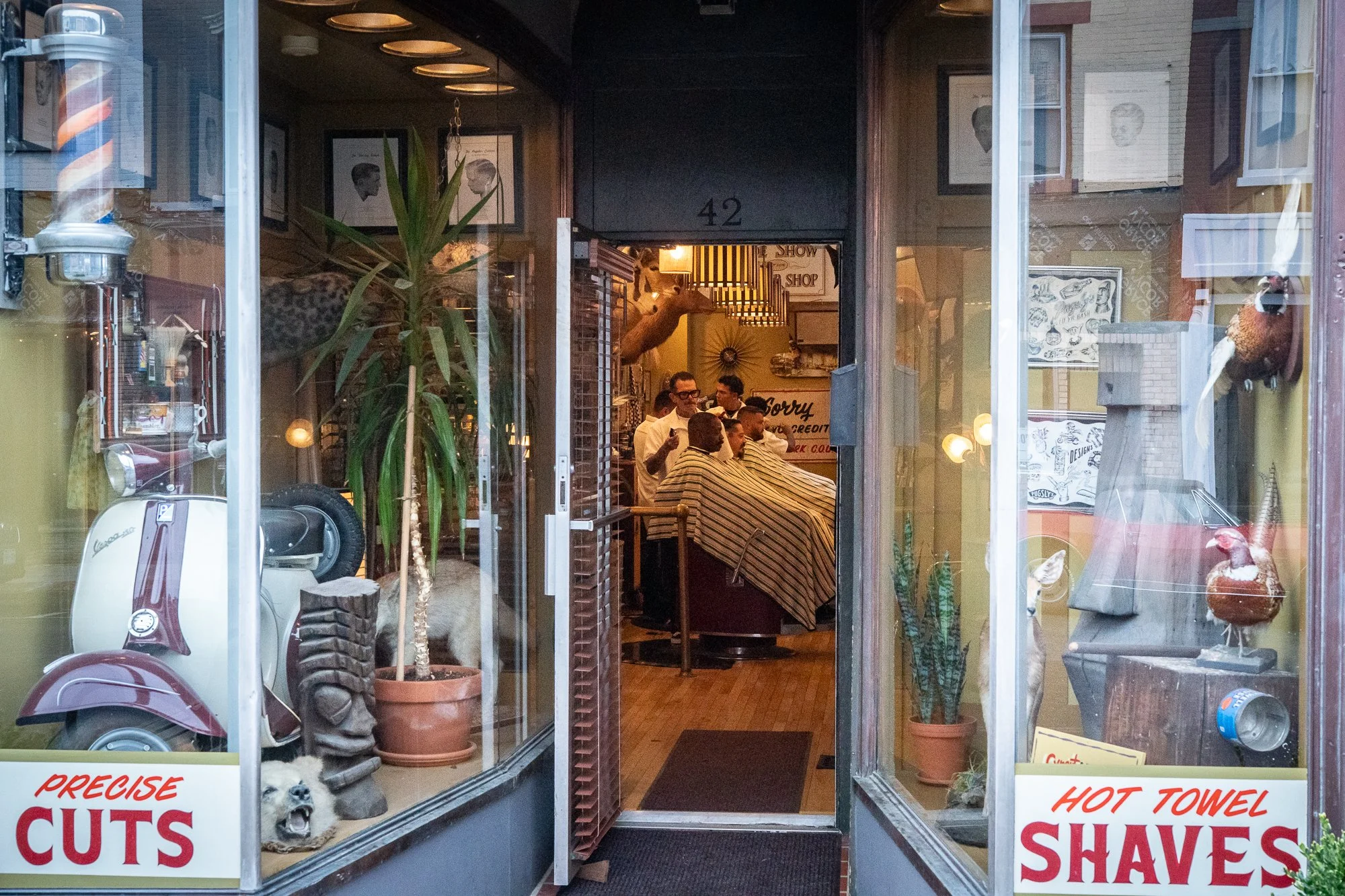
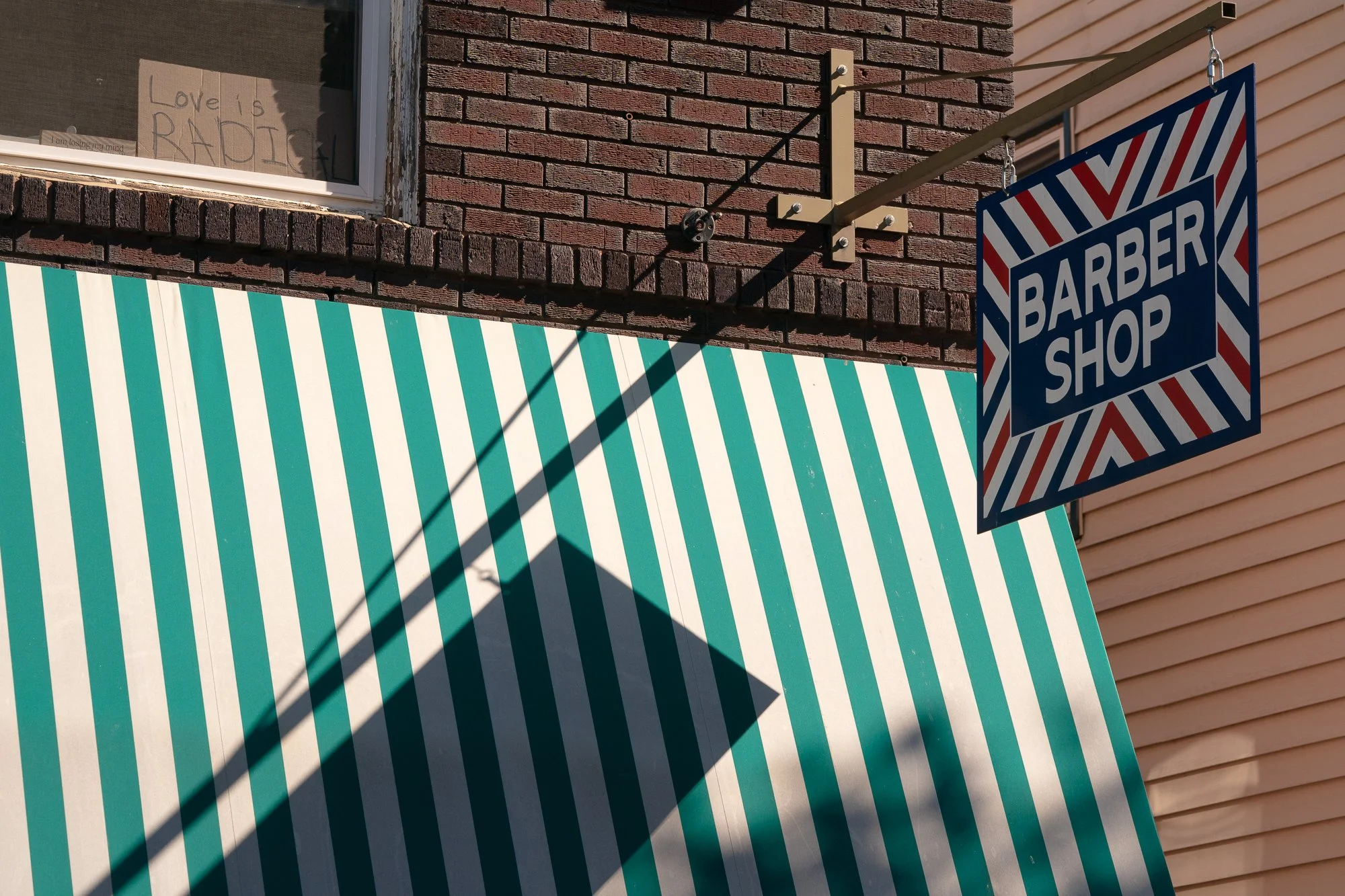
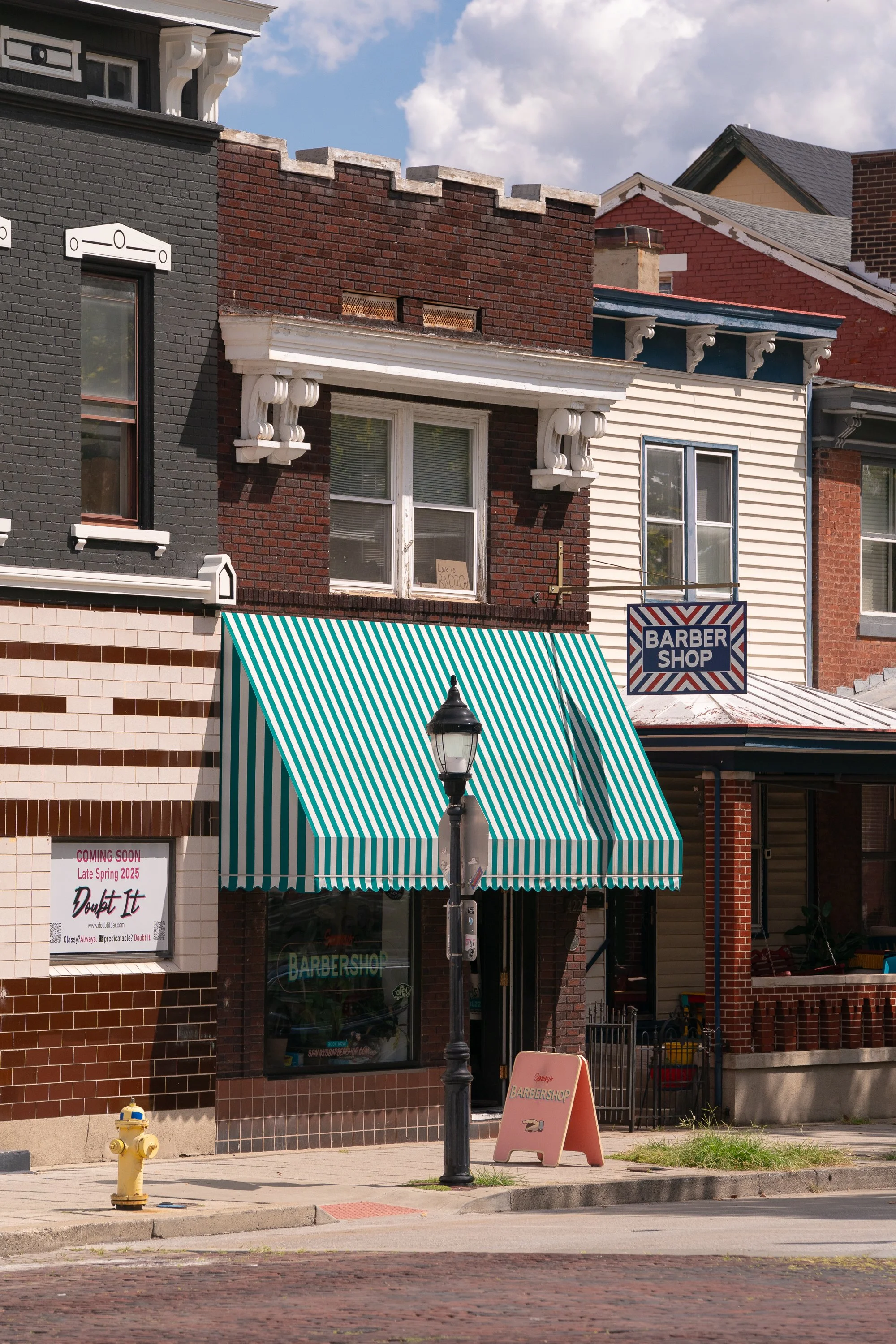
Classic barber shop sign hanging above a green striped awning on a brick storefront in Covington, Kentucky.

The striped awning and traditional barber sign anchor the storefront along a historic Covington block.

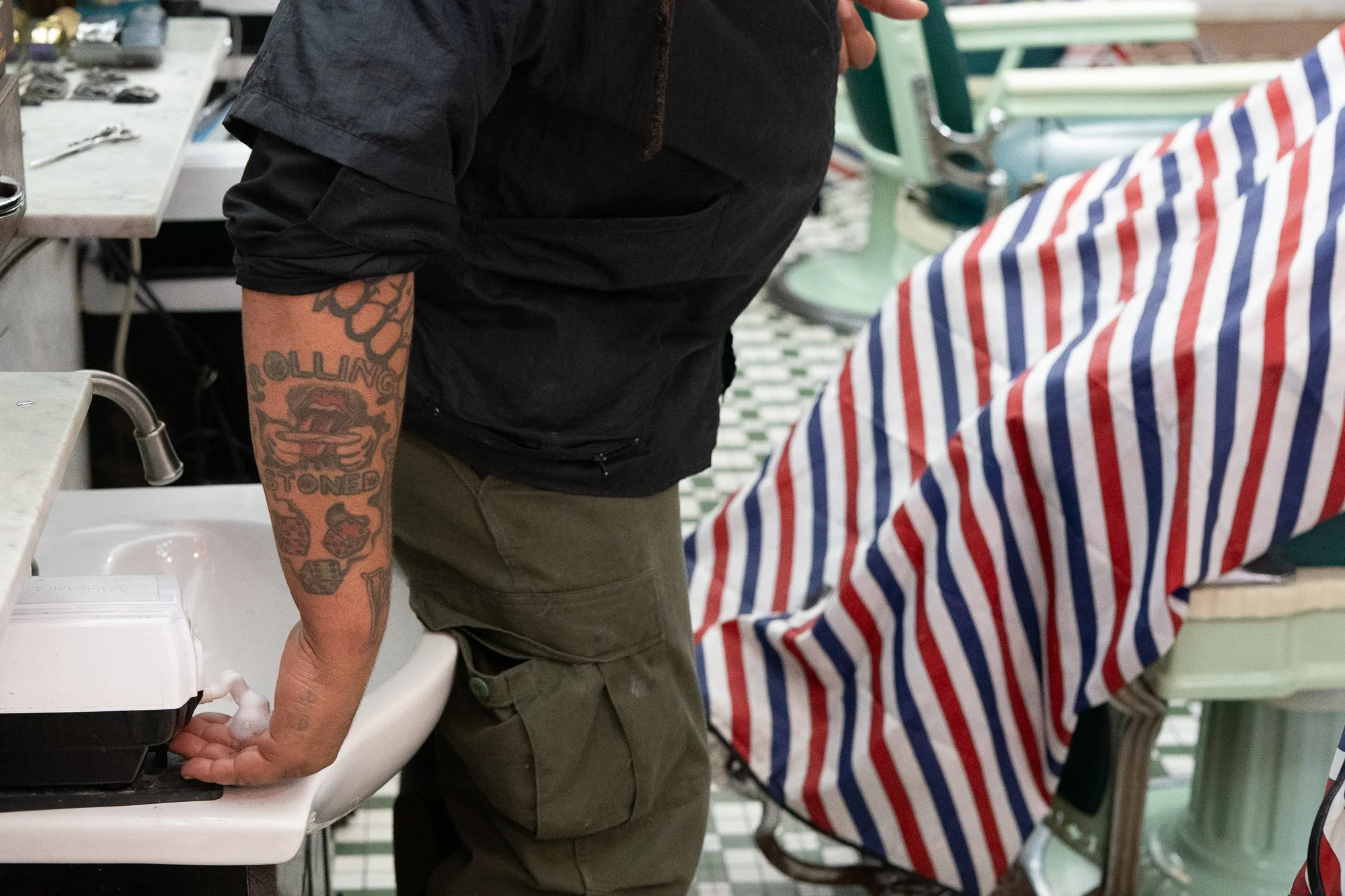
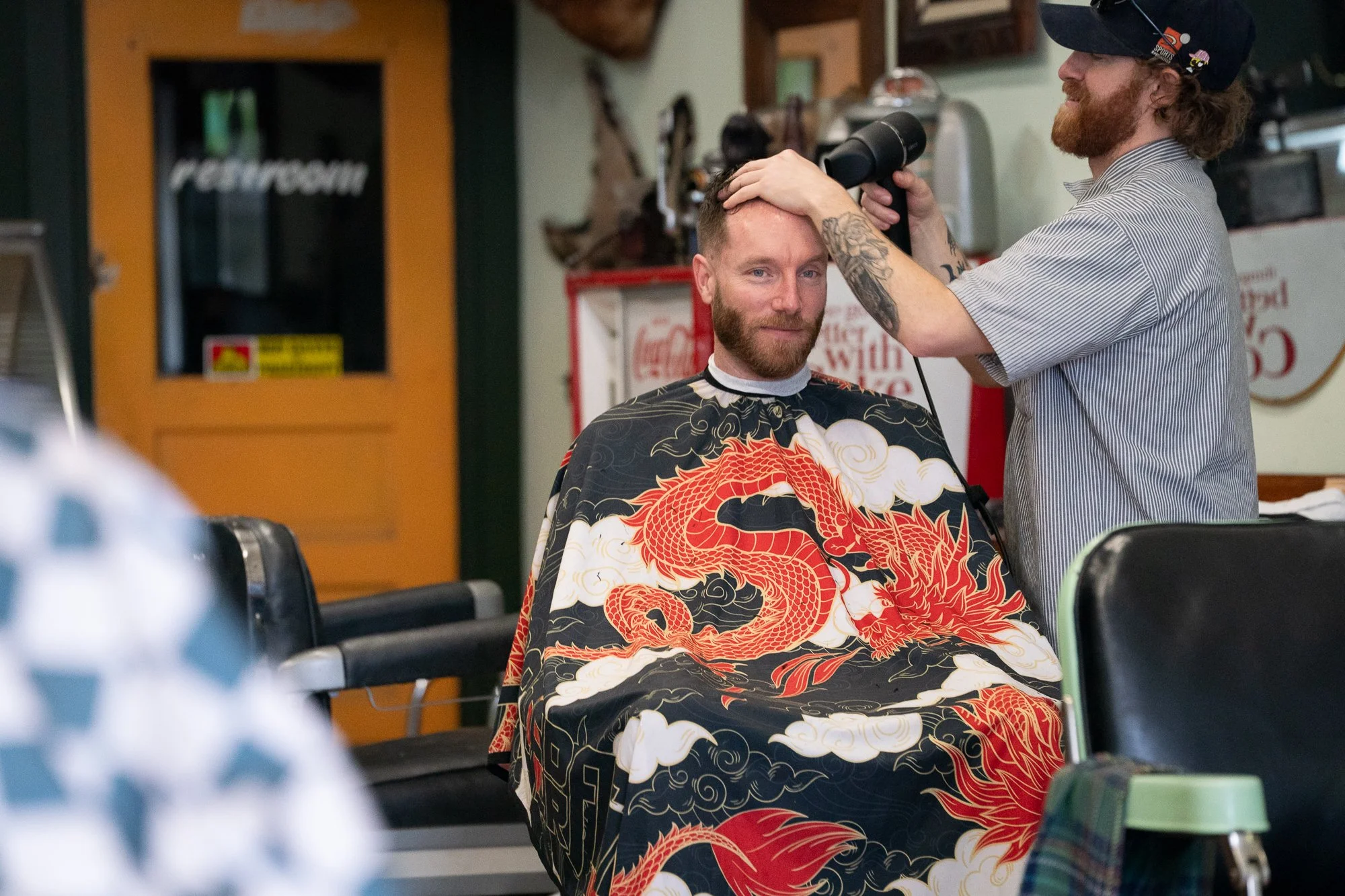
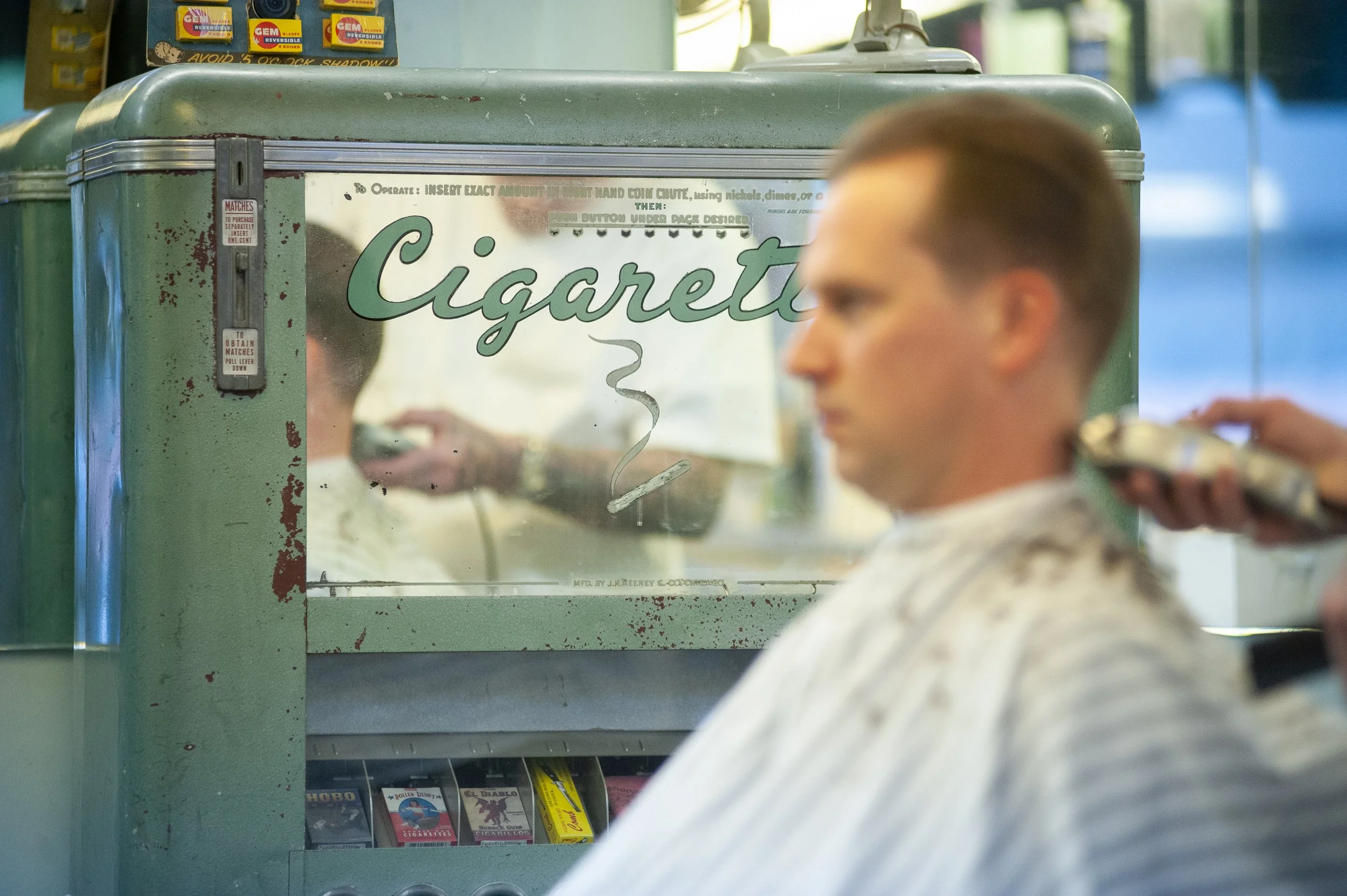
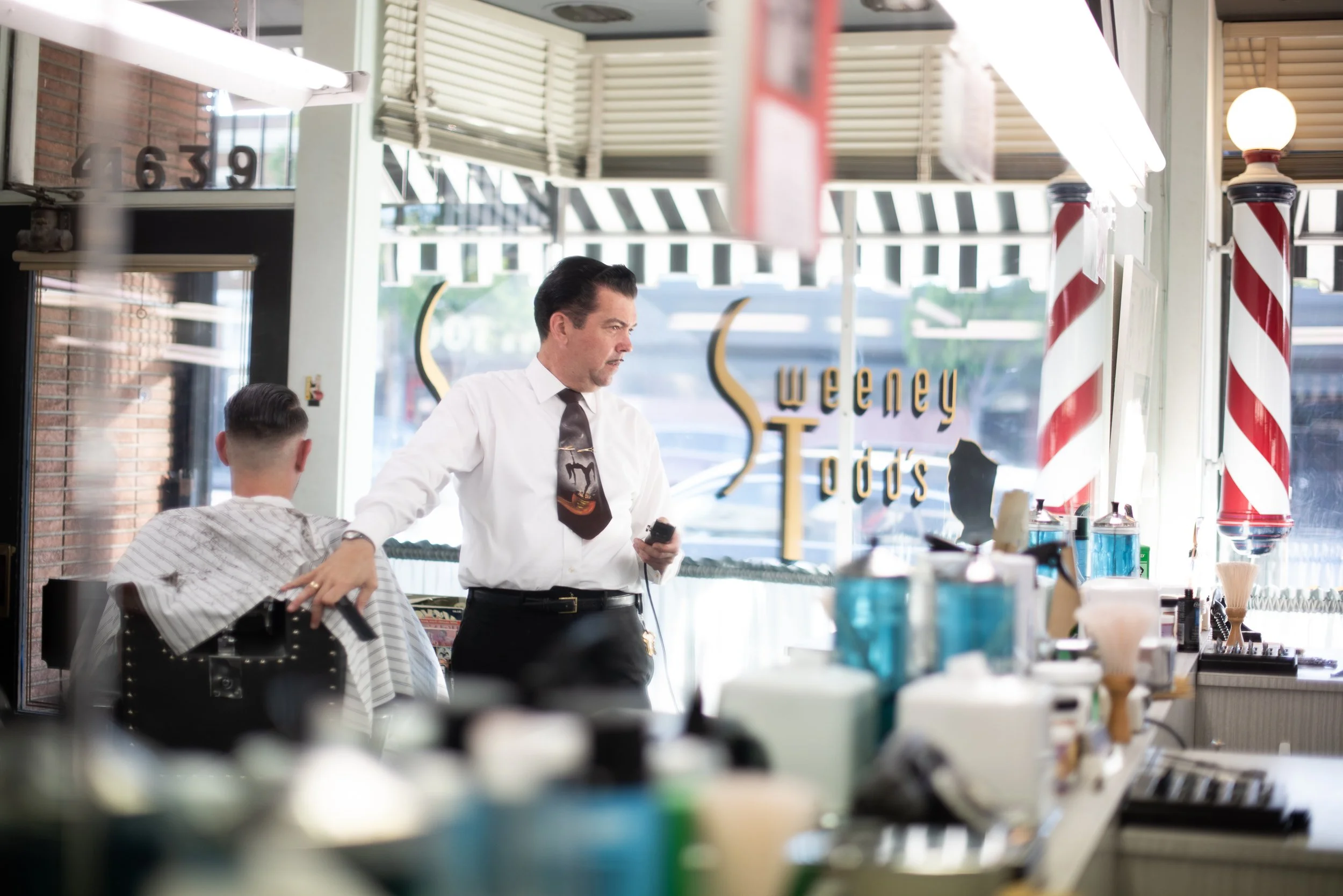
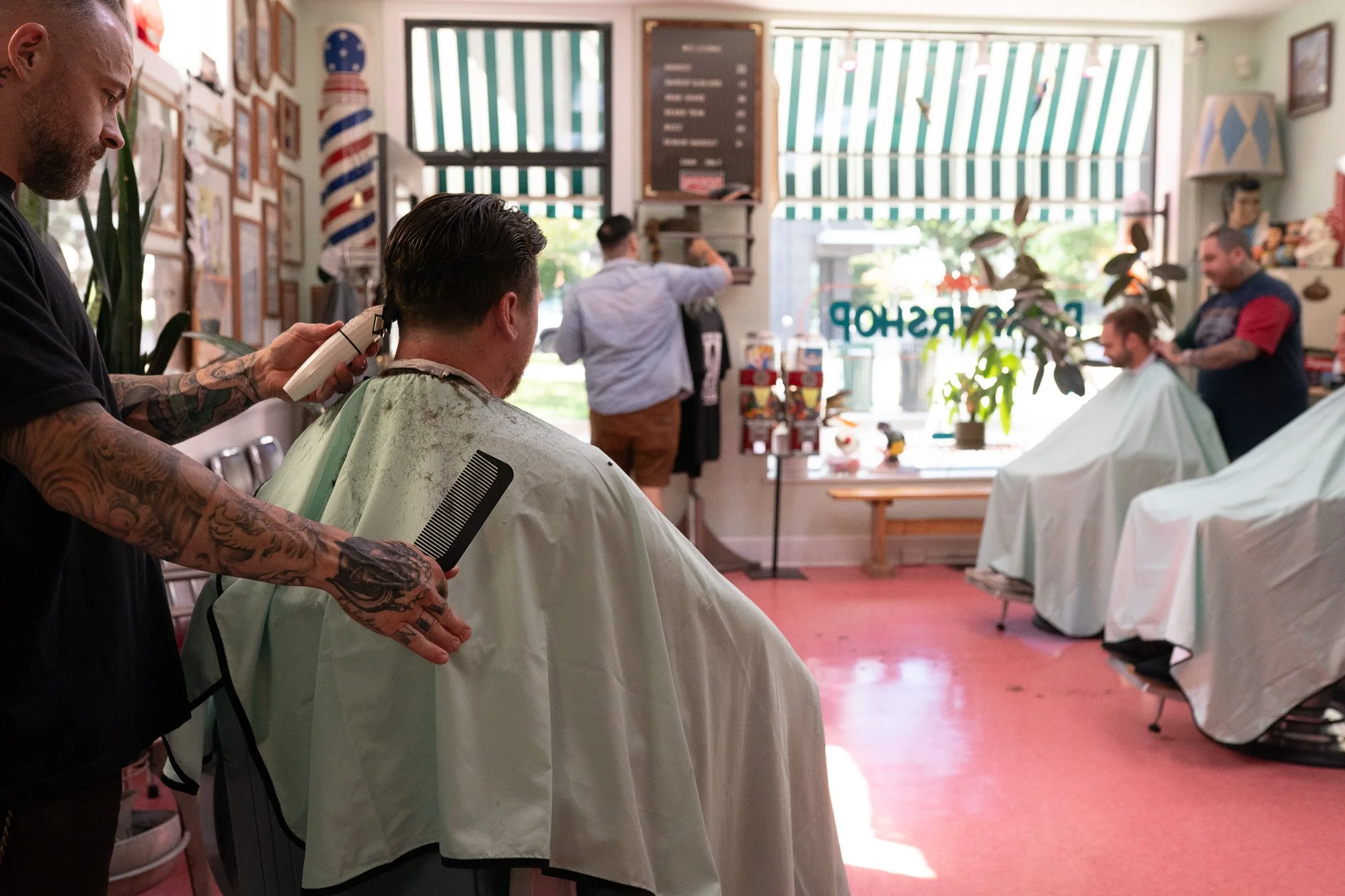
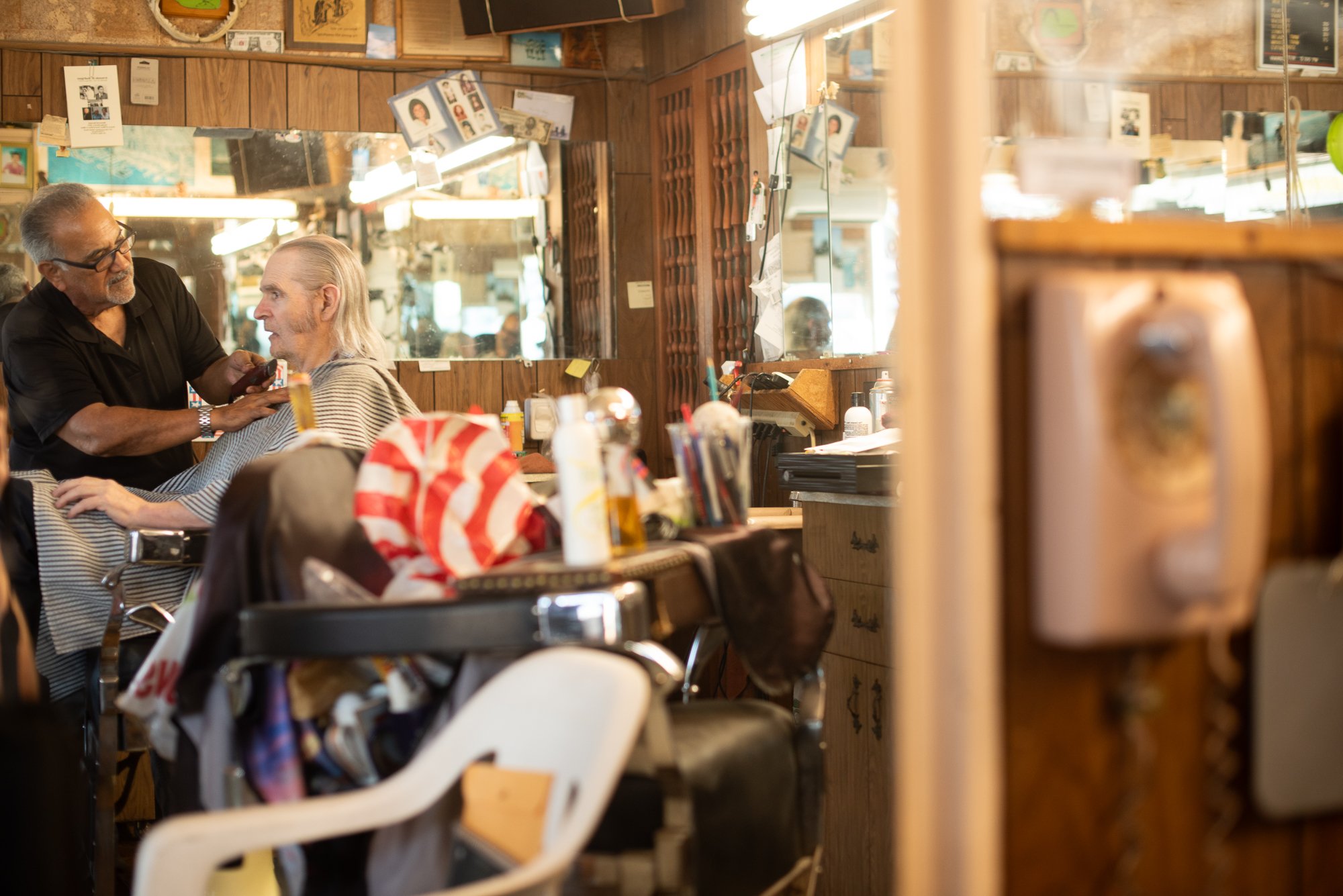
Barber trimming a client’s hair with clippers at Spanky’s Barbershop in Covington, Kentucky.

Natural light filters through the striped awning as a barber finishes a cut

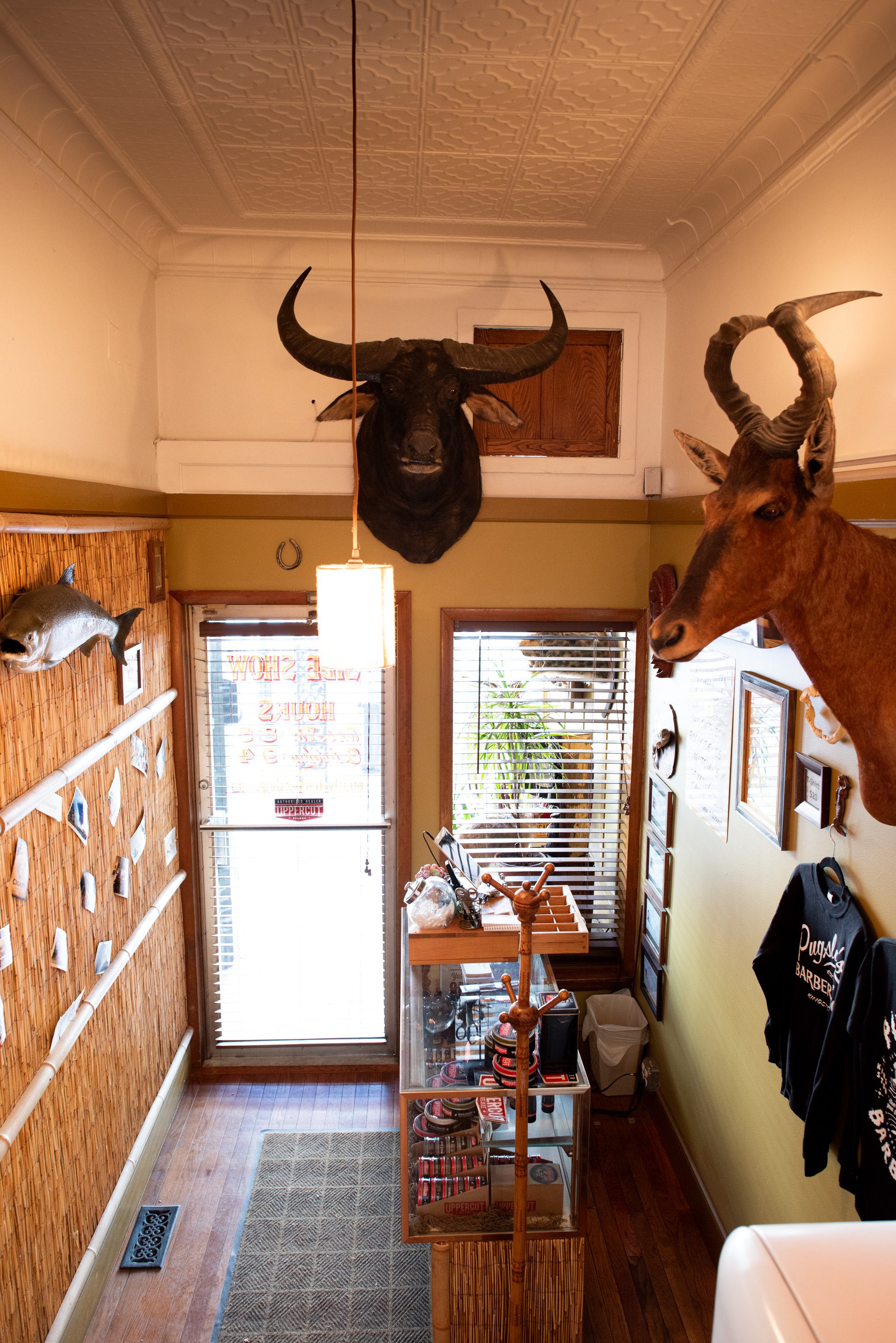
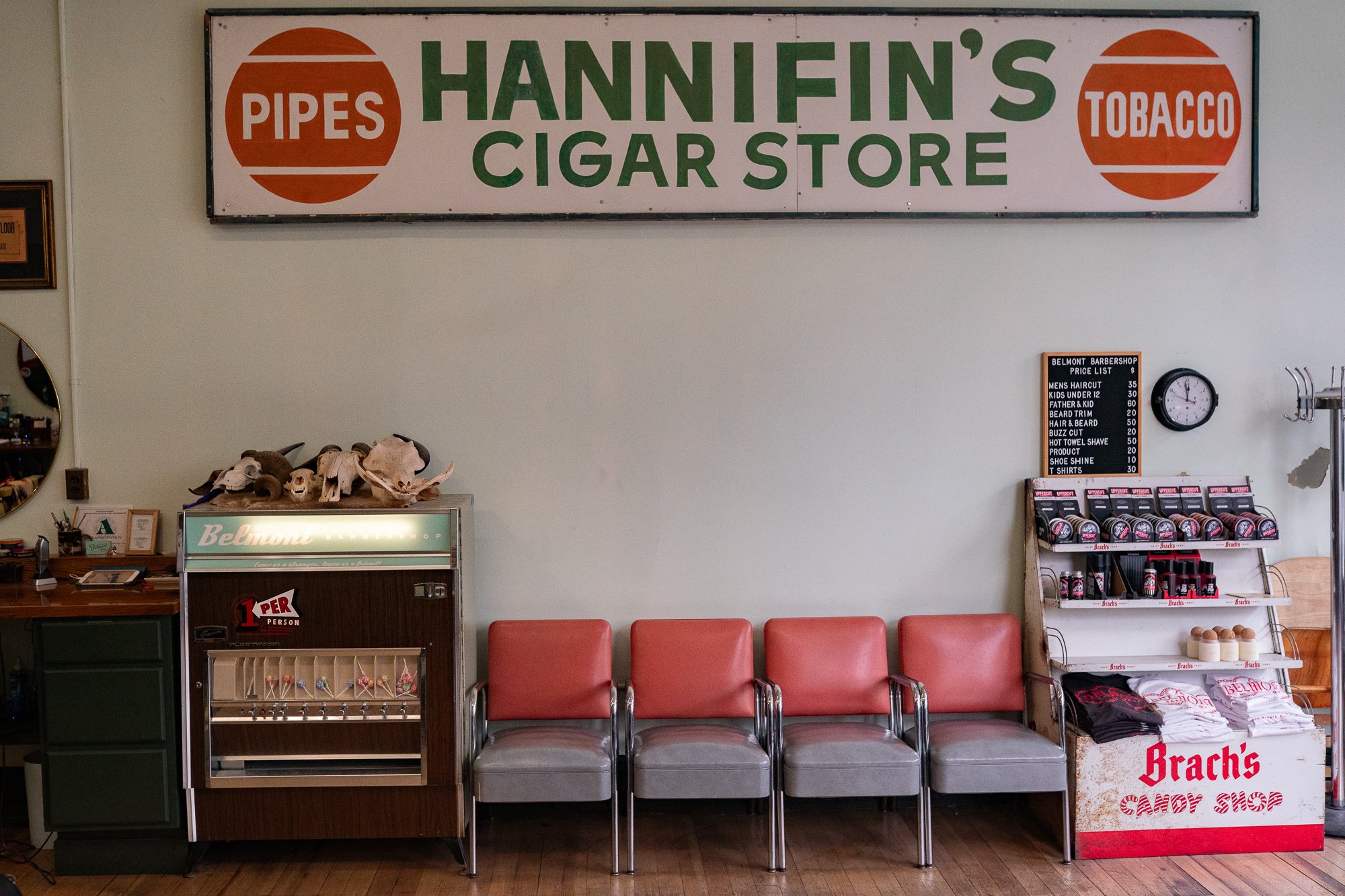
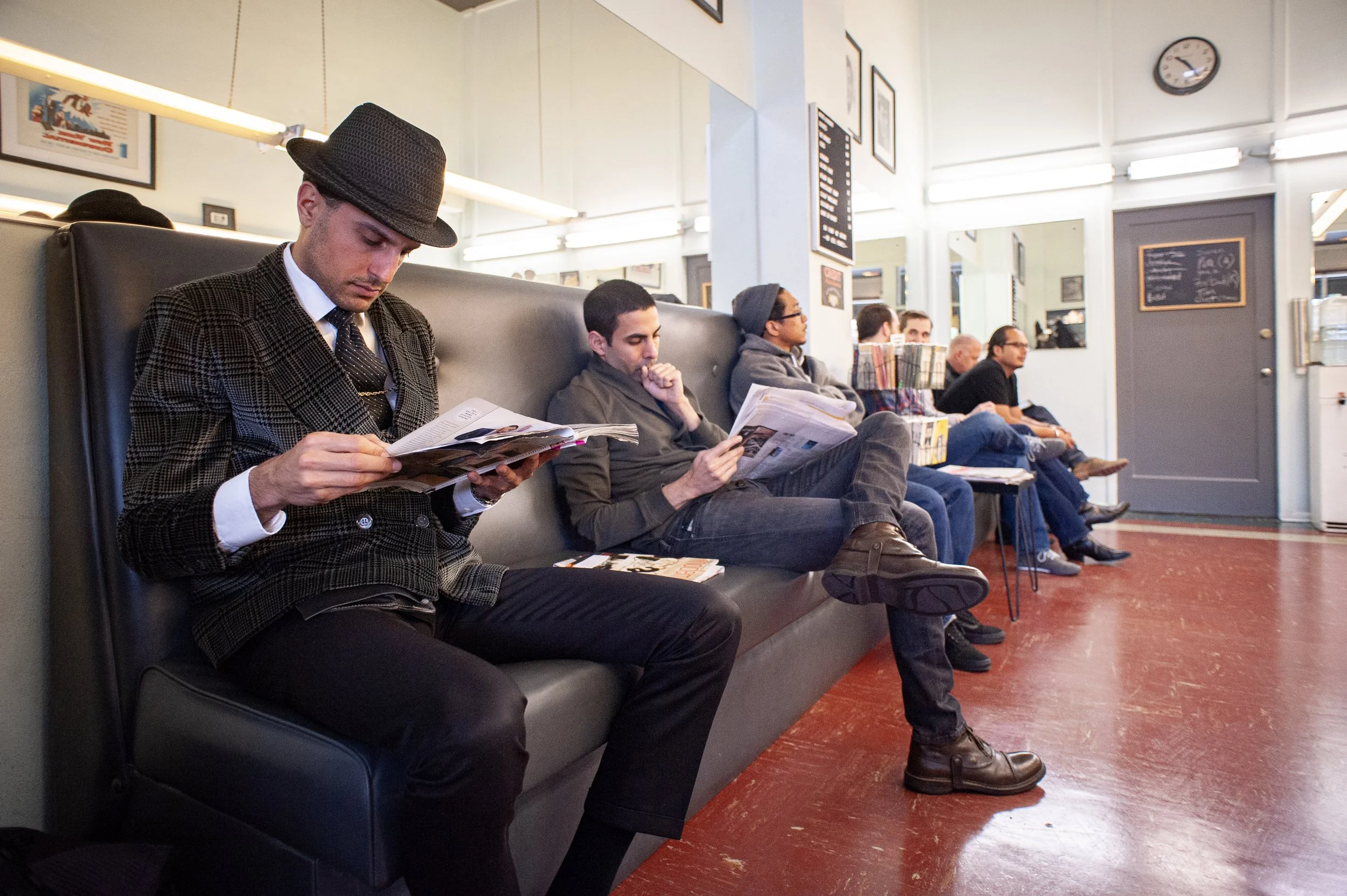
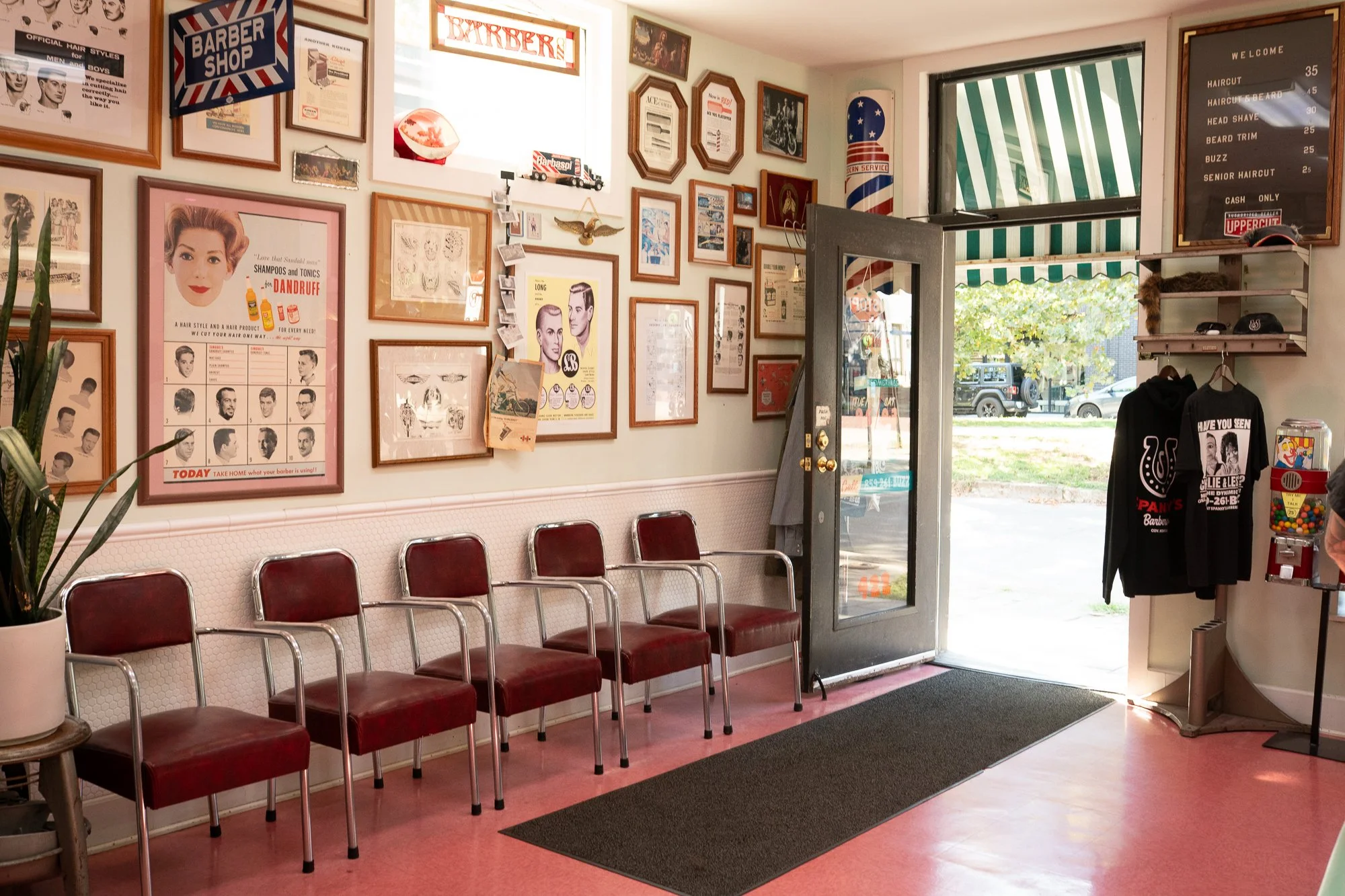
Waiting area inside Spanky’s Barbershop in Covington, Kentucky with red vinyl chairs, vintage barber posters, and green striped awning visible through the open door.

The waiting area at Spanky’s Barbershop in Covington blends vintage barber ephemera, red vinyl chairs, and natural light from the street, setting the tone for the shop’s design-forward interior.

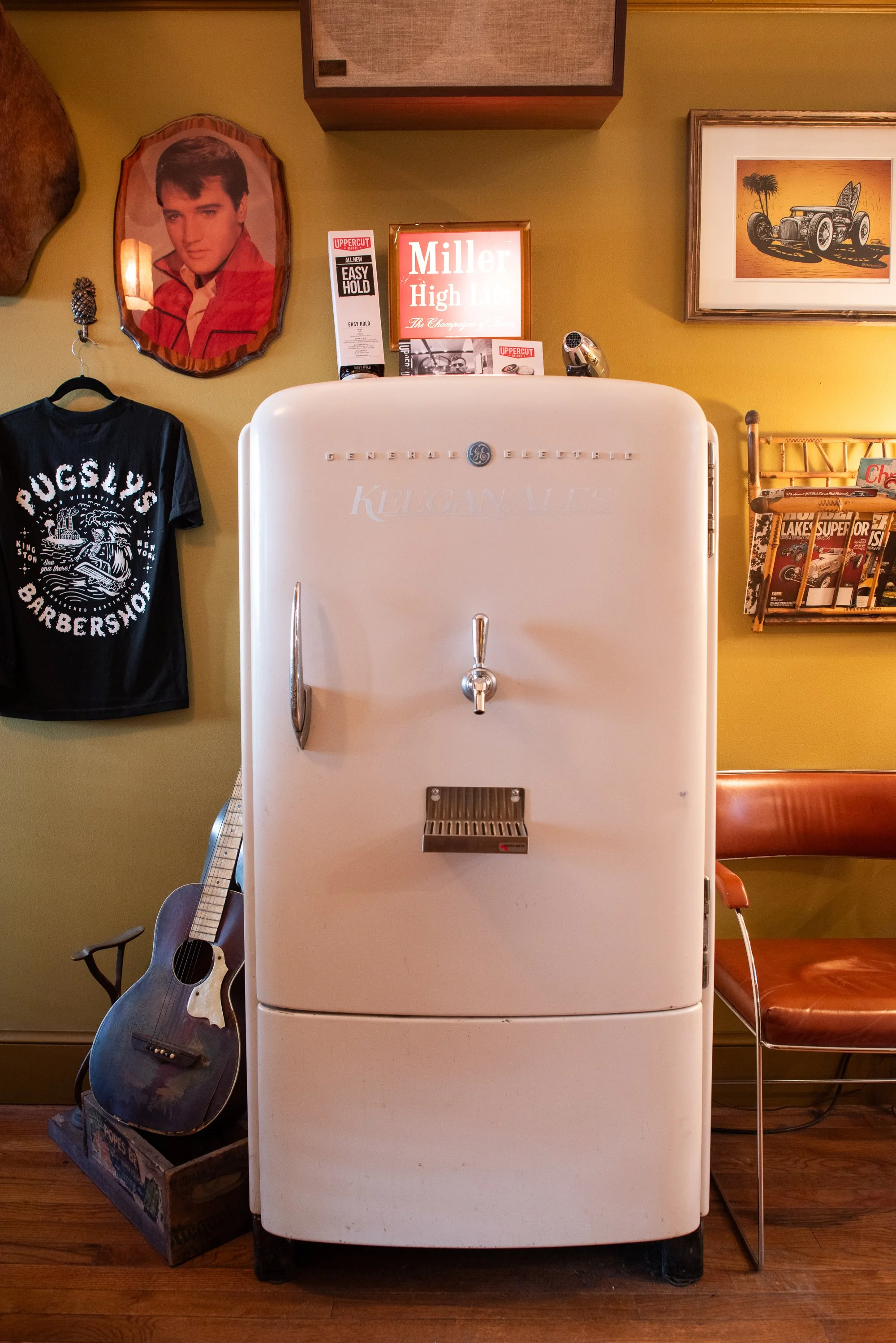
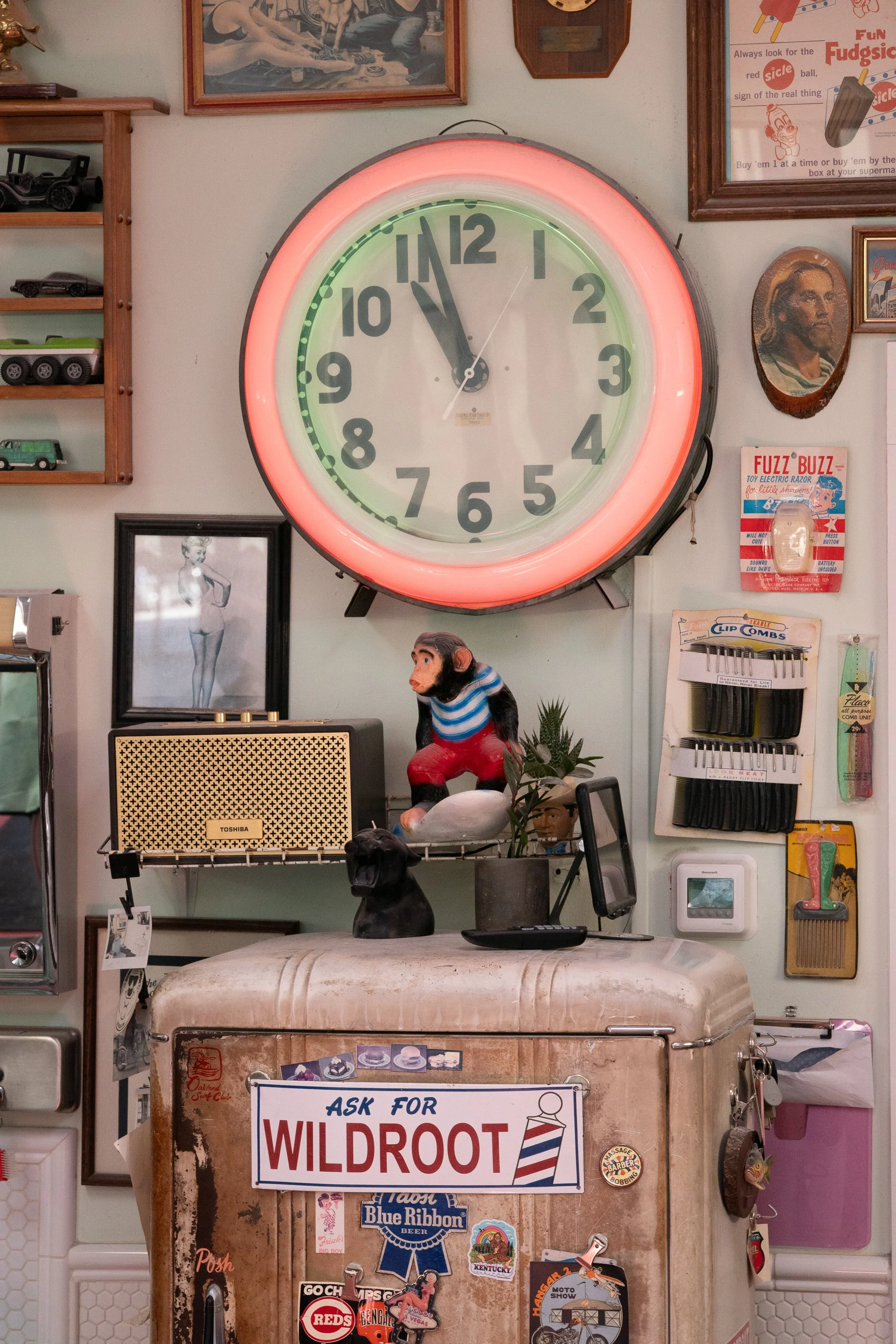
Vintage neon wall clock above a Wildroot refrigerator inside Spanky’s Barbershop in Covington, Kentucky.

Vintage neon wall clock above a Wildroot refrigerator inside Spanky’s Barbershop in Covington, Kentucky.

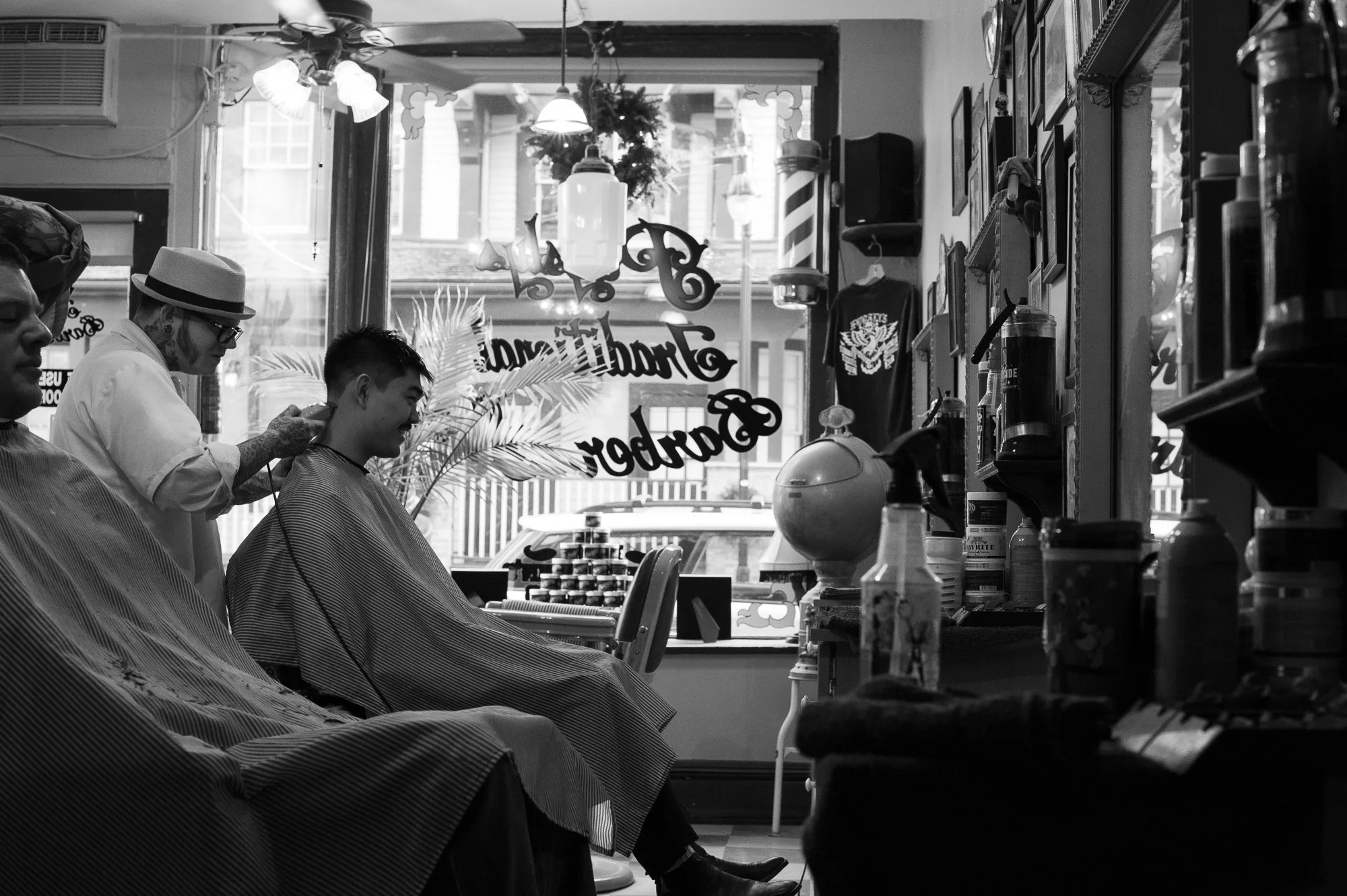
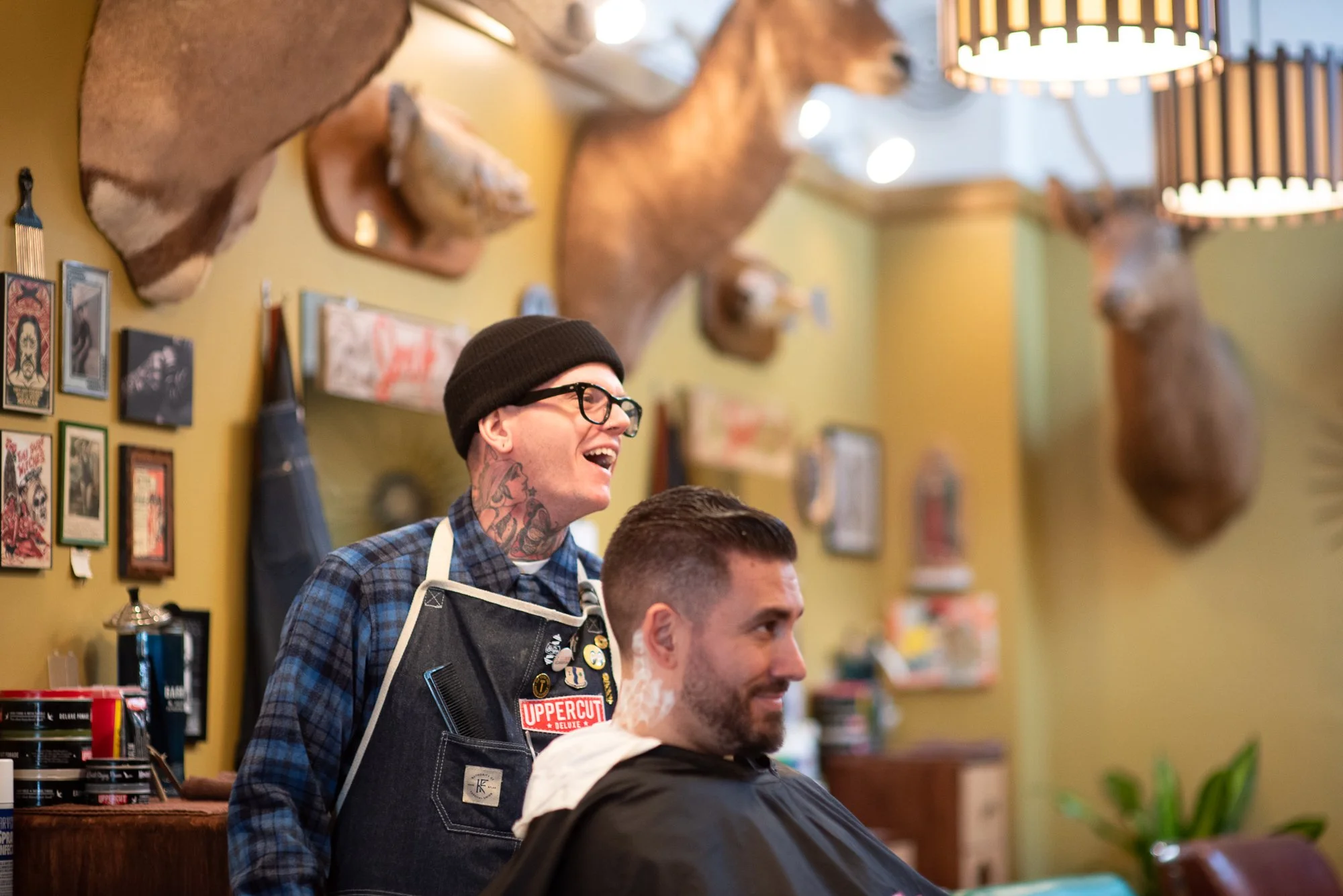
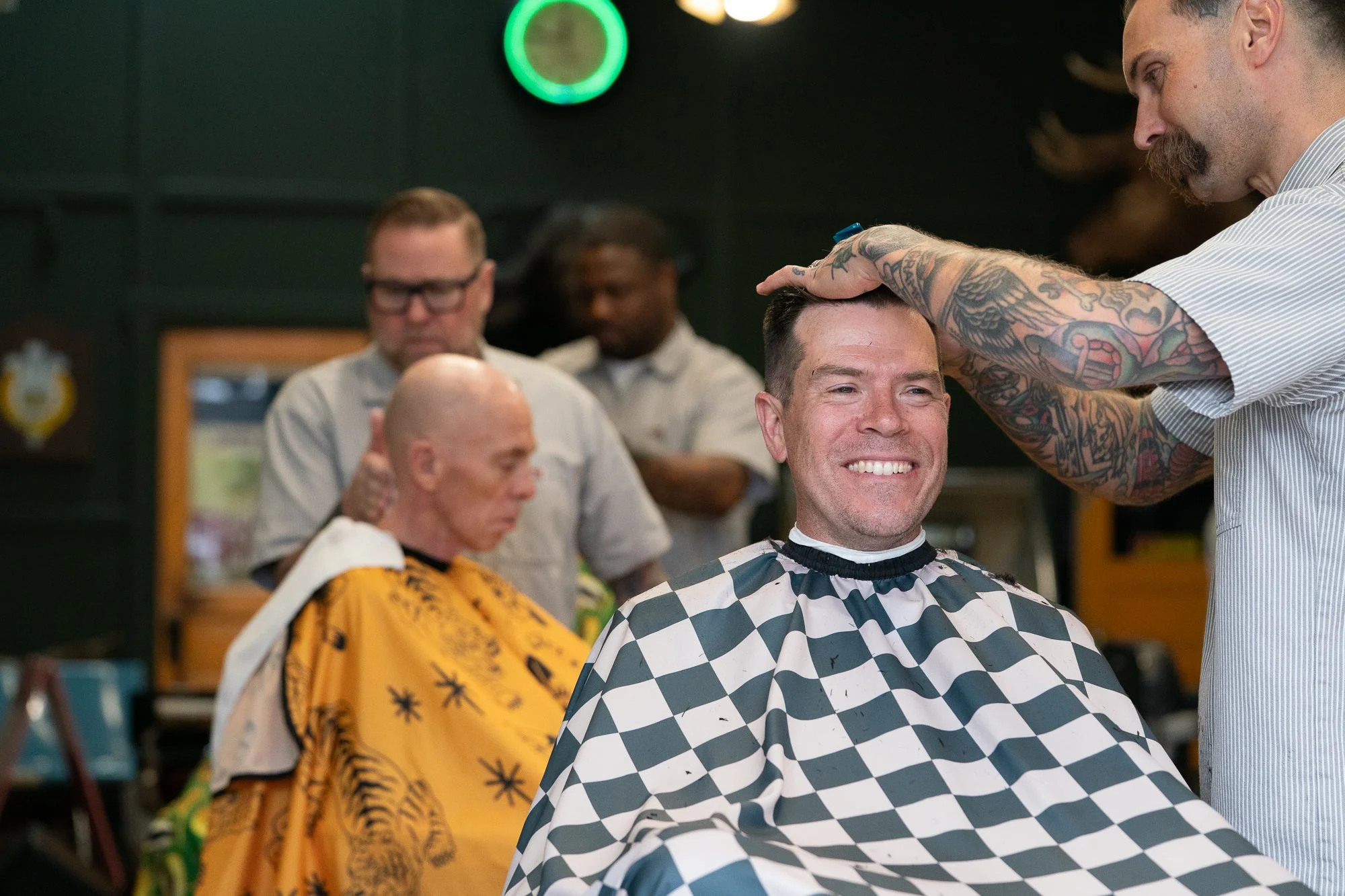
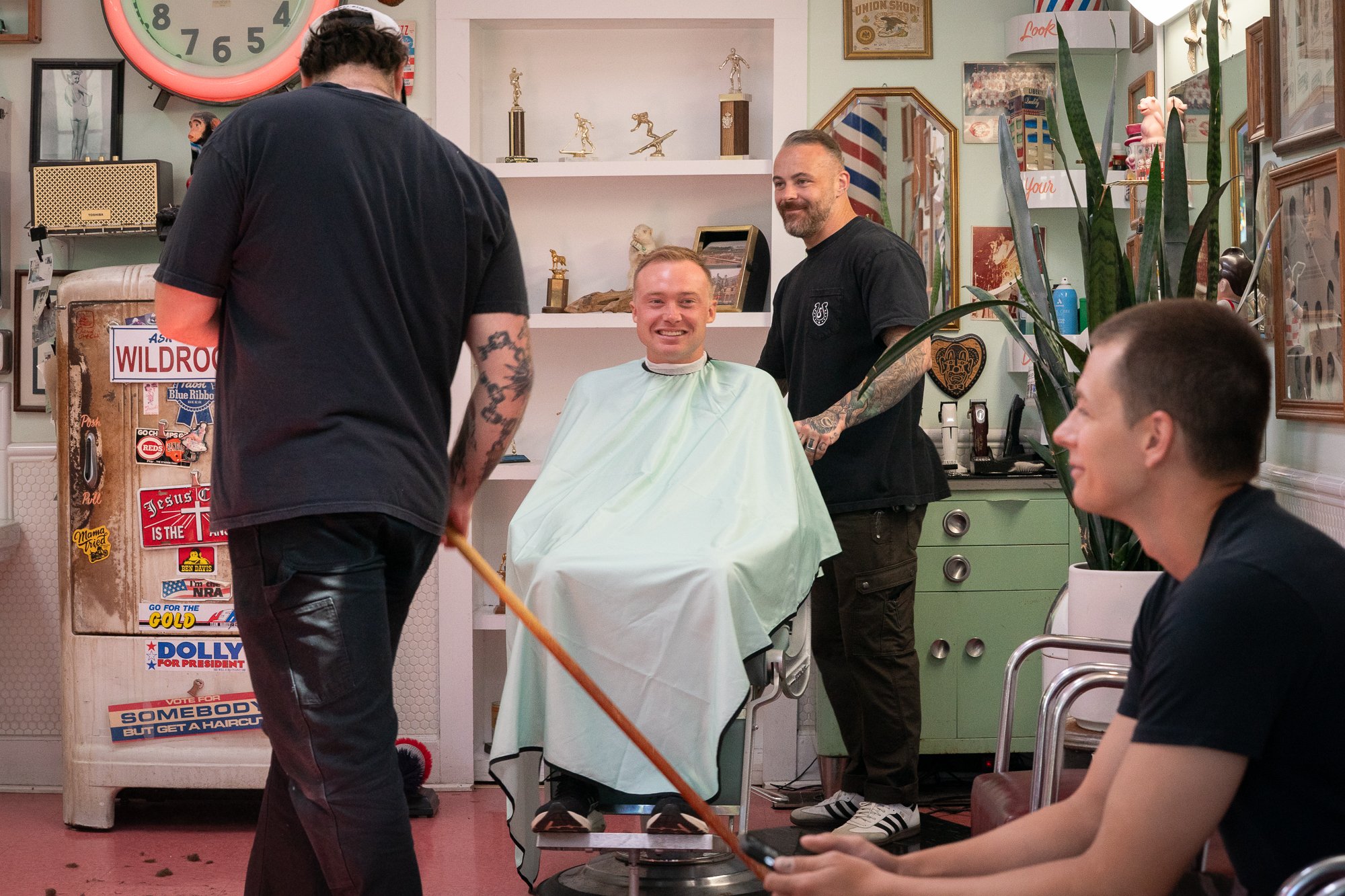
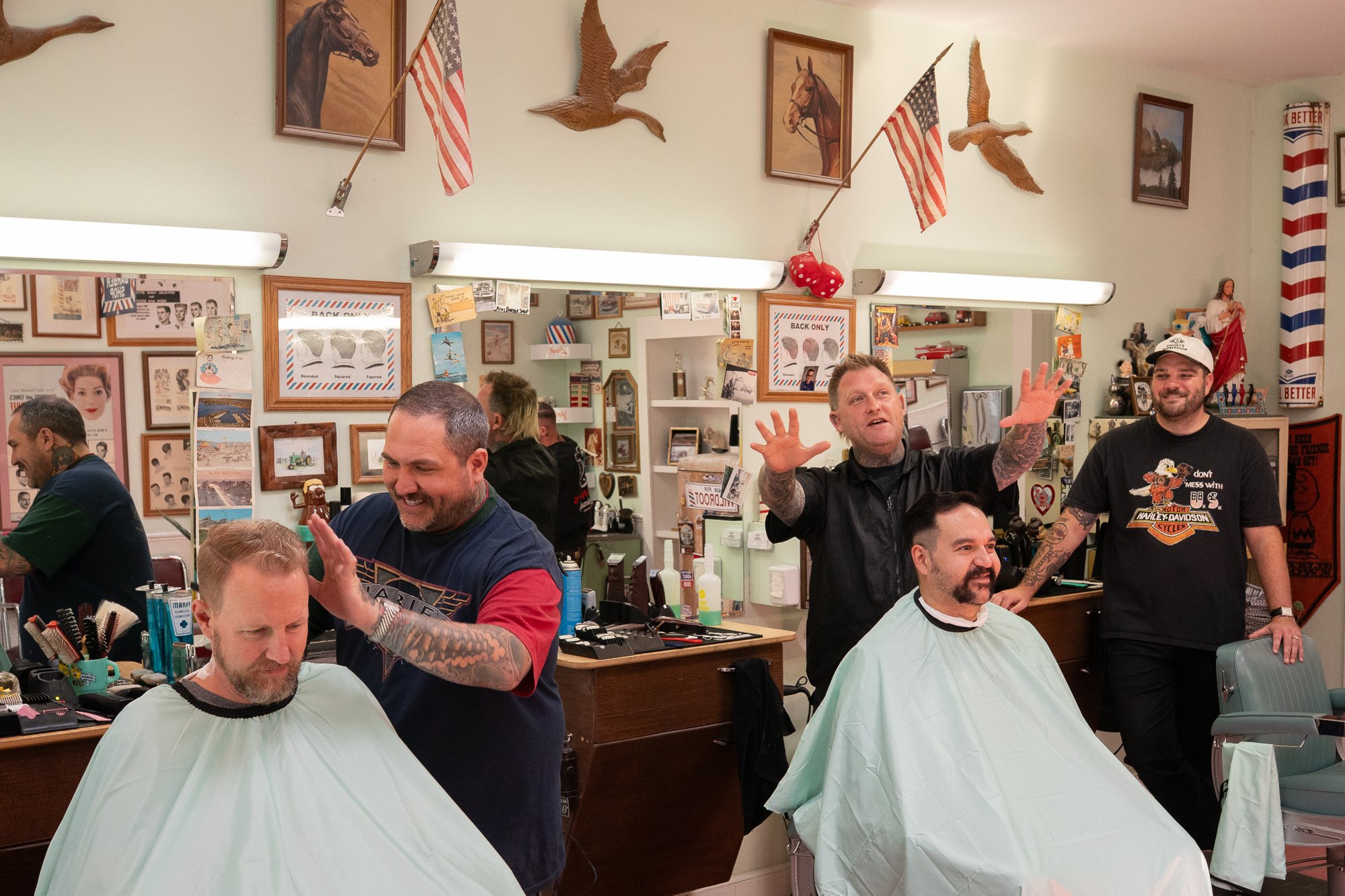
Client smiling during a haircut inside Spanky’s Barbershop in Covington, Kentucky.

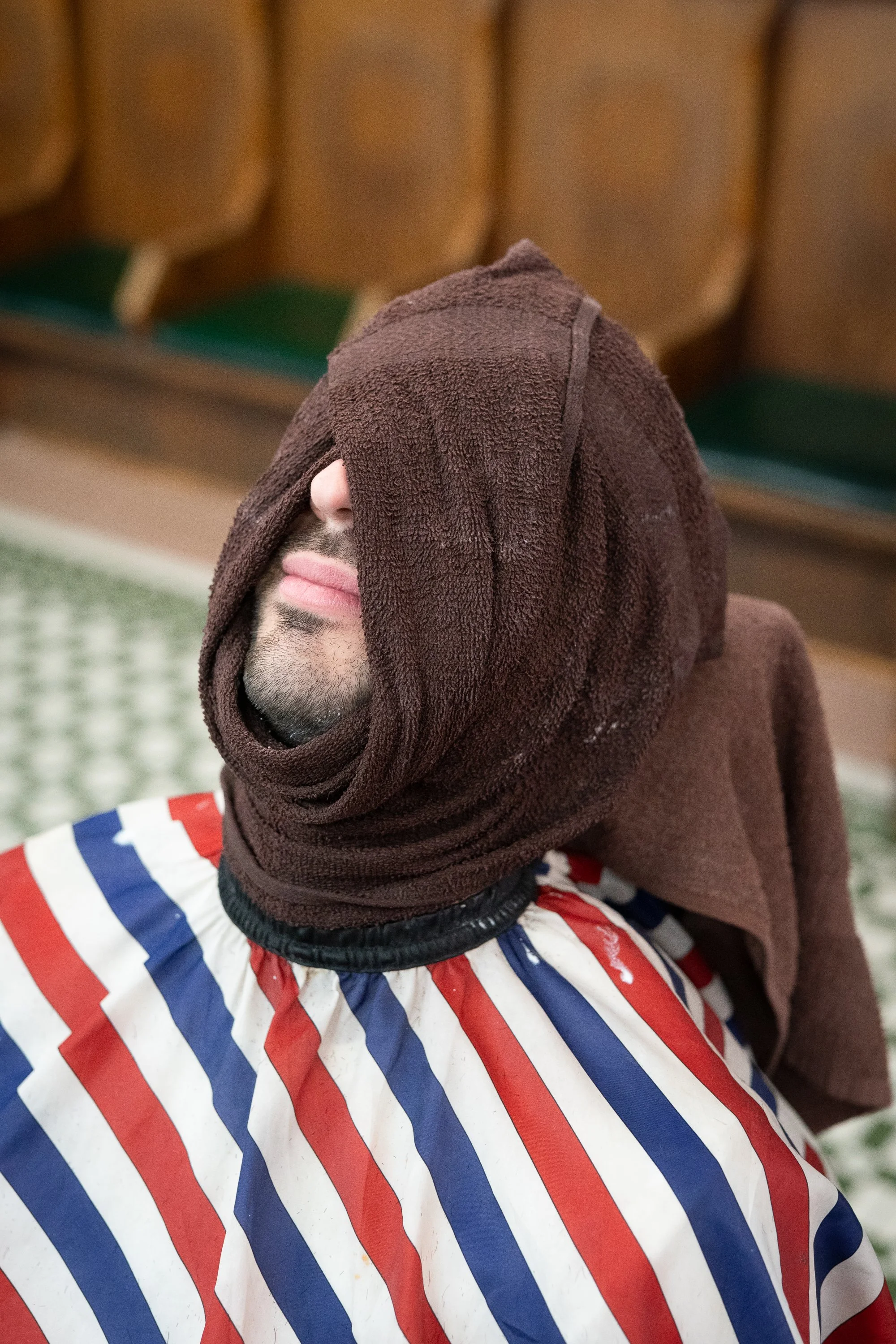
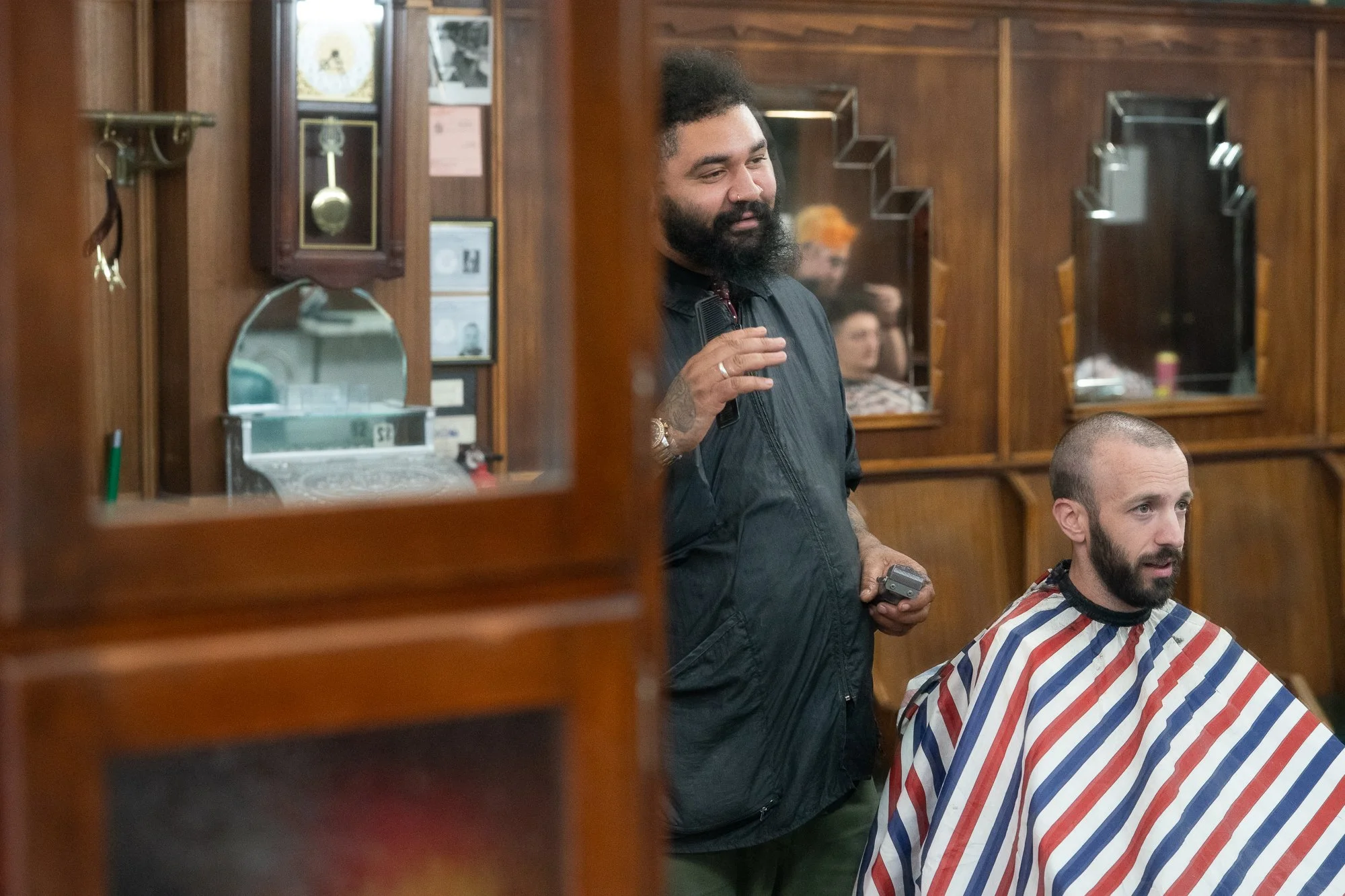
Conversation and humor are as much a part of the shop as clippers and combs.

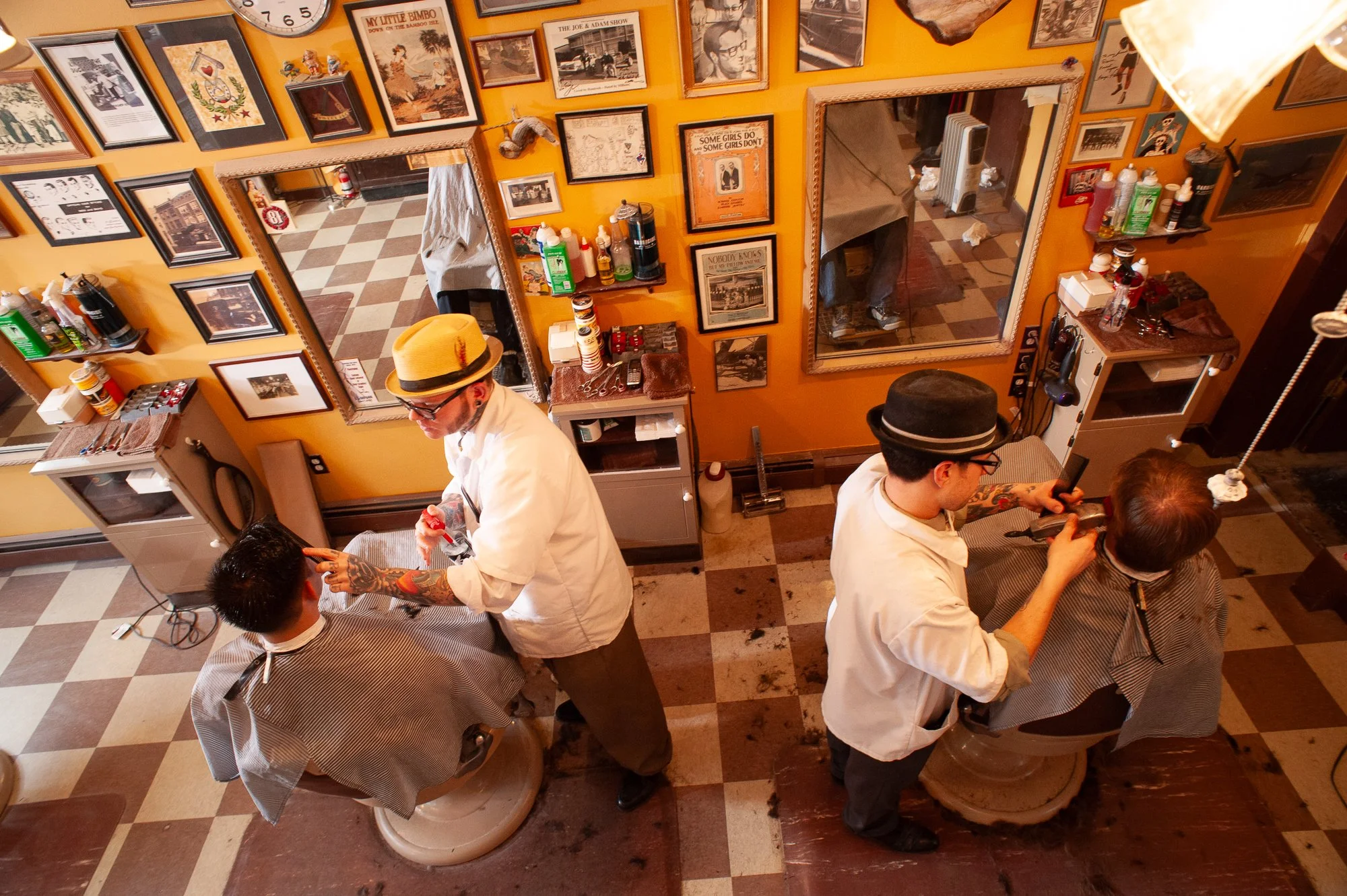
Barbers cutting hair inside Spanky’s Barbershop in Covington, Kentucky surrounded by framed artwork and traditional barber decor.

Barbers at work inside Spanky’s Barbershop in Covington, where layered wall art and Americana details form the backdrop to daily ritual.

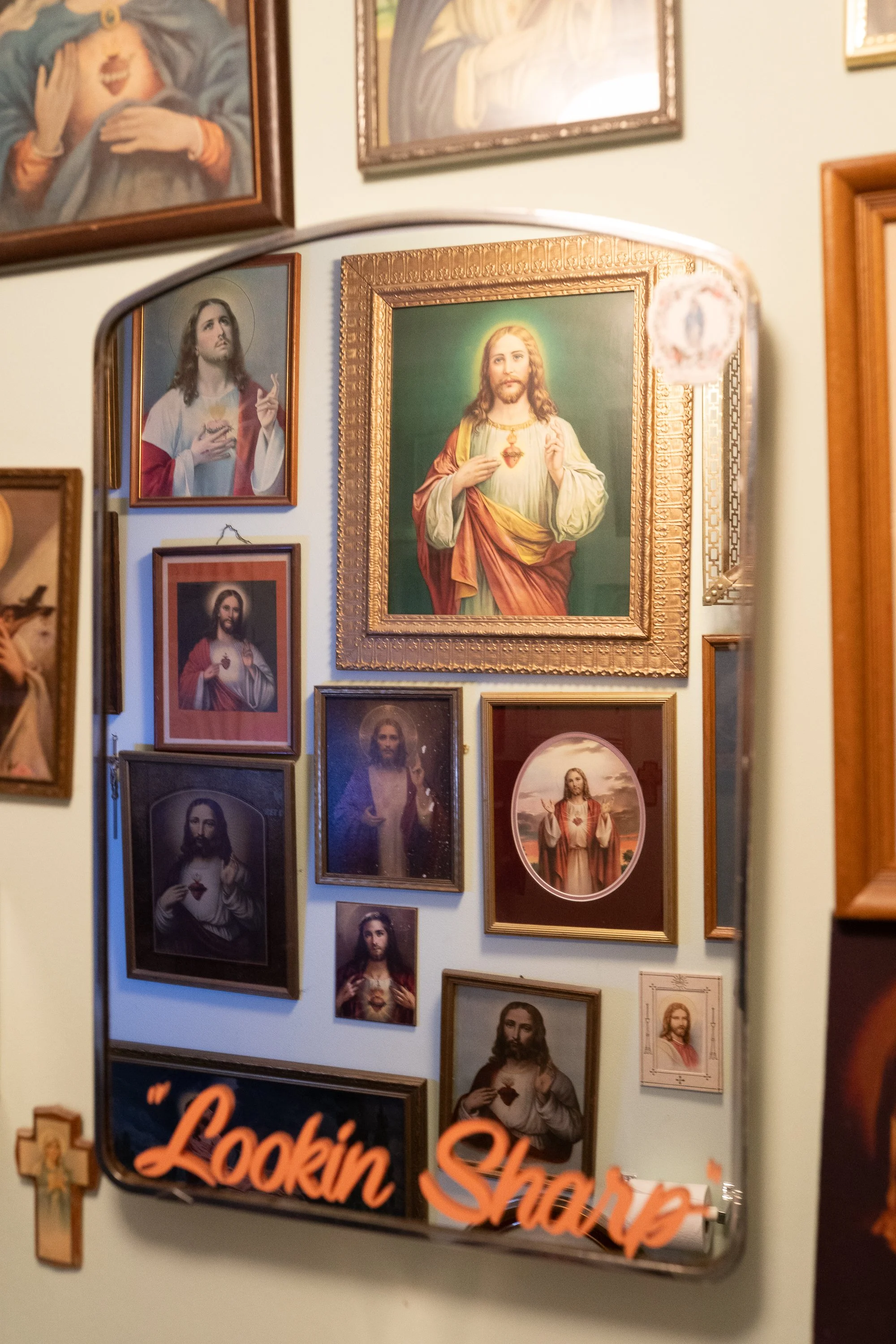
Religious artwork and framed Sacred Heart images displayed on the wall inside Spanky’s Barbershop in Covington, Kentucky.

Personal objects and religious iconography add another layer to the shop’s visual identity.

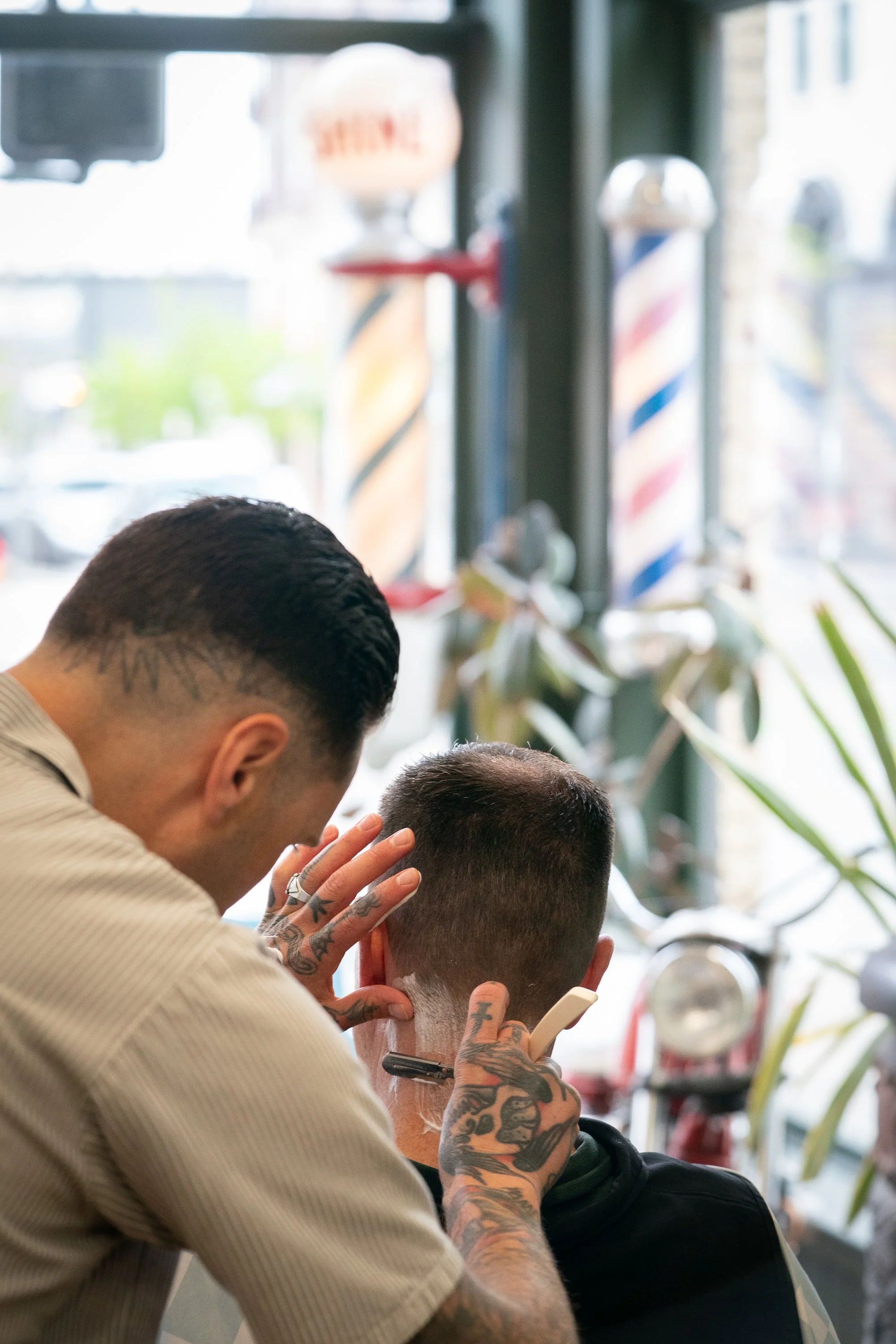
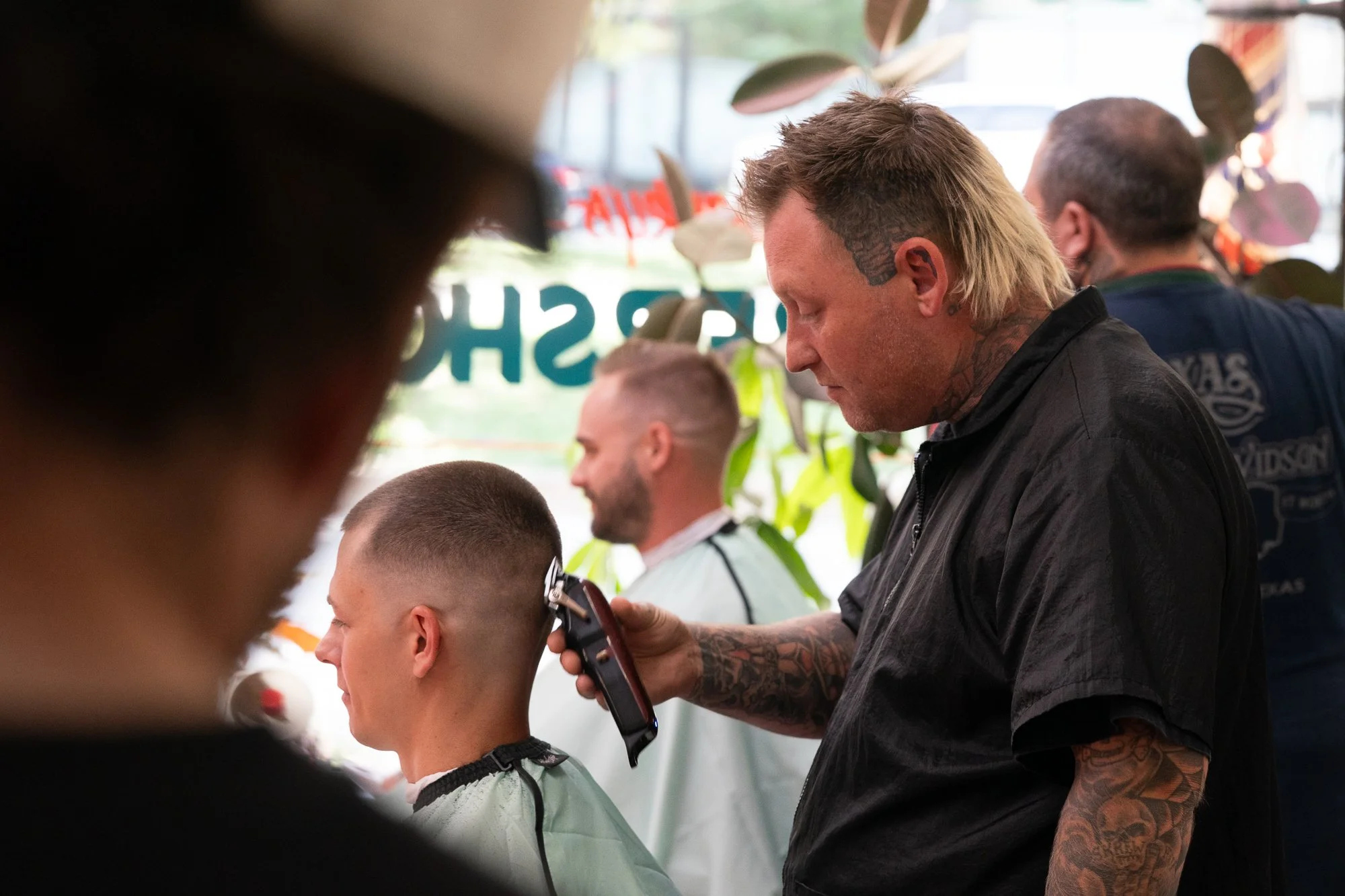
Barber trimming a fade cut at Spanky’s Barbershop in Covington, Kentucky.

A fade cut in progress—straightforward, precise, and rooted in tradition.

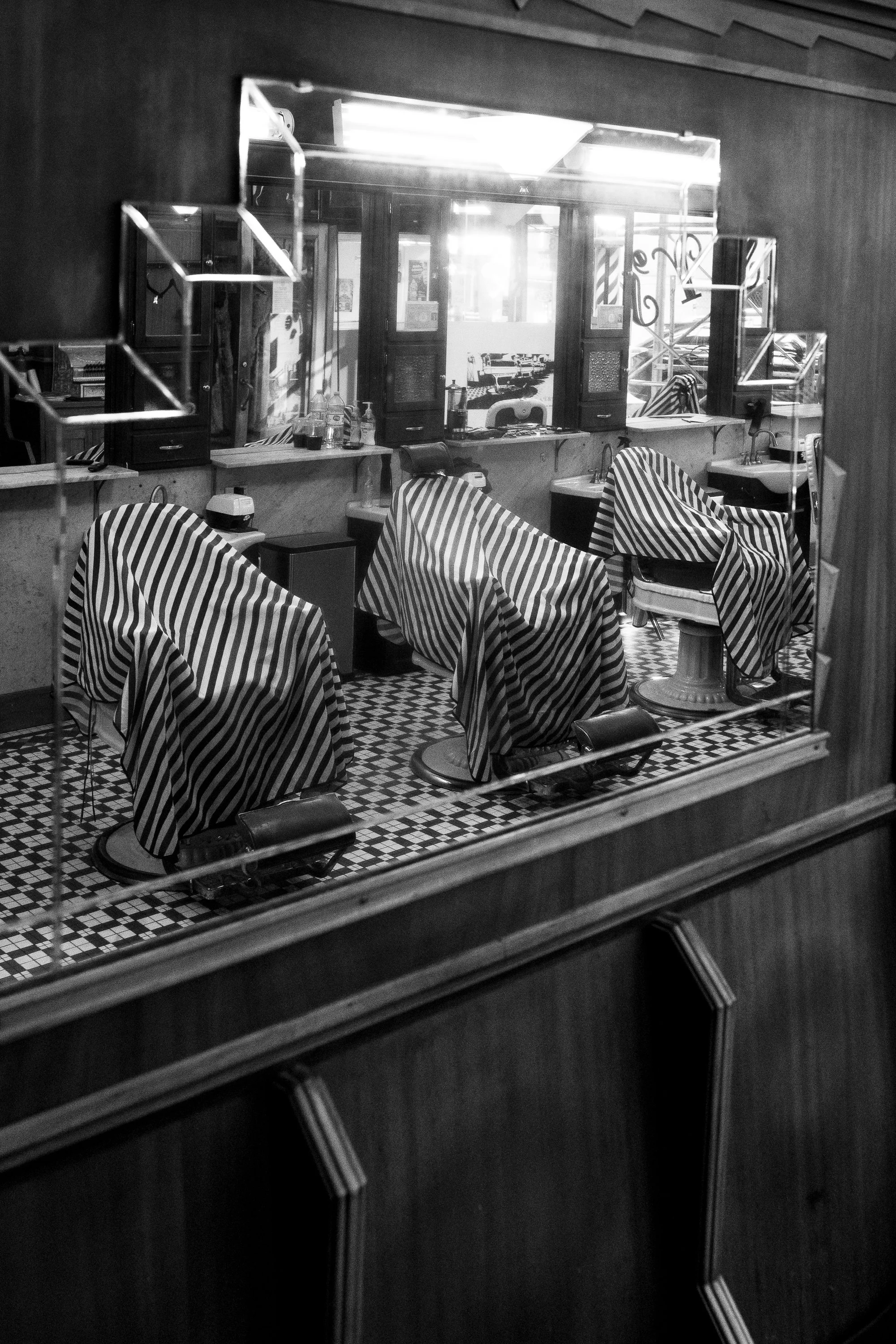
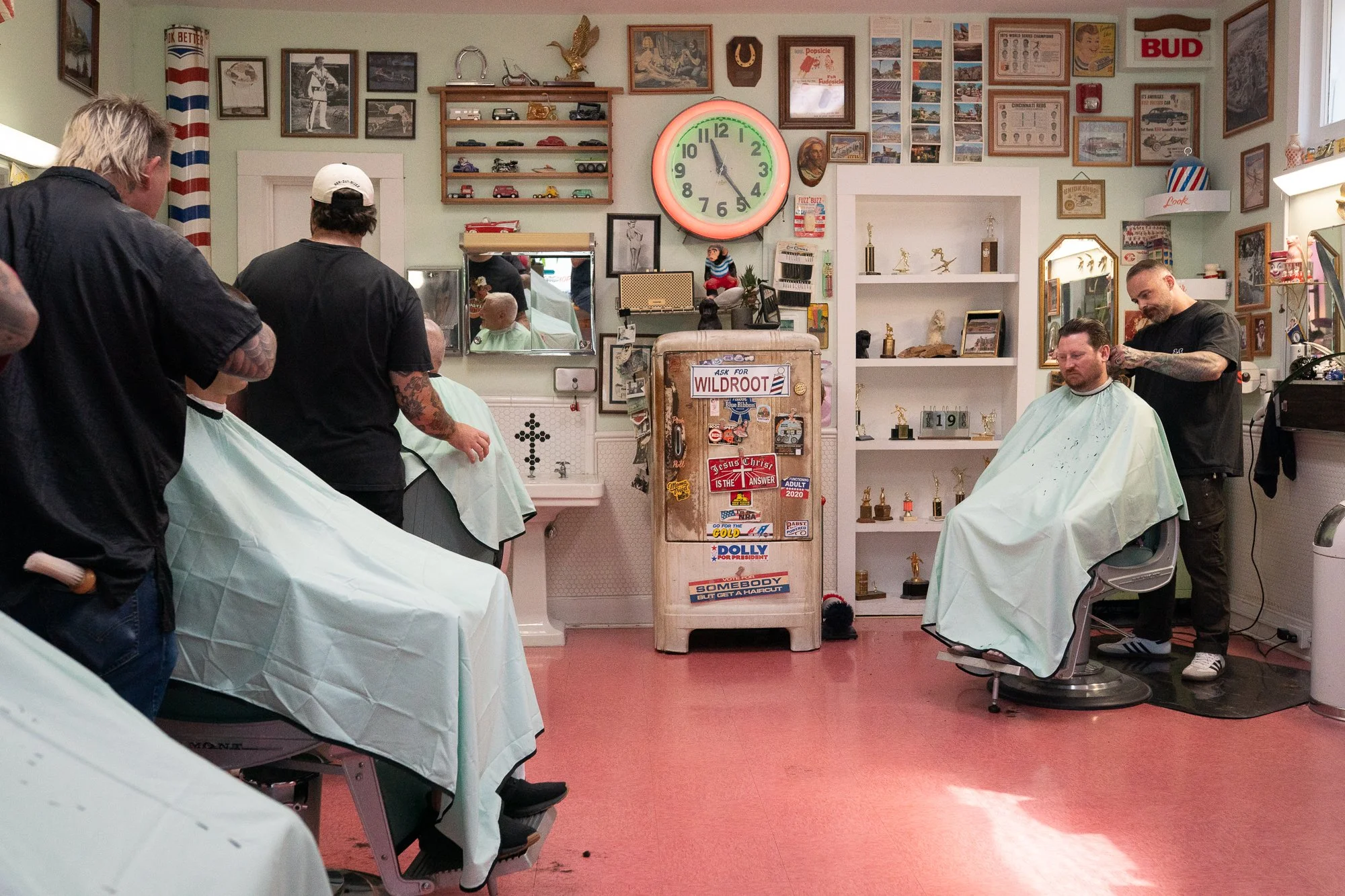
Wide interior view of Spanky’s Barbershop in Covington, Kentucky featuring vintage neon clock, Wildroot refrigerator, and framed wall art.

A wide view reveals the shop’s layered design—vintage signage, trophies, and a glowing clock anchoring the space.

Exterior of Spanky’s Barbershop in Covington, Kentucky with green striped awning and brick storefront.

Spanky’s Barbershop sits along a historic Covington street just across the river from Cincinnati.

Inside One of America’s Oldest Barbershops, Before It Closed

Tony’s Barbershop, Brooklyn, New York

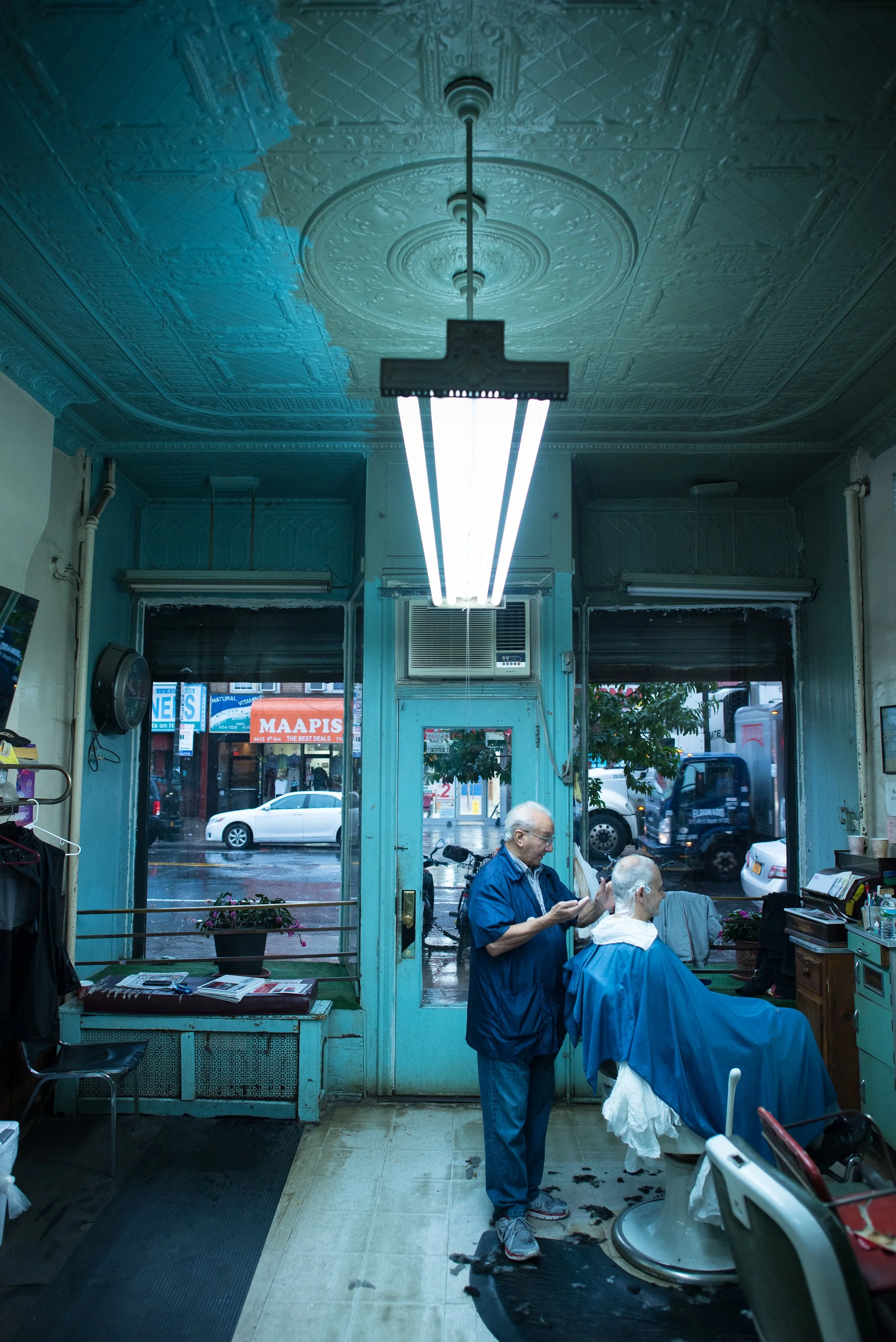
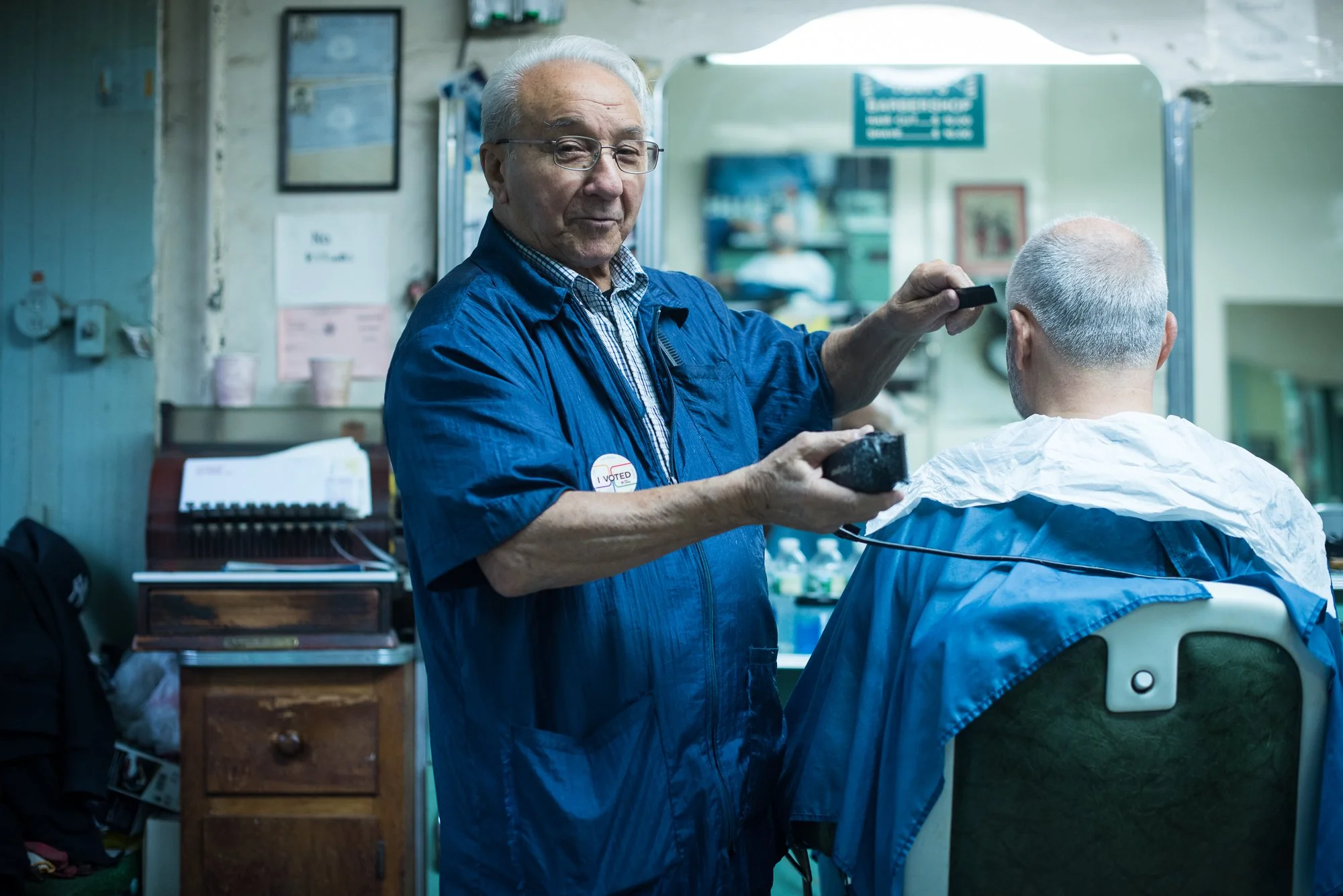
For more than 200 years, Tony’s Barbershop stood in the Sunset Park neighborhood of Brooklyn as a constant—outlasting wars, economic cycles, and generations of change. Inside, little evolved by design: the same chairs, the same mirrors, the same daily rhythms shaped by friendship and conversation rather than efficiency or trend. It was a place where time moved at a human pace, where neighbors returned year after year not just for a haircut, but for continuity. When the owner passed away in 2020 and the shop closed soon after, that unbroken history ended quietly, marking the loss of not just one of America’s oldest barbershops, but a form of community that is becoming increasingly rare.

A Barbershop Shaped by Time

There is no faking what Tony’s has. It’s the kind of place you’d want to use as inspiration for the classic American barbershop in a movie, but achieving that look is impossible because the grit and patina, the thing that truly makes it special, is time. Centuries, in fact. Hard to say for sure, but you could argue that Tony’s was one of, if not the oldest barbershop in America?

Routine, Relationships, and Community

Ever since he moved to American from Italy, Tony has been cutting hair in the same Brooklyn barbershop, decade after decade. There is no way to measure the effect his shop and his presence has had on a neighborhood. It’s people like him that have made barbershops more than just a place to get your haircut. They are about community and friendship. In a lot of ways, Tony is a true American success story. When he first arrived here with just a few dollars to his name, his English was so bad that he could barely communicate with customers. They would come in and he’d introduce himself by his real name - Felice. Only his accent was so thick that everyone thought his first name was Phil. This caused a lot of frustration until one day a “Tony” came in and asked his name, to which he replied “I’m like you, Tony!” Later when he bought the shop, it became Tony’s. Years passed and he was able to buy the apartments above the shop too!

The Quiet End of a Long Continuity

Most traditional barbershops do not disappear by choice. Across the country, many are forced out by rising rents and landlords eager to replace long-standing tenants with more profitable uses, cutting short decades of continuity with little regard for the communities those shops served. Tony’s Barbershop was spared that fate. Because Tony owned the building, the shop did not end in eviction or displacement, but concluded on his own terms, following his retirement and passing in 2020. Even so, the outcome is no less final. Ownership could protect the space from outside pressure, but it could not preserve what mattered most—the accumulated history of daily routines, relationships, and shared memory built over more than two centuries. Once that continuity ends, there is no way to replicate it, only to acknowledge what has quietly been lost.

Documenting America’s Vanishing Barbershops

Projects like Barbershops of America exist not just out of nostalgia, but necessity. As traditional barbershops disappear—often quietly and without record—their absence leaves a gap that is cultural as much as physical. Over the past 15 years, documenting these spaces across all 50 states has revealed how deeply they are woven into the fabric of American life, particularly in working-class and rural communities. These shops are not interchangeable businesses; they are long-term social institutions shaped by trust, routine, and presence. Photographing them is an effort to preserve evidence of places that once held communities together, before they vanish without acknowledgment.

More work from the Barbershops of America series can be found here:

Barbershop Photography Gallery

Blog: Granville Barbershop - North Carolina

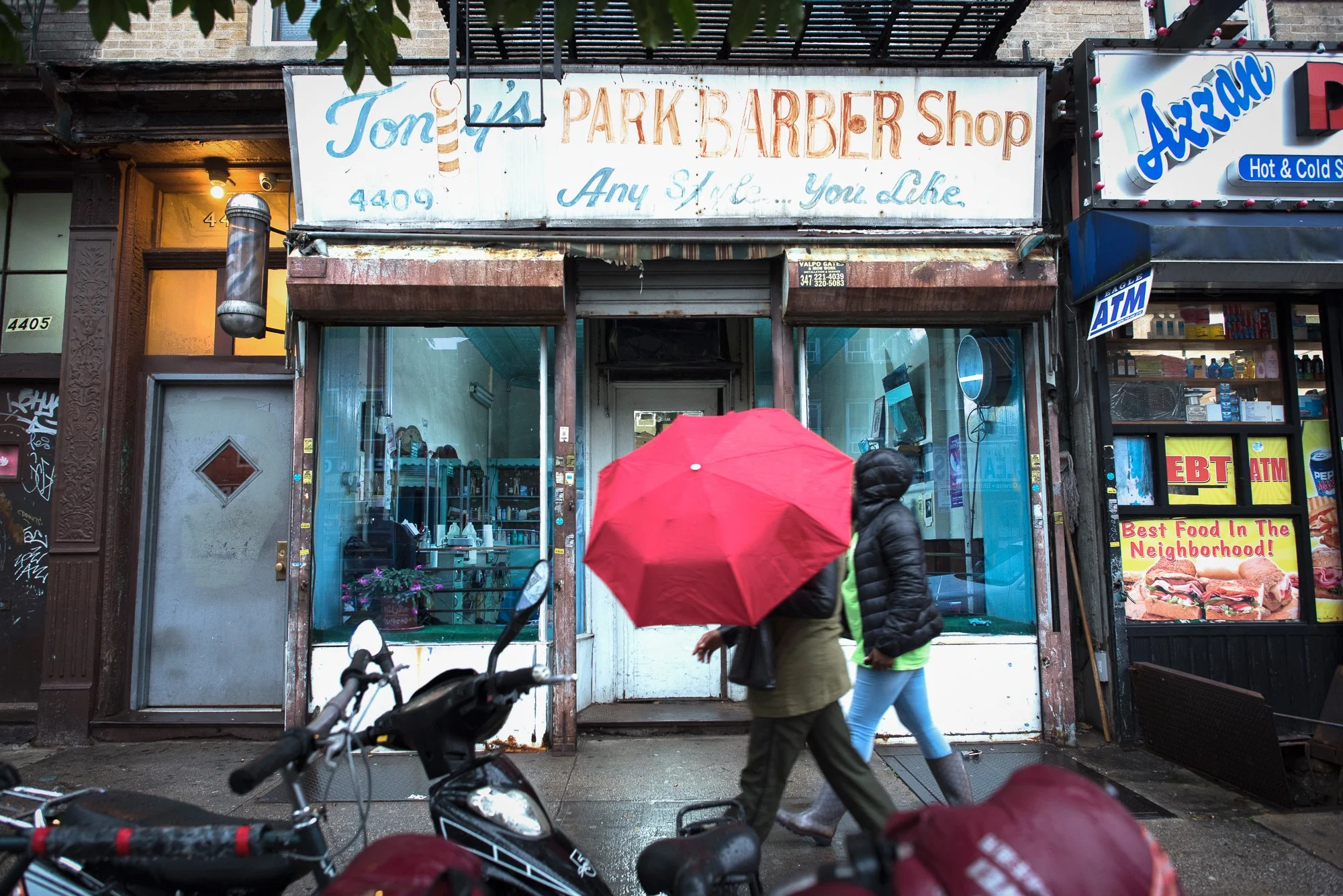
Exterior of Tony’s Park Barber Shop in Brooklyn, New York, a historic barbershop that operated for more than 200 years before closing in 2020.

The exterior of Tony’s Park Barber Shop in Brooklyn, New York. The shop operated for more than 200 years before closing following the owner’s passing in 2020.

Barber chairs and workstations lined up inside Tony’s Barbershop in Brooklyn, New York.

Barber chairs and workstations inside Tony’s Barbershop in Brooklyn, New York, reflecting decades of continuous use.

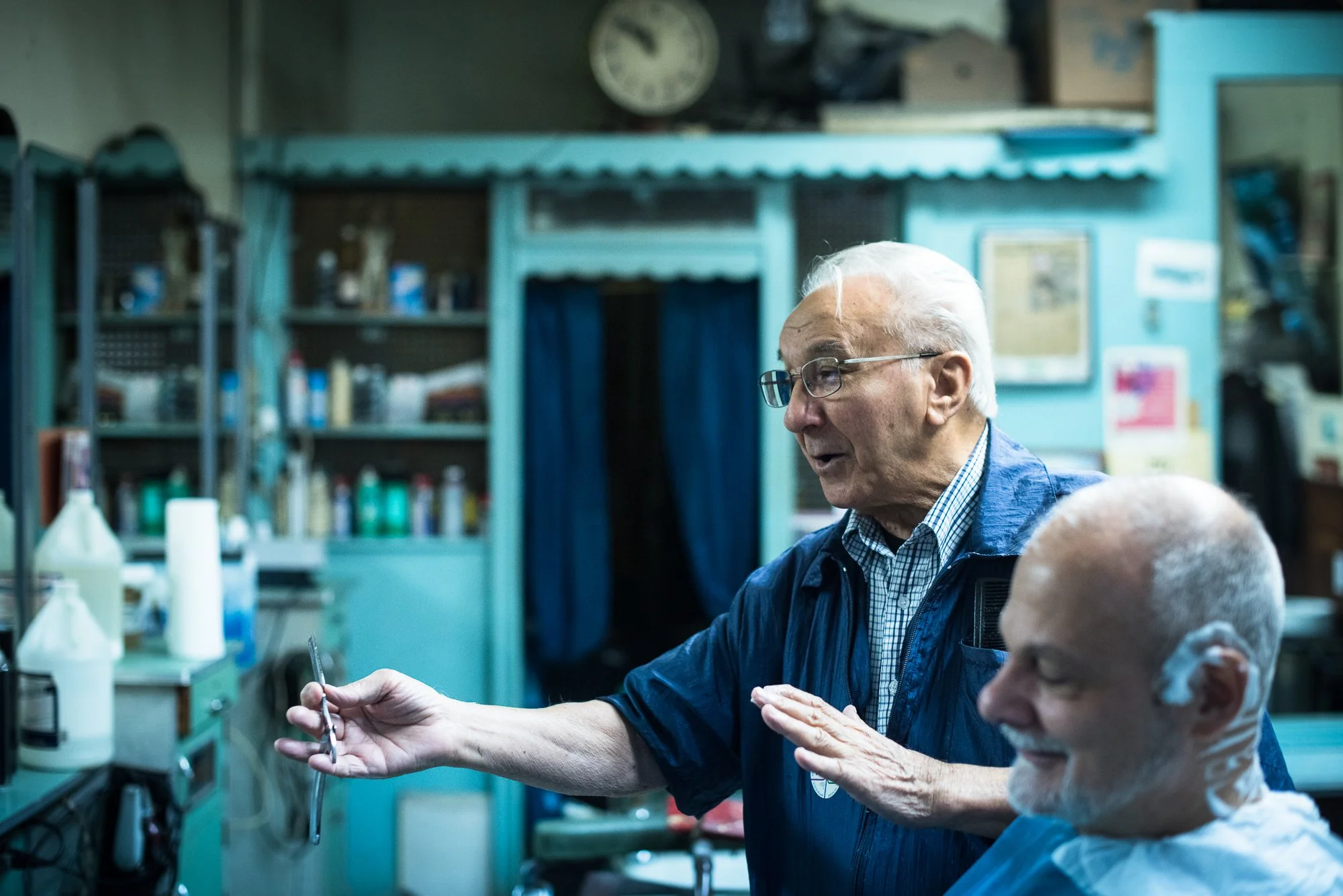
An elderly barber laughs with his client inside Tony’s Barbershop in Brooklyn, New York.

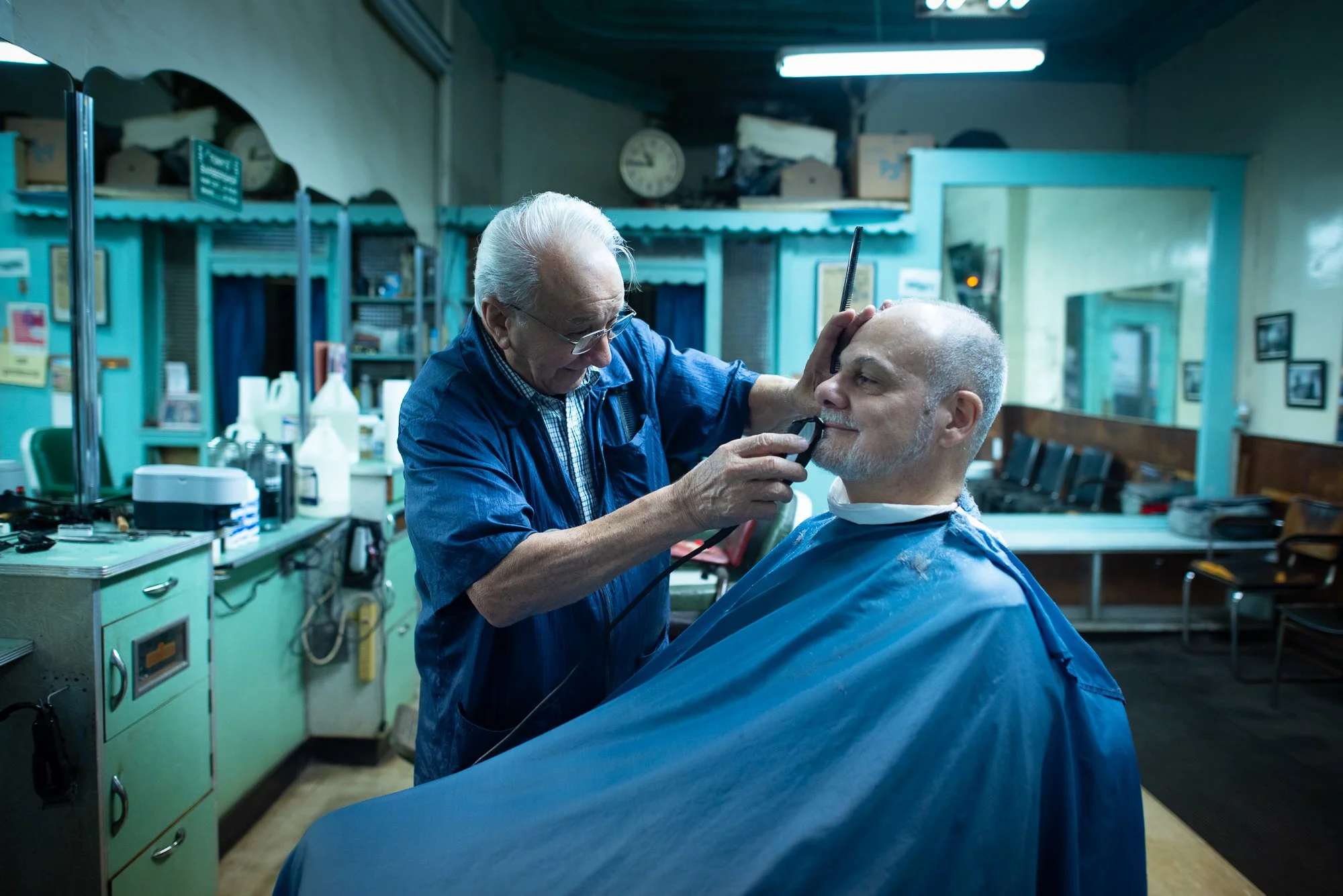
A barber laughing with his client inside Tony’s Barbershop in Brooklyn, New York. The shop served generations of neighborhood residents and functioned as a long-standing community space.

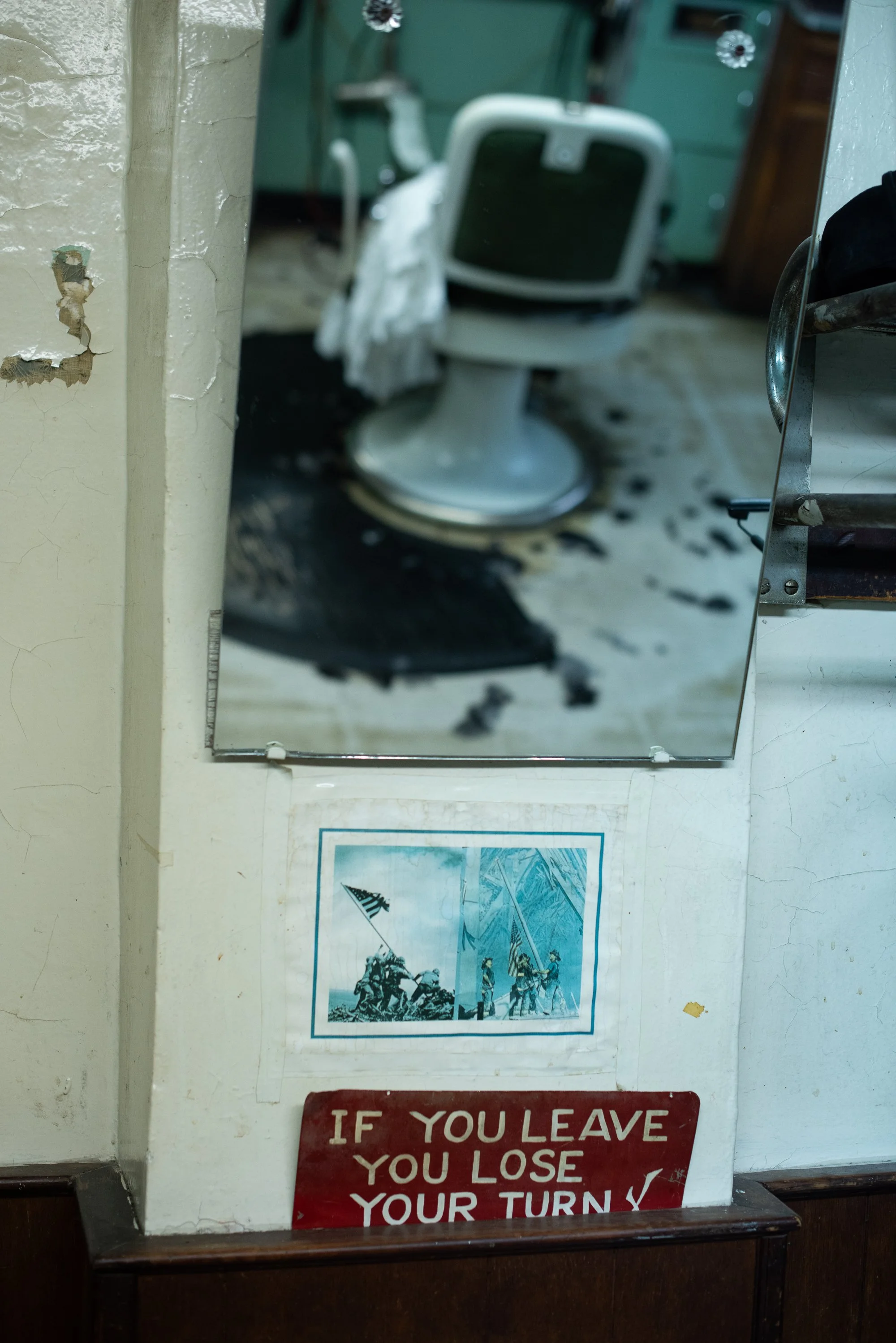
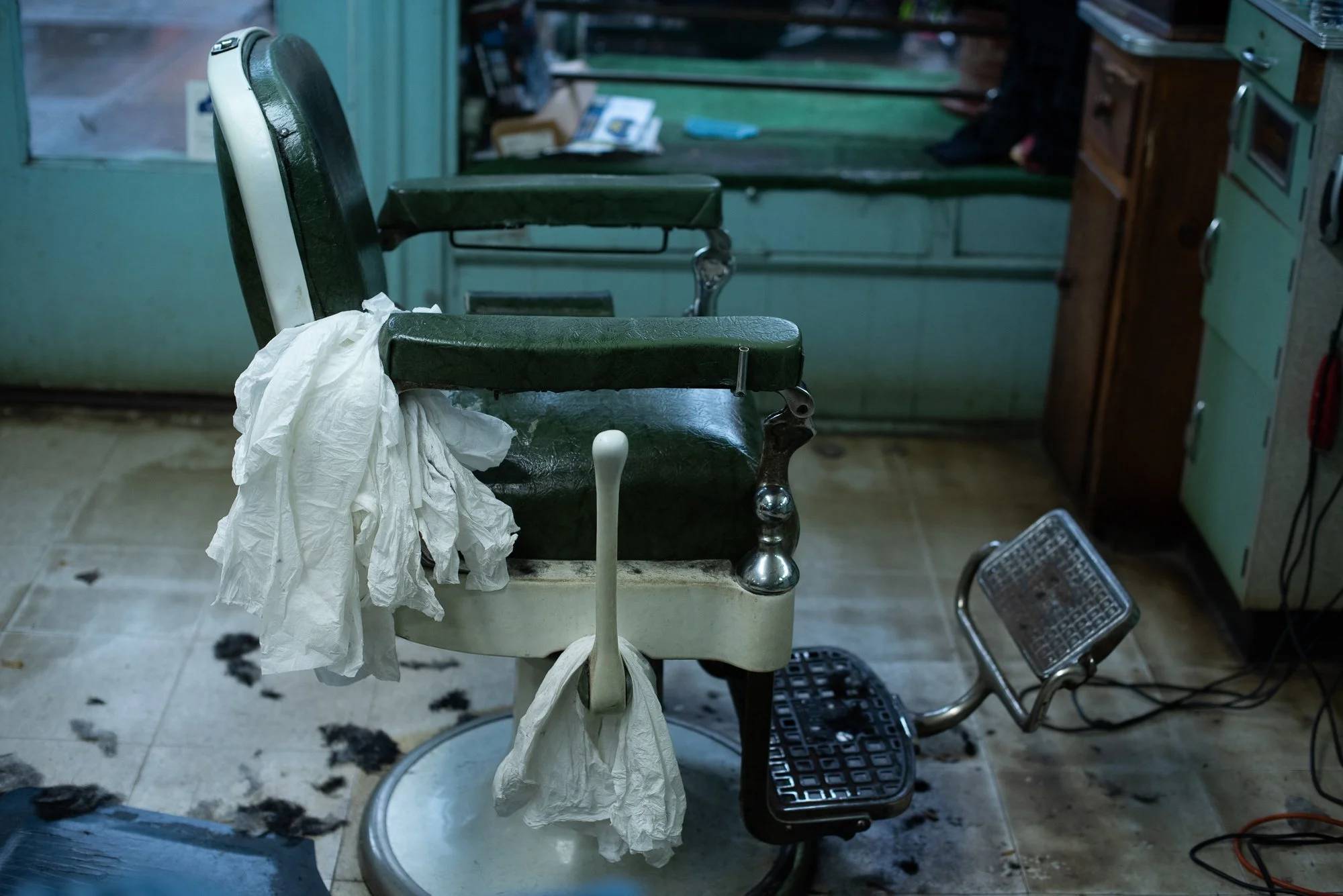
A worn barber chair reflected in a mirror inside Tony’s Barbershop in Brooklyn, New York.

A barber chair reflected in the mirrors at Tony’s Barbershop above a sign reading “If you leave you lose your turn”. The walls showing decades of use and an interior largely unchanged over time.

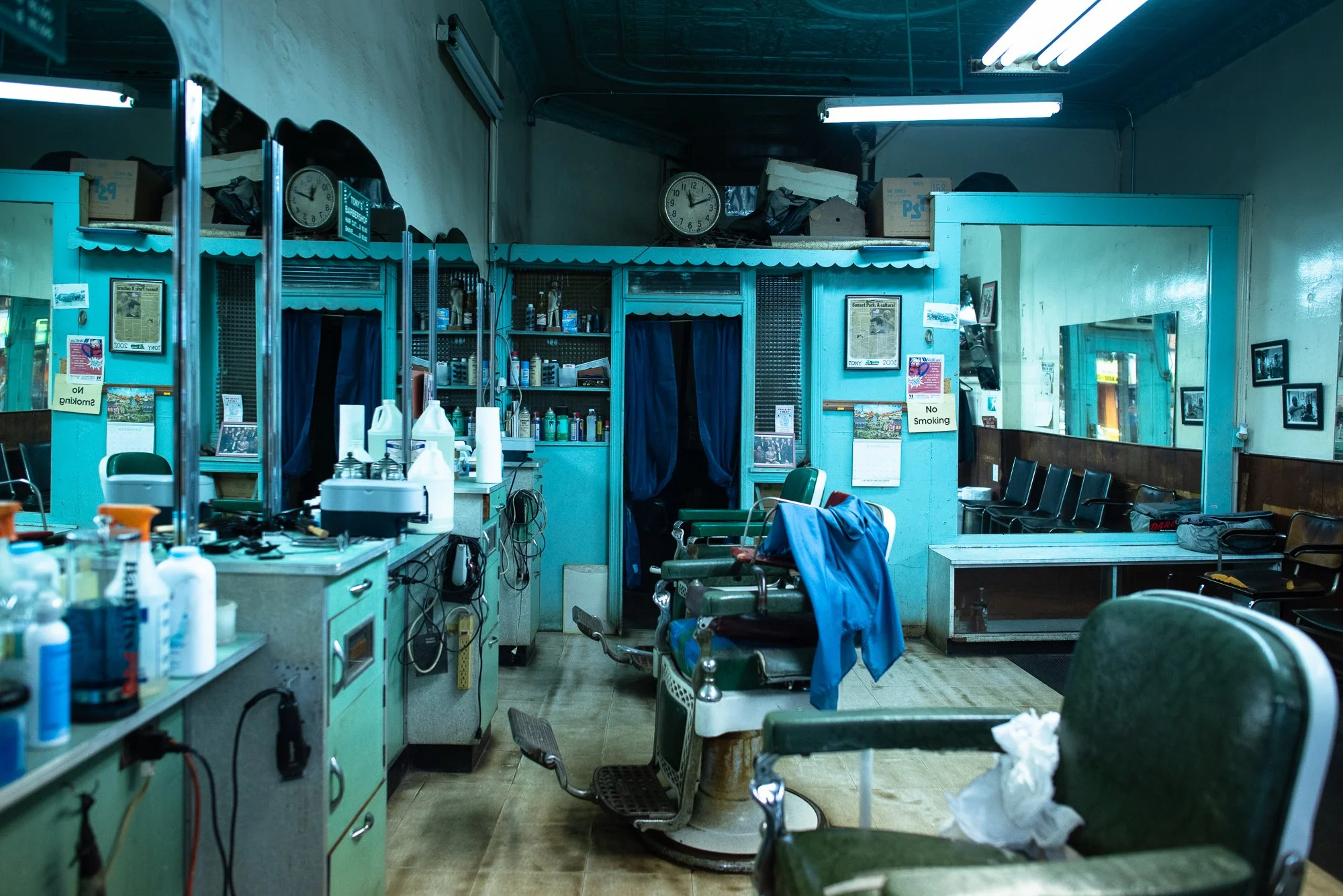
Wide interior view of Tony’s Barbershop in Brooklyn, New York, showing traditional barber chairs and workstations.

A wide interior view of Tony’s Barbershop in Brooklyn, New York, where the layout and tools reflected decades of daily practice.

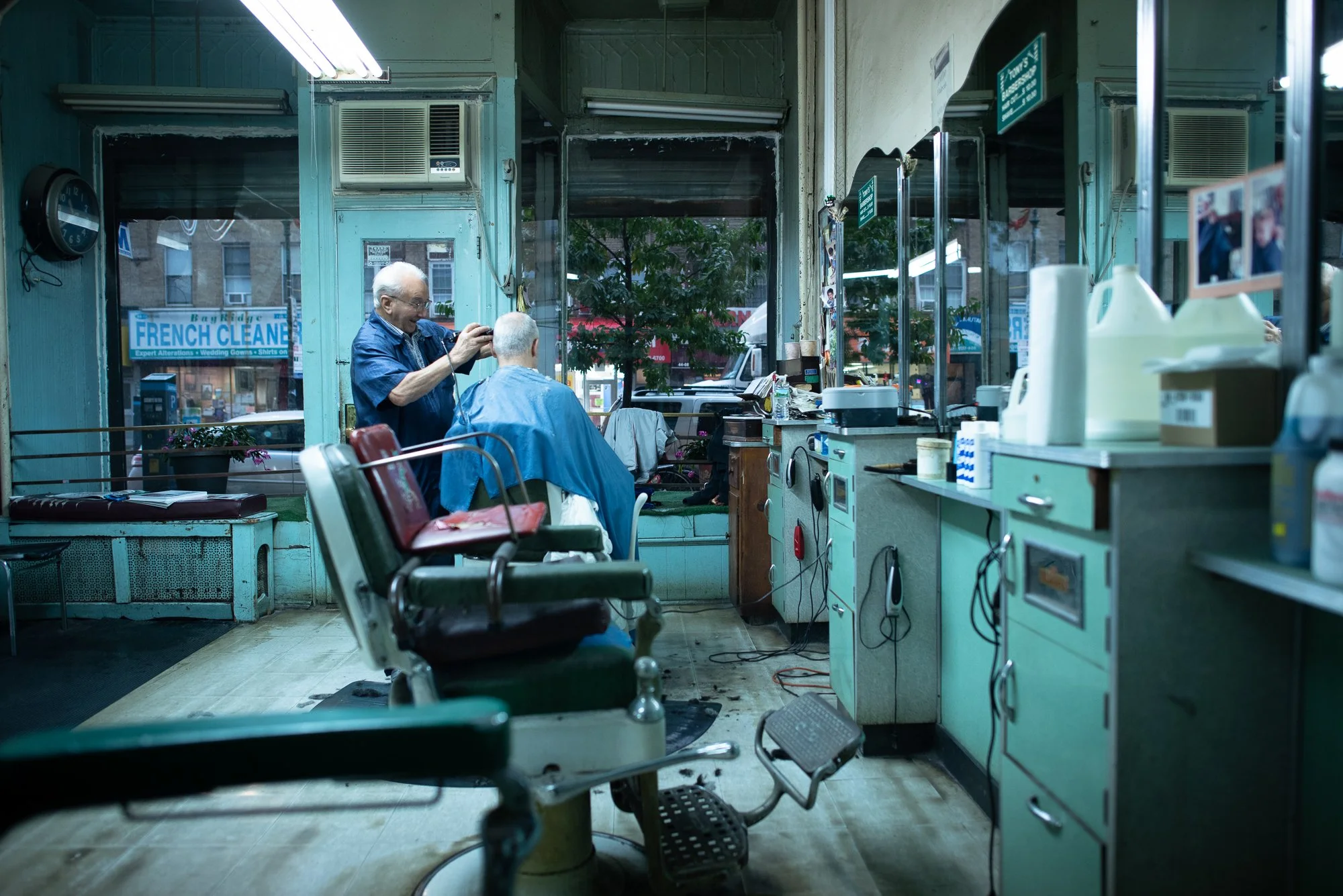
A barber trims a longtime client inside a traditional barbershop in Brooklyn, New York.

A barber and client during a routine haircut at Tony’s Barbershop in Brooklyn, New York.

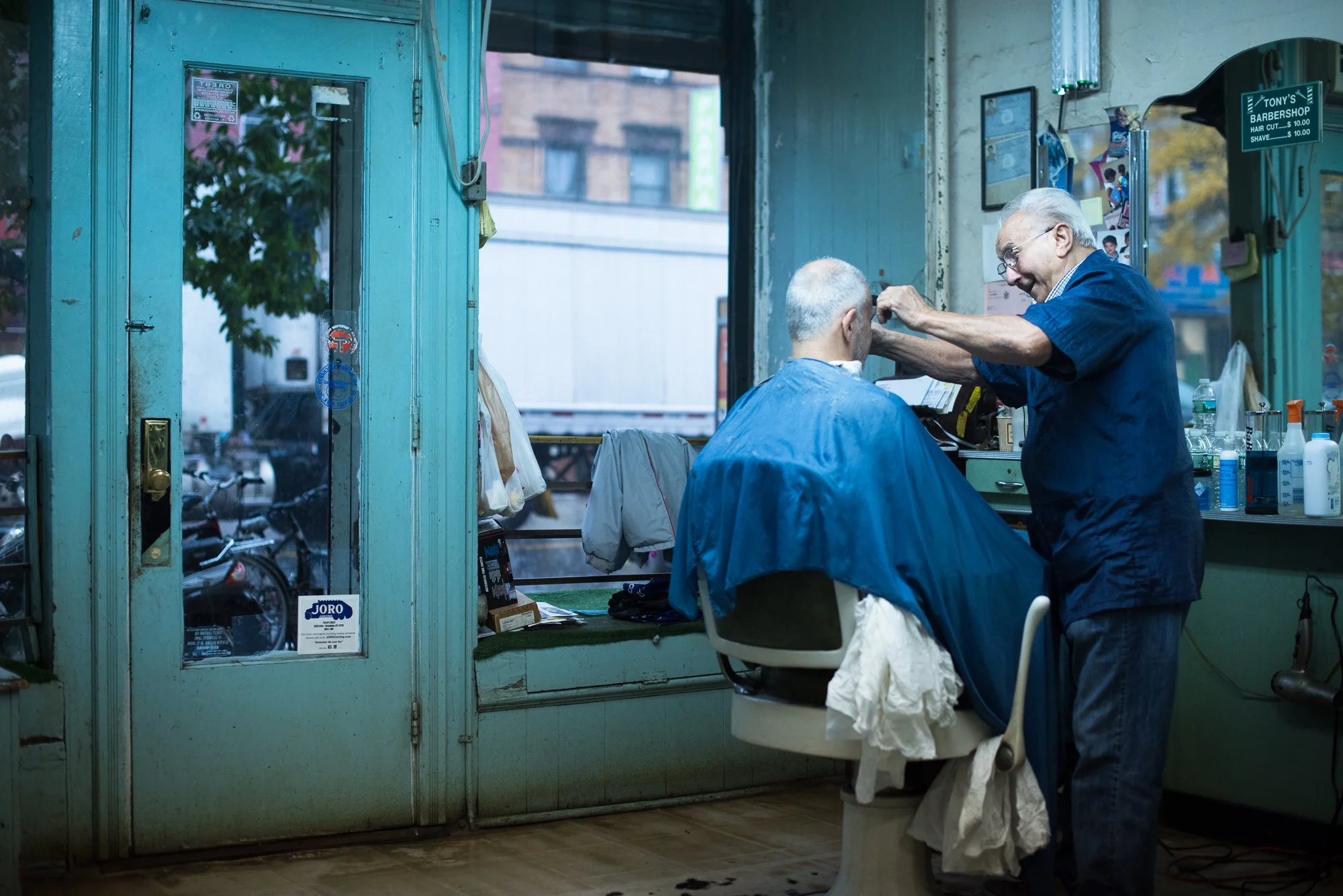
A barber cuts a client’s hair near the front window of Tony’s Barbershop in Brooklyn, New York.

A haircut in progress near the front window of Tony’s Barbershop in Brooklyn, New York. The shop’s street-facing layout reinforced its role as an open, accessible community space.

A barber trims a client’s hair inside a historic Brooklyn barbershop.

A haircut in progress at Tony’s Barbershop in Brooklyn, New York, where barbering was practiced through experience and repetition.

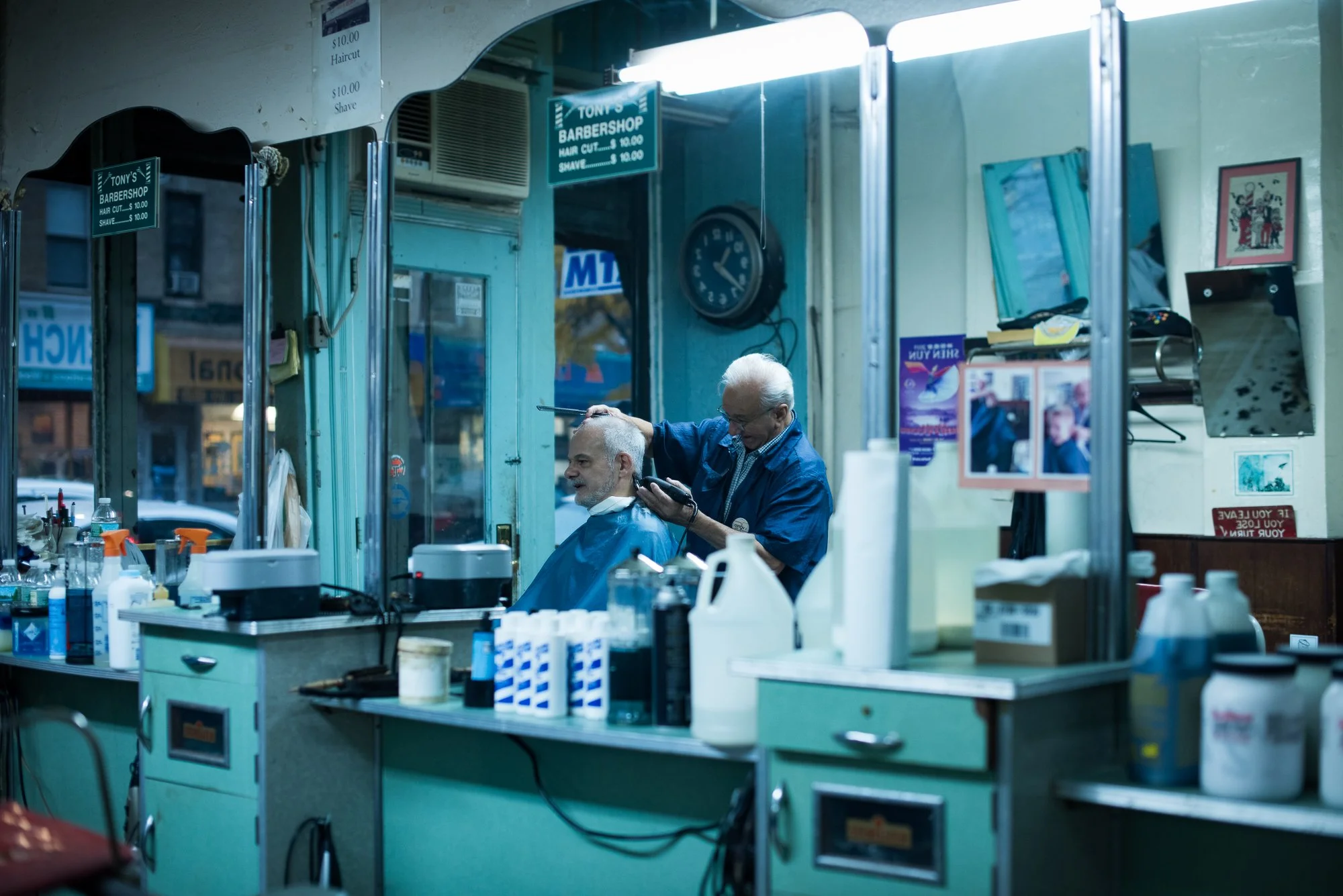
A barber trims a client’s hair as seen through mirrors inside Tony’s Barbershop in Brooklyn, New York.

A barber and client reflected in the mirrors at Tony’s Barbershop in Brooklyn, New York, emphasizing the intimacy and routine of the barber–client relationship.

Interior of a historic barbershop in Brooklyn, New York, with vintage chairs and mirrors.

The interior of Tony’s Barbershop in Brooklyn, New York. The space remained largely unchanged for decades, preserving a traditional working environment.

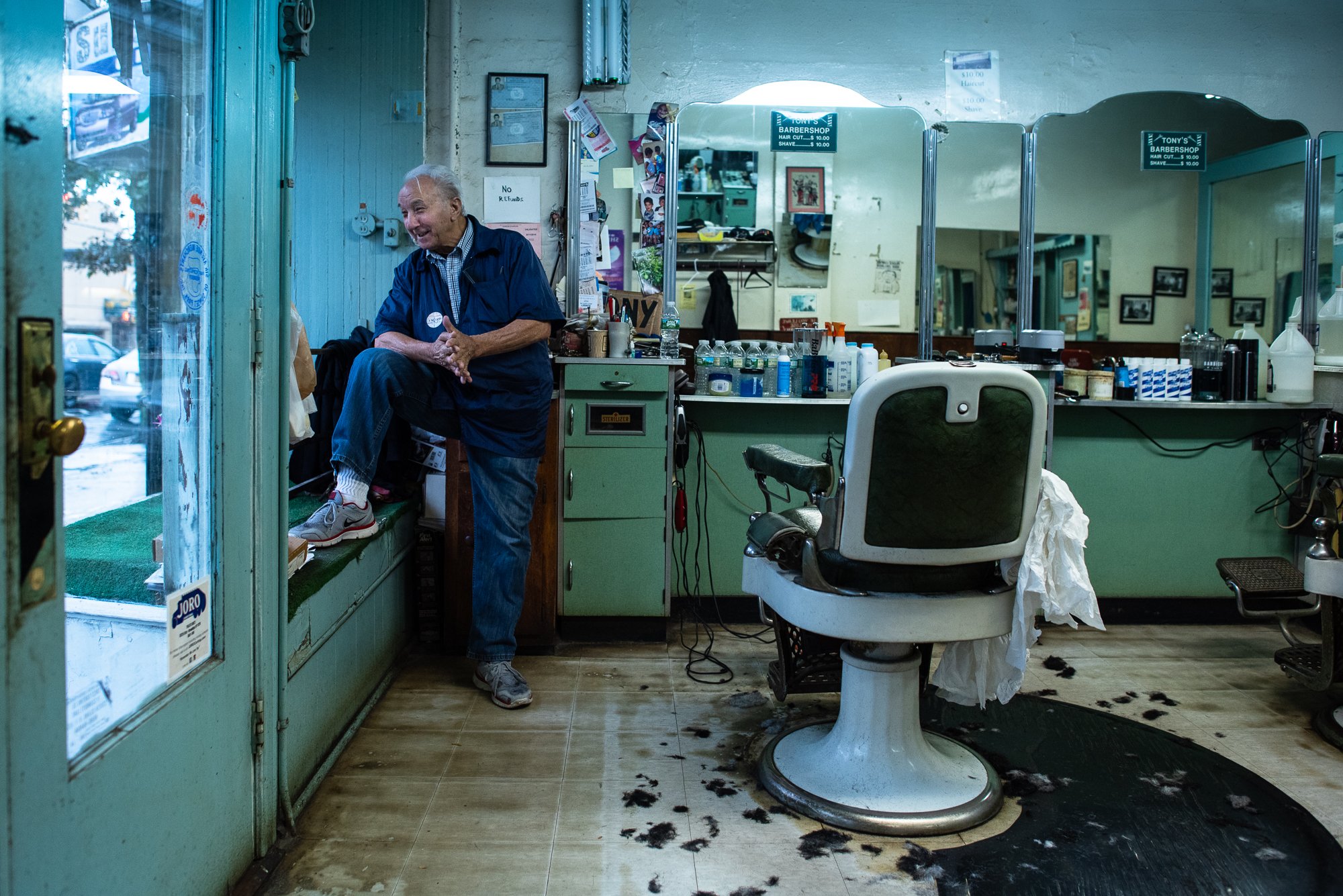
An elderly barber pauses between appointments inside Tony’s Barbershop in Brooklyn, New York.

A barber pauses between appointments at Tony’s Barbershop, a place where relationships extended beyond the chair.

Leucadia Barbershop in Encinitas, CA

Leucadia Barbershop – A California Chapter of Barbershops of America

Leucadia Barbershop has been part of Encinitas since 1996, when Emiliano Zermeno’s family first opened the doors at its original location. Like many small barbershops, the business was eventually forced out due to landlord pressures—a familiar story across the country. Instead of closing, Emiliano rebuilt the shop in a new space, carrying forward what his family started while shaping it into something distinctly his own.

A Family Barbershop Rooted in Leucadia Since 1996

Emiliano grew up inside the shop his family created. The rhythm of haircuts, the conversations, the regulars—it wasn’t a concept or aesthetic. It was daily life. When displacement forced the original location to close, the continuity of that space could have ended. Instead, it shifted. The new Leucadia Barbershop carries the same foundation, just reinterpreted through a different generation.

Southern California Skate Culture Inside a Barbershop

The new space reflects Emiliano himself—a Southern California kid who grew up with a love for skateboarding and still carries that passion today. The shop feels less like a preserved relic and more like a lived-in extension of coastal California: relaxed, personal, rooted in community. The design choices, the atmosphere, even the pace of the room mirror the culture that shaped him.

Emiliano didn’t just take over the business to make his family proud, he took it to the next level. Which is obvious when you look at his shop, but more importantly, you see it in his cuts. He’s a member of the Uppercut Deluxe team - a sign of quality, and another layer that further represents the skateboarding culture.

Photographing Leucadia Barbershop

Leucadia Barbershop was photographed as part of a long-term effort to document traditional American barbershops in all 50 states before they disappear or change beyond recognition. Each shop carries its own story. In Encinitas, that story includes family continuity, displacement, and the culture of Southern California itself.

View More Traditional Barbershops

Leucadia Barbershop is one of many shops documented across the country as part of a 15-year archive focused on preserving everyday American spaces.

→ View the full Barbershops of America gallery
You can also view another California barbershop photographed as part of the same series:

→ Read the blog post about a traditional barbershop in San Diego

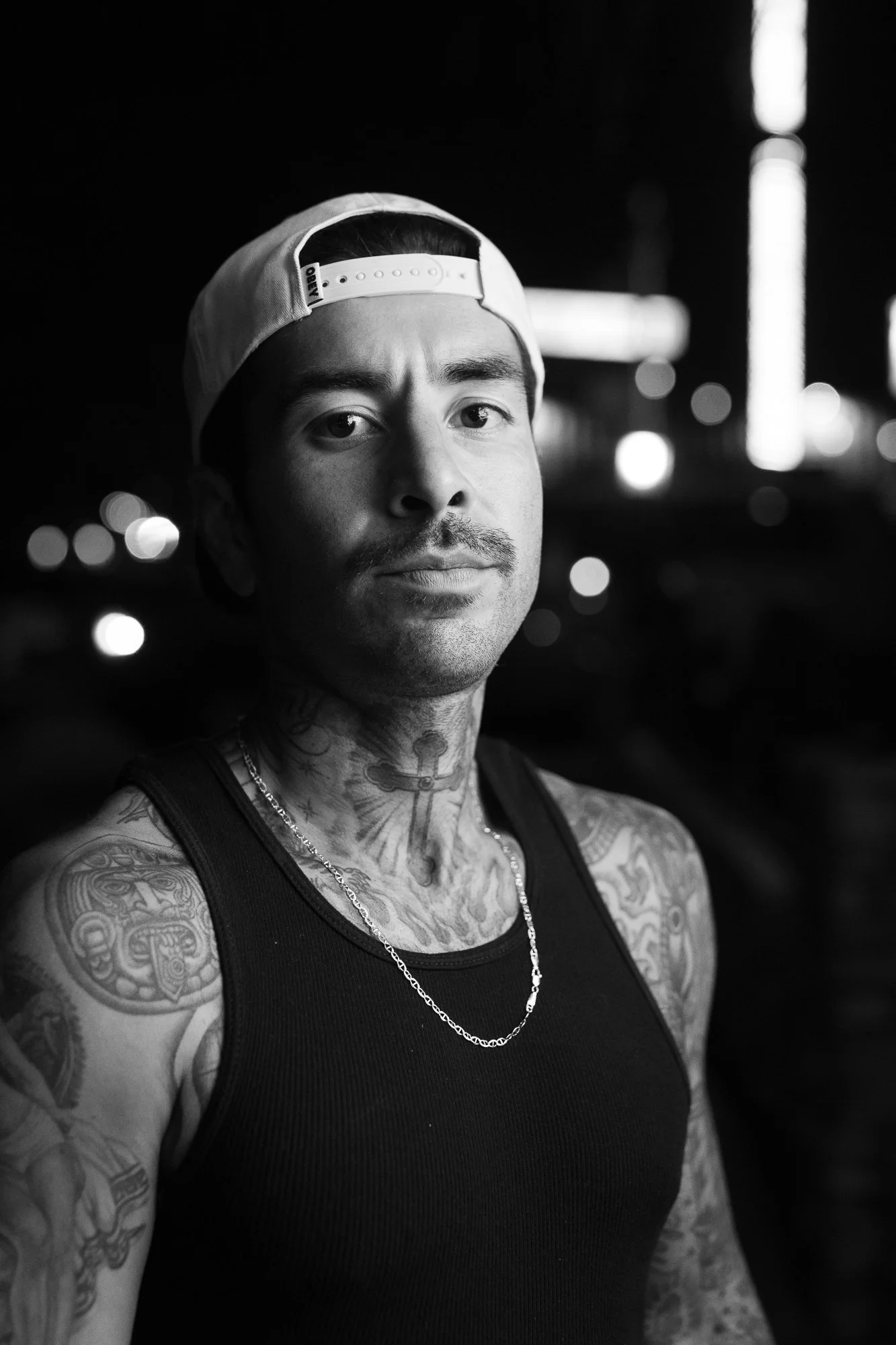
Black and white portrait of Emiliano Zermeno, owner of Leucadia Barbershop in Encinitas, California.

Portrait of Emiliano Zermeno, who continued the family barbershop after the original 1996 location was lost to landlord displacement.

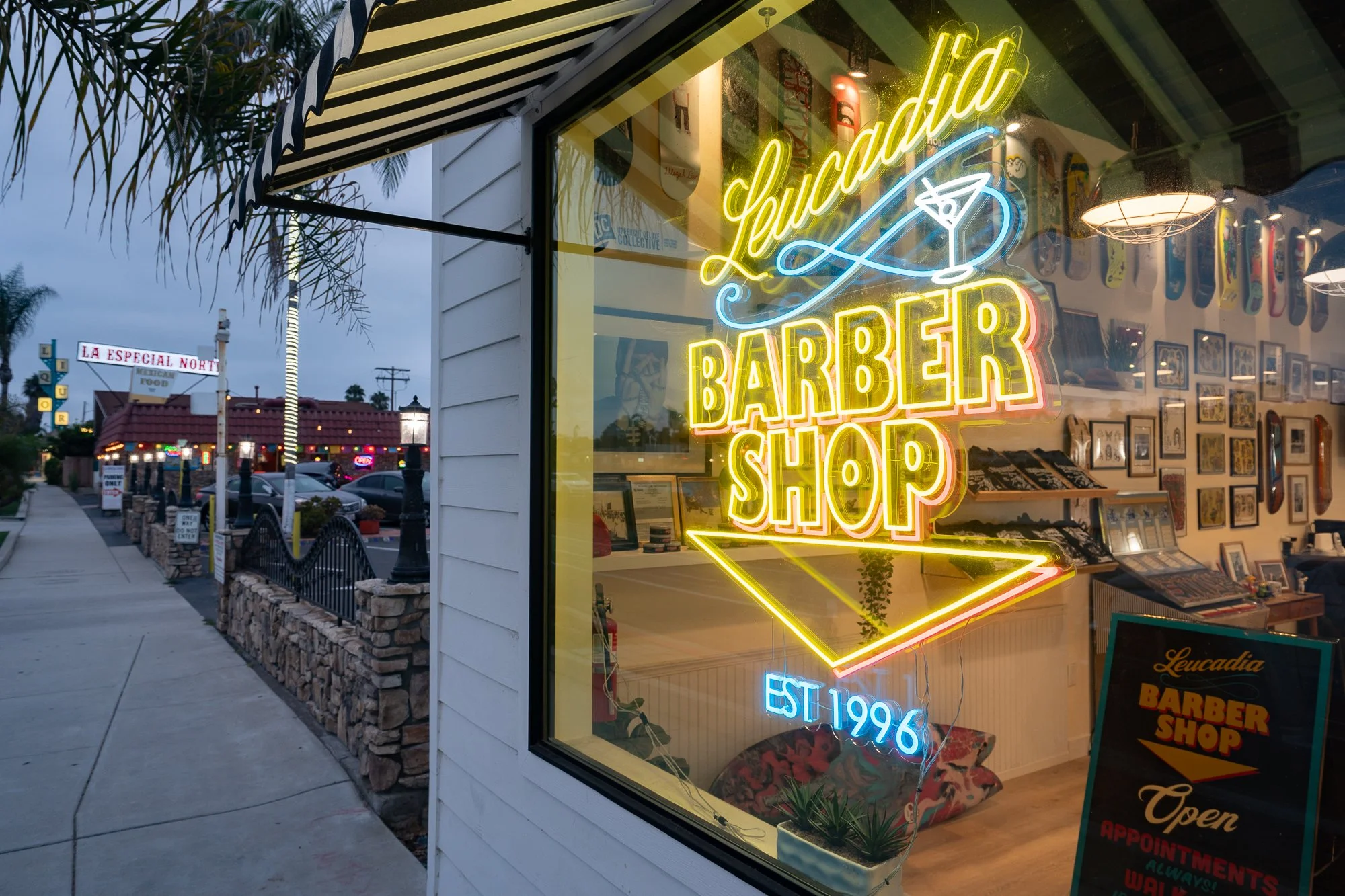
Neon sign at Leucadia Barbershop in Encinitas, California at dusk, established 1996.

The neon sign at Leucadia Barbershop glows over the sidewalk in Encinitas, California. Opened in 1996, the shop has remained part of the coastal community through change and relocation.

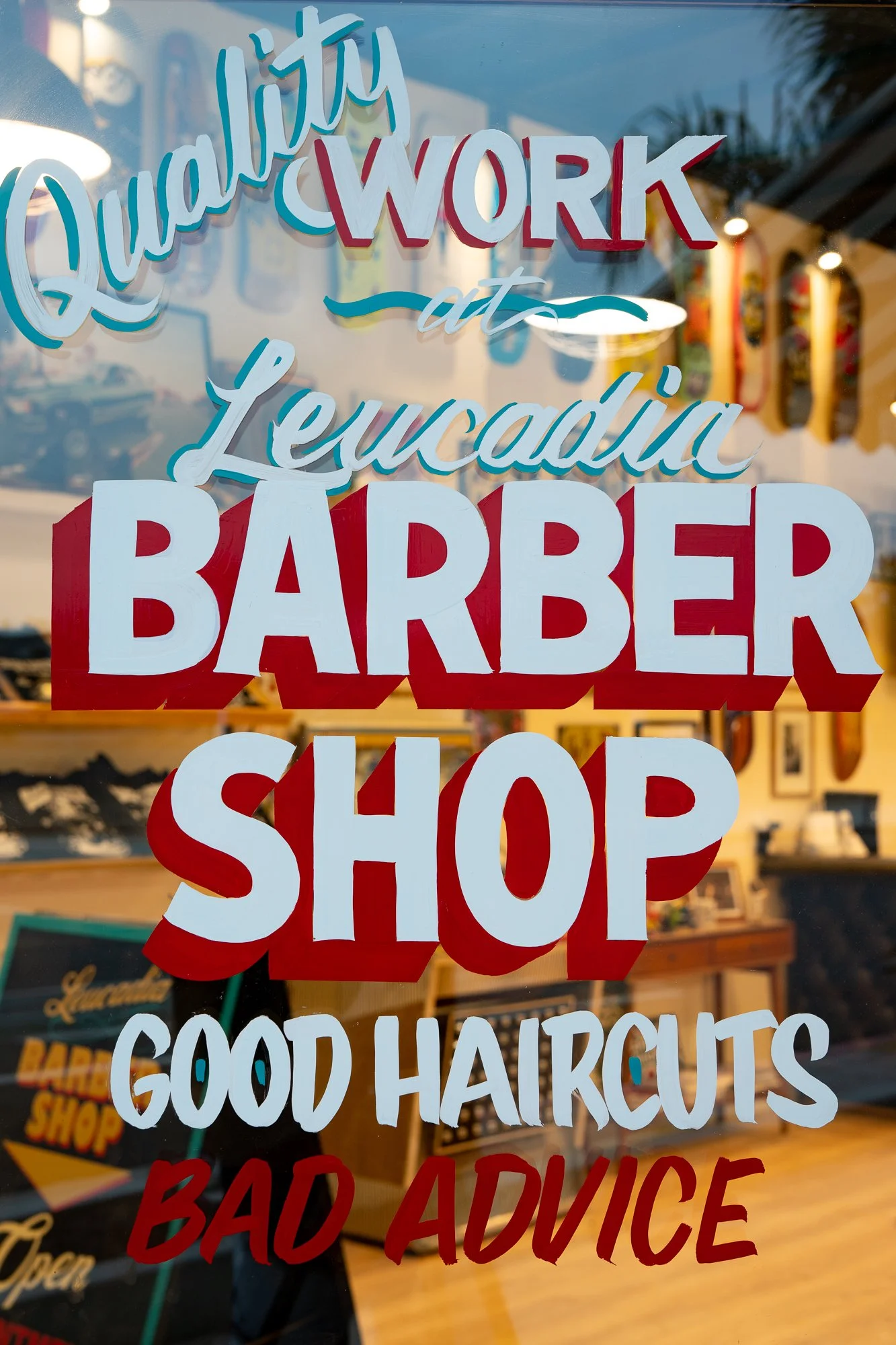
Window lettering reading “Quality Work at Leucadia Barber Shop” on the storefront in Encinitas, California.

Window lettering at Leucadia Barbershop in Encinitas, California. Established in 1996, the shop blends traditional barbering with Southern California character.

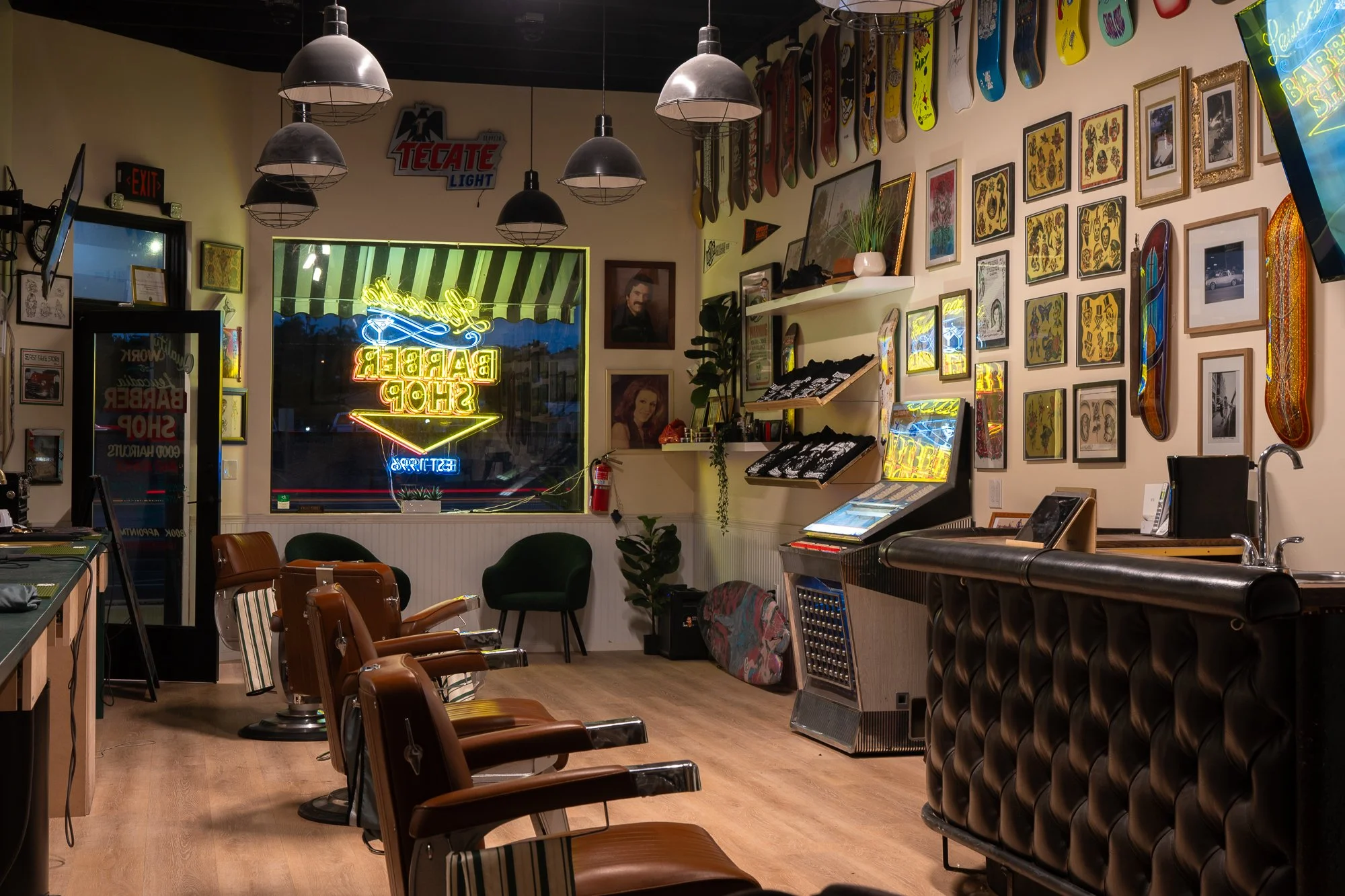
Interior of Leucadia Barbershop in Encinitas, California showing barber chairs, framed artwork, and skateboards.

Inside Leucadia Barbershop in Encinitas. The space combines traditional barber chairs with personal artwork and skateboards, creating a shop shaped by the owner’s history.

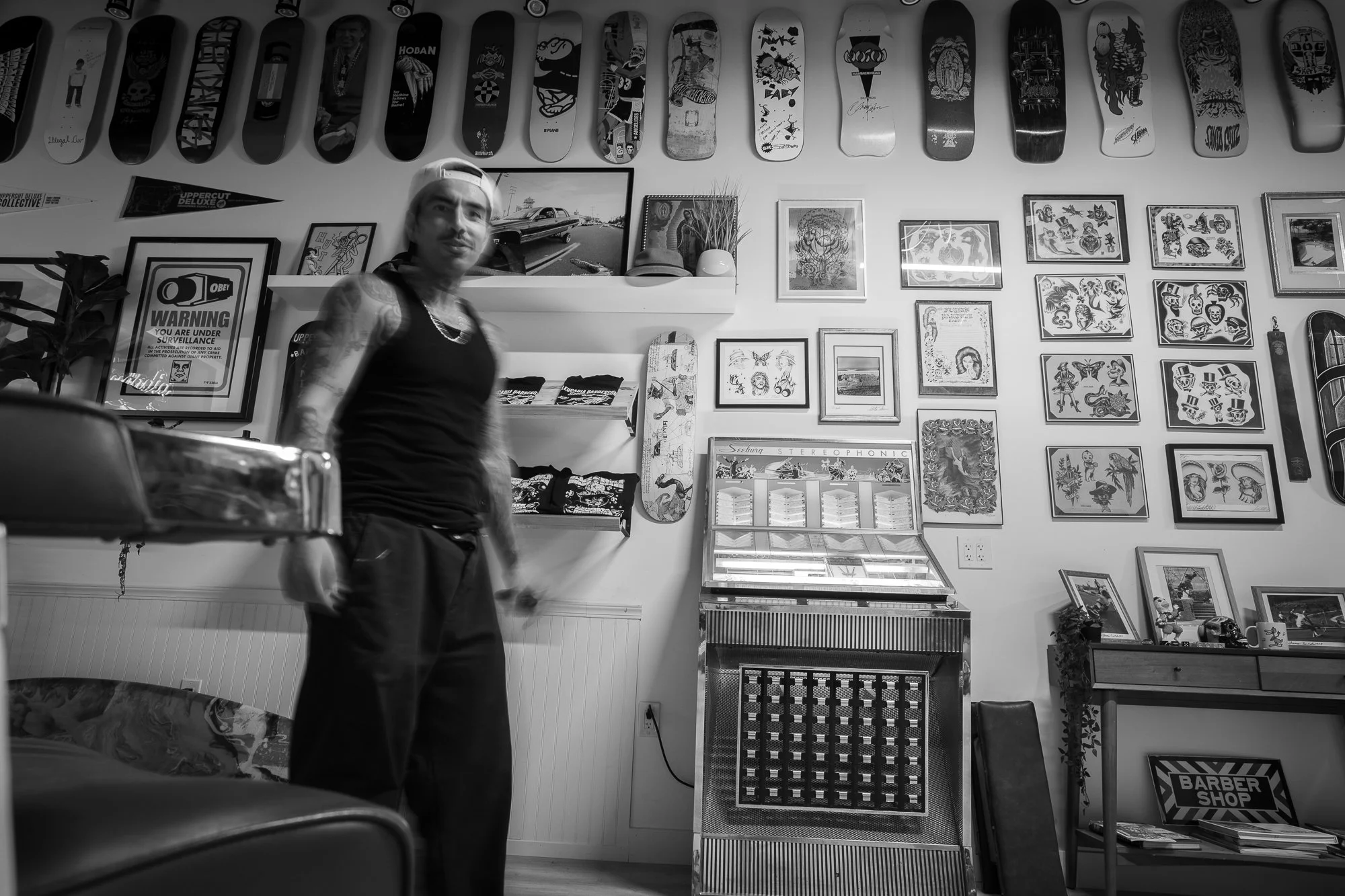
Emiliano Zermeno inside Leucadia Barbershop in Encinitas, California with skateboards displayed on the wall.

Emiliano Zermeno inside Leucadia Barbershop. The skateboards lining the wall reflect his Southern California upbringing and lifelong connection to skate culture.

Black and white photograph of a neon barbershop sign

Barbershop in Encinitas, CA

A Traditional American Barbershop - A Neighborhood Fixture

An Old School Neighborhood Barbershop

I first photographed this barbershop in San Diego in 2011, early on in what would eventually become the Barbershops of America project. At the time, I didn’t fully realize how important these photographs would become. I was simply drawn to places like this — shops that felt unchanged, where time moved a little slower and the barber knew everyone who walked through the door.

This shop, run by Johnny Lovato, was one of those places.

A Shop That Felt Lived In

Walking into Johnny’s barbershop felt like stepping into another era. The space wasn’t curated or styled — it was simply lived in. The chairs, the mirrors, the worn floor, the little personal details scattered throughout the shop all told a story without trying to.

These weren’t decorations meant to evoke nostalgia. They were just the things that had accumulated over time. That honesty is what made the shop special and what kept the doors open to the same neighborhood of friendly customers for decades.

The Barber and the Community

Johnny was always kind and welcoming, the type of barber who made time for conversation as easily as he made time for a haircut. His shop wasn’t just a place people came to get cleaned up — it was a place where stories were shared and relationships were maintained.

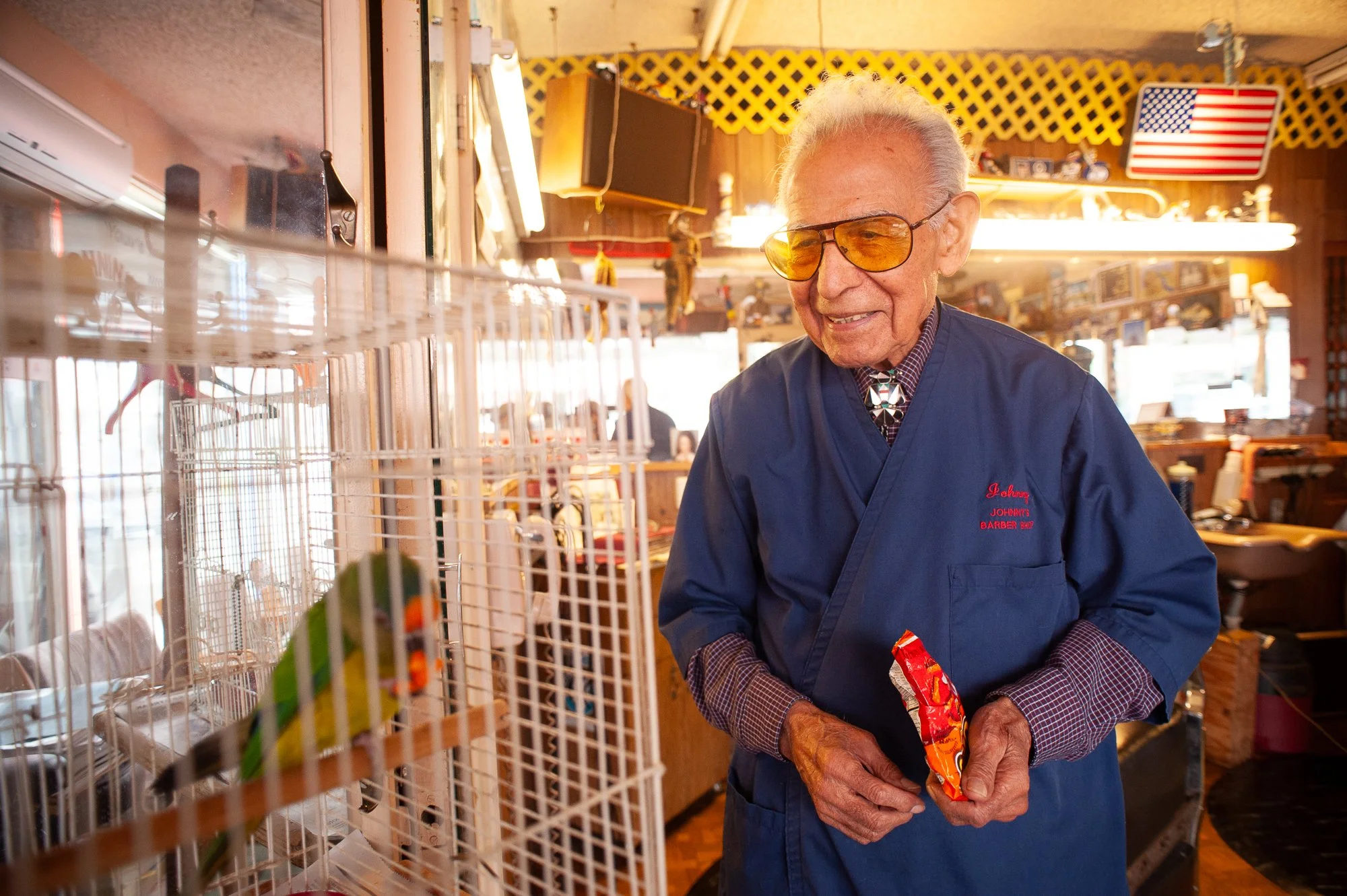
One of the small details I always remember is how happy Johnny was feeding his bird Cheetos. It’s a simple moment, but it perfectly captures the personality of the space and the rhythm of the shop. Those are the moments I’m always looking for when I photograph places like this.

Returning Years Later

I returned to photograph the shop again in 2019. By then, Johnny’s son had taken over the business. Much of the spirit of the shop remained, but time had clearly moved forward — as it always does.

Not long after, the barbershop closed, and the space was eventually transformed into something new, and in my opinion, soulless. That’s the reality for many traditional barbershops across the country. Rising rents, retirement, and redevelopment quietly erase places that once anchored their neighborhoods. Luckily another barber took over the space, so it remains a barbershop, just without the decades of character and memories that once filled it.

Why These Photographs Matter

Barbershops like this rarely close with ceremony. They disappear quietly, often without anyone realizing that a piece of local culture has gone with them.

This series exists so that those places aren’t completely lost. These photographs are not about nostalgia for nostalgia’s sake — they’re about acknowledging the importance of everyday spaces that shaped communities for generations.

Part of a Larger Archive

Johnny Lovato’s barbershop in San Diego is just one small part of a much larger body of work documenting traditional barbershops across the United States. Together, these images form an archive of a disappearing American tradition — one shop, one barber, one story at a time.

More Barbershops of America

View The Book

View The Gallery

Old-school American barbershop interior, Point Loma San Diego documentary photograph

Interior of a traditional barbershop in Point Loma, San Diego, where time-worn chairs and details reflect decades of community history.

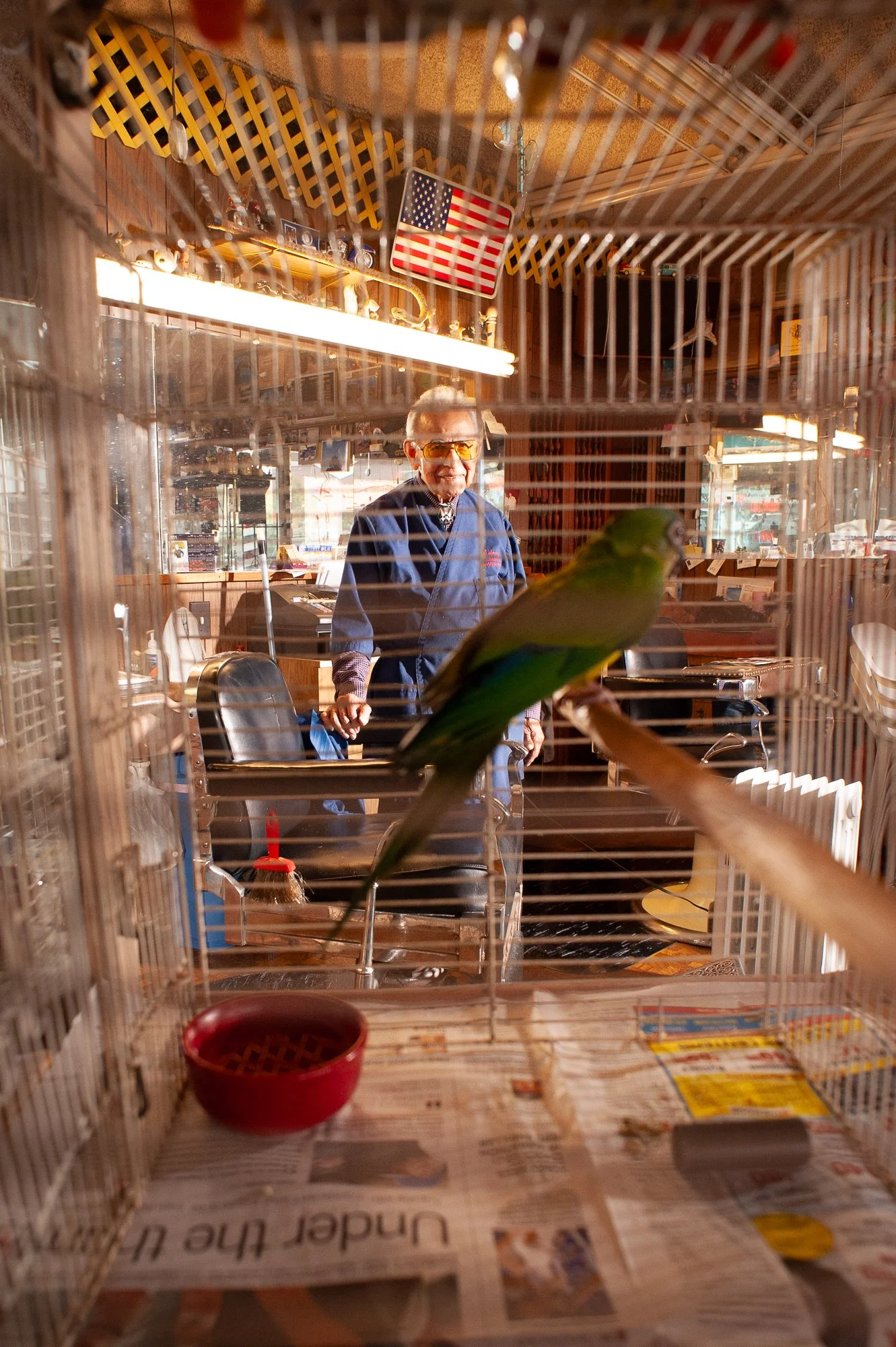
Johnny Lovato feeding his pet bird inside his barbershop in San Diego, California

Johnny Lovato, the barber, shares a moment feeding the shop’s pet bird — a small gesture emblematic of daily life in the space.

An old school barber smiles while watching his pet bird

Johnny Lovato smiles after feeding his pet bird at his barbershop in San Diego

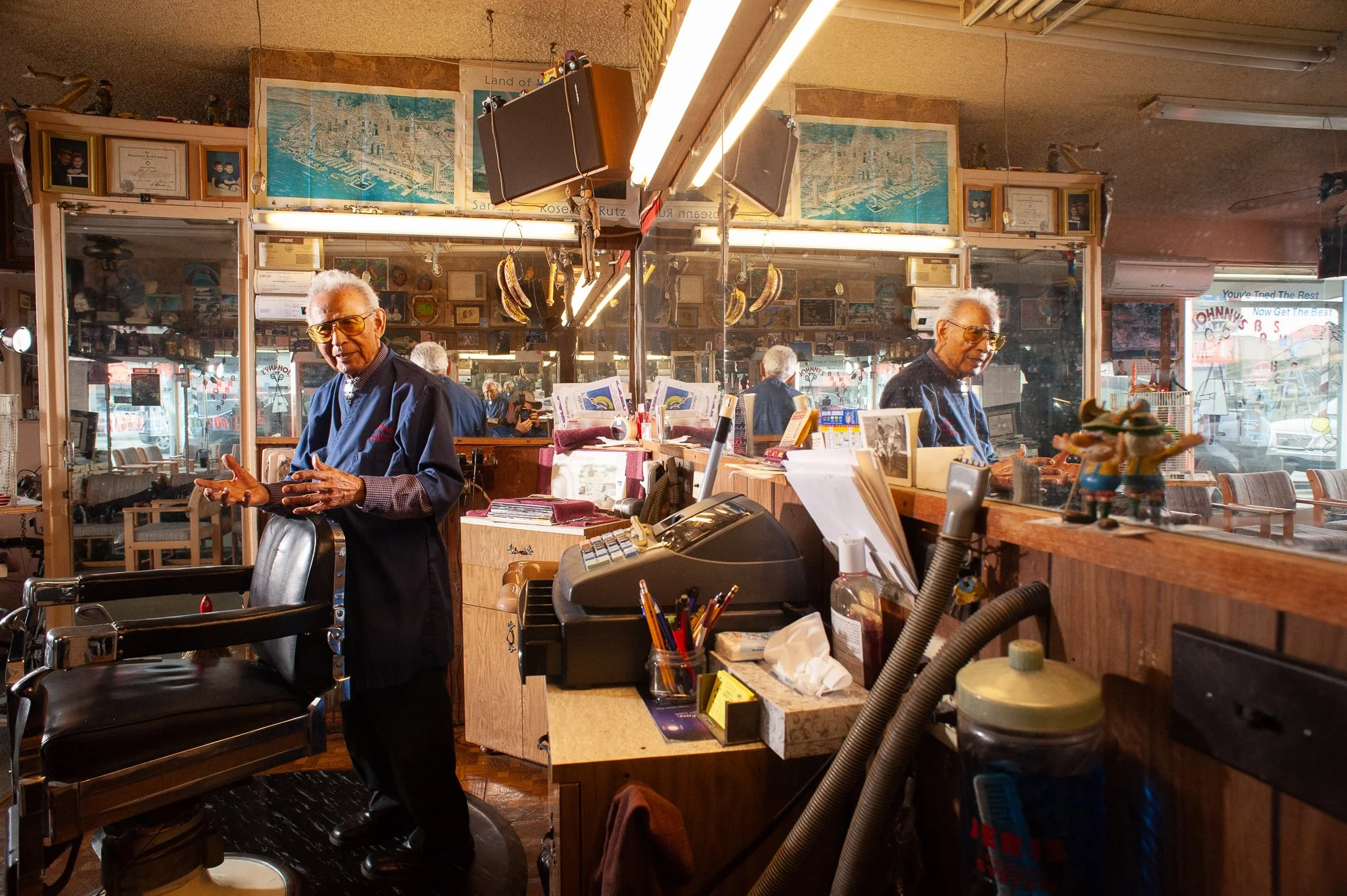
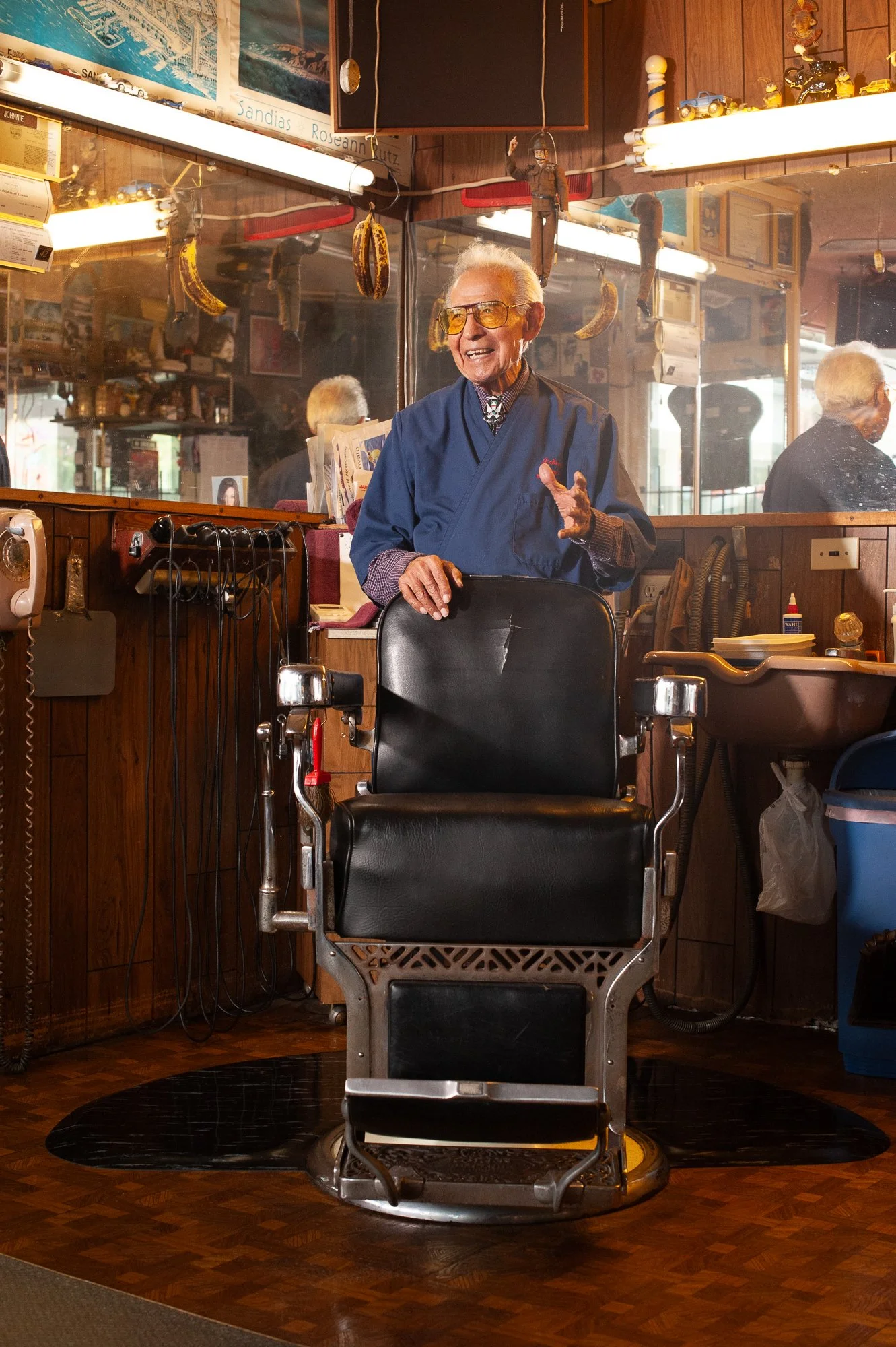
Portrait of a barber standing behind his chair in a traditional San Diego barbershop

Portrait of a barber standing behind his chair — a quiet testament to the people who made these shops more than just businesses.

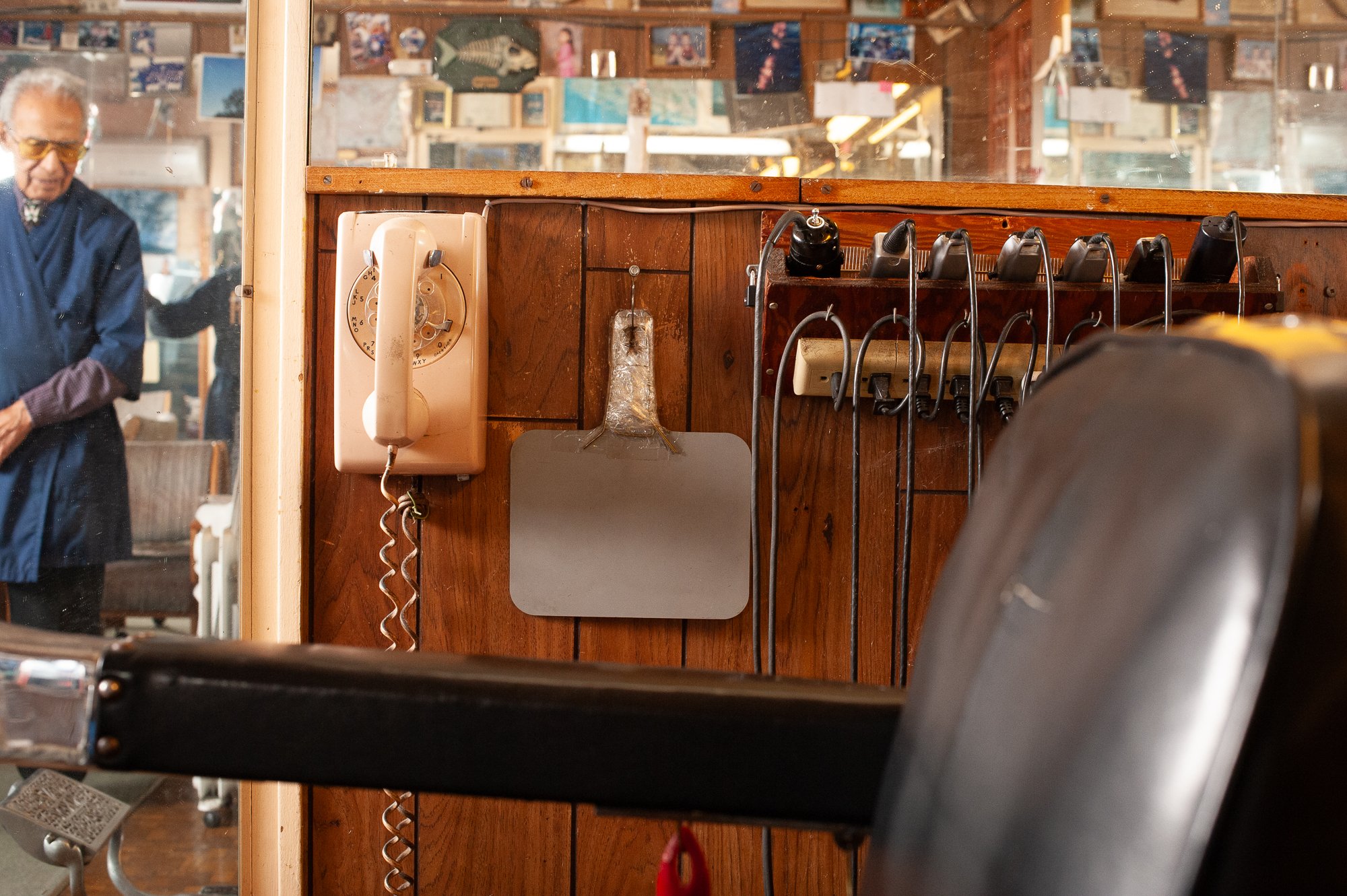
Rotary telephone inside a traditional barbershop, documentary detail photo

An old rotary telephone inside the shop — one of the many small artifacts that speak to the barbershop’s lived-in past

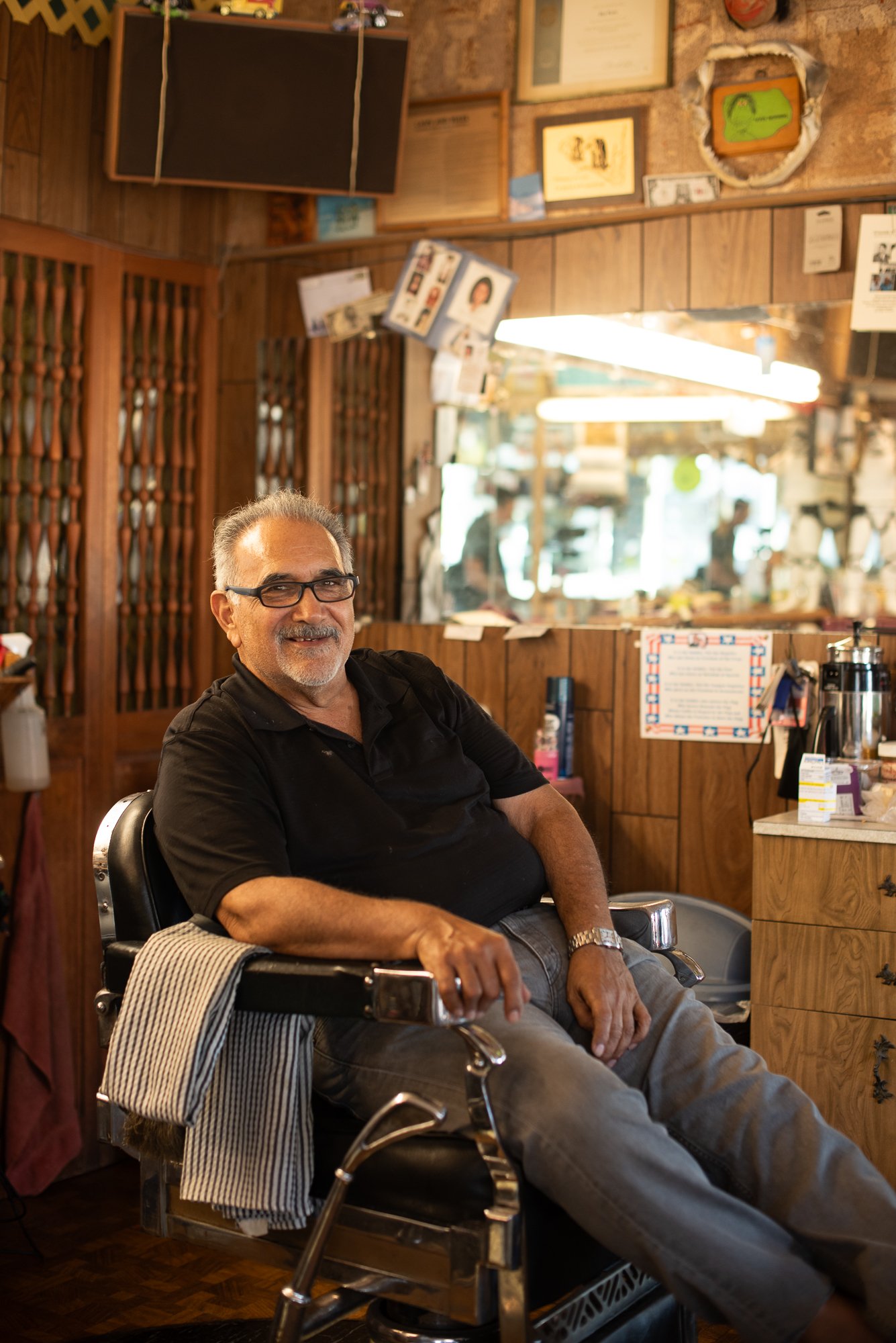
Barber sitting in his chair at a traditional barbershop in San Diego, California

A barber sits in his chair during a quiet moment — a human pause captured in the rhythm of the shop.

Customer getting a haircut in a traditional barbershop in San Diego, California documentary image

A customer receives a haircut — a simple everyday moment that also anchors the narrative of barbershop culture.

The Griffin Museum of Photography

Photography Museum - Winchester, Massachusetts

13+ years now I’ve been photographing traditional barbershops in all 50 states of the USA and the layers continue to peel. In the beginning it was just a thing to do because I love barbershops. Then as time went on I felt responsible for documenting them before they all disappeared. Now, in 2024, I see the collective body of work as a historical document of the barbers and shops that served as a staple in their respective communities for 30, 40, 50, 60+ years. On the surface the theme of this project is about a place to get your haircut. Really though, it’s about community, friendship, and human connection. So I’m honored to announce that a selection of these photographs will be shown at the Griffin Museum of Photography in Winchester, MA for their upcoming group show “Vision(ary) which focuses on communities, cultures, and environments. Please go check out the show as well as the other great exhibitions from June 7th-September 27th.

Click here to purchase a copy of Barbershops of America (photo book) and HERE to purchase prints from this series.

Exhibition at the Griffin Museum of Photography

Barbershops of America at The Griffin Museum of Photography

Traditional Barbershop Photography

Historic Barbershop Photography in Birmingham, Alabama

Birmingham, Alabama has a way of holding onto its past. You feel it in the buildings, the neighborhoods, and especially in places like traditional barbershops — spaces that have quietly served their communities for generations.

This barbershop sits just off the main road, easy to miss if you’re not paying attention. Inside, time slows down. The chairs are worn, the mirrors have seen decades of haircuts and conversations, and the rhythm of the shop feels unchanged by whatever year it happens to be outside.

This photograph is part of my ongoing Barbershops of America documentary project — a long-term effort to photograph traditional barbershops across all 50 states and preserve these spaces before they disappear.

A Traditional Barbershop in Birmingham’s Magic City

Birmingham is often called The Magic City, a nickname rooted in how quickly it grew during the industrial boom. But step into a barbershop like this one and you’re reminded that not everything moves fast here.

This is the kind of shop where:

  • Regulars don’t need to explain how they want their haircut

  • Conversations drift from local politics to college football to family stories

  • The barber knows everyone by name

There’s no rush. No appointment system. Just a steady flow of people who’ve been coming here for years — sometimes decades.

From a documentary photography standpoint, these details matter. They’re what separate a real working barbershop from a styled or recreated space. This shop isn’t a set. It’s lived-in.

Photographing Barbershop Culture in the American South

Southern barbershops have a distinct character. They’re often deeply rooted in their neighborhoods, serving as informal gathering places as much as businesses.

When I photograph barbershops like this one in Birmingham, I’m not trying to stage anything. The goal is to let the room speak for itself — the light, the posture of the barber, the way a customer settles into the chair.

The best moments usually happen quietly:

  • A glance in the mirror

  • A pause in conversation

  • The way afternoon light hits the floor

Those moments are what give barbershop photography its emotional weight. They’re small, but they’re honest.

Why Traditional Barbershops Matter

Across the country, independent barbershops are slowly disappearing — replaced by chains, salons, or modern storefronts designed to look old but lack history.

Projects like Barbershops of America exist to document what’s real before it’s gone.

These photographs are not nostalgic recreations. They’re records of working spaces:

  • Where generations of families have gotten their hair cut

  • Where stories are passed down as casually as advice

  • Where community still exists without needing a label

Birmingham’s barbershops are an important part of that story.

Part of the Barbershops of America Documentary Series

This Birmingham barbershop photograph is one piece of a much larger archive. Over the years, I’ve photographed traditional barbershops in cities, small towns, and rural communities across the United States.

The full project is available as:

  • A Barbershops of America photo book

  • Fine art photographic prints

  • Editorial and commercial licensing for publications, exhibitions, and design projects

Each shop adds another chapter to a disappearing part of American culture.

Stories From The Barbershop

It’s been interesting to see how some smaller cities have groupings of barbershops all in one place. Common sense would tell you that isn’t a great business strategy, but what do I know? Birmingham, Alabama is just such a place with multiple shops all on the same block, which was exciting but things didn’t start out so hot.

There was an older gentleman sitting out in front of the first shop I approached. He was talking on the phone while sitting on a stool in front of the door. I introduced myself and said that I’d like to make some photographs of the shop. Before I could even finish he said “I don’t have time”, turned his back to me, and continued his conversation. The shop was completely empty. I tried pushing back politely, stating that I’d been working on this project for 12+ years and published a book on traditional barbershops in all 50 states, etc, etc, etc. It didn’t work. He was angry that I was still standing there trying to talk with him and even more angry that I asked for the owner’s phone number. He wasn’t annoyed. He was angry almost to the point of aggression. Ah well. Can’t win them all. That led to a stop in Magic City Barbershop, which opened it’s doors in 1930! There is a poster on the front window from the Jefferson County Historical Commission that states so, but you don’t need a poster to tell you the place isn’t far off from its 100 year anniversary. You can just feel it.

The shop was empty besides the one barber working. He was a character. Had a witty answer for everything I said or asked.

Me: “Is this your shop?”

Him: “It ain’t yours!”

There were lots of old newspaper clippings on the wall of Martin Luther King and others from the riots and bombings. “Bombingham” as he called it, has a unique past that shaped it into the city it is today. Despite all the racial violence and negativity, it’s fascinating to be in that shop because the city’s history provides an education, experience, and conversation that you’re not likely to get anywhere else in the country. Barbershops provide an unorthodox way of learning about America!

Bringing Barbershop Photography Into Your Space

These photographs are often collected by:

  • Interior designers

  • Architects and creative offices

  • Hotels, restaurants, and barbershops

  • Private collectors interested in Americana and documentary photography

If you’re looking for artwork that feels authentic, grounded, and timeless, traditional barbershop photography offers a quiet strength that works across many environments.

Interested in These Photographs?

Fine art prints from this Birmingham barbershop series are available in multiple sizes and formats. Editorial and commercial licensing is also available.

Contact me here to discuss print options, licensing, or custom projects - rob@robhammerphotography.com

View More From the Barbershops of America Project

Another Barbershop Story

Barbershops of America Photography Gallery

Barbershop Photo Book/Prints

Photograph of barber in Birmingham, Alabama

Magic City Barbershop - Birmingham, Alabama

Photograph of sneakers and shoes for sale at a classic barbershop in Birmingham, Alabama

Sneakers for sale at a barbershop in Birmingham, Alabama

Photograph of a classic barbershop in Birmingham, Alabama

Traditional barbershop photography

Portrait of barber standing in front of his shop in Birmingham, Alabama

Portrait of a barber in Birmingham, Alabama

Small Town North Carolina Barbershop

Granville Barbershop, North Carolina

A Traditional American Barbershop Documented Through Photography

The Granville Barbershop in Grannville, North Carolina is the kind of place that has quietly served its community for decades. No branding overhaul. No attempt to modernize what already works. Just a steady rhythm of haircuts, conversation, and routine that has outlasted trends and redevelopment cycles.

These photographs were made as part of my long-term documentary project, Barbershops of America — an ongoing effort to photograph traditional barbershops across the United States before they disappear. Shops like this are not just businesses; they are cultural fixtures that anchor small towns and neighborhoods.

Why Traditional Barbershops Matter

Traditional barbershops play a unique role in American life. They are spaces built on trust and repetition — places where people return month after month, year after year, to see the same barber in the same chair.

In small towns especially, barbershops function as informal community centers. News is exchanged. Silence is respected. Generations overlap. These are the kinds of everyday environments that rarely feel important in the moment, yet become deeply significant once they’re gone.

Photographing these spaces is about preservation, not nostalgia — recording them honestly, as they exist, without staging or intervention.

The Story

These photographs were made during a drive home to upstate NY for Christmas. The owner was very skeptical of my intentions at first but agreed to let me photograph his shop. During my time there I had some fun interactions with customers, but he never said much. As far as history goes, the shop opened in the 1940’s, and prior to that it was an African American movie theater!! How’s that for Southern?

As with most old shops, the relationship between proprietor and those in his chair was easy, fluid, and quite candid. At one point an older gentleman sauntered in with his head down, dropped a gift on an empty chair, turned back toward the door and said “well, gotta go”. That was it. No interaction. Never even lifted his head up to make eye contact. The barber didn’t seem surprised, nor did he skip a beat on the haircut in progress.

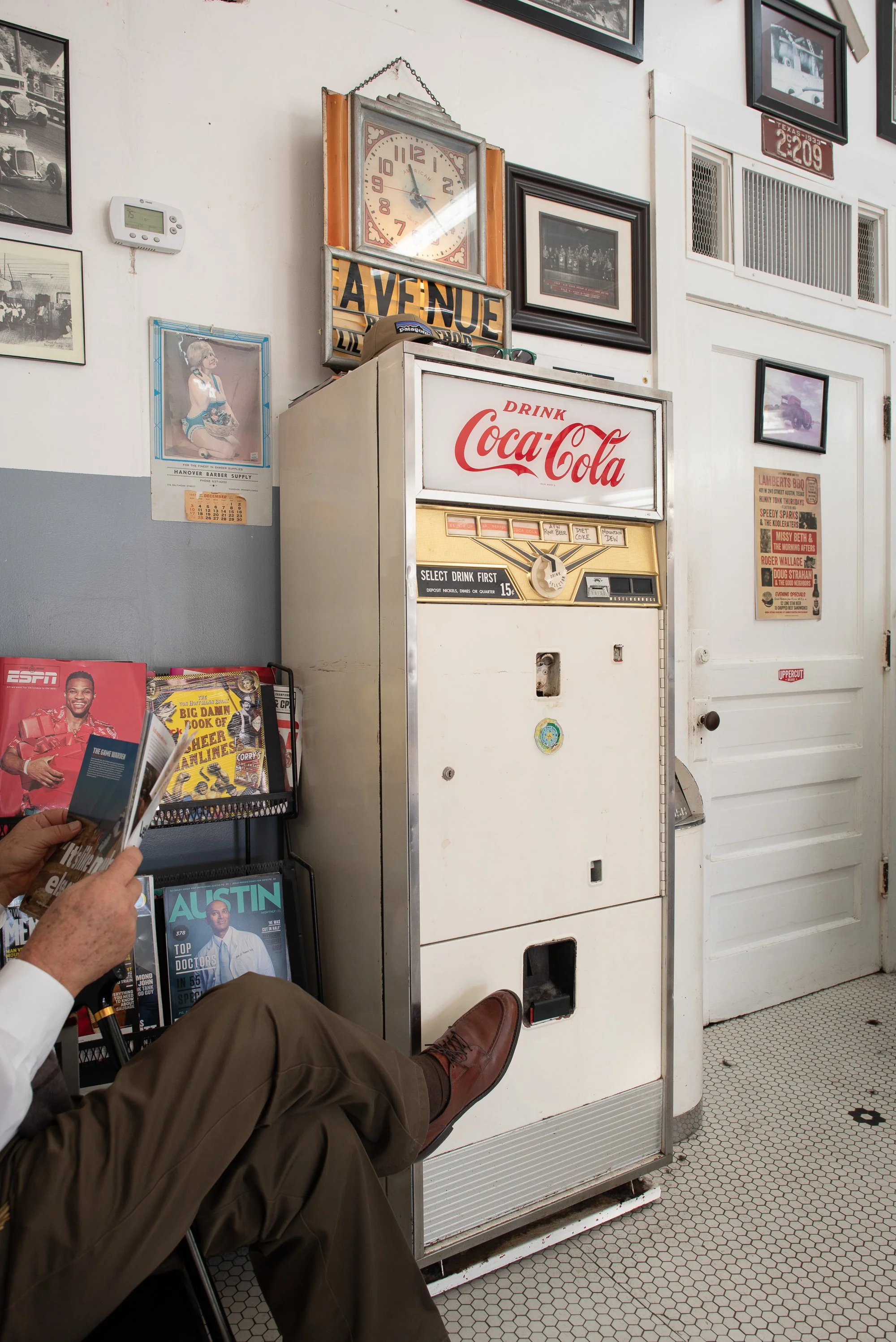
Took about a half hour until I was pleased with the pictures made. Afterward I gave the barber a card and thanked him for the hospitality. He stopped cutting, grabbed a few coins off the back bar, placed them in my hand and in an almost too good to be true accent said “take these two qwwwaaaaaaaatehs back to that machine and get you a pop. I’ll bet you haven’t had a 50 cent pop in yeeeeaaaaaaahs.” Sure enough, there were ice cold sodas coming out of a vintage Coca Cola machine against the back wall. Can’t tell you the last time I even had the desire for a soda, but I wasn’t about to turn that one down.

Interactions like these are what keep Barbershops of America going. Talking to people that give you a very definitive sense of place is gratifying, educational, and fun. Hearing about the shops history in such a dialect not only tells you where you are in the world, but also where you aren’t. I love that.

Continue exploring documentary barbershop photography in the Barbershops of America series

Barbershop Photography Gallery

Barbershop Photo Book/Prints

Another Barbershop Photo Essay

Contact me directly about barbershop photography licensing for your editorial and commercial projects -rob@robhammerphotography.com

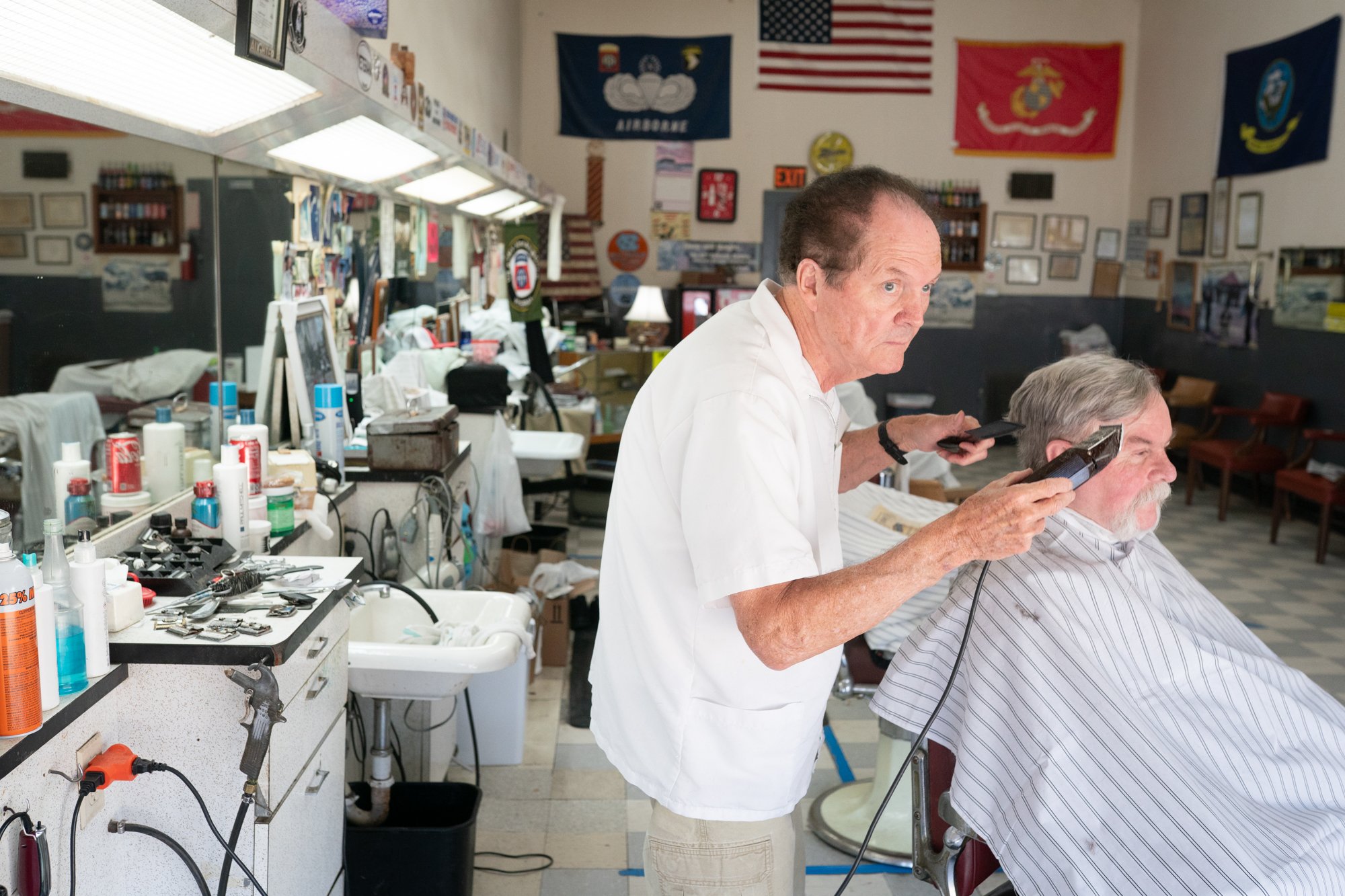
Interior view of a traditional barbershop with barber chairs, mirrors, and military flags on the wall

The interior of Granville Barbershop reveals layers of personal history, from worn barber chairs to walls filled with service flags and memorabilia.

Traditional barbershop interior in North Carolina with a barber cutting a client’s hair using clippers

A working barber trims a longtime client inside a traditional North Carolina barbershop, where routine and familiarity define the space.

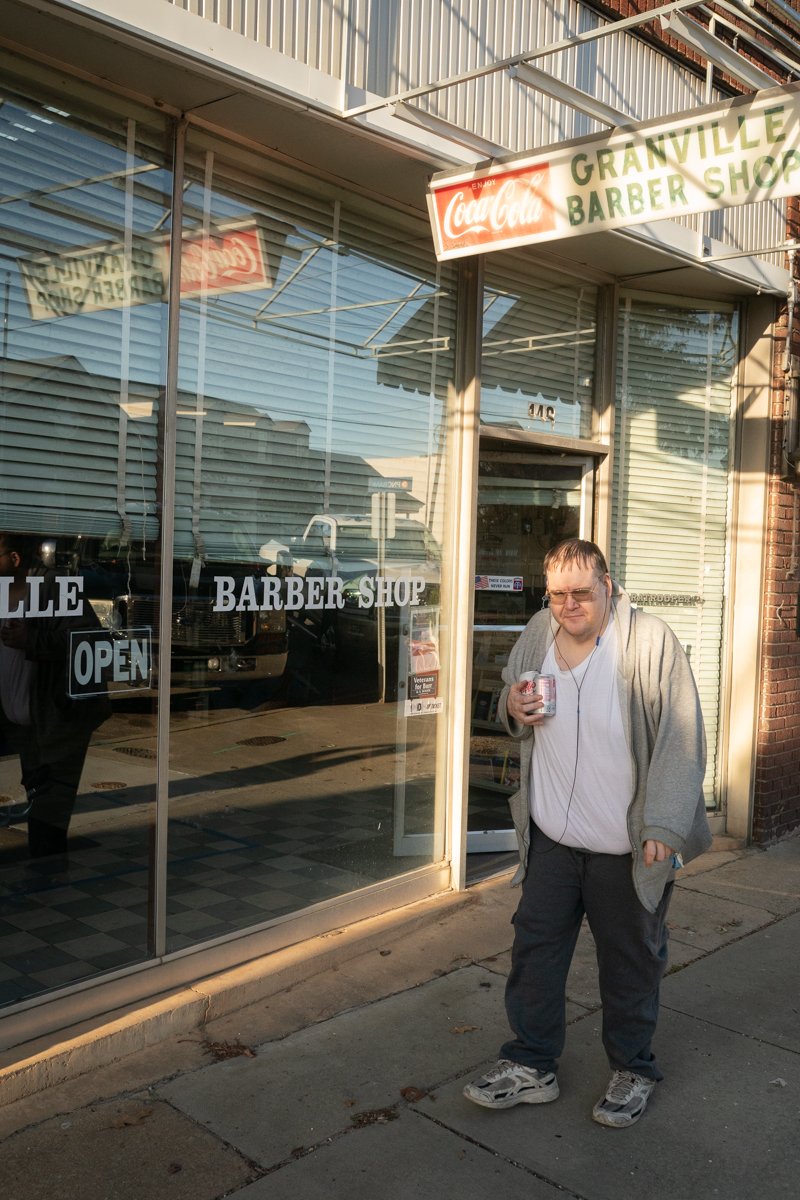
Exterior of Granville Barbershop in Granville, North Carolina with classic signage and storefront windows

The storefront of Granville Barbershop in Granville, North Carolina, a long-standing fixture of the town’s Main Street.

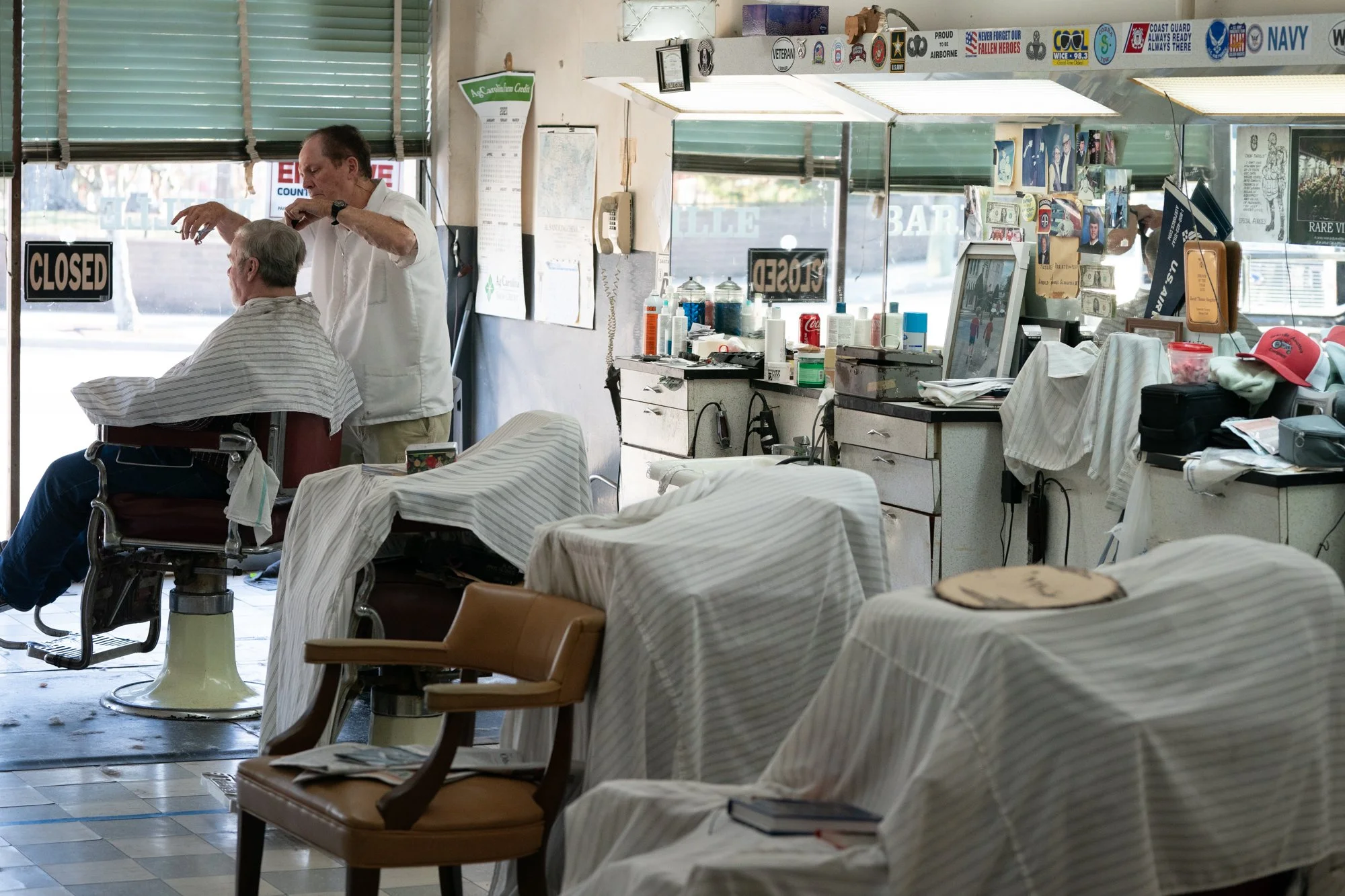
Documentary photograph of a barber cutting hair inside a small-town North Carolina barbershop

Inside the shop, haircuts continue as they have for decades—unhurried, familiar, and grounded in routine.

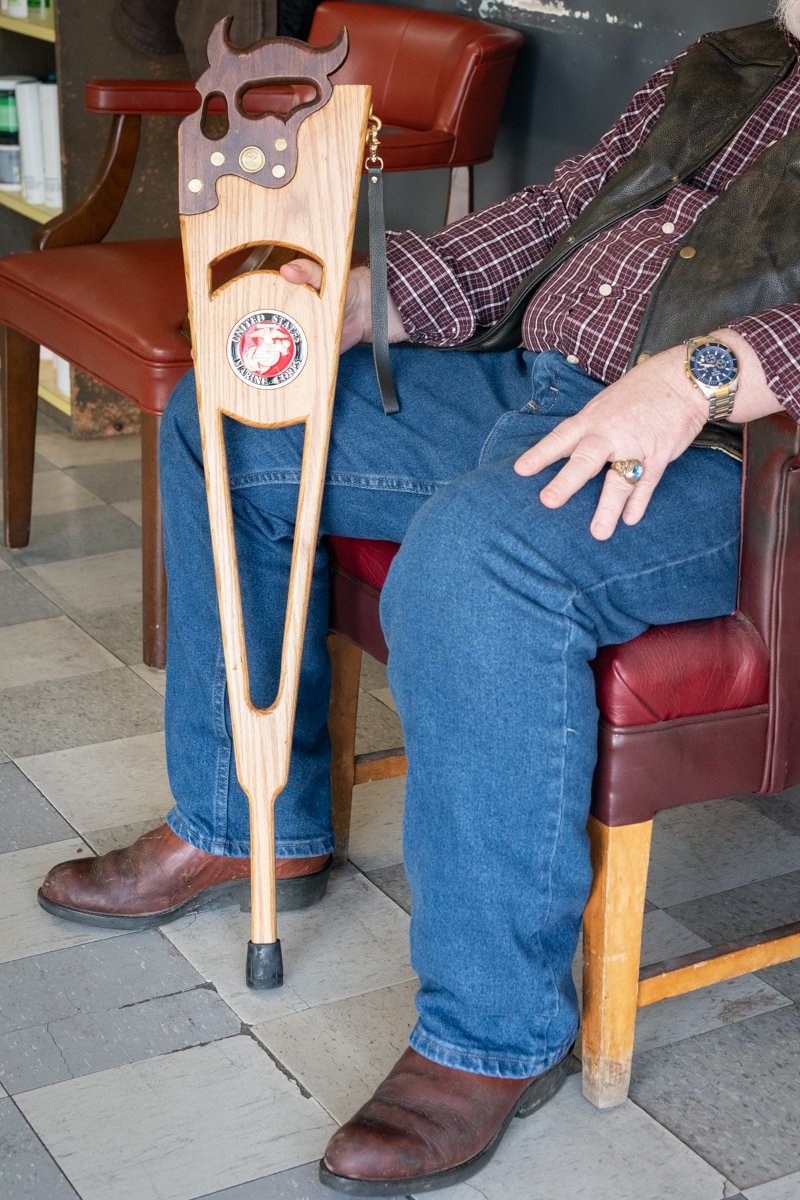
Detail photograph of a custom wooden walking stick resting beside a customer in a North Carolina barbershop

A handmade walking stick rests beside a customer, a small detail that hints at the personal histories carried into the shop.

Photography Books - American Culture

American Photography - Documenting Traditional Barbershops

American photography as a genre is hard to define, especially when it comes to art collection and fine art photography. The term is so broad and leaves plenty of room for interpretation. One of my longest running series Barbershops of America fits into that category. Although it’s only been recently that I realized what’s been put together with this series is as much American photography as it is a historical document of a niche piece of American culture. And it occured to me the other day that getting a haircut is just a bonus to the experience you receive from being in a traditional barbershop. Grateful to see this project getting some exposure on Creative Boom and The Eye of Photography.

Click HERE to purchase a copy of Barbershops of American or HERE to purchase fine art prints.

Barbershop Photography

Traditional American Barbershops

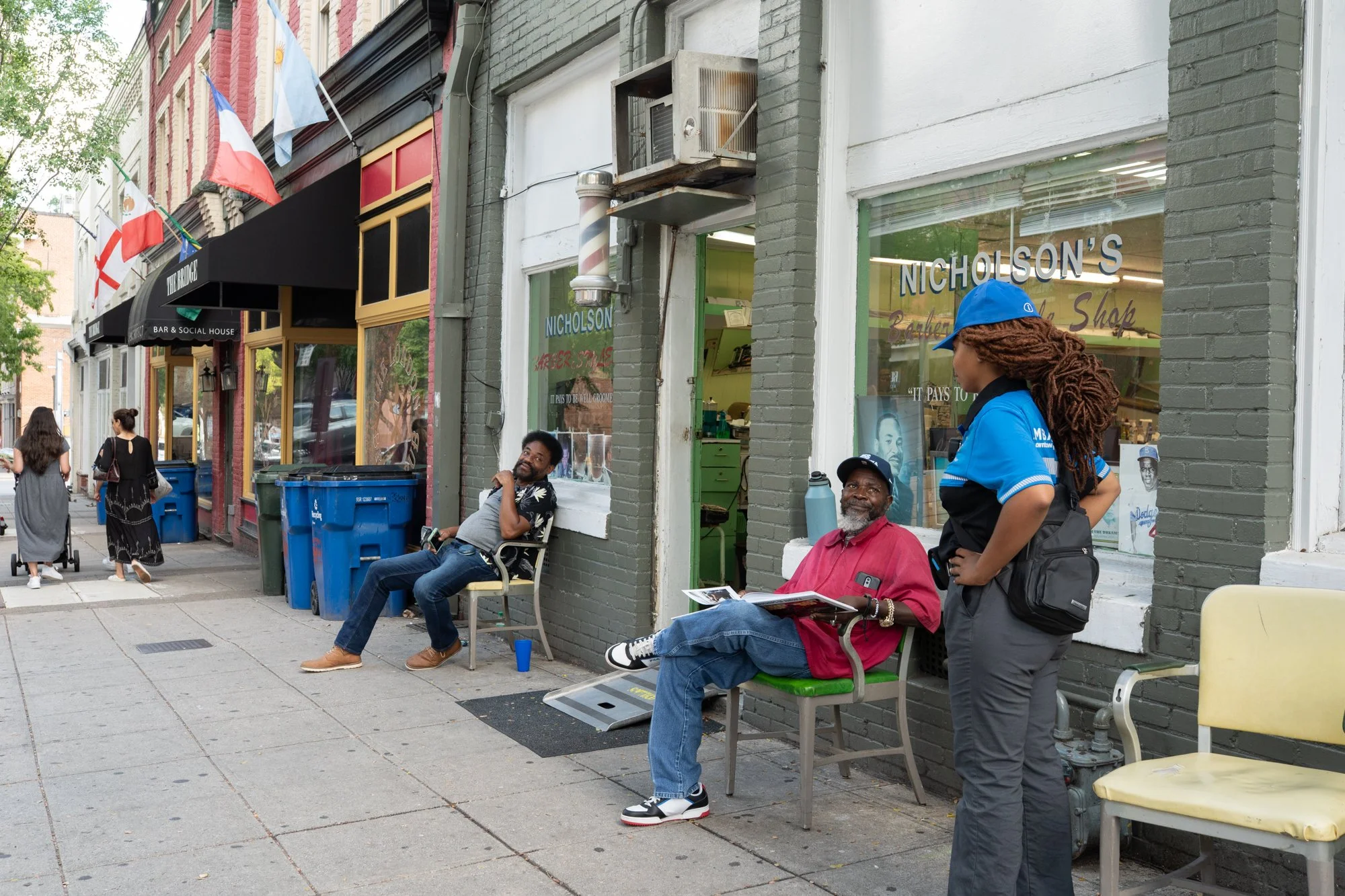
One of the best/hardest parts of working on long term projects focused on one subject matter is the bar is always rising. And that has definitely been the case for Barbershops of America. Traditional shops are a dying breed as is, and after seeing countless shops (good and bad) over the past 10 years, I’ve become quite specific about which shops I want to include in this project. Despite lots of travel and searching for shops over the past year+, the efforts have been fruitless, finding almost nothing worthy of documentation. Sort of hard to believe, actually. Searching for that long without positive results can make you think hard about the project. Is it done? Have I truly found and photographed all the remaining traditional barbershops in America? All of that doubt was erased recently after finding two incredible shops. Nicholson’s Barbershop in Raleigh, NC has been around for 40 years and Patsy’s Barbershop in Albany, NY first opened its doors in 1930! I was born in Albany, lived nearby for 25 years, have been going back at least twice a year for the past 18 years, and just last week discovered Patsy’s. Even more strange, the current owner is a former bouncer that used to, for good reason, throw my friends and I out of the bar. Funny how life works.

Click here to purchase a copy of Barbershops of America

The best barbershop in Raleigh, North Carolina

Nicholson’s Barbershop - Raleigh, North Carolina

Photograph of a barber's hands
Photograph of a traditional barbershop in Raleigh, North Carolina
The best barbershop in Albany, NY

Patsy’s Barbershop - Albany, NY

Photograph of a beautiful traditional barbershop in Albany, NY

Traditional barbershop in Albany, NY


Barbershop - Marfa, Texas

Marfa, Texas — A Barbershop Now Closed

This barbershop in Marfa, Texas is no longer open.

When these photographs were made, the shop was still operating — quietly, modestly, and without spectacle. An elderly barber continued cutting hair for longtime clients beneath fluorescent lights and wood-paneled walls layered with decades of memorabilia.

Not long after, the doors closed.

What remains now are the photographs.

The Final Years

Inside, nothing felt staged.

The floor was worn.
The sink chipped.
Sports posters faded at the edges.
A 1979 Cowboys team photo sat beneath a television.

Customers — mostly older men — waited their turn as they likely had for years. The routine continued as it always had. No announcement. No ceremony. Just haircuts.

In small towns like Marfa, institutions often end not with a grand closing, but with a gradual thinning of time — fewer customers, older hands, fewer reasons to keep the lights on.

A Vanishing American Interior

Barbershops have long functioned as community anchors across the United States, particularly in rural towns. They are practical spaces, but they are also repositories of memory:

  • Photographs of local teams

  • Certificates and clippings

  • Posters taped to wood-paneled walls

  • Objects that accumulate without ever being curated

When a shop closes, those layers often disperse. The room empties. The rhythm stops.

What disappears isn’t just a business. It’s a pattern of local community.

Marfa in Context

Marfa is widely known today for contemporary art and desert minimalism. This shop represented something different — a working-class interior untouched by trend cycles or design updates.

It was modest.
Functional.
Unchanged.

Its closure marks a quiet shift in the town’s cultural landscape — one less everyday institution, one more room that no longer holds history.

The Story Behind The Photographs

As much as I try to embrace social media, it’s difficult to genuinely say anything positive about it sometimes. Every once in a while though, something happens that makes me think twice. A few days ago I posted this image of a traditional barbershop in Marfa, Texas on my @barbershopsofamerica Instagram account, which was re-posted as a story by Visit Marfa. That day I received a direct message from a woman in that had seen their story and was filled with sentimental feelings, as she used to know the shop and the owner. She went back to look at it again later and noticed that the man in the chair was her father, who had passed away two years ago from cancer. The image caused her to cry happy tears and she asked about purchasing a print. Turns out we live 15 minutes from each other! So this morning I drove to her house to deliver some prints and a copy of Barbershops of America. Social media isn’t all bad!

This project has been going on for 10 years now. Hard to believe. Aside from the obvious joy it gives me to make theses images, it’s the auxiliary things that really make it special. The people I’ve met out of pure coincidence or from having shared interests will keep this series going forever.

Continue Through the Archive

The Marfa barbershop is one chapter in a 15+ year effort documenting independent and traditional barber shops across all 50 states.

Some shops are expanding.
Some are adapting.
Others, like this one, have closed.

→ View the full Barbershops of America archive
→ Explore the Barbershops of America photo book
Read another barbershop story from Kentucky

Together, these spaces form a record of a disappearing American institution — preserved one shop at a time.

Customers sitting inside a wood-paneled barbershop in Marfa, Texas as a haircut continues.

Regular customers wait beneath walls lined with photographs and memorabilia inside the now-closed Marfa barbershop.

Worn 1979 Dallas Cowboys team poster displayed beneath a television inside a Marfa, Texas barbershop.

A 1979 Cowboys team poster sits beneath the television, one of many personal details layered into the shop’s interior.

Close view of an elderly barber doing a straight razor shave in a small West Texas barbershop.

Elderly barber cutting a client’s hair inside a small barbershop in Marfa, Texas shortly before the shop closed.

An elderly barber cuts a longtime client’s hair inside a modest Marfa, Texas barbershop in its final period of operation.

Mirror reflection of barber and client inside a compact workstation in a Marfa, Texas barbershop.

Reflections reveal the compact workstation—fluorescent lighting, worn counters, and tools accumulated over decades.

The American Barbershop

Inside an Old School Barbershop

Some barbershops just feel different the moment you walk in, at least they should. This one sits right on Main Street in a small Nevada town, and it hasn’t tried to reinvent itself or keep up with trends. It doesn’t need to. It’s an old school barbershop in the truest sense — a place built on community, friendships, decades of doing things the same way because they work.

You notice it in the details first. The worn chairs. The mirrors that have seen thousands of haircuts. The quiet hum of clippers and conversations that don’t feel rushed. This is the kind of traditional barbershop where people come not just for a haircut, but because it’s part of their weekly or monthly rhythm.

An Old School Barbershop That Still Feels Like Main Street America

Main Street barbershops like this one are becoming harder to find. A lot of them have disappeared, replaced by newer spaces that feel more like salons than barber shops. Luckily, this place hasn’t gone that route. It still feels rooted in tradition, serving the same community it always has.

People come in, take a seat, and wait their turn. Some talk. Some don’t. The barbers know all the faces, and the ones they don’t quickly become familiar. There’s no rush to move people through. The pace is steady and comfortable — exactly what you expect from an old school barber shop that’s been around long enough to earn that confidence.

This is Main Street America in its simplest form.

Photographing a Traditional American Barbershop

When I photograph barbershops, I’m not looking to stage anything or make the space feel more polished than it really is. I’m drawn to places like this because they already have character. The work is about paying attention — to how light hits the mirrors, how chairs sit slightly crooked from decades of use, how people interact when they feel at home.

This traditional barbershop didn’t need direction. I spent time watching, waiting, and letting moments happen naturally. A barber stepping back to check his work. Someone laughing mid-conversation. A quiet pause while clippers buzz in the background. Those are the moments that tell the real story of a shop like this.

Why Old School Barbershops Matter

Old school barbershops are more than just places to get a haircut. They’re social spaces, community anchors, and in many towns, one of the last places where people still slow down a little. They reflect the personality of the neighborhood they’re in and the people who keep them going.

Photographing spaces like this feels important, especially as so many of them disappear. Once they’re gone, they’re gone for good. These photographs are a way of preserving what these places look and feel like — not in a nostalgic or romanticized way, but honestly, exactly as they are.

Vintage Barbershop Photography Prints

This series is part of my ongoing Barbershops of America project (and photo book), documenting traditional and vintage barbershops in all 50 states of the USA. Photographs from this Main Street barbershop are available as fine art prints, and they tend to resonate with collectors, interior designers, and anyone drawn to classic American spaces.

If you’re interested in prints from this series, or in licensing images for editorial or commercial use, you can explore more work from the project through my barbershop photography gallery.

View the barbershop photography book

View the barbershops photography gallery

Vintage barbershop interior with a mounted elk head above a counter lined with clippers, shaving tools, and bottles.

A mounted elk watches over the barber’s counter—an unmistakable detail that roots this barbershop firmly in old school tradition.

Details like handwritten signs, framed photographs, and unapologetic Americana are part of what defines this old school barbershop.

Old school barbershop haircut with a barber laughing beside a client seated beneath a mounted elk head.

A moment of laughter during a haircut in an old school barbershop, where mounted elk and decades of tradition share the same wall.

Ammunition for sale on the counter of an old-school barbershop, reflecting rural Americana and local culture.

A detail that stops you in your tracks—ammo for sale on the barbershop counter, a reminder that these shops often reflect the character of the towns they serve.

Old-school barbershop haircut beneath a mounted elk head in a traditional American barbershop interior.

An old-school barbershop moment—regulars in the chair, clippers on the counter, and a mounted elk watching over decades of haircuts and conversation.

Historic Texas Barbershop Photographs

Raymond’s Barbershop - Lockhart, Texas

Lockhart is best known for its barbecue, but places like Raymond’s Barbershop tell another side of the town’s story. Between visits to longtime institutions like Smitty’s Market, everyday routines continue in quiet spaces that rarely draw attention but shape the rhythm of local life just as much.

A Traditional Barbershop in Lockhart, Texas

Lockhart has no shortage of visitors passing through, but Raymond’s Barbershop remains firmly rooted in local life. The worn chairs, utilitarian layout, and unpolished surfaces reflect decades of daily use rather than intentional preservation. This is not a styled space—it’s one that has simply been allowed to age naturally alongside the town itself. During my time at Raymond’s, he was cutting the hair of an old friend. This wasn’t made known explicitly, rather in the chemistry the two had—genuine smiles exchanged as the customer walked through the door and candid, easy banter which can only be formed by time.

Why Small-Town Barbershops Still Matter

In towns like Lockhart all across America, barbershops have long functioned as informal gathering places—spaces where news travels, laughs are shared, and familiarity carries more weight than novelty. As commercial rents rise and older barbers retire, places like Raymond’s quietly disappear, taking a long and irreplaceable history with them.

Documenting Raymond’s Barbershop as Part of a Larger Archive

Truth be told I only found Raymond’s because of my obsession with BBQ, which brought me to Lockhart, but that’s just the luck of the draw. You never know how important subjects are going to come into your life. Regardless, these photographs of Raymond and his beautiful old shop are part of an ongoing, 15-year effort to document traditional barbershops across the United States. Each shop is approached individually—rooted in its town, its people, and its history—while collectively contributing to a broader visual record of a disappearing American institution.

View More Traditional Barbershops

→ View the full Barbershops of America gallery

For more work made in Texas, you can also view photographs from another long-standing barbershop documented as part of the same project:

→ View a Texas barbershop in Marfa

Exterior storefront of Raymond’s Barber Shop in downtown Lockhart, Texas.

The storefront of Raymond’s Barber Shop in Lockhart, Texas—a modest main street presence that has served generations of local residents.

Hand-painted “Raymond’s Barber Shop” lettering on the front window in Lockhart, Texas, with reflections of the barbershop interior.

Hand-painted lettering on the front window of Raymond’s Barber Shop in Lockhart, Texas, separating the street outside from the quiet work happening inside.

Empty barber chair and waiting area inside Raymond’s Barber Shop in Lockhart, Texas.

An empty chair and quiet waiting area inside Raymond’s Barber Shop in Lockhart, Texas, between customers and conversations.

Barber giving a haircut to a customer inside Raymond’s Barber Shop in Lockhart, Texas.

Barber and customer smile together during a routine haircut underway at Raymond’s Barber Shop in Lockhart, Texas, where familiarity and trust guide the work as much as technique.

An elderly man sits in a barber chair inside Raymond’s Barber Shop in Lockhart, Texas.

Barber holds the chair as his elderly customer braces himself at Raymond’s Barber Shop in Lockhart, Texas—part of a daily routine that has remained largely unchanged for decades.

Traditional Barbershops

Small Town Barbershops

Photographs of American Culture

Hard to believe this project has been going on for 10 years now. You’d think after publishing a couple books on the subject, the desire to photograph barbershops would go away. Apparently not. What a journey it’s been and continues to be. Here are a few made over the past 6 months or so. The first shot of the Commercial Barbershop in Elko is actually a shop I photographed 8 or 9 years ago when it was in full swing. Unfortunately, it is no more. Sad, but that is exactly why I started this project.
Click here to pick up a copy of Barbershops of America.

Fausto Ferrari Barbershop

Traditional Barbershop - Cincinnati, Ohio

It’s crazy what BBQ can bring into your life besides good times and a happy belly. There are countless images made on the road that have been a direct result of my love for smoked meat. In December 2013 I was cruising around downtown Cincinnati in a huge snowstorm when a (meat) smoker caught my eye in front a non-descript store front. If it weren’t for the huge plums of smoke coming from it I would have went right on by. Luckily it was about the only form of life on those empty streets that day. So I stopped for some food which happened to be next door to a beautiful old barbershop, which at the time, was closed despite the listed hours stating it should be open. I remember asking the owner of the bbq joint about the barber - “Good luck. That guy comes and goes whenever he wants to. Who knows when he’ll be back.” I had to take a gamble though, hoping he would indeed be cutting the following day. After spending the night I showed up at his stated “opening” time, but there was no sign of the barber. So I sat in my car wondering if he would show. Quite some time after, he did.
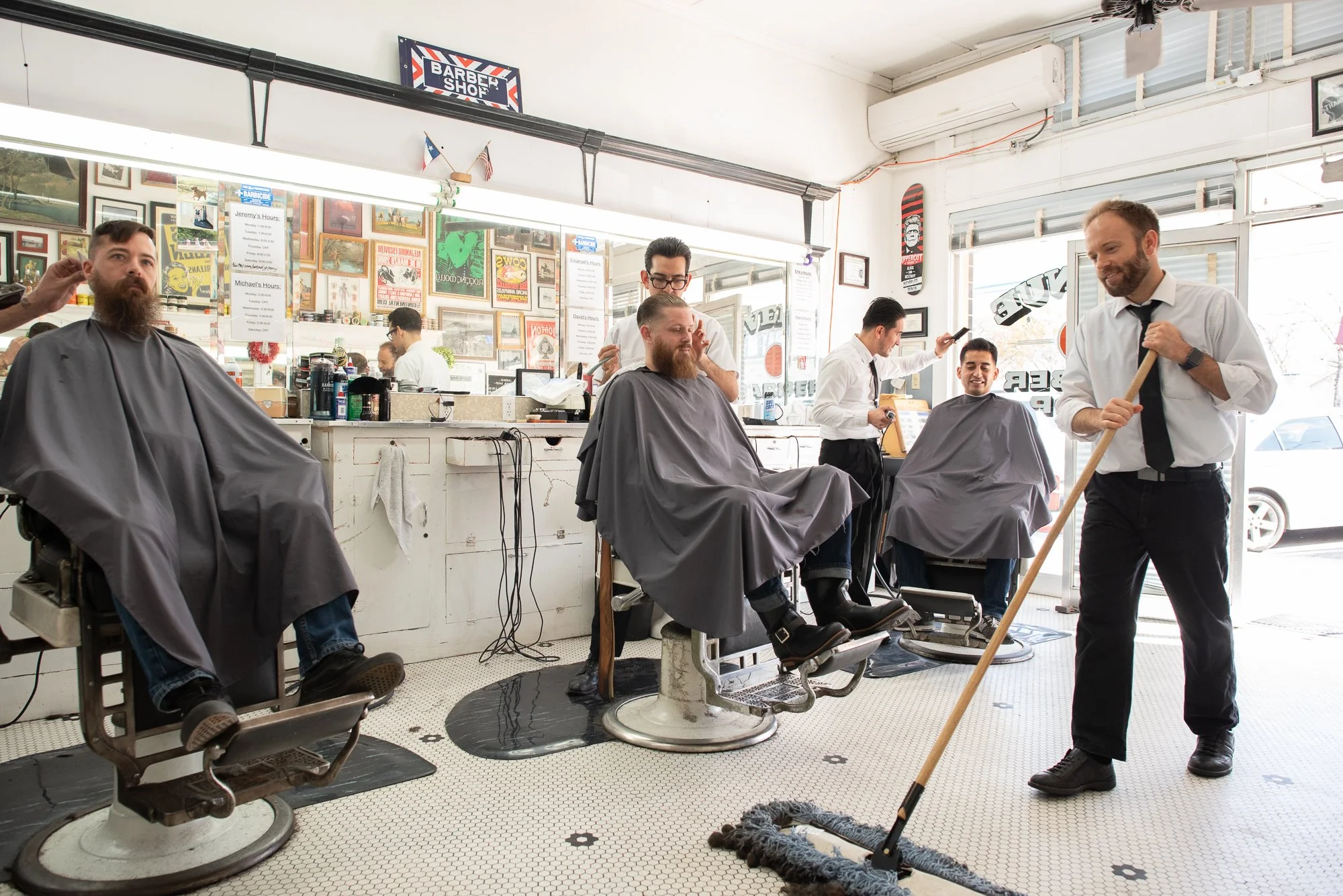
Over the past 10 years of working on this project I’ve encountered an almost endless list of characters. Mr. Fausto Ferrari is at or near the top of them all. Despite being in this country some 50+ years, he still spoke very broken English, so our conversations were fun to dissect. One of his long time customers came in shortly after he arrived and it was obvious that they had quite the history together. Halfway through the cut Fausto went into the back room . The man in the chair could see how much I enjoyed the barbers antics and said “I keep a file on my computer of all the stories he tells me”. Fausto was entertaining on his own, but watching the two of them was a gift. The kind of chemistry that can only happen between old friends. They carried effortless conversations that were often interrupted by the barber abruptly saying “Seeeñññoooooorrr” and the man in the seat volleying back with a smile “Faaaauuuussstooo”. Then the conversation would continue like it never stopped until the next volley. A special interaction that I was luck to witness.

Señor Fausto recently passed away after 94 years. A beautiful ride that any of us would be luck to match. Rest in Power Mr. Ferrari. Cincinnati will miss you.

Click here to grab a copy of Barbershops of America

Photo was made on 12/7/13

Syndicate Barbershop - Long Beach, CA

Best Barbershop in Long Beach, California

Syndicate Barbershop - Photography

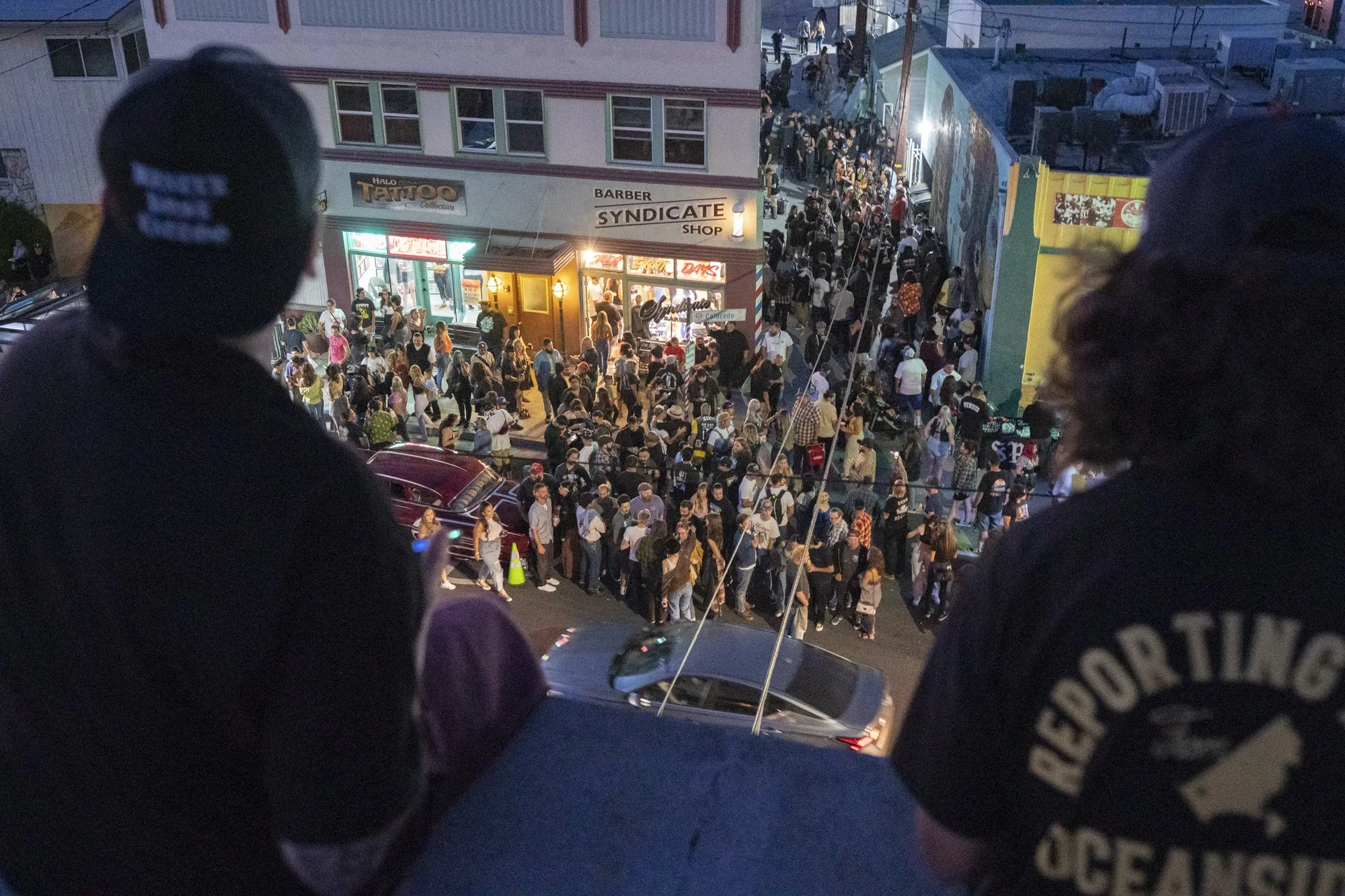
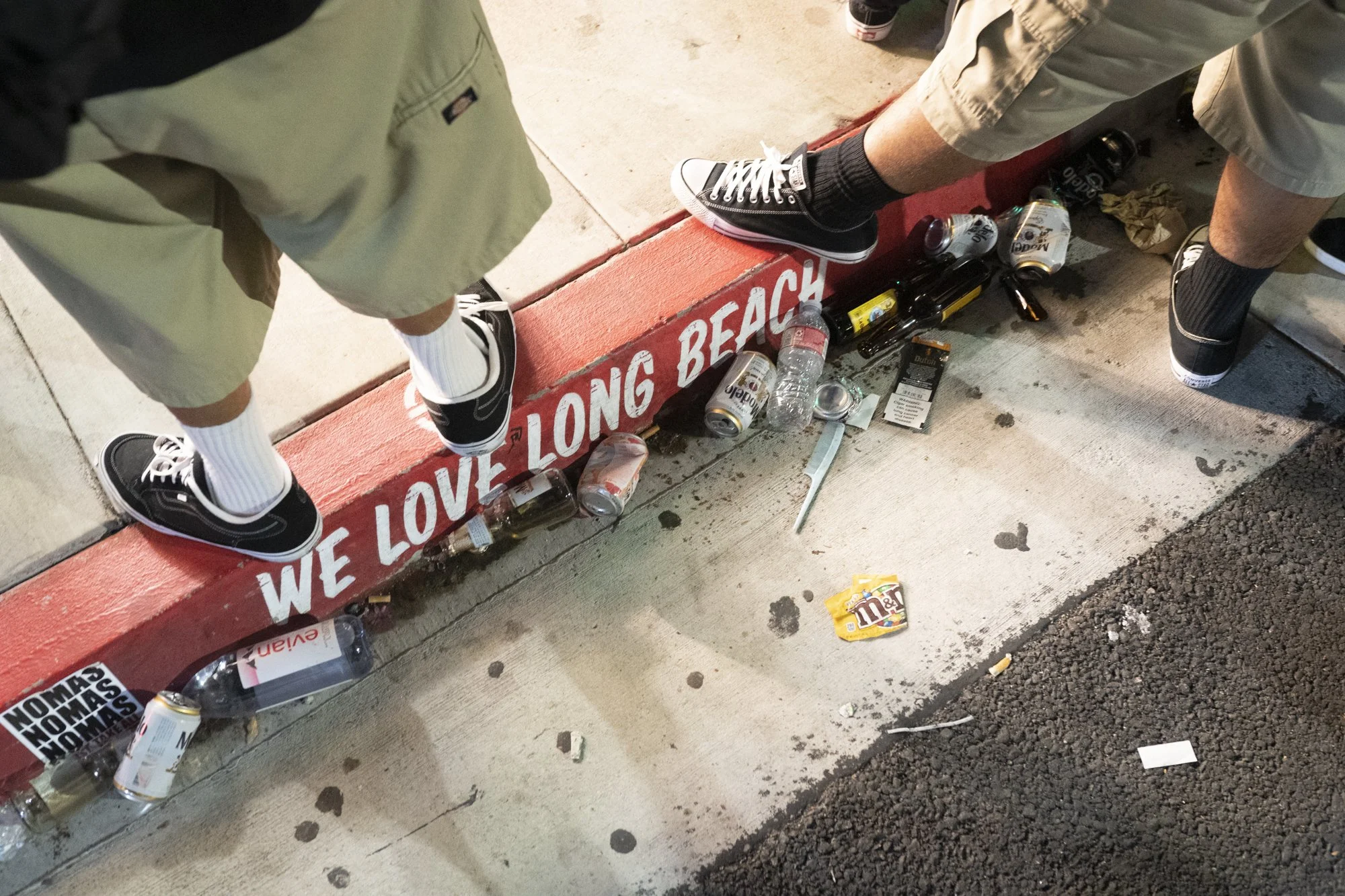
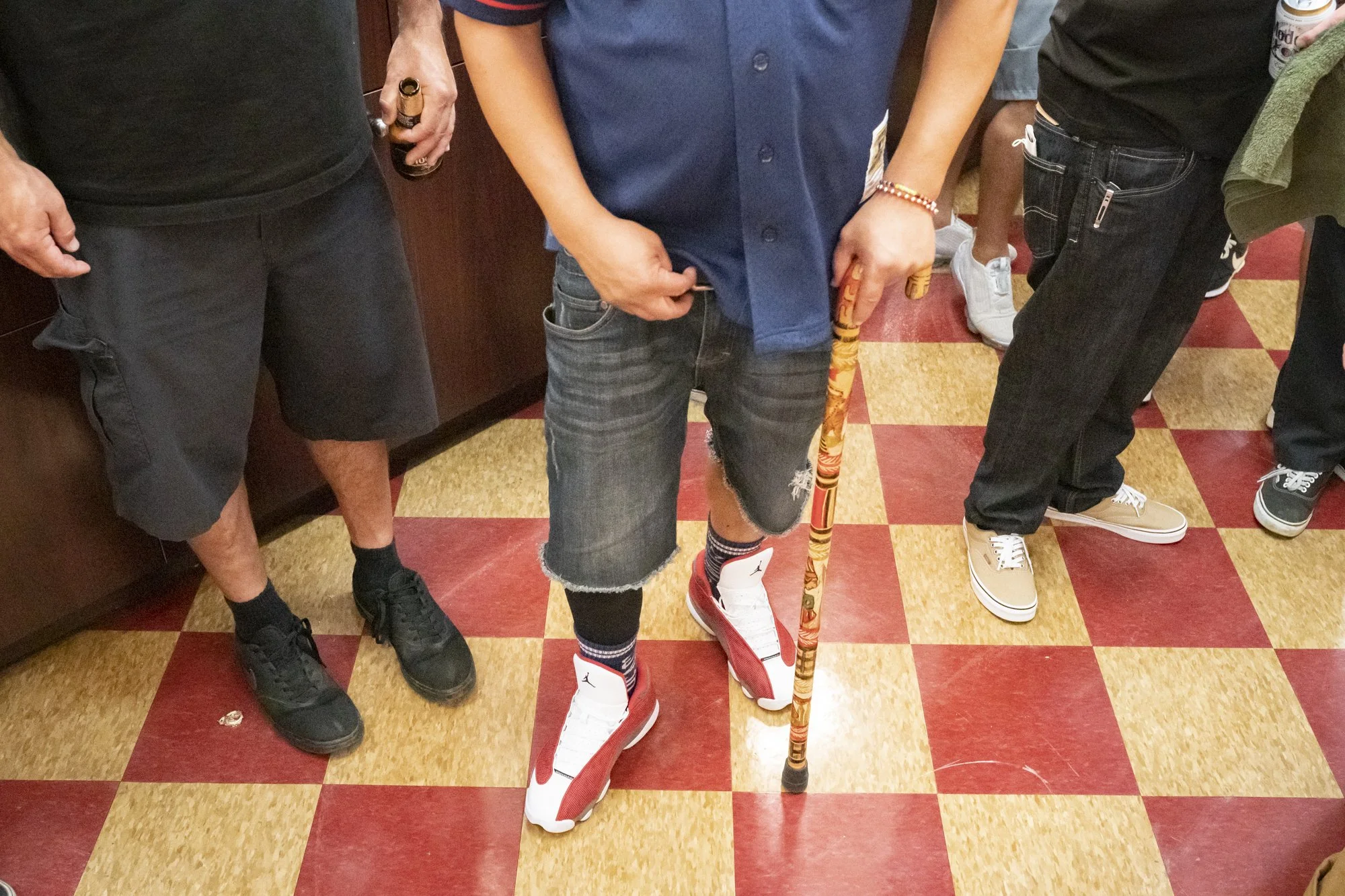
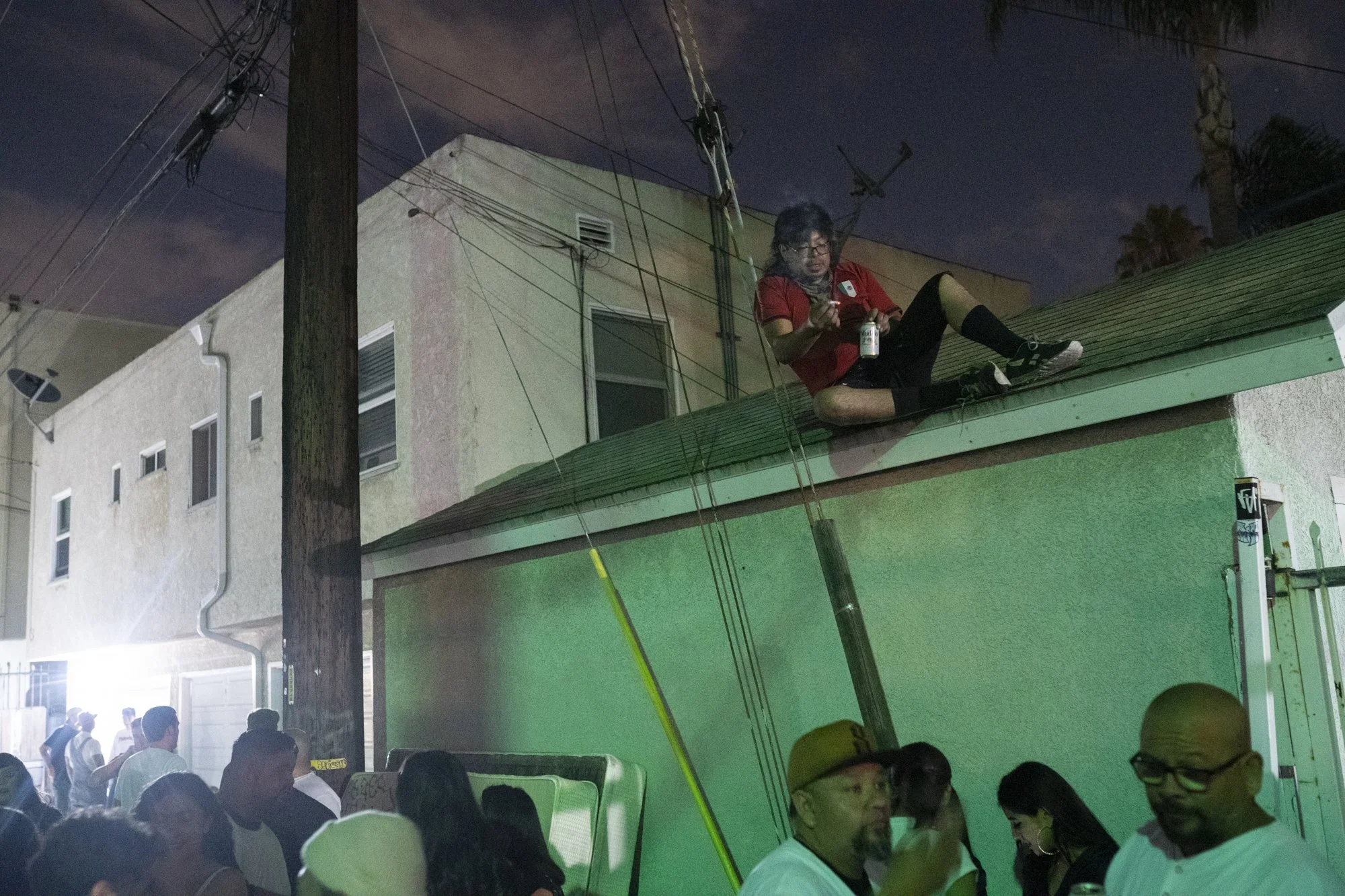
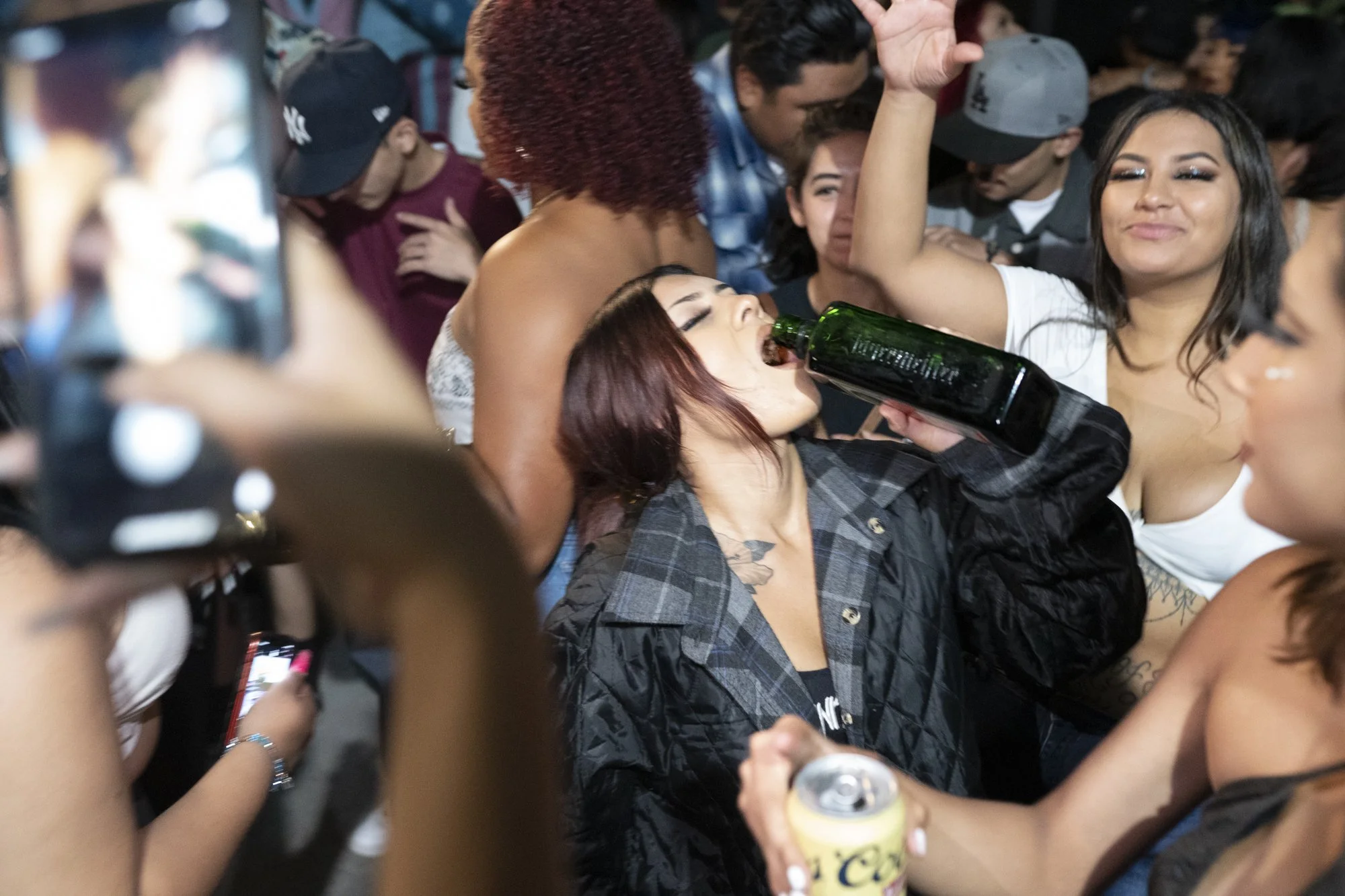
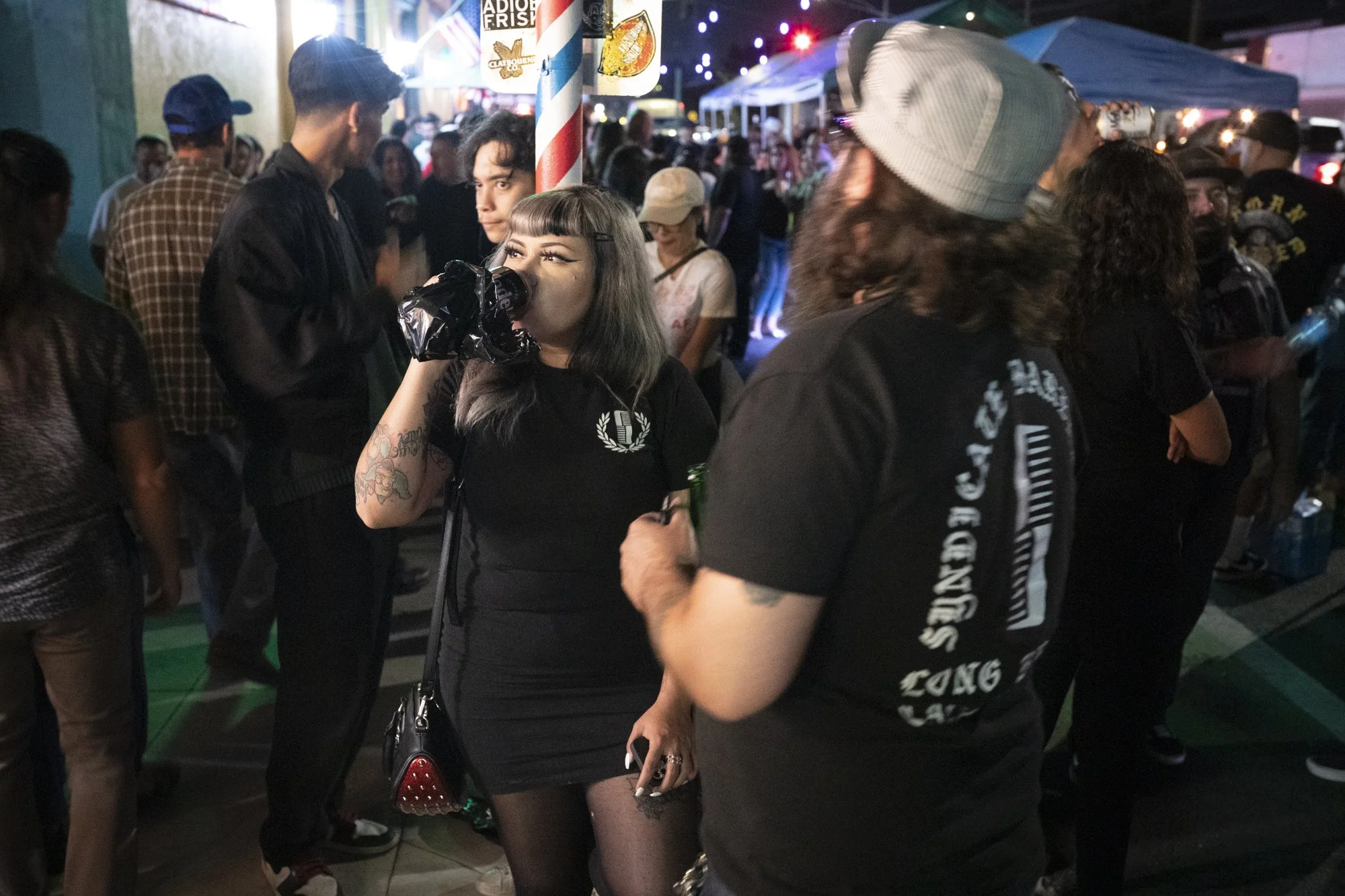
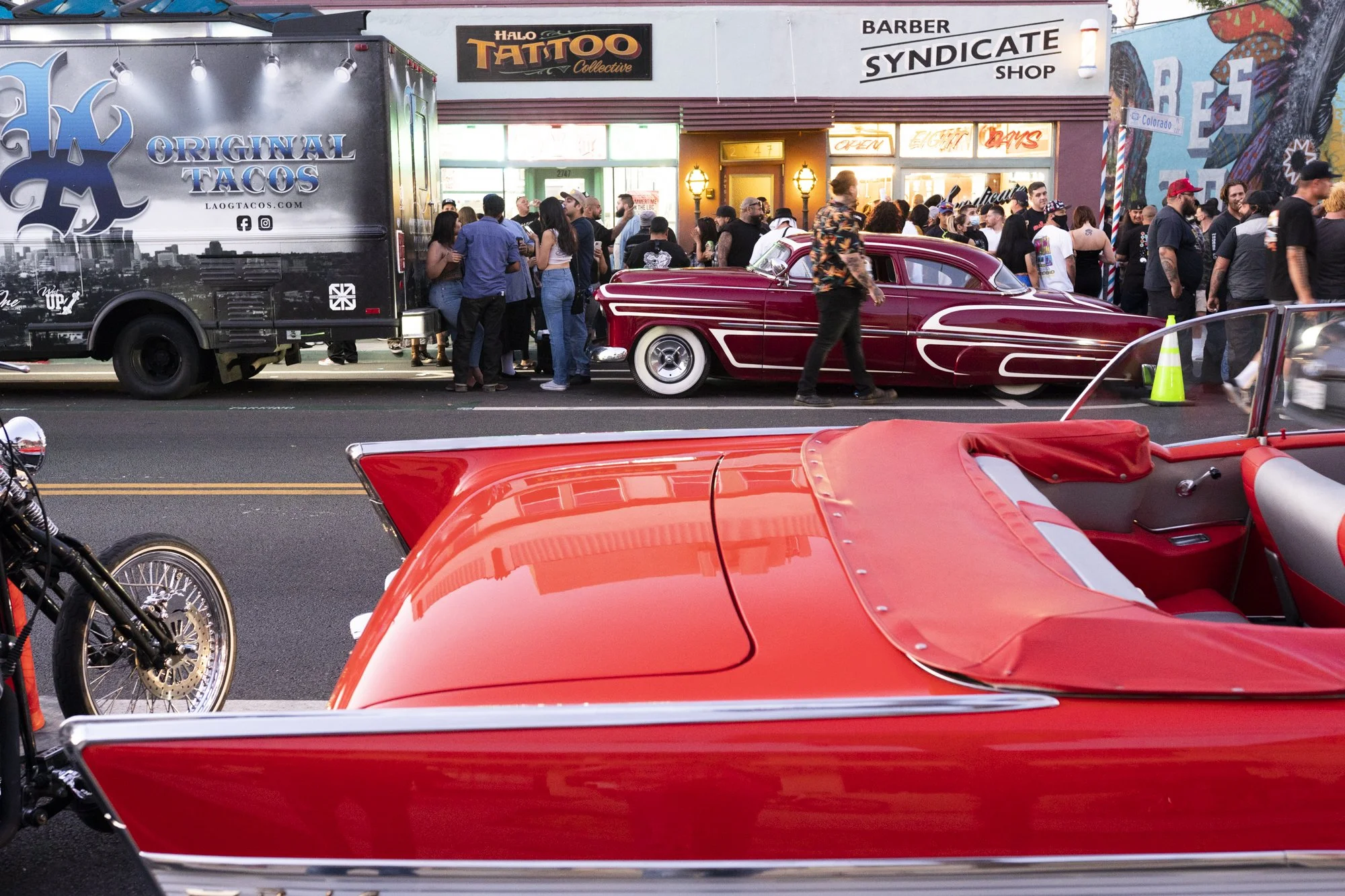
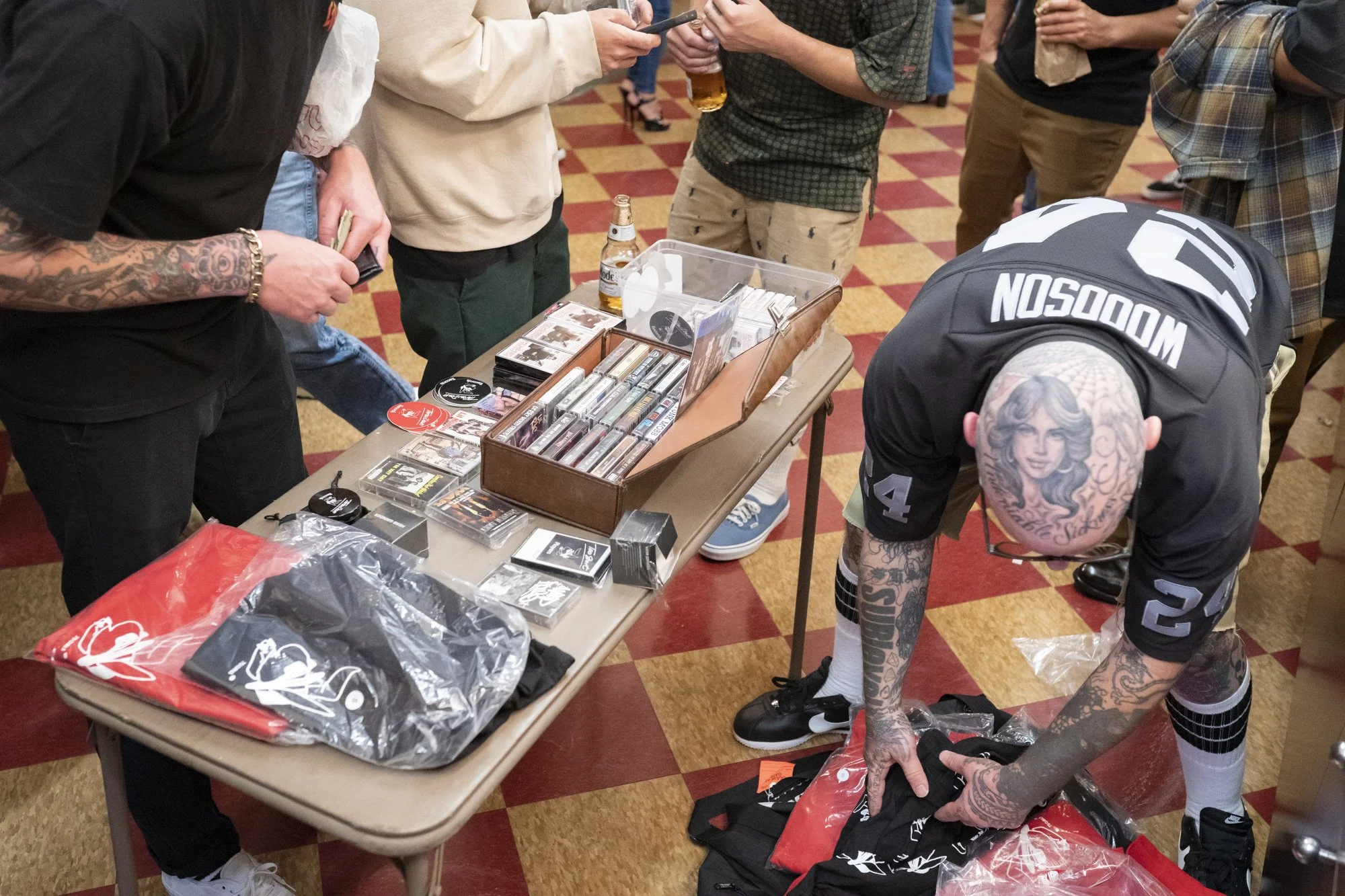
Walk around any city or town in America and you’ll see far too many permanently closed doors from COVID. A lot of business’ couldn’t deal with the financial stressors and effects from COVID. Syndicate Barbershop in Long Beach, CA isn’t one of them, thankfully. In fact, they just celebrated 20 years or haircuts in the best way possible. With a block party. I’ve always loved Syndicate and proudly displayed their facade on the cover of version 2 of Barbershops of America. It’s a great shop that fits perfectly within the funk of Long Beach. And the turnout for the party was also quite fitting. People watching at it’s finest. This was the first REAL party I’ve been to since before COVID began and it will be a tough one to beat. Tim did it up right. Check back in another 20 years and hopefully I’ll be posting photos from their 40 year anniversary!

Click here to grab a copy of Barbershops of America

Kings Club Barbershop - Dana Point, California

Best Barbershop in Dana Point, California

Americana - Barbershop Photography

It’s been so long since I sat down with the guys at Kings Club Barbershop to record this thing that I don’t really remember much of what we talked about. I do recall that it was a great time, but it was also completely unfiltered, so you might wanna skip it if you’re offended easily. Either way, they are a great group of guys (and barbers) that you should hit up if you’re in the Dana Point area and need a cut. Beautiful shop too. I’ve known them since way back when I first started shooting for this project in 2012-ish and they’ve been in both books. The shop has been through a lot since then, including a fire that completely destroyed the place, so it was cool to catch up with them to talk about everything that has happened since we first met.

Click here to check out “Barbershops of America”

Click here to check out PRINTS from the book.

The Proper Barbershop - Los Angeles, California

Best Barbershop in Los Angeles, California

The Proper Barbershop - Photography

The Proper Barbershop is a special place that is right at home in Hollywood. If you want a show as well as a great cut, then The Proper is the place for you. The first time I visited was back in 2013-ish and there was someone sleeping one off in the backroom. From the time I stepped foot inside, the show was just naturally going on. The guys in there know how to have a good time all while getting shit done. The owner Vinnie is a good dude and a classic case of someone you shouldn’t judge just based on his appearance. Being the owner of The Proper and knowing it’s reputation, it would be easy to think that he’s just another Southern California bro with face tattoos. He’s the exact opposite of that though. And one thing I’ve been saying for years now, is that they are just tattoos, a vehicle for creativity and self expression. Vinnie is a really solid guy who spreads a lot of positivity and has a lot of support for his fellow barbers all across the industry.

Follow the shop on IG @theproperbarbershop and Vinnie @theedgebarber

Click here to read the last Q&A with Pig Barber.

Click here to check out Barbershops of America.

“I think the industry has lost sight that we all cut hair and we all should support each other as it costs us nothing to support one another!”

TheProperBarbershop-9611.jpg

1) Where are you from and what did you do before barbering? 

I am from Los Angeles, CA and before barbering I was in high school and I actually was kickboxing and teaching kickboxing! But I had a friend who knew during high school that he wanted to do hair so when I realized that I was never going to have a life fighting I tried my hand at hair and absolutely fell in love with it!

2) Talk about owning a shop in Hollywood from a barber's perspective as well as an owner's perspective. 

Well owning a shop in Hollywood is more than what I originally set out for, my hope for the shop was to be a cool little neighborhood spot and this shop grew a bit of a kind of its own, not to say that is a bad thing at all but this shop became more of its own personality, the antics the environment and the bullshit garnered it quite the reputation! From the barbers perspective this shop is so rad, always busy in a transient town with constant walk-ins and never ending material for discussion, it is a dream. From the owners perspective I would echo a ton of that but the real difference is learning how to keep this place relevant while remaining true to the roots of The Proper and that has been the real challenge! 

Do you find that people come in expecting a show or a certain environment? If so, how do you deal with that?

  Over the years I have learned so so much and one thing I have learned is that the environment is just as important as the haircut itself! So yes, at this point in the shops life I do feel that people have come to expect the show that is The Proper Barbershop, and we happily oblige that expectation! Don’t get me wrong we love to sling our brand of BS and entertain but we also make sure we give a quality service!

TheProperBarbershop-1787.jpg

3) You also own a shop in Orange County. What lead you to open another shop there and what have you done to grow the business? 

My Orange County shop came out of the need for myself to not drive to and from Hollywood every day from the OC as that is where my family and I live, so in order to preserve some tiny bit of sanity I had to open a shop less than 60 miles away from me! To grow the Orange County shop it required having to penetrate the residential neighborhoods surrounding the center that my shop is located. We drove around with home printed fliers and stuffed mail boxes and most recently have run an add in the money mailer at the recommendation of my brother Cory Danger of the locally famous Golden Crown Barbershop! So that has been fantastic for the shop as well! I have found more of the rad local feeling I wanted in the OC shop as opposed to the larger than life persona of the Hollywood shop!

4) Who/what in the barber industry is inspiring to you? Who/what outside of the industry gives you inspiration? 

Inside the barber industry I draw a ton of inspiration from the team I am on over at Babyliss. I am surrounded by so many really talented barbers that all do something so different from my traditional style of cutting so right now it is learning to meld the new urban style I am learning with my tried and trusted traditional skill set and that has been such a breath of fresh air for me and my career! Outside of the industry I am inspired by culture, tattoos, art, design, currently I am super passionate about graffiti again and that is so cool to try to use some linear intersecting lines and bring that to my creative side of hair! 

Are you saying that you look at graffiti and try to use those designs in haircuts? How has that progressed for you? Do customers come to you for that type of thing now?  

I do draw some liniar inspiration from the cut lines in graffiti as well as all types of art. I try to evolve my style as a barber and as a haircutter every day. I never want to become complacent in this craft. As far as customers coming to me for designs I do have a pocket of those customers who allow me to express my artistic roots and freedom!

TheProperBarbershop-9805.jpg

5) Each time I've been in your shop, there is an exceptional level of comedy going on. Talk about that. 

Well the Hollywood shop as mentioned has become a place not just to get a haircut but now to watch and participate in the show! Clients are a part of our jokes and take things from inside the shop weather it be jokes or stories or jargon and apply them to their lives outside the shop and bring us some really epic stories that lead to some incredible real world comedy! Most recently we have a doctor who is a shop regular and his last visit he helped us diagnose that one of our barbers may have contracted an STI and once we realized what it was we just laughed it off and said “oh rad so it’s basically the common cold for the penis!” Well our client found this to be so rad that he vowed he would break the news to someone in the same fashion and this haircut. He came back and told us the story of the frat kid who came to him for the same STI and how our client was so pumped to let this kid know “don’t stress man it is just the common cold for the penis” and he had our whole shop rolling with laughter!

6) You are straight edge. What led to that decision/lifestyle? 

Ehhh that’s a whole ridiculous story but let’s just say that given my family history I knew if I ever started drinking I would be really good at it so I have always been way to scared to even try it! But being straight edge works for me so I intend to stay this way!

TheProperBarbershop-9861.jpg

7) What do you think about where barbering is today? 

Loaded question, I think barbering is in an interesting transition where it is less about the work you do and more about the way you look and how you present yourself while not working as if that translates to how good you cut hair? I think the industry has lost sight that we all cut hair and we all should support each other as it costs us nothing to support one another! If we all could band together in positivity we could then and only then start to effect real change! So I hope we can make that the new future together!

8) What do you do outside of the shop? 

Well I play ice hockey as well as have season tickets to the Anaheim Ducks and I raise my beautiful baby girl! I also love to ride my motorcycle. And may or may not be a part time plus sized model... no big deal!

I'm sorry, did you say that you're a plus size model? 

 I am trying out this new thing called..... sarcasm. I am not to sure about it but it sure is fun!

TheProperBarbershop-9888.jpg

9) Can you describe the psychology of running and keeping a barbershop moving from day to day. In other words, what is that thing that's happening when you notice everything is just clicking? 

I am not to sure how to answer this one because it changes from day to day. I just try to keep my shops busy because if we are all making money it tends to lead to good moods and a better working environment! 

10) Random thoughts/ramblings/advice on what you do....

I love this industry. It is all I have ever known. I have never had a real job so to see what we are now and how the internet has had such a profound effect on us all I can only hope that we can soon come together and determine a nation wide rate of service. If we all choose, we can force each other to better ourselves by holding ourselves to higher standards we can drop the hate and just be in this together! I love to support barbering. I wear only shop shirts and never my own! I take pride in putting on a pin of a barber or a hat or shirt as I am proud of my industry. It doesn’t hurt us or devalue ourselves to say that someone else is an amazing barber! It just boosts that we are all in this together. I want to do nothing but cut with my friends and constantly put out the best work of my life every day! Through positivity and friendship we can all push ourselves and each other to be the best and it doesn’t cost us anything to support one another! 

Anything else you want to get off your chest? 

Nope!

Eagle & Pig Barbershop

Best Barbershop in Costa Mesa, CA

Eagle&Pig Barbershop - Photography

Eagle&Pig Barbershop is a gem of gems. Have loved this place since the first day I walked in. And like most shops worth their weight, Pig is the organic creation of it’s owner Dane Hesse. Spend 30 seconds here and you’ll realize there is as much going on in his head as there is in the shop. That should be read and taken as a compliment. Dane is a complex dude with plenty of smarts to go around. I have endless appreciation for anyone who was “supposed to be” one thing, but decided that one thing wasn’t for him or her. And then sets out on their own path without any fear of the repercussions or opinions of others. That’s exactly what Dane did, and since then he has created something truly unique. A place that he, his customers, and friends love to be. What more can you want from a barbershop?

Follow the shop on IG @pigbarber.

Click here to read the last Q&A with Josh from Lucky’s Barbershop.

Click here to check out the book.


“…..my “school” believes that being supportive is much more beneficial than being a dick.”

EagleandPigBarbershop-9937.jpg

1) Tell me about where you're from, what you did before you were a barber, and what led to the decision of going to barber school.

I am Southern California born and raised. I grew up in North County San Diego surfing, skateboarding, riding BMX and playing sports. When I graduated from high school I ended up attending Vanguard University in Costa Mesa, Ca. Orange County was a really cool place to live then. After I graduated from college I was able to find work helping grow a kettlekorn business with a buddy of mine and work for an MMA publication writing and selling advertisements. My long term goal was to attend law school at some point, but I wasn't really dedicated to the idea nor had I worked hard enough to get into law school easily. That being said, I was impressed upon by a local barber, Mark Miller, that barber school and the subsequent profession were the best decisions he made. So not wanting to pursue a career in law lead me to become a barber instead.

Are you not a fan of living in Orange County now?

You know what’s funny about this question, is that until recently the answer would have always been "I love Orange County." And dont get me wrong, its still wonderful to me, but it has change a decent amount from the secretive, artistic, and influential coastal oasis it once was. There is so much greed and excess here now. Houses and cool communities have all given themselves away to profiteering over culture. There is a lot of gentrification that doesnt even really include the middle class families that live here. Everyone is being priced out. Luckily, there are still so many good things about the OC that make it worth staying here. Every once and awhile SD or Ventura calls my name or pulls on the heart strings. In the end though, I just know that my success really does come from being influenced by Costa Mesa and its history of surf, skate, music, art, etc. My shop wouldnt be what it is or as successful without the love the county has given to it over the years.

EagleandPigBarbershop-3783.jpg

2) How have your decisions as a shop owner changed over the years? What do you contribute a lot of your success to?

Honestly, and this word will answer both questions...consistency. As a shop owner my decisions haven't changed much. I started out in the shop solo. Then I hired Justin in 2015 and Richie in 2017. Even with bringing them on the consistency with which the shop is ran stayed the same. Customers make appointments the same way. The standards for the services are high. The toilet gets cleaned. The towels folded. Etc.
My success comes from busting my ass and being in the shop when its advertised that i'm in the shop. I make sure to plan days off well in advance on the scheduling software so that customers can adjust their lives to my absence. I've probably only missed a dozen days in 7 full years from being sick. And, back to the word consistency, my goal with each haircut is to make it, consistently, as close to each individual’s expectations or needs. Show up when you say you are going to be there, don't cancel on people, and do good haircuts. Easy recipe.

3) You have a very unique shop. How has it developed over the years? Why does it look the way it does?  What bothers you about it?

Thank you. It's a growing amoeba. I've actually seen some old photos of the shop recently and it was amazing to see it with nothing on the walls. I grew up in a construction/hard work/do it yourself household so its development hinges on that mentality greatly. Most of the projects in the shop I've done myself or with the help of close friends and family.

My shop takes influence from a few exact experiences in my life. I love stickers. They decorate things so well, abstractly. I used to cover things in them as a kid, but with order, not complete randomness. Another direct influence was Mark Millers shop in Costa Mesa. His style was so cool. Old posters from punk shows lined his walls along with other awesome memorabilia to look at. Surf and Skate culture across the decades are all huge influences as well. They each have their own unique styles that I really connect with.

I'm usually bothered with how much work it is to clean the shop and what a massive pain in the ass it is to change things up. I like to move things around from time to time so that when people shoot photos in the shop they get different visuals. So much work.

EagleandPigBarbershop-9757.jpg

How did the name Eagle & Pig come to be?

Originally, when I got the space for the shop I had a business partner named Sean. His plan was to use his knack for finding old furniture and selling it out of the shop. We were going to furnish the shop with his findings, but everything was going to be for sale. We sort of just landed on the name through word games. Eagle comes from America, simple enough. Pig comes from a few places...1960s surfboard design, men can be pigs, sailors good luck charm, Reagan has this quote "I am glad they call me a P.I.G it stands for Pride, Integrity, Guts." Sean and his wife decided that three kids were more important than me though, hahaha...so his stint in the shop selling stuff never really happened. 2020 will be 10 years in the shop.

4) How do you feel about the younger generation of barbers/celebrity barbers/instagram barbers?

I'm not necessarily a fan of them. I think that their perspective on the profession is massively skewed by becoming cool or sponsored. That's all bullshit. Its cool, and don't get me wrong, I am beyond grateful for the awesome adventures being “sponsored” has given me, but at the end of the day the barbers “sphere of influence” is wherever he or she consistently shows up, services their customers, and develops a book of business. Customer loyalty has always been a major contributing factor to a barber’s success and vice versa. Its a 2 way street relationship. Wasting time hoping that your social media pops off disallows you the opportunity to create genuine long lasting relationships with patrons who will help pay your bills for years, not just for the short period of time that “insta cool” exists. If you aren't behind your chair for long periods of time you can't expect to have customers sitting there waiting for you to come back. They dont give a shit about how cool you are at the end of the day...they just need a damn haircut.

5) One of the great things about your "school" of barbers is the support you all give each other. That doesn't happen in a lot of professions. Can you talk about that?

There are barbers who operate from a train of thought based on that consistency i've already mentioned. You show up and cut, have barbers that do the same, and you keep your patrons happy. Realistically, beef in the barbering industry is usually petty bullshit that involves short sighted and simple minded people. Supporting people should be easy. We all work in 10ft squares most of the day..not anywhere else. Some of us go out of our way to send customers, when they move away, to shops that will service them similarly or have a good reputation of quality. Having an ego in a blue collar industry like ours is just ignorant. There are enough customers to go around and my “school” believes that being supportive is much more beneficial than being a dick.

EagleandPigBarbershop-3875.jpg

6) Talk about the culture of your shop specifically.

My shop is an enigma, I think. It grew out of my need to have structure and believing that our customers could conform to that idea. We are a pretty no holds bar barbershop. I've got a degree in history/political science and I read a lot. I will allow the entire spectrum of conversation to happen in the shop. I make sure that people understand the concept of respect in dialogue. Not many people, let alone barbers, care enough to be educated on subjects varying from socio economic conditions, beer company politics, fuck trump, fuck hillary, gang books, girl pop music...you see where i'm going with this. I'll say, clearly, I think that barbers tend to short change their ability to be intelligent. Some “smart” ones come across as absolute fucking morons. Some “dumb” ones suppress their smarts to be cool. That being said, my shop is a haven for everyone. Everyone is both safe and vulnerable. We like to enjoy our lives because barbering is supposed to be a fun, community focused profession.We also want our customers to grow, personally, by our influence. And, get laid because of our haircuts.

Maybe you're the enigma? You were supposed to go to Law School, but didn't and instead became a barber/shop owner that is very educated and continues to read a lot, can build things with your hands, and also loves to chug beer. How does that all add up? 

Math was definitely not a strong subject for me in school, hahaha. I knew turning by back on the lawyer track in life was going to provide me with a new set of challenges. Some I knew for sure, others I had to take with stride. I don’t come from money. I DO come from a household that always taught ingenuity and hard work WILL get you by. My parents both fulfilled their specific rolls in my life and honestly most of the lessons I learned were the same, just in different circumstances. Sacrifice, courtesy, honesty, diligence, and other strong words came to me through their examples. My dad worked on the cars, was a welder, managed ranches, built homes, owned a construction company. My mom was a librarian, beach shuttle driver, cooked, helped my dad in every way she could, forced me to mount bugs and cross stitch instead of take ADD meds. I was given the responsibility at a young age to take care of portions of my life, simple things that I could handle for the age that I was. I learn visually. So watching my parents do a plethora of tasks throughout my lifetime I was able to learn a lot of little skills. The skills and the way I learned actually translated over to barbering really well. In barber school I was able to watch and learn, know when and what questions to ask, etc. Its funny how the things you might encounter or endure as a child prepare you for your future. If you decide to fine tune some of those skills into productive adulting you might just end up good at something.

As for the beers. I love beer and all the rest of the booze in this world. Im fortunate enough to not have any sort of dependency on alcohol though, that I am grateful for. As barbers we are always being exposed to cool new things. So many of my customers work for different companies in the booze world and they love sharing their knowledge and perks. Ive been fortunate enough to drink all sorts of amazing top shelf liquors. At the end of the day though, I will drink anything under the sun. You have to know how to handle yourself if you are gunna drink with me. Nobody likes a sloppy drunk. Ive been sloppy, maybe, a half dozen times since I became of legal drinking age. It just such a calming feeling to sit down at the bar top and throw a few back. Its also amazing to do keg stands or order rounds of shots or slug it down straight from the whiskey bottle.

Moral or this question: Balance is your absolute best friend.

EagleandPigBarbershop-3892.jpg

3 books you would recommend everyone read? 

Im gunna break these down into genres with some suggestions

1.Gang Related Autobiographies or Biographies: A Piece of Cake by Cupcake Brown, Monster by Sanyika Shakur, Autobiography of a Recovering Skinhead by Frank Meeink, Blood in Blood Out by John Lee Brook

2.Post Modern/Modern Fiction: Anthology of Franz Kafka, Most novels by Chuck Palahniuk, House of Leaves by Mark Z Danielewski 

3.Philosophy: The Republic by Plato, The Will to Power by Friedrich Nietzsche, Leviathan by Thomas Hobbes, Candide by Voltaire, A Modest Proposal and Paradise Lost by Jonathan Swift

4....If you plan to read and convey the "news" to people try to read the same topic across several sources and maybe cross reference the "factual" information provided. You will actually sound and BE smarter for it. 

7) Anything that bothers you on a daily basis?

Bad customers. Cocky customers. “No Call/No Shows.” I despise people who mess with the schedule. Its disrespectful to our other customers. We try to stay on schedule to our best ability, but sometimes people mess that up for us and the customers following after them. I don’t mind product in peoples hair. I can afford to buy new clippers or blades a few times a year. But what I hate is when they talk shit about weird parts of their last cut or ask for MORE product when they already have a TON in their hair. Its your dumbass fault you ALWAYS come in with product in your hair. And, you DO NOT need more product.

EagleandPigBarbershop-9573.jpg

8) At the end of a week, what is it you are most proud about/what gives you the most satisfaction?

Honestly...that every day/week that I show up consistently, so do my customers. My schedule is fully booked every day that I work. I cut on the 30min. Im not doing hour cuts and wasting my time filming or taking studio photos. Im proud to bust my ass for my customers. They know that I will be there, give them an above par cut, and be everything they need from me. Barber. Counselor. Friend. etc...

9) Advice for someone trying do what you do?

You cant be me, or anyone else. You have to be yourself. Barbering is an artform. It requires individuality. You have to want to be selfless. Be covered in tiny little pieces of other peoples hair day in and day out. If you want to be like me you have to provide quality service, with speed and efficiency, while maintaining a high level of educated conversation. You have to show up to work and not miss days or take days off without replacing those days. If you are getting busy or already busy its making sure that your customers have the opportunity to get their cut which helps your pocket book to remain full and their mops chopped.

EagleandPigBarbershop-3862.jpg

11) Random thoughts about what you do.....

Being a good barber is so much more selfless than the social media era has made it. I refer to it as the 50/50 scale. When we are in the shop we are 100% barbers. 50% technical barber. 50% personable barber. Now some of us are always going to be more technical than personable, and vice versa. The goal should be to strive for a 50/50 standard...that's what makes the most complete, well rounded barber. Somedays, you might not want to put out the effort to be personable so you can slide your technical game to 60% for the day. Or 70% if you are really grumpy. Other times you might get caught up in a good mood or vibe in the shop that takes your timing off, thought process off, steps off, messes with the game and your scale might slide to 70% personable...some of you out there that already operate at 70% personable might slide to 100% too often and thats why you lose customers to the quiet guy in the shop that puts out white hot technical haircut heat every cut. That dudes customers might be bored as shit, but they look like $1M everytime they leave the shop. Random enough Rob?
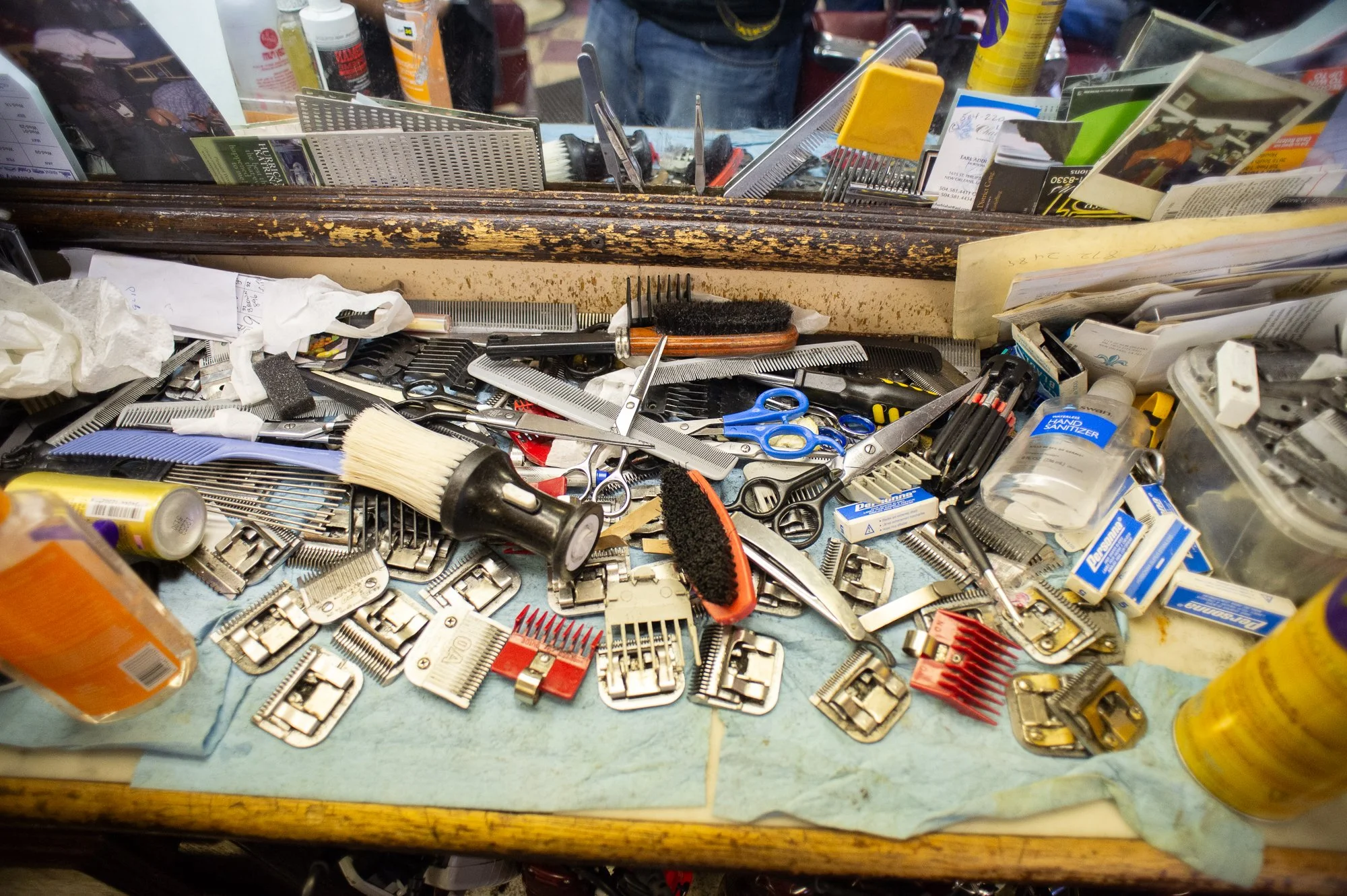
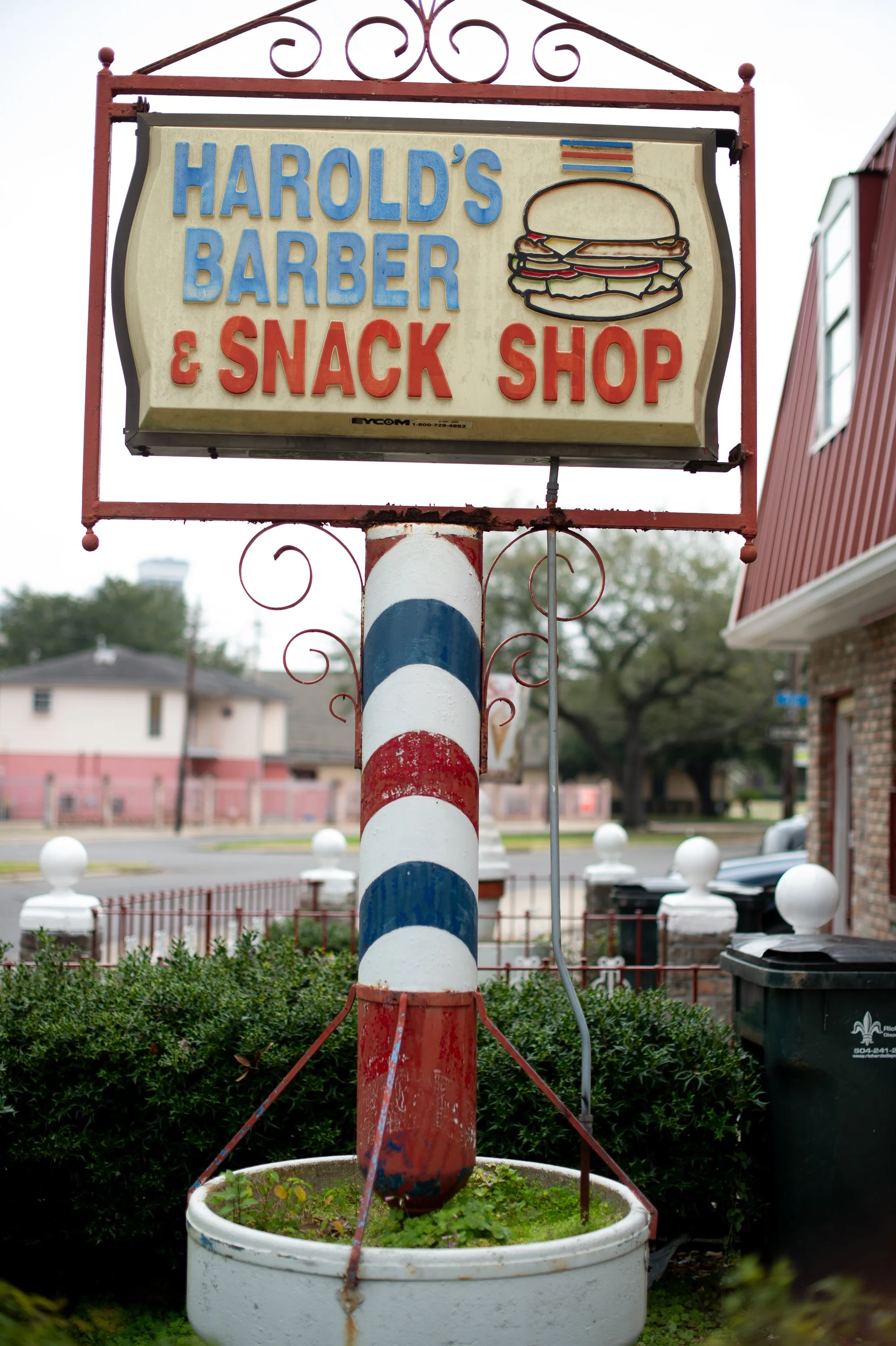
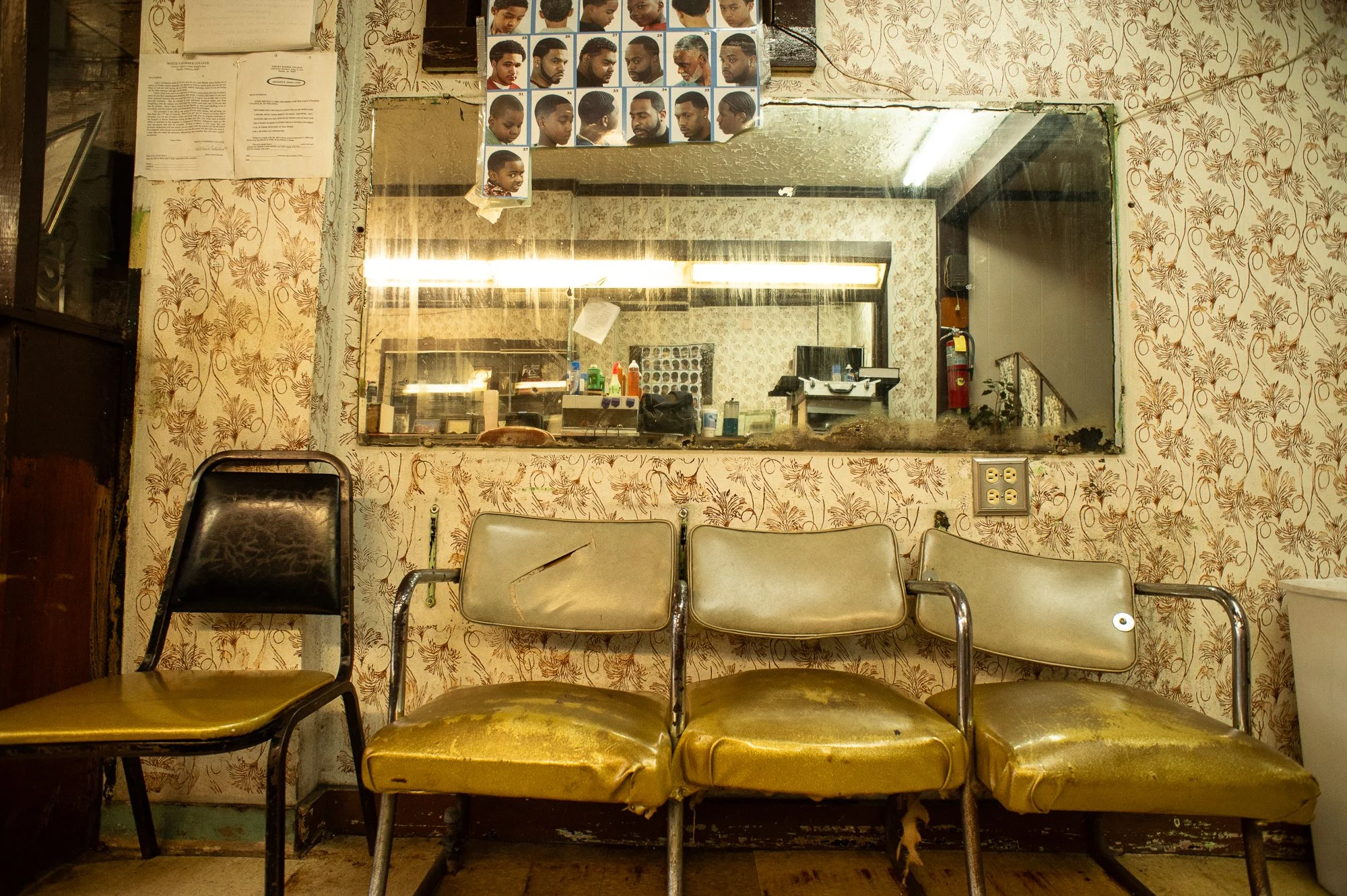
Biggest thing you've learned about yourself since passing on Law School and opening up your own shop? 

That I’m not "wasting my potential." That was a big issue for some people around me when I made the leap from possible future lawyer to barber. The idea that I would "waste” my intellect on a blue collar profession. If anything, my blue collar job choice has given me the opportunity to continue to learn, grow and be influential as human being, friend, husband, barber.

What do you get into out side the shop?

Hopefully not legal trouble. I enjoy spending time with my wife and friends. I really like being in the sun, not doing much, by a pool, with a cocktail. I surf when I can, ride my harley, work on the endless project that my truck has become. Try to relax. I am really good at stressing myself out and over working myself into shut down mode. Im trying to get better at that. I just want to find the balance between contentment and drive for more. Im gettting there slowly but surely. 

EagleandPigBarbershop-3633.jpg

Rooks Barbershop - Portland, Oregon

Best barbershop in Portland, Oregon

Rook’s Barbershop - Photography

I’ve lost track of what number Q&A this is, but that’s probably irrelevant. This go round is with Justin King of Rooks Barbershop in Portland, Oregon. We met a bit of over a year ago when I made these images. The thing that stands out to me about Justin is that he’s every bit a business man as he is a barber. Maybe even more so a business man, which isn’t common to see in the barbershop world. He’s got a lot of irons in a lot of fires. Good dude and I appreciate his willingness to say what he feels regardless of the outcome.

Follow him on Instagram @hellandgrace and the shops @rooksbarbershop

Click here to check out the last Q&A with Brent Ferris from Good Times Barbershop

Click here to check out the book


“In the Army, I’d bring dudes into the barracks and fade them out for a few bucks here and there”


1) Where are you from and what did you do before barbering? 

I was born in NY and grew up in Miami. Before becoming a barber, I was a paratrooper in the US Army. 

Did any of your experience as a paratrooper carry over into the barber world? Where did you get your business sense from?  

I think my military experience definitely gave me a good foundation to work off of. It imbued in me a very strong work ethic; an ability to just “get it done”, no matter what. Pair that with an aggressive east coast mentality and you’ve got a recipe for success. 

2) What put you into this profession? 

Ever since high school, I wanted to cut hair. Growing up as a punk rock kid in the ‘80s, I was always the one cutting and coloring everyone’s hair. I’ve always been good with a pair of clippers.

In the Army, I’d bring dudes into the barracks and fade them out for a few bucks here and there, and when I got out, I decided to take it to a professional level. 

3) You're very political with your thoughts and posts on IG, which is something you don't see a lot of barbers doing. Talk about that a bit...

I believe in using whatever resources are at your disposal to affect change in the world. My business is my primary resource and, in this day and age, it’s important that we speak our against injustice, bigotry, racism, etc. They always told me when I became a barber, “never talk politics or religion on the floor”, but fuck that. I’ve never been one to not speak my mind and if customers don’t like it, there are a lot of shops out there adhere to that ‘rule’. Personally, I believe Rooks built its reputation by being real, and I encourage my barbers to be who they are. 

What have been the positive/negative outcomes of your public opinions?  

I’ve lost customers over my public political opinions. I guess you could say that’s a negative. I don’t think it is. I’ve had people “boycott” my bar and other businesses of mine, but I just think they’re funny. You can’t boycott somewhere you’re not welcome.

4) When did the first Rooks open? How were you able to take Rooks from one shop in Portland to having 3 there as well as another in Hood River? 

The first Rooks opened at the beginning of 2009 as a one-chair shop in a little shed attached to a pizza joint. I had worked as a barber for a few years at another shop in town and had built up a large clientele. I took a big chance, opening  up Rooks a half hour away and was fortunate enough to have a lot of clients follow me. The barbering scene hadn’t really hit yet, so nothing like this was happening in Portland. I was the first shop to offer straight razor shaves and booze, and my shop gained recognition pretty quickly. After a couple years at that one-chair shop, I moved a few blocks up the road and opened a three-chair, bringing a couple quality barbers onboard from out of town. I had to hire barbers from California because there were hardly any in Portland. A year later, I added two more chairs. By then, our little shop was constantly busy and we had some really solid barbers. So, a year after that, I decided to try a second shop across town to cater to a larger clientele. A third one went in right in the heart of downtown Portland a couple years after that and the rest is history. We had become a Portland institution and a nationally-known name. The fourth shop opened up a couple years later but, unfortunately, was lost in a building fire. We quickly recovered and expanded to Hood River, Oregon just a year and a half ago, and that’s now our busiest location.

What went through your head when the fire hit? 

My first concern was relocating my barbers so that they’d still have work. I can deal with a little financial blow like that but I didn’t want my barbers to feel that burden. I also immediately began thinking of the way forward. A couple barbers wanted to start a Go Fund Me campaign to help me recoup some of the financial loss but I wasn’t having it. It was my problem to deal with, not everyone else’s. I had to view the experience as an opportunity to grow in a different direction and, ultimately, it enabled me to put time and energy into opening up Hood River.

5) How do you manage all those shops/barbers?

Very poorly.

No, but seriously...I put a lot of stock in my barbers and give them ownership in their shops. My barbers are free to be who they are, manage their own clients, handle their own money, schedule their own breaks, etc. I think the key to a successful shop is keeping your barbers happy. I refuse to treat mine like children. They didn’t pay $20k for barber school to be bossed around and make shit pay. 

6) What do you get into outside the shop? Hobbies, obsessions, etc. 

Business IS my hobby/obsession. I love creating something, building a brand, getting my hands dirty with the buildout process, etc. Outside of Rooks, I also own a pomade brand, a bar and a motorcycle shop. I create businesses based on my hobbies, so I’m never really working; just doing stuff I like.

7) Notable life fuck-up that ended up being a great learning tool? 

Hmmm....I think all fuck-ups should be used as learning tools. 

I tried many businesses over the years before opening Rooks, to no avail. Each time was a valuable lesson; how not to waste money, who not to partner with, etc. 

I fucked up a lot in my life, but I wouldn’t have been in the exact place I am if I hadn’t.


8) Advice for someone who wants to take that first step from being a barber to opening their own shop? 

Every endeavor requires risk. Don’t be afraid to put yourself out there and take those risks. It’s scary. Putting money down on a lease, going in without really knowing what the outcome will be..it’s serious, and it’ll fuck with your head. Whatever you do, do it wholeheartedly. Your business has to be your entire identity, at least in the beginning. Brands don’t build themselves. Don’t be in too much of a rush. Wait until you’ve got several years of experience and a large customer base. Try not to take a loan out, even if it’s from family. You don’t want to start up already in a bunch of debt. Choose your partners wisely and, if possible, don’t have one. Certainly don’t have more than one or you’ll never make money.Make sure you know your brand, but be willing to adapt and progress. Rooks isn’t the same brand that it was when I started and we’re better for it.

Always be true to yourself and don’t compromise. 

Respect your barbers. They’re your most valuable commodity.

And DON’T BE COMPETITIVE. Support other shops and keep open communication with them.

9) Random thoughts on what you do....

I love what I do. Opening Rooks has been the best thing I’ve done for myself and my children.

That doesn’t mean starting a business is the best move for everyone. Some people won’t function in that position, others will flourish. 

And there’s nothing wrong with that. It’s just as honorable to put in an honest days work as it is to be an entrepreneur. 

Good luck in whatever you do!

Is the barbering community in Portland supportive?  

If I’m being honest...no, I don’t believe it is.

It’s getting there, for sure. But, there are still a lot of shop owners who view each other as competition, and that’s absolutely the wrong mindset to be in.

Portland is saturated with barbershops and could benefit from a stronger sense of community.