
The Historic OW Ranch | Cattle Country & Cowboy Life in Montana
The OW Ranch sits in the Hanging Woman Creek valley near Decker, Montana, and isn’t just another working cattle ranch. It’s a place with roots stretching back to the late 1800s, a landscape that helped define the cattle era of the American West, and historic buildings that still convey the rhythms of ranch life over a century later.
This collection of photographs is a visual study of ranch work, historic place, and the people who carry on traditions first shaped here more than 130 years ago.
A Ranch with Deep Historical Roots
The OW Ranch began its life in the late 19th century as the headquarters of the influential Kendrick Cattle Company. Cattleman John B. Kendrick purchased land along Hanging Woman Creek in southeastern Montana in 1889 after working his way north on cattle drives. Over time, he enlarged the ranch, making it one of the most productive cattle operations in the region.
Kendrick’s success here wasn’t just agricultural—it helped shape his life beyond the ranch. He later became Wyoming’s governor and then a U.S. senator, a journey that began with hard work on the open range and culminated in national influence.
The ranch headquarters became the family’s home and the heart of operations, with stone and wood buildings constructed in the early 1890s that still stand today.
Cowboy Life Then and Now
Montana ranching in the late 1800s emerged from the wider sweep of the open range cattle era, when long cattle drives, scattered grasslands, and cowboy labor defined the industry. Ranches like the OW weren’t just land holdings—they were working communities. Cowboys rode miles of range, repaired fences, tended cattle, and lived together in bunkhouses and corrals built for utility and resilience.
On my visits to the OW, that continuity of work and companionship was palpable. Cowboys still saddle up early in the morning, saddle horses in historic barns, and gather in spaces that look much like they did over a century ago. Beyond that though, the OW crew, led by Gabe Clark, had a very cohesive and friendly chemistry that doesn’t always exist on other ranches. It was obvious from watching them that they all truly enjoyed not just their work, but also working with each other.
Historic Buildings & Landscape in Alpine Light
The physical environment of the OW Ranch—its barns, bunkhouses, corrals, and fences—carries stories as deeply as the people who work them. Many of the ranch’s original stone structures were carefully preserved or restored, preserving their historic integrity while still serving functional purposes.
In photographing these buildings and the land around them, I wasn’t chasing staged scenes. I was documenting the living legacy of ranch architecture shaped by purpose rather than picturesque design—the shadow of a doorway at dusk, weathered wood grain, corrals softened by decades of dust and sun.
Part of Montana Cattle Ranch History
Montana’s ranching history began in the mid-19th century as settlers, miners, and cattlemen pushed westward, driving herds into open valleys and grazing lands. Early open range ranching was grueling; harsh winters, predators, and long drives were part of the land’s reality.
By the time John B. Kendrick established the OW Ranch, the industry was transitioning toward more managed ranch systems with fenced ranges, larger holdings, and a new blend of tradition and enterprise. The OW Ranch became a touchstone of that era, linking the open range past to a more sustainable working ranch future.
From Historic Legacy to Contemporary Ranching
In the decades since Kendrick’s family ultimately sold portions of the ranch, stewardship of the property has continued to blend tradition with thoughtful preservation. Owners and caretakers have worked to maintain the historic buildings while sustaining a working cattle operation on tens of thousands of acres of foothills, creek bottom meadows, and open range.
Part of what makes these scenes so compelling through a photographic lens is the sense that time and labor are written into every surface—the worn boards of a barn door, the corrals where cattle gather, the early morning mist over an empty pasture. Those visual elements resonate not just as rural beauty, but as historical continuity.
Licensing Images from the OW Ranch
Photographs from this series documenting the historic OW Ranch are available for editorial and commercial licensing. The work is well suited for magazines, publishers, Western and outdoor brands, museums, and organizations looking for authentic imagery of working cattle ranches and cowboy life in the American West. Licensing options range from single-image editorial use to broader commercial campaigns, with access to an extensive archive that captures ranch work, historic structures, and the lived landscape of Montana cattle country.
View More Cowboy Photography
This Montana cattle ranch series is part of a much larger, long-term body of work documenting working cowboys and ranch life throughout the American West. If you’d like to see more from this ongoing project, you can explore the full archive, available prints, and related stories below.
→ View the full Cowboy Photography Gallery
→ Browse available Fine Art Cowboy Prints
→ Read another ranch story: life and work at the Spanish Ranch in Nevada

OW Ranch - owned by Jim Guercio
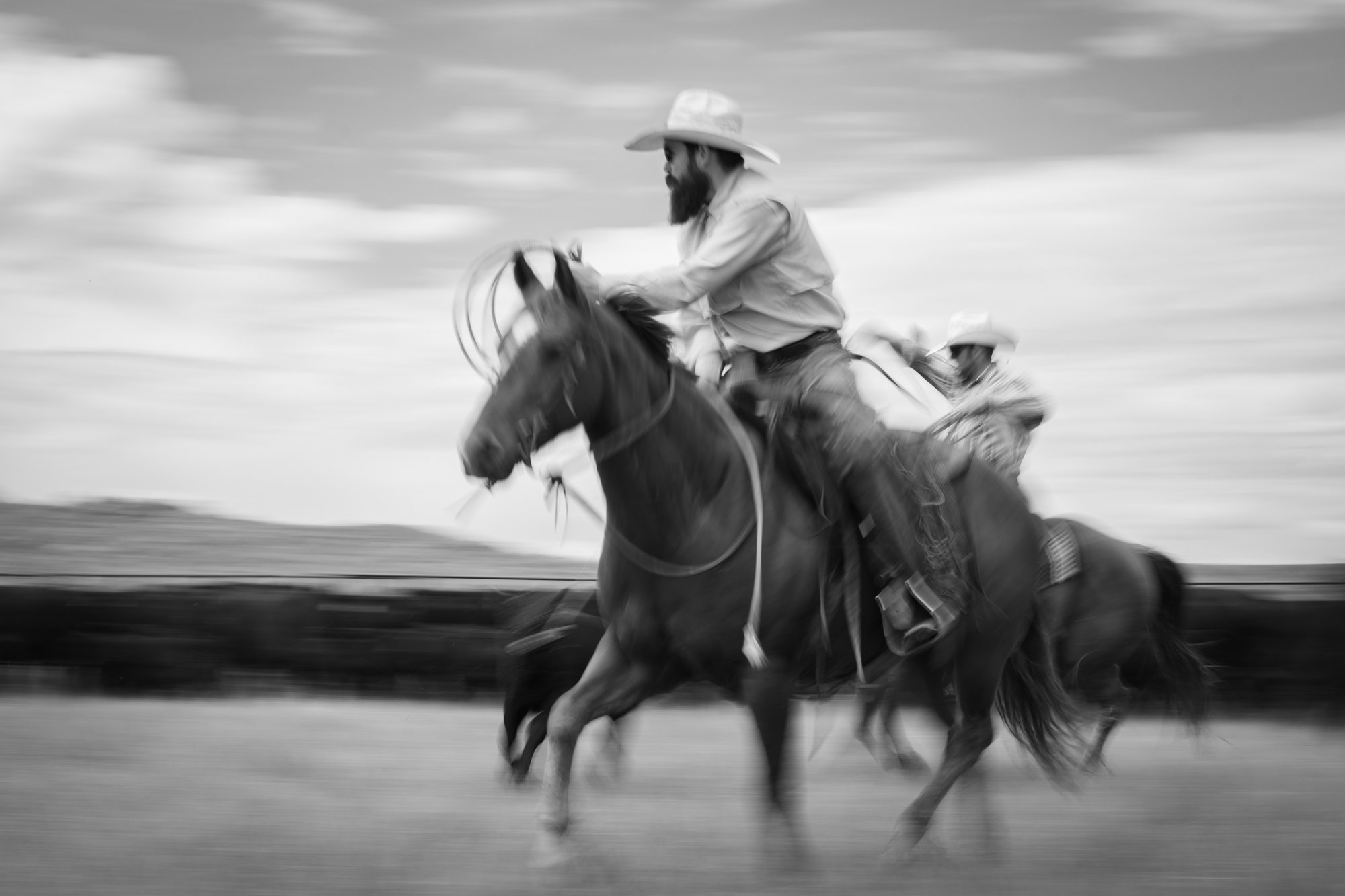
Black and white photograph of two cowboys roping cattle on a ranch in Montana

Authentic cowboy photography

Fine art photograph of cowboys branding cattle in Montana

Portrait of two Montana cowboys in an old wood barn in Montana - Matt Clark and Gabe Clark

A cowboys horse grazing in an open landscape
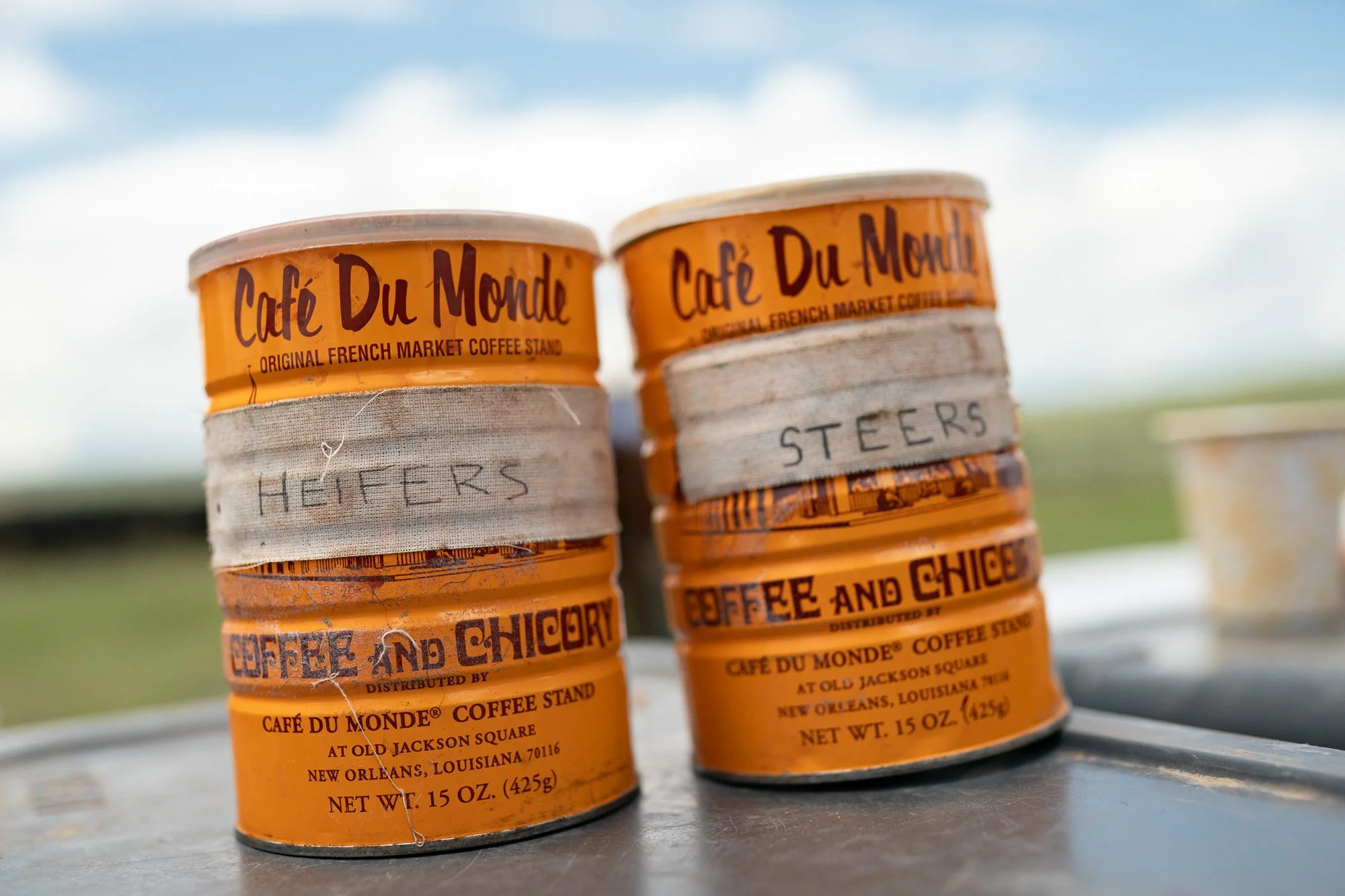
Jar for ear tagging

Cowboys drinking Coors Banquet Beer in the cookhouse at the OW Ranch
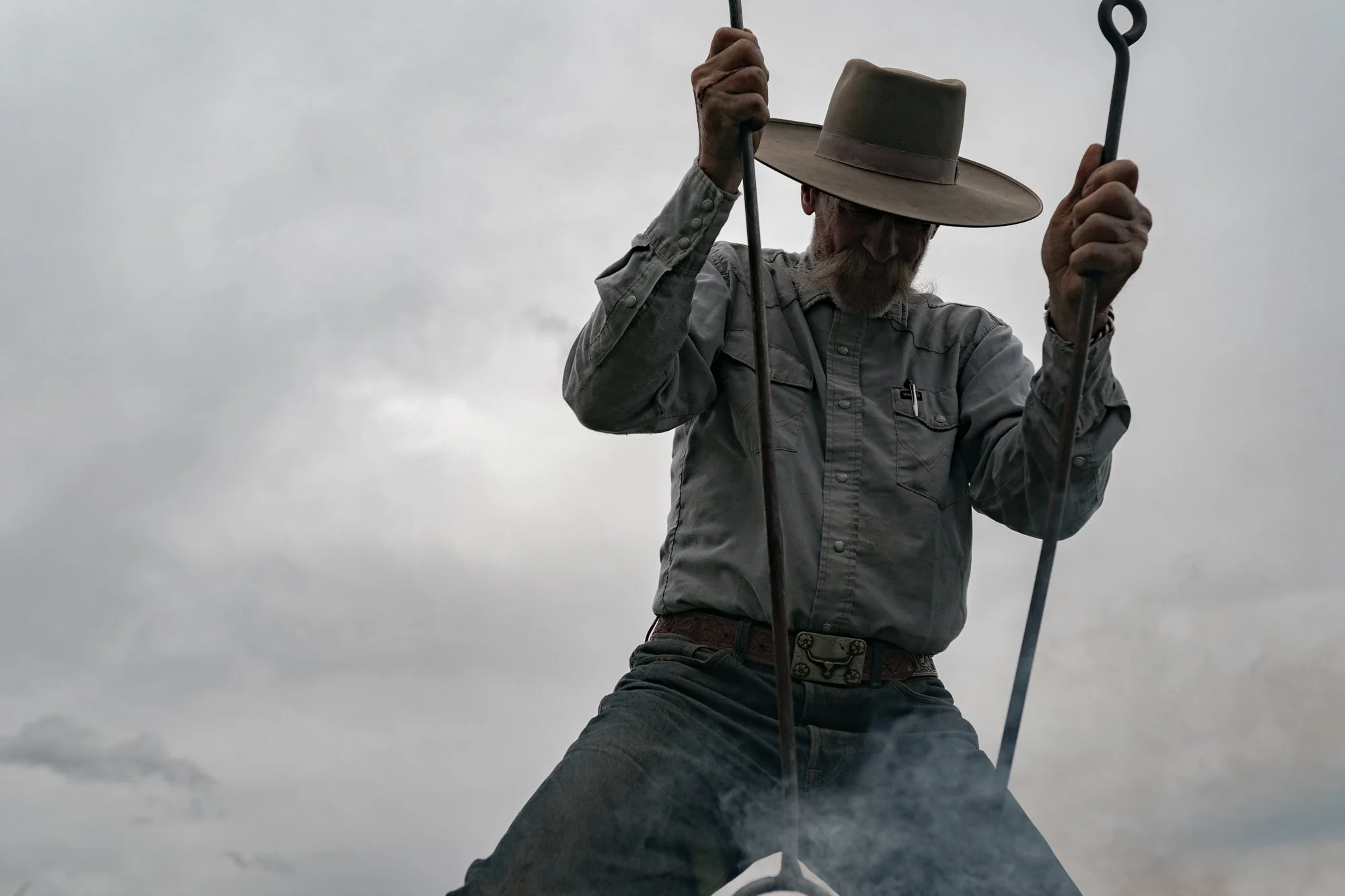
Photograph of a cowboy branding cattle in Montana
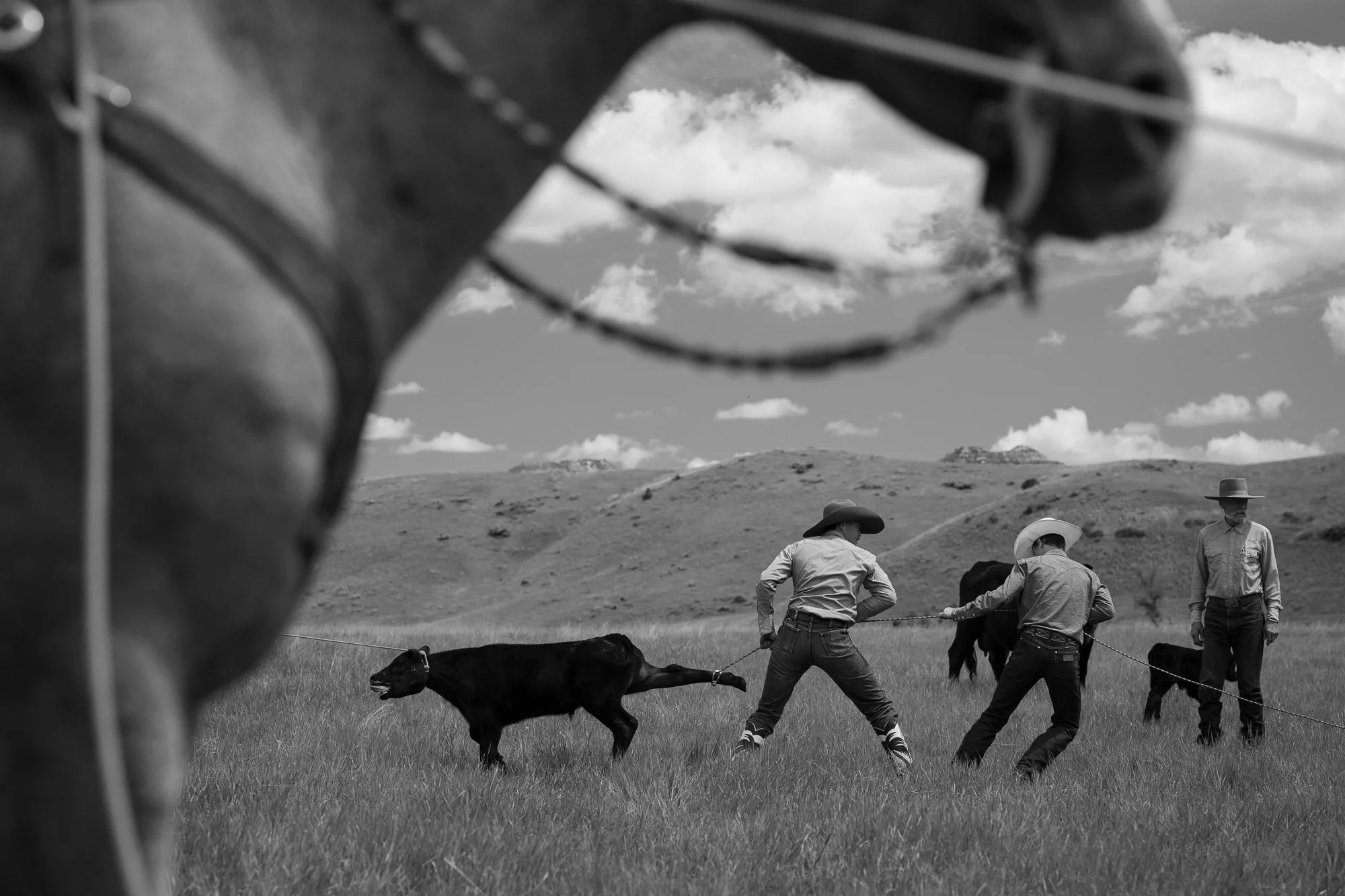
Cowboys trying to wrestle down a calf

Fine art photograph of a cowgirl at work on a ranch in Montana

Photograph of two cowboy sitting in their truck on a cattle ranch in Montana
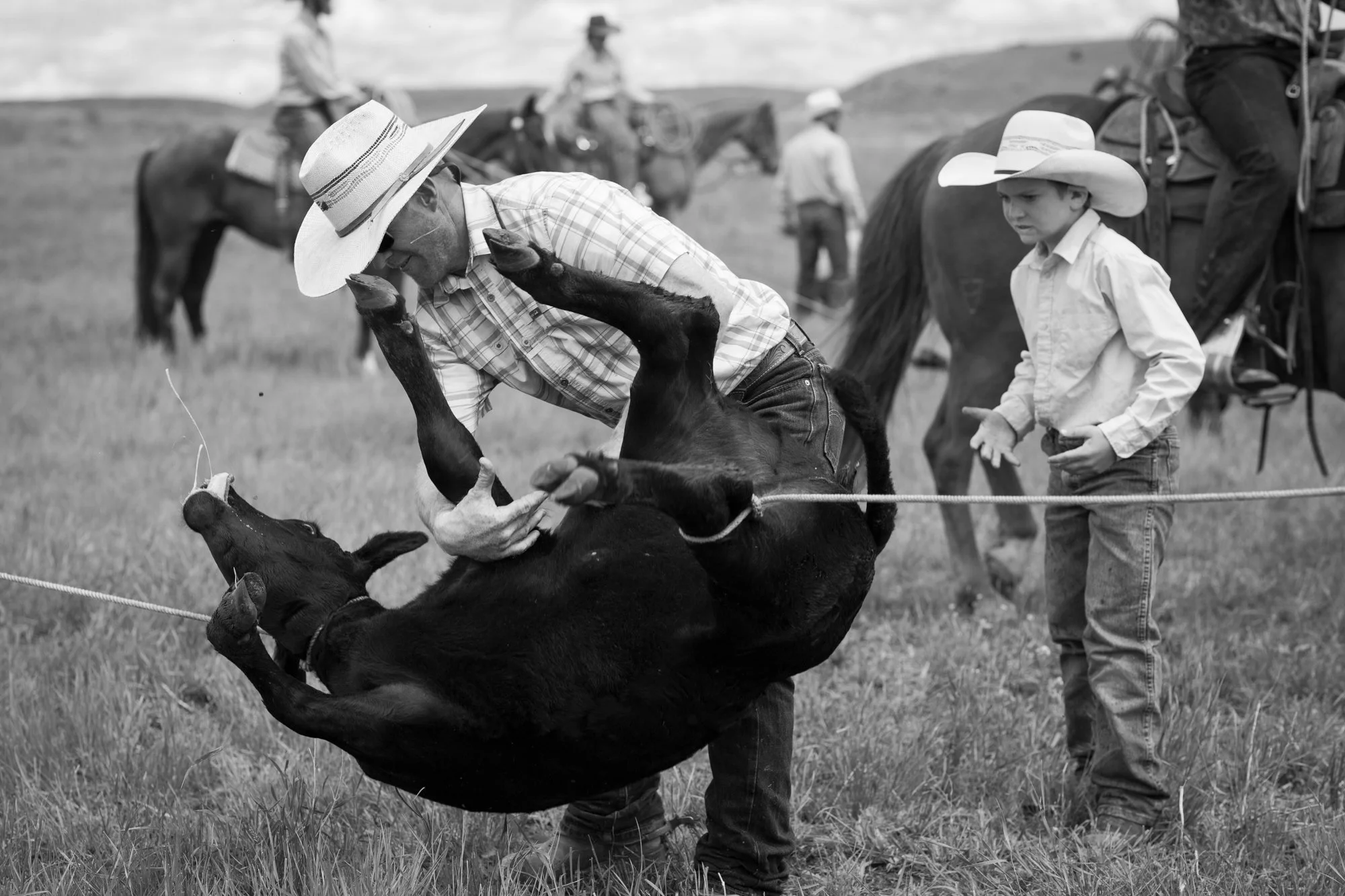
Black and white photograph of cowboys branding cattle in Montana

Cowgirl walking her house out of an old wood barn

Cowboys drinking beer on a ranch in Montana
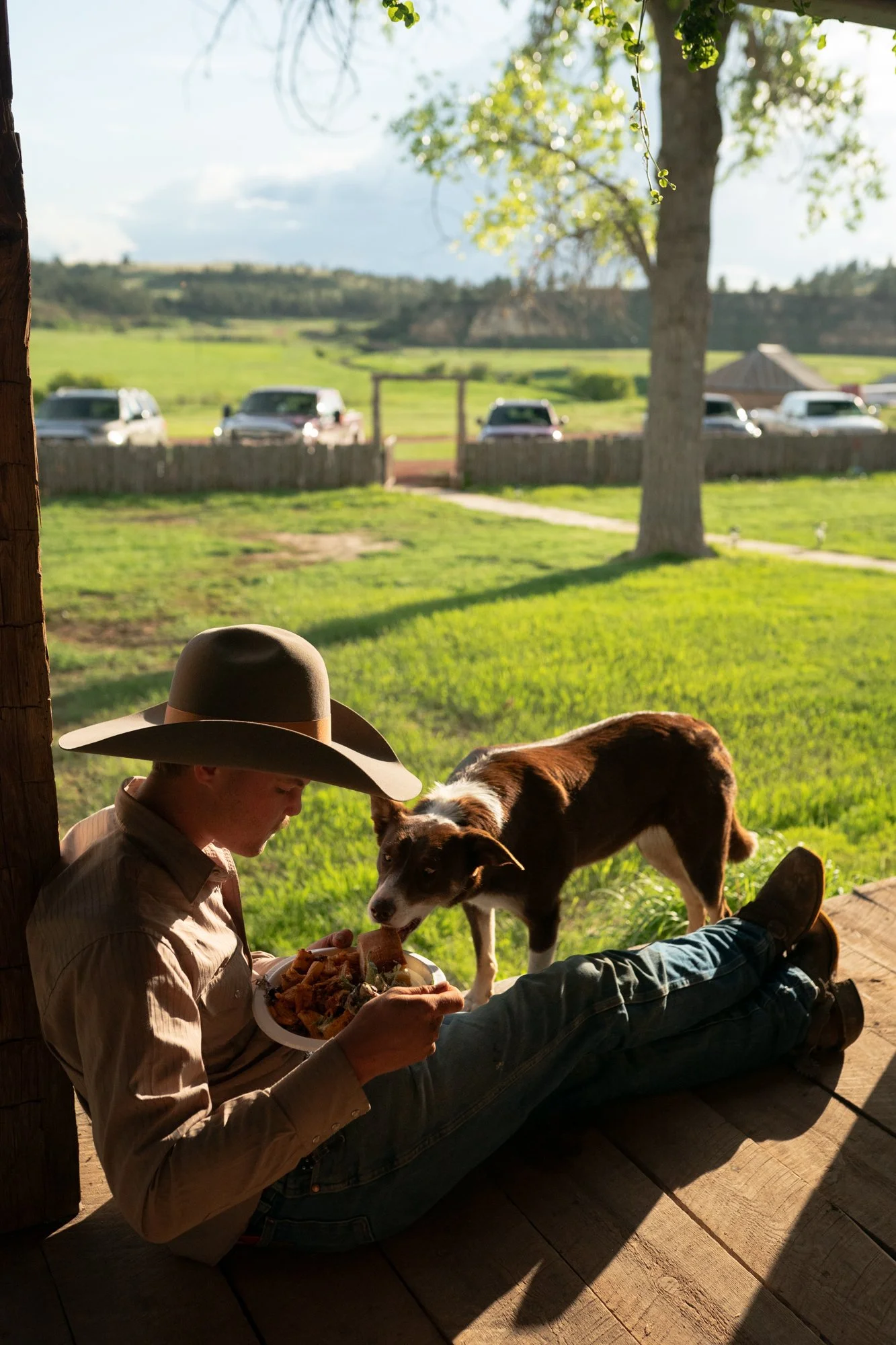
Dog eating food from a cowboys plate

Cowboy culture photography
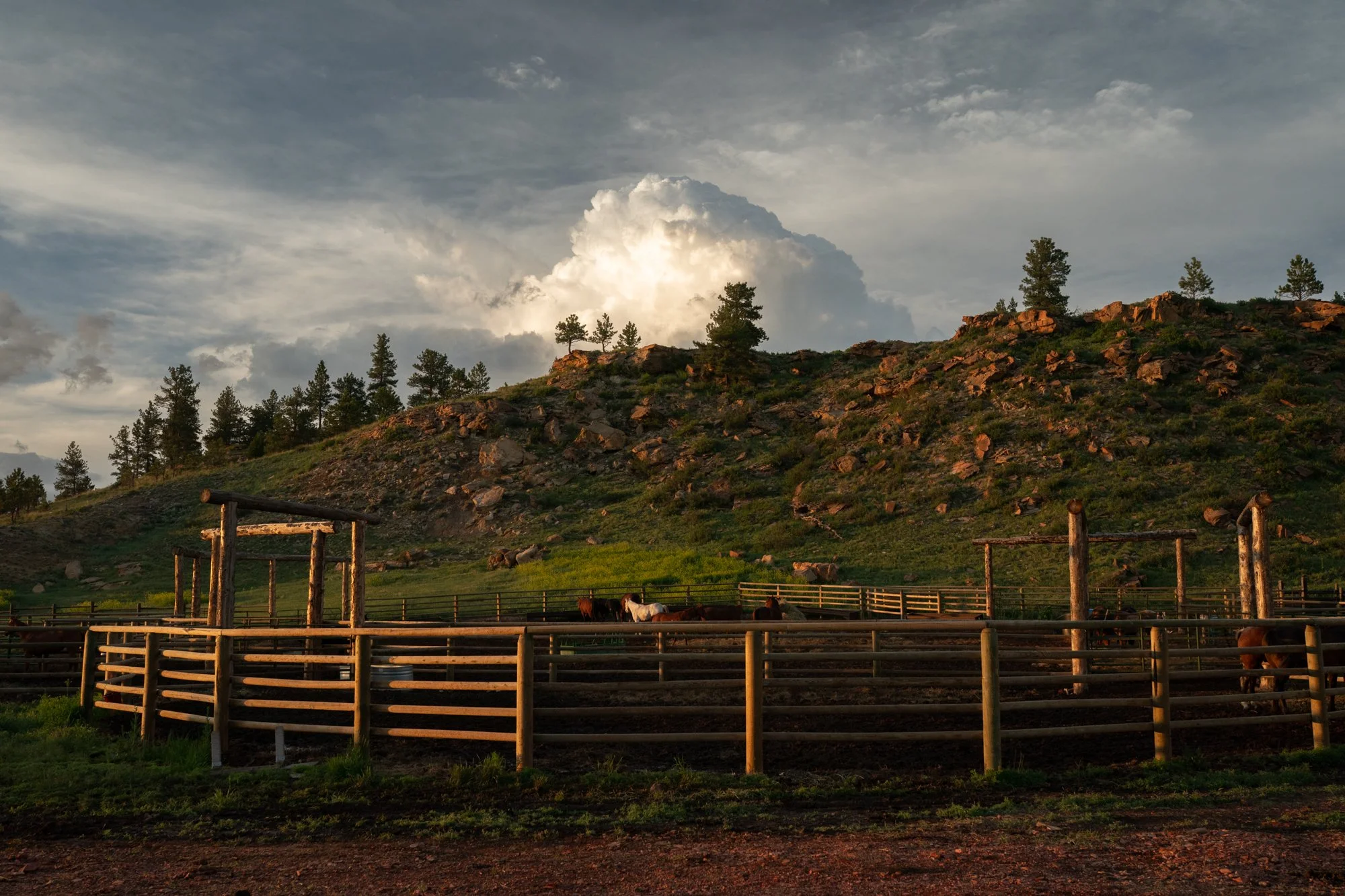
Wood horse corrals at the OW Ranch - Montana