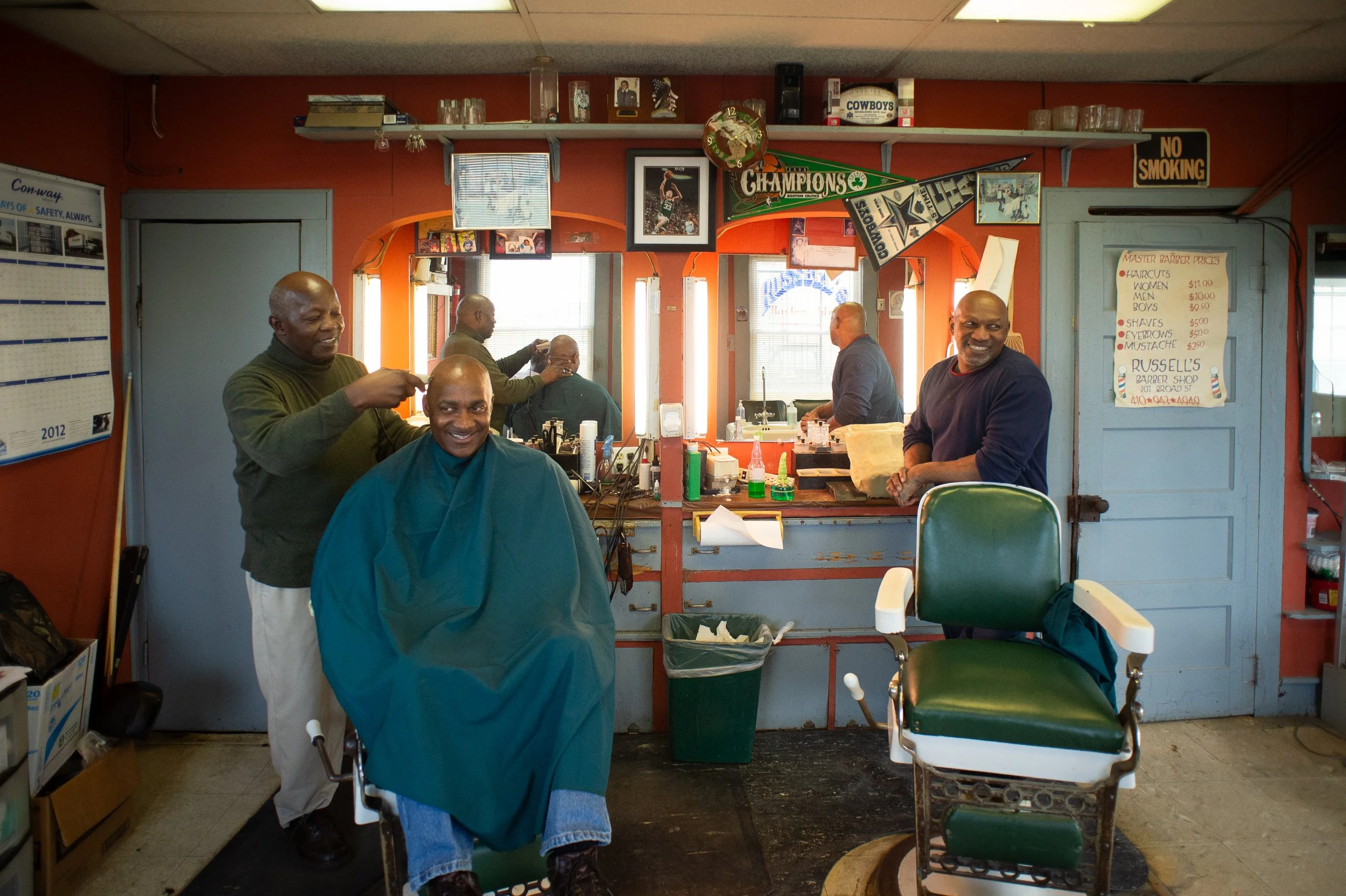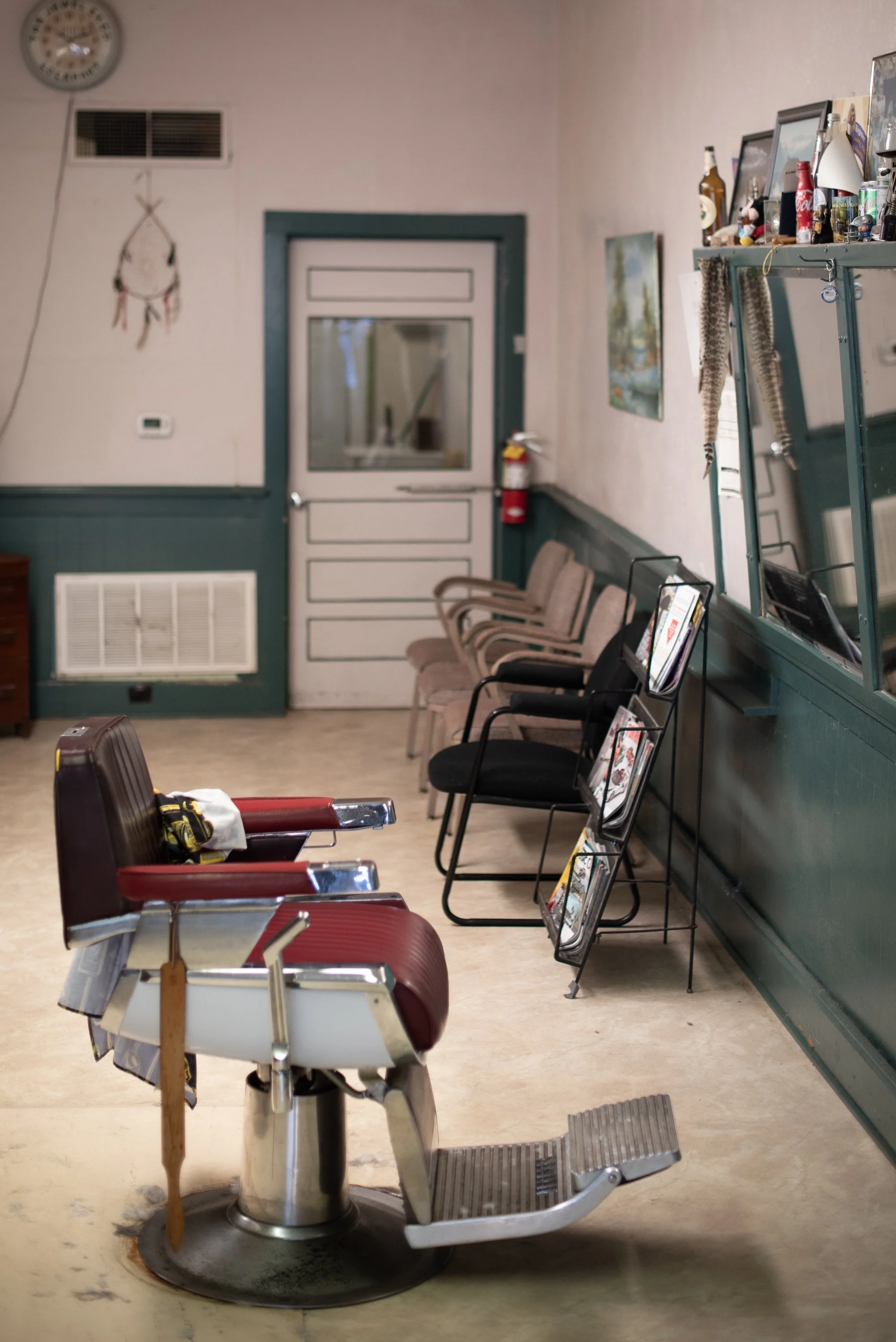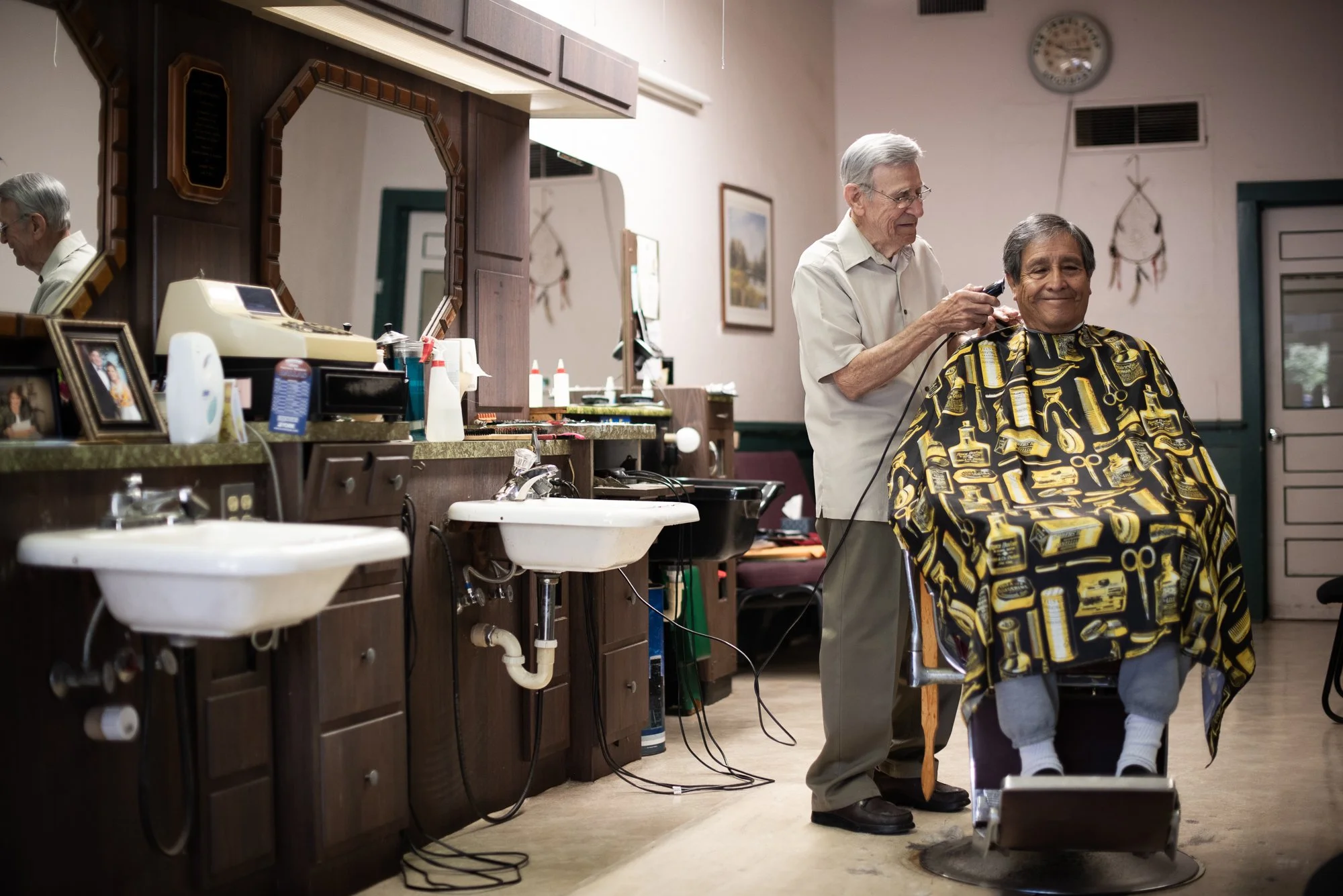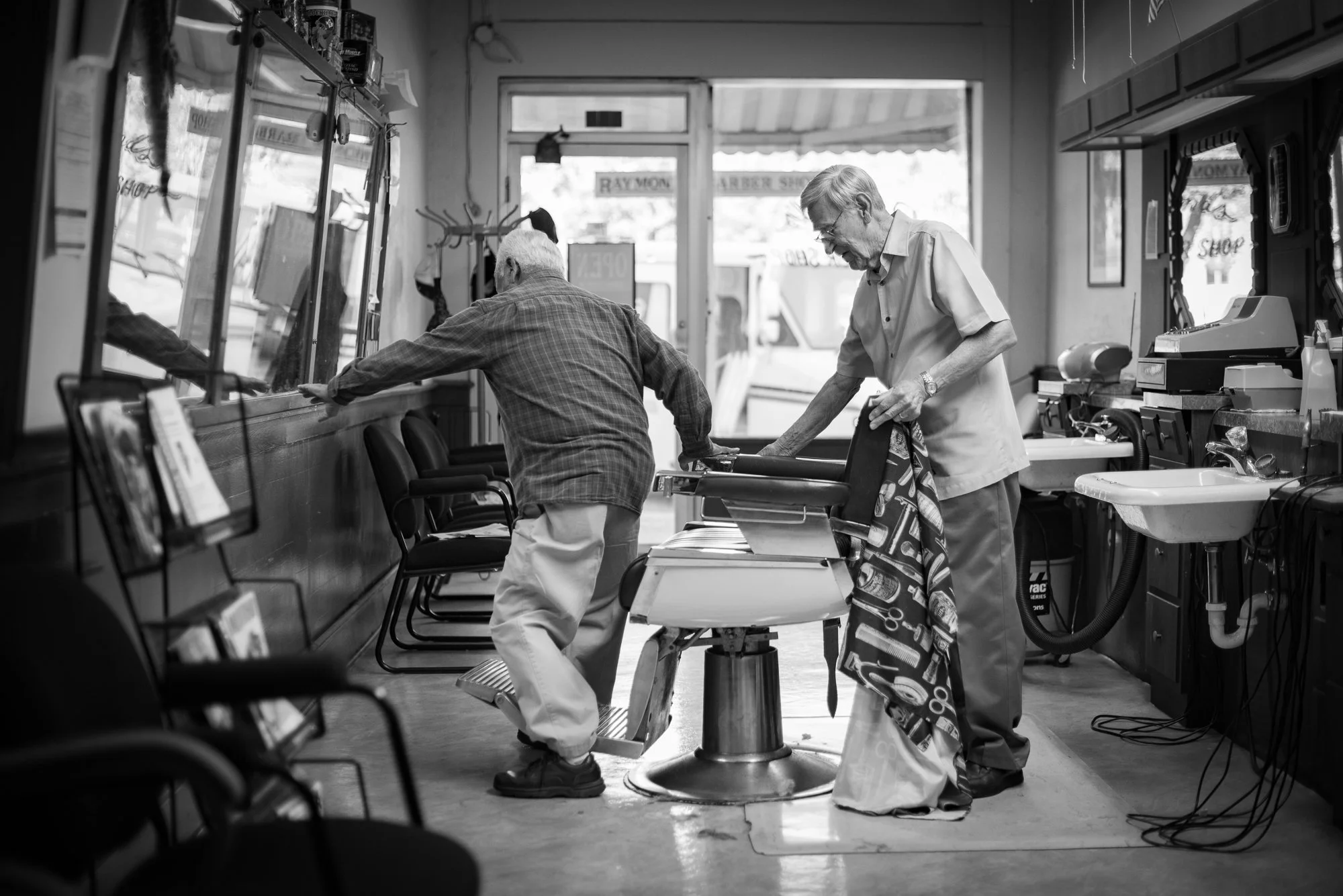
Spanky’s Barbershop, Covington KY: Modern Design Rooted in Craft

Spanky’s Barbershop in Covington, Kentucky

Covington, Kentucky sits just across the river from Cincinnati, but in recent years it has developed a rhythm all its own. Historic storefronts are being restored. Independent businesses are opening their doors. There’s a steady sense of momentum — not loud, not flashy — but real.

Spanky’s Barbershop is part of that shift.

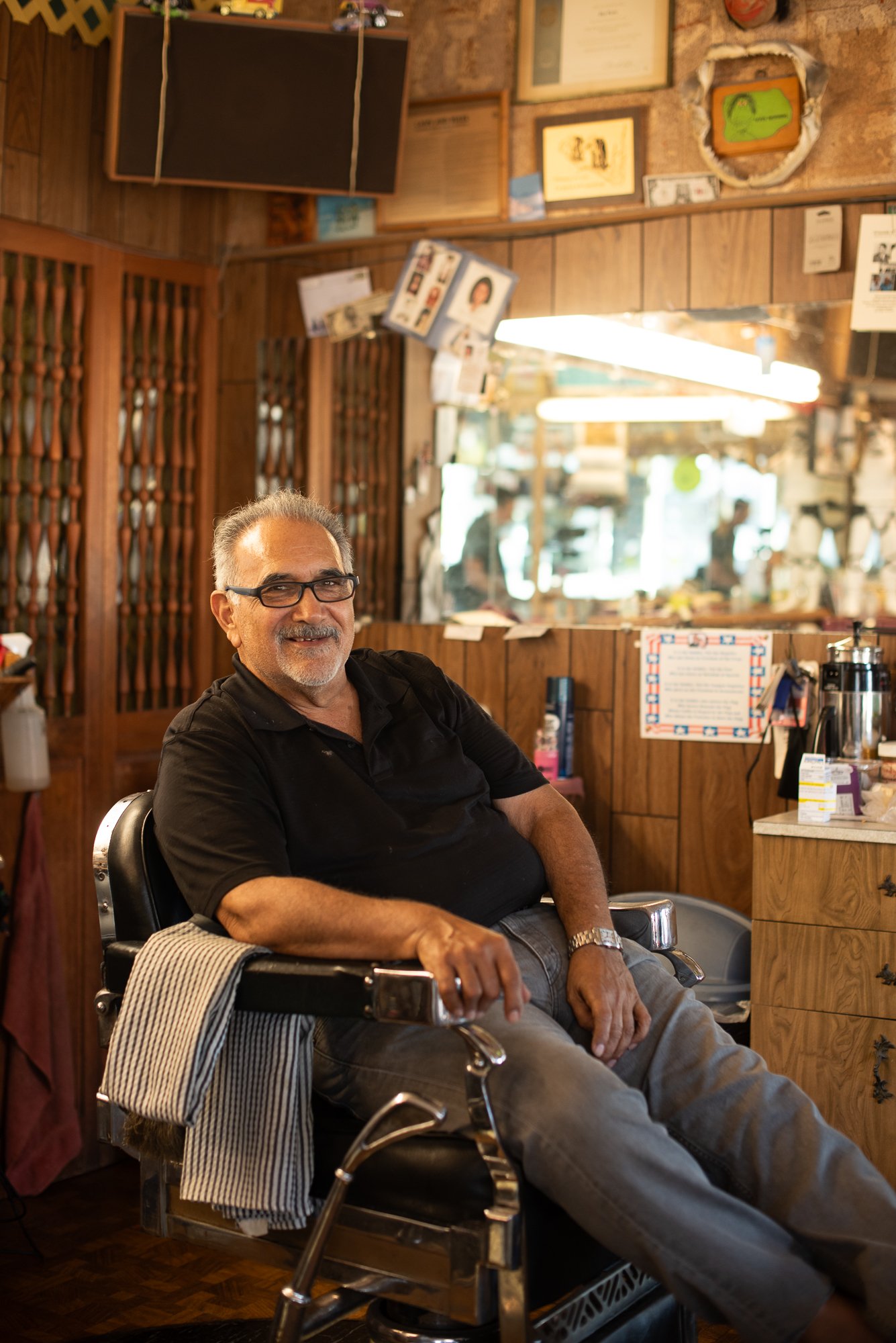
I first met Sean Caudill — known to most simply as Spanky — years ago at his first shop in the same area. It was a beautiful shop, but when I returned to photograph this second location, it was clear he was building something much bigger.

A Second Shop Built from Experience

Spanky’s new Covington location wasn’t opened just for a bigger footprint — it’s the result of his unique personality, years behind the chair, and having a distinct vision for the future of his business.

When I first photographed Spanky at the old shop, he was know for his skills behind the chair. The foundation was there: strong cuts, loyal clients, a clear identity. What stands out now is the confidence that comes from time.

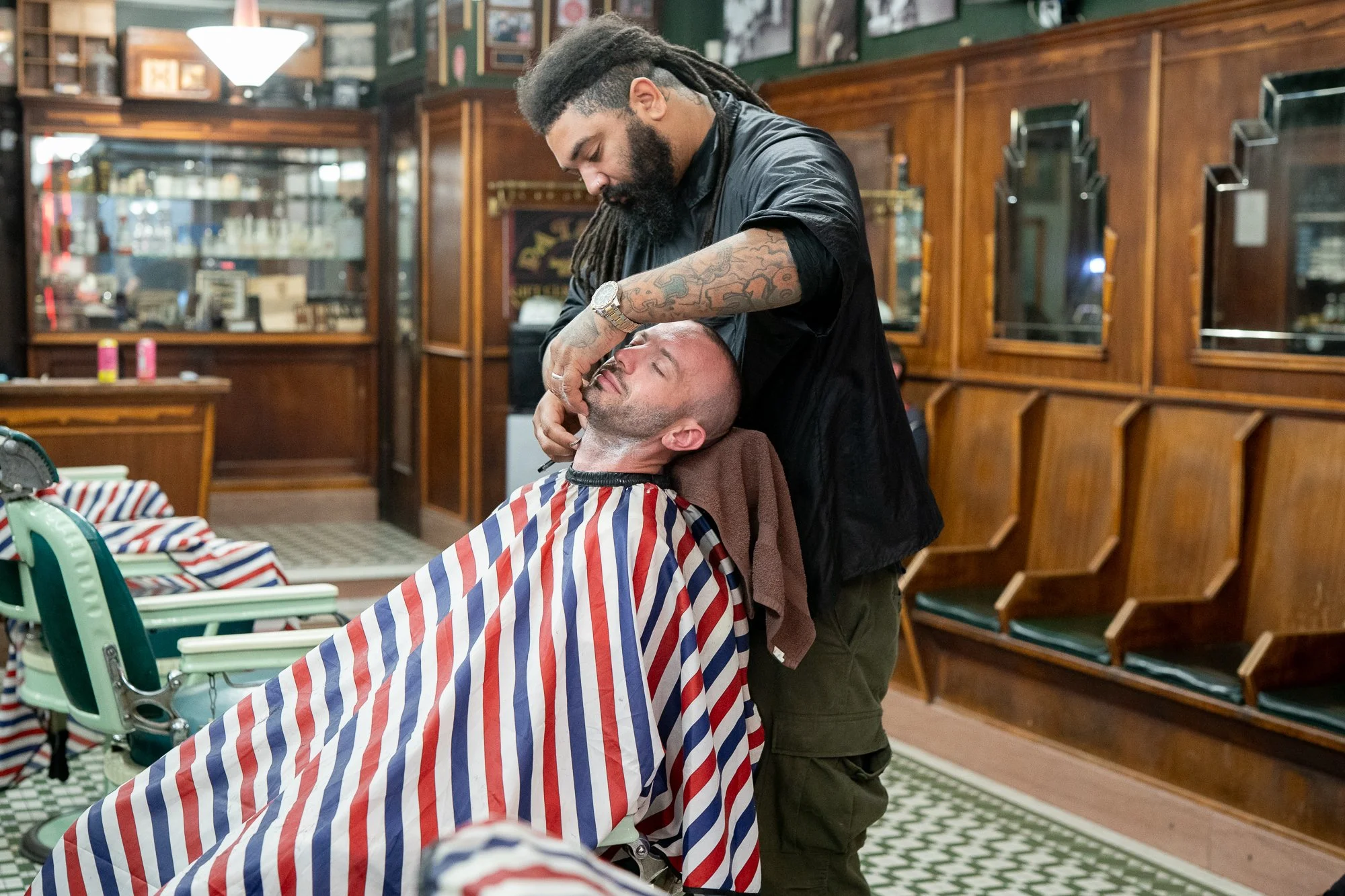
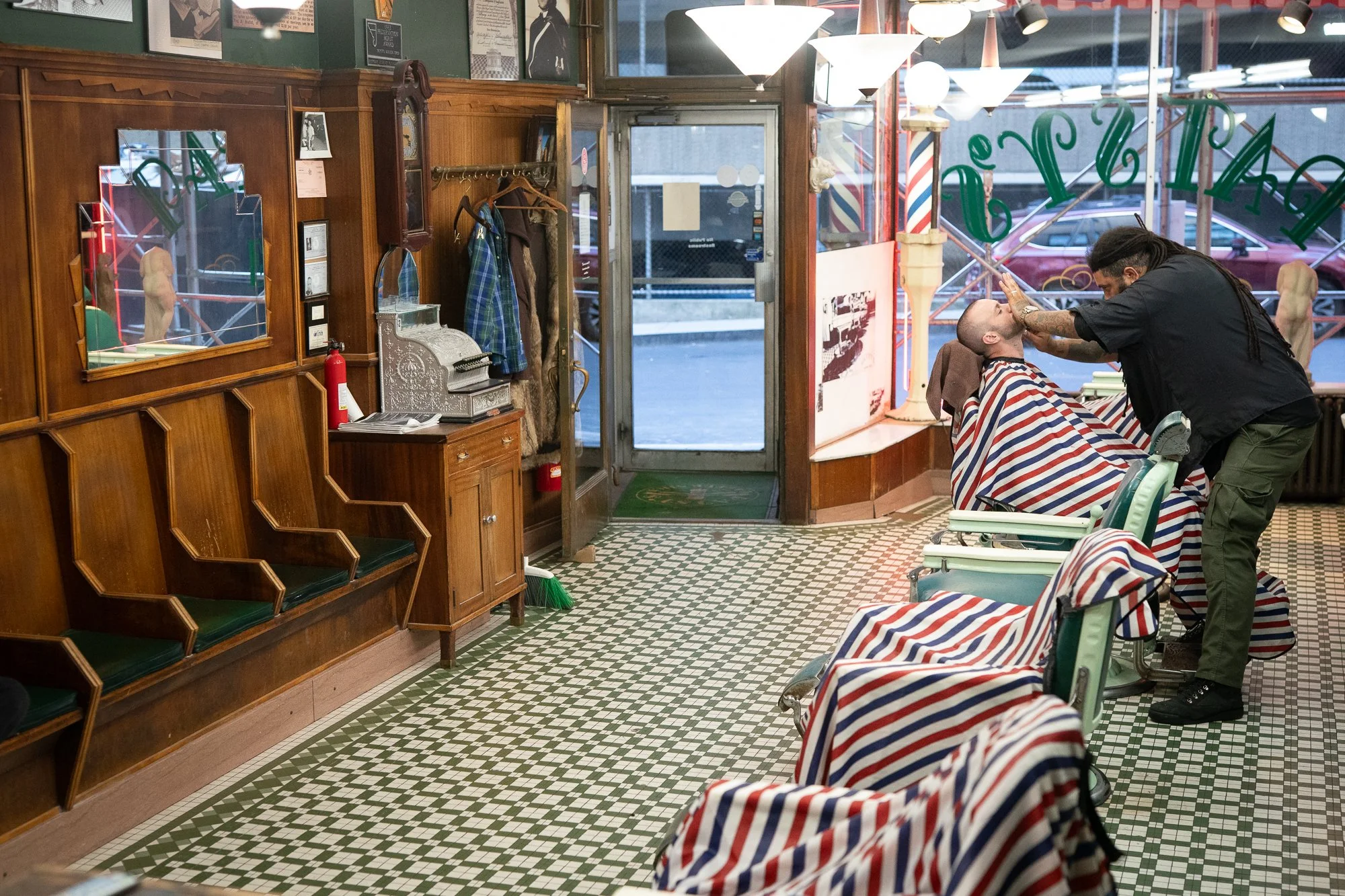
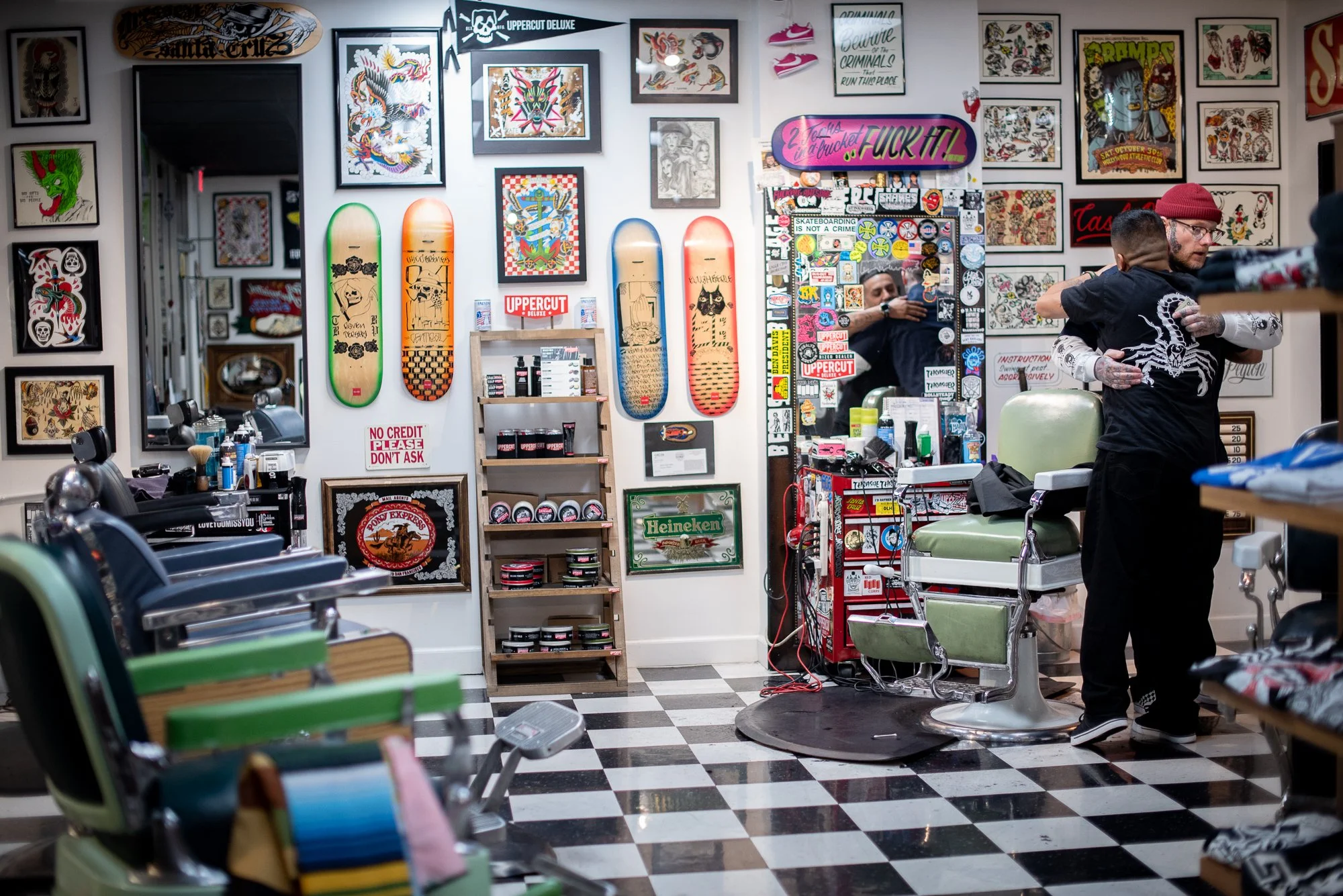
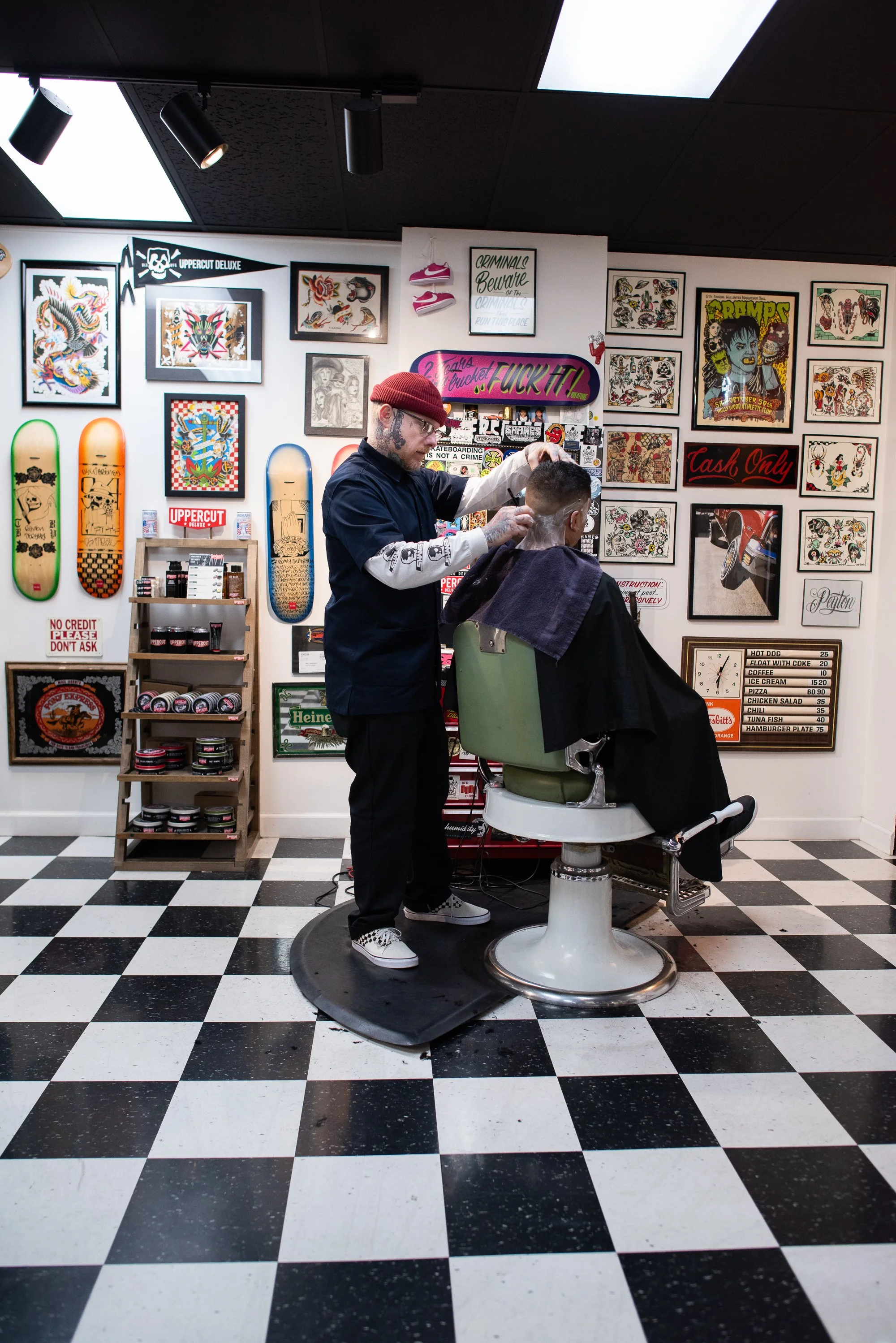
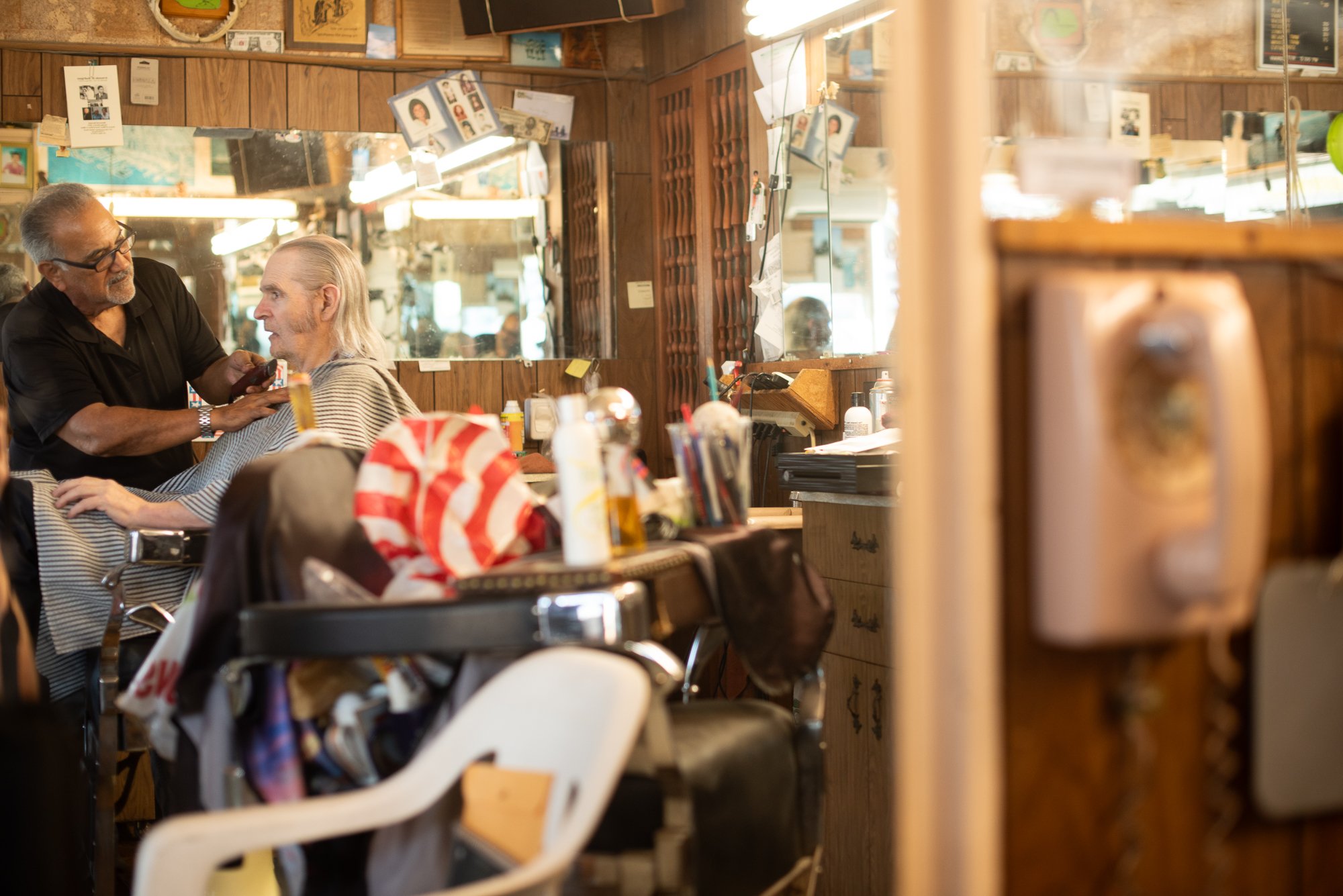
This shop feels curated. Every design decision — from layout to lighting to branding — carries the weight of experience. It’s what happens when a barber has spent years refining his craft and understands exactly how he wants a space to function.

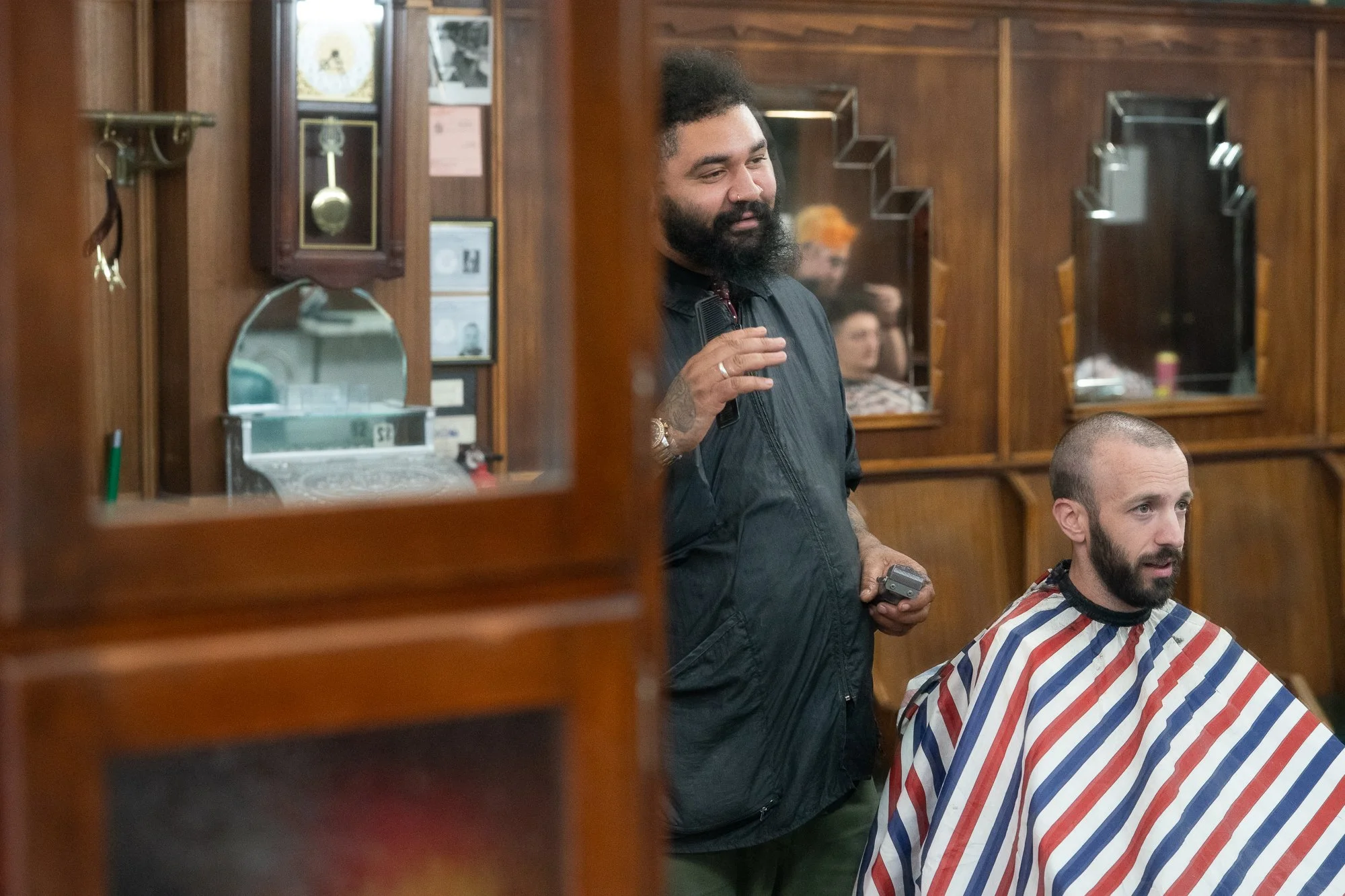
Sean is damn fine human being. As kind and welcoming as they come. He’s also part of the crew at Uppercut Deluxe, a globally respected pomade company known for aligning with some of the strongest barbers in the industry. That level of professional connection shows. Not in excess, but in execution.

The result is a shop that feels intentional without feeling over-designed. Confident without trying too hard. Built by someone who knows the culture from the inside and wants everyone who walks through his door to feel like they belong.

Inside Spanky’s Barbershop – Design & Atmosphere

From a design standpoint, the shop is as good as it gets these days.

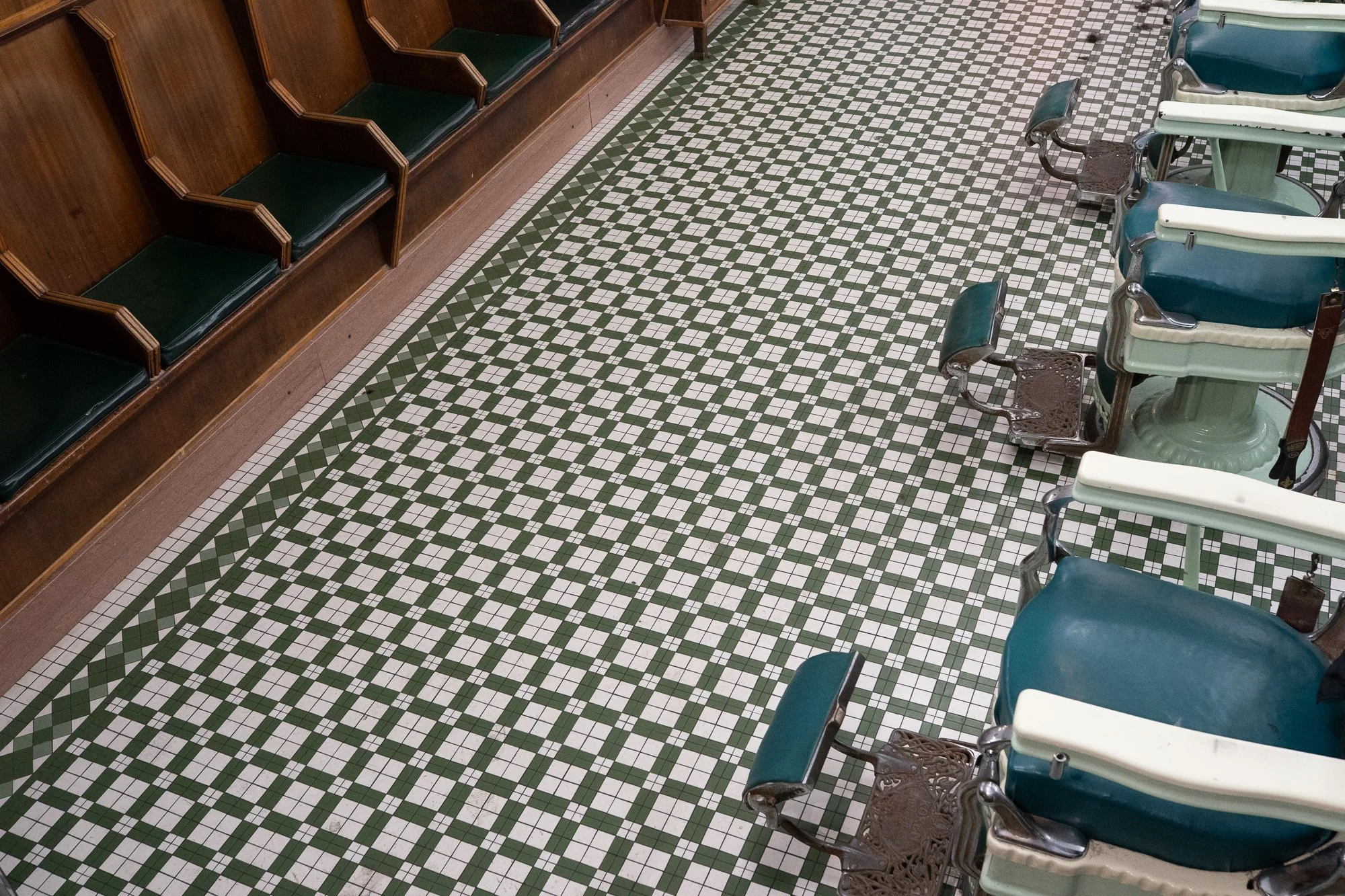
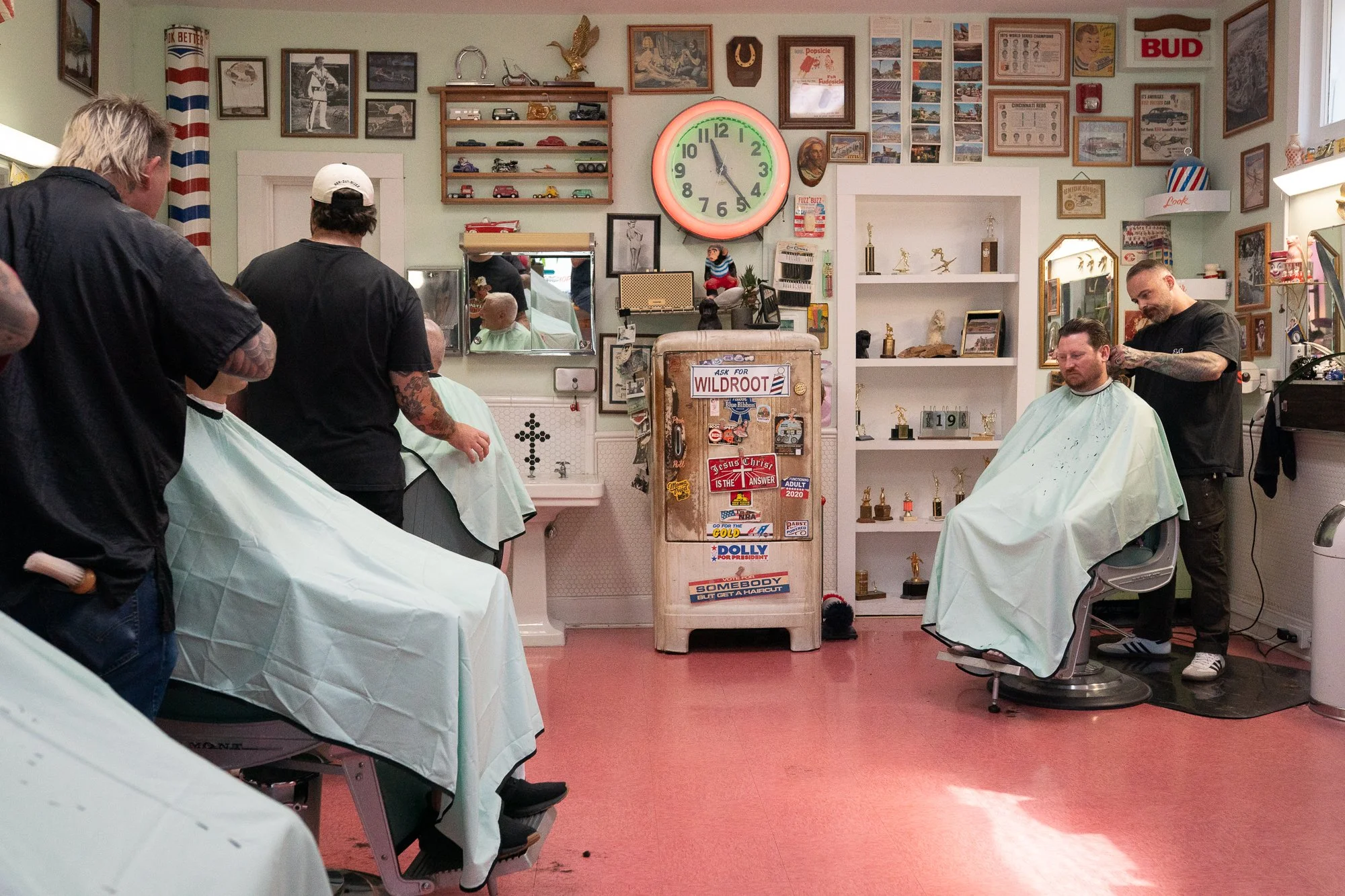
The materials feel grounded and intentional. The lighting is clean but warm. The stations are arranged with space to move, but without losing the intimacy that makes a traditional barbershop work.

There’s balance here — modern but not sterile. Classic but not nostalgic.

This is what makes strong barbershop interior design compelling: it respects tradition without being trapped by it.

The chairs, mirrors, floor color, and decor work together as a unified environment rather than individual pieces. It feels cohesive. Confident. Functional.

And above all, it feels lived in — not staged. Stepping into Spanky’s place, you know it was put together by a person with passion, not a group of executives in a highrise.

For a city like Covington, where small businesses are helping redefine entire blocks, spaces like this matter. They become visual anchors. They build neighborhood identity.

Covington’s Growth and Independent Energy

Northern Kentucky has been steadily growing, especially with its proximity to Cincinnati. But Covington has developed its own personality — one built around independent restaurants, bars, and retail rather than chains.

Spanky’s Barbershop fits that model perfectly.

It’s not corporate.
It’s not trend-driven.
It’s personal.

As neighborhoods evolve, businesses like this often become the steady presence — the kind of place people return to weekly or monthly, long after other storefronts have changed hands.

Barbershops, at their best, are consistent. They operate on routine and relationship. That consistency becomes more valuable as cities shift.

Barbershops of America – The Long View

This shop is part of my ongoing 15+ year project, Barbershops of America, documenting traditional and independent barbershops across all 50 states.

Most shops I photograph represent continuity — decades in one location, sometimes passed down through generations.

Spanky’s second location represents something slightly different: progression.

It shows what happens when a barber grows with his city.

It shows what happens when craft meets momentum.

Not every shop closes. Not every shop fades. Some expand. Some adapt. Some refine their space and raise their standard.

Those stories deserve to be documented too.

Fine Art Prints & Licensing

Photographs from Spanky’s Barbershop are available as limited edition fine art prints and for editorial or commercial licensing.

For interior designers, hospitality spaces, and collectors interested in contemporary American craftsmanship and small business culture, this body of work reflects both design and identity.

View the full Barbershops of America gallery here.
Explore fine art prints+photobook here.
Contact for licensing inquiries - rob@robhammerphotography.com

Continue Through the Archive

Spanky’s Barbershop is one of hundreds of shops photographed across all 50 states.

→ View a traditional barbershop in Marfa, Texas

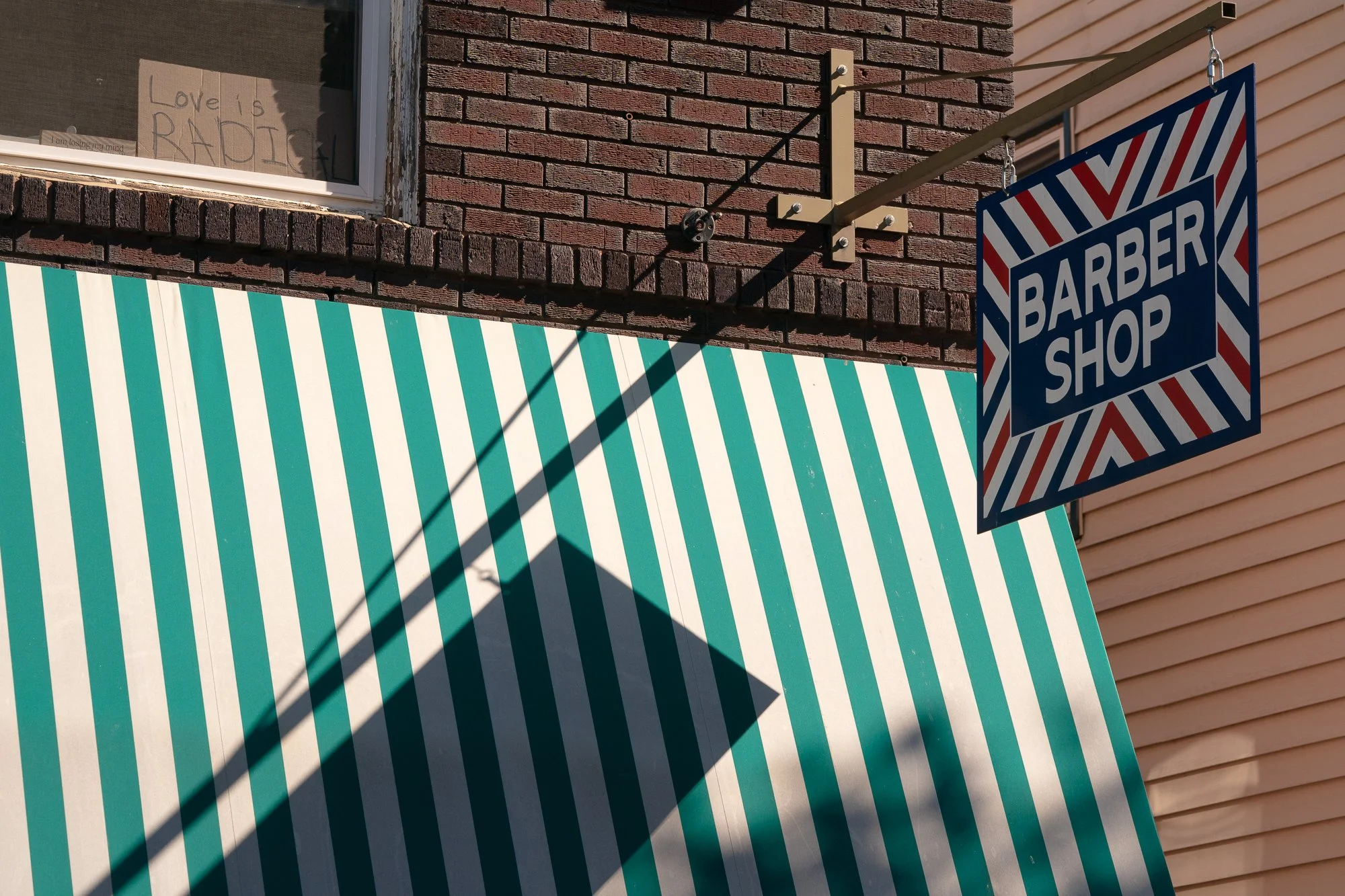
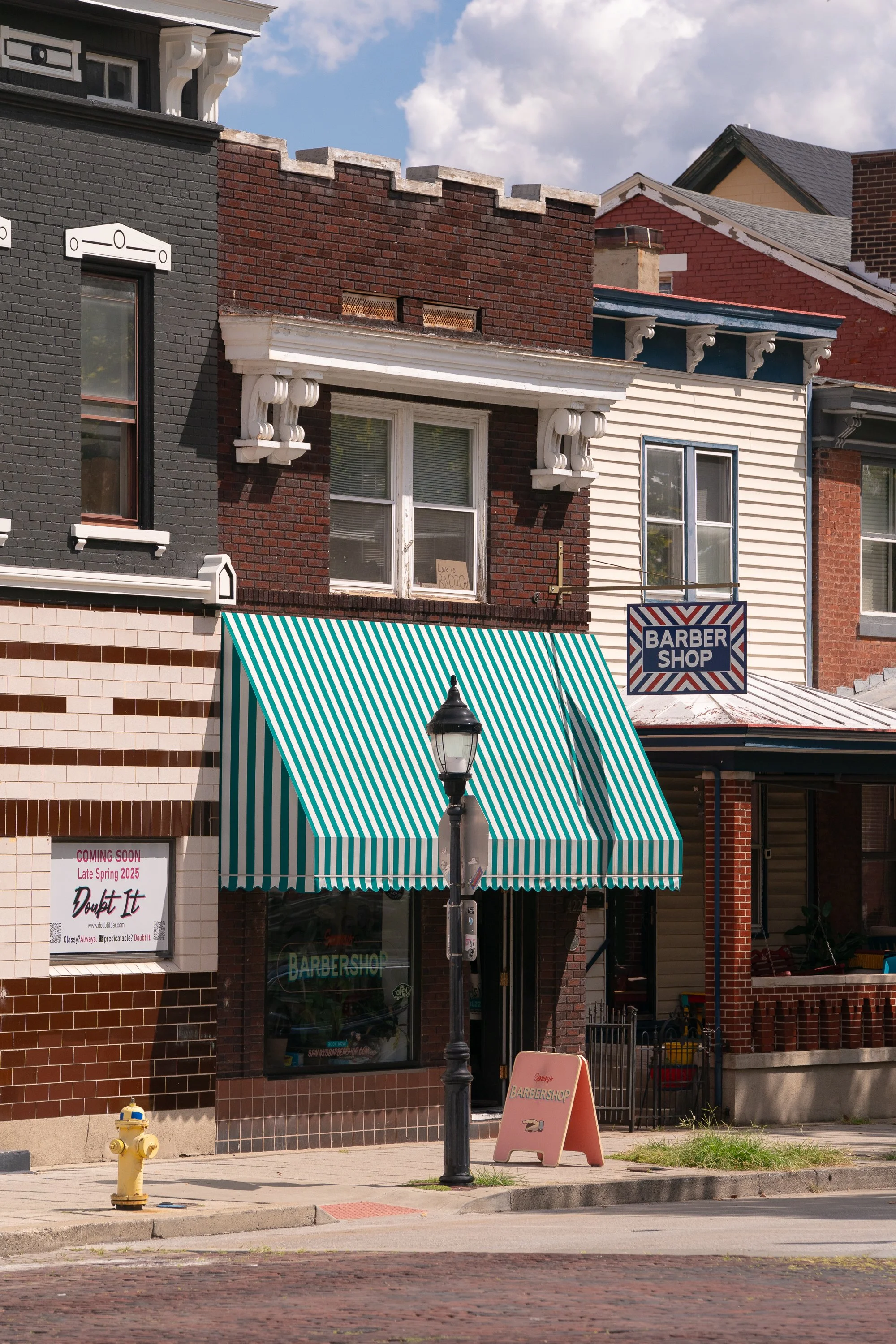
Classic barber shop sign hanging above a green striped awning on a brick storefront in Covington, Kentucky.

The striped awning and traditional barber sign anchor the storefront along a historic Covington block.

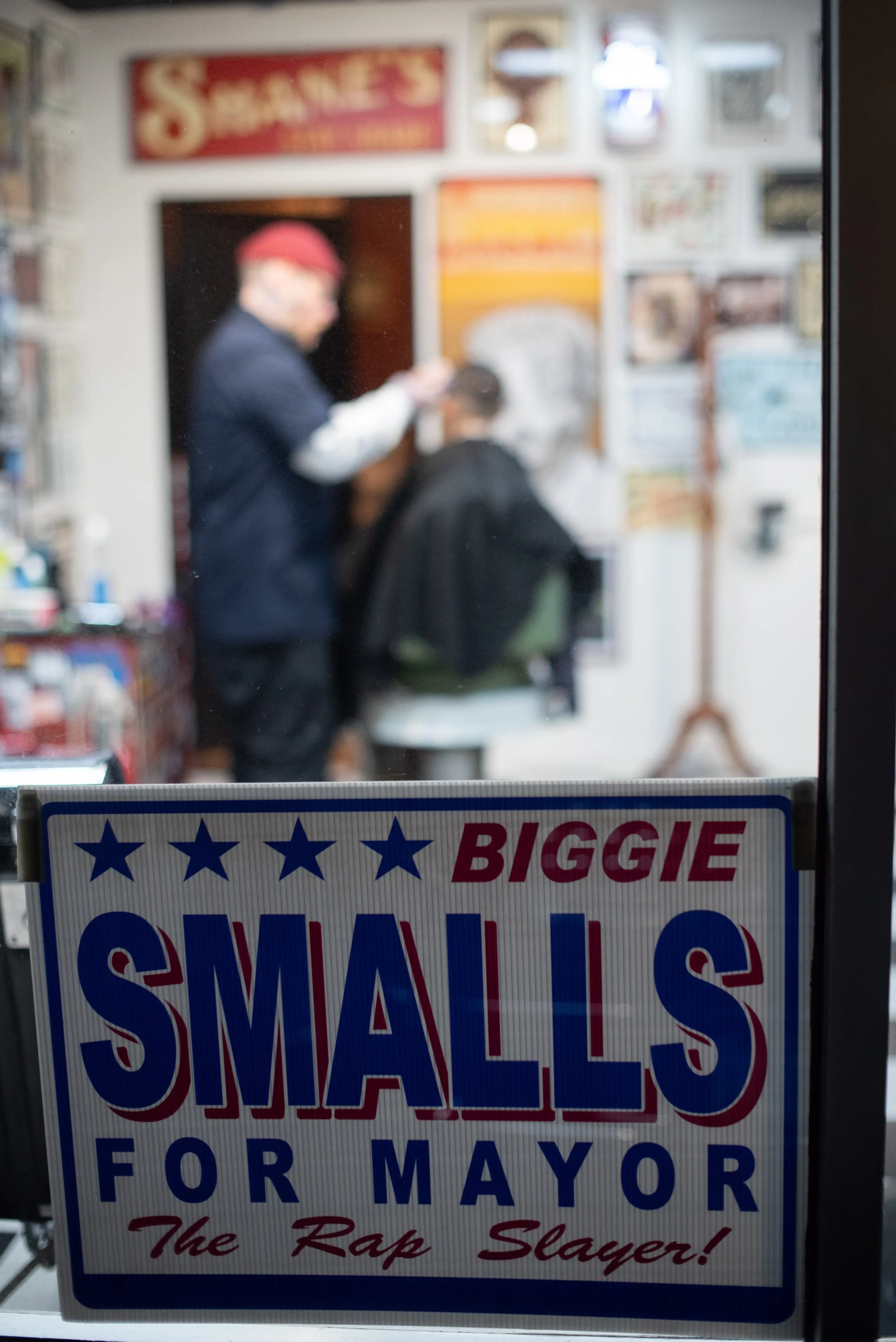
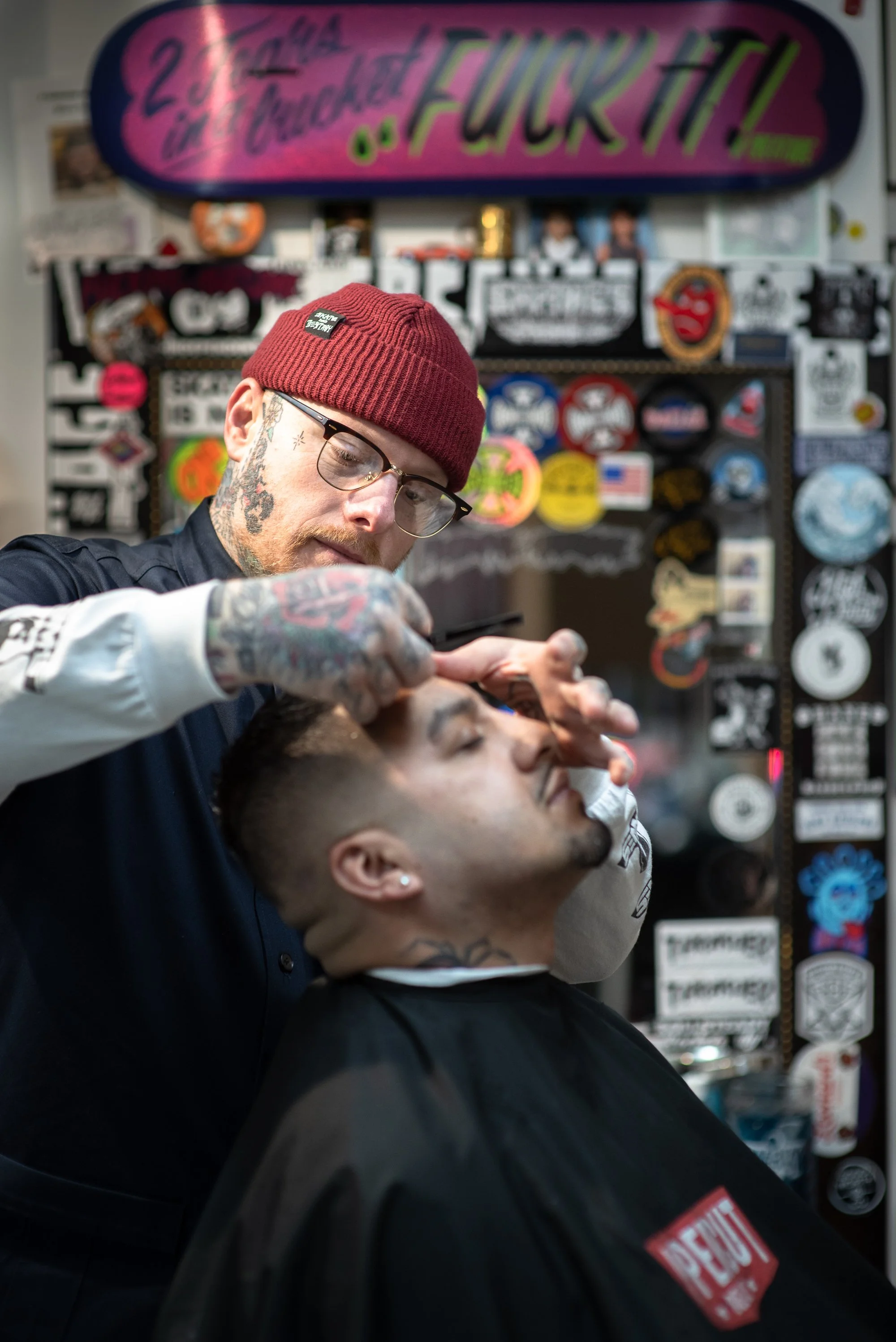
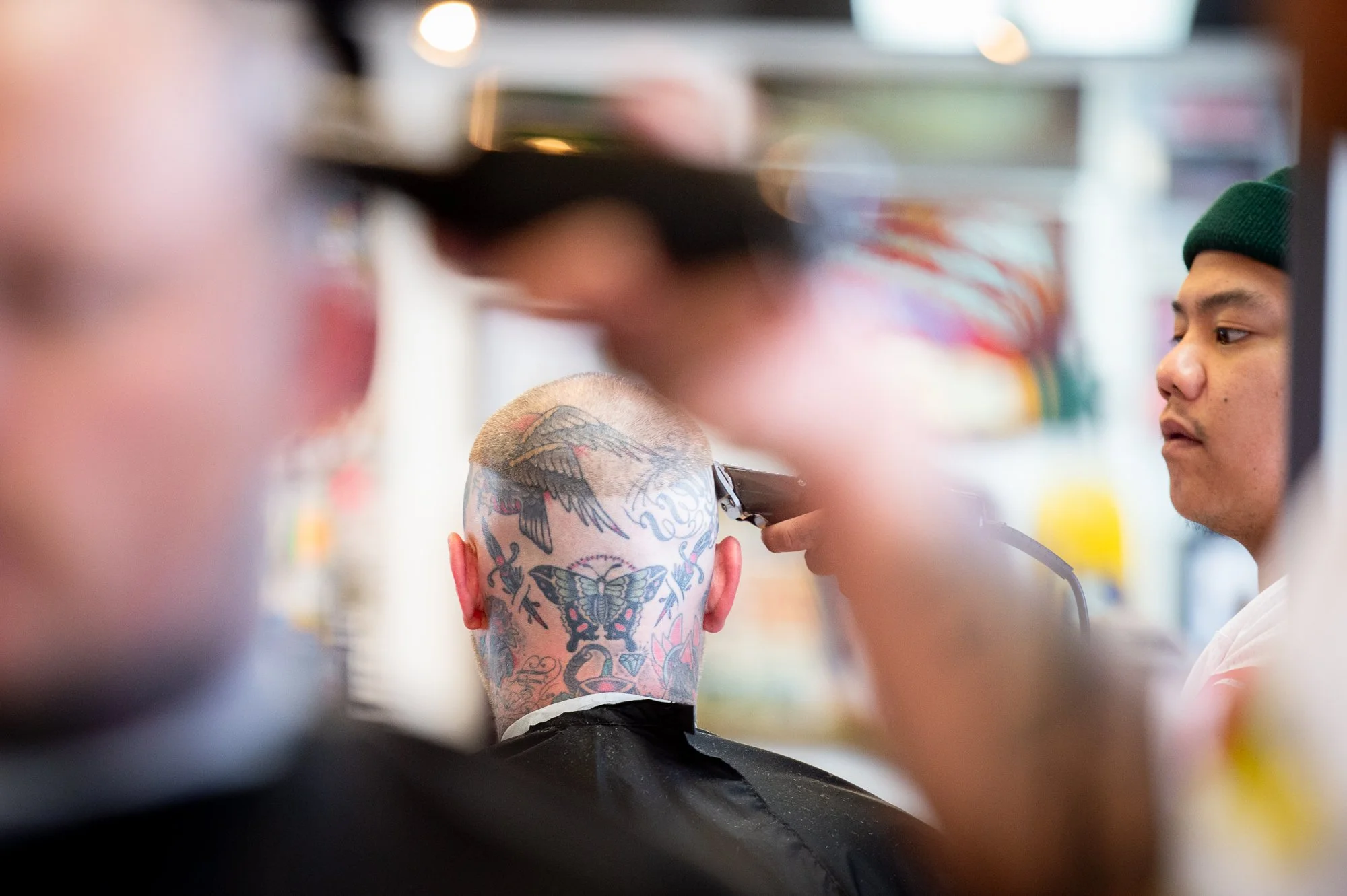
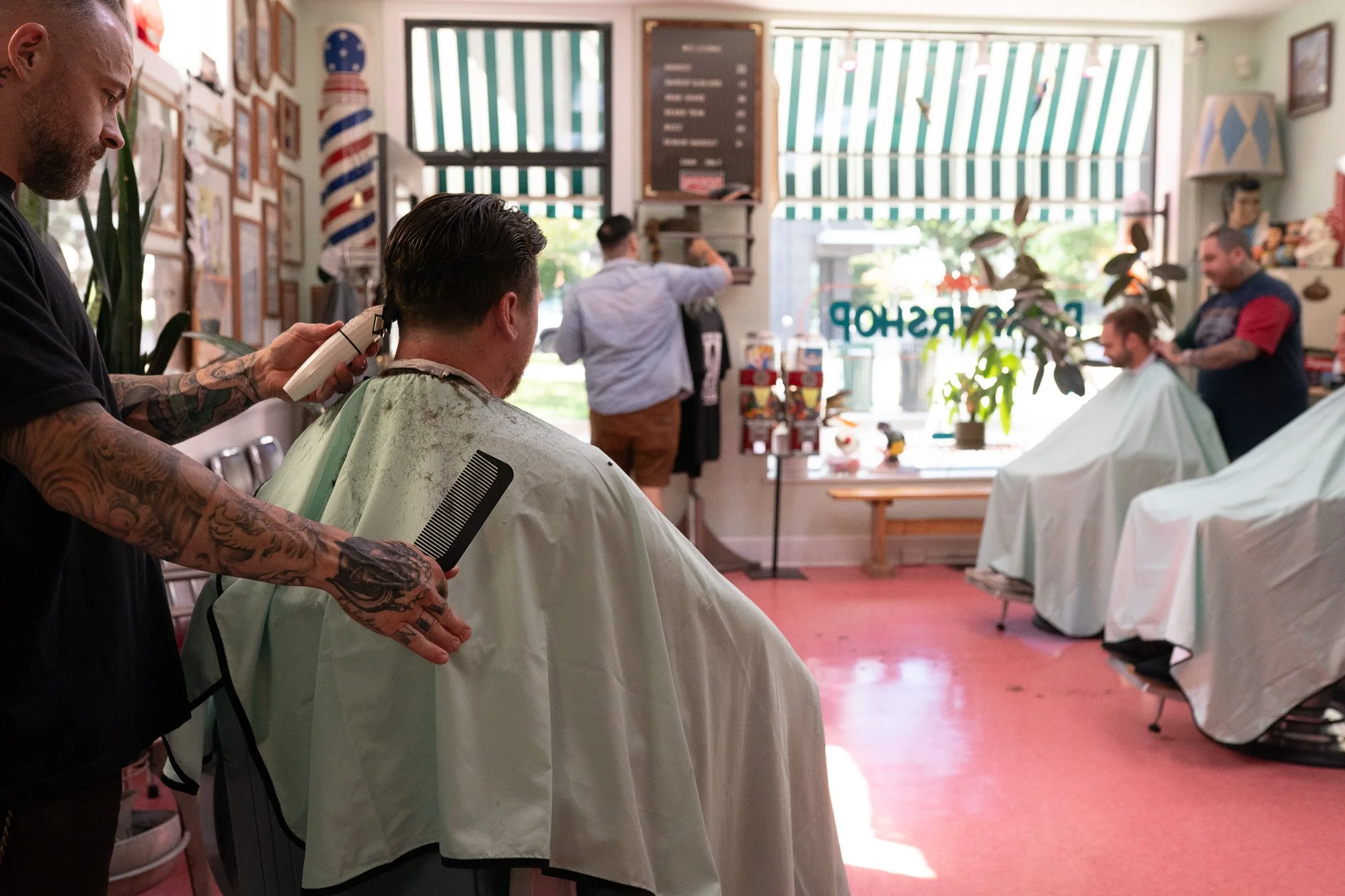
Barber trimming a client’s hair with clippers at Spanky’s Barbershop in Covington, Kentucky.

Natural light filters through the striped awning as a barber finishes a cut

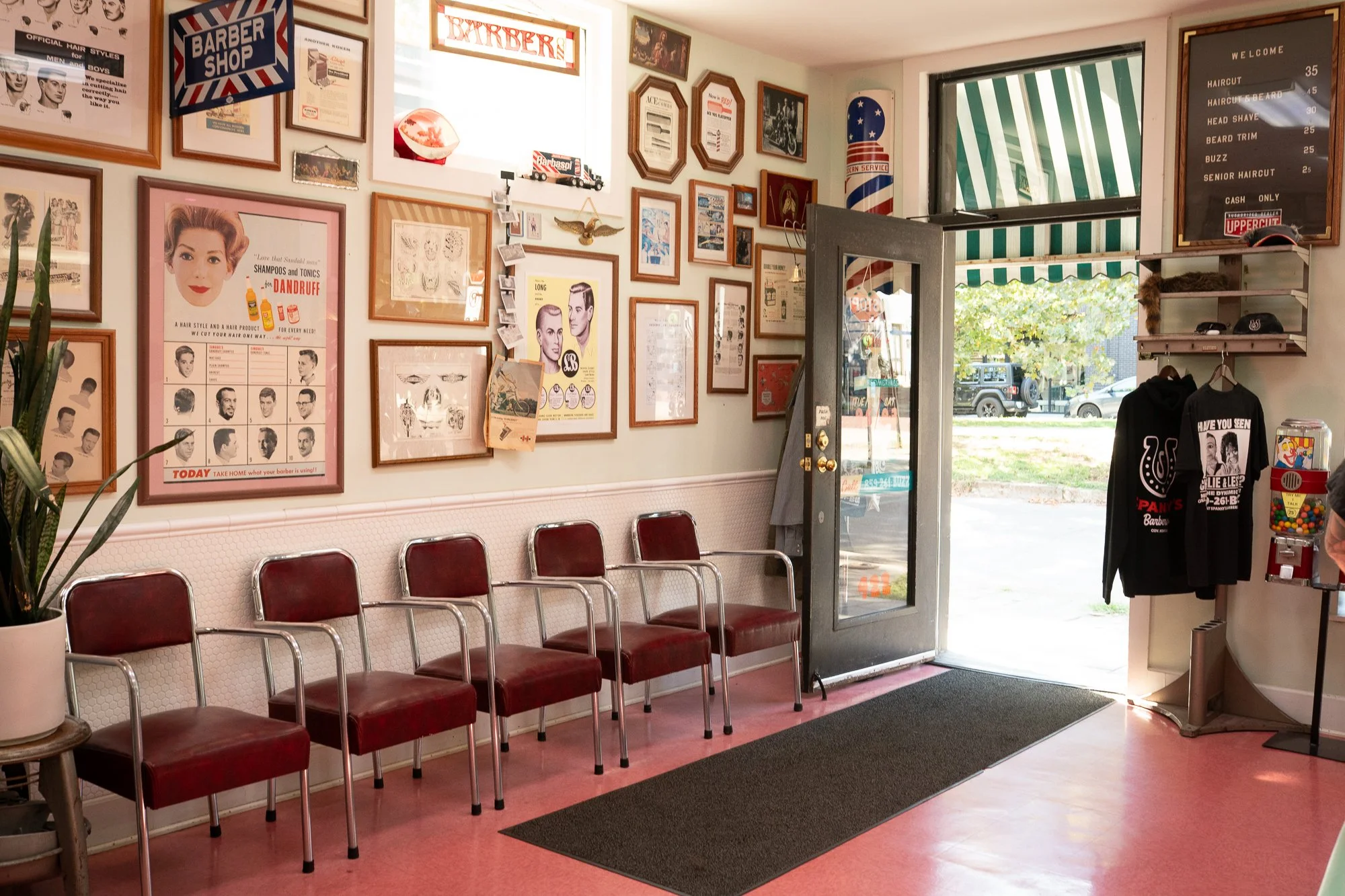
Waiting area inside Spanky’s Barbershop in Covington, Kentucky with red vinyl chairs, vintage barber posters, and green striped awning visible through the open door.

The waiting area at Spanky’s Barbershop in Covington blends vintage barber ephemera, red vinyl chairs, and natural light from the street, setting the tone for the shop’s design-forward interior.

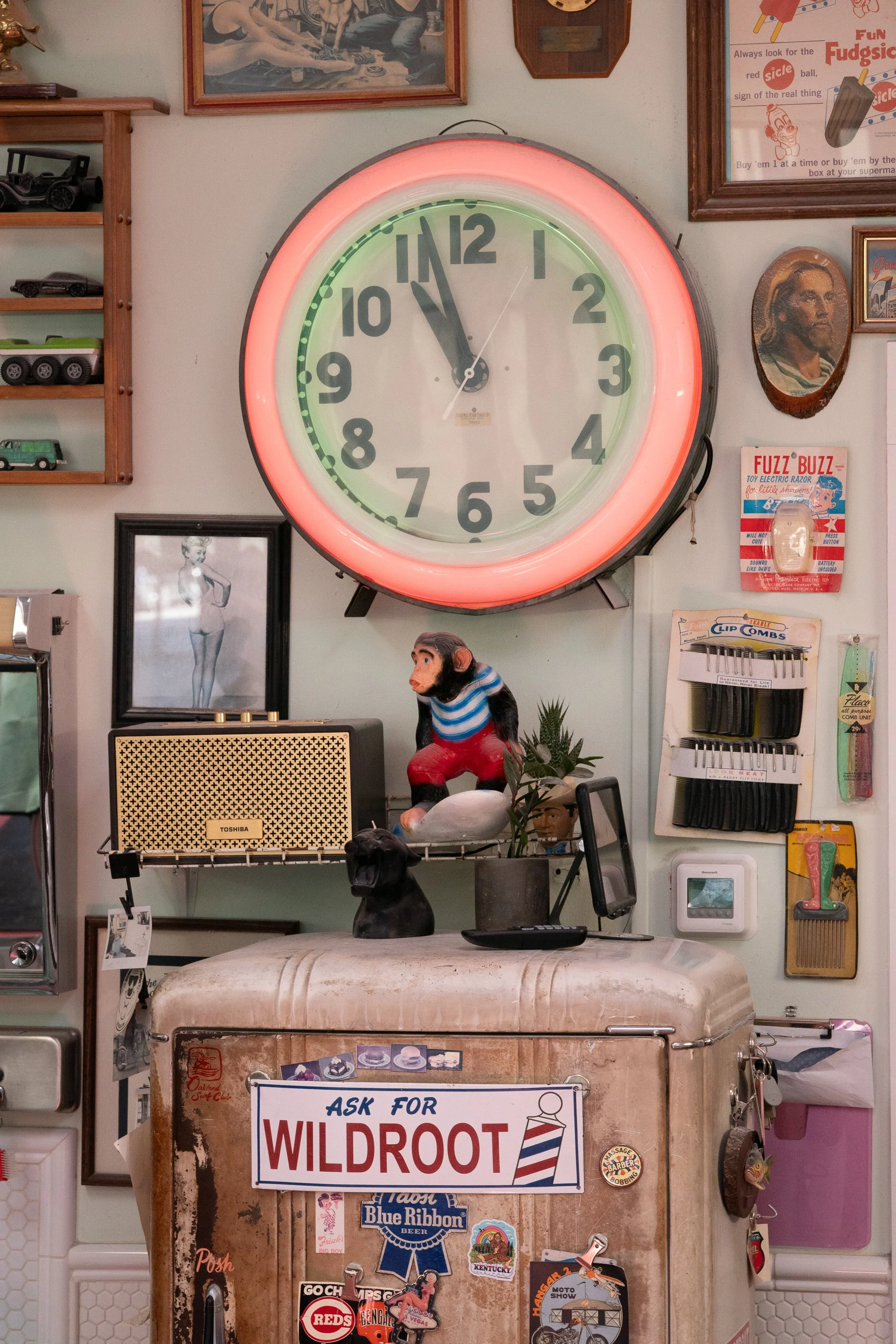
Vintage neon wall clock above a Wildroot refrigerator inside Spanky’s Barbershop in Covington, Kentucky.

Vintage neon wall clock above a Wildroot refrigerator inside Spanky’s Barbershop in Covington, Kentucky.

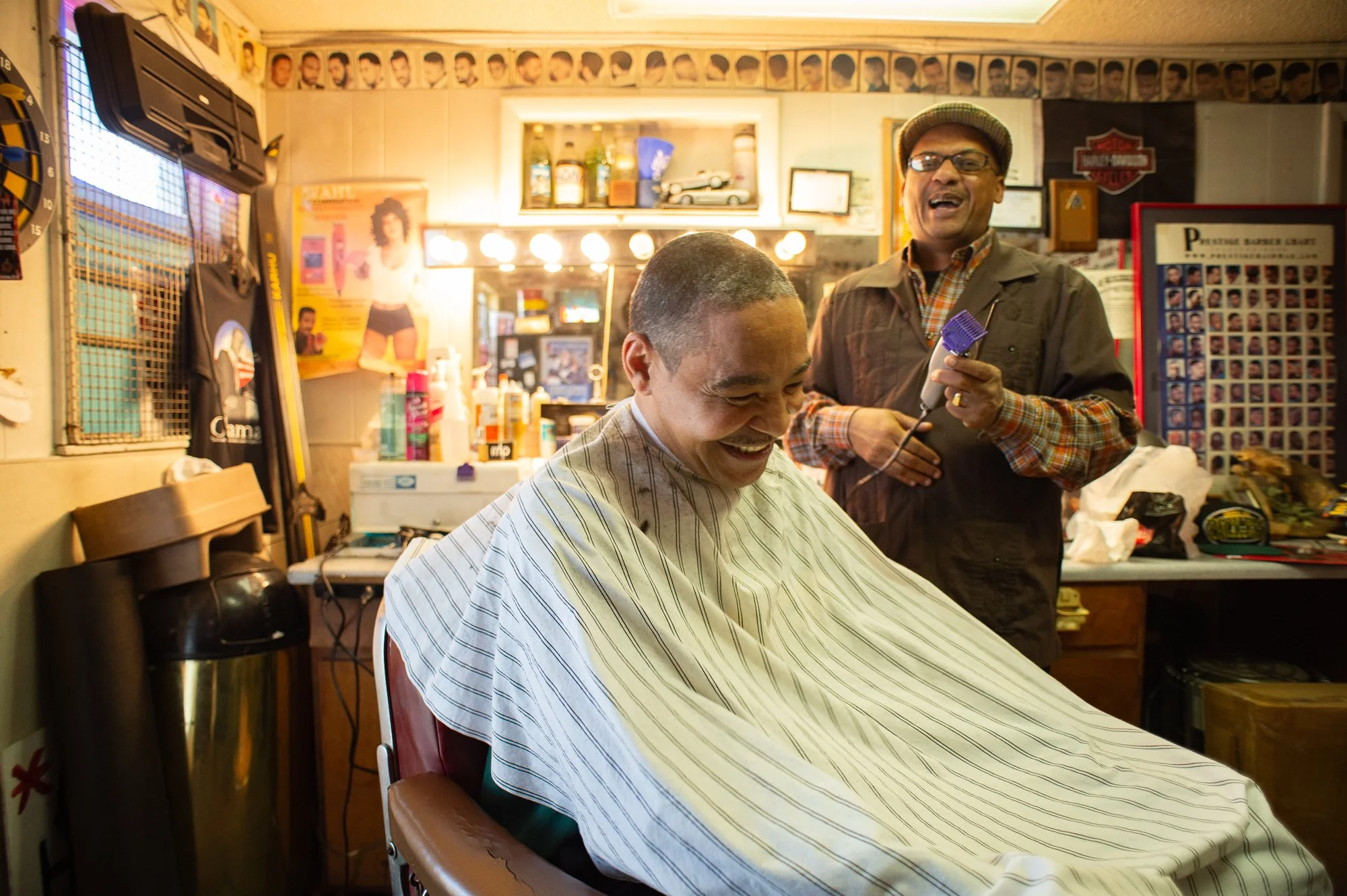
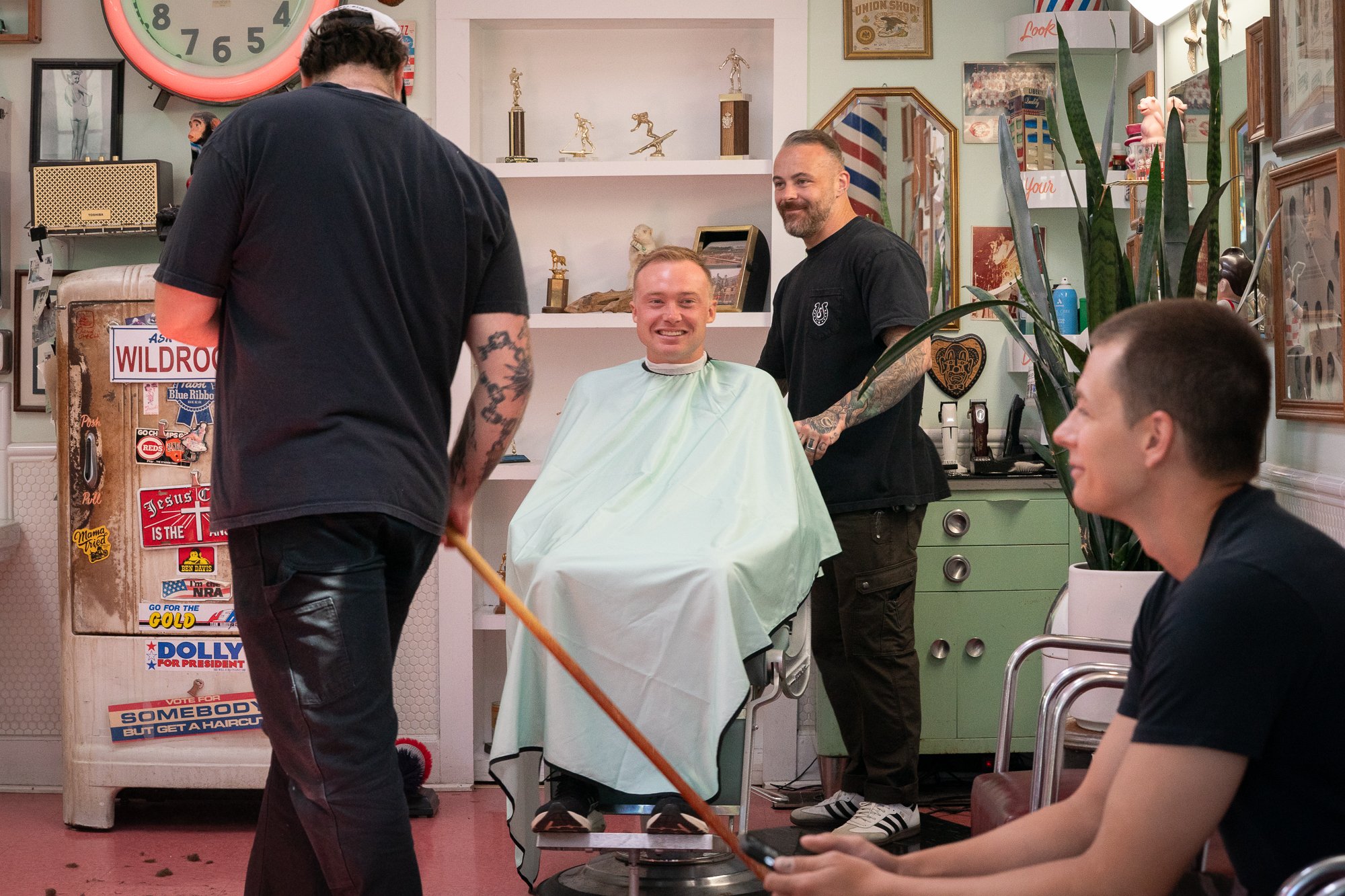
Client smiling during a haircut inside Spanky’s Barbershop in Covington, Kentucky.

Conversation and humor are as much a part of the shop as clippers and combs.

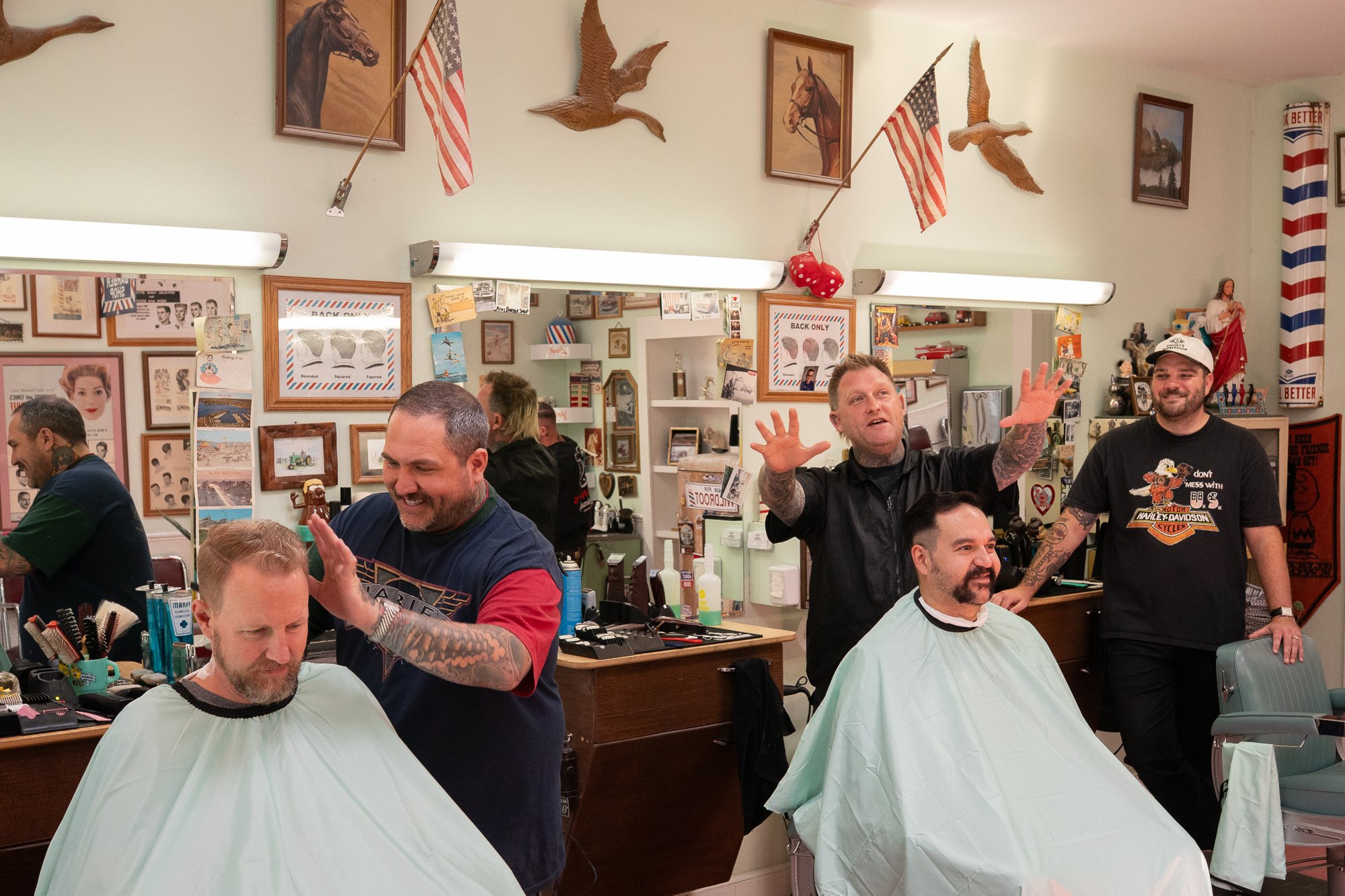
Barbers cutting hair inside Spanky’s Barbershop in Covington, Kentucky surrounded by framed artwork and traditional barber decor.

Barbers at work inside Spanky’s Barbershop in Covington, where layered wall art and Americana details form the backdrop to daily ritual.

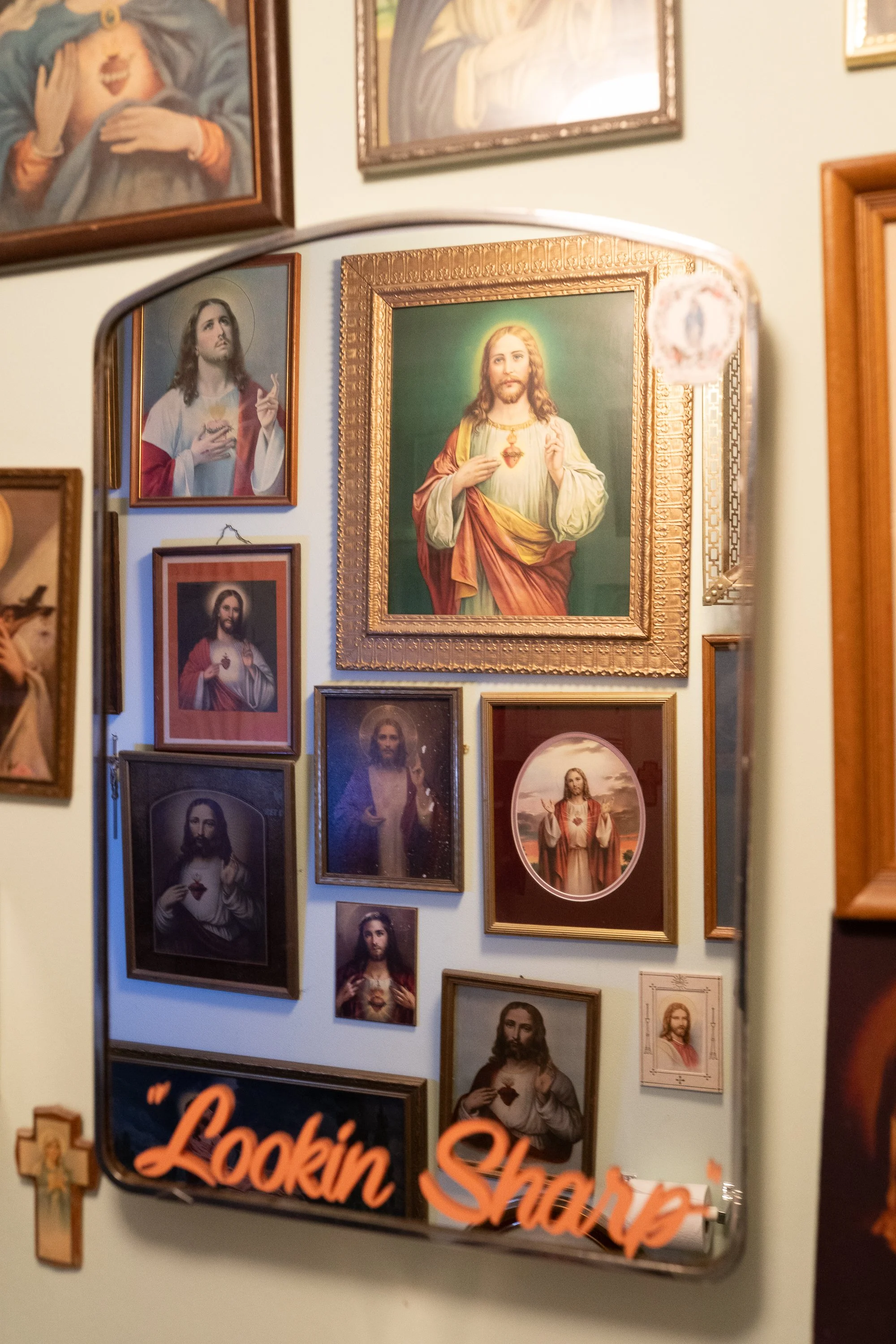
Religious artwork and framed Sacred Heart images displayed on the wall inside Spanky’s Barbershop in Covington, Kentucky.

Personal objects and religious iconography add another layer to the shop’s visual identity.

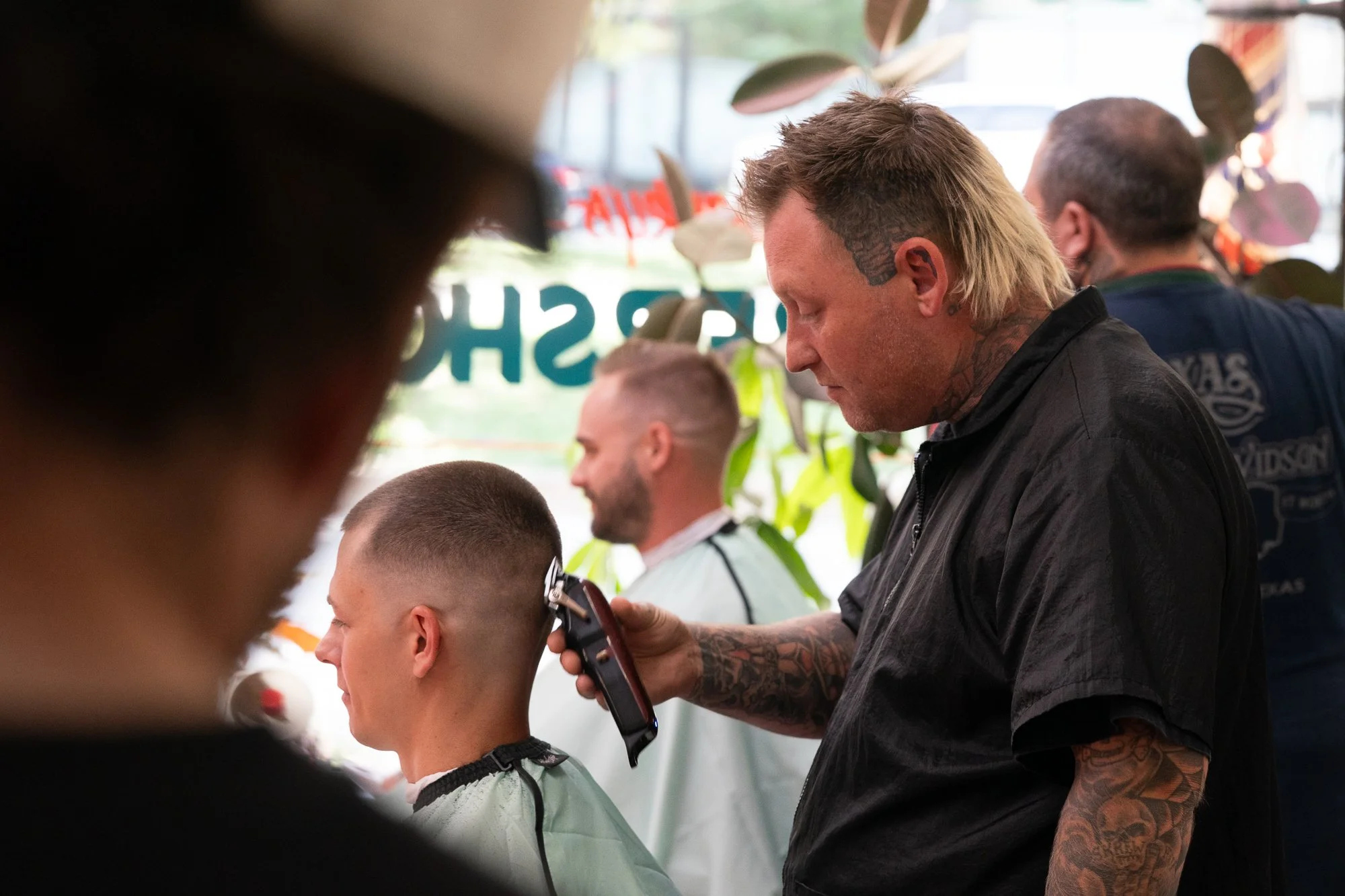
Barber trimming a fade cut at Spanky’s Barbershop in Covington, Kentucky.

A fade cut in progress—straightforward, precise, and rooted in tradition.

Wide interior view of Spanky’s Barbershop in Covington, Kentucky featuring vintage neon clock, Wildroot refrigerator, and framed wall art.

A wide view reveals the shop’s layered design—vintage signage, trophies, and a glowing clock anchoring the space.

Exterior of Spanky’s Barbershop in Covington, Kentucky with green striped awning and brick storefront.

Spanky’s Barbershop sits along a historic Covington street just across the river from Cincinnati.

Leucadia Barbershop in Encinitas, CA

Leucadia Barbershop – A California Chapter of Barbershops of America

Leucadia Barbershop has been part of Encinitas since 1996, when Emiliano Zermeno’s family first opened the doors at its original location. Like many small barbershops, the business was eventually forced out due to landlord pressures—a familiar story across the country. Instead of closing, Emiliano rebuilt the shop in a new space, carrying forward what his family started while shaping it into something distinctly his own.

A Family Barbershop Rooted in Leucadia Since 1996

Emiliano grew up inside the shop his family created. The rhythm of haircuts, the conversations, the regulars—it wasn’t a concept or aesthetic. It was daily life. When displacement forced the original location to close, the continuity of that space could have ended. Instead, it shifted. The new Leucadia Barbershop carries the same foundation, just reinterpreted through a different generation.

Southern California Skate Culture Inside a Barbershop

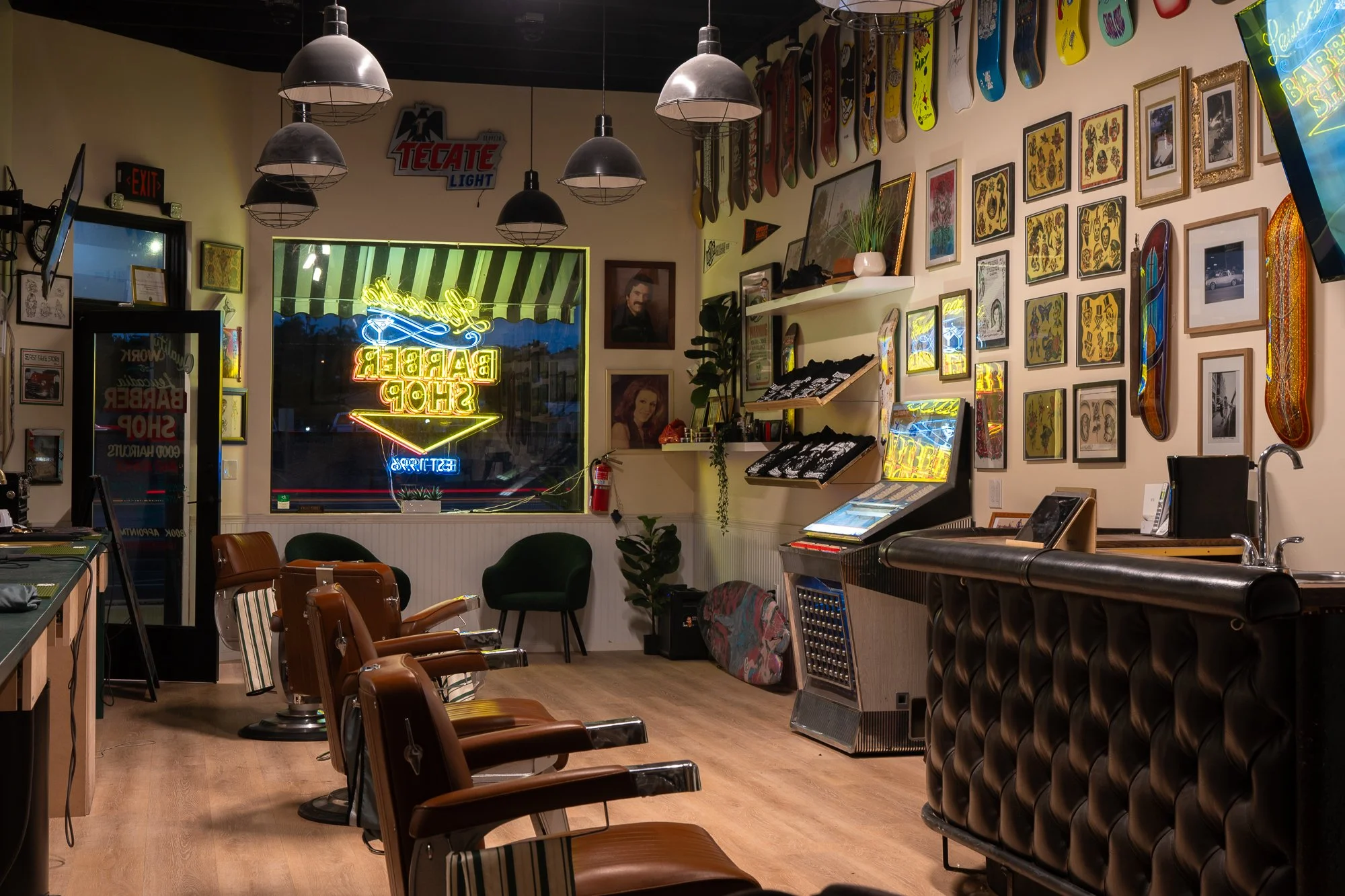
The new space reflects Emiliano himself—a Southern California kid who grew up with a love for skateboarding and still carries that passion today. The shop feels less like a preserved relic and more like a lived-in extension of coastal California: relaxed, personal, rooted in community. The design choices, the atmosphere, even the pace of the room mirror the culture that shaped him.

Emiliano didn’t just take over the business to make his family proud, he took it to the next level. Which is obvious when you look at his shop, but more importantly, you see it in his cuts. He’s a member of the Uppercut Deluxe team - a sign of quality, and another layer that further represents the skateboarding culture.

Photographing Leucadia Barbershop

Leucadia Barbershop was photographed as part of a long-term effort to document traditional American barbershops in all 50 states before they disappear or change beyond recognition. Each shop carries its own story. In Encinitas, that story includes family continuity, displacement, and the culture of Southern California itself.

View More Traditional Barbershops

Leucadia Barbershop is one of many shops documented across the country as part of a 15-year archive focused on preserving everyday American spaces.

→ View the full Barbershops of America gallery
You can also view another California barbershop photographed as part of the same series:

→ Read the blog post about a traditional barbershop in San Diego

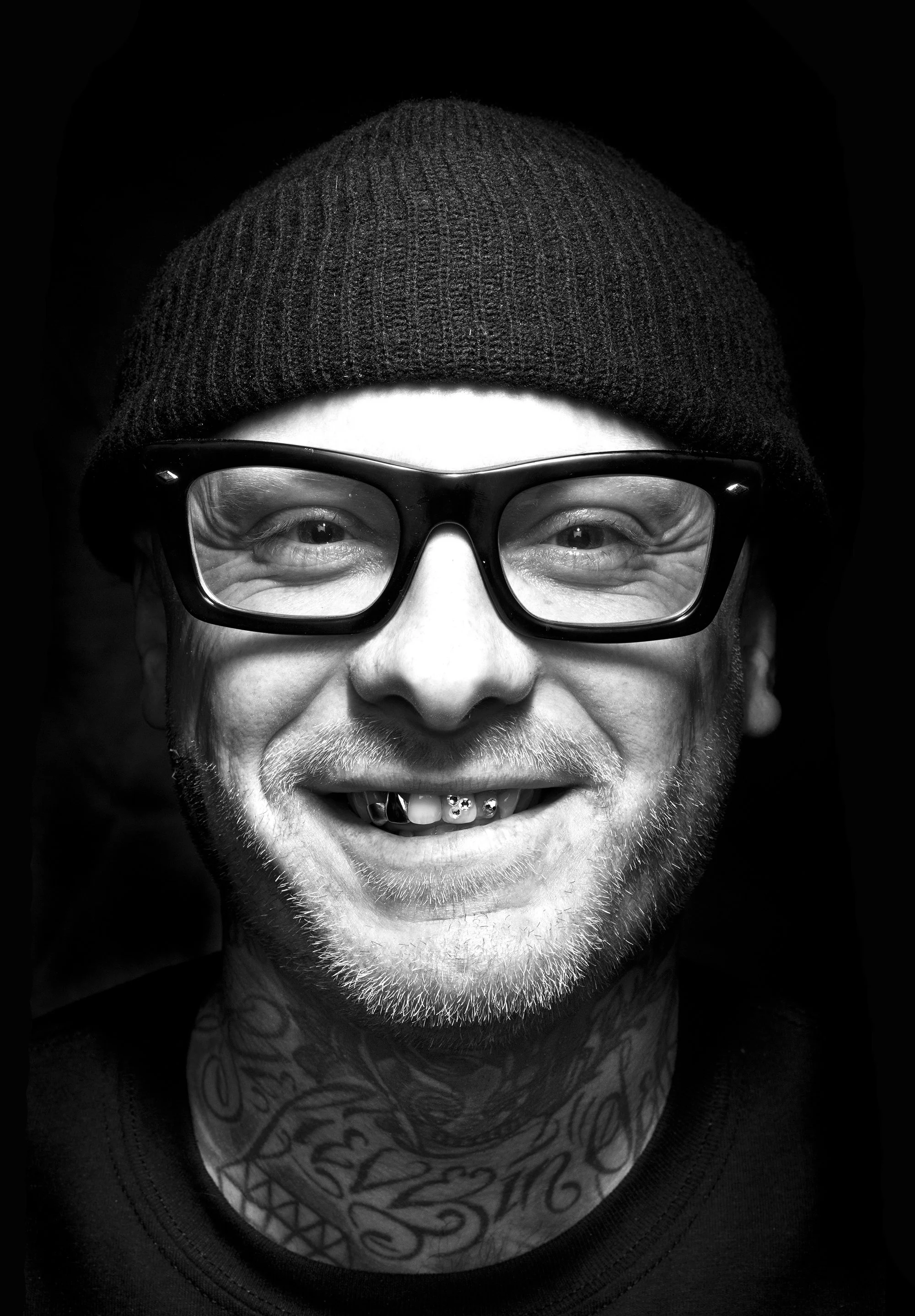
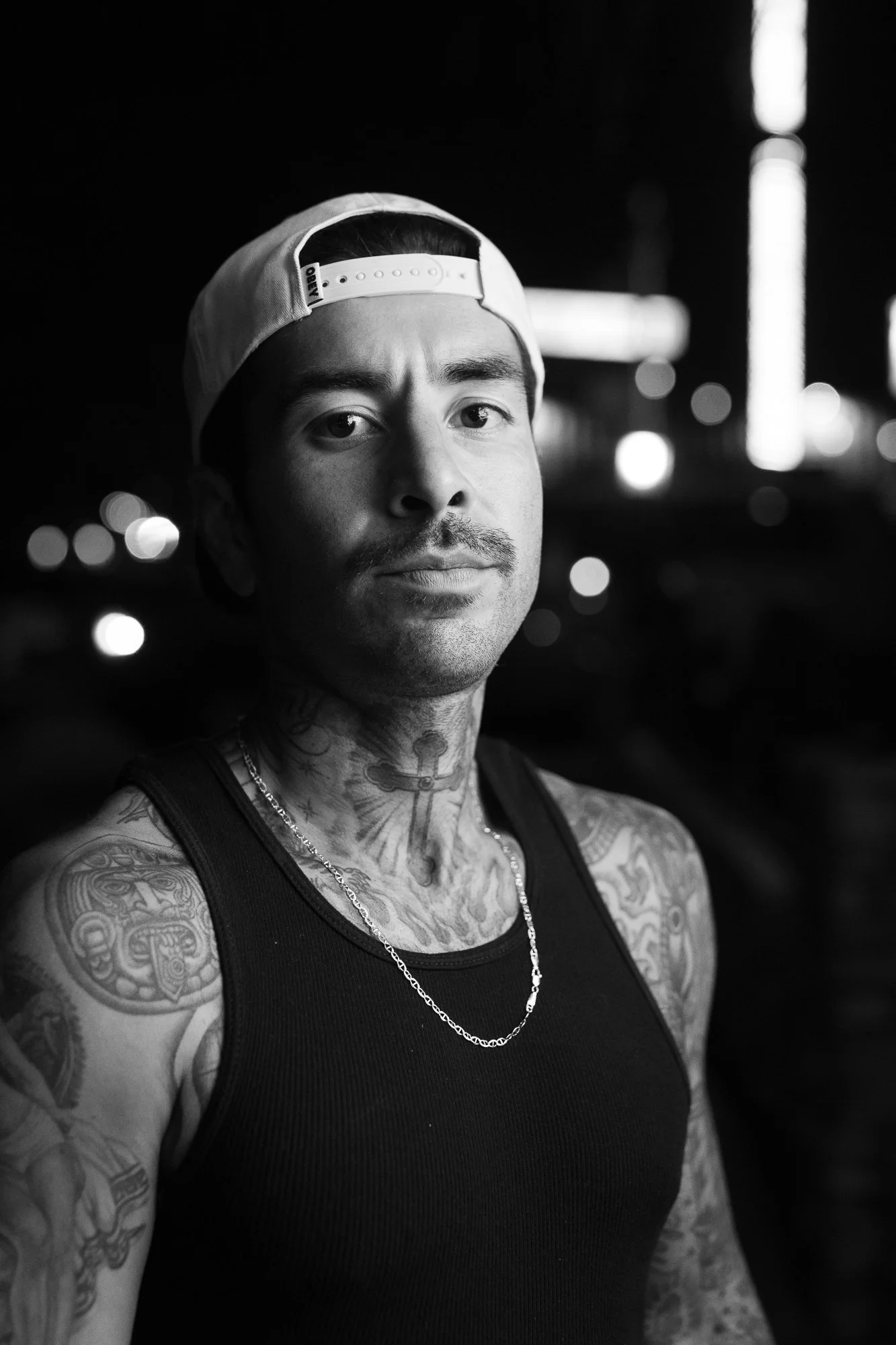
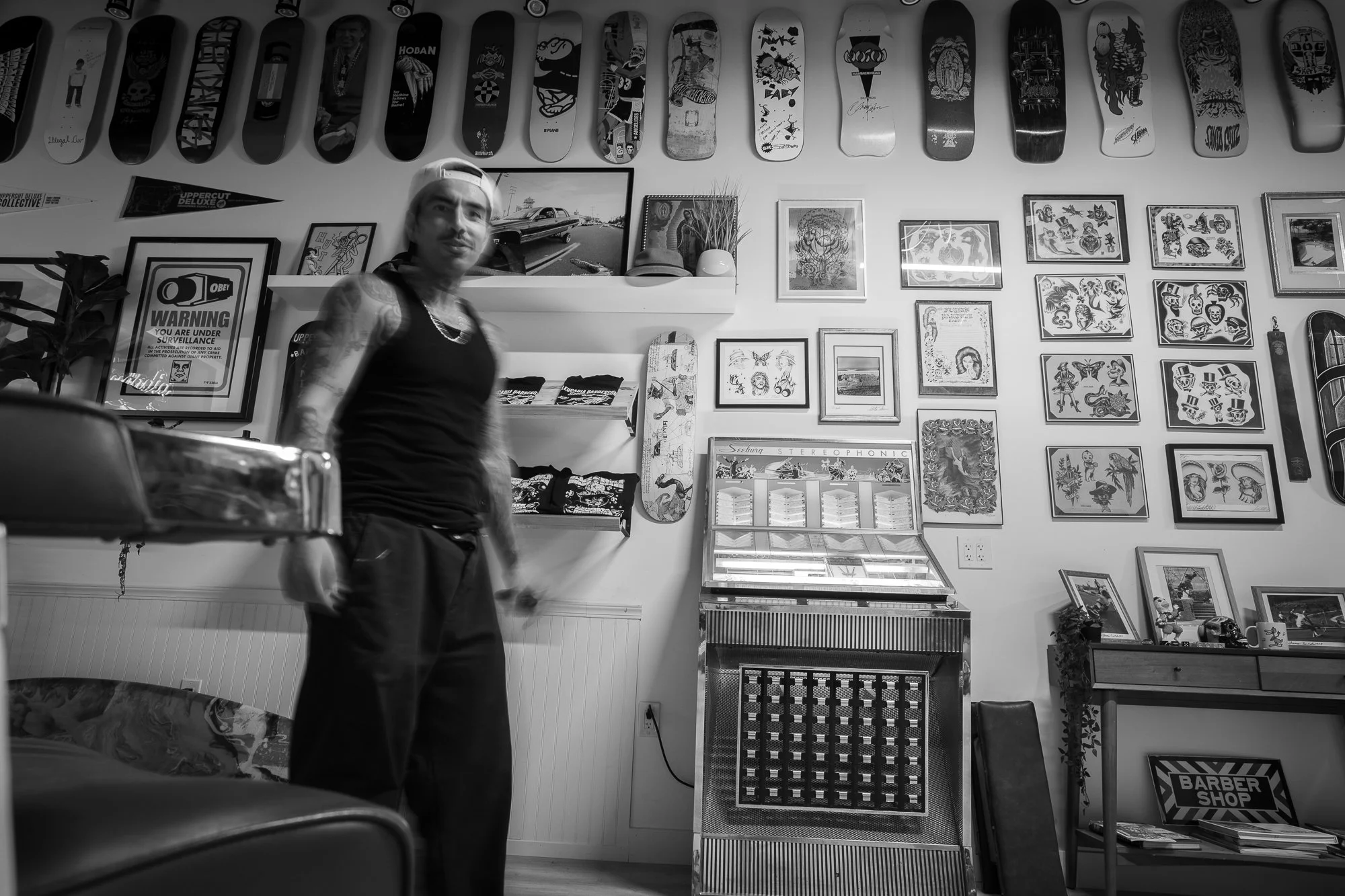
Black and white portrait of Emiliano Zermeno, owner of Leucadia Barbershop in Encinitas, California.

Portrait of Emiliano Zermeno, who continued the family barbershop after the original 1996 location was lost to landlord displacement.

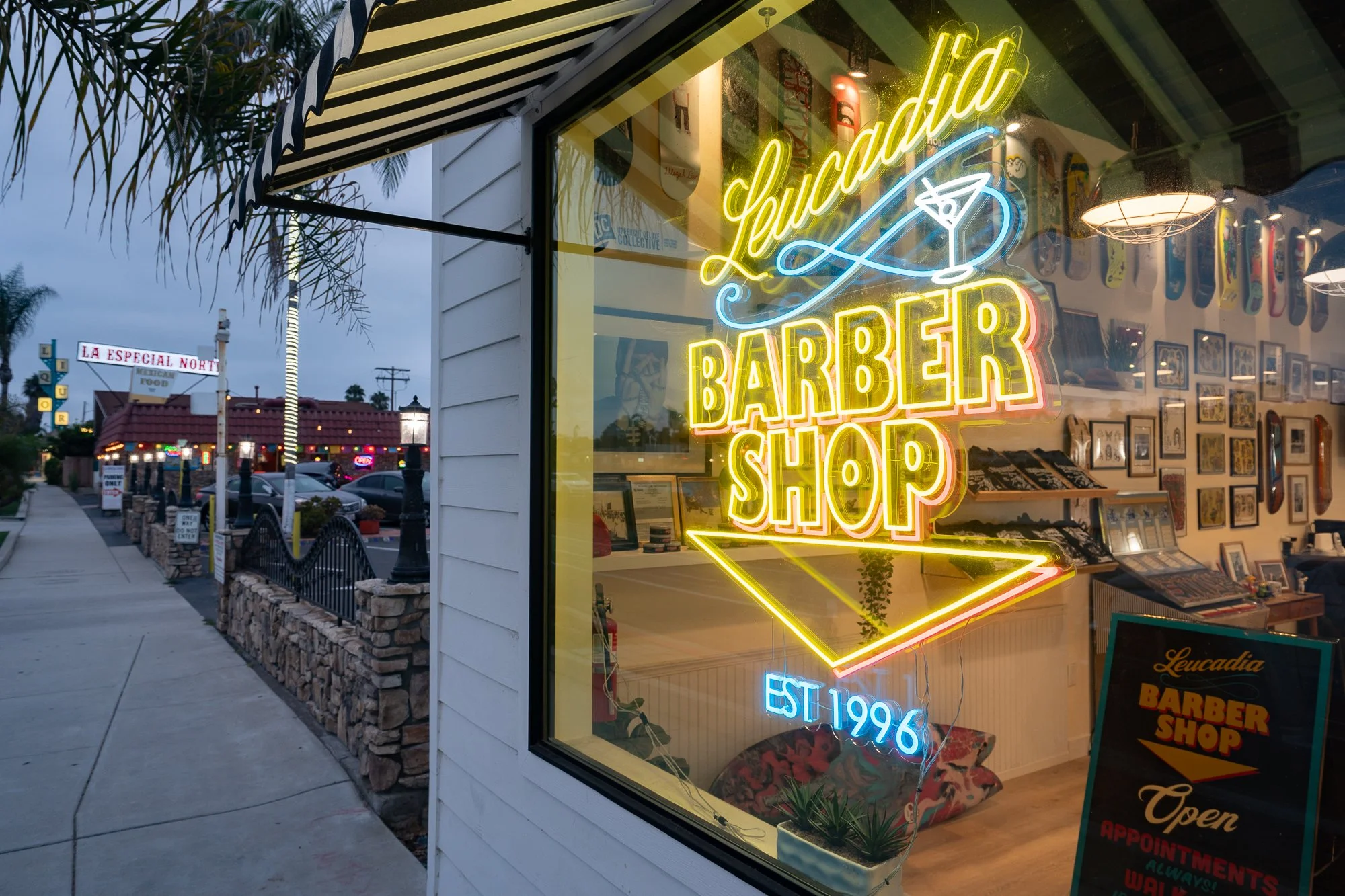
Neon sign at Leucadia Barbershop in Encinitas, California at dusk, established 1996.

The neon sign at Leucadia Barbershop glows over the sidewalk in Encinitas, California. Opened in 1996, the shop has remained part of the coastal community through change and relocation.

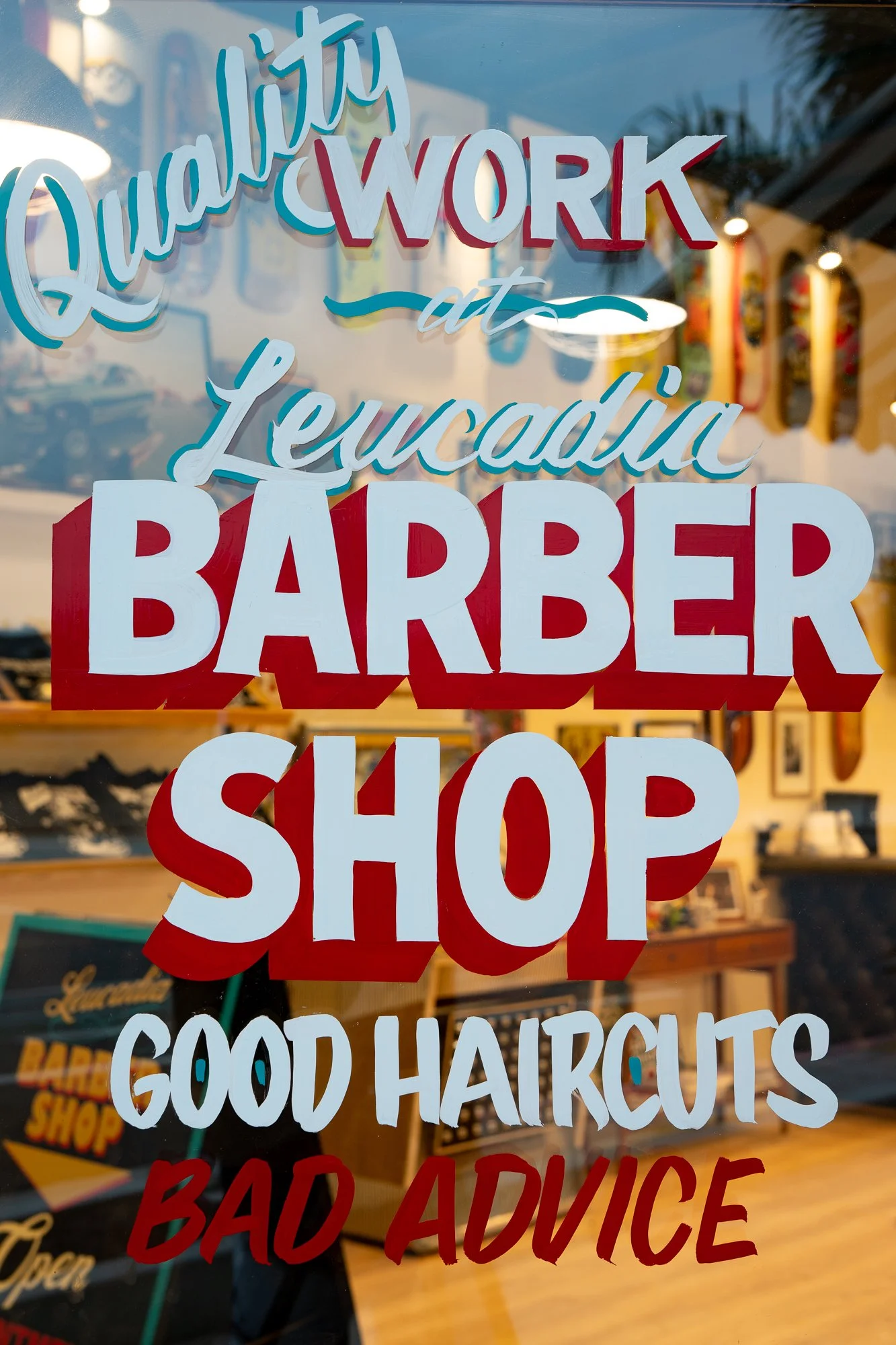
Window lettering reading “Quality Work at Leucadia Barber Shop” on the storefront in Encinitas, California.

Window lettering at Leucadia Barbershop in Encinitas, California. Established in 1996, the shop blends traditional barbering with Southern California character.

Interior of Leucadia Barbershop in Encinitas, California showing barber chairs, framed artwork, and skateboards.

Inside Leucadia Barbershop in Encinitas. The space combines traditional barber chairs with personal artwork and skateboards, creating a shop shaped by the owner’s history.

Emiliano Zermeno inside Leucadia Barbershop in Encinitas, California with skateboards displayed on the wall.

Emiliano Zermeno inside Leucadia Barbershop. The skateboards lining the wall reflect his Southern California upbringing and lifelong connection to skate culture.

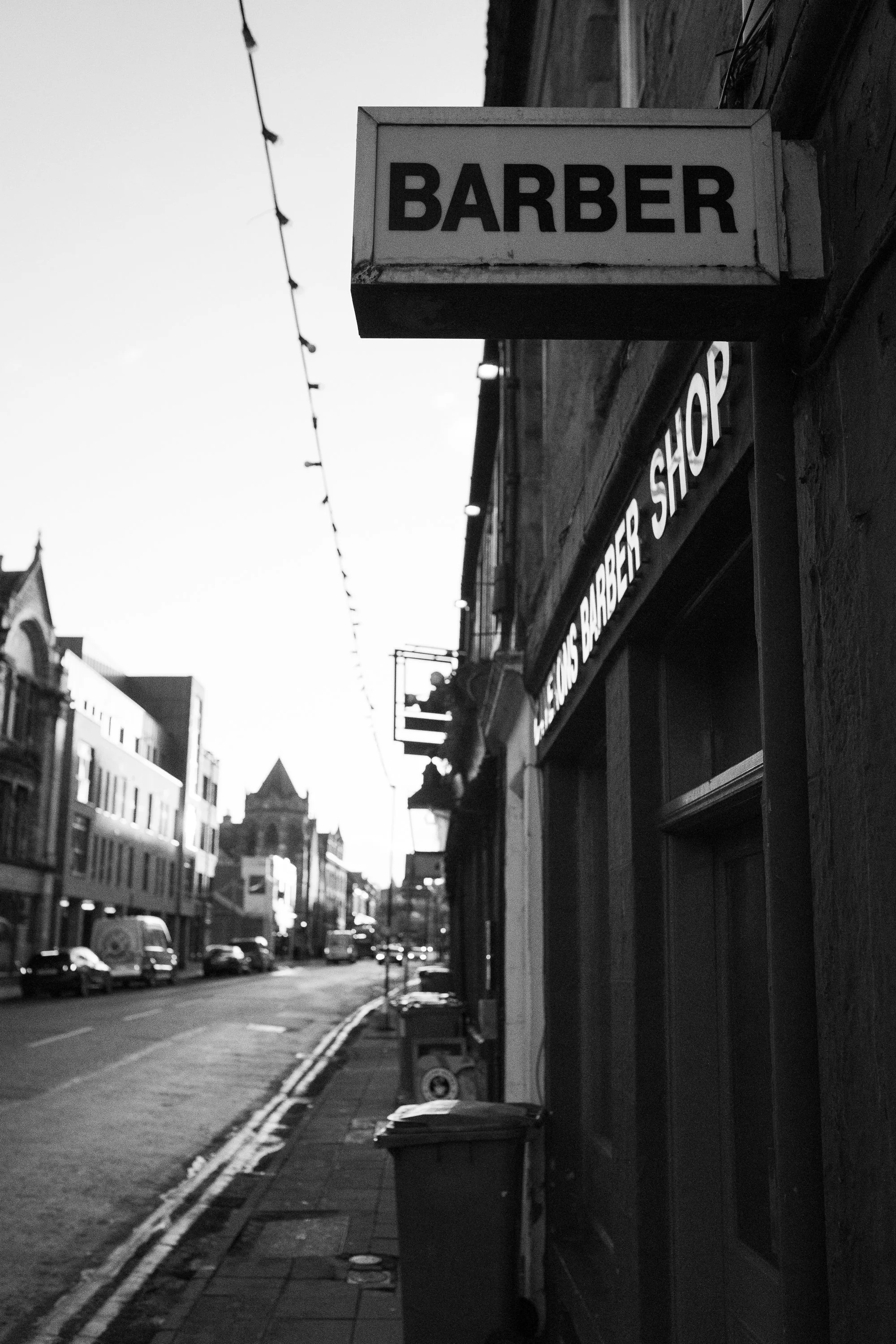
Black and white photograph of a neon barbershop sign

Barbershop in Encinitas, CA

A Traditional American Barbershop - A Neighborhood Fixture

An Old School Neighborhood Barbershop

I first photographed this barbershop in San Diego in 2011, early on in what would eventually become the Barbershops of America project. At the time, I didn’t fully realize how important these photographs would become. I was simply drawn to places like this — shops that felt unchanged, where time moved a little slower and the barber knew everyone who walked through the door.

This shop, run by Johnny Lovato, was one of those places.

A Shop That Felt Lived In

Walking into Johnny’s barbershop felt like stepping into another era. The space wasn’t curated or styled — it was simply lived in. The chairs, the mirrors, the worn floor, the little personal details scattered throughout the shop all told a story without trying to.

These weren’t decorations meant to evoke nostalgia. They were just the things that had accumulated over time. That honesty is what made the shop special and what kept the doors open to the same neighborhood of friendly customers for decades.

The Barber and the Community

Johnny was always kind and welcoming, the type of barber who made time for conversation as easily as he made time for a haircut. His shop wasn’t just a place people came to get cleaned up — it was a place where stories were shared and relationships were maintained.

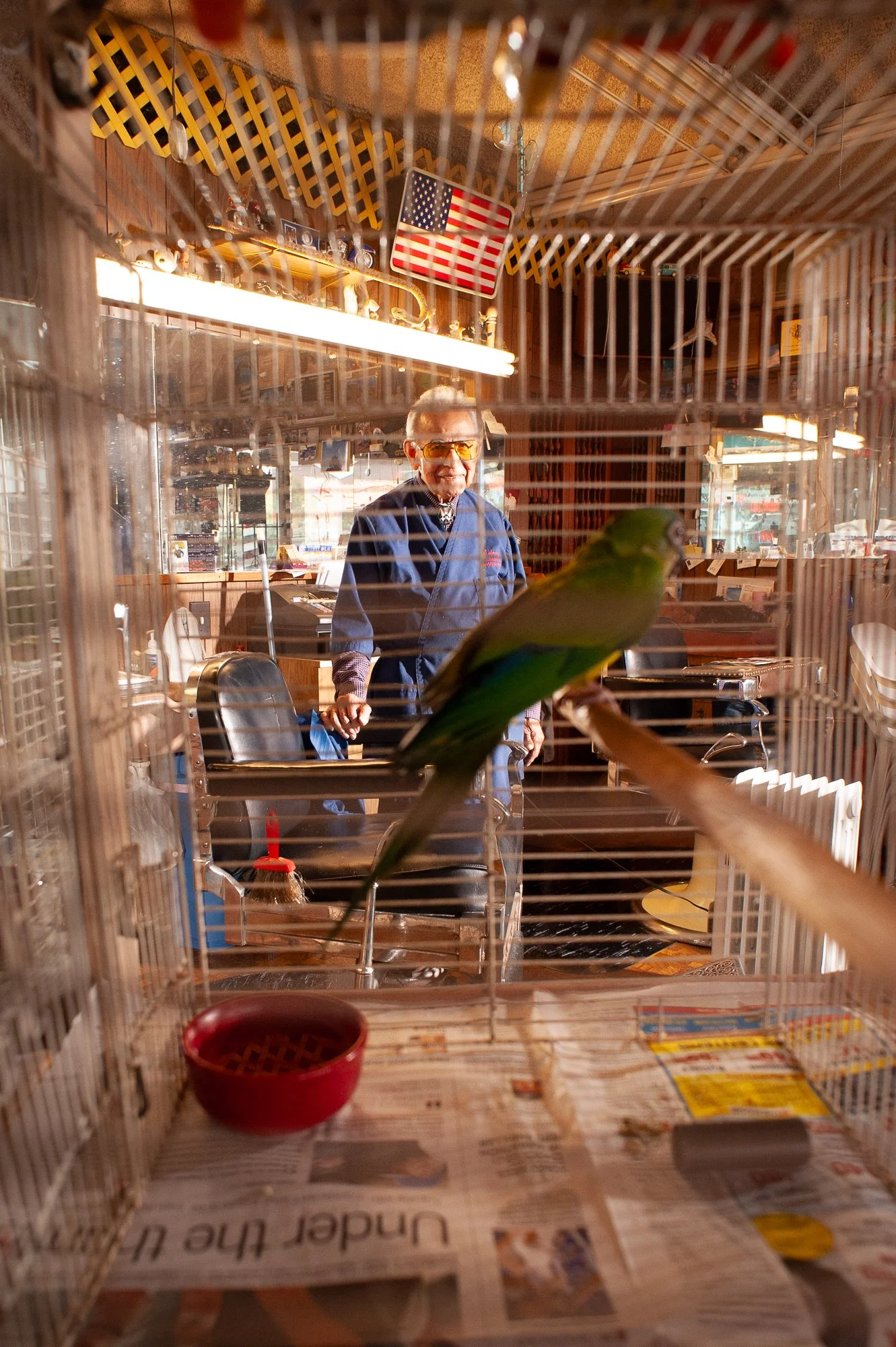
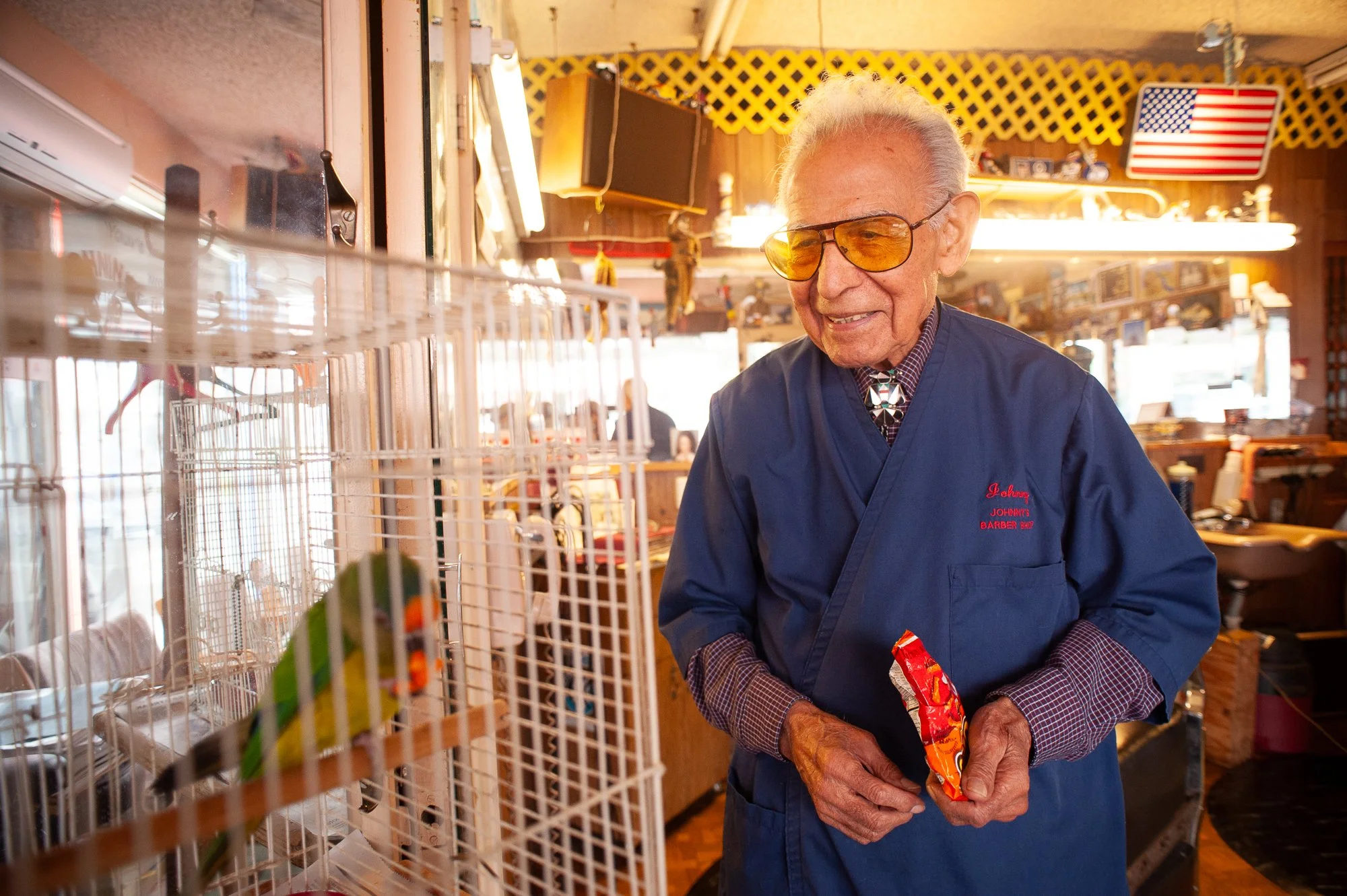
One of the small details I always remember is how happy Johnny was feeding his bird Cheetos. It’s a simple moment, but it perfectly captures the personality of the space and the rhythm of the shop. Those are the moments I’m always looking for when I photograph places like this.

Returning Years Later

I returned to photograph the shop again in 2019. By then, Johnny’s son had taken over the business. Much of the spirit of the shop remained, but time had clearly moved forward — as it always does.

Not long after, the barbershop closed, and the space was eventually transformed into something new, and in my opinion, soulless. That’s the reality for many traditional barbershops across the country. Rising rents, retirement, and redevelopment quietly erase places that once anchored their neighborhoods. Luckily another barber took over the space, so it remains a barbershop, just without the decades of character and memories that once filled it.

Why These Photographs Matter

Barbershops like this rarely close with ceremony. They disappear quietly, often without anyone realizing that a piece of local culture has gone with them.

This series exists so that those places aren’t completely lost. These photographs are not about nostalgia for nostalgia’s sake — they’re about acknowledging the importance of everyday spaces that shaped communities for generations.

Part of a Larger Archive

Johnny Lovato’s barbershop in San Diego is just one small part of a much larger body of work documenting traditional barbershops across the United States. Together, these images form an archive of a disappearing American tradition — one shop, one barber, one story at a time.

More Barbershops of America

View The Book

View The Gallery

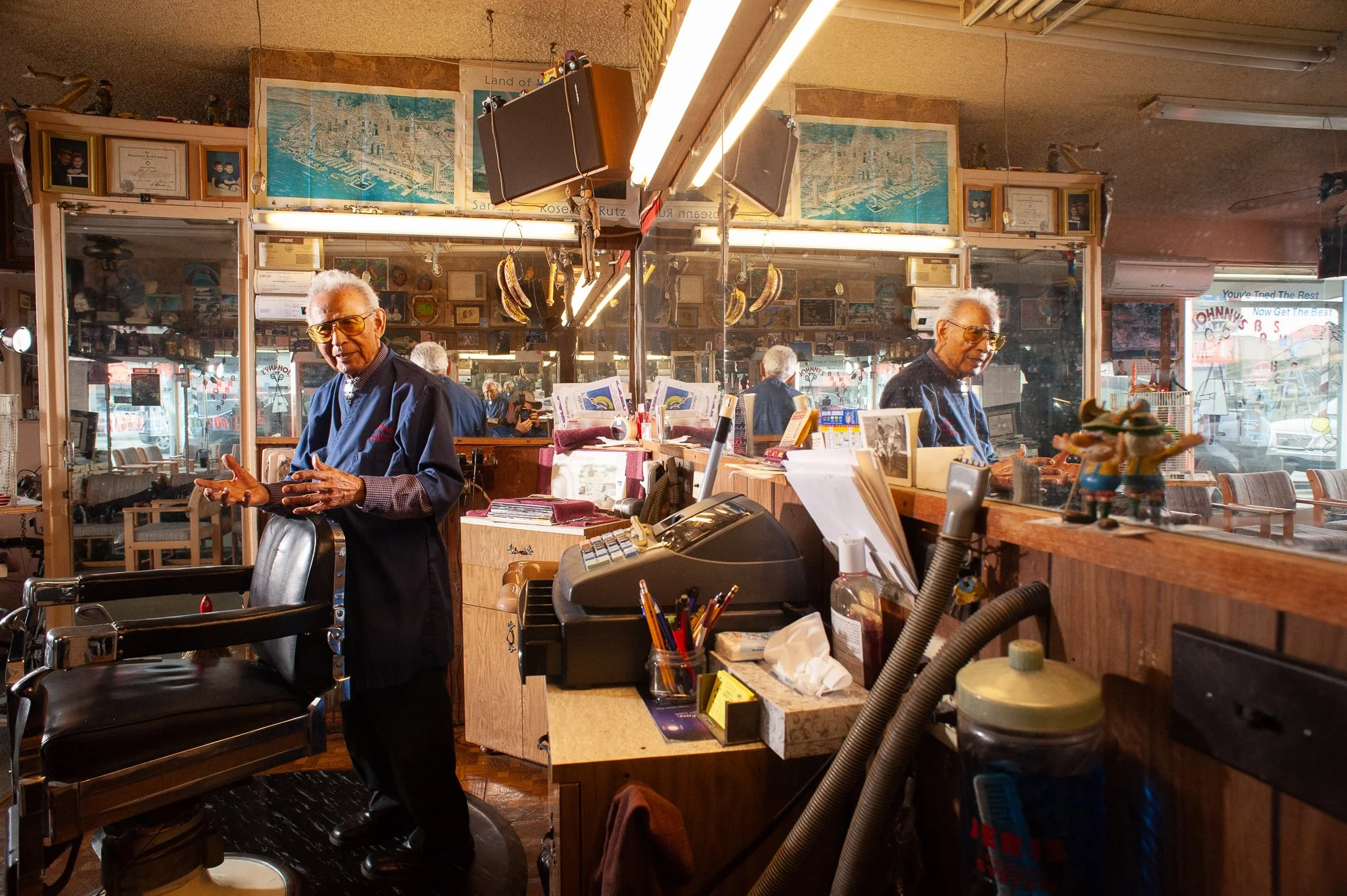
Old-school American barbershop interior, Point Loma San Diego documentary photograph

Interior of a traditional barbershop in Point Loma, San Diego, where time-worn chairs and details reflect decades of community history.

Johnny Lovato feeding his pet bird inside his barbershop in San Diego, California

Johnny Lovato, the barber, shares a moment feeding the shop’s pet bird — a small gesture emblematic of daily life in the space.

An old school barber smiles while watching his pet bird

Johnny Lovato smiles after feeding his pet bird at his barbershop in San Diego

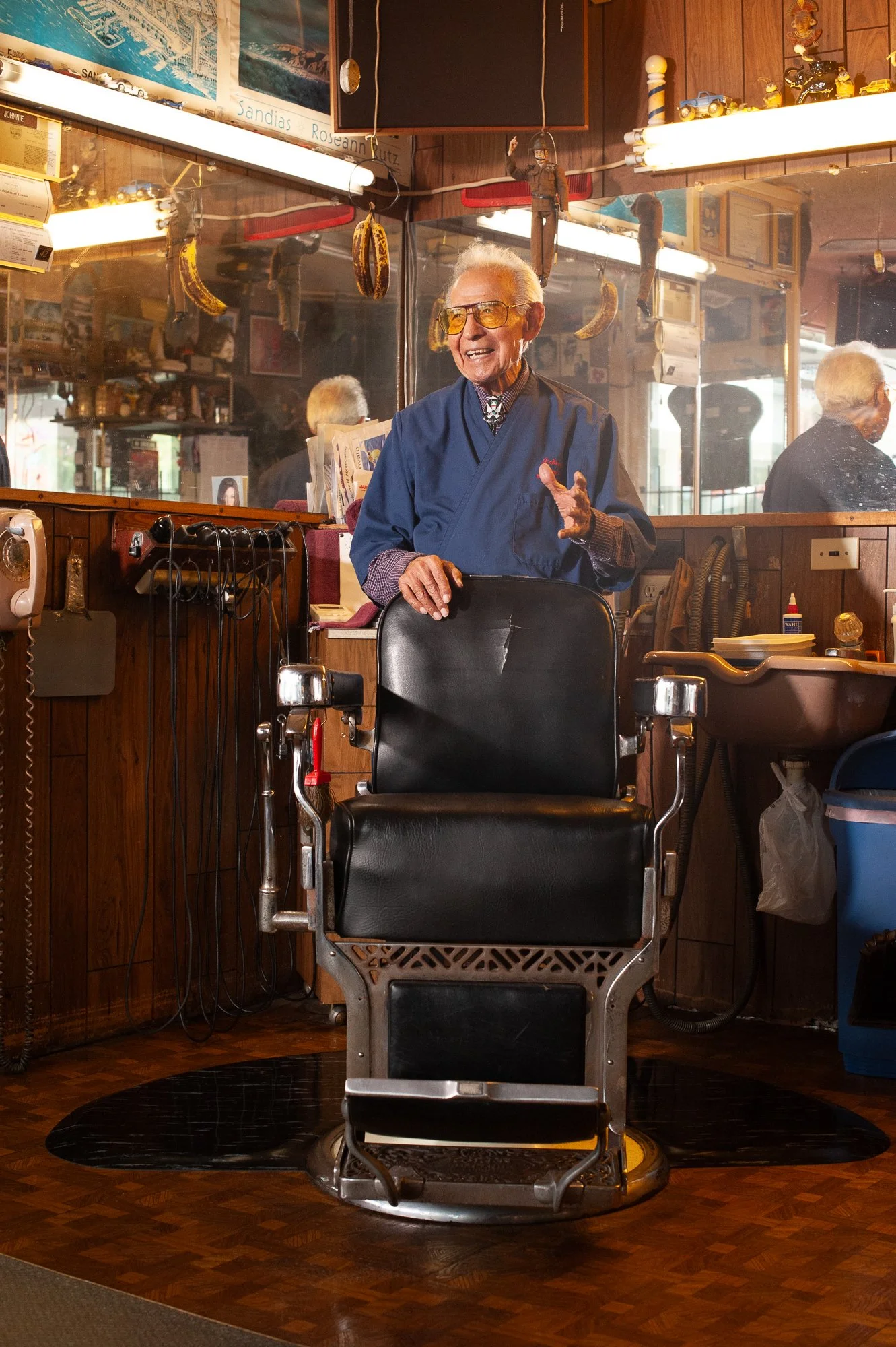
Portrait of a barber standing behind his chair in a traditional San Diego barbershop

Portrait of a barber standing behind his chair — a quiet testament to the people who made these shops more than just businesses.

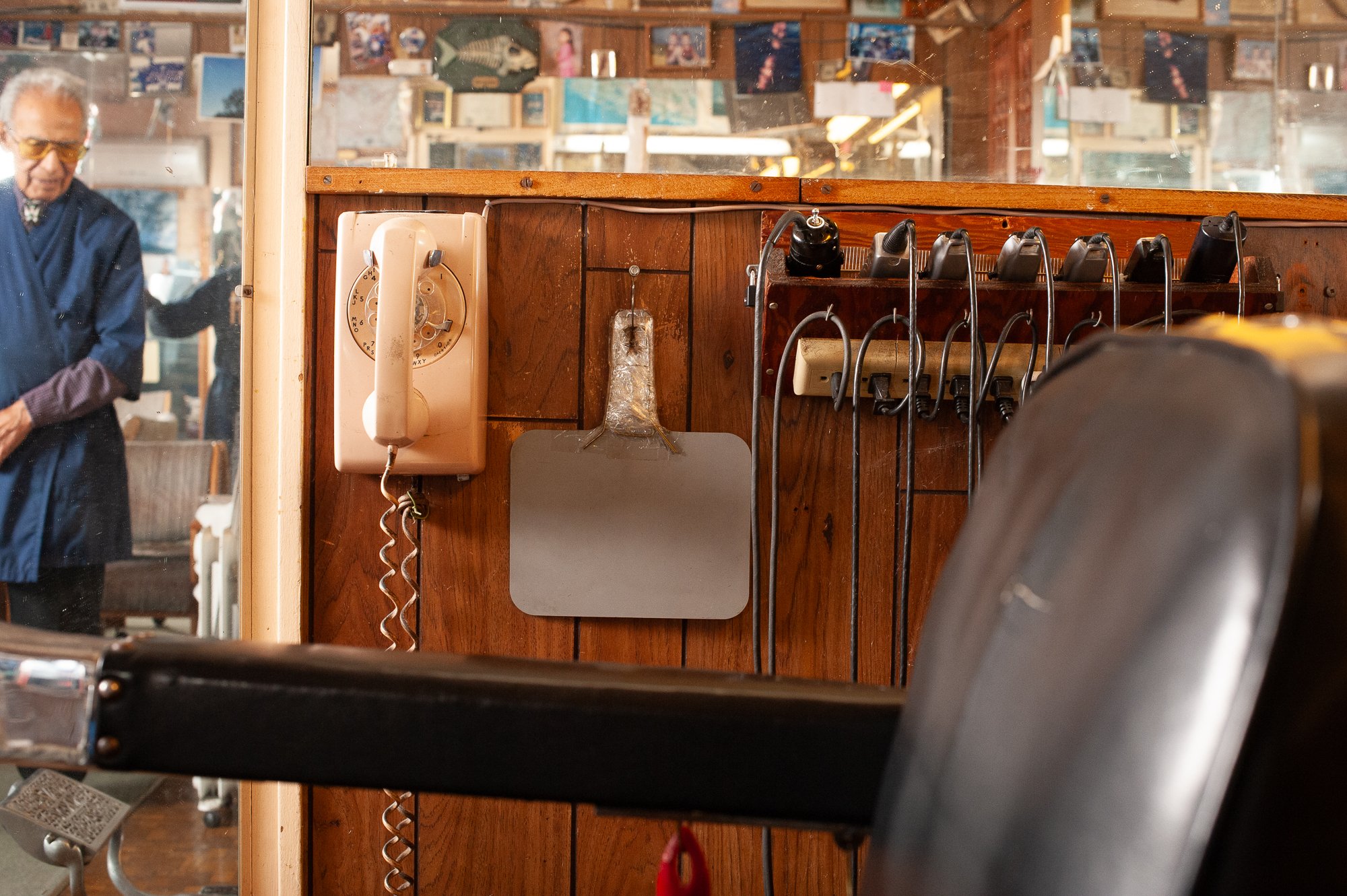
Rotary telephone inside a traditional barbershop, documentary detail photo

An old rotary telephone inside the shop — one of the many small artifacts that speak to the barbershop’s lived-in past

Barber sitting in his chair at a traditional barbershop in San Diego, California

A barber sits in his chair during a quiet moment — a human pause captured in the rhythm of the shop.

Customer getting a haircut in a traditional barbershop in San Diego, California documentary image

A customer receives a haircut — a simple everyday moment that also anchors the narrative of barbershop culture.

The Griffin Museum of Photography

Photography Museum - Winchester, Massachusetts

13+ years now I’ve been photographing traditional barbershops in all 50 states of the USA and the layers continue to peel. In the beginning it was just a thing to do because I love barbershops. Then as time went on I felt responsible for documenting them before they all disappeared. Now, in 2024, I see the collective body of work as a historical document of the barbers and shops that served as a staple in their respective communities for 30, 40, 50, 60+ years. On the surface the theme of this project is about a place to get your haircut. Really though, it’s about community, friendship, and human connection. So I’m honored to announce that a selection of these photographs will be shown at the Griffin Museum of Photography in Winchester, MA for their upcoming group show “Vision(ary) which focuses on communities, cultures, and environments. Please go check out the show as well as the other great exhibitions from June 7th-September 27th.

Click here to purchase a copy of Barbershops of America (photo book) and HERE to purchase prints from this series.

Exhibition at the Griffin Museum of Photography

Barbershops of America at The Griffin Museum of Photography

Traditional Barbershop Photography

Historic Barbershop Photography in Birmingham, Alabama

Birmingham, Alabama has a way of holding onto its past. You feel it in the buildings, the neighborhoods, and especially in places like traditional barbershops — spaces that have quietly served their communities for generations.

This barbershop sits just off the main road, easy to miss if you’re not paying attention. Inside, time slows down. The chairs are worn, the mirrors have seen decades of haircuts and conversations, and the rhythm of the shop feels unchanged by whatever year it happens to be outside.

This photograph is part of my ongoing Barbershops of America documentary project — a long-term effort to photograph traditional barbershops across all 50 states and preserve these spaces before they disappear.

A Traditional Barbershop in Birmingham’s Magic City

Birmingham is often called The Magic City, a nickname rooted in how quickly it grew during the industrial boom. But step into a barbershop like this one and you’re reminded that not everything moves fast here.

This is the kind of shop where:

  • Regulars don’t need to explain how they want their haircut

  • Conversations drift from local politics to college football to family stories

  • The barber knows everyone by name

There’s no rush. No appointment system. Just a steady flow of people who’ve been coming here for years — sometimes decades.

From a documentary photography standpoint, these details matter. They’re what separate a real working barbershop from a styled or recreated space. This shop isn’t a set. It’s lived-in.

Photographing Barbershop Culture in the American South

Southern barbershops have a distinct character. They’re often deeply rooted in their neighborhoods, serving as informal gathering places as much as businesses.

When I photograph barbershops like this one in Birmingham, I’m not trying to stage anything. The goal is to let the room speak for itself — the light, the posture of the barber, the way a customer settles into the chair.

The best moments usually happen quietly:

  • A glance in the mirror

  • A pause in conversation

  • The way afternoon light hits the floor

Those moments are what give barbershop photography its emotional weight. They’re small, but they’re honest.

Why Traditional Barbershops Matter

Across the country, independent barbershops are slowly disappearing — replaced by chains, salons, or modern storefronts designed to look old but lack history.

Projects like Barbershops of America exist to document what’s real before it’s gone.

These photographs are not nostalgic recreations. They’re records of working spaces:

  • Where generations of families have gotten their hair cut

  • Where stories are passed down as casually as advice

  • Where community still exists without needing a label

Birmingham’s barbershops are an important part of that story.

Part of the Barbershops of America Documentary Series

This Birmingham barbershop photograph is one piece of a much larger archive. Over the years, I’ve photographed traditional barbershops in cities, small towns, and rural communities across the United States.

The full project is available as:

  • A Barbershops of America photo book

  • Fine art photographic prints

  • Editorial and commercial licensing for publications, exhibitions, and design projects

Each shop adds another chapter to a disappearing part of American culture.

Stories From The Barbershop

It’s been interesting to see how some smaller cities have groupings of barbershops all in one place. Common sense would tell you that isn’t a great business strategy, but what do I know? Birmingham, Alabama is just such a place with multiple shops all on the same block, which was exciting but things didn’t start out so hot.

There was an older gentleman sitting out in front of the first shop I approached. He was talking on the phone while sitting on a stool in front of the door. I introduced myself and said that I’d like to make some photographs of the shop. Before I could even finish he said “I don’t have time”, turned his back to me, and continued his conversation. The shop was completely empty. I tried pushing back politely, stating that I’d been working on this project for 12+ years and published a book on traditional barbershops in all 50 states, etc, etc, etc. It didn’t work. He was angry that I was still standing there trying to talk with him and even more angry that I asked for the owner’s phone number. He wasn’t annoyed. He was angry almost to the point of aggression. Ah well. Can’t win them all. That led to a stop in Magic City Barbershop, which opened it’s doors in 1930! There is a poster on the front window from the Jefferson County Historical Commission that states so, but you don’t need a poster to tell you the place isn’t far off from its 100 year anniversary. You can just feel it.

The shop was empty besides the one barber working. He was a character. Had a witty answer for everything I said or asked.

Me: “Is this your shop?”

Him: “It ain’t yours!”

There were lots of old newspaper clippings on the wall of Martin Luther King and others from the riots and bombings. “Bombingham” as he called it, has a unique past that shaped it into the city it is today. Despite all the racial violence and negativity, it’s fascinating to be in that shop because the city’s history provides an education, experience, and conversation that you’re not likely to get anywhere else in the country. Barbershops provide an unorthodox way of learning about America!

Bringing Barbershop Photography Into Your Space

These photographs are often collected by:

  • Interior designers

  • Architects and creative offices

  • Hotels, restaurants, and barbershops

  • Private collectors interested in Americana and documentary photography

If you’re looking for artwork that feels authentic, grounded, and timeless, traditional barbershop photography offers a quiet strength that works across many environments.

Interested in These Photographs?

Fine art prints from this Birmingham barbershop series are available in multiple sizes and formats. Editorial and commercial licensing is also available.

Contact me here to discuss print options, licensing, or custom projects - rob@robhammerphotography.com

View More From the Barbershops of America Project

Another Barbershop Story

Barbershops of America Photography Gallery

Barbershop Photo Book/Prints

Photograph of barber in Birmingham, Alabama

Magic City Barbershop - Birmingham, Alabama

Photograph of sneakers and shoes for sale at a classic barbershop in Birmingham, Alabama

Sneakers for sale at a barbershop in Birmingham, Alabama

Photograph of a classic barbershop in Birmingham, Alabama

Traditional barbershop photography

Portrait of barber standing in front of his shop in Birmingham, Alabama

Portrait of a barber in Birmingham, Alabama

Small Town North Carolina Barbershop

Granville Barbershop, North Carolina

A Traditional American Barbershop Documented Through Photography

The Granville Barbershop in Grannville, North Carolina is the kind of place that has quietly served its community for decades. No branding overhaul. No attempt to modernize what already works. Just a steady rhythm of haircuts, conversation, and routine that has outlasted trends and redevelopment cycles.

These photographs were made as part of my long-term documentary project, Barbershops of America — an ongoing effort to photograph traditional barbershops across the United States before they disappear. Shops like this are not just businesses; they are cultural fixtures that anchor small towns and neighborhoods.

Why Traditional Barbershops Matter

Traditional barbershops play a unique role in American life. They are spaces built on trust and repetition — places where people return month after month, year after year, to see the same barber in the same chair.

In small towns especially, barbershops function as informal community centers. News is exchanged. Silence is respected. Generations overlap. These are the kinds of everyday environments that rarely feel important in the moment, yet become deeply significant once they’re gone.

Photographing these spaces is about preservation, not nostalgia — recording them honestly, as they exist, without staging or intervention.

The Story

These photographs were made during a drive home to upstate NY for Christmas. The owner was very skeptical of my intentions at first but agreed to let me photograph his shop. During my time there I had some fun interactions with customers, but he never said much. As far as history goes, the shop opened in the 1940’s, and prior to that it was an African American movie theater!! How’s that for Southern?

As with most old shops, the relationship between proprietor and those in his chair was easy, fluid, and quite candid. At one point an older gentleman sauntered in with his head down, dropped a gift on an empty chair, turned back toward the door and said “well, gotta go”. That was it. No interaction. Never even lifted his head up to make eye contact. The barber didn’t seem surprised, nor did he skip a beat on the haircut in progress.

Took about a half hour until I was pleased with the pictures made. Afterward I gave the barber a card and thanked him for the hospitality. He stopped cutting, grabbed a few coins off the back bar, placed them in my hand and in an almost too good to be true accent said “take these two qwwwaaaaaaaatehs back to that machine and get you a pop. I’ll bet you haven’t had a 50 cent pop in yeeeeaaaaaaahs.” Sure enough, there were ice cold sodas coming out of a vintage Coca Cola machine against the back wall. Can’t tell you the last time I even had the desire for a soda, but I wasn’t about to turn that one down.

Interactions like these are what keep Barbershops of America going. Talking to people that give you a very definitive sense of place is gratifying, educational, and fun. Hearing about the shops history in such a dialect not only tells you where you are in the world, but also where you aren’t. I love that.

Continue exploring documentary barbershop photography in the Barbershops of America series

Barbershop Photography Gallery

Barbershop Photo Book/Prints

Another Barbershop Photo Essay

Contact me directly about barbershop photography licensing for your editorial and commercial projects -rob@robhammerphotography.com

Interior view of a traditional barbershop with barber chairs, mirrors, and military flags on the wall

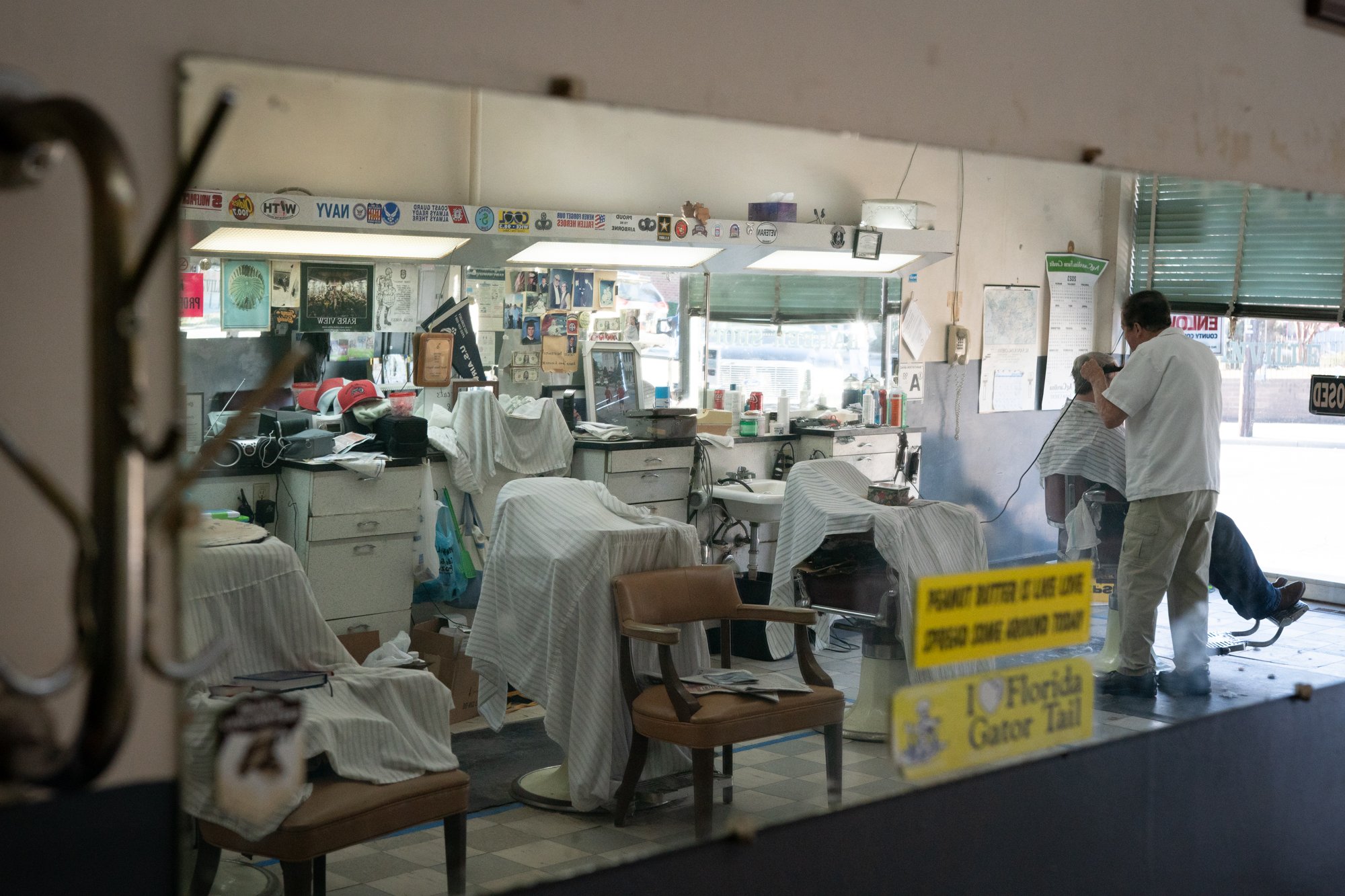
The interior of Granville Barbershop reveals layers of personal history, from worn barber chairs to walls filled with service flags and memorabilia.

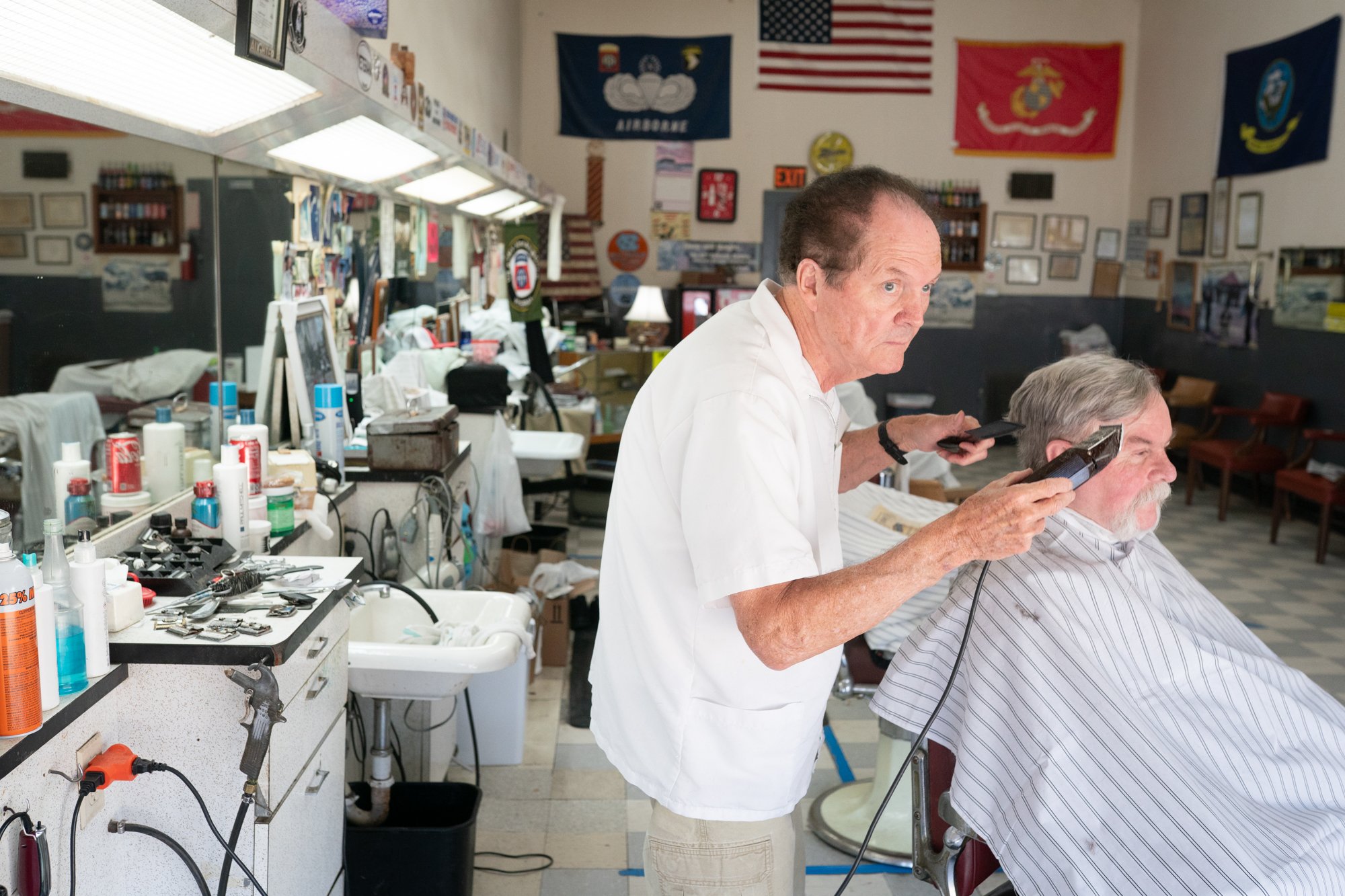
Traditional barbershop interior in North Carolina with a barber cutting a client’s hair using clippers

A working barber trims a longtime client inside a traditional North Carolina barbershop, where routine and familiarity define the space.

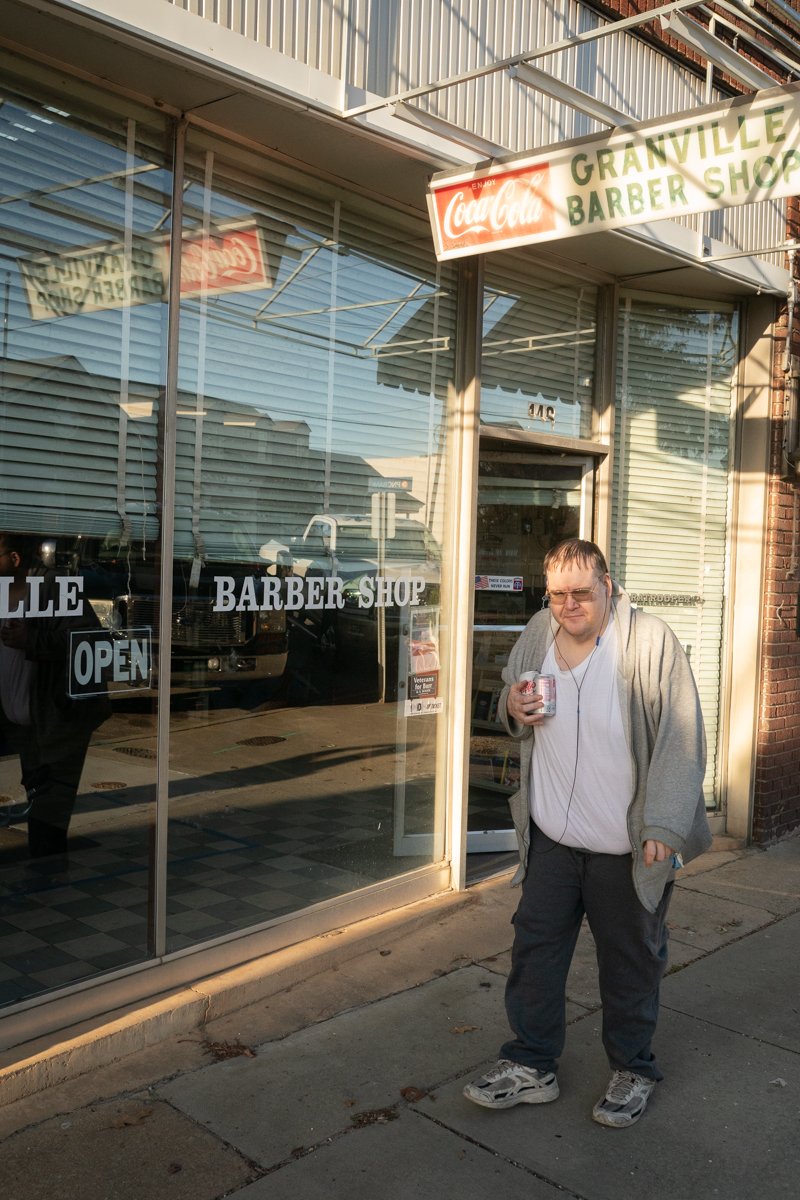
Exterior of Granville Barbershop in Granville, North Carolina with classic signage and storefront windows

The storefront of Granville Barbershop in Granville, North Carolina, a long-standing fixture of the town’s Main Street.

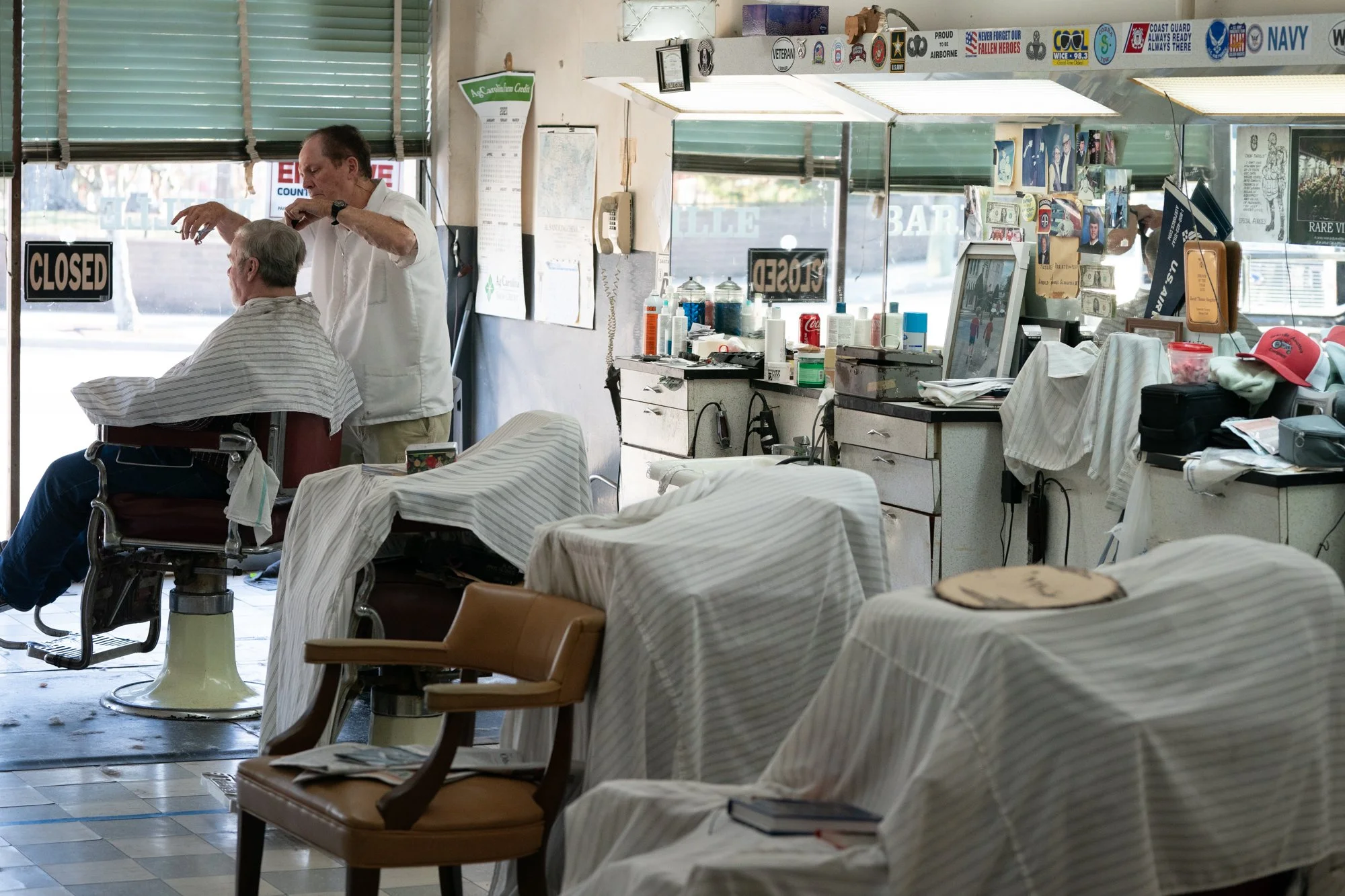
Documentary photograph of a barber cutting hair inside a small-town North Carolina barbershop

Inside the shop, haircuts continue as they have for decades—unhurried, familiar, and grounded in routine.

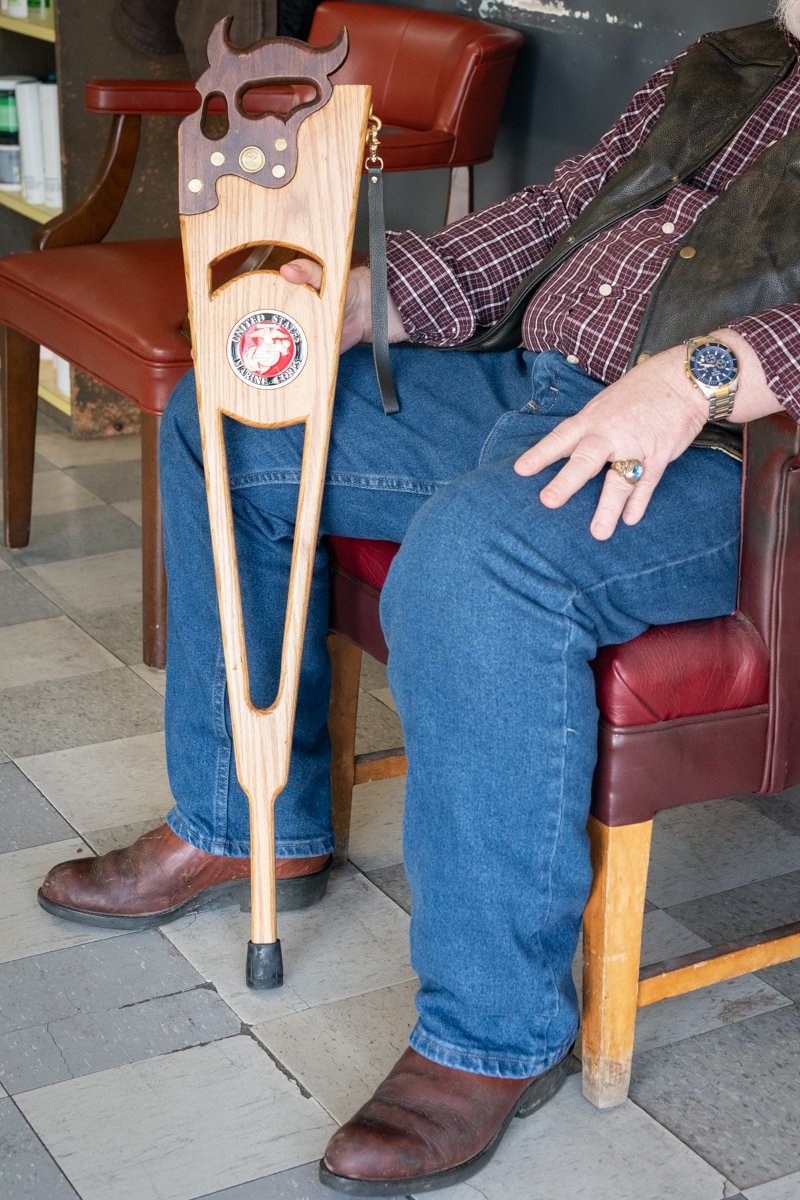
Detail photograph of a custom wooden walking stick resting beside a customer in a North Carolina barbershop

A handmade walking stick rests beside a customer, a small detail that hints at the personal histories carried into the shop.

Photography Books - American Culture

American Photography - Documenting Traditional Barbershops

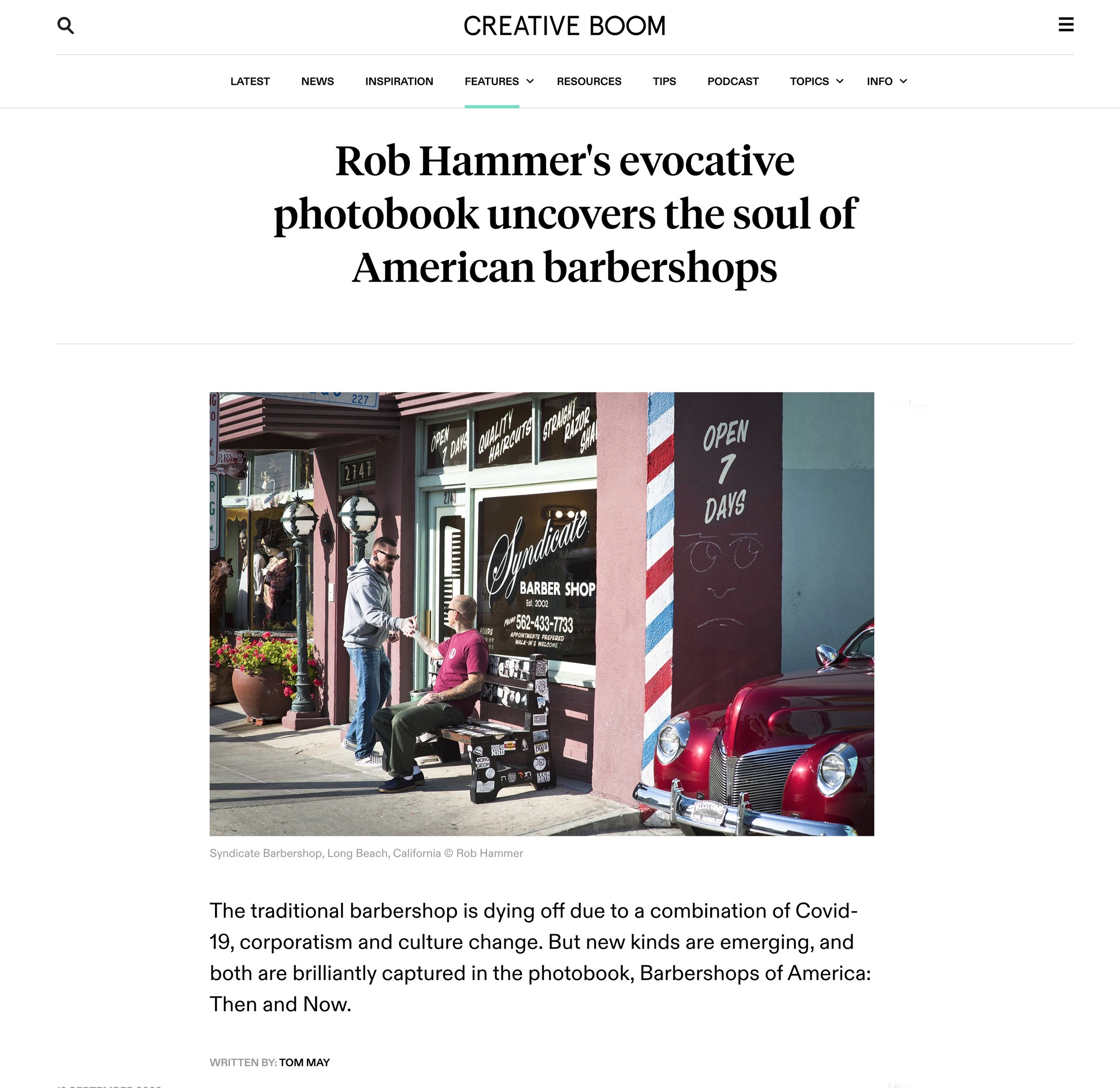
American photography as a genre is hard to define, especially when it comes to art collection and fine art photography. The term is so broad and leaves plenty of room for interpretation. One of my longest running series Barbershops of America fits into that category. Although it’s only been recently that I realized what’s been put together with this series is as much American photography as it is a historical document of a niche piece of American culture. And it occured to me the other day that getting a haircut is just a bonus to the experience you receive from being in a traditional barbershop. Grateful to see this project getting some exposure on Creative Boom and The Eye of Photography.

Click HERE to purchase a copy of Barbershops of American or HERE to purchase fine art prints.

Barbershop Photography

Traditional American Barbershops

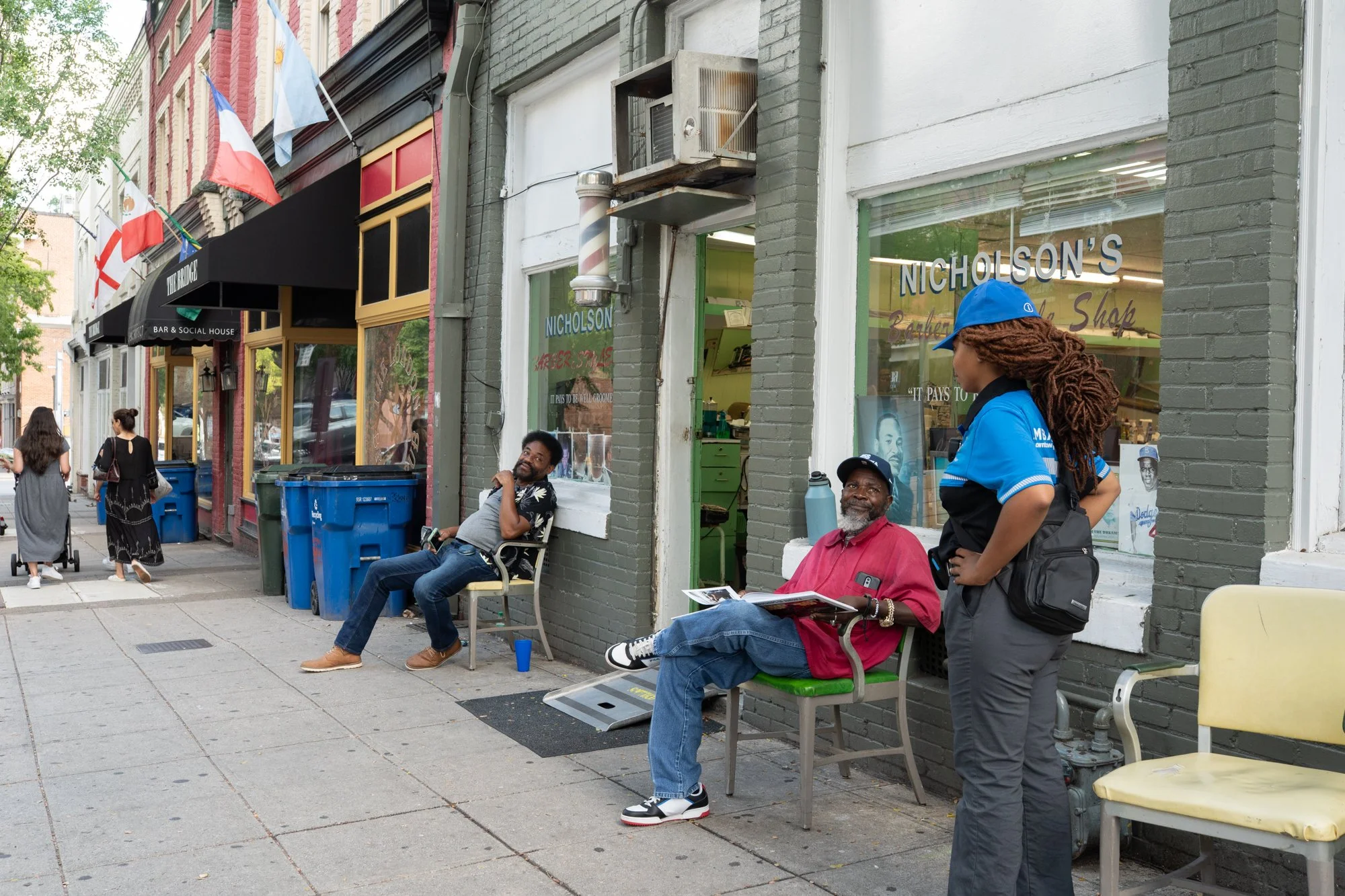
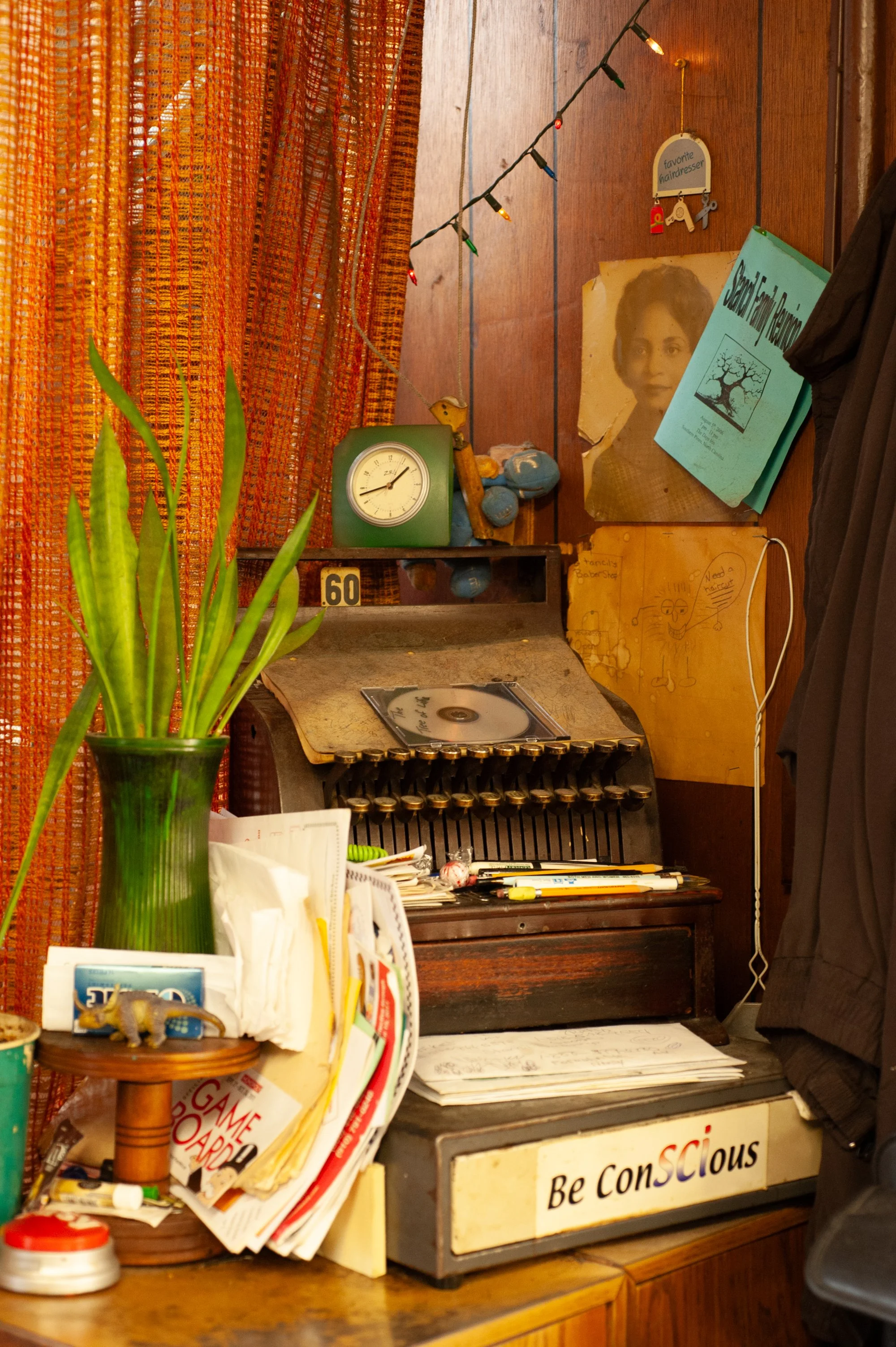
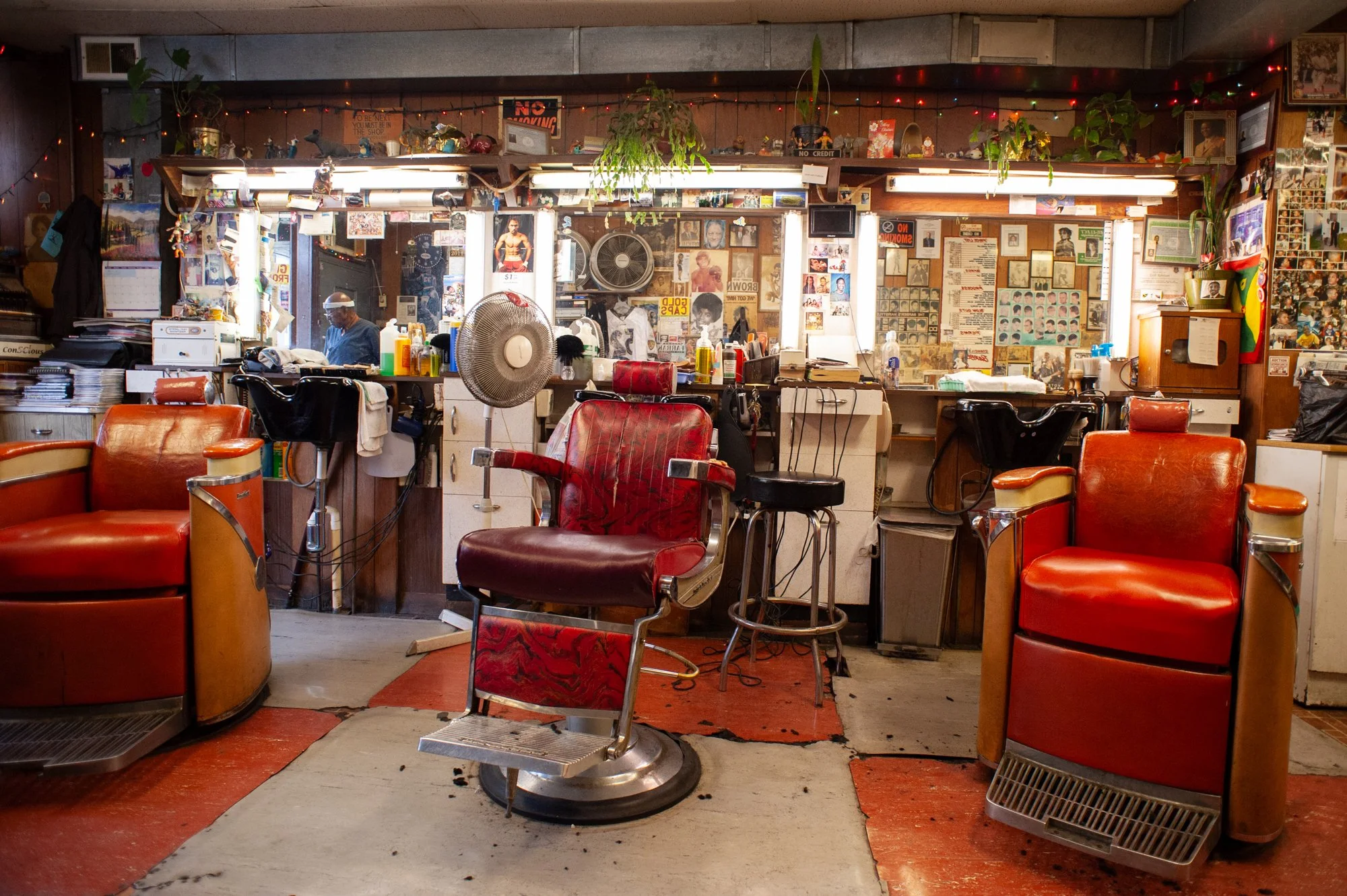
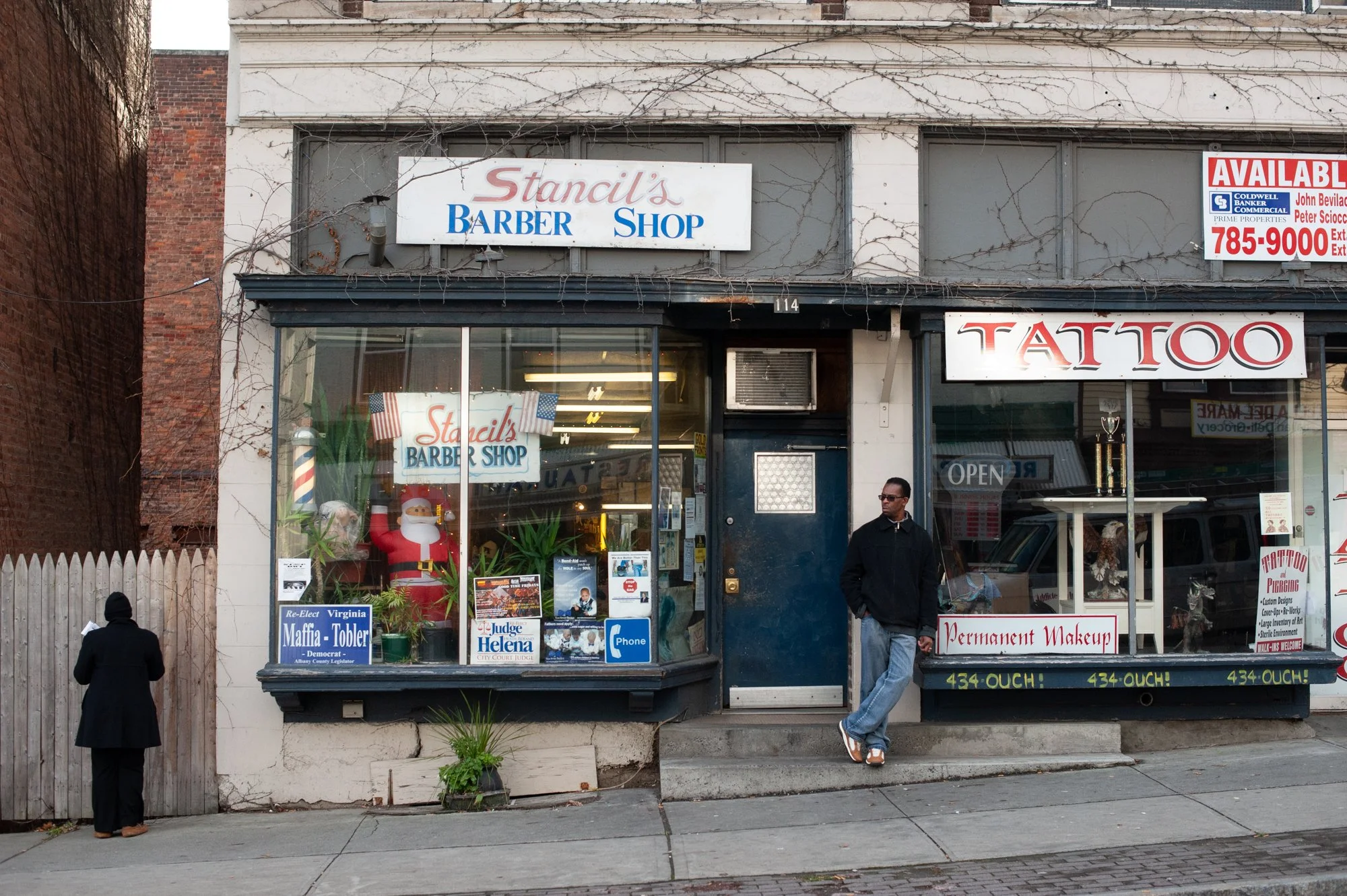
One of the best/hardest parts of working on long term projects focused on one subject matter is the bar is always rising. And that has definitely been the case for Barbershops of America. Traditional shops are a dying breed as is, and after seeing countless shops (good and bad) over the past 10 years, I’ve become quite specific about which shops I want to include in this project. Despite lots of travel and searching for shops over the past year+, the efforts have been fruitless, finding almost nothing worthy of documentation. Sort of hard to believe, actually. Searching for that long without positive results can make you think hard about the project. Is it done? Have I truly found and photographed all the remaining traditional barbershops in America? All of that doubt was erased recently after finding two incredible shops. Nicholson’s Barbershop in Raleigh, NC has been around for 40 years and Patsy’s Barbershop in Albany, NY first opened its doors in 1930! I was born in Albany, lived nearby for 25 years, have been going back at least twice a year for the past 18 years, and just last week discovered Patsy’s. Even more strange, the current owner is a former bouncer that used to, for good reason, throw my friends and I out of the bar. Funny how life works.
Click here to purchase a copy of Barbershops of America

The best barbershop in Raleigh, North Carolina

Nicholson’s Barbershop - Raleigh, North Carolina

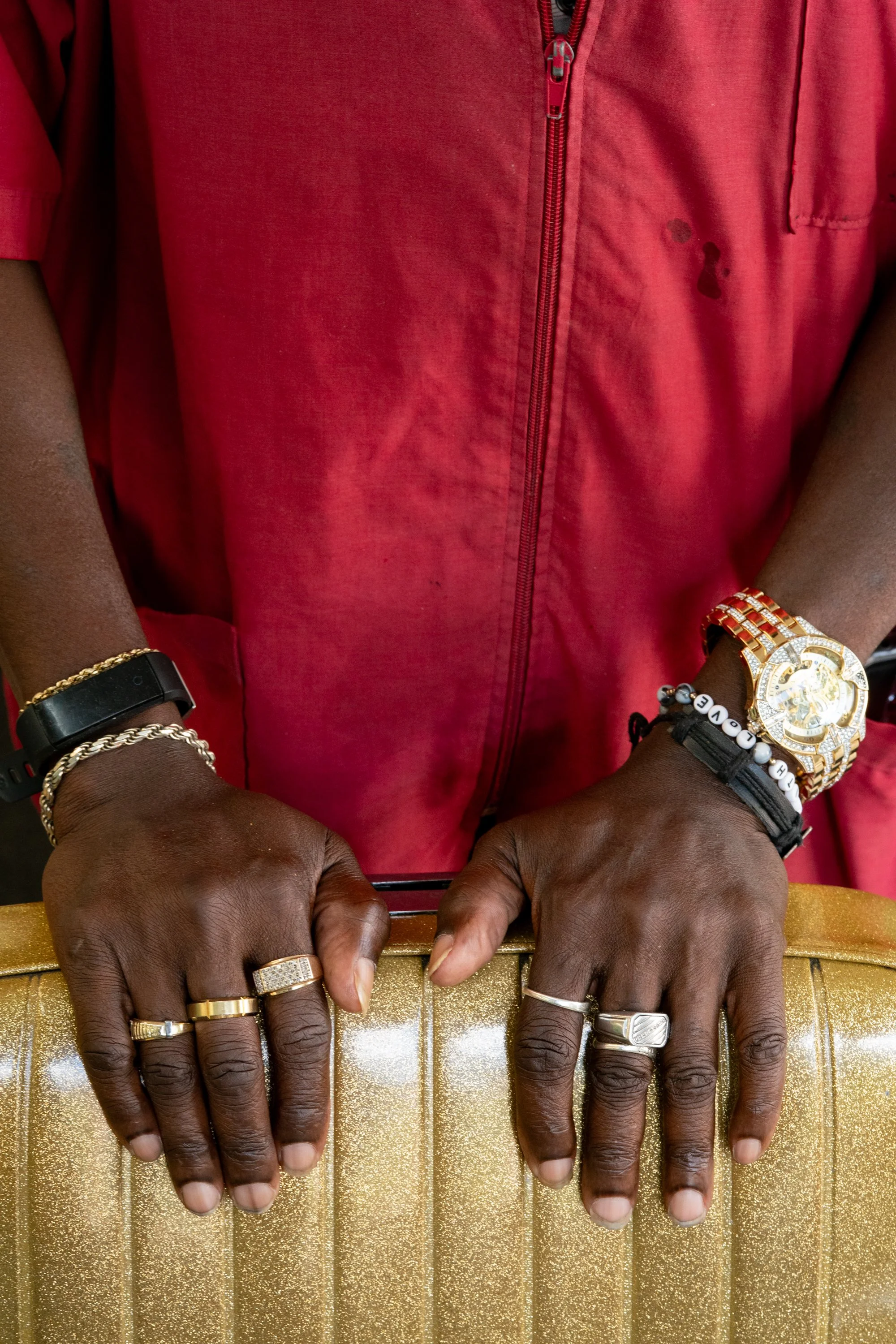
Photograph of a barber's hands
Photograph of a traditional barbershop in Raleigh, North Carolina
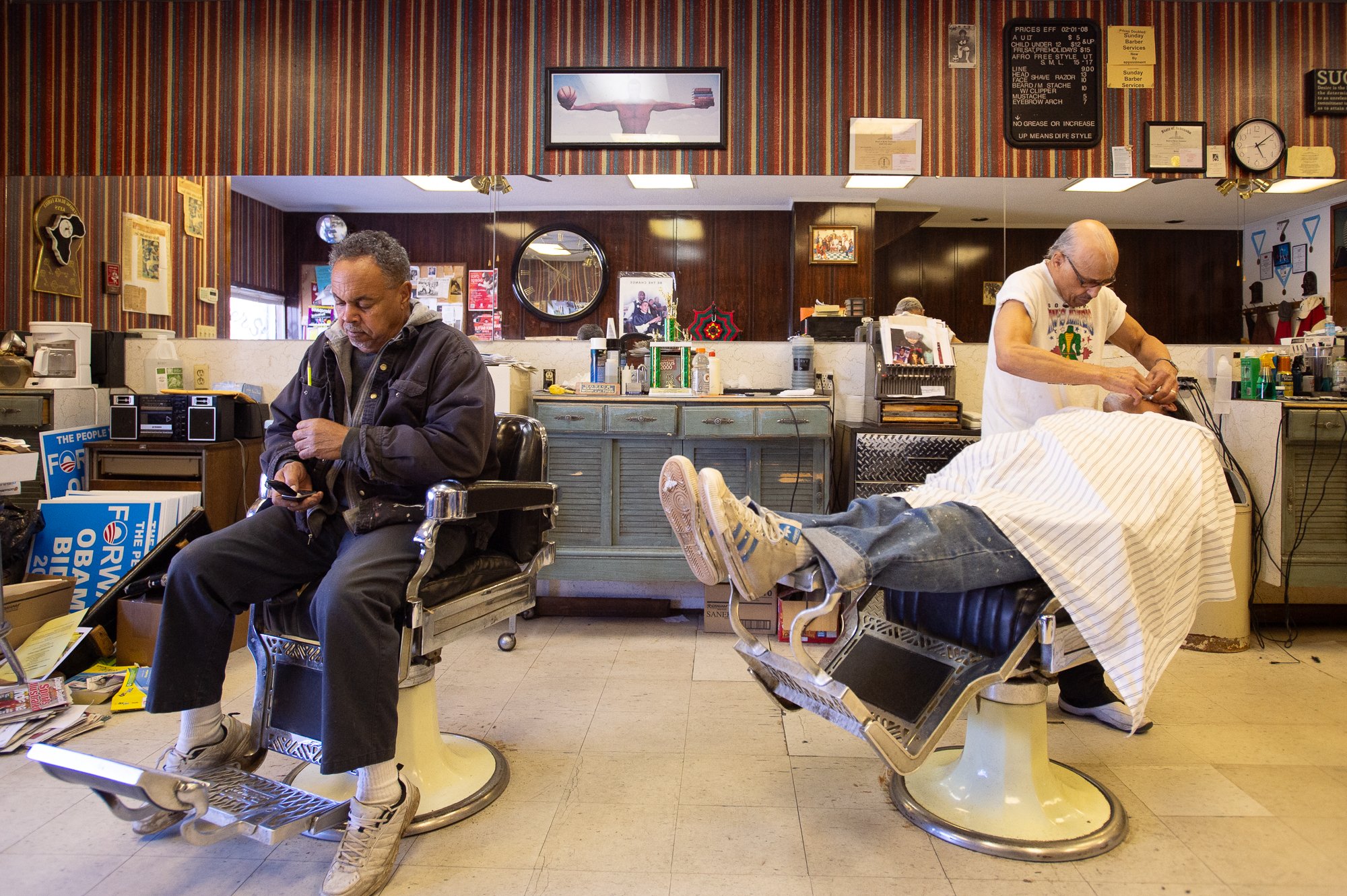
The best barbershop in Albany, NY
Patsy’s Barbershop - Albany, NY

Photograph of a beautiful traditional barbershop in Albany, NY
Traditional barbershop in Albany, NY

Barbershop - Marfa, Texas

Marfa, Texas — A Barbershop Now Closed

This barbershop in Marfa, Texas is no longer open.

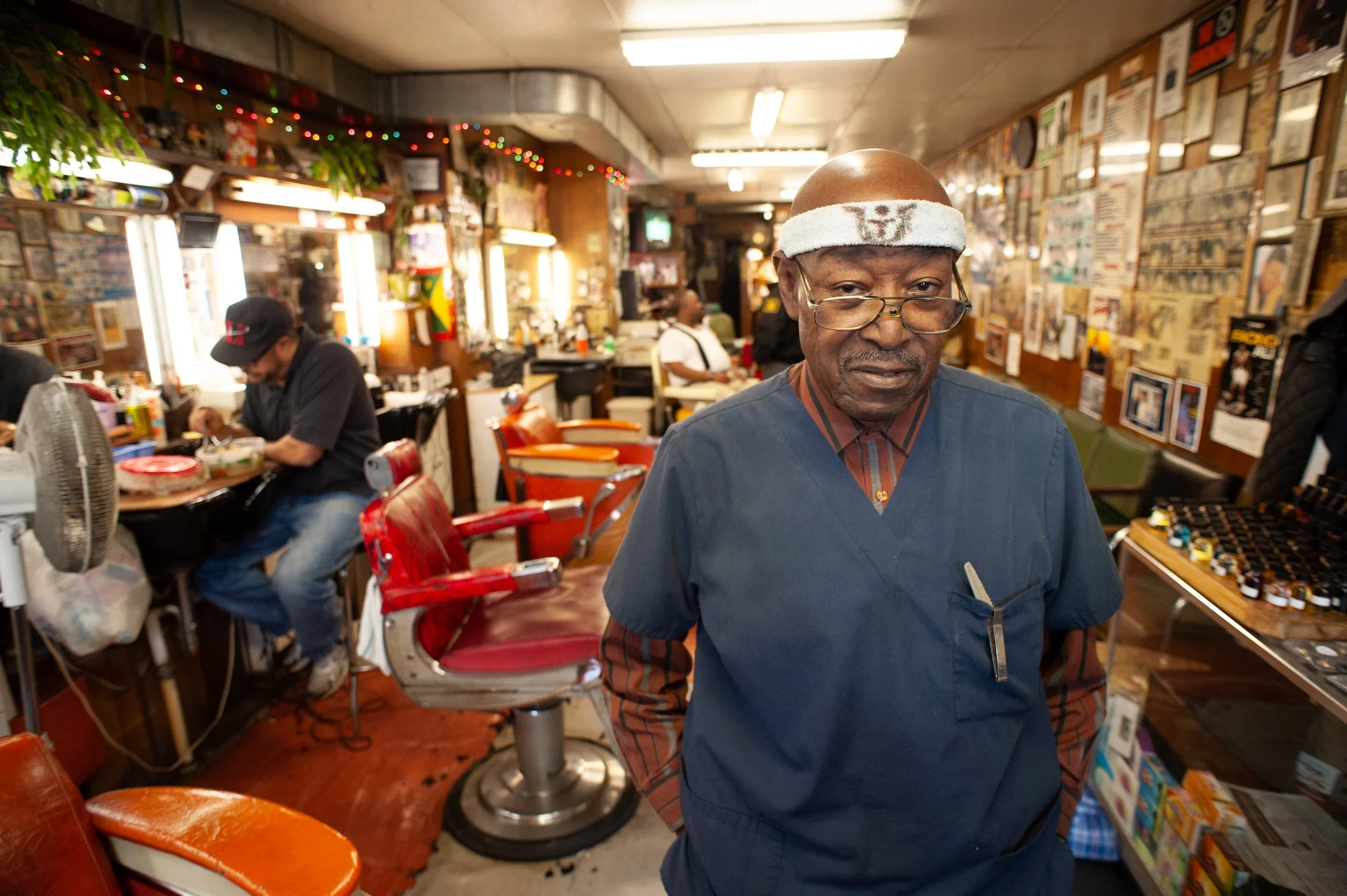
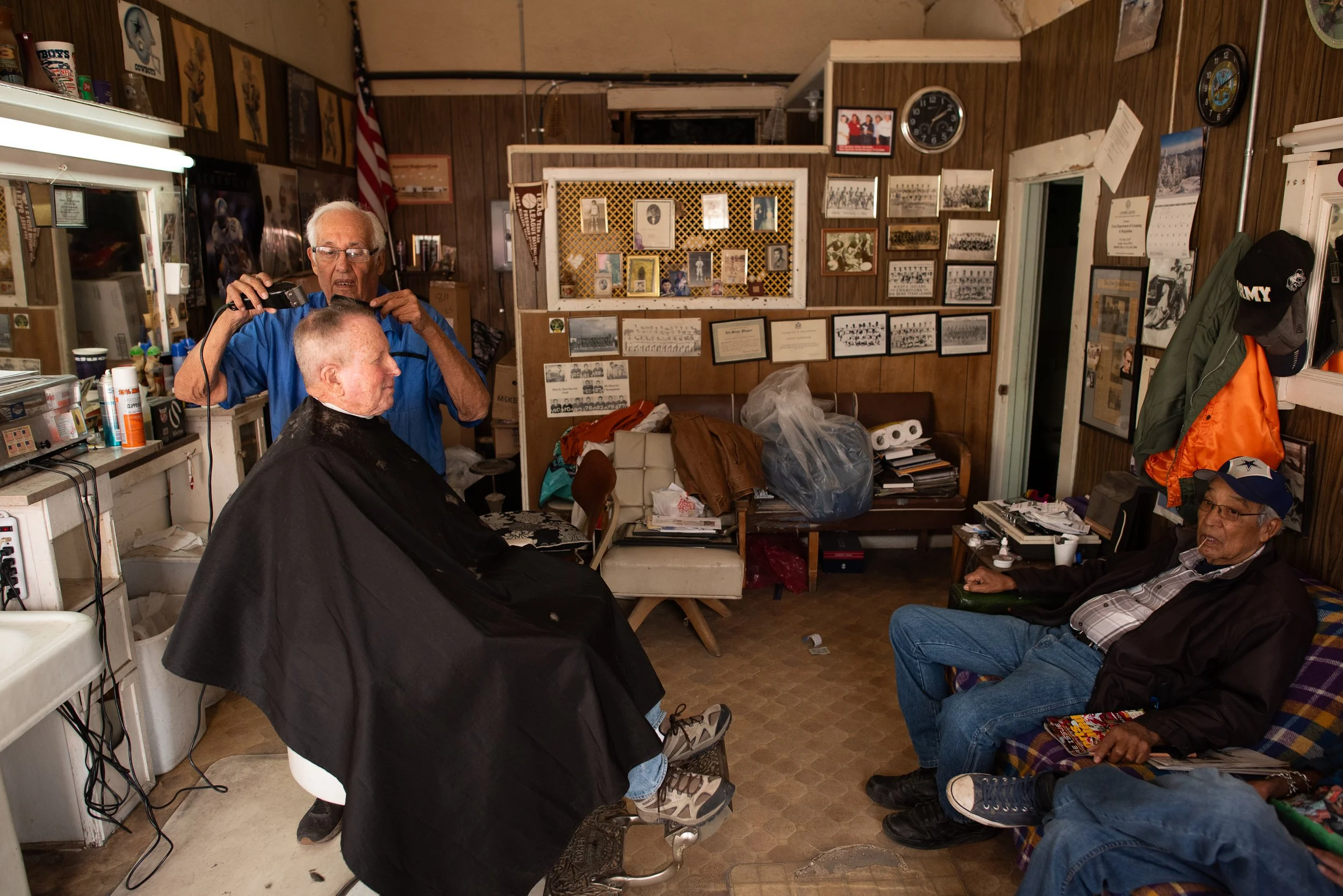
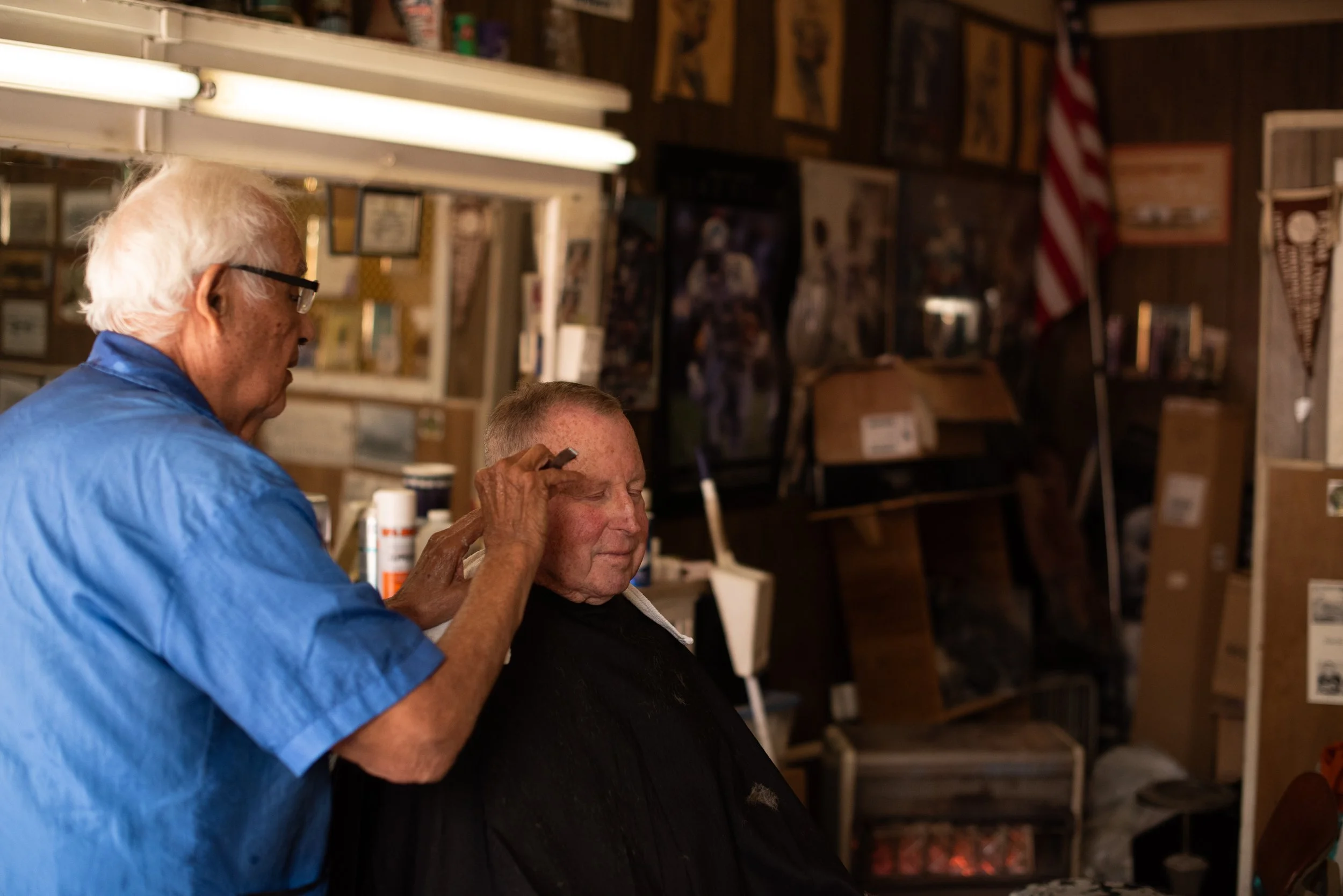
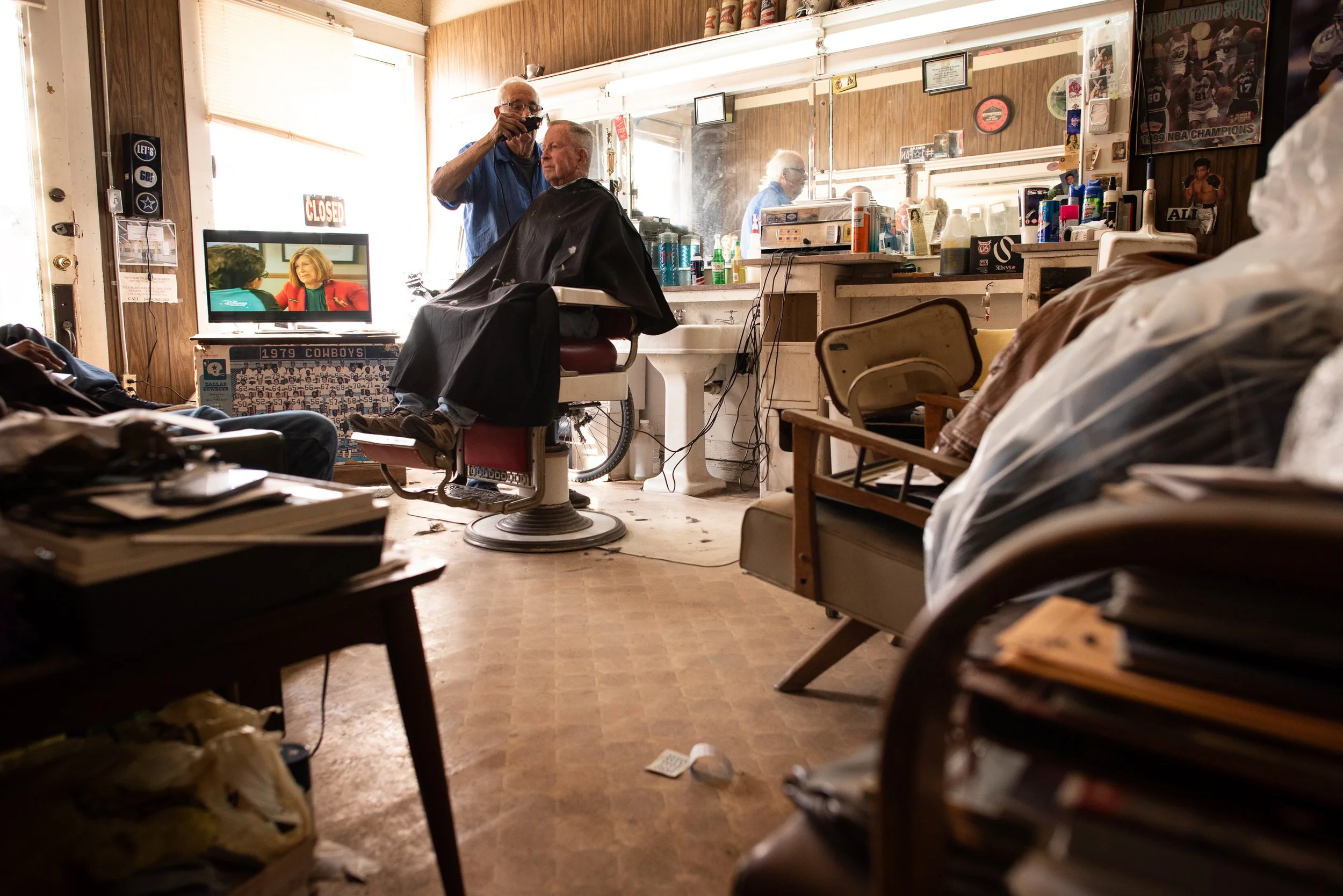
When these photographs were made, the shop was still operating — quietly, modestly, and without spectacle. An elderly barber continued cutting hair for longtime clients beneath fluorescent lights and wood-paneled walls layered with decades of memorabilia.

Not long after, the doors closed.

What remains now are the photographs.

The Final Years

Inside, nothing felt staged.

The floor was worn.
The sink chipped.
Sports posters faded at the edges.
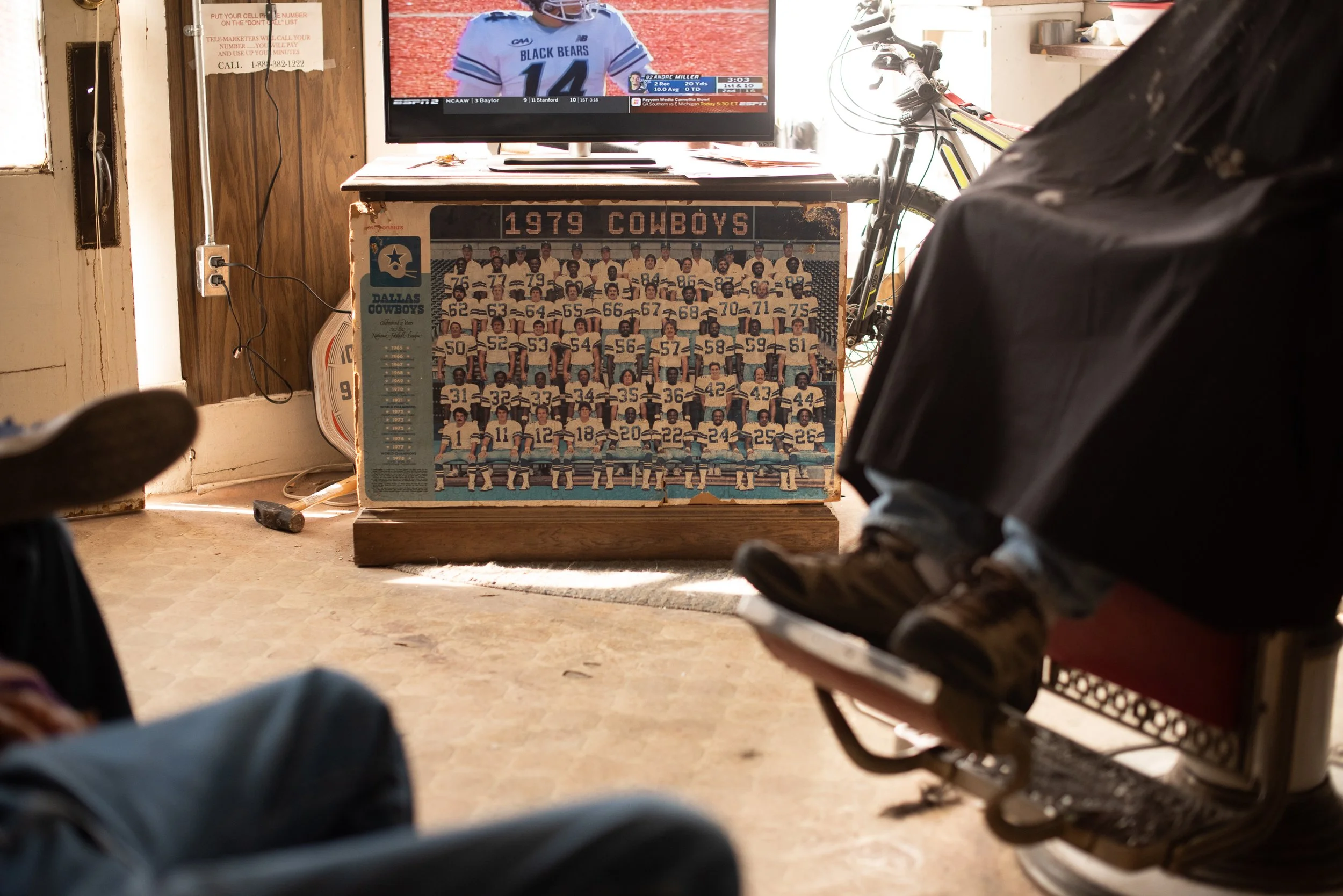
A 1979 Cowboys team photo sat beneath a television.

Customers — mostly older men — waited their turn as they likely had for years. The routine continued as it always had. No announcement. No ceremony. Just haircuts.

In small towns like Marfa, institutions often end not with a grand closing, but with a gradual thinning of time — fewer customers, older hands, fewer reasons to keep the lights on.

A Vanishing American Interior

Barbershops have long functioned as community anchors across the United States, particularly in rural towns. They are practical spaces, but they are also repositories of memory:

  • Photographs of local teams

  • Certificates and clippings

  • Posters taped to wood-paneled walls

  • Objects that accumulate without ever being curated

When a shop closes, those layers often disperse. The room empties. The rhythm stops.

What disappears isn’t just a business. It’s a pattern of local community.

Marfa in Context

Marfa is widely known today for contemporary art and desert minimalism. This shop represented something different — a working-class interior untouched by trend cycles or design updates.

It was modest.
Functional.
Unchanged.

Its closure marks a quiet shift in the town’s cultural landscape — one less everyday institution, one more room that no longer holds history.

The Story Behind The Photographs

As much as I try to embrace social media, it’s difficult to genuinely say anything positive about it sometimes. Every once in a while though, something happens that makes me think twice. A few days ago I posted this image of a traditional barbershop in Marfa, Texas on my @barbershopsofamerica Instagram account, which was re-posted as a story by Visit Marfa. That day I received a direct message from a woman in that had seen their story and was filled with sentimental feelings, as she used to know the shop and the owner. She went back to look at it again later and noticed that the man in the chair was her father, who had passed away two years ago from cancer. The image caused her to cry happy tears and she asked about purchasing a print. Turns out we live 15 minutes from each other! So this morning I drove to her house to deliver some prints and a copy of Barbershops of America. Social media isn’t all bad!

This project has been going on for 10 years now. Hard to believe. Aside from the obvious joy it gives me to make theses images, it’s the auxiliary things that really make it special. The people I’ve met out of pure coincidence or from having shared interests will keep this series going forever.

Continue Through the Archive

The Marfa barbershop is one chapter in a 15+ year effort documenting independent and traditional barber shops across all 50 states.

Some shops are expanding.
Some are adapting.
Others, like this one, have closed.

→ View the full Barbershops of America archive
→ Explore the Barbershops of America photo book
Read another barbershop story from Kentucky

Together, these spaces form a record of a disappearing American institution — preserved one shop at a time.

Customers sitting inside a wood-paneled barbershop in Marfa, Texas as a haircut continues.

Regular customers wait beneath walls lined with photographs and memorabilia inside the now-closed Marfa barbershop.

Worn 1979 Dallas Cowboys team poster displayed beneath a television inside a Marfa, Texas barbershop.

A 1979 Cowboys team poster sits beneath the television, one of many personal details layered into the shop’s interior.

Close view of an elderly barber doing a straight razor shave in a small West Texas barbershop.

Elderly barber cutting a client’s hair inside a small barbershop in Marfa, Texas shortly before the shop closed.

An elderly barber cuts a longtime client’s hair inside a modest Marfa, Texas barbershop in its final period of operation.

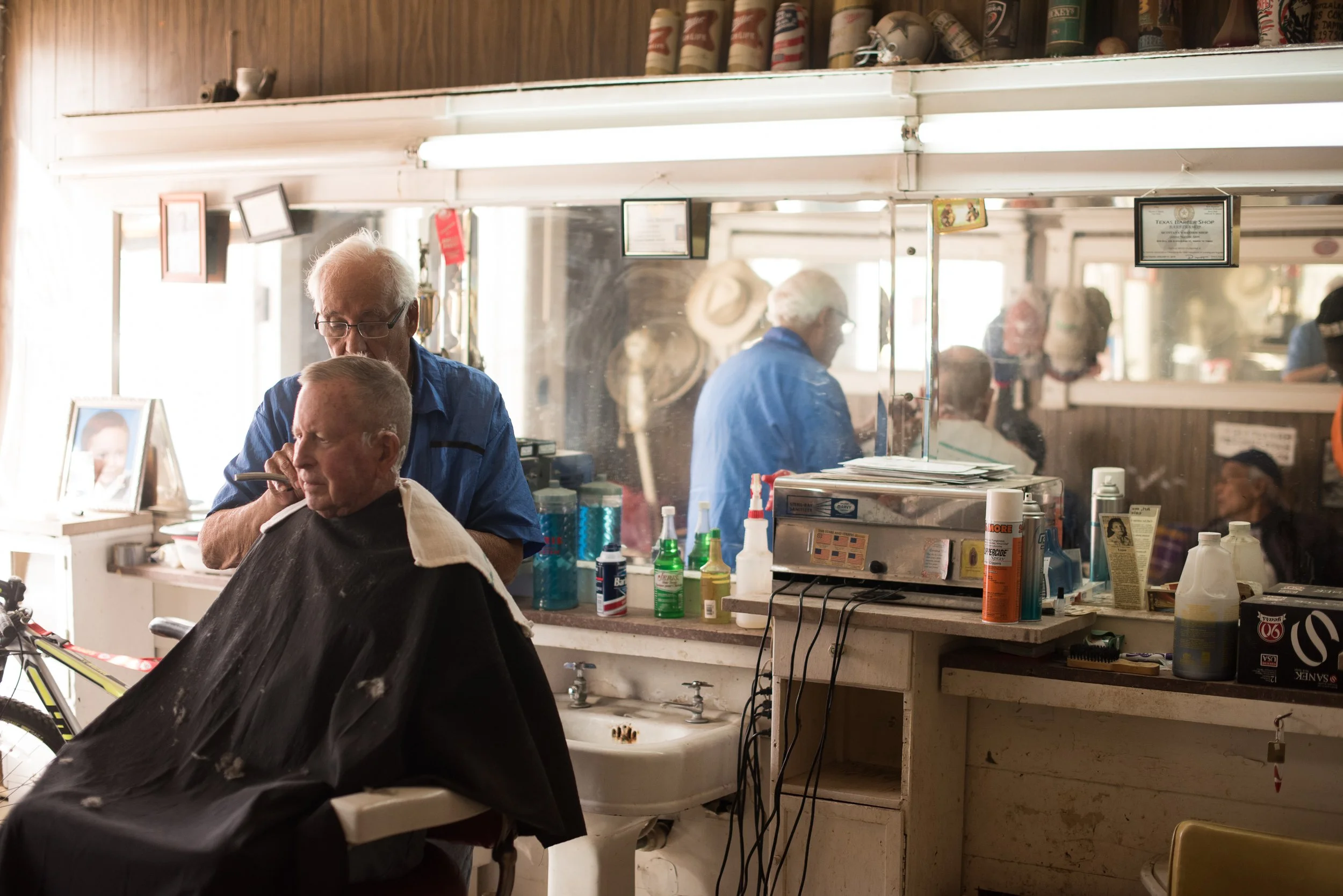
Mirror reflection of barber and client inside a compact workstation in a Marfa, Texas barbershop.

Reflections reveal the compact workstation—fluorescent lighting, worn counters, and tools accumulated over decades.

The American Barbershop

Inside an Old School Barbershop

Some barbershops just feel different the moment you walk in, at least they should. This one sits right on Main Street in a small Nevada town, and it hasn’t tried to reinvent itself or keep up with trends. It doesn’t need to. It’s an old school barbershop in the truest sense — a place built on community, friendships, decades of doing things the same way because they work.

You notice it in the details first. The worn chairs. The mirrors that have seen thousands of haircuts. The quiet hum of clippers and conversations that don’t feel rushed. This is the kind of traditional barbershop where people come not just for a haircut, but because it’s part of their weekly or monthly rhythm.

An Old School Barbershop That Still Feels Like Main Street America

Main Street barbershops like this one are becoming harder to find. A lot of them have disappeared, replaced by newer spaces that feel more like salons than barber shops. Luckily, this place hasn’t gone that route. It still feels rooted in tradition, serving the same community it always has.

People come in, take a seat, and wait their turn. Some talk. Some don’t. The barbers know all the faces, and the ones they don’t quickly become familiar. There’s no rush to move people through. The pace is steady and comfortable — exactly what you expect from an old school barber shop that’s been around long enough to earn that confidence.

This is Main Street America in its simplest form.

Photographing a Traditional American Barbershop

When I photograph barbershops, I’m not looking to stage anything or make the space feel more polished than it really is. I’m drawn to places like this because they already have character. The work is about paying attention — to how light hits the mirrors, how chairs sit slightly crooked from decades of use, how people interact when they feel at home.

This traditional barbershop didn’t need direction. I spent time watching, waiting, and letting moments happen naturally. A barber stepping back to check his work. Someone laughing mid-conversation. A quiet pause while clippers buzz in the background. Those are the moments that tell the real story of a shop like this.

Why Old School Barbershops Matter

Old school barbershops are more than just places to get a haircut. They’re social spaces, community anchors, and in many towns, one of the last places where people still slow down a little. They reflect the personality of the neighborhood they’re in and the people who keep them going.

Photographing spaces like this feels important, especially as so many of them disappear. Once they’re gone, they’re gone for good. These photographs are a way of preserving what these places look and feel like — not in a nostalgic or romanticized way, but honestly, exactly as they are.

Vintage Barbershop Photography Prints

This series is part of my ongoing Barbershops of America project (and photo book), documenting traditional and vintage barbershops in all 50 states of the USA. Photographs from this Main Street barbershop are available as fine art prints, and they tend to resonate with collectors, interior designers, and anyone drawn to classic American spaces.

If you’re interested in prints from this series, or in licensing images for editorial or commercial use, you can explore more work from the project through my barbershop photography gallery.

View the barbershop photography book

View the barbershops photography gallery

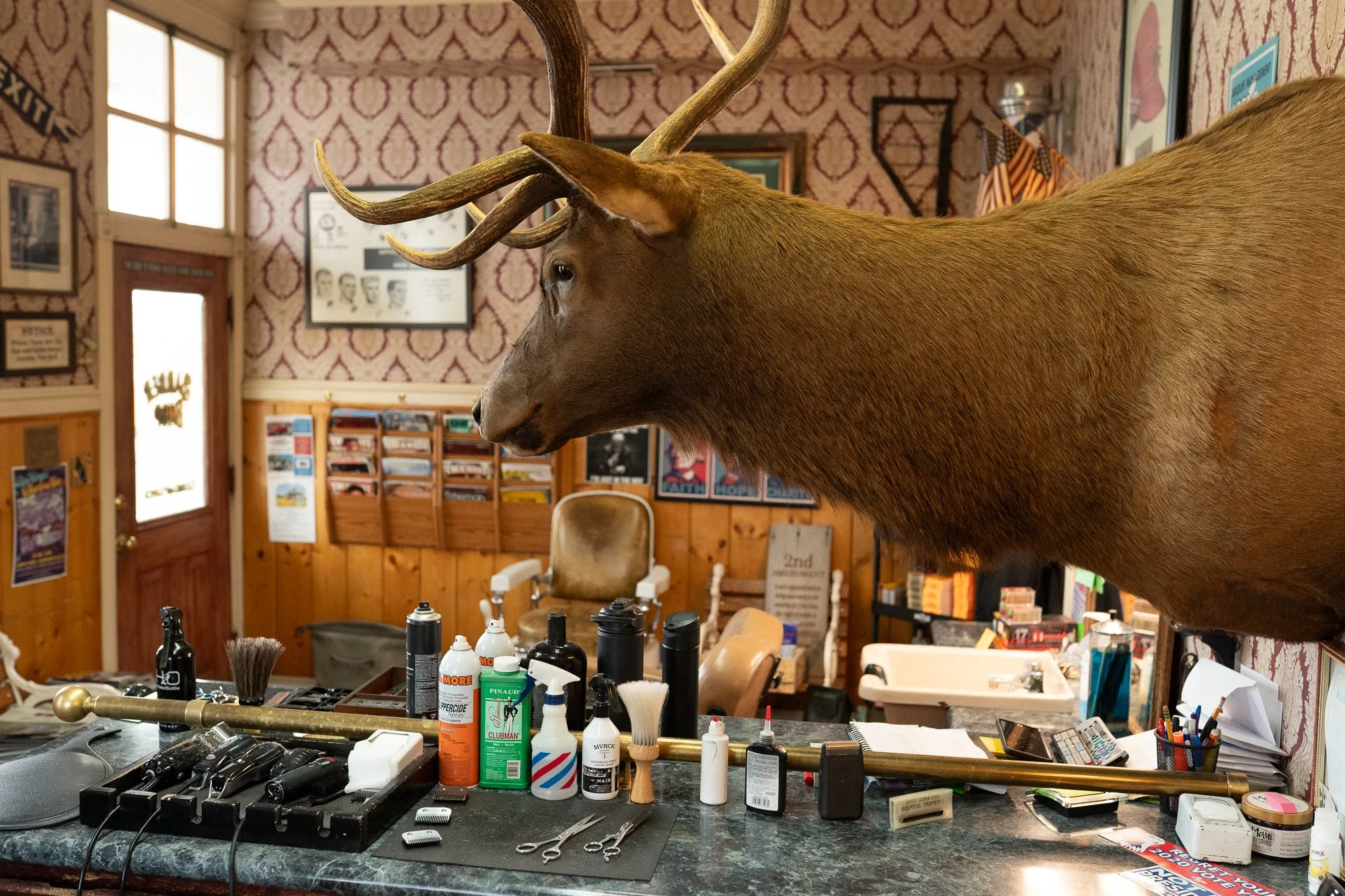
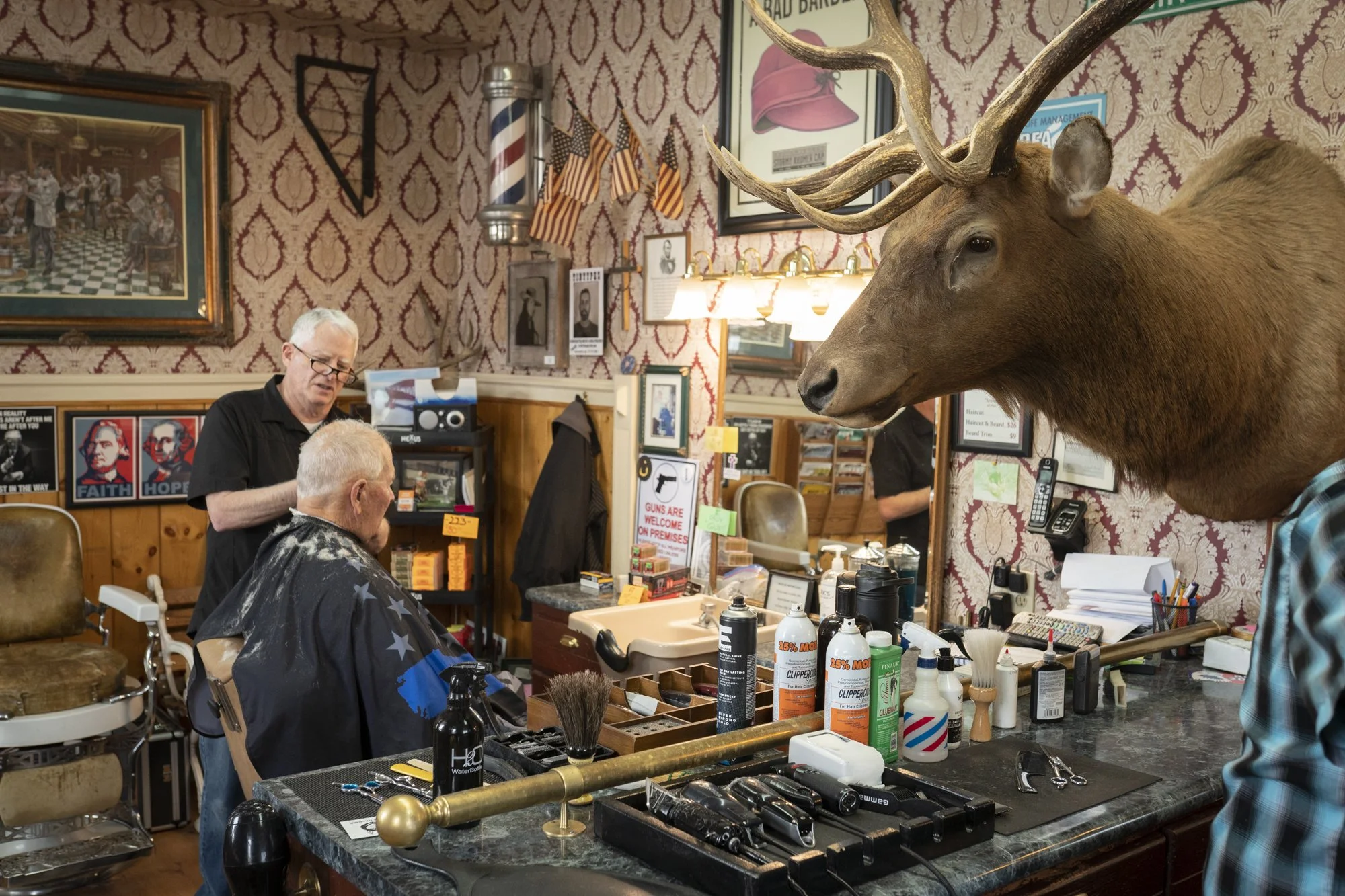
Vintage barbershop interior with a mounted elk head above a counter lined with clippers, shaving tools, and bottles.

A mounted elk watches over the barber’s counter—an unmistakable detail that roots this barbershop firmly in old school tradition.

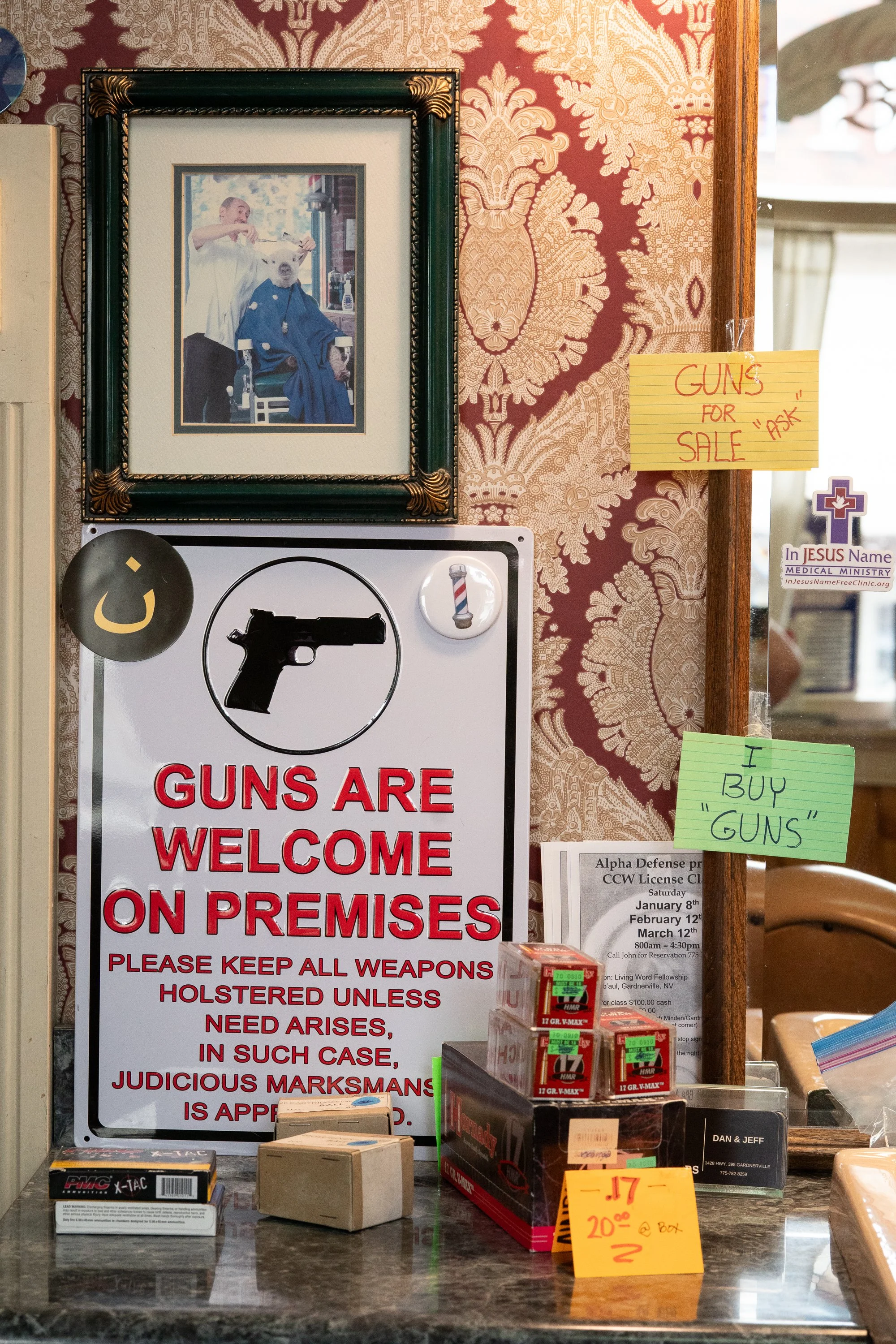
Details like handwritten signs, framed photographs, and unapologetic Americana are part of what defines this old school barbershop.

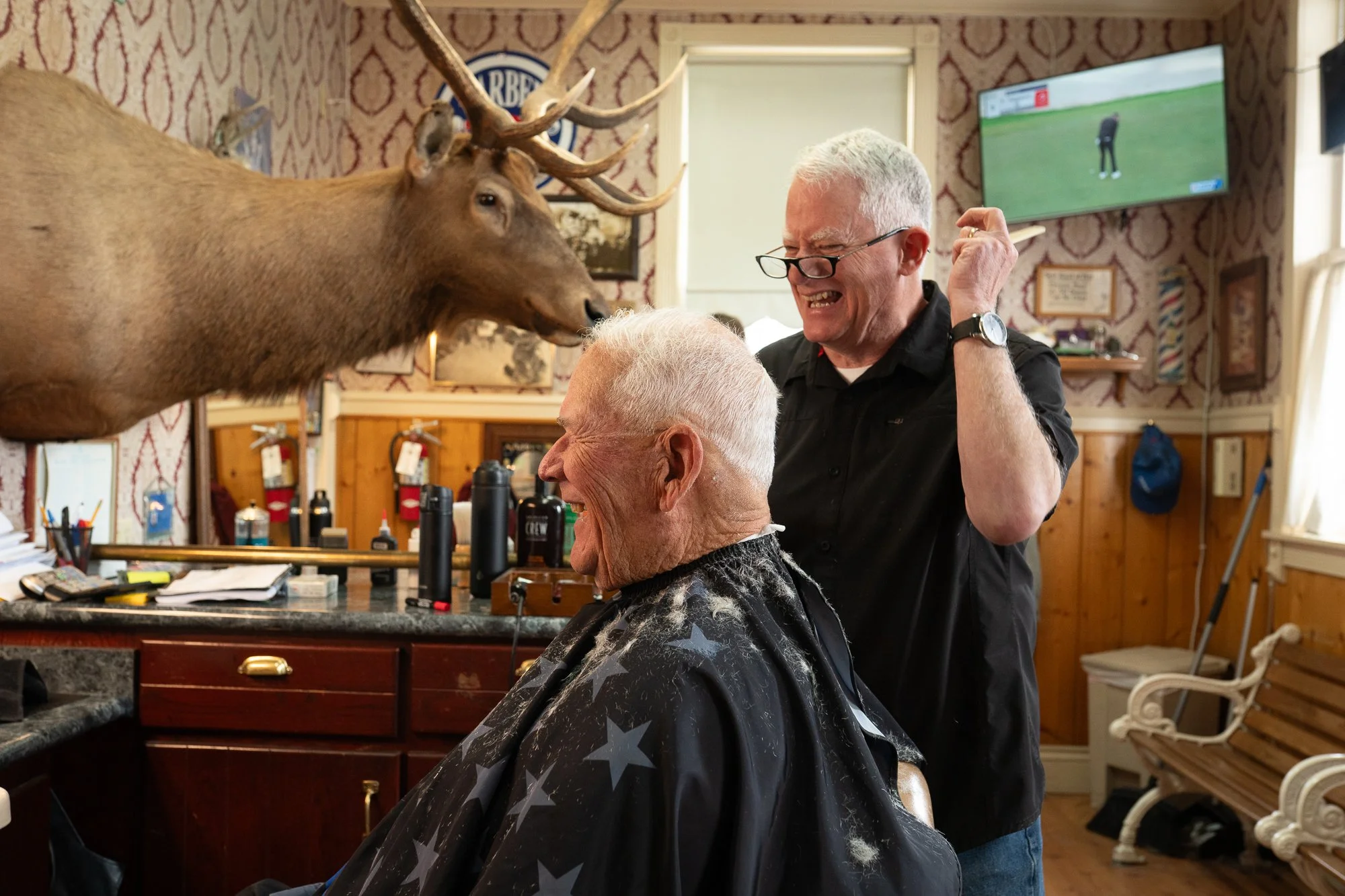
Old school barbershop haircut with a barber laughing beside a client seated beneath a mounted elk head.

A moment of laughter during a haircut in an old school barbershop, where mounted elk and decades of tradition share the same wall.

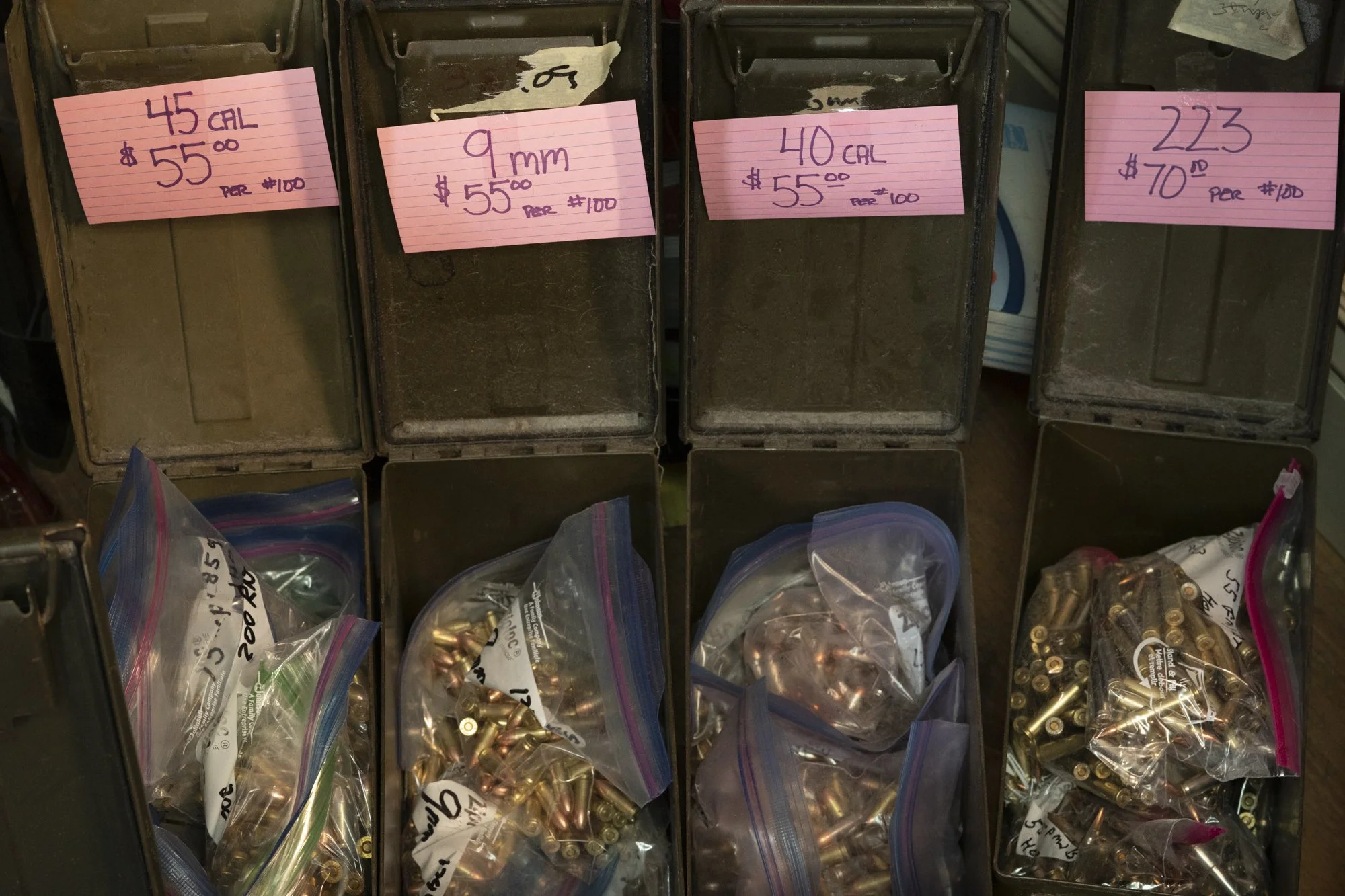
Ammunition for sale on the counter of an old-school barbershop, reflecting rural Americana and local culture.

A detail that stops you in your tracks—ammo for sale on the barbershop counter, a reminder that these shops often reflect the character of the towns they serve.

Old-school barbershop haircut beneath a mounted elk head in a traditional American barbershop interior.

An old-school barbershop moment—regulars in the chair, clippers on the counter, and a mounted elk watching over decades of haircuts and conversation.

Historic Texas Barbershop Photographs

Raymond’s Barbershop - Lockhart, Texas

Lockhart is best known for its barbecue, but places like Raymond’s Barbershop tell another side of the town’s story. Between visits to longtime institutions like Smitty’s Market, everyday routines continue in quiet spaces that rarely draw attention but shape the rhythm of local life just as much.

A Traditional Barbershop in Lockhart, Texas

Lockhart has no shortage of visitors passing through, but Raymond’s Barbershop remains firmly rooted in local life. The worn chairs, utilitarian layout, and unpolished surfaces reflect decades of daily use rather than intentional preservation. This is not a styled space—it’s one that has simply been allowed to age naturally alongside the town itself. During my time at Raymond’s, he was cutting the hair of an old friend. This wasn’t made known explicitly, rather in the chemistry the two had—genuine smiles exchanged as the customer walked through the door and candid, easy banter which can only be formed by time.

Why Small-Town Barbershops Still Matter

In towns like Lockhart all across America, barbershops have long functioned as informal gathering places—spaces where news travels, laughs are shared, and familiarity carries more weight than novelty. As commercial rents rise and older barbers retire, places like Raymond’s quietly disappear, taking a long and irreplaceable history with them.

Documenting Raymond’s Barbershop as Part of a Larger Archive

Truth be told I only found Raymond’s because of my obsession with BBQ, which brought me to Lockhart, but that’s just the luck of the draw. You never know how important subjects are going to come into your life. Regardless, these photographs of Raymond and his beautiful old shop are part of an ongoing, 15-year effort to document traditional barbershops across the United States. Each shop is approached individually—rooted in its town, its people, and its history—while collectively contributing to a broader visual record of a disappearing American institution.

View More Traditional Barbershops

→ View the full Barbershops of America gallery

For more work made in Texas, you can also view photographs from another long-standing barbershop documented as part of the same project:

→ View a Texas barbershop in Marfa

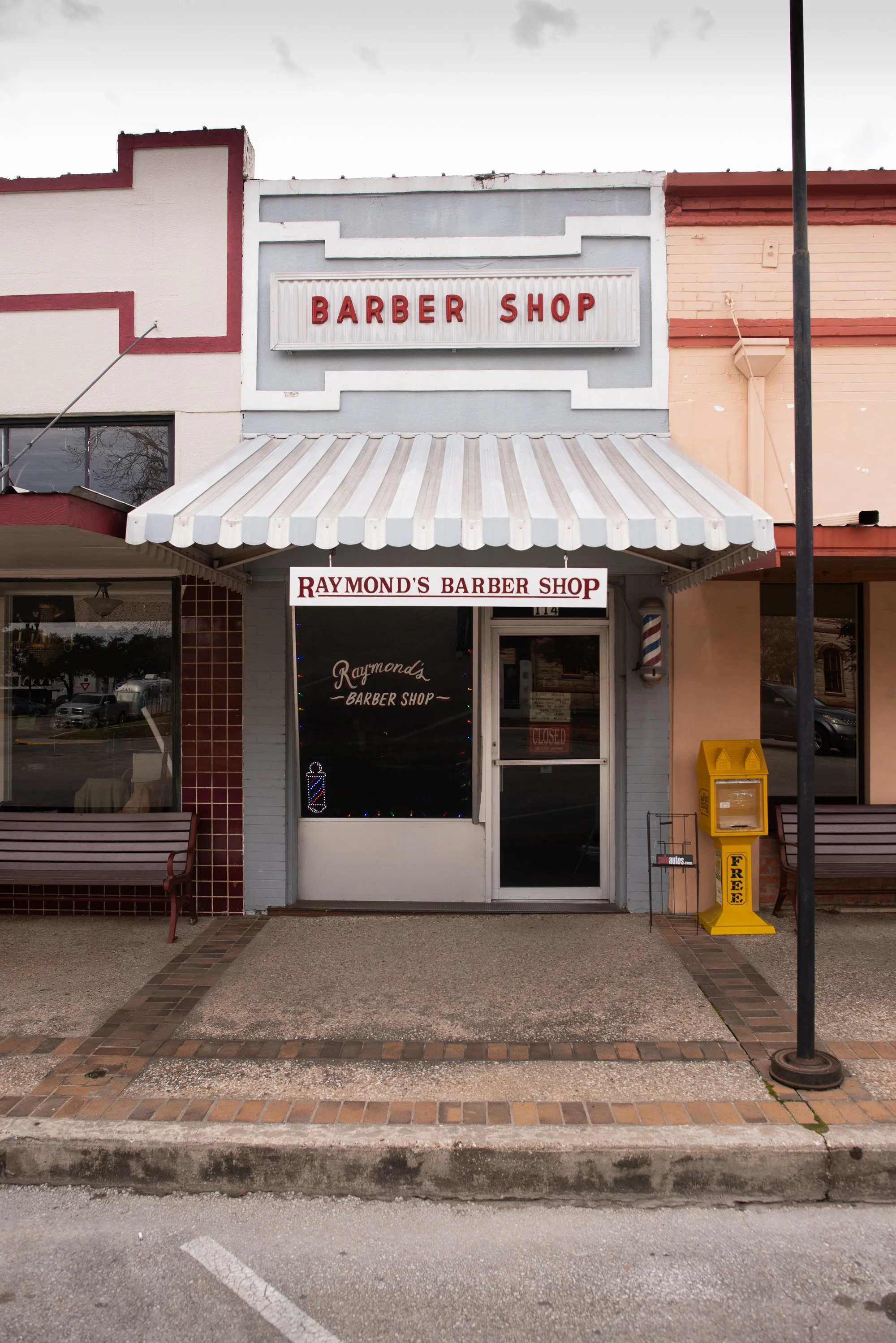
Exterior storefront of Raymond’s Barber Shop in downtown Lockhart, Texas.

The storefront of Raymond’s Barber Shop in Lockhart, Texas—a modest main street presence that has served generations of local residents.

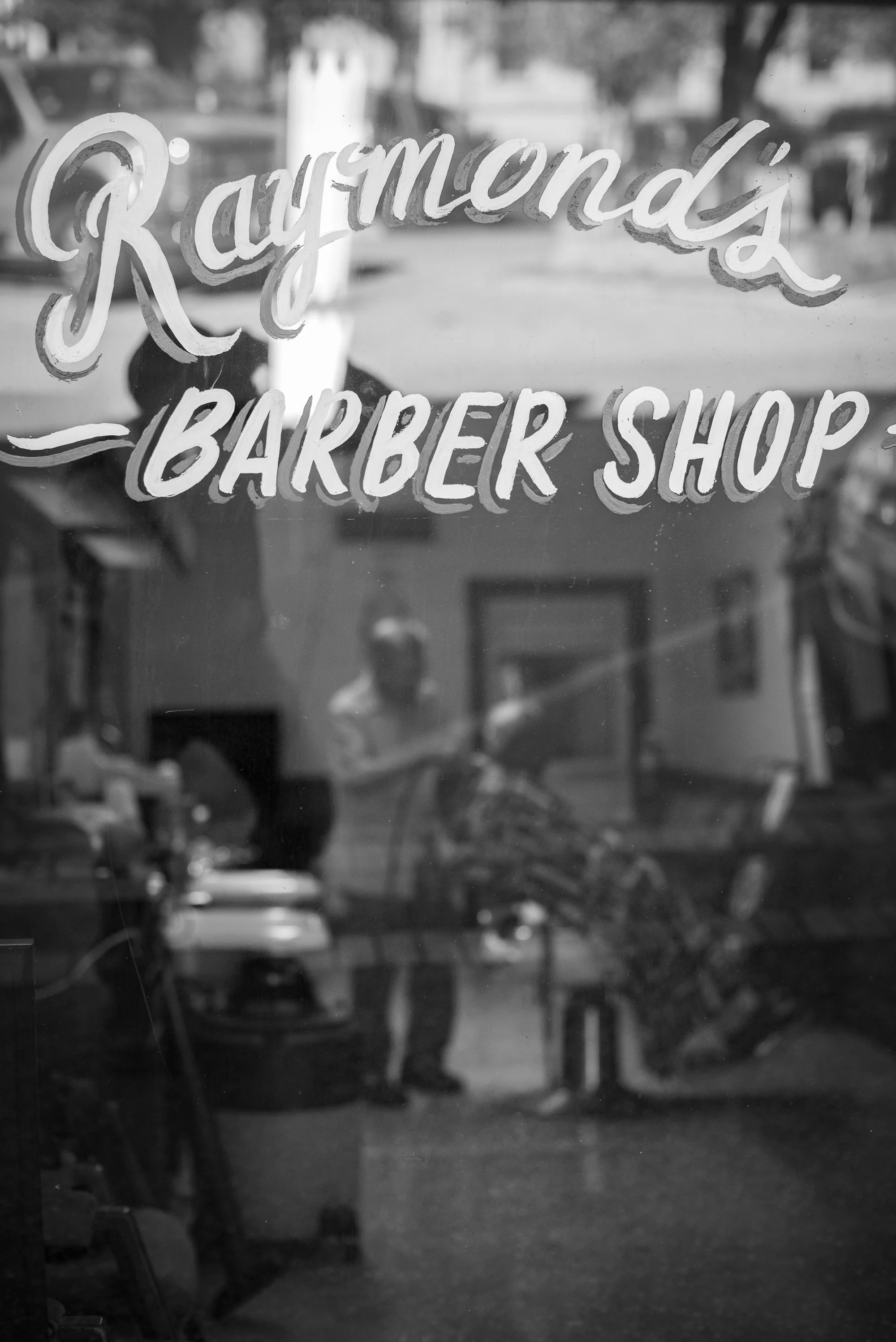
Hand-painted “Raymond’s Barber Shop” lettering on the front window in Lockhart, Texas, with reflections of the barbershop interior.

Hand-painted lettering on the front window of Raymond’s Barber Shop in Lockhart, Texas, separating the street outside from the quiet work happening inside.

Empty barber chair and waiting area inside Raymond’s Barber Shop in Lockhart, Texas.

An empty chair and quiet waiting area inside Raymond’s Barber Shop in Lockhart, Texas, between customers and conversations.

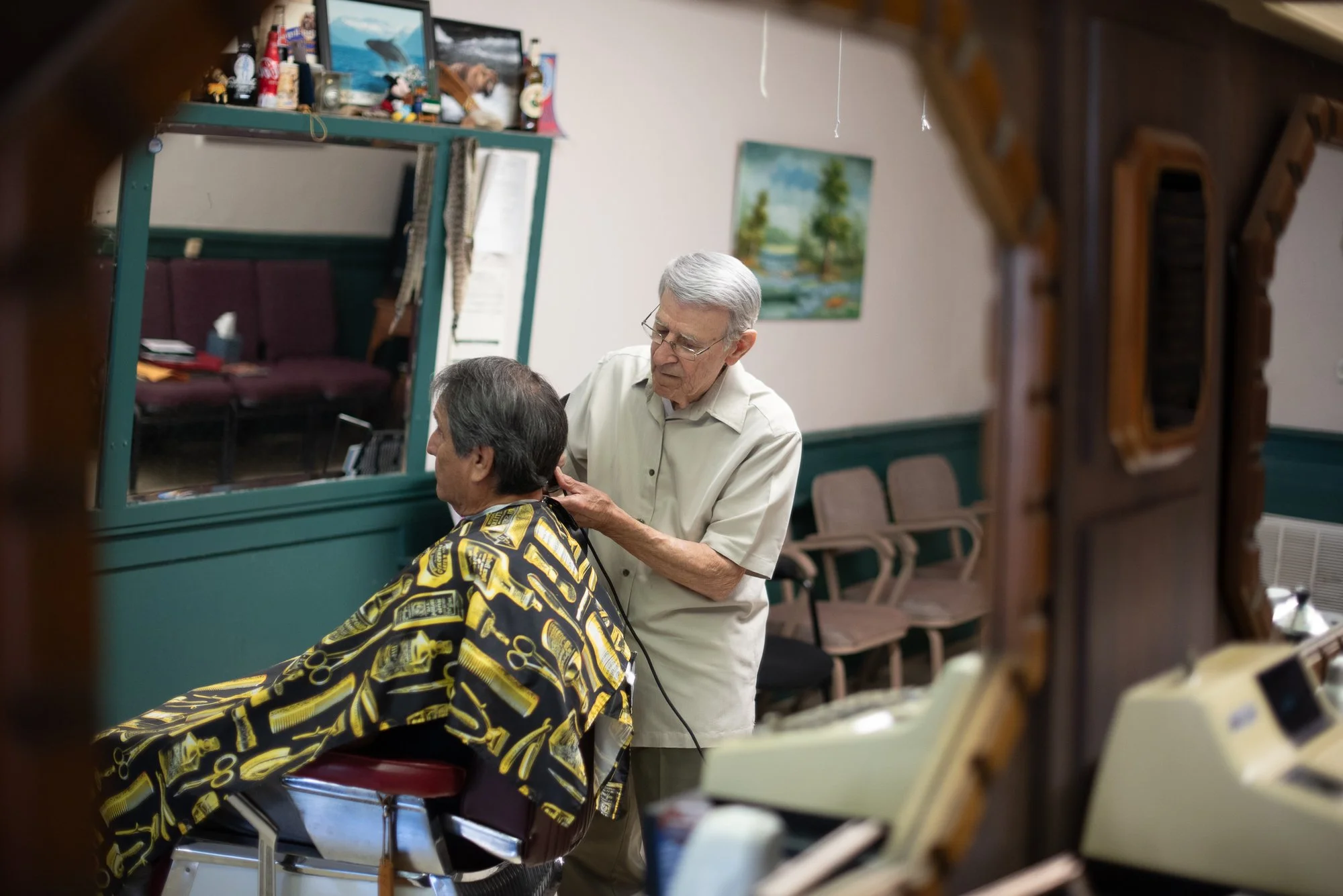
Barber giving a haircut to a customer inside Raymond’s Barber Shop in Lockhart, Texas.

Barber and customer smile together during a routine haircut underway at Raymond’s Barber Shop in Lockhart, Texas, where familiarity and trust guide the work as much as technique.

An elderly man sits in a barber chair inside Raymond’s Barber Shop in Lockhart, Texas.

Barber holds the chair as his elderly customer braces himself at Raymond’s Barber Shop in Lockhart, Texas—part of a daily routine that has remained largely unchanged for decades.

Traditional Barbershops

Small Town Barbershops

Photographs of American Culture

Hard to believe this project has been going on for 10 years now. You’d think after publishing a couple books on the subject, the desire to photograph barbershops would go away. Apparently not. What a journey it’s been and continues to be. Here are a few made over the past 6 months or so. The first shot of the Commercial Barbershop in Elko is actually a shop I photographed 8 or 9 years ago when it was in full swing. Unfortunately, it is no more. Sad, but that is exactly why I started this project.

Click here to pick up a copy of Barbershops of America.

Fausto Ferrari Barbershop

Traditional Barbershop - Cincinnati, Ohio

It’s crazy what BBQ can bring into your life besides good times and a happy belly. There are countless images made on the road that have been a direct result of my love for smoked meat. In December 2013 I was cruising around downtown Cincinnati in a huge snowstorm when a (meat) smoker caught my eye in front a non-descript store front. If it weren’t for the huge plums of smoke coming from it I would have went right on by. Luckily it was about the only form of life on those empty streets that day. So I stopped for some food which happened to be next door to a beautiful old barbershop, which at the time, was closed despite the listed hours stating it should be open. I remember asking the owner of the bbq joint about the barber - “Good luck. That guy comes and goes whenever he wants to. Who knows when he’ll be back.” I had to take a gamble though, hoping he would indeed be cutting the following day. After spending the night I showed up at his stated “opening” time, but there was no sign of the barber. So I sat in my car wondering if he would show. Quite some time after, he did.

Over the past 10 years of working on this project I’ve encountered an almost endless list of characters. Mr. Fausto Ferrari is at or near the top of them all. Despite being in this country some 50+ years, he still spoke very broken English, so our conversations were fun to dissect. One of his long time customers came in shortly after he arrived and it was obvious that they had quite the history together. Halfway through the cut Fausto went into the back room . The man in the chair could see how much I enjoyed the barbers antics and said “I keep a file on my computer of all the stories he tells me”. Fausto was entertaining on his own, but watching the two of them was a gift. The kind of chemistry that can only happen between old friends. They carried effortless conversations that were often interrupted by the barber abruptly saying “Seeeñññoooooorrr” and the man in the seat volleying back with a smile “Faaaauuuussstooo”. Then the conversation would continue like it never stopped until the next volley. A special interaction that I was luck to witness.

Señor Fausto recently passed away after 94 years. A beautiful ride that any of us would be luck to match. Rest in Power Mr. Ferrari. Cincinnati will miss you.

Click here to grab a copy of Barbershops of America

Photo was made on 12/7/13

Syndicate Barbershop - Long Beach, CA

Best Barbershop in Long Beach, California

Syndicate Barbershop - Photography

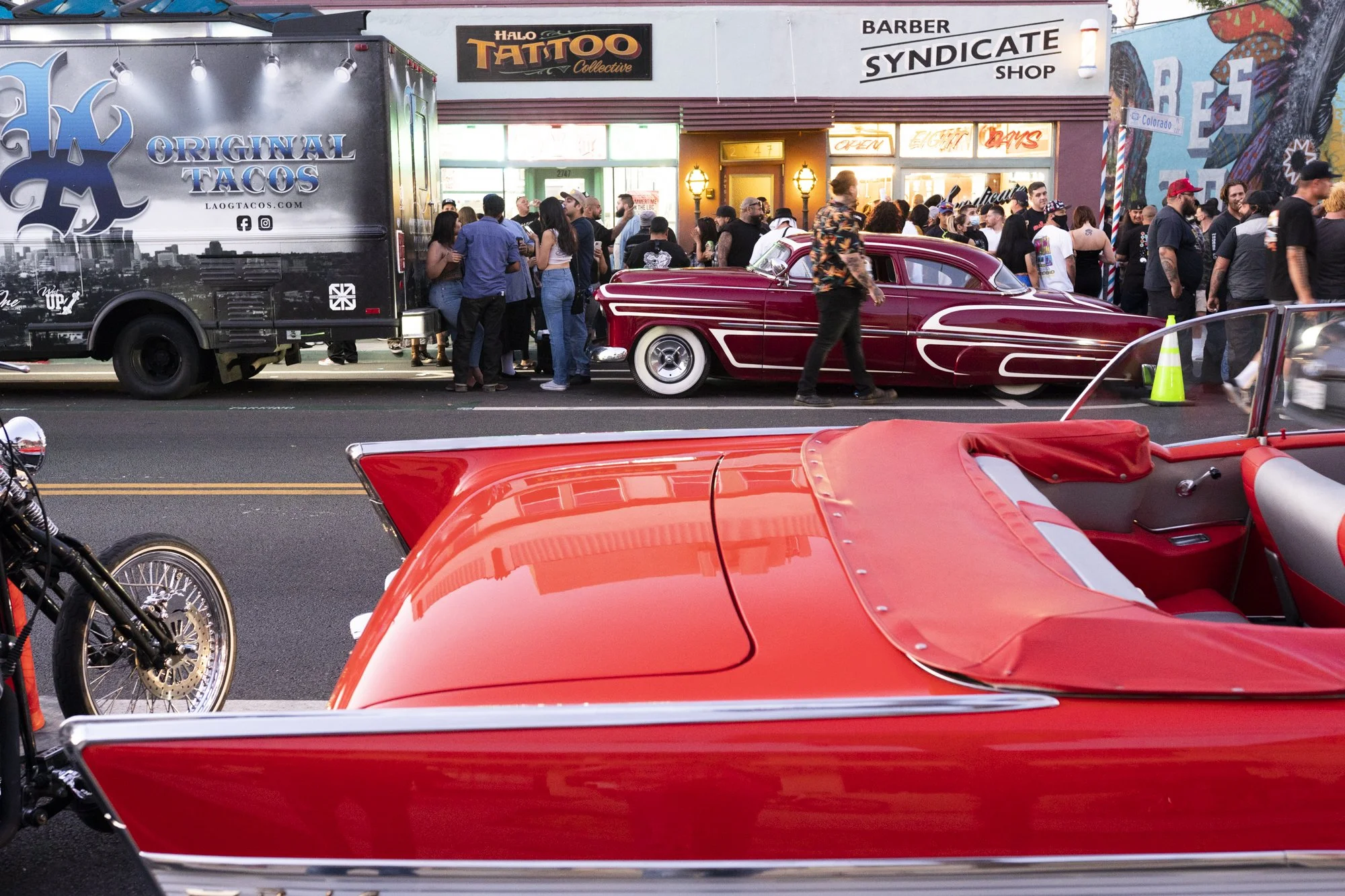
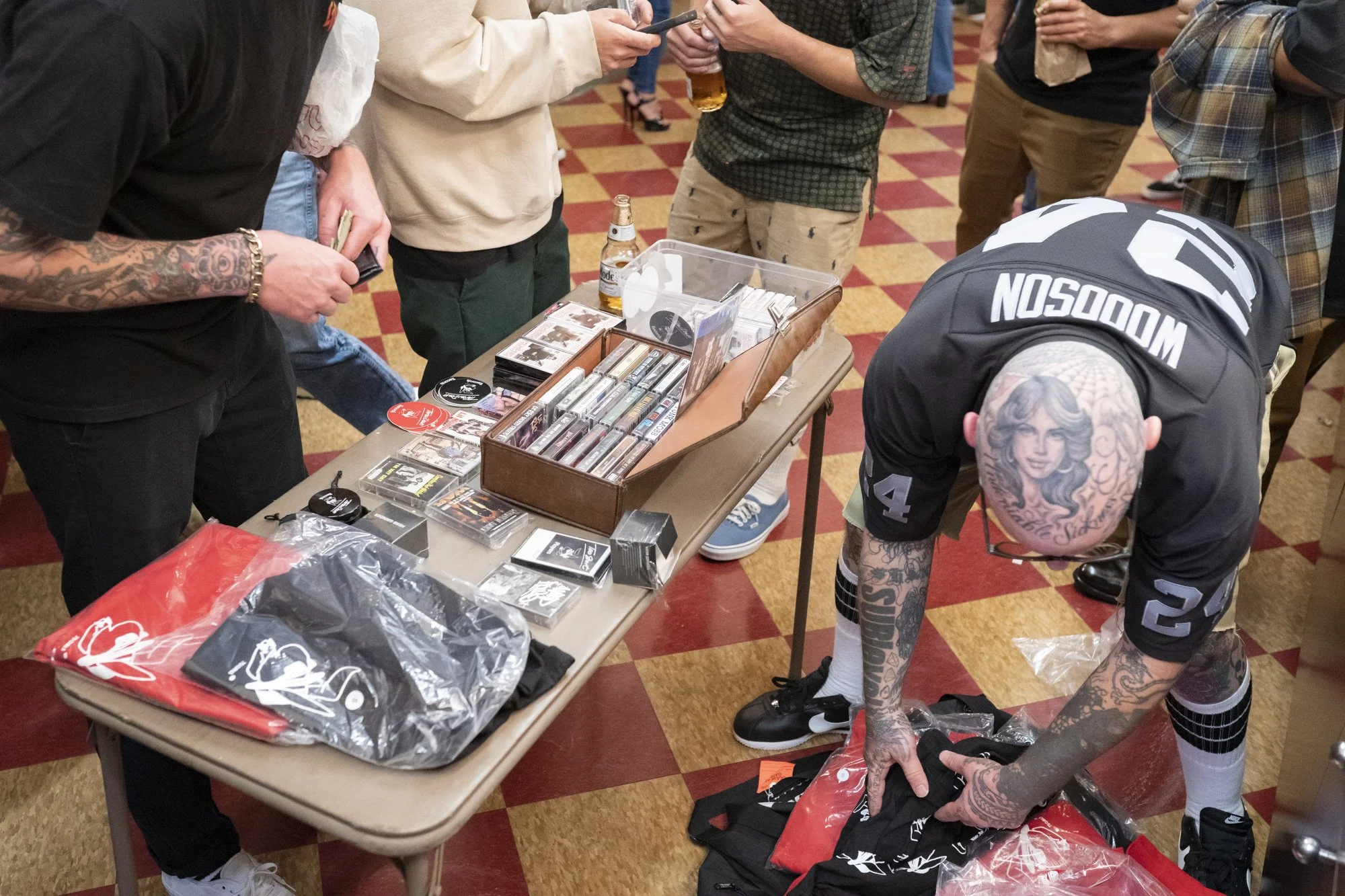
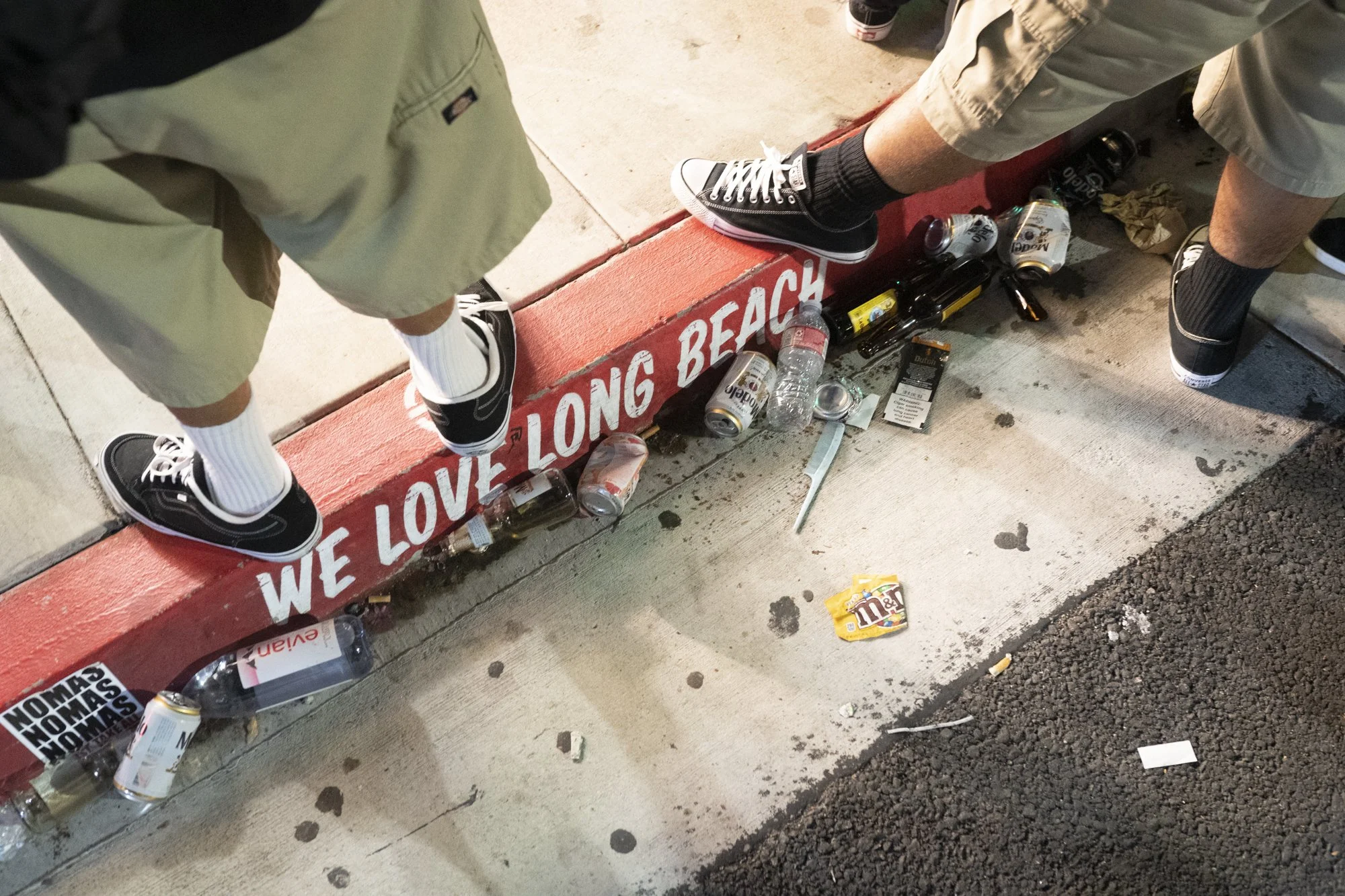
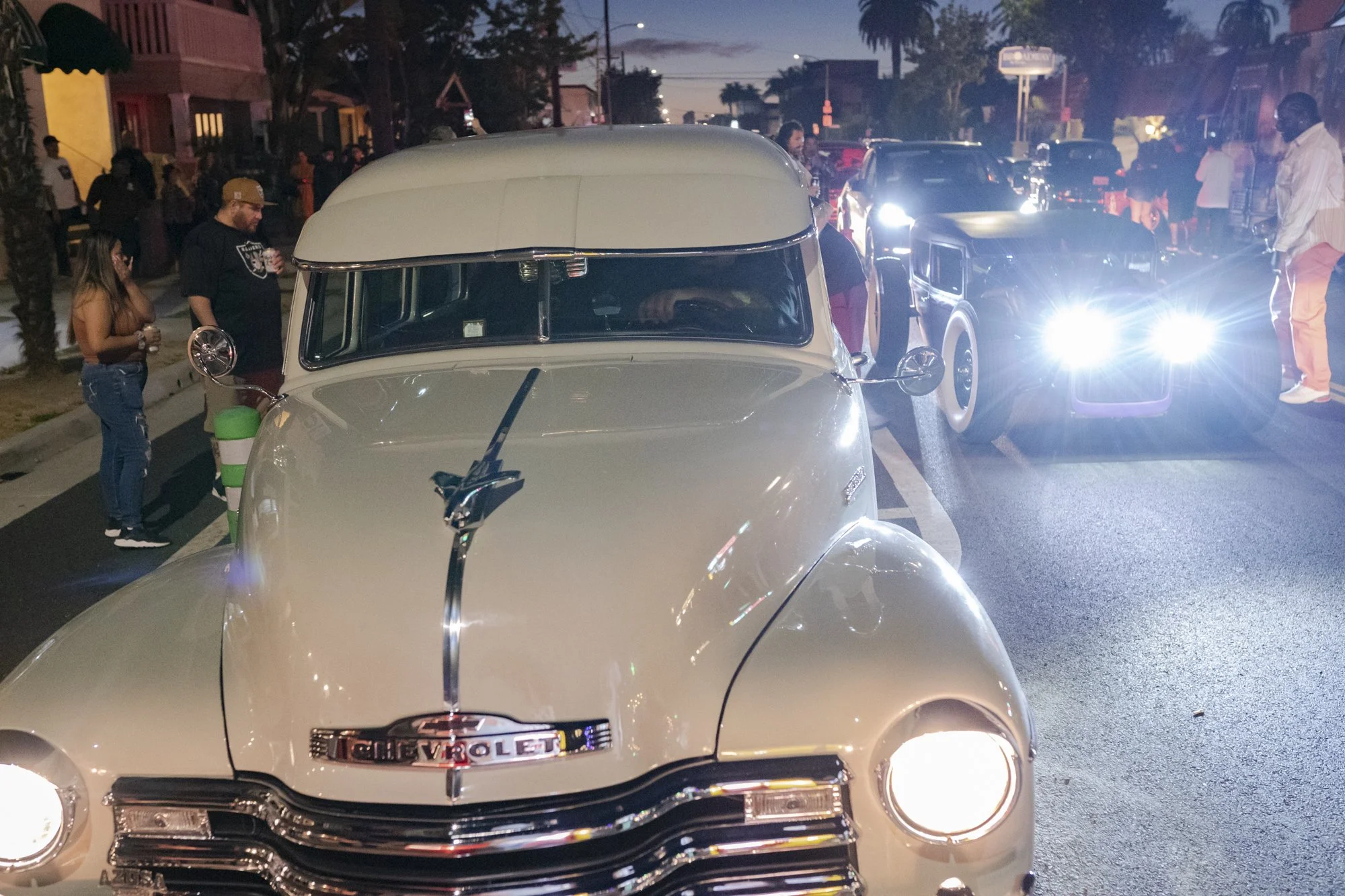
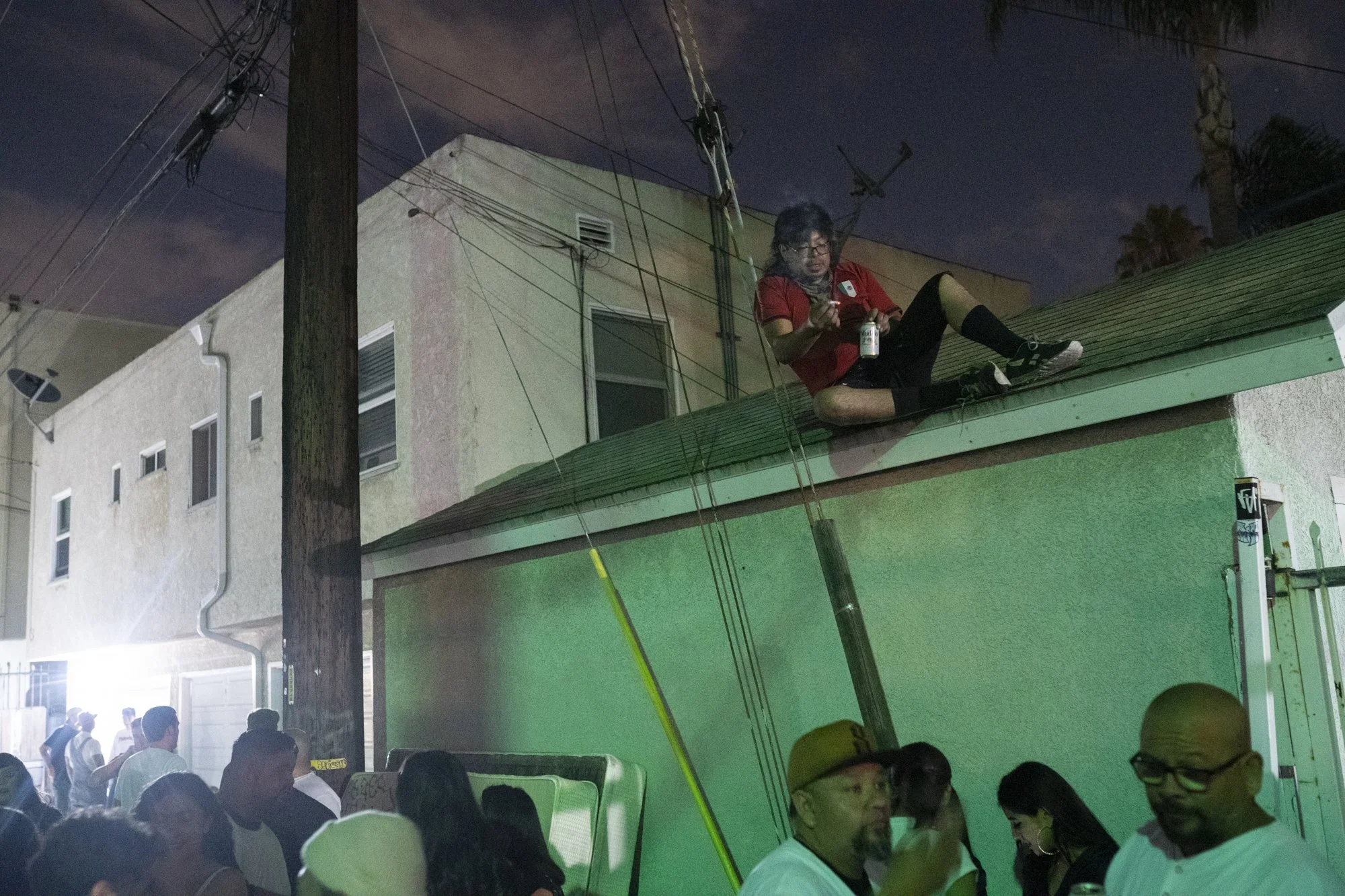
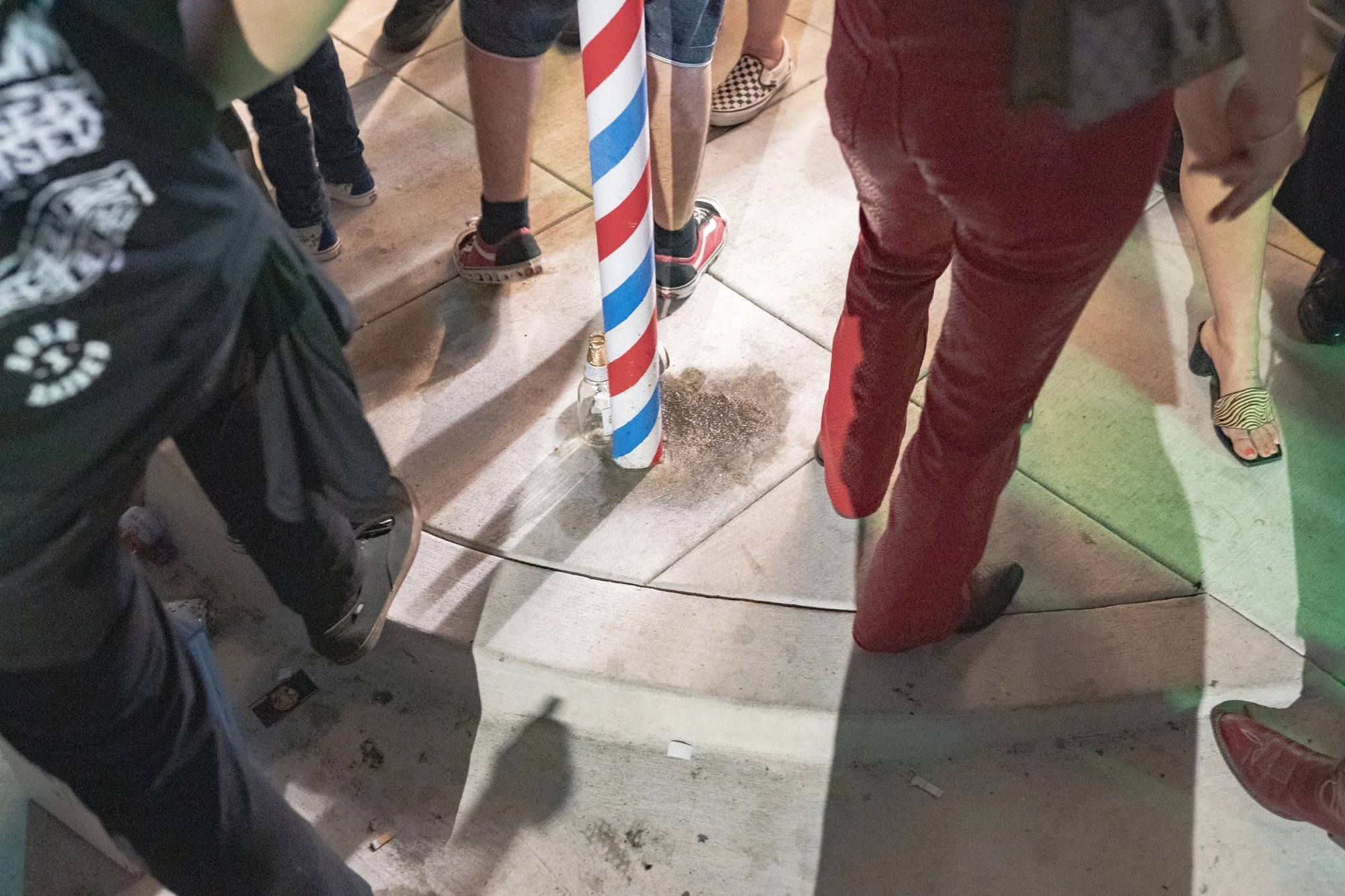
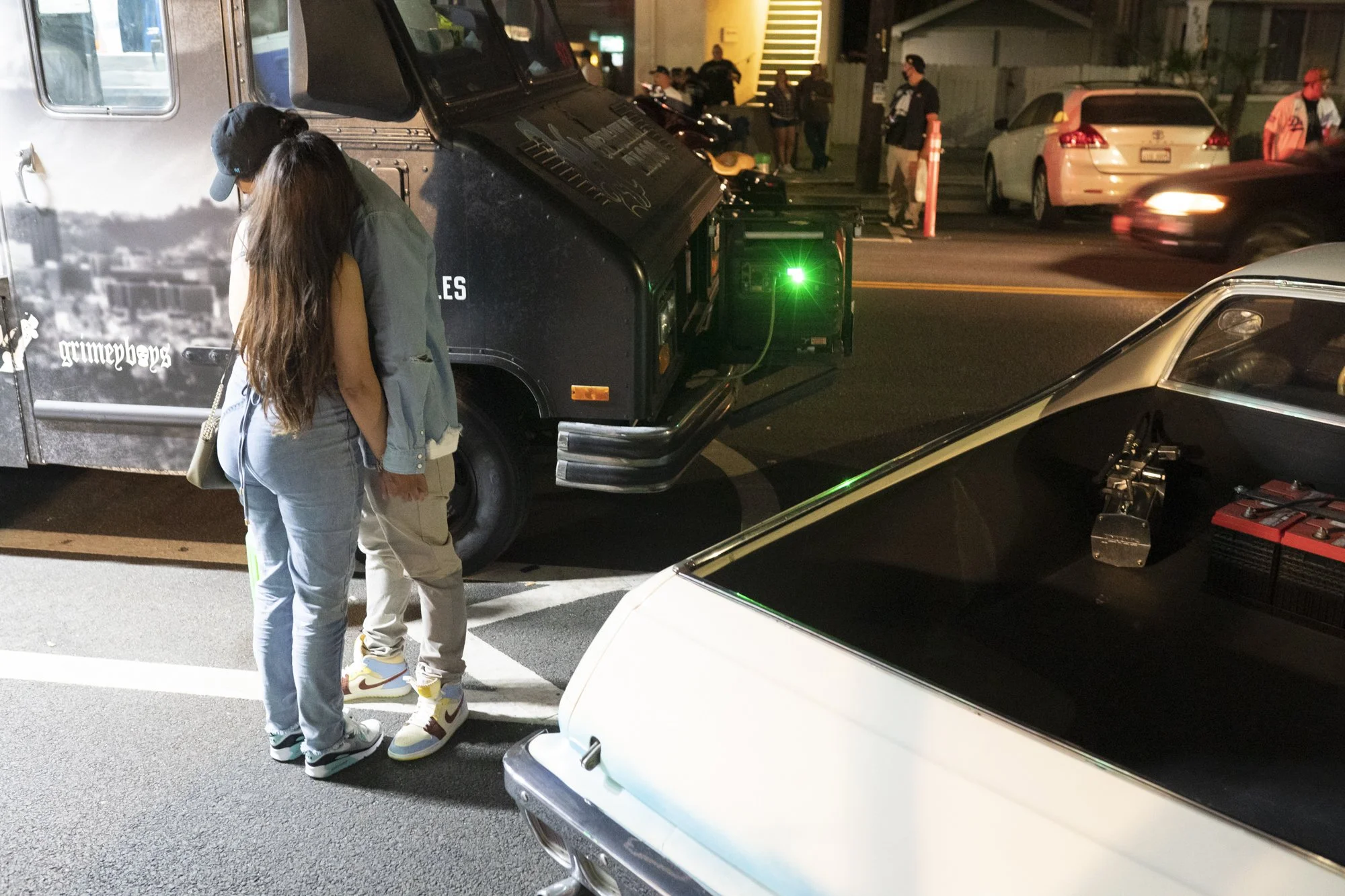
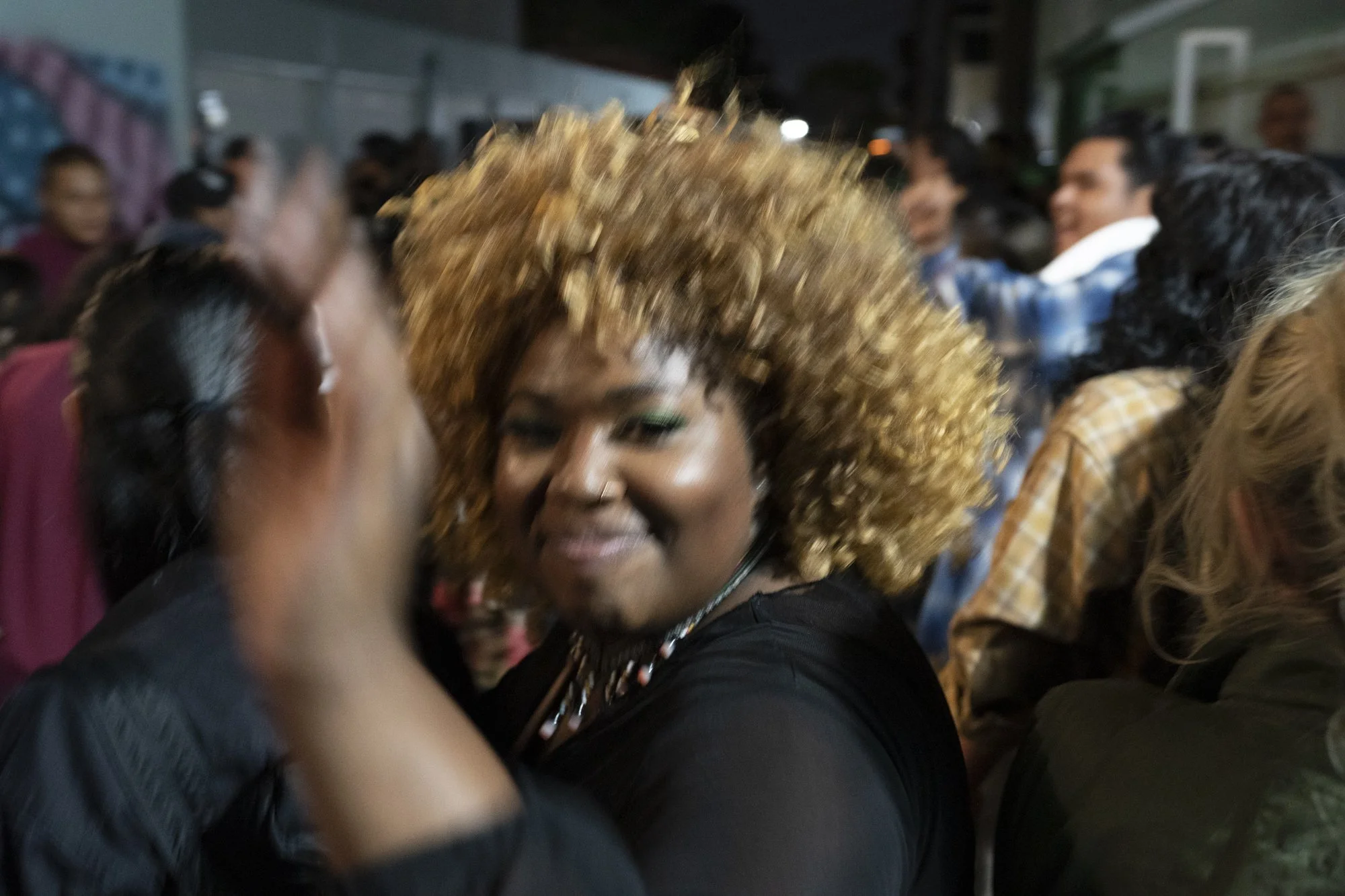
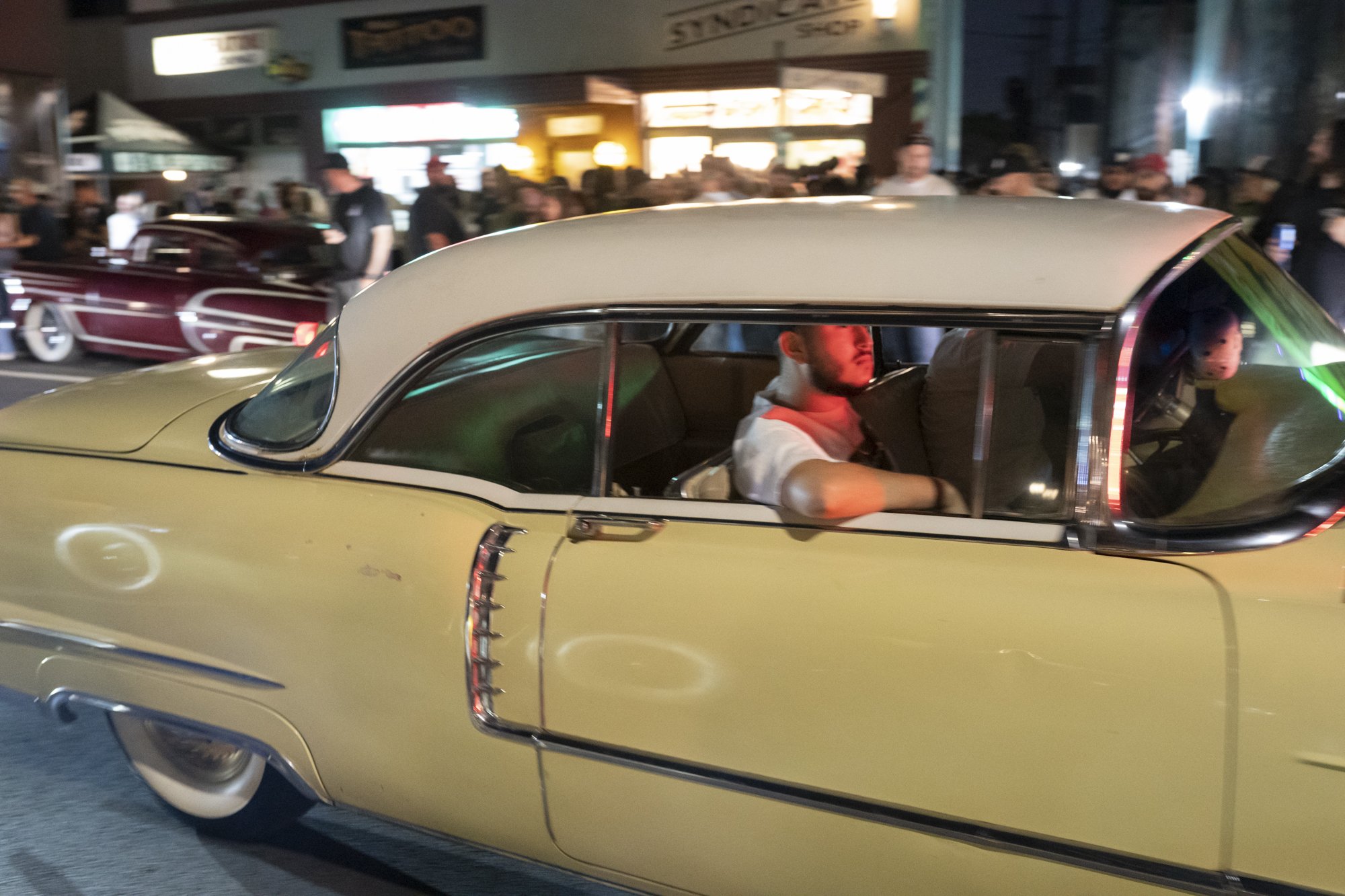
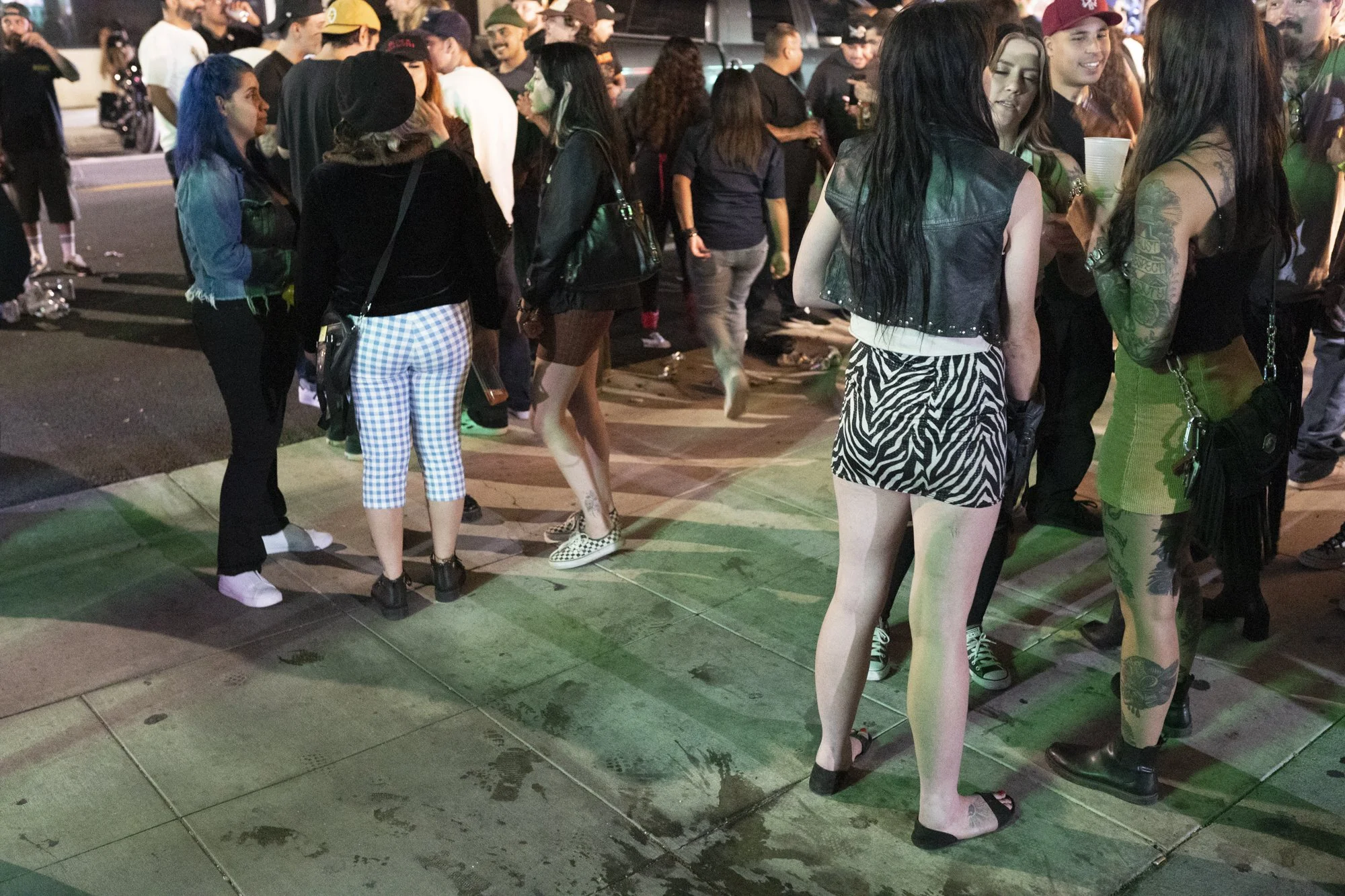
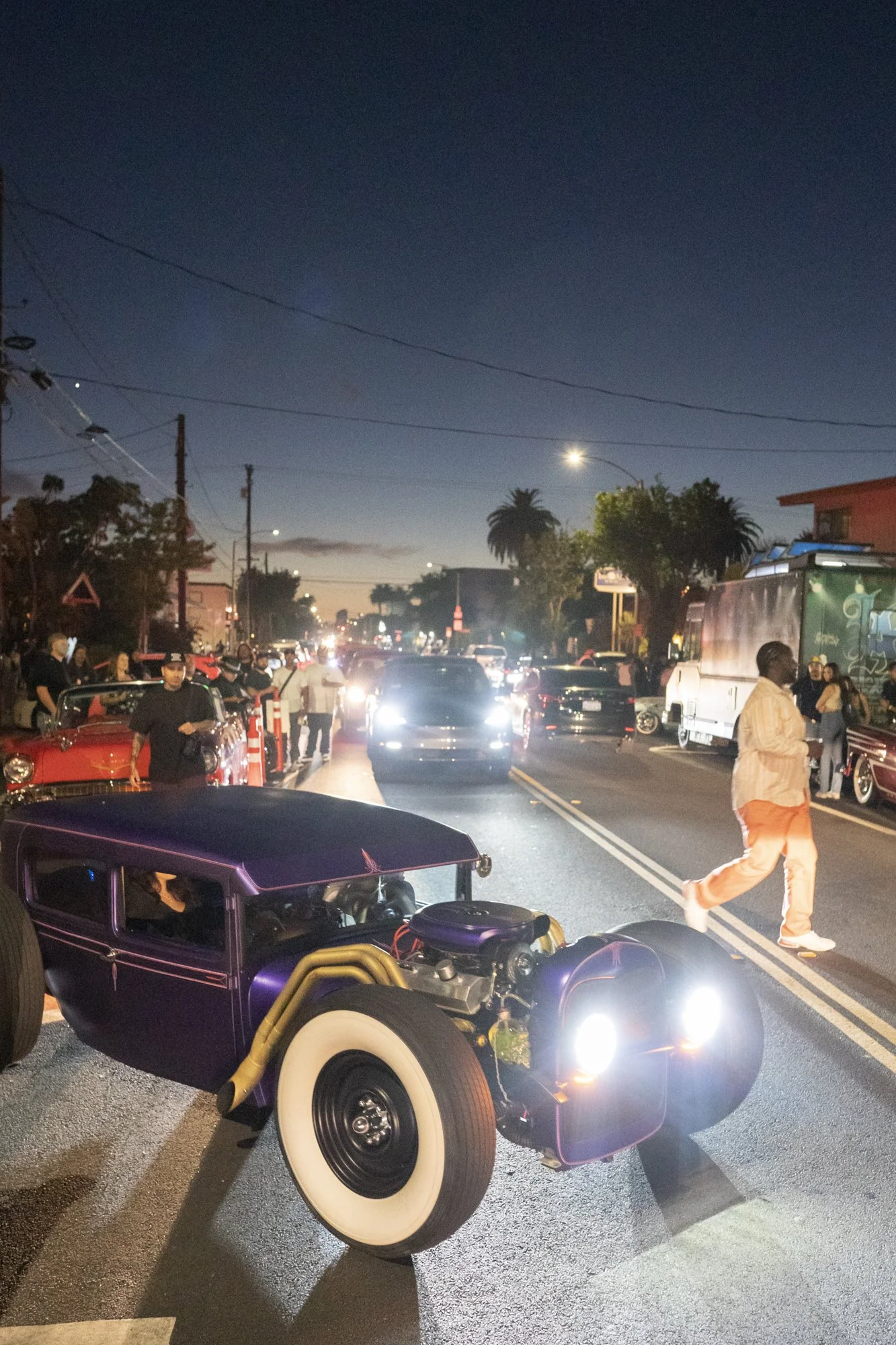
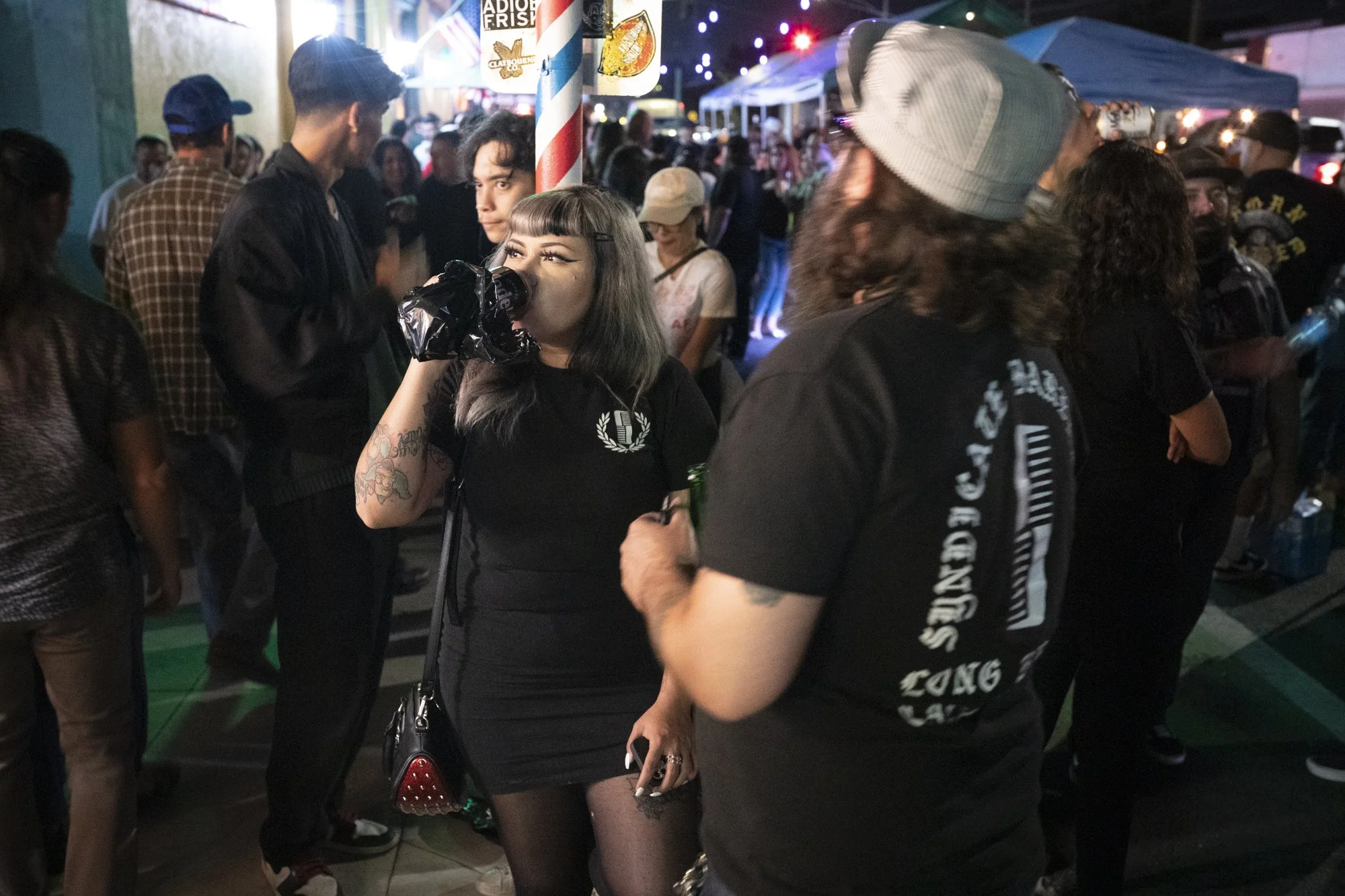
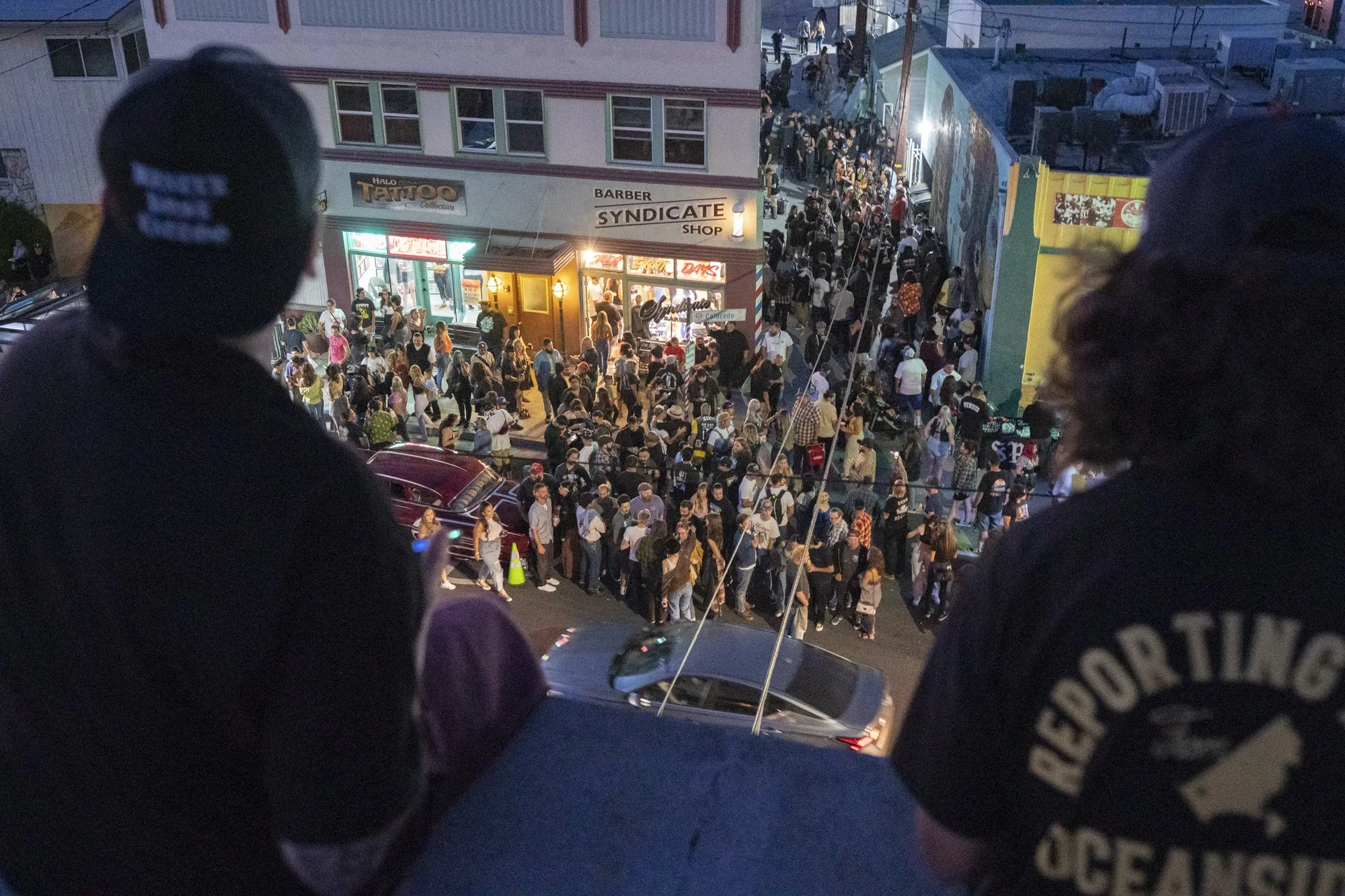
Walk around any city or town in America and you’ll see far too many permanently closed doors from COVID. A lot of business’ couldn’t deal with the financial stressors and effects from COVID. Syndicate Barbershop in Long Beach, CA isn’t one of them, thankfully. In fact, they just celebrated 20 years or haircuts in the best way possible. With a block party. I’ve always loved Syndicate and proudly displayed their facade on the cover of version 2 of Barbershops of America. It’s a great shop that fits perfectly within the funk of Long Beach. And the turnout for the party was also quite fitting. People watching at it’s finest. This was the first REAL party I’ve been to since before COVID began and it will be a tough one to beat. Tim did it up right. Check back in another 20 years and hopefully I’ll be posting photos from their 40 year anniversary!

Click here to grab a copy of Barbershops of America

Andis Clippers

Andis Clippers

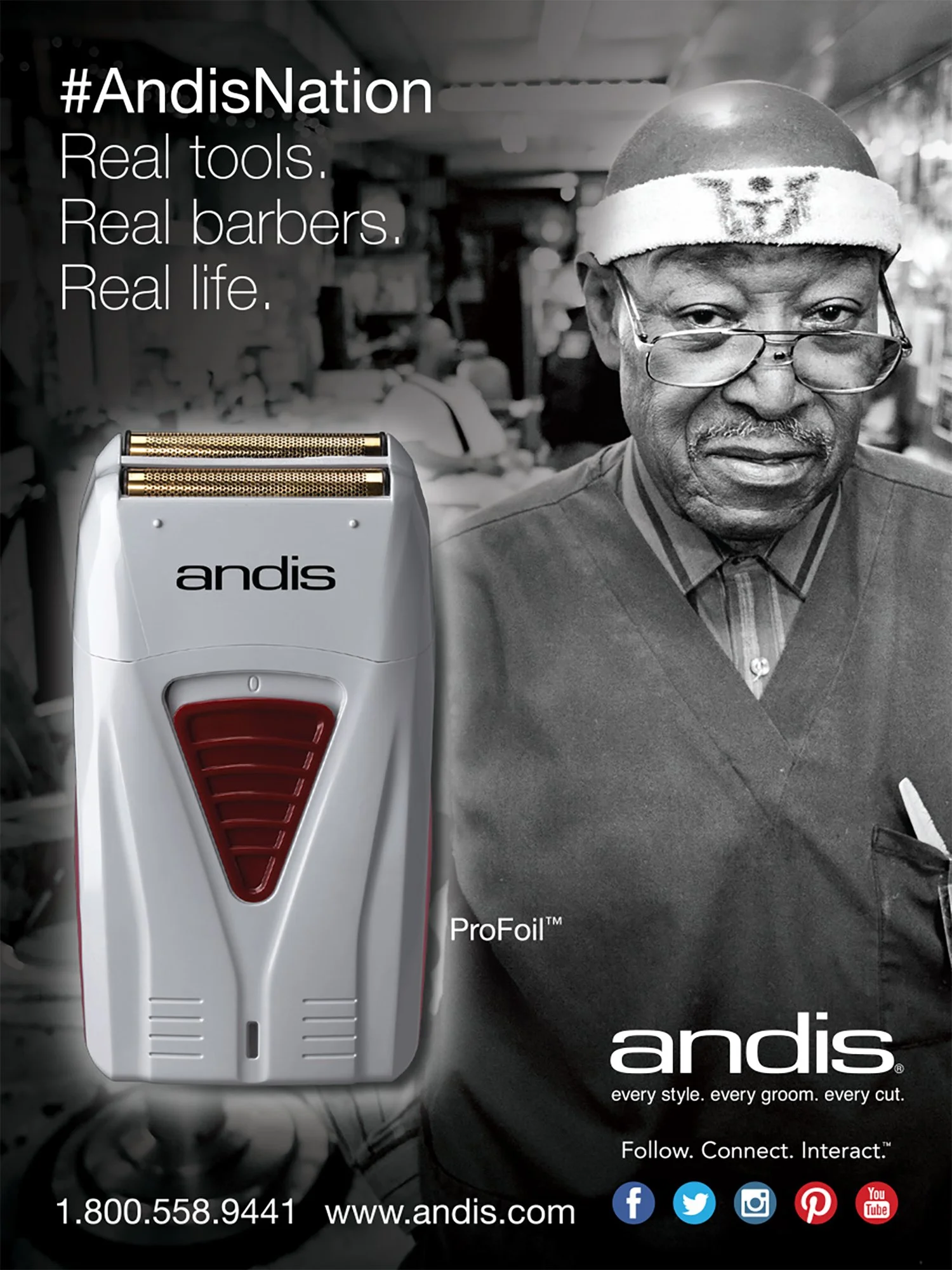
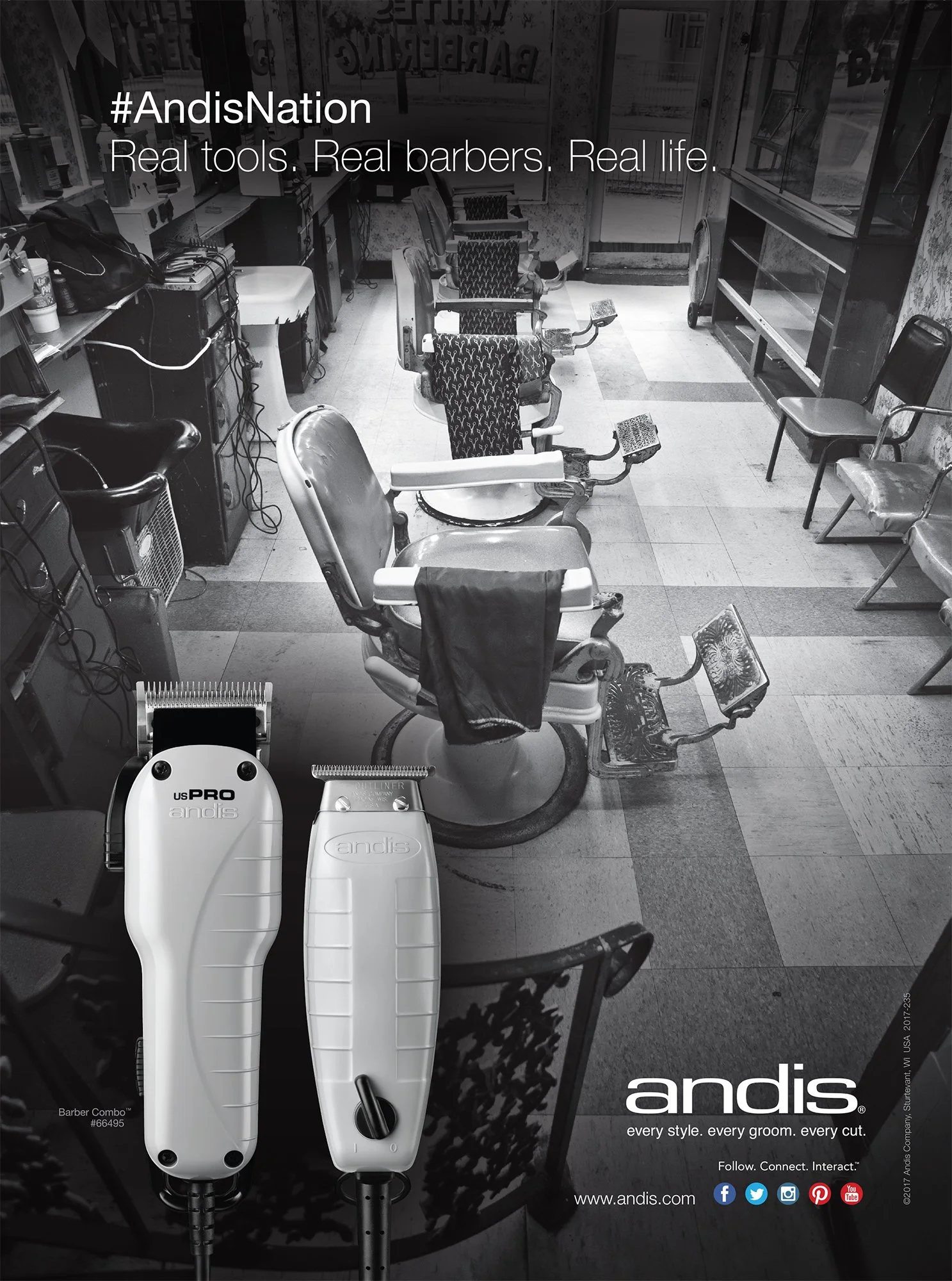
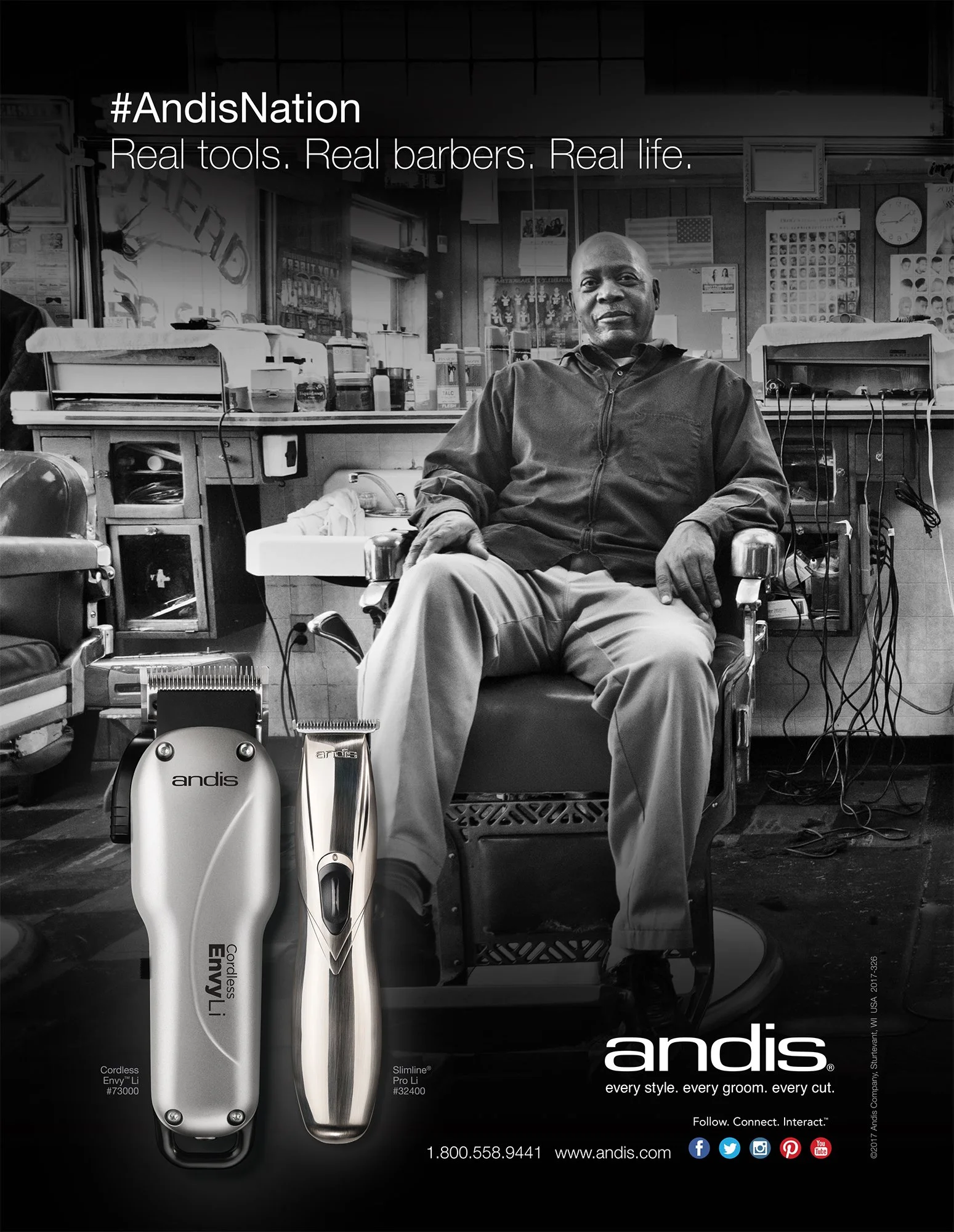
People will probably get sick of my ramblings about personal projects, but I don’t care. It’s an important message to send. As of now it’s been about 10 years since the Barbershops of America series began and I’m still on the lookout for old shops during my travels. One of the most rewarding parts about these projects is their ability to organically connect me with like minded people/brands. Andis Company is one of those brands. They started out in the 1920’s and is now being run by it’s fourth generation of the same family. Hard not to get behind a company like that. A couple years ago I stopped in to their headquarters in Wisconsin and was given a behind the scenes tour. The operation is incredibly impressive, but what stood out the most was the camaraderie and interaction between all the employees. Even during my limited time there it was obvious that they enjoyed each other and enjoyed working for Andis. So I’m proud of our past collaborations as well as this most recent image they licensed for an ad on social justice that ran in USA Today.

Andis Company

Andis Company

Pasquale The Barber

Life has a tendency to take over. I don’t mean that as a bad thing, but it certainly has a natural way of pushing certain things to the side. Maybe it’s just priorities? Who knows. If the downtime caused by COVID has been good for anything though, it’s been a recalculation of what’s important and what isn’t. For me, I’ve been happy to unearth some projects from the archives that haven’t ever seen the light of day. This doc we did on Pasquale The Barber is one of those projects. It was so much fun in a lot of ways, one being that it’s my first time “directing” a video production. I use those terms lightly though because it was a very small personal production between myself and cameraman Jordan Valente. I’ve know Pasquale for years now, ever since photographing him at his shop for the 1st barbershop book way back in 2011(?). This video was shot in 2018, but got buried on a hard drive when life and other commercial projects took over. The only real downside of waiting so long to put this together is that “Pat” has since retired and moved into a senior home. Fortunately we were able to track down his son who was able to play the documentary for him on his computer at the facility. And I’m told he enjoyed it very much. Cheers to Pasquale and all the other old school barbers still carrying on the tradition.

Click here to purchase a copy of “Barbershops of America - Then and Now”

Barbershops of America - Then and Now

Feeling really grateful for the press Barbershops of America has been getting lately. It feels good when people really connect with your personal work. Barber Evo Magazine ran an article and it was on the front page of today’s San Diego Union Tribune, which caused a number of really kind emails from people who read it. One in particular mentioned that the images reminded him of the shop he grew up in. Exactly the kind of emotional reaction I hope people will have when they look at the book.

CLICK HERE TO GRAB A COPY FOR YOURSELF OR AS A GIFT
Barbershops of America - Then and Now

It’s safe to say that any plans you previously made in the last 6-ish months have all gone to shit. Such is the case with my new book “Barbershops of America - Then and Now”. The two other versions of this were self published in the past, but I’m proud to say you are looking at my first “published” book, with Schiffer Publishing out of Pennsylvania. I had some grand plans for a release party, but obviously none of that will be happening. Such is the world we now live in. At first this was really upsetting, but after thinking about it for a while, I decided there was no point in fighting the facts and the best course of action was to embrace the times we are in. Maybe it’s not ideal, but so what? You can only plan so much. My man Mike Tyson said it best - “everybody has a plan until they get punched in the face”. Well, the whole world is getting punched in the face right now. So we must adapt. Now I choose to think that the book will be a boost of positivity and happiness to anyone who decided to pick up a copy. The timing doesn’t really matter.

Over the past couple months I’ve been watching a lot of webinars about photo books. And it never fails that the host presents a question to everyone watching - “why do you want to make a photo book?” For some that might be easy to answer and others probably haven’t given it enough serious thought. While I could go on for days about this topic, two things eventually stuck in my mind as answers to that question: 1) I believe in the power of photo books to bring people joy and knowledge 2) I despise what the iPhone and social media have done to photography and feel a need/responsibility to constantly create something that people can own and hold in their hand forever.

Barbershops of America is a series I’m emotionally connected to after working on it for 8+ years and traveling 200,000+ through all 50 states of the USA. For a project like this I don’t see any other place for it to live than a book. One of the main goals is to preserve the history and culture of barbering in our country, and what better place than a book? Otherwise the images just sit on a hard drive or website never to be seen.

Click HERE to purchase a copy of the book.

If you live outside the USA then your cheapest option for delivery is Amazon.

Barber Evo Magazine

Barbershop Photography

A while ago I was asked to write a piece in Barber Evo Magazine sharing my thoughts on how the barber industry has changed. It was an obvious “yes” as it’s something I’m very passionate about and happy to share. Here is the magazine spread as well as what I had to say. Unfortunately the book is out of print, but you can still buy prints from the series.

Click here to check out the book.


At this point it almost sounds stupid to say out loud that barbershops have changed. And even if that’s a massive understatement, it’s true. Back in 2012 when I first began my “Barbershops of America” project, it looked like traditional barbering was becoming a thing of the past. Then a year or two later the explosion started. Barbering became sexy. Everyone wanted to do it. And the next thing I knew there was a barbershop on almost every street corner. The way I see it today, there are 3 different schools of new age barbers: those looking for a quick buck, those who want to be Instagram famous, and those looking to carry on the old traditions while also adding their own modern twist. Old time shops are something that couldn’t and shouldn’t be replicated. They are simple places with a way about them that naturally came to be with age. The old timers never gave any consideration to looking cool, and because of that, they just were. What you see in their shops is sort of a living thing that organically grew over 40, 50, or 60 years. Each shop has it’s own personality that’s a direct reflection of the barber and his friends/clients that have been walking through the same doors their whole life. 

I’m not a barber and I don’t believe there is a right or wrong when it comes to building a shop. If it makes you happy and you’re doing it for the right reasons, then go for it. However, I have been to over 1,000 barbershops in all 50 states of the USA.  So what I do have is a very informed personal opinion. And my opinion on the negative side is that a lot of barbershops have become very impersonal and sterile places. Some are owned by people who are not barbers and never planned on spending any time there, so the shop lacks any real identity. They could be owned by absolutely anyone. There is no defining characteristic besides some sort of aesthetic that you could easily mistake for a high end salon. Again, this is just my opinion, but people continue to patronize a barbershop because they know the barber and on at least a couple levels, they connect with the same things. The shop becomes very familiar and welcoming because you can talk about your shared interests. Walking into most barbershops these days, you would have no clue what the barbers do besides cut hair. There are no pieces of their personality hanging on the wall or glimpses into their life on the mirror. You can almost compare them to a bank in the sense that you could swap out the teller every single day and nobody would have any idea if that person had been working there for a day or 30 years. Walking into a bank is very soulless. You do your business and get the hell out, but only after the teller asks you the same question they asked every other person that has ever approached their window - “so, do you have any big plans for the weekend?” Sure, these barbershops are visually more slick than a bank, but not necessarily and more soulful.

On the positive side, there are people doing beautiful things with their shops. And I’m not strictly talking about the design. Shops that you walk in and instantly have some understanding of who the owner is.You know that his personality has oozed out of him and into the shop. “Eagle and Pig” in Costa Mesa, California comes instantly to mind. Owner Dane Hesse has done a tremendous job there. His t-shirts and stickers say things like “the one and only” for good reason. There has never been and never will be another shop like his. Dane is a 1/1 and you see that in his shop. Walking in the door you practically run right into his classic Ford pick-up truck, which is a constant work in progress. Once you make your way around the truck there is a rack of surfboards and the walls are filled with very unique pieces. All of which are a part of his personality. You know what Dane is into. He is a really smart guy, but he didn't build his shop so that you or anyone else would think it’s cool. It’s almost a clubhouse for him, his friends, and anyone else that enjoys spending time there while getting a great haircut. Of course he has a barber pole and the old chairs, but more than anything he wants you to receive top notch service. That’s tradition. Great service. Barbers aren’t a gift that their customers are lucky to have access to when they aren’t off making celebrity house calls. 

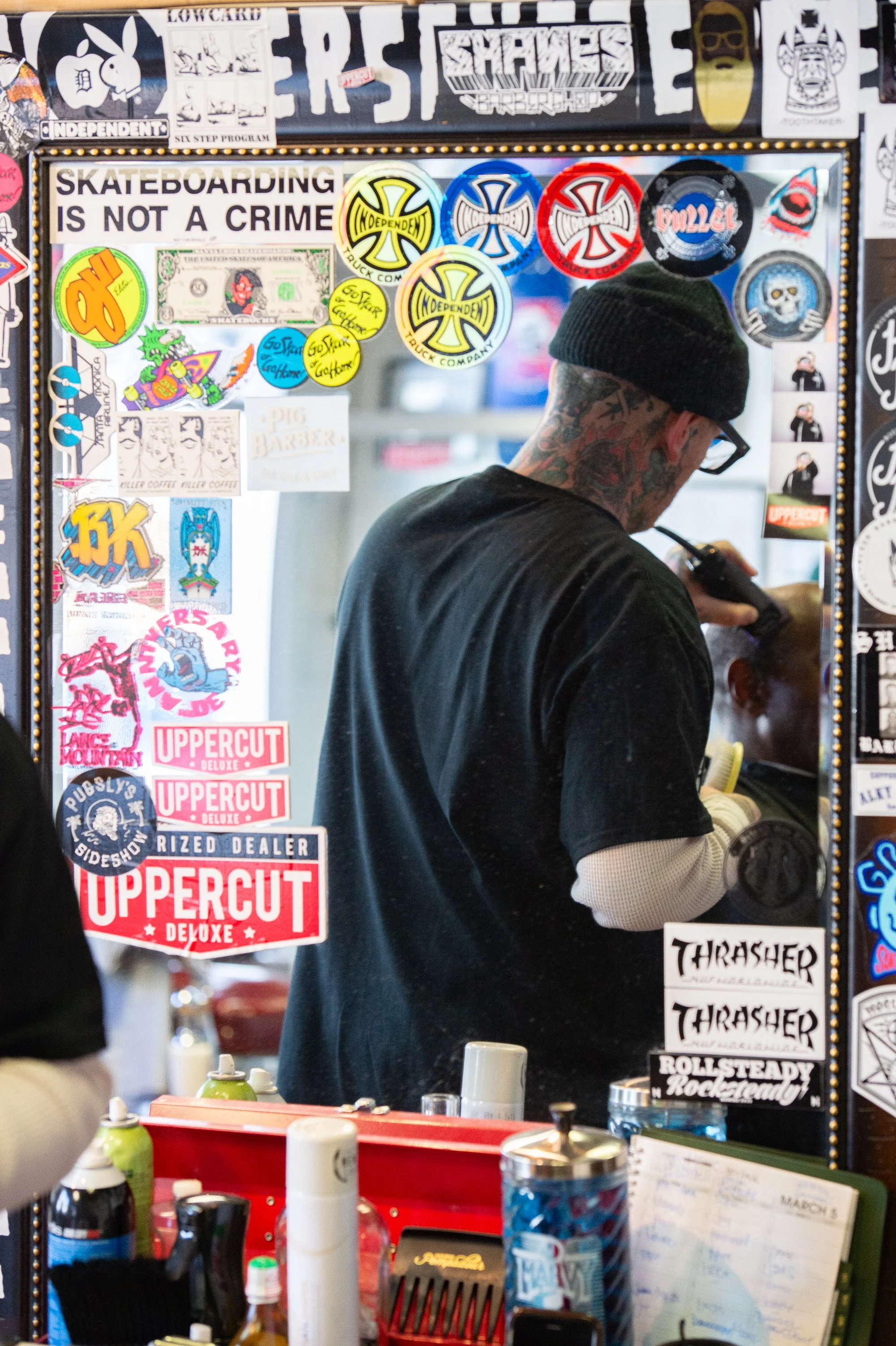
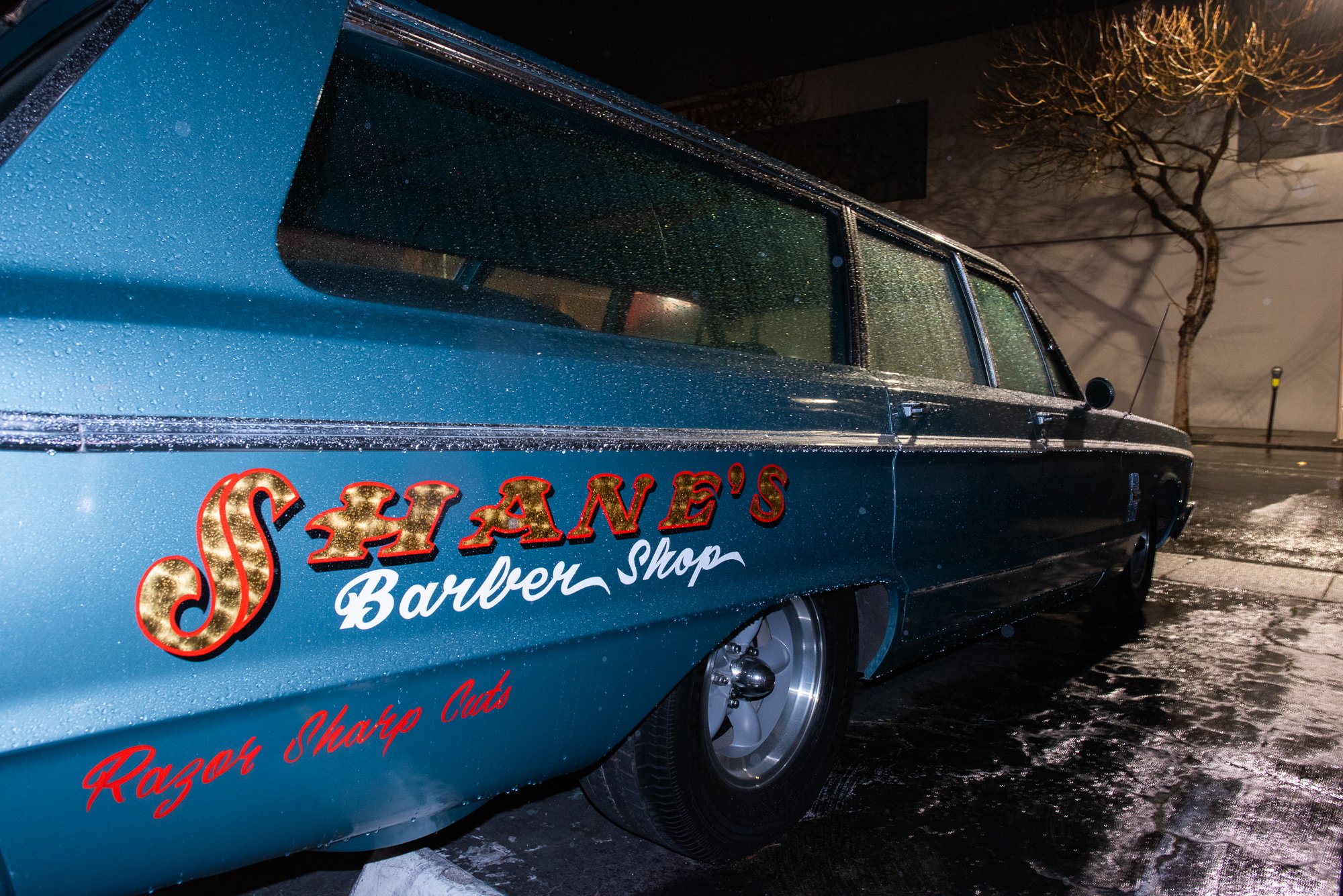
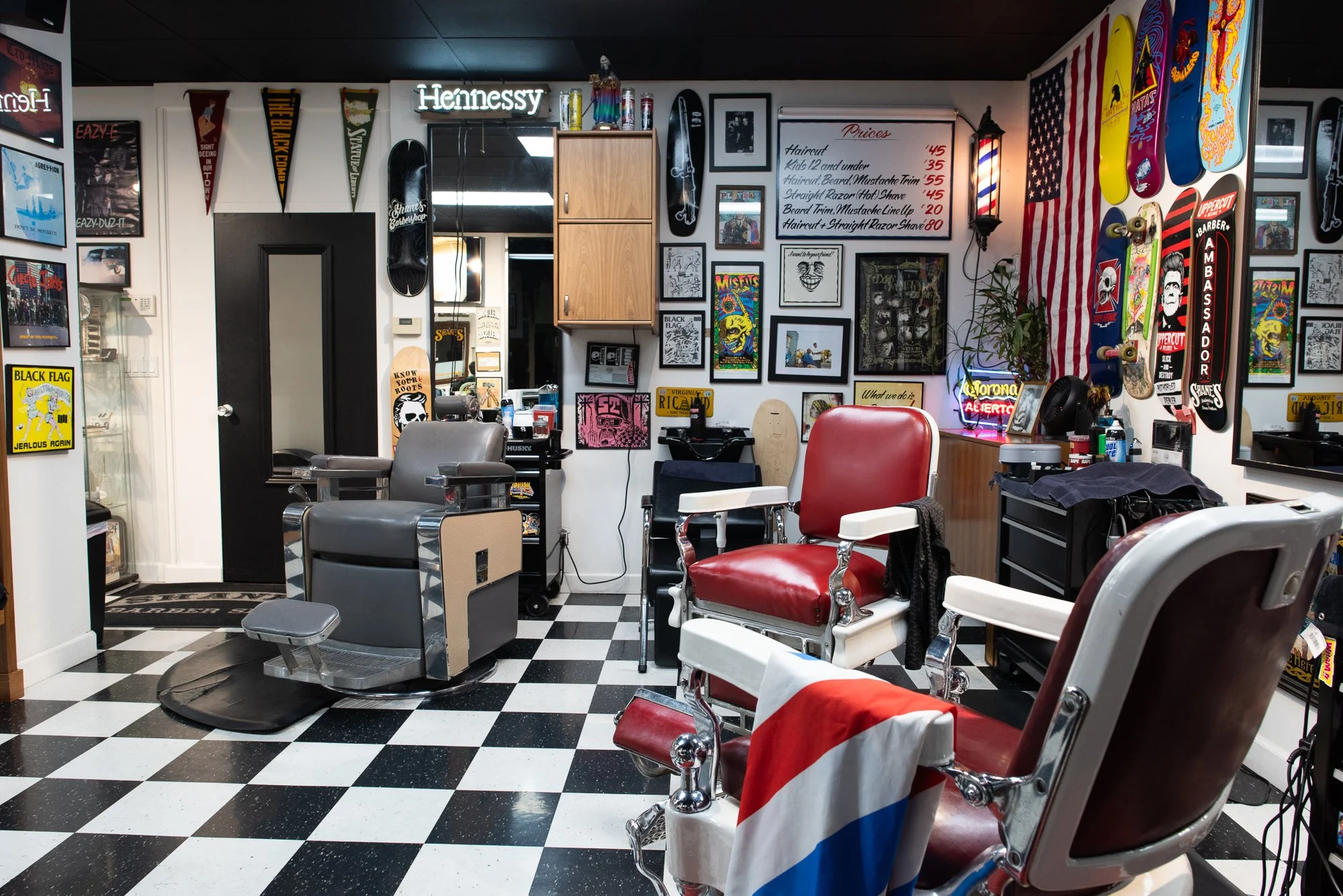
If you want me to name drop other shops, then people should look to places like Pugsly’s Barbershop / Pugsly’s Sideshow in Kingston, NY, Joe’s Barbershop in Chicago, Franklin’s Barbershop in Philly, Shane’s Barbershop in San Mateo, CA, and Mark Jason Solofa Men’s Grooming in Berkeley/Danville, CA. These are guys that get tradition and service. Crossing over from the street into their shop, you feel a tangible vibe. You can also feel the pride they have for what they do. They want you to feel welcome but you also know immediately that people walk out with a quality haircut. Their shops are well thought out. Curated but not overdone. They are the real deal. Not for everybody, which is the point. You can’t really say that there is one defining visual element to barbershops today. Because for better or worse, they are all different. The important thing is that “different” comes from the right place. It needs to come from the barber. The walls at Shane’s are covered with skateboards and music paraphernalia  because that’s where he came from and that’s what he’s into. Joe’s has been in business since 1968 when it was a one man shop that Joe Sr. opened. Sr. still cuts but Jr. took it over a while back and since expanded it to 8 chairs. Still though, you can feel the history. Right inside the front door is a pile of vhs movies, 8-track tapes, and repaired record players that Sr. has for sale. On any given day he might have a repaired bicycle for sale out front too. That’s just him. Not in a mean way, but if you don’t like their style, they don’t care. A real barbershop is a friendly place but it can’t be for everybody like the shitty sports bar that has the pennant of every NFL team hanging in the ceiling.

30 years ago would you have seen skateboards, big screen tv’s, or battle trophies hanging in a barbershop? No. That’s not the point. Times have changed and so have people. That’s how the world works. And no matter the industry, there will always be different schools of thought that don’t agree. I’m from the school that believes barbering is a humble and creative profession that would be nothing today if it weren’t for the countless years of tradition that got us here. So while having the pole, the chairs, and the proper tools are a must, it’s the other things that count. Create a shop that comes from within. Grow your business with a genuine purpose, take care of your customers, leave your ego at home, and don’t wear your fuckin’ sunglasses indoors.