Shane's Barbershop - San Mateo, CA

Shane’s Barbershop, San Mateo

A Standard That Hasn’t Been Matched

There was a time when if you cared about getting a proper haircut in San Mateo, you knew exactly where to go.

Shane’s Barbershop didn’t run on normal hours. The lights were on at 3:00 in the morning. Guys heading to work, early shifts, long days—they could count on Shane being there before most of the city was even awake. That alone set him apart. But it wasn’t the reason people kept coming back.

The work did that.

Shane Nesbitt built a reputation the hard way—one cut at a time, day after day, year after year. His standards were high, and he didn’t bend them. There was a level of consistency to what he did that a lot of shops never reach. Clean fades, sharp lines, no shortcuts. You sat in his chair, you knew what you were getting.

And other barbers paid attention.

Shane was, and still is, a reference point—someone peers and younger barbers looked to, whether they realized it or not. The kind of barber who quietly raises the bar for everyone else in the room. Not by talking about it, but by showing up and doing the work.

A Shop Built on Culture

Shane’s Barbershop was curated, but not overdone. It felt lived in. And a natural extension of Shane’s life.

There was a strong undercurrent of skateboard culture in the space—something that came through in the details more than anything obvious. The music, the energy, the way people moved through the shop. It wasn’t trying to be anything. It just was.

That mattered.

Because the best barbershops aren’t built around aesthetics or trends. They’re built around identity. Around the people who spend their time there. Around the conversations, the routines, the repetition of daily life.

Shane’s shop had that.

It was a place where working people came through the door, where time moved a little differently, where the day started early and didn’t slow down until it was done.

The Hours, The Work, The Reputation

Opening at 3:00am isn’t something you do for show.

It’s a reflection of who you are and who you’re there for.

Shane understood his customers—guys who didn’t have the luxury of showing up midday, who needed to be in and out before the rest of their day started. That schedule built a kind of loyalty you can’t manufacture.

And over time, that kind of consistency turns into something else.

Respect.

Not just from customers, but from other barbers. From people who know how hard it is to maintain that level of work, that kind of schedule, that kind of focus over years.

Shane was ahead of his time. He was the first barber to become a brand - selling t-shirts, stickers, even his own custom branded straight razors. Nobody else was doing that. Most importantly though, Shane knew that he was there to serve. A lot of barbers these days have giant egos and think their clients don’t deserve to sit in the chair. Yet despite Shane’s status, he knew he was there for the customer!

A Barbershop That’s No Longer There

The shop is closed now.

Things change. Life moves on. That’s part of it.

But places like Shane’s don’t just disappear. They stick with the people who spent time there. In the routines. In the stories. In the way other barbers approach their own work after seeing what was possible.

For a lot of people, Shane Nesbitt wasn’t just another barber.

He was the blueprint.

Part of a Larger Archive

This set of photographs is part of a long-term project documenting barbershops across America—places like this that define their communities, shape local culture, and, in many cases, quietly disappear over time.

Some shops are still open. Others, like Shane’s, live on through the people who remember them.

If you’ve spent enough time in barbershops, you know the difference between a place that cuts hair and a place that means something.

Shane’s was the latter.

Explore the Barbershops of America gallery

Read another barbershop story - Spanky’s Barbershop - Covington, KY
View Barbershop Prints + Photo Book

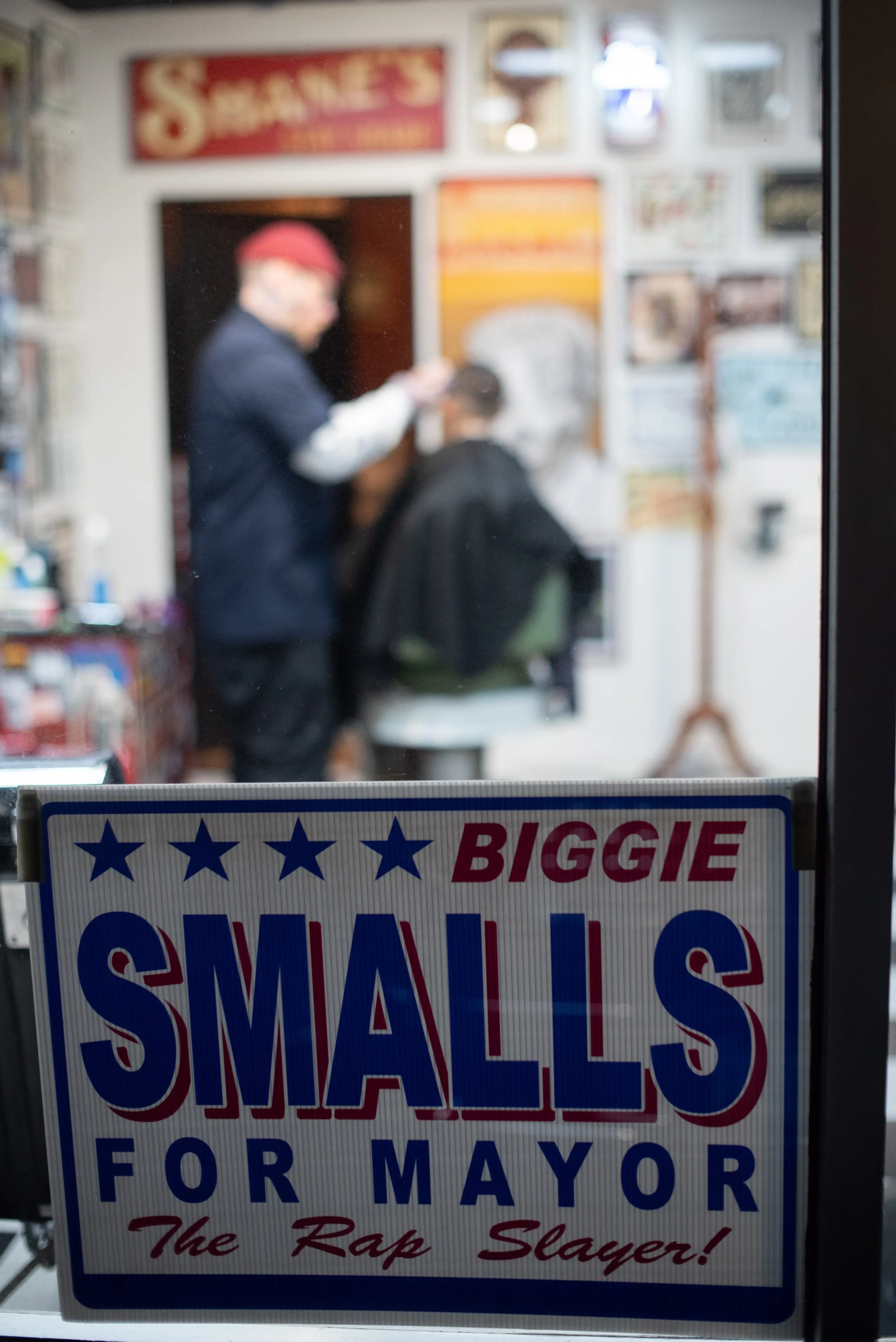
view through window into Shane's Barbershop San Mateo with barber cutting hair and campaign sign in foreground

View into Shane's Barbershop in San Mateo capturing everyday life inside the shop from the street
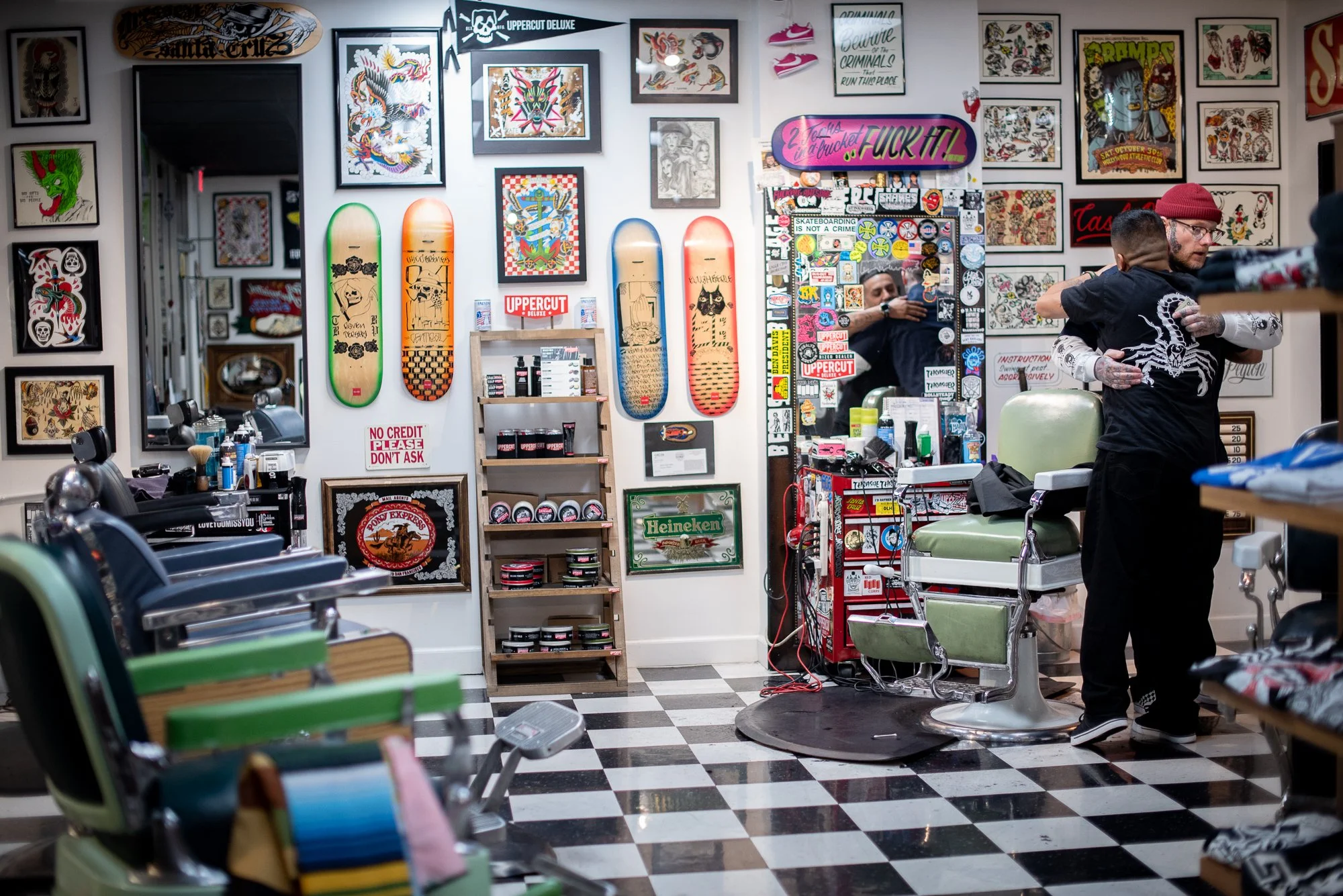
interior of Shane's Barbershop San Mateo with barber hugging client and tattoo artwork walls

Barber Shane Nesbitt shares a moment with a client inside his San Mateo shop surrounded by tattoo art and personal memorabilia
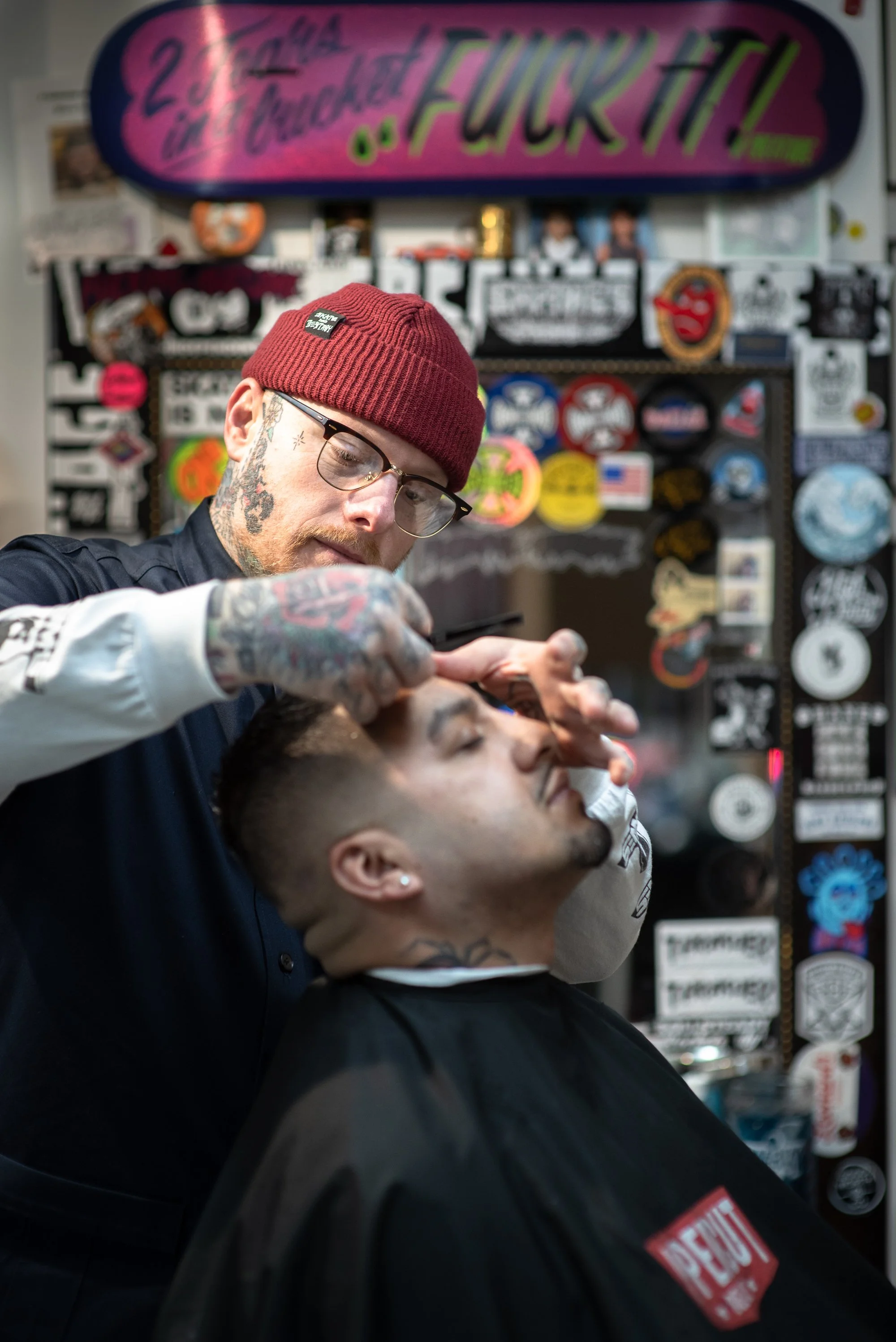
barber Shane Nesbitt giving detailed haircut to client inside Shane's Barbershop San Mateo

California barber Shane Nesbitt focuses on precision haircut inside Shane's Barbershop in San Mateo
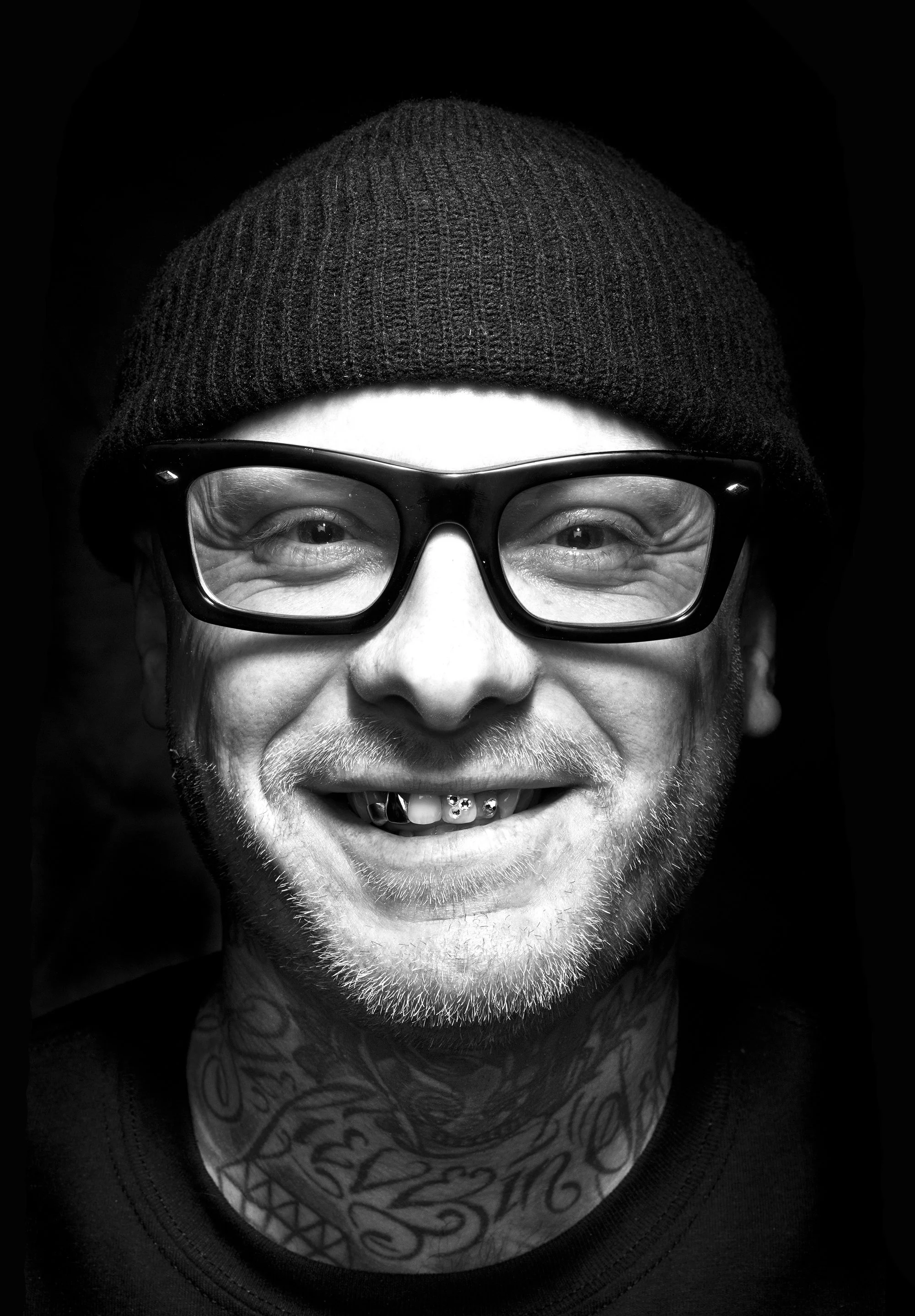
Black and white portrait of barber Shane Nesbitt wearing glasses and a beanie, San Mateo California

Shane Nesbitt, photographed in his San Mateo barbershop. For years, he set the standard—opening before dawn, cutting hair for working people, and building a reputation that reached far beyond the shop itself.
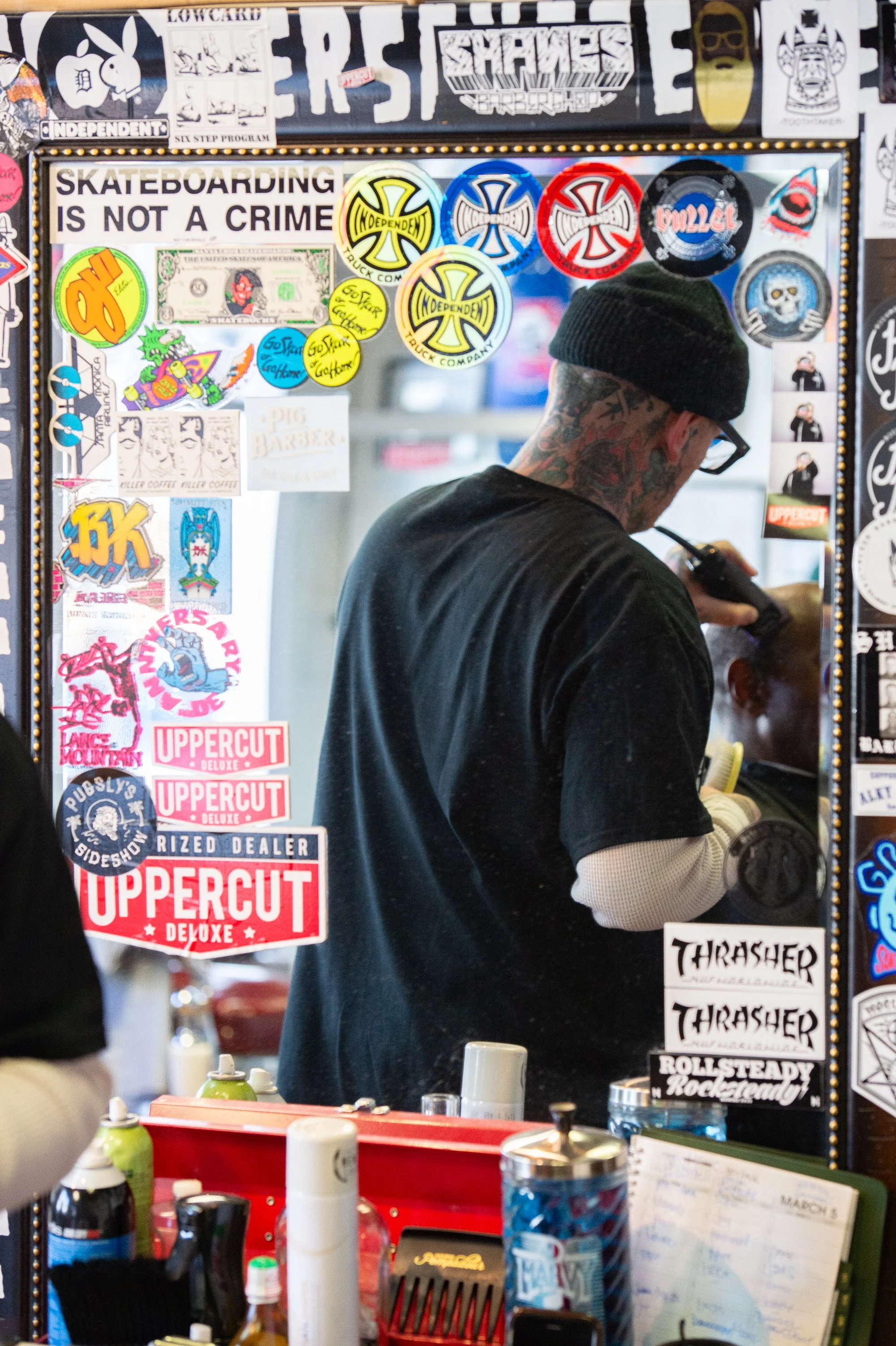
barber working through mirror covered in stickers inside Shane's Barbershop San Mateo

Barber Shane Nesbitt works through a sticker-covered mirror reflecting the layered skateboard culture inside his San Mateo shop
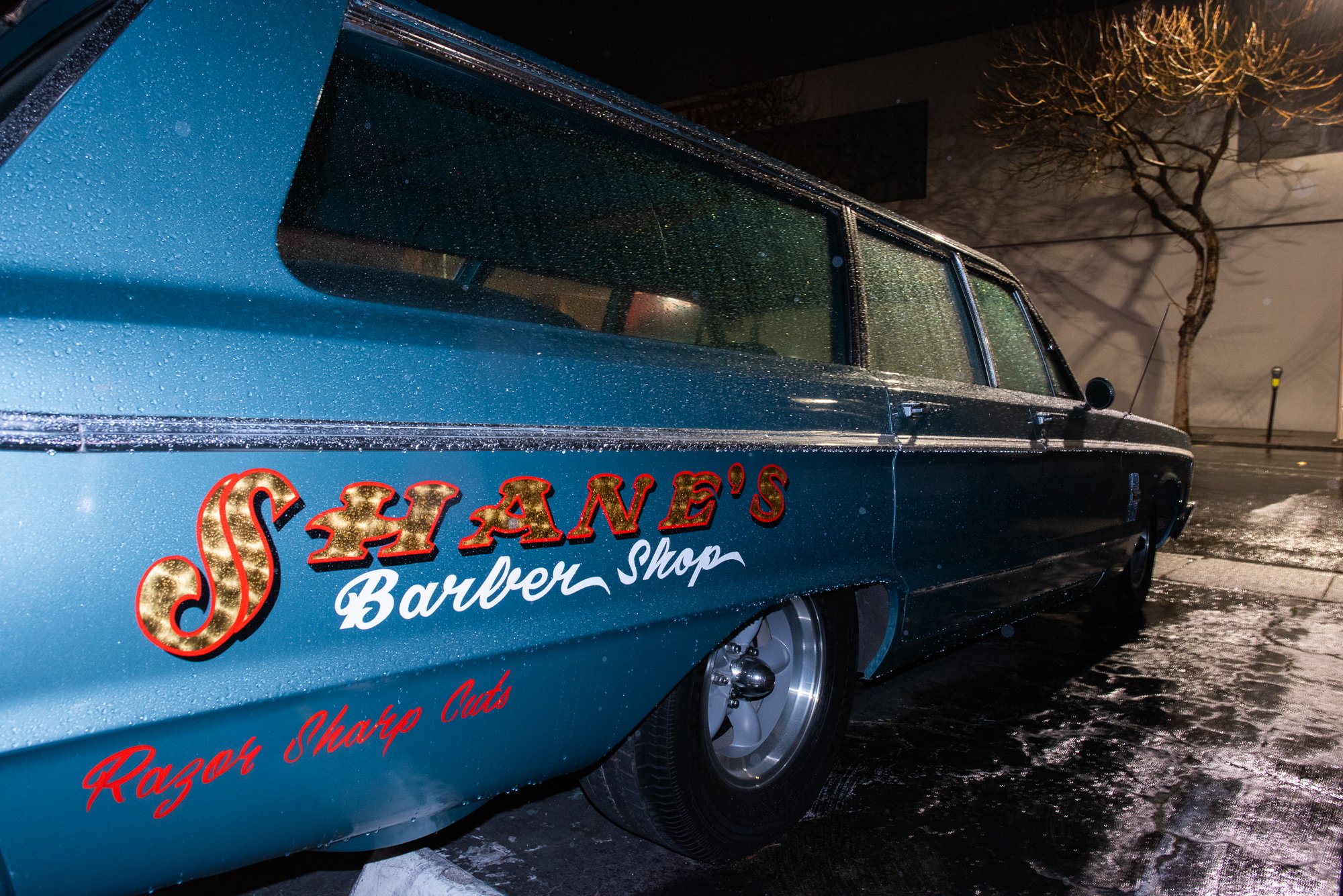
hearse with Shane's Barbershop lettering parked outside at night San Mateo

California custom hearse with Shane's Barbershop branding parked outside at night reflecting the personality of the shop
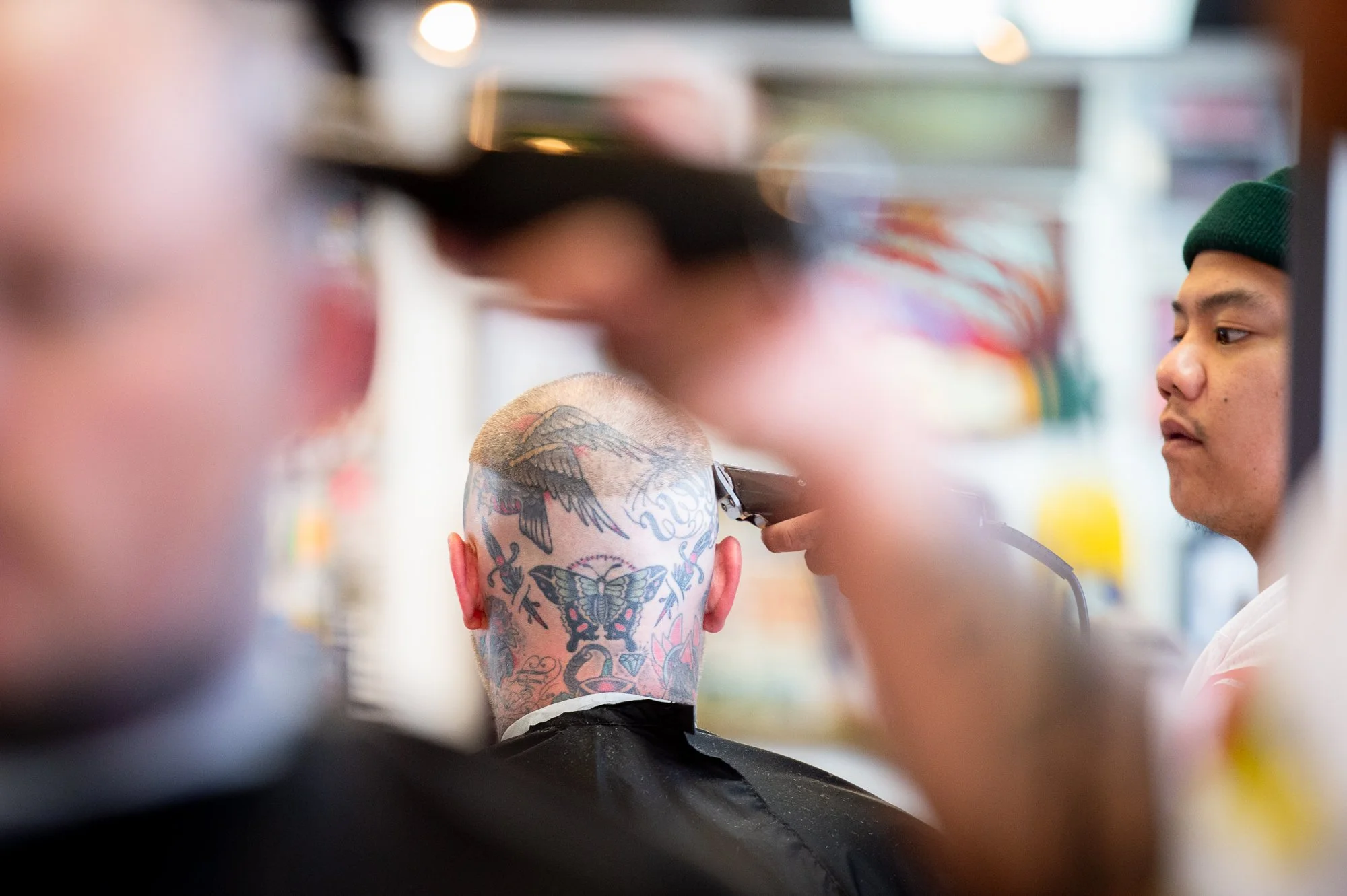
client with tattooed head getting haircut inside Shane's Barbershop San Mateo

Close-up of Shane’s tattooed head receiving a haircut highlighting the detail and individuality inside Shane's Barbershop
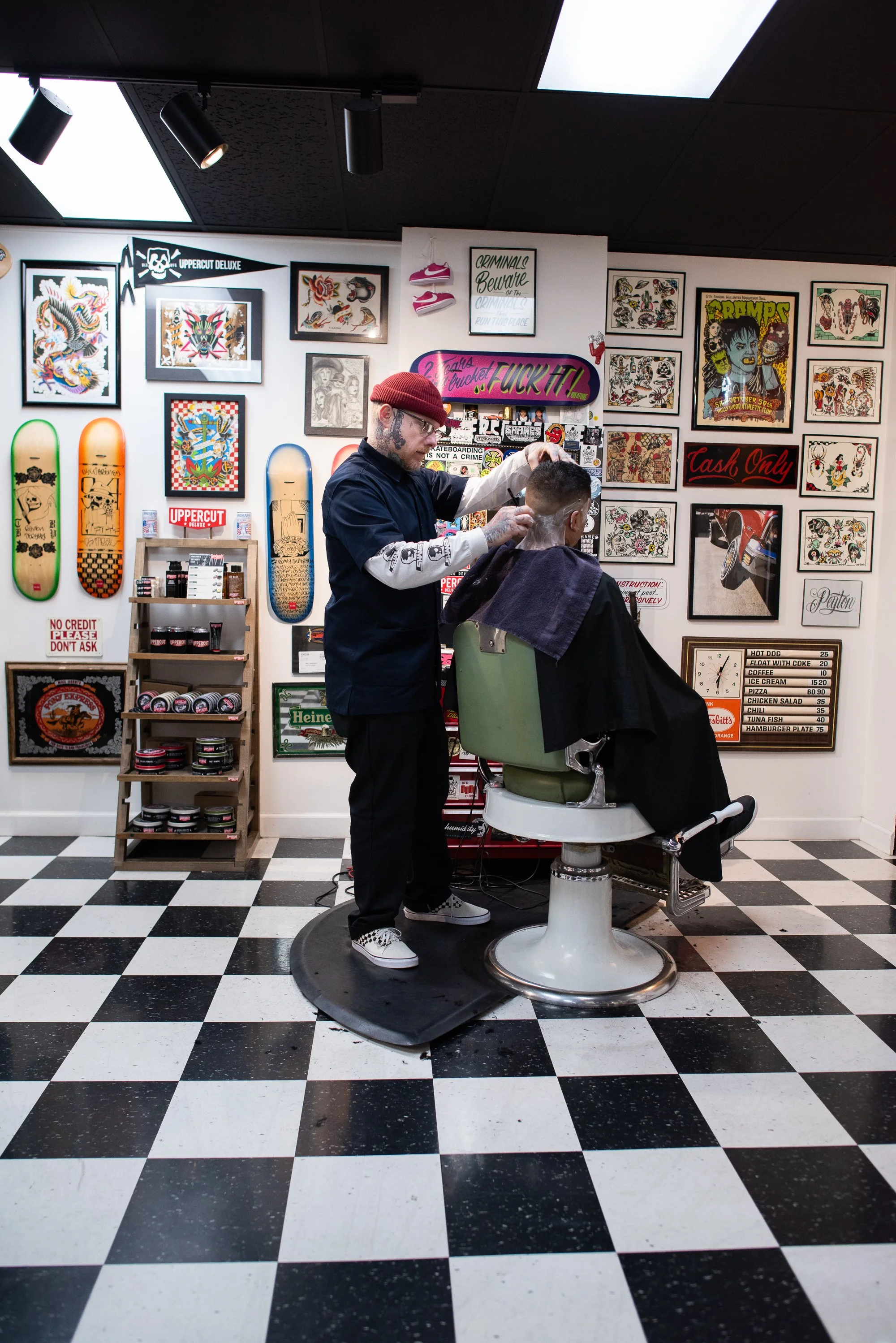
barber Shane Nesbitt cutting hair in vintage barber chair inside Shane's Barbershop San Mateo

Wide view of Shane Nesbitt cutting hair in his San Mateo barbershop surrounded by artwork and classic barber chairs
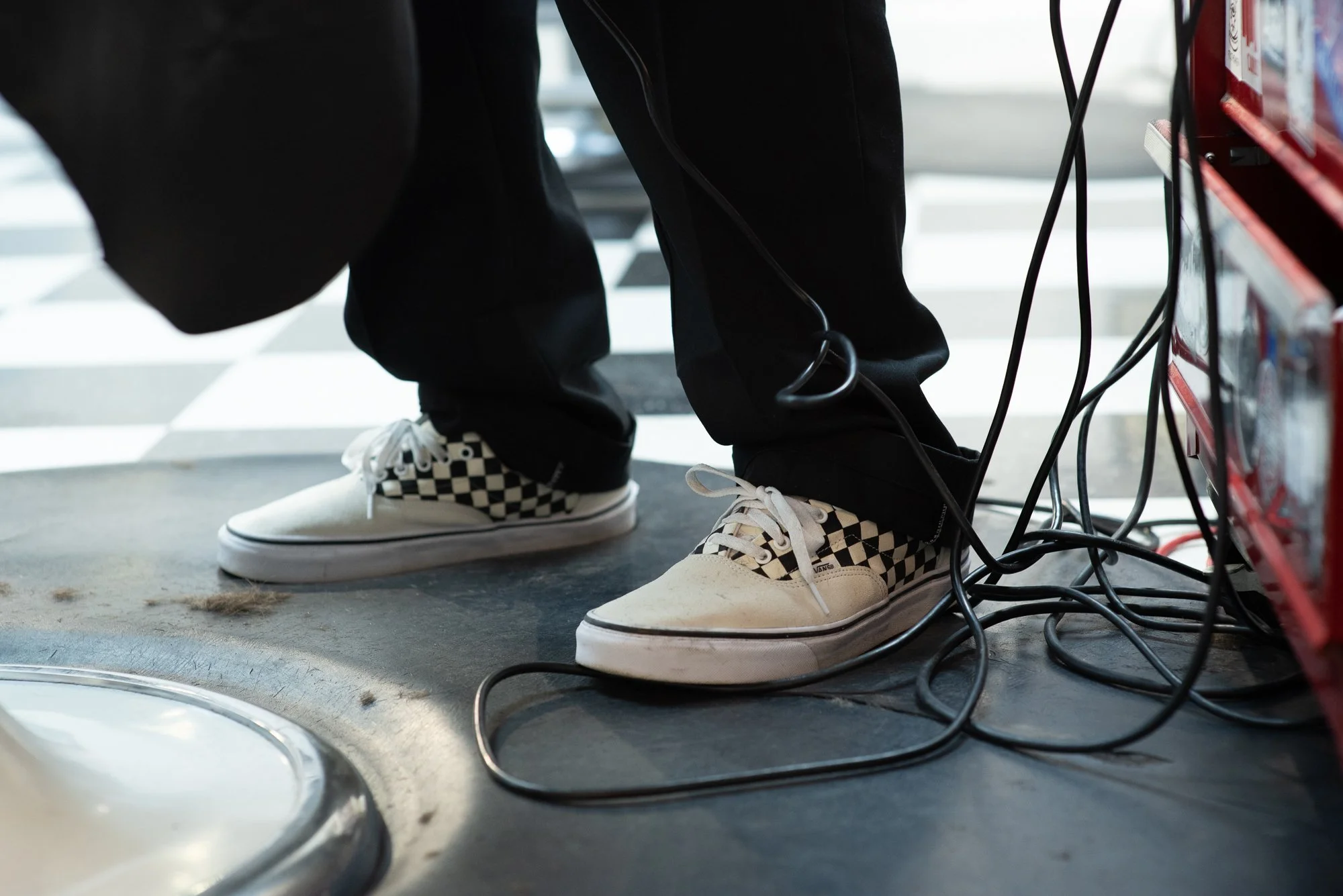
Checkerboard Vans shoes standing on barbershop floor with hair clippings and electrical cords

Hair on the floor, cords underfoot, and long days on your feet—details like this are what defined the rhythm inside Shane’s Barbershop.
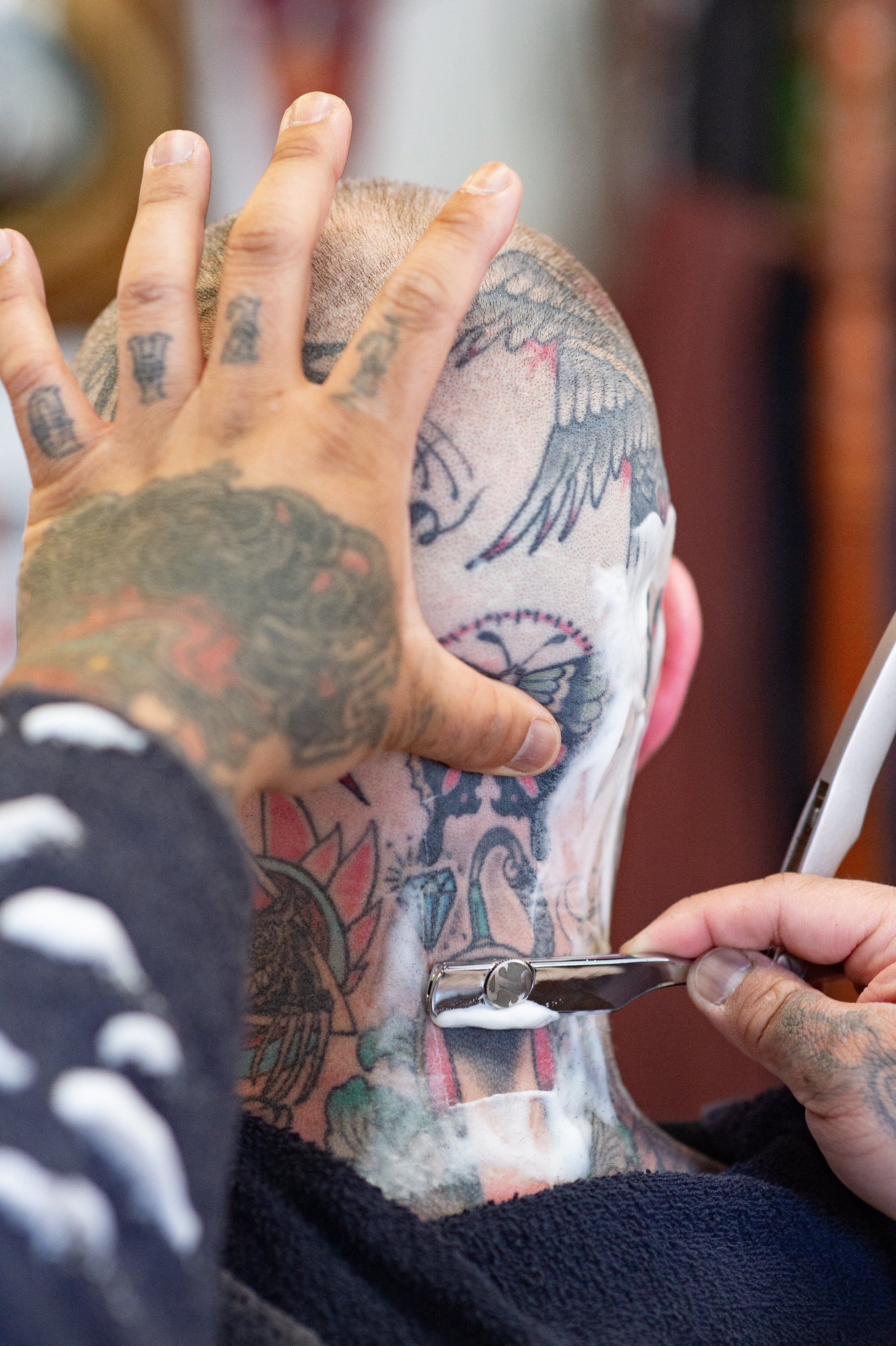
straight razor shave on tattooed head inside Shane's Barbershop San Mateo

Close-up of straight razor shave highlighting the craftsmanship and trust inside Shane's Barbershop in San Mateo
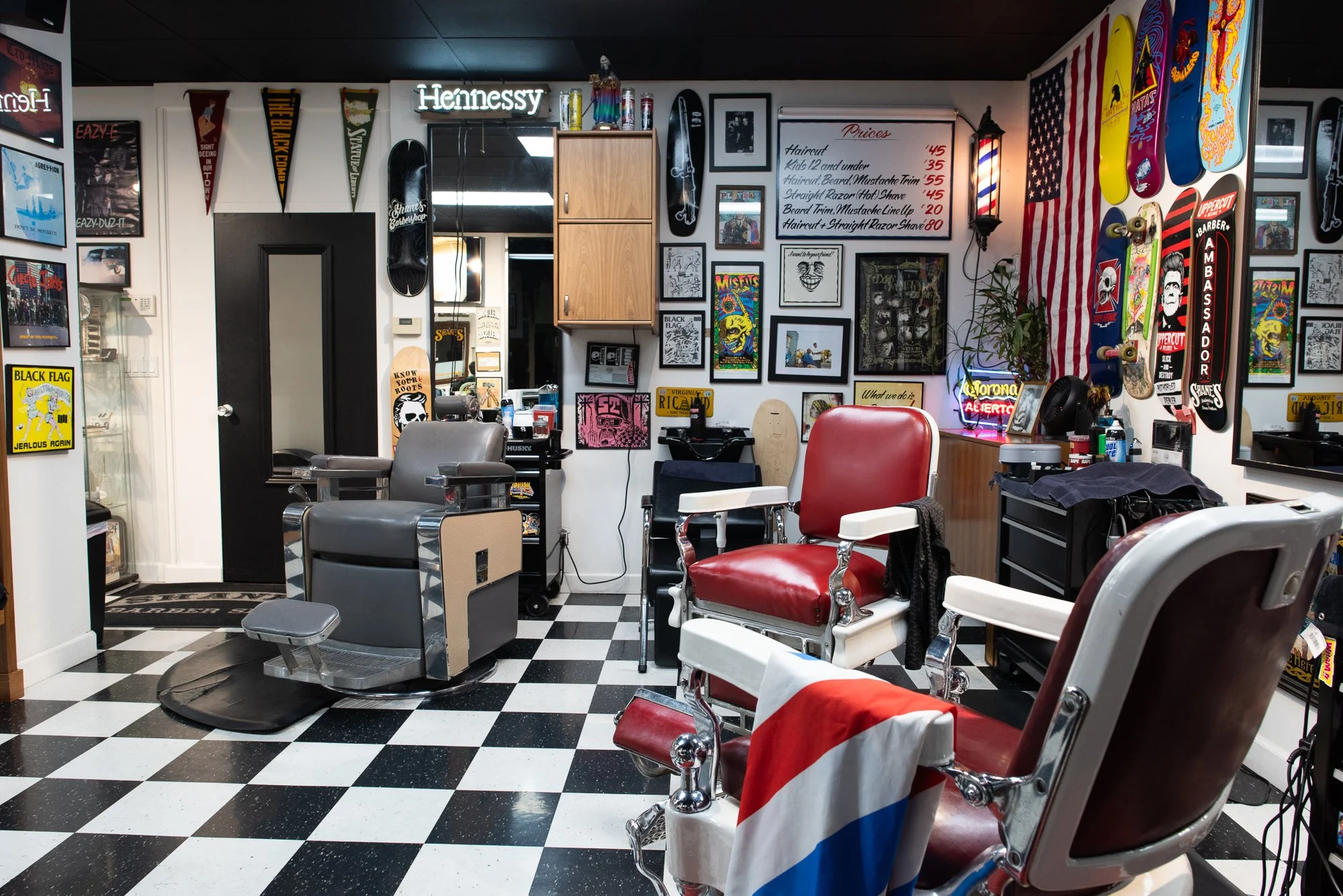
empty interior of Shane's Barbershop San Mateo with barber chairs and artwork on walls

Interior of Shane's Barbershop in San Mateo showing the space that once served its community
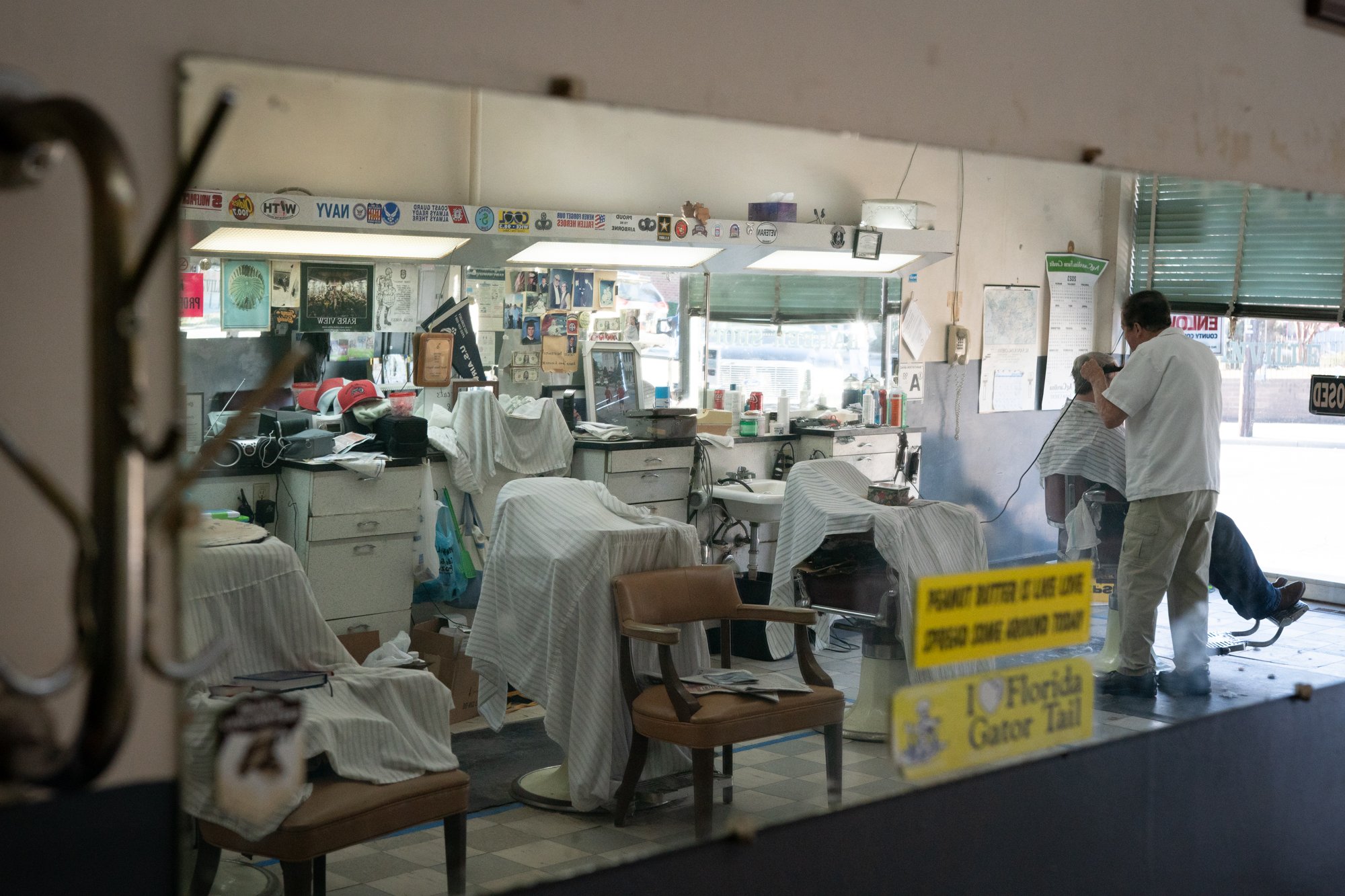
Small Town North Carolina Barbershop

Granville Barbershop, North Carolina

A Traditional American Barbershop Documented Through Photography

The Granville Barbershop in Grannville, North Carolina is the kind of place that has quietly served its community for decades. No branding overhaul. No attempt to modernize what already works. Just a steady rhythm of haircuts, conversation, and routine that has outlasted trends and redevelopment cycles.

These photographs were made as part of my long-term documentary project, Barbershops of America — an ongoing effort to photograph traditional barbershops across the United States before they disappear. Shops like this are not just businesses; they are cultural fixtures that anchor small towns and neighborhoods.

Why Traditional Barbershops Matter

Traditional barbershops play a unique role in American life. They are spaces built on trust and repetition — places where people return month after month, year after year, to see the same barber in the same chair.

In small towns especially, barbershops function as informal community centers. News is exchanged. Silence is respected. Generations overlap. These are the kinds of everyday environments that rarely feel important in the moment, yet become deeply significant once they’re gone.

Photographing these spaces is about preservation, not nostalgia — recording them honestly, as they exist, without staging or intervention.

The Story

These photographs were made during a drive home to upstate NY for Christmas. The owner was very skeptical of my intentions at first but agreed to let me photograph his shop. During my time there I had some fun interactions with customers, but he never said much. As far as history goes, the shop opened in the 1940’s, and prior to that it was an African American movie theater!! How’s that for Southern?

As with most old shops, the relationship between proprietor and those in his chair was easy, fluid, and quite candid. At one point an older gentleman sauntered in with his head down, dropped a gift on an empty chair, turned back toward the door and said “well, gotta go”. That was it. No interaction. Never even lifted his head up to make eye contact. The barber didn’t seem surprised, nor did he skip a beat on the haircut in progress.

Took about a half hour until I was pleased with the pictures made. Afterward I gave the barber a card and thanked him for the hospitality. He stopped cutting, grabbed a few coins off the back bar, placed them in my hand and in an almost too good to be true accent said “take these two qwwwaaaaaaaatehs back to that machine and get you a pop. I’ll bet you haven’t had a 50 cent pop in yeeeeaaaaaaahs.” Sure enough, there were ice cold sodas coming out of a vintage Coca Cola machine against the back wall. Can’t tell you the last time I even had the desire for a soda, but I wasn’t about to turn that one down.

Interactions like these are what keep Barbershops of America going. Talking to people that give you a very definitive sense of place is gratifying, educational, and fun. Hearing about the shops history in such a dialect not only tells you where you are in the world, but also where you aren’t. I love that.

Continue exploring documentary barbershop photography in the Barbershops of America series

Barbershop Photography Gallery

Barbershop Photo Book/Prints

Another Barbershop Photo Essay

Contact me directly about barbershop photography licensing for your editorial and commercial projects -rob@robhammerphotography.com

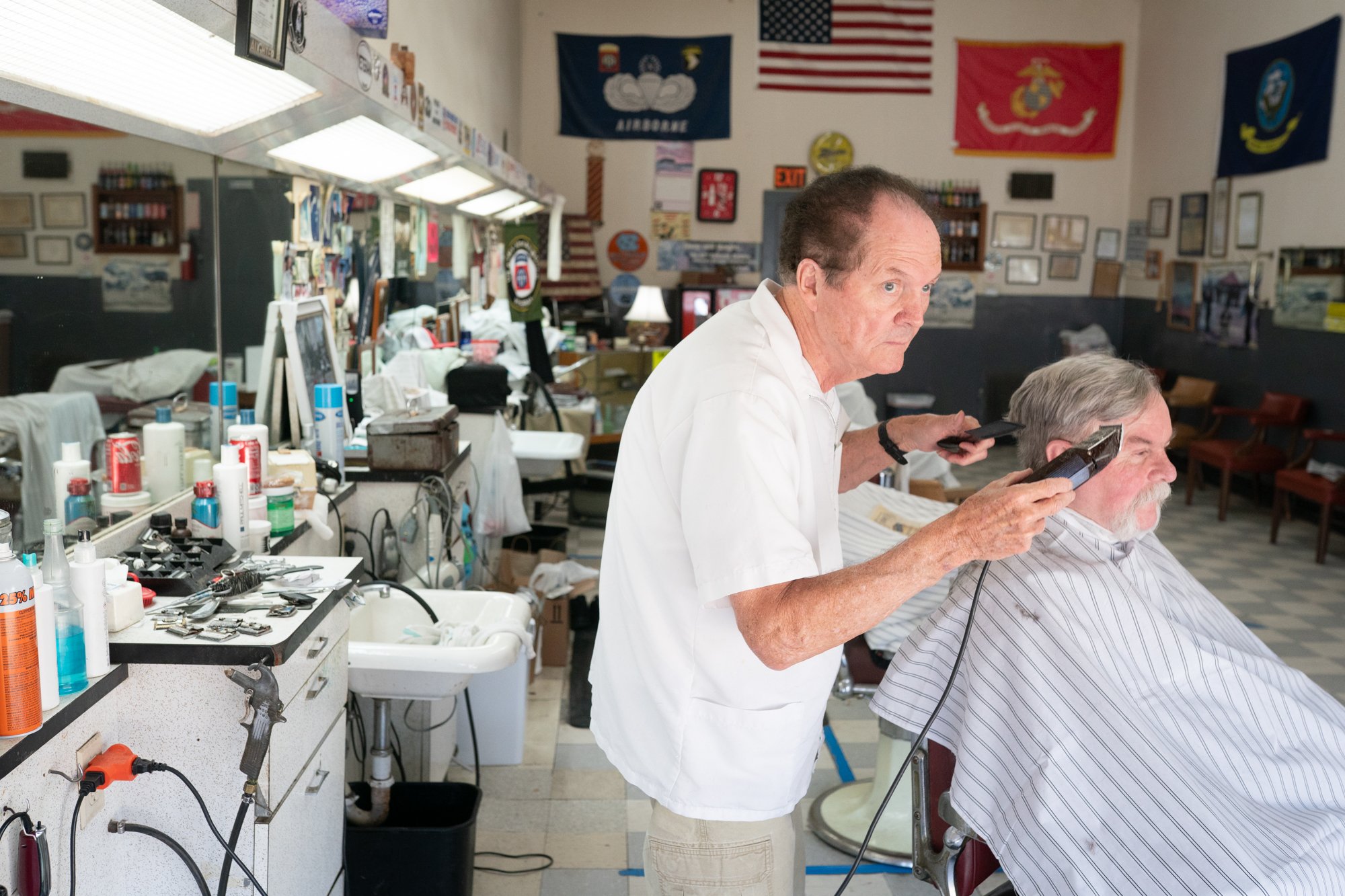
Interior view of a traditional barbershop with barber chairs, mirrors, and military flags on the wall

The interior of Granville Barbershop reveals layers of personal history, from worn barber chairs to walls filled with service flags and memorabilia.

Traditional barbershop interior in North Carolina with a barber cutting a client’s hair using clippers

A working barber trims a longtime client inside a traditional North Carolina barbershop, where routine and familiarity define the space.

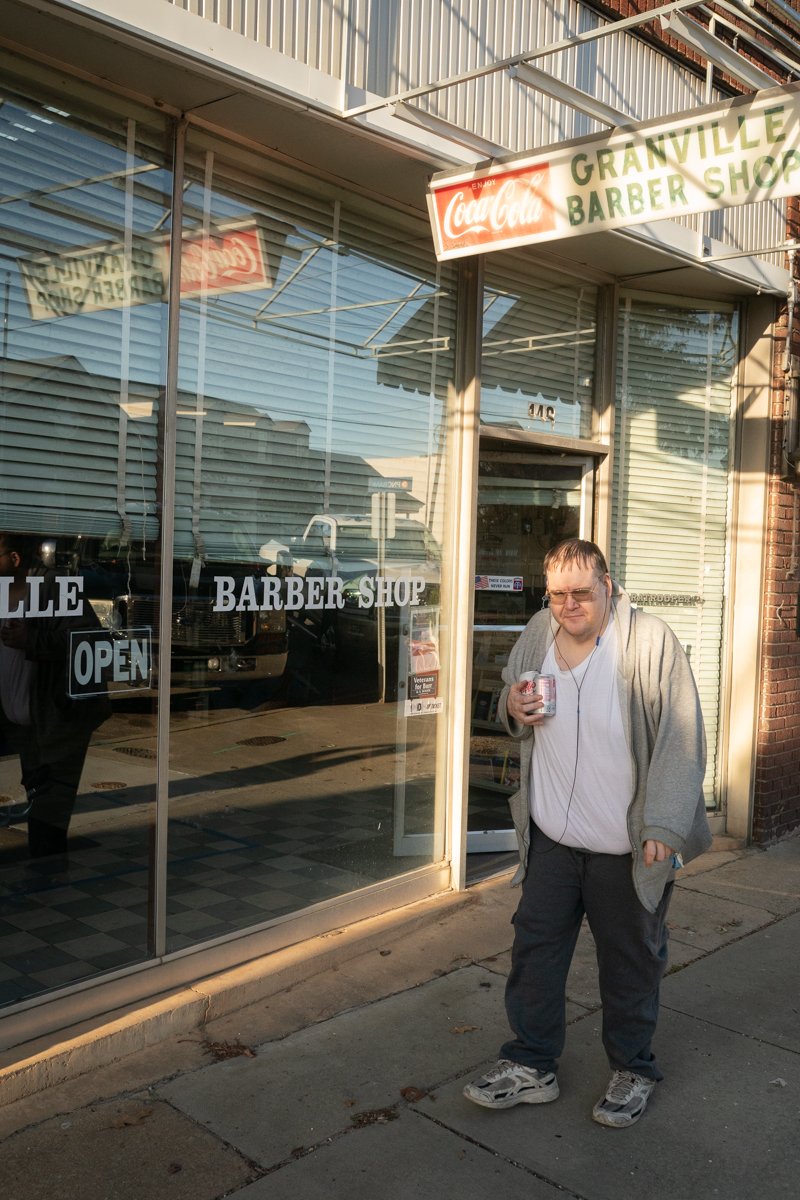
Exterior of Granville Barbershop in Granville, North Carolina with classic signage and storefront windows

The storefront of Granville Barbershop in Granville, North Carolina, a long-standing fixture of the town’s Main Street.

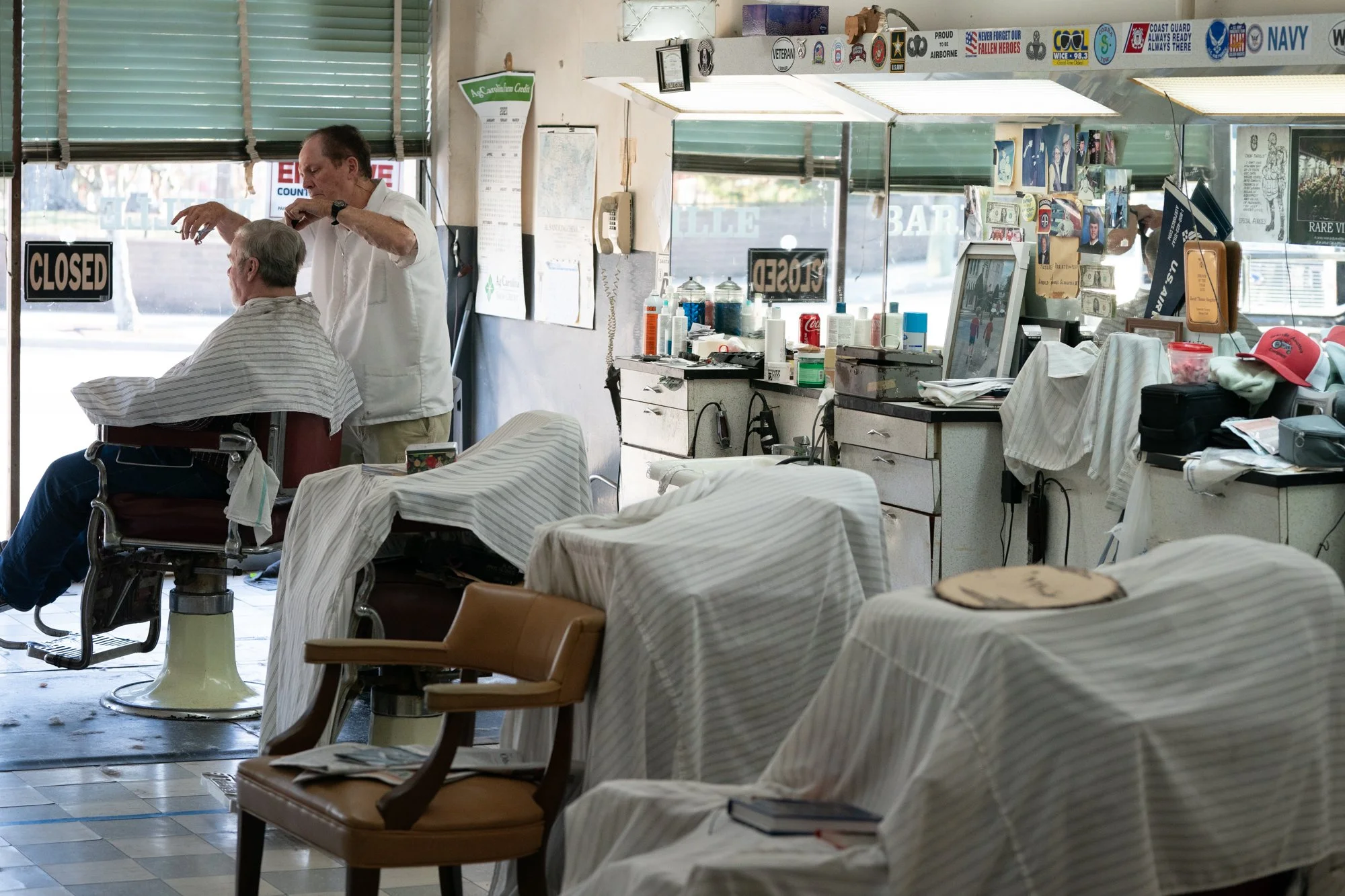
Documentary photograph of a barber cutting hair inside a small-town North Carolina barbershop

Inside the shop, haircuts continue as they have for decades—unhurried, familiar, and grounded in routine.

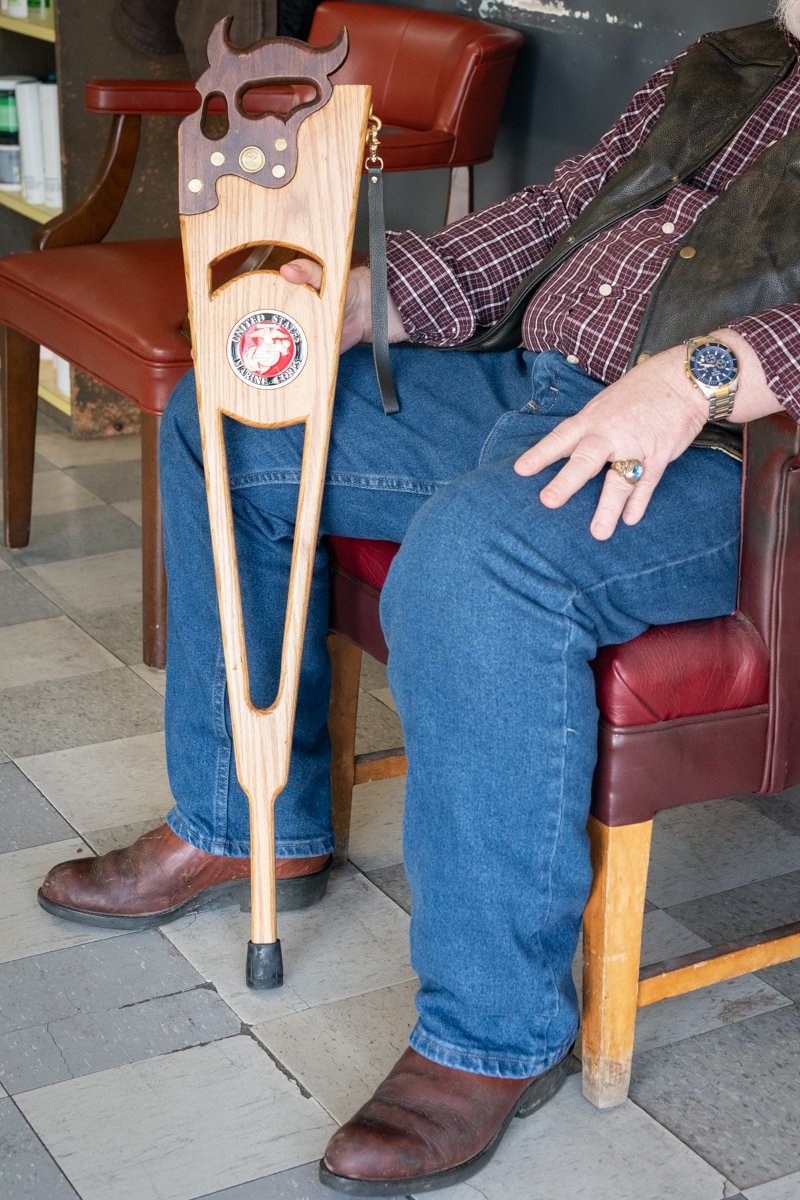
Detail photograph of a custom wooden walking stick resting beside a customer in a North Carolina barbershop

A handmade walking stick rests beside a customer, a small detail that hints at the personal histories carried into the shop.

Photography Books - American Culture

American Photography - Documenting Traditional Barbershops

American photography as a genre is hard to define, especially when it comes to art collection and fine art photography. The term is so broad and leaves plenty of room for interpretation. One of my longest running series Barbershops of America fits into that category. Although it’s only been recently that I realized what’s been put together with this series is as much American photography as it is a historical document of a niche piece of American culture. And it occured to me the other day that getting a haircut is just a bonus to the experience you receive from being in a traditional barbershop. Grateful to see this project getting some exposure on Creative Boom and The Eye of Photography.

Click HERE to purchase a copy of Barbershops of American or HERE to purchase fine art prints.

Barbershop - Marfa, Texas

Marfa, Texas — A Barbershop Now Closed

This barbershop in Marfa, Texas is no longer open.

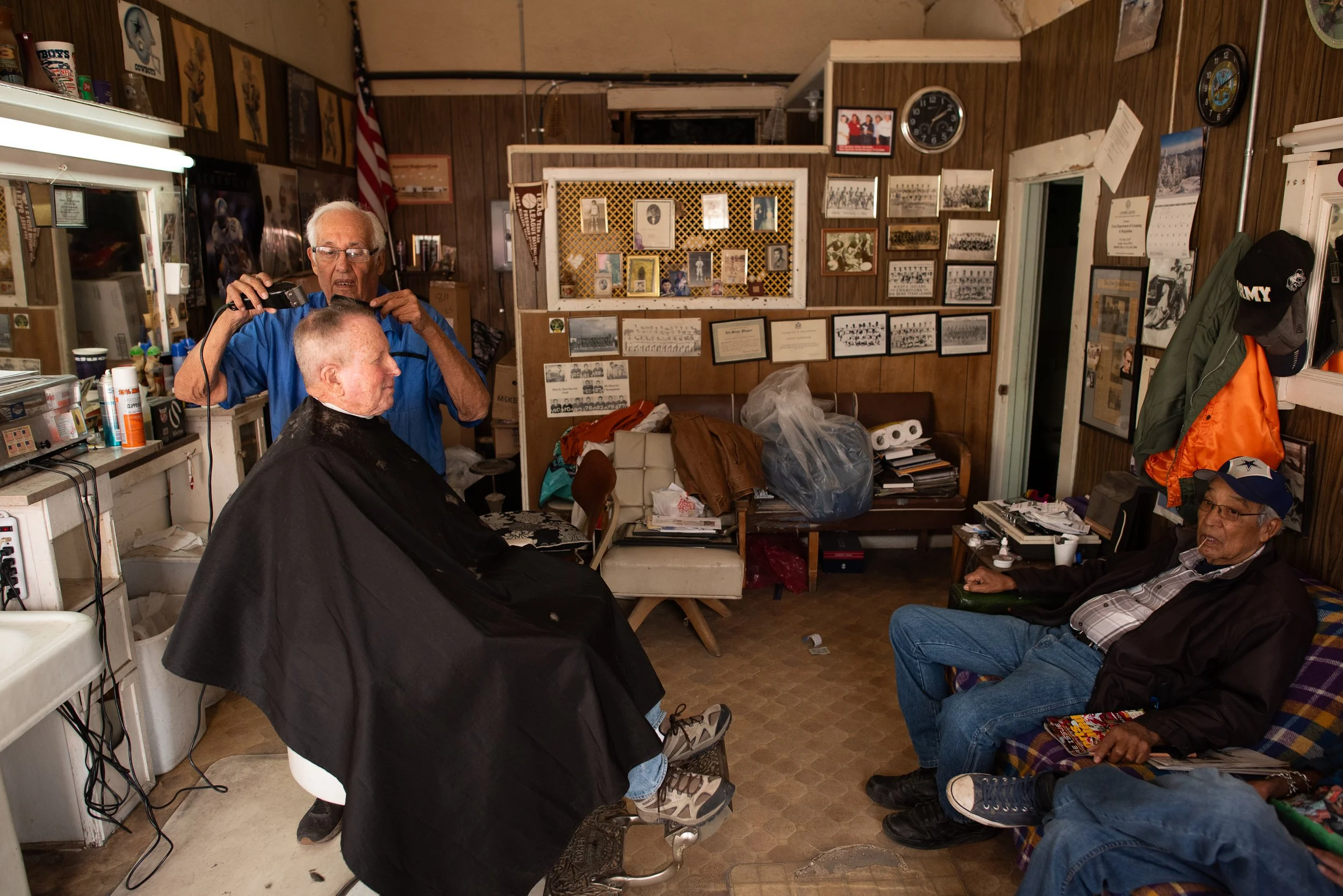
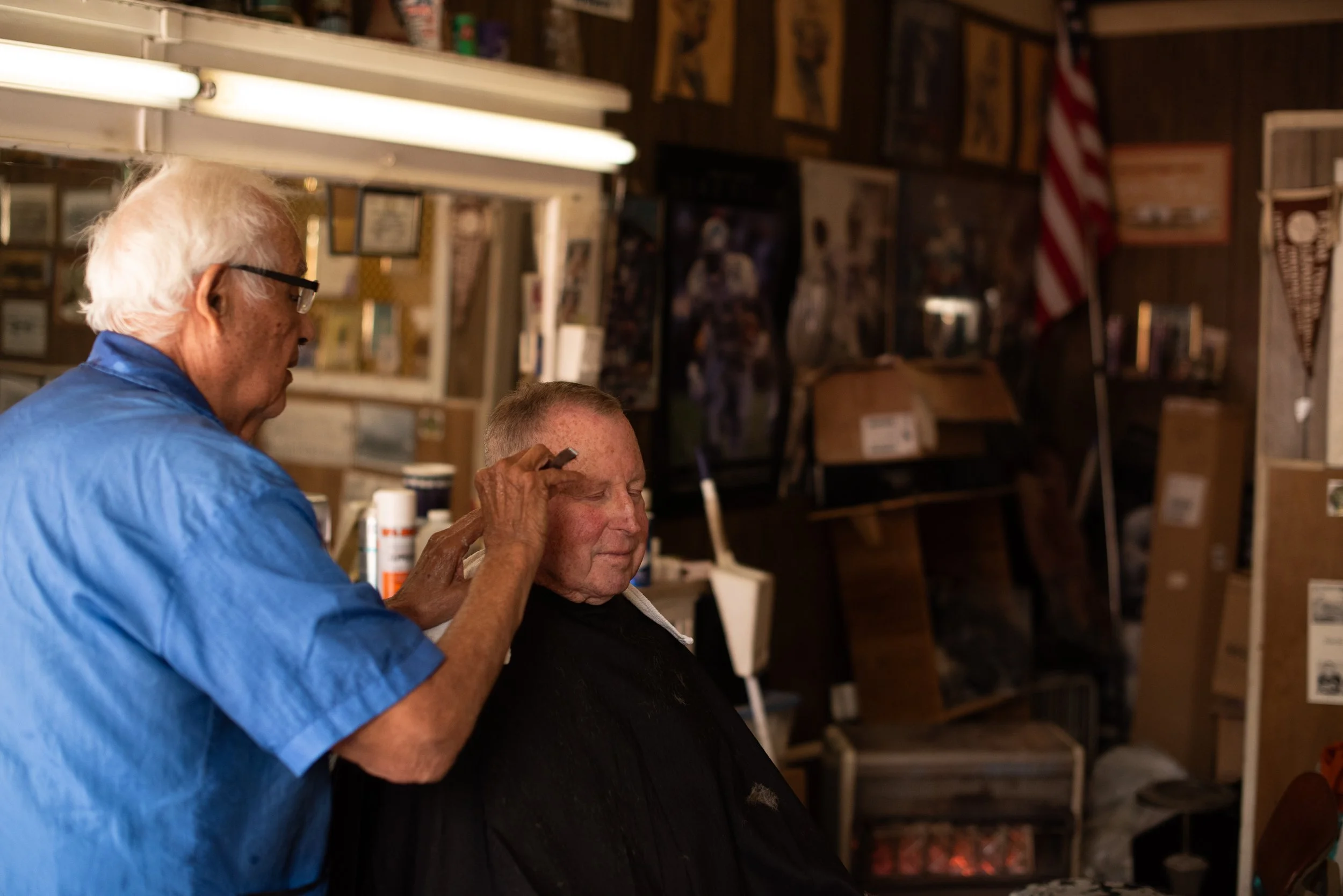
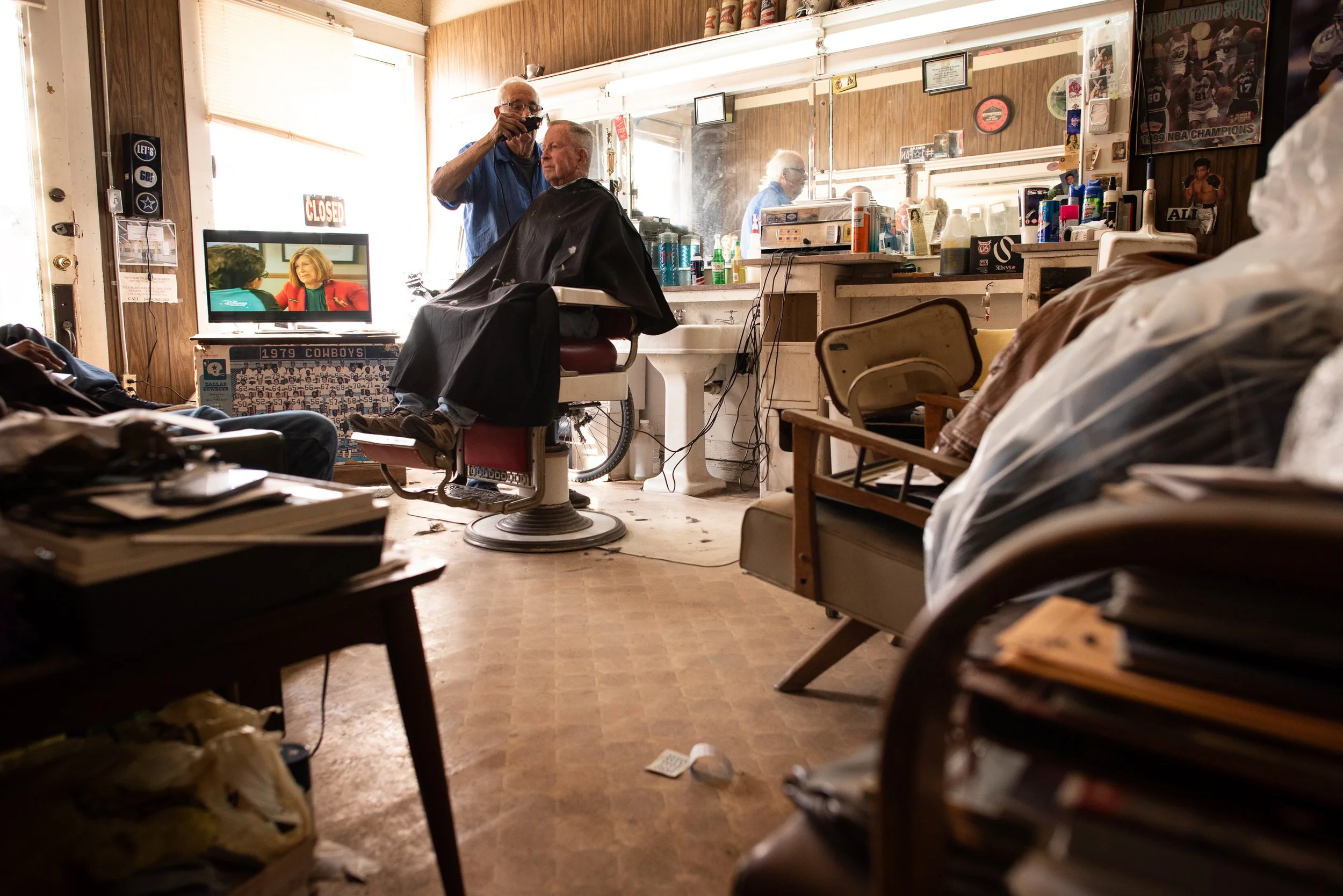
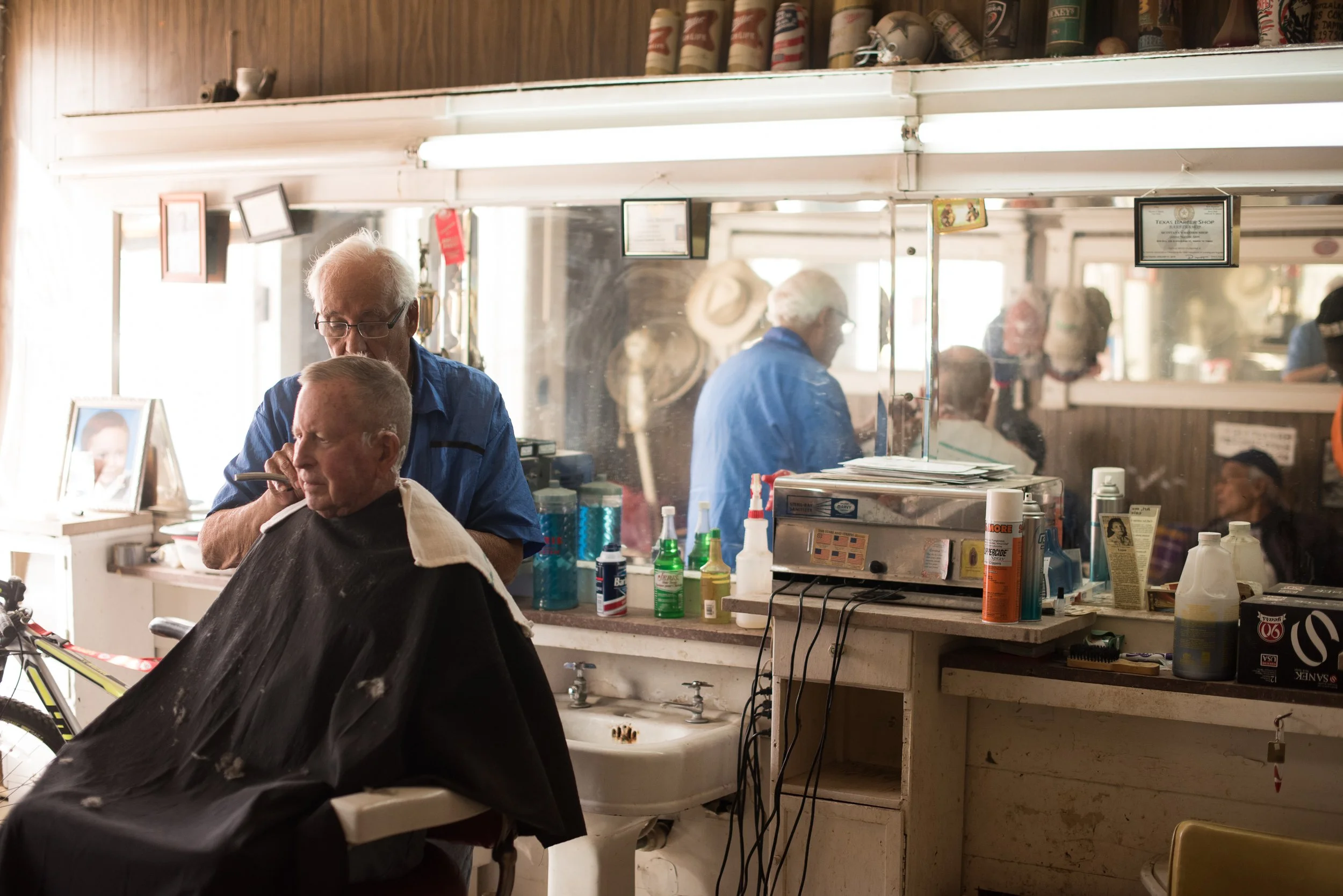
When these photographs were made, the shop was still operating — quietly, modestly, and without spectacle. An elderly barber continued cutting hair for longtime clients beneath fluorescent lights and wood-paneled walls layered with decades of memorabilia.

Not long after, the doors closed.

What remains now are the photographs.

The Final Years

Inside, nothing felt staged.

The floor was worn.
The sink chipped.
Sports posters faded at the edges.
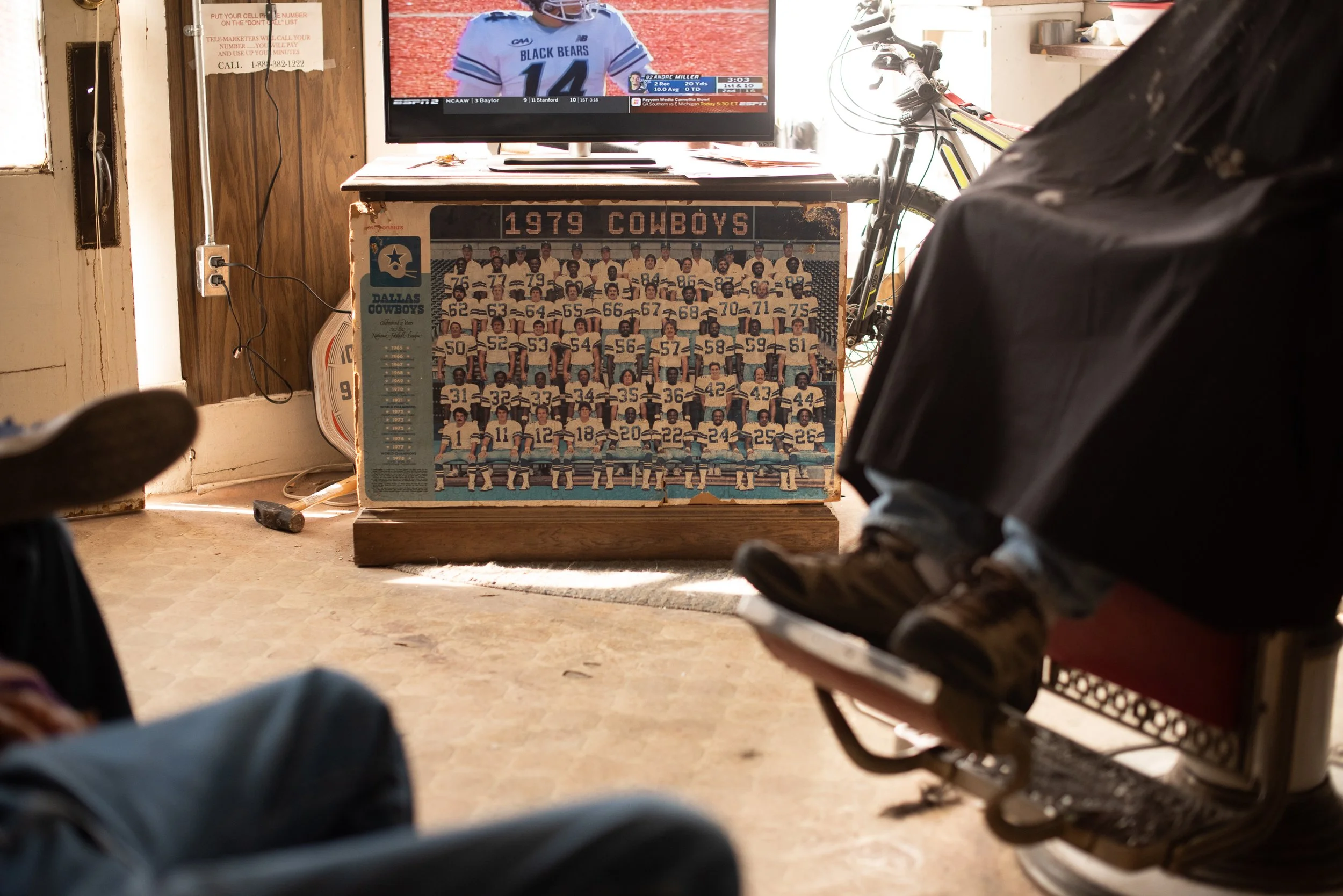
A 1979 Cowboys team photo sat beneath a television.

Customers — mostly older men — waited their turn as they likely had for years. The routine continued as it always had. No announcement. No ceremony. Just haircuts.

In small towns like Marfa, institutions often end not with a grand closing, but with a gradual thinning of time — fewer customers, older hands, fewer reasons to keep the lights on.

A Vanishing American Interior

Barbershops have long functioned as community anchors across the United States, particularly in rural towns. They are practical spaces, but they are also repositories of memory:

  • Photographs of local teams

  • Certificates and clippings

  • Posters taped to wood-paneled walls

  • Objects that accumulate without ever being curated

When a shop closes, those layers often disperse. The room empties. The rhythm stops.

What disappears isn’t just a business. It’s a pattern of local community.

Marfa in Context

Marfa is widely known today for contemporary art and desert minimalism. This shop represented something different — a working-class interior untouched by trend cycles or design updates.

It was modest.
Functional.
Unchanged.

Its closure marks a quiet shift in the town’s cultural landscape — one less everyday institution, one more room that no longer holds history.

The Story Behind The Photographs

As much as I try to embrace social media, it’s difficult to genuinely say anything positive about it sometimes. Every once in a while though, something happens that makes me think twice. A few days ago I posted this image of a traditional barbershop in Marfa, Texas on my @barbershopsofamerica Instagram account, which was re-posted as a story by Visit Marfa. That day I received a direct message from a woman in that had seen their story and was filled with sentimental feelings, as she used to know the shop and the owner. She went back to look at it again later and noticed that the man in the chair was her father, who had passed away two years ago from cancer. The image caused her to cry happy tears and she asked about purchasing a print. Turns out we live 15 minutes from each other! So this morning I drove to her house to deliver some prints and a copy of Barbershops of America. Social media isn’t all bad!

This project has been going on for 10 years now. Hard to believe. Aside from the obvious joy it gives me to make theses images, it’s the auxiliary things that really make it special. The people I’ve met out of pure coincidence or from having shared interests will keep this series going forever.

Continue Through the Archive

The Marfa barbershop is one chapter in a 15+ year effort documenting independent and traditional barber shops across all 50 states.

Some shops are expanding.
Some are adapting.
Others, like this one, have closed.

→ View the full Barbershops of America archive
→ Explore the Barbershops of America photo book
Read another barbershop story from Kentucky

Together, these spaces form a record of a disappearing American institution — preserved one shop at a time.

Customers sitting inside a wood-paneled barbershop in Marfa, Texas as a haircut continues.

Regular customers wait beneath walls lined with photographs and memorabilia inside the now-closed Marfa barbershop.

Worn 1979 Dallas Cowboys team poster displayed beneath a television inside a Marfa, Texas barbershop.

A 1979 Cowboys team poster sits beneath the television, one of many personal details layered into the shop’s interior.

Close view of an elderly barber doing a straight razor shave in a small West Texas barbershop.

Elderly barber cutting a client’s hair inside a small barbershop in Marfa, Texas shortly before the shop closed.

An elderly barber cuts a longtime client’s hair inside a modest Marfa, Texas barbershop in its final period of operation.

Mirror reflection of barber and client inside a compact workstation in a Marfa, Texas barbershop.

Reflections reveal the compact workstation—fluorescent lighting, worn counters, and tools accumulated over decades.