
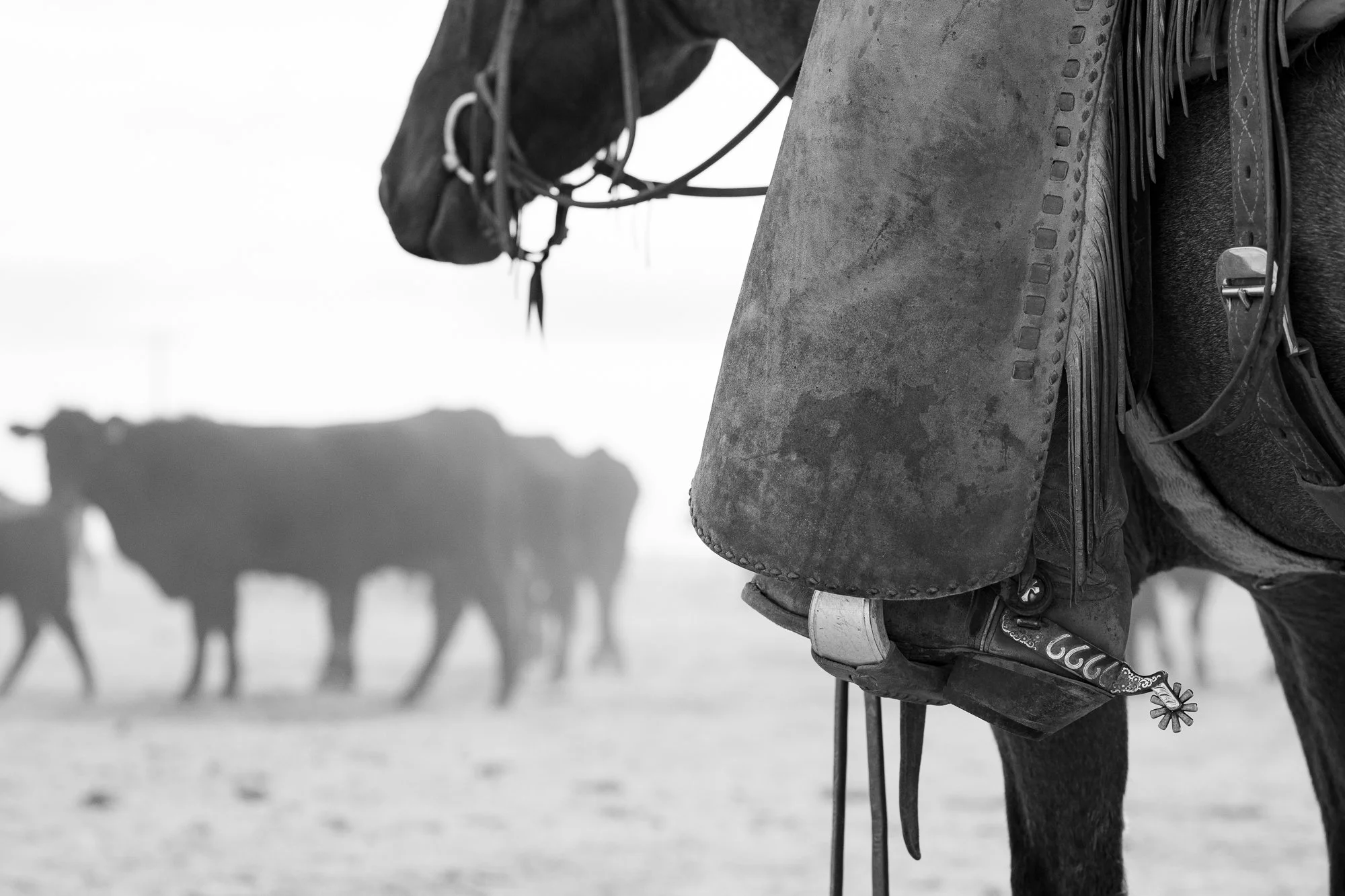
Inside the 6666 Ranch: Photographing a Legendary Texas Cattle Operation
There are few names in ranching that carry the weight of the 6666 Ranch.
Known simply as the Four Sixes, this West Texas operation has been shaping the culture of working cowboys for more than a century. I’ve had the privilege of photographing on the ranch twice — documenting the daily rhythm of cattle work, horsemanship, and the kind of labor that rarely makes headlines but defines the American West.
My first visit to the ranch was early on in the project, making this my first shoot on a Big Outfit. It was branding season, so the wagon was there and all the guys were camped out in teepees. Breakfast is at 4:45am, they said. To be sure they knew I wasn’t there to play around, I planned on being the first one in the breakfast tent at 4:15. So that morning I sauntered over in the dark and walked into the tent at 4:15 only to find every chair already filled!
Long before television crews arrived, this place had its own gravity.
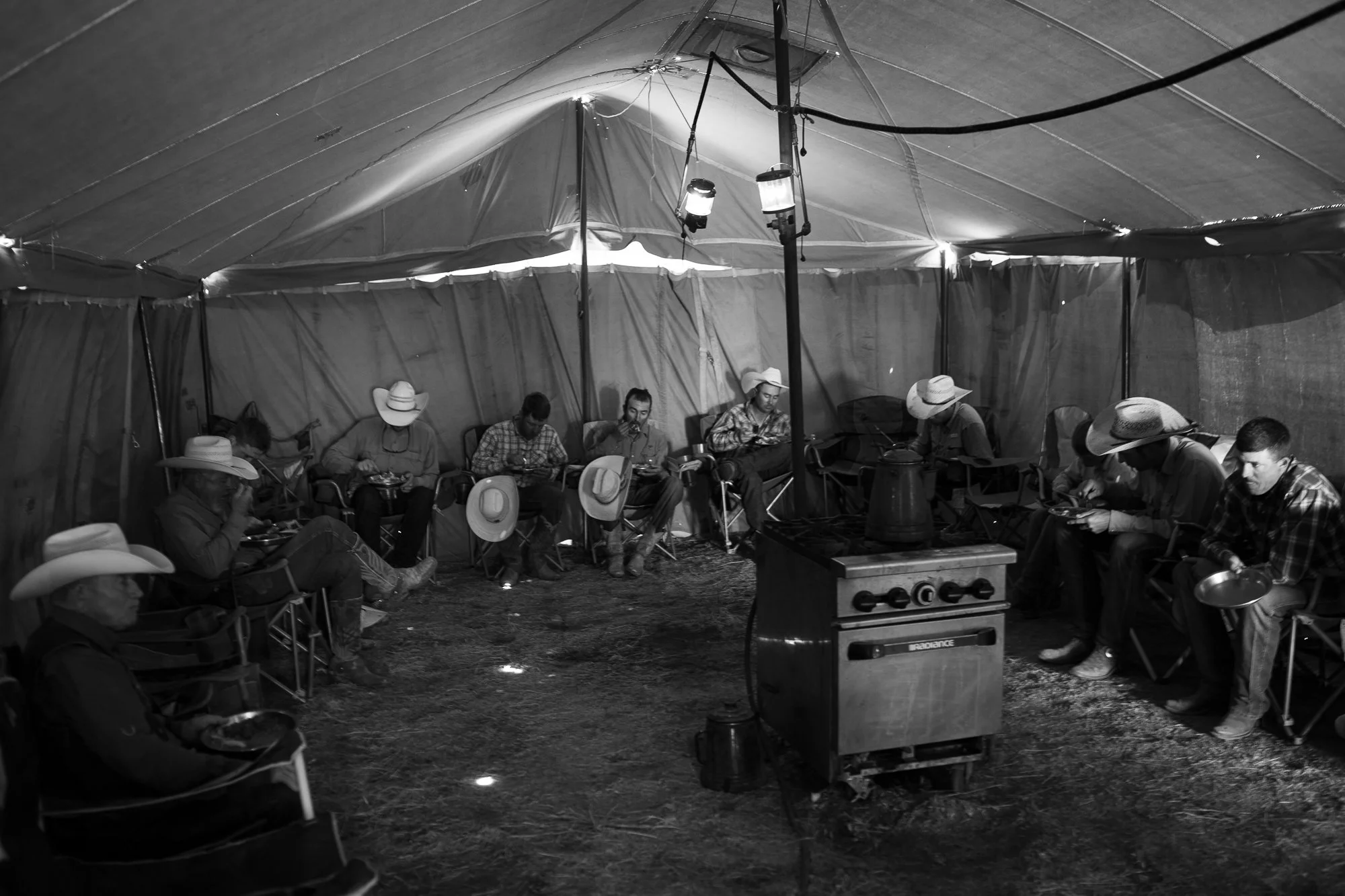
Inside the chuckwagon tent, hats balance on knees and conversation stays low. The stove glows steady at the center.
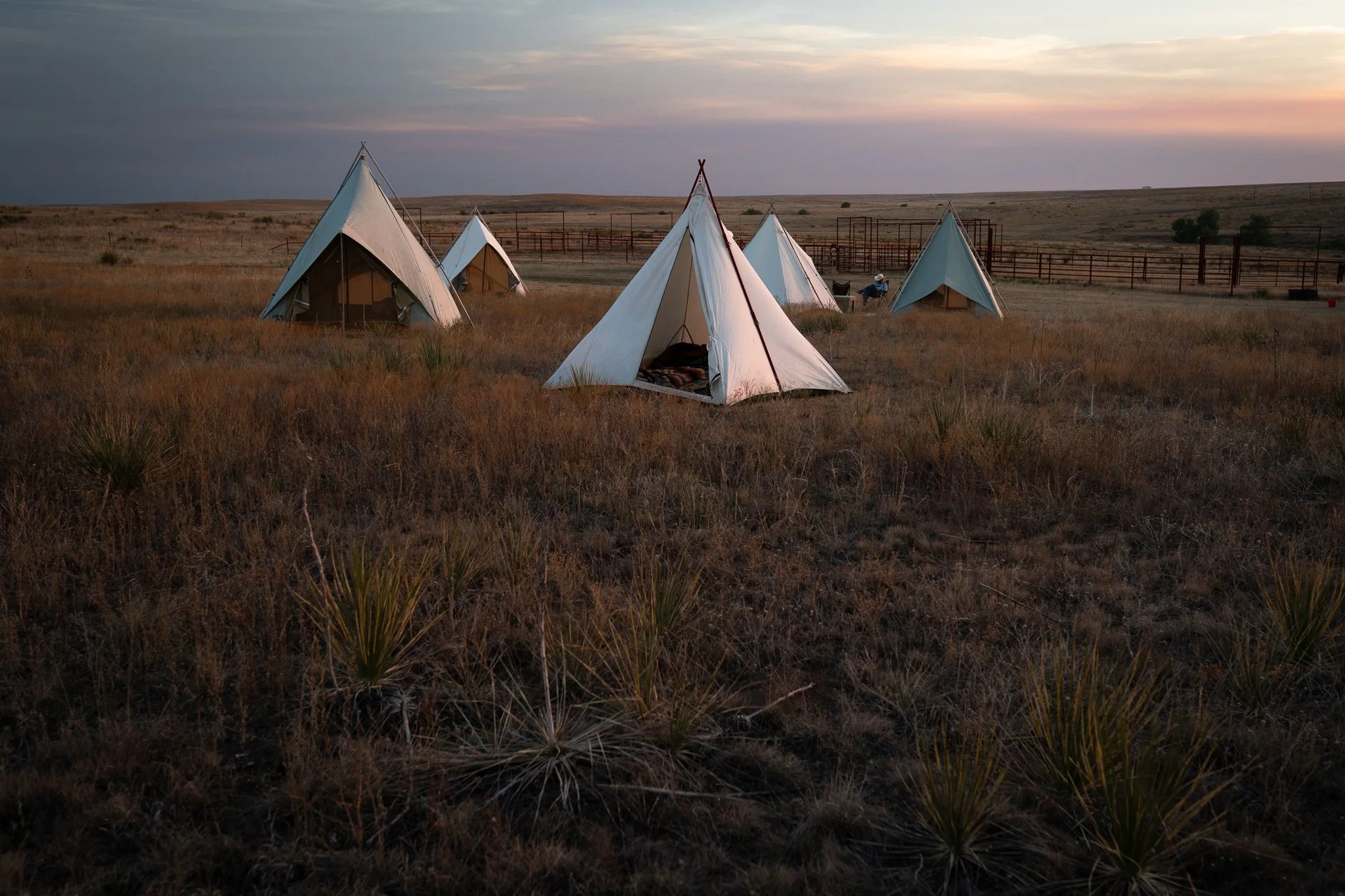
Temporary shelter in permanent country. The cowboy camp sits quietly against a fading sky.
The History of the 6666 Ranch (Four Sixes)
Founded in 1870 by Captain Samuel “Burk” Burnett, the 6666 Ranch grew into one of the most respected cattle and Quarter Horse operations in the country. Located in West Texas, the ranch spans hundreds of thousands of acres and remains a benchmark for breeding, land stewardship, and cowboy tradition.
Unlike many ranches that faded into nostalgia, the Four Sixes never stopped being a working operation. The cowboys here aren’t reenacting history — they’re continuing it.
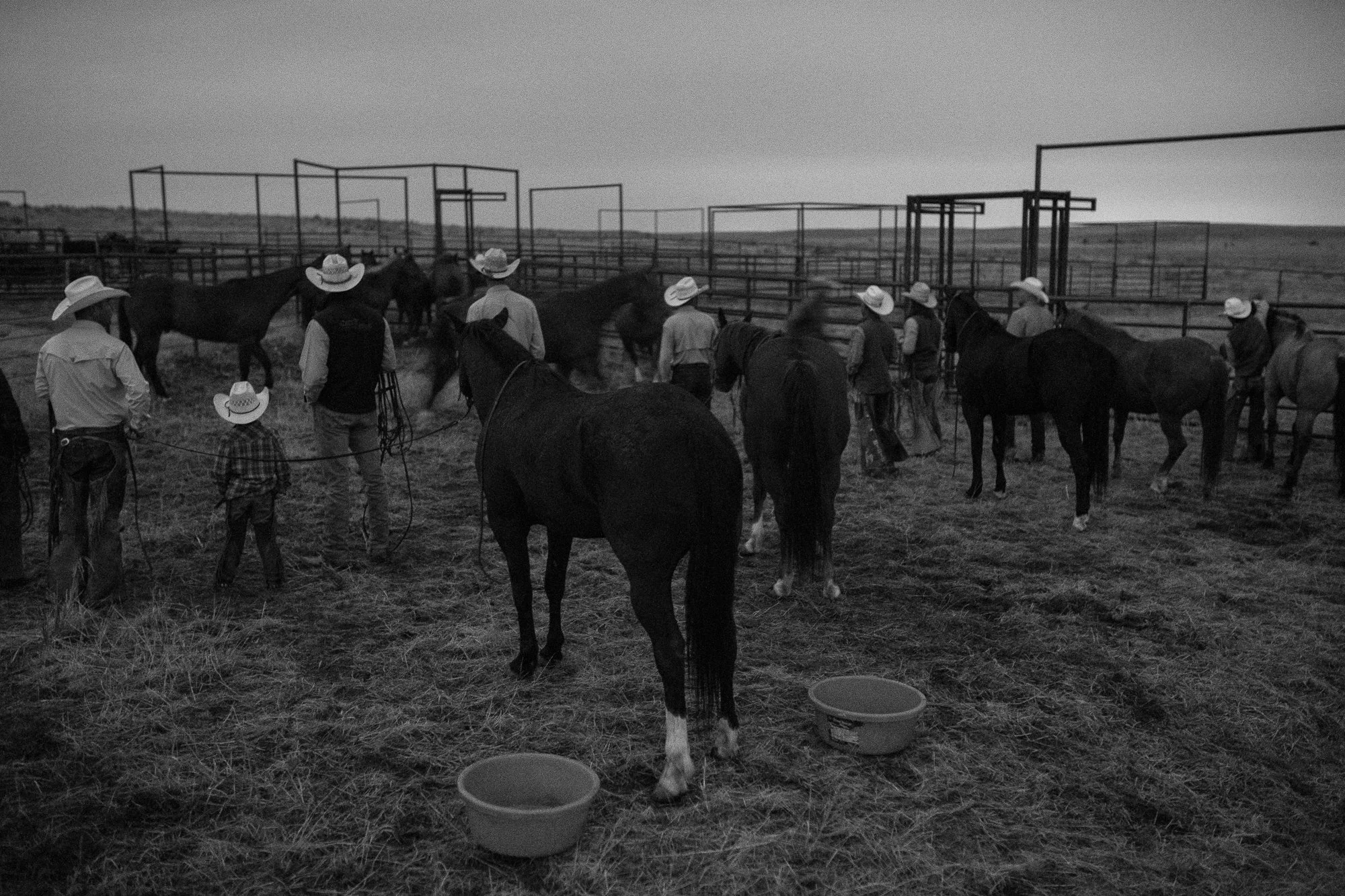
Horses shift in the fading light while riders regroup. Even before the sun, the work keeps its shape.
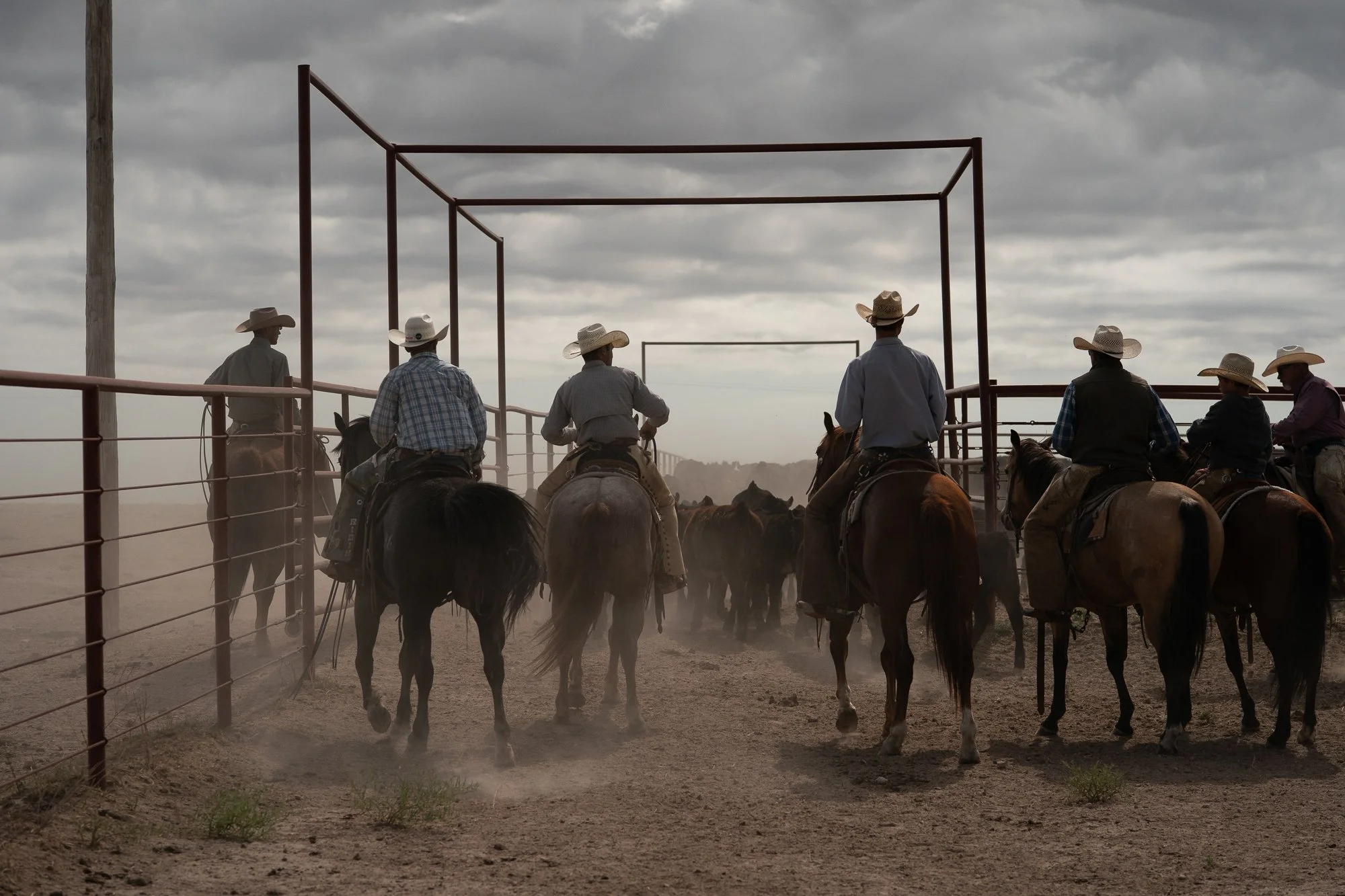
Riders ease cattle through the gate as dust hangs low in the afternoon light. It’s choreography more than chaos.
The 6666 Ranch and Yellowstone
In recent years, the 6666 Ranch entered a broader public conversation through Yellowstone, created by Taylor Sheridan. America and beyond became obsessed with the Dutton Family and Rip Wheeler, but more importantly, the show shined a light on Western culture and made the masses care again. The ranch itself was later purchased by Sheridan, further tying fiction to a very real piece of Western heritage.
Some of my cowboy photography prints have appeared on the set of Yellowstone — a quiet crossover between documentary work and contemporary Western storytelling.
But what makes the 6666 important isn’t television. The show amplified awareness of a ranch that earned its reputation before the tv was even invented.
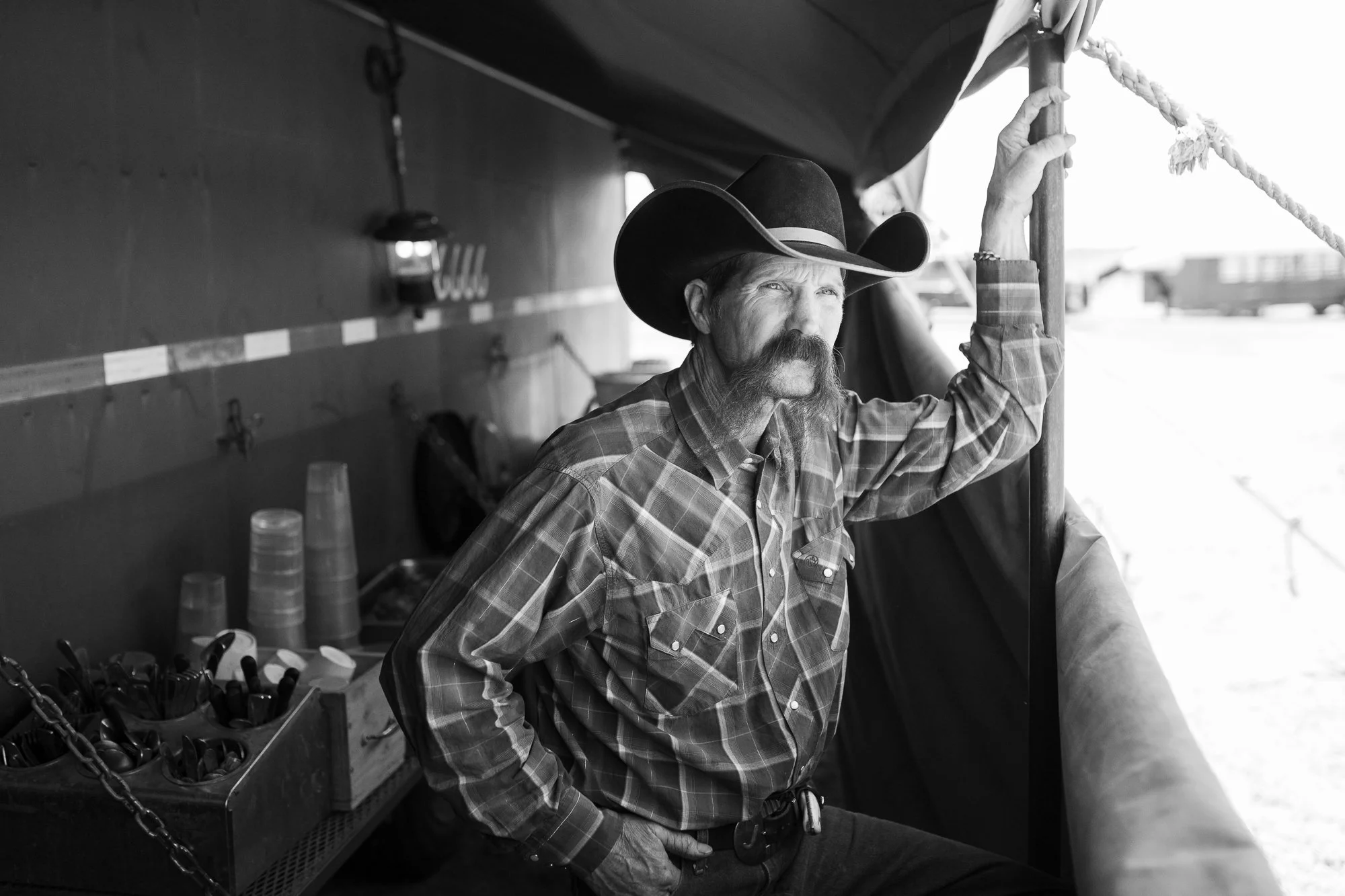
Charlie Ferguson - Chuckwagon Cook
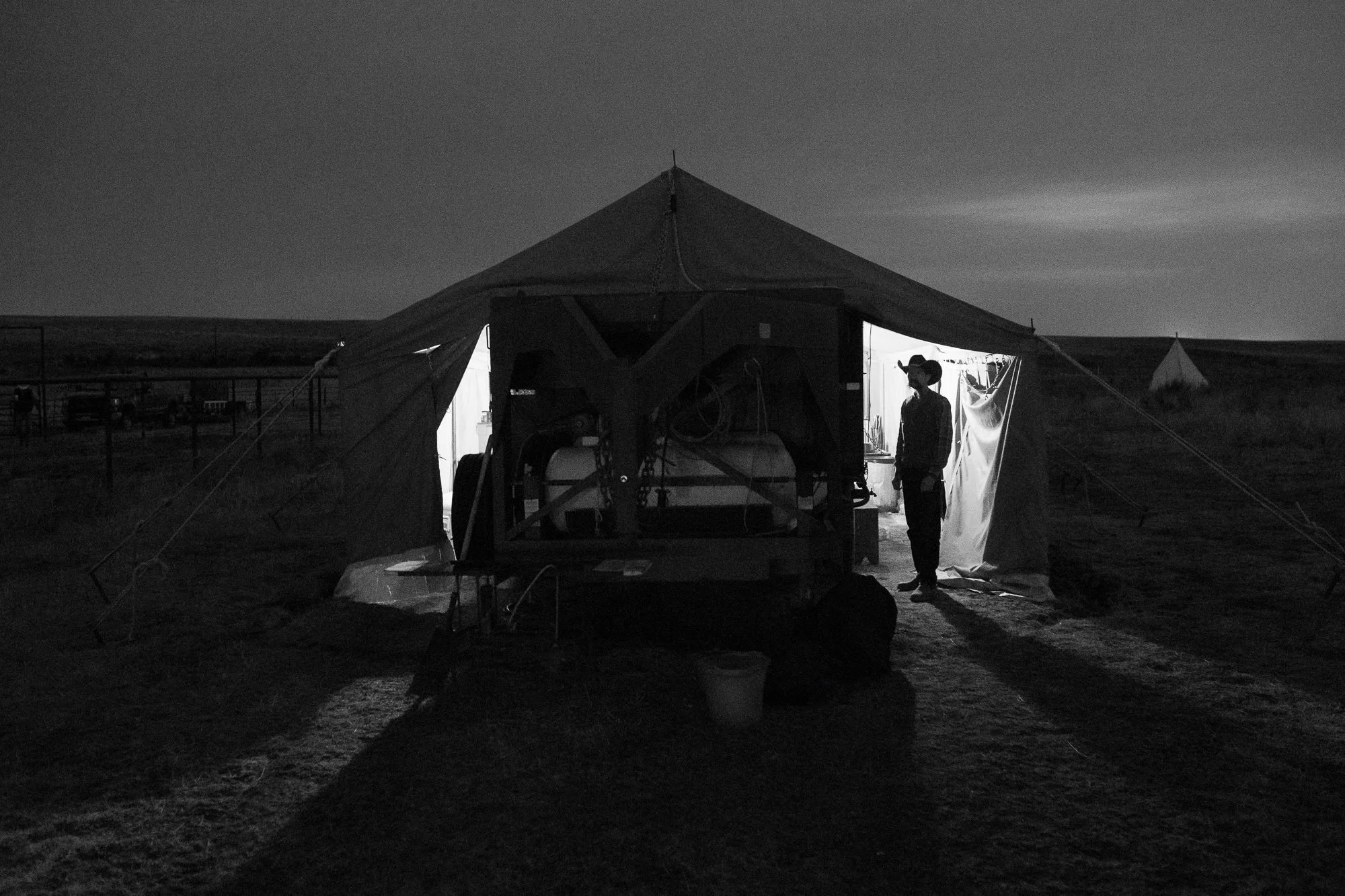
A tent glows in the dark prairie. Charlie Ferguson stands framed in canvas and light — temporary shelter in permanent country.
The Real Work Behind the Legend
The scale of the 6666 is difficult to understand until you’re standing in it. Wind across open pasture. Horses saddled before daylight. The quiet coordination of cowboys moving cattle with efficiency that comes from repetition, not rehearsal.
What struck me most wasn’t spectacle, it was discipline — the quiet economy to how things are done there. No wasted motion. No raised voices. Horses and cattle are handled with respect, and the cowboys know exactly where they need to be without so much as a glance from the Cow Boss. To see first hand how fast those guys can brand 400 hundred head of cattle was staggering. Masters of their craft.
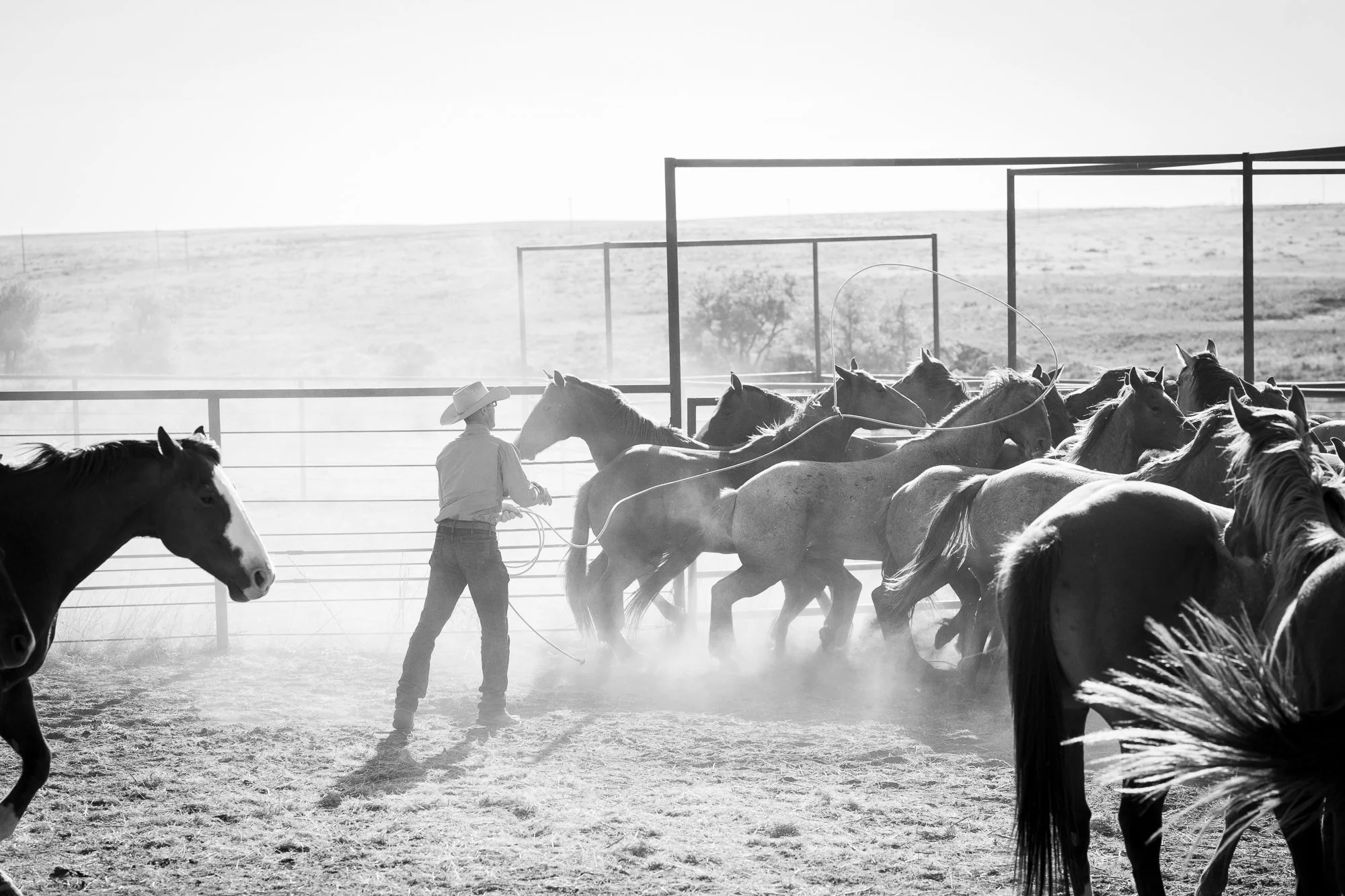
A cowboy steps into the dust to sort horses inside the pens at the 6666 Ranch. The light flattens everything but the movement — rope, muscle, and intention.
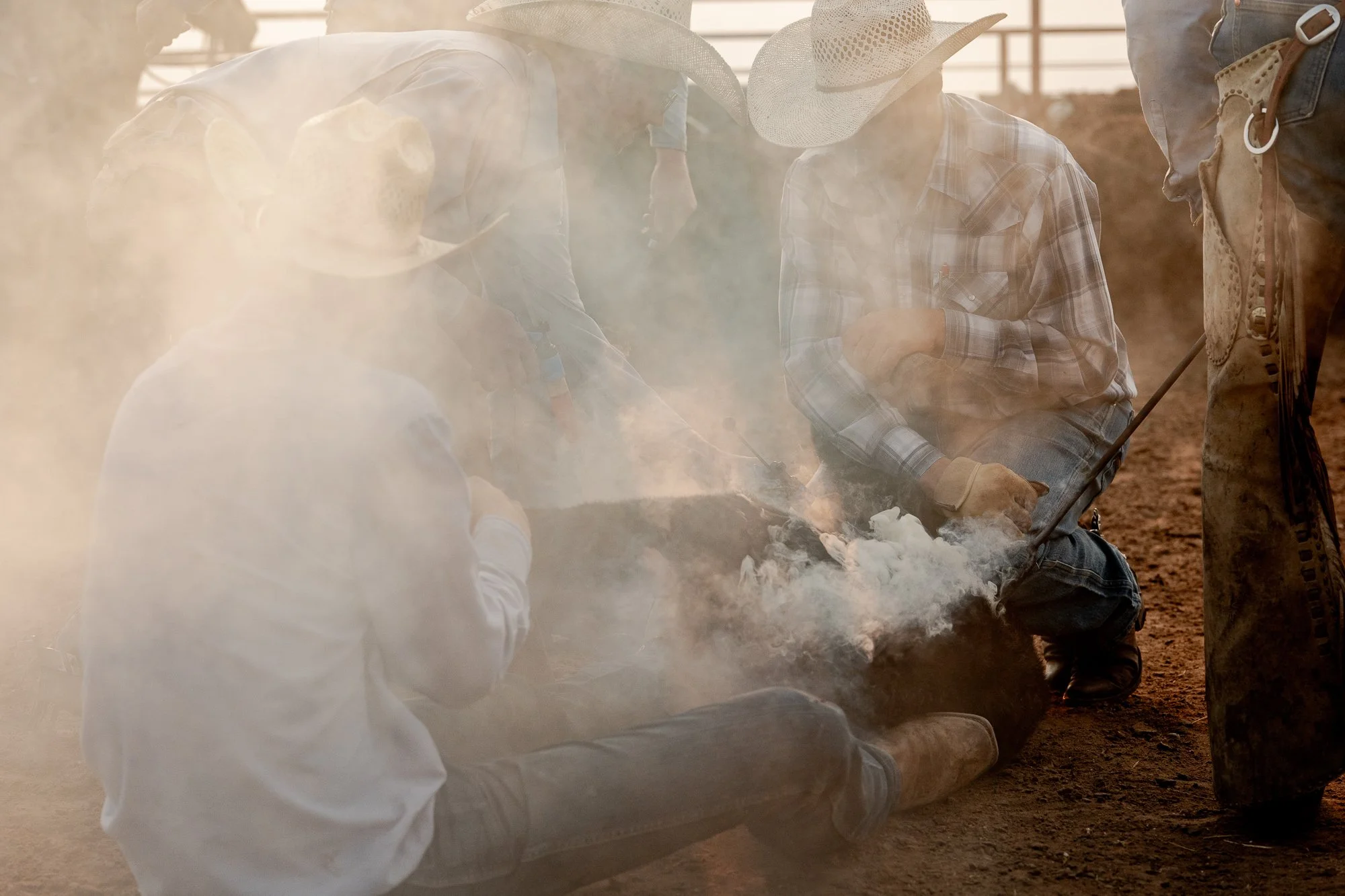
Smoke drifts through the pen as the brand meets hide. It’s a hard image, but it’s honest — this is part of the job.
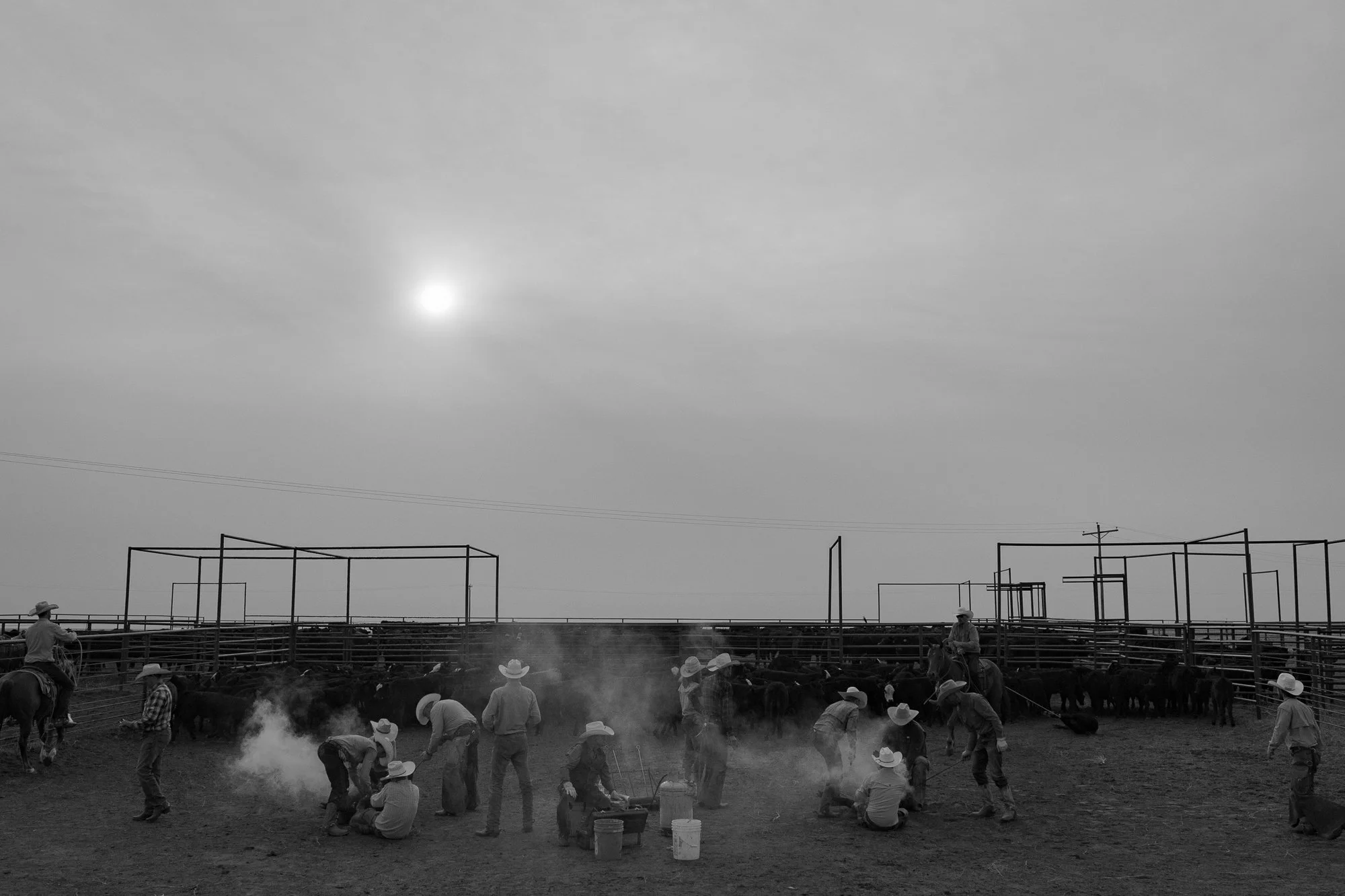
From above, the branding crew forms small circles inside a larger system of steel and cattle. Smoke rises evenly into a washed-out sky.
Why the 6666 Ranch Matters in Real Cowboy Culture
For anyone photographing working cowboys — especially in long-term documentary projects like mine — places like the 6666’s represent continuity and quality. The rhythm of branding pens, early morning gathers, long fence lines, and the quiet skill required to manage cattle at scale are not cinematic props. They are real life. The ranch is revered not only for world class cows and horses, but cowboys as well. To earn a job as a cowboy the 6666’s means you’re the best of the best.
This is the version of the West that matters most — not the myth, but the labor.
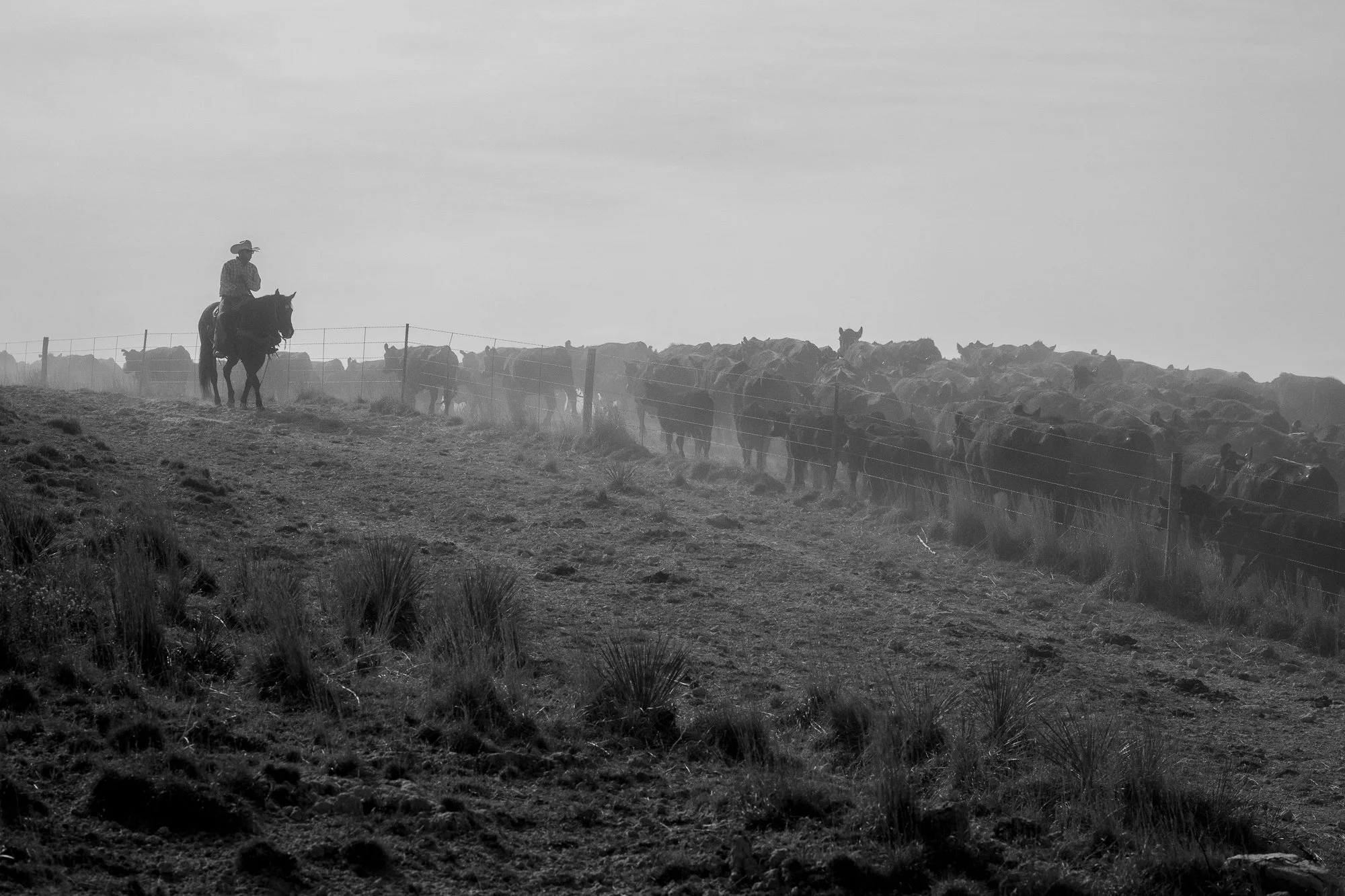
A lone rider moves parallel to a wall of cattle, keeping steady pressure along the fence line. Much of ranch work is quiet and deliberate — miles of it.
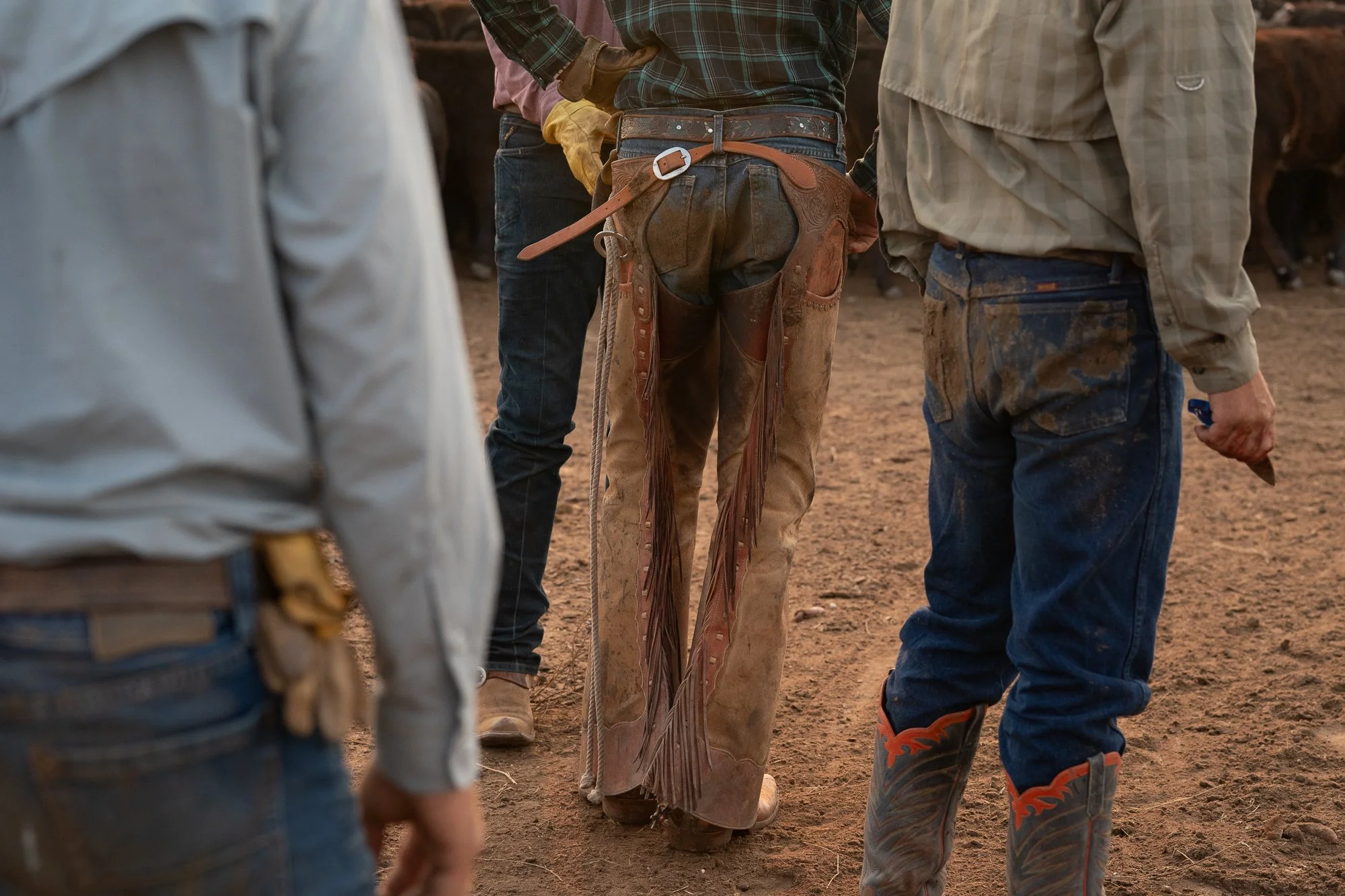
Fringe, mud, and sweat-darkened leather. The uniform might be decorative but its also functional and earned.
A Legendary Hand of the 6666 Ranch
One of the most respected cowboys at the 6666 Ranch is Boots O’Neal — a man whose name carries weight all across the American West. I spent time documenting his life and work in a separate post that goes deeper into his story, his philosophy, and what it means to stay in the saddle into his 90’s!
→ Read more about Boots O’Neal and his life at the 6666 Ranch
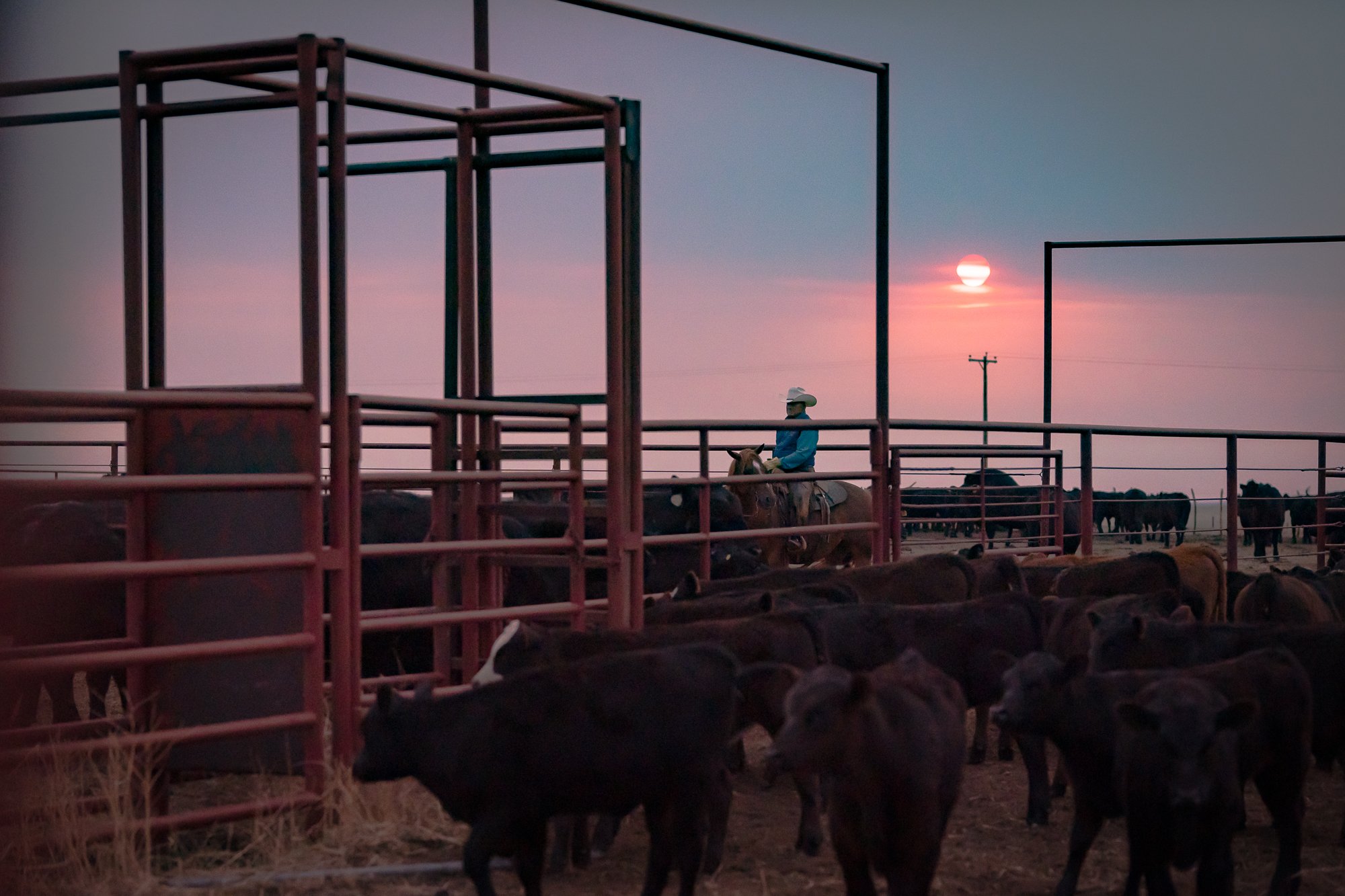
Boots O’Neal on his horse walking through a corral full of cattle early in the morning on the 6666 Ranch
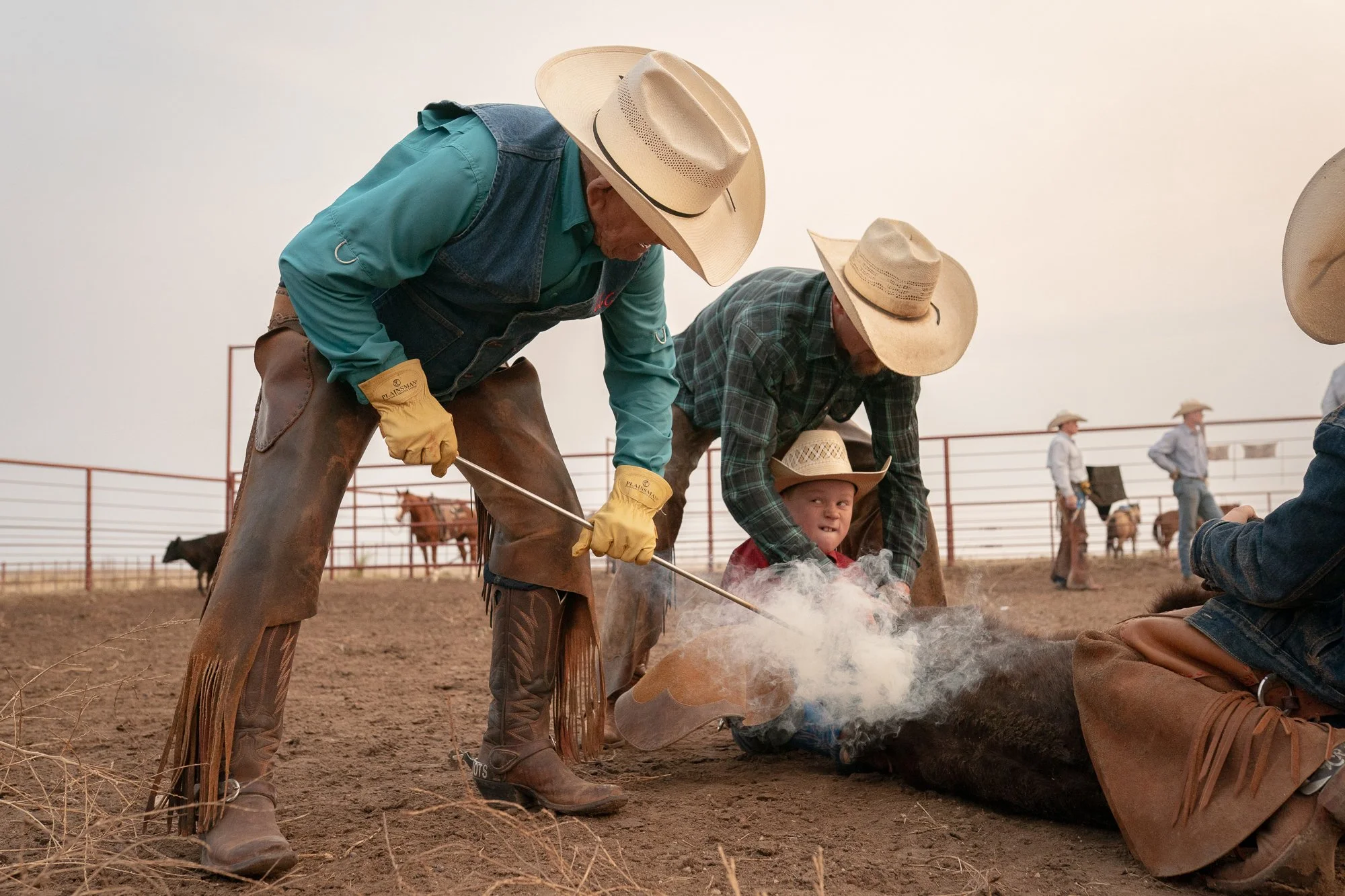
Boots O’Neal brands a calf as a child sits in during branding, learning by watching. On ranches like this, knowledge isn’t taught in classrooms — it’s absorbed in the dust.
Fine Art Prints from the 6666 Ranch
Select photographs made on the 6666 Ranch are available as museum-quality fine art prints, produced on Hahnemühle Baryta paper and offered in limited editions. These images are part of Calves to the Fire – Working Cowboys of the American West, a long-term documentary project examining the labor, landscape, and legacy of ranch culture.
Collectors and designers interested in availability, sizing, or framing options are welcome to inquire directly.
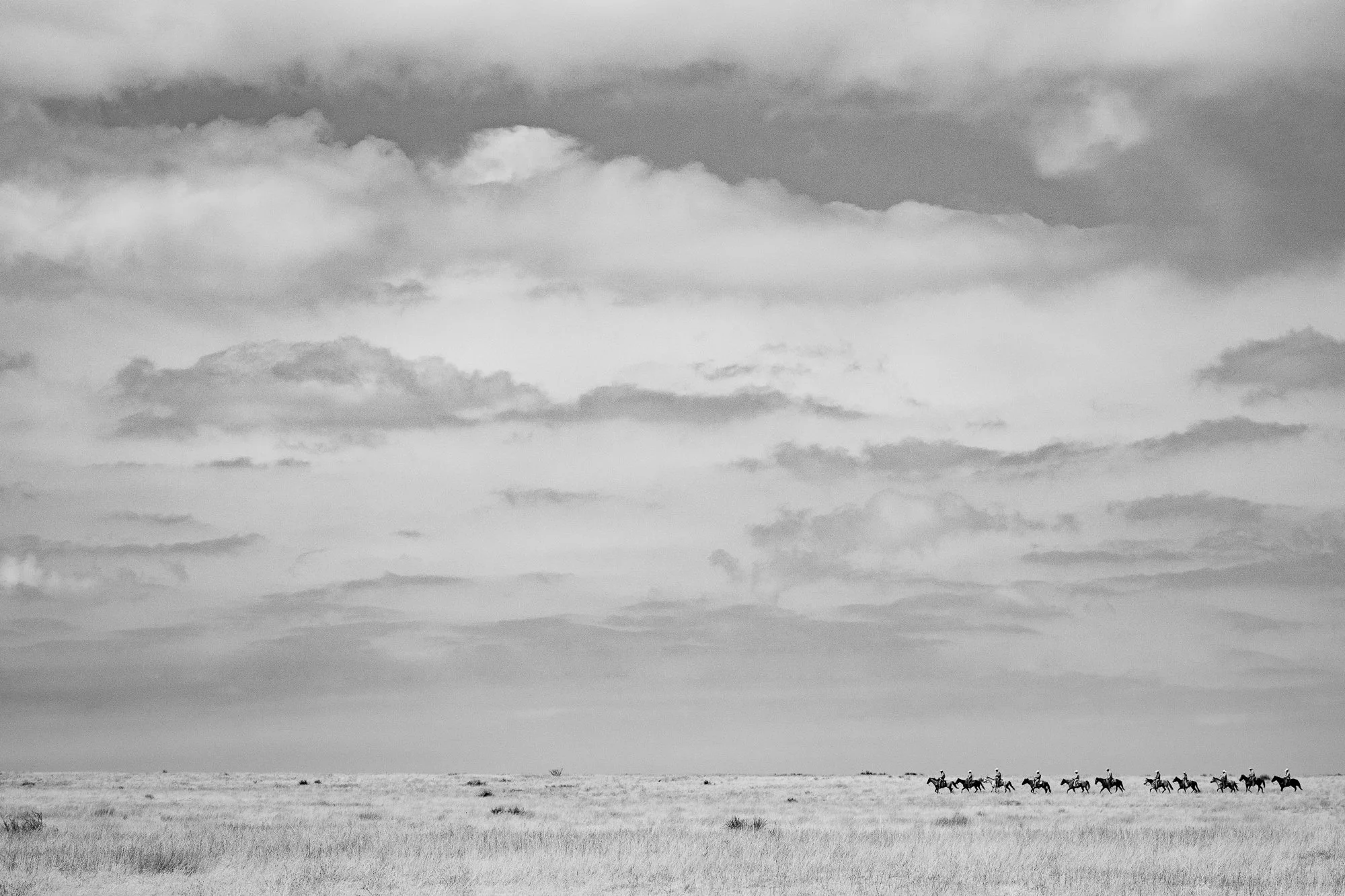
A string of riders stretches across the Texas plains, dwarfed by sky. On a ranch this size, scale is always part of the story.
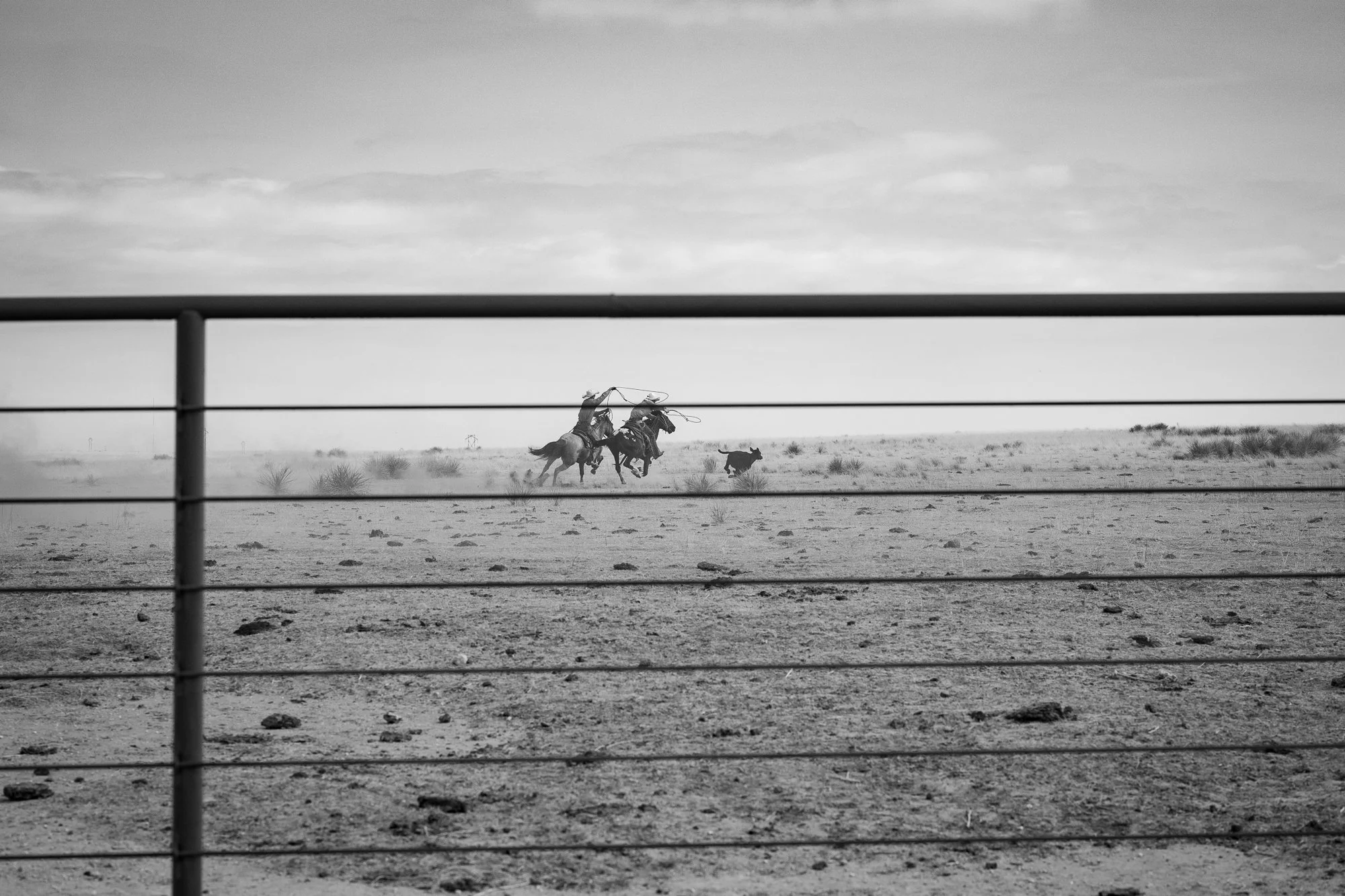
Through the lines of a pasture fence, two riders close in on a calf. Speed and coordination condensed into a few seconds of dust and rope.
Commercial Licensing & Editorial Use
Photographs from this body of work have been licensed by Western brands and have appeared in commercial and editorial contexts, including on the set of Yellowstone.
If you are a brand, publication, or production designer seeking authentic working ranch imagery, licensing inquiries are welcome.
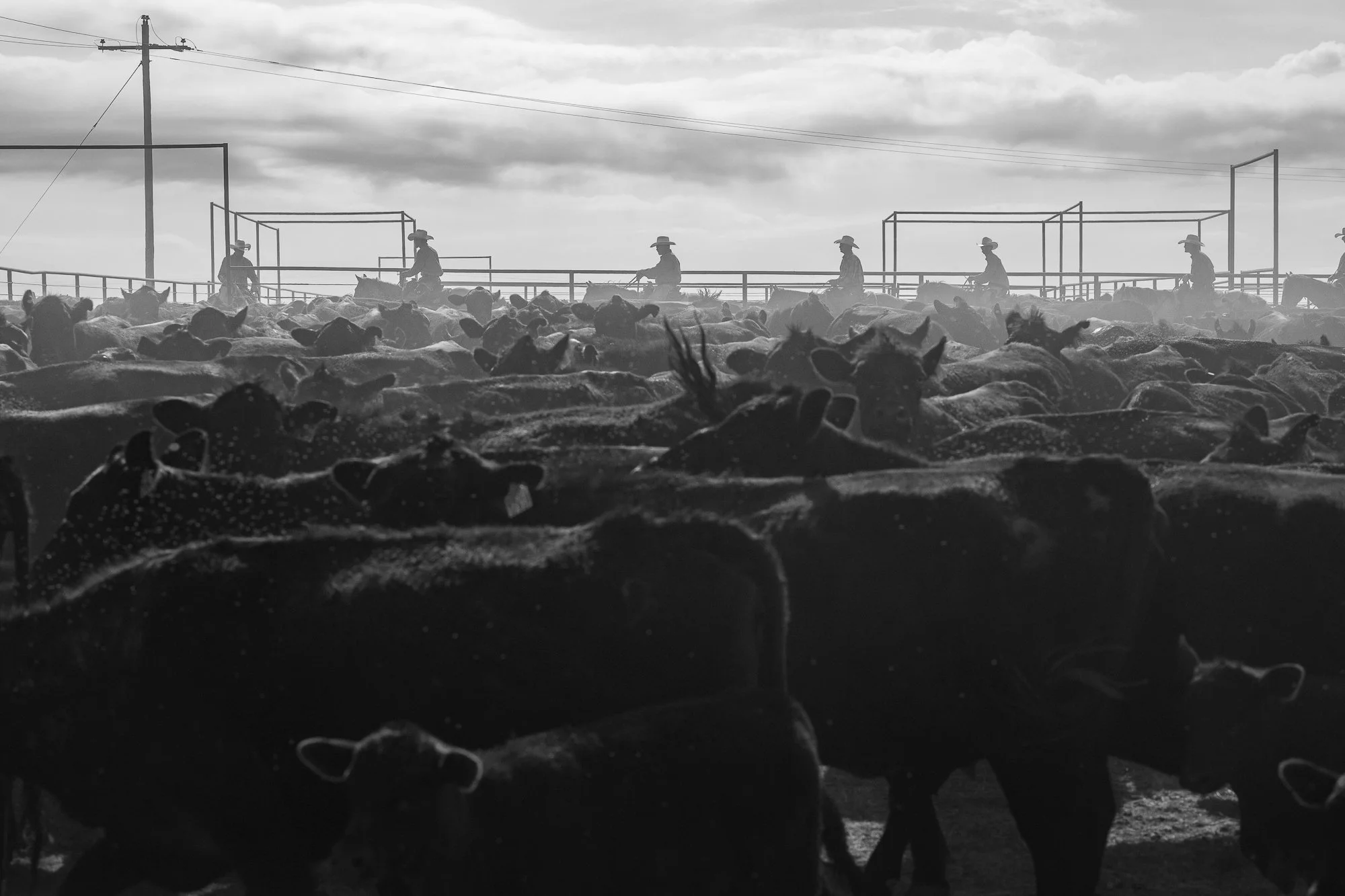
Through dust and backlight, riders move like outlines against the sky. The geometry of steel pens frames a practice that hasn’t changed much in generations.
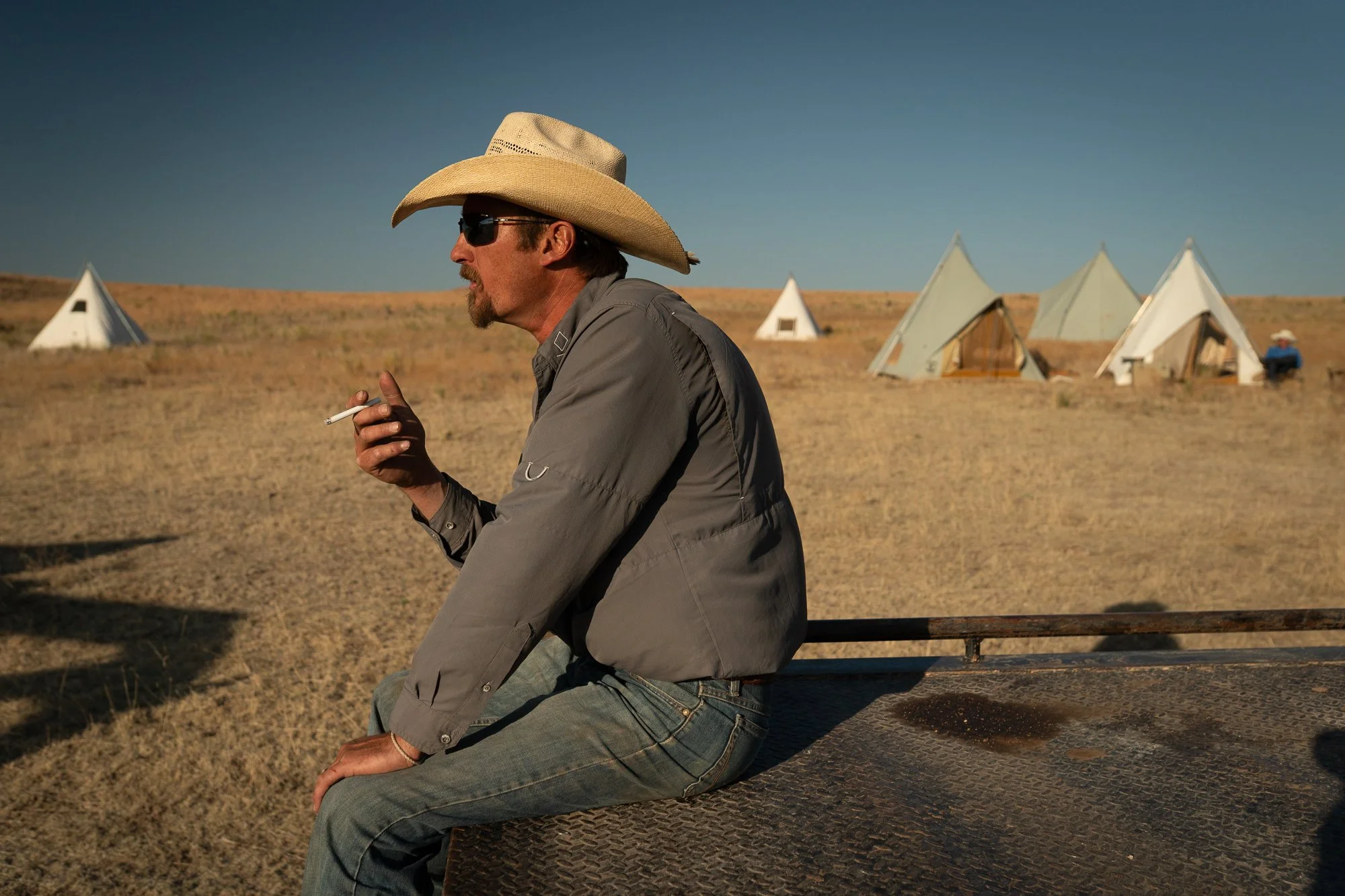
Between gathers, a cowboy leans back with a cigarette as canvas tents dot the prairie behind him.
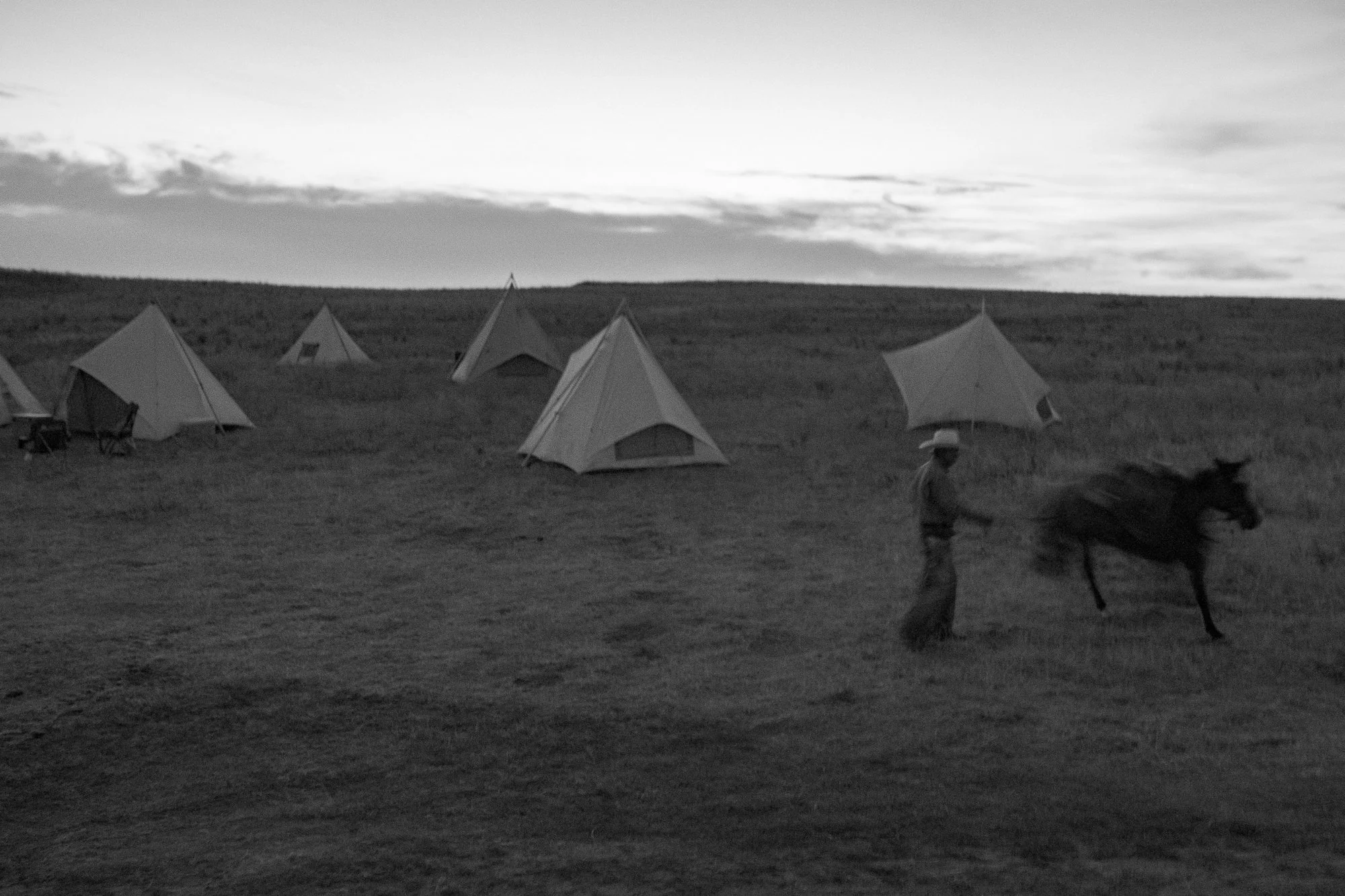
In early morning light , a rider walks his horse past the tents. The day narrows down to silhouettes and routine.
Part of a Larger Body of Work: Documenting Working Cowboys Across the American West
These photographs from the 6666 Ranch are not standalone moments—they are part of a long-term documentary project focused on the realities of working cowboys across the American West. Over the past several years, I’ve traveled tens of thousands of miles to photograph life on historic ranches, from Nevada to Montana, with a focus on the traditions that continue to define this way of life.
What ties this work together is consistency—real people, real labor, and an approach rooted in observation rather than staging. Whether it’s gathering cattle at first light, quiet moments in the barn, or the rhythm of a long day on horseback, each photograph contributes to a broader visual record of a culture that still operates largely out of public view.
The 6666 Ranch is one chapter in that story. Together with other ranches across the West, it helps form a more complete picture of the work, the landscape, and the people who continue to carry it forward.
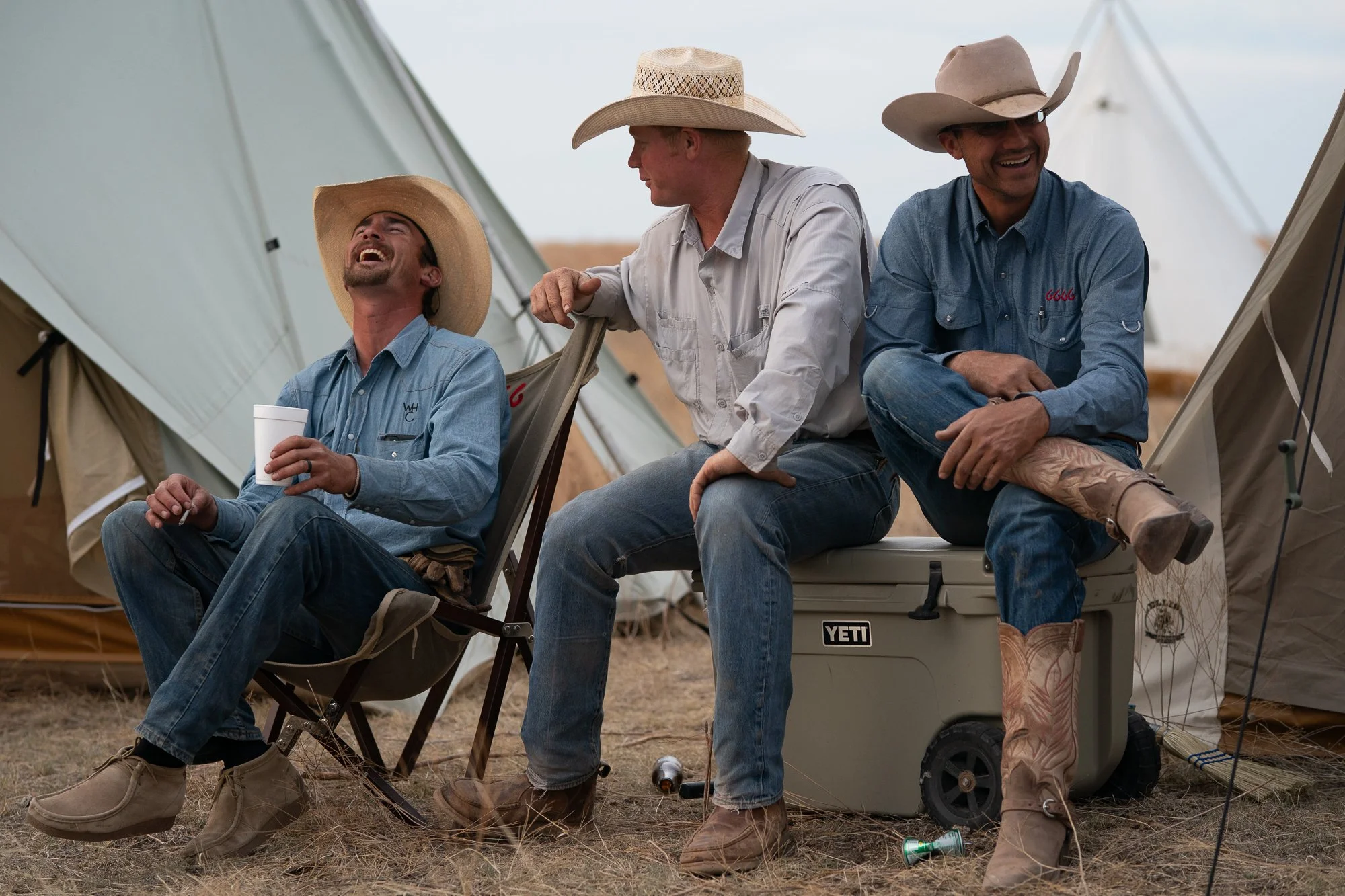
Three hands sit outside the tents at camp laughing together. The workday slows here, but it never fully leaves.
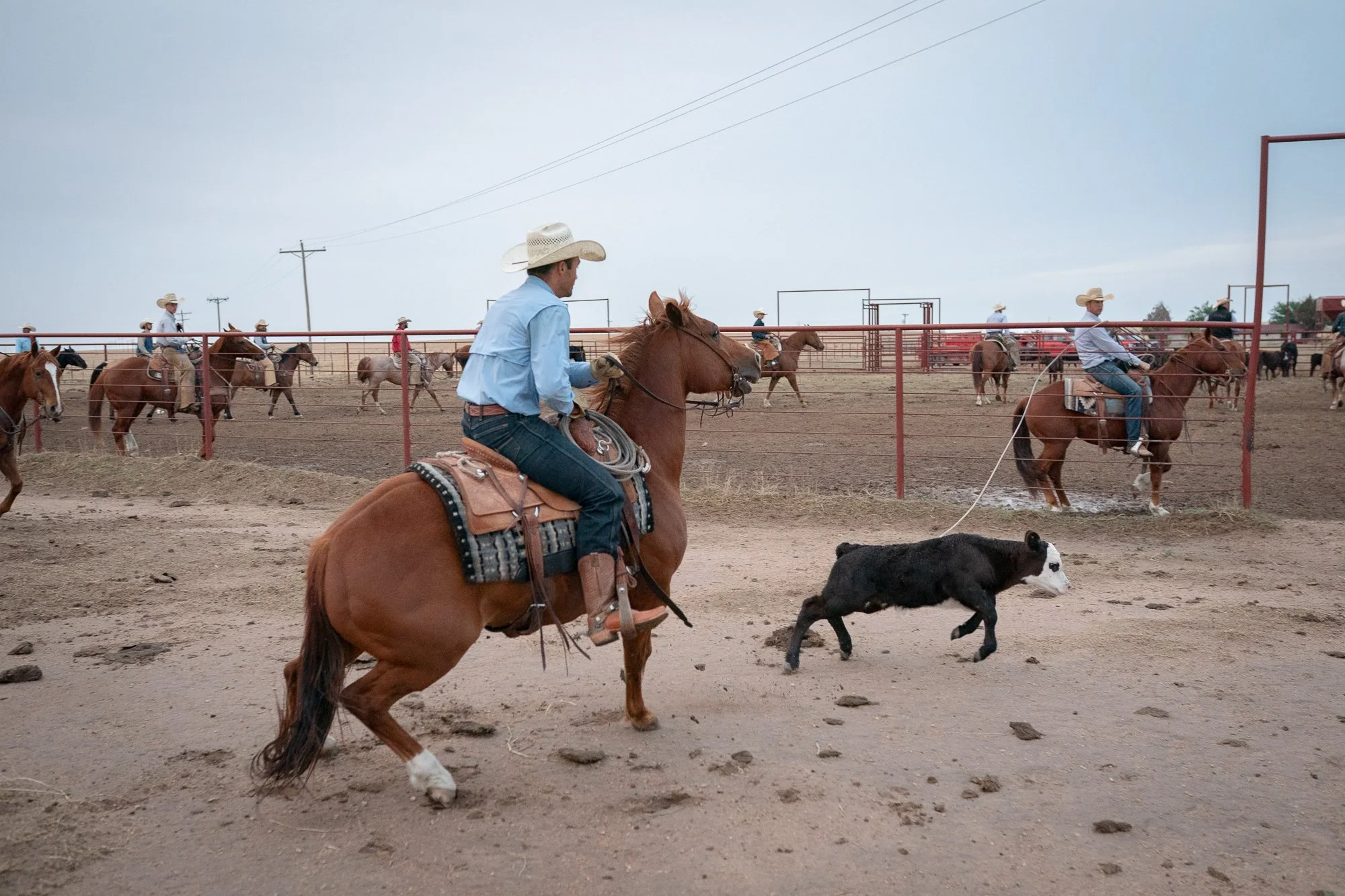
A cowboy ropes a runaway calf over the fence.
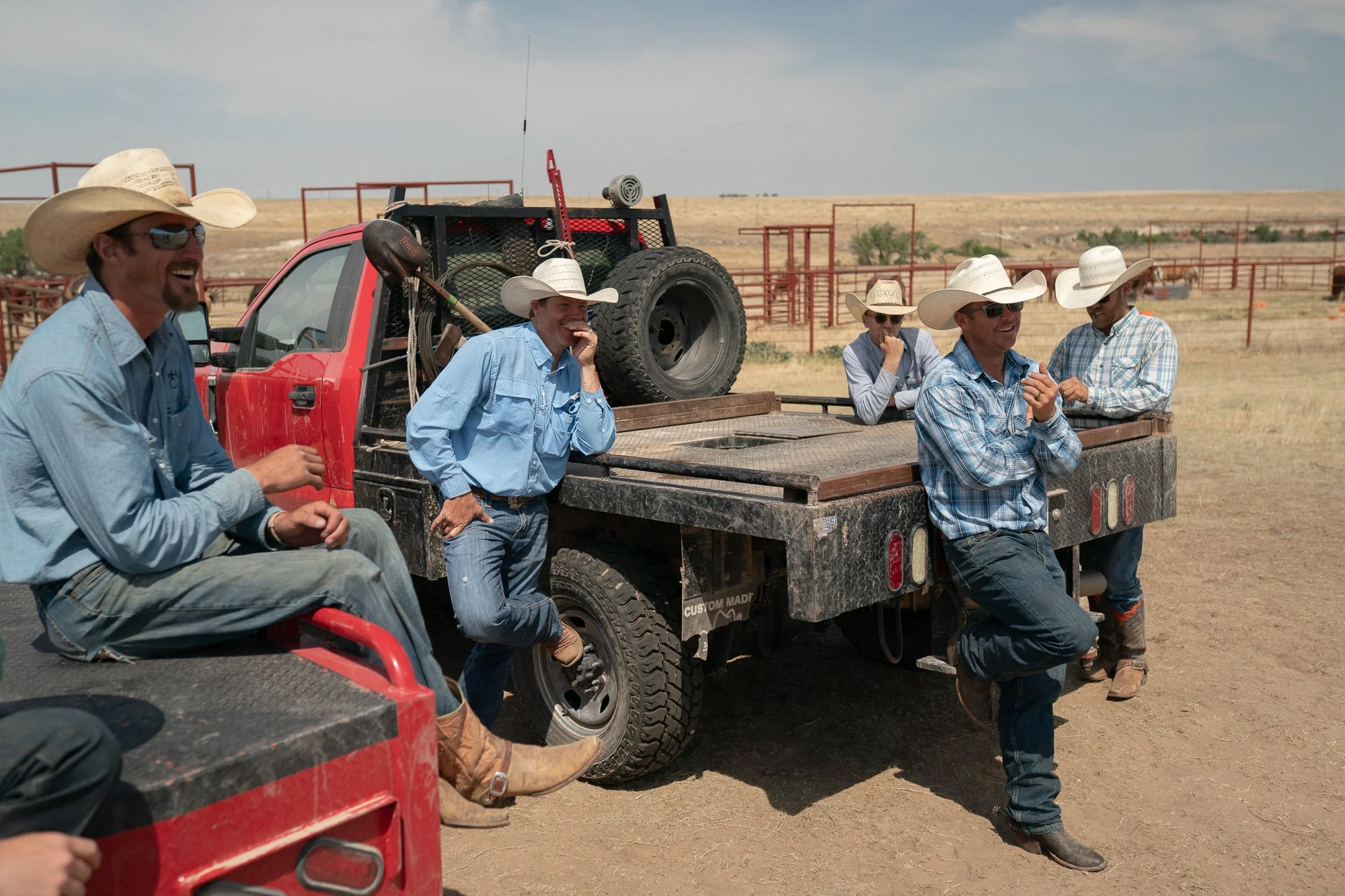
Leaning against a flatbed between sets, the crew trades stories. Humor is as necessary as rope.
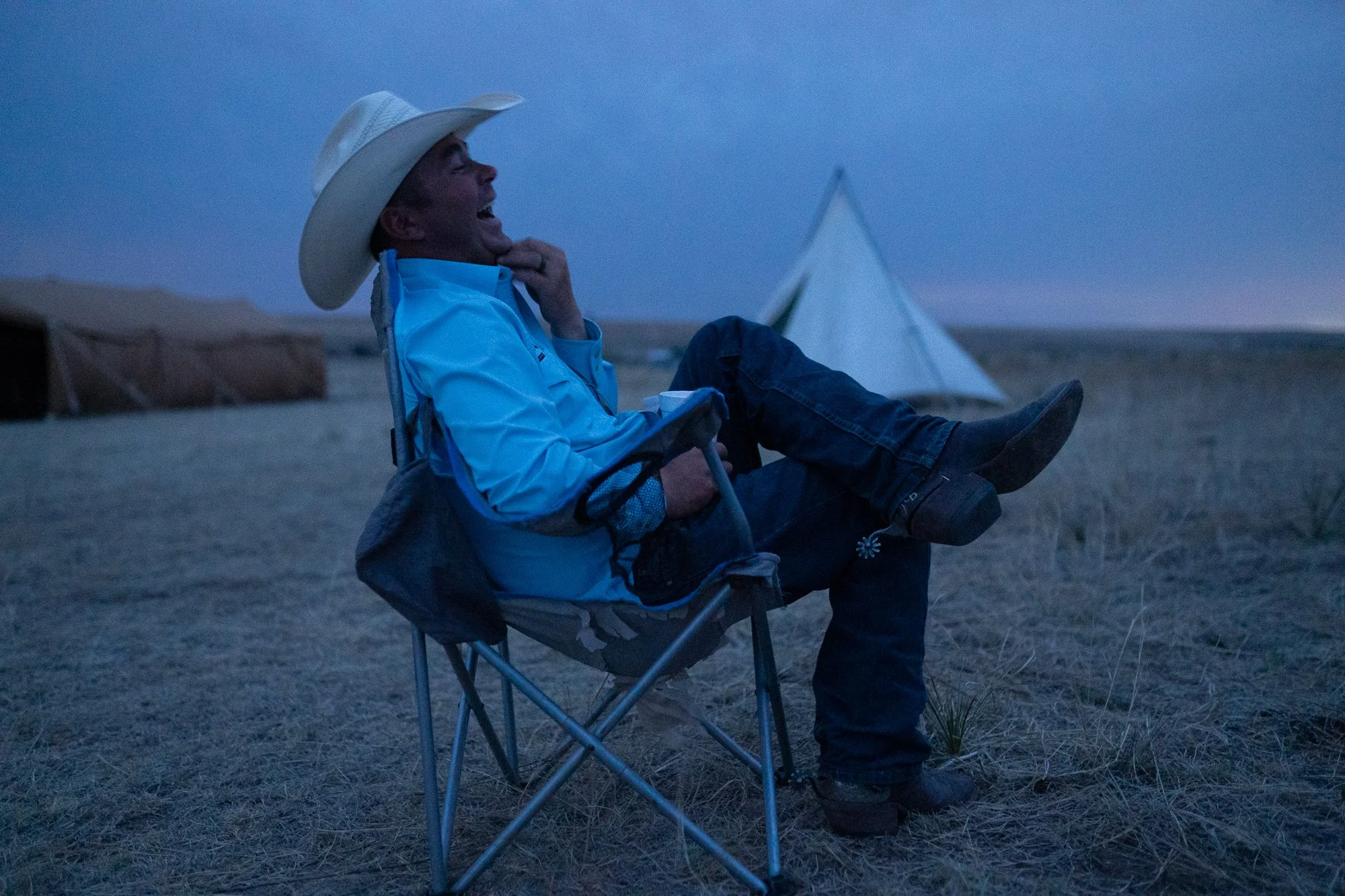
At blue hour, one cowboy laughs while leaning back in a folding chair. The prairie quiets, but tomorrow is already waiting.
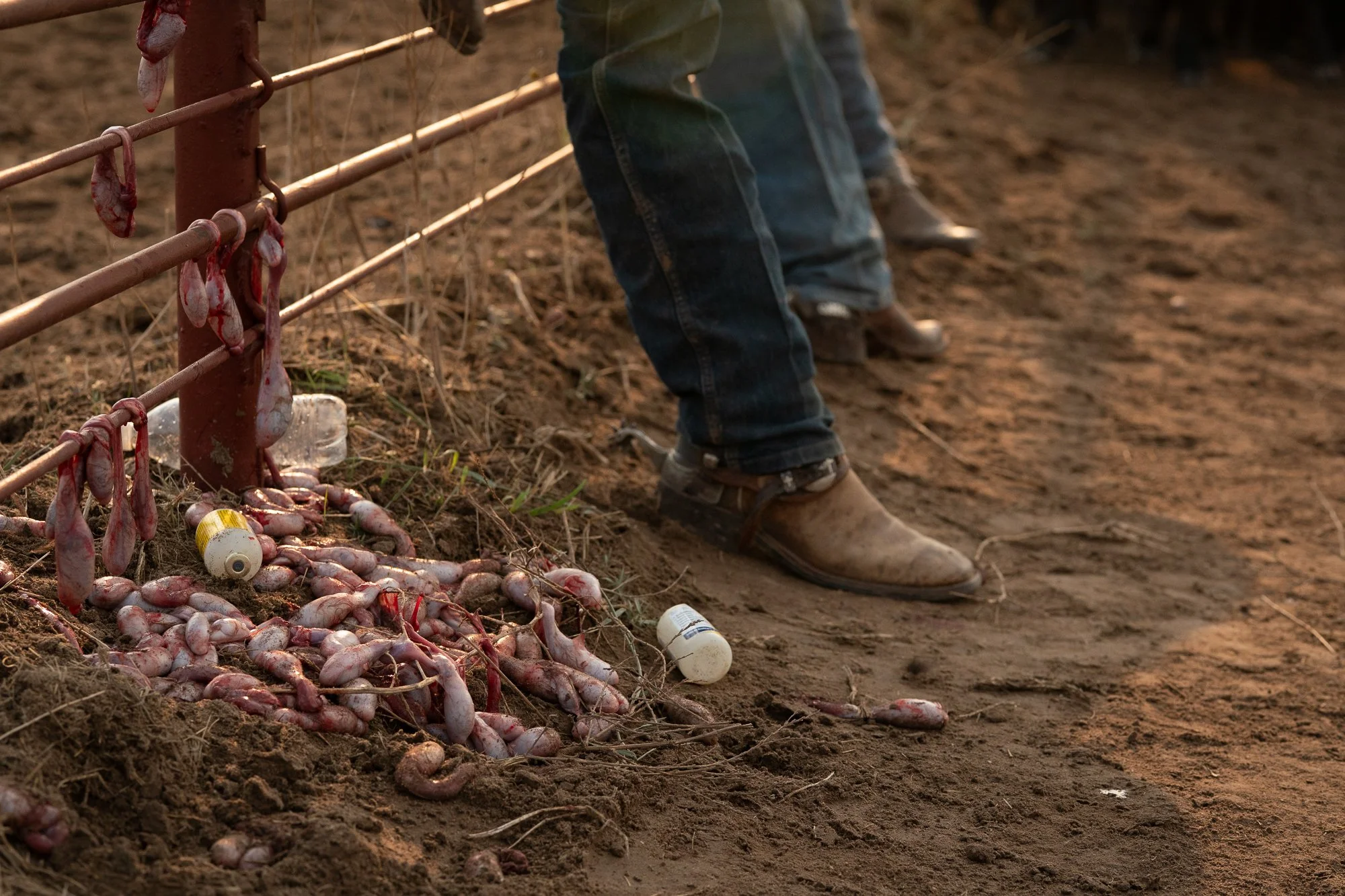
Part of the process left in the dirt beside a steel post. Ranch work carries physical consequences — not symbolic ones.
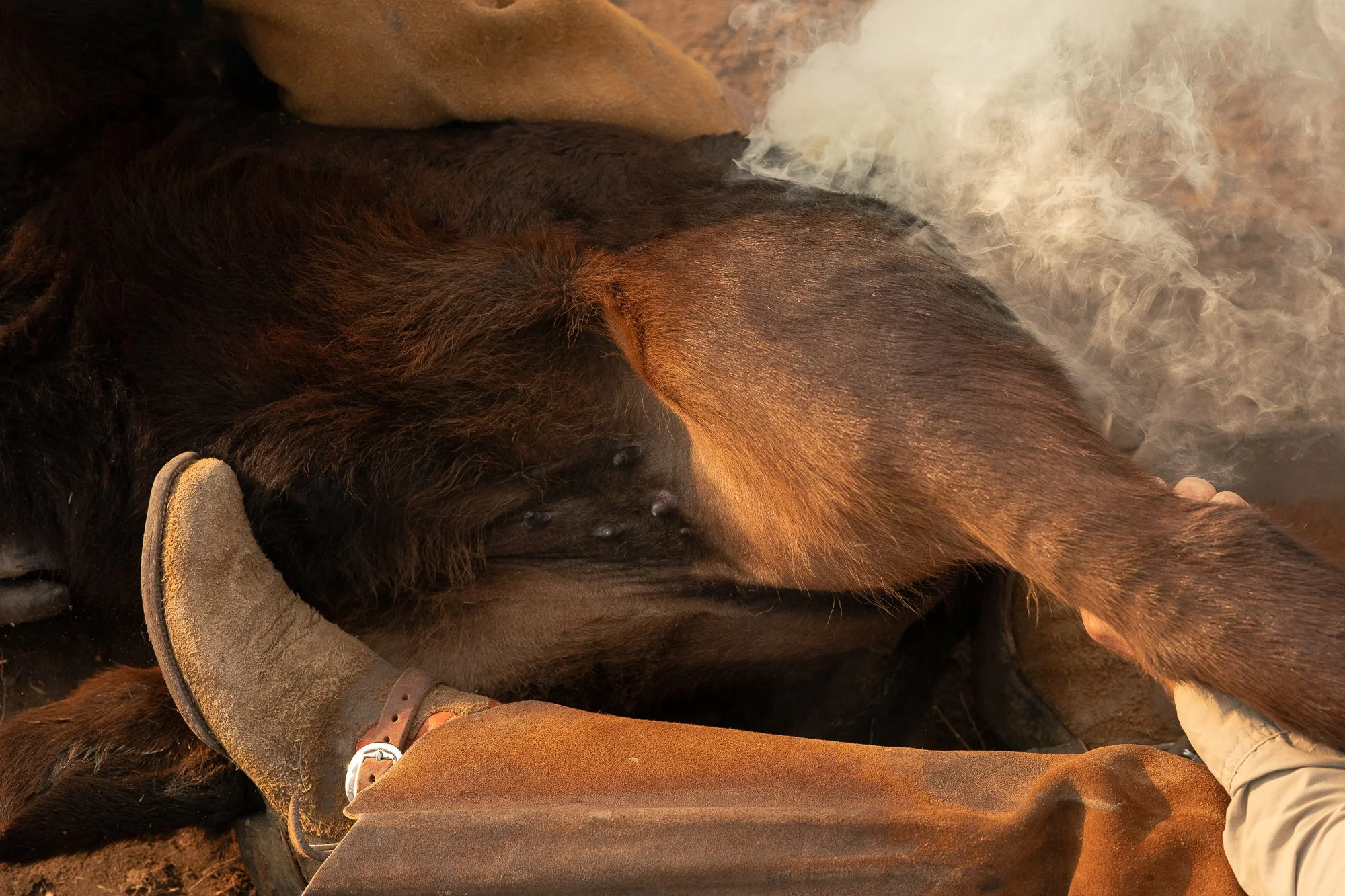
Smoke lifts from hide as the brand settles into place. It’s a brief moment, but one that defines ownership and responsibility.
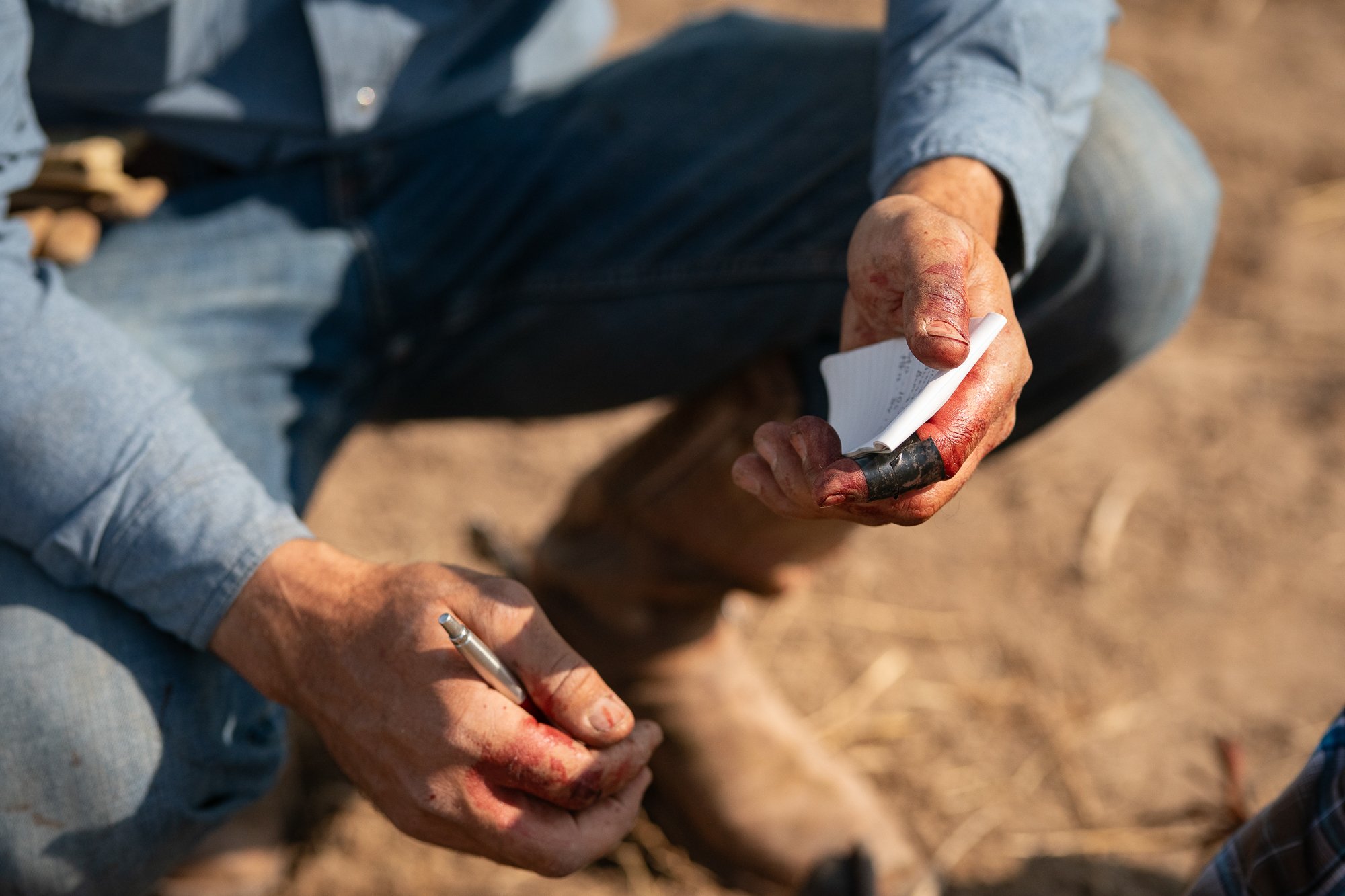
Bloody hands after branding on the 6666 Ranch in Texas
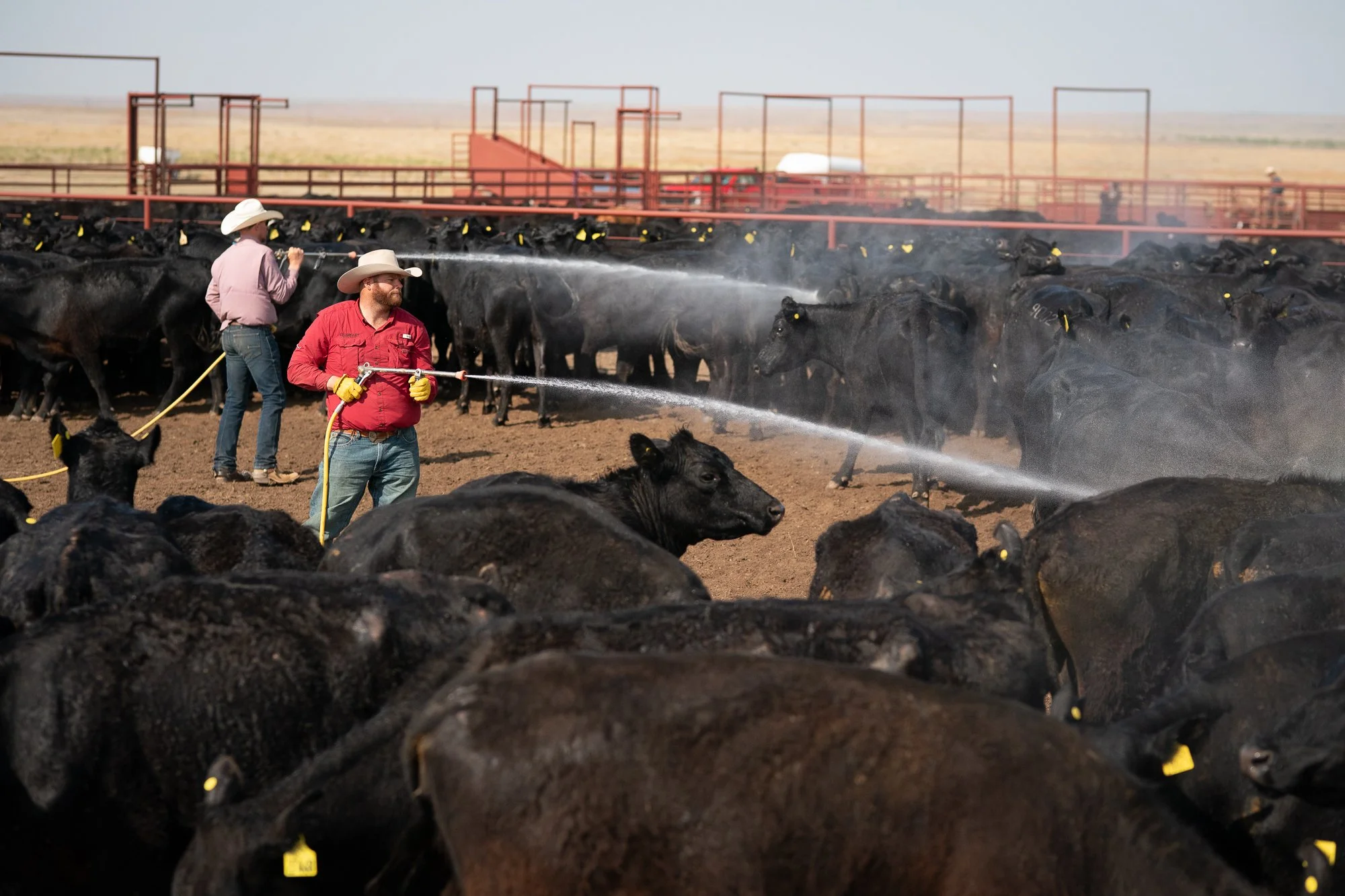
In the heat of a Texas afternoon, water cuts across the herd. Modern ranching is muscle, steel, and systems working together.
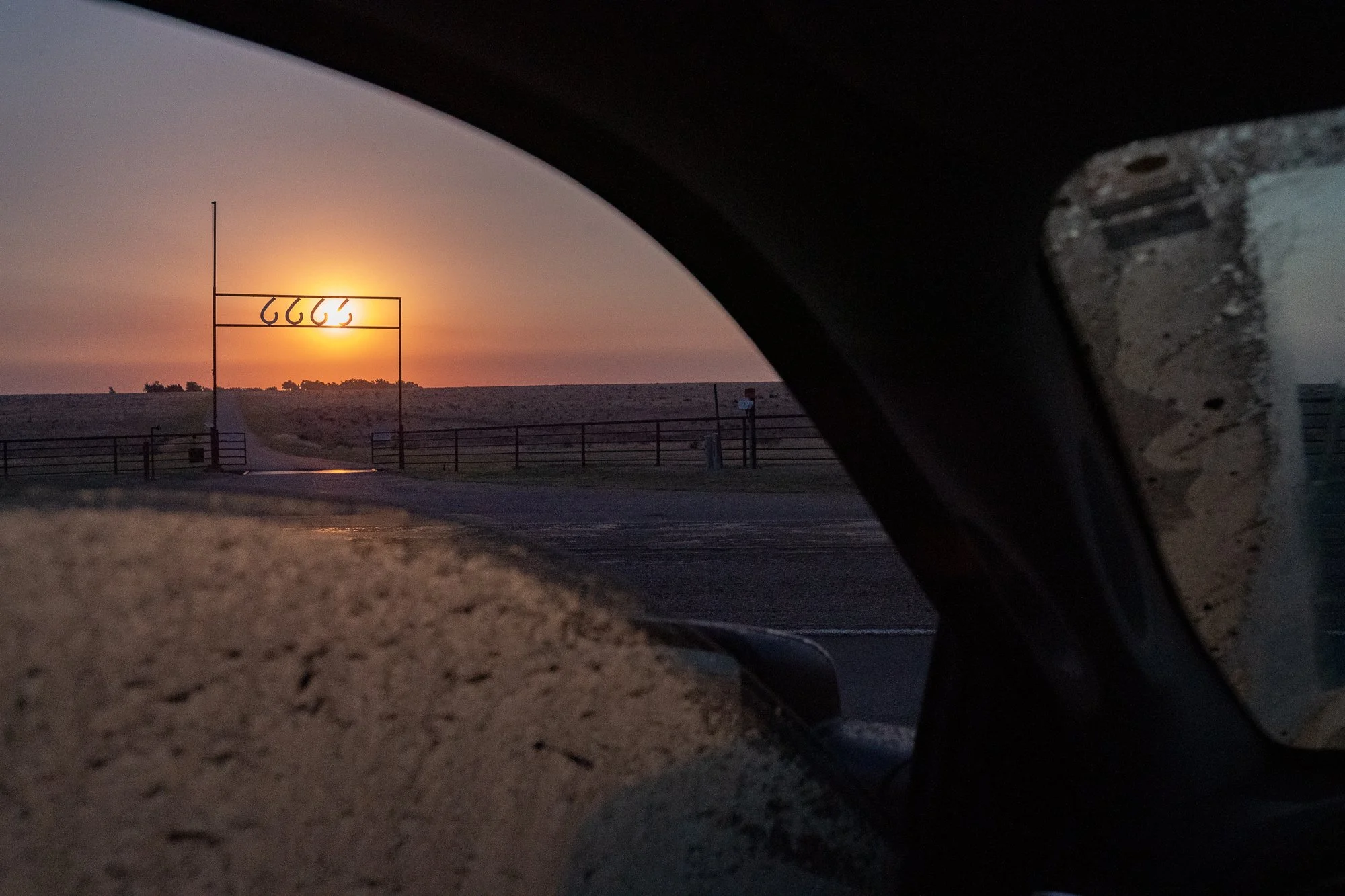
The Four Sixes gate falls behind the windshield at sunset. Dust still clings to the glass long after the work is done.