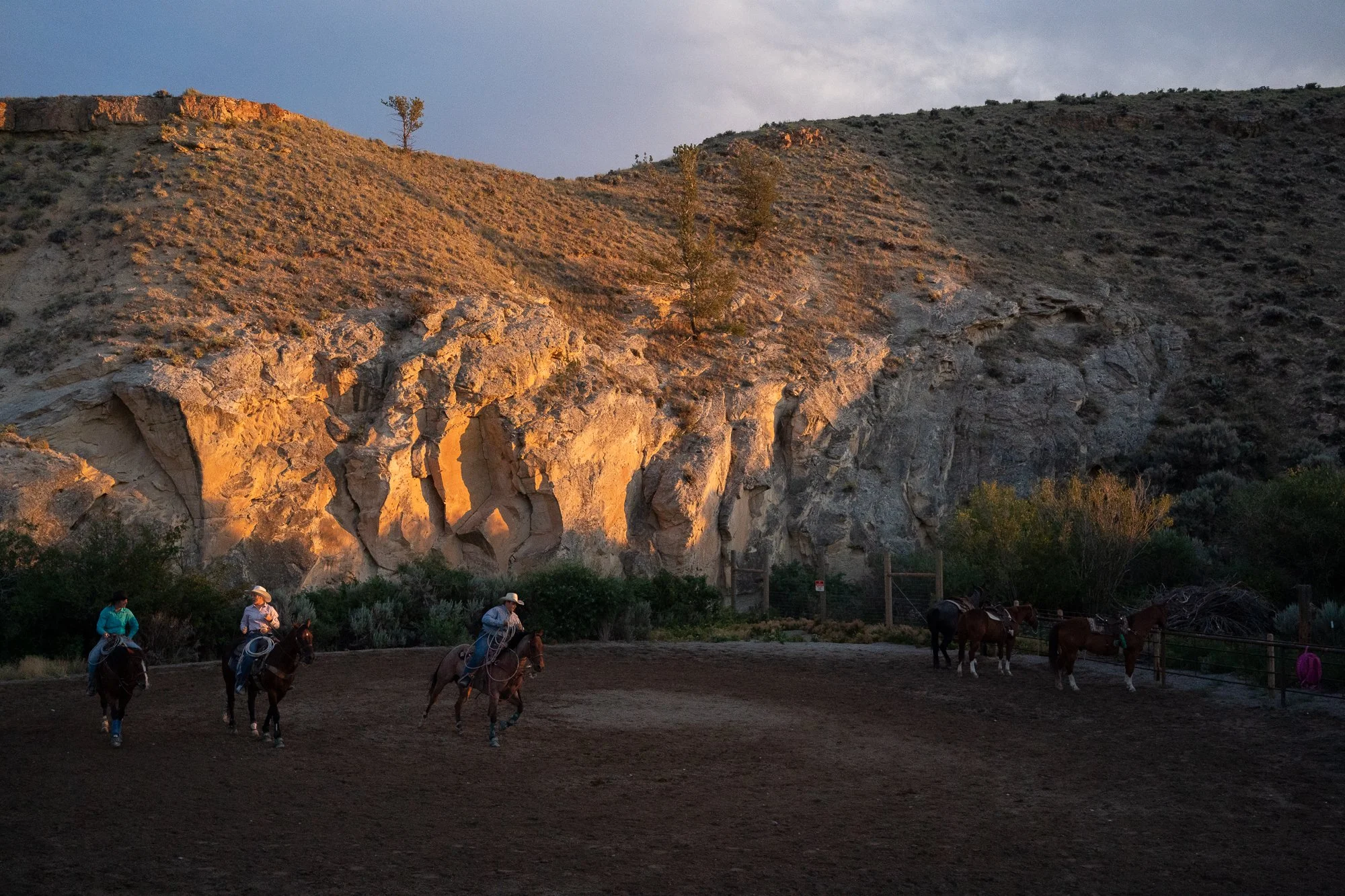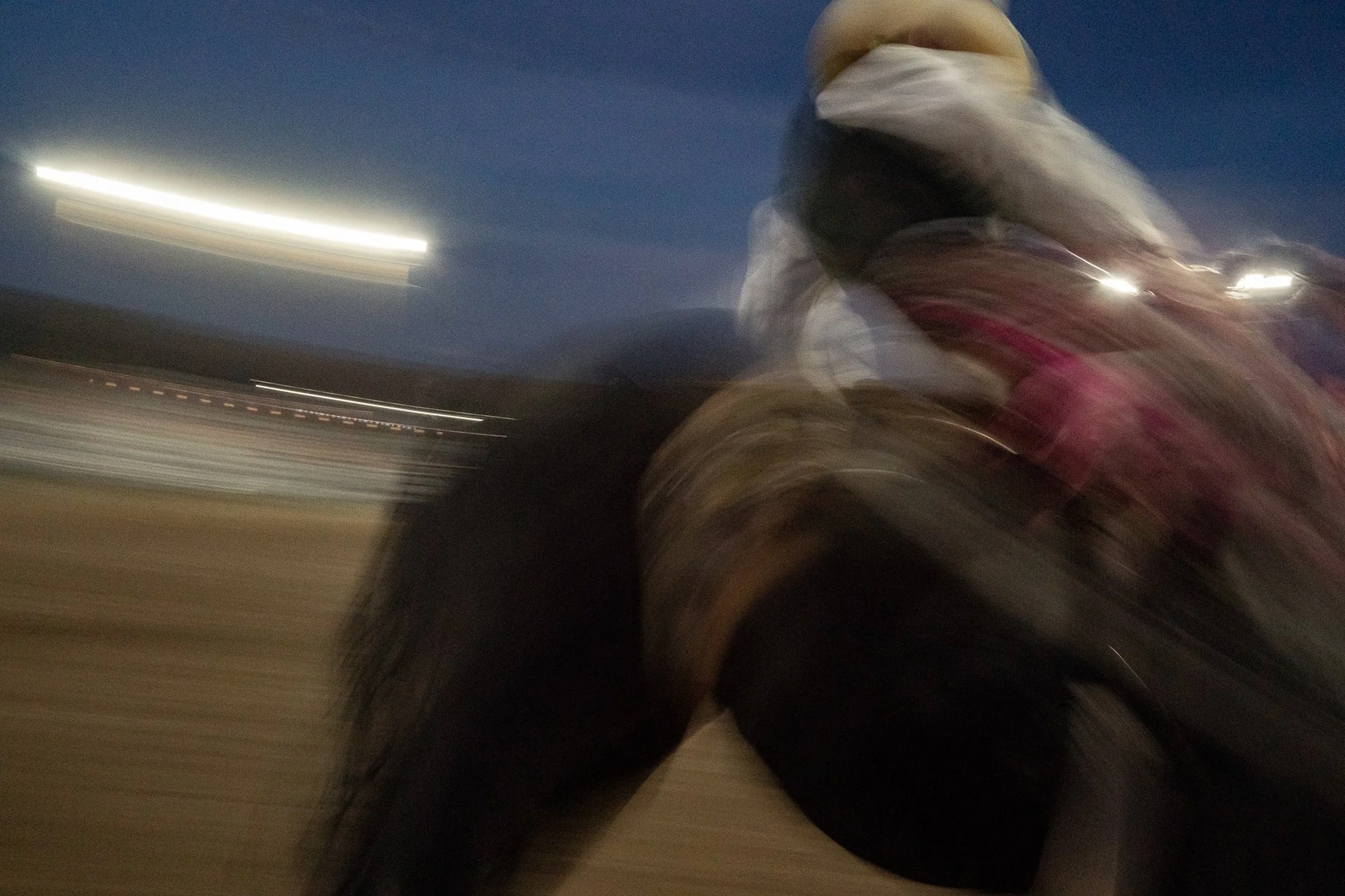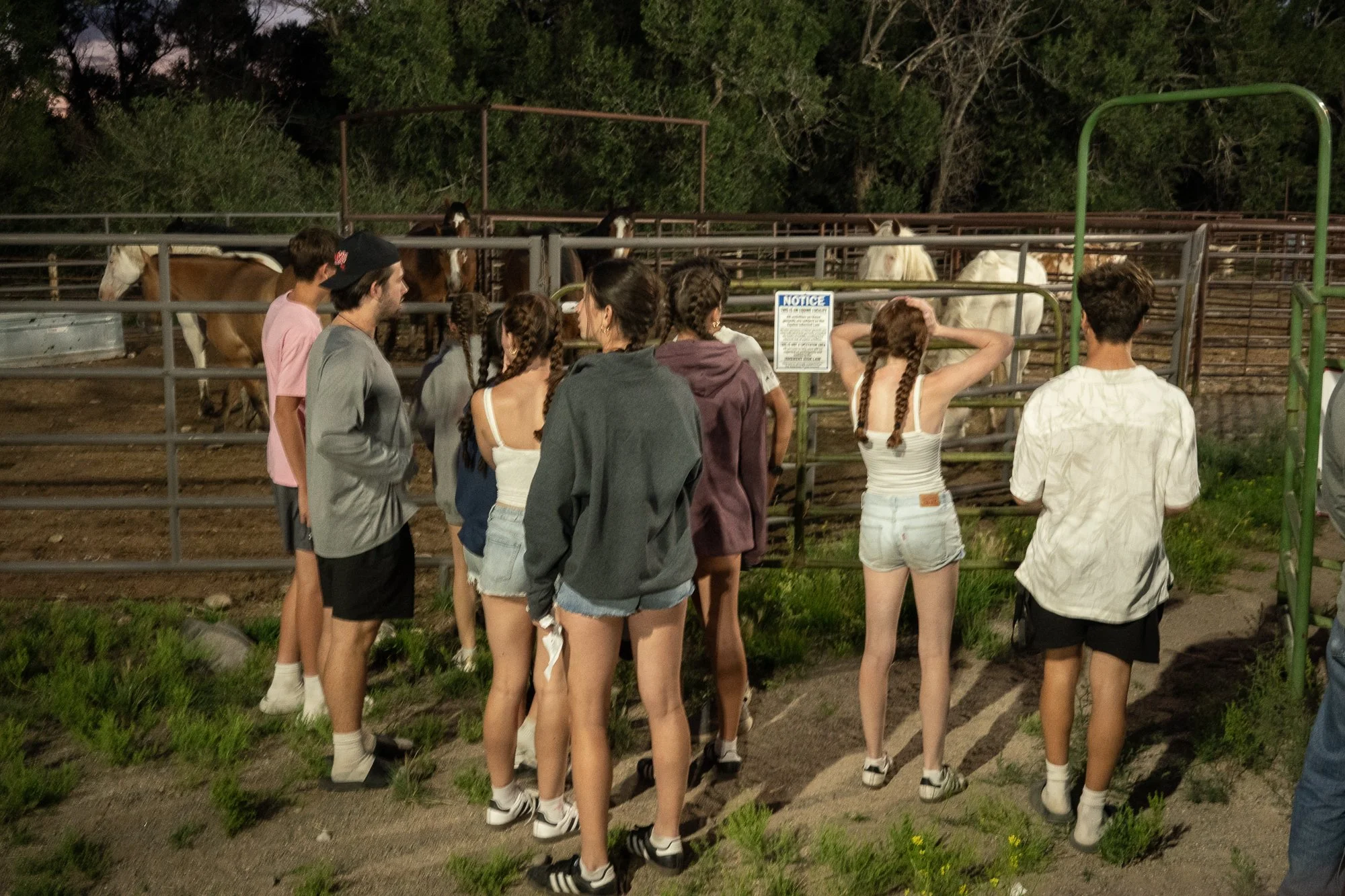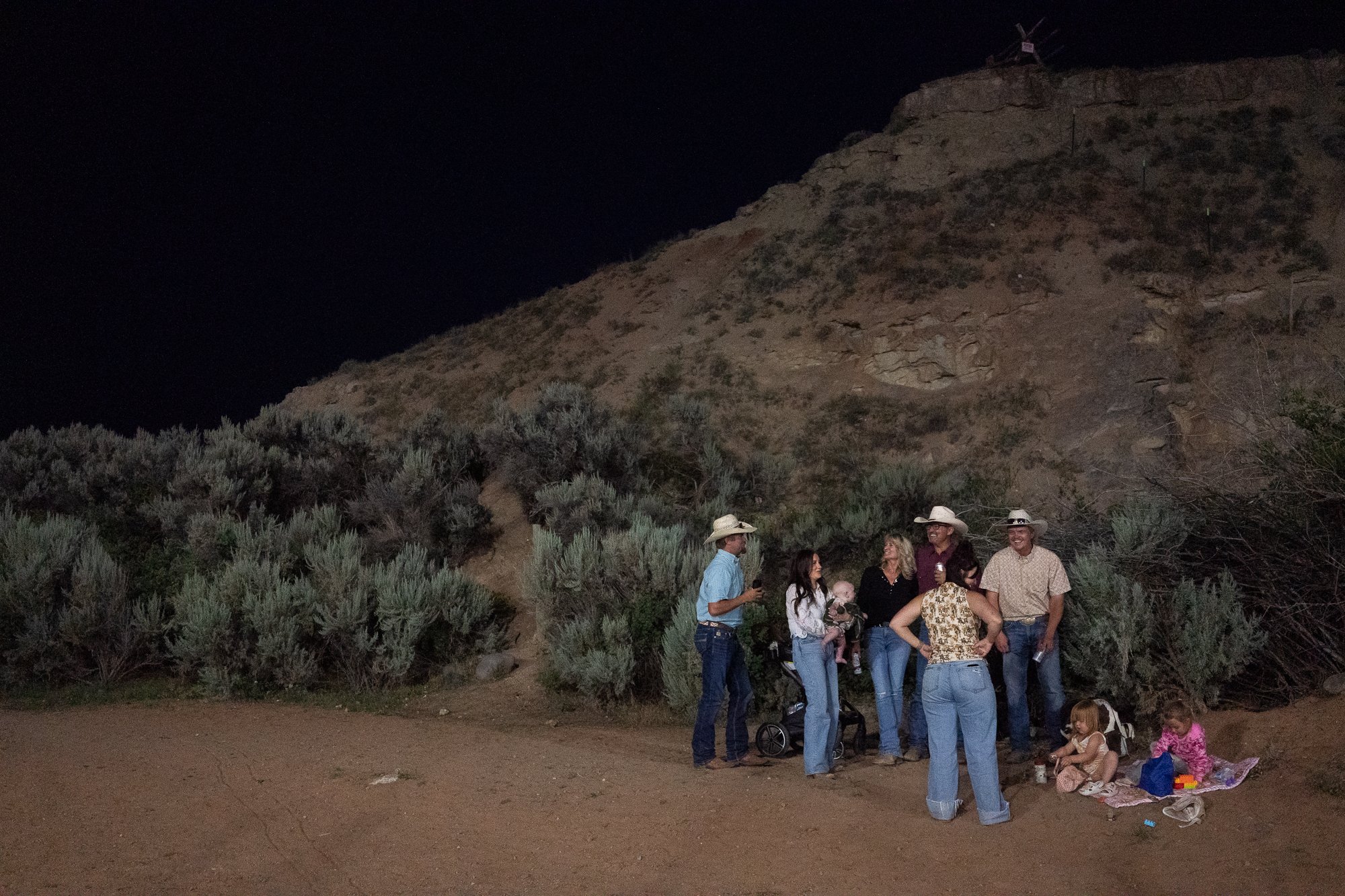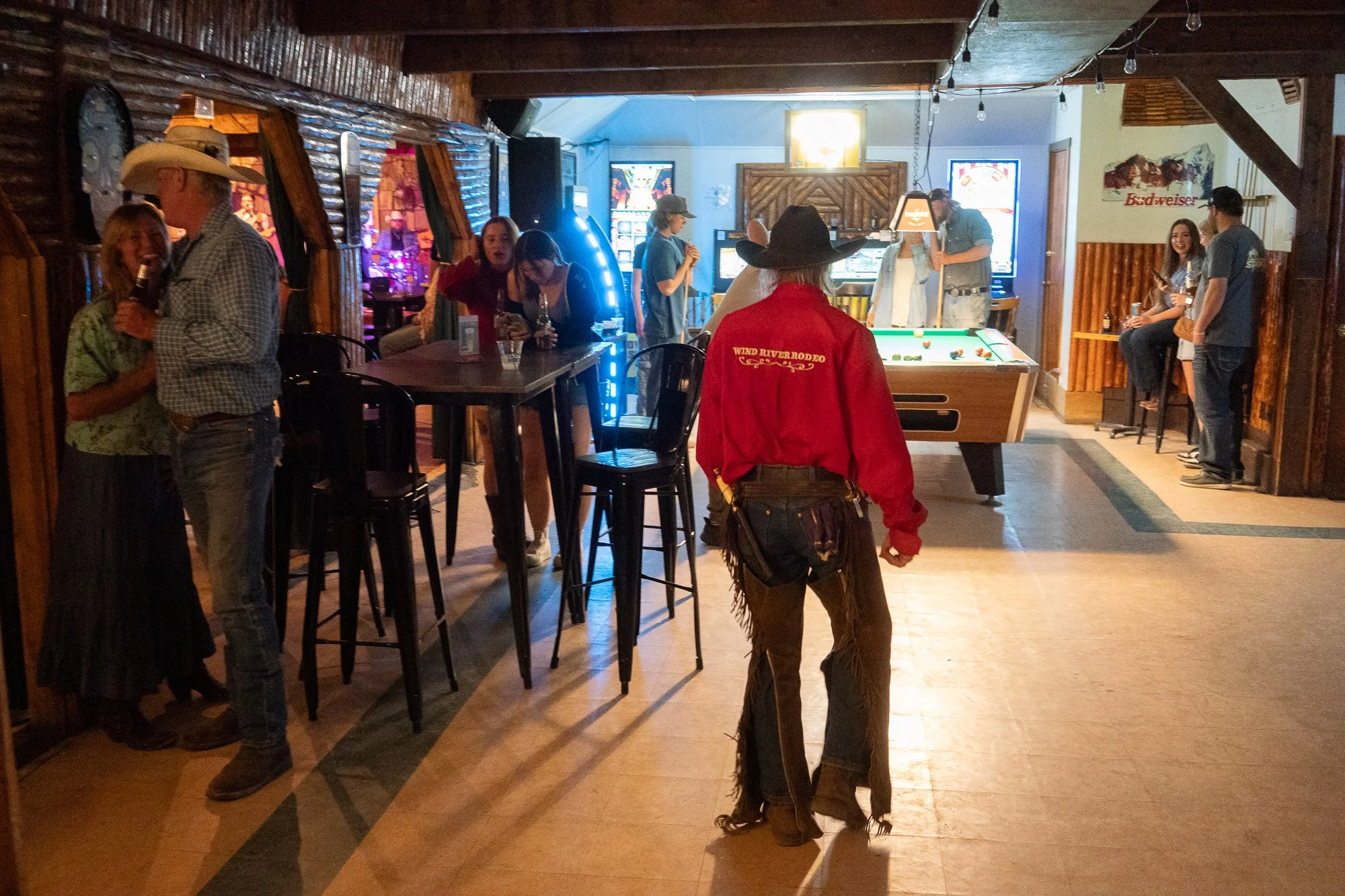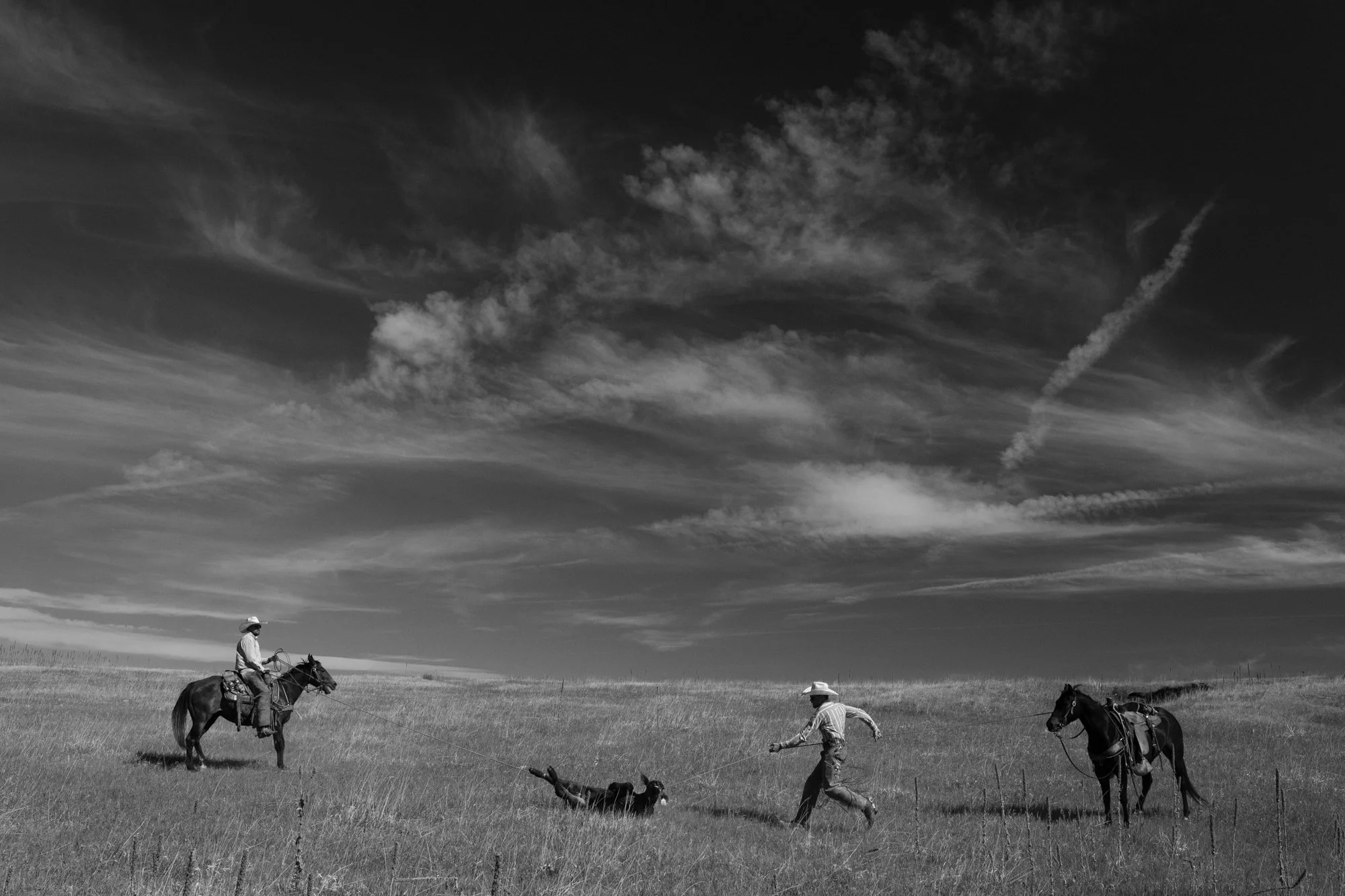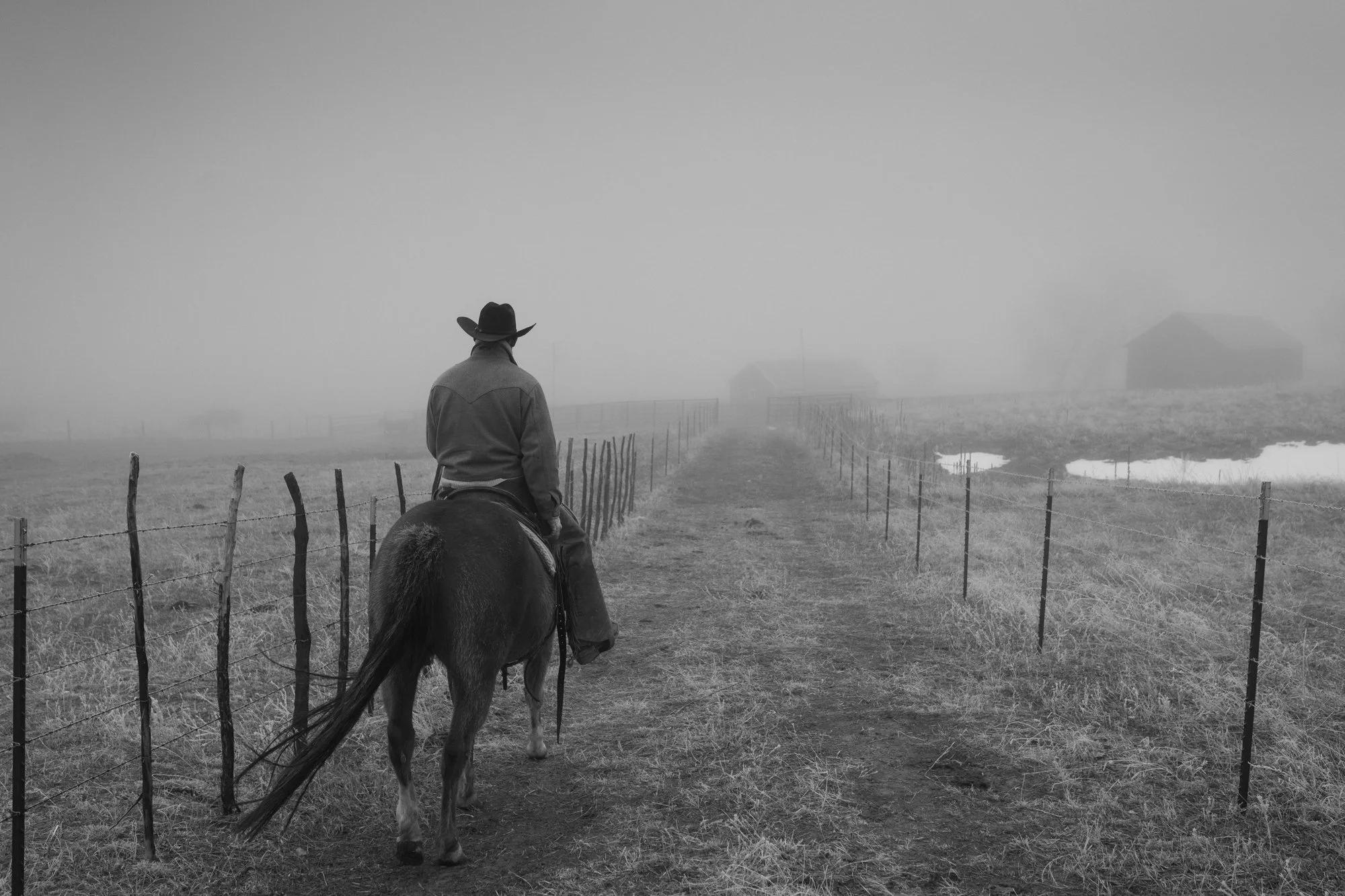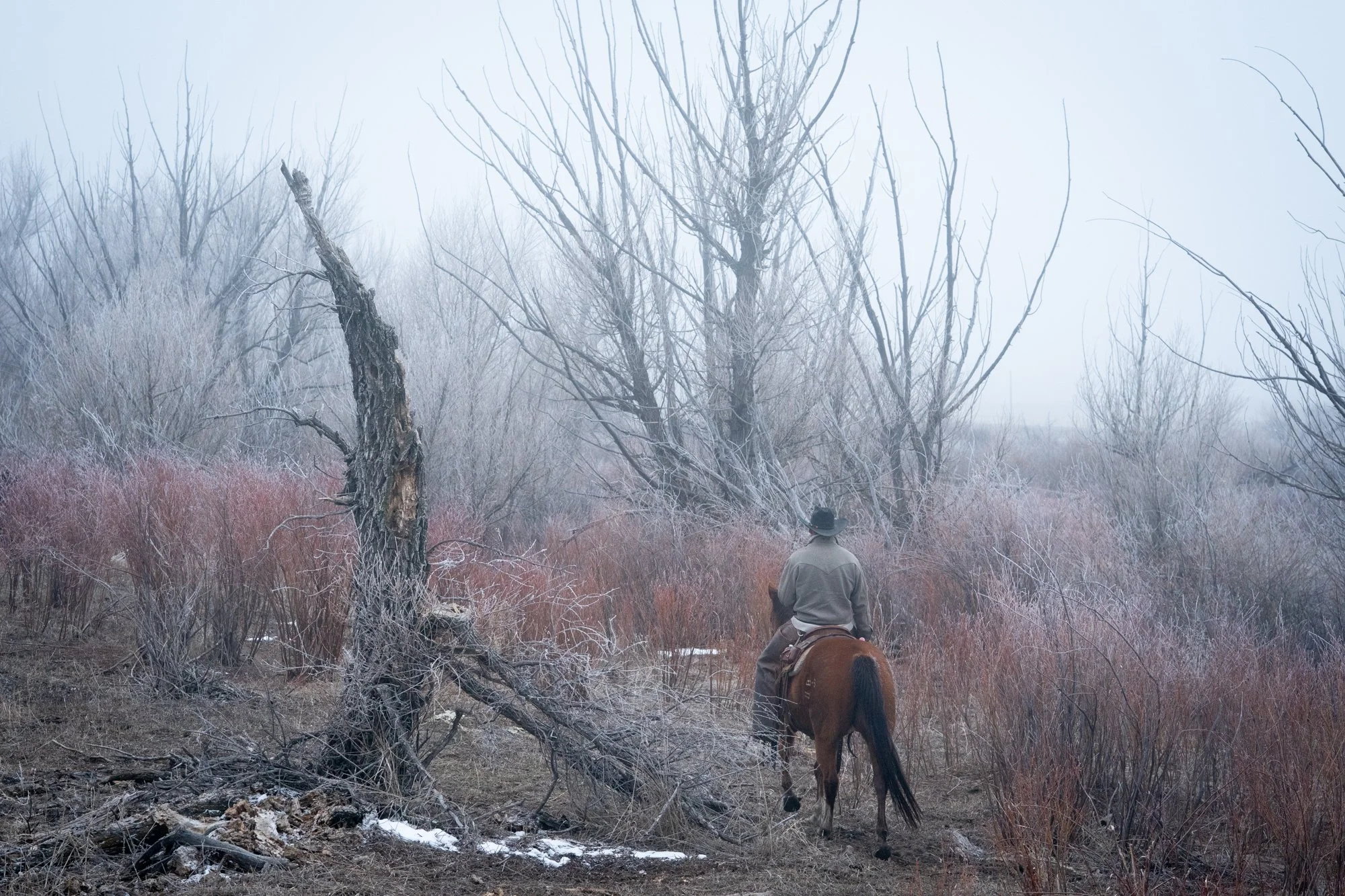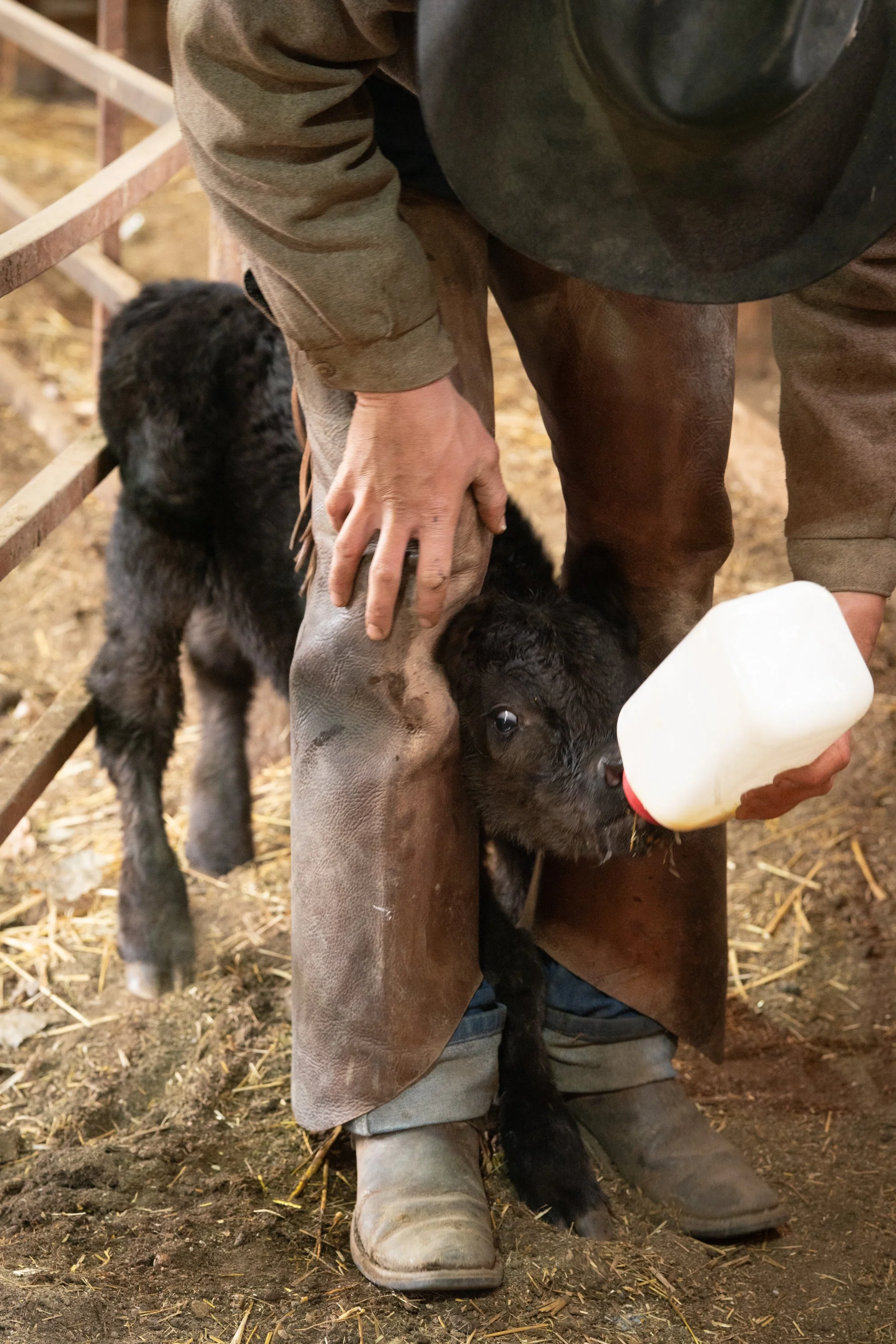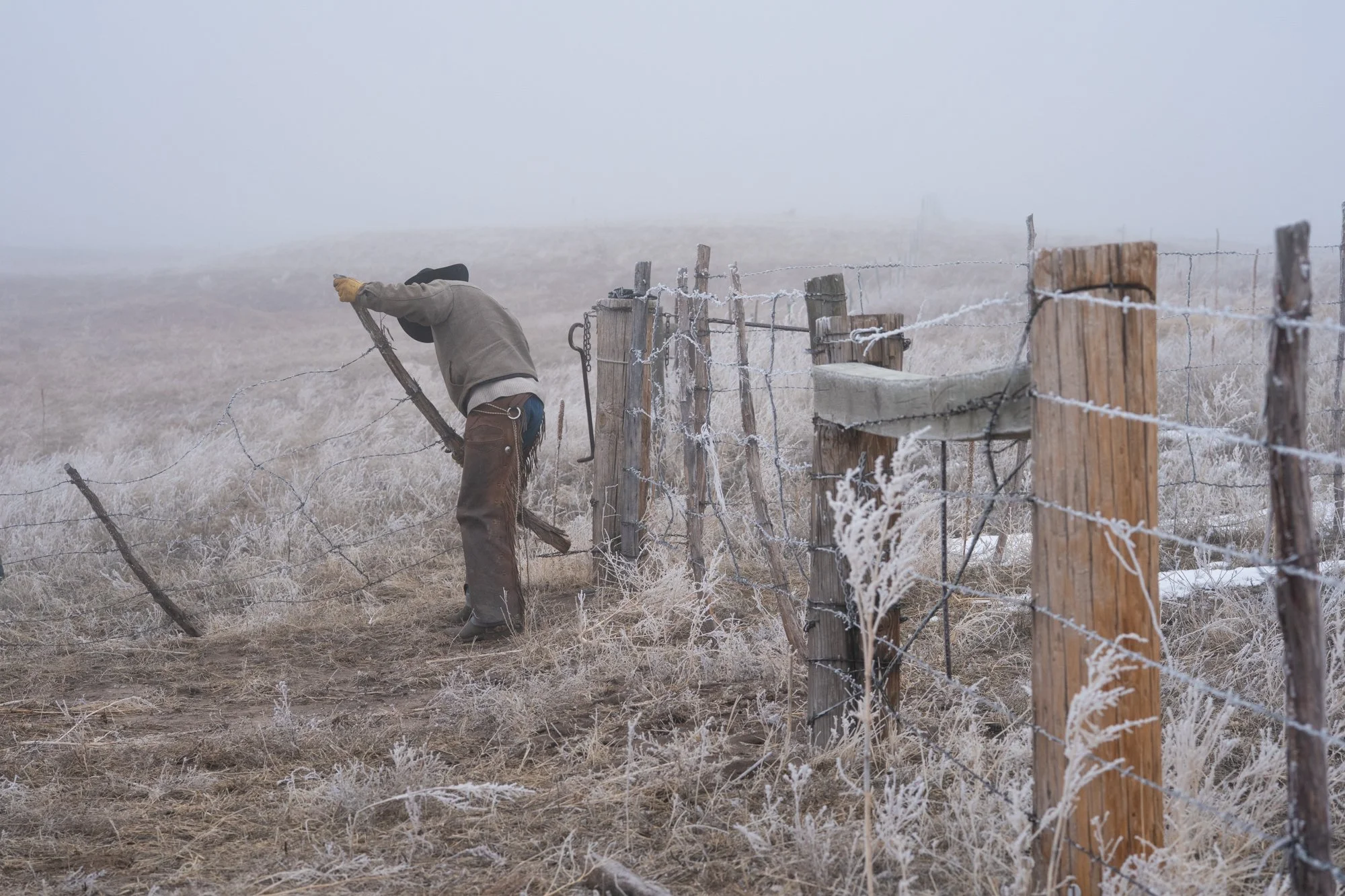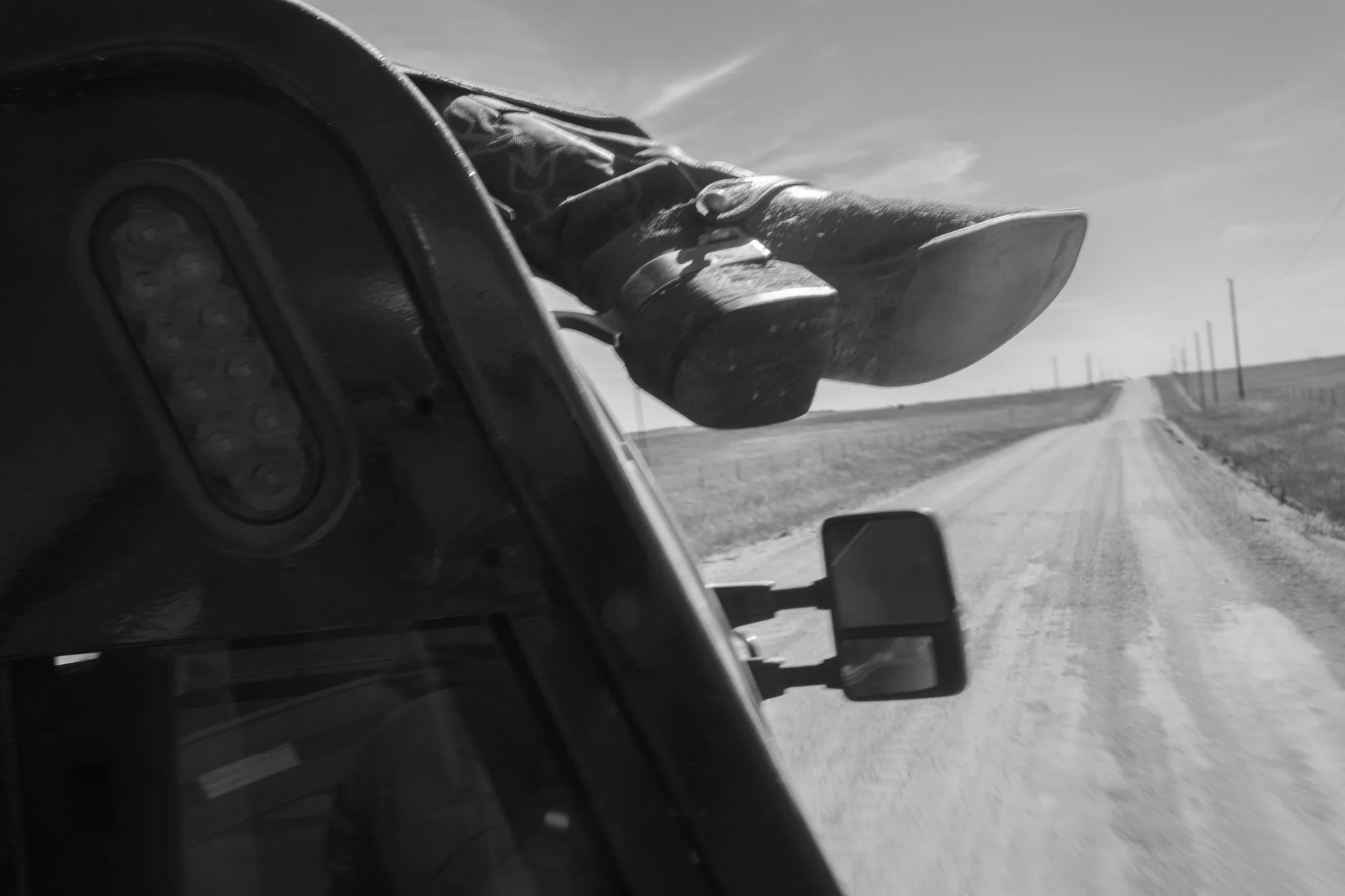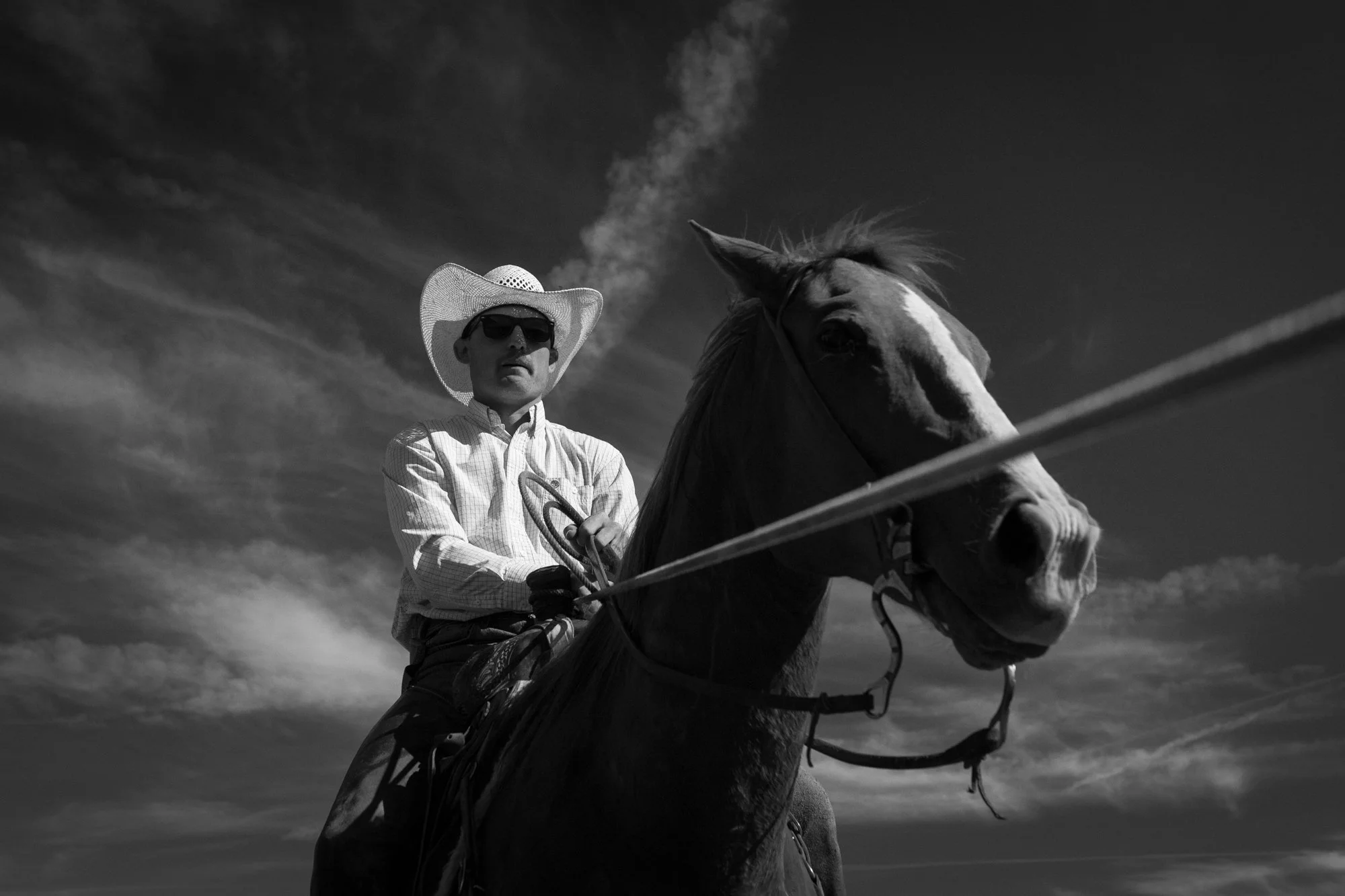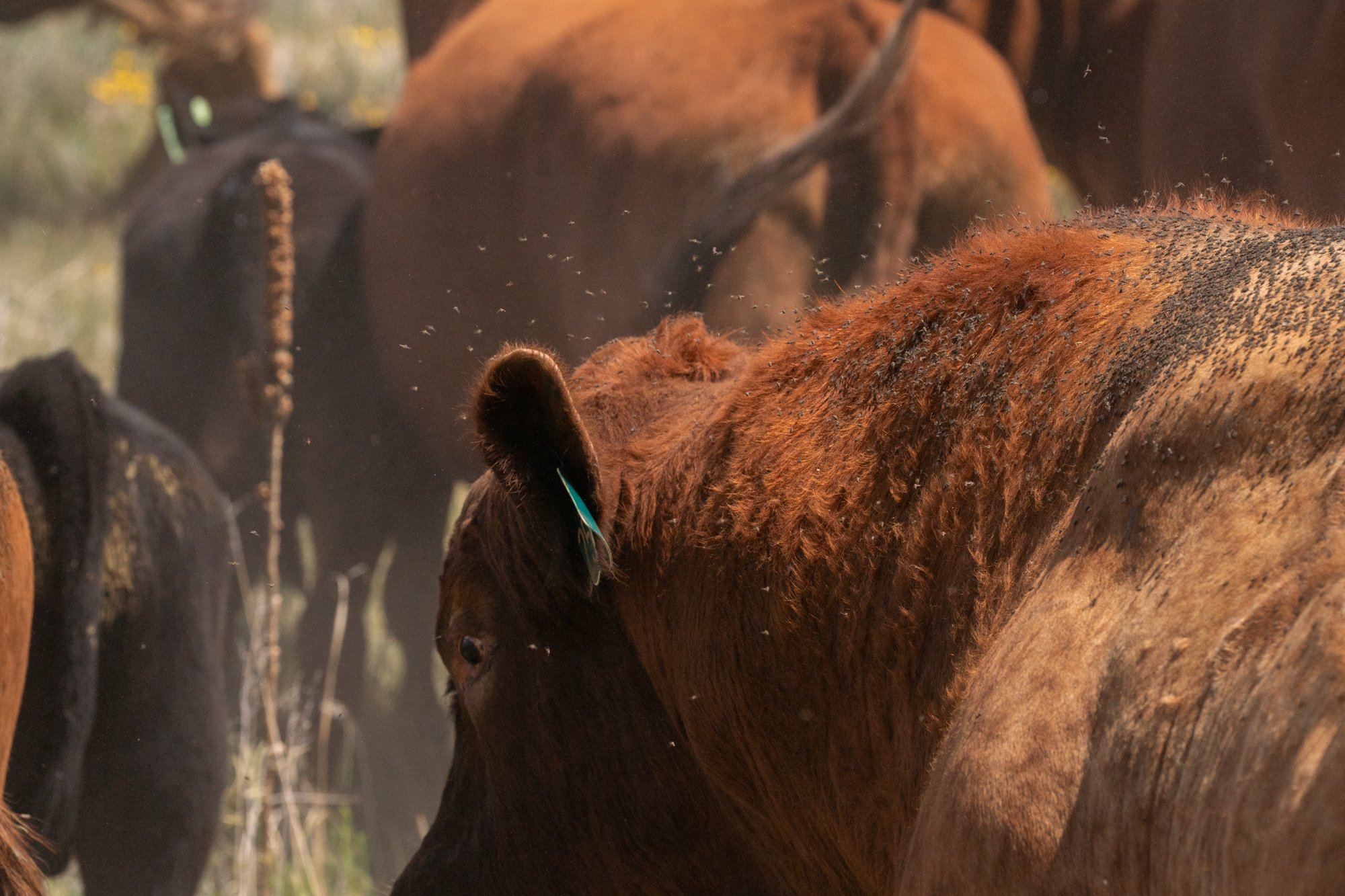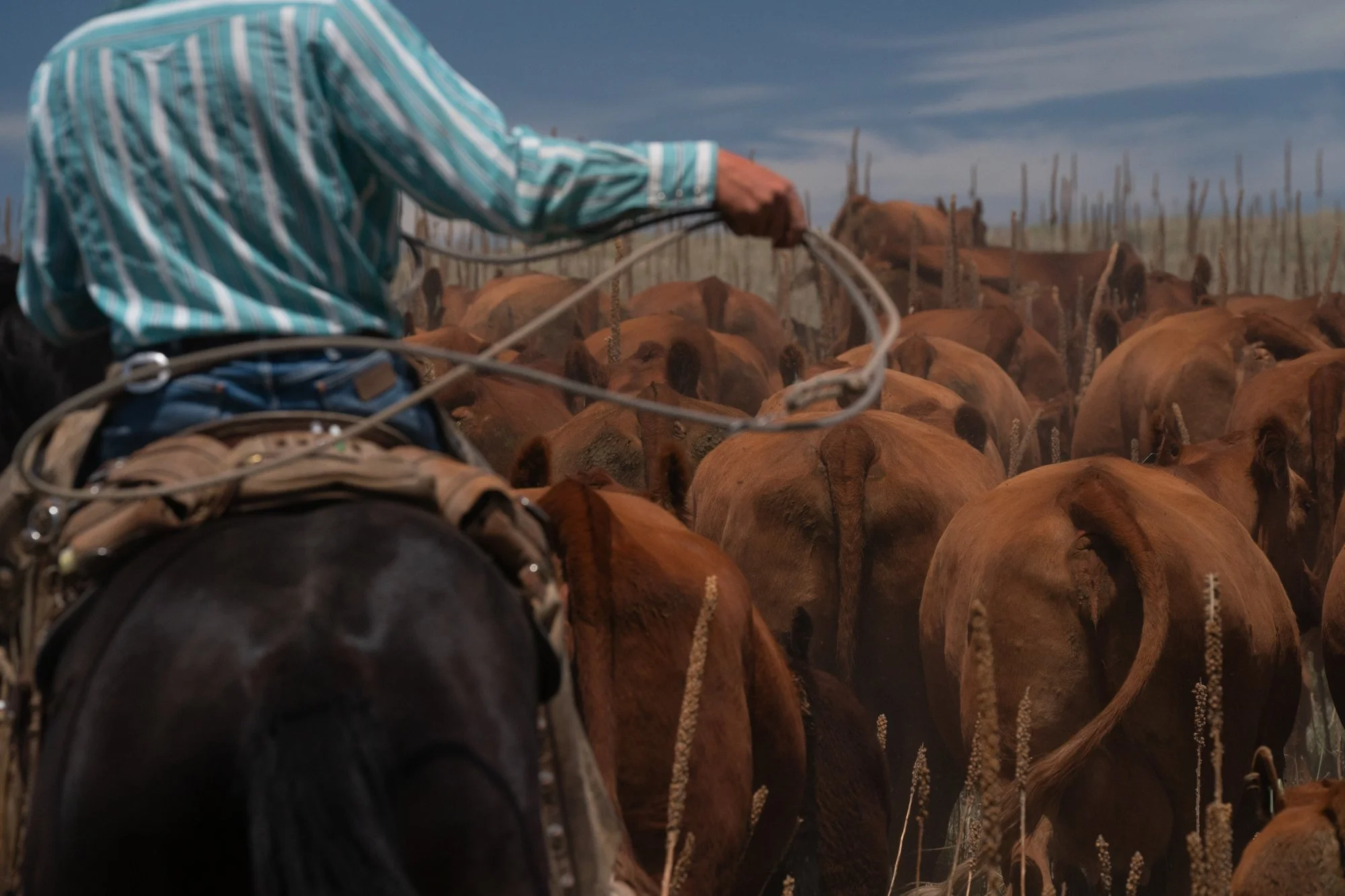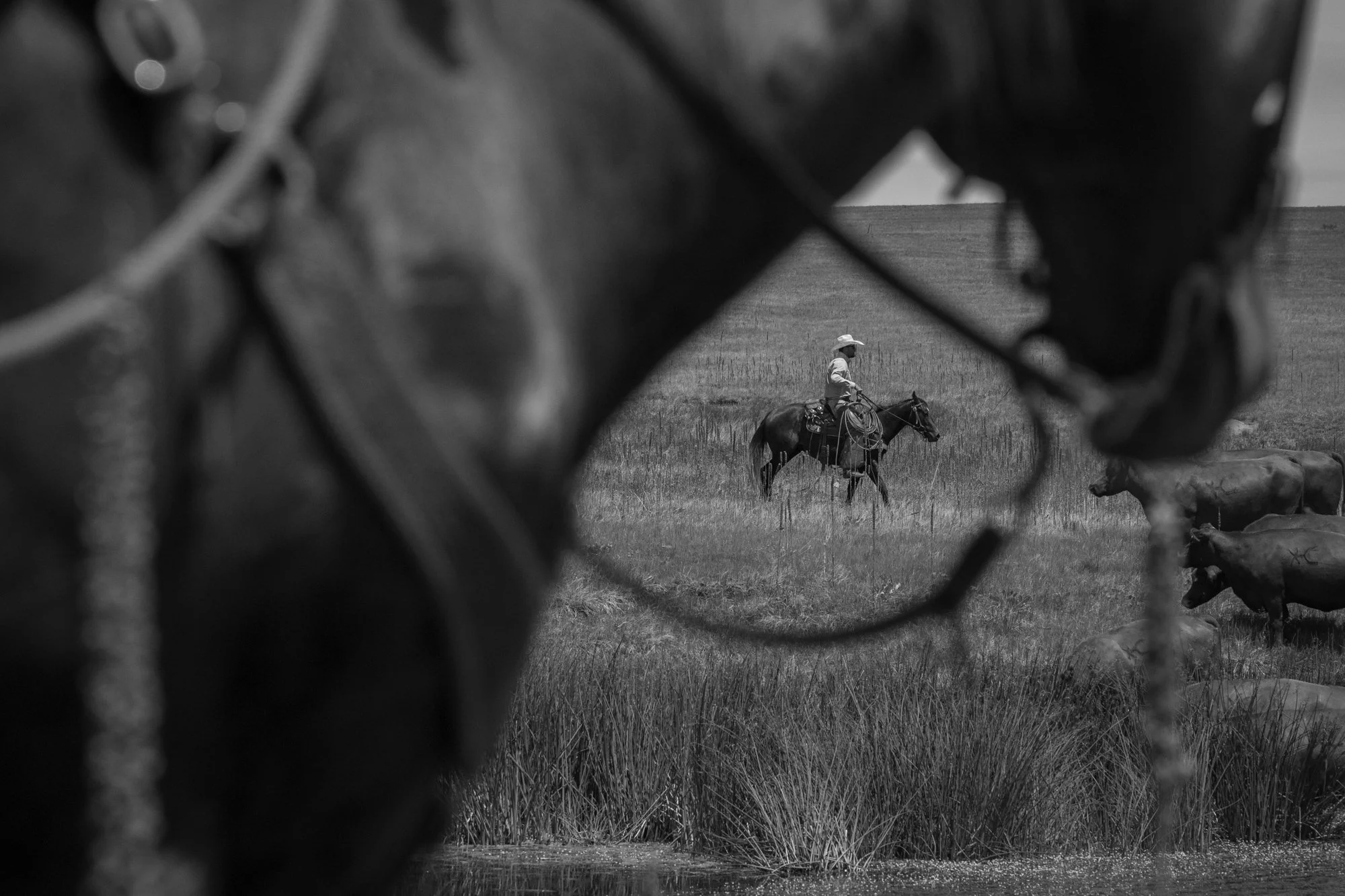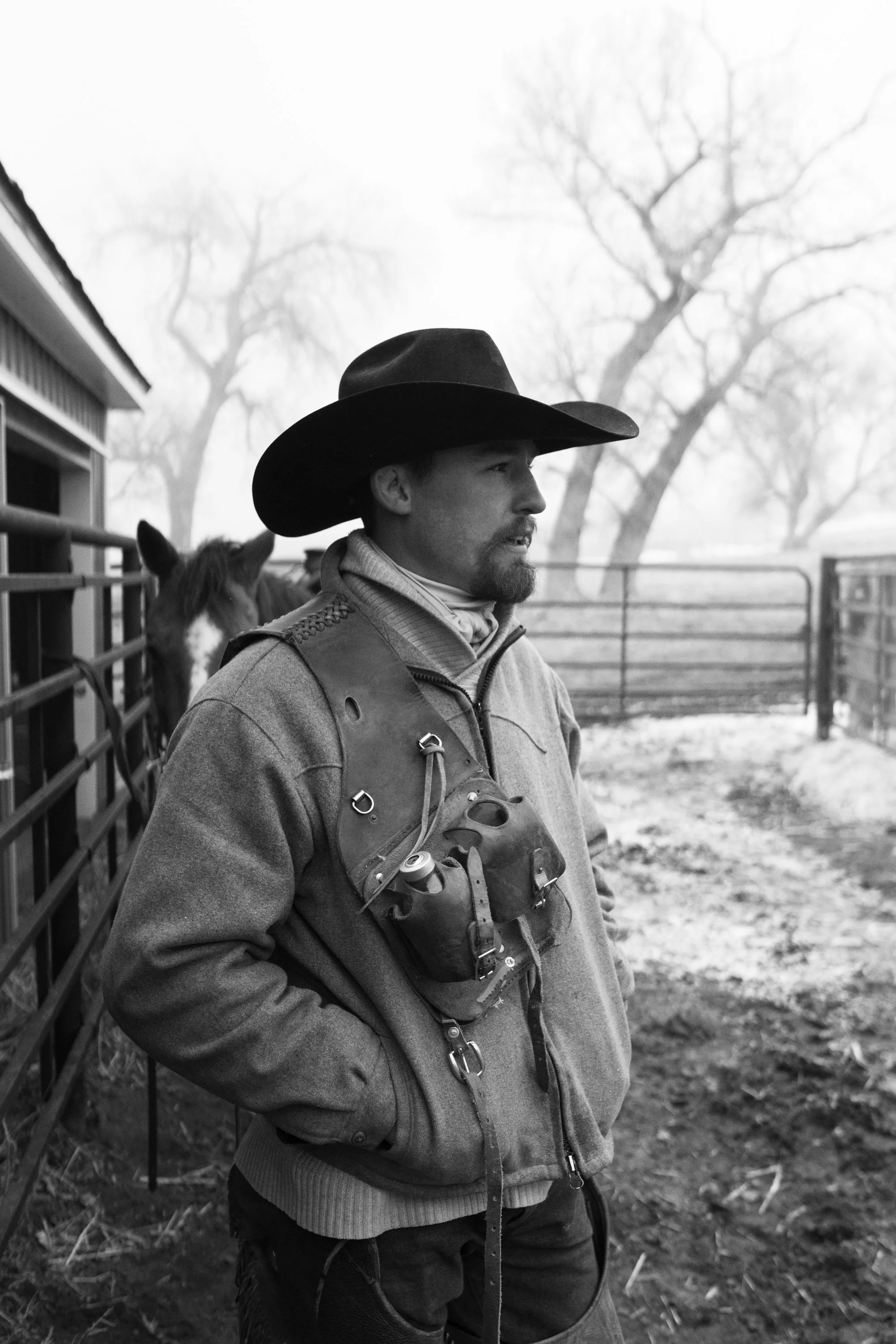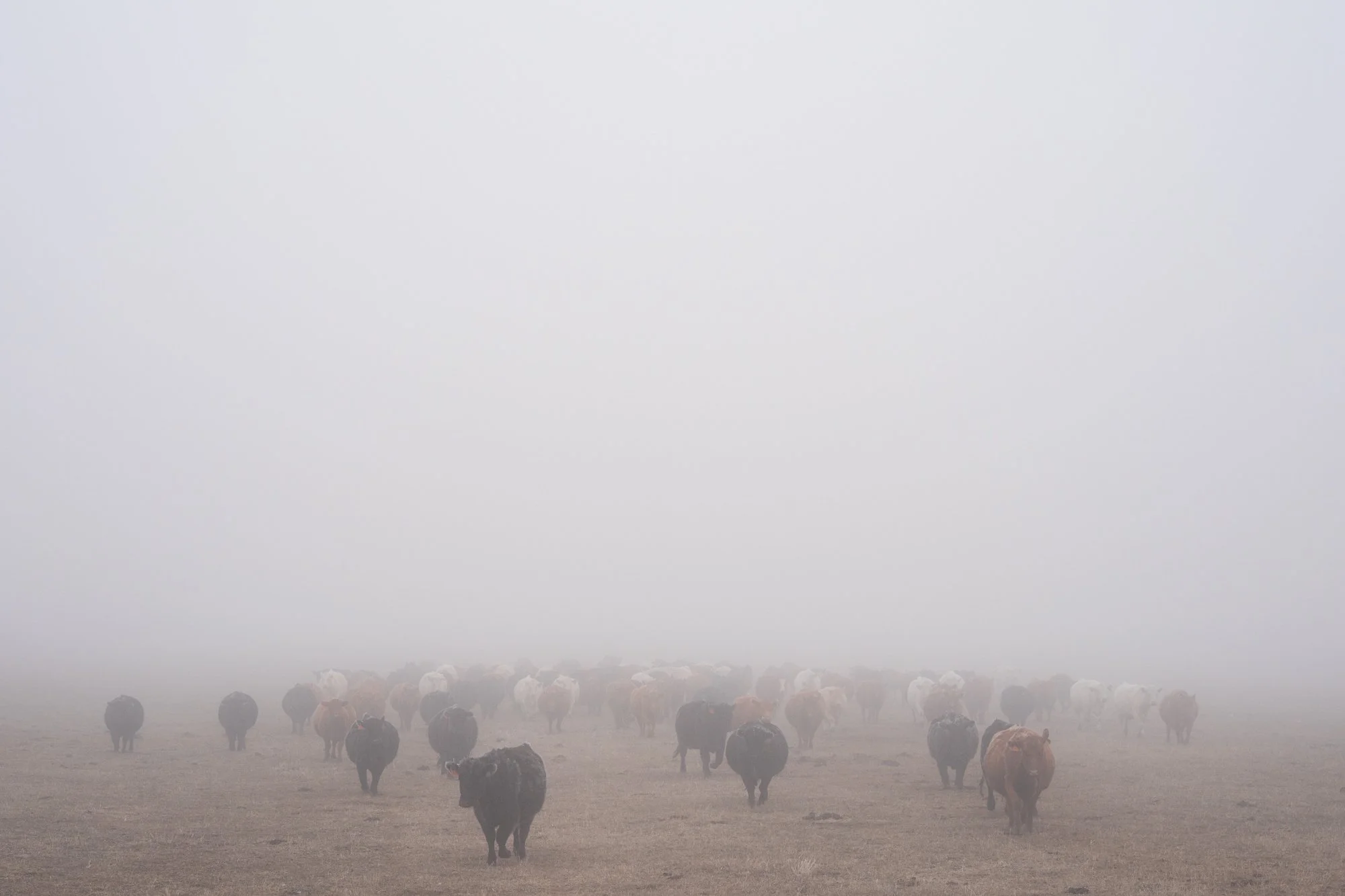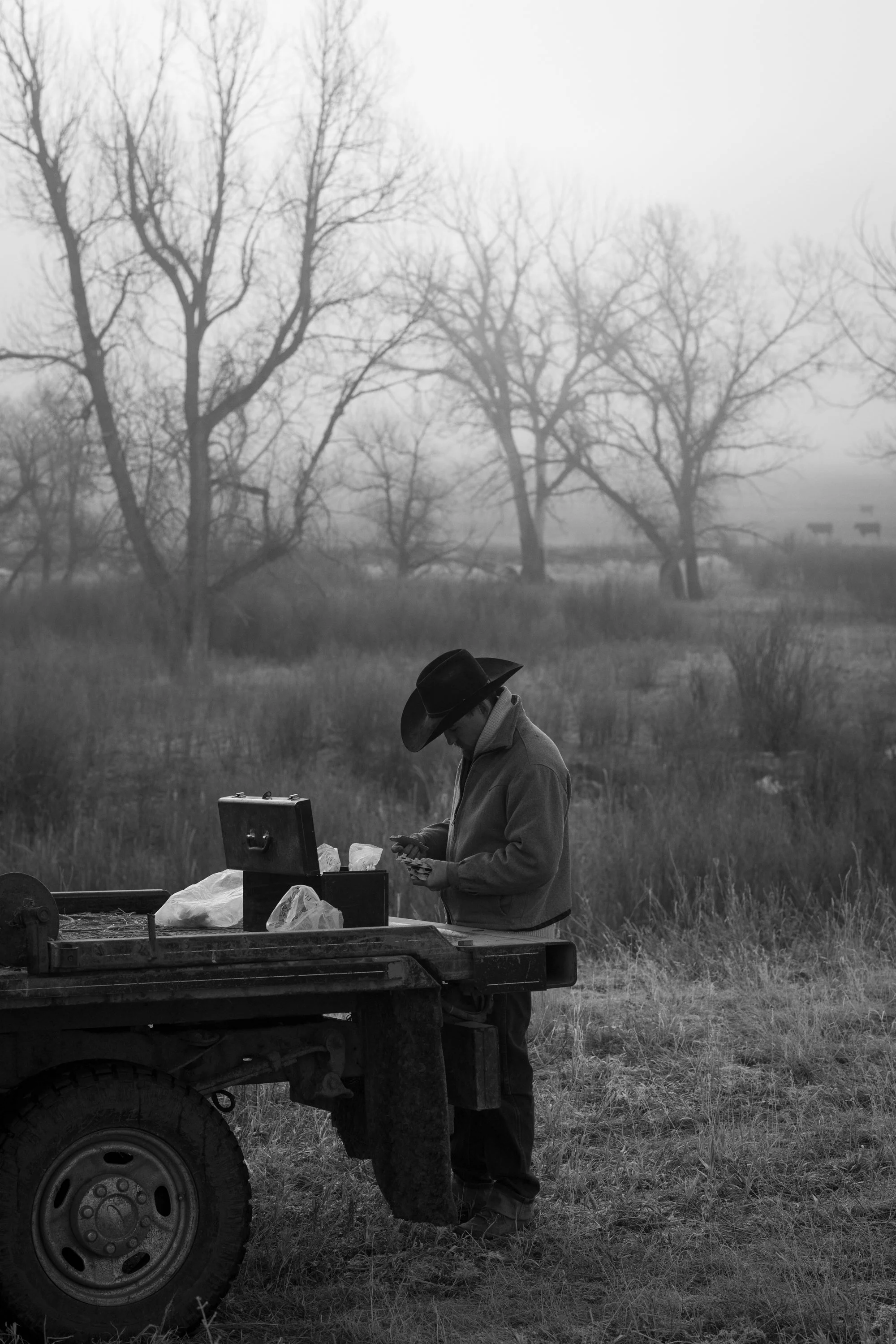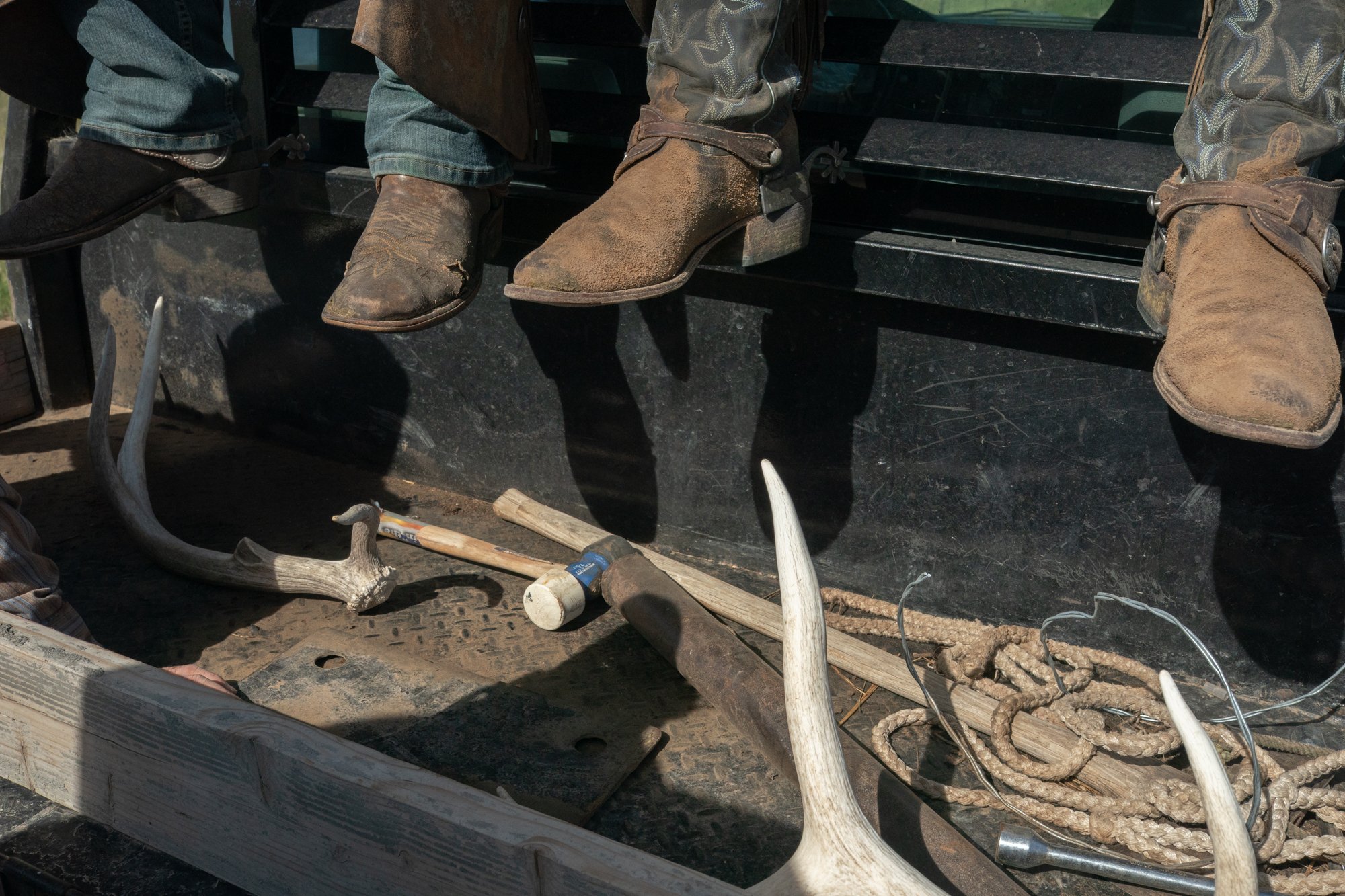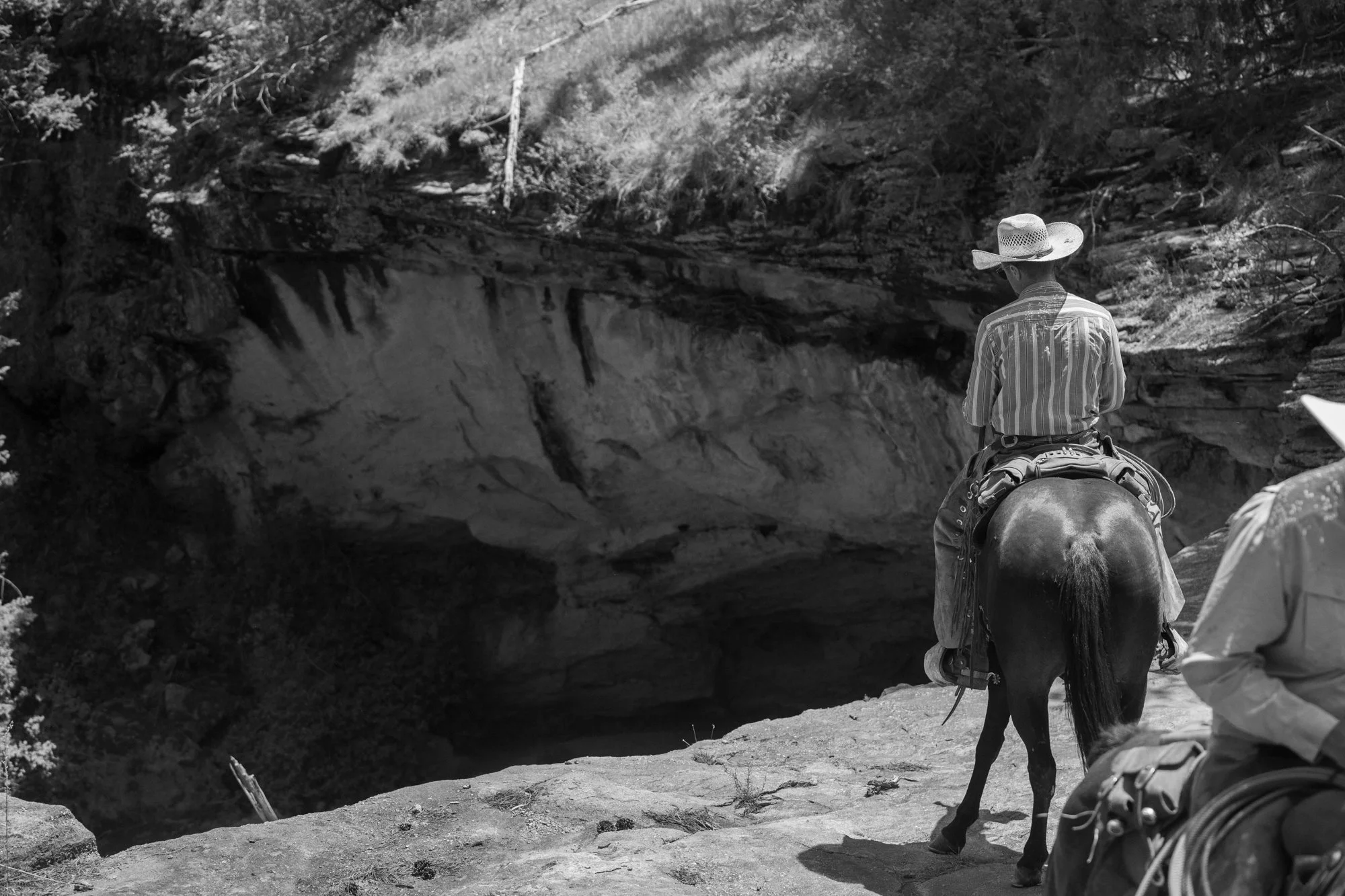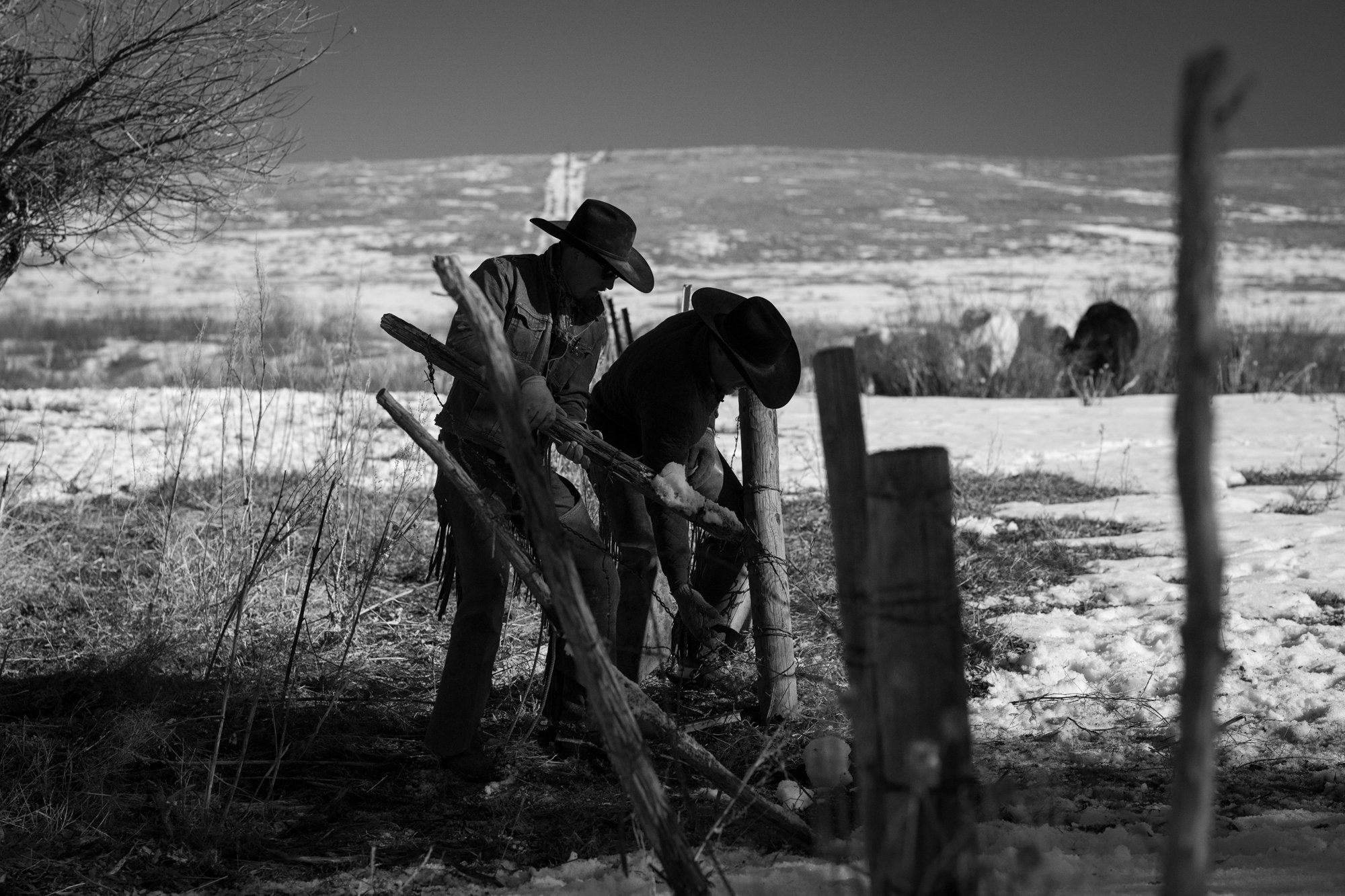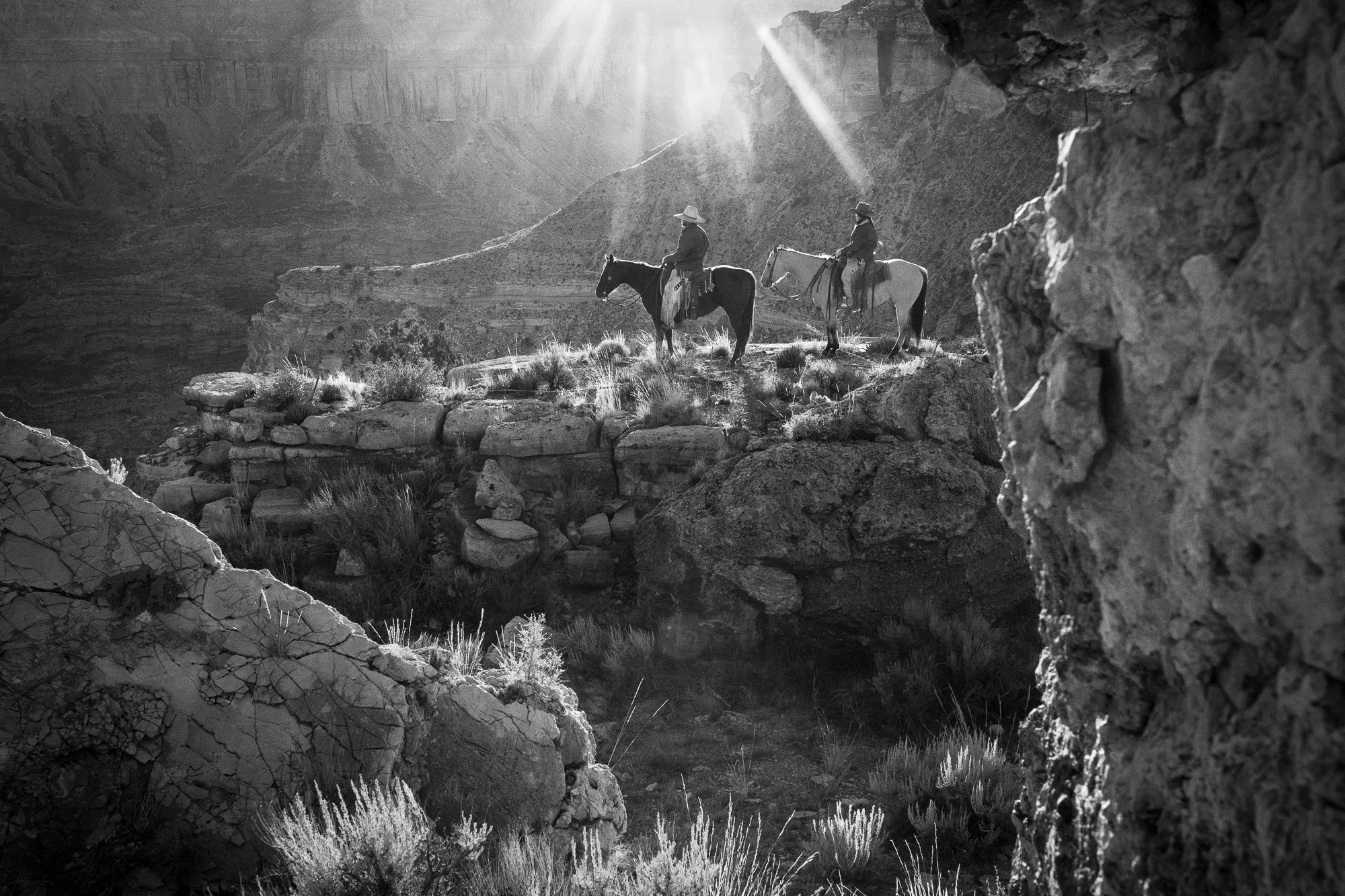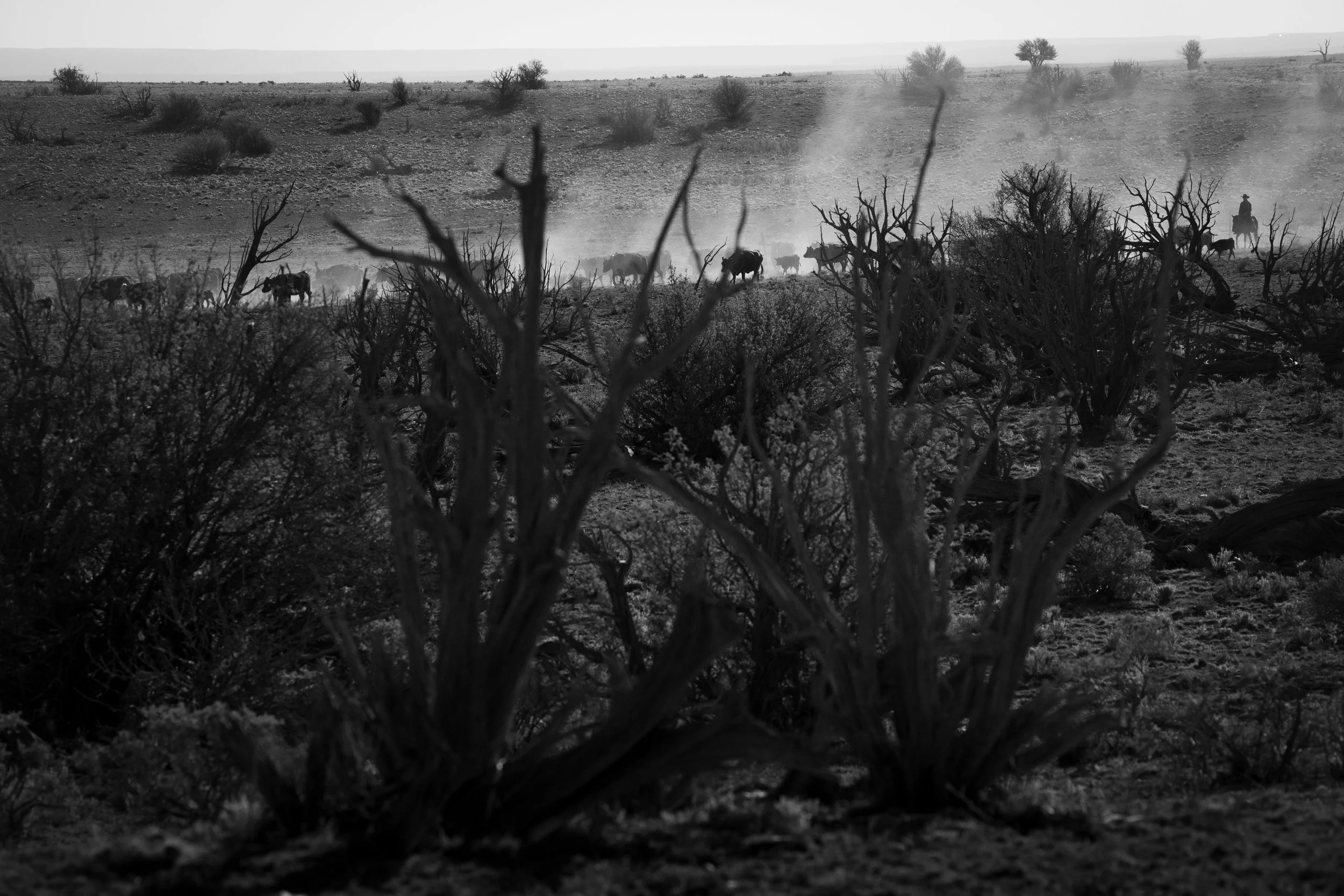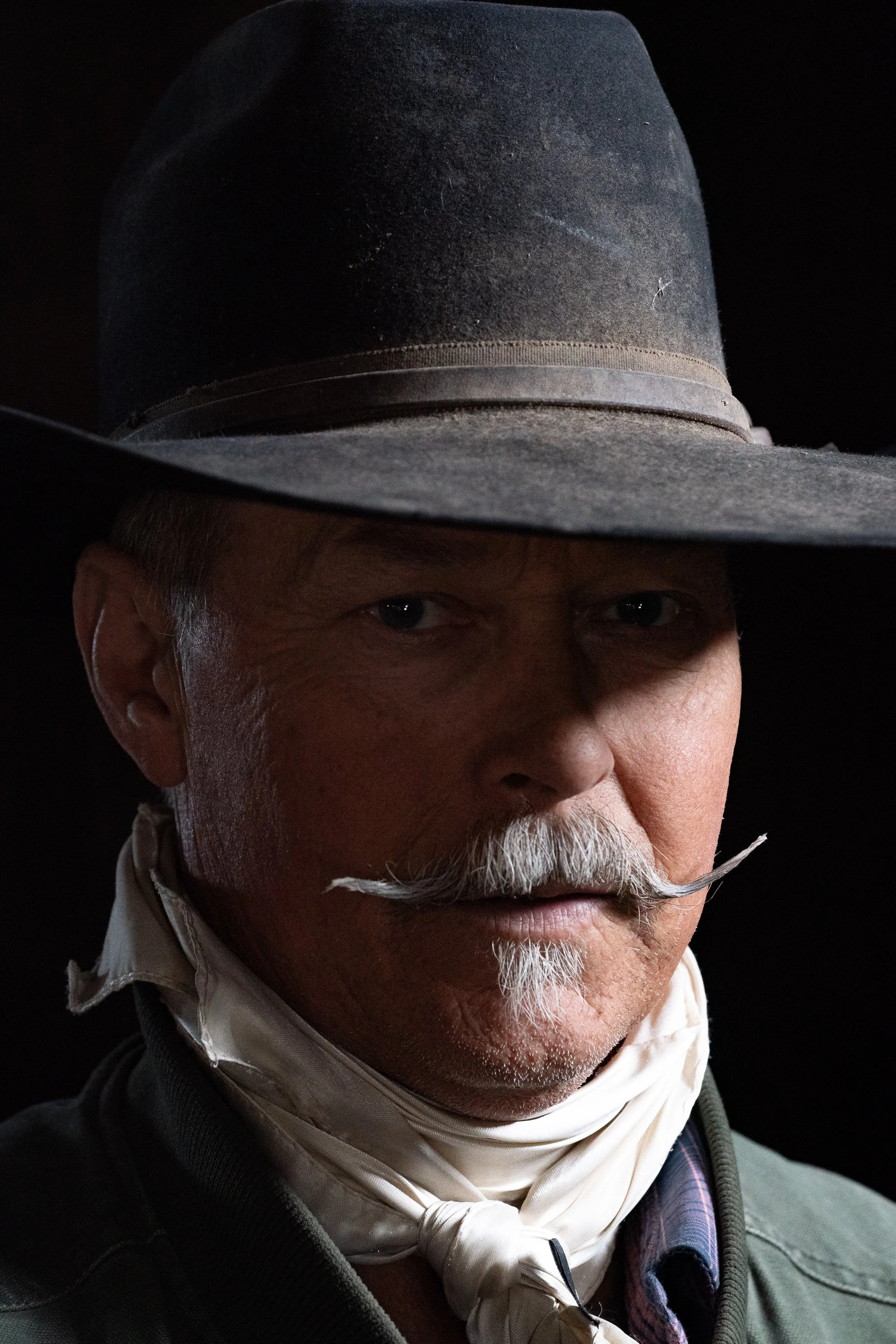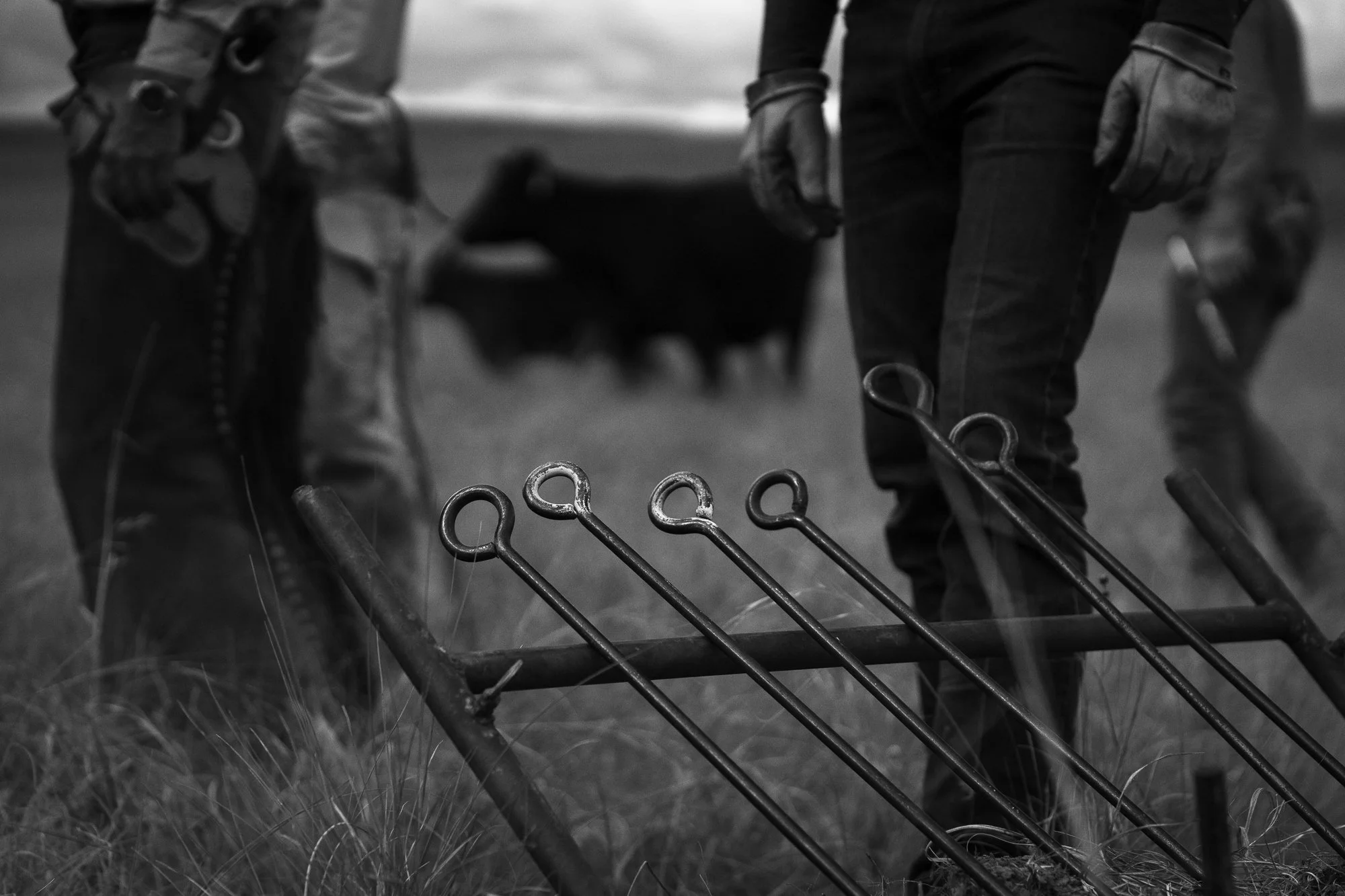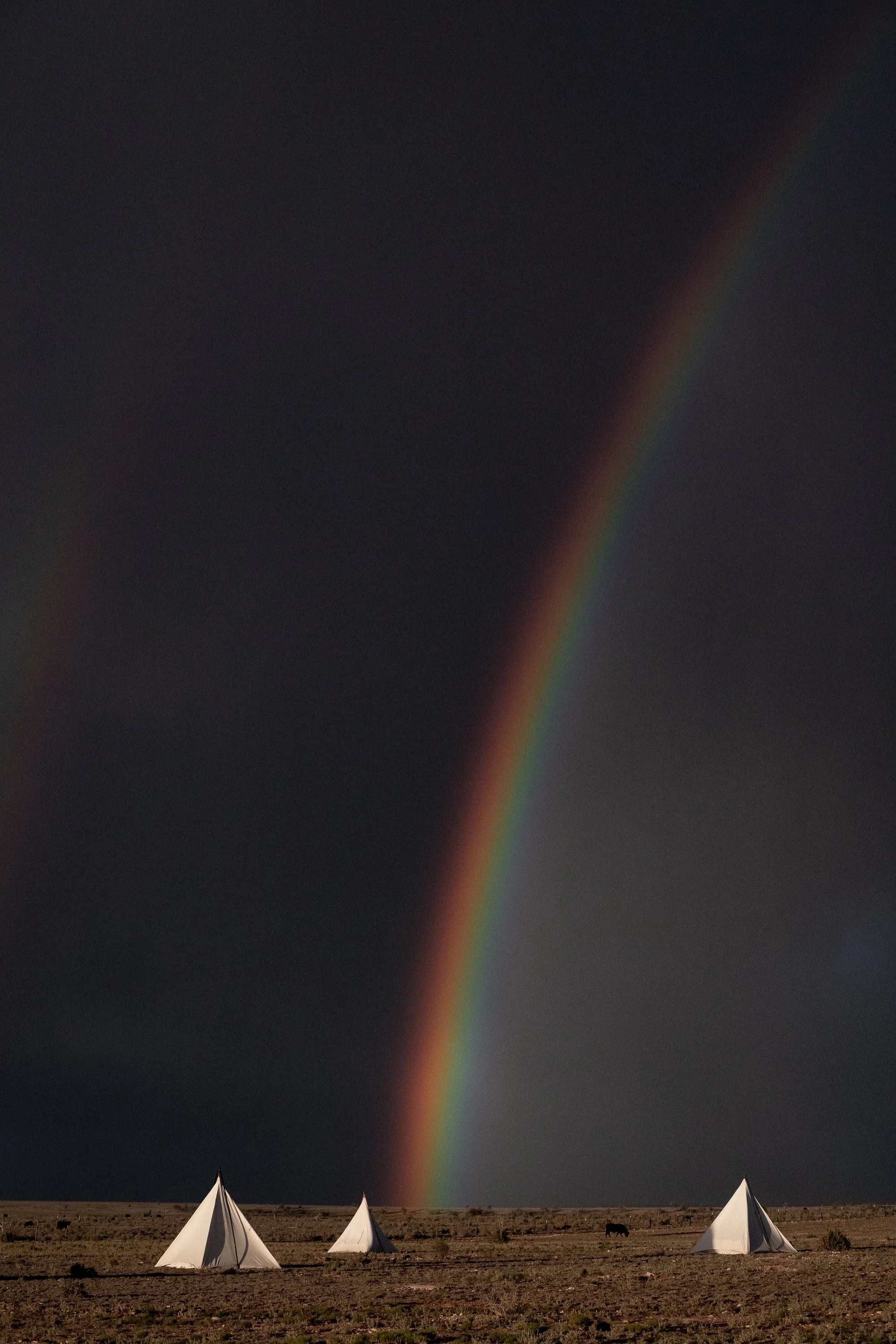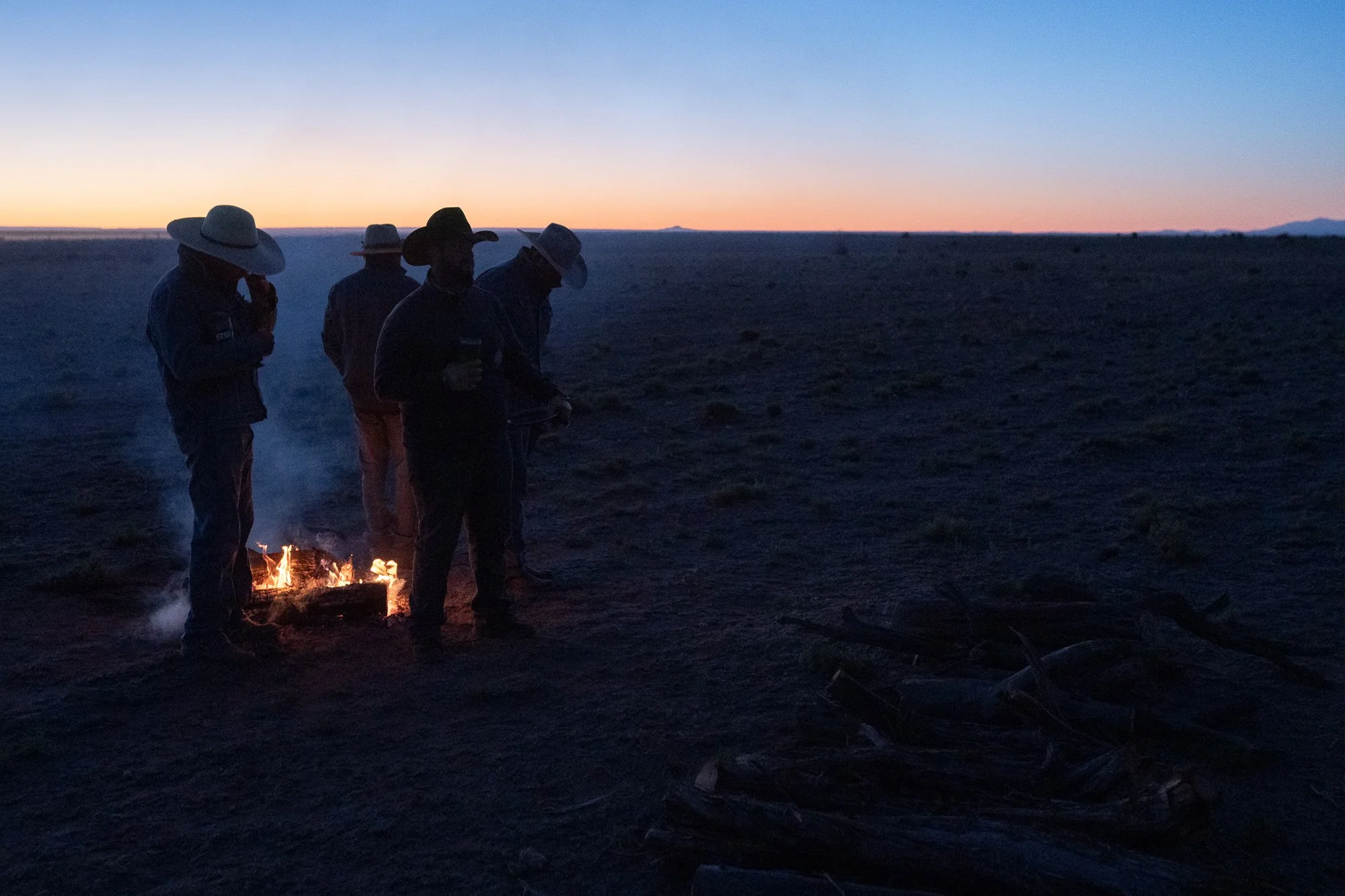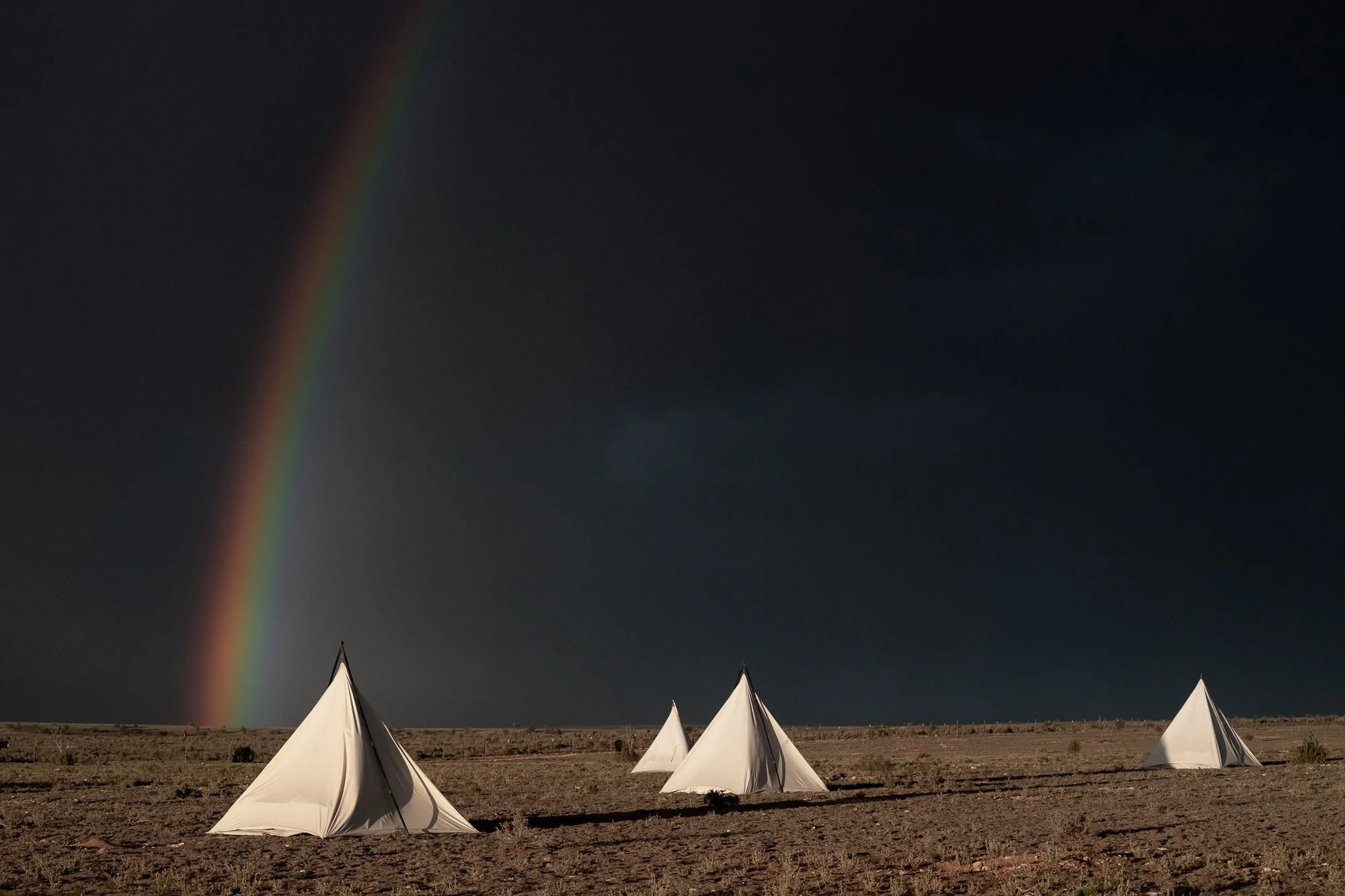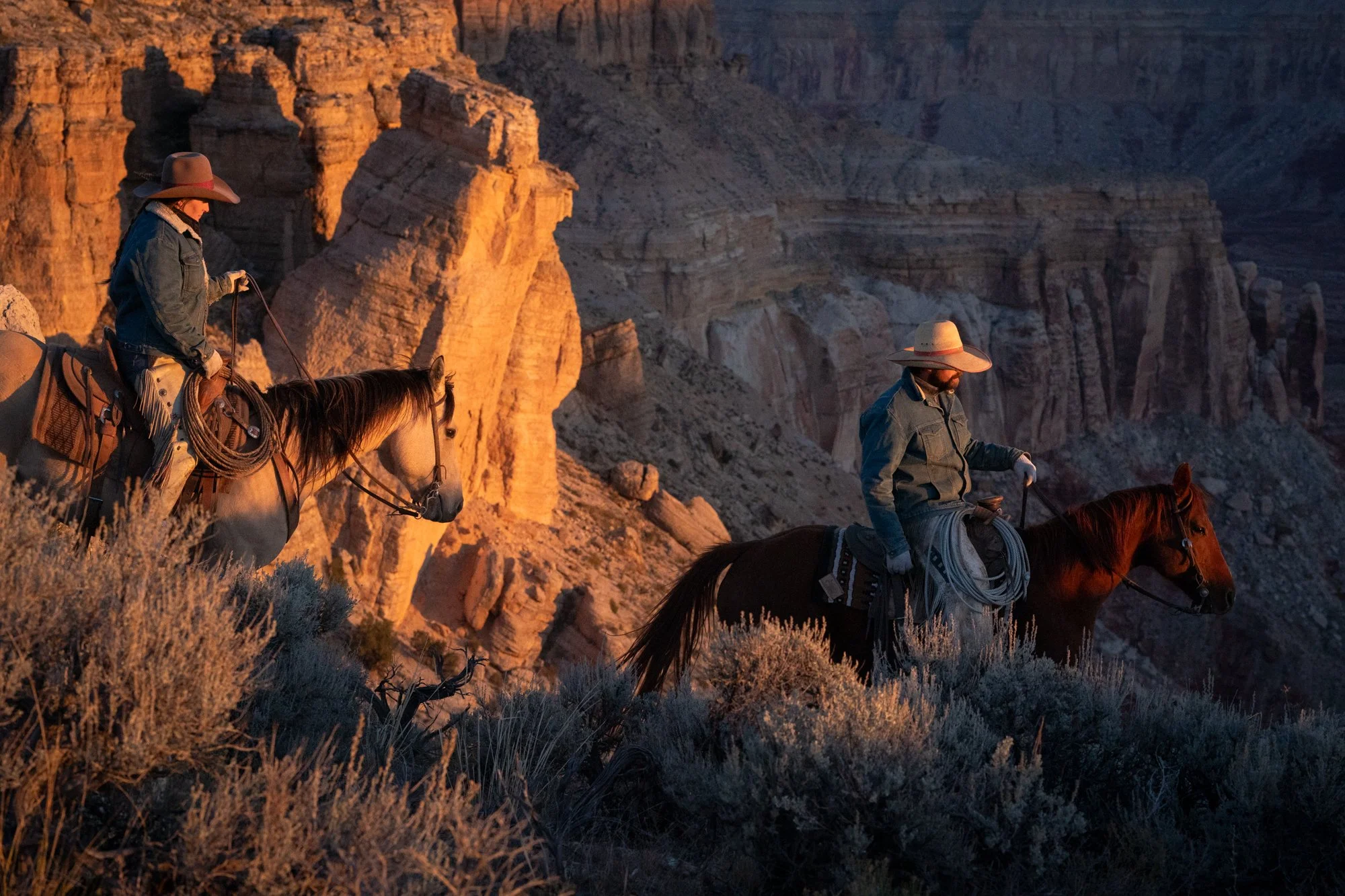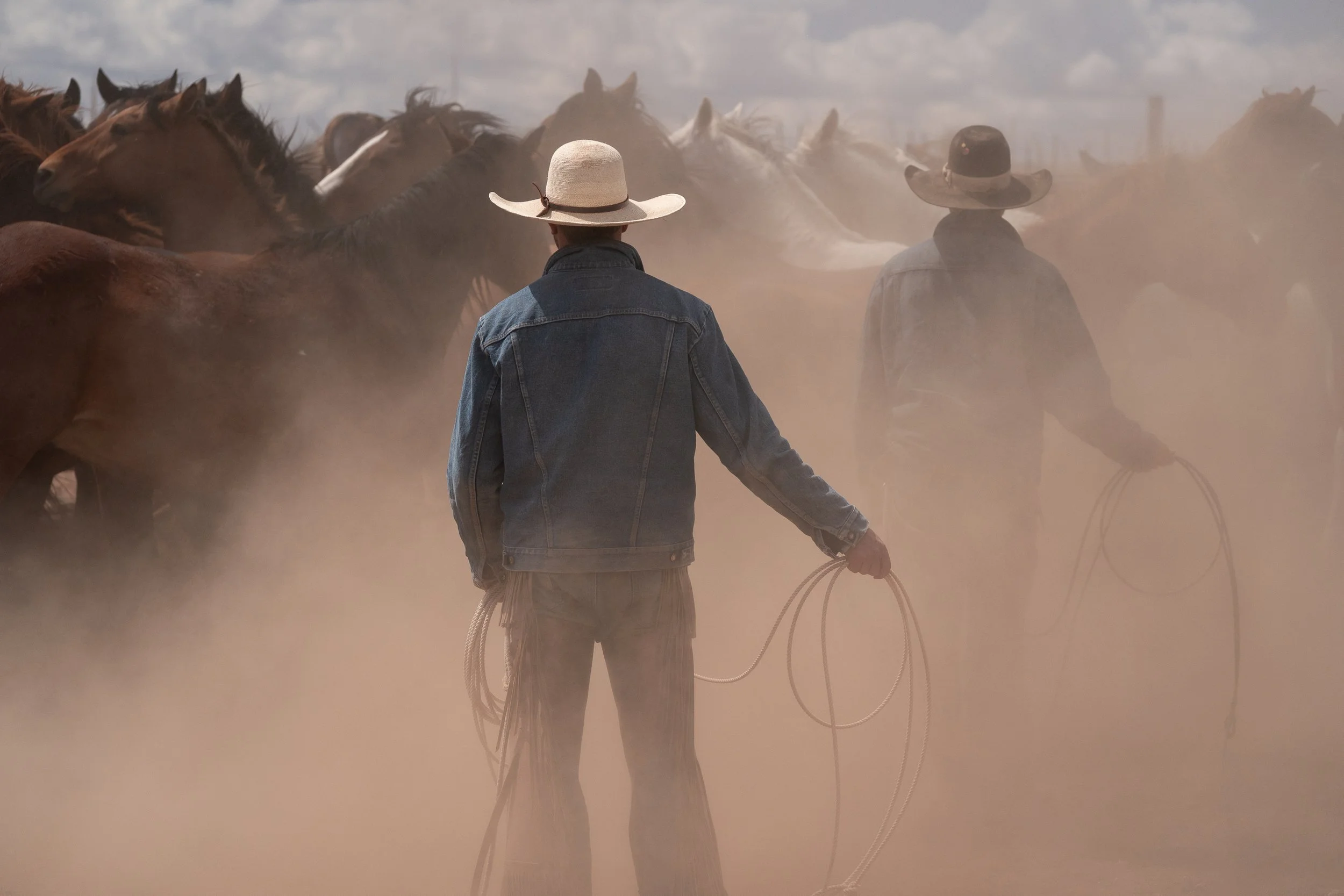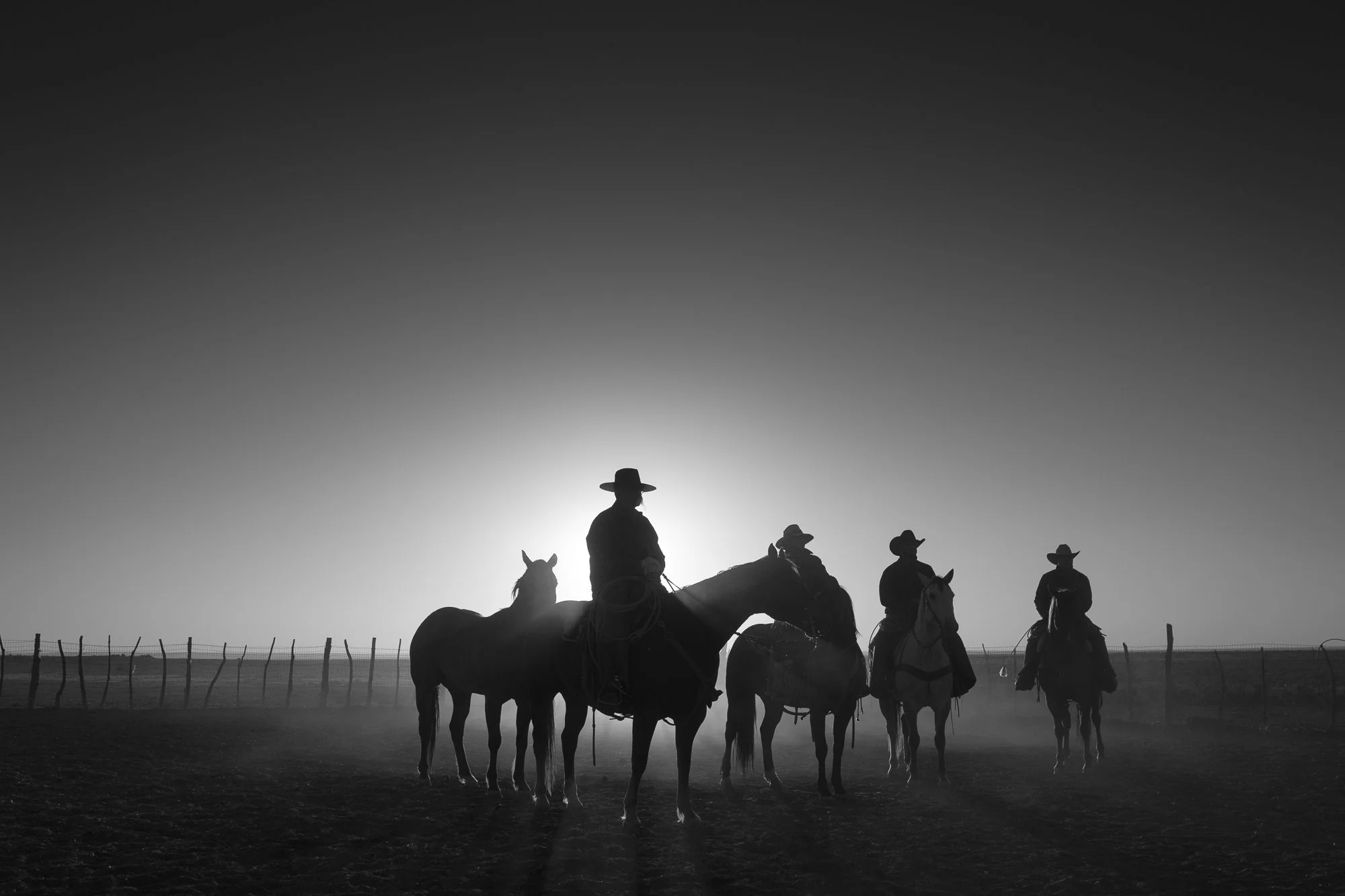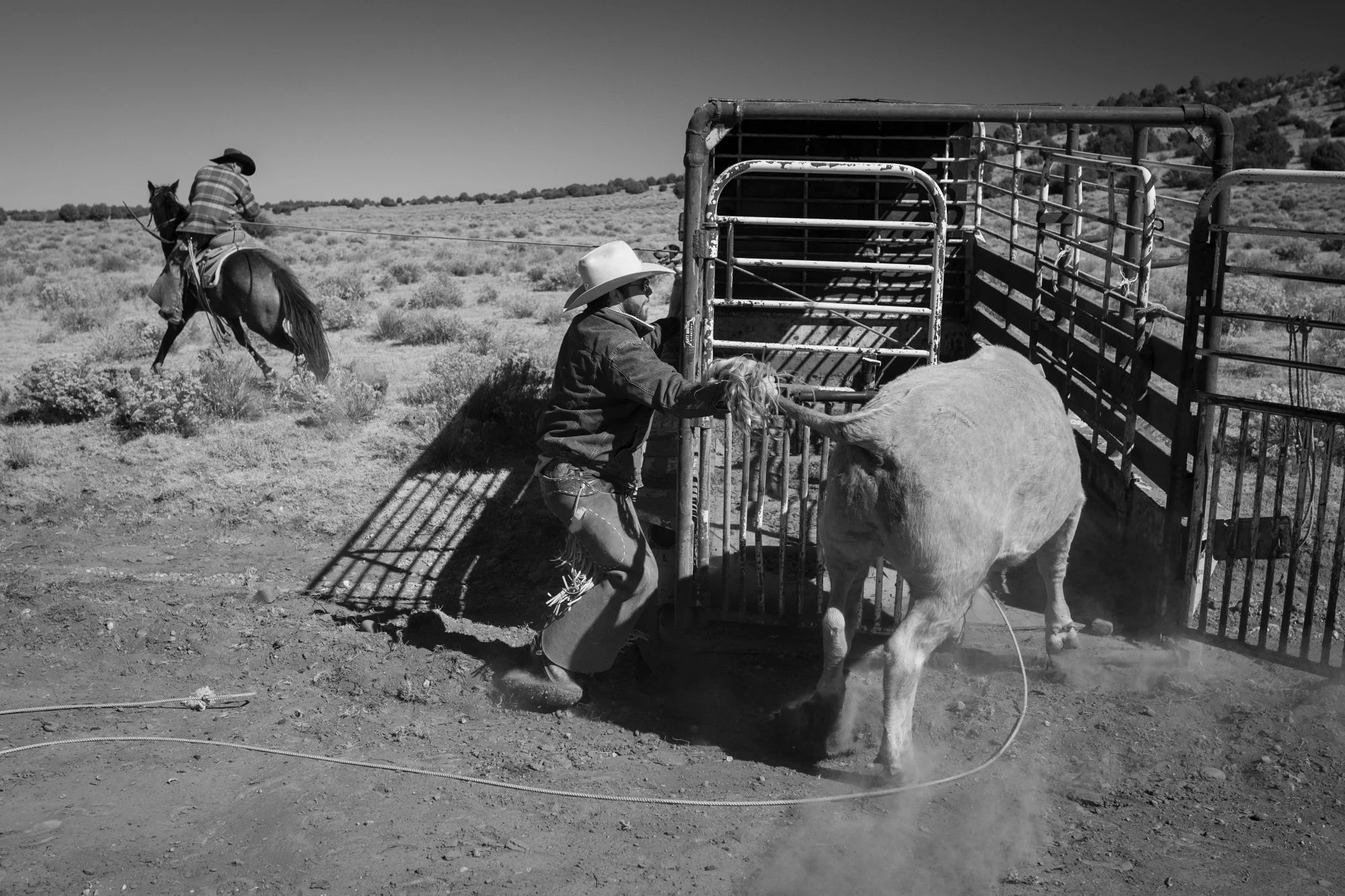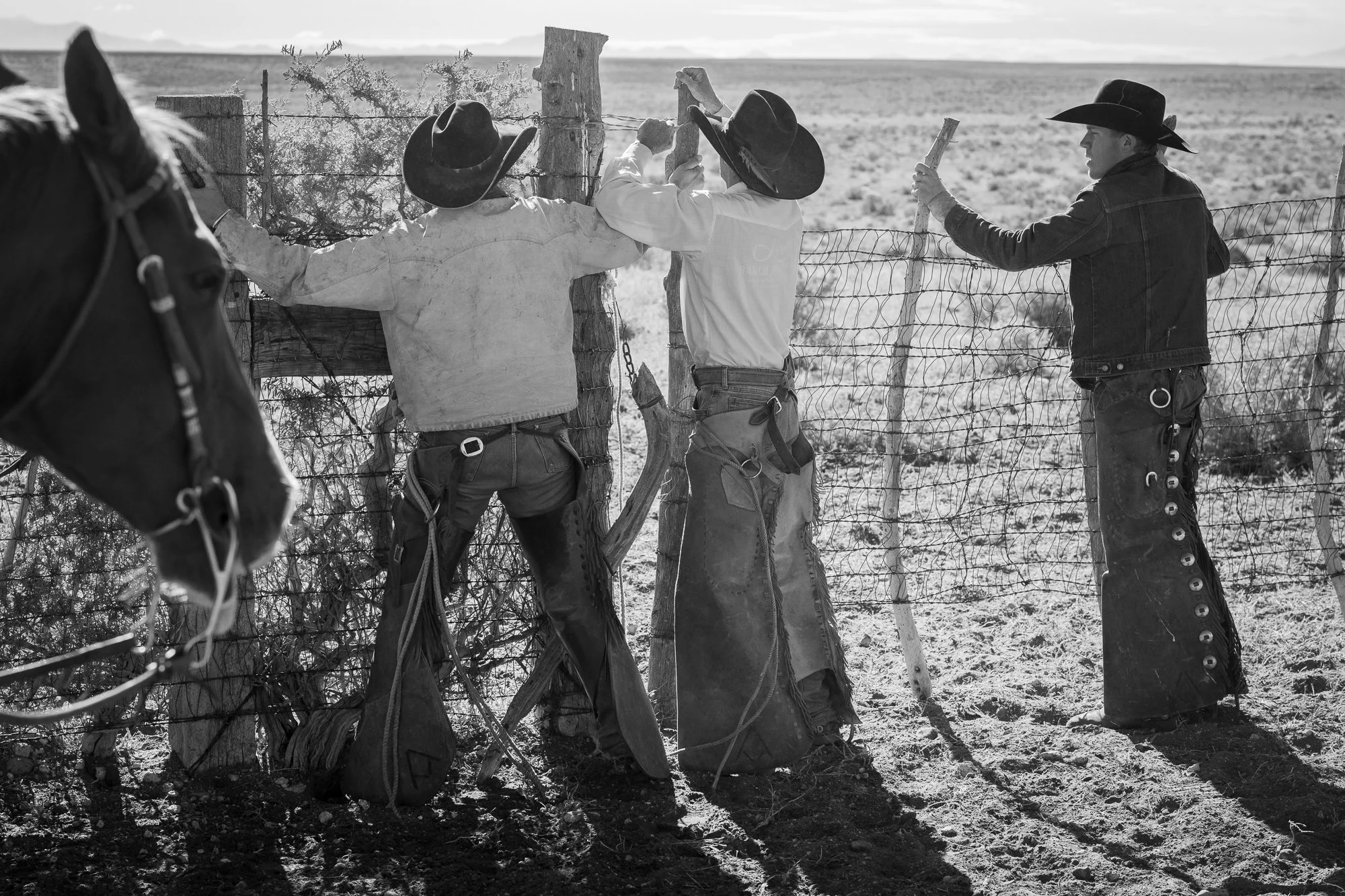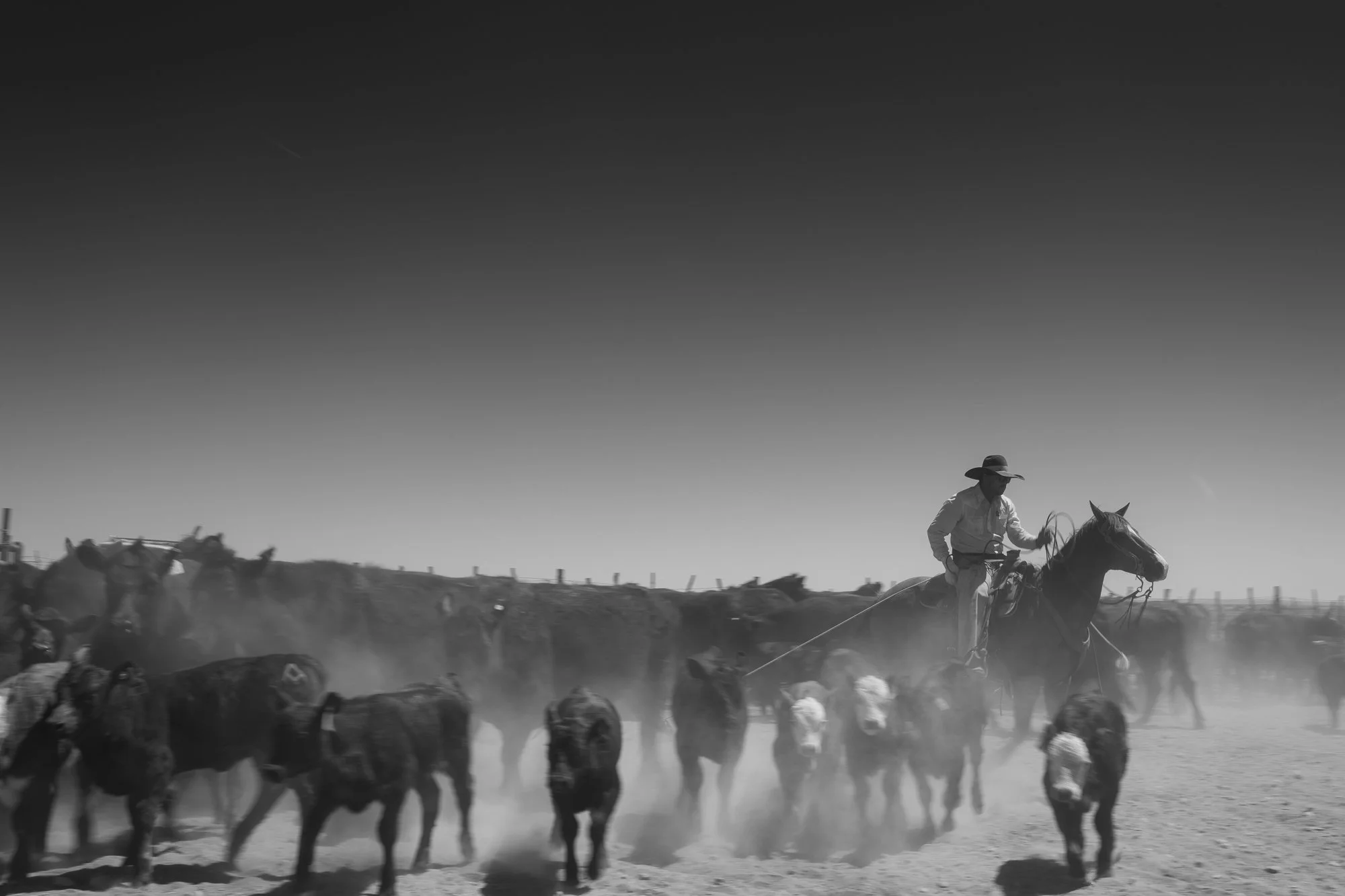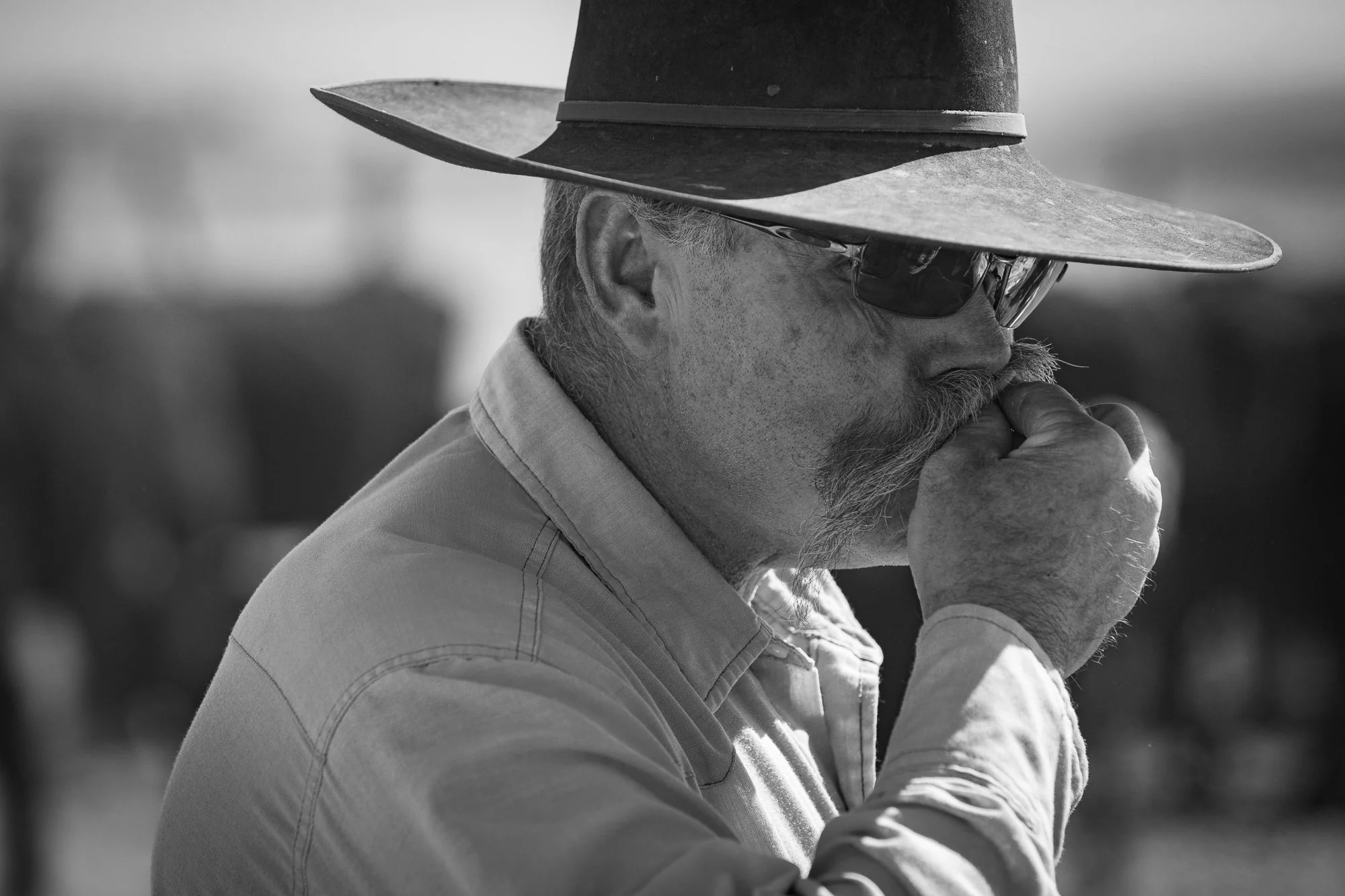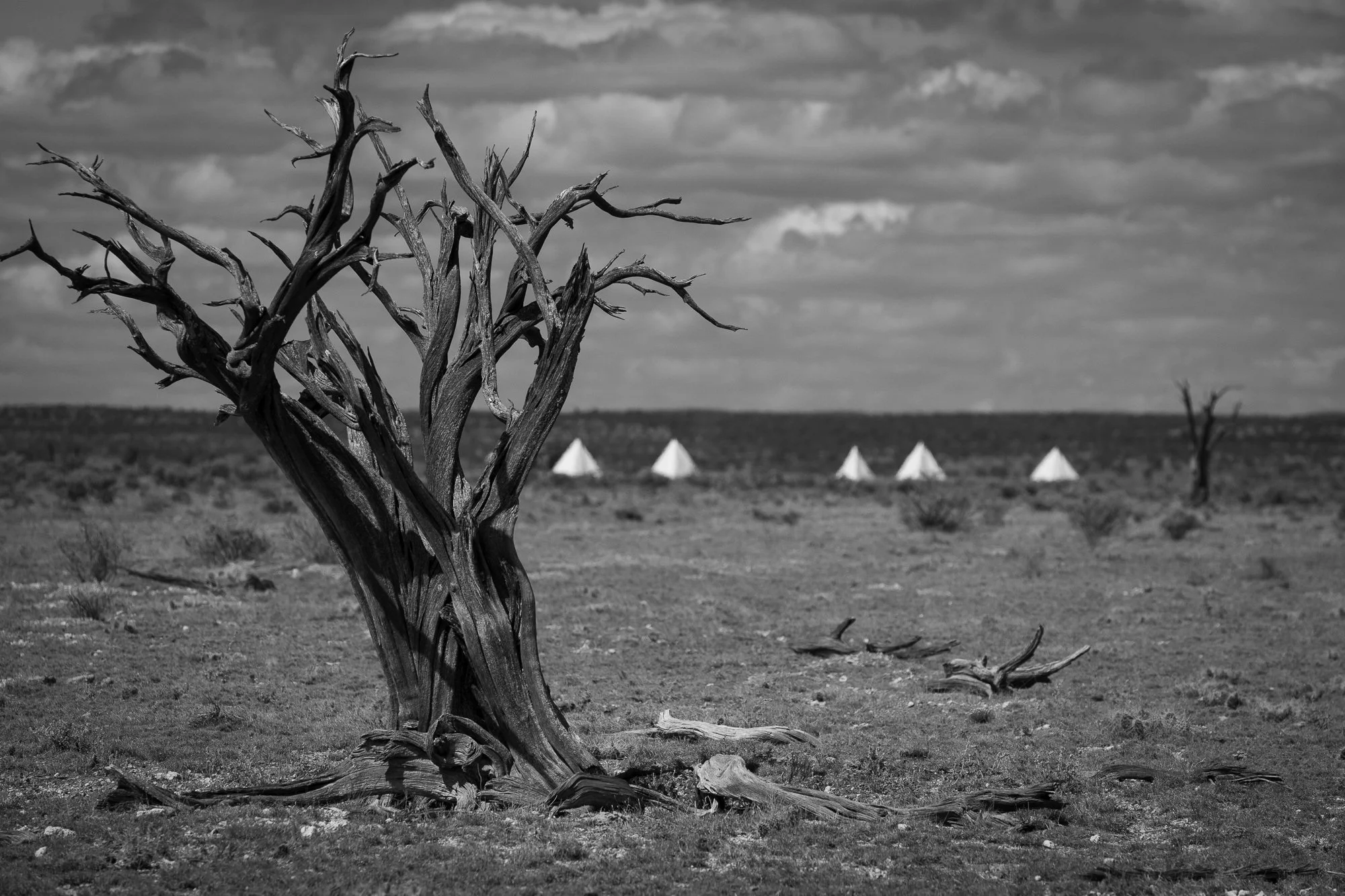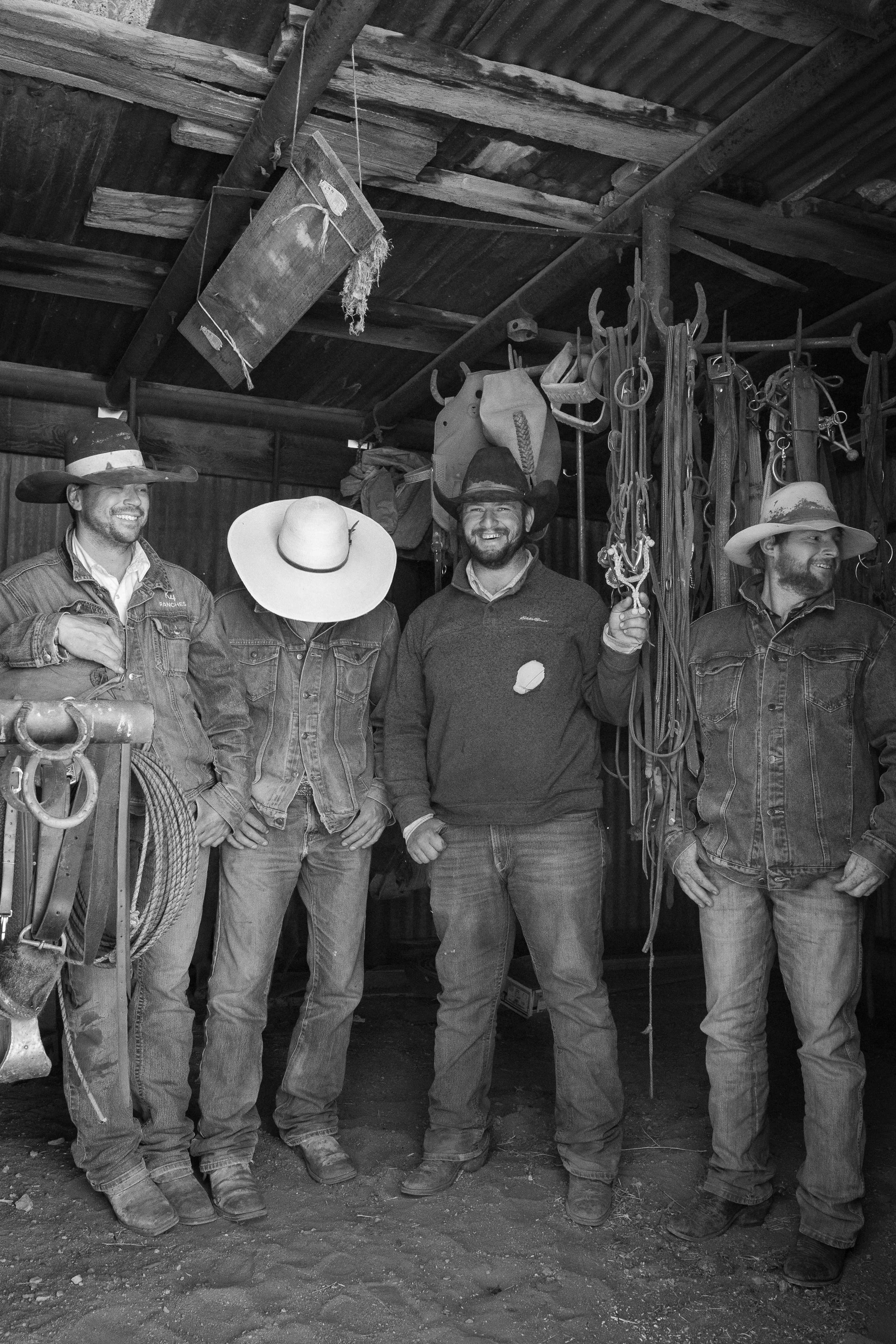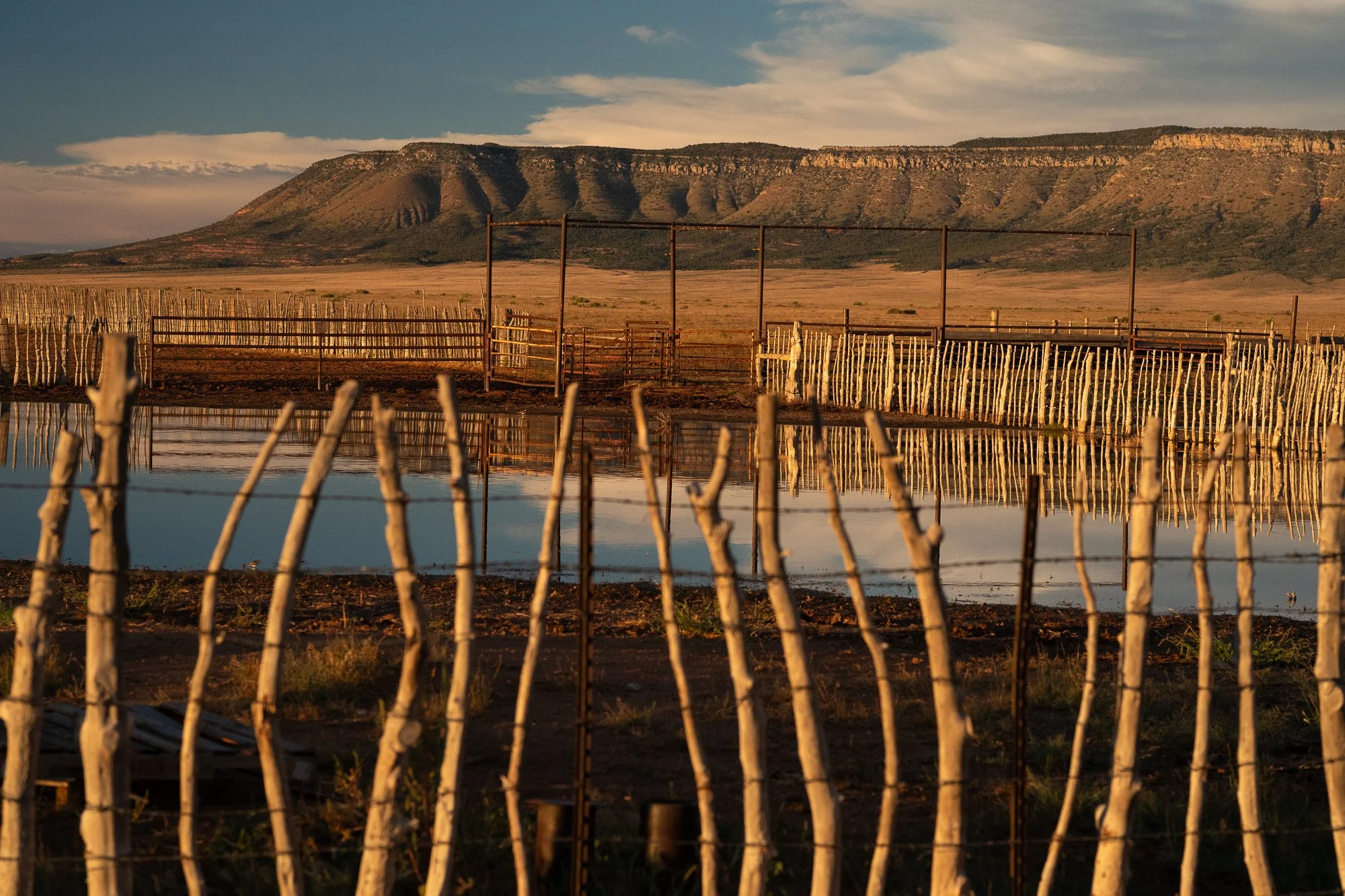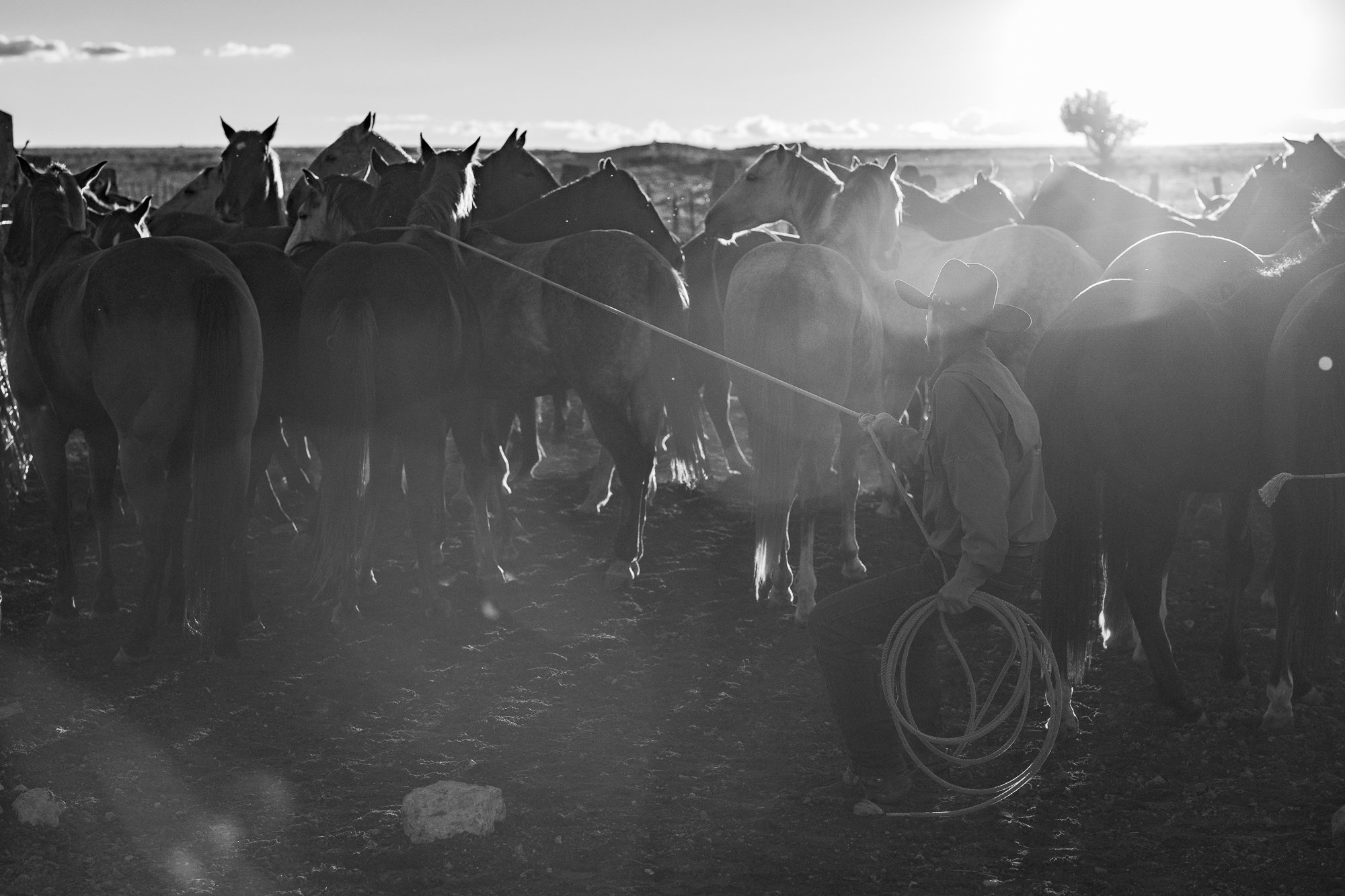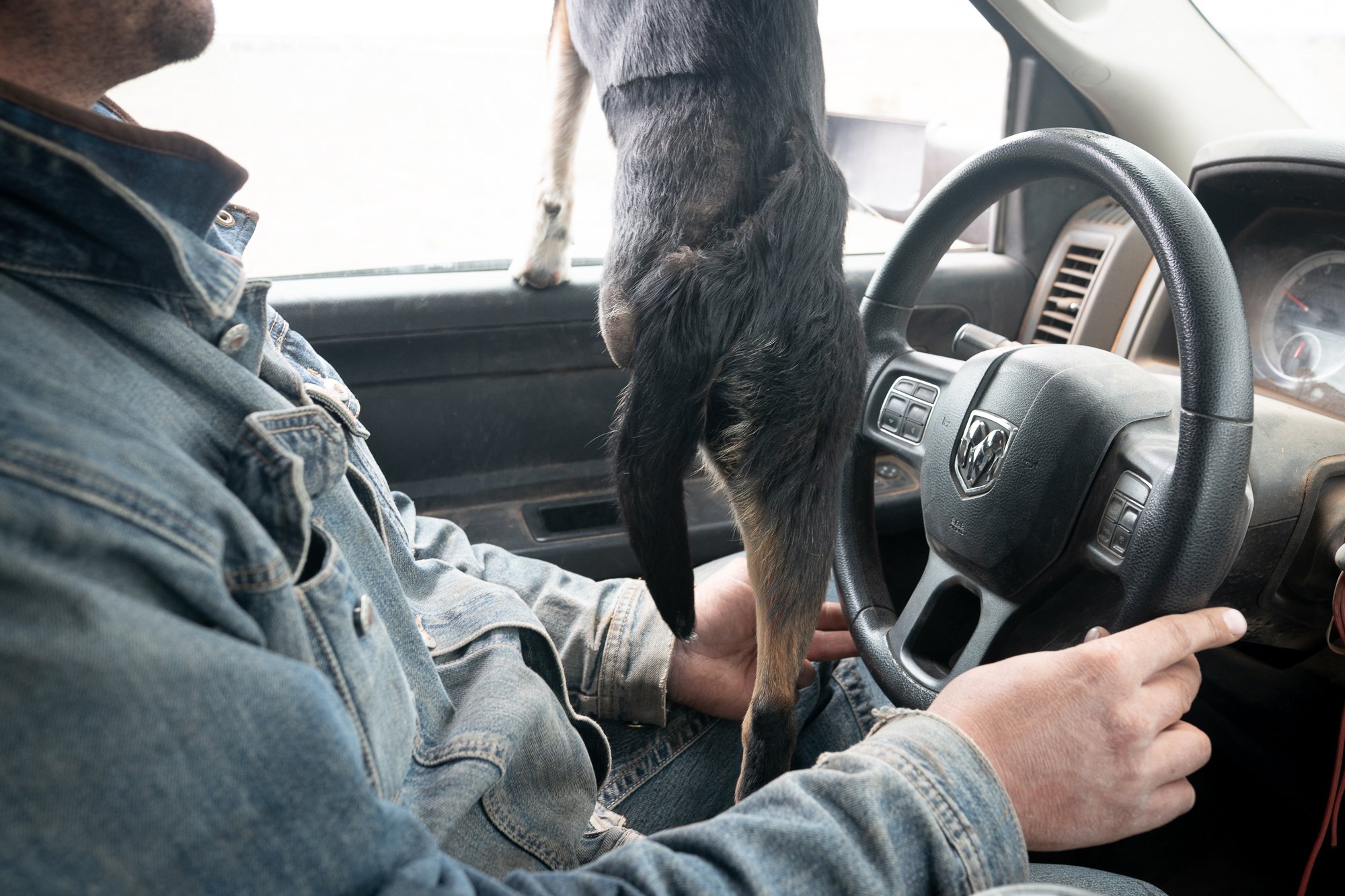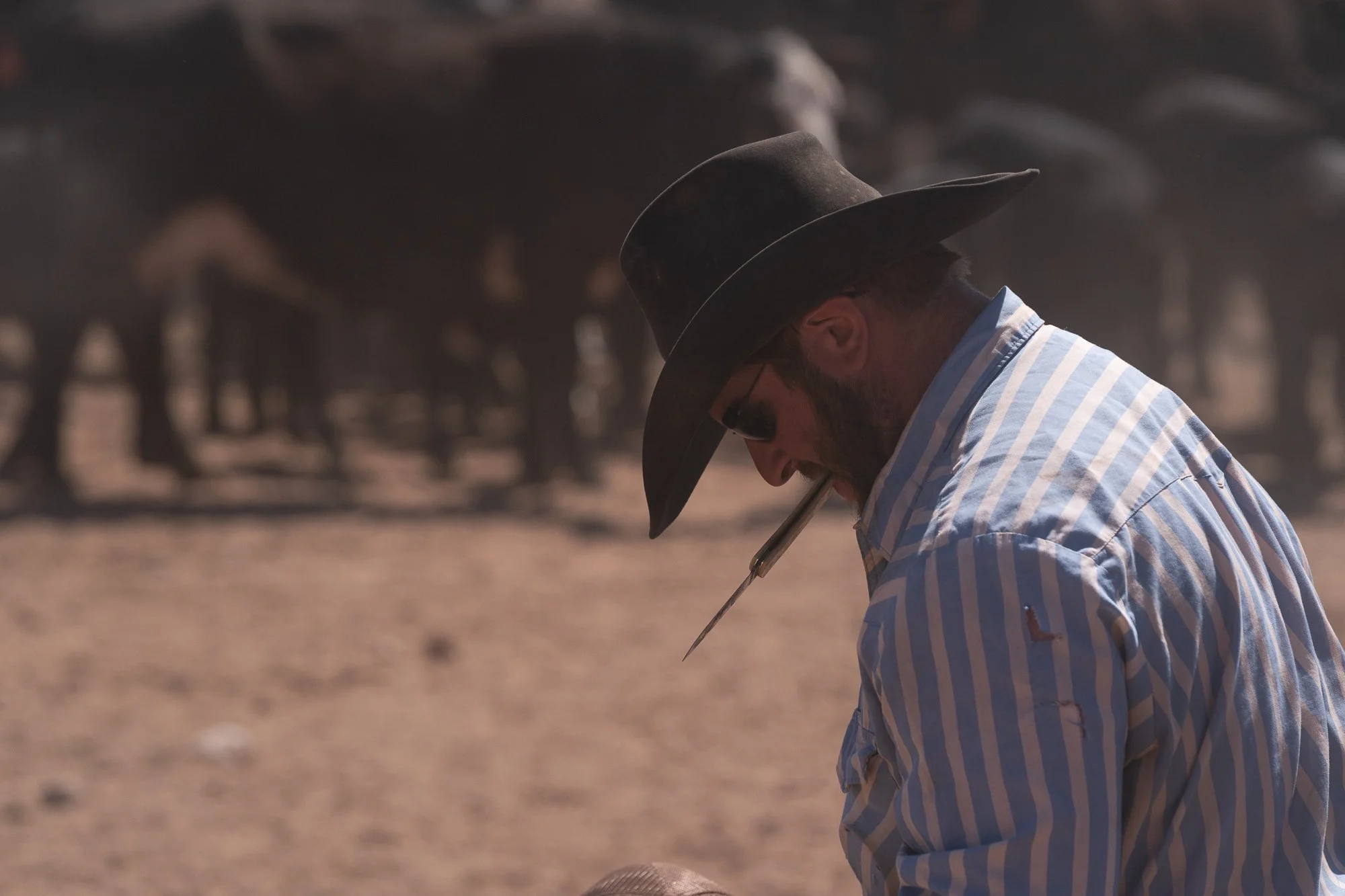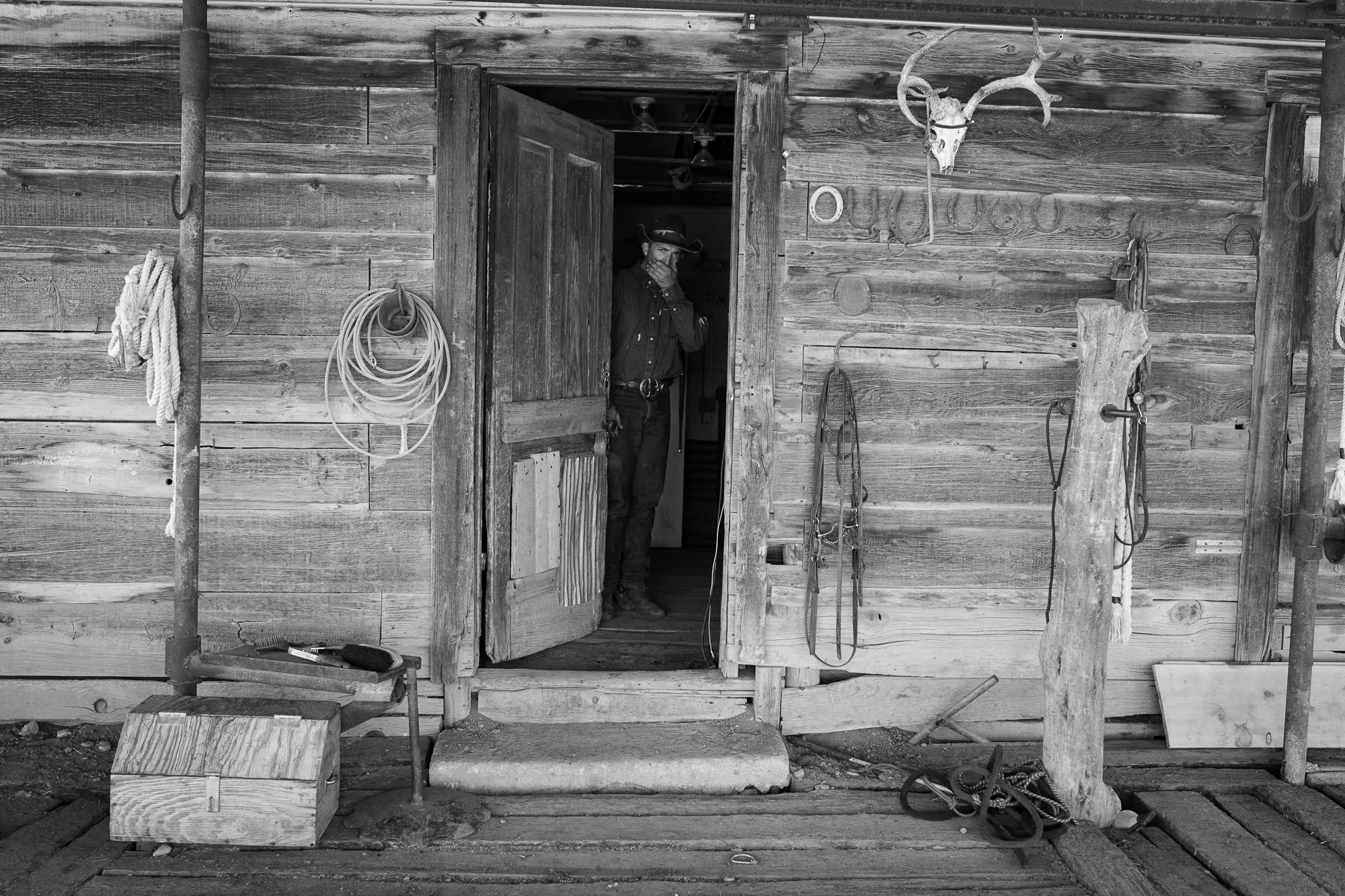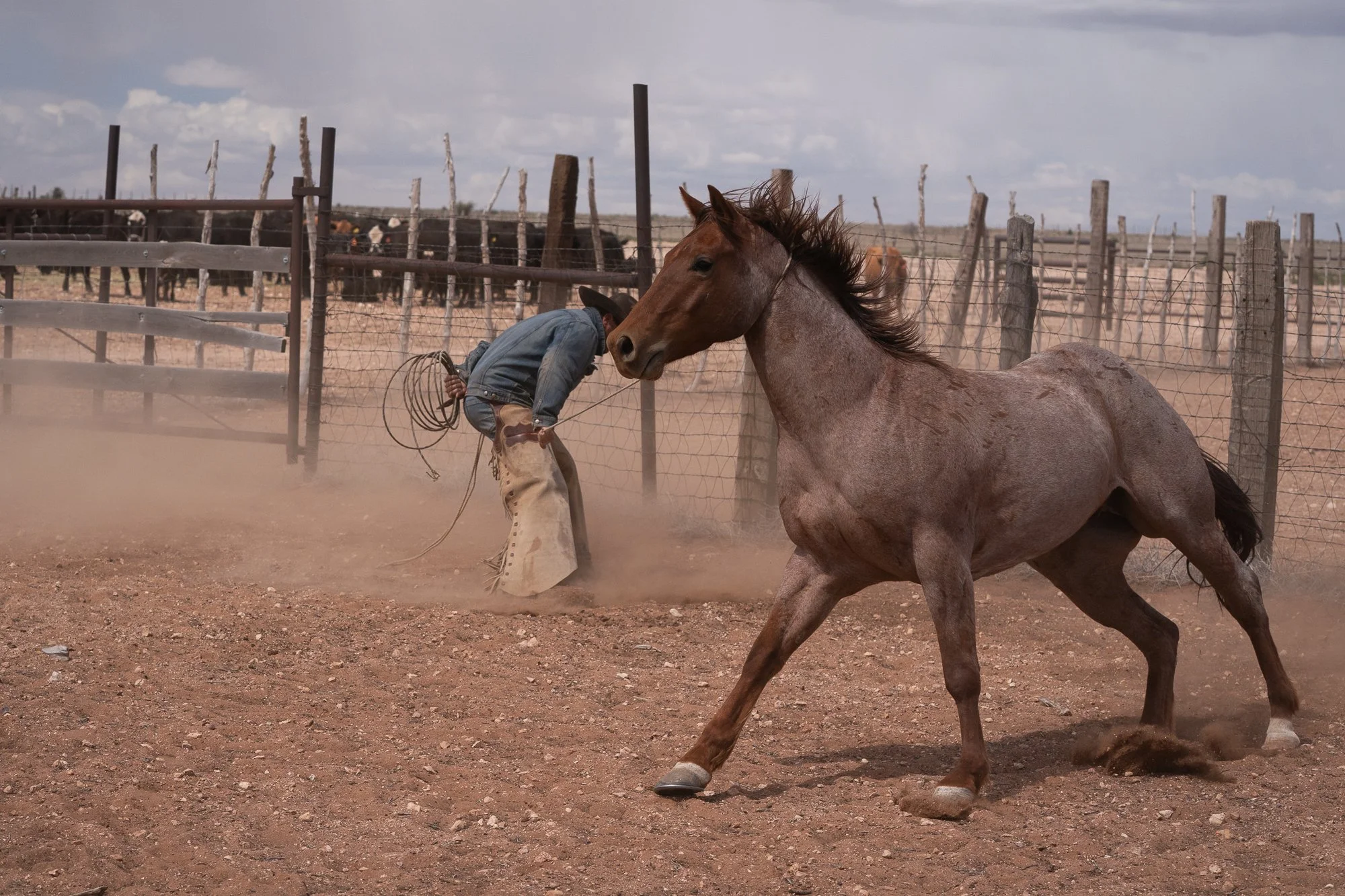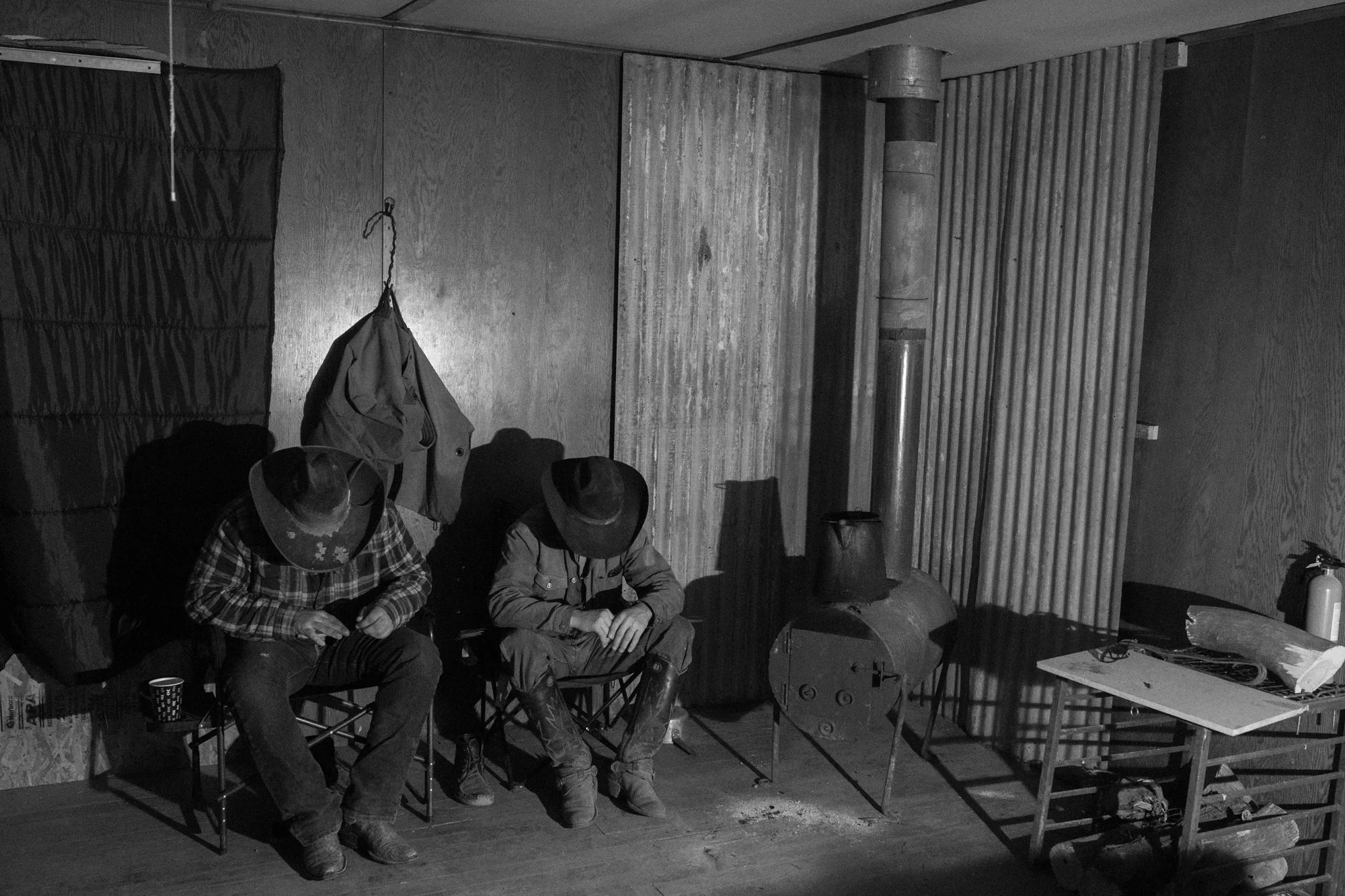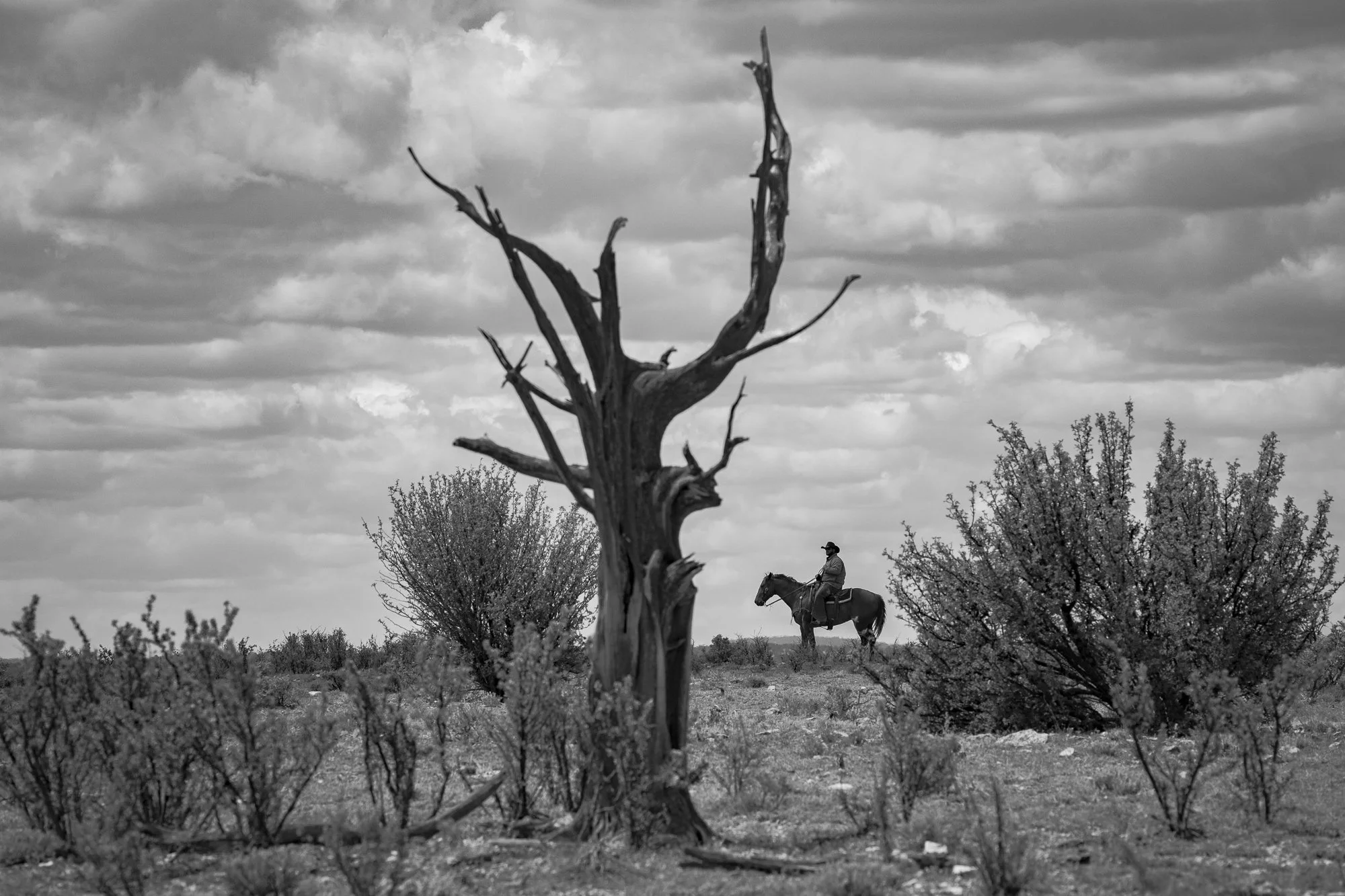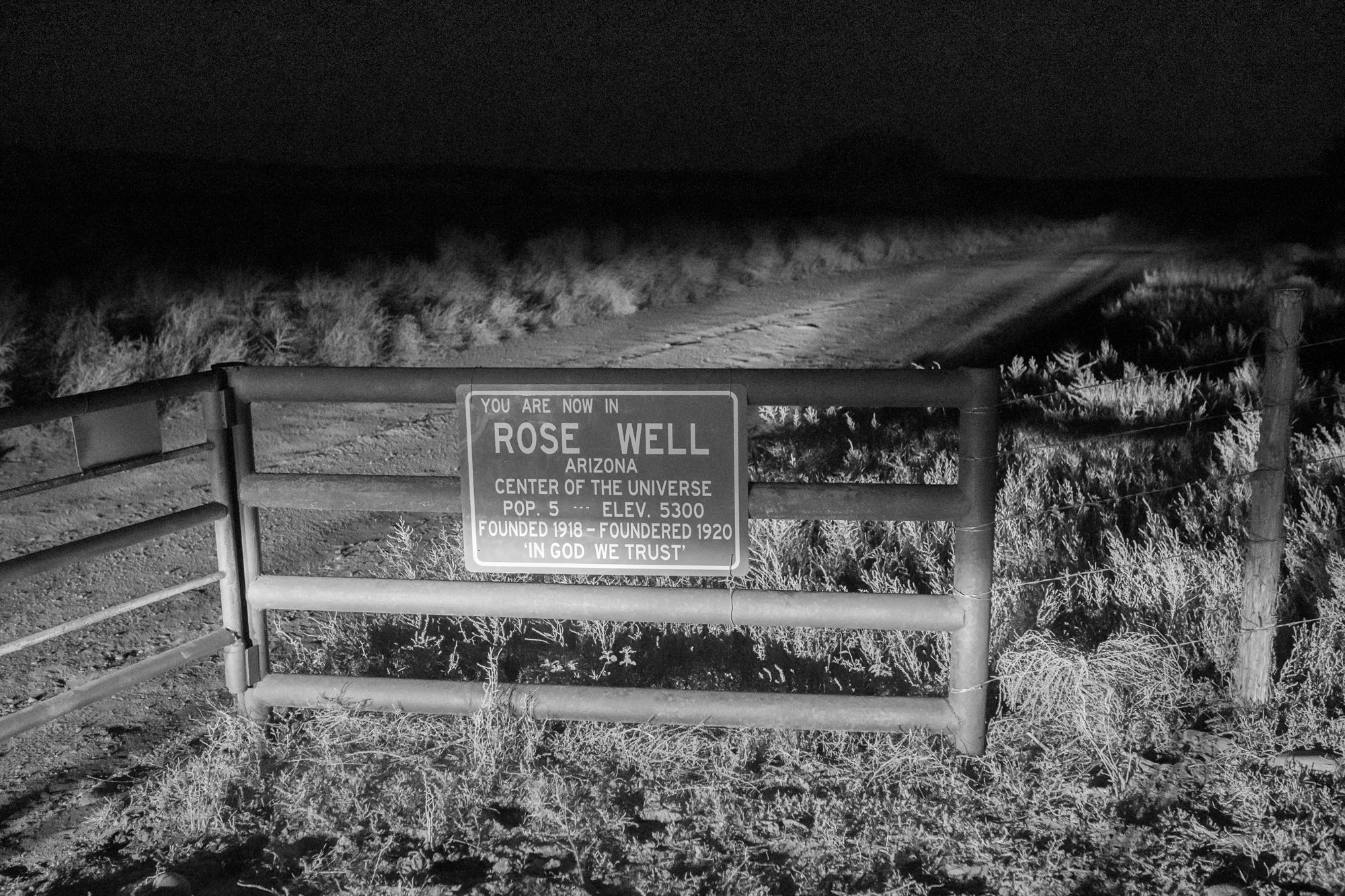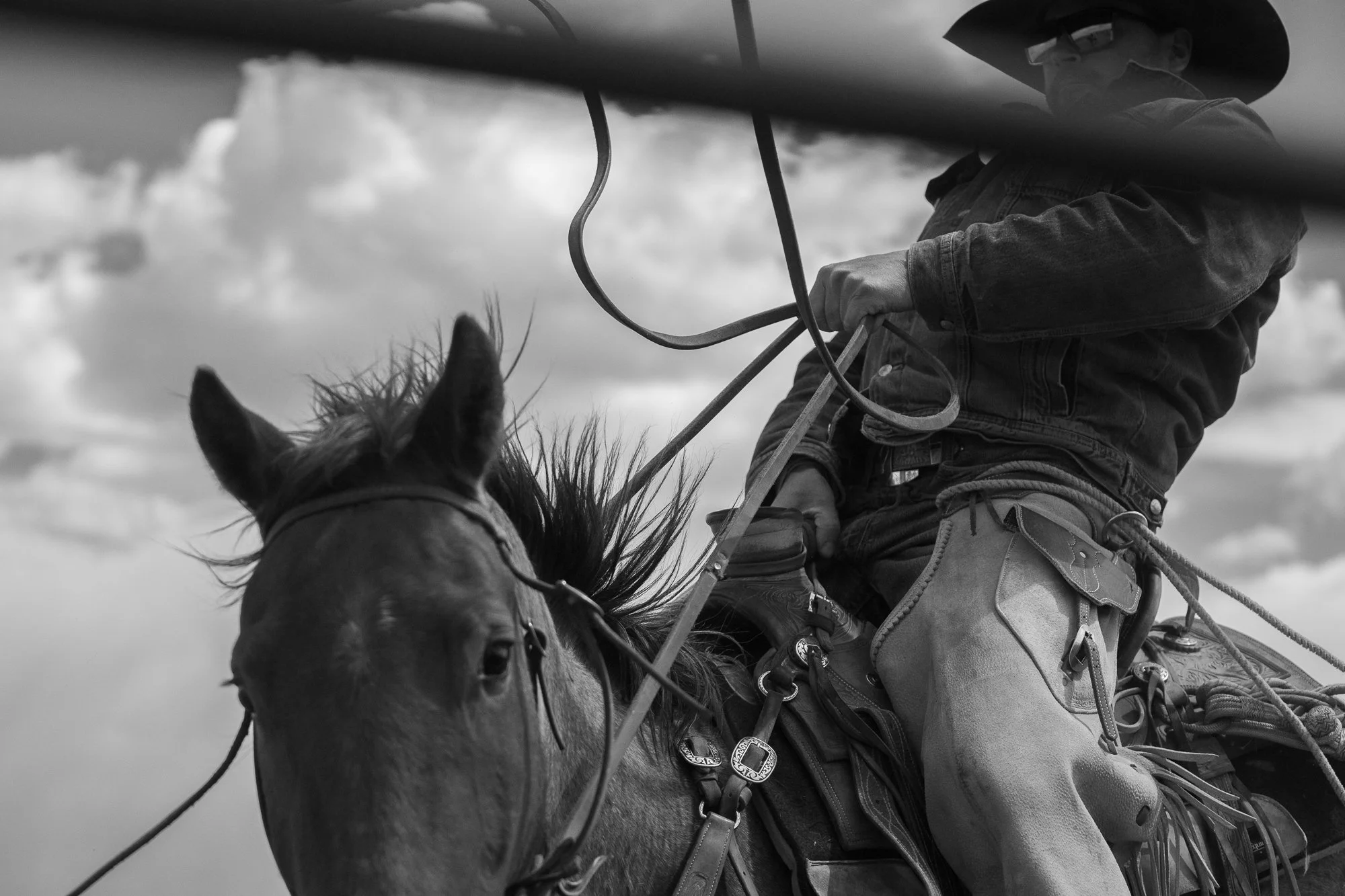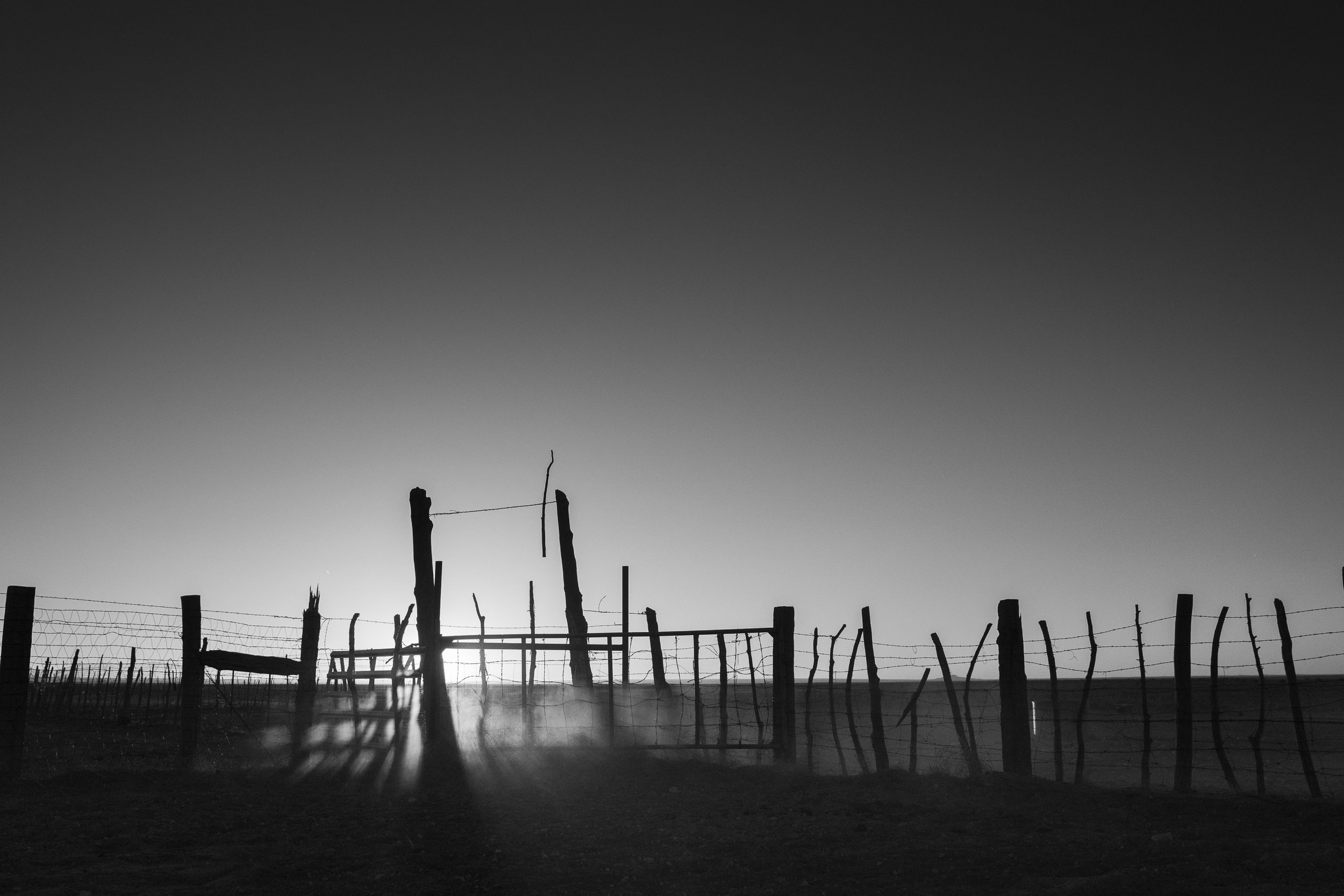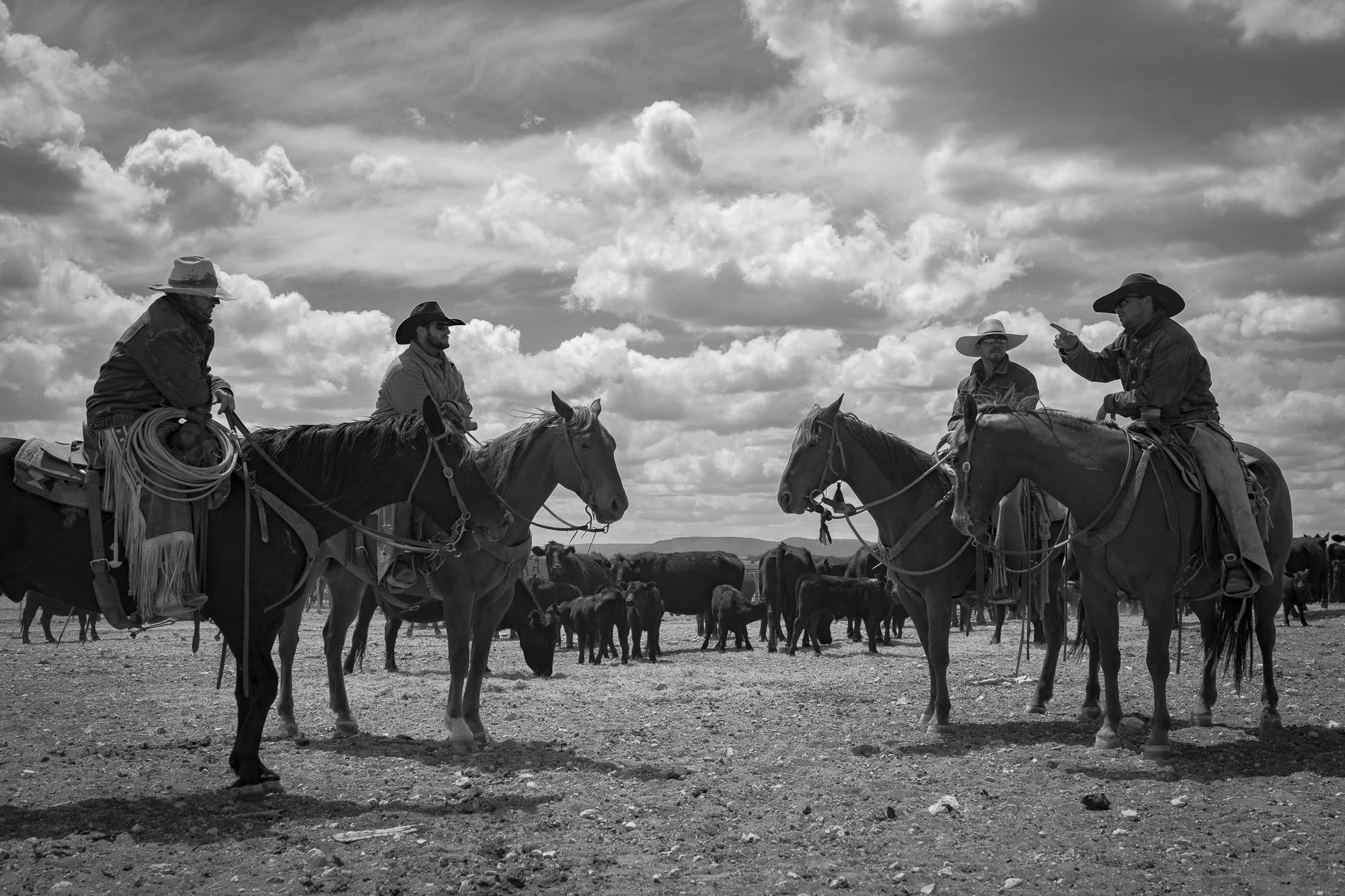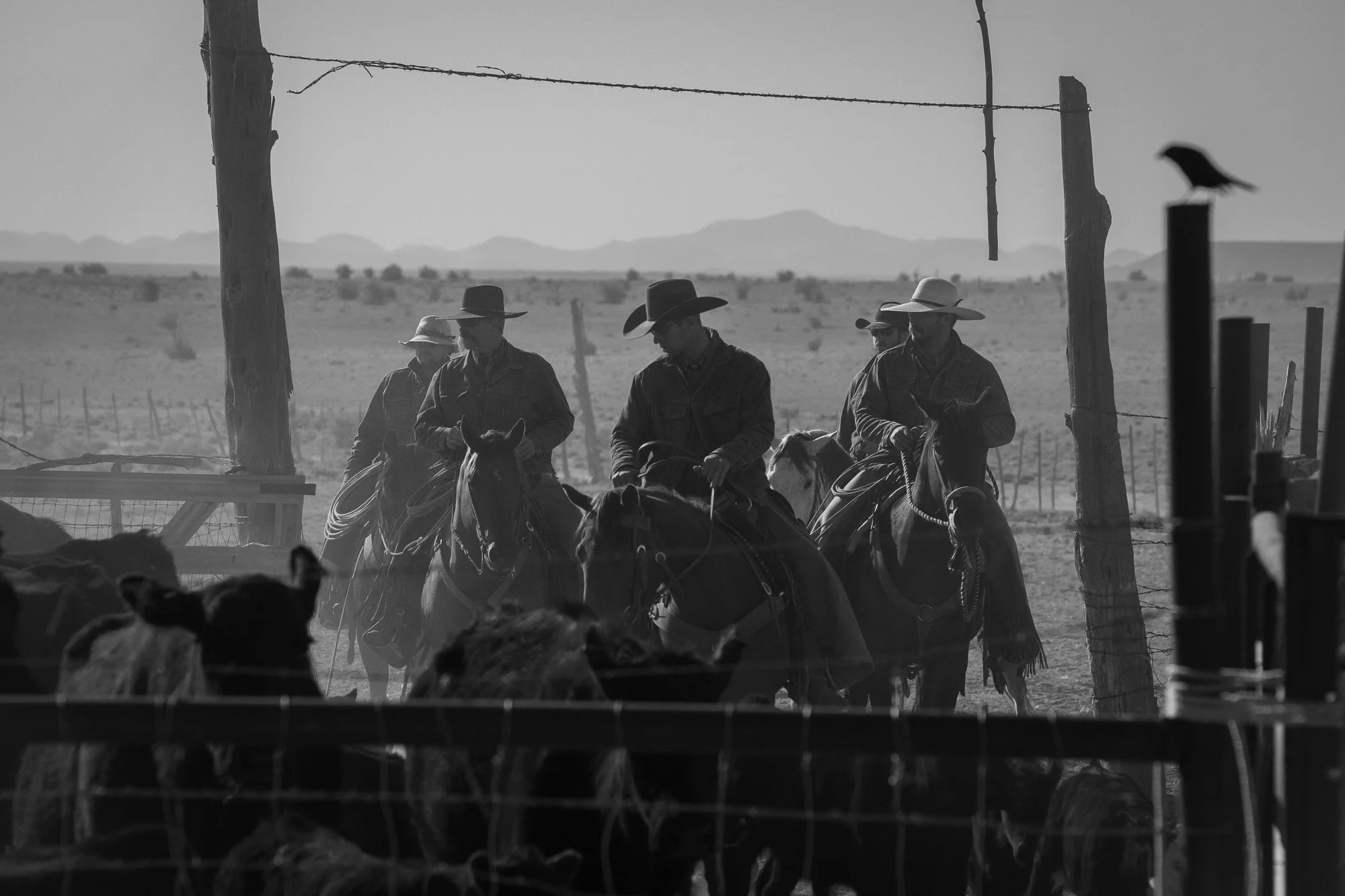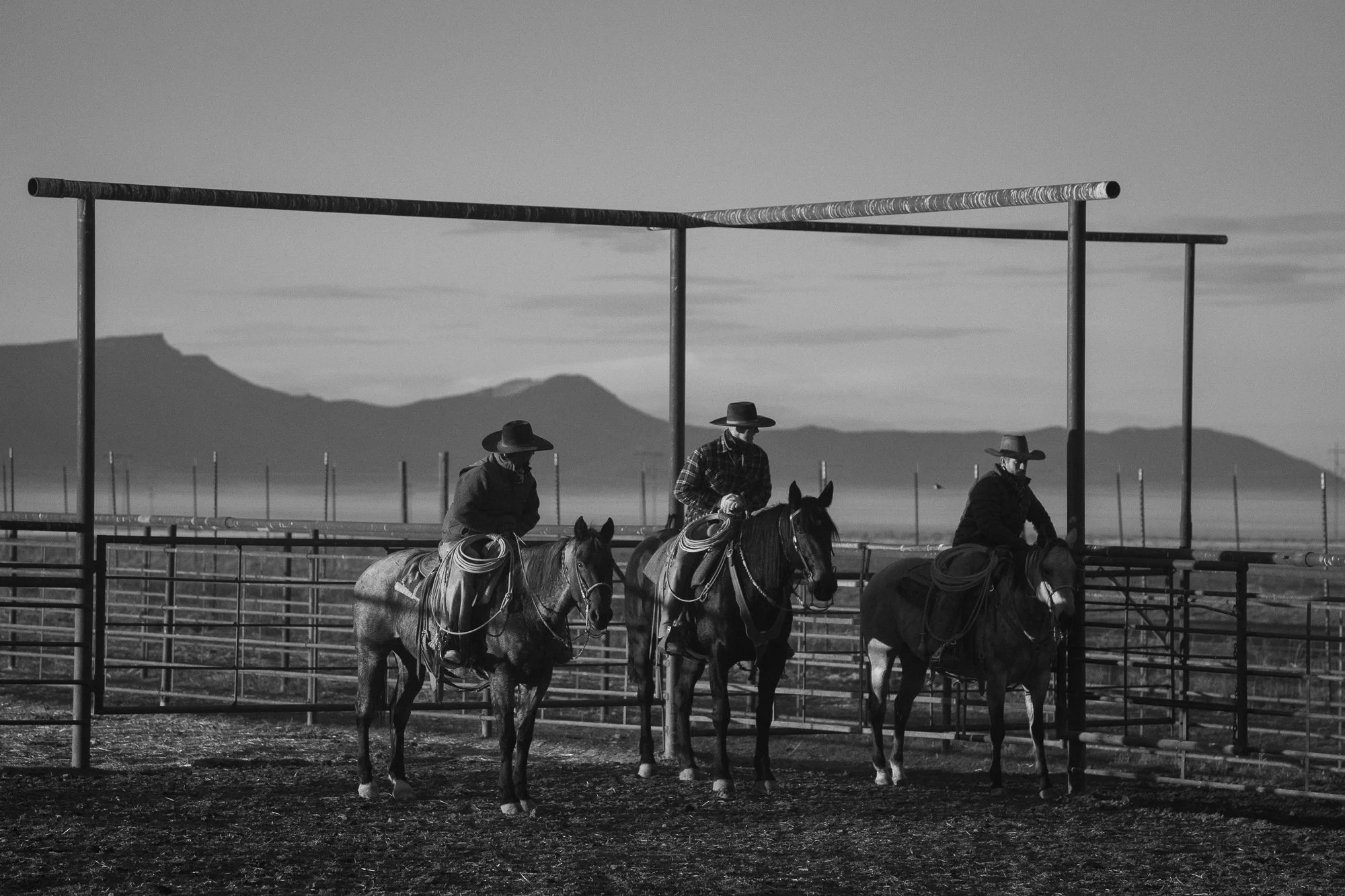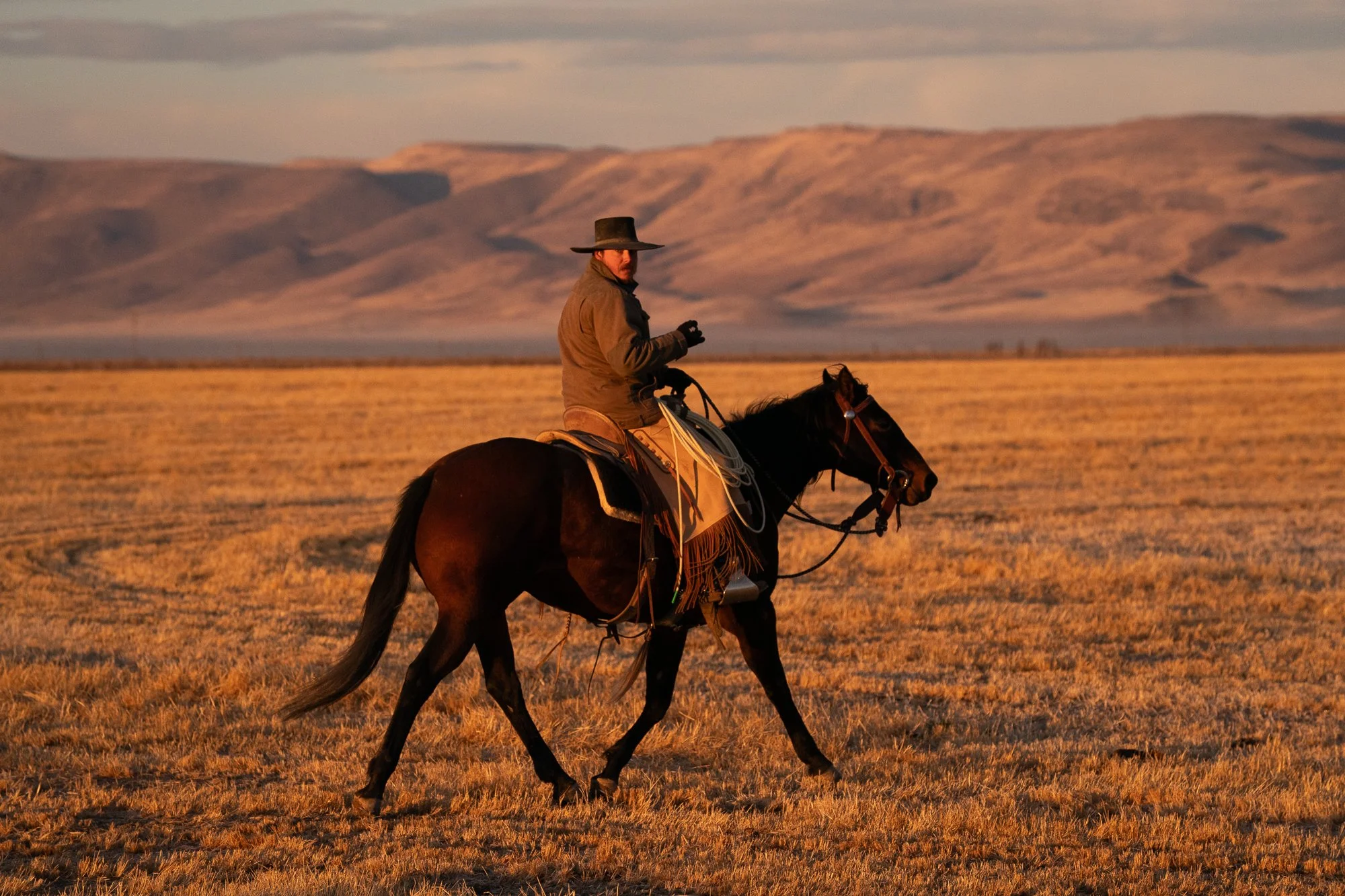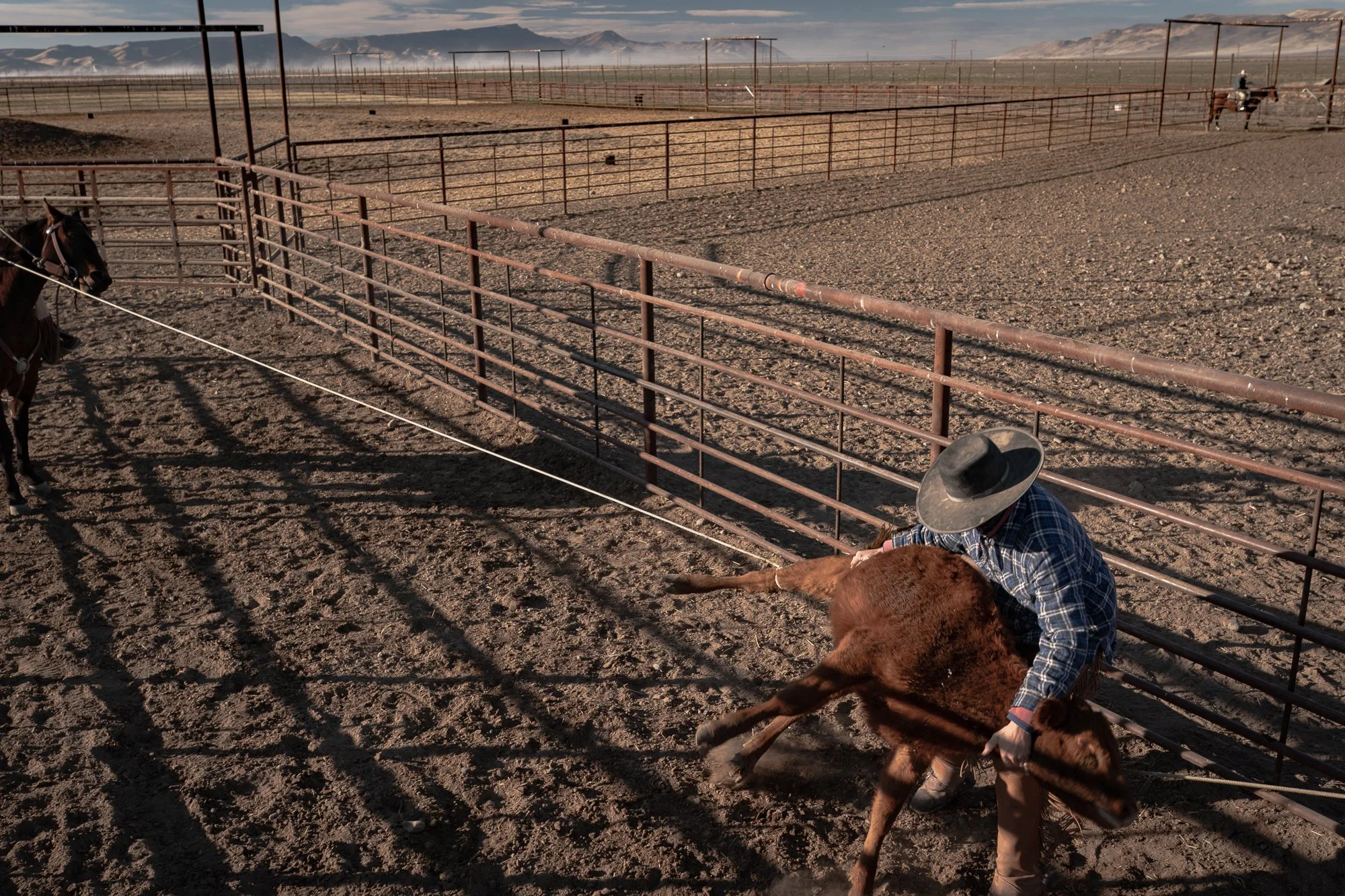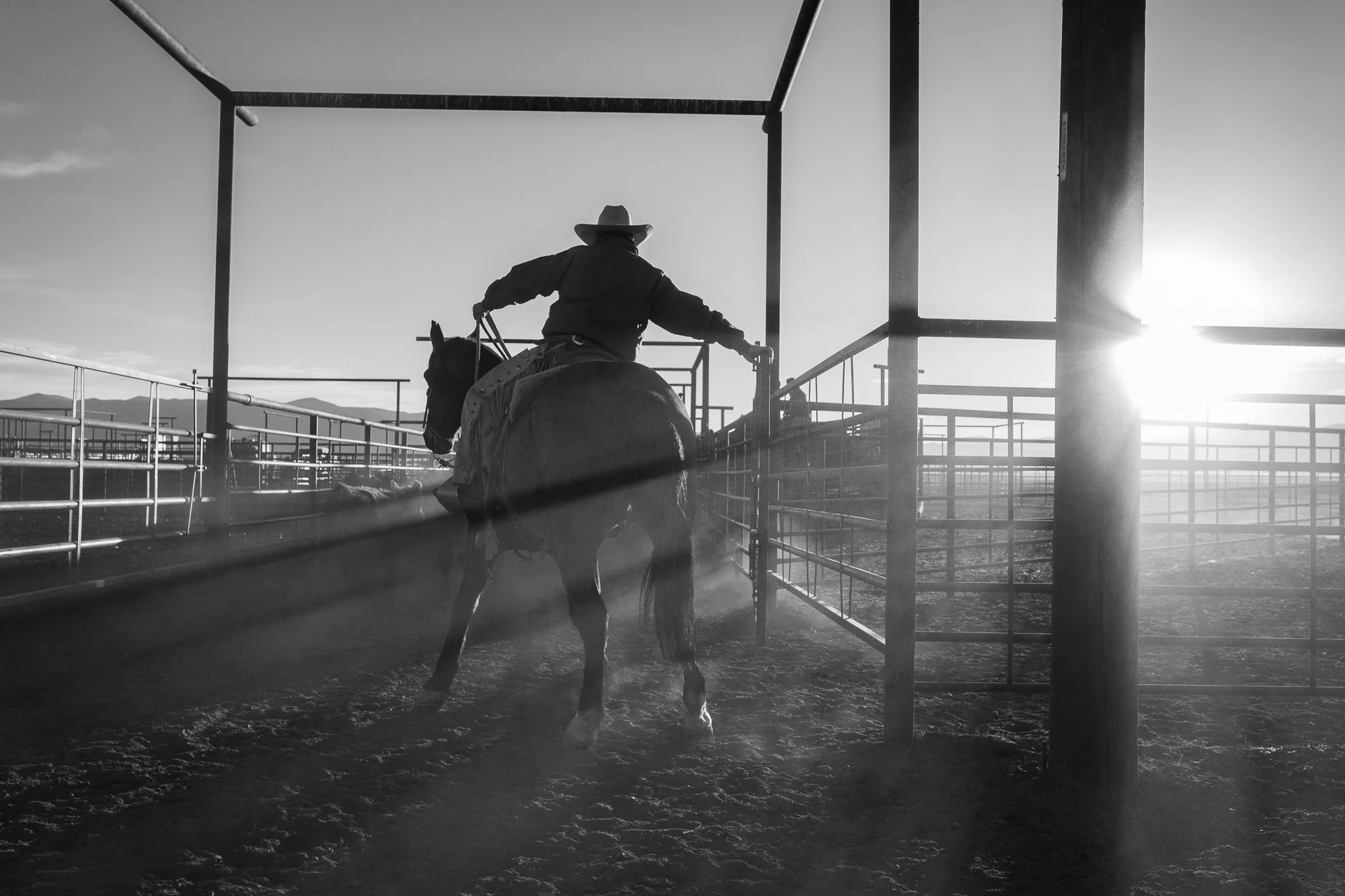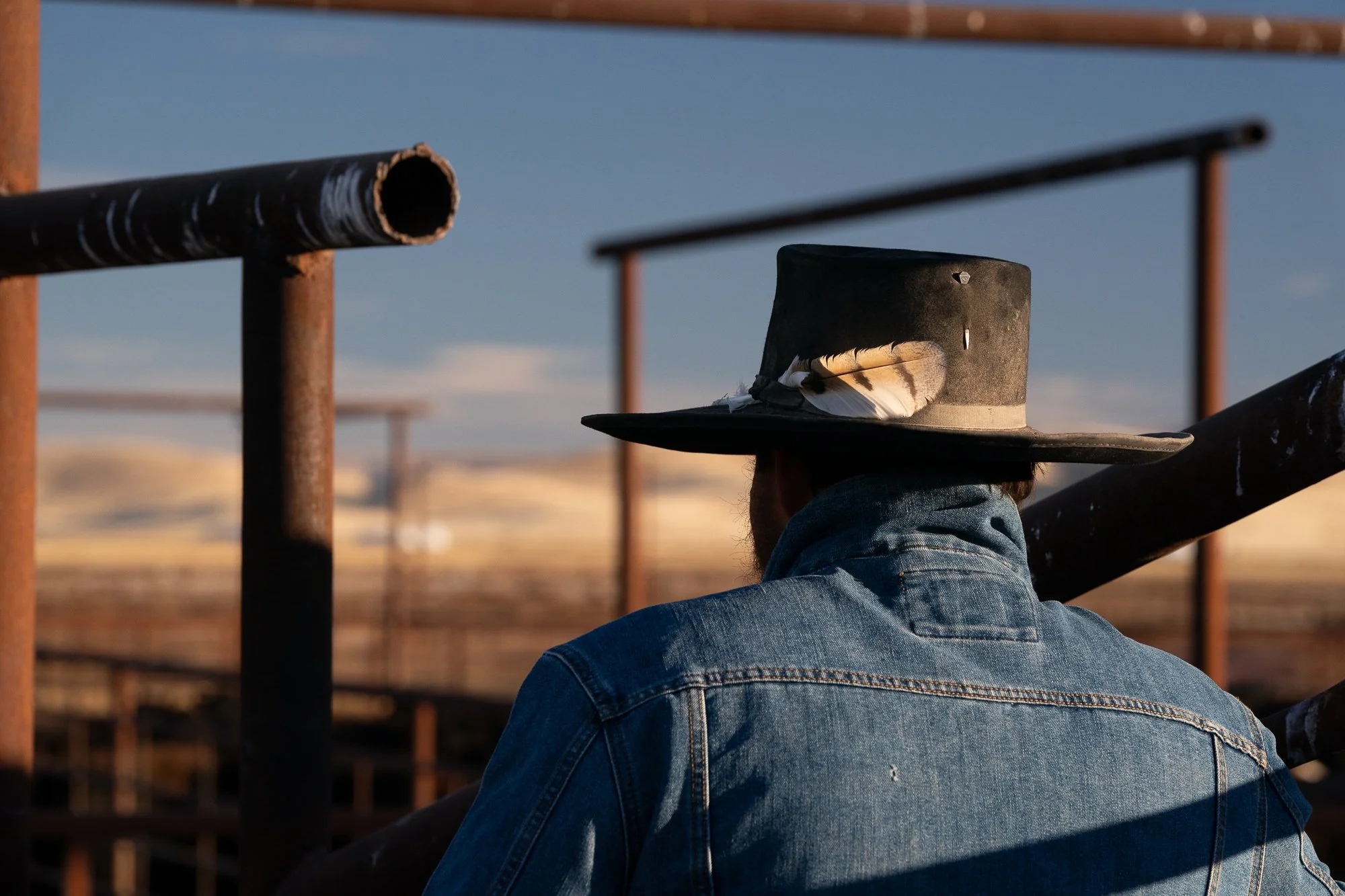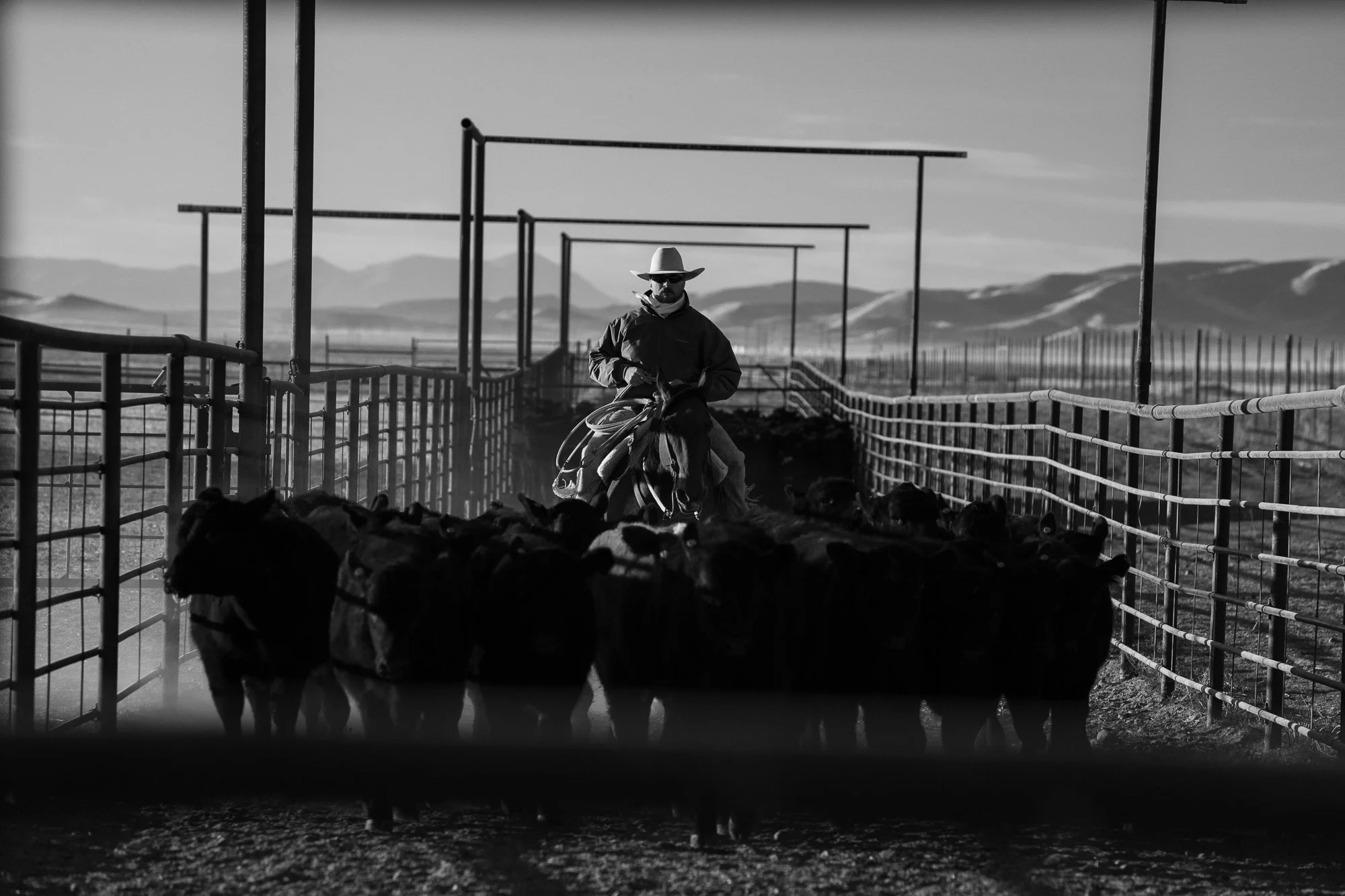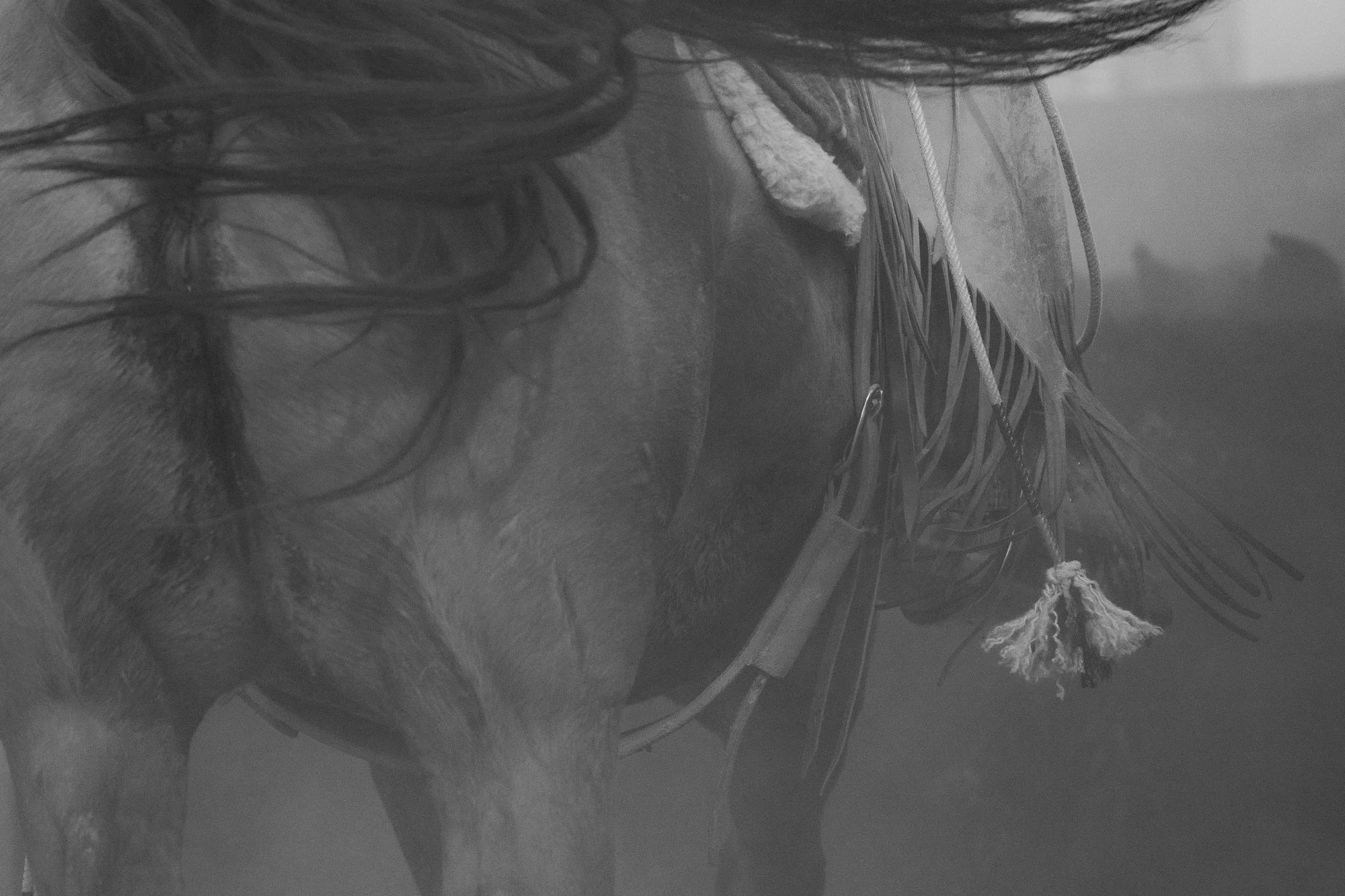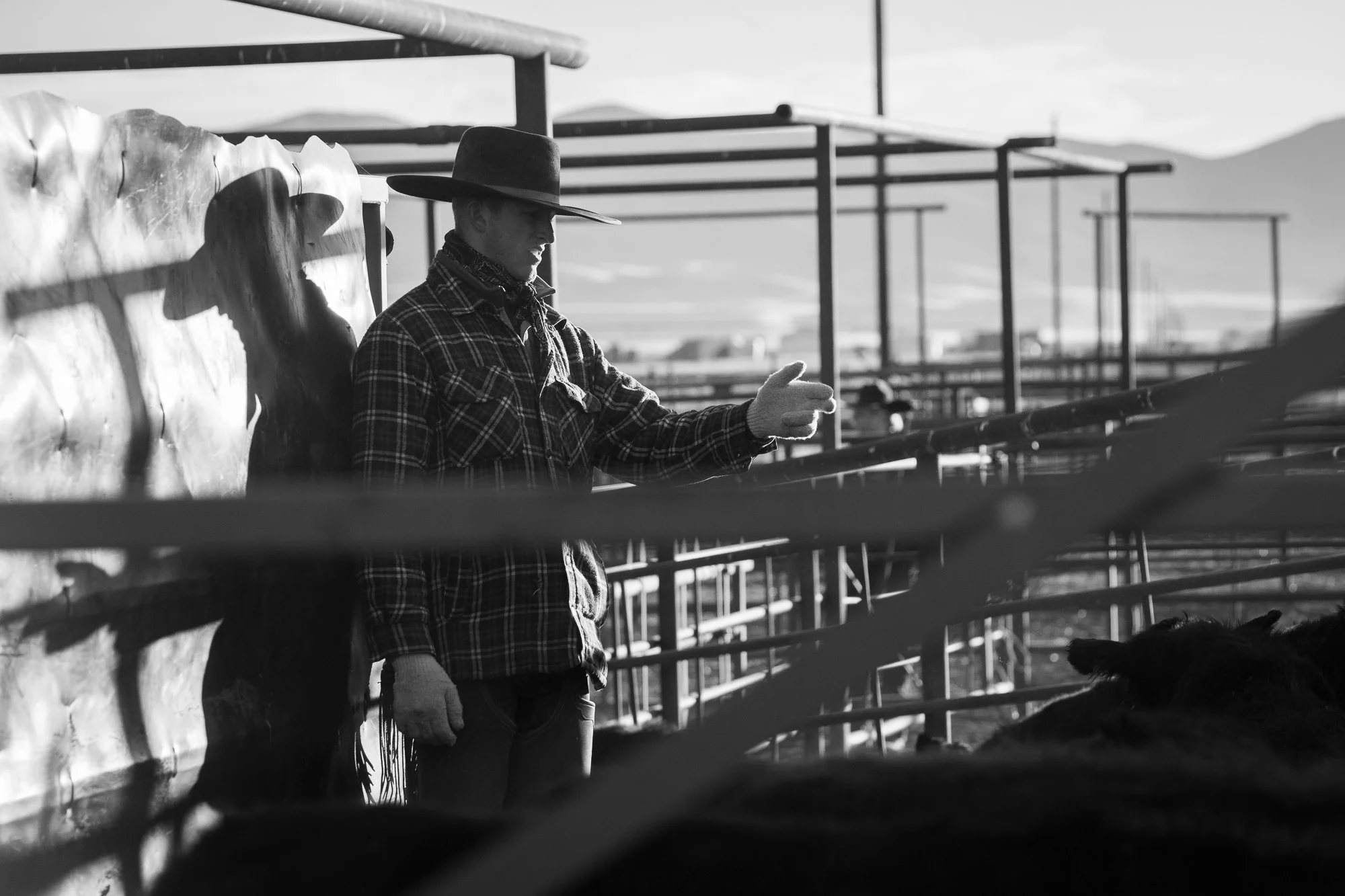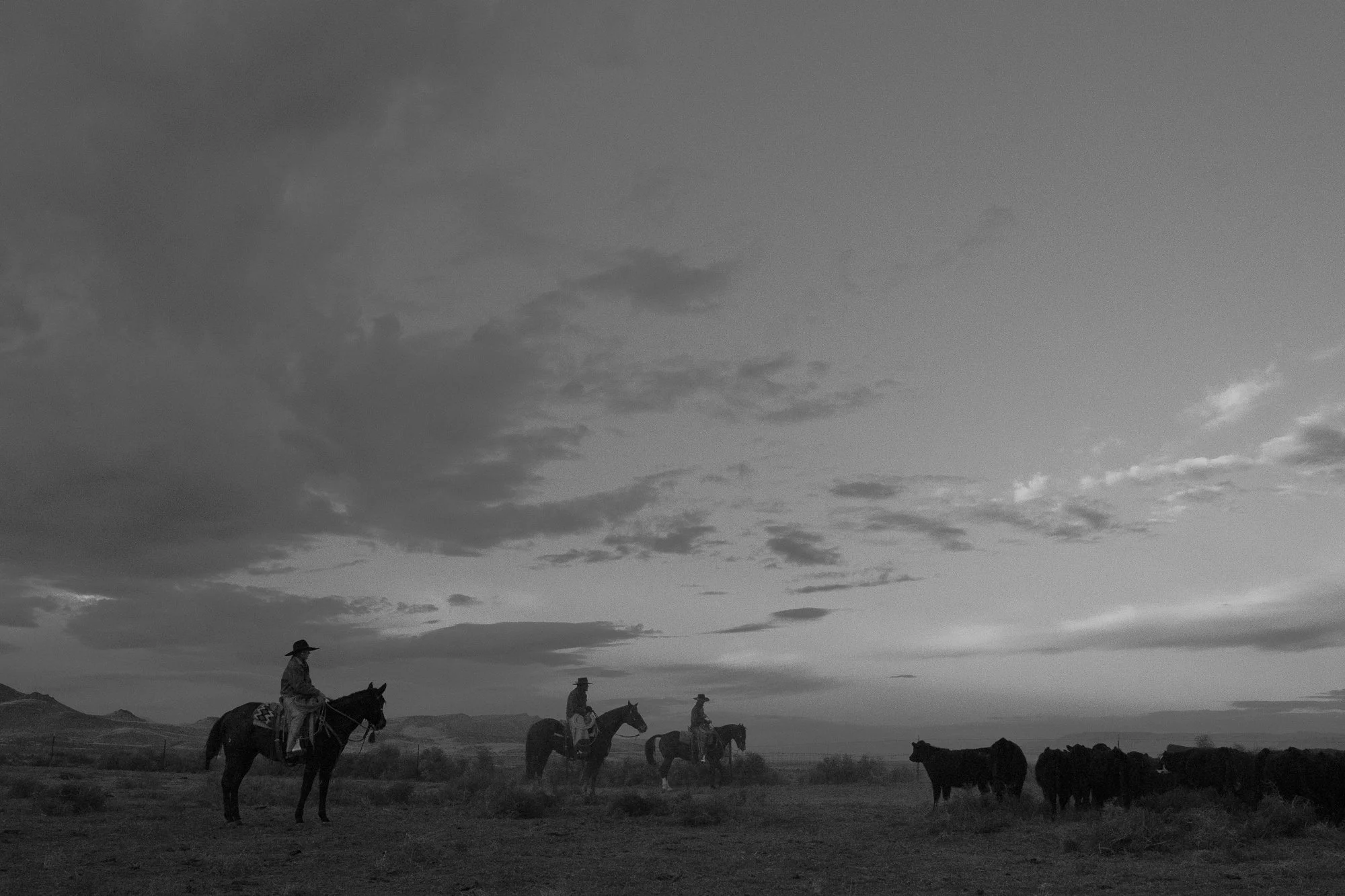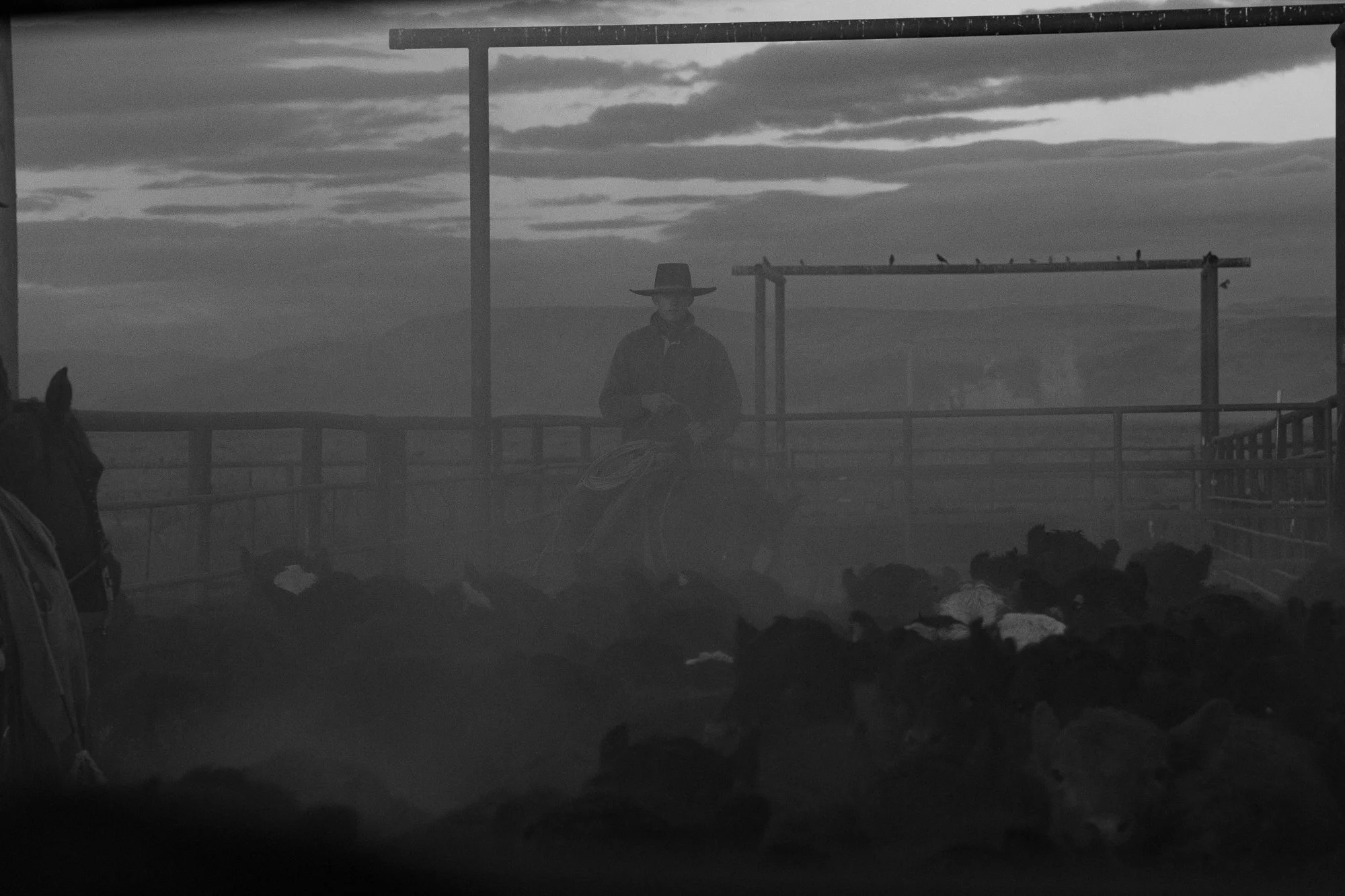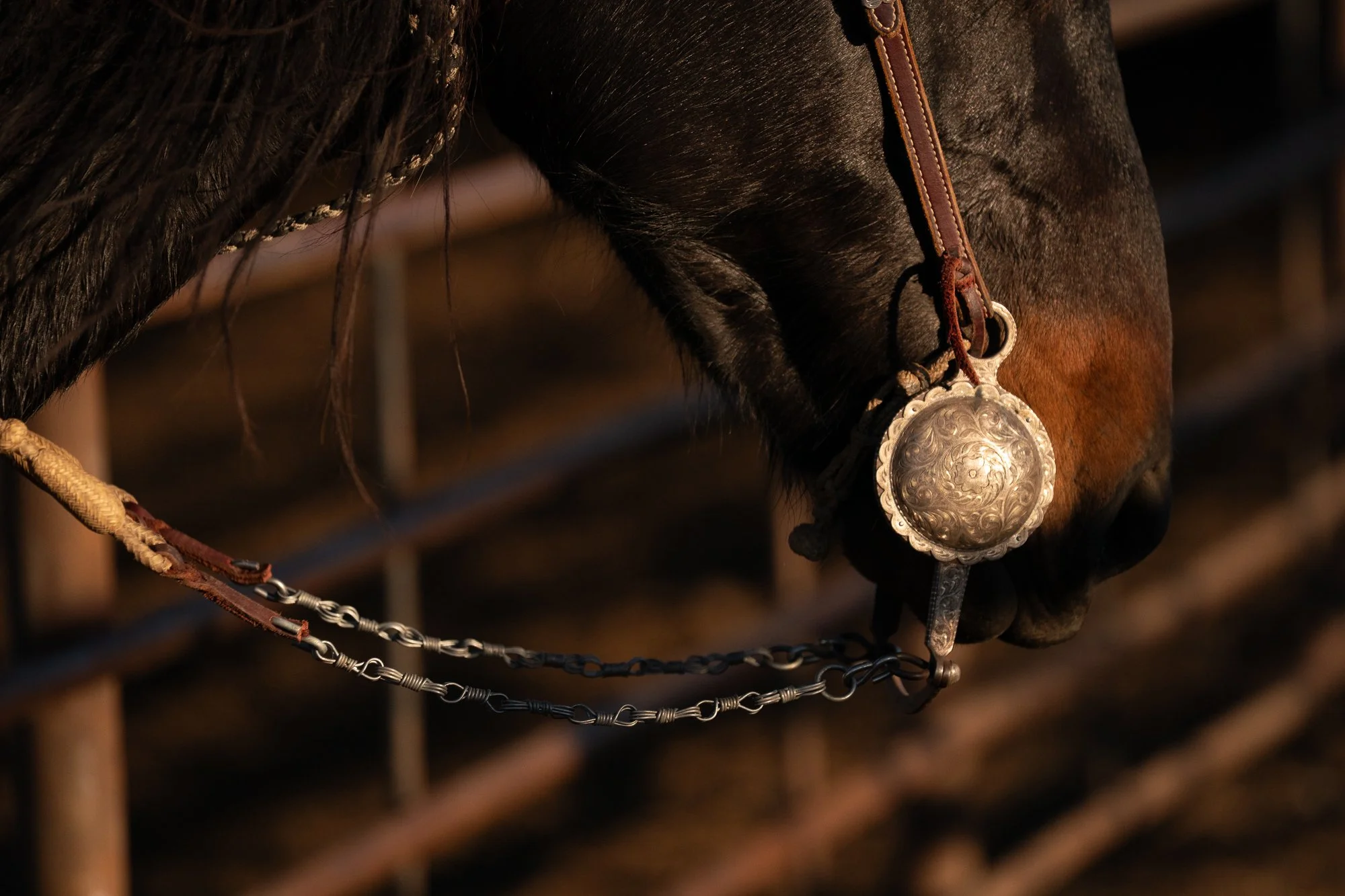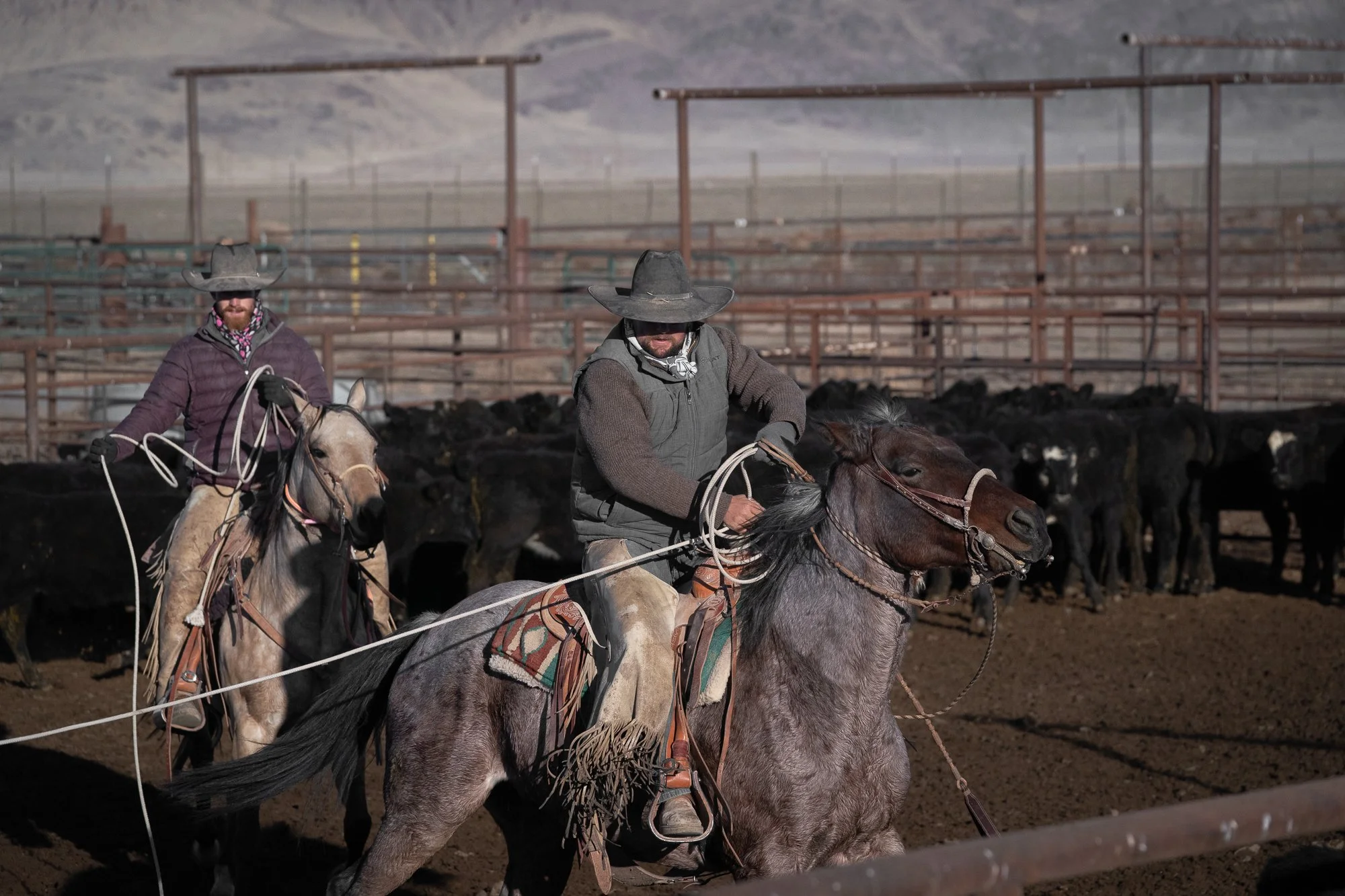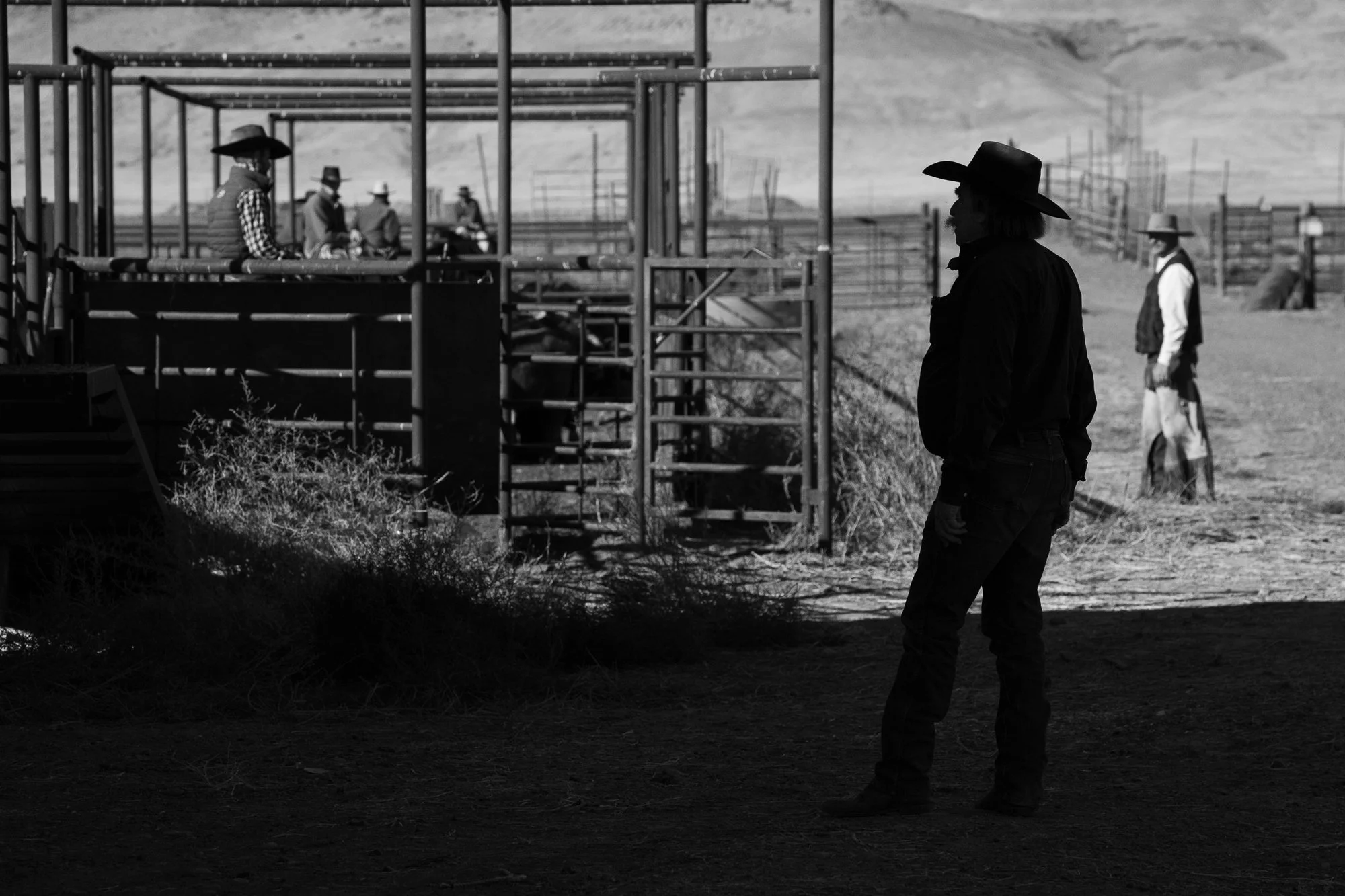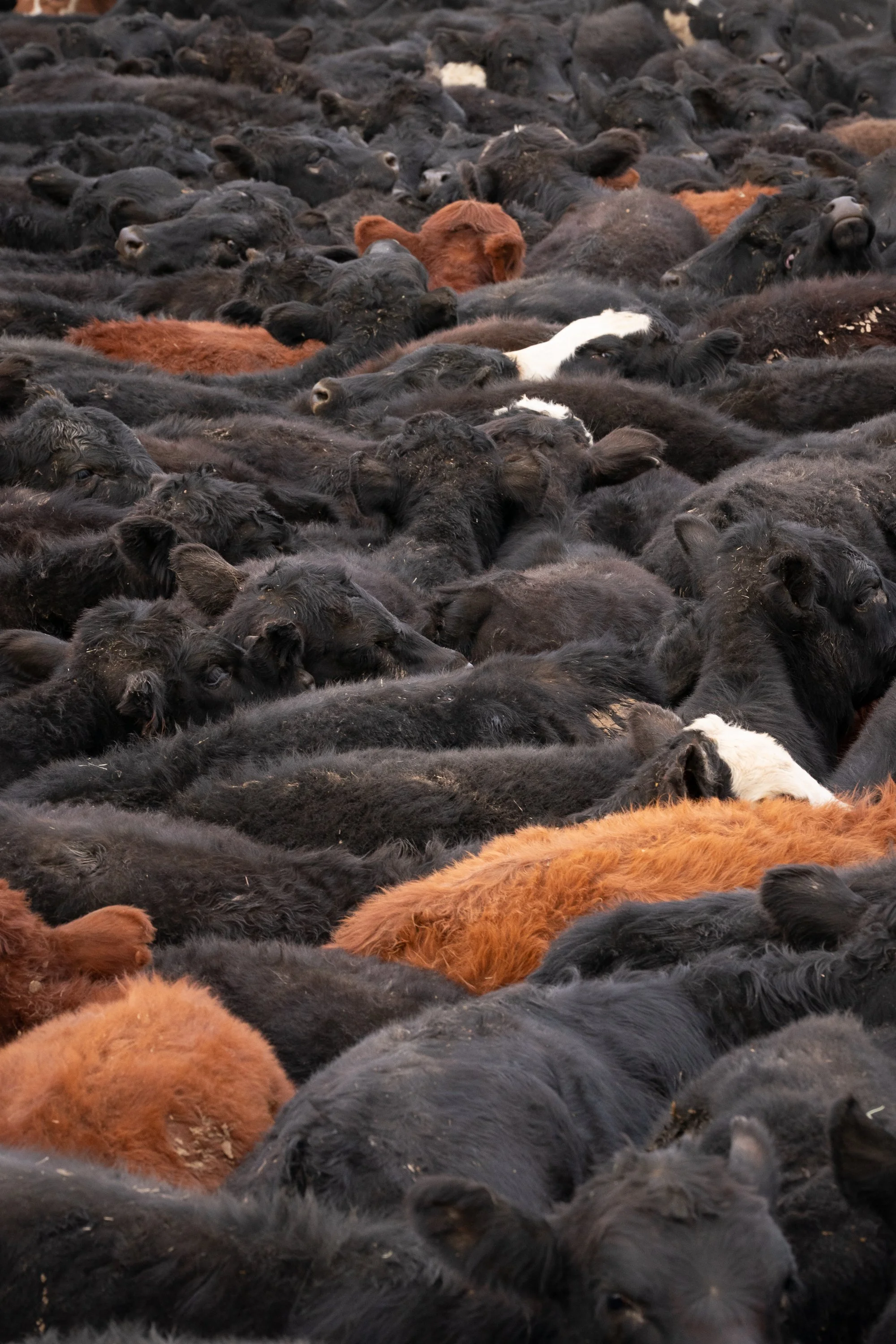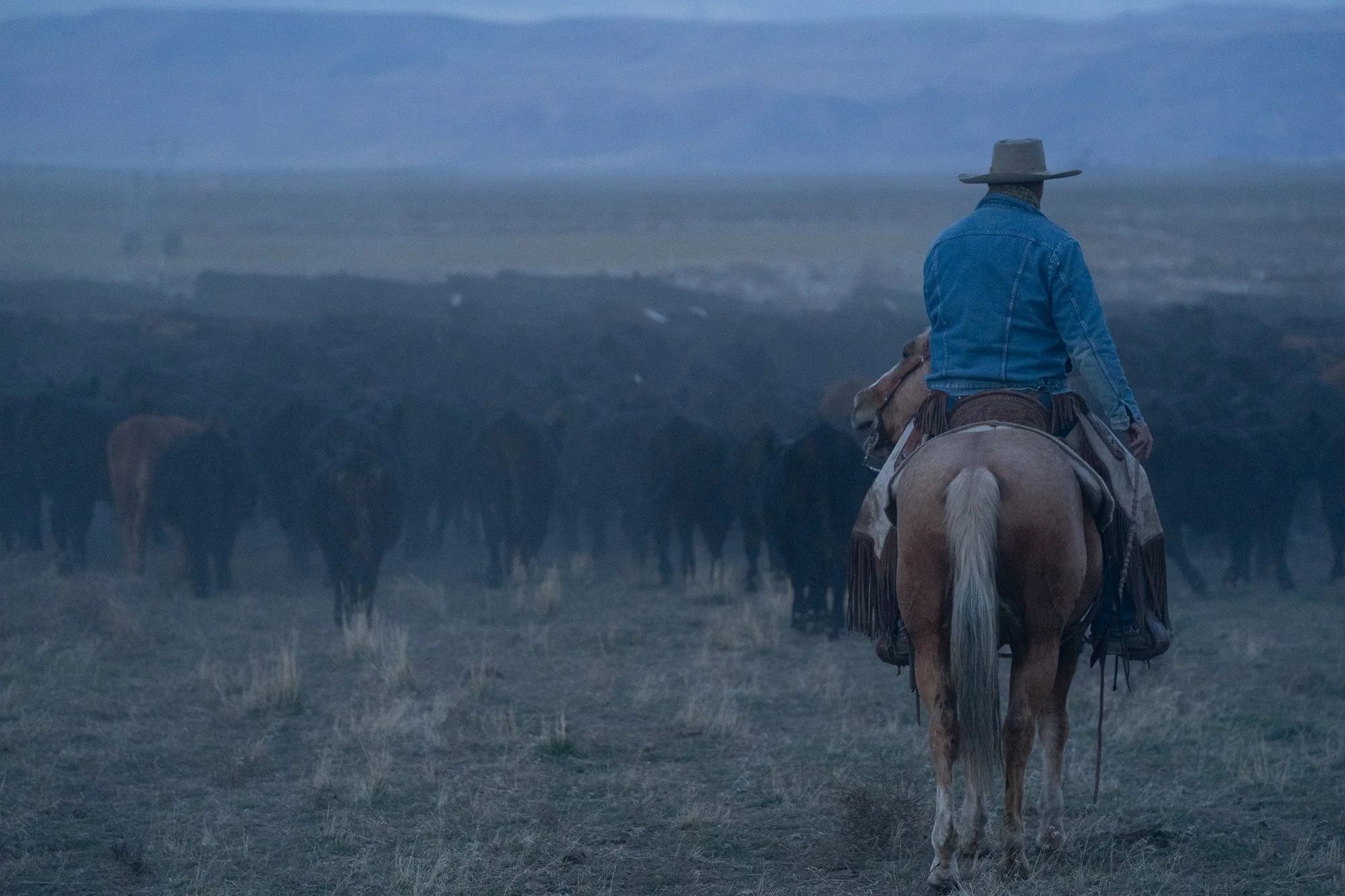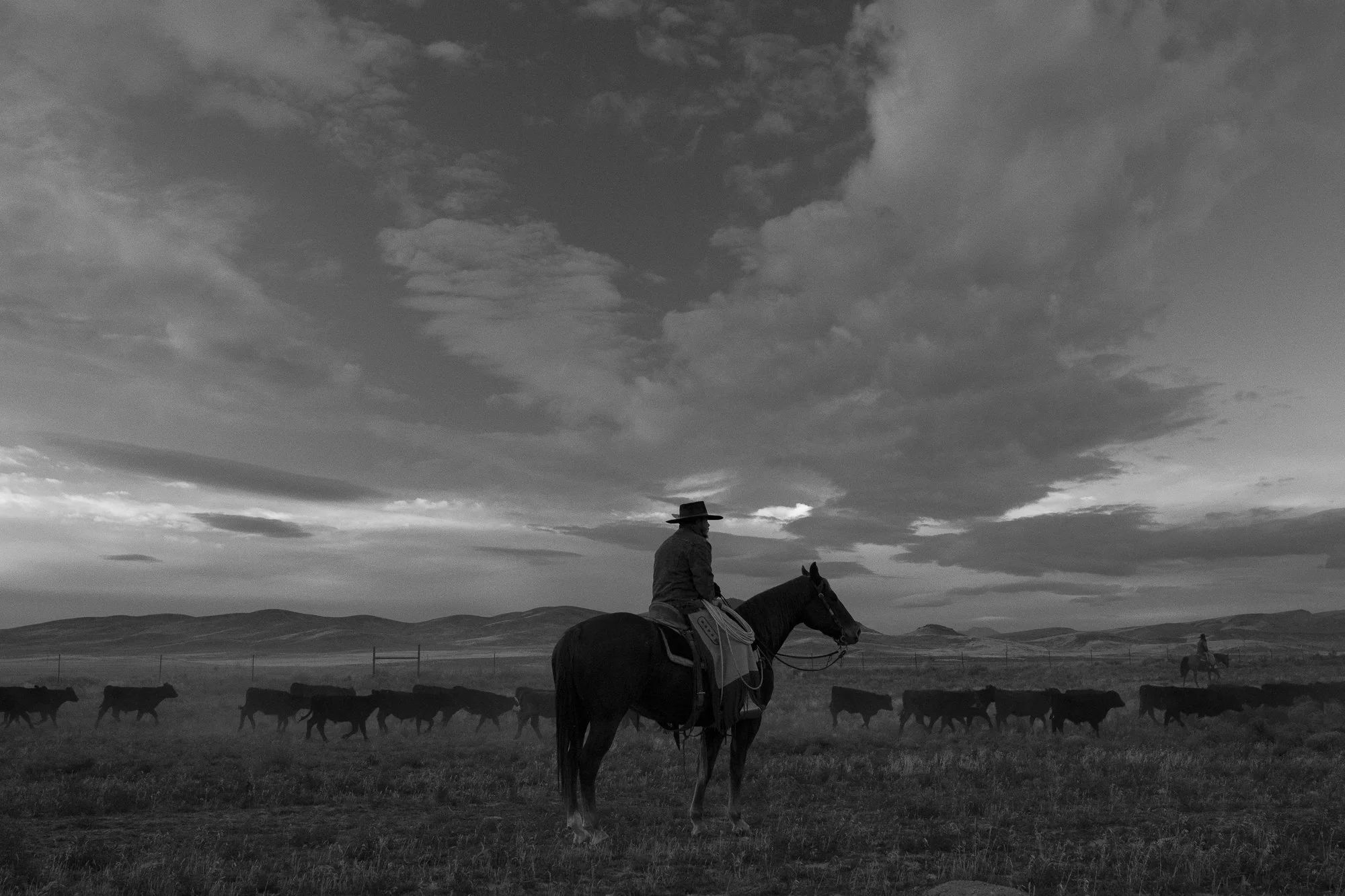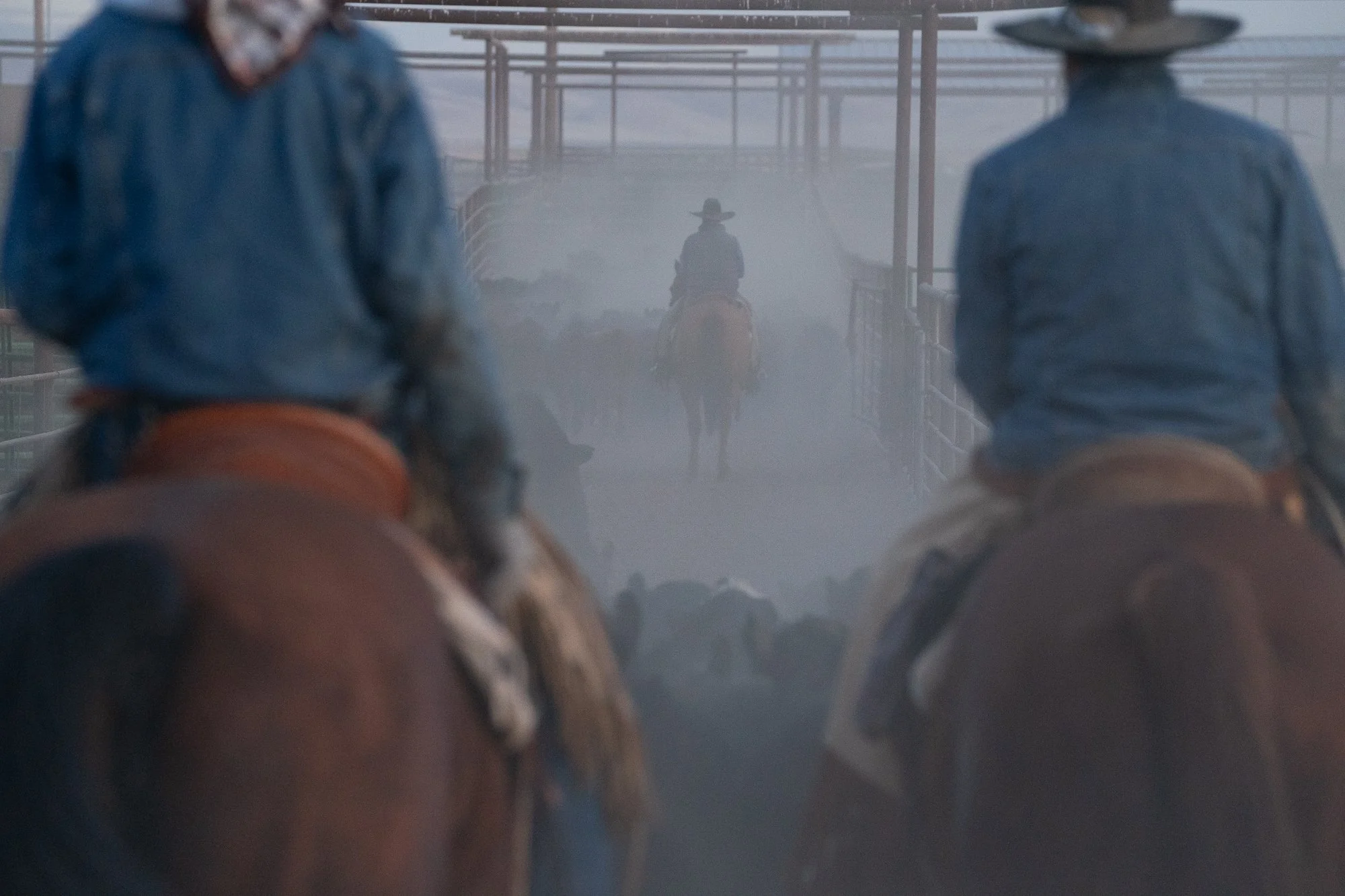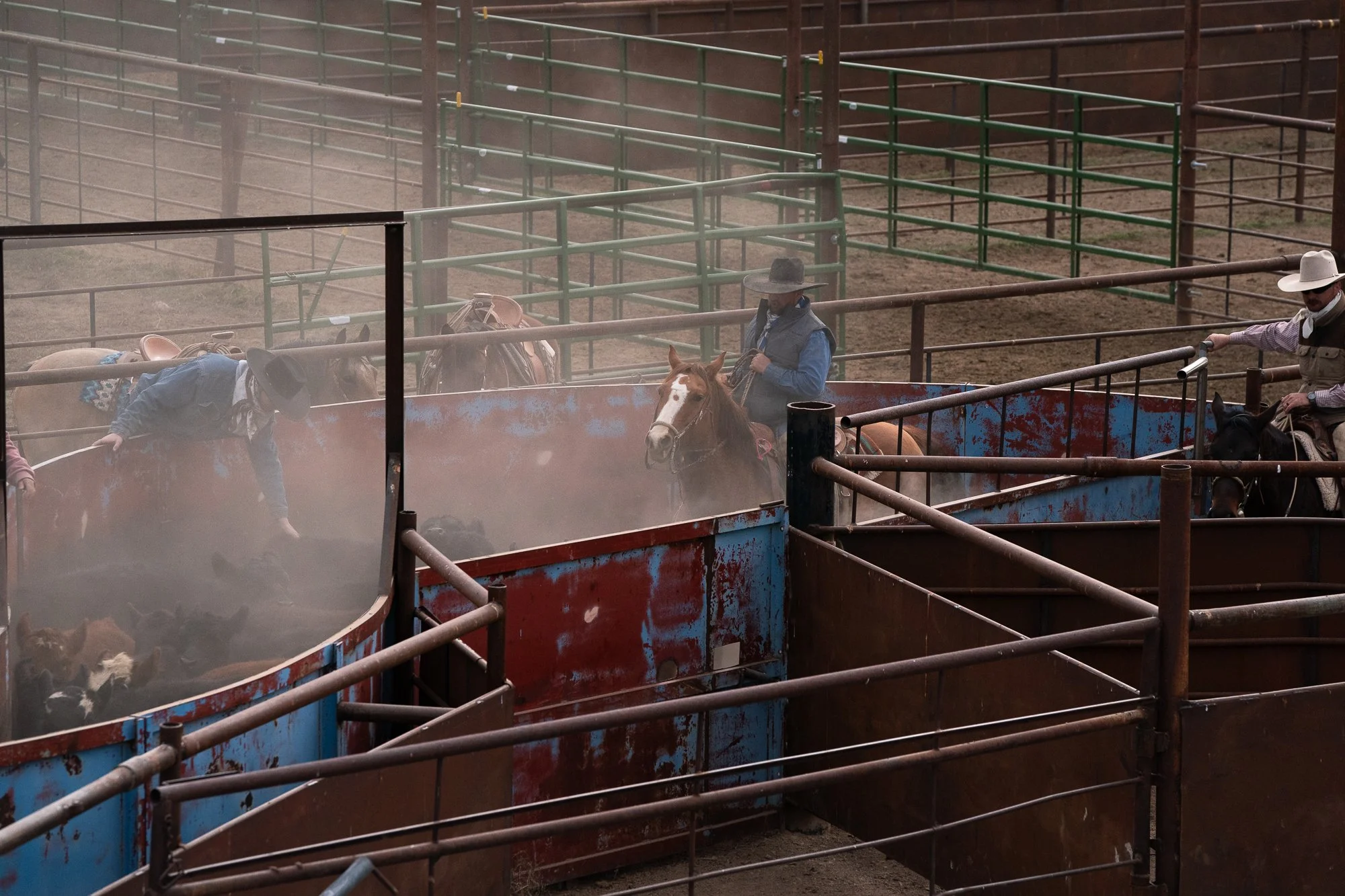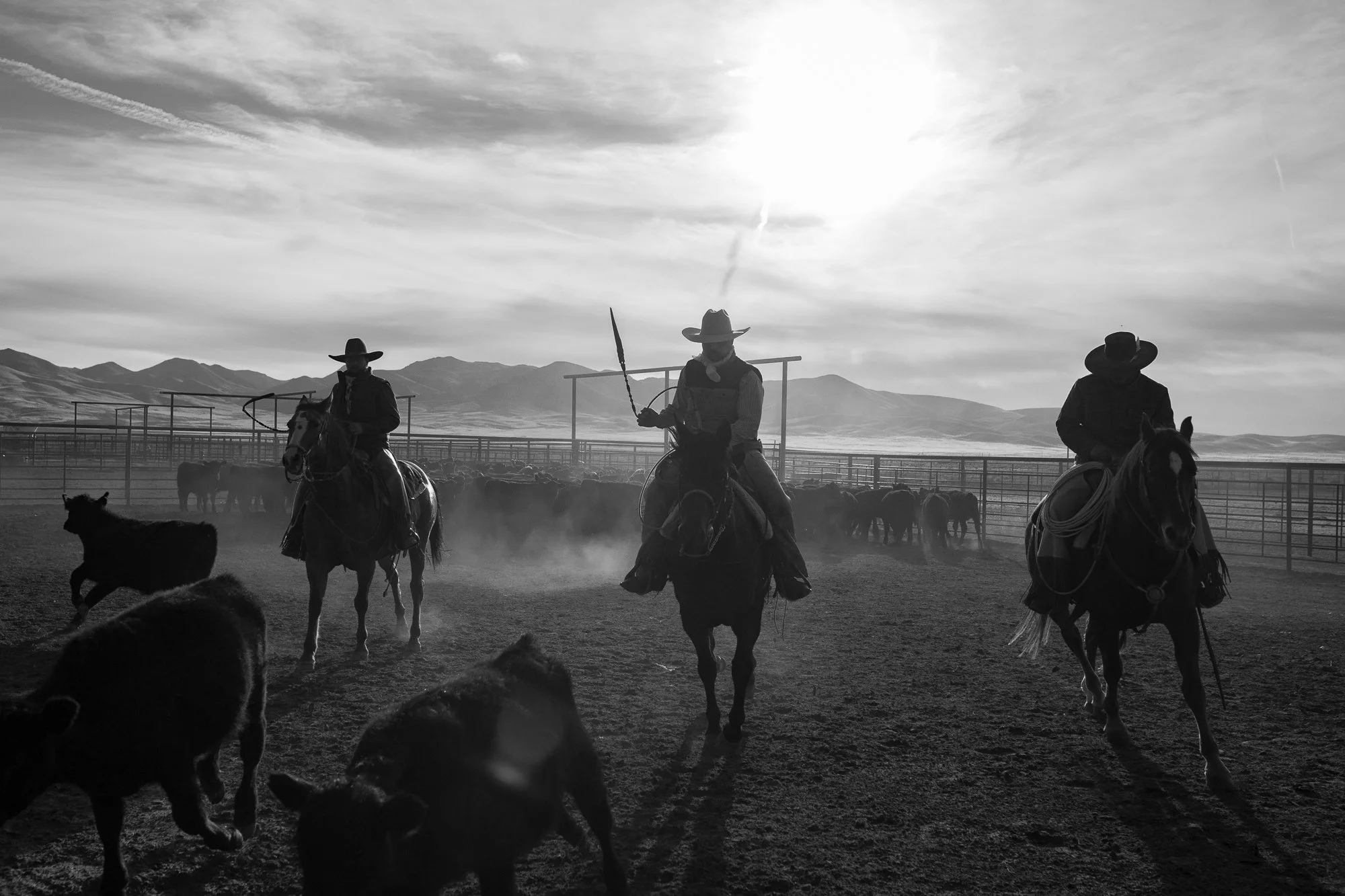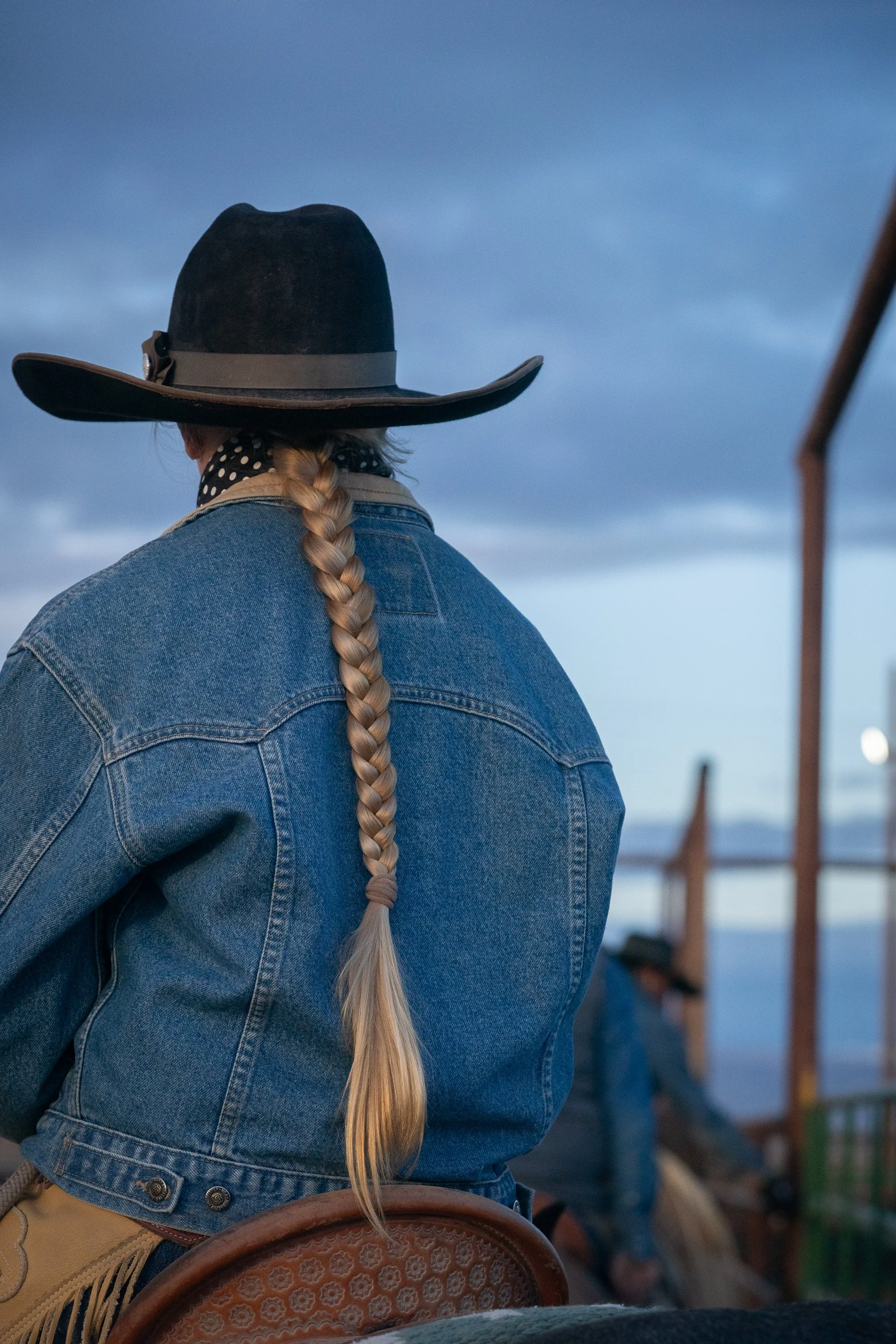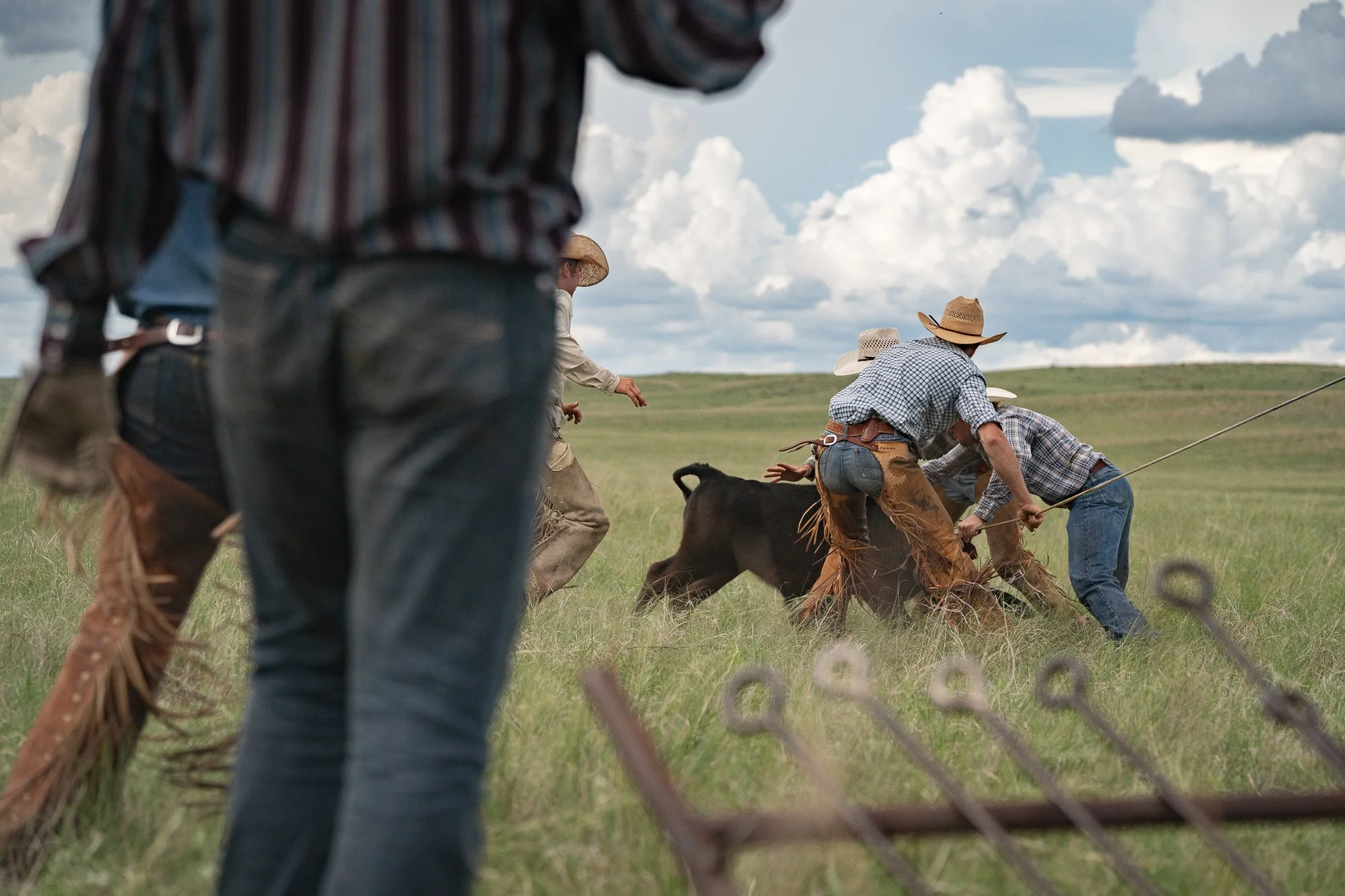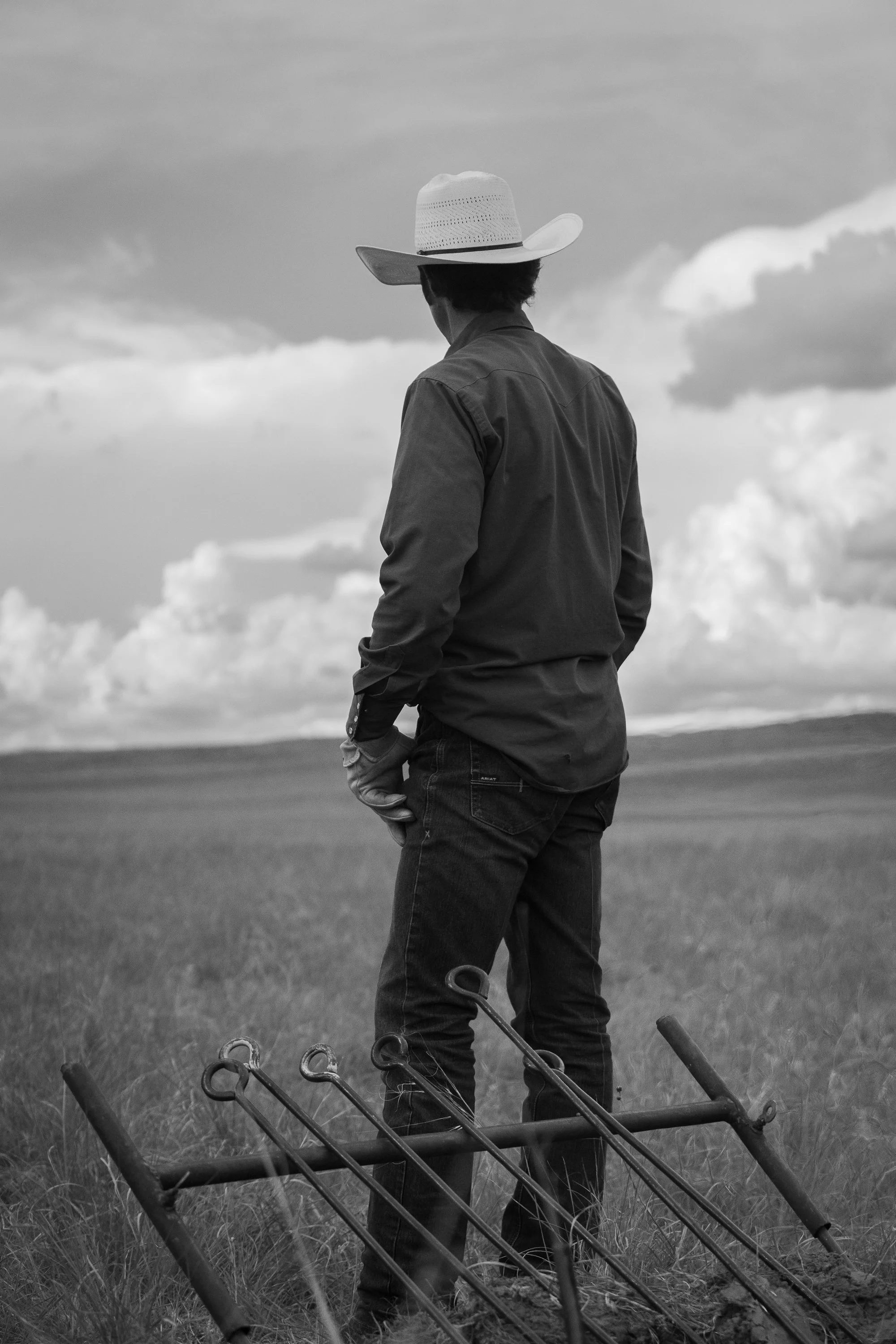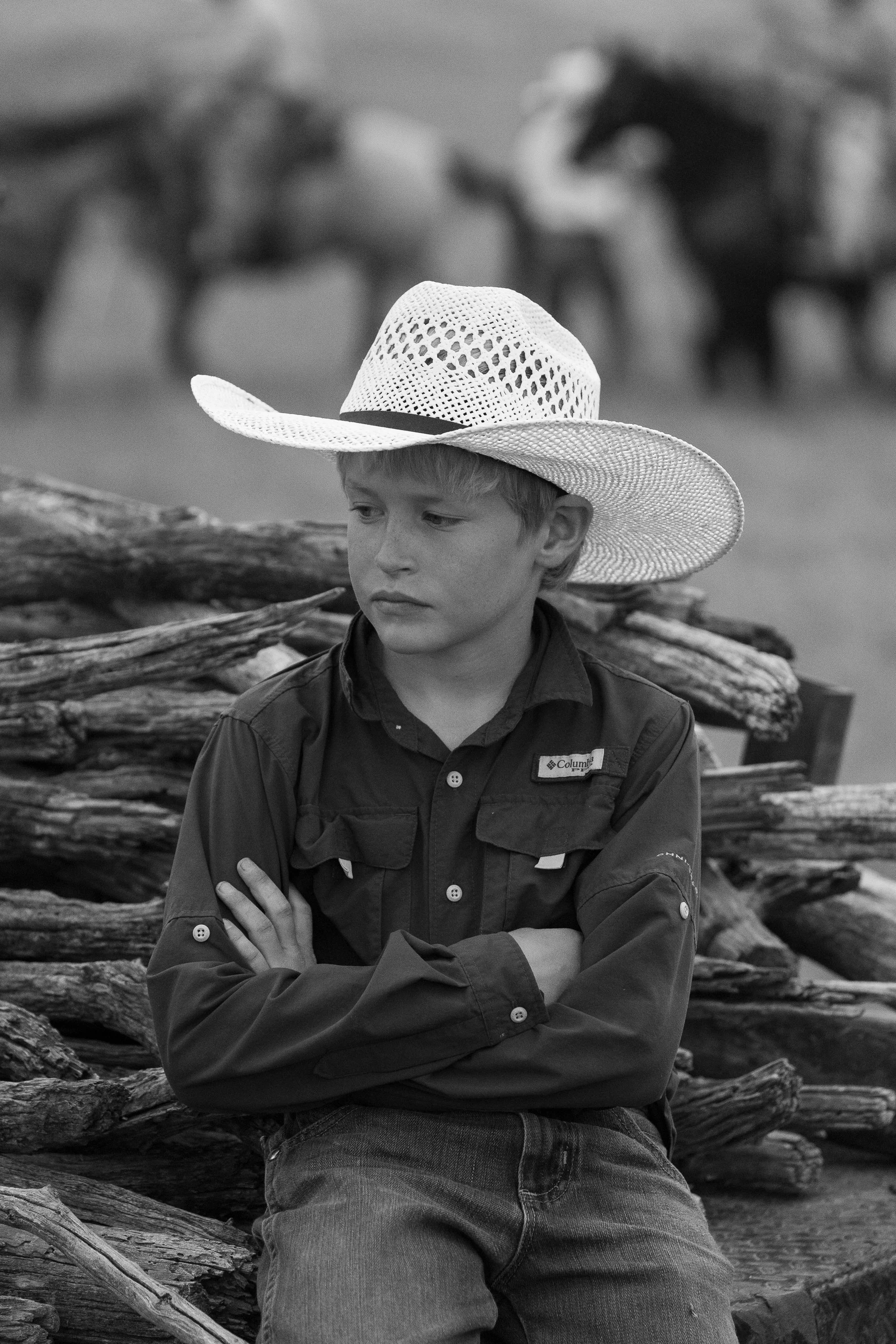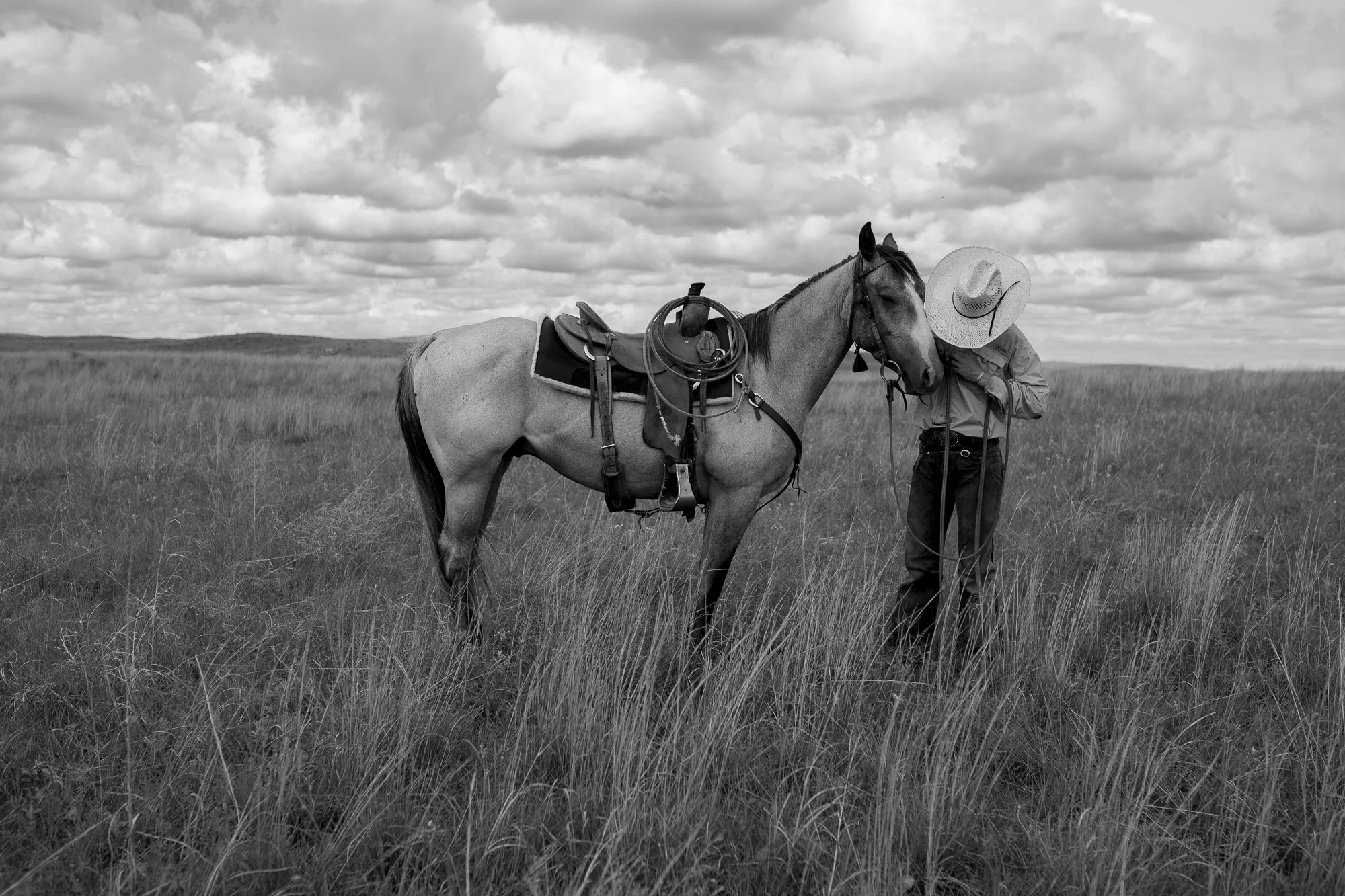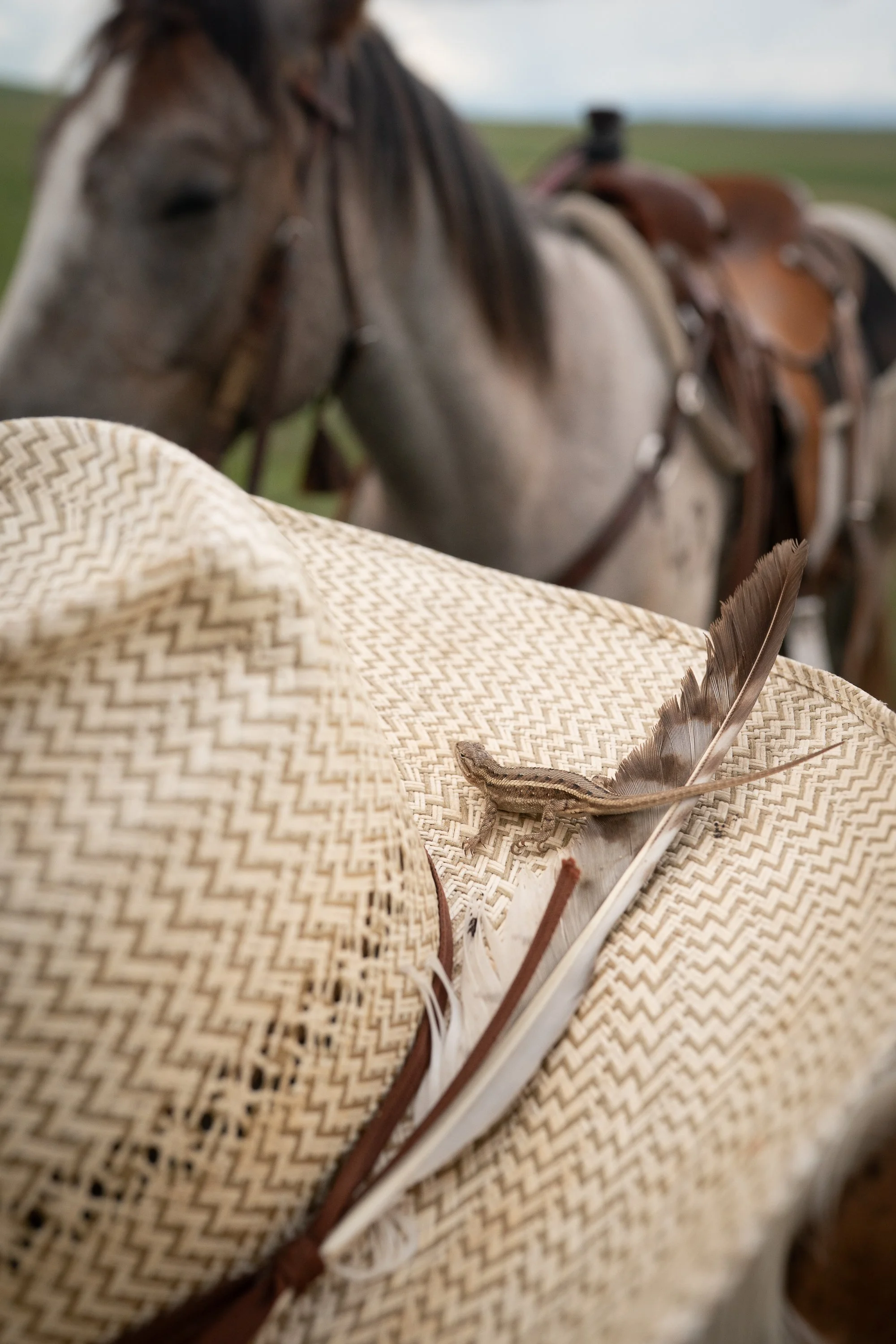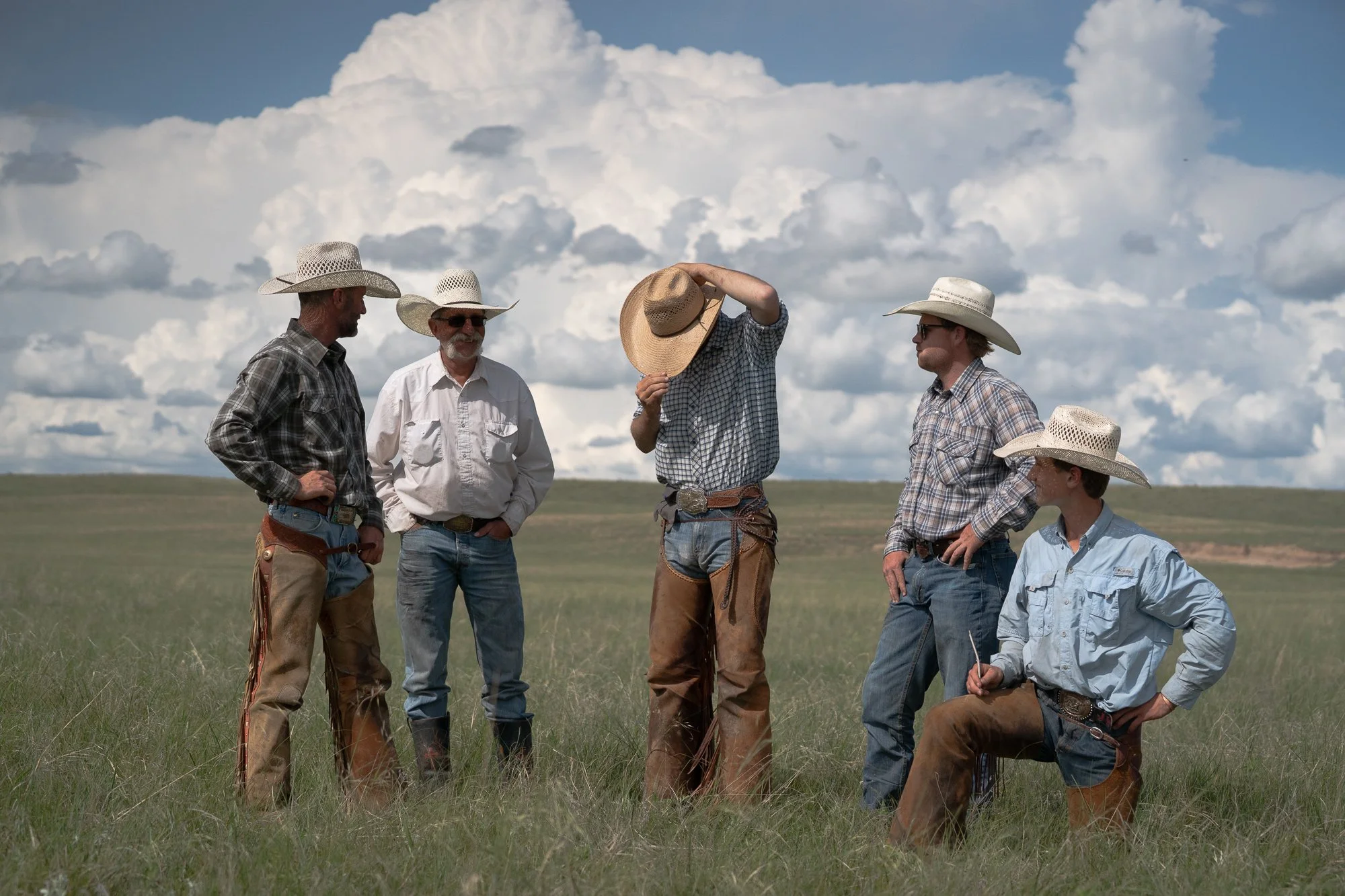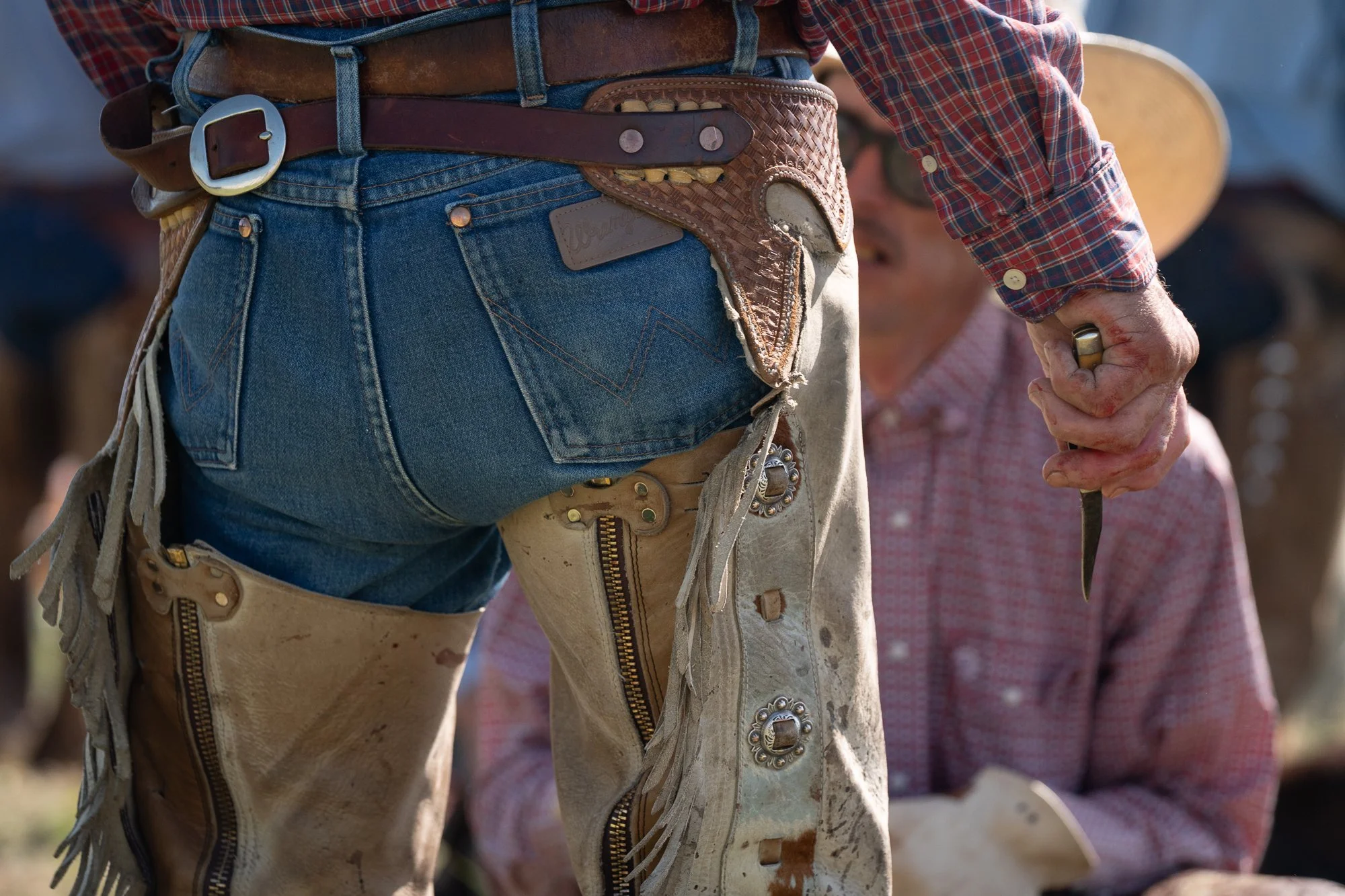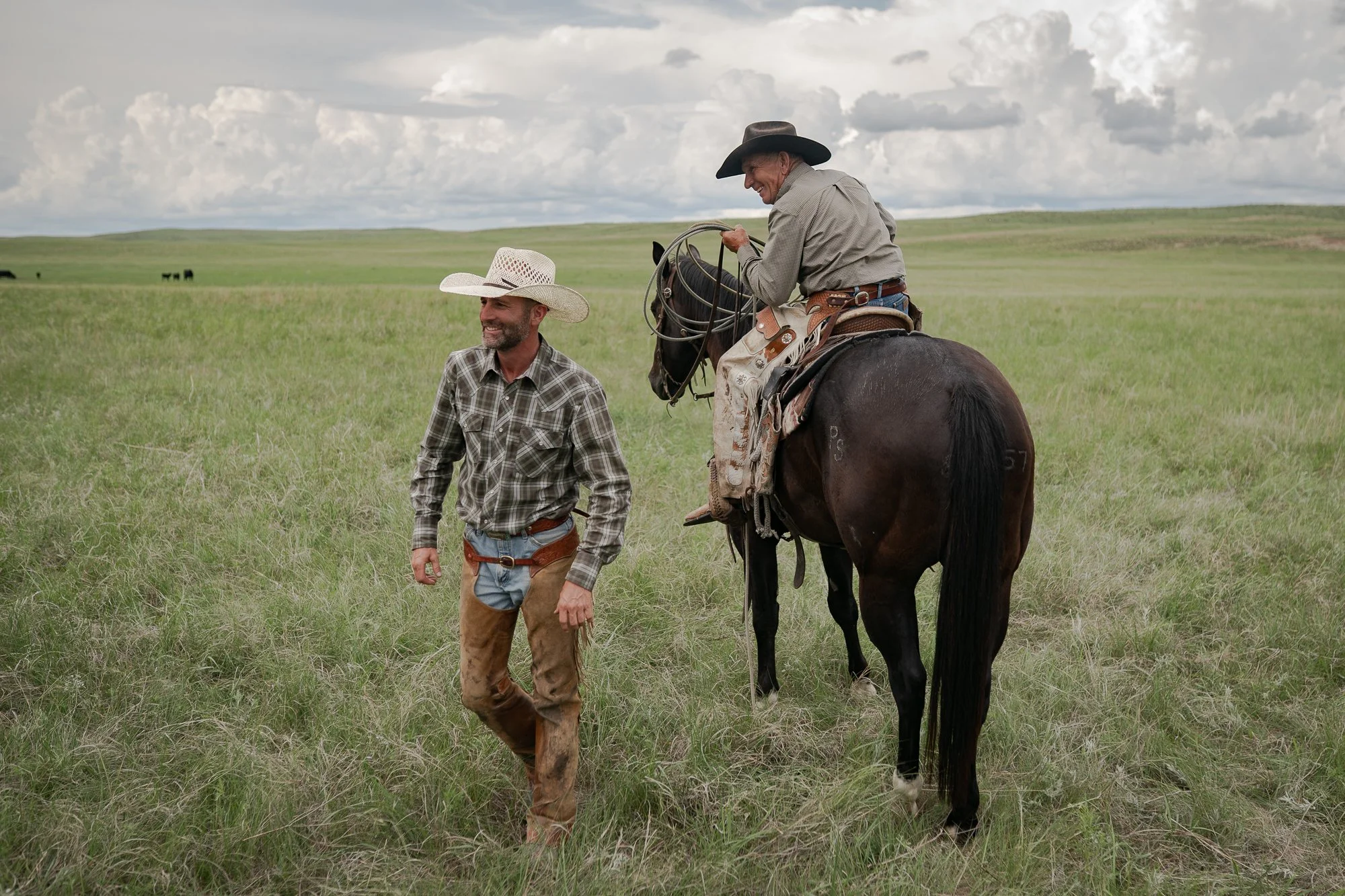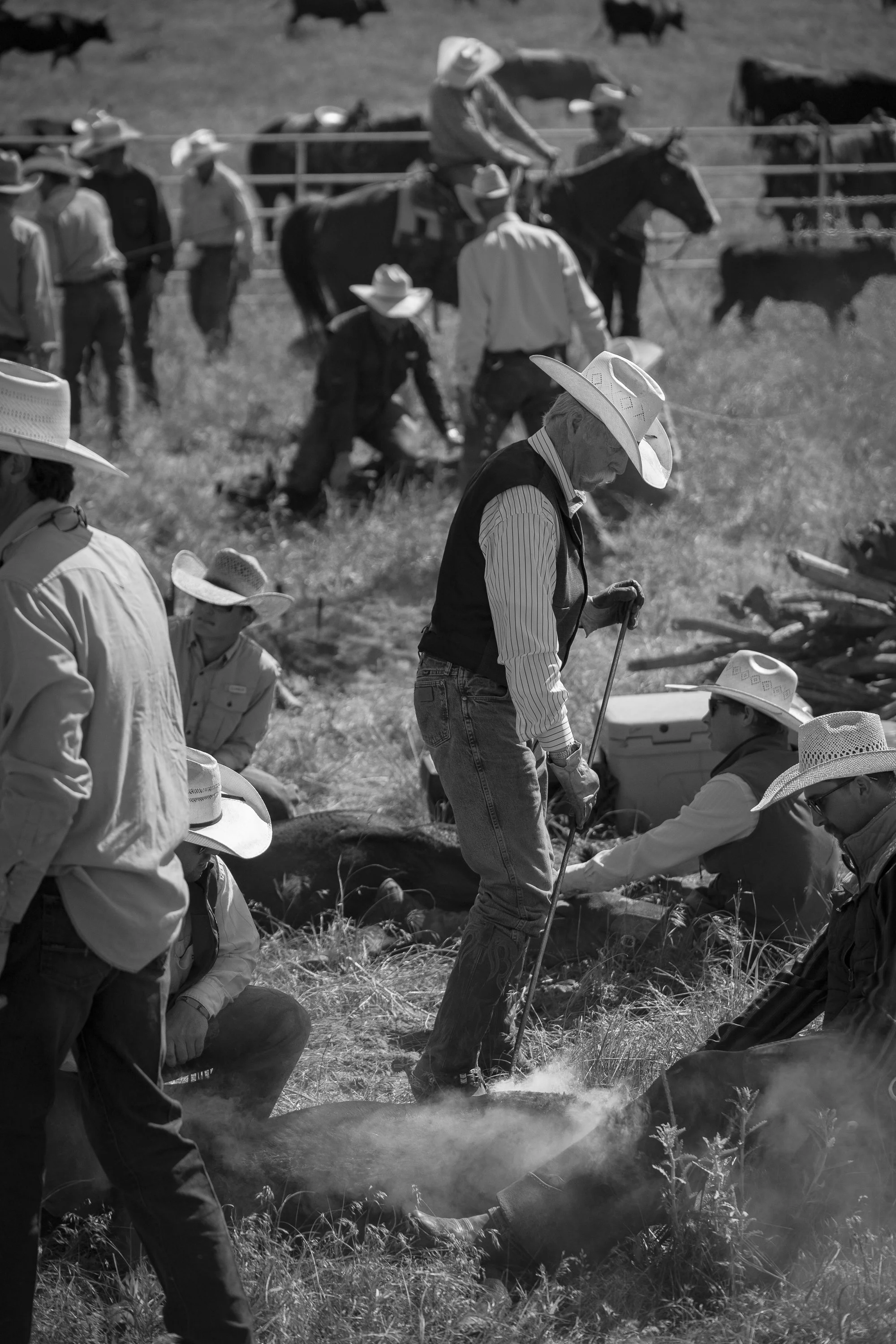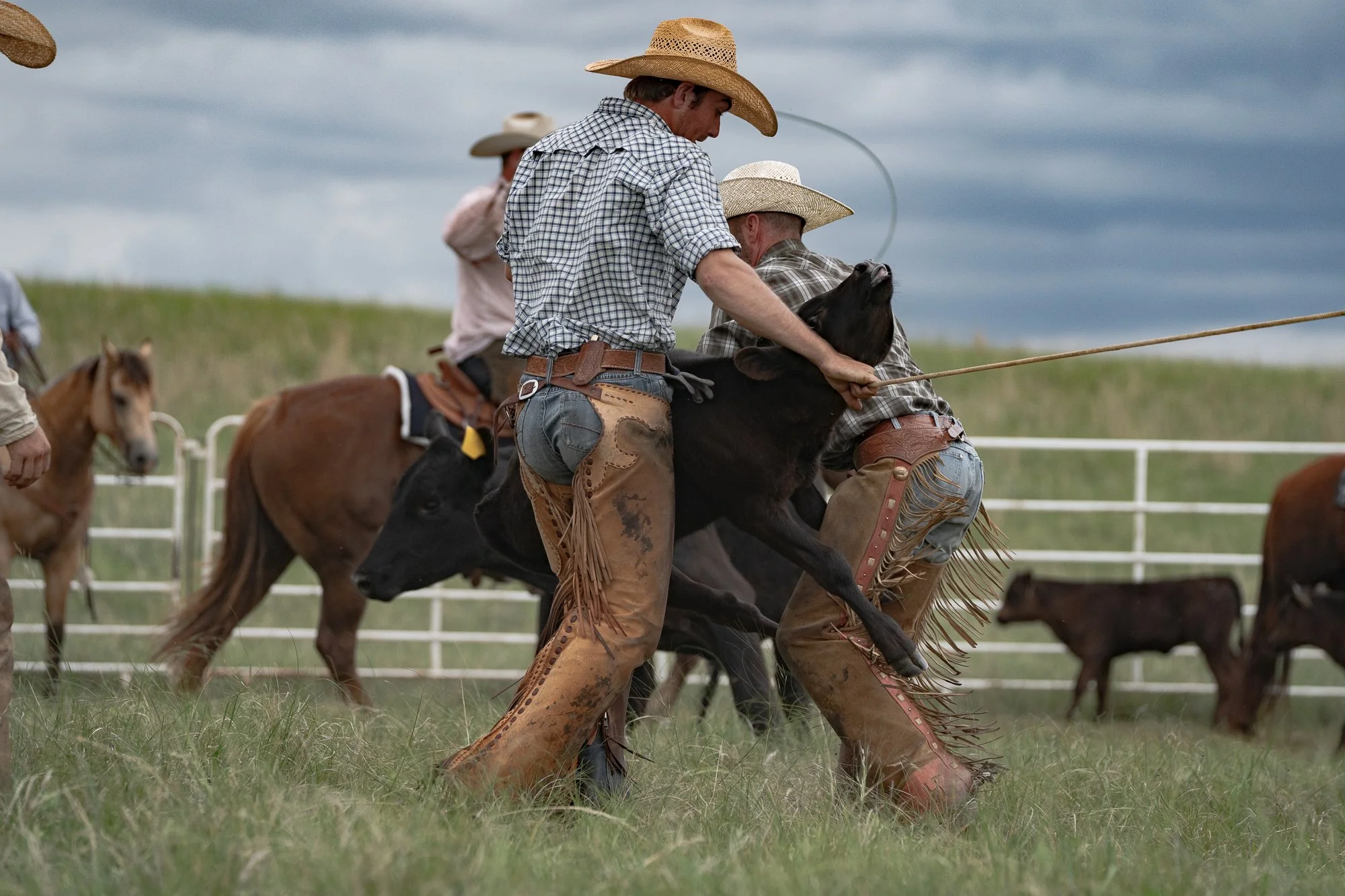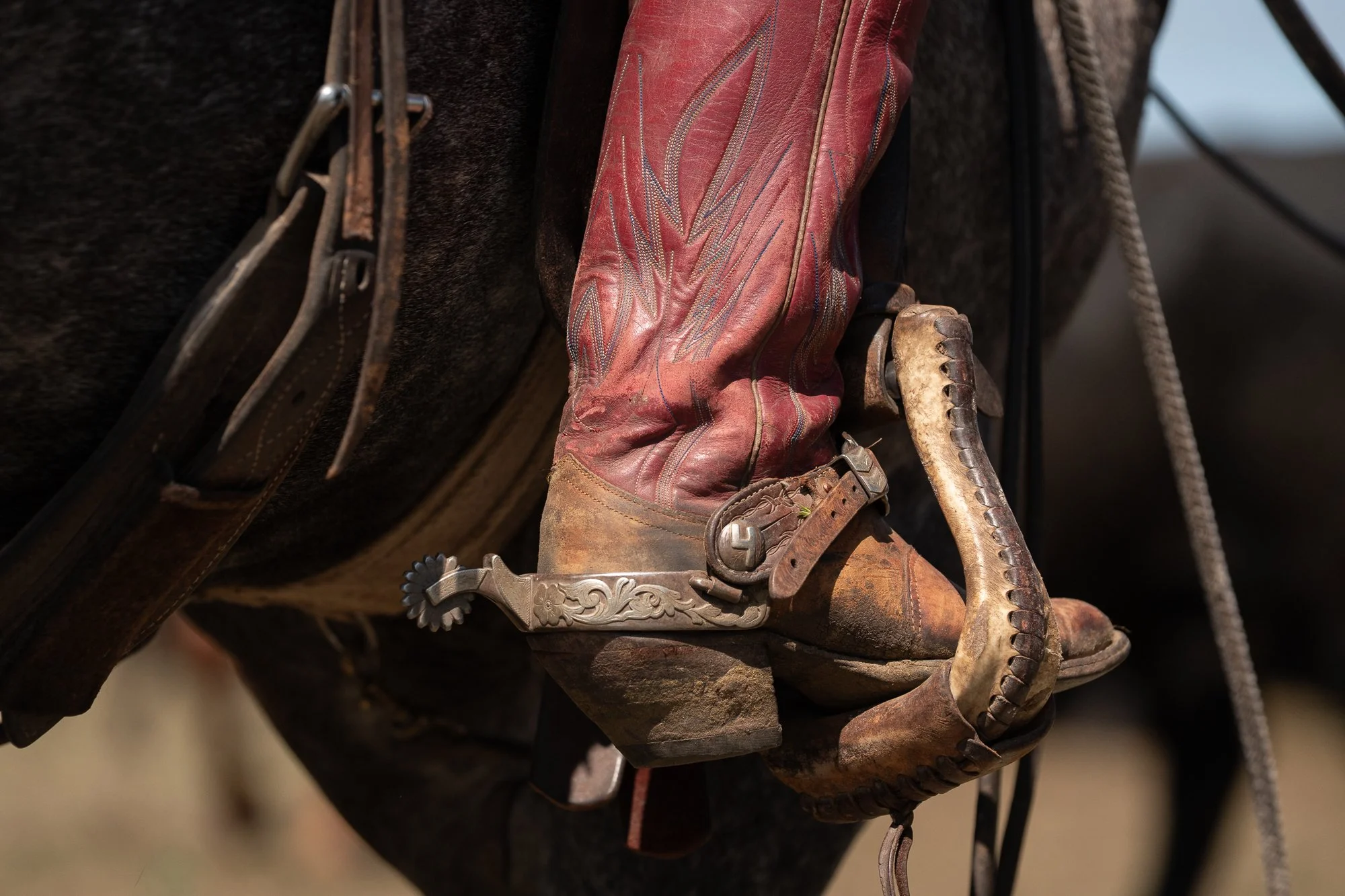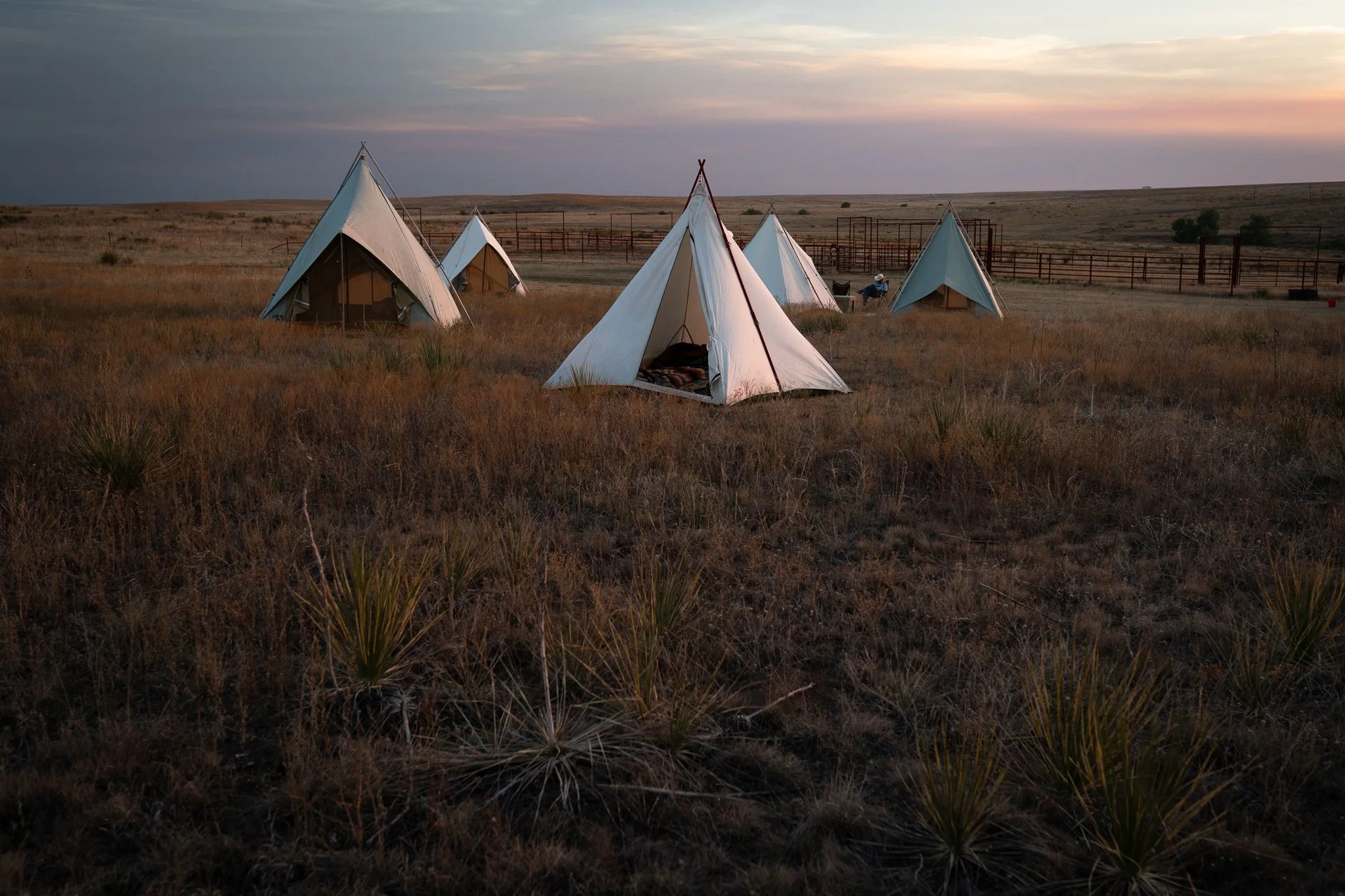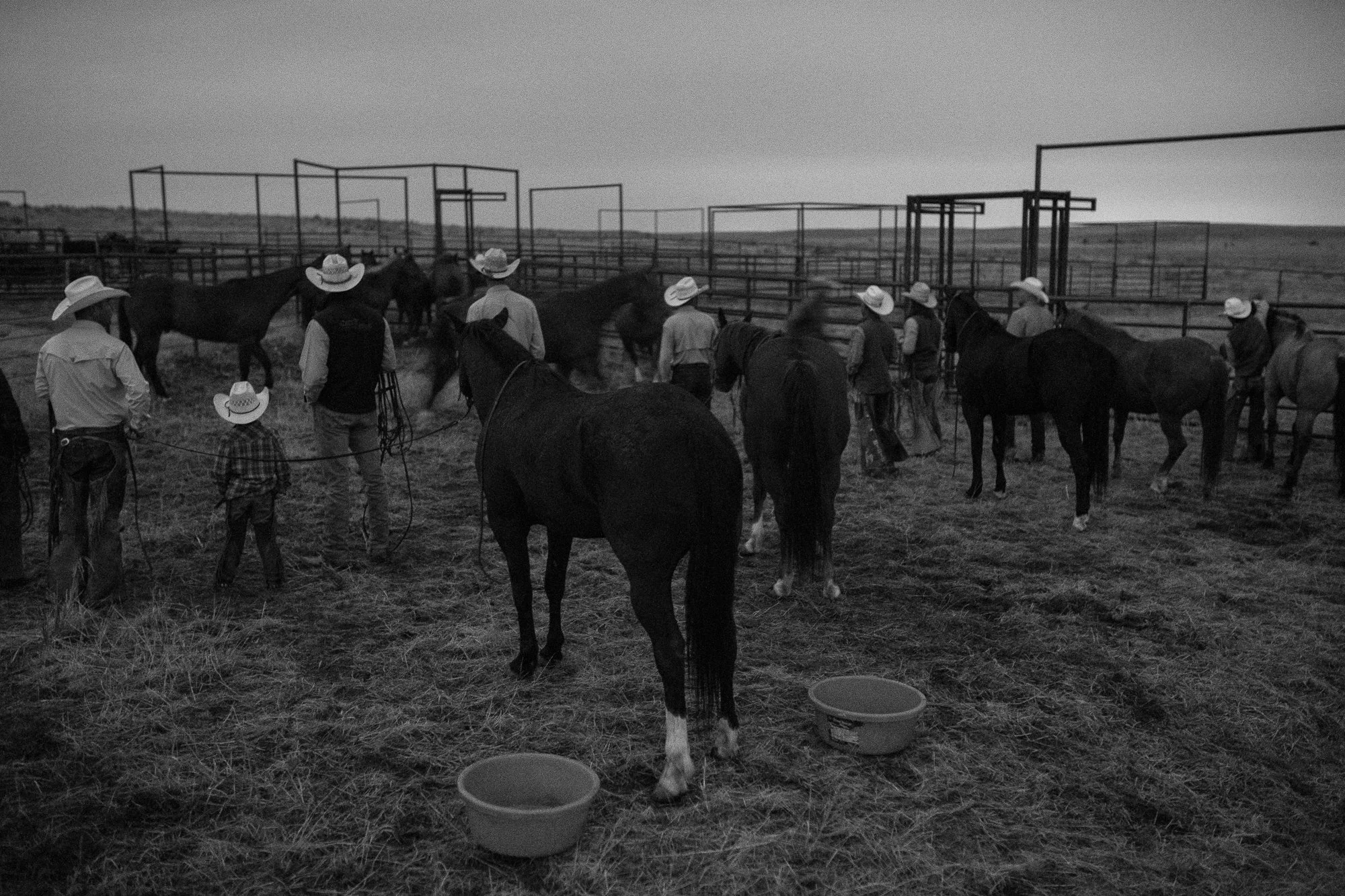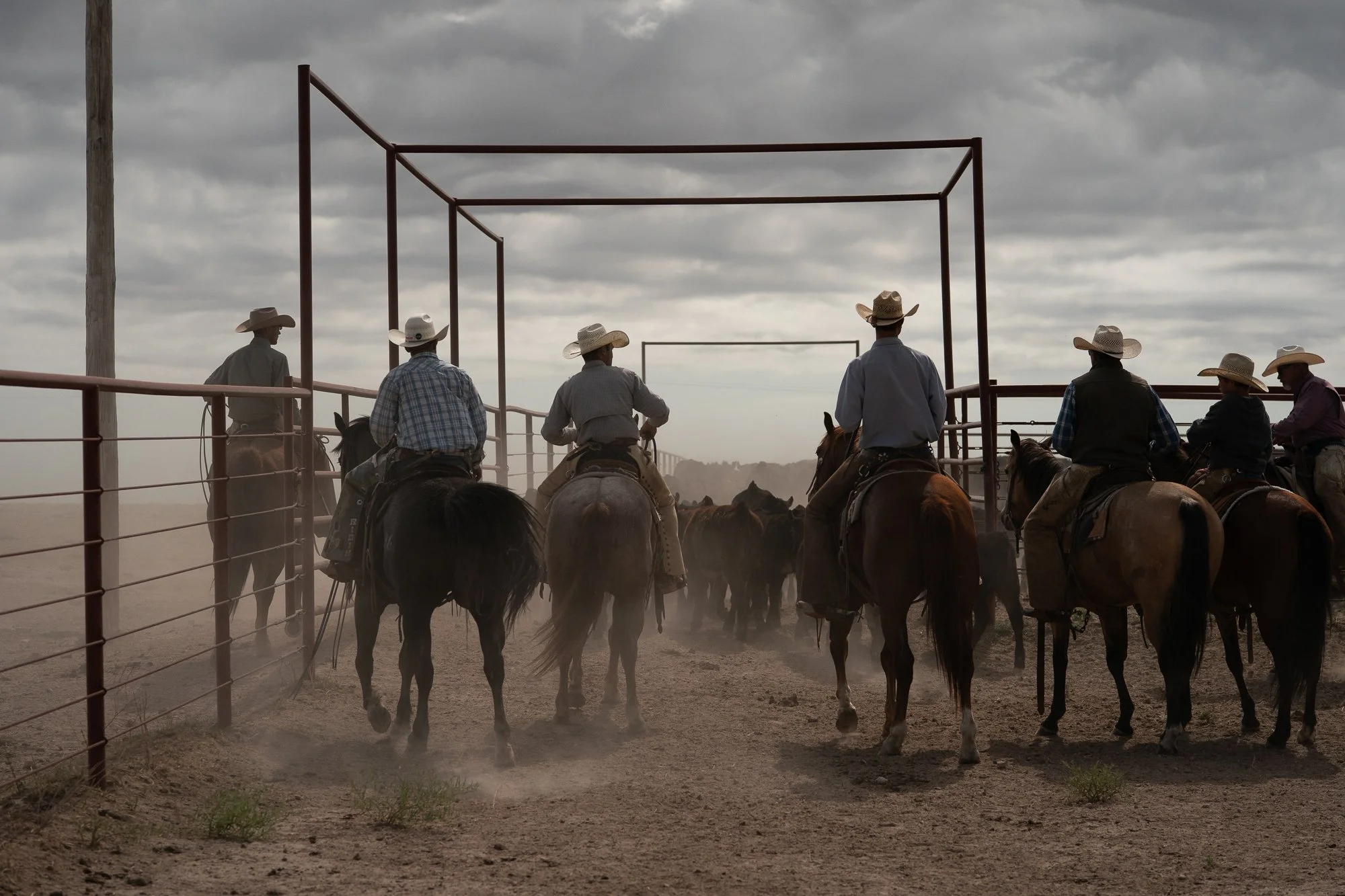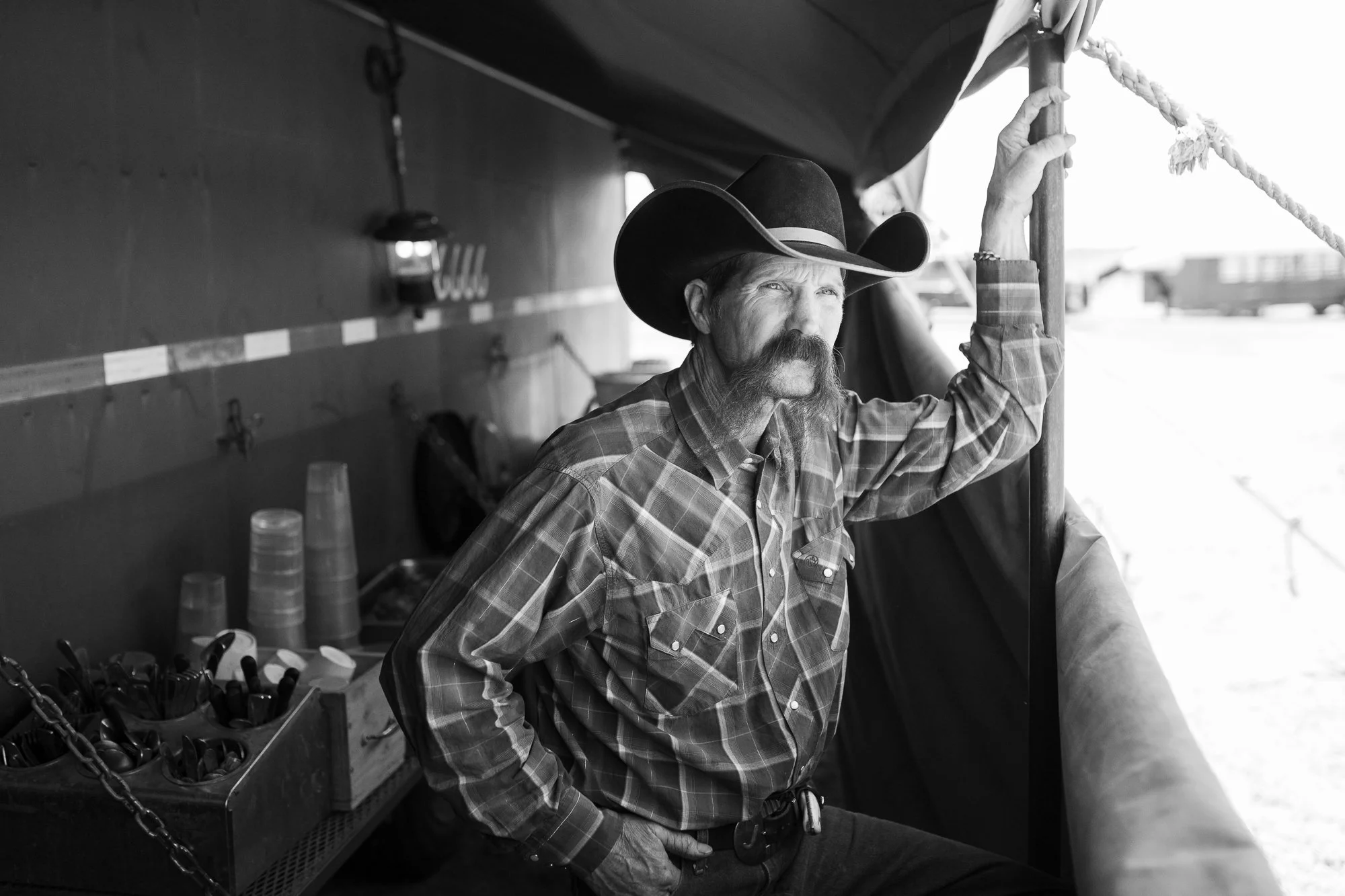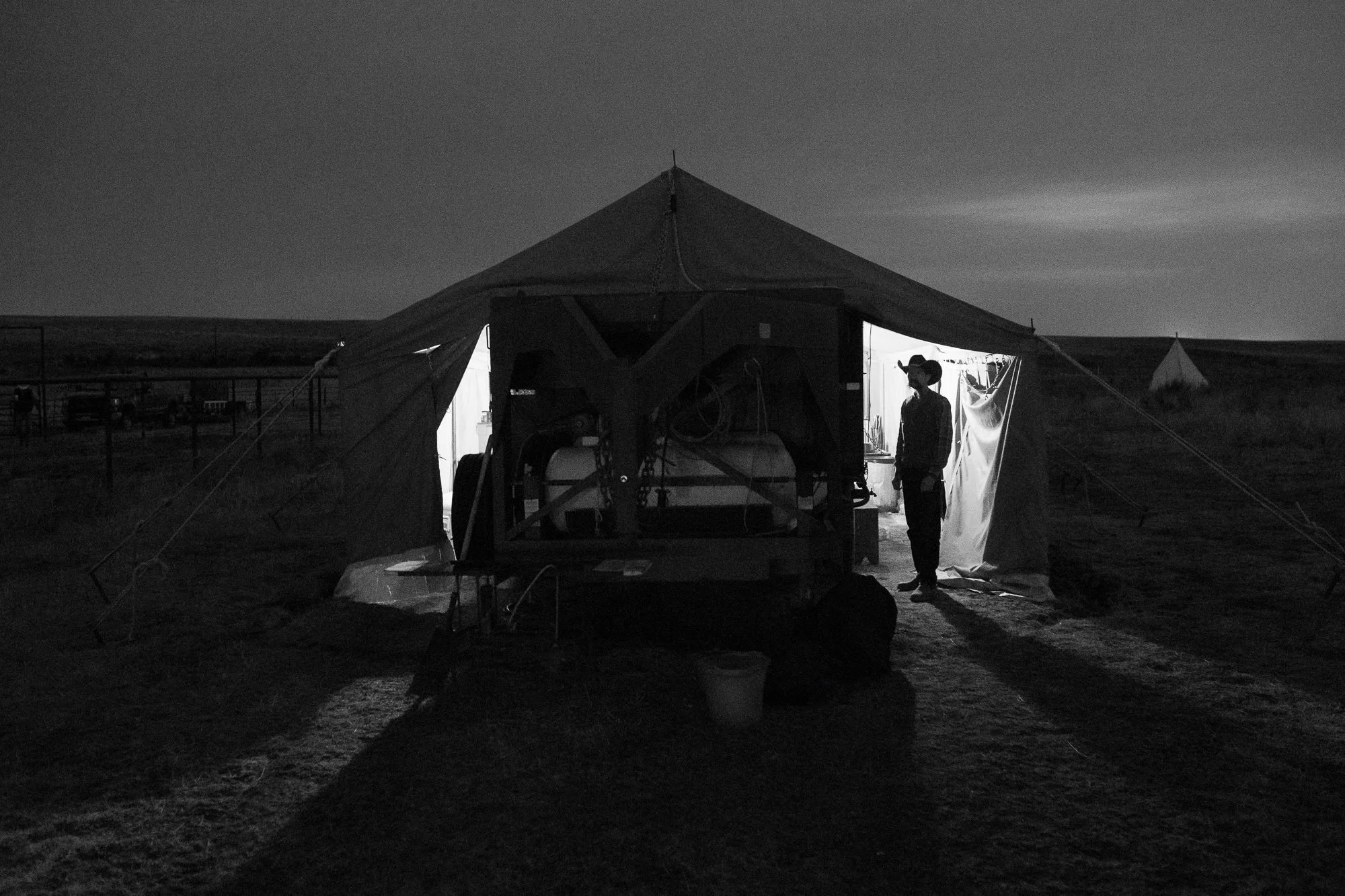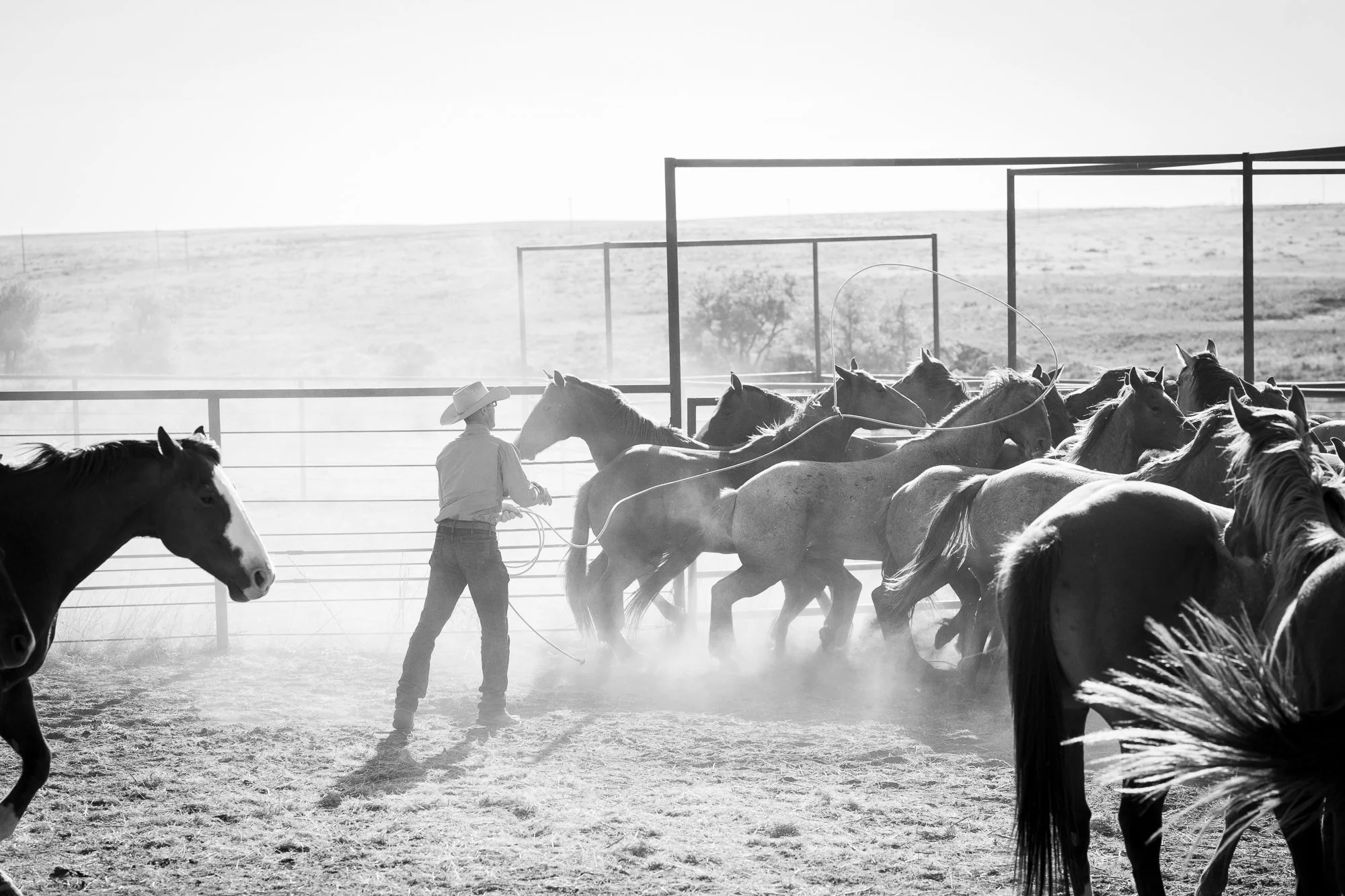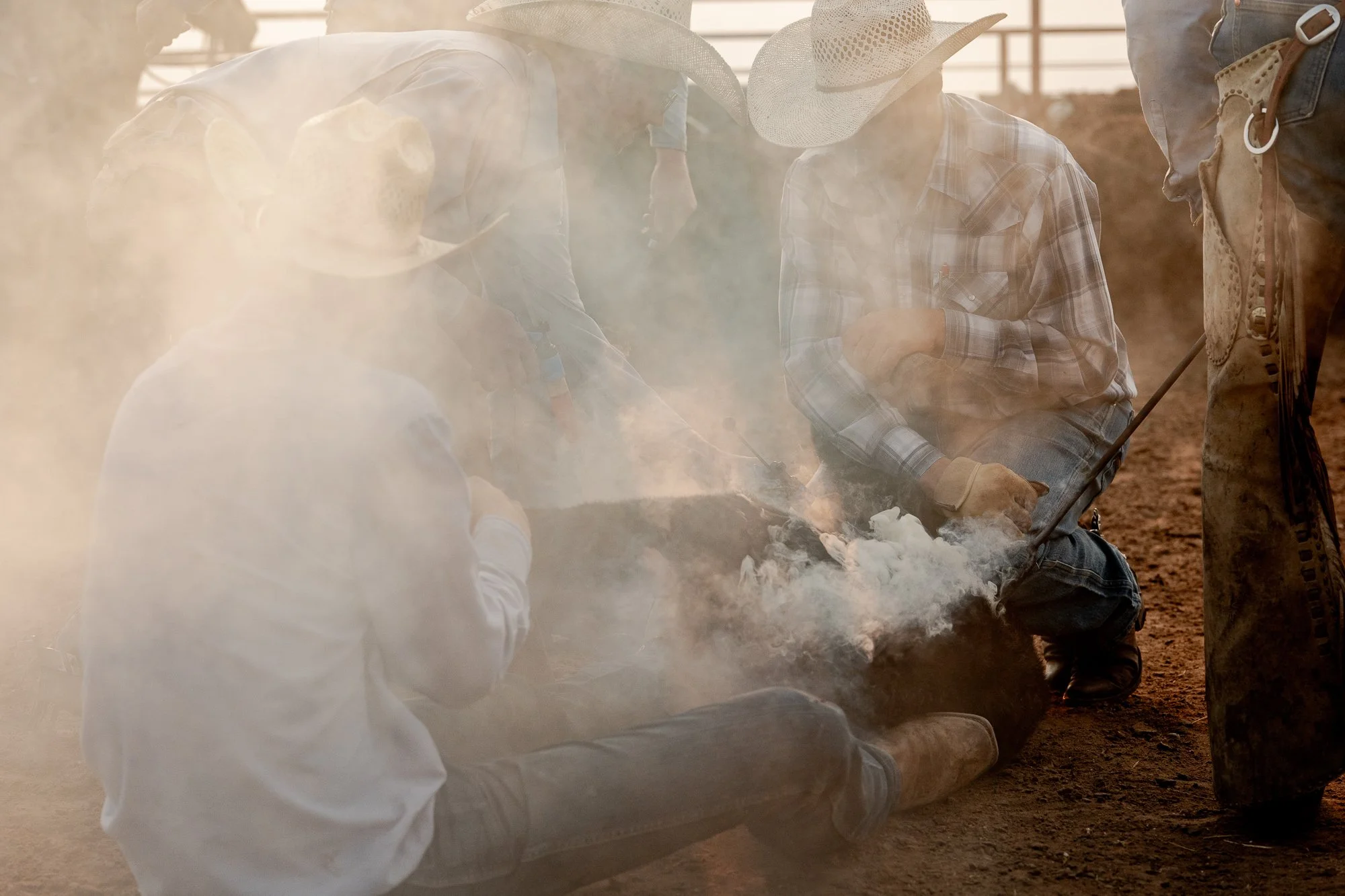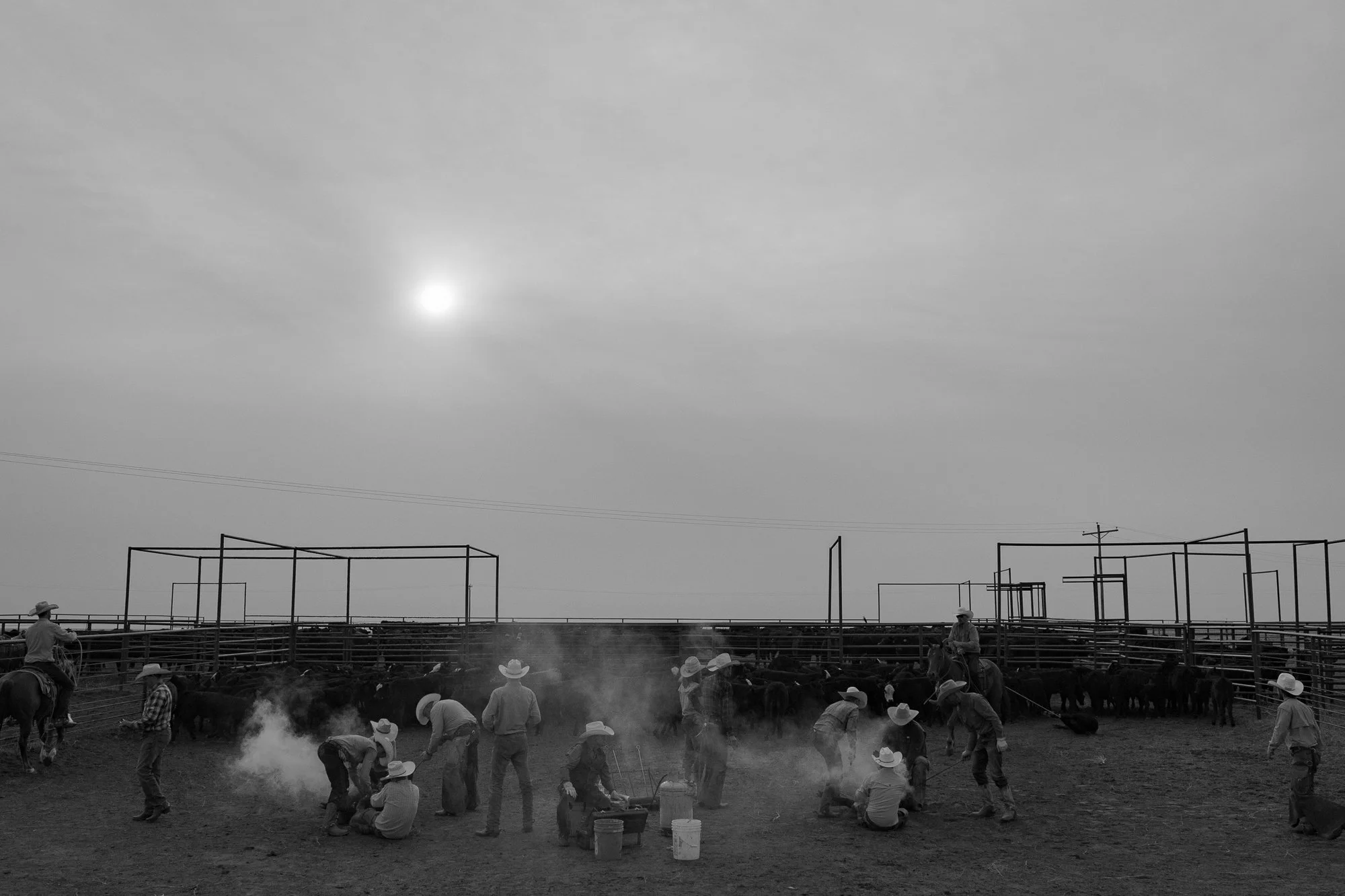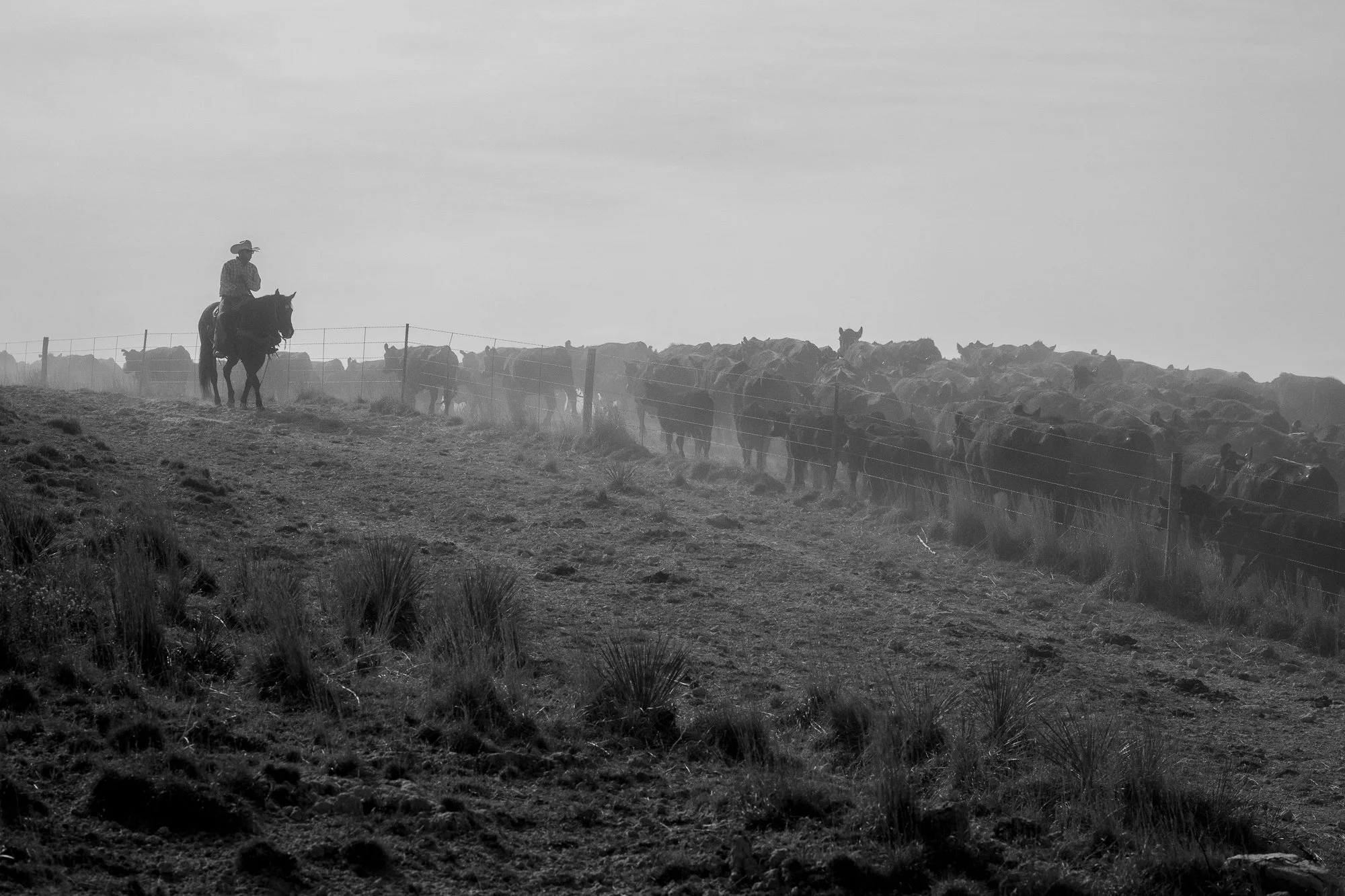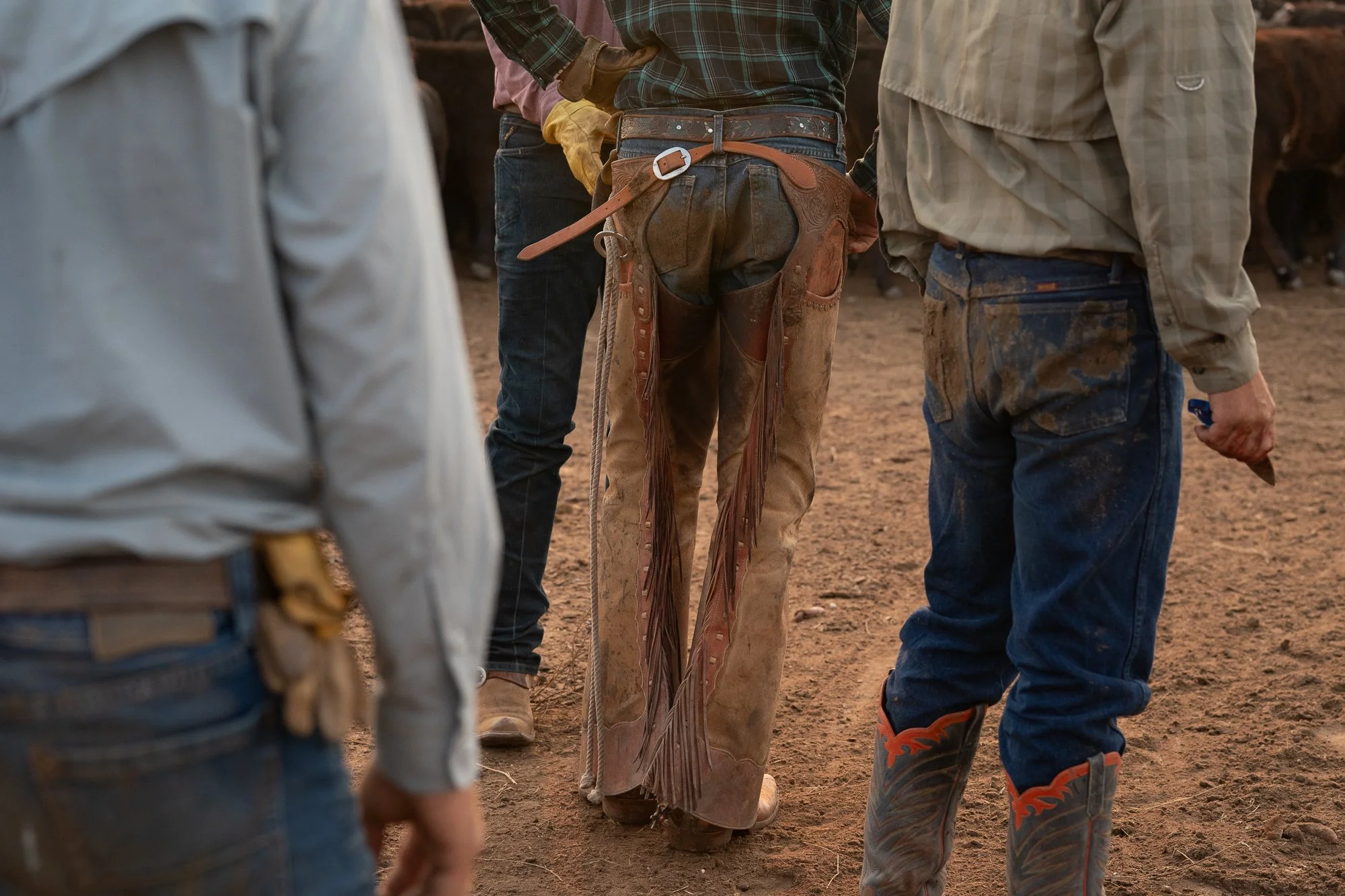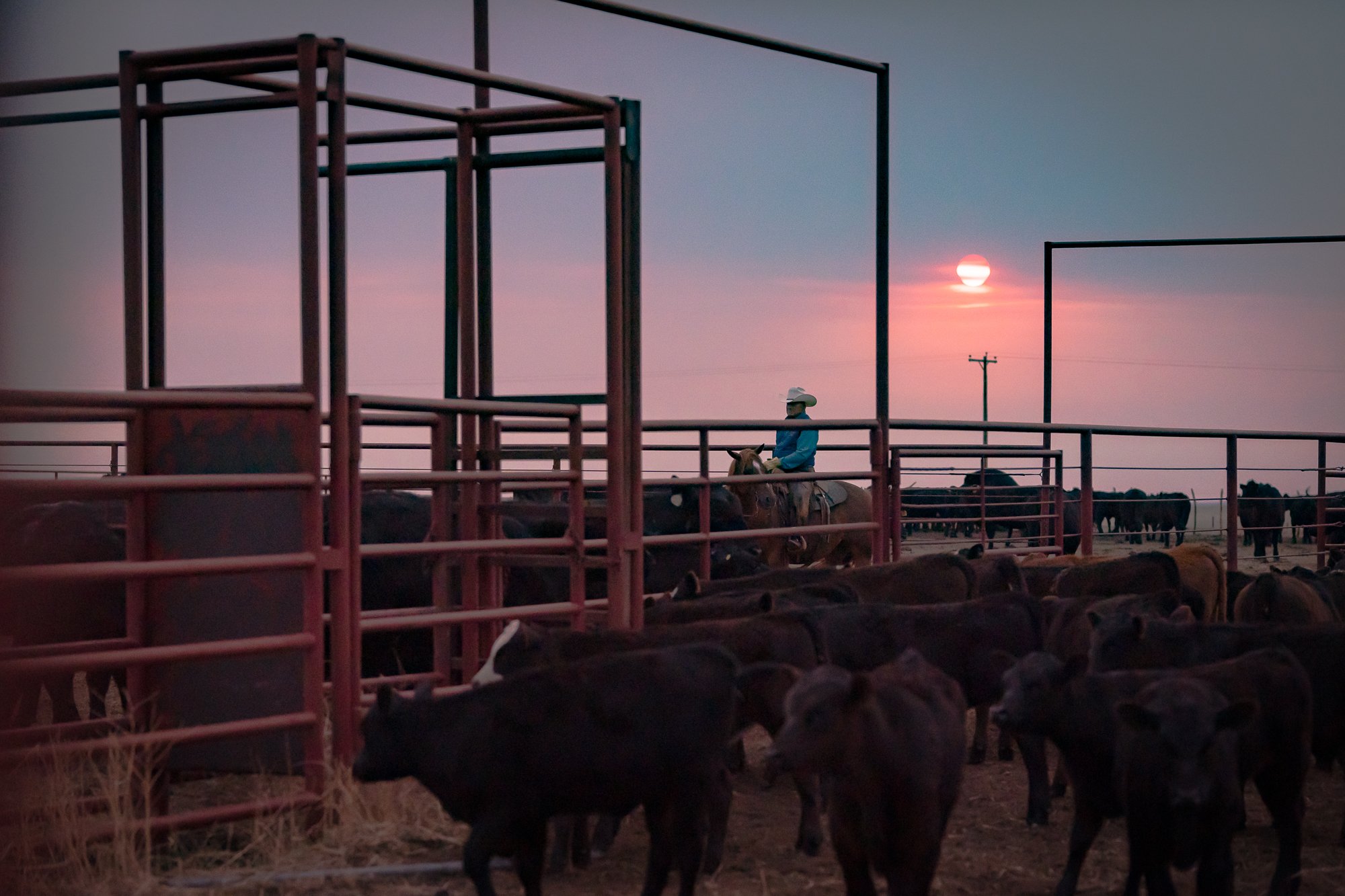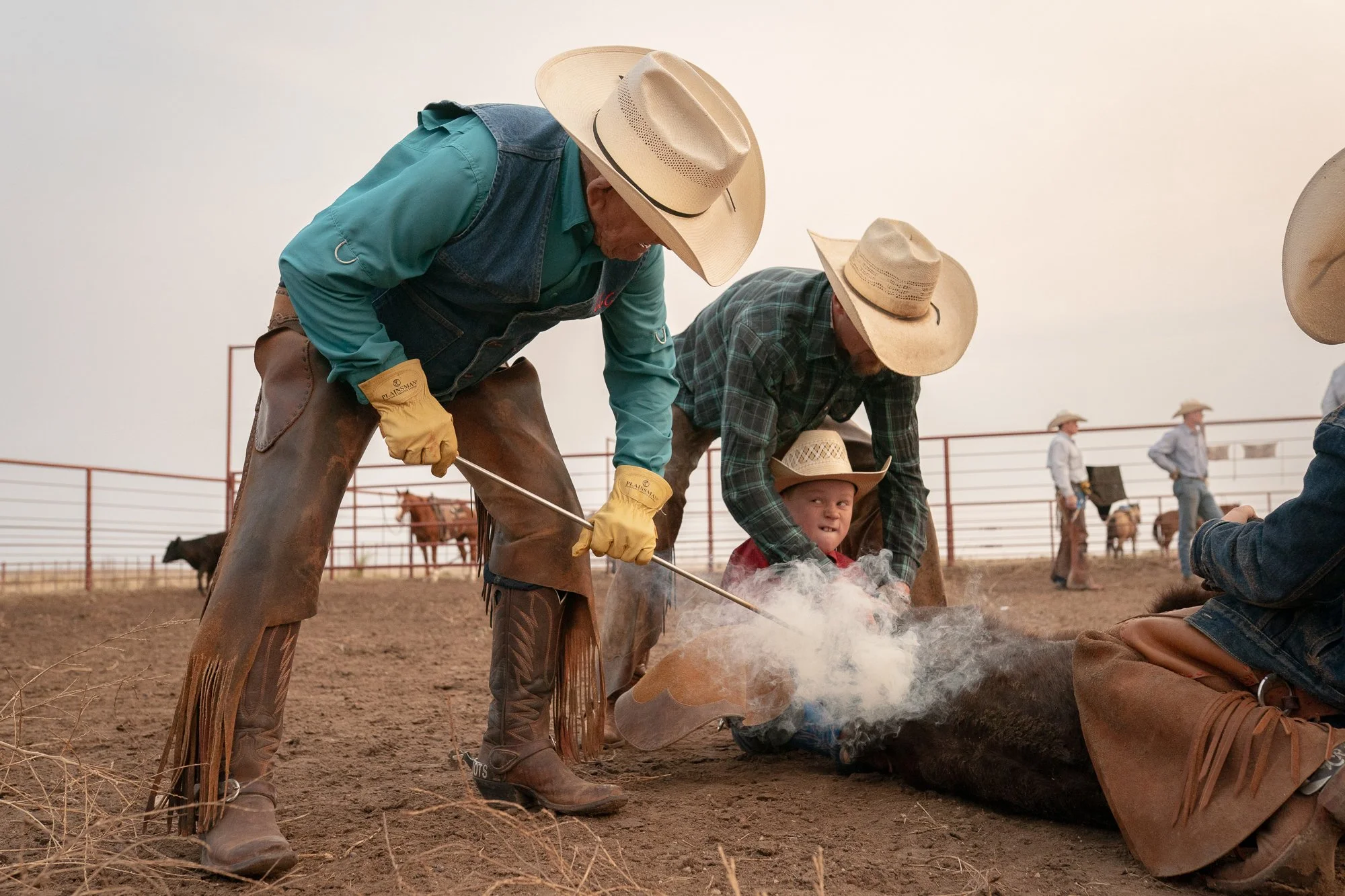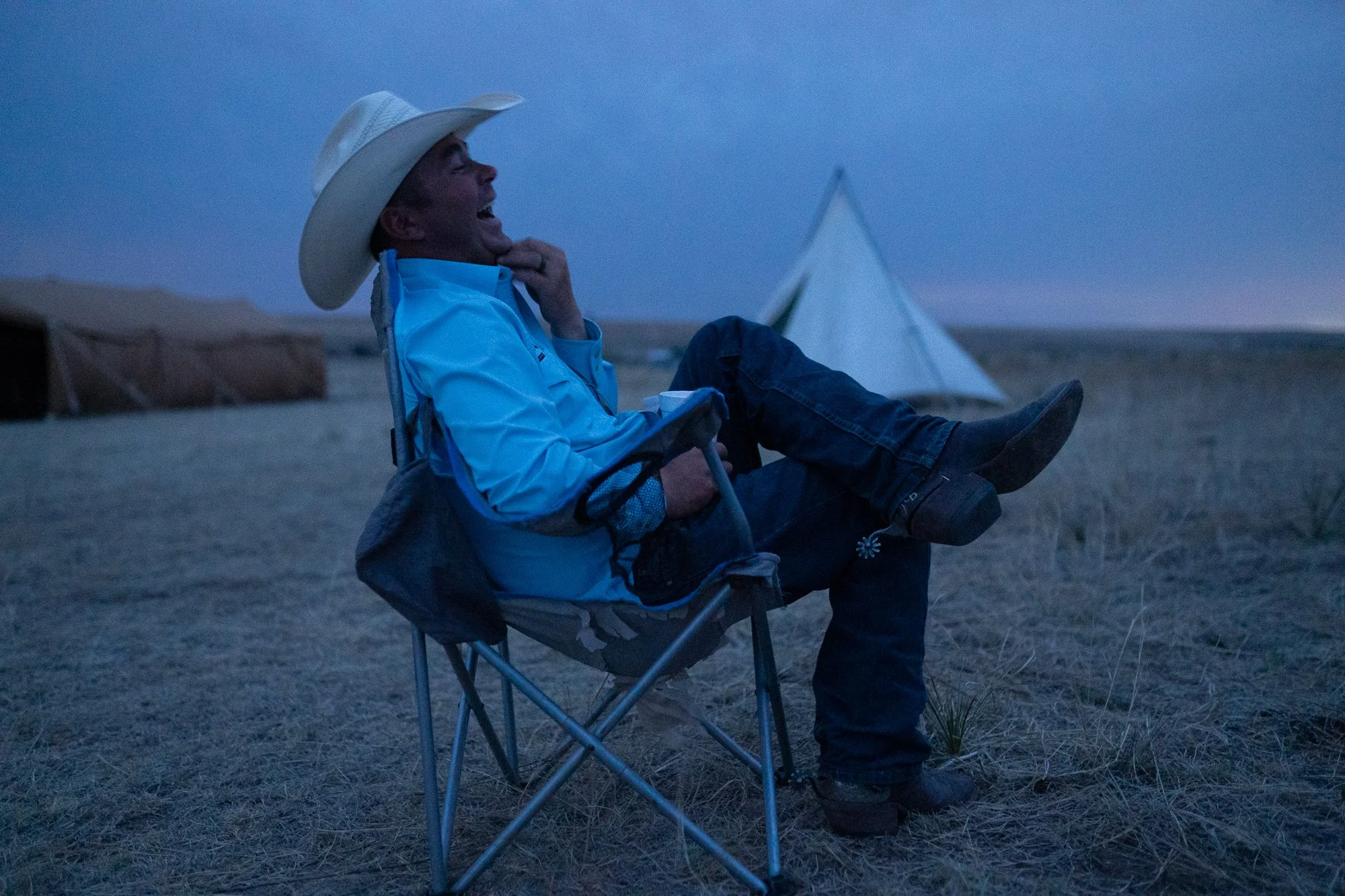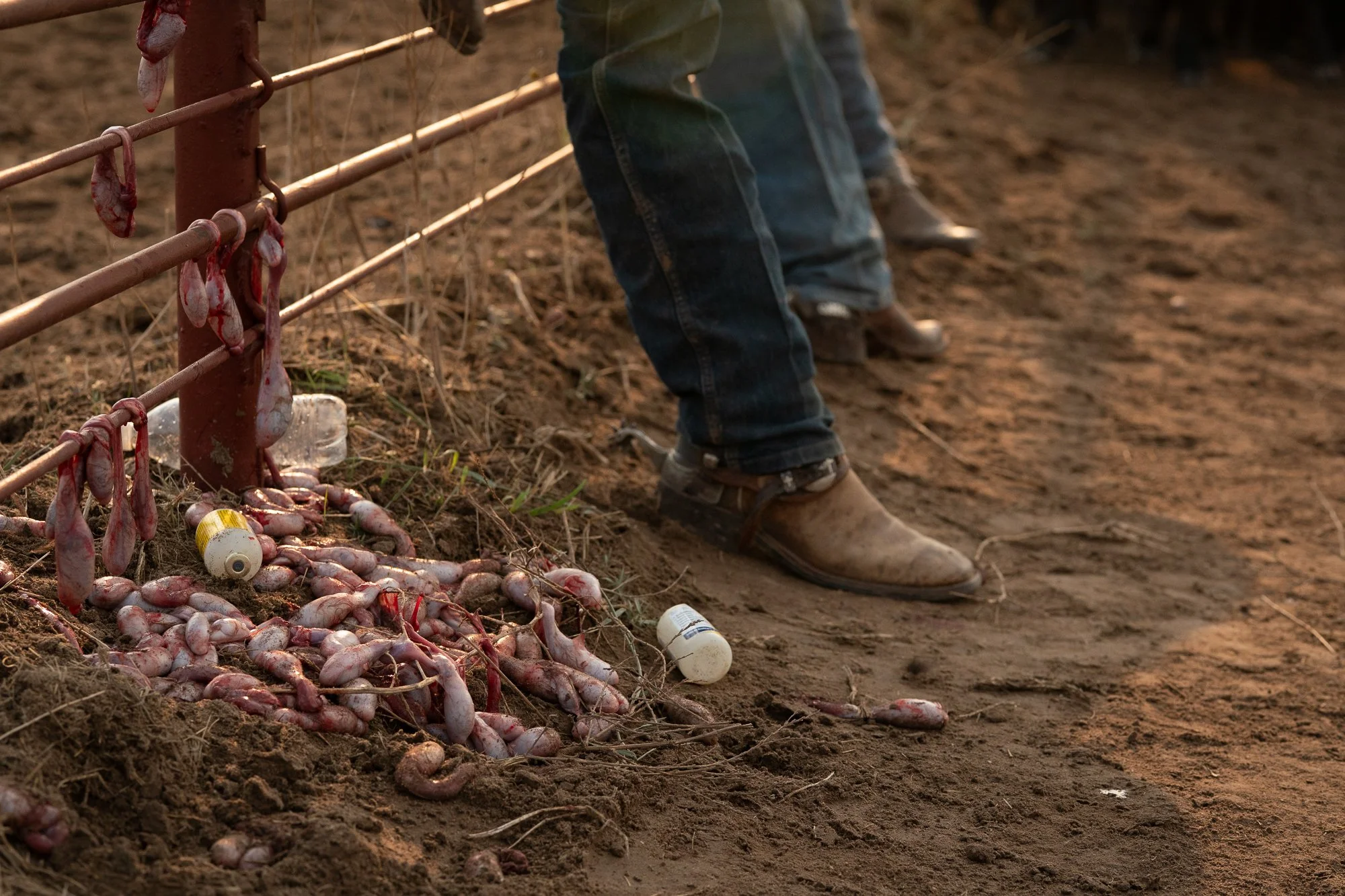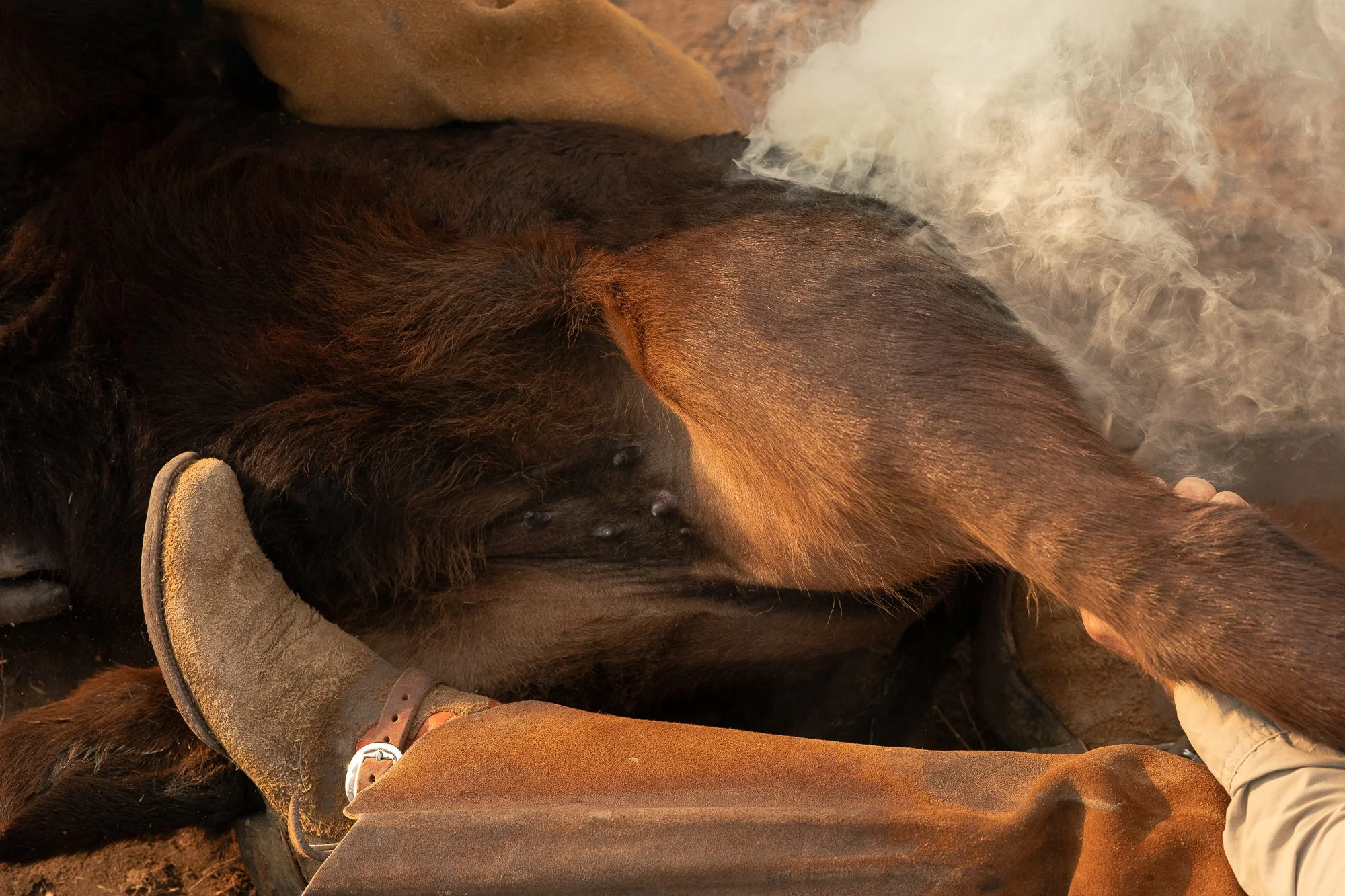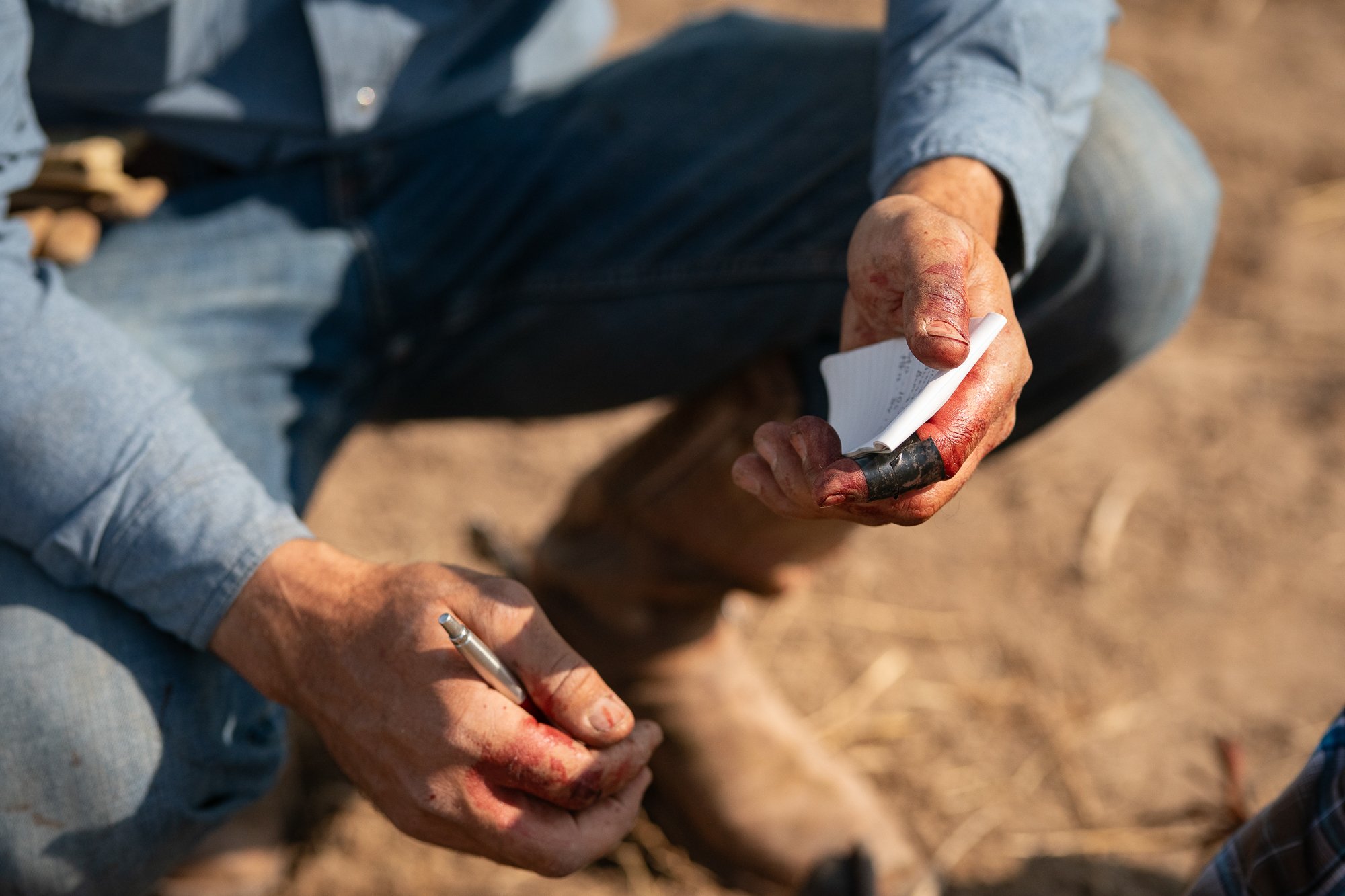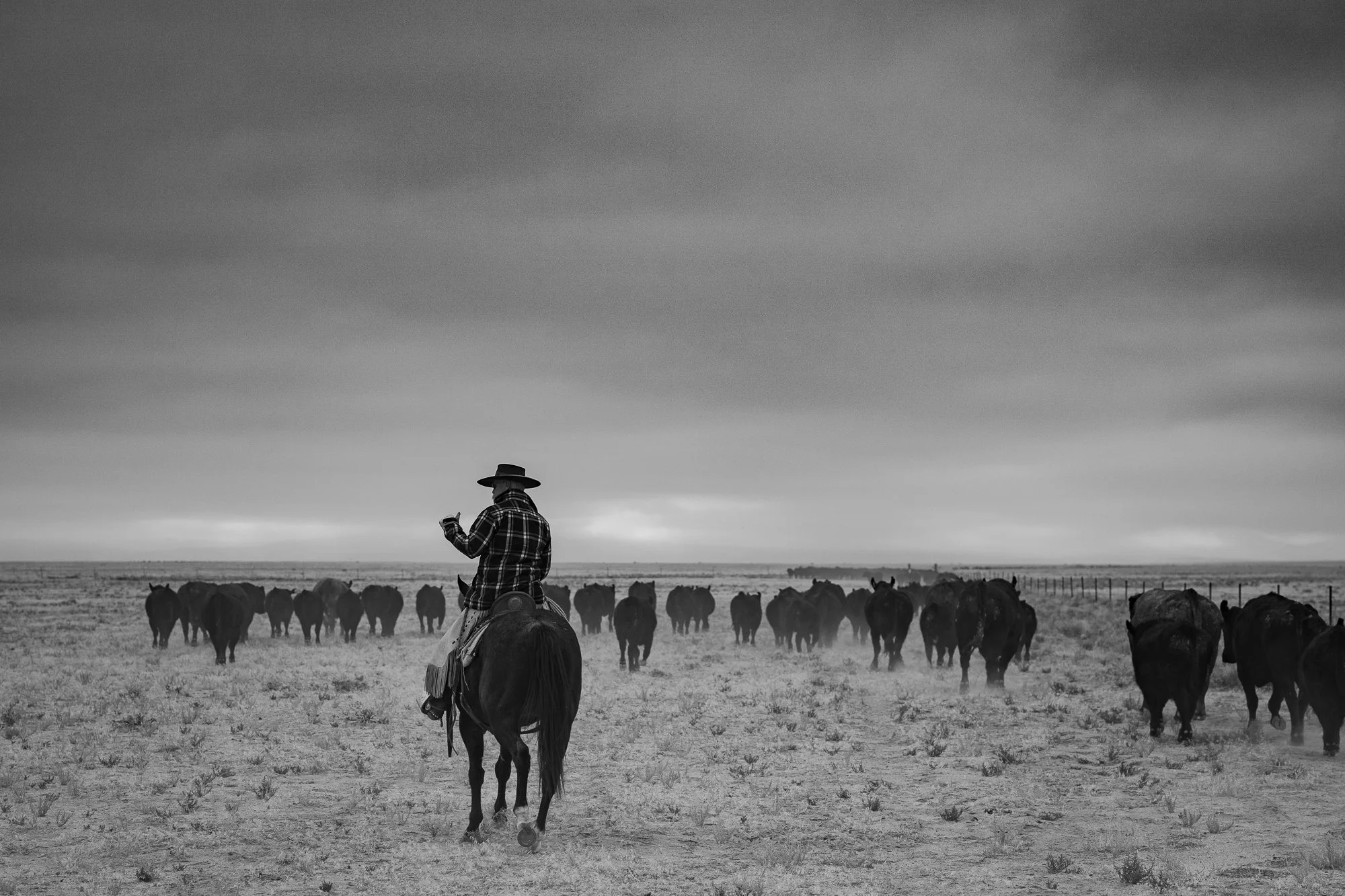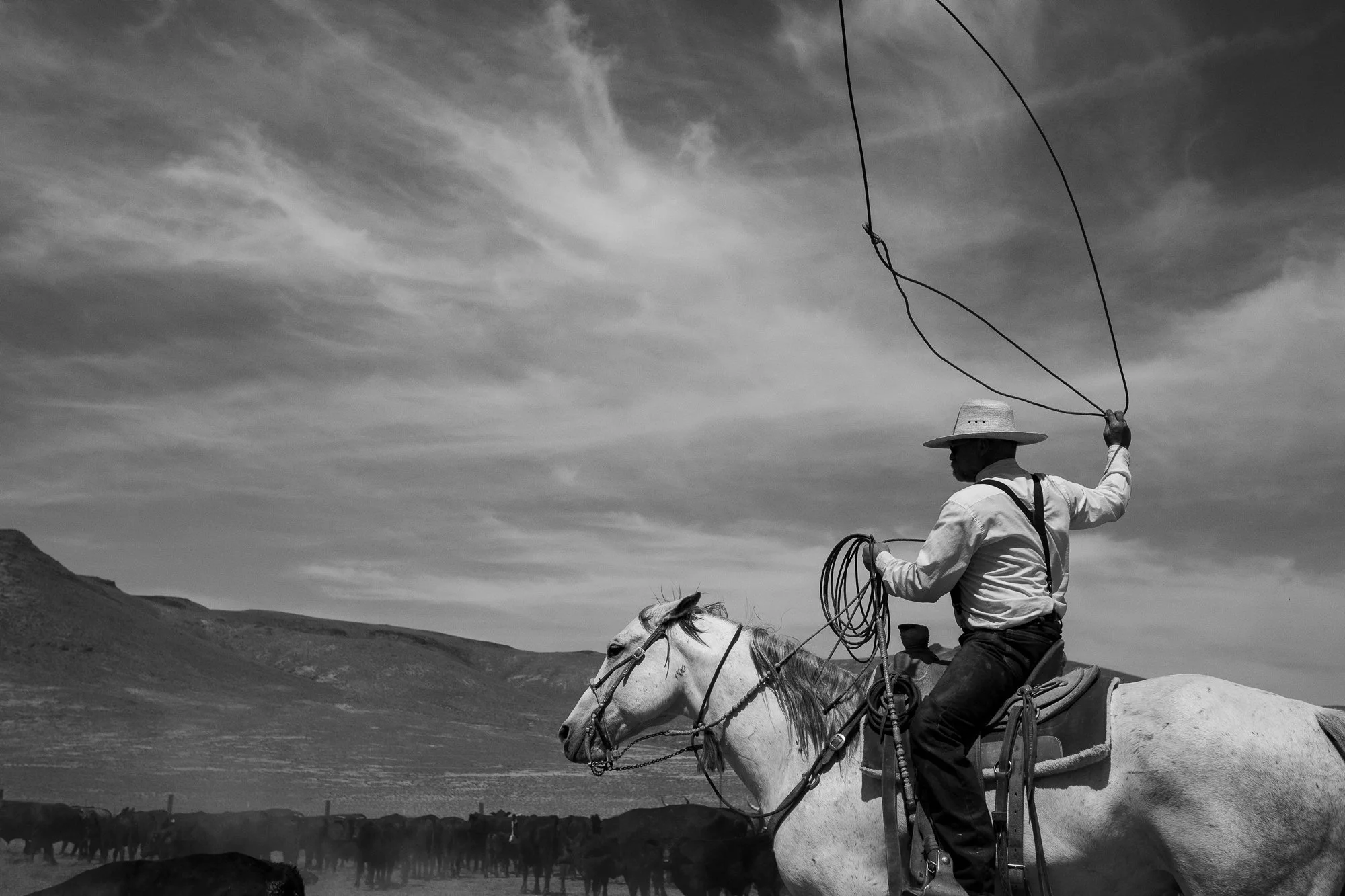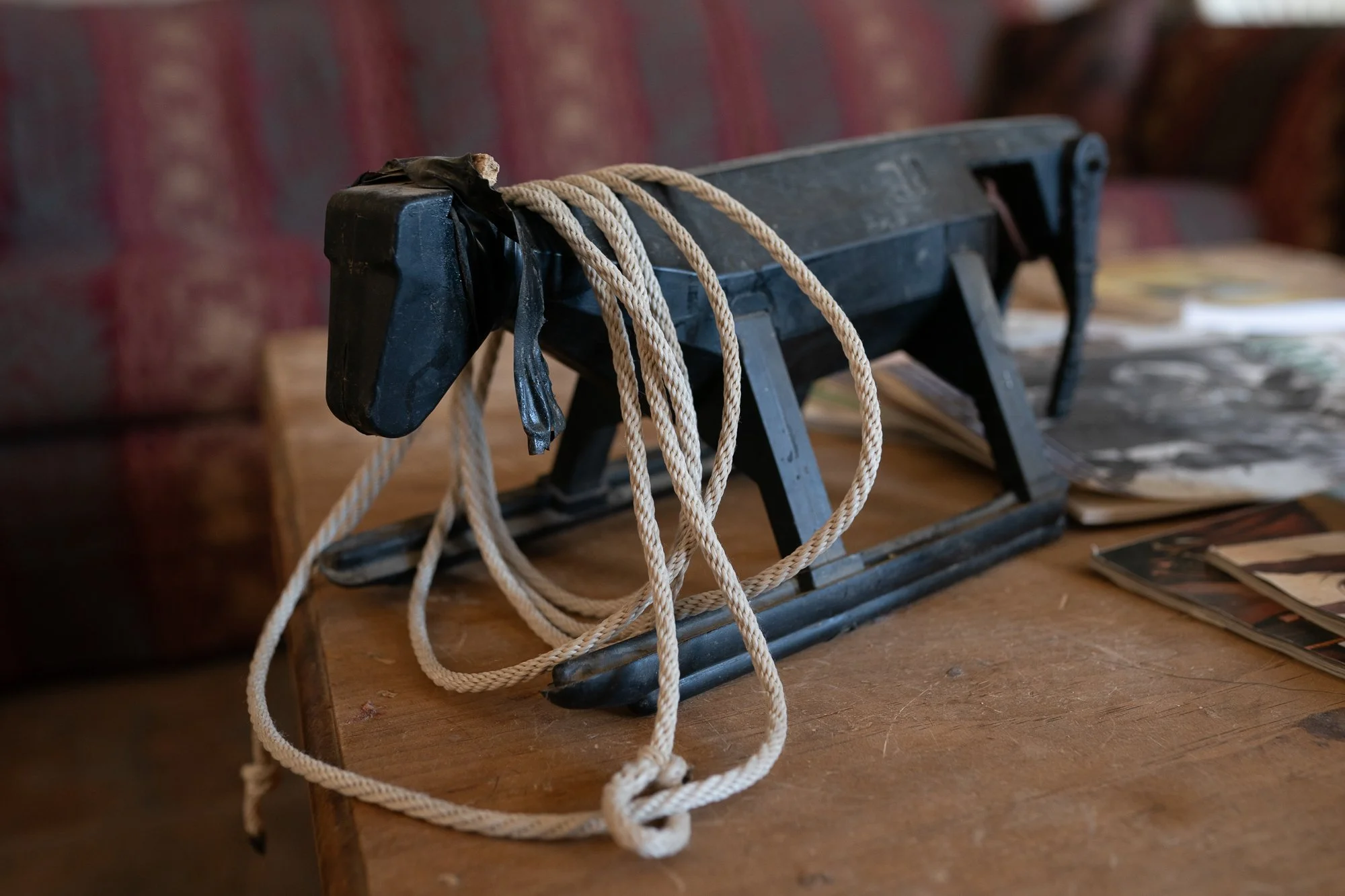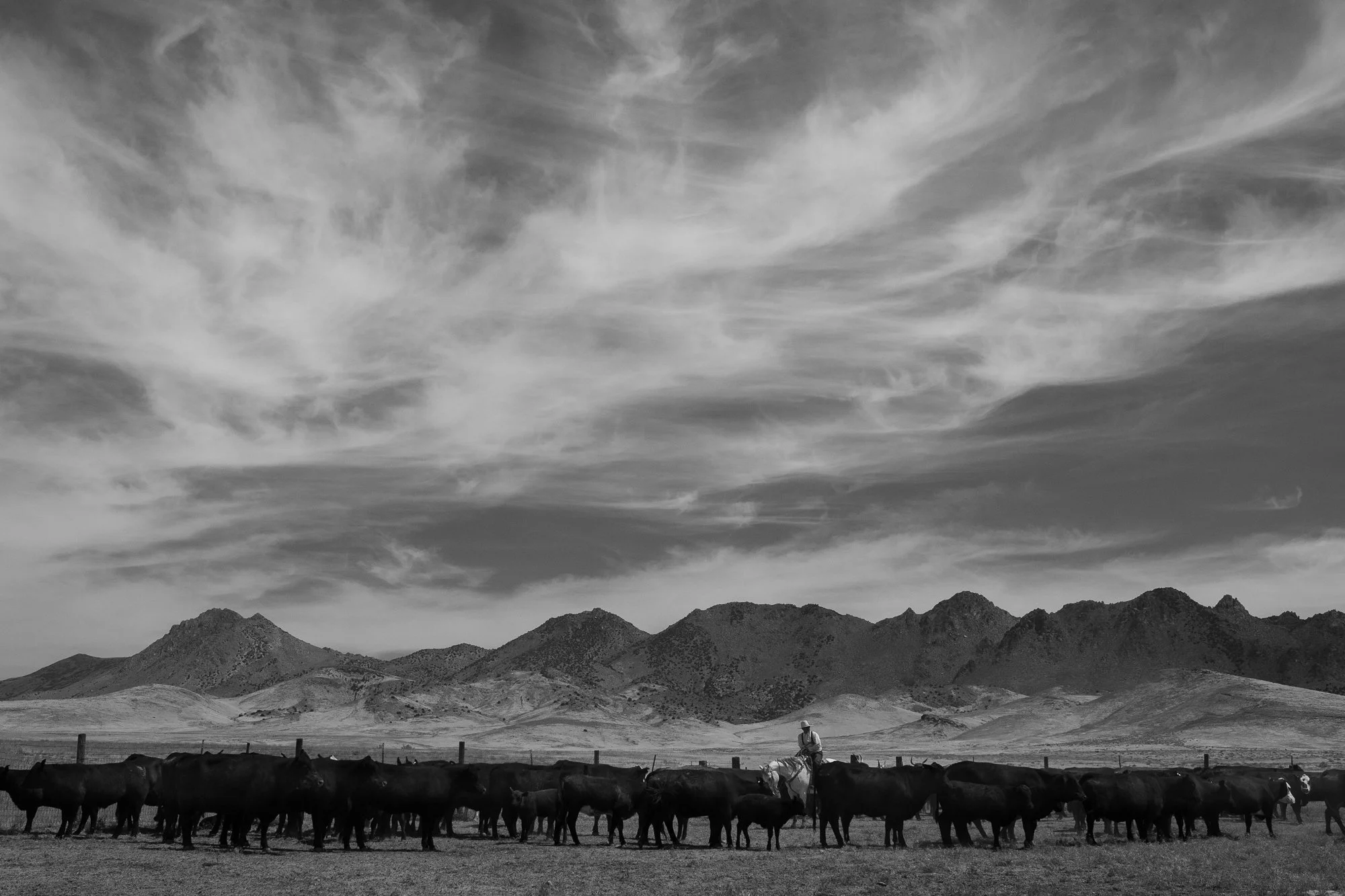
Cowboy Photography on View at the National Western Center in Denver

Western Photography Exhibition in Denver: Cowboy Work at the National Western Center

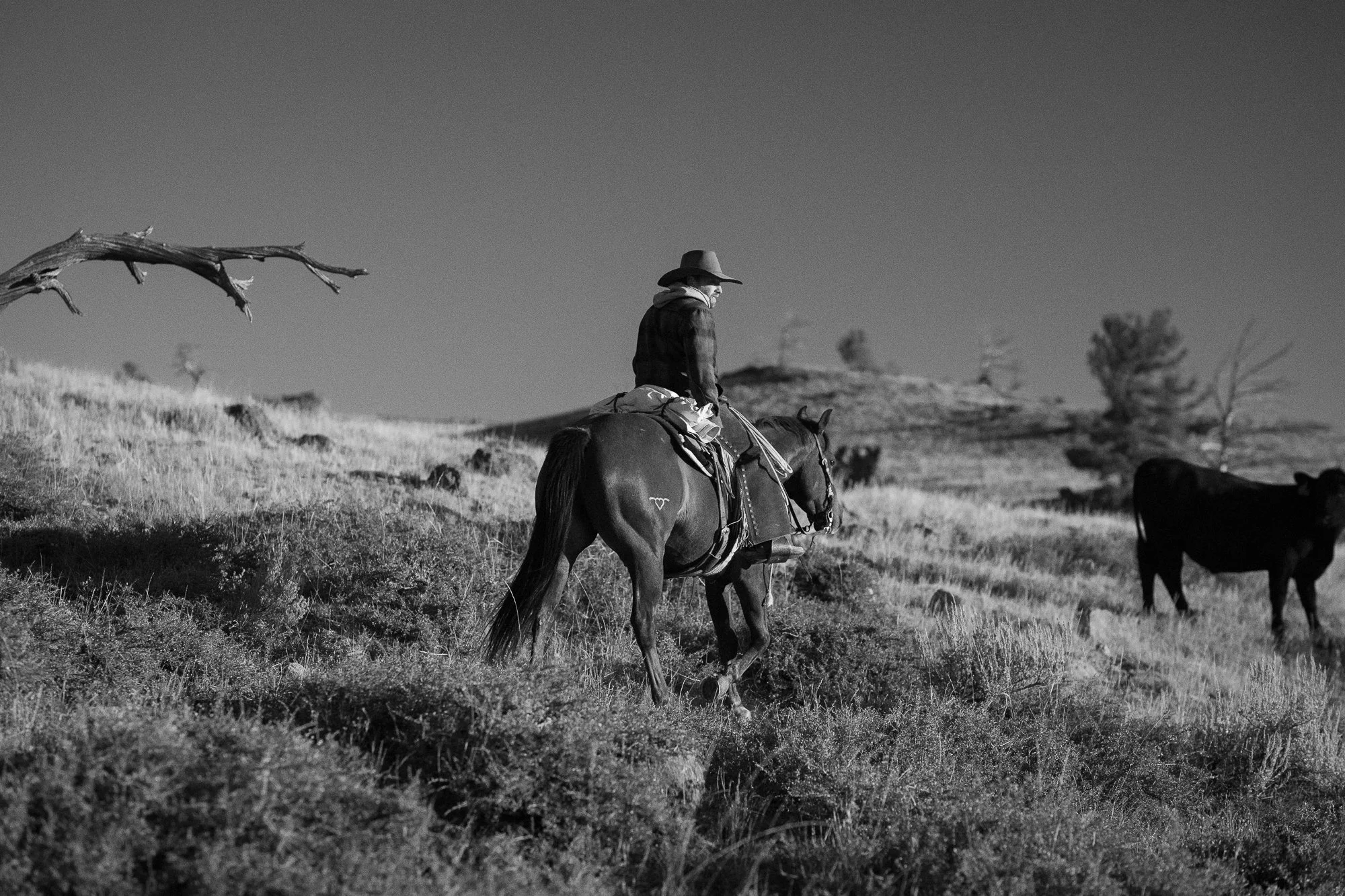
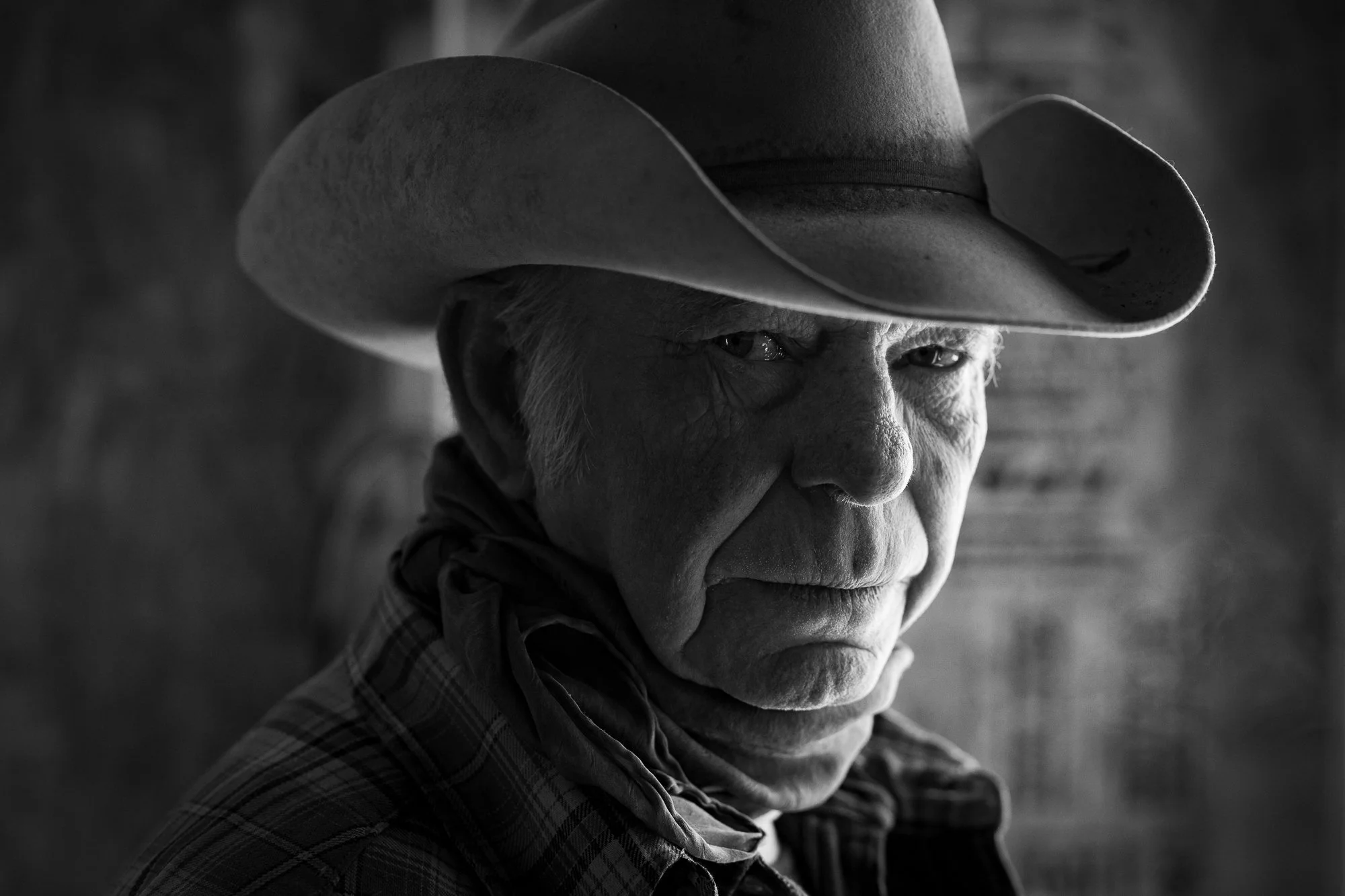
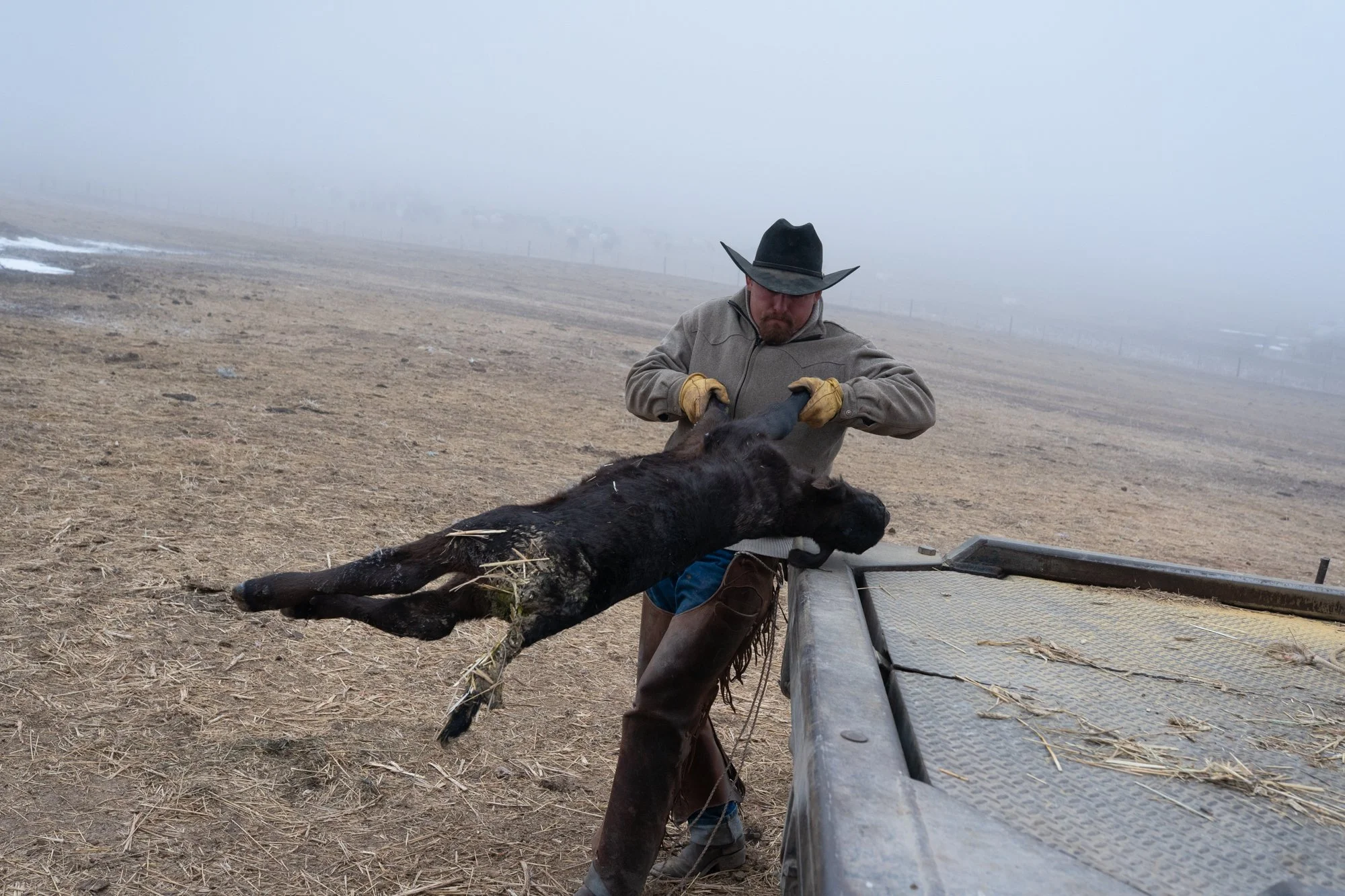
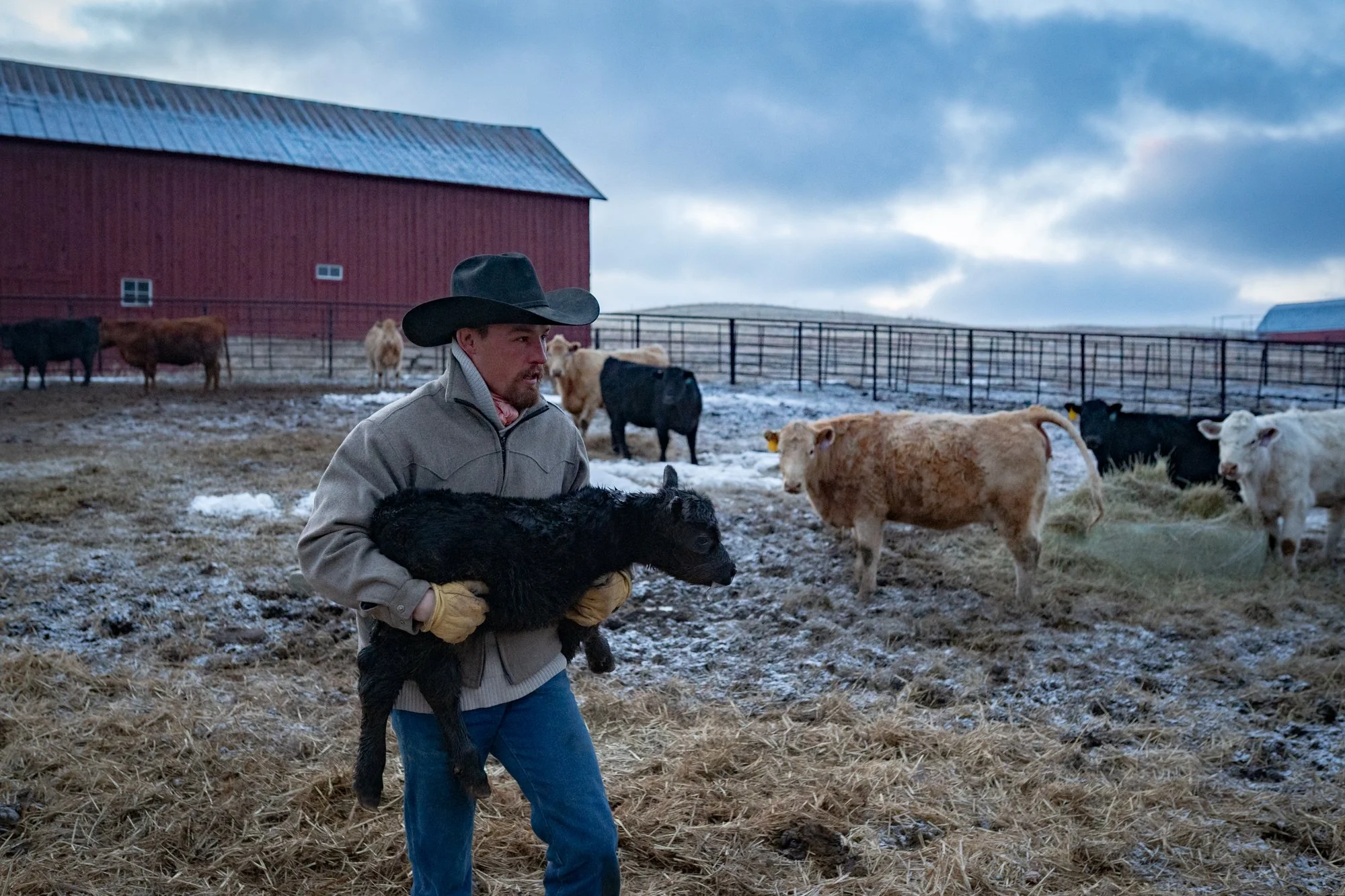
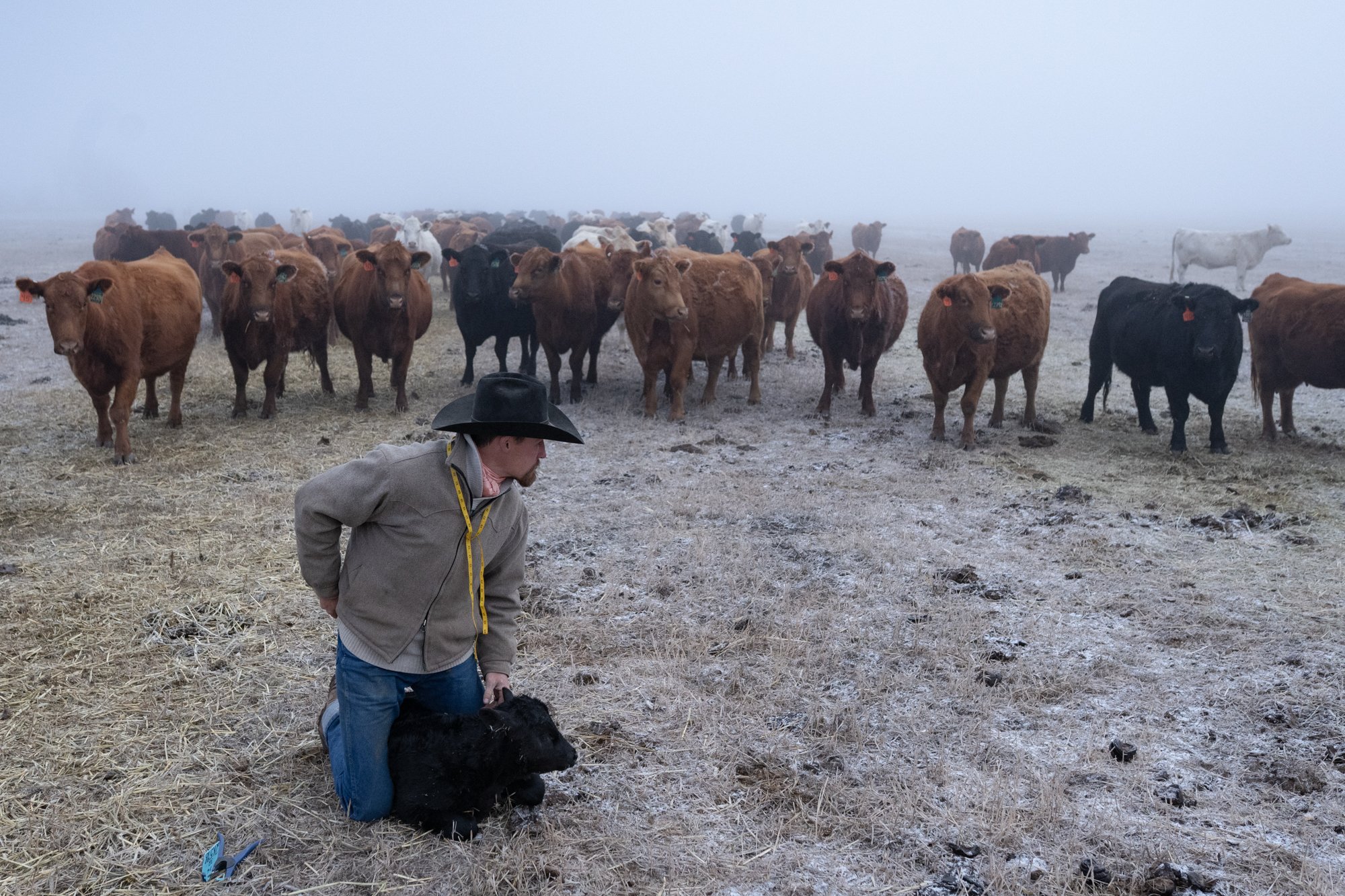
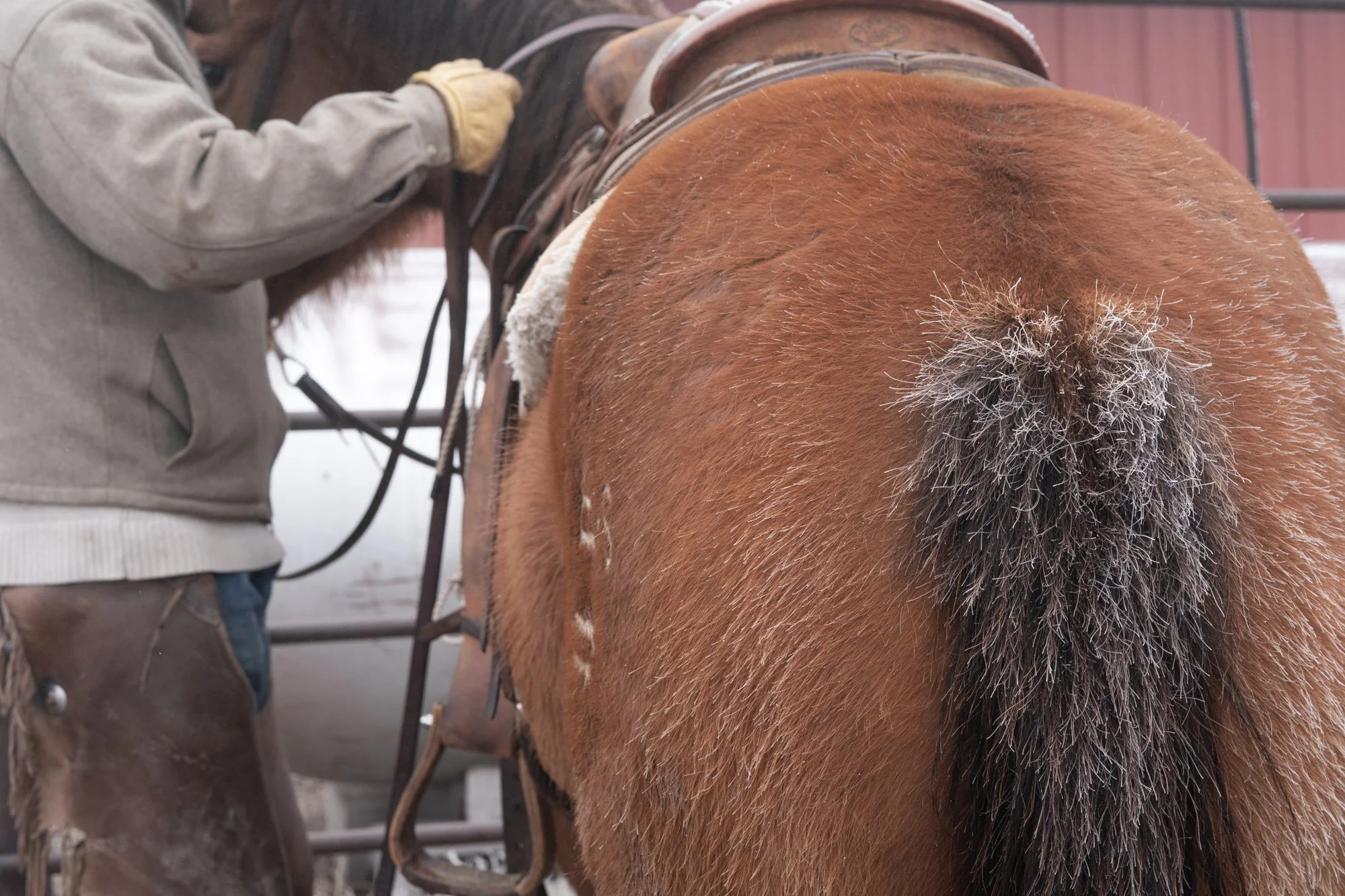
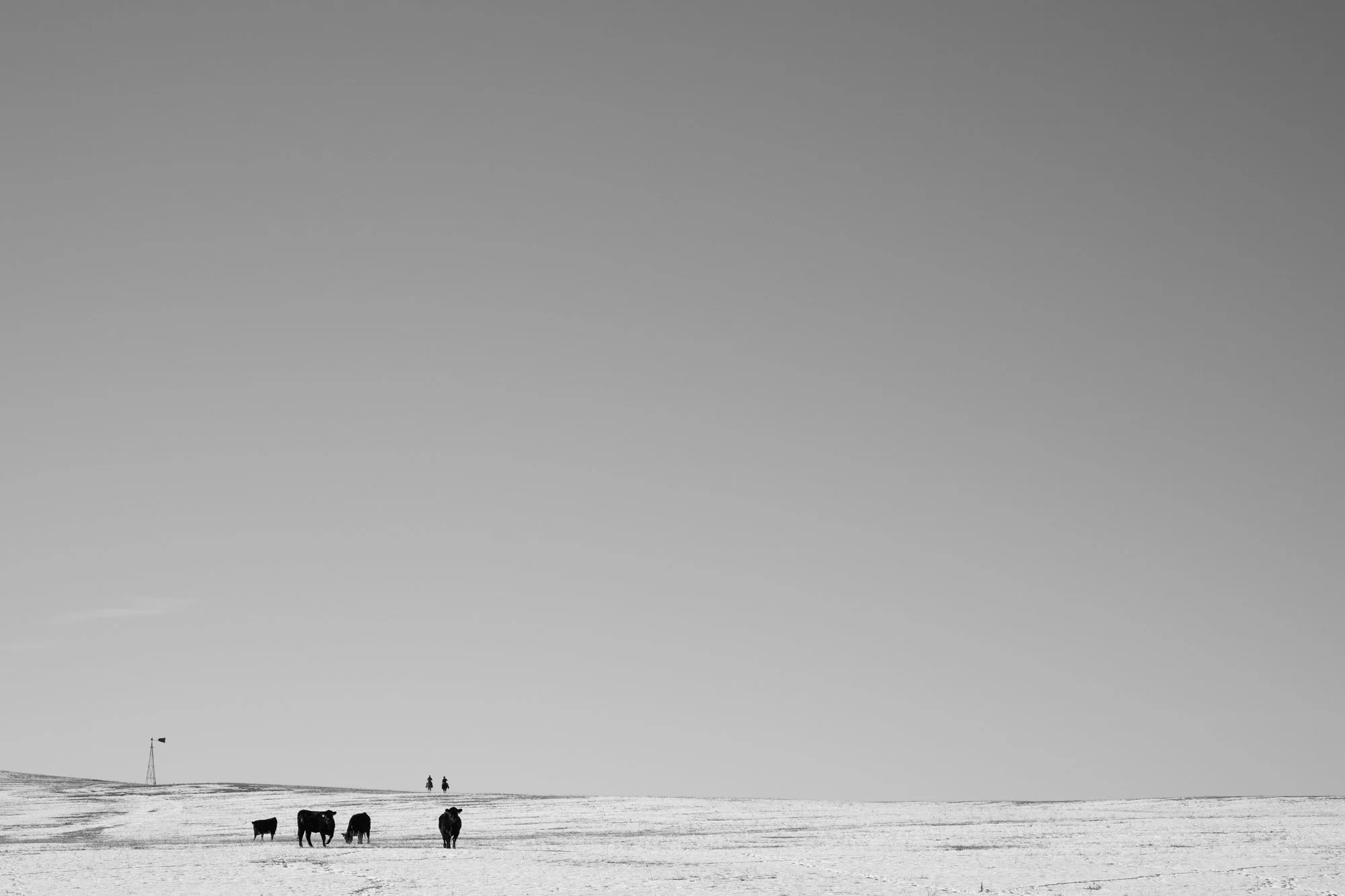
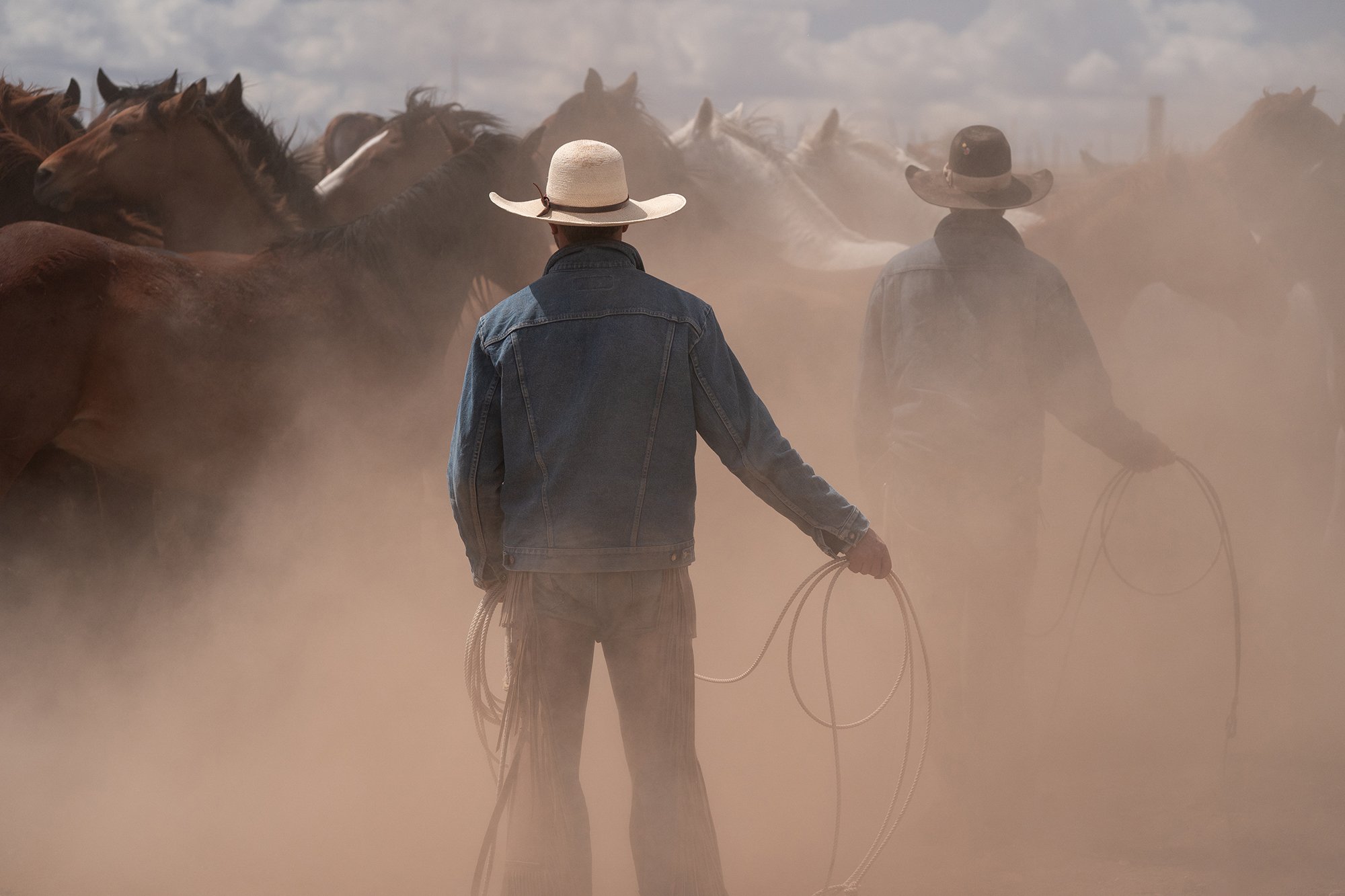
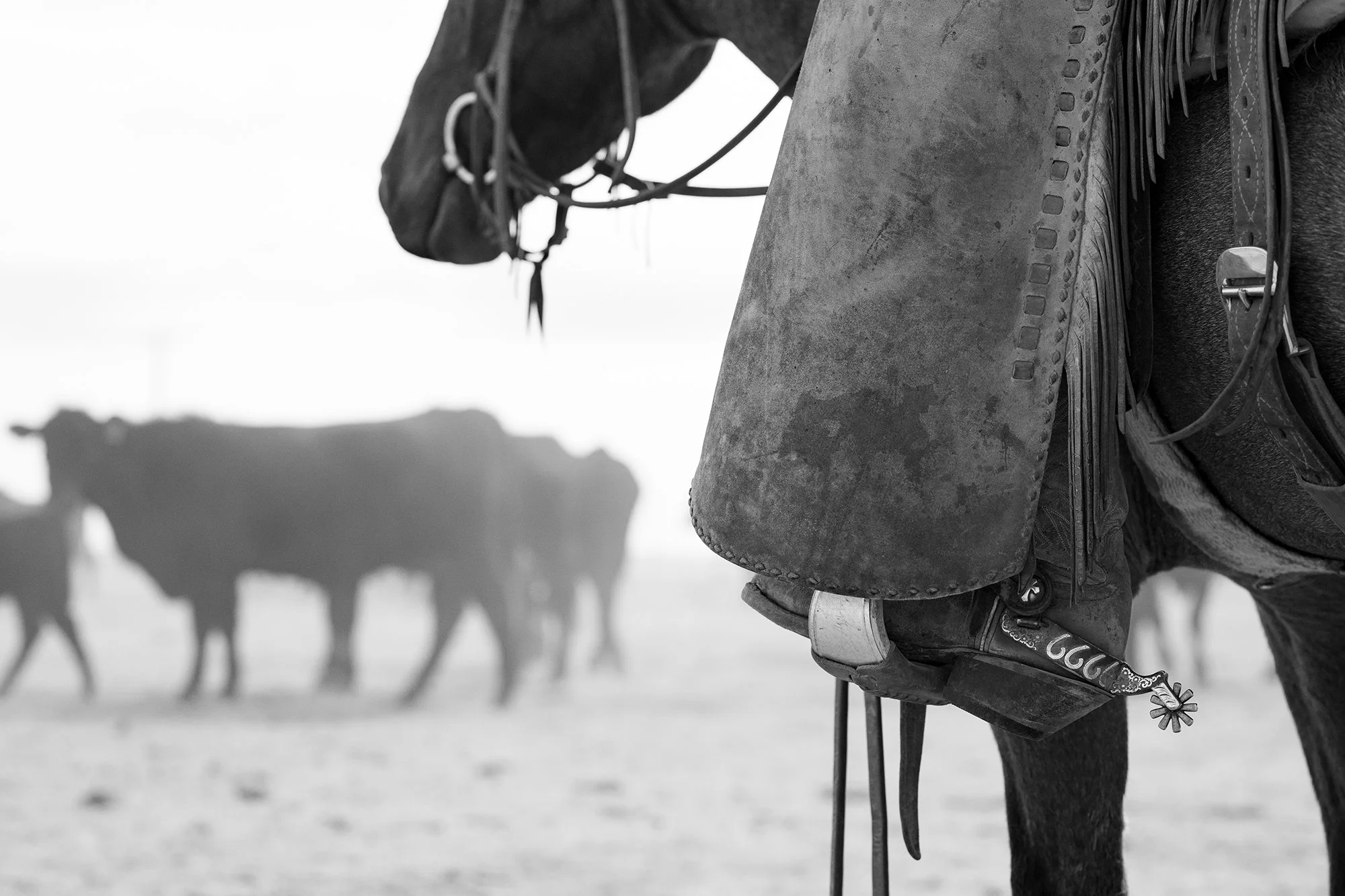
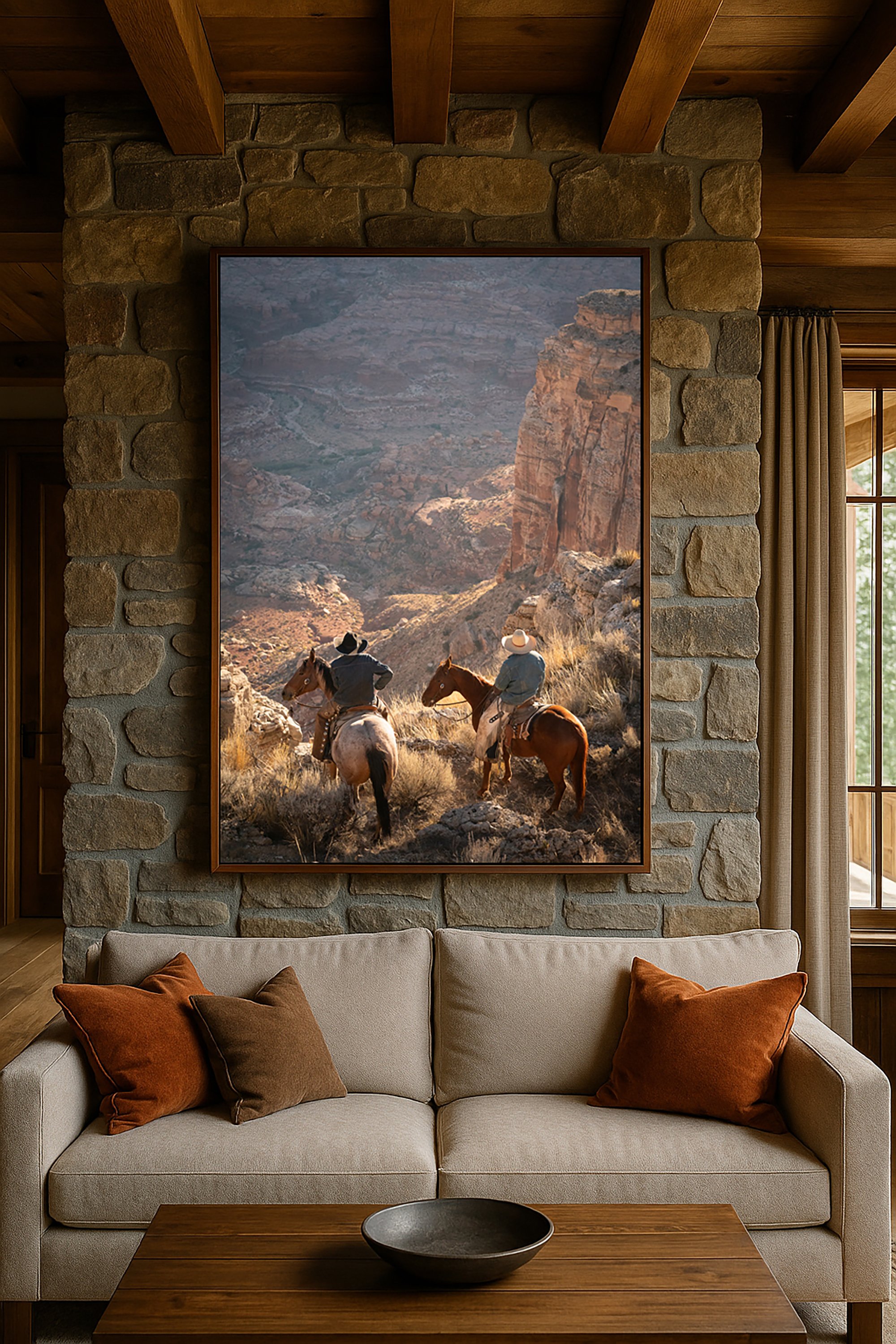
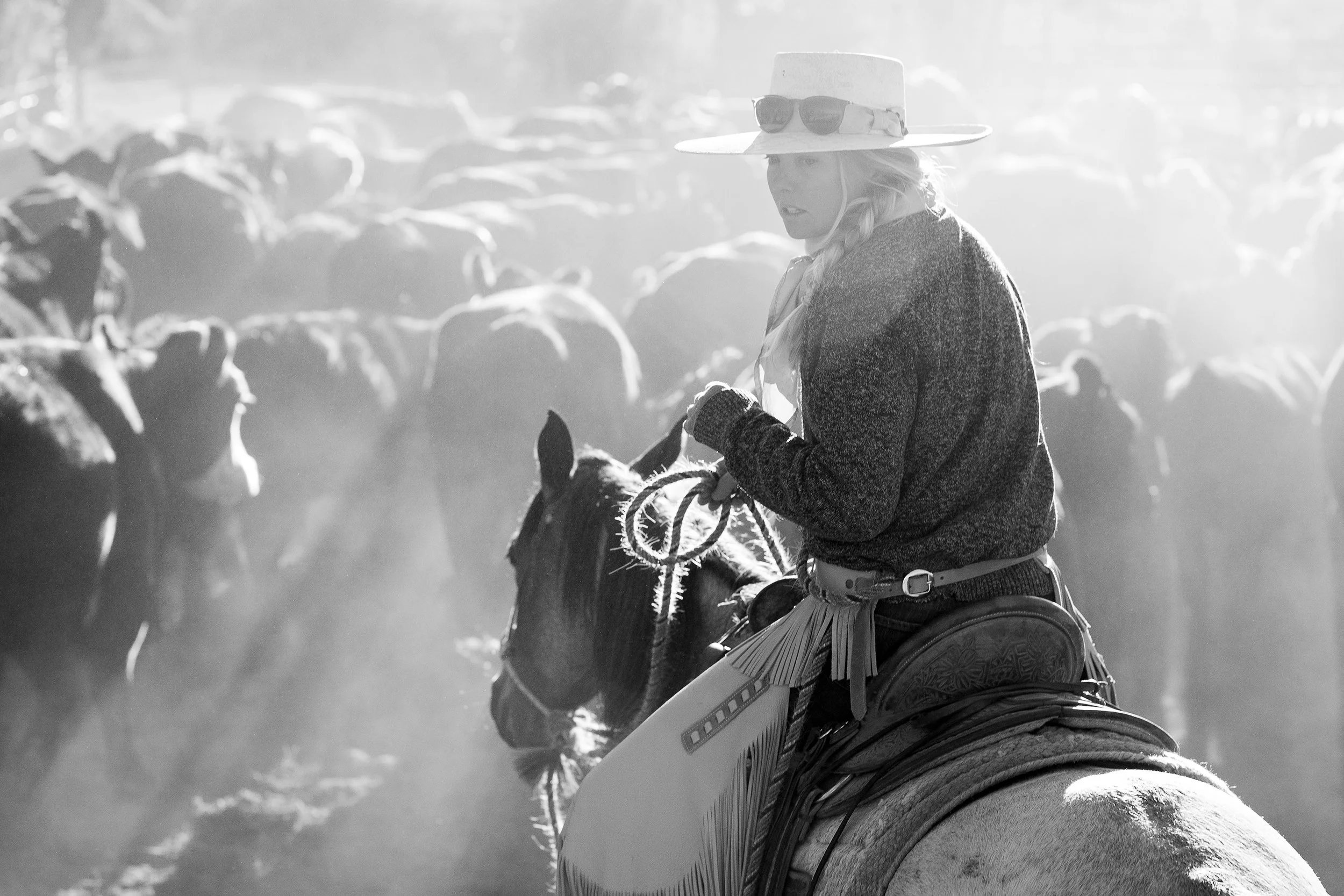
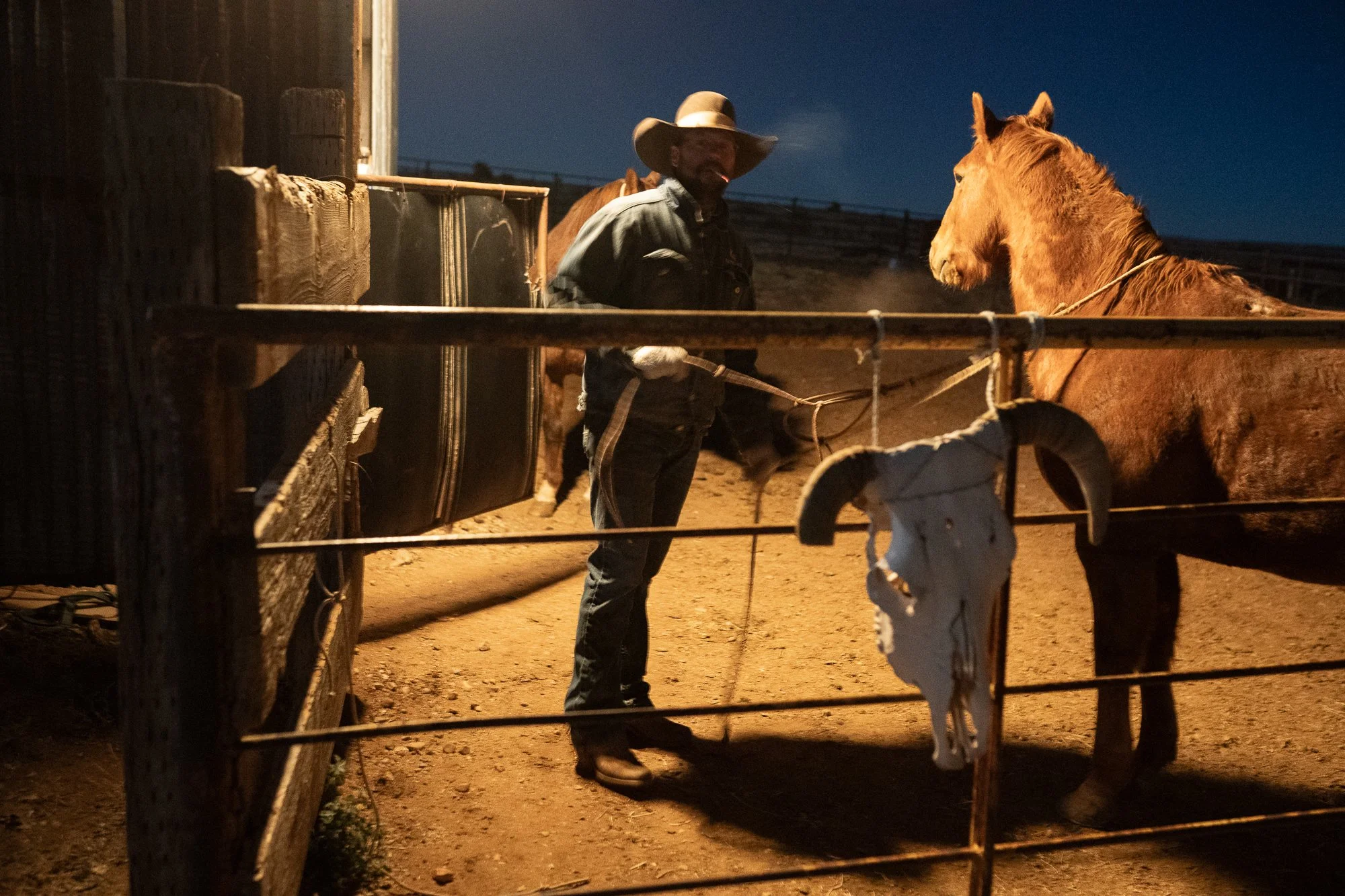
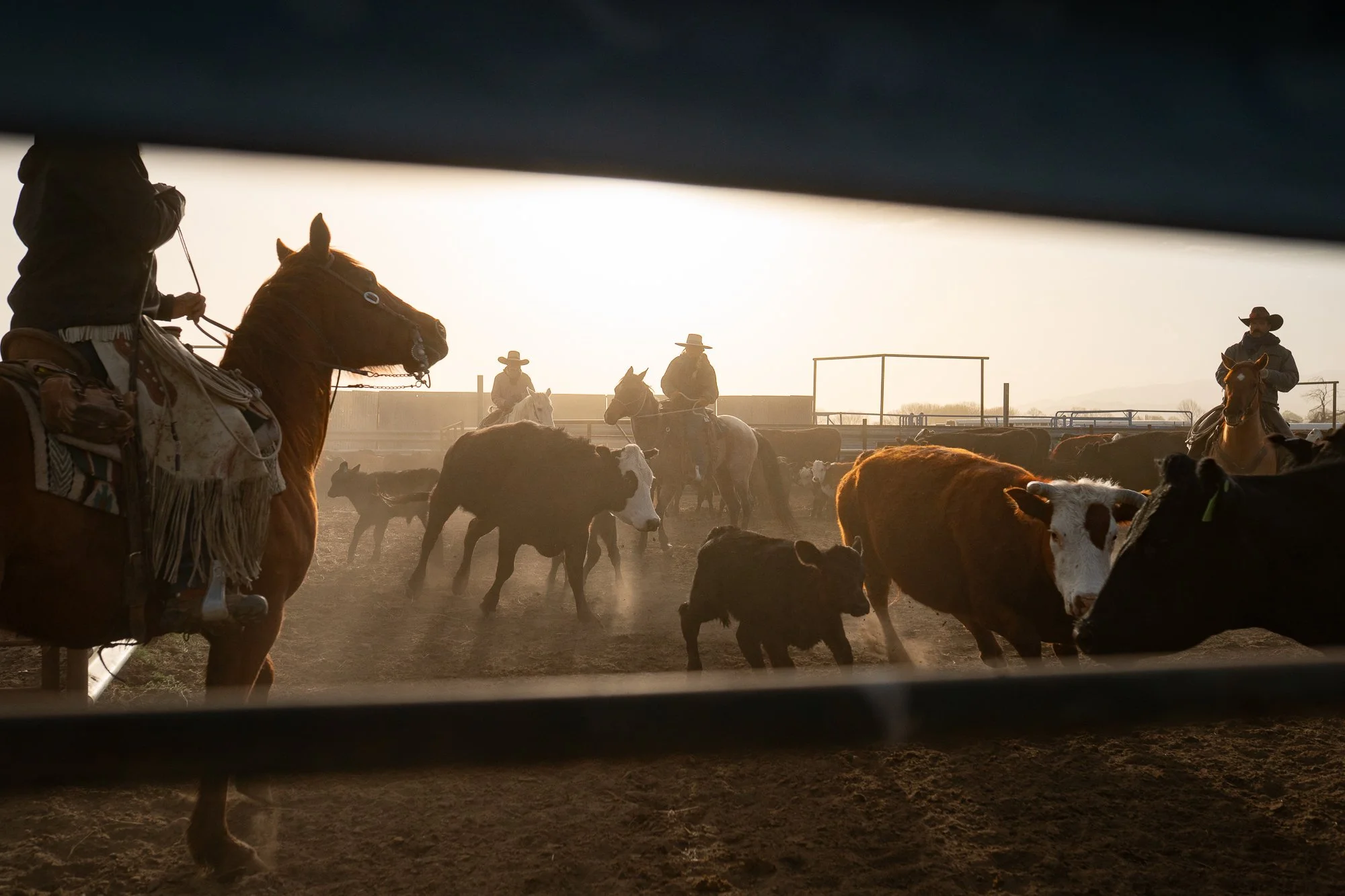
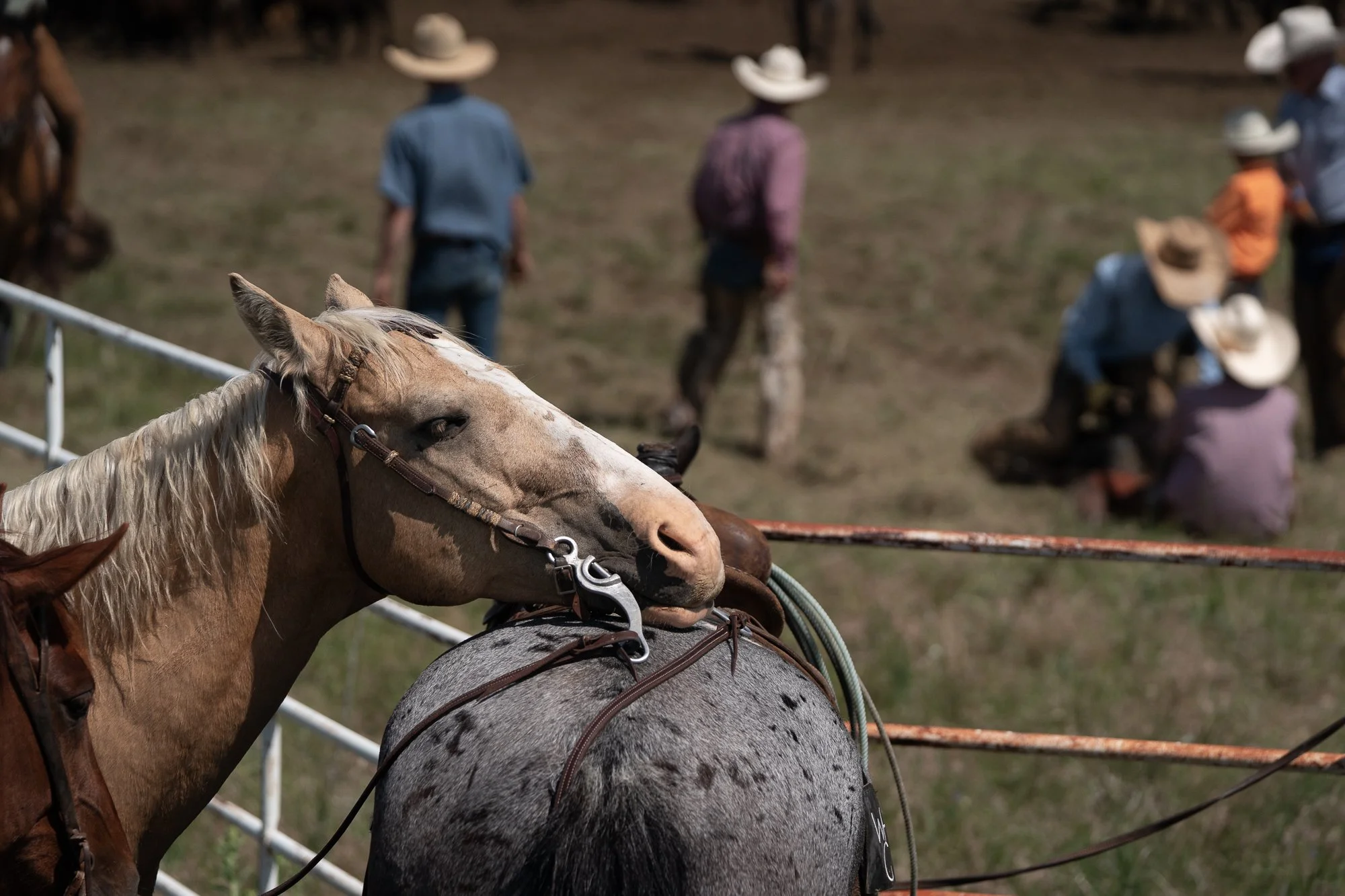
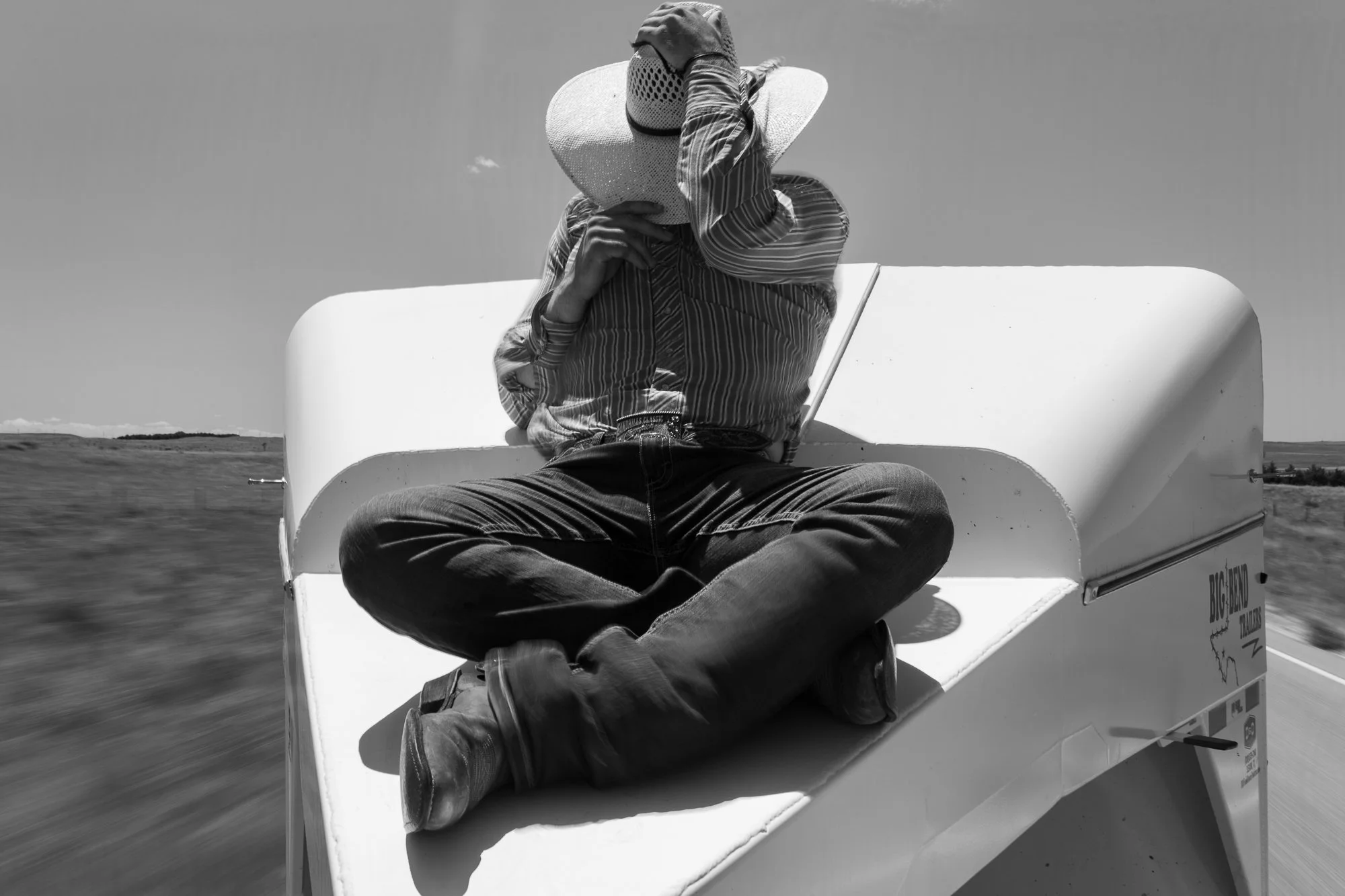
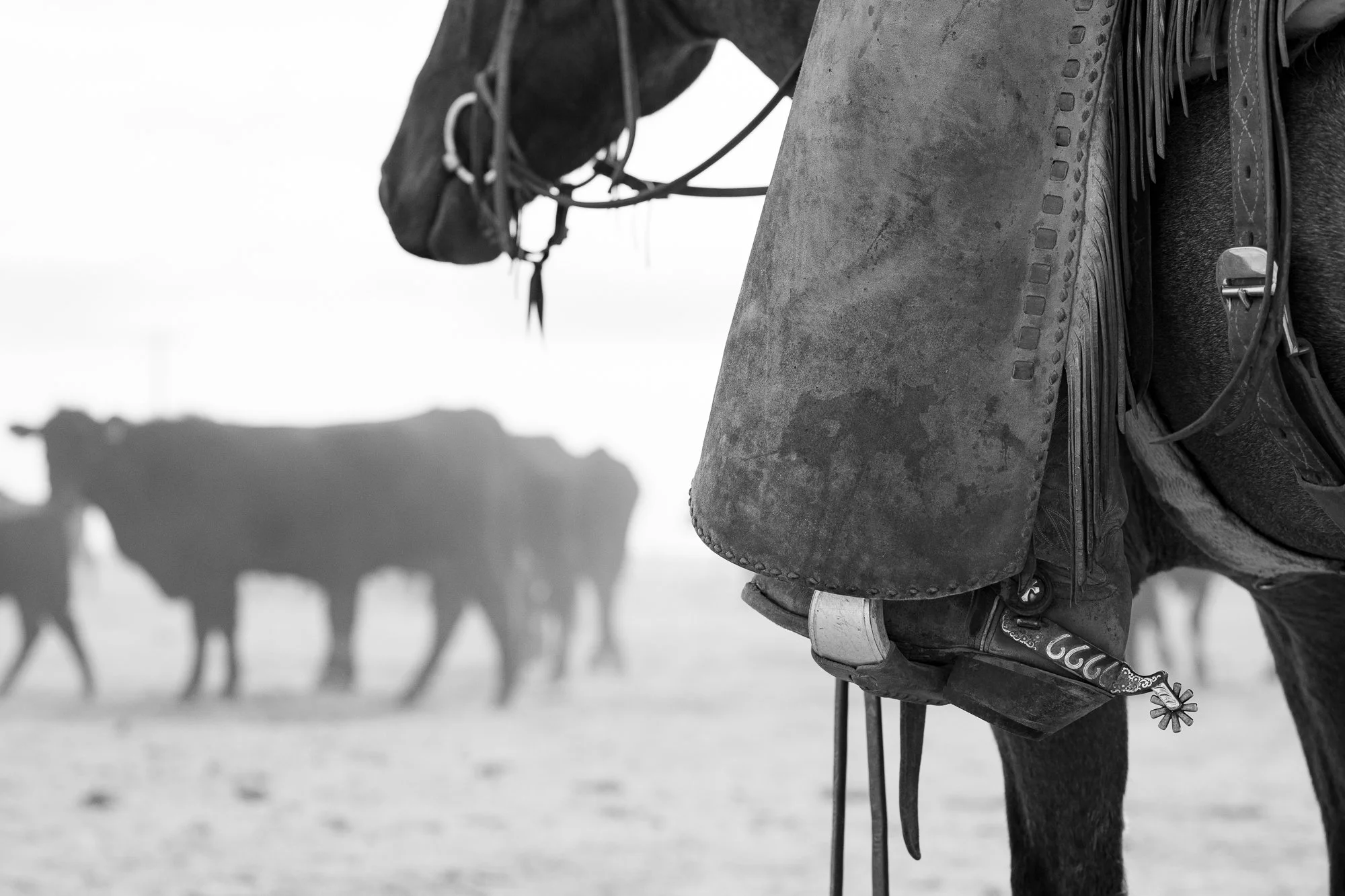
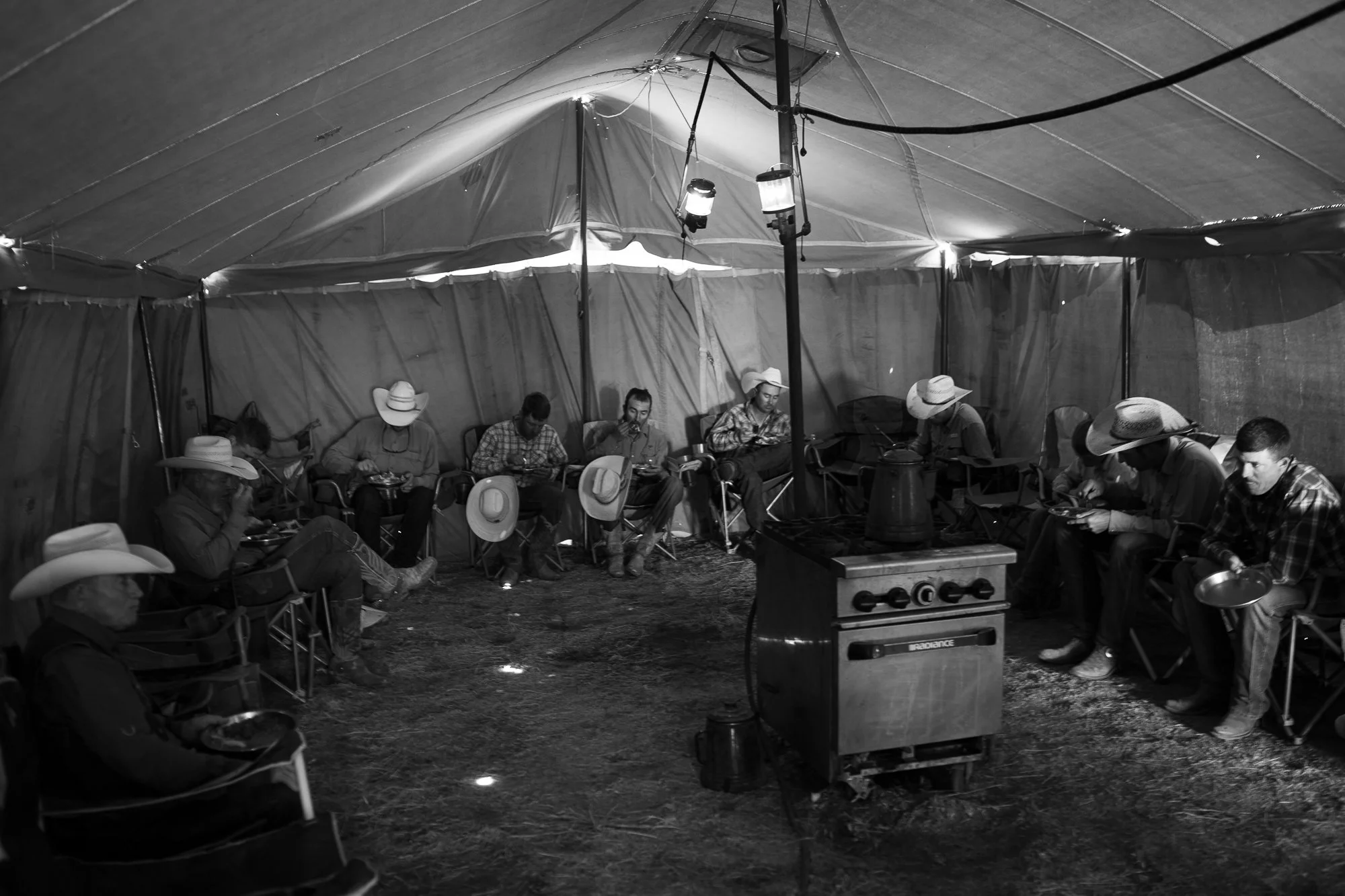
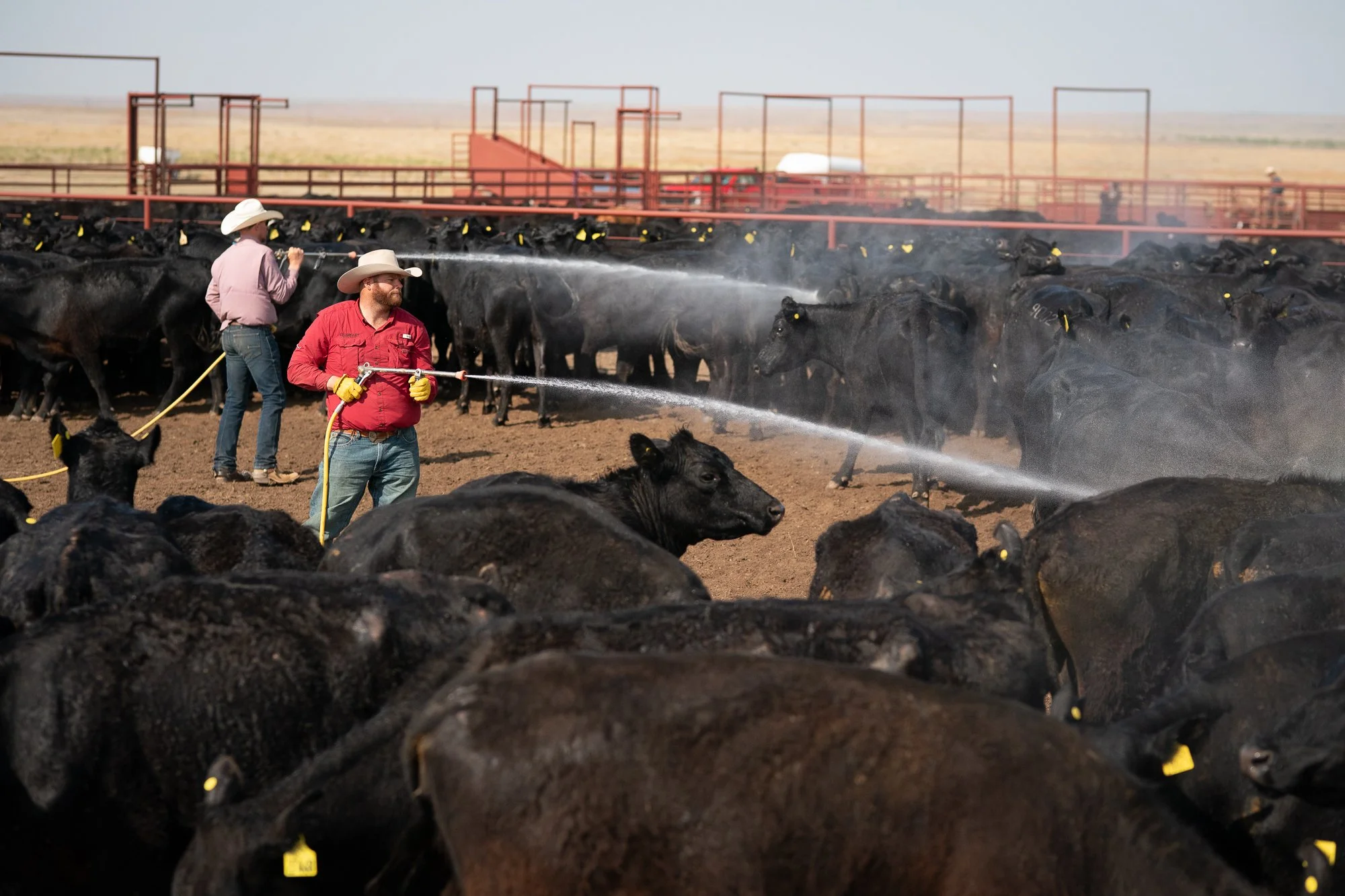
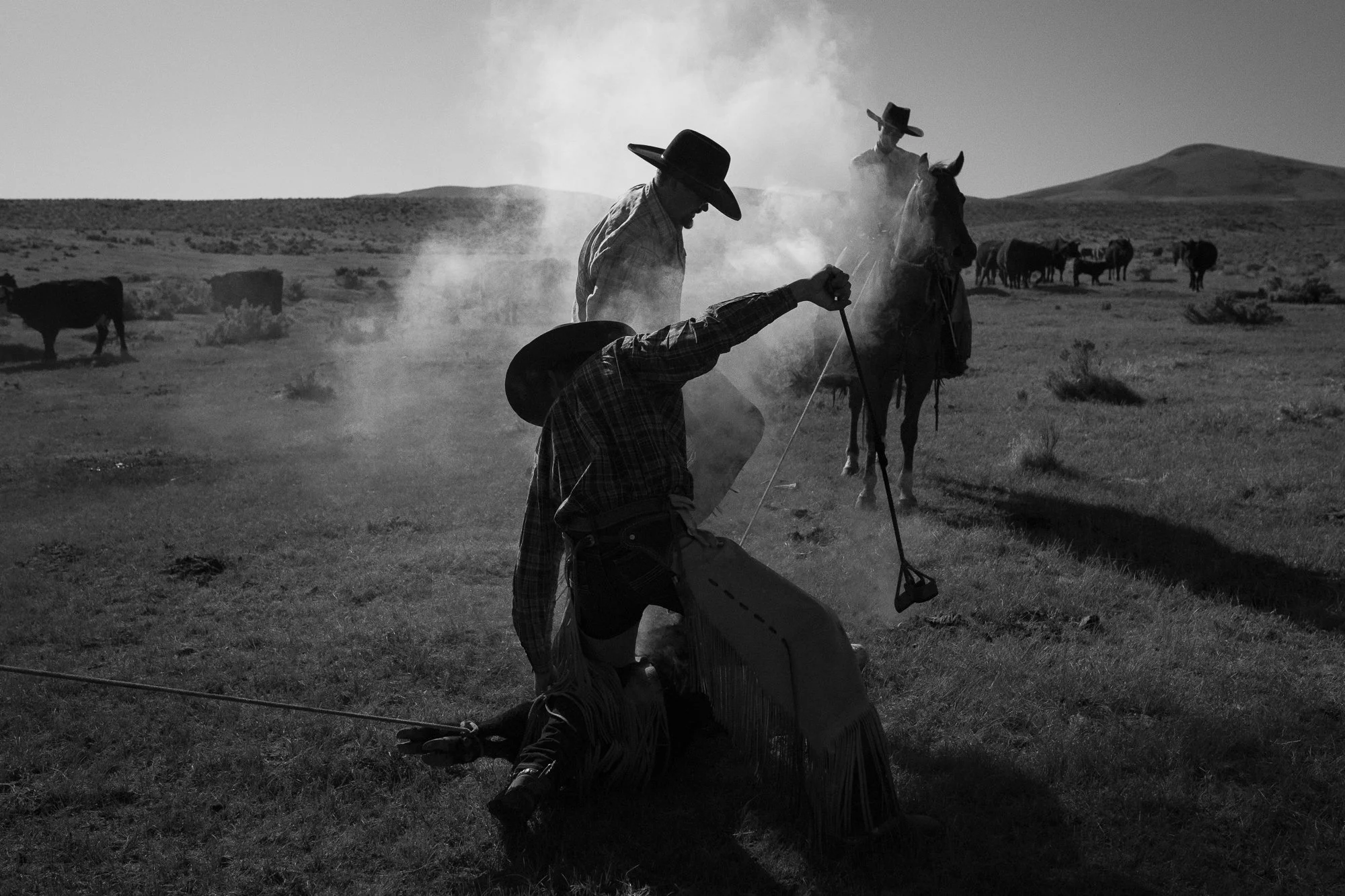
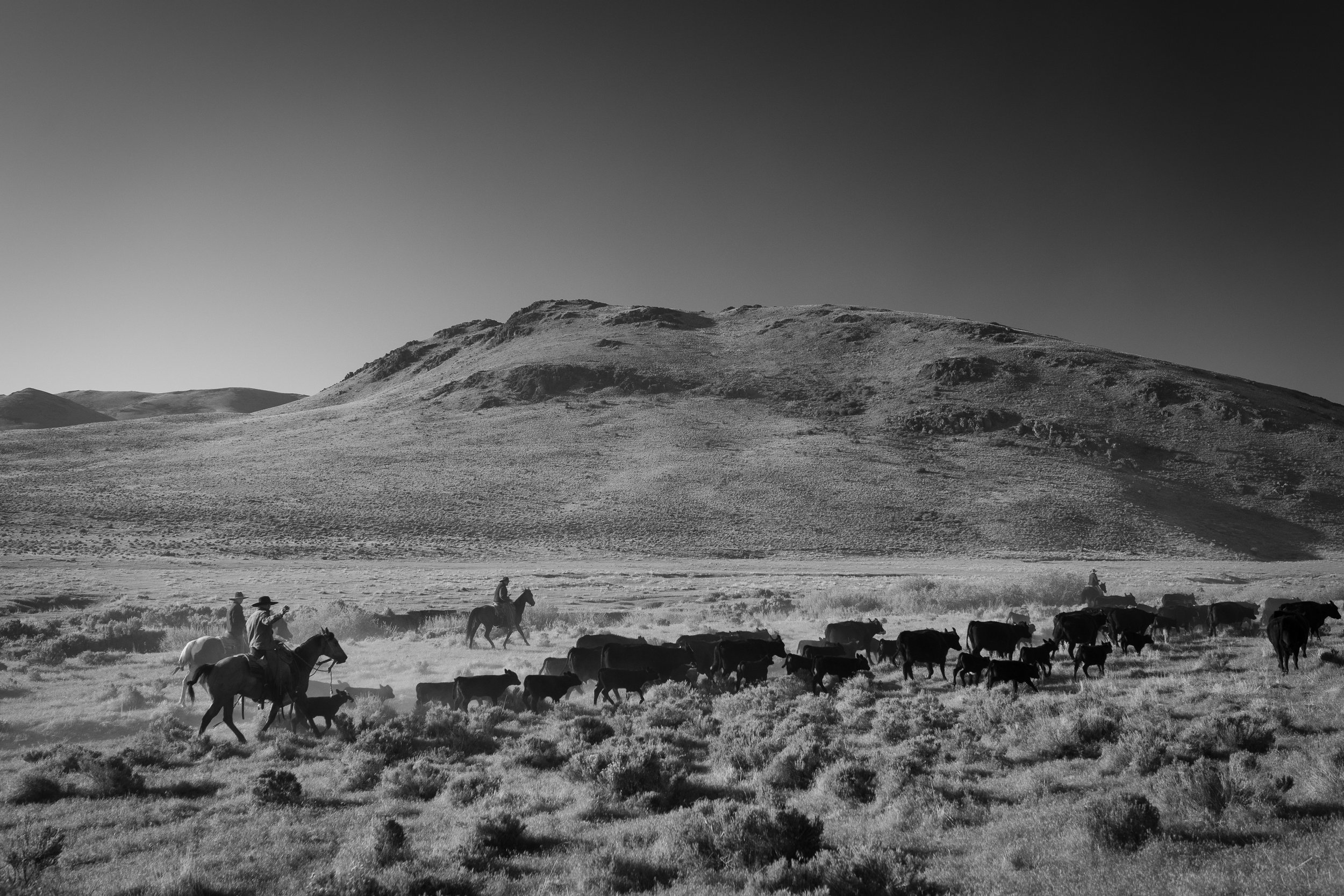
There’s no shortage of Western imagery in Colorado, but very little of it shows the work as it actually is.

Most people encounter the American cowboy through film, advertising, or nostalgia—images that lean heavily on mythology. What’s often missing is the day-to-day reality: the brutally cold mornings, endless days, the physical toll, and the quiet pride that comes with it.

That’s part of what makes this upcoming exhibition at the National Western Center worth paying attention to. Set inside the Legacy Building, the show brings together a group of photographers whose work engages with the modern American West in a more honest way—grounded in real places and real people.

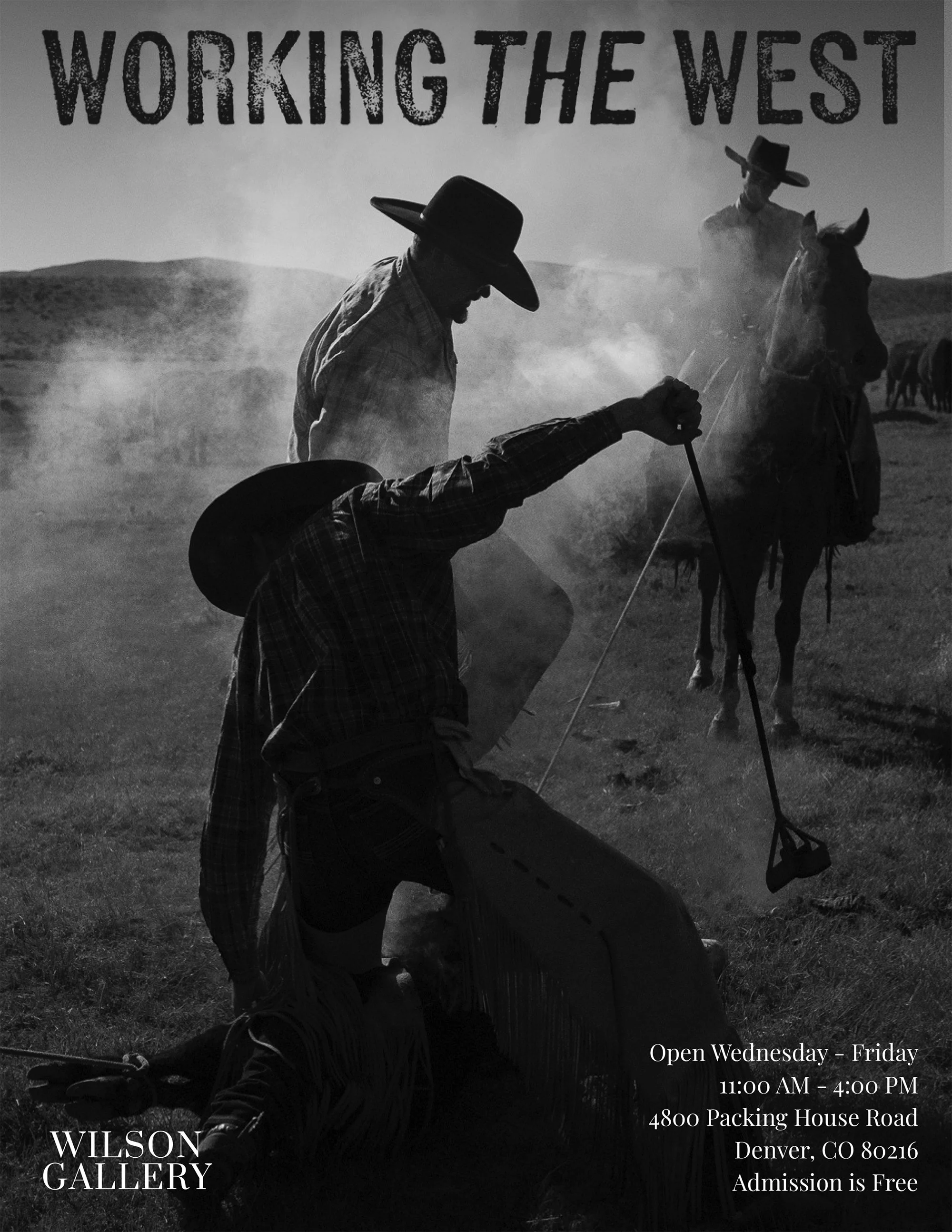
Poster for “Working the West” exhibition featuring cowboys working cattle with gallery details  for Wilson Gallery in Denver, Colorado

Poster for the “Working the West” exhibition at Wilson Gallery in Denver, Colorado, featuring a photograph of cowboys working cattle as part of a larger documentary project.

About the Exhibition at the National Western Center

The exhibition will be held in the Wilson Gallery, a space that has quickly become a focal point for Western art and culture in Denver.

The National Western Center itself is evolving into something more than an event venue. It’s positioning itself as a year-round hub for agriculture, history, and the contemporary West—making it a fitting place for work that sits at the intersection of tradition and modern life.

This particular show brings together a range of photographic perspectives. Some lean toward landscape, others toward portraiture, but all orbit around the same subject: the West as it exists today, not as it’s remembered.

Being included alongside a group of well-known photographers (Anouk Krantz, Jay Dusard, Jim Krantz, and Rob Hammer) adds another layer to the exhibition—not just in terms of visibility, but in how the work is viewed in conversation with others who have spent years documenting similar worlds.

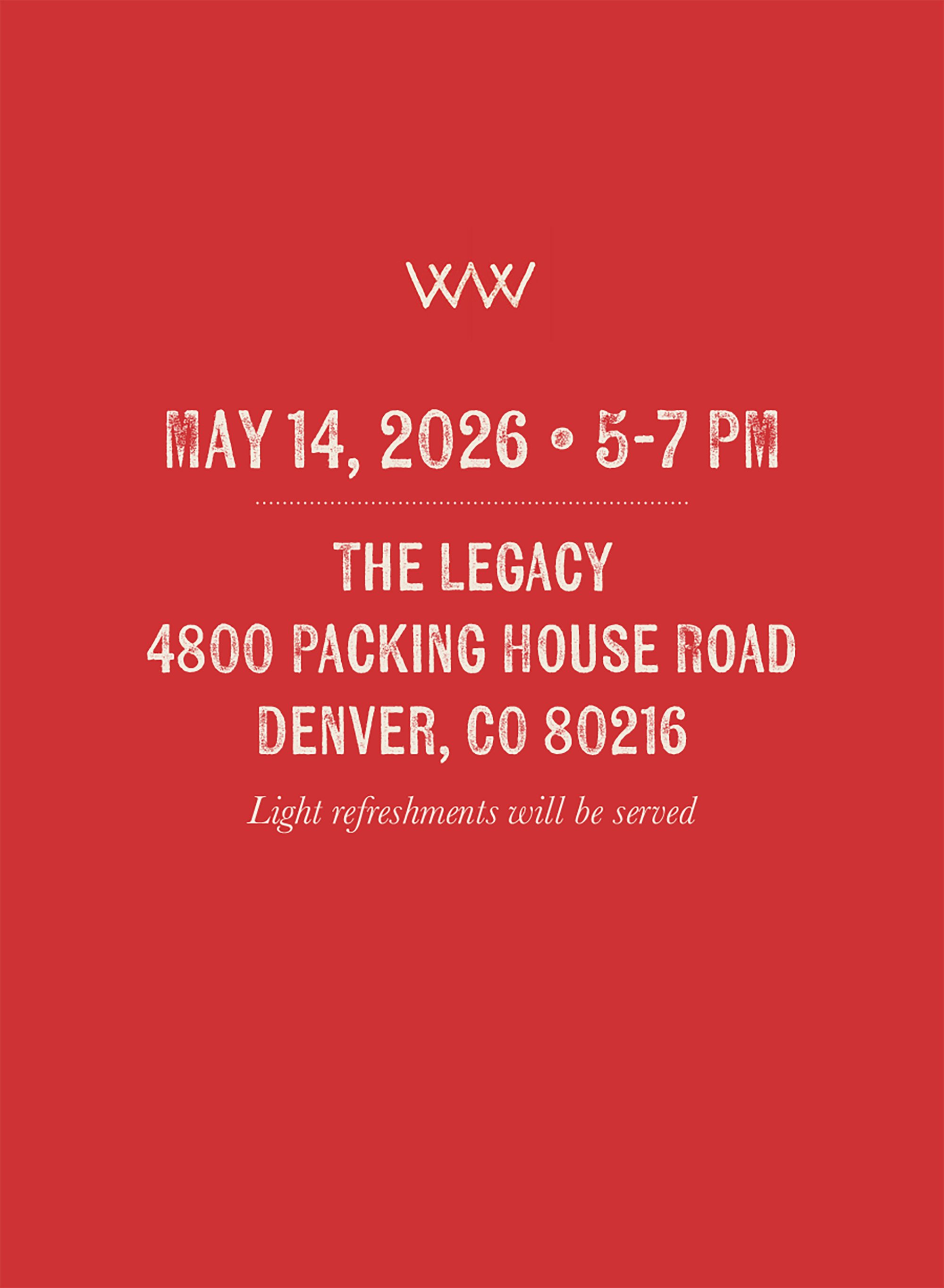
Exhibition poster with date, time, and location details for a Western photography show at the  Legacy Building in Denver, Colorado

A printed graphic listing the date and location for the exhibition at the National Western Center in Denver.

Cowboy Photography as Contemporary Western Art

There’s a tendency to treat cowboy imagery as something fixed in the past. But the reality is that the work hasn’t gone anywhere—it’s just largely out of sight.

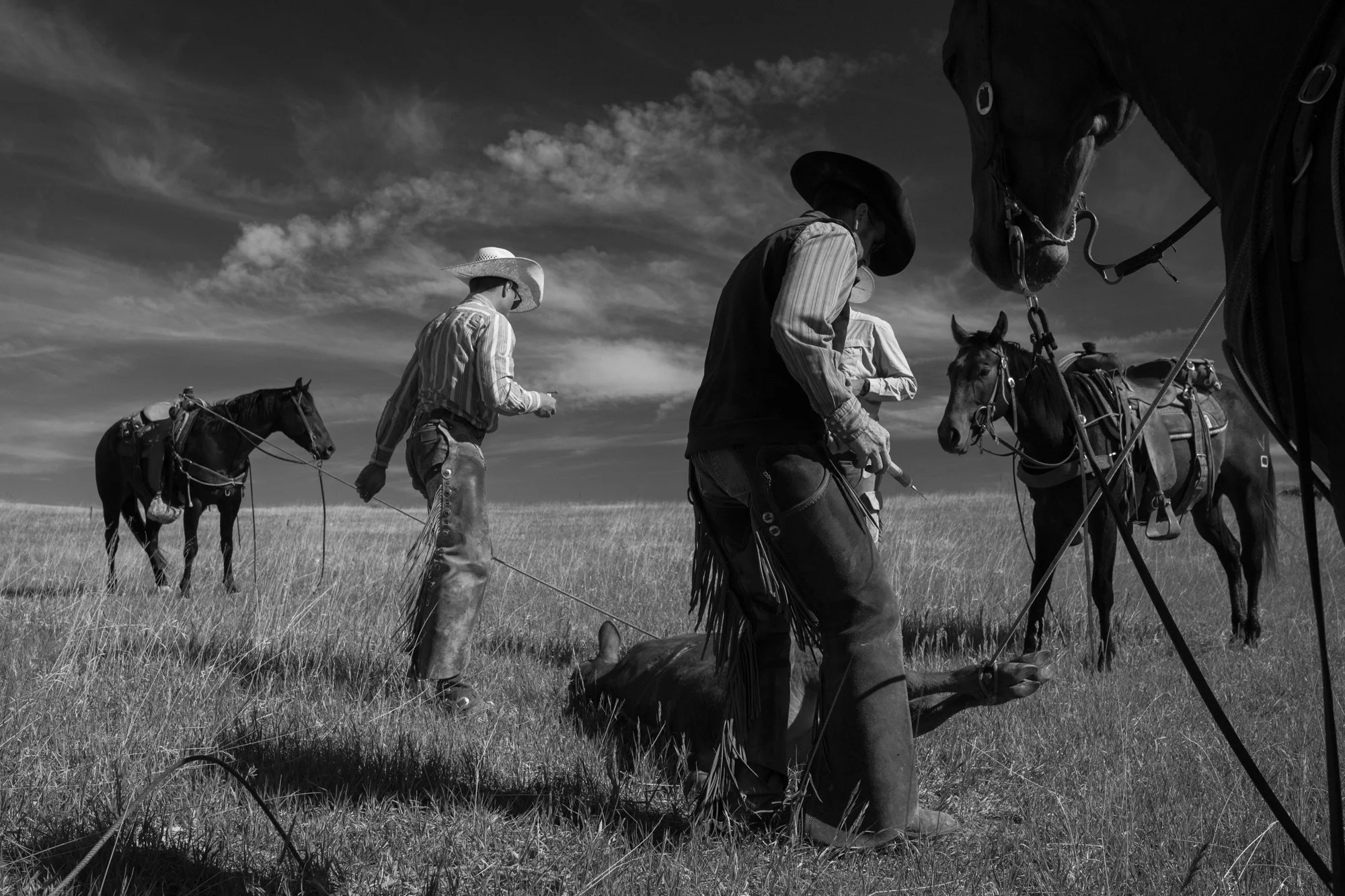
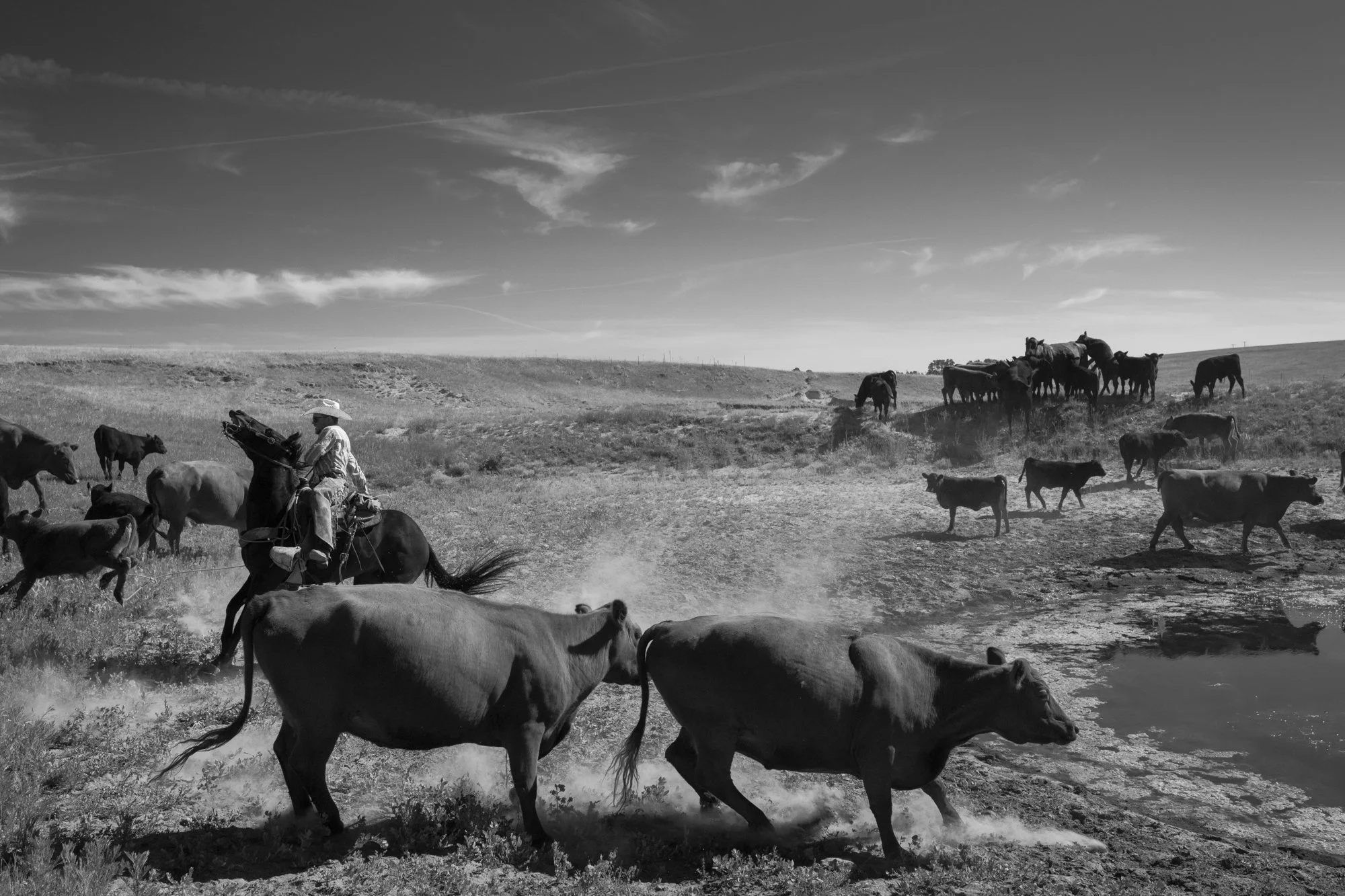
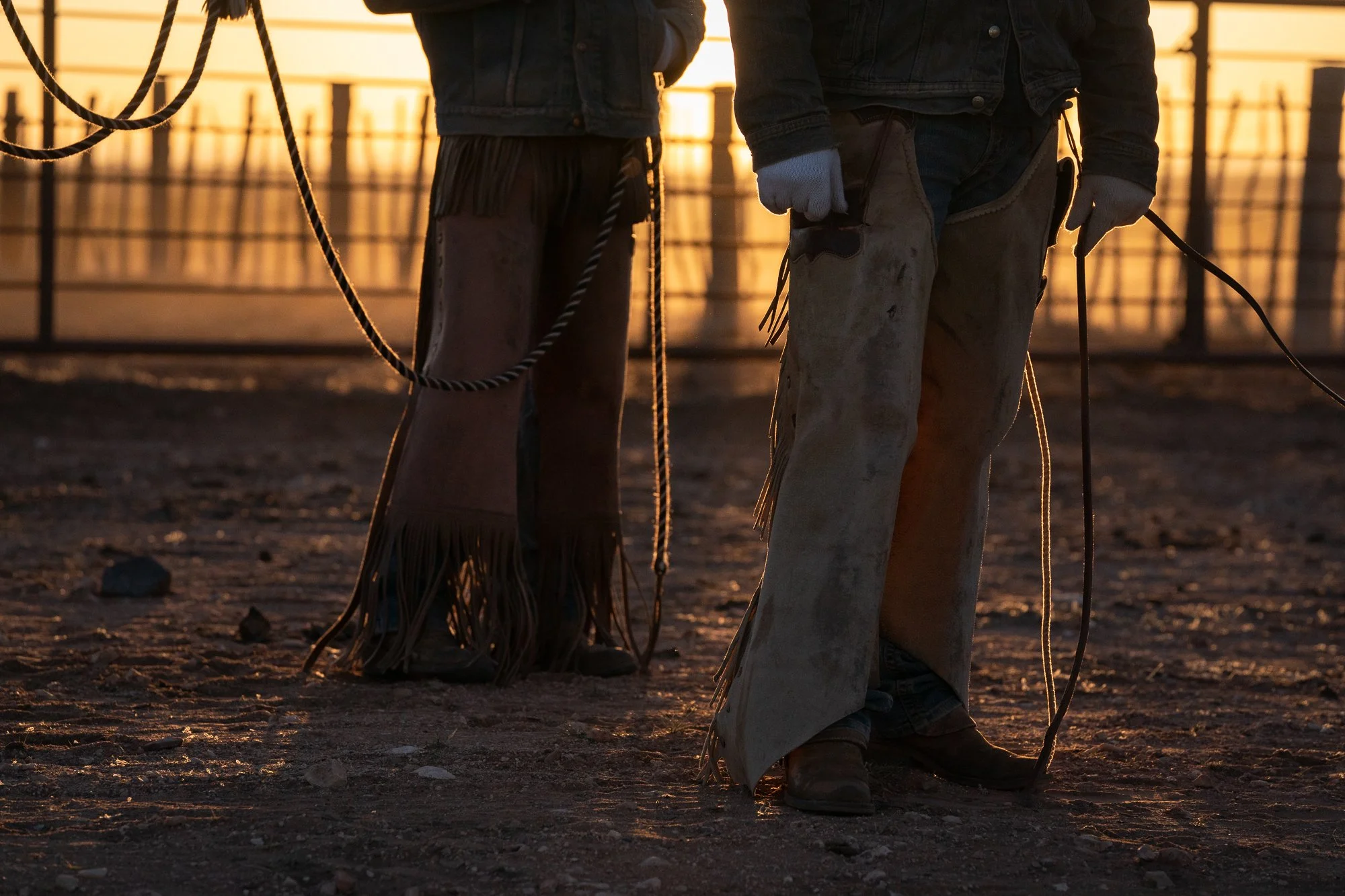
Across the American West, cowboys are still doing the same jobs they’ve done for generations: gathering cattle across vast, rugged pastures, branding, doctoring, etc. The tools have changed in small ways, but the core of the work remains the same.

Photographing that world requires access, time, and a willingness to work within it—not around it. The difference shows.

In this context, cowboy photography becomes less about nostalgia and more about documentation. It sits closer to documentary photography than it does to traditional Western art, even if it shares the same visual language.

That shift is subtle, but important—and it’s part of what this exhibition reflects.

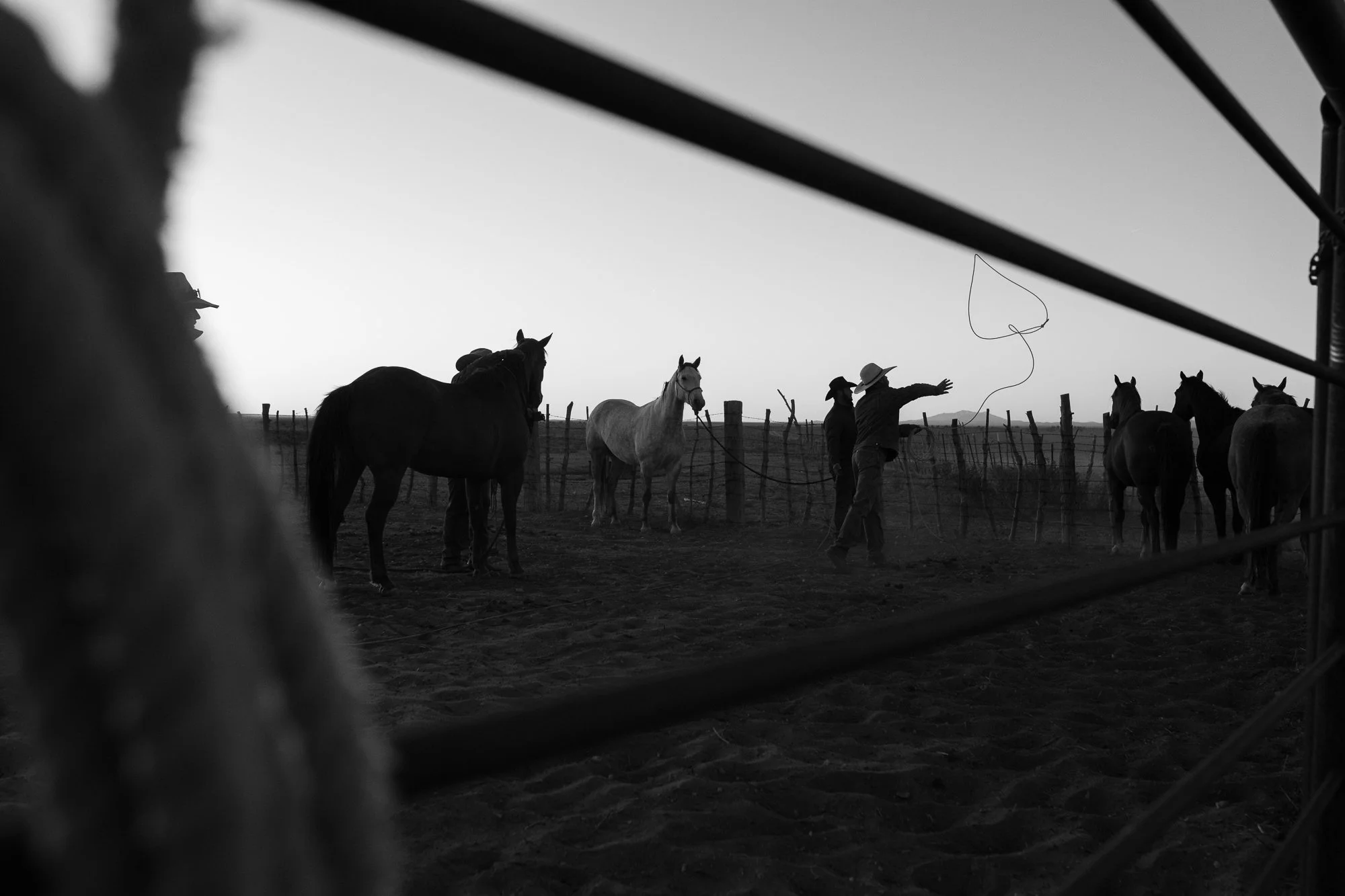
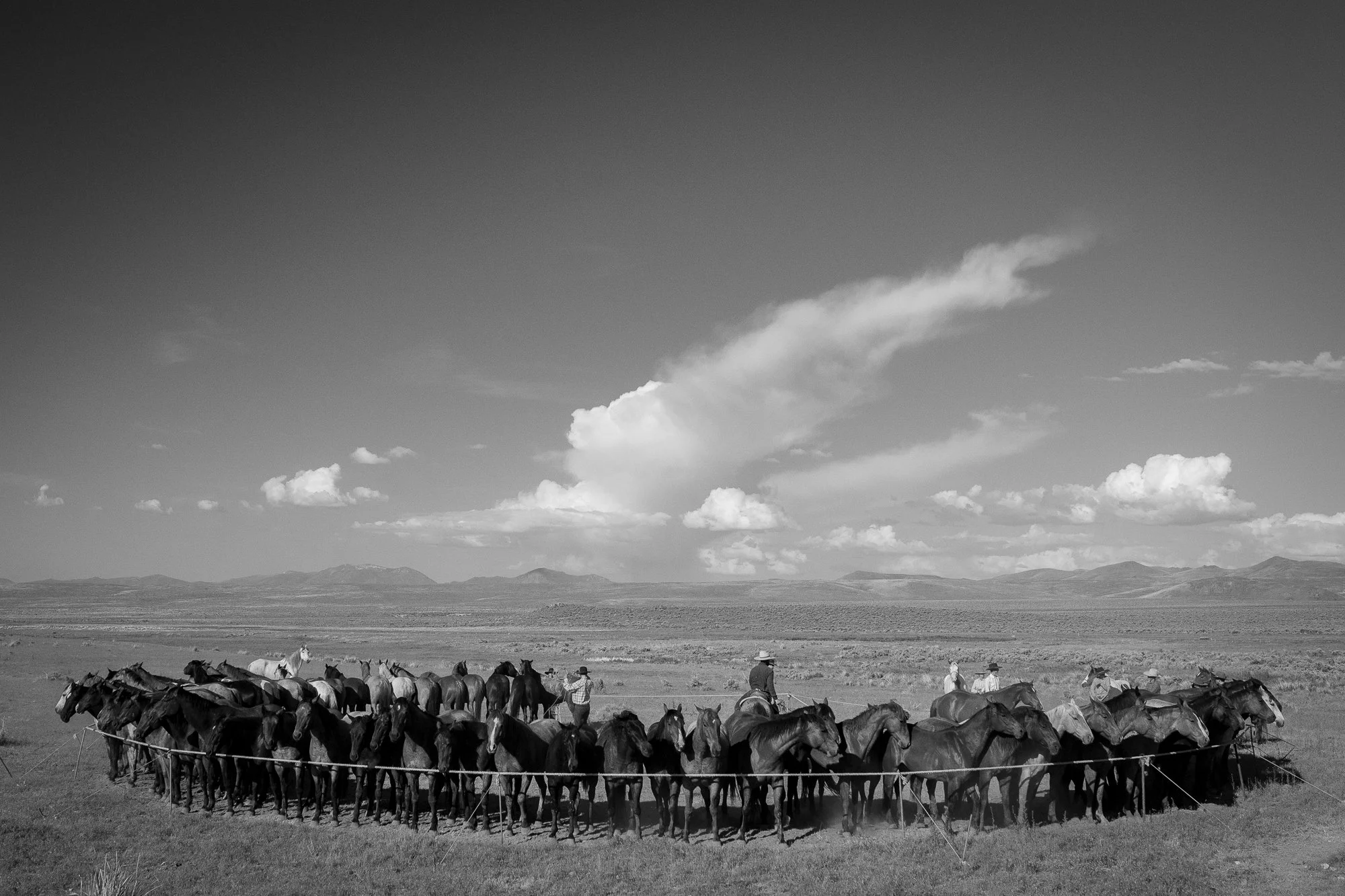
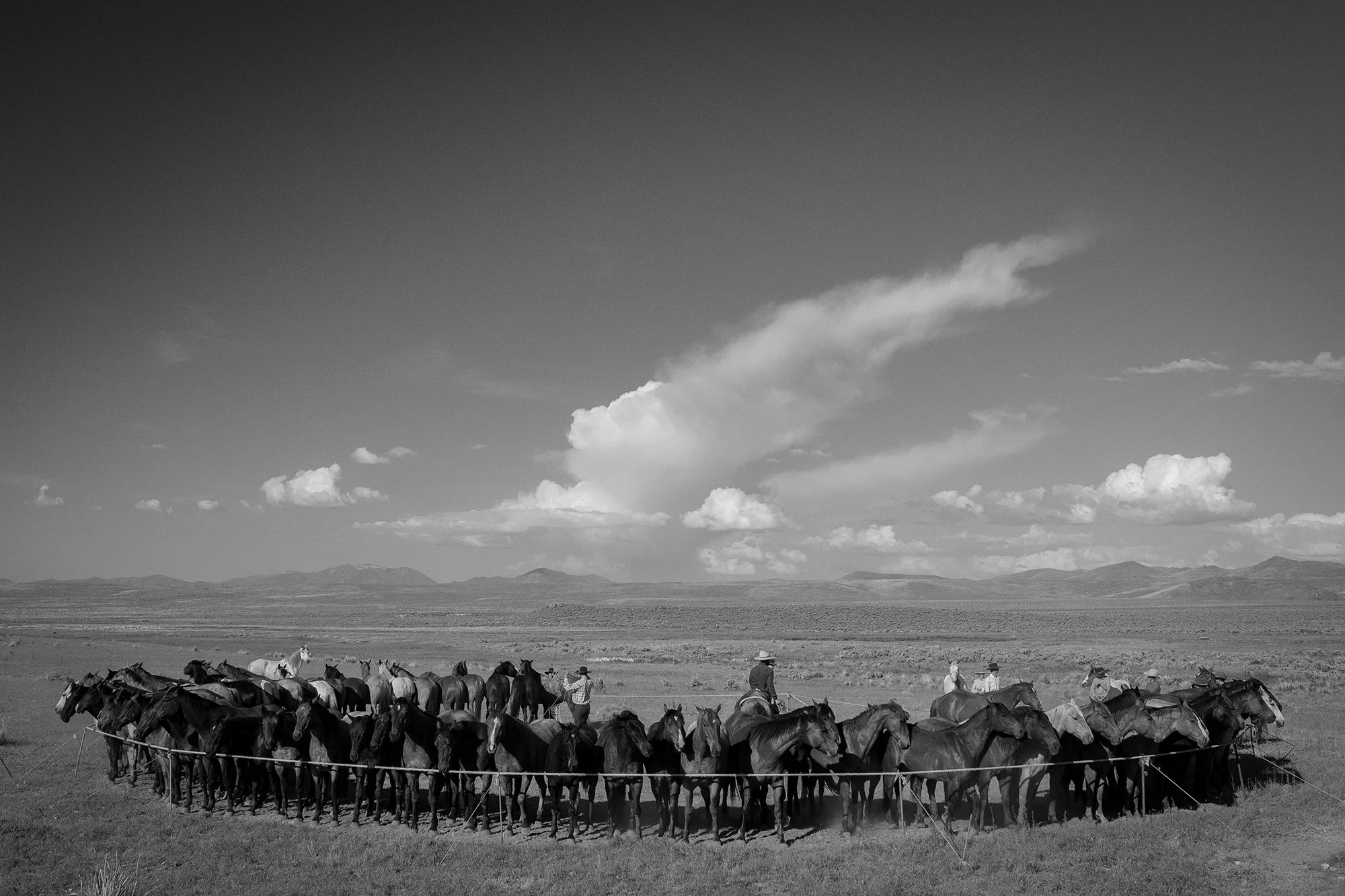
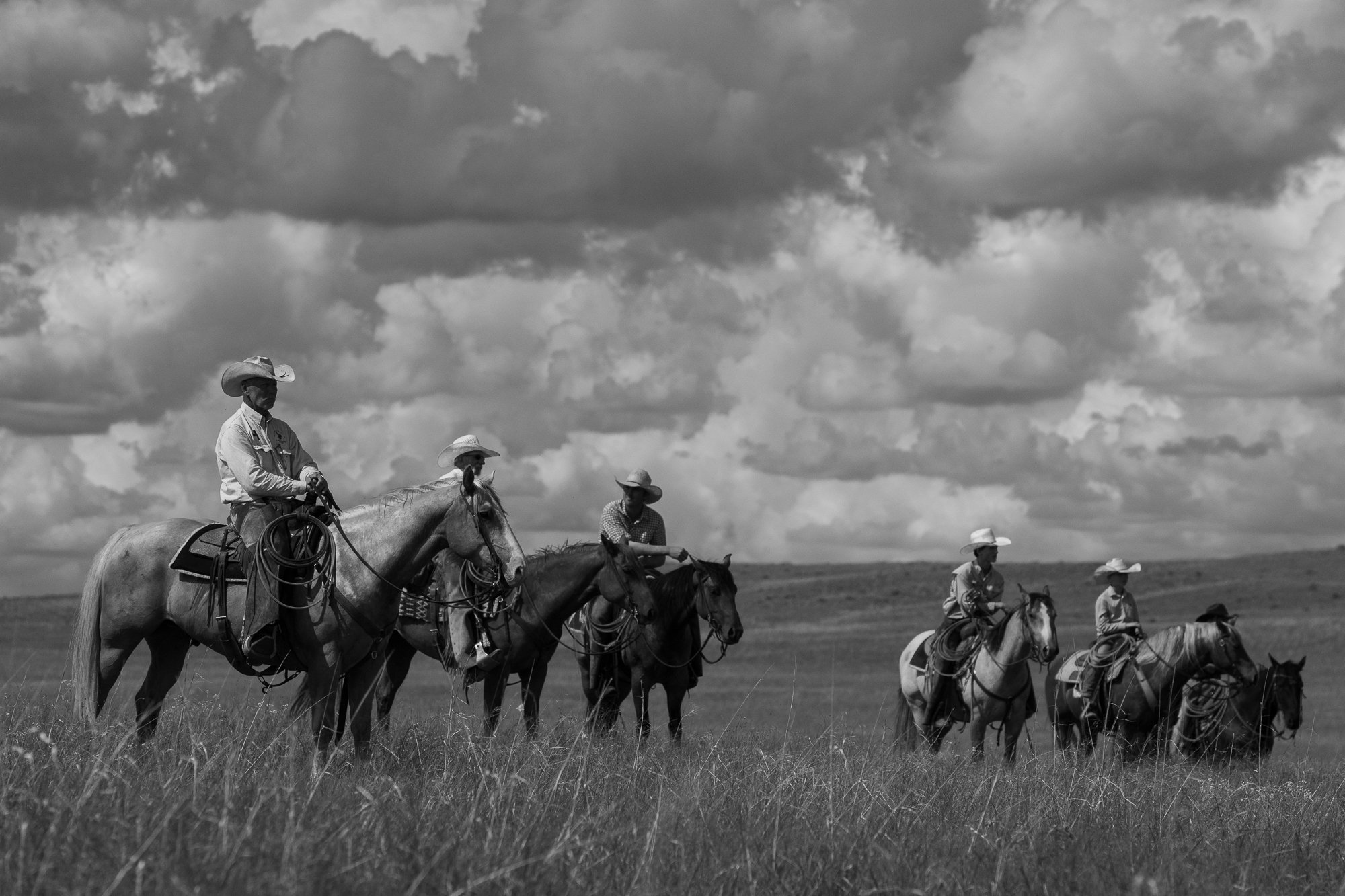
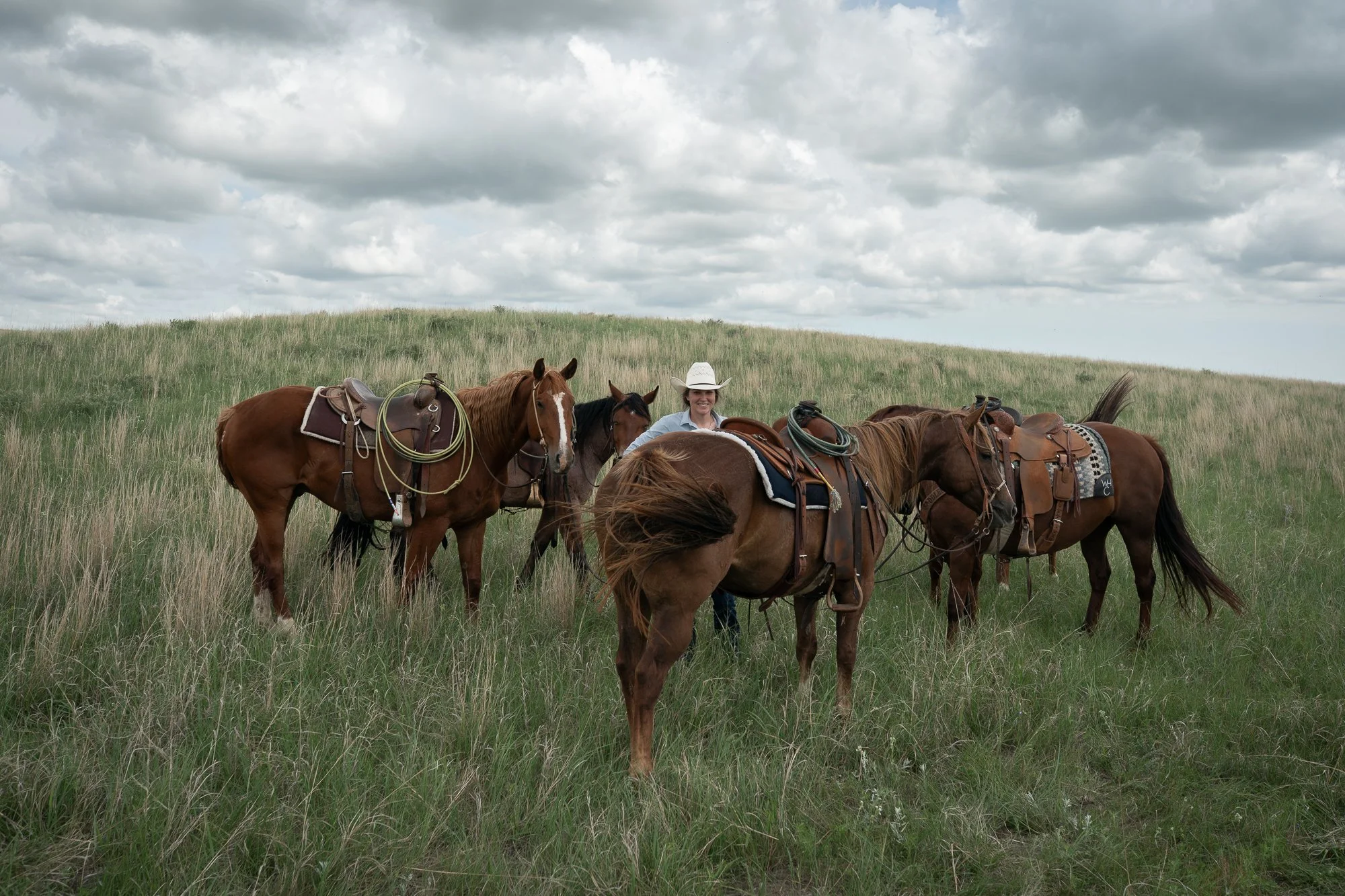
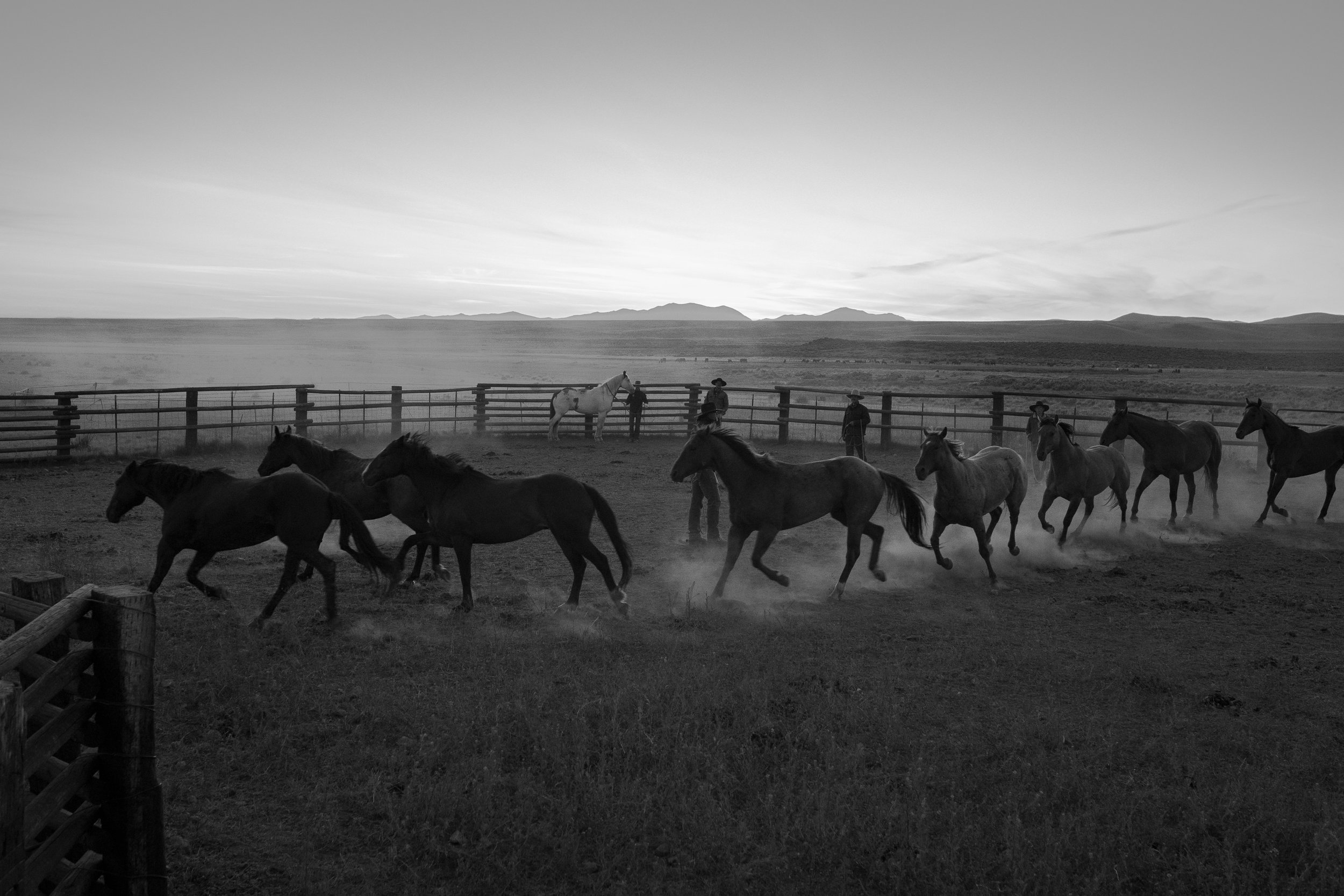
Horses gathered in a line with riders managing them in an open landscape in the  American West

Horses stand grouped in a line while riders move along them, a pause within the ongoing work of managing animals across open range.

Photographs from the Exhibition

The photographs included in this show come from a long-term body of work made across ranches in Texas, Nevada, Arizona, Wyoming, Oregon, Colorado, and Montana.

Rather than isolating dramatic moments, the focus is often on the in-between. These are not staged scenes. They’re fragments of a larger rhythm—one that repeats itself day after day, season after season.

Over time, those moments begin to add up to something more complete: a picture of a way of life that continues largely unchanged, despite the pace of everything around it.

Visiting the Exhibition in Denver

For those in Denver—or passing through—the exhibition offers a chance to see this work in person, outside of a tiny screen or a printed page.

Location: National Western Center
Gallery: Wilson Gallery
Building: Legacy Building

Dates: May 14, 2026 through the middle of July

Seeing the photographs at scale changes the experience. Details that are easy to miss online—subtle expressions, textures, the quality of light—become much more apparent. Come see the work as photographs are meant to be enjoyed, on large fine art paper.

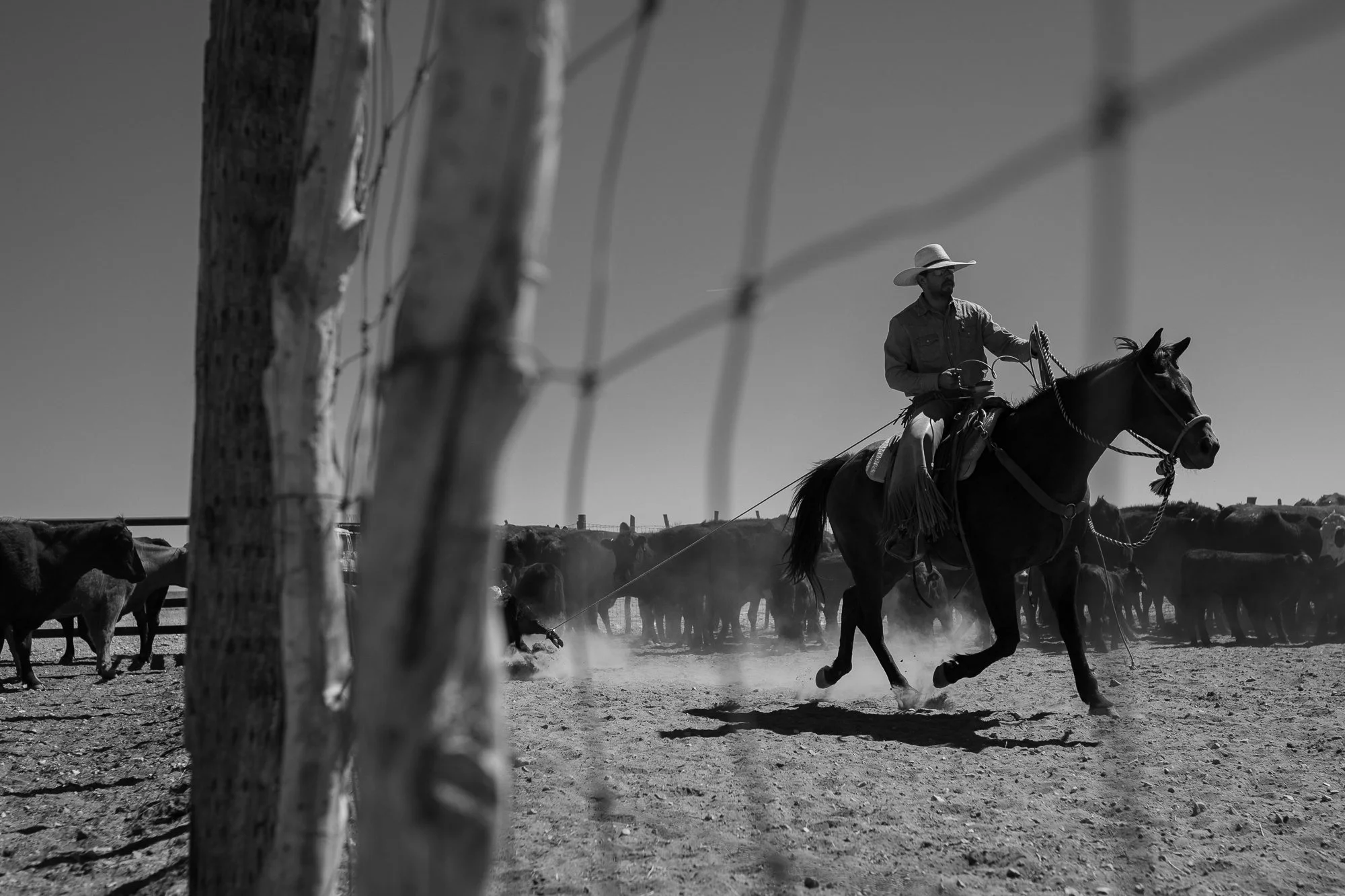
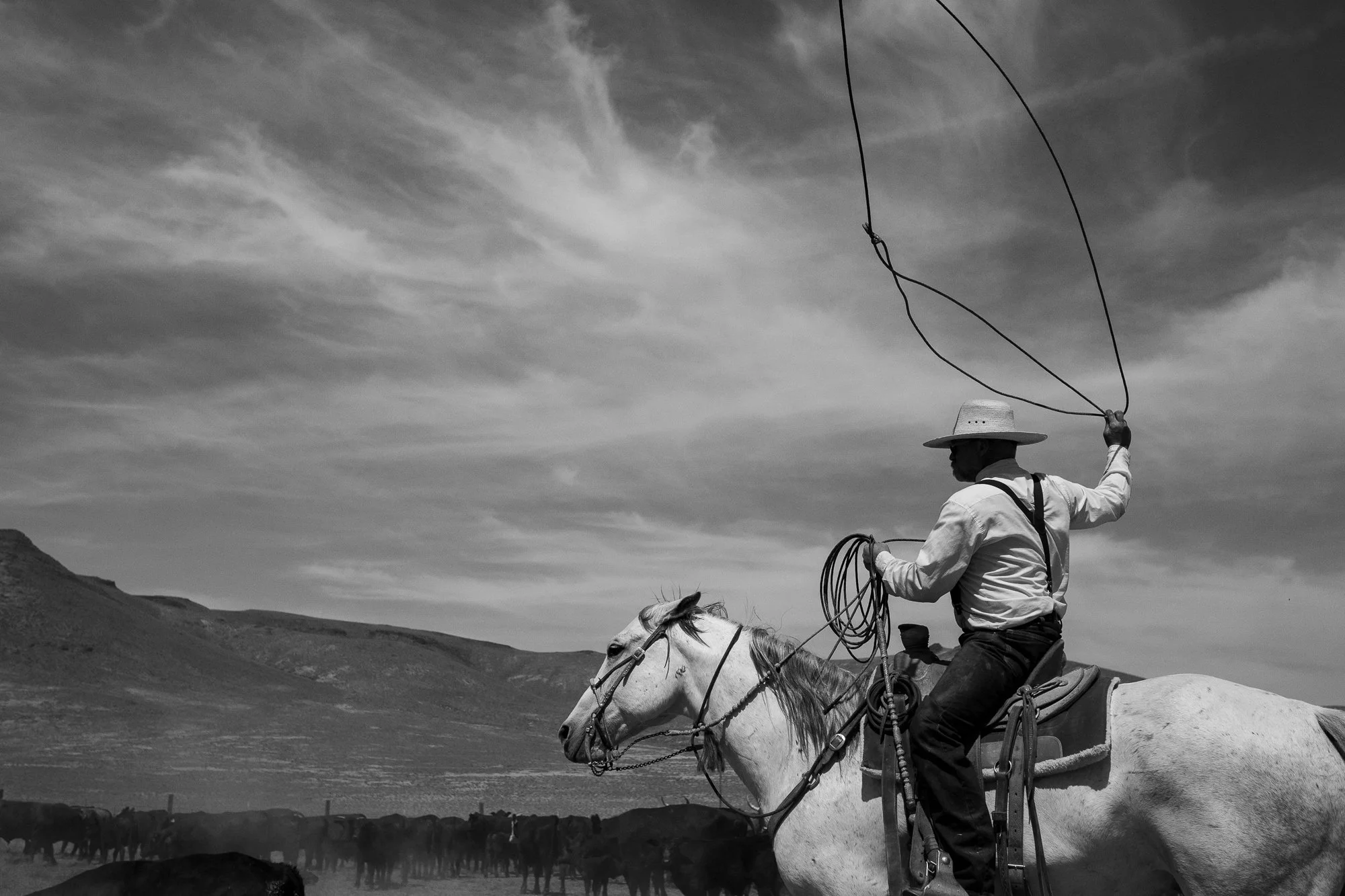
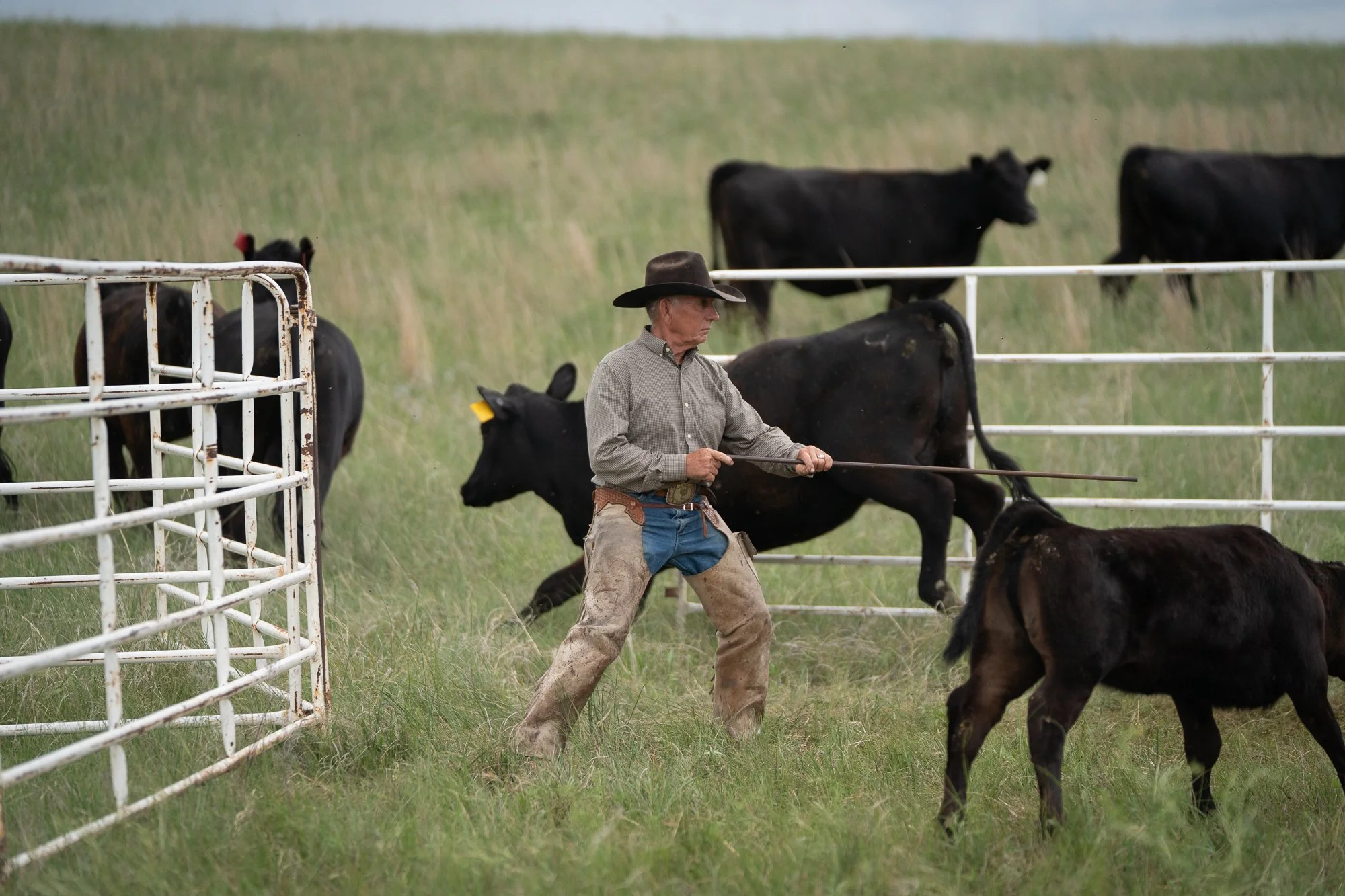
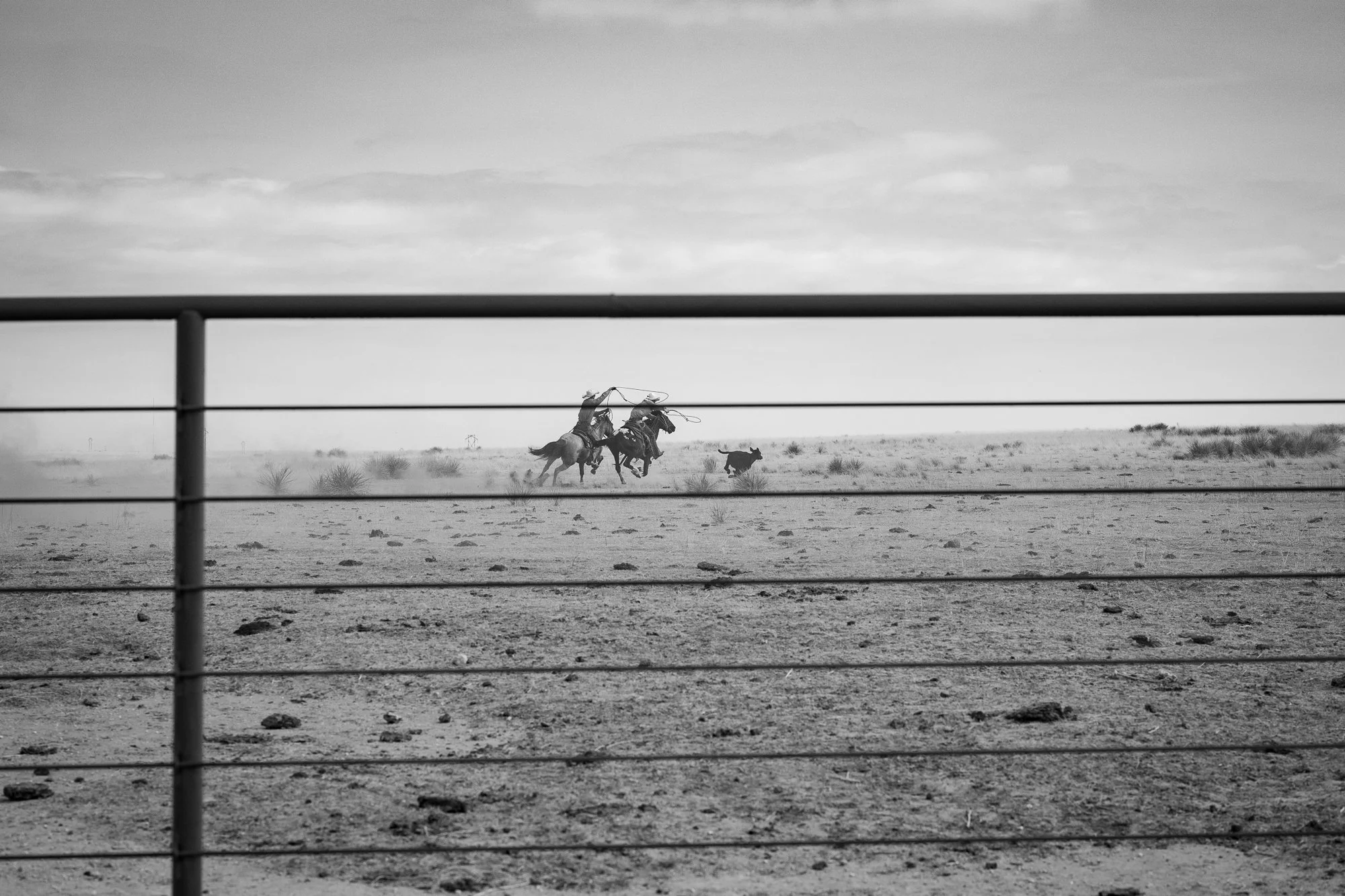
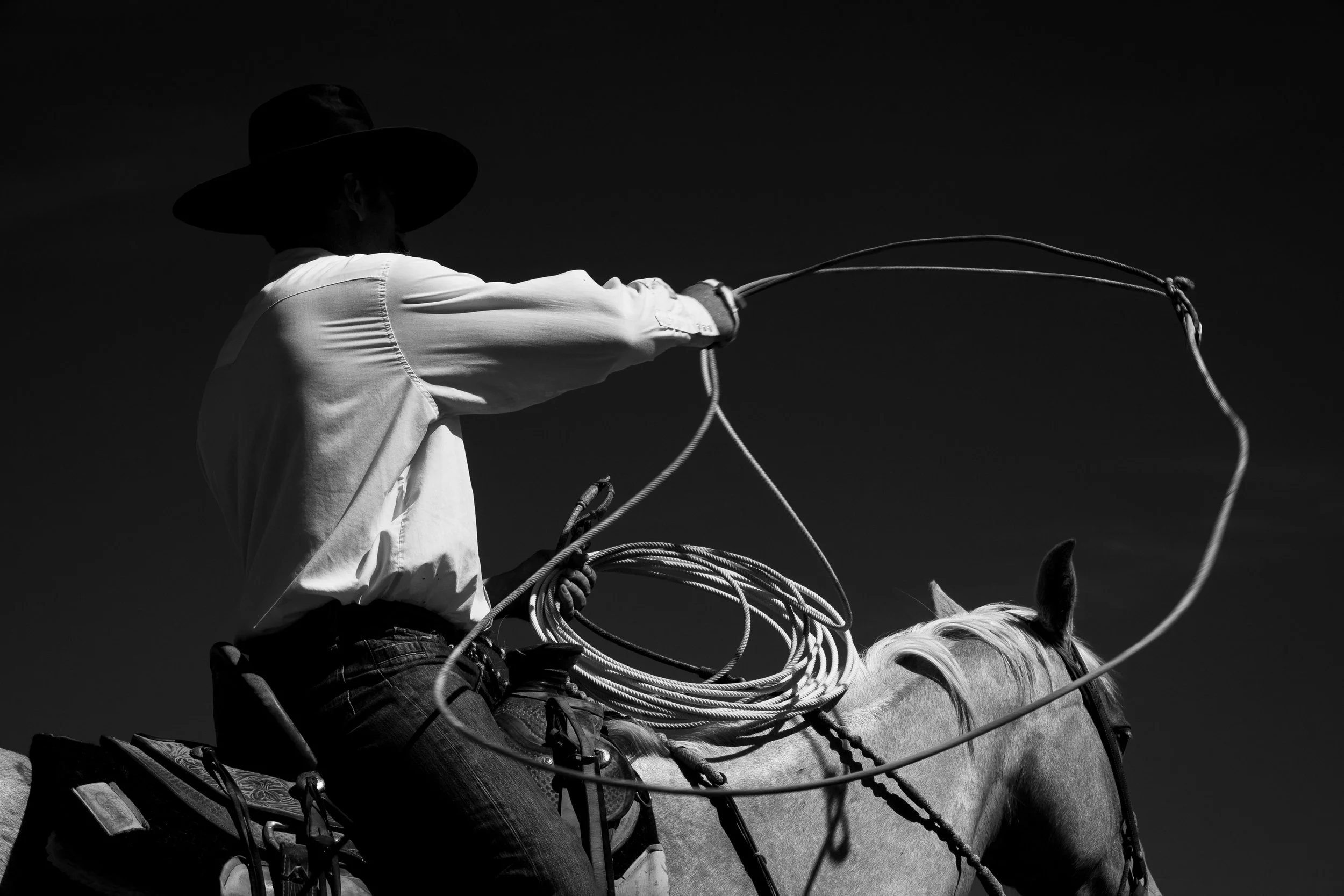
Cowboy on horseback swinging a rope while working cattle in an open landscape in the  American West

A cowboy swings a rope from horseback while working cattle, one of the repeated movements that make up daily ranch work across the American West.

Part of a Larger Body of Work

This exhibition is one piece of a much larger project documenting working cowboys across the American West.

Over the past several years, that work has involved traveling tens of thousands of miles, spending extended time on remote ranches, and building relationships that allow for real access—not just to the work itself, but to the people behind it.

The goal has never been to romanticize the subject, but to show it as it is: demanding and deeply tied to the land.

If you’re interested in seeing more from the series, you can explore the full body of work here:
View the Cowboy Photography Project

A selection of photographs from the project is also available as fine art prints:
View Available Cowboy Photography Prints

For editorial, commercial, or brand licensing inquiries, contact me directly:
Licensing & Assignment Work

Where to Buy Authentic Cowboy Photography Prints for Western Homes

Where to Buy Authentic Cowboy Photography Prints That Actually Feel Real

There’s no shortage of “cowboy wall art” online.

A quick search turns up thousands of options—rustic prints, sepia-toned riders, staged Western scenes, and mass-produced imagery designed to fit a certain idea of the West.

But for people who actually know the difference—or simply want something that feels real—most of it is fake, staged, or made for tourists.

Authentic cowboy photography isn’t about aesthetic alone. It’s about proximity, trust, and time spent in a world that isn’t easily accessed.

And that changes everything.

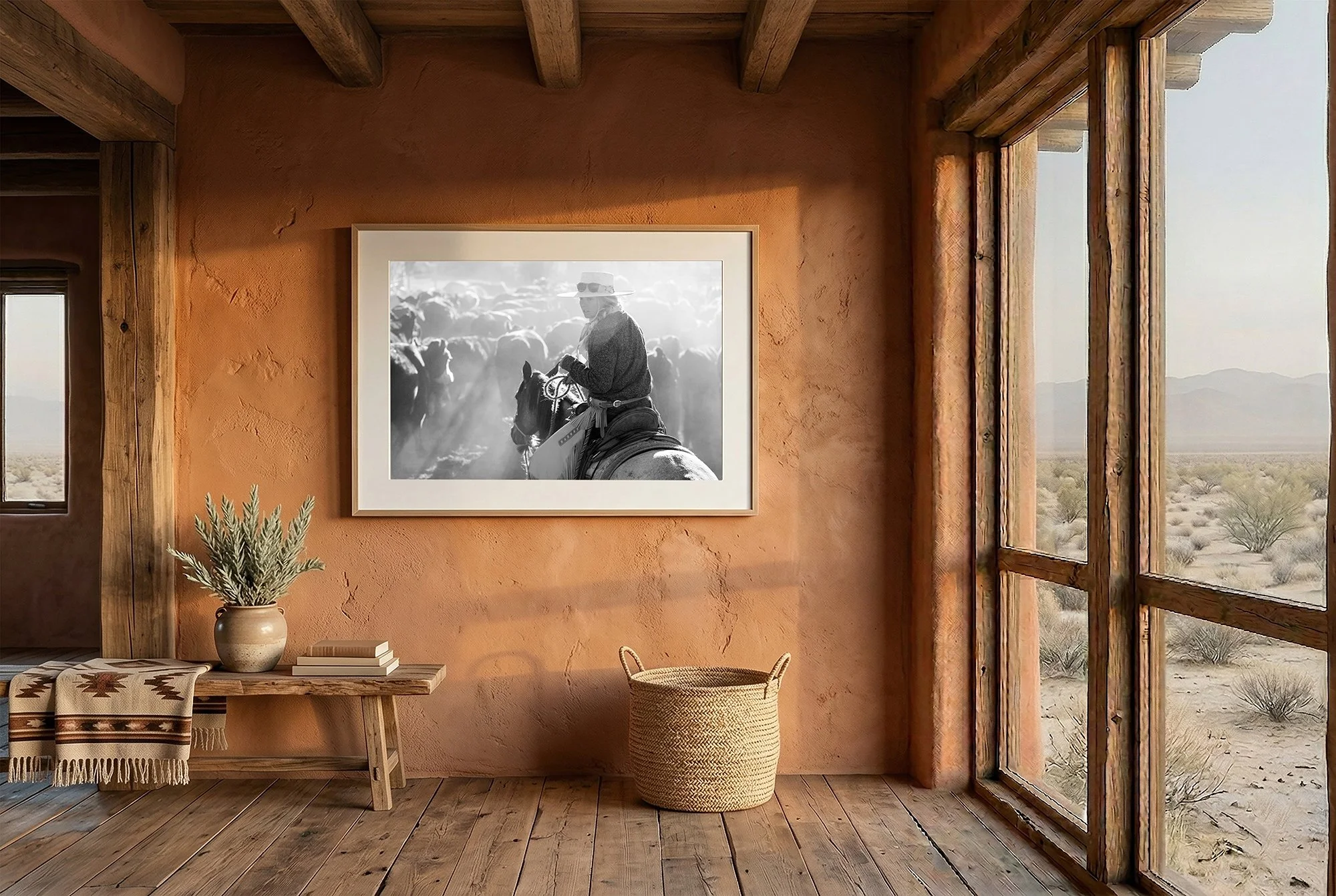
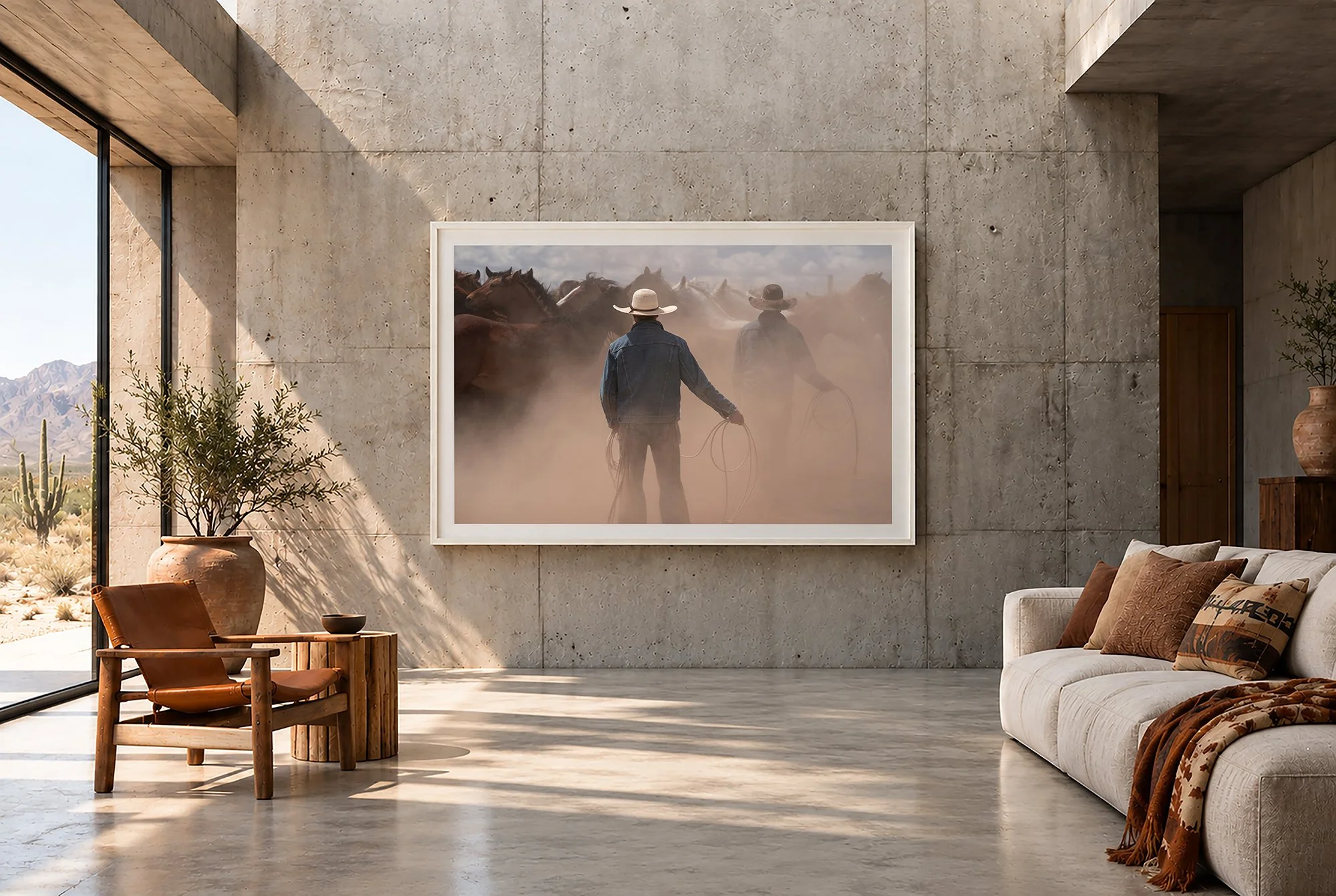
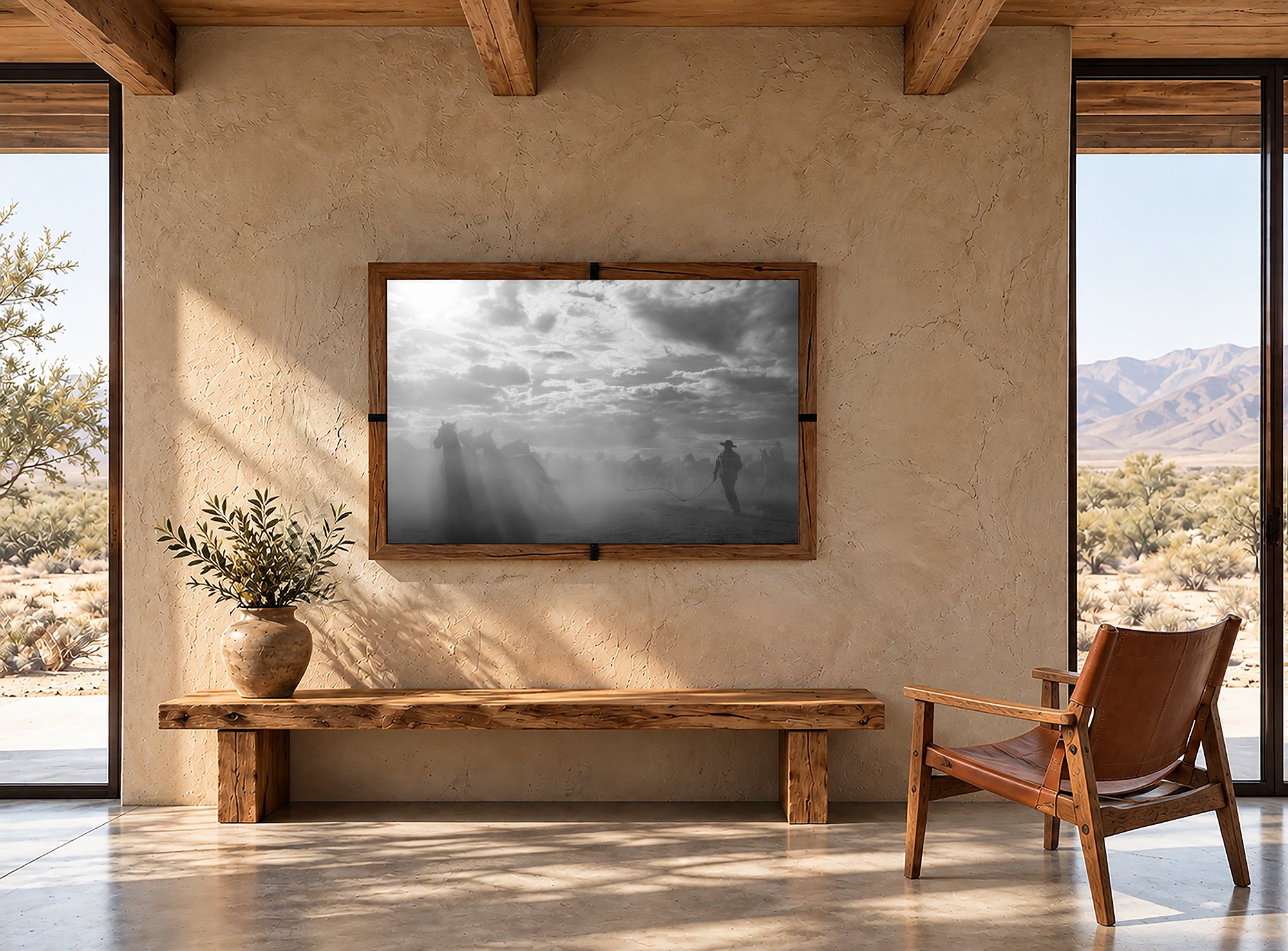
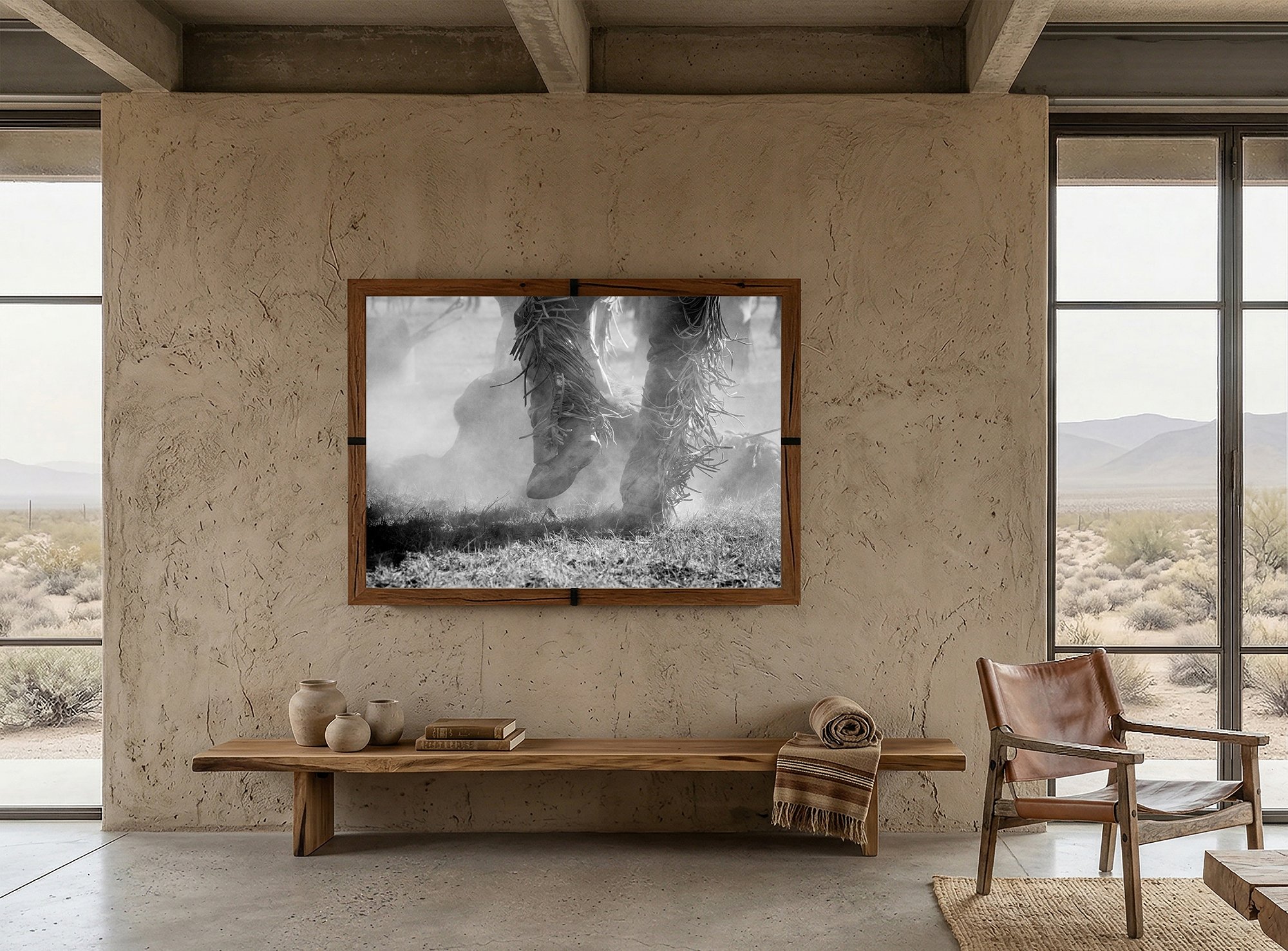
A large black and white cowboy photography print displayed in a modern interior, ideal for minimalist wall art and neutral home decor

A large black and white cowboy photography print displayed in a modern interior, ideal for minimalist wall art and neutral home decor.

What Makes Cowboy Photography Feel Authentic?

The difference is usually immediate, even if you can’t quite explain it.

Real cowboy photography tends to have:

  • Unscripted moments — work happening as it naturally unfolds

  • Functional environmentscorrals, branding pens, open range, not staged sets

  • Working gear — worn saddles, ropes, dust, sweat, and weather

  • Light that isn’t controlled — early mornings, harsh midday sun, or fading daylight

Most importantly, it reflects work, not performance.

That’s where a lot of “Western art” falls short—it’s built around the idea of a cowboy, not the reality of one.

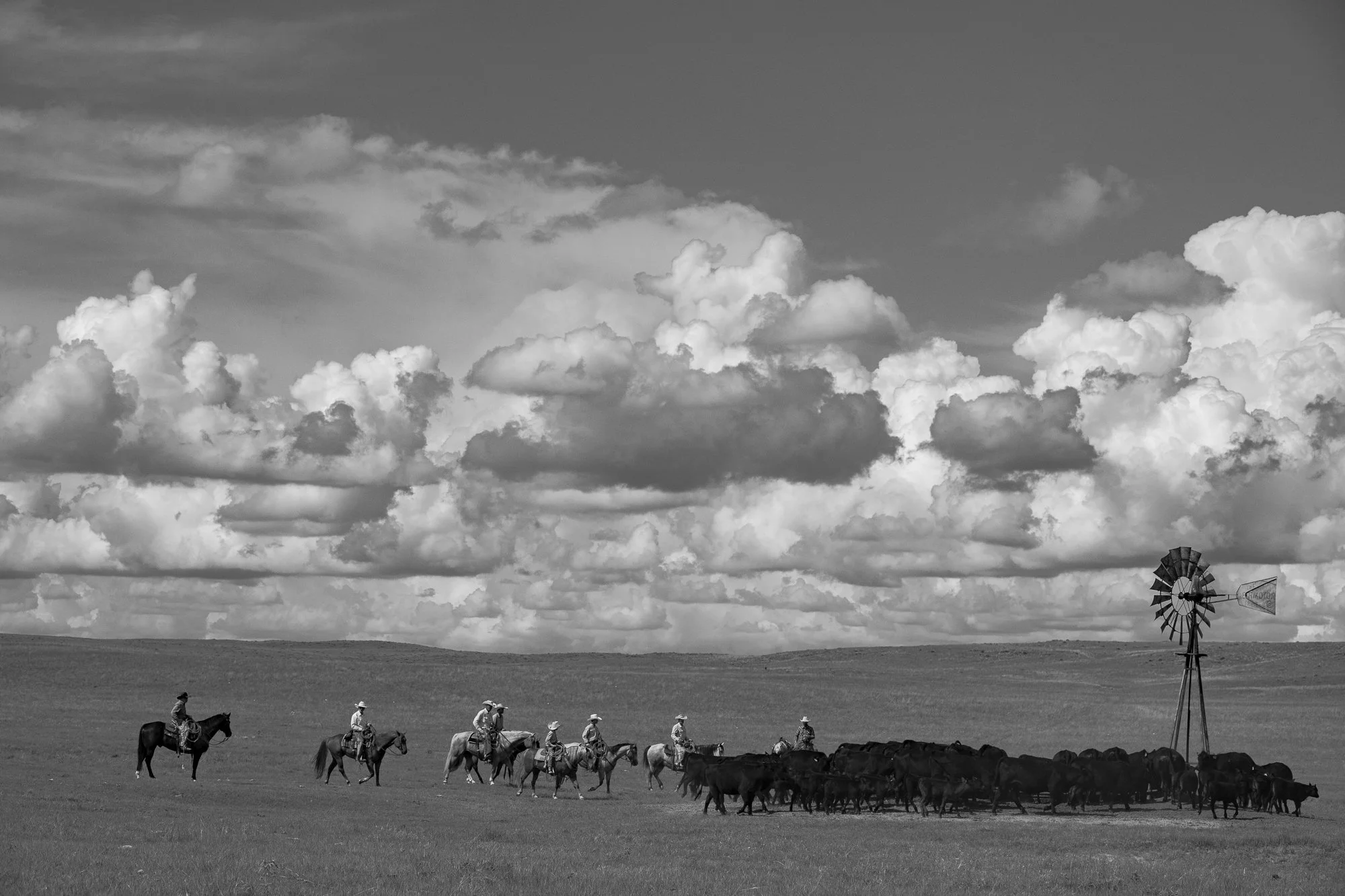
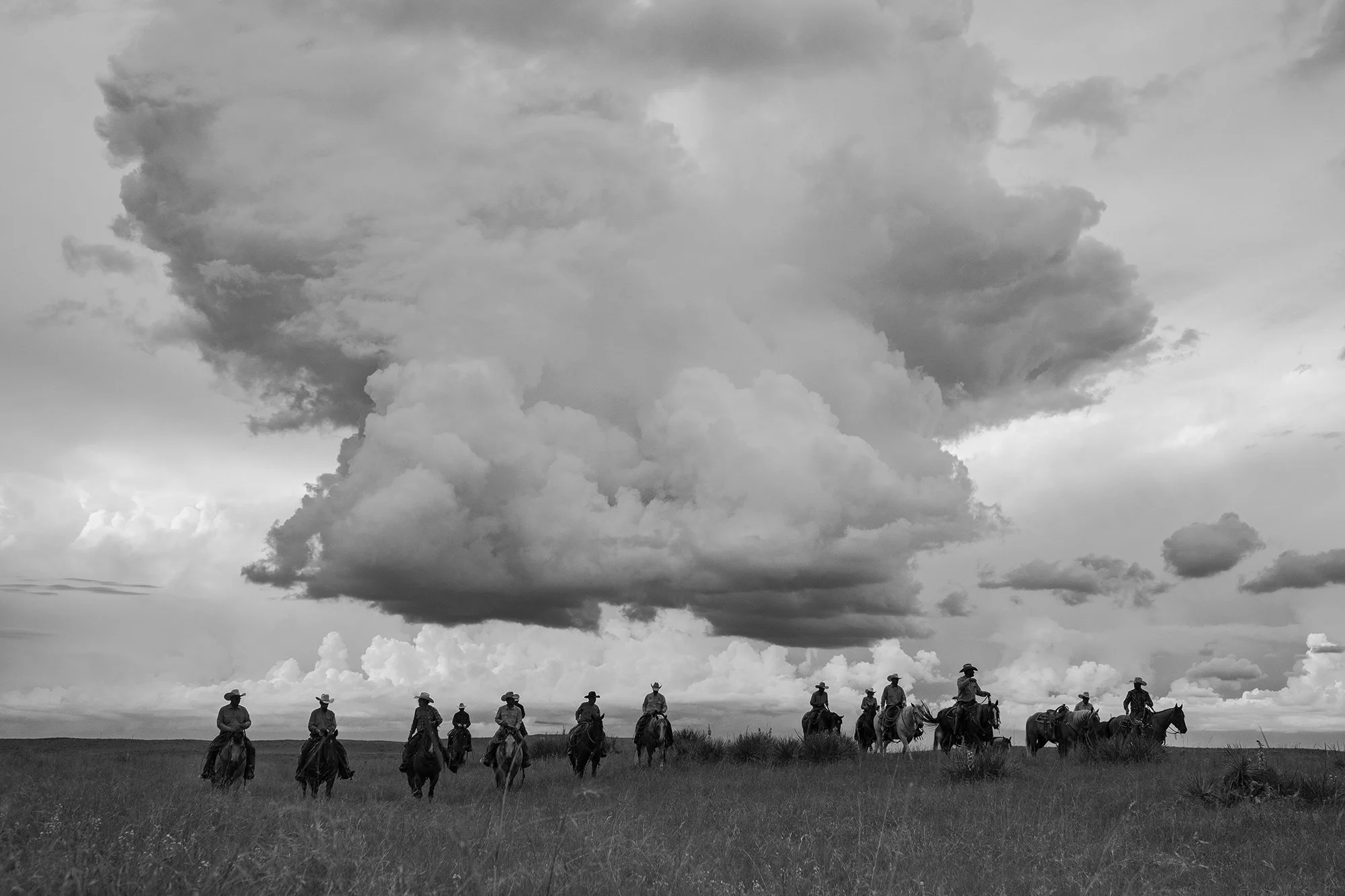
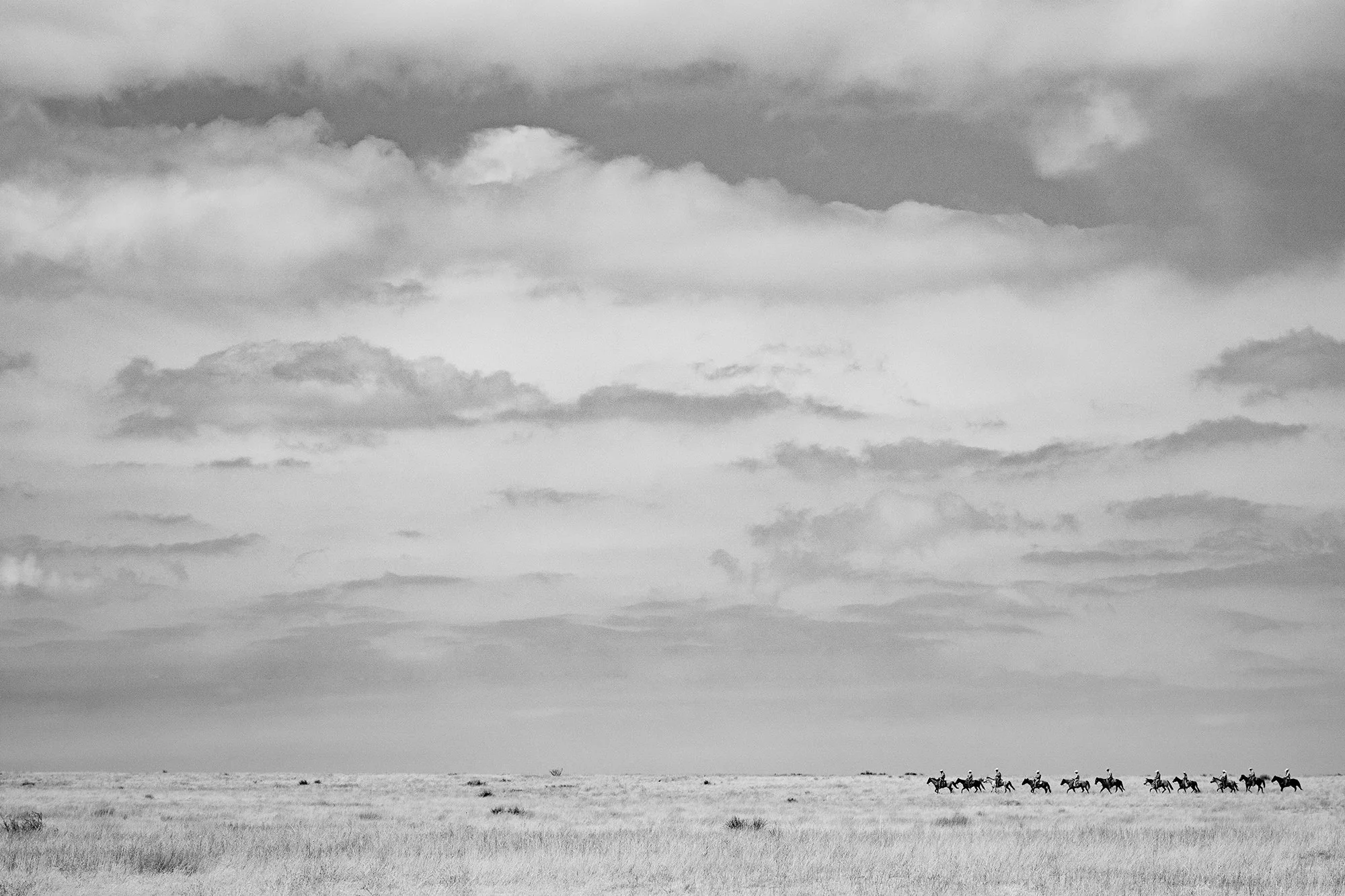
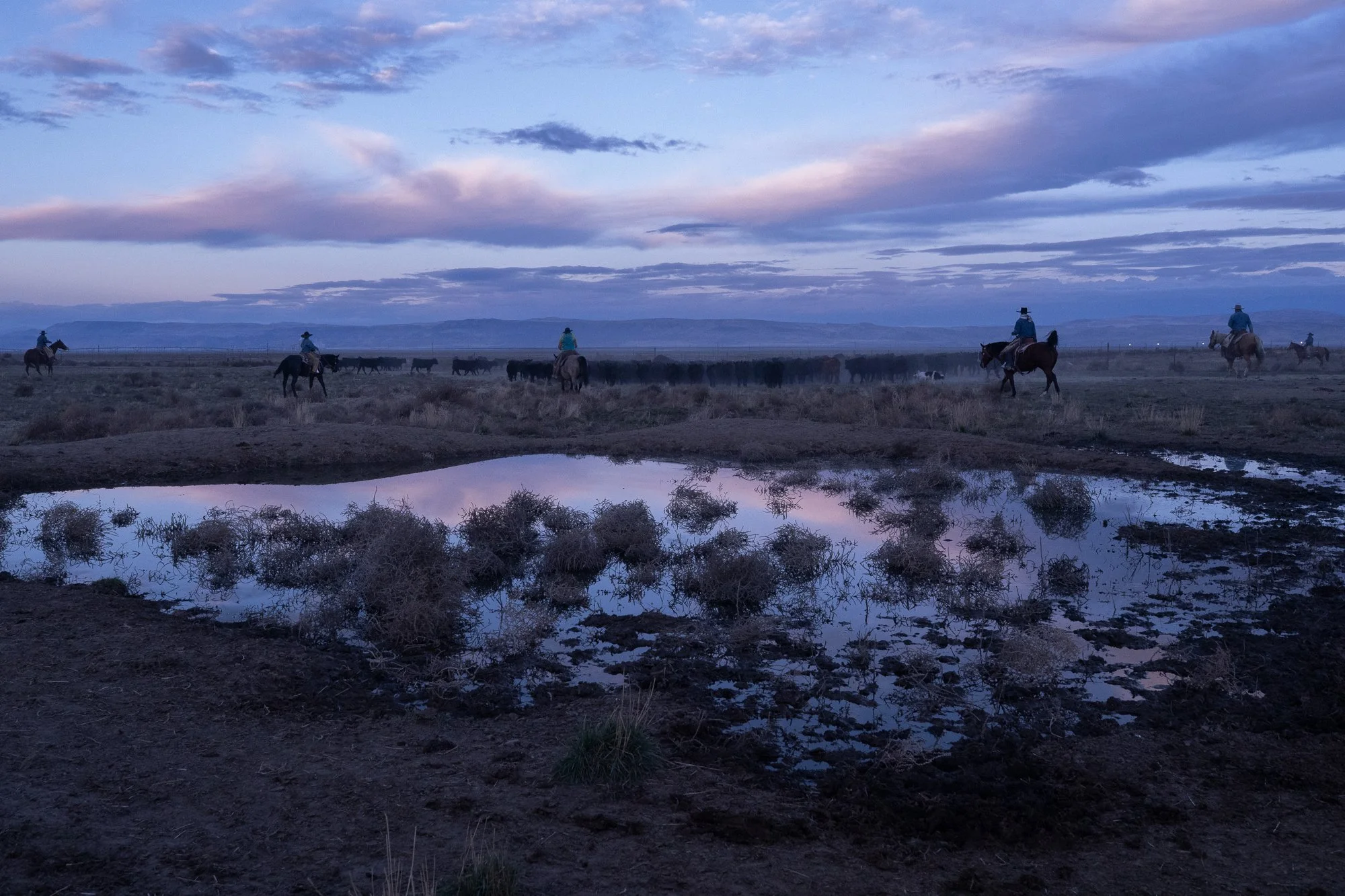
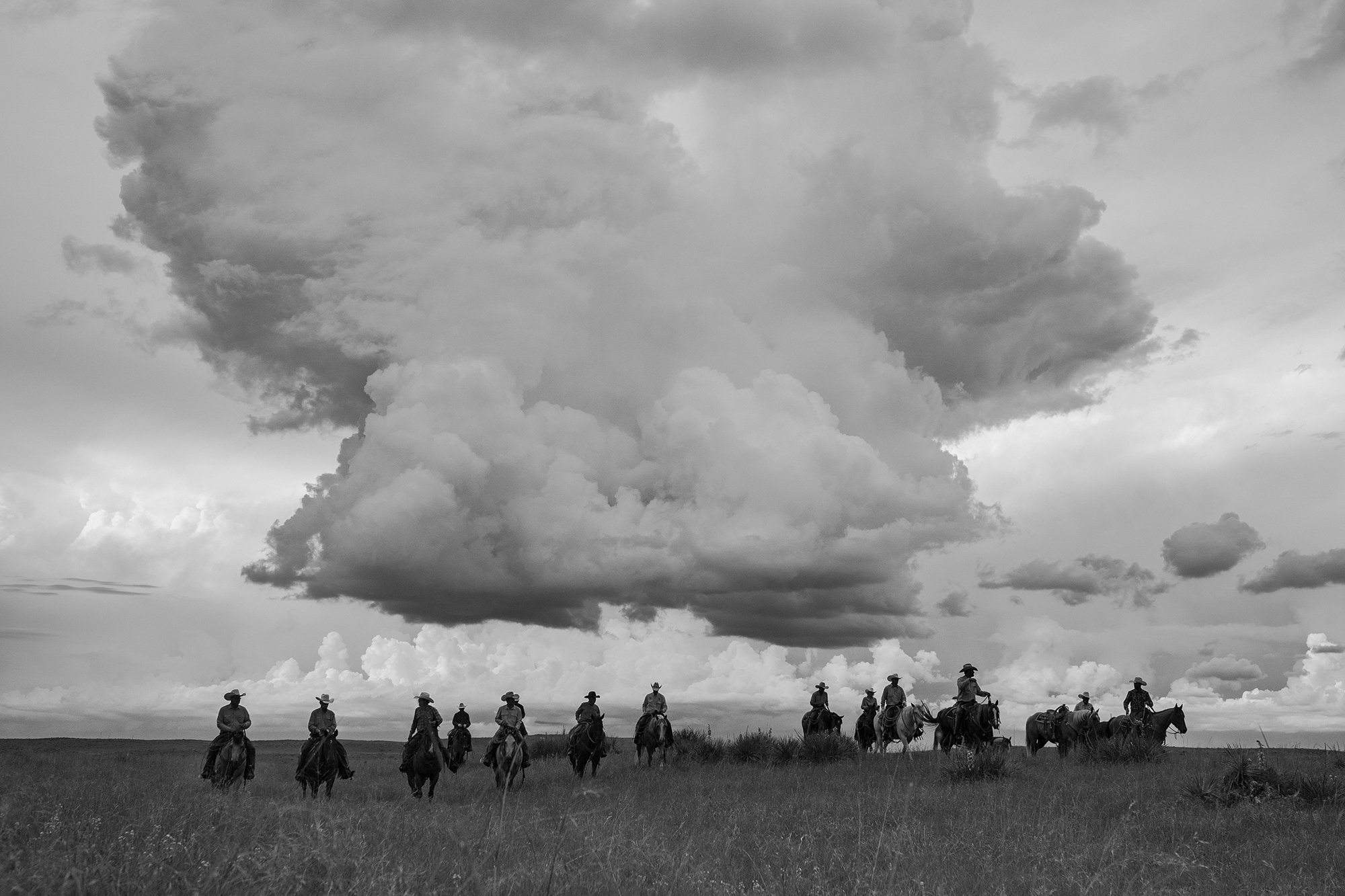
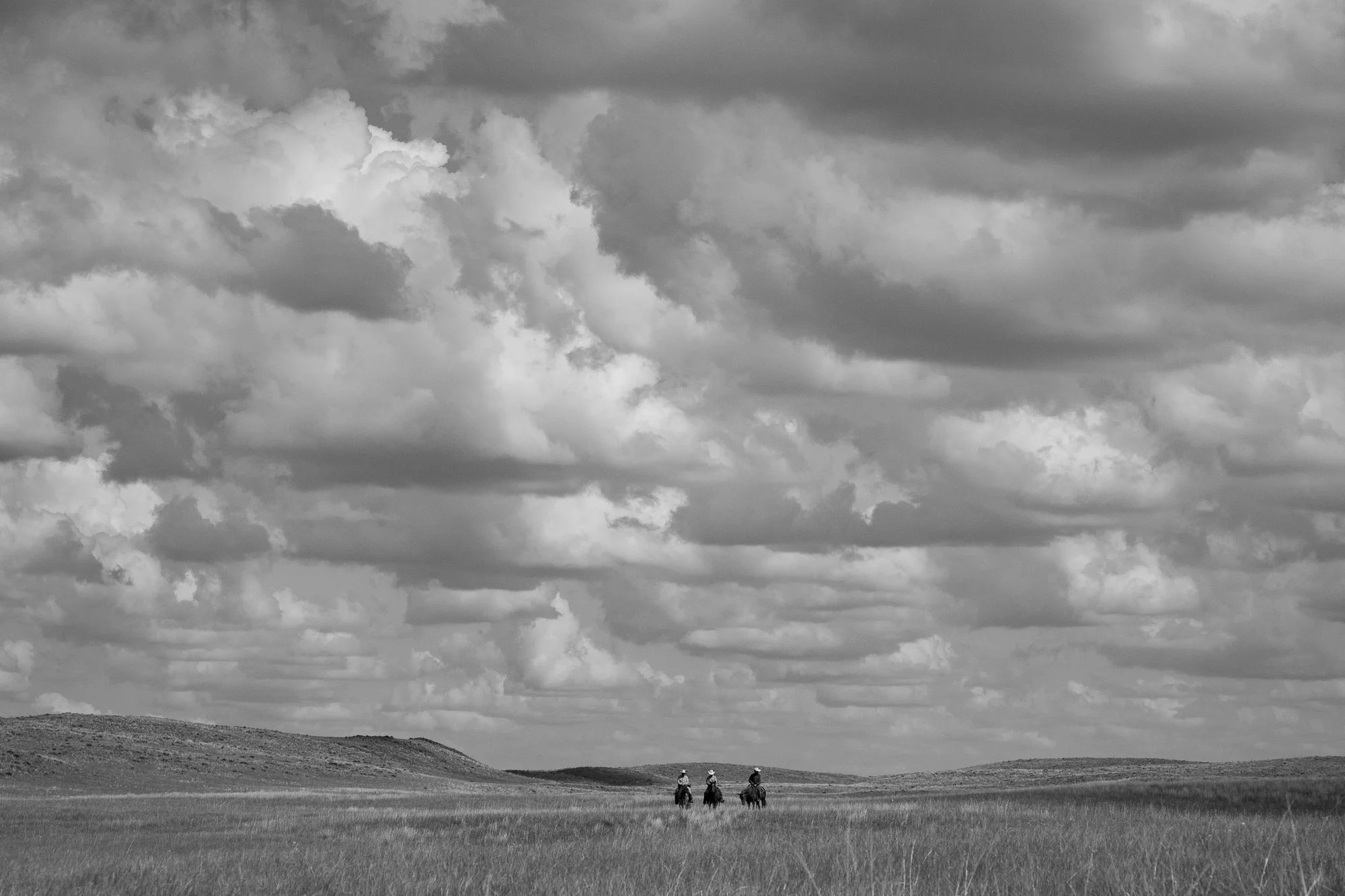
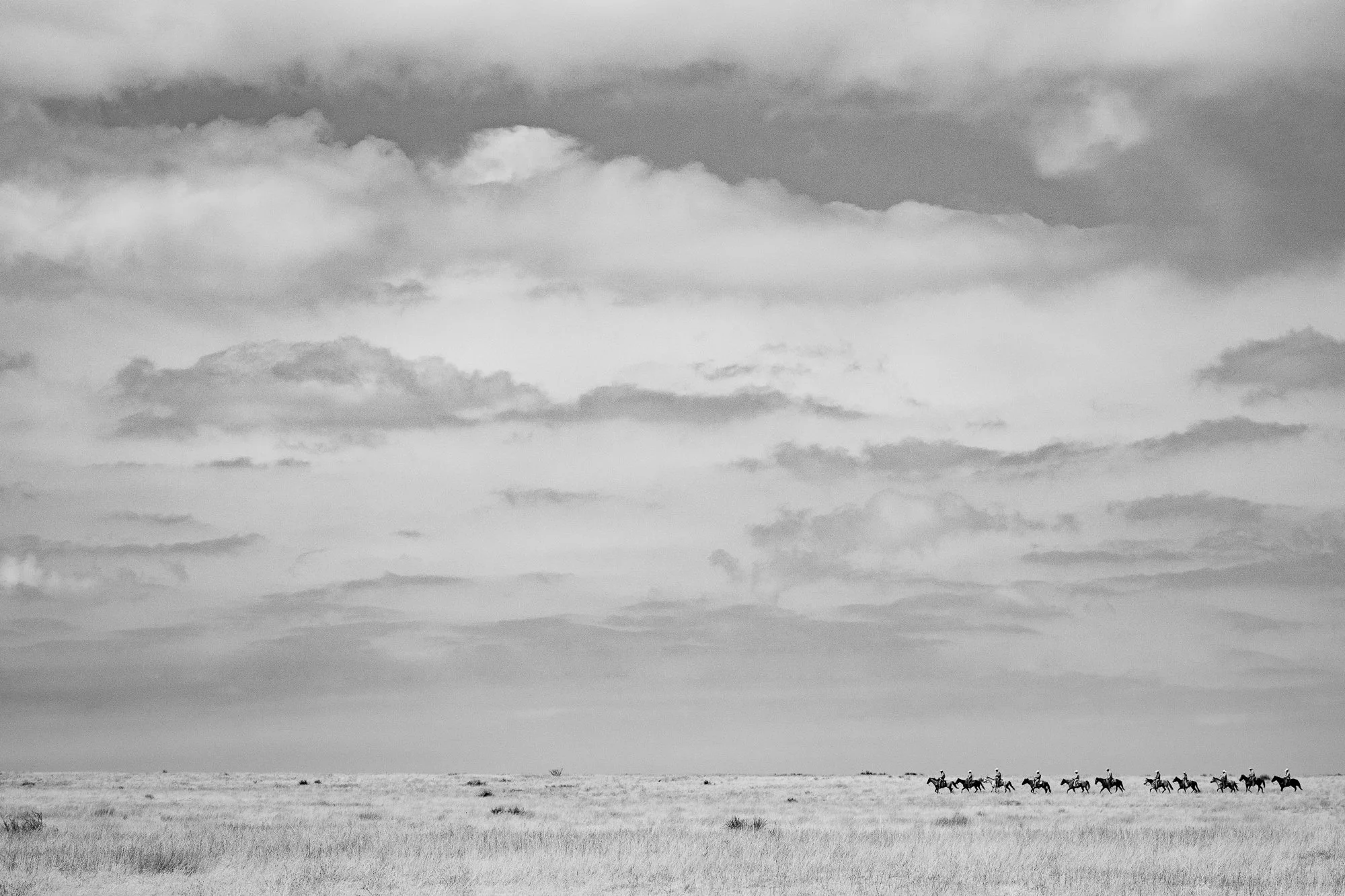
Cowboys riding across an open range beneath large clouds, ideal for large wall art and western landscape photography prints

Cowboys ride across open land under a wide sky, adding scale to large wall art in living spaces.

The Problem With Most “Cowboy Wall Art” Online

Most of what’s sold as “cowboy wall art” isn’t connected to real ranch life at all. It’s staged, over-processed, or pulled from stock libraries and printed at scale.

It’s made to look like the West—not to come from it.

  • Stock photography printed as décor

  • Heavily staged lifestyle shoots

  • Over-processed images designed to look “vintage”

  • Mass-produced prints with no connection to real ranch life

There’s nothing inherently wrong with decorative art—but if you're looking for something with depth, it becomes obvious pretty quickly.

The West has texture. It has grit. It has history.

When those elements are missing, the image might still look good—but it won’t hold your attention for long.

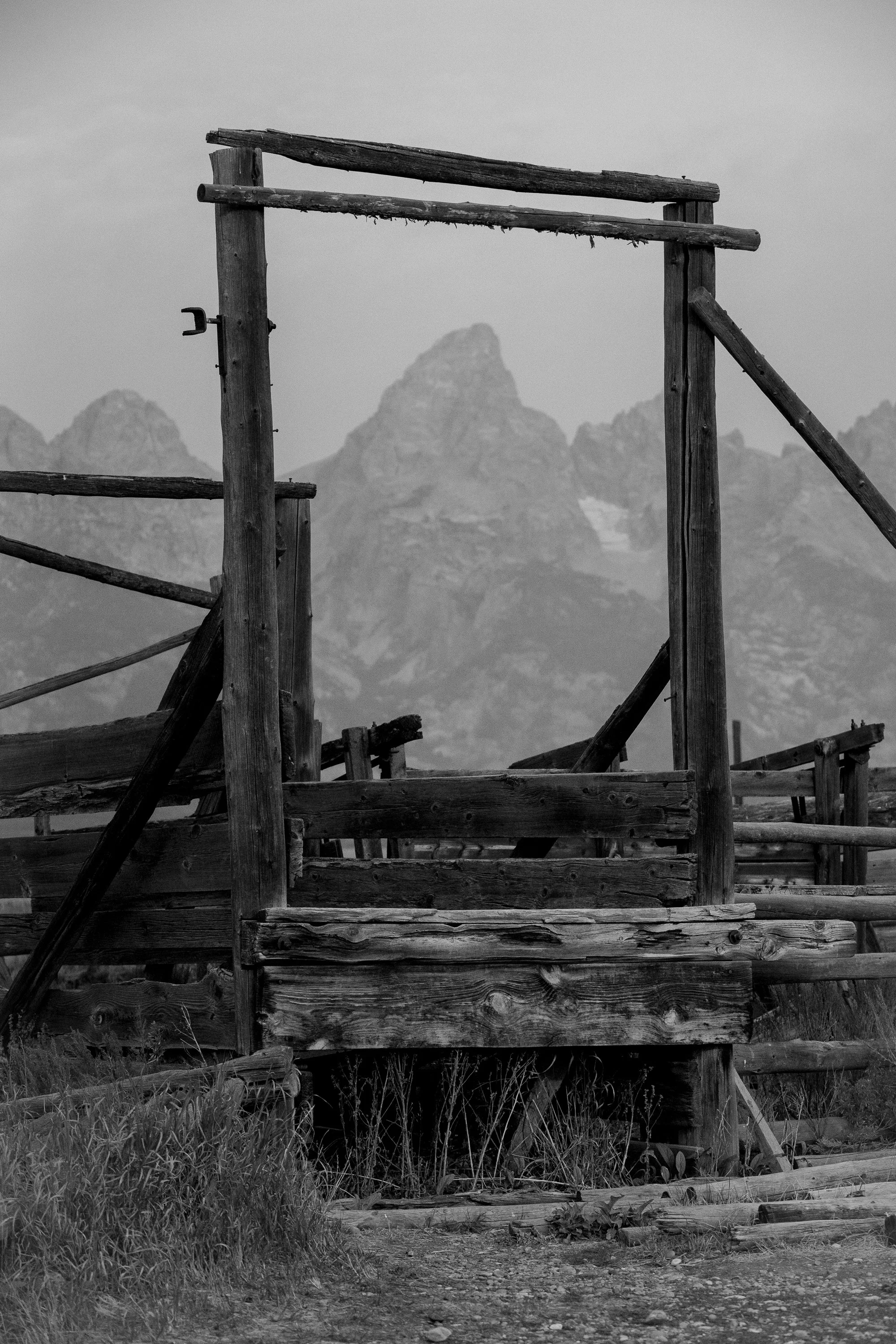
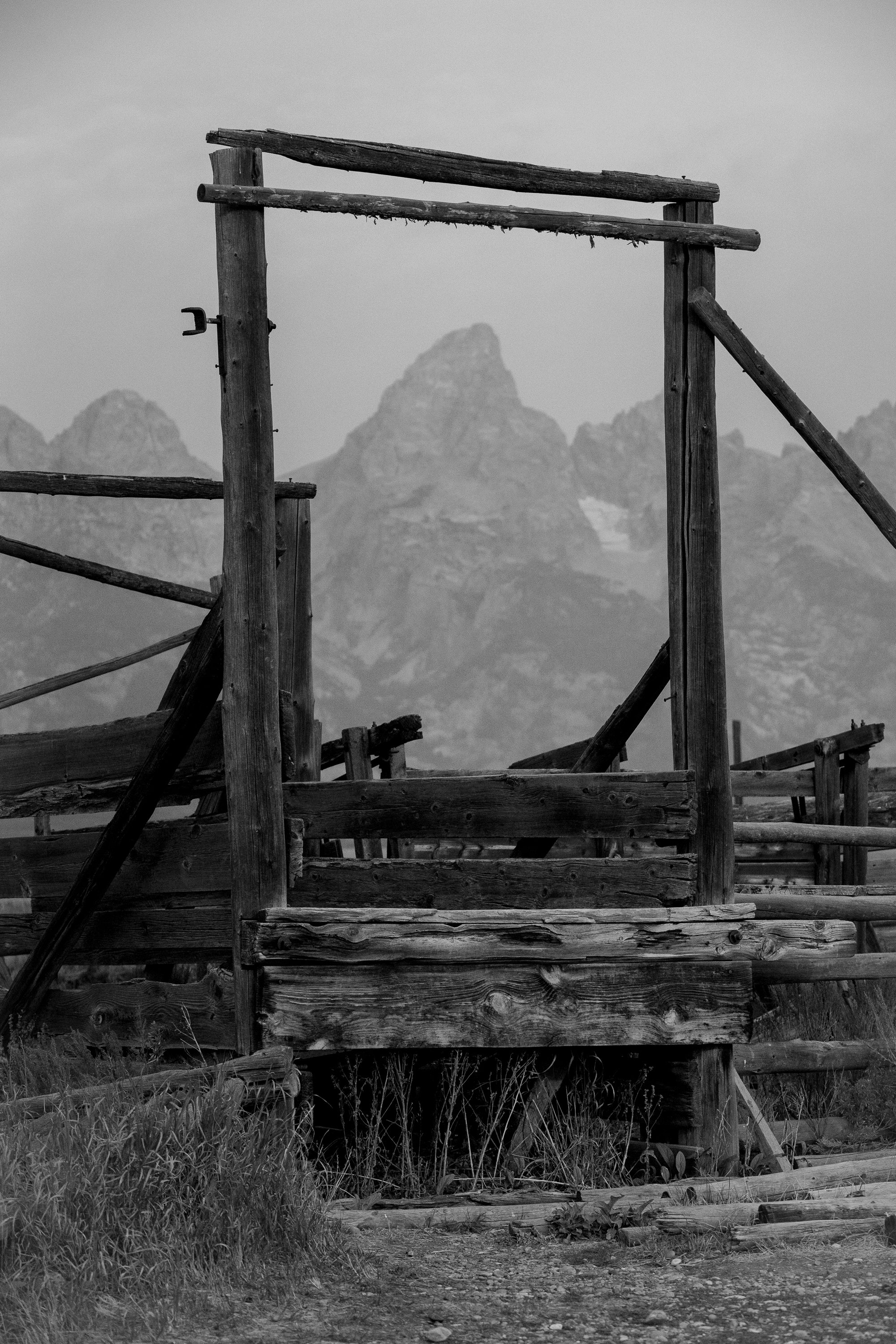
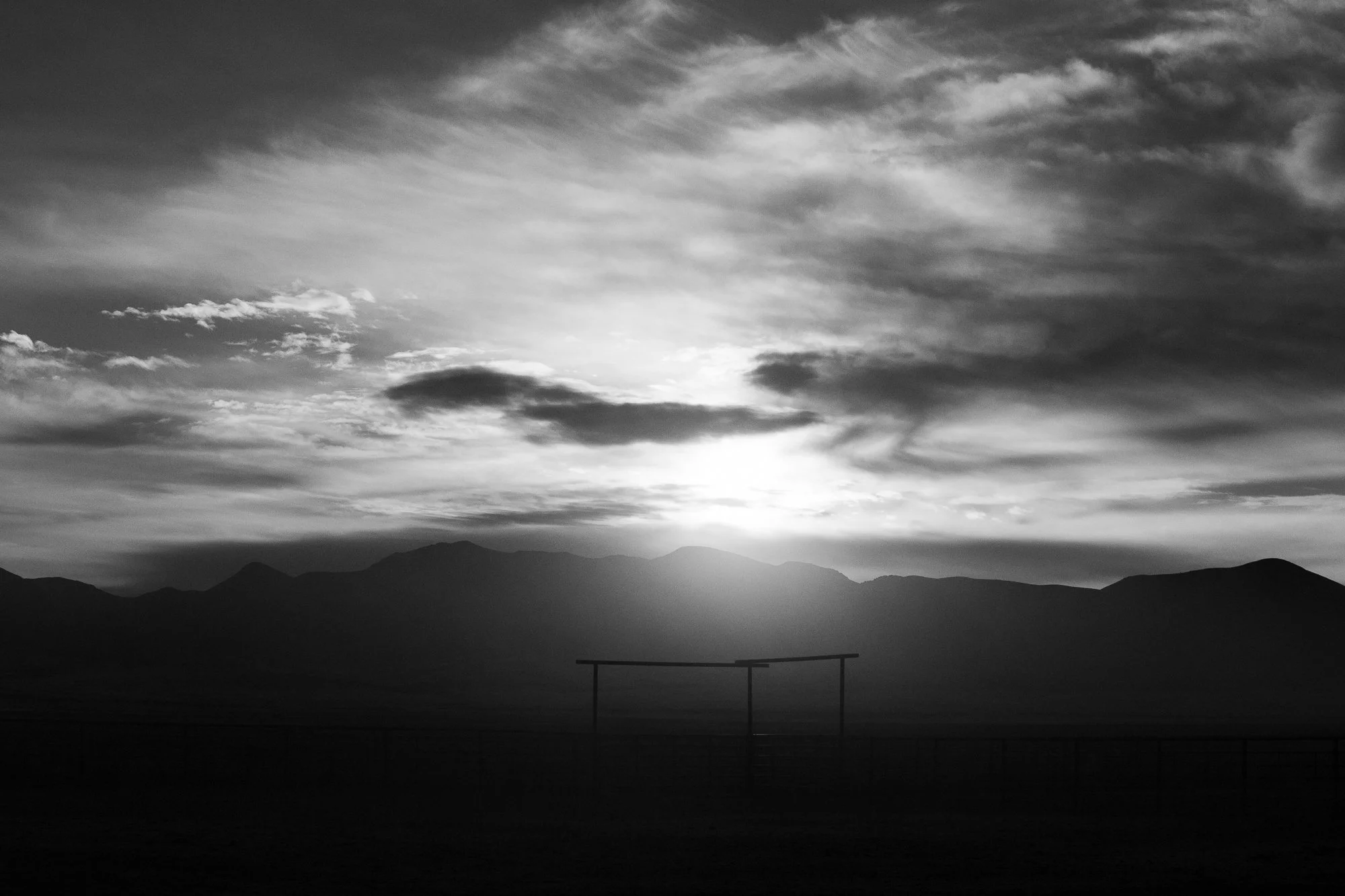
A weathered wooden cattle gate set against mountains in a black and white landscape, suited for rustic wall art and nature photography prints

A wooden cattle gate stands in open land with mountains behind it, adding a quiet but powerful detail to rustic interiors.

Where to Buy Authentic Cowboy Photography Prints

If authenticity matters, where you buy from becomes just as important as what you buy.

Here are the sources that consistently produce more meaningful work:

1. Directly From Photographers Working in the Field

This is the strongest option.

Photographers who spend years documenting ranches, cowboys, and Western traditions bring something that can’t be replicated in a studio or pulled from a stock archive.

When buying directly, you’re also getting:

  • A clear understanding of where and how the image was made

  • Higher quality print processes (often archival materials)

  • Limited editions rather than mass production

👉 If you're looking for real working cowboy imagery, you can view the full collection here:
Browse Cowboy Photography Prints →

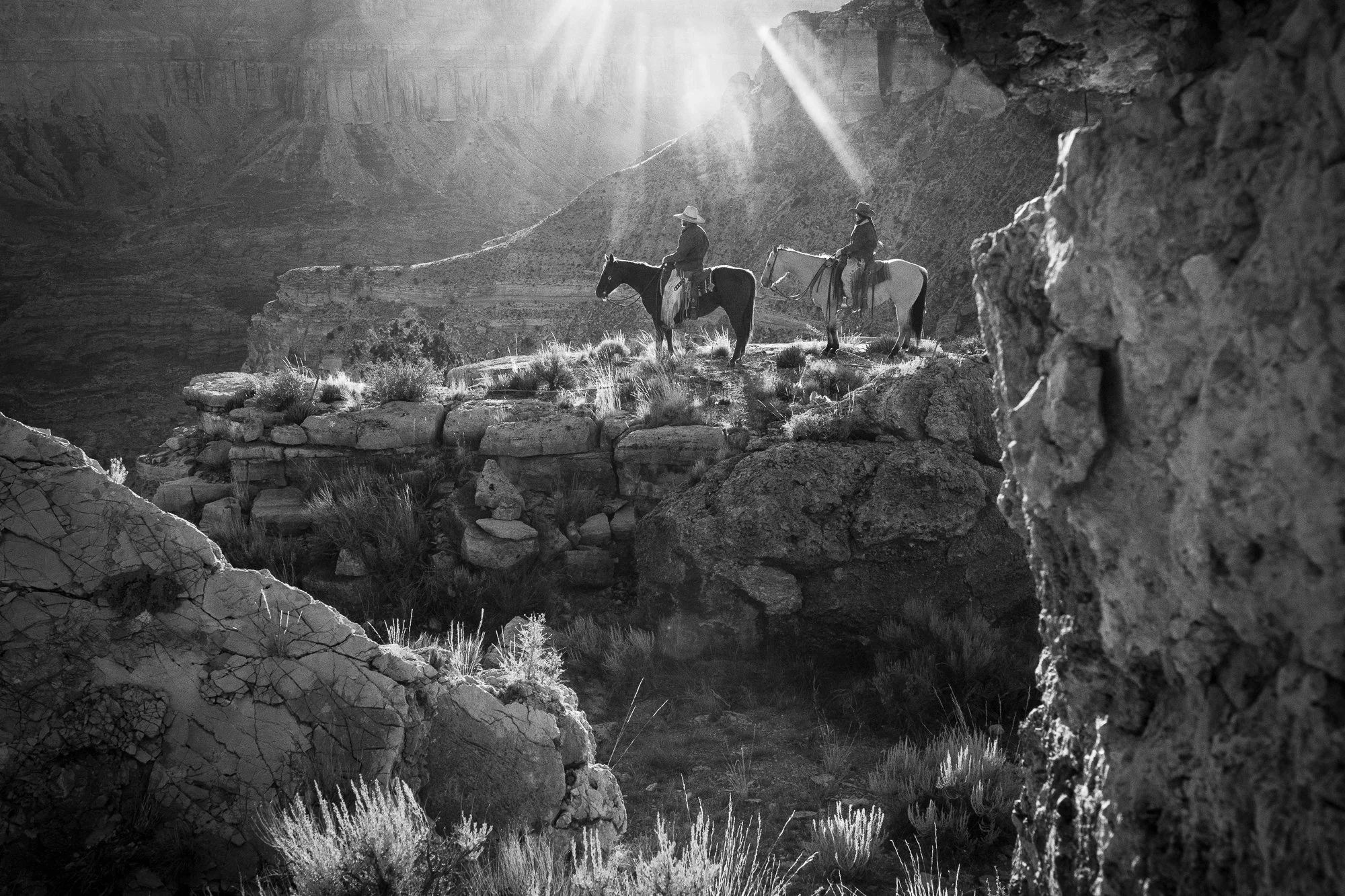
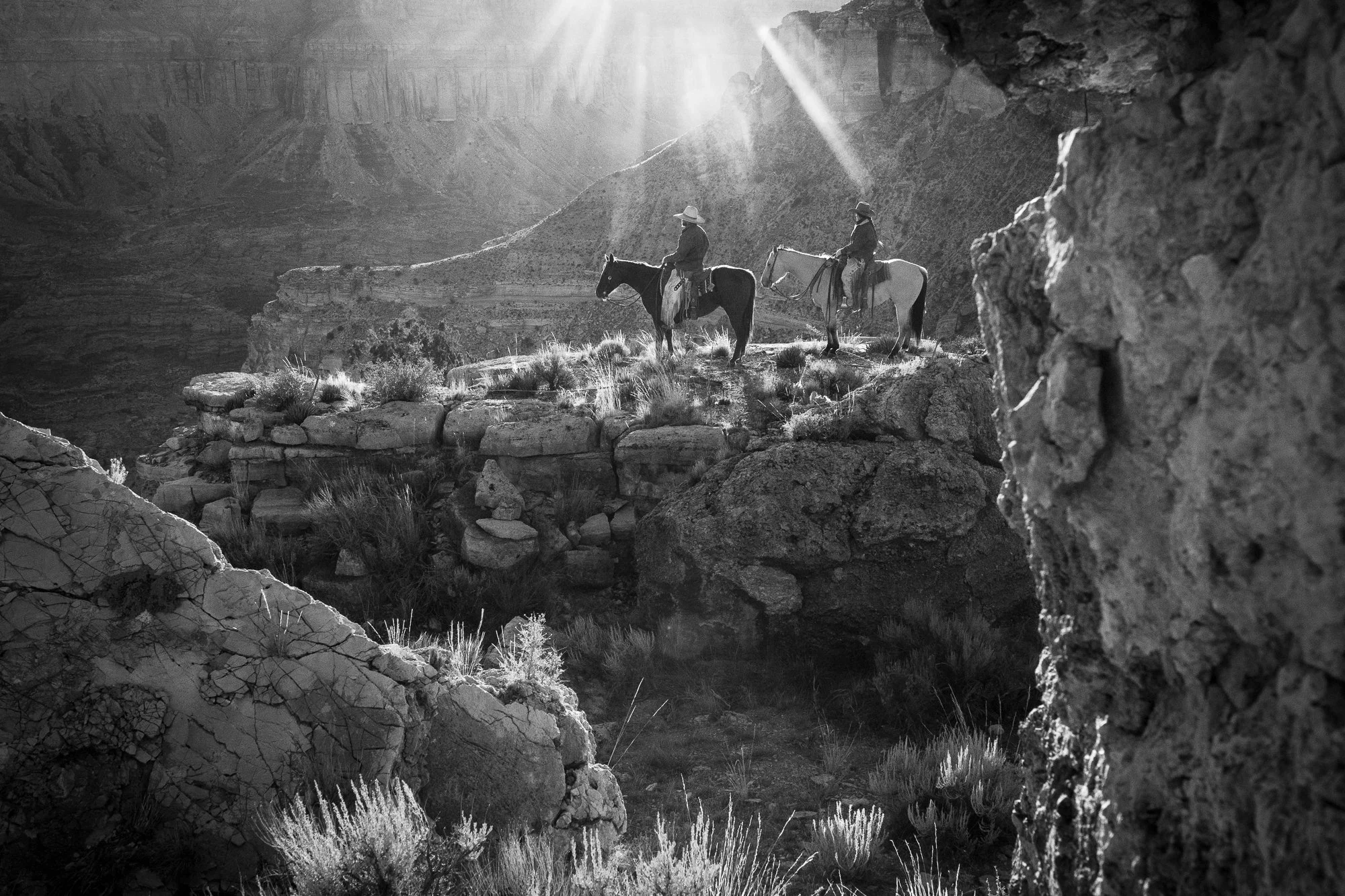
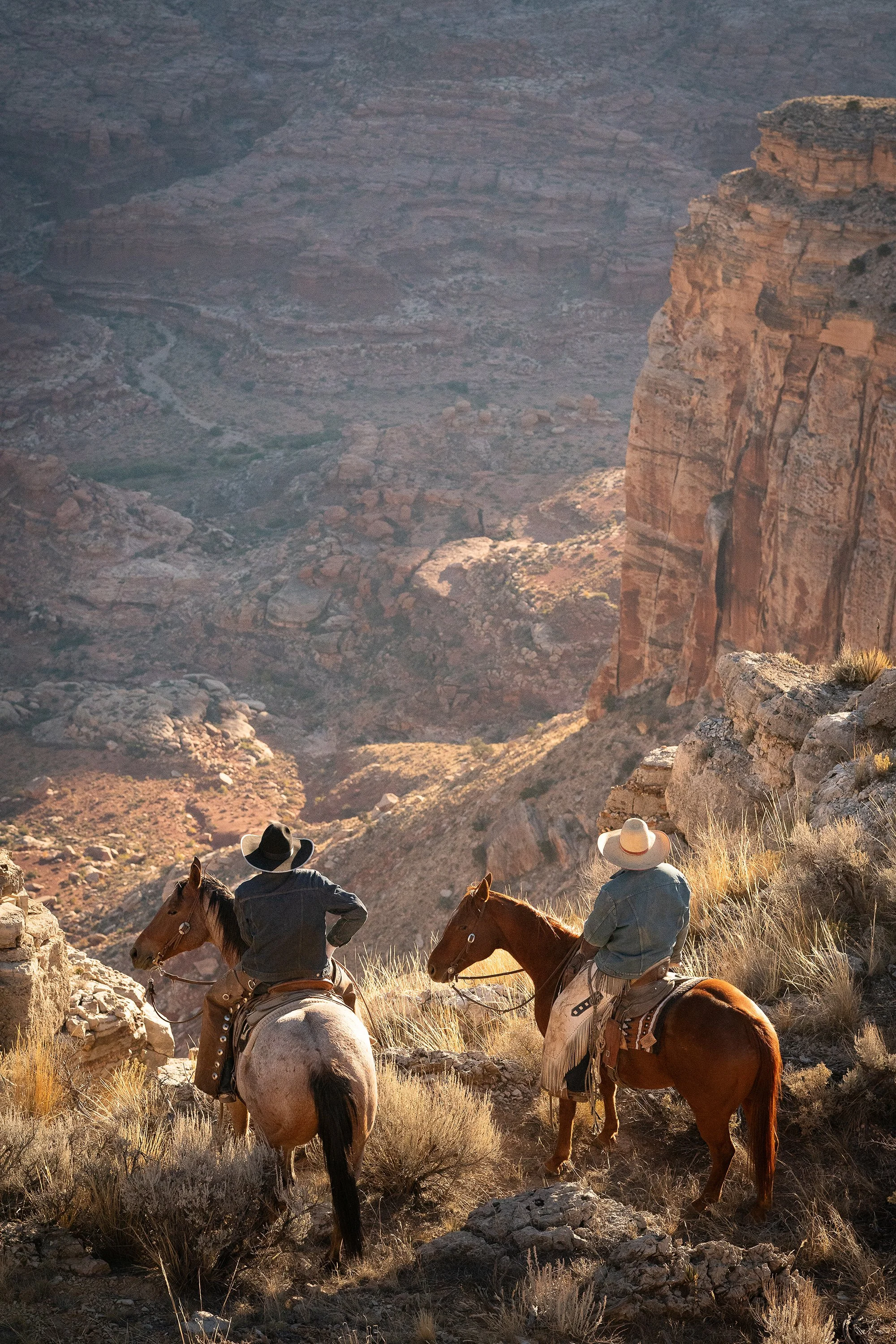
Cowboys on horseback standing along a rocky cliff, suited for western wall art and nature photography prints

Cowboys on horseback standing along a rocky cliff, suited for western wall art and nature photography prints.

2. Fine Art Galleries Specializing in Western Work

Some galleries curate authentic Western photography and fine art—but it’s important to pay attention to who they represent.

Look for:

  • Artists with long-term projects (not one-off shoots)

  • Work tied to specific ranches or regions

  • Consistency in subject matter and approach

Galleries can be a great source, but they often come with higher price points and less direct access to the artist.

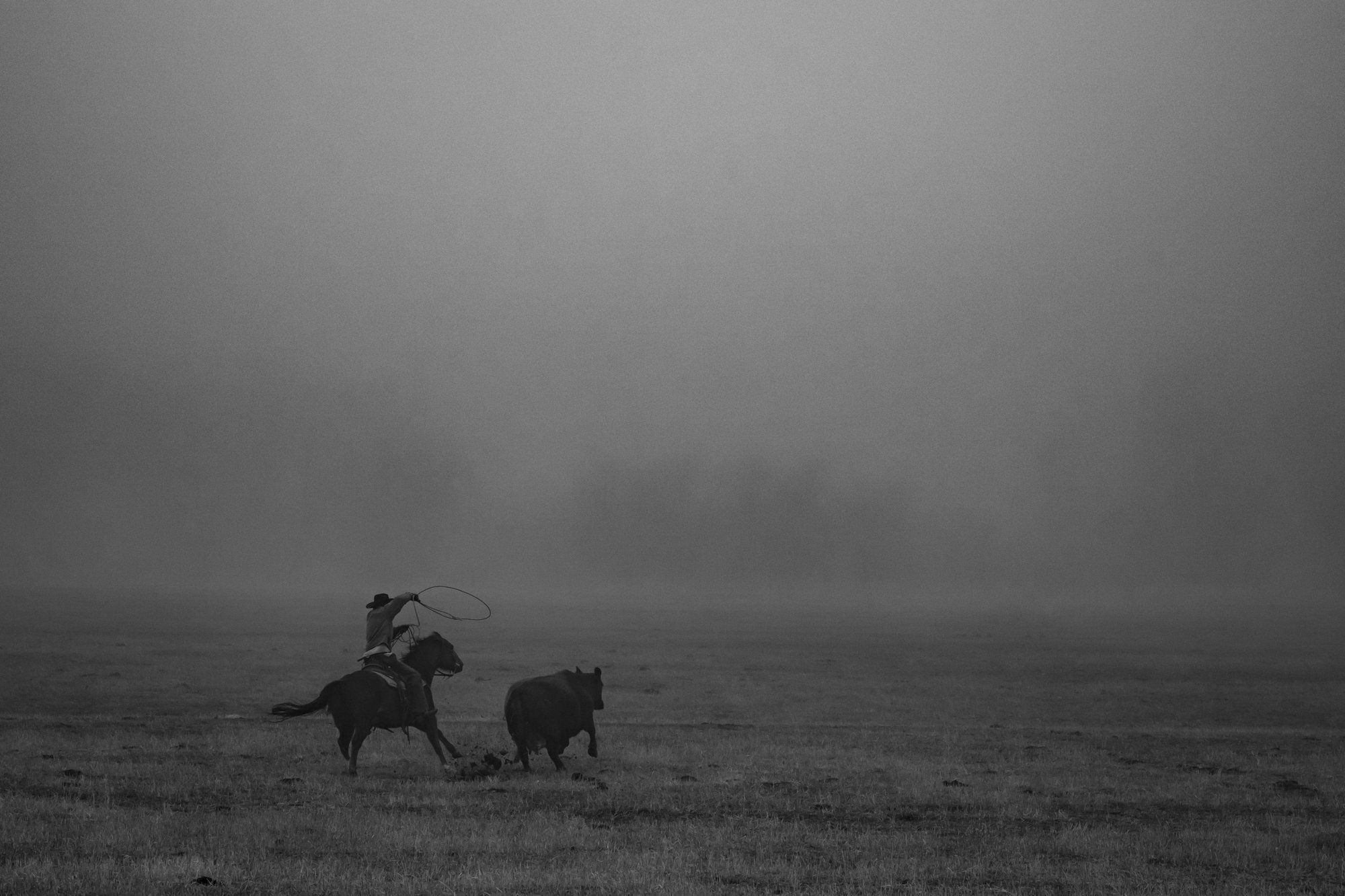
A cowboy roping cattle in a foggy open field, suited for western wall art and nature photography prints

A cowboy ropes cattle in low visibility, creating a quiet scene suited for calm, neutral interiors.

3. Independent Artist Websites (Not Marketplaces)

There’s a difference between buying from an artist’s website and buying from a marketplace.

Marketplaces tend to prioritize volume.

Independent sites are usually:

  • More curated

  • More intentional

  • More transparent about the work

This is often where you’ll find the most cohesive bodies of work—especially from photographers who have spent years focused on a single subject.

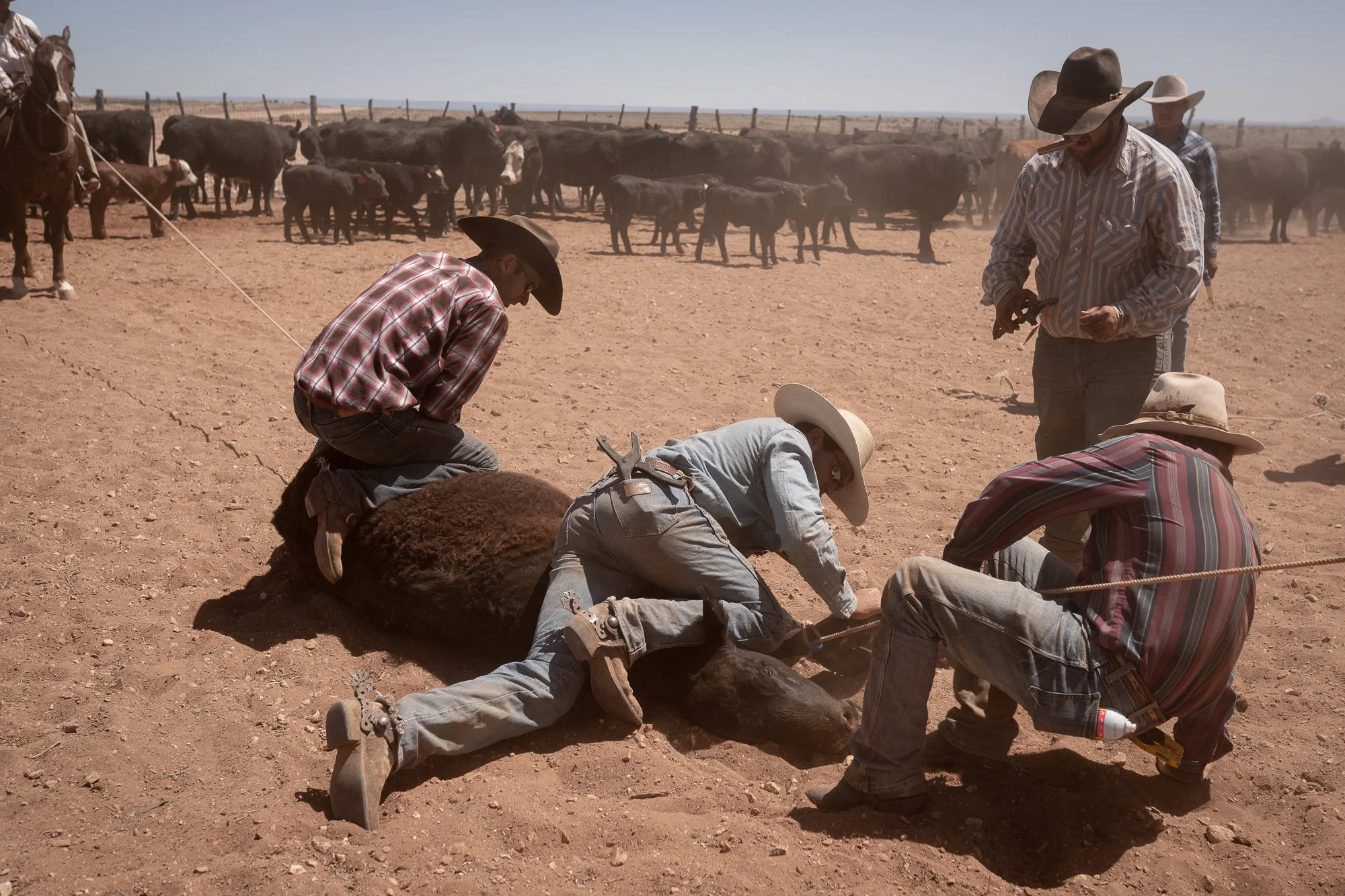
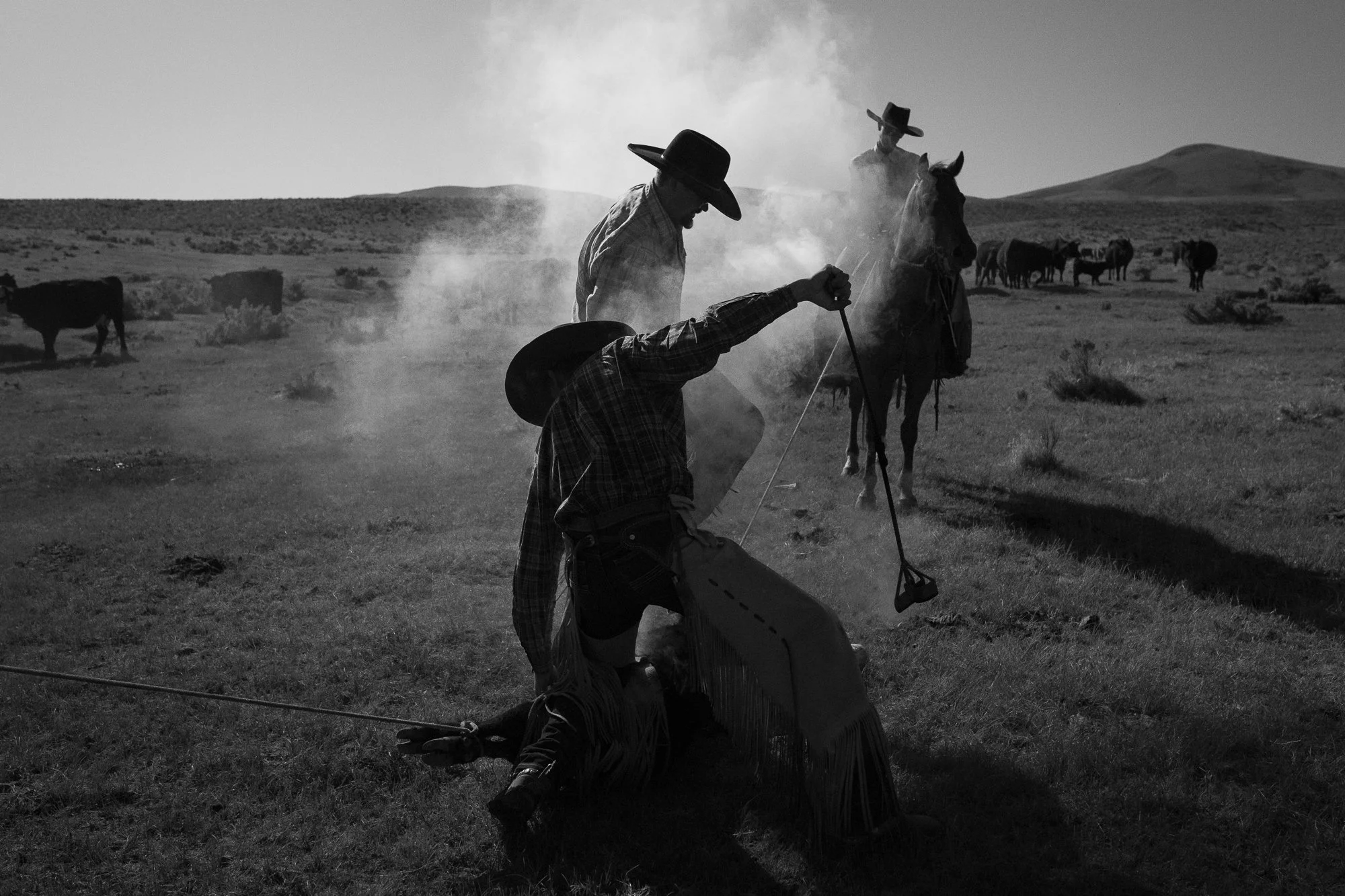
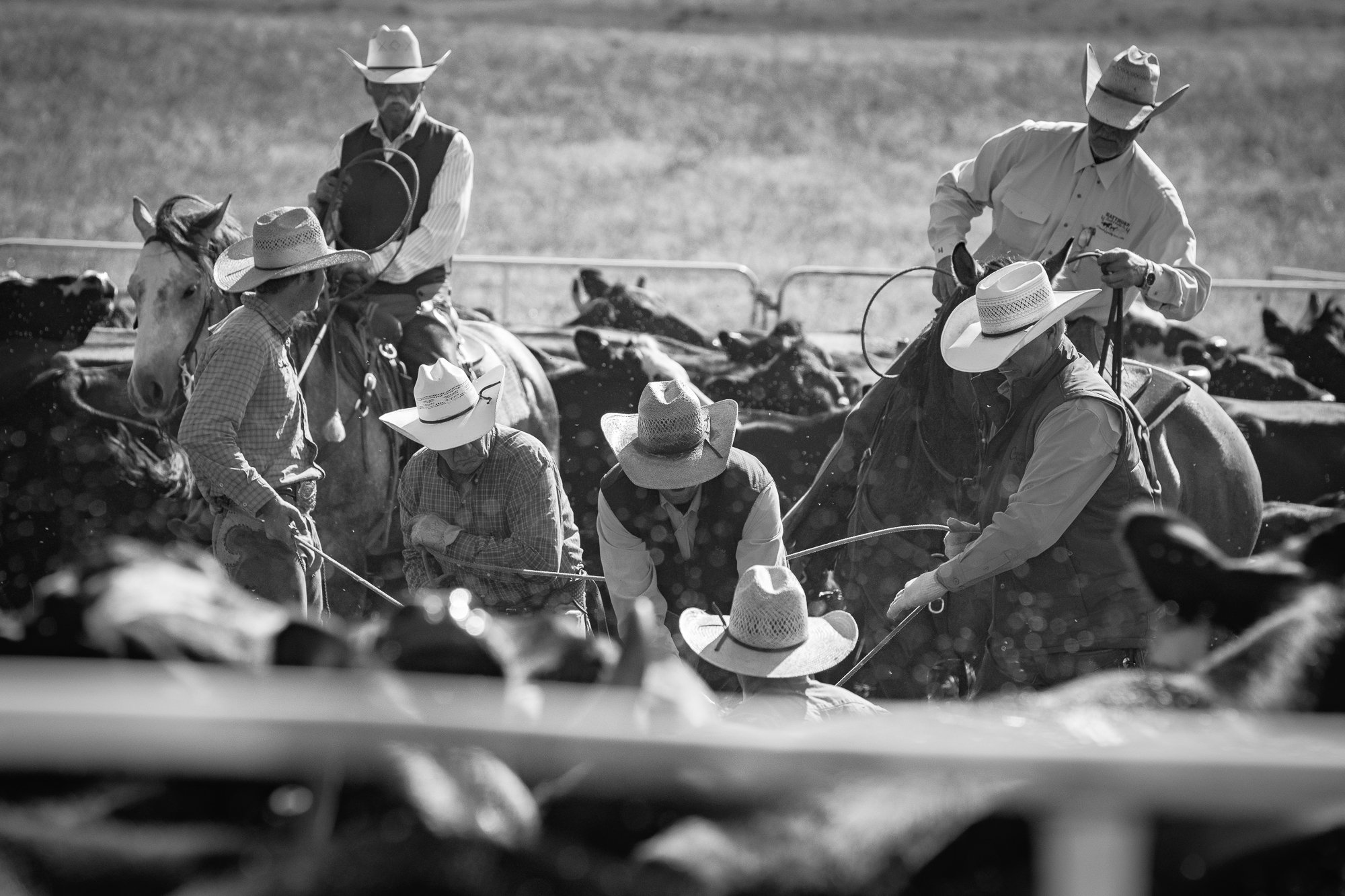
Cowboys working cattle in an open field during branding, suited for western wall art and documentary-style photography prints

Cowboys work cattle in an open field during branding, showing a real process that fits western and ranch spaces.

Why Real Cowboy Photography Is Rare

Access is the biggest factor.

Working ranches aren’t open environments. The people working them aren’t performing for an audience.

Photographing this world requires:

  • Time—often years, not days

  • Trust from ranchers and cowboys

  • A willingness to be present in physically demanding environments

That’s why truly authentic work is limited—and why it tends to resonate more deeply when you see it.

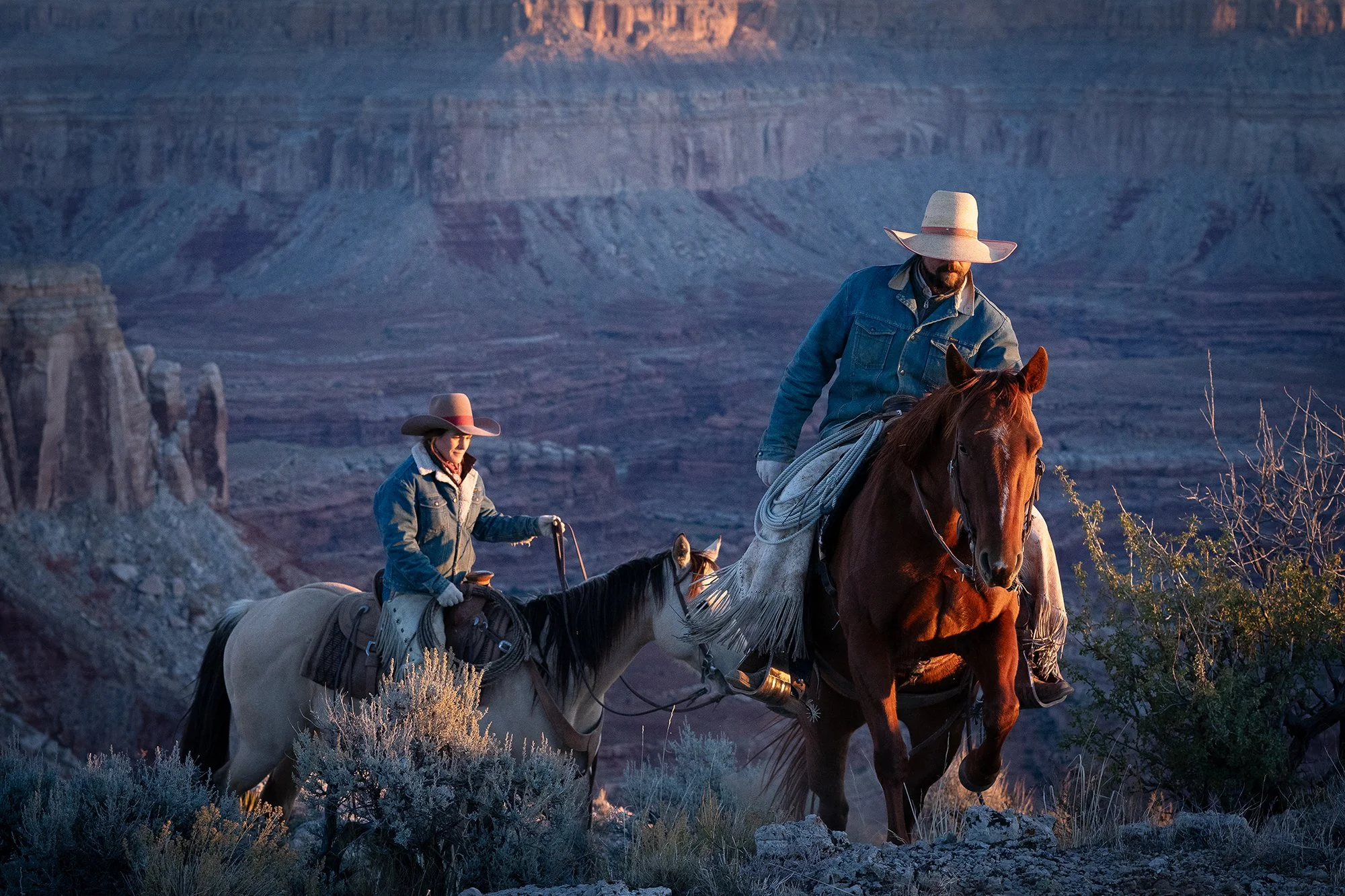
A cowboy riding on horseback through a canyon landscape, suited for western wall art and large wall decor for living rooms

A cowboy rides along a canyon landscape, showing a real working environment suited for large wall art.

How to Choose the Right Print for Your Space

Once you’ve found work that feels authentic, the next step is choosing a piece that fits.

A few things to consider:

  • Scale — Larger prints allow the environment and detail to breathe

  • Tone — Black and white vs. color can completely change the feel of a room

  • Subject — Action (roping, branding) vs. quiet moments (portraits, landscapes)

  • Placement — Entryways, offices, and living spaces all carry different energy

If you're designing a space—whether a home, office, or hospitality environment—authentic Western imagery tends to work best when it feels grounded, not decorative.

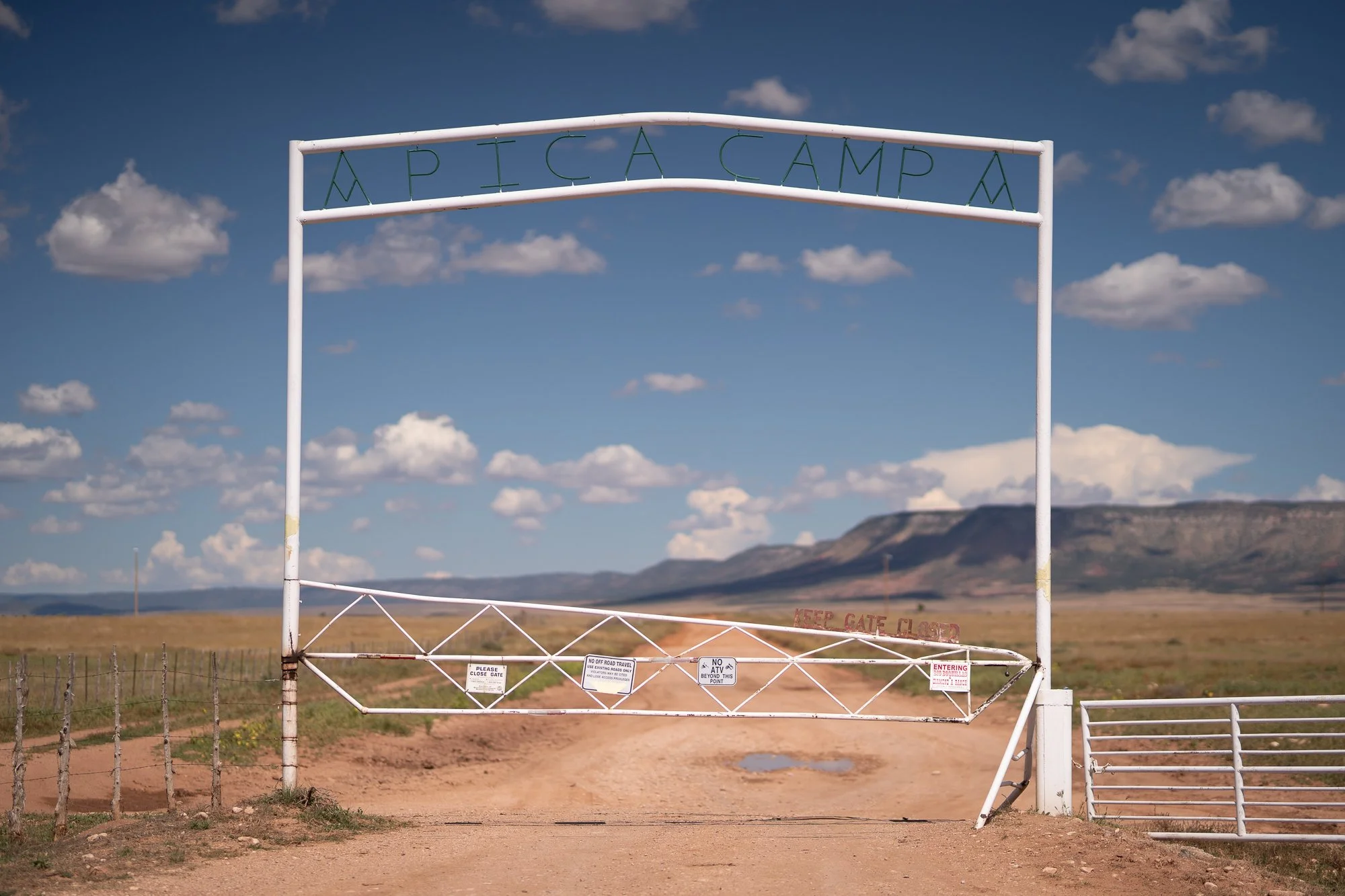
A wooden cattle corral in an open desert landscape with mesas in the background, suited for western landscape wall art and nature photography prints

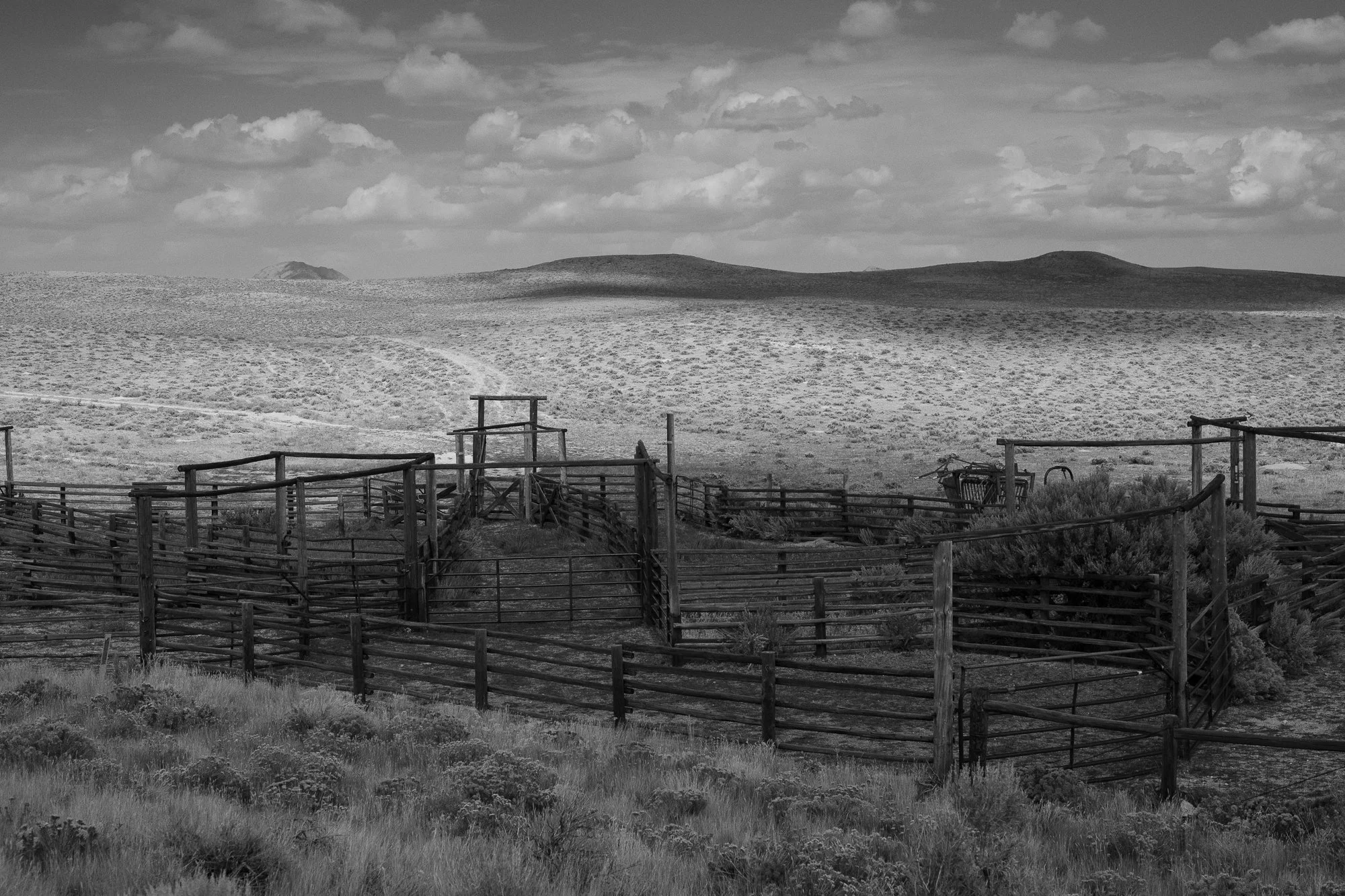
A wooden cattle corral sits in open desert with distant mesas, adding a sense of place to western interiors.

A Body of Work Built Over Time

The photographs available here aren’t one-off images. I’ve spent the past six years photographing working cowboys on ranches across the American West. Not just for something fun to do, but over time—earning access, building trust, and documenting the work as it actually happens with real people that have been dedicated to this life for generations. That’s the difference. And it shows up in the photographs.

👉 You can explore the full project here:
View the Cowboy Photography Project →

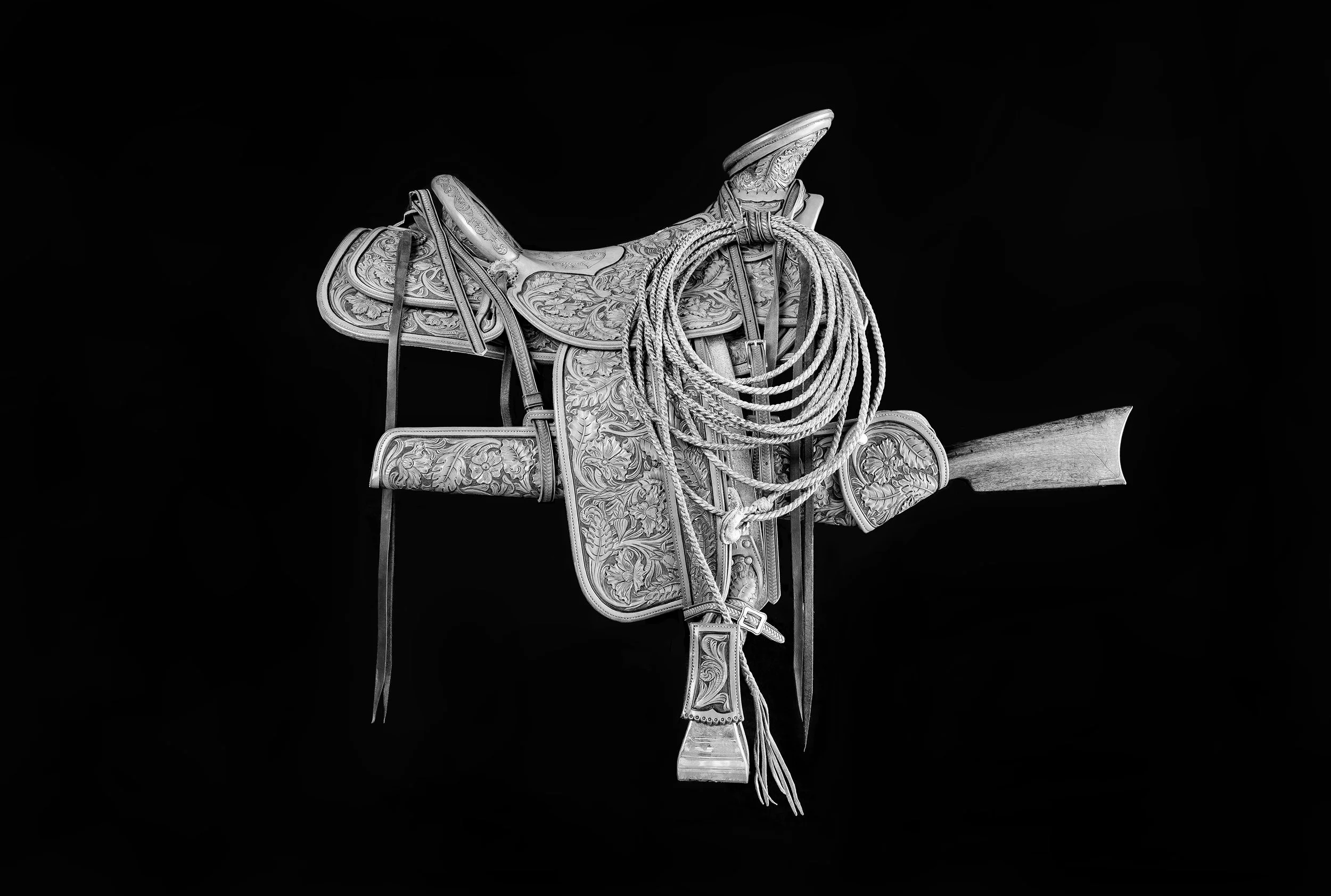
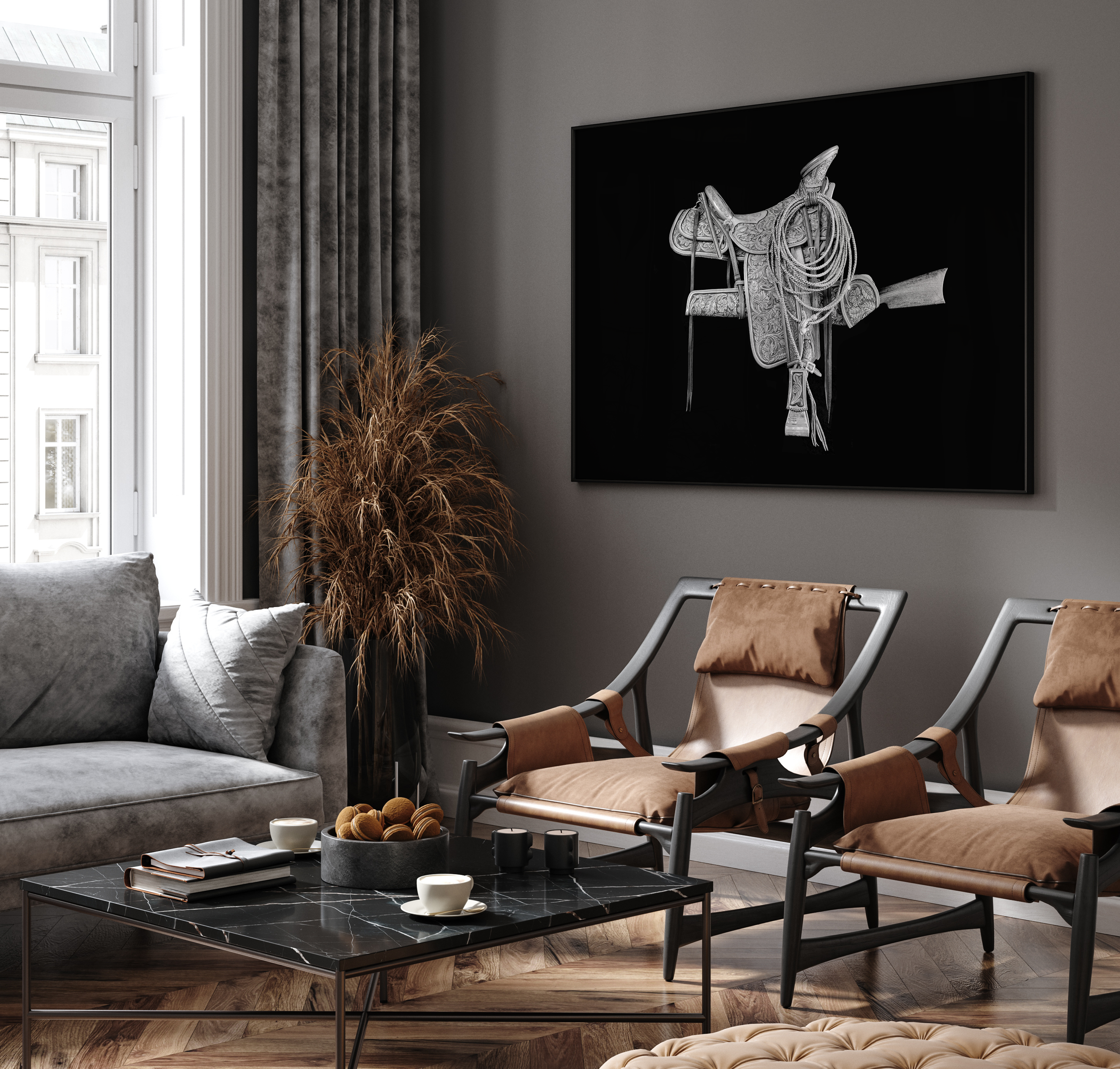
A detailed leather saddle with a coiled rope against a black background, ideal for western wall art and rustic decor

A leather saddle and rope shown in detail, highlighting gear used in everyday ranch work, a balanced piece for western and rustic interior spaces.

For Designers, Brands, and Hospitality Spaces

Authentic cowboy photography isn’t limited to private collectors.

It’s increasingly being used in:

  • Boutique hotels and lodges

  • Western and outdoor brands

  • Restaurants and hospitality spaces

  • Corporate environments looking for grounded, regional identity

If you're sourcing work for a larger space or project, licensing and custom print options are available.

👉 Inquire About Licensing & Large-Scale Prints →

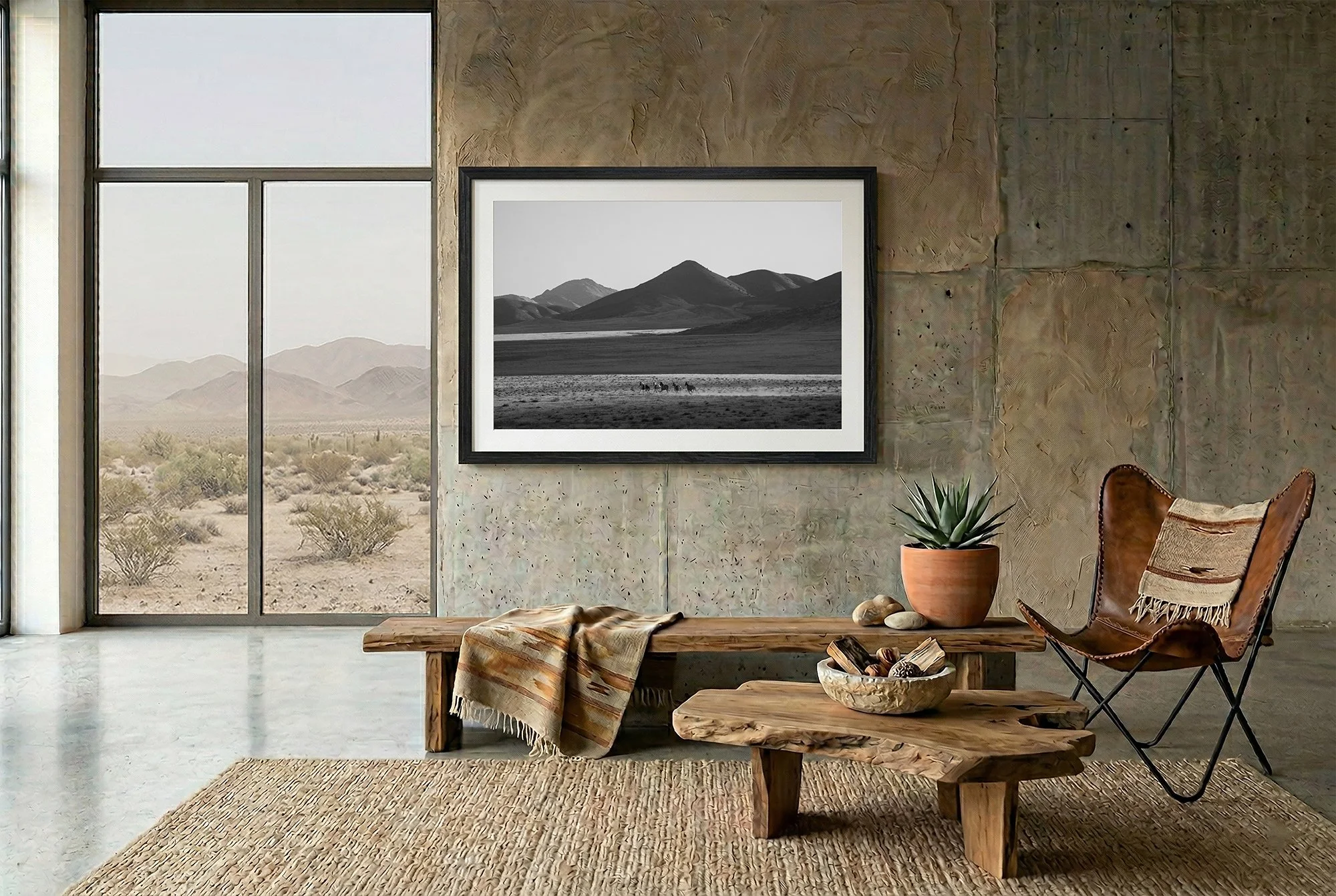
A black and white cowboy photography print displayed in a warm rustic interior, ideal for western wall art and neutral home decor

A black and white cowboy photograph displayed in a warm interior, bringing a grounded, lived-in feel to western and rustic spaces.

The reality is, most people will never set foot on a working ranch.

These photographs are one of the few ways to bring that world into a space—without filtering or staging it.

And when it’s real, you can feel the difference.

Inside The TS Ranch: A 156-Year-Old Working Cattle Ranch

TS Ranch: 156 Years of Buckaroo Tradition in the American West

The TS Ranch sits in northeastern Nevada, in the country stretching between Carlin and Battle Mountain—part of the larger Great Basin where cattle ranching has operated on open range for well over a century.

Originally known as the T Lazy S Ranch, the operation has long been tied to the development of both ranching and mining in this part of Nevada. Like many ranches in the region, its history isn’t isolated—it’s connected to the broader story of land use in the West, where cattle operations and resource extraction have overlapped for generations.

The ranch itself is owned by Nevada Gold Mines, but that doesn’t matter much to the cowboys, because they just want to cowboy. Although it does give them plenty of room to roam, as the mines own almost 3 million acres of earth between all of their ranches.

Ranching in the Carlin and Battle Mountain Country

This part of Nevada is defined by distance.

The land is dry, open, and expansive—sagebrush valleys broken by low mountain ranges, with limited water and long seasonal swings. Ranching here has always required movement. Cattle are spread across large allotments, often miles apart, and gathering them means covering serious ground on horseback.

At the TS Ranch, that hasn’t changed.

The work still follows the same patterns established generations ago: long days in the saddle, trailing cattle across open range, managing herds in terrain that offers very little room for error. Efficiency comes from experience, not speed.

From T Lazy S to TS Ranch

The ranch’s earlier identity as the T Lazy S reflects a period when large, independently run cattle operations dominated northern Nevada.

As mining expanded in the Carlin Trend—one of the most significant gold-producing regions in the world—land ownership and management structures began to shift. Ranches like this became part of a broader landscape where livestock production and mining interests coexisted.

Despite those changes, the function of the ranch itself remained consistent.

Cattle still move across the same country. Riders still gather and trail them the same way. The systems in place today are less about ownership on paper and more about what continues to work on the ground.

Photographing TS Ranch

I’ve said this before, but I’m partial to the ranches in Nevada, and love photographing on them. Everything from the buckaroo style, to the nature of the land, colors, and textures is, in my opinion, exceptional. Ranches in this part of the world represent a culture unique in itself, yet still part of the greater cowboy universe. Photographing here means working within the rhythm, not interrupting it.

Nothing is staged. Nothing is slowed down. The work happens whether a camera is present or not.

The photographs come from paying attention to what’s already there—dust hanging in the air during a gather, a rider holding position on a ridge, cattle settling at the end of a long push. Over time, those moments build into a more accurate picture of what ranching in this part of Nevada actually looks like.

I’m grateful to the whole crew for letting me be a small part of their work and look forward to being back on The TS. They are a good bunch of humans with a great chemistry that was fun to take in from the outside.

Part of an Ongoing Western Project

The photographs from TS Ranch are part of a larger body of work focused on working cowboys across the American West.

This project has been developed over years of access to ranches where the work is still done horseback, across open range, and without alteration for the camera. Each image is part of a broader effort to document a way of life that continues largely out of public view.

View the full project

Limited edition prints from this series are available for collectors

View more photographs from another historic Nevada cattle ranch - The C-Punch

Contact me directly for editorial and commercial licensing - rob@robhammerphotography.com

Sunrise over mountains and ranch land at TS Ranch

The first light breaks over the mountains, casting long shadows across the open ranch land.

Cowboys gathering cattle across open high desert landscape at TS Ranch

Buckaroos spread out across the range, slowly gathering cattle as the morning light settles over the high desert.

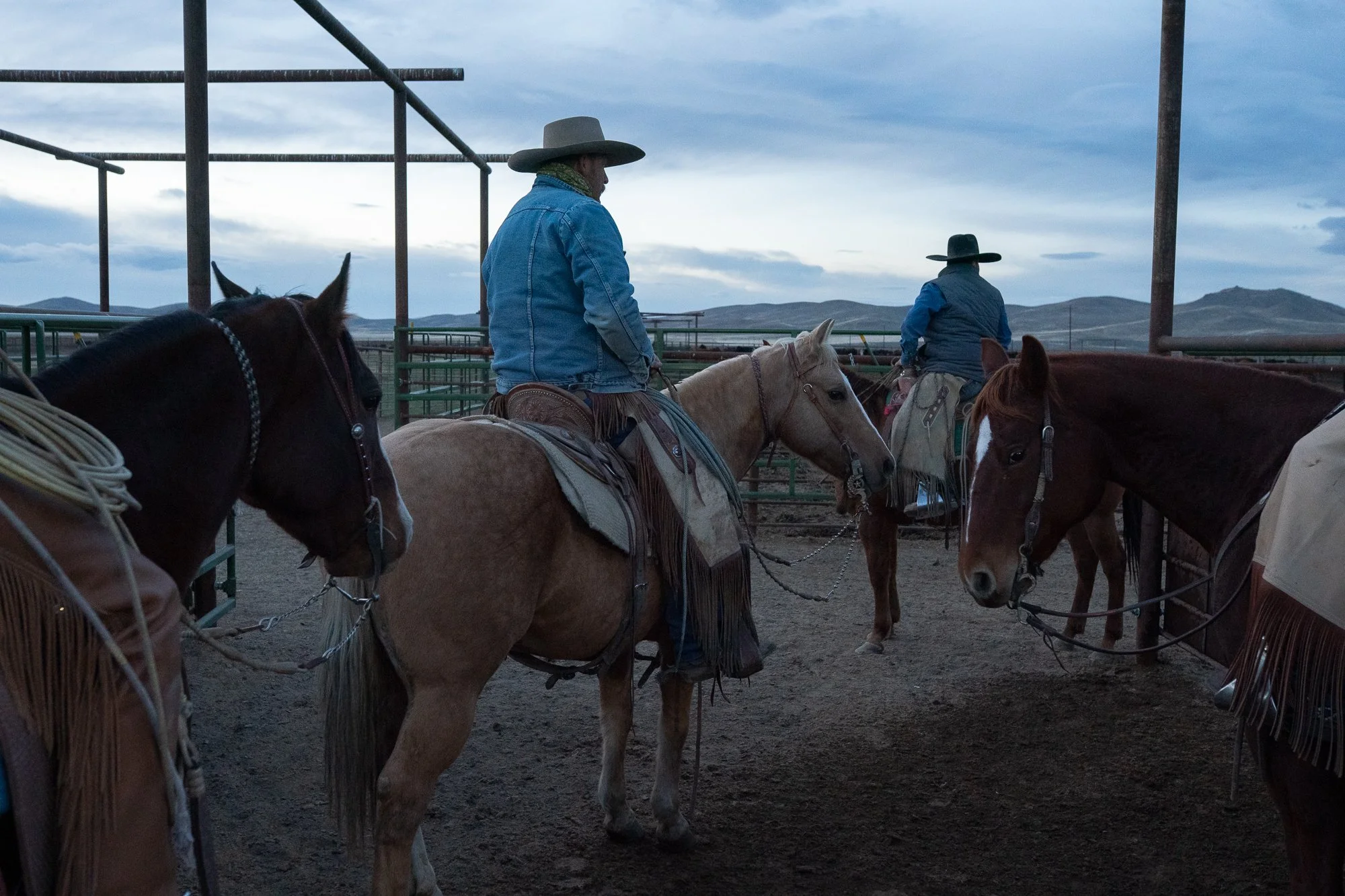
Group of buckaroos on horseback waiting in cattle pens at TS Ranch

Buckaroos sit mounted in the pens, waiting for the next move as cattle work begins to unfold.

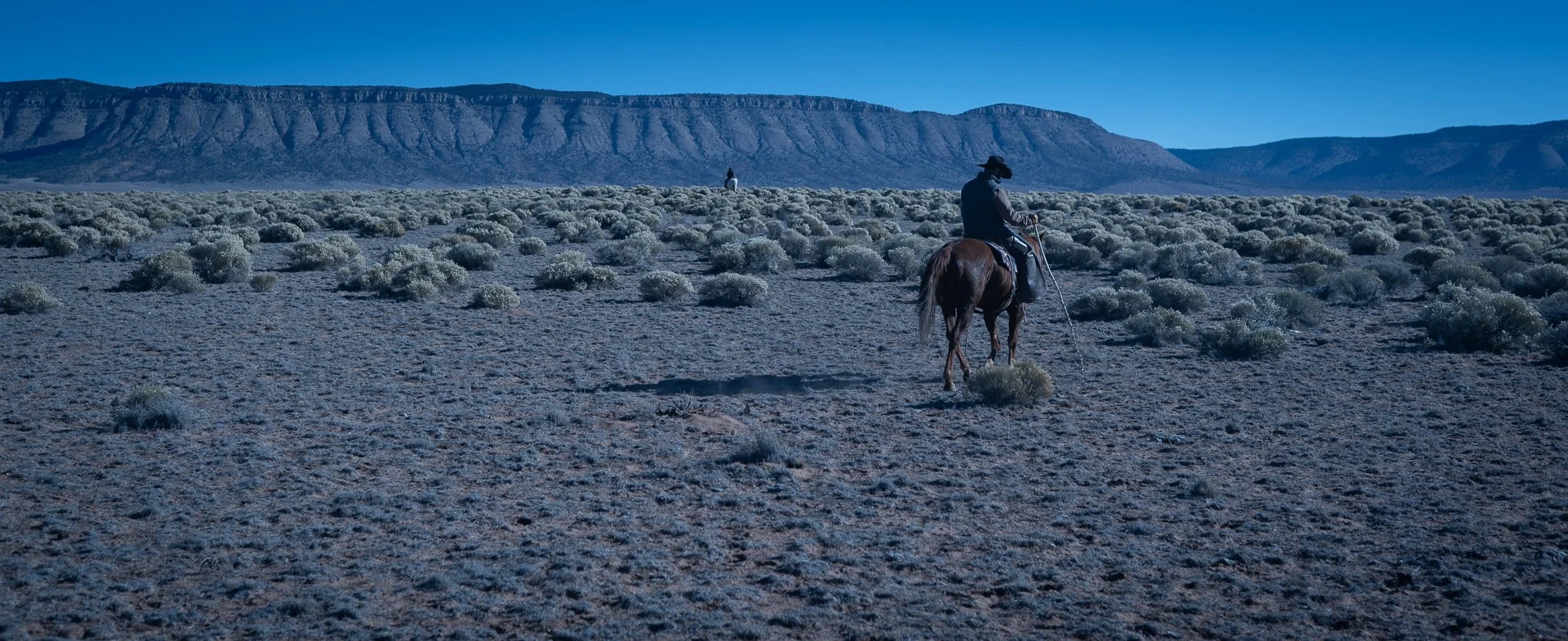
Buckaroo riding horseback across open desert landscape at TS Ranch

A buckaroo rides across the open range at TS Ranch, the high desert stretching out beneath the evening light.

Cowboy roping a calf in the branding pen at TS Ranch

A calf is roped and held steady in the branding pen, a routine part of cattle work that has remained unchanged for generations.

Buckaroo riding through dusty cattle pens at sunrise at TS Ranch

A buckaroo moves through the cattle pens at first light, dust catching the sun as the day’s work begins at TS Ranch.

Close-up of buckaroo hat in early morning light at TS Ranch

A worn hat catches the early light, a quiet detail that reflects the long days and tradition behind the work.

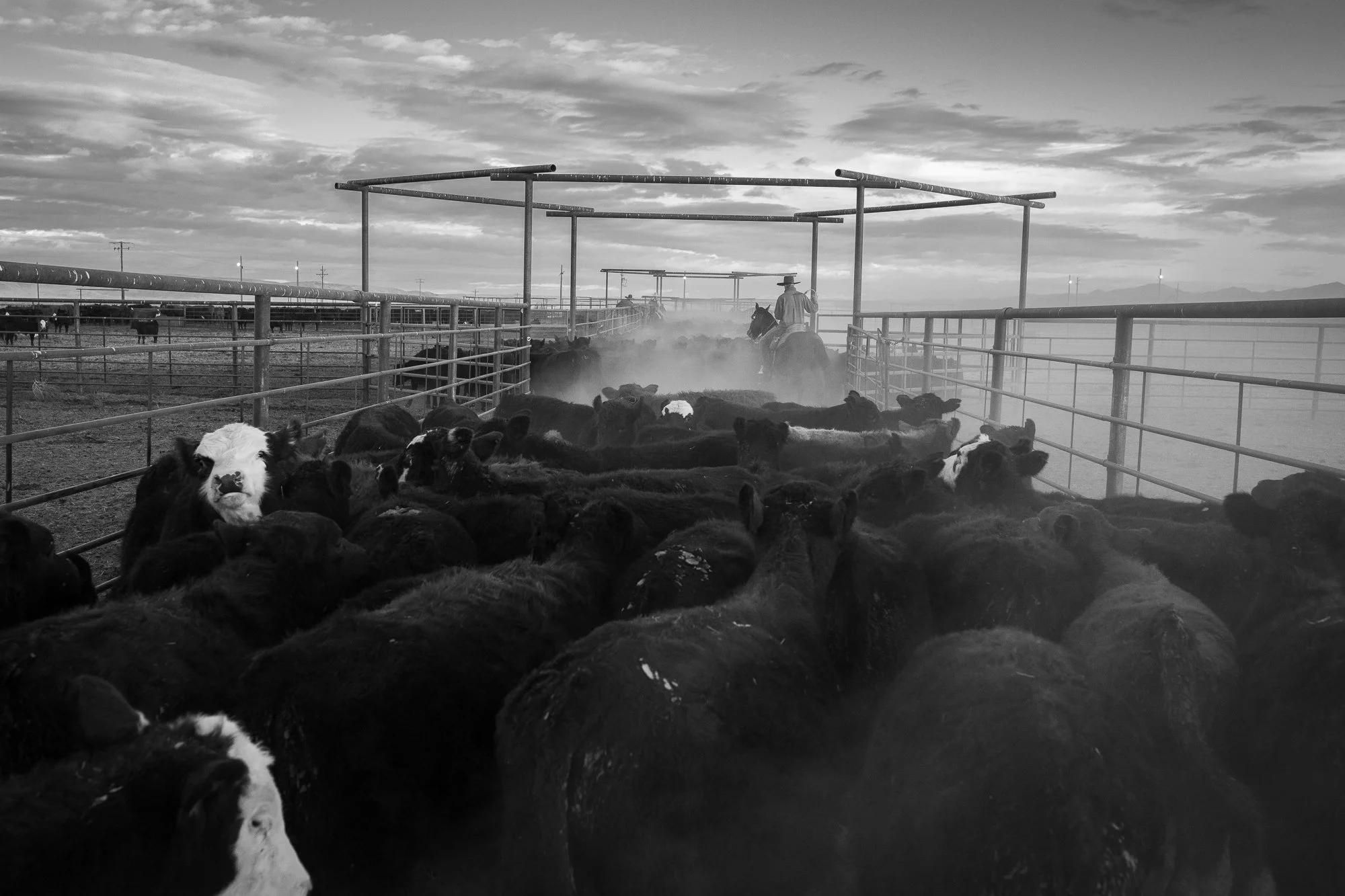
Cowboy pushing cattle through narrow alley in ranch pens at TS Ranch

A buckaroo pushes cattle through the alleyway, guiding the herd forward through the maze of steel pens.

Close-up of horse and western tack in dusty ranch environment at TS Ranch

A close study of horse and gear, where movement and dust soften the edges of the scene.

Buckaroo sorting cattle inside working pens at TS Ranch

A buckaroo counts cattle inside the pens, before they are loaded onto the shipping truck.

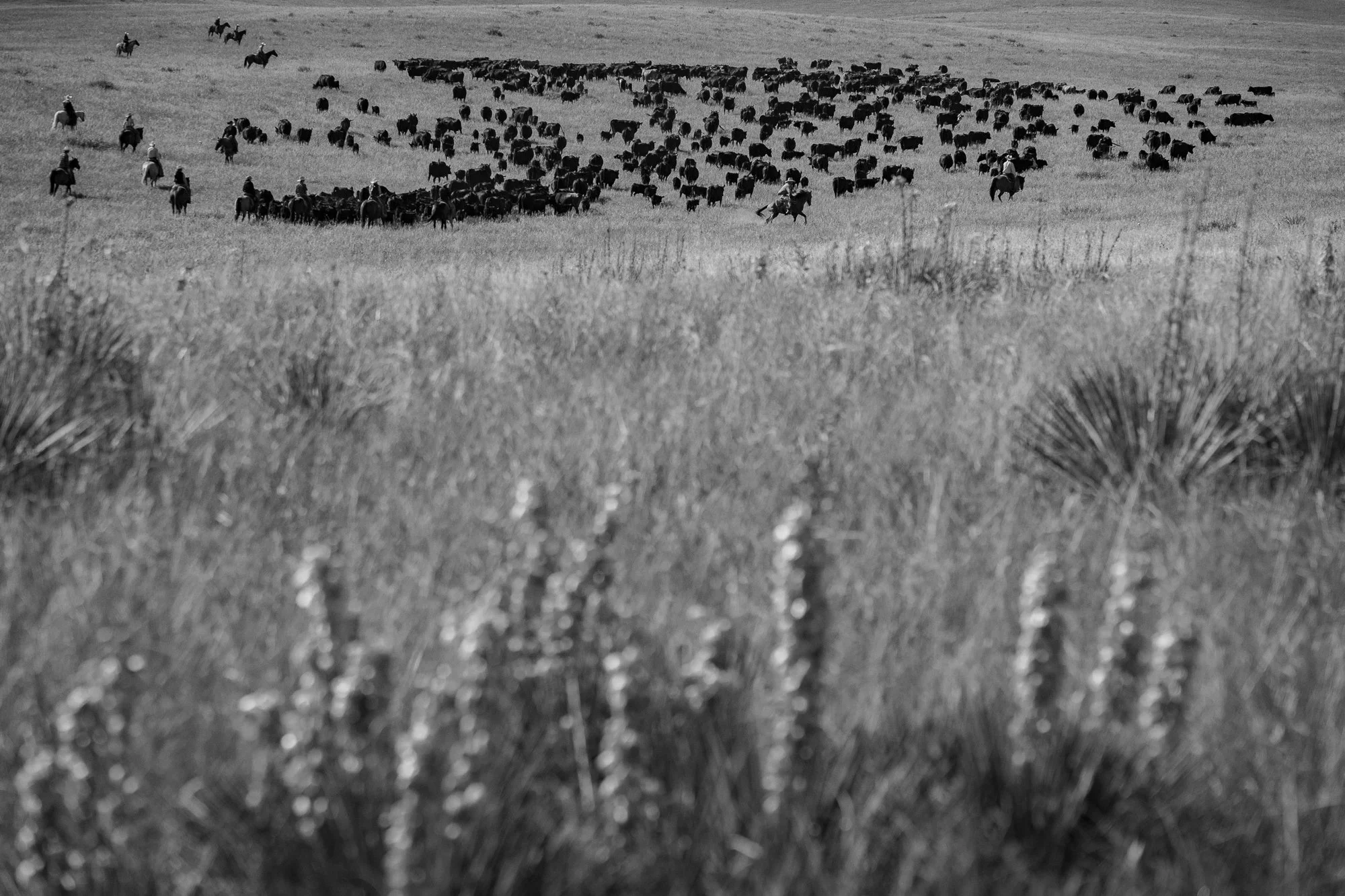
Buckaroos holding cattle herd across open range at TS Ranch

Buckaroos hold the herd in place, spacing themselves across the landscape to keep the cattle settled.

Buckaroo holding cattle herd in dusty pasture at TS Ranch

A buckaroo holds position behind the herd, keeping the cattle together as they move through the corrals.

Close-up of horse bridle with silver concho detail at TS Ranch

A close look at the craftsmanship of a working bridle, worn and used daily in the rhythm of ranch work.

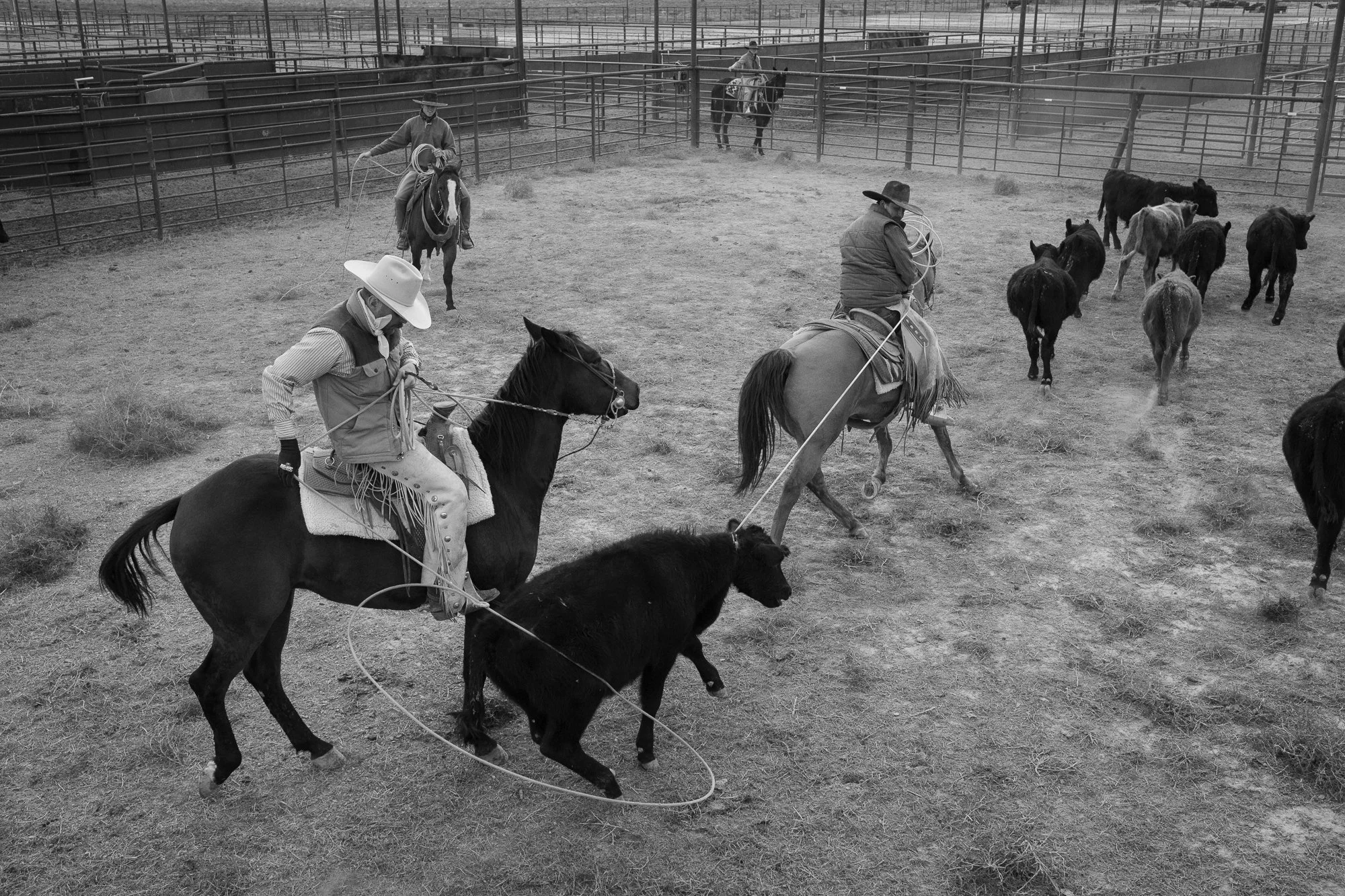
Two buckaroos roping cattle in ranch pens at TS Ranch

Two buckaroos rope cattle in the pens, working together to manage the herd with precision and control.

Buckaroos on horseback in cattle pens at sunrise at TS Ranch

Buckaroos sit mounted in the pens at first light, preparing for the day’s work as the ranch comes to life.

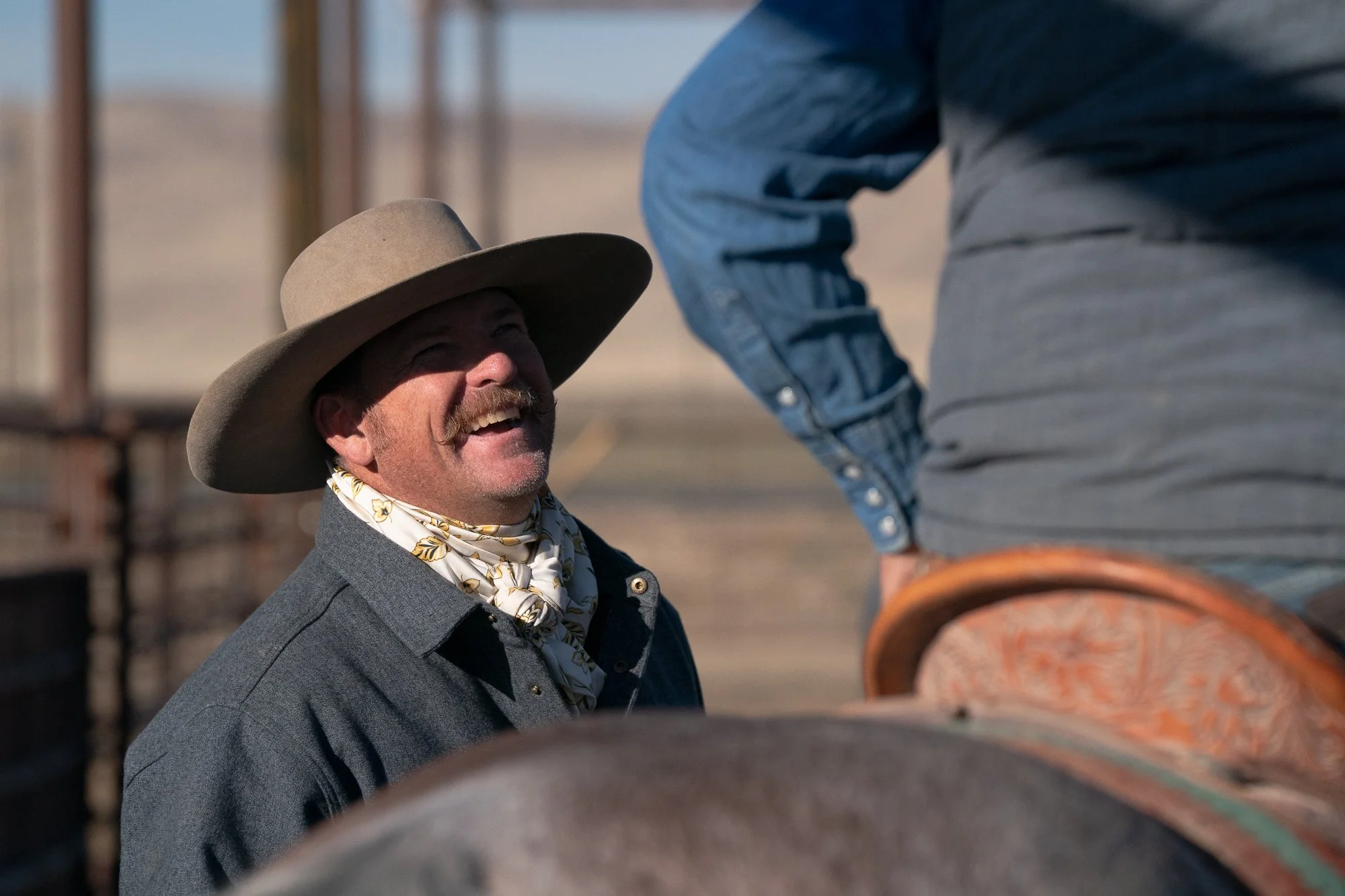
Candid portrait of cowboy smiling during ranch work at TS Ranch

A quiet moment between tasks, where conversation and humor break up the rhythm of the day.

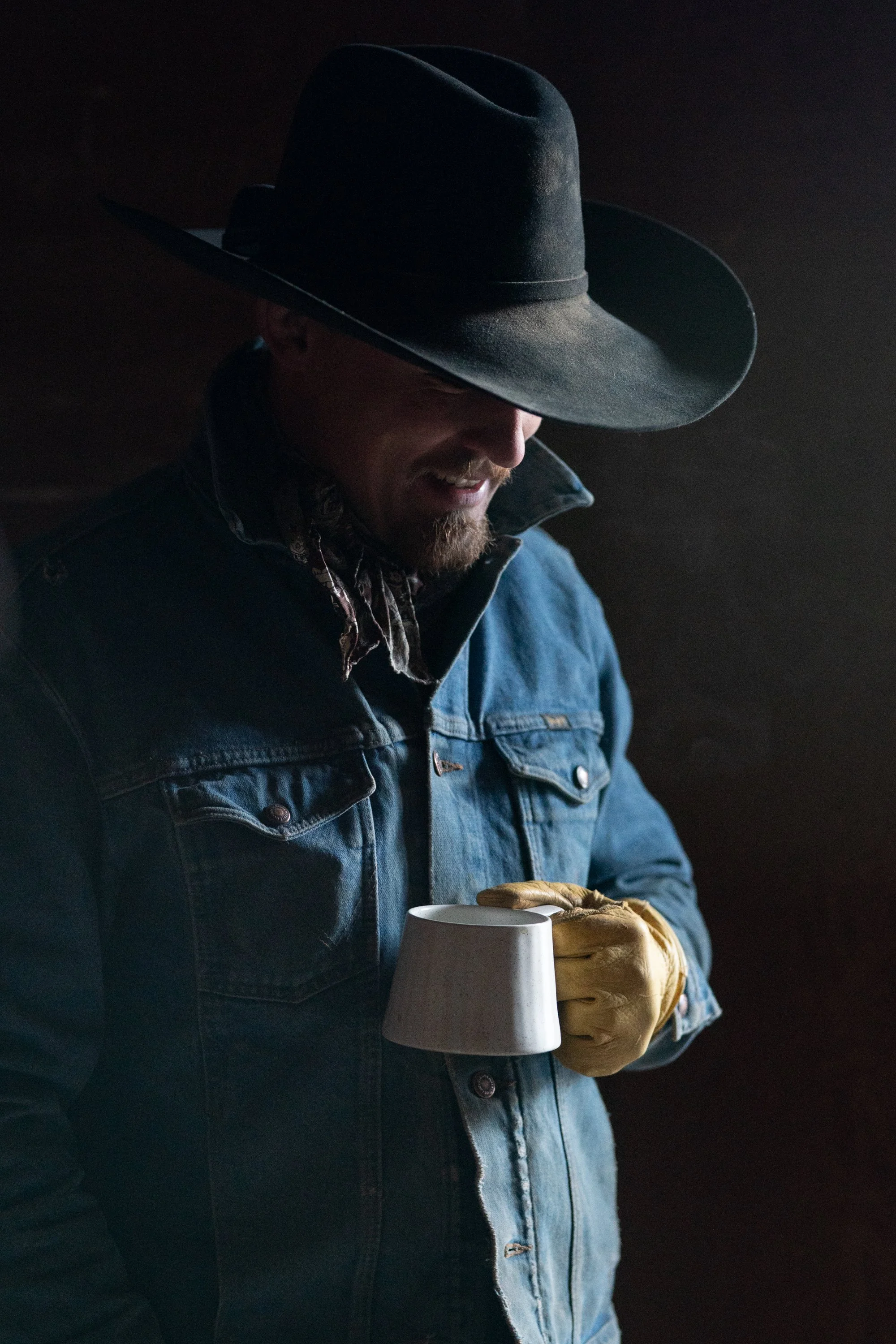
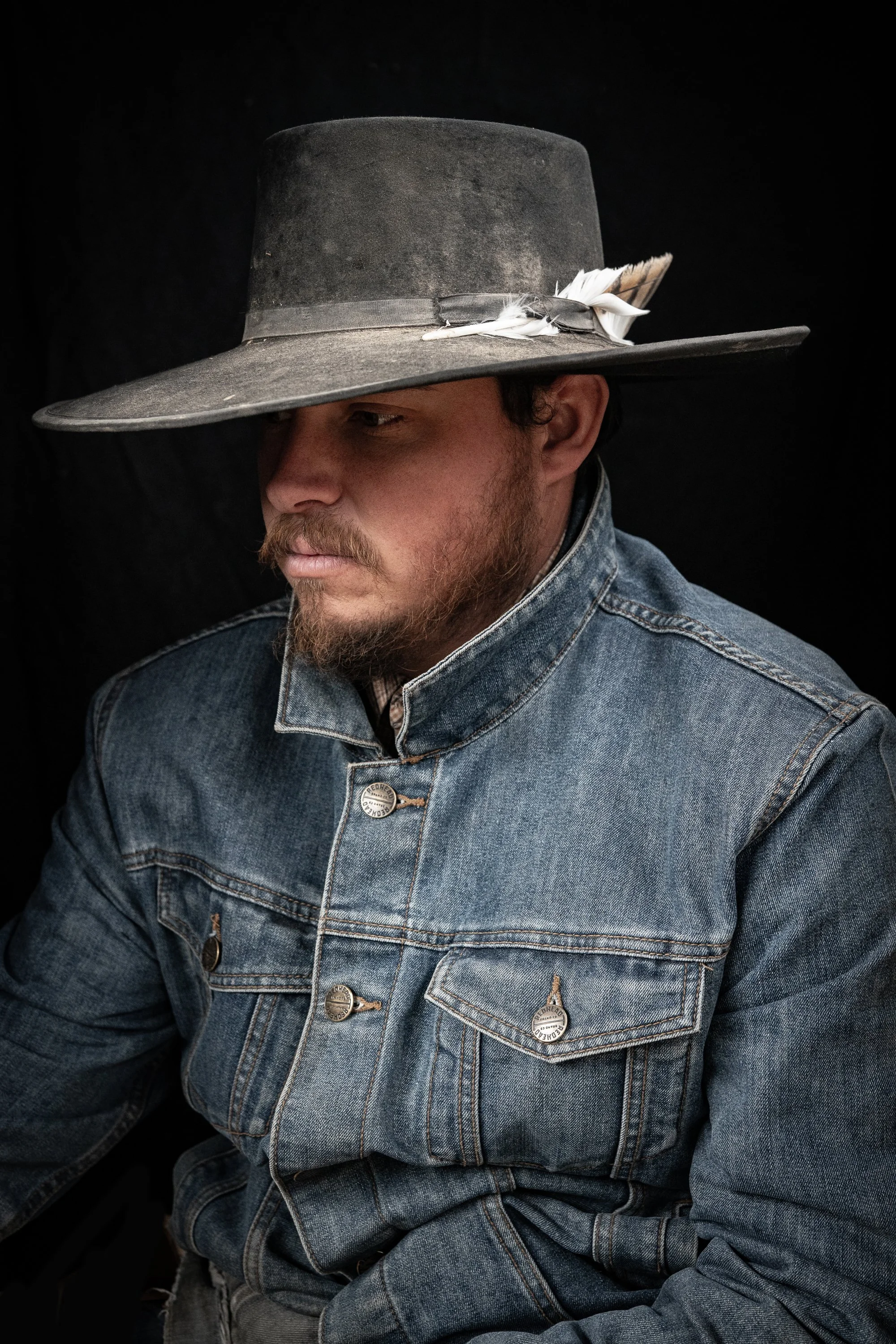
Portrait of cowboy in denim jacket and hat at TS Ranch

A quiet portrait of a buckaroo, worn denim and dust marking years of work in the West.

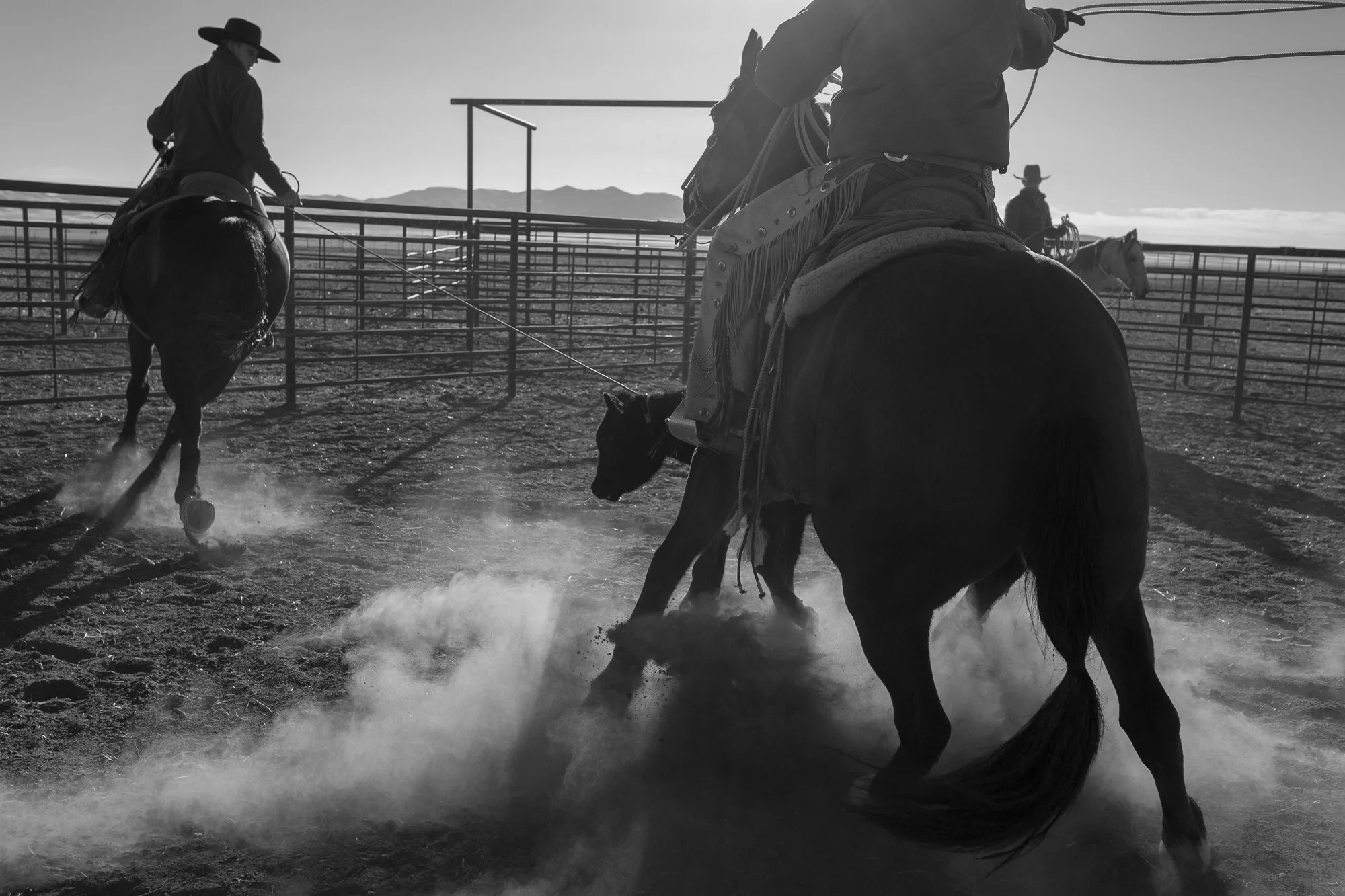
Cowboy roping cattle in dusty ranch pen at TS Ranch

A rope swings through the dust as a buckaroo works cattle in the pens, the movement quick and deliberate.

Cowboy standing and observing cattle work in ranch pens at TS Ranch

A quiet moment on the edge of the pens, where observation is just as important as action.

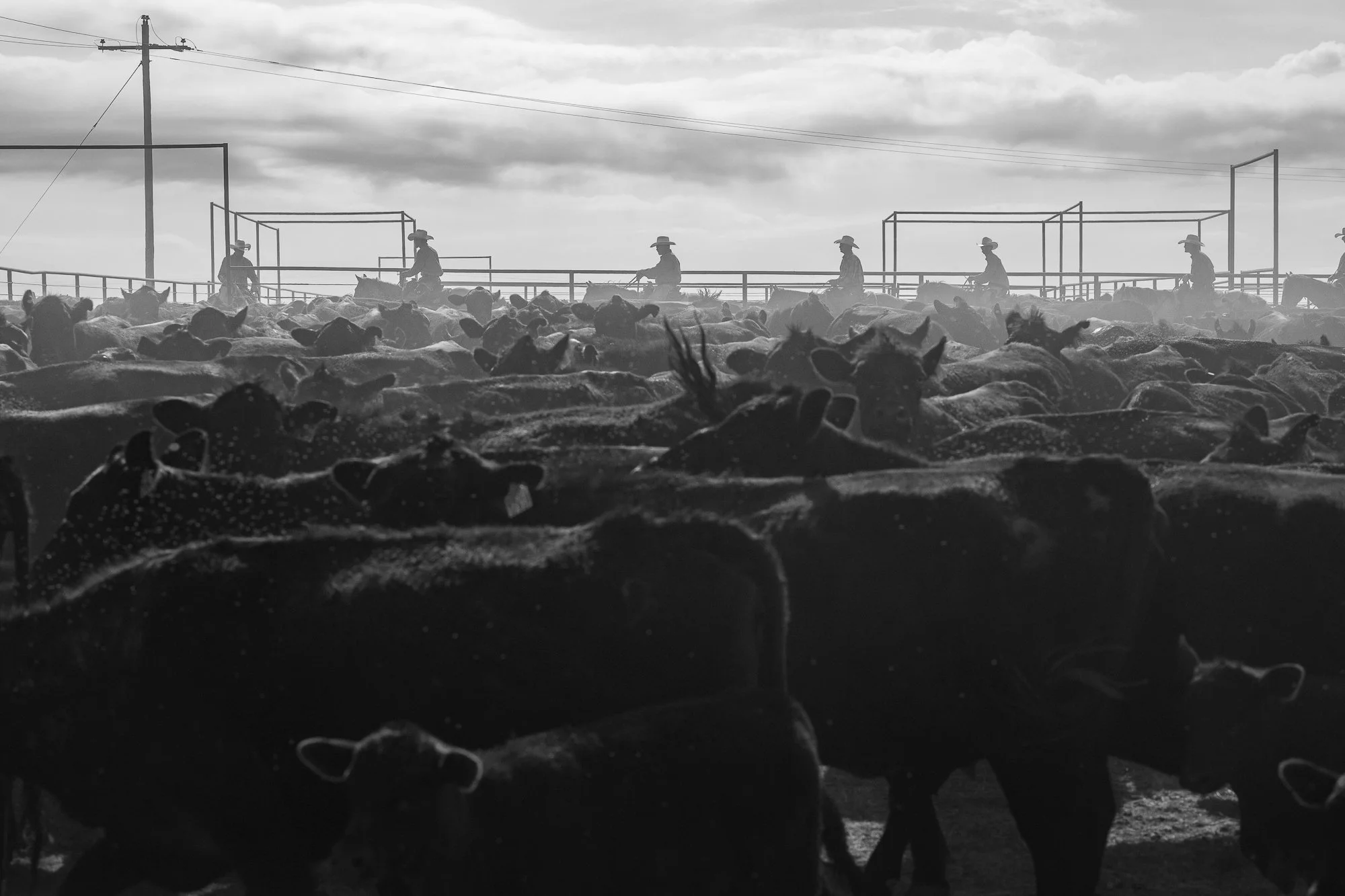
Close-up of dense cattle herd showing texture and movement at TS Ranch

Packed tightly together, the herd becomes a study of movement, texture, and weight.

Buckaroo riding horseback into cattle herd in morning haze at TS Ranch

A buckaroo moves into the herd through the morning haze, guiding cattle forward as the dust begins to rise.

Buckaroo on horseback holding position as cattle move across open range at TS Ranch

A buckaroo sits steady as cattle drift across the range, holding position while the herd moves past.

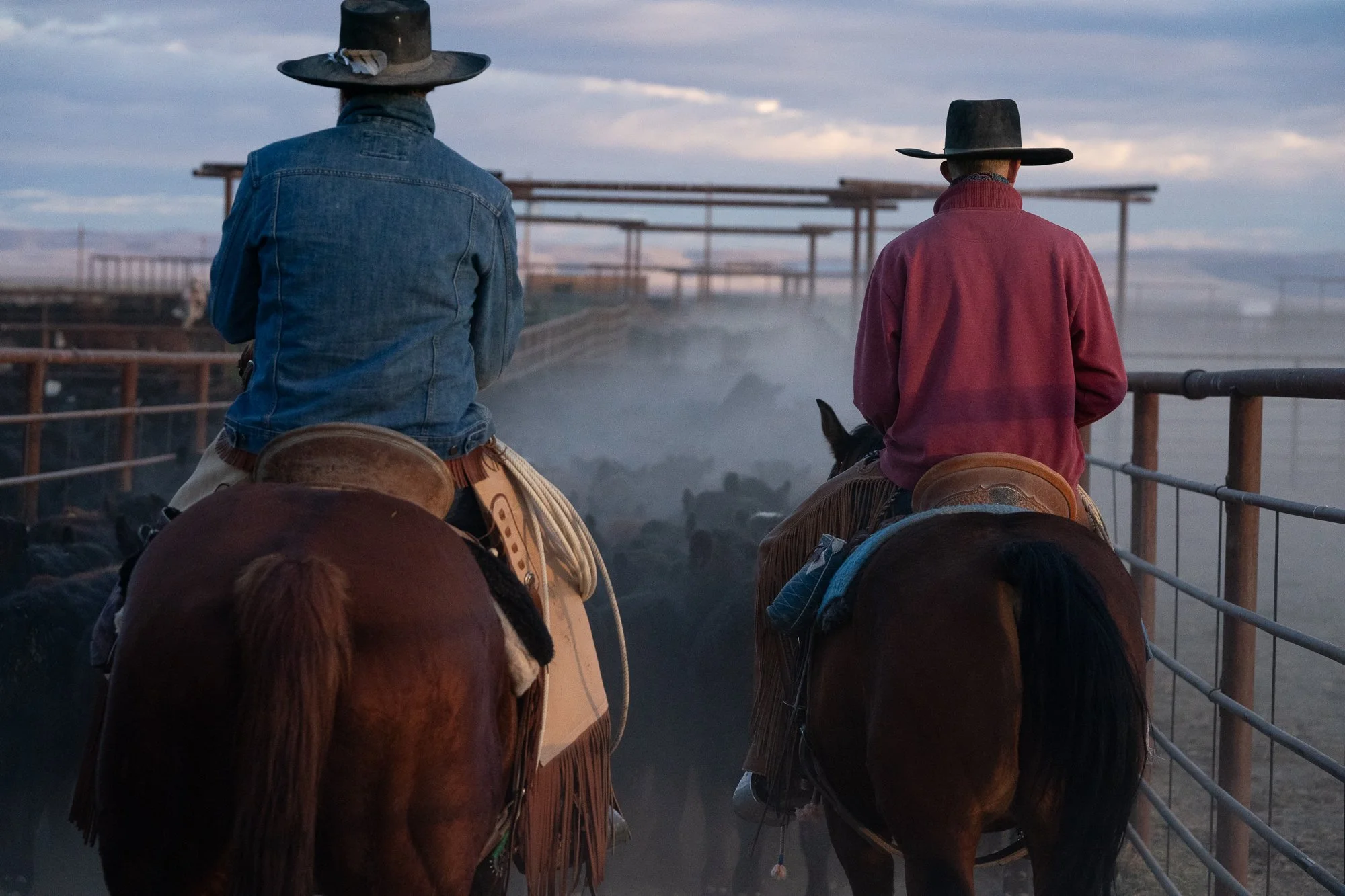
Cowboys pushing cattle through dusty pens at TS Ranch

Buckaroos push cattle through the pens, the air thick with dust as the herd moves forward.

Cowboys sorting cattle in dusty ranch pens at TS Ranch

Buckaroos work cattle through the maze of pens, guiding movement through dust and steel.

Three cowboys on horseback working cattle in dusty pens at TS Ranch

Three buckaroos move in sync, guiding cattle through the pens with quiet precision.

Close-up of buckaroo hair braid and hat from behind at TS Ranch

A long braid falls down the back of a denim jacket, a quiet detail rooted in buckaroo tradition.

Cattle herd moving through ranch pens with cowboy on horseback at TS Ranch

Cattle press forward through the pens as a buckaroo guides them from horseback, the air thick with dust.

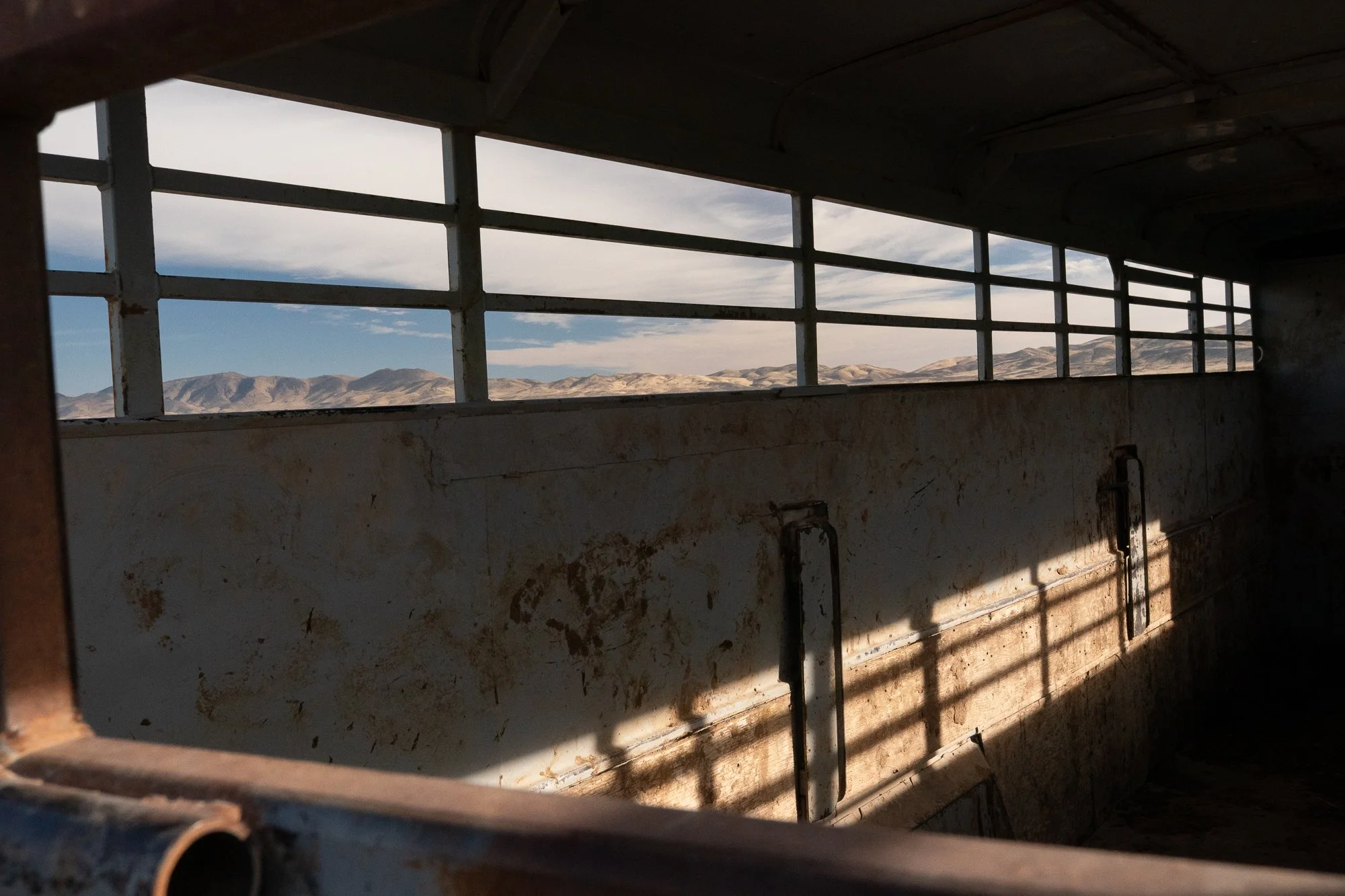
Interior of livestock trailer with light and shadow at TS Ranch

Light cuts through the slats of a stock trailer, revealing the worn surfaces shaped by years of use.

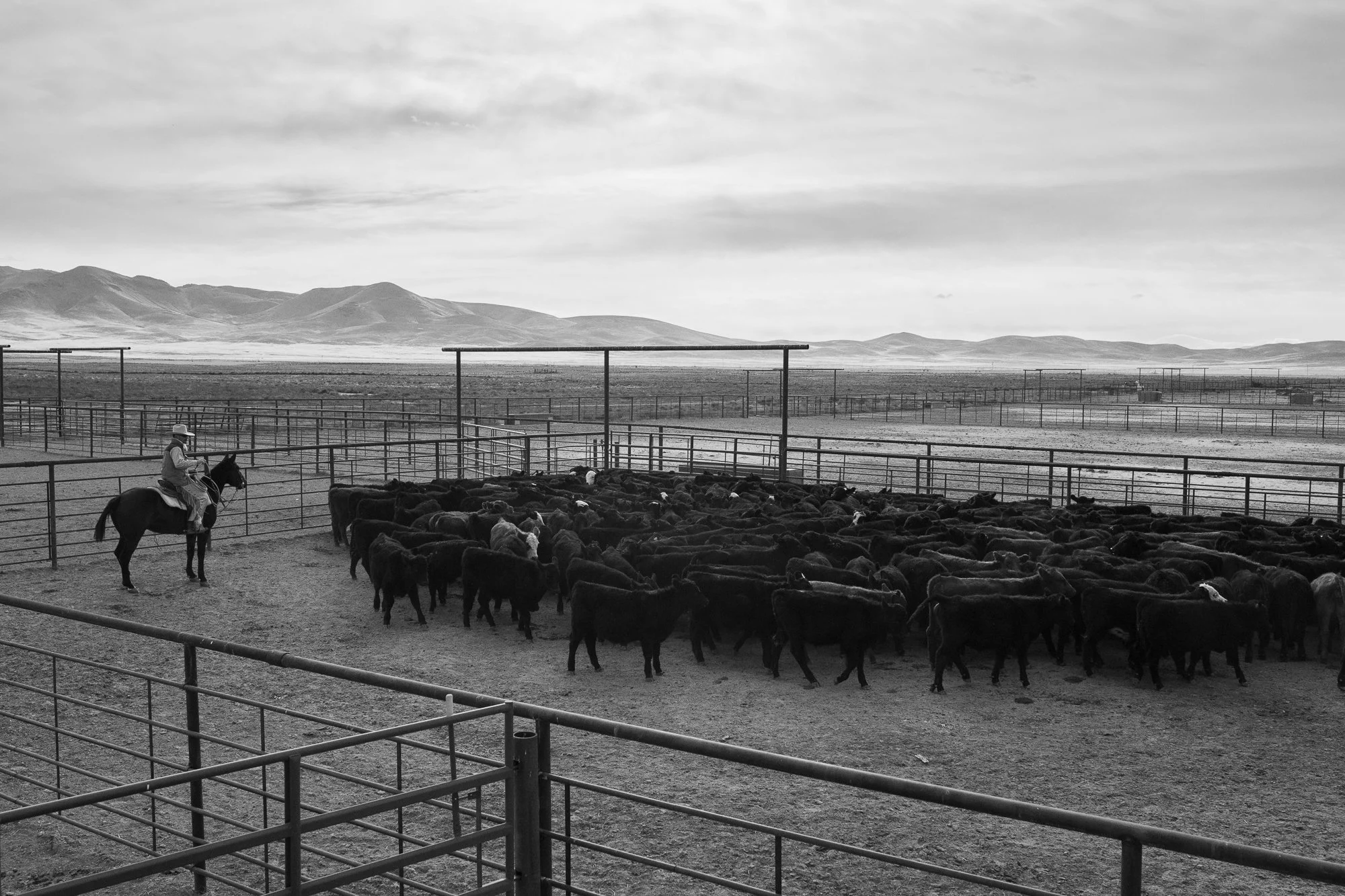
Cattle herd grouped tightly in ranch pens with cowboy on horseback at TS Ranch

A buckaroo watches over a tight group of cattle, keeping them settled inside the pens.

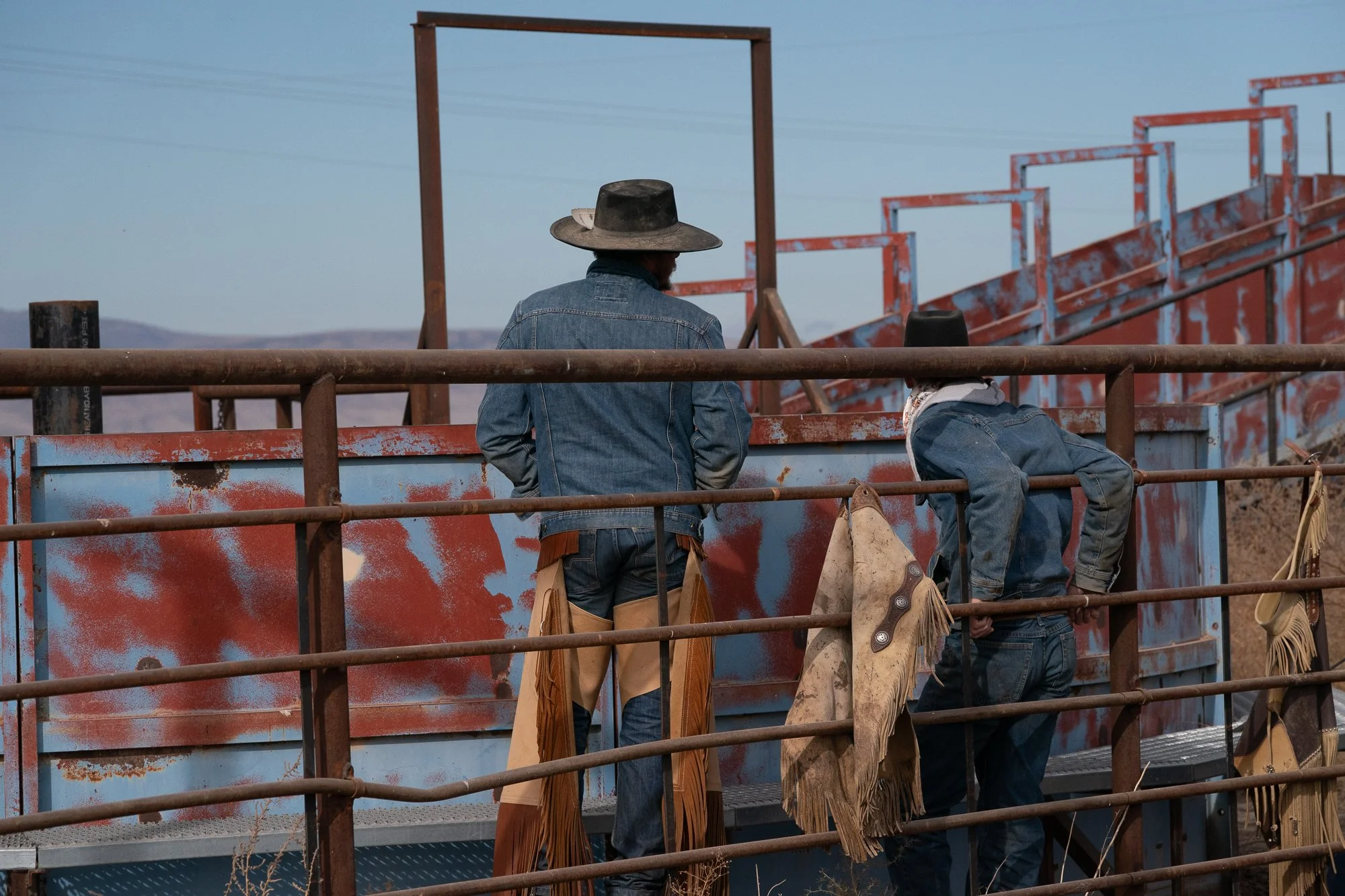
Two buckaroos standing at fence watching cattle work at TS Ranch

Two buckaroos lean against the fence, watching the work unfold between runs through the pens.

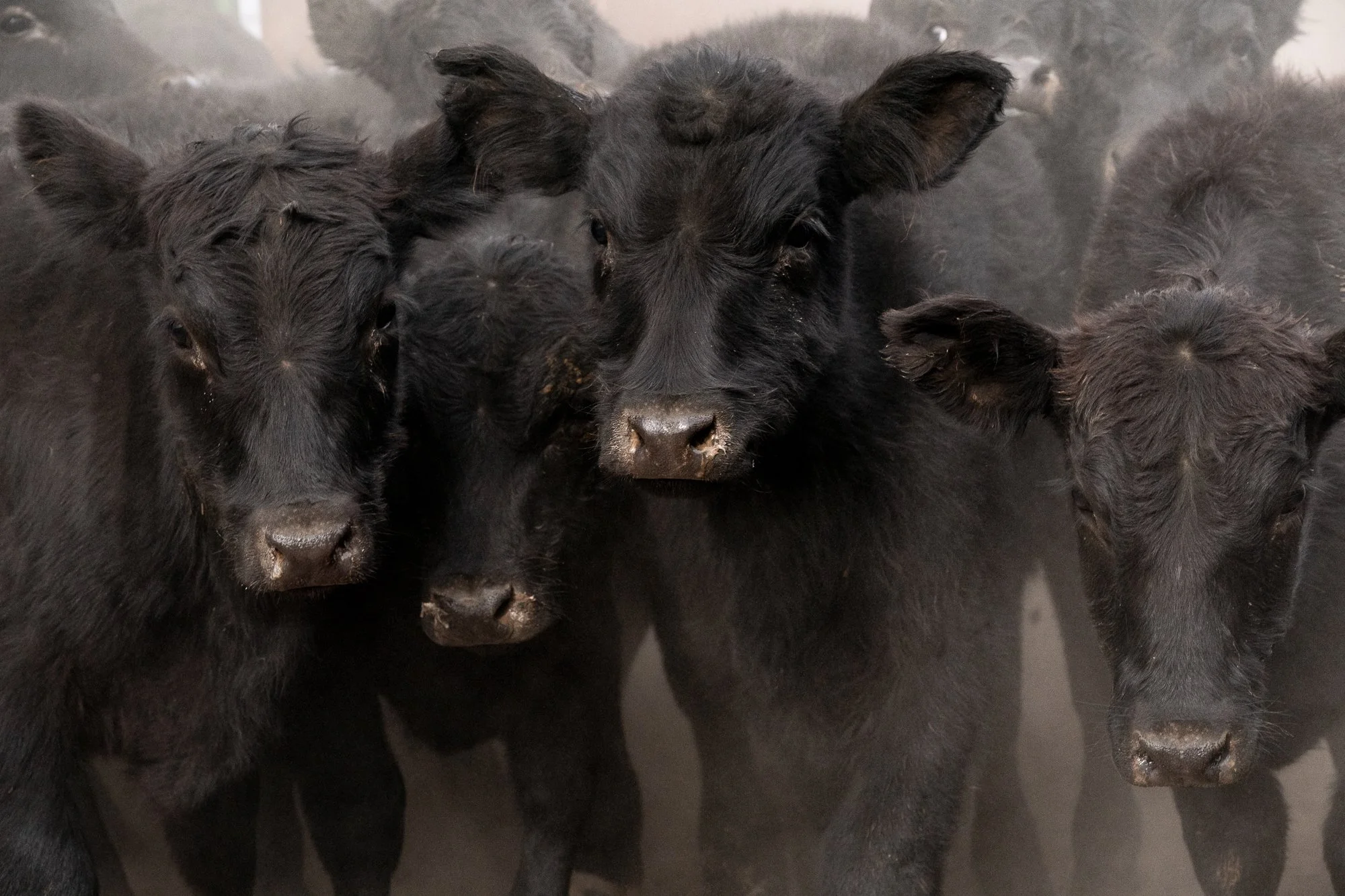
Close-up of cattle faces in herd at TS Ranch

A few heads rise above the herd, each animal alert as dust hangs in the air.

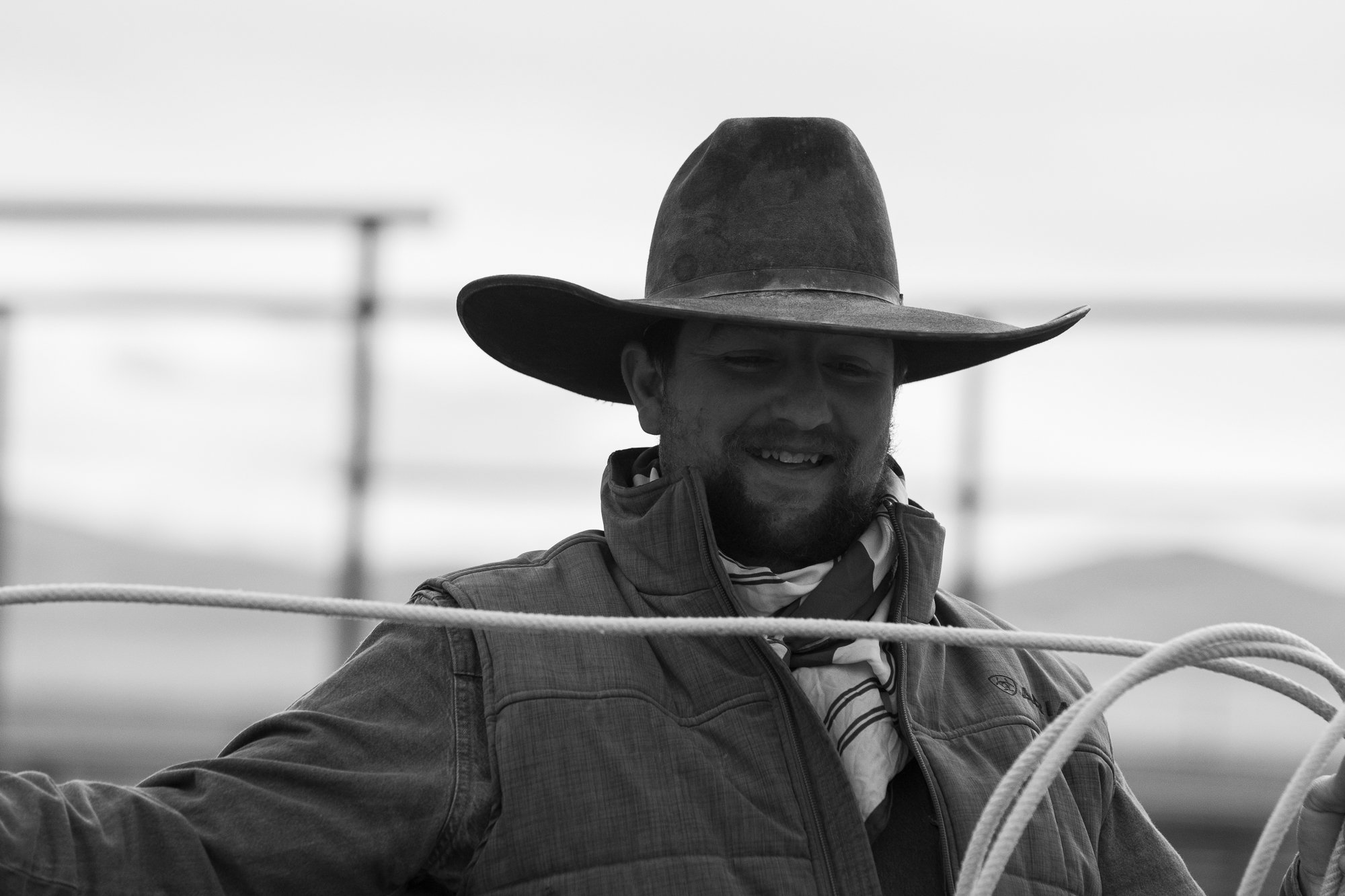
Black and white portrait of smiling cowboy at TS Ranch

A moment of ease breaks through the work as a buckaroo smiles between tasks.

Cowboy roping calf in cattle pens during ranch work at TS Ranch

A buckaroo steps into position, roping a calf as others guide cattle across the pen.

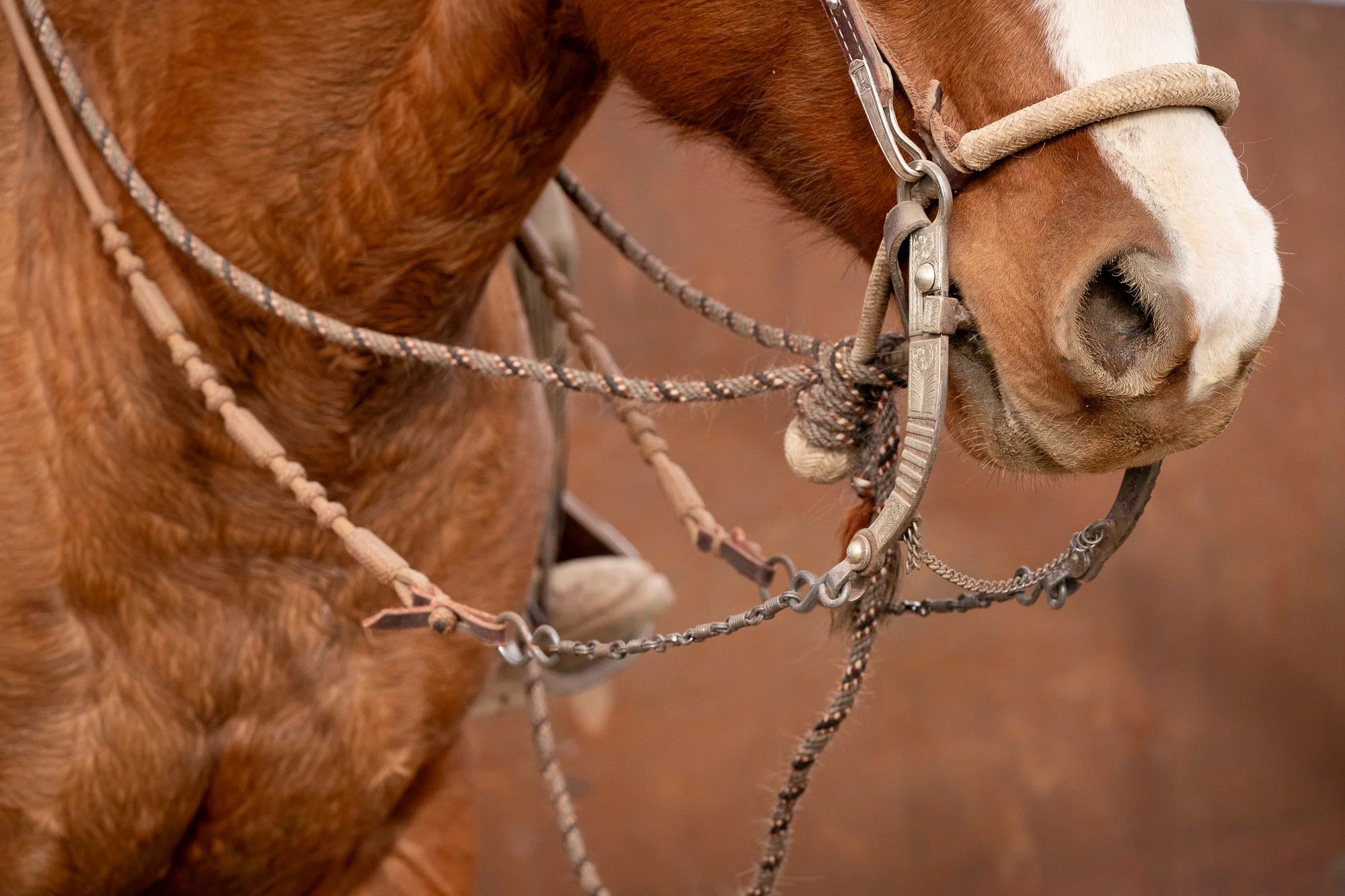
Close-up of horse bridle and bit showing western tack detail at TS Ranch

A close look at the reins and bridle, where craftsmanship and daily use meet.

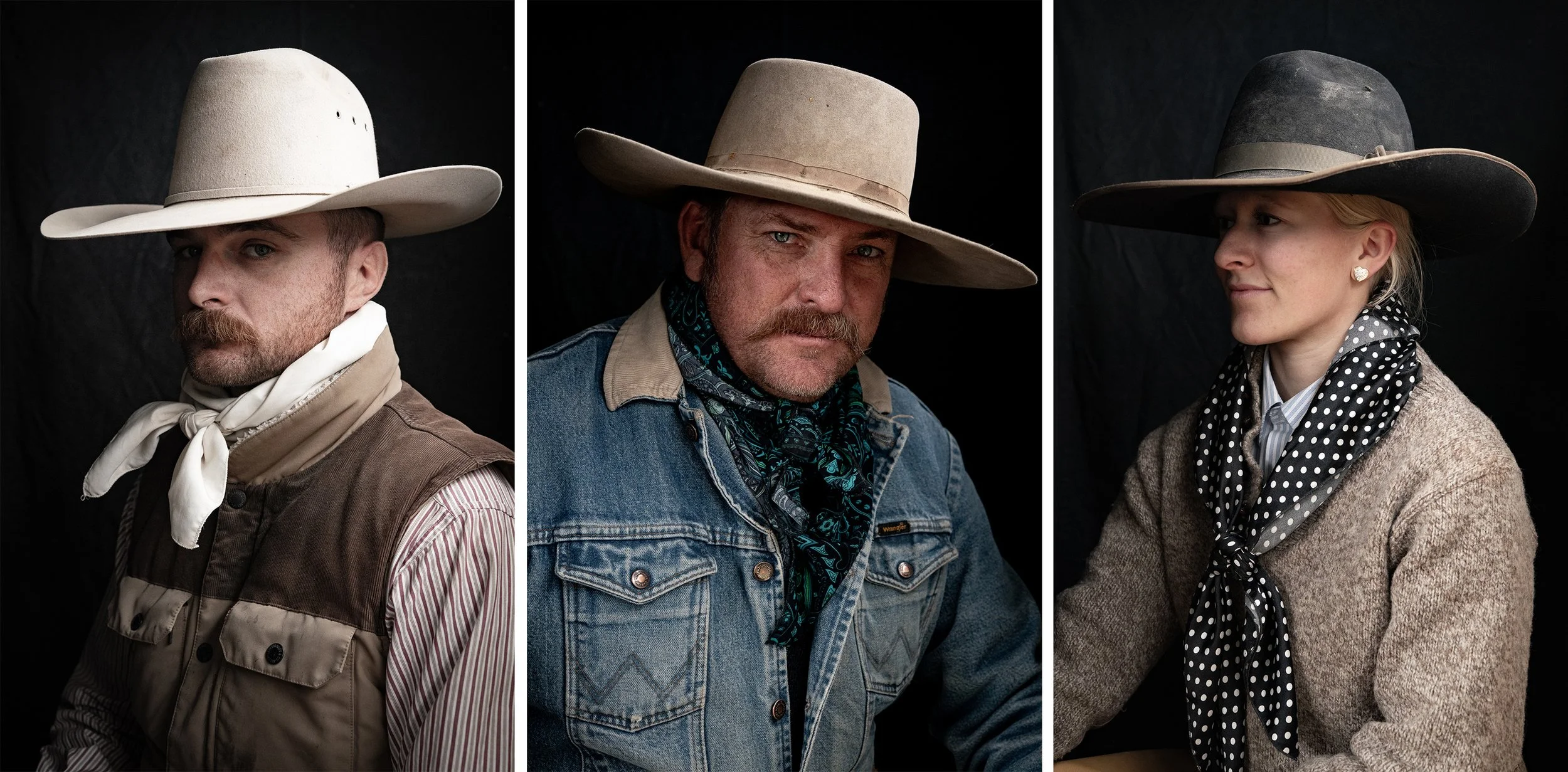
Group of cowboy portraits showing western clothing and character at TS Ranch

A series of buckaroo portraits, each shaped by the work and traditions of the American West.

Authentic Cowboy Lifestyle Photography for Brands & Editorial Use

Authentic Cowboy Lifestyle Photography for Brands & Editorial Use

There’s no shortage of photographs of cowboys. But most of them aren’t made where the work actually happens.

Over the past several years, I’ve spent time on working ranches across the American West—photographing cattle being gathered at first light, horses being saddled in the dark, long days moving cattle through rough country, and the quiet moments in between.

This isn’t staged. It isn’t a production.

It’s the real pace and texture of ranch life as it exists today.

For brands and editors looking for something honest, that difference matters.

Authentic Western Photography, Shot on Working Ranches

The photographs in this collection are made on historic and working ranches throughout the West, often in remote locations where access is limited and the work is physically demanding.

What draws me to these places isn’t just the visual side of it—it’s the rhythm of the work:

  • early mornings before the sun breaks

  • the repetition of daily tasks

  • the relationship between rider, horse, and land

  • the wear on tools, gear, and hands over time

That’s where the photographs come from.

Not just the big moments, but the small, often overlooked ones that define the reality of the job.

Cowboy Photography for Brands, Advertising & Editorial

This body of work is well suited for:

  • Western apparel and workwear brands

  • Outdoor and lifestyle campaigns

  • Agricultural and ranching publications

  • Editorial features focused on American culture and labor

There’s a growing demand for imagery that feels grounded and believable—especially from brands trying to move away from overly polished or staged campaigns.

Because these photographs are made in real environments, with working cowboys, they carry a level of authenticity that’s difficult to replicate on a set.

Licensing Authentic Cowboy Photography

Images from this ongoing project are available for licensing across a range of uses, including:

  • advertising campaigns

  • editorial features

  • brand storytelling

  • web and digital use

  • print and publication

If you’re looking for specific moments—branding, roping, sorting cattle, life in the bunkhouse, or broader environmental scenes—there’s a deep archive to draw from.

Licensing can be tailored depending on scope, usage, and exclusivity.

Assignment-Based Photography on Working Ranches

In addition to licensing existing work, I take on a limited number of assignments each year.

This includes photographing:

  • campaign imagery for Western and workwear brands

  • editorial stories on ranching and rural culture

  • long-form documentary projects

Having worked on multiple ranches over time, I understand how to move within these environments without disrupting the work—something that’s critical when timing and conditions matter.

A Long-Term Documentary Project

This work is part of a long-term project documenting working cowboys and ranching culture across the American West.

Over time, it’s taken me to ranches in Texas, Montana, Nevada, and beyond—each with its own way of doing things, but connected by a shared commitment to the work.

The goal isn’t to romanticize it, but to document it honestly.

Because much of this way of life is changing, and in some places, disappearing.

Licensing & Assignment Inquiries

If you’re a brand, agency, or editor looking for authentic cowboy and ranch lifestyle photography, feel free to get in touch.

Whether you’re looking to license existing work or commission a shoot, I’m happy to discuss what you need.

Contact Rob
More Cowboy Photography

Fine Art Cowboy Prints

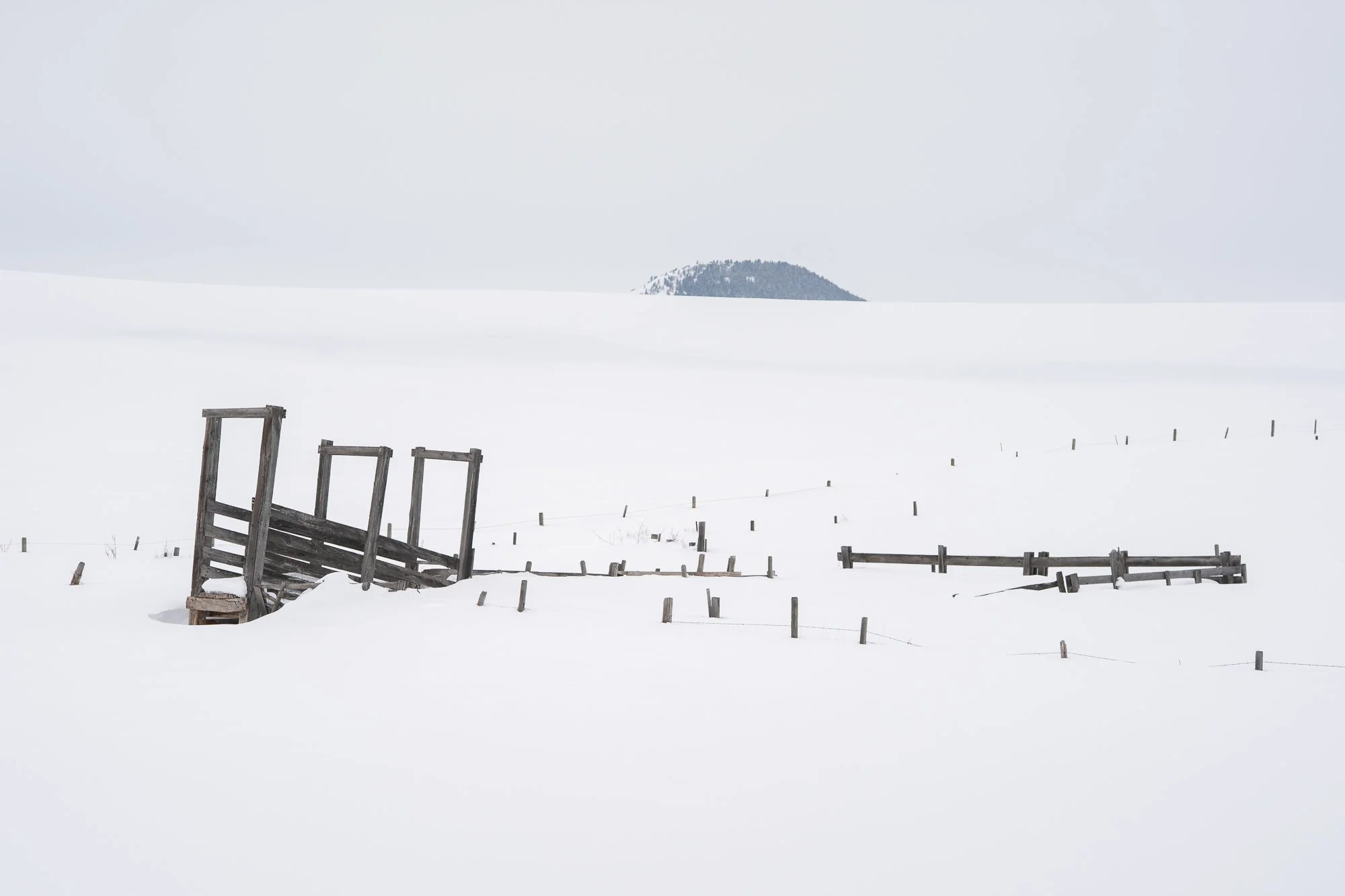
Minimal snow covered ranch landscape with old wooden fence and distant hill

A quiet winter scene shows a snow-covered ranch, where fences and land disappear into the cold.

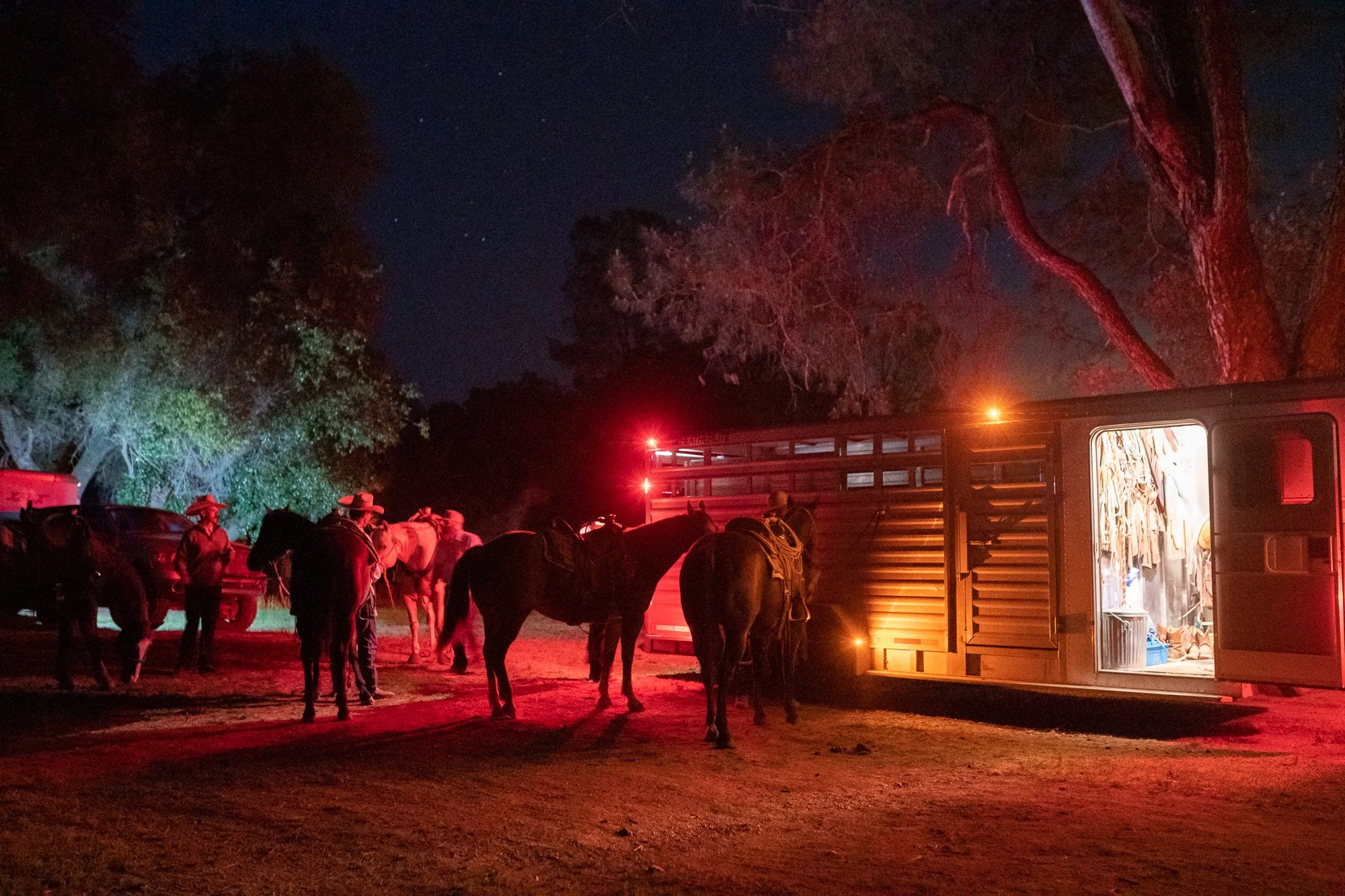
Cowboys and horses gathered near trailer at night illuminated by red and warm lights

Horses and riders prepare under the glow of trailer lights before an early start.

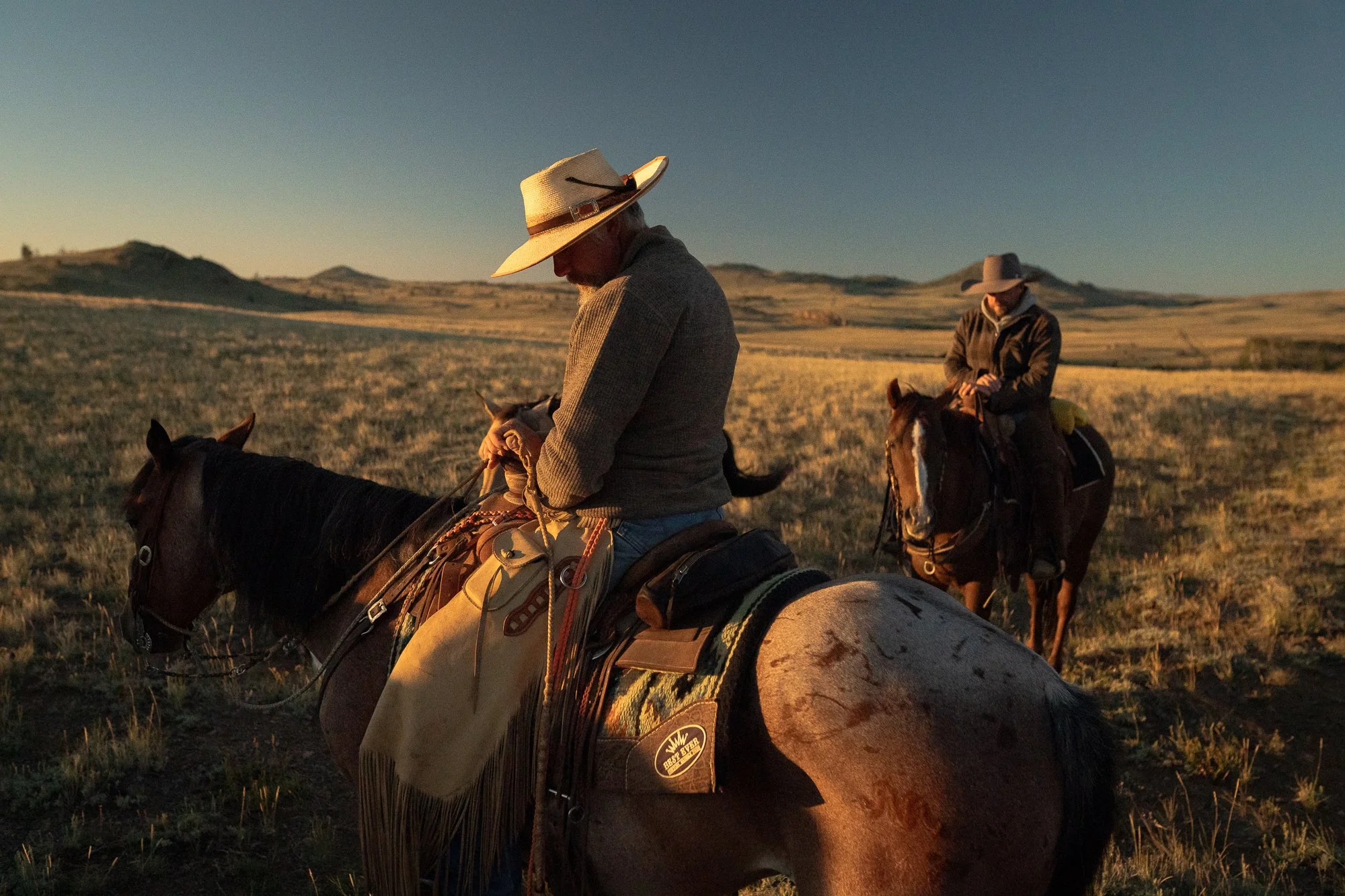
Cowboys riding horses across open range at golden hour with long shadows

Evening light falls across the range as cowboys move through open country on horseback.

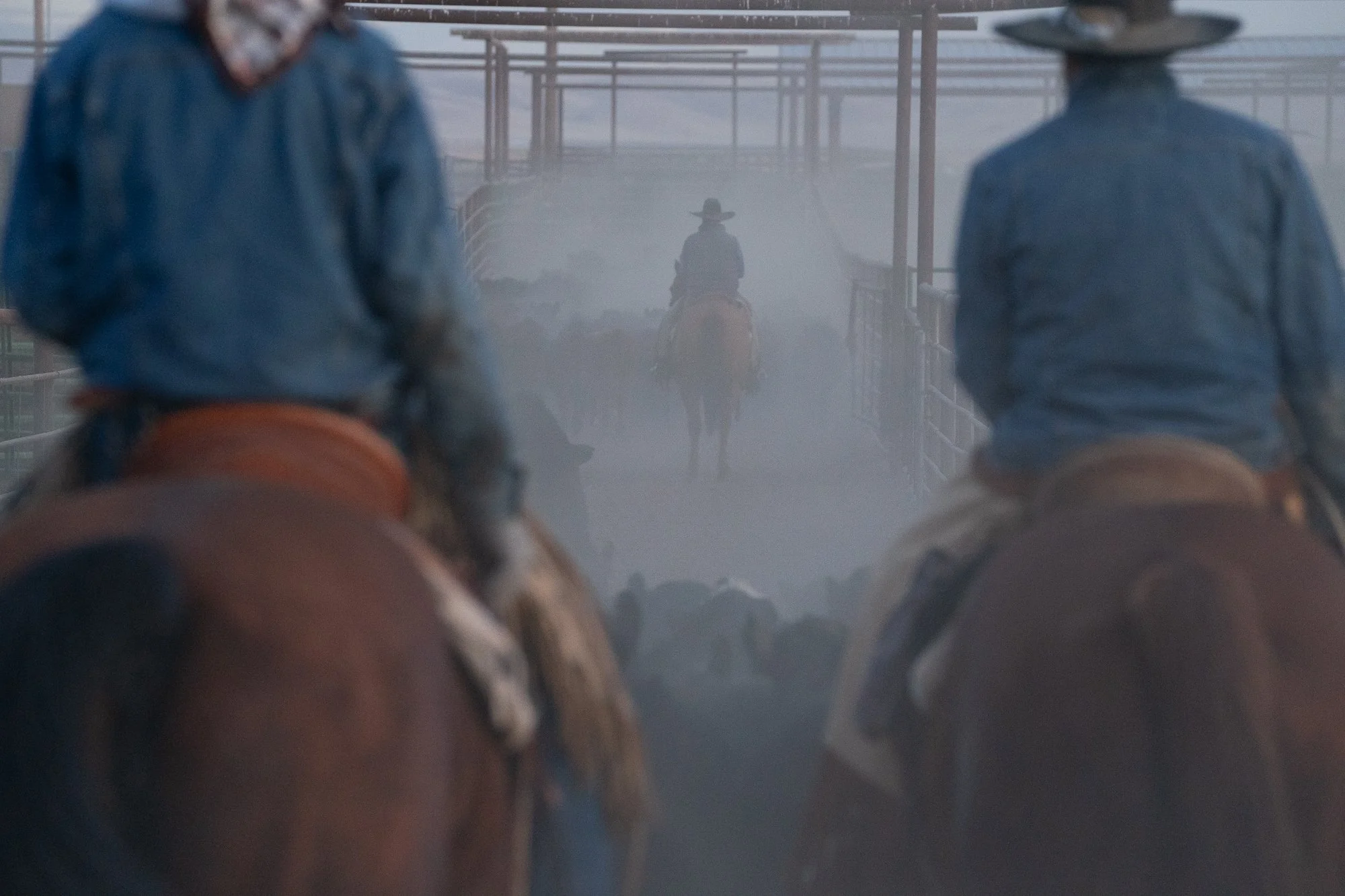
Cowboys on horseback driving cattle through dusty corral with backlit haze

Dust and movement fill the corral as cowboys push cattle forward in low visibility conditions.

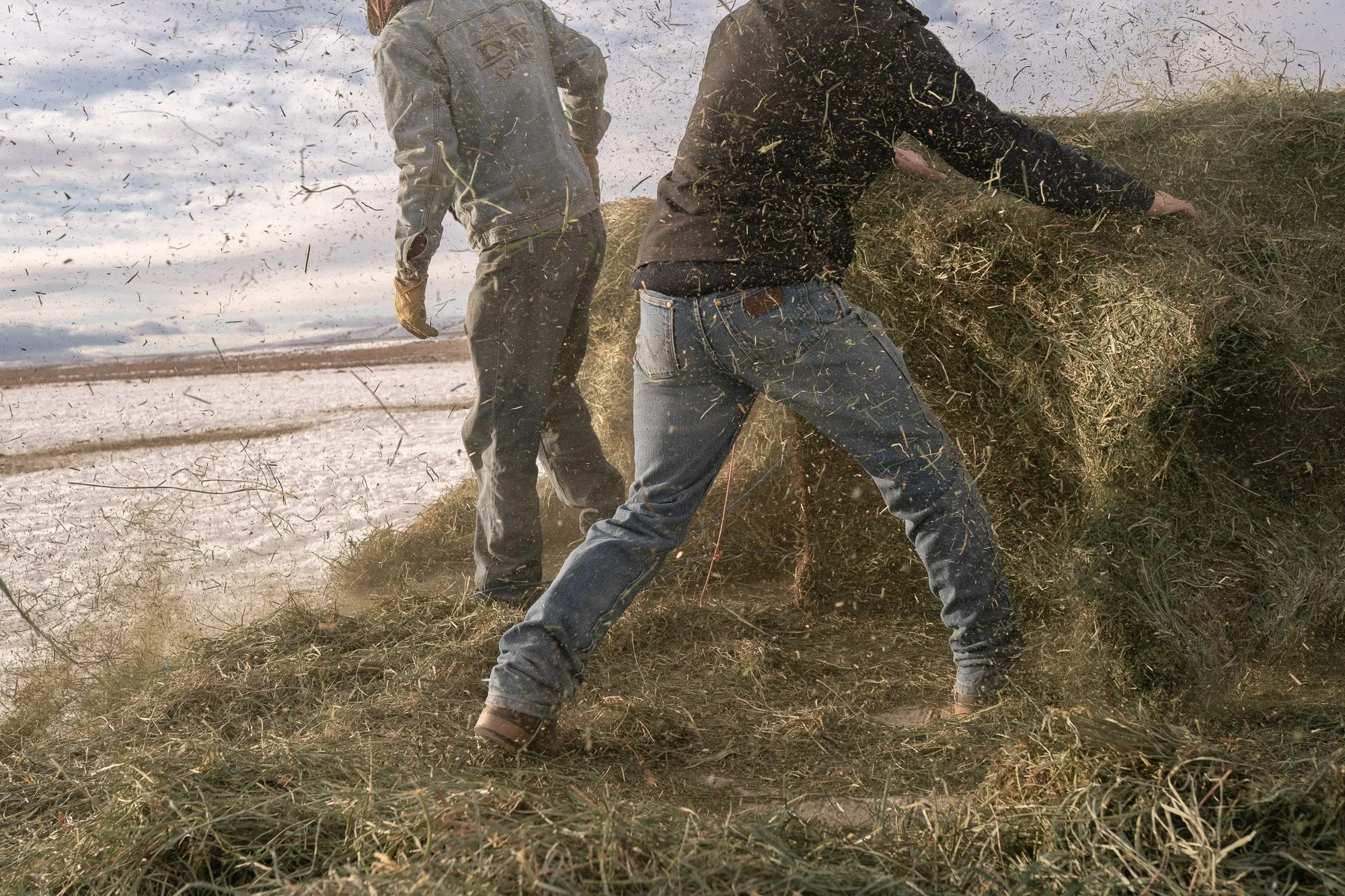
Cowboys stacking loose hay in winter pasture with flying debris and dust during feeding

Two cowboys stack loose hay in harsh winter conditions, a daily task that keeps cattle fed through the cold months.

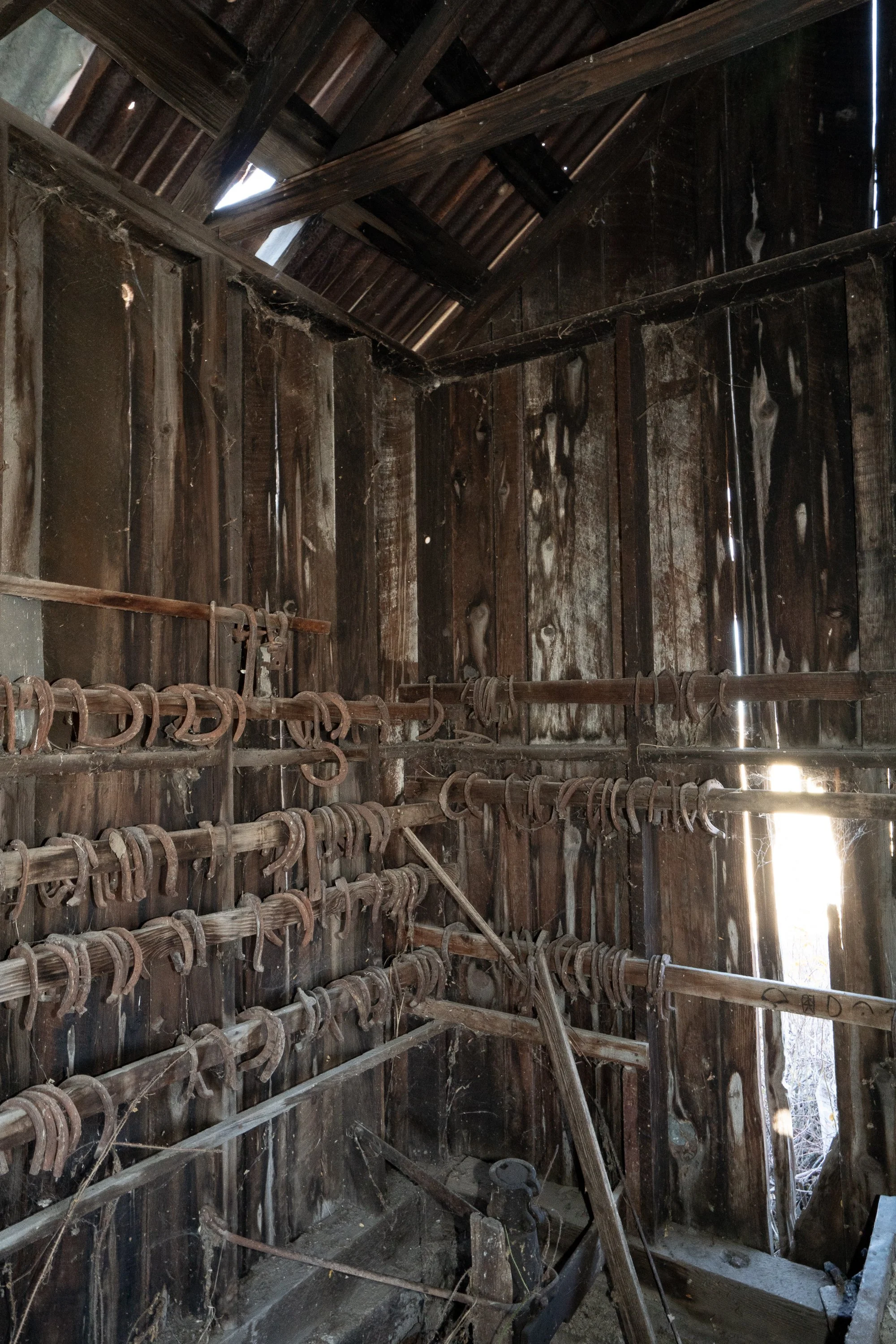
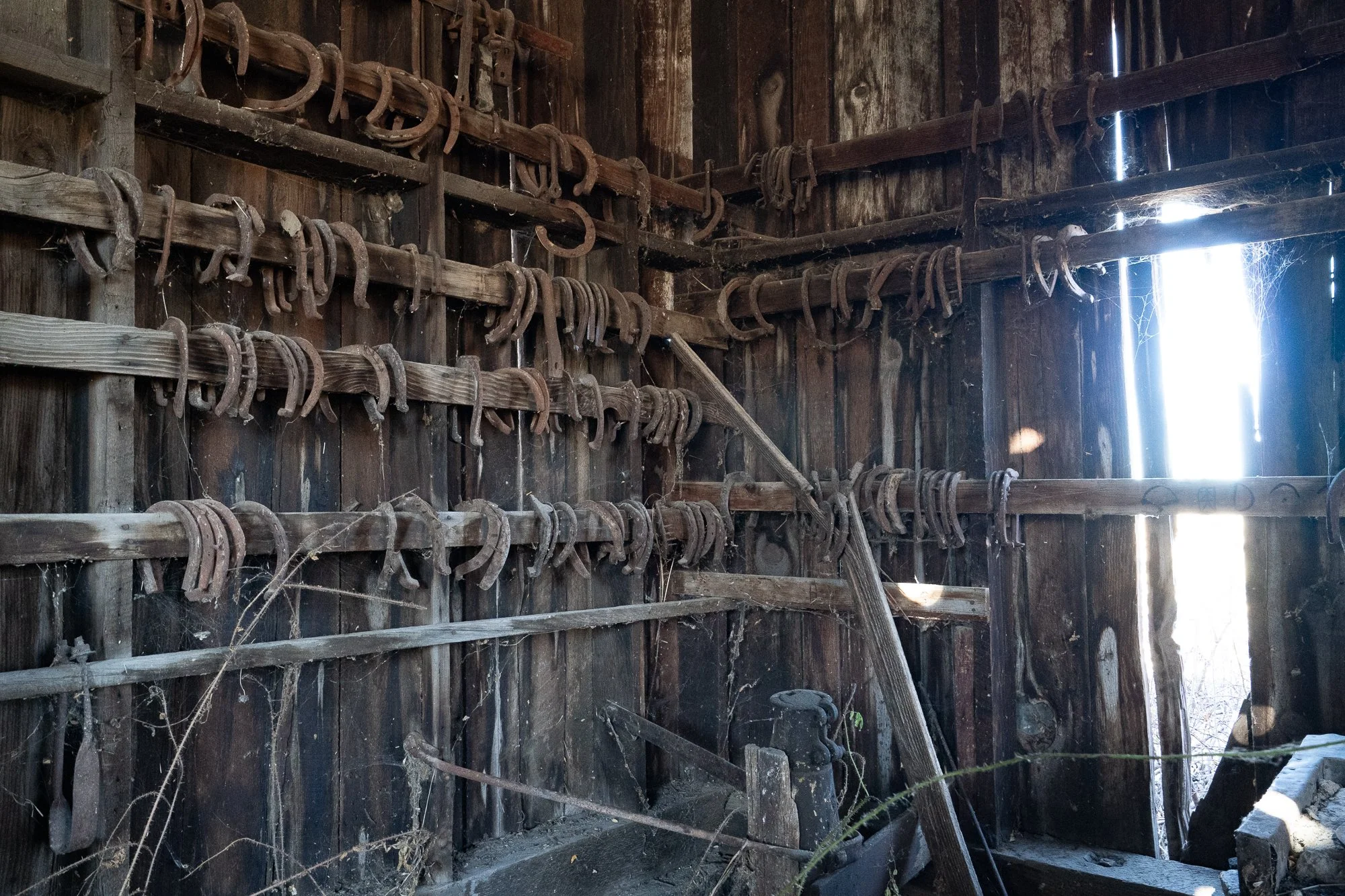
Interior of old wooden barn wall lined with worn horseshoes and ranch tools

Horseshoes line the walls of a weathered barn, a quiet record of years of ranch work and horsemanship.

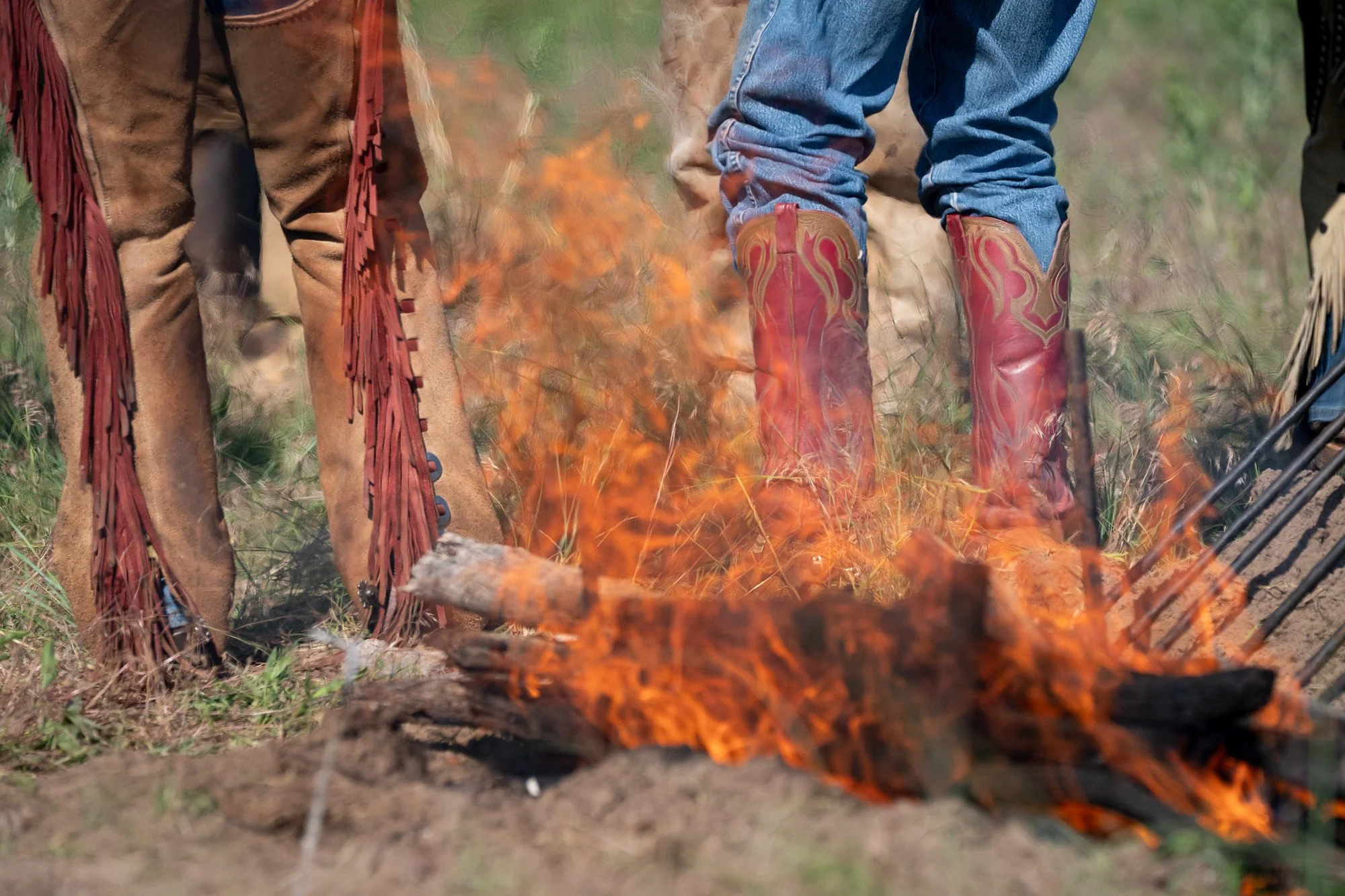
Cowboy boots and chaps standing near open fire during ranch work or camp

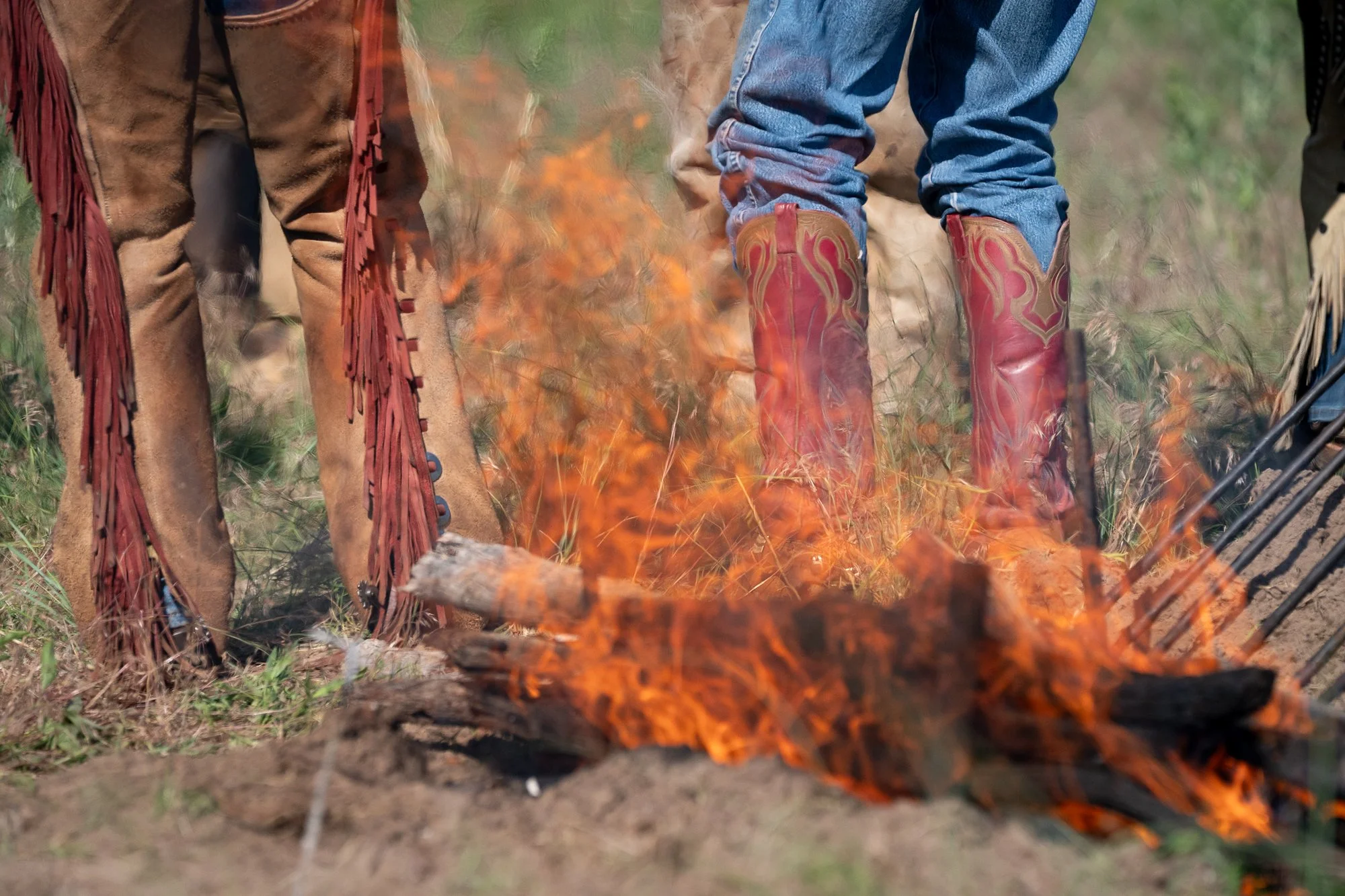
Cowboys gather around an open fire, a moment of warmth and reset during long days of work on the range.

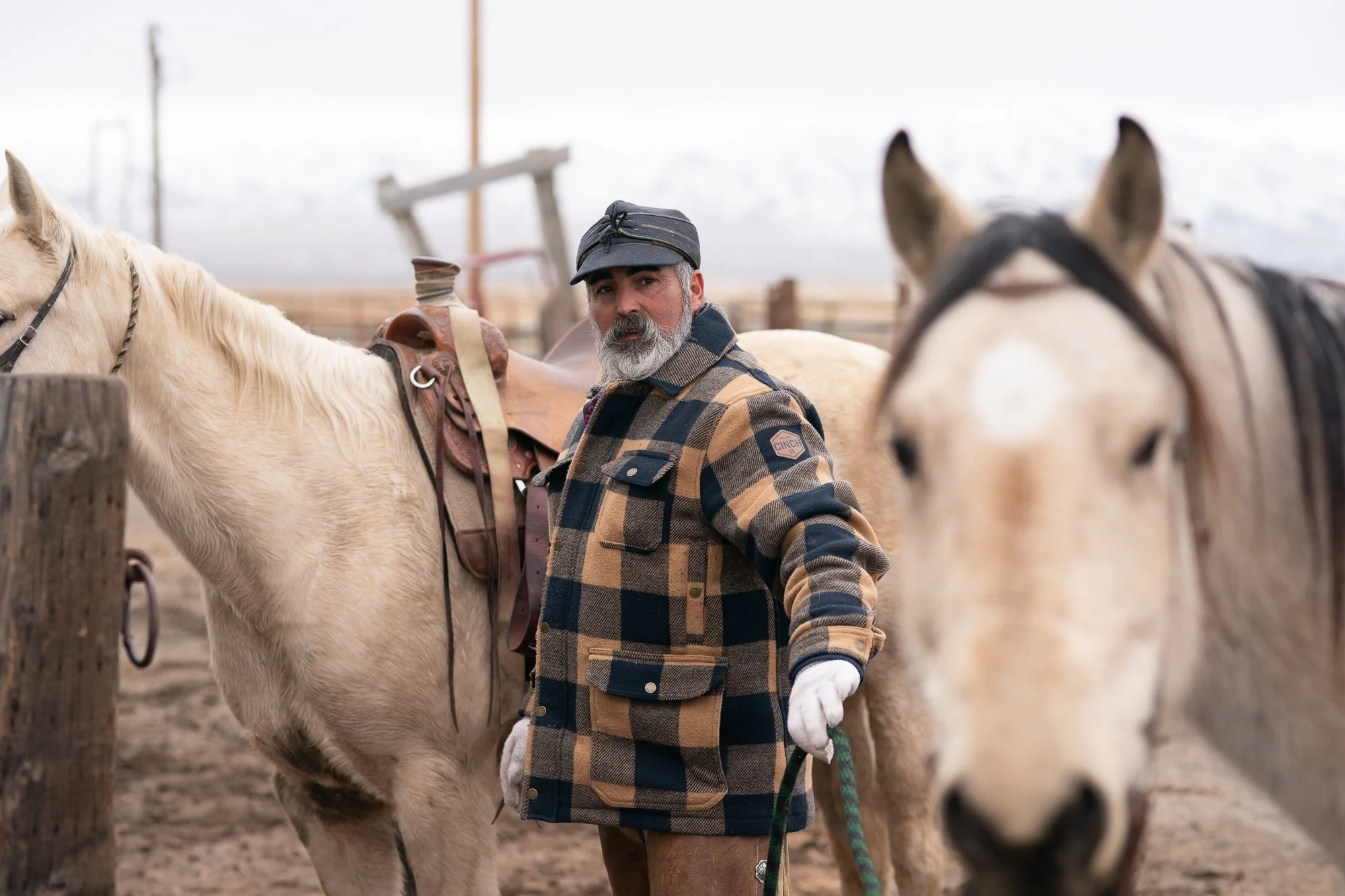
Cowboy standing with horses in cold weather wearing plaid jacket and gloves

A working cowboy stands with his horses in the cold, ready for the next task on the ranch.

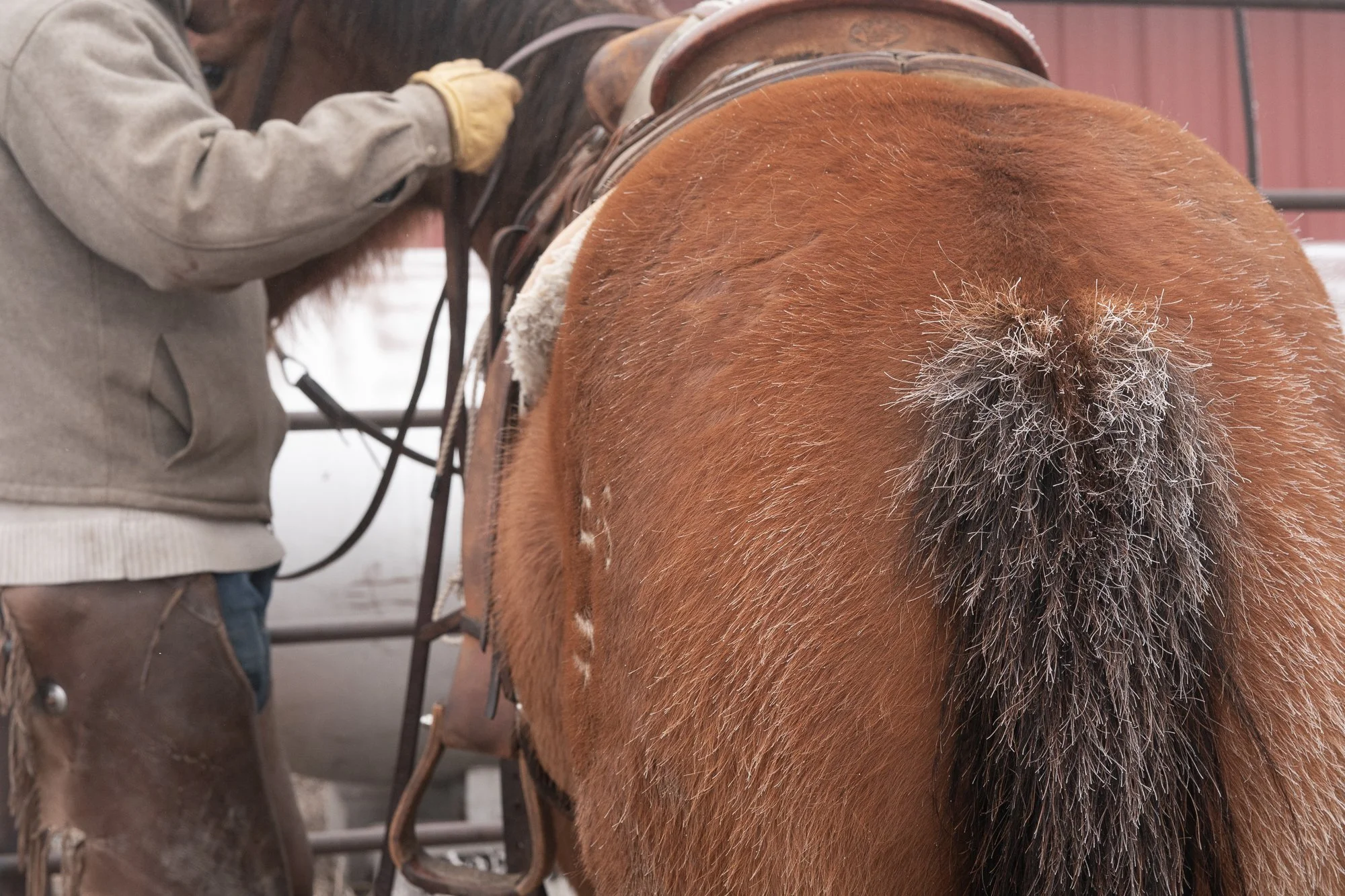
Close up of cowboy saddling horse with frost on tail in cold conditions

A quiet moment of preparation as a cowboy saddles his horse in freezing morning conditions.

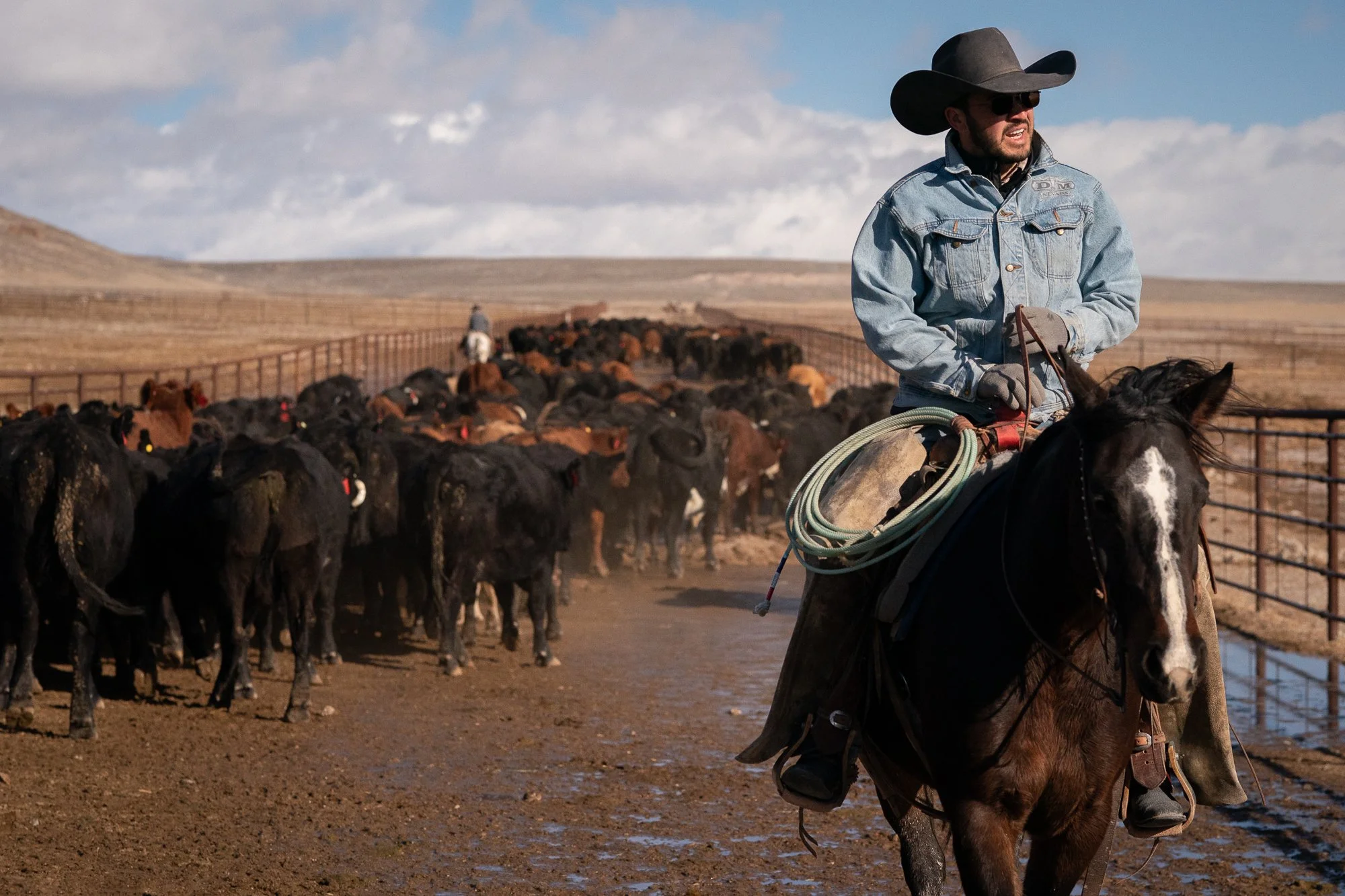
Cowboy on horseback guiding herd of cattle through muddy corral

Cattle are pushed through the pens as a cowboy guides the herd from horseback during processing.

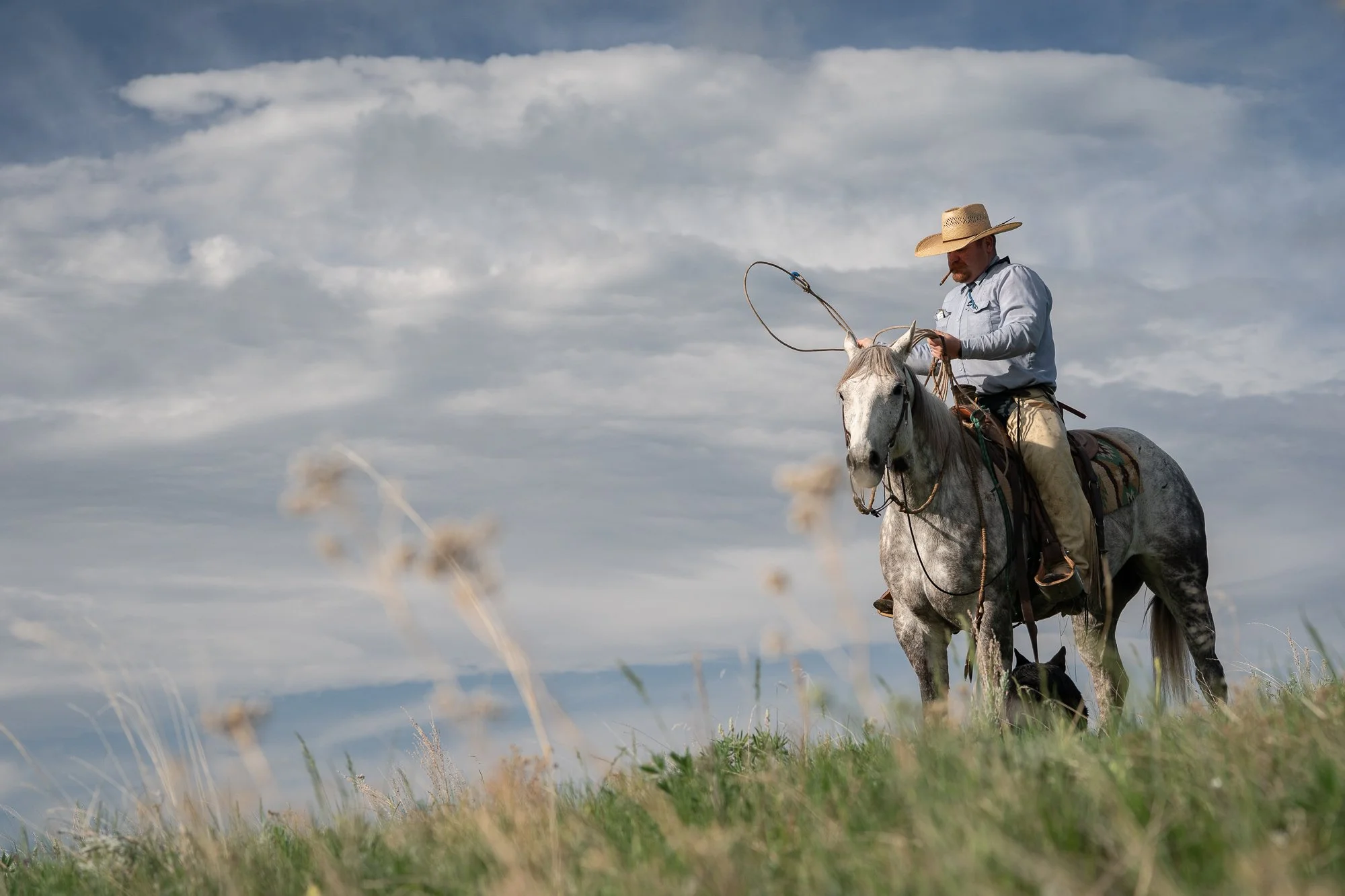
Cowboy on horseback holding rope in open landscape with dramatic sky

A cowboy pauses with rope in hand, scanning the herd across wide open country.

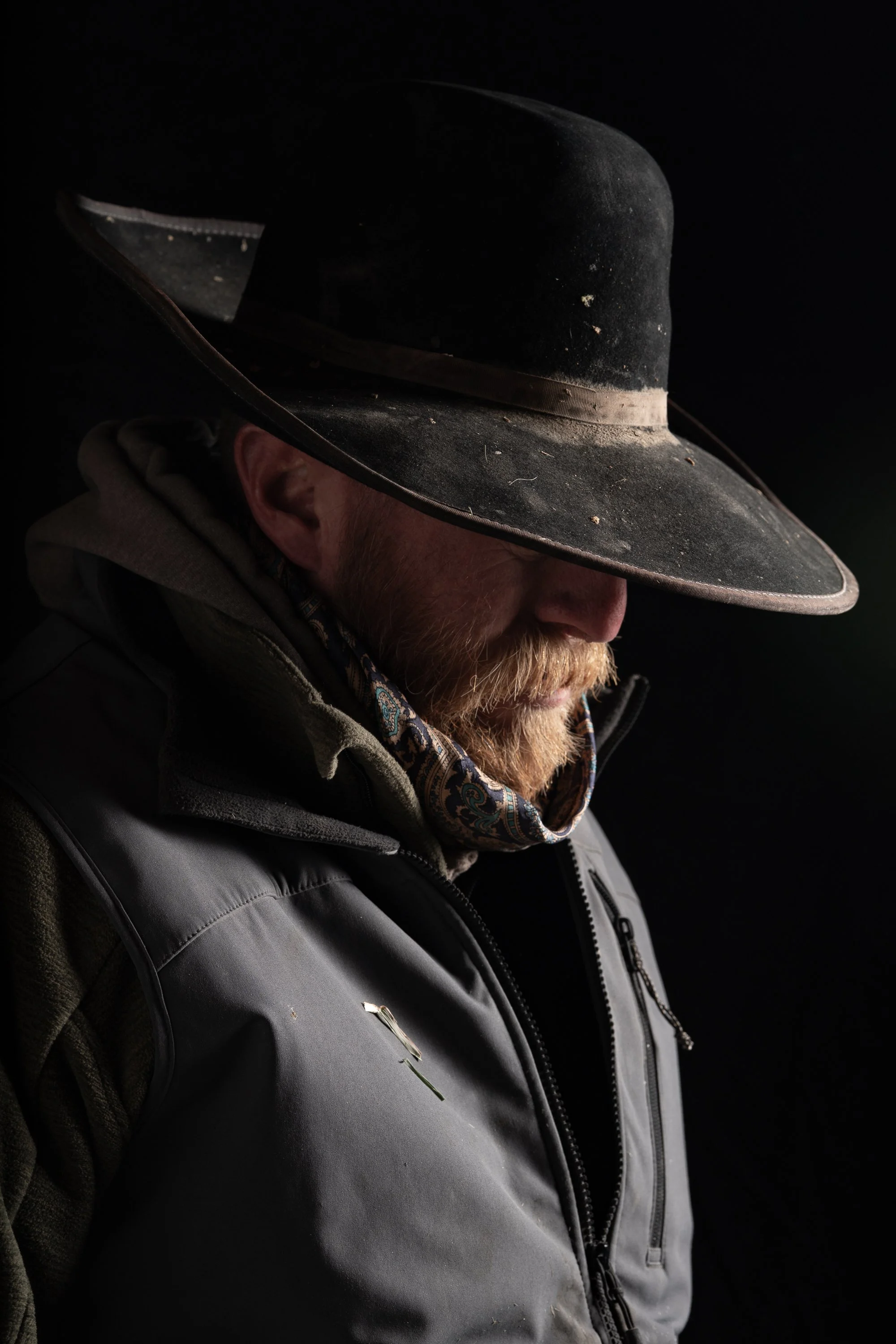
Moody portrait of cowboy in hat with dramatic light and shadow

Light cuts across a cowboy’s face, revealing the quiet focus that defines the work.

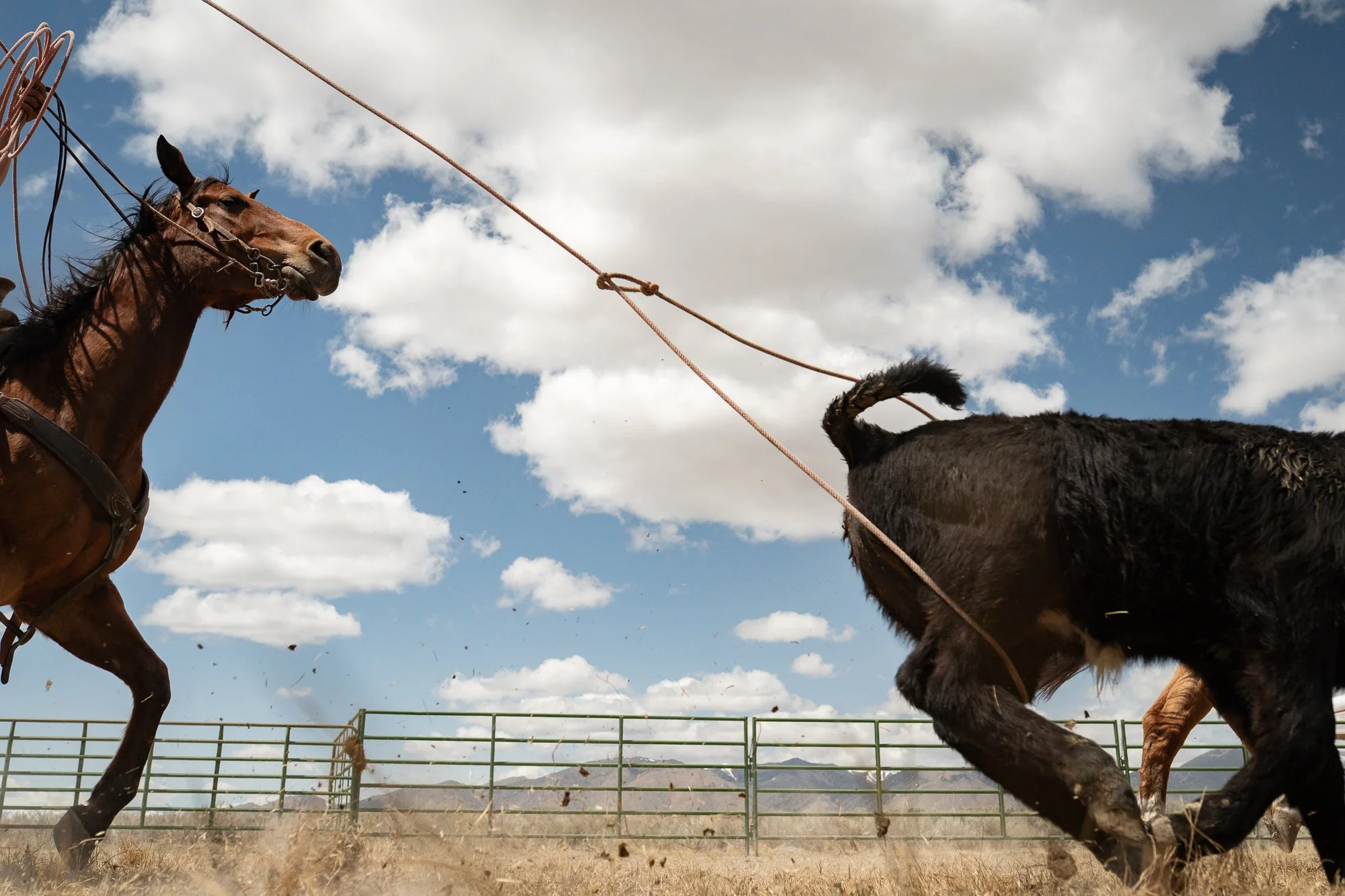
Cowboy on horseback roping calf with rope tension and movement against blue sky

A rope goes tight as a cowboy works a calf from horseback, a fast and precise moment of ranch work.

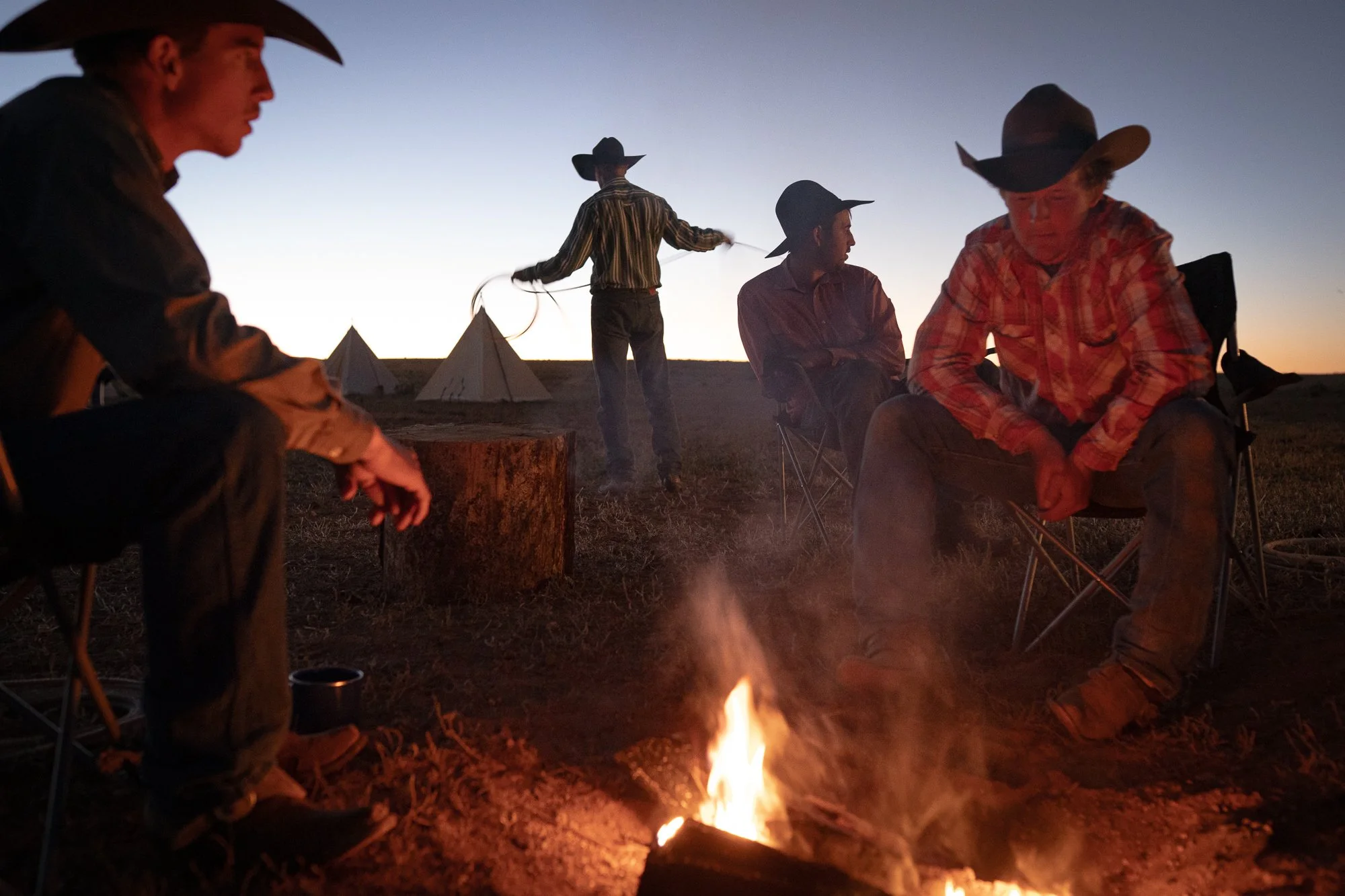
Cowboys gathered around campfire at night with tents and open landscape in background

Cowboys gather around a fire after dark, sharing a rare moment of rest on the open range.

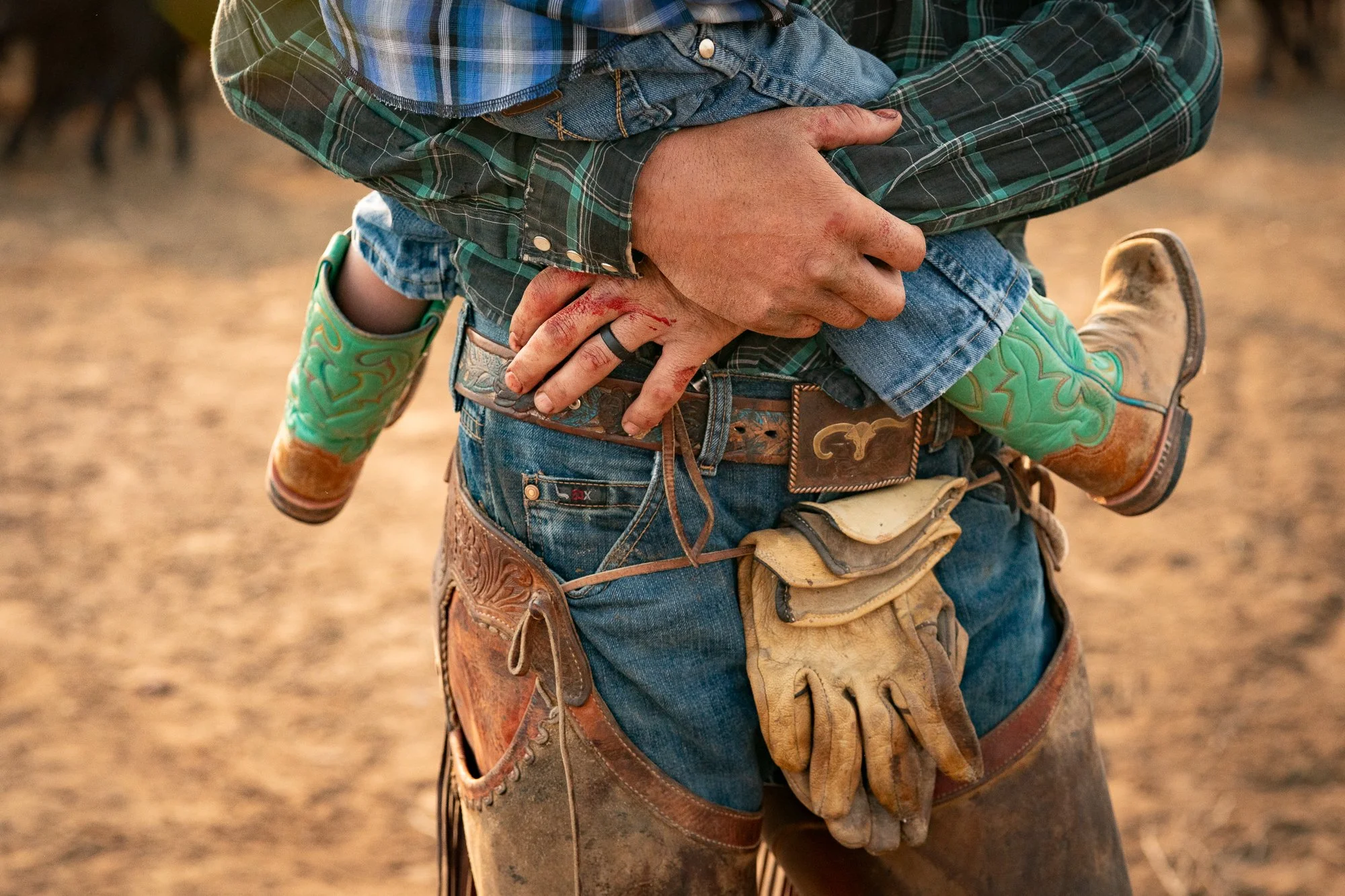
Cowboy holding small child wearing green boots with visible dirt and worn chaps detail

Close detail of a working cowboy holding a child, revealing the balance between hard labor and family life on the ranch.

Cowboy riding horse inside dusty indoor arena with dramatic overhead lights

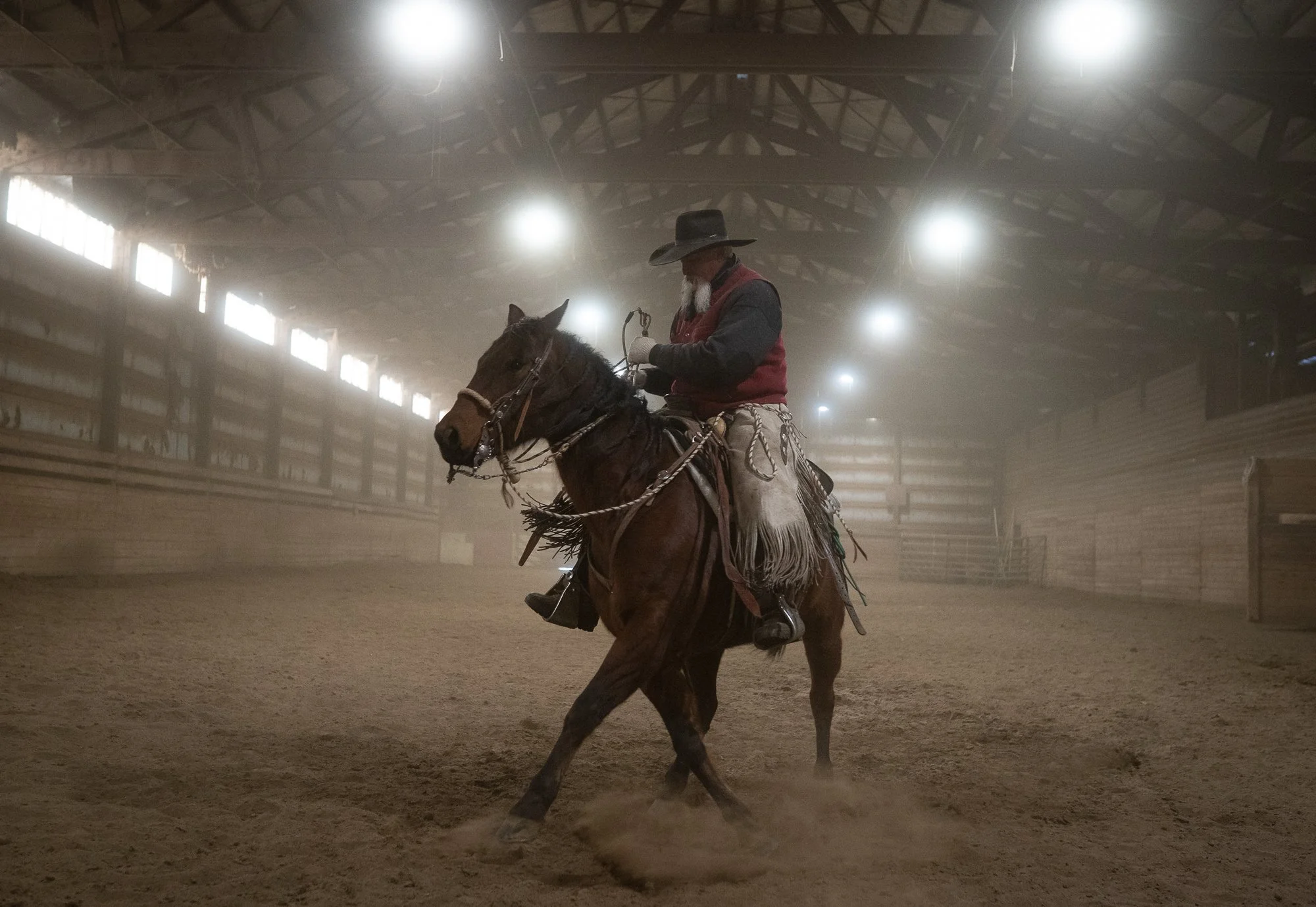
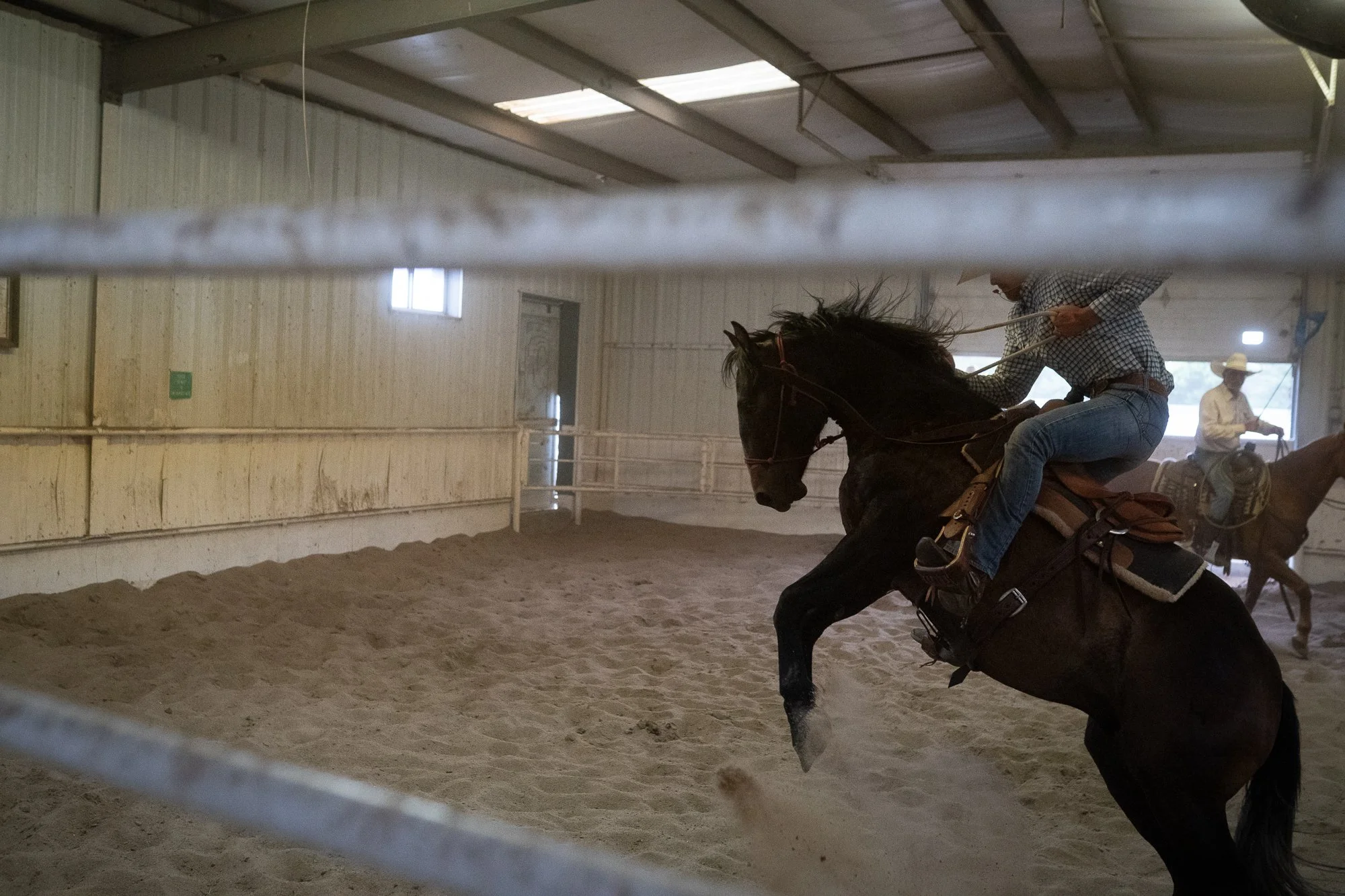
A cowboy works his horse inside a dim arena, dust hanging in the air under artificial light.

Cowboy restraining calf during branding with rope and chaps in dusty corral

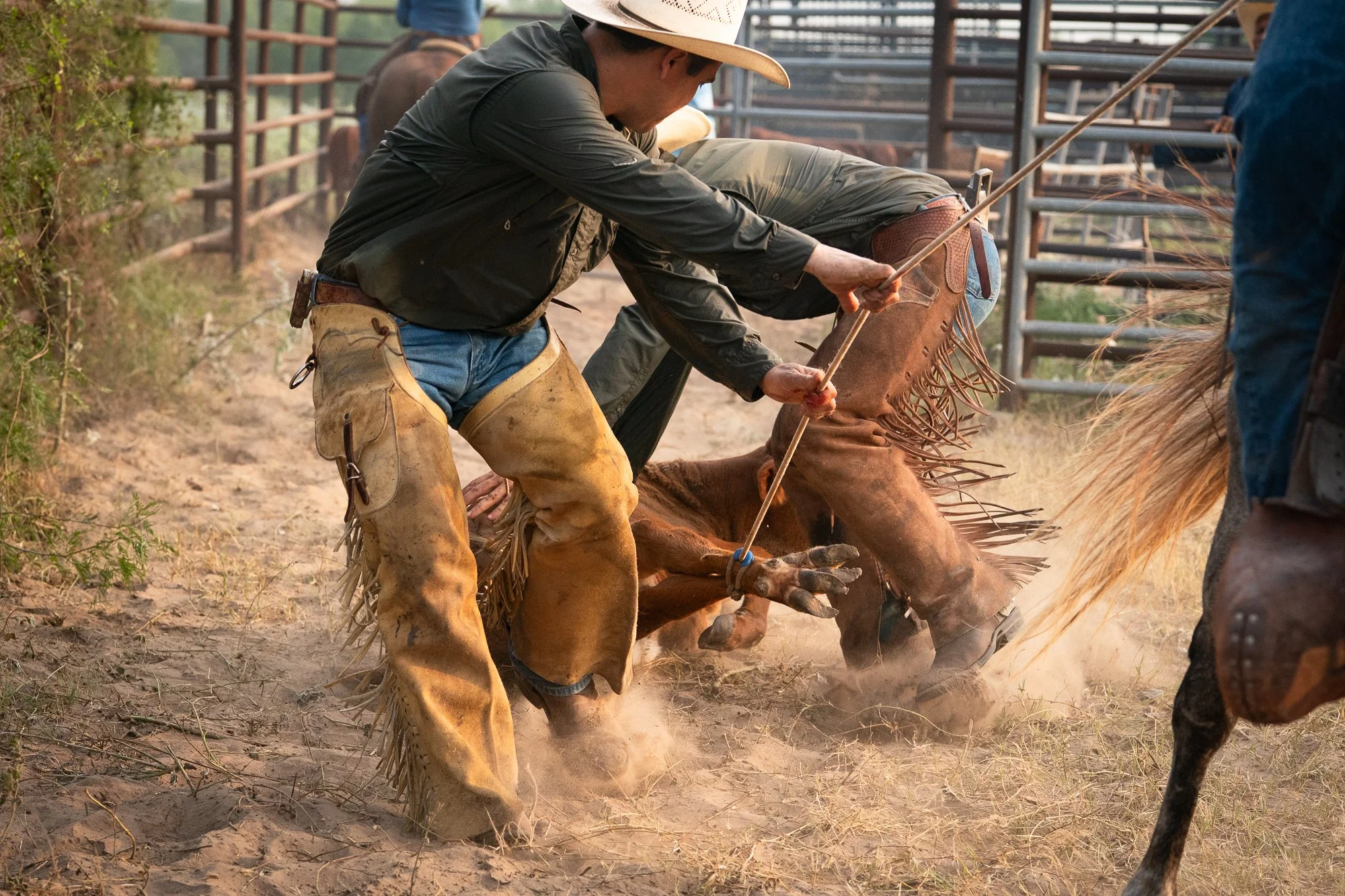
A calf is roped and held during branding, a necessary and demanding part of cattle ranching.

Cowboys on horseback working cattle with dog in open western landscape

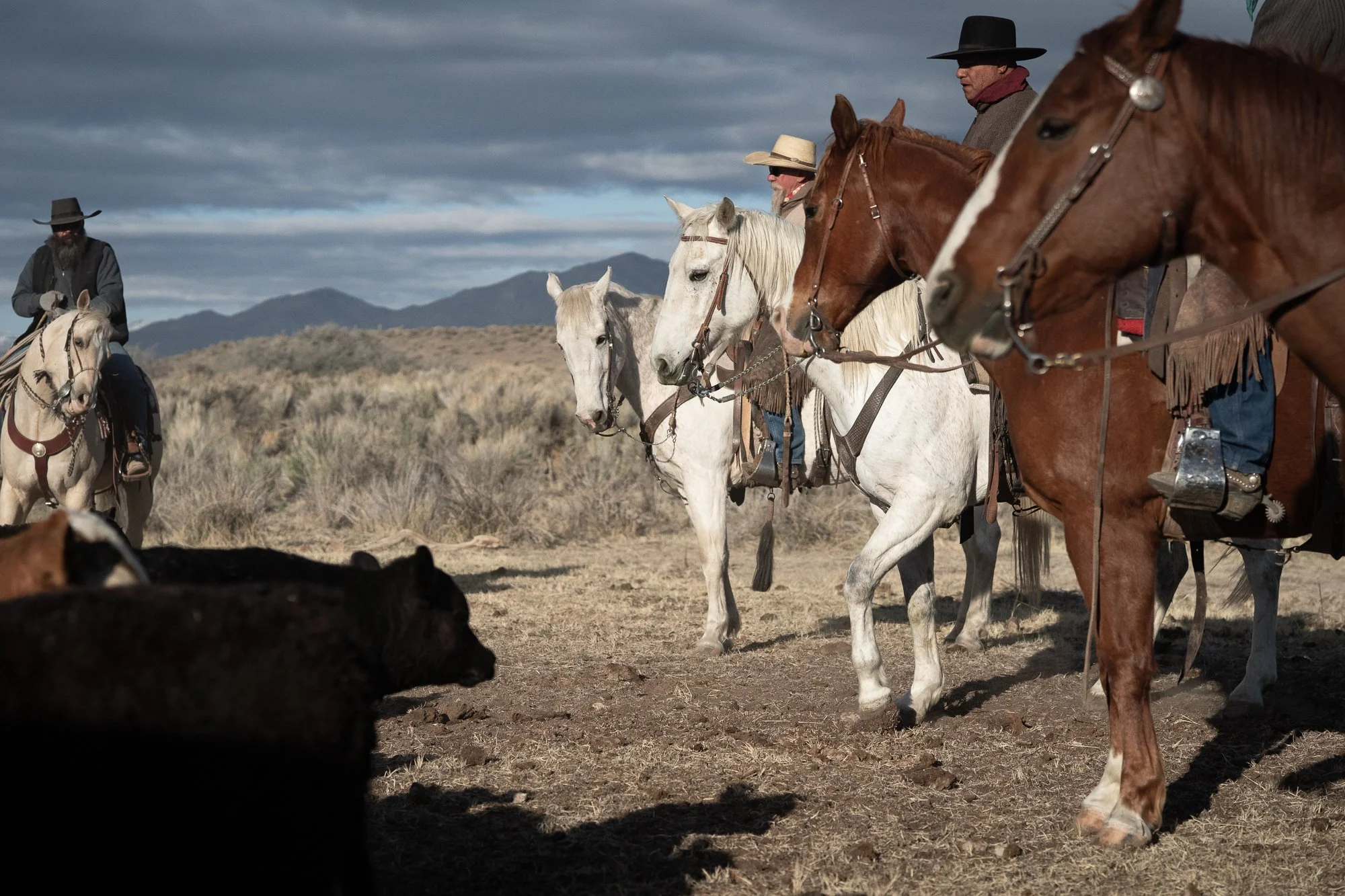
A small group of cowboys watches cattle movement across open country, working alongside a stock dog.

Cowboys on horseback roping cattle in grassy pasture under bright sky

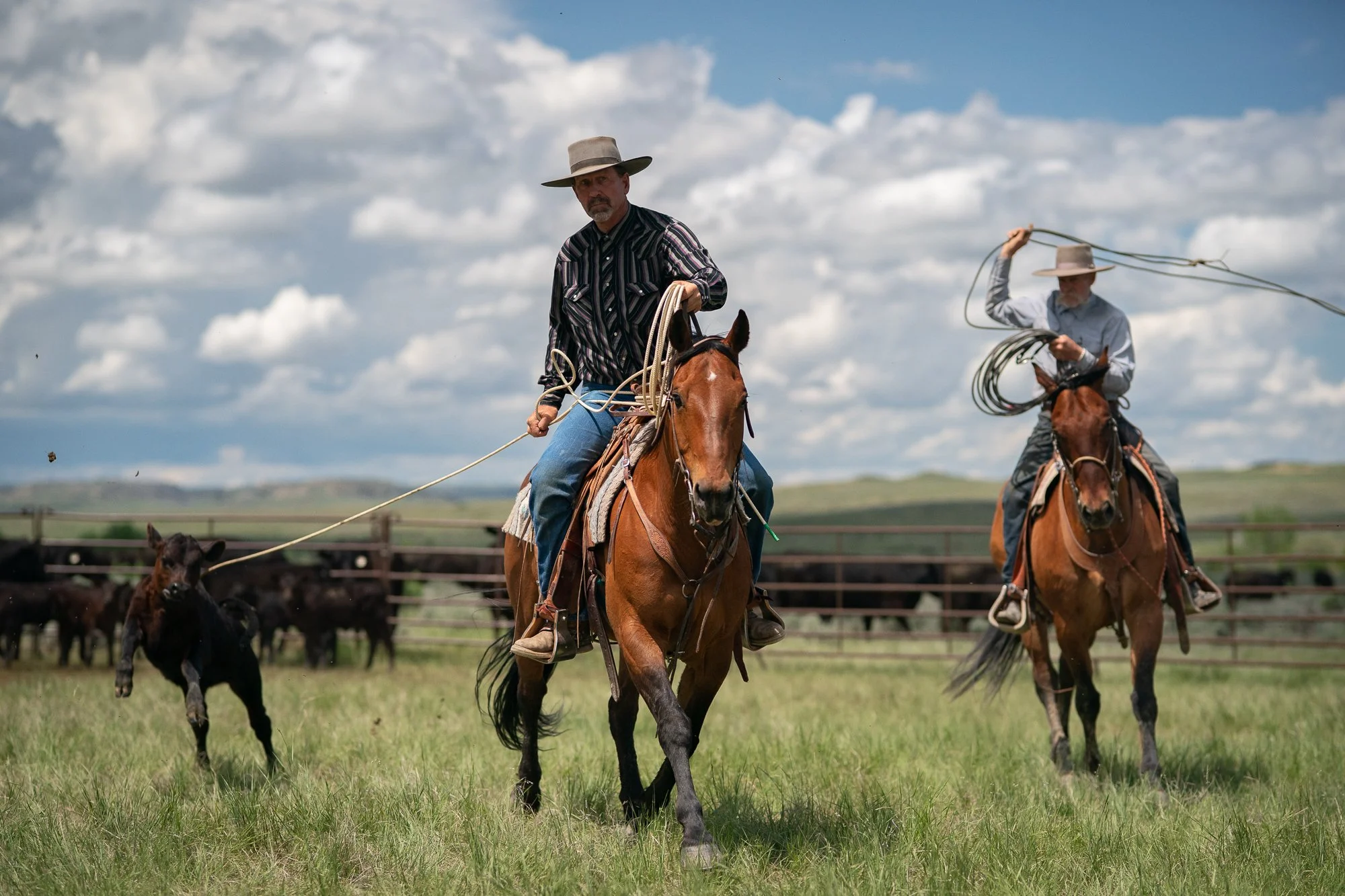
Cowboys rope cattle from horseback, a skill built through years of repetition and experience.

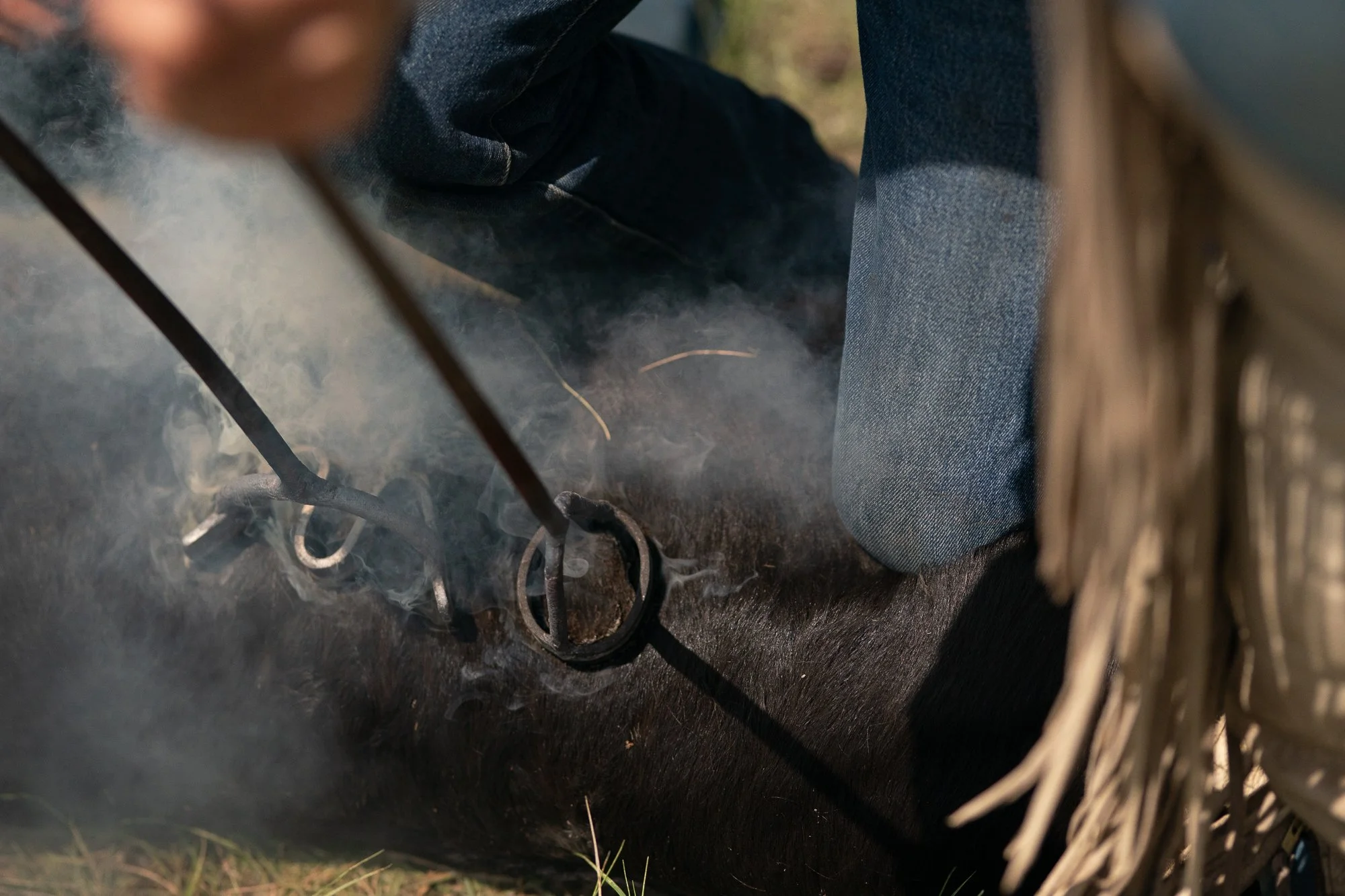
Close up of hot branding iron applied to cow with smoke rising from hide

A hot branding iron meets the hide as smoke rises, marking cattle for identification.

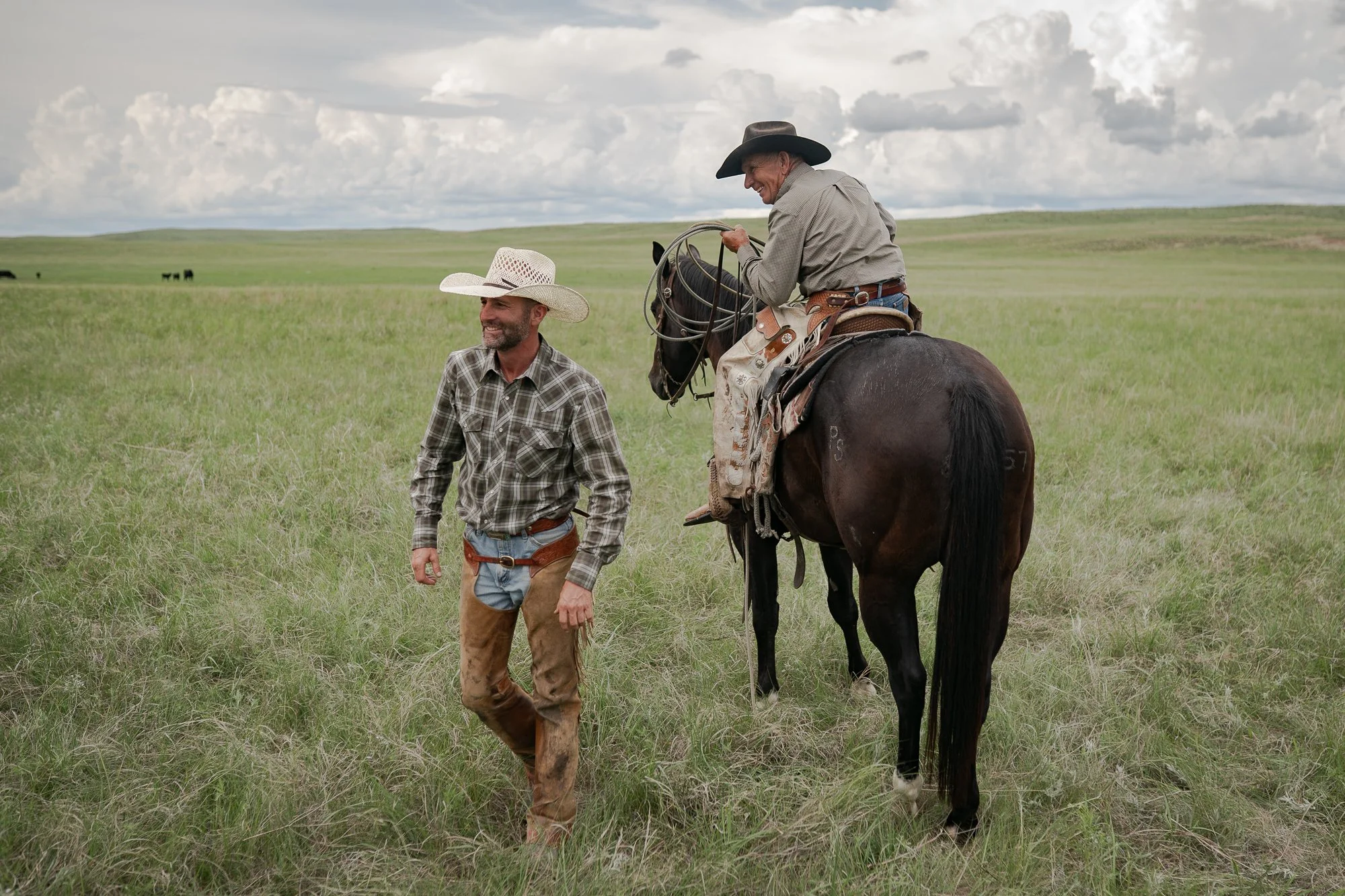
Cowboys walking and riding horses across grassy plains under cloudy sky

Cowboys move across open grassland, balancing time in the saddle with work on foot.

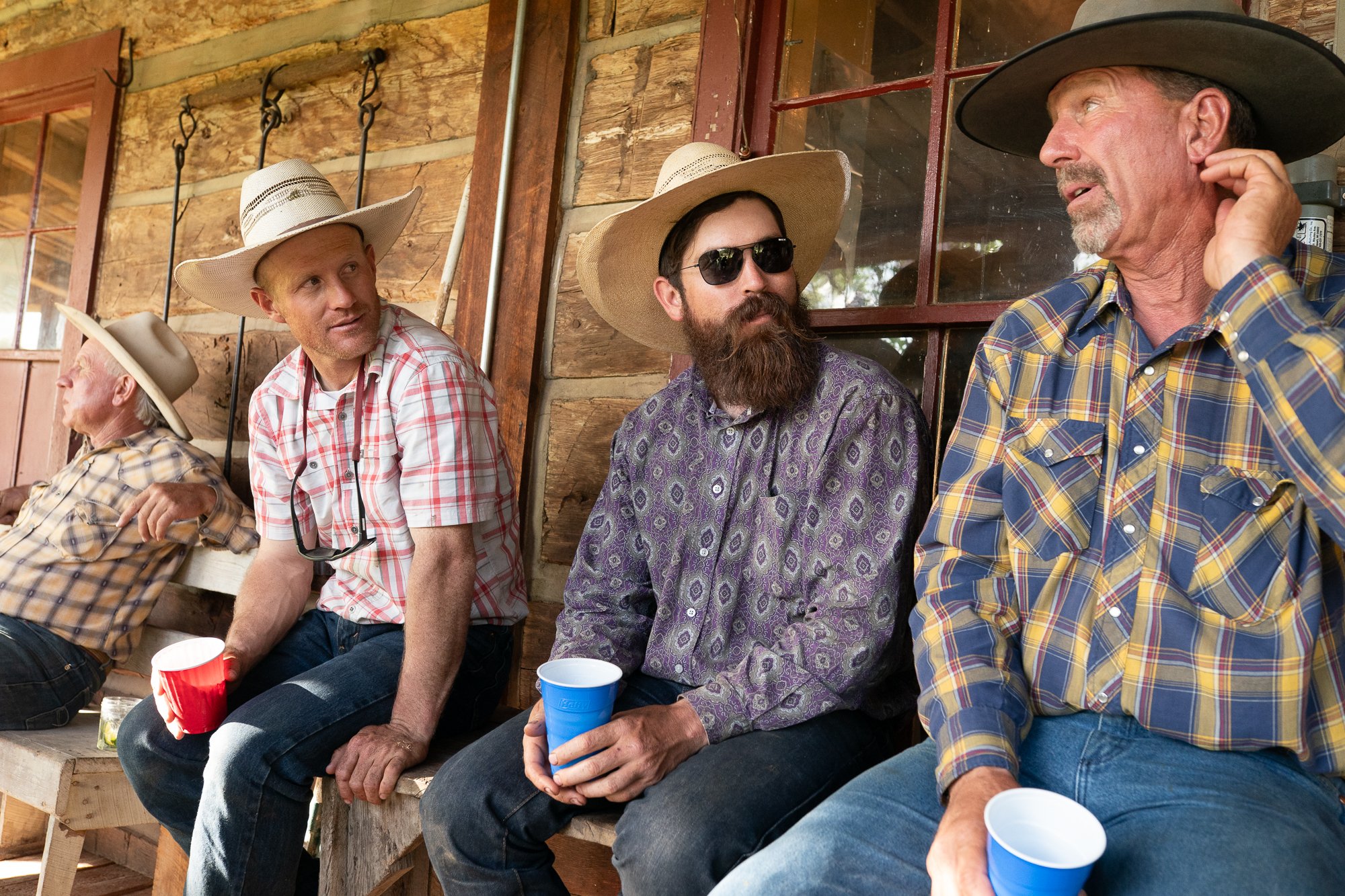
Group of cowboys sitting on rustic porch drinking and talking in casual setting

Cowboys sit on a porch after a long day, conversation and camaraderie as much a part of the job as the work itself.
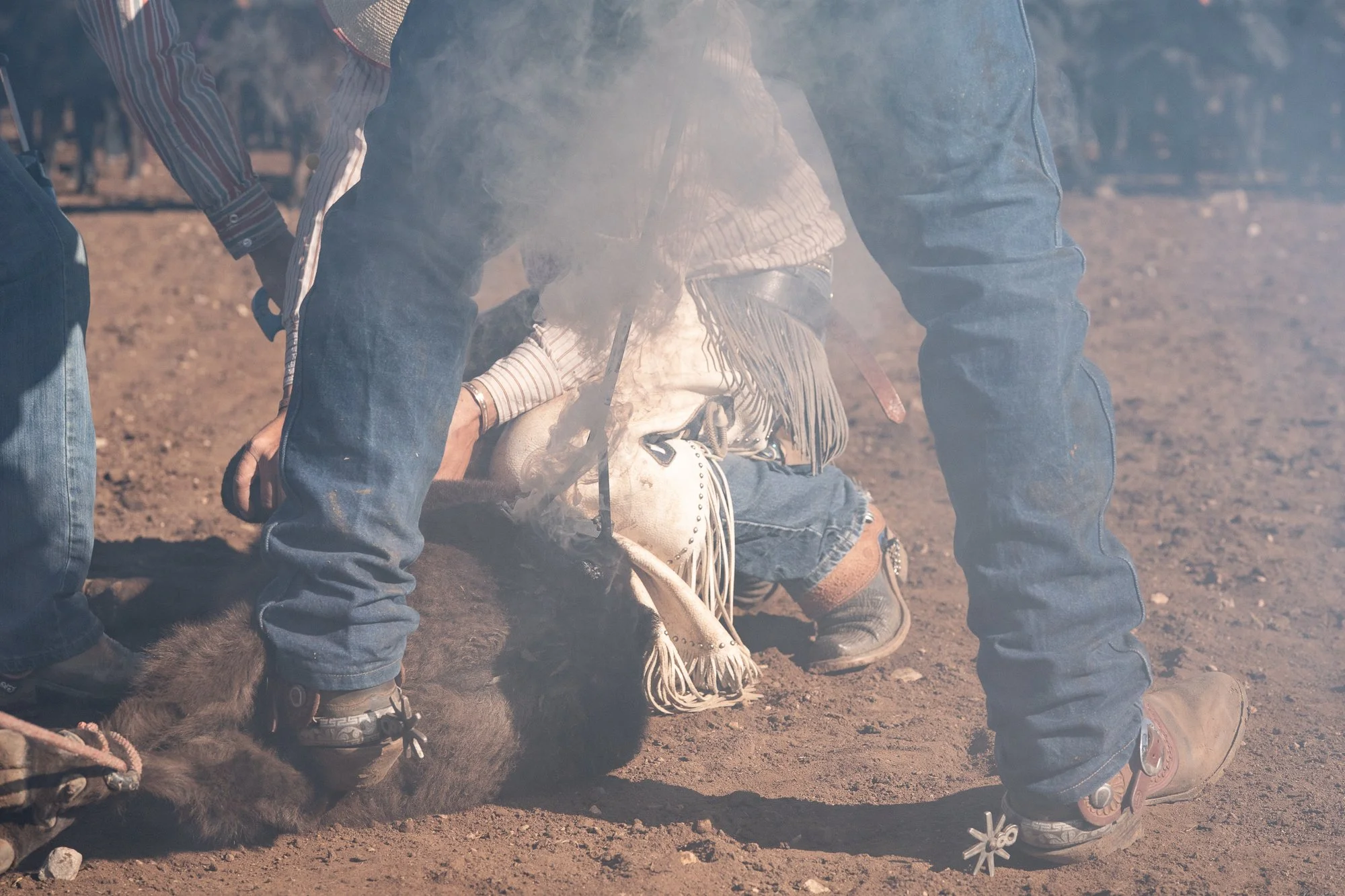
Cowboys restraining calf during branding with smoke and dust in close action view

A calf is held during branding as smoke and dust fill the frame, capturing the intensity of the work.
Cowboys on horseback moving cattle in dusty corral during warm golden light

Cattle move through the corral as cowboys work in warm evening light, dust hanging in the air.

Sunset over empty cattle pens with dramatic sky and mountain horizon

A wide western sky settles over the ranch at dusk, marking the end of a long day’s work.

Rock Springs, Wyoming: Photographs From an Overlooked American Town

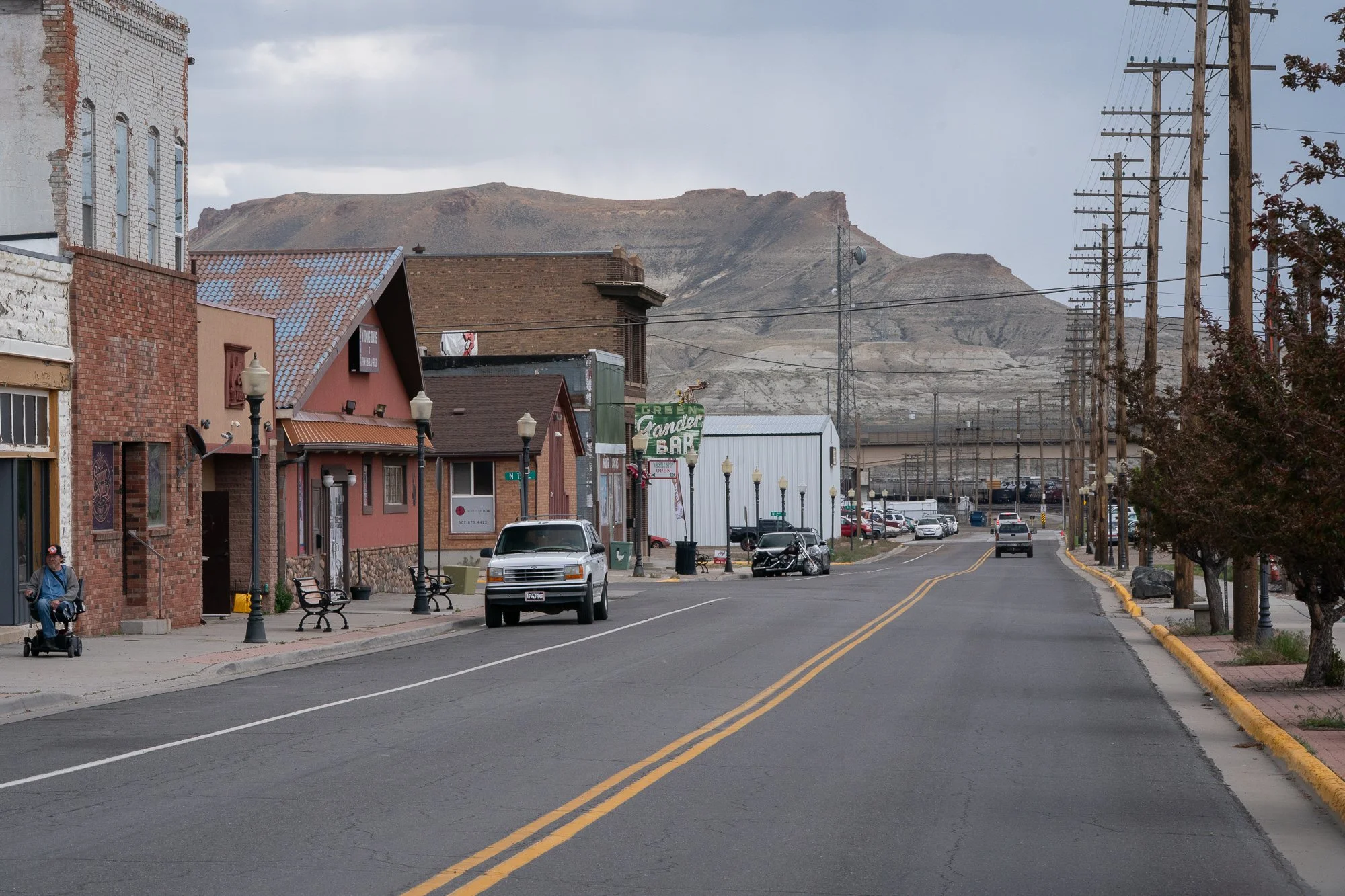
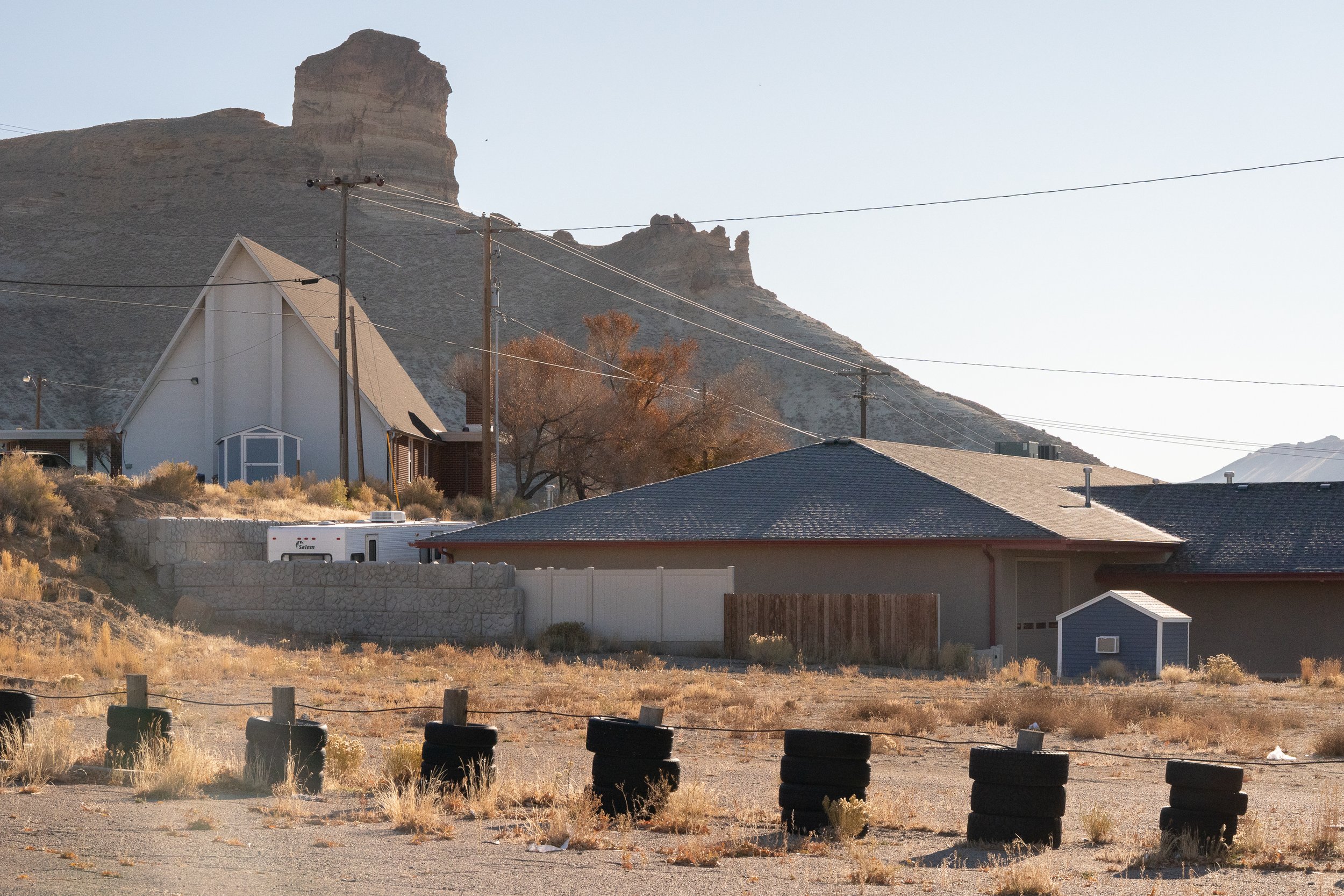
Photographing Rock Springs, Wyoming

Spending 35k miles a year on the road photographing America brings you to a lot of interesting places. Most are often a welcomed surprise, but this visit to Rock Springs was a forced hiatus. While driving through Wyoming on the way to a ranch further out west, my truck broke down in the middle of nowhere, an hour outside of Rock Springs. After having it towed into town, and a series of unfortunate events, I was stranded there for four days waiting for a new fuel pump to arrive.

Rock Springs sits in Sweetwater County along Interstate 80, a corridor that thousands of travelers cross every day on their way somewhere else. Many of them never leave the highway. But like a lot of towns shaped by mining, railroads, and the boom-and-bust cycles of the West, Rock Springs carries a deeper history beneath its surface.

Rock Springs, Wyoming: A Town With a Complicated Past

Rock Springs has a deeper history than many travelers realize. In 1885 the town became the site of one of the most violent anti-Chinese riots in American history when tensions between white coal miners and Chinese workers erupted into violence. Dozens of Chinese miners were killed and much of the Chinese community in town was burned to the ground. Today the streets of Rock Springs appear quiet and ordinary, but like many Western towns the landscape holds layers of history that aren’t always visible at first glance.

People of Rock Springs

Each day in Rock Springs blended into the next as the arrival of the truck part kept getting delayed, souring my mood by the hour. With little else to do, the only productive option was to keep walking around with the camera. Naturally, that led to some interesting encounters with the locals.

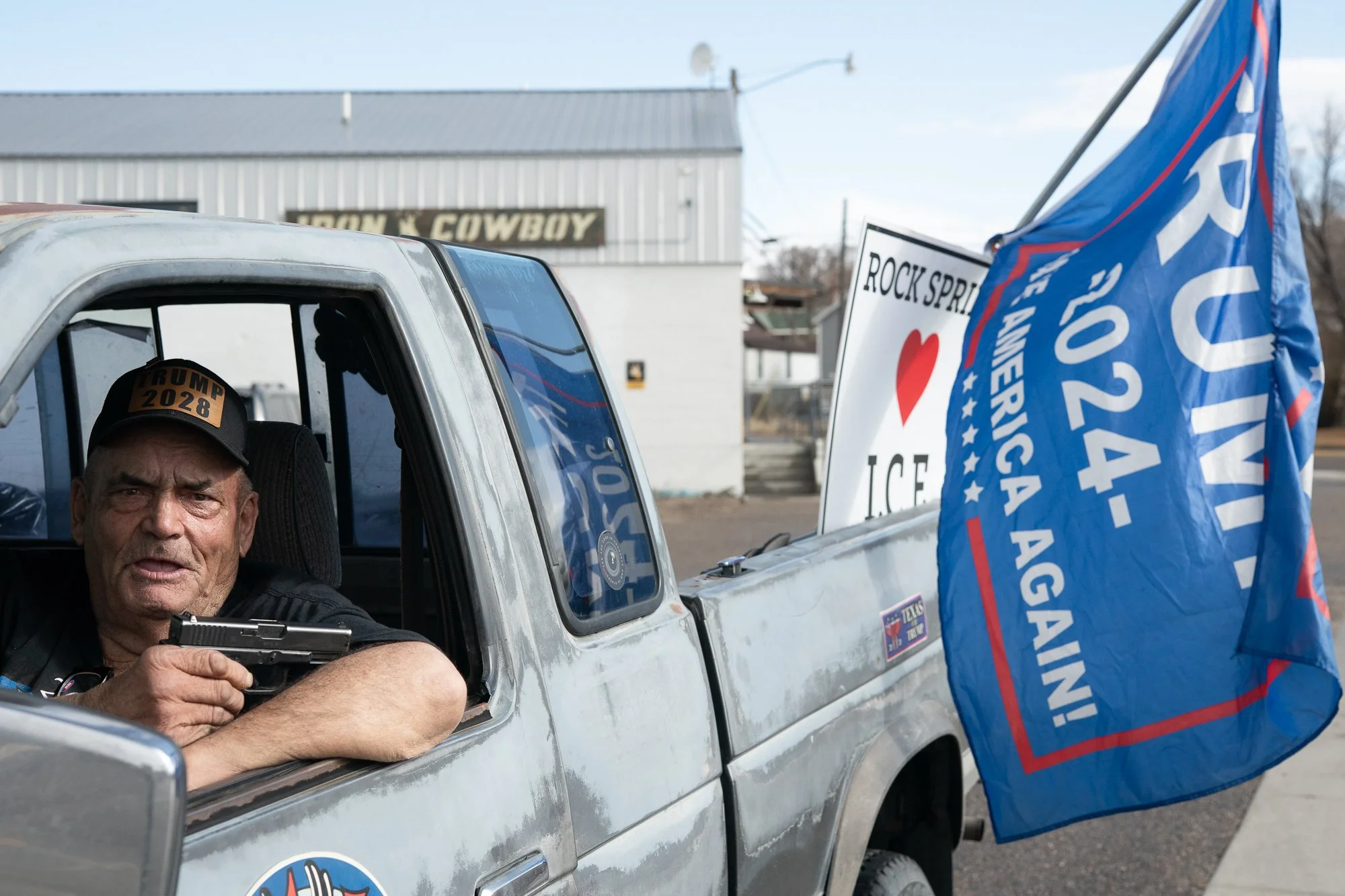
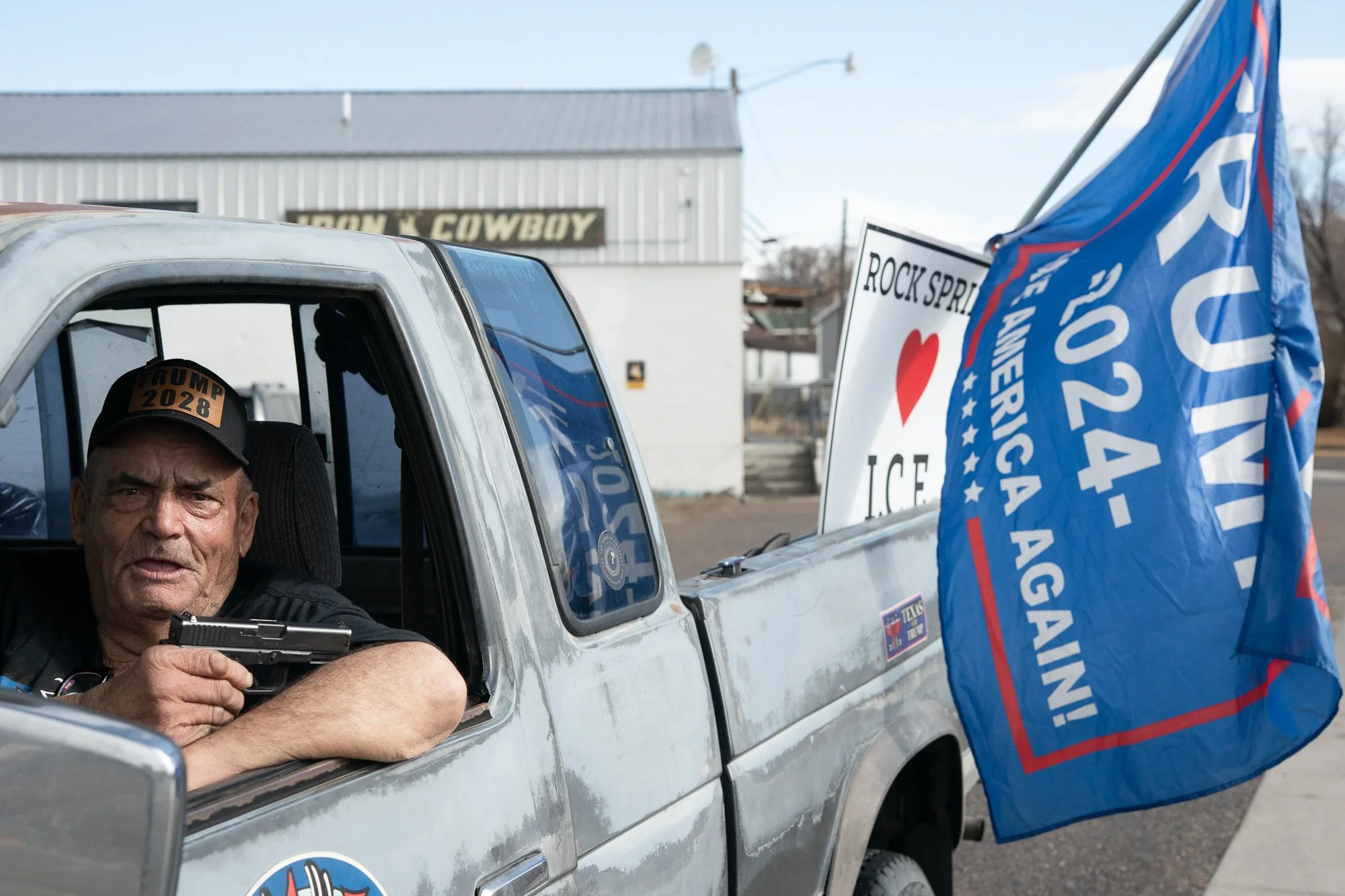
The first portrait below is of a lone protester I approached and asked to make his photograph. “I sure wish you would,” he replied immediately, then pulled out a gun that had been sitting on the passenger seat beside him and held it up for the picture. After a few minutes of conversation he asked what I was doing in town, so I explained the situation with my truck. Without missing a beat he asked if I was doing alright—if I had money for food and gas to get back home. It was a very genuine response, and one I hadn’t expected.

A few hours later I was still wandering around shooting when it started to rain. I ducked under the entrance of a karate dojo to wait out the storm. Not soon after, the owner arrived and asked, “Do you want to come inside and warm up?” What the hell—why not.

Once inside he launched into an impromptu oral history of Rock Springs during its oil boom years. “These streets right here were filled with nothing but drunks, whores, and pimps,” he told me. Then went on to describe finding a dead man outside his building one morning and how the girls working the streets would sometimes come inside to warm themselves on his couch during the winter months.

Today the town is quiet and well past it’s prime, like many American boomtowns after the rush has passed. Most residents now work in the nearby trona mines, but you can still feel what is was like during the days of rough bars, gambling halls, and brothels. The locals sure haven’t forgotten that history.

A Town Along The American Railroad

I never planned to spend four days in Rock Springs, but sometimes the road decides where you stop. In the end I left with a set of photographs that feel true to the town and to a larger project I’ve been working on for years — documenting the overlooked places that quietly shape the American landscape.

Explore more photographs from the America project

View more photographs from an another overlooked American mining town - Helper, Utah

Railroad tracks leading toward downtown Rock Springs Wyoming seen through chain link fence

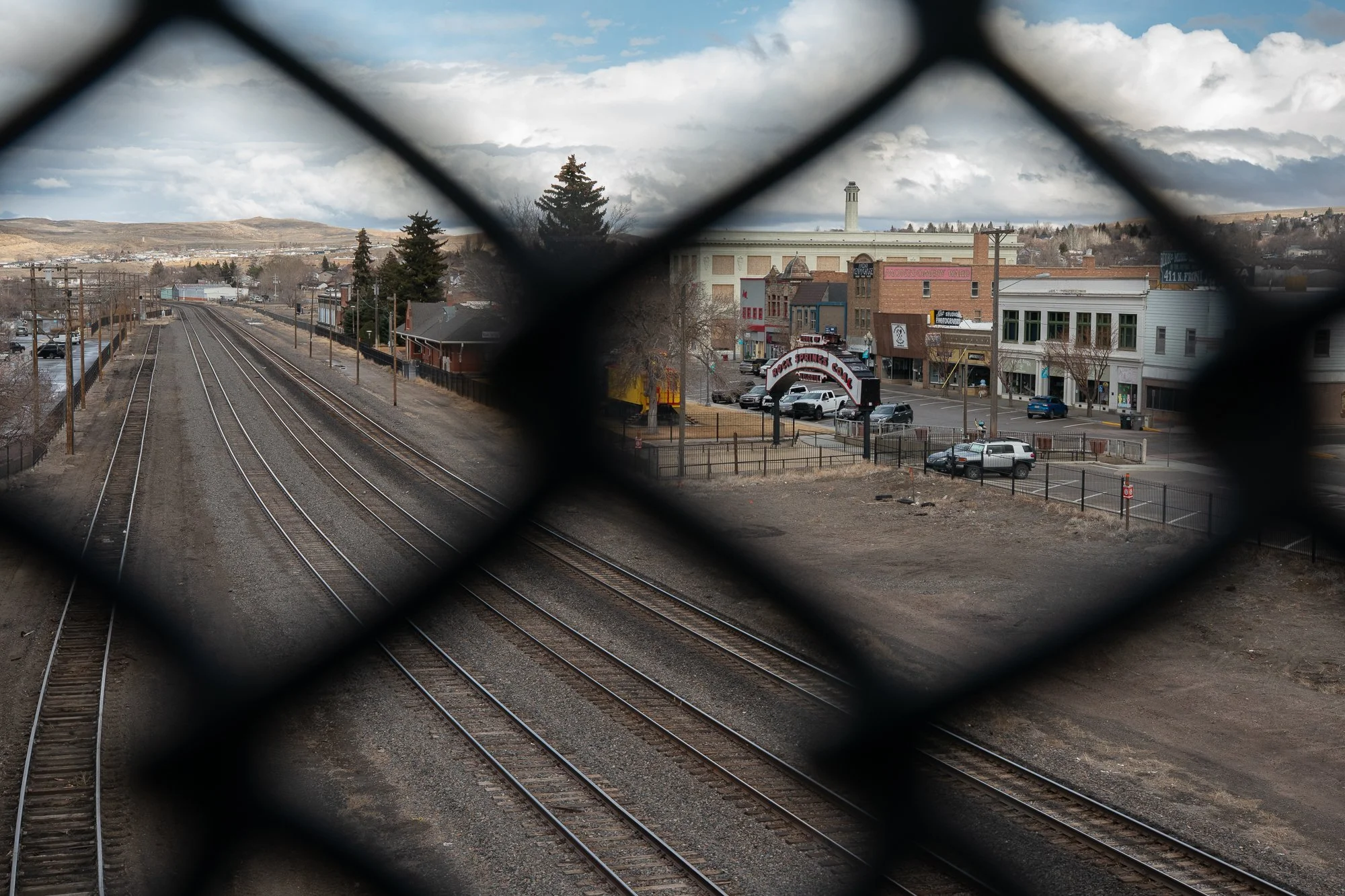
Railroad tracks stretch toward downtown Rock Springs from an overpass above the line.

Small house and backyard behind a chain link fence in a residential neighborhood in Rock Springs

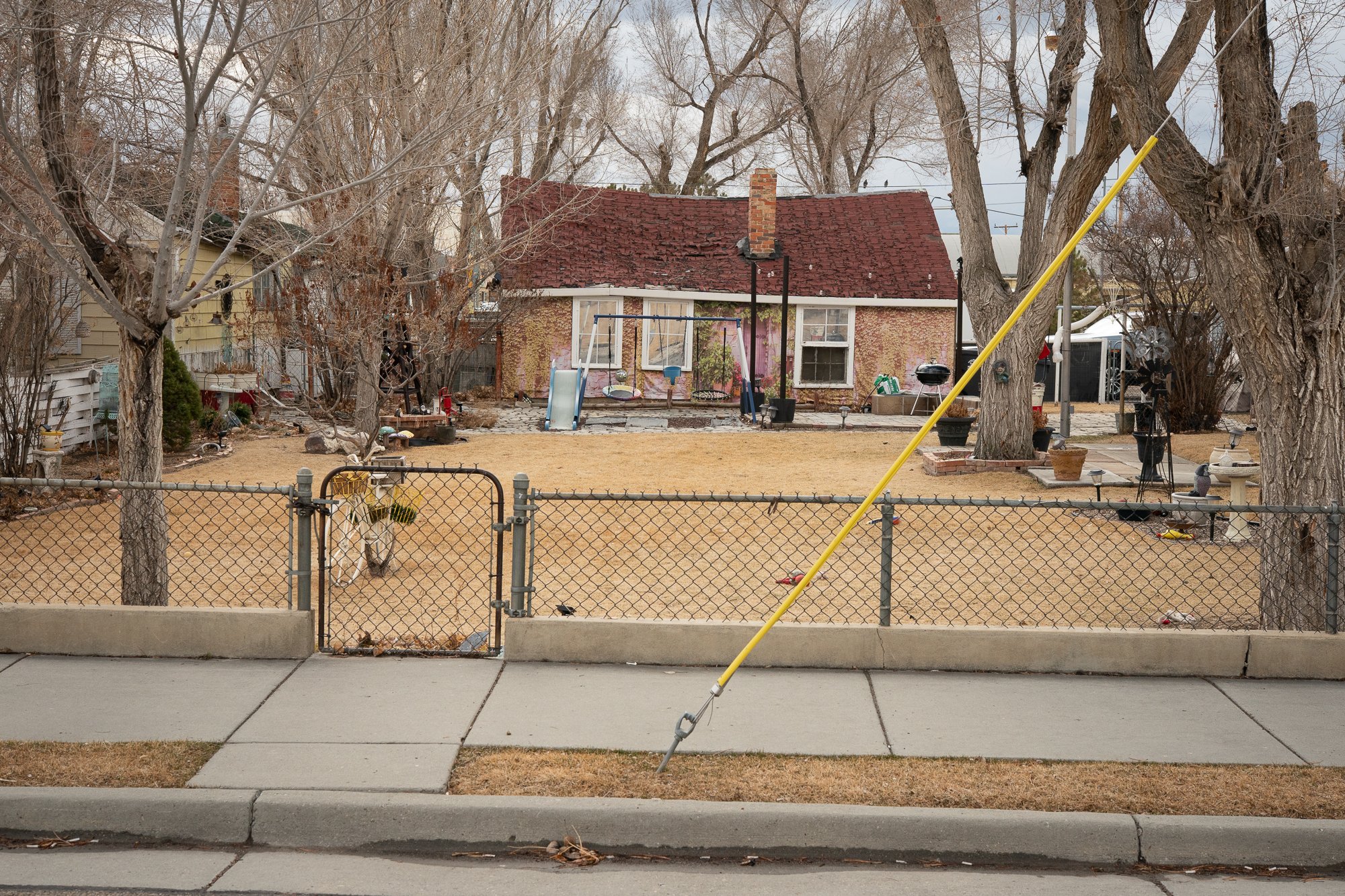
A small house and backyard sit quietly behind a chain-link fence in a Rock Springs neighborhood.

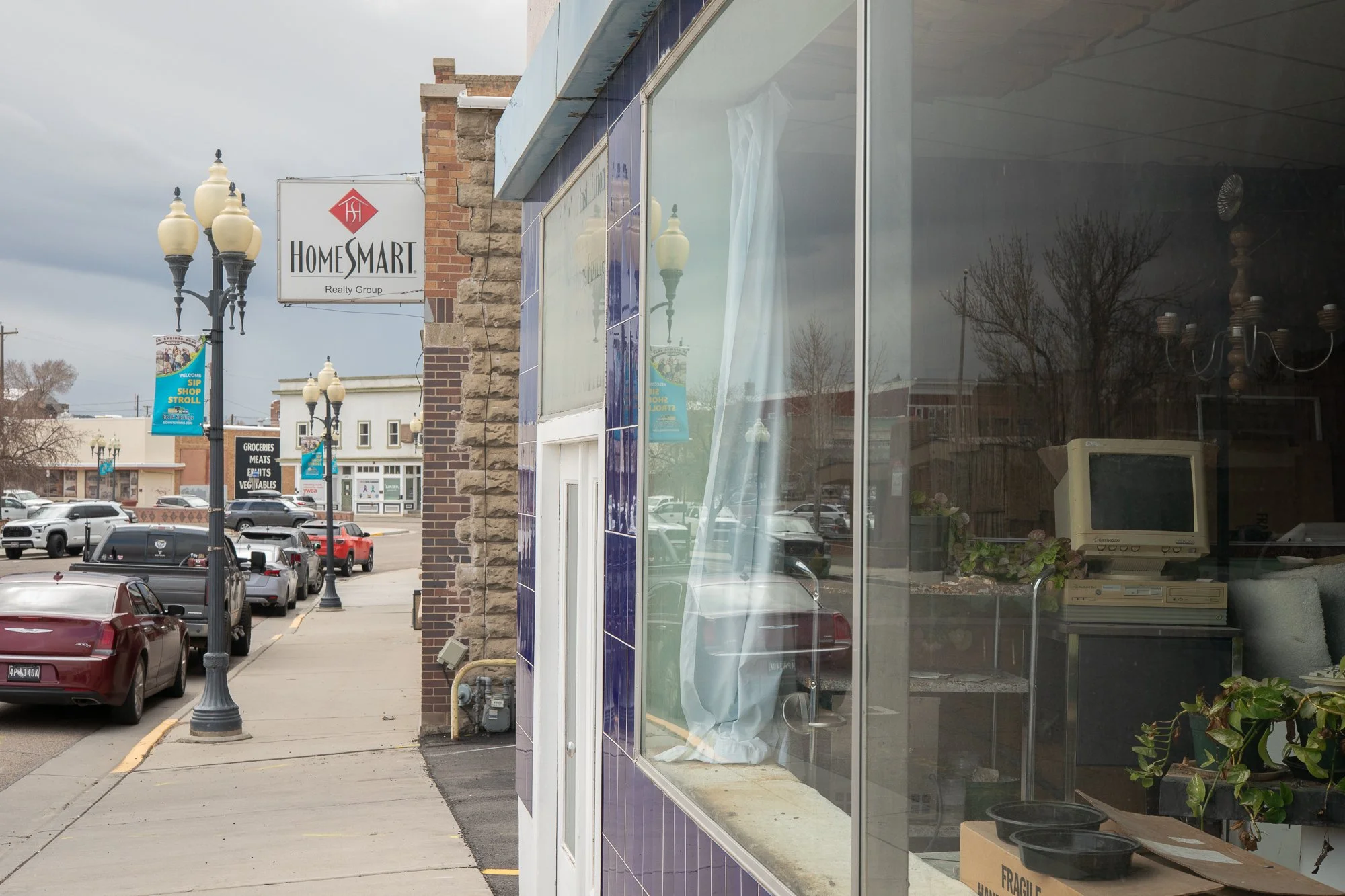
Old computer monitor displayed inside a storefront window in Rock Springs Wyoming  On-Page Caption

An aging computer sits in a storefront window along a downtown street in Rock Springs.

Man sitting in pickup truck with political flags along roadside in Rock Springs Wyoming

A protester with a gun and political flags attached to his truck.

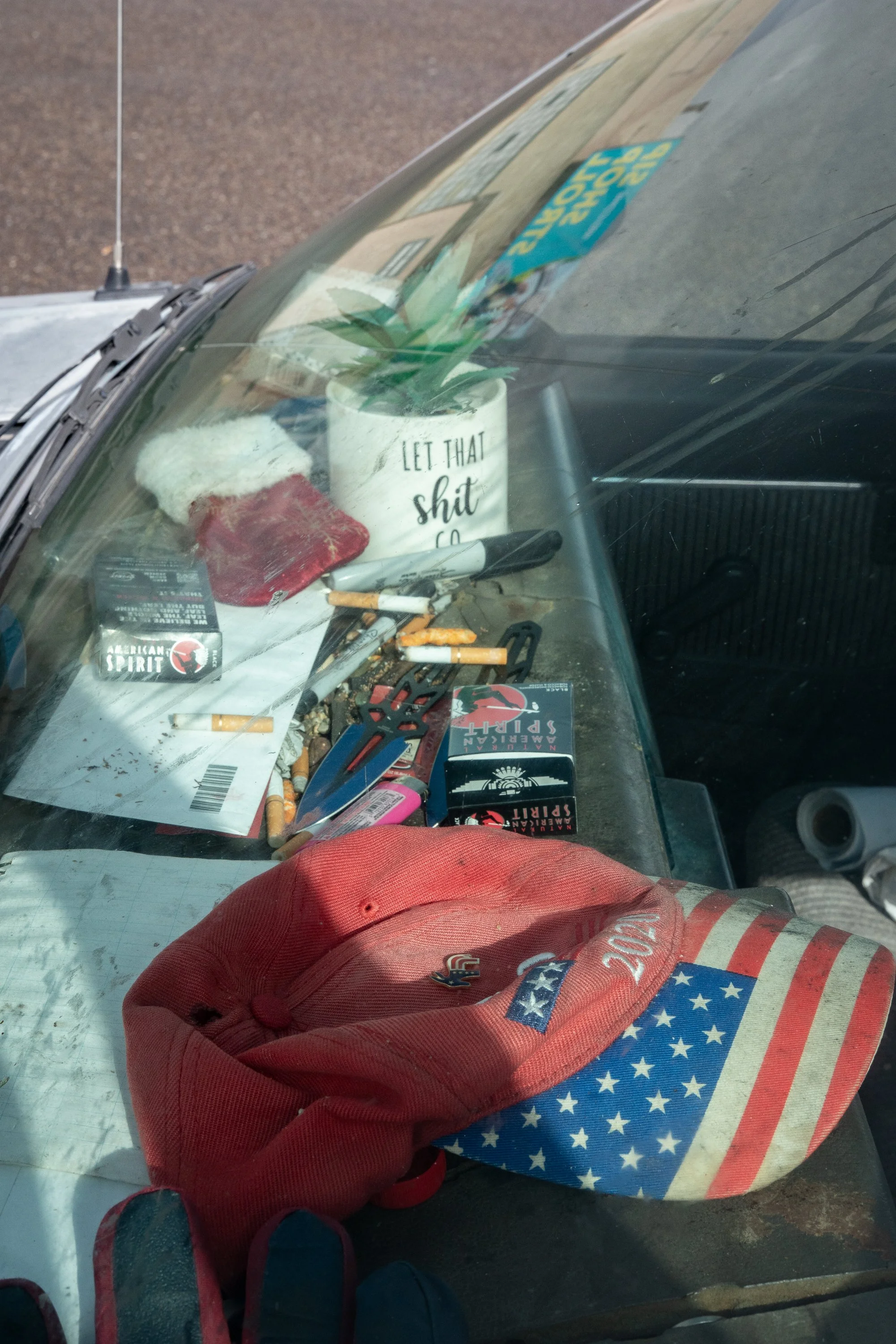
Dashboard of pickup truck cluttered with cigarettes hat and small objects in Rock Springs Wyoming

Personal items gather across the dashboard of a pickup truck parked in Rock Springs.

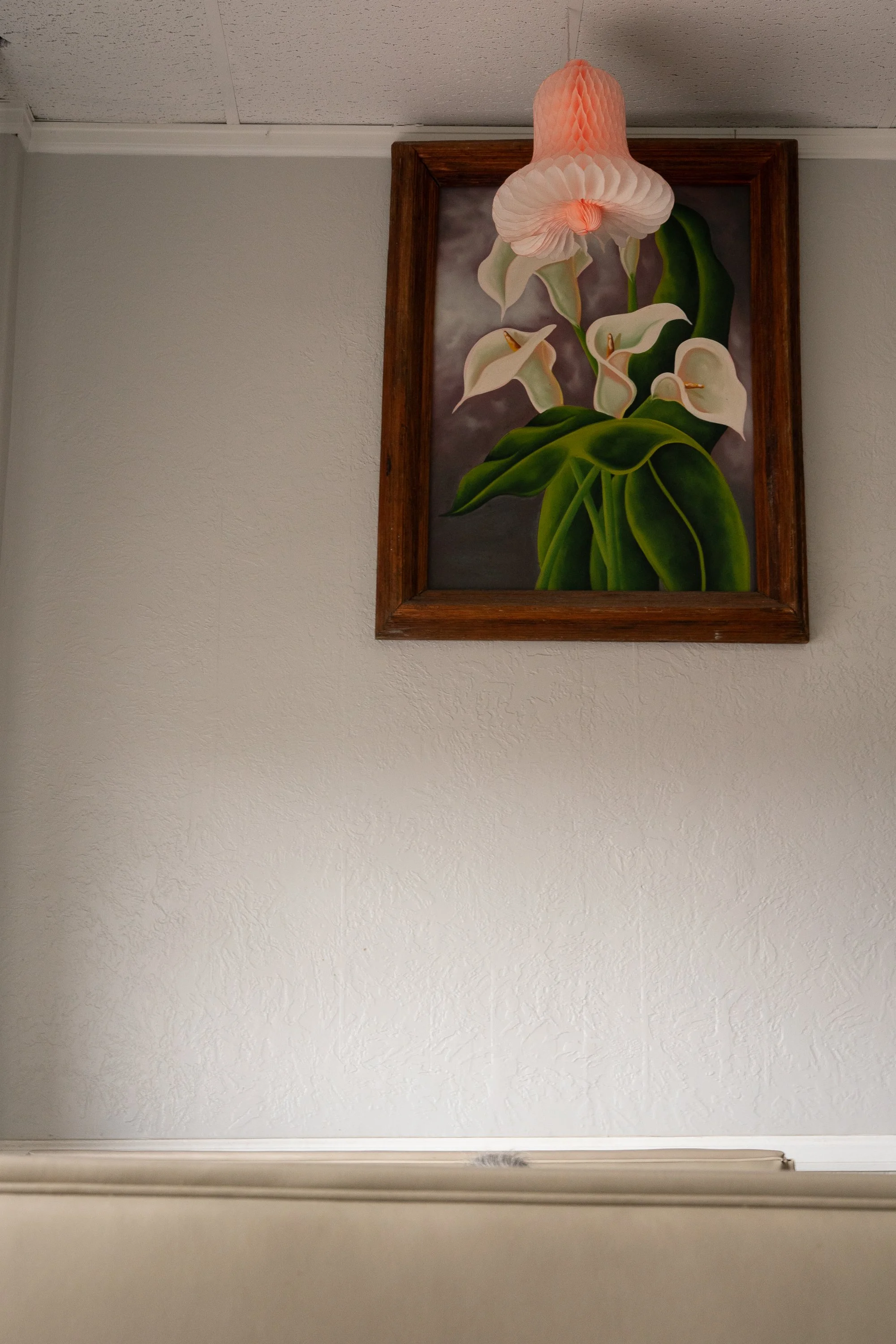
Framed calla lily painting hanging on a wall inside a room in Rock Springs Wyoming

A framed painting of calla lilies hangs awkwardly on the wall of a Mexican restaurant in Rock Springs.

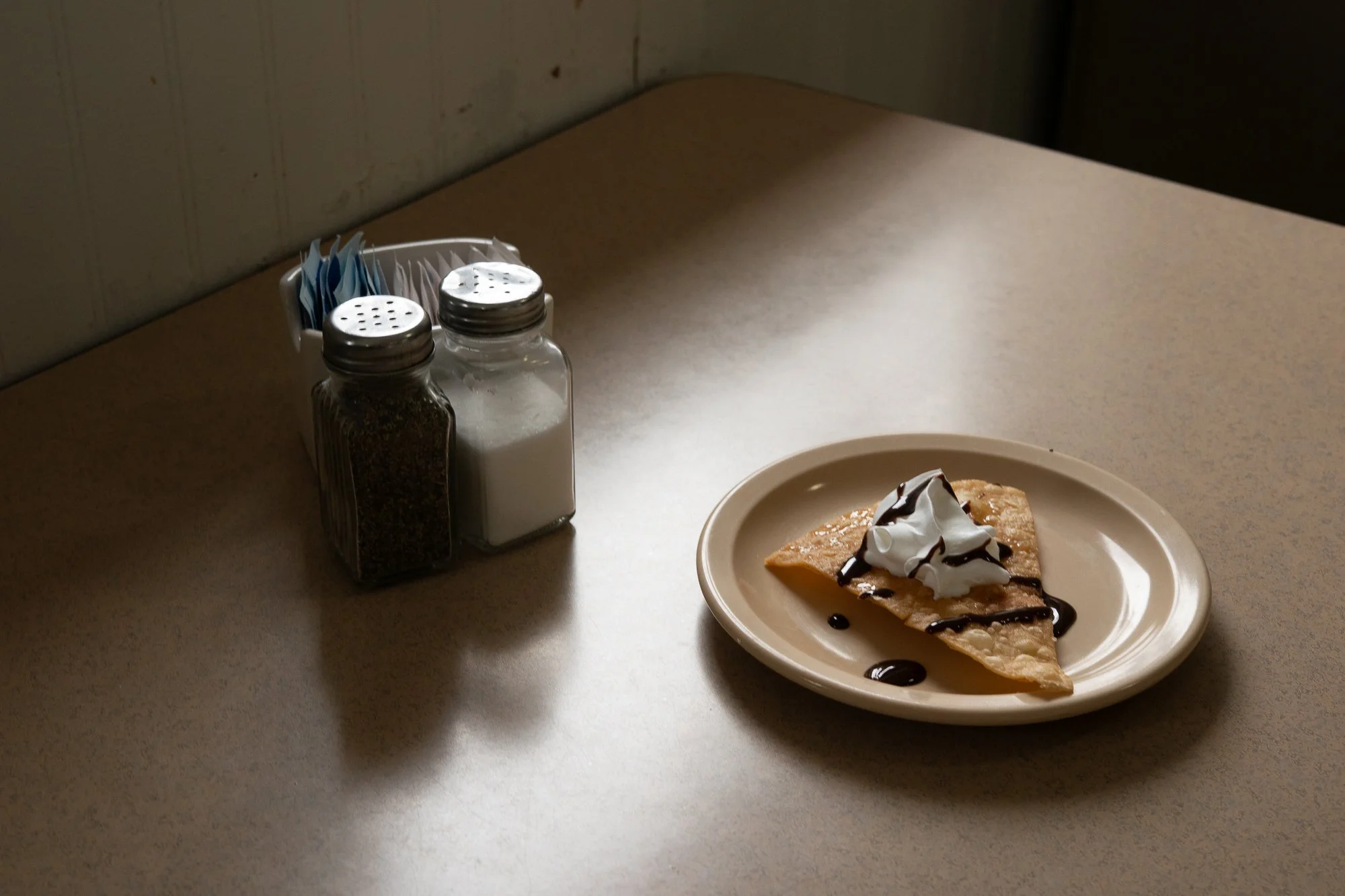
Slice of fried dessert with whipped cream and chocolate syrup on a diner table in Rock Springs Wyoming

A small dessert arrives on a diner table in Rock Springs.

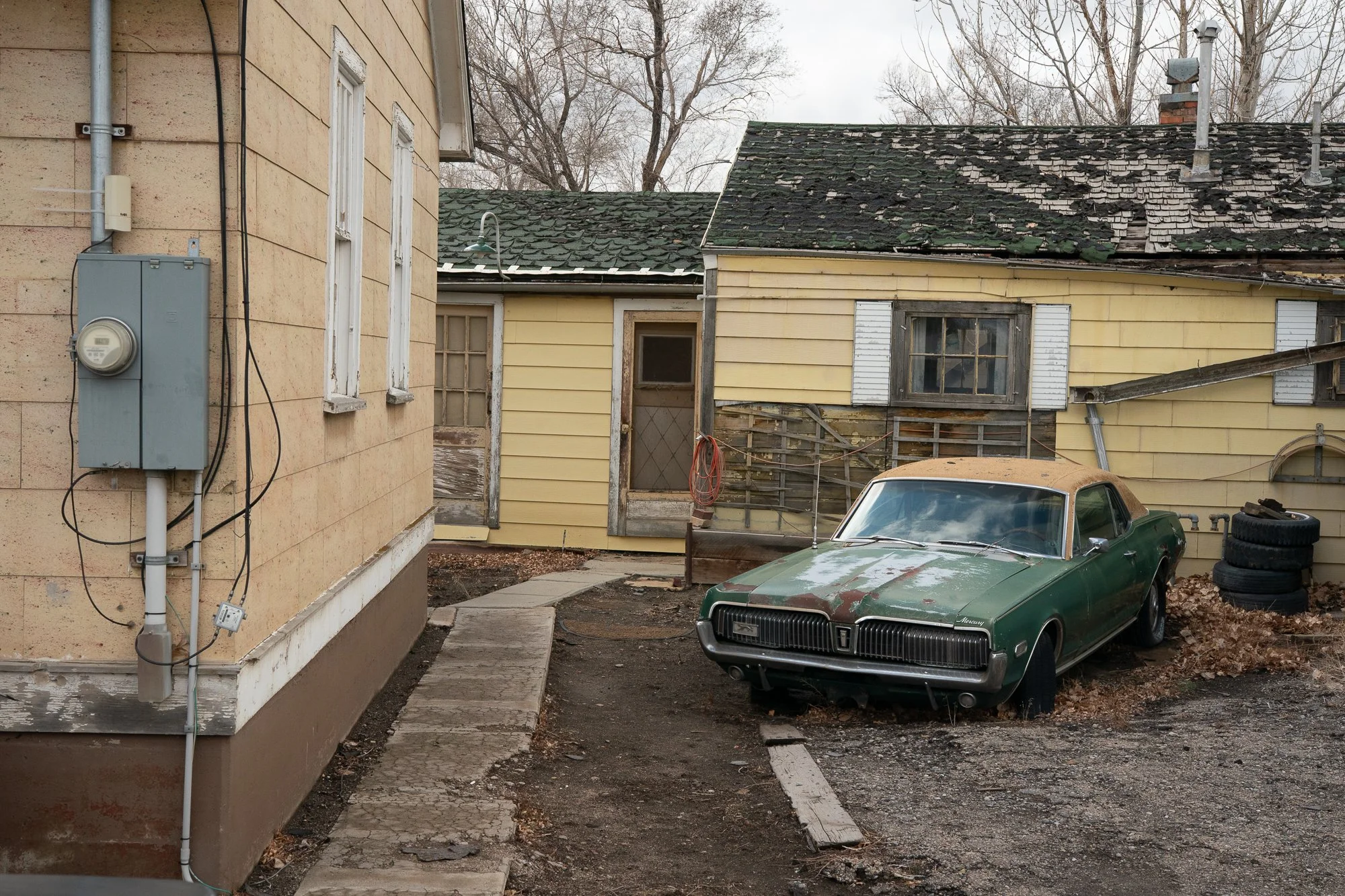
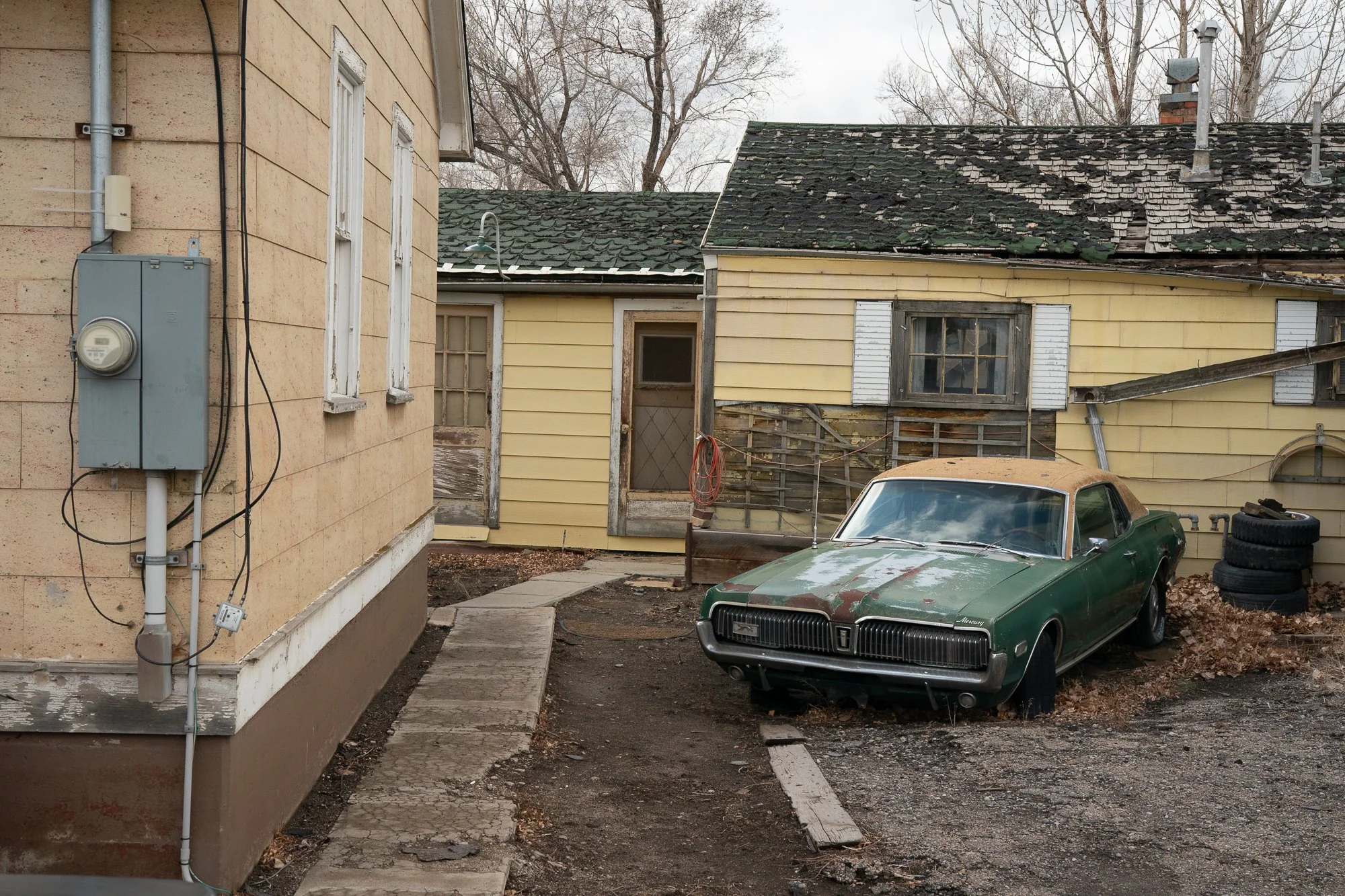
Vintage Mercury Cougar parked beside an aging house in Rock Springs Wyoming

An old Mercury Cougar rests beside a weathered house in Rock Springs, a scene that feels suspended somewhere between the past and present.

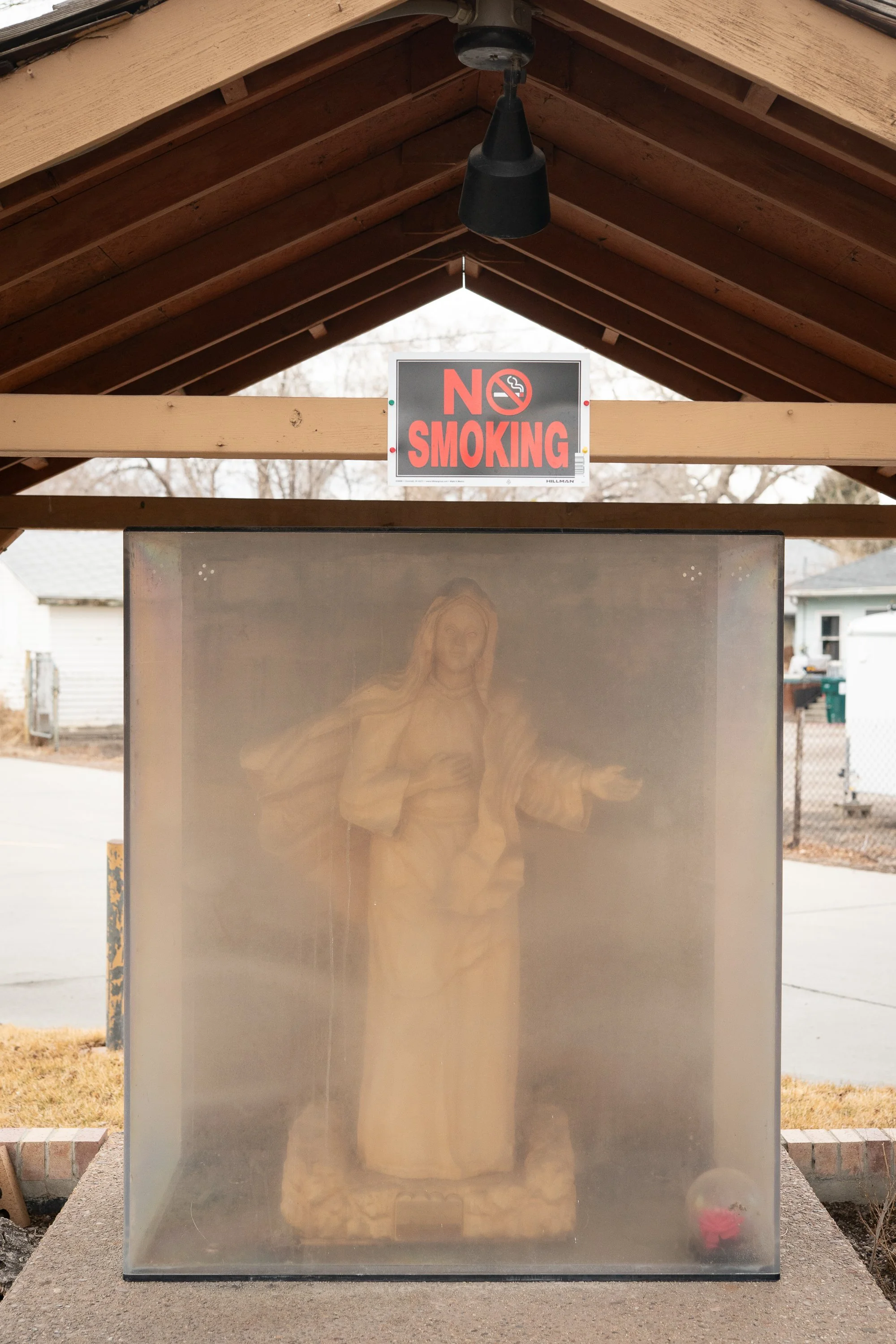
Statue of Jesus inside a glass case beneath a No Smoking sign in Rock Springs Wyoming

A roadside shrine in Rock Springs pairs a statue of Jesus with an unexpected “No Smoking” sign above it.

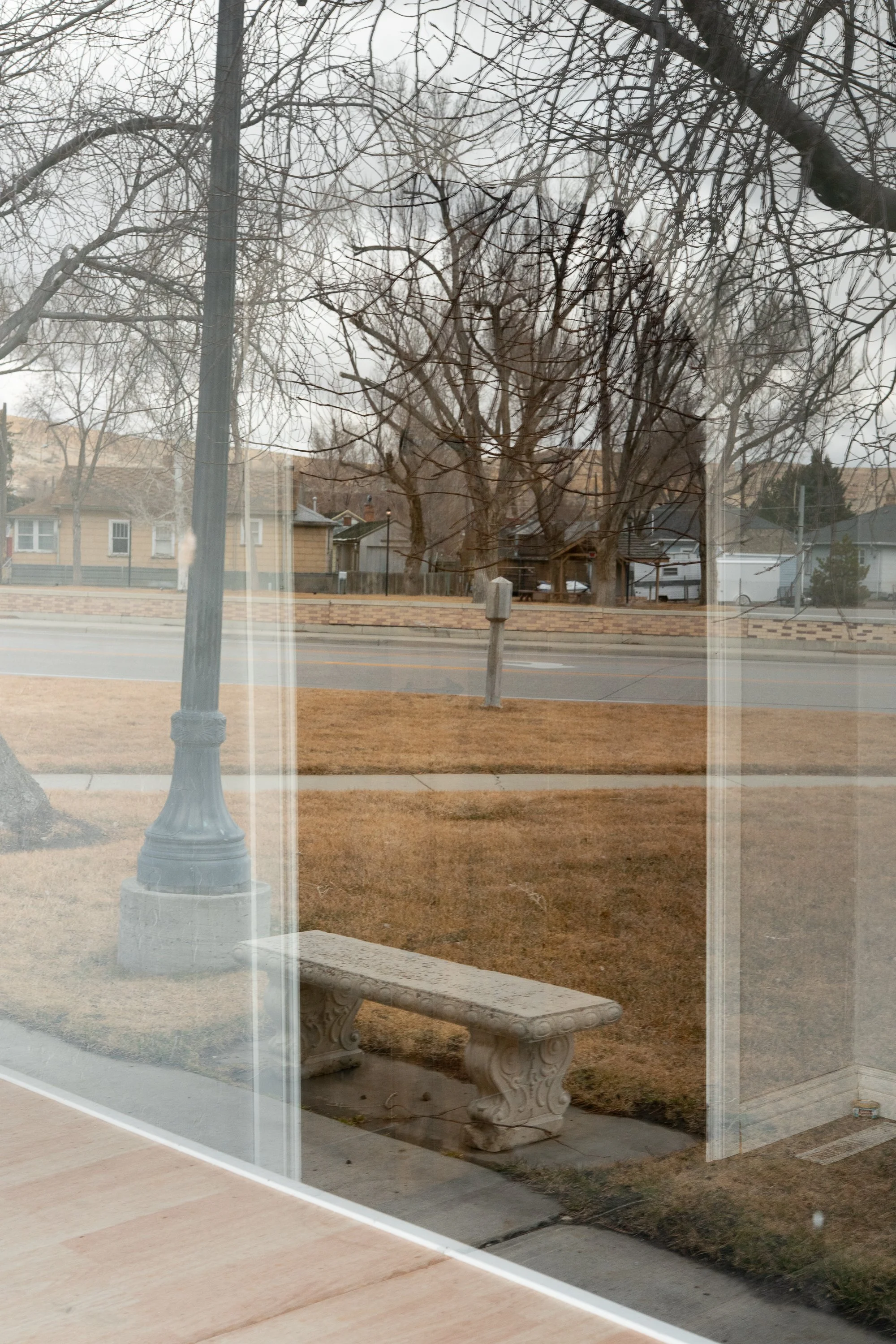
Reflection of trees and a bench in a storefront window in Rock Springs Wyoming

Reflections of winter trees and a park bench appear in a storefront window along a quiet Rock Springs street.

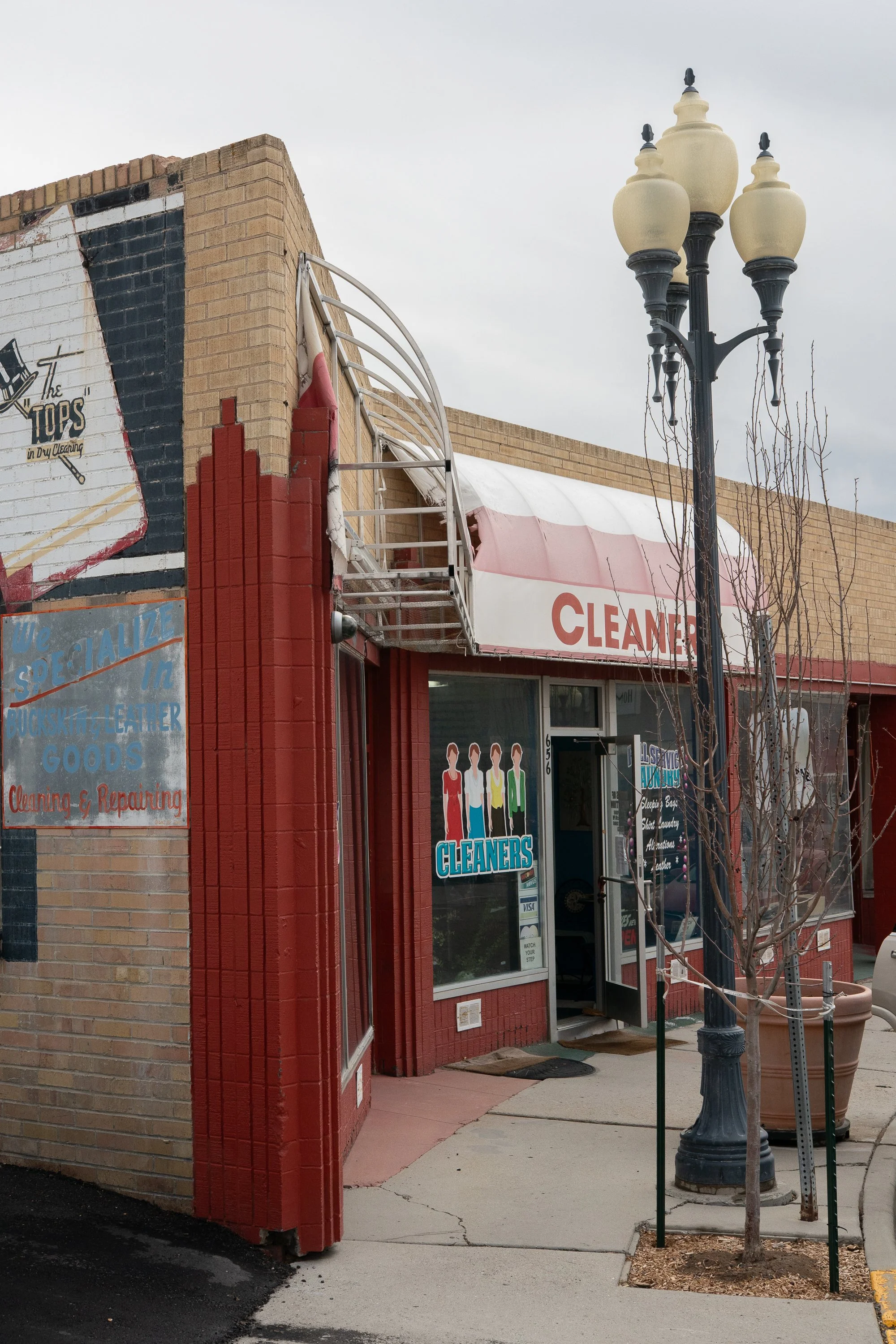
Neighborhood cleaners storefront on a street corner in downtown Rock Springs Wyoming

A neighborhood cleaners sits on a quiet corner in downtown Rock Springs.

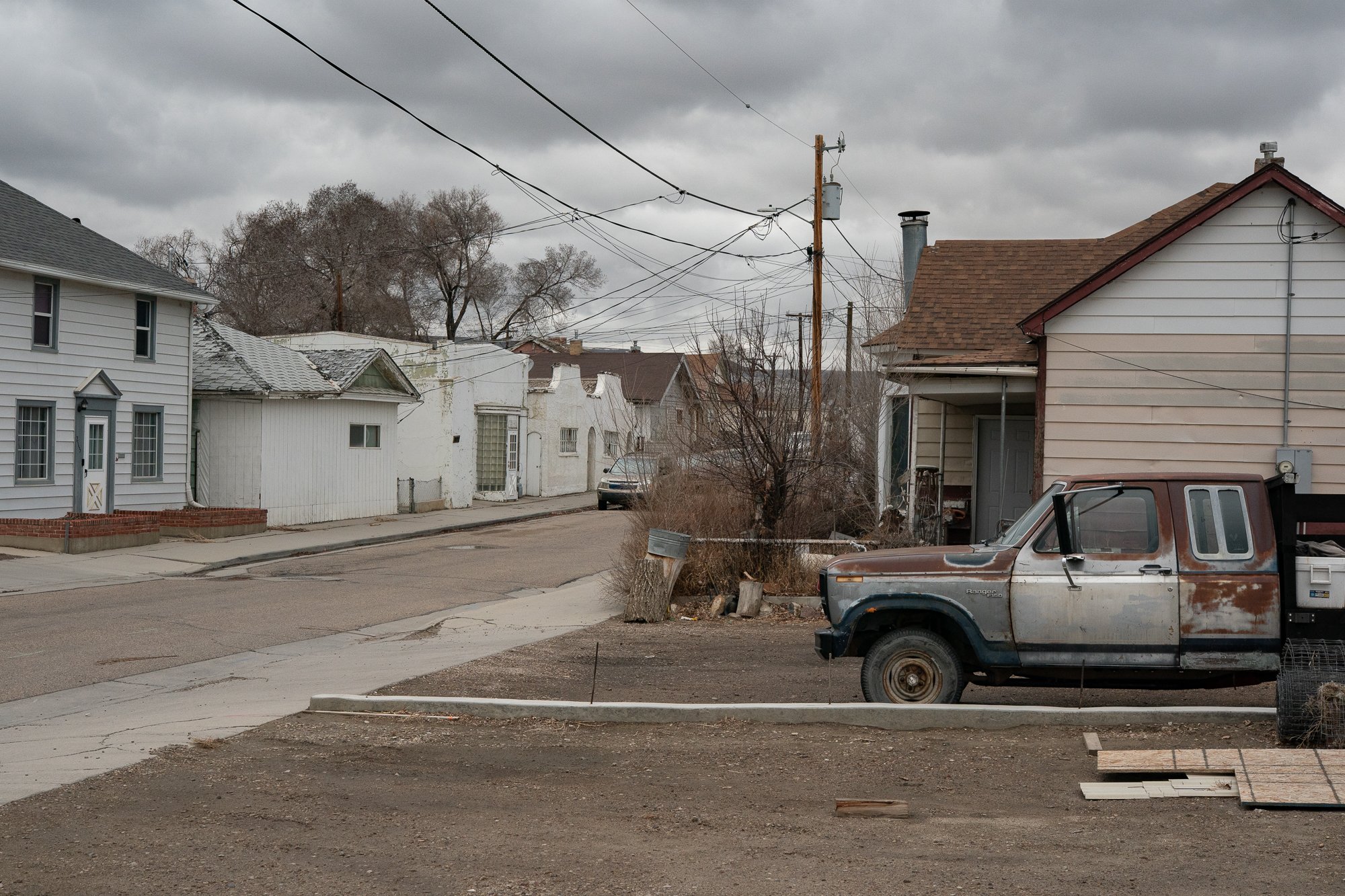
Old rusted pickup truck parked beside a residential street in Rock Springs Wyoming

An aging pickup truck sits along a residential street in Rock Springs beneath a web of overhead power lines.

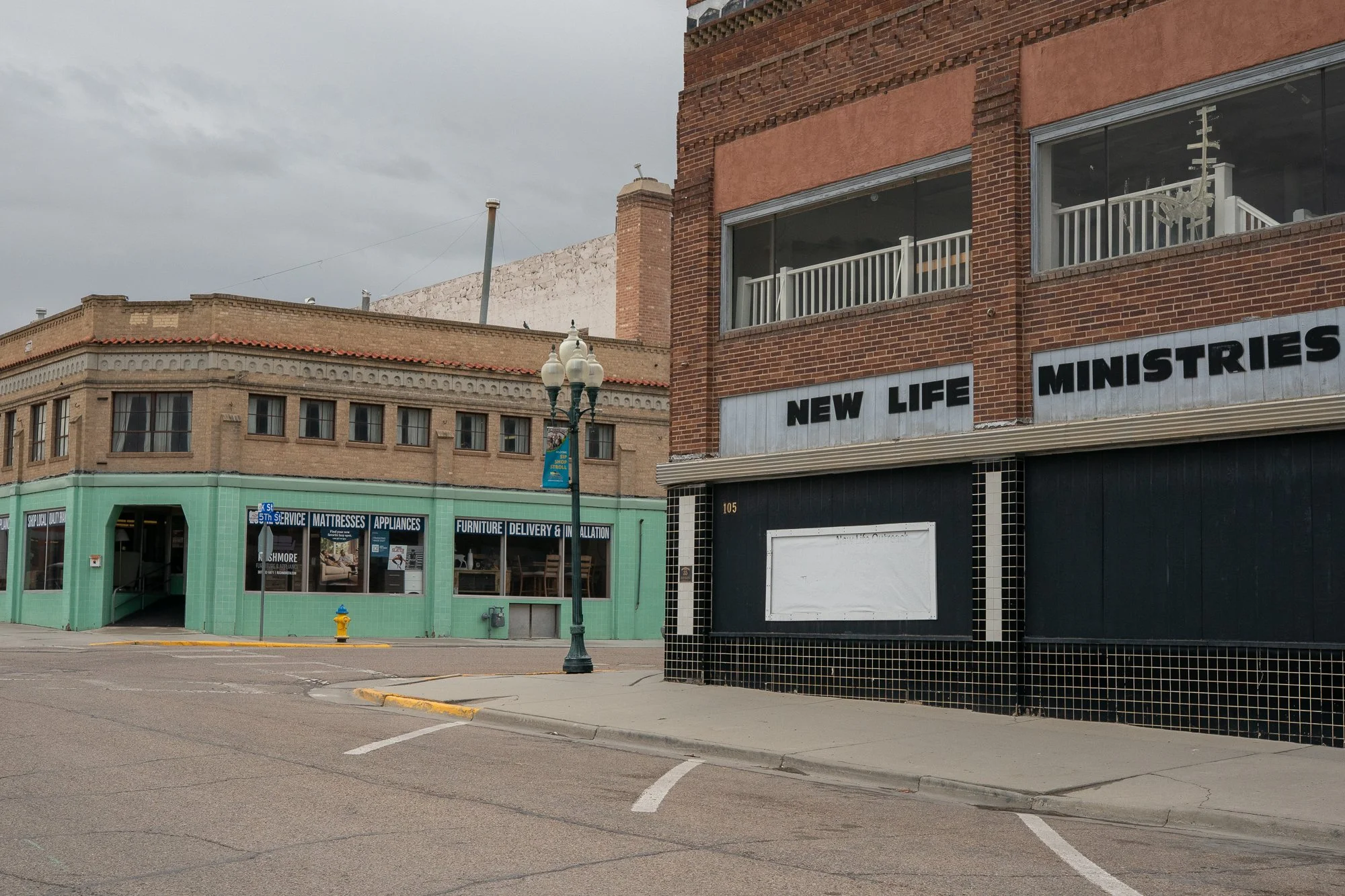
New Life Ministries church building along a downtown street in Rock Springs Wyoming

New Life Ministries occupies a brick building along a quiet street in downtown Rock Springs.

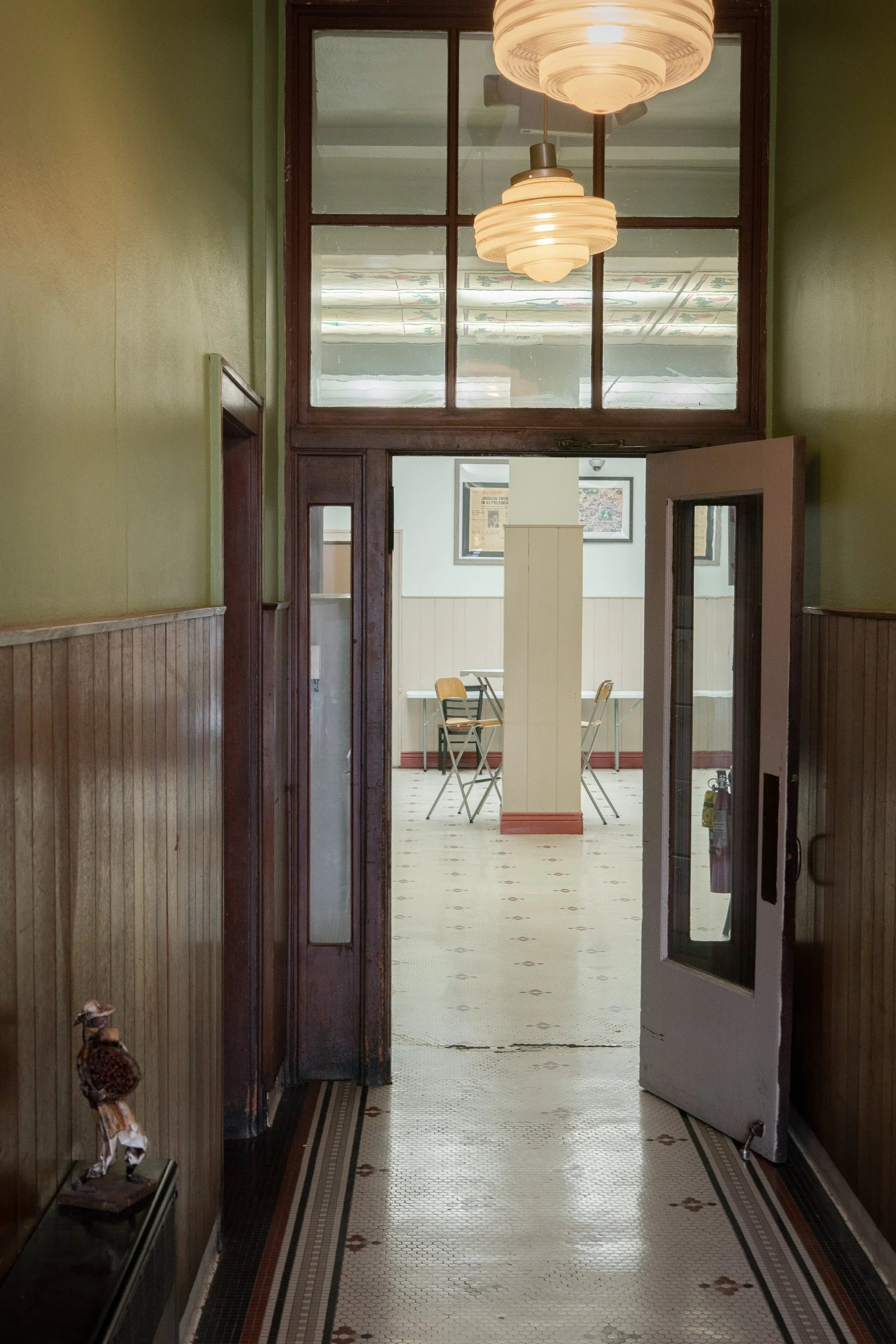
The hallway and lobby of the Park Hotel in Rock Springs, Wyoming

A narrow hallway opens into the lobby at the Park Hotel in Rock Springs

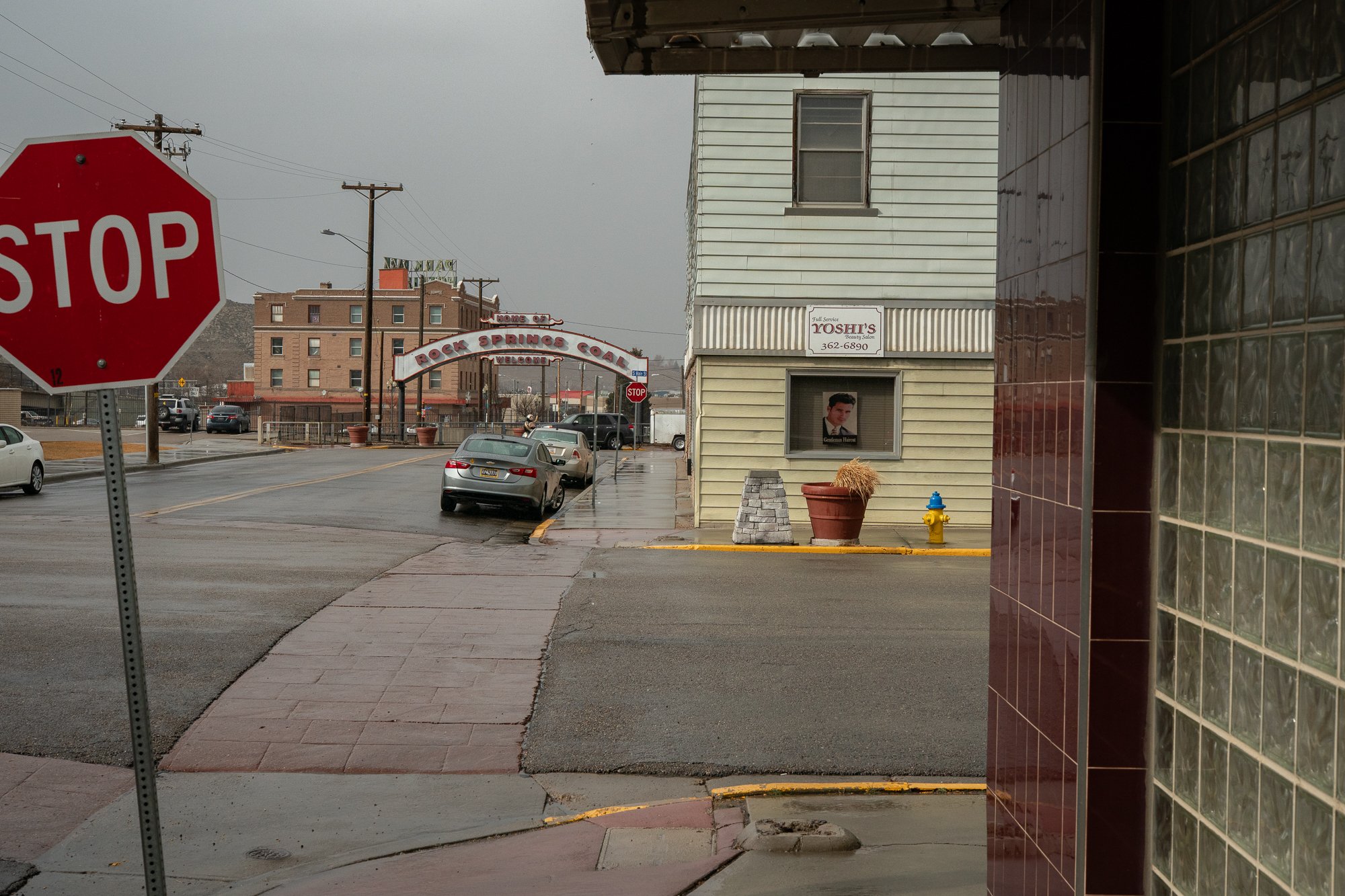
street scene near the Rock Springs Coal arch in downtown Rock Springs Wyoming

A rainy street corner near the Rock Springs Coal arch in the center of town.

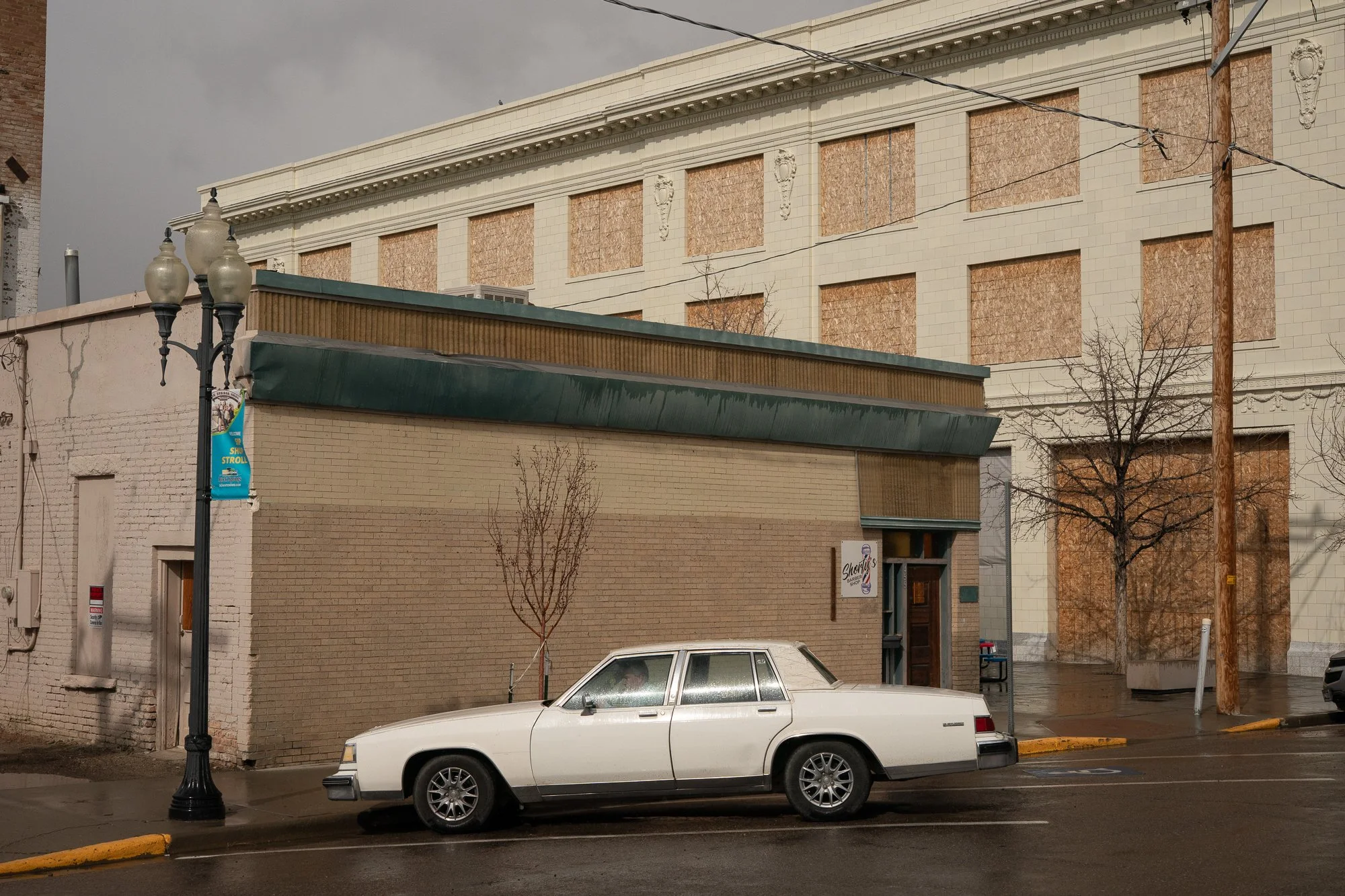
Older sedan parked beside buildings with boarded windows in downtown Rock Springs Wyoming

An older sedan sits parked along a wet street lined with boarded windows in downtown Rock Springs.

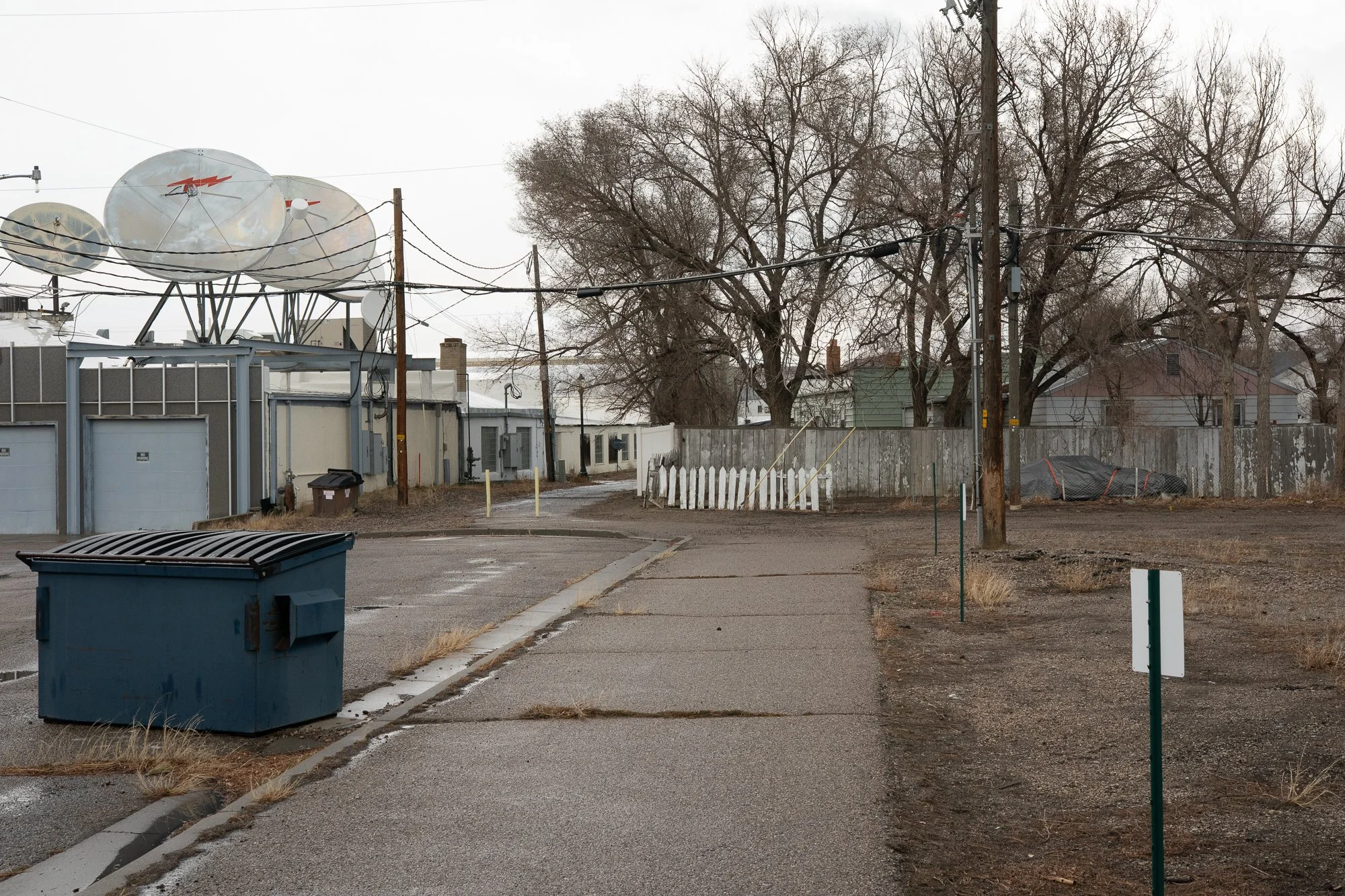
Satellite dishes and utility wires above a back street in Rock Springs Wyoming

Satellite dishes and overhead wires crowd the skyline above a quiet back street in Rock Springs.

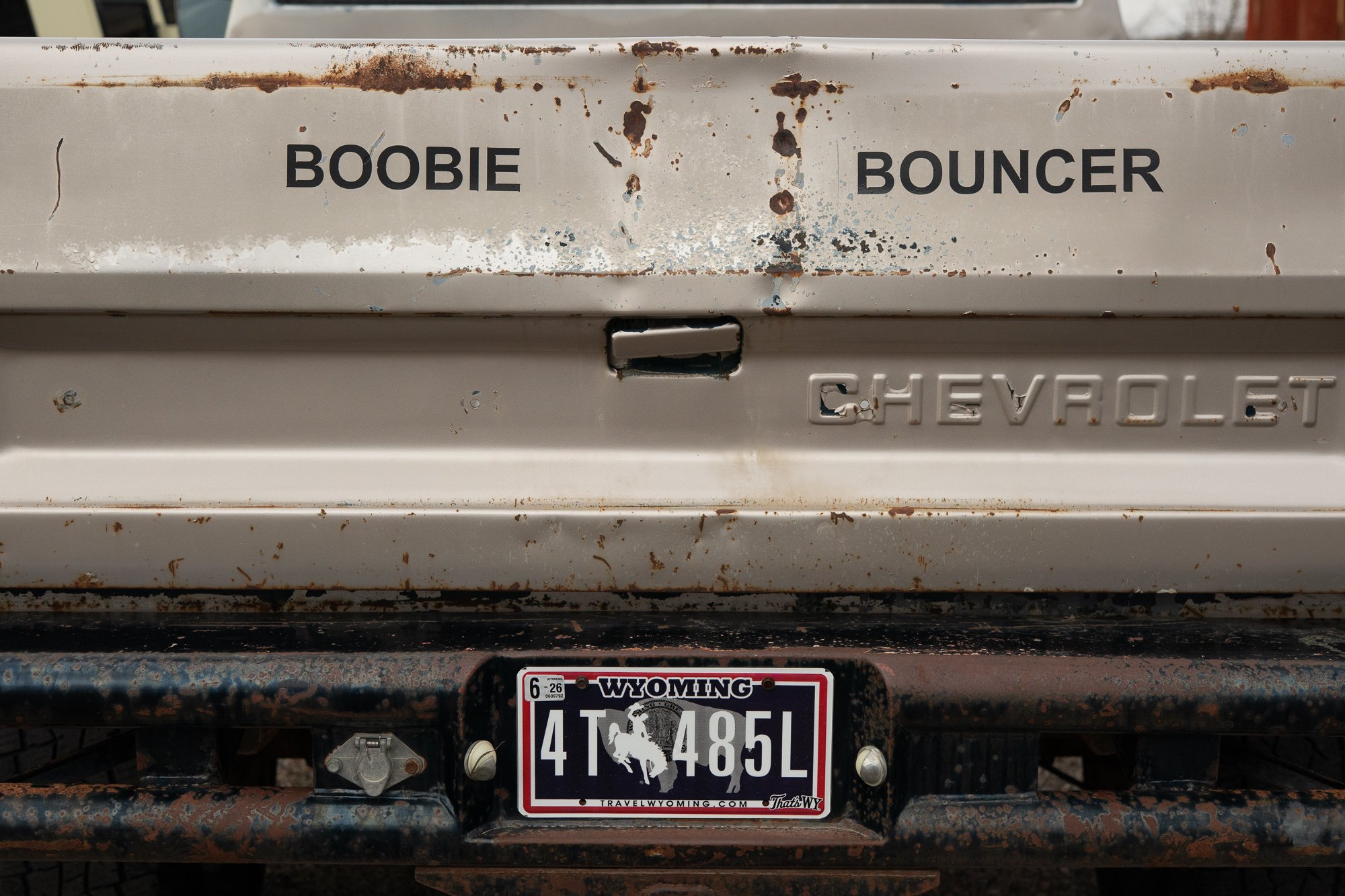
Rusted Chevrolet pickup tailgate with Wyoming license plate in Rock Springs Wyoming

An old Chevrolet pickup truck with “Boobie Bouncer” stickers on the tailgate.

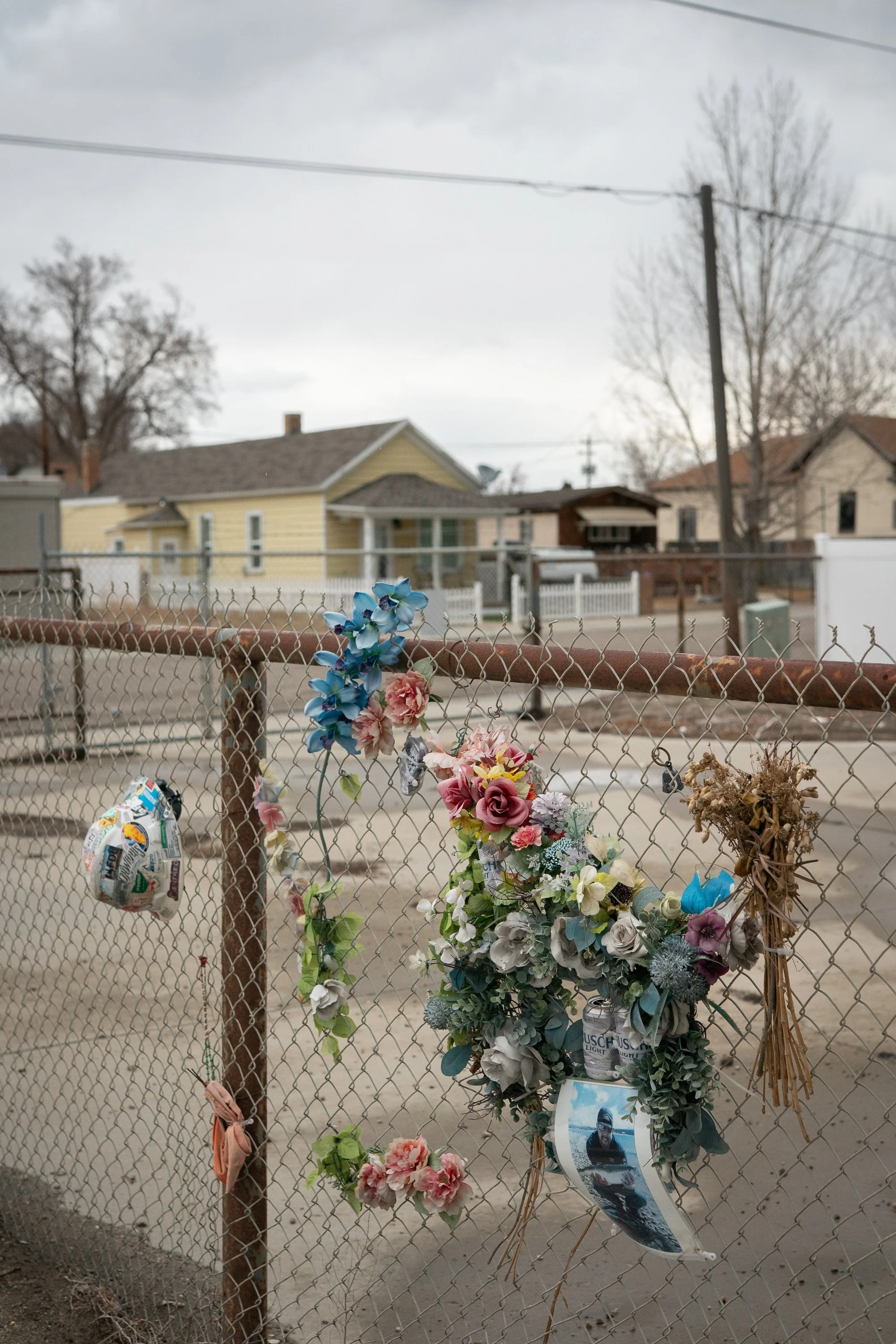
Flowers and memorial decorations attached to chain link fence in Rock Springs Wyoming

Flowers and small objects hang from a chain-link fence marking a roadside memorial.

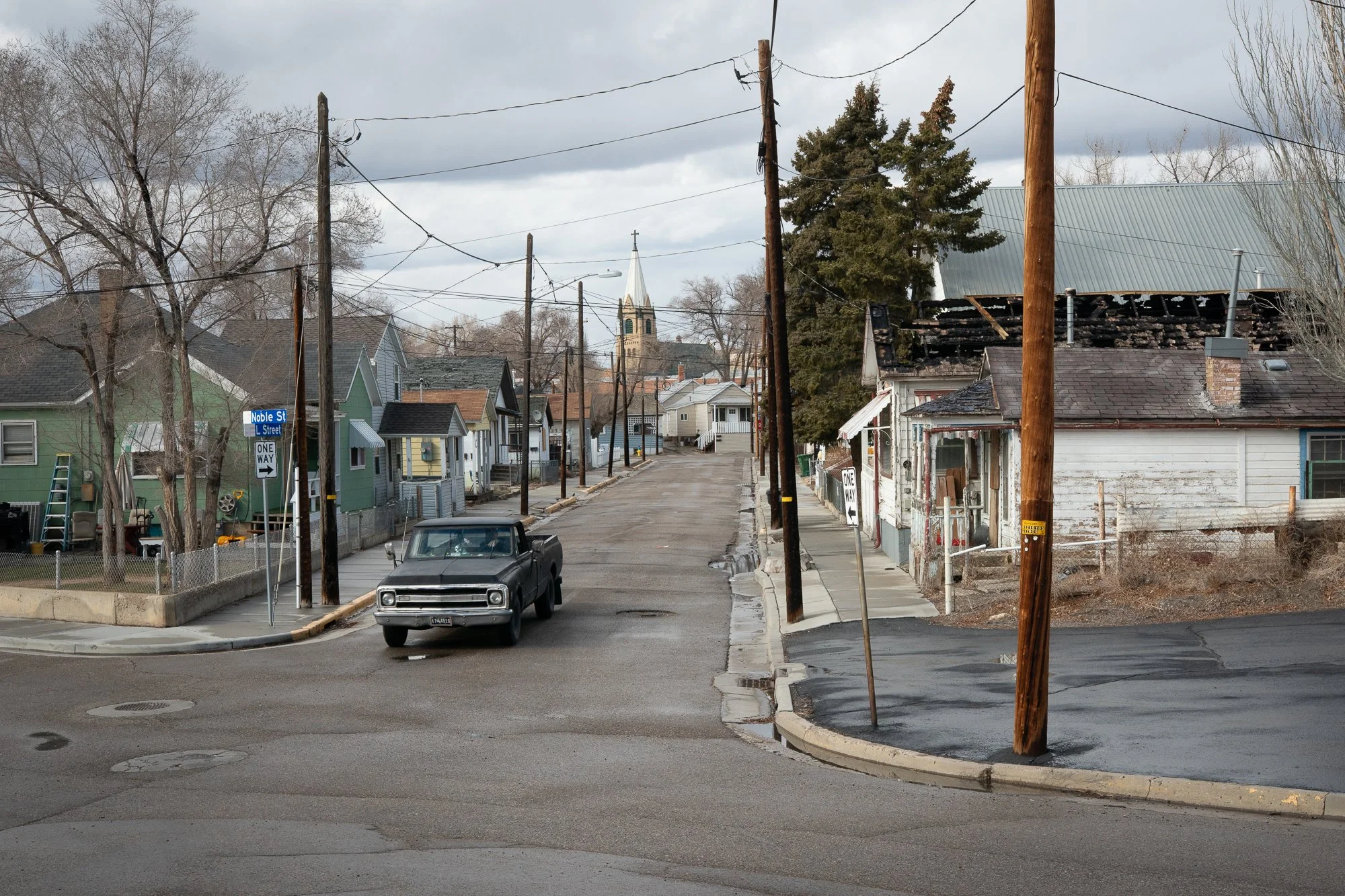
Pickup truck driving through residential neighborhood street in Rock Springs Wyoming

A pickup truck moves slowly through a quiet neighborhood street in Rock Springs.

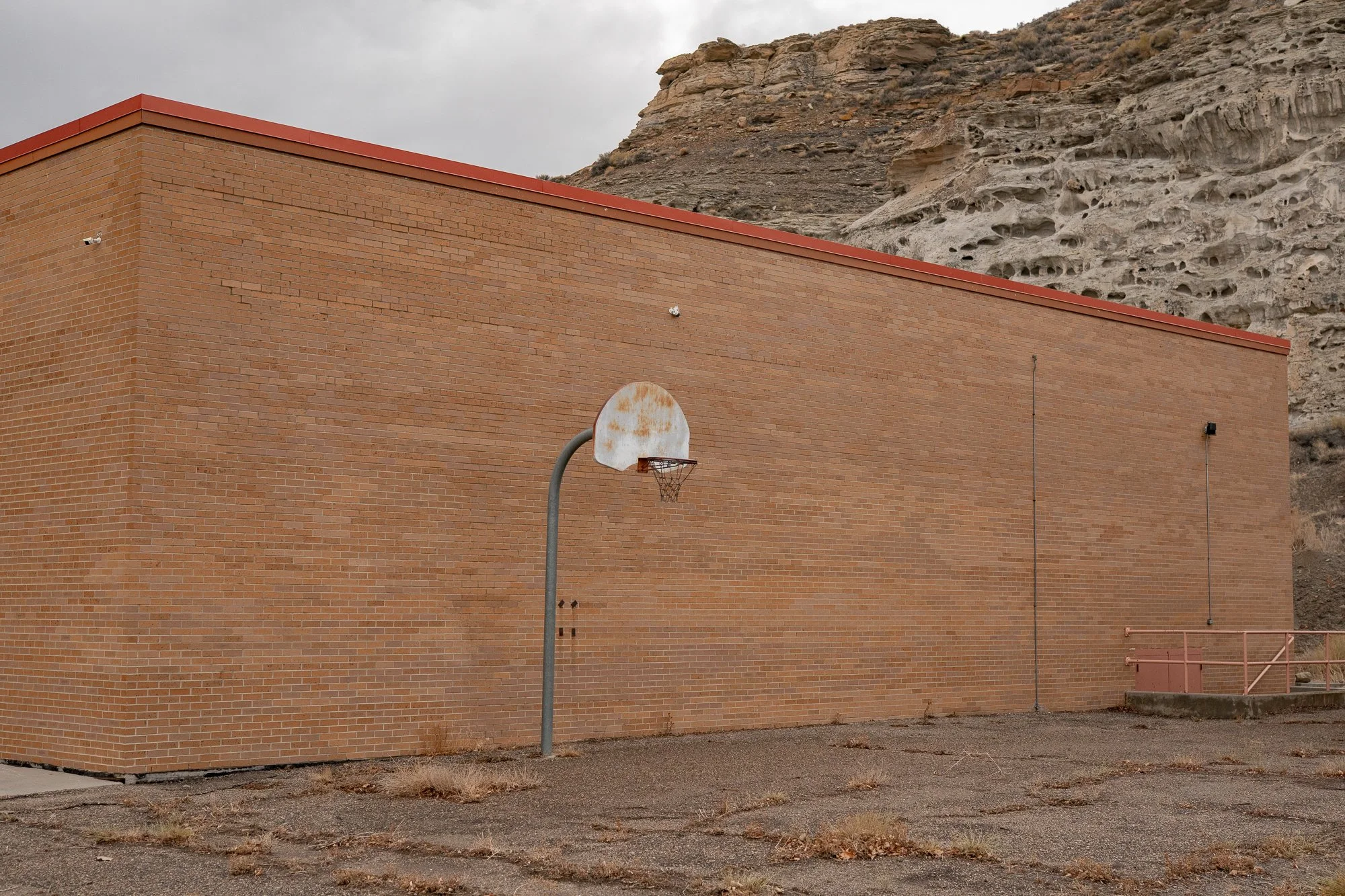
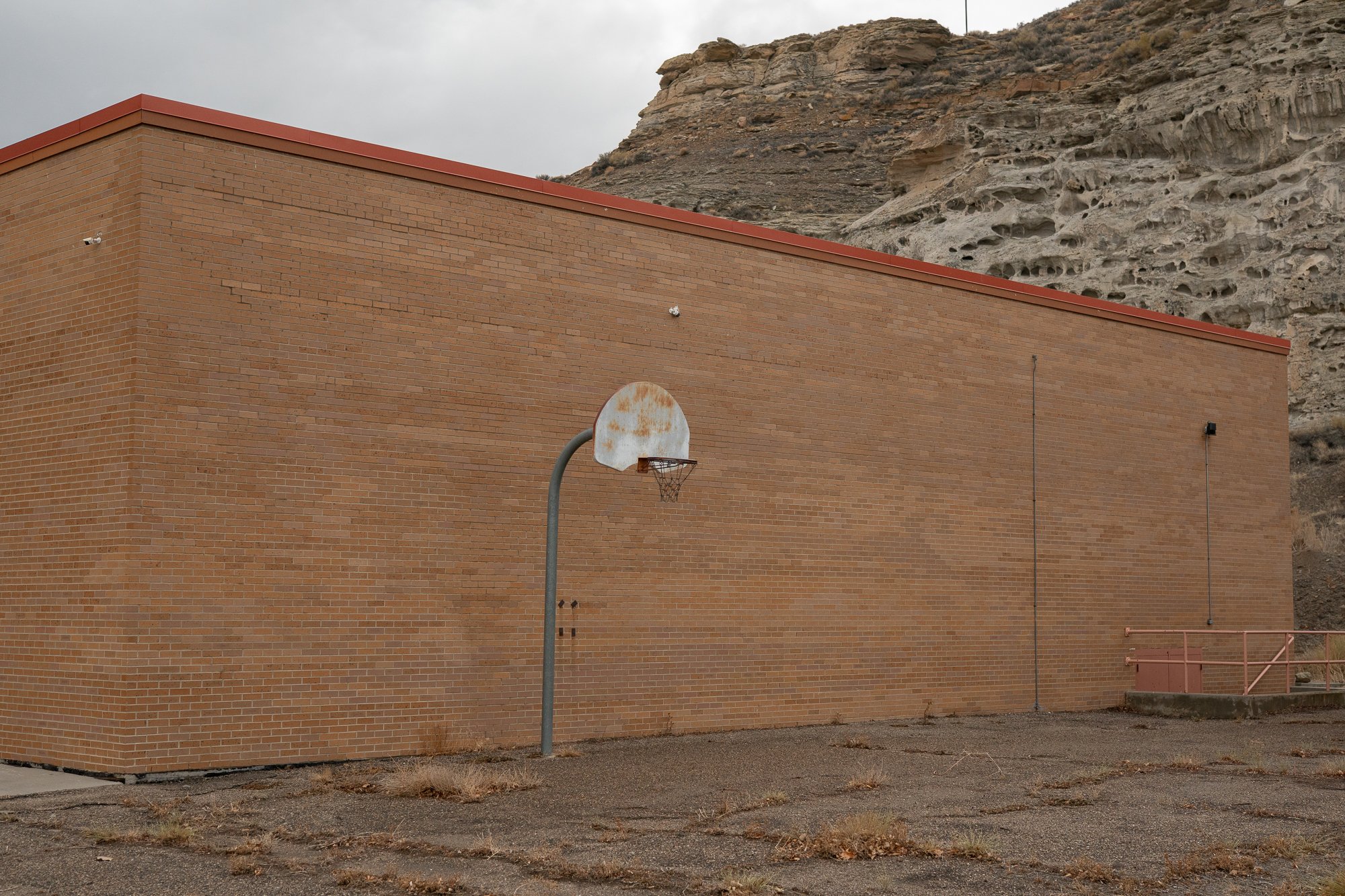
Rusted basketball hoop beside large brick building in Rock Springs Wyoming

A rusted basketball hoop stands beside a long brick wall near the edge of town.

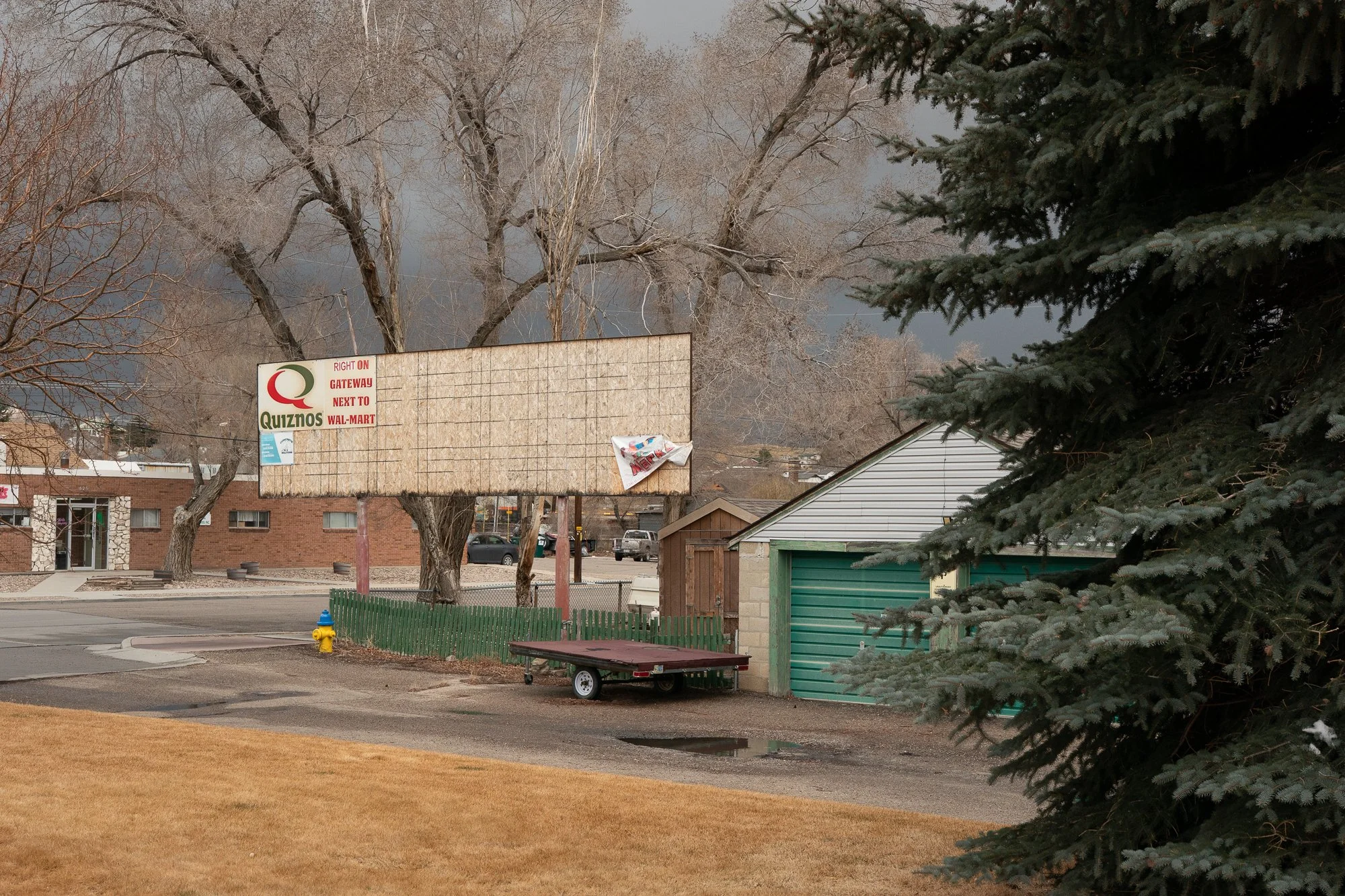
Old faded Quiznos restaurant sign along street in Rock Springs Wyoming

A faded Quiznos sign hangs on a dilapidated wood billboard in Rock Springs

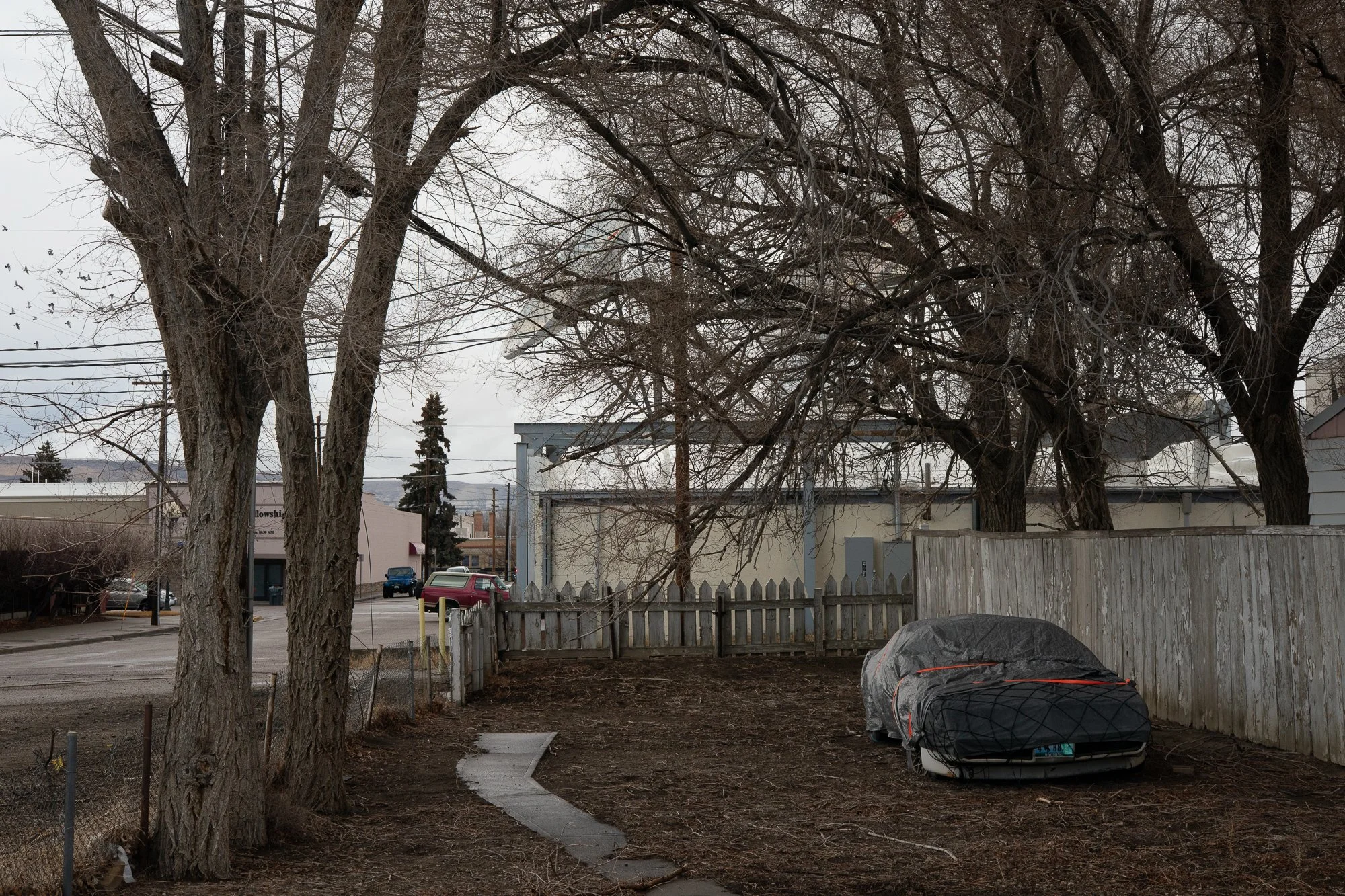
Car covered with tarp in a backyard beneath large leafless trees in Rock Springs Wyoming

A car rests beneath winter trees in a backyard on the edge of a Rock Springs neighborhood.

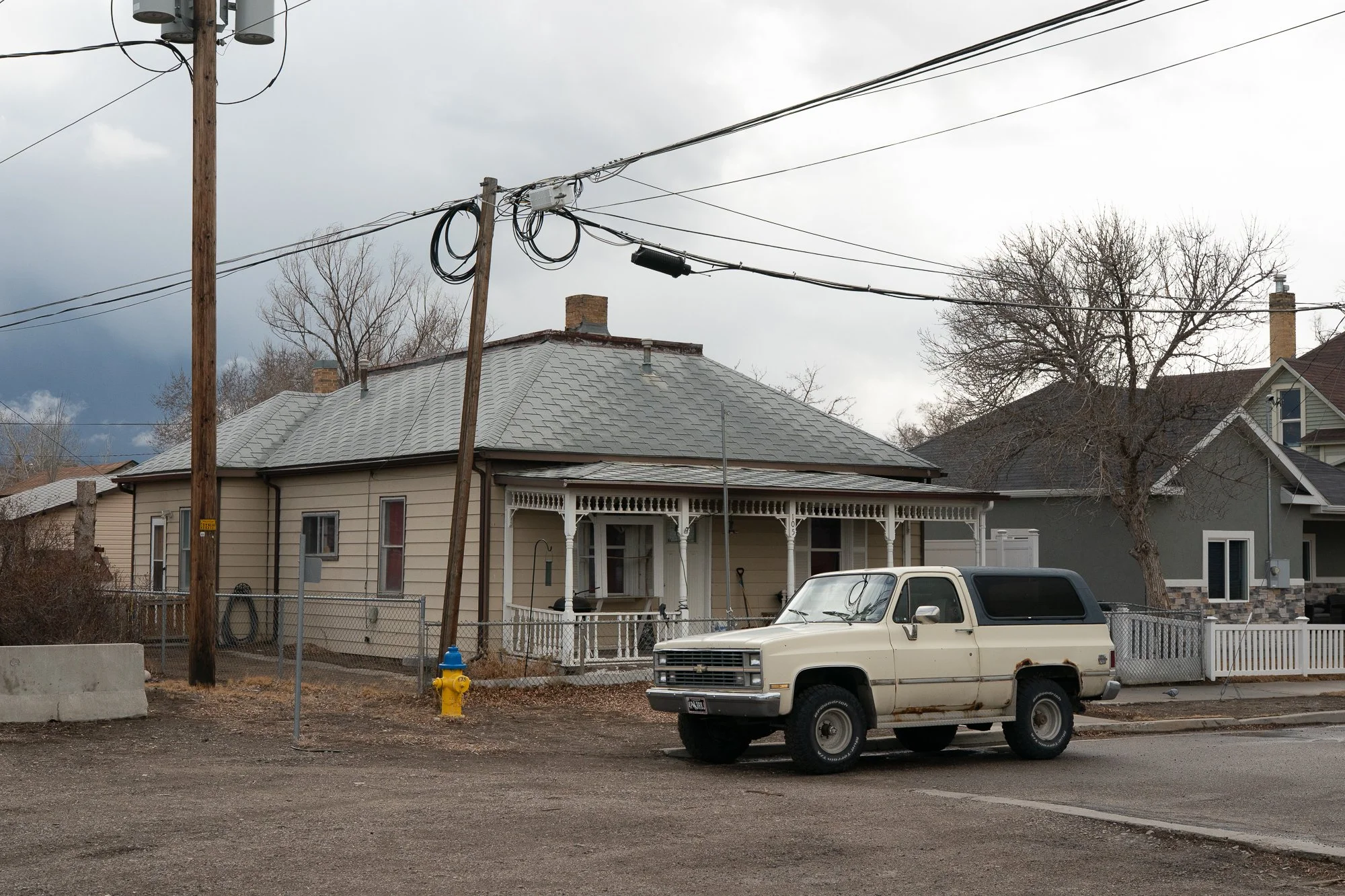
Older pickup truck parked at a residential corner beside a small house in Rock Springs Wyoming

A weathered pickup truck sits at a quiet residential corner beneath a web of overhead wires in Rock Springs.

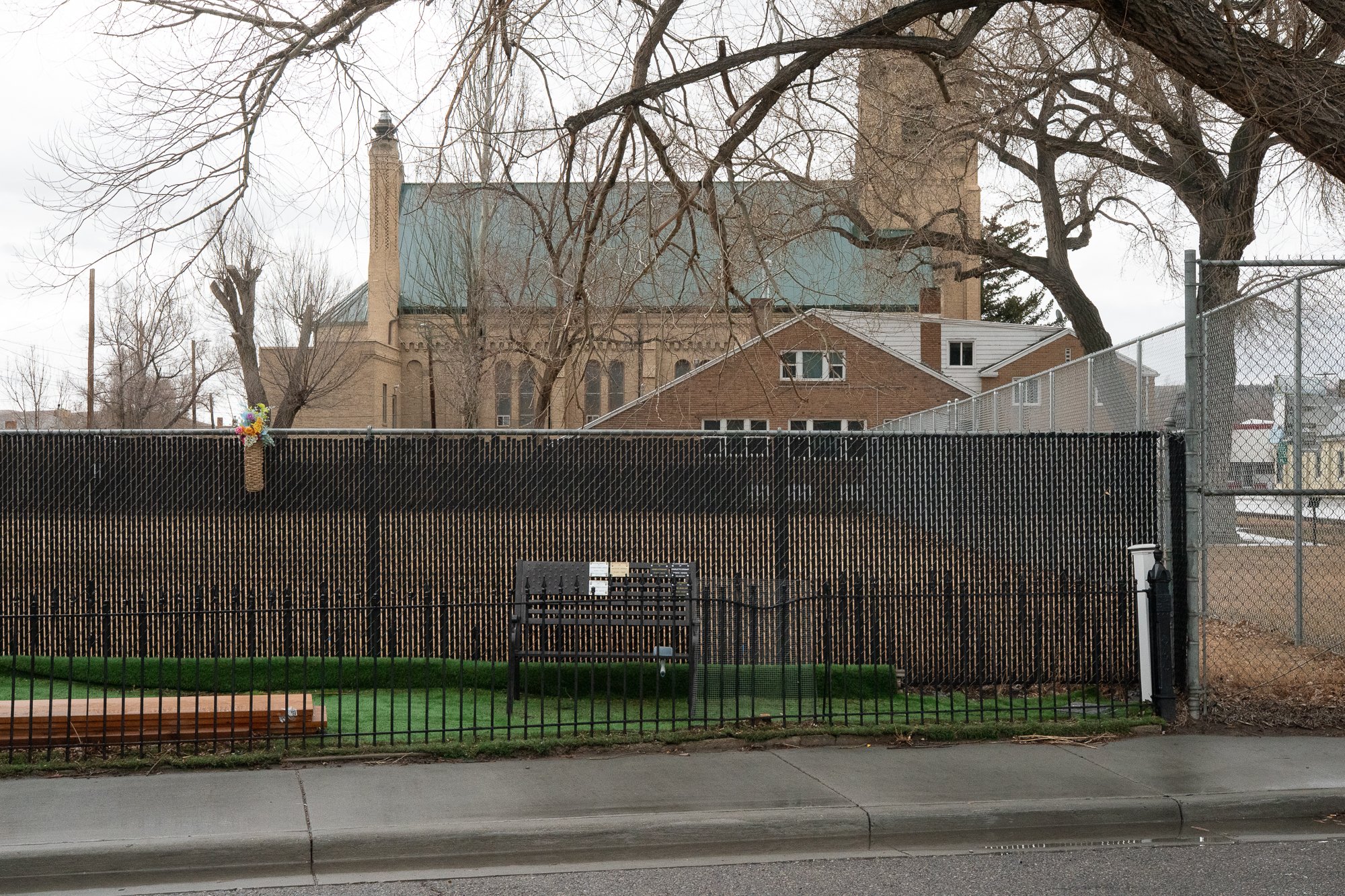
Church building seen behind fence and winter trees in Rock Springs Wyoming

A church rises behind fences and bare winter trees along a quiet street in Rock Springs.

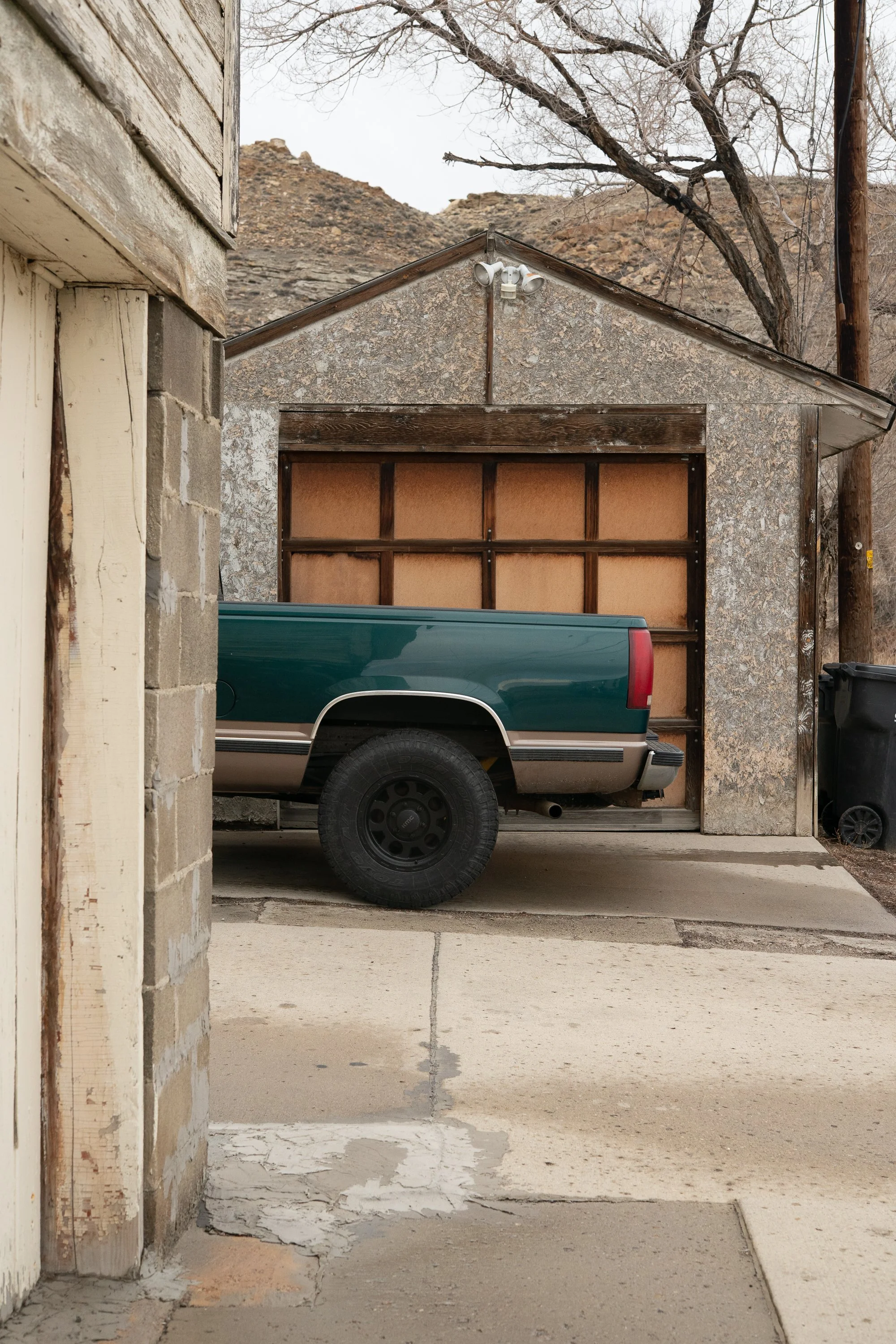
Pickup truck parked beside a garage at the end of a narrow driveway in Rock Springs Wyoming

A pickup truck sits tucked beside a small garage at the end of a narrow driveway in Rock Springs.

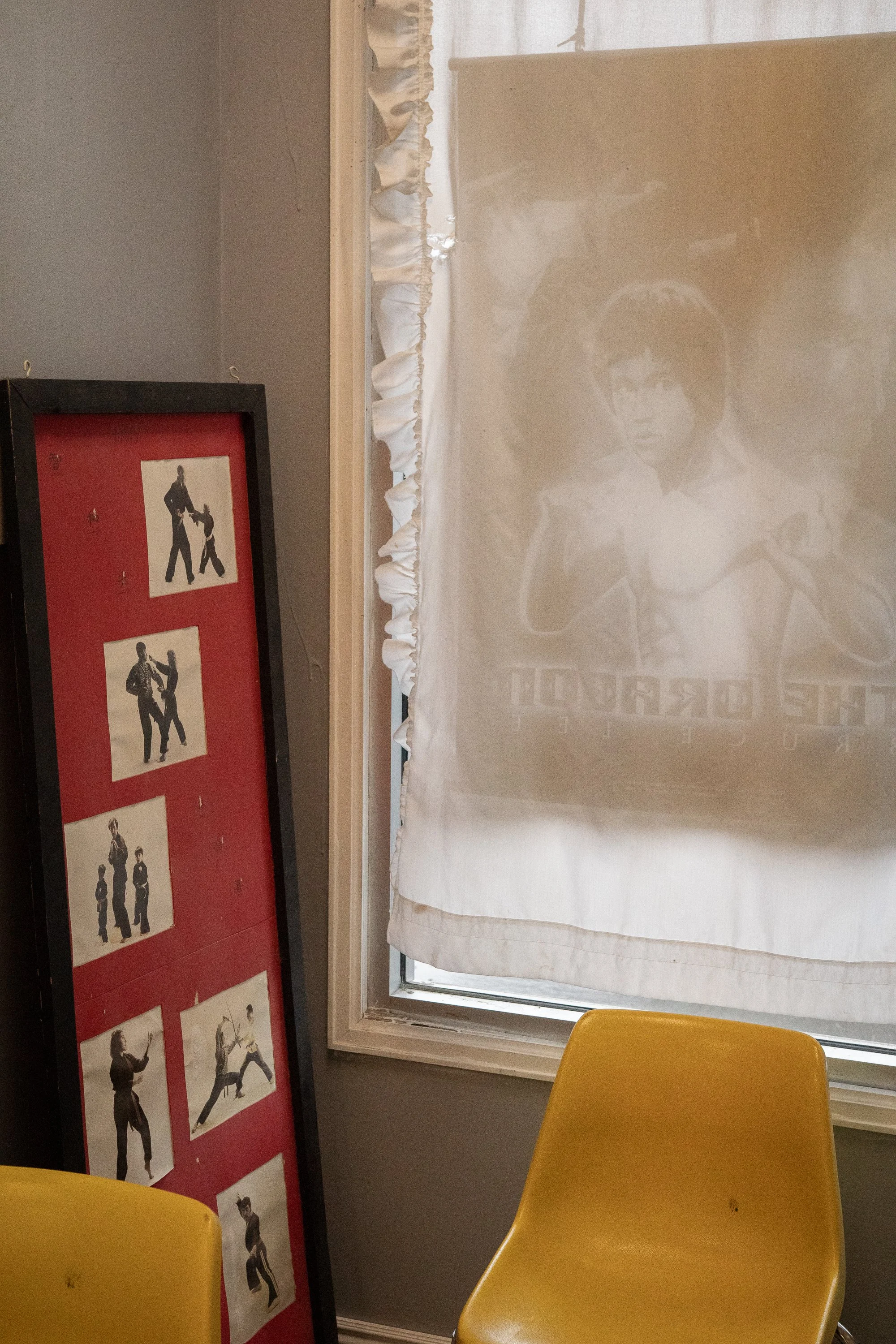
Bruce Lee poster visible through curtain beside martial arts photos in Rock Springs Wyoming

A Bruce Lee poster hangs behind a thin curtain beside framed martial arts photos inside a karate dojo.

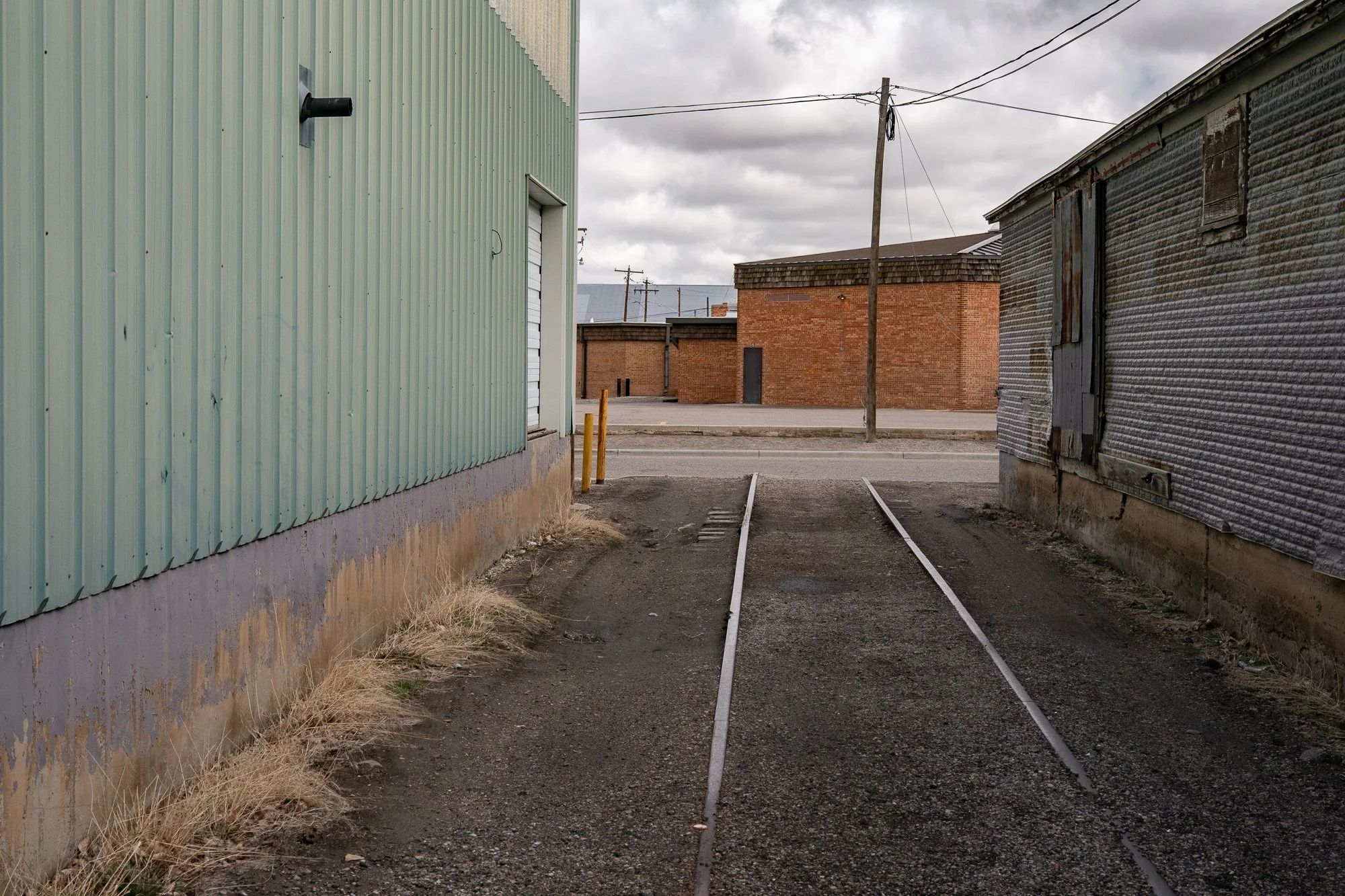
Railroad tracks running through an industrial alley between metal buildings in Rock Springs Wyoming

Old rail tracks cut through an industrial alley in Rock Springs, a quiet reminder of the railroad and coal economy that built the town.

C-Punch Ranch - Nevada

C-Punch Ranch, Nevada – Working Cowboys of the Great Basin

The C-Punch Ranch sits deep in the high desert of northern Nevada, a place where the road narrows, cell service disappears, and the landscape stretches out far beyond what most people ever get to see. I’ve photographed a lot of working cowboys across the West over the years, but the C-Punch has a way of staying with you. It’s a ranch of unthinkable size (1.8 million acres), resilient horses, and buckaroo traditions that haven’t been watered down by time or convenience. Everything about it feels rooted in the old ways—not out of nostalgia, but because it’s the only thing that works in a place that big!

This is a photographic look inside one of the Great Basin’s most respected outfits.

A Historic Ranch in the Heart of the Great Basin

The Great Basin is unlike anywhere else in the country. It’s wide, harsh, and rugged in a way that demands a certain type of cowboy—someone who’s as comfortable riding an endless trot as they are roping in big country. The C-Punch Ranch fits squarely into that tradition. It’s one of the longstanding outfits that helped define the buckaroo style: rawhide gear, flashy bits, big loops, Vaquero-influenced horsemanship, and an unwavering focus on stockmanship.

Ranches in this region operate across huge expanses of desert and sagebrush. The land is open, unforgiving, and absolutely beautiful. Cattle graze for miles. Horses cover ground that would break most people. And the cowboys who work here carry forward a culture that remains largely unseen by the outside world.

Photographing at the C-Punch is stepping into that rhythm—into a world where the work is real and the traditions matter.

Photographing Life on the C-Punch Ranch

My time on the ranch always starts before sunrise. The crew saddles in the pale light, horses blowing steam into the morning air. Coffee is hot, conversation is short, and the day begins quickly. Once you ride out onto the range, time moves differently. The distances feel enormous, and the silence is broken only by bawling cows, wind, and wild horses playing in the distance.

I photograph quietly. I don’t stage anything, and I don’t ask people to perform. The work is honest as it is, and the best photographs come from letting the day unfold as it always does.

Some days are spent gathering cattle across rough desert country. Other days are branding days—dust, smoke, ropes, and a kind of controlled chaos that resolves into teamwork. No two days are the same, and that’s the beauty of working ranches like the C-Punch.

Gathering Cattle Across the Nevada Desert

Cattle work in the Great Basin means covering many many many miles—sometimes more before lunch than most people drive in a week. The C-Punch cowboys ride out into sagebrush flats and rocky hillsides, spreading wide across the desert to bring cattle together. Horses work hard out there. Cowboys do too.

The landscape is big enough that you often see a single rider silhouetted against an entire mountain range. Dust hangs low. Light shifts quickly. And the relationships between riders and horses become clear in those long, quiet hours.

These are some of my favorite moments to photograph—honest, solitary, and rooted in the environment.

Branding on the C-Punch – Dust, Smoke, and Traditions That Don’t Change

Branding on the C-Punch is high desert ranching at its most iconic. There’s smoke, dust, noise, and movement from every direction. Cowboys rope calves from horseback. Ground crew works quickly. Horses stand steady in the swirl of dust. It’s a fast, physical kind of work, but everyone knows their place and the flow stays remarkably smooth.

What stands out most is how much horsemanship is involved. Everything is done with a rope, a horse, and practiced timing. It’s the kind of branding that defines buckaroo culture—the kind rarely seen by the general public.

Photographically, it’s a gift: sun slicing through dust, silhouettes in motion, rawhide ropes swinging through the air, and the steam rising off a fresh brand.

Details That Define a Buckaroo Outfit

You can learn a lot about a ranch by looking at the details. The worn bell stirrups marked by years of use, Garcia bits, rough out saddles, flat hats, rawhide reins that have passed through the hands of several cowboys. Spurs shaped by tradition, not fashion.

These details tell the story just as much as the wide landscapes or branding scenes. They show the craftsmanship, the lifestyle, and the individuality of each rider. They’re reminders that buckaroo culture isn’t just about cattle work—it’s about a way of life built over generations.

A Ranch Where Tradition Still Matters

The C-Punch Ranch is one of those rare places where the past and present meet naturally. The work is still done horseback. Young cowboys learn from seasoned hands. Horses are respected. Gear is functional, not decorative. And there is pride—quiet, deep pride—in doing the job well.

In a world moving fast and often in the opposite direction of tradition, the C-Punch remains steady. That’s what makes documenting it so meaningful. It isn’t a reenactment. It isn’t a version cleaned up for guests or cameras. It’s the real thing, practiced every day because it’s how the work gets done.

Related Ranches of the Great Basin

If you’re interested in this story, you may also like my photographs from:

Fine Art Prints & Licensing

Images from the C-Punch Ranch are available as fine art prints.
Licensing is also available for editorial, commercial, and documentary projects.

To inquire about prints or licensing, please contact me here - rob@robhammerphotography

Closing Thoughts

Every time I photograph the C-Punch Ranch, I leave with a deeper respect for the cowboys who ride there. The land is tough. The work is tougher. But there’s a sense of pride, purpose, and tradition that you won’t find anywhere else.

The Great Basin is a world unto itself—huge, harsh, and beautiful—and the C-Punch is one of the ranches that keeps its culture alive. My hope is that these photographs help preserve a small piece of that legacy.

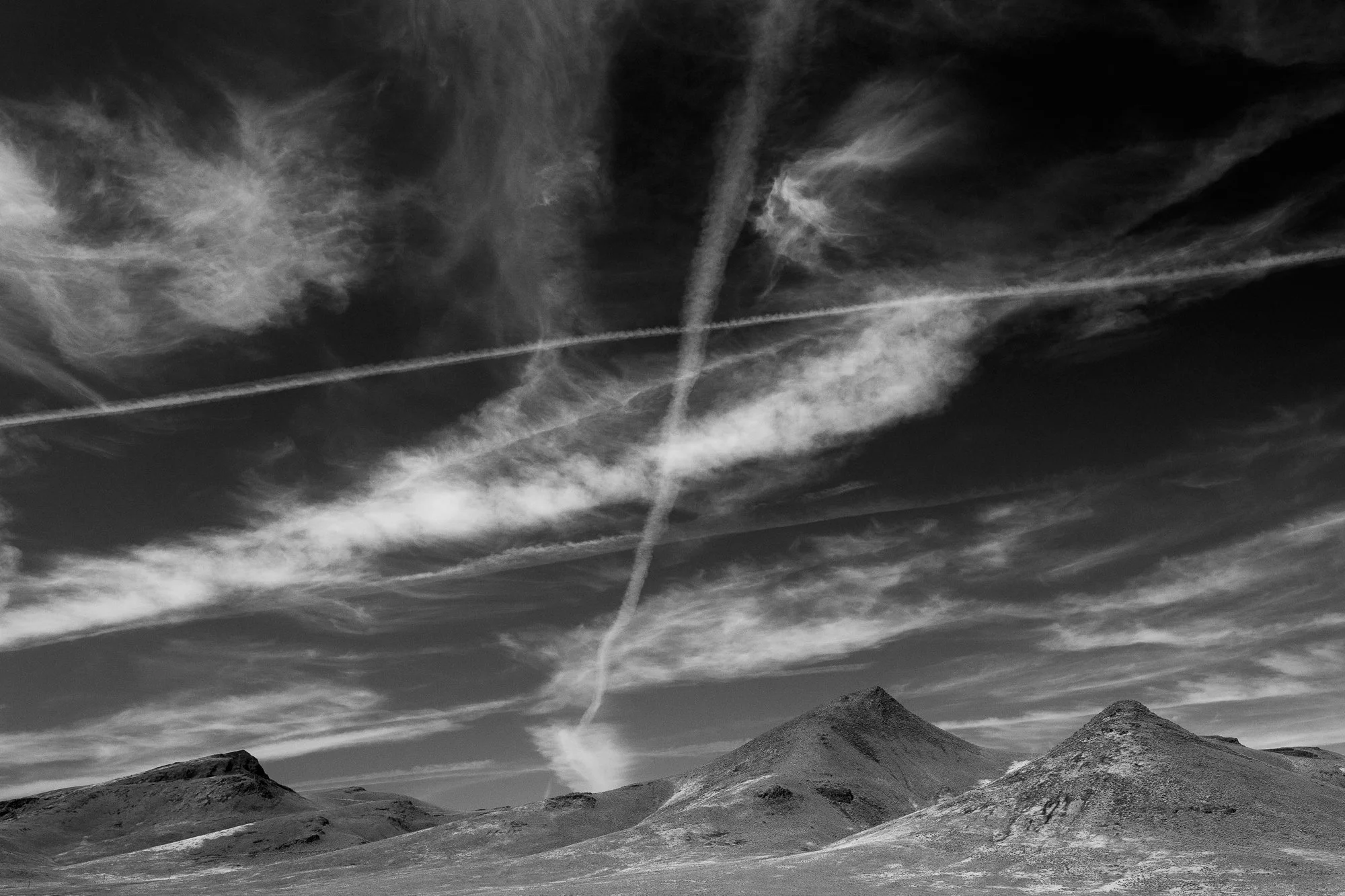
Black-and-white clouds and contrails over mountain peaks near the C-Punch Ranch.

Clouds sweep over the mountain peaks that border the C-Punch Ranch, a reminder of the scale and isolation of Nevada’s Great Basin.

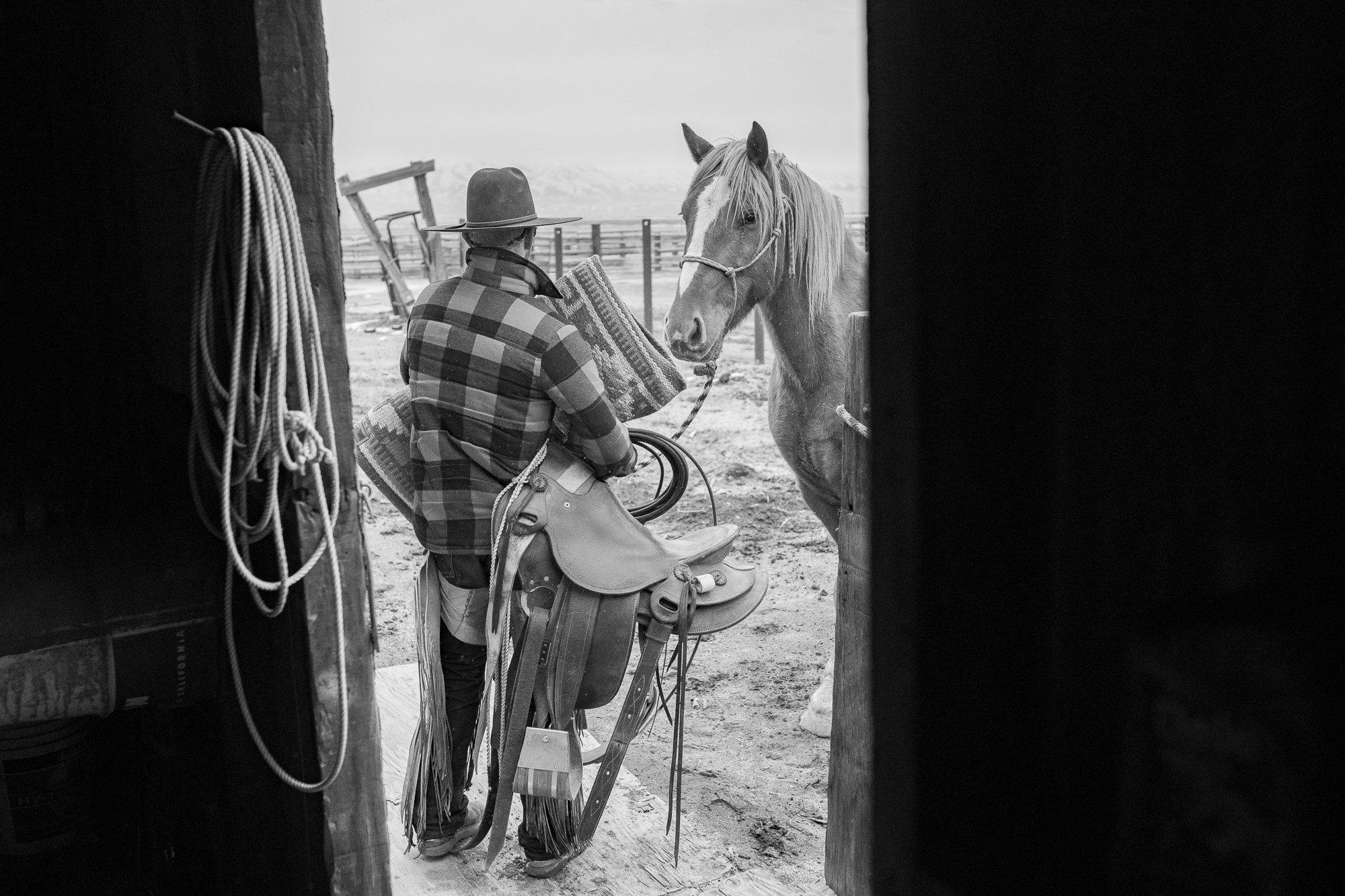
Cowboy saddling his horse inside a barn at the C-Punch Ranch in Nevada, preparing for winter ranch work

A quiet moment at the barn as a cowboy saddles his horse before heading out onto the winter range at the C-Punch Ranch.

Experienced cowboy standing beside the cattle chutes at the C-Punch Ranch in Nevada on a cold winter morning.

A cowboy pushes cattle across frozen ground at the C-Punch Ranch, the quiet rhythm of winter work in northern Nevada.

Cowboy on horseback swinging a rope during cattle work at the C-Punch Ranch in Nevada.

A buckaroo swings a loop from horseback during cattle work at the C-Punch Ranch, where roping is still done the traditional Great Basin way.

Miniature metal roping dummy with a small rope draped over it inside the C-Punch Ranch bunkhouse.

A miniature metal roping dummy sits on the bunkhouse table, used by young buckaroos learning the craft at the C-Punch Ranch.

Cowboy on horseback driving cattle in front of mountain range and dramatic clouds in Nevada.

A cowboy drives cattle beneath a sweeping sky at the C-Punch Ranch, framed by the rugged mountains of northern Nevada.

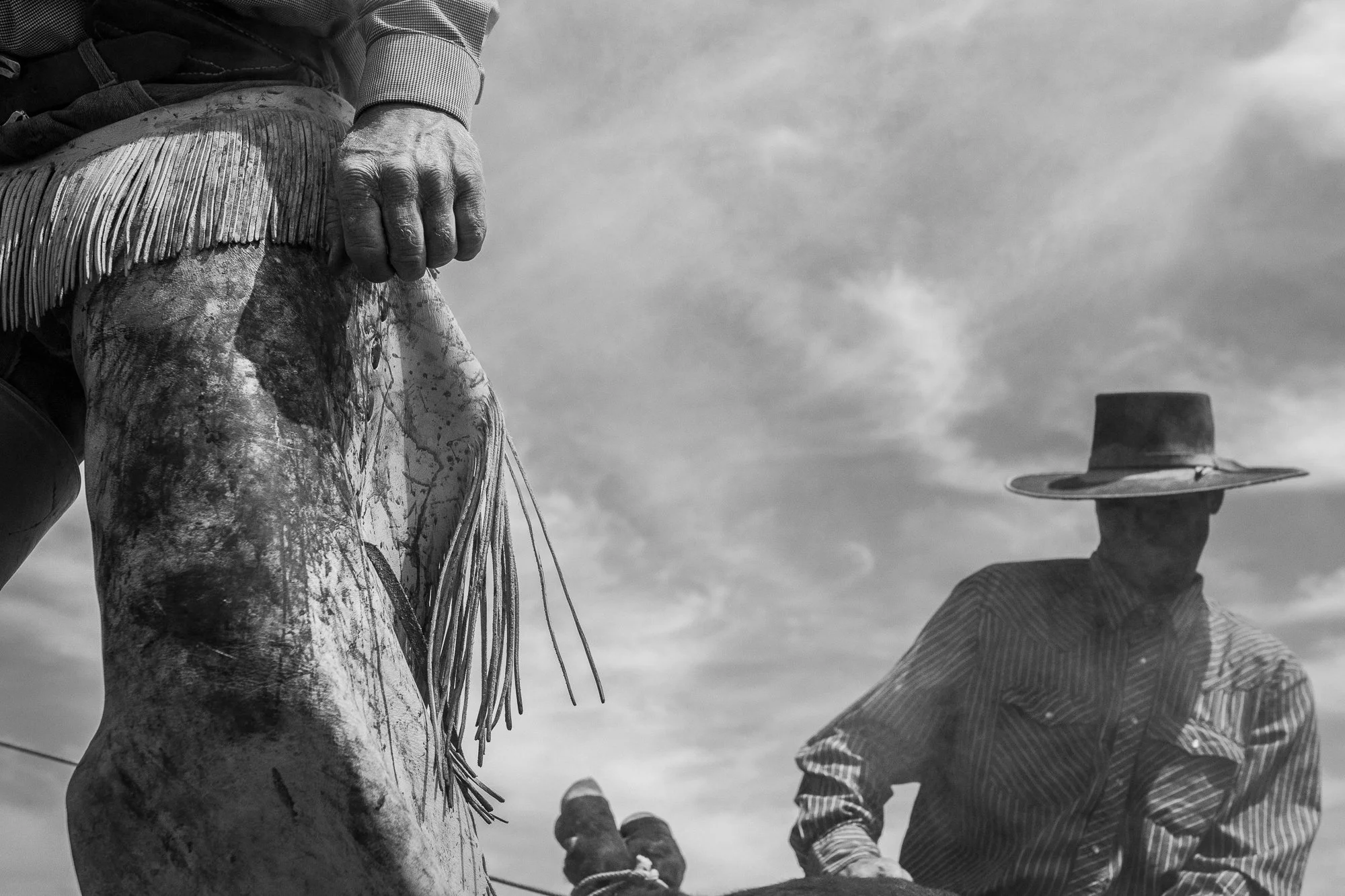
Close-up of a cowboy’s hand gripping chinks during branding at the C-Punch Ranch.

A close look at worn chinks and a working hand during branding at the C-Punch Ranch—details that define the buckaroo tradition.

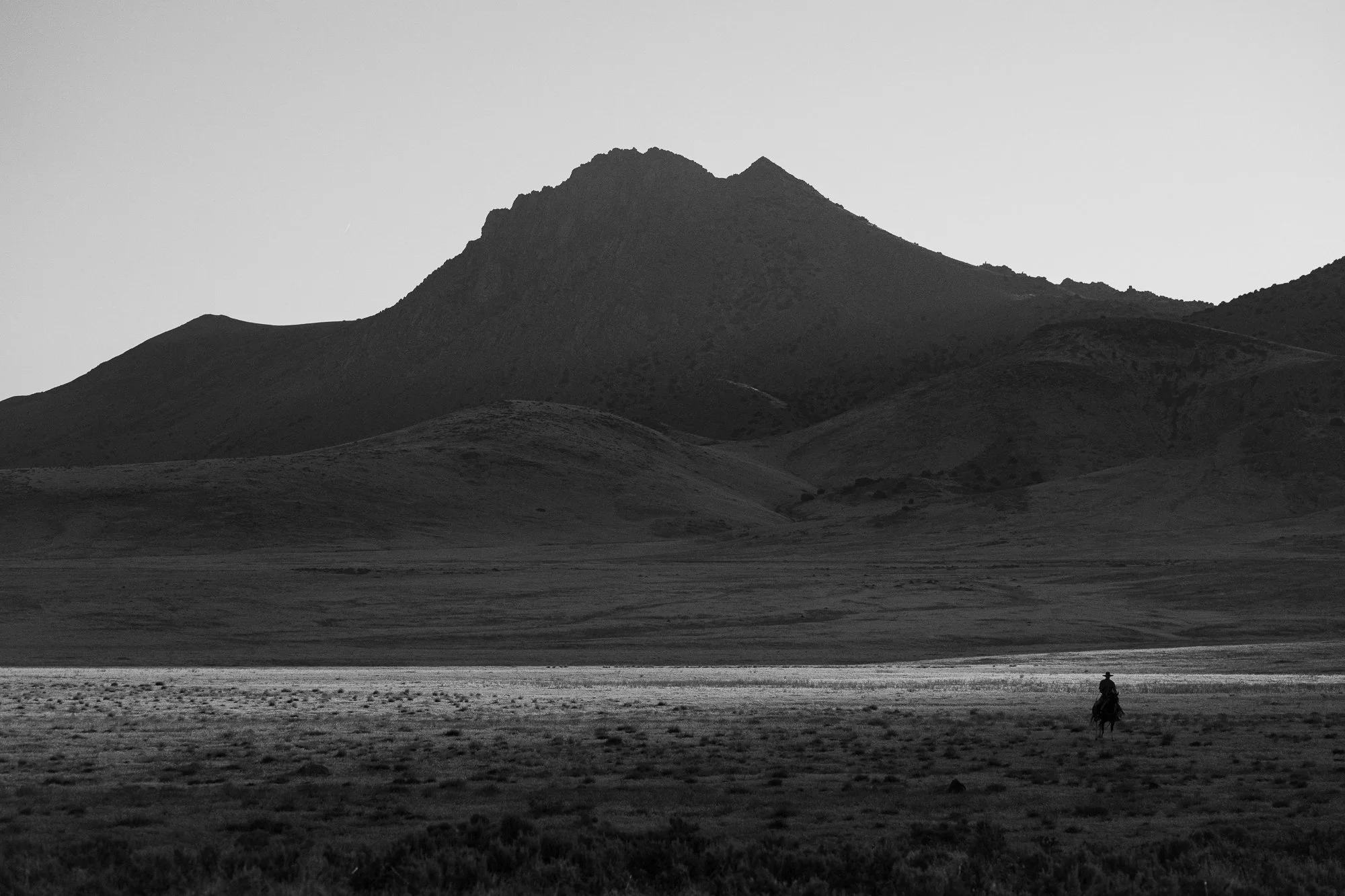
Cowboy riding alone at dawn with mountain silhouette in the background at the C-Punch Ranch.

A lone rider crosses the valley at dawn as the first light hits the mountains surrounding the C-Punch Ranch.

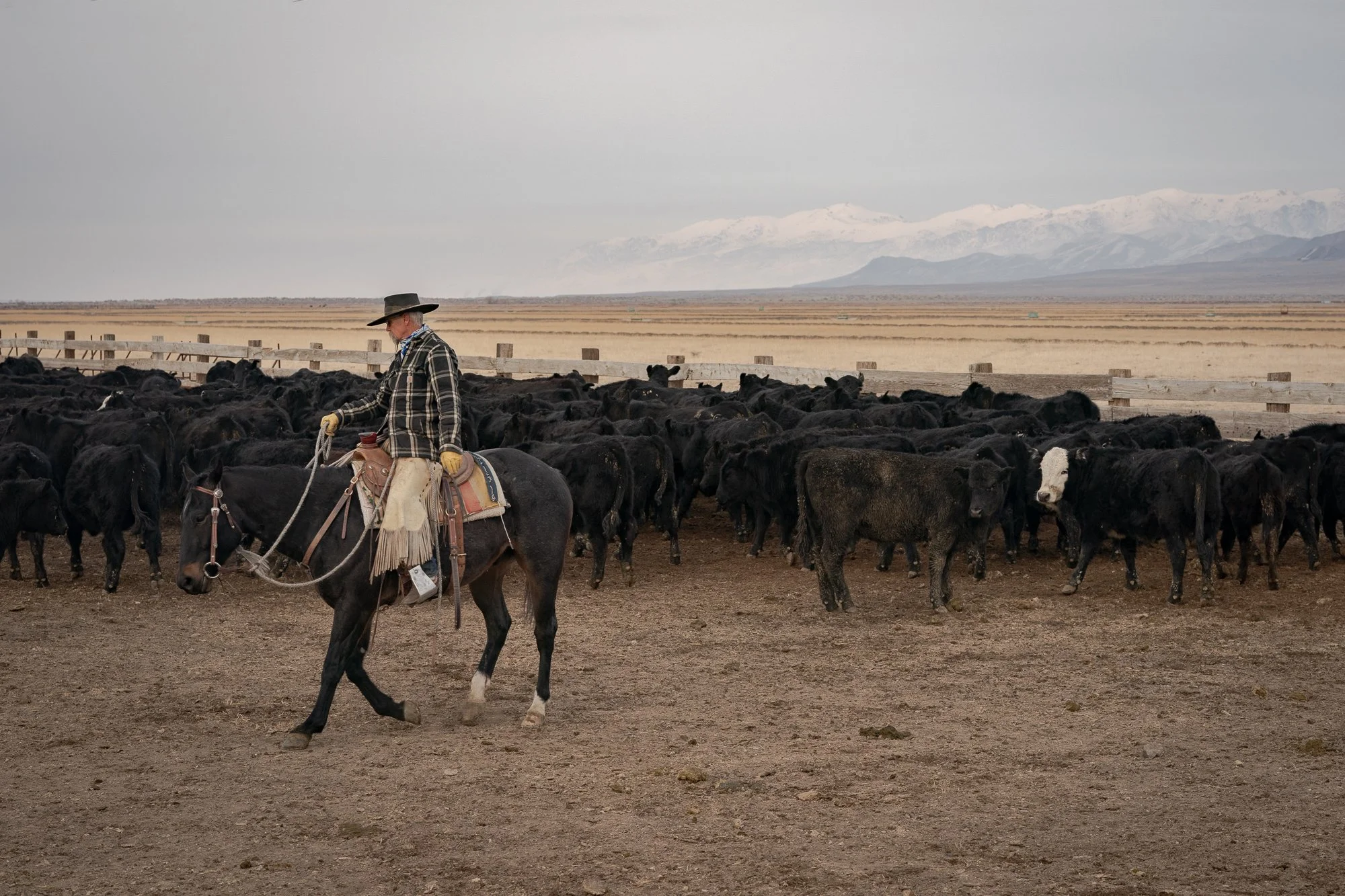
Cowboy riding through a tight herd of cattle at the C-Punch Ranch in Nevada during winter sorting.

A cowboy threads his horse through a dense herd of cattle at the C-Punch Ranch, checking animals before the day's work begins.

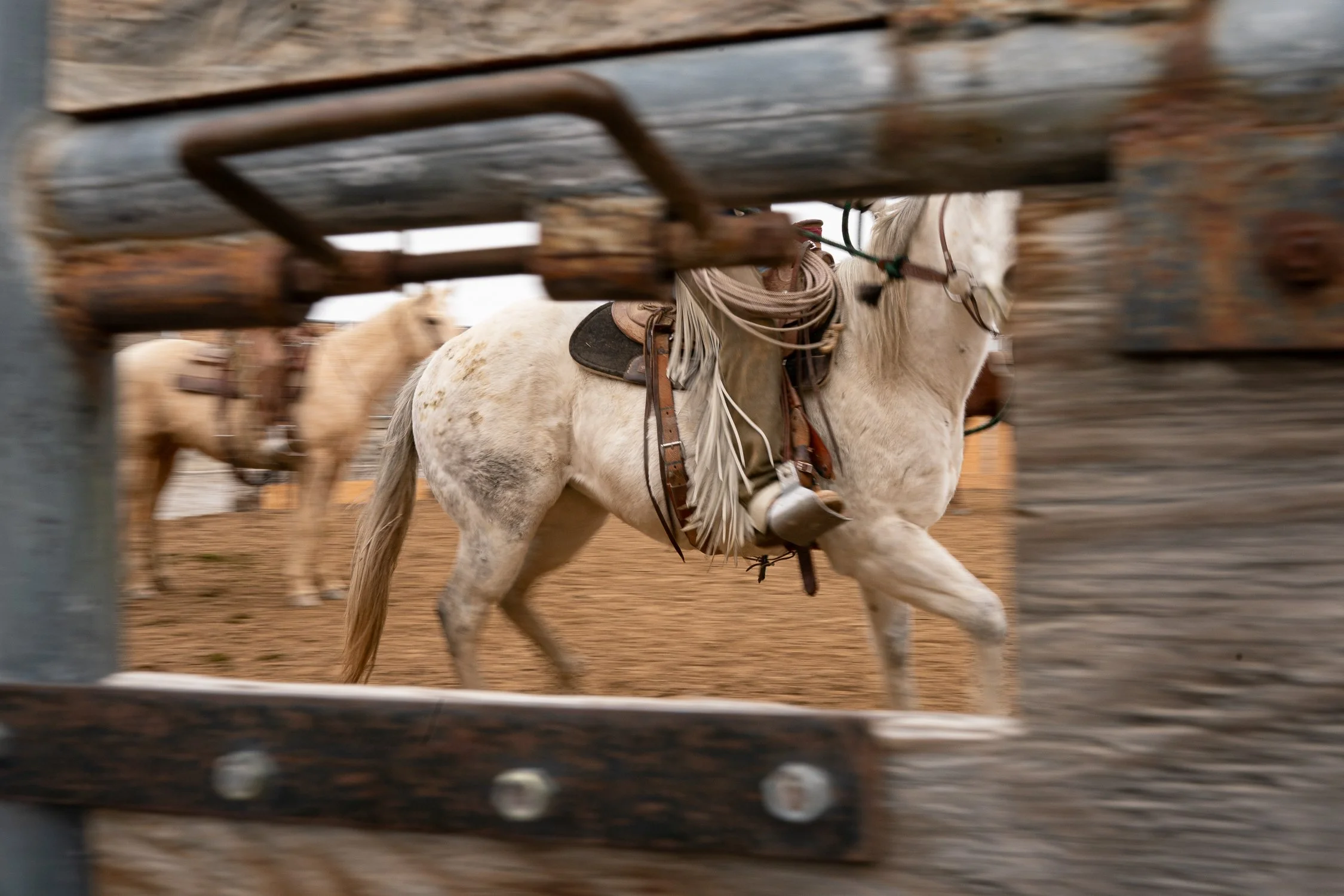
A fleeting glimpse of a saddle horse moving through the corrals during morning work at the C-Punch Ranch.

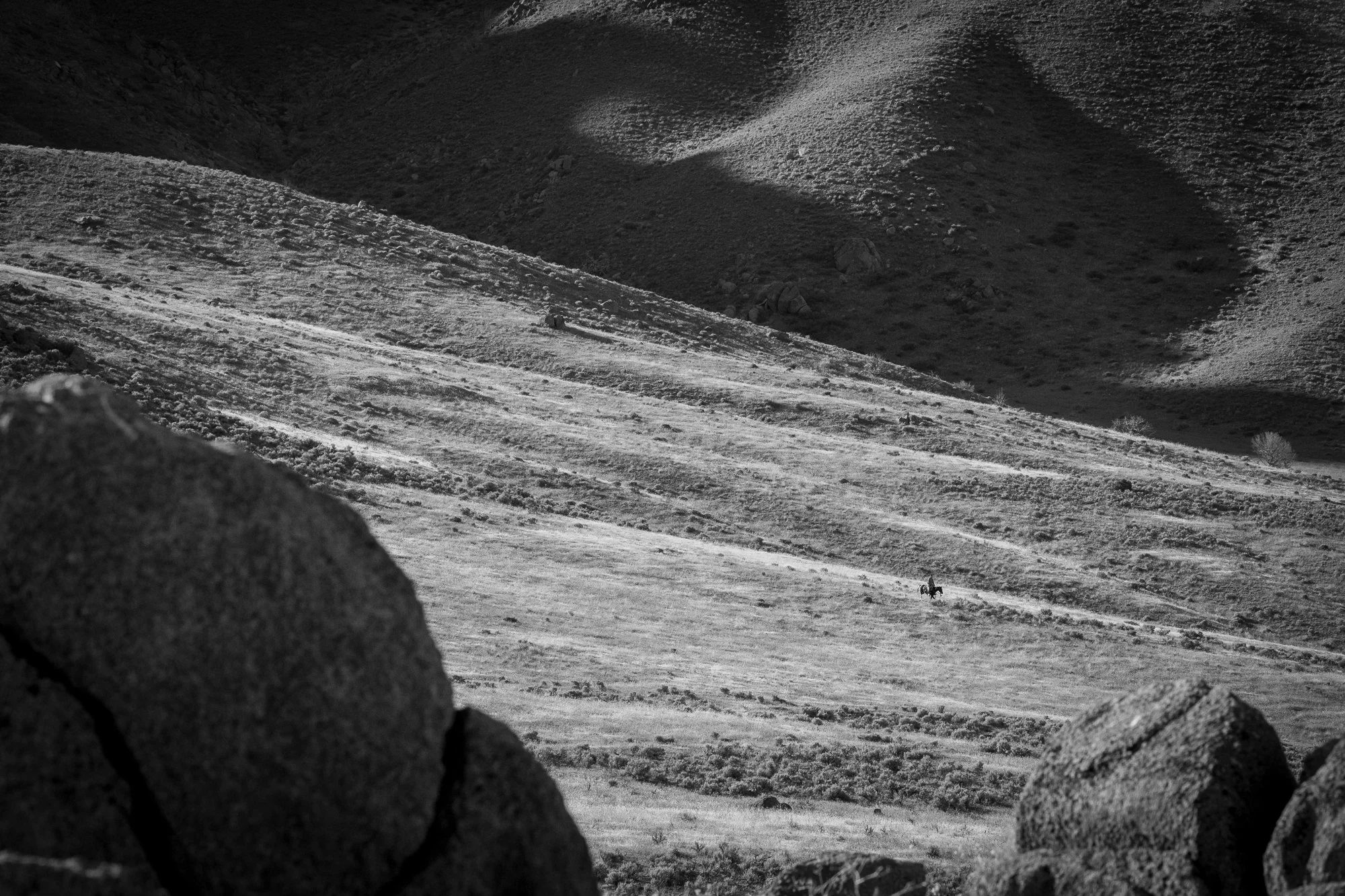
Distant cowboy on horseback riding across a sunlit hillside in the Great Basin near the C-Punch Ranch.

A distant cowboy rides along a sunlit hillside near the C-Punch Ranch, dwarfed by the scale and shadows of the Great Basin.

Wide view of the high desert and distant mountains near the C-Punch Ranch in northern Nevada

A wide view of the high desert near the C-Punch Ranch in northern Nevada, where sagebrush flats meet distant mountains across the Great Basin.

A close look at the traditional buckaroo gear used at the C-Punch Ranch, from the rawhide reins to the well-worn saddle built for long days on the desert range.

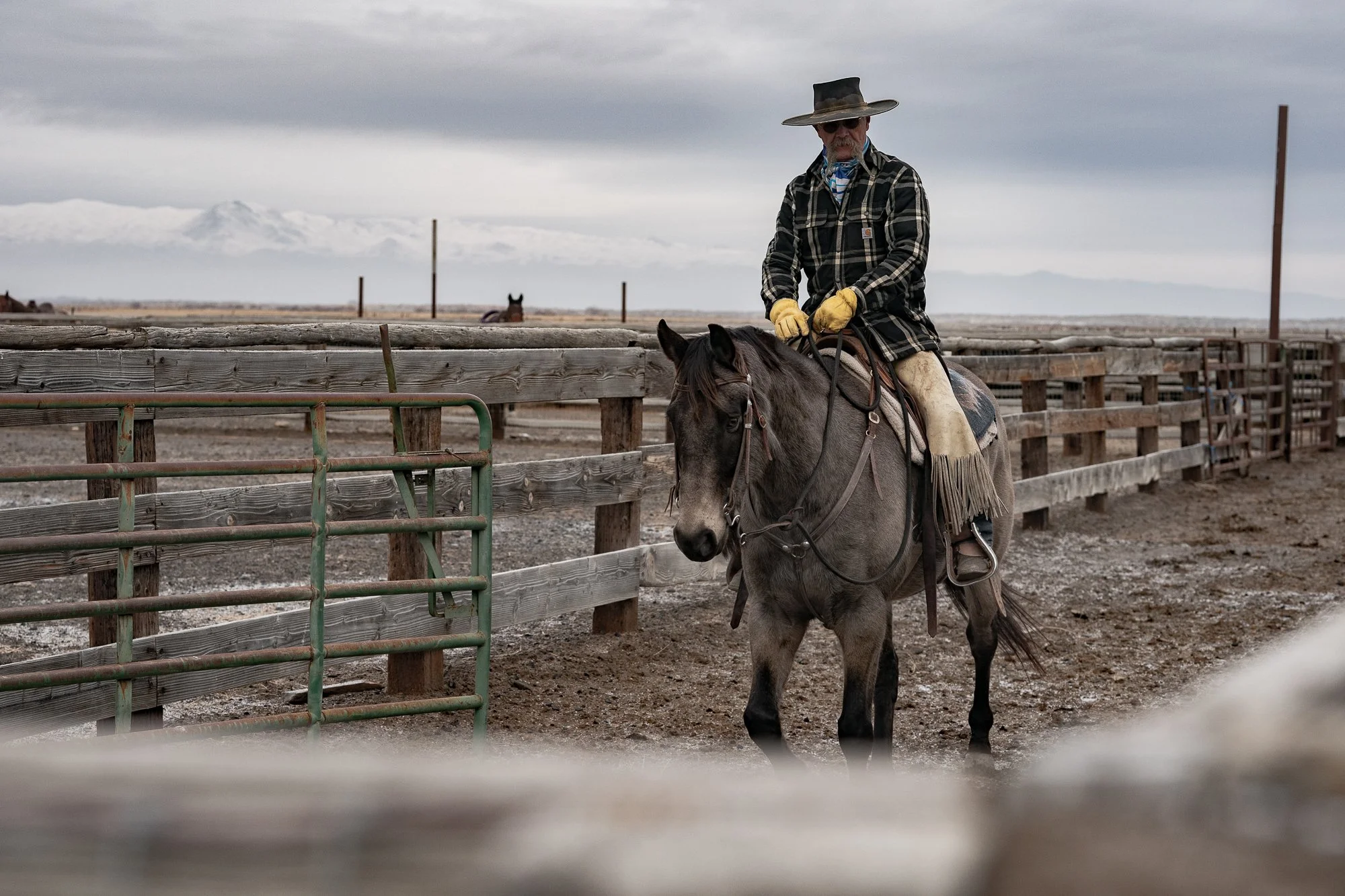
Cowboy riding a horse through the wooden corrals at the C-Punch Ranch in Nevada on a winter morning.

Riding through the corrals at the C-Punch Ranch, a cowboy prepares to move cattle after a cold overnight storm.

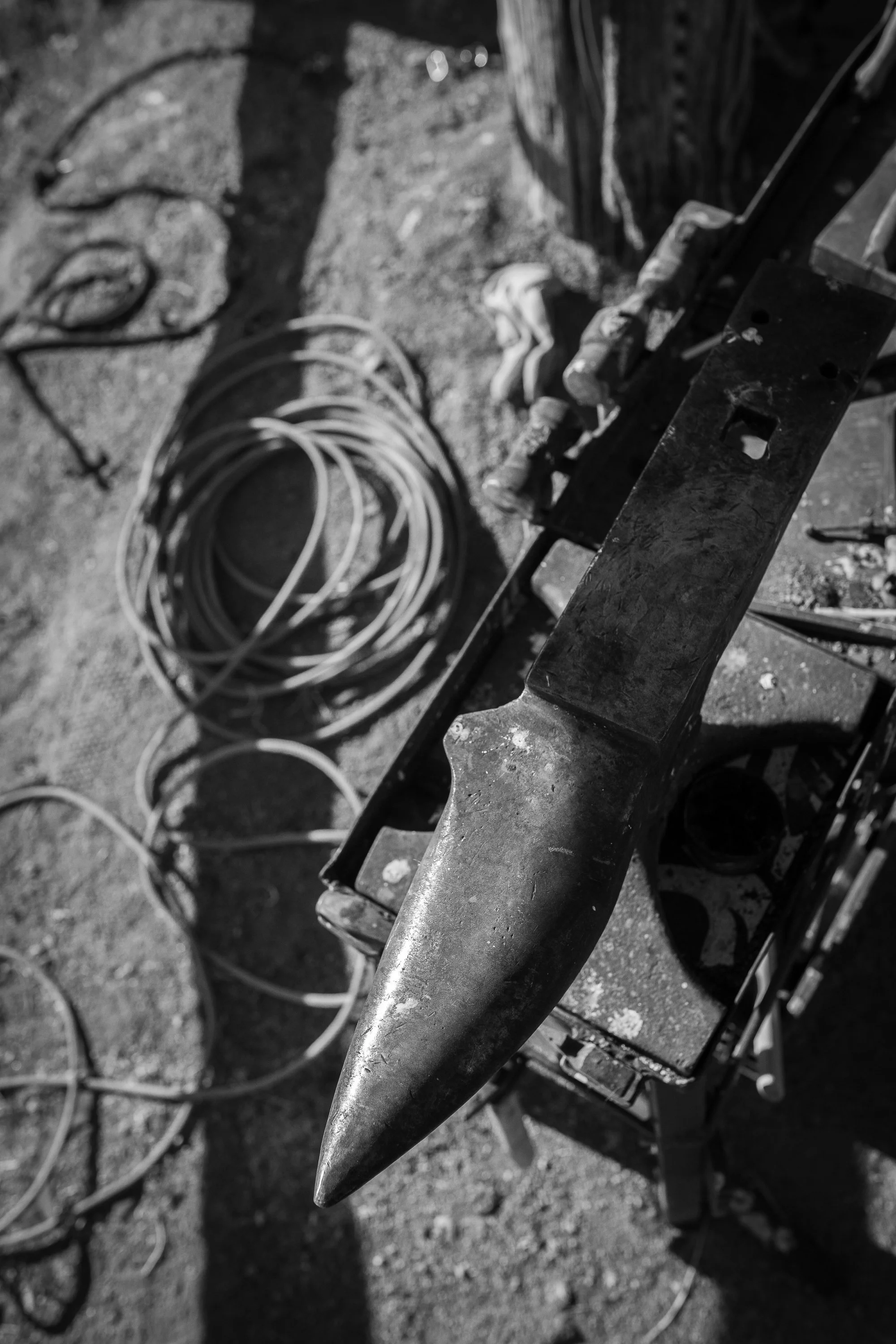
Black-and-white photo of an anvil and ropes on the ground at the C-Punch Ranch.

Anvil and ropes at the C-Punch Ranch, showing the worn metal and dust of daily work during branding season.

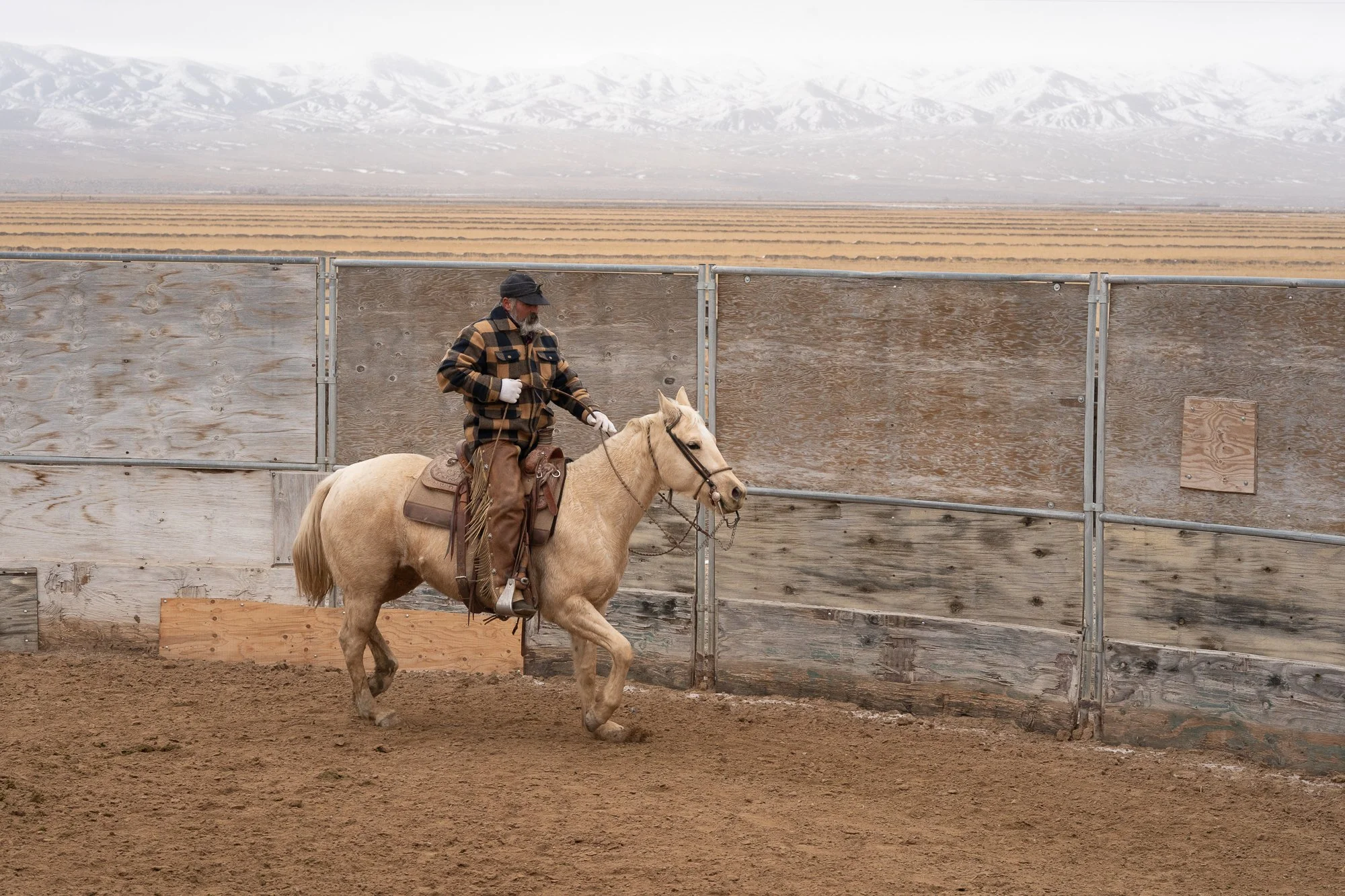
Cowboy riding a horse inside the round pen at the C-Punch Ranch in Nevada with winter mountains in the background.

A cowboy works a young horse in the round pen at the C-Punch Ranch, a daily part of keeping saddle horses sharp through the winter.

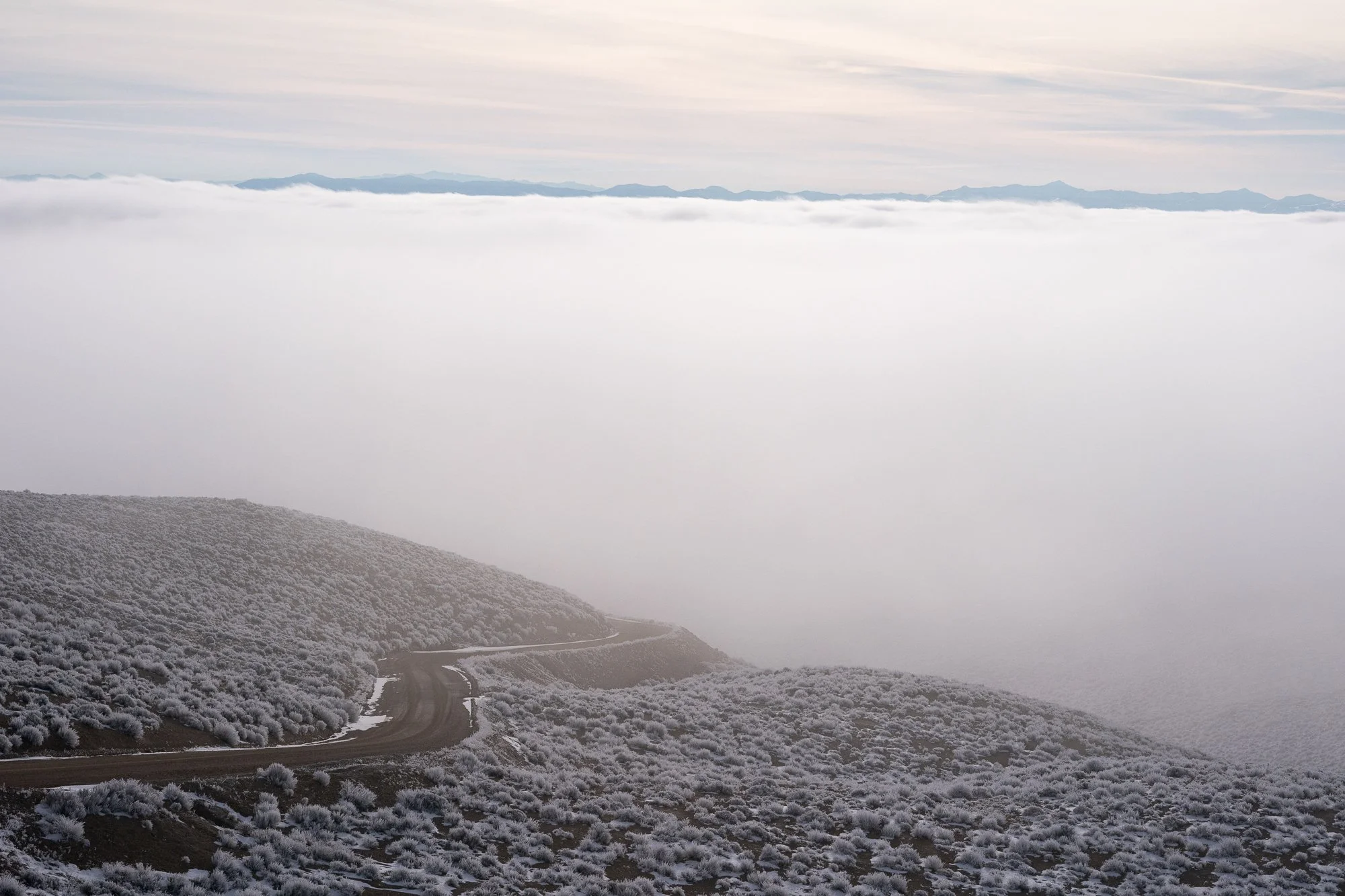
Winter fog covering the Great Basin landscape with the peaks of the Ruby Mountains rising above the clouds.

A thick layer of winter fog settles across the Great Basin near the C-Punch Ranch, leaving only the Ruby Mountains visible above the cloud line.

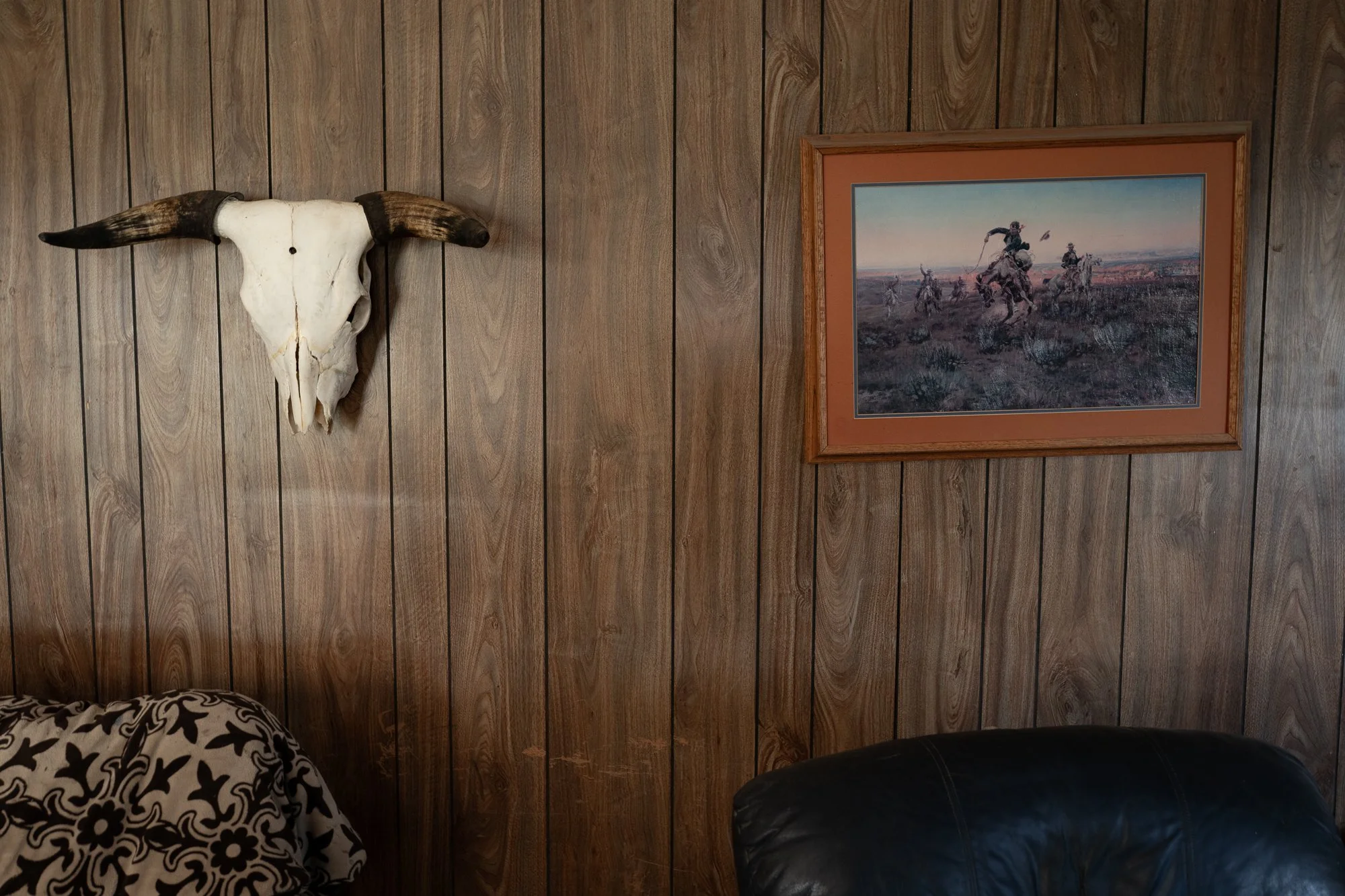
Cow skull and Western painting hanging on a wood-paneled wall inside the C-Punch Ranch bunkhouse.

A cow skull and weathered Western painting hang on the wood-paneled wall of the C-Punch Ranch bunkhouse—a small glimpse into the everyday life of a historic Nevada outfit.

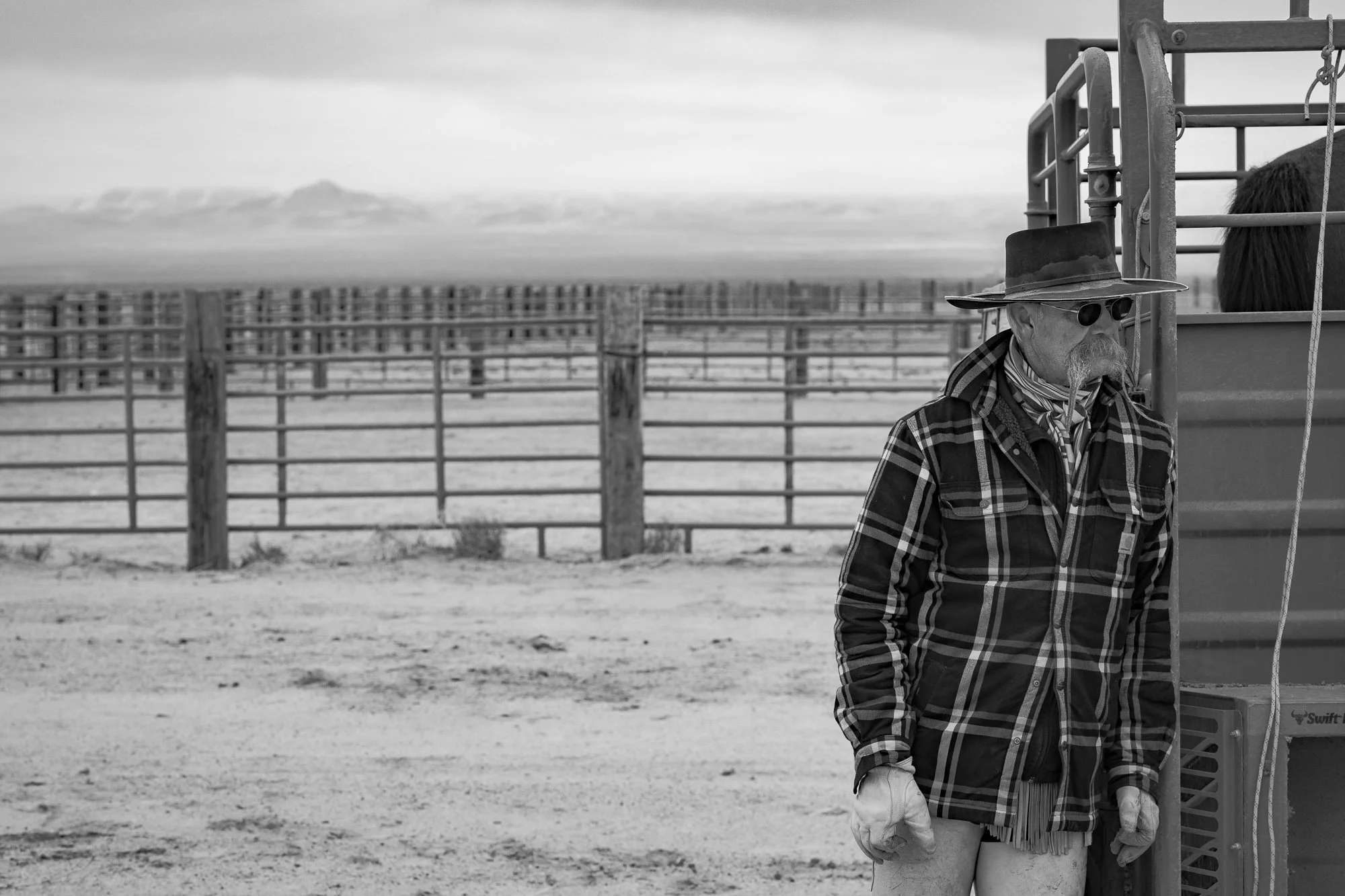
Experienced cowboy standing beside the cattle chutes at the C-Punch Ranch in Nevada on a cold winter morning.

A seasoned buckaroo waits by the chutes at the C-Punch Ranch, preparing for another day of winter cattle work.

Cowboy riding along the fence line near the C-Punch Ranch in Nevada with winter sagebrush and mountains.

A cowboy rides the fence line near the C-Punch Ranch, a daily task in the wide-open winter desert of northern Nevada.

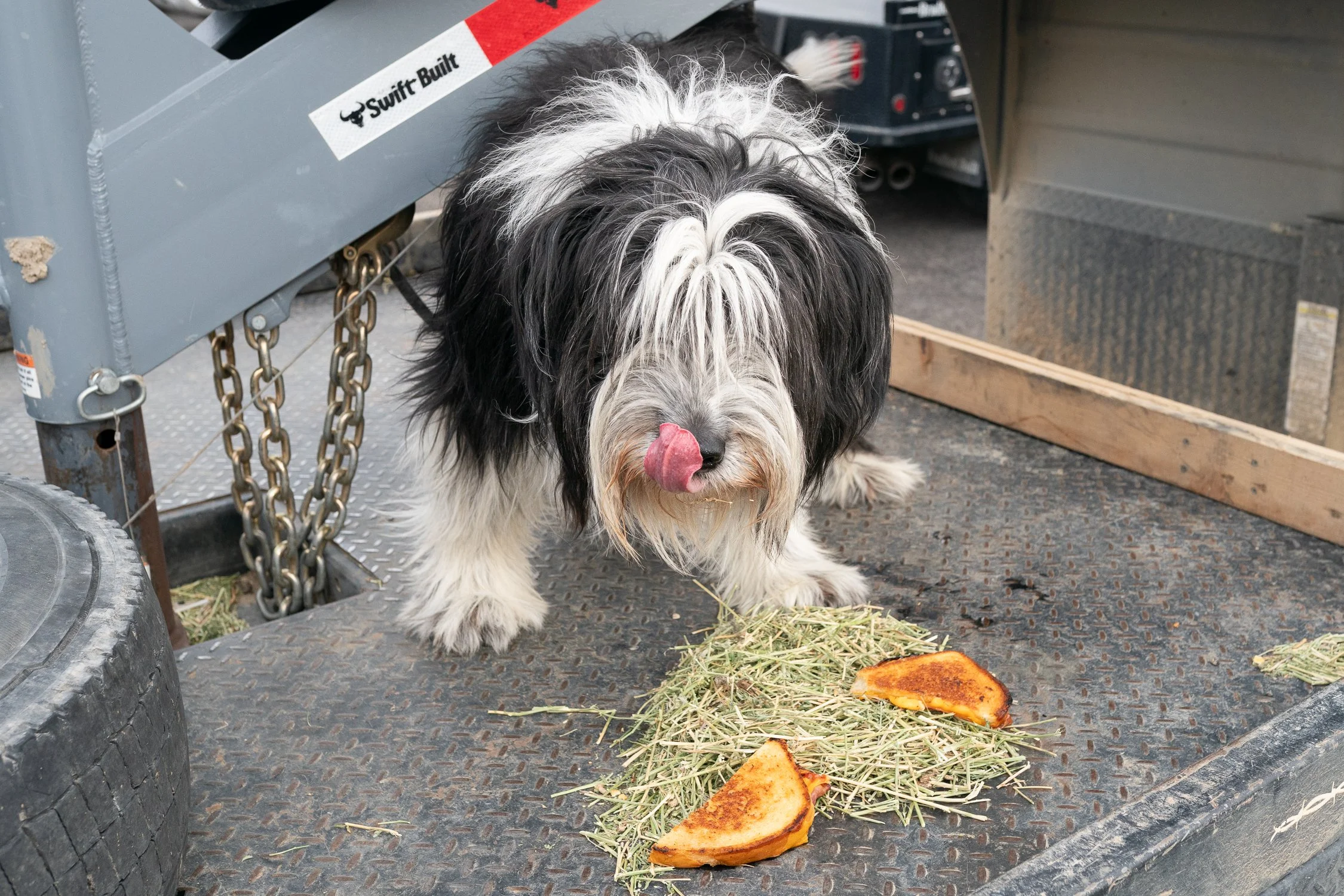
Shaggy ranch dog eating scraps beside a horse trailer at the C-Punch Ranch in Nevada

ranch dog sneaks a makeshift lunch beside the horse trailer — a small slice of daily life at the C-Punch.

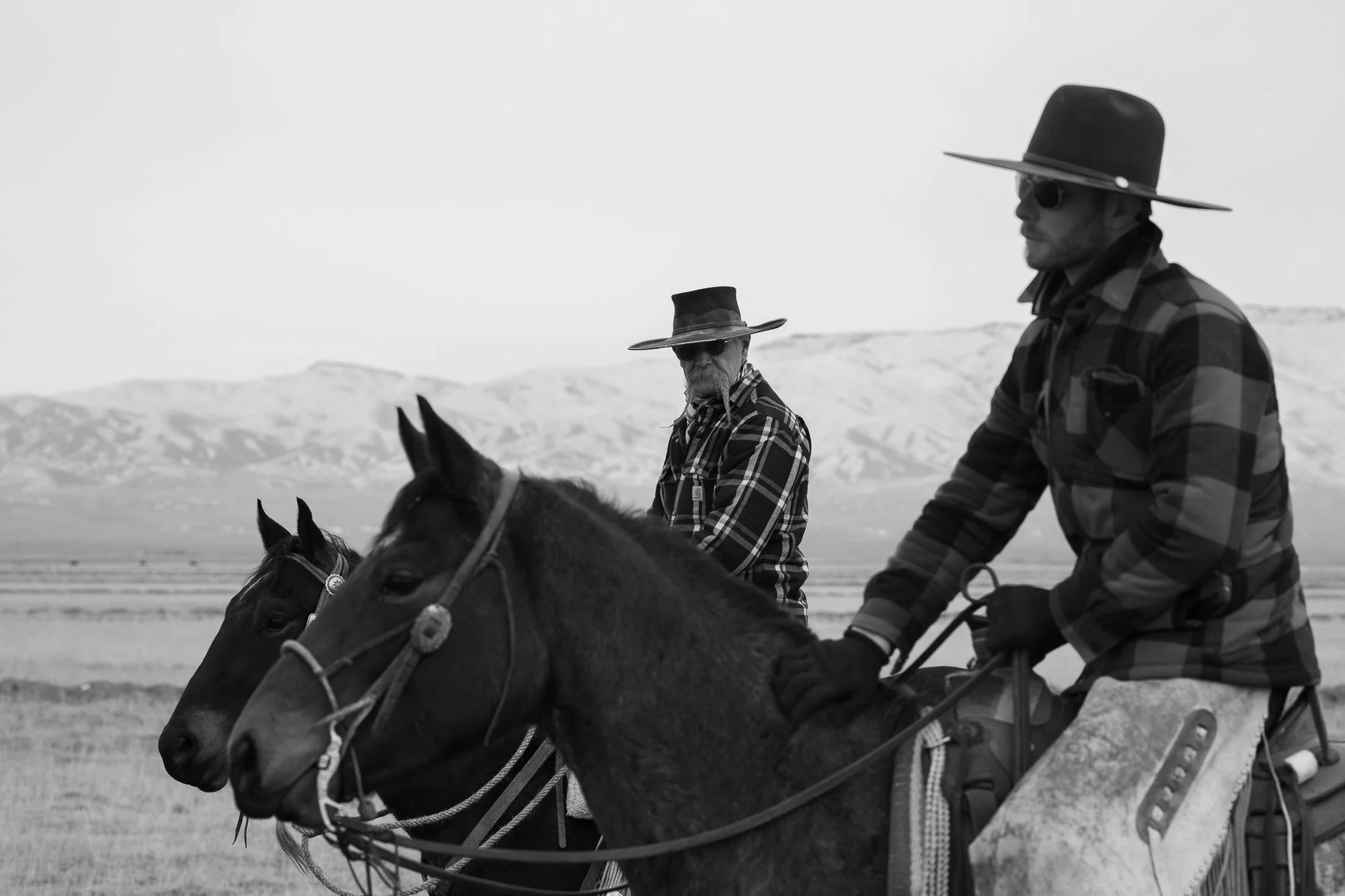
Two cowboys on horseback at the C-Punch Ranch with snow-covered Nevada mountains in the background.

Cowboys at the C-Punch Ranch pause on horseback as morning light hits the snow-covered mountains of the Great Basin.

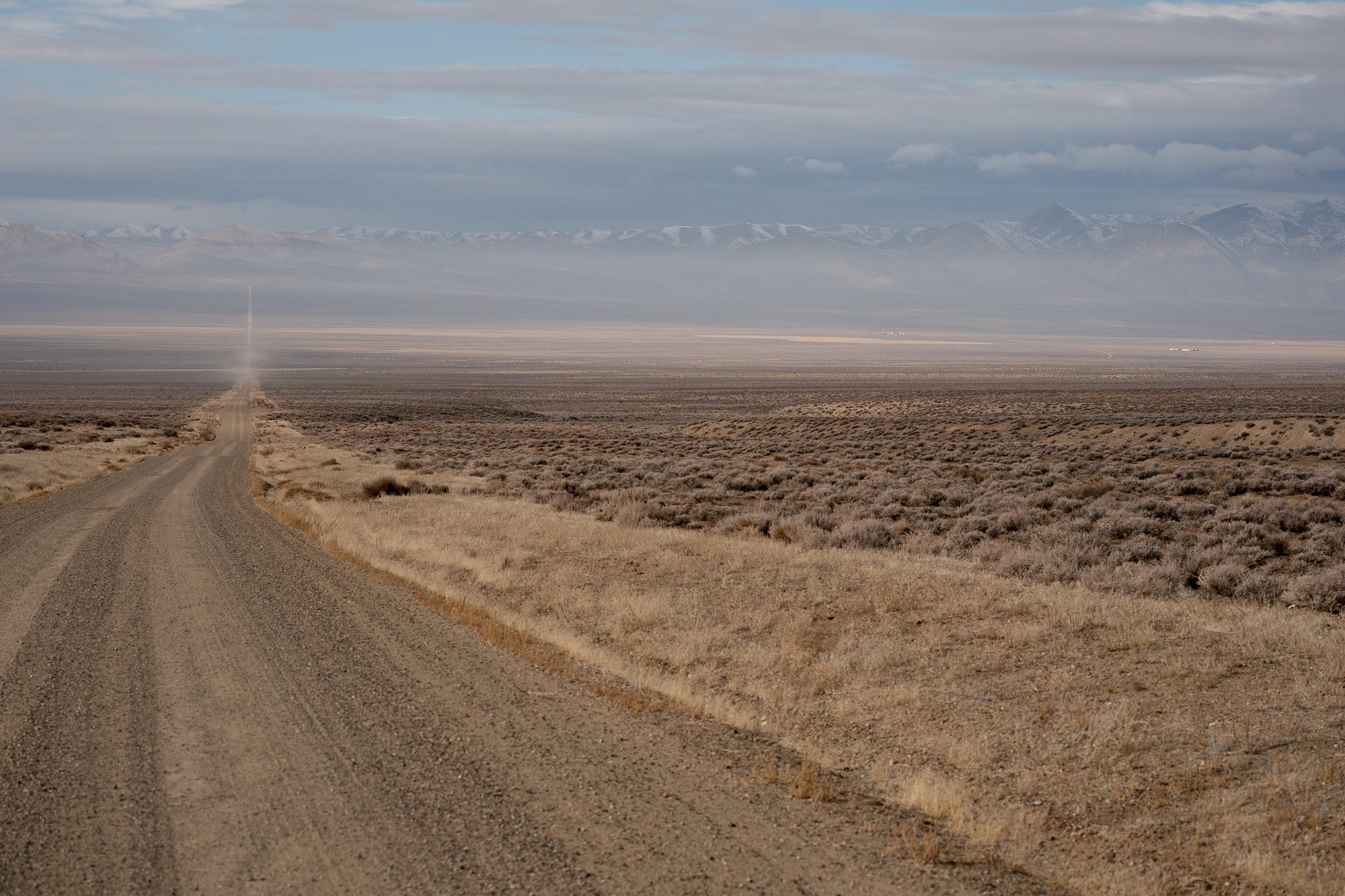
Long dirt road stretching across the Great Basin near the C-Punch Ranch with distant mountains.

A dirt road cuts across the Great Basin near the C-Punch Ranch, capturing the vast, quiet space of Nevada’s high desert.

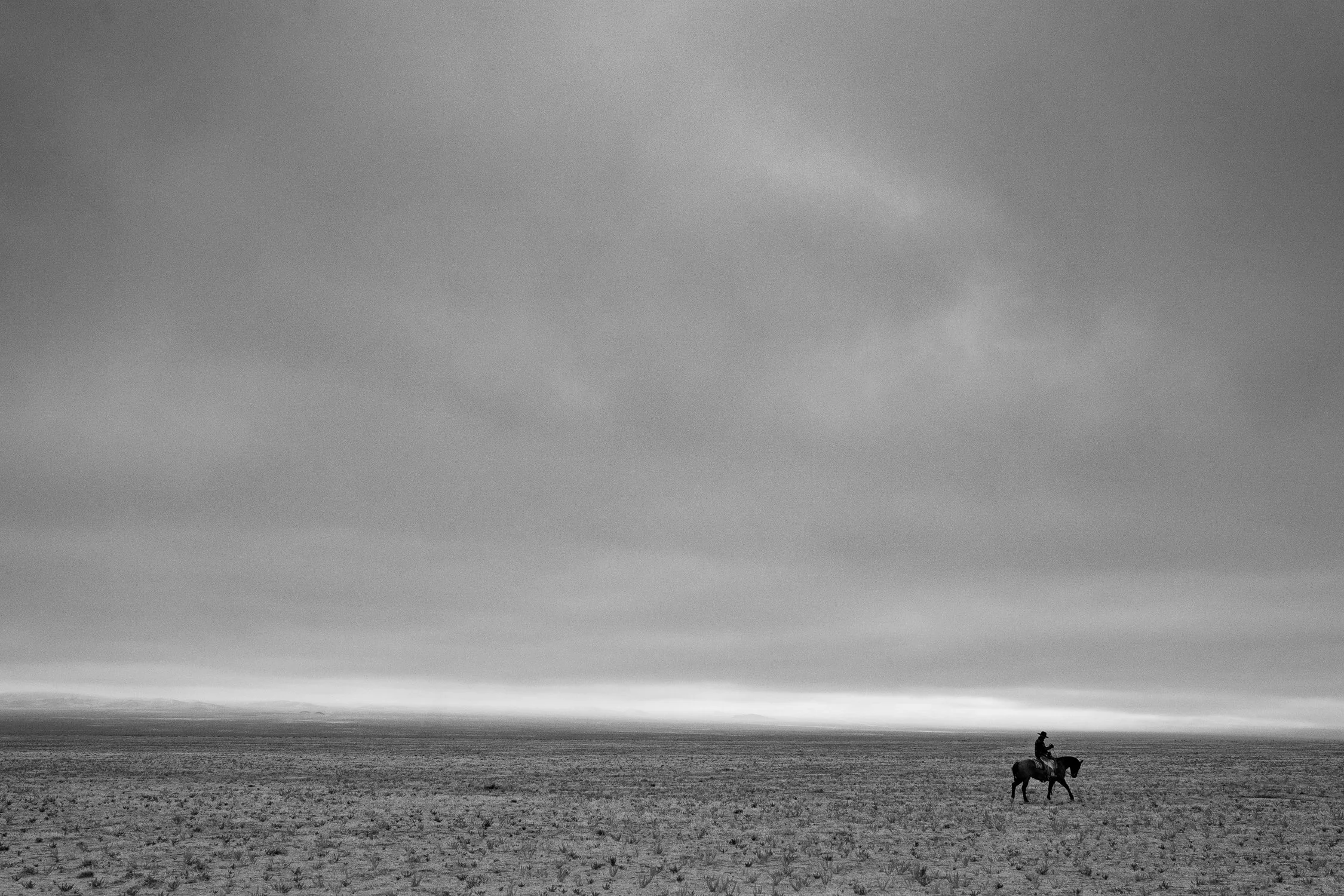
A single rider crosses the open winter range—one of the most iconic sights in the Great Basin buckaroo tradition.

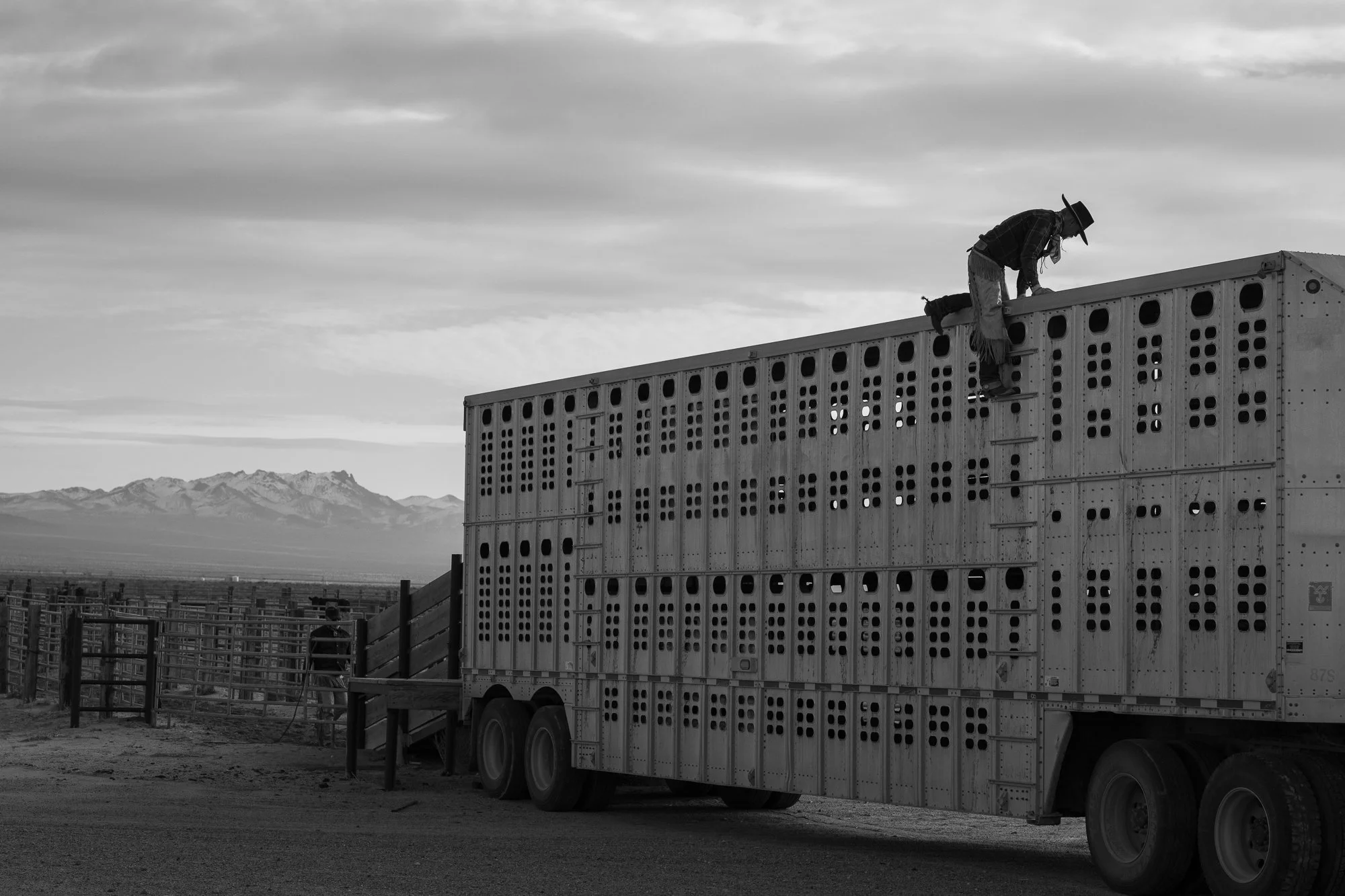
Cowboy climbing the outside of a livestock trailer at the C-Punch Ranch in Nevada.

A cowboy climbs a livestock trailer at the C-Punch Ranch as cattle are prepared for shipping across the winter range.

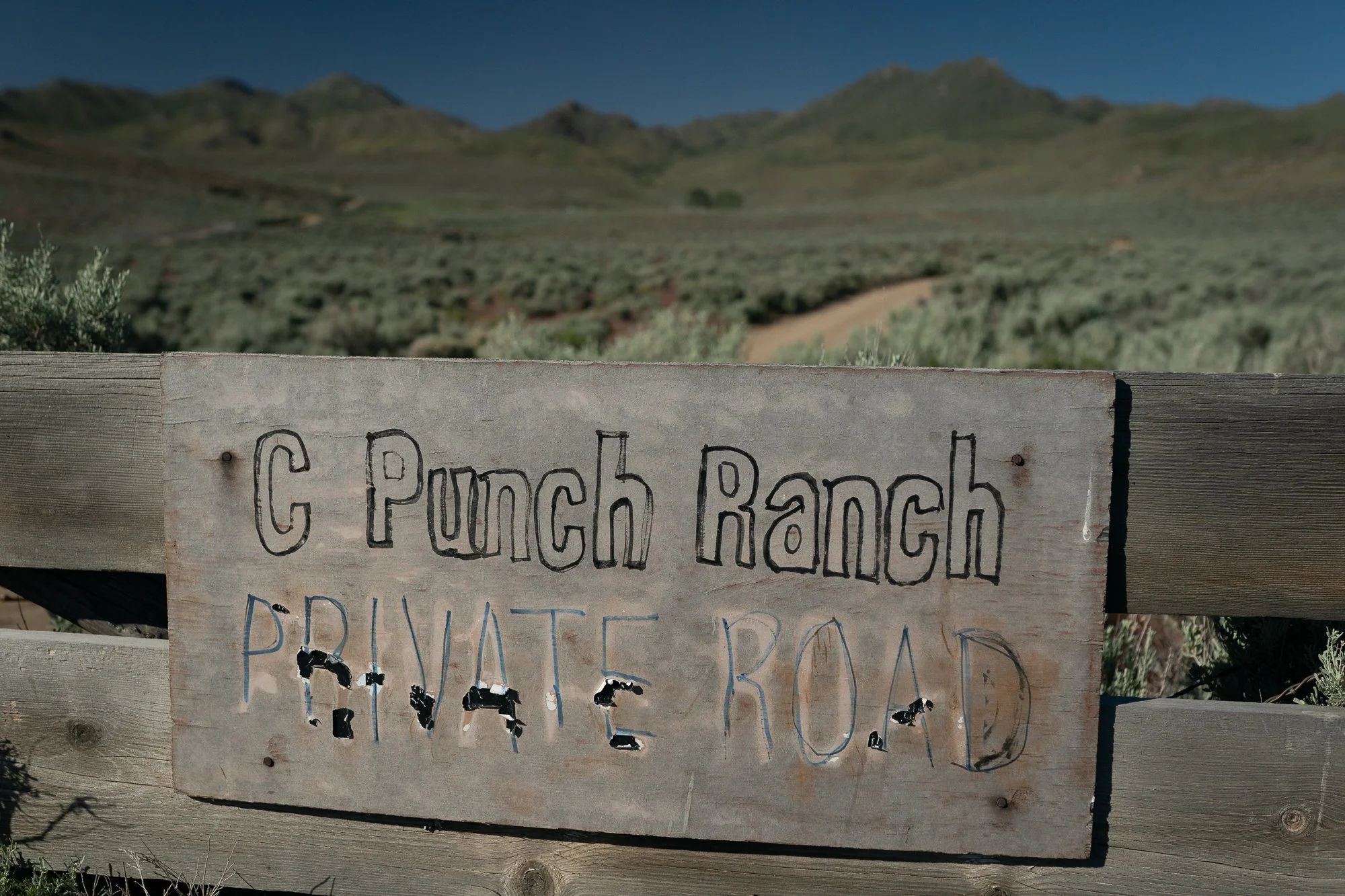
The hand-painted sign at the entrance to the C-Punch Ranch, marking the start of a long dirt road that winds deep into the sagebrush country of northern Nevada.

Black & White Fine Art Photography of the American West

Black and White Cowboy Wall Art for Western Homes

There’s a reason black and white photography has always had a place in Western homes.

It doesn’t compete with the space. It settles into it.

In ranch houses, mountain homes, and Western interiors, the strongest wall art isn’t loud or decorative. It reflects the land, the work, and the people connected to it. Black and white cowboy photography does that naturally—stripping everything down to light, texture, and moment.

But not all cowboy wall art is the same.

Why Black and White Works in Western Interiors

Western homes tend to be built around natural materials—wood, leather, stone, steel. Color photography can sometimes fight those elements.

Black and white doesn’t.

It fits into:

  • rustic ranch houses

  • mountain cabins

  • modern Western interiors

  • offices and hospitality spaces

Instead of overpowering, it becomes part of the room in complimentary way.

That’s why so many collectors and designers gravitate toward black and white cowboy wall art. It feels timeless, not tied to trends.

Black and White Cowboy Photography Prints vs Western Decor

Most Western wall art you find online is designed to match a theme. Bright colors. Clean outfits. Staged scenes. But real cowboy photography comes from a completely different place.

These photographs are made:

  • on working ranches across the American West

  • during branding, roping, and everyday ranch work

  • in harsh conditions, not controlled environments

The difference shows.

There’s a weight to these images that doesn’t come from styling—it comes from reality.

That’s what separates authentic cowboy photography prints from mass-produced Western decor.

The Power of Black and White in Cowboy Photography

Without color, the focus shifts.

You start to see:

  • the dust in the air

  • the tension in a rope

  • the wear in a saddle

  • the expression on a cowboy’s face after a long day

Black and white removes distraction and leaves only what matters.

It turns a moment into something more permanent.

That’s why this style has been used for decades to document the American West—and why it continues to resonate with collectors today.

Museum-Quality Cowboy Photography Prints

Not all prints are created the same way.

For collectors and interior designers, the difference comes down to craftsmanship:

  • archival, museum-grade paper

  • precise tonal range in black and white

  • large-format printing

  • carefully limited editions

These details aren’t always obvious at first glance, but they determine how the work holds up over time.

Shop Black and White Cowboy Photography Prints

If you’re looking for black and white cowboy wall art created on working ranches across the American West, you can view the full collection here:

Shop Cowboy Photography Prints

Part of a Larger Documentary Project

For more than a decade, this work has focused on photographing the daily lives of working cowboys across the West.

Not staged. Not recreated.

Just the work as it happens.

To see more from the full project:

Authentic Cowboy Photography Project

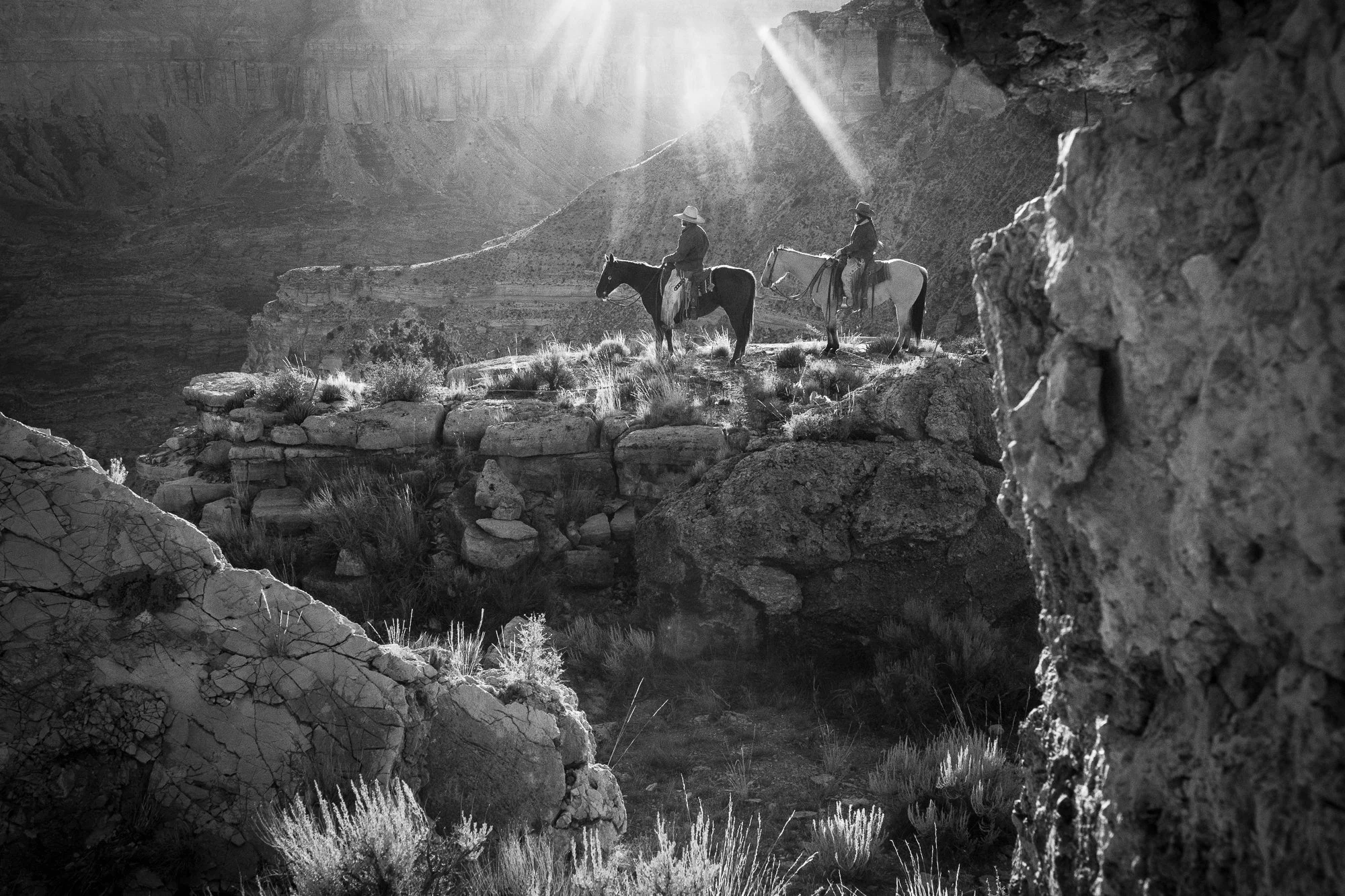
Cowboys on horseback overlooking a canyon in the American West, black and white photograph.

Cowboys on horseback overlooking a canyon during a pause in the workday.

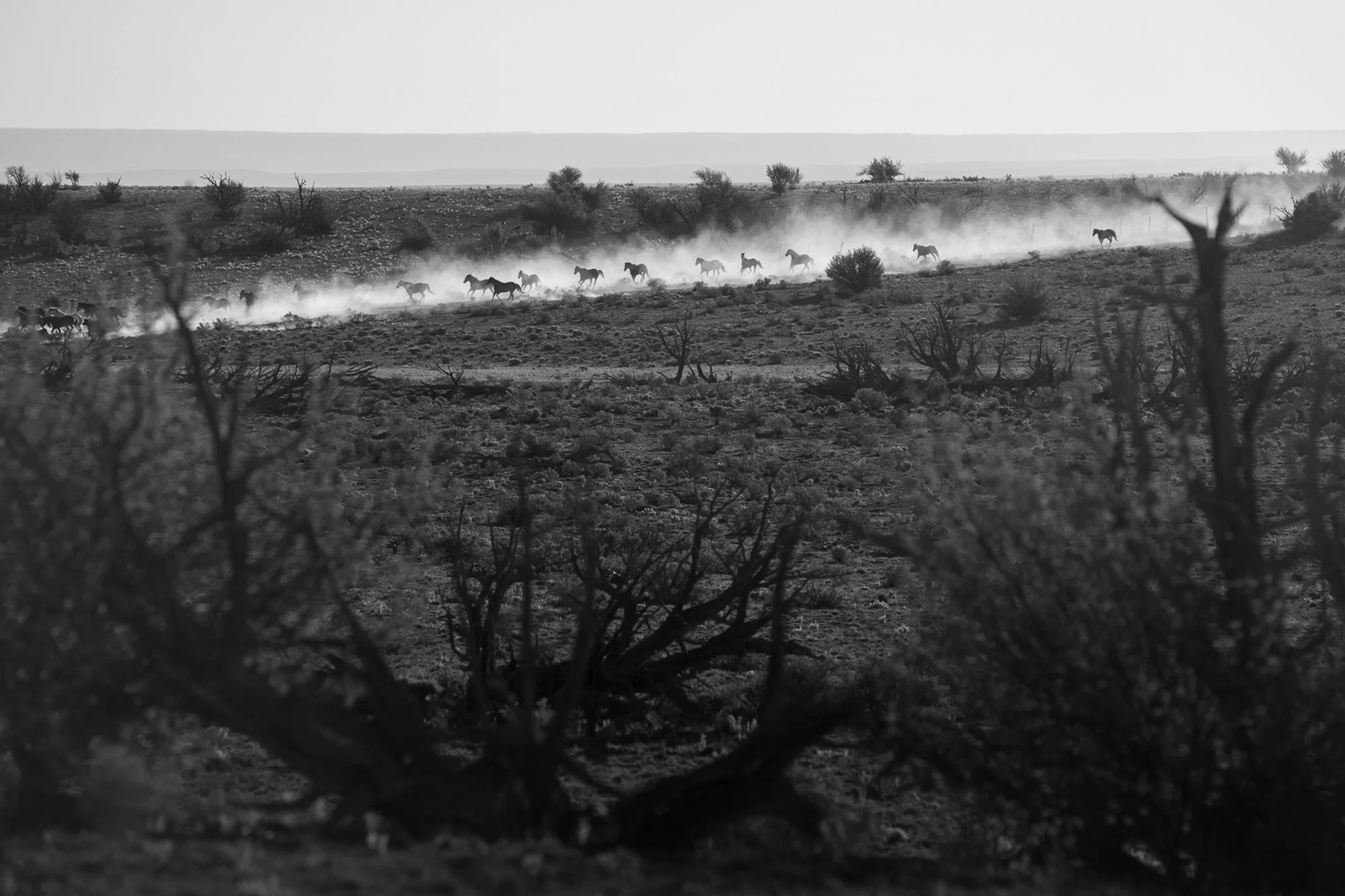
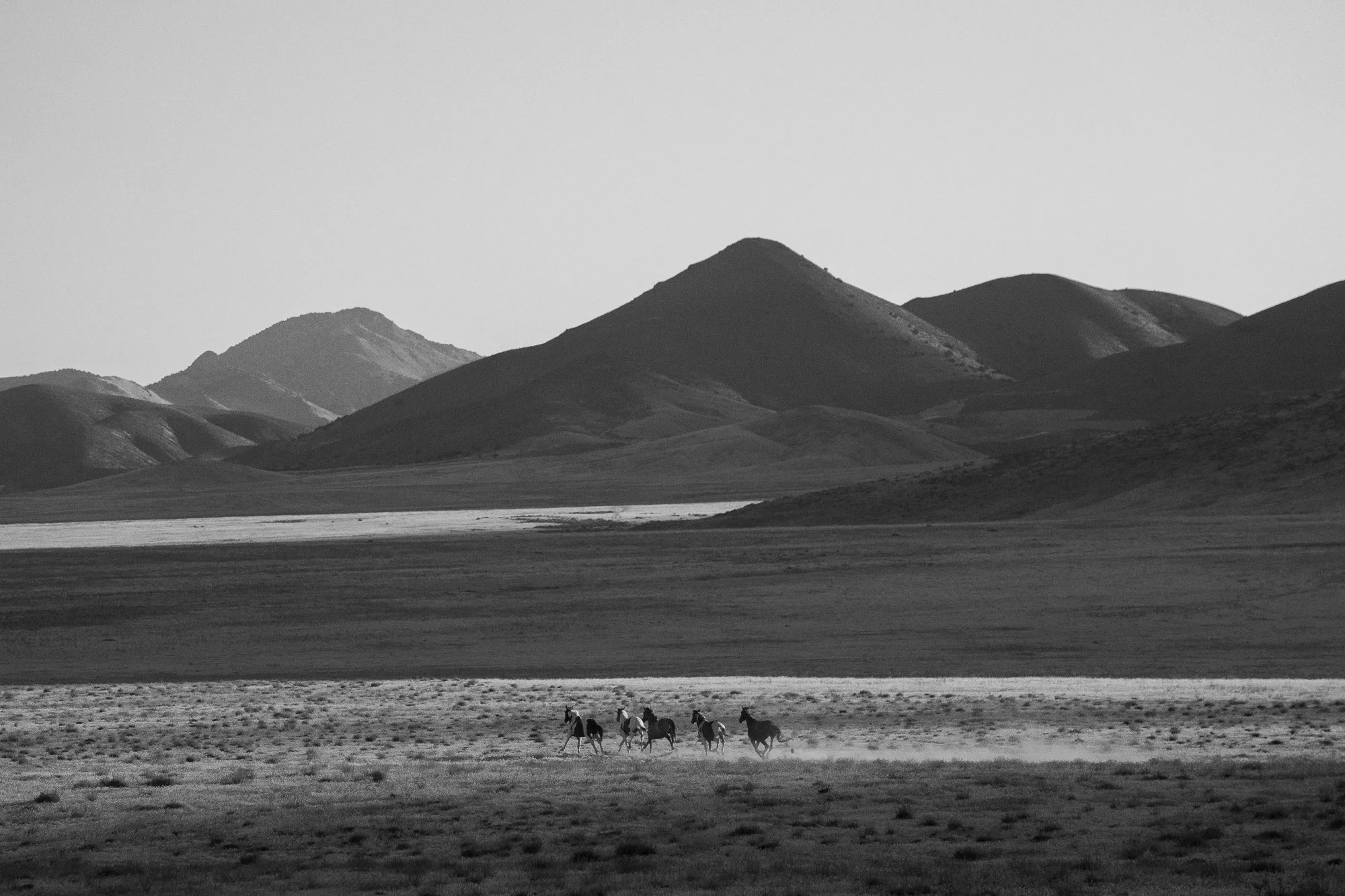
Horses running across open range in the American West, black and white photograph.

Horses moving across open range, dust rising in the distance.

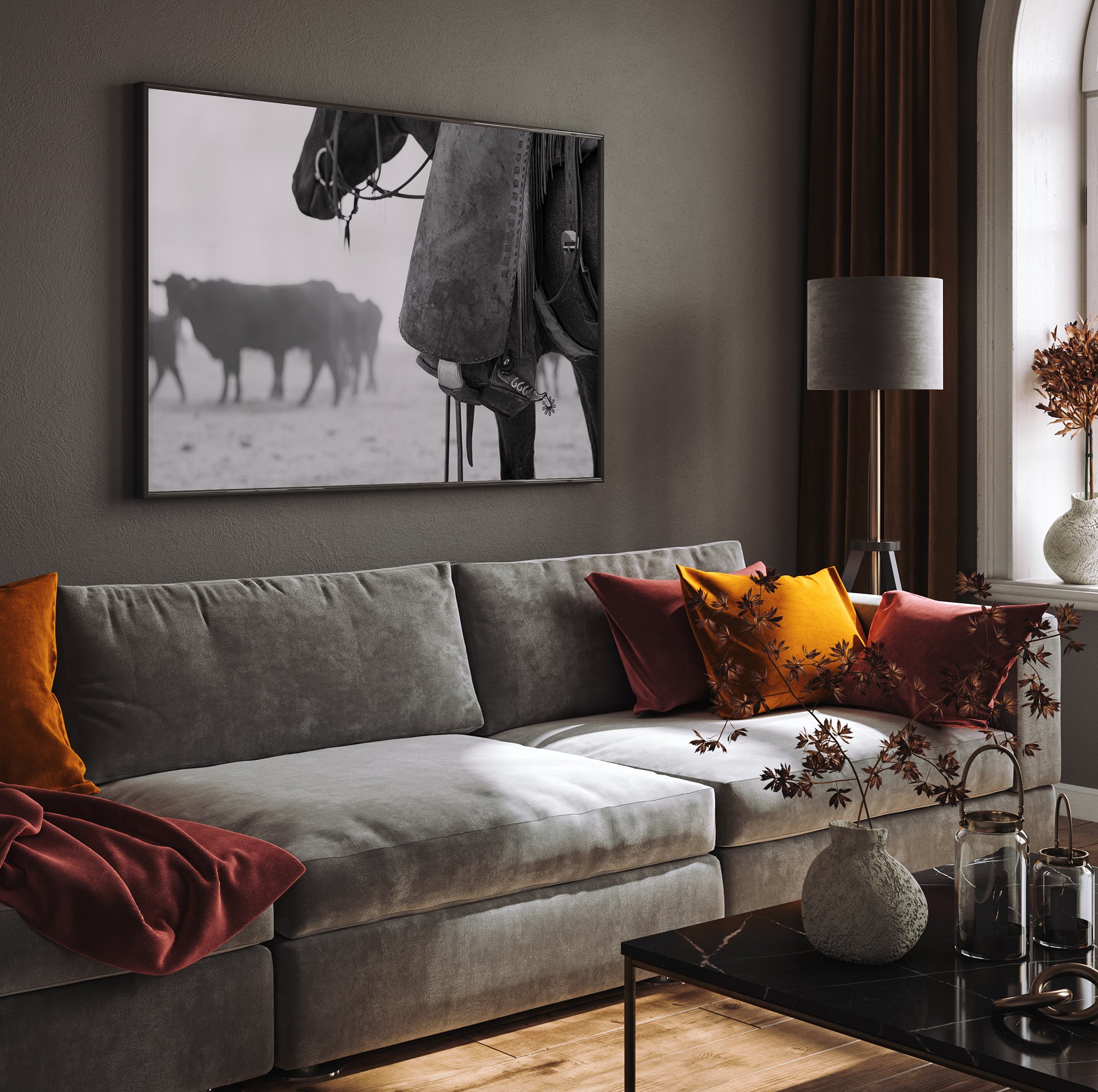
Black and white cowboy photograph installed in a private interior setting.

Black and white cowboy photograph installed in a private interior.

Studio photograph of a Western saddle displayed in a contemporary interior.

Studio photograph of a Western saddle displayed in a contemporary interior.

Western Artist William Matthews

William Matthews – Legendary Western Artist and His Creative Studio in Denver

William Matthews (born 1949) is one of the most influential painters of the American West — best known for his evocative watercolors of working cowboys, landscapes, ranch life, and Western culture. Though he didn’t grow up in the West, his artistic journey has taken him from New York City to studios and ranches across the region. I recently spent time photographing him in his Denver studio to document both the man and the creative space that shapes his work.

Meeting William Matthews — A Western Artist Icon

Although he doesn’t come from The West and wouldn’t restrict himself to the title of Western Artist, there is no denying the indelible effect William Matthew’s work has had on Western culture.

As with most of my subjects in any genre, it’s important that I have a genuine interest. And I’ve long been a fan of Matthews’ art, which was the reason for this collaboration. At 76 years young he’s full of life and still has an insatiable desire to create art at a prolific pace. So having the opportunity to meet and photograph Matthew’s at work in his Denver, CO studio was a gift i’ll always be grateful for. A lot of artists can’t be bothered with this kind of thing, but he was welcoming and generous with conversation throughout our time together.

Shared Stories from Historic Ranches Across the West

Of the many compliments you could say about an artist, perhaps the best is that their style is instantly recognizable. And there’s no mistaking the renowned paintings he created of the American West, specifically of the buckaroos in nothern Nevada. There isn’t another artist alive whose work even vaguely resembled Matthews’. Which could be a big reason for his success, but it was also what drew me to him. Digest his paintings for a while and you’ll know they were created by a person that truly became part of the life. He was there. The light, colors, and textures, and the body chemistry of his subjects could only be made by a person with first hand experience. So naturally we talked a lot about our experiences having visited a lot of the same ranches. Oddly, a few days before writing this post, I came back from the Winecup Gamble Ranch - a place he frequented. A number of his paintings of the ranch grace the walls there and his book “Working The West” sits proudly on the coffee table at the big house. To further the conversation about shared experiences we also spoke about Western Spirit: Scottsdale’s Museum of the West, where I was honored to have work on the walls at the same time as his incredible exhibition.

Capturing the Atmosphere of an Artist’s Workspace

Matthew’s has lived a life in art. It is his life, and that’s obvious when you walk into his beautiful studio, which I’m told he hadn’t ever granted access to. The shelves are filled with books about design - previous profession and gateway into art. The floors are a beautiful hard wood that accents the rich walls filled with momentos from decades of travel, and of course, art. The upstairs loft feels like a break room of sorts, where Matthews goes to play one of the dozen guitars that line the space. All of this is obviously bathed in beautiful light from the north facing window that he designed along with the rest of the studio.

Photographing an artist like this in his sanctuary should never be taken lightly. And there is also a lot to consider when it comes to the plan of attack. First and foremost is respecting their time. Beforehand I had it in my head to set up a few strobes, but quickly realized that half hour would be better spent photographing documentary style as a fly on the wall with available light. For someone like Matthews, all that matters is the art. He doesn’t care about having his photograph made, nor does he need it. So I made it a point to be as effective as possible in as little time as possible so he could get back to it.

How Matthews’ Work Connects to Cowboy Photography

William Matthews has spent decades painting working cowboys — not the Hollywood version, not the myth, but the real men who ride out before the sun and come home only when the work is done. His watercolors aren’t loud or romanticized. They’re quiet, restrained, and deeply observant. The details matter: the way a hat sits after a long day, the posture of a rider checking cattle, the weight of open country pressing against a lone figure.

That’s the same thread that runs through my own cowboy photography, and I have and continue taking heaps of inspiration from Matthews’ Buckaroo paintings.

While Matthews works in watercolor and I work with a camera, the intent feels similar — to pay attention to the people who actually live this life. To show the labor behind the image. To acknowledge that raising cattle and maintaining ranch traditions is demanding, physical work that still feeds communities and shapes the American West.

His paintings slow the viewer down. They invite you to notice subtle shifts in light, gesture, and atmosphere. Photography, at its best, can do the same. Both mediums rely on observation. Both depend on trust — the kind that allows you to step into a rancher’s world without turning it into spectacle.

Spending time in his studio made that connection even clearer. Matthews’ walls are lined with studies, reference images, and decades of visual research. The work doesn’t happen by accident. It’s built on repetition, discipline, and showing up again and again — something I’ve learned firsthand while photographing working cowboys across the West for more than a decade.

Different tools. Same subject. Same respect for the culture.

Photographing Working Cowboys of the American West

If you’re drawn to Matthews’ iconic interpretation of working cowboys, you may also appreciate my ongoing photographic project documenting ranch life across the American West. You can view the full series of working cowboy photographs here.

Another Voice in Contemporary Western Art

William Matthews’ work has helped define the modern image of the working cowboy. I’ve also spent time photographing iconic Western artist Teal Blake — another painter deeply rooted in the culture of the American West. See those photographs here.

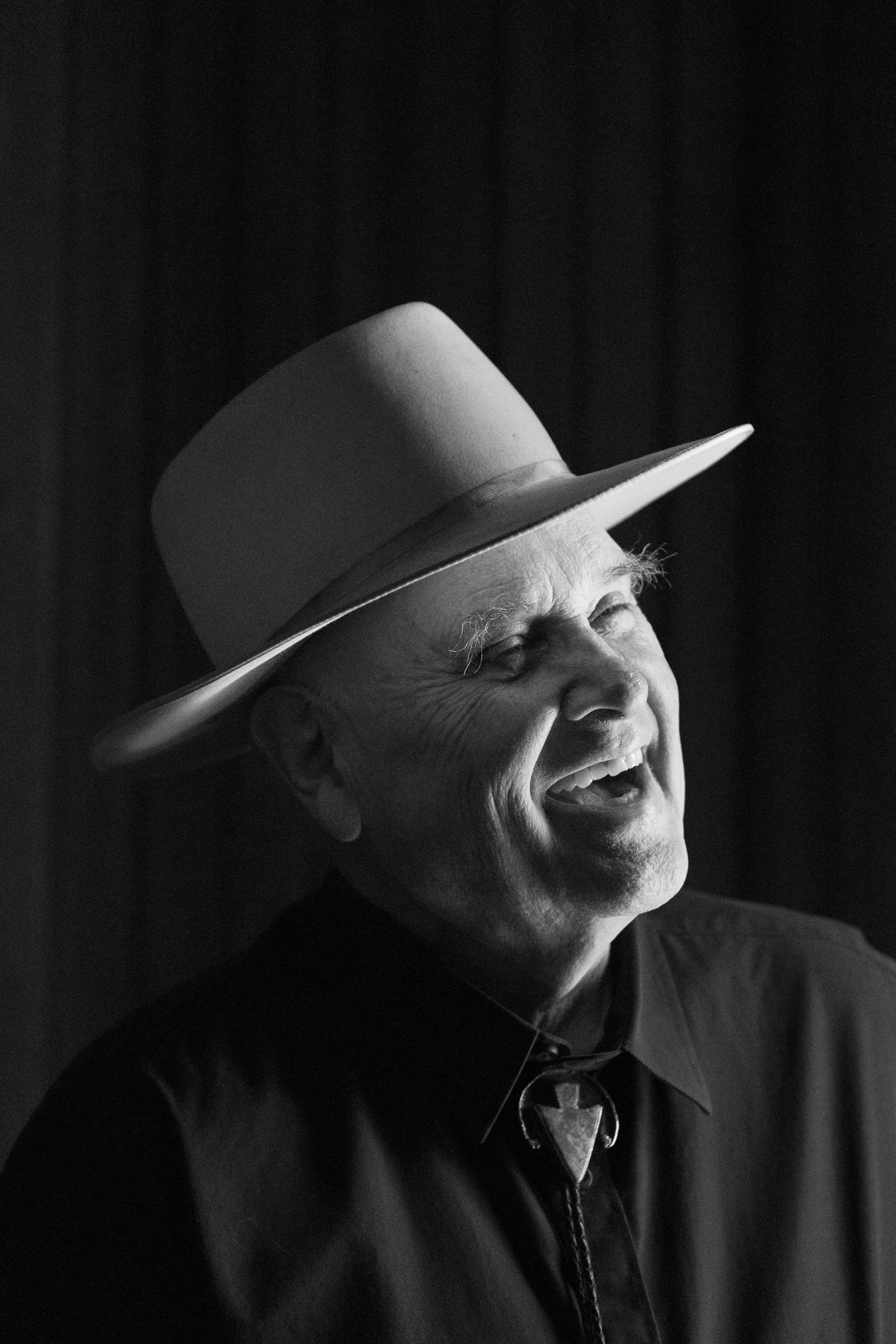
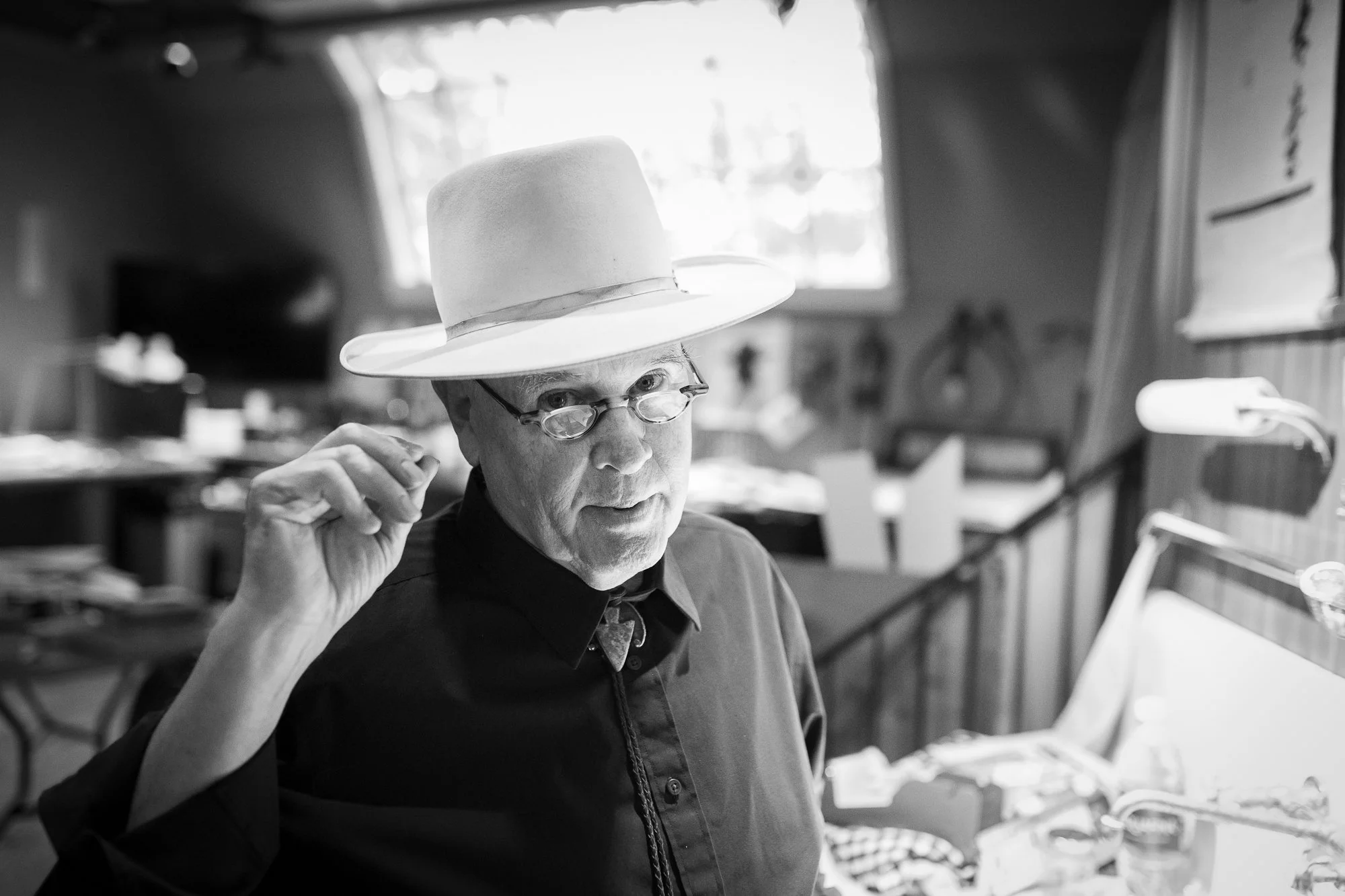
Western artist William Matthews laughing in warm studio light wearing a cowboy hat and bolo tie

William Matthews in a candid moment inside his studio. His paintings of working cowboys and ranch life have become a defining voice in contemporary Western art.

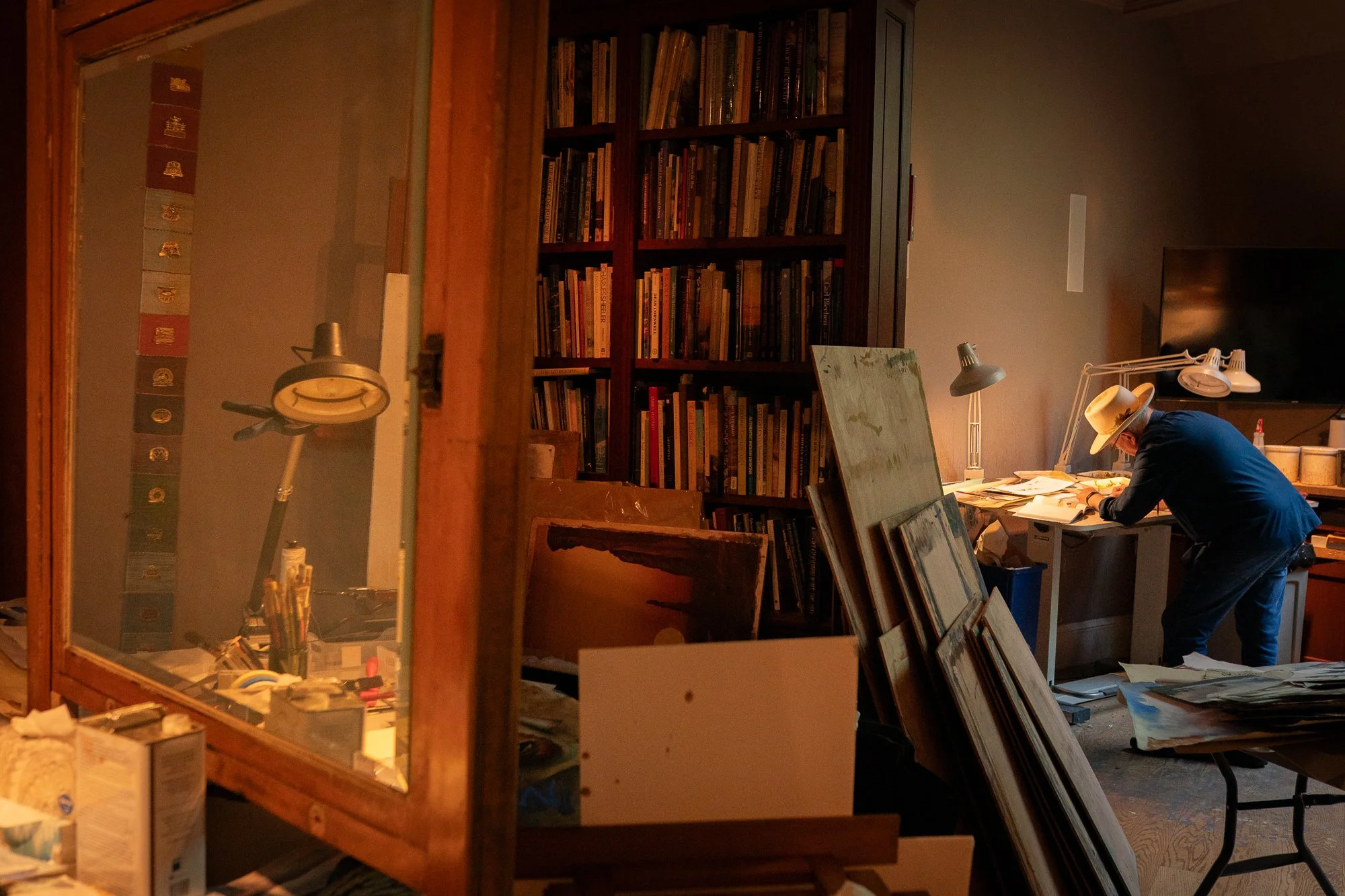
William Matthews working at his desk surrounded by books and paintings in his Western art studio

Matthews at work in his Colorado studio, surrounded by reference books, studies, and decades of accumulated material that inform his paintings of the American West.

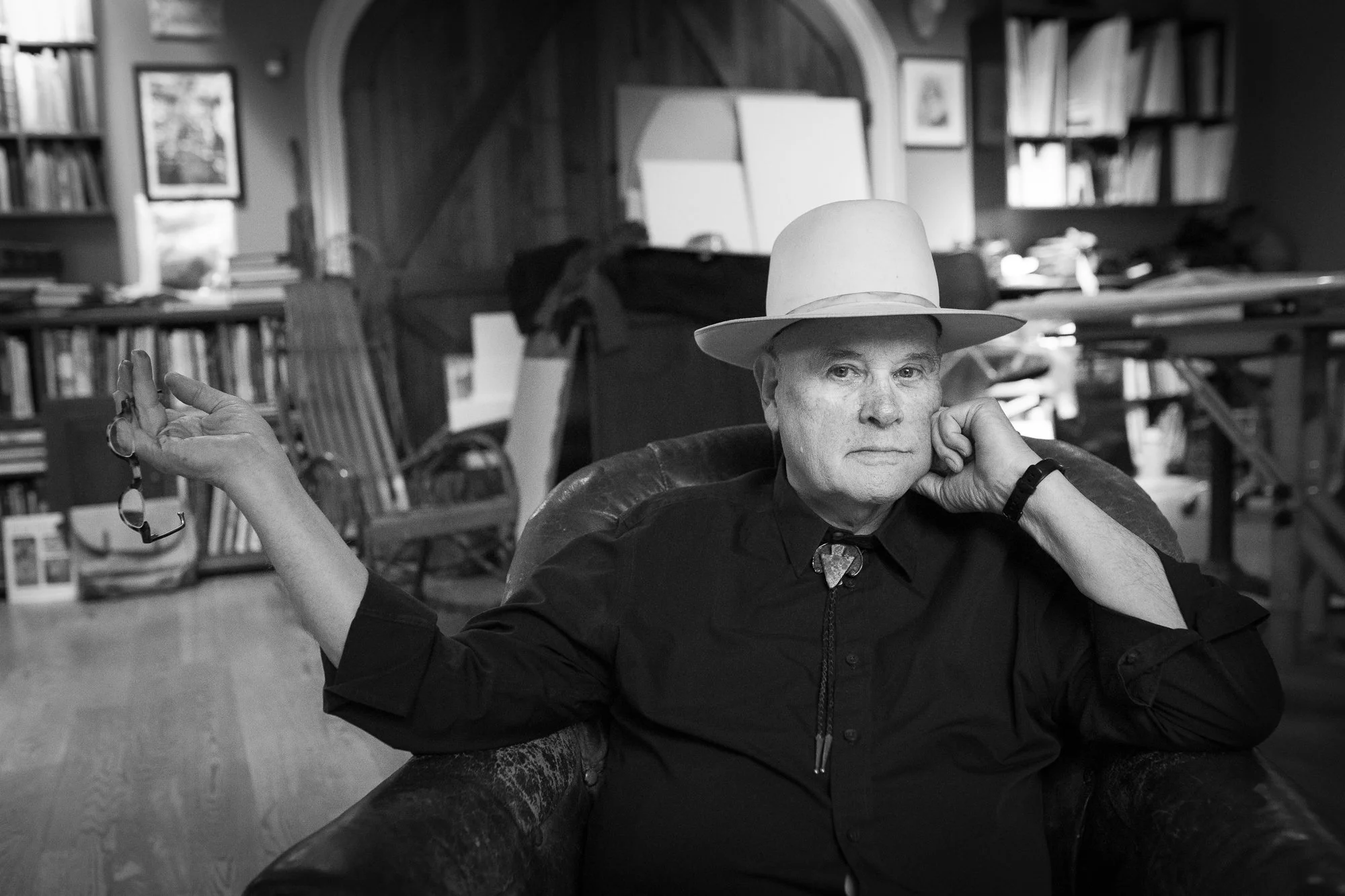
Black and white portrait of Western painter William Matthews seated in his studio

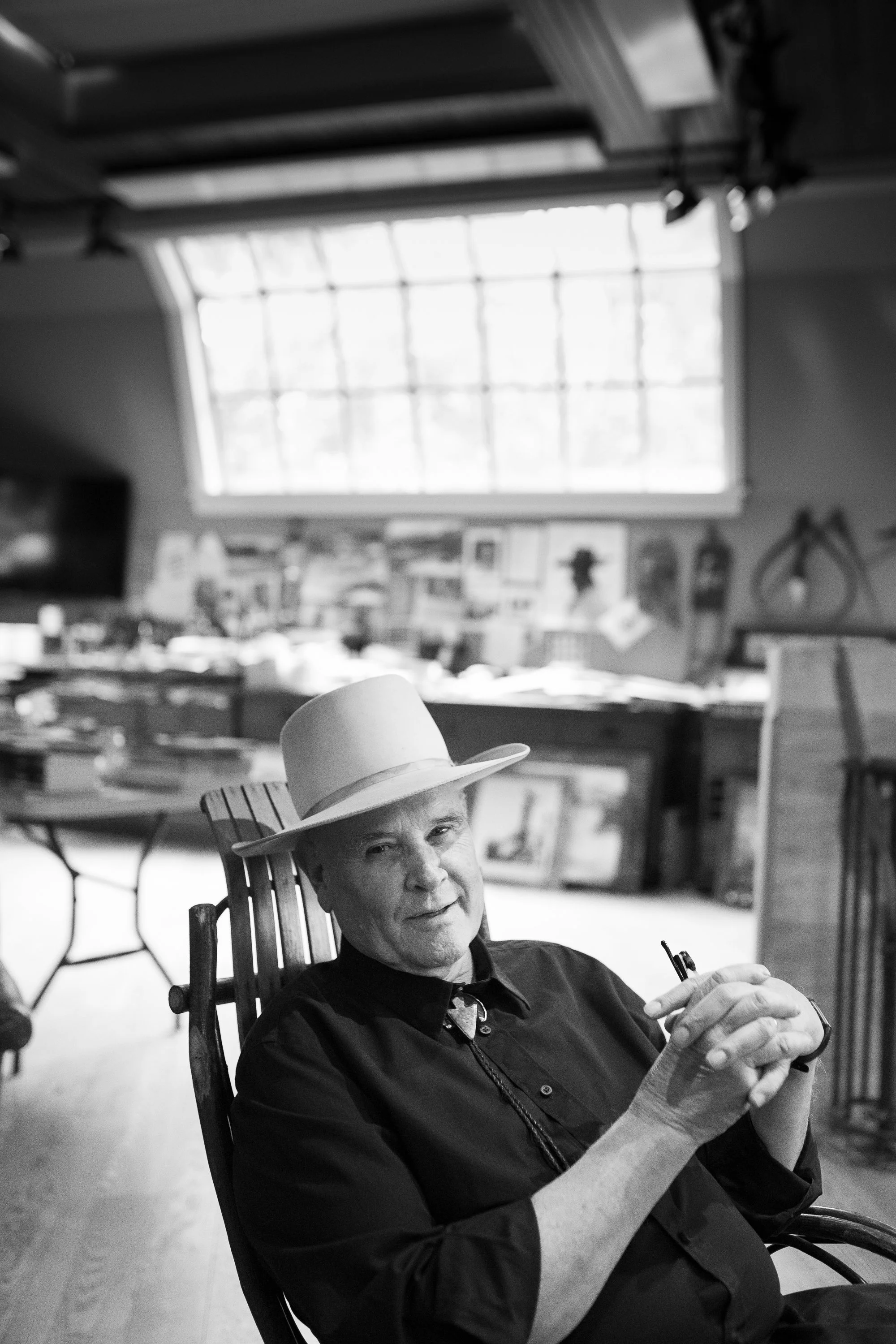
A quiet portrait of William Matthews inside his working studio, where his celebrated cowboy paintings take shape.

Watercolor palettes and paint brushes on a table in William Matthews’ studio

Pigment-stained palettes and well-worn brushes — the quiet tools behind Matthews’ watercolor interpretations of cowboy country.

Bookshelves filled with art books inside William Matthews’ Western art studio

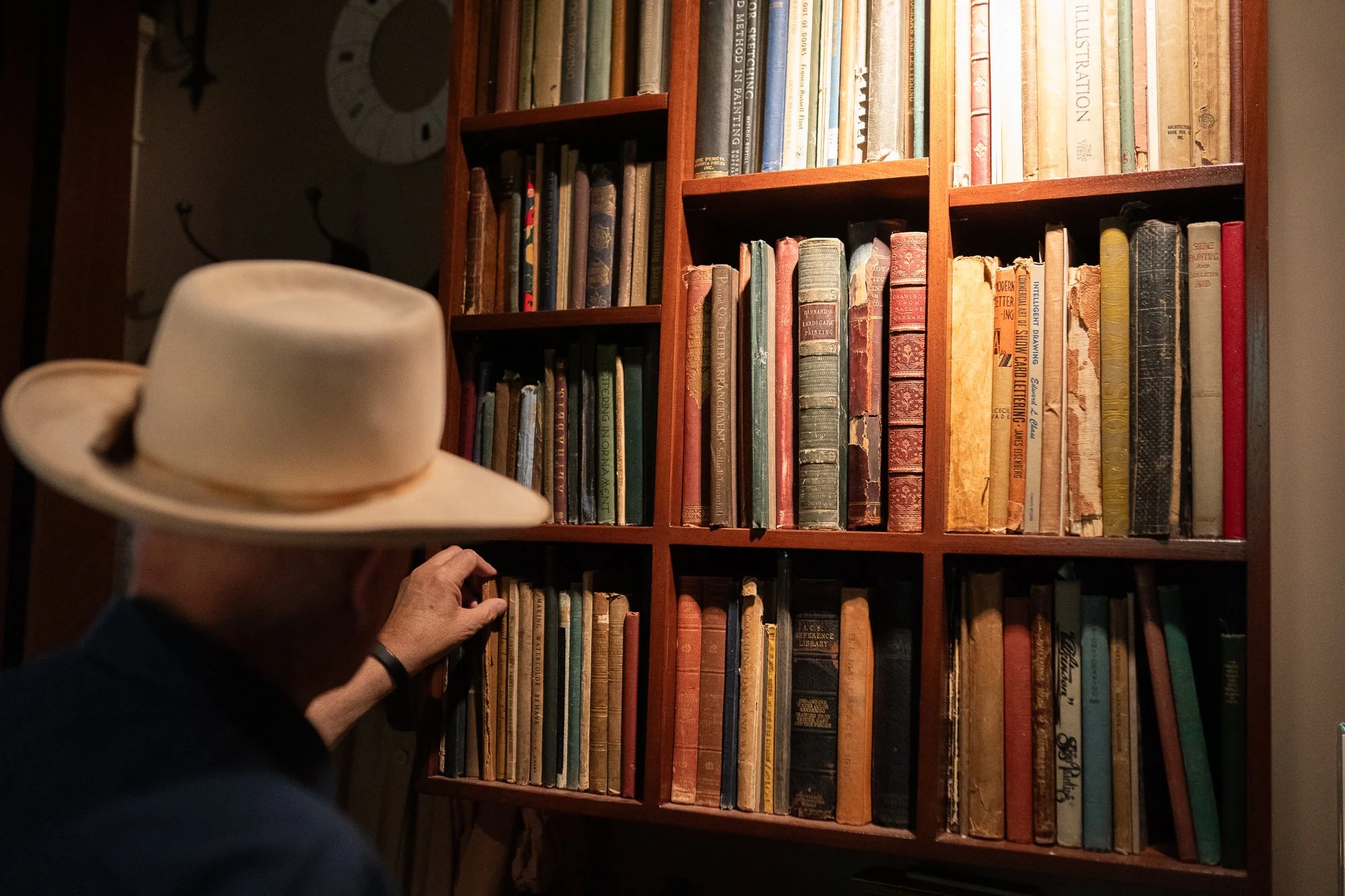
A wall of well-worn art books lines the studio shelves. Even an established Western painter remains a lifelong student of the craft.

William Matthews seated in rocking chair inside his art studio under large window

Seated beneath the studio windows, Matthews reflects between works. His paintings have shaped how many collectors visualize the modern cowboy.

Western landscape watercolor painting featuring mesas and dramatic sky by William Matthews

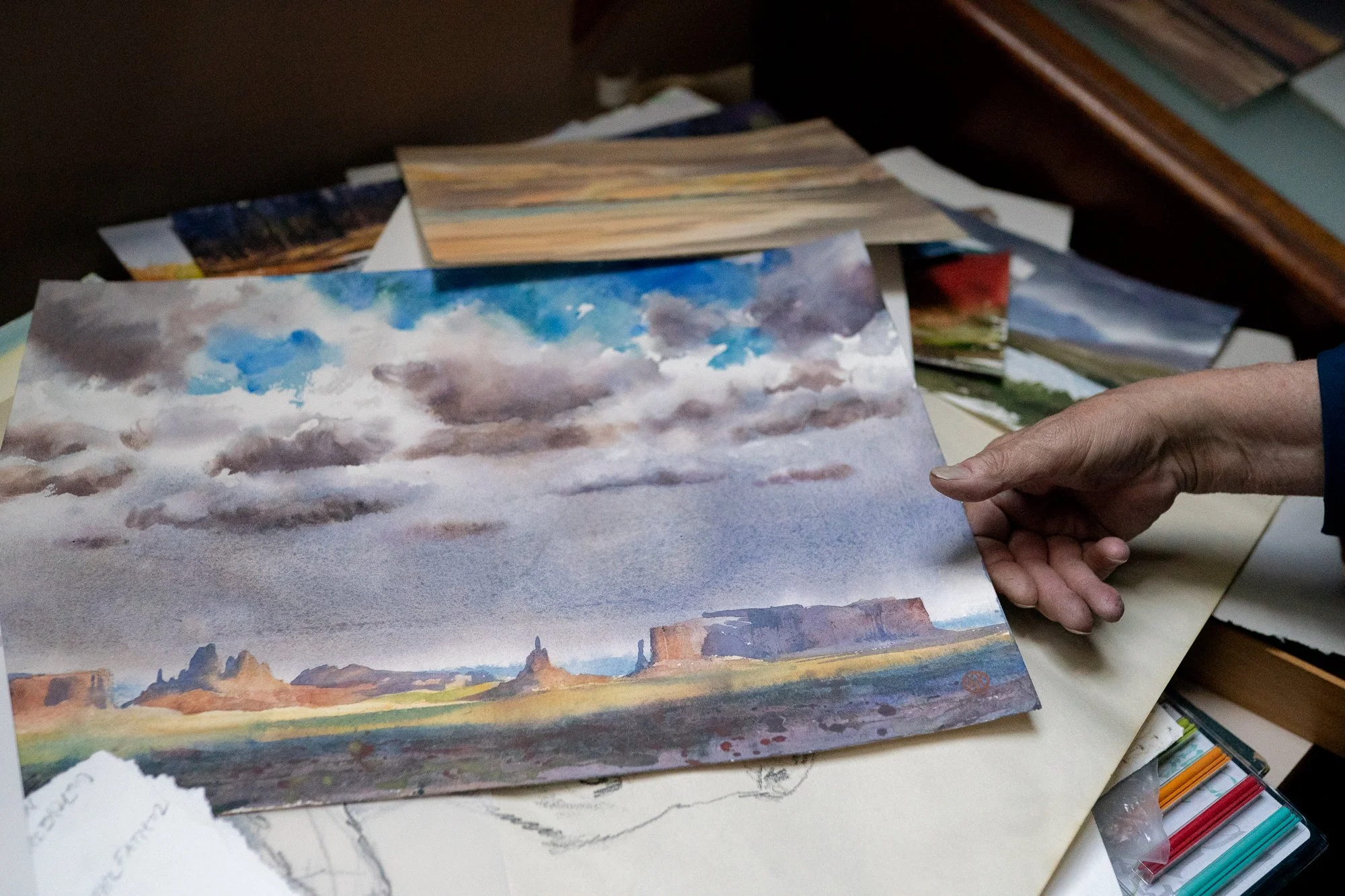
A watercolor study of the American West, where open sky and distant mesas echo the same landscapes that inspire generations of cowboy artists.

William Matthews examining watercolor painting in his studio workspace

Reviewing a recent watercolor study, Matthews considers light, atmosphere, and restraint — hallmarks of his Western landscapes.

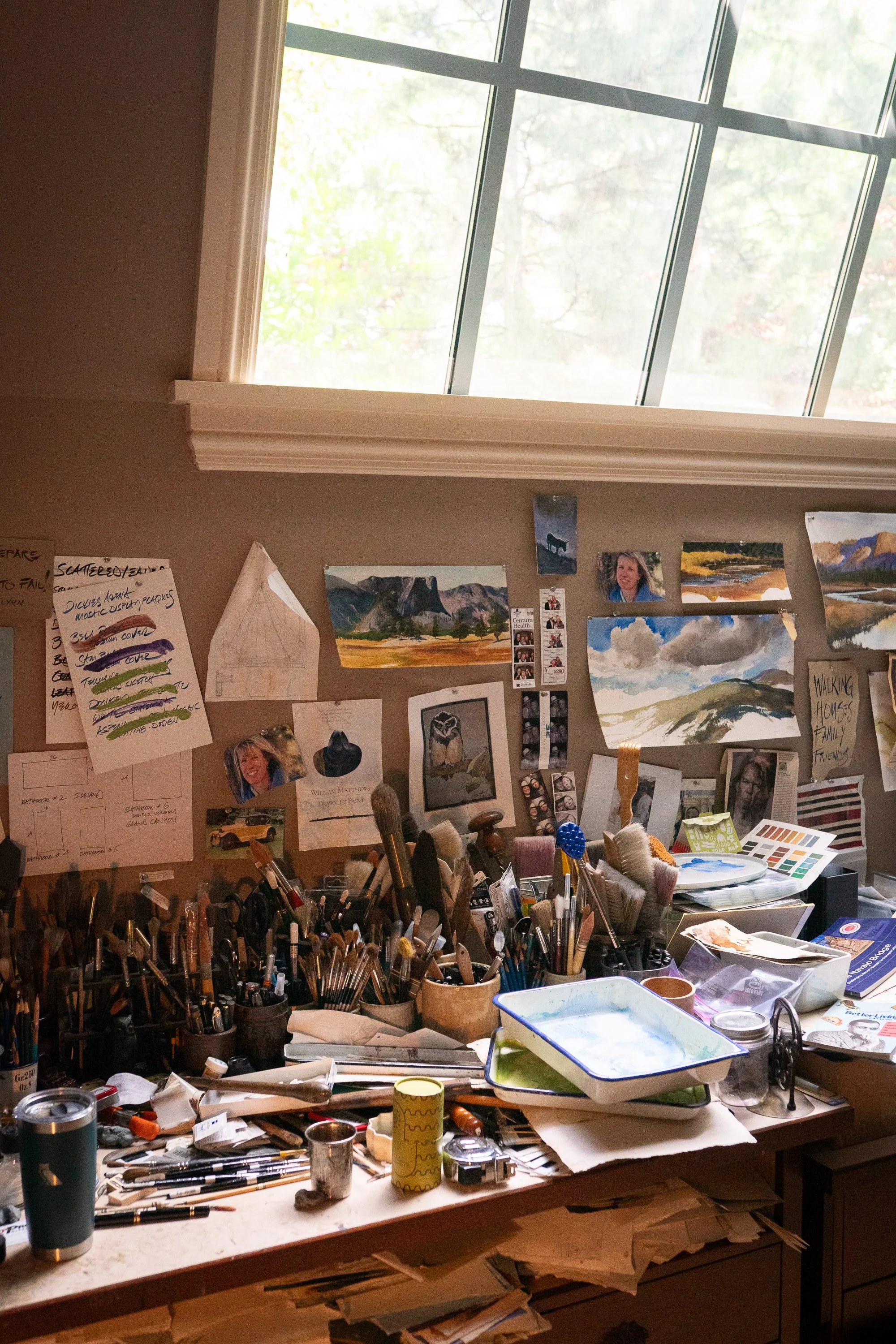
Artist desk filled with brushes, pinned sketches, reference photos and watercolor trays in William Matthews’ studio

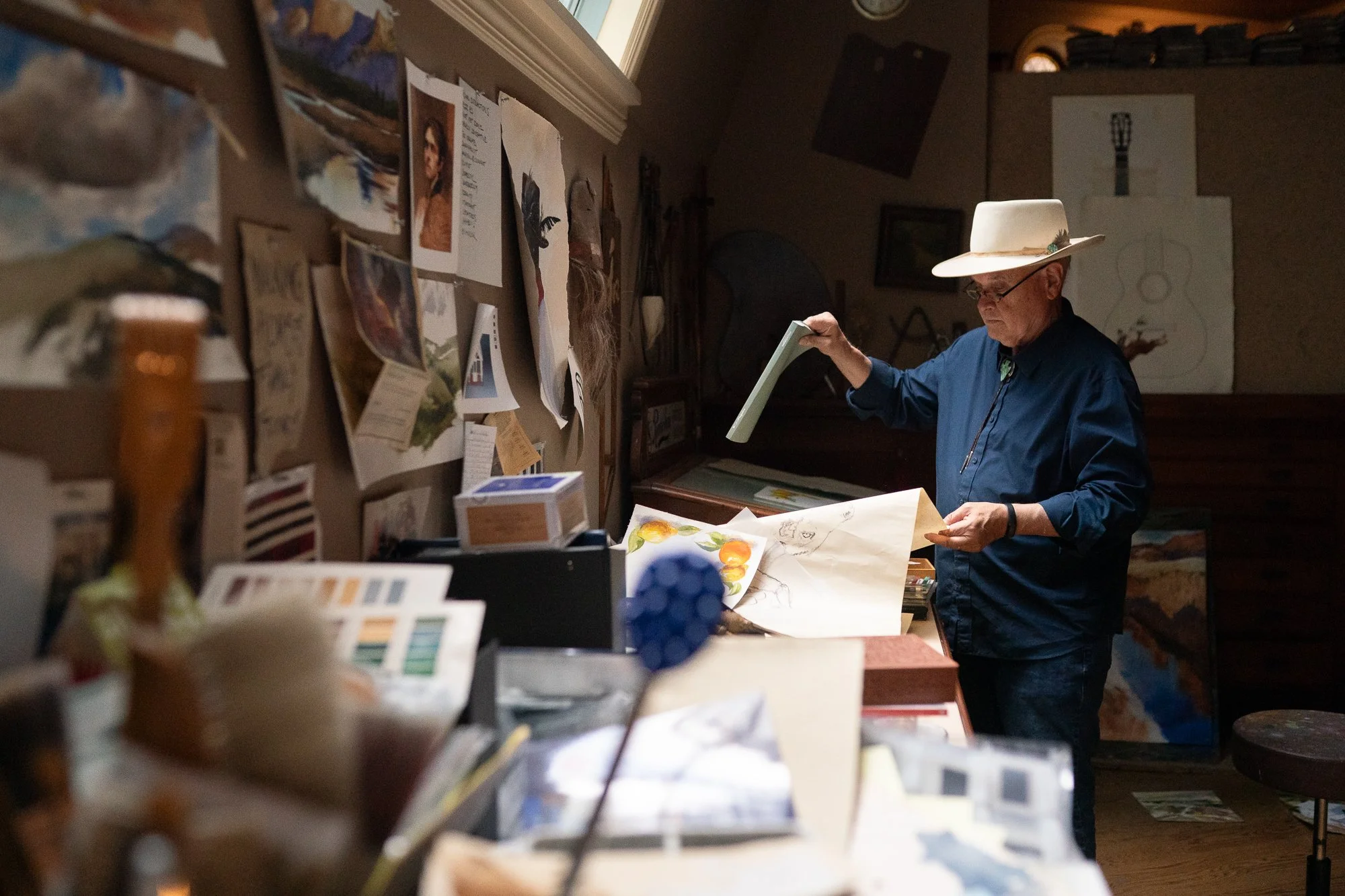
Pinned studies, reference photographs, handwritten notes, and brushes crowd the desk — a working studio shaped by decades devoted to painting the West.

Candid portrait of William Matthews in studio wearing cowboy hat and glasses

Between studies and finished pieces, Matthews pauses at his drafting table — a reminder that Western art begins with careful observation and discipline.

Western Saddle Maker

Western Saddle Maker

Inside a Working Saddle Shop

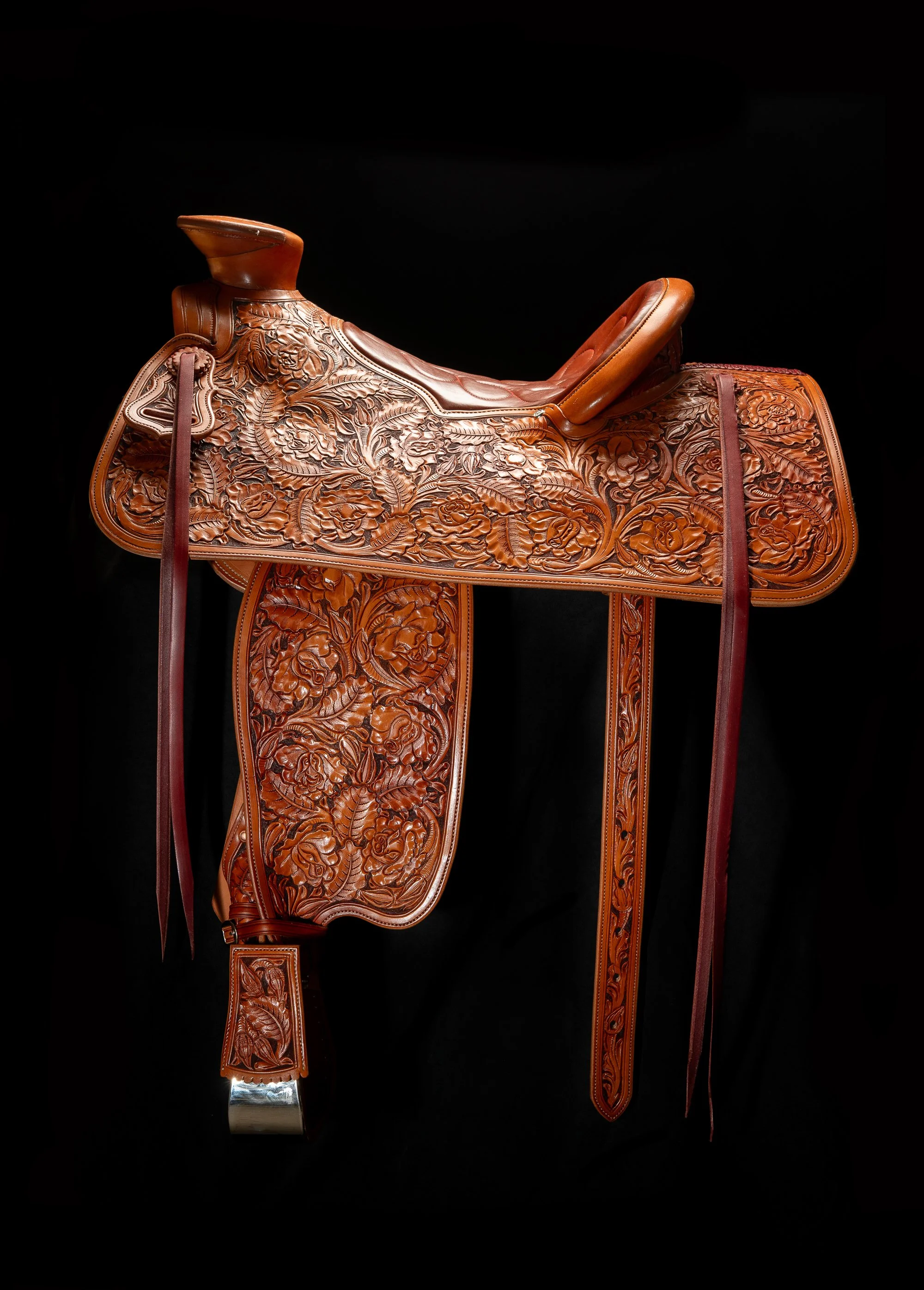
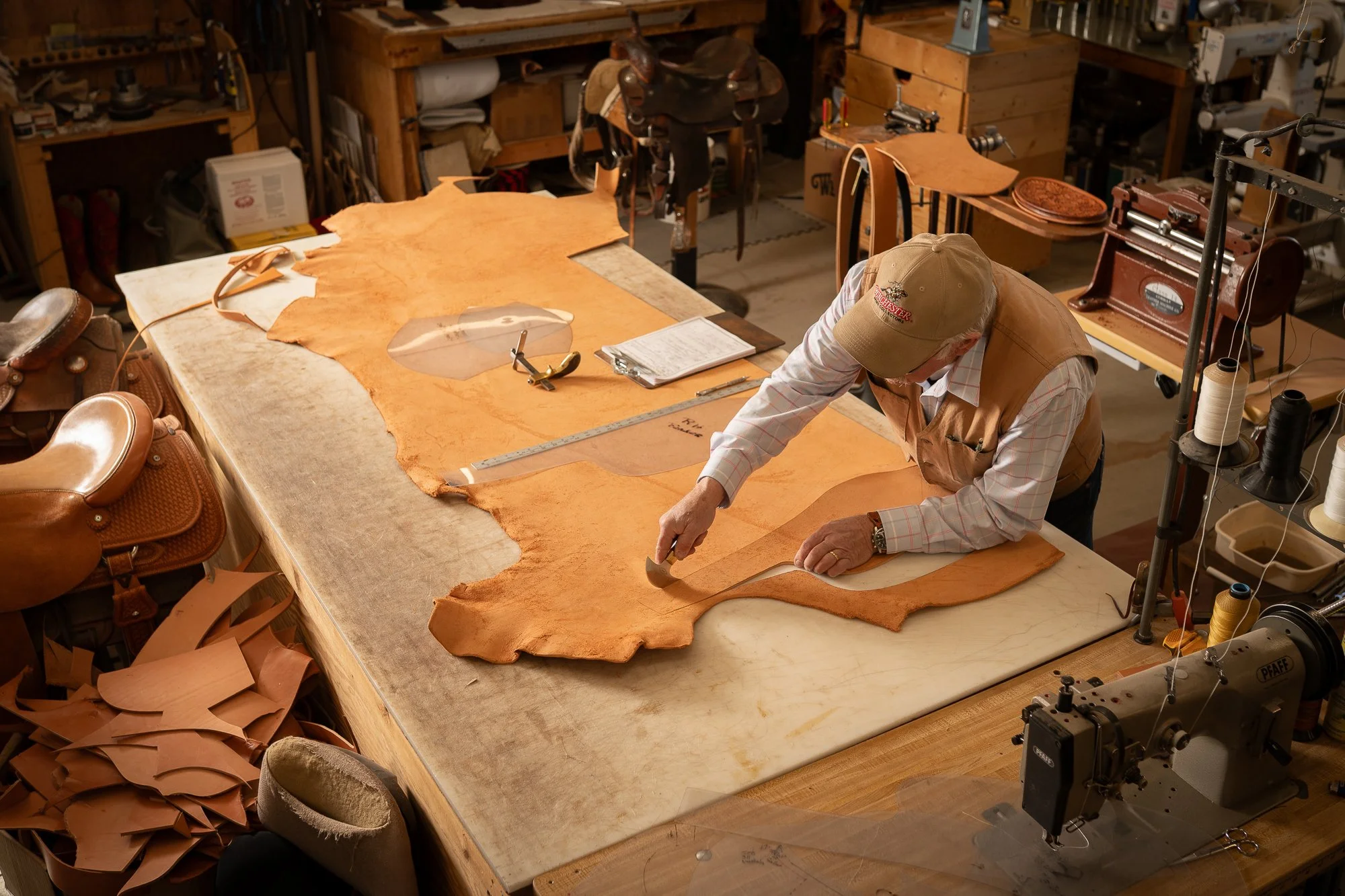
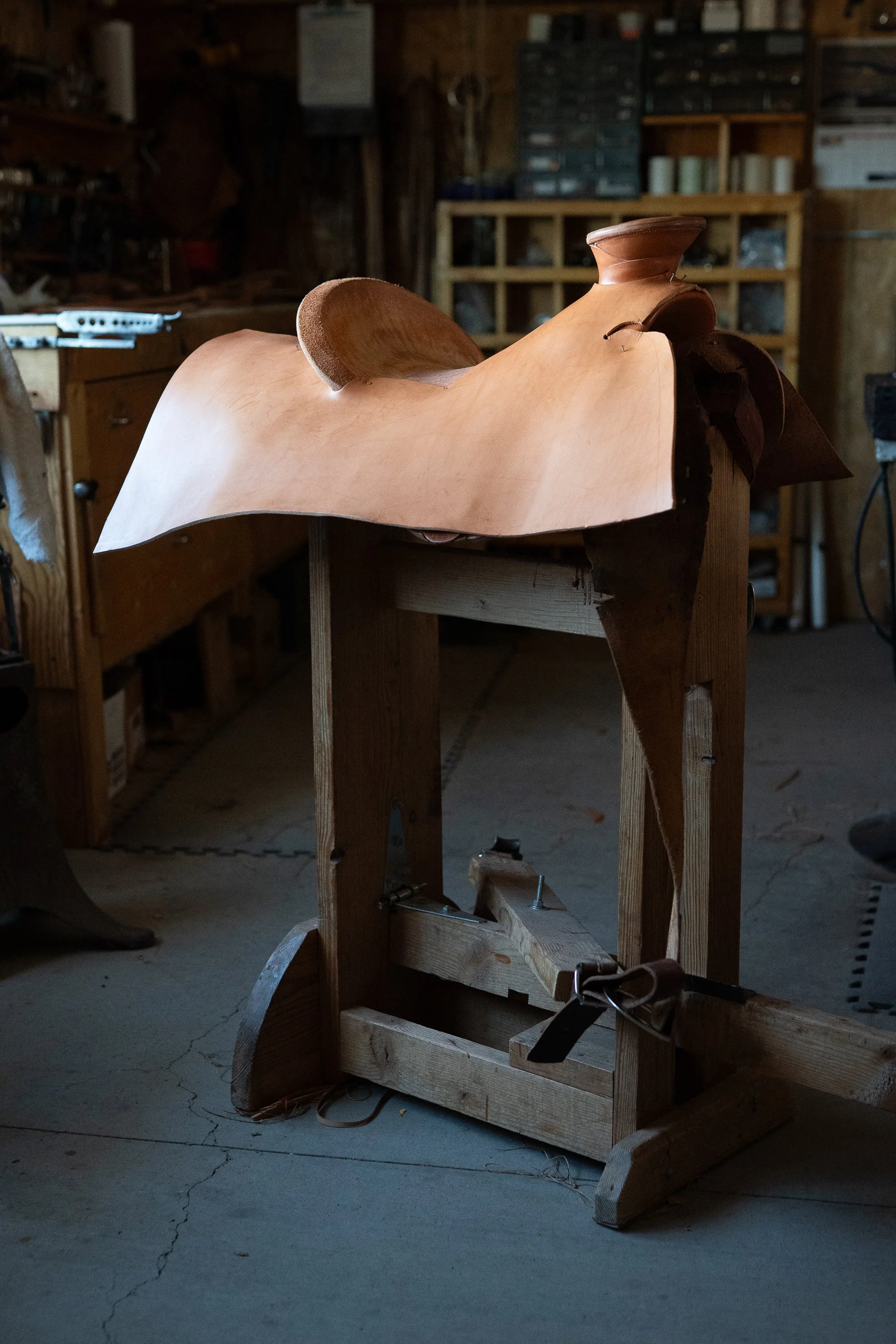
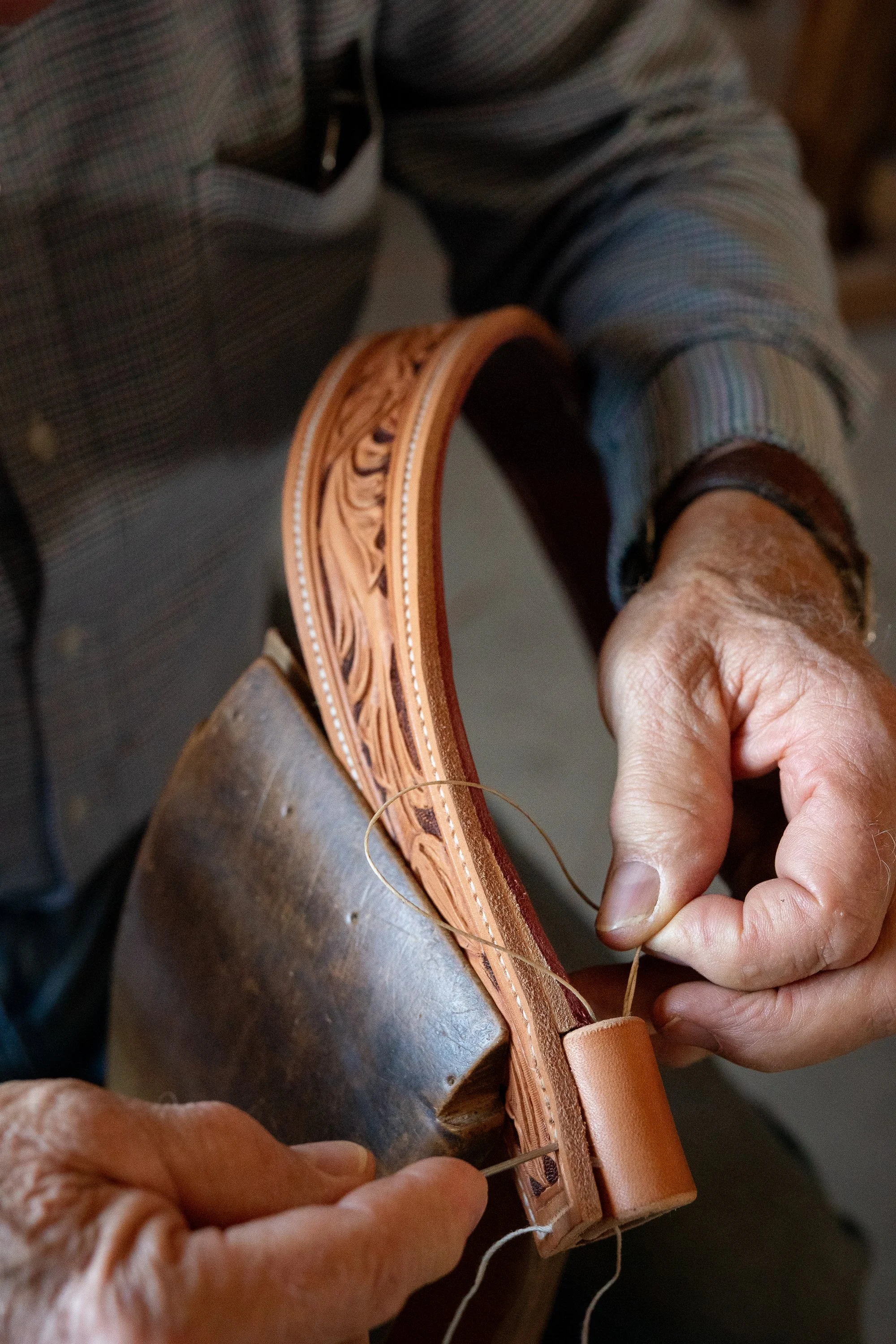
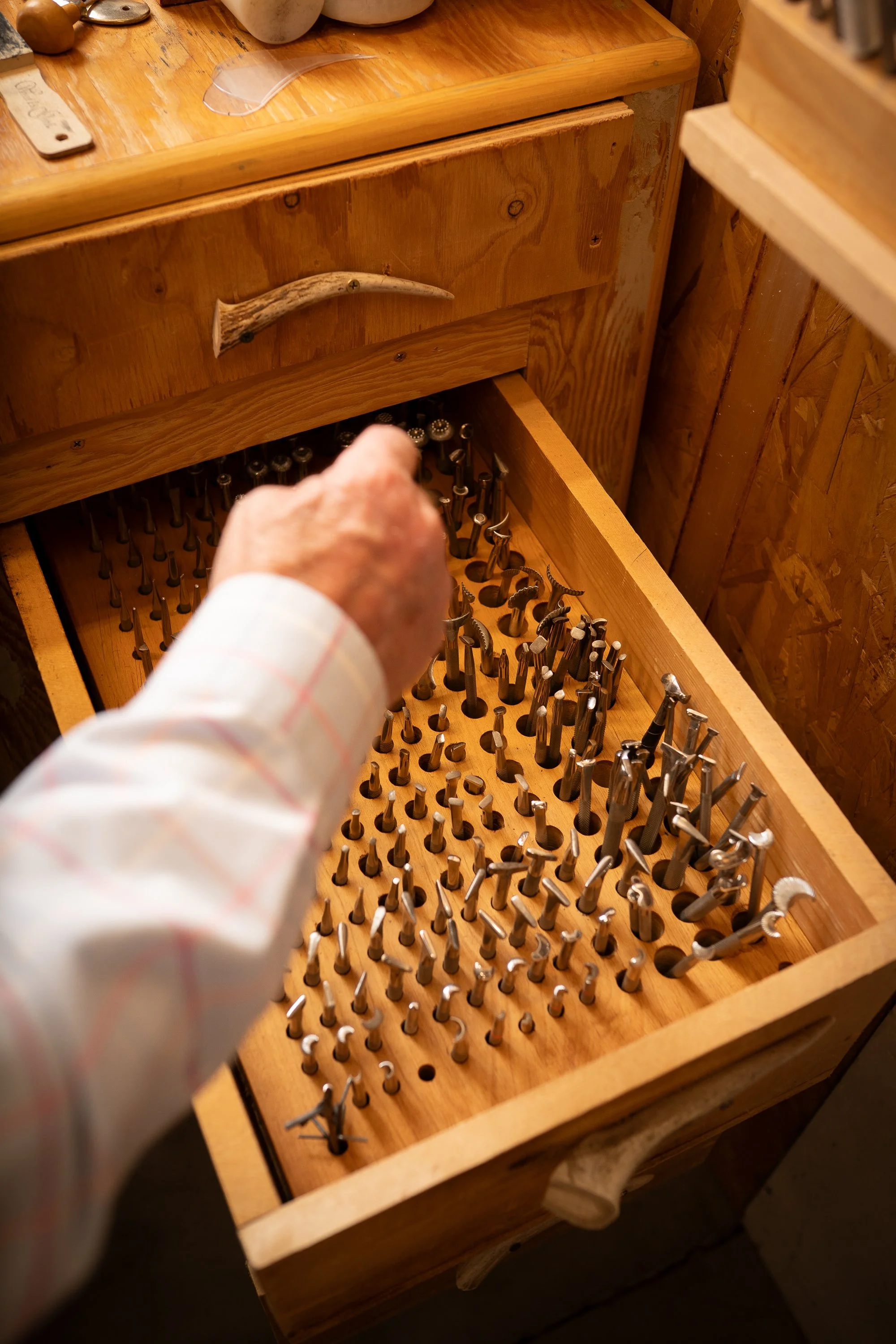
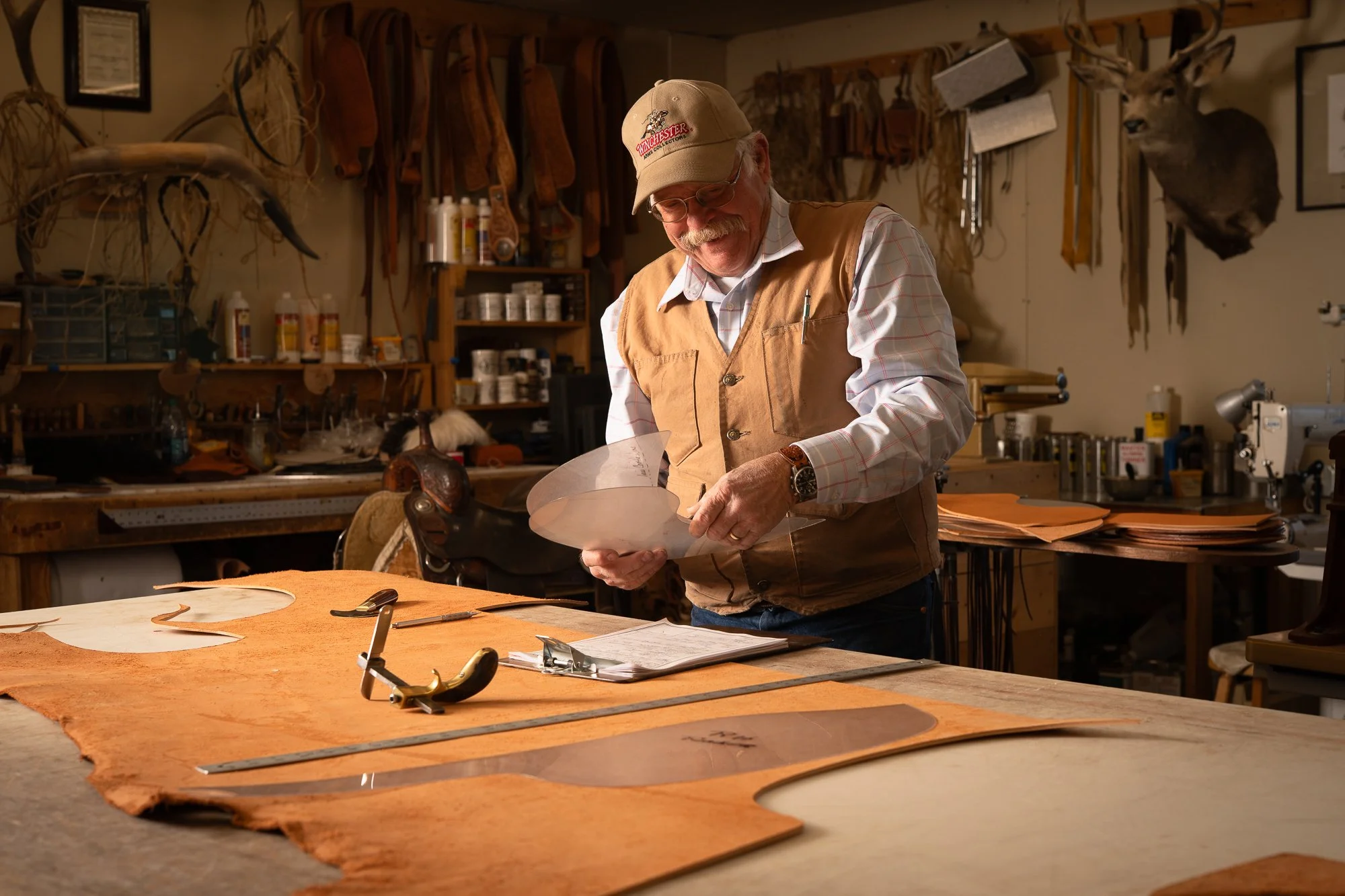
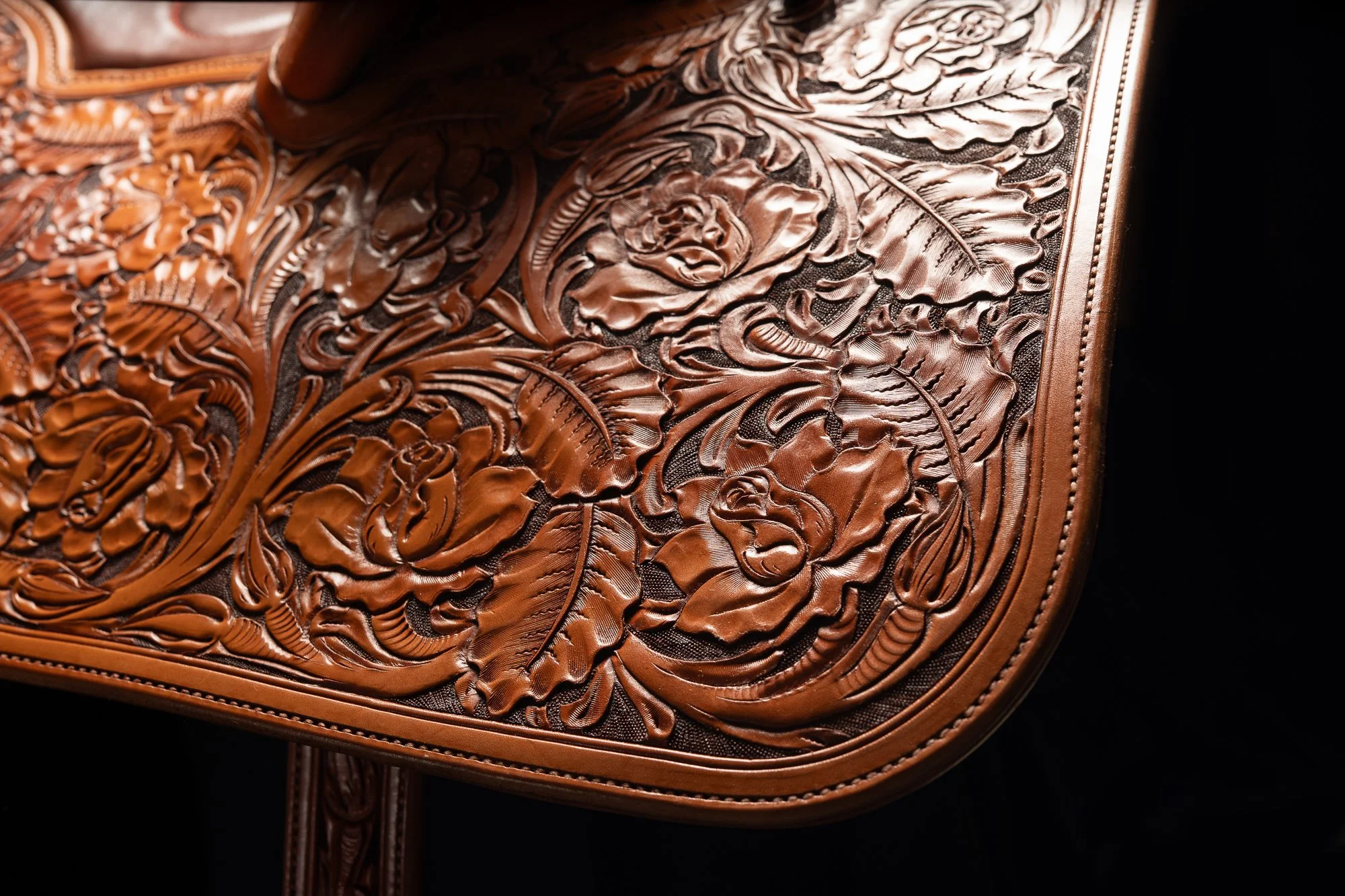
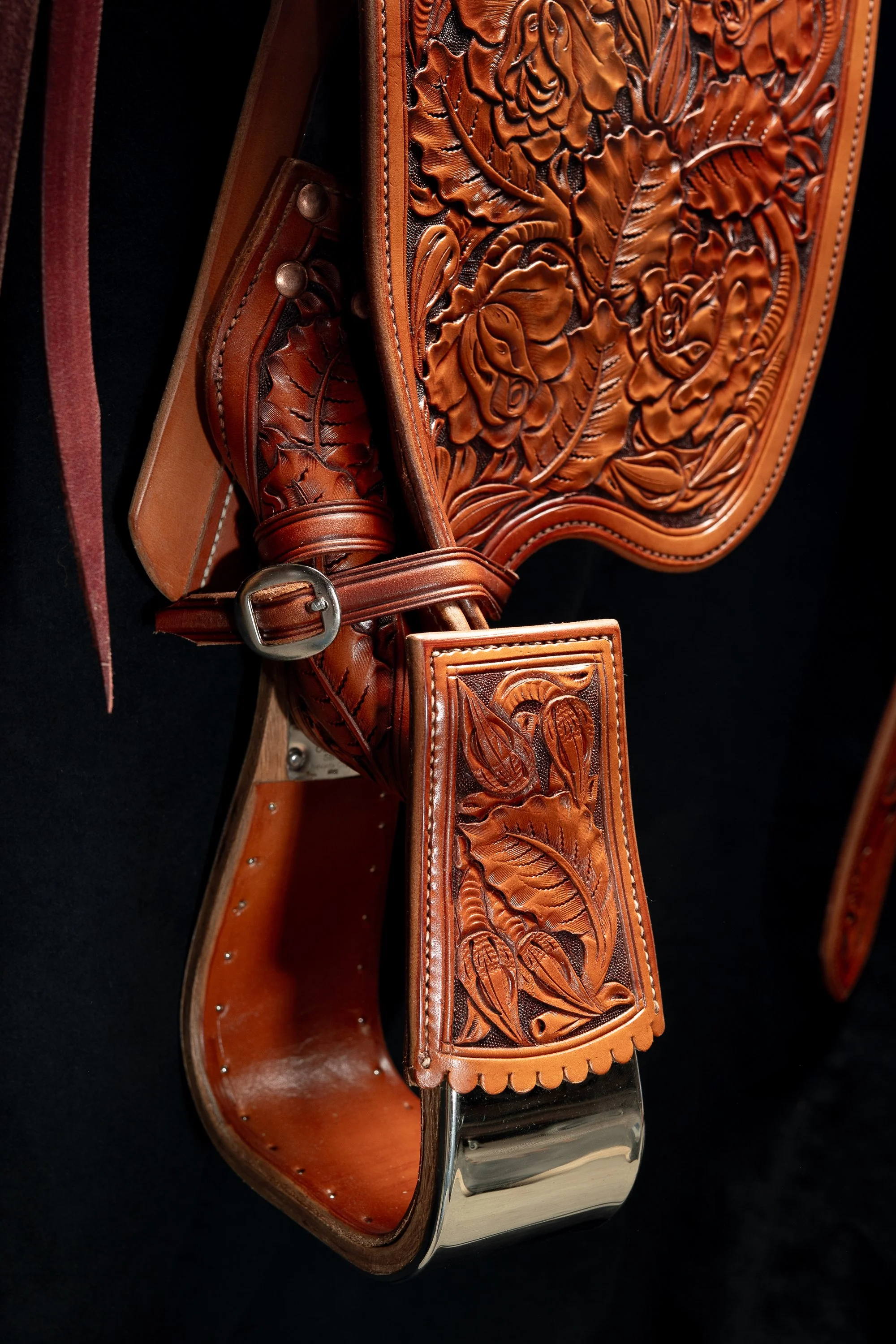
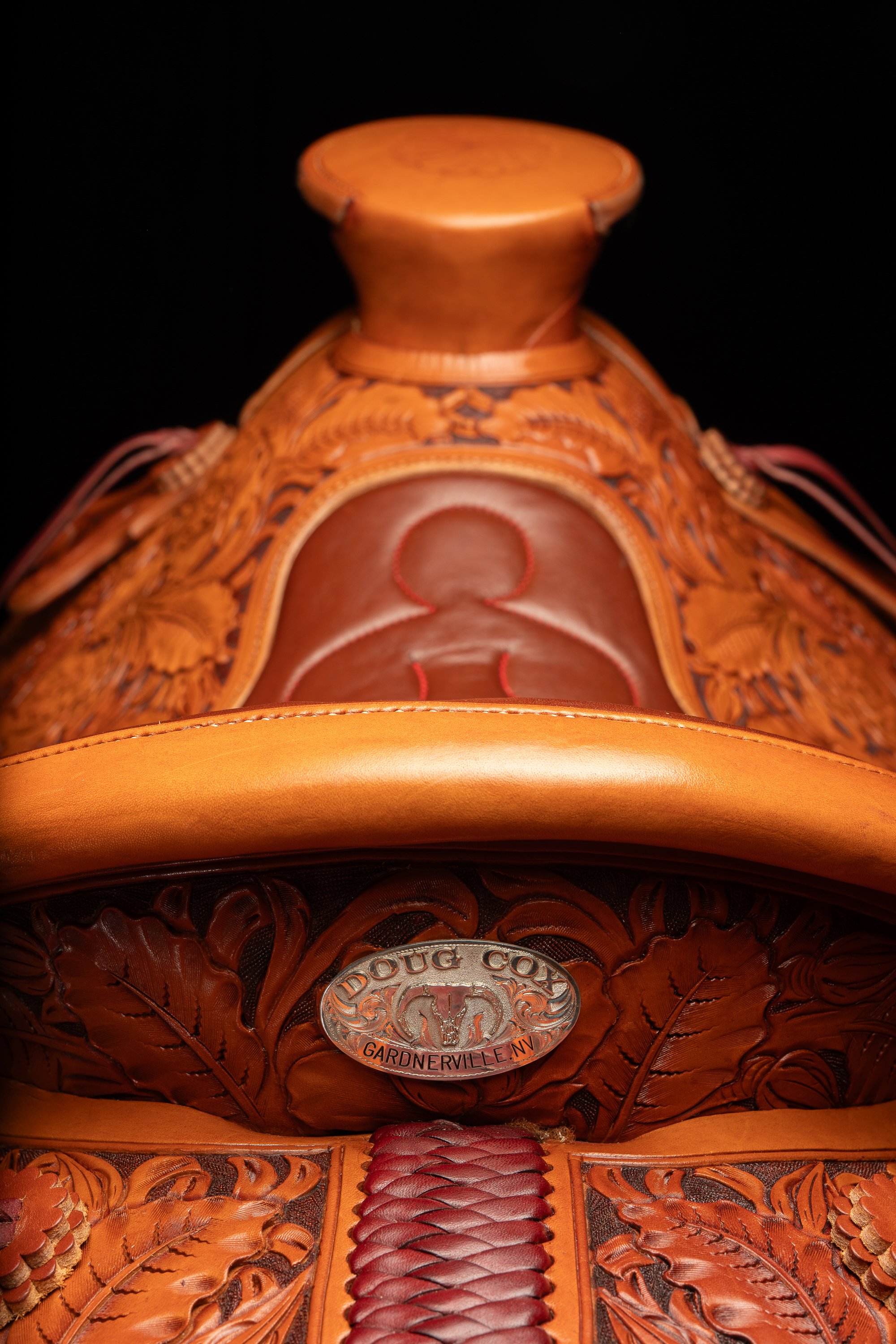
Western saddle shops are becoming harder to find, but they remain an essential part of Western culture. This post documents time spent inside the shop of master saddle maker Doug Cox and tells a story of the lifetime he’s spent creating one of a kind pieces of functional art for cowboys and collectors all over the world.

Doug Cox and the Craft of Custom Saddle Making

“If I created a really, really goddamn nice saddle, and some cowboy—or buckaroo or vaquero—rode that son of a bitch, but took care of it; if he burned the damn edge of the cantle binding off from draggin’ calves, or burnt the fork cover down with a groove where his rope ran, and he wore the flowers down to nothing, that’s a success. It ain’t the son of a bitch in mint condition that’s hanging in a barn somewhere.” That quote from Doug Cox might give you an insight to his personality, but there’s a lot more to know about the obsessed saddle maker from Grangeville, Idaho that’s still feverishly working toward better saddles 50+ years later. His stoic demeanor and unfiltered vocabulary might offer a rough first impression, but he’s sharp as a whip and two steps ahead of everyone. Despite being a world class artist, he retains no ego, is quick to laugh, and only answers your questions with honest thoughts. The kind of guy you never once doubt when he starts a sentence with “Fact is…..”. 

Born in 1950, Doug’s earliest memories formed on the steer ranch his family lived and labored on for 17 years before renting their own. “When you were old enough to work, they worked your ass off”, Doug recalls. For him that was age 7, and a typical day started in the morning, milking cows and feeding saddle horses. In the winter they fed 2,000 head of steer with grain around noon and again with hay at night. Then it was back to milking cows, feeding saddle horses, fixing equipment, supper, sleep, repeat - a typical routine for everyone Doug knew, so he never thought to complain. At 8 or 9 he was put on a horse to start moving cows around, at which point, “you passed the dogs in rank”, he joked. In high school Cox found a job nearby working for a man who raised registered quarter horses, because he didn’t get paid at home, just fed. Other jobs followed; day working for a slew of ranches in the area. He also started stamping leather belts for beer money. The first one came out of shop class. “I backed the teacher up. He couldn’t imagine anybody in high school could do something like that.” Still, all of Doug’s long waking hours were spent horseback in big country where he met a lot of “shittin’ saddle makers”, until moving south in 69’ for an Ag college in Sheridan, Wyoming that had two sports - basketball and rodeo! So began his career riding broncs and showing reining cow horses and cutting horses. More importantly though, he was hanging out at King’s Saddlery after school - drinking coffee, shootin’ the shit, and becoming a recipient of the trickle down effect. Shortly after, the fascination with school vanished, and he was once again enjoying life as a drifting cowboy. 

Towards the end of 1970 his number was picked for the military where he spent 4 years as a corpsman on an Orthopedic Ward. There he received forced knowledge of anatomy and physiology. Being up close and personal with broken people day in and day out taught him about “human construction”, as he calls it. More specifically it cued his one track mind into a would be blueprint for the opposite of a shittin’ saddle. 

After the service, he wound up back in Idaho working in the logging industry, running a Cat and riding broncs on the weekend. That fall, his crew got snowed out and told to sign up for their “rocking chair money”. Never one to welcome idle time, he got the leather bug and decided to get serious, combing Burton’s Leather Craft catalogue and “ordered me a shit ton of tools”. First up were belts and women's handbags which didn’t exactly quench his thirst. Then out of nowhere, he received a call from an old rodeo friend wanting the interior of his Cadillac El Dorado stamped. His first real job! The arm rests and doors were barely finished before the owner got drunk one night and wrapped it around a telephone pole. So his big money job went out with a hangover, but business still progressed and people took notice. In 76’ the legendary saddle maker Ray Holes offered him an apprentice job, as it seemed Cox’s particular knowledge and talent was taking away customers. An incredible opportunity for Doug to learn the business from the ground up! His days were now spent repairing equipment and crafting leather into pouches for vice grip pliers, chaps, and axe scabbards that got sent all around the world. “There was no scrap. We used everything till there wasn’t any left, and turned it into money” says Cox. $2.85/hour sat just fine with him because the real payment was education, and the promise of a position building saddles after 5 years. 

He became a sponge. “You’d go home and try to do everything they did as good as they did. Some things you pick up pretty rapid, and some things I’m still working on today. Nothing is a done deal. Every day is brand new.” Aside from Holes himself, Bob Kelly was Doug’s biggest mentor up to that point. 3 years after Cox signed on at Holes’, Kelly, who built 1,326 saddles in that shop, retired. So Cox was thrown into the job simply because there wasn’t anyone else. He was forced to figure everything out on the fly. “I asked Ray Holes, what happens when you cut out a seat and stamp it, and it stretches, and you can’t get it to go?” Holes bluntly replied “you cry a lot”. By April of 81’ Cox had an Ivy League Degree in making saddles and successfully co-authored 210 riding saddles as well as 360 pack saddles.

Next chapter: Montana - 3 Forks Saddlery. There, letters started coming in complimenting Cox on his seats, and the reality of his seeing his own name on the marquee began to materialize. He left 3 Forks before too long and did some ranch work for a guy in Madison Valley to earn rent money, but made it clear from day 1 that building saddles was the priority. Next came an opportunity to sell those saddles at a Western store on the four corners in Bozeman. And not much later, with 200 saddles to his sole credit, he moved into an old vet clinic building and things went gang busters. “You’re always wondering if you’re gonna starve to death when things go to shit. So I was surprised when the business kept coming”, says Cox. The Montana winter of 97’ didn’t quit. Or as he puts it, “the one that soured my ass”. That October he helped a friend sort replacement heifers and ween and ship calves. “There was 2 feet of snow and it was 21 below zero. On May 15th we still had all that snow in the yard with a whole lot more on top of it. I had enough”, Doug recalls with tangible disdain. In December of 2000 he and his wife Deb, closed on a house in Gardnerville, Nevada, where you’ll still find him today. They did all the moving themselves. Tools, leather, 10 horses, and every barn/house furnishing you can imagine. 14 hours each way. Over and over and over. That put him 3.5 years behind on orders with people calling wanting to know where their saddles were. He just kept plugging along and tinkering with better designs. Cox got very intense over the structure of his seats, asking tree makers to institute changes that would allow for necessary improvements. 911 struck a massive blow to the world, launching a political and economic roller coaster directly impacting his business. Amongst the obvious wreckage, big outfits were getting scooped up by mining companies, and kids didn’t want to cowboy anymore. Fewer cowboys equals less demand for saddles. In classic Cox fashion, he took the ride but didn’t spend too much time worrying. Instead, focusing on getting better, and really, that’s been his psychology all along. He knows the grandest peaks are always followed by a valley no matter who you are, and the only answer is to keep putting out exceptional products. “I ponder a lot of shit and wonder why the hell am I doing what I’m doing? And then you start to think back about how everything that you did taught you what you’re doing now, and that gives you the path to continue”. 

The full time saddle maker/part time philosopher has damn sure earned his loyal and diverse clientele. Everyone from the working cowboy to folks in Texas who never bother to ask the price of a custom Full Flower. His saddles have been shipped to countries like Dubai, Mongolia, Australia, and Canada, “but probably not all 50 states.” Advertising has never been a priority for Cox, trusting that his faultlessly functioning art will lead to word of mouth referrals. There’s one family in Montana that’s bought close to 20 of his saddles over the years, so imagine the conversations they’ve had with neighbors. He believes in taking care of people and appreciates unwavering loyalty. So if you’re buying a custom Cox, then chances are your package will arrive with a little something extra. That might be added stamping, a breast collar, or whatever else he feels like throwing in. After all his years in business you could count on a few fingers the number of clients he’s had trouble with, but they didn’t know what they wanted to begin with. One such customer who couldn’t tell a mare from a mule had the nerve to complain after receiving his custom Cox. So Doug spent months ripping it apart and building it back to the new abhorrent specifications. “Right before I was about to disconnect the phone in Montana, that son of a bitch called wanting to order another saddle”, he recounts with a chuckle. 

At 75 Doug is still pushing his art. After long days wrestling with leather he sits on the couch under a Bison mount, with sketchpad and pencil in a relentless attempt to crack the code on a perfect wild rose to elevate the stamping on his next saddle. When asked why, he stops, stares off for a while in contemplation, then says “it’s just my nature”. Cox wants to feel good about every final product leaving his door because he won’t sleep at night knowing you aren’t 100% satisfied, but that’s not the whole story. In the most humble way possible, with money and fame aside, he yearns to be the best. Your baseline Doug Cox saddle goes for about $4,500, and he’s happy to make that for anyone who asks, but the unconventional creator in him requires ambitious challenges. Doug has been inspired by so many of his predecessors and contemporaries over the years; Ray Holes, Jerry Holes, Billy Gardner, Don King, Merve Ringelo, and Al Stoleman to name a few. According to Doug, “Hamley’s put the best seats in saddles that ever was, but they never made anything fancy”. Visalia on the other hand, is top of the heap in his eyes because of their combination of functionality and stunning aesthetics. Visalia stopped making saddles in the 60’s, yet he still sees them on a pedestal as daily inspiration. “When you saw something you liked, you were a coyote. You just kept chasing it till you got it”, he says. That’s why he decided to make a Visalia style saddle that took up 3 years of his life. Mounting silver to the horn, gullet front, and swell caps alone took he and Ron Meuws (silversmith) three 18 hour days. Nobody asked him to build a $165,000 saddle full of silver and rose gold (currently for sale). It was purely an itch that demanded scratching. Doug genuinely cares about the art he puts into the world, regardless of whether it gets purchased or not. His cumulative life experience in and out of the saddle fuels an insatiable desire to create the perfect saddle. Of course this is a futile effort, but Cox will be the first to tell you that “insanity is cheap”. And as Bob Kelly once told him, “the day you make the perfect saddle, you’re dead”. On the other hand, if a guy like Doug doesn’t have something to shoot for, he’s as good as dead. 

I pulled into Doug’s house one day as another pickup drove off in a huff. Turns out that person had come to offer $50,000 for one of his bridal horses, which he promptly turned down. Why? “Oooohh…….I think a lot more of my horses than that” he said sentimentally. Driving by you’d never know what happens in the nondescript building that turns out world class leather products, and that’s the way he likes it. Interruptions are undesirable at best. The work is all that matters. If you’re lucky enough to get in, seeing the artist at play is something to behold. He’s the only one there, but you never think twice about who the owner might be. It’s Doug’s place and they have a relationship. One complimenting the other, almost symbiotically. It’s the Western version of a one man barbershop that’s organically and unknowingly grown over time. In winter months, the wood stove holds a perpetual fire that warms the walls adorned with hunting trophies, Charlie Russell prints, photos of saddles, memorable bronc rides, head stalls, breast collars, hundreds of hand tools, and a beautiful set of long horns. Piles of the finest leather here, there, and everywhere. Archaic leather equipment foreign to anyone outside his industry. Scattered saddles in various stages of completion - some made for fun, for customers, and others just to look at. The only soundtrack is a crackling fire, his grazing horses, and whatever Mother Nature decides to muster up that day. He’s locked in to the work with no need for entertainment. His eyes never divert from the leather when reaching for tools and you get the feeling he could maneuver through the impeccably cluttered shop blindfolded and never miss a beat. If you poke around too long you’re sure to stumble on a few revolvers and Winchester repeaters, loaded of course. His shop is exactly what you’d expect of someone that has spent a life in leather. As usual, Doug is currently back ordered on saddles for clients new and old, near and far. He’s in a good place - people still want a Doug Cox saddle. He jokingly baulks with frustration about being busy, knowing full well that’s all he wants. Then goes on about a new saddle he’s cooking up. A Mother Hubbard,which was a popular style in the 1860’s, but people don’t think about them much anymore. They are absolutely hellacious to build, even for a veteran with 923 saddles to his mark. “So, why”?, I asked. Again, he looks off for a while, then says with a grin, “just because”. 
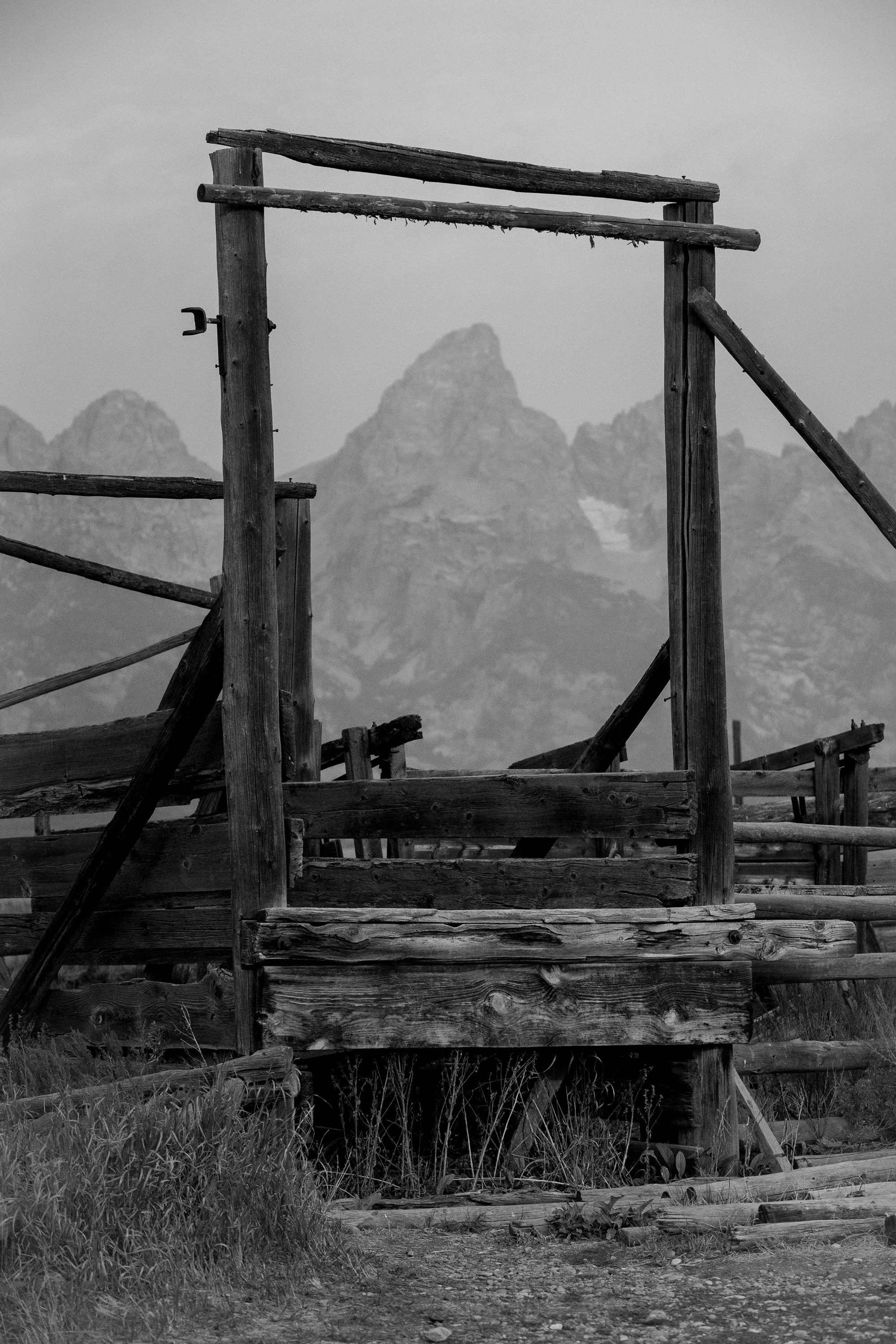
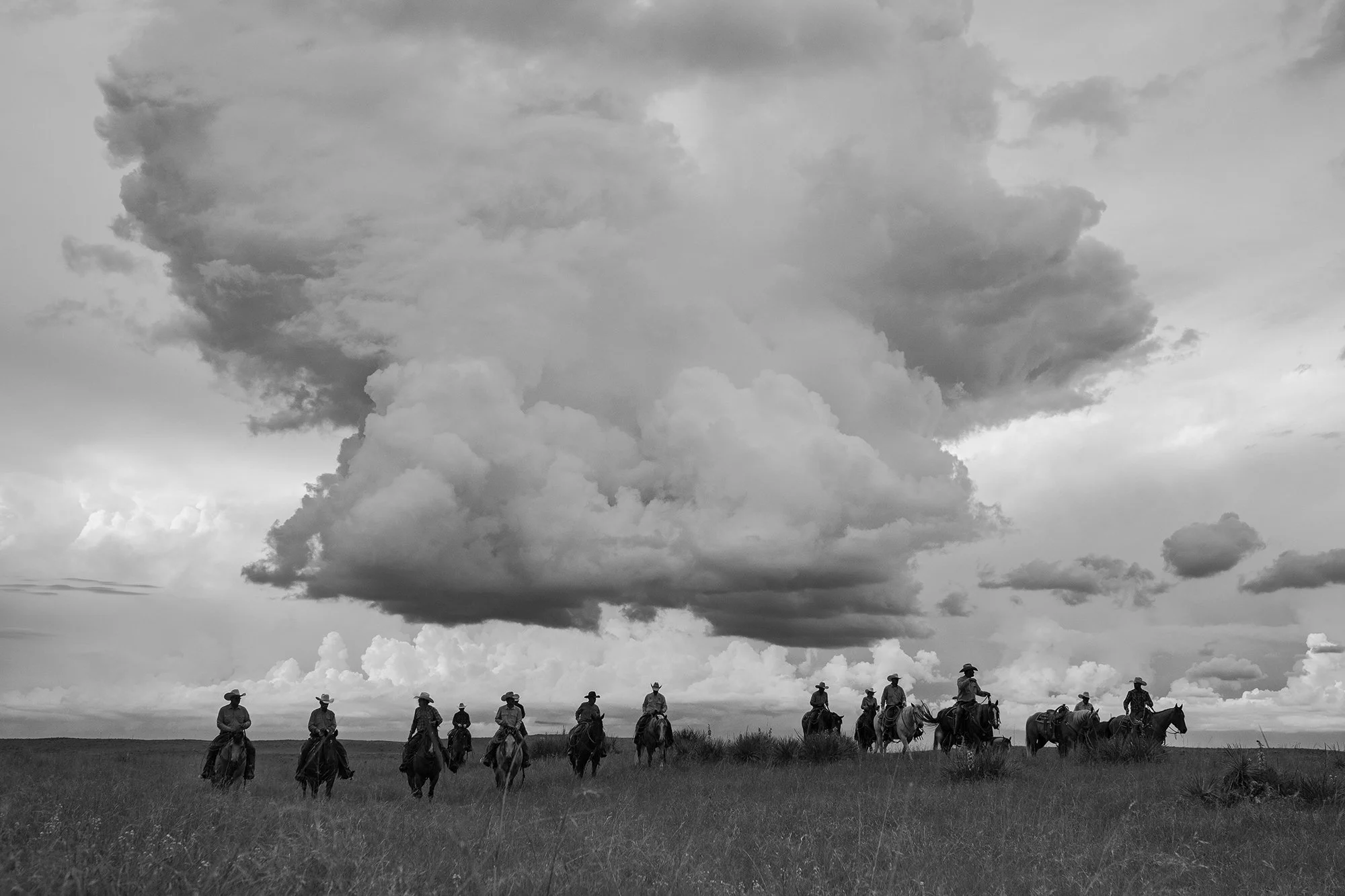
Keeping the Craft in View

This work is part of a broader effort to photograph Western makers, artists, and working traditions, including ML Leddy’s - makers of handmade cowboy boots since the 1920’s.

Related Photographs from the American West

If you’re someone who appreciates the heritage of the West — whether you’ve ridden the range or just admire it from afar — I invite you to take a look at my collection of cowboy photographs and prints. These are real working ranches, real cowboys, and real moments, captured with the same authenticity Doug brings to every saddle he makes.

View Fine Art Prints

View the cowboy photography gallery

Black and white photograph of a beautiful custom Western saddle with a rifle and scabbard

Western saddle with lariat, rifle, and scabbard

Western saddle maker Doug Cox cutting leather in his workshop

Doug Cox working at the bench inside his saddle shop, where most days are spent cutting and shaping leather by hand.

Hand tools used by a Western saddle maker in a traditional workshop

A drawer of hand tools collected over decades, each one tied to a specific task and way of working.

Photograph of a master saddle maker in his workshop

Doug Cox works alone in his shop, surrounded by the tools and materials that shape each saddle from start to finish.

Close detail of hand-tooled leather on a Western saddle

Close detail of floral leather carving, where small variations in pressure and line give each saddle its own character.

Vintage leather sewing machine used in a Western saddle shop

A well-worn leather sewing machine continues to play a role in the daily rhythm of the saddle shop.

Detail of hand-shaped leather on a Western saddle in a saddle shop

Close detail of leather being shaped by hand, a process that relies more on feel and experience than measurement.

Portrait of Western saddle maker Doug Cox inside his workshop

Doug Cox stands inside his workshop, surrounded by the tools and materials that have defined his working life.

Silver-mounted Western saddle with engraved metal and hand-tooled leather

A silver-mounted saddle combines engraved metalwork with deeply tooled leather, reflecting a long tradition of Western craftsmanship.

Western saddle maker carving leather by hand at a workbench

Leather is carved by hand at the bench, guided by experience rather than pattern alone.

Custom Western saddle with hand-tooled leather in Doug Cox’s shop

A custom saddle in progress rests on the stand, showing the hand-tooled leather that defines Doug Cox’s work.

Hand tools used in a traditional Western saddle maker’s workshop

Rows of hand tools line the walls of the shop, each shaped by years of use and familiarity.

Photographing Western Apparel in Action

WESTERN LIFESTYLE PHOTOGRAPHER

For more than six years I’ve been photographing real ranch life across the American West. What began as a personal curiosity about cowboy culture slowly turned into a long-term body of work documenting working cowboys, historic ranches, and the landscapes that shape life in cattle country.

Much of the photography labeled “Western lifestyle” today is staged or heavily stylized. My approach has always been different. The goal is simply to spend time on real ranches and photograph what naturally unfolds — long days horseback, early morning gathers, branding fires, and the quiet moments that happen between the work.

Those moments are where the real story of the American West lives.

Photographing Western Lifestyle and Ranch Culture

The culture surrounding ranch life runs deep. On most of the ranches where these photographs were made, traditions have been passed down through generations — how to work cattle, how to read the land, how to handle a horse.

When you spend enough time around ranches, you realize that the cowboy is not a character from a movie. He’s a working professional responsible for managing cattle, horses, land, and weather, often in some of the harshest environments in the country.

As a western lifestyle photographer, the goal is to photograph that reality honestly. There’s no need to manufacture moments when the work itself already contains so much character.

Some days the photographs happen during big events like branding or shipping cattle. Other days they happen quietly while riders move cattle across miles of open country under changing skies.

Working Cowboys of the American West

Much of this work is part of an ongoing project documenting the lives of working cowboys across the American West. Over the years I’ve been fortunate to spend time on several historic ranches where these traditions are still very much alive.

The photographs include moments from ranches such as the OW Ranch in Montana, the legendary 6666 Ranch in Texas, and buckaroo culture in Nevada.

Each place has its own history and rhythm, but the common thread is the same — a deep respect for the land, the animals, and the responsibility that comes with raising cattle.

Photographing these environments requires patience and trust. The best images usually come after spending enough time around the work that people forget the camera is there.

Western Lifestyle Photography for Brands and Publications

Authentic Western imagery has become increasingly important for brands and publications looking to tell real stories about the American West. Companies connected to ranching, agriculture, outdoor gear, and Western culture often need photography that reflects the real environments where their products and stories exist.

Because much of my work takes place on active ranches, the photography naturally reflects the landscape and culture of these places. That authenticity is often what brands and editors are looking for when they search for a western lifestyle photographer.

Rather than recreating Western imagery in controlled environments, the photographs are made where the work actually happens — in the saddle, in the dust, and under the same light that cowboys have worked in for generations.

A Long-Term Documentary Project

What started as a simple interest in cowboy culture has slowly grown into a larger documentary project focused on the traditions of ranching across the American West.

Over time the archive has expanded to include thousands of photographs capturing ranch work, cowboy life, and the landscapes that define cattle country. The project continues to evolve as new ranches, new people, and new stories become part of the work.

You can explore more photographs from this ongoing project here:

Working Cowboys of the American West

Working cowboy roping a calf on the Silver Spur Ranch in Colorado during cattle work.

Cowboy roping a calf on the Silver Spur Ranch in Colorado.

Portrait of a working cowboy photographed on a Colorado cattle ranch by western lifestyle photographer Rob Hammer.

Portrait of a working cowboy on a Colorado cattle ranch.

Cowboy tagging a calf during calving season on a Colorado ranch photographed as western lifestyle photography.

Tagging calves during spring cattle work.

Working cowboy riding a horse through brush on a Colorado cattle ranch photographed in western lifestyle style.

Riding through thick country looking for cattle.

Cowboy carrying a newborn calf across snow on a Colorado cattle ranch during calving season.

Carrying a newborn calf during calving season.

Portrait of a Colorado cowboy wearing traditional ranch gear photographed as western lifestyle photography.

Portrait of a cowboy in working gear.

Working cowboy handling livestock during calving season on a Colorado ranch photographed as authentic western lifestyle photography.

The harder side of ranch life.

Cattle herd standing in fog on a Colorado cattle ranch pasture photographed as western ranch lifestyle imagery.

Cattle walking in the early morning fog.

Cowboy riding through brush searching for cattle on a Colorado ranch photographed as western lifestyle imagery.

Searching thick country for cattle.

Black and white photograph of a working cowboy in Colorado

Black and white cowboy photograph

Photograph of a cowboy bottle feeding a baby calf

Bottle feeding a baby calf

Cowboy counting ear tags on a pickup truck tailgate during cattle work on a Colorado ranch.

Counting ear tags during cattle work.

Photograph of a Colorado cowboy on his horse

Colorado cowboy riding his horse through thick country

KJZZ Phoenix Radio

Basketball Photography Exhibition

So happy to see/hear this interview by Mike Brodie on KJZZ Radio in Phoenix with Western Spirit Museum’s exhibition coordinator Henry Terry. They discussed my American Backcourts photographs which will be on display their at the museum in Scottsdale until mid April 2025. It’s so fulfilling to see this project getting recognition after shooting it for 13+ years, so please click the LINK if you’d like to listen to their conversation.

And you can shop the fine art basketball prints from this series HERE

Interview with Mike Brodie of KJZZ Phoeniz

KJZZ Radio interview with Western Spirit Museum’s exhibition coordinator Henry Terry.

Tom Moorhouse

Tom Moorhouse — A Working Cowboy of the American West

Tom Moorhouse is not a cowboy preserved in nostalgia, but one shaped by decades of work, responsibility, and lived experience. His life reflects a version of the American West that still exists, though often overlooked—one built on passion, land stewardship, and a deep understanding of cattle and country. These photographs documents Moorhouse as he is, without performance or reenactment, focusing instead on the quiet realities of a working cowboy’s life.

A Life Shaped by Ranching and Responsibility

Tom Moorhouse’s connection to ranching runs deep. His knowledge of cattle, land, and horsemanship comes not from imitation, but from years spent working within the rhythms of ranch life. Days begin early and end late, shaped by weather, animals, and the constant demands of the job. There is little separation between work and identity here—ranching is not something done for effect, but something lived every day.

In a culture often romanticized from the outside, Moorhouse represents the reality behind the image. The work is physical, repetitive, and exacting, requiring patience and long-earned skill. These photographs aim to reflect that truth by focusing on presence rather than action, and on character rather than spectacle.

A Texas Legend Recognized

Tom Moorhouse’s induction into the Texas Cowboy Hall of Fame and his Golden Spur Award speaks to the respect he has earned within the ranching community. This recognition is not about mythmaking, but about contribution—acknowledging a lifetime spent working cattle, preserving ranching traditions, and passing along knowledge built through experience.

Rather than elevating him above the work, this honor underscores the importance of people like Moorhouse in sustaining the culture of the American West. His story is inseparable from the land and the labor that define it.

Photographing the Quiet Side of Cowboy Culture

This portrait series was approached with restraint and intention. The goal was not to dramatize cowboy life, but to observe it honestly. Natural light, minimal direction, and an emphasis on stillness allow the details to speak.

By focusing on the spaces between moments, the photographs reveal a side of cowboy culture that often goes unseen. The tools, the wear, and the environment all carry history, and together they form a more complete picture of a life lived through work rather than performance.

Cowboy Photography as Cultural Documentation

Projects like this exist to document a way of life that continues quietly across the American West. Working cowboys like Tom Moorhouse are central to that story, yet they are rarely the focus of contemporary visual records. These photographs are part of a broader effort to create a long-term archive of cowboy culture as it exists today—not as a reenactment, but as lived experience.

Licensing Cowboy Photography for Editorial and Commercial Use

These photographs of Tom Moorhouse are available for editorial and commercial licensing. The work is well suited for magazines, books, brand storytelling, exhibitions, and cultural institutions seeking authentic representations of working cowboy life in the American West. Licensing inquiries are welcomed for projects that value accuracy, context, and visual honesty, with images available as individual selections or as part of a larger cowboy photography archive.

View More Cowboy Photography from the American West

This portrait of Tom Moorhouse is part of an ongoing series documenting working cowboys across the American West.
View the full Cowboy Photography series
Boots O’Neal - Another Texas Legend

Black and white portrait of famous Texas cowboy Tom Moorhouse

Tom Moorhouse - Texas Cowboy

Photograph of Tom Moorhouse at the cemetery on his ranch

Legendary Texas Cowpuncher - Tom Moorhouse

Portrait of legendary Texas cowboy Tom Moorhouse

Portrait of legendary Texas cowboy Tom Moorhouse

Black and white portrait of cowboy Tom Moorhouse on his ranch in Texas

Tom Moorhouse at his ranch in Texas


The Year's Best Photographs

American Photography Competition

The American Photography Competition is one of only a handful of competitions that I believe in out of the countless scams out there promising worldwide “exposure” for photographers. So it’s an honor to say that two of my cowboy photographs have been selected for the AP 40 - Year’s Best Photos! If you’d like to be humbled and inspired then go through the gallery of winning images . So much beautiful work in there.

If you’d like to see more of my authentic cowboy photographs go to this Gallery . And go HERE to purchase photography prints from the cowboy series.

Award winning cowboy photography

Award winning Western Photography

Why Choosing the Right Western Photography Gallery Makes All the Difference

What a True Western Photography Gallery Offers You

How to Recognize Authentic Cowboy Prints & Find the Gallery That Delivers

When someone searches for a Western Photography Gallery, they aren’t just shopping for images. They’re shopping for moments—stories framed in dust, sky, horses, and grit. If you’re on that path, you want work that goes beyond decor. You want pieces that truly bring you into the West.

Here’s what separates an ordinary gallery from one that shows Western photography worth owning—and why browsing the right gallery’s prints matters.

What Realness Looks Like

The most memorable Western photography galleries don’t rely on props or polished scenes. They show real cowboys, working through weather, dawn light, and hard ground. The best prints are made on working ranches (not back lots), shot in conditions most photographers don’t love: dust, heat, early light, or cold wind. That “grit,” the unscripted moments, give each photo life.

Details Matter, & They Tell Stories

  • Print Quality & Materials: Look for archival paper, fine art printing processes, signed and numbered editions. You don’t want distortion, bad color, or flimsy framing when it’s hanging in your living room.

  • Story & Location: Where was this shot? What season? Who is in the frame? Knowing it was taken at a historic ranch in Texas, or under heavy skies in Nevada, adds meaning.

  • Range of Styles: Cowboys roping, branding, open range, strong cloudscapes, old barns, quiet moments, motion blur—variety signals someone curating with intention.

Why My Gallery Is Different

Here’s how my gallery aims to hit what you’re looking for when you type in Western Photography Gallery:

  • Prints of real cowboys doing real work—no models, no stage setups.

  • Both black & white and color pieces that capture light, weather, and texture.

  • Locations from working ranches across the American West—Texas, Montana, Nevada.

  • Thoughtfully produced limited editions, signed, numbered, ready to hang or frame.

  • Enough selection to find something that speaks to you—whether you like dynamic action, sweeping landscapes, or intimate portraits.

How to Use This Gallery Right Now

If you want to see Western photography prints that match what you’re searching for:

  • Visit my gallery page - Out of a few favorites? Compare sizes and print make—think about where you’ll hang it.

  • Need framing suggestions? Reach out. I’m happy to help visualize a piece in your space.

  • Not ready yet? Bookmark the gallery or join the email list—new work drops regularly, and limited editions sell.

Gallery of western cowboy photography prints

Western cowboy photography prints

Black and white photography print of a cowboy on the 6666 Ranch in Texas

Cowboy Photography Gallery

Fine art black and white photography print of the Grand Teton Mountains

Western landscape photography print

Limited edition cowboy cattle branding photography print

Cattle branding photography print

Authentic black and white cowboy photography print

Black and white cowboy print

Black and white photograph of cowboys trailing cattle on a ranch in Montana

Photograph of a Montana cattle drive

Authentic photography prints of American Cowboys

Western Photography Gallery

Teal Blake - Portrait of a Western Artist

Teal Blake — Contemporary Western Painter

Teal Blake is a contemporary Western painter whose work is grounded in firsthand experience with ranch life in Texas. His paintings — often depicting working cowboys, horses, and cattle — carry a quiet realism that feels observed rather than imagined.

I spent time with Blake outside Fort Worth, Texas, moving between ranch and studio, chatting about how real life influences his work.

The West, for Blake, isn’t a costume. It’s a lived place.

Painting What You Know

Blake’s subjects aren’t distant symbols of the American West. They are ranches he worked, horses he’s rode, cattle he’s gathered, and fences he’s leaned against. The gestures in his paintings — the shift of weight in a saddle, the posture of a cowboy getting bucked — can’t happed without being there.

There’s restraint in his approach. Light is handled carefully. Dust and movement are suggested rather than dramatized. That restraint mirrors the culture he paints. Working cowboys rarely posture. They work. Blake paints with that same economy.

Inside The Studio

Blake’s studio feels like an extension of his personality and his happy place. Art books by the greats like Charlie Russel line the shelves. Ropes and tack hang alongside finished works and studies. Skulls, saddles, and artifacts sit comfortably beside watercolor palettes and brushes worn down from years of use.

Sketches scatter across the floor. Pigment pools in the corners of a palette. A finished painting rests on an easel, framed but still close to the working space. The room is warm and inviting — an easy place for an artist to spend his life.

Photographing a Western Artist At Work

I’ve talk about this before, but I believe it’s vital for an artist or photographer to concentrate on subjects they organically connect with. For years now I’ve been photographing working cowboys all across the West, and was a fan of Teal’s work long before we collaborated on this shoot. To document a culture means more than just the action on a ranch, and Western Artists like Blake are a vital piece of the culture. So it was fun connecting with him at his studio. He’s a real easy going guy. In fact, if you didn’t know he was an incredibly talented artist, you’d think he was a normal guy. Turns out Teal loves food and fly fishing, so we had lots to talk about.

After the shoot I was headed south and wanted to fly fish the Brazos River, but forgot my fly box, and all the fly shops were closed, so Teal generously lent me his. That’s Texas Hospitality at it’s finest.

Contemporary Western Art and the American West

In a time when Western imagery is often stylized for entertainment, artists like Teal Blake continue a quieter tradition — one rooted in observation and craft.

His work contributes to the evolving story of contemporary Western art. Not nostalgic fantasy, but present-day ranch life rendered with clarity and restraint.

Spending time in his world reinforces something I’ve learned repeatedly while photographing cowboys: the American West is not disappearing. It is working. It is adapting. And it is still needs to be documented — in paint and in photographs.

Explore More Western Art & Photography

If you’re interested in contemporary Western painters, you may also want to view my studio portraits of William Matthews — another artist deeply connected to working cowboy culture.

You can also explore my long-term photographic project documenting working cowboys across the American West.

Close black and white portrait of Teal Blake wearing a cowboy hat outdoors

A close black-and-white portrait of Teal Blake, the brim of his hat casting a quiet shadow. The simplicity echoes the understated strength of his Western paintings.

Wide interior view of Teal Blake’s Western art studio filled with paintings, skulls, ropes, and books

A wide view of Teal Blake’s studio captures the full atmosphere of his creative space — Western artifacts, cattle skulls, ropes, books, and paintings surrounding him as he works. The studio itself feels like an extension of the ranch life that informs his art.

Black and white portrait of Western artist Teal Blake standing in a Texas field wearing a cowboy hat

A black-and-white portrait of Western artist Teal Blake standing alone in an open Texas field. The quiet landscape mirrors the restraint and atmosphere found in his contemporary Western paintings.

Overhead view of watercolor palette, brushes, and sketches inside Western artist Teal Blake’s studio

A well-used watercolor palette sits among sketches and studies inside Teal Blake’s studio. The layered pigments and quiet experimentation reveal the discipline behind his contemporary Western paintings.

Teal Blake standing among horses on a Texas ranch wearing a cowboy hat

Teal Blake among horses on his Texas ranch. Direct experience with ranch life continues to inform the realism and sensitivity of his Western artwork.

Profile of Western artist Teal Blake behind a wooden ranch fence with longhorn skull in foreground

Seen through a weathered ranch fence, Teal Blake pauses beside a longhorn skull — symbols deeply rooted in the visual language of the American West.

Teal Blake seated on studio floor surrounded by watercolor sketches and Western art materials

Inside his studio, Teal Blake works through sketches and watercolor studies. The space — layered with books, tack, and ranch artifacts — reflects decades immersed in Western culture.

Framed Western cowboy painting by Teal Blake displayed on studio easel

A finished cowboy painting rests on the easel in Blake’s studio — a glimpse into his interpretation of movement, dust, and the rhythm of working cattle.

Black and white photograph of Teal Blake reflecting in his art studio surrounded by Western artifacts

In a quiet moment inside his studio, Teal Blake reflects between works. The walls — lined with skulls, reference materials, and paintings — reveal a life shaped by the American West.

Western artist Teal Blake standing with longhorn cattle in wooded Texas pasture

Teal Blake stands among longhorn cattle in a wooded pasture, a scene that reflects the everyday realities behind much of his contemporary Western art.

Western artist Teal Blake kneeling with his dog inside his Texas art studio

Teal Blake pauses with his dog inside the studio lined with books, tack, and finished paintings. His environment reflects a life closely tied to ranch culture and the realities of the American West.

Eugene, Oregon Photo Gallery

Photography at Oregon

Maude Kerns Art Center

Honored to share that 12 of my black and white cowboy photography prints are part of an invitational group show at the Maude Kerns Art Center with Photography at Oregon. Along with my prints will be others by Barbara Bakalarova, Tracy Barbutes, Sarah Grew, Eric Kunsman, Willie Osterman, Osceola Refetoff, and Nolan Streitberger. If you’re in Eugene, Oregon area please stop in to check out the work from May 10-June 7. They will be having an opening reception on May 10th and an artist talk on June 1st. I’m not able to attend either day, but I still encourage you to check out the show.

Click here to shop my fine art cowboy photography prints

Photography exhibition at Maude Kerns Art Center - Eugene, Oregon

Buck Brannaman Photograph

Buck Brannaman Horse Training Photography

Imagine being a fly on the wall while Marlon Brando rehearses alone. Or having an empty Yankee Stadium while Mickey Mantle takes batting practice.

Witnessing mastery up close is rare. It’s the kind of thing people usually pay for—if they can get access at all.

Every now and then though, it just happens. Right place, right time.

That’s how I found myself watching Buck Brannaman work on a hot, buggy afternoon at the OW Ranch in Montana.

An Unplanned Lesson on the OW Ranch

It wasn’t supposed to be a demonstration.

After a long day of branding calves on the OW Ranch in Montana, the crew was back at headquarters unloading horses when a young mare named Lux refused to cooperate with the trailer. What started as a routine problem quickly turned into something else entirely when Buck Brannaman stepped in.

At first, he stood back, letting the next generation work through it. But as the struggle continued, he quietly asked for a swing.

The energy shifted immediately.

What had been a relaxed end to a branding day became a classroom. Cowboys and cowgirls—many of them highly skilled—gathered in silence, watching closely. Not for spectacle, but for understanding.

What followed wasn’t dramatic. It was slow. Repetitive. Nearly imperceptible at times.

For over two hours, Buck worked inside the tight confines of the trailer, using subtle pressure and release—tap by tap of a flag—asking the horse to think rather than react. Progress came in inches. Then disappeared. Then returned again.

Some people drifted off as the work stretched on. Most stayed, knowing exactly what they were witnessing.

Patience wasn’t just part of the process—it was the process.

Lux wasn’t his horse. There was no audience to impress, no clinic to run. Just a problem that needed solving, and a responsibility to see it through. By the end, the same horse that had been slamming against metal in fear could walk calmly in and out of the trailer.

No celebration. No moment of triumph. Just a quiet acknowledgment: “that’s the one.”

For those who stayed, it was a rare kind of access—watching mastery reveal itself not through intensity, but through discipline, restraint, and time.

What Makes Buck Brannaman Different

Buck Brannaman’s approach to horsemanship helped inspire the film The Horse Whisperer starring Robert Redford, but what you see in a film doesn’t fully translate to real life.

Out here, there’s no script.

His work isn’t built on force or speed. It’s built on timing, feel, and an ability to read subtle changes most people would miss entirely. The kind of discipline that doesn’t look impressive unless you understand what’s happening.

That’s what makes photographing him difficult—and interesting.

There’s no single defining moment. No peak action. The story lives in the small shifts. A release of pressure. A change in posture. A horse beginning to trust.

You don’t chase those moments. You wait for them.

Photographing Real Cowboy Work in the American West

Moments like this are the reason I’ve spent years photographing working cowboys across the American West.

Not staged shoots. Not recreations.

Real ranches. Real work. Long days that start before sunrise and end when the job is done.

The West is often portrayed through extremes—speed, grit, drama—but most of it exists in quieter spaces. In the discipline it takes to do something well. In the repetition. In the patience.

What I saw that day on the OW Ranch wasn’t unusual in the sense that it happens all the time. But being there to witness it—without interruption, without performance—that’s rare.

And that’s what I try to carry into the photographs.

Fine Art Prints & Licensing

This body of work is part of a long-term project documenting working cowboys, historic ranches, and the realities of life in the American West.

For collectors, a selection of museum-quality prints is available here: View Fine Art Prints

For brands, editorial, or commercial use, image licensing is available upon request - rob@robhammerphotography.com

Cowboy sitting on a horse under a wide cloudy sky in Montana, looking off into the distance

Buck Brannaman sitting quiet on horseback under a wide Montana sky, taking in the moment before stepping in. The kind of stillness that comes from knowing when not to act.

Black and white photo of a cowboy on horseback roping cattle in an open field

Buck Brannaman roping through cattle during the same long day of work. Different task, same rhythm, steady and controlled from horseback.

Horse sitting down inside a trailer while Buck Brannaman stands nearby during training in Montana

A horse that shuts down instead of moving forward, sitting back inside the trailer. This is where most would quit, but the work stays the same, steady and patient until something changes.

Buck Brannaman working a horse with a lead rope while cowboys sit and watch near trailers on a Montana ranch

Working a young horse away from the trailer while a line of cowboys sits back and watches. No one says much. When someone like this starts working, you pay attention.

Cowboys watching through the rails of a trailer as Buck Brannaman works a horse near another trailer in Montana

Watching through the rails of a trailer, catching pieces of the work as it unfolds. Not a formal lesson, just a rare chance to see it up close.

Buck Brannaman guiding a horse stepping into a trailer on a ranch in Montana

Buck Brannaman working at the edge of the trailer, asking the horse forward one step at a time. No force, just timing and feel, the kind of work that builds slowly in the heat after a long day.

Cowboys sitting on and inside a pickup truck holding drinks while watching horse training on a Montana ranch

Cowboys gathered on a truck, drinks in hand, watching the work unfold from a distance. What started as the end of the day turned into something worth staying for.

View from inside a pickup truck of a cowboy watching Buck Brannaman work a horse near trailers on a ranch

From inside a truck, looking out at the same quiet process. Different vantage point, same focus, everyone tuned in to the small changes.

Group of cowboys standing and leaning around a ranch truck talking after work in Montana

Gathered around the truck after the work, talking it through while it is still fresh. The kind of conversations that come from seeing something done right.

Buck Brannaman sitting on a porch at night talking with another cowboy in rocking chairs

Late evening on the porch, the work behind them and the pace slowed down. Stories, lessons, and time to sit with what the day had to offer.

Buck Brannaman on the cover of Western Horseman Magazine

Buck Brannaman - Western Horseman Magazine