Western Artist William Matthews

William Matthews – Legendary Western Artist and His Creative Studio in Denver

William Matthews (born 1949) is one of the most influential painters of the American West — best known for his evocative watercolors of working cowboys, landscapes, ranch life, and Western culture. Though he didn’t grow up in the West, his artistic journey has taken him from New York City to studios and ranches across the region. I recently spent time photographing him in his Denver studio to document both the man and the creative space that shapes his work.

Meeting William Matthews — A Western Artist Icon

Although he doesn’t come from The West and wouldn’t restrict himself to the title of Western Artist, there is no denying the indelible effect William Matthew’s work has had on Western culture.

As with most of my subjects in any genre, it’s important that I have a genuine interest. And I’ve long been a fan of Matthews’ art, which was the reason for this collaboration. At 76 years young he’s full of life and still has an insatiable desire to create art at a prolific pace. So having the opportunity to meet and photograph Matthew’s at work in his Denver, CO studio was a gift i’ll always be grateful for. A lot of artists can’t be bothered with this kind of thing, but he was welcoming and generous with conversation throughout our time together.

Shared Stories from Historic Ranches Across the West

Of the many compliments you could say about an artist, perhaps the best is that their style is instantly recognizable. And there’s no mistaking the renowned paintings he created of the American West, specifically of the buckaroos in nothern Nevada. There isn’t another artist alive whose work even vaguely resembled Matthews’. Which could be a big reason for his success, but it was also what drew me to him. Digest his paintings for a while and you’ll know they were created by a person that truly became part of the life. He was there. The light, colors, and textures, and the body chemistry of his subjects could only be made by a person with first hand experience. So naturally we talked a lot about our experiences having visited a lot of the same ranches. Oddly, a few days before writing this post, I came back from the Winecup Gamble Ranch - a place he frequented. A number of his paintings of the ranch grace the walls there and his book “Working The West” sits proudly on the coffee table at the big house. To further the conversation about shared experiences we also spoke about Western Spirit: Scottsdale’s Museum of the West, where I was honored to have work on the walls at the same time as his incredible exhibition.

Capturing the Atmosphere of an Artist’s Workspace

Matthew’s has lived a life in art. It is his life, and that’s obvious when you walk into his beautiful studio, which I’m told he hadn’t ever granted access to. The shelves are filled with books about design - previous profession and gateway into art. The floors are a beautiful hard wood that accents the rich walls filled with momentos from decades of travel, and of course, art. The upstairs loft feels like a break room of sorts, where Matthews goes to play one of the dozen guitars that line the space. All of this is obviously bathed in beautiful light from the north facing window that he designed along with the rest of the studio.

Photographing an artist like this in his sanctuary should never be taken lightly. And there is also a lot to consider when it comes to the plan of attack. First and foremost is respecting their time. Beforehand I had it in my head to set up a few strobes, but quickly realized that half hour would be better spent photographing documentary style as a fly on the wall with available light. For someone like Matthews, all that matters is the art. He doesn’t care about having his photograph made, nor does he need it. So I made it a point to be as effective as possible in as little time as possible so he could get back to it.

How Matthews’ Work Connects to Cowboy Photography

William Matthews has spent decades painting working cowboys — not the Hollywood version, not the myth, but the real men who ride out before the sun and come home only when the work is done. His watercolors aren’t loud or romanticized. They’re quiet, restrained, and deeply observant. The details matter: the way a hat sits after a long day, the posture of a rider checking cattle, the weight of open country pressing against a lone figure.

That’s the same thread that runs through my own cowboy photography, and I have and continue taking heaps of inspiration from Matthews’ Buckaroo paintings.

While Matthews works in watercolor and I work with a camera, the intent feels similar — to pay attention to the people who actually live this life. To show the labor behind the image. To acknowledge that raising cattle and maintaining ranch traditions is demanding, physical work that still feeds communities and shapes the American West.

His paintings slow the viewer down. They invite you to notice subtle shifts in light, gesture, and atmosphere. Photography, at its best, can do the same. Both mediums rely on observation. Both depend on trust — the kind that allows you to step into a rancher’s world without turning it into spectacle.

Spending time in his studio made that connection even clearer. Matthews’ walls are lined with studies, reference images, and decades of visual research. The work doesn’t happen by accident. It’s built on repetition, discipline, and showing up again and again — something I’ve learned firsthand while photographing working cowboys across the West for more than a decade.

Different tools. Same subject. Same respect for the culture.

Photographing Working Cowboys of the American West

If you’re drawn to Matthews’ iconic interpretation of working cowboys, you may also appreciate my ongoing photographic project documenting ranch life across the American West. You can view the full series of working cowboy photographs here.

Another Voice in Contemporary Western Art

William Matthews’ work has helped define the modern image of the working cowboy. I’ve also spent time photographing iconic Western artist Teal Blake — another painter deeply rooted in the culture of the American West. See those photographs here.
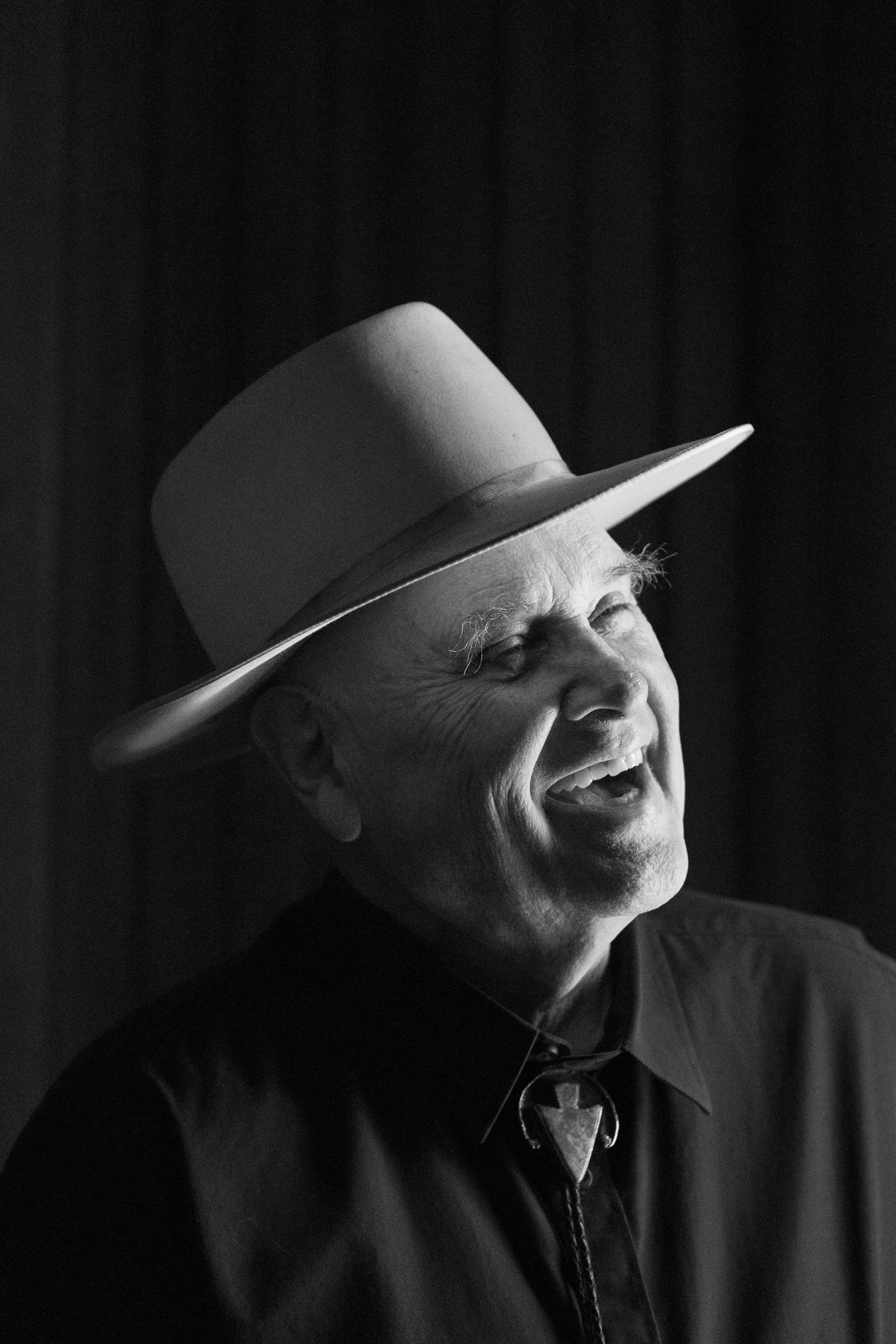
Western artist William Matthews laughing in warm studio light wearing a cowboy hat and bolo tie

William Matthews in a candid moment inside his studio. His paintings of working cowboys and ranch life have become a defining voice in contemporary Western art.
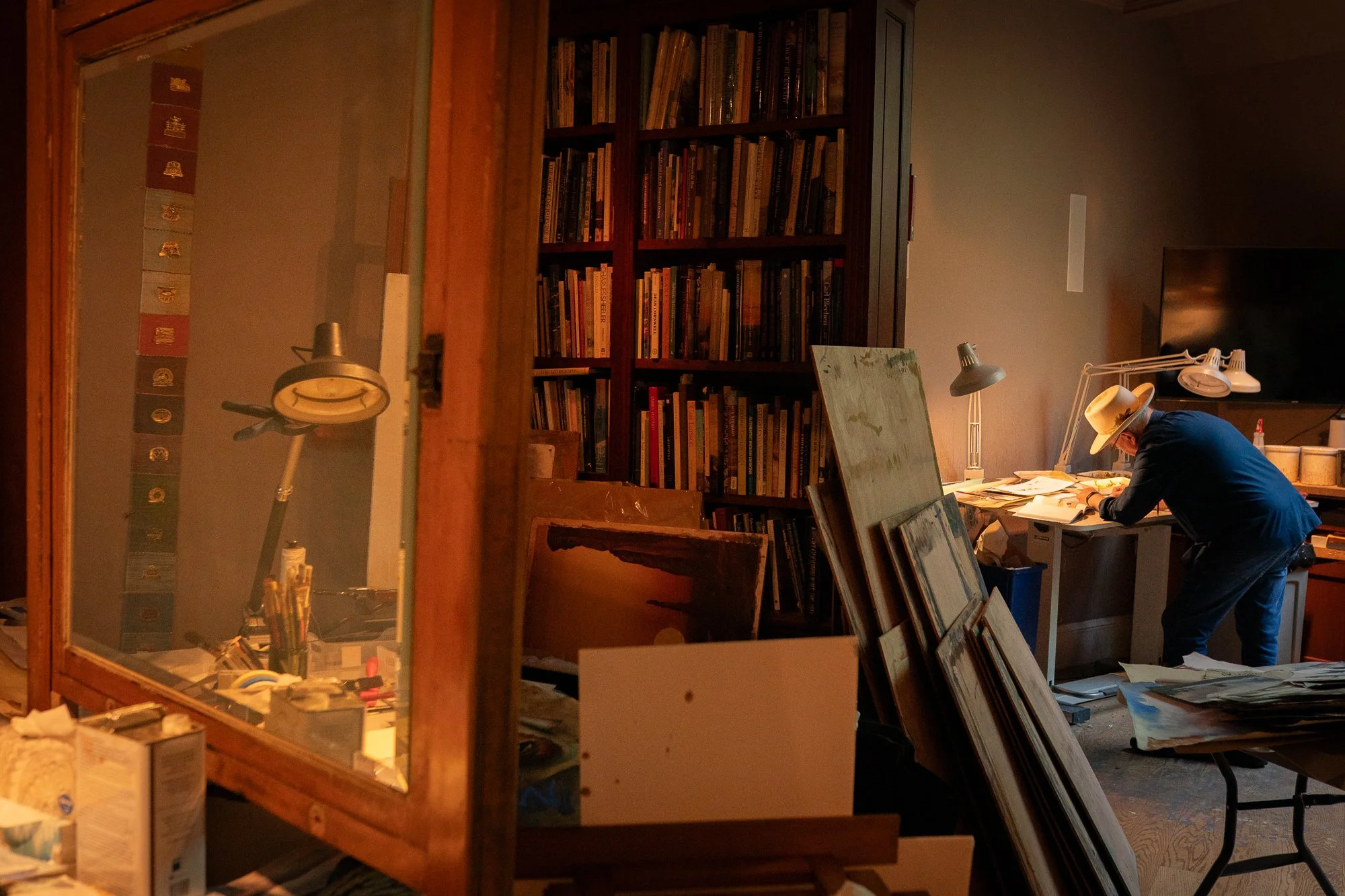
William Matthews working at his desk surrounded by books and paintings in his Western art studio

Matthews at work in his Colorado studio, surrounded by reference books, studies, and decades of accumulated material that inform his paintings of the American West.
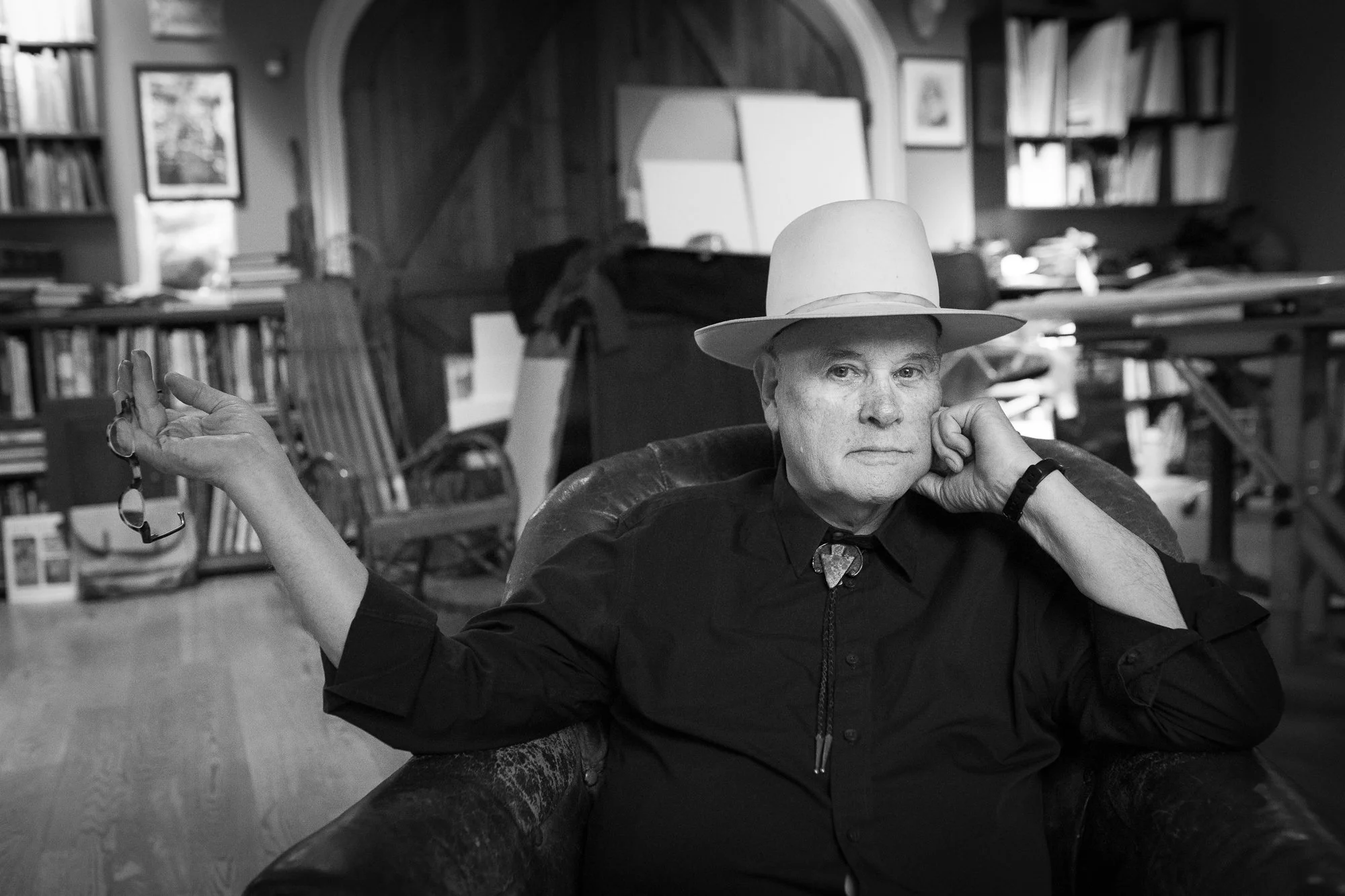
Black and white portrait of Western painter William Matthews seated in his studio

A quiet portrait of William Matthews inside his working studio, where his celebrated cowboy paintings take shape.

Watercolor palettes and paint brushes on a table in William Matthews’ studio

Pigment-stained palettes and well-worn brushes — the quiet tools behind Matthews’ watercolor interpretations of cowboy country.
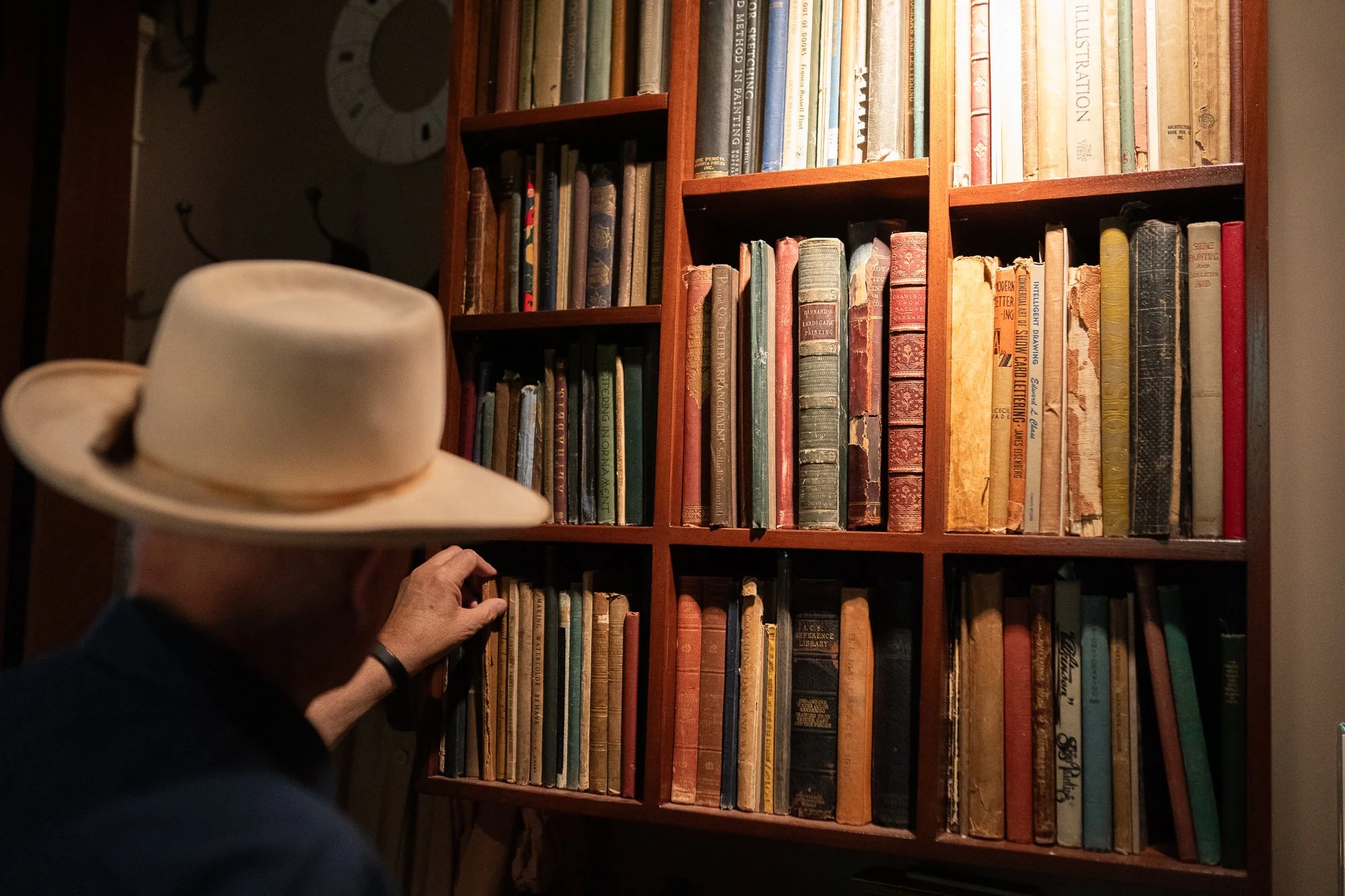
Bookshelves filled with art books inside William Matthews’ Western art studio

A wall of well-worn art books lines the studio shelves. Even an established Western painter remains a lifelong student of the craft.
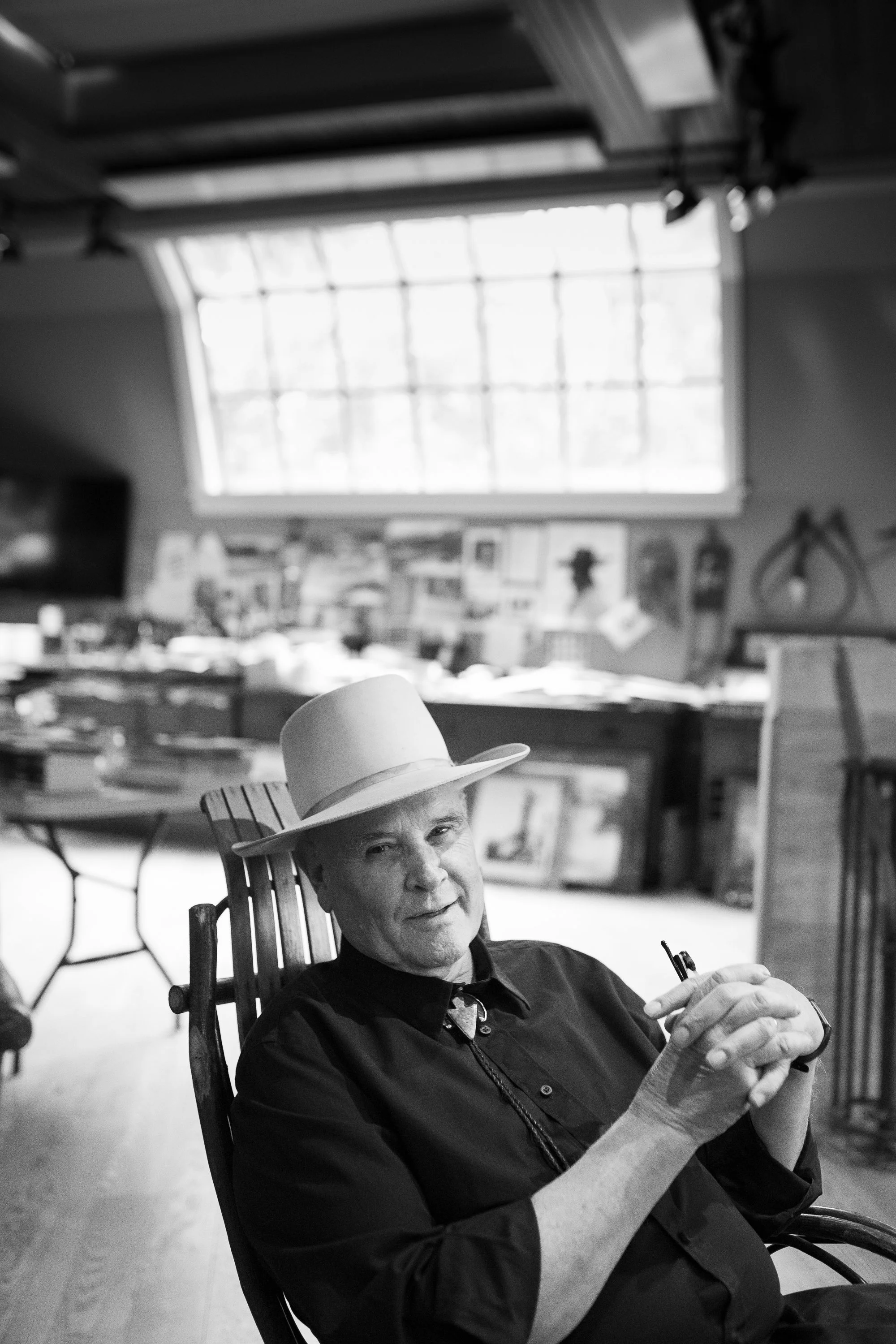
William Matthews seated in rocking chair inside his art studio under large window

Seated beneath the studio windows, Matthews reflects between works. His paintings have shaped how many collectors visualize the modern cowboy.
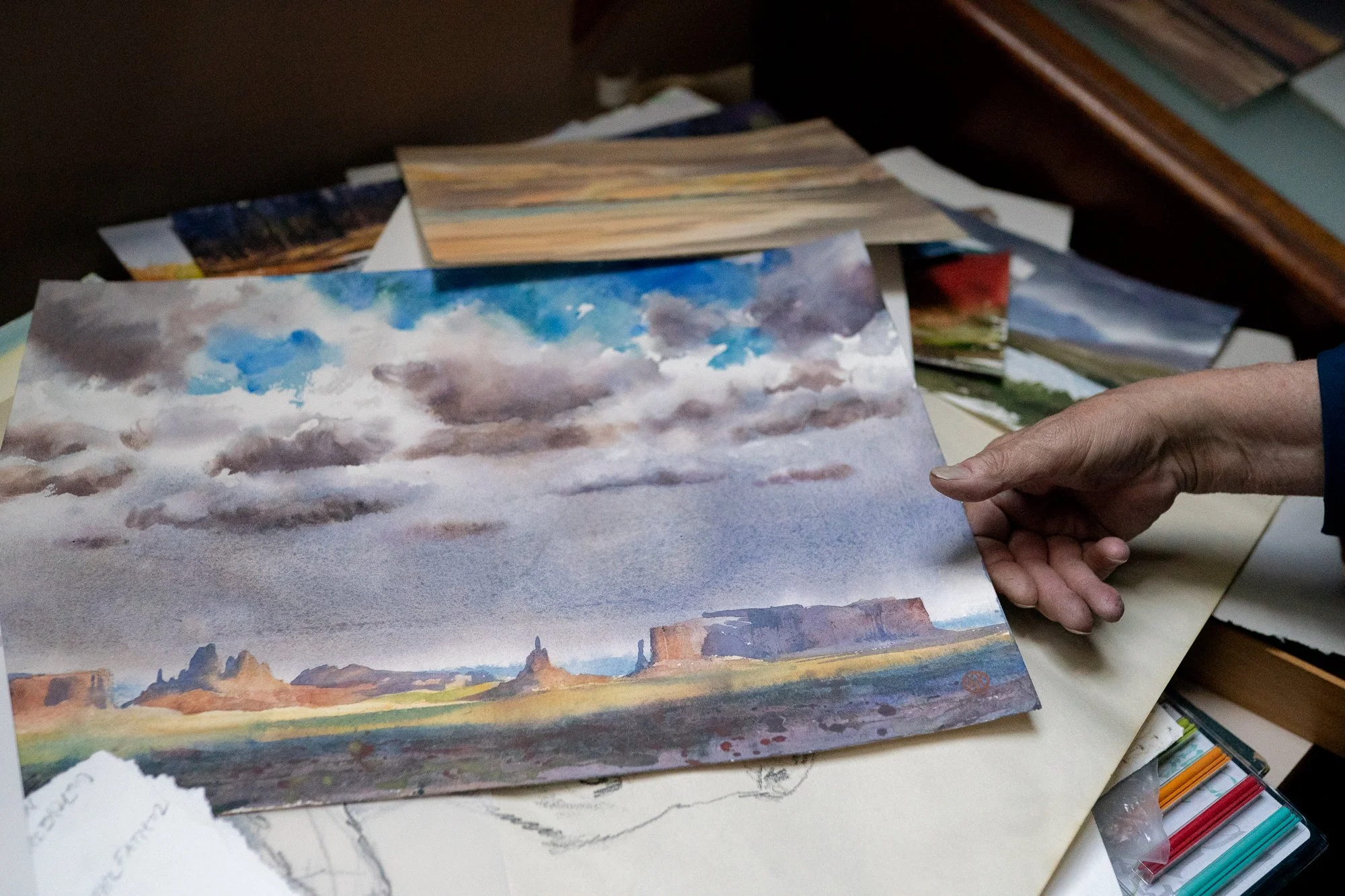
Western landscape watercolor painting featuring mesas and dramatic sky by William Matthews

A watercolor study of the American West, where open sky and distant mesas echo the same landscapes that inspire generations of cowboy artists.
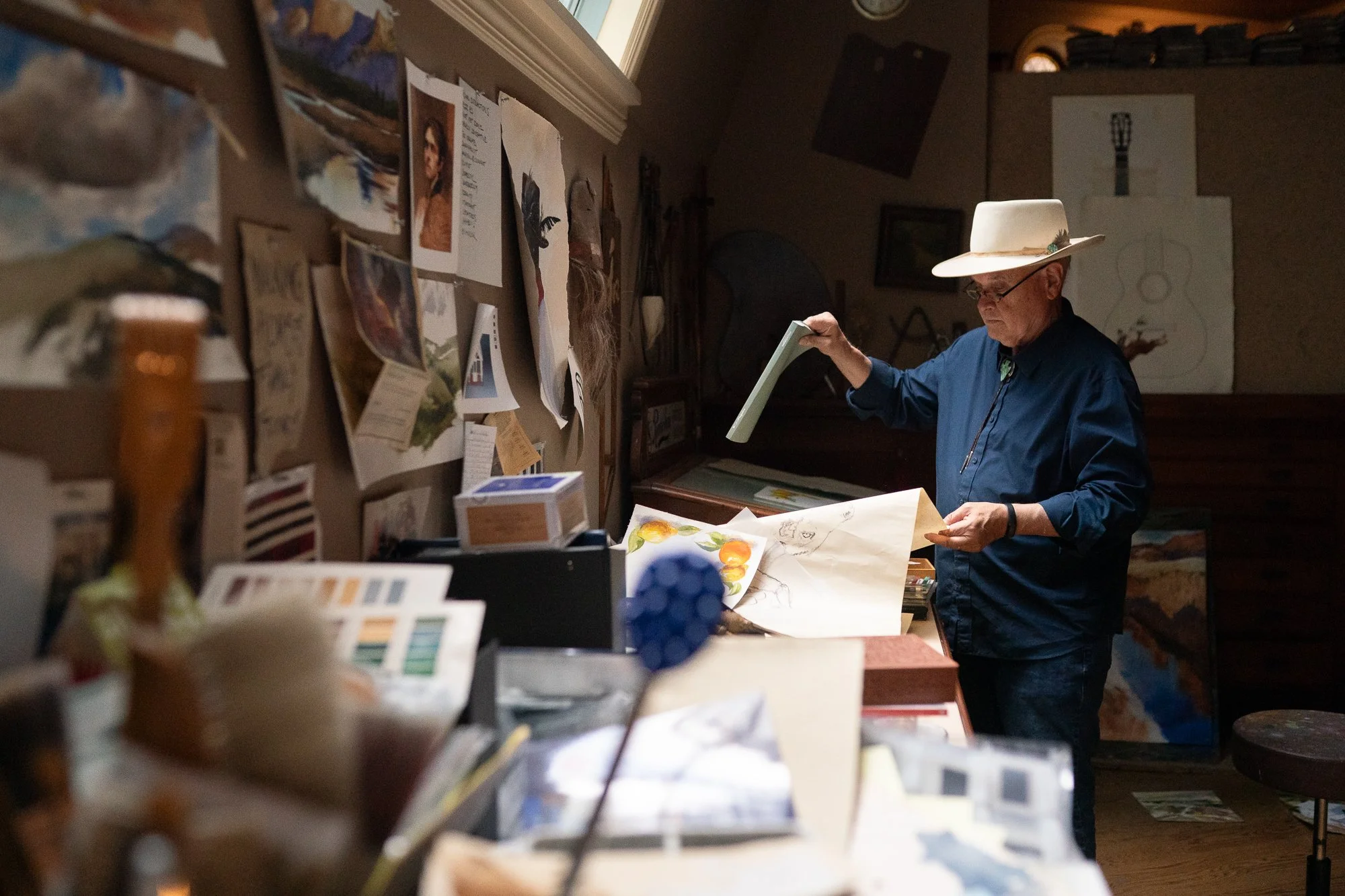
William Matthews examining watercolor painting in his studio workspace

Reviewing a recent watercolor study, Matthews considers light, atmosphere, and restraint — hallmarks of his Western landscapes.
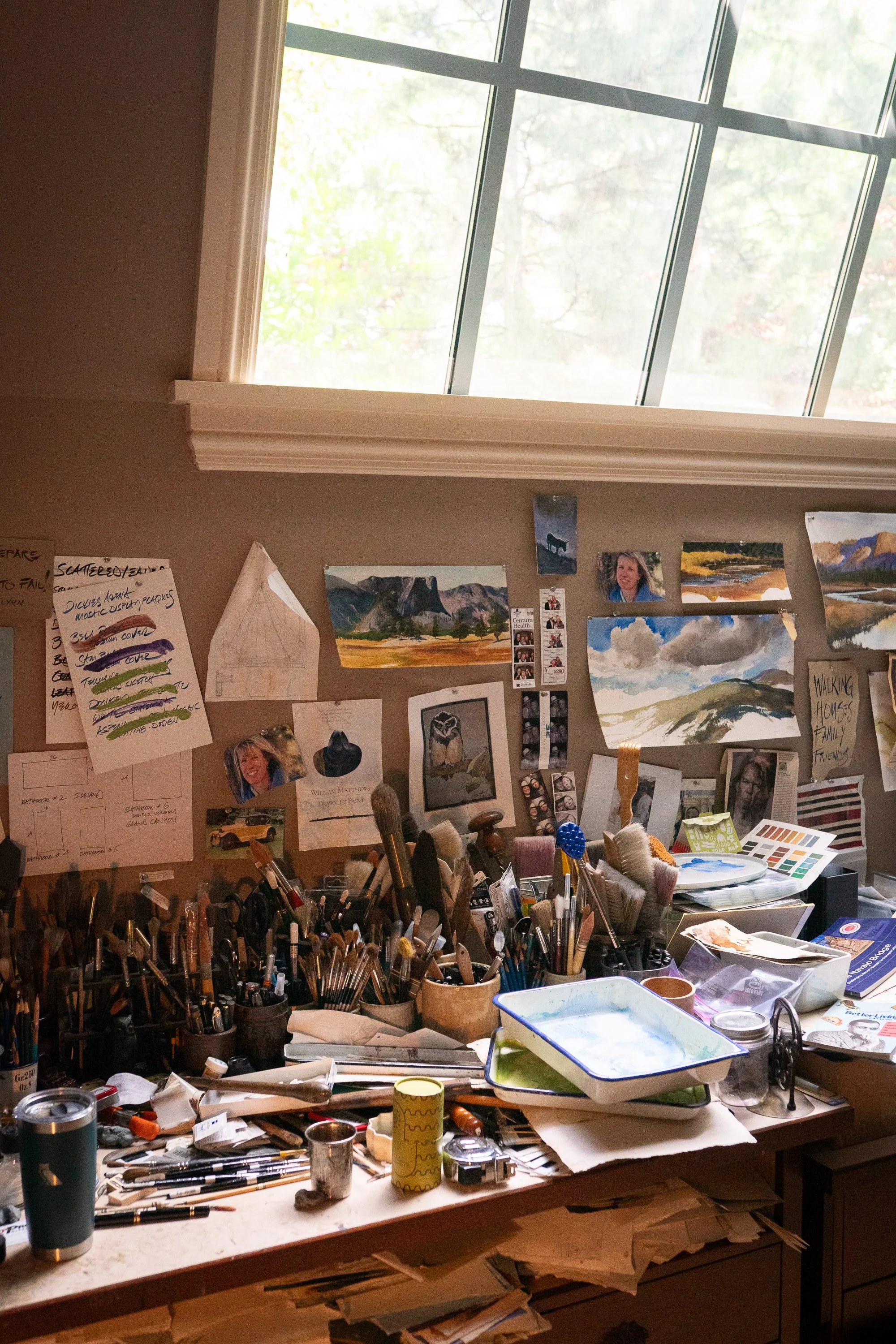
Artist desk filled with brushes, pinned sketches, reference photos and watercolor trays in William Matthews’ studio

Pinned studies, reference photographs, handwritten notes, and brushes crowd the desk — a working studio shaped by decades devoted to painting the West.
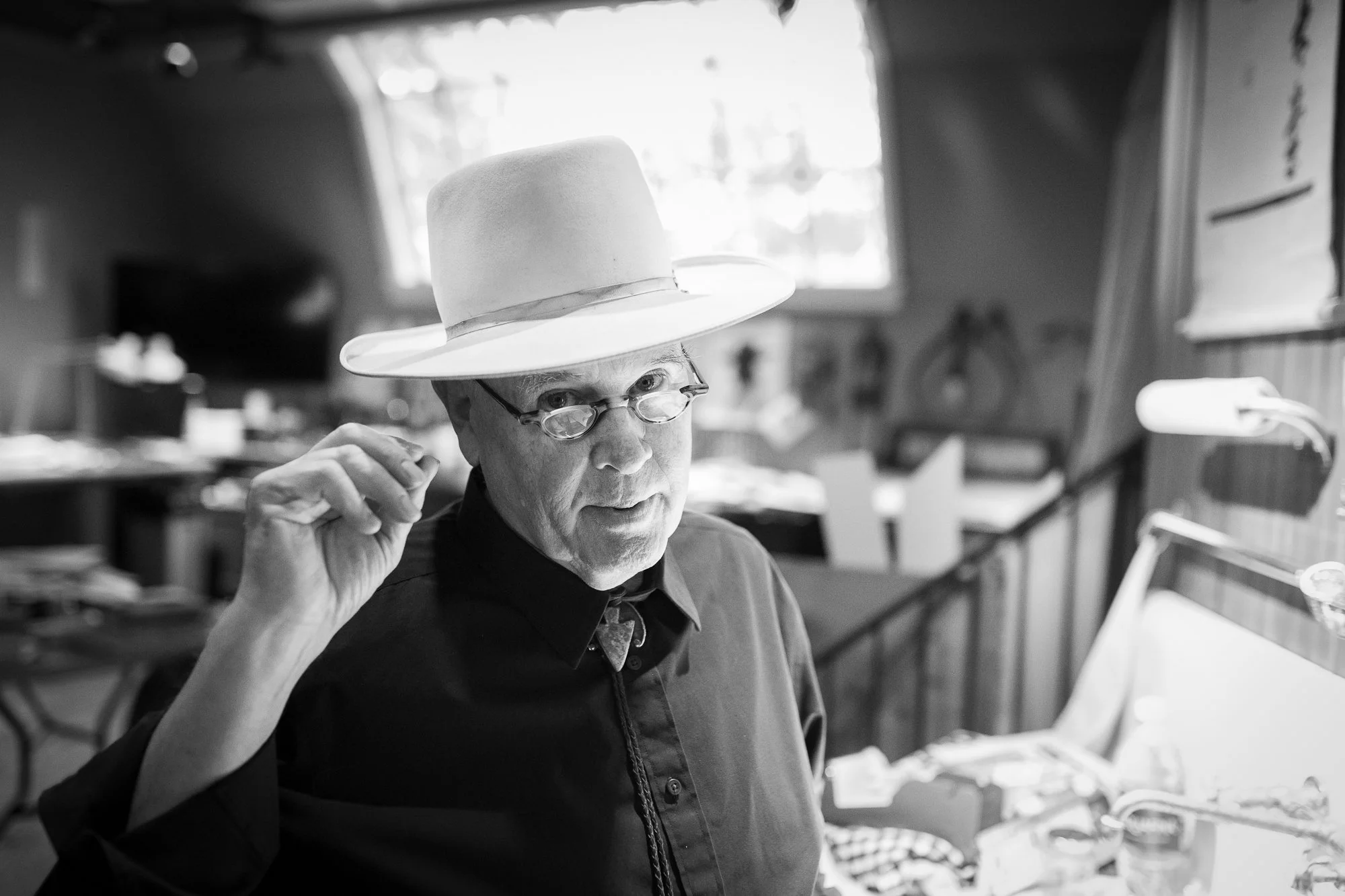
Candid portrait of William Matthews in studio wearing cowboy hat and glasses

Between studies and finished pieces, Matthews pauses at his drafting table — a reminder that Western art begins with careful observation and discipline.
Martin Gerdin: Glass Trout and the Art of Fly Fishing

From Wild Fish to Glass Art: Photographing the Work of Martin Gerdin

A Fly Fishing Artist Who Honors the Fish

If you spend much time around fly fishing and have an appreciation for art, then you’ve heard the name Martin Gerdin. His hand-blown glass fish are more than just decorative pieces, they’re immaculate tributes. To the fish. To the places they live. To the hours spent chasing them in silence with and without victory. When I had the opportunity to photograph Martin for a recent magazine story, I knew right away this wasn’t just another artist profile. It was a chance to document someone who truly understands what makes fly fishing special.

Photographing the Process Behind the Glass

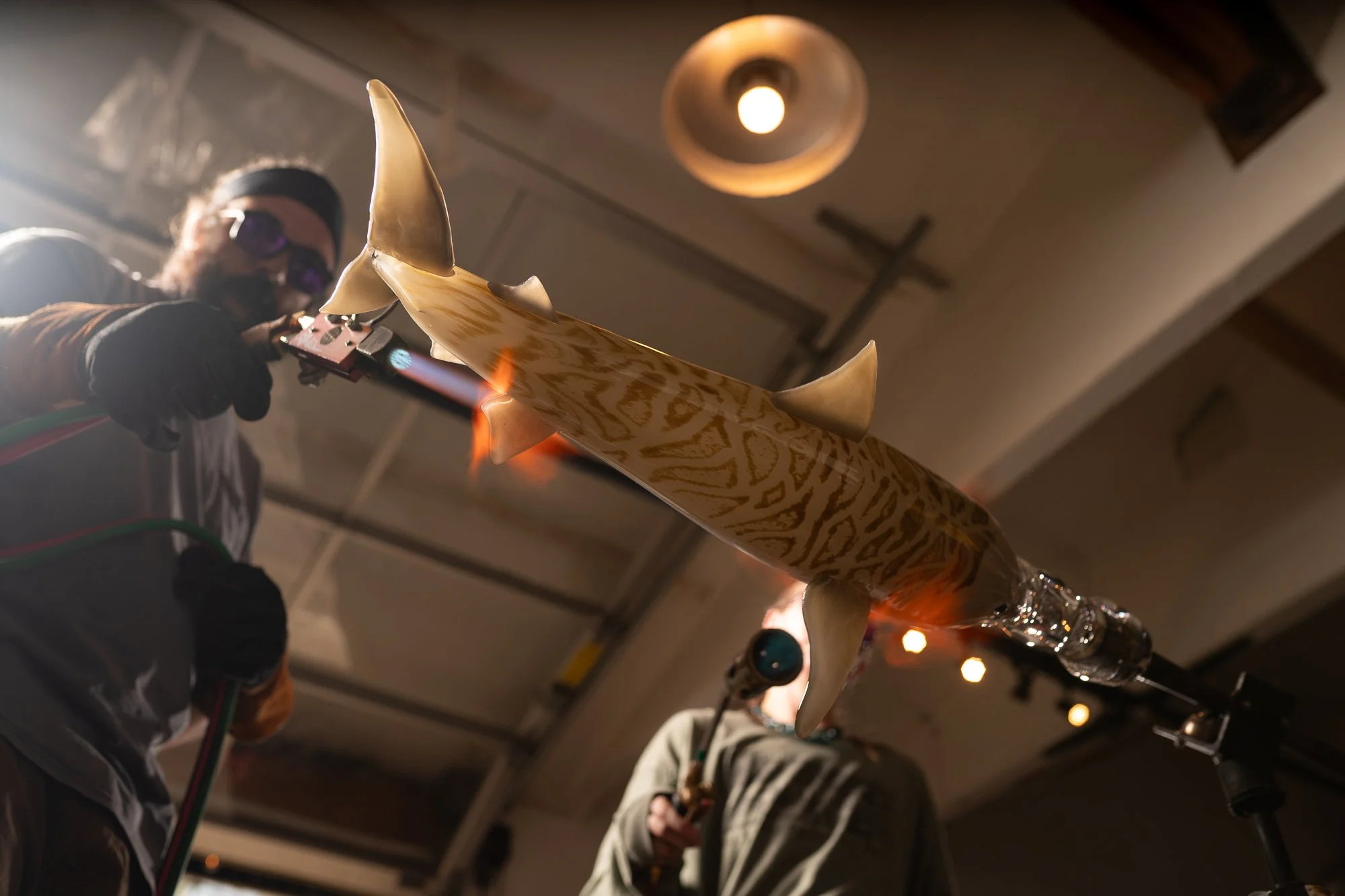
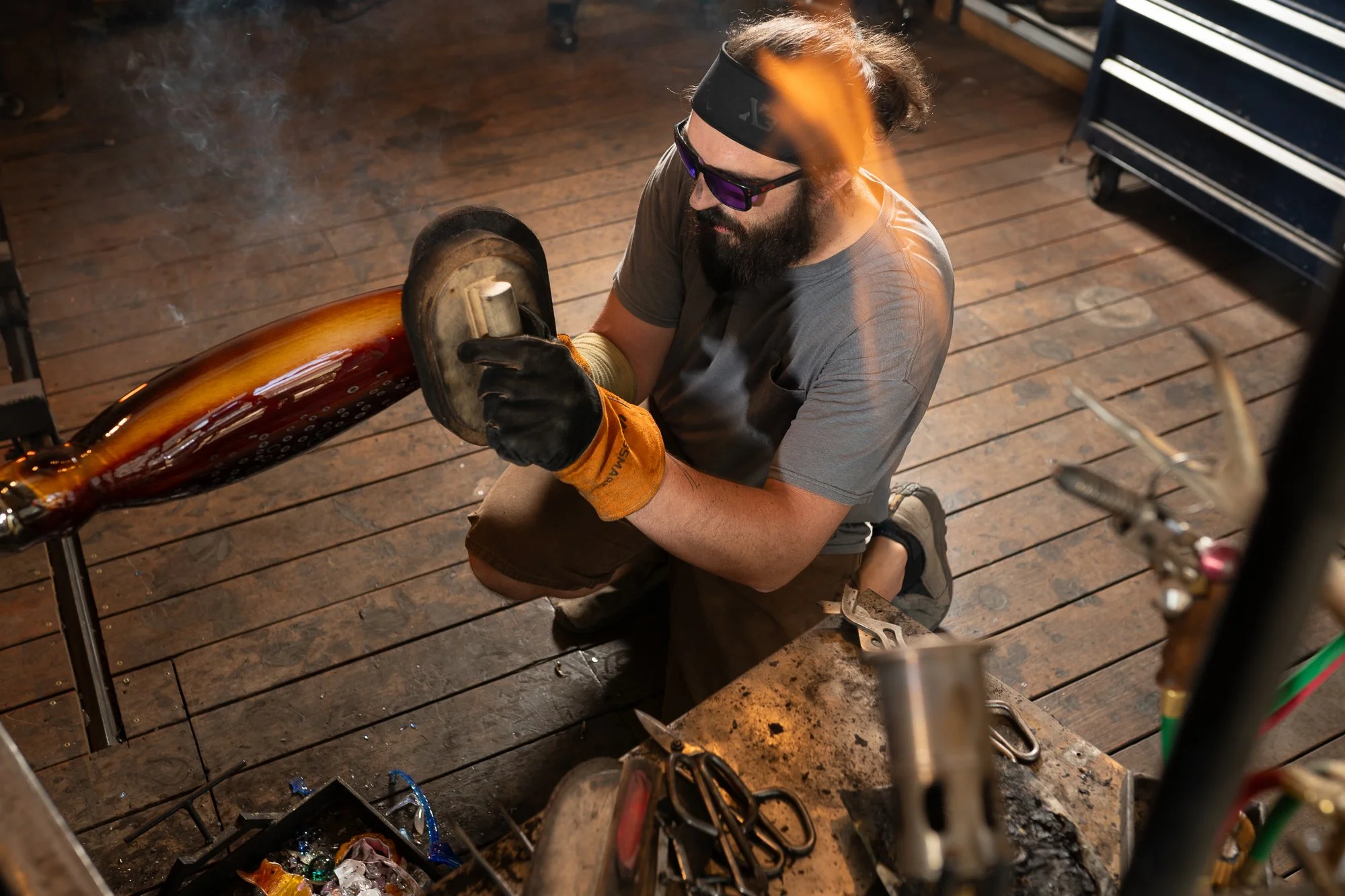
Martin’s Gerdin’s studio is located in Crawford, a small town in a remote section of southwest Colorado, which tells you a bit about him already. He doesn’t need the fancy street facing storefront, because for him, it’s only about the work. And that’s obvious seeing him in action. He cares. Sure, creating stunning glass blown fish is how he earns a living, but it’s also his passion. Glass blowing is a very delicate art, especially when dealing with a pieces the size of Gerdin’s fish. There are so many steps along the way that can cause each one to be ruined. And when that happens all is lost. Back to the beginning. As a photographer intent on documenting a process that cannot be faked, the only option is to be a fly on the wall and not get in the way. Martin and his team are constantly moving, back and forth from the work bench to the furnace, over and over. For this shoot I wanted to use strobes to light the scene in a way that wouldn’t draw attention to the light itself. Rather as more of a subtle enhancement. So the hard part was finding those places within the studio that the strobes and light stands wouldn’t impede his flow. Which was difficult at times, but he graciously told me when they needed to be moved and everything worked out just fine in the end. To be honest, there were times when I just wanted to sit back and watch. Looking at Gerdin’s work on his website or Instagram is impressive, but to see a final piece come to life before your eyes, is something else altogether.

**If you think creating glass trout for a living is all glamour, think again. It’s well over a hundred degrees in Martin’s studio when the furnace is running.

Where My Work Intersects with His

Martin Gerdin doesn’t create custom glass trout for fly fishing collectors by accident. It started out of his rabid obsession with the sport itself. The assignment to photograph Martin at work also didn’t happen by accident. As a photographer, it’s very important to me that the people and stories I work on, are ones I truly care about and have an interest in. So I pitched the idea to a magazine because I was a fan of his work and am also violently obsessed with fly fishing, which has led to a somewhat unhealthy amount of time on the river with both a fly rod and a camera. Like Martin, it’s my happy place.

See the Full Collection

Want to see more?
You can view my full collection of fly fishing photography prints [here]. Each image is available for purchase, and select pieces are also available for editorial or commercial licensing. If you’re a collector, or simply someone who loves the water, I think you’ll find something that speaks to you.

Photograph of a glass brown trout by Martin Gerdin

Martin Gerdin - Glass Fish Artist

Photograph of a glass artist creating custom art for fly fishing collectors

Fine art glass fish artist Martin Gerdin at work in his studio in Crawford, Colorado

Photograph of a custom glass shark being made by an artist in his studio

Glass fish art

A team of glass blowers creating fly fishing art

Fly fishing artist at work

A glass shark being made at Martin Gerdin's studio in Crawford, Colorado

Hand blown glass shark

Photograph of a hand blown glass shark being made

Photograph of an arist creating a hand blown glass shark

Photograph of Martin Gerdin creating a custom glass brown trout for a fly fishing collector

Hand blown glass brown trout art

Photograph of a glass artist creating a brown trout for a fly fishing collector

Photograph of glass trout being made

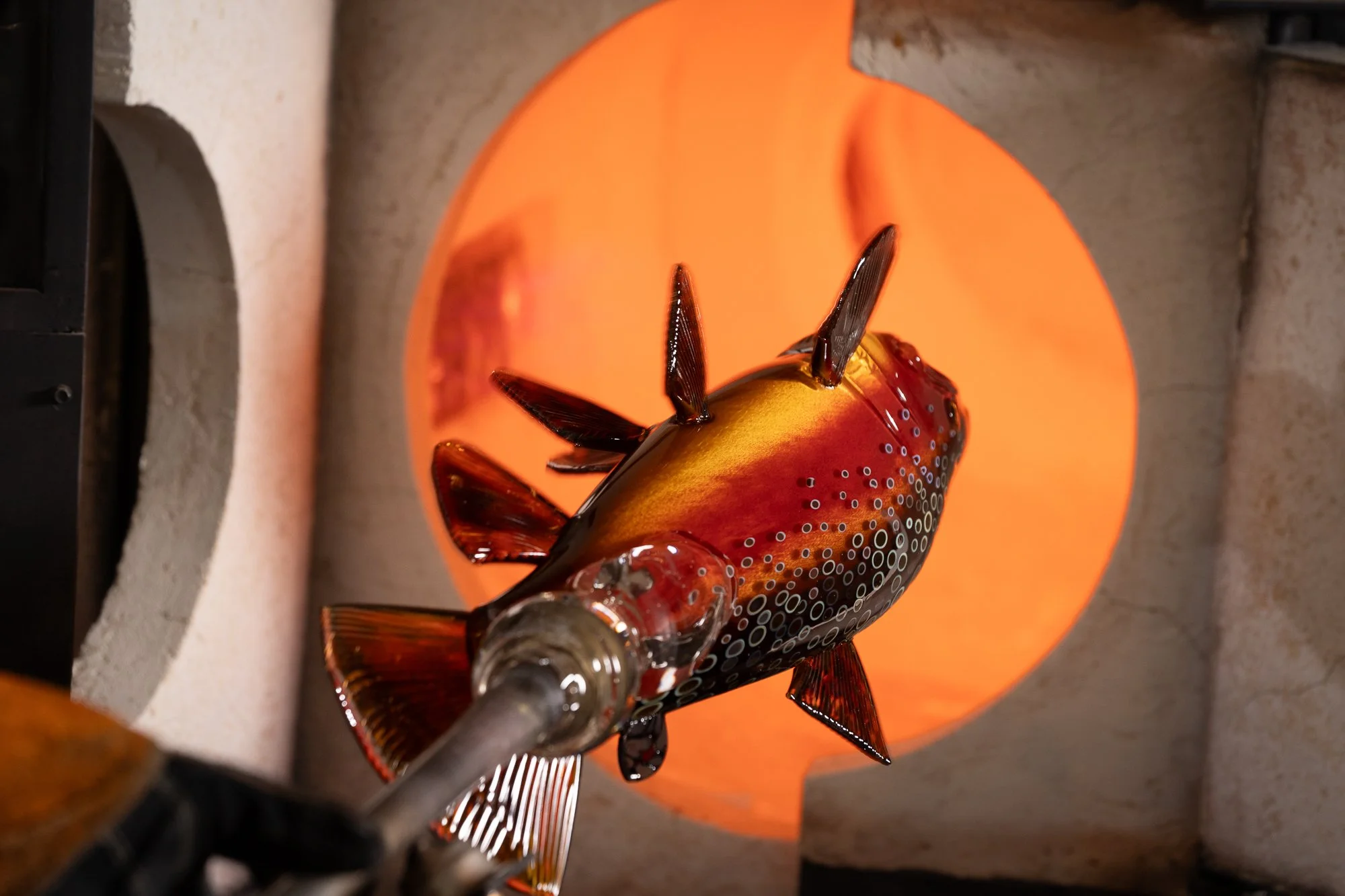
Photograph of a glass blown brown trout going into the furnace

A glass blown brown trout going into the furnace

Fine Art Basketball Hoop Photography Featured in Courtside Candy by Gestalten

Basketball Art + Culture Book - Courtside Candy by Gestalten

Where Streetball Becomes Sculpture

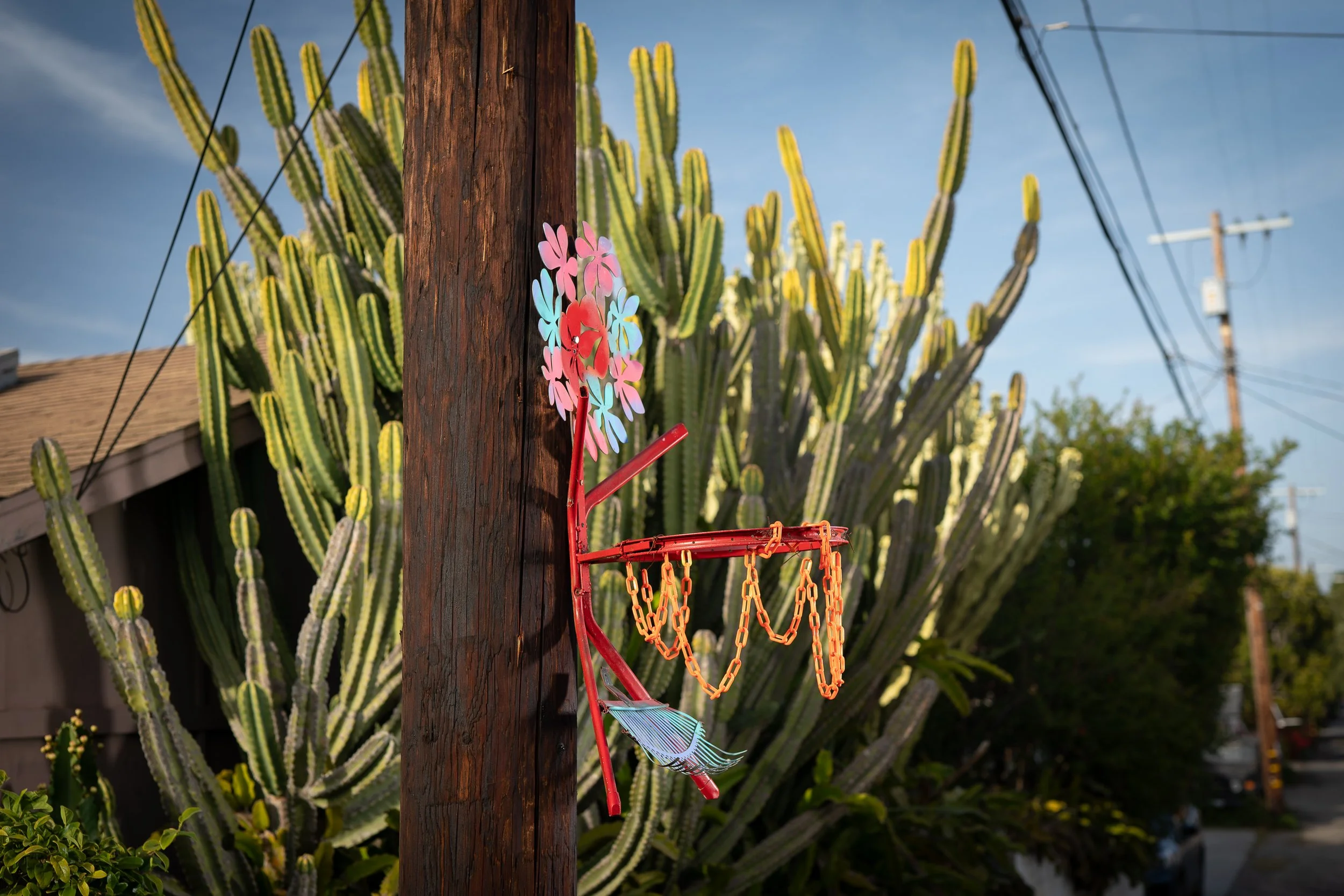
The basketball hoops I photographed in Courtside Candy weren’t made in factories or sponsored by brands. They were made by an artist (Nick Ansom), welded together in backyards, bolted to alleyway walls, and patched together with whatever materials were around; bike rims, plywood scraps, milk crates, rusted steel. In Venice Beach, this isn’t junk. It’s basketball art.

Each hoop reflects a specific personality. Sometimes playful, sometimes gritty, always creative. They’re part of a larger story about the culture of the game. These aren’t just functional backboards; they’re sculptures. And like all good art, they say something about the people who built them.

Venice Beach: A Legacy of Basketball and Creativity

Venice Beach has always been more than a postcard, it’s one of the most iconic basketball communities in the country. It’s where pickup games turn into performances, and where the court is as much a canvas as the chaos and mural-covered buildings around it.

Courtside Candy lives in that space between sport and expression. The hoops in this series represent the DIY spirit that runs through Venice’s streetball scene. They speak to resourcefulness, style, and the love of the game without any need for polish or perfection. In a place where surfing, skateboarding, painting, music, and basketball all collide, these hoops feel right at home.

About the Courtside Candy Book

The Courtside Candy book is a visual archive of this subculture, a historic collection representing the culture of basketball, celebrating the infinite ways the game has been translated into art by people all over the world.

Each piece unique on its own, but collectively, and along with the beautiful writing by Ben Osborne, the book tells a different and vitally important story about the games influence.

Click here to view and purchase available prints or contact me directly if you’d like a basketball print of any photograph not already listed.

Part of a Larger Body of Work

For over 15 years now I’ve been documenting the game of basketball in all it’s different forms - everywhere from the streets of Venice beach to the American Heartland and everywhere inbetween.

View the Basketball Culture Gallery

View the American Backcourts Gallery

Fine art sports book about the culture of basketball
Photograph of handmade basketball hoop in Venice Beach, part of a series featured in Gestalten’s Courtside Candy book

Part basketball hoop, part sculpture. This Venice Beach alley setup is a reminder of how the game adapts to its surroundings

Artistic street basketball installation in Los Angeles representing urban basketball culture

One of the many hoops that reimagine basketball as public art, photographed in the back alleys of Venice

Photograph of handmade basketball hoop built from found objects in a Venice Beach alley, featured in Courtside Candy by Gestalten

Basketball hoop made from found materials, photographed as part of an international basketball art book

Creative basketball hoop sculpture photographed in Los Angeles for an international basketball culture photography book

This photograph is part of a published series that explores the creative edge of basketball culture in America’s urban spaces

Basketball culture photography print from a series featured in Courtside Candy, capturing urban creativity through sport

Equal parts sculpture and sport, this Venice Beach hoop transforms function into form, blurring the line between art installation and basketball court

More than just a place to shoot around - this hoop turns a back alley in Venice Beach into a public statement about the game’s reach and creativity

From the streets of LA to the pages of Courtside Candy, these handmade hoops carry a different kind of history.

Rocky Mountain National Park Fly Fishing Photos for Editorial and Commercial Use

Rocky Mountain National Park Fly Fishing Photography

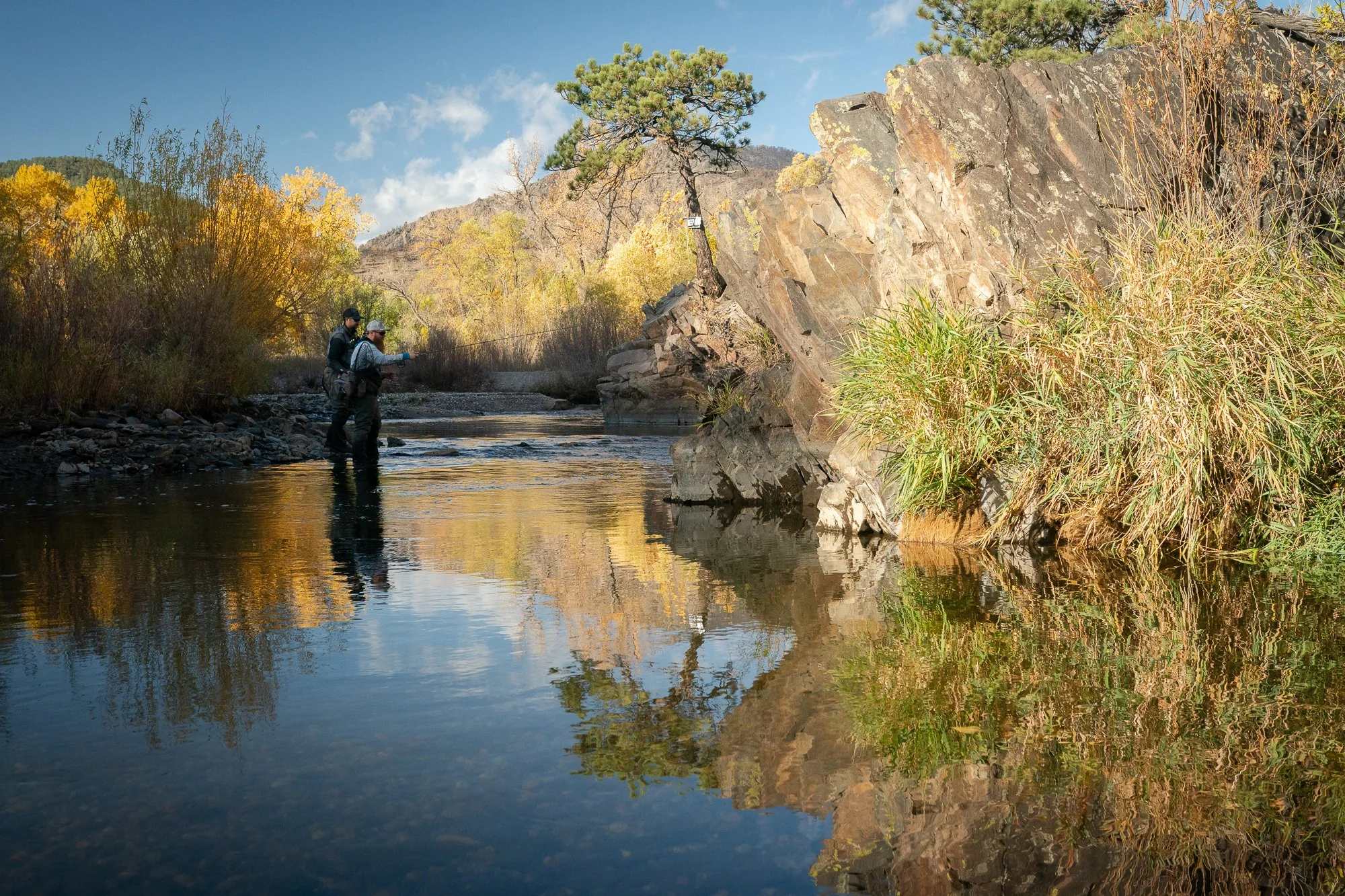
Fly fishing in Rocky Mountain National Park doesn’t feel like most places in the West. The water is colder, the air thinner, and the environment can feel both timeless and apocalyptic. Light shifts quickly, weather rolls in without warning, and the fish demand precision.

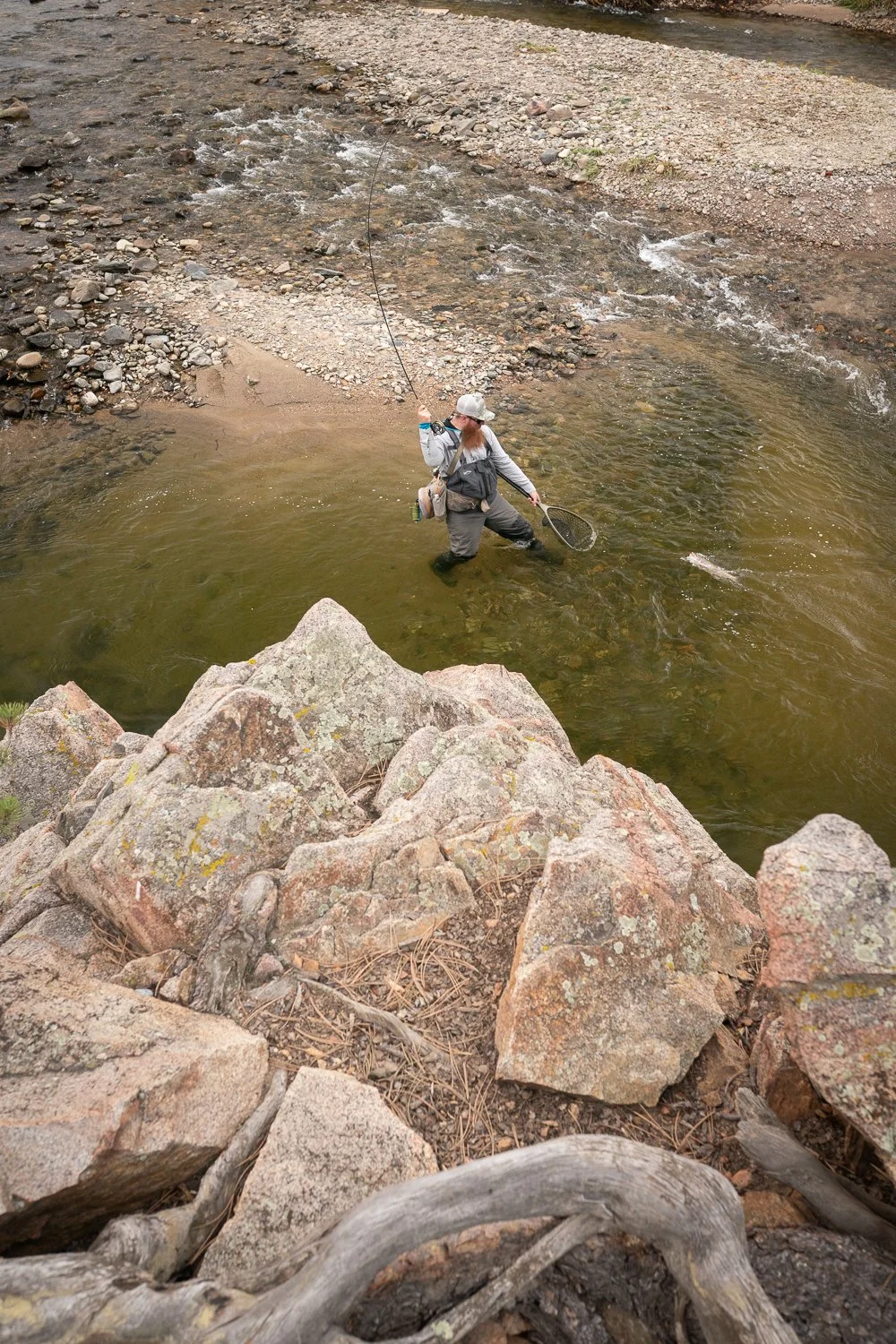
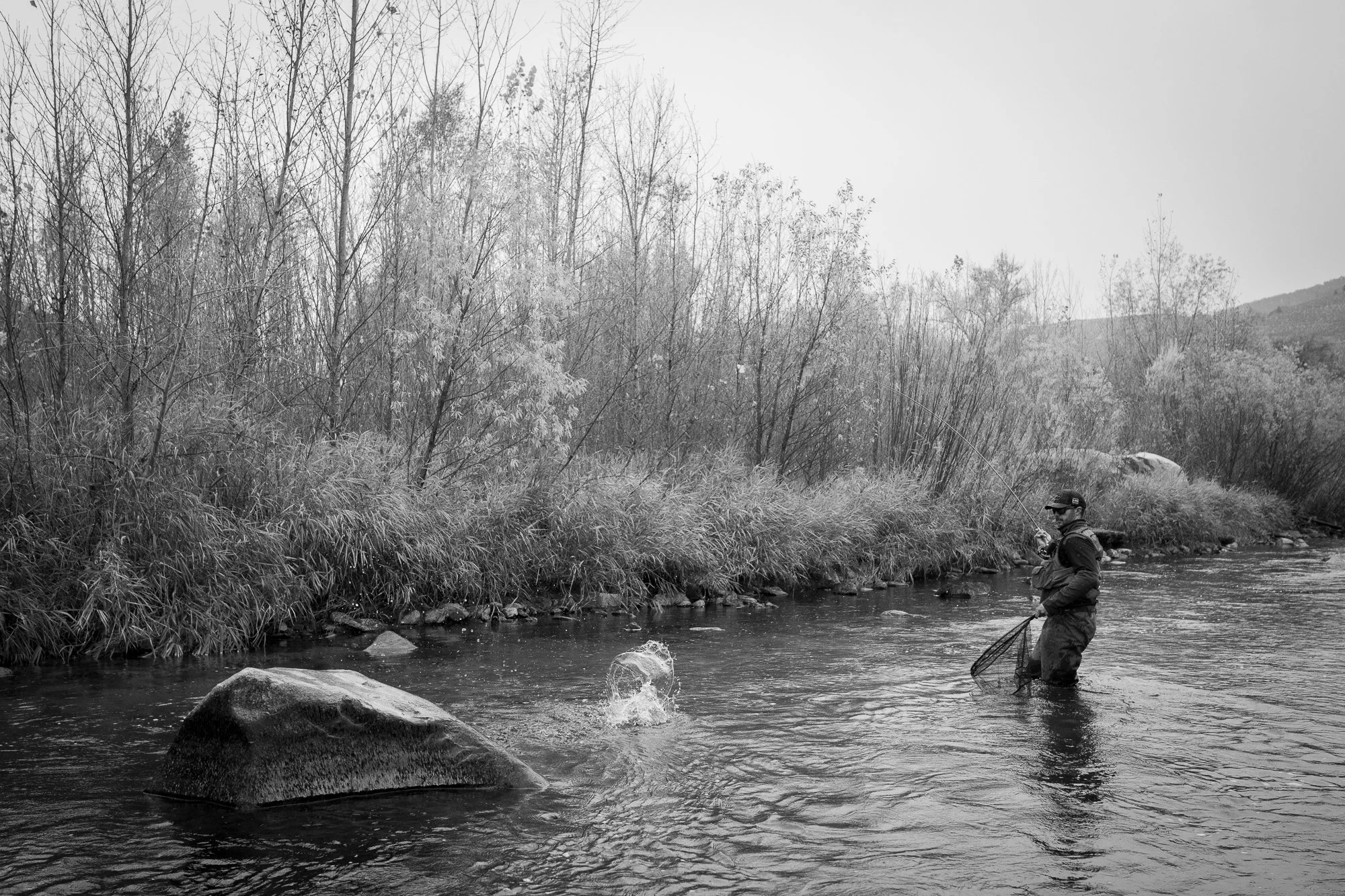
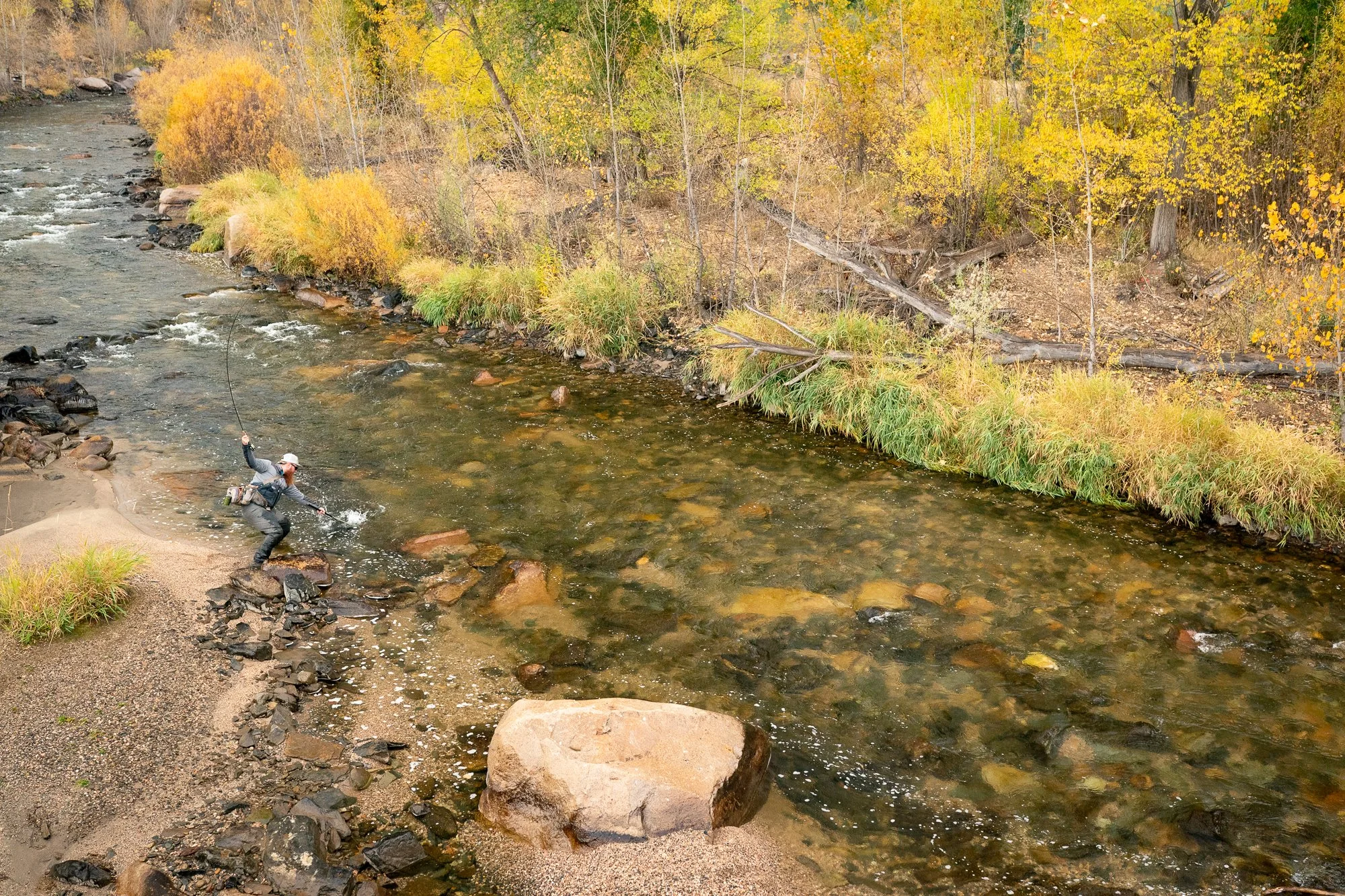
These photographs were made while fishing and moving through the high country above the Front Range, primarily along the Big Thompson River and surrounding alpine water. Like most of my work, they weren’t staged or built around a production schedule. They came from time on the river—watching light, waiting on conditions, and working within whatever the environment gave back.

A fly fisherman ties a fly to his line while sitting on the back of his car in a beautiful mountain location

Fly fishing guide tying a fly to his line before fishing in front of snow capped peaks

Fly Fishing in Colorado’s High Country

The headwaters of the Big Thompson River and the surrounding water in Rocky Mountain National Park offer a very specific kind of fishing. Tight pockets, fast current, and limited room to move mean every cast matters.

From a photography standpoint, that changes everything.

There’s no stepping back to reset a shot or adjusting positioning for better light. You’re often working in confined space, reacting to what’s happening in front of you rather than directing it. The best frames tend to come from small moments—reading water, adjusting line, moving carefully through current.

That’s what defines fly fishing here, and it’s what these images are built around.

Photograph of a fly fisherman surrounded by rugged terrain and snow capped mountains in Rocky Mountain National Park

Fly fishing in Rocky Mountain National Park

A fly fisherman walking through a beautiful section of the Big Thompson River in Rocky Mountain National Park

Big Thompson River Fly Fishing - Rocky Mountain National Park

Photographing Fly Fishing in Unpredictable Conditions

High-elevation environments don’t offer consistency.

Light can go from flat to harsh in minutes. Wind moves through canyon walls without warning. Temperatures shift quickly, especially in the early morning and late evening. All of it affects how the water looks, how the angler moves, and how the gear performs.

Photographing in these conditions isn’t about controlling the scene—it’s about staying responsive to it.

That approach leads to images that feel grounded in reality rather than constructed. For outdoor brands and editorial use, that difference matters. The details—wet fabric, glare on the water, uneven terrain—are what make the images believable.

Photograph of a fly fisherman putting floatant on his fly while standing in front of snowy mountains

Fly fisherman adding floatant to his fly with snow capped mountains in the background

A fly fisherman walking through the Moraine in Rocky Mountain National Park

Fly fishing the Moraine - Rocky Mountain NP

A fly fisherman netting a fish surrounded by dense brush in rugged terrain

Backcountry fly fishing in Rocky Mountain National Park

Why Places Like Rocky Mountain National Park Matter for Outdoor Brands

The Rocky Mountains are one of the most recognizable landscapes in the United States.

For brands, that recognition carries weight. The terrain is immediately identifiable, but it still feels remote and demanding. It represents a version of fly fishing that’s both accessible and aspirational—something people understand, but still want to experience for themselves.

Photographing in a place like this adds context that goes beyond the product. It connects gear to a real environment—one that requires durability, movement, and adaptability.

That’s what turns a photograph into something usable for advertising or editorial storytelling.

Photograph of a fly fisherman walking through a dense forest of burned trees

Fly fisherman walking through a forest of burned trees in Rocky Mountain National Park

Photograph of a fly fisherman frustrated after losing a fish in Rocky Mountain National Park

Frustrated fly fisherman after losing a fish

A fly fisherman fishing a rugged section of the Big Thomson River

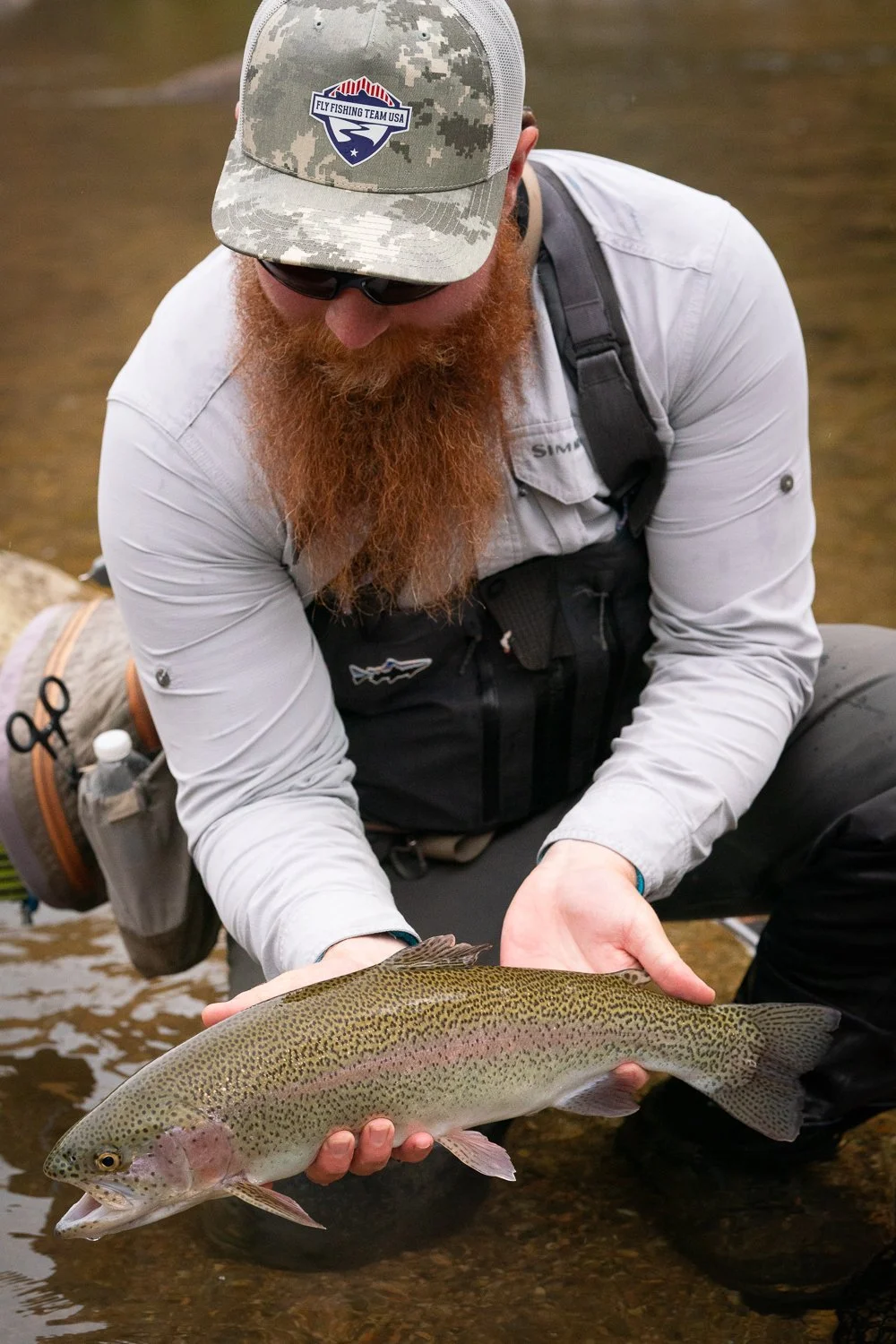
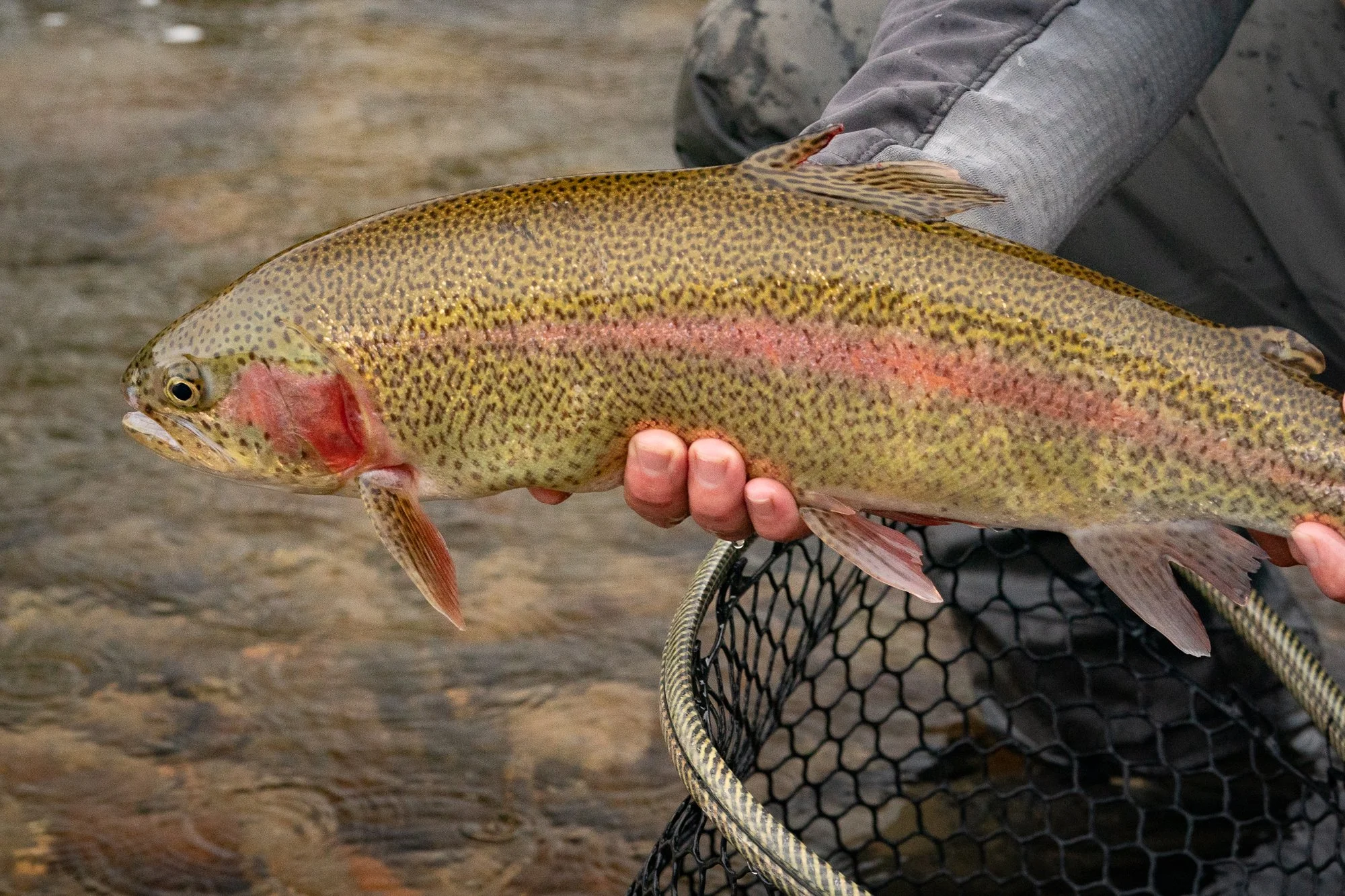
Fly fisherman netting a trout in a backcountry section of the Big Thompson River

Fly Fishing Photography for Commercial and Editorial Use

This work is available for licensing across a range of uses, including:

  • Outdoor and apparel advertising campaigns

  • Editorial features and publications

  • Brand storytelling for web and print

  • Tourism and regional marketing

Because the images are created in real conditions, they hold up across different contexts. They aren’t tied to a single moment or campaign—they’re part of a broader visual record of fly fishing in the American West.

Photograph of a fly fisherman on a high alpine river in Colorado

Rocky Mountain National Park fly fishing

Photograph of a fly fisherman smiling

Smiling fly fisherman

Part of a Larger Fly Fishing Project

These photographs are part of an ongoing body of work documenting fly fishing across Colorado and the greater American West.

Additional work from other locations:

Each location brings a different environment and a different set of challenges, but the approach remains the same—real anglers, real conditions, and an emphasis on the relationship between people and water.

You can view more here:
Fly Fishing Photography Gallery

Licensing & Commercial Work

I work with outdoor brands, publications, and agencies to create fly fishing photography that reflects how the sport actually looks and feels in the field.

For licensing or assignment inquiries please reach out directly: - rob@robhammerphotography.com

A fly fisherman walks up the river past a huge dead tree in Colorado

Authentic fly fishing photography

Western Saddle Maker

Western Saddle Maker

Inside a Working Saddle Shop

Western saddle shops are becoming harder to find, but they remain an essential part of Western culture. This post documents time spent inside the shop of master saddle maker Doug Cox and tells a story of the lifetime he’s spent creating one of a kind pieces of functional art for cowboys and collectors all over the world.

Doug Cox and the Craft of Custom Saddle Making

“If I created a really, really goddamn nice saddle, and some cowboy—or buckaroo or vaquero—rode that son of a bitch, but took care of it; if he burned the damn edge of the cantle binding off from draggin’ calves, or burnt the fork cover down with a groove where his rope ran, and he wore the flowers down to nothing, that’s a success. It ain’t the son of a bitch in mint condition that’s hanging in a barn somewhere.” That quote from Doug Cox might give you an insight to his personality, but there’s a lot more to know about the obsessed saddle maker from Grangeville, Idaho that’s still feverishly working toward better saddles 50+ years later. His stoic demeanor and unfiltered vocabulary might offer a rough first impression, but he’s sharp as a whip and two steps ahead of everyone. Despite being a world class artist, he retains no ego, is quick to laugh, and only answers your questions with honest thoughts. The kind of guy you never once doubt when he starts a sentence with “Fact is…..”. 

Born in 1950, Doug’s earliest memories formed on the steer ranch his family lived and labored on for 17 years before renting their own. “When you were old enough to work, they worked your ass off”, Doug recalls. For him that was age 7, and a typical day started in the morning, milking cows and feeding saddle horses. In the winter they fed 2,000 head of steer with grain around noon and again with hay at night. Then it was back to milking cows, feeding saddle horses, fixing equipment, supper, sleep, repeat - a typical routine for everyone Doug knew, so he never thought to complain. At 8 or 9 he was put on a horse to start moving cows around, at which point, “you passed the dogs in rank”, he joked. In high school Cox found a job nearby working for a man who raised registered quarter horses, because he didn’t get paid at home, just fed. Other jobs followed; day working for a slew of ranches in the area. He also started stamping leather belts for beer money. The first one came out of shop class. “I backed the teacher up. He couldn’t imagine anybody in high school could do something like that.” Still, all of Doug’s long waking hours were spent horseback in big country where he met a lot of “shittin’ saddle makers”, until moving south in 69’ for an Ag college in Sheridan, Wyoming that had two sports - basketball and rodeo! So began his career riding broncs and showing reining cow horses and cutting horses. More importantly though, he was hanging out at King’s Saddlery after school - drinking coffee, shootin’ the shit, and becoming a recipient of the trickle down effect. Shortly after, the fascination with school vanished, and he was once again enjoying life as a drifting cowboy. 

Towards the end of 1970 his number was picked for the military where he spent 4 years as a corpsman on an Orthopedic Ward. There he received forced knowledge of anatomy and physiology. Being up close and personal with broken people day in and day out taught him about “human construction”, as he calls it. More specifically it cued his one track mind into a would be blueprint for the opposite of a shittin’ saddle. 

After the service, he wound up back in Idaho working in the logging industry, running a Cat and riding broncs on the weekend. That fall, his crew got snowed out and told to sign up for their “rocking chair money”. Never one to welcome idle time, he got the leather bug and decided to get serious, combing Burton’s Leather Craft catalogue and “ordered me a shit ton of tools”. First up were belts and women's handbags which didn’t exactly quench his thirst. Then out of nowhere, he received a call from an old rodeo friend wanting the interior of his Cadillac El Dorado stamped. His first real job! The arm rests and doors were barely finished before the owner got drunk one night and wrapped it around a telephone pole. So his big money job went out with a hangover, but business still progressed and people took notice. In 76’ the legendary saddle maker Ray Holes offered him an apprentice job, as it seemed Cox’s particular knowledge and talent was taking away customers. An incredible opportunity for Doug to learn the business from the ground up! His days were now spent repairing equipment and crafting leather into pouches for vice grip pliers, chaps, and axe scabbards that got sent all around the world. “There was no scrap. We used everything till there wasn’t any left, and turned it into money” says Cox. $2.85/hour sat just fine with him because the real payment was education, and the promise of a position building saddles after 5 years. 

He became a sponge. “You’d go home and try to do everything they did as good as they did. Some things you pick up pretty rapid, and some things I’m still working on today. Nothing is a done deal. Every day is brand new.” Aside from Holes himself, Bob Kelly was Doug’s biggest mentor up to that point. 3 years after Cox signed on at Holes’, Kelly, who built 1,326 saddles in that shop, retired. So Cox was thrown into the job simply because there wasn’t anyone else. He was forced to figure everything out on the fly. “I asked Ray Holes, what happens when you cut out a seat and stamp it, and it stretches, and you can’t get it to go?” Holes bluntly replied “you cry a lot”. By April of 81’ Cox had an Ivy League Degree in making saddles and successfully co-authored 210 riding saddles as well as 360 pack saddles.

Next chapter: Montana - 3 Forks Saddlery. There, letters started coming in complimenting Cox on his seats, and the reality of his seeing his own name on the marquee began to materialize. He left 3 Forks before too long and did some ranch work for a guy in Madison Valley to earn rent money, but made it clear from day 1 that building saddles was the priority. Next came an opportunity to sell those saddles at a Western store on the four corners in Bozeman. And not much later, with 200 saddles to his sole credit, he moved into an old vet clinic building and things went gang busters. “You’re always wondering if you’re gonna starve to death when things go to shit. So I was surprised when the business kept coming”, says Cox. The Montana winter of 97’ didn’t quit. Or as he puts it, “the one that soured my ass”. That October he helped a friend sort replacement heifers and ween and ship calves. “There was 2 feet of snow and it was 21 below zero. On May 15th we still had all that snow in the yard with a whole lot more on top of it. I had enough”, Doug recalls with tangible disdain. In December of 2000 he and his wife Deb, closed on a house in Gardnerville, Nevada, where you’ll still find him today. They did all the moving themselves. Tools, leather, 10 horses, and every barn/house furnishing you can imagine. 14 hours each way. Over and over and over. That put him 3.5 years behind on orders with people calling wanting to know where their saddles were. He just kept plugging along and tinkering with better designs. Cox got very intense over the structure of his seats, asking tree makers to institute changes that would allow for necessary improvements. 911 struck a massive blow to the world, launching a political and economic roller coaster directly impacting his business. Amongst the obvious wreckage, big outfits were getting scooped up by mining companies, and kids didn’t want to cowboy anymore. Fewer cowboys equals less demand for saddles. In classic Cox fashion, he took the ride but didn’t spend too much time worrying. Instead, focusing on getting better, and really, that’s been his psychology all along. He knows the grandest peaks are always followed by a valley no matter who you are, and the only answer is to keep putting out exceptional products. “I ponder a lot of shit and wonder why the hell am I doing what I’m doing? And then you start to think back about how everything that you did taught you what you’re doing now, and that gives you the path to continue”. 

The full time saddle maker/part time philosopher has damn sure earned his loyal and diverse clientele. Everyone from the working cowboy to folks in Texas who never bother to ask the price of a custom Full Flower. His saddles have been shipped to countries like Dubai, Mongolia, Australia, and Canada, “but probably not all 50 states.” Advertising has never been a priority for Cox, trusting that his faultlessly functioning art will lead to word of mouth referrals. There’s one family in Montana that’s bought close to 20 of his saddles over the years, so imagine the conversations they’ve had with neighbors. He believes in taking care of people and appreciates unwavering loyalty. So if you’re buying a custom Cox, then chances are your package will arrive with a little something extra. That might be added stamping, a breast collar, or whatever else he feels like throwing in. After all his years in business you could count on a few fingers the number of clients he’s had trouble with, but they didn’t know what they wanted to begin with. One such customer who couldn’t tell a mare from a mule had the nerve to complain after receiving his custom Cox. So Doug spent months ripping it apart and building it back to the new abhorrent specifications. “Right before I was about to disconnect the phone in Montana, that son of a bitch called wanting to order another saddle”, he recounts with a chuckle. 

At 75 Doug is still pushing his art. After long days wrestling with leather he sits on the couch under a Bison mount, with sketchpad and pencil in a relentless attempt to crack the code on a perfect wild rose to elevate the stamping on his next saddle. When asked why, he stops, stares off for a while in contemplation, then says “it’s just my nature”. Cox wants to feel good about every final product leaving his door because he won’t sleep at night knowing you aren’t 100% satisfied, but that’s not the whole story. In the most humble way possible, with money and fame aside, he yearns to be the best. Your baseline Doug Cox saddle goes for about $4,500, and he’s happy to make that for anyone who asks, but the unconventional creator in him requires ambitious challenges. Doug has been inspired by so many of his predecessors and contemporaries over the years; Ray Holes, Jerry Holes, Billy Gardner, Don King, Merve Ringelo, and Al Stoleman to name a few. According to Doug, “Hamley’s put the best seats in saddles that ever was, but they never made anything fancy”. Visalia on the other hand, is top of the heap in his eyes because of their combination of functionality and stunning aesthetics. Visalia stopped making saddles in the 60’s, yet he still sees them on a pedestal as daily inspiration. “When you saw something you liked, you were a coyote. You just kept chasing it till you got it”, he says. That’s why he decided to make a Visalia style saddle that took up 3 years of his life. Mounting silver to the horn, gullet front, and swell caps alone took he and Ron Meuws (silversmith) three 18 hour days. Nobody asked him to build a $165,000 saddle full of silver and rose gold (currently for sale). It was purely an itch that demanded scratching. Doug genuinely cares about the art he puts into the world, regardless of whether it gets purchased or not. His cumulative life experience in and out of the saddle fuels an insatiable desire to create the perfect saddle. Of course this is a futile effort, but Cox will be the first to tell you that “insanity is cheap”. And as Bob Kelly once told him, “the day you make the perfect saddle, you’re dead”. On the other hand, if a guy like Doug doesn’t have something to shoot for, he’s as good as dead. 

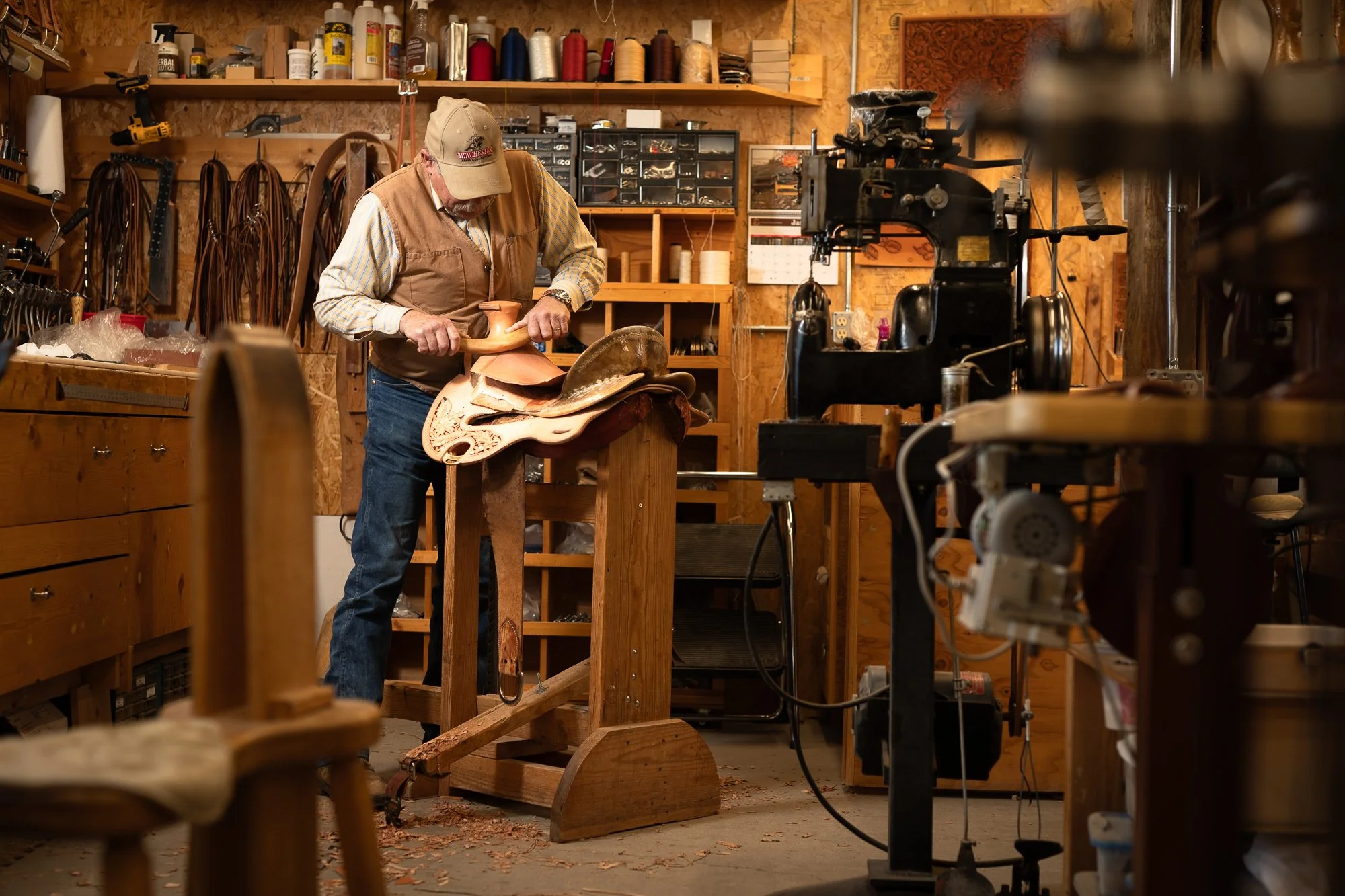
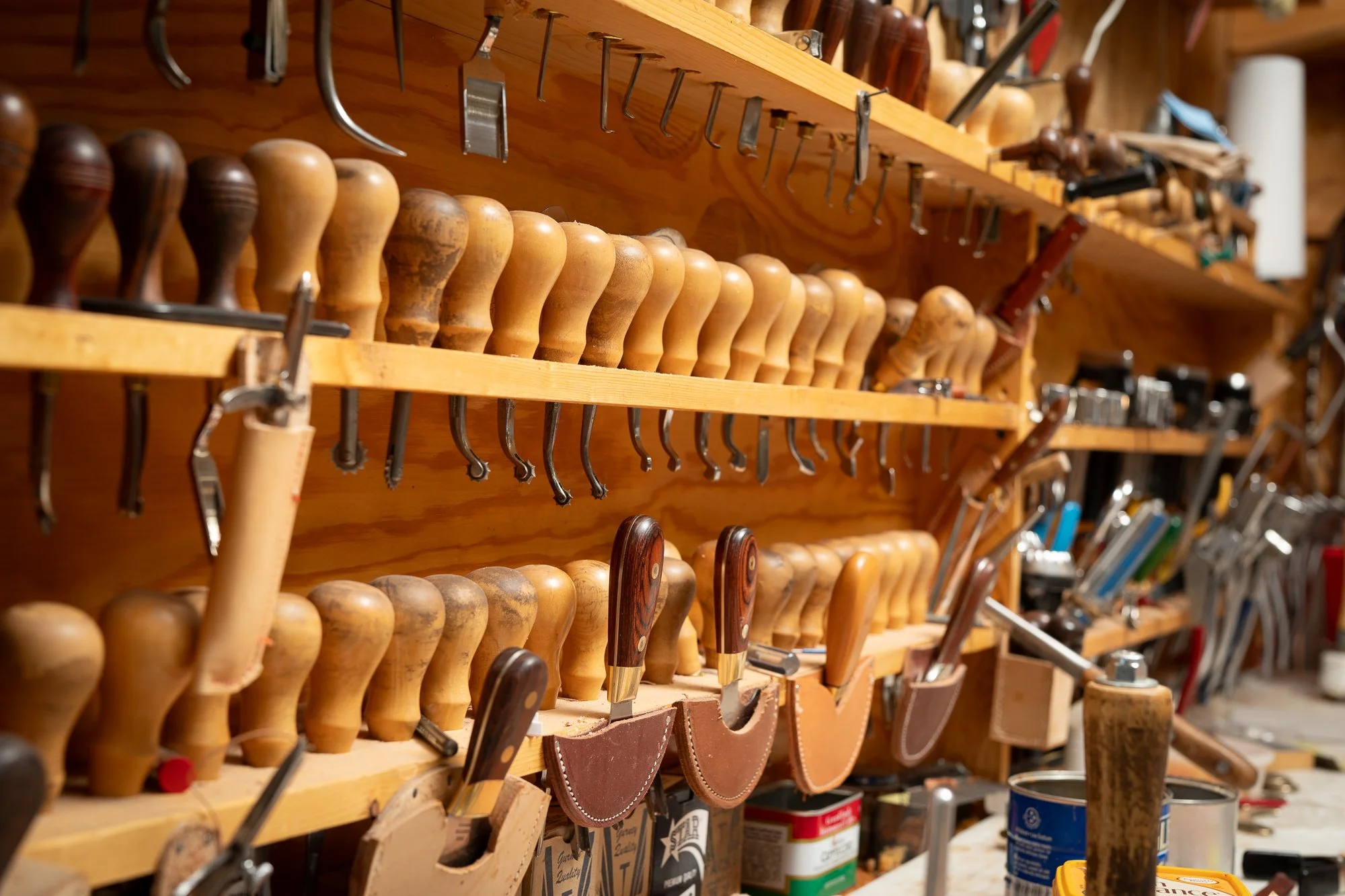
I pulled into Doug’s house one day as another pickup drove off in a huff. Turns out that person had come to offer $50,000 for one of his bridal horses, which he promptly turned down. Why? “Oooohh…….I think a lot more of my horses than that” he said sentimentally. Driving by you’d never know what happens in the nondescript building that turns out world class leather products, and that’s the way he likes it. Interruptions are undesirable at best. The work is all that matters. If you’re lucky enough to get in, seeing the artist at play is something to behold. He’s the only one there, but you never think twice about who the owner might be. It’s Doug’s place and they have a relationship. One complimenting the other, almost symbiotically. It’s the Western version of a one man barbershop that’s organically and unknowingly grown over time. In winter months, the wood stove holds a perpetual fire that warms the walls adorned with hunting trophies, Charlie Russell prints, photos of saddles, memorable bronc rides, head stalls, breast collars, hundreds of hand tools, and a beautiful set of long horns. Piles of the finest leather here, there, and everywhere. Archaic leather equipment foreign to anyone outside his industry. Scattered saddles in various stages of completion - some made for fun, for customers, and others just to look at. The only soundtrack is a crackling fire, his grazing horses, and whatever Mother Nature decides to muster up that day. He’s locked in to the work with no need for entertainment. His eyes never divert from the leather when reaching for tools and you get the feeling he could maneuver through the impeccably cluttered shop blindfolded and never miss a beat. If you poke around too long you’re sure to stumble on a few revolvers and Winchester repeaters, loaded of course. His shop is exactly what you’d expect of someone that has spent a life in leather. As usual, Doug is currently back ordered on saddles for clients new and old, near and far. He’s in a good place - people still want a Doug Cox saddle. He jokingly baulks with frustration about being busy, knowing full well that’s all he wants. Then goes on about a new saddle he’s cooking up. A Mother Hubbard,which was a popular style in the 1860’s, but people don’t think about them much anymore. They are absolutely hellacious to build, even for a veteran with 923 saddles to his mark. “So, why”?, I asked. Again, he looks off for a while, then says with a grin, “just because”. 

Keeping the Craft in View

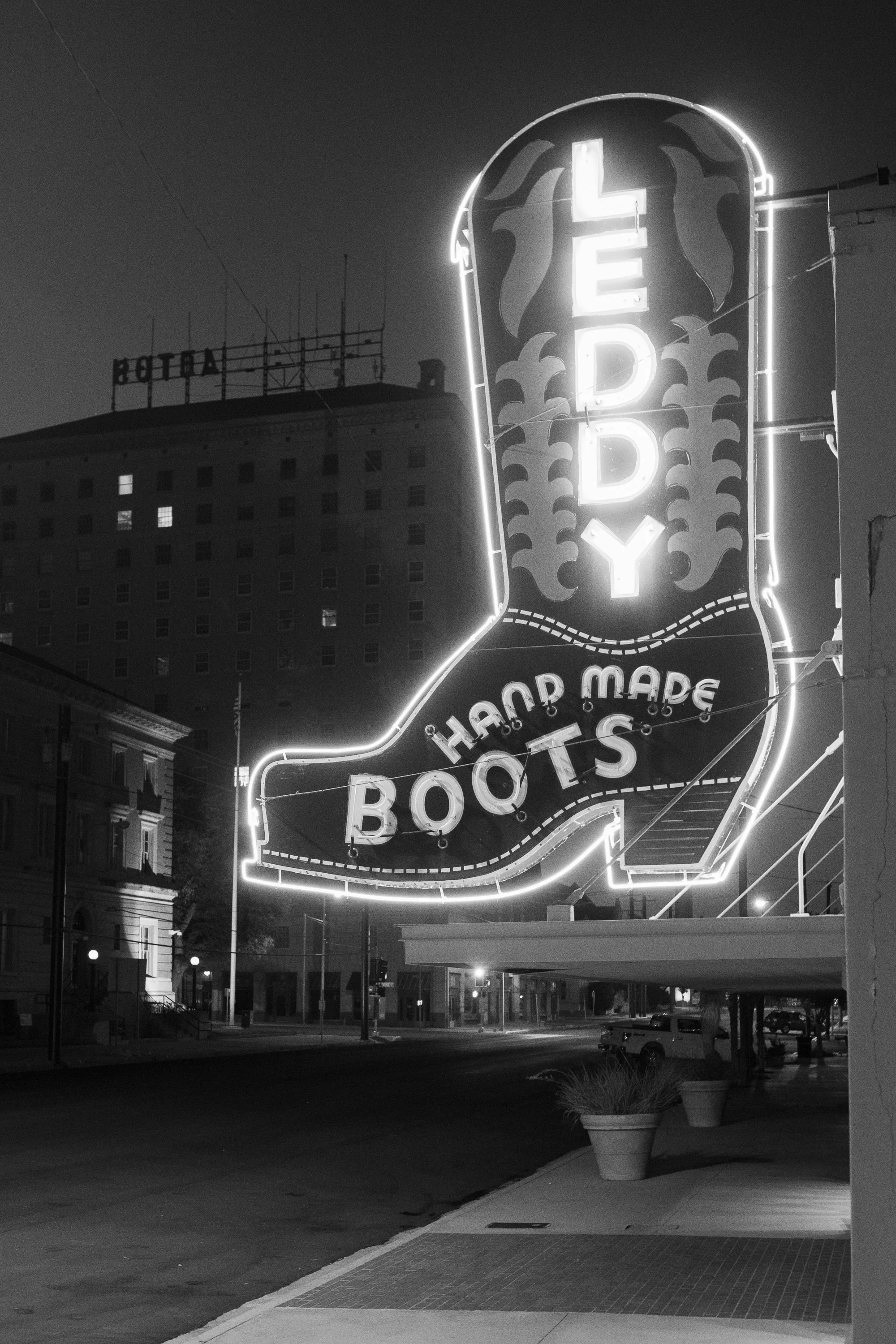
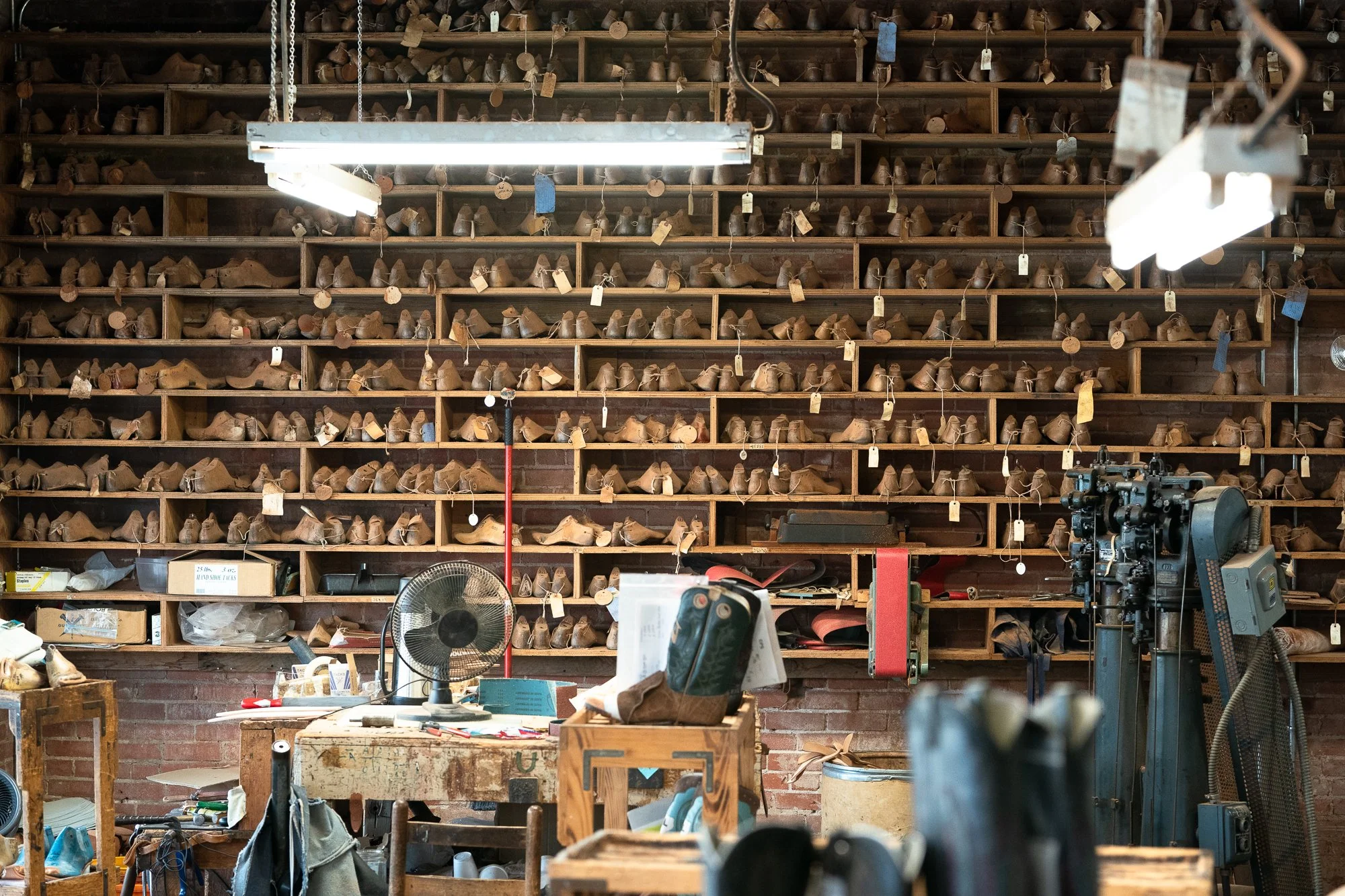
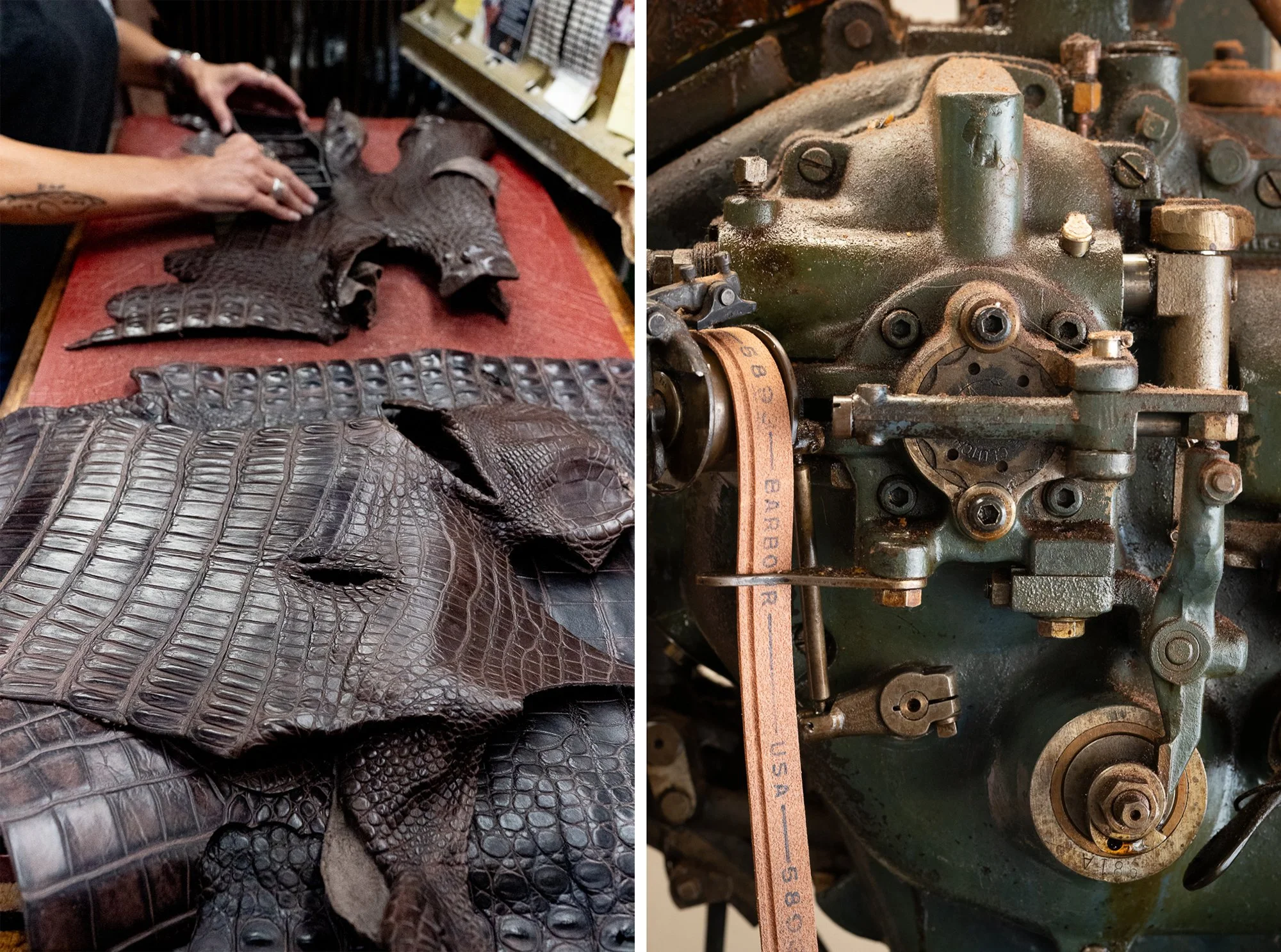
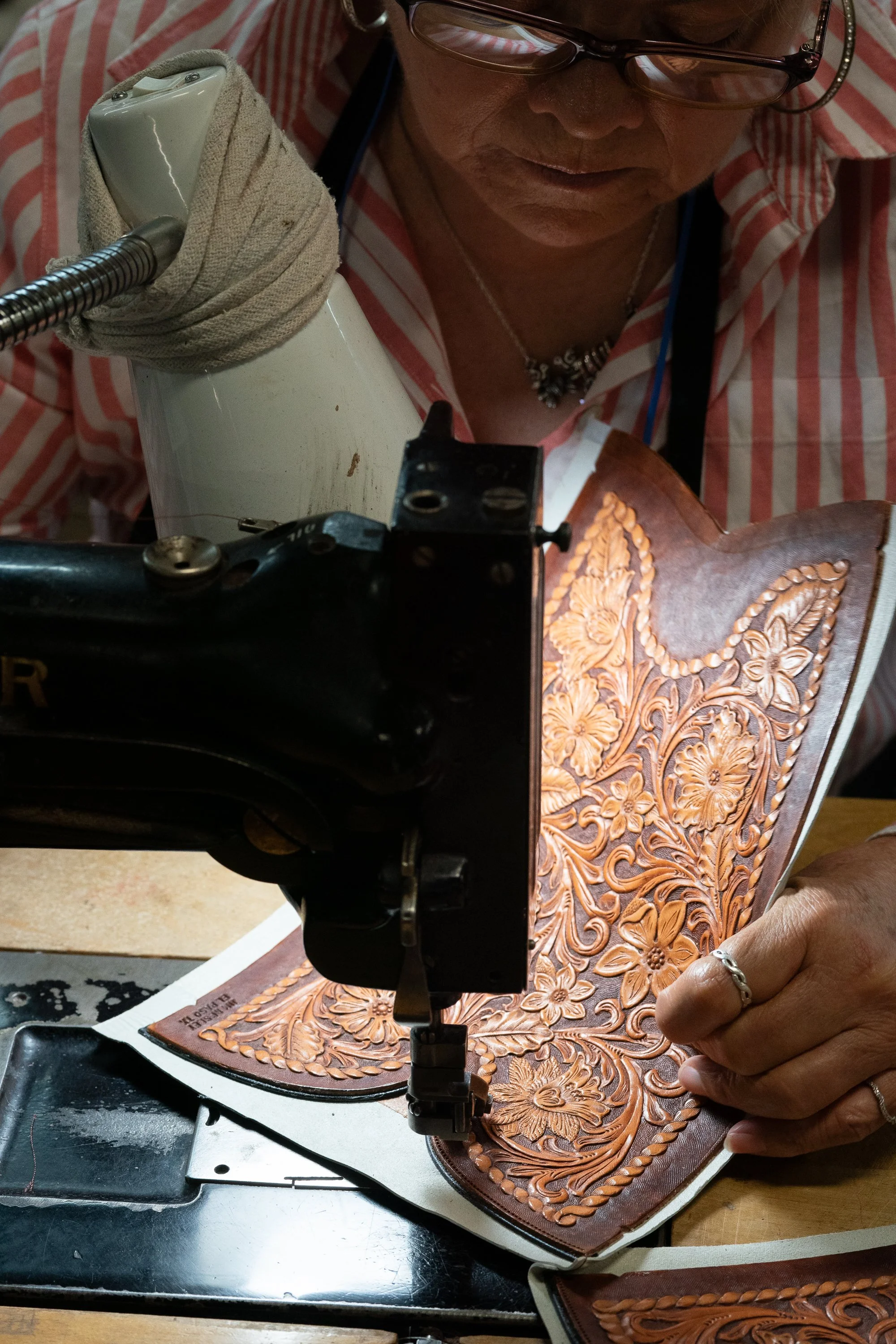
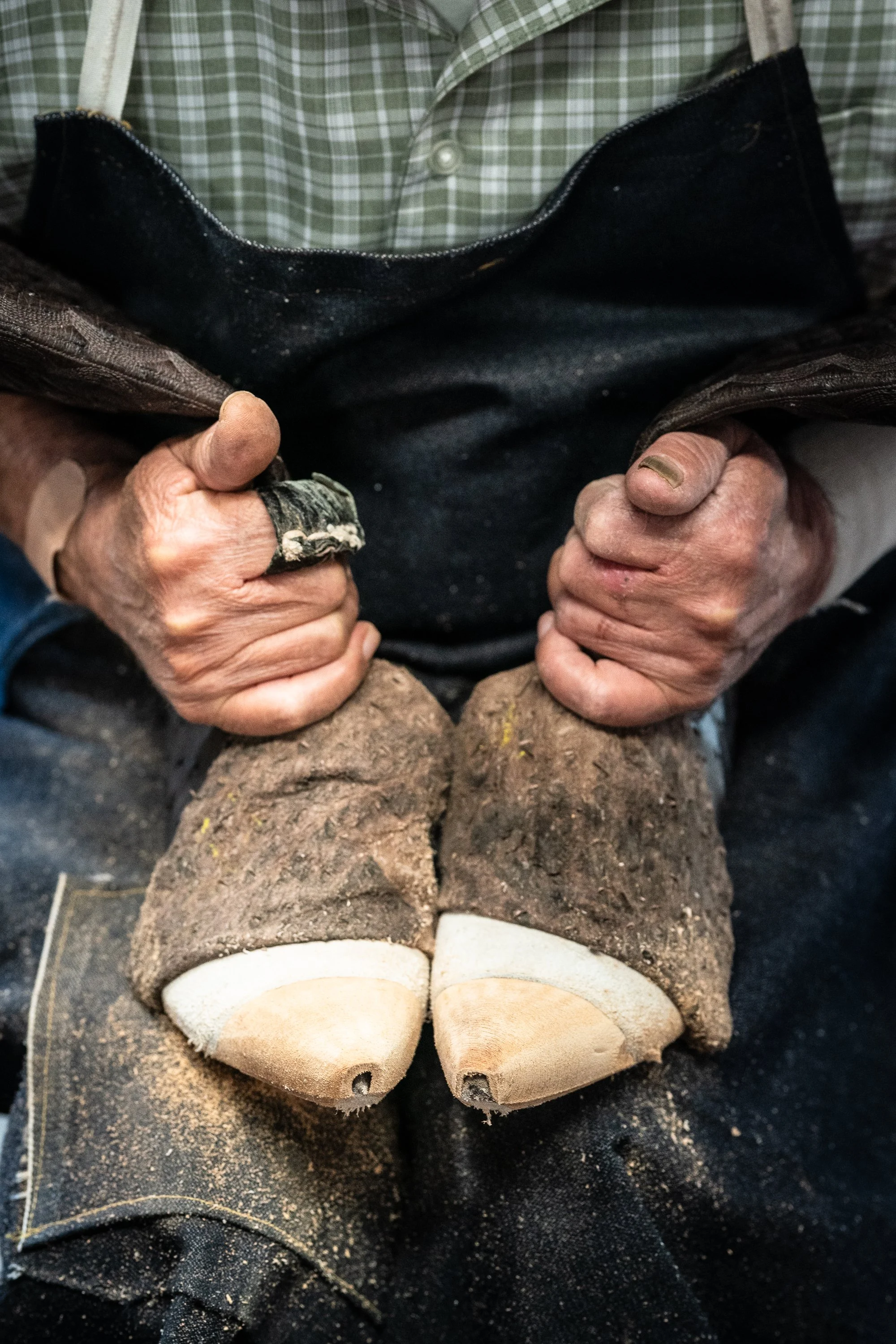
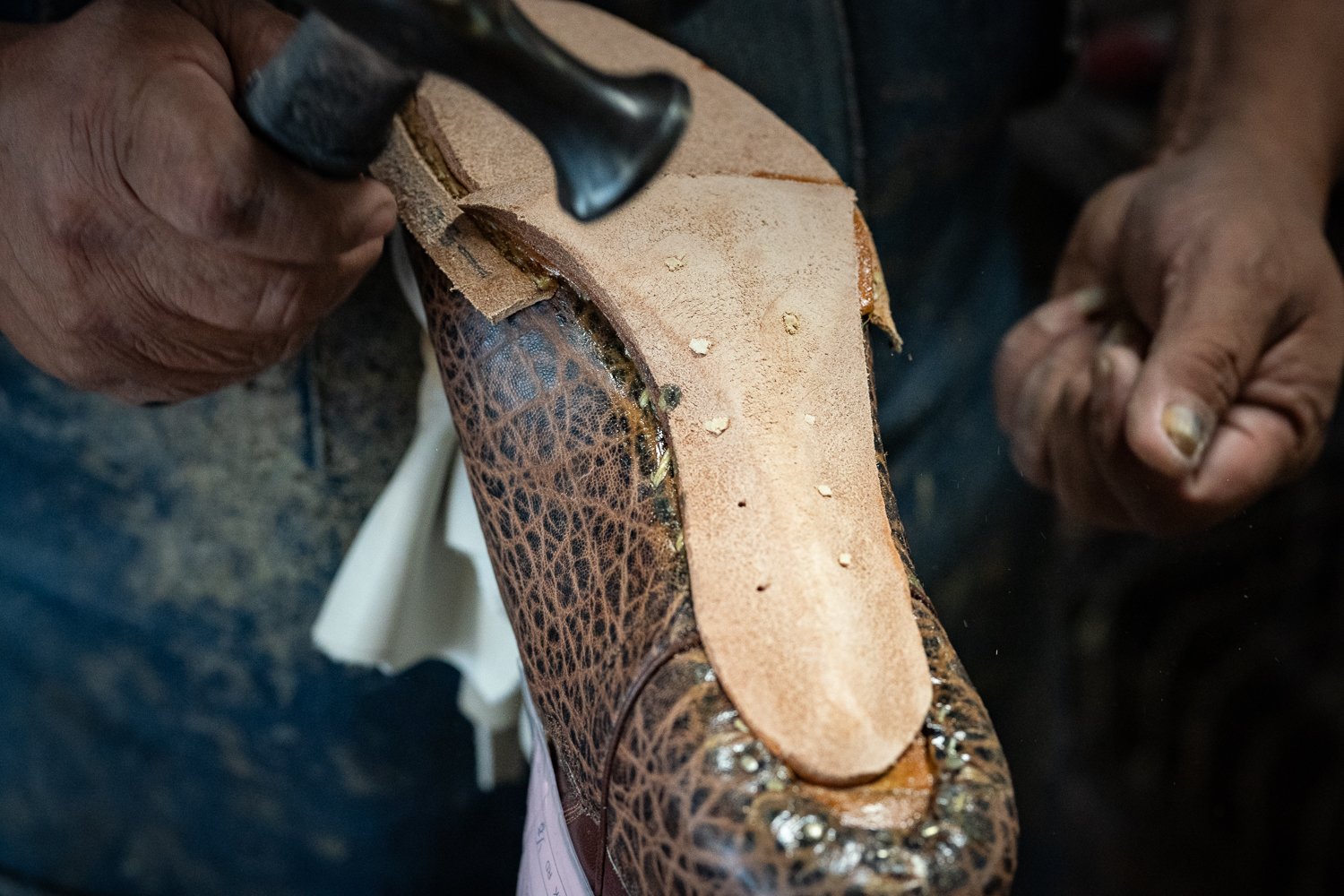
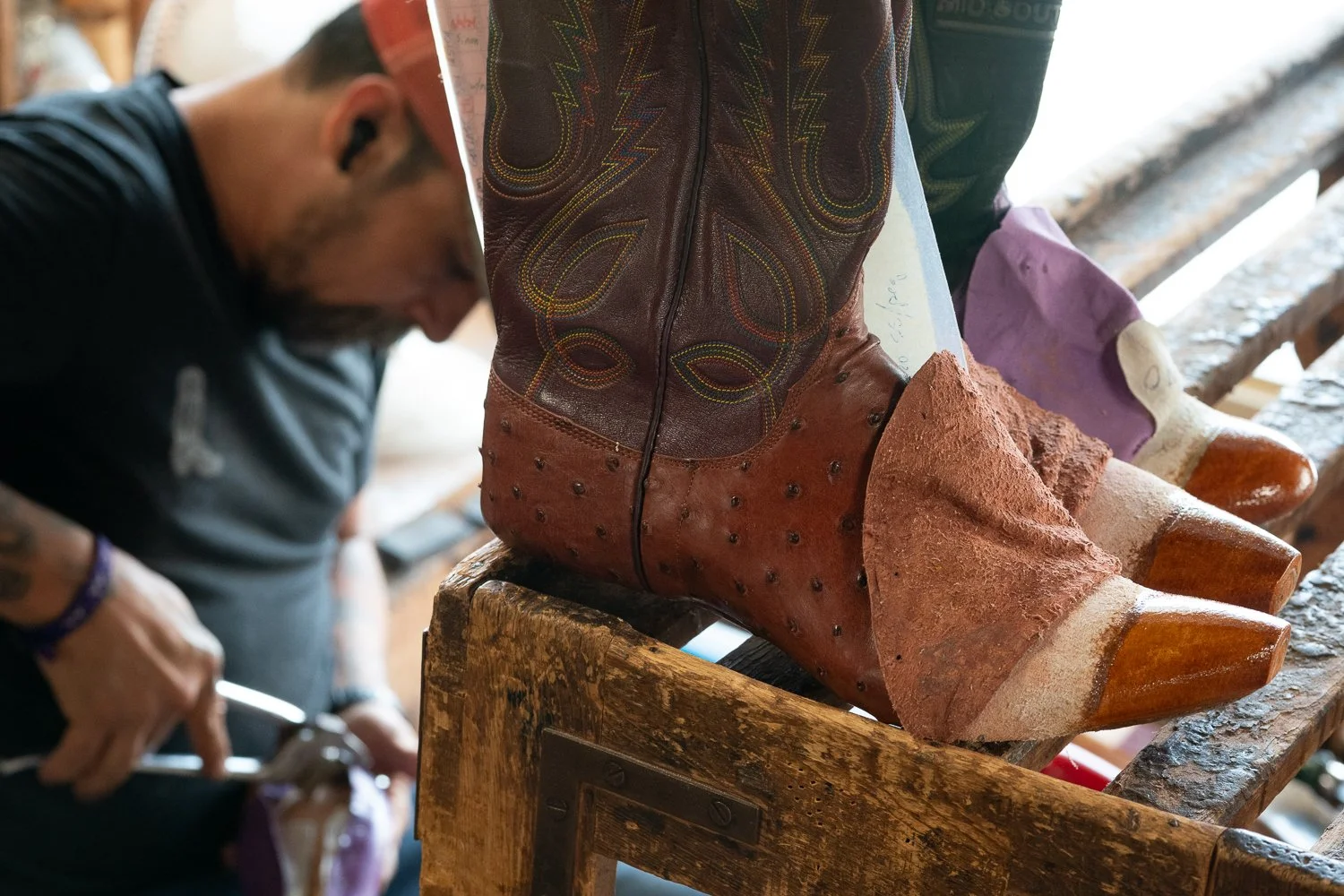
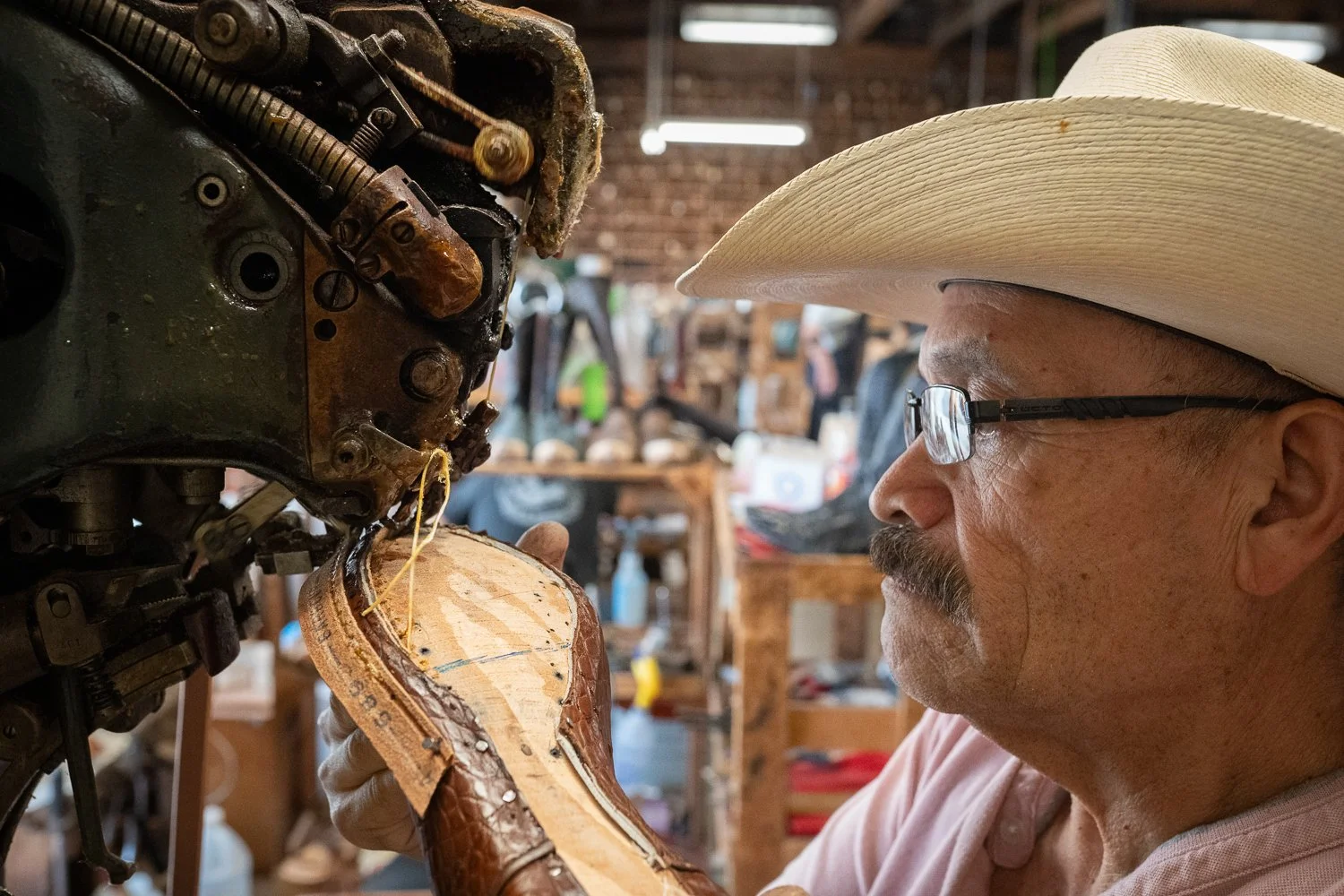
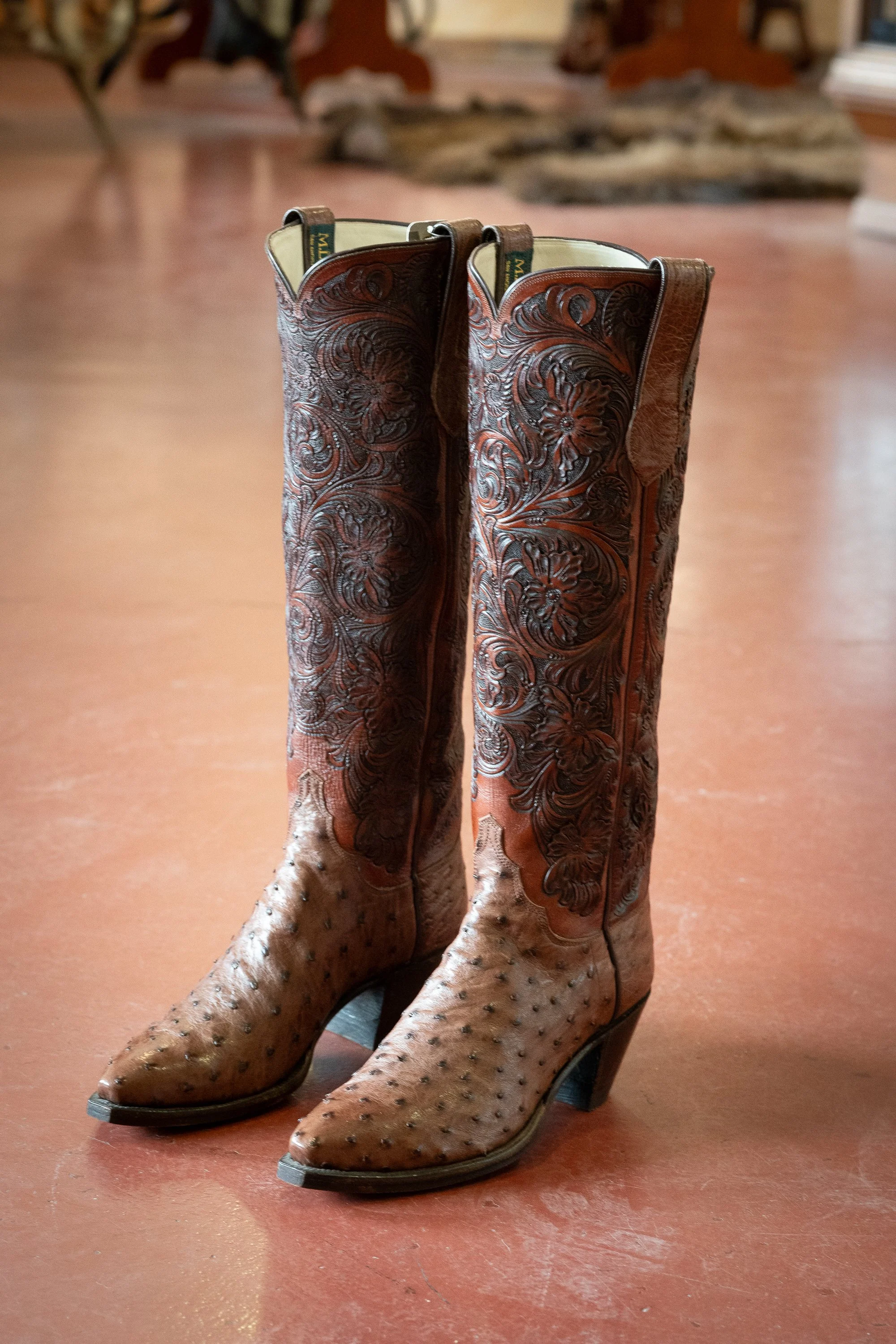
This work is part of a broader effort to photograph Western makers, artists, and working traditions, including ML Leddy’s - makers of handmade cowboy boots since the 1920’s.

Related Photographs from the American West

If you’re someone who appreciates the heritage of the West — whether you’ve ridden the range or just admire it from afar — I invite you to take a look at my collection of cowboy photographs and prints. These are real working ranches, real cowboys, and real moments, captured with the same authenticity Doug brings to every saddle he makes.

View Fine Art Prints

View the cowboy photography gallery

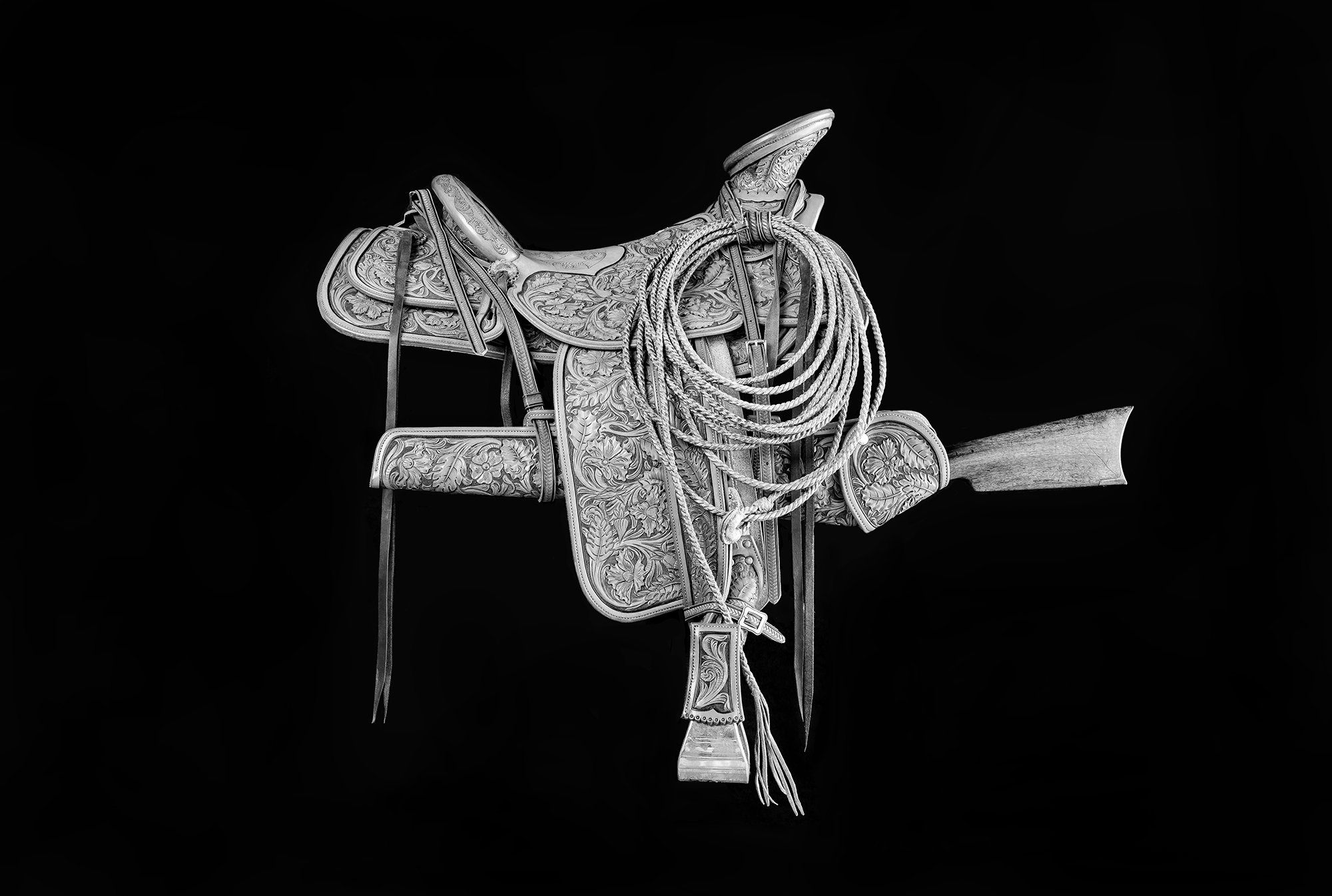
Black and white photograph of a beautiful custom Western saddle with a rifle and scabbard

Western saddle with lariat, rifle, and scabbard

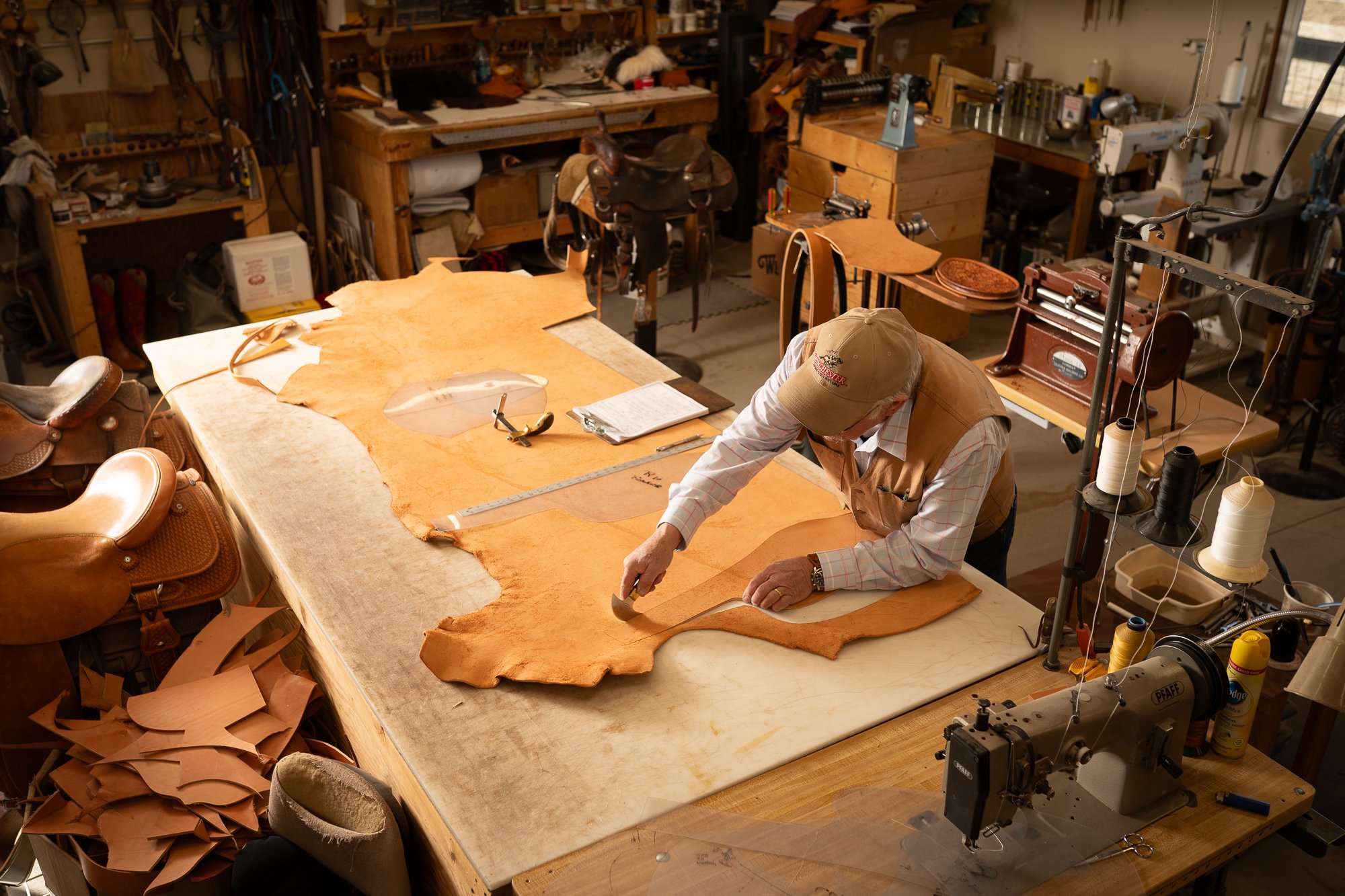
Western saddle maker Doug Cox cutting leather in his workshop

Doug Cox working at the bench inside his saddle shop, where most days are spent cutting and shaping leather by hand.

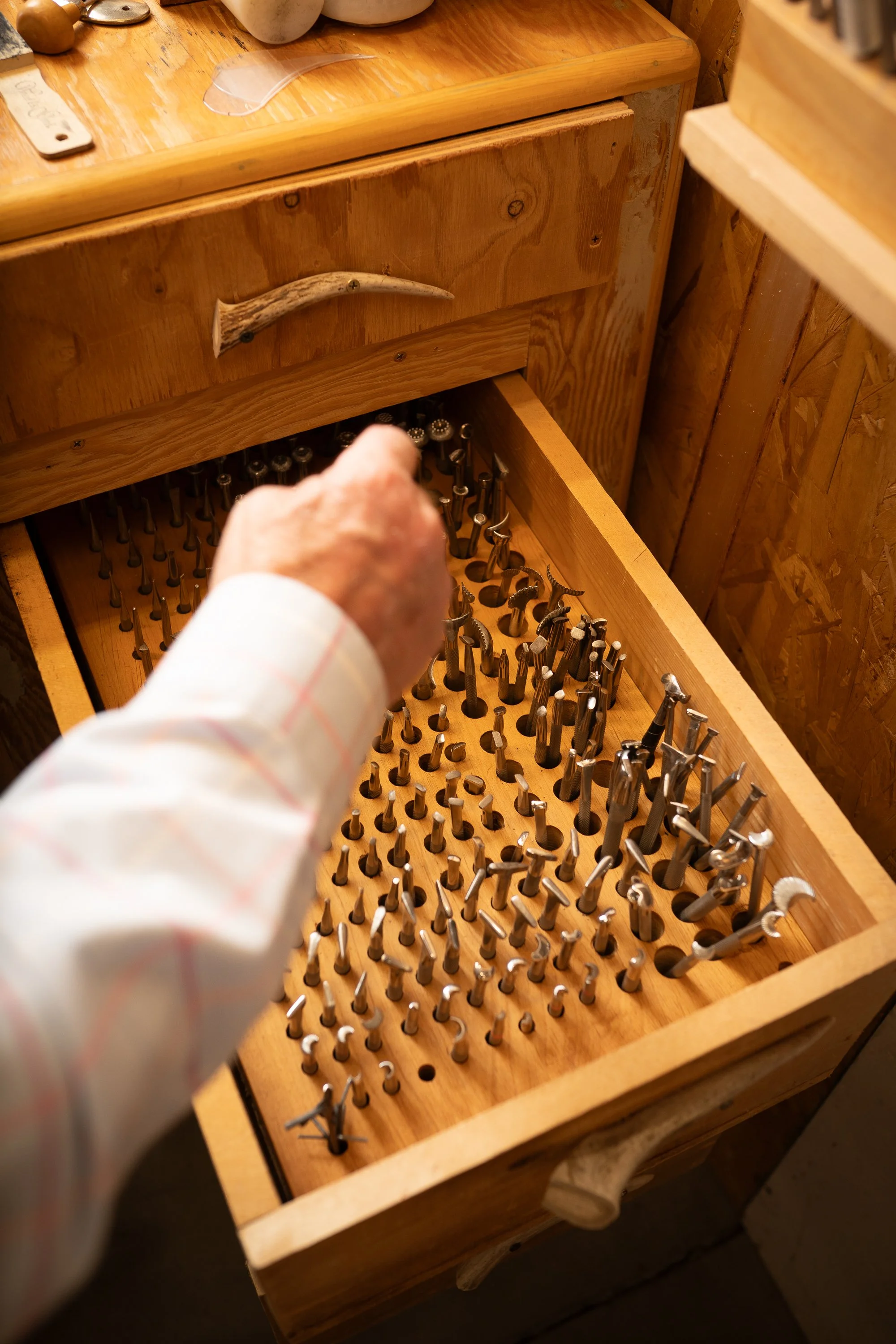
Hand tools used by a Western saddle maker in a traditional workshop

A drawer of hand tools collected over decades, each one tied to a specific task and way of working.

Photograph of a master saddle maker in his workshop

Doug Cox works alone in his shop, surrounded by the tools and materials that shape each saddle from start to finish.

Close detail of hand-tooled leather on a Western saddle

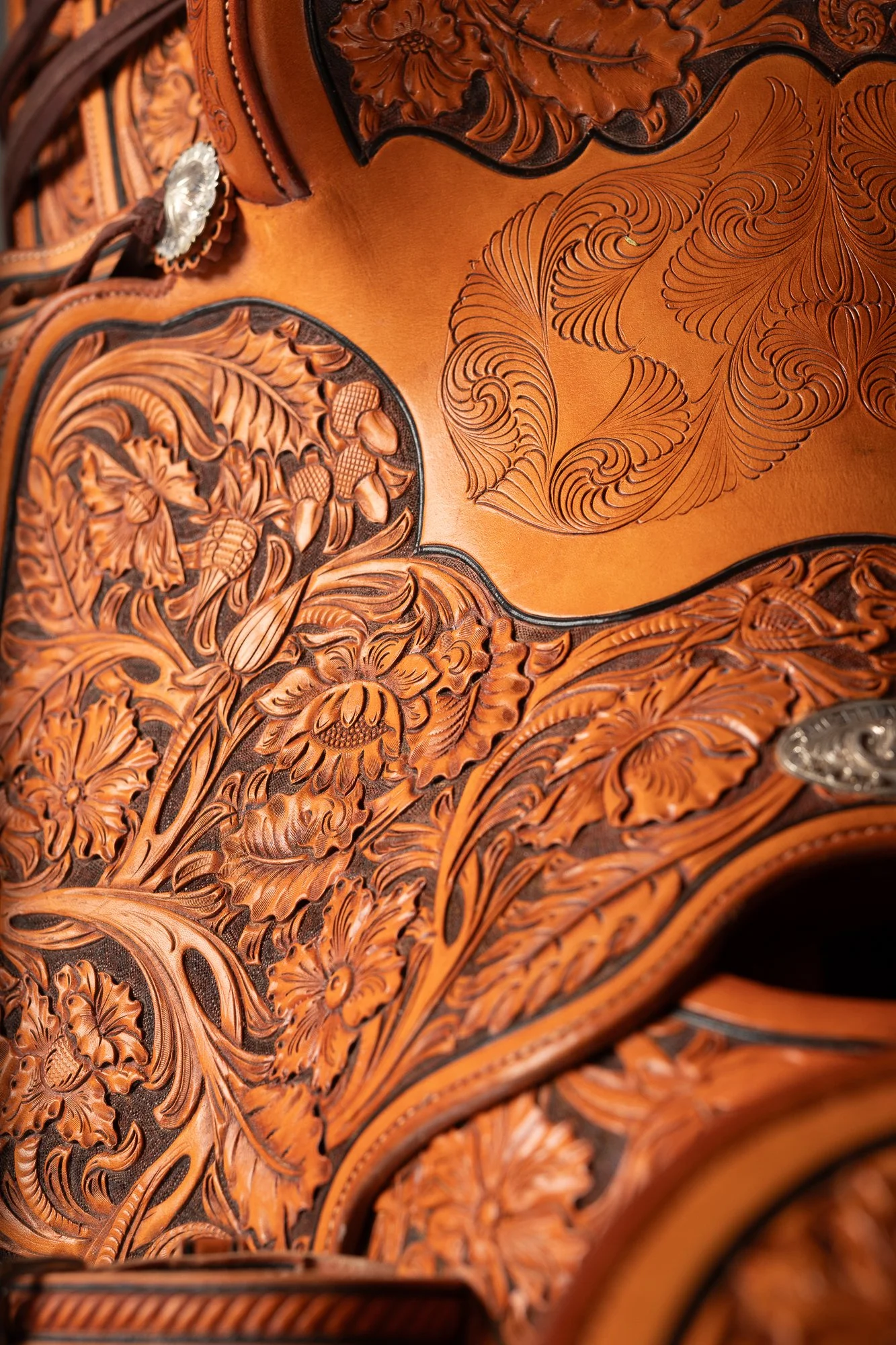
Close detail of floral leather carving, where small variations in pressure and line give each saddle its own character.

Vintage leather sewing machine used in a Western saddle shop

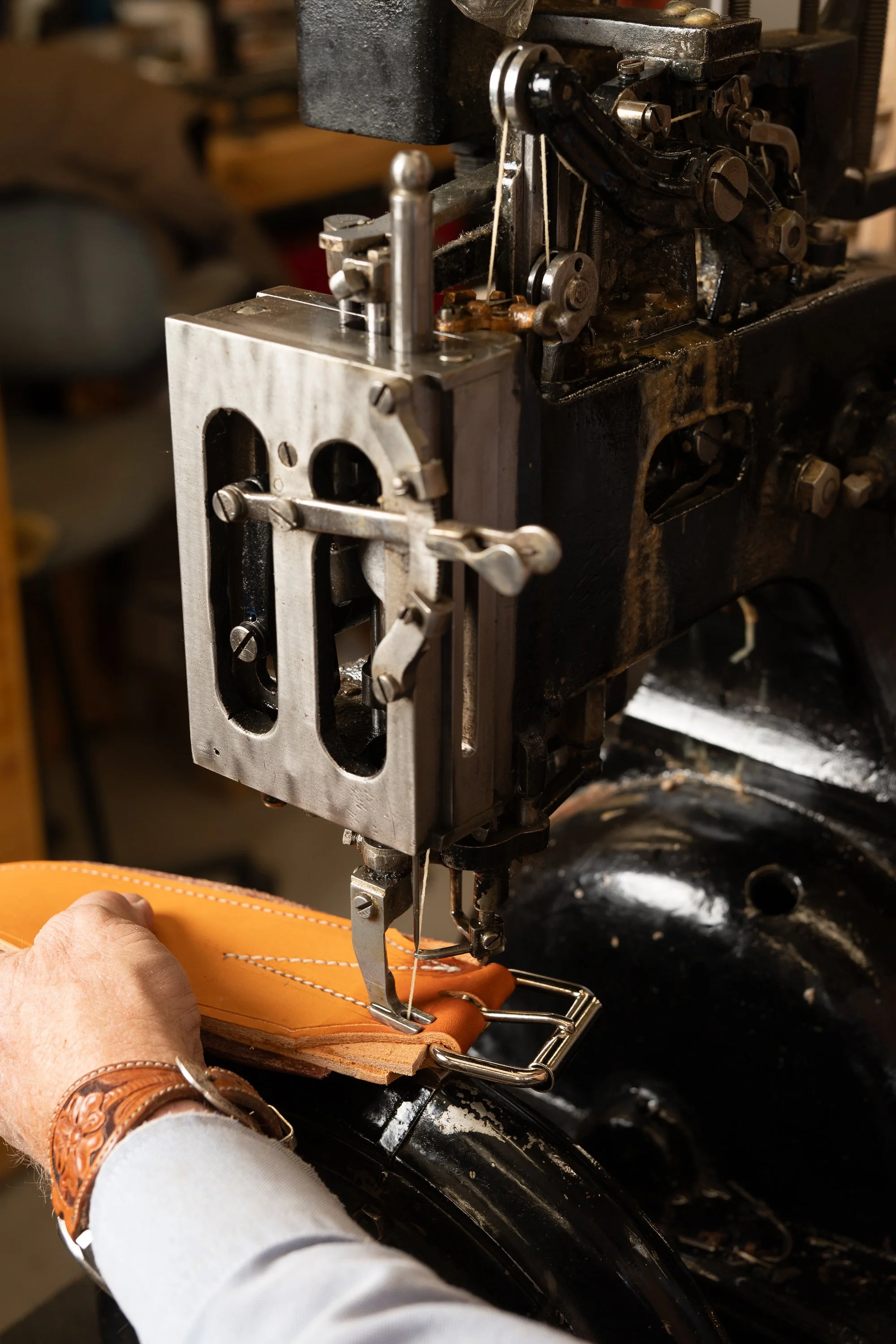
A well-worn leather sewing machine continues to play a role in the daily rhythm of the saddle shop.

Detail of hand-shaped leather on a Western saddle in a saddle shop

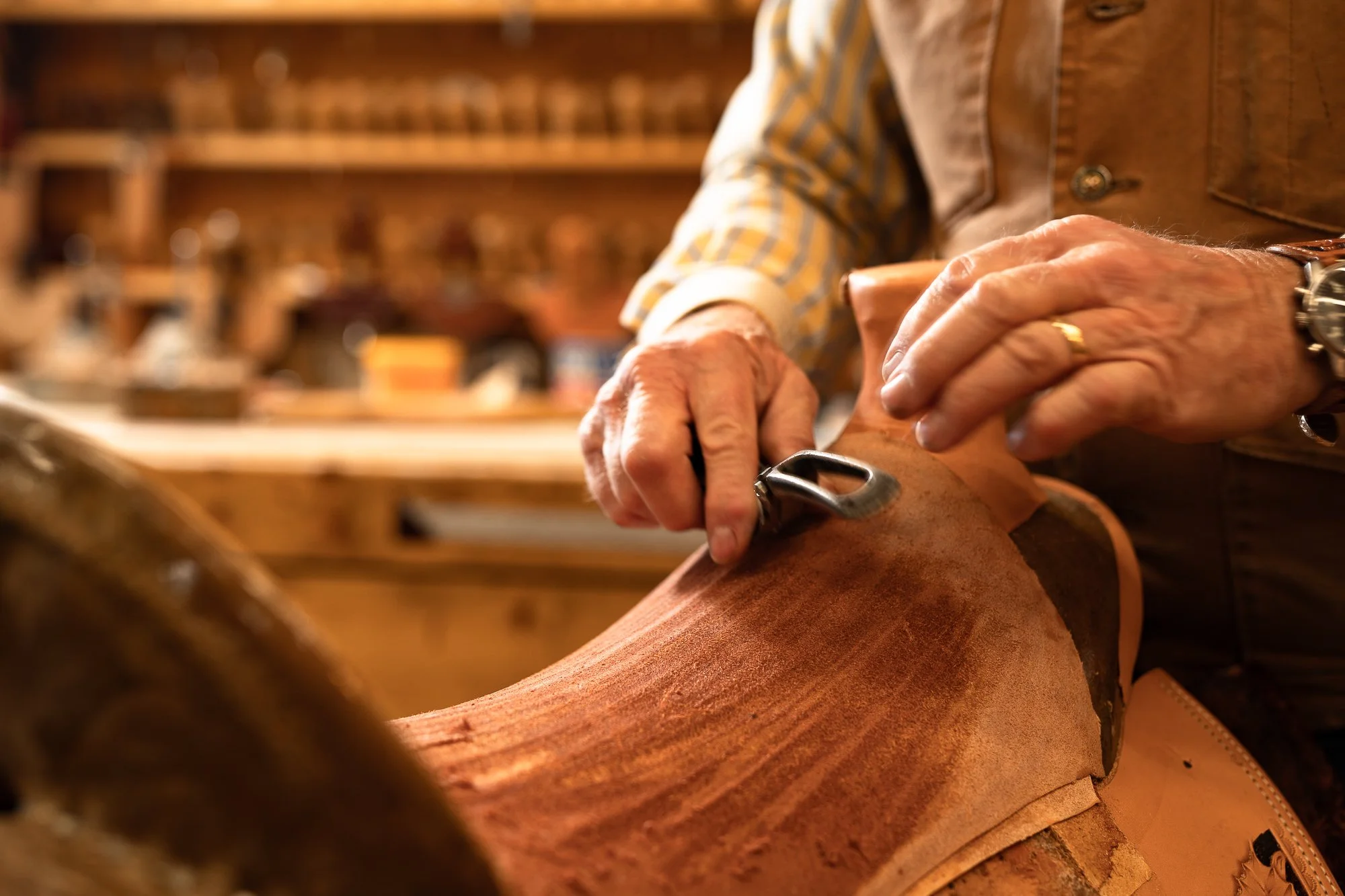
Close detail of leather being shaped by hand, a process that relies more on feel and experience than measurement.

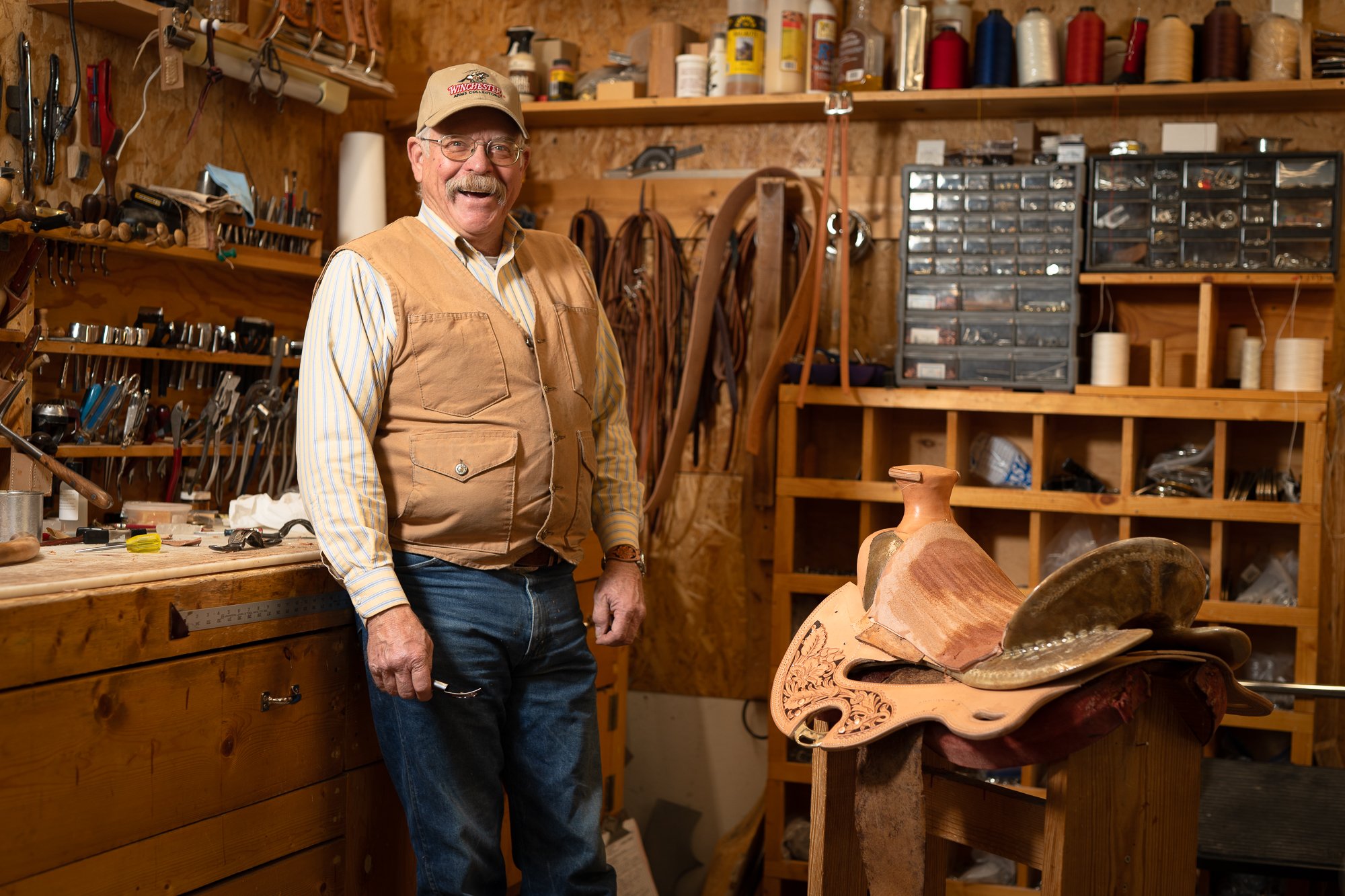
Portrait of Western saddle maker Doug Cox inside his workshop

Doug Cox stands inside his workshop, surrounded by the tools and materials that have defined his working life.

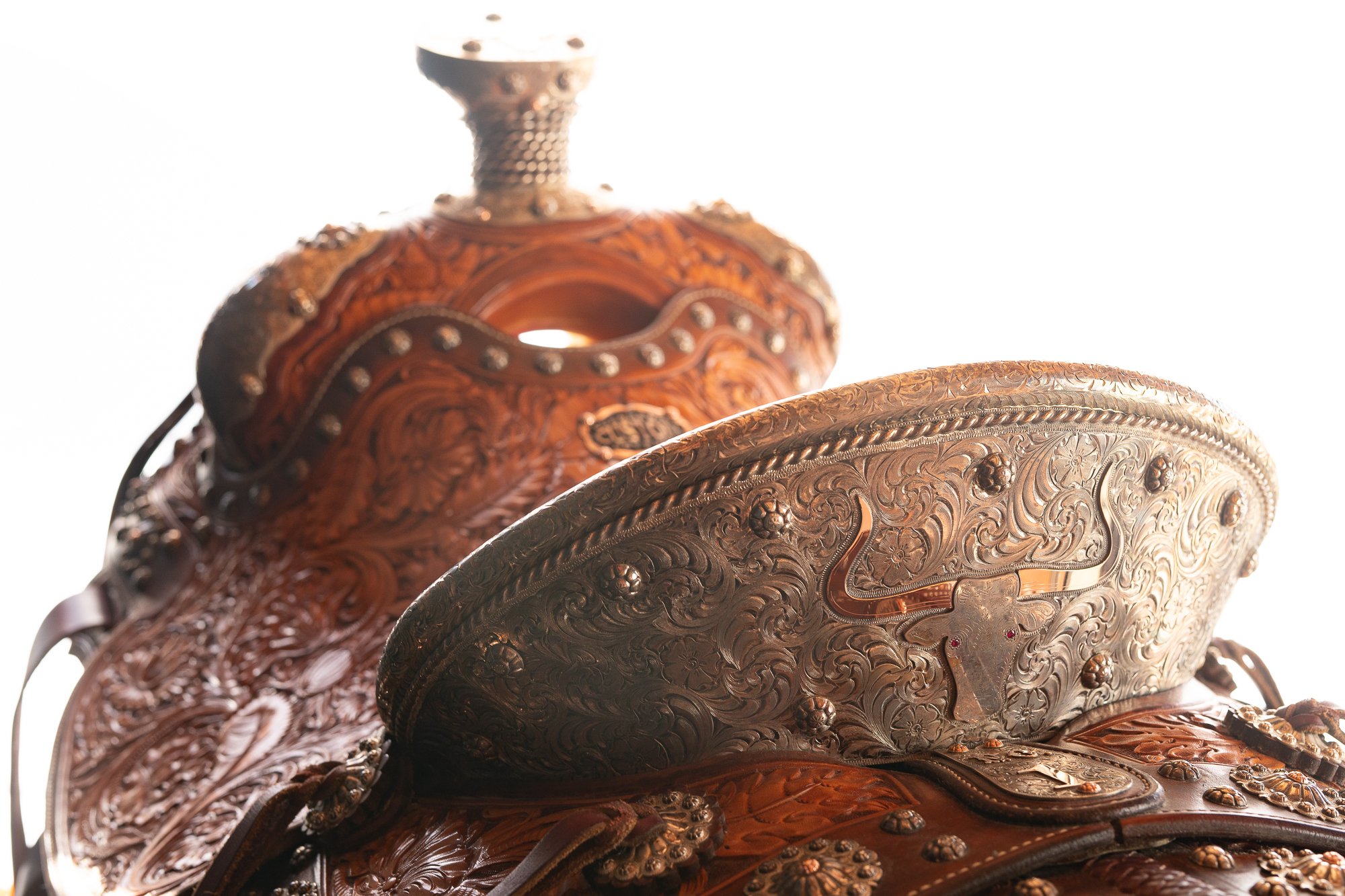
Silver-mounted Western saddle with engraved metal and hand-tooled leather

A silver-mounted saddle combines engraved metalwork with deeply tooled leather, reflecting a long tradition of Western craftsmanship.

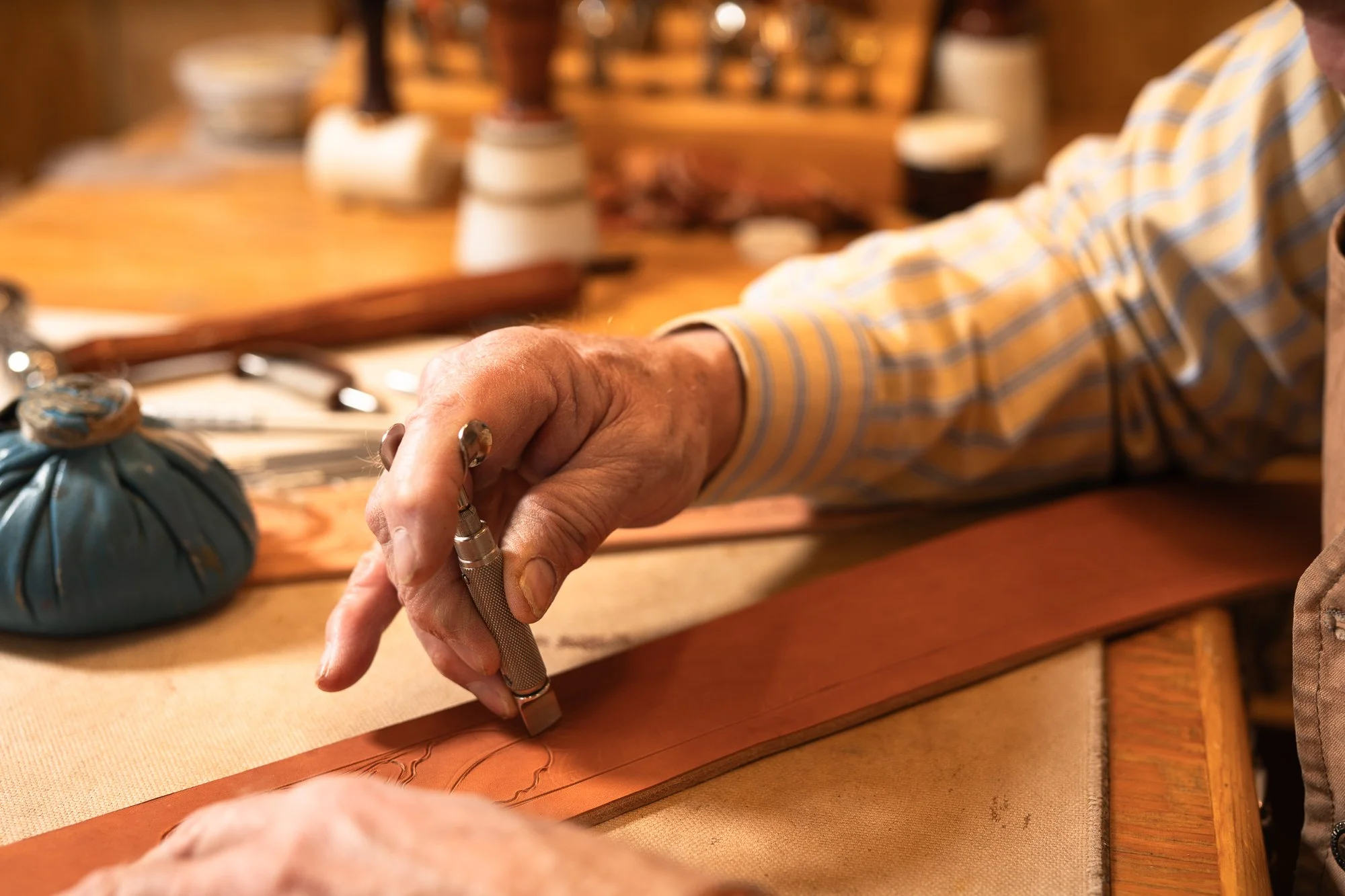
Western saddle maker carving leather by hand at a workbench

Leather is carved by hand at the bench, guided by experience rather than pattern alone.

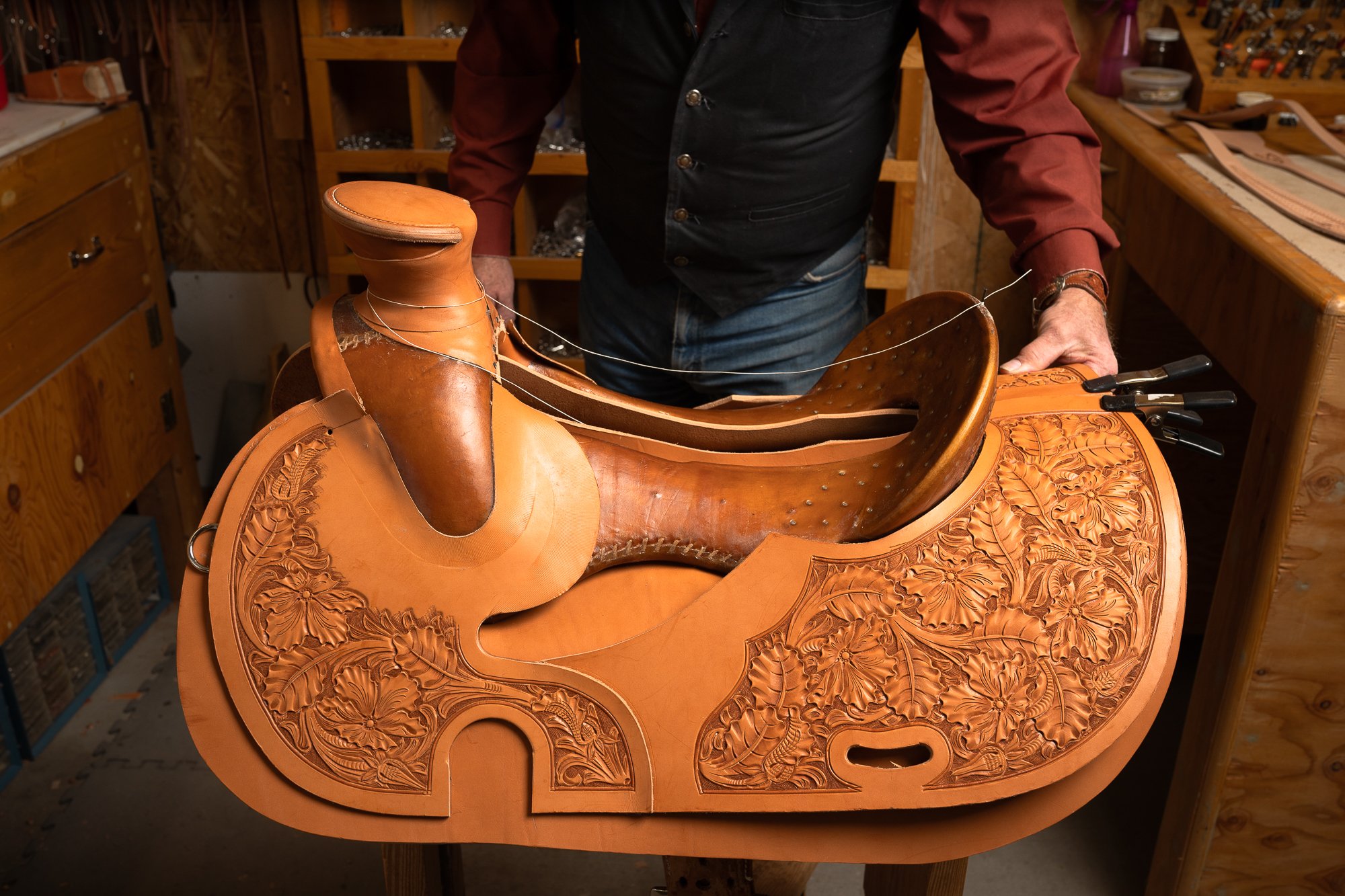
Custom Western saddle with hand-tooled leather in Doug Cox’s shop

A custom saddle in progress rests on the stand, showing the hand-tooled leather that defines Doug Cox’s work.

Hand tools used in a traditional Western saddle maker’s workshop

Rows of hand tools line the walls of the shop, each shaped by years of use and familiarity.

Behind the Scenes with Dolan Geiman | Western Art Studio Photography

Photographing the Creative Process of Dolan Geiman, Western Mixed-Media Artist

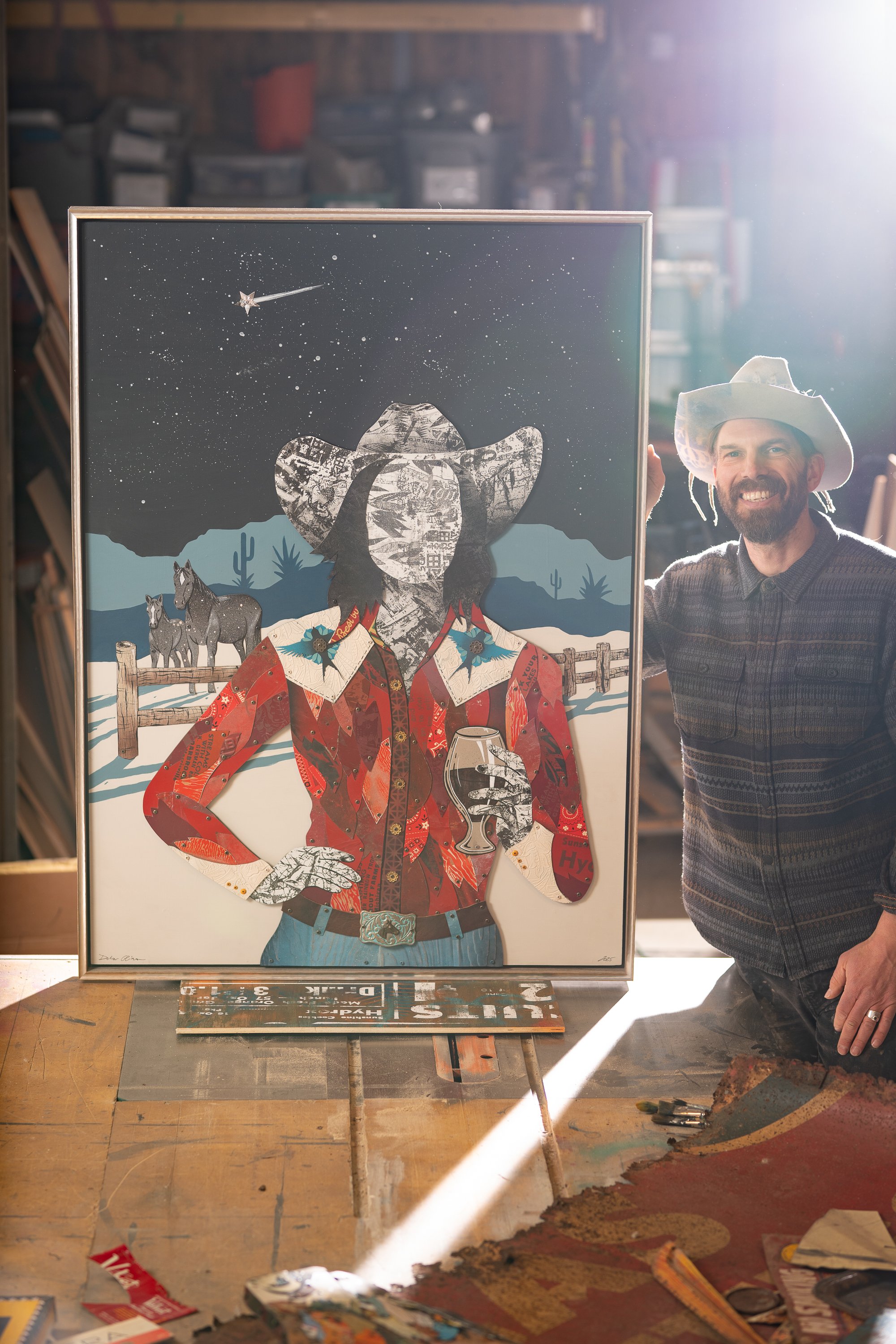
Dolan Geiman is one of those rare artists whose work feels instantly familiar—like something pulled from the backroads of the American West and stitched together with stories. I recently had the chance to photograph him in his Denver, Colorado studio, and am happy to share a few of my favorite images here, both to celebrate Dolan’s work and to give a glimpse of what it’s like to photograph an artist who’s built a career blending grit, storytelling, and Americana.

These photographs were shot as an editorial piece for a magazine in Denver, but it also adds to an ongoing personal series I started a while back photographing Western artists whose work I admire. The series has been a great experience that’s introduced me to a lot of like minded people. But I also feel a need to do this because I believe there should be more historical documents of the artists themselves, not just their work. And I always loved the cameras ability to take viewers behind the scenes of places they don’t get to visit themselves.

There’s a rhythm to photographing artists while they work - you’ve got to read the room, stay out of the way, and still find those moments that say something real. That was especially true when I photographed Dolan Geiman in his studio. His artwork - layered, textural, and deeply rooted in Western and Americana imagery—has a cult following, and getting to document his process was like stepping into a living collage. Dolan builds his pieces from found materials, salvaged wood, old signage, and vintage ephemera. His studio is a creative environment where the line between chaos and intention blurs beautifully. For those who are wondering, Dolan is a really nice guy that’s happy to chat and share his passion for creating art. Some artists are full of ego, but not Geiman. I thoroughly enjoy my time photographing him at work in his Denver, CO studio.

If you're a brand, magazine, or creative agency looking to tell the story of an artist—or any maker, craftsman, or storyteller through honest, documentary-style photography, I’d love to connect. Whether it’s a quiet studio session or a full-scale shoot in the field, I bring the same respect and curiosity to every assignment. Feel free to reach out if you’ve got something in mind - rob@robhammerphotography

Click here to view more of my Western photography

Inside the studio with artist Dolan Geiman

Behind the scenes photograph of Dolan Geiman making original art in his studio

Sparks fly from a grinder as Dolan Geiman creates an original piece of art at his studio in Denver, CO

Artist Dolan Geiman creating art at his studio in Denver, CO

Photograph of artist Dolan Geiman sitting amongst the junk he uses to create art

Dolan Geiman sitting amongst the junk he uses to create art at his studio in Denver, CO

Photograph of Dolan Geiman standing next to a piece of his framed art

Artist - Dolan Geiman

Portrait of artist Dolan Geiman

Portrait of artist Dolan Geiman

Leadville Colorado Wall Art Prints – Fine Art Photography

Leadville, Colorado Wall Art

Photographs of The Two Mile High City

Sitting at 10,151 ft above sea level, Leadville is one of Colorado’s more unique towns, and that’s saying a lot for a state with such incredible mountain culture. Not a big place but it’s still racked up a number of nicknames over the years: The Two Mile High City, Oro City, Cloud City, and Slab Town. That alone provides a great hint into Leadville’s rich mining history that began in 1859 during the Pike’s Peak Gold Rush, and that hunt for gold, silver, and lead continued for 130 years. Visiting the small town today, you can still feel what Leadville once was, and that’s a lot of the draw. Only 2 hours from Denver, but it feels a world away, with unprecendented views of the surrounding mountains and no crowds. The architecture is gorgeous and well preserved in a lot of cases like the Delaware Hotel which first opened in 1886. Of course the local jewel is the Silver Dollar Saloon. You’d be hard pressed to find another like it anywhere in the country. Inside you can feel the years (established 1879), and that feeling only gets better once you learn more about it’s history with noted regulars like Doc Holiday! The most surprising part of Leadville is the fact that it has delicious food! I’d recommend checking out The Silver Llama Market and Eatery for breakfast and Treeline Kitchen for dinner. They are conveniently located right next to each other and Treeline has a great rooftop patio that’s open in the warmer months. Mineral 1886 also has good food for lunch and dinner.

Historic Buildings and Local Flavor

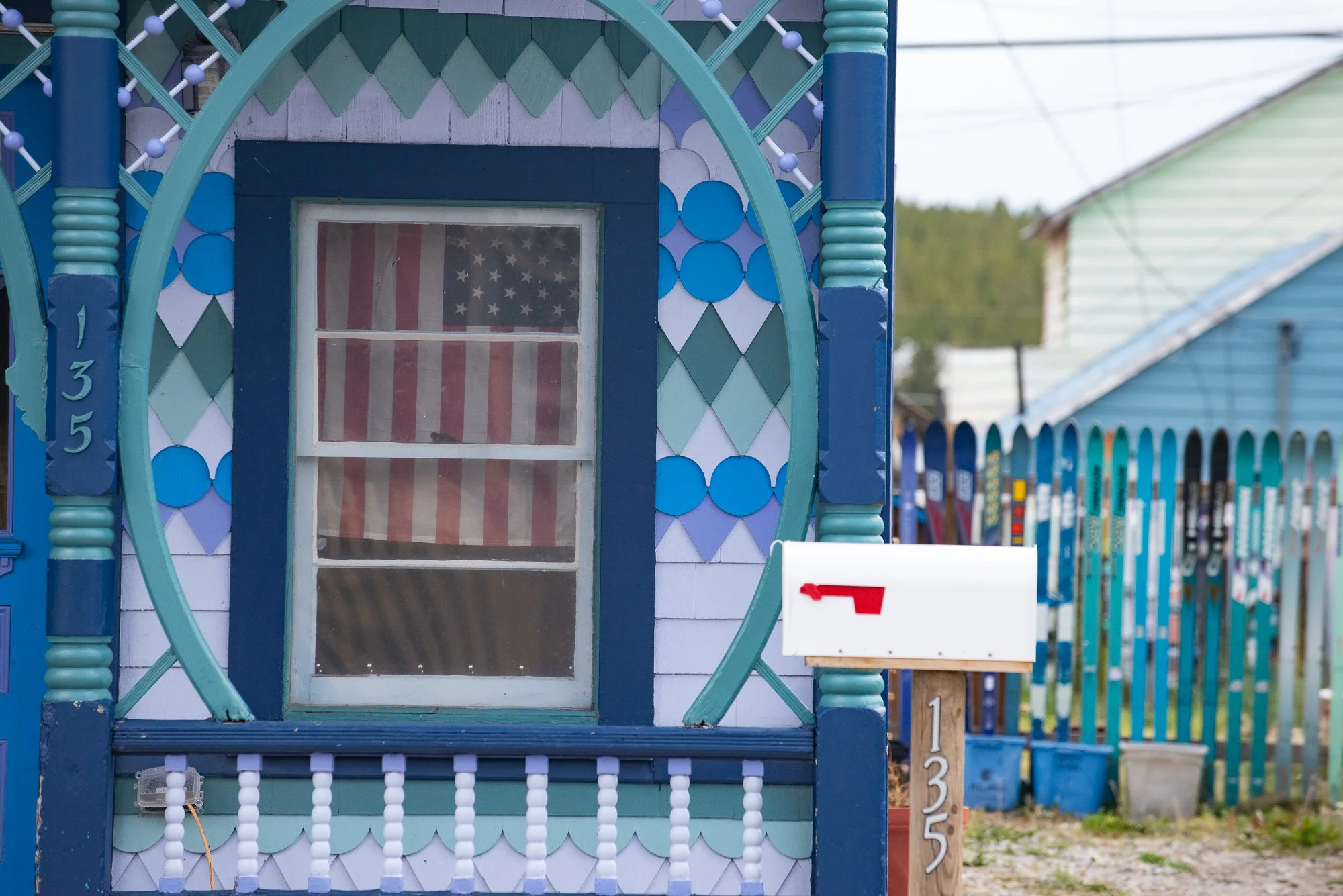
Walking through the neighborhoods is always fun because you’ll get a feel for daily life, and Leadville has some colorful houses that are intricately shingled. If you are looking for more of a workout, the Mineral Belt Trail (12 miles) can provide year round recreation with top notch views of the mountains and will take you up close to some of the old mining claims. Walking, running, and biking in the summer. Fat biking and cross country skiing in the winter. There is a nordic center just outside of Tennessee Pass and endless access to backcountry skiing/snowboarding from all routes in/out of town. And If there’s any reason this little hideaway would sound familiar, that’s because it’s home to one of the hardest mountain bike races in the country - The Leadville 100! That and Melanzana, which is supposedly on a year waitlist for hooded sweatshirts. Perhaps the most redeeming quality about their main drag though, is you won’t see a single chain restaurant or business. They are all locally owned and there is no mistaking that fact! Leadville is a gem of a place that you hope will retain it’s small town charm for decades to come. If you’re looking for a fun getaway with resort crowds, check out Leadville for a couple nights.

Get Your Leadville Print

If you’d like to have a little piece of Leadville to remember your trip and brighten your walls with Colorado culture, contact me directly about photography prints and custom framing options for your home, office, or commercials space. These photographs are also available for editorial and commercial licensing.

Photography print of downtown Leadville, Colorado

Leadville, Colorado Wall Art

Photograph of the Golden Burro Cafe in Leadville, Colorado

The Golden Burro Cafe - Leadville

Photography print of the Silver Dollar Saloon in Leadville, Colorado

Black and white photograph of the Silver Dollar Saloon in Leadville, CO

Black and white photograph of the bar inside the Silver Dollar Saloon in Leadville, Colorado

Photograph of the bar inside the Silver Dollar Saloon

Leadville, CO

Manhattan Bar - Leadville, CO

Photograph of High Mountain Pies Pizzeria in Leadville, Colorado

High Mountain Pies - Leadville, CO

Photograph of an American Flag hanging in the window of a house with colorful shingles and a ski fence in Leadville, CO

Colorful house in Leadville, CO

Photo print of the Silver Dollar Saloon in Leadville, CO

Leadville Saloon

Photograph of bar stools and the old tile floor in the Silver Dollar Saloon in Leadville, CO

Tile floor in the Leadville Saloon

Photograph of the interior of the saloon in Leadville, CO

Pool table and taxidermy inside the Silver Dollar Saloon - Leadville, CO

Hand painted beer sign on an old brick building in Leadville, CO

Beer - Leadville, CO

Photographing Western Apparel in Action

WESTERN LIFESTYLE PHOTOGRAPHER

For more than six years I’ve been photographing real ranch life across the American West. What began as a personal curiosity about cowboy culture slowly turned into a long-term body of work documenting working cowboys, historic ranches, and the landscapes that shape life in cattle country.

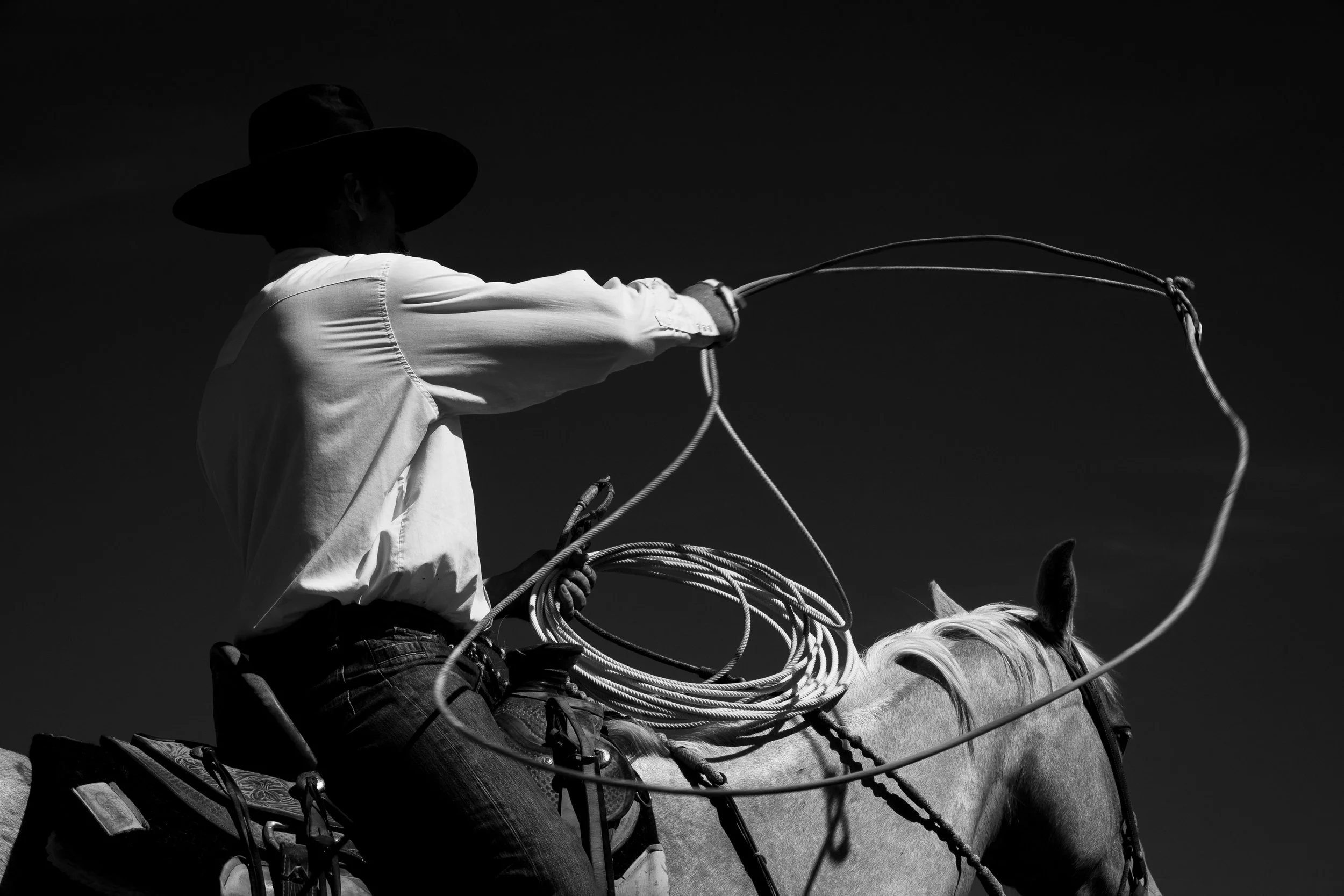
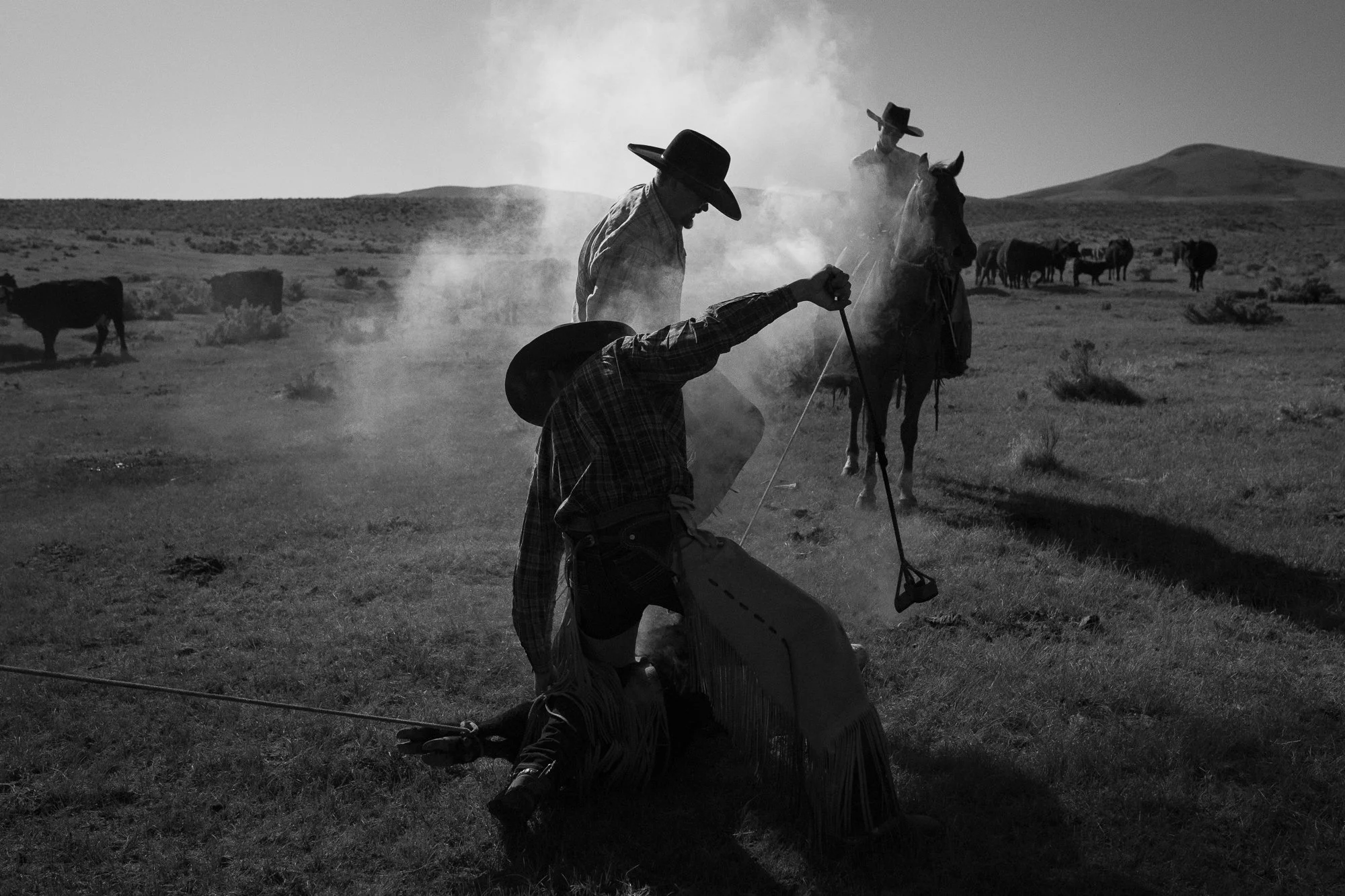
Much of the photography labeled “Western lifestyle” today is staged or heavily stylized. My approach has always been different. The goal is simply to spend time on real ranches and photograph what naturally unfolds — long days horseback, early morning gathers, branding fires, and the quiet moments that happen between the work.

Those moments are where the real story of the American West lives.

Photographing Western Lifestyle and Ranch Culture

The culture surrounding ranch life runs deep. On most of the ranches where these photographs were made, traditions have been passed down through generations — how to work cattle, how to read the land, how to handle a horse.

When you spend enough time around ranches, you realize that the cowboy is not a character from a movie. He’s a working professional responsible for managing cattle, horses, land, and weather, often in some of the harshest environments in the country.

As a western lifestyle photographer, the goal is to photograph that reality honestly. There’s no need to manufacture moments when the work itself already contains so much character.

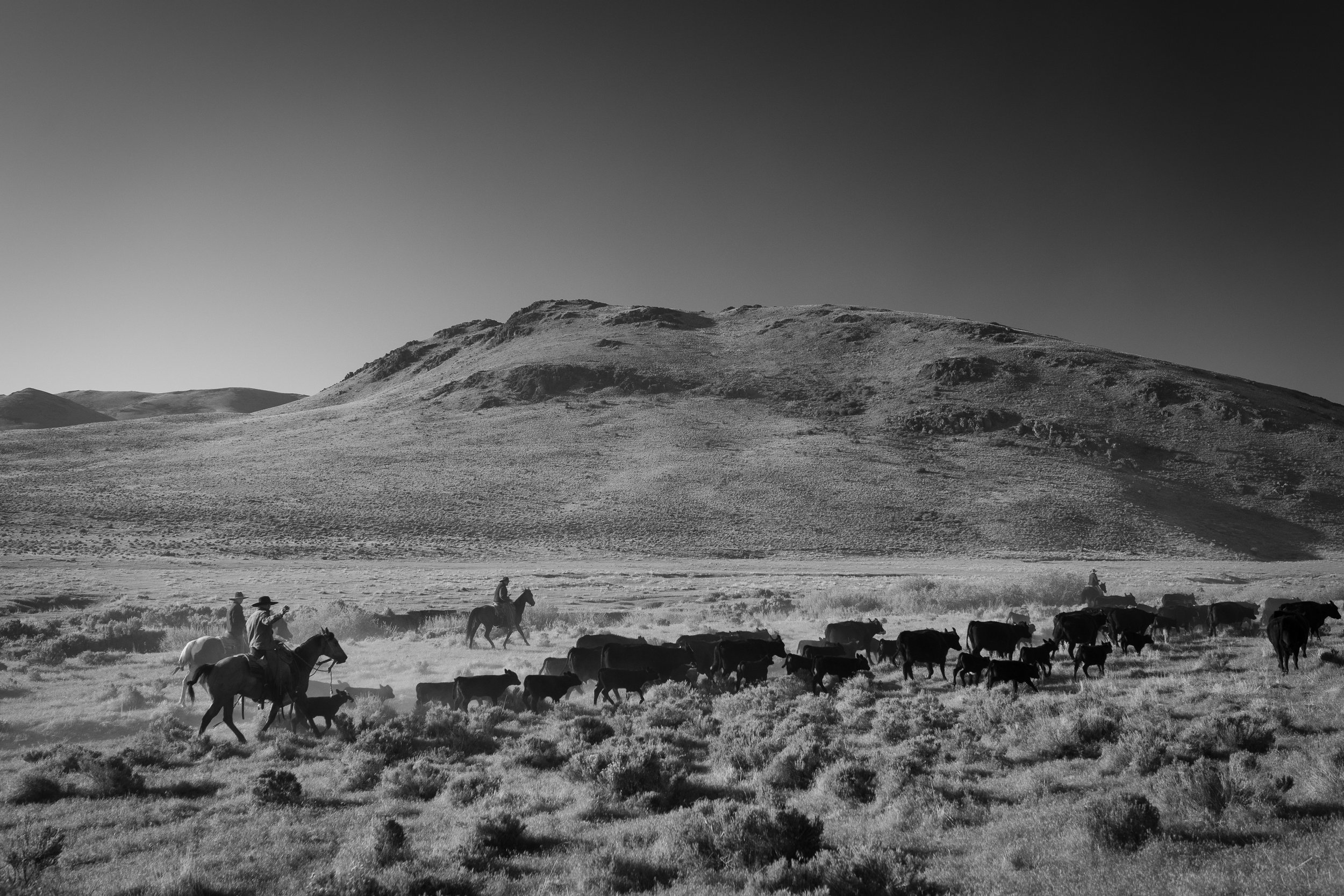
Some days the photographs happen during big events like branding or shipping cattle. Other days they happen quietly while riders move cattle across miles of open country under changing skies.

Working Cowboys of the American West

Much of this work is part of an ongoing project documenting the lives of working cowboys across the American West. Over the years I’ve been fortunate to spend time on several historic ranches where these traditions are still very much alive.

The photographs include moments from ranches such as the OW Ranch in Montana, the legendary 6666 Ranch in Texas, and buckaroo culture in Nevada.

Each place has its own history and rhythm, but the common thread is the same — a deep respect for the land, the animals, and the responsibility that comes with raising cattle.

Photographing these environments requires patience and trust. The best images usually come after spending enough time around the work that people forget the camera is there.

Western Lifestyle Photography for Brands and Publications

Authentic Western imagery has become increasingly important for brands and publications looking to tell real stories about the American West. Companies connected to ranching, agriculture, outdoor gear, and Western culture often need photography that reflects the real environments where their products and stories exist.

Because much of my work takes place on active ranches, the photography naturally reflects the landscape and culture of these places. That authenticity is often what brands and editors are looking for when they search for a western lifestyle photographer.

Rather than recreating Western imagery in controlled environments, the photographs are made where the work actually happens — in the saddle, in the dust, and under the same light that cowboys have worked in for generations.

A Long-Term Documentary Project

What started as a simple interest in cowboy culture has slowly grown into a larger documentary project focused on the traditions of ranching across the American West.

Over time the archive has expanded to include thousands of photographs capturing ranch work, cowboy life, and the landscapes that define cattle country. The project continues to evolve as new ranches, new people, and new stories become part of the work.

You can explore more photographs from this ongoing project here:

Working Cowboys of the American West

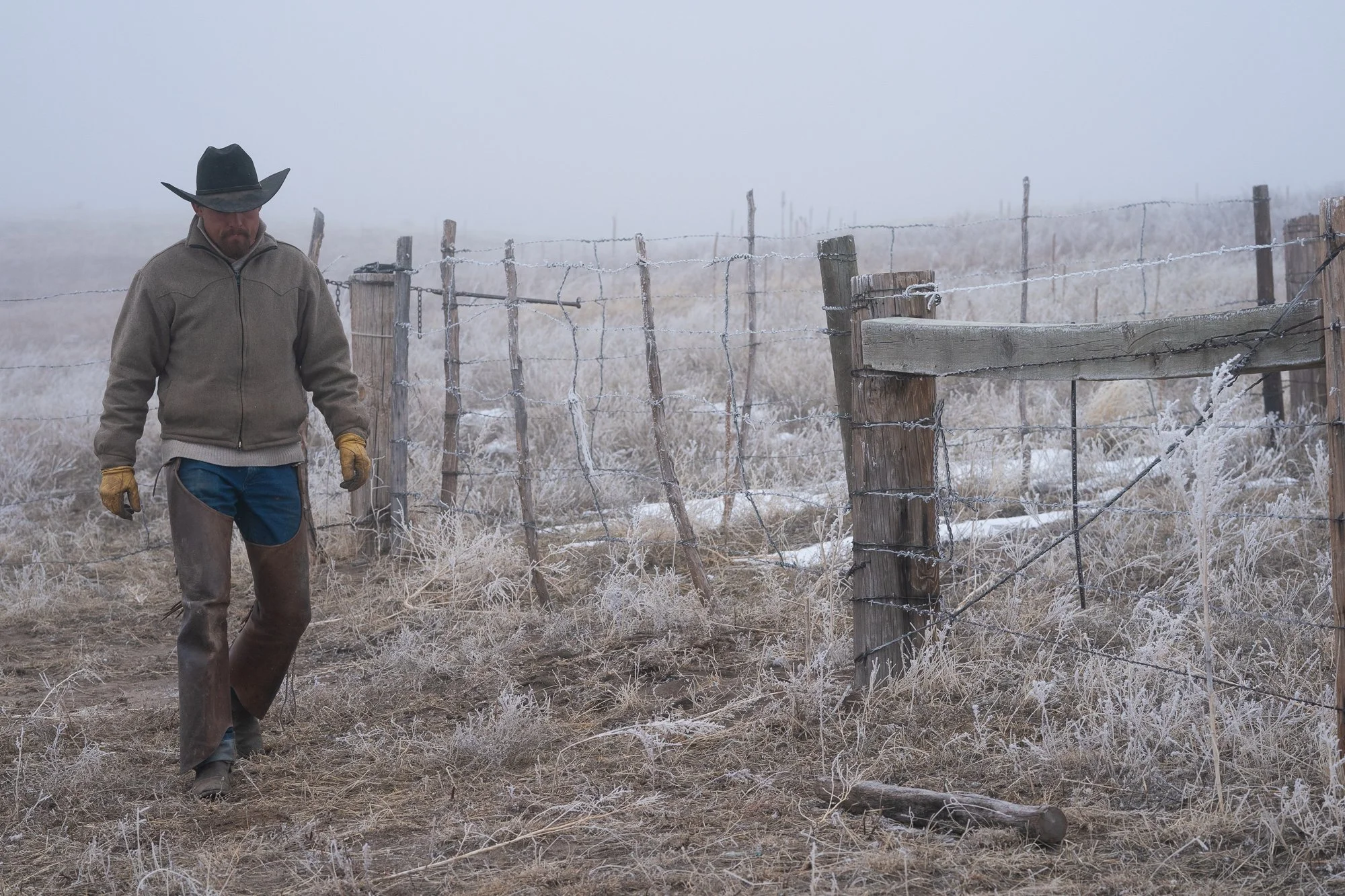
Working cowboy roping a calf on the Silver Spur Ranch in Colorado during cattle work.

Cowboy roping a calf on the Silver Spur Ranch in Colorado.

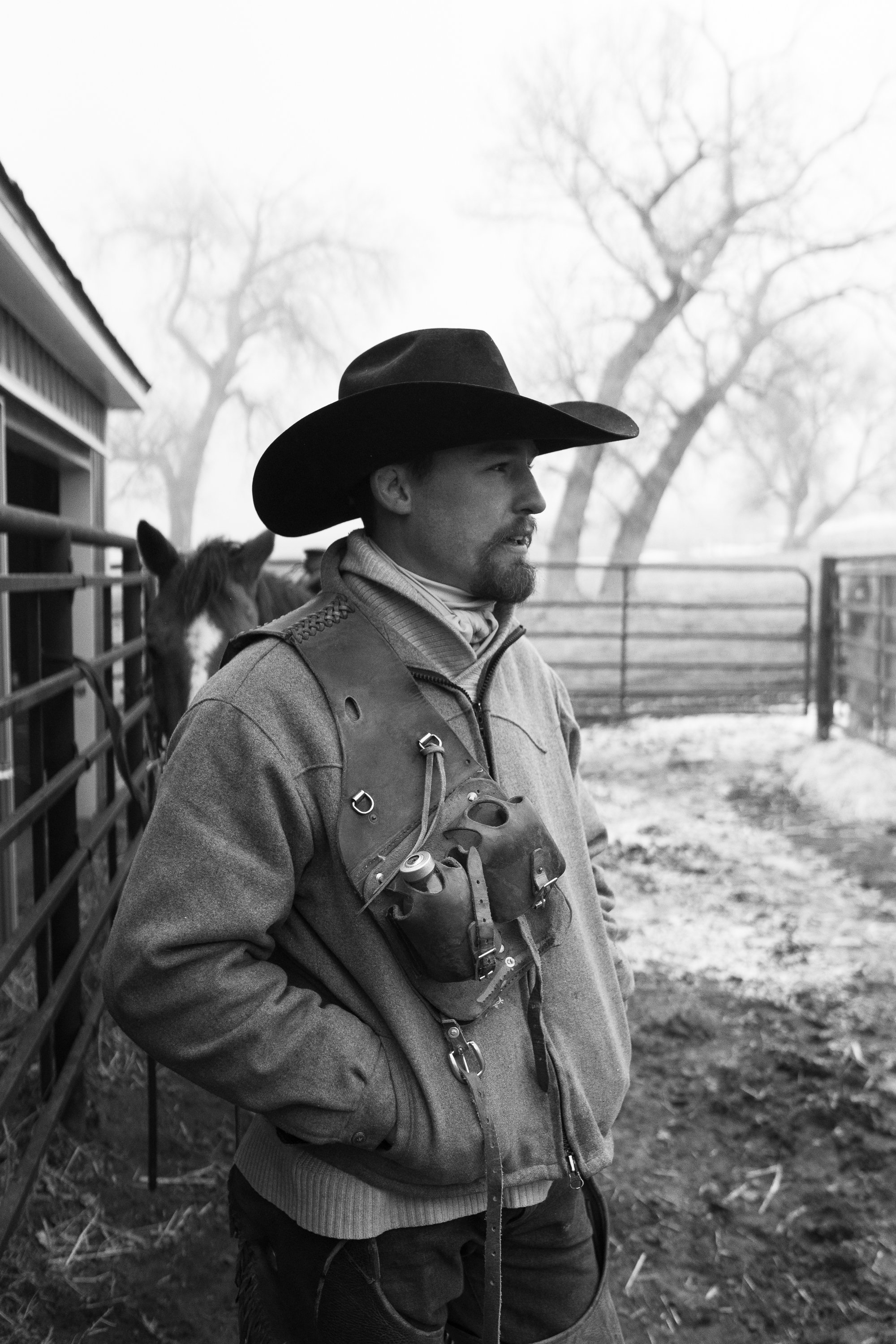
Portrait of a working cowboy photographed on a Colorado cattle ranch by western lifestyle photographer Rob Hammer.

Portrait of a working cowboy on a Colorado cattle ranch.

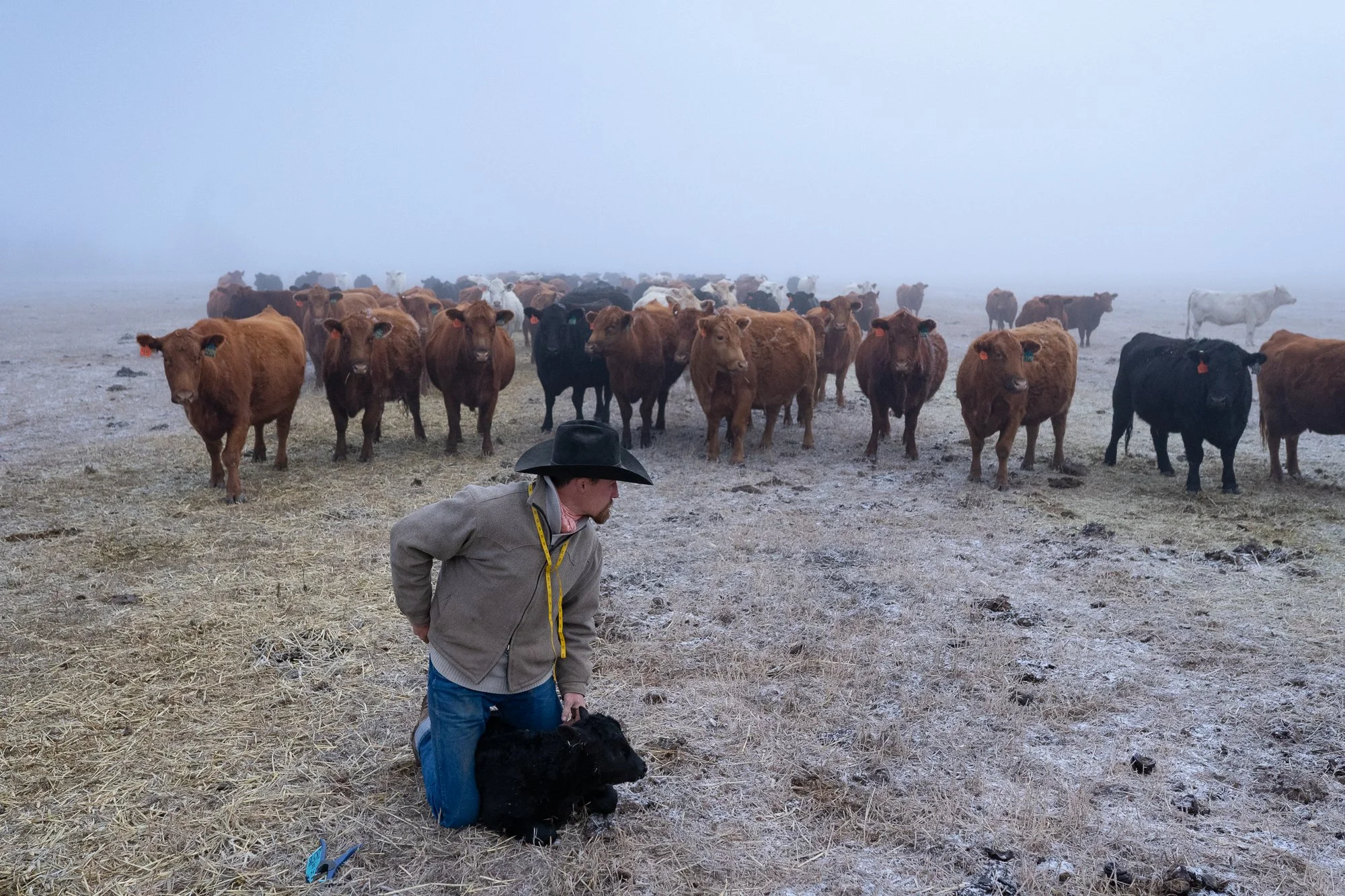
Cowboy tagging a calf during calving season on a Colorado ranch photographed as western lifestyle photography.

Tagging calves during spring cattle work.

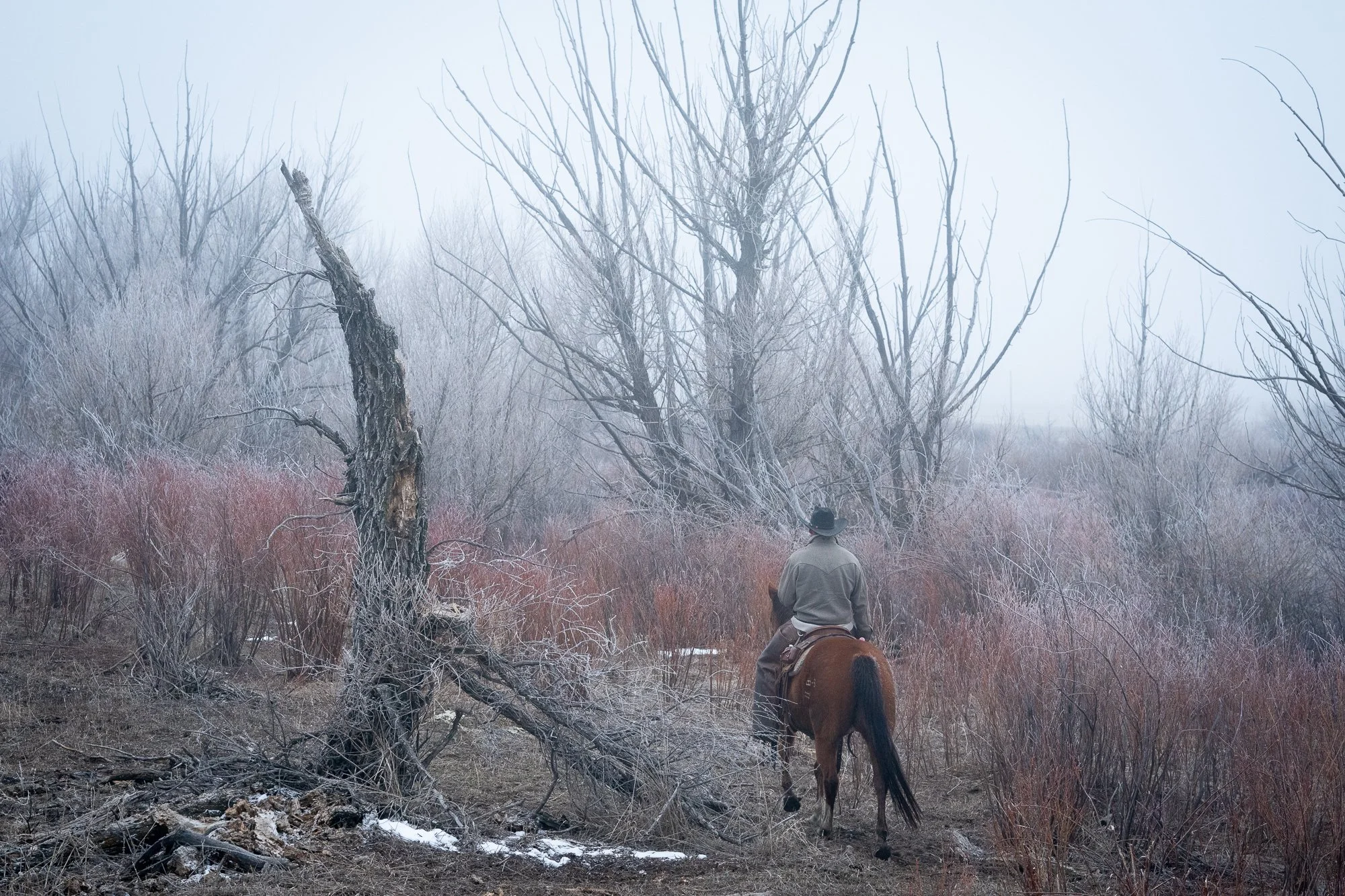
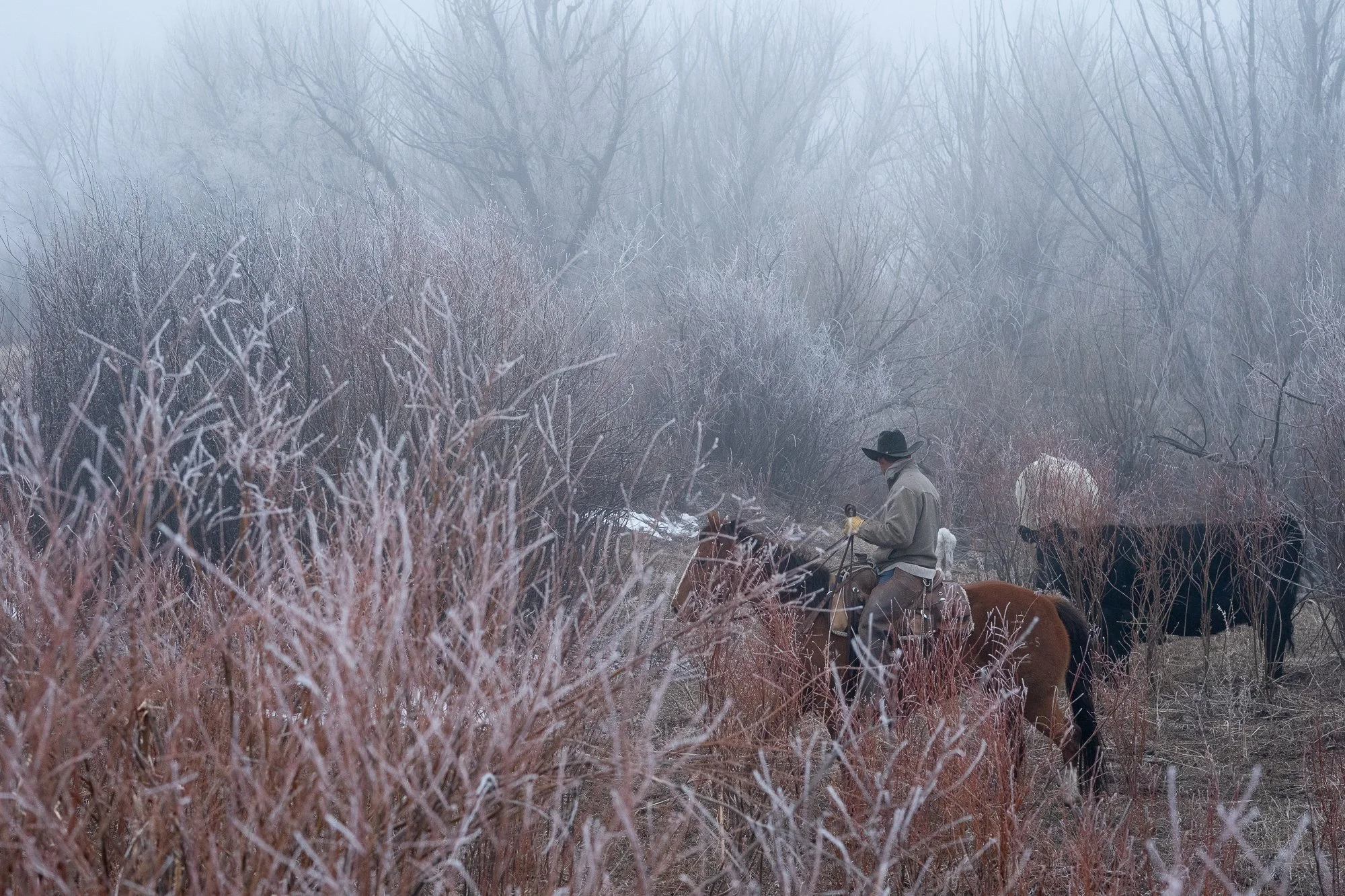
Working cowboy riding a horse through brush on a Colorado cattle ranch photographed in western lifestyle style.

Riding through thick country looking for cattle.

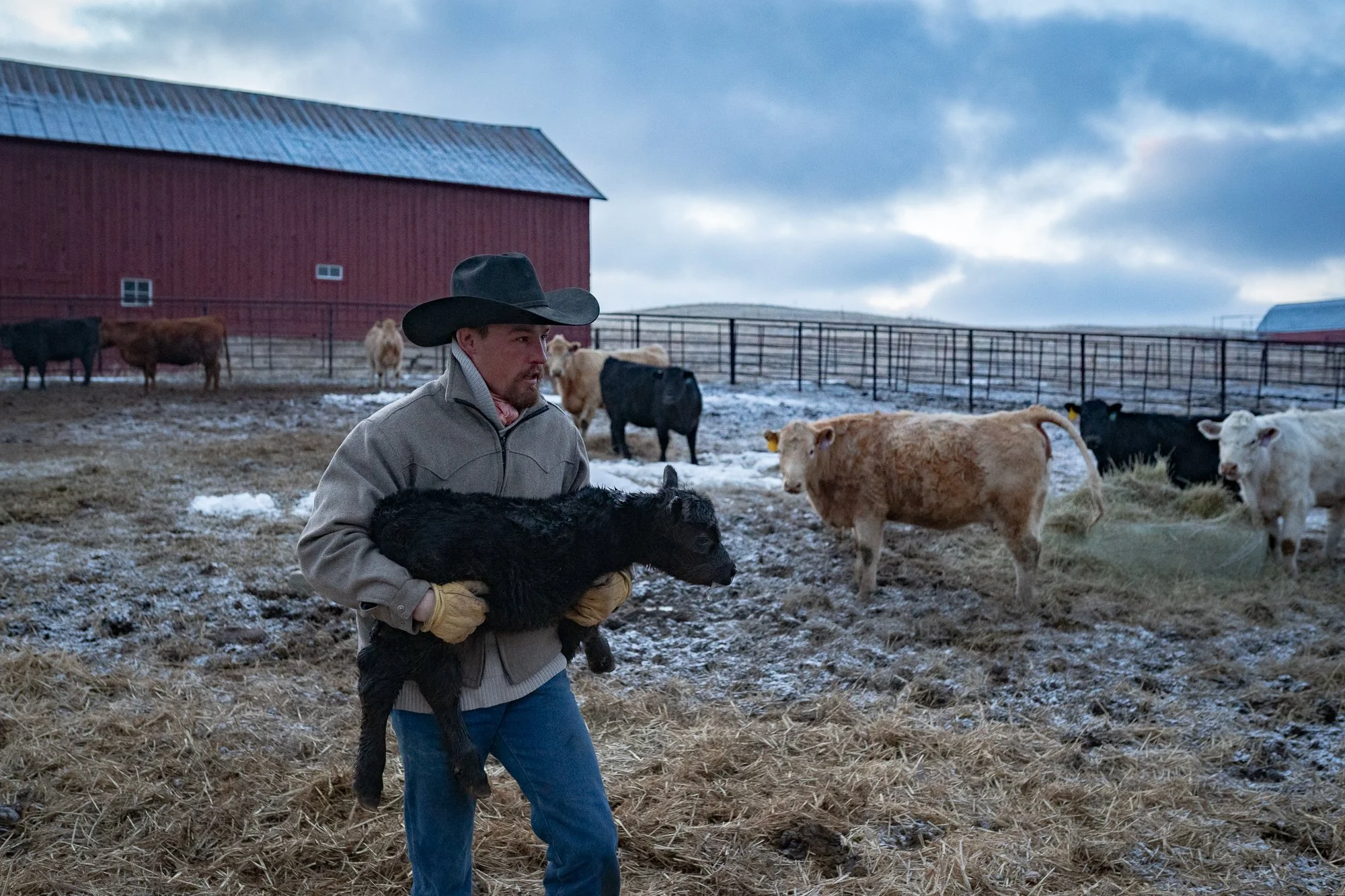
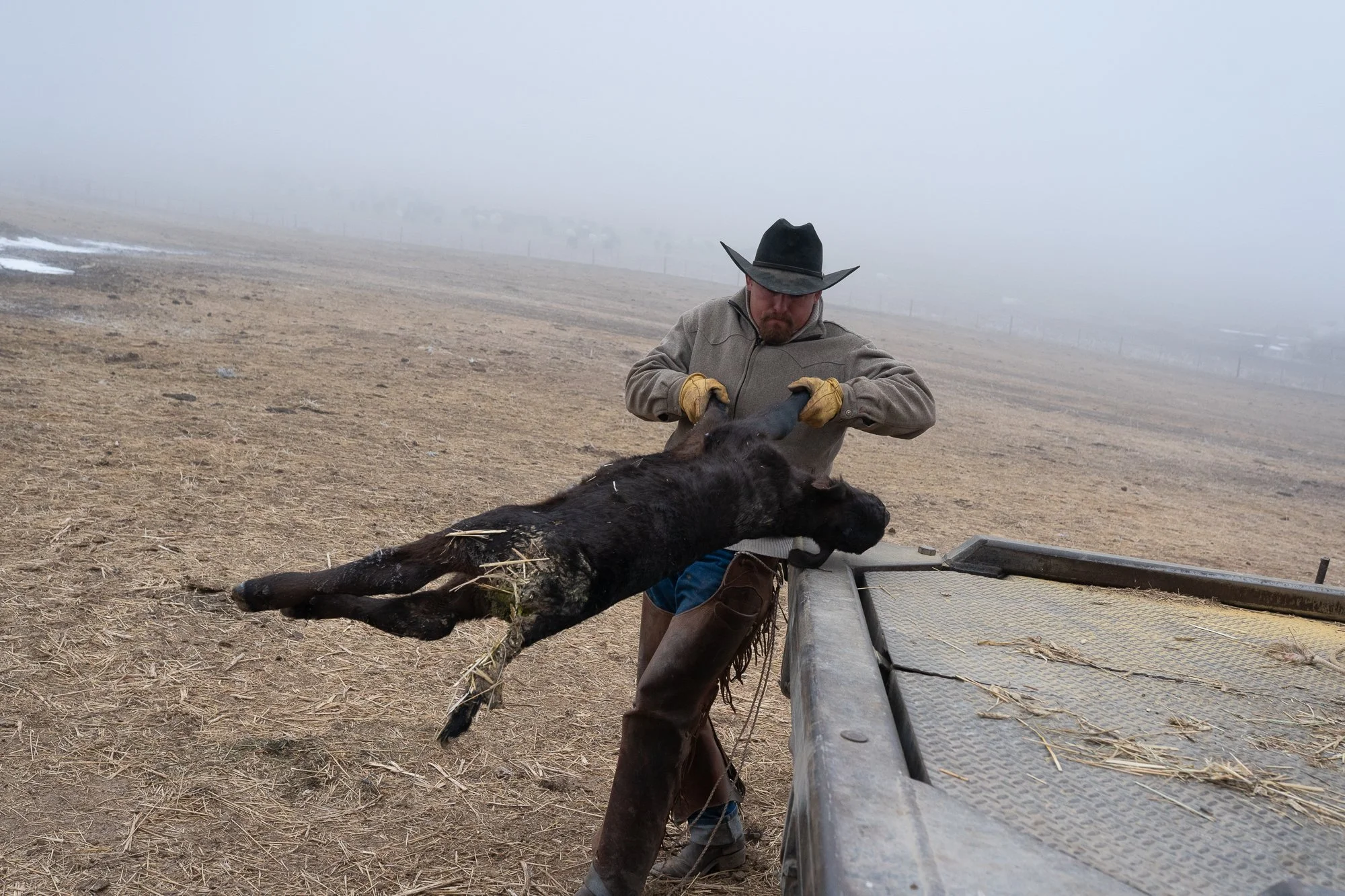
Cowboy carrying a newborn calf across snow on a Colorado cattle ranch during calving season.

Carrying a newborn calf during calving season.

Portrait of a Colorado cowboy wearing traditional ranch gear photographed as western lifestyle photography.

Portrait of a cowboy in working gear.

Working cowboy handling livestock during calving season on a Colorado ranch photographed as authentic western lifestyle photography.

The harder side of ranch life.

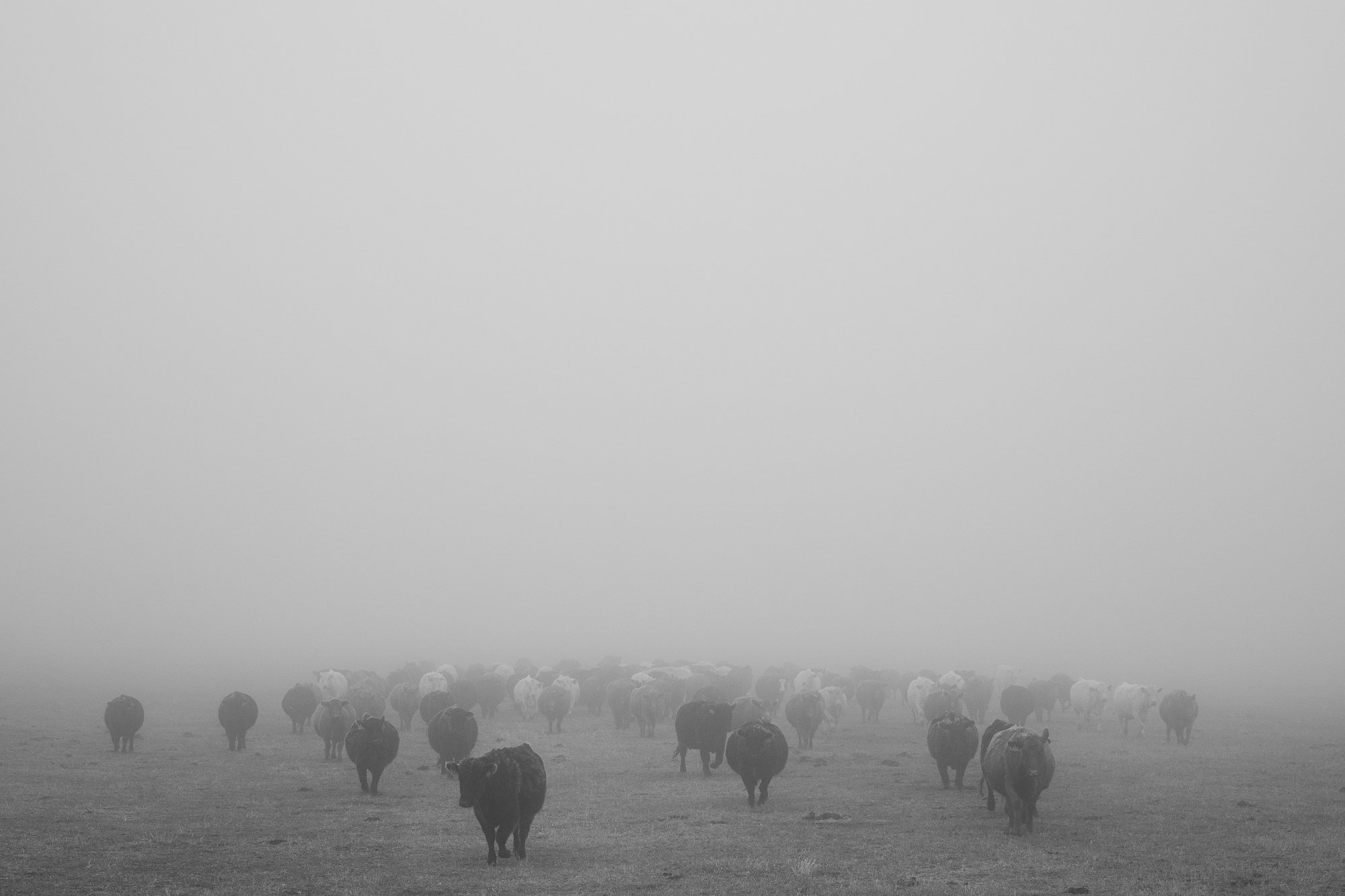
Cattle herd standing in fog on a Colorado cattle ranch pasture photographed as western ranch lifestyle imagery.

Cattle walking in the early morning fog.

Cowboy riding through brush searching for cattle on a Colorado ranch photographed as western lifestyle imagery.

Searching thick country for cattle.

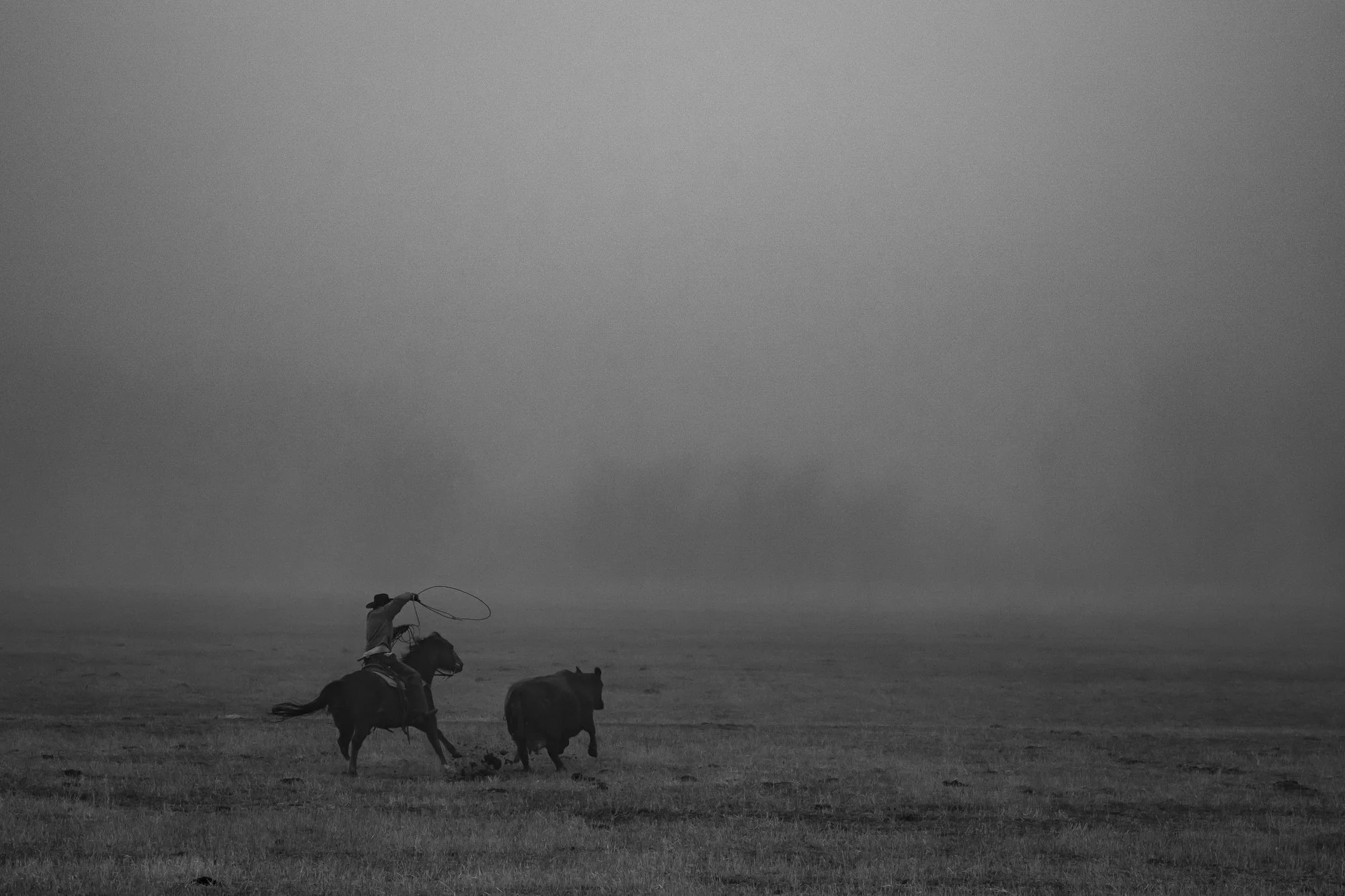
Black and white photograph of a working cowboy in Colorado

Black and white cowboy photograph

Photograph of a cowboy bottle feeding a baby calf

Bottle feeding a baby calf

Cowboy counting ear tags on a pickup truck tailgate during cattle work on a Colorado ranch.

Counting ear tags during cattle work.

Photograph of a Colorado cowboy on his horse

Colorado cowboy riding his horse through thick country

Photographs of Cohoes, New York

Cohoes, New York Street Photography

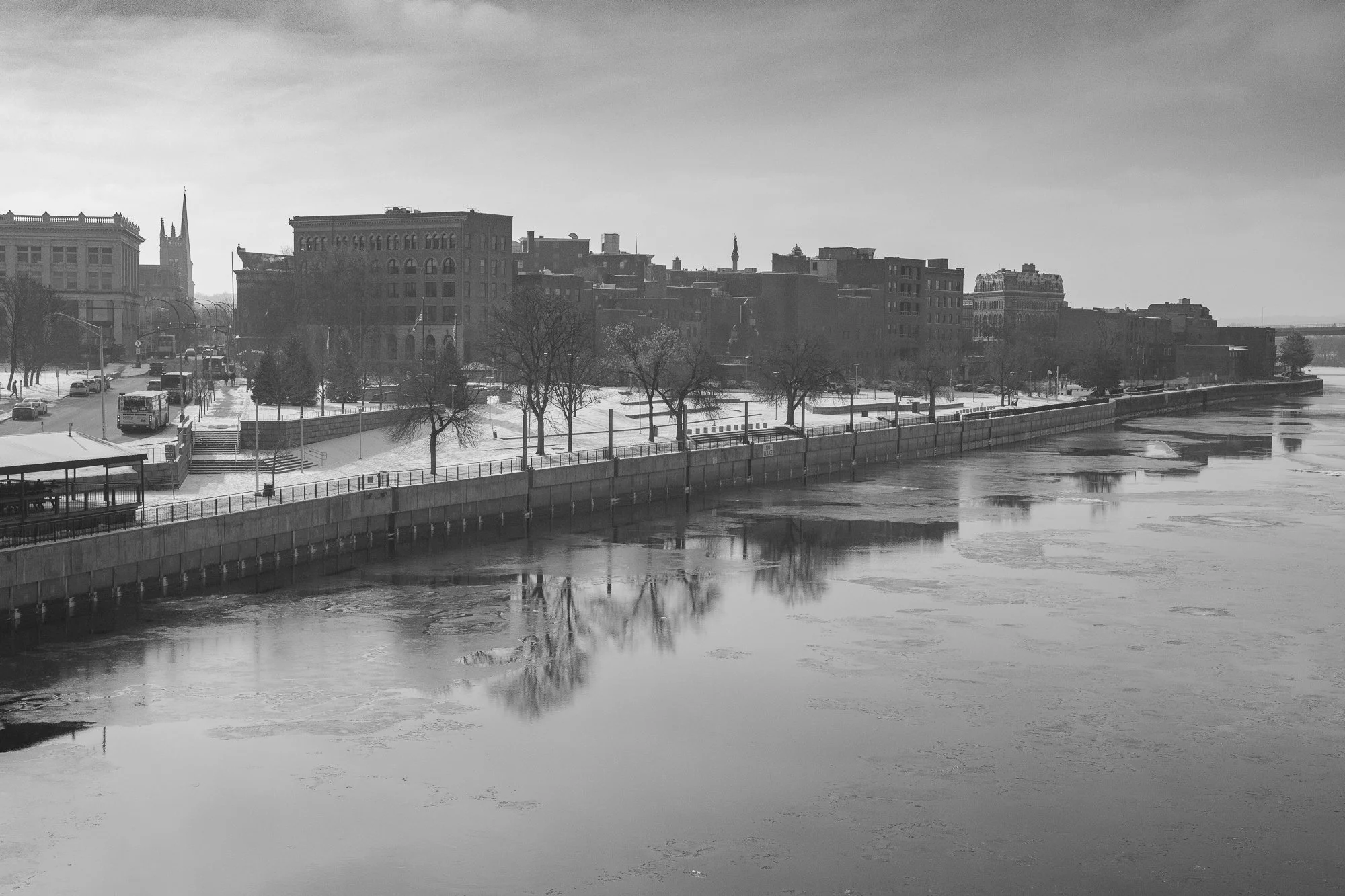
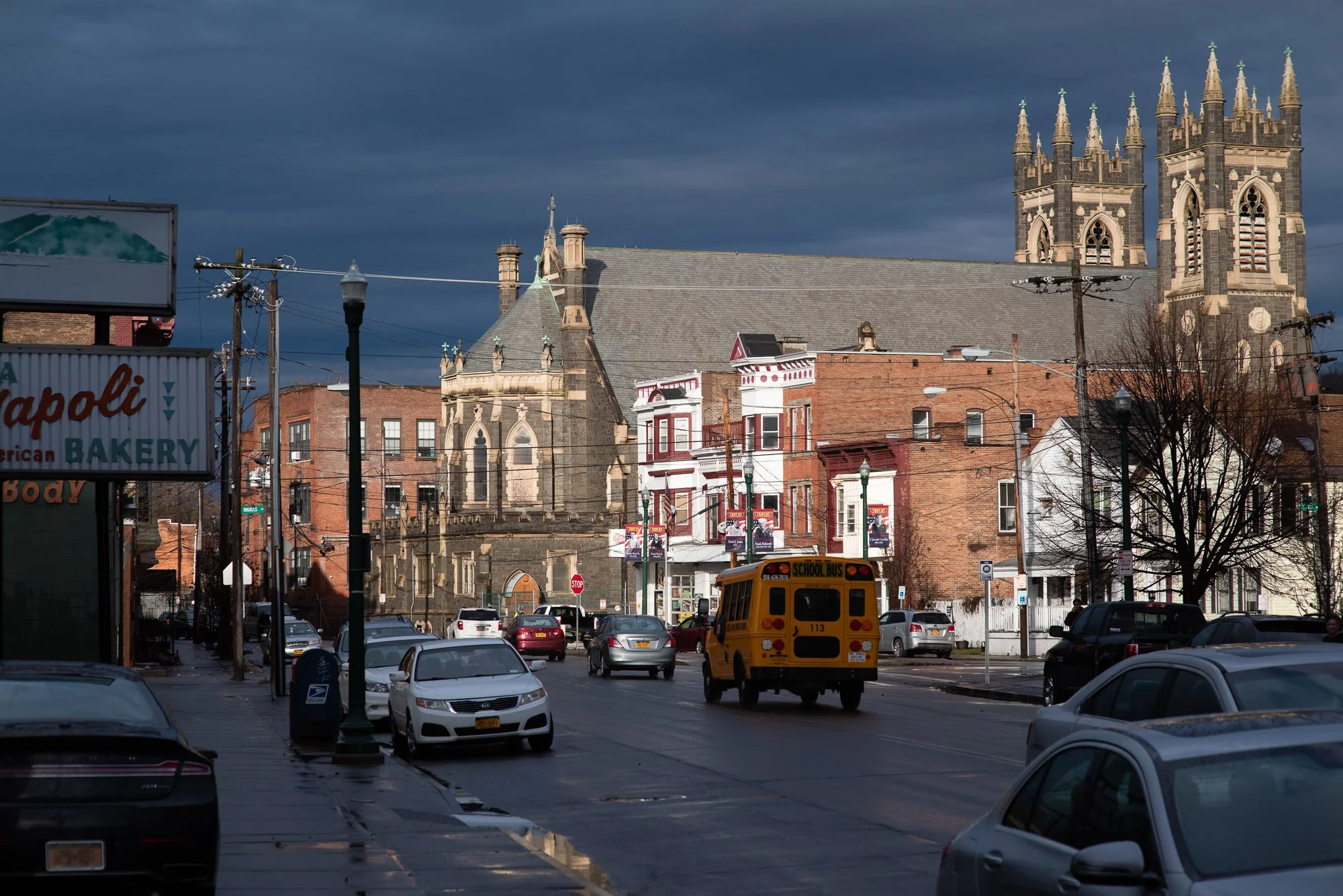
I grew up in the Capital Region, so places like Cohoes have never felt exotic to me. They were just there — part of the background of everyday life. You drove through them. You crossed the river. You passed the mills and brick buildings without thinking much about it. It’s only later, after leaving and coming back, that you realize how much character was hiding in plain sight.

These photographs were made while walking the streets of Cohoes with that perspective in mind — not as a visitor, but as someone familiar with the rhythm of these towns. The work looks at architecture, streets, and surfaces the way they actually exist, without trying to dress them up or turn them into something they’re not.

Street Photography Without the Obvious Moments

When people think of street photography, they often imagine crowds or dramatic interactions. That’s never really been what draws me to places like Cohoes. Here, the streets are quieter. The interest comes from buildings, sidewalks, old industrial remnants, and the way light moves across structures that have been standing for generations.

In that sense, this is street photography rooted more in observation than action. Many of the images are absent of people altogether, letting the town speak through its architecture and physical presence. The results feel more honest to how Cohoes actually exists day to day.

Growing Up Around These Streets

If you grew up anywhere near Albany, Troy, or the surrounding river towns, Cohoes probably feels familiar even if you’ve never spent much time there. The brick mills. The modest houses. The industrial bones that once supported entire communities. These places were built to work, not to impress.

That shared history runs throughout the Capital Region. Towns like Cohoes, Troy, and parts of Albany all carry similar visual DNA — shaped by industry, proximity to the Hudson and Mohawk Rivers, and a kind of quiet resilience that doesn’t announce itself. Photographing Cohoes feels less like documenting a single town and more like documenting a piece of a much larger regional story.

Architecture, Texture, and Time

What interests me most in Cohoes is how time shows itself. Paint peels. Brick softens. Windows reflect newer structures nearby. There’s a layering that happens naturally when places are allowed to age instead of being erased.

Walking these streets with a camera feels less about finding moments and more about paying attention. The photographs come from slowing down and noticing how light hits a wall, how a street curves past an old building, or how a neighborhood quietly carries its past forward.

Part of a Larger Capital Region Project

This post focuses on Cohoes, but it’s part of a broader effort to photograph the Capital Region with the same restraint and familiarity. These towns don’t need to be explained or romanticized — they just need to be looked at carefully.

Seen together, photographs from Cohoes, Troy, and Albany begin to form a more complete picture of this part of New York: interconnected, working-class, architectural, and often overlooked.

Explore More from the Capital Region

If you’re interested in how this work extends beyond Cohoes, you can explore related posts from nearby cities:

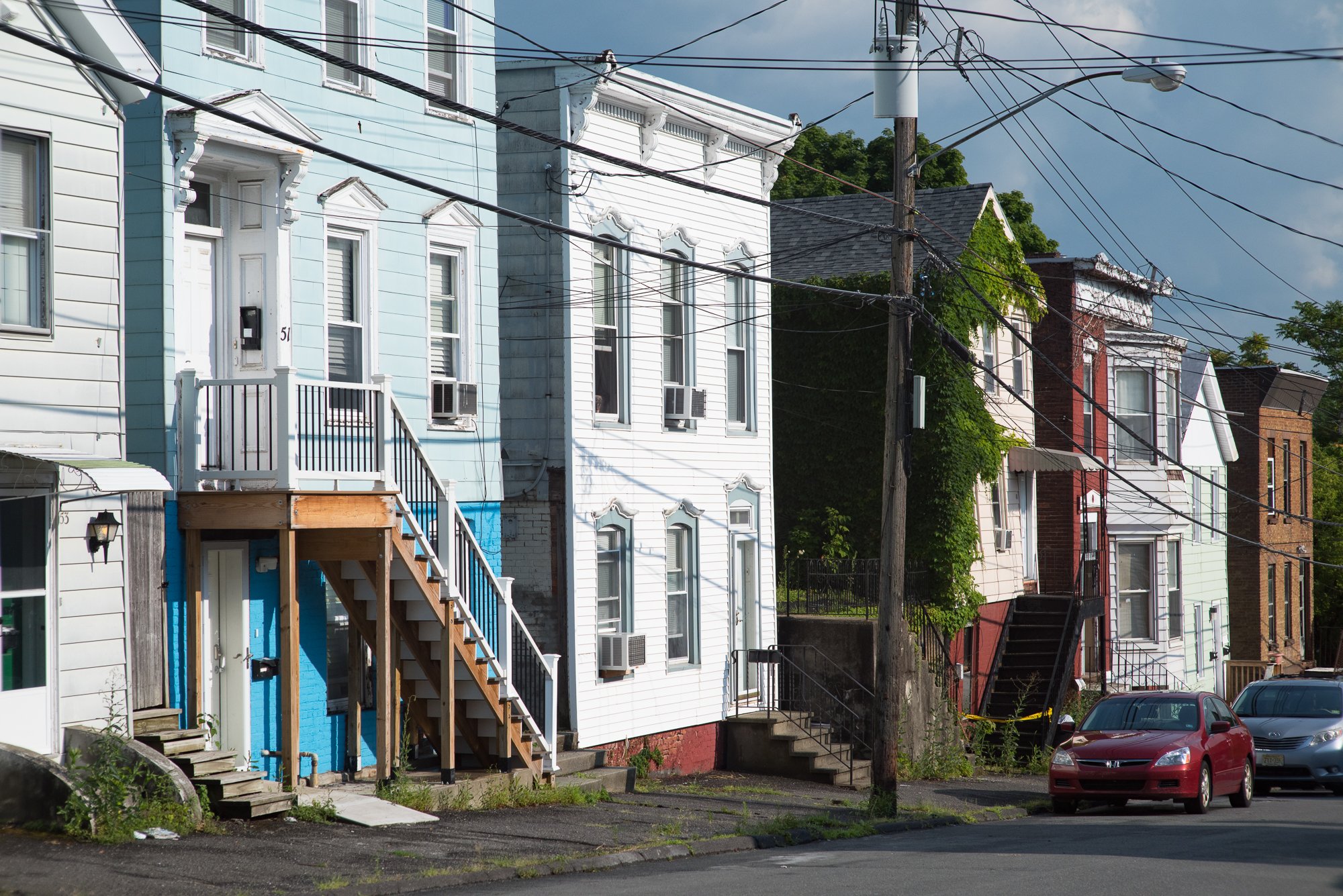
Photograph of homes in Cohoes, New York

Old homes in Cohoes, New York

Photograph of a hair salon in Cohoes, New York

Danielle’s House of Hair - Cohoes, New York

Photograph of the National Bank of Cohoes

Cohoes, New York Photography

Historic photograph of Cohoes, New York

Train track running by St. John’s Church in Cohoes, New York

Photograph of Remsen St. in Cohoes, New York

Photograph of the business’ on Remsen St. in Cohoes, New York

Photograph of a flower shop in Cohoes, New York

Flower shop - Cohoes, New York

Photograph of Dennis Holzman Antiques in Cohoes, New York

Antique shop in Cohoes, NY

Photograph of the Cohoes Armory in Cohoes, New York

Cohoes Armory

Photograph of an old church in Cohoes, New York

Old church in Cohoes, NY

Photograph of beautiful old brick homes in Cohoes, NY

Cohoes, NY architecture

Photograph of Cohoes in Upstate New York

Cohoes, New York Photography

Photographs of Helper, Utah: From coal town to creative heaven

Helper, Utah Photography — Historic Town & Creative Community

Helper, Utah — nestled in eastern Utah along U.S. Routes 6 and 191 is a historic railroad and coal mining town that has become a vibrant creative community with galleries, murals, and architectural character. Through this fine art photography essay, I explore Helper’s unique blend of West-side grit and artistic reinvention, capturing both the visual texture and the spirit of place. These photographs are available for editorial and commercial licensing or fine art prints.

Finding Helper by Accident

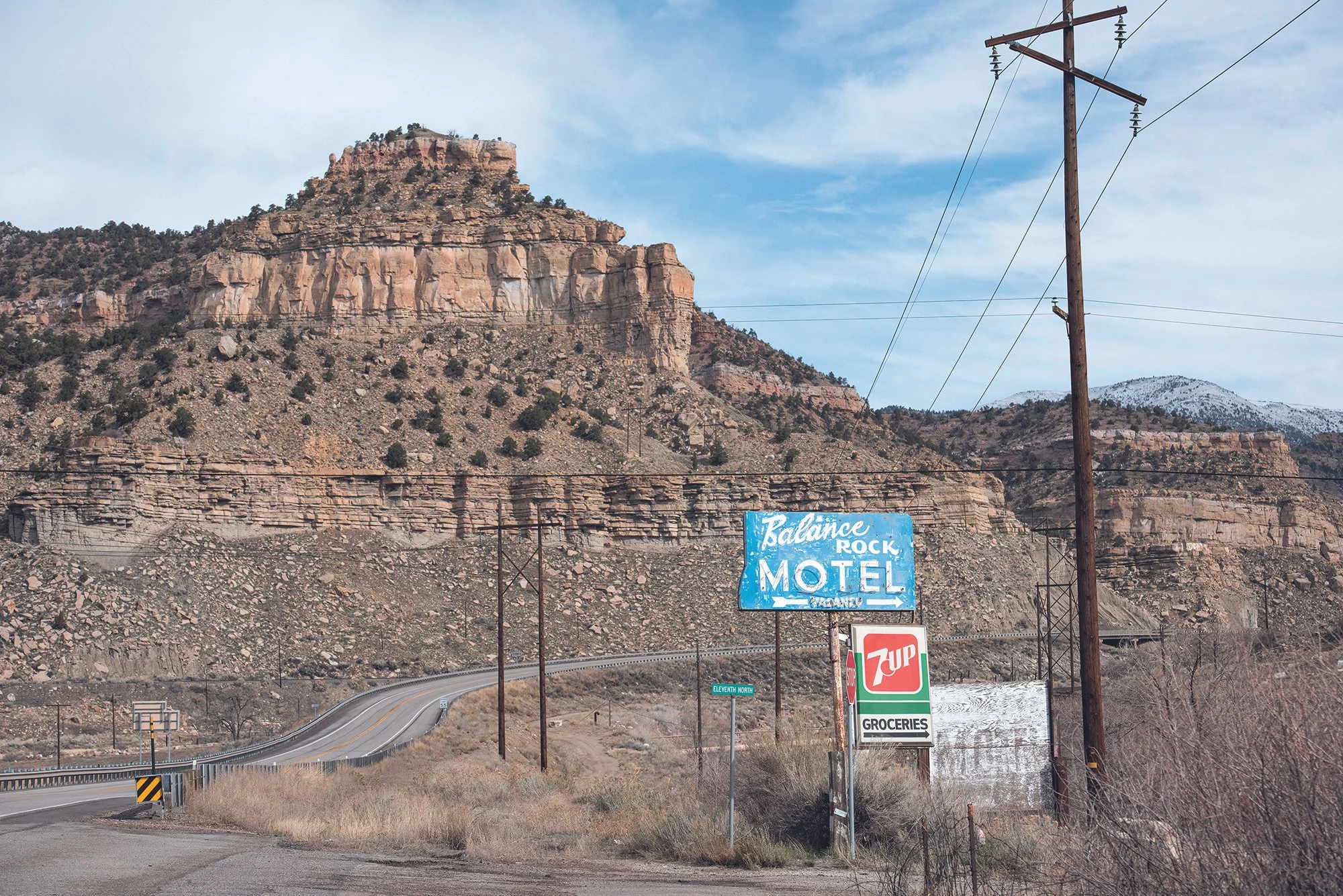
Helper is one of the seemingly endless gems available to any road tripper willing to get off the beaten path while exploring Utah. Years ago I was driving up the 191 and stopped to make a photograph of the old sign for the Balance Rock Motel. I’m a sucker for vintage signage anyway, but this was particularly interesting with the stark desert features in the background. Add in the 7up sign and it became a must stop. Looking around there was no inclination of any sort of civilization, let alone an entire town. While standing there making photographs a policeman stopped to ask what I was doing and seemed satisfied enough with the answer. Afterward I continued on my way, thinking there was nothing else in the area at all to photograph. Some ten years later I discovered a thriving artist community in Helper, tucked away off the 191—a stunning backroad for people driving south from Salt Lake City and continuing east on the 70. Driving into town is sort of a “holy shit” moment. Why is this town here and how does it survive? And the only real answer is art! Helper, Utah is an artist community in the middle of nowhere filled with galleries! It’s such an incredibly unique place. In all my travels I’ve never really seen anything like it. And the excitement that comes from discovering such a town is what keep me addicting to road trips!

The History & Character of Helper, Utah

Helper earned its name from the extra locomotives — “helper engines” — that once assisted trains climbing the steep grades of Price Canyon. Built around coal mining and railroads, the town became home to generations of immigrant workers and working families tied to industry.

Today, while traces of that history remain in brick storefronts and aging infrastructure, Helper has evolved into something more layered. Art galleries now sit beside historic buildings. Murals appear along alleyways. The town has quietly become a creative community while still holding onto its industrial backbone.

That mix of railroad grit and artistic reinvention gives Helper a visual character that feels distinctly Western — but not romanticized.

Photographing Main Street & Roadside Landmarks

Much of this series focuses on the visual details that define Helper’s personality. These aren’t dramatic landscape icons. They are quieter observations — architectural lines, faded paint, shadow, typography, and the space between buildings. The kinds of details that reveal how a town actually lives.

Photographing Helper wasn’t about spectacle. It was about slowing down long enough to notice what remains.

Helper Within the Larger American Road Project

This work fits into a long-term body of photography documenting small towns and overlooked places across America. For over 15 years, I’ve driven hundreds of thousands of miles searching for places that feel visually honest — towns shaped by time rather than reinvention.

Helper stands out because it holds both histories at once: the industrial past and a creative present. It reflects a broader story about rural America adapting without fully erasing itself.

In many ways, Helper represents what draws me back to the road again and again — not the famous destinations, but the towns in between.

Image Licensing — Helper, Utah Photography

These photographs of Helper, Utah are available for editorial and commercial licensing. The work documents a historic railroad and mining town in transition — architecture, signage, Main Street storefronts, and the evolving character of a creative Western community.

The images are well suited for:

  • Editorial features on small town revitalization

  • Travel and regional publications

  • Western heritage stories

  • Cultural and architectural essays

  • Brand campaigns rooted in authentic American settings

Each photograph is available for licensed use in print or digital formats. If you’re interested in discussing usage, publication, or commercial applications, please reach out directly.

Continue Exploring the American West

Helper is just one chapter in a larger body of work documenting small towns, desert highways, and overlooked corners of the American landscape.

View the full Utah Fine Art Photography Gallery to see more images from across the state, or explore the broader American Road Trip Photography Collection featuring small towns and roadside scenes from across the country.

The Balance Rock Motel - Helper, Utah

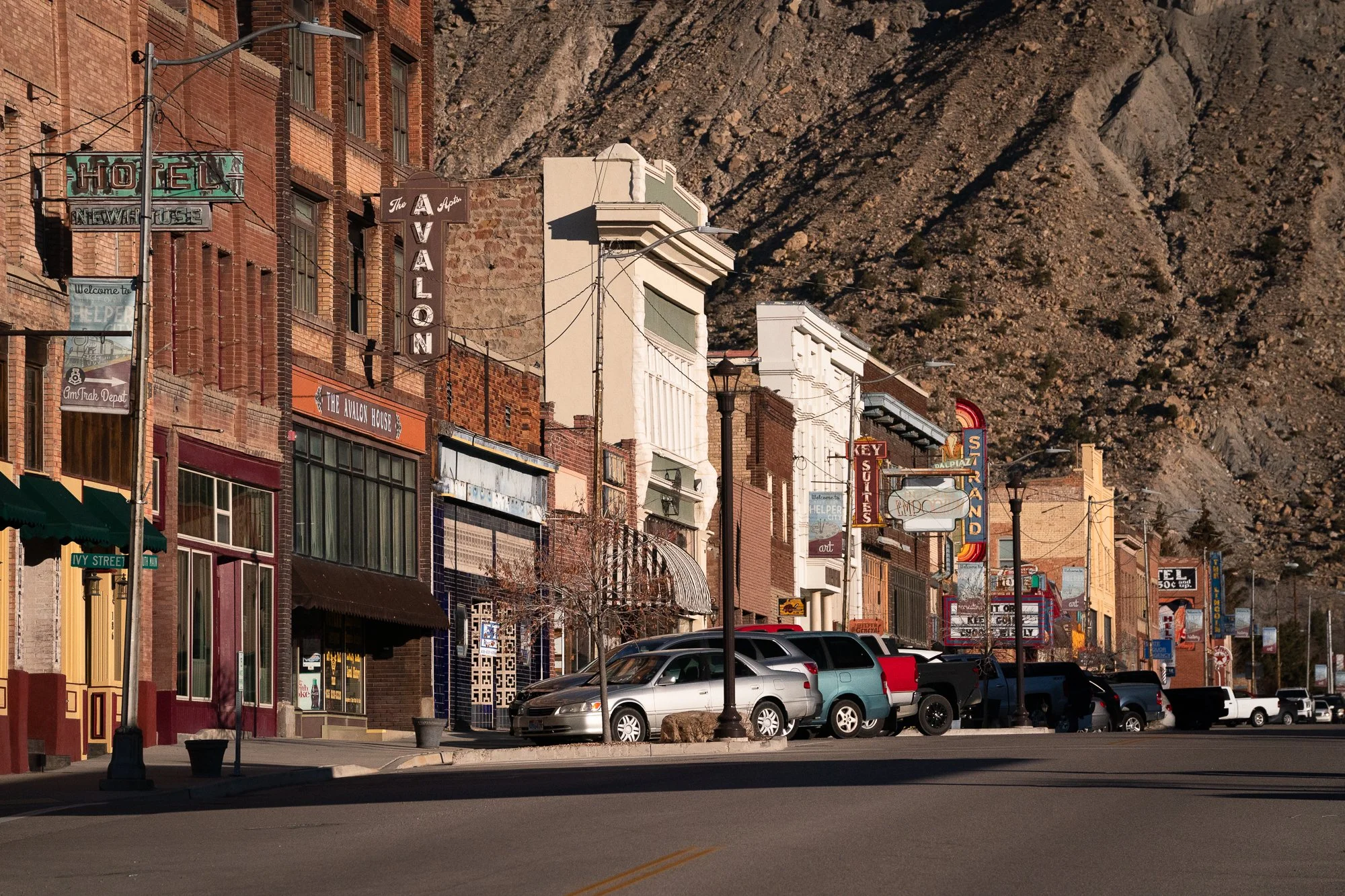
Historic Main Street in Helper Utah with brick buildings and cliffs

Historic brick storefronts line Main Street in Helper, Utah, pressed tightly against the towering Book Cliffs.

Photograph of the Lasalle restaurant in Helper, Utah

Vintage signage at Lasalle’s on Main Street in Helper, Utah

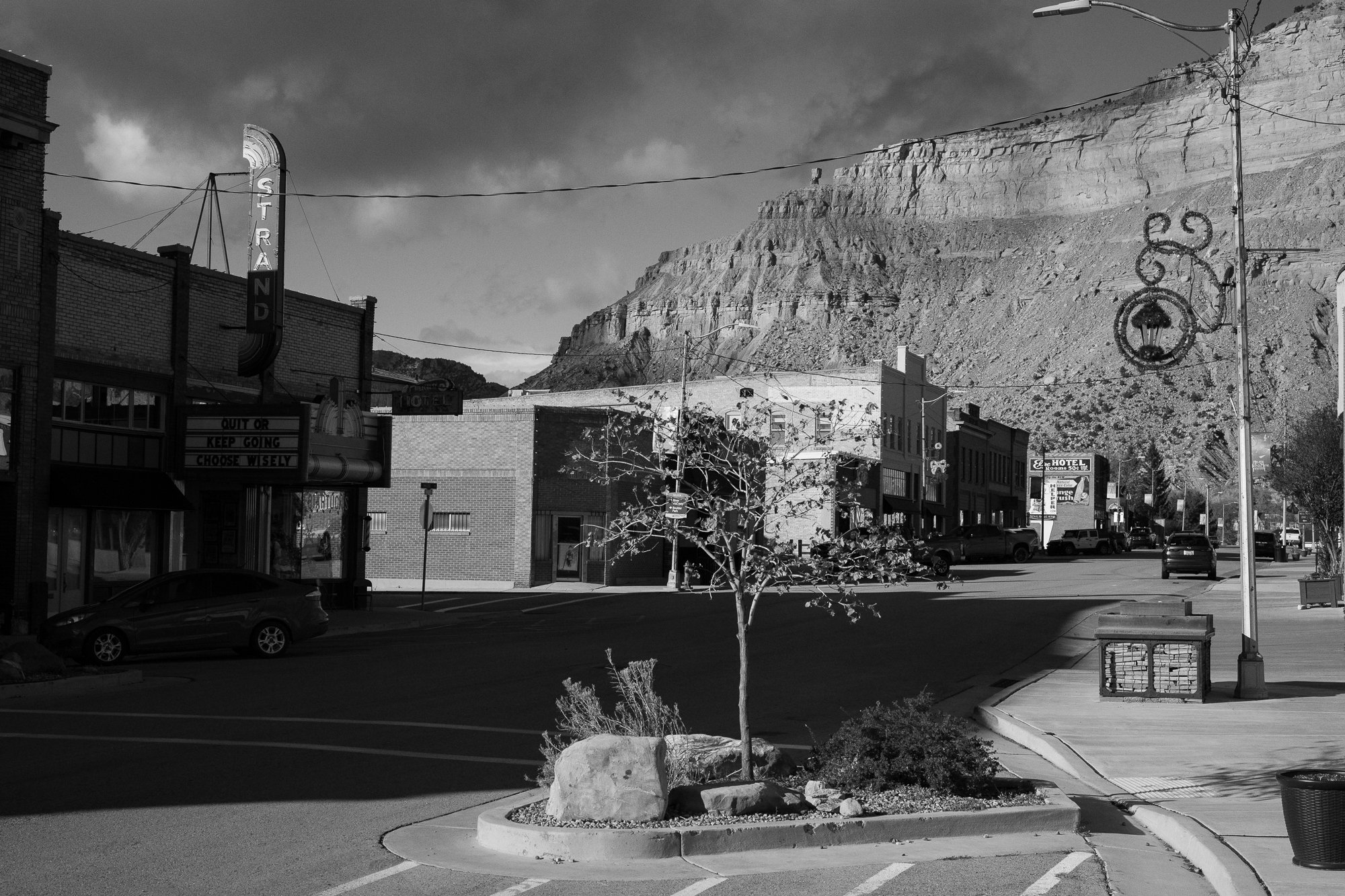
Black and white photograph of the view up Main Street in Helper, Utah

Main St. - Helper, Utah

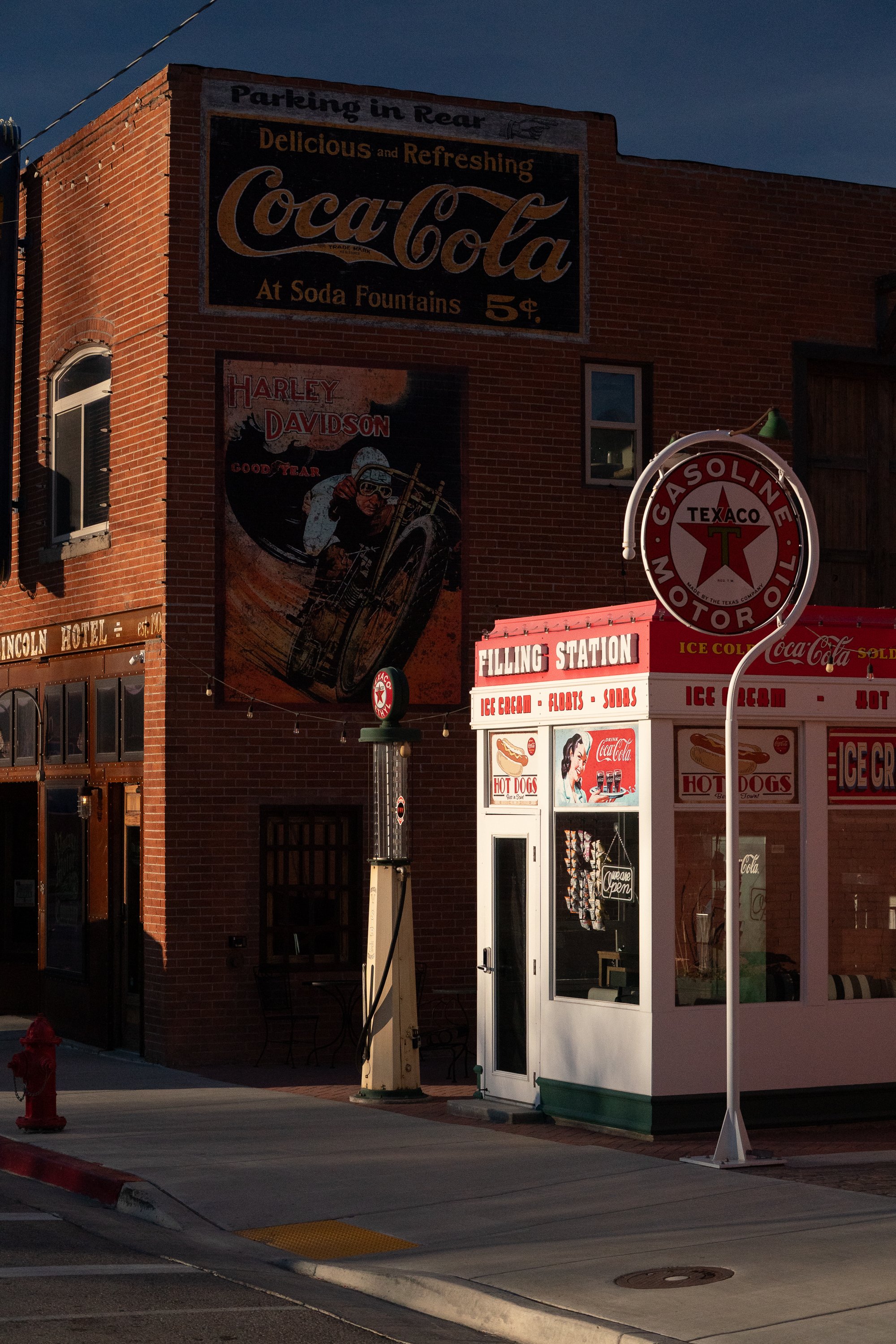
Lincoln Hotel and Texaco gasoline sign in downtown Helper Utah

The Lincoln Hotel corner glows in late light — Coca-Cola signage, Texaco branding, and filling station details capturing the Americana character of Helper, Utah.

Photograph of the Strand Theater on Main St. in Helper, Utah

The Strand Theater in Helper, Utah

Black and white photograph of the Hotel Newhouse in Helper, Utah

The Hotel Newhouse

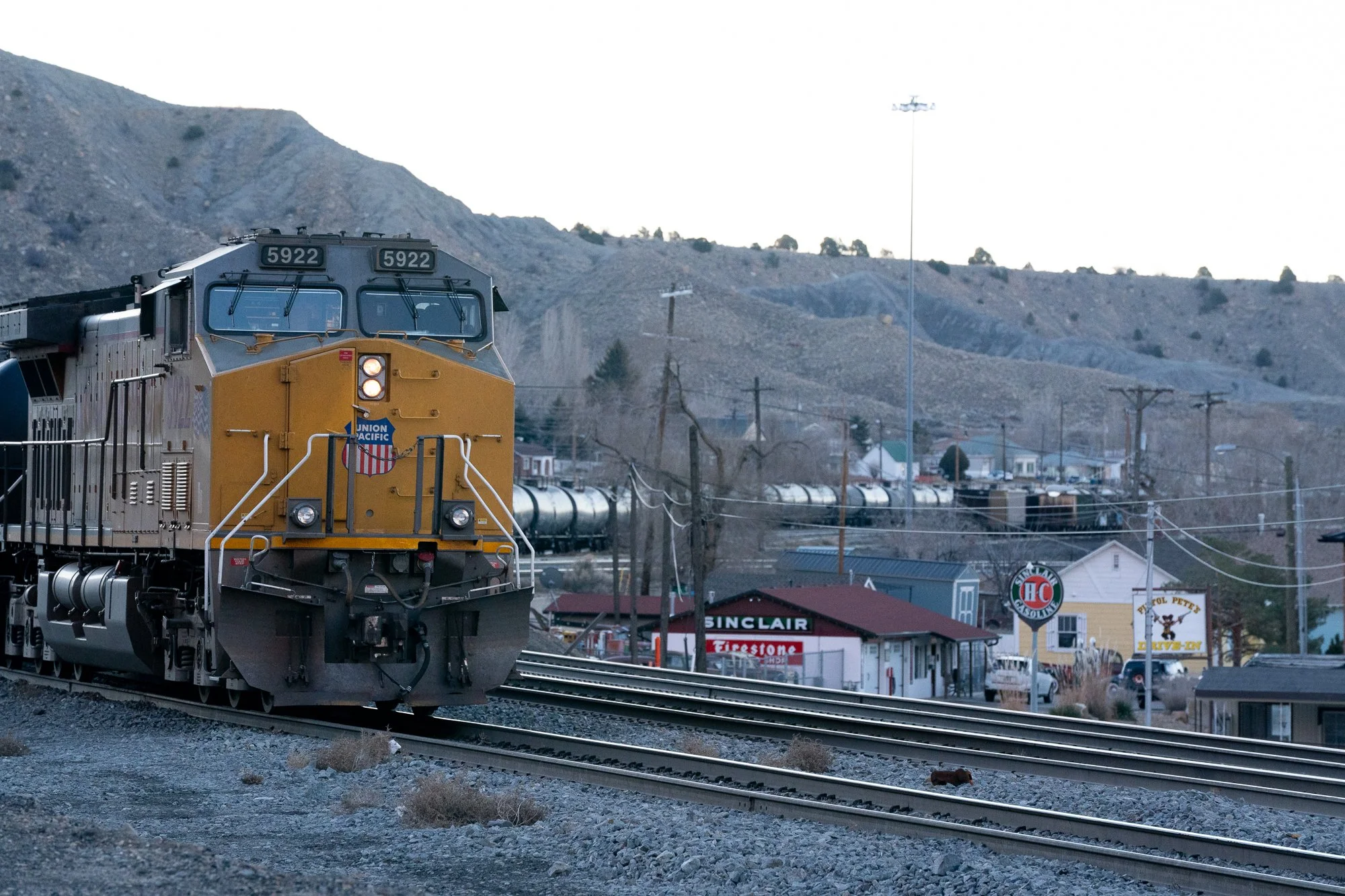
Union Pacific freight train passing through Helper, Utah with Book Cliffs in background

A Union Pacific freight locomotive rolls into Helper, Utah beneath the Book Cliffs — a reminder of the town’s railroad and coal mining roots in eastern Utah.

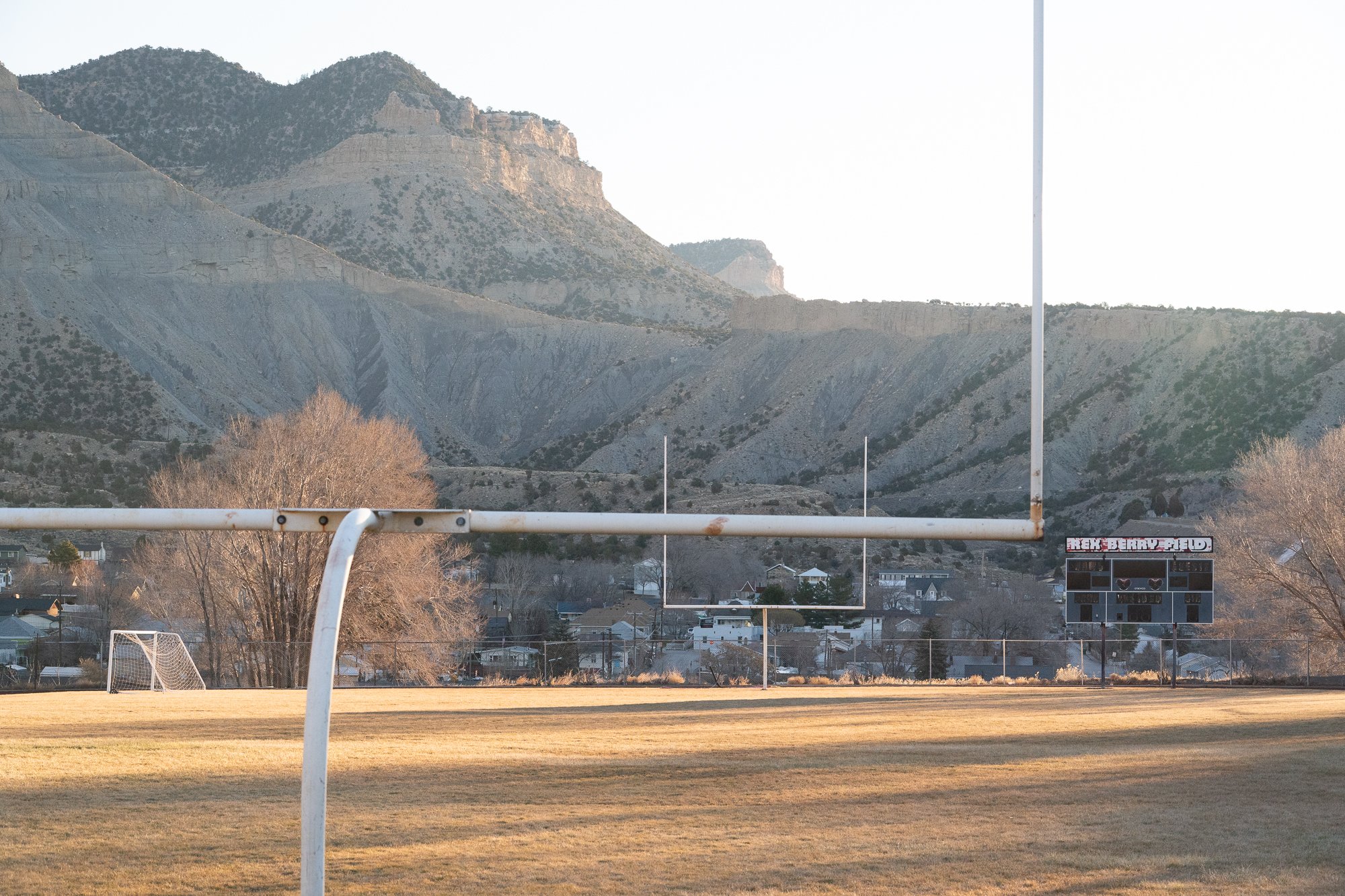
Rex Berry Field football stadium in Helper Utah with Book Cliffs behind

Rex Berry Field sits quietly beneath the dramatic Book Cliffs, where high school football and desert landscape meet in Helper, Utah.

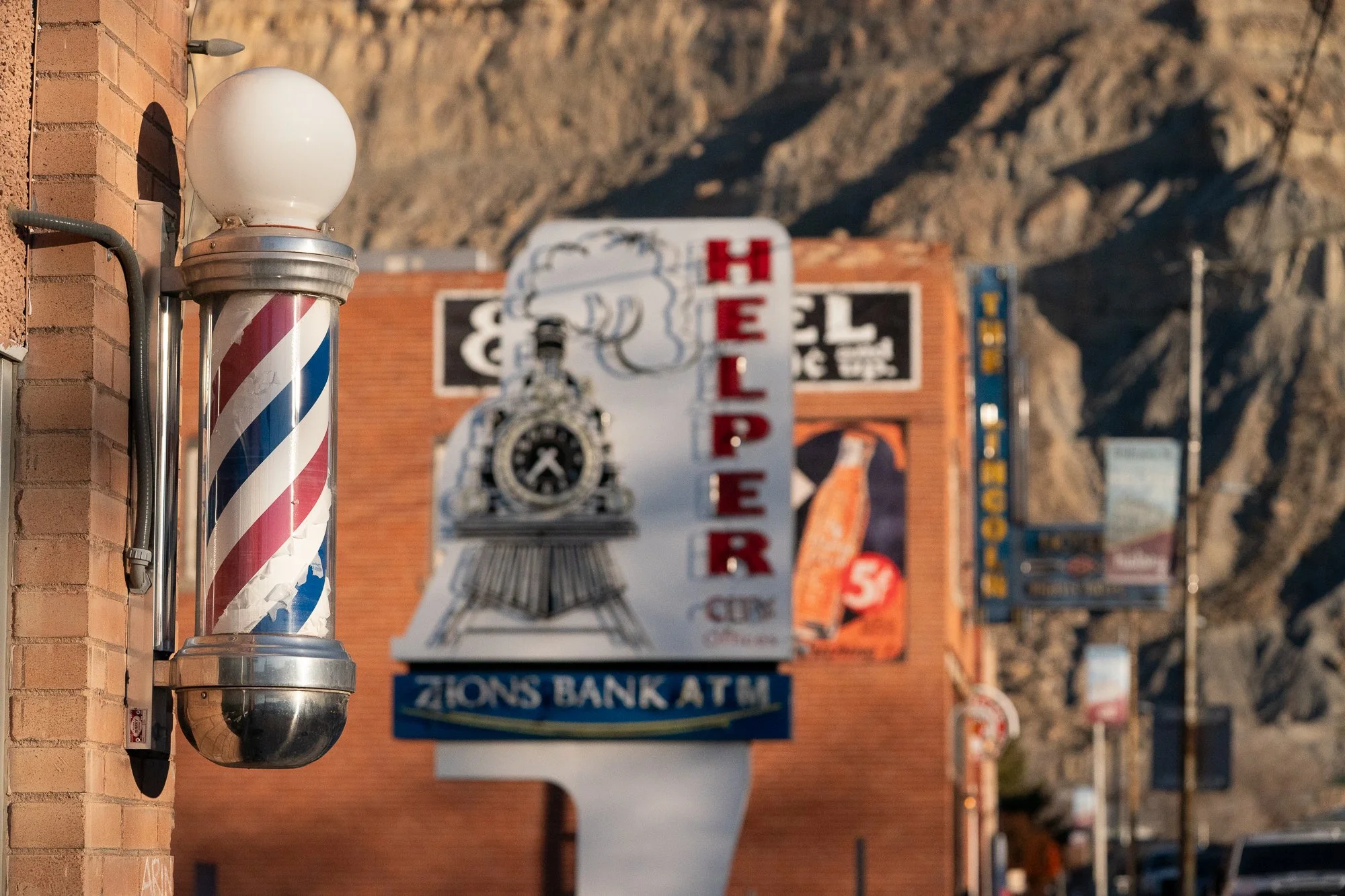
Classic barber pole on Main Street in Helper Utah with vintage signs

A traditional barber pole stands along Main Street in Helper, Utah, framed by layered signage and historic storefronts.

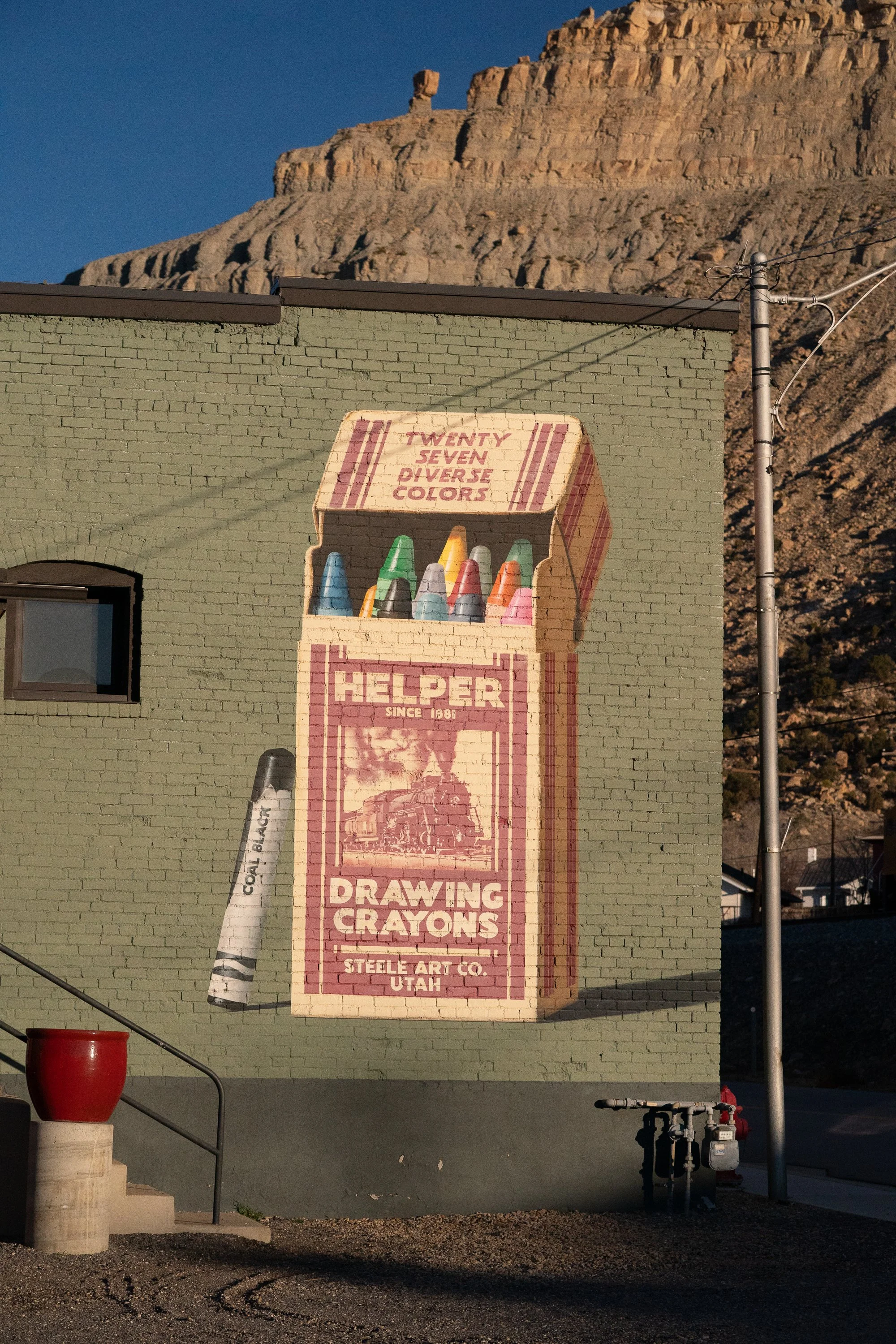
Helper Drawing Crayons mural painted on brick wall in Helper Utah

A large “Helper Drawing Crayons” mural reflects the town’s creative revival, set against the rugged cliffs that define eastern Utah.

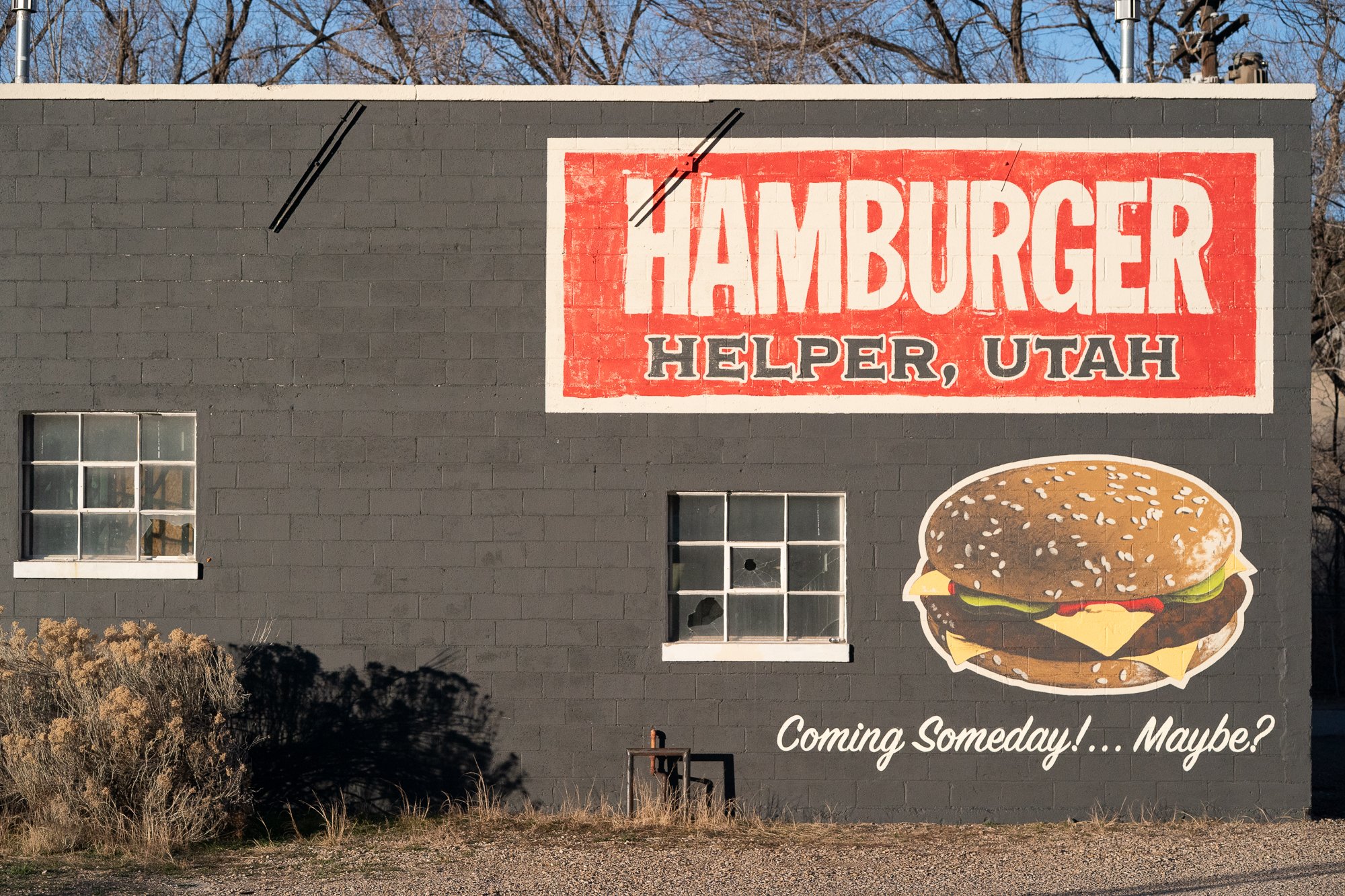
Hamburger Helper Utah mural with painted burger and vintage lettering

A bold “Hamburger — Helper, Utah” mural reads “Coming Someday… Maybe?” — small-town humor painted large on a downtown wall.

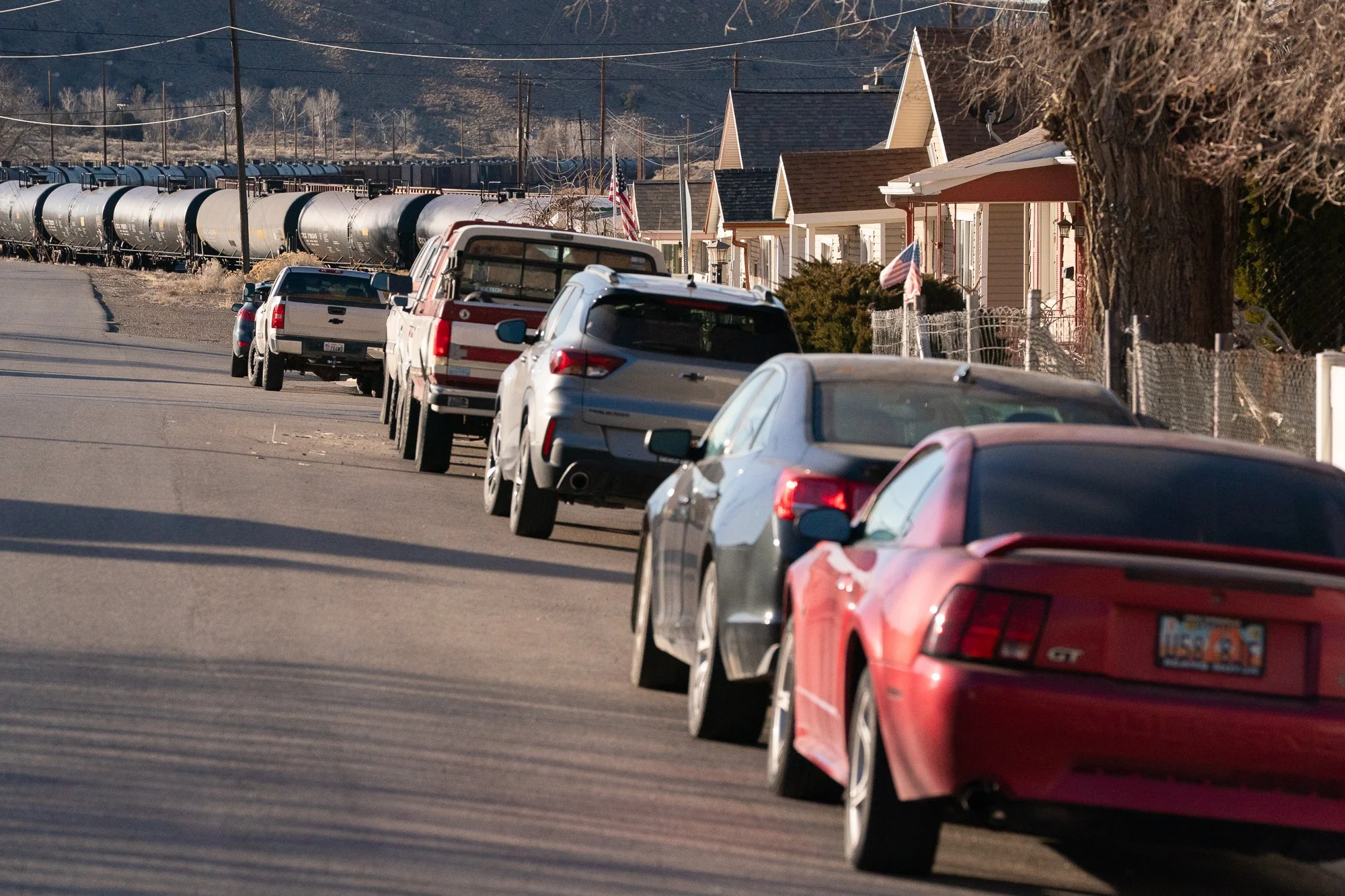
Residential street in Helper Utah with tanker rail cars in background

Parked cars line a quiet residential street while black tanker rail cars stretch across the horizon — industry and daily life intersecting in Helper, Utah.

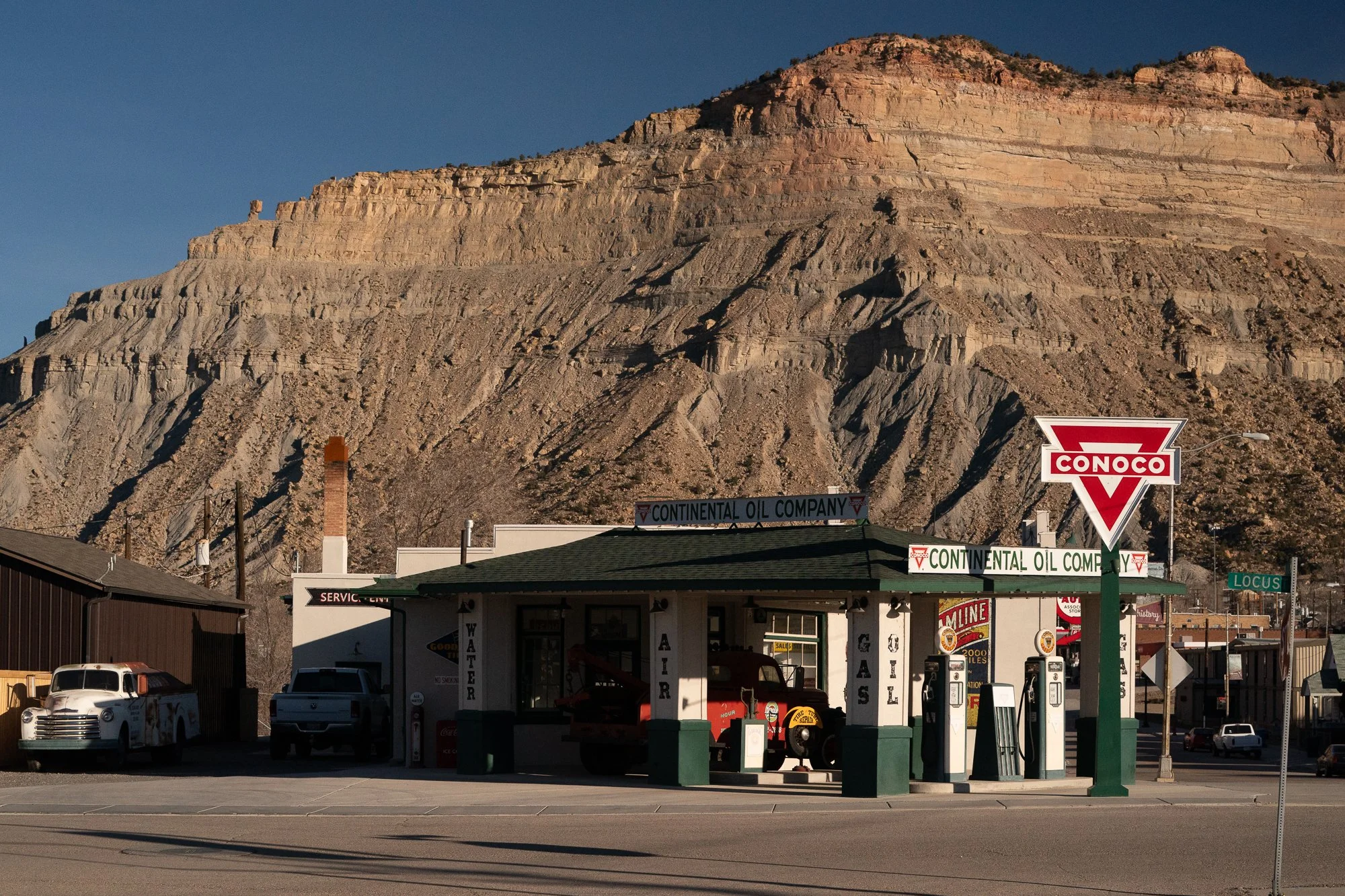
Continental Oil Company Conoco gas station in Helper Utah

The restored Continental Oil Company station stands beneath the desert cliffs in Helper, Utah — vintage petroleum branding framed by Western landscape.

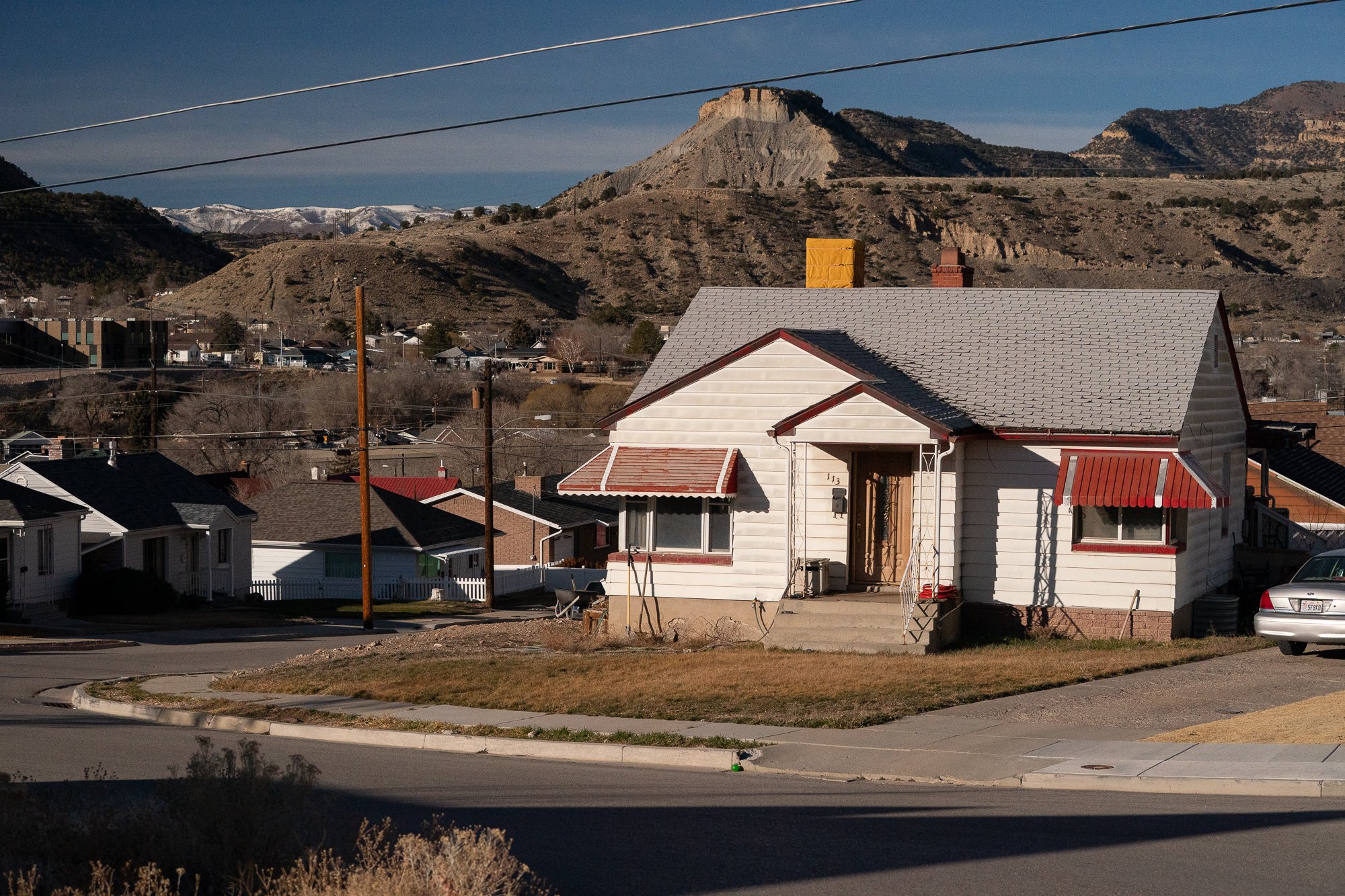
Small hillside home in Helper Utah with Book Cliffs and neighborhood behind

A modest hillside home overlooks Helper, Utah, framed by layered desert mesas and distant snow along the Book Cliffs — residential life set against the vast Western landscape.

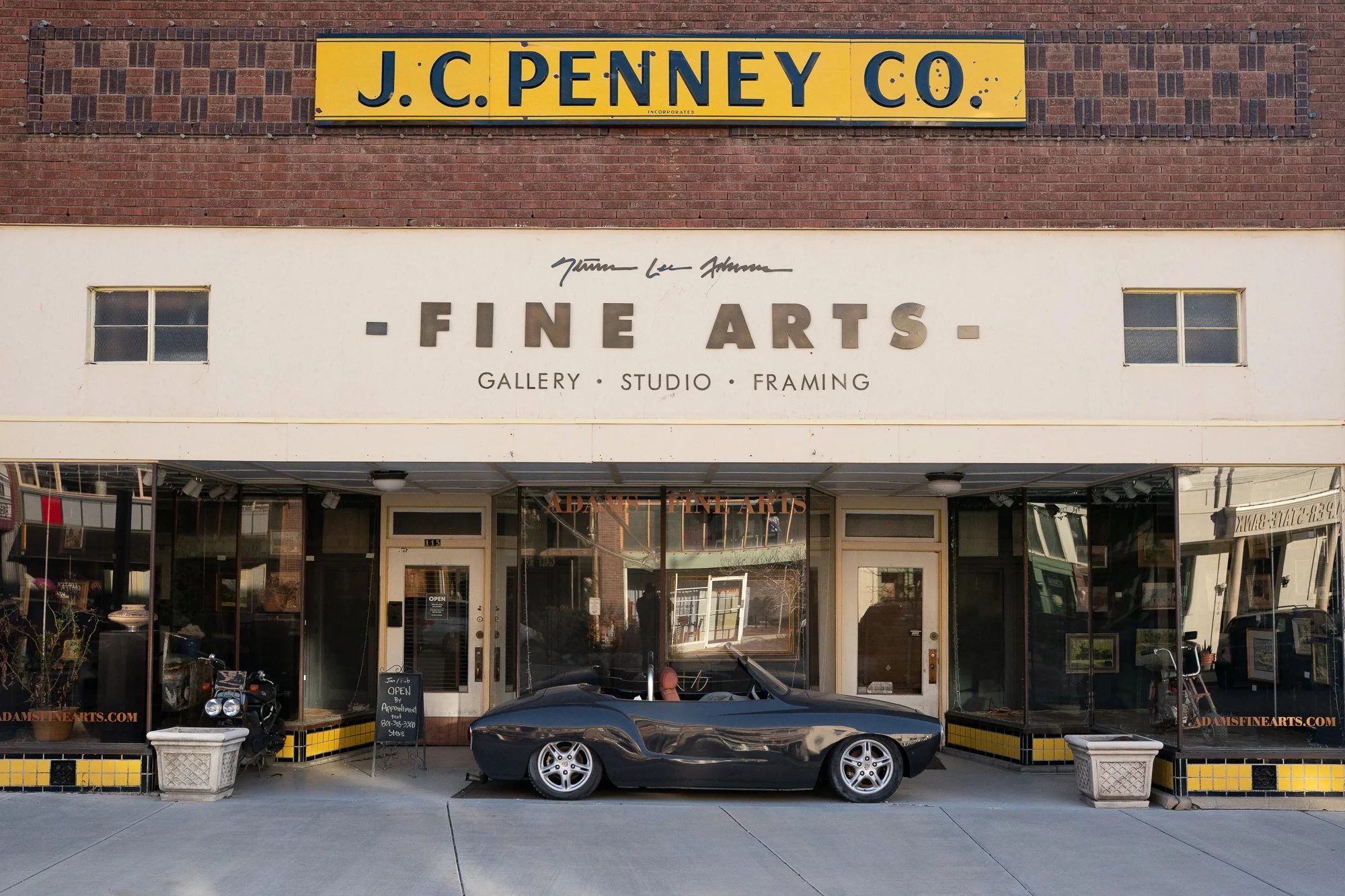
Historic J.C. Penney building now Fine Arts gallery in Helper Utah

The former J.C. Penney building now houses a Fine Arts gallery in downtown Helper, Utah — a retail relic reimagined as part of the town’s creative revival.

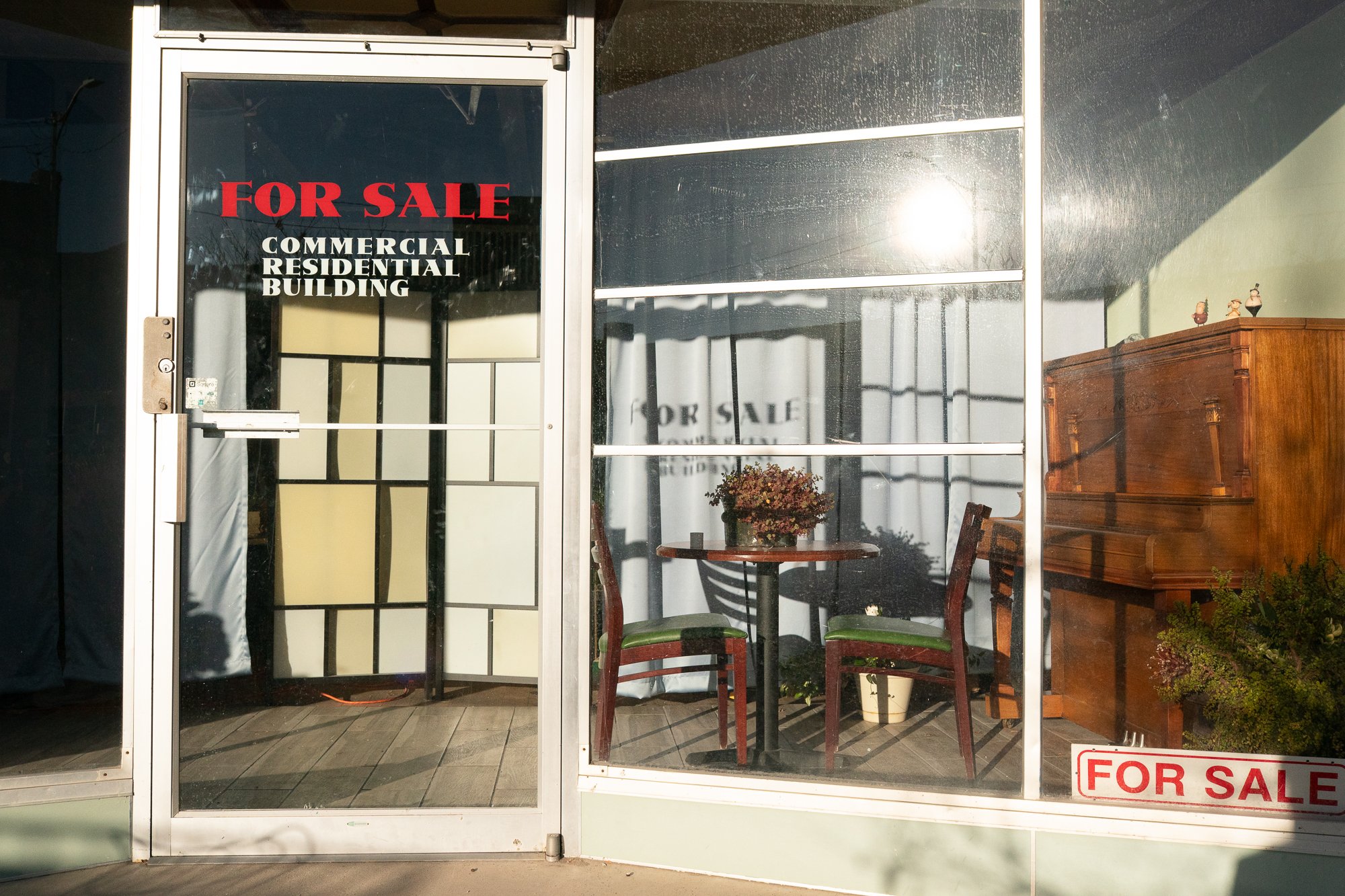
For sale sign on commercial storefront window in Helper Utah

A “For Sale” sign reflects in the glass of a downtown Helper storefront — a quiet indicator of economic transition in this historic railroad town.

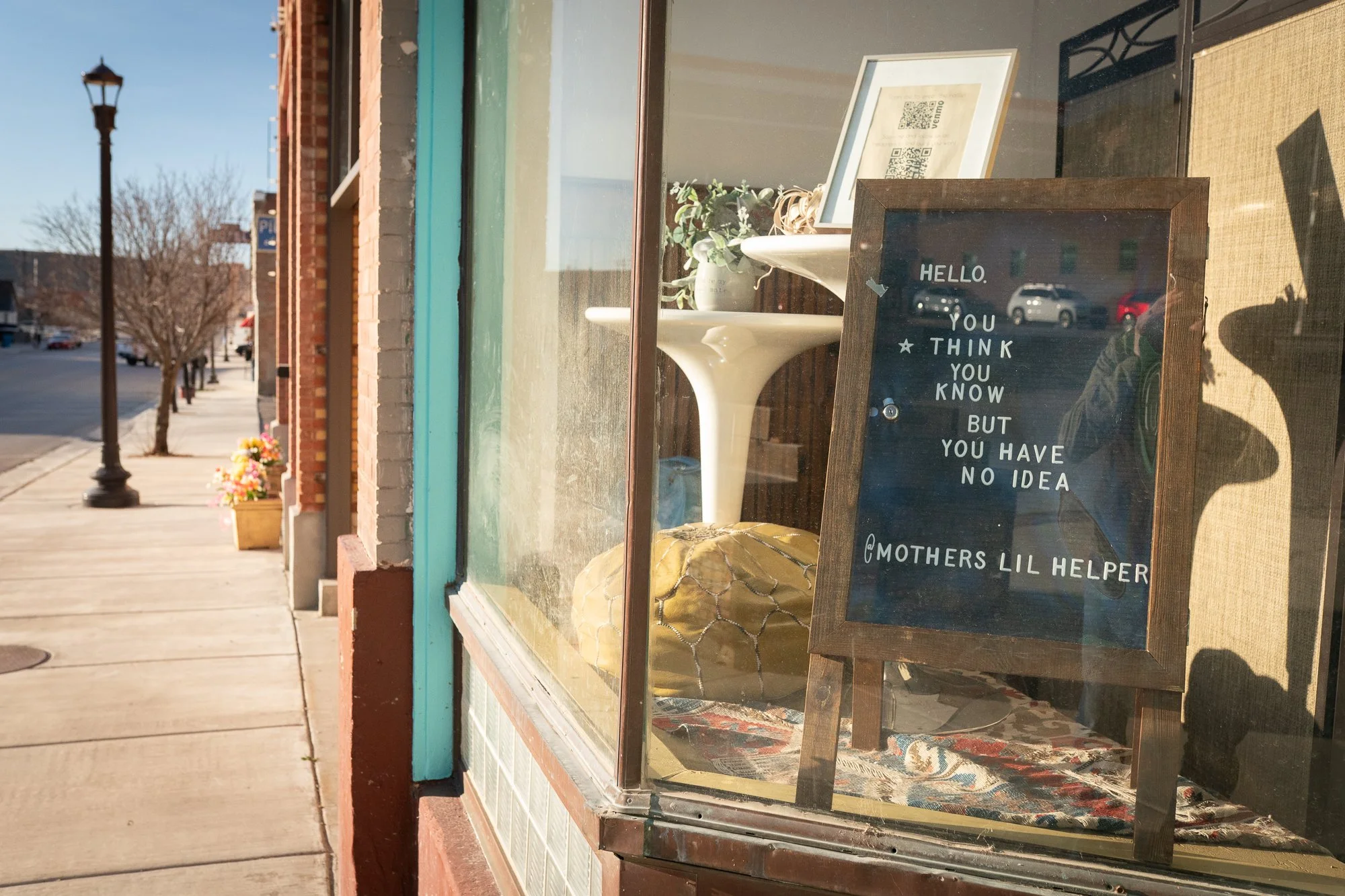
Mothers Lil Helper shop window display on Main Street in Helper Utah

A storefront display on Main Street reads, “Hello… You Think You Know But You Have No Idea” — a subtle reminder of the layered identity of Helper, Utah.

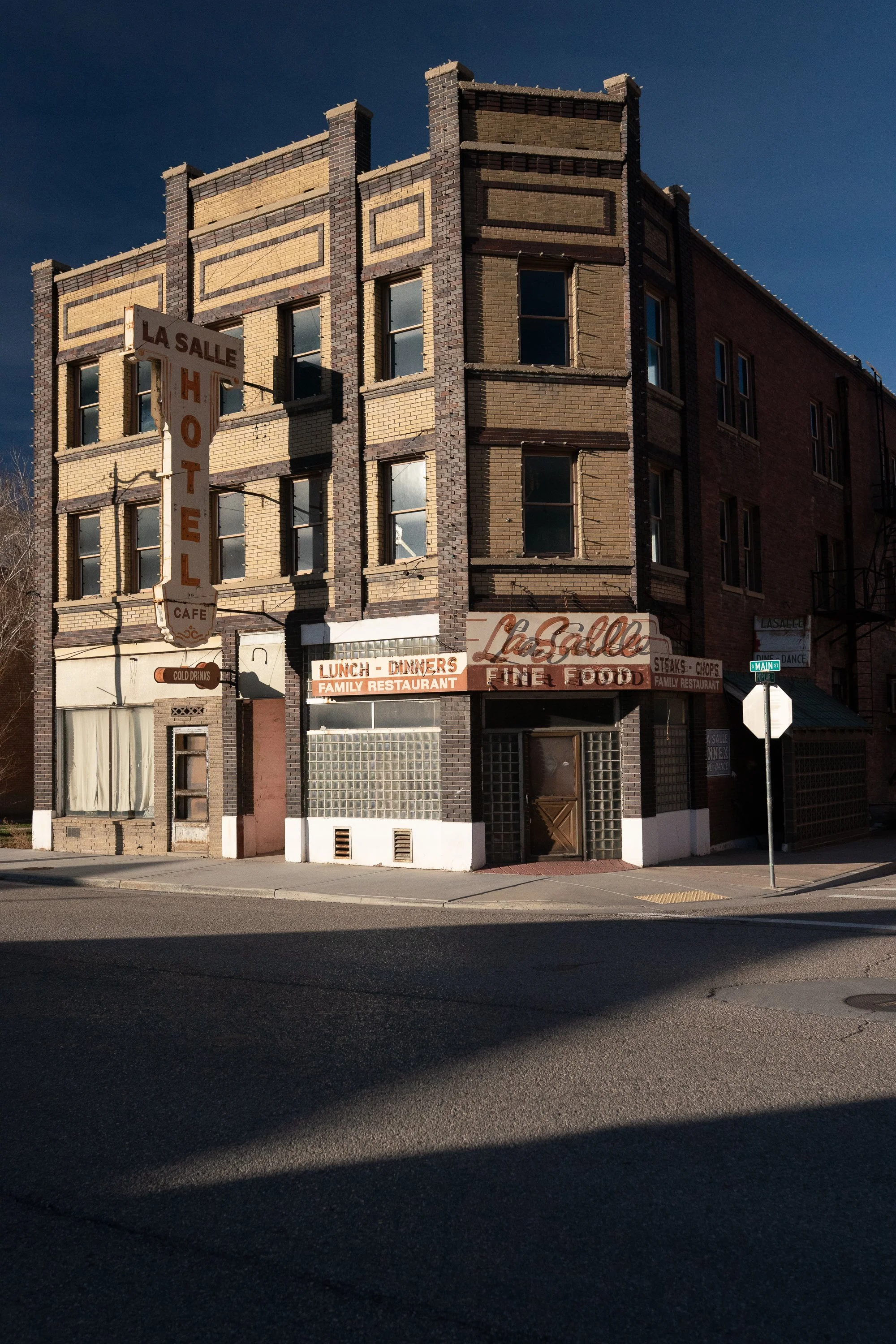
La Salle Hotel historic brick building in Helper Utah

The La Salle Hotel stands at a quiet corner in Helper, Utah — brick facade, vertical hotel sign, and long shadows marking a century of Western travel history.

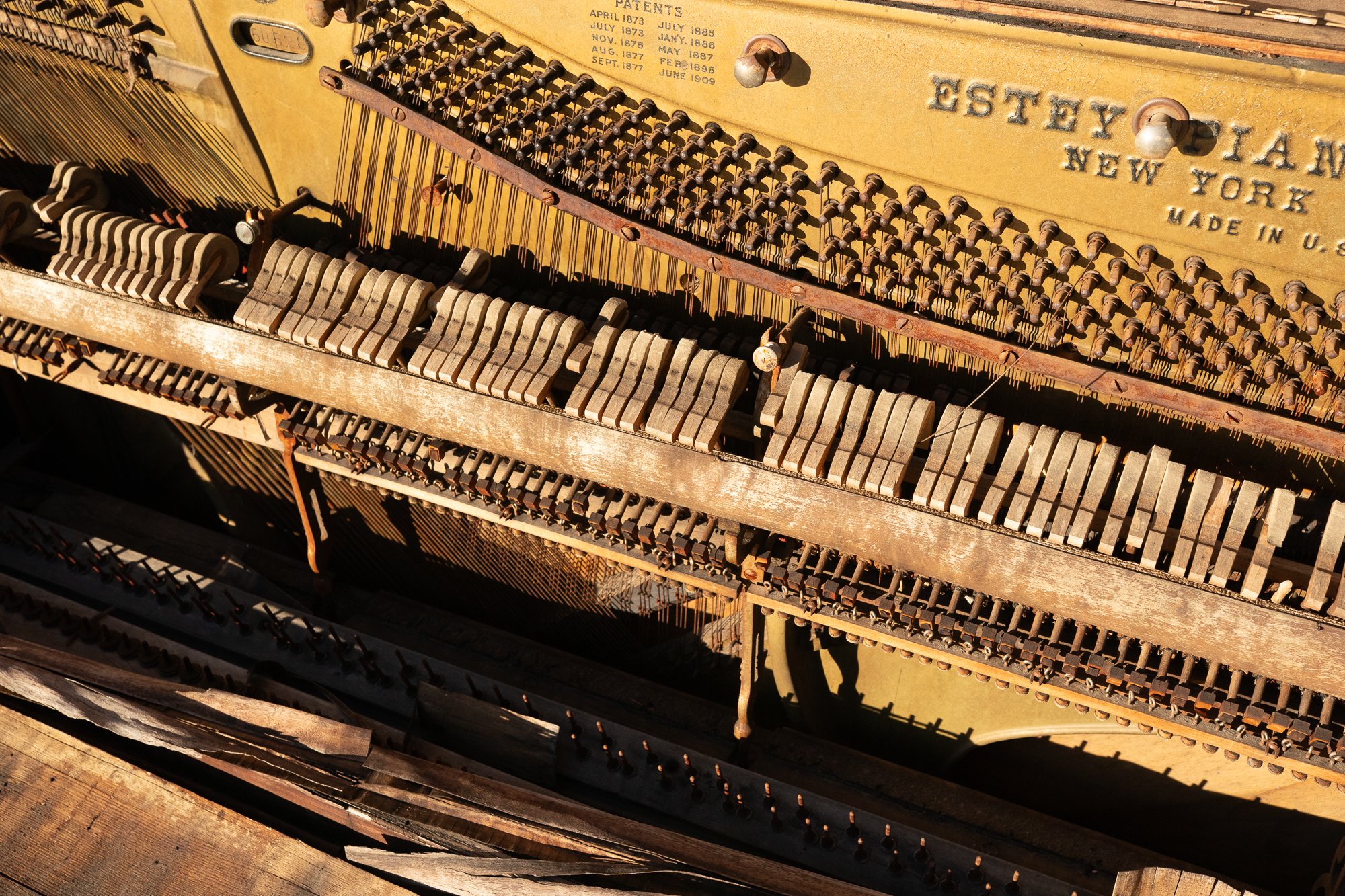
Antique Estey piano interior mechanism photographed in Helper Utah

An exposed Estey piano mechanism reveals aged wood, metal, and string — a close study of craftsmanship discovered in Helper, Utah.

Troy, New York Photographs

Troy, NY Photography — Documentary Prints & Editorial Licensing

Why Troy Still Feels Like Home

Troy, NY is an industrial city that’s been through a lot of change and it shows. I grew up about 20 minutes from Troy and spent a lot of sinful nights there with a bad Fake ID at bars that have long been shut down or turned into pawnshops. At 4am we always ended up at I love New York Pizza soaking up the booze with dollar slices while waiting for the inevitable fight to erupt on 4th St. I love is still there but they shut down at 1am. Just a few of the many changes that have taken place in the Collar City. Visiting now, 20 years later with different eyes, it’s a whole new experience. You can see why the locals have so much pride. Not just for what Troy has become, but also for the history that is written all over the architecture of it’s many historic buildings. You can feel what Troy was in it’s heyday and that almost makes you want to experience the city at that time. Sure it was rough, and still is in parts, but the Italian food alone would be worth the experience. It’s not all gone though. There are still long running institutions like Bella Napoli, DeFazio’s Pizza, and the iconic Famous Lunch Hot Dogs. It’s even got good beer now - Brown’s Brewing Company is well worth the stop for any connoisseur. I never bothered to look deeply at Troy back in the day, but it’s become a favorite place to photograph every time I return home to visit family and friends. The city has a lot of character that deserves to be documented.

Photographing the History and Architecture of Troy, New York

Troy’s nickname, the “Collar City,” comes from its industrial past - but what stands out today is the mix of preservation and grit. The Central Troy Historic District is lined with 19th-century rowhouses, St. Patrick’s Church rises in Gothic stone, and the Sycaway Water Tower still watches from the hillside. From the hill at RPI, you can see the entire city stacked against the Hudson, with the Green Island Bridge tying it all together. These are the scenes that made their way into my prints - quiet, weathered, and timeless.

Fine Art Prints: Sizes, Editions, and Pricing

Every photograph of Troy in this collection is available as a fine art print, made on museum-grade archival paper. Open edition prints start around $50 for smaller sizes (8×10"), while large limited edition prints are signed, numbered, and produced at sizes up to 65". Each piece is crafted to last a lifetime and can be framed to fit your space. Whether it’s for a living room, office, or gallery wall, these prints bring a piece of Troy’s story into your everyday environment.

Licensing Troy Photographs for Editorial & Commercial Use

For businesses, publishers, or art directors looking to license Troy imagery, these photographs are available for editorial and commercial licensing. From historic architecture to atmospheric black-and-white cityscapes, the images can work for magazines, marketing campaigns, and creative projects. Licensing terms are flexible depending on your needs—just reach out directly to start the conversation.

Troy has always been a mix of nostalgia and resilience for me. These photographs hold on to that character, offering more than just a view—they carry the texture of a city that built its name on hard work and history. Contact me directly if you’d like to discuss licensing or to purchase a photography print of Troy, NY for your home, office, or commercial space - rob@robhammerphotography.com

See My Albany, New York Photography Prints →

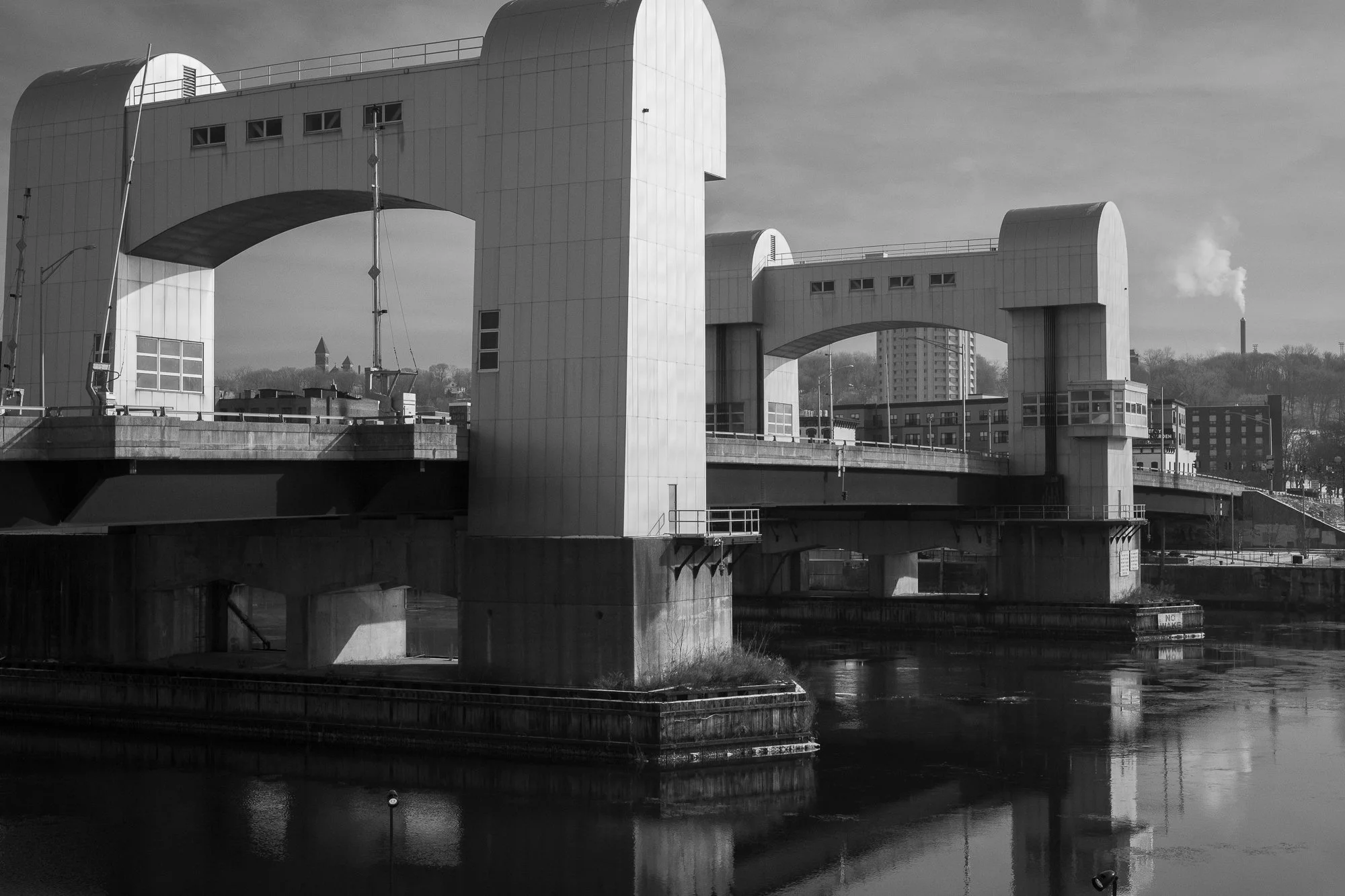
Green Island Bridge spanning the Hudson River in Troy, New York, documentary photography

The Green Island Bridge over the Hudson River in Troy, New York

Historic Troy, New York cityscape showing 19th-century architecture in black and white

Historic architecture in Troy, New York

St. Patrick’s Church in Troy, New York, Gothic Revival architecture photograph

St. Patrick’s Church - Troy, NY

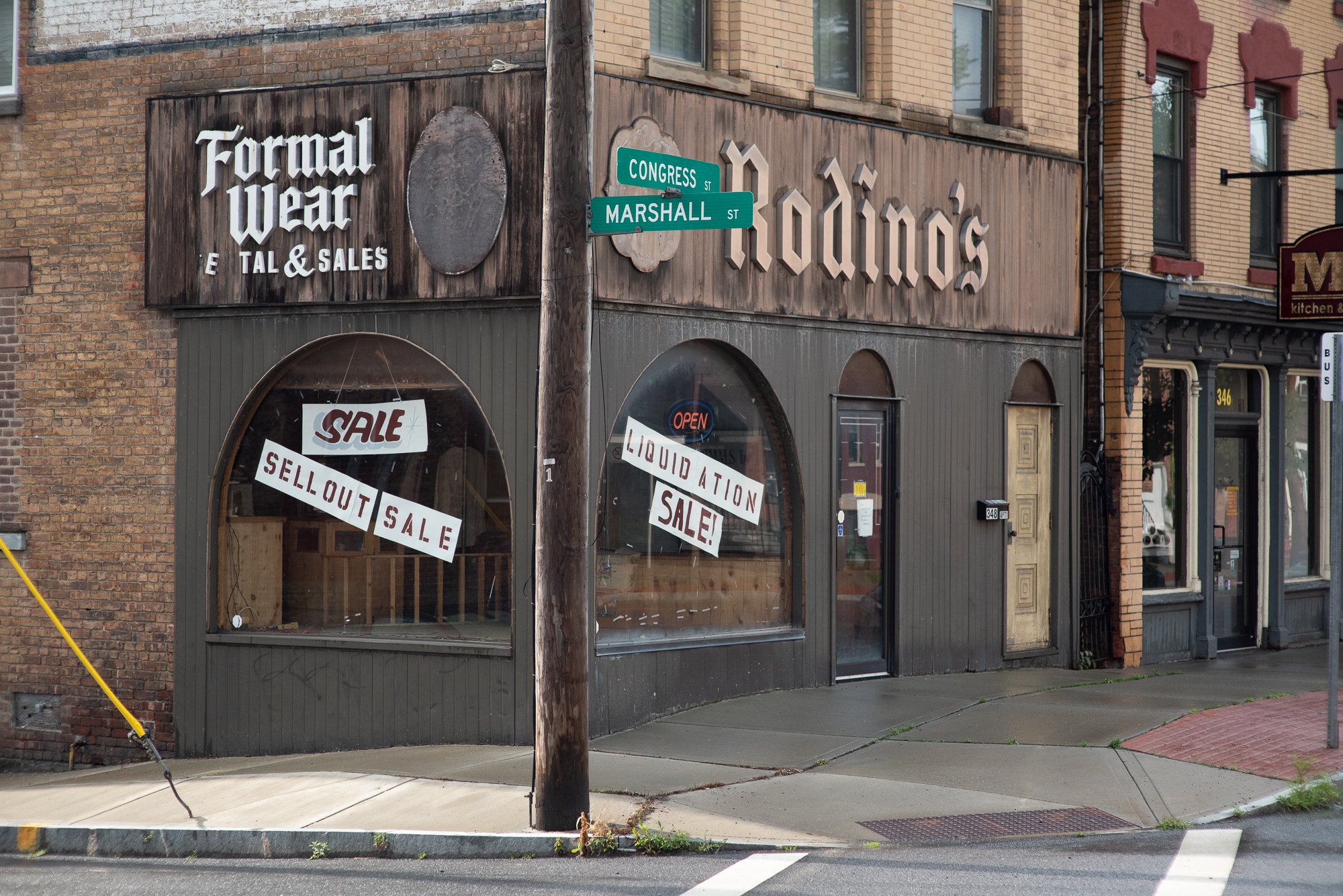
Rodino’s Tuxedo Shop storefront in Troy, New York, vintage downtown scene

Rodino’s Tuxedo Shop - Troy, NY

Photograph of the Sycaway Water Tower in Troy, NY

Sycaway Water Tower

Black and white historical photograph of Troy, NY

Church spires in Troy, NY

Photograph of the Famous Lunch hot dog restaurant in Troy, NY

Famous Lunch Hot Dogs - Troy, NY

Photograph of soda cans for sale hanging up at Famous Lunch Hot Dogs in Troy, NY

Soda for sale at Famous Lunch in Troy, NY

Photograph of a man working inside Famous Lunch Hot Dogs in Troy, NY

World Famous Hot Dogs since 1932

Photograph of a train bridge along the Hudson River near Troy, NY

Train bridge on the Hudson River in Upstate New York

Photograph of Uncle Sam Lanes bowling alley in Troy, NY

Uncle Sam Lanes

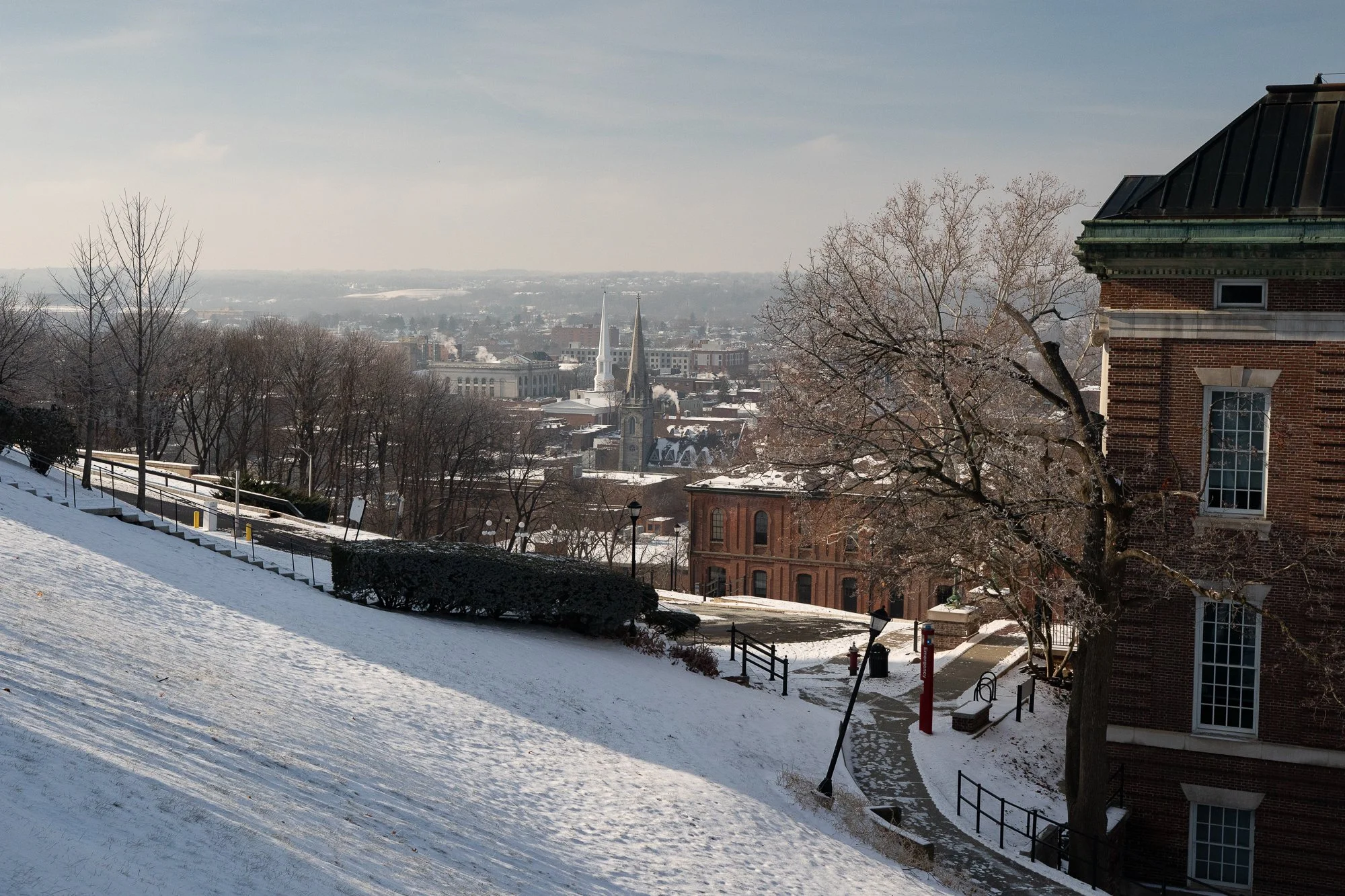
The view of Troy from the campus of RPI

Overlooking the city of Troy from the Renssalaer Polytechnic Institute

Black and white photograph of a basketball hoop under a bridge in Troy, NY

Troy Basketball

Photograph of homes in the typical architectural style of Troy, NY

Homes in the city of Troy, NY

Tree shadows on the beautiful architecture of an old church in Troy, NY

Architecture of an old church in Troy, NY

The best barbershop in Troy, NY

Barbershop - Troy, NY

Photograph of a girl writing on a typewriter at Yellow Lab Vintage and Books in Troy, NY

Used book store in Troy, NY

Photograph of the Livingston Avenue Bridge on the Hudson River

Livingston Avenue Bridge

Black and white photograph of an iconic bride in Troy, NY

Troy, NY


Photographs of Albany, New York - Historical Landmarks & Architecture

ALBANY, NEW YORK PHOTOGRAPHS

Growing Up Around Albany, New York

I grew up in the Albany area, and my relationship with the city has always been shaped by familiarity rather than novelty. It’s a place I knew long before I ever photographed it—through daily routines, changing neighborhoods, and the quiet rhythms of a city that rarely tries to impress anyone.

That familiarity is what eventually pulled me back with a camera. Photographing Albany wasn’t about rediscovery so much as paying closer attention. I wasn’t looking for defining moments or iconic views. I was interested in the spaces that felt ordinary enough to be overlooked, yet permanent enough to hold memory.

Photographing Albany as a Lived-In City

This photography series is rooted in observation rather than spectacle. Albany is a city layered with history—Federal and Victorian architecture, civic buildings, industrial remnants, and residential streets shaped by decades of quiet change. Much of that history lives in plain sight.

I gravitated toward scenes that reflect that lived-in quality: empty streets, weathered facades, winter light, and moments where architecture and atmosphere intersect. These photographs are intentionally restrained. They aren’t meant to dramatize the city, but to reflect it honestly.

The goal is not to explain Albany, but to let it exist as it is.

Architecture, Atmosphere, and the In-Between

Many of the photographs in this series focus on architecture, but not in a formal or celebratory way. I’m less interested in buildings as symbols than as backdrops for daily life—structures shaped by use, time, and weather.

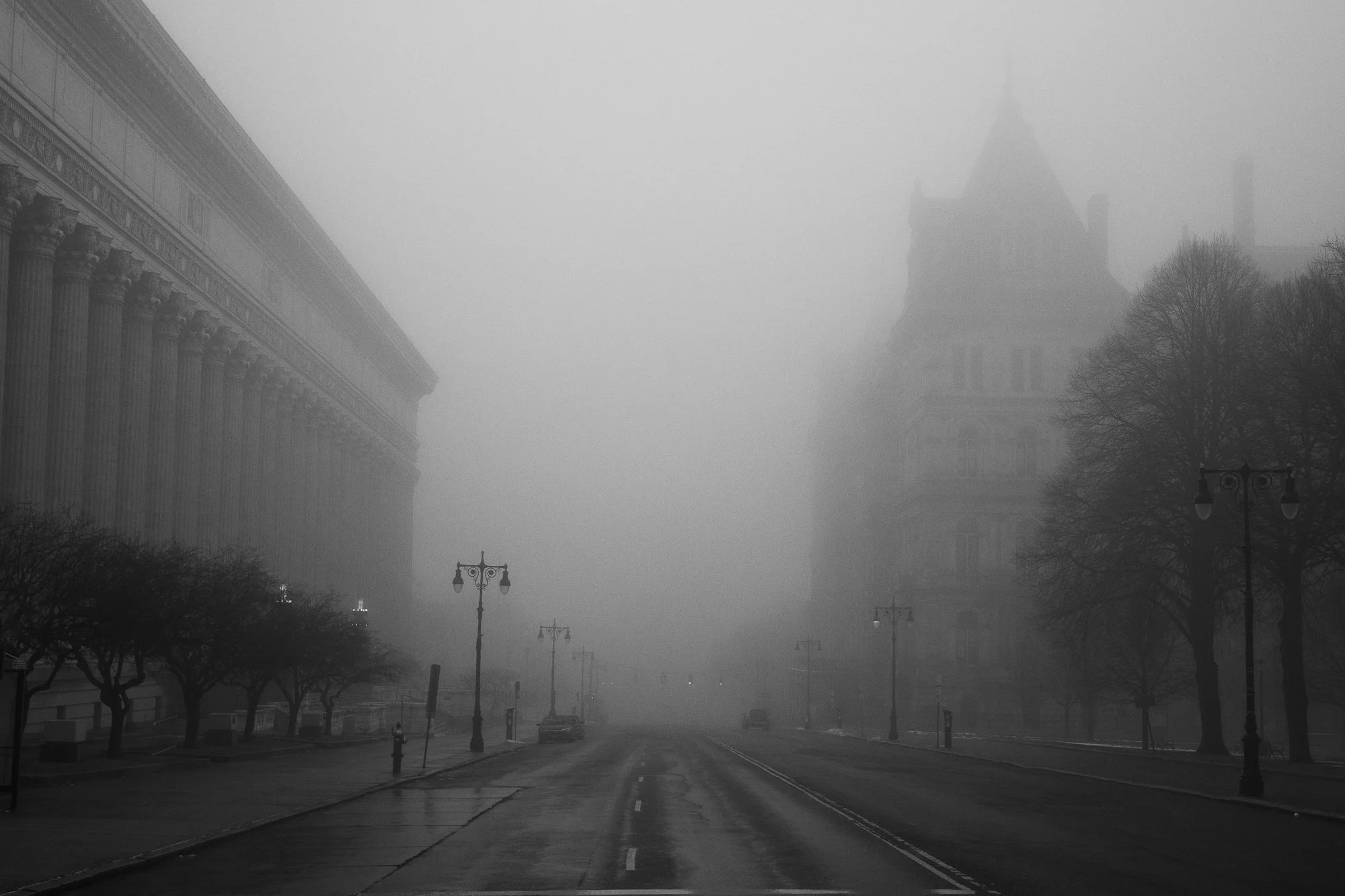
Light plays an important role. Fog, snow, and low winter sun soften edges and slow the pace of looking. These conditions reveal details that might otherwise go unnoticed, and they echo how the city often feels to move through: quiet, deliberate, and grounded.

This approach mirrors how I work across my broader documentary projects—allowing place to speak without forcing a narrative.

A Long-Term Documentary Project

This Albany photography project is ongoing. The city continues to change, and my relationship to it continues to evolve as well. Returning with a camera allows me to see familiar spaces with fresh attention, while still photographing from a position of understanding rather than distance.

The photographs aren’t meant to define Albany, but to contribute to a broader visual record of American cities—particularly those that exist outside the usual spotlight.

From the Project to the Prints

While this page focuses on the documentary work itself, many of these photographs are available as fine art prints. The prints are produced with the same care and intention as the photographs, emphasizing longevity, material quality, and thoughtful presentation.

If you’re interested in viewing available work from this series, you can explore the print collection below.

View available Albany photography prints

Click HERE to view my photographs of Troy, NY

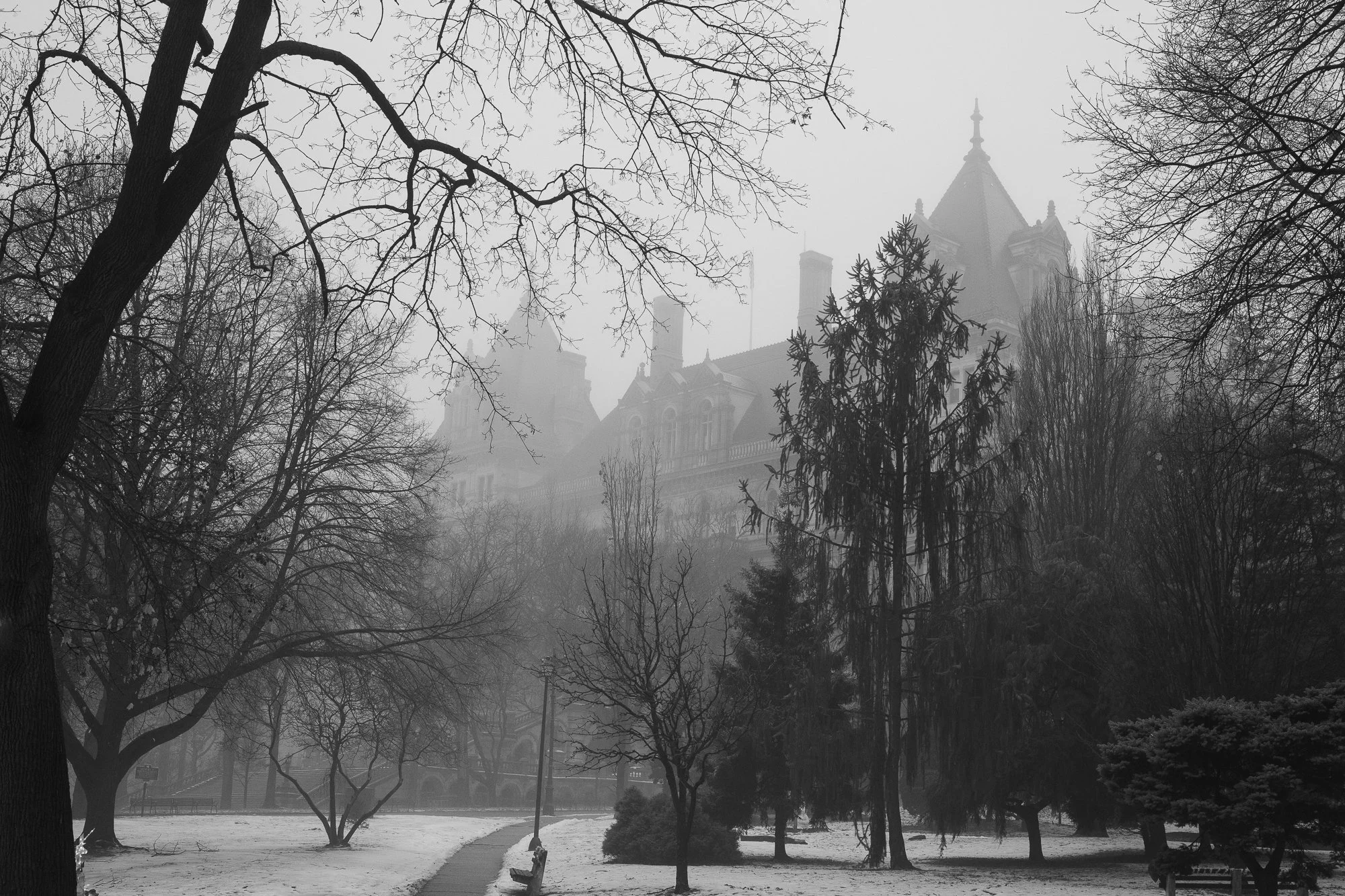
Black and white photograph of the New York State Capitol partially obscured by winter trees in Albany

The New York State Capitol recedes behind bare winter trees as fog softens its presence in Albany, NY

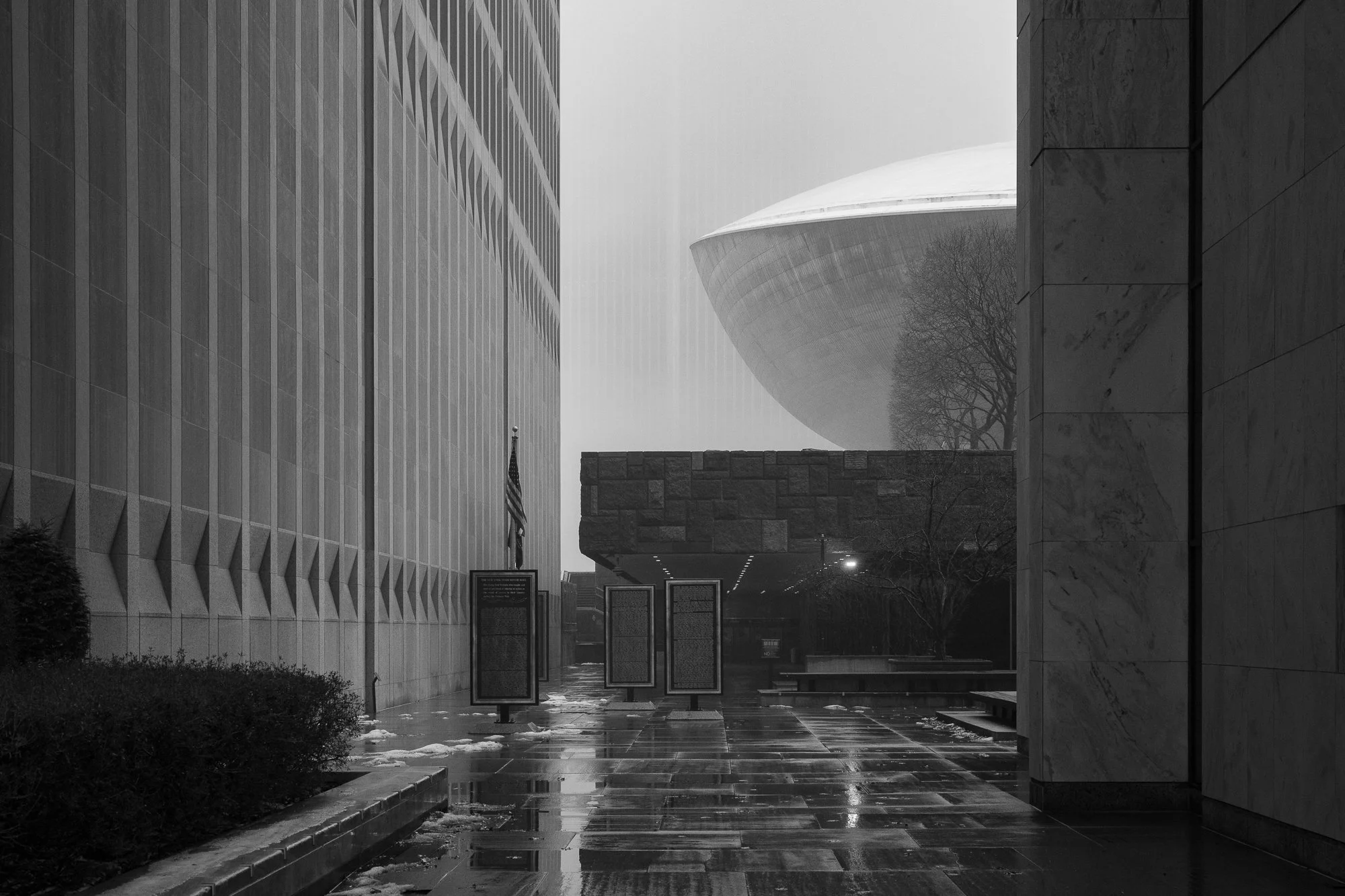
Black and white architectural photograph of Empire State Plaza buildings in Albany, New York

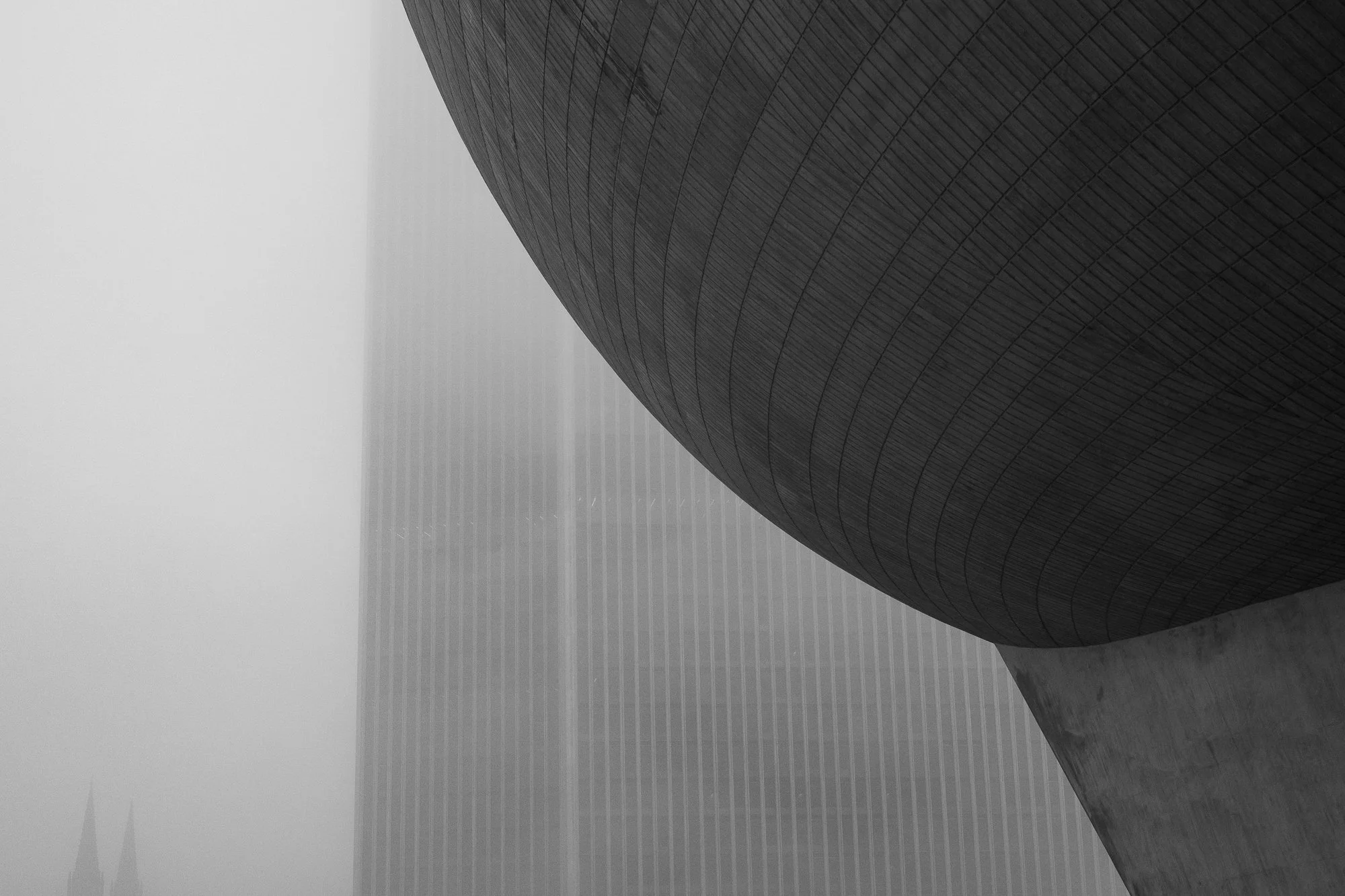
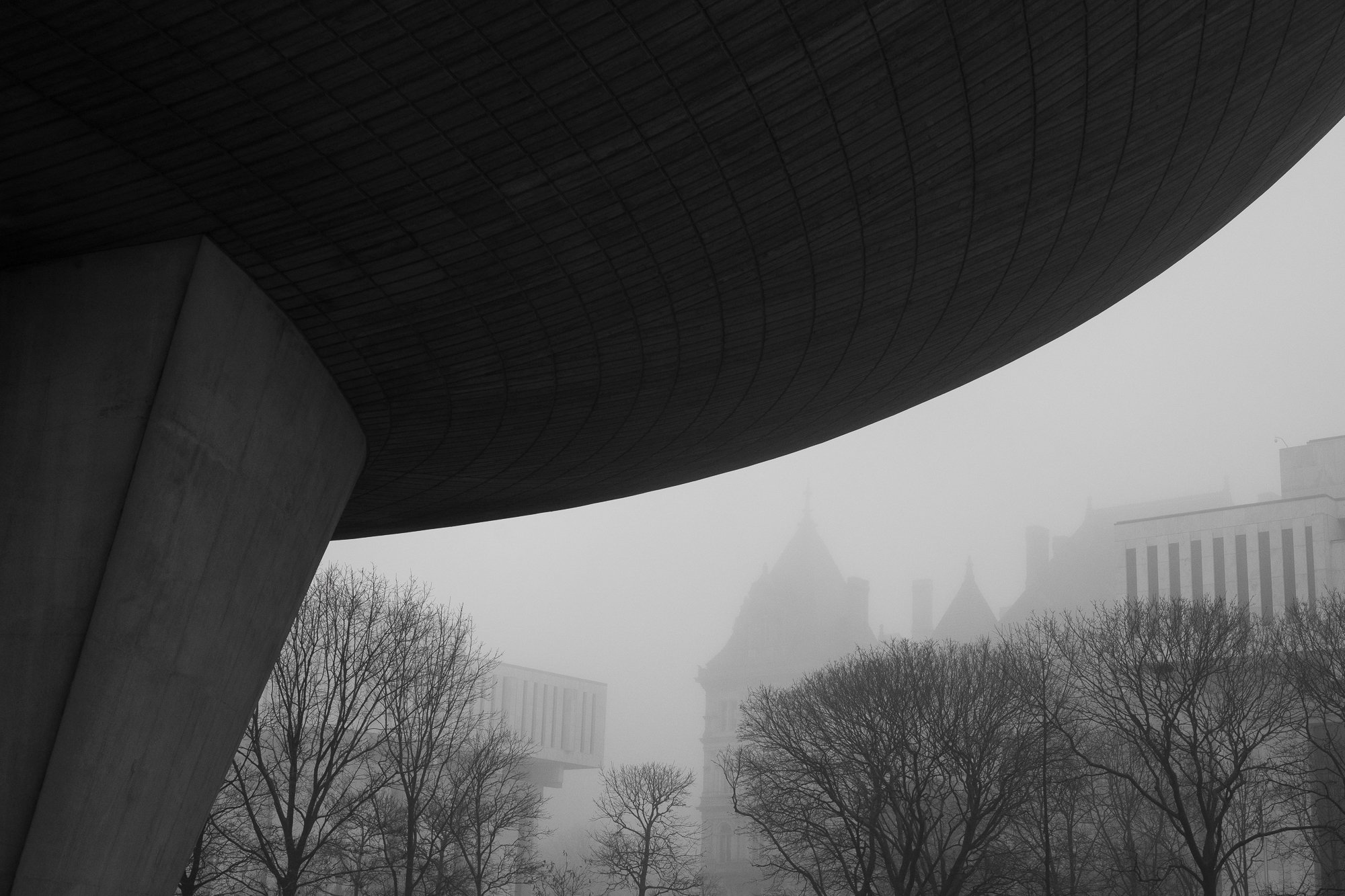
Empire State Plaza emerges through fog, emphasizing clean lines, scale, and negative space.

Timeless black and white photograph of Albany, New York

Classic black and white photograph of Albany, NY

Black and white photograph of cathedral spires emerging through fog in Albany, New York

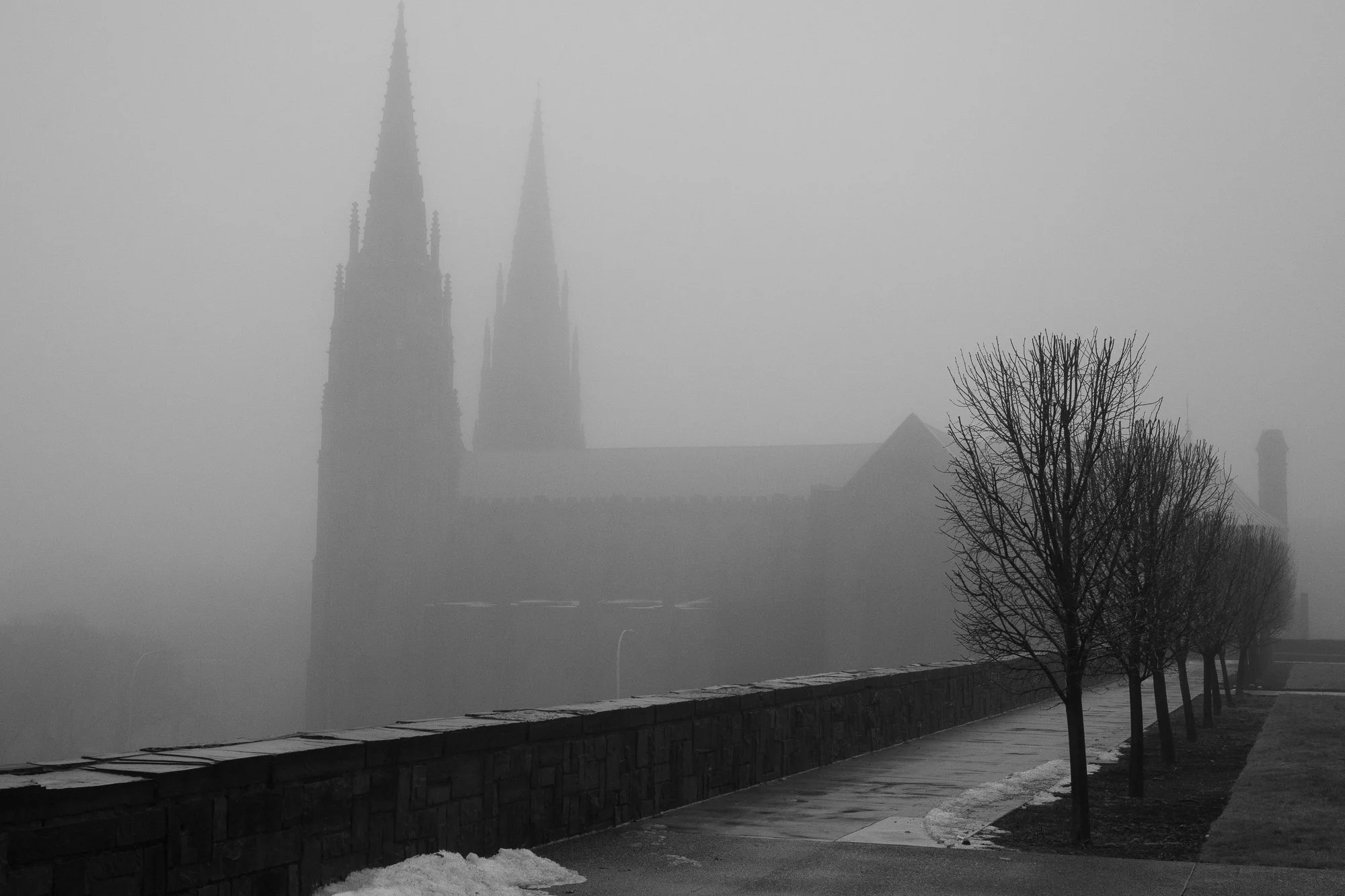
Cathedral spires of the Church of the Immaculate Conception in Albany, NY rise quietly through dense fog, reducing the city to silhouette and form.

Black and white photograph of The Egg performing arts center in Albany, New York

Empire State Plaza - A close architectural study of The Egg, where curve and concrete dominate the frame.

Black and white photograph of birds flying past a tall government building in Albany, New York

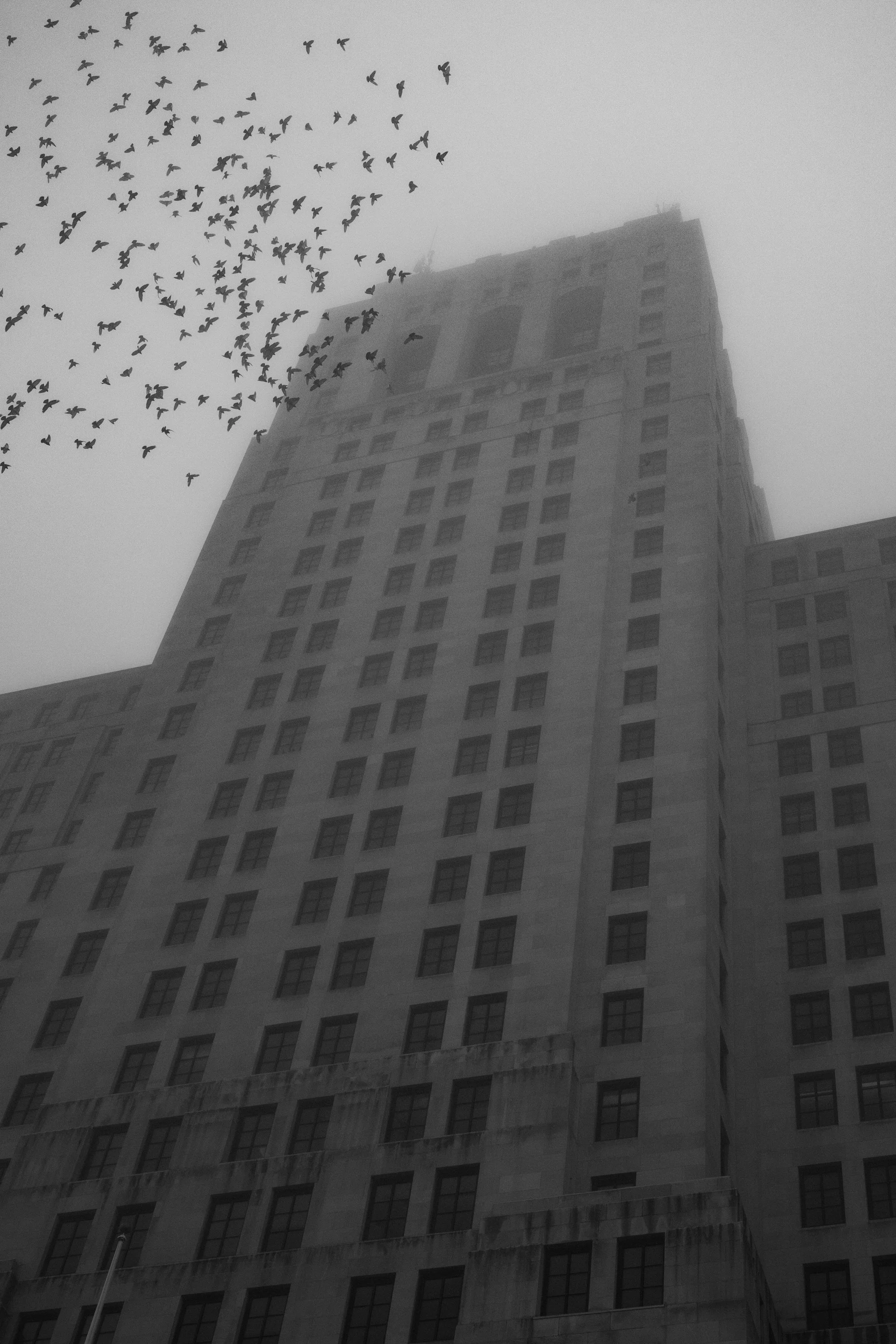
A flock of birds breaks the stillness above the Alfred E. Smith building, adding movement to an otherwise rigid form.

Black and white photograph of decorative balustrades and lampposts at the New York State Capitol in fog

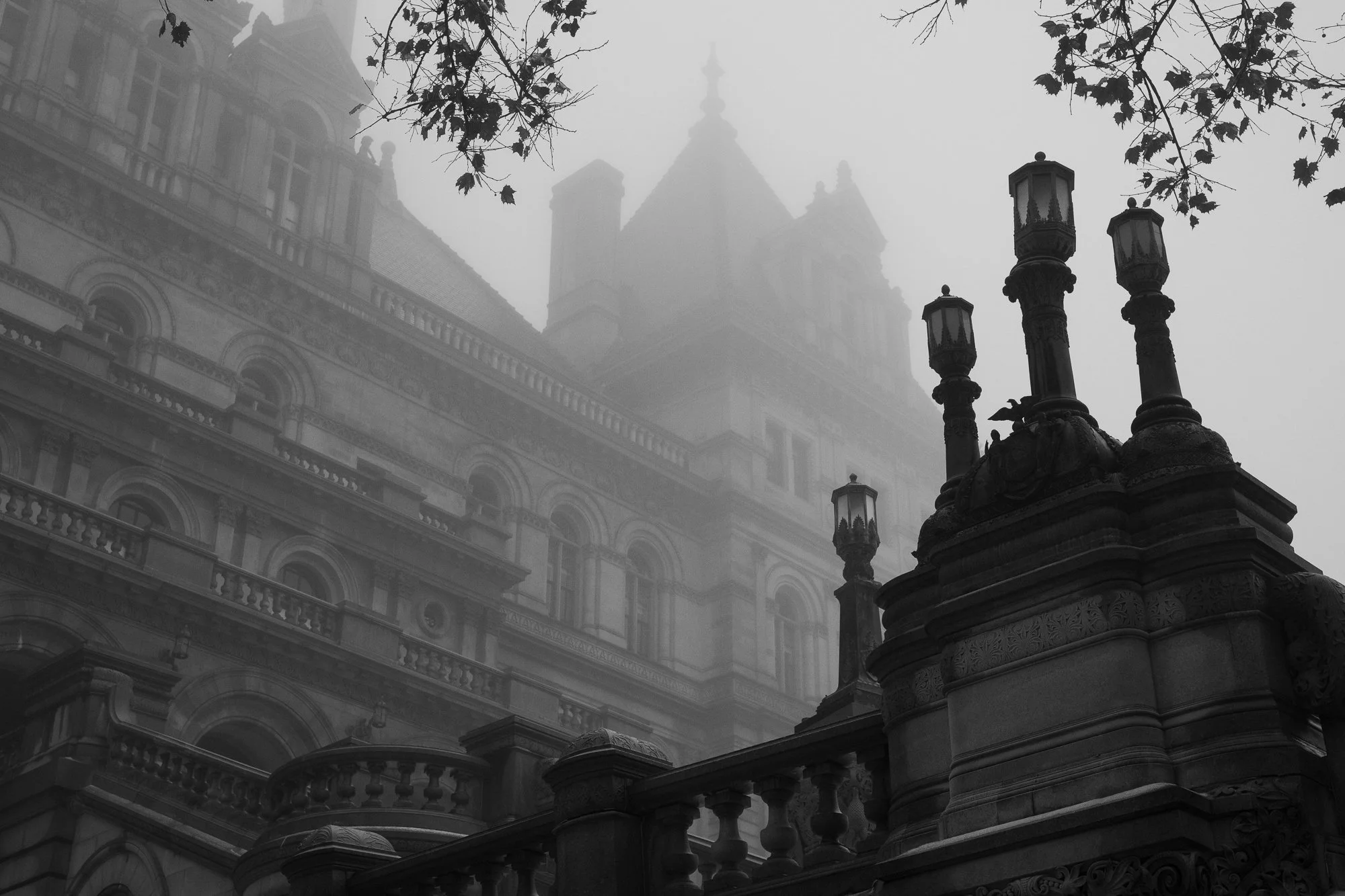
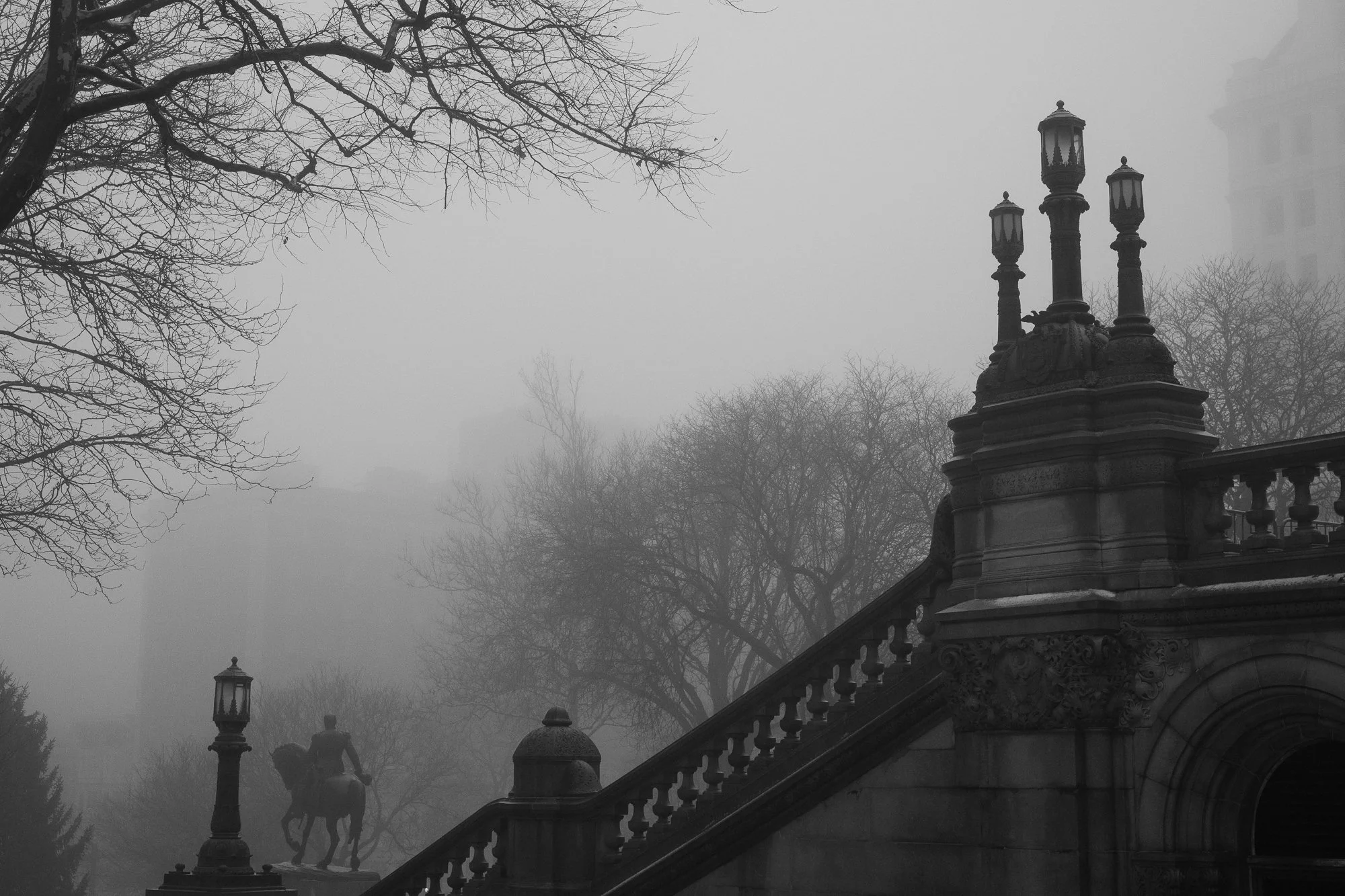
Decorative stonework and lampposts lead the eye toward the Capitol as fog softens the background.

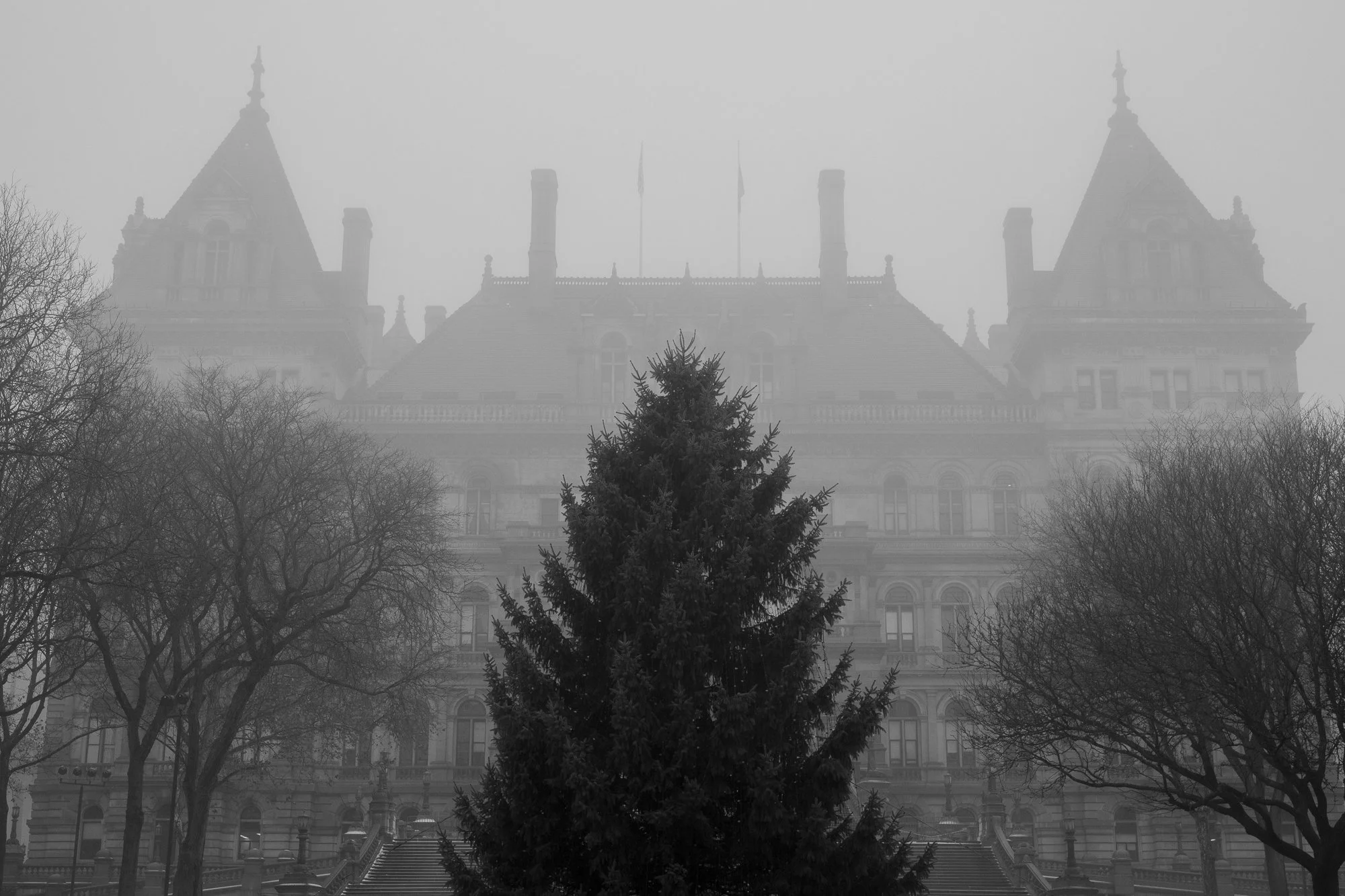
Black and white photograph of the New York State Capitol with symmetrical towers and a central evergreen

Symmetry, fog, and restrained contrast reduce the the New York Sate Capitol building to pure form. This photograph is offered as a fine art print that works especially well in offices and interiors where quiet authority matters.

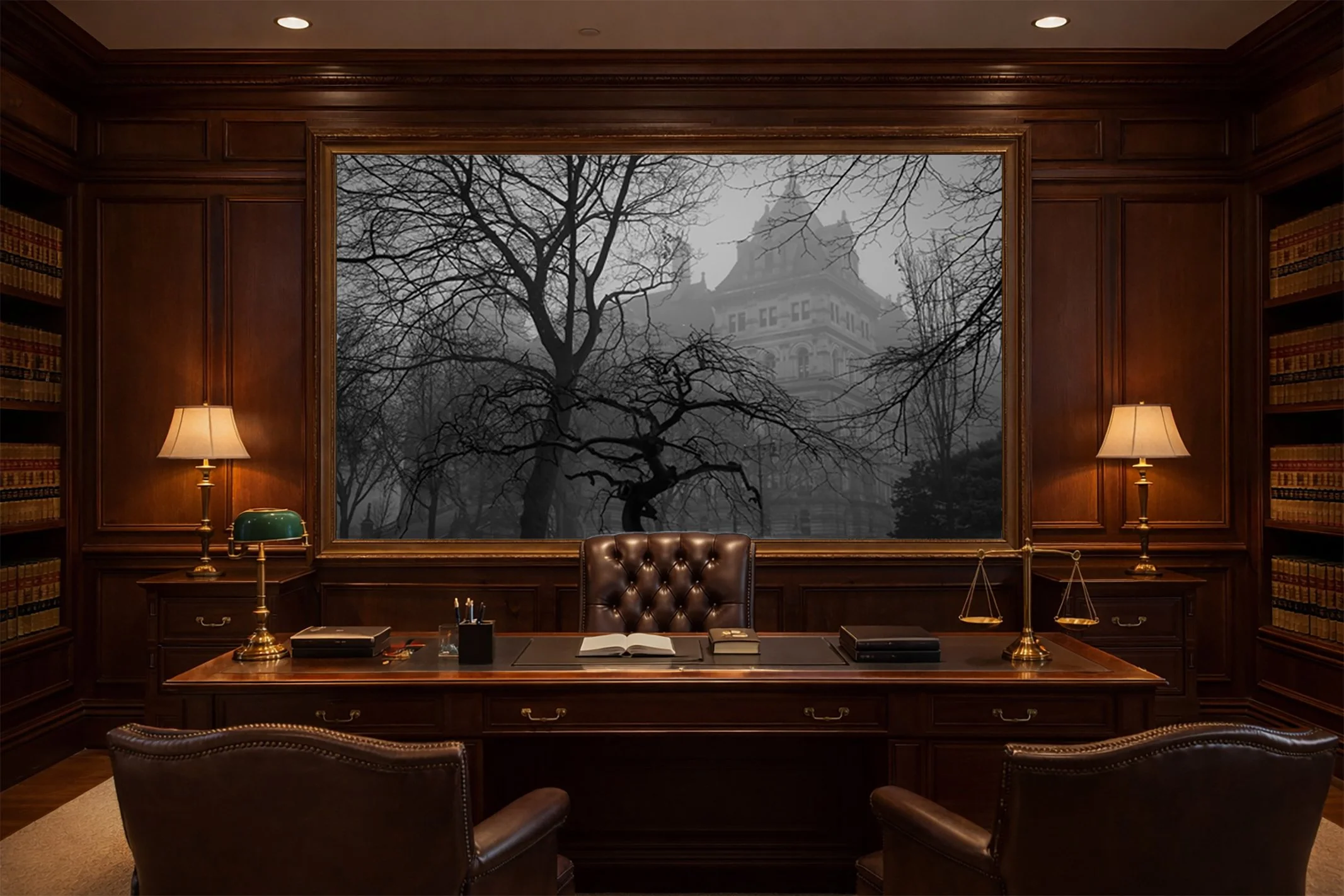
Black and white architectural photograph of an Albany, New York landmark displayed in a high-end attorney’s office with dark wood paneling and classic furnishings

A black and white architectural photograph of Albany, New York, shown here installed in a high-end attorney’s office. The fog-softened historic architecture and bare winter trees bring a quiet sense of permanence and authority to a refined professional space.

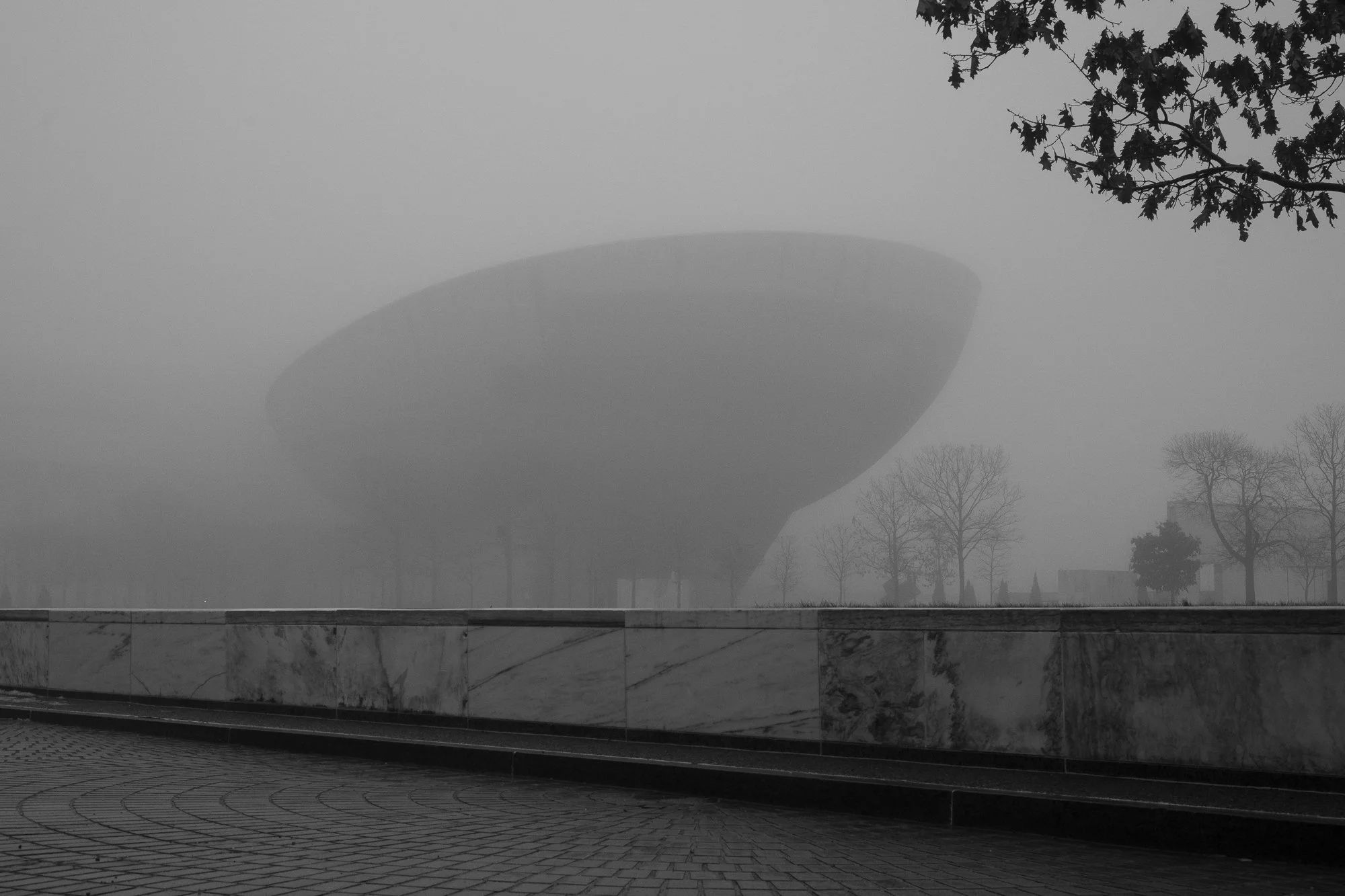
Black and white photograph of The Egg performing arts center partially obscured by fog in Albany

The Egg appears as a softened form within heavy fog, emphasizing scale and negative space.

Black and white photography print of historic Albany, NY architecture

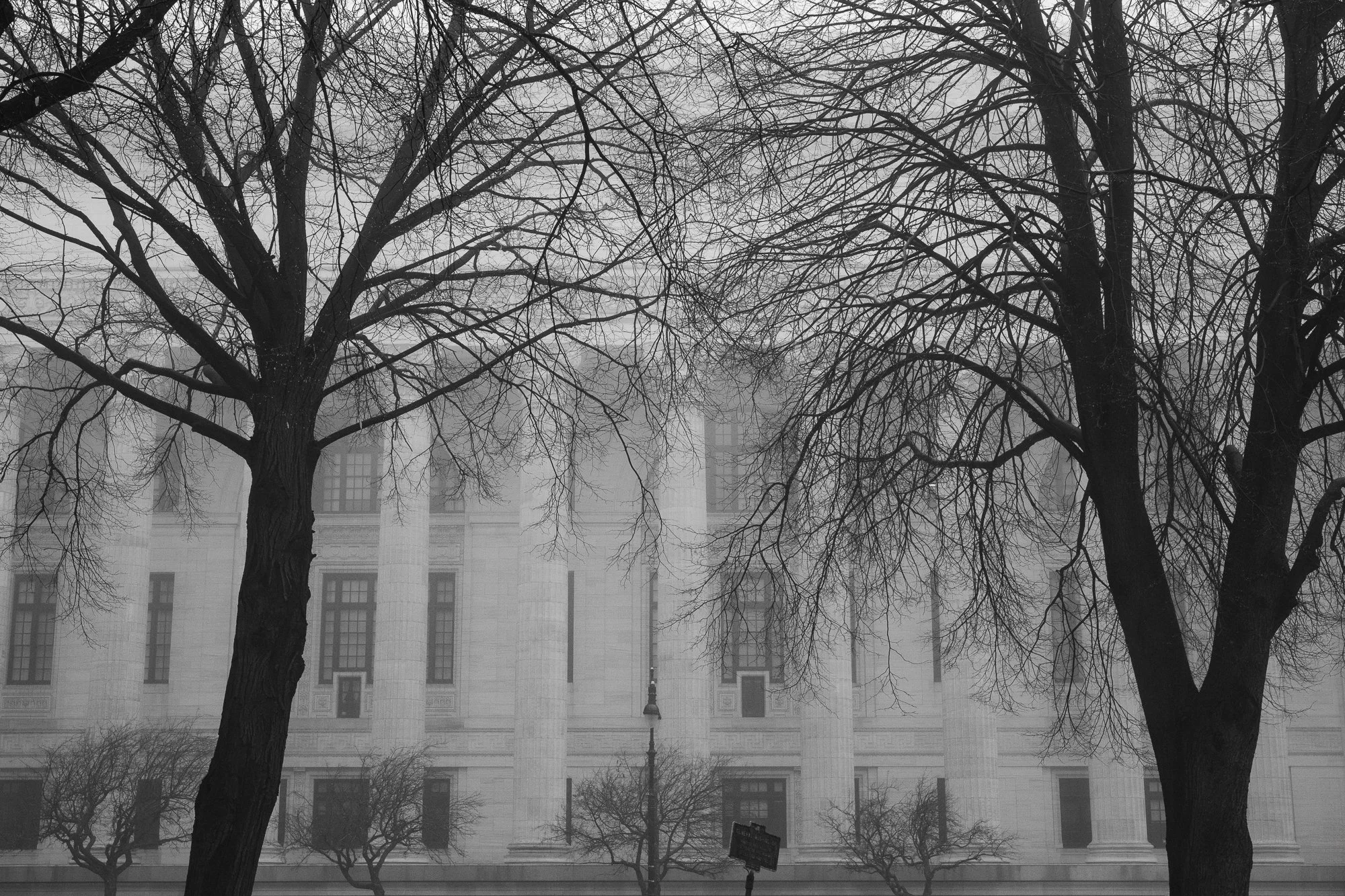
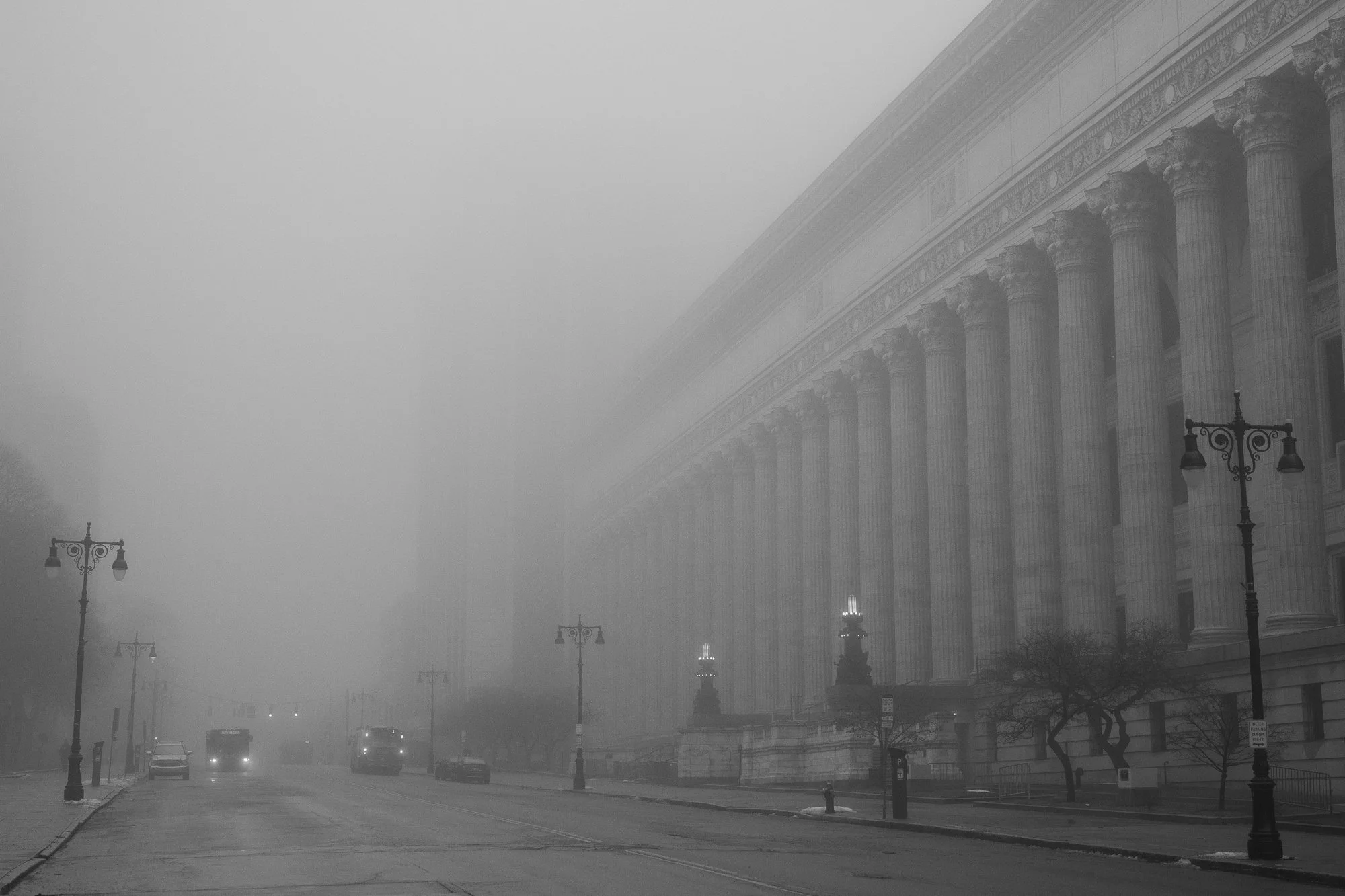
Photograph of the New York State Education Department building in Albany, NY

Black and white photograph of a statue in Washington Park framed by bare tree branches in Albany

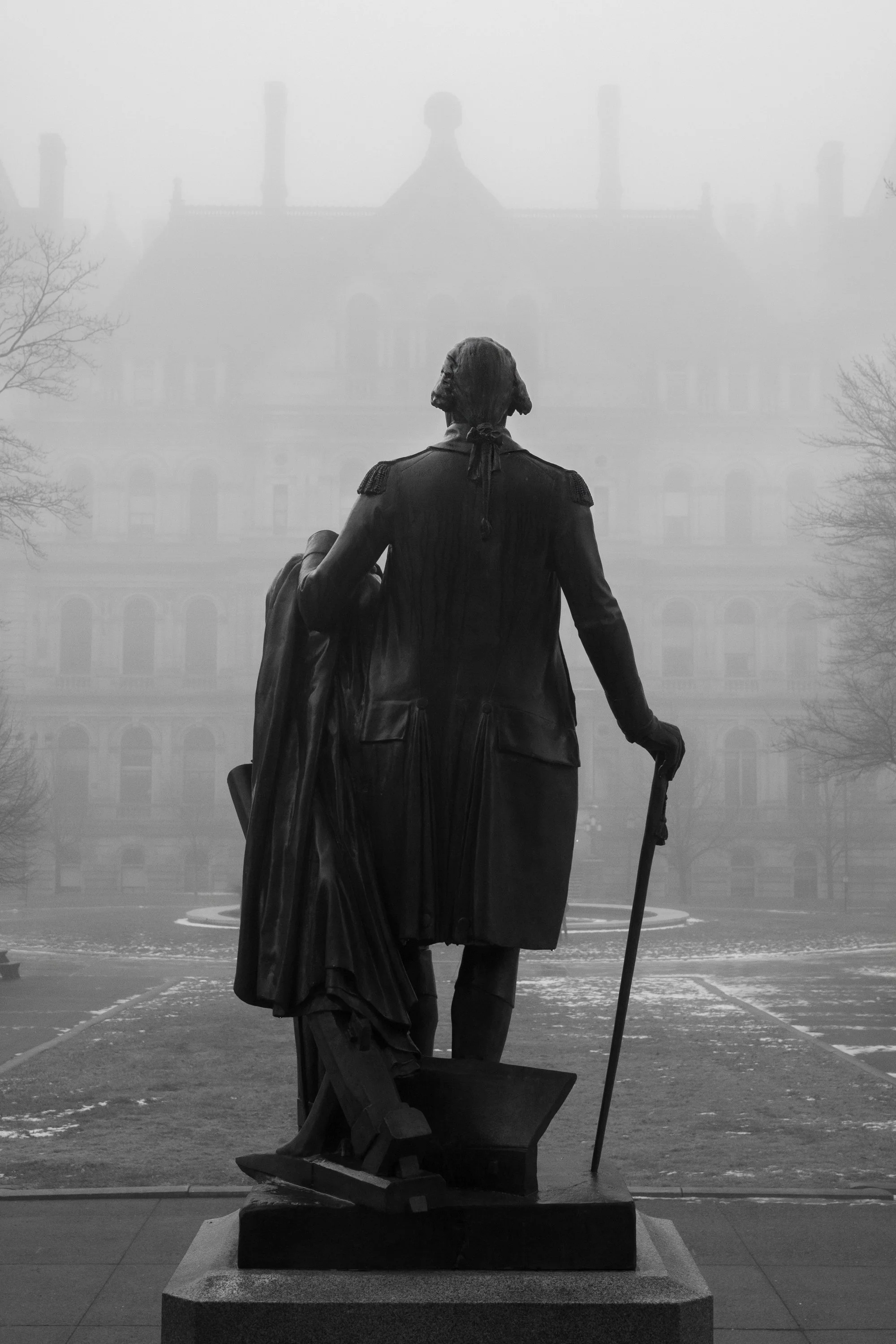
A statue of George Washington stands quietly framed by winter branches and softened by fog.

Black and white photography print of the statue and staircase in front of the Capital building in Albany, NY

Timeless black and white photograph of Albany, NY architecture

Black and white photograph of a columned government building along an empty street in Albany

A long row of columns fades into fog along a quiet Albany street, emphasizing repetition and scale.

Black and white photograph of Albany, NY architecture

A single lamppost anchors an empty Albany street as fog dissolves the surrounding architecture.

Black and white fine art photograph of The Egg and architecture in Albany, NY

The sweeping curve of The Egg floats above Albany’s softened skyline as fog reduces detail and scale.

Elevating Outdoor Brands: Capturing the Spirit of Exploration

Showcasing Outdoor Apparel with Professional Outdoor Lifestyle Photography

As an advertising photographer specializing in outdoor apparel, I recently had the privilege of collaborating with Triple Aught Design (TAD) to create a dynamic photo series showcasing their rugged and versatile gear. This project combined my love of the outdoors with the artistry of visual storytelling, and it’s a testament to how intentional photography can elevate an outdoor brand’s identity.

Capturing the Spirit of Exploration

Triple Aught Design’s mission is to provide durable, high-performance gear for adventurers and explorers. My goal as a photographer was to convey the quality, utility, and aesthetic appeal of their products through imagery. We wanted every shot to tell a story of resilience and exploration while highlighting the technical features of their apparel.

Location as a Character

We shot this campaign in Gold Hill, Colorado, an area renowned for its sweeping vistas, rugged terrain, and golden light. By incorporating the natural environment, we ensured the photographs authentically mirrored the real-life conditions their customers face. Capturing these moments wasn’t just about aesthetics; it was about aligning the apparel with the adventurous spirit of the audience.

The Impact of Professional Outdoor Lifestyle Photography

Effective advertising photography goes beyond a good picture. It builds trust, showcases craftsmanship, and creates an emotional connection with customers. Through dynamic action shots, detailed product close-ups, and environmental portraits, I demonstrated how TAD’s gear performs in the field, ensuring their audience could see themselves in the adventure.

Why Your Brand Needs a Photographer Who Gets the Outdoors

Outdoor apparel companies require more than generic studio shots—they need images that embody the essence of exploration. As a photographer, I focus on creating compelling visuals that:

  • Showcase your gear in real-life conditions.

  • Emphasize functionality, comfort, and durability.

  • Tell a cohesive brand story that resonates with your audience.

Let’s Collaborate

If you’re an outdoor apparel brand looking for a photographer who understands the intersection of gear and adventure, let’s work together to bring your vision to life. I bring years of experience, a passion for the outdoors, and a commitment to capturing images that inspire trust and engagement.

Click here to see more of my outdoor adventure photography

Triple Aught Design

Tactical apparel from Triple Aught Design

Outdoor apparel photoshoot

Outdoor apparel photography

Outdoor adventure photographer

Triple Aught Design Gear

Adventure lifestyle photography

Tactical gear for men - photoshoot

Men’s outdoor apparel photographer

Men’s lifestyle apparel photography

Old Corrals of the American West | Western Photography Prints for Sale

Corral Photography Prints for Western Wall Art


Fine Art Western Photography Prints

“I like old corrals and sagebrush,” Ian Tyson once sang, and that line has stayed with me for years. Not because it’s poetic—though it is—but because it’s accurate. Old corrals say more about the American West than most people realize.

This collection of corral photography prints focuses on structures shaped by work, weather, and time. Built to serve a purpose rather than to last, these corrals now remain as quiet markers of a working past—sun-bleached posts, worn rails, and enclosures slowly returning to the land.

These images are part of a larger body of work documenting corrals across the American West.
View the full corral photography gallery

Corral photography print shown in a modern western interior, highlighting how authentic working landscapes translate into refined wall art

Photographing Old Corrals in the American West

I’ve spent years photographing working landscapes across the West—ranches, grazing land, water sources, and the structures that support them. Corrals often sit in the places you least expect, easy to pass without notice. But when you slow down, they begin to reveal something deeper.

Most of this work was made on active or former ranches, where access is limited and the structures still carry a functional history. There’s no staging, no reconstruction—just what remains.

These corral photographs are made using natural light and a documentary approach. I’m not interested in recreating the past, but in acknowledging it as it exists now.

An old corral isn’t nostalgia. It’s evidence.

Black and white fine art photograph of the a wood cattle corral with the Grand Tetons in the background

An old wood cattle corral in front of the Grand Tetons in Wyoming - Black and White Fine Art Photography

An old corral gate and stone post on a remote ranch, photographed at dusk with the mountains of the American West beyond.

Why Old Corrals Still Matter

Corrals are where cattle were gathered, sorted, branded, treated, and shipped. They are places of work—defined by repetition, pressure, and routine. Over time, many have been replaced or abandoned as ranching operations changed.

What remains tells a quieter story:

  • Land use shifting over time

  • Families moving on or adapting

  • Work that once defined entire regions

Corrals are rarely photographed as standalone subjects, yet they hold the structure of the work itself. Photographing them preserves a record of a West that still exists—but is increasingly easy to overlook.

Old corral partially buried in snow on an open ranch landscape in the American West

An abandoned ranch corral slowly disappearing beneath winter snow, photographed in the American West

Black and white photograph of a corral set within an open Western landscape

A corral set into a wide, open Western landscape, photographed in black and white.

Why Corral Photography Works as Western Wall Art

Corral photography offers something different from traditional Western imagery.

Instead of action or portraiture, these photographs focus on structure, space, and restraint. Weathered wood, repeated lines, and open landscapes create compositions that feel grounded rather than decorative.

That’s why they tend to work well in a range of spaces:

  • Western homes and ranch properties

  • Modern interiors looking for texture and depth

  • Hospitality spaces and lodges

  • Offices and environments shaped by regional identity

The imagery doesn’t rely on spectacle. It holds attention more quietly—through detail, balance, and a strong sense of place.

Wooden corral fence posts reflected in still water on a ranch in the American West

Wooden corral fence posts reflected in still water, photographed on a ranch in the American West.

Black and white photograph of a weathered wooden cattle corral in the American West

A weathered cattle corral built from rough-cut timber and wire, photographed in black and white.

Fine Art Corral Photography Prints

A selection of these corral photographs is available as limited-edition fine art prints.

Each print is produced using archival materials and a museum-quality process, intended to reflect the tone and detail of the original photograph.

  • Printed on archival fine art paper

  • Limited editions

  • Multiple sizes available

  • Signed by the photographer

These are not mass-produced reproductions. They are part of a long-term body of work, created to last and to hold meaning over time.

A selection of corral photography prints is available to view online.

View Available Corral Photography Prints
Explore the Full Cowboy Photography Project

Fine art photography of a wood cattle corral at sunset in front of a beautiful desert mesa in the American West

An old cattle corral on a remote Utah ranch, set against the layered desert landscape of the American West.

Wooden corral fencing on a working ranch with open agricultural land and distant mountains in the American West

Corral fencing stretching across a working ranch landscape, with open fields and distant mountains in the American West.

Saddles and ranch tack hanging along a corral fence at sunset on a working ranch in the American West

Saddles and working ranch tack hanging along a corral fence at sunset, part of daily life on a working Western ranch.

Wooden cattle loading chute and corral structure on a working ranch in the American West

A wooden cattle loading chute and corral structure used in everyday ranch work in the American West.

Chasing Trout and Capturing Moments: Fly Fishing the Big Thompson River

Fly Fishing Photography Print & Licensing — Big Thompson River, Colorado

Authentic fly-fishing photography from one of Colorado’s most underrated rivers

The Big Thompson River has always felt like one of Colorado’s more underrated fisheries - quiet, accessible, and full of character. On this particular fall day, I was out on the water with a couple guides from Front Range Anglers - John Brown and Charlie Schaeffer, documenting what turned into a textbook session of Euro-nymphing. No setups, no staging, just real moments of passionate fly fisherman doing what they do best.

The river was clear and low, which made for sharp visuals and technical fishing. Golden leaves clung to the canyon walls, and every part of the vibe was a reminder of why people fall in love with fall fly fishing in Colorado.

Why These Photographs Matter

Fly-fishing has always carried a mythology of patience and solitude, but for me, it’s the honest, working rhythm that’s most powerful. Shooting on the Big Thompson wasn’t about chasing a hero shot — it was about capturing how the river feels. The pace, the texture of the current, the breath between casts.

These are the kinds of moments that brands and publications can’t fake. They come from time on the water, earned through cold mornings, missed casts, and small successes. That’s what I want every image to carry — the truth of place and process.
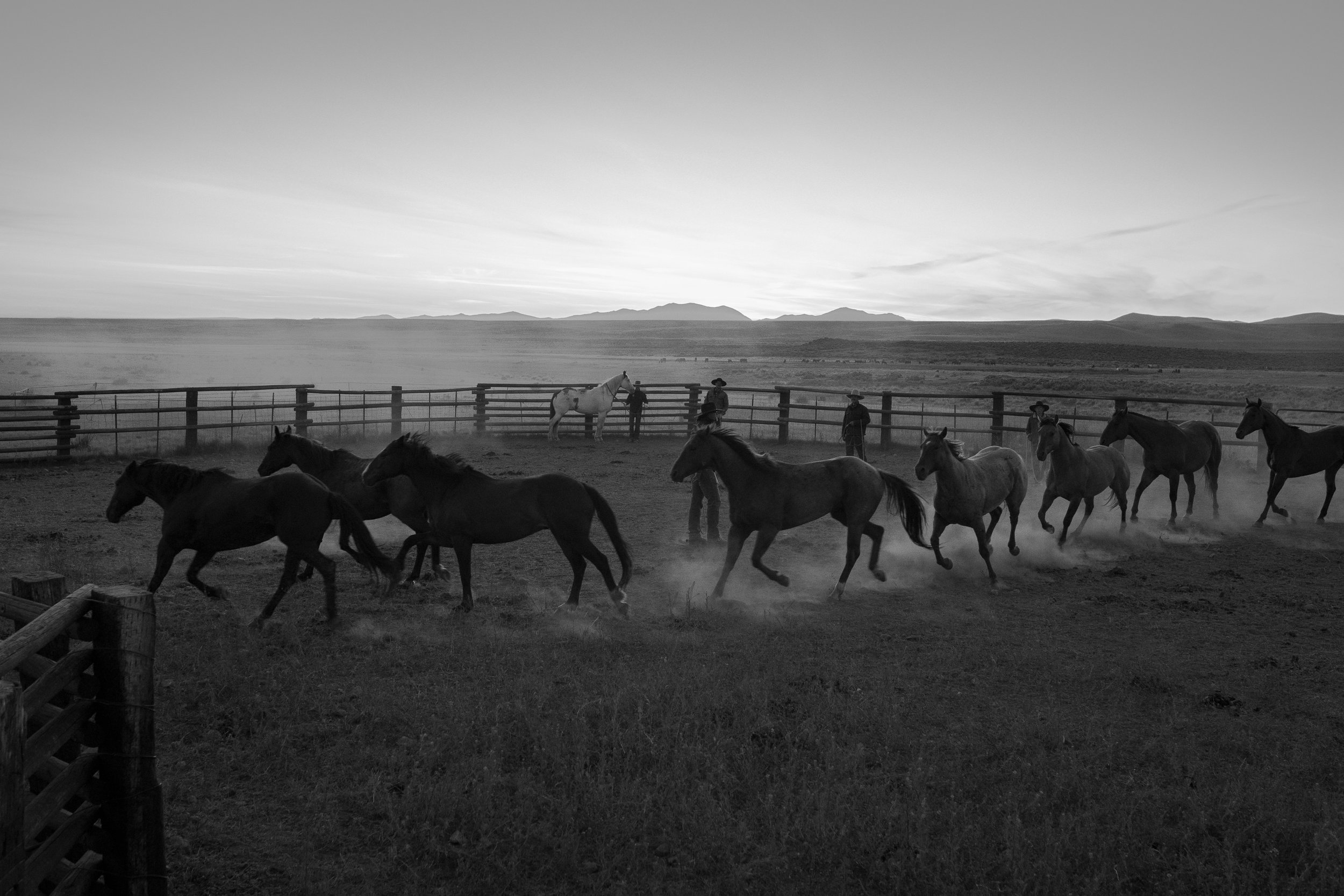
Fine Art Prints

Select photographs from this series are available as museum-quality fine art prints, made with archival inks on heavyweight cotton paper. Each print is produced to highlight the depth and tonal range of the original negative — the way it was meant to be seen.

Perfect for homes, cabins, hospitality spaces, or offices that connect to the American West, these prints bring the stillness and authenticity of the outdoors inside.

Editorial & Commercial Licensing

For outdoor brands, magazines, or tourism boards seeking authentic visual storytelling, this collection is available for editorial and commercial licensing. The images offer an unfiltered look at fly fishing in Colorado’s high country — natural light, real anglers, and an atmosphere that can’t be staged.

Licensing is available directly through the studio. Please reach out to discuss usage and rates:
📩 rob@robhammerphotography.com

Click here to view my photo essay on Colorado fly fishing artist Martin Gerdin

Black and white photograph of fly fisherman on the Big Thompson River

Colorado Fly Fishing Photography

Photograph of fly fisherman and guide on the Big Thompson River

Fly fishing guides on the Big Thompson River

Colorado fly fishing photo for licensing

Fly Fishing in fall color in Colorado

Fly fishing in fall foliage

Fly fisherman walking through fall colors in Colorado

Black and white photo of a fly fisherman in Big Thompson Canyon

Fly fishing a canyon section of the Big Thompson River

Photograph of trout jumping out of the Big Thompson River

Rainbow trout jumping out of the river

Fly fishing photograph for licensing

Netting a Rainbow Trout on the Big Thompson River

Black and white portrait of a fly fishing guide

John Brown of Front Range Anglers having a laugh during a day on the river

Black and white photo of two fly fisherman walking up a river - available for licensing

Fly fishing guides from Front Range Anglers

Photograph of a fly fisherman and guide walking up a river in beautiful light

Looking for trout on the Big Thompson River

Photograph of a tree growing out of a rock along the Big Thompson River

Tree roots growing out of a rock

Photograph of a fly fisherman netting a large trout in a rugged setting on a river in Colorado

Charlie Schaefer netting a trout on the Big Thompson River outside Loveland, Colorado

Photograph of a fly fisherman holding a trophy trout on the Big Thompson River

A beautiful Rainbow Trout

Two fly fisherman walking through fall foliage on the Big Thompson River in Colorado

Fall colors in the river in Colorado

Black and white photograph of a fly fisherman holding a rod and reel on the river

Hardy fly rod and reel

Black and white photograph of a fly fishing guide in Colorado available for licensing

One handed

Photograph of a large trout in a net caught by a fly fisherman

Netting a large Rainbow Trout

A fly fisherman smiles while holding a trophy Rainbow trout

Trophy Trout - Colorado

Fly fisherman on the Big Thompson River in Colorado - Black and White Photography

Big Thompson River Fly Fishing

Close-up photograph of a fly fisherman's arm setting the hook on a trout

Setting the hook

Photograph of a Boulder, CO fly fishing guide on the Big Thompson River

A proper bend in the rod

Close-up photograph of a fly fisherman's hand holding a trophy rainbow trout

Won’t forget this one

Photograph of a Colorado fishing guide available for licensing

Charlie Schaefer - Front Range Anglers

Photograph of a fly fisherman trying to net a fish on the Big Thompson River

The big ones put up a good fight

Photograph of a beautiful rainbow trout caught on the Big Thompson River in Colorado

Textbook Rainbow Trout

Aerial view of a fly fisherman walking up river

Fly fisherman moving up river

Photograph of a fly fisherman netting a trout surrounded by fall colors in Colorado

Fly Fishing the Big Thompson River surrounded by fall color in Colorado

ML Leddy Cowboy Boots

ML Leddy’s — Handmade Cowboy Boots from the Ranch to the White House


Where Work and Legacy Meet

ML Leddy's has built boots for working cowboys who spend their life in the saddle. They also build boots for U.S. presidents, musicians, and public figures whose names carry weight far beyond Texas.

Both leave the shop with the same thing: A pair of boots made entirely by hand.

That dual identity — ranch tool and cultural artifact — is what makes ML Leddy’s elite in the world of Western craftsmanship.

ML Leddy’s handmade boots neon sign glowing at night in San Angelo Texas

The iconic neon boot outside ML Leddy’s lights the streets of San Angelo, marking one of the West’s most respected handmade boot shops.

Built for the Saddle

Long before Western boots became collectible objects or fashion statements, they were tools. A proper working boot must, sit securely in a stirrup, withstand dust, heat, brush, long hours on horseback, and hold its shape through years of wear

At Leddy’s, the foundation hasn’t shifted. The boots are cut, shaped, stitched, and finished by hand — not assembly line, not automated.

Leddy’s cares just as much about longevity as they do cosmetics.

Interior of ML Leddy’s boot workshop with shelves of wooden lasts in San Angelo Texas

The ML Leddy’s workshop is lined with wooden lasts, each one tied to a customer and a specific fit.

Exotic Leathers and Presidential Orders

But there’s another side to the shop.

ML Leddy’s is also known for custom boots made from exotic leathers — ostrich, alligator, elephant — crafted with the same care as a pair destined for ranch work. Over the years, presidents, entertainers, and public figures have commissioned boots here.

The difference is not in the quality of the work.

It’s in the material and design.

A working pair might show dust within a day. A presidential pair may never see a stirrup. But both begin and end the same way — by hand, at a workbench in San Angelo, Texas.

Exotic leather hides prepared for handmade cowboy boots at ML Leddy’s

Exotic leathers are carefully selected and cut by hand, each hide destined for a custom pair of cowboy boots.

Craftswoman stitching decorative leather panels for cowboy boots at ML Leddy’s

Decorative stitching is completed on vintage machines, guided by practiced hands and years of experience.

An Analog Craft in a Digital World

One of the most striking things about Leddy’s isn’t the leather, it’s the process.

Measurements, past orders, client details — everything is recorded by hand in large books that sit on shelves in the showroom. No tablets. No cloud storage. Just pages filled with names and numbers accumulated over decades.

Getting a pair of custom boots from Leddy’s starts with getting your name on a list, then you receive a phone call a year later saying your name is up. So you drive into the shop, sit in THE chair, where your foot is outlined and measured every which way, and those numbers are recorded with a pencil in a book. No tablets. No cloud storage. Look around the showroom and you’ll see an unthinkable amount leather records books filling the shelves.

When a returning customer needs a new pair, the staff simply pull a book from the shelf and flip to the page where measurements were first recorded — sometimes decades earlier.

The record-keeping mirrors the boots themselves: tangible, physical, built to last.

Bootmaker shaping leather over wooden lasts at ML Leddy’s boot shop

Leather is stretched and shaped directly over wooden lasts, a physical process that defines the character of each boot.

Western Craftsmanship Beyond Nostalgia

Bootmaking at ML Leddy’s isn’t preserved for tourism.

It remains relevant because ranchers, riders, and collectors still demand a boot that will last a lifetime.

Like saddle makers and spur makers across the American West, Leddy’s represents a trade where tradition survives because it continues to function.

The culture of the West is sustained not only by working cowboys, but by the craftsmen who build what they rely on.

The tools may differ.
The materials may change.

But the approach remains consistent:

Work done by hand.
Built to be used.
Rooted in place.

Bootmaker hammering leather sole onto a handmade cowboy boot at ML Leddy’s

Every nail is set by hand, reinforcing the sole using techniques passed down through generations of bootmakers.

Custom boot lasts at a cowboy boot store in Texas

Custom boot lasts

Explore More Western Craft & Culture

If you’re interested in traditional Western trades, you may also want to explore:

My working portrait of saddle maker Doug Cox
Inside the studio with iconic painter William Matthews

Custom cowboy boots resting on a workbench during construction at ML Leddy’s

A pair of custom boots waits between stages of construction, surrounded by the quiet rhythm of daily work inside the shop.

Measuring a boot last for handmade cowboy boots in Texas

Licensing & Editorial Use

These photographs documenting ML Leddy’s and the tradition of handmade Western bootmaking are available for editorial and commercial licensing. The images focus on process, environment, and the people behind the craft — making them well suited for publications/brands covering Western culture, heritage brands, ranch life, and traditional American trades. For licensing inquiries, project collaborations, or publication requests, please get in touch directly.

Bootmaker hand-lasting a cowboy boot inside ML Leddy’s workshop in San Angelo Texas

Handmade cowboy boots in Texas

Discarded cowboy boot parts after repair at ML Leddy's in San Angelo, TX

Old cowboy boot parts

Finished pair of handmade cowboy boots by ML Leddy’s in San Angelo Texas

A finished pair of handmade cowboy boots, built start to finish inside the ML Leddy’s workshop in Texas.

Part of a Larger Body of Work Documenting the American West

This story is part of a long-term photographic project documenting the people, places, and traditions that still define the working American West. From historic ranches and small-town workshops to cattle operations and makers like ML Leddy, the goal is to create an honest record of a culture that continues to evolve while staying rooted in tradition.

These photographs aren’t isolated moments—they exist within a broader body of work focused on real working environments and the people behind them. The same approach carries through each part of the project: natural light, time spent on location, and a focus on authenticity over interpretation.

Together, these stories form a larger archive of the American West as it exists today—shaped by labor, craftsmanship, and a deep connection to place.
→ Explore the Full Cowboy Photography Project

Leucadia Barbershop in Encinitas, CA

Leucadia Barbershop – A California Chapter of Barbershops of America

Leucadia Barbershop has been part of Encinitas since 1996, when Emiliano Zermeno’s family first opened the doors at its original location. Like many small barbershops, the business was eventually forced out due to landlord pressures—a familiar story across the country. Instead of closing, Emiliano rebuilt the shop in a new space, carrying forward what his family started while shaping it into something distinctly his own.

A Family Barbershop Rooted in Leucadia Since 1996

Emiliano grew up inside the shop his family created. The rhythm of haircuts, the conversations, the regulars—it wasn’t a concept or aesthetic. It was daily life. When displacement forced the original location to close, the continuity of that space could have ended. Instead, it shifted. The new Leucadia Barbershop carries the same foundation, just reinterpreted through a different generation.

Southern California Skate Culture Inside a Barbershop

The new space reflects Emiliano himself—a Southern California kid who grew up with a love for skateboarding and still carries that passion today. The shop feels less like a preserved relic and more like a lived-in extension of coastal California: relaxed, personal, rooted in community. The design choices, the atmosphere, even the pace of the room mirror the culture that shaped him.

Emiliano didn’t just take over the business to make his family proud, he took it to the next level. Which is obvious when you look at his shop, but more importantly, you see it in his cuts. He’s a member of the Uppercut Deluxe team - a sign of quality, and another layer that further represents the skateboarding culture.

Photographing Leucadia Barbershop

Leucadia Barbershop was photographed as part of a long-term effort to document traditional American barbershops in all 50 states before they disappear or change beyond recognition. Each shop carries its own story. In Encinitas, that story includes family continuity, displacement, and the culture of Southern California itself.

View More Traditional Barbershops

Leucadia Barbershop is one of many shops documented across the country as part of a 15-year archive focused on preserving everyday American spaces.

→ View the full Barbershops of America gallery
You can also view another California barbershop photographed as part of the same series:

→ Read the blog post about a traditional barbershop in San Diego

Black and white portrait of Emiliano Zermeno, owner of Leucadia Barbershop in Encinitas, California.

Portrait of Emiliano Zermeno, who continued the family barbershop after the original 1996 location was lost to landlord displacement.

Neon sign at Leucadia Barbershop in Encinitas, California at dusk, established 1996.

The neon sign at Leucadia Barbershop glows over the sidewalk in Encinitas, California. Opened in 1996, the shop has remained part of the coastal community through change and relocation.

Window lettering reading “Quality Work at Leucadia Barber Shop” on the storefront in Encinitas, California.

Window lettering at Leucadia Barbershop in Encinitas, California. Established in 1996, the shop blends traditional barbering with Southern California character.

Interior of Leucadia Barbershop in Encinitas, California showing barber chairs, framed artwork, and skateboards.

Inside Leucadia Barbershop in Encinitas. The space combines traditional barber chairs with personal artwork and skateboards, creating a shop shaped by the owner’s history.

Emiliano Zermeno inside Leucadia Barbershop in Encinitas, California with skateboards displayed on the wall.

Emiliano Zermeno inside Leucadia Barbershop. The skateboards lining the wall reflect his Southern California upbringing and lifelong connection to skate culture.

Black and white photograph of a neon barbershop sign

Barbershop in Encinitas, CA

KJZZ Phoenix Radio

Basketball Photography Exhibition

So happy to see/hear this interview by Mike Brodie on KJZZ Radio in Phoenix with Western Spirit Museum’s exhibition coordinator Henry Terry. They discussed my American Backcourts photographs which will be on display their at the museum in Scottsdale until mid April 2025. It’s so fulfilling to see this project getting recognition after shooting it for 13+ years, so please click the LINK if you’d like to listen to their conversation.

And you can shop the fine art basketball prints from this series HERE

Interview with Mike Brodie of KJZZ Phoeniz

KJZZ Radio interview with Western Spirit Museum’s exhibition coordinator Henry Terry.