
Winter Fly Fishing on Clear Creek, Colorado: What It Really Looks Like
There’s a certain kind of quiet that only shows up in winter.
Not the peaceful, postcard version of Colorado people expect—but the kind that settles in when the temperature drops, the crowds disappear, and the river keeps moving anyway.
Clear Creek runs cold this time of year. The flows are low, the banks are stiff with ice in the morning, and most days you won’t see another angler. It’s not comfortable, and it’s not easy. But that’s part of the draw.
Winter fly fishing here isn’t about numbers or perfect conditions. It’s about showing up when most people don’t—and seeing what’s still there.
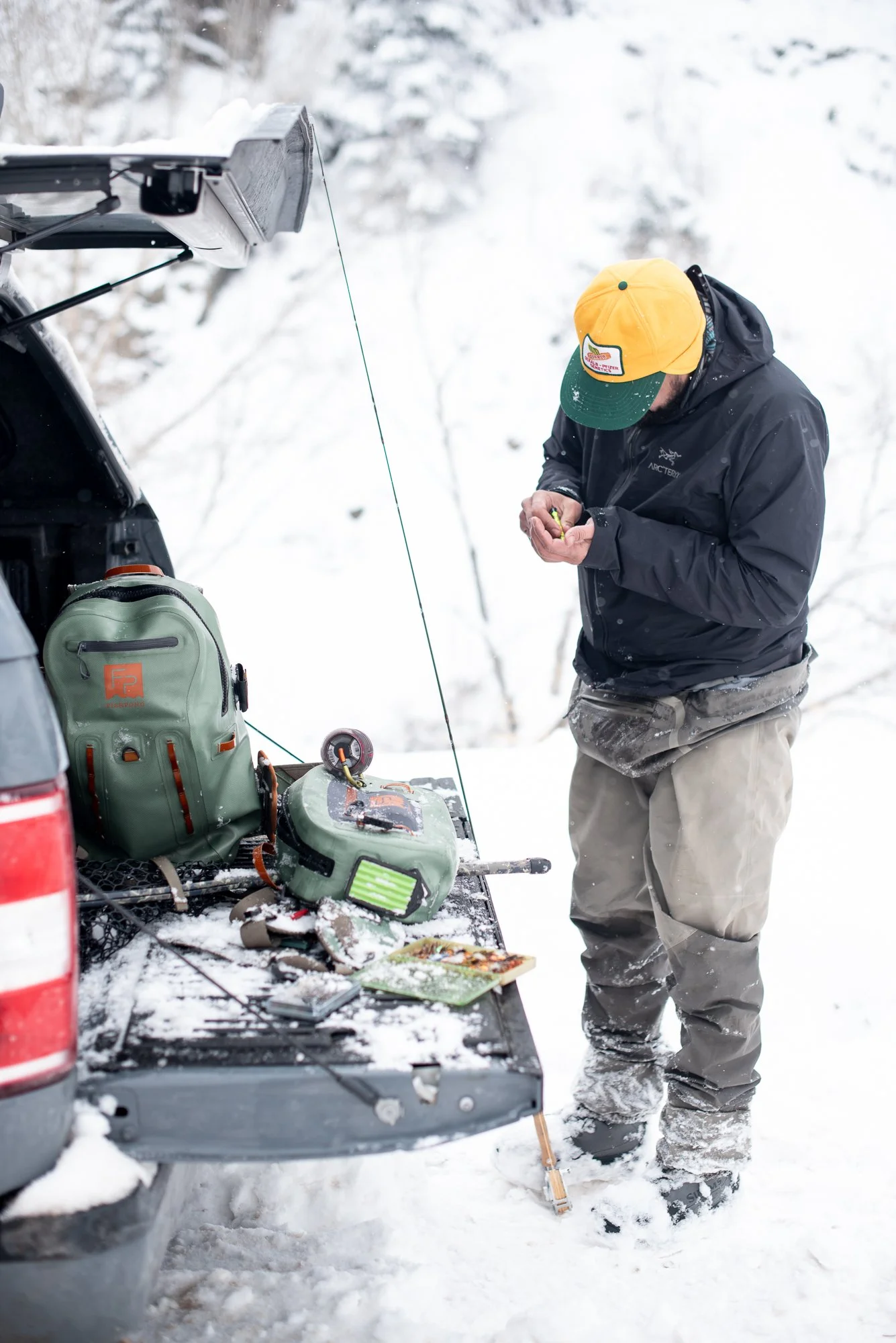
A fisherman prepares his gear at the back of a truck before heading back to the creek.
Can You Fly Fish in Colorado in the Winter?
You can—and people do—but not in the way most expect.
The idea of winter fishing in Colorado usually brings up images of tailwaters and midges, maybe a few rising fish if you’re lucky. That’s all true. But on smaller creeks like Clear Creek, the experience is different.
You’re dealing with:
Short windows of active fish
Water temperatures hovering just above freezing
Icy banks and slow, deliberate movement
It’s not a numbers game. It’s a timing game.
Midday becomes the focus. You wait for the sun to do just enough work to wake things up, then fish carefully and move slowly. Every cast matters more because you’re not getting many chances.
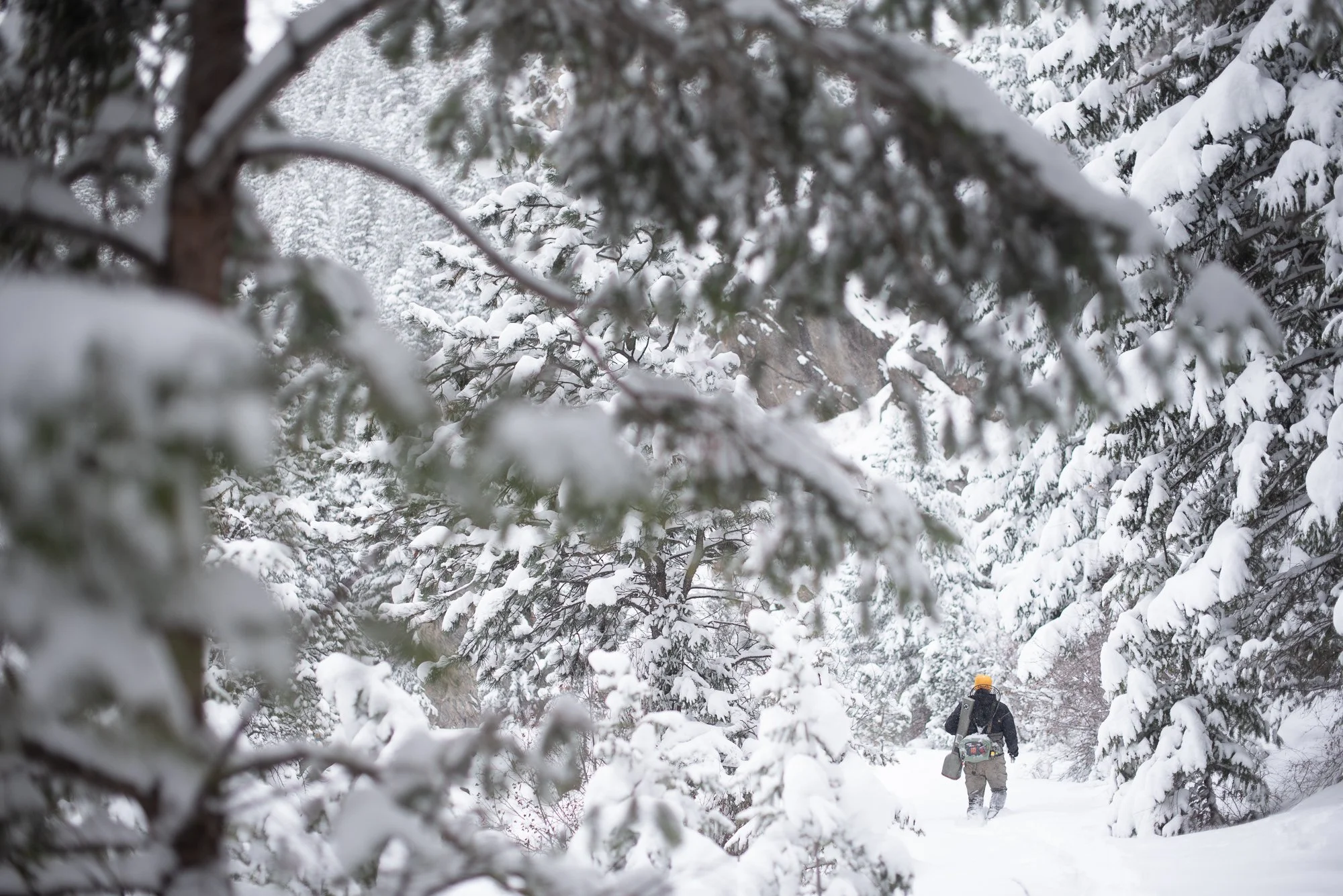
An angler walks through deep snow near Clear Creek, following a path through the trees.
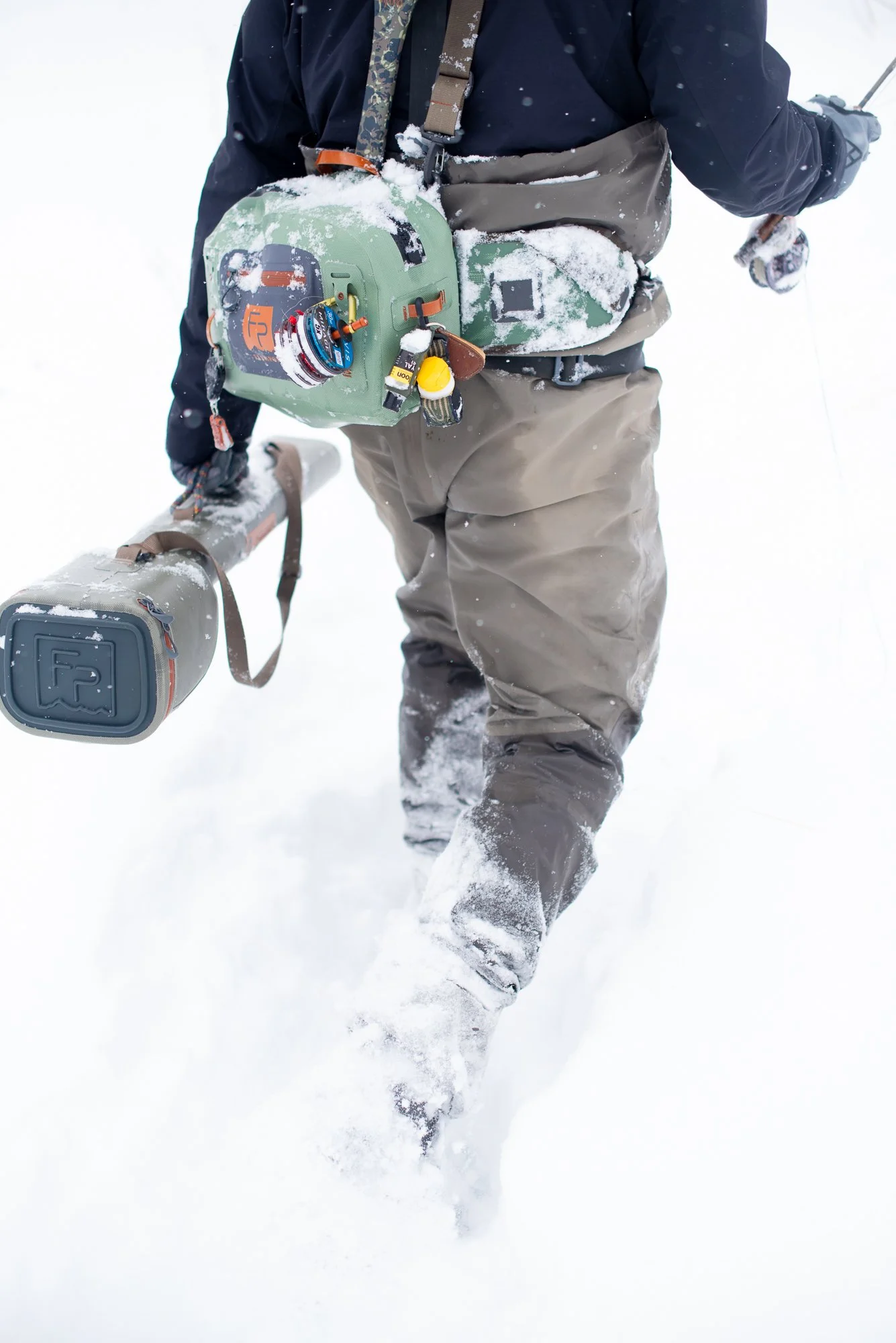
Fishing gear and a pack collect snow during a winter day along Clear Creek.
Why Small Creeks Like Clear Creek Fish Differently in Winter
Clear Creek isn’t a wide, forgiving river. It’s tight in places, fast in others, and technical when the water drops.
In winter, that becomes even more pronounced.
The fish don’t spread out—they consolidate. Deep pockets, slower seams, and protected water hold most of the activity. If you’re not putting a fly exactly where it needs to be, you’re probably not getting a look.
What makes small creeks interesting this time of year is how intimate everything feels. There’s no hiding from bad drifts or sloppy approaches. You’re close to the water, close to the fish, and aware of every mistake.
And when it comes together, it feels earned.
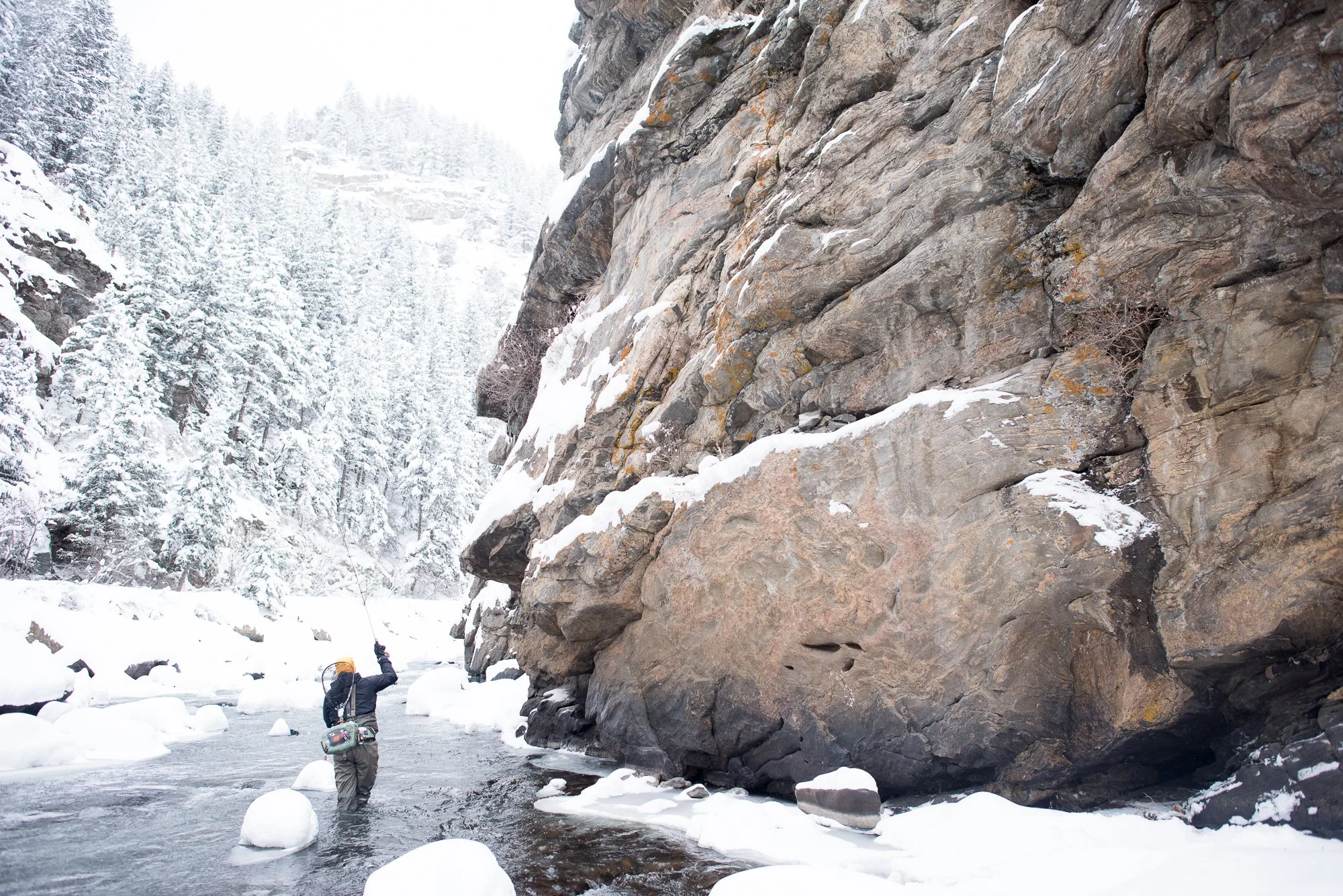
An angler fishes along a rock wall on Clear Creek, moving through a narrow stretch of water in winter.
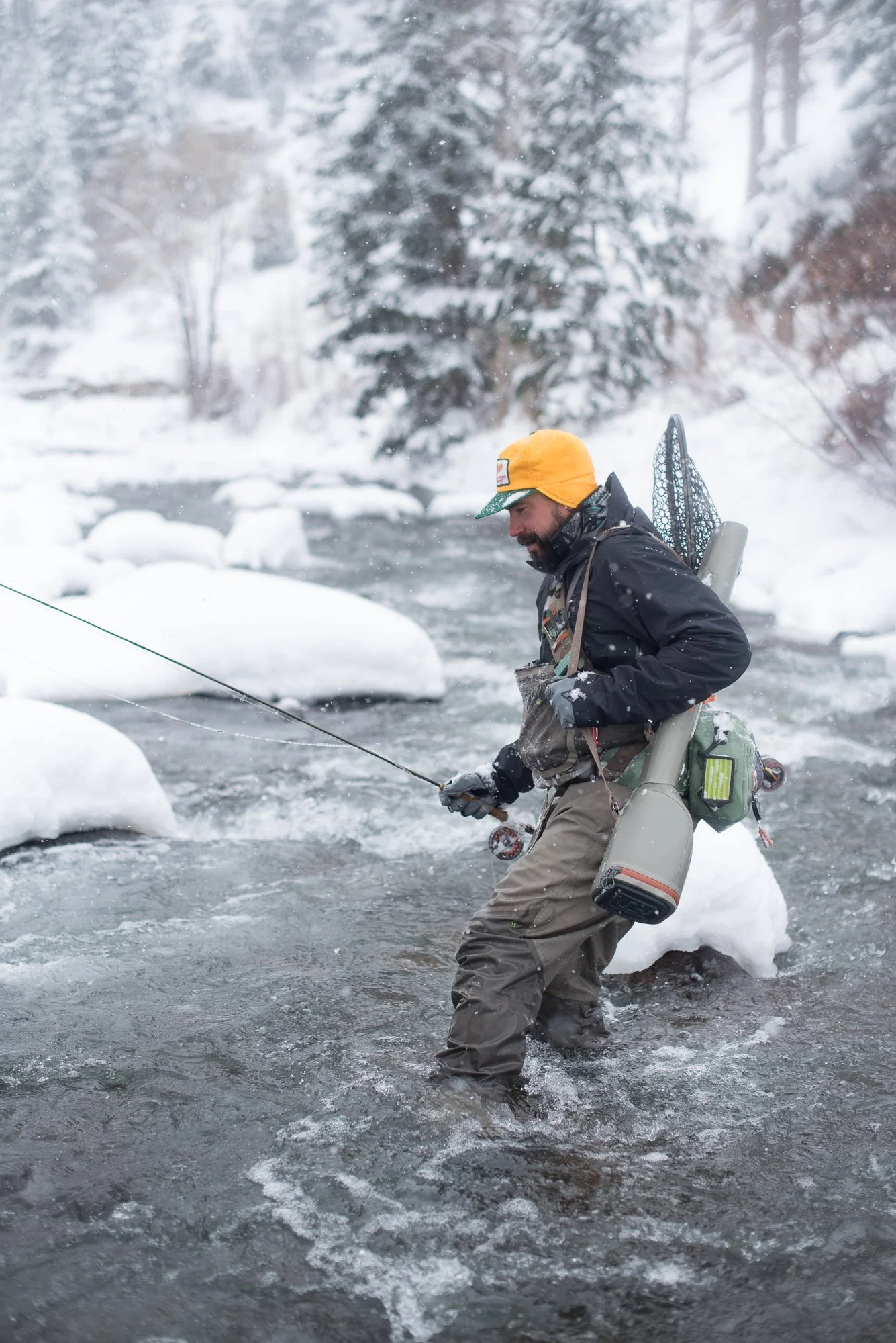
A fisherman wades through the current in winter as light snow falls around him.
The Reality of Winter Fly Fishing Conditions
This is where most of the romantic ideas about winter fishing fall apart.
It’s cold in a way that sticks with you. Not dramatic, just persistent. Fingers go numb. Guides freeze. You break ice out of your rod between casts and keep going.
There’s a rhythm to it:
Cast
Check the drift
Clear ice
Repeat
You don’t rush. You can’t.
The light is different too. Lower in the sky, flatter, quieter. It doesn’t light up the river—it settles over it. That changes how everything looks, especially in photographs. The colors are muted, the contrast is softer, and the scenes feel more stripped down.
It’s not dramatic. It’s honest.
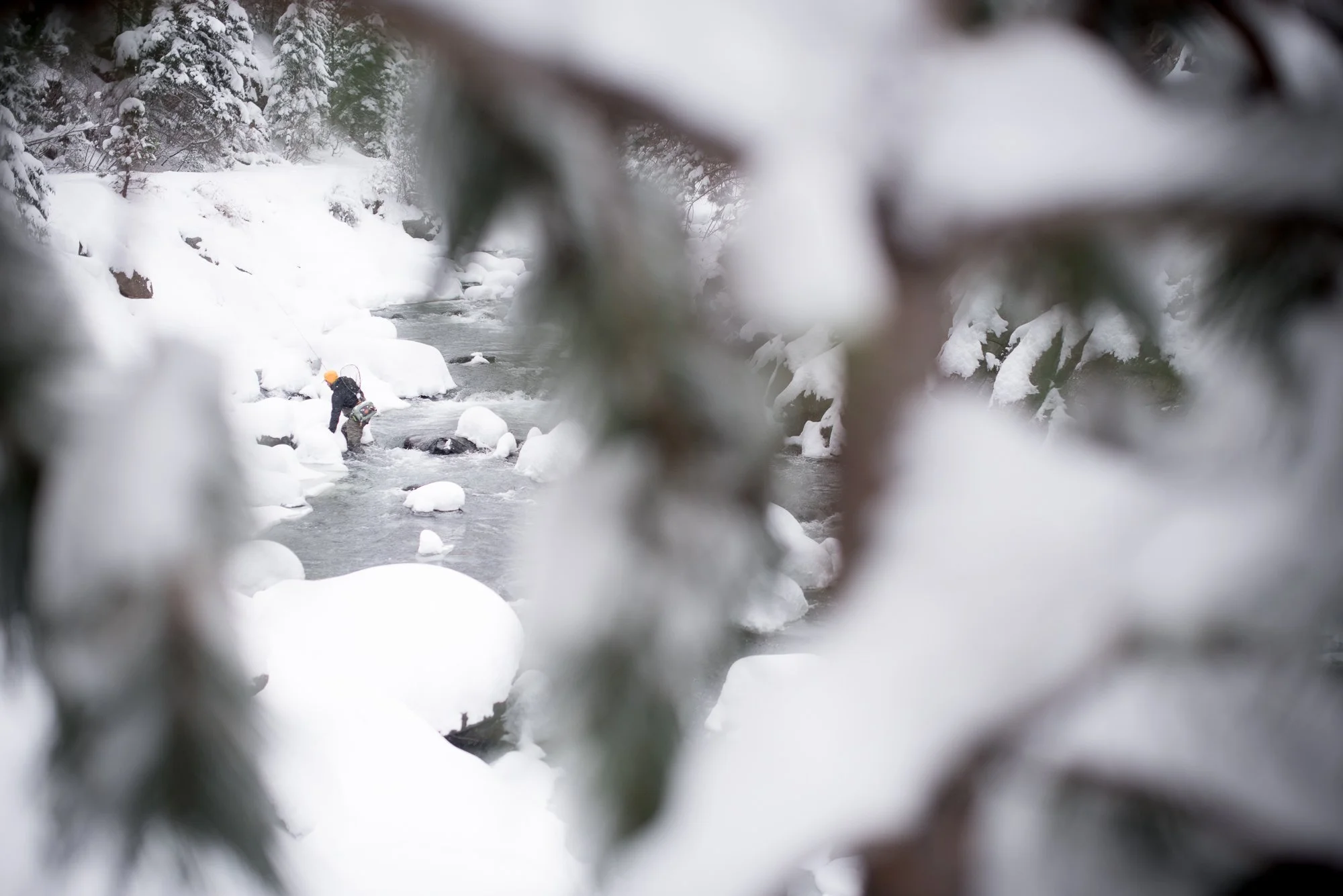
A fly fisherman walking out of Clear Creek, partially framed by snow-covered trees along the bank.
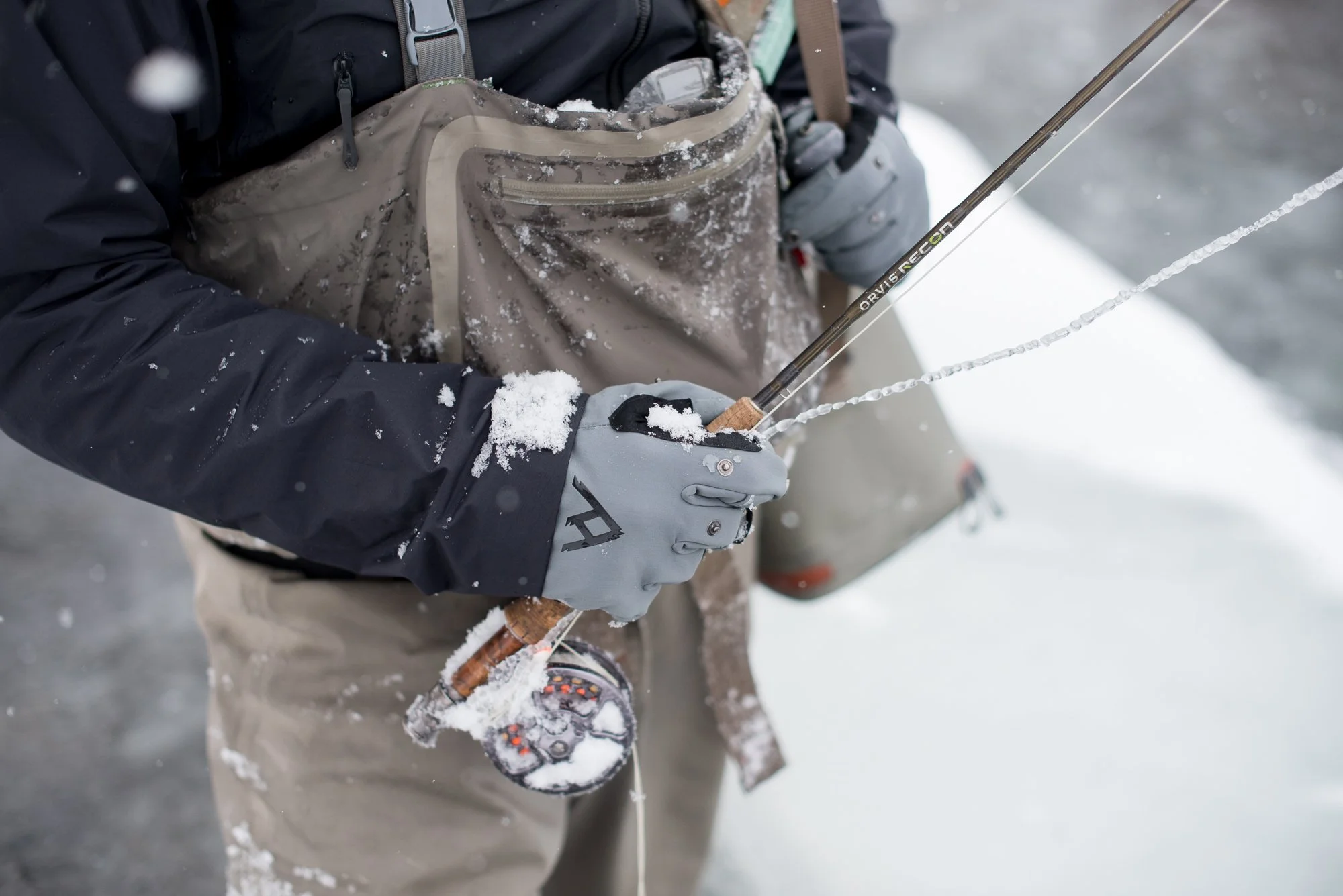
Gloved hands hold a fly rod as ice forms along the line in cold conditions.
A Morning on Clear Creek
Most winter mornings start the same way.
You step out into air that feels sharper than expected. The creek is already moving, thin ribbons of steam rising where the water meets the cold. Nothing about it suggests urgency.
The first stretch is usually quiet. Fish aren’t moving much yet, and neither are you. It’s more about paying attention—watching the water, seeing where things might happen later.
By late morning, something shifts.
Maybe it’s subtle—just enough warmth to change the current slightly or bring a fish off the bottom. That’s when you start to see life again. Not in big, obvious ways, but in small signs: a hesitation in the drift, a slight take, a fish that wasn’t there an hour ago.
There’s no rush to it. No pressure to move quickly or cover miles of water. You stay with it, work through a stretch carefully, and take what the day gives you.
Some days that’s a few fish. Some days it’s none.
Either way, it’s enough.
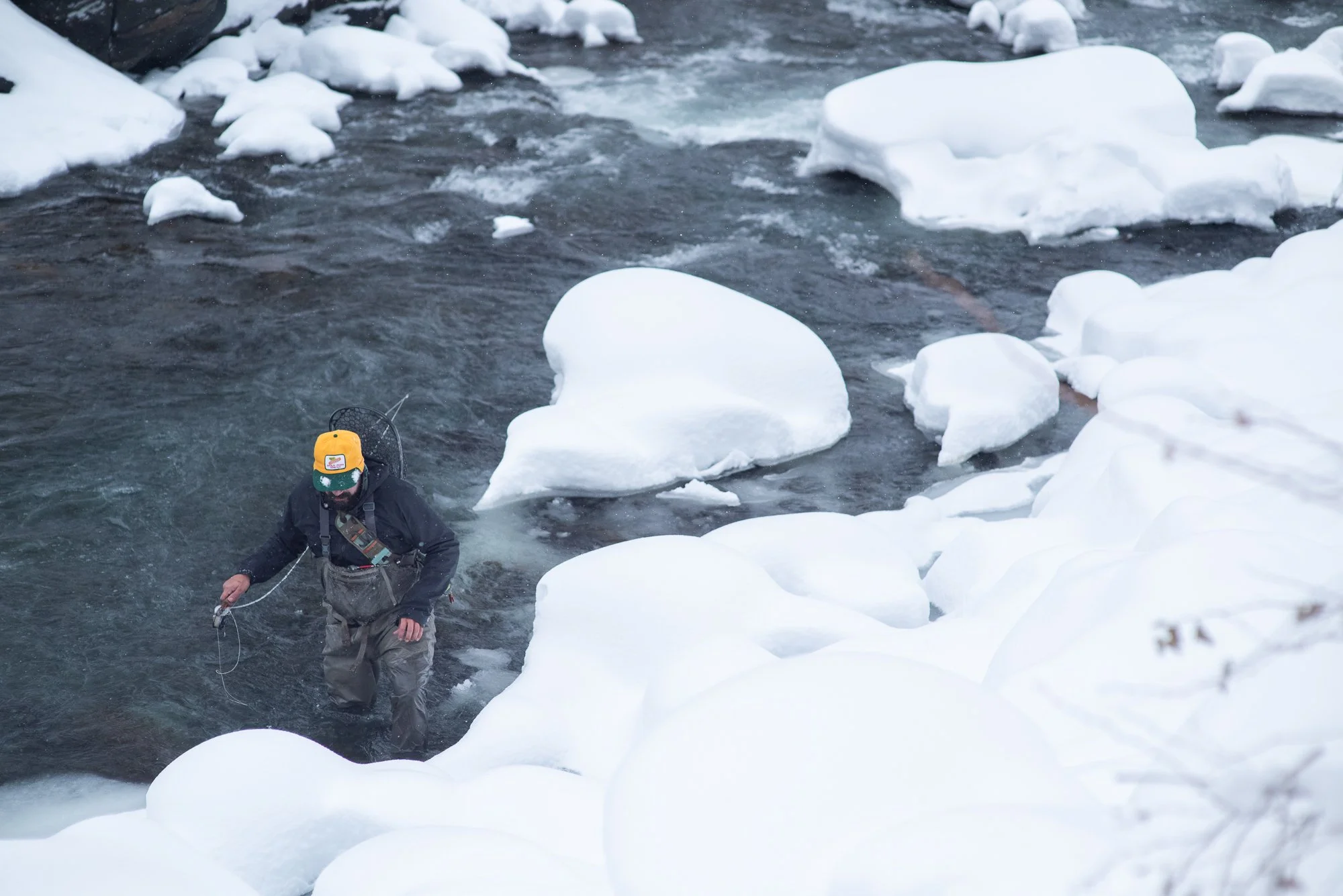
A fisherman wades through, stepping carefully between snow-covered rocks in winter conditions.
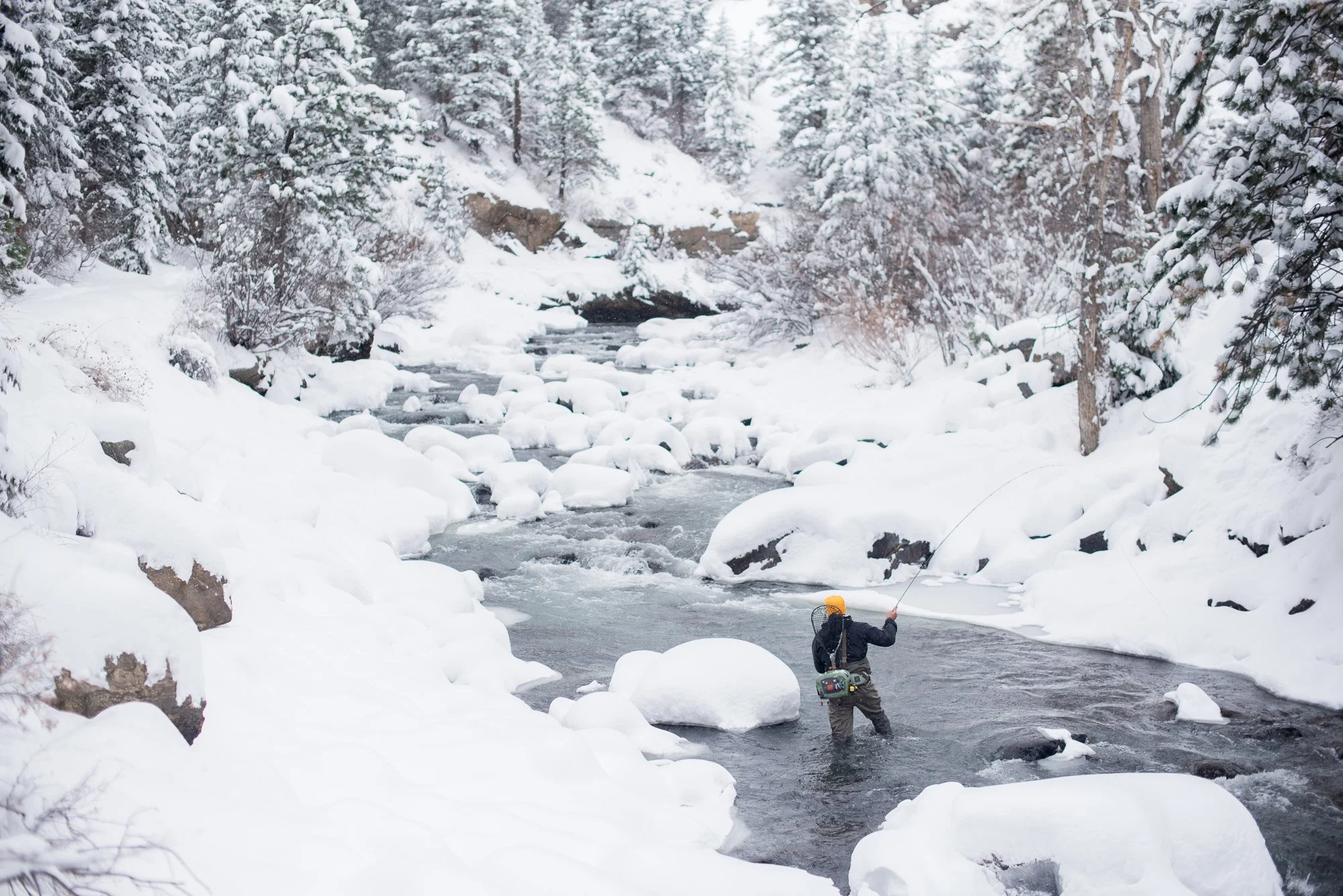
An angler fishes a wider stretch of Clear Creek in Colorado, working through slow winter water.
Why Winter Fly Fishing Is Worth It
It’s not about comfort. And it’s definitely not about easy fishing.
What keeps people coming back to places like Clear Creek in the winter is something harder to define. Maybe it’s the absence of distraction. Maybe it’s the way everything gets simplified—water, movement, attention.
Or maybe it’s just the fact that the river doesn’t stop when the season changes.
For me, this time of year has always been less about the outcome and more about the experience of being there. The photographs come out of that—quiet moments, small movements, and the kind of light you don’t get any other time of year.
They’re not dramatic images. They’re not meant to be.
They’re a record of what it actually feels like to stand in a Colorado creek in the middle of winter and keep fishing anyway.
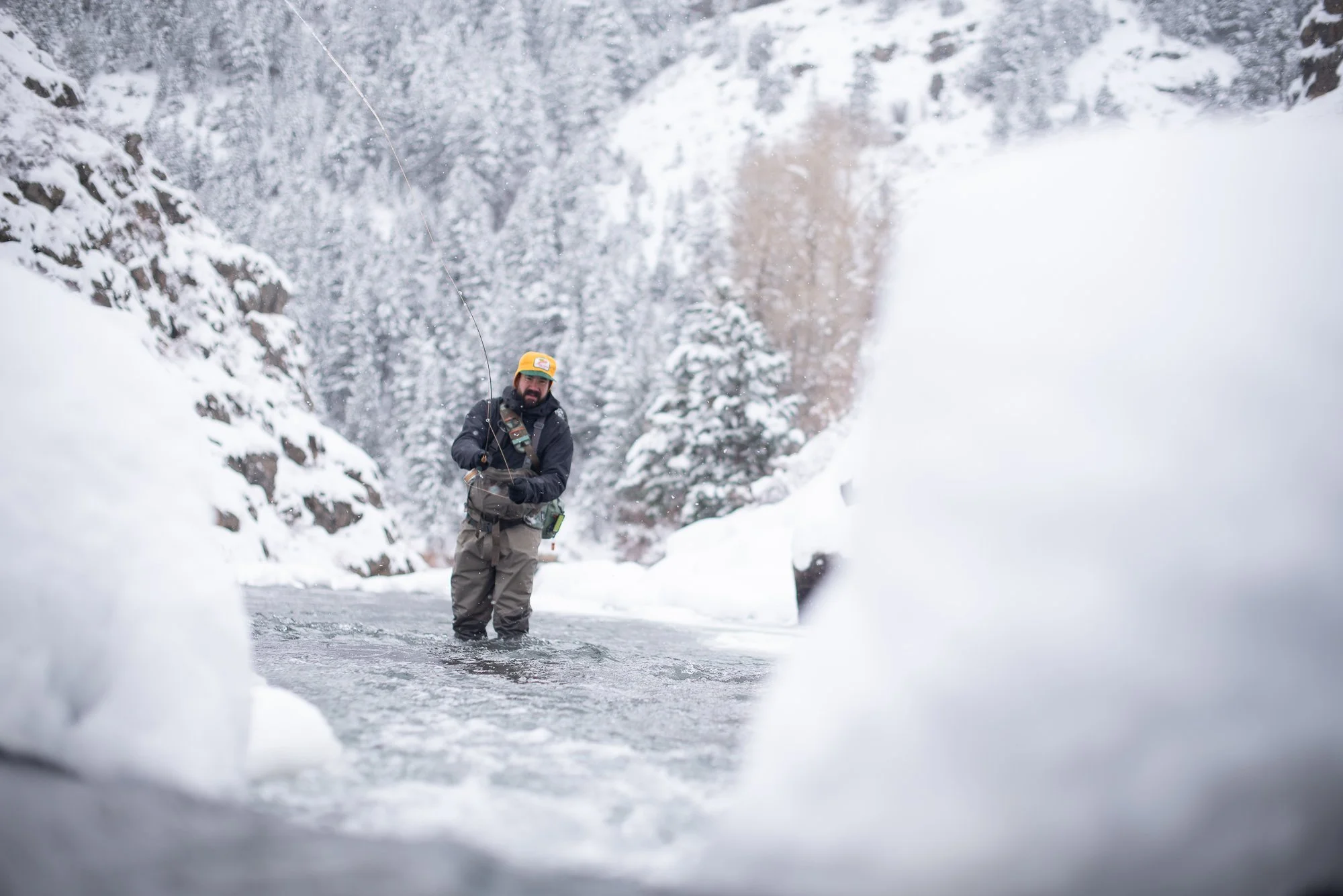
An angler casts into Clear Creek in Colorado, working through a cold winter stretch of water.
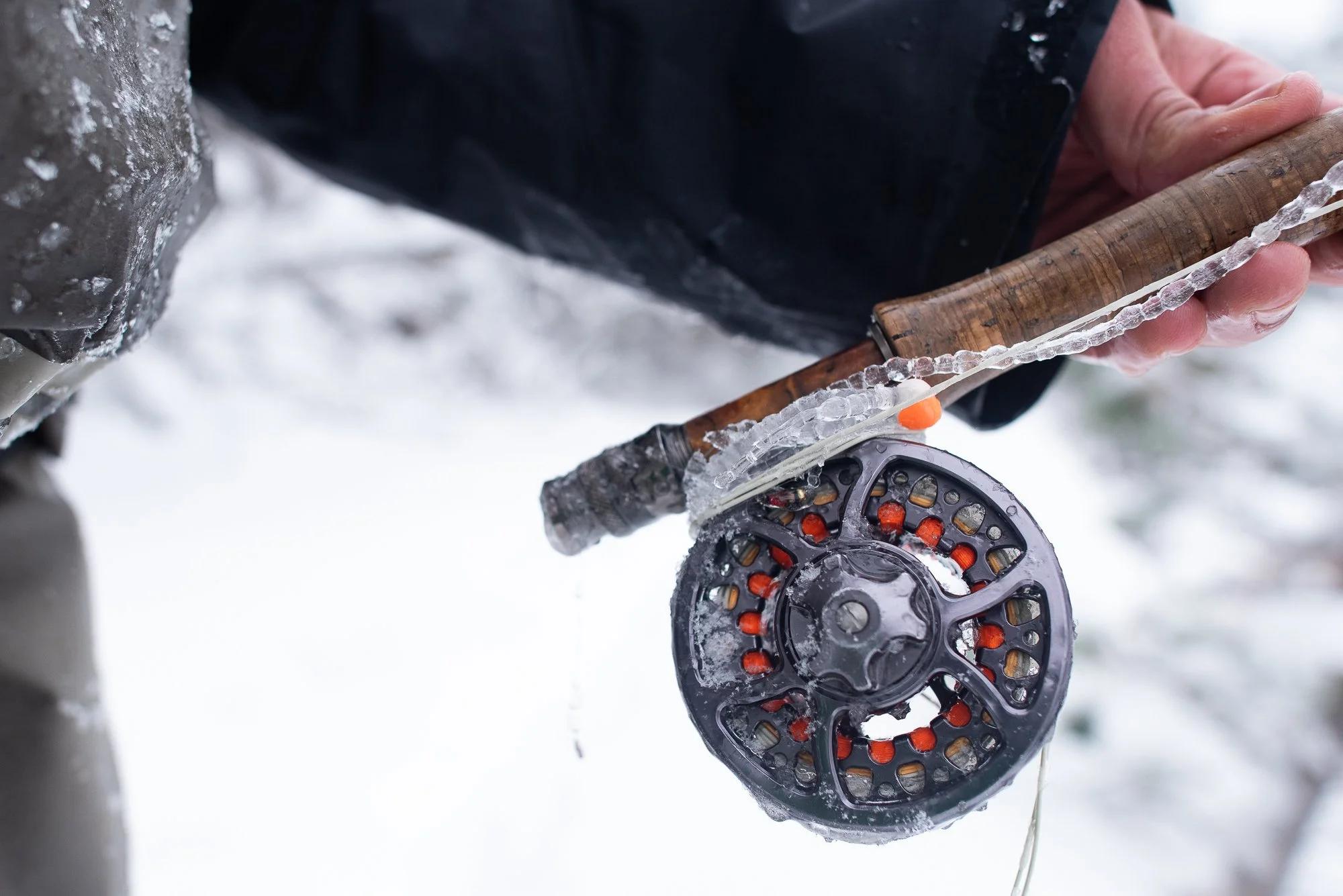
Ice builds along a fly rod and reel during winter fishing, requiring it to be cleared between casts.
Explore the Full Fly Fishing Photography Collection
If you’re interested in seeing more work like this—across different seasons, rivers, and parts of the American West—you can view the full collection below.
For brands, outfitters, and publications looking for authentic fly fishing imagery—real anglers, real conditions, and a documentary approach—licensing inquiries are always welcome - rob@robhammerphotography.com
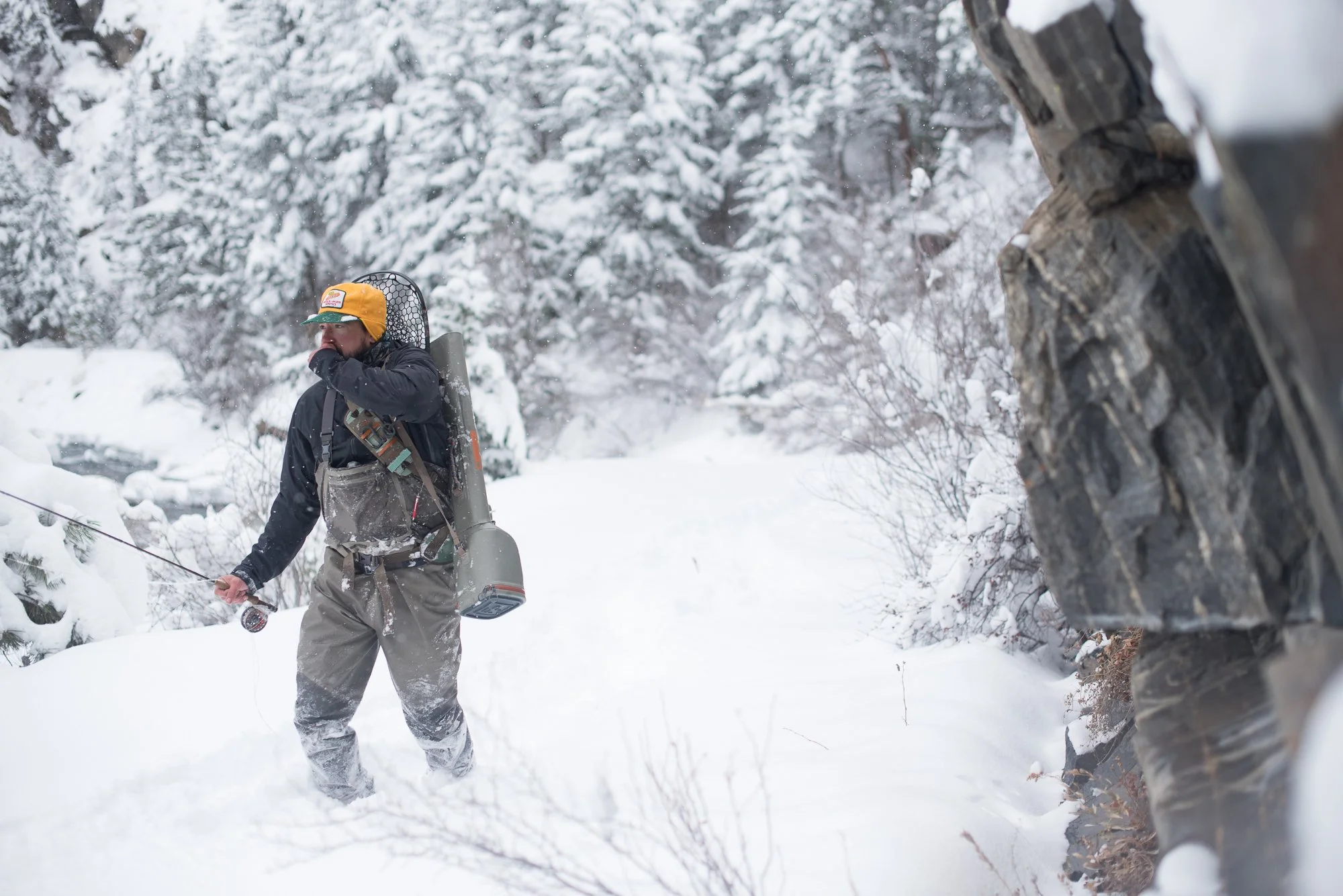
An angler walks through the snow, blowing warm air onto his frozen hands
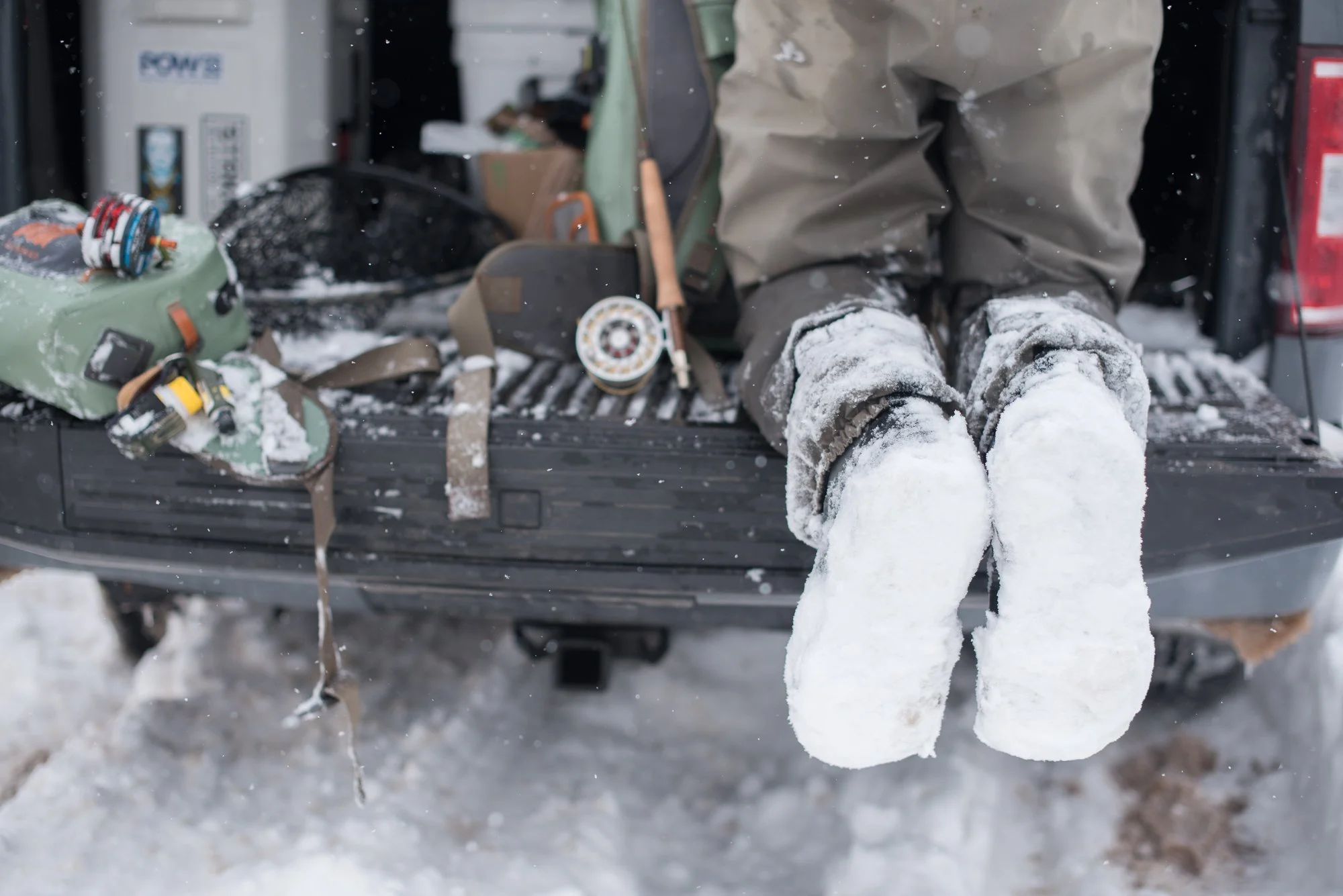
A fisherman sits on a truck tailgate with snow-covered boots and gear after time on the water.