
William Matthews – Legendary Western Artist and His Creative Studio in Denver
William Matthews (born 1949) is one of the most influential painters of the American West — best known for his evocative watercolors of working cowboys, landscapes, ranch life, and Western culture. Though he didn’t grow up in the West, his artistic journey has taken him from New York City to studios and ranches across the region. I recently spent time photographing him in his Denver studio to document both the man and the creative space that shapes his work.
Meeting William Matthews — A Western Artist Icon
Although he doesn’t come from The West and wouldn’t restrict himself to the title of Western Artist, there is no denying the indelible effect William Matthew’s work has had on Western culture.
As with most of my subjects in any genre, it’s important that I have a genuine interest. And I’ve long been a fan of Matthews’ art, which was the reason for this collaboration. At 76 years young he’s full of life and still has an insatiable desire to create art at a prolific pace. So having the opportunity to meet and photograph Matthew’s at work in his Denver, CO studio was a gift i’ll always be grateful for. A lot of artists can’t be bothered with this kind of thing, but he was welcoming and generous with conversation throughout our time together.
Shared Stories from Historic Ranches Across the West
Of the many compliments you could say about an artist, perhaps the best is that their style is instantly recognizable. And there’s no mistaking the renowned paintings he created of the American West, specifically of the buckaroos in nothern Nevada. There isn’t another artist alive whose work even vaguely resembled Matthews’. Which could be a big reason for his success, but it was also what drew me to him. Digest his paintings for a while and you’ll know they were created by a person that truly became part of the life. He was there. The light, colors, and textures, and the body chemistry of his subjects could only be made by a person with first hand experience. So naturally we talked a lot about our experiences having visited a lot of the same ranches. Oddly, a few days before writing this post, I came back from the Winecup Gamble Ranch - a place he frequented. A number of his paintings of the ranch grace the walls there and his book “Working The West” sits proudly on the coffee table at the big house. To further the conversation about shared experiences we also spoke about Western Spirit: Scottsdale’s Museum of the West, where I was honored to have work on the walls at the same time as his incredible exhibition.
Capturing the Atmosphere of an Artist’s Workspace
Matthew’s has lived a life in art. It is his life, and that’s obvious when you walk into his beautiful studio, which I’m told he hadn’t ever granted access to. The shelves are filled with books about design - previous profession and gateway into art. The floors are a beautiful hard wood that accents the rich walls filled with momentos from decades of travel, and of course, art. The upstairs loft feels like a break room of sorts, where Matthews goes to play one of the dozen guitars that line the space. All of this is obviously bathed in beautiful light from the north facing window that he designed along with the rest of the studio.
Photographing an artist like this in his sanctuary should never be taken lightly. And there is also a lot to consider when it comes to the plan of attack. First and foremost is respecting their time. Beforehand I had it in my head to set up a few strobes, but quickly realized that half hour would be better spent photographing documentary style as a fly on the wall with available light. For someone like Matthews, all that matters is the art. He doesn’t care about having his photograph made, nor does he need it. So I made it a point to be as effective as possible in as little time as possible so he could get back to it.
How Matthews’ Work Connects to Cowboy Photography
William Matthews has spent decades painting working cowboys — not the Hollywood version, not the myth, but the real men who ride out before the sun and come home only when the work is done. His watercolors aren’t loud or romanticized. They’re quiet, restrained, and deeply observant. The details matter: the way a hat sits after a long day, the posture of a rider checking cattle, the weight of open country pressing against a lone figure.
That’s the same thread that runs through my own cowboy photography, and I have and continue taking heaps of inspiration from Matthews’ Buckaroo paintings.
While Matthews works in watercolor and I work with a camera, the intent feels similar — to pay attention to the people who actually live this life. To show the labor behind the image. To acknowledge that raising cattle and maintaining ranch traditions is demanding, physical work that still feeds communities and shapes the American West.
His paintings slow the viewer down. They invite you to notice subtle shifts in light, gesture, and atmosphere. Photography, at its best, can do the same. Both mediums rely on observation. Both depend on trust — the kind that allows you to step into a rancher’s world without turning it into spectacle.
Spending time in his studio made that connection even clearer. Matthews’ walls are lined with studies, reference images, and decades of visual research. The work doesn’t happen by accident. It’s built on repetition, discipline, and showing up again and again — something I’ve learned firsthand while photographing working cowboys across the West for more than a decade.
Different tools. Same subject. Same respect for the culture.
Photographing Working Cowboys of the American West
If you’re drawn to Matthews’ iconic interpretation of working cowboys, you may also appreciate my ongoing photographic project documenting ranch life across the American West. You can view the full series of working cowboy photographs here.
Another Voice in Contemporary Western Art
William Matthews’ work has helped define the modern image of the working cowboy. I’ve also spent time photographing iconic Western artist Teal Blake — another painter deeply rooted in the culture of the American West. See those photographs here.
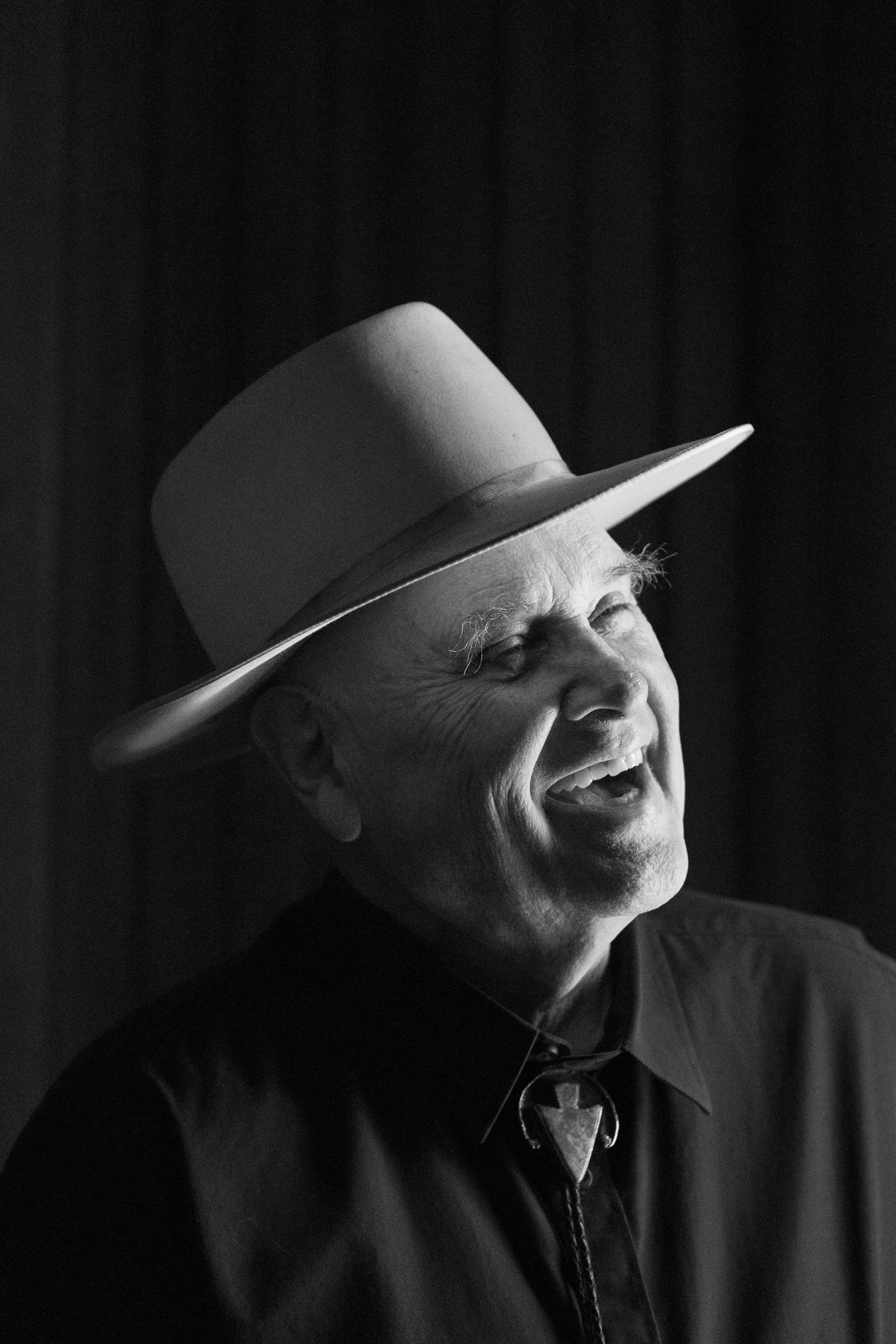
William Matthews in a candid moment inside his studio. His paintings of working cowboys and ranch life have become a defining voice in contemporary Western art.
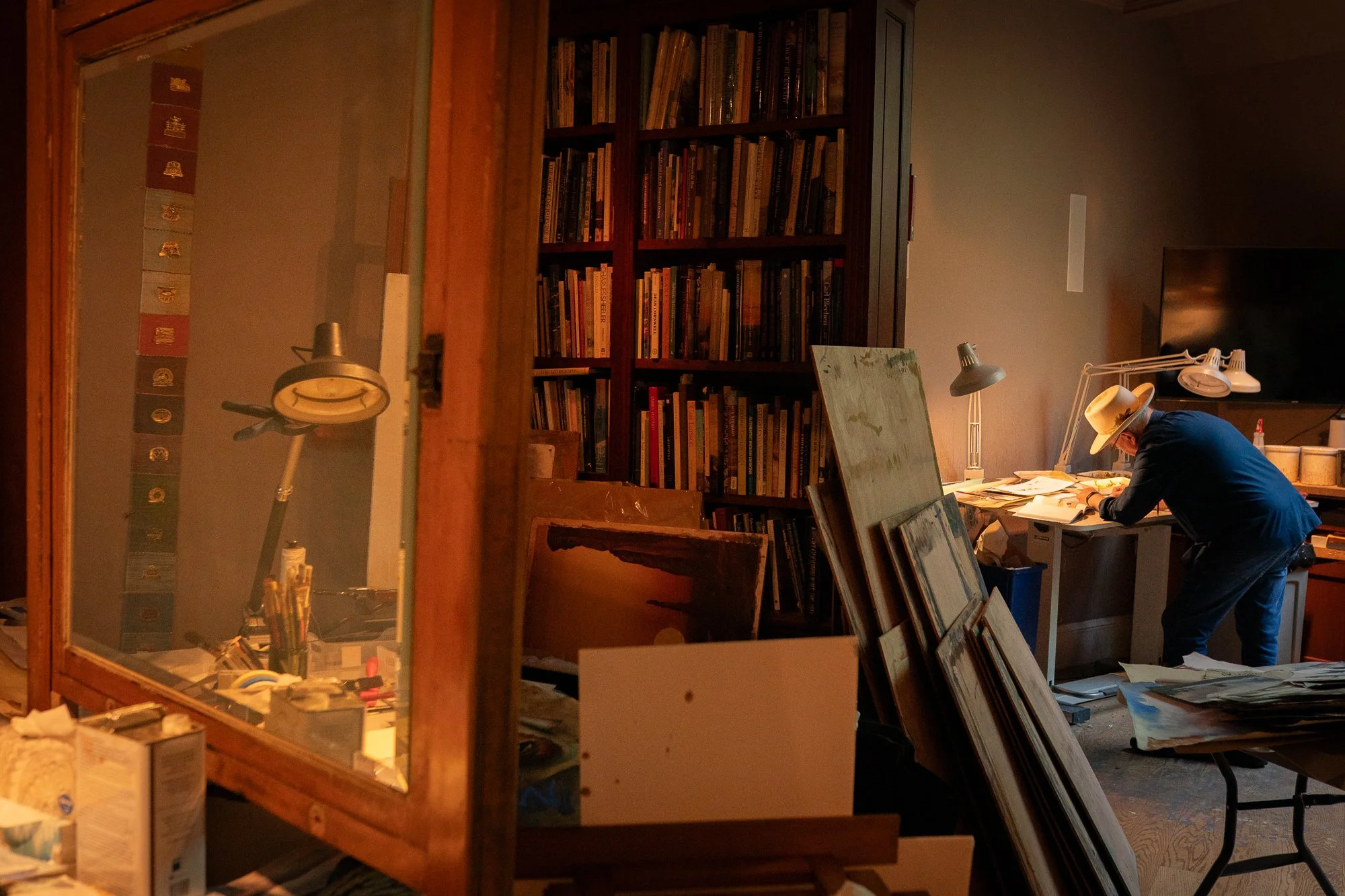
Matthews at work in his Colorado studio, surrounded by reference books, studies, and decades of accumulated material that inform his paintings of the American West.
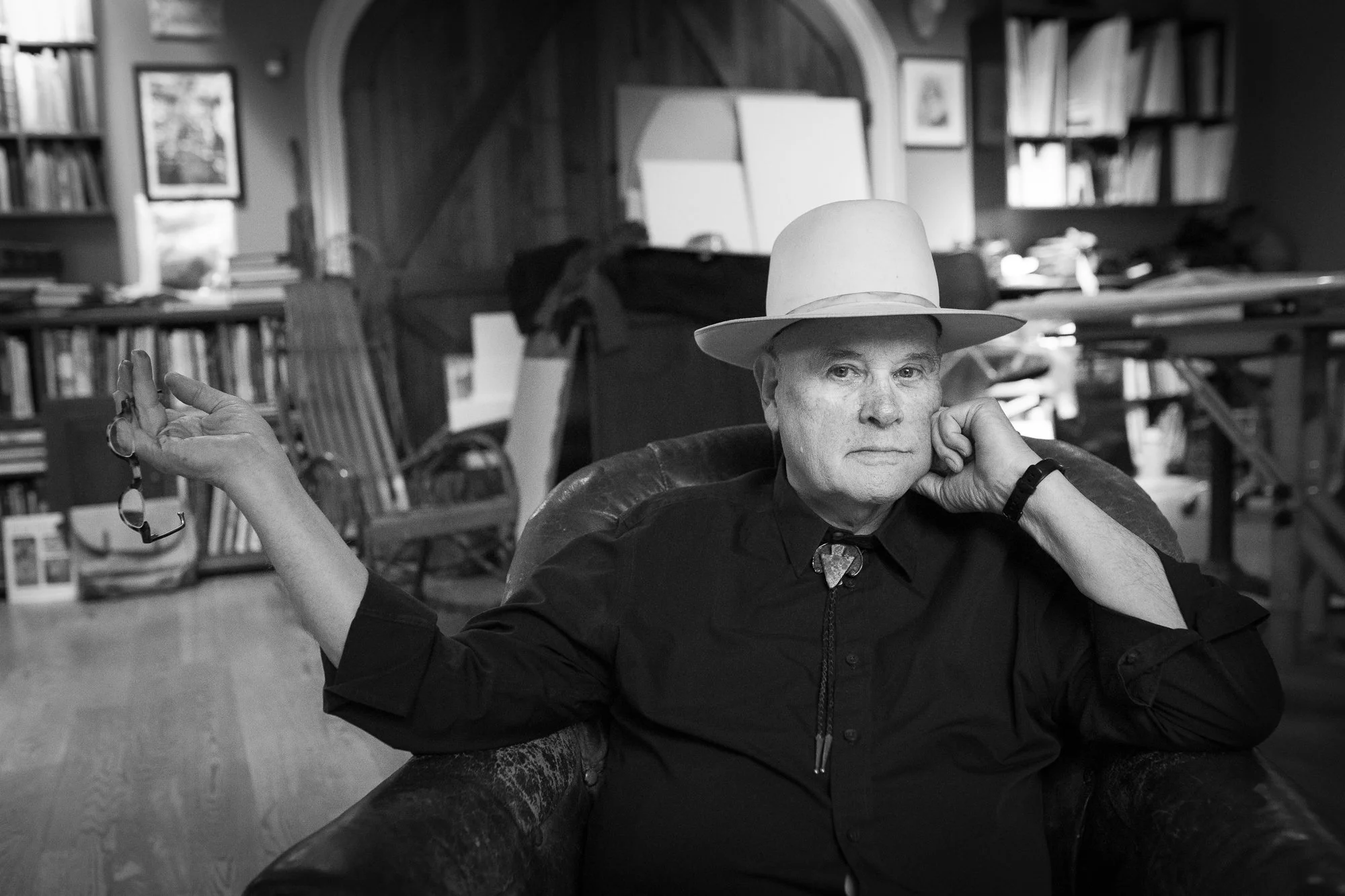
A quiet portrait of William Matthews inside his working studio, where his celebrated cowboy paintings take shape.

Pigment-stained palettes and well-worn brushes — the quiet tools behind Matthews’ watercolor interpretations of cowboy country.
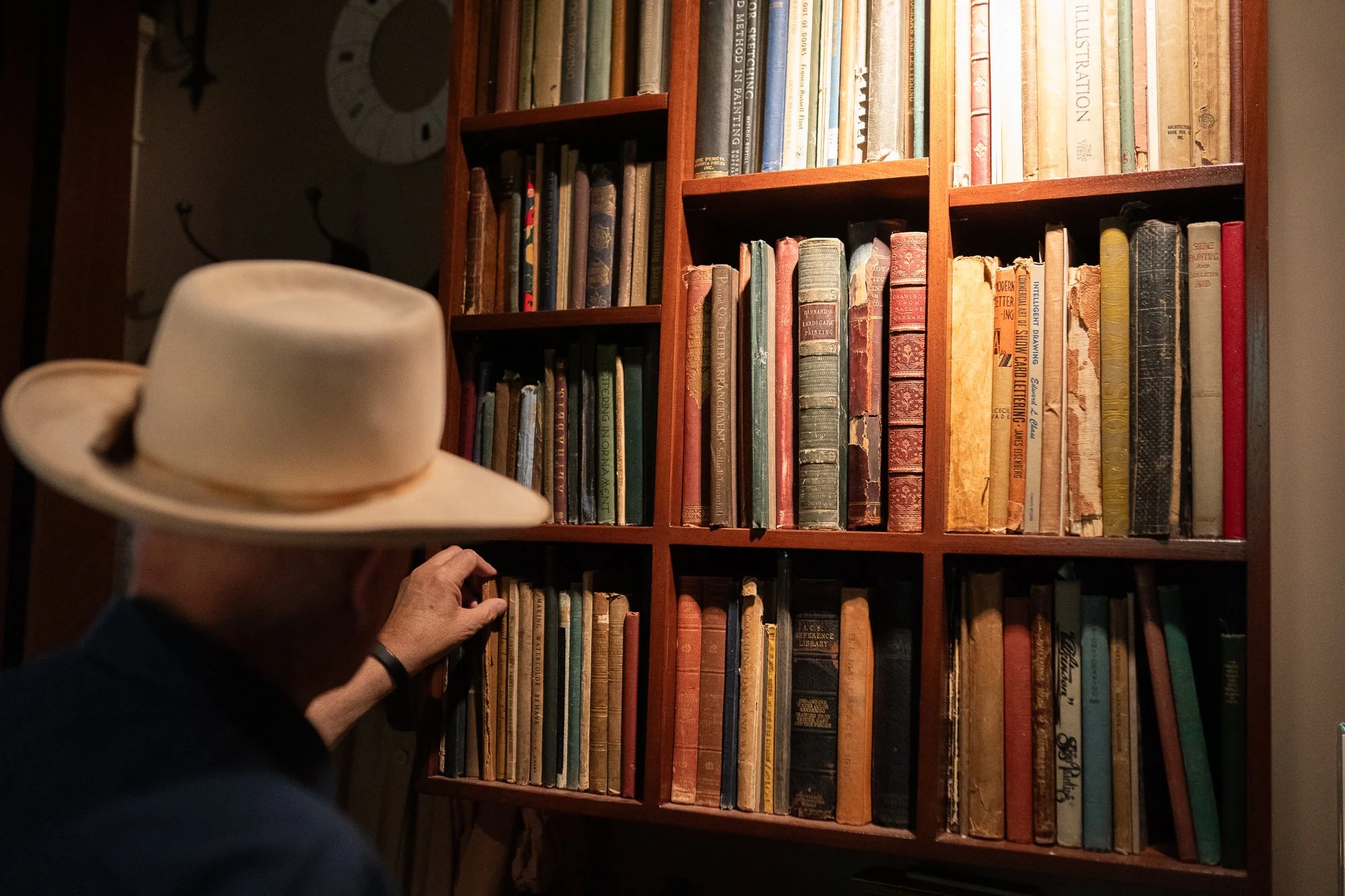
A wall of well-worn art books lines the studio shelves. Even an established Western painter remains a lifelong student of the craft.
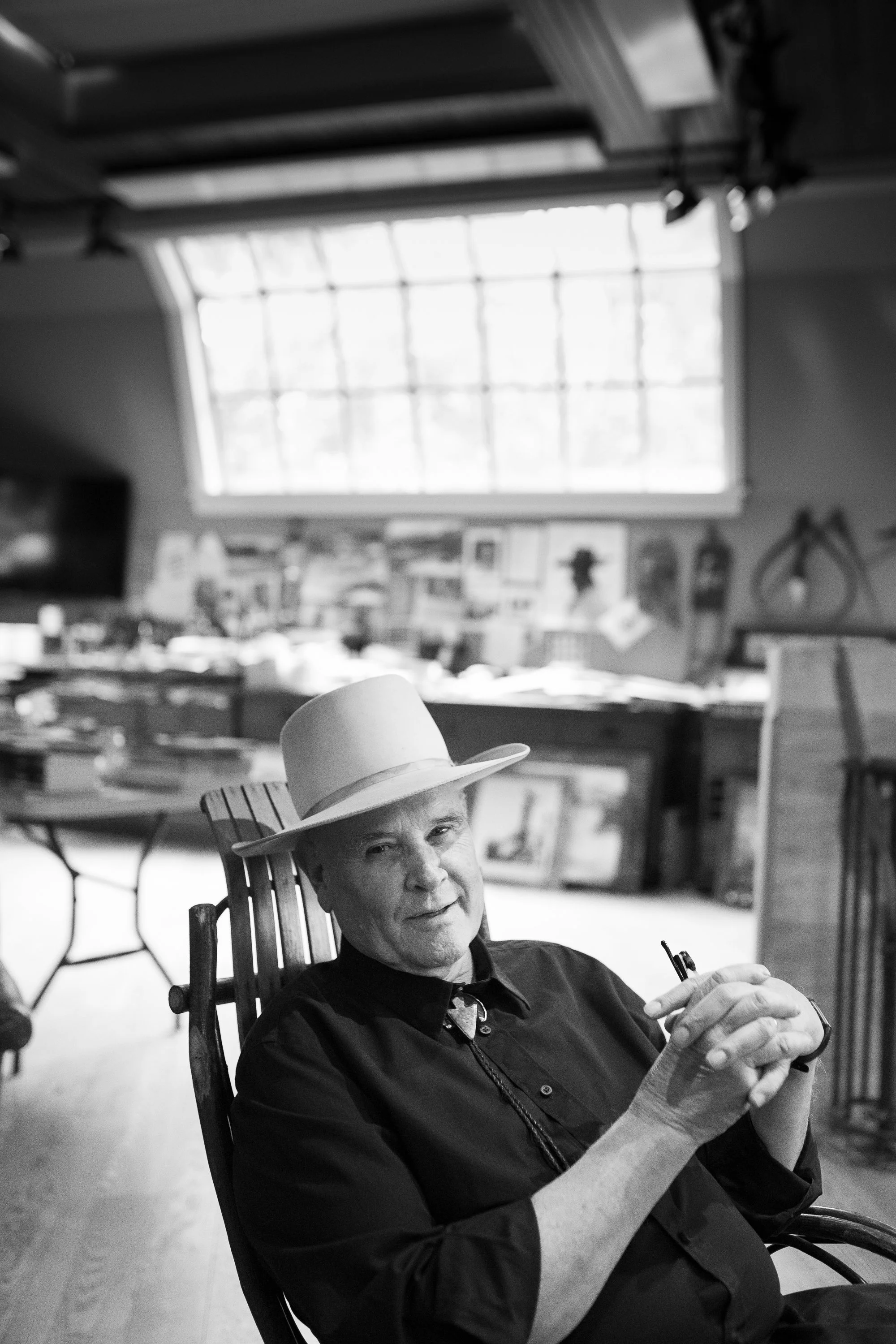
Seated beneath the studio windows, Matthews reflects between works. His paintings have shaped how many collectors visualize the modern cowboy.
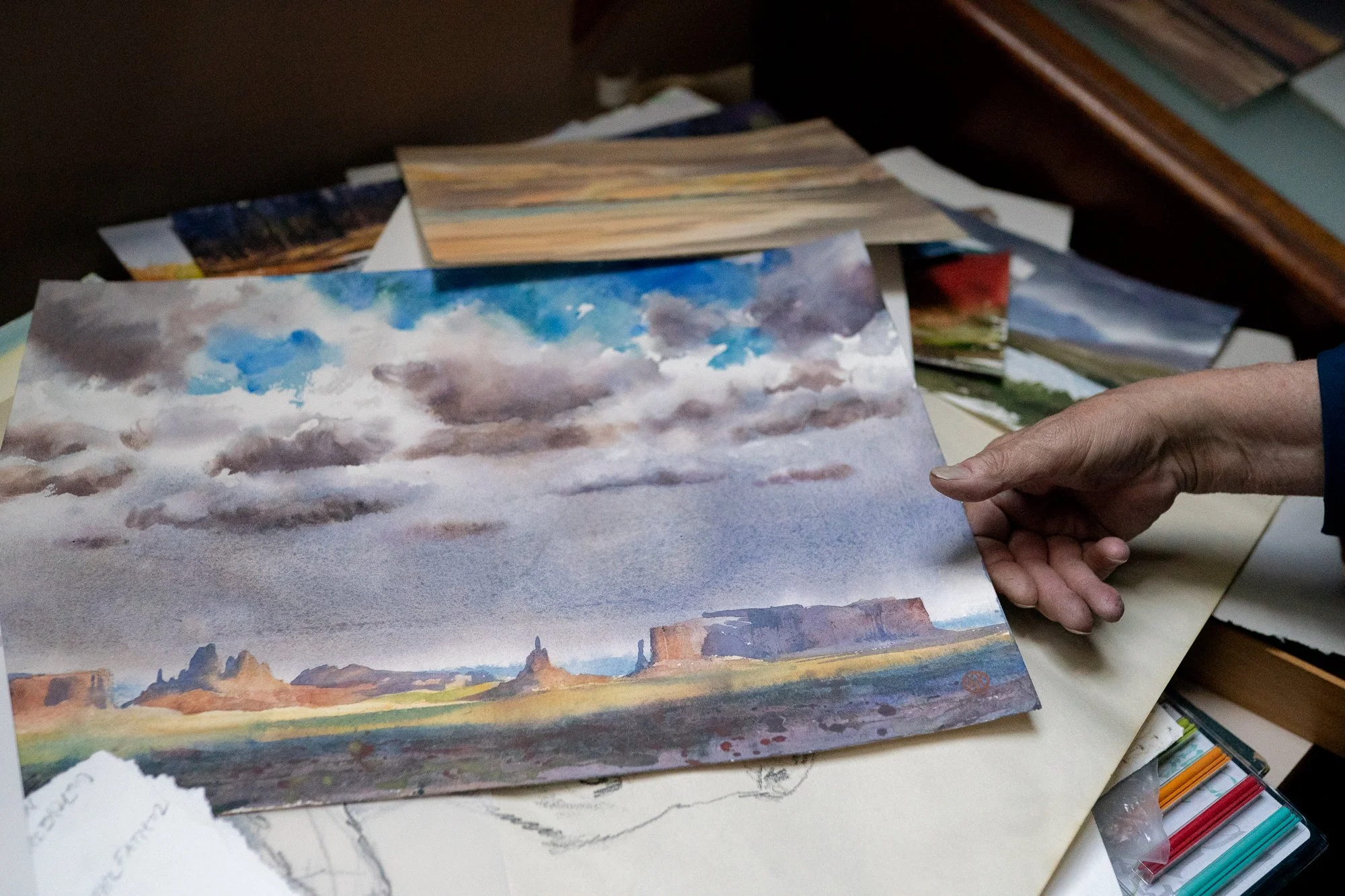
A watercolor study of the American West, where open sky and distant mesas echo the same landscapes that inspire generations of cowboy artists.
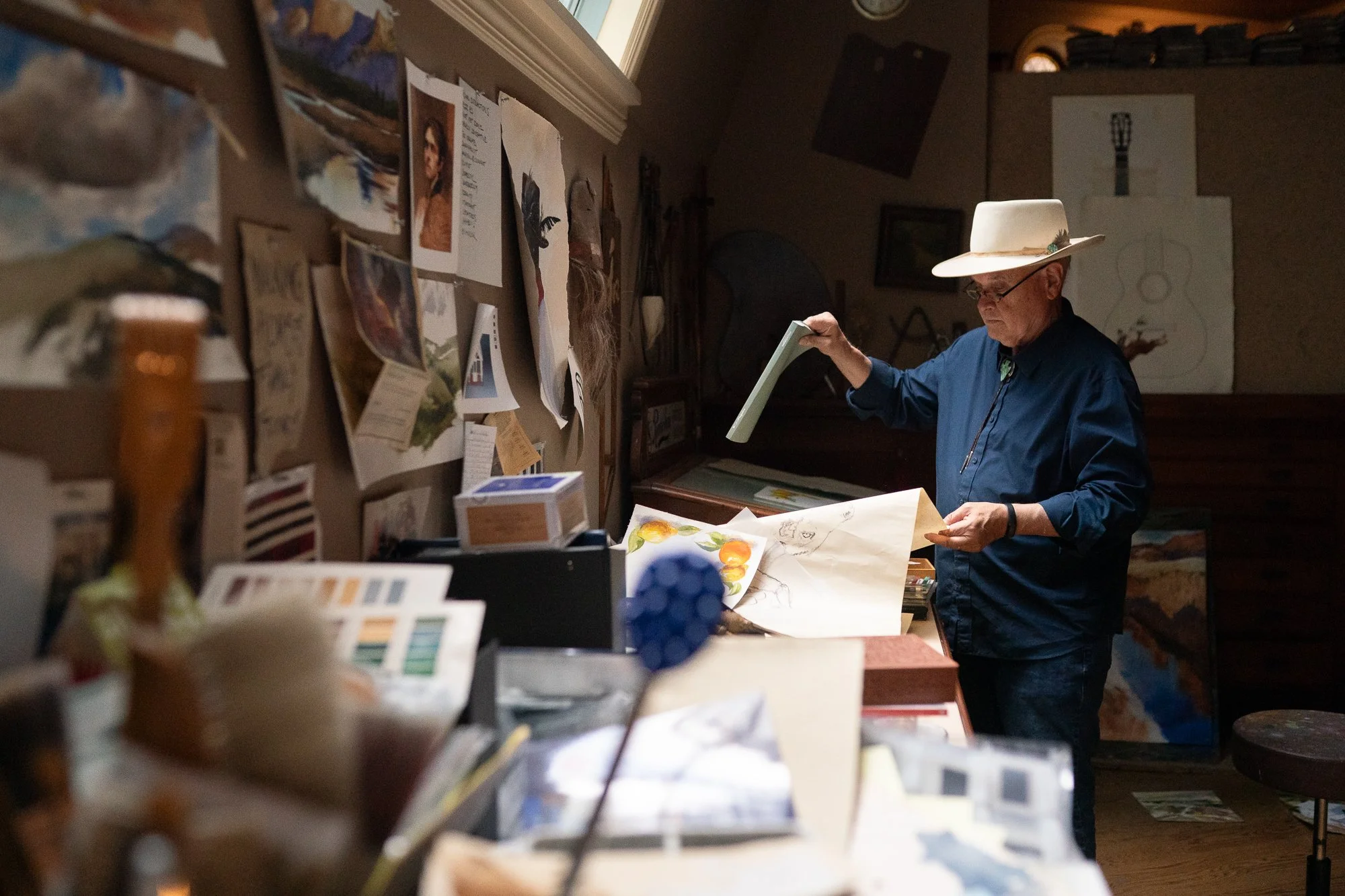
Reviewing a recent watercolor study, Matthews considers light, atmosphere, and restraint — hallmarks of his Western landscapes.
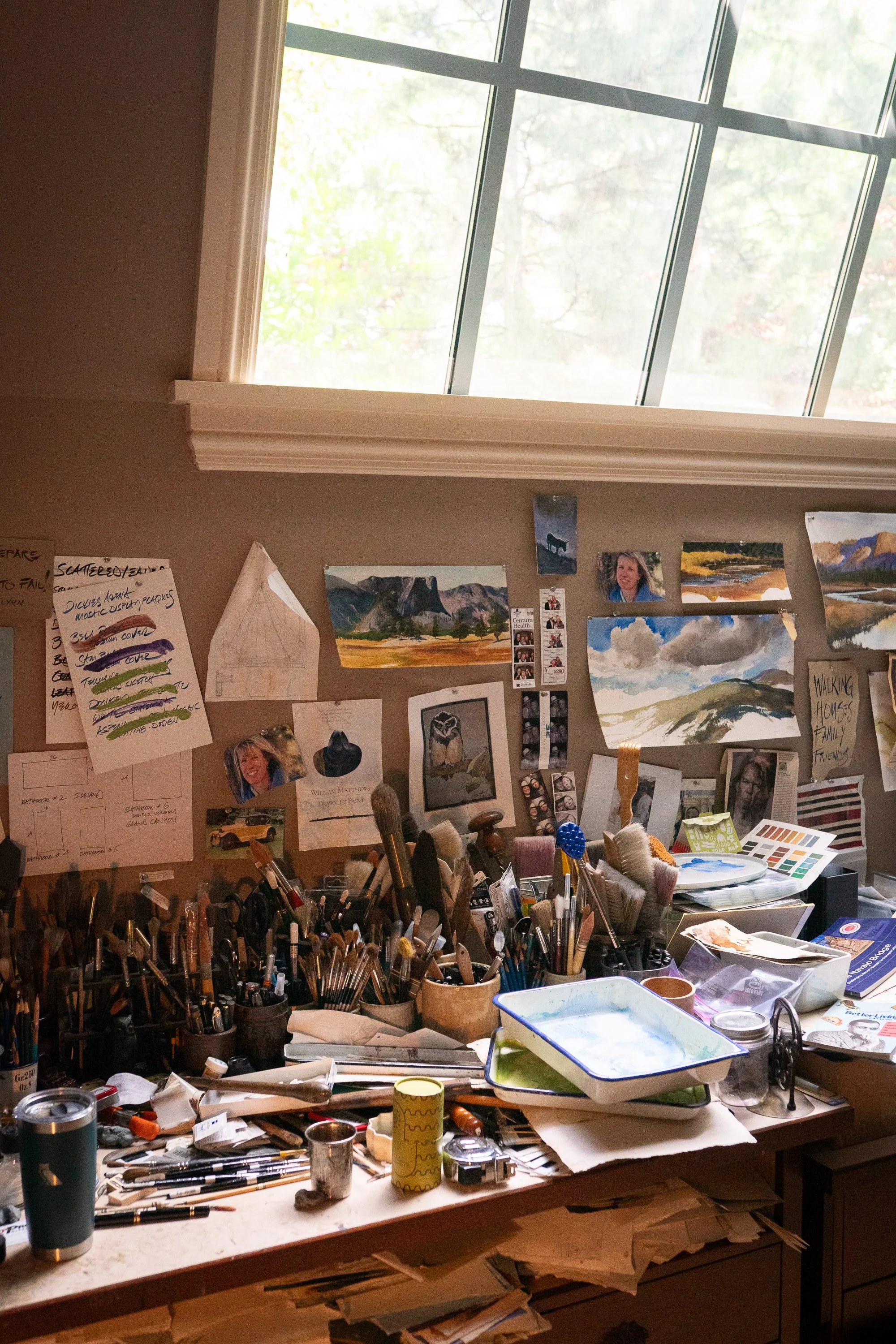
Pinned studies, reference photographs, handwritten notes, and brushes crowd the desk — a working studio shaped by decades devoted to painting the West.
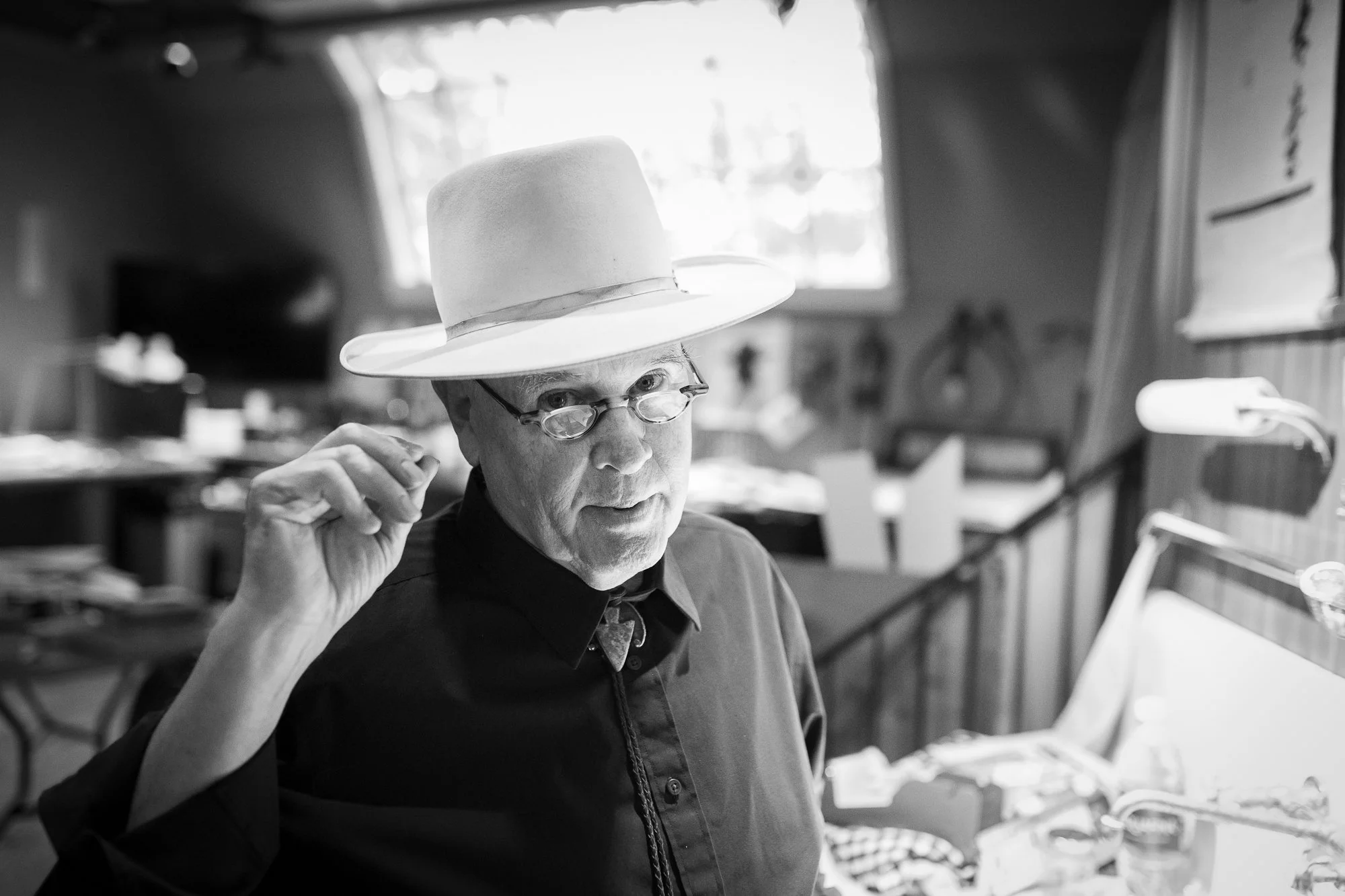
Between studies and finished pieces, Matthews pauses at his drafting table — a reminder that Western art begins with careful observation and discipline.