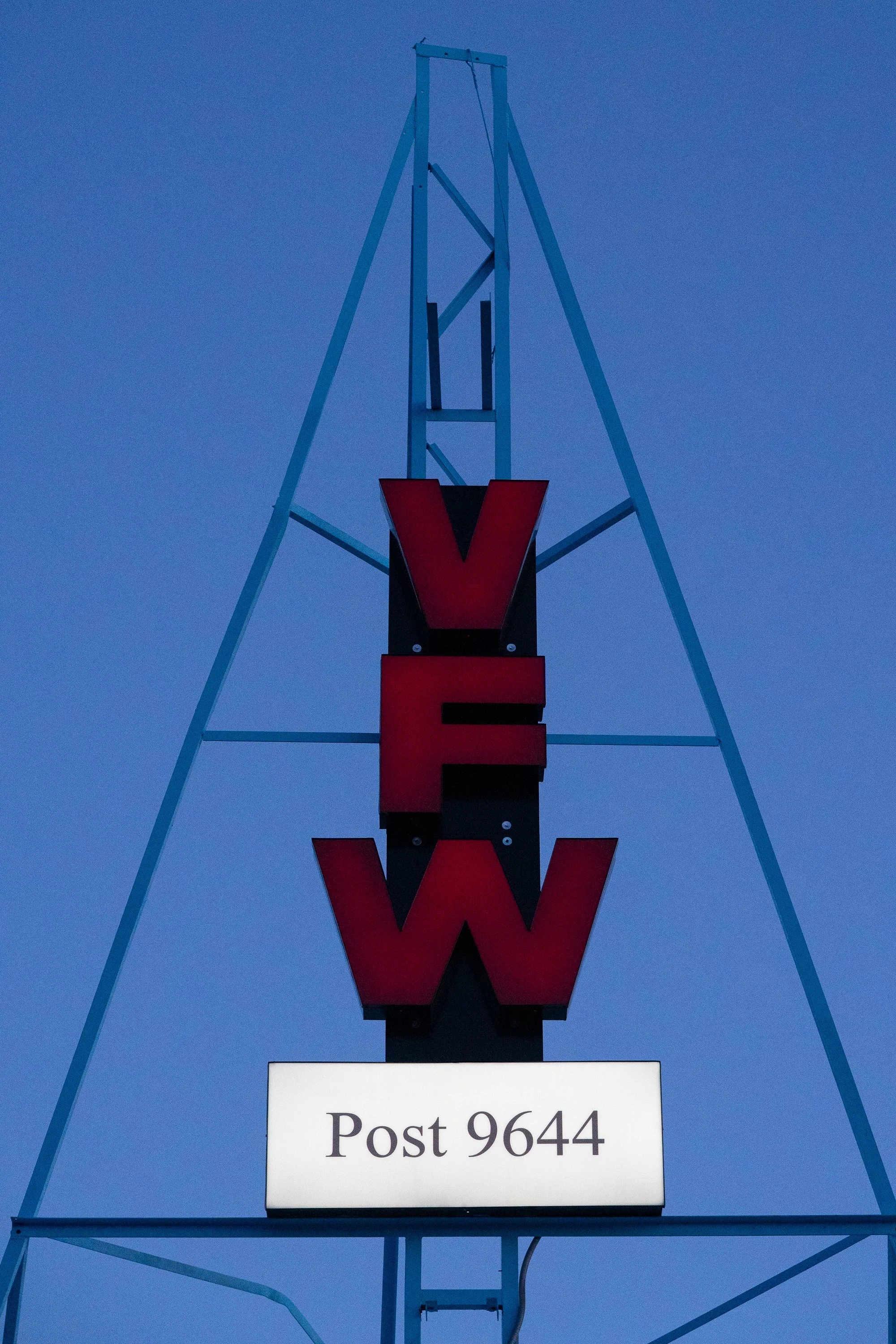
Authenticity Matters: Photographing Real Veterans for a Brand Campaign
In an era when many advertising campaigns rely on actors, carefully constructed sets, and highly controlled environments, authenticity has become one of the most valuable assets a brand can have.
People are remarkably good at recognizing when something feels genuine—and when it doesn't.
That idea was at the center of a recent assignment I photographed for Twisted X. The campaign celebrated America's upcoming 250th anniversary and a partnership with the Veterans of Foreign Wars (VFW). Rather than building a set or hiring actors to portray veterans, the decision was made to photograph real veterans in a real VFW hall.
For me, that choice made all the difference.
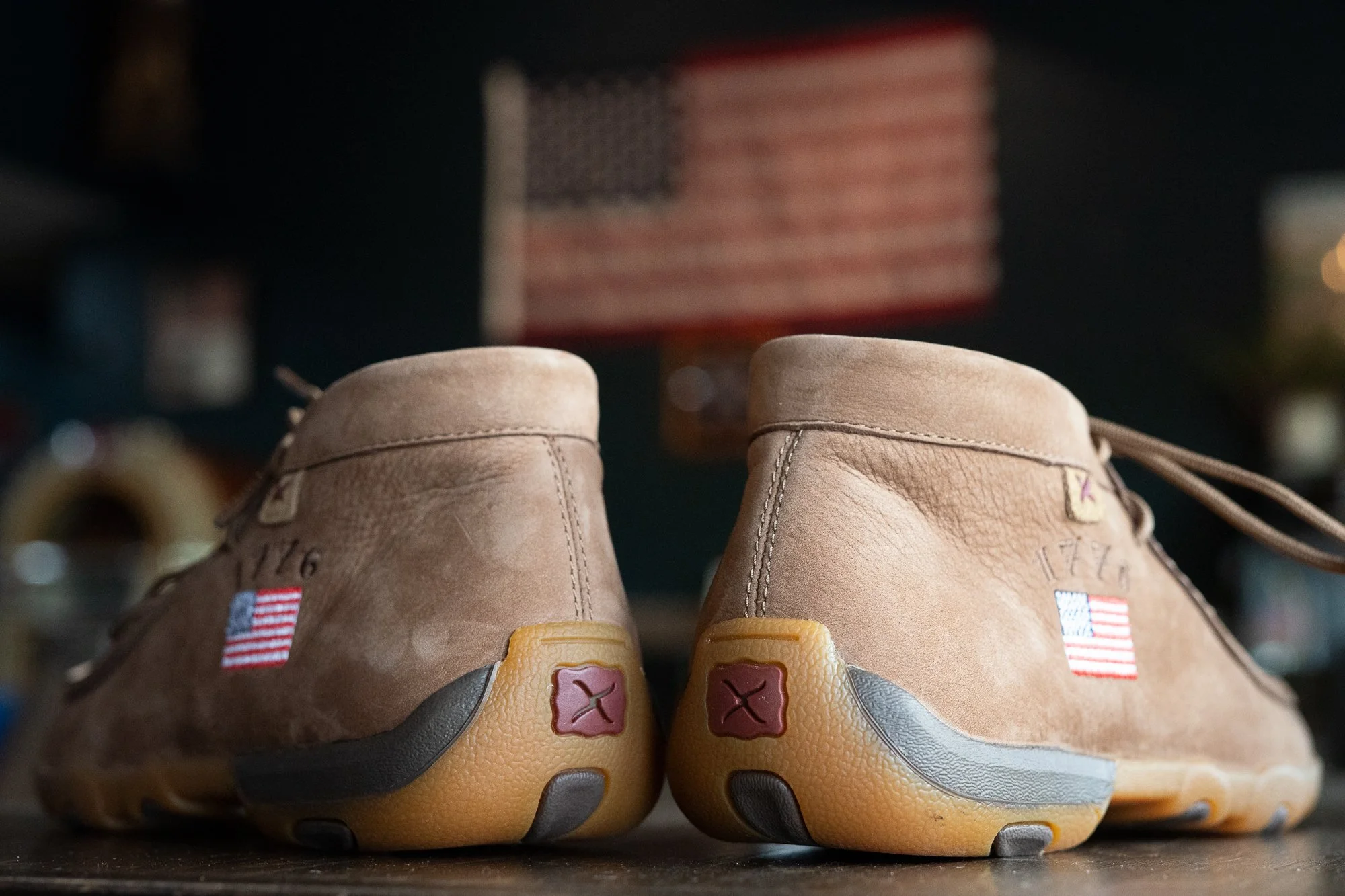
Twisted X shoes with American flag details are photographed inside the VFW hall used for the campaign.
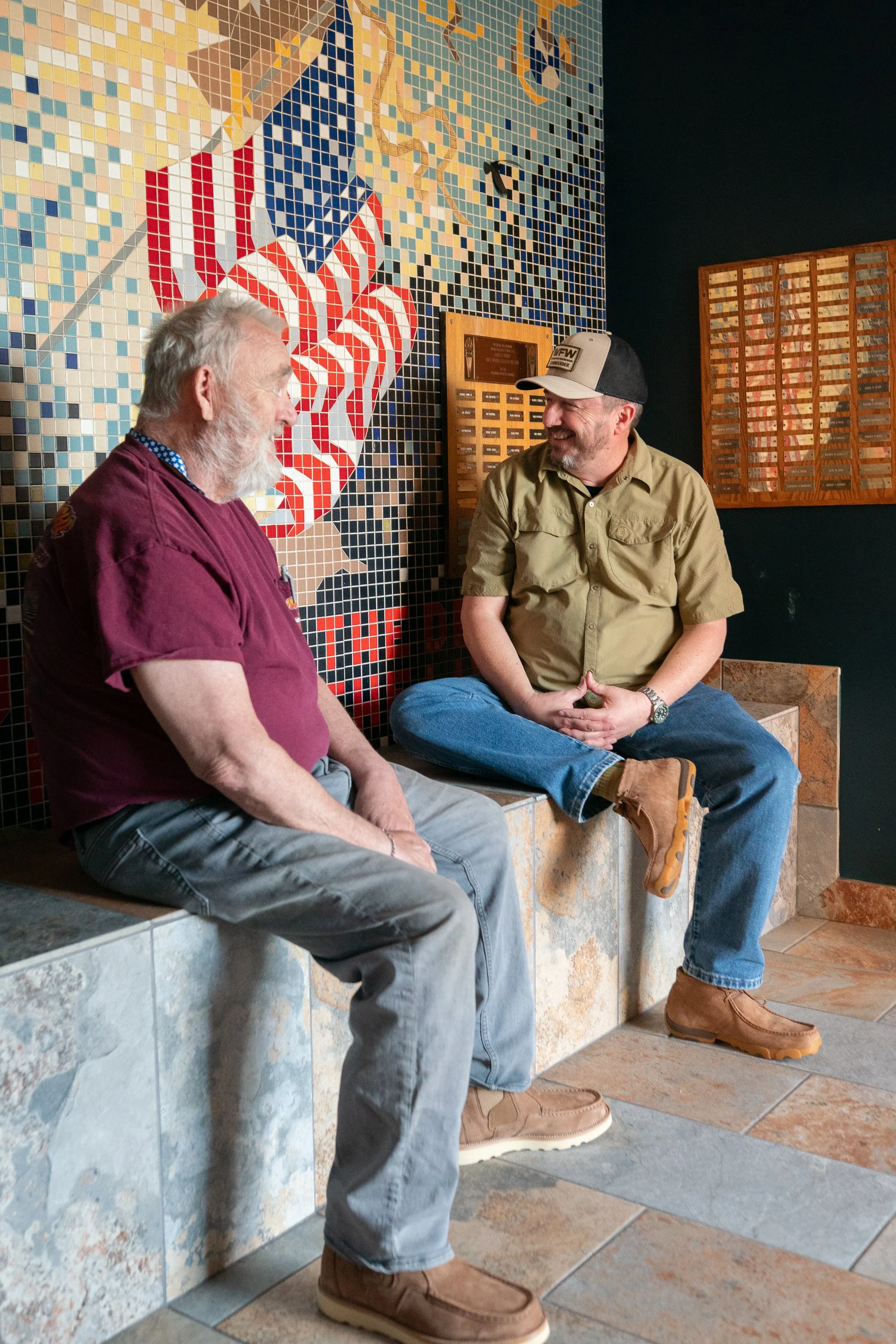
Veterans talk near the mosaic wall inside the VFW hall during the brand campaign.
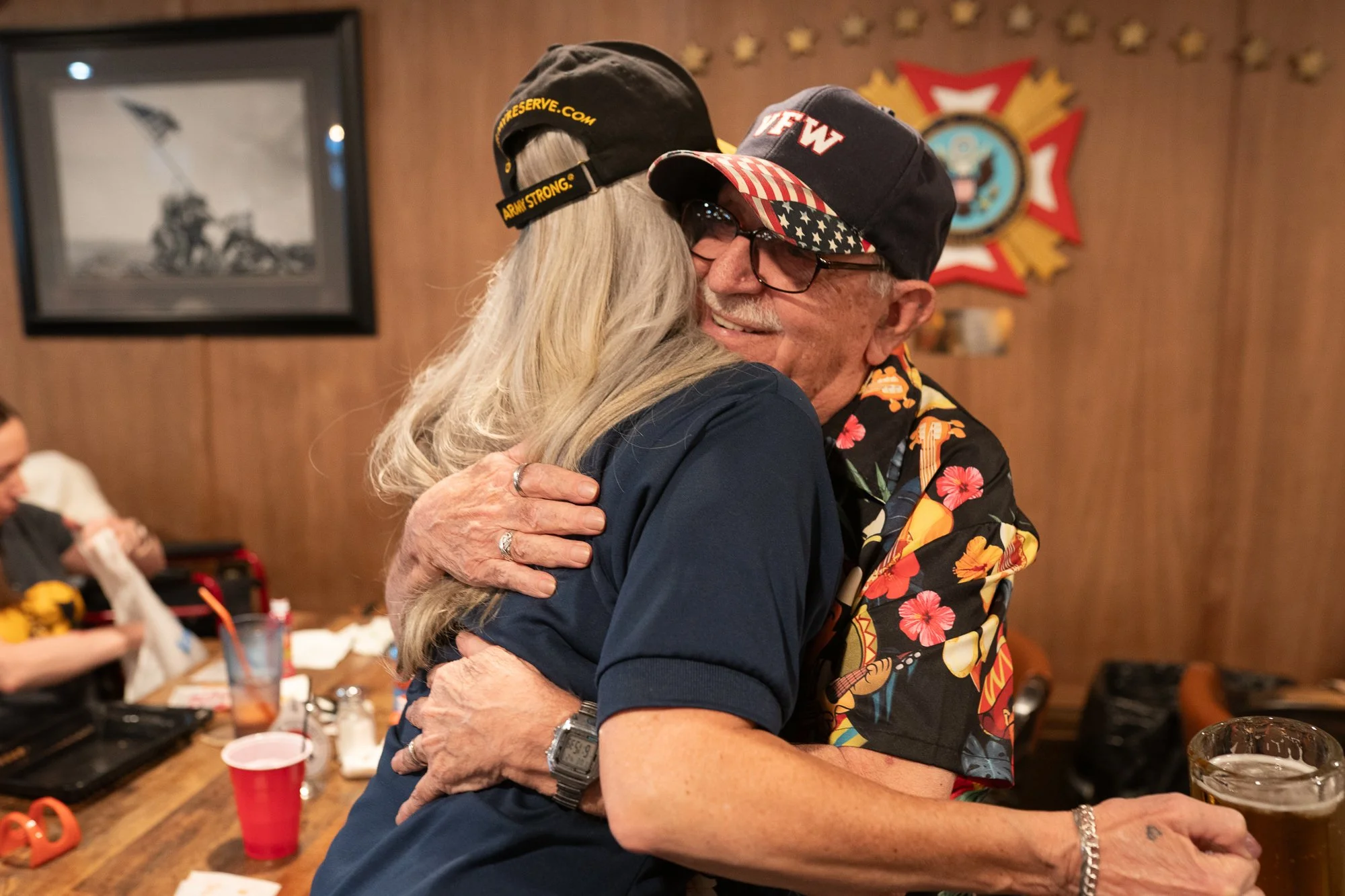
A personal moment inside the VFW hall reflects the real relationships and community surrounding the campaign.
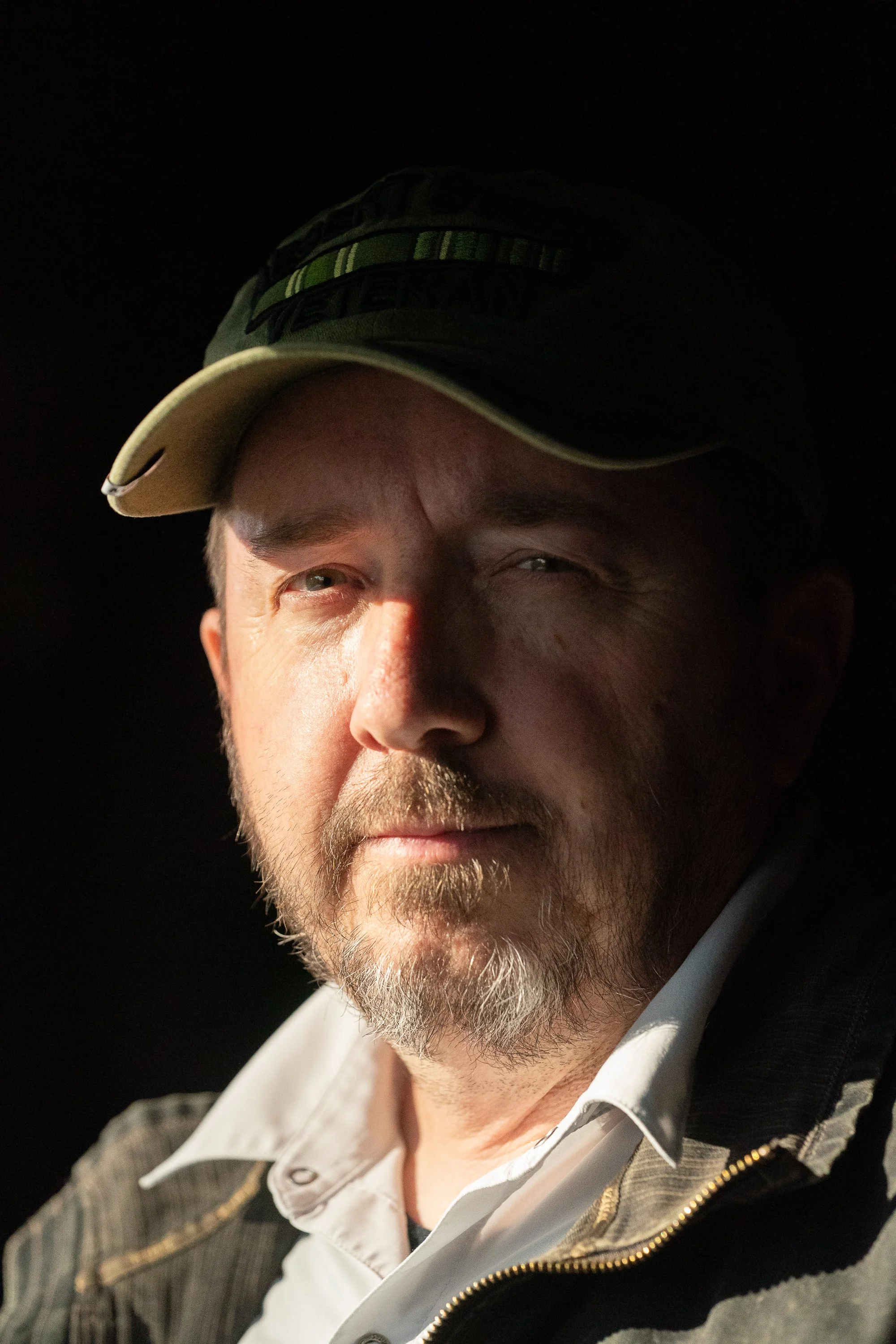
A veteran sits for a close portrait in warm directional light during the campaign.
Why Authenticity Matters in Brand Photography
Brands often talk about authenticity, but creating images that genuinely feel authentic is more difficult than it sounds.
The strongest photographs rarely come from trying to manufacture reality. They come from finding people who have a genuine connection to the story being told and allowing that connection to come through naturally.
Audiences can sense the difference.
Whether the subject is a cowboy, a fly fishing guide, a tradesperson, or a military veteran, real experience brings a depth that is difficult to replicate.
The best brand photography doesn't simply show people. It communicates something about who they are.
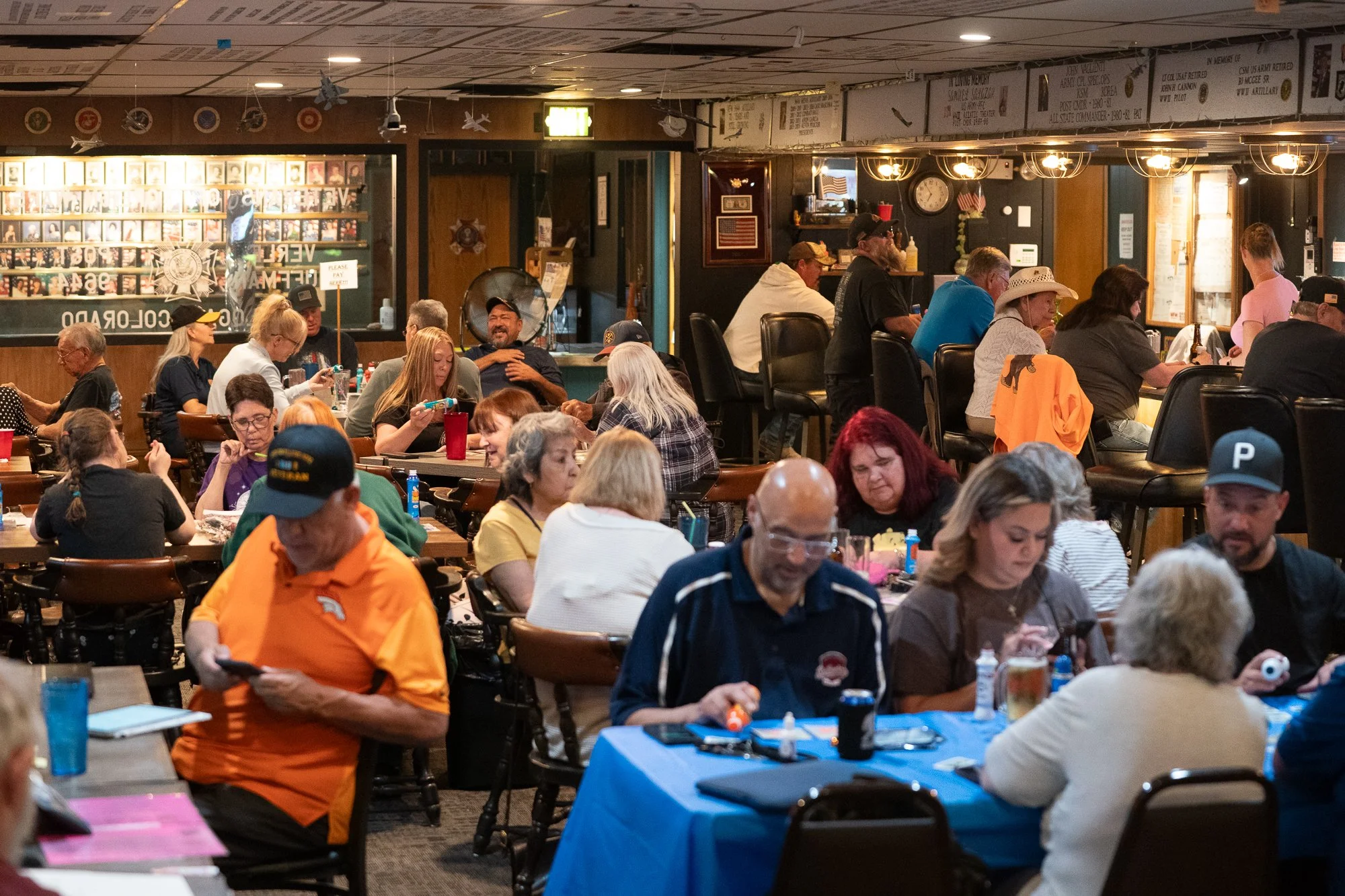
A wider view of the VFW hall shows the real community setting behind the veterans brand campaign.
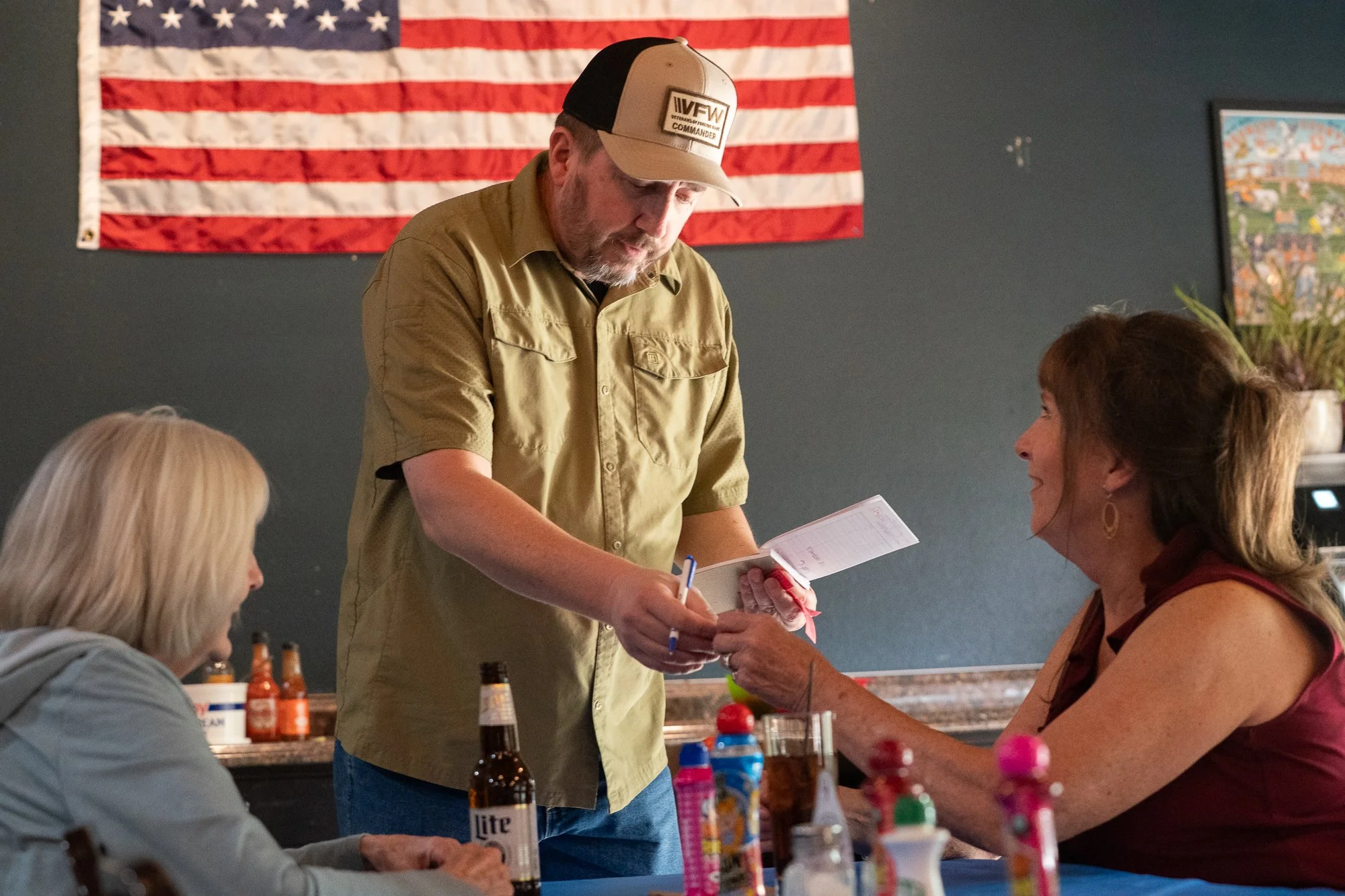
Inside the VFW hall, veterans gather at a table with an American flag hanging behind them.
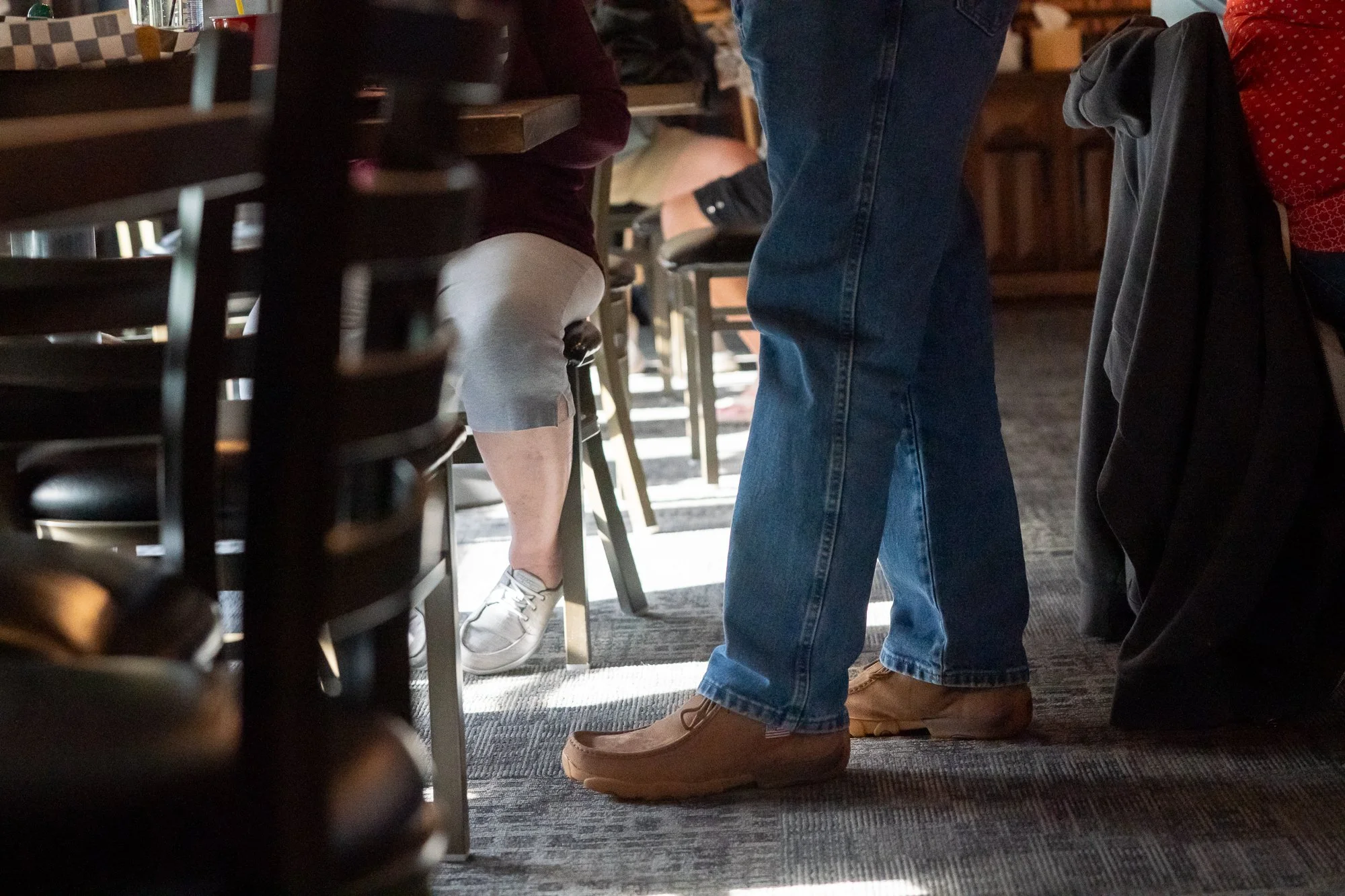
Twisted X shoes appear in a low-angle detail from inside the VFW hall during the campaign.
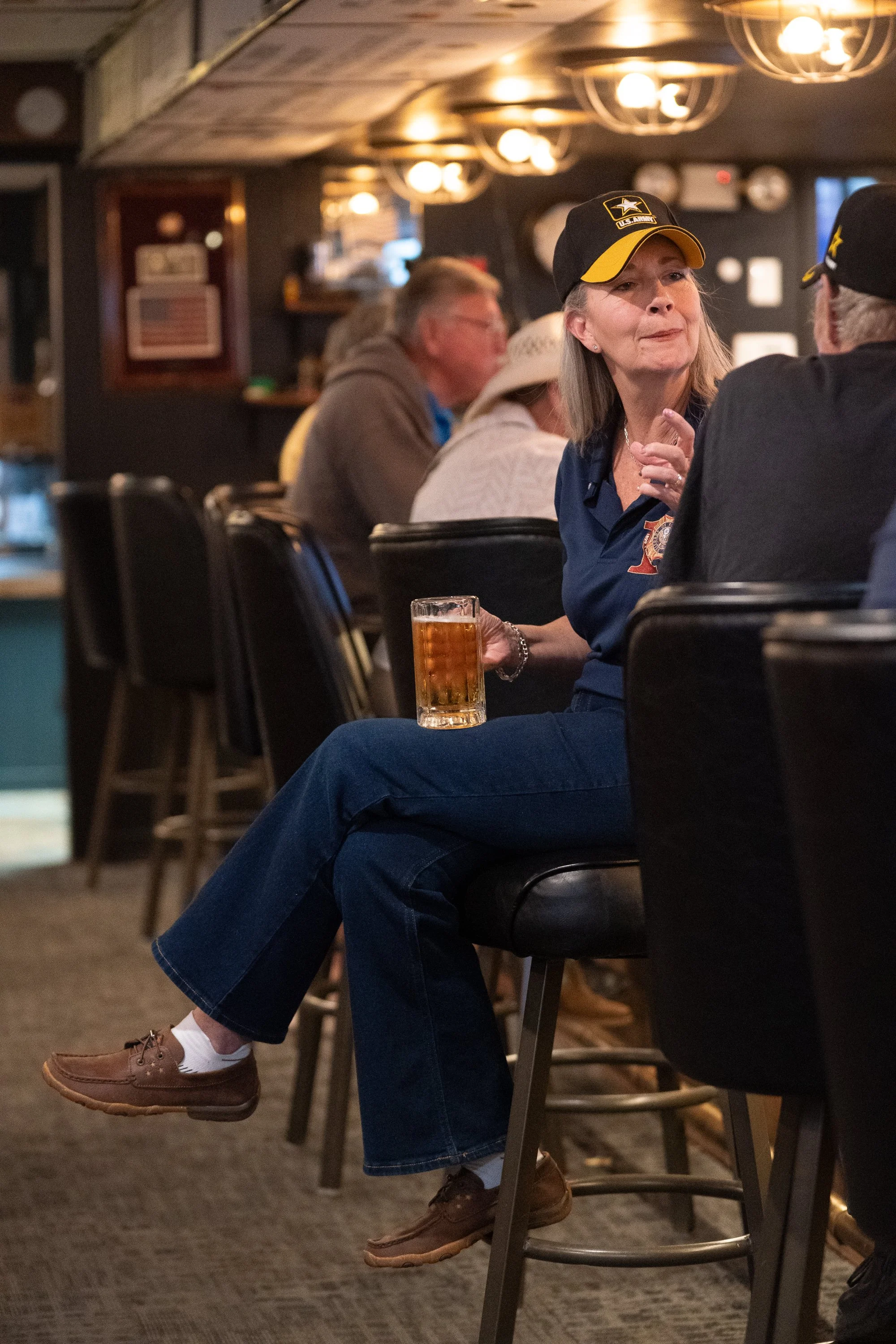
The VFW hall gives the campaign a real setting, with veterans, guests, portraits, and memorabilia filling the room.
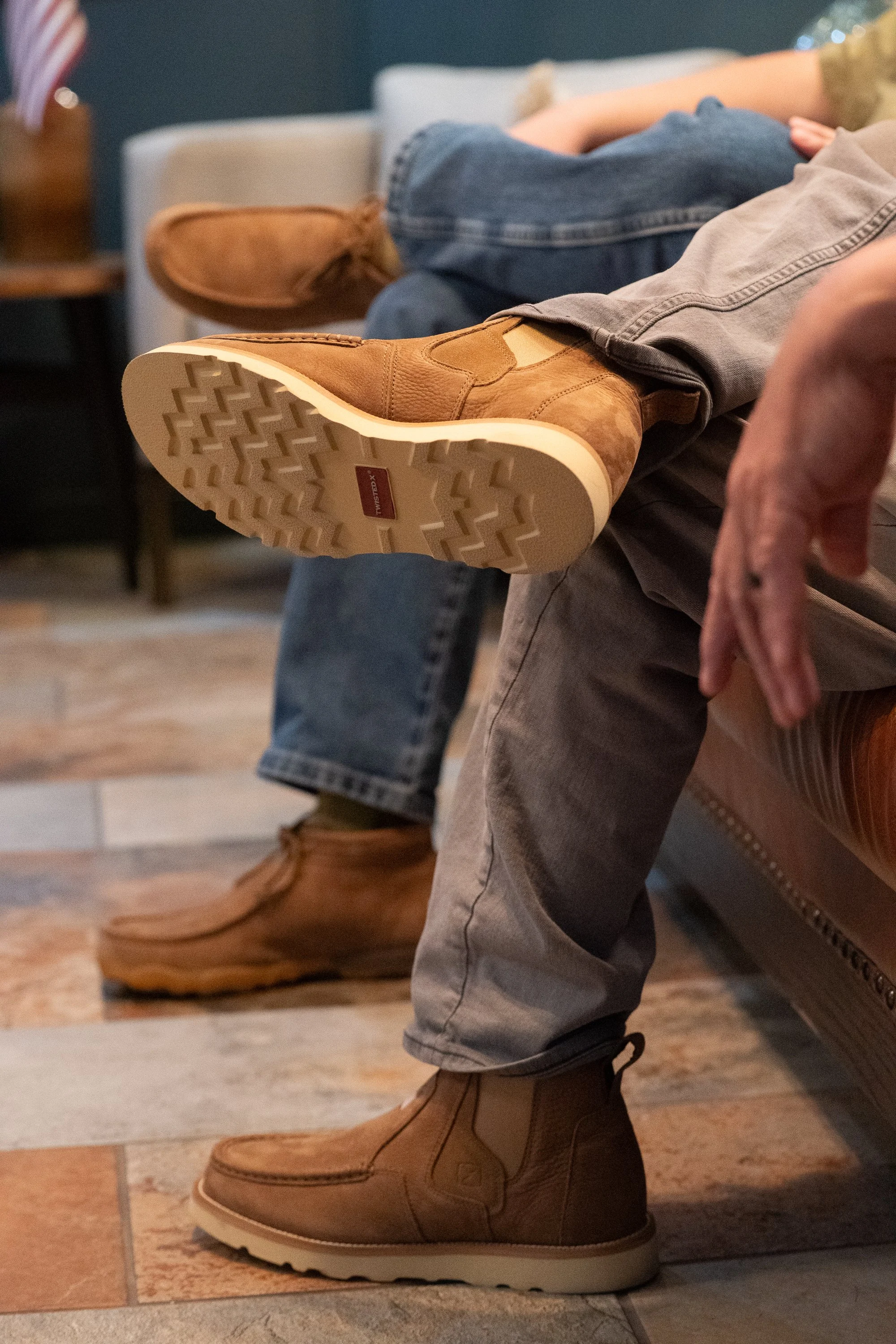
A close detail of Twisted X boots places the product naturally within the VFW hall setting.
Photographing Real Veterans
For this campaign, the subjects were not actors hired to play a role.
They were veterans whose lives and experiences gave genuine meaning to the project.
The assignment took place inside a VFW hall filled with the photographs, memorabilia, and history that naturally accumulate in places where veterans gather and maintain connections with their communities and one another.
Nothing about the environment needed to be manufactured.
The location already contained the character and authenticity that the campaign required.
Instead of directing subjects to act like veterans, the focus could remain on creating honest portraits and moments that reflected who they actually were.
That authenticity became one of the defining strengths of the imagery.
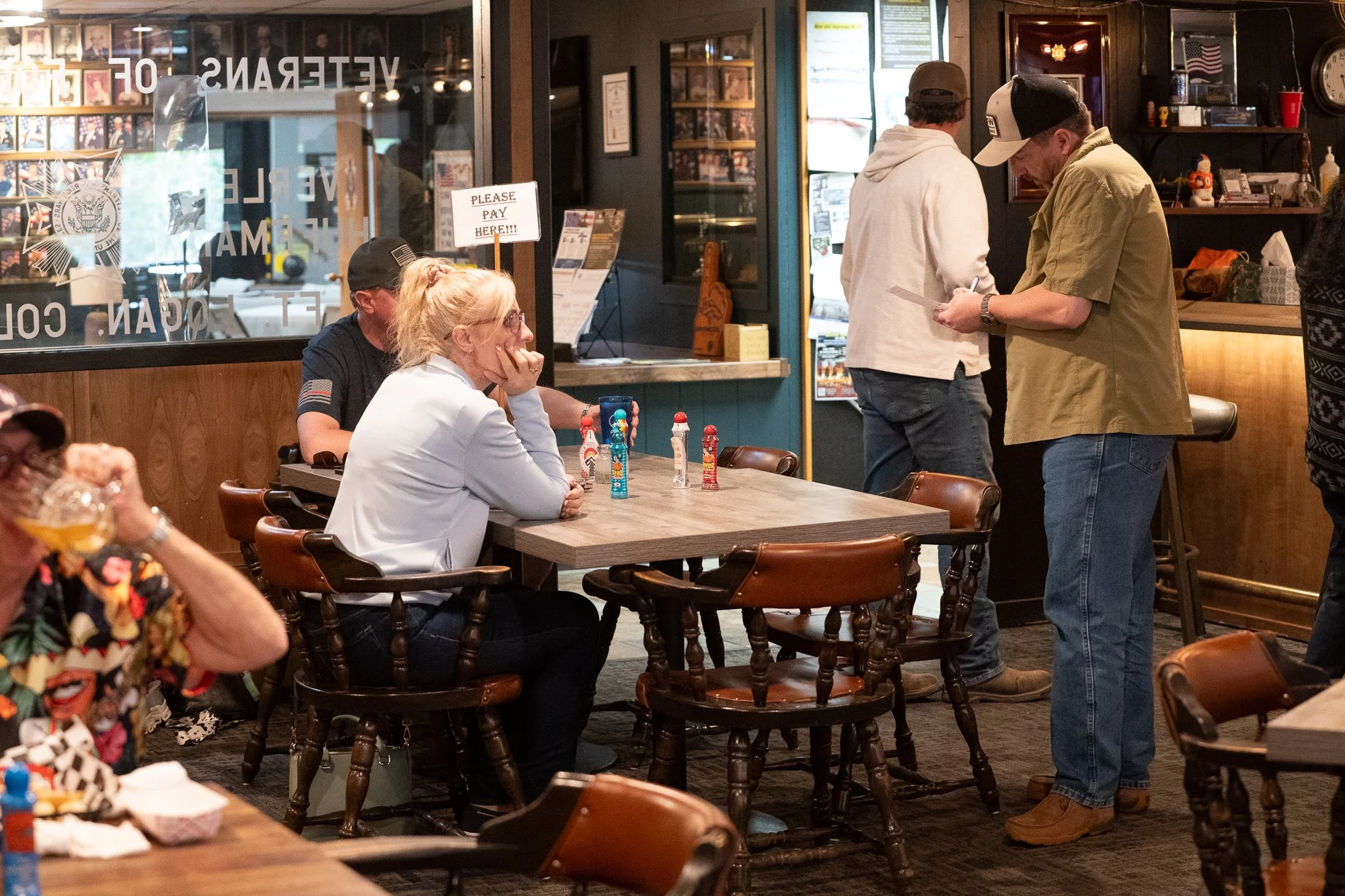
Inside the VFW hall, people gather at tables while the campaign takes place in a real community setting.
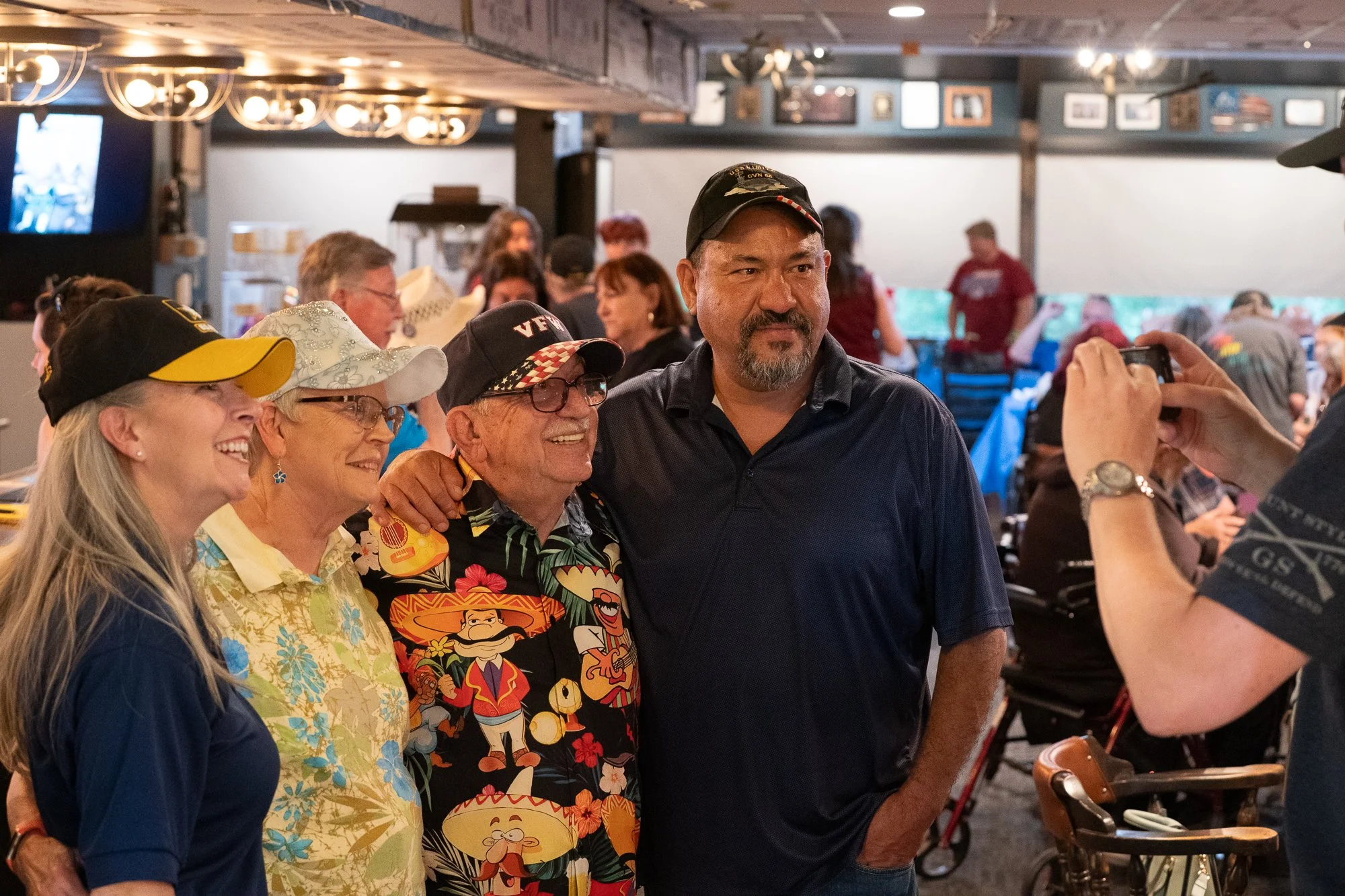
A group gathers for a photo inside the VFW hall during the veterans brand campaign.
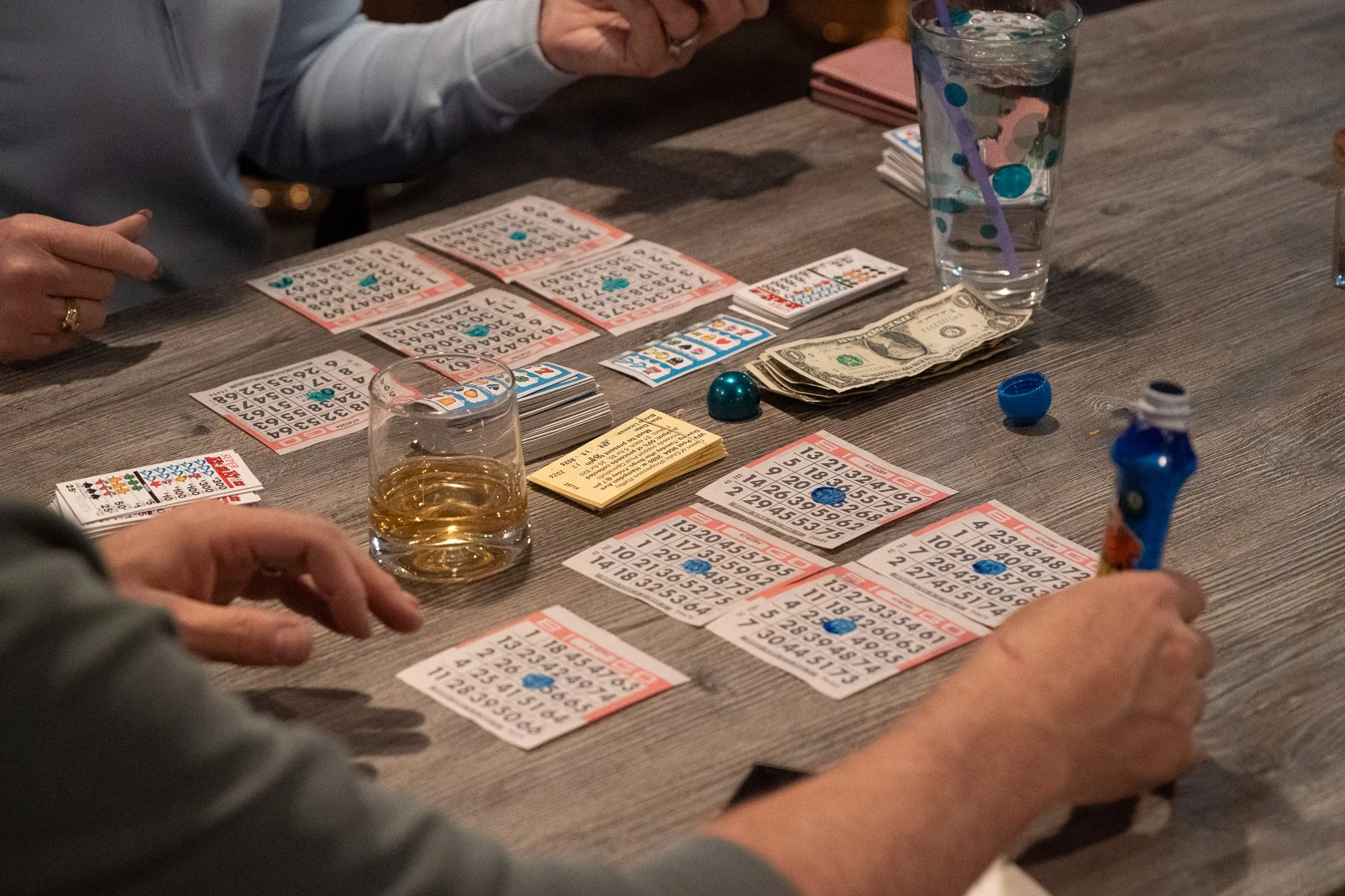
Bingo cards, drinks, and small details from the table show the everyday setting inside the VFW hall.
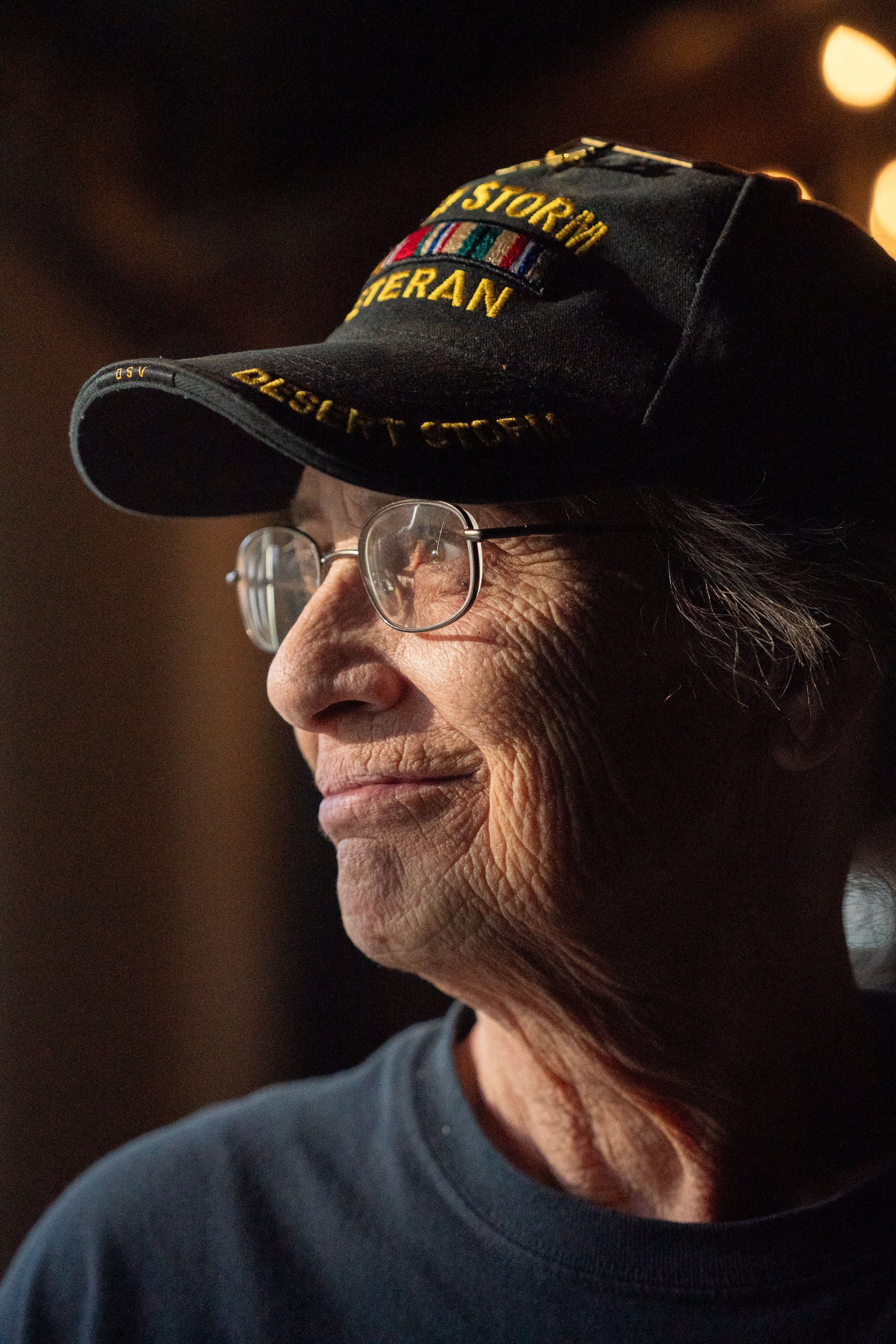
A veteran wearing a Desert Storm Veteran cap sits in warm indoor light during the Twisted X campaign.
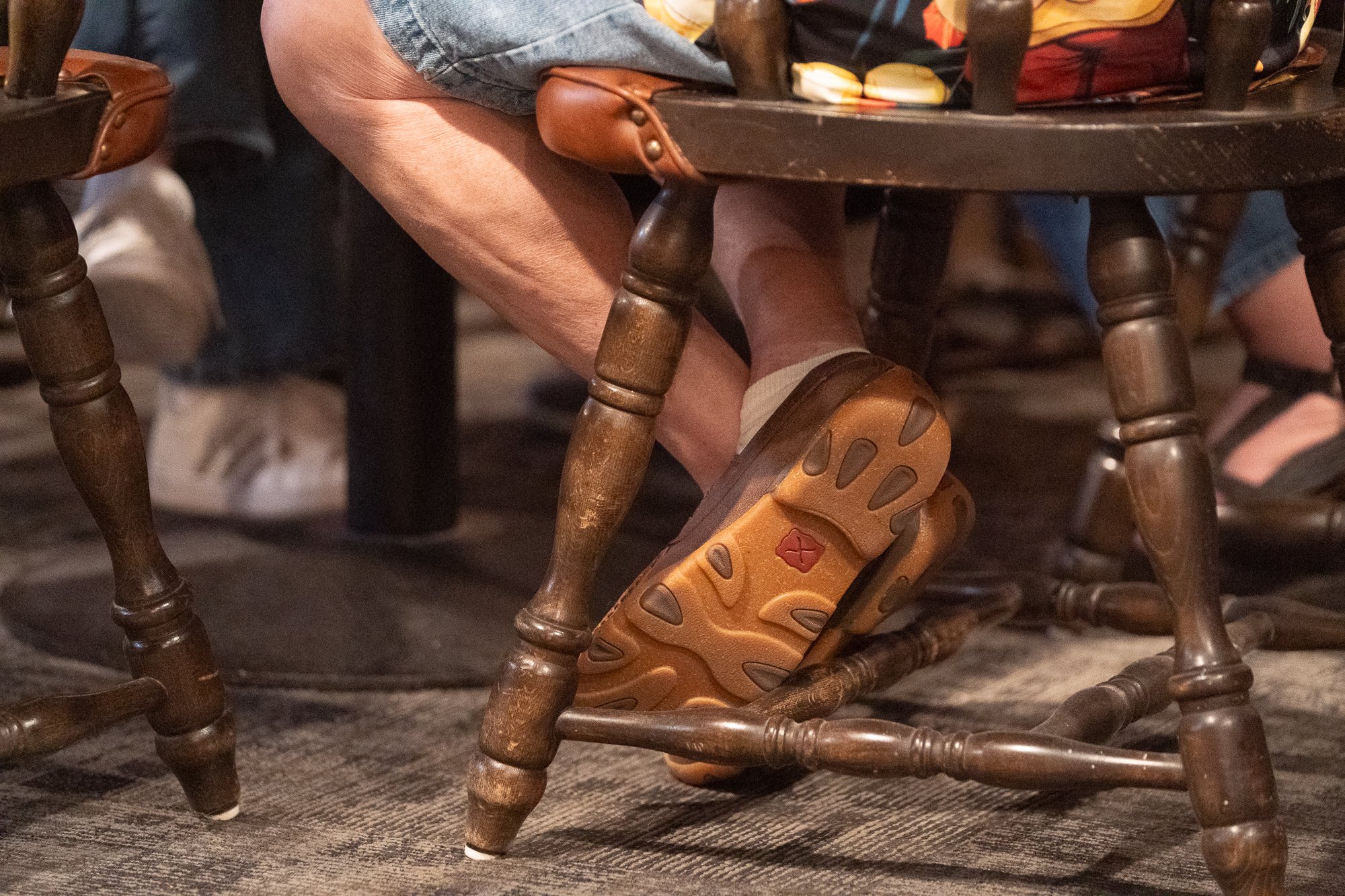
Beneath a wooden chair, a Twisted X shoe appears naturally within the everyday setting of the VFW hall.
Real Places Tell Better Stories
The same principle applies to locations.
Many productions spend significant resources trying to recreate environments that already exist.
For this assignment, there was no need.
The VFW hall provided a setting filled with visual details that could never be convincingly reproduced on a soundstage. Photographs on the walls, flags, plaques, and decades of accumulated history all contributed to the atmosphere.
These elements weren't props.
They were part of the story.
Photographing in a real environment creates layers of meaning that help viewers connect with an image on a deeper level, even if they can't immediately identify why.
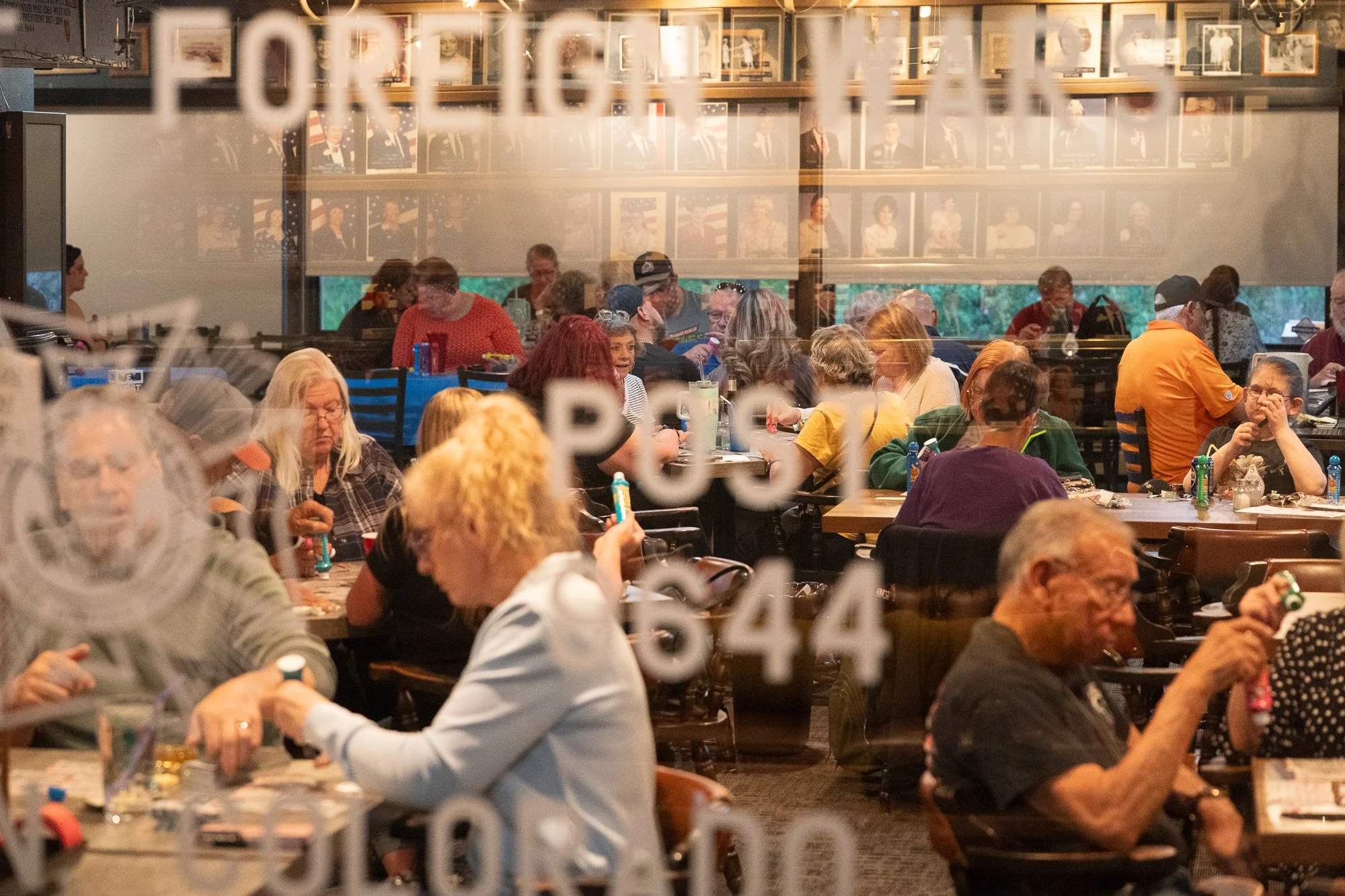
Seen through the front window, the VFW hall shows the real community setting behind the veterans campaign.
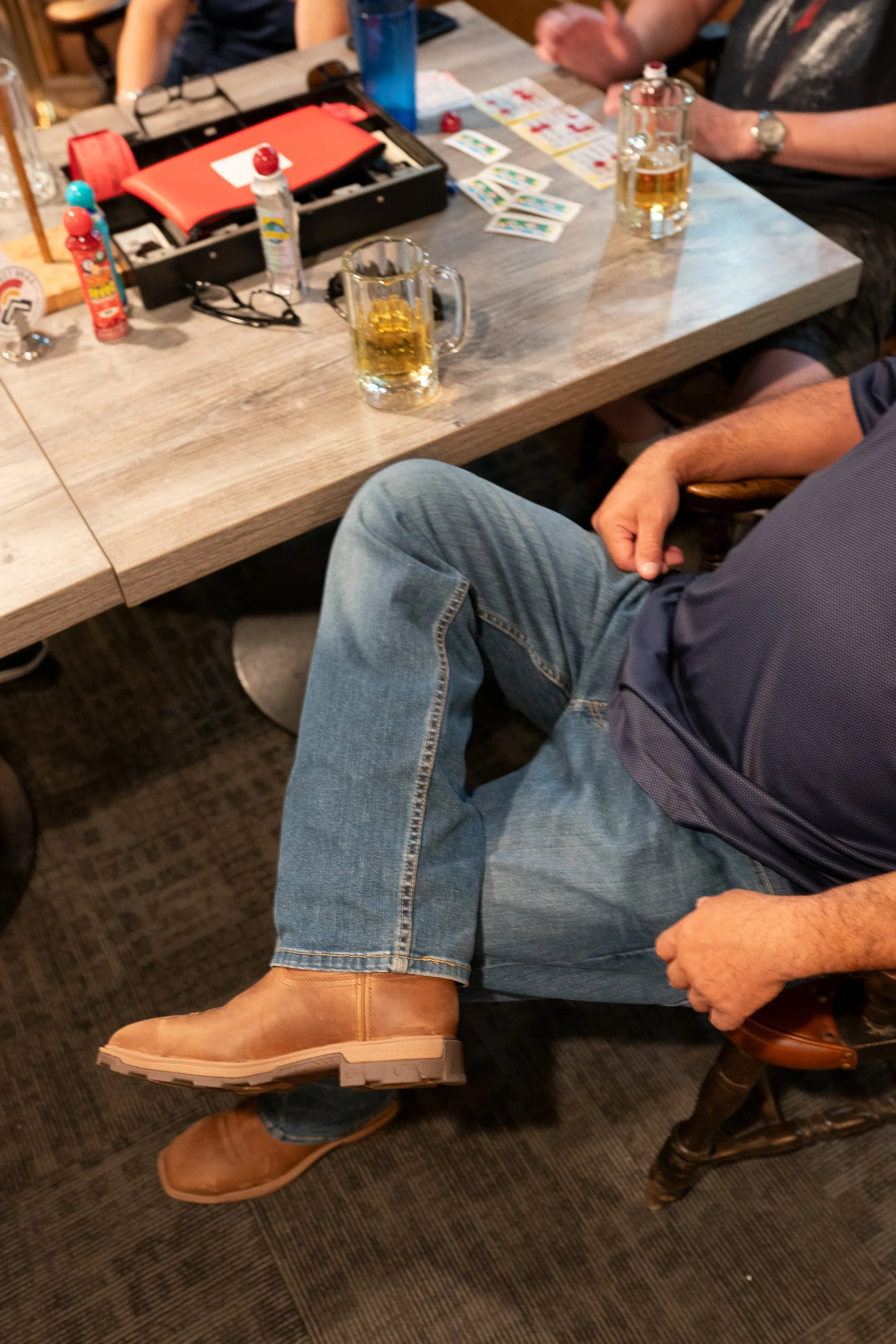
A close detail of boots beneath the table keeps the product connected to the real VFW hall setting.
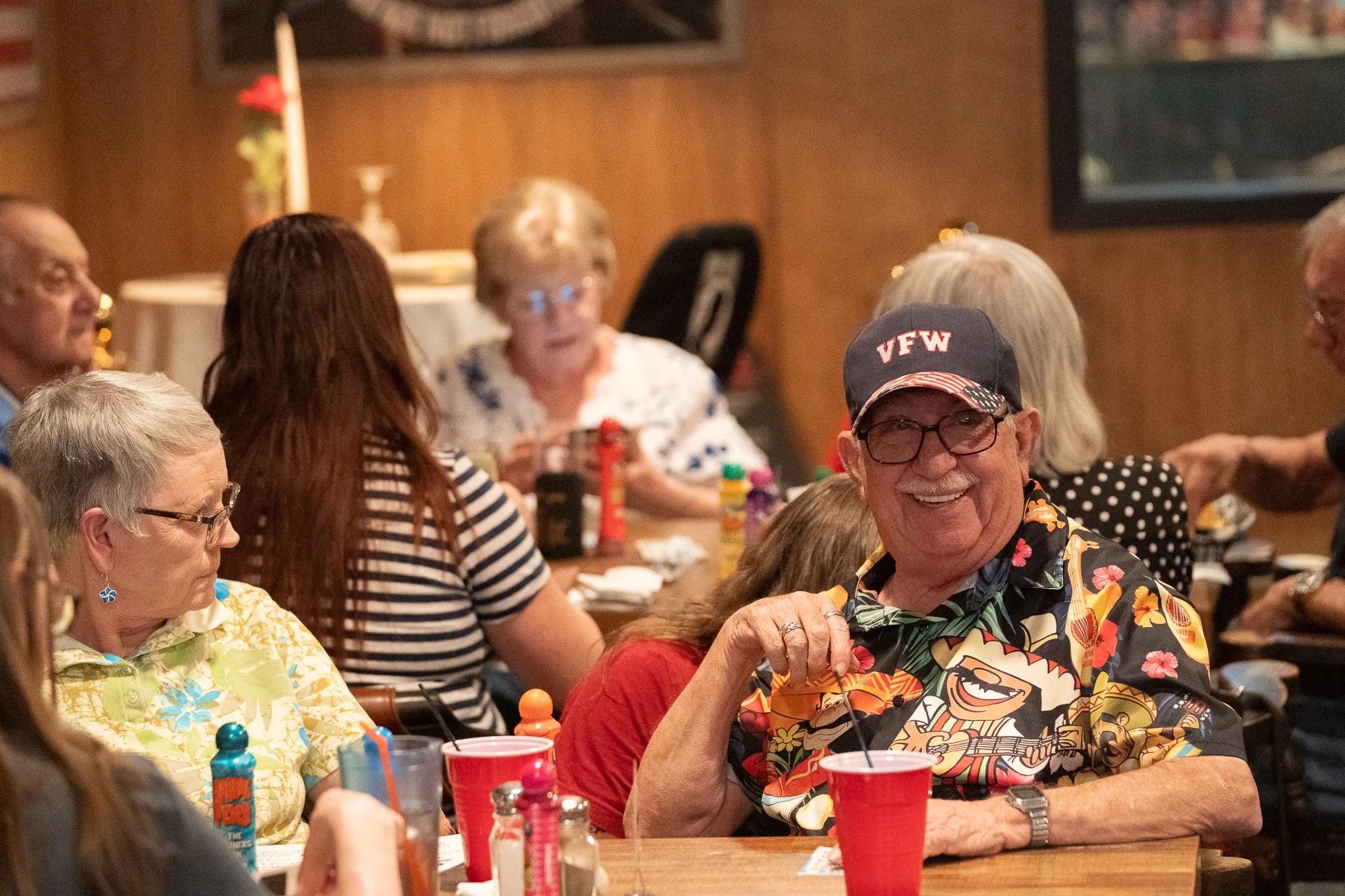
Veterans and community members sit together inside the VFW hall during the brand photography campaign.
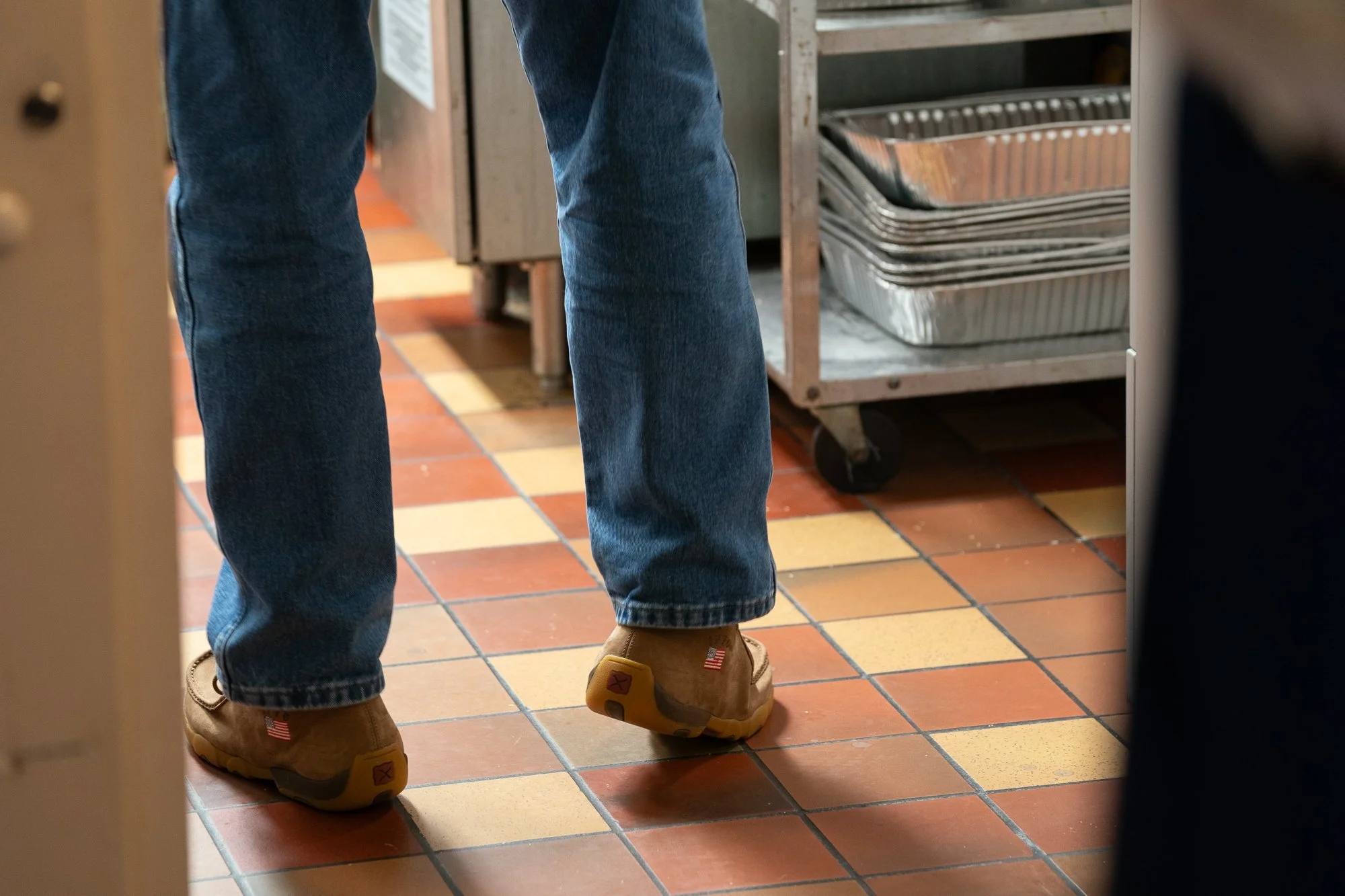
Twisted X boots are photographed on the tile floor inside the real setting of the veterans campaign.
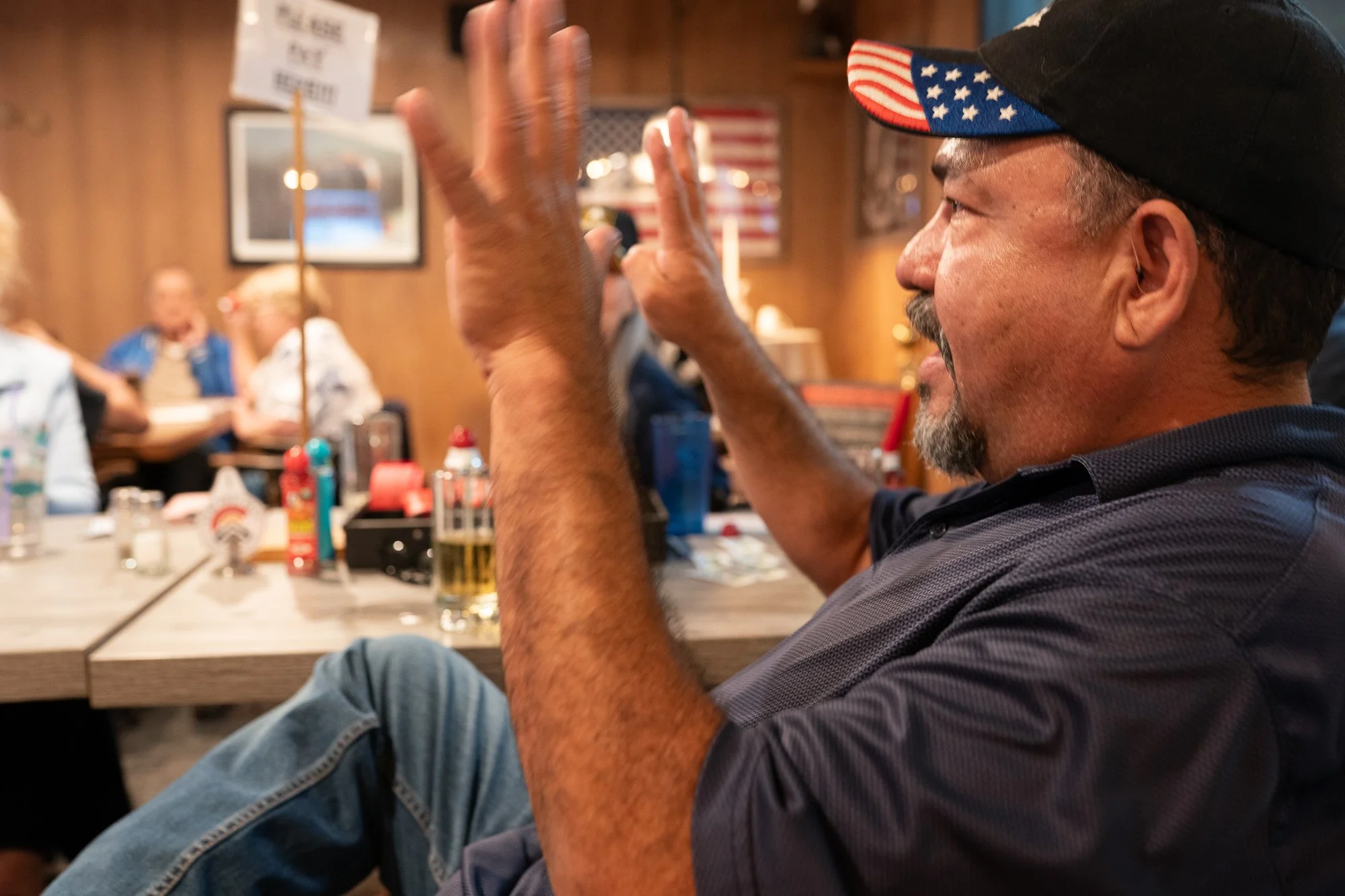
Inside the VFW hall, a veteran gestures while talking with others at the table.
The Connection to My Larger Body of Work
One of the reasons this assignment felt so natural is that it followed the same approach I've used throughout much of my photography career.
Whether documenting real people at work, cowboys, barbershops in all 50 states, fly fisherman, or small-town American communities, I've always been drawn to people who have a genuine connection to their environment and way of life.
The goal is never to create a version of authenticity.
The goal is to photograph authenticity itself.
Many of the strongest images from my long-term cowboy project were made because real people allowed me access to their lives and work. The same principle applied here.
The veterans didn't need to become characters.
They simply needed to be themselves.
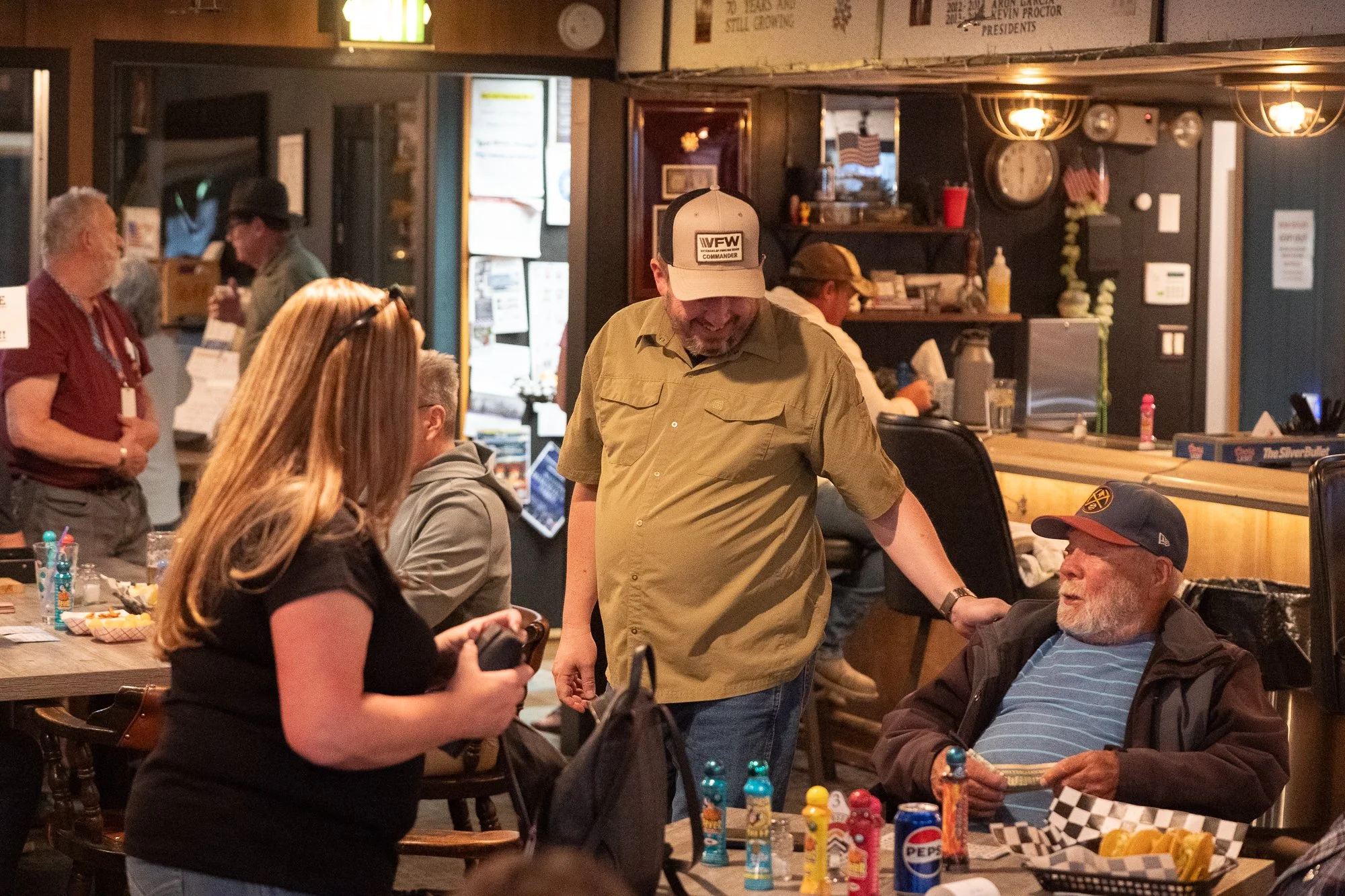
Inside the VFW hall, the campaign moves through real conversations and everyday moments.
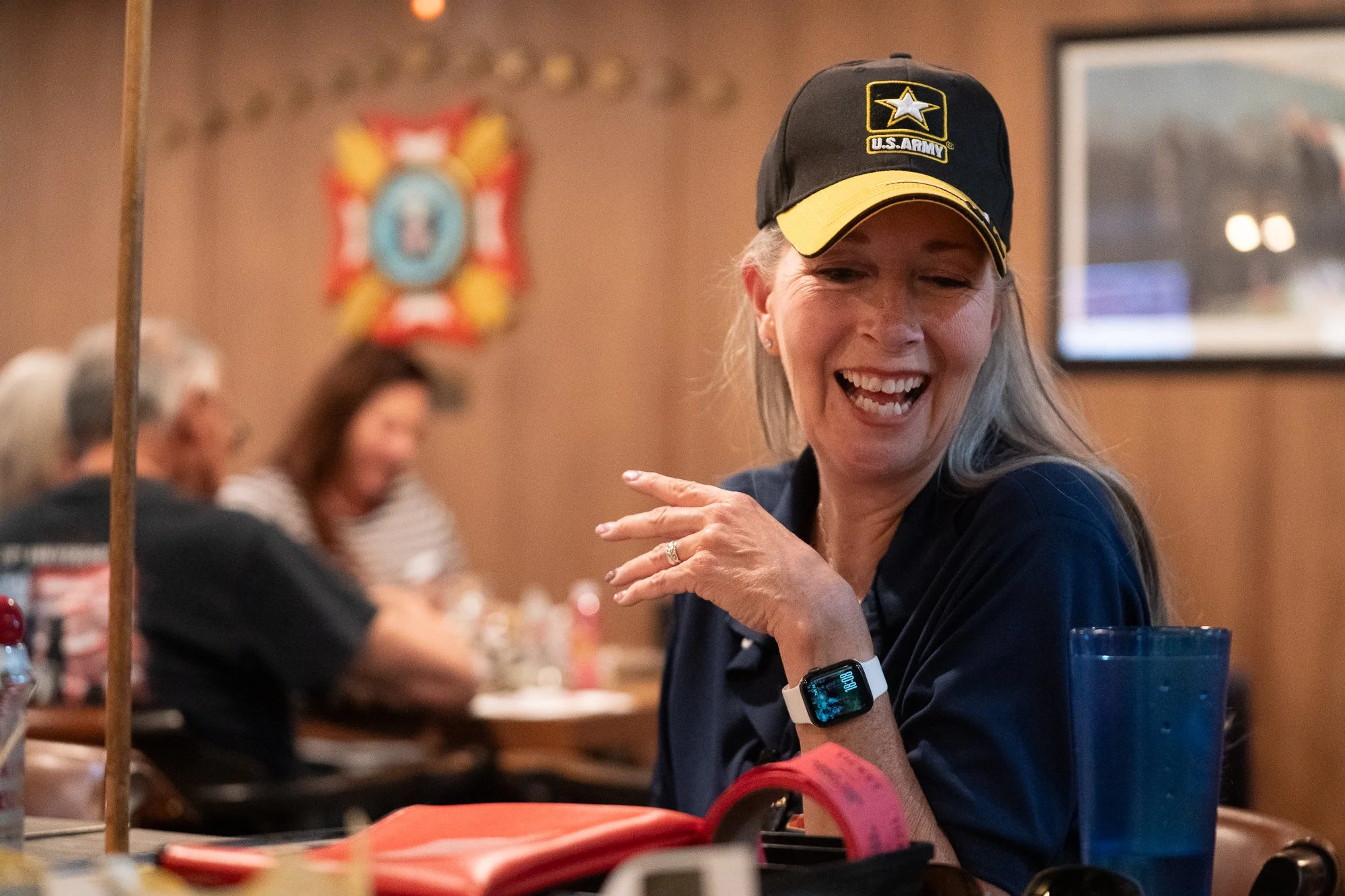
A veteran wearing a U.S. Army hat shares a laugh at the table inside the VFW hall.
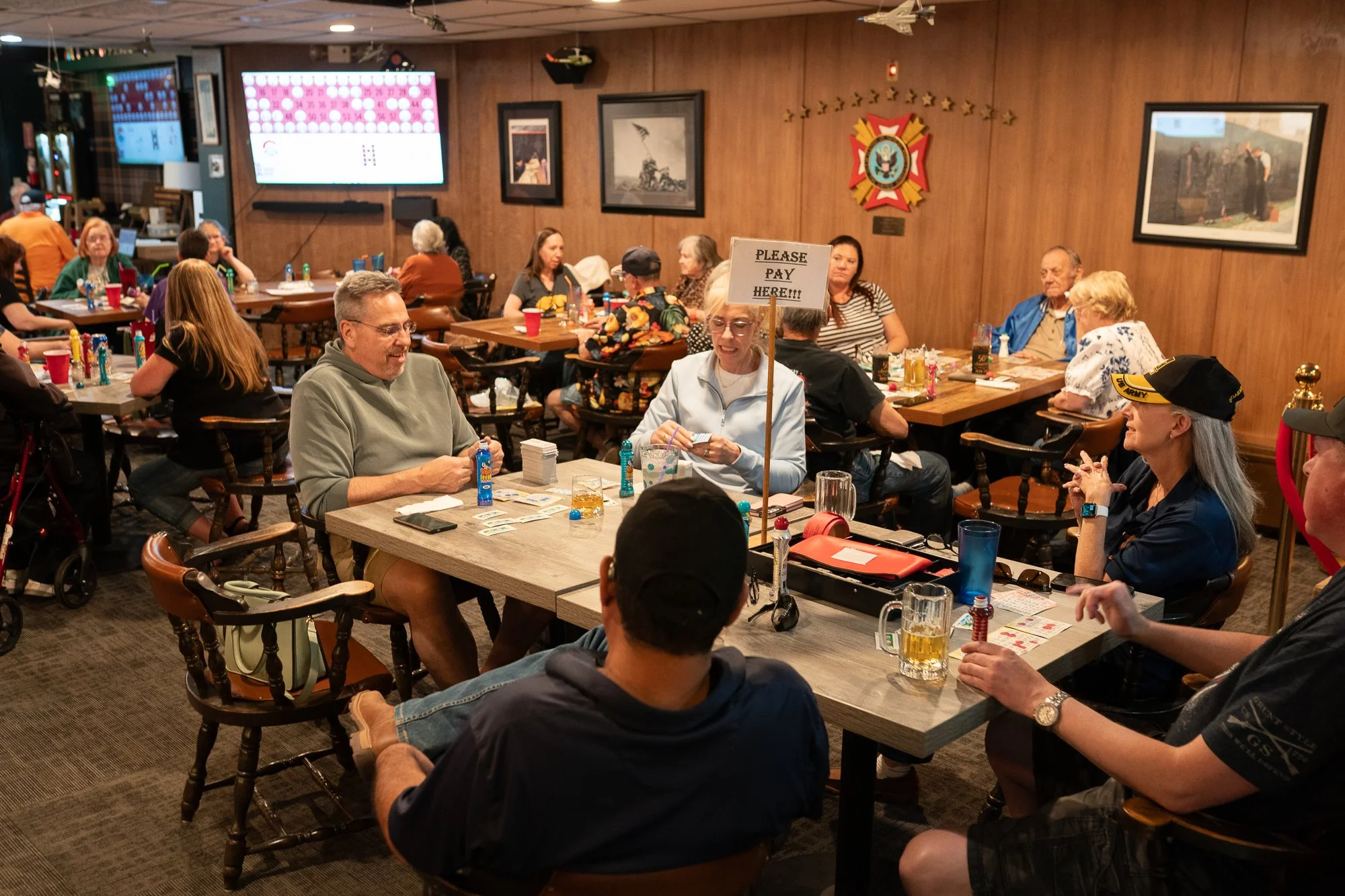
People gather around the tables for bingo inside the VFW hall during the veterans brand campaign.
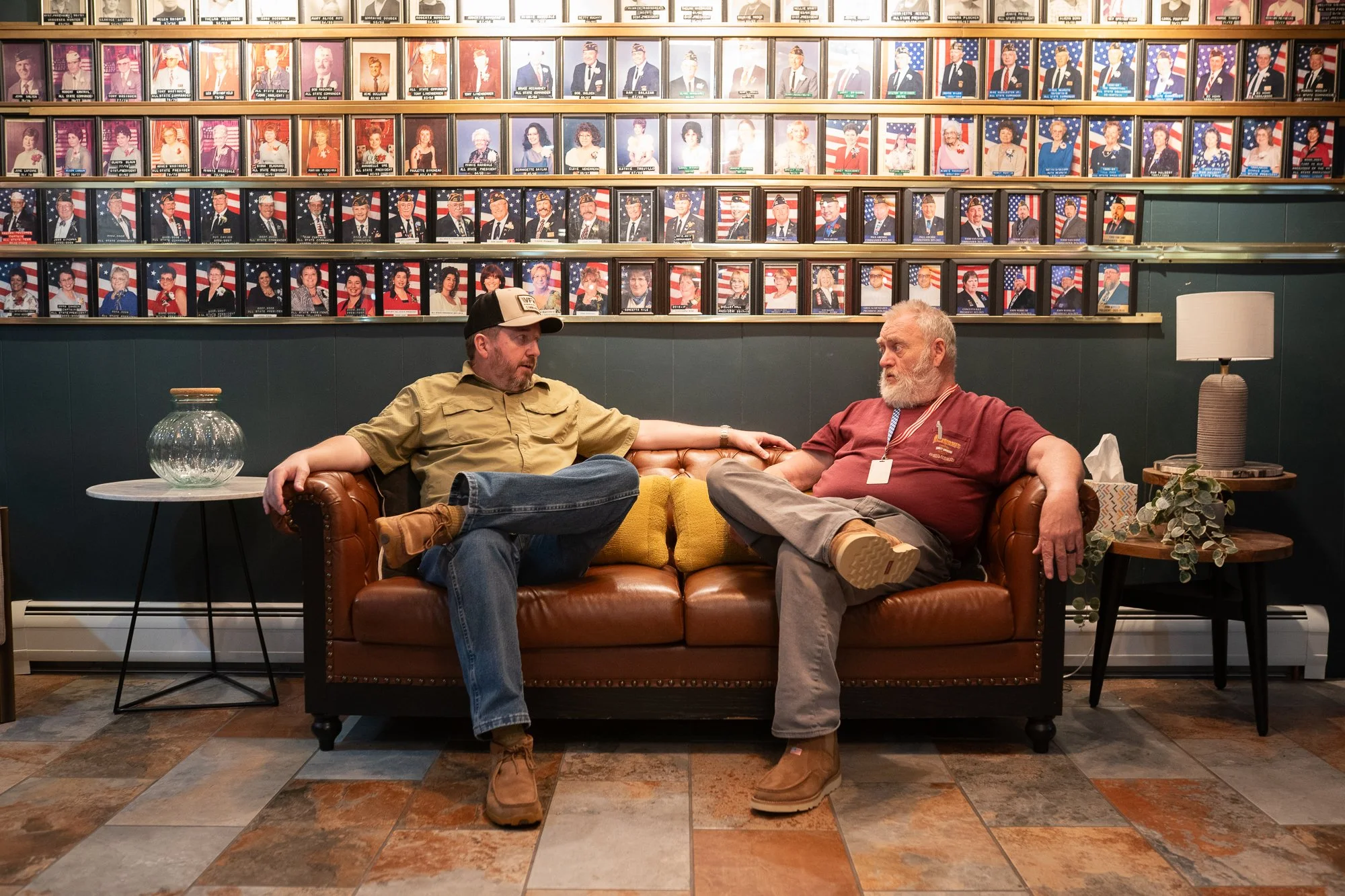
Veterans sit beneath rows of portraits inside the VFW hall, surrounded by the history of the post.
Why Real People Create Better Brand Stories
Brands are increasingly recognizing that audiences respond to honesty.
The most memorable campaigns often succeed because they are rooted in something real. Real experiences. Real places. Real people.
That doesn't mean every campaign must take a documentary approach. It does mean that authenticity should be considered at every stage of the creative process.
When brands build campaigns around people who genuinely embody the values they hope to communicate, the resulting imagery tends to feel more believable, more relatable, and ultimately more effective.
The camera can record a great deal of information.
What it records especially well is truth.
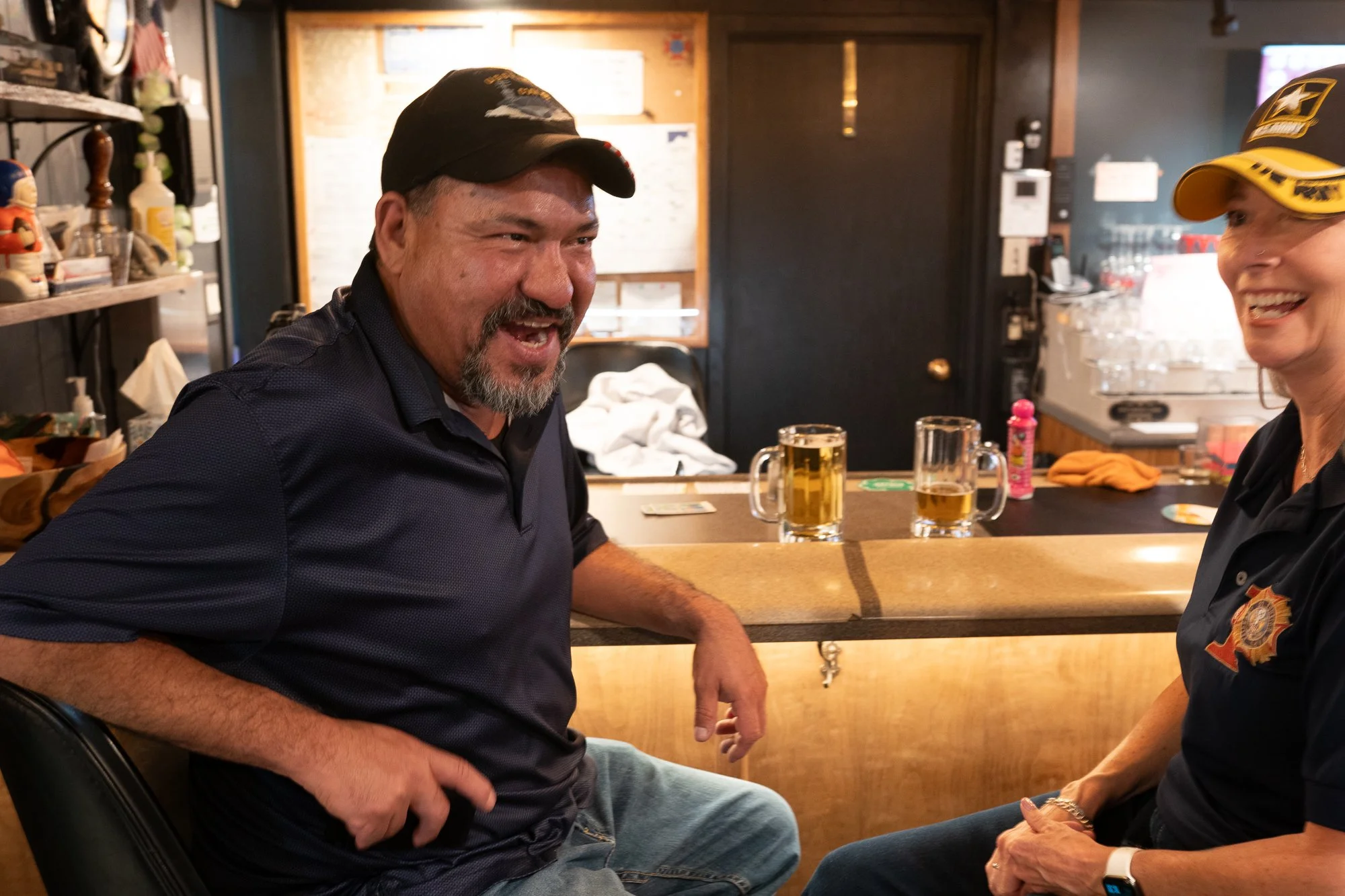
Veterans talk and laugh at the bar inside the VFW hall during the brand campaign.
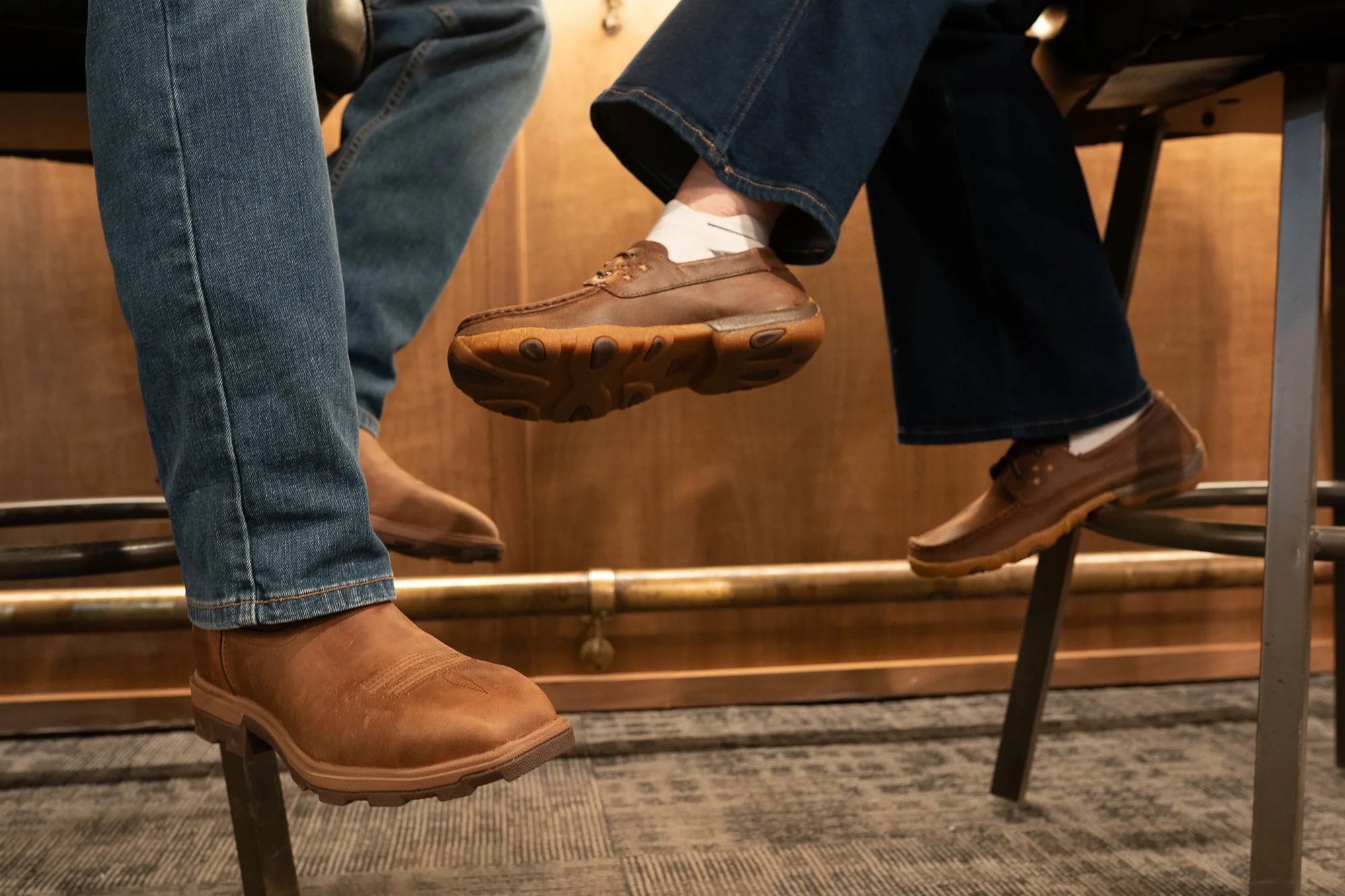
A detail of boots and shoes beneath the bar keeps the product photography tied to the real VFW hall setting.
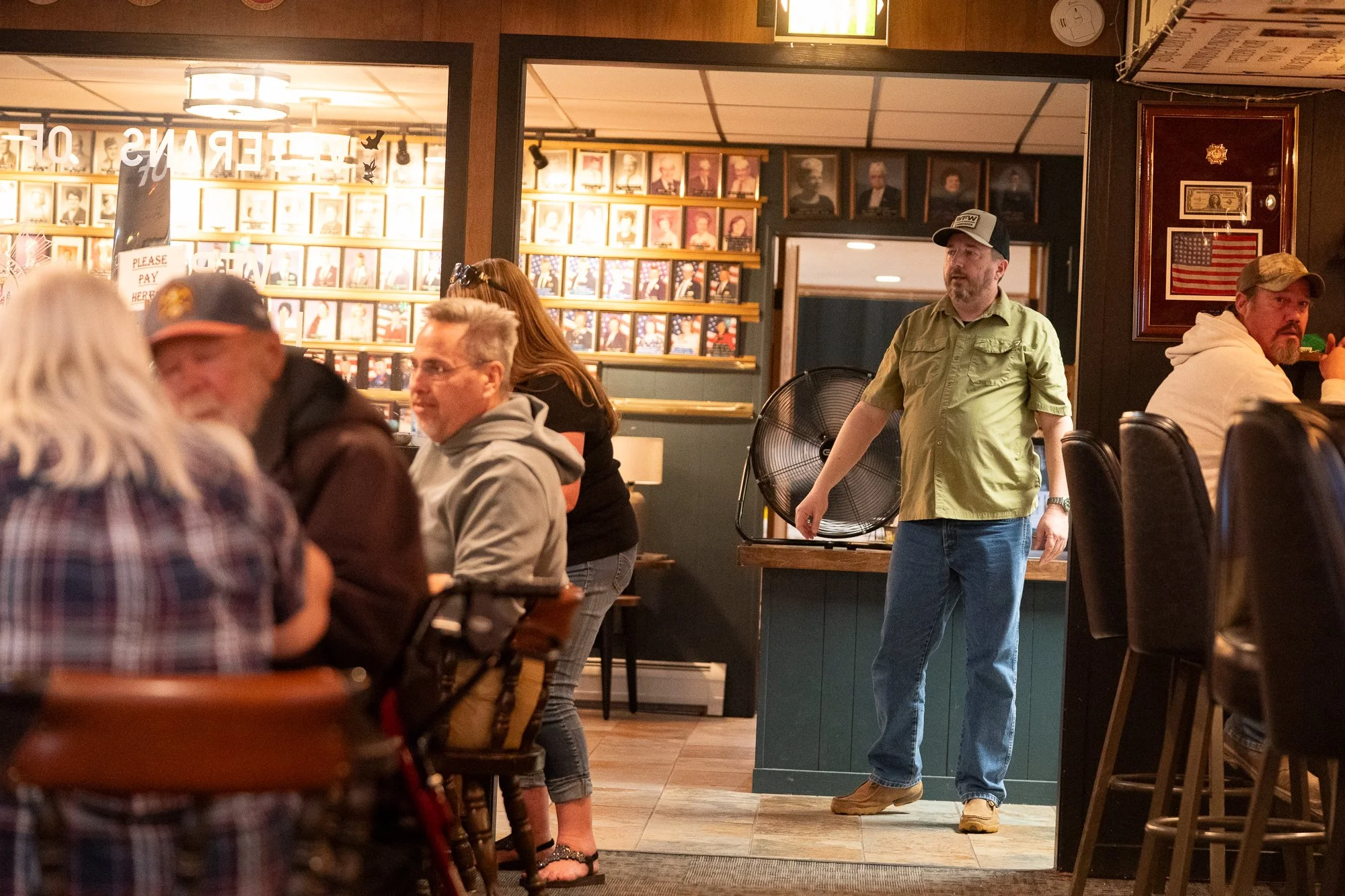
The VFW hall provides the real setting for the veterans brand campaign, with portraits and memorabilia visible throughout the room.
Authentic Photography for Brands and Agencies
Assignments like this are a reminder that great brand photography begins long before the shutter is pressed.
It starts with identifying authentic stories and the people best suited to tell them.
Whether working with ranchers, veterans, tradespeople, outdoor professionals, or other communities, my goal remains the same: create photographs that feel honest, grounded, and connected to real experience.
The strongest stories rarely need to be invented.
They are already there, waiting to be documented.
Additional Commercial Photography Projects
This campaign is one example of a broader body of commercial and documentary work focused on authentic people and authentic places.
From working ranches and Western brands to outdoor, agricultural, and lifestyle assignments, these projects share a common philosophy: real stories create stronger photographs.
Explore additional commercial photography projects, cowboy culture stories, and documentary work from across the American West and beyond.
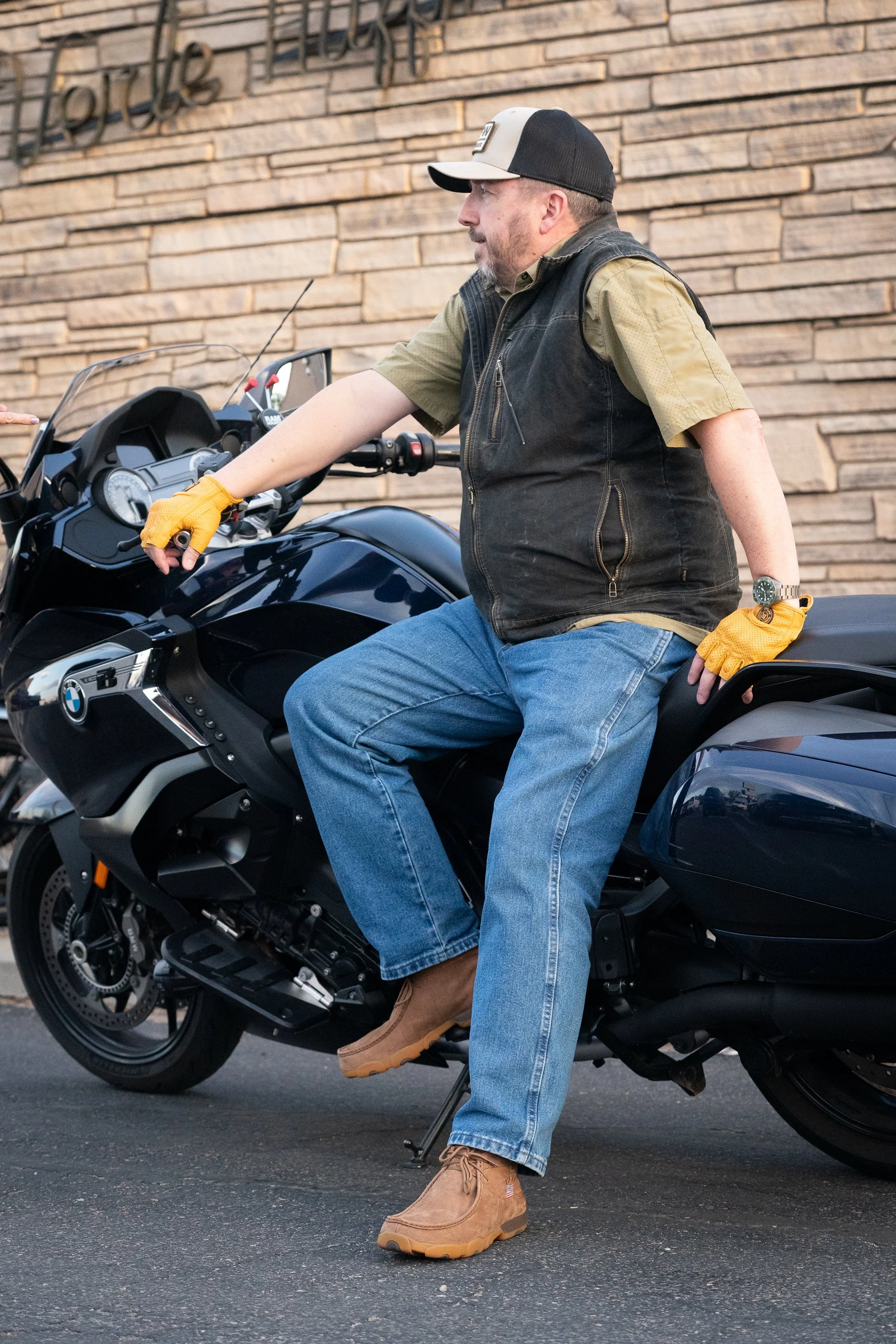
Outside the VFW hall, a veteran sits on a motorcycle with Twisted X boots visible in the frame.
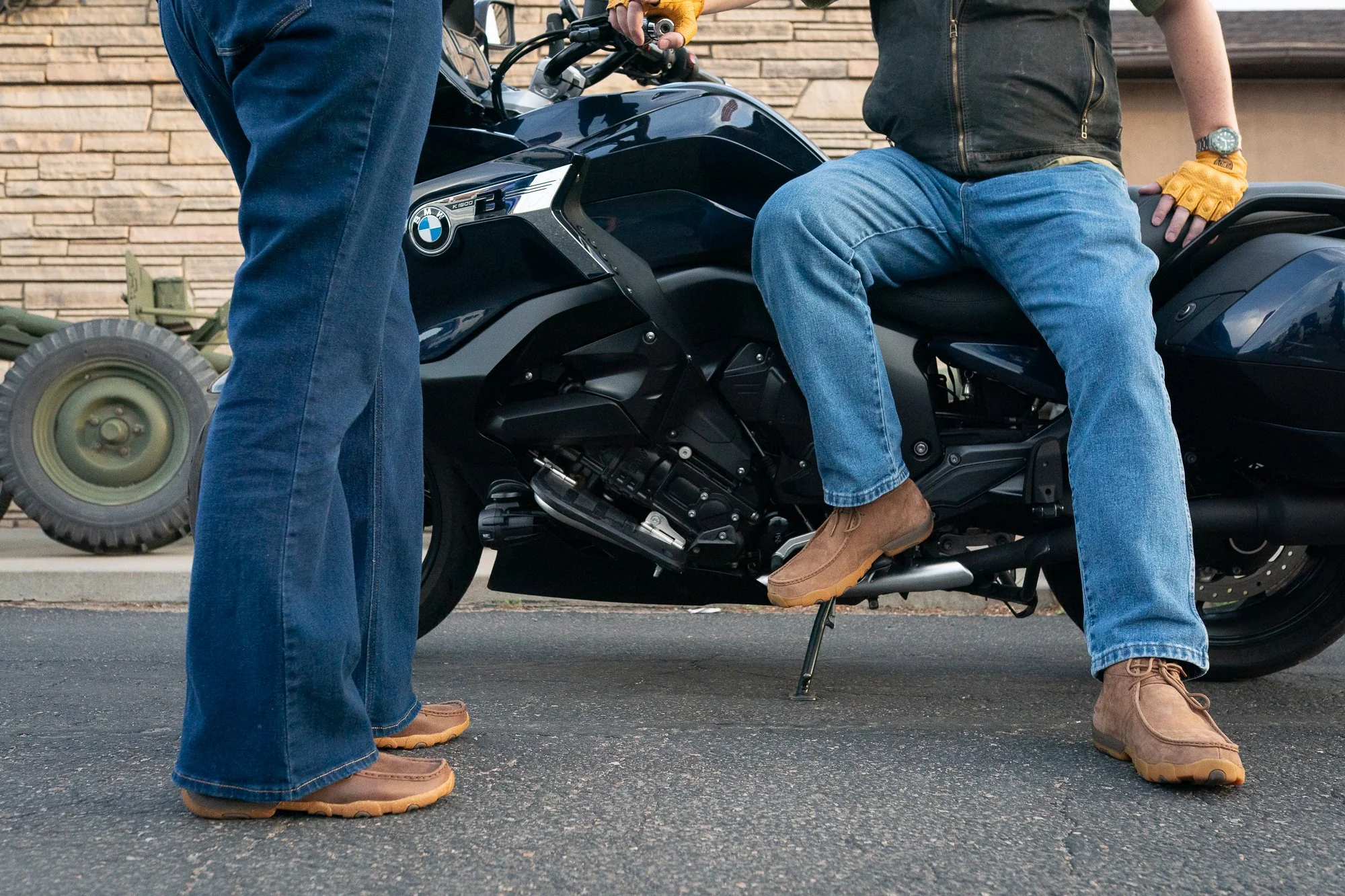
Twisted X boots are photographed beside a motorcycle outside the VFW hall, keeping the product tied to the real campaign setting.
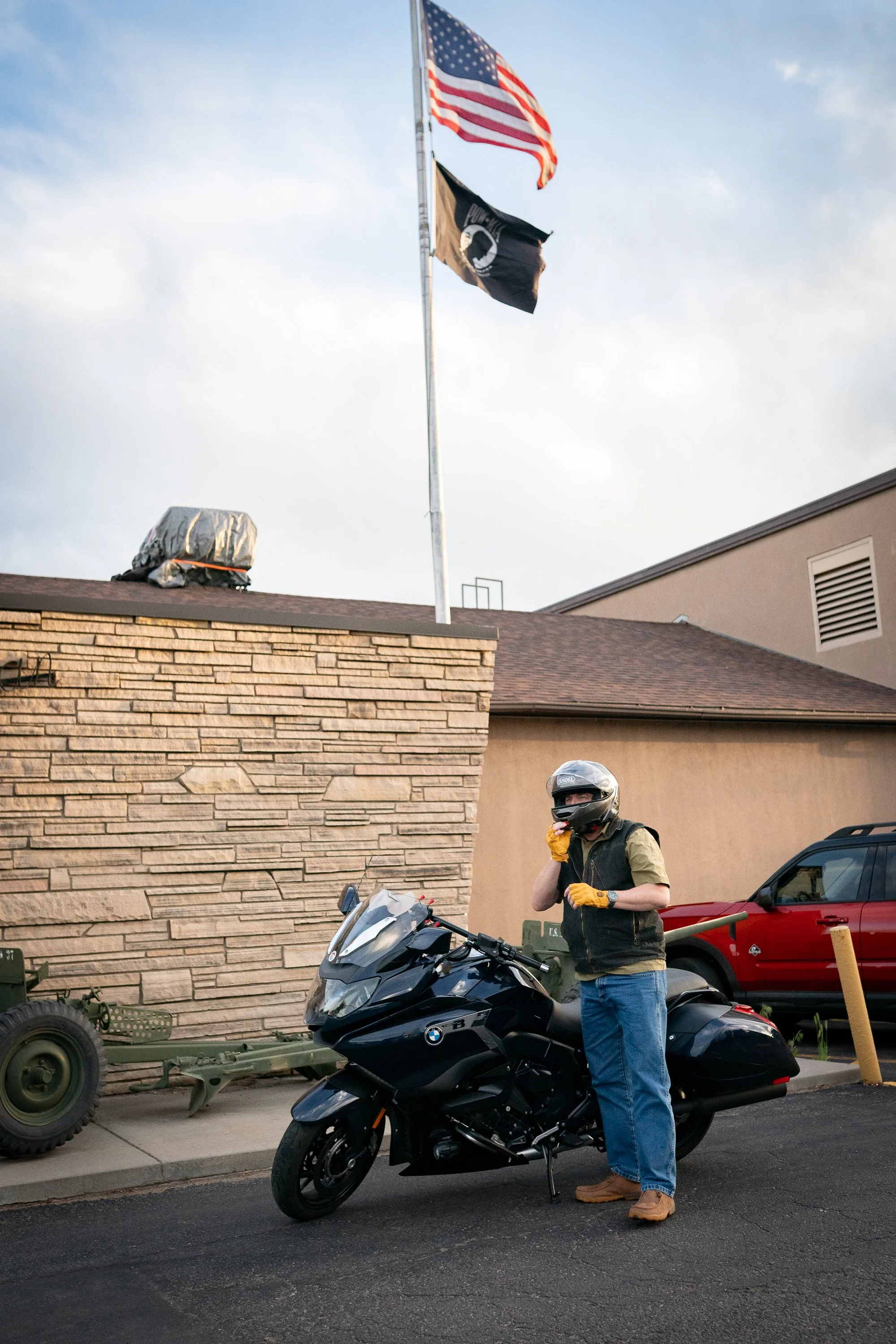
Outside the VFW hall, a veteran stands beside his motorcycle beneath the American flag and POW/MIA flag.