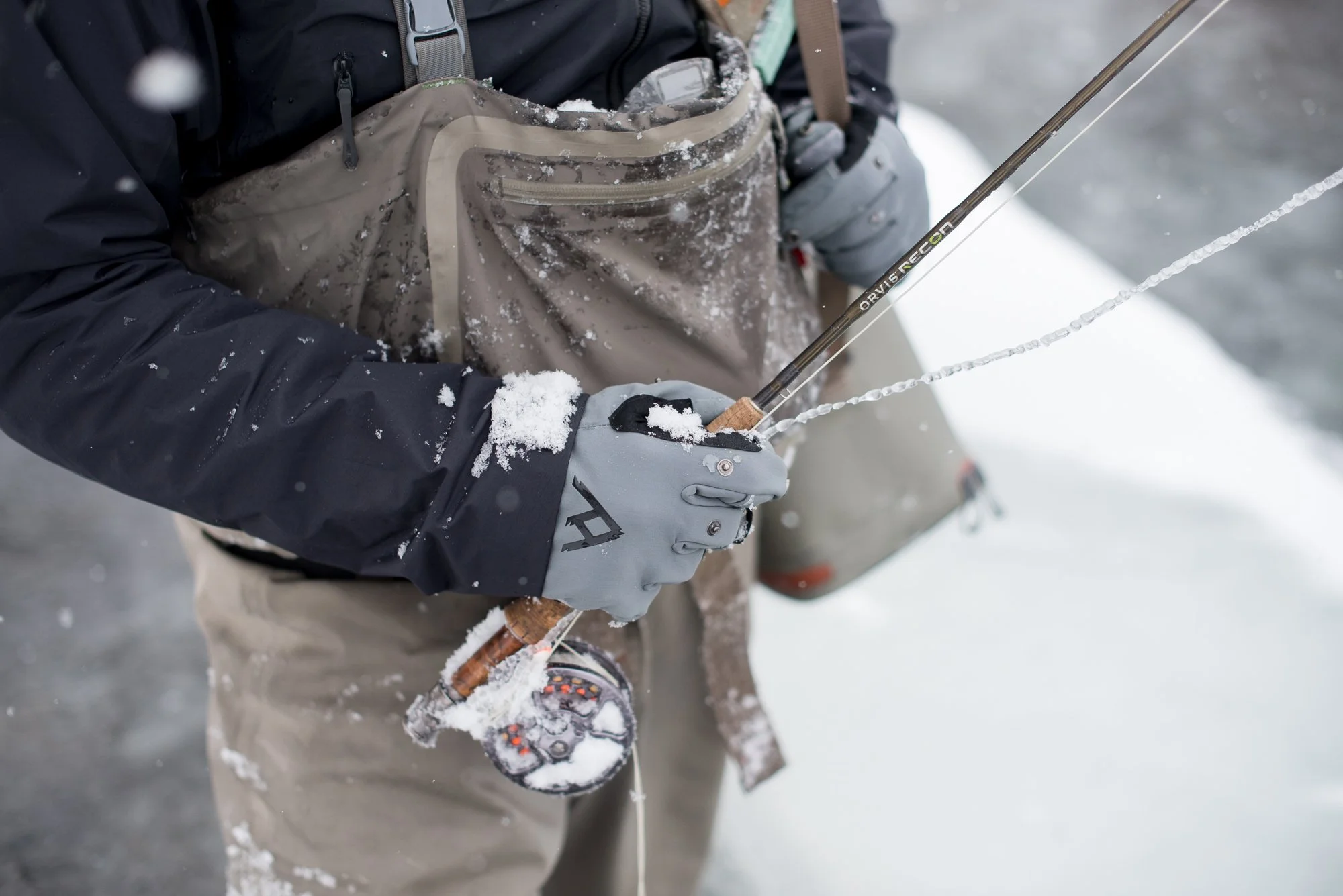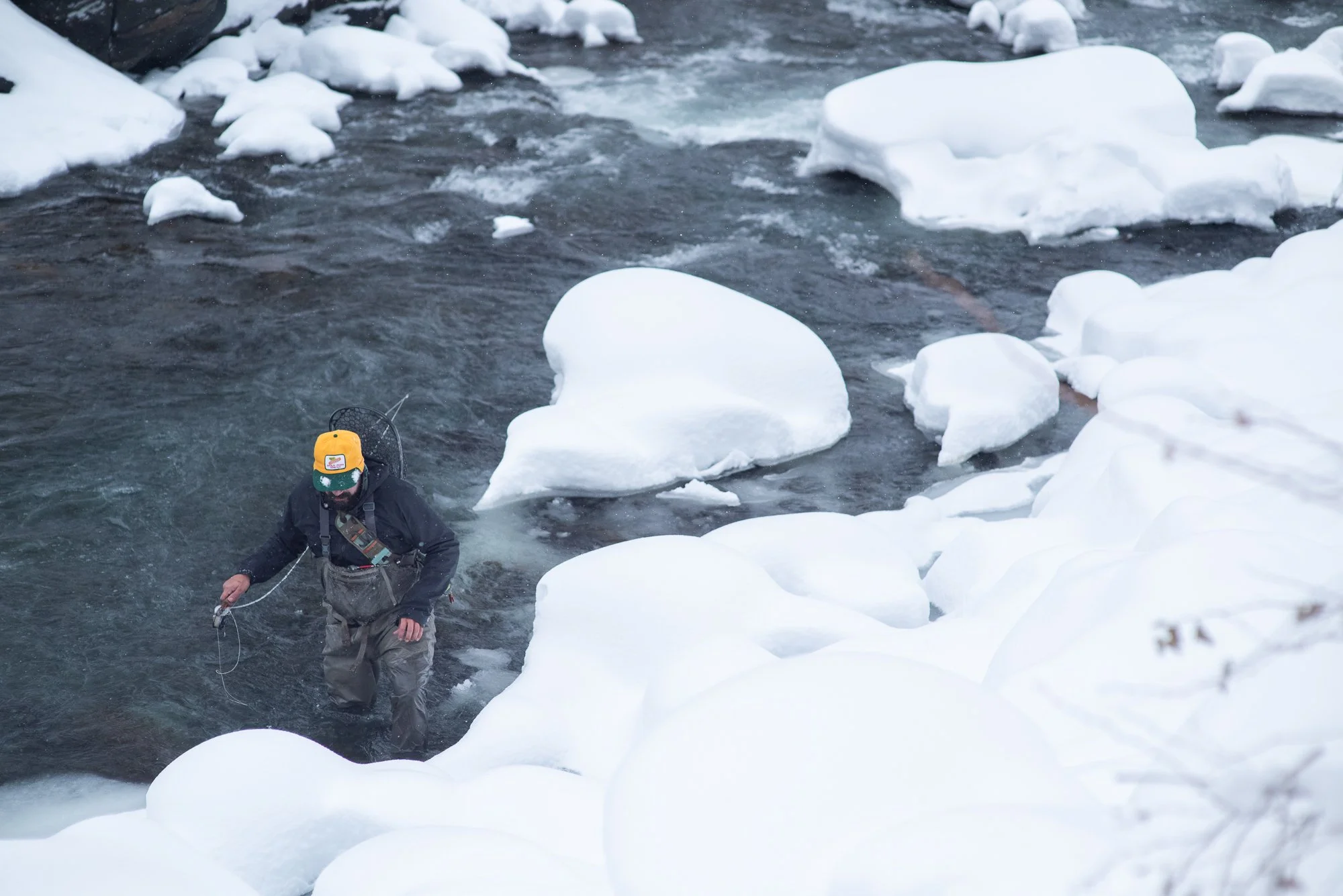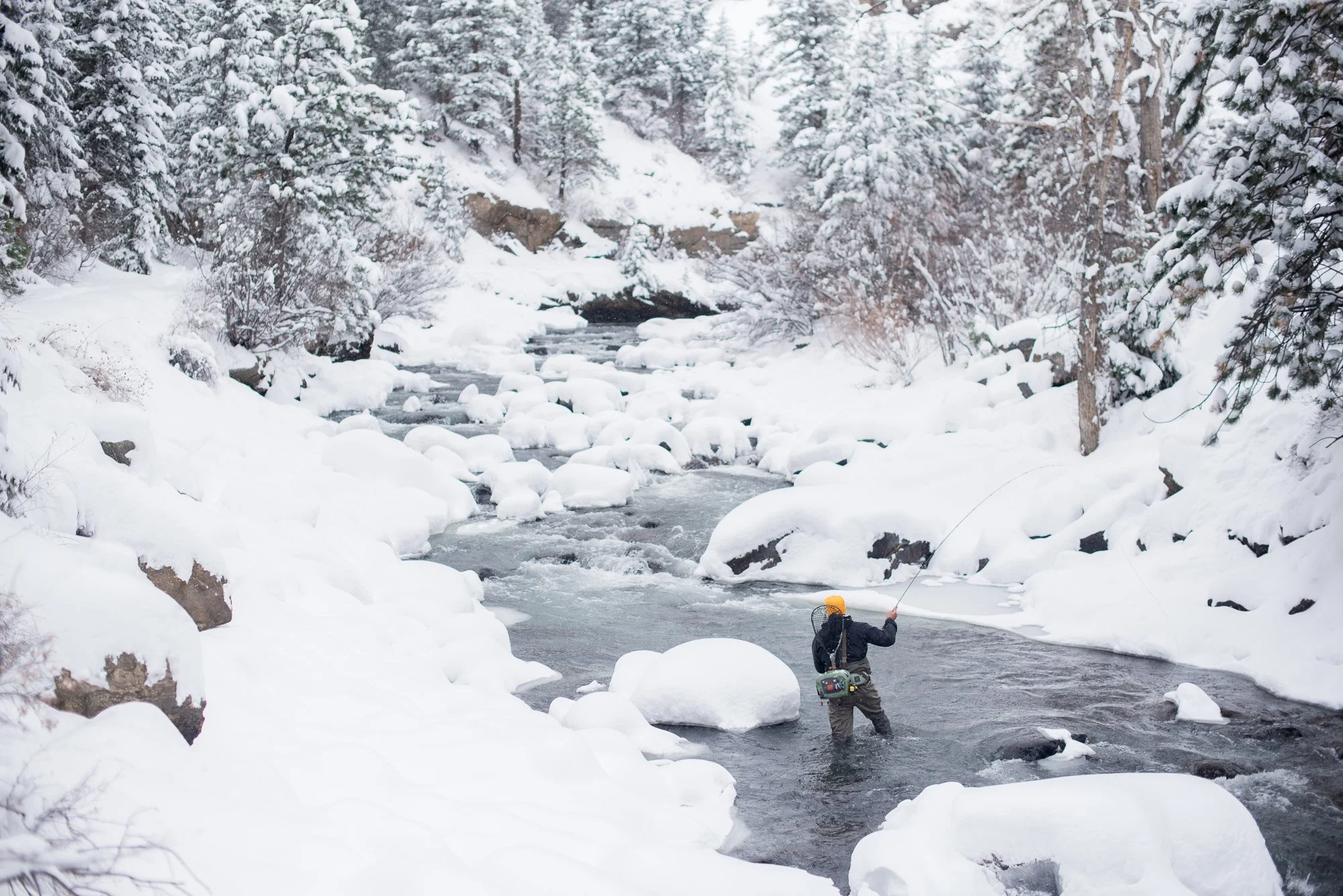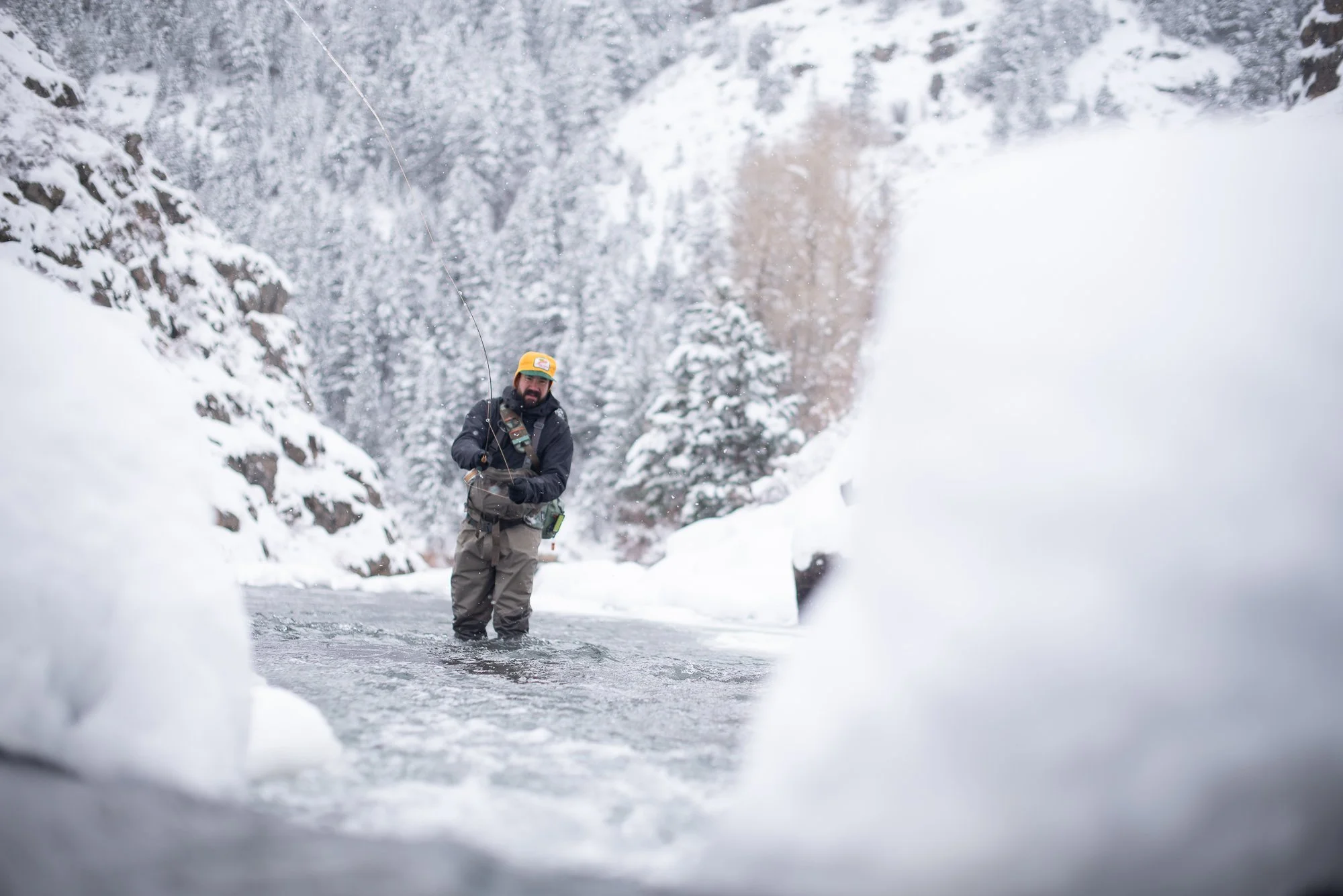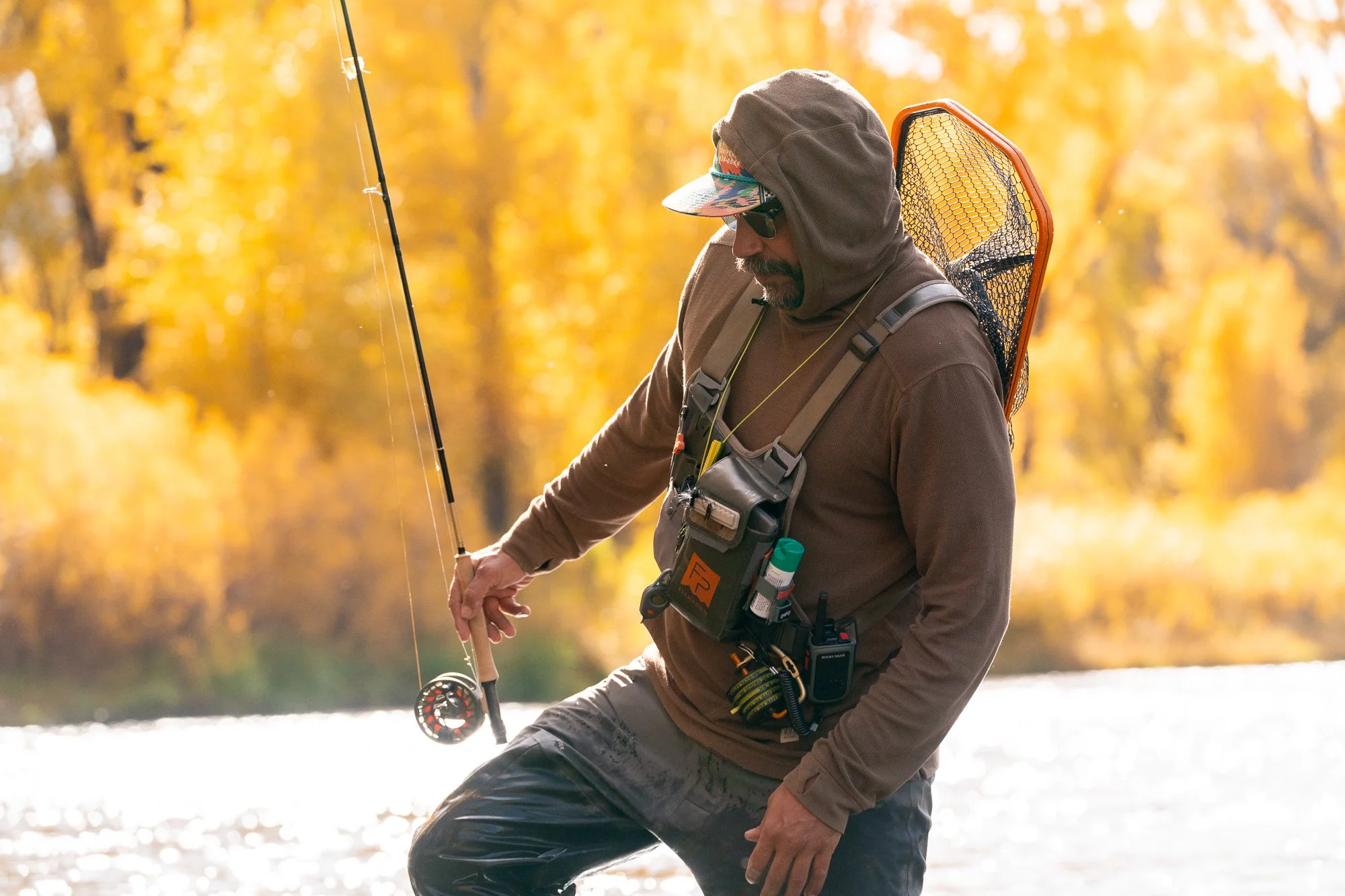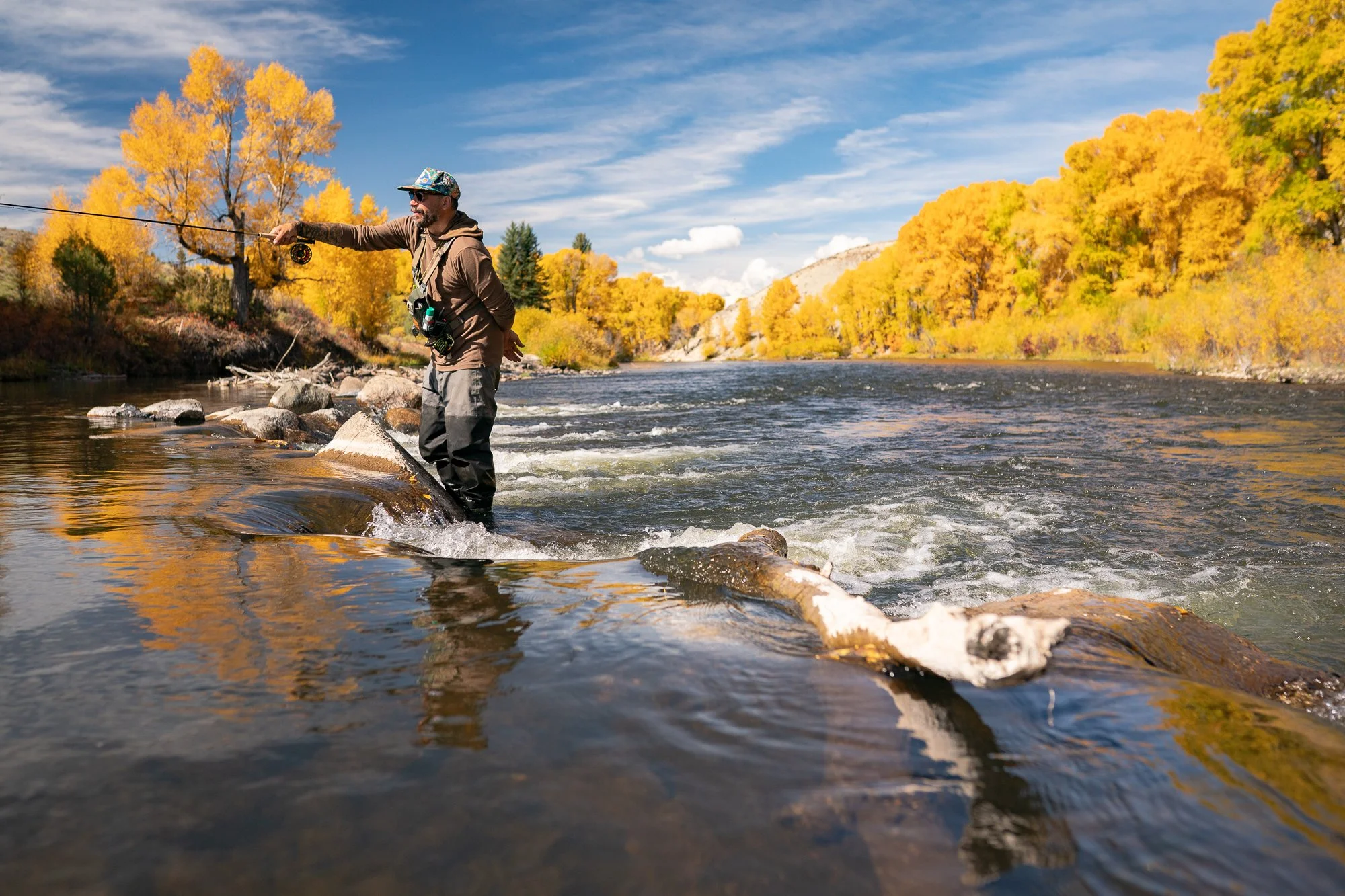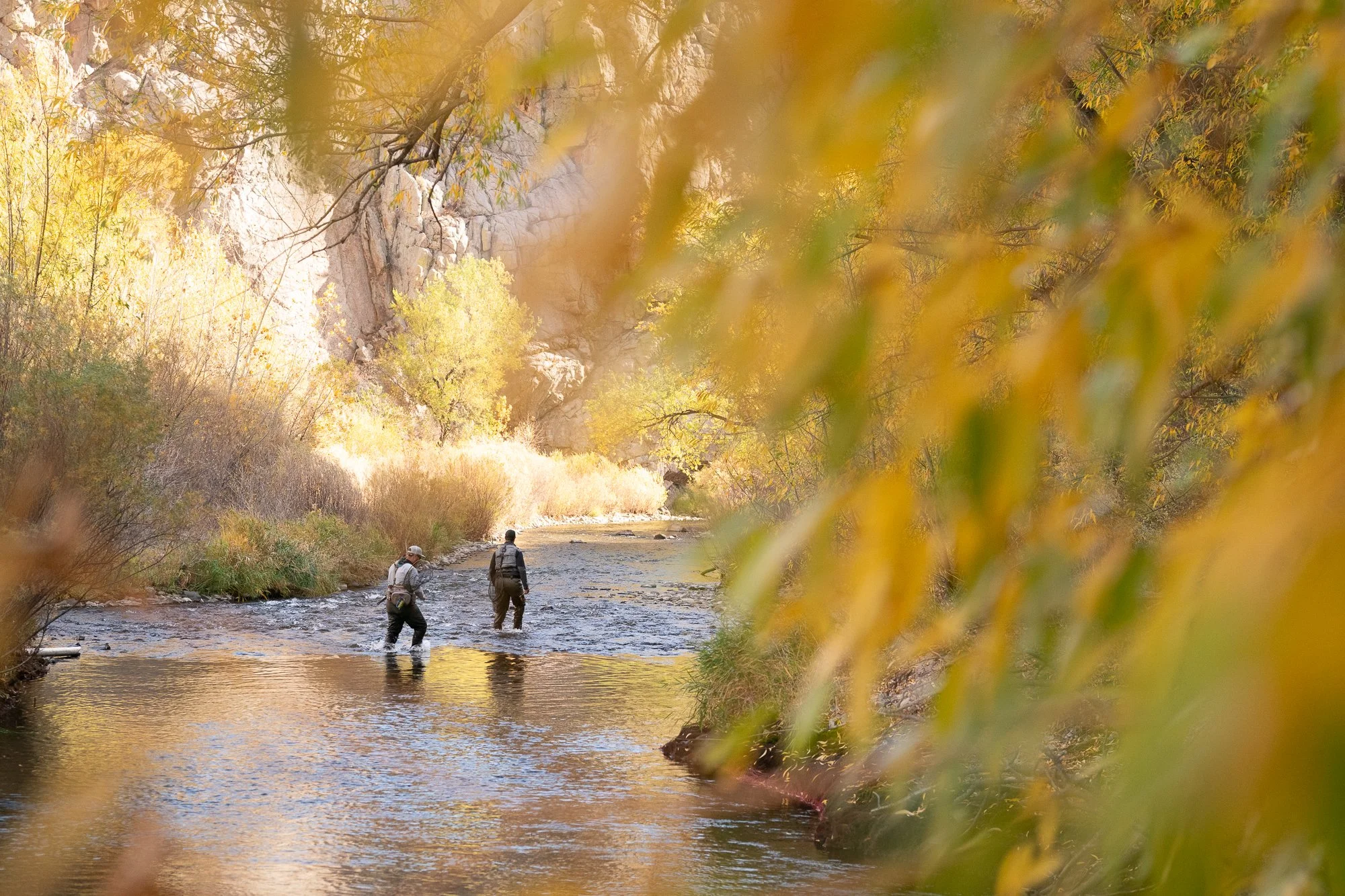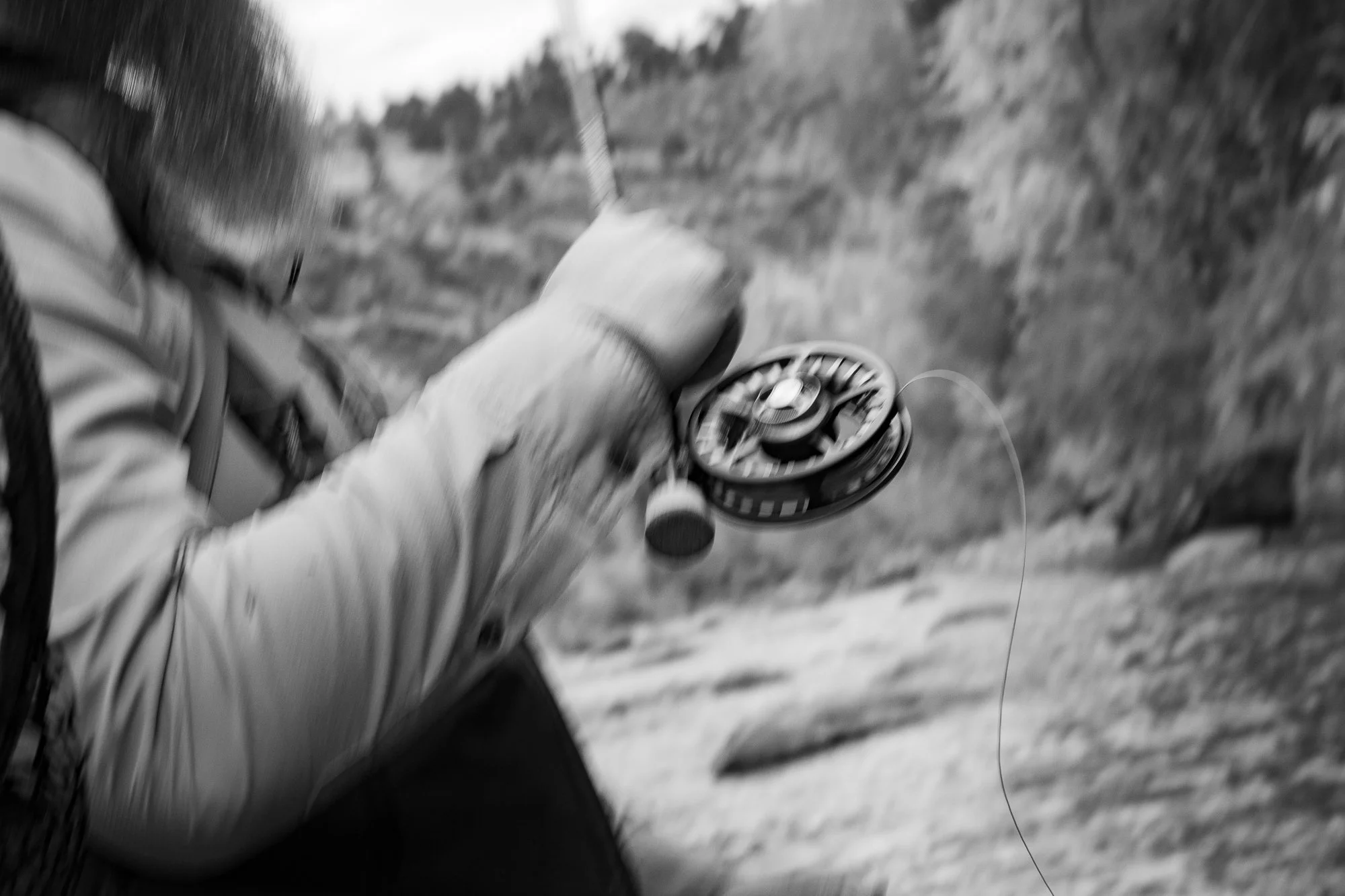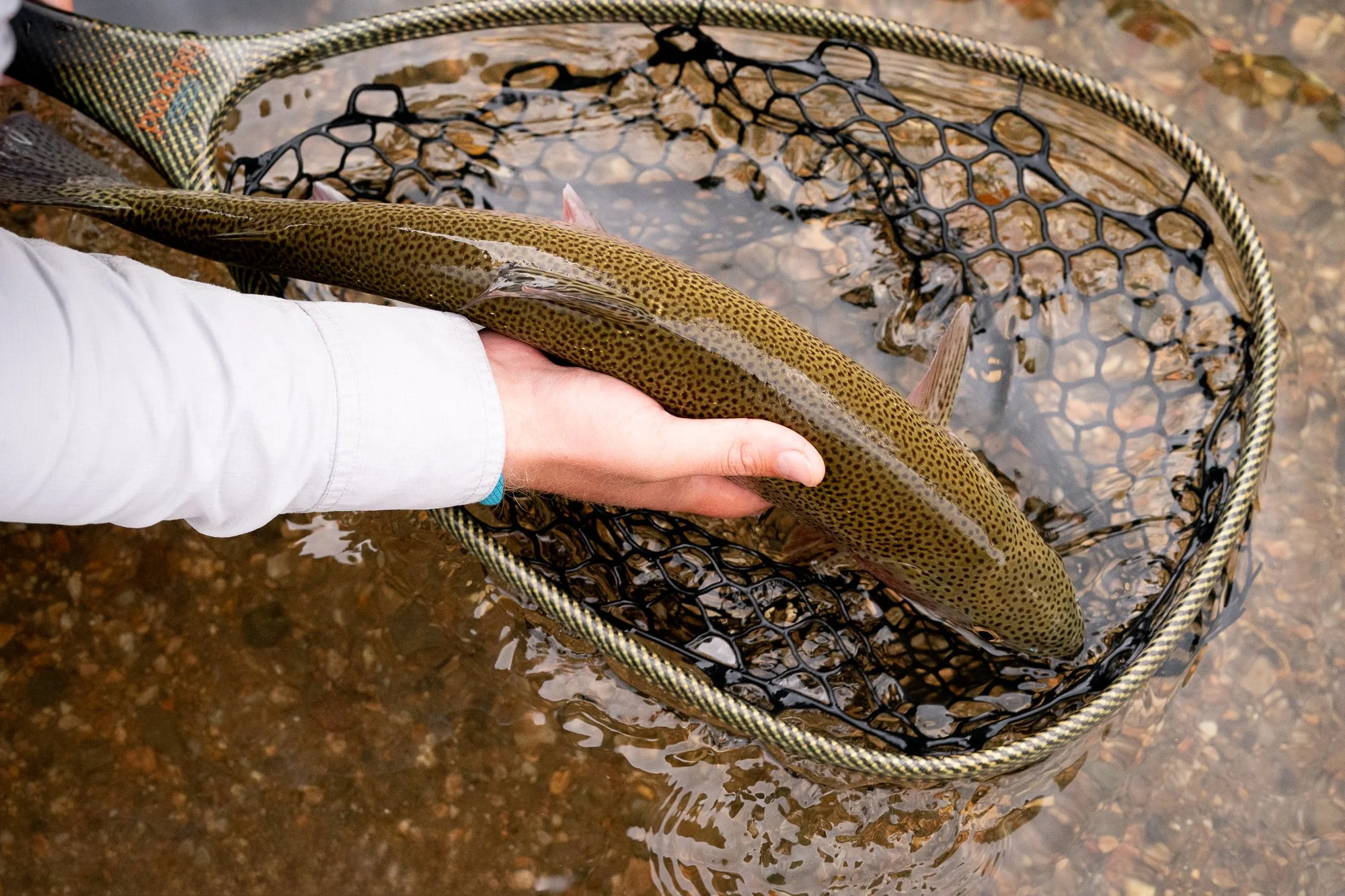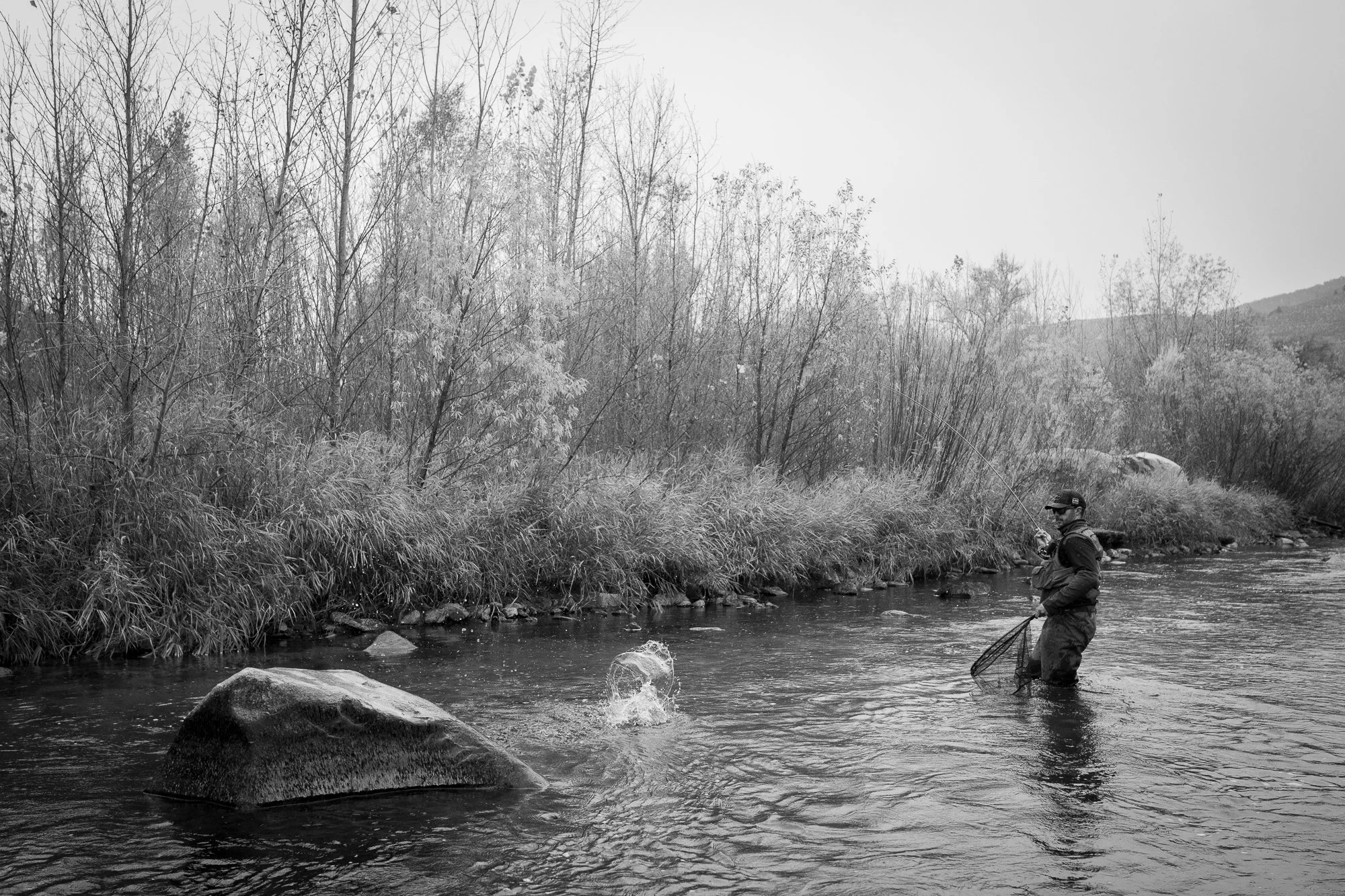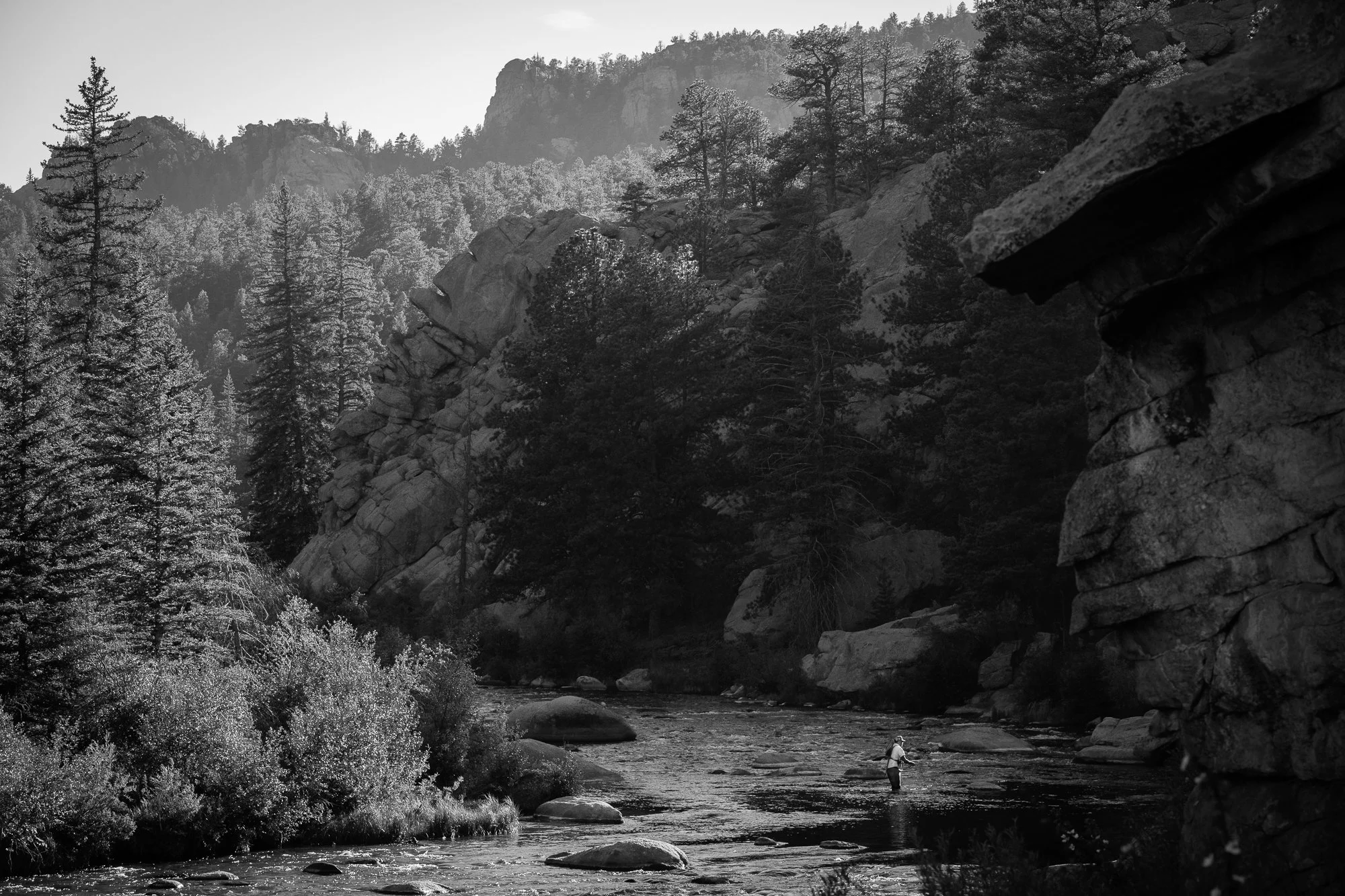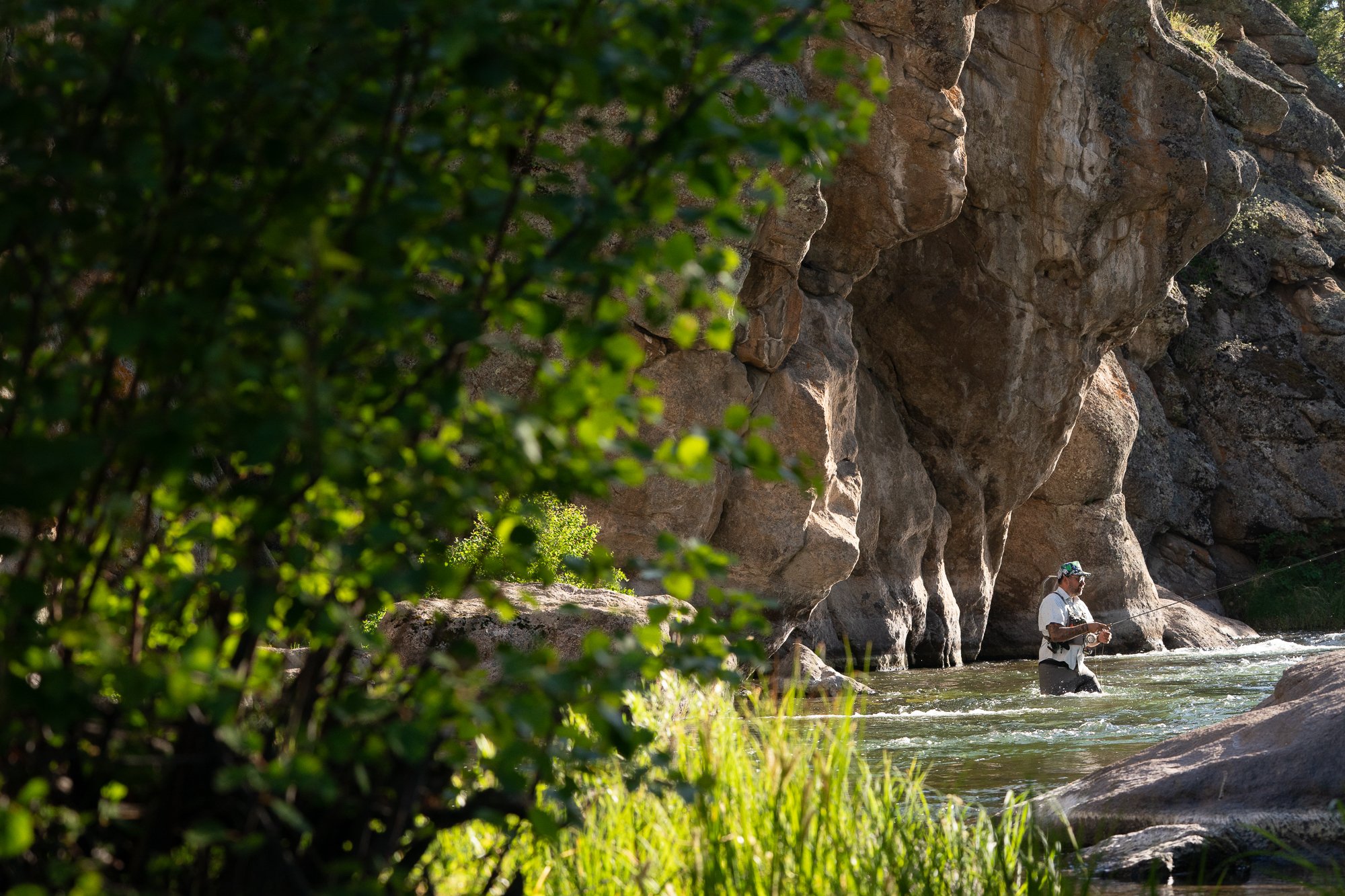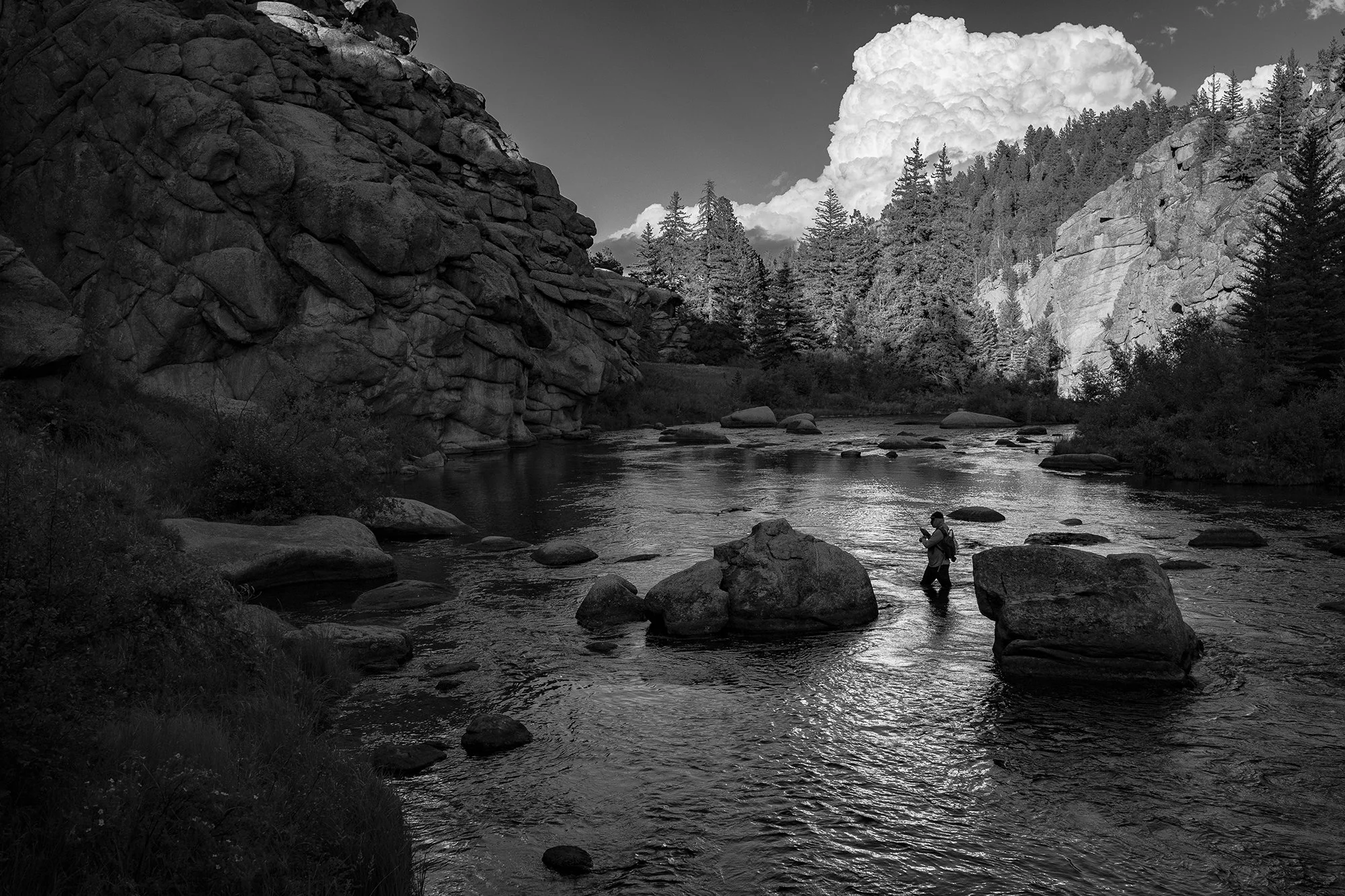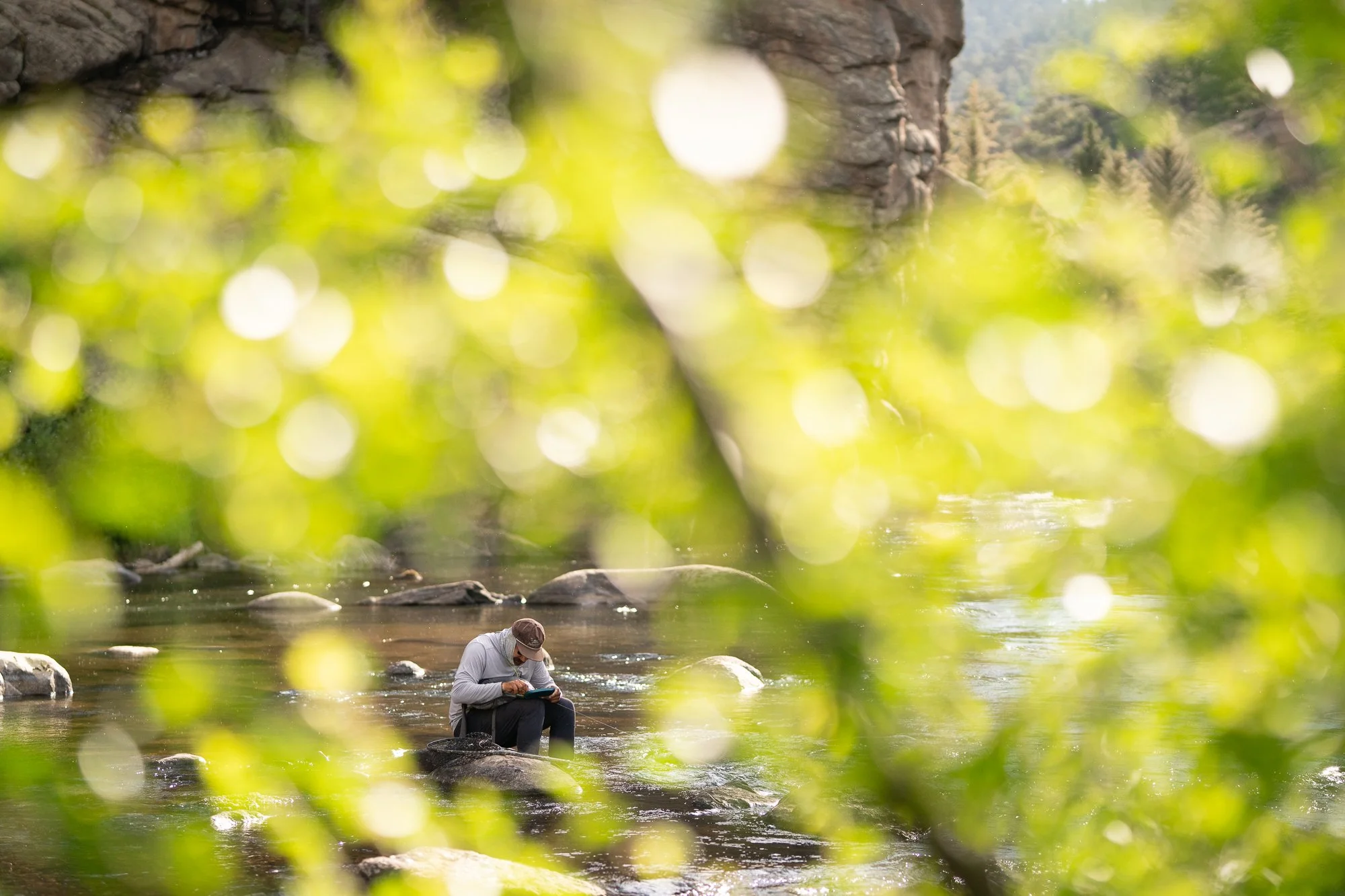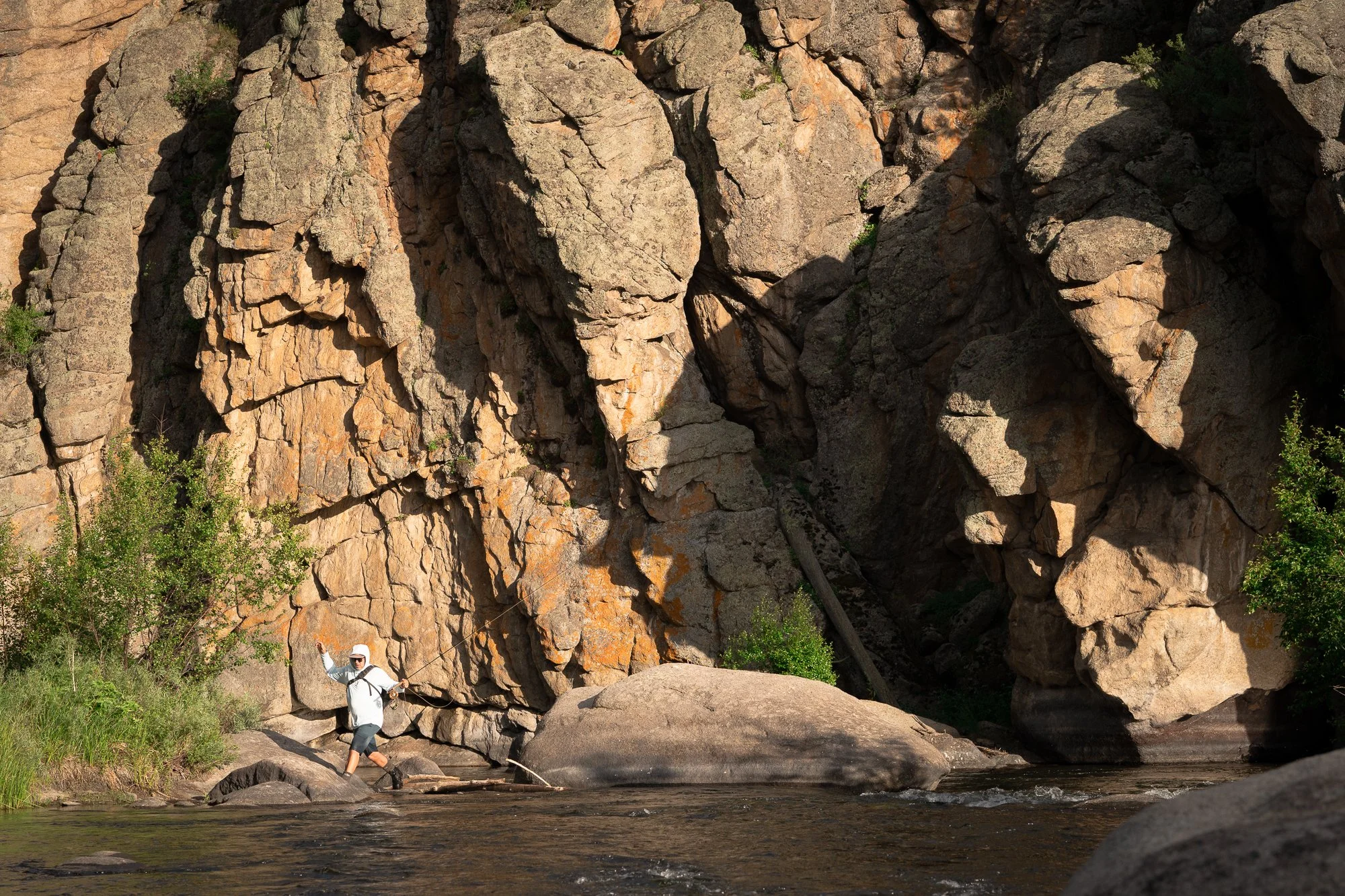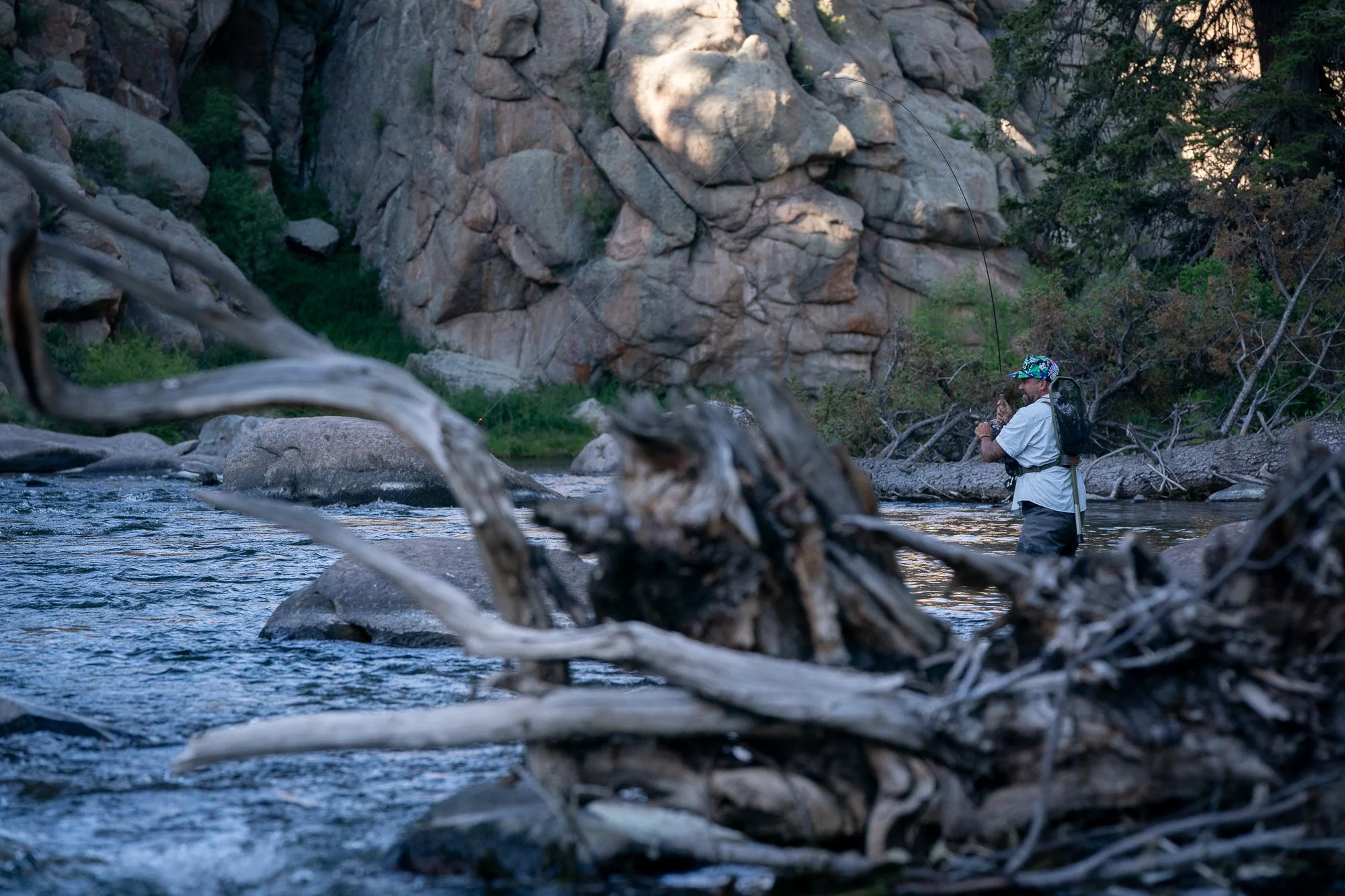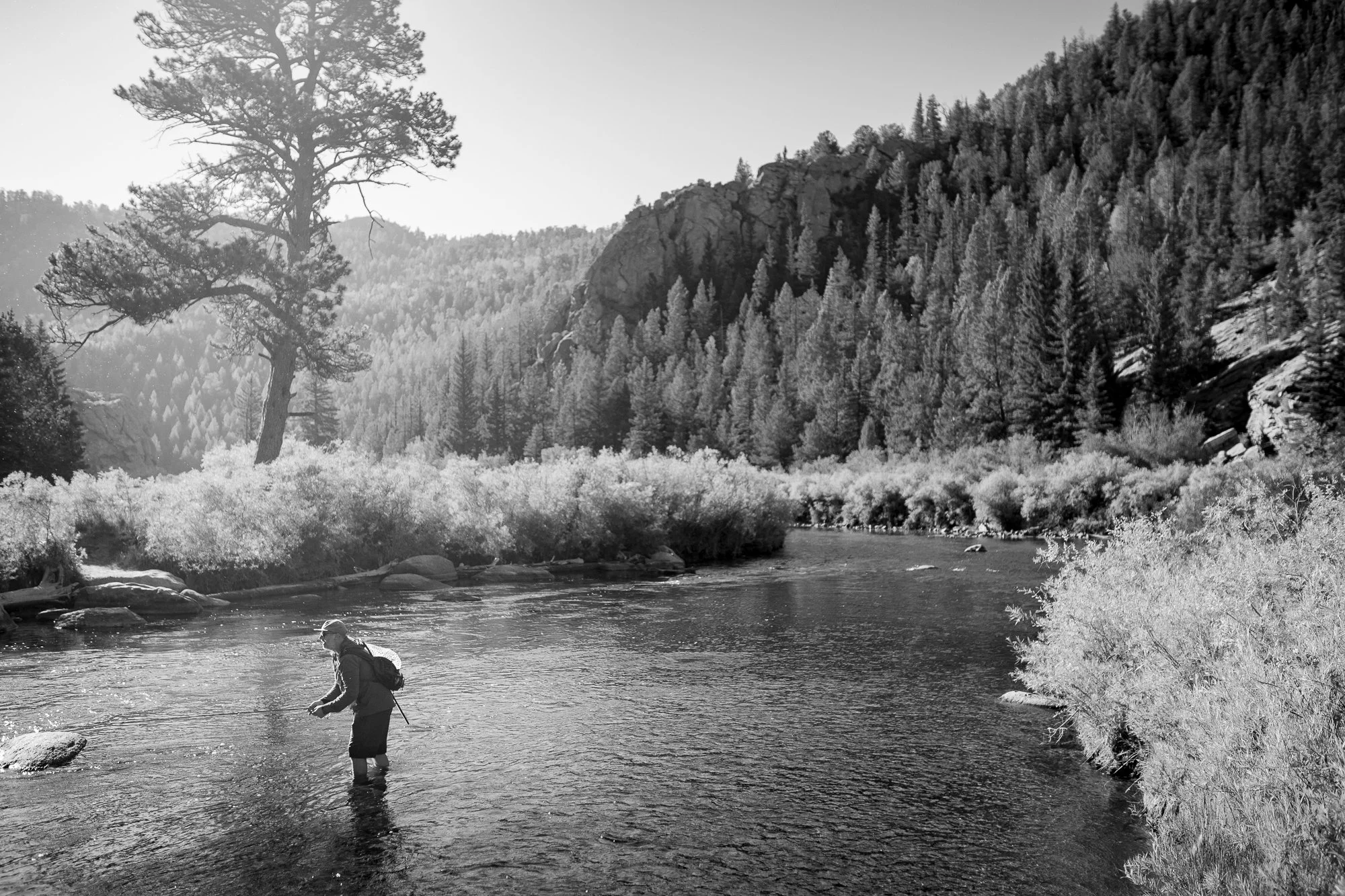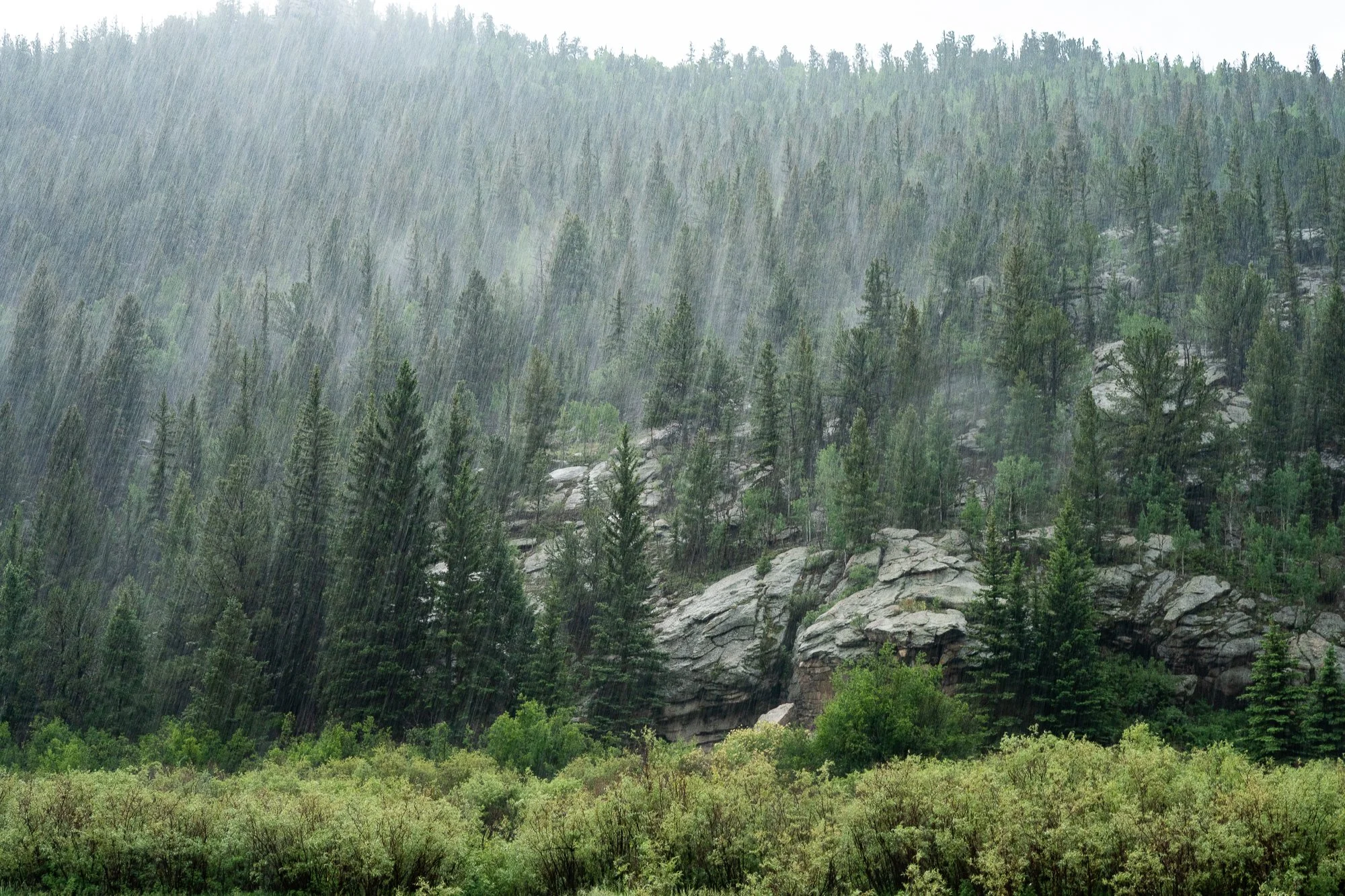
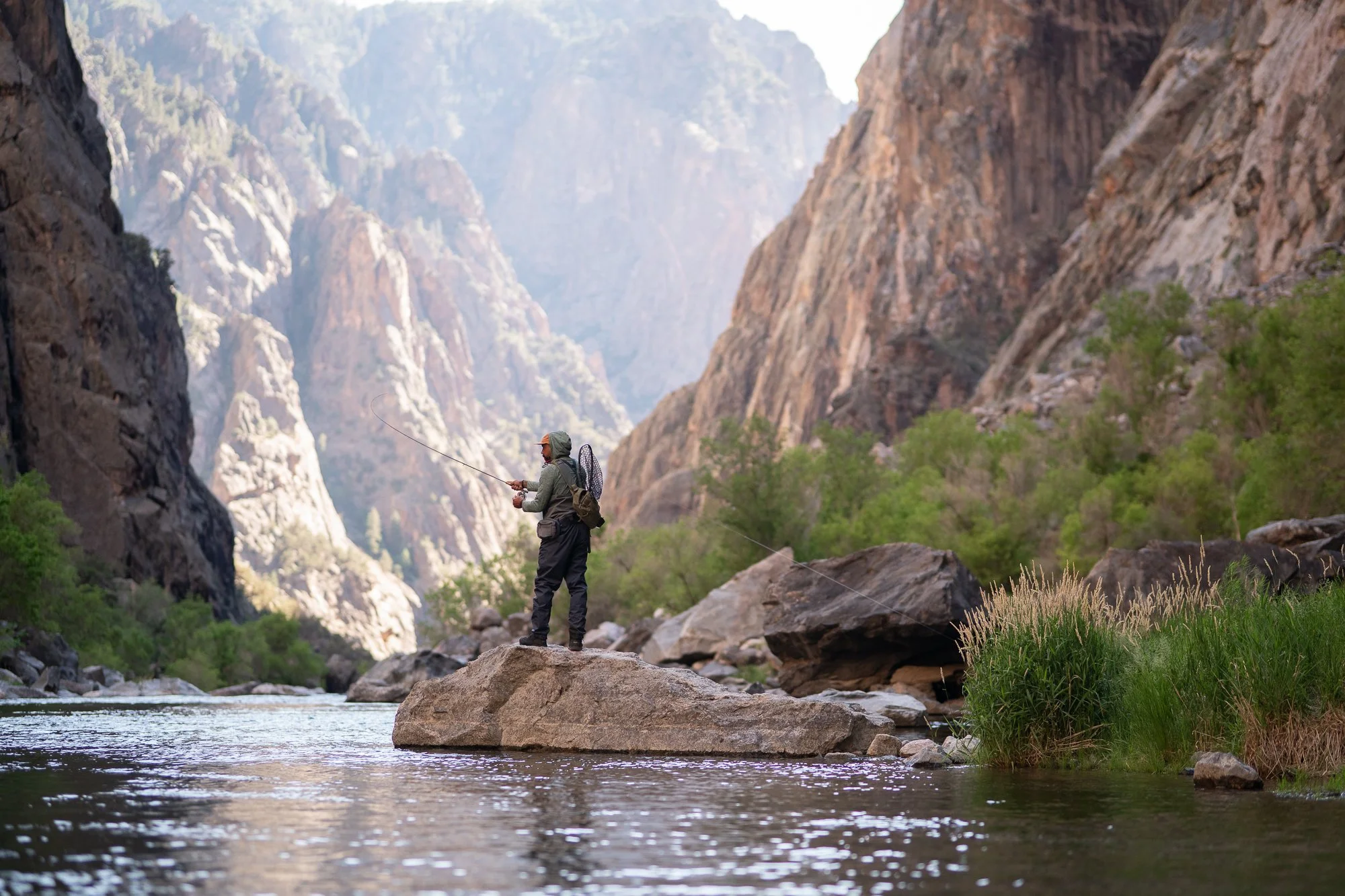
Fly Fishing Photography in Estes Park, Colorado

Fly Fishing Photography Near Denver: Estes Park and the Front Range

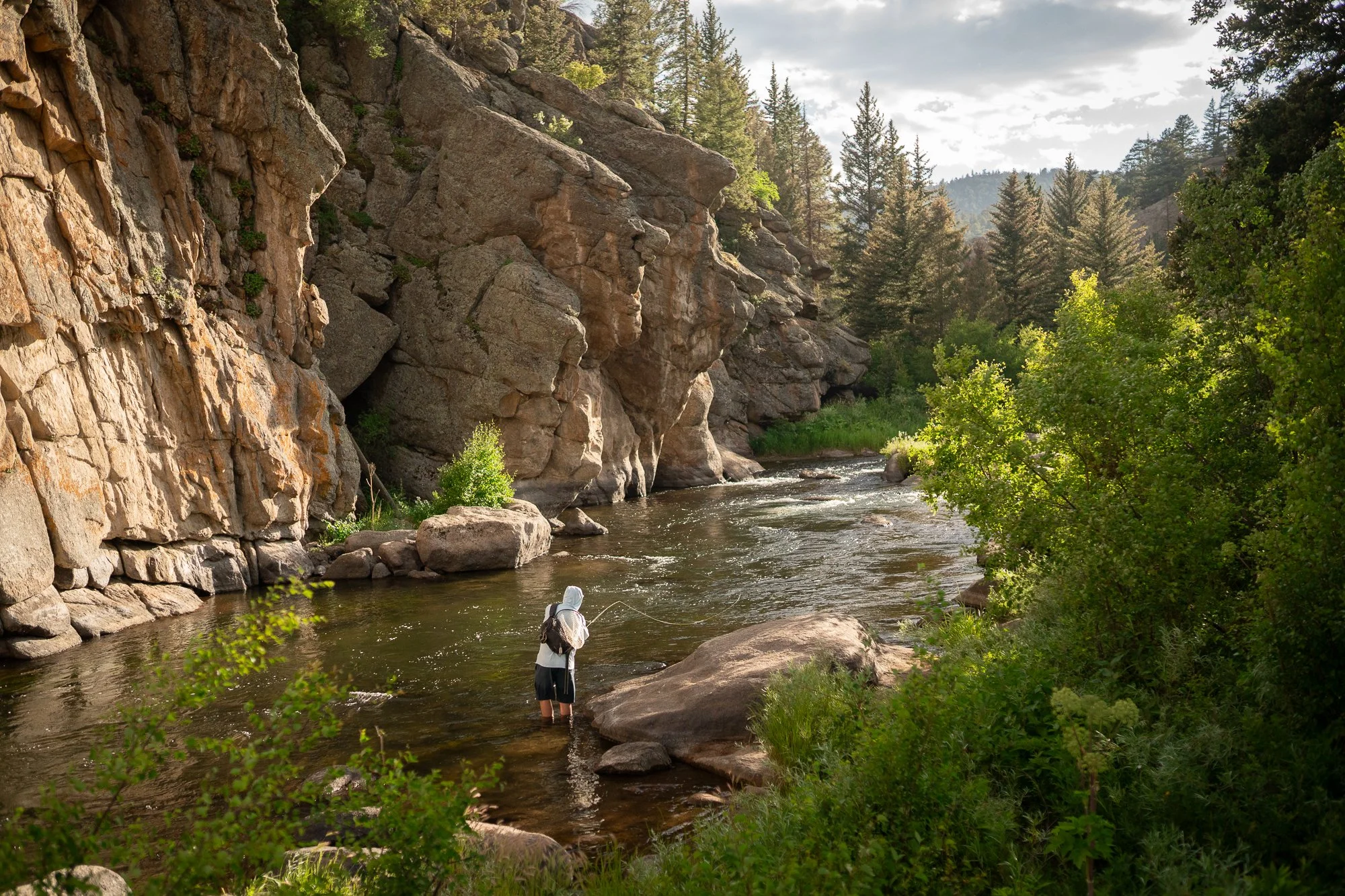
Not every fly fishing trip is a destination trip.

Some of the most consistent time on the water happens close to home—quick drives when you only have a couple hours in your work schedule or you need to get back on a plane.

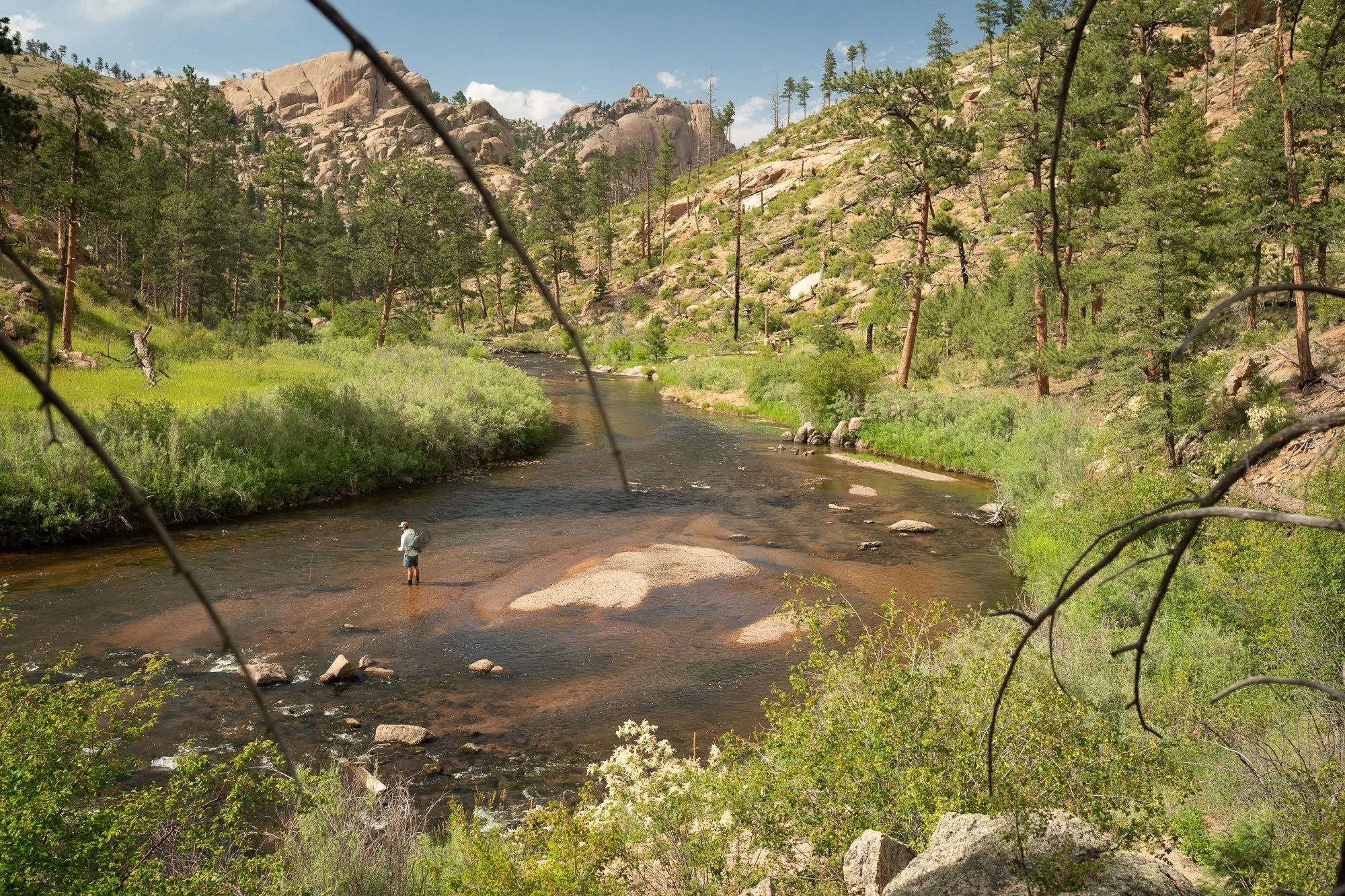
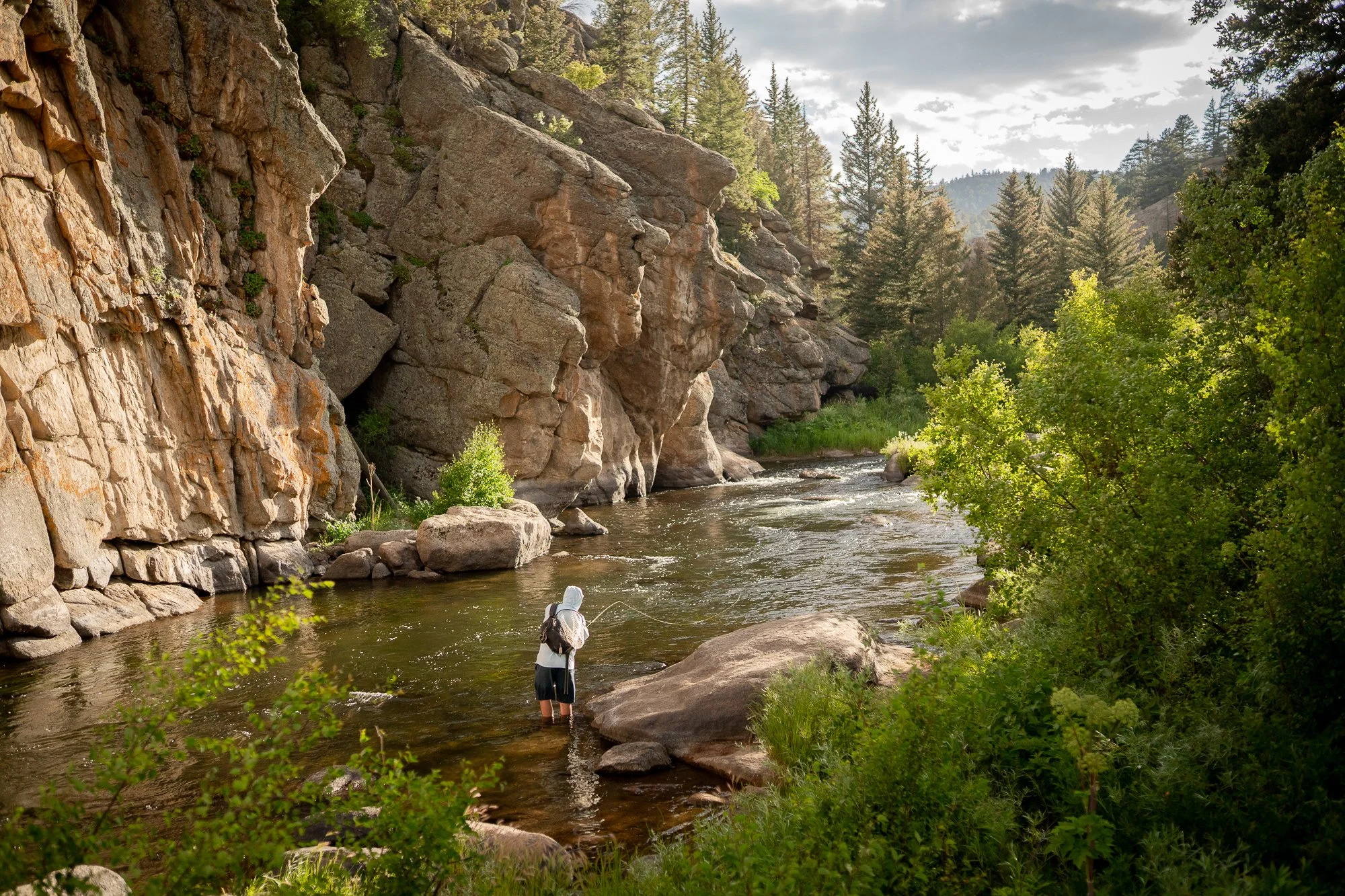
Estes Park sits right on that edge for Colorado’s Front Range. Close enough to Denver to be accessible, but far enough to feel like a different environment entirely. It might not come with all the fanfare of Colorado’s most iconic fly fishing locations, but it sure is pretty.

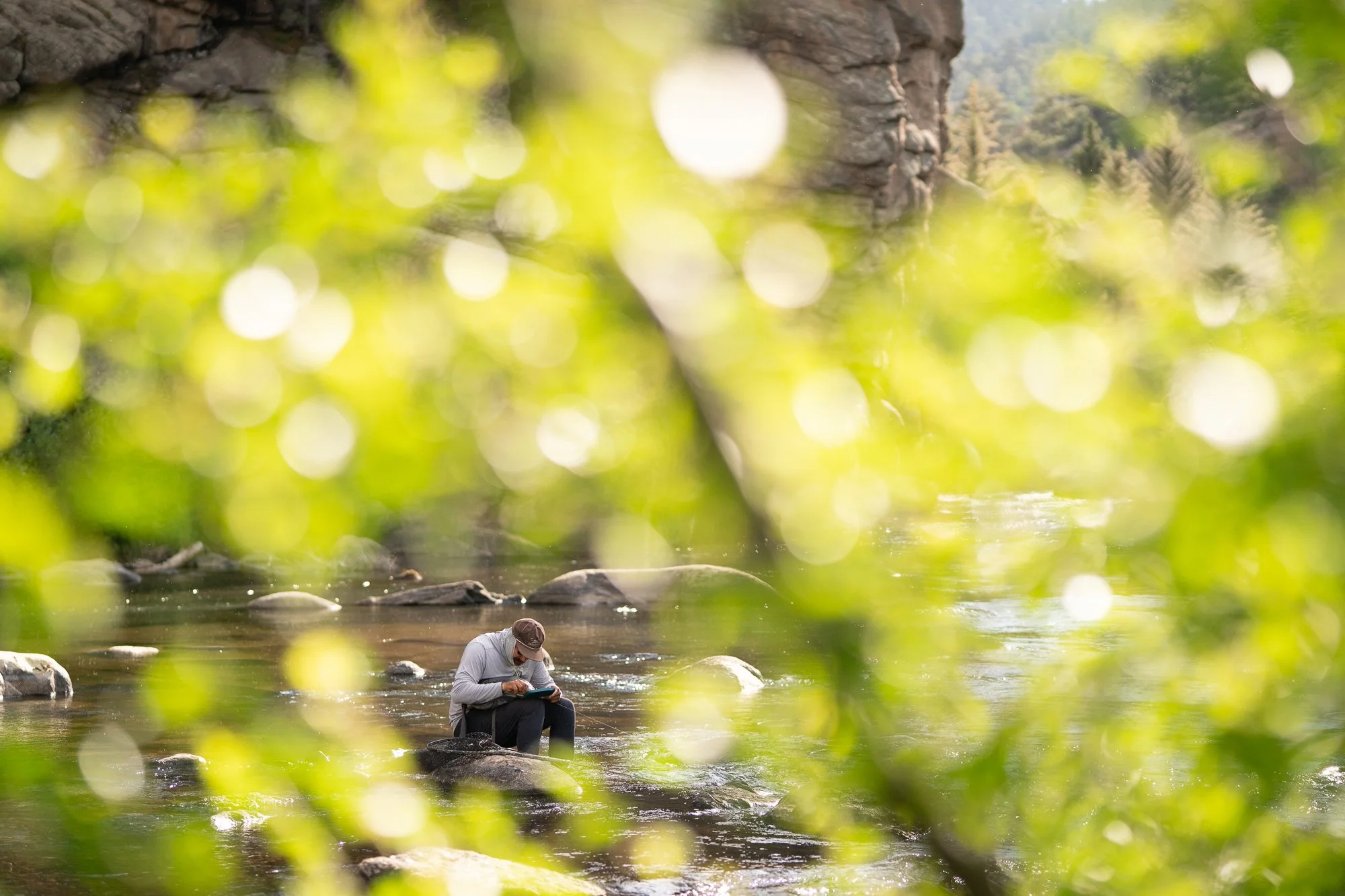
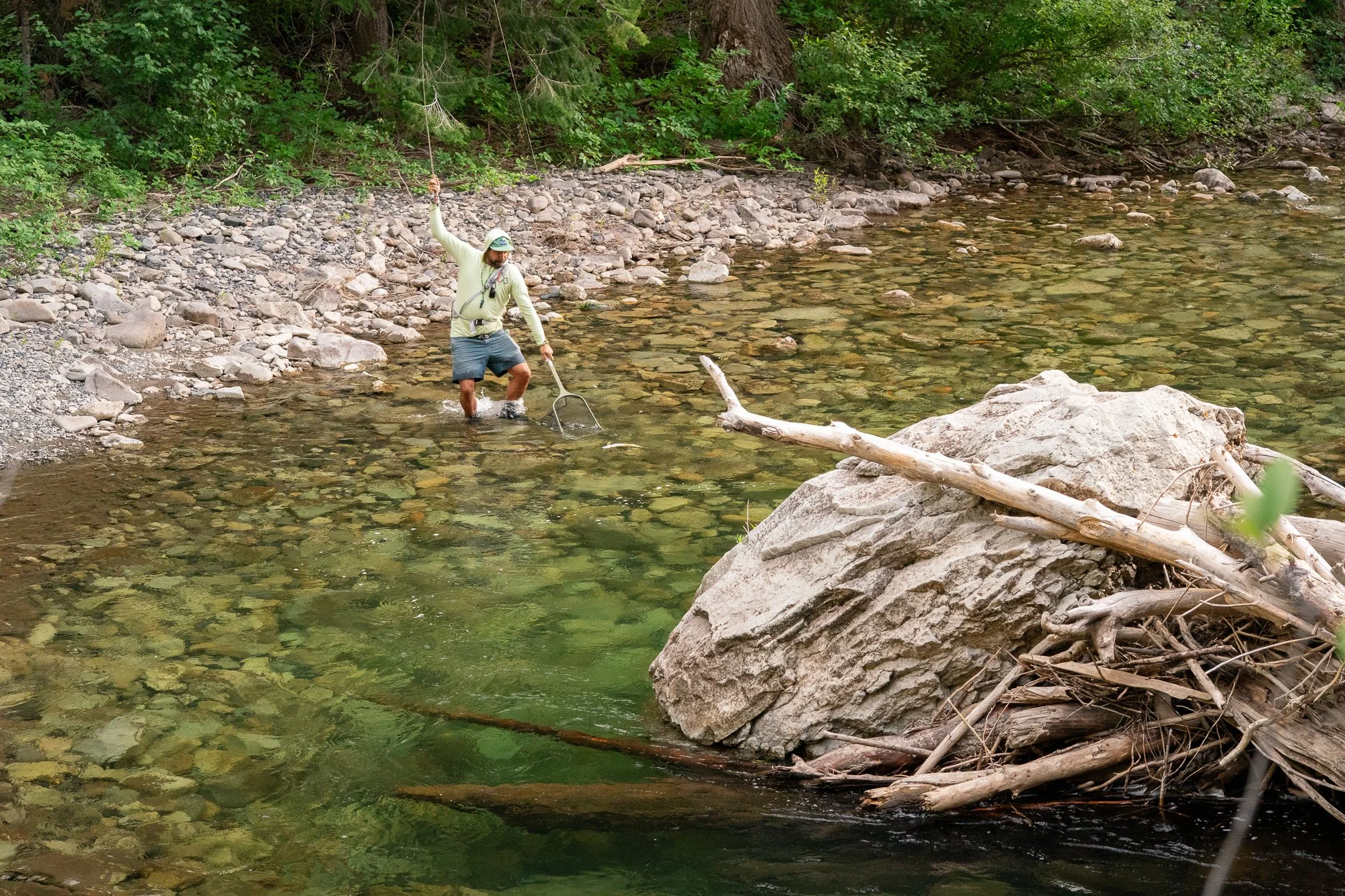
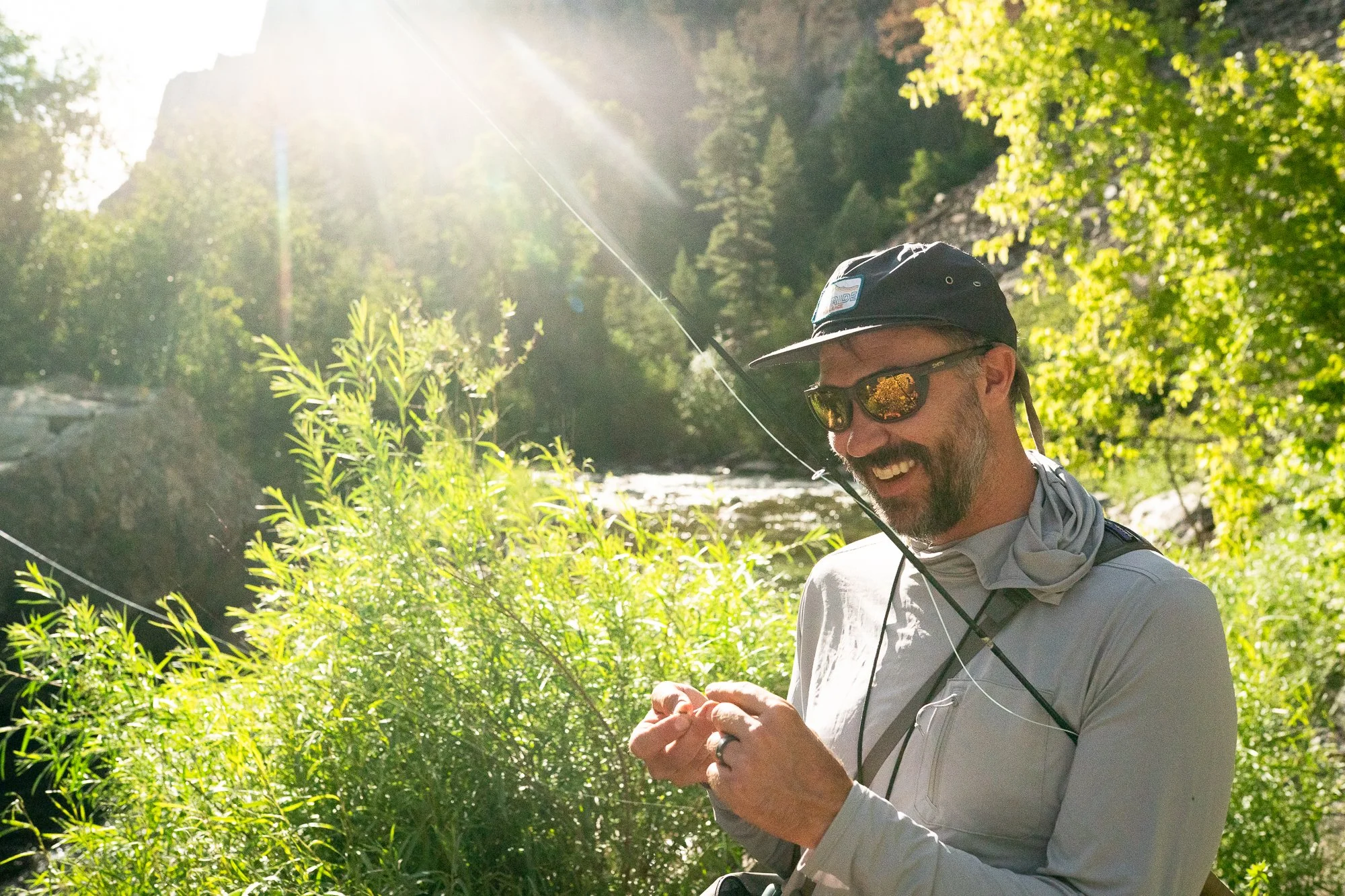
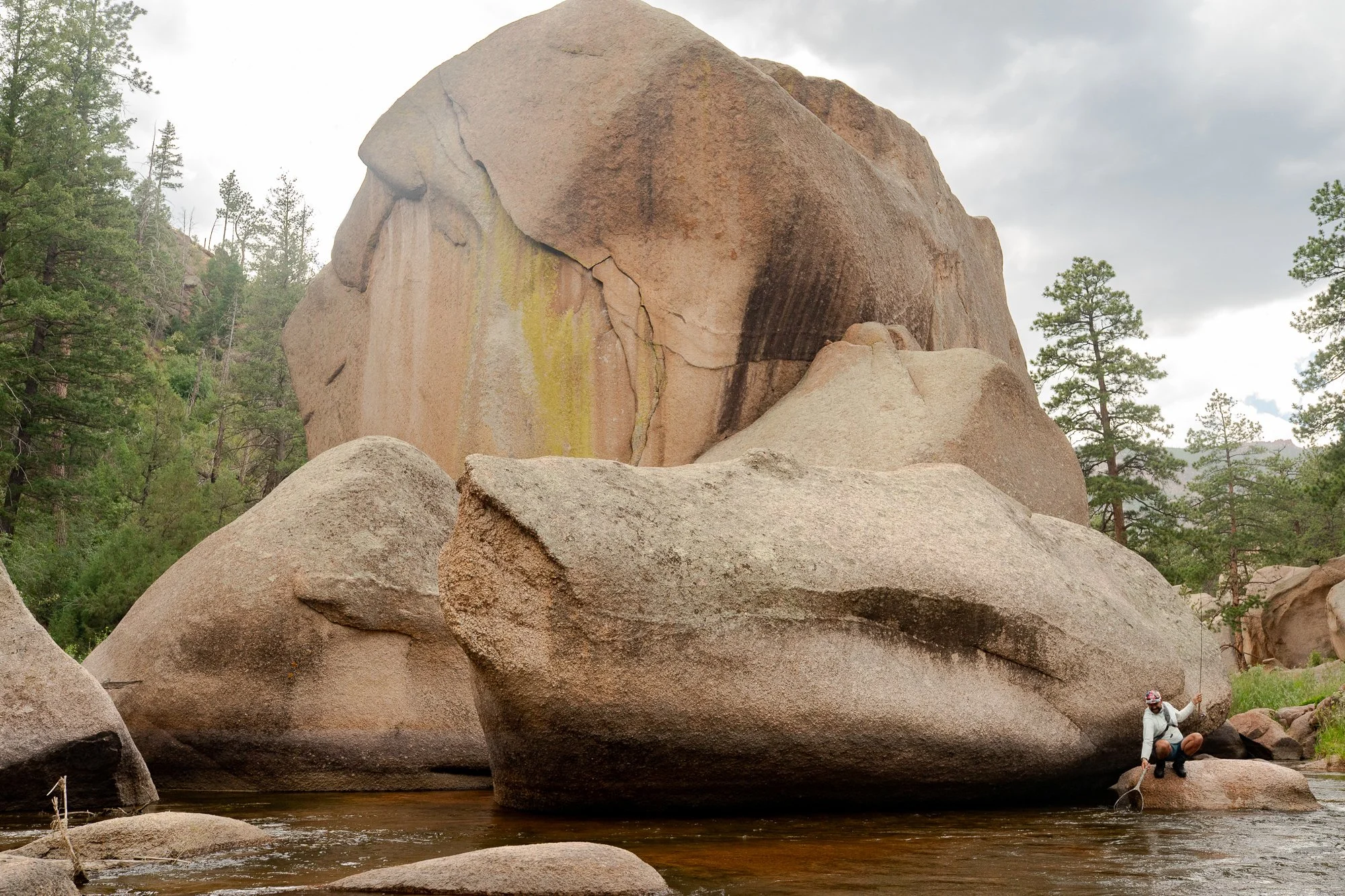
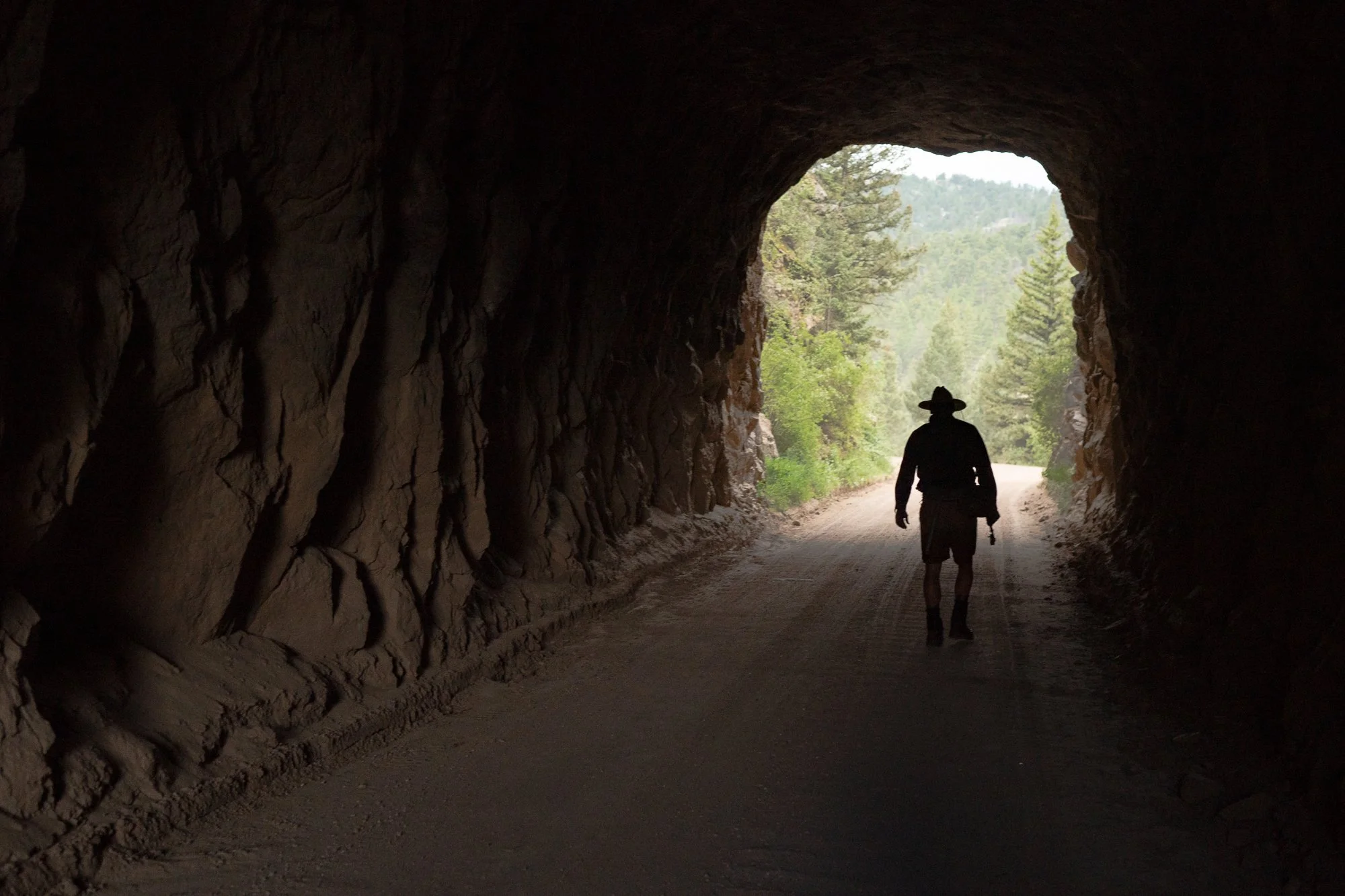
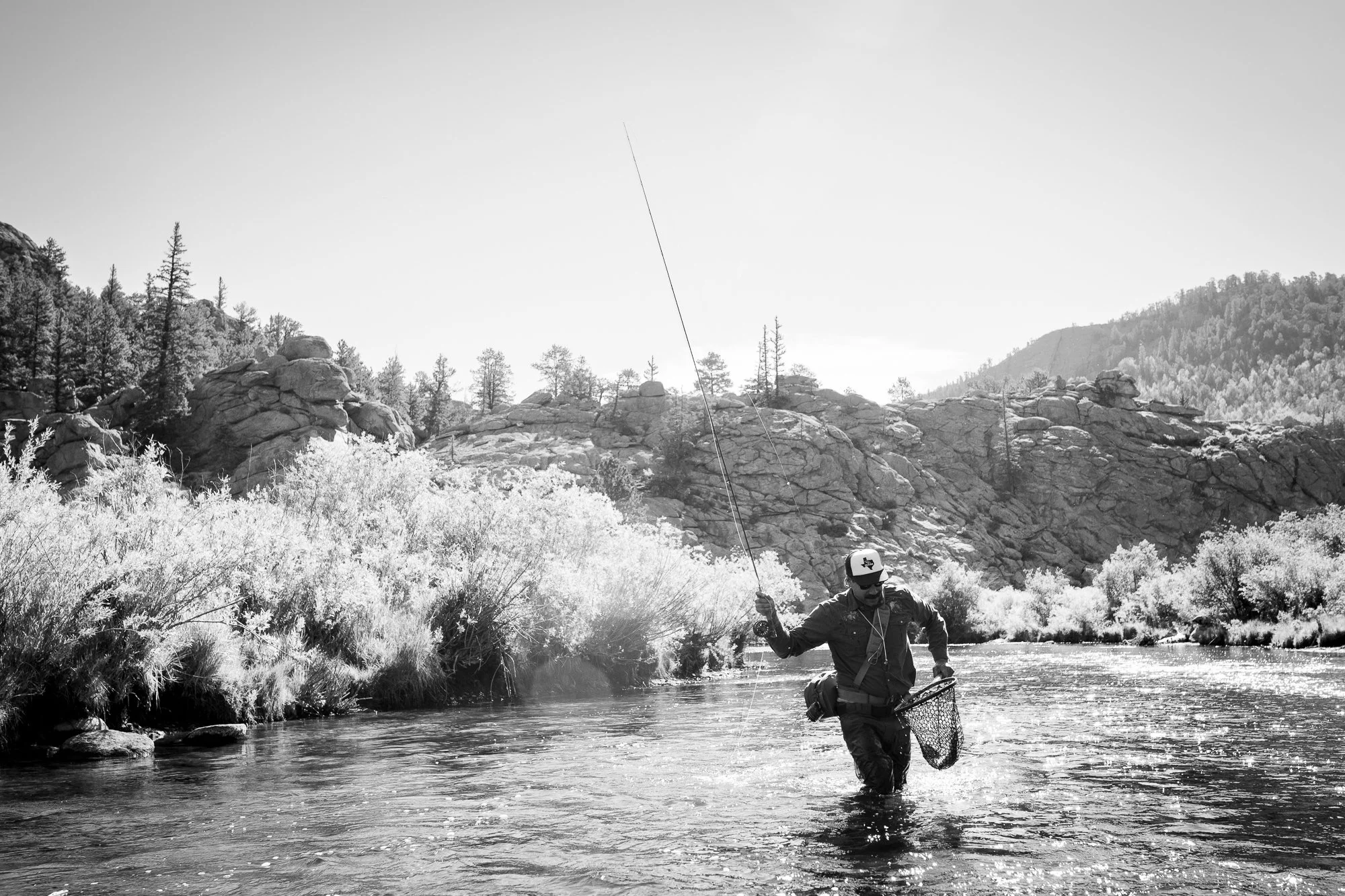
This series of photographs comes from time spent working in that space—fishing and photographing in real conditions, without the pressure of a “big trip” or a big name location.

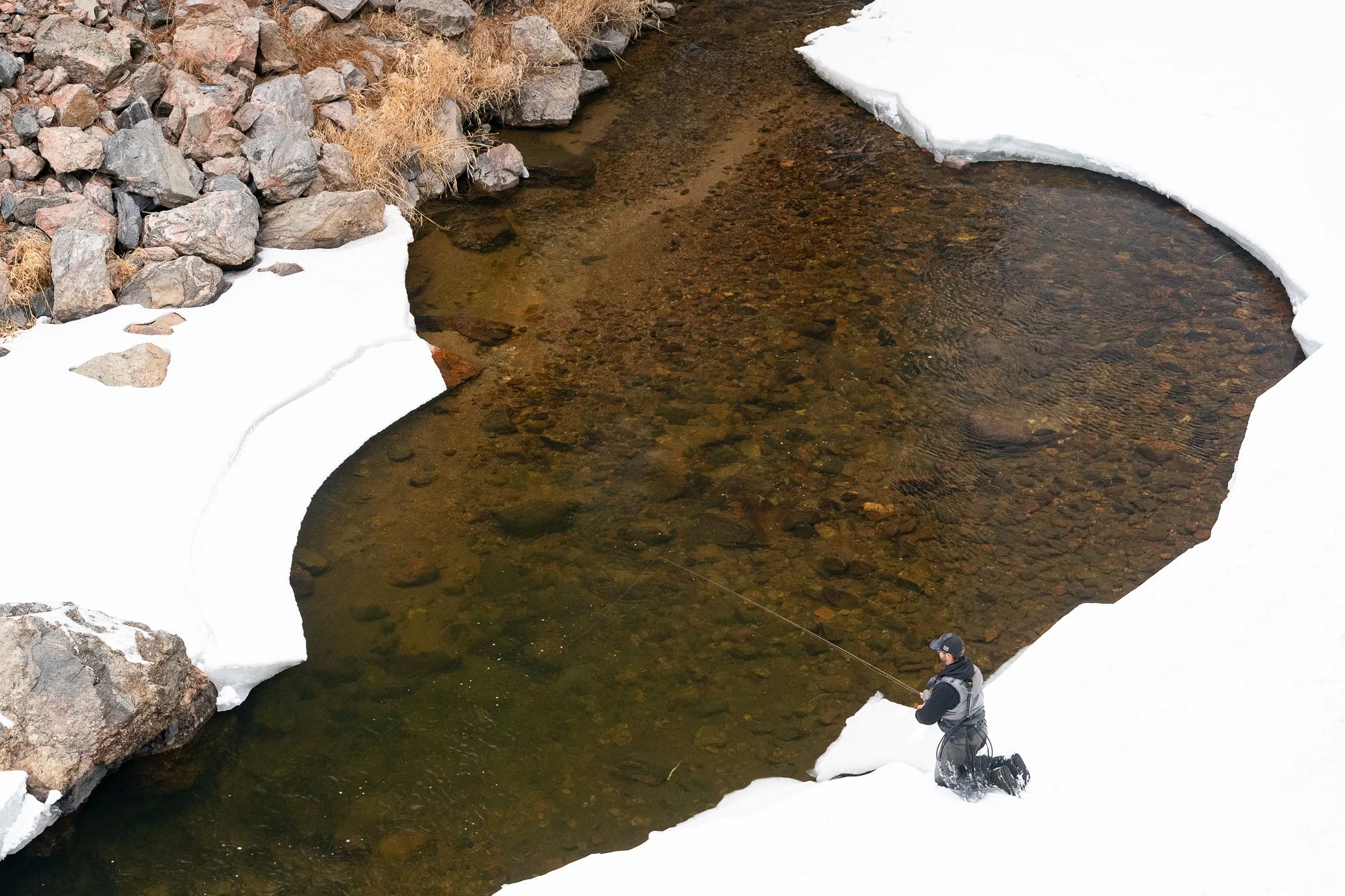
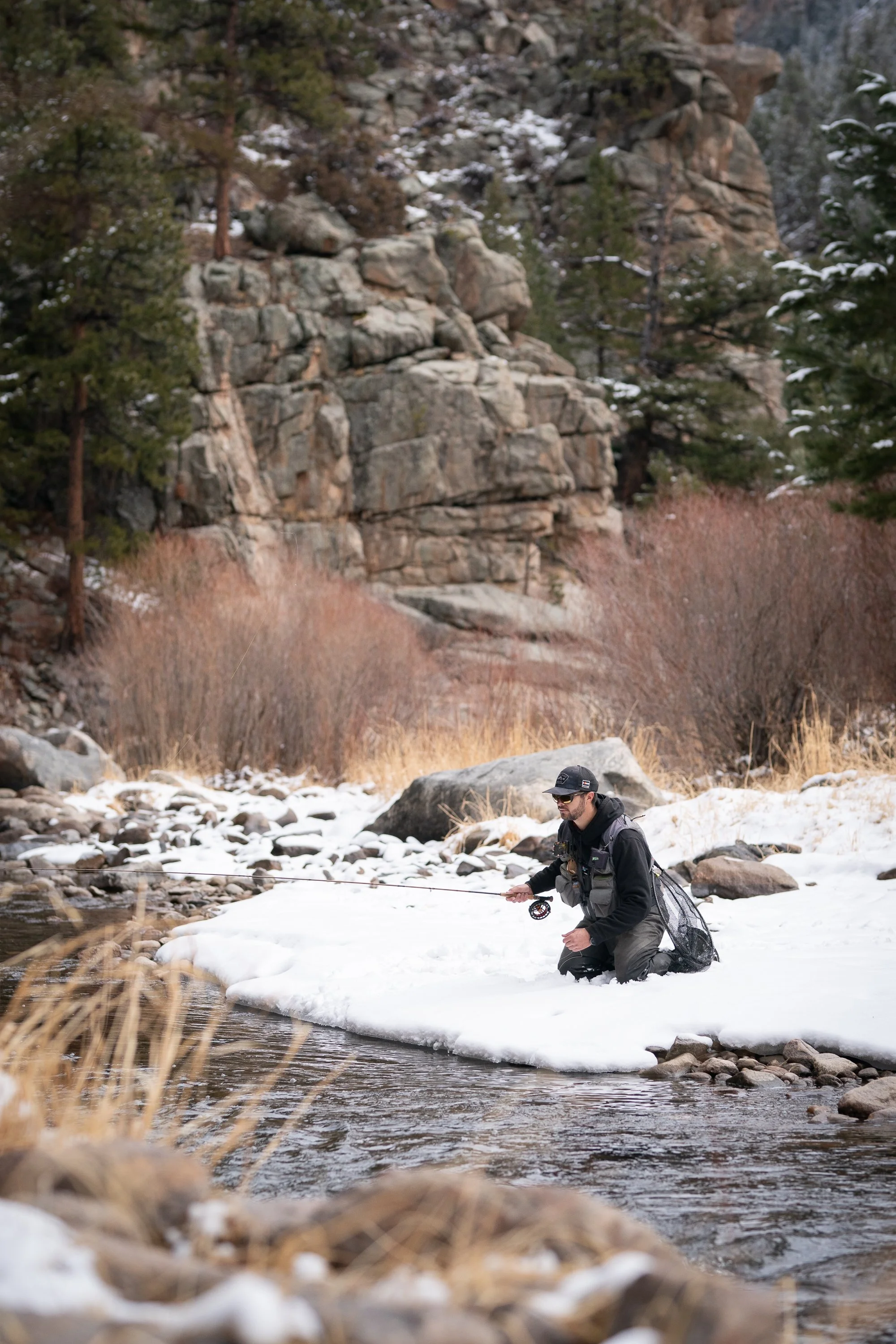
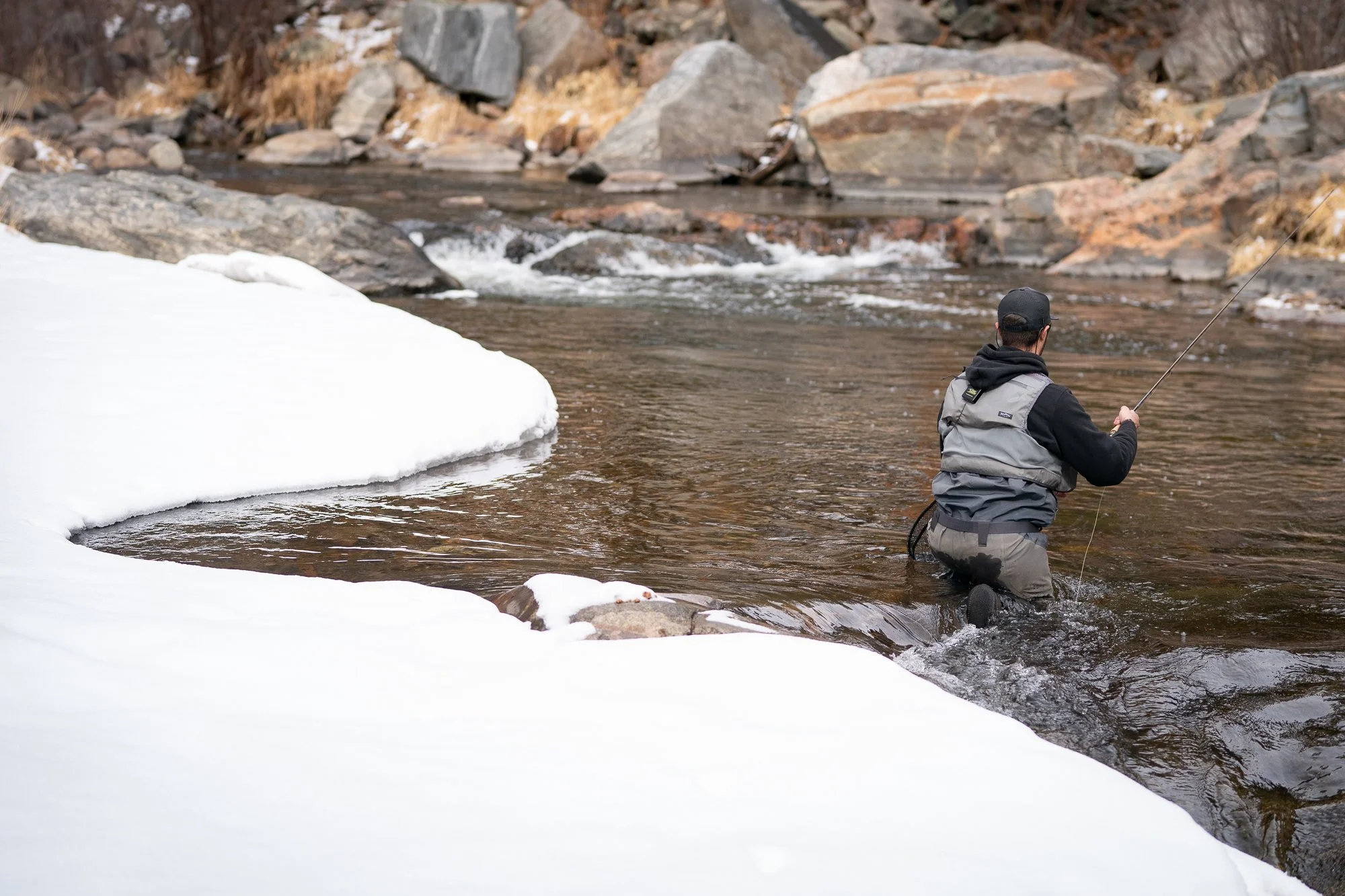
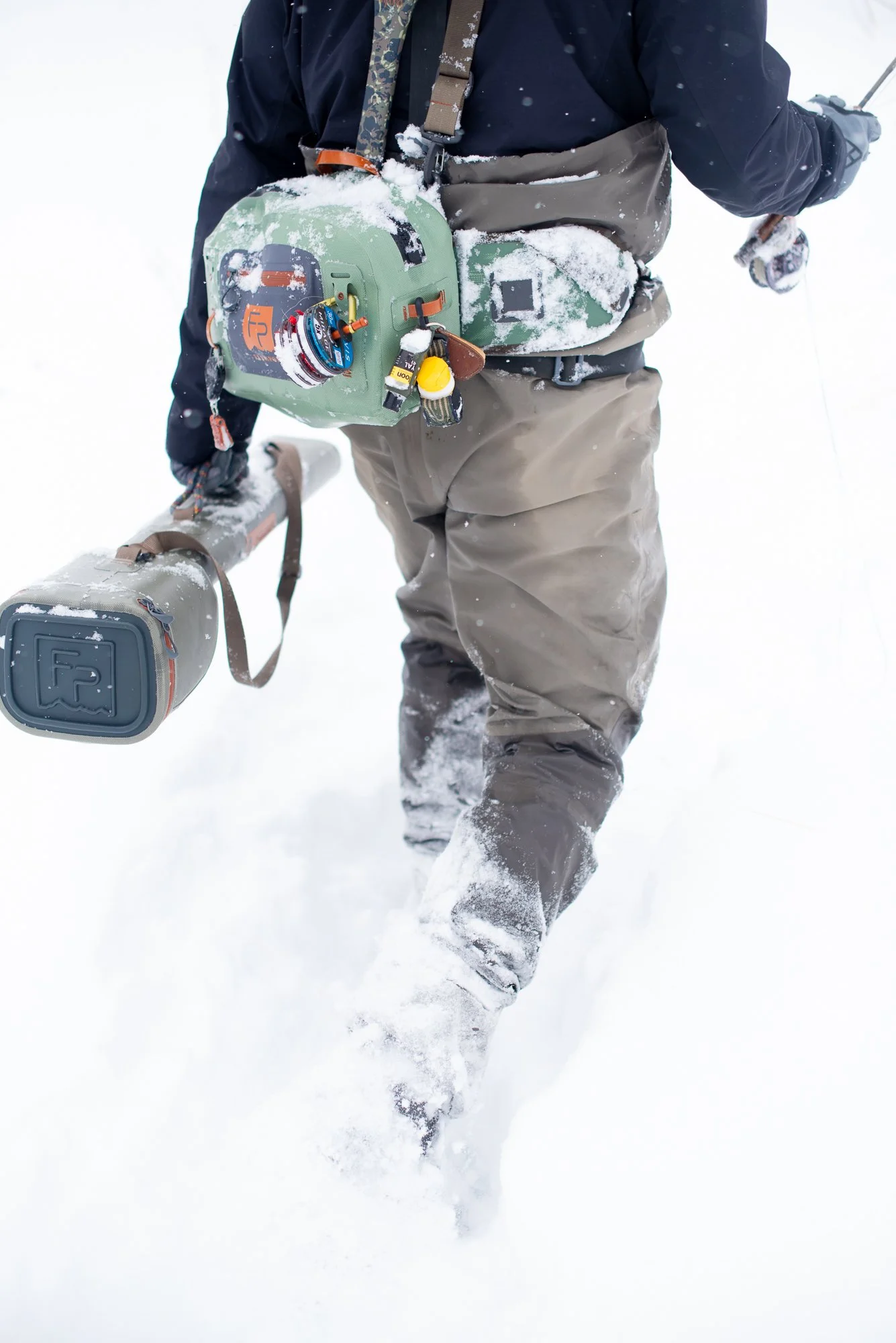
Photograph of a fly fisherman kneeling on ice while casting into the Big Thompson River near Estes Park, Colorado.

Estes Park Fly Fishing

Fly Fishing Close to Denver Changes the Approach

Fishing within reach of Denver means working with limitations:

  • tighter timeframes

  • unpredictable weather

  • more pressure on the water

From a photography standpoint, that changes how you shoot.

You don’t have a full day on the water, so there’s less waiting for perfect conditions and more adapting to what’s in front of you:

  • shifting light through the canyon

  • quick decisions on composition

  • moments that happen once and don’t repeat

It forces a more responsive way of working—and often leads to more honest images.

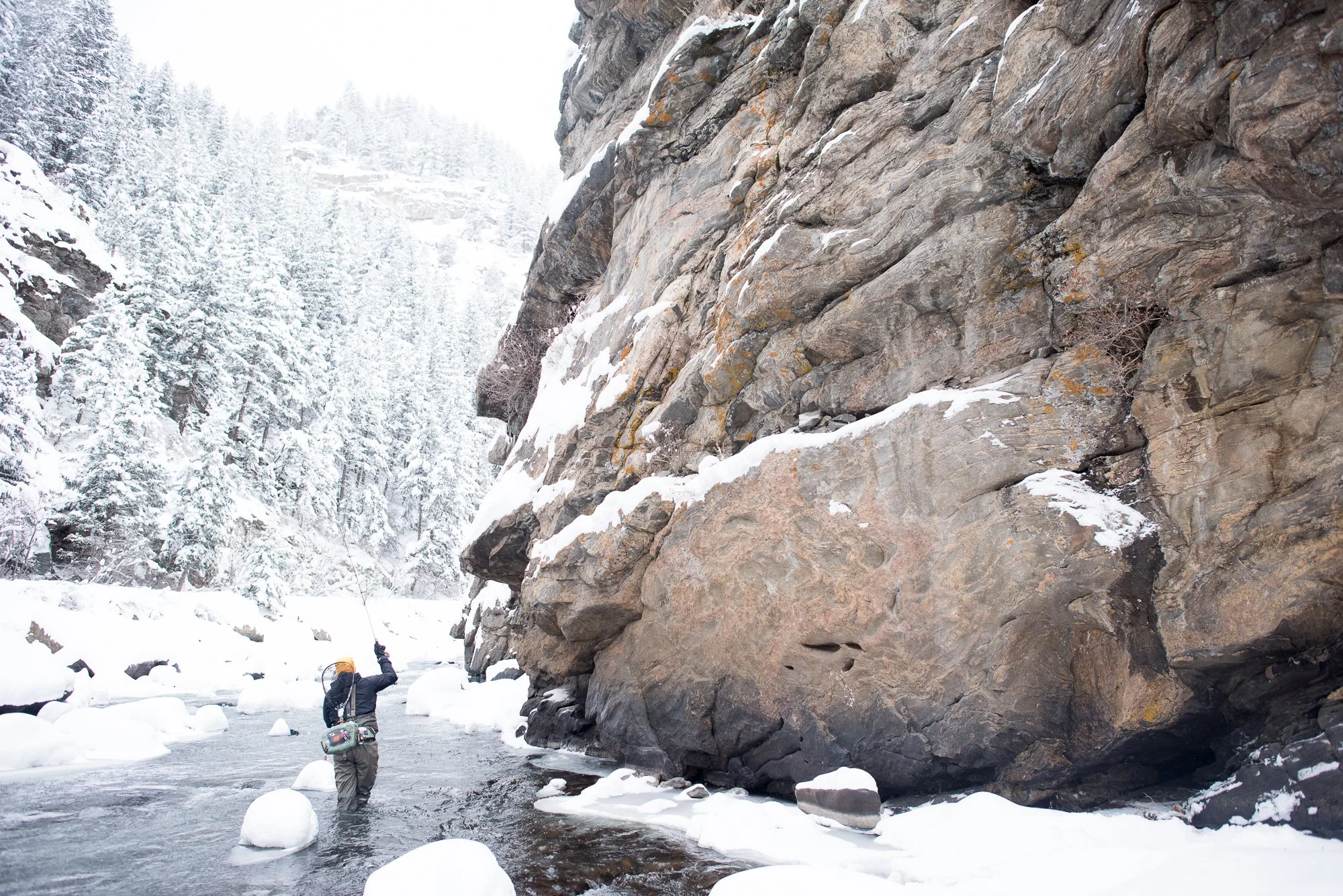
A fly fisherman casting into a winter stream in a rocky canyon near Estes Park, CO

A fly fisherman in a rocky canyon near Estes Park, CO

Real Conditions, Not Ideal Ones

In the Rocky Mountains there is no such thing as ideal conditions, and that’s a lot of the fun - you’re always finding a way to make the most of what comes at you. That part of the process is what’s so addicting about fly fishing and photographing the sport.

Instead of building images around ideal conditions, the focus is on documenting what’s actually there:

  • anglers adjusting on the fly

  • reading water in real time

  • working through imperfect situations

That’s why the work separate from all the polished, staged imagery found out there on the internet for 50 cent a download.

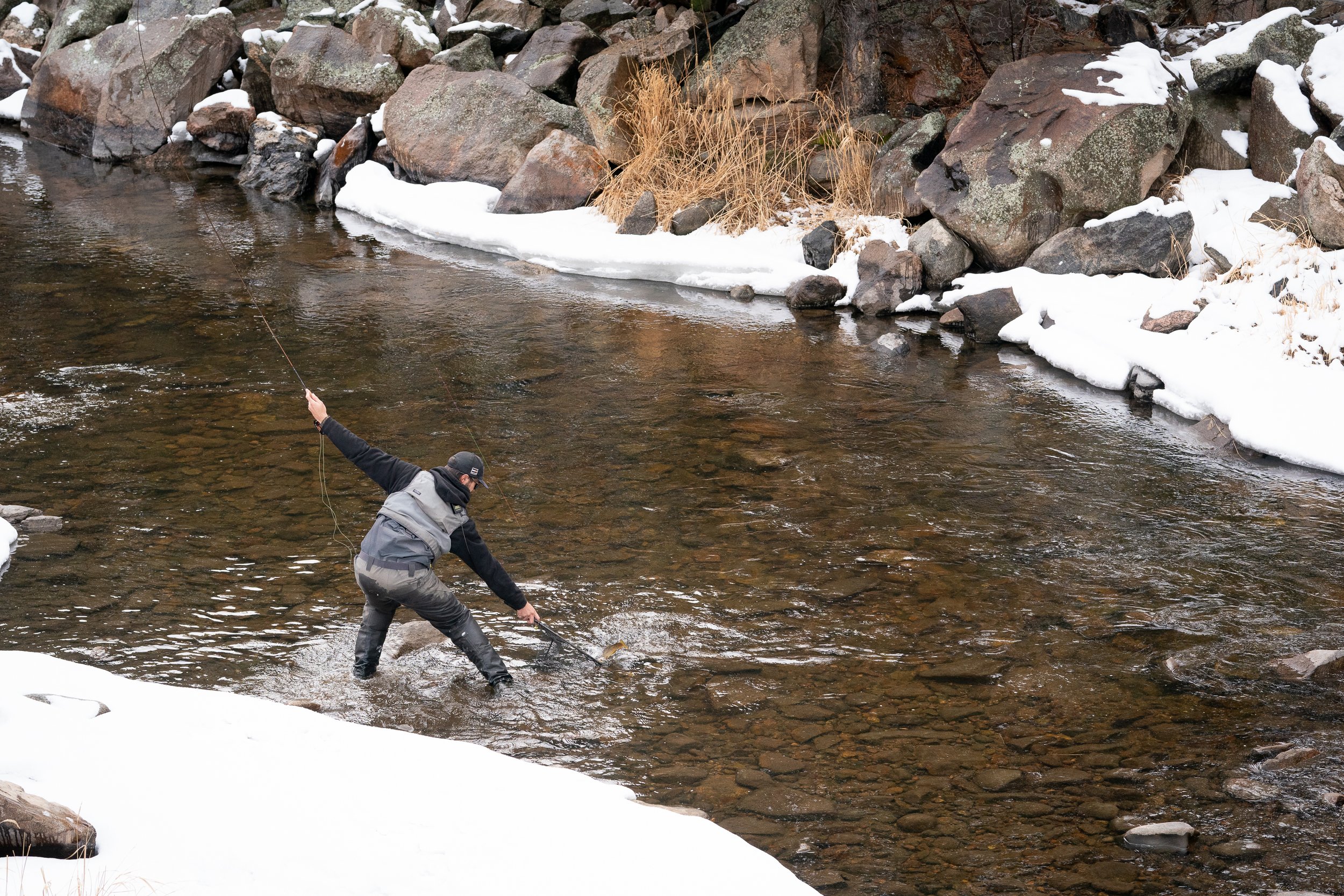
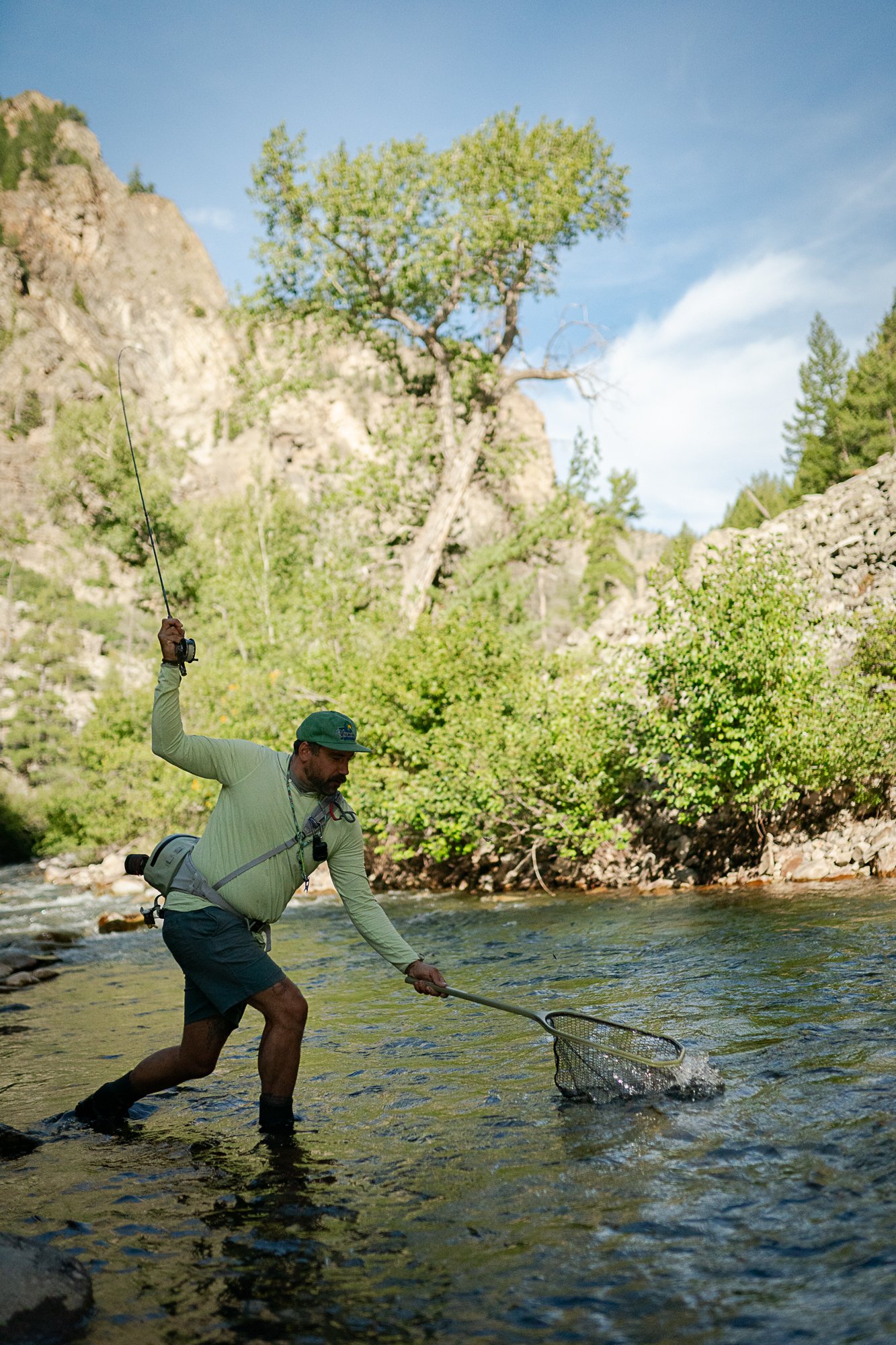
Photograph of a fly fisherman netting a trout in Estes Park, Colorado

Winter trout fishing in the Front Range outside Denver, CO

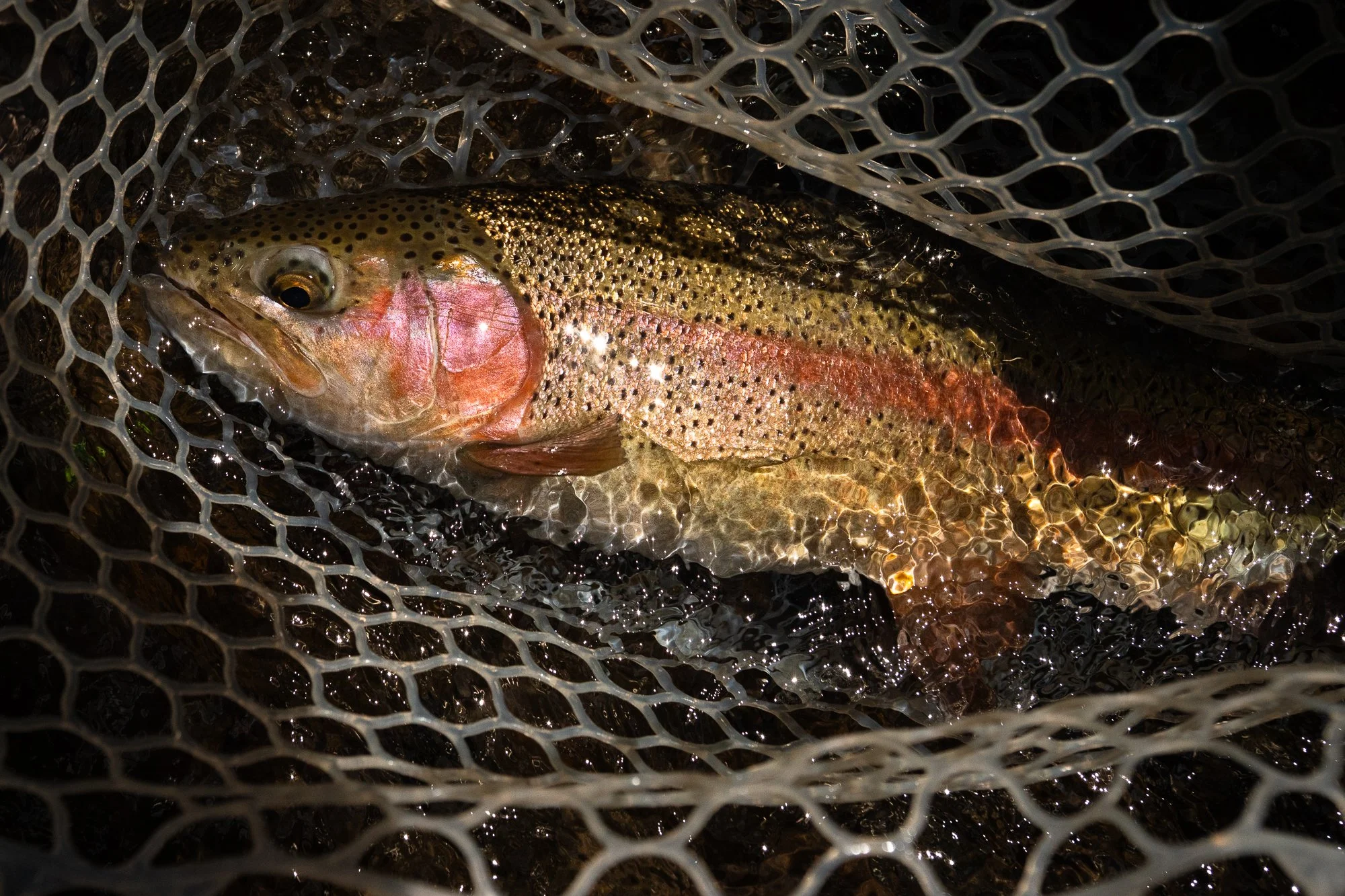
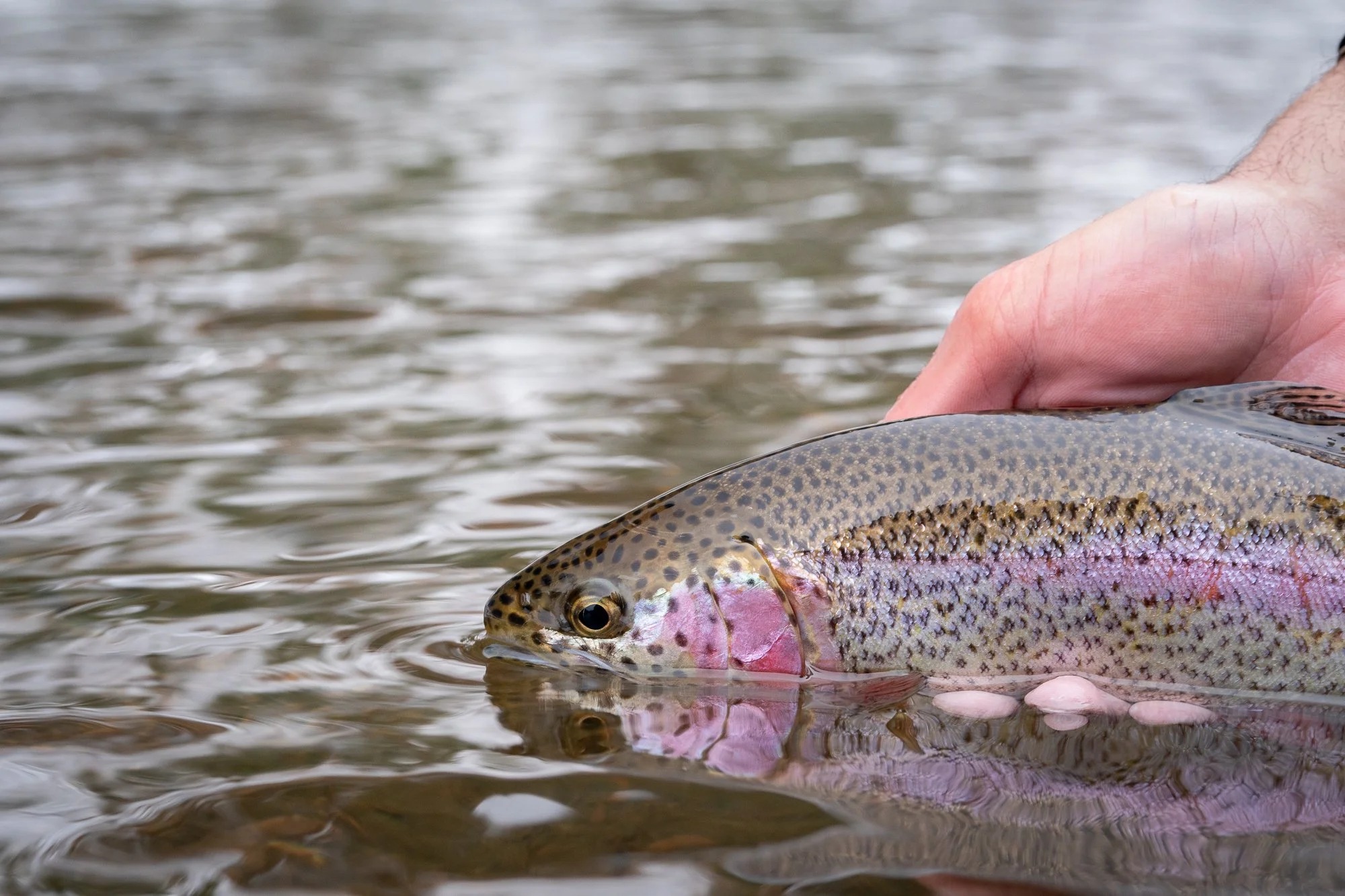
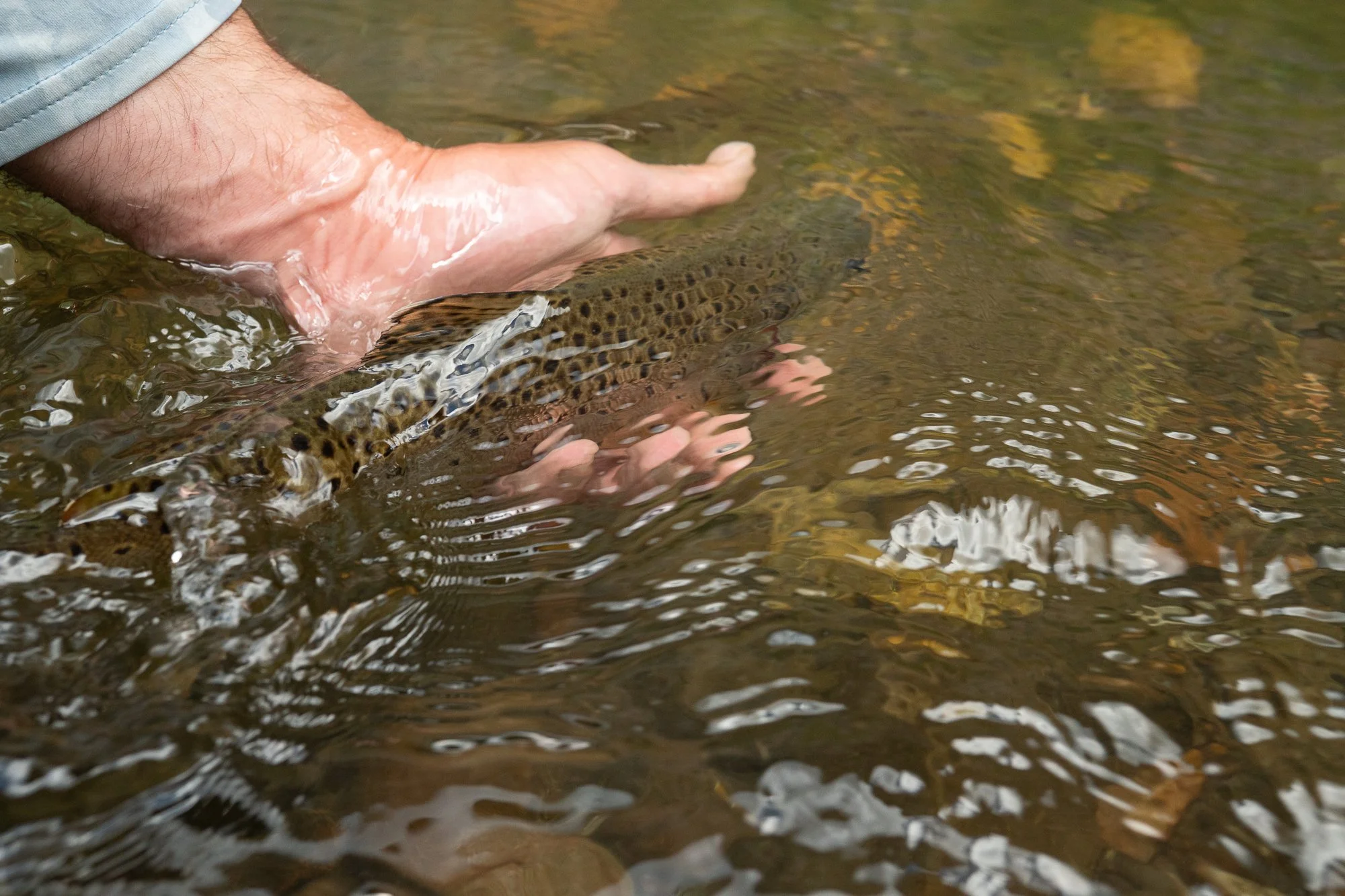
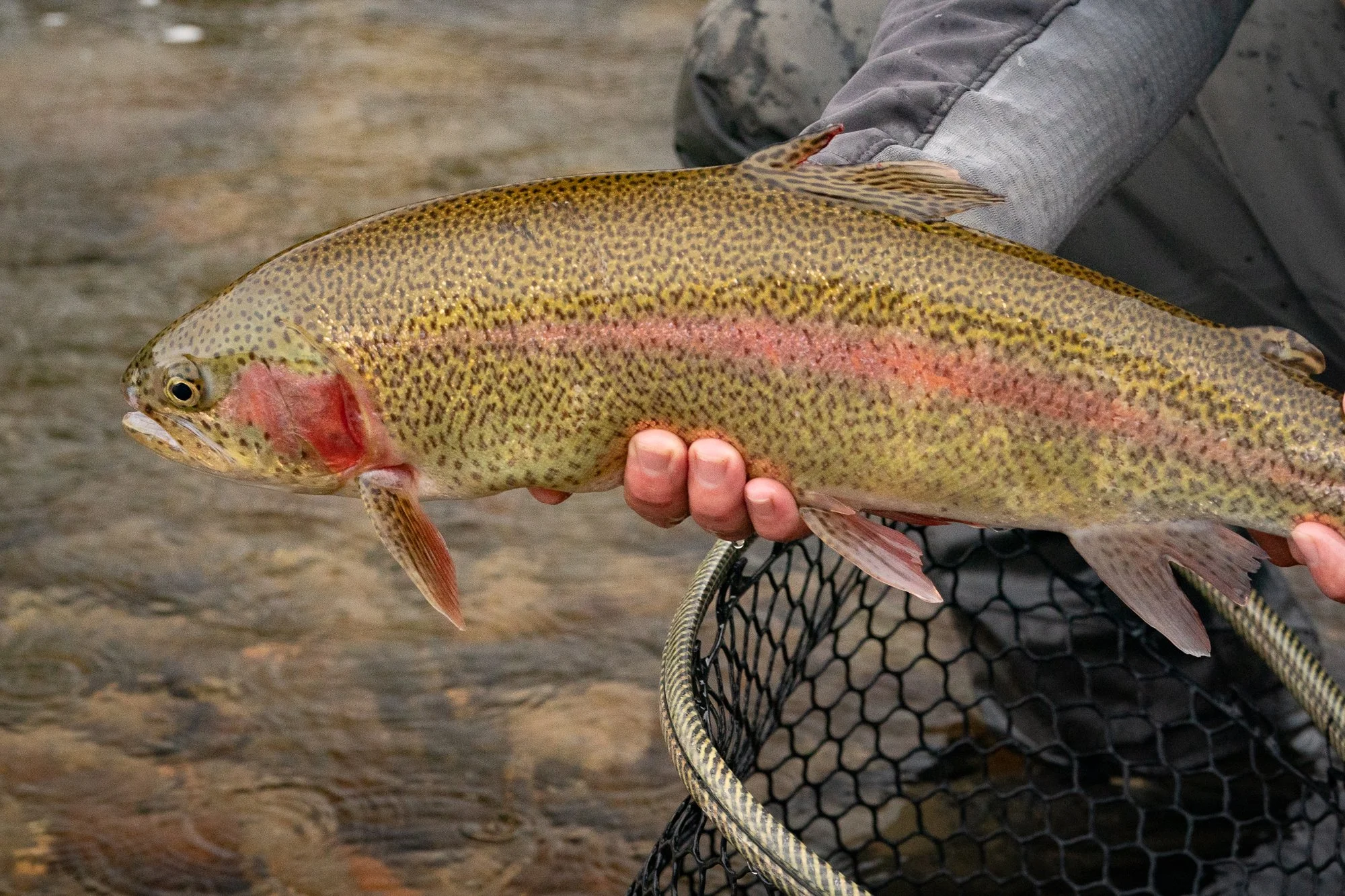
Rainbow trout caught in winter near Estes Park, CO

Rainbow Trout - Estes Park

Why Local Water Produces Strong Photography

When you’re not chasing a “bucket list” location, the mindset shifts.

You’re not trying to prove anything—you’re just paying attention.

That tends to lead to:

  • more observational images

  • better use of available light

  • compositions that feel less forced

Over time, those images become more useful for:

  • editorial storytelling

  • brand work that values authenticity

  • regional campaigns tied to Colorado and the Front Range

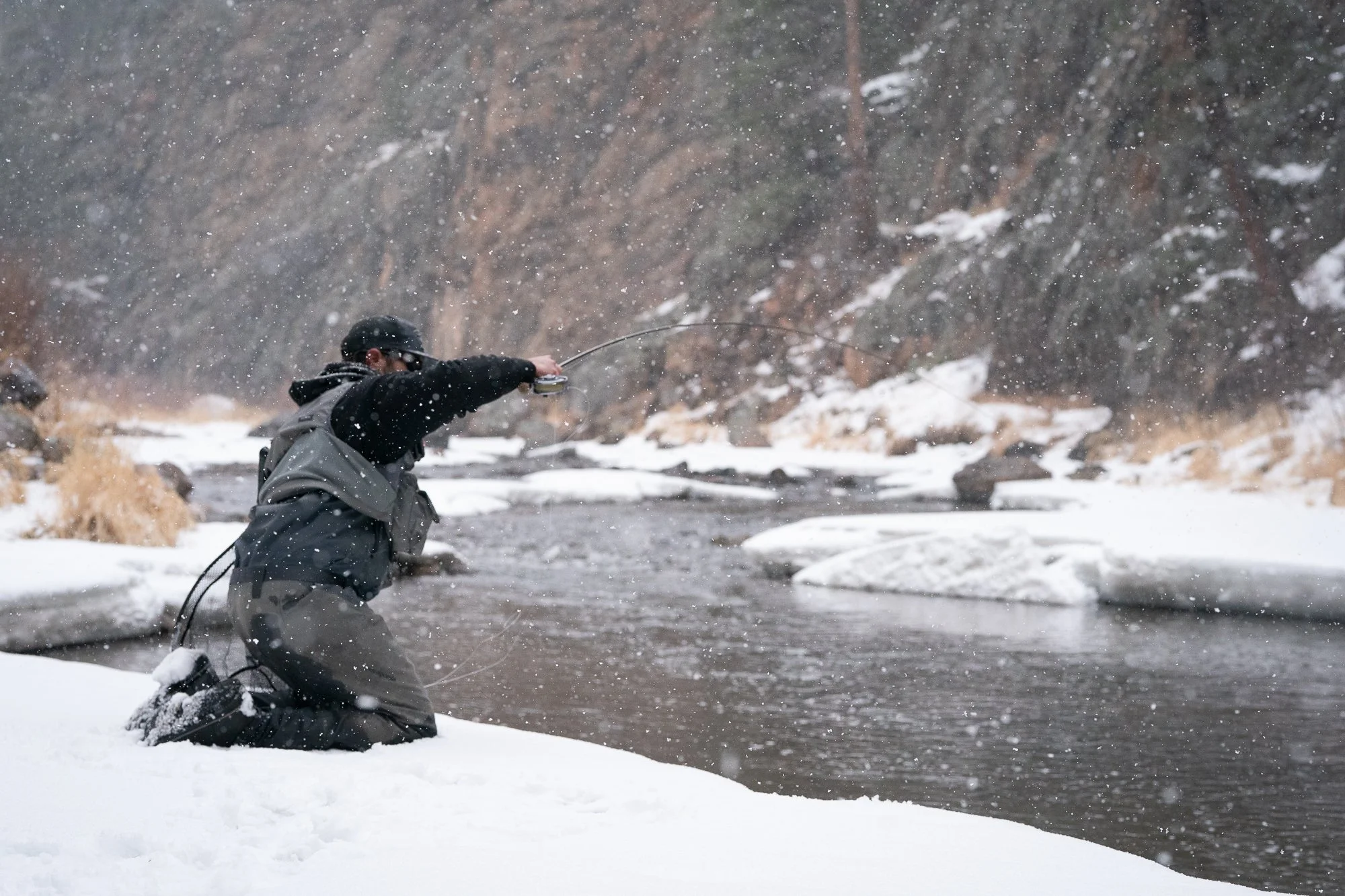
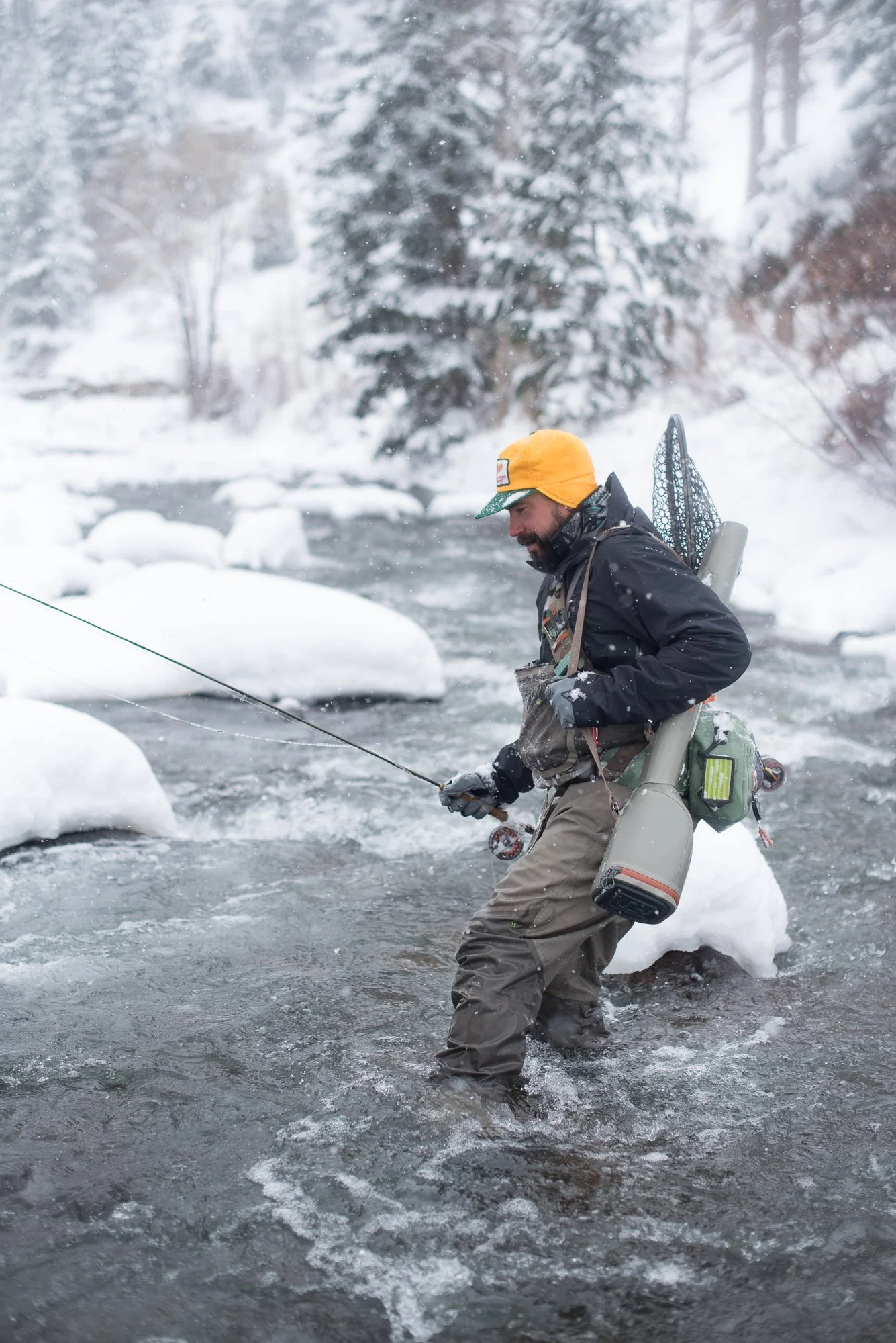
Photograph of a fly fisherman in a snowstorm in Colorado near Estes Park

Fly fishing in the snow near Estes Park, CO

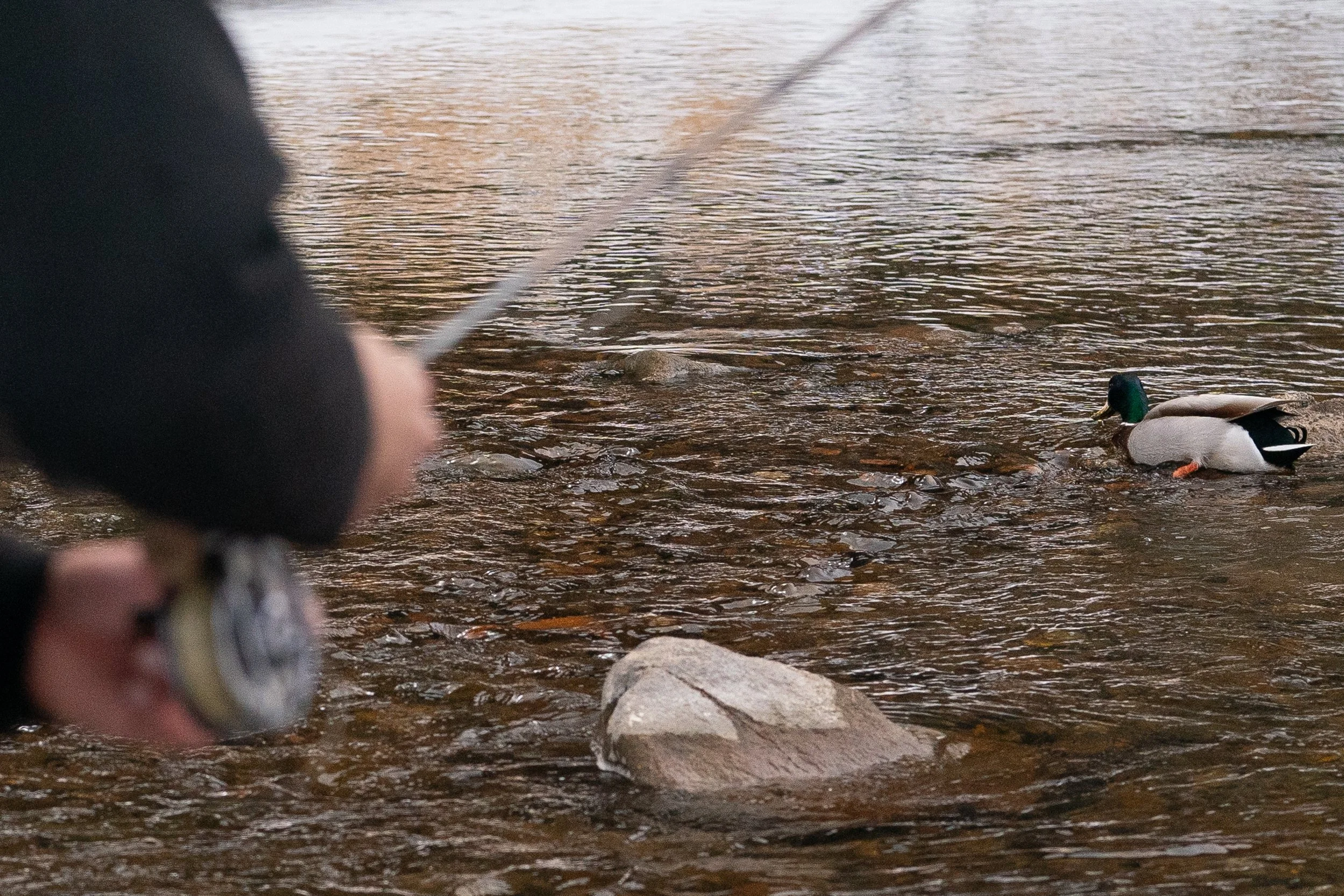
Photograph of a mallard swimming by a fly fisherman

A mallard swims in front of a fly fisherman on the Big Thompson River

Fly Fishing Photography for Regional and National Use

Work created in accessible environments like this often translates well across different uses.

It doesn’t rely on a specific landmark or recognizable destination. Instead, it focuses on:

  • the act of fishing

  • the relationship with the environment

  • moments that feel familiar and repeatable

That makes the images flexible for:

  • outdoor brands

  • editorial features

  • tourism and regional campaigns

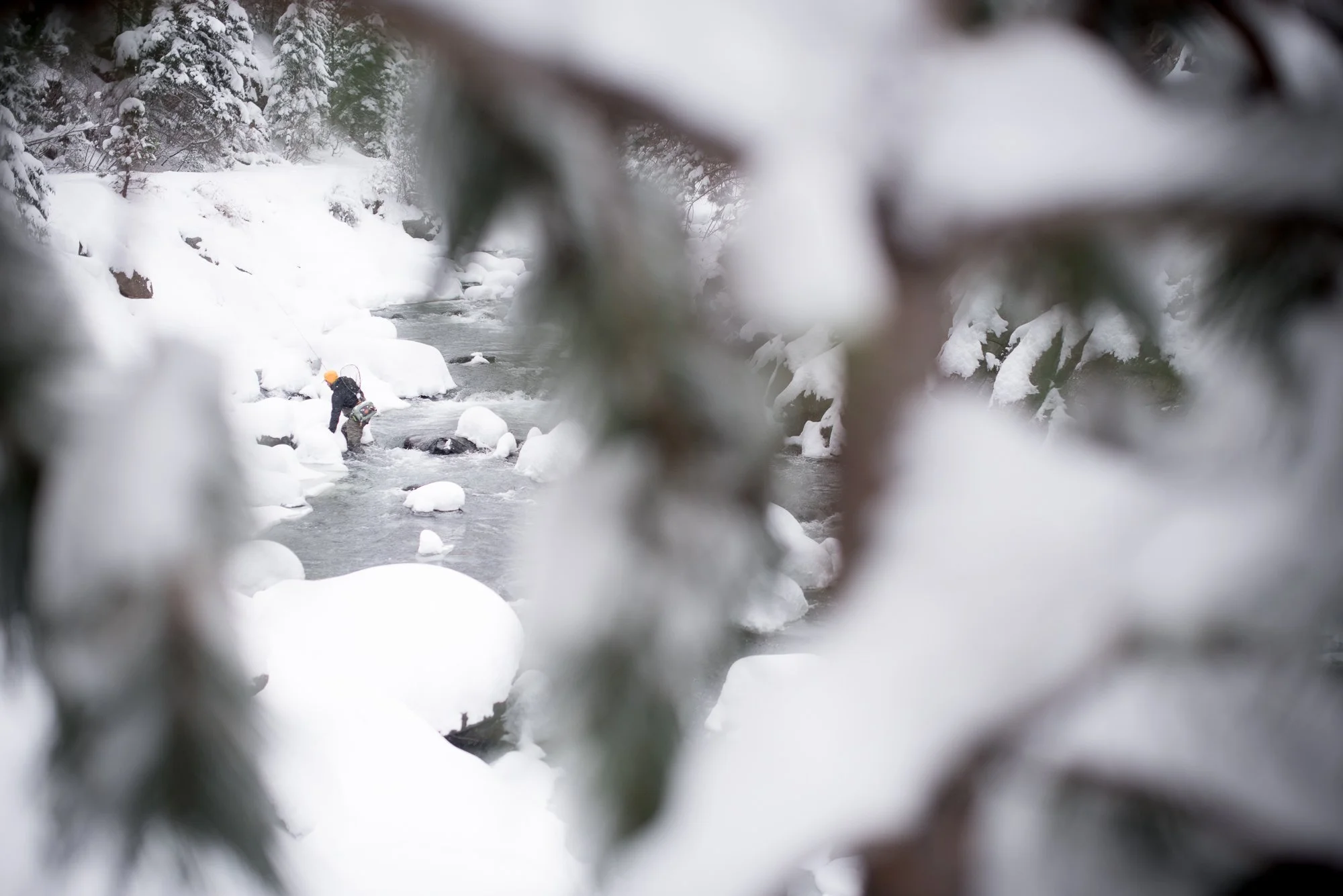
A fly fisherman kneels in a stream next to snow covered banks to avoid spooking fish

A fly fisherman kneels in the river to avoid spooking fish near Estes Park

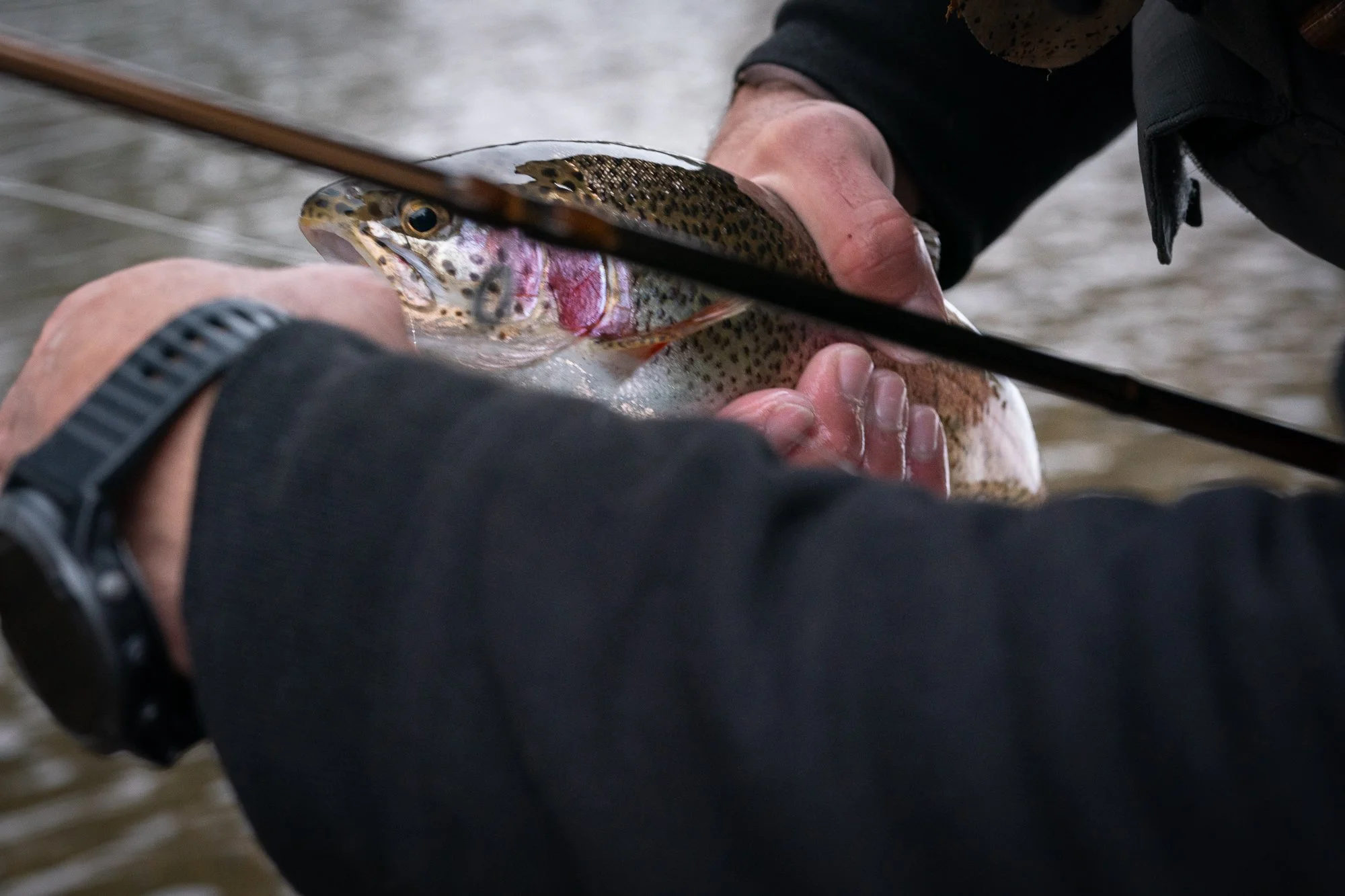
Photograph of a fly fsherman removing a hook from the mouth of a rainbow trout near Estes Park, CO

Removing hook from Rainbow Trout

Part of a Larger Body of Fly Fishing Work

This series connects to a larger and ongoing body of fly fishing photography across different environments:

Each location brings a different pace and visual language, but the approach stays consistent—real conditions, no staging, and a focus on the experience rather than the result.

Photograph of a fly fisherman crouching in the river to avoid being seen by fish

A fly fisherman approaches with stealth to avoid spooking fish

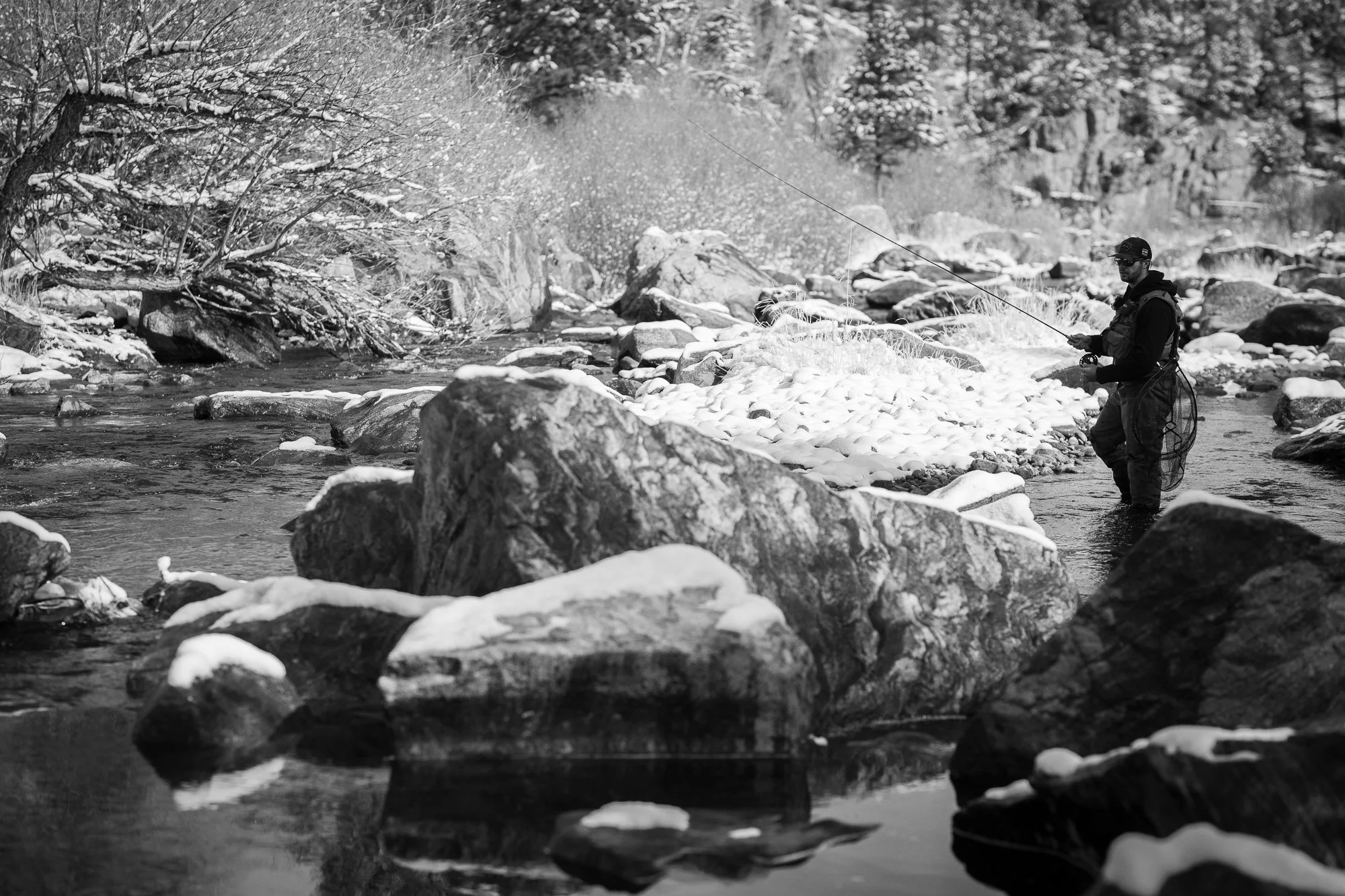
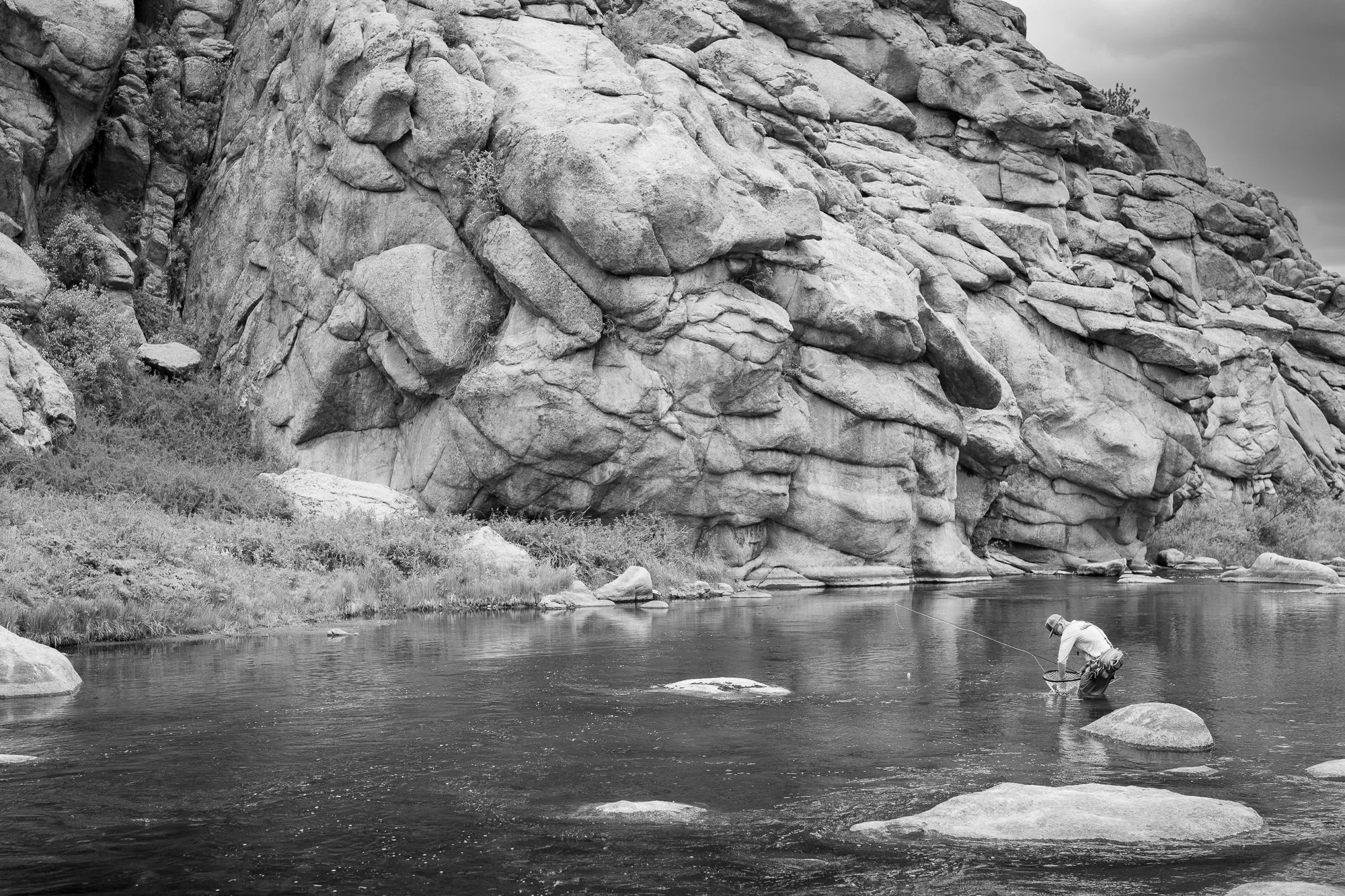
Black and white photograph of a fly fisherman in Big Thomson Canyon near Estes Park

Black and white photo of winter fly fishing in Estes Park

Prints and Licensing

Select images from this series are available as fine art prints, particularly landscape-driven compositions that work well in interior spaces.

View available fly fishing photography prints

Licensing is also available for brands, agencies, and publications looking for fly fishing imagery created in real conditions. Contact me for details - rob@robhammerphotography.com
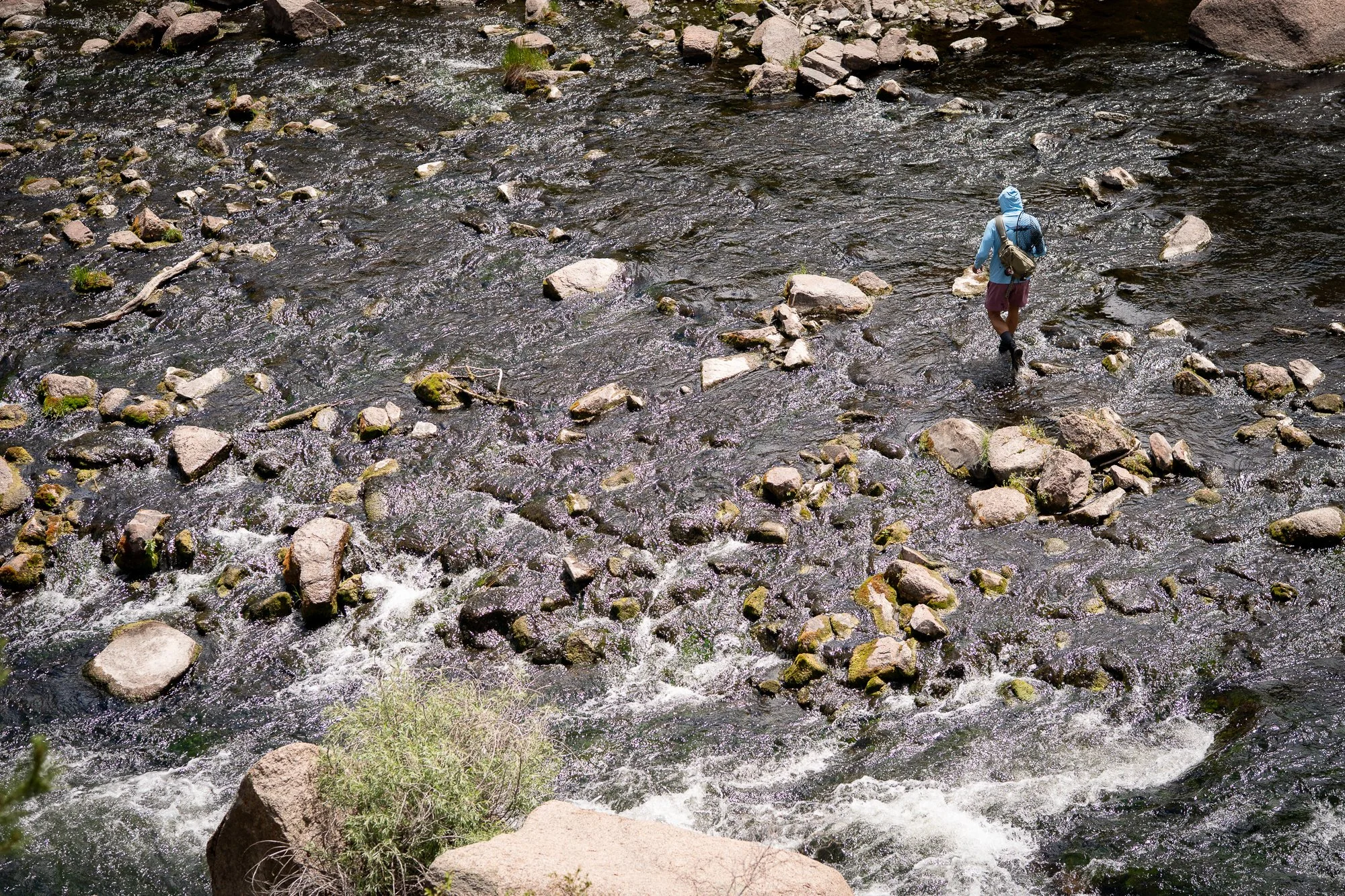
Long exposure photograph of water flowing on a river

Abstract river photograph

Black Canyon of the Gunnison Fly Fishing Photography

Black Canyon of the Gunnison Fly Fishing: A Real Look Inside One of Colorado’s Toughest Fisheries

There are places people talk about, and then there are places that quietly sit on a bucket list for years.

The Black Canyon of the Gunnison is one of those places.

Steep walls, limited access, and a river that doesn’t give much away easily. From the rim, it looks almost impossible to fish. And in a lot of ways, it is.

But that’s exactly why people keep coming back.

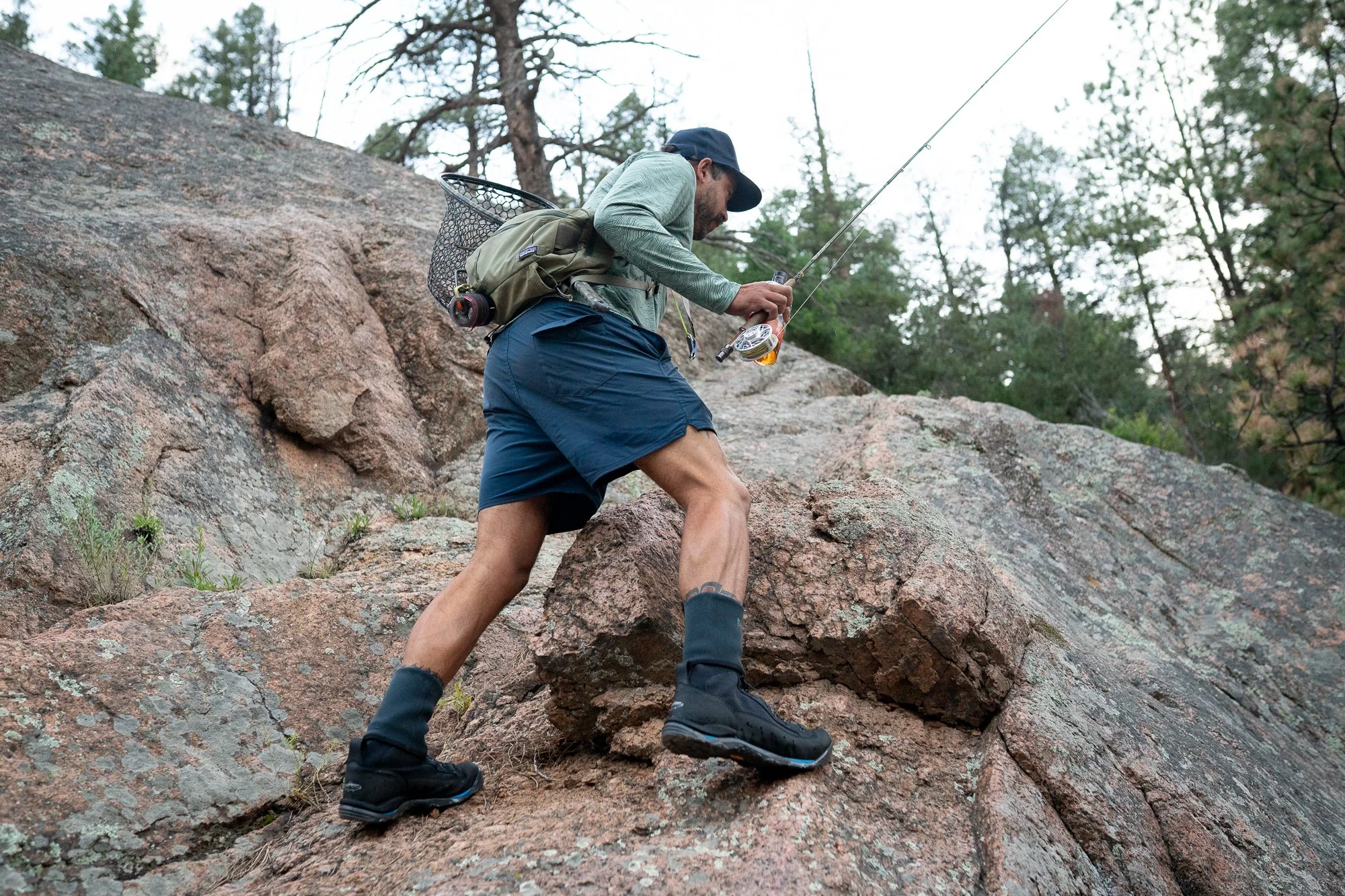
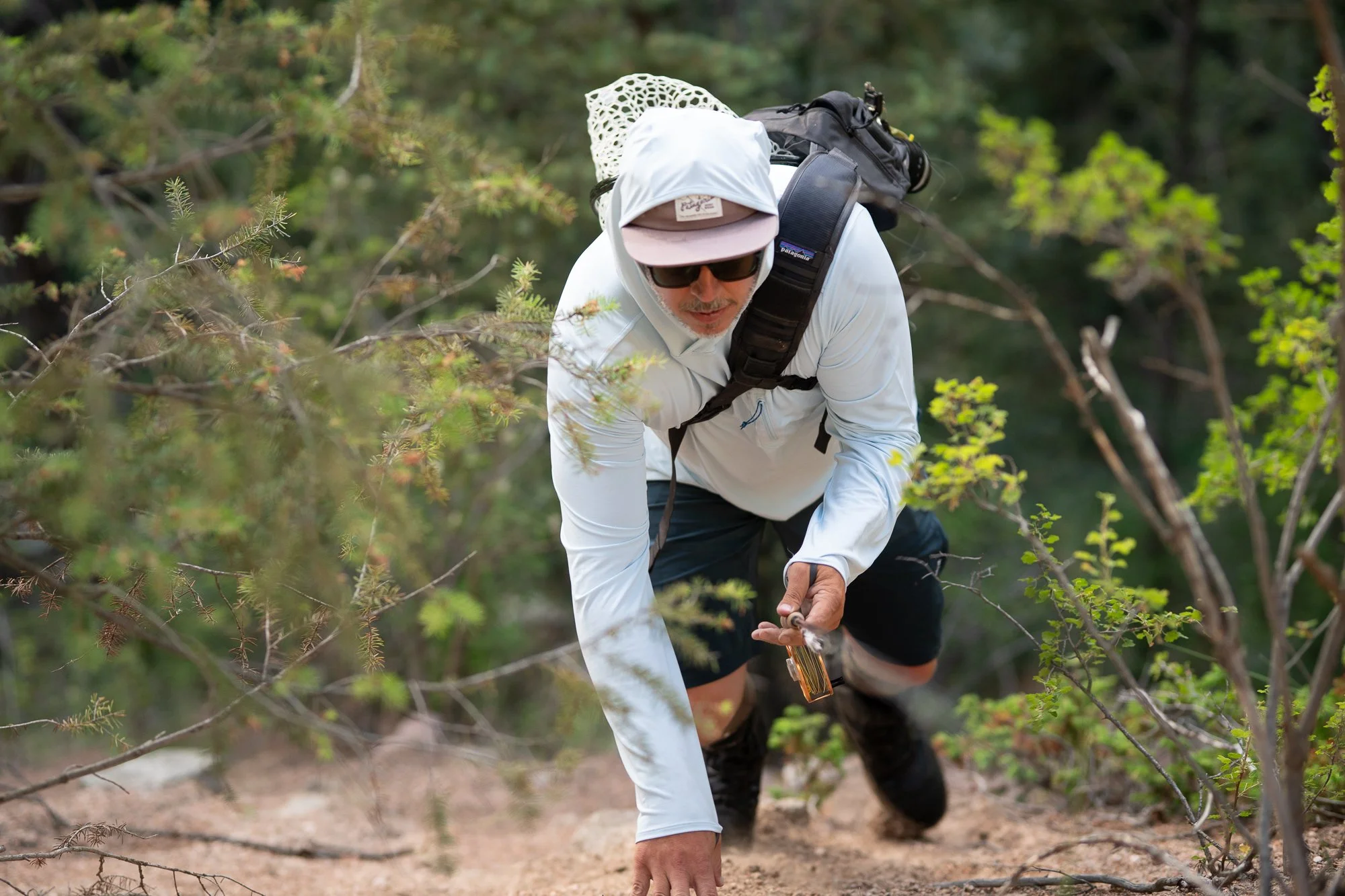
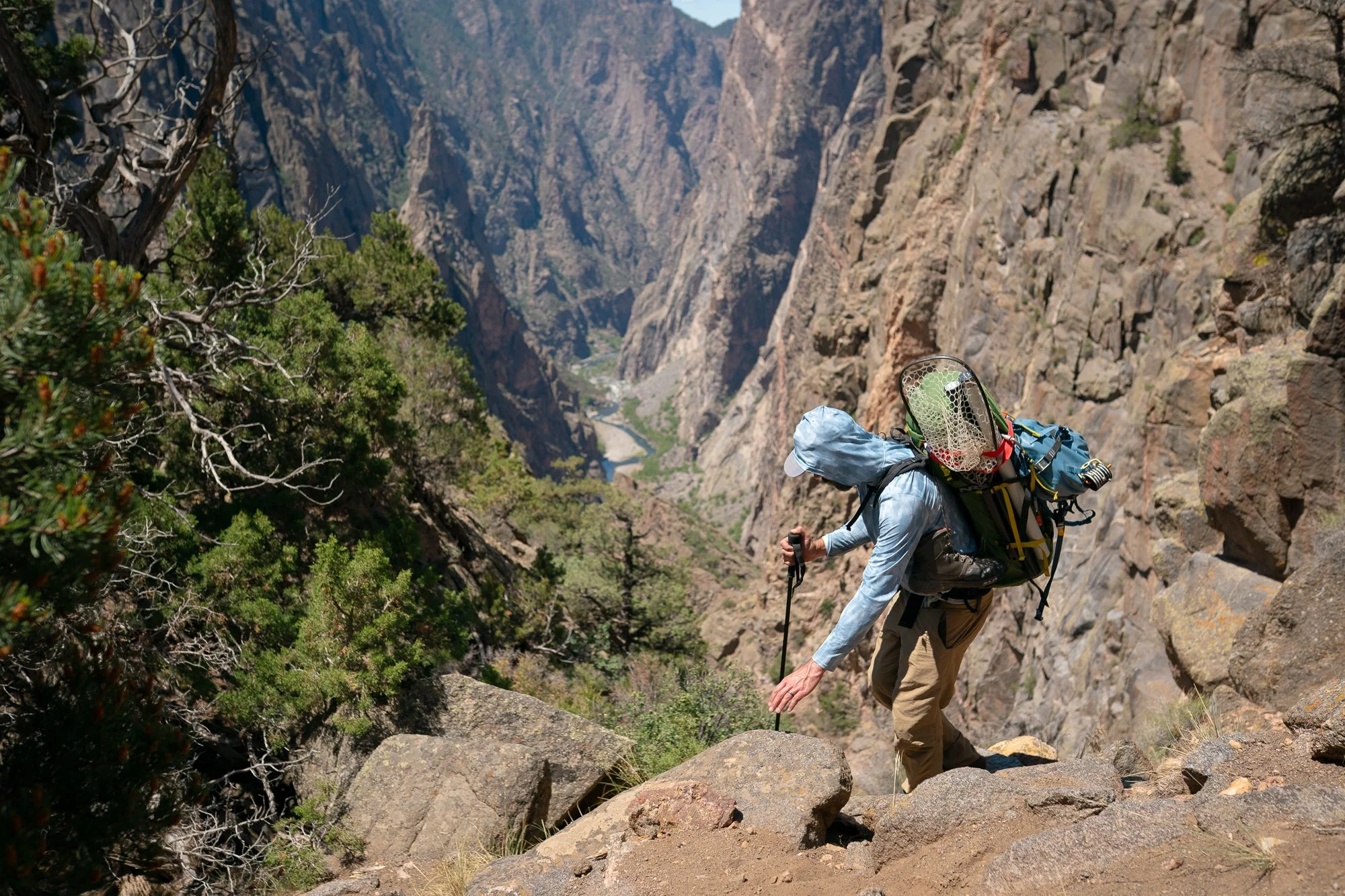
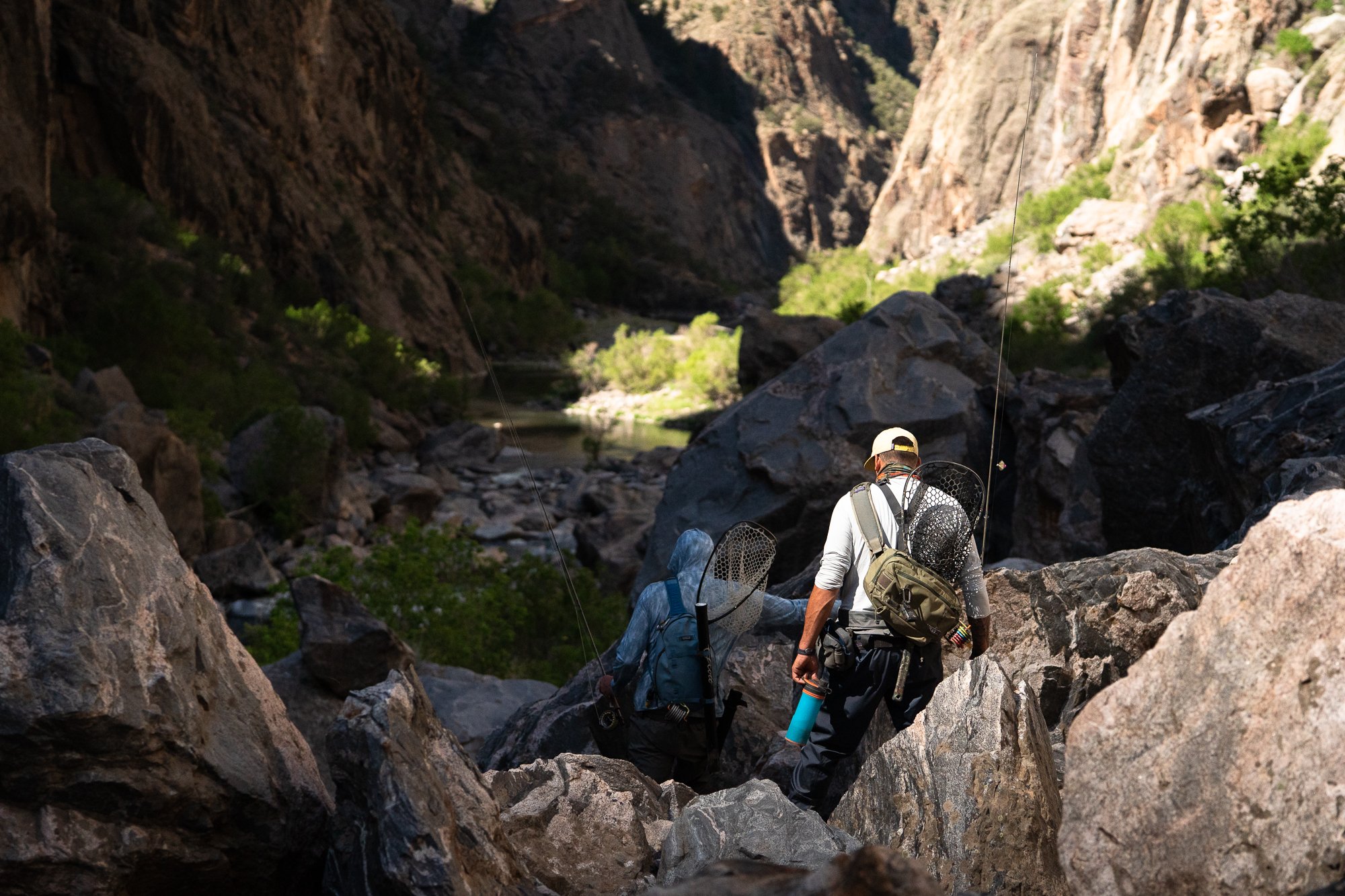
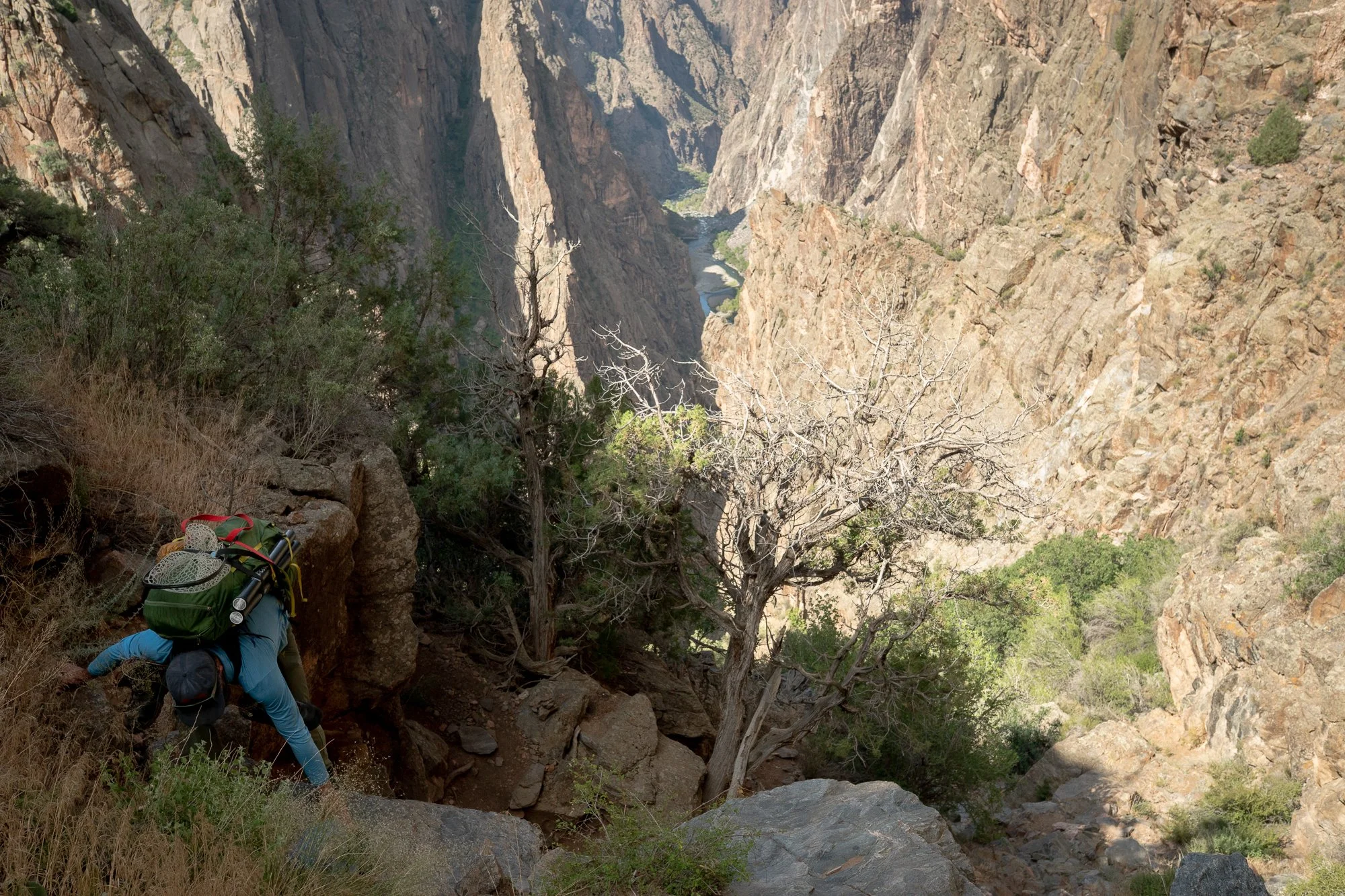
An angler hikes steep canyon terrain with fly fishing gear above Black Canyon of the Gunnison

The brutal climb in and out of Black Canyon is part of what makes this fishery feel earned.

A fly angler climbs steep terrain out of the Black Canyon of the Gunnison

The brutal climb out of the Black Canyon is as much a part of the fly fishing experience as the river itself.

Why the Black Canyon Is Different

Most fly fishing in Colorado gives you options.

The Black Canyon doesn’t.

There are only a handful of routes down to the river, and none of them are easy. Going down S.O.B. Draw is just as brutal as the hike up.

Once you’re down there, the Gunnison River feels like it’s yours. The hike in eliminates 99% of people, so there’s a good chance you might have the whole place to yourself.

It’s not a numbers game. It’s a place where you slow down and soak in a landscape that hasn’t changed in thousands of years.

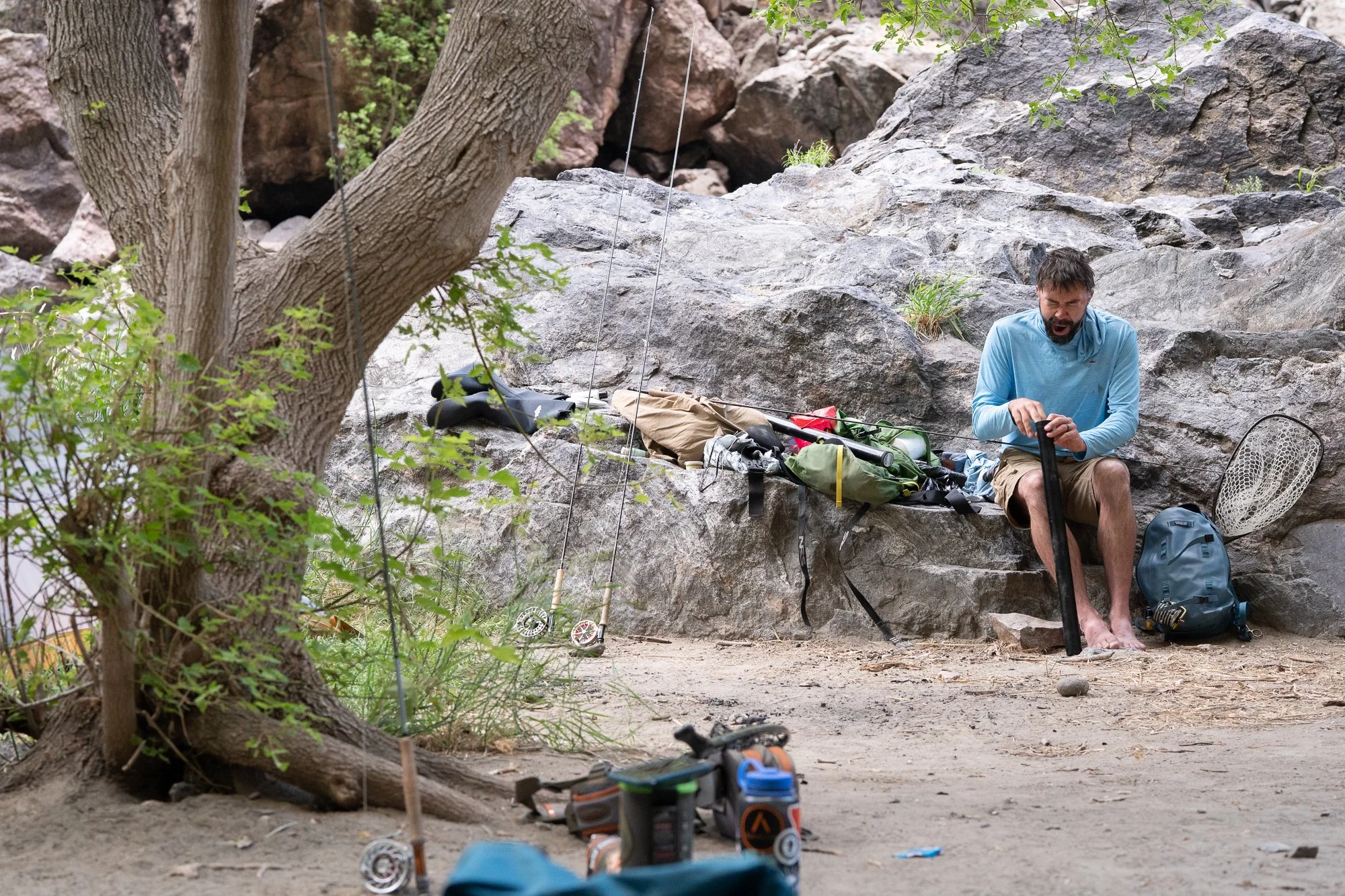
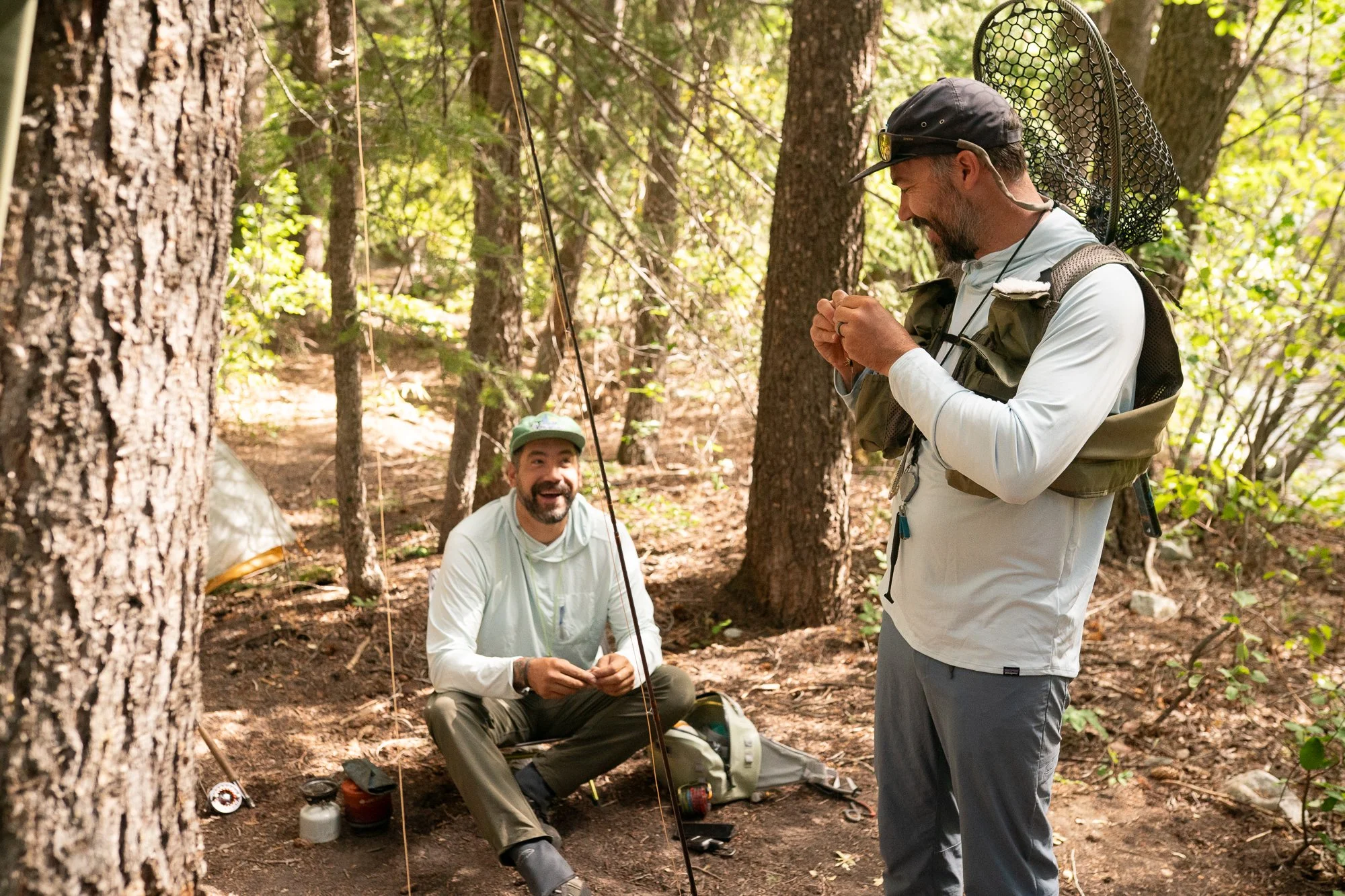
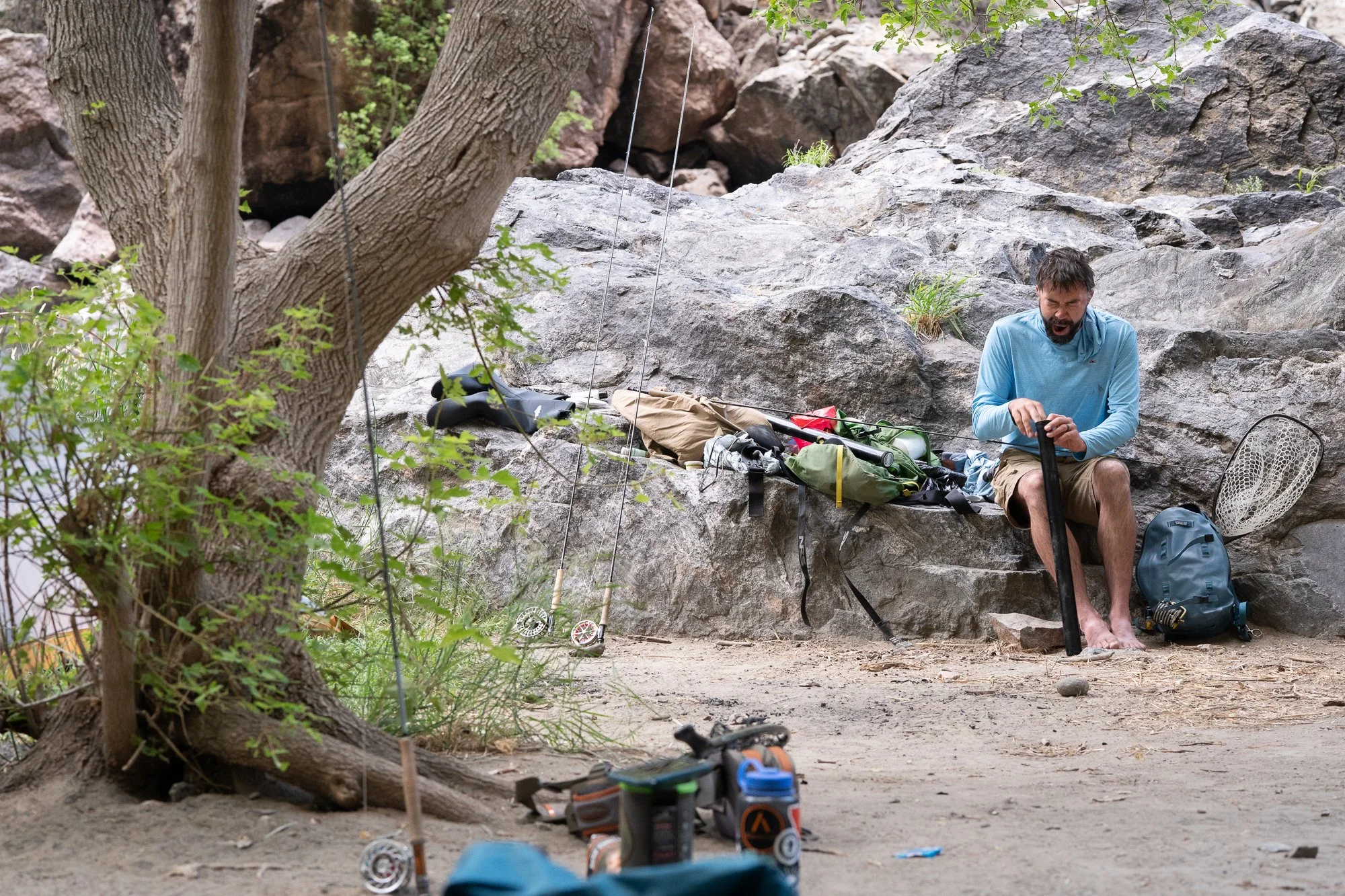
A fly angler prepares gear at riverside camp in the Black Canyon of the Gunnison

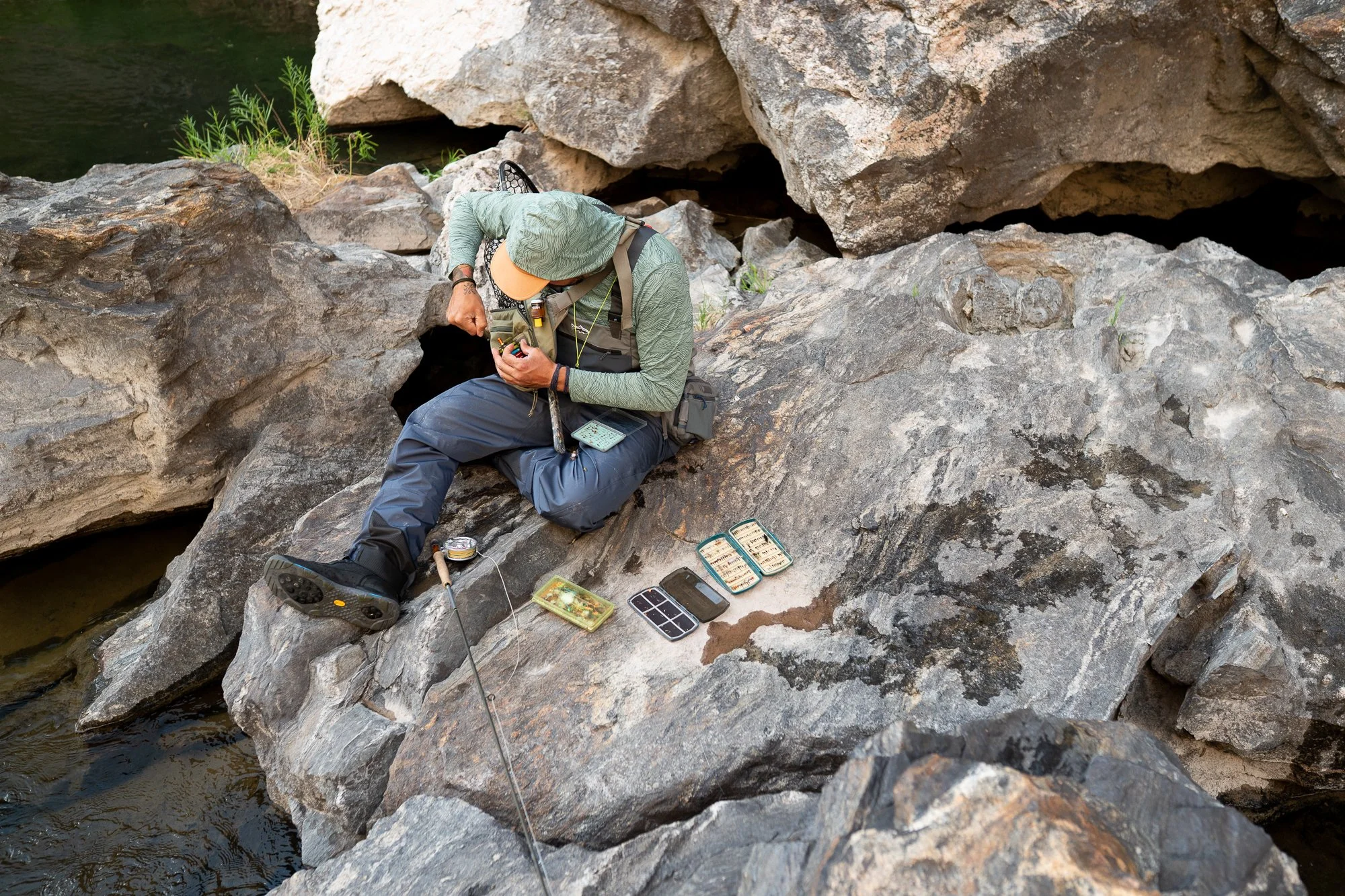
An angler yawns while organizing gear at camp just after waking up in the Black Canyon of the Gunnison.

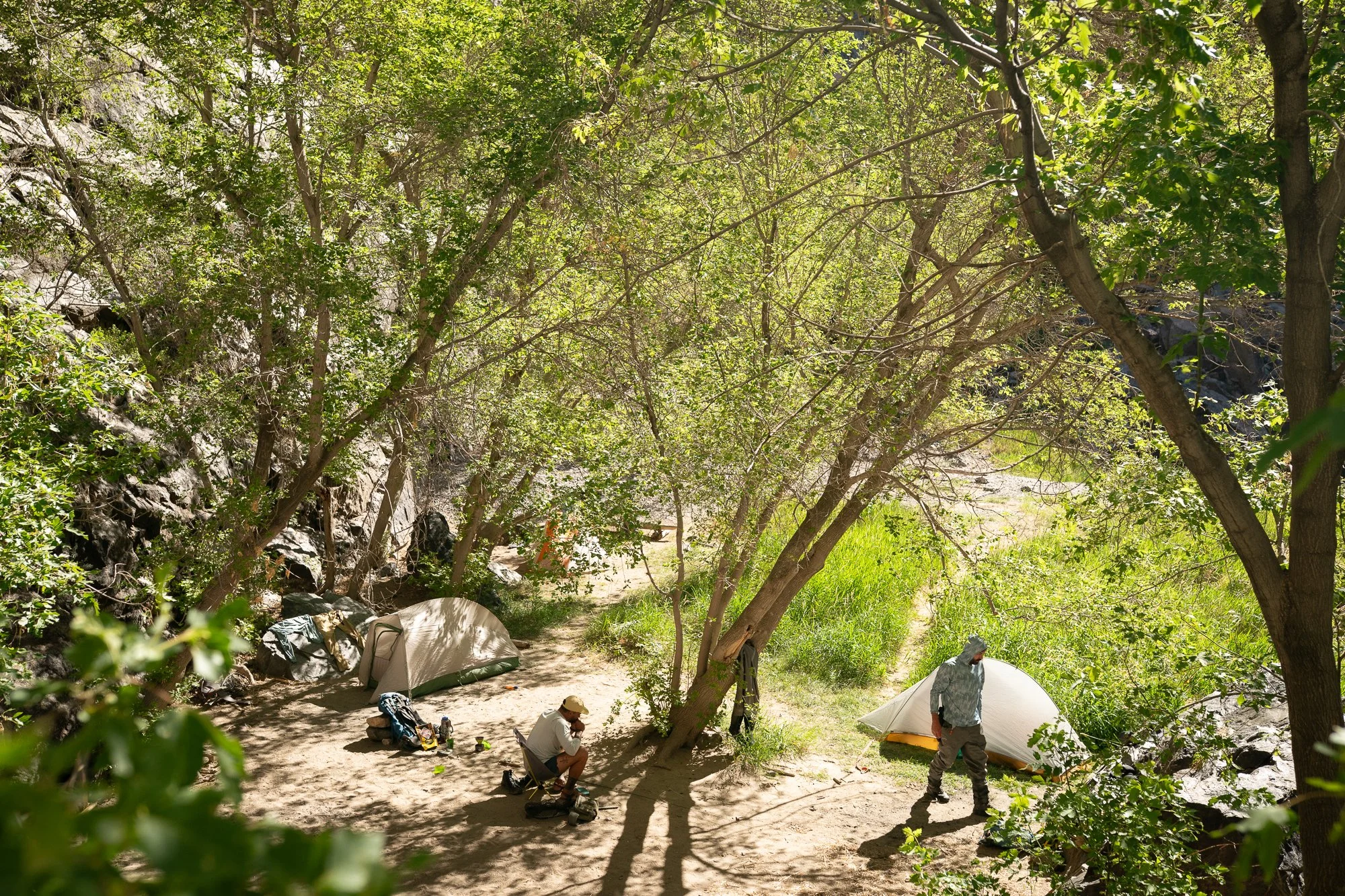
Two tents sit beneath trees at a riverside campsite in Black Canyon

Camp is set beneath the trees along the riverbank, creating shade and shelter deep in Black Canyon.

Access Isn’t the Hard Part—It’s Everything Else

A lot gets made about access—and yeah, it’s real.

But the physical side is just the beginning.

You carry everything in. You manage light that disappears early and returns late. Wind moves through the canyon in ways that don’t show up on a forecast. And the water itself demands precision.

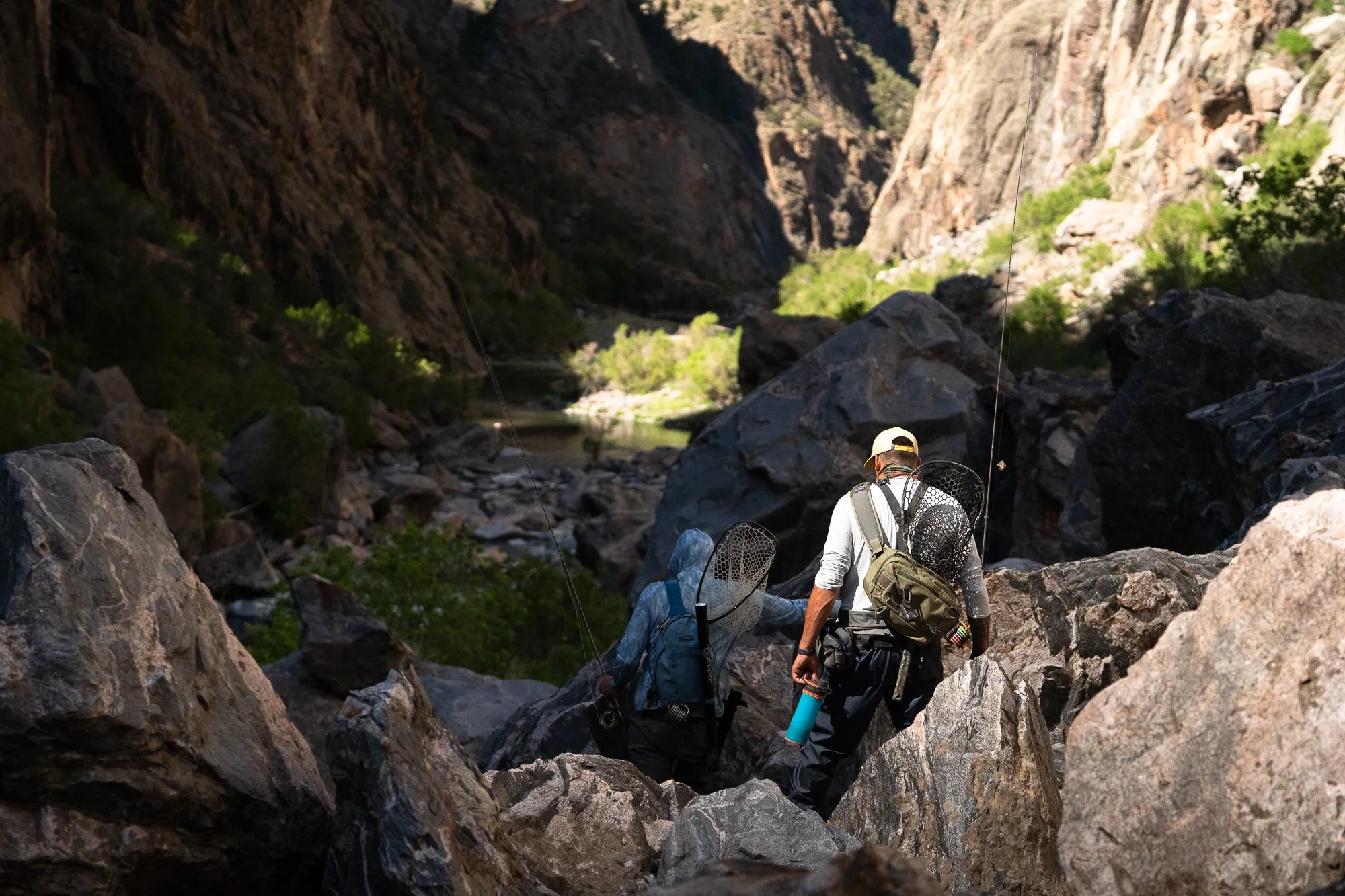
Fly anglers descend rocky terrain into the Black Canyon of the Gunnison with gear

The descent into the Black Canyon demands careful movement over boulders before reaching fishable water.

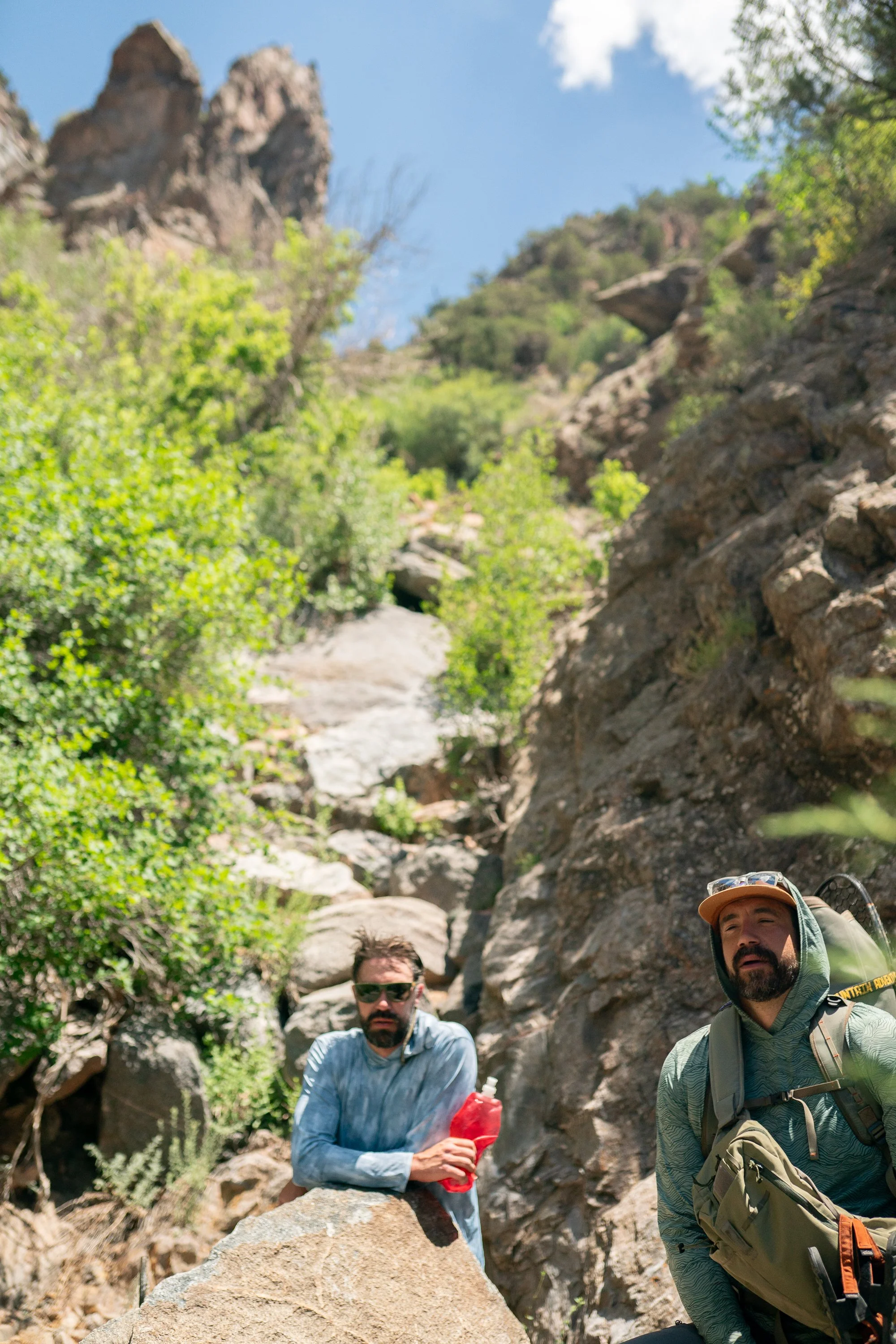
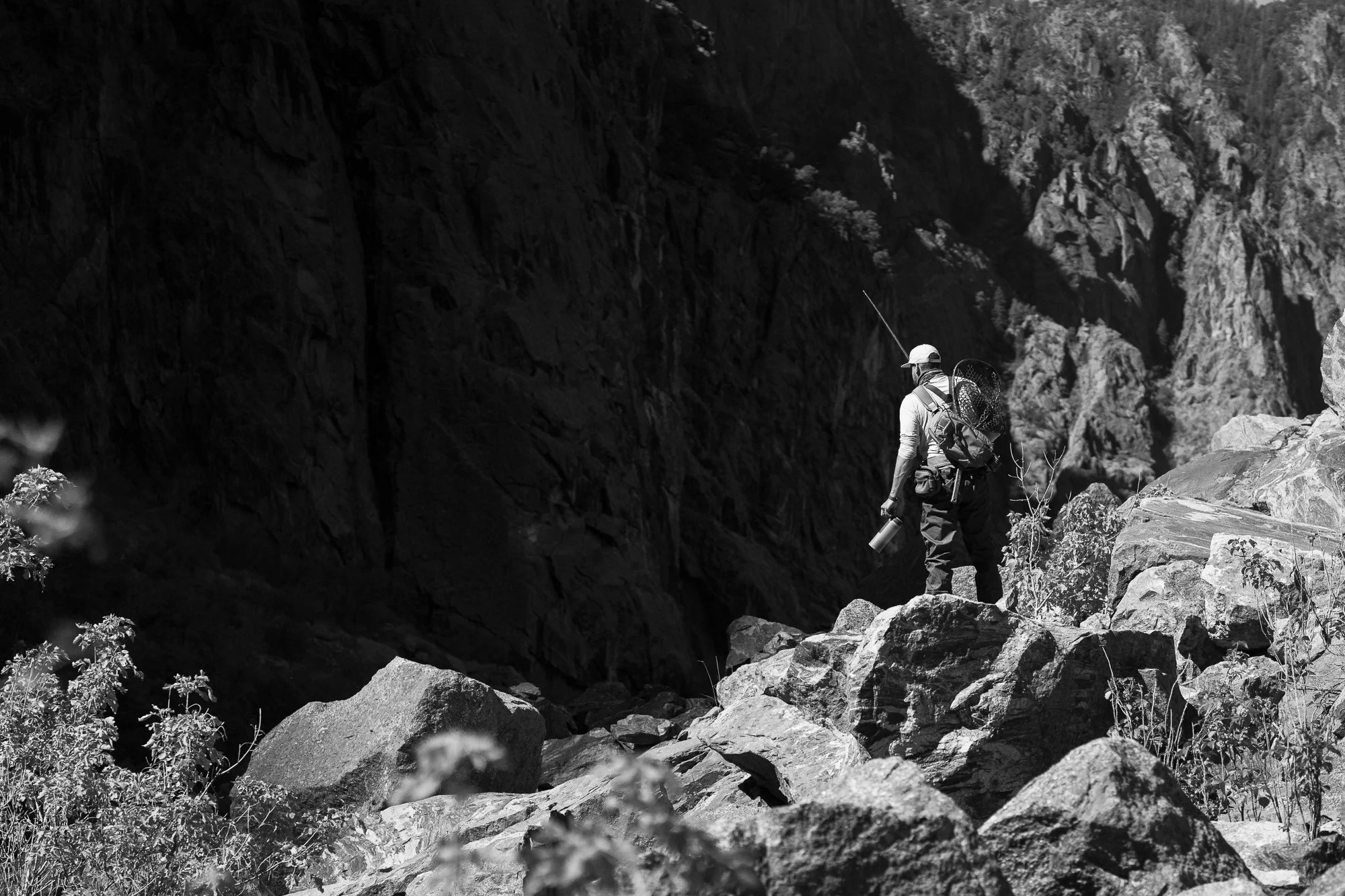
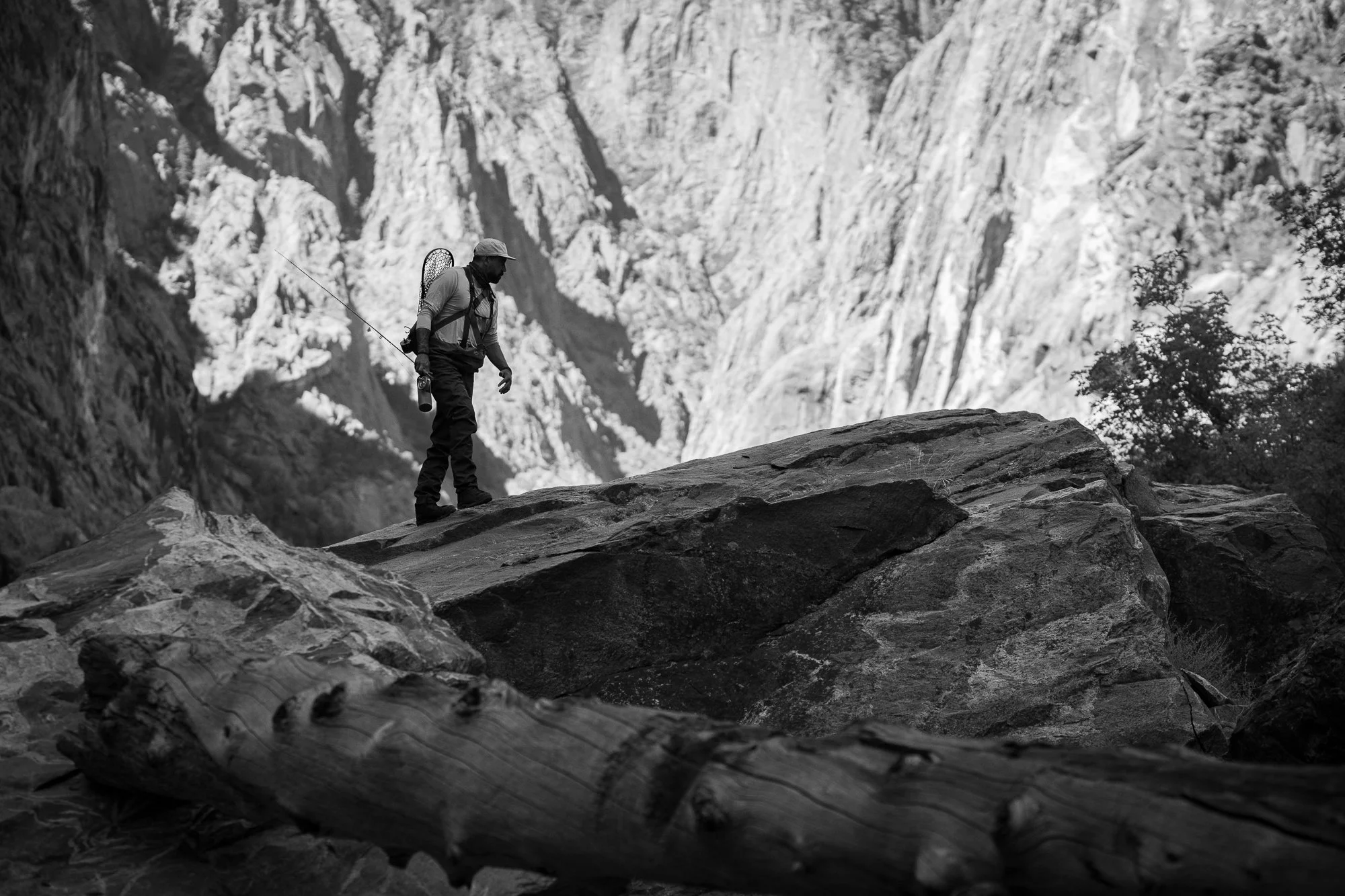
A fly angler stands on rocky terrain inside the Black Canyon of the Gunnison

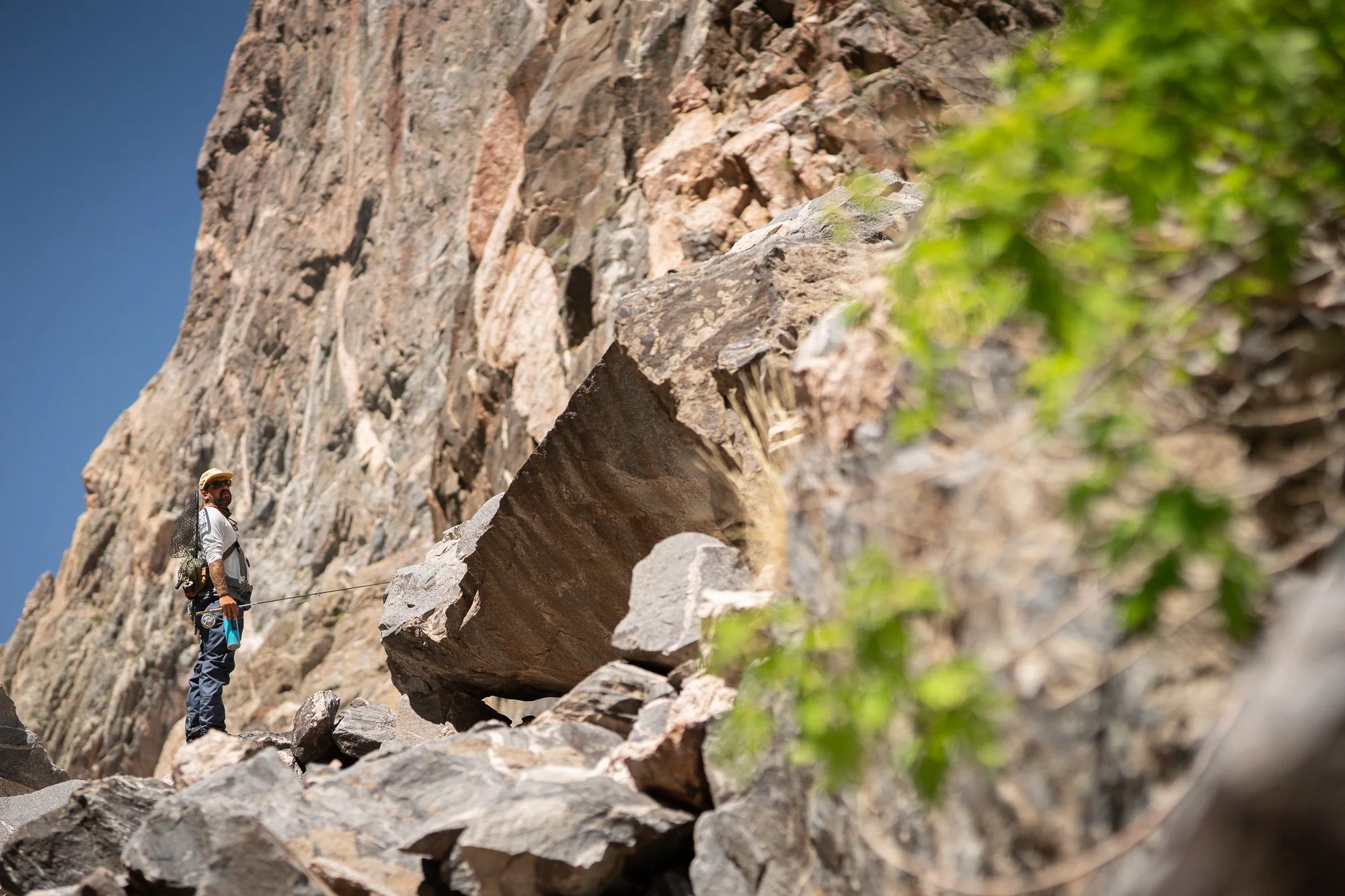
A fly angler pauses along rugged canyon rock while moving deeper into the Gunnison’s demanding terrain.

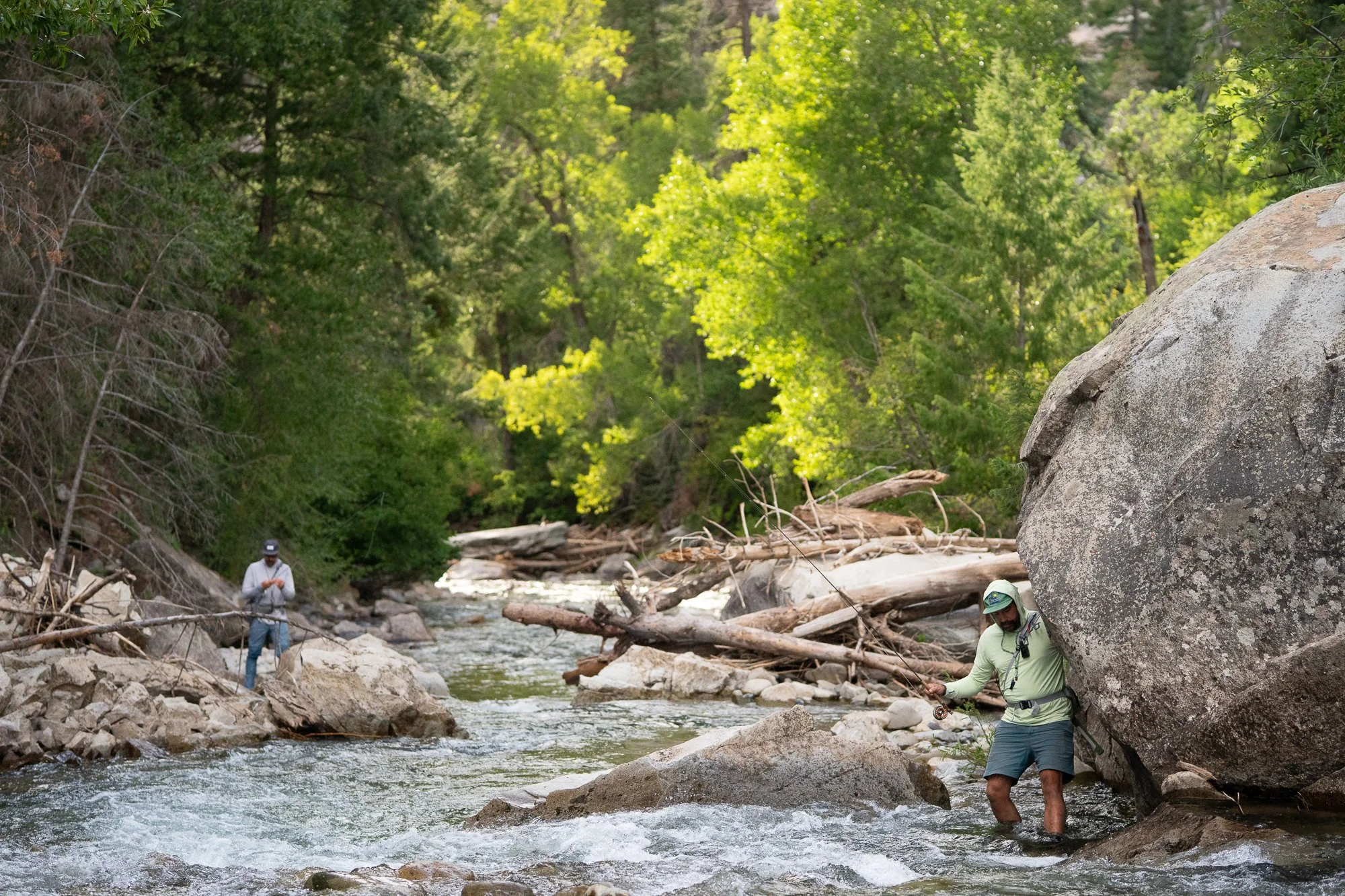
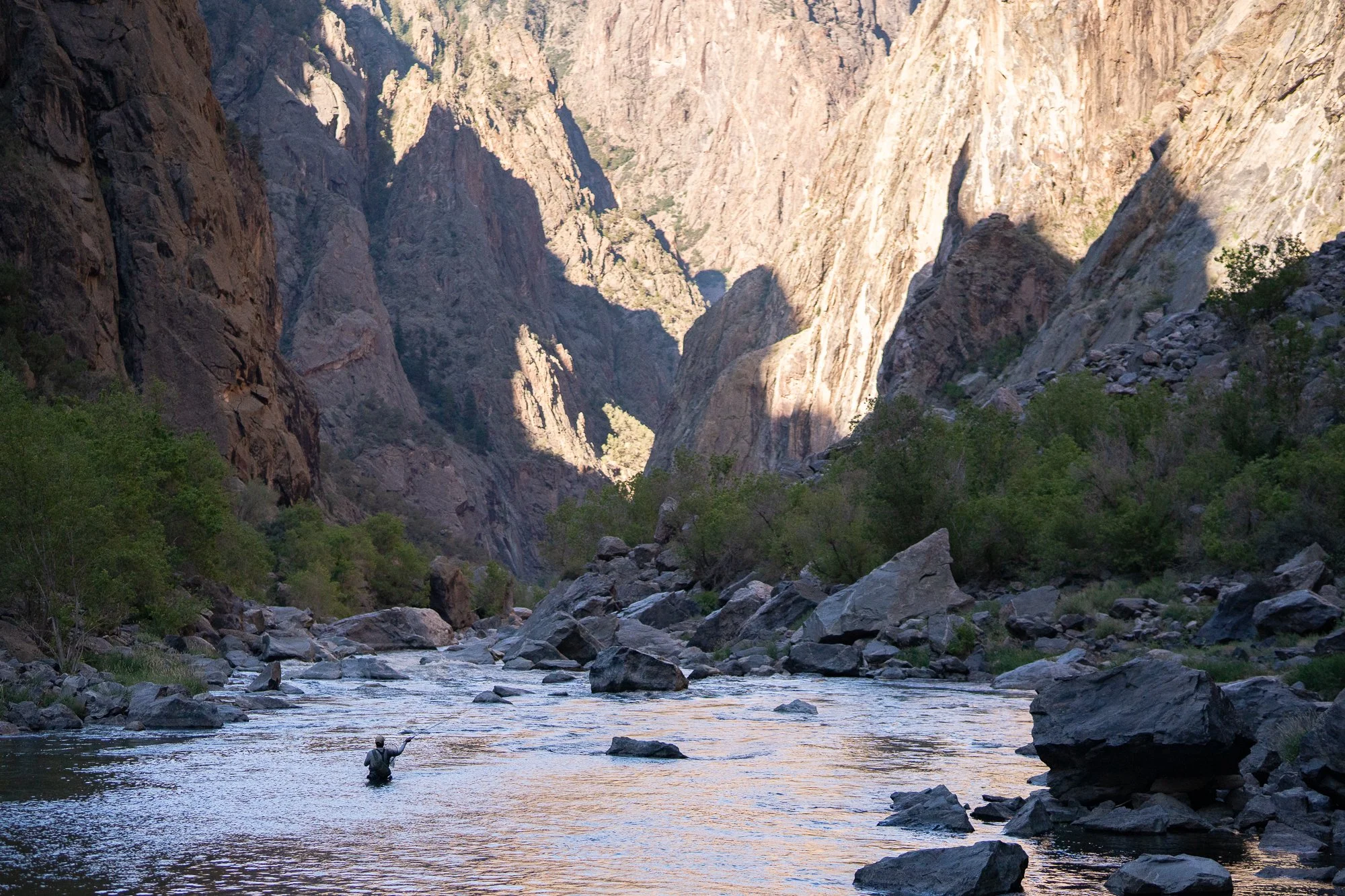
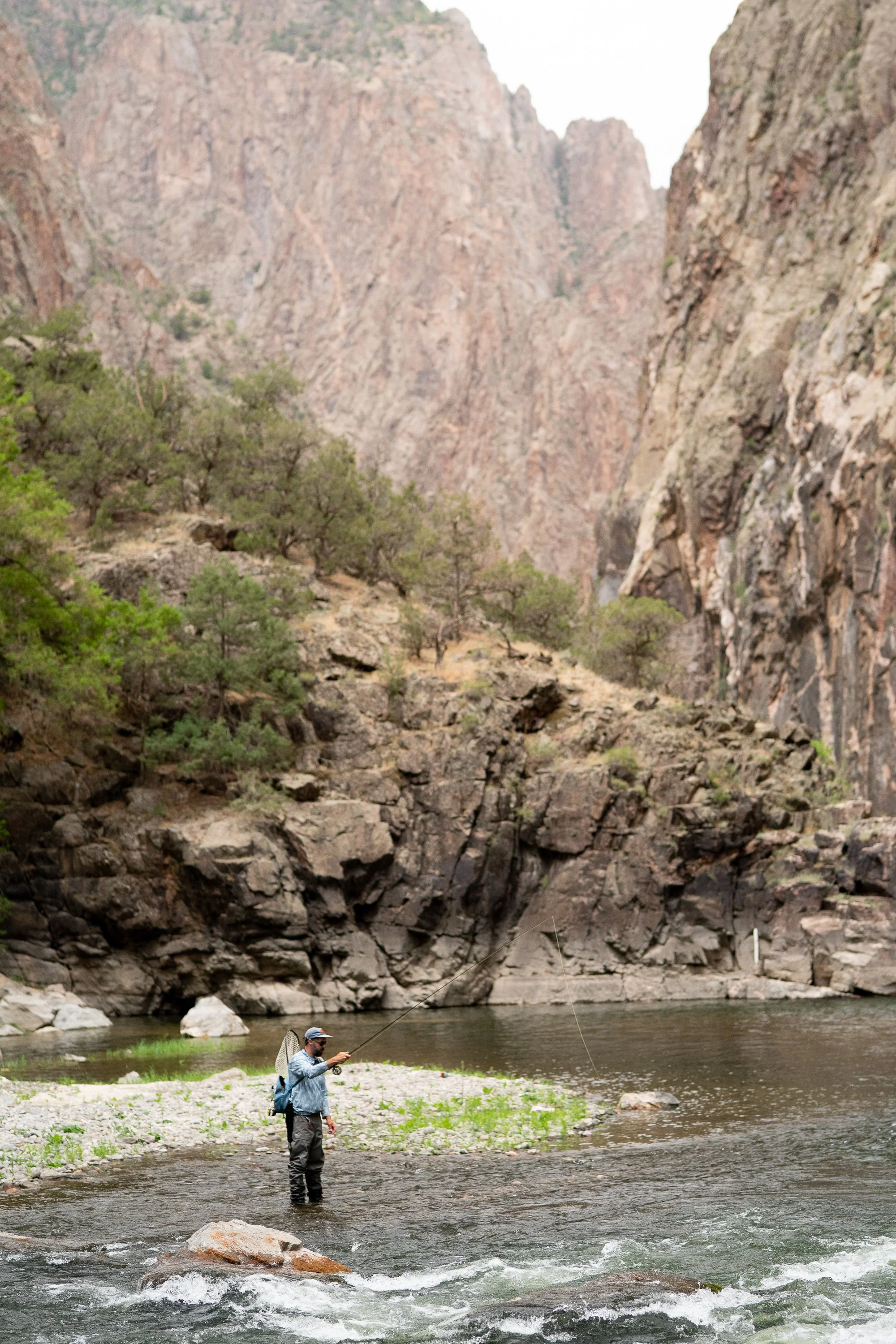
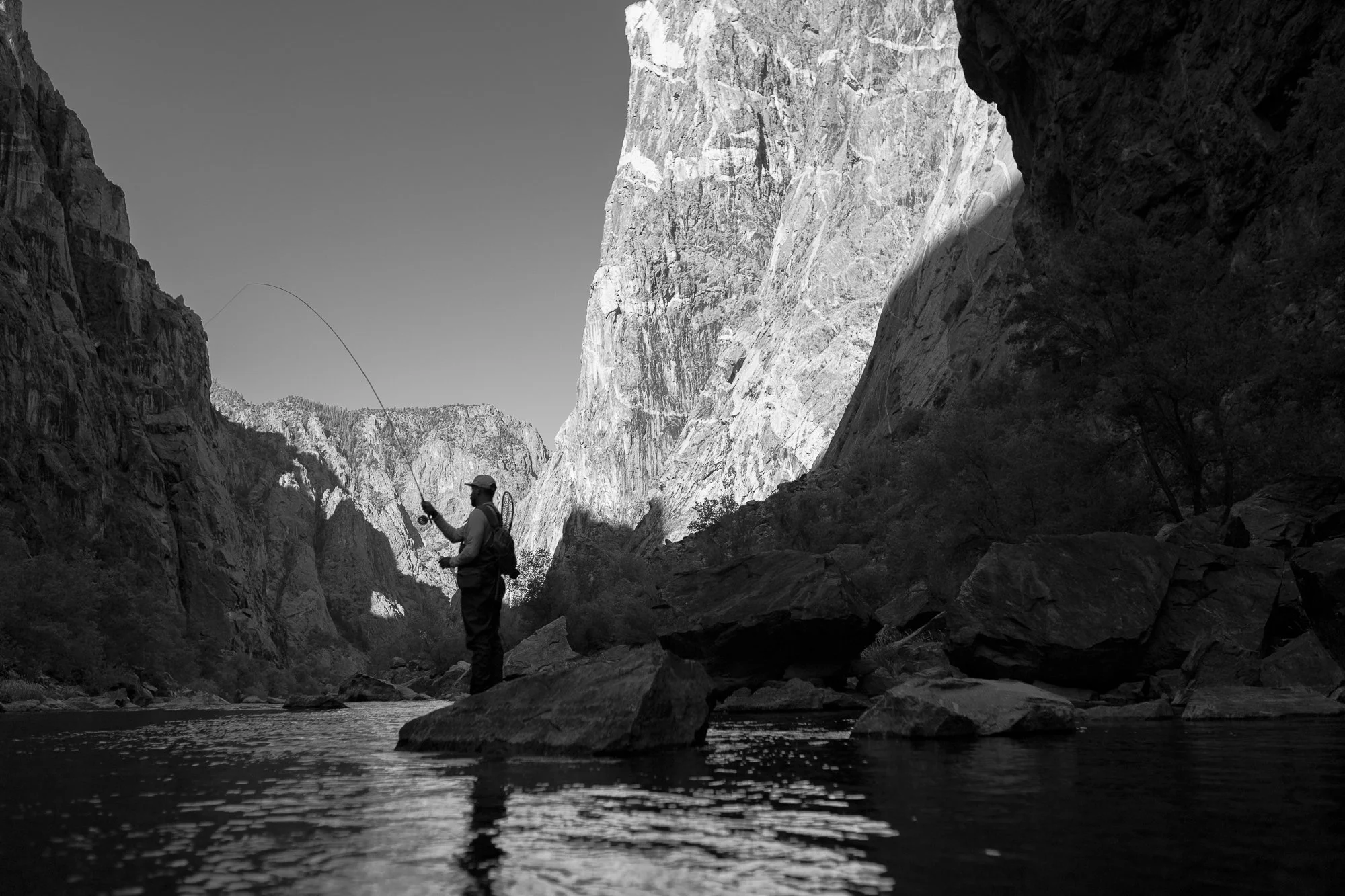
A fly angler fishes the Gunnison River beneath steep canyon walls in the Black Canyon

A lone angler works a quiet stretch of the Gunnison River beneath the steep walls of Black Canyon.

What the Fishing Actually Feels Like

There’s a quiet intensity to fishing here.

You’re not moving fast. You’re not covering miles of water. You’re scrambling over boulders just about the whole time, working small sections carefully, knowing that every fish in this river has survived conditions that make them selective.

When it comes together, it feels earned in a way that’s hard to replicate elsewhere.

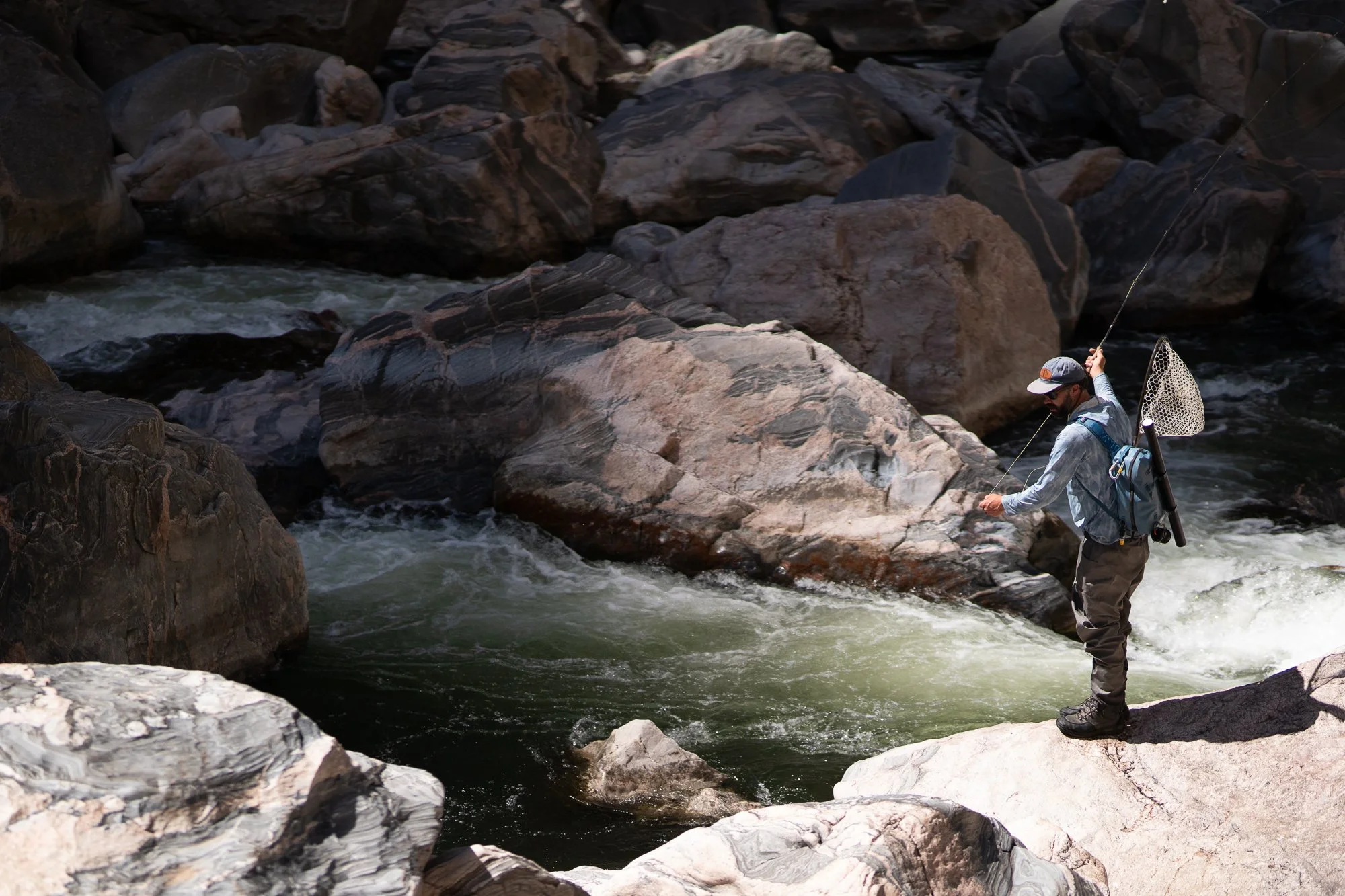
A fly angler casts into technical pocket water in the Black Canyon of the Gunnison

A fly angler works precise casts through technical canyon water shaped by powerful currents and stone.

A fly angler crosses large rock formations inside the Black Canyon of the Gunnison.

Massive canyon rock and technical terrain shape every step along the Gunnison River.

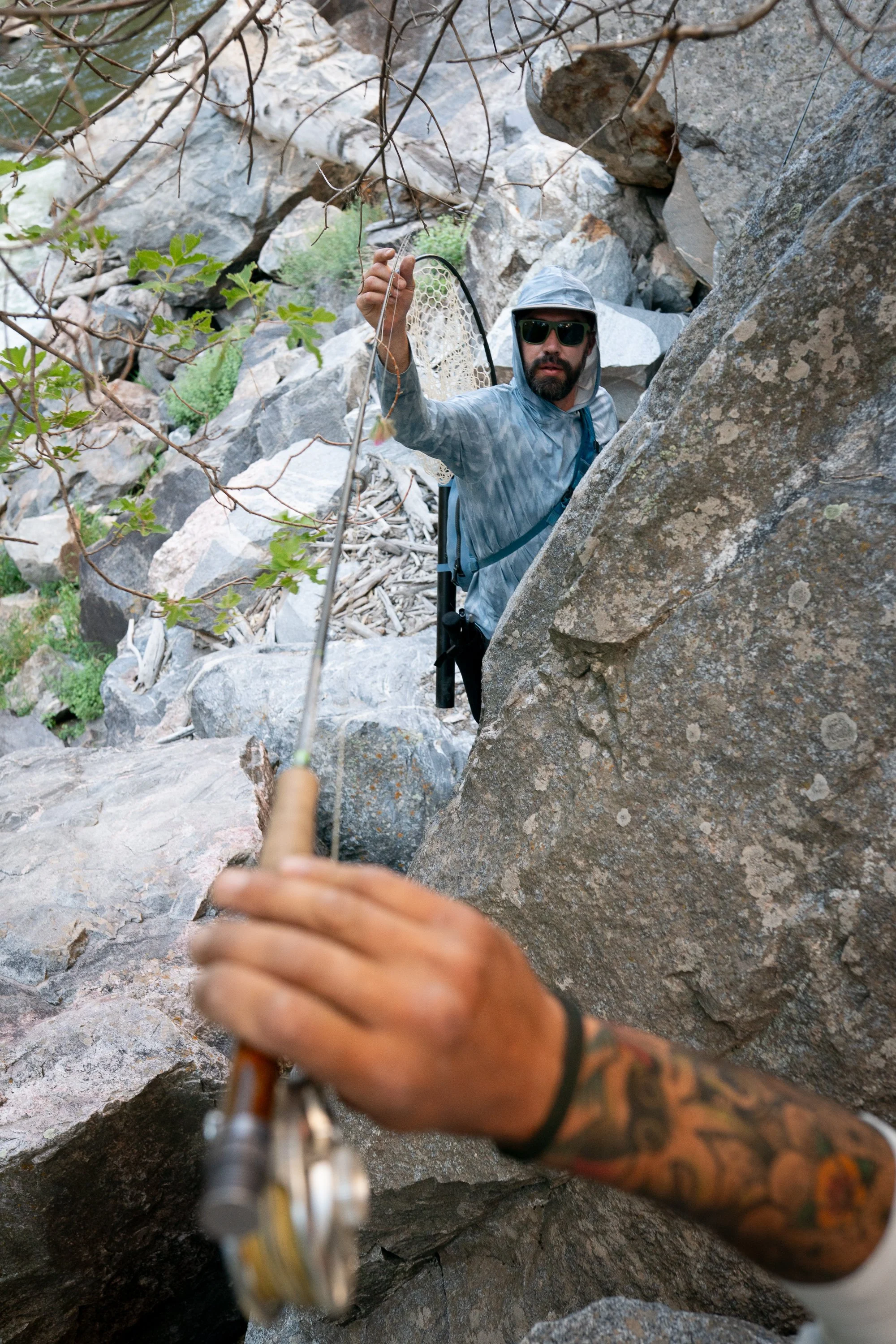
A fly angler reaches through canyon rocks while navigating tight terrain in Black Canyon.

Tight canyon walls and rough terrain make even simple movements part of the challenge.

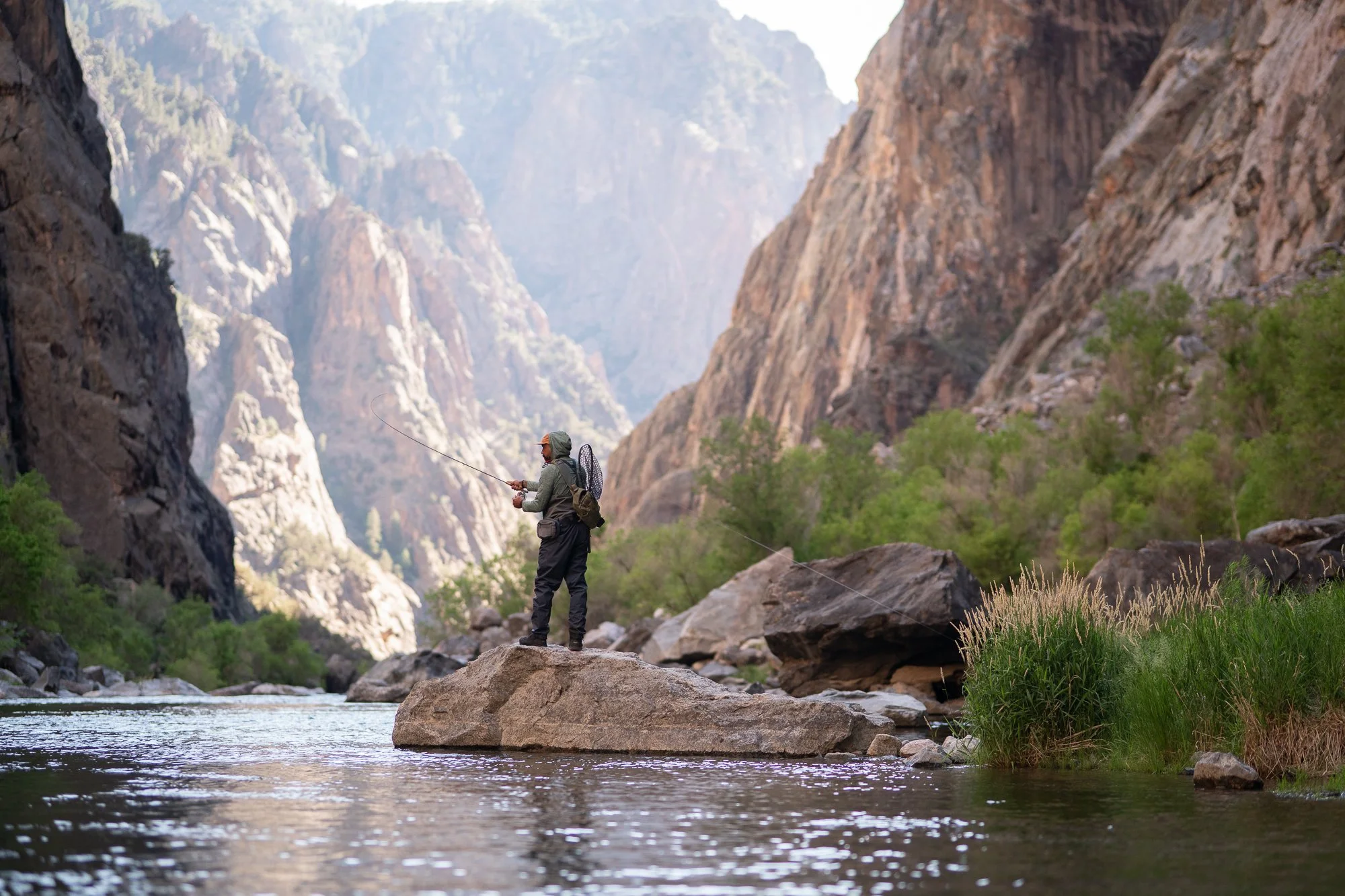
A lone angler stands on river rock surrounded by towering canyon walls in Black Canyon

Solitude and scale shape every hour spent fishing beneath these massive canyon walls.

Why It Stays a Bucket List Fishery

There are easier places to fish in Colorado.

There are places with more fish, easier access, and more predictable conditions.

But very few places feel like this.

The Black Canyon of the Gunnison isn’t about convenience. It’s about immersion—being fully inside a landscape that hasn’t been softened or simplified.

That’s what makes it stick with people.

A fly angler fishes the Gunnison River surrounded by steep canyon walls

A fly angler works the Gunnison River in one of Colorado’s most demanding fly fishing environments.

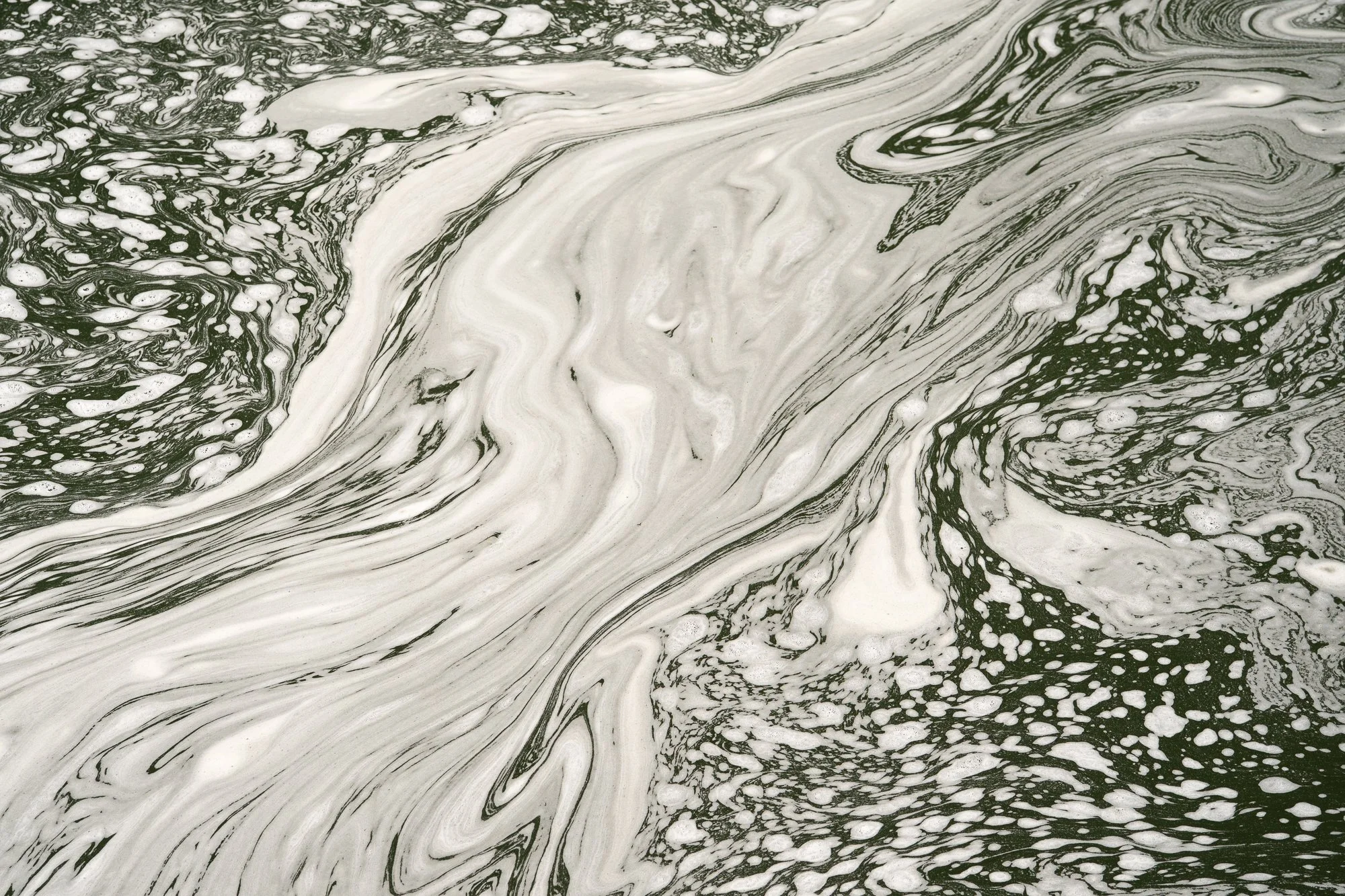
Foam patterns swirl across moving water in the Gunnison River

River foam drifts across canyon current, revealing the movement and complexity of Gunnison water.

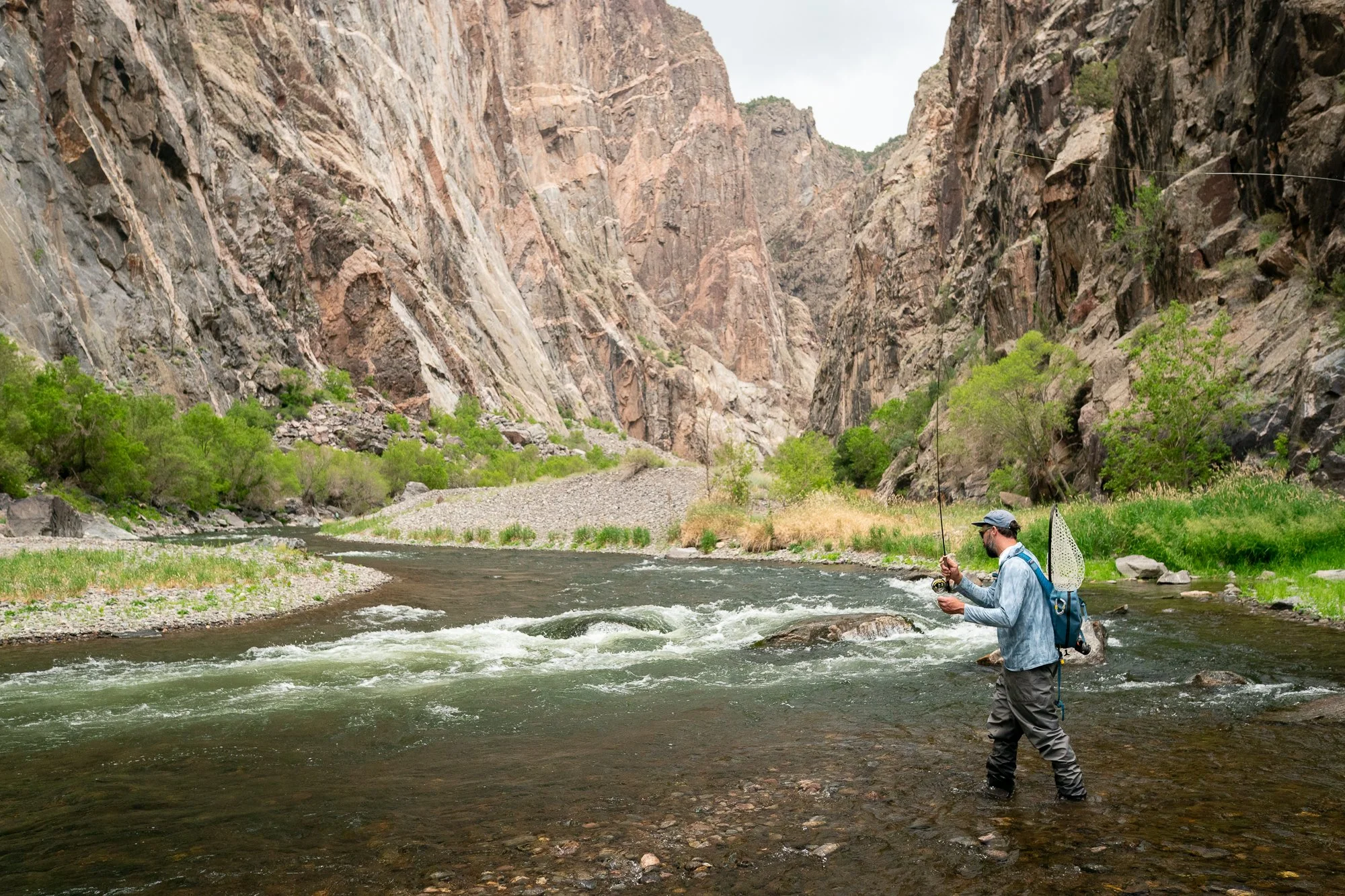
A fly angler stands in the river casting beneath towering canyon walls in Black Canyon

A fly angler casts through canyon water while steep rock walls rise above him in Black Canyon.

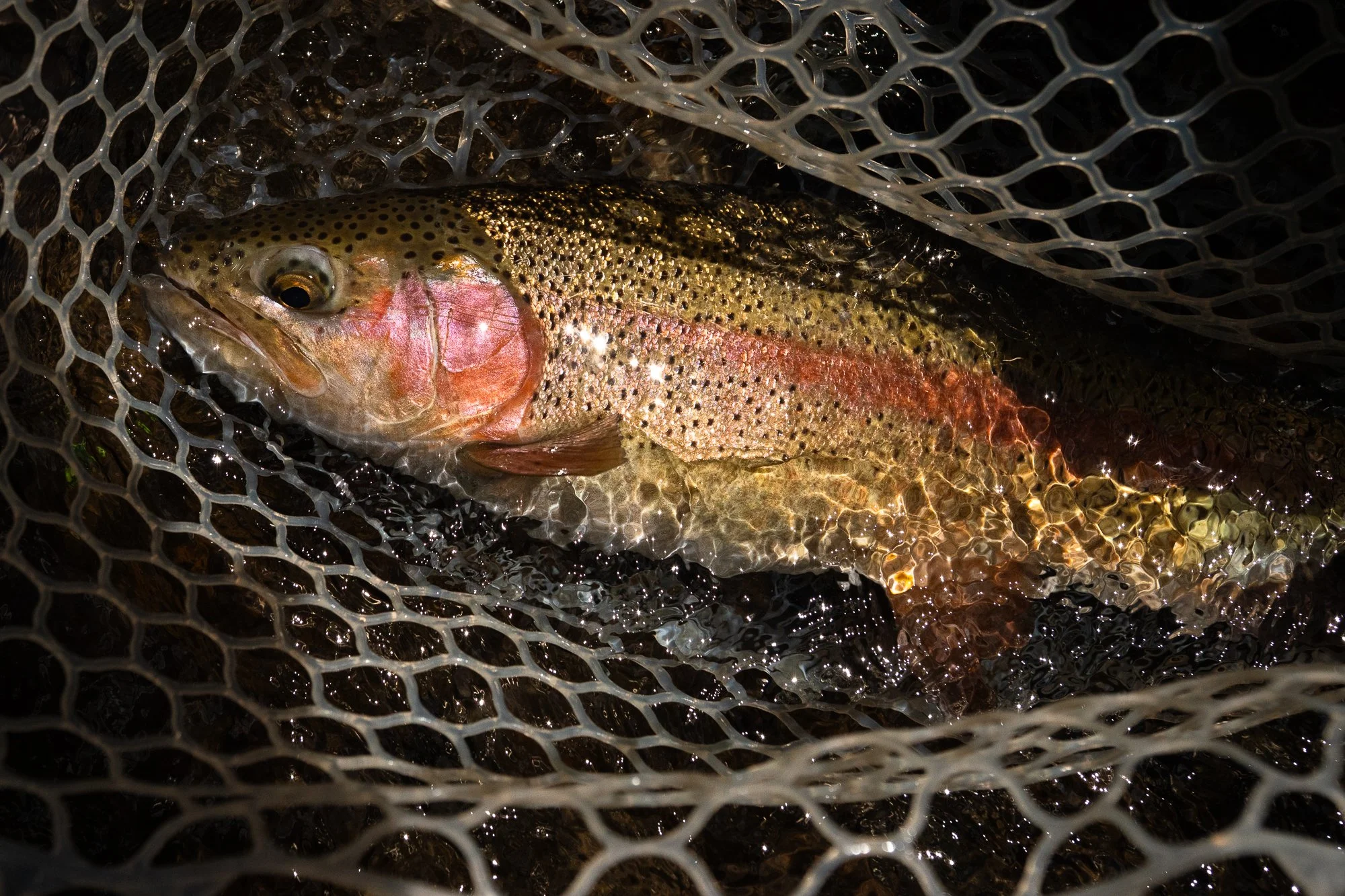
A rainbow trout rests in a landing net during fly fishing in the Black Canyon of the Gunnison

A hard-earned trout reflects the precision required in demanding canyon water.

An angler fishes shallow current beneath towering canyon walls in the Black Canyon

Standing mid-river, an angler casts through fast water framed by steep canyon walls.

A Note on Conditions and Planning

If you’re thinking about fishing here, timing matters. Our trip was in July, and the night time temps were rough. Even without clothes on, I was sweating the entire night. Beyond that, flows, access routes, and even basic safety can change quickly depending on the season. This isn’t a place to figure things out on the fly.

For current conditions, it’s worth checking updates through the National Park Service before making the trip.

An angler sits on large canyon rocks rigging fly fishing gear beside the river in Black Canyon

An angler rigs flies and tackle on the rocks beside the river, preparing for another stretch of water in Black Canyon.

A fly angler stands beneath steep canyon walls in the Black Canyon of the Gunnison

Towering canyon walls dwarf the angler as he navigates one of Colorado’s most demanding fisheries.

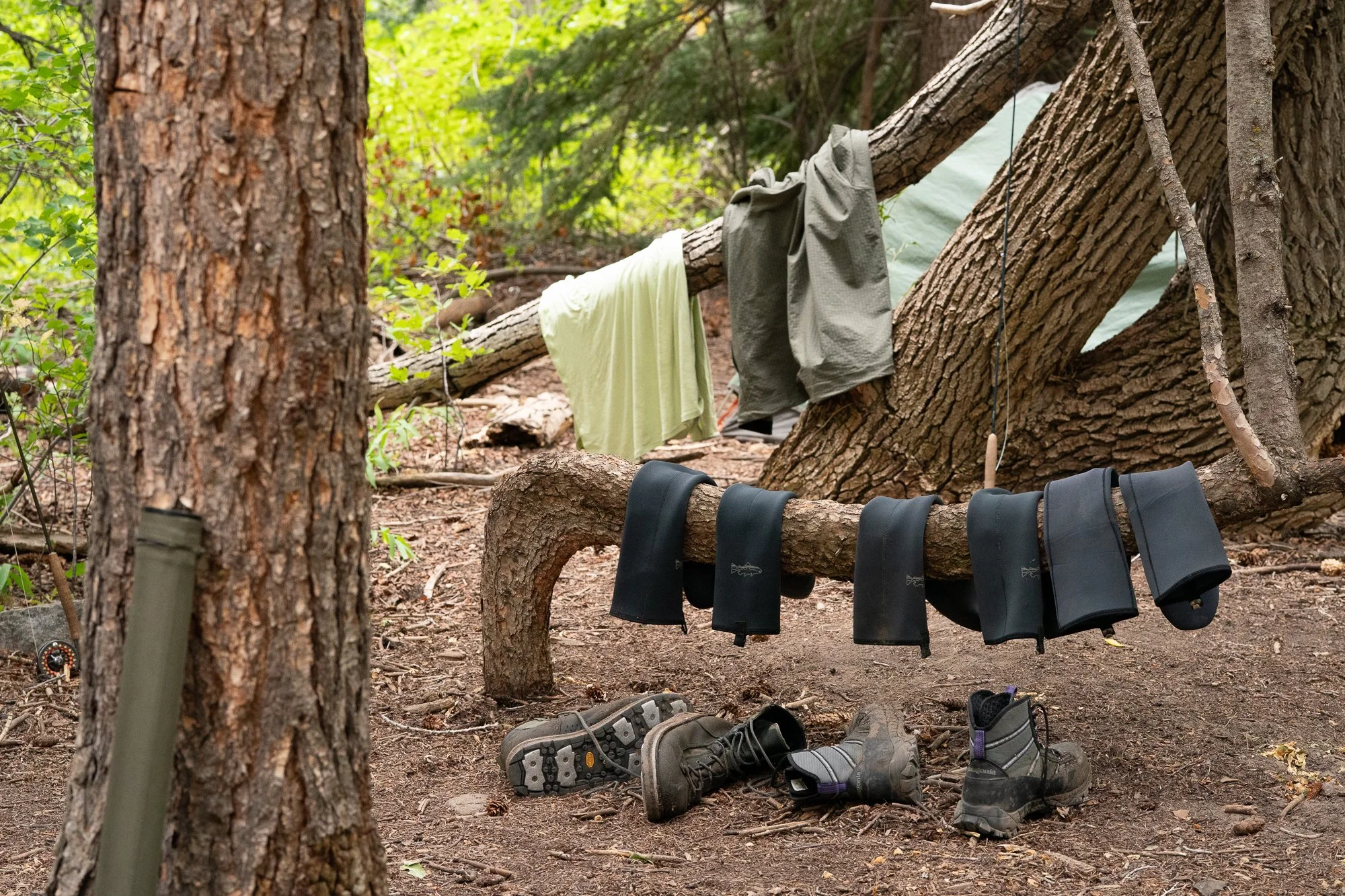
Fly fishing waders dry on a tree brach after a day of fishing in the Black Canyon of the Gunnison

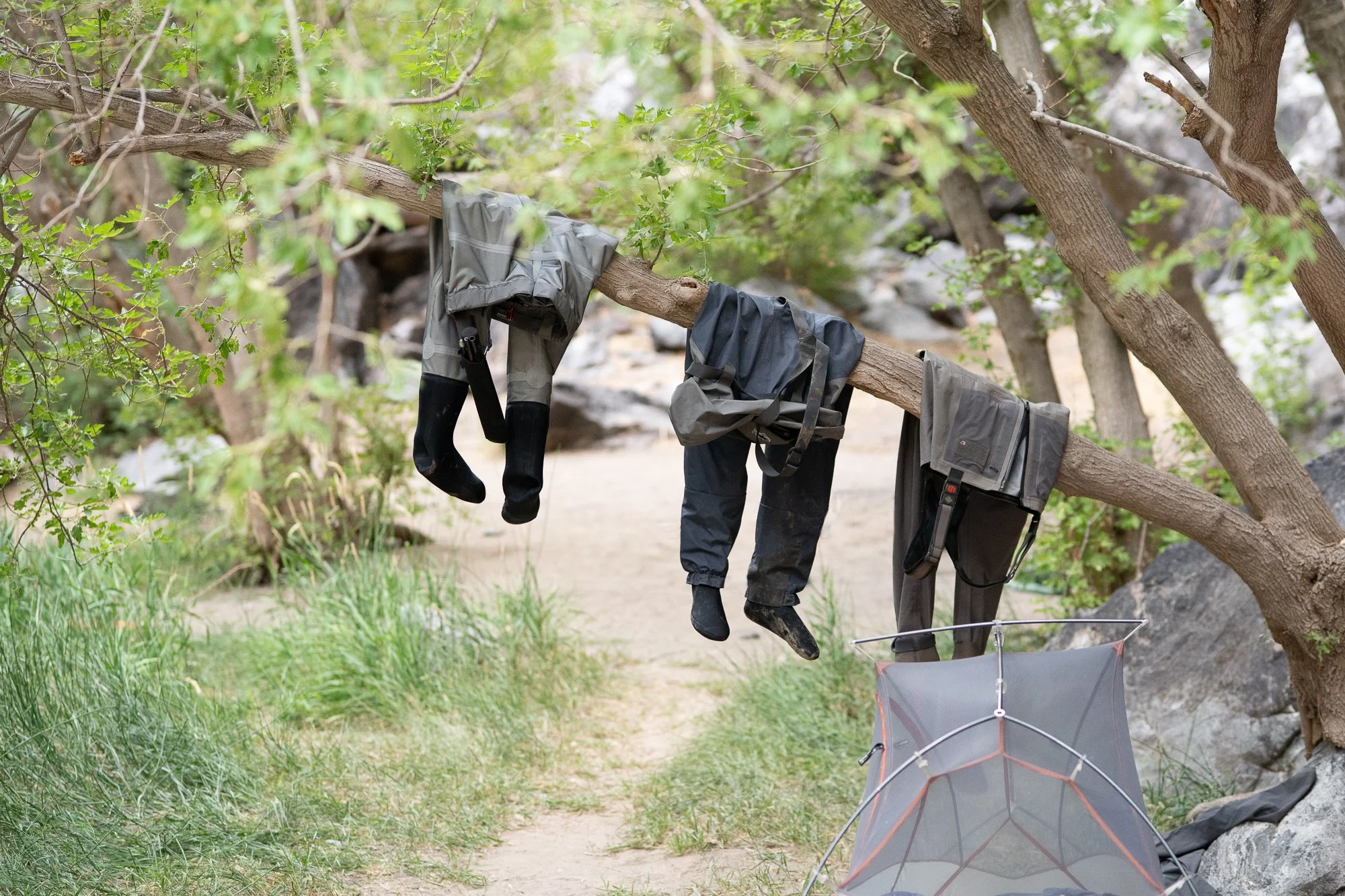
Waders dry at riverside camp as gear rests between long days of fly fishing inside the Black Canyon.

A close-up shows a scraped shin with fresh cuts at camp in Black Canyon

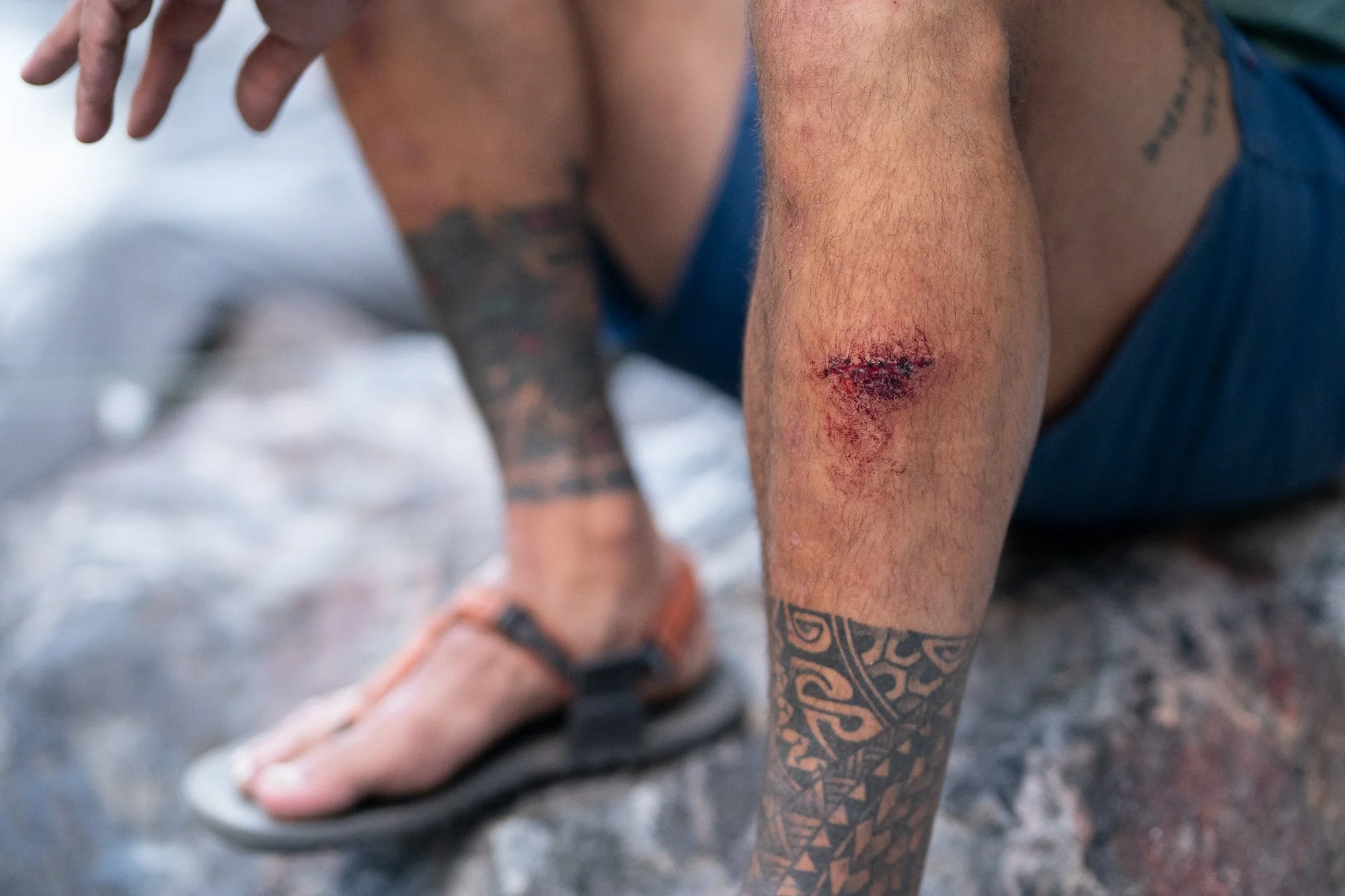
Scrapes and bruises come with navigating the steep rocks and rough terrain of Black Canyon.

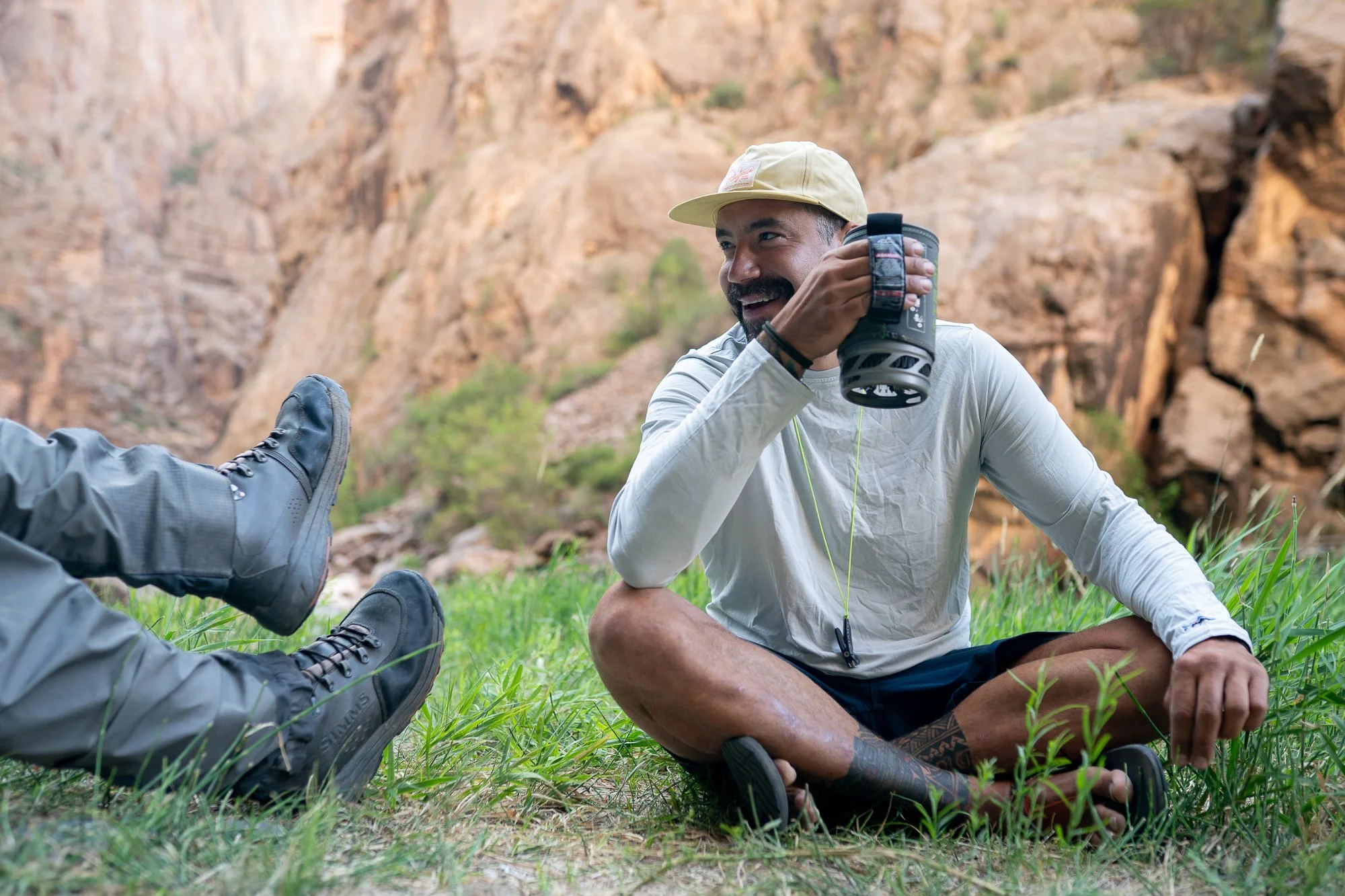
A man sits on the grass in Black Canyon holding a camp stove mug near the river

Morning at camp in Black Canyon, sharing coffee beside the river before heading back on the water.

Part of a Larger Body of Work

This work is part of an ongoing series documenting fly fishing across the American West—focused on real conditions, real environments, and the connection between anglers and the landscapes they move through.

If you’re interested in licensing imagery or working together on projects like this, get in touch - rob@robhammerphotography.com

View Fly Fishing Photography Portfolio

View Fly Fishing Prints

Explore more Colorado Fly Fishing Photography (Fall Foliage)

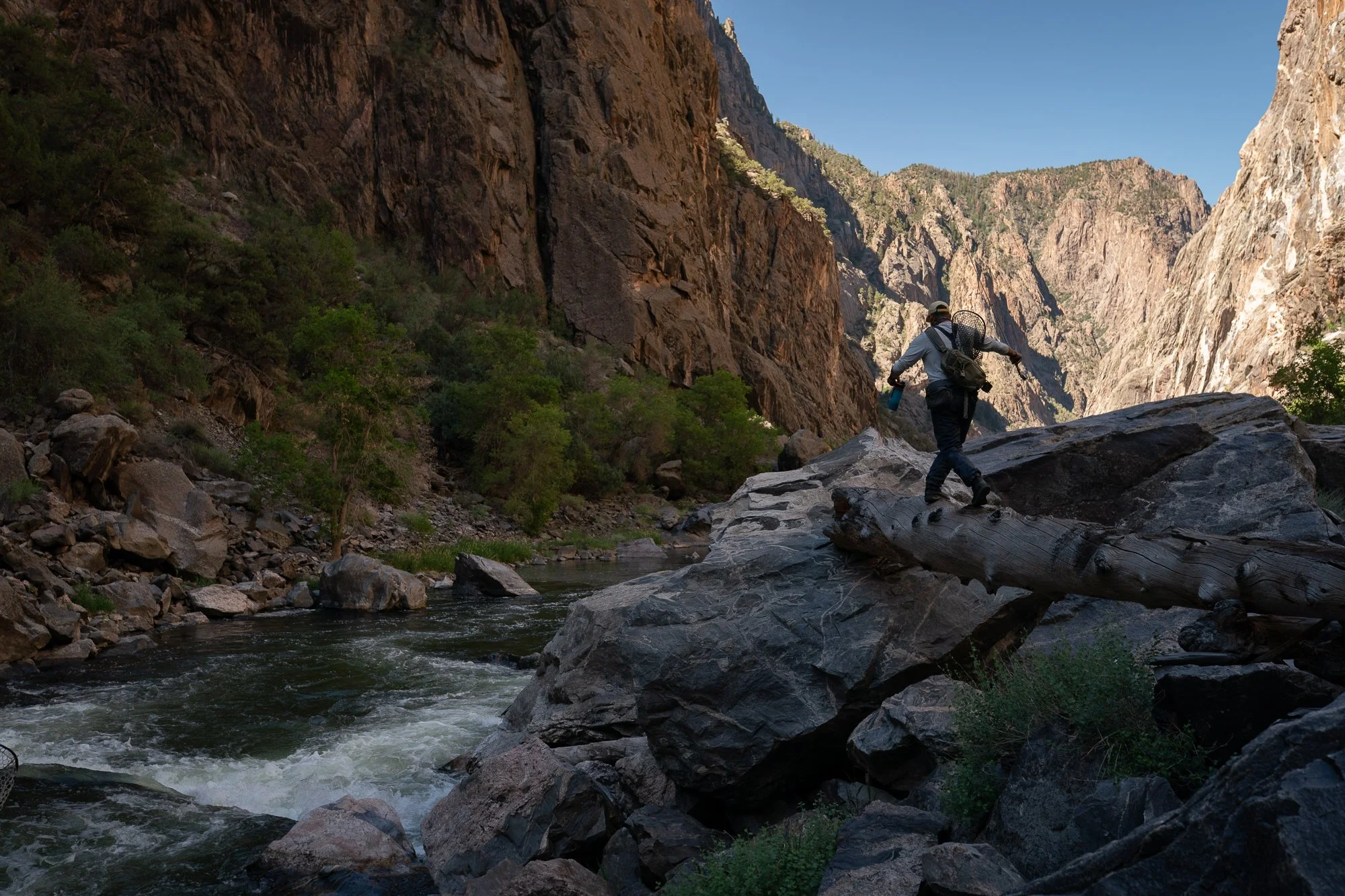
An angler crosses a fallen log above the Gunnison River inside the Black Canyon

Moving through remote canyon water often means navigating unstable crossings before reaching fishable water.

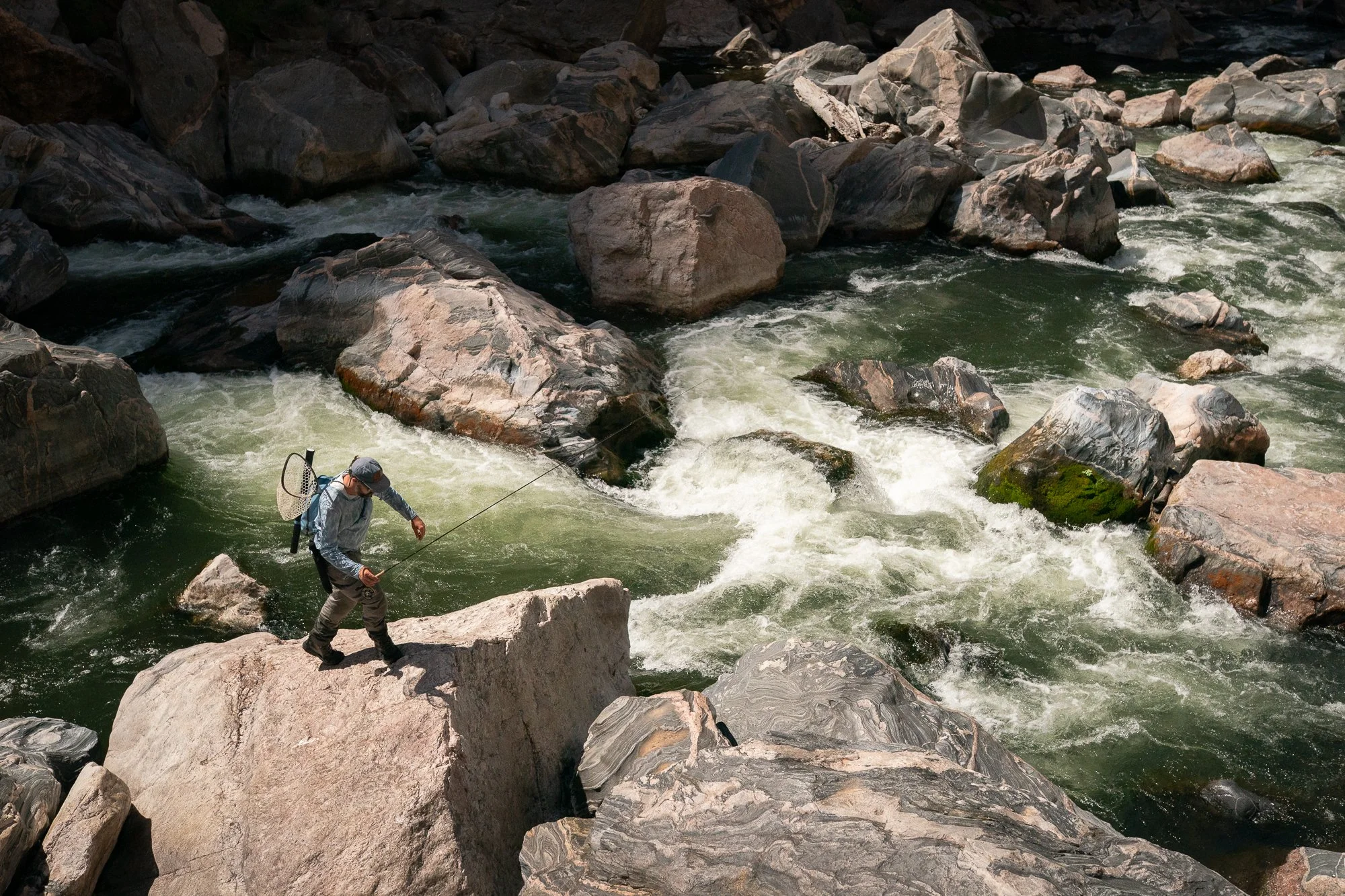
A fly angler stands on massive canyon boulders above fast-moving Gunnison River water

Technical water and unforgiving boulders demand precision at every step.

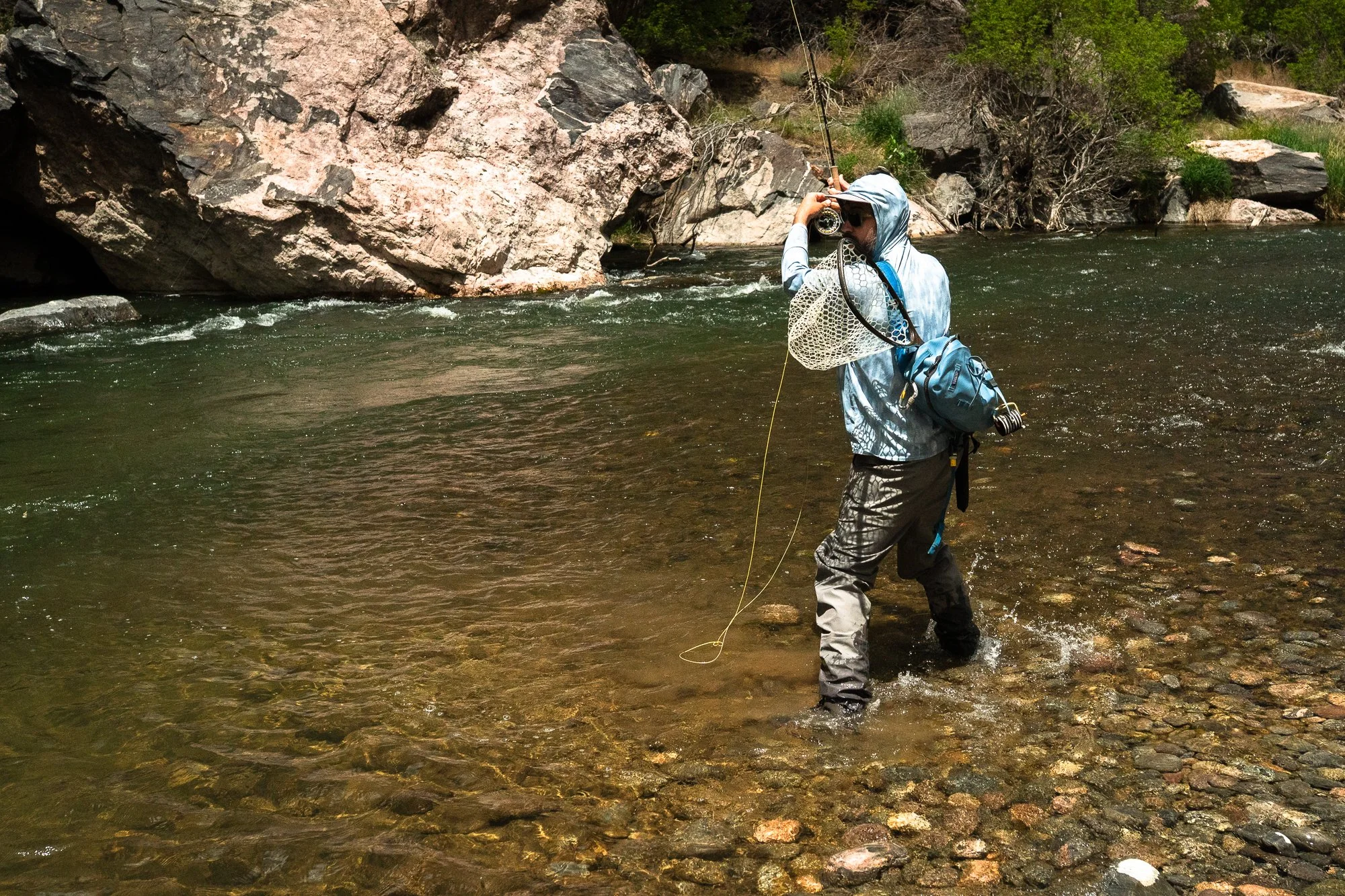
An angler casts while wading the Gunnison River in the Black Canyon

A fly angler works a slower stretch of river, casting across clear water beneath canyon walls.

A trout slips from an angler’s hand during release in the Gunnison River

A trout slips back into the current after release, disappearing into the clear water of Black Canyon.

Two anglers fish wide canyon water beneath steep Black Canyon walls

Two anglers work separate seams of water, covering a broad stretch of river in Black Canyon.

A smiling angler stands beside the Gunnison River after time spent in the Black Canyon

Hard miles and technical water still leave room for moments of earned satisfaction.

Steep canyon walls rise above the Gunnison River in the Black Canyon of the Gunnison

Massive canyon walls define the landscape, shaping the river corridor through Black Canyon.

An angler carefully descends steep backcountry terrain above the Gunnison River

Hiking out of the Black Canyon is brutal work, but well worth the effort.

WINTER FLY FISHING PHOTOGRAPHY

Winter Fly Fishing on Clear Creek, Colorado: What It Really Looks Like

There’s a certain kind of quiet that only shows up in winter.

Not the peaceful, postcard version of Colorado people expect—but the kind that settles in when the temperature drops, the crowds disappear, and the river keeps moving anyway.

Clear Creek runs cold this time of year. The flows are low, the banks are stiff with ice in the morning, and most days you won’t see another angler. It’s not comfortable, and it’s not easy. But that’s part of the draw.

Winter fly fishing here isn’t about numbers or perfect conditions. It’s about showing up when most people don’t—and seeing what’s still there.

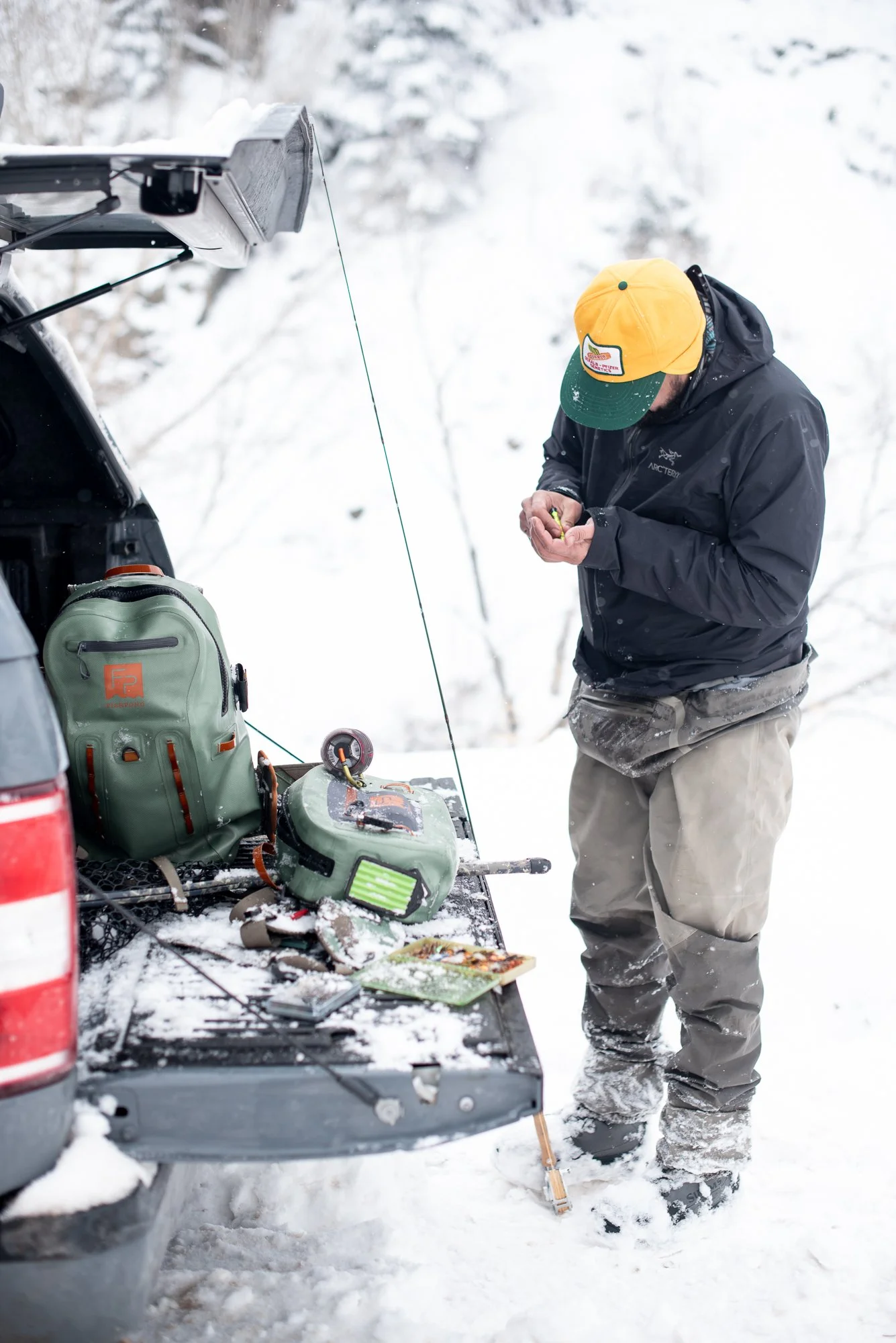
A fisherman prepares fly fishing gear at the back of a truck in snowy winter conditions near Clear Creek in Colorado.

A fisherman prepares his gear at the back of a truck before heading back to the creek.

Can You Fly Fish in Colorado in the Winter?

You can—and people do—but not in the way most expect.

The idea of winter fishing in Colorado usually brings up images of tailwaters and midges, maybe a few rising fish if you’re lucky. That’s all true. But on smaller creeks like Clear Creek, the experience is different.

You’re dealing with:

  • Short windows of active fish

  • Water temperatures hovering just above freezing

  • Icy banks and slow, deliberate movement

It’s not a numbers game. It’s a timing game.

Midday becomes the focus. You wait for the sun to do just enough work to wake things up, then fish carefully and move slowly. Every cast matters more because you’re not getting many chances.

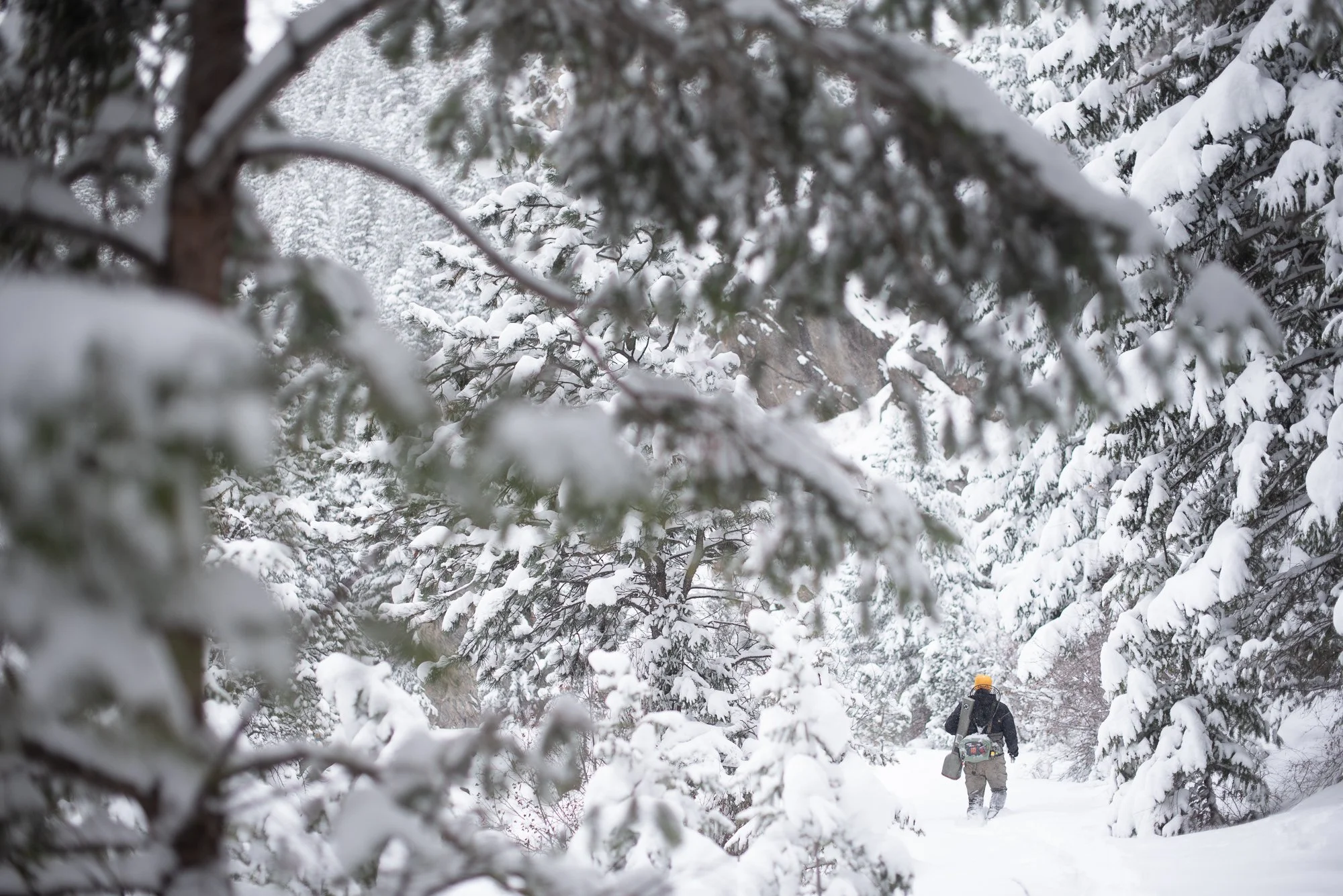
An angler walks through a snow-covered trail near Clear Creek in Colorado carrying fishing gear.

An angler walks through deep snow near Clear Creek, following a path through the trees.

A close-up of fishing gear and pack covered in snow during winter fly fishing on Clear Creek in Colorado.

Fishing gear and a pack collect snow during a winter day along Clear Creek.

Why Small Creeks Like Clear Creek Fish Differently in Winter

Clear Creek isn’t a wide, forgiving river. It’s tight in places, fast in others, and technical when the water drops.

In winter, that becomes even more pronounced.

The fish don’t spread out—they consolidate. Deep pockets, slower seams, and protected water hold most of the activity. If you’re not putting a fly exactly where it needs to be, you’re probably not getting a look.

What makes small creeks interesting this time of year is how intimate everything feels. There’s no hiding from bad drifts or sloppy approaches. You’re close to the water, close to the fish, and aware of every mistake.

And when it comes together, it feels earned.

An angler fishes along a rocky wall on Clear Creek in Colorado during winter with snow-covered banks.

An angler fishes along a rock wall on Clear Creek, moving through a narrow stretch of water in winter.

A fisherman wades through Clear Creek in winter with snow falling and gear on his back.

A fisherman wades through the current in winter as light snow falls around him.

The Reality of Winter Fly Fishing Conditions

This is where most of the romantic ideas about winter fishing fall apart.

It’s cold in a way that sticks with you. Not dramatic, just persistent. Fingers go numb. Guides freeze. You break ice out of your rod between casts and keep going.

There’s a rhythm to it:

  • Cast

  • Check the drift

  • Clear ice

  • Repeat

You don’t rush. You can’t.

The light is different too. Lower in the sky, flatter, quieter. It doesn’t light up the river—it settles over it. That changes how everything looks, especially in photographs. The colors are muted, the contrast is softer, and the scenes feel more stripped down.

It’s not dramatic. It’s honest.

A fisherman stands in Clear Creek framed by snow-covered trees during winter.

A fly fisherman walking out of Clear Creek, partially framed by snow-covered trees along the bank.

A close-up of gloved hands holding an iced fly fishing rod during winter on Clear Creek.

Gloved hands hold a fly rod as ice forms along the line in cold conditions.

A Morning on Clear Creek

Most winter mornings start the same way.

You step out into air that feels sharper than expected. The creek is already moving, thin ribbons of steam rising where the water meets the cold. Nothing about it suggests urgency.

The first stretch is usually quiet. Fish aren’t moving much yet, and neither are you. It’s more about paying attention—watching the water, seeing where things might happen later.

By late morning, something shifts.

Maybe it’s subtle—just enough warmth to change the current slightly or bring a fish off the bottom. That’s when you start to see life again. Not in big, obvious ways, but in small signs: a hesitation in the drift, a slight take, a fish that wasn’t there an hour ago.

There’s no rush to it. No pressure to move quickly or cover miles of water. You stay with it, work through a stretch carefully, and take what the day gives you.

Some days that’s a few fish. Some days it’s none.

Either way, it’s enough.

A fisherman wades through Clear Creek in Colorado during winter surrounded by snow-covered rocks and flowing water.

A fisherman wades through, stepping carefully between snow-covered rocks in winter conditions.

A wide view of an angler fishing in Clear Creek in Colorado during winter surrounded by snow-covered banks and trees.

An angler fishes a wider stretch of Clear Creek in Colorado, working through slow winter water.

Why Winter Fly Fishing Is Worth It

It’s not about comfort. And it’s definitely not about easy fishing.

What keeps people coming back to places like Clear Creek in the winter is something harder to define. Maybe it’s the absence of distraction. Maybe it’s the way everything gets simplified—water, movement, attention.

Or maybe it’s just the fact that the river doesn’t stop when the season changes.

For me, this time of year has always been less about the outcome and more about the experience of being there. The photographs come out of that—quiet moments, small movements, and the kind of light you don’t get any other time of year.

They’re not dramatic images. They’re not meant to be.

They’re a record of what it actually feels like to stand in a Colorado creek in the middle of winter and keep fishing anyway.

An angler casts a line while standing in Clear Creek during winter with snow falling around him.

An angler casts into Clear Creek in Colorado, working through a cold winter stretch of water.

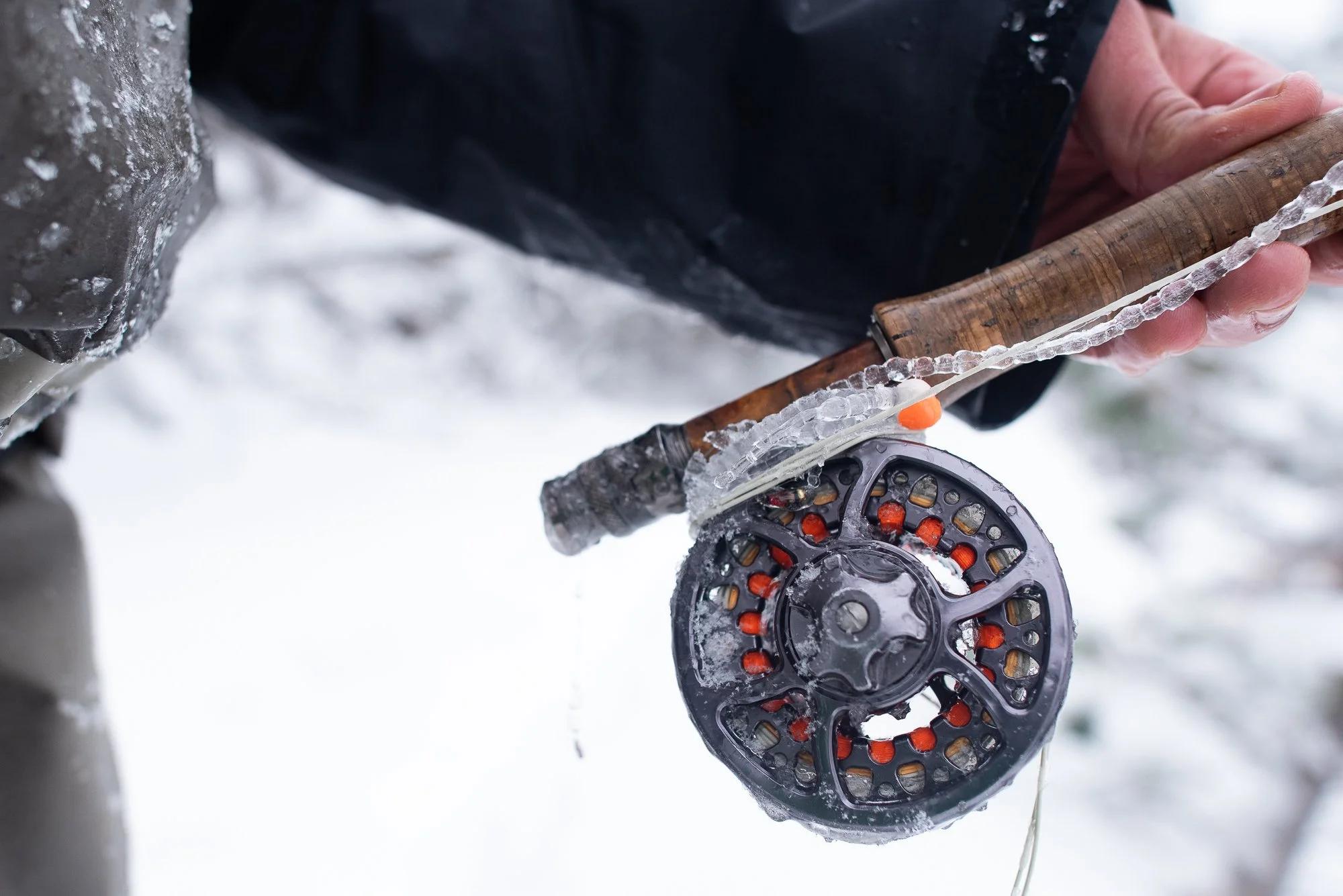
A close-up of a fly fishing rod and reel covered in ice during winter fishing on Clear Creek.

Ice builds along a fly rod and reel during winter fishing, requiring it to be cleared between casts.

Explore the Full Fly Fishing Photography Collection

If you’re interested in seeing more work like this—across different seasons, rivers, and parts of the American West—you can view the full collection below.

For brands, outfitters, and publications looking for authentic fly fishing imagery—real anglers, real conditions, and a documentary approach—licensing inquiries are always welcome - rob@robhammerphotography.com

View my full fly fishing photography gallery

Shop fly fishing prints

Explore more winter fly fishing in Colorado

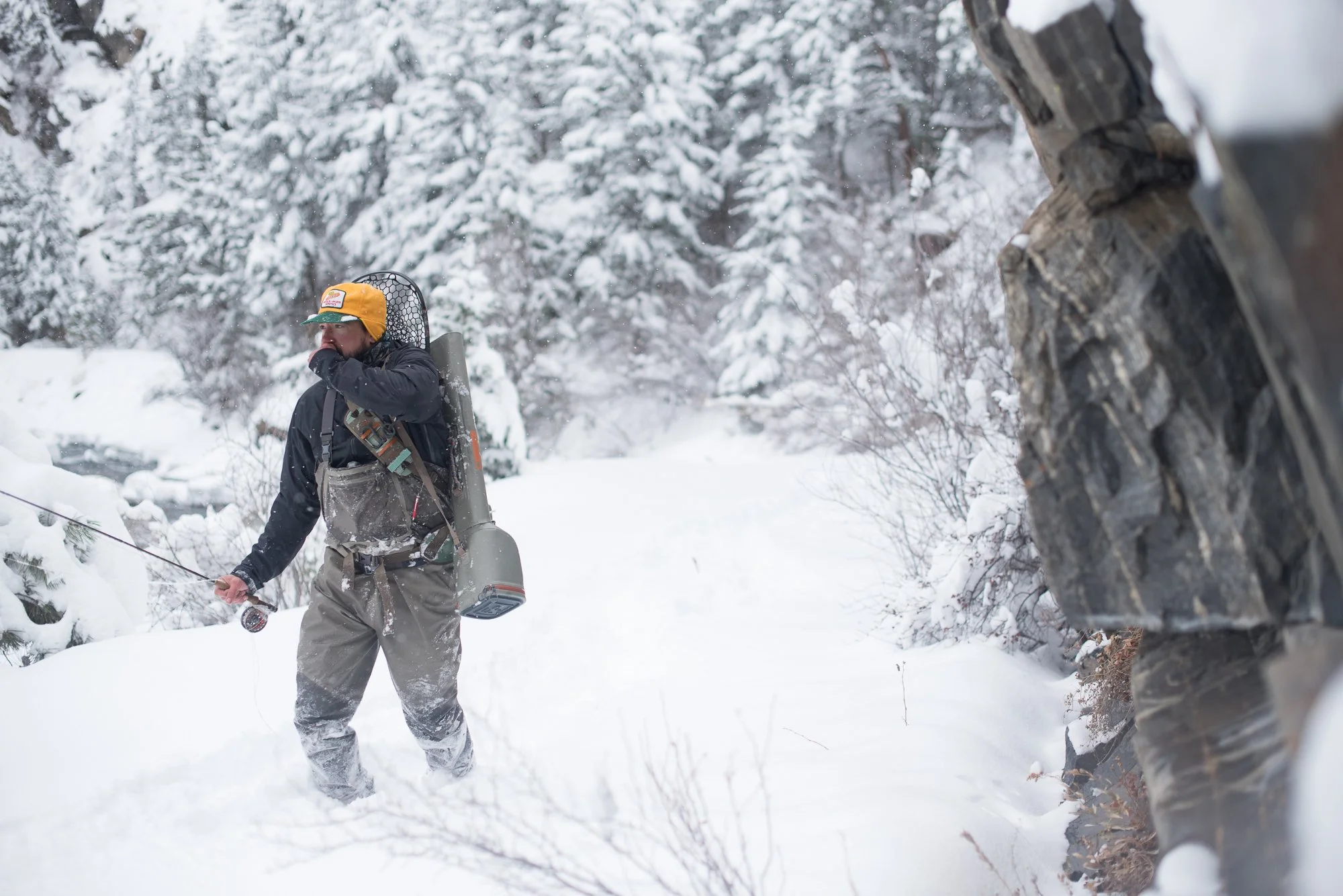
A fisherman walks along the snowy bank of Clear Creek carrying fishing gear in winter conditions.

An angler walks through the snow, blowing warm air onto his frozen hands

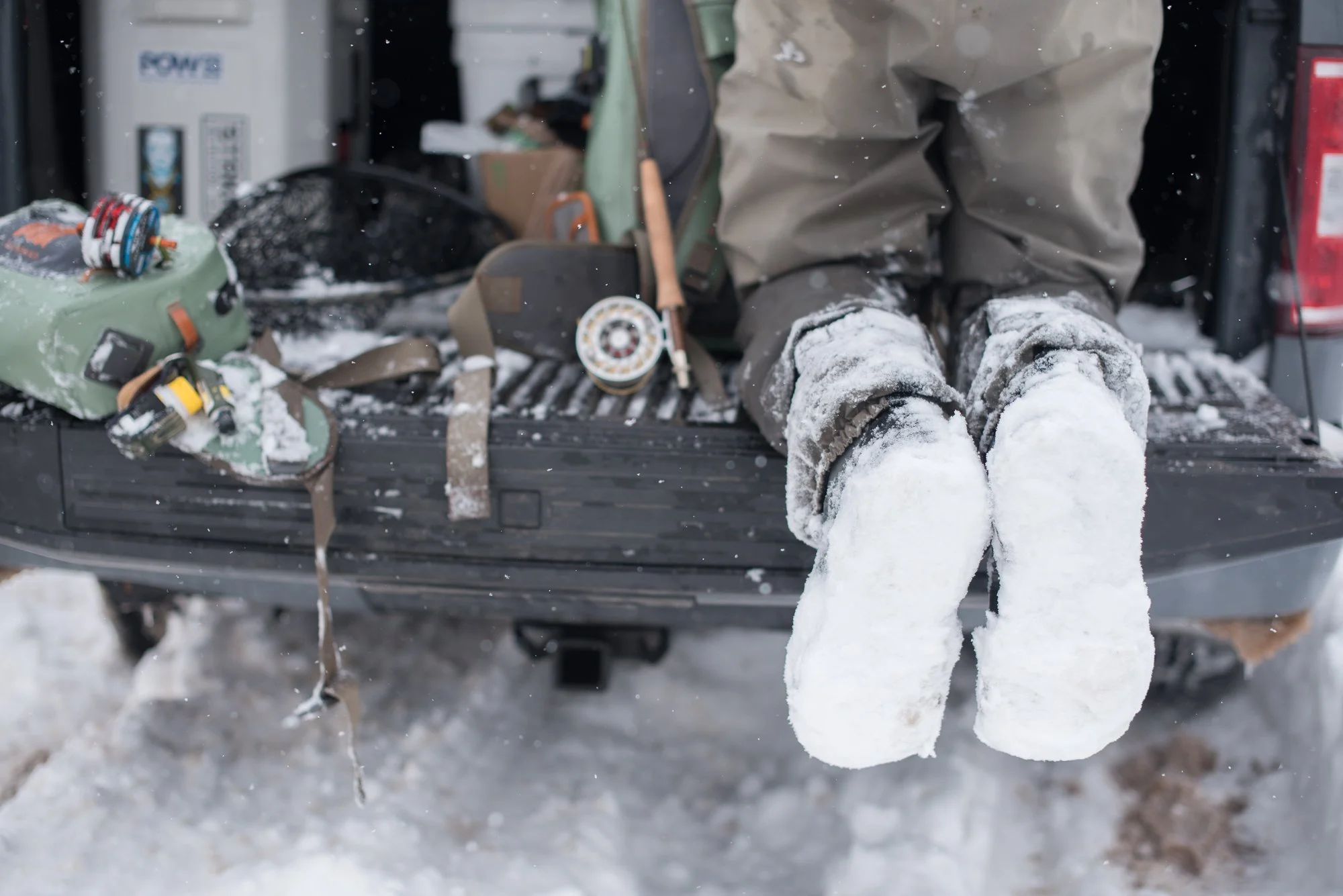
A fisherman sits on a truck tailgate with snow-covered boots and fishing gear after time on Clear Creek.

A fisherman sits on a truck tailgate with snow-covered boots and gear after time on the water.

Fly Fishing Colorado’s Fall Colors: Real Anglers on the Colorado River

Colorado River Fly Fishing Photography in Peak Fall Foliage

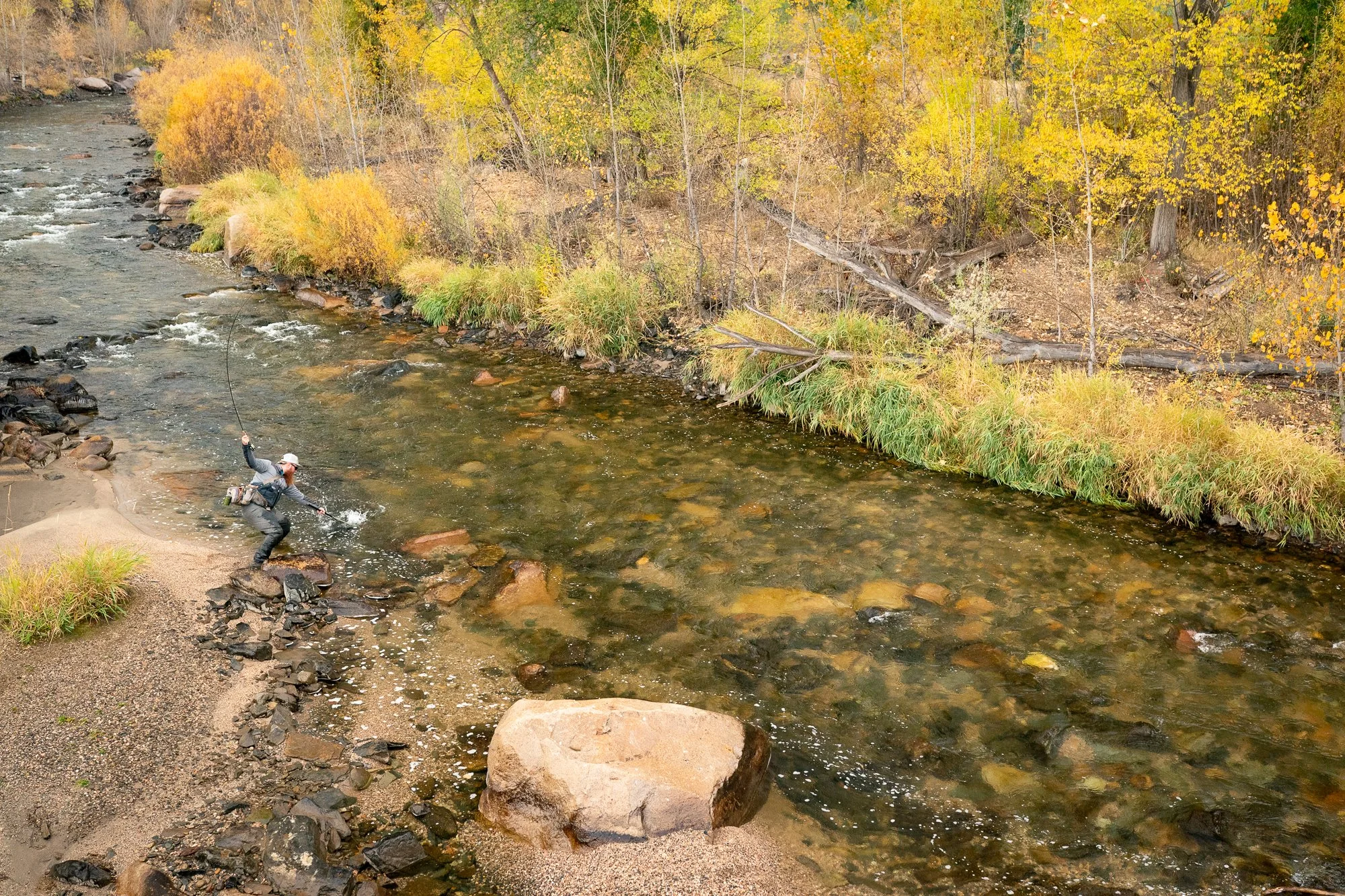
There’s a short window on the Colorado River every year when the angling and the scenery hit their stride at the same time. The leaves go yellow overnight, the mornings get cold enough to make you second-guess your life choices, and the trout—rainbow and brown—decide that maybe eating one more bug isn’t the worst idea.

If you’re lucky enough to be on the river when this happens, you’ll never forget it. If you’re stubborn enough to be a photographer, you try to make a picture of it that holds onto the truth of the moment. That’s the part no one tells you: the trout aren’t the slippery ones—memory is.

Autumn Light, Golden Aspens, and the Rhythm of the Colorado River

Fall on the Colorado River has its own kind of math. The light comes in at an angle that makes every rock look older and every shadow more serious. The aspens flare up like they’ve been waiting all year for the chance, and the river—never shy—slows down just enough for the reflections to make sense.

Photographing fly fishing in this kind of light is a lot like fishing it: you show up early, stand in the cold, and wait for the thing you hope will happen. Sometimes it does.
Sometimes it doesn’t.
But the truth is, you’d be standing out there anyway.

The angler in these photographs isn’t a models—he’s the kind of person who know which seam holds fish and which one just looks good from the bank. He wades out on their own terms, cast with a little grace and a little grit, and don’t make a big deal out of any of it. That’s why they photograph so well.

The river gives you a backdrop. The anglers give you the story.

On this particular day in this particular location I had a specific shot in mind which involved sitting up on the hill about 100 yards from where the angler was casting, just hoping he would catch a fish. Some time later, sure enough his body language completely changed and it was obvious he connected with a big fish. He fought with that thing for some time while I made some photographs. Entertaining as hell to watch and all the more enjoyable knowing that he had forgotten his net in the truck. Luckily he was able to beach the fish on the side of the river, which was punctuated with a scream heard from 100 yards away! A scene and a fight neither of us will ever forget.

Real Anglers, Real Casting, and True Western Fly Fishing

There’s a difference between someone who’s “out fishing” and someone who’s actually fishing. The former drinks beer out of a can and tells the same stories louder every year. The latter ties knots by feel, argues with themselves about tippet size, and doesn’t mind getting skunked as long as the cast felt right.

These are the anglers in my frames:
the real ones.

Some of these shots are wide—an angler small against a big bend in the river. That’s how it really looks out there. The scale is tilted in the river’s favor, and the angler knows it. The other shots get closer to the action: the line tightening, the water breaking, the moment right before a fish decides whether it’s smarter than you.

If you’ve ever fished fall in Colorado, you know the feeling. If you haven’t, these images get pretty close.

Fine Art Prints and Licensing Options for Brands and Magazines

Every photograph in this series came from a real day on the river, watching for the way autumn light settles across a seam or how a cast runs parallel to a line of yellow trees.

For collectors, these images make strong fine art prints—color-rich landscapes with just enough human presence to pull you in without letting you forget where you are. They hang well in homes, offices, lodges, and cabins, especially among people who know a good drift when they see one.

For brands, outfitters, and magazines, the images are available for editorial and commercial licensing. They were made with real anglers, real rivers, and real weather, which seems to matter more and more these days. If you need authentic Western fly fishing photography for a campaign or feature, these frames will do the job without pretense.

Fall doesn’t last long out here, but the river runs all year.
The photography tries to keep pace.

Fine art prints are are available in my Fly Fishing Print Gallery

You can also view the full collection of fly fishing photographs HERE

For editorial and commercial licensing options or custom assignments on the water, feel free to email me - rob@robhammerphotography.com

Photograph of a fly fisherman walking through trees full of fall foliage

Fall fly fishing lifestyle photograph

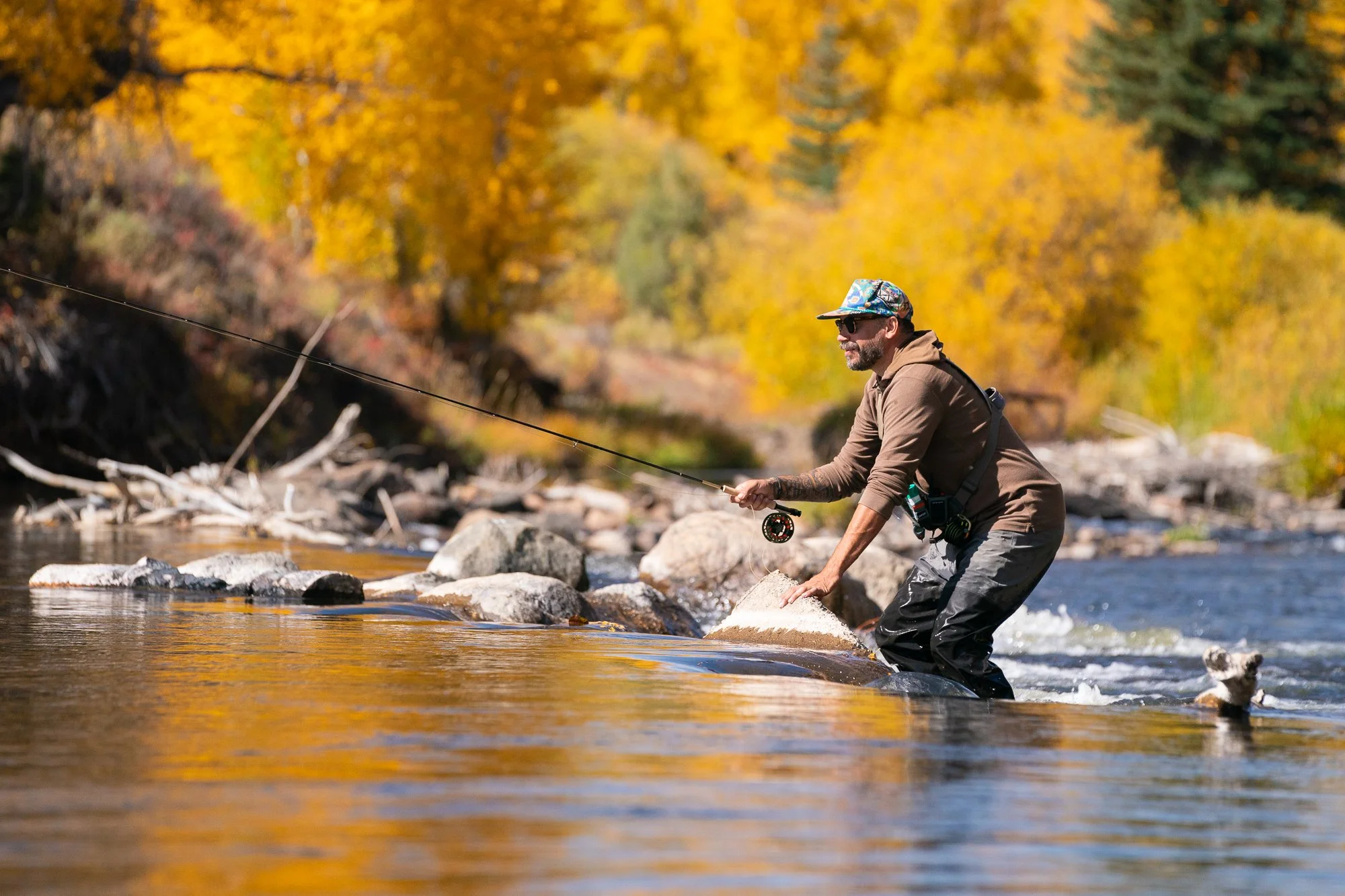
Photograph of a fly fisherman casting in a river surrounded by beautiful yellow fall foliage

Colorado fly fishing in fall foliage

Action shot of a fly fisherman on the Colorado River in fall foliage

A fly fisherman surrounded by yellow leaves

Brand photography shoot for fall foliage fly fishing

Fly fishing brand photography

Photograph of a fly fisherman on a river in a large Western landscape surrounded by fall foliage

Fall foliage fly fishing in a Western landscape

Wide angle shot of a fly fisherman on the Colorado River surrounded by trees with bight yellow leaves

Fly fisherman on the Colorado river in fall

Beautiful photograph of a fly fisherman walking through large trees covered in fall foliage. Available for editorial and commercial licensing.

Fly fisherman walking through fall foliage

Martin Gerdin: Glass Trout and the Art of Fly Fishing

From Wild Fish to Glass Art: Photographing the Work of Martin Gerdin

A Fly Fishing Artist Who Honors the Fish

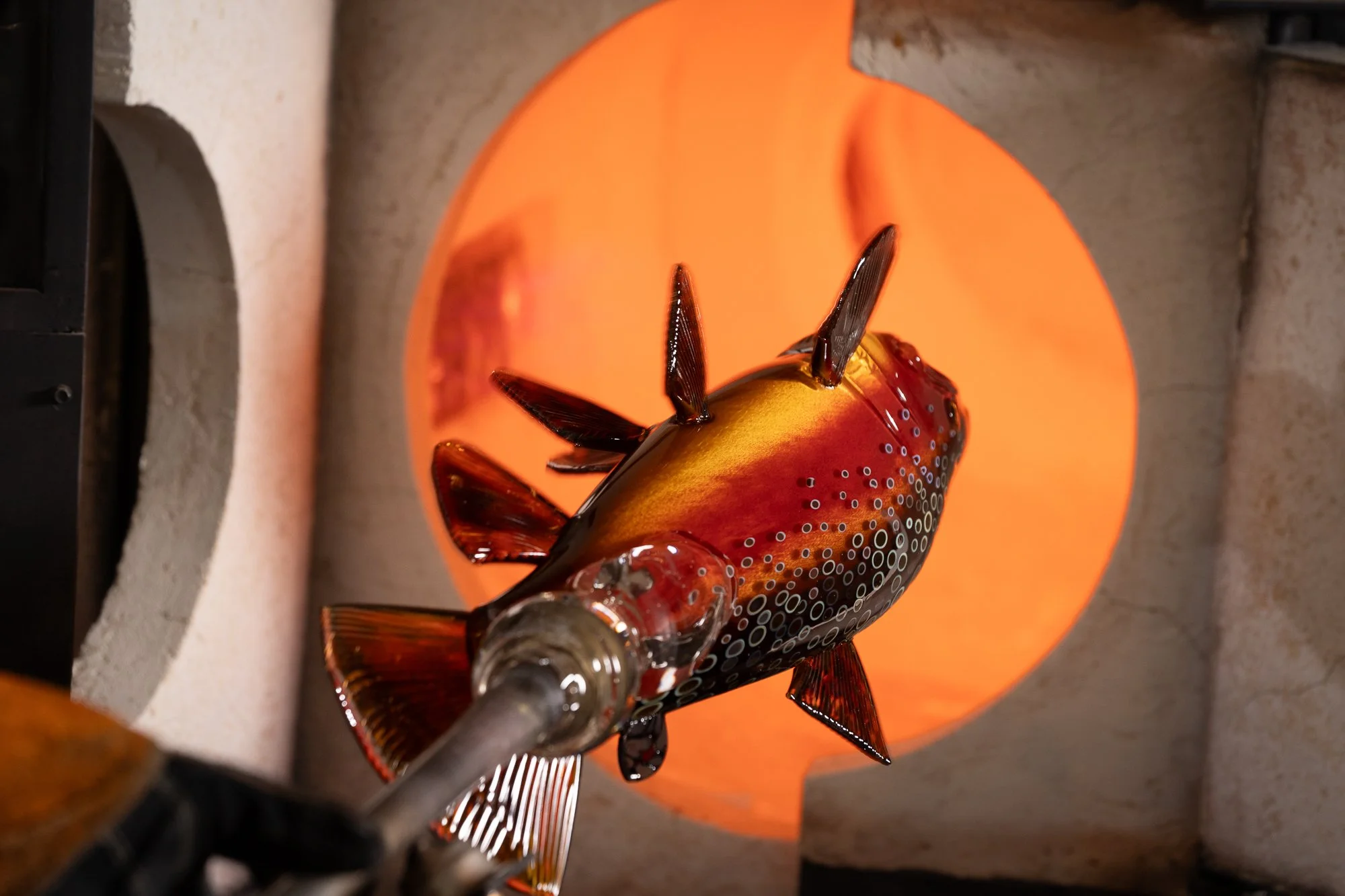
If you spend much time around fly fishing and have an appreciation for art, then you’ve heard the name Martin Gerdin. His hand-blown glass fish are more than just decorative pieces, they’re immaculate tributes. To the fish. To the places they live. To the hours spent chasing them in silence with and without victory. When I had the opportunity to photograph Martin for a recent magazine story, I knew right away this wasn’t just another artist profile. It was a chance to document someone who truly understands what makes fly fishing special.

Photographing the Process Behind the Glass

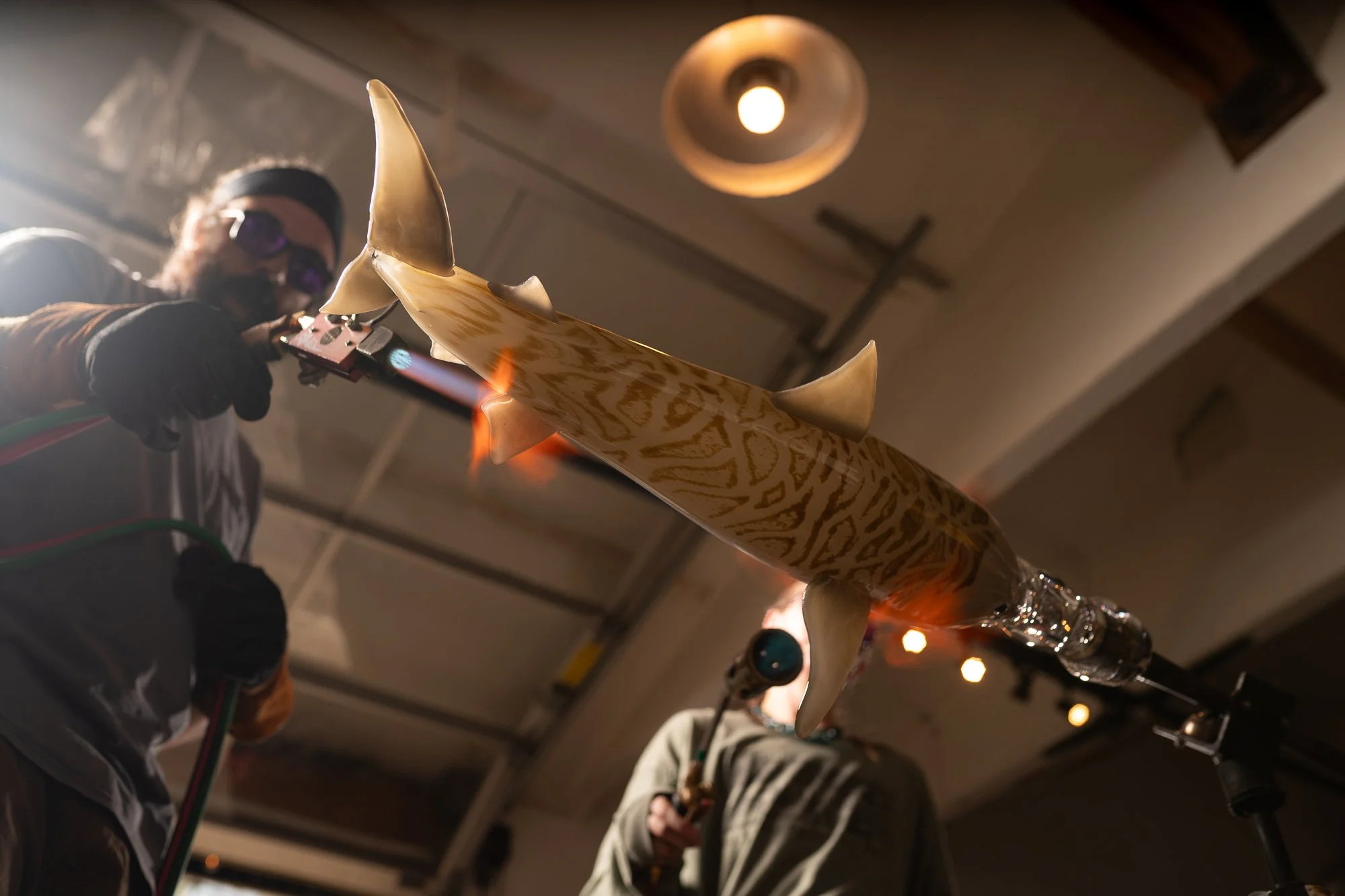
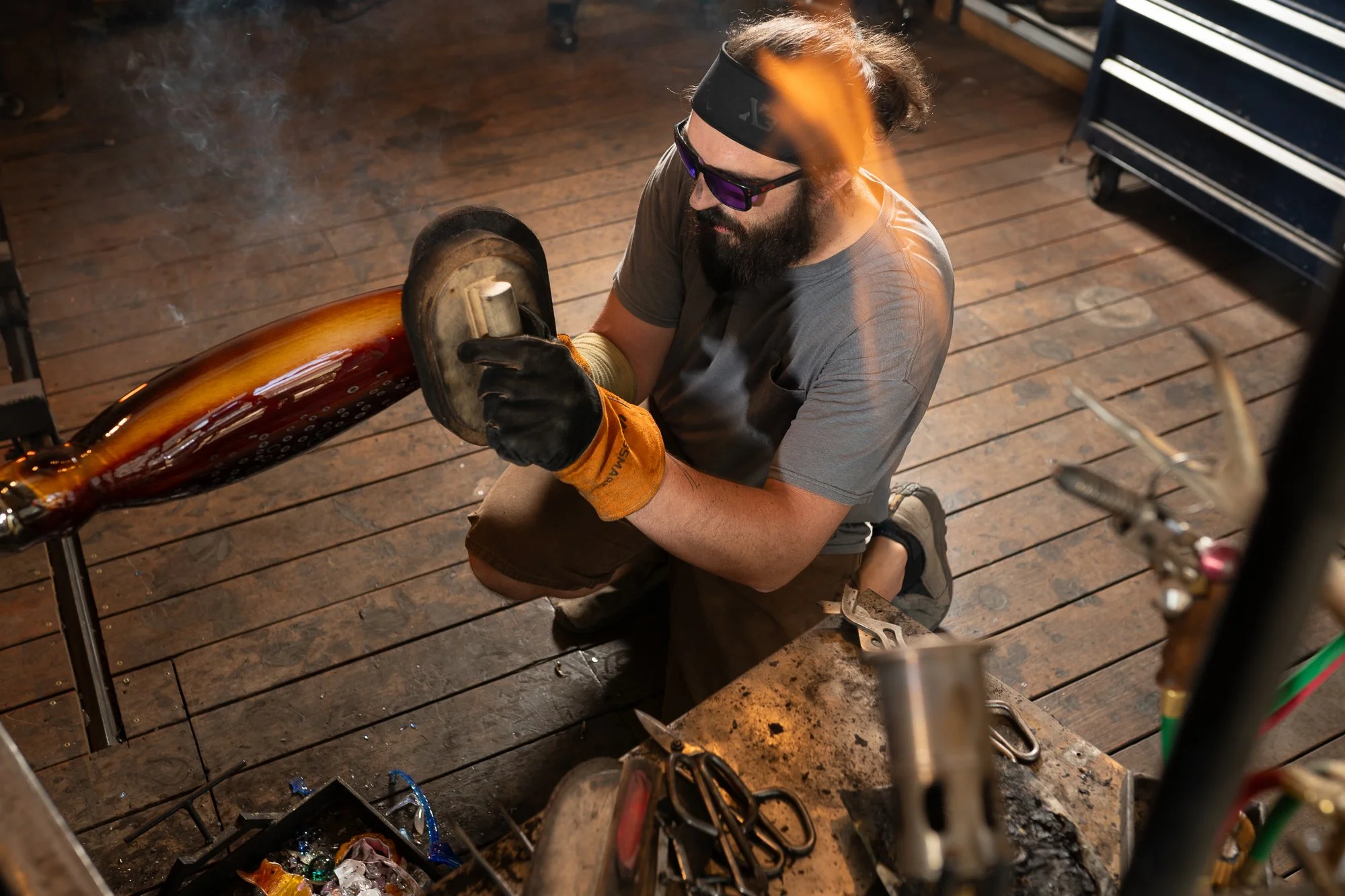
Martin’s Gerdin’s studio is located in Crawford, a small town in a remote section of southwest Colorado, which tells you a bit about him already. He doesn’t need the fancy street facing storefront, because for him, it’s only about the work. And that’s obvious seeing him in action. He cares. Sure, creating stunning glass blown fish is how he earns a living, but it’s also his passion. Glass blowing is a very delicate art, especially when dealing with a pieces the size of Gerdin’s fish. There are so many steps along the way that can cause each one to be ruined. And when that happens all is lost. Back to the beginning. As a photographer intent on documenting a process that cannot be faked, the only option is to be a fly on the wall and not get in the way. Martin and his team are constantly moving, back and forth from the work bench to the furnace, over and over. For this shoot I wanted to use strobes to light the scene in a way that wouldn’t draw attention to the light itself. Rather as more of a subtle enhancement. So the hard part was finding those places within the studio that the strobes and light stands wouldn’t impede his flow. Which was difficult at times, but he graciously told me when they needed to be moved and everything worked out just fine in the end. To be honest, there were times when I just wanted to sit back and watch. Looking at Gerdin’s work on his website or Instagram is impressive, but to see a final piece come to life before your eyes, is something else altogether.

**If you think creating glass trout for a living is all glamour, think again. It’s well over a hundred degrees in Martin’s studio when the furnace is running.

Where My Work Intersects with His

Martin Gerdin doesn’t create custom glass trout for fly fishing collectors by accident. It started out of his rabid obsession with the sport itself. The assignment to photograph Martin at work also didn’t happen by accident. As a photographer, it’s very important to me that the people and stories I work on, are ones I truly care about and have an interest in. So I pitched the idea to a magazine because I was a fan of his work and am also violently obsessed with fly fishing, which has led to a somewhat unhealthy amount of time on the river with both a fly rod and a camera. Like Martin, it’s my happy place.

See the Full Collection

Want to see more?
You can view my full collection of fly fishing photography prints [here]. Each image is available for purchase, and select pieces are also available for editorial or commercial licensing. If you’re a collector, or simply someone who loves the water, I think you’ll find something that speaks to you.

Photograph of a glass brown trout by Martin Gerdin

Martin Gerdin - Glass Fish Artist

Photograph of a glass artist creating custom art for fly fishing collectors

Fine art glass fish artist Martin Gerdin at work in his studio in Crawford, Colorado

Photograph of a custom glass shark being made by an artist in his studio

Glass fish art

A team of glass blowers creating fly fishing art

Fly fishing artist at work

A glass shark being made at Martin Gerdin's studio in Crawford, Colorado

Hand blown glass shark

Photograph of a hand blown glass shark being made

Photograph of an arist creating a hand blown glass shark

Photograph of Martin Gerdin creating a custom glass brown trout for a fly fishing collector

Hand blown glass brown trout art

Photograph of a glass artist creating a brown trout for a fly fishing collector

Photograph of glass trout being made

Photograph of a glass blown brown trout going into the furnace

A glass blown brown trout going into the furnace

Rocky Mountain National Park Fly Fishing Photos for Editorial and Commercial Use

Rocky Mountain National Park Fly Fishing Photography

Fly fishing in Rocky Mountain National Park doesn’t feel like most places in the West. The water is colder, the air thinner, and the environment can feel both timeless and apocalyptic. Light shifts quickly, weather rolls in without warning, and the fish demand precision.

These photographs were made while fishing and moving through the high country above the Front Range, primarily along the Big Thompson River and surrounding alpine water. Like most of my work, they weren’t staged or built around a production schedule. They came from time on the river—watching light, waiting on conditions, and working within whatever the environment gave back.

A fly fisherman ties a fly to his line while sitting on the back of his car in a beautiful mountain location

Fly fishing guide tying a fly to his line before fishing in front of snow capped peaks

Fly Fishing in Colorado’s High Country

The headwaters of the Big Thompson River and the surrounding water in Rocky Mountain National Park offer a very specific kind of fishing. Tight pockets, fast current, and limited room to move mean every cast matters.

From a photography standpoint, that changes everything.

There’s no stepping back to reset a shot or adjusting positioning for better light. You’re often working in confined space, reacting to what’s happening in front of you rather than directing it. The best frames tend to come from small moments—reading water, adjusting line, moving carefully through current.

That’s what defines fly fishing here, and it’s what these images are built around.

Photograph of a fly fisherman surrounded by rugged terrain and snow capped mountains in Rocky Mountain National Park

Fly fishing in Rocky Mountain National Park

A fly fisherman walking through a beautiful section of the Big Thompson River in Rocky Mountain National Park

Big Thompson River Fly Fishing - Rocky Mountain National Park

Photographing Fly Fishing in Unpredictable Conditions

High-elevation environments don’t offer consistency.

Light can go from flat to harsh in minutes. Wind moves through canyon walls without warning. Temperatures shift quickly, especially in the early morning and late evening. All of it affects how the water looks, how the angler moves, and how the gear performs.

Photographing in these conditions isn’t about controlling the scene—it’s about staying responsive to it.

That approach leads to images that feel grounded in reality rather than constructed. For outdoor brands and editorial use, that difference matters. The details—wet fabric, glare on the water, uneven terrain—are what make the images believable.

Photograph of a fly fisherman putting floatant on his fly while standing in front of snowy mountains

Fly fisherman adding floatant to his fly with snow capped mountains in the background

A fly fisherman walking through the Moraine in Rocky Mountain National Park

Fly fishing the Moraine - Rocky Mountain NP

A fly fisherman netting a fish surrounded by dense brush in rugged terrain

Backcountry fly fishing in Rocky Mountain National Park

Why Places Like Rocky Mountain National Park Matter for Outdoor Brands

The Rocky Mountains are one of the most recognizable landscapes in the United States.

For brands, that recognition carries weight. The terrain is immediately identifiable, but it still feels remote and demanding. It represents a version of fly fishing that’s both accessible and aspirational—something people understand, but still want to experience for themselves.

Photographing in a place like this adds context that goes beyond the product. It connects gear to a real environment—one that requires durability, movement, and adaptability.

That’s what turns a photograph into something usable for advertising or editorial storytelling.

Photograph of a fly fisherman walking through a dense forest of burned trees

Fly fisherman walking through a forest of burned trees in Rocky Mountain National Park

Photograph of a fly fisherman frustrated after losing a fish in Rocky Mountain National Park

Frustrated fly fisherman after losing a fish

A fly fisherman fishing a rugged section of the Big Thomson River

Fly fisherman netting a trout in a backcountry section of the Big Thompson River

Fly Fishing Photography for Commercial and Editorial Use

This work is available for licensing across a range of uses, including:

  • Outdoor and apparel advertising campaigns

  • Editorial features and publications

  • Brand storytelling for web and print

  • Tourism and regional marketing

Because the images are created in real conditions, they hold up across different contexts. They aren’t tied to a single moment or campaign—they’re part of a broader visual record of fly fishing in the American West.

Photograph of a fly fisherman on a high alpine river in Colorado

Rocky Mountain National Park fly fishing

Photograph of a fly fisherman smiling

Smiling fly fisherman

Part of a Larger Fly Fishing Project

These photographs are part of an ongoing body of work documenting fly fishing across Colorado and the greater American West.

Additional work from other locations:

Each location brings a different environment and a different set of challenges, but the approach remains the same—real anglers, real conditions, and an emphasis on the relationship between people and water.

You can view more here:
Fly Fishing Photography Gallery

Licensing & Commercial Work

I work with outdoor brands, publications, and agencies to create fly fishing photography that reflects how the sport actually looks and feels in the field.

For licensing or assignment inquiries please reach out directly: - rob@robhammerphotography.com

A fly fisherman walks up the river past a huge dead tree in Colorado

Authentic fly fishing photography

Chasing Trout and Capturing Moments: Fly Fishing the Big Thompson River

Fly Fishing Photography Print & Licensing — Big Thompson River, Colorado

Authentic fly-fishing photography from one of Colorado’s most underrated rivers

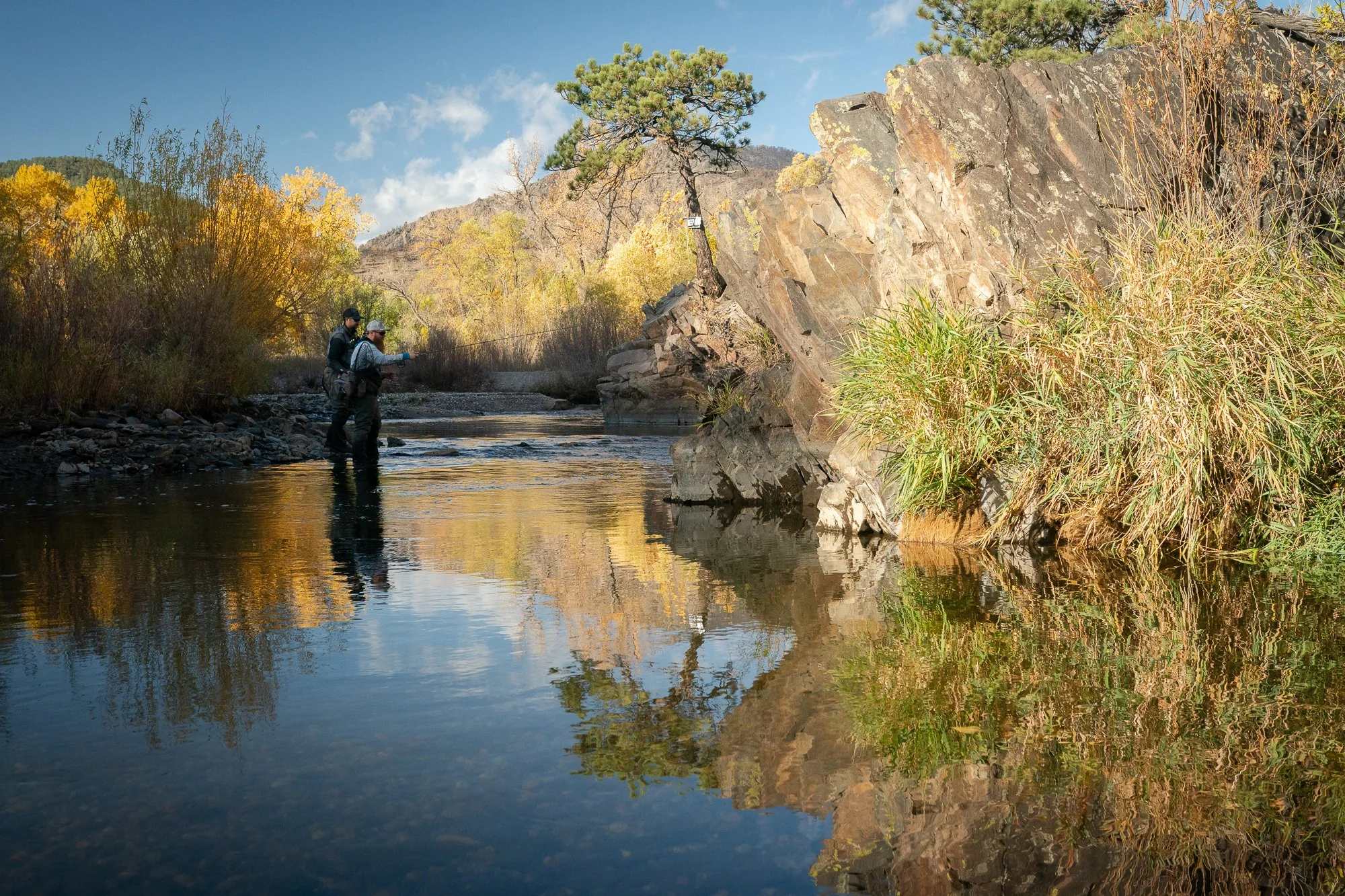
The Big Thompson River has always felt like one of Colorado’s more underrated fisheries - quiet, accessible, and full of character. On this particular fall day, I was out on the water with a couple guides from Front Range Anglers - John Brown and Charlie Schaeffer, documenting what turned into a textbook session of Euro-nymphing. No setups, no staging, just real moments of passionate fly fisherman doing what they do best.

The river was clear and low, which made for sharp visuals and technical fishing. Golden leaves clung to the canyon walls, and every part of the vibe was a reminder of why people fall in love with fall fly fishing in Colorado.

Why These Photographs Matter

Fly-fishing has always carried a mythology of patience and solitude, but for me, it’s the honest, working rhythm that’s most powerful. Shooting on the Big Thompson wasn’t about chasing a hero shot — it was about capturing how the river feels. The pace, the texture of the current, the breath between casts.

These are the kinds of moments that brands and publications can’t fake. They come from time on the water, earned through cold mornings, missed casts, and small successes. That’s what I want every image to carry — the truth of place and process.

Fine Art Prints

Select photographs from this series are available as museum-quality fine art prints, made with archival inks on heavyweight cotton paper. Each print is produced to highlight the depth and tonal range of the original negative — the way it was meant to be seen.

Perfect for homes, cabins, hospitality spaces, or offices that connect to the American West, these prints bring the stillness and authenticity of the outdoors inside.

Editorial & Commercial Licensing

For outdoor brands, magazines, or tourism boards seeking authentic visual storytelling, this collection is available for editorial and commercial licensing. The images offer an unfiltered look at fly fishing in Colorado’s high country — natural light, real anglers, and an atmosphere that can’t be staged.

Licensing is available directly through the studio. Please reach out to discuss usage and rates:
📩 rob@robhammerphotography.com

Click here to view my photo essay on Colorado fly fishing artist Martin Gerdin

Black and white photograph of fly fisherman on the Big Thompson River

Colorado Fly Fishing Photography

Photograph of fly fisherman and guide on the Big Thompson River

Fly fishing guides on the Big Thompson River

Colorado fly fishing photo for licensing

Fly Fishing in fall color in Colorado

Fly fishing in fall foliage

Fly fisherman walking through fall colors in Colorado

Black and white photo of a fly fisherman in Big Thompson Canyon

Fly fishing a canyon section of the Big Thompson River

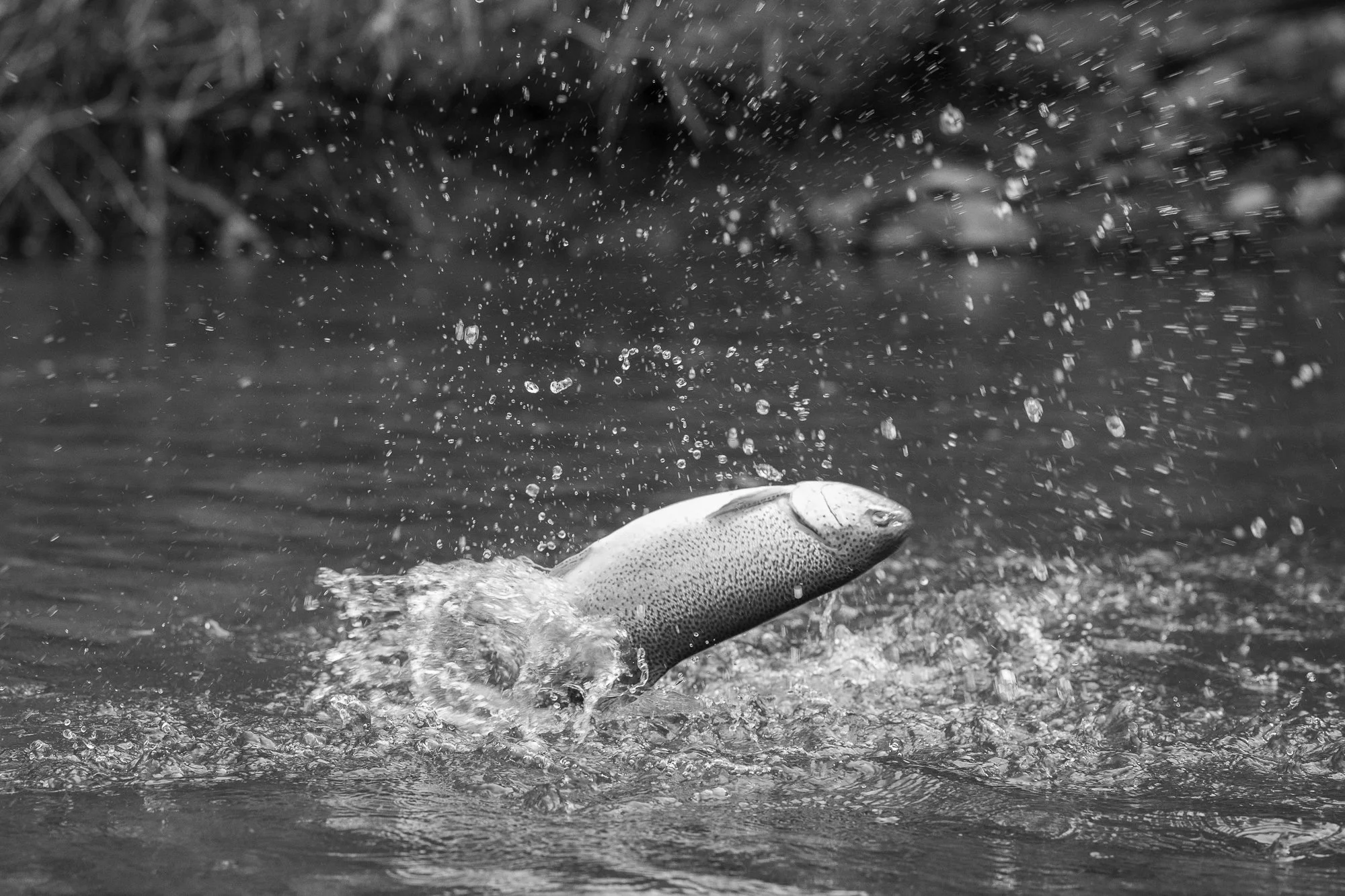
Photograph of trout jumping out of the Big Thompson River

Rainbow trout jumping out of the river

Fly fishing photograph for licensing

Netting a Rainbow Trout on the Big Thompson River

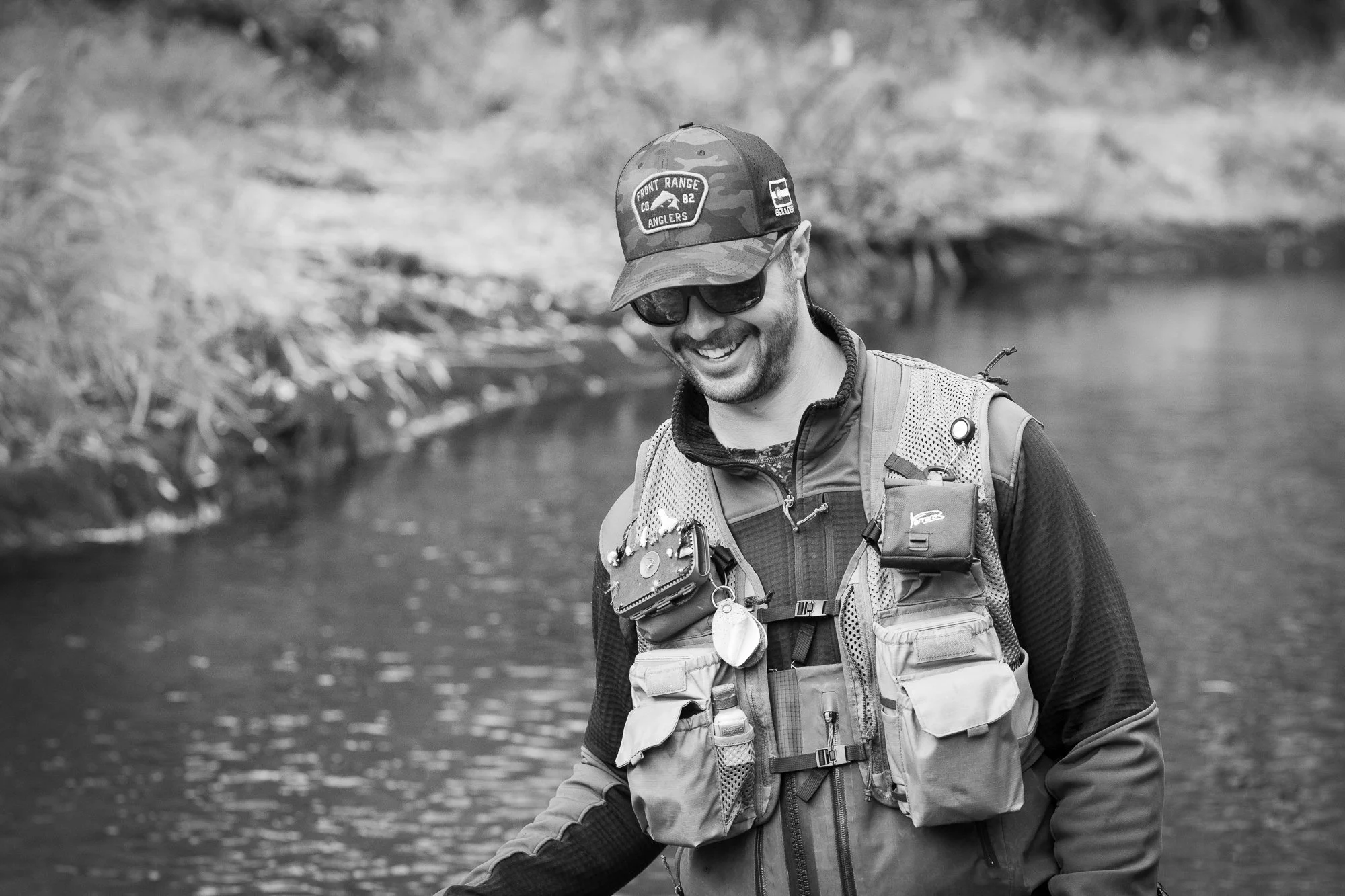
Black and white portrait of a fly fishing guide

John Brown of Front Range Anglers having a laugh during a day on the river

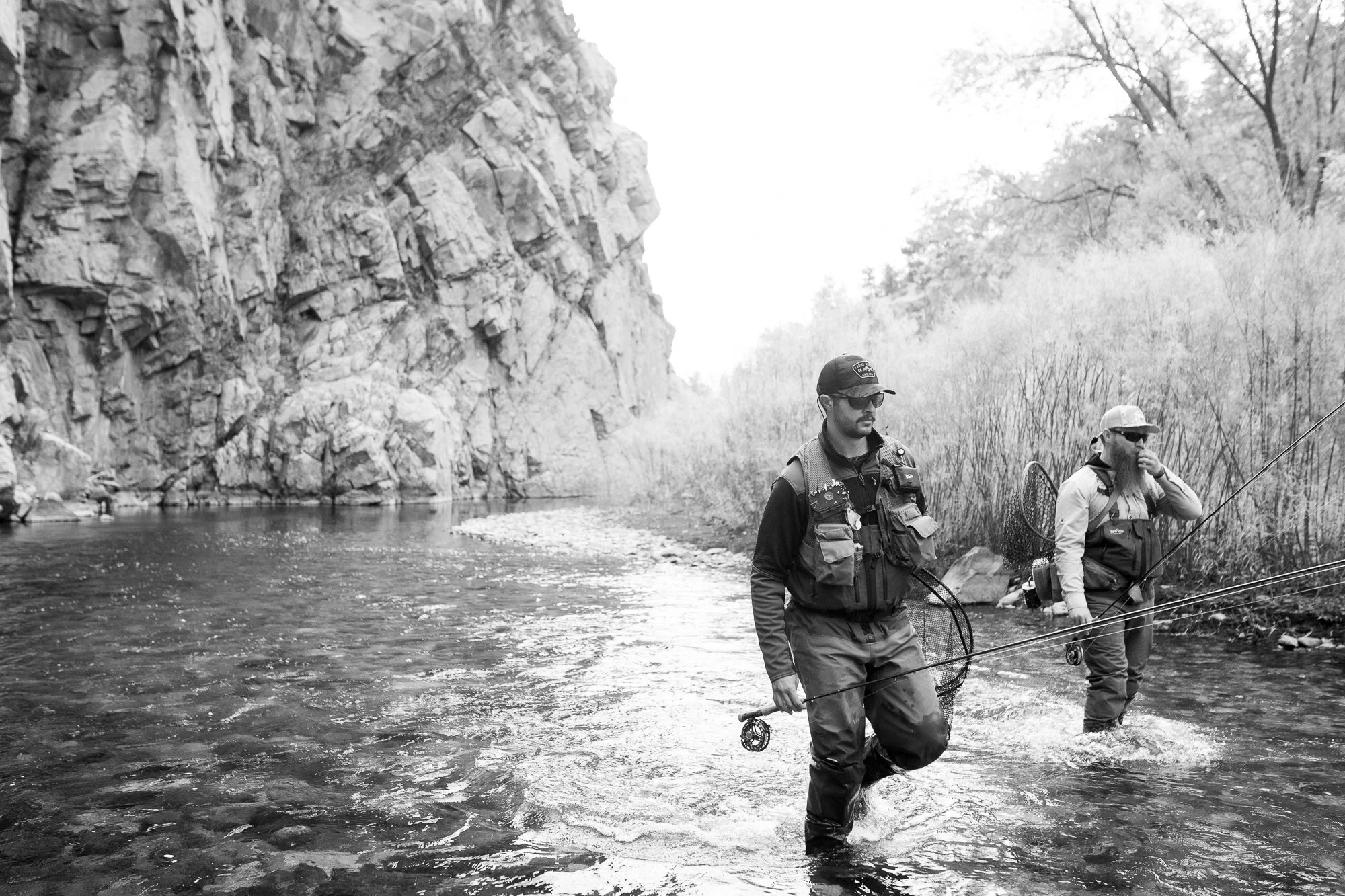
Black and white photo of two fly fisherman walking up a river - available for licensing

Fly fishing guides from Front Range Anglers

Photograph of a fly fisherman and guide walking up a river in beautiful light

Looking for trout on the Big Thompson River

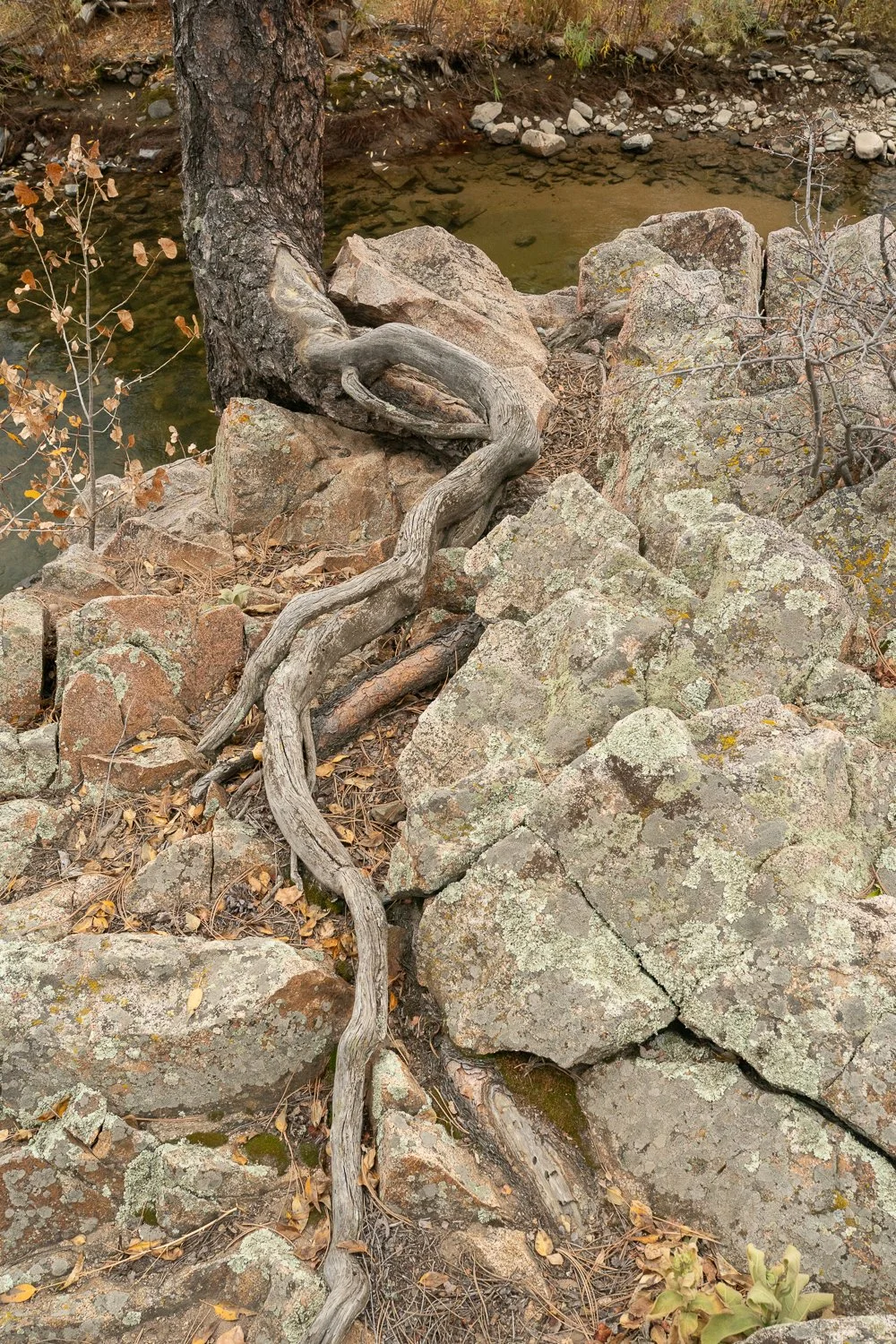
Photograph of a tree growing out of a rock along the Big Thompson River

Tree roots growing out of a rock

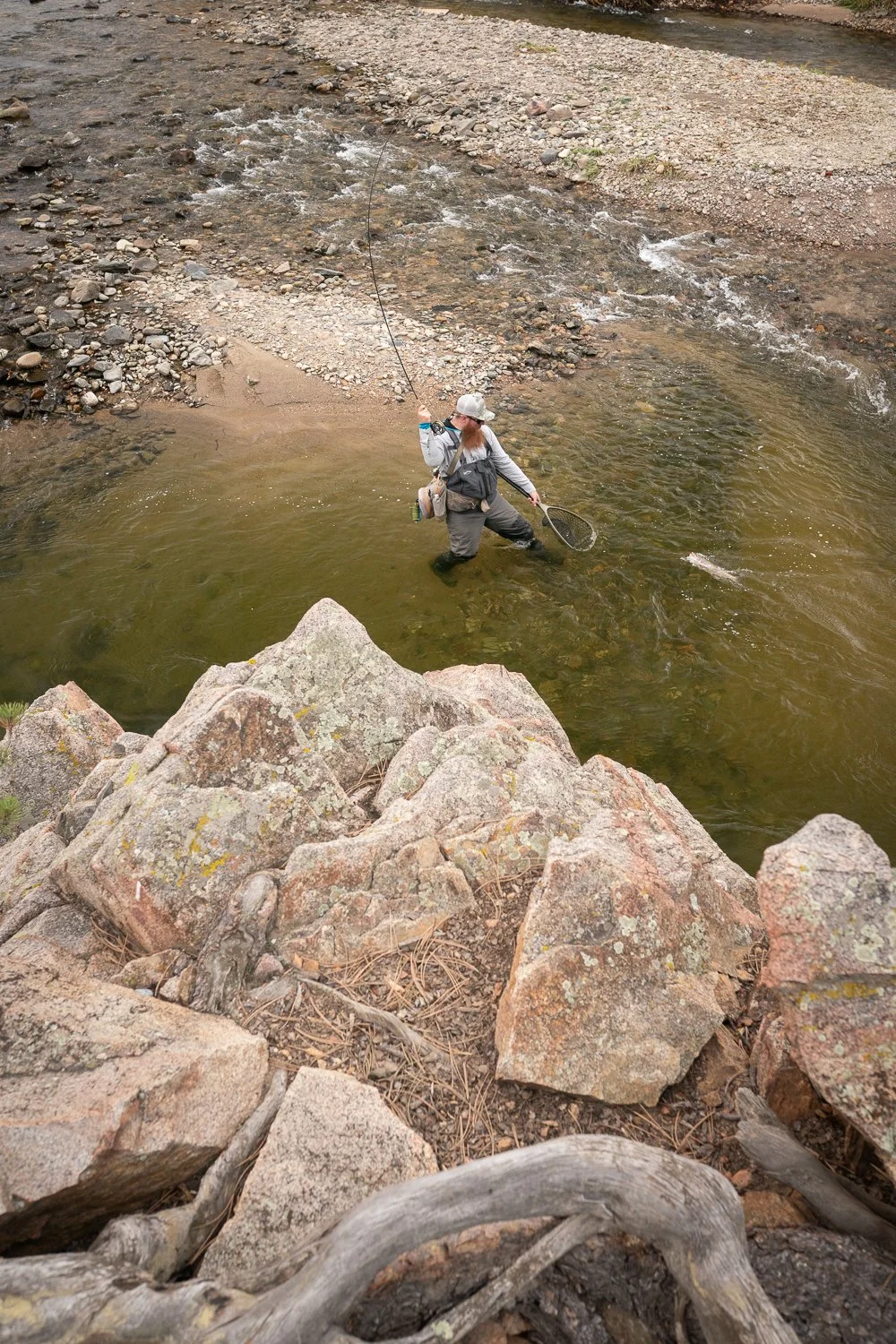
Photograph of a fly fisherman netting a large trout in a rugged setting on a river in Colorado

Charlie Schaefer netting a trout on the Big Thompson River outside Loveland, Colorado

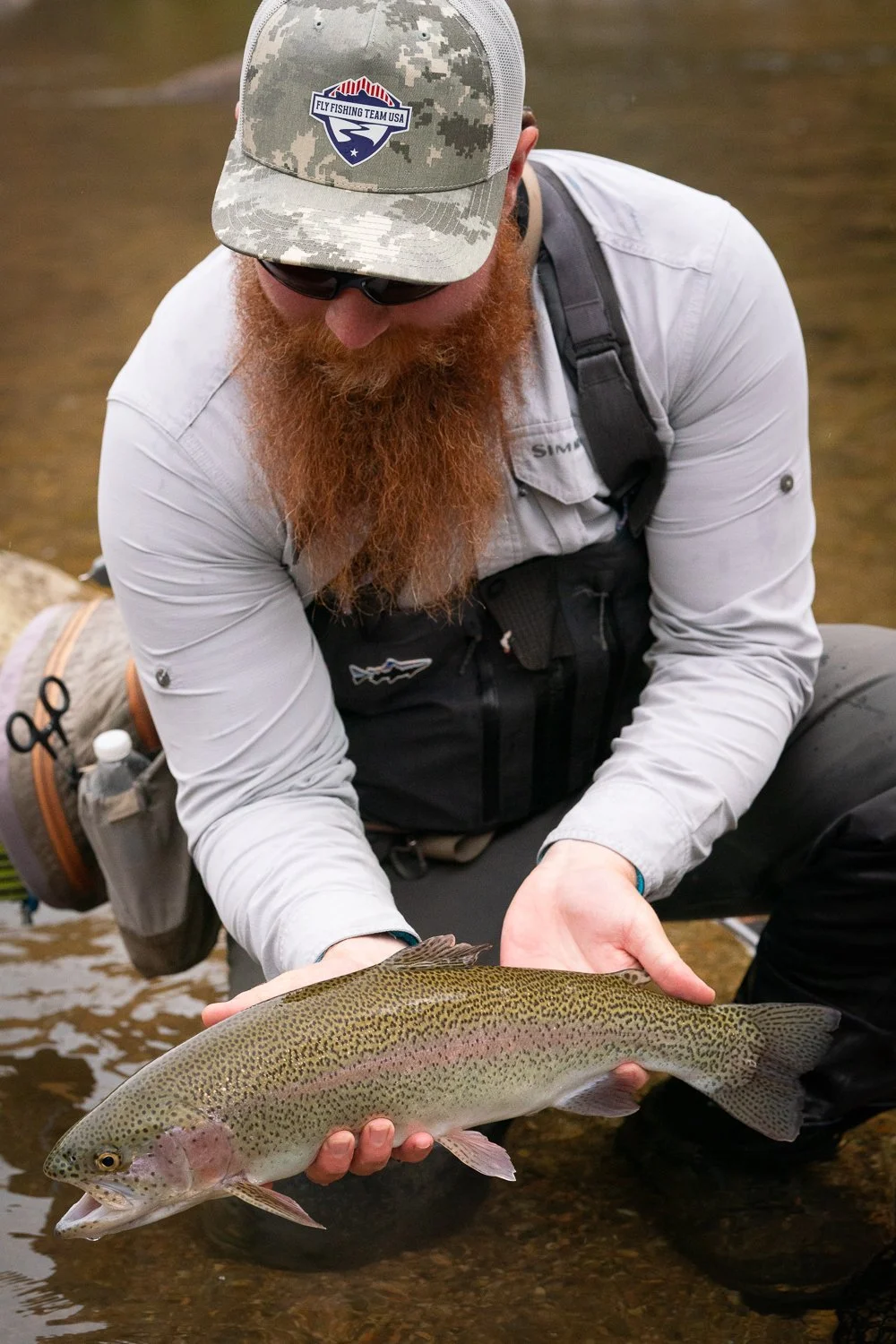
Photograph of a fly fisherman holding a trophy trout on the Big Thompson River

A beautiful Rainbow Trout

Two fly fisherman walking through fall foliage on the Big Thompson River in Colorado

Fall colors in the river in Colorado

Black and white photograph of a fly fisherman holding a rod and reel on the river

Hardy fly rod and reel

Black and white photograph of a fly fishing guide in Colorado available for licensing

One handed

Photograph of a large trout in a net caught by a fly fisherman

Netting a large Rainbow Trout

A fly fisherman smiles while holding a trophy Rainbow trout

Trophy Trout - Colorado

Fly fisherman on the Big Thompson River in Colorado - Black and White Photography

Big Thompson River Fly Fishing

Close-up photograph of a fly fisherman's arm setting the hook on a trout

Setting the hook

Photograph of a Boulder, CO fly fishing guide on the Big Thompson River

A proper bend in the rod

Close-up photograph of a fly fisherman's hand holding a trophy rainbow trout

Won’t forget this one

Photograph of a Colorado fishing guide available for licensing

Charlie Schaefer - Front Range Anglers

Photograph of a fly fisherman trying to net a fish on the Big Thompson River

The big ones put up a good fight

Photograph of a beautiful rainbow trout caught on the Big Thompson River in Colorado

Textbook Rainbow Trout

Aerial view of a fly fisherman walking up river

Fly fisherman moving up river

Photograph of a fly fisherman netting a trout surrounded by fall colors in Colorado

Fly Fishing the Big Thompson River surrounded by fall color in Colorado

Fly Fishing - Crested Butte, Colorado

Crested Butte, Colorado Fly Fishing Photography

San Juan Mountains

Crested Butte, Colorado is hands down one of my favorite places to go fly fishing in the country. It’s just one of my favorite places period. Combine the stunning views with their mountain town culture and access to all sorts of fly fishing, and the place is hard to beat. Summertime anywhere in the San Juan mountains will seduce you whether you’re aware of it or not. The images are from a recent backcountry fly fishing trip with friends to a small creek that shall go unnamed for obvious reasons. There is plenty of easy fishing access around around Crested Butte on the Taylor River, East River, and Gunnison River, so blowing up such a remote spot like this would cause me to lose sleep. Just looking at these photographs is FOMO inducing. Can’t wait to get back out there.

Click here to see more of my fly fishing photography.

Summer fly fishing near Crested Butte, Colorado

Fly fishing in Crested Butte, Colorado

Photograph of two friends fly fishing a small creek in Colorado

Fly fisherman wading up a river in Crested Butte, Colorado

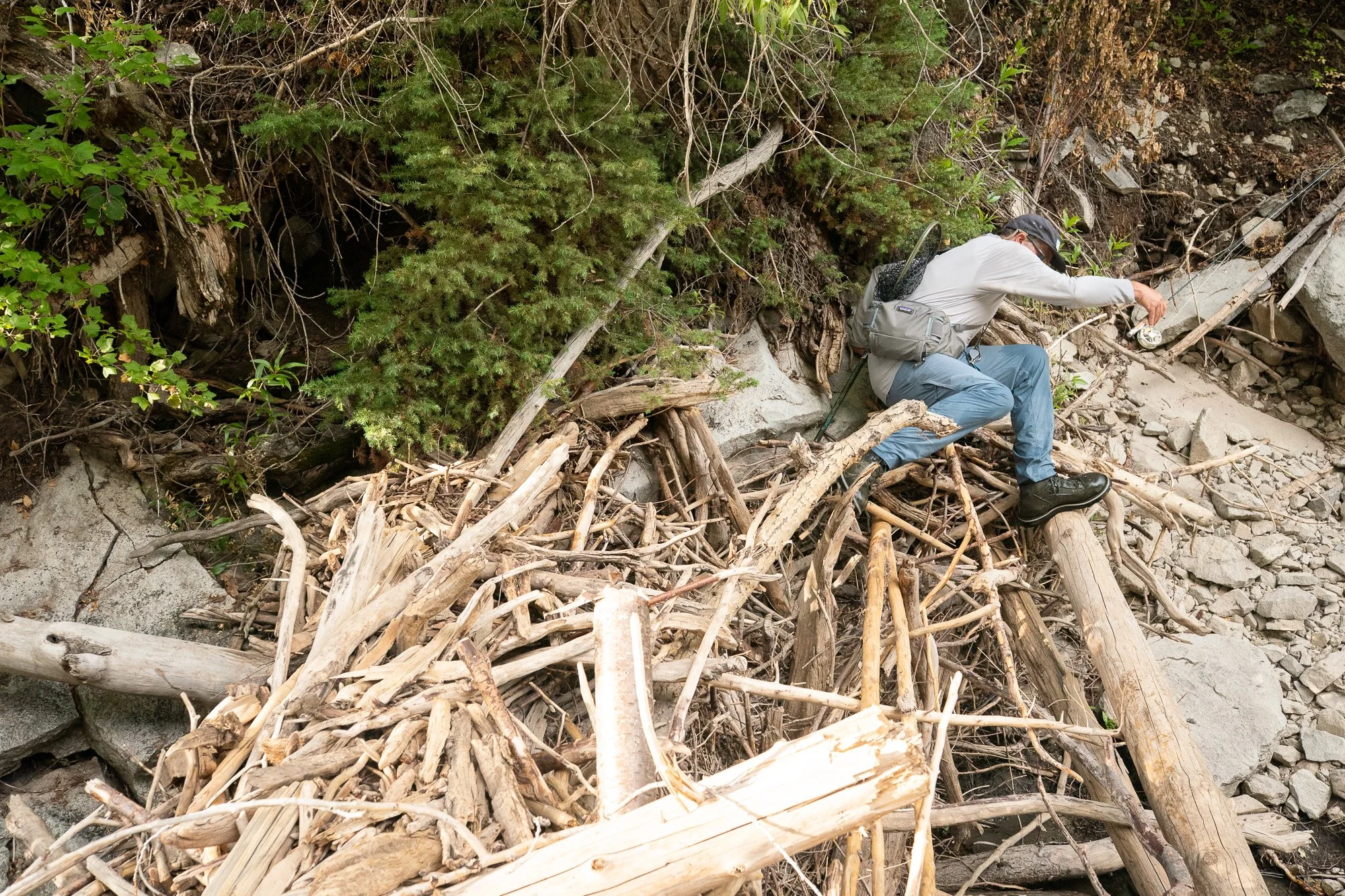
Photograph of a fly fisherman climbing over a pile of logs along a stream

A fly fisherman climbing over a pile of trees and branches on the side of a river outside Crested Butte, Colorado

Photograph of a fly fisherman casting in a beautiful section of stream near Crested Butte, Colorado

Fly fishing a picturesque stream in the San Juan Mountains

Photograph of beers cooling off in a pool off on the side of a stream in Colorado

Cans of Coors Banquet chilling in river water during a fly fishing trip in Colorado

Catching trout on a backcountry stream in Colorado

Backcountry fly fishing in Colorado

A fly fisherman netting a trout in a small stream surrounded by canyon walls in Colorado

Fly fisherman laughing after a fun day on the river in Crested Butte, Colorado

Fly fishing wading boots and wading socks drying on a tree

Fly Fishing - Crested Butte, CO

Taylor River Fly Fishing

Fly Fishing Photography - Colorado

Sometimes you think the sun is going to help with the cold and on certain days is does. For all the rest of the days, it’s easiest to just accept the fact that you won’t feel your hands again until you get back to the truck. At which point you’ll need to put a koozie around your beer just so they don’t get any worse. Thankfully this wasn’t one of those. It’s only the middle of October but that doesn’t matter. If you spend time in the mountains then you know an early summer morning can feel oddly similar to winter. It’s got to be part of that whole love/hate thing.

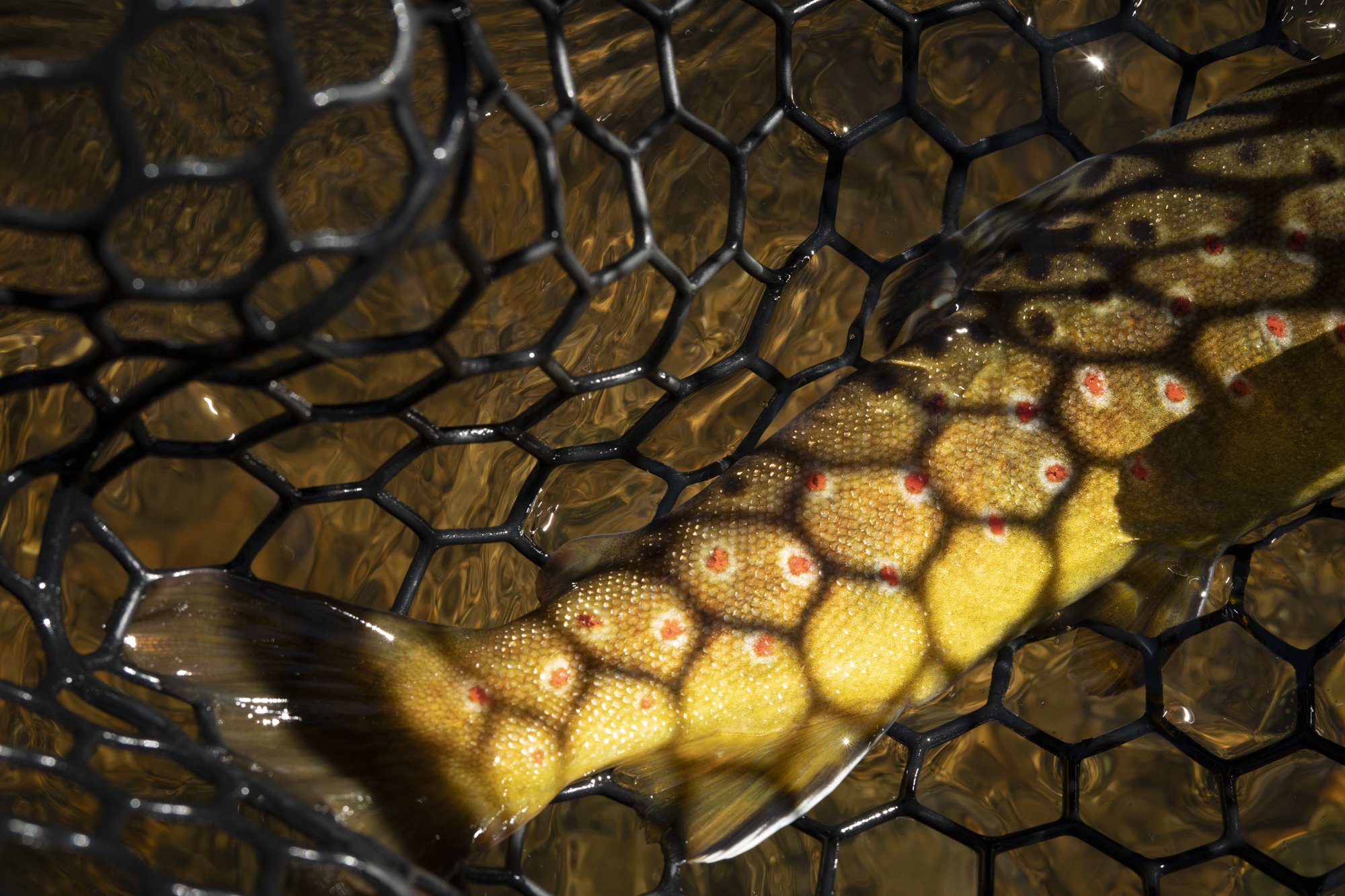
It’s safe to assume that most western fly fisherman, in the beginning at least, are only concentrated on the rainbow trout. It’s put up on a pedestal. The trophy. The goal. Won’t deny having those same feelings, but that’s all changed over time, as everything does. Now, in my opinion, brown trout are king. Their colors and markings are really special.Now, In the name of transparency this isn’t my fish, but my friend caught it while I was shooting. Which means I was sort of catching it vicariously through him. That’s the only way I’ve found to calm the urge to set the camera down and replace it with a fly rod. It’s a vicious cycle that I’m trying to be at peace with. On the scale of problems, it’s a good one to have. Snowboarding is the only thing I do that absolutely won’t involve a camera unless it’s the one on my phone. Fly fishing on the other hand is a constant battle.

Good times on the Taylor River that day.

Click here to see more of my Fly Fishing photography

Fly Fishing Photography - 11 Mile Canyon - South Platte River

11 Mile Canyon Fly Fishing Photography on Colorado's South Platte River

The South Platte River has no shortage of famous stretches of water, but 11 Mile Canyon has always felt a little different to me.

Maybe it's the granite walls. Maybe it's the winding road that follows the river through the canyon. Or maybe it's because the farther you move away from the parking areas, the easier it becomes to forget how close you actually are to Denver.

These photographs were made during several days spent fishing, camping, and exploring the canyon with friends. Rather than focusing on fish counts or fishing reports, the goal was to document the experience that keeps people returning to places like this year after year.

Photograph of two friends on a fly fishing road trip in a classic truck

Fly fishing road trip in a classic Bronco

Why 11 Mile Canyon Is One of Colorado's Most Photogenic Fly Fishing Destinations

Located below Eleven Mile Reservoir near Lake George, Colorado, this stretch of the South Platte River combines clear water, enormous granite boulders, steep canyon walls, and healthy trout populations.

The result is a landscape that feels uniquely Colorado.

For photographers, the canyon offers something different around every bend. Early morning light reflects off the cliffs, afternoon thunderstorms build over the ridges, and the river constantly changes character as it moves through the canyon.

It's the kind of place where you can spend an entire day with a camera and never make a cast.

A fly fisherman prepares his gear standing next to a classic Ford Bronco

Fly Fishing the South Platte River Beyond the Crowds

One of the best things about 11 Mile Canyon is that the experience changes dramatically depending on how far you're willing to walk.

The areas closest to the road are popular for good reason. Access is easy and the fishing can be excellent.

But some of my favorite photographs have come from the less-traveled sections where the canyon narrows, the crowds disappear, and the only sounds are moving water and wind through the pines.

Those stretches feel more like backcountry fishing than a roadside destination.

Scenic Colorado fly fishing on the South Platte River in 11 Mile Canyon

Black and white photograph of a fly fisherman on the South Platte River with dramatic storm clouds in the background

Black and white photograph of a fly fisherman in 11 Mile Canyon with storm clouds building in the distance

Camping and Fly Fishing in 11 Mile Canyon

Many anglers visit the canyon for a day trip, but staying overnight changes the pace entirely.

Spillway Campground offers easy access to the river and makes it possible to fish the morning and evening windows without spending hours driving.

The best moments often happen outside the fishing itself.

Coffee before sunrise.

Rigging rods beside camp with frozen fingers.

Afternoon rainstorms rolling through the canyon.

Drinking beer with friends around a fire after a long day on the water.
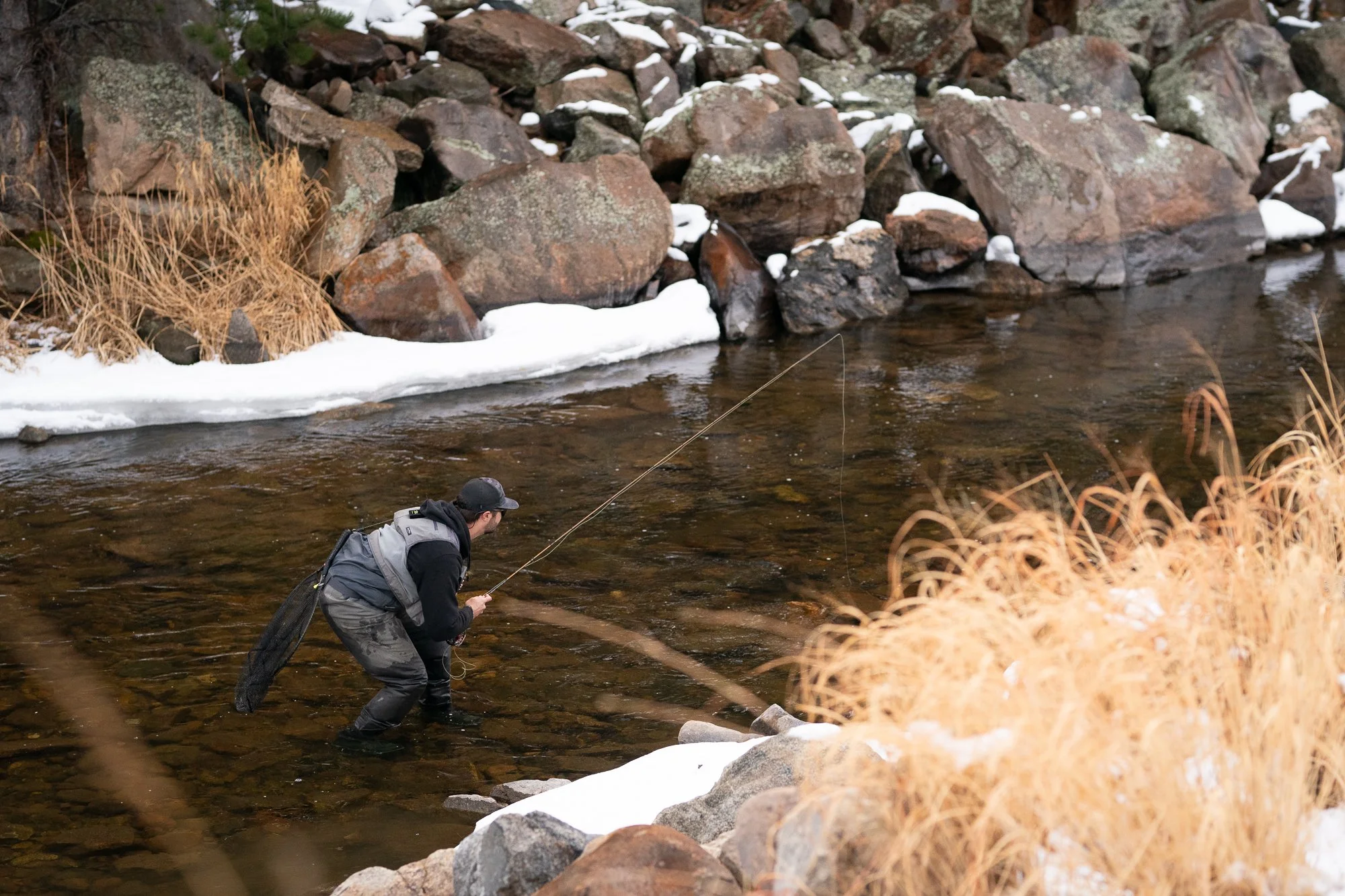
Those moments are every bit as important to the story as the fish.

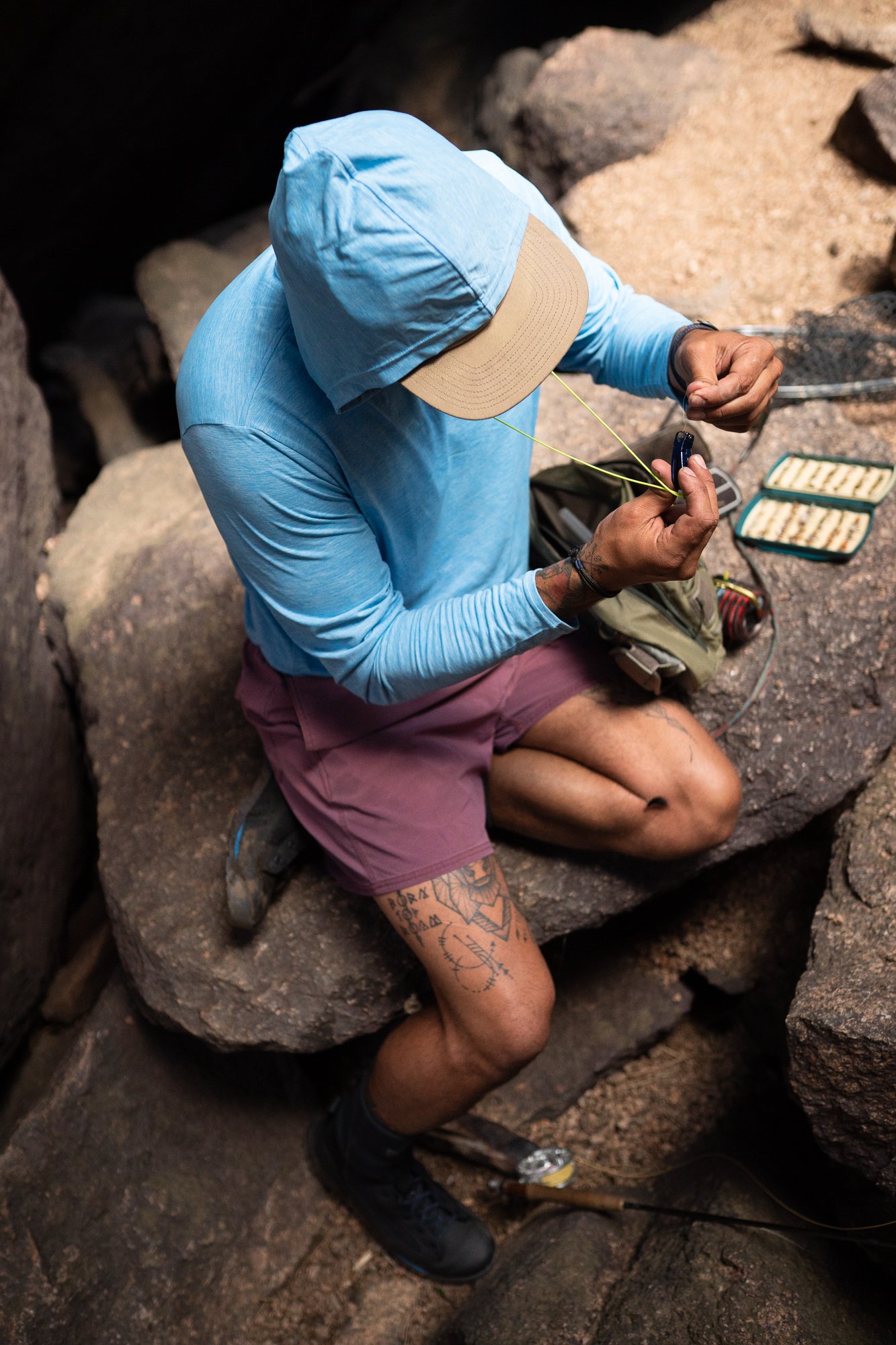
A fly fisherman takes a break on a rock to tie on a fly in 11 Mile Canyon

Take a break on the South Platte River

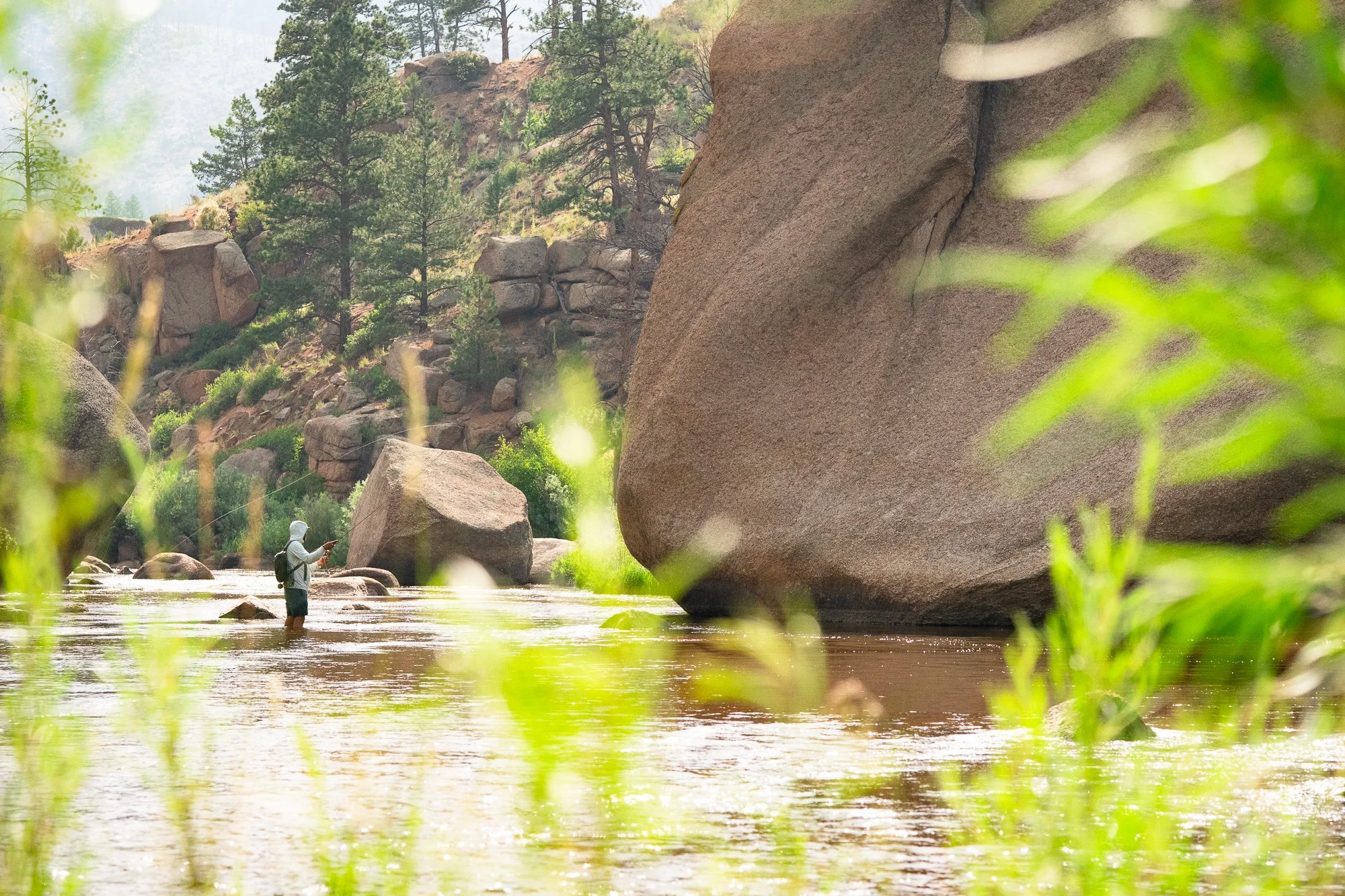
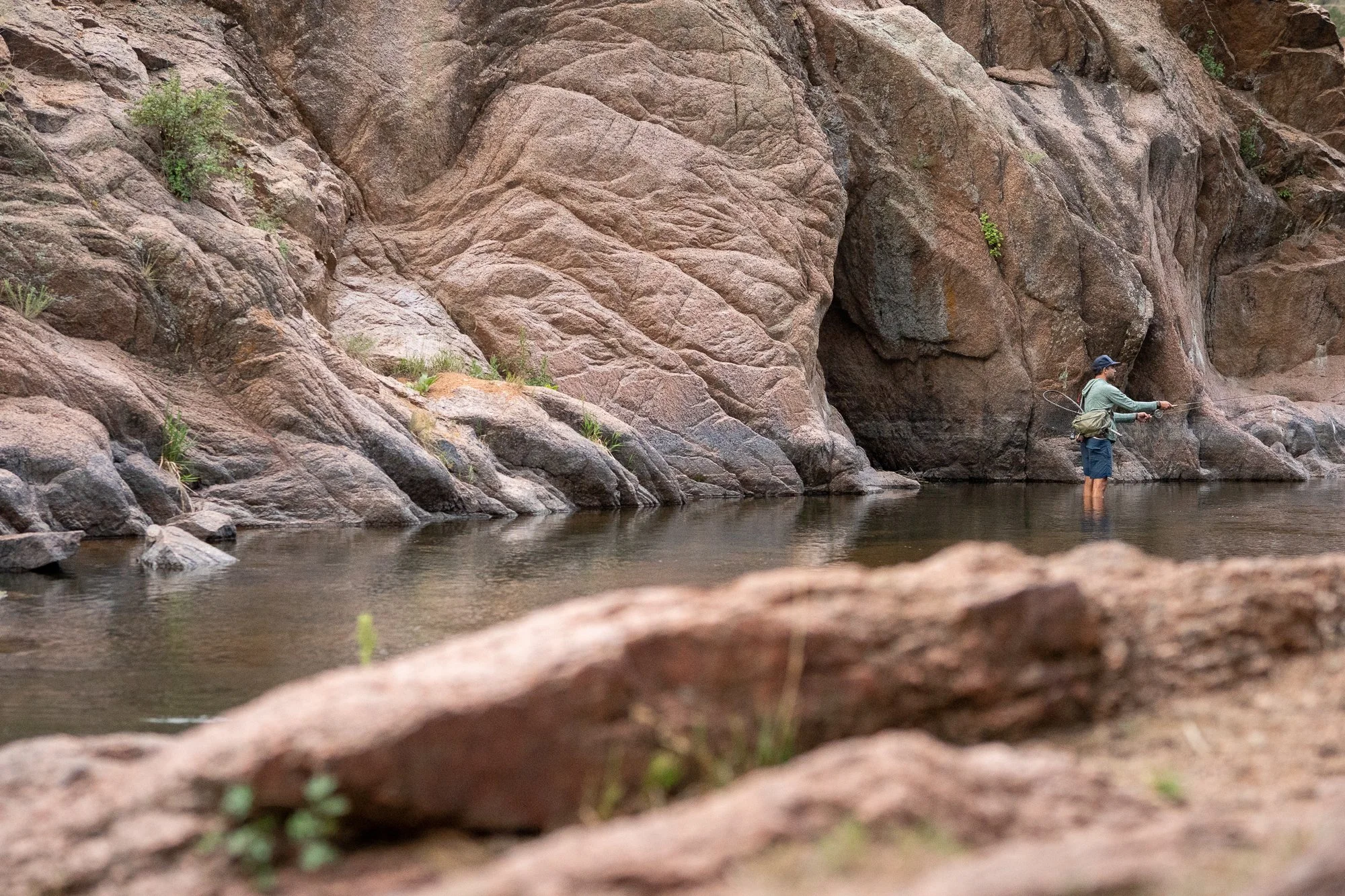
A fly fisherman casting into a scenic section of 11 Mile Canyon surrounded by beautiful granite walls

Fly fisherman on a scenic section of the South Platte River in 11 Mile Canyon, Colorado

Photographing the Culture of Fly Fishing

One reason I've continued photographing fly fishing for so many years is that the sport extends far beyond the act of catching trout.

Road trips.

No cell service.

Off the grid camping.

Stories.

The unknown and unexpected.

Places like 11 Mile Canyon provide the backdrop, but the people and culture surrounding the sport are what continue to draw me back.

Photograph of a fly fisherman walking through a rock runnel in 11 Mile Canyon

Fly fisherman walking through a tunnel in 11 Mile Canyon, Colorado

Black and white photograph of a fly fisherman netting a trout in front of large granite walls

Netting a trout on the South Platte River

Part of a Larger Colorado Fly Fishing Photography Project

These images are part of an ongoing body of work documenting fly fishing across Colorado and the American West.

Additional locations include:

Each river has its own character, but the goal remains the same: documenting real anglers in real places rather than staged outdoor imagery.

Black and white photo of a fly fisherman in 11 Mile Canyon with a large trout in his net

Black and white photograph of a fly fisherman netting a trout on the South Platte River

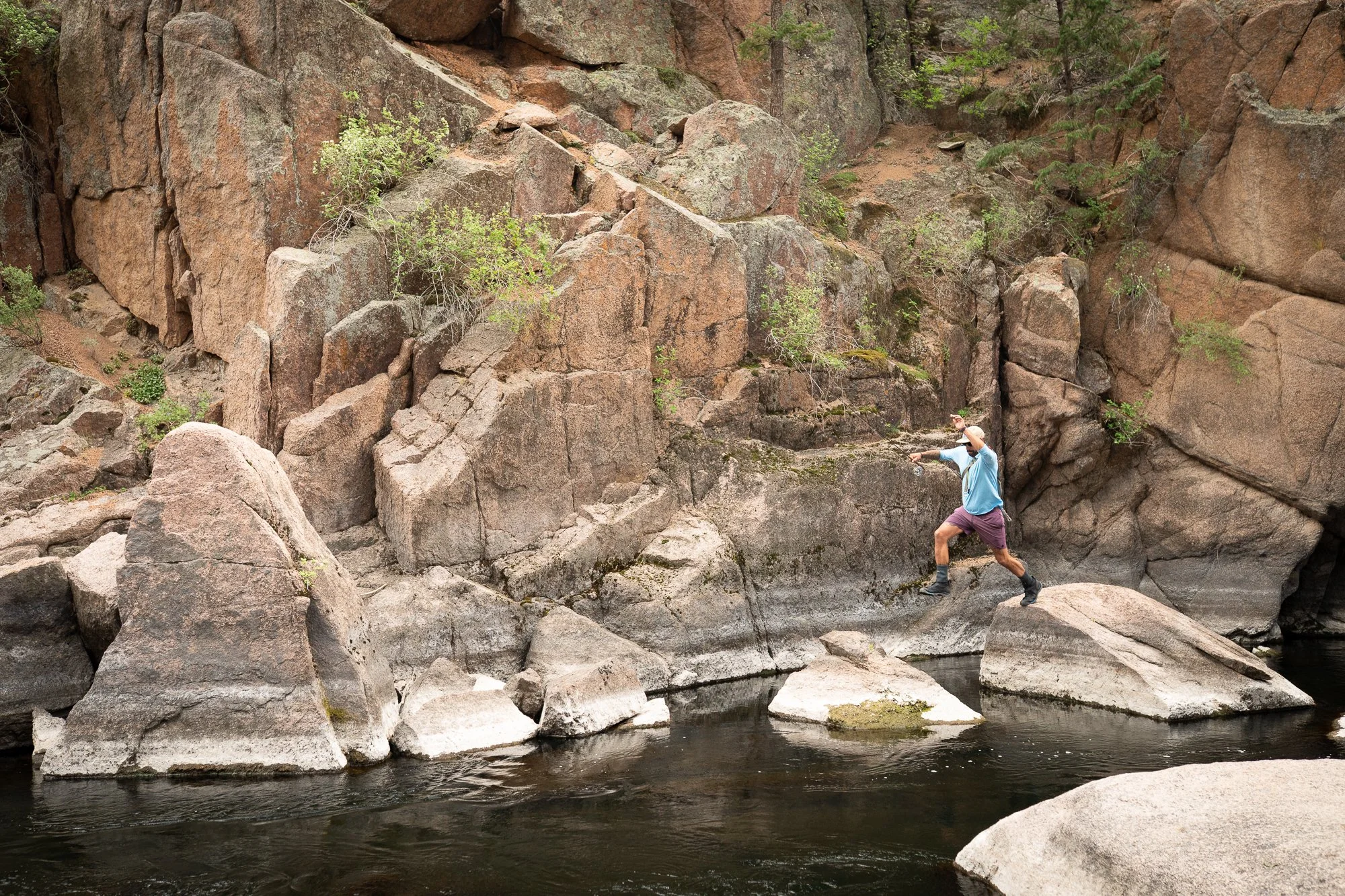
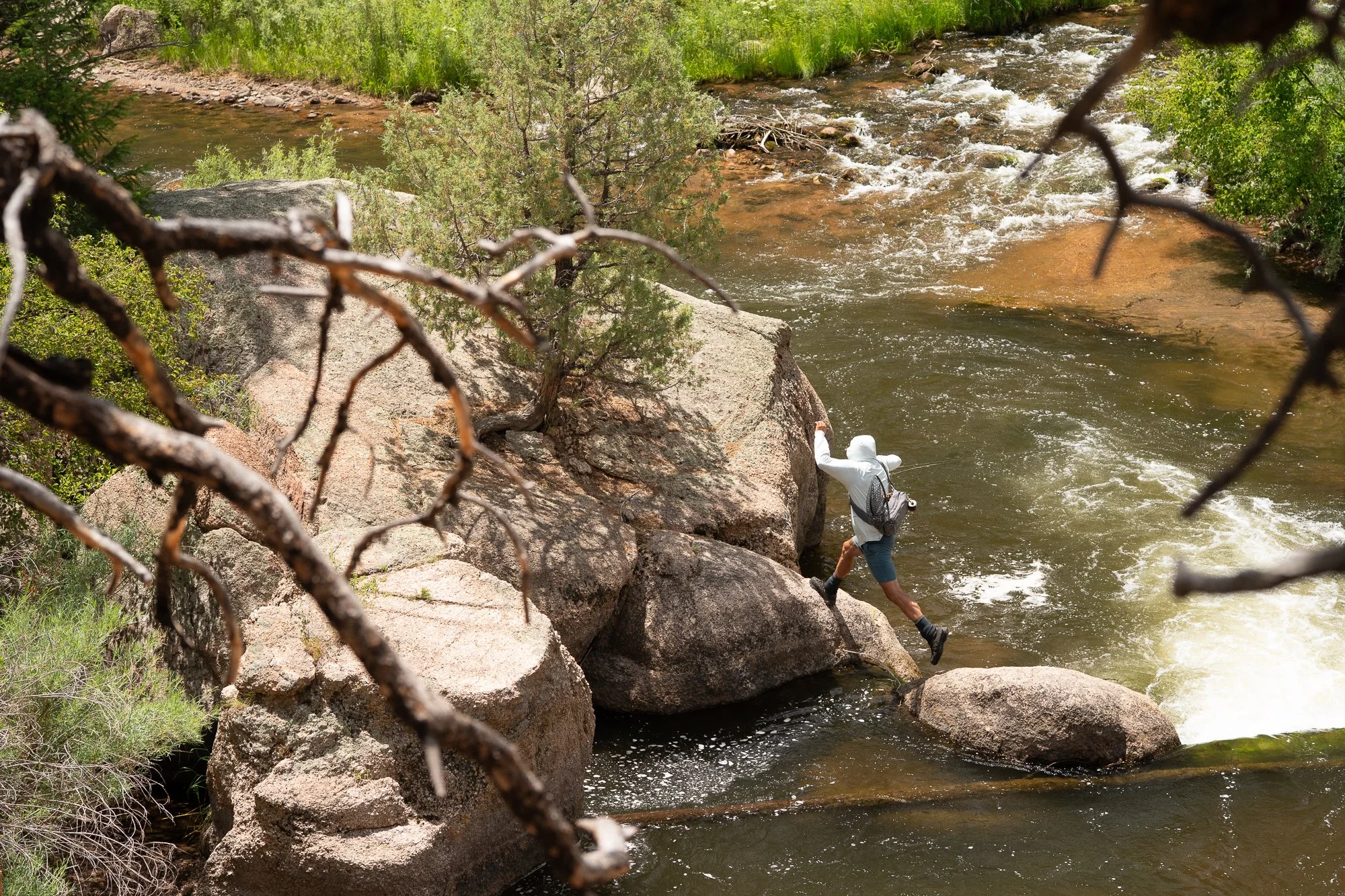
A fly fisherman hopping from boulder to boulder in 11 Mile Canyon, Colorado

Boulder hopping in 11 Mile Canyon

Fly Fishing Photography Prints and Licensing

Many of the photographs from 11 Mile Canyon are available as fine art prints for homes, offices, lodges, and fly fishing enthusiasts.

View the collection of fly fishing prints

The collection is also available for editorial and commercial licensing for outdoor brands, publications, tourism organizations, and advertising agencies.

For print or licensing inquiries, contact me directly at rob@robhammerphotography.com.

A fly fisherman casting into early morning light on the South Platte River in 11 Mile Canyon

Early morning fly fishing in 11 Mile Canyon

A rain storm in 11 Mile Canyon

Afternoon rainstorm in Colorado

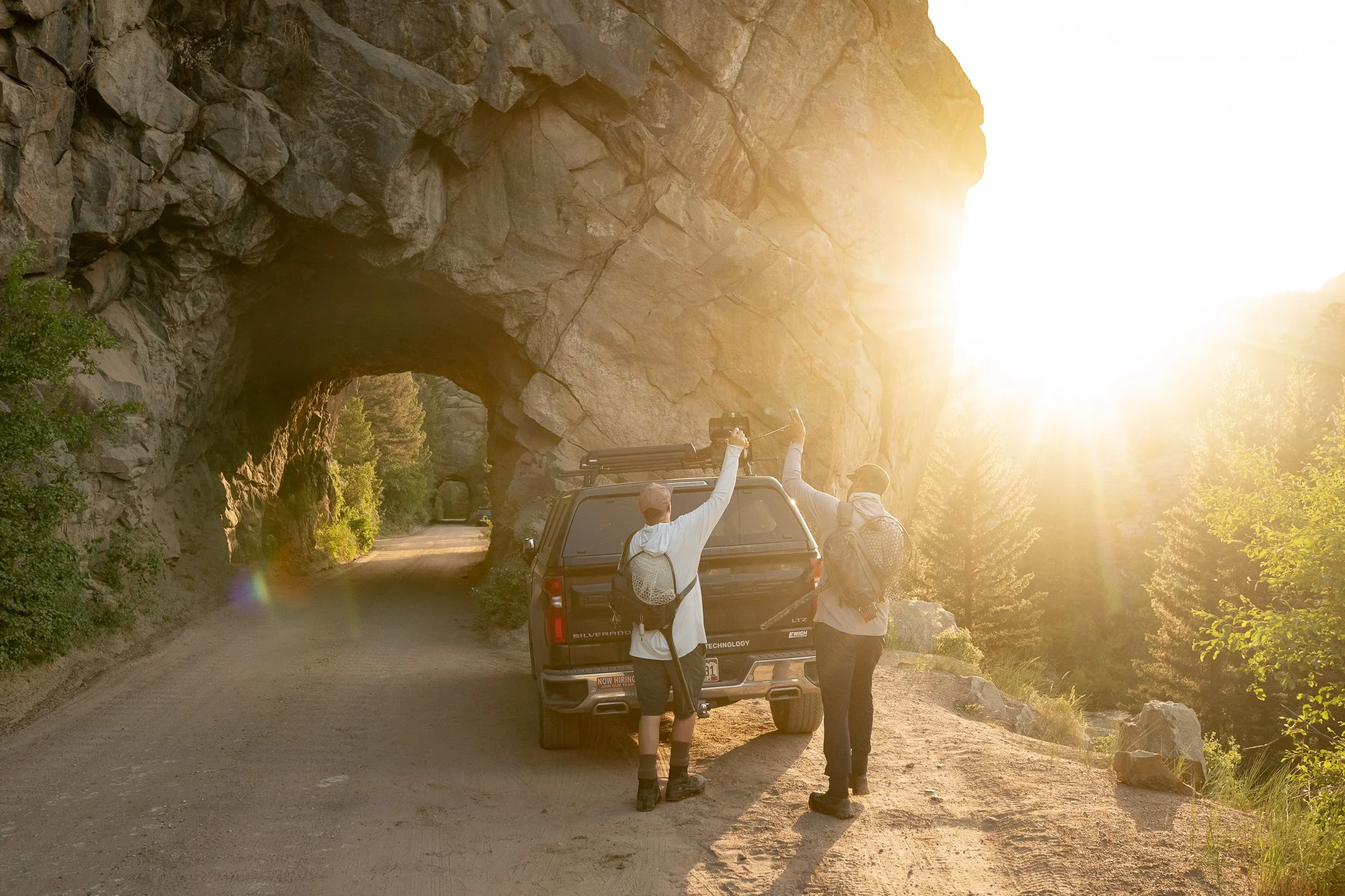
Photograph of two friends putting their fly rods into a roof top holder at sunset in a scenic mountain location

End of the fishing day - 11 Mile Canyon

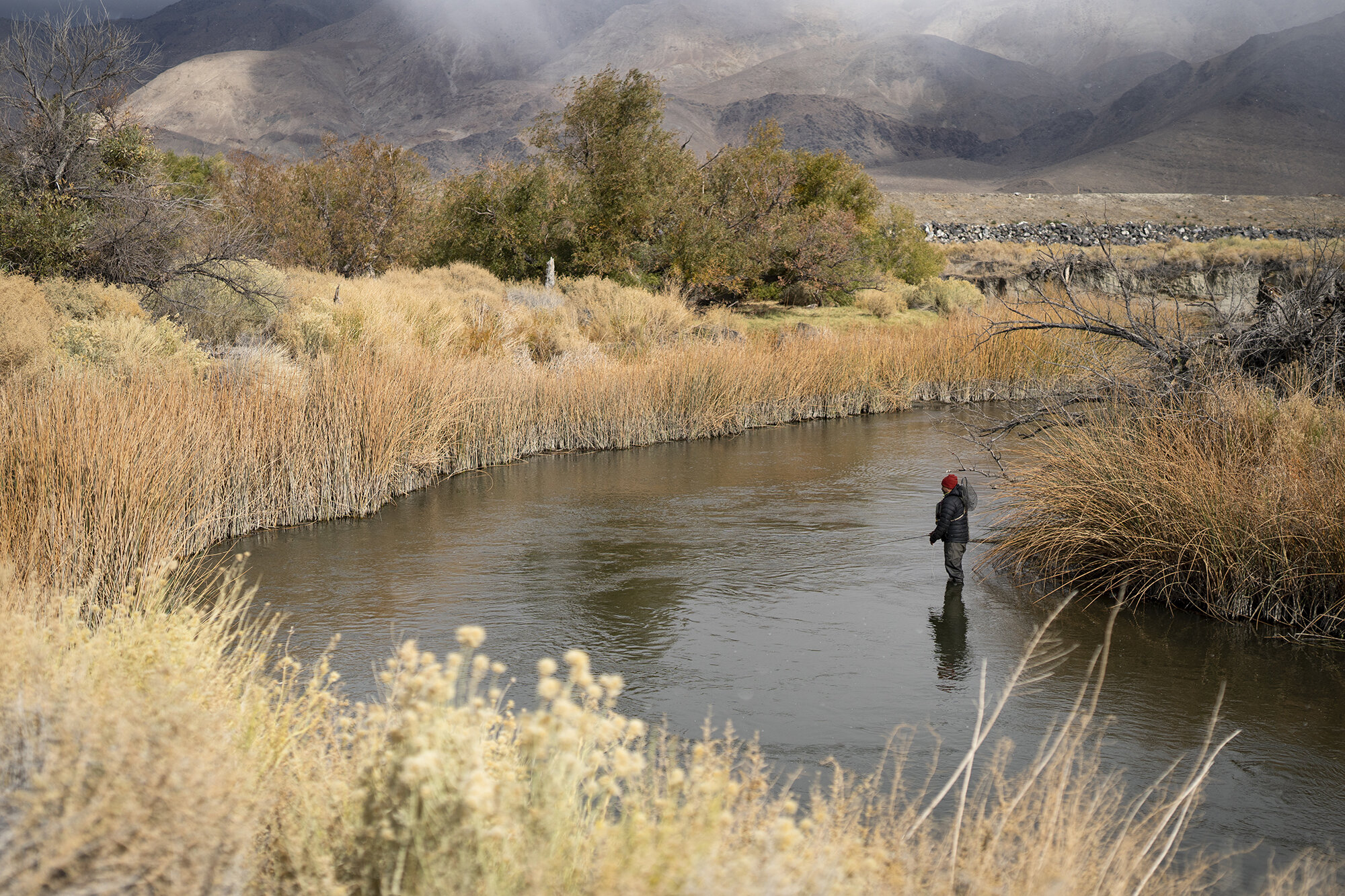
Fly Fishing the Owens River

Owens River Fly Fishing

Mammoth Lakes, California - Winter

Some time over the past couple months has been spent archiving my library of images which is a hell of a process. Sorta seems like moving houses in that you have no idea how many stuff you’ve accumulated over the years until it’s necessary to move it. Archiving my library is daunting but necessary. Should have been doing it all along. A lesson I’ve learned during this process is how easy it is to forget about images once they sit on hard drives for a certain period of time. Life goes on. You get busy. Commercial shooting and other paying projects get put on the front burner. So now I’m faced with having to archive 10+ years of imagery onto a separate site that will allow the images to be licensed instead of collecting dust on a shelf. That aside, it brings a lot of joy to see images from trips past that I haven’t looked at since they happened. Also brings the thought of travel to the forefront and what COVID has done to the possibility of doing it at all. Internationally at least.
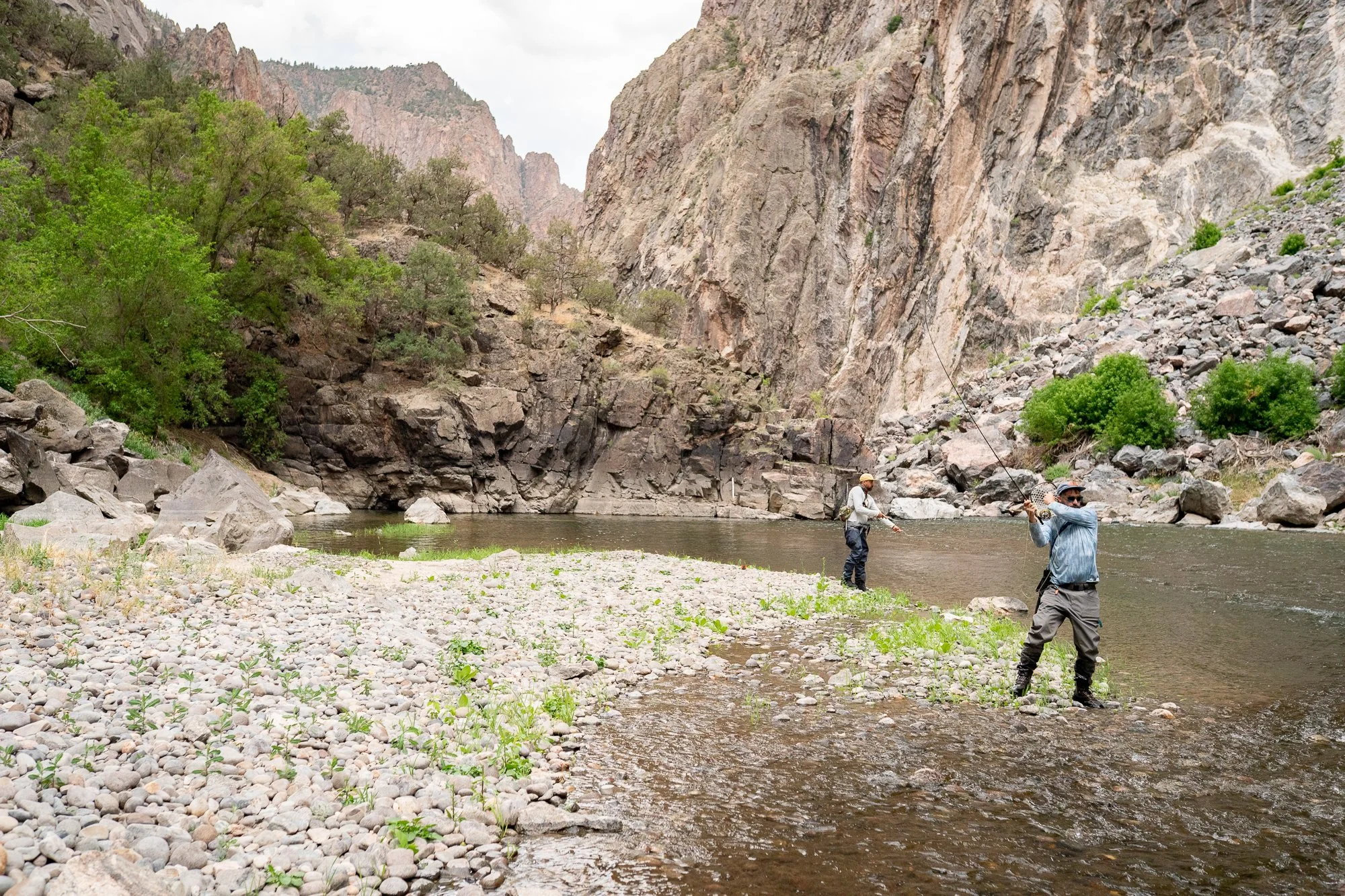
The images you see here are from a camping trip last year to Lone Pine, CA in the Alabama Hills. On the way out we hit the Owens River briefly to see if there were any trout hanging out in a particular section we’d never been to. Turns out, there weren’t……

Click HERE for an archive of fly fishing imagery which will is still a work in progress and always will be as my library continues to grow.

California Fly Fishing Photographer

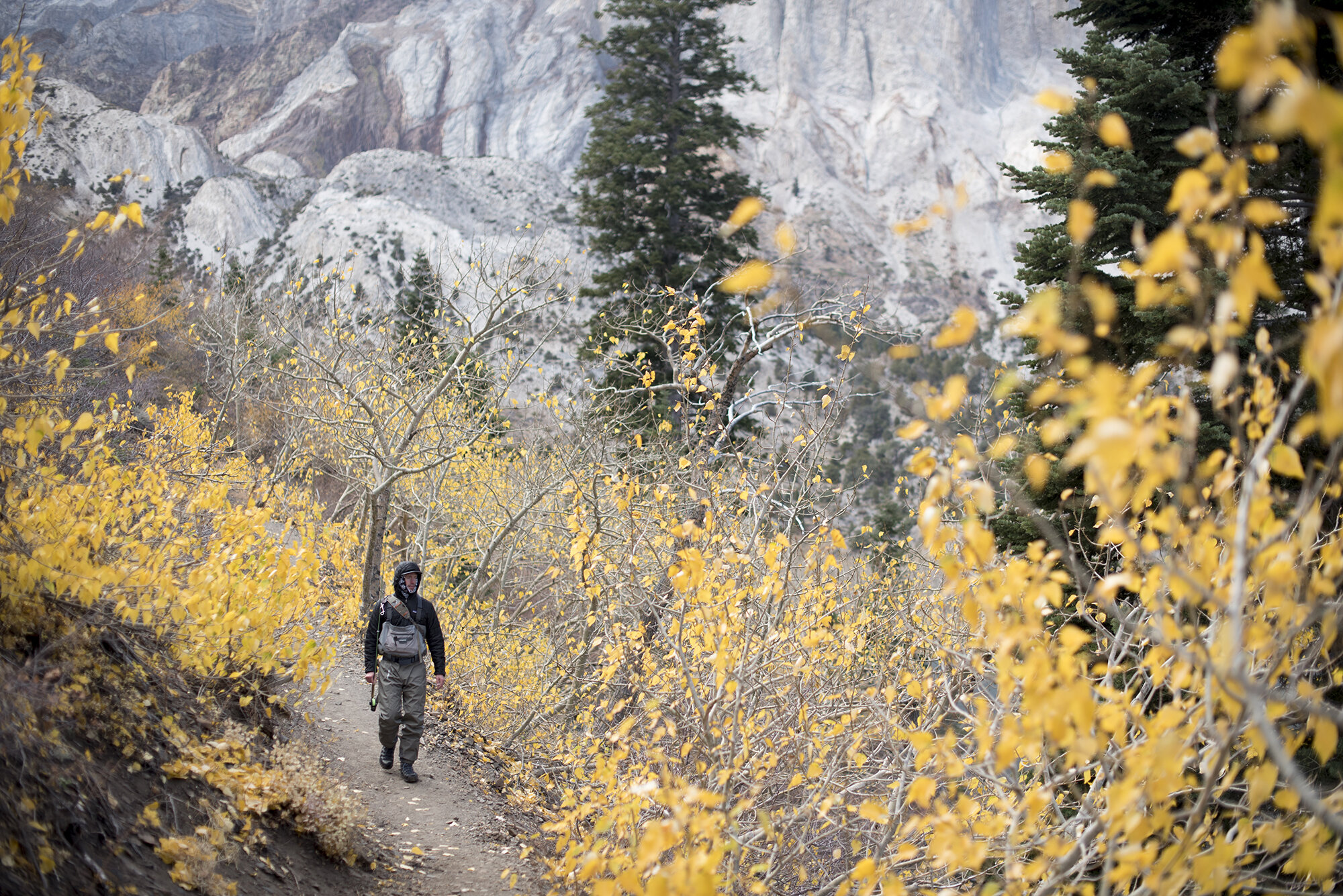
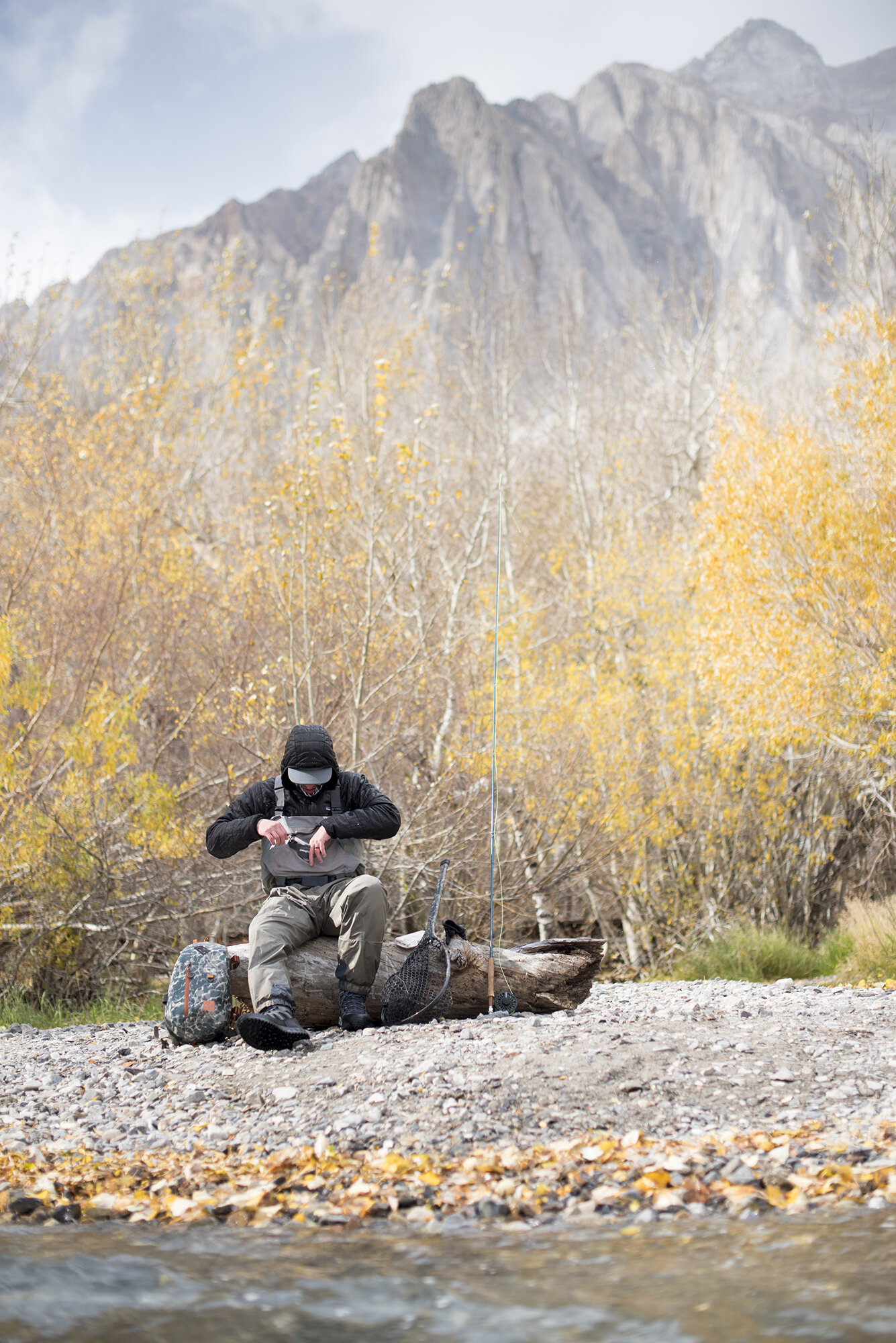
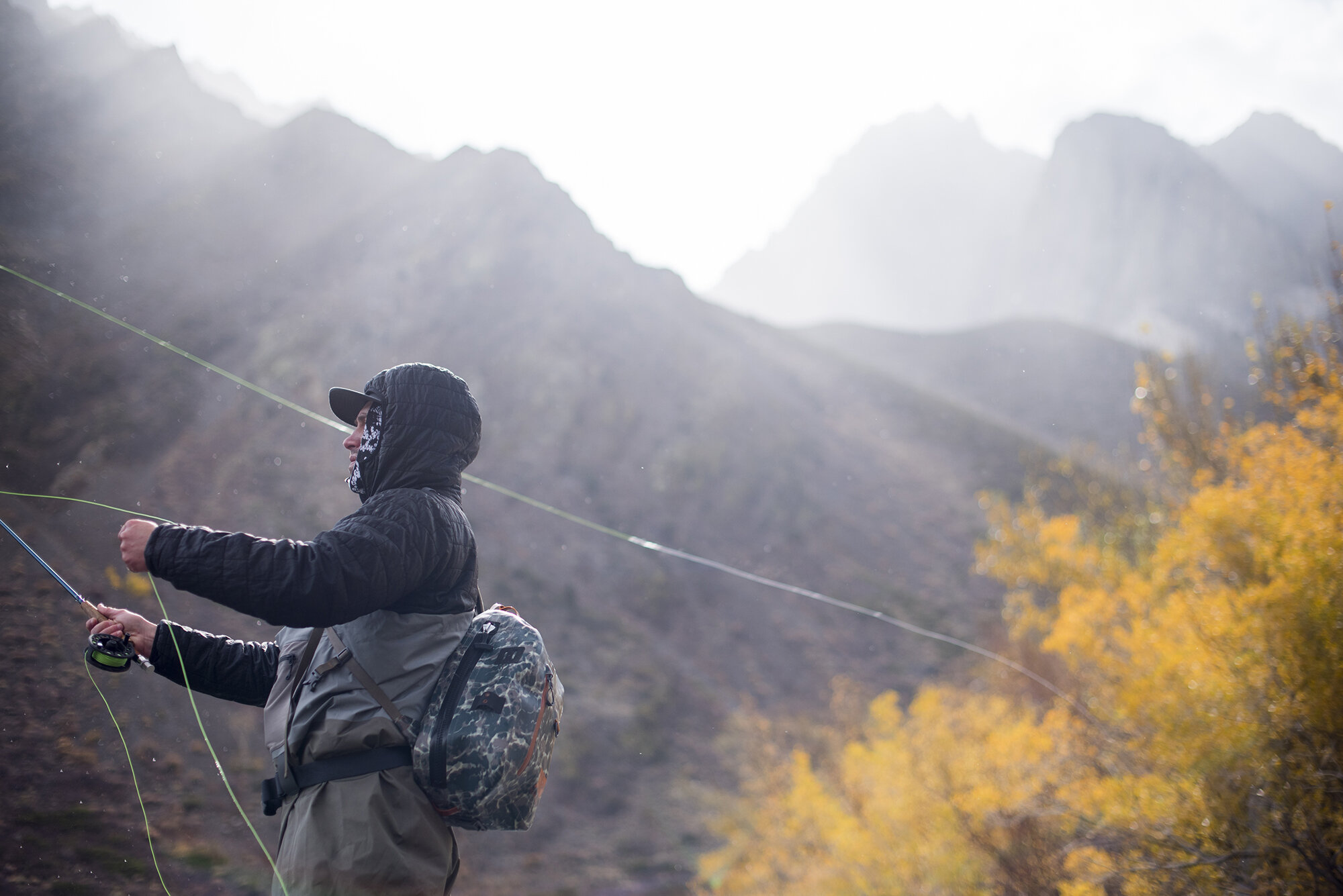
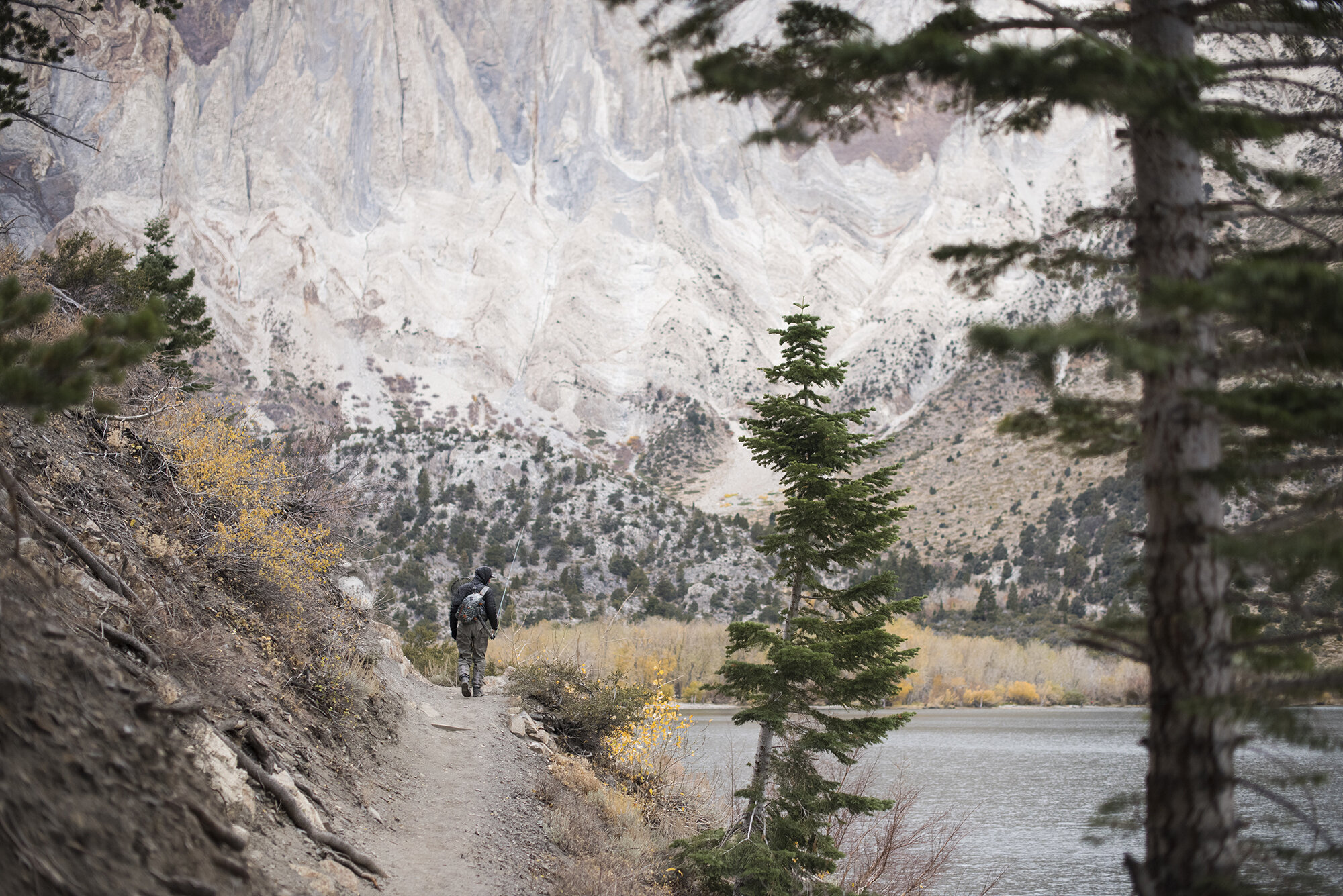
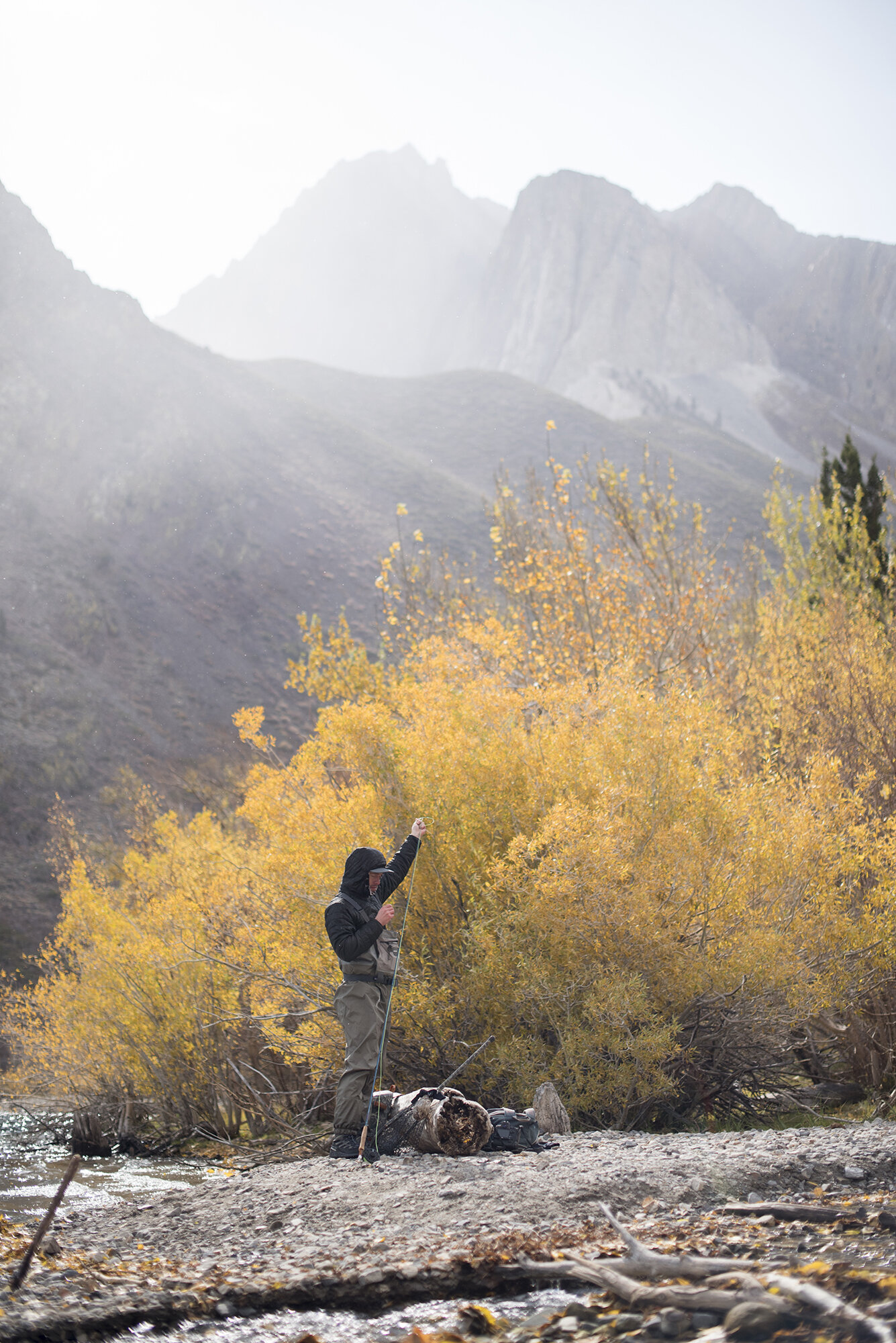
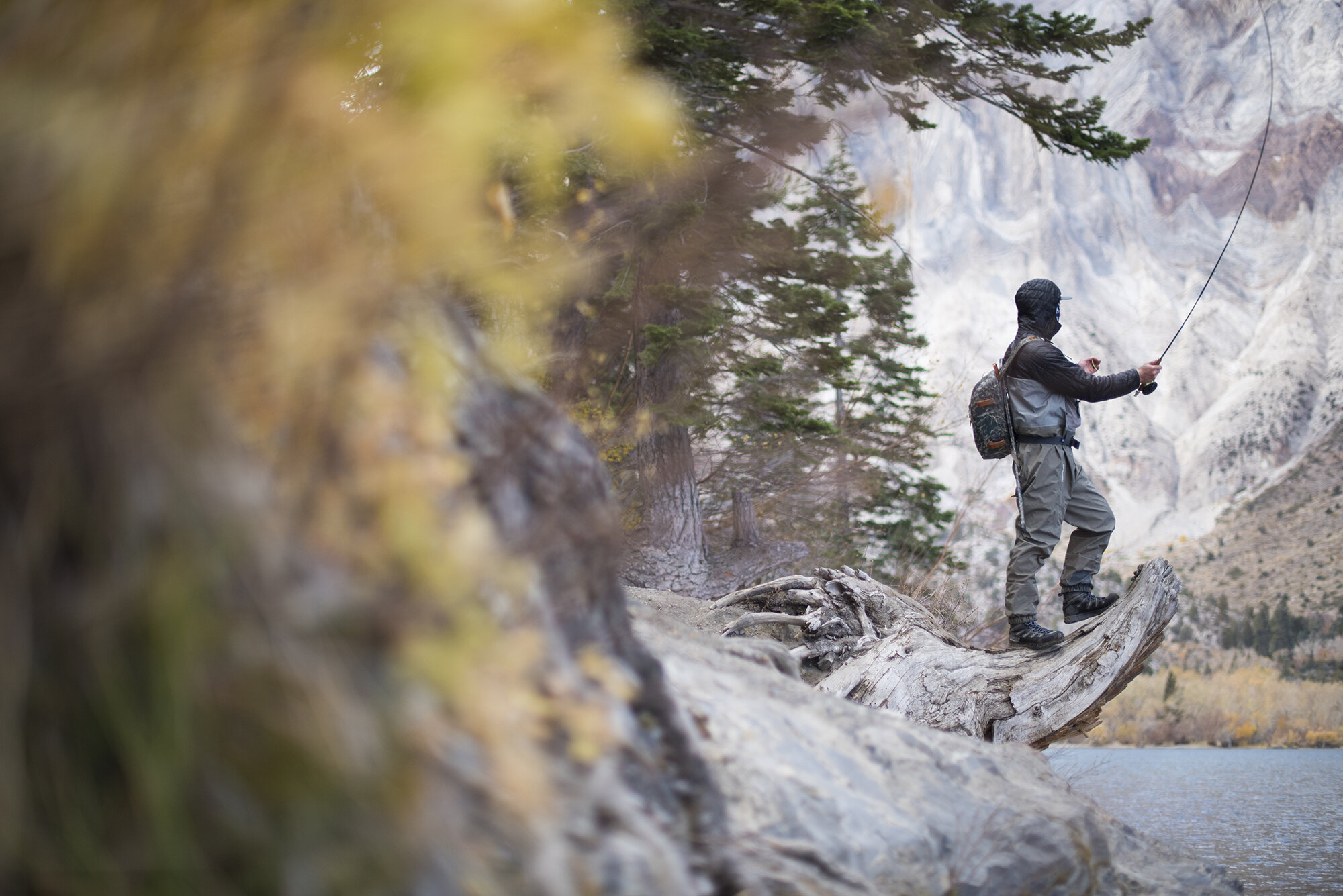
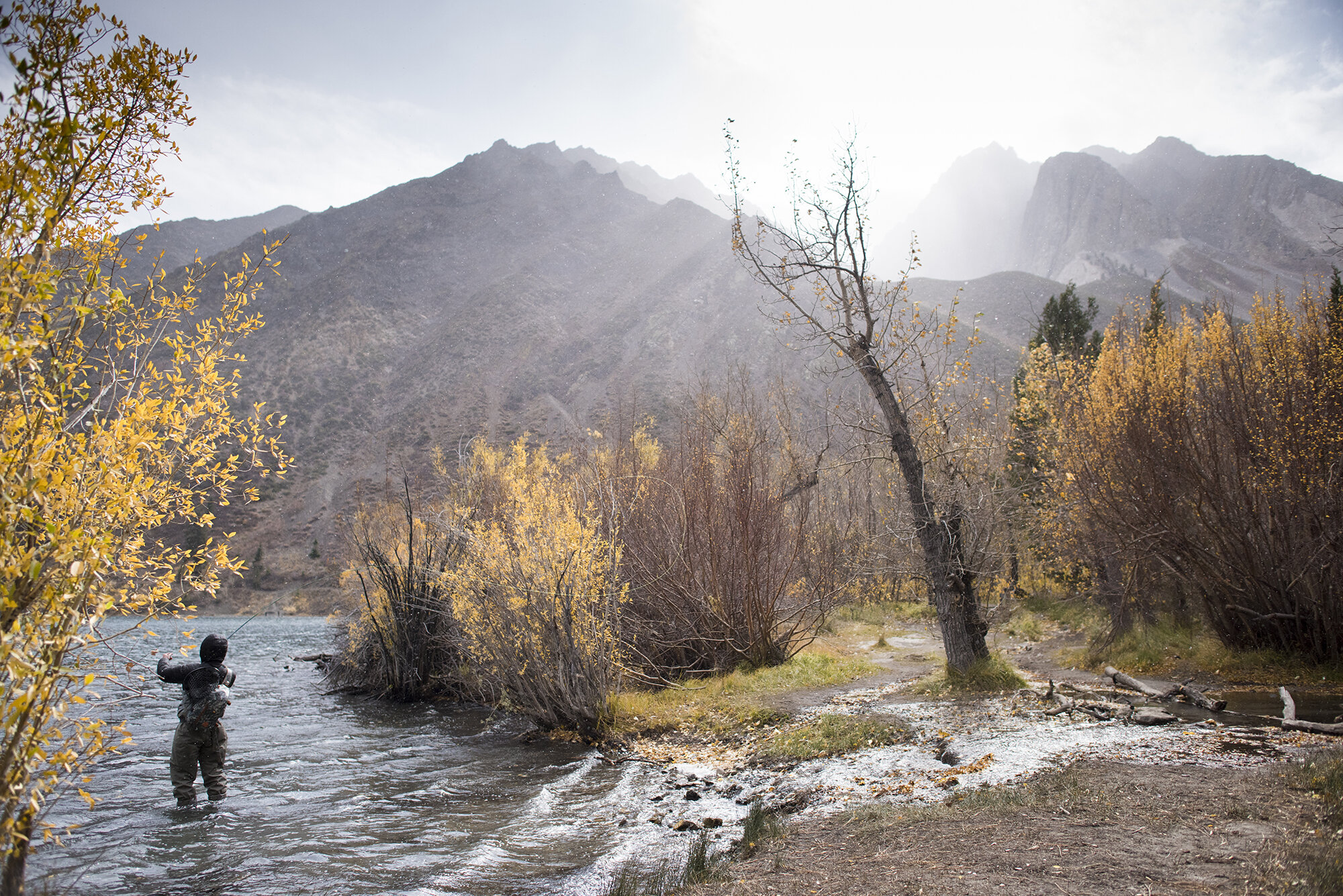
Eastern Sierra Fly Fishing - Convict Lake

Mammoth, California

As the leaves begin to don their vibrant autumn colors and the crisp air signals the change of seasons, Convict Lake near Mammoth, California, transforms into a fly fishing paradise. Nestled in the stunning Sierra Nevada mountains, this lake is not only a backdrop for nature's autumnal palette but also a haven for anglers seeking tranquility and the thrill of the catch. In this post, I share a collection of photographs capturing the unique essence of fly fishing at Convict Lake during the fall season.

The Magical Autumn Setting

Fall at Convict Lake is a spectacle of nature. The surrounding aspens and willows flaunt shades of gold, orange, and red, reflecting off the clear, calm waters. Early mornings at the lake are serene, with mist hovering over the water and soft light filtering through the trees, creating a perfect setting for both photography and thoughtful fishing.

Capturing the Essence of Fly Fishing

Fly fishing is as much an art as it is a sport, and Convict Lake in the fall provides the perfect canvas. My photographs focus on the fly fishermen in action, highlighting their deep connection with the environment. The images showcase the elegance of the cast, the intense focus of the angler, and the natural beauty that envelops them. This collection is not just about the act of fishing but the experience of being one with nature.

For commercial brands, these images offer a glimpse into the authentic experiences that their products can facilitate. For collectors, they provide a moment of peace and a reminder of the quiet beauty of the natural world. Enjoy this visual journey through one of California's most picturesque fly fishing destinations during the most magical time of the year.
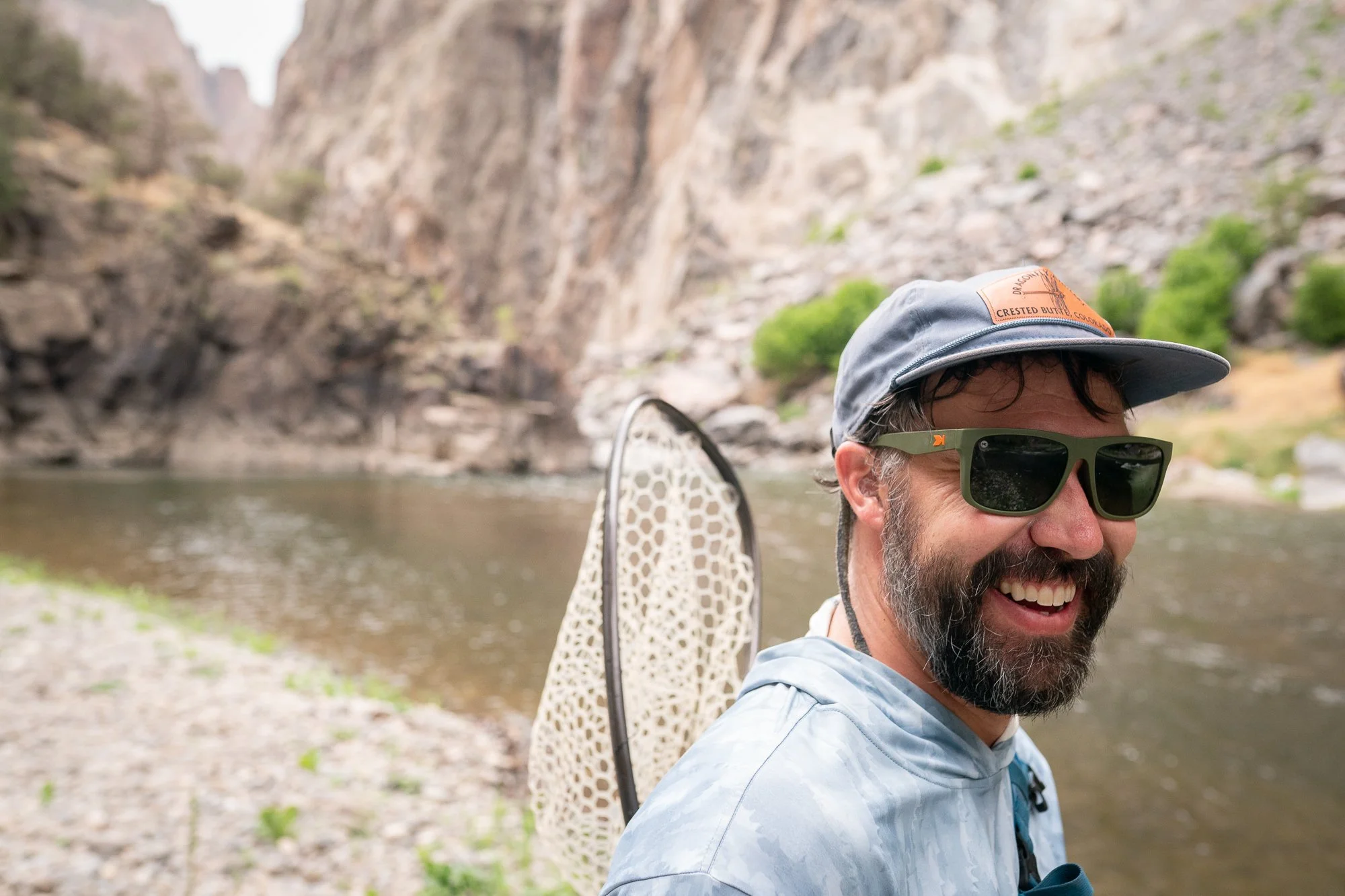
Click here to shop my fly fishing photography prints - and contact me directly about editorial and commercial licensing - rob@robhammerphotography.com

How Fly Fishing Photography Lands Magazine Covers (The Drake Magazine Case Study)

Fly Fishing Photography Published on the Cover of The Drake Magazine

There are a lot of ways to measure success in photography, but a magazine cover still carries weight—especially in a niche as tight-knit as fly fishing.
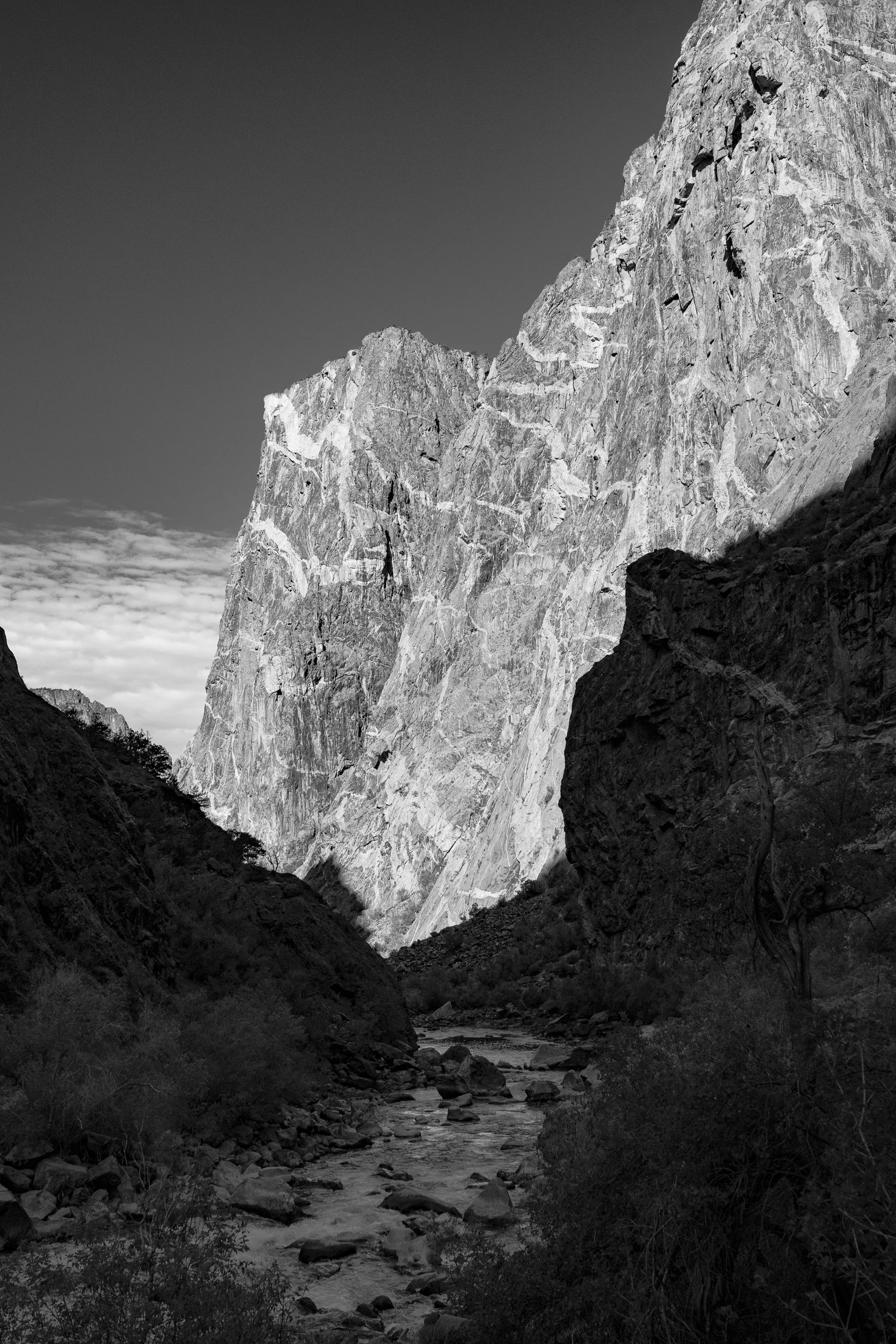
When one of my photographs was selected for the cover of The Drake Magazine, it wasn’t just a milestone. It was a reflection of years spent on the water, learning how to photograph fly fishing in a way that feels honest to the people who actually do it.

This isn’t staged work. It never has been. The goal has always been to document fly fishing as it exists—early mornings, cold water, missed casts, and the moments that make it worth it.

What It Takes to Shoot a Fly Fishing Magazine Cover

Fly fishing photography is unpredictable by nature. Unlike controlled environments, everything is working against you—light, weather, water clarity, and the movement of both angler and fish.

To create an image that’s strong enough for a cover, everything has to come together at once:

  • Light that defines the scene without overpowering it

  • An angler who moves naturally, not for the camera

  • A setting that places the subject within the landscape, not separate from it

Most importantly, the photograph has to feel real. The fly fishing world is small, and people can tell immediately when something is forced.

That authenticity is what separates an image that works online from one that earns a cover.
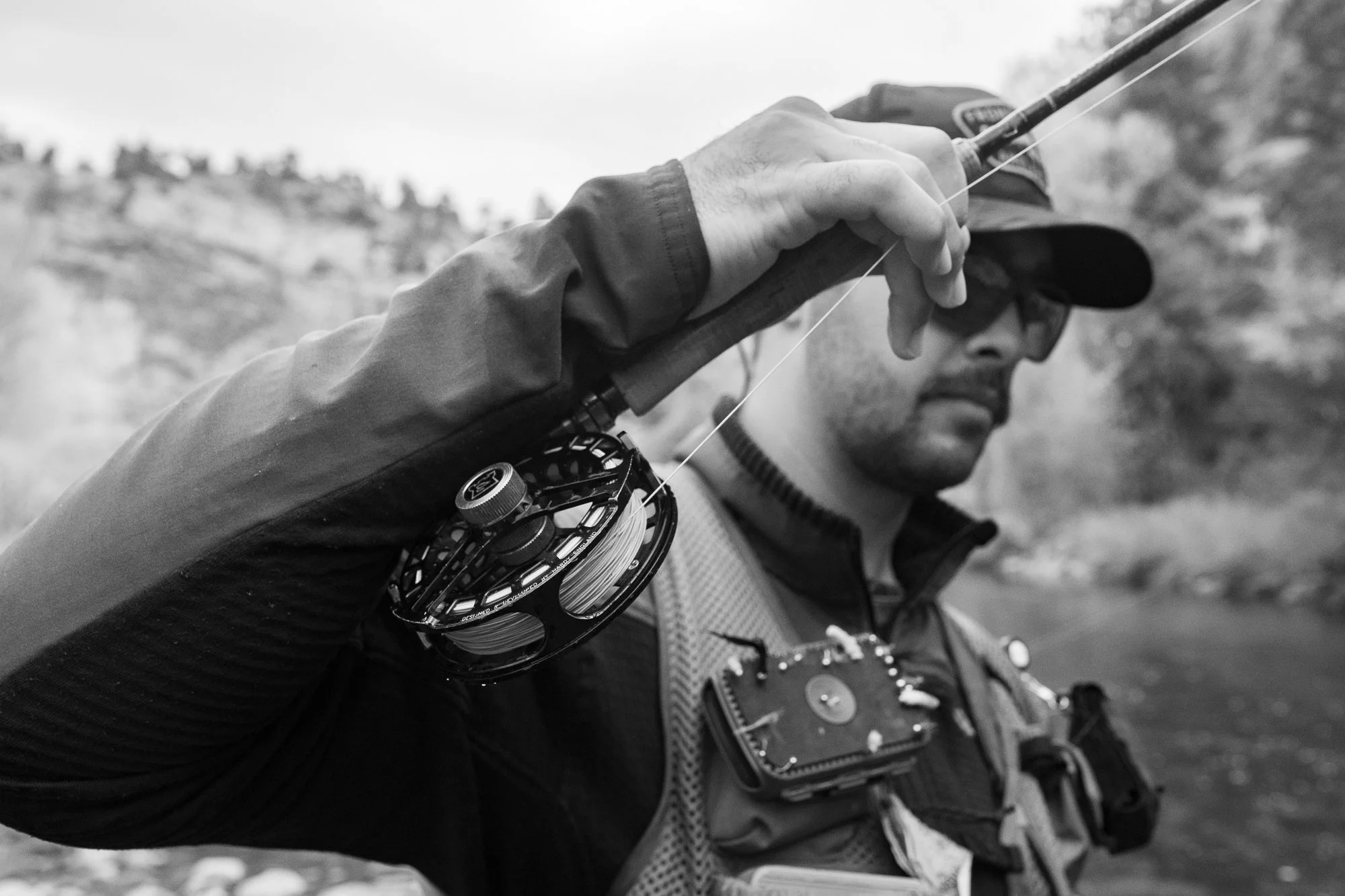
Behind the Photograph

The image that ultimately became the cover wasn’t planned as one.

Like most of my work, it came out of time spent on the river—watching how anglers move through water, waiting for the right light, and being ready when everything lines up for just a few seconds.

There’s no shortcut to that process. And I truly believe that the worst approach is setting out with the intention to make a magazine cover. Keeping that idea in your head clouds everything and will cause you to miss all the great moments. Instead, just be present. Be patient.
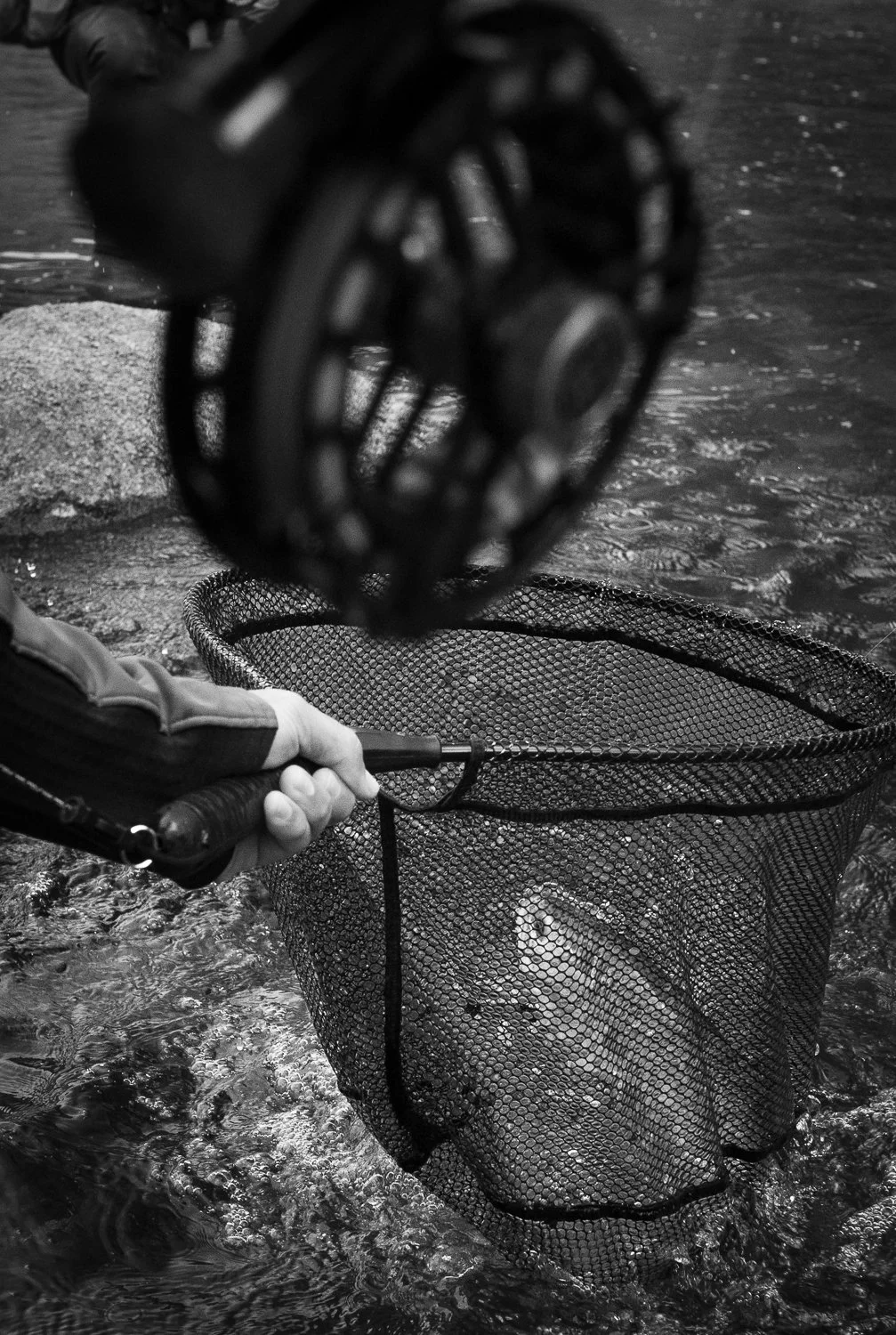
Let the day unfold naturally. Whenever I’m out on the water, there is never an agenda other than having fun and making the best possible photographs. Even with that mindset, I never think about making photographs for an ad campaign, a cover shot, editorial feature etc. Real photographs come just by paying attention and letting it all happen.

Why The Drake Magazine Matters

In fly fishing, The Drake Magazine holds a unique place.

It’s not just a publication—it’s part of the culture. Known for its independent voice and irreverent tone, it has built a reputation as one of the most respected magazines in the industry.

Being featured on the cover means the photograph resonates beyond aesthetics. It connects with anglers who care deeply about the experience, not just the outcome.

That alignment matters. It reinforces the same philosophy behind my work: document the reality of fly fishing, not an idealized version of it.

Fly Fishing Photography for Brands and Editorial Use

This photograph is part of a larger body of work focused on fly fishing across the American West.

Over time, that work has led to collaborations with brands and publications that value authenticity in how the sport is represented, including:

  • Patagonia

  • Fishpond

  • Duck Camp

For brands and editors, the goal is simple: create imagery that reflects how fly fishing actually looks and feels in the real world.

If you’re looking for photography for a campaign, editorial story, or long-term project, this work is available for licensing.

Fine Art Fly Fishing Prints

While this photograph reached a wide audience through publication, it also exists as a fine art print.

Printed with the same attention to detail as the work itself, these images are meant to hold up over time—both as photographs and as representations of a place and experience.

For collectors, anglers, or anyone drawn to the quiet side of the sport, the prints offer a way to bring that connection into a physical space.

Part of a Larger Body of Work

This image is one piece of a long-term project documenting fly fishing throughout the American West.

From small Colorado creeks in winter to larger, well-known rivers across the region, the focus has remained consistent: real anglers, real conditions, and the landscapes that define the experience.

Over time, that body of work has expanded beyond the river itself to include the broader culture—guides, fly shops, and the communities that keep it alive.

Explore the Full Fly Fishing Photography Collection

To see more work from this project: