Western Artist William Matthews

William Matthews – Legendary Western Artist and His Creative Studio in Denver

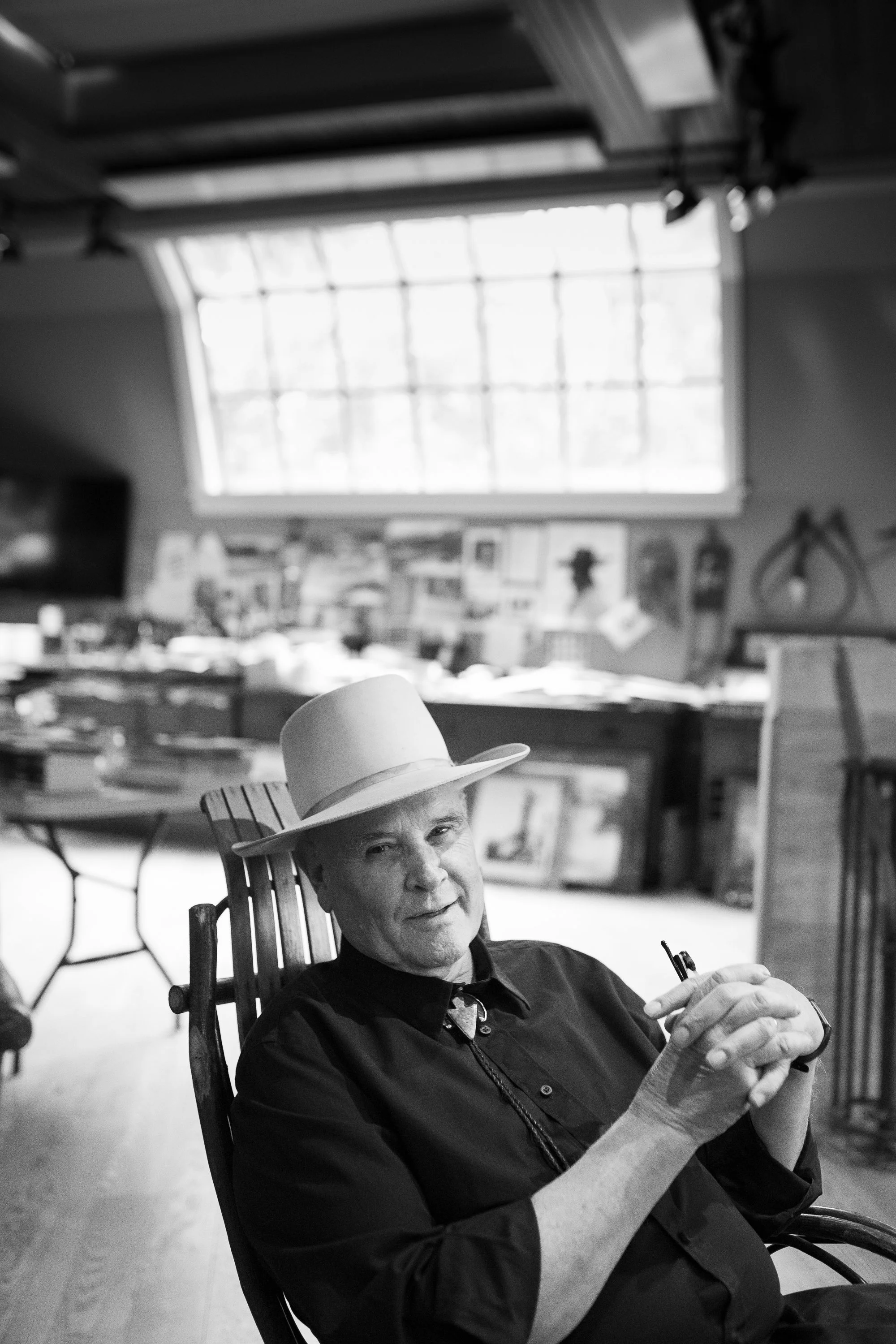
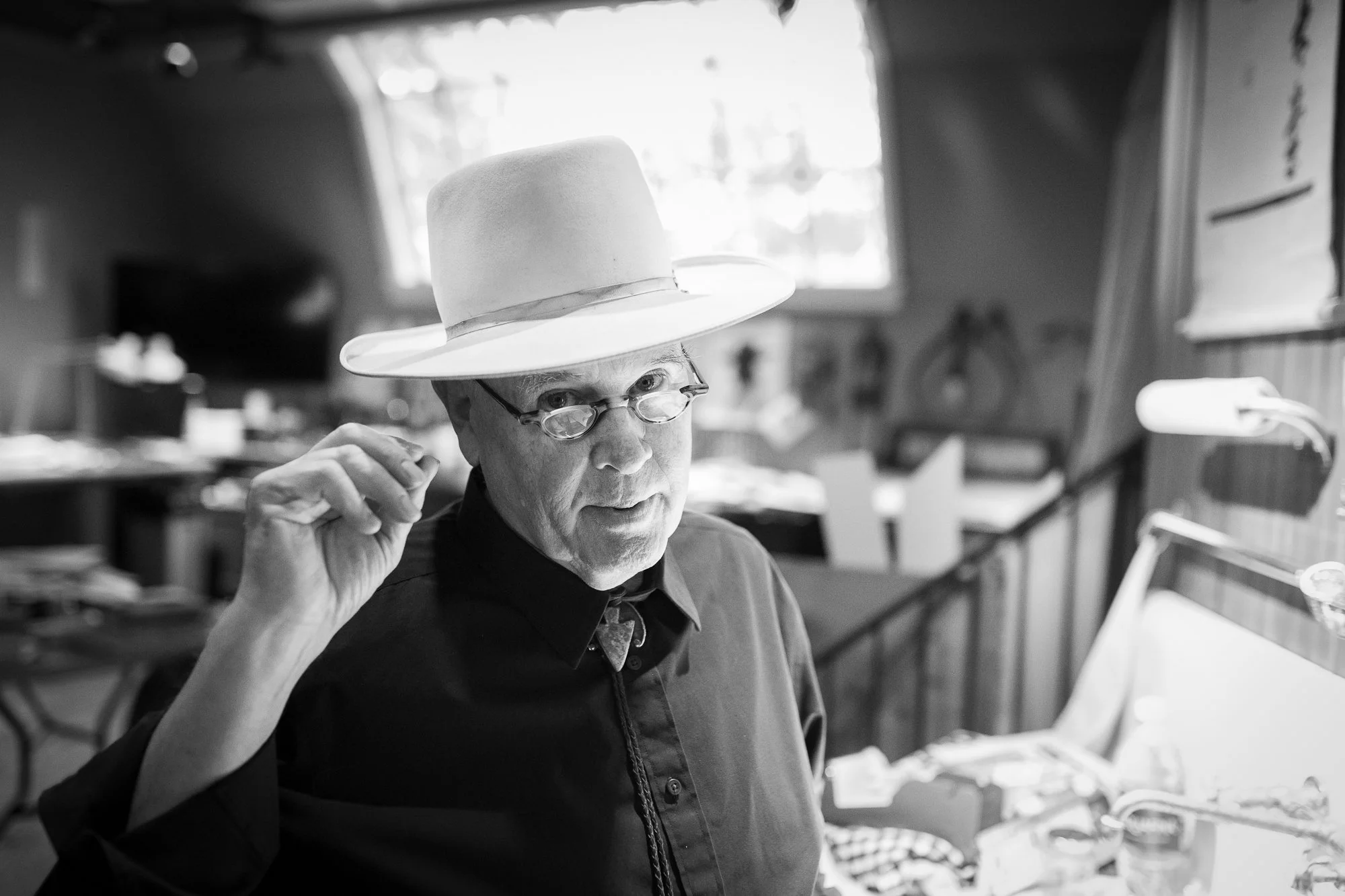
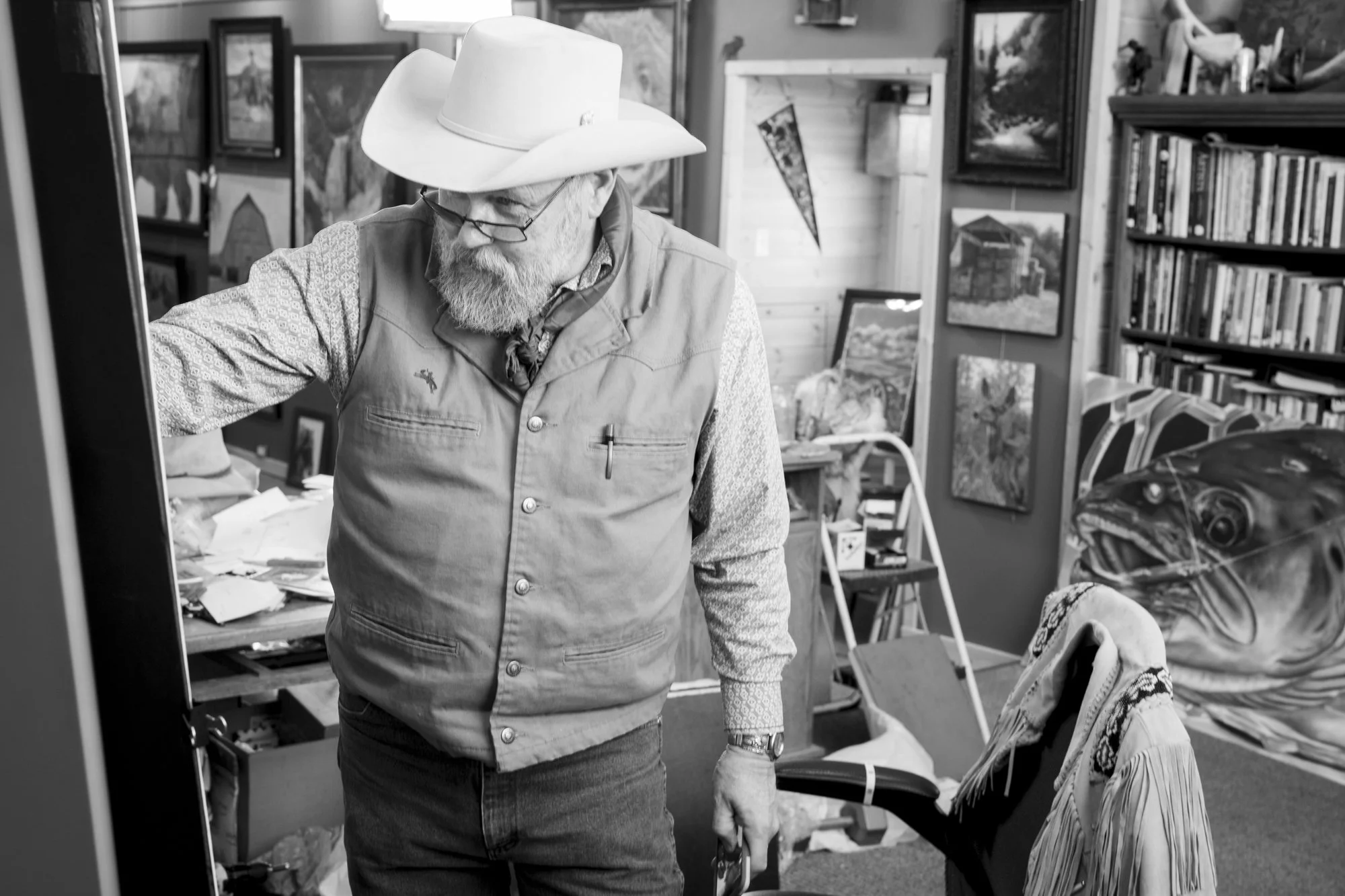
William Matthews (born 1949) is one of the most influential painters of the American West — best known for his evocative watercolors of working cowboys, landscapes, ranch life, and Western culture. Though he didn’t grow up in the West, his artistic journey has taken him from New York City to studios and ranches across the region. I recently spent time photographing him in his Denver studio to document both the man and the creative space that shapes his work.

Meeting William Matthews — A Western Artist Icon

Although he doesn’t come from The West and wouldn’t restrict himself to the title of Western Artist, there is no denying the indelible effect William Matthew’s work has had on Western culture.

As with most of my subjects in any genre, it’s important that I have a genuine interest. And I’ve long been a fan of Matthews’ art, which was the reason for this collaboration. At 76 years young he’s full of life and still has an insatiable desire to create art at a prolific pace. So having the opportunity to meet and photograph Matthew’s at work in his Denver, CO studio was a gift i’ll always be grateful for. A lot of artists can’t be bothered with this kind of thing, but he was welcoming and generous with conversation throughout our time together.

Shared Stories from Historic Ranches Across the West

Of the many compliments you could say about an artist, perhaps the best is that their style is instantly recognizable. And there’s no mistaking the renowned paintings he created of the American West, specifically of the buckaroos in nothern Nevada. There isn’t another artist alive whose work even vaguely resembled Matthews’. Which could be a big reason for his success, but it was also what drew me to him. Digest his paintings for a while and you’ll know they were created by a person that truly became part of the life. He was there. The light, colors, and textures, and the body chemistry of his subjects could only be made by a person with first hand experience. So naturally we talked a lot about our experiences having visited a lot of the same ranches. Oddly, a few days before writing this post, I came back from the Winecup Gamble Ranch - a place he frequented. A number of his paintings of the ranch grace the walls there and his book “Working The West” sits proudly on the coffee table at the big house. To further the conversation about shared experiences we also spoke about Western Spirit: Scottsdale’s Museum of the West, where I was honored to have work on the walls at the same time as his incredible exhibition.

Capturing the Atmosphere of an Artist’s Workspace

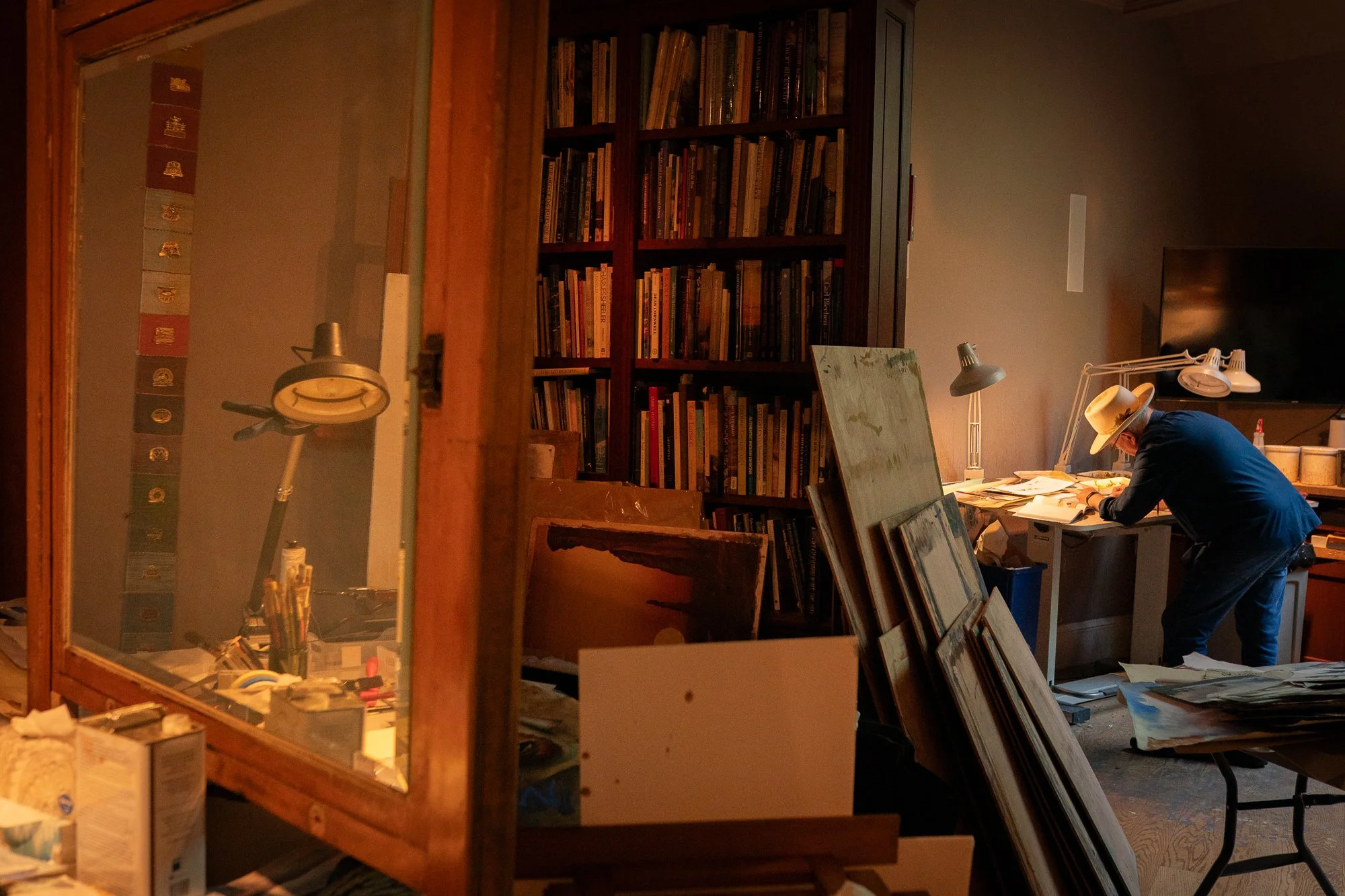
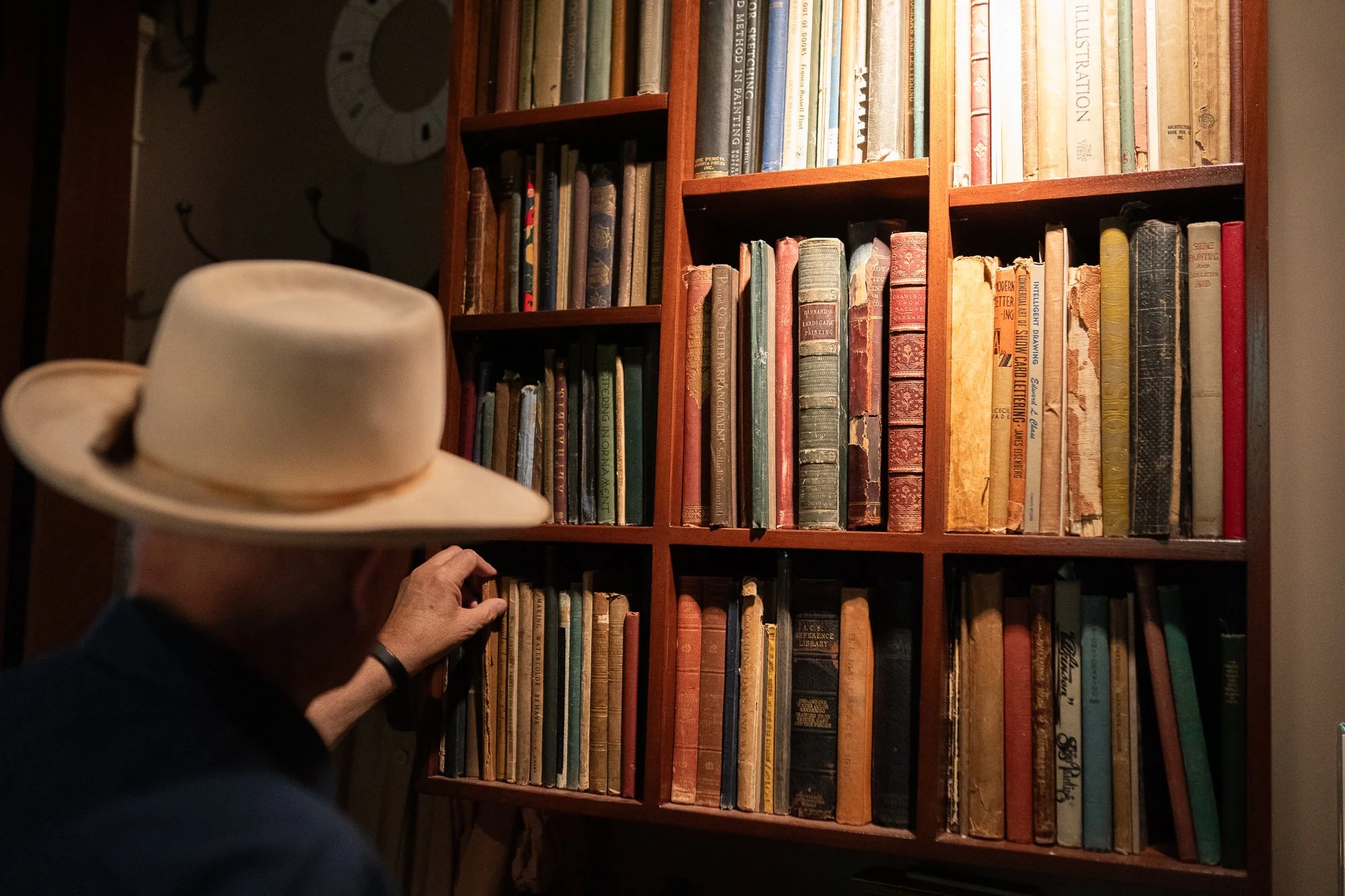
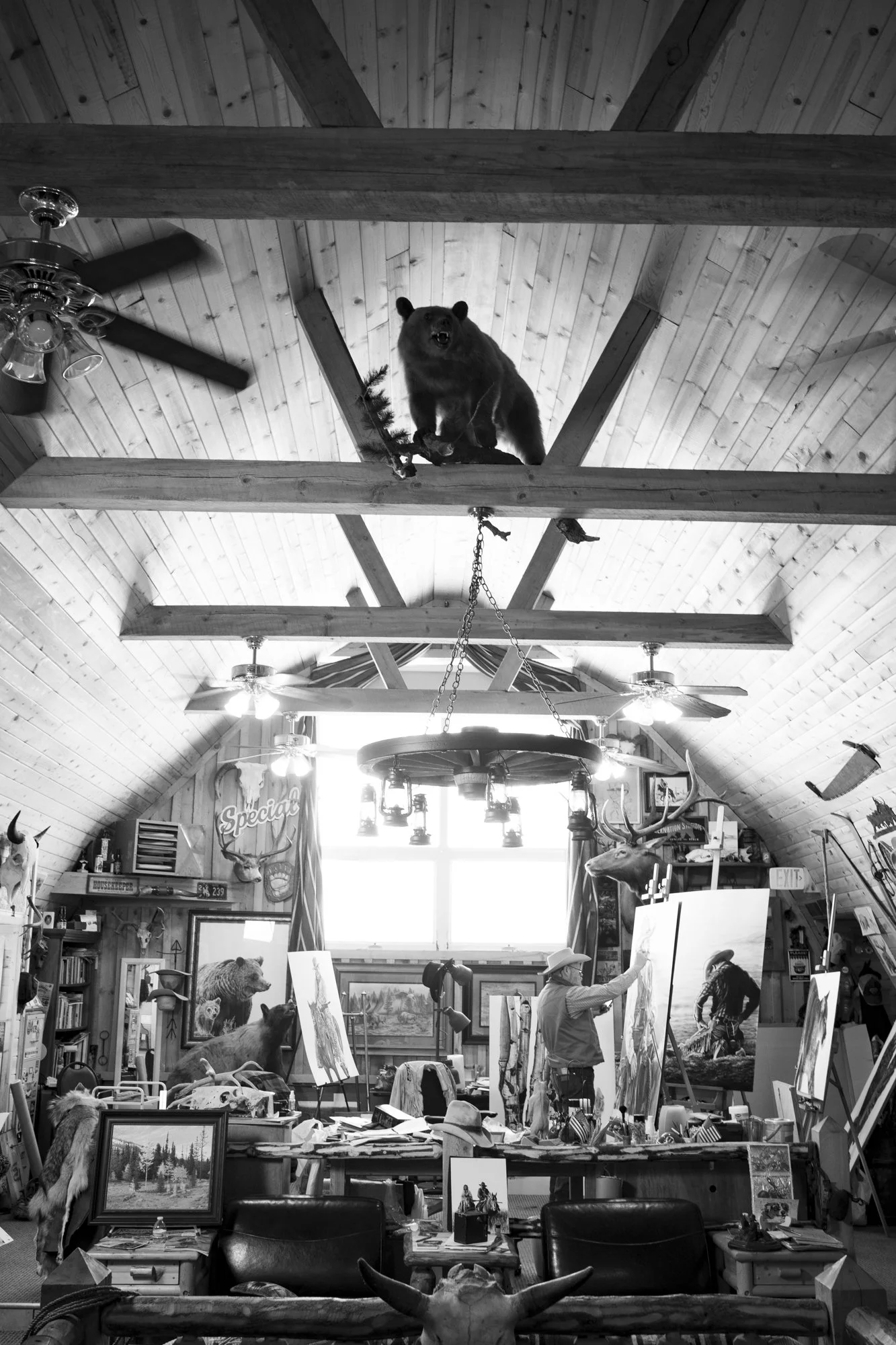
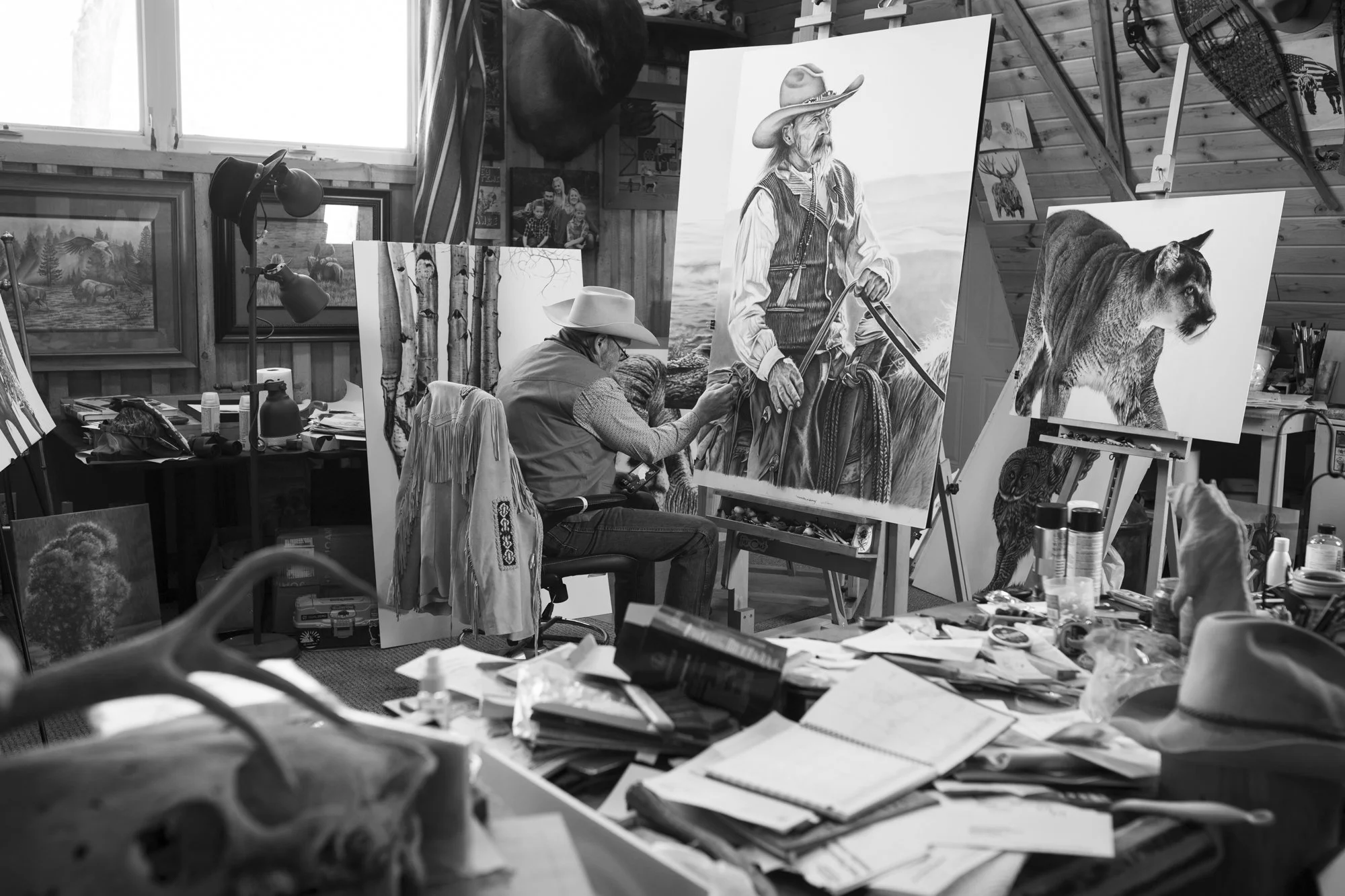
Matthew’s has lived a life in art. It is his life, and that’s obvious when you walk into his beautiful studio, which I’m told he hadn’t ever granted access to. The shelves are filled with books about design - previous profession and gateway into art. The floors are a beautiful hard wood that accents the rich walls filled with momentos from decades of travel, and of course, art. The upstairs loft feels like a break room of sorts, where Matthews goes to play one of the dozen guitars that line the space. All of this is obviously bathed in beautiful light from the north facing window that he designed along with the rest of the studio.

Photographing an artist like this in his sanctuary should never be taken lightly. And there is also a lot to consider when it comes to the plan of attack. First and foremost is respecting their time. Beforehand I had it in my head to set up a few strobes, but quickly realized that half hour would be better spent photographing documentary style as a fly on the wall with available light. For someone like Matthews, all that matters is the art. He doesn’t care about having his photograph made, nor does he need it. So I made it a point to be as effective as possible in as little time as possible so he could get back to it.

How Matthews’ Work Connects to Cowboy Photography

William Matthews has spent decades painting working cowboys — not the Hollywood version, not the myth, but the real men who ride out before the sun and come home only when the work is done. His watercolors aren’t loud or romanticized. They’re quiet, restrained, and deeply observant. The details matter: the way a hat sits after a long day, the posture of a rider checking cattle, the weight of open country pressing against a lone figure.

That’s the same thread that runs through my own cowboy photography, and I have and continue taking heaps of inspiration from Matthews’ Buckaroo paintings.

While Matthews works in watercolor and I work with a camera, the intent feels similar — to pay attention to the people who actually live this life. To show the labor behind the image. To acknowledge that raising cattle and maintaining ranch traditions is demanding, physical work that still feeds communities and shapes the American West.

His paintings slow the viewer down. They invite you to notice subtle shifts in light, gesture, and atmosphere. Photography, at its best, can do the same. Both mediums rely on observation. Both depend on trust — the kind that allows you to step into a rancher’s world without turning it into spectacle.
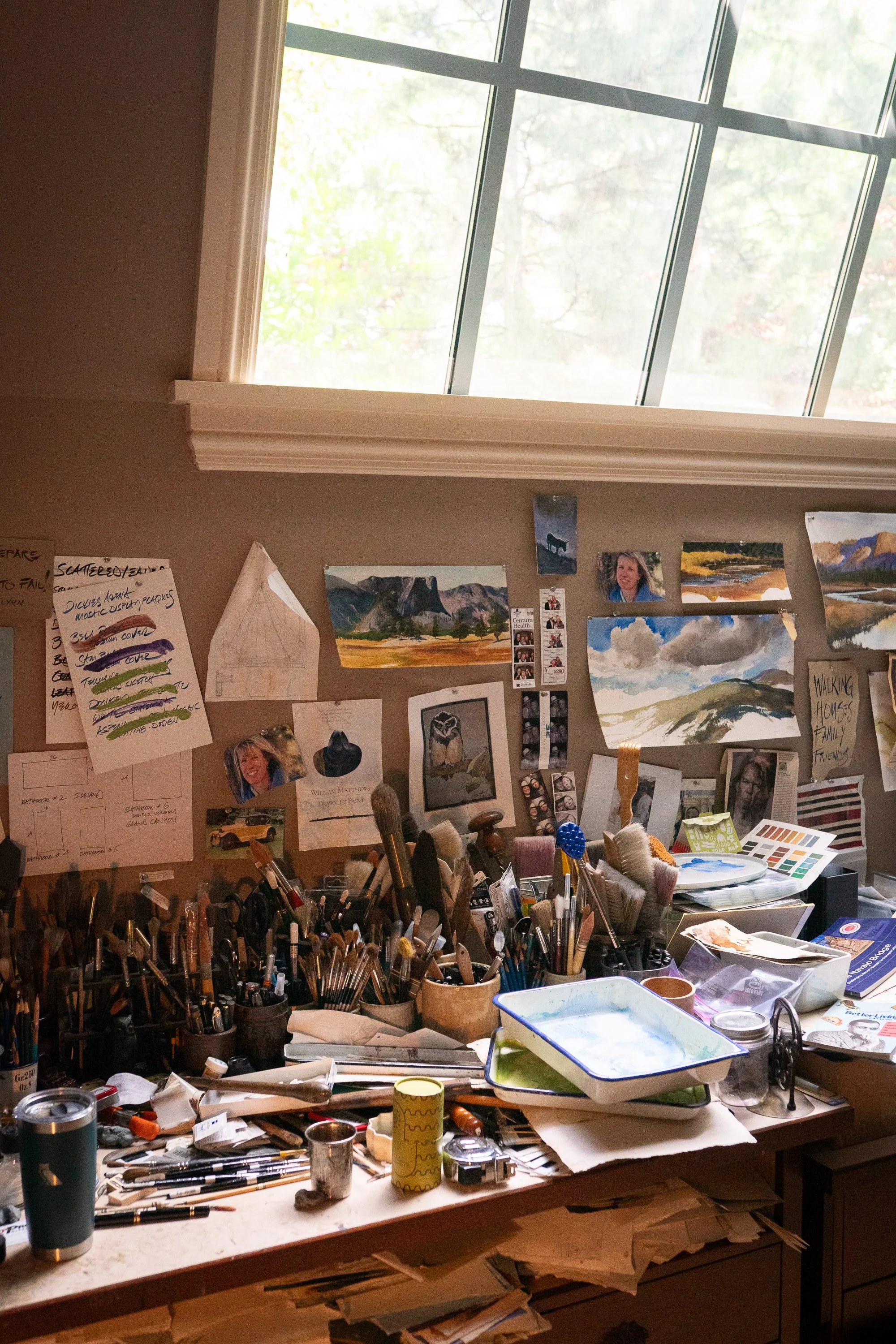
Spending time in his studio made that connection even clearer. Matthews’ walls are lined with studies, reference images, and decades of visual research. The work doesn’t happen by accident. It’s built on repetition, discipline, and showing up again and again — something I’ve learned firsthand while photographing working cowboys across the West for more than a decade.

Different tools. Same subject. Same respect for the culture.

Photographing Working Cowboys of the American West

If you’re drawn to Matthews’ iconic interpretation of working cowboys, you may also appreciate my ongoing photographic project documenting ranch life across the American West. You can view the full series of working cowboy photographs here.

Another Voice in Contemporary Western Art

William Matthews’ work has helped define the modern image of the working cowboy. I’ve also spent time photographing iconic Western artist Teal Blake — another painter deeply rooted in the culture of the American West. See those photographs here.

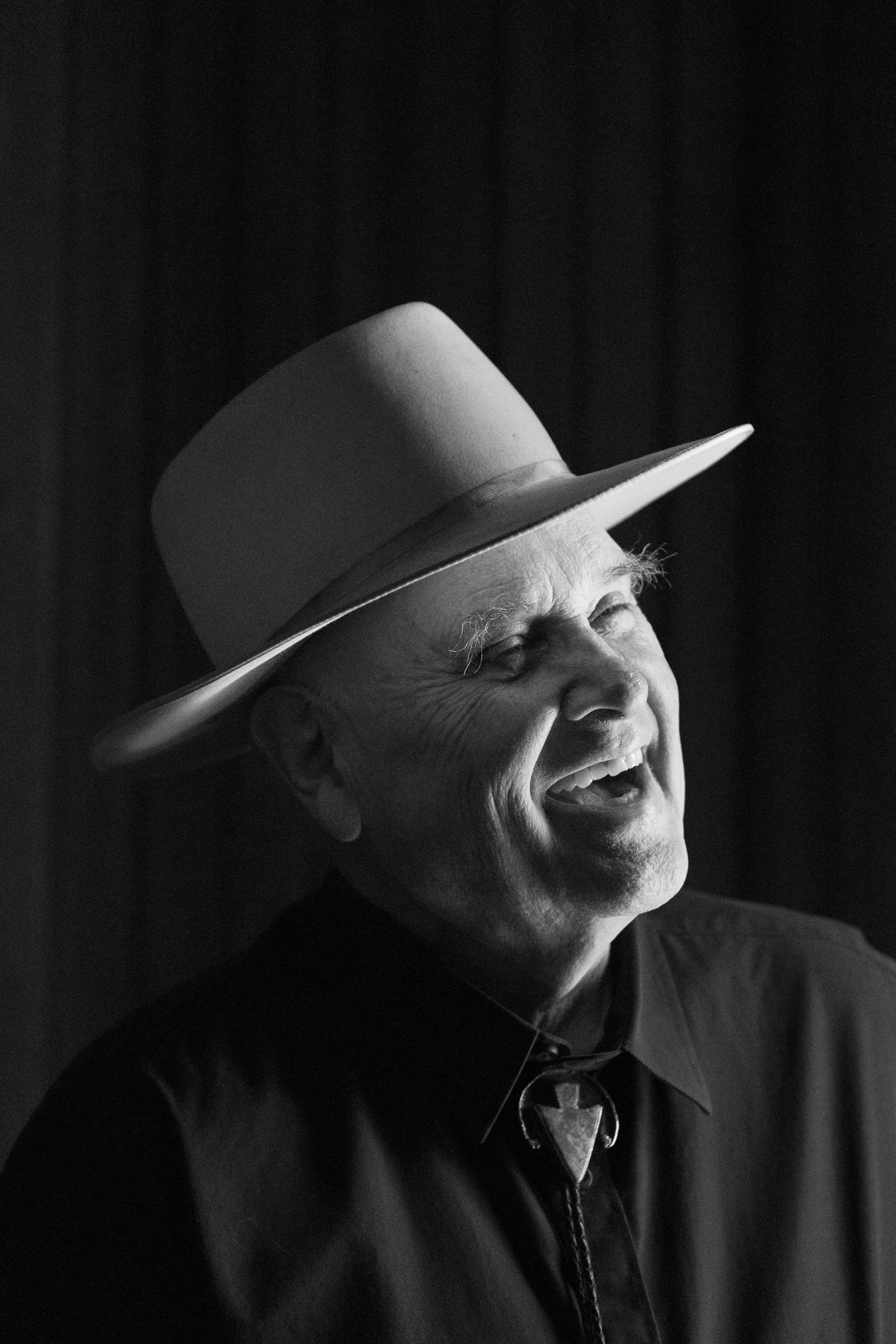
Western artist William Matthews laughing in warm studio light wearing a cowboy hat and bolo tie

William Matthews in a candid moment inside his studio. His paintings of working cowboys and ranch life have become a defining voice in contemporary Western art.

William Matthews working at his desk surrounded by books and paintings in his Western art studio

Matthews at work in his Colorado studio, surrounded by reference books, studies, and decades of accumulated material that inform his paintings of the American West.

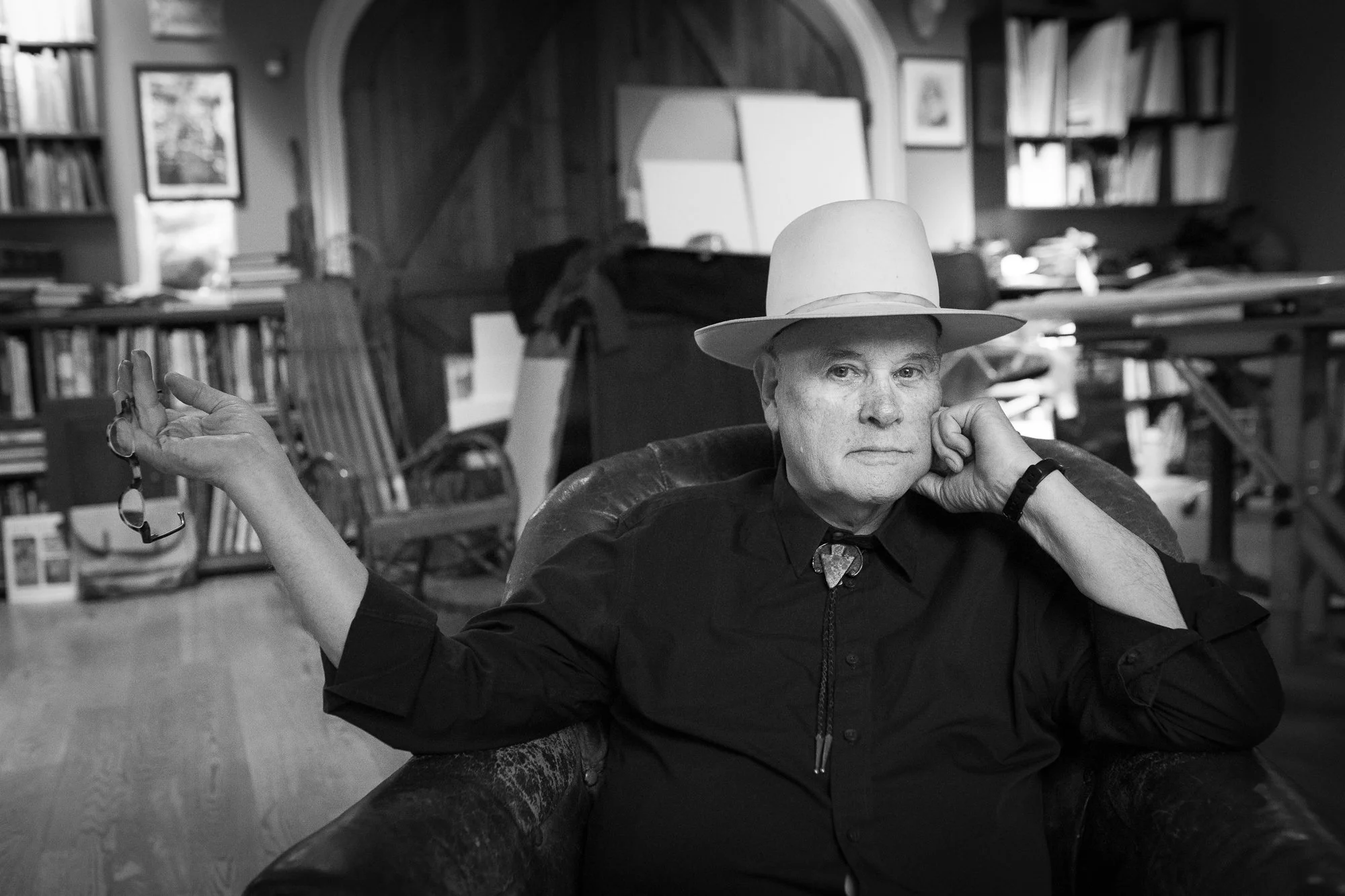
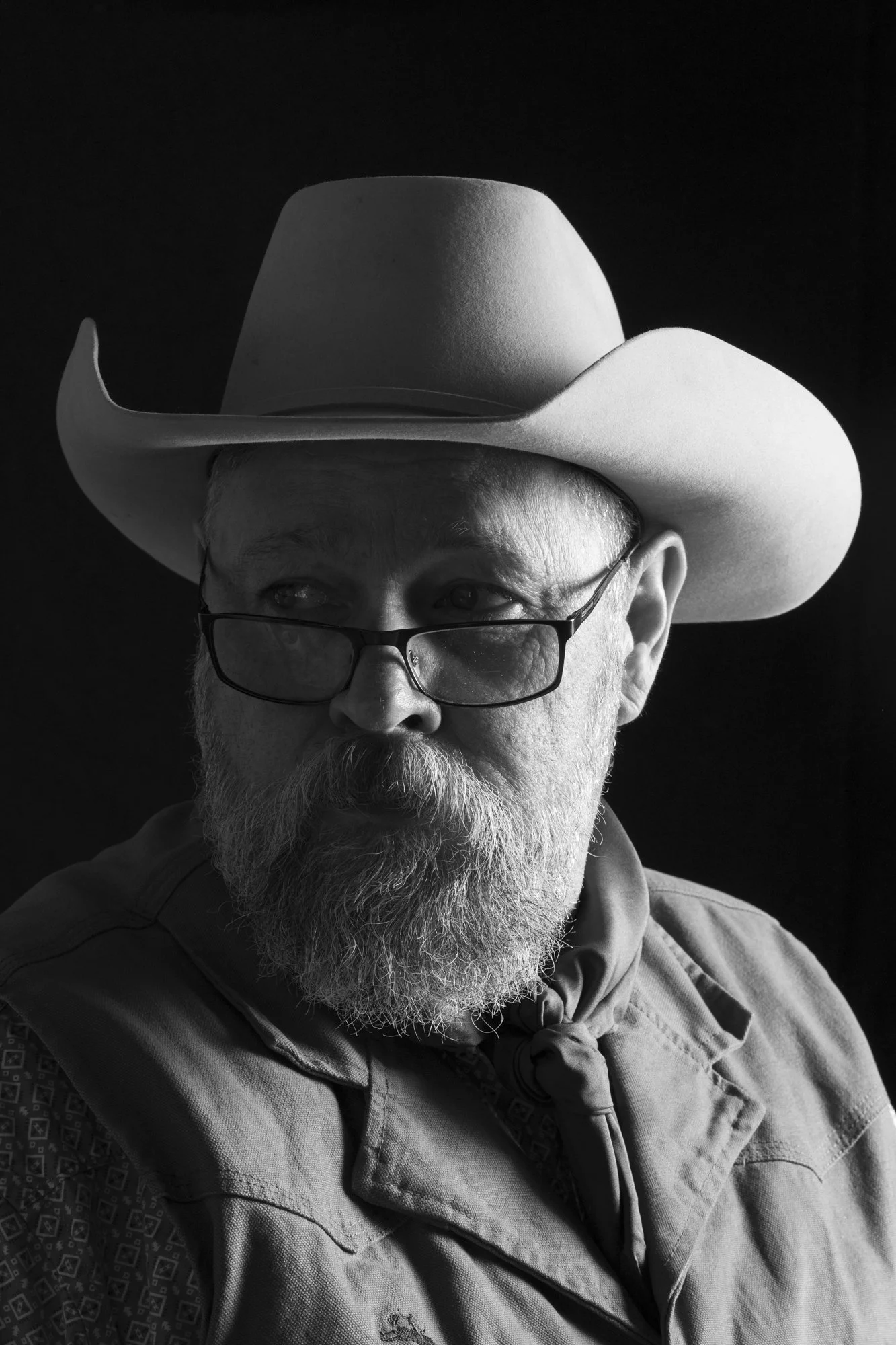
Black and white portrait of Western painter William Matthews seated in his studio

A quiet portrait of William Matthews inside his working studio, where his celebrated cowboy paintings take shape.

Watercolor palettes and paint brushes on a table in William Matthews’ studio

Pigment-stained palettes and well-worn brushes — the quiet tools behind Matthews’ watercolor interpretations of cowboy country.

Bookshelves filled with art books inside William Matthews’ Western art studio

A wall of well-worn art books lines the studio shelves. Even an established Western painter remains a lifelong student of the craft.

William Matthews seated in rocking chair inside his art studio under large window

Seated beneath the studio windows, Matthews reflects between works. His paintings have shaped how many collectors visualize the modern cowboy.

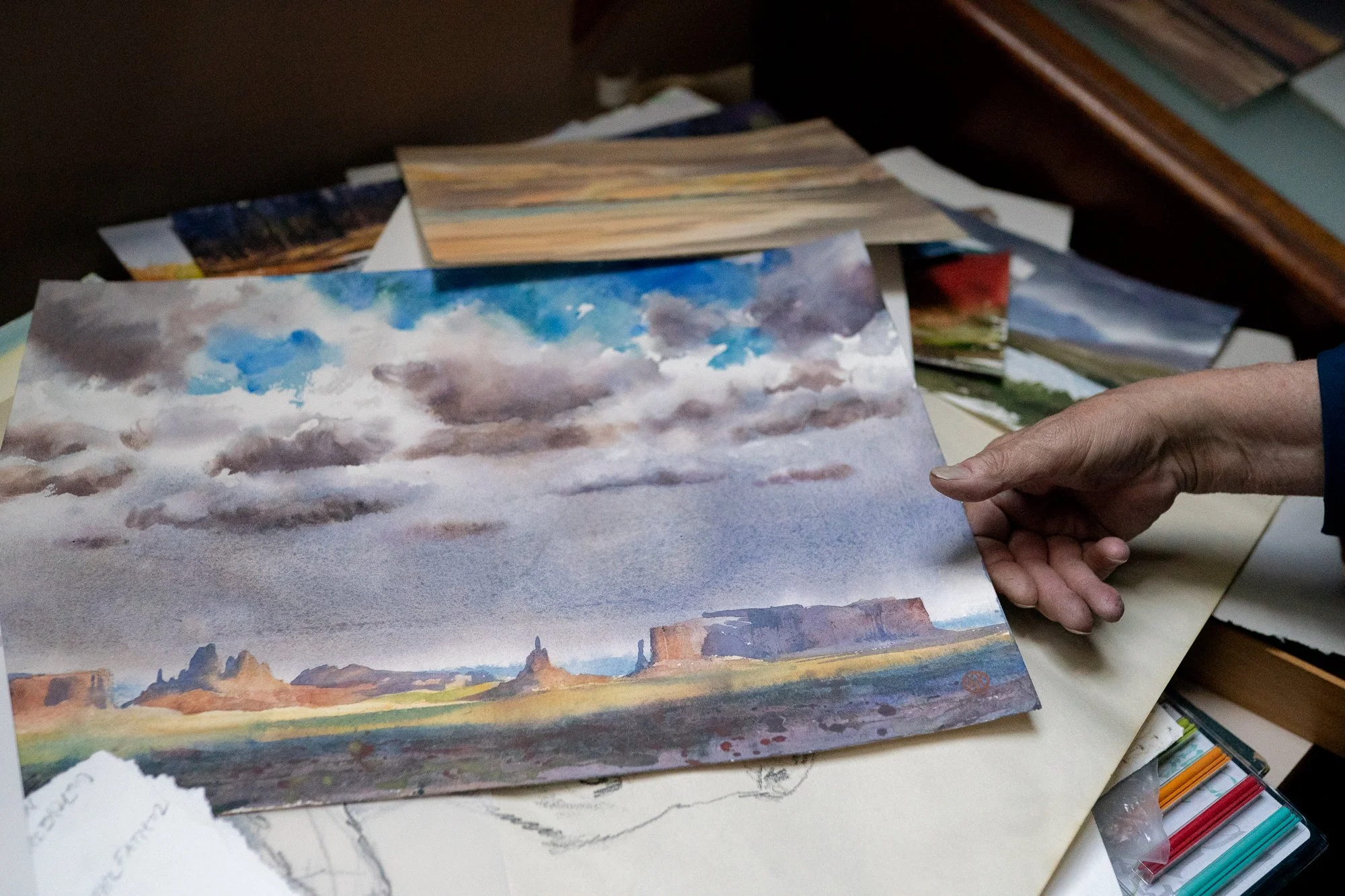
Western landscape watercolor painting featuring mesas and dramatic sky by William Matthews

A watercolor study of the American West, where open sky and distant mesas echo the same landscapes that inspire generations of cowboy artists.

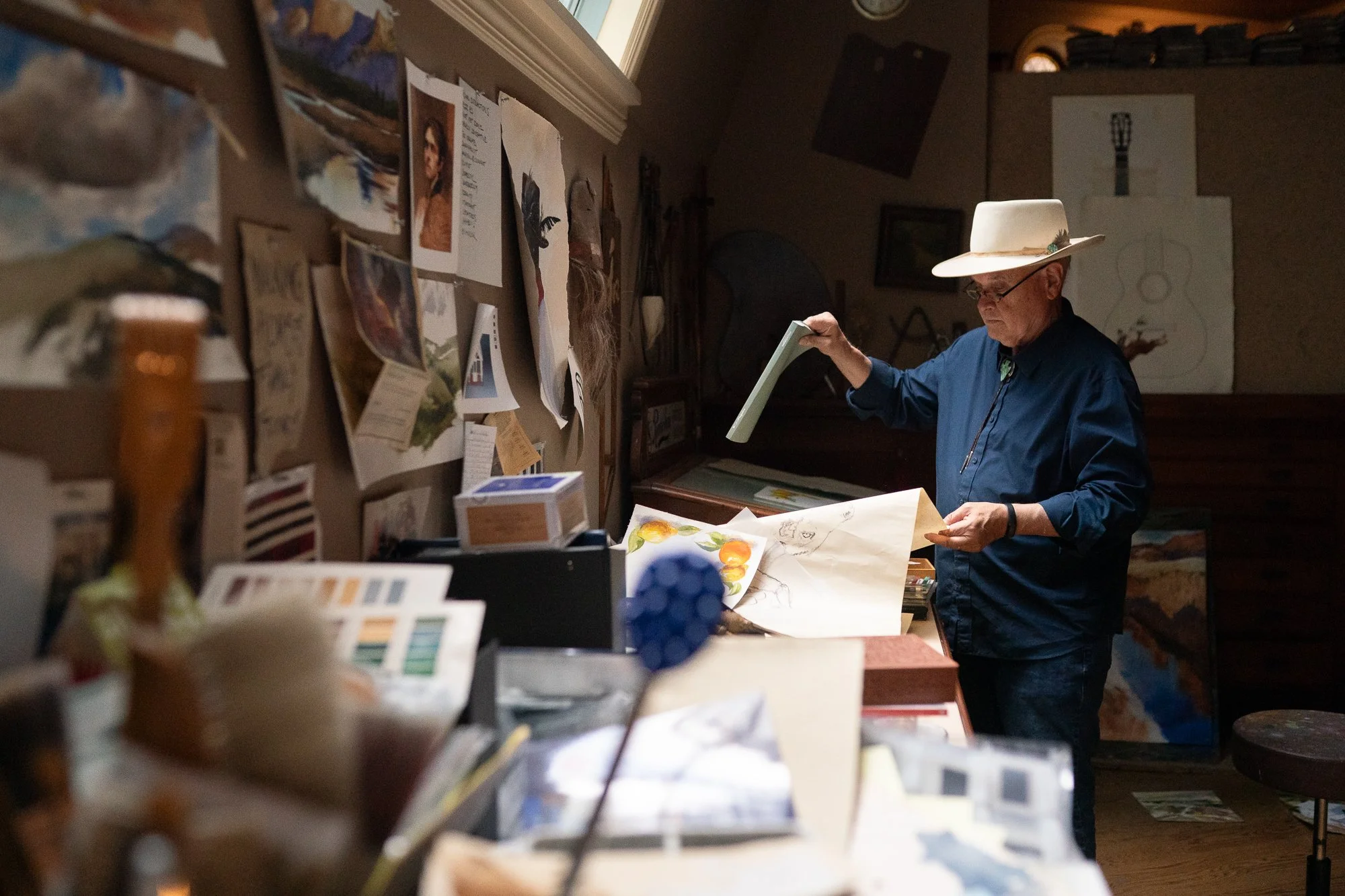
William Matthews examining watercolor painting in his studio workspace

Reviewing a recent watercolor study, Matthews considers light, atmosphere, and restraint — hallmarks of his Western landscapes.

Artist desk filled with brushes, pinned sketches, reference photos and watercolor trays in William Matthews’ studio

Pinned studies, reference photographs, handwritten notes, and brushes crowd the desk — a working studio shaped by decades devoted to painting the West.

Candid portrait of William Matthews in studio wearing cowboy hat and glasses

Between studies and finished pieces, Matthews pauses at his drafting table — a reminder that Western art begins with careful observation and discipline.

Martin Gerdin: Glass Trout and the Art of Fly Fishing

From Wild Fish to Glass Art: Photographing the Work of Martin Gerdin

A Fly Fishing Artist Who Honors the Fish

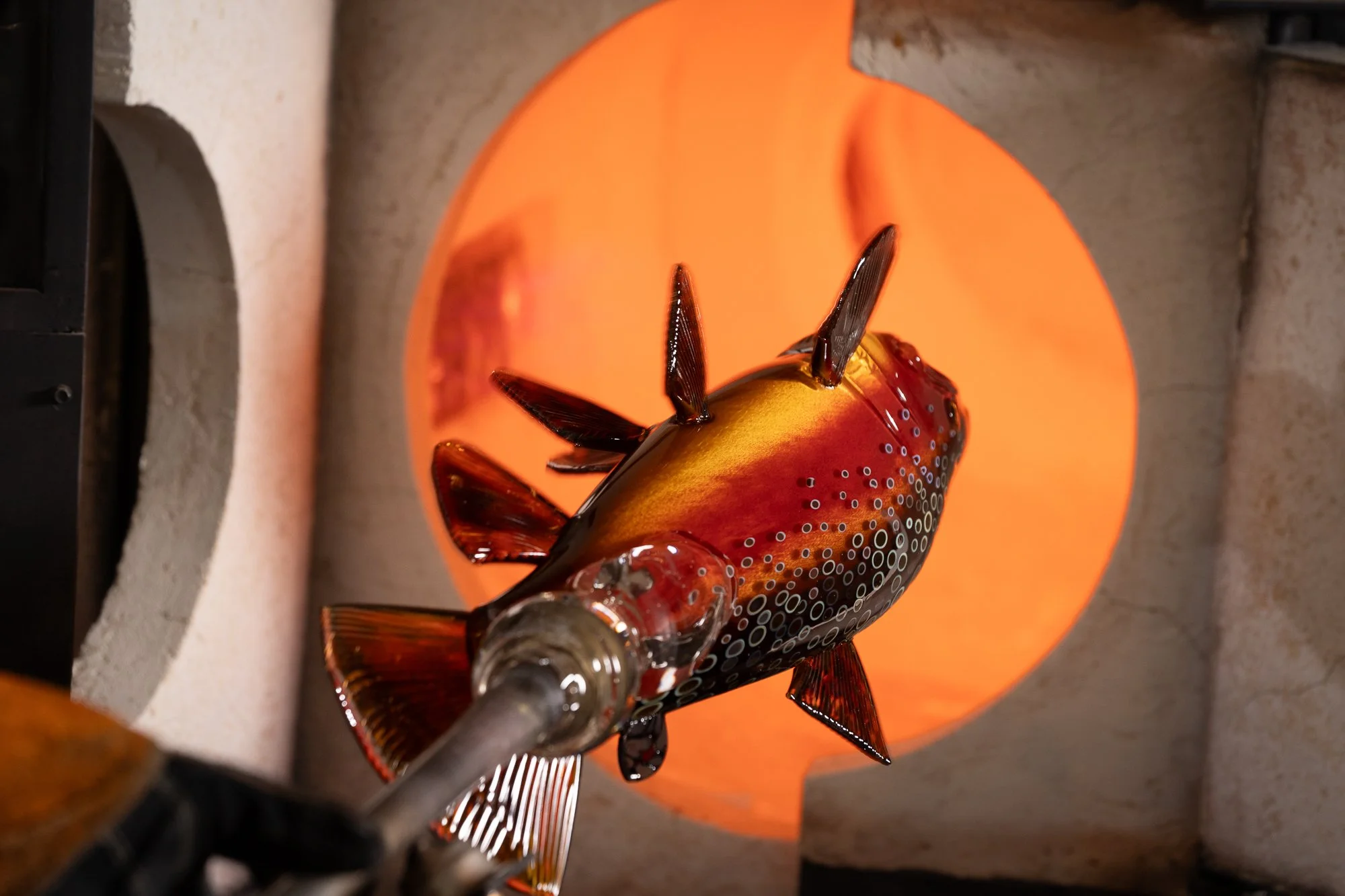
If you spend much time around fly fishing and have an appreciation for art, then you’ve heard the name Martin Gerdin. His hand-blown glass fish are more than just decorative pieces, they’re immaculate tributes. To the fish. To the places they live. To the hours spent chasing them in silence with and without victory. When I had the opportunity to photograph Martin for a recent magazine story, I knew right away this wasn’t just another artist profile. It was a chance to document someone who truly understands what makes fly fishing special.

Photographing the Process Behind the Glass

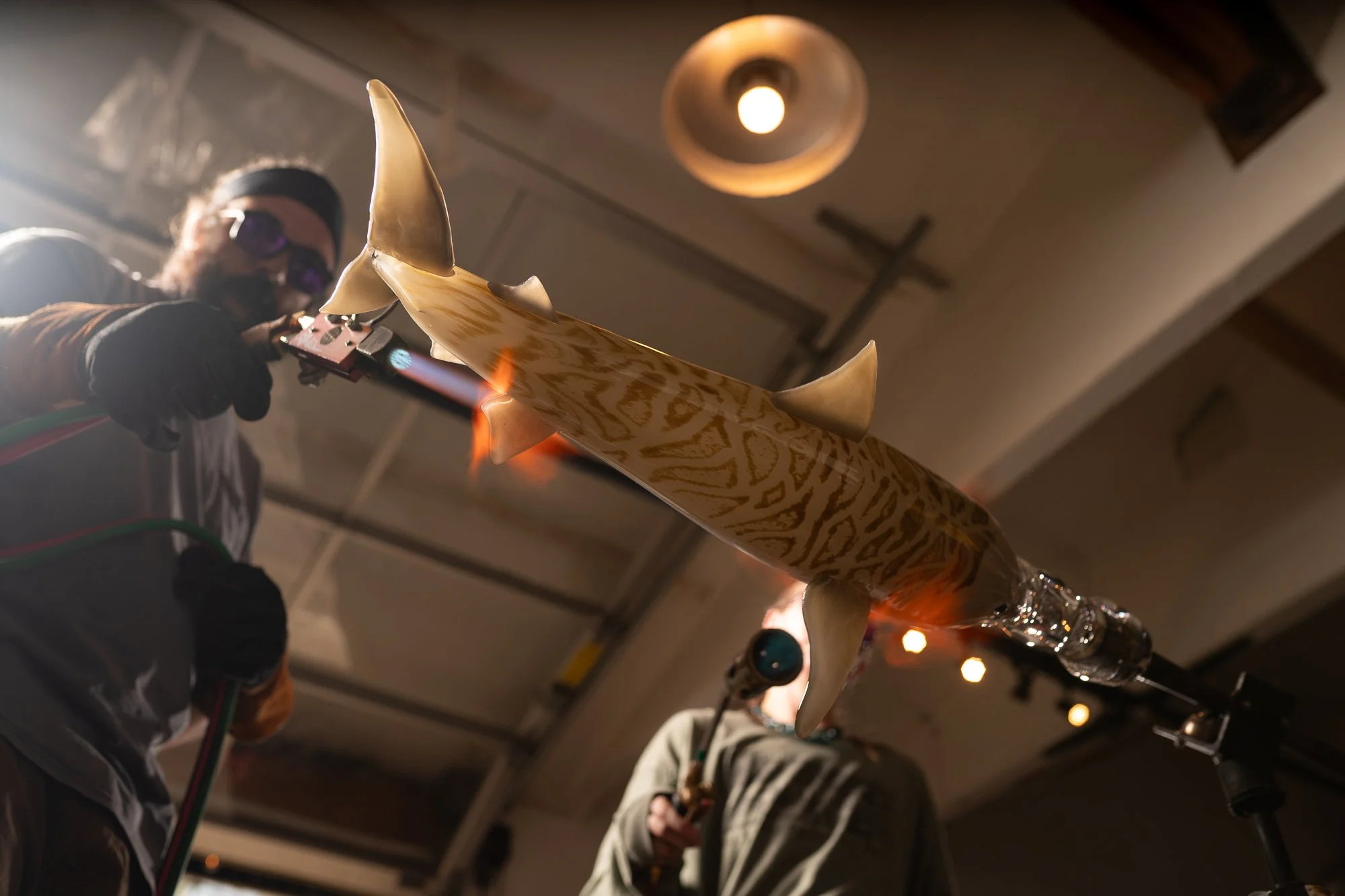
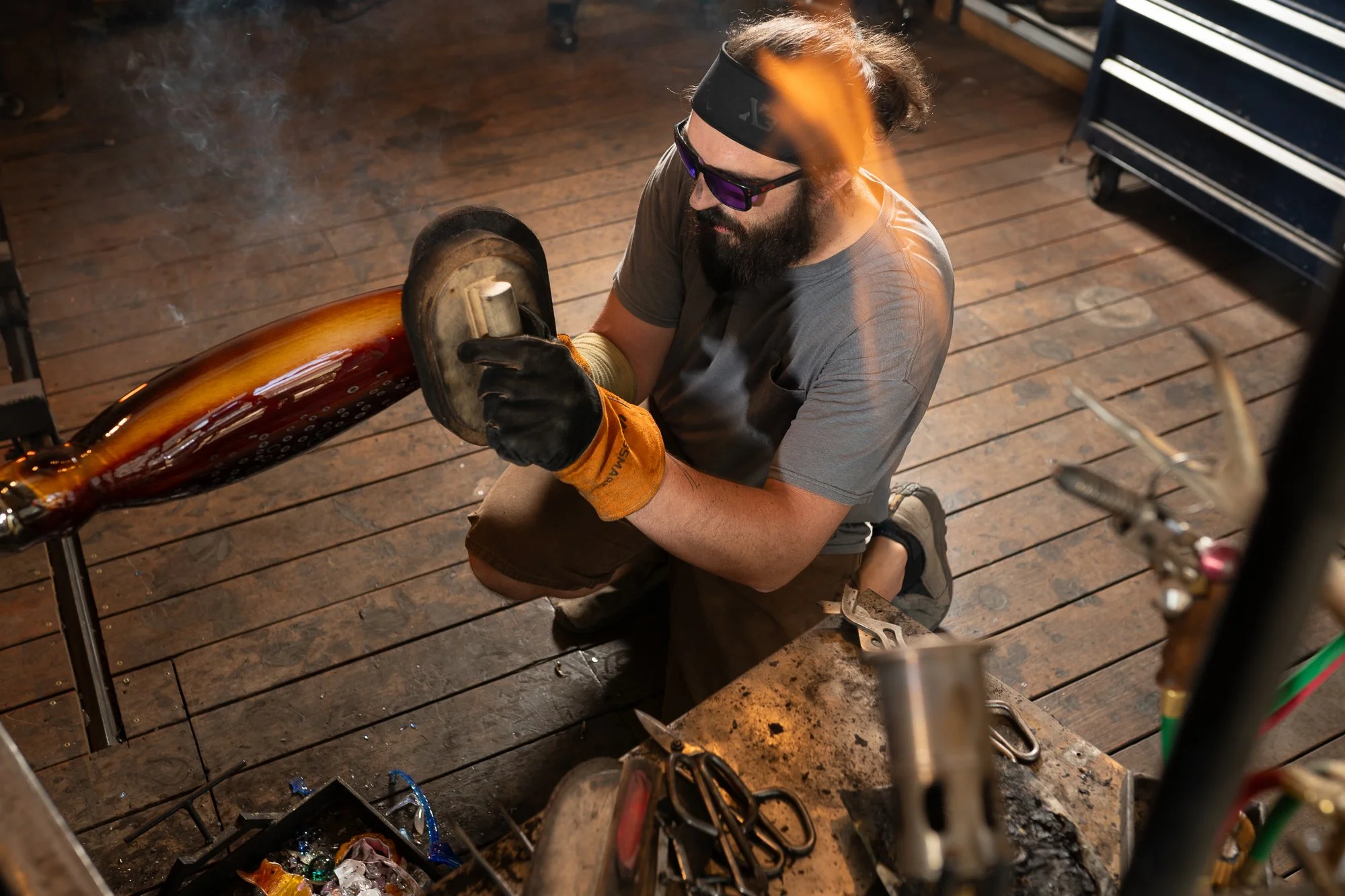
Martin’s Gerdin’s studio is located in Crawford, a small town in a remote section of southwest Colorado, which tells you a bit about him already. He doesn’t need the fancy street facing storefront, because for him, it’s only about the work. And that’s obvious seeing him in action. He cares. Sure, creating stunning glass blown fish is how he earns a living, but it’s also his passion. Glass blowing is a very delicate art, especially when dealing with a pieces the size of Gerdin’s fish. There are so many steps along the way that can cause each one to be ruined. And when that happens all is lost. Back to the beginning. As a photographer intent on documenting a process that cannot be faked, the only option is to be a fly on the wall and not get in the way. Martin and his team are constantly moving, back and forth from the work bench to the furnace, over and over. For this shoot I wanted to use strobes to light the scene in a way that wouldn’t draw attention to the light itself. Rather as more of a subtle enhancement. So the hard part was finding those places within the studio that the strobes and light stands wouldn’t impede his flow. Which was difficult at times, but he graciously told me when they needed to be moved and everything worked out just fine in the end. To be honest, there were times when I just wanted to sit back and watch. Looking at Gerdin’s work on his website or Instagram is impressive, but to see a final piece come to life before your eyes, is something else altogether.
**If you think creating glass trout for a living is all glamour, think again. It’s well over a hundred degrees in Martin’s studio when the furnace is running.

Where My Work Intersects with His

Martin Gerdin doesn’t create custom glass trout for fly fishing collectors by accident. It started out of his rabid obsession with the sport itself. The assignment to photograph Martin at work also didn’t happen by accident. As a photographer, it’s very important to me that the people and stories I work on, are ones I truly care about and have an interest in. So I pitched the idea to a magazine because I was a fan of his work and am also violently obsessed with fly fishing, which has led to a somewhat unhealthy amount of time on the river with both a fly rod and a camera. Like Martin, it’s my happy place.

See the Full Collection

Want to see more?
You can view my full collection of fly fishing photography prints [here]. Each image is available for purchase, and select pieces are also available for editorial or commercial licensing. If you’re a collector, or simply someone who loves the water, I think you’ll find something that speaks to you.

Photograph of a glass brown trout by Martin Gerdin

Martin Gerdin - Glass Fish Artist

Photograph of a glass artist creating custom art for fly fishing collectors

Fine art glass fish artist Martin Gerdin at work in his studio in Crawford, Colorado

Photograph of a custom glass shark being made by an artist in his studio

Glass fish art

A team of glass blowers creating fly fishing art

Fly fishing artist at work

A glass shark being made at Martin Gerdin's studio in Crawford, Colorado

Hand blown glass shark

Photograph of a hand blown glass shark being made

Photograph of an arist creating a hand blown glass shark

Photograph of Martin Gerdin creating a custom glass brown trout for a fly fishing collector

Hand blown glass brown trout art

Photograph of a glass artist creating a brown trout for a fly fishing collector

Photograph of glass trout being made

Photograph of a glass blown brown trout going into the furnace

A glass blown brown trout going into the furnace

Doug Monson - Western Charcoal Artist

Best Western Charcoal Artist - Fine Art

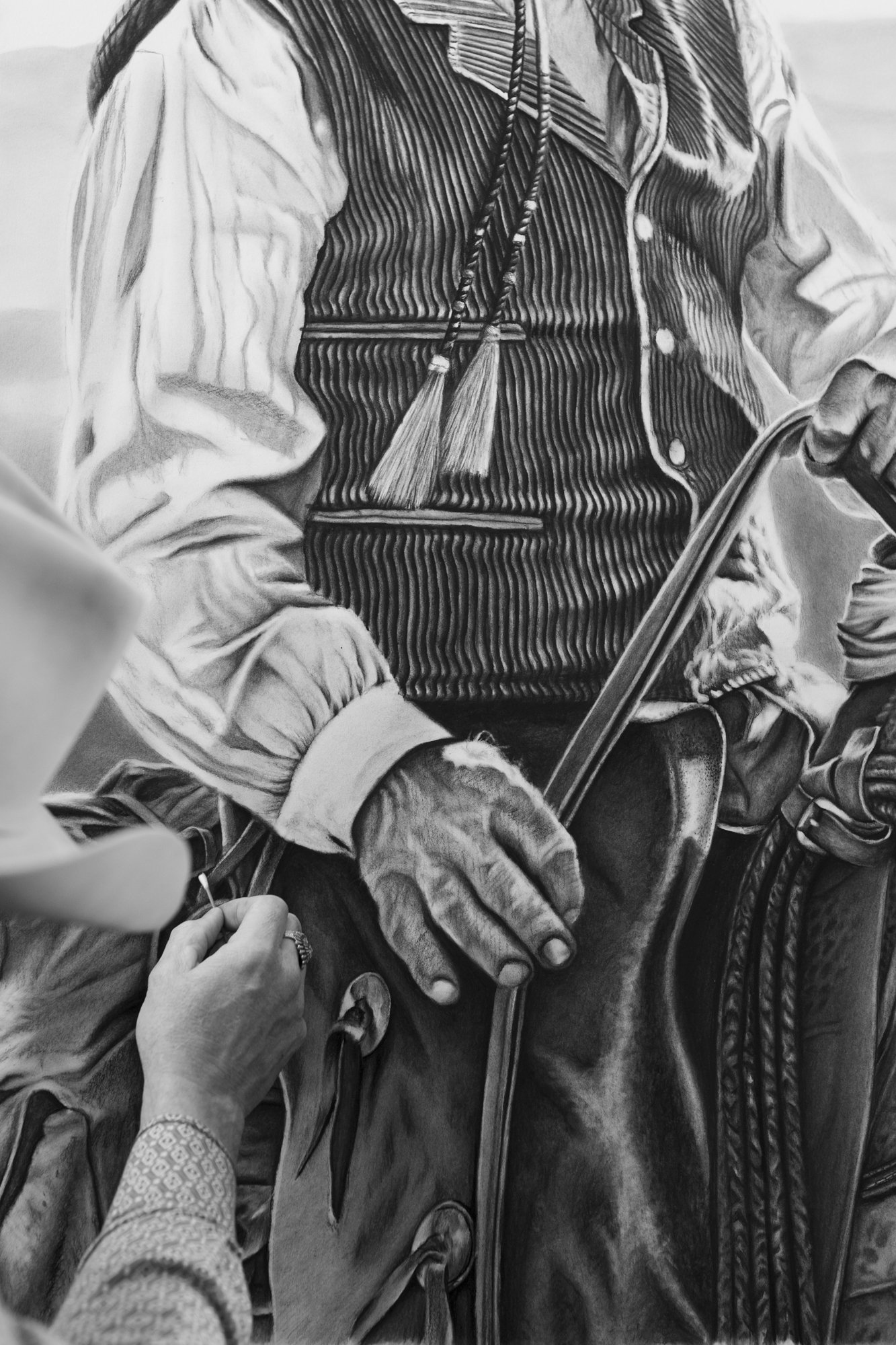
Doug Monson is a western charcoal artist that lives in Afton, Wyoming in the Star Valley. While his his entire life has been dedicated to art, it wasn’t until recently that full time success became a reality. Nowadays you can find his beautiful charcoal drawings of cowboys and wildlife hanging in his own Western Skies Gallery, Jackson Hole’s oldest fine art gallery - Wilcox Gallery , and in the homes of fine art collectors all over the world .

Its wild to look back and see how certain parts of your life come together. I make it a point to do as much backcountry snowboarding in Jackson Hole, WY as possible. The terrain and snow quality is just top notch. This past winter we were up there during a particularly cold storm which got down to -30 for 3 days in a row. The excitement overtook me, as it often does, and I forgot to treat my diesel pickup truck with the proper chemicals that would keep it from freezing. So, it froze. Literally. To the point that it was towed to the dealership in order to thaw out in their heated garage. Aside from costing a lot of money to fix, it also kept me in Jackson for longer than expected. My friends went out riding while I dealt with the truck, leaving a large portion of the day open. So I walked around town to all of the famous galleries like Wilcox Gallery, Horizon Fine Art, Gallery Wild, Heather James Fine Art, Altamira Fine Art, and Brookover Gallery, to name just a few. Jackson Hole has a LOT of fine art that can keep just about anyone happy for days at a time. I’d been meaning to tour the galleries anway, in hopes of finding a place to sell some of the work from my photography series on Cowboys. So having that day was an unwanted blessing in disguise. And the inspiration you can get from seeing so much great work can be addicting for any kind of artist.

By the time my truck was ready I was in a rush, which caused me to take the quick way home instead of taking several days sniffing around for photographs. The “quick” route took me through Afton where I stumbled upon Western Skies Gallery. Still having the gallery bug I went in and was greeted by Doug Monson, who I soon learned was a charcoal artist and the gallery owner. Upstairs above the gallery is his working studio. I was in awe of the space and asked if it would be ok to make some photographs while he was working. Doug obliged and we would up spending an hour or two just hanging out talking while he drew and I made photographs. I had no idea what would happen with the images, but was inspired by the space and his work. A few weeks later it occured to me that it would be fun to write an article on Monson, and here we are 10 months later with a feature in Western Art Collector Magazine!

Western charcoal artist Doug Monson at work on a drawing in his Afton, Wyoming studio.

Doug Monson drawing a cowboy with charcoal at his studio in Afton, Wyoming

The beautiful fine art of western charcoal artist Doug Monson

Duck Decoy Carver Photographs

Famous Duck Decoy Carver

Duck Hunting Culture Photo Essay

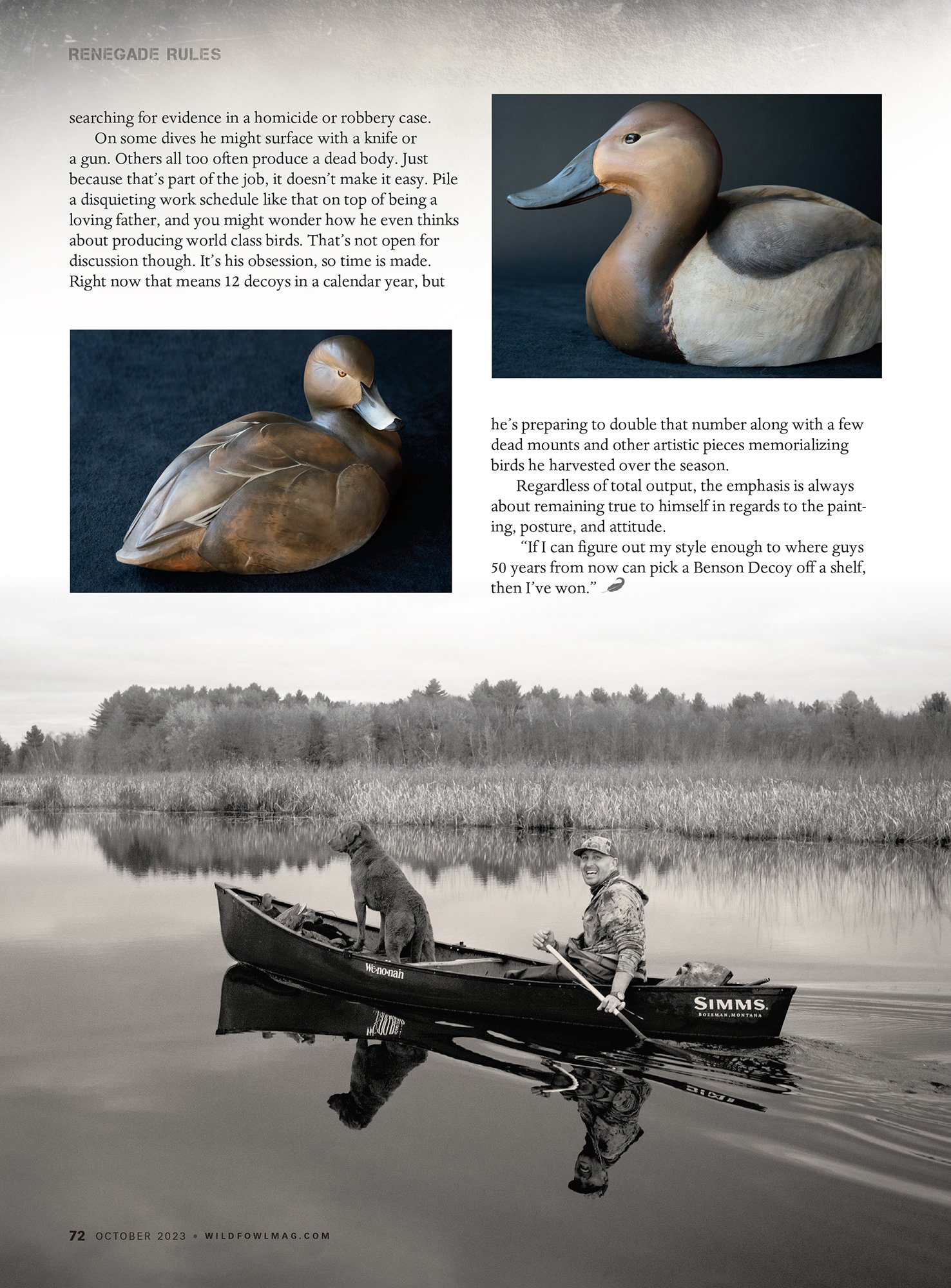
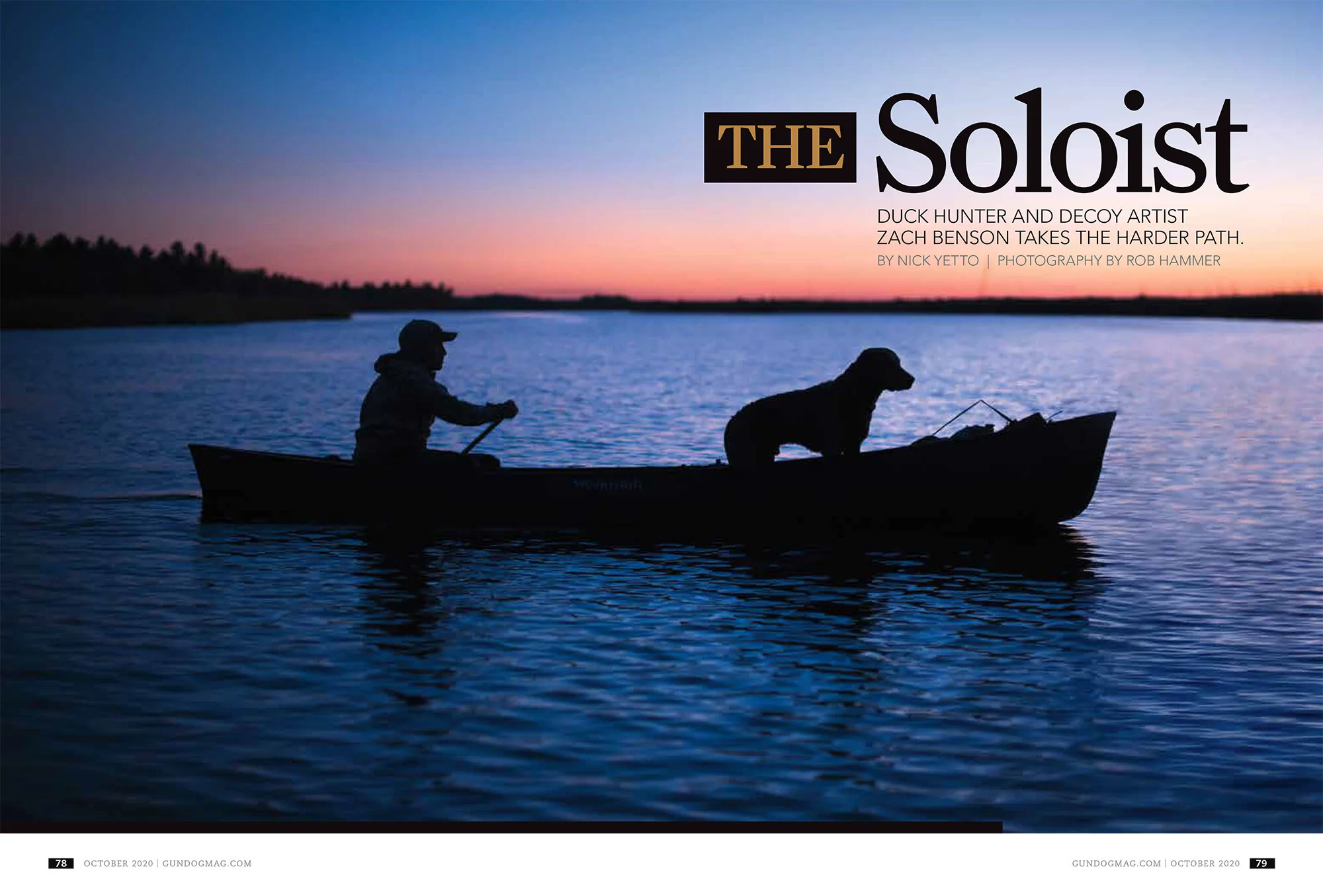
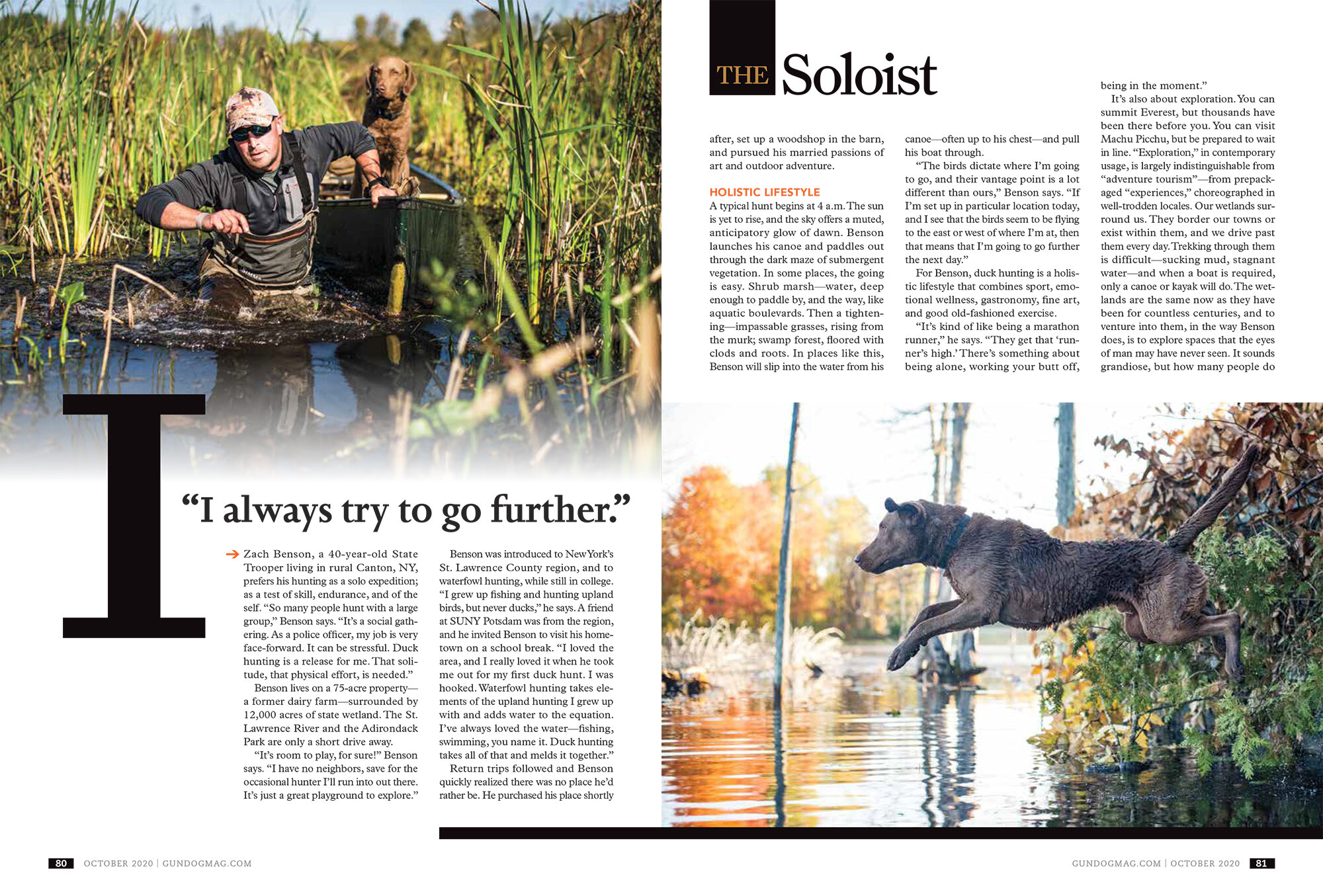
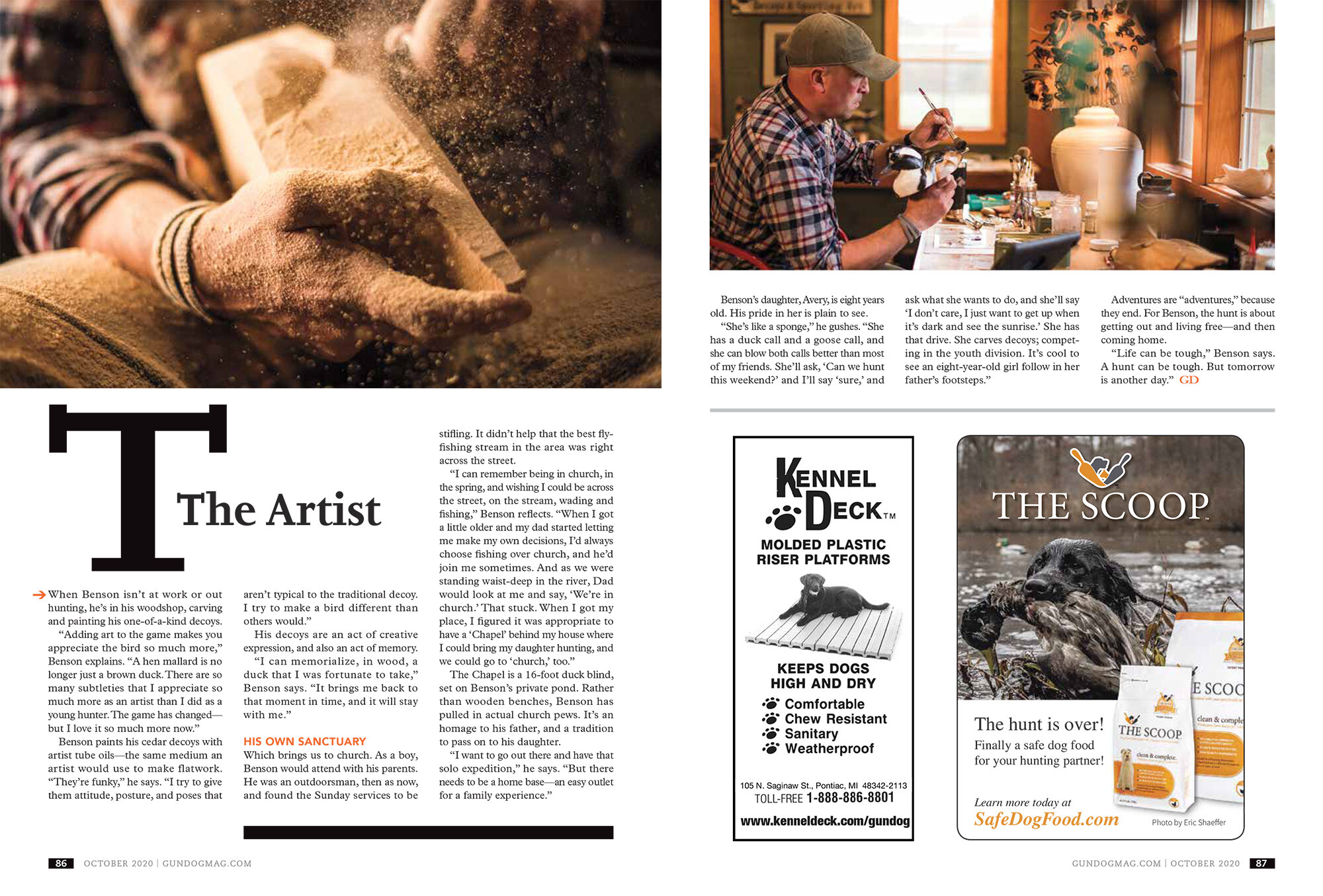
The world of waterfowl hunting is a niche that gets ever smaller when you start looking at world class duck decoy carvers. Like any fine art, the elites are in narrow company. Zach Benson is in that group. He began carving in college out of not being able to afford a decoy spread to hunt over. Years later he is known the world over for his one of a kind works of art. The process starts by harvesting cedar trees from his own property. That wood is then milled and laid to dry in his barn. After about a year it’s ready to use, at which point he hand carves each bird, then lays layer upon layer of oil paint.

WHAT MAKES A WORLD CLASS DUCK DECOY?

Early on Benson competed in shows like the Clayton Decoy Show and the Oregon Waterfowl festival. Both of which were great learning experiences, but he quickly learned that they came with too many rules. Art of any kind is subjective, but awards weren’t necesarily given to the best decoy, rather to the one that followed the rules. It did leave any room for creativity. The “winners” were birds that checked every box. So competing didn’t last long for Benson. He wanted to create art, not cookie cutter ducks. Now, the look he is so famously known for is an angry duck in an uncommon position. His ducks have attitude. They are one of a kind. So you’ll still see him year after year at the Clayton Decoy Show in Ohio, but not on the competition floor. Like a lot of other carvers, he shows new work out of his hotel room - where people are encouraged to walk around room to room with a beer in hand. Aside from that, you have to follow Zach on Instagram, where he is very low key, sharing new work in his stories. And if you wait to long on purchasing his latest piece, it will already be gone.

Check out the article below which was published in the most recent issue of Wildfowl Magazine. You can also learn more about him from the VIDEO we made a short while back with Benelli.

Photograph of the best duck decoy carver

Famous duck decoy carver Zach Benson

Western Artist

Western Charcoal Artist

Was on a big gallery kick last month up in Wyoming, and while driving back home from Jackson Hole, stumbled upon the Western Skies Gallery in Afton. It’s a beautiful space in an unexpected place. Inside I was greeted by Doug Monson, owner of the gallery and artist himself. He specializes in western charcoal drawings, but also displays/sells work by other talented artists in various mediums. We got to chatting for a bit while he showed me his upstairs studio, which is as enviable a place as you’ll ever see. Truly a dream for any artist. Next thing you know, I got the gear out of the truck, and began making photographs of Doug at work. He makes beautiful drawings of wildlife as well as cowboys. Look up the one he did of a Raven. It’s stunning to see in person. Anyway, Monson is really nice guy that I very much enjoyed hanging out with while learning about his journey to where he is today. For years now I’ve got a lot of pleasure out of photographing people that are highly passionate about their work, no matter what kind of work that may be. There’s something very special about seeing someone in their element, working away in a manner only they know how, because you know there isn’t anywhere else they’d rather be.

Click here to see more of my Western photography


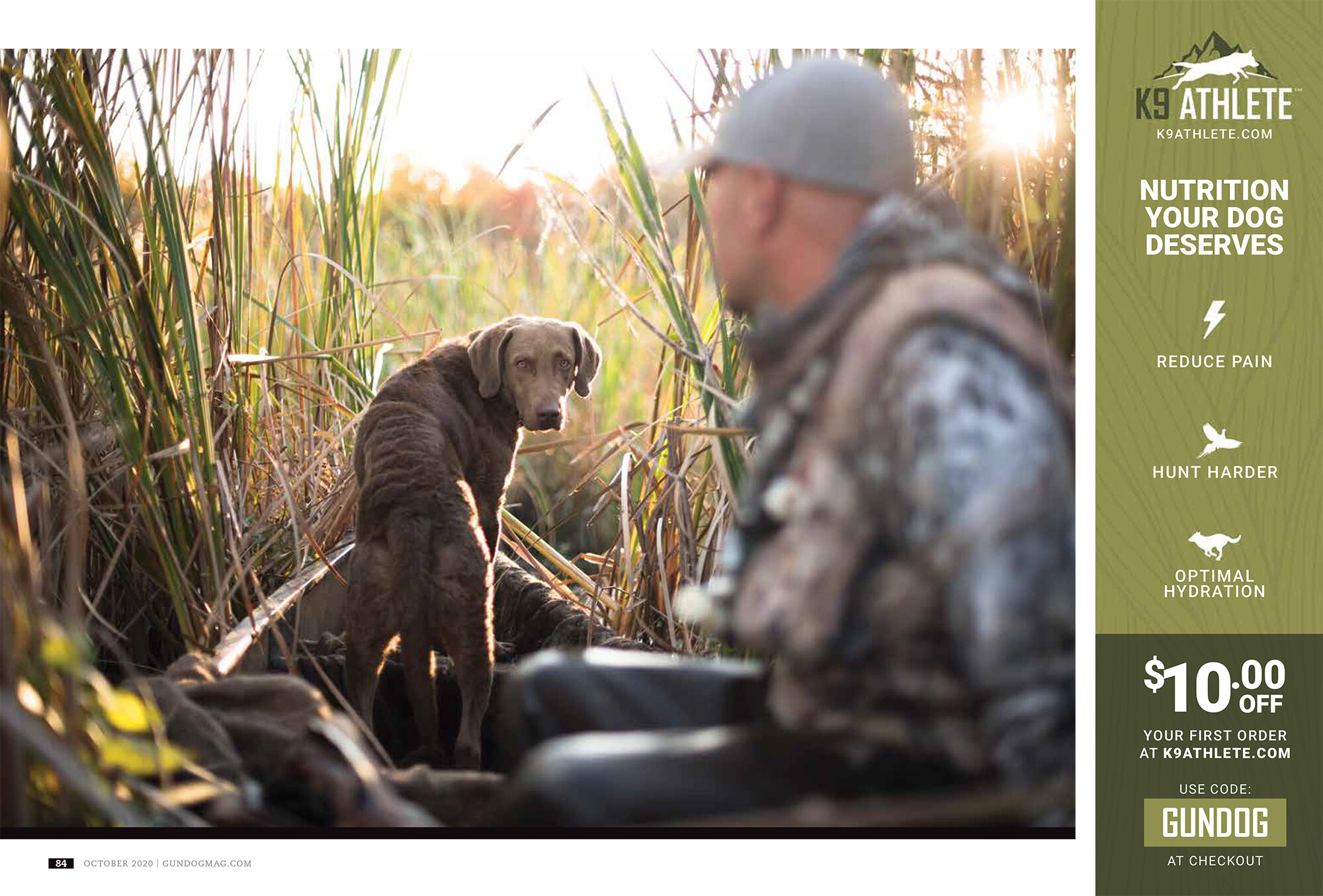
Gun Dog Magazine

Duck Hunting Photography

Zach Benson - Duck Decoy Carver

Seems like personal projects are a constant topic here, but it doesn’t matter because it’s something I’m very passionate about and want people to hear. For photographers, there is nothing more valuable than the personal project. Nothing. I love shooting for certain commercial clients, but put just as much if not more time into personal projects. What you see here is a piece I’m honored to post because it involves time spent with people I care about. I’ve known Zach Benson since elementary school where we were close friends. He’s an extremely skilled hunter and an even better artist. Nick Yetto is my cousin, but also happens to be a brilliant writer. The three of us grew up in the same town and went to the same schools. Then life, as it tends to do, sent us all in different directions. Fast forward to last year around this time, I was fortunate to spend 4 amazing days with Zach documenting his hunts, the creation of his beautiful decoys, ate lots of good food, had lots of laughs, and drank plenty of booze. Then I teamed up with Nick to write a piece that would tell Zach’s story along with my images. To be clear, my intention first and foremost, was to hang out with Zach while also having fun with the camera. Being in these situations I find it impossible not to document what’s happening. I also appreciate his lifestyle and enormous talent as an artist. A person that others with shared interests should know about. And I feel a responsibility as a photographer to help others learn about him.

Back to the personal project. It’s important as photographers that we don’t feel as though we need permission to do what we love. We don’t need to sit around waiting or begging for a dream client to hire us. That’s nonsense. Photographers should go out on their own and create exactly what it is they feel drawn to. Worry about everything else later. Just go out and have fun with the camera. Then, if it turns out the way it’s supposed to, the work will find a home. But you can’t worry about the home in the beginning. Just shoot for yourself and you’ll find that the images will turn out better. I’m really honored toothat the good times had with Zach and Nick wound up in Gun Dog Magazine because his story will be read by those that appreciate him the most. It also feels good to do these things with people I care about in our own way and on our own terms. Nobody hired me to do this or told me how to do it. This collaboration is something that continues between Nick and I. Something I’m also grateful for because it brings me closer to my cousin, who I’ve been apart from for so long. We currently have another piece (unrelated to duck hunting) due to come out at the beginning of 2021, and he also wrote the intro for my soon to be released Hoops book.

You can follow Zach on Instagram @benson_decoys

Click here to check out Nick Yetto’s novel Sommelier of Deformity