California Dreaming: A Road Trip Down the Iconic Highway 395

A Journey Through California's Highway 395: Road Trip Photography That Inspires Wanderlust

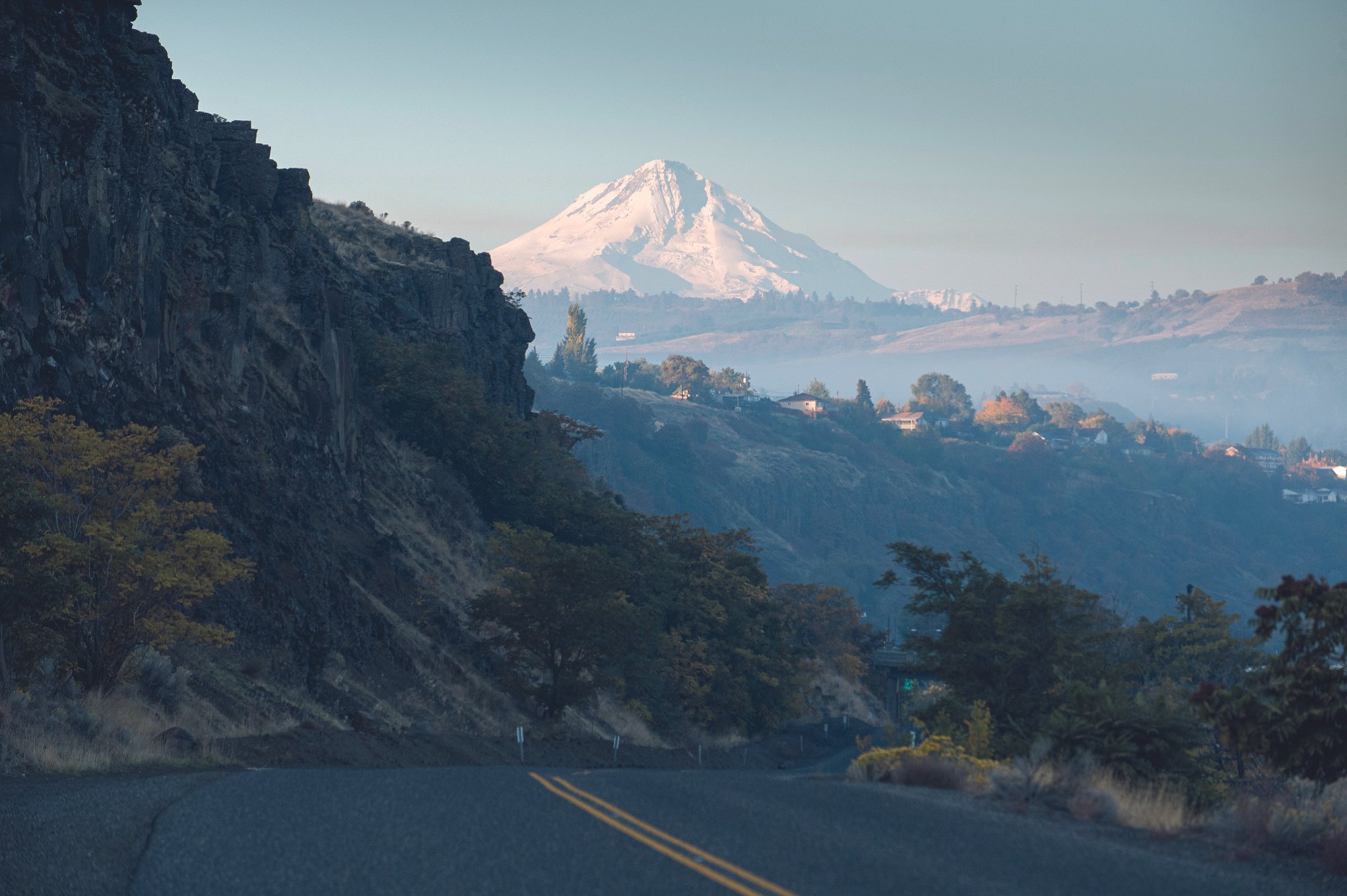
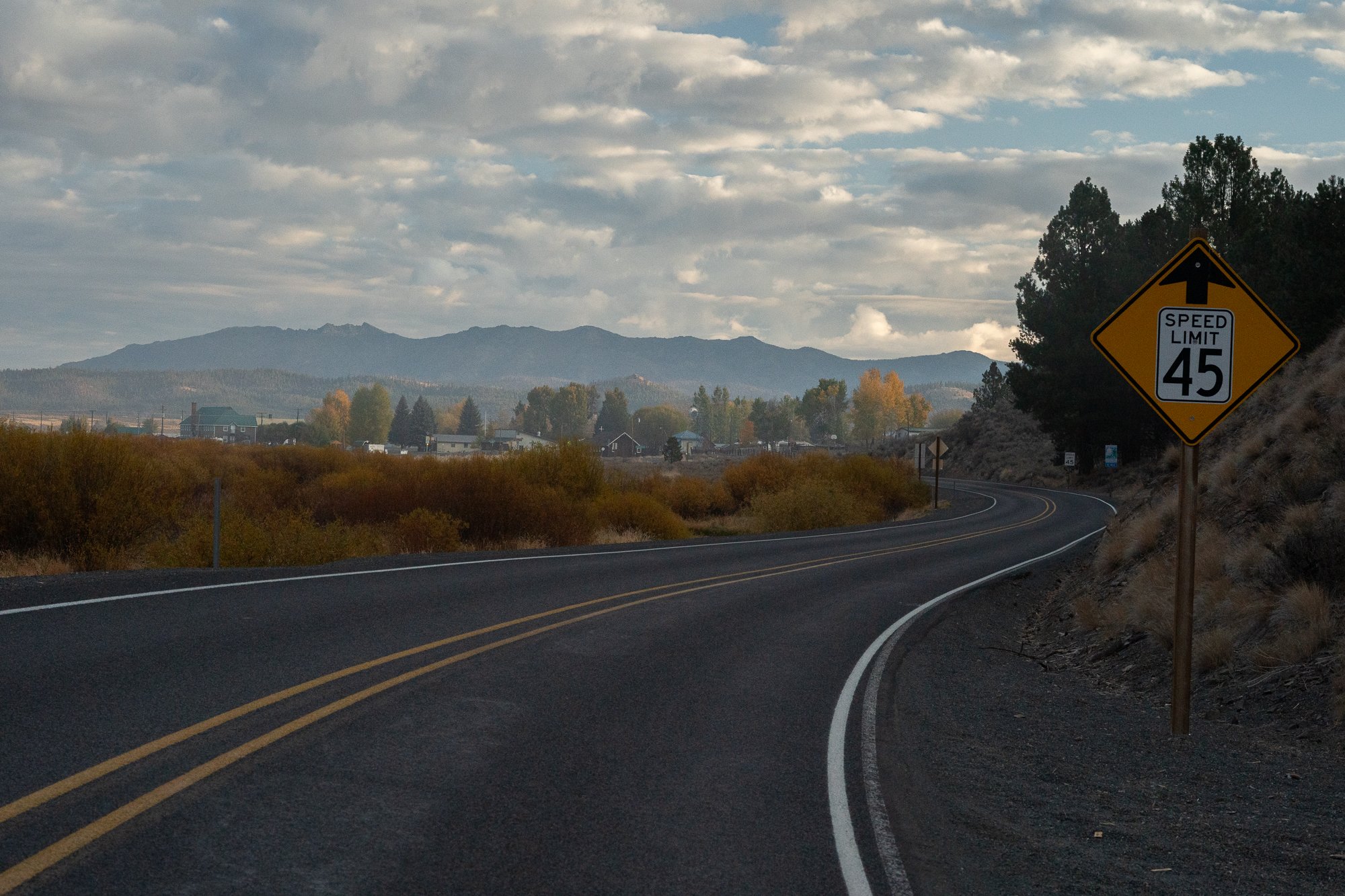
The 395 doesn’t try to impress you, not at first. It just unfolds, mile by mile, like an old story you’ve heard before but can’t stop listening to. It’s the kind of road that sneaks up on you—not with grand gestures but with a steady, insistent rhythm of landscapes that feel too big, too wild, to be corralled by a single state line. California’s Highway 395 is less a road and more a meditation, a reminder of how much world is left to see if you’re willing to slow down.

I set out with a camera and no real plan beyond the next mile marker. Somewhere between the austere shimmer of Mono Lake and the weathered small towns, the trip stopped being a trip and started being something else. The desert has a way of doing that to you—pulling you into its silence until all the distractions fall away, leaving just the crunch of gravel underfoot and the distant call of a raven.

In the Eastern Sierra, the sunrises can almost be too much to handle. The sky lights up like it had been holding its breath all night, spilling gold and rose over the boulders in a way that made you feel like an intruder. I stood there with my camera, trying to keep up, knowing full well that no photograph could ever do it justice. That didn’t stop me from trying.

Further north, Lone Pine and Bishop felt like towns out of time, stubbornly clinging to their place in the world while the highway carried travelers past them. In Bishop, I stopped for food stayed for the kind of quiet you only find in places where the mountains feel close enough to lean against. The Owens River wound its way through the valley like it knew all the secrets, but wasn’t about to share them.

The real marvel of the 395, though, is how it doesn’t let you settle into one story. One moment, you’re in the shadow of Mt. Whitney, the tallest peak in the Lower 48, and the next, you’re staring at a twisted bristlecone pine that’s been alive longer than you can comprehend. The road runs through alpine meadows, desert basins, and forgotten hot springs, each place asking for something different from you.

For me, it was the photographs that tied it all together. A way to hold onto something that refuses to be pinned down. The light shifted constantly, painting scenes that demanded to be captured and then changed the second you pressed the shutter. It’s the kind of road where you’re never done, where you leave knowing there are still images waiting for you just around the next curve.

Highway 395 isn’t just a route—it’s a reminder that the best stories aren’t always told in words. Sometimes they’re told in the play of shadows on a canyon wall, the glint of water under an endless sky, or the long, empty stretch of road ahead.

I came back with photographs, but what I really brought home was the feeling of the place—the way it gets into your bones and stays there. If you’re looking for more than a picture, if you’re chasing the kind of beauty that doesn’t try too hard, Highway 395 has it in spades.

A Larger Body of Work Beyond Highway 395

The photographs from California’s 395 aren’t isolated moments. They’re part of a much larger body of work built over years of driving across the American West, often with no fixed destination.

What drew me back to this stretch of road again and again is the same thing that defines the broader project—places that exist just outside of attention. Motels that have seen better decades. Gas stations still holding on. Empty intersections where nothing happens, but somehow everything is there.

Highway 395 is one of the most visually striking corridors in the country, but it’s also a gateway into something quieter. The photographs here sit alongside thousands of others made across Nevada, Utah, Texas, and beyond—images that eventually became Roadside Meditations, a book focused on the overlooked spaces that define the American landscape.

If you’ve spent time on 395, you already understand the pace. Long stretches of road, light shifting across the Eastern Sierra, and the feeling that you’re moving through something older than the highway itself. That same rhythm carries through the rest of the work.

Explore the Roadside Meditations fine art photography book

Continue reading: Nevada roadside photography

Explore more from the Roadside Meditations series

If you’re looking for photography like this for editorial or commercial use, contact me directly - rob@robhammerphotography.com

California 395 Photography Print

Black and white photography of California Highway 395
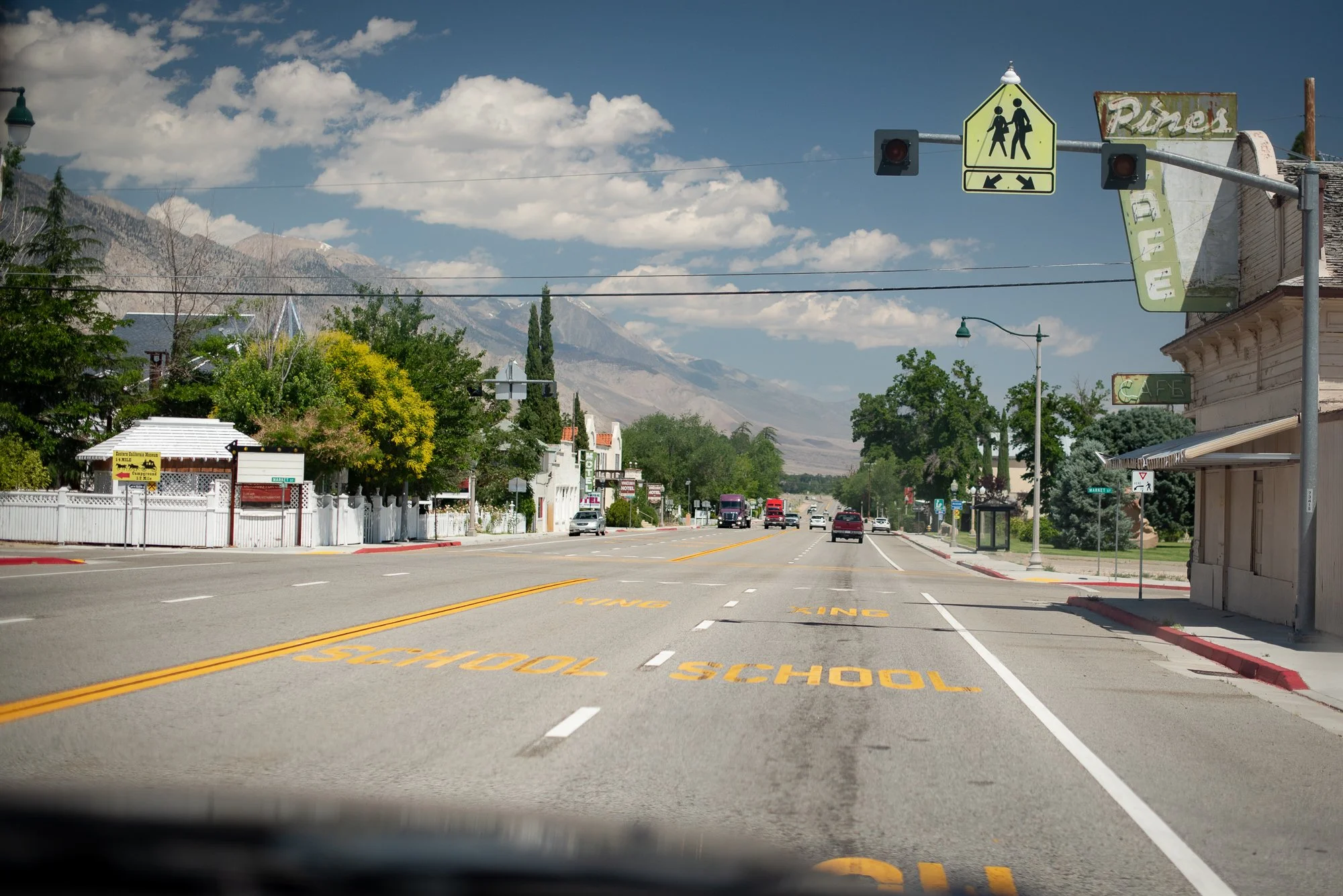
Photograph of the vintage signage along 395 in Independence, California

Vintage signs along the 395 in Independence, California

Photograph of the Still Life Cafe in Independence, CA

Still Life Cafe - Independence, CA

Photography of Lloyd's in Lone Pine, California with the Sierra Nevada Mountains in the background

Lloyd's - Lone Pine, CA

Photograph of a hotel in Lone Pine, Ca

Hotel - Lone Pine, Ca

California 395 Road Trip Photography

Photograph of the El Rancho Motel in Bishop, California

El Rancho Motel - Bishop, California

Sierra Nevada Mountains Road Trip Photo

Driving through the Sierra Nevada Mountains near Mammoth, CA

Fine art photography of Highway 395 in Mono Lake, CA

Driving past Mono Lake - California

Photograph of the moon rising at dusk over Mono Lake in California

Fine art photograph of Mono Lake, CA

Fine art road trip photography

Driving on Highway 395 past Mono Lake towards Bridgeport, CA
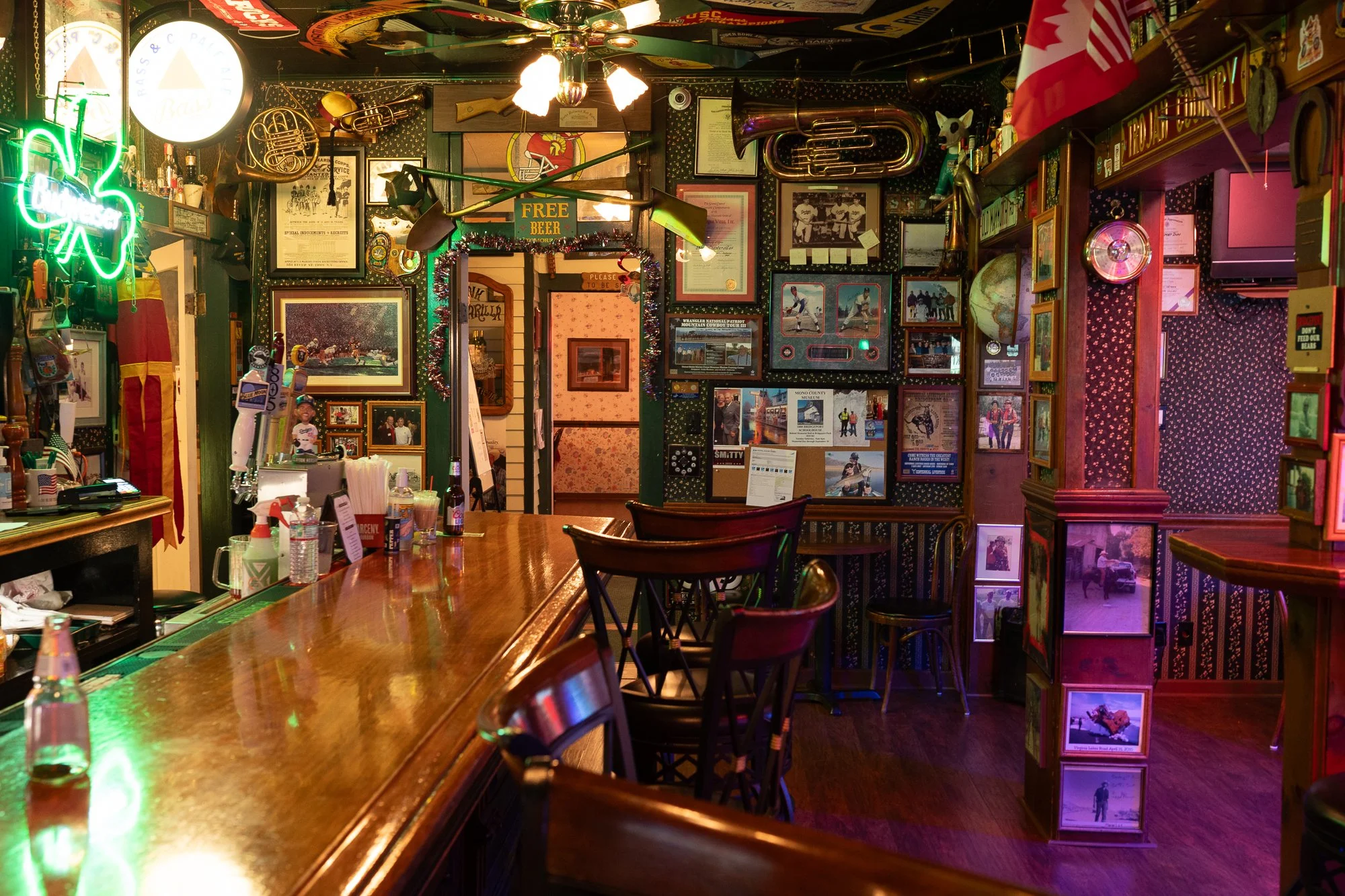
Photograph of the bar at the Bridgeport Inn - California

Bar at the Bridgeport Inn

Photograph inside the Bridgeport Inn Hotel - California

Entrance to the Cowboy Rooms at the Bridgeport Inn - California

Neon sign of a motel in Bridgeport, California

Hotel - Bridgeport, CA

Photograph of Topaz Lake on the California/Nevada border

Sunrise over Topaz Lake in California
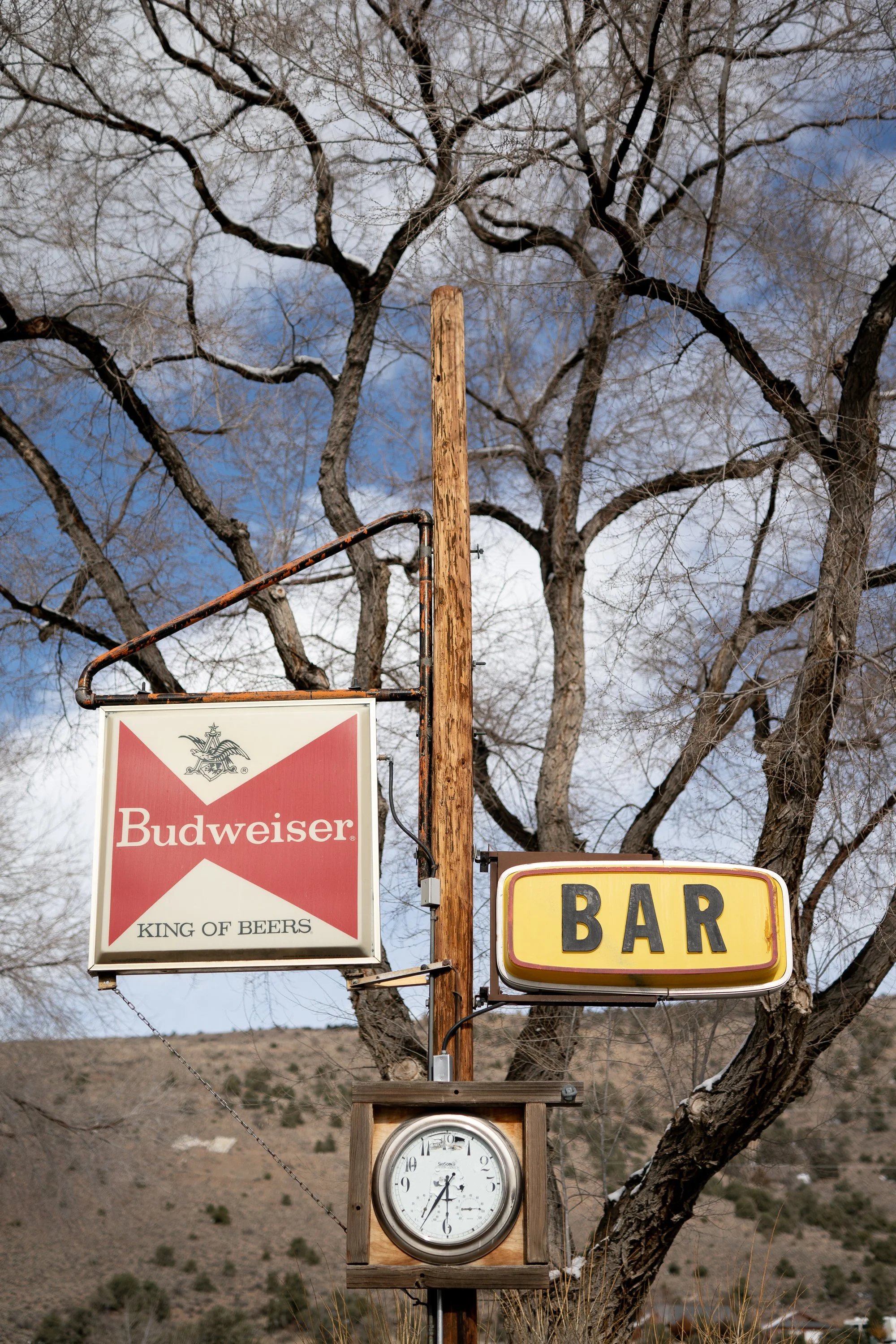
Old dive bar signs on highway 395 in California

Vintage dive bar signage
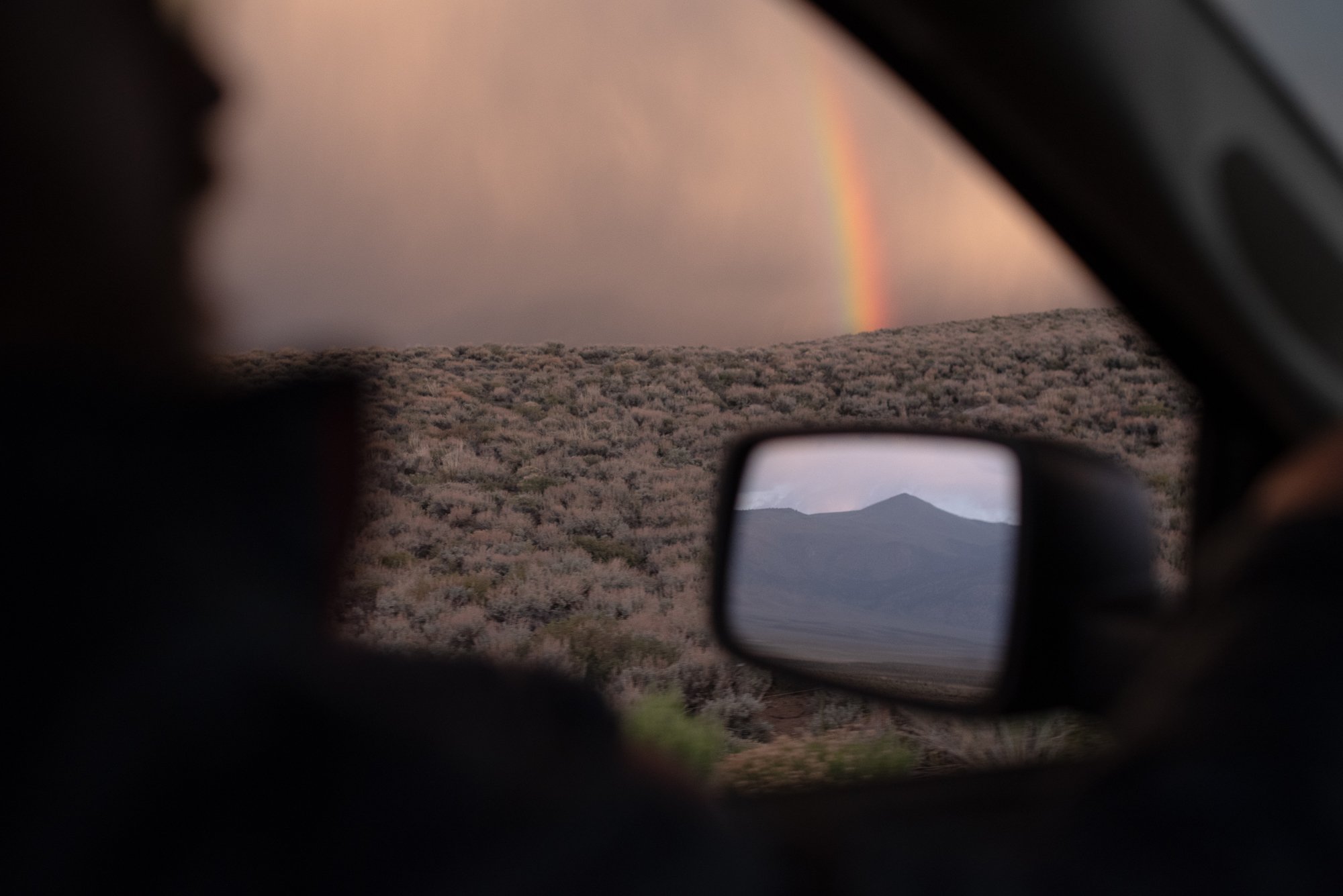
A rainbow over hills of sagebrush in the Eastern Sierra as seen from inside a truck during a Highway 395 Roadtrip

Highway 395 Roadtrip photo
A Traditional American Barbershop - A Neighborhood Fixture

An Old School Neighborhood Barbershop

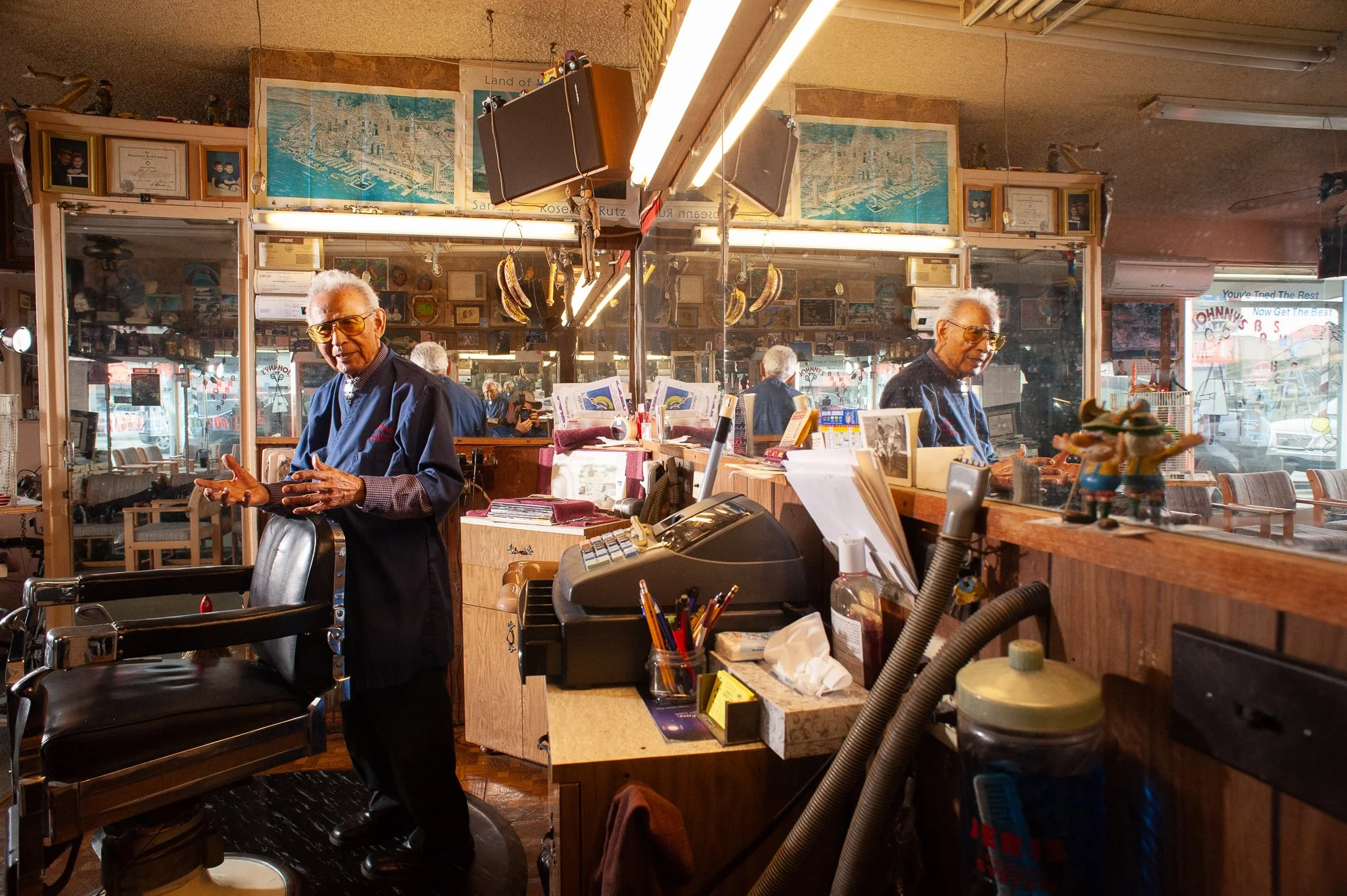
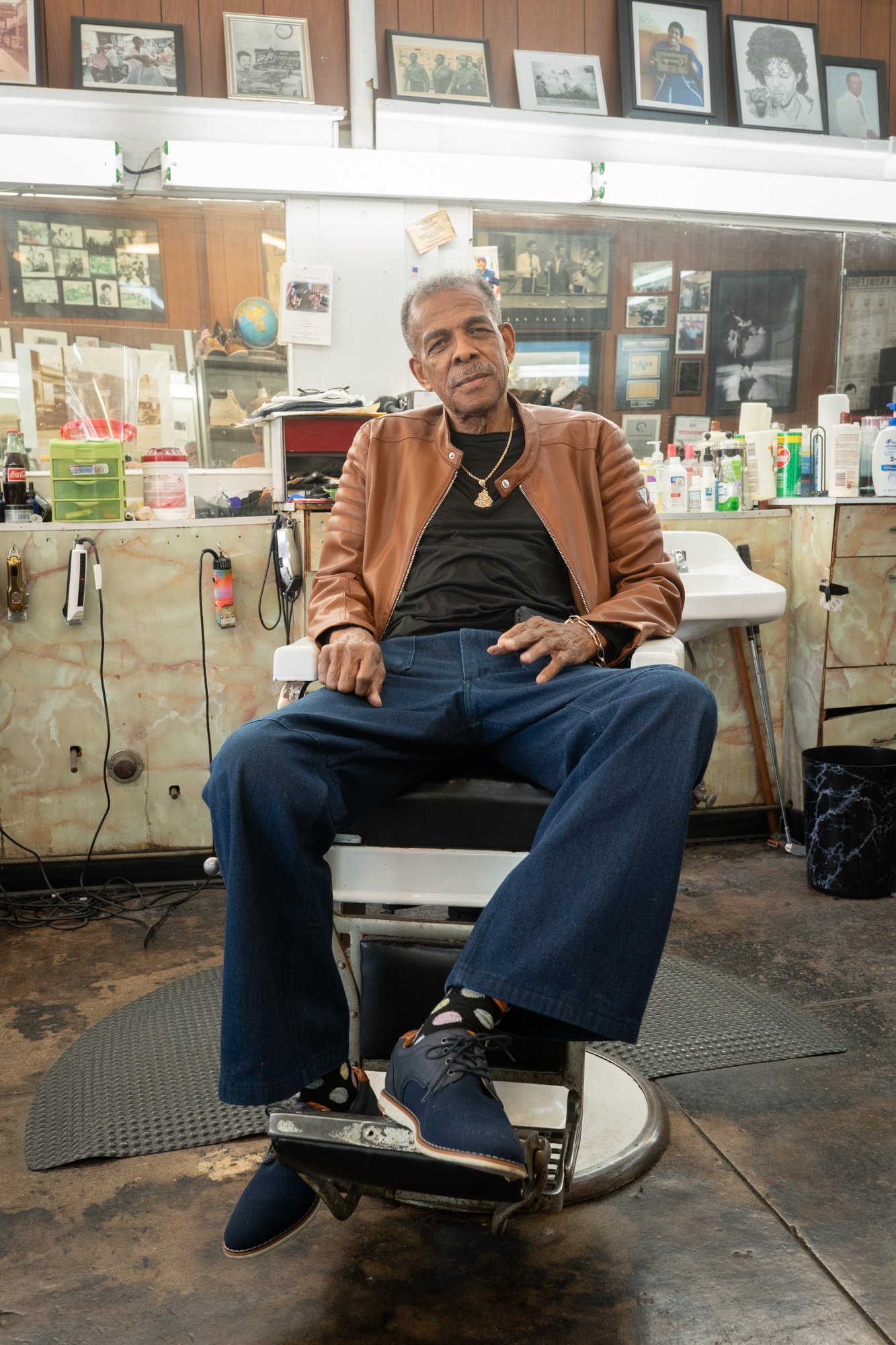
I first photographed this barbershop in San Diego in 2011, early on in what would eventually become the Barbershops of America project. At the time, I didn’t fully realize how important these photographs would become. I was simply drawn to places like this — shops that felt unchanged, where time moved a little slower and the barber knew everyone who walked through the door.

This shop, run by Johnny Lovato, was one of those places.

A Shop That Felt Lived In

Walking into Johnny’s barbershop felt like stepping into another era. The space wasn’t curated or styled — it was simply lived in. The chairs, the mirrors, the worn floor, the little personal details scattered throughout the shop all told a story without trying to.

These weren’t decorations meant to evoke nostalgia. They were just the things that had accumulated over time. That honesty is what made the shop special and what kept the doors open to the same neighborhood of friendly customers for decades.

The Barber and the Community

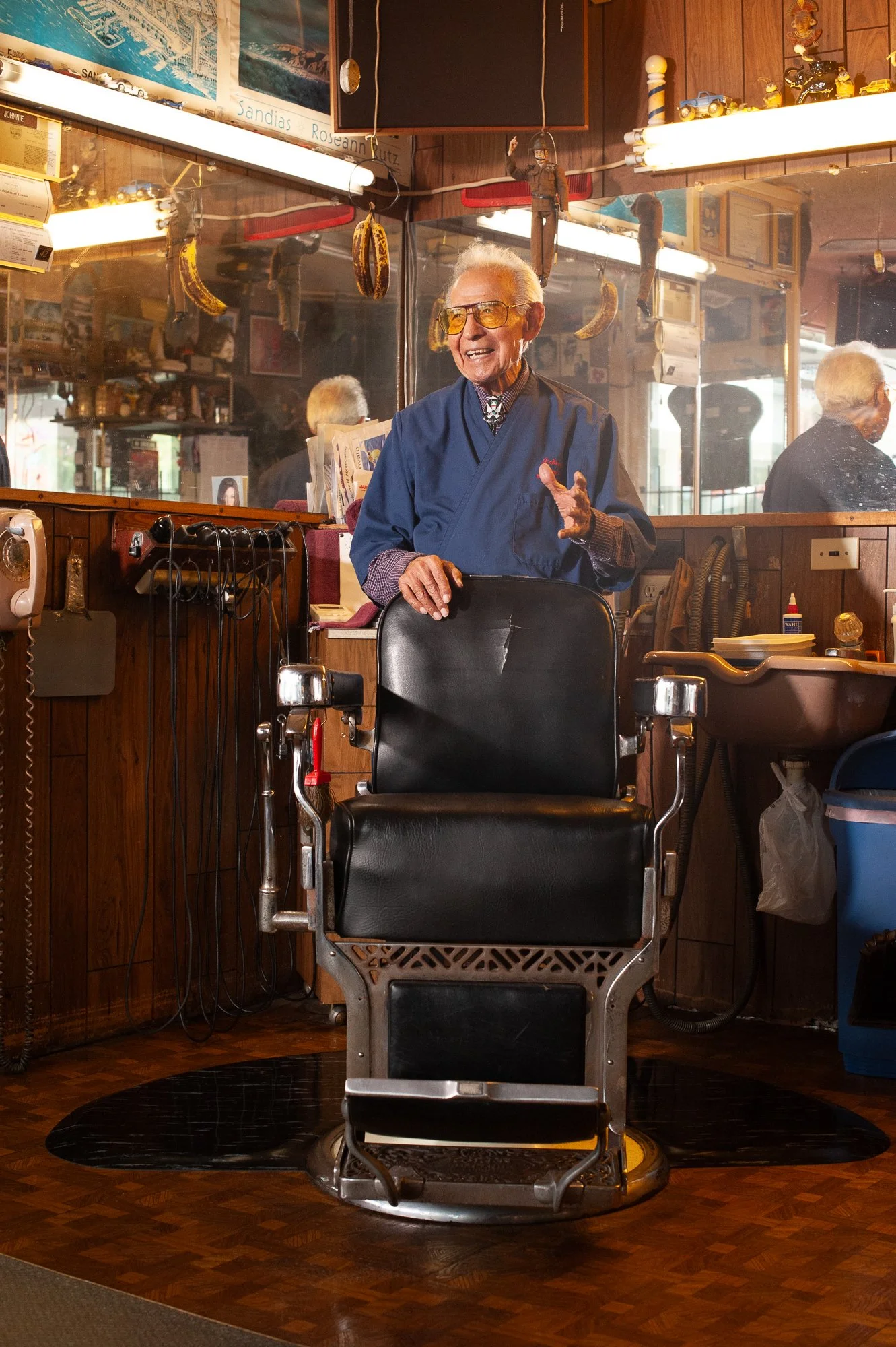
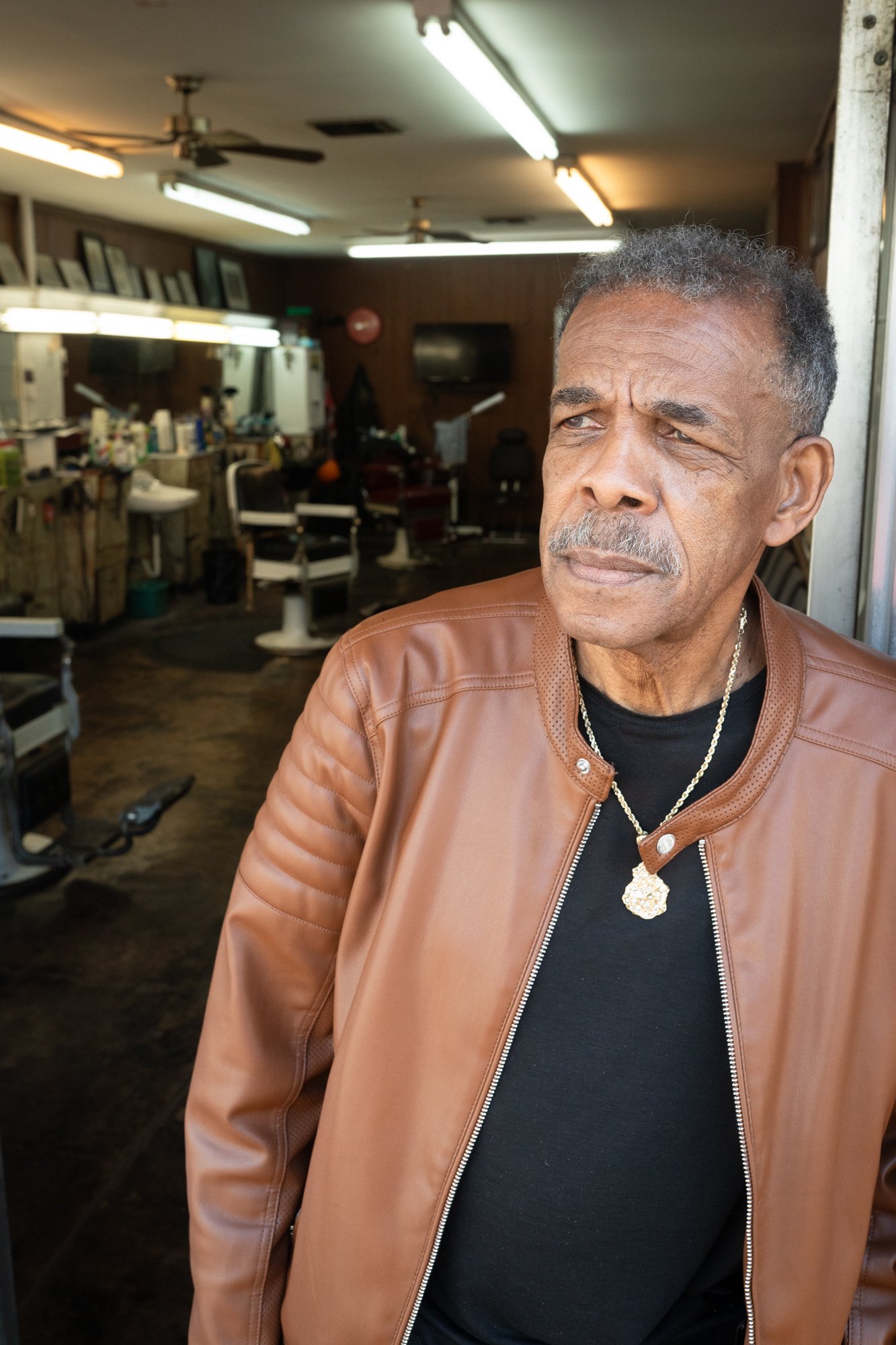
Johnny was always kind and welcoming, the type of barber who made time for conversation as easily as he made time for a haircut. His shop wasn’t just a place people came to get cleaned up — it was a place where stories were shared and relationships were maintained.

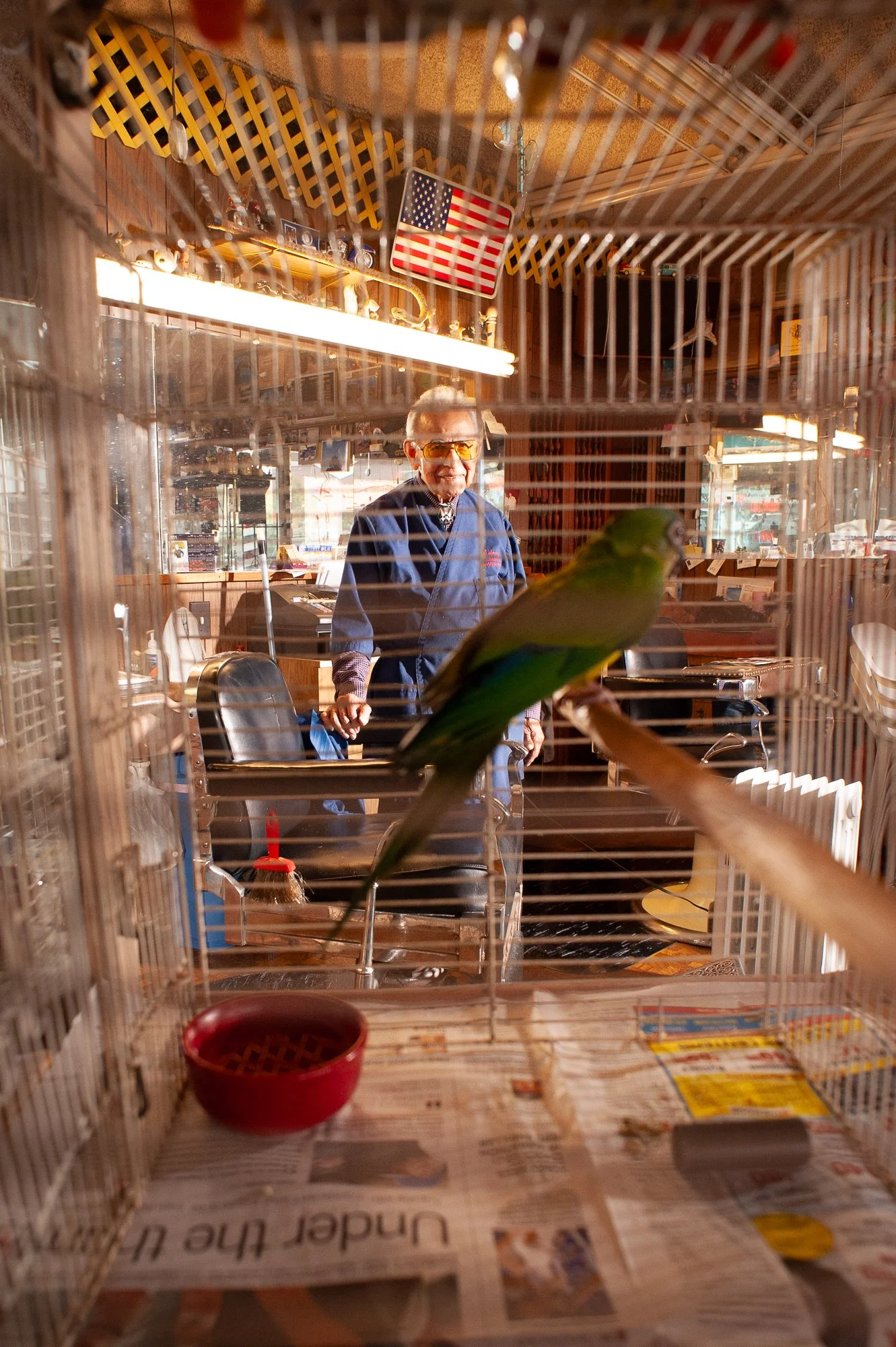
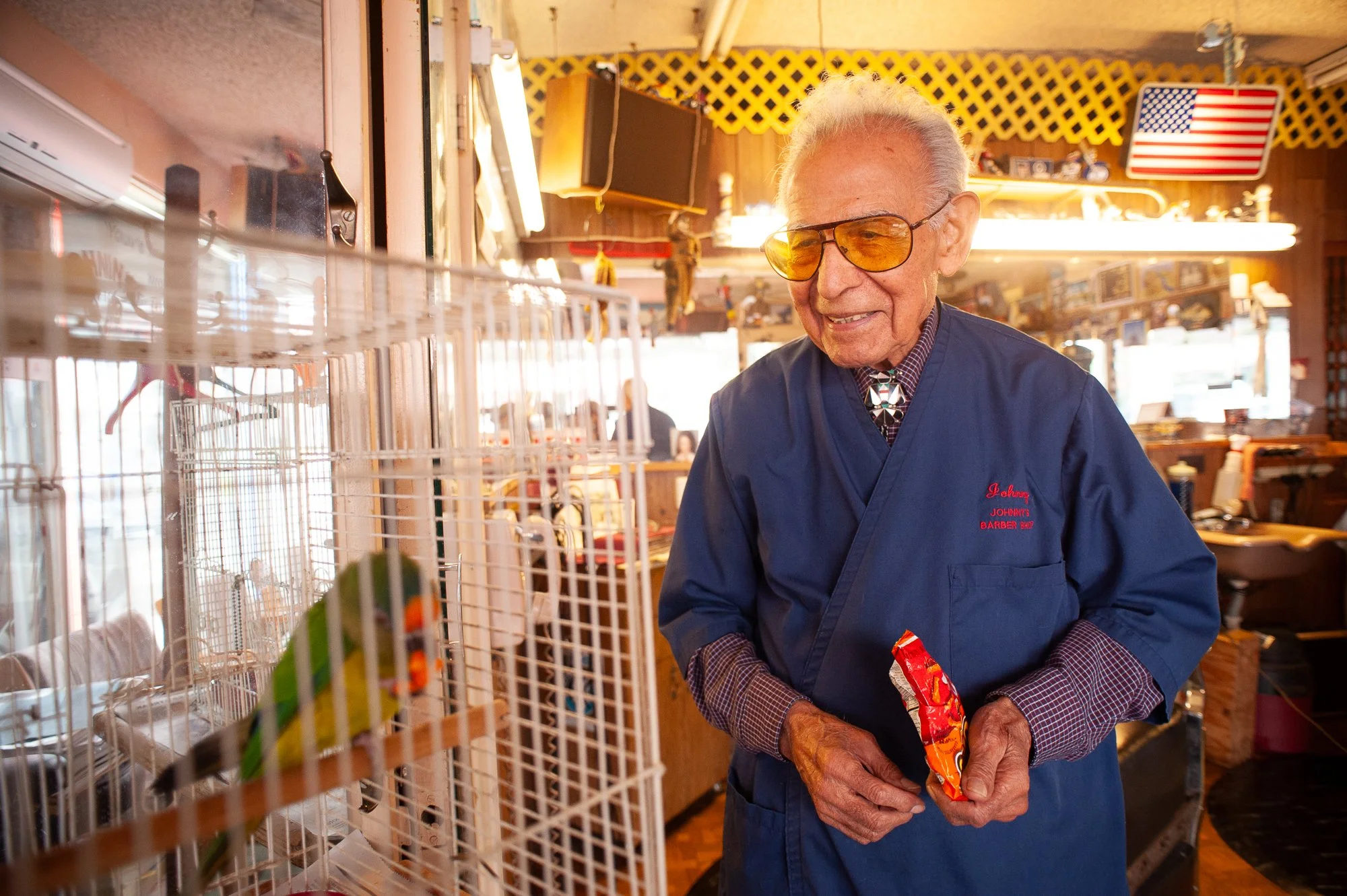
One of the small details I always remember is how happy Johnny was feeding his bird Cheetos. It’s a simple moment, but it perfectly captures the personality of the space and the rhythm of the shop. Those are the moments I’m always looking for when I photograph places like this.

Returning Years Later

I returned to photograph the shop again in 2019. By then, Johnny’s son had taken over the business. Much of the spirit of the shop remained, but time had clearly moved forward — as it always does.

Not long after, the barbershop closed, and the space was eventually transformed into something new, and in my opinion, soulless. That’s the reality for many traditional barbershops across the country. Rising rents, retirement, and redevelopment quietly erase places that once anchored their neighborhoods. Luckily another barber took over the space, so it remains a barbershop, just without the decades of character and memories that once filled it.

Why These Photographs Matter

Barbershops like this rarely close with ceremony. They disappear quietly, often without anyone realizing that a piece of local culture has gone with them.

This series exists so that those places aren’t completely lost. These photographs are not about nostalgia for nostalgia’s sake — they’re about acknowledging the importance of everyday spaces that shaped communities for generations.

Part of a Larger Archive

Johnny Lovato’s barbershop in San Diego is just one small part of a much larger body of work documenting traditional barbershops across the United States. Together, these images form an archive of a disappearing American tradition — one shop, one barber, one story at a time.

More Barbershops of America

View The Book

View The Gallery

Old-school American barbershop interior, Point Loma San Diego documentary photograph

Interior of a traditional barbershop in Point Loma, San Diego, where time-worn chairs and details reflect decades of community history.

Johnny Lovato feeding his pet bird inside his barbershop in San Diego, California

Johnny Lovato, the barber, shares a moment feeding the shop’s pet bird — a small gesture emblematic of daily life in the space.

An old school barber smiles while watching his pet bird

Johnny Lovato smiles after feeding his pet bird at his barbershop in San Diego

Portrait of a barber standing behind his chair in a traditional San Diego barbershop

Portrait of a barber standing behind his chair — a quiet testament to the people who made these shops more than just businesses.

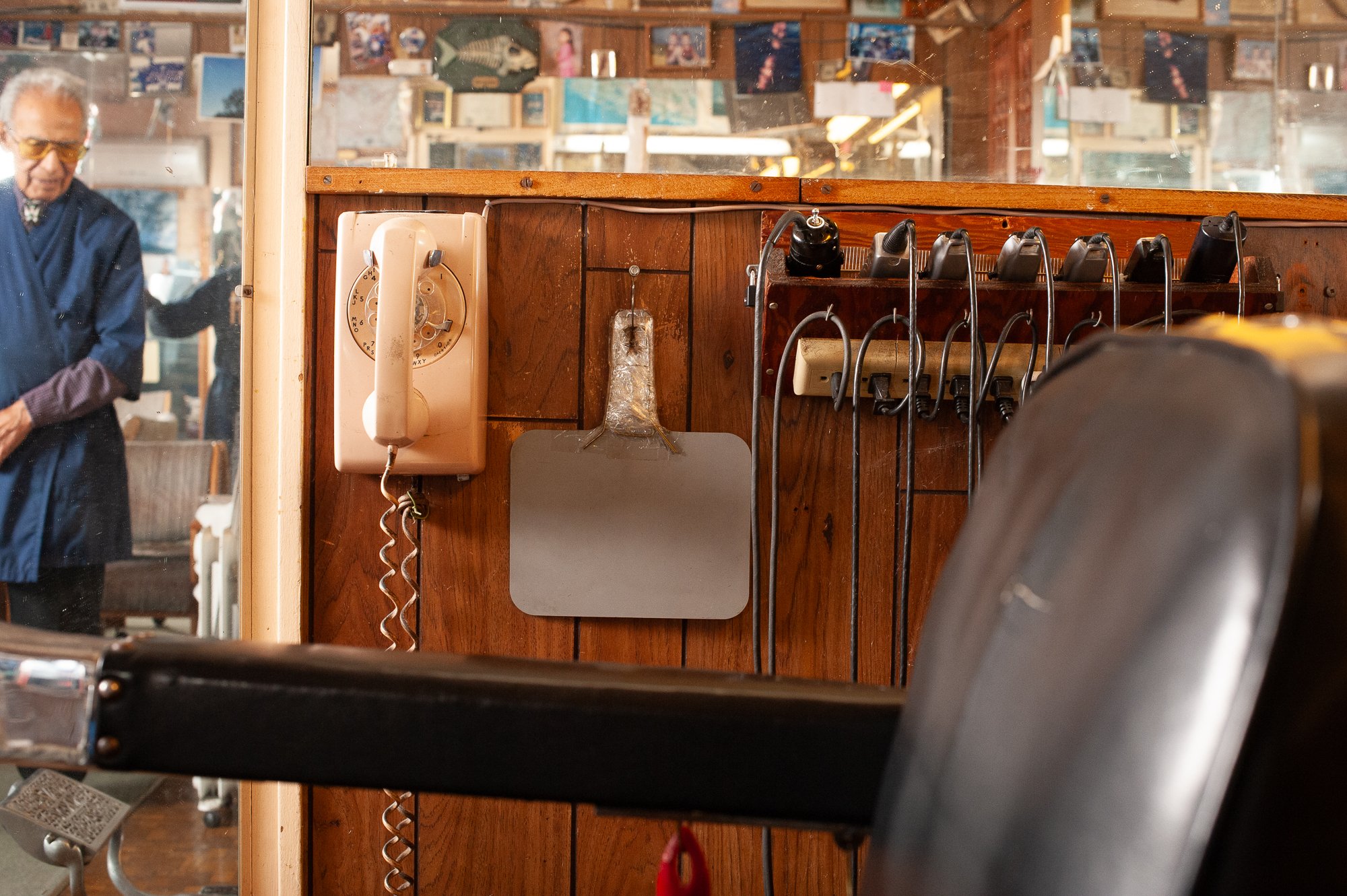
Rotary telephone inside a traditional barbershop, documentary detail photo
An old rotary telephone inside the shop — one of the many small artifacts that speak to the barbershop’s lived-in past

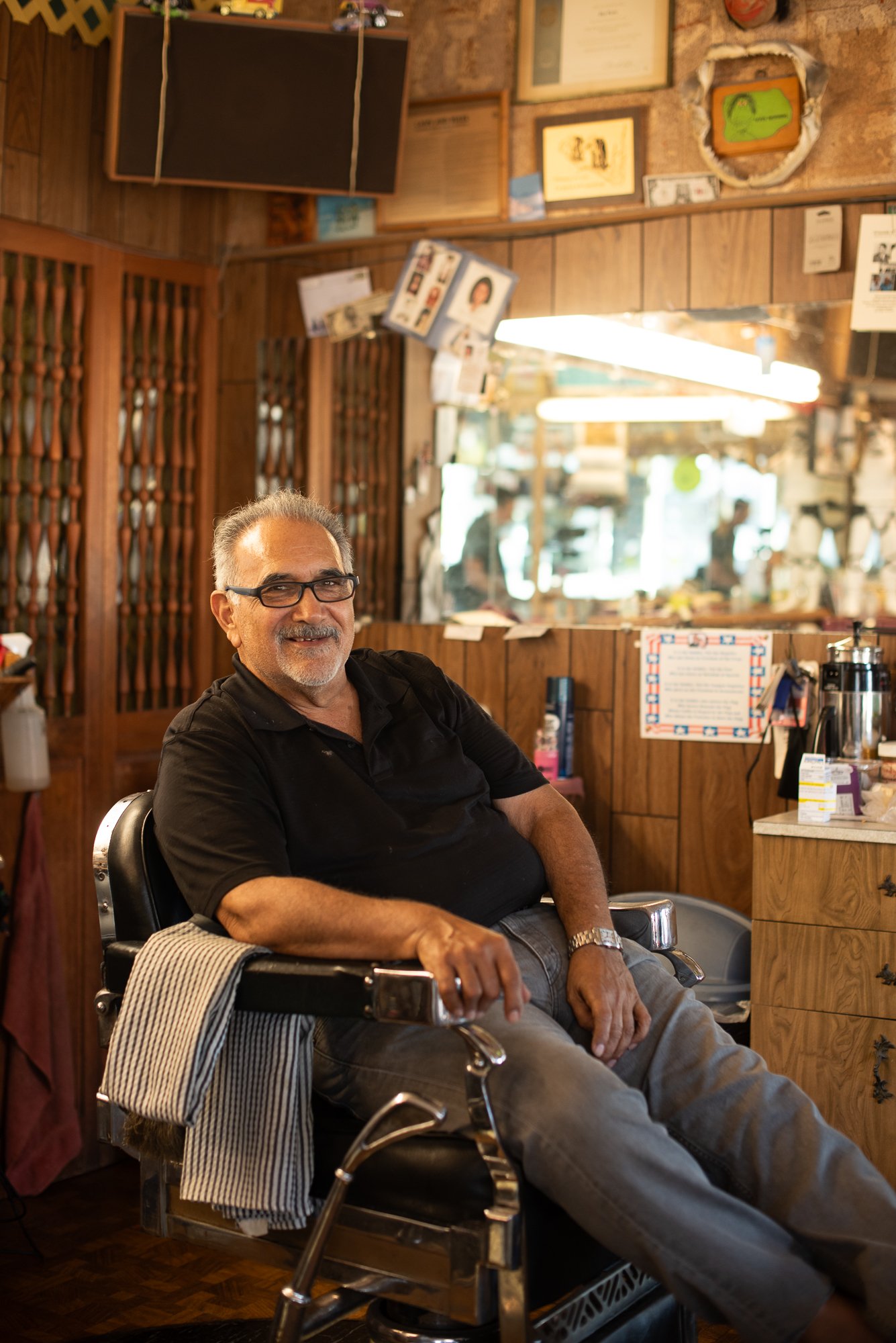
Barber sitting in his chair at a traditional barbershop in San Diego, California

A barber sits in his chair during a quiet moment — a human pause captured in the rhythm of the shop.

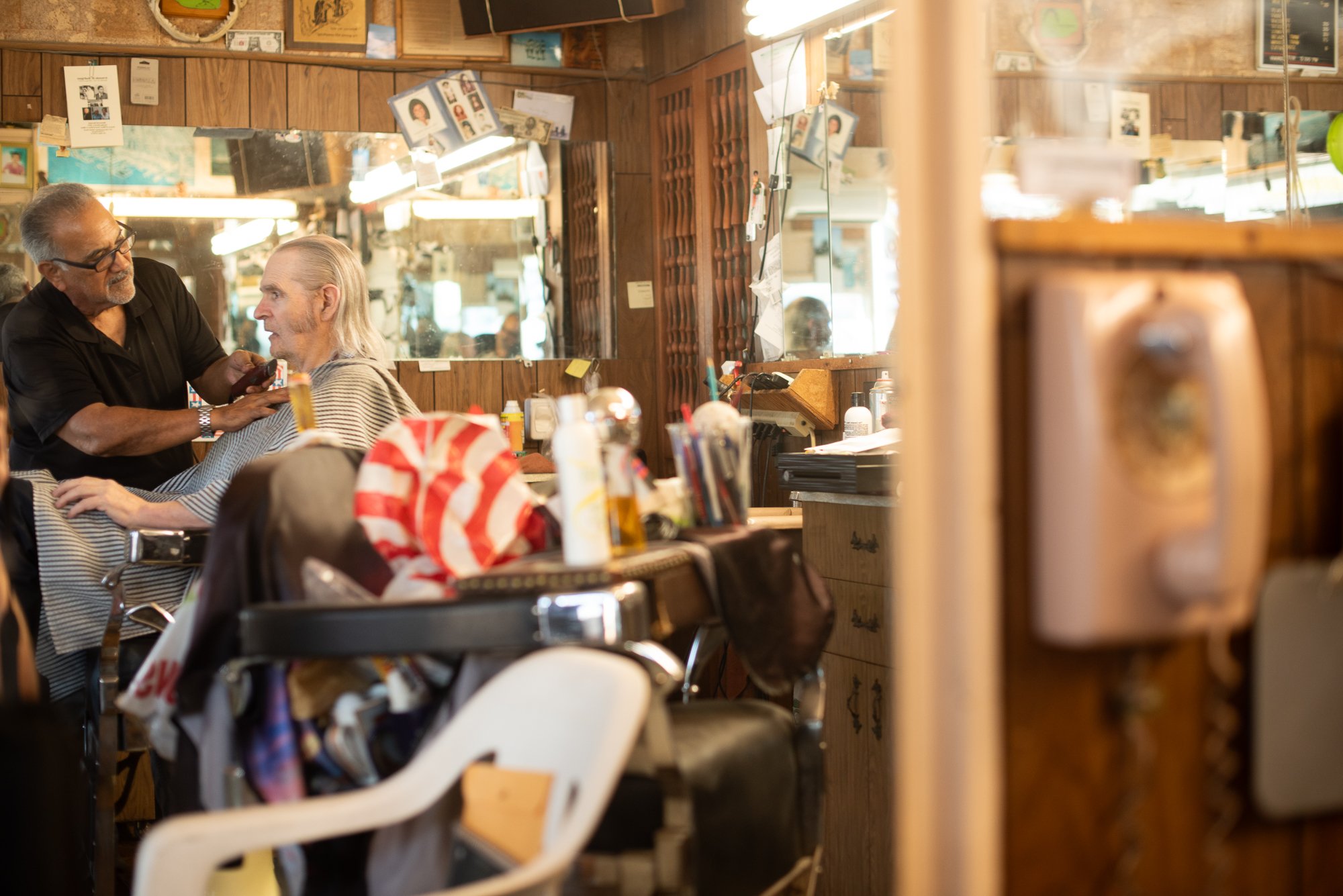
Customer getting a haircut in a traditional barbershop in San Diego, California documentary image

A customer receives a haircut — a simple everyday moment that also anchors the narrative of barbershop culture.

University Club - San Diego

University Club - San Diego, California

Recently had a great opportunity to present some of my cowboy photography to members at The University Club in San Diego, California. Sitting on the 34th floor of the Symphony Towers, the club has the best view in all of America’s Finest City! It was a pleasure just being up there, but even more so presenting work along a couple other photographs that I’m lucky to call friends - Nick Nacca and Gary Allard as well as APA San Diego. It was a great night all the way around. The three of us had fun presenting our work and everyone in attendance was very engaged during and after. I’m grateful for the opportunity to share!!

Go here to shop my fine art cowboy photography prints

Fine art photography at the University Club in San Diego

Photography presentation at The University Club in San Diego, California

Photograph of fine art photographers presenting work at The University Club in San Diego, California

Color photographs taken by Tim Hardy

Black and white photo taken by Rich Soublet
Paris Street Photography

Paris Street Photographs — An Intimate Visual Journey

Paris in Candid Street Photographs

Paris moves quickly, but its most revealing moments happen quietly.

Away from the monuments and postcards, the city reveals itself in passing glances, small gestures, and the subtle choreography of people moving through shared space. These Paris street photographs were made while walking without an agenda — observing light, waiting for alignment, and responding instinctively when form, expression, and atmosphere briefly came together.

Rather than chasing iconic scenes, this body of work focuses on the in-between moments that define everyday Paris: café conversations, solitary figures crossing wide intersections, brief pauses along the Seine, and the unspoken language of posture and movement.

These photographs are not souvenirs. They are visual records of time and place, created to live on the wall as fine art prints.

What You’ll See in This Paris Street Photography Series

This ongoing collection reflects a broad, honest view of the city as it is lived:

  • Quiet exchanges at cafés and sidewalk tables

  • Figures moving alone through architectural space

  • Subtle interactions between strangers

  • Parisian streets shaped as much by people as by buildings

  • Moments of stillness within constant motion

Each image exists as both a documentary moment and a compositional study — balancing structure with spontaneity.

The Process Behind the Photographs

These images were made through patience rather than pursuit.

Street photography, at its core, is about observation — learning how light moves through a space, understanding how people occupy it, and waiting for those elements to align naturally. Many of these photographs came from standing in one place, or simply letting scenes unfold rather than forcing them.

The goal is not spectacle, but authenticity. Nothing staged. Nothing repeated. Each frame represents a singular moment that will never occur again in quite the same way.

Fine Art Prints of Paris Street Photography

All photographs in this series are available as museum-quality fine art prints, produced with longevity and tonal depth in mind.

  • Printed on archival, gallery-grade paper

  • Professional pigment inks for rich blacks and subtle midtones

  • Available in multiple sizes, including large-scale statement prints

  • Select images available as signed, limited editions

These prints are designed for collectors, interior spaces, and anyone who values photography as a lasting object rather than a disposable image.

Custom sizing, framing guidance, and edition details are available upon request.

Collecting Paris, One Moment at a Time

Street photography preserves what would otherwise disappear — a look exchanged, a pause mid-step, a moment of reflection before the city moves on.

If you’re drawn to Paris not as a destination, but as a living, breathing place shaped by human presence, these photographs offer a quieter way to bring the city into your space.

Explore the images below to view available fine art prints, or contact me directly to discuss editions, sizing, and framing options.

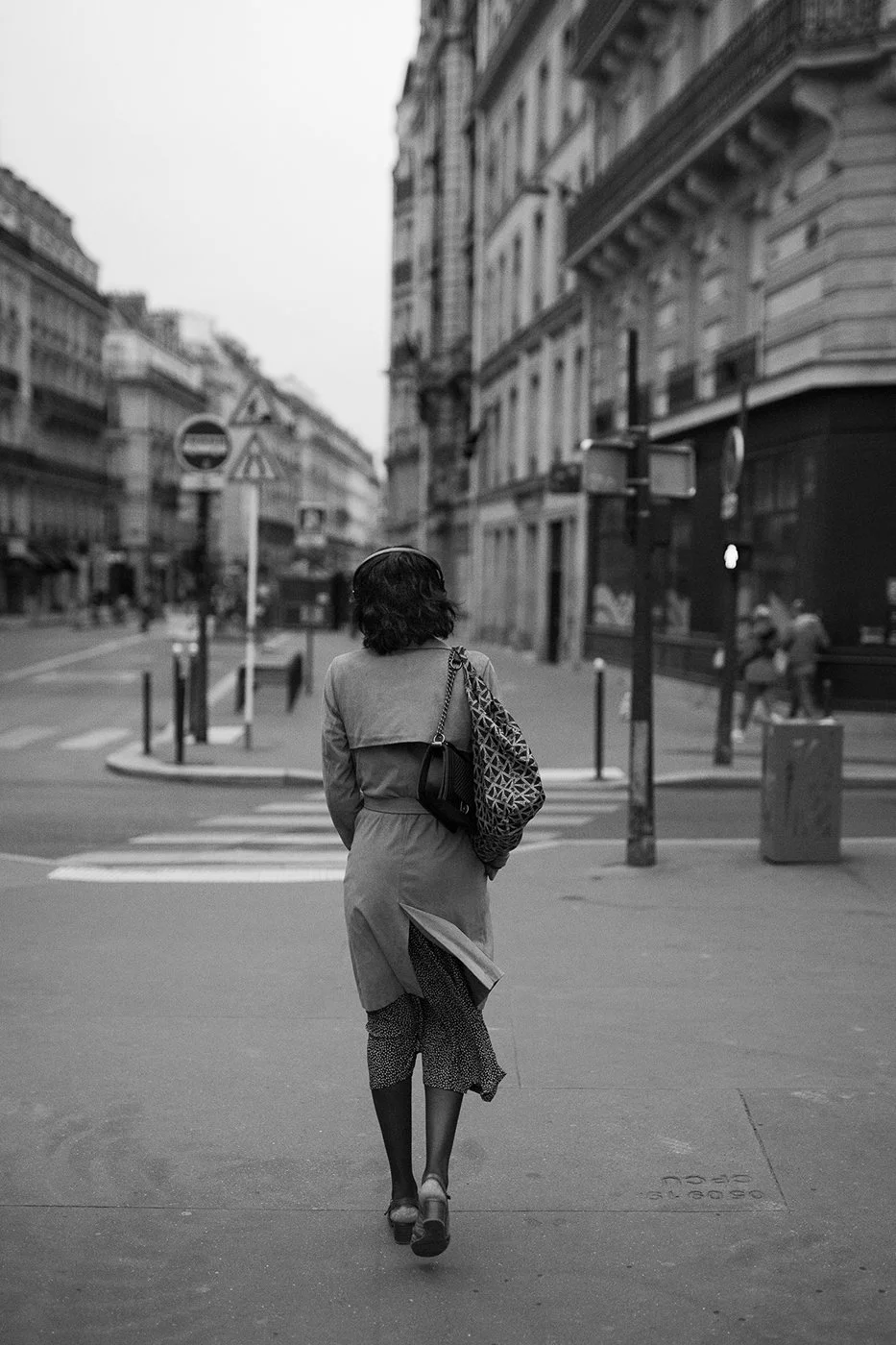
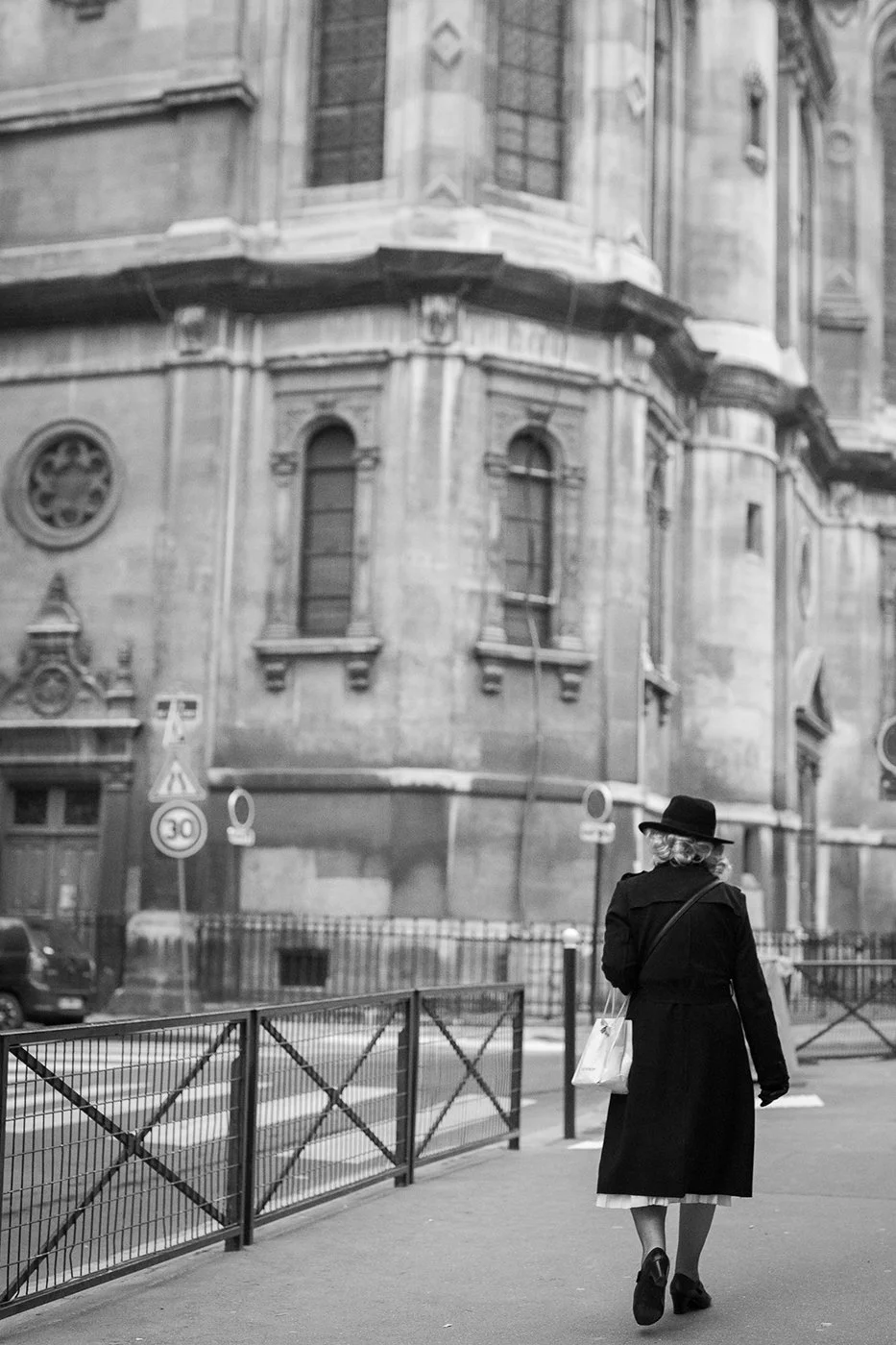
Black and white photograph of a fashionable woman walking alone through a Paris intersection

A solitary figure moves through Paris, framed by architecture and empty space.

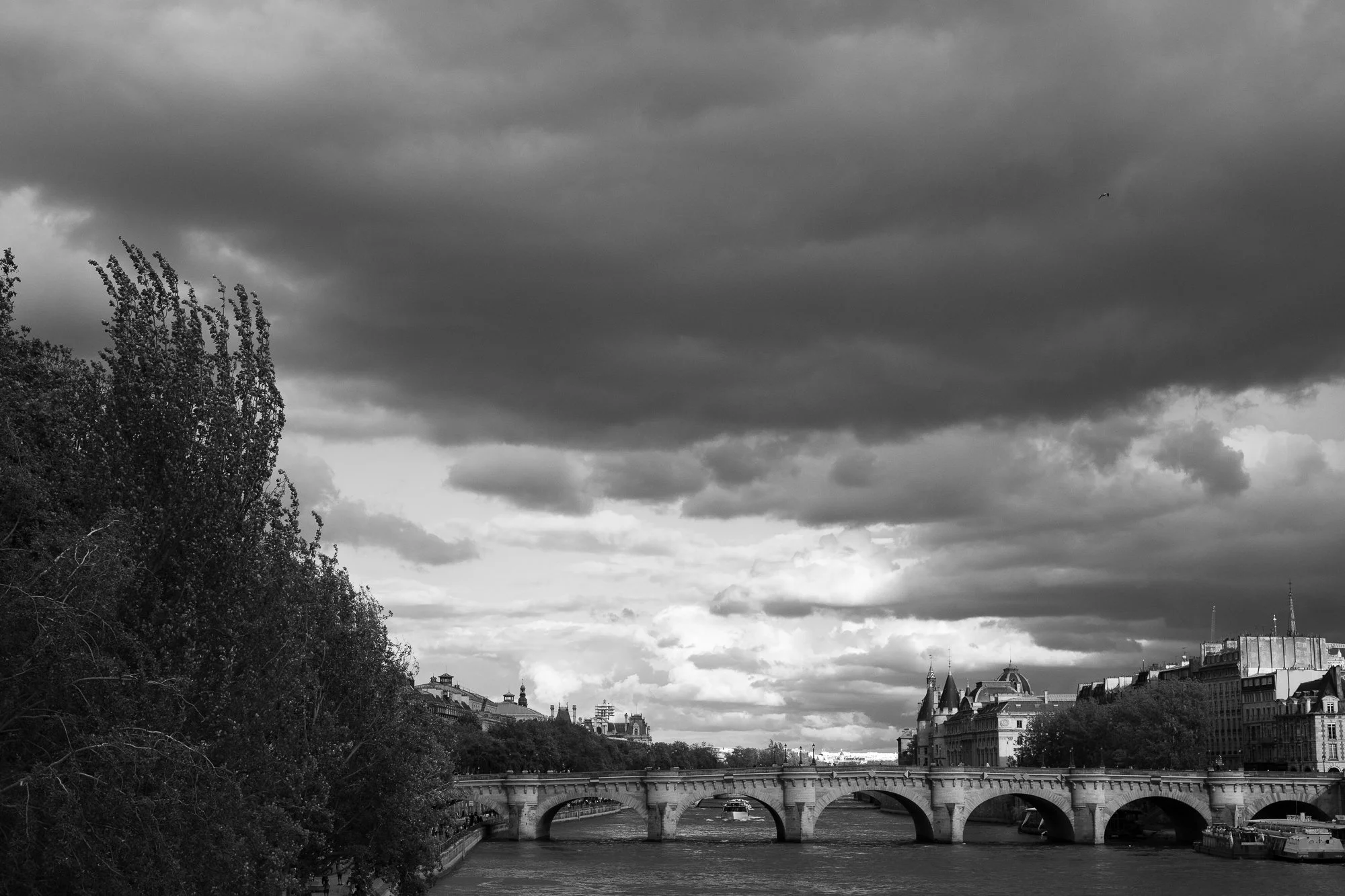
Black and white photograph of a bridge over the Seine beneath dramatic clouds

A quiet moment along the Seine as dark clouds gather over Paris.

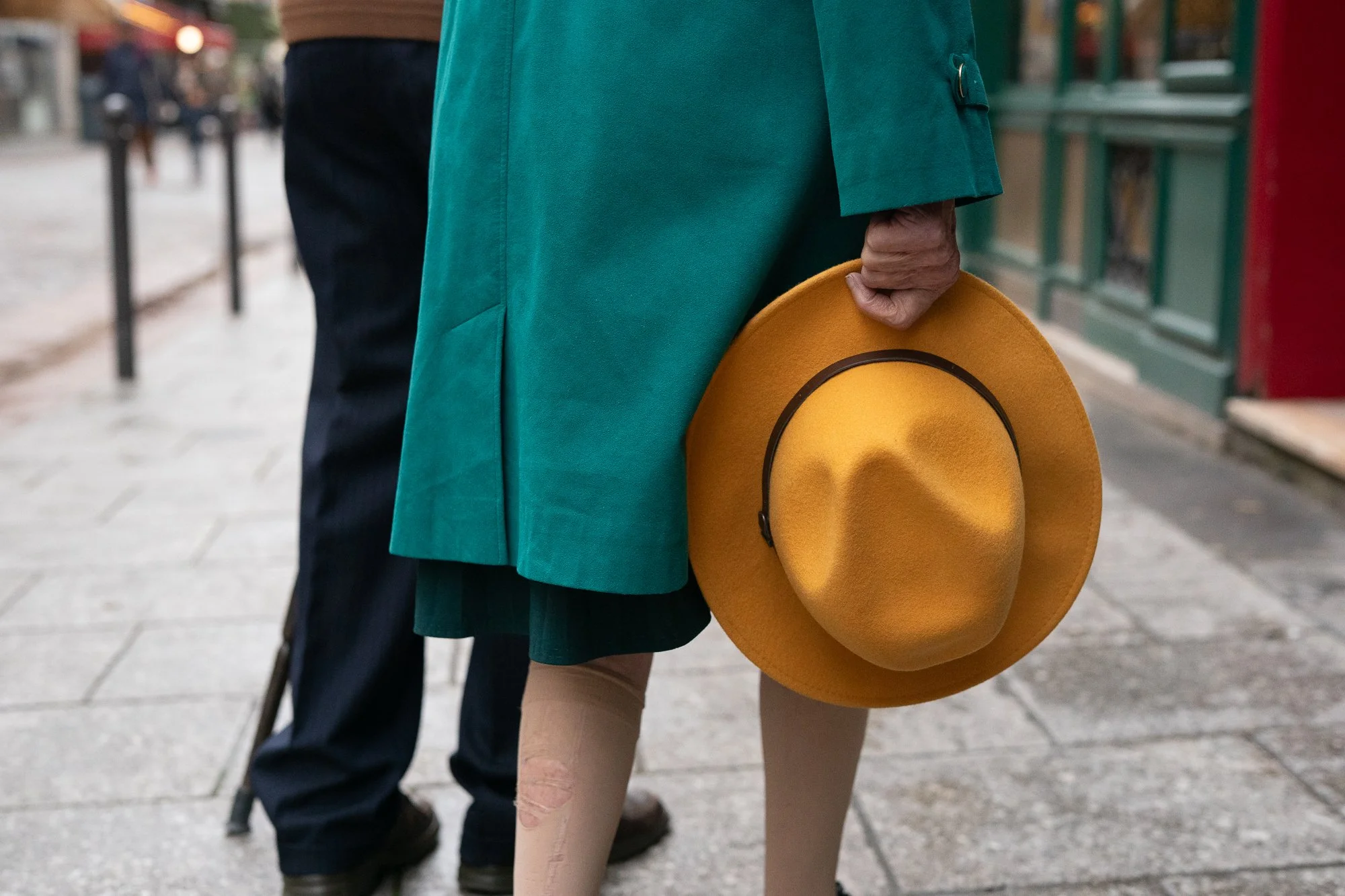
Woman in a green coat holding a mustard yellow hat on a Paris sidewalk

A fleeting Paris moment—color, posture, and gesture captured without interruption.

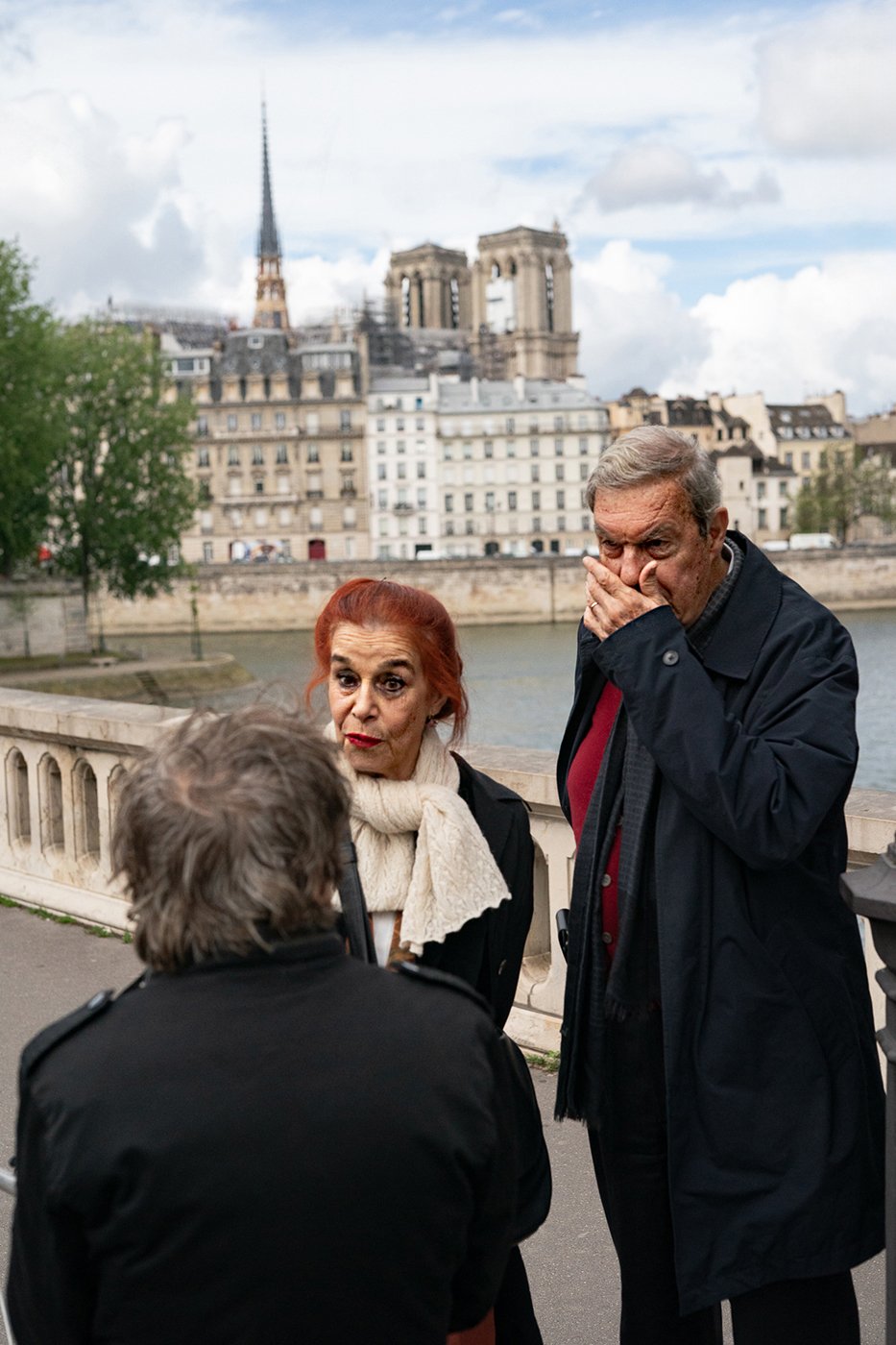
Candid street portrait of people talking along the Seine in Paris

An unguarded exchange along the Seine, framed by the city’s familiar architecture.

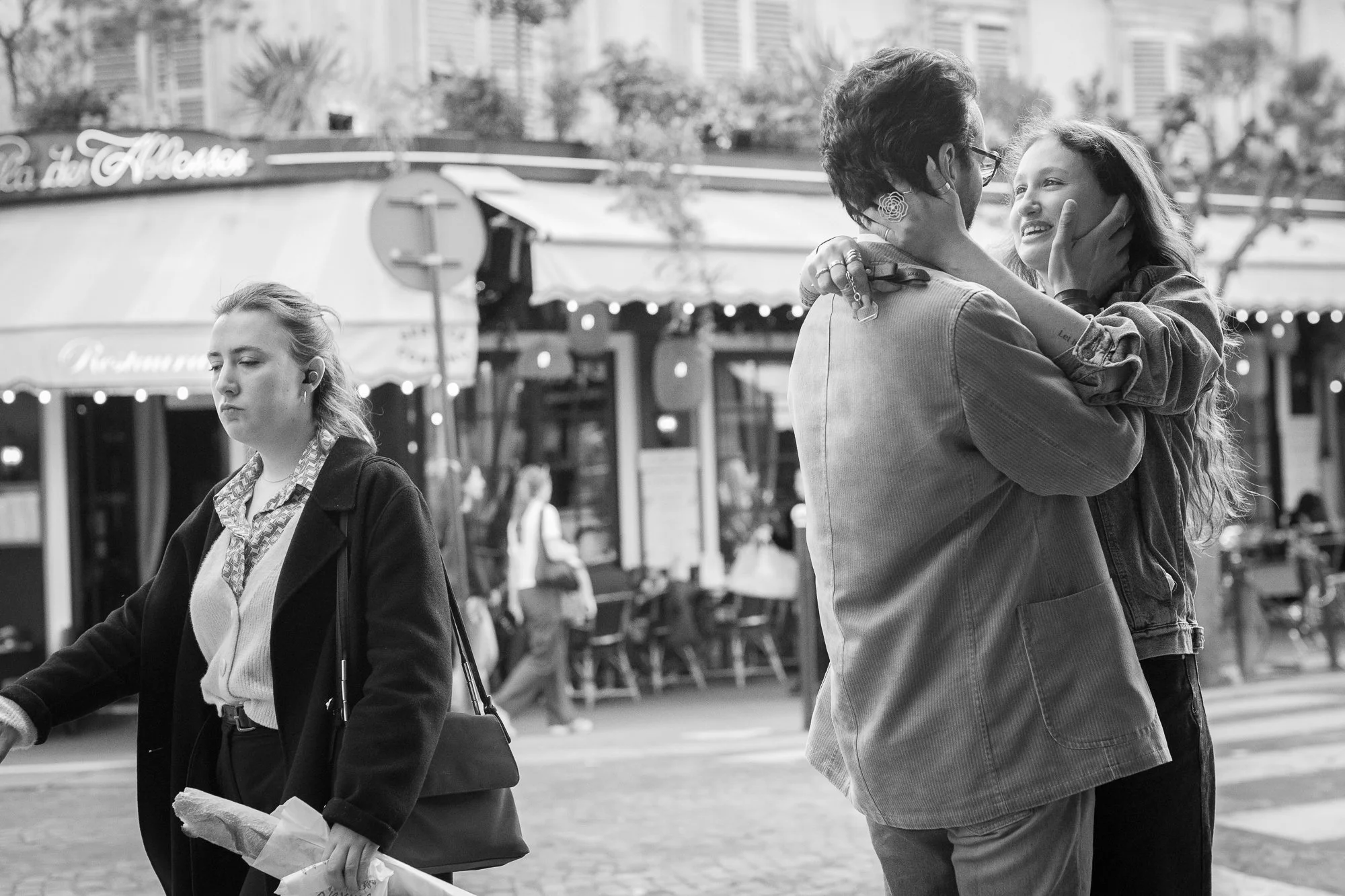
Black and white photograph of a tender moment between two people on a Paris street

Photograph of a couple embracing on the street in Paris, France

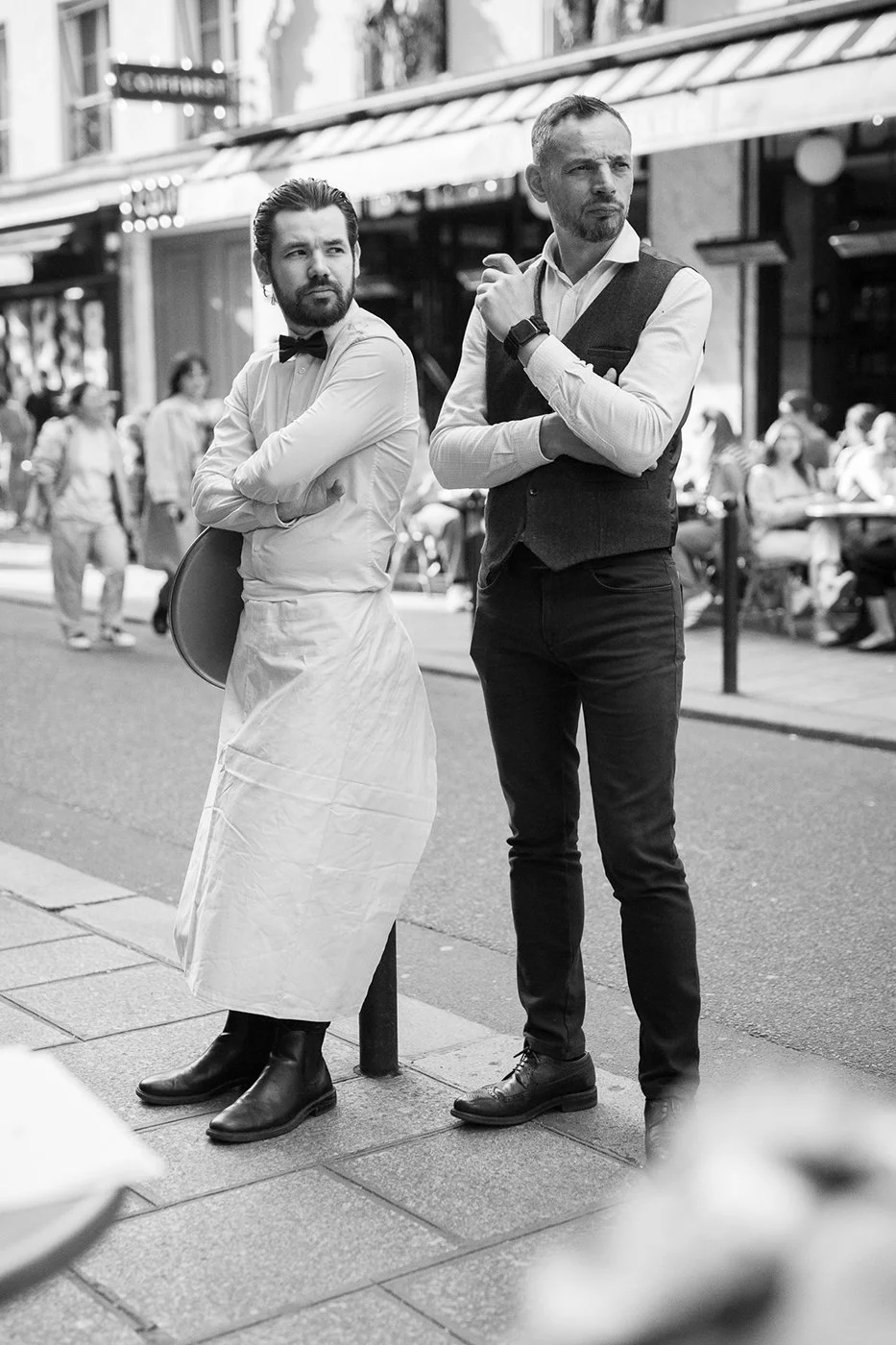
Black and white photograph of café workers standing on a Paris street

Café workers pause between moments, grounded in posture and presence.

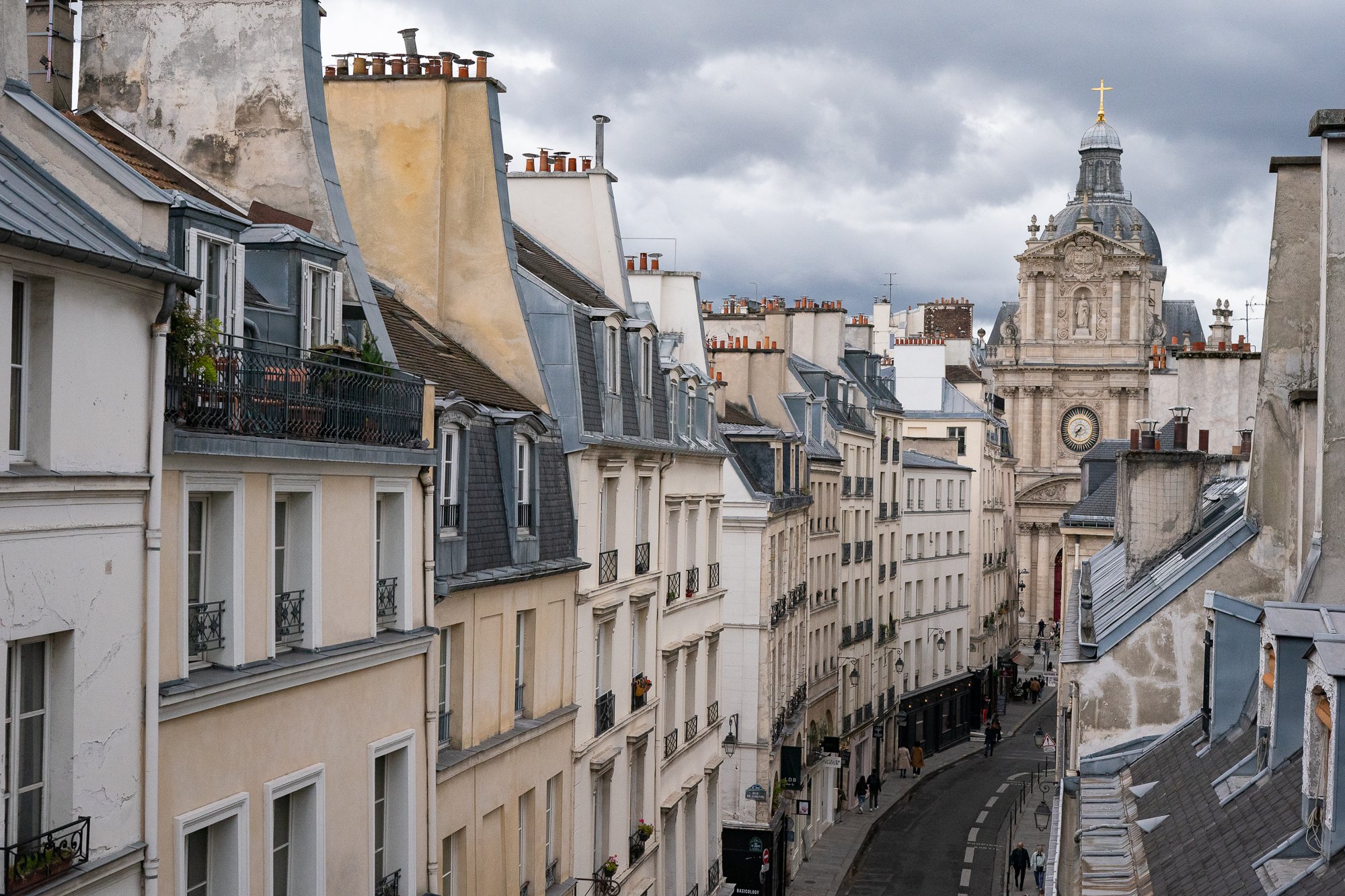
Paris rooftops leading toward Saint-Étienne-du-Mont under a cloudy sky

Paris rooftops unfold toward Saint-Étienne-du-Mont, capturing the layered geometry and muted tones of the city.

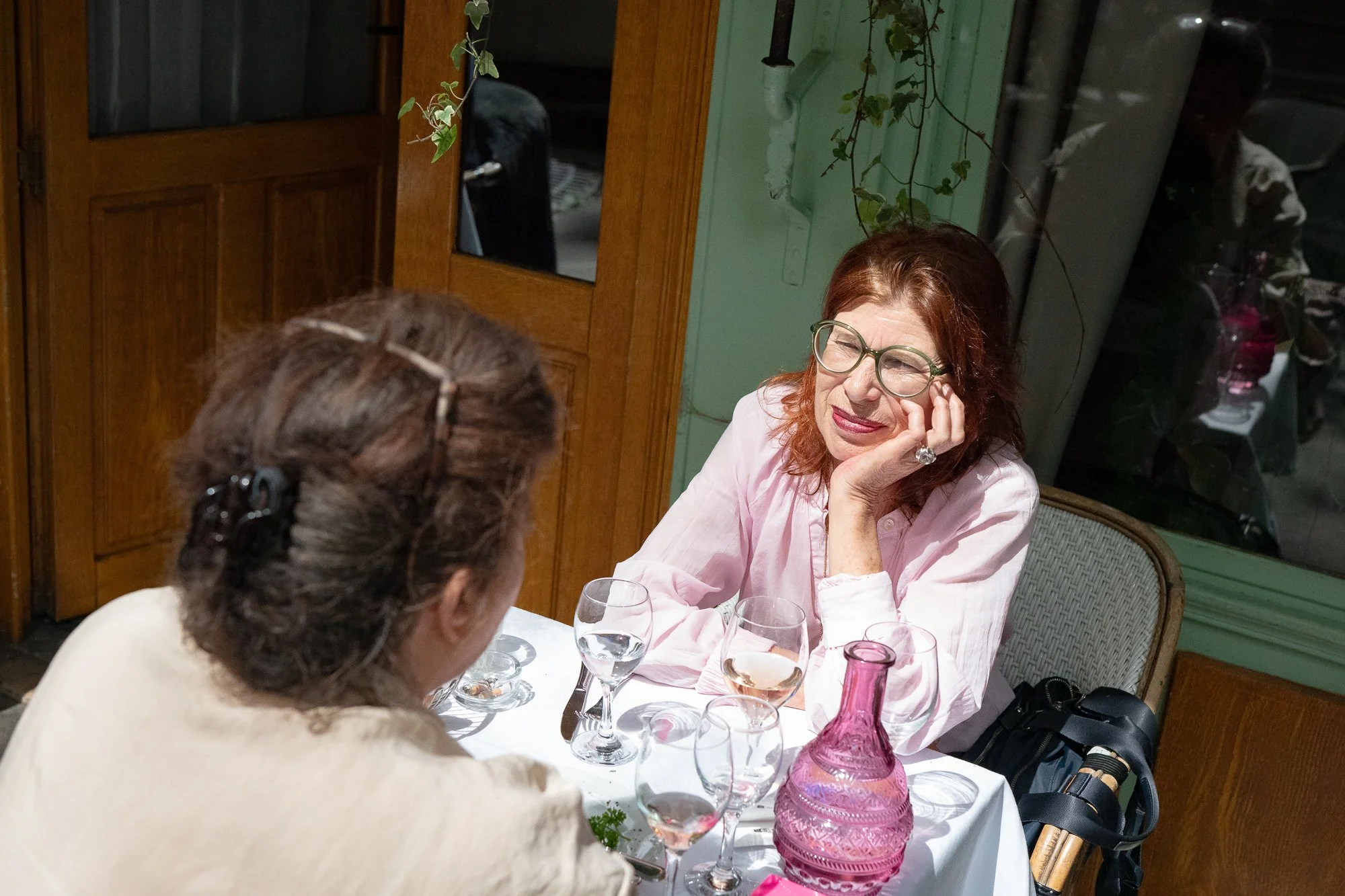
Two women seated at a café table in Paris, engaged in quiet conversation

Photograph of two women drinking at a cafe in Paris, France

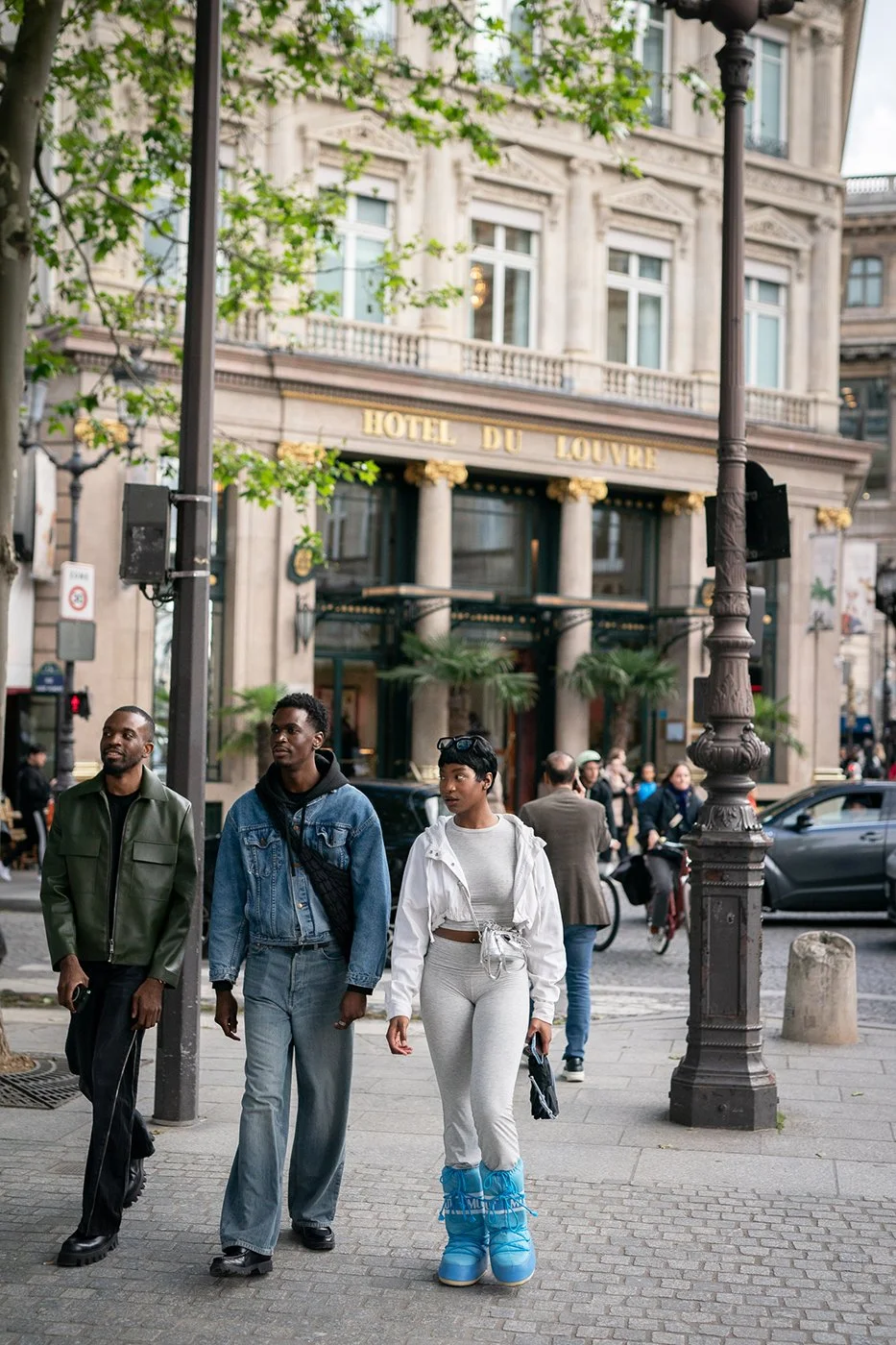
People in fashionable clothing walking near Hôtel du Louvre on a Paris street

Pedestrians move through central Paris, where historic architecture meets modern pace and fashion

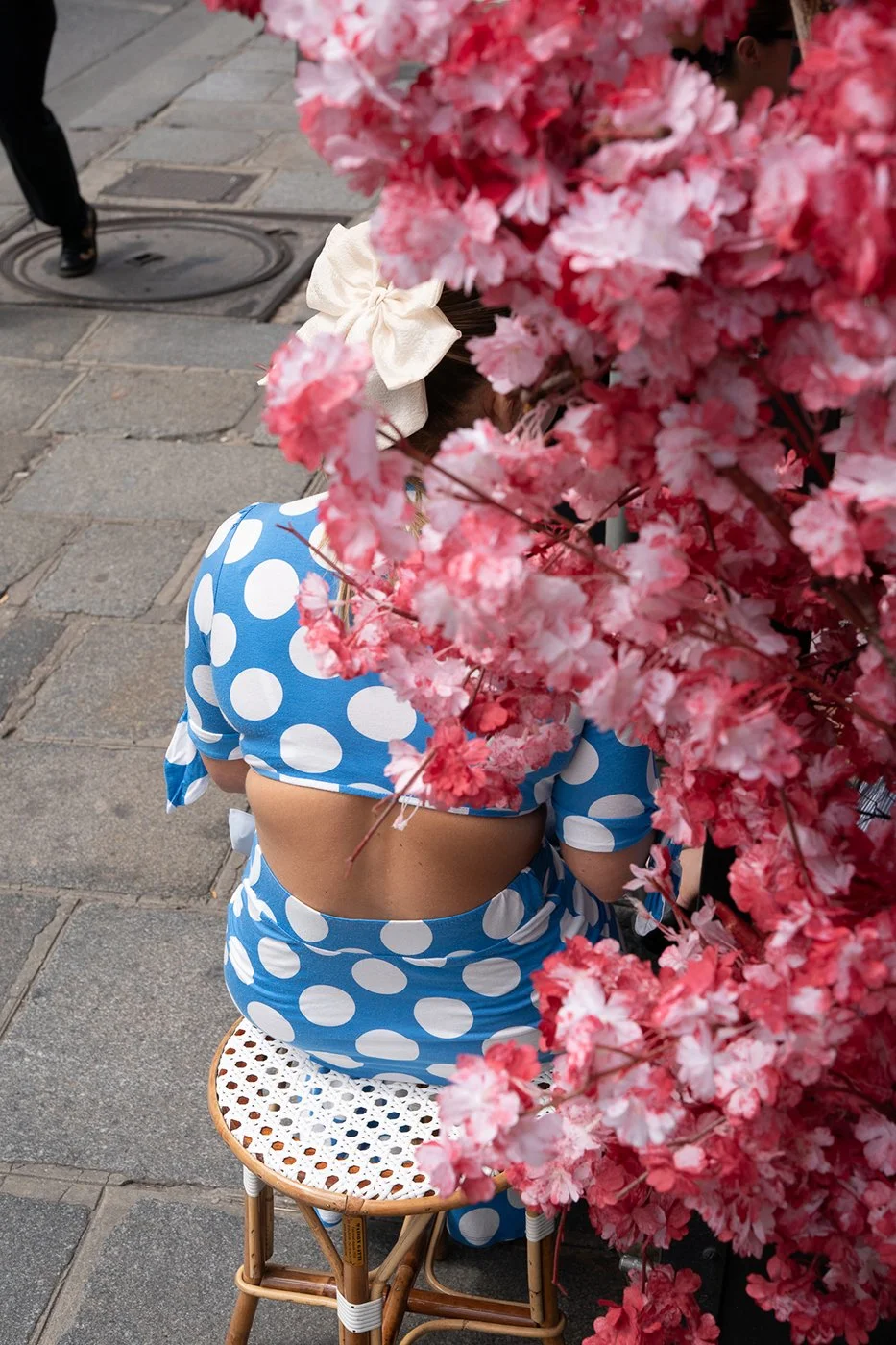
Woman in a polka dot dress partially obscured by pink flowers in Paris

Color and form intersect as a passerby blends into the visual rhythm of the street.

Black and white photograph of a woman walking past historic Paris architecture

Photograph of a well dressed woman walking in Paris, France

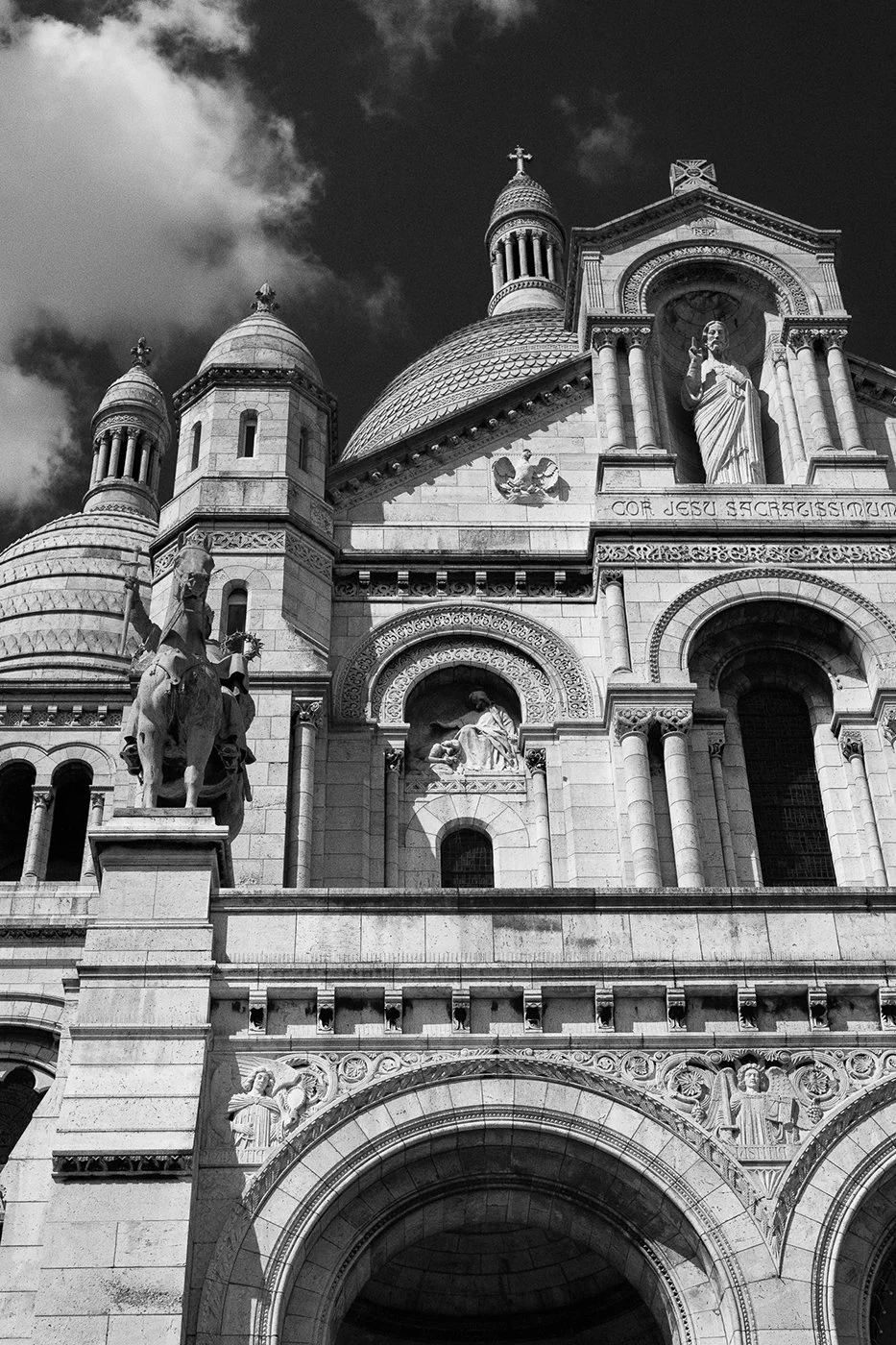
Black and white photograph of Sacré-Cœur Basilica in Paris under dramatic clouds

The Basilica of Sacré Coeur de Montmartre

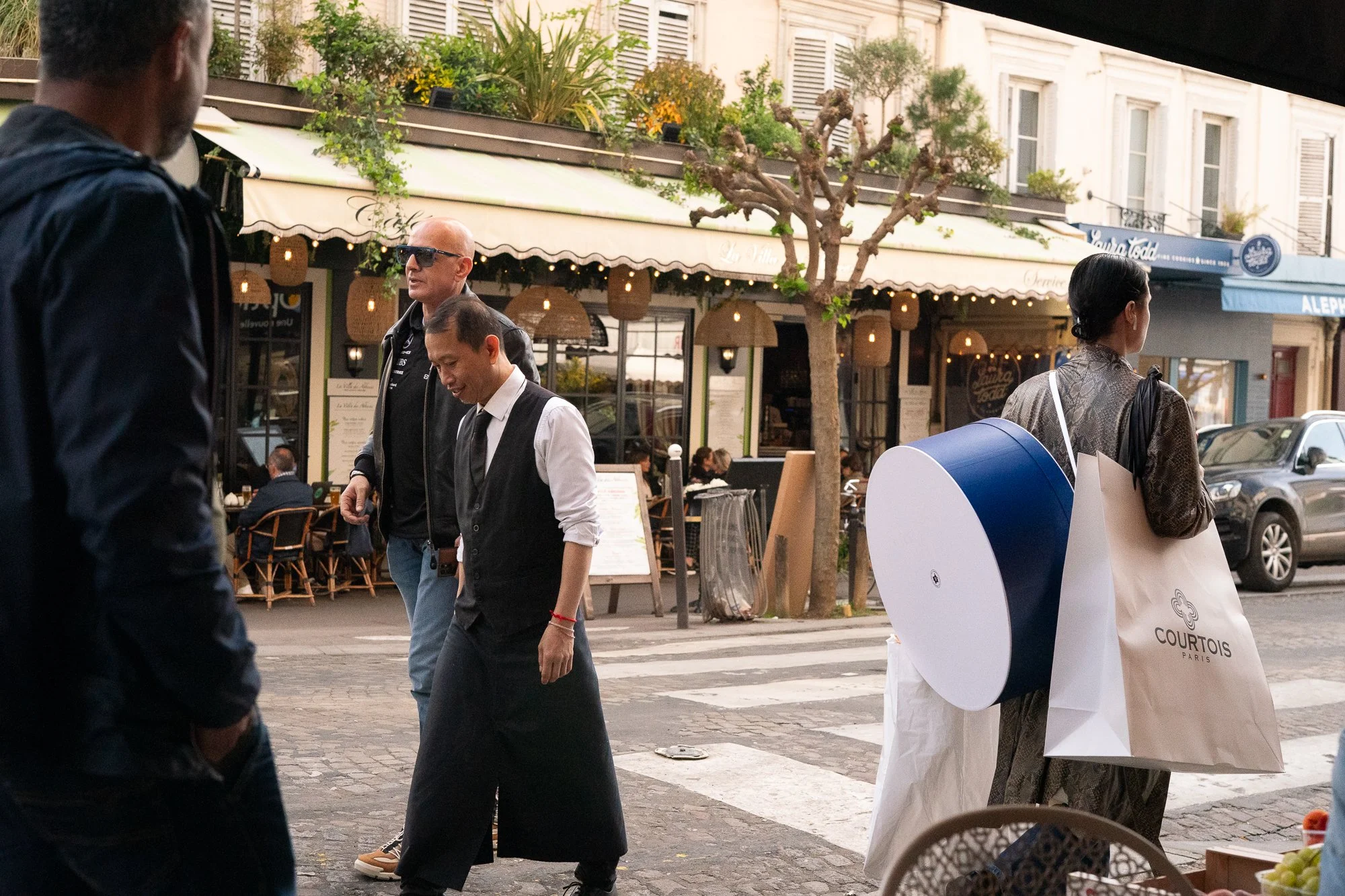
Woman carrying a large hat box crosses a Paris street in front of a neighborhood café, capturing a candid moment of everyday Paris life.

A woman carrying an oversized hat box moves through a café-lined crosswalk in Paris, a small, surreal detail that turns an ordinary street moment into something quietly cinematic.

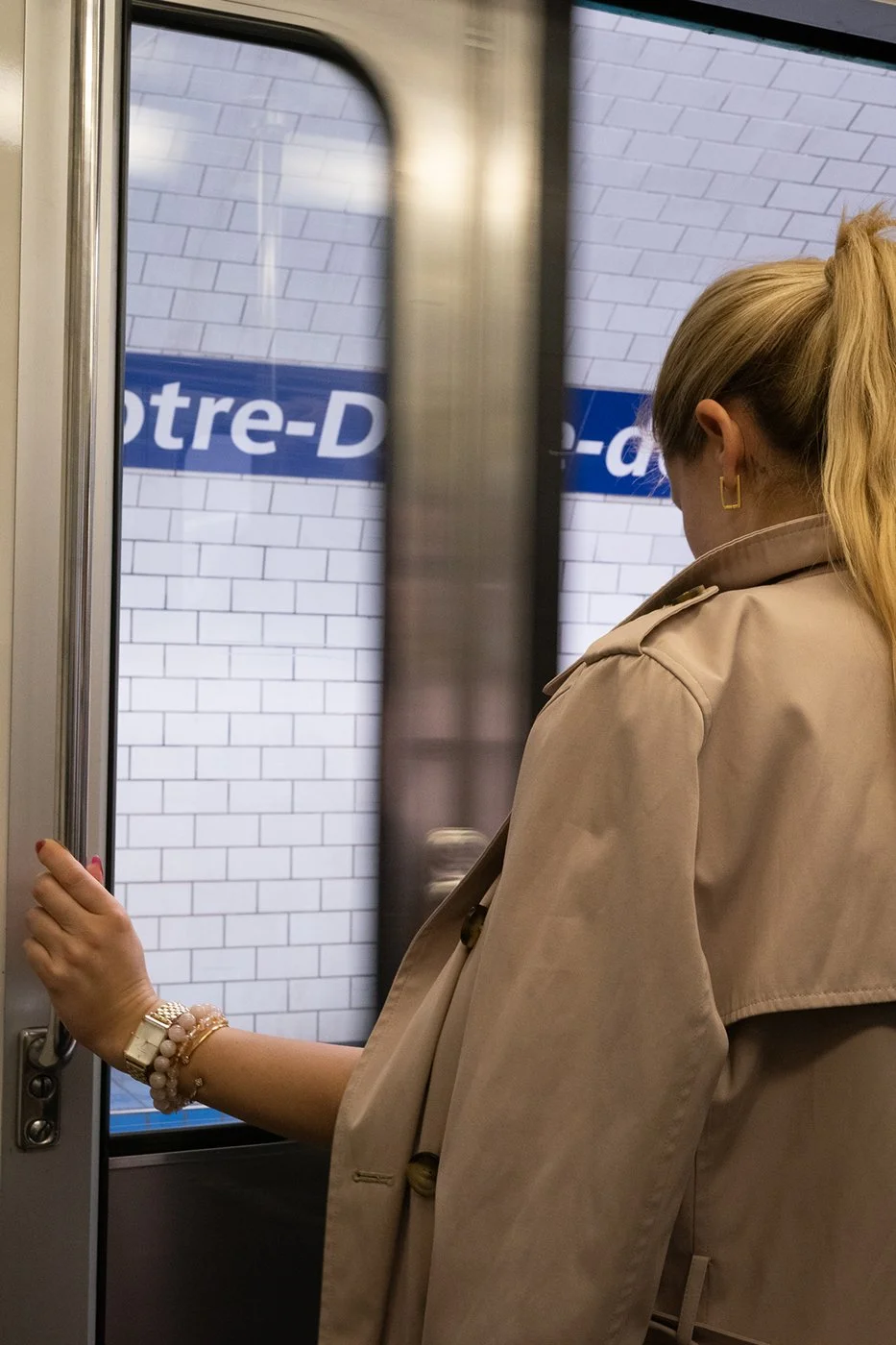
Woman standing inside a Paris metro car near the Notre-Dame station

A fleeting pause inside the Paris metro, where movement and stillness briefly align.

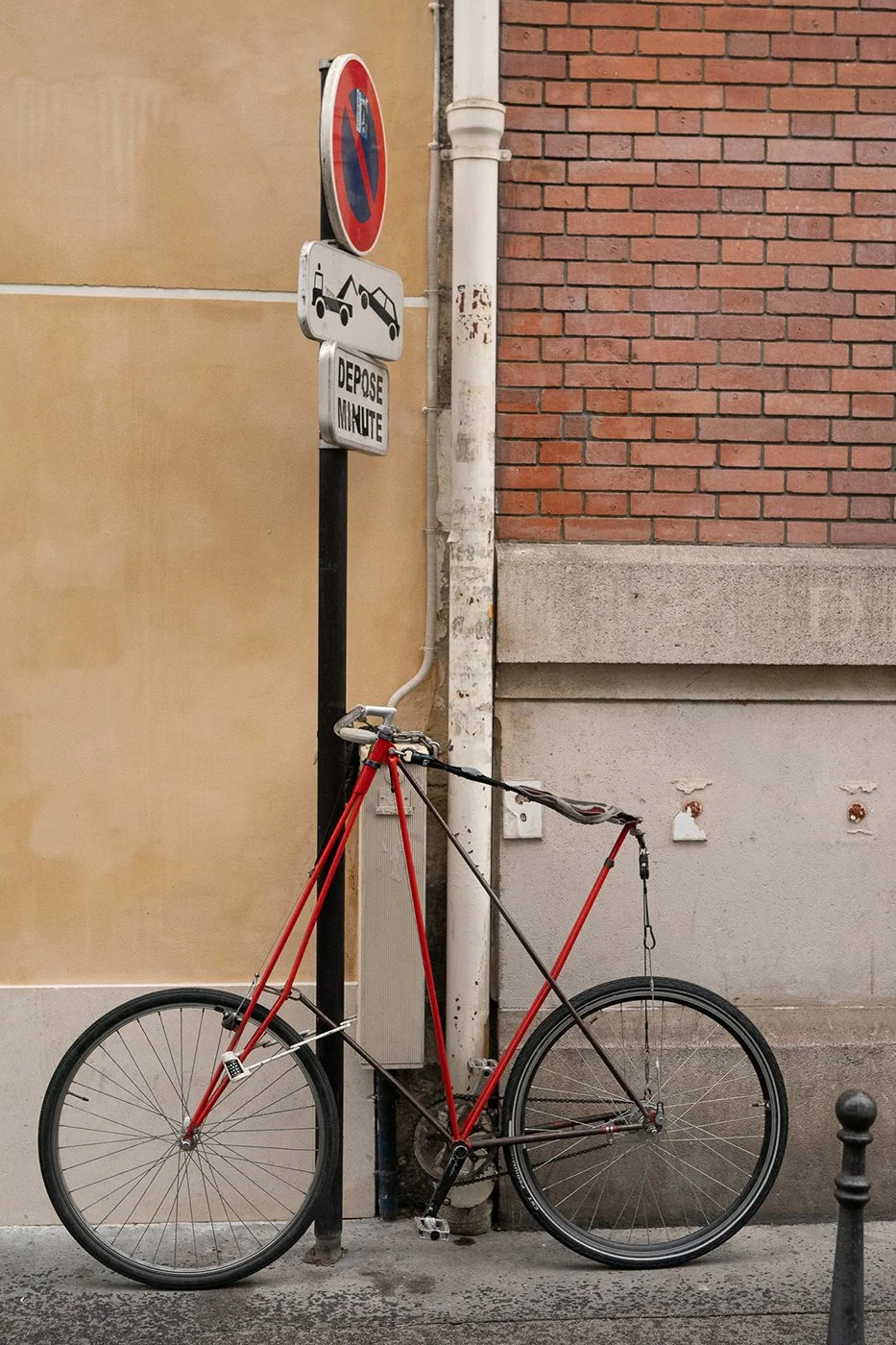
Red bicycle locked to a street sign against textured Parisian walls in France

A red bicycle rests against a worn Paris wall, a quiet study of color, texture, and everyday city life.

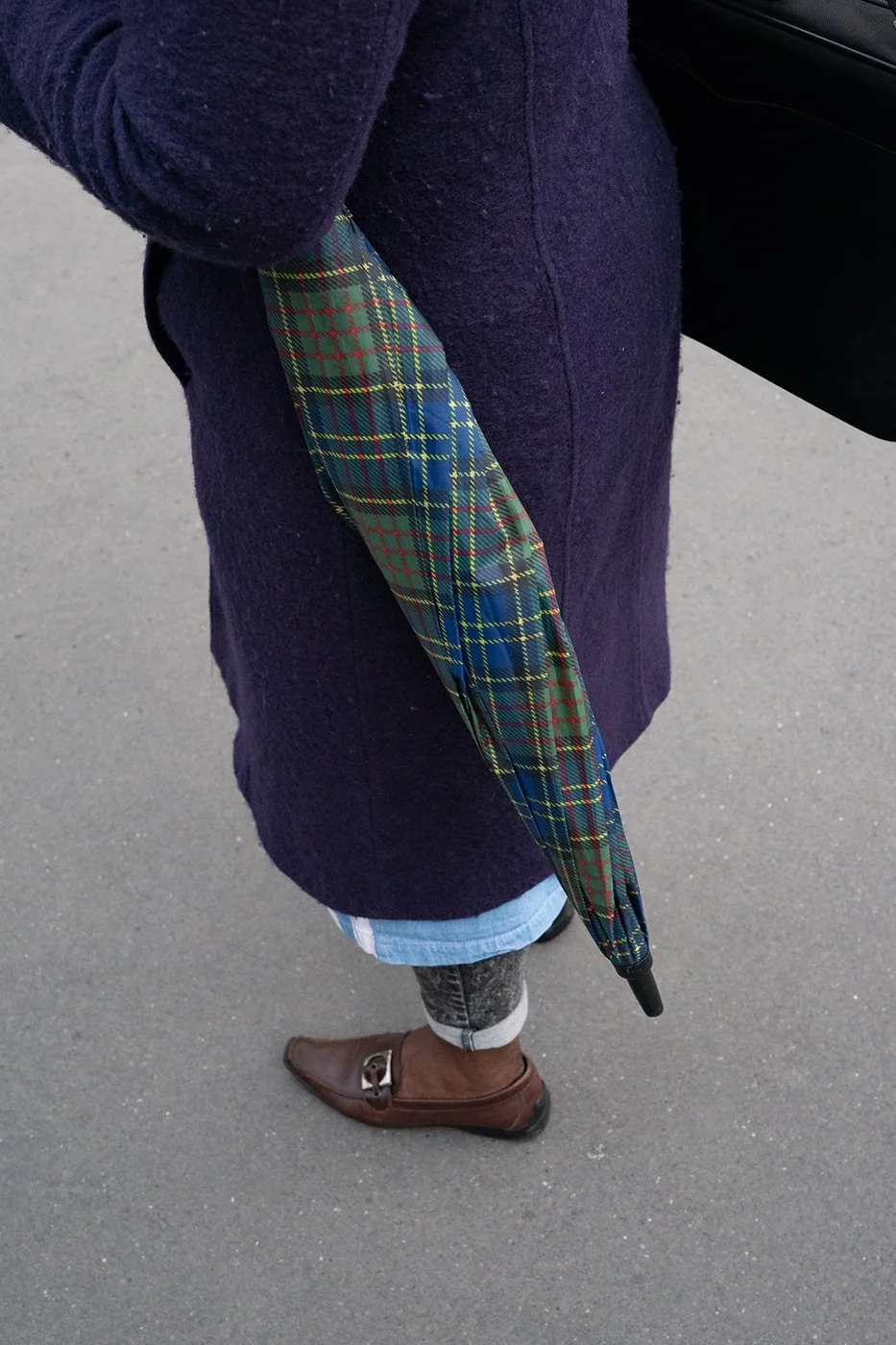
Close-up of a folded umbrella and clothing details on a Paris street

A study of pattern and texture—small details that define everyday Paris.

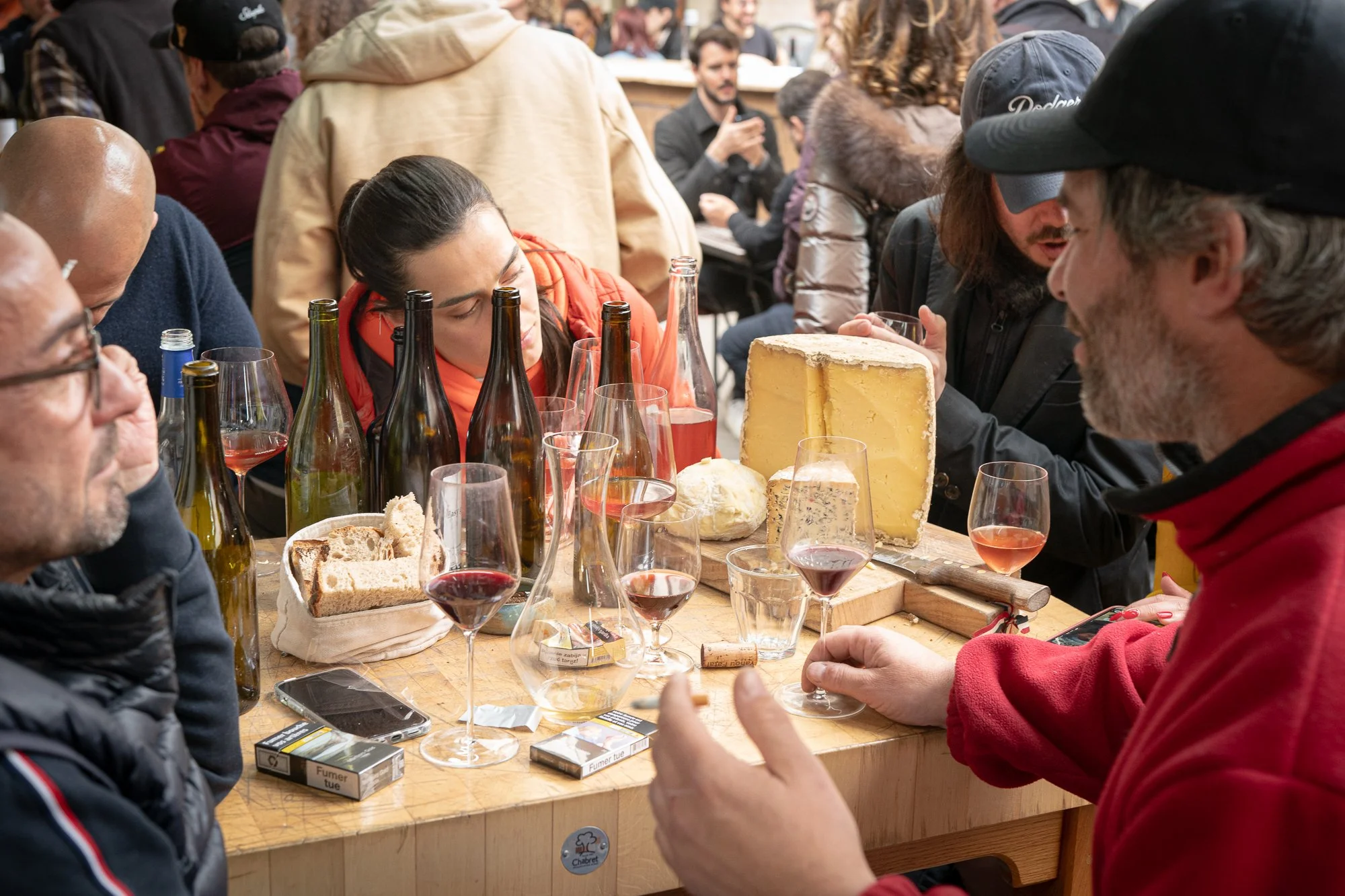
Group of people sharing wine and cheese at an outdoor table in Paris

An afternoon unfolds around wine and cheese, capturing the social rhythm of everyday Paris.

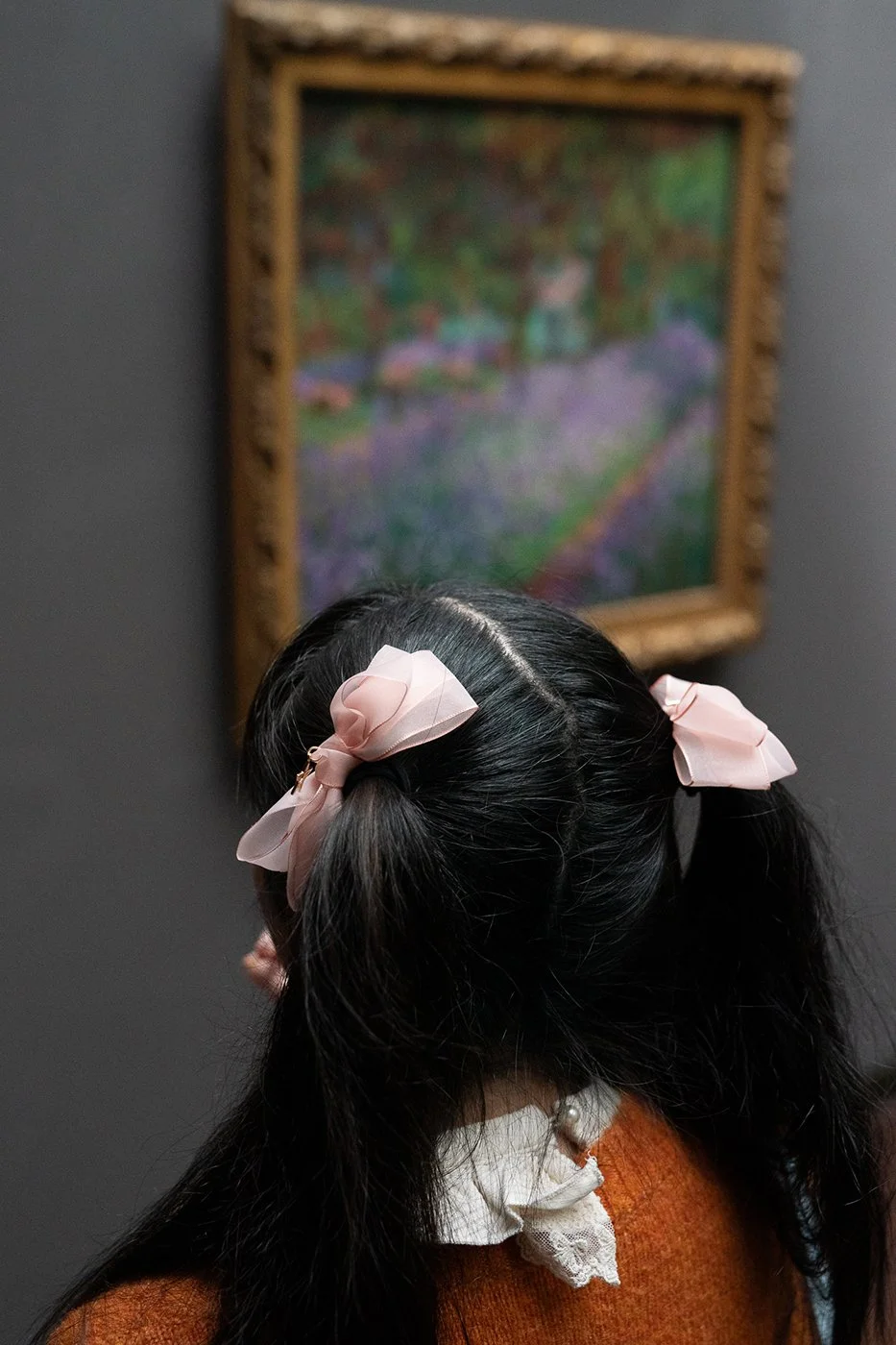
Visitor viewing a painting inside a Paris museum, seen from behind

A quiet exchange between viewer and artwork inside a Paris museum (La Louvre)

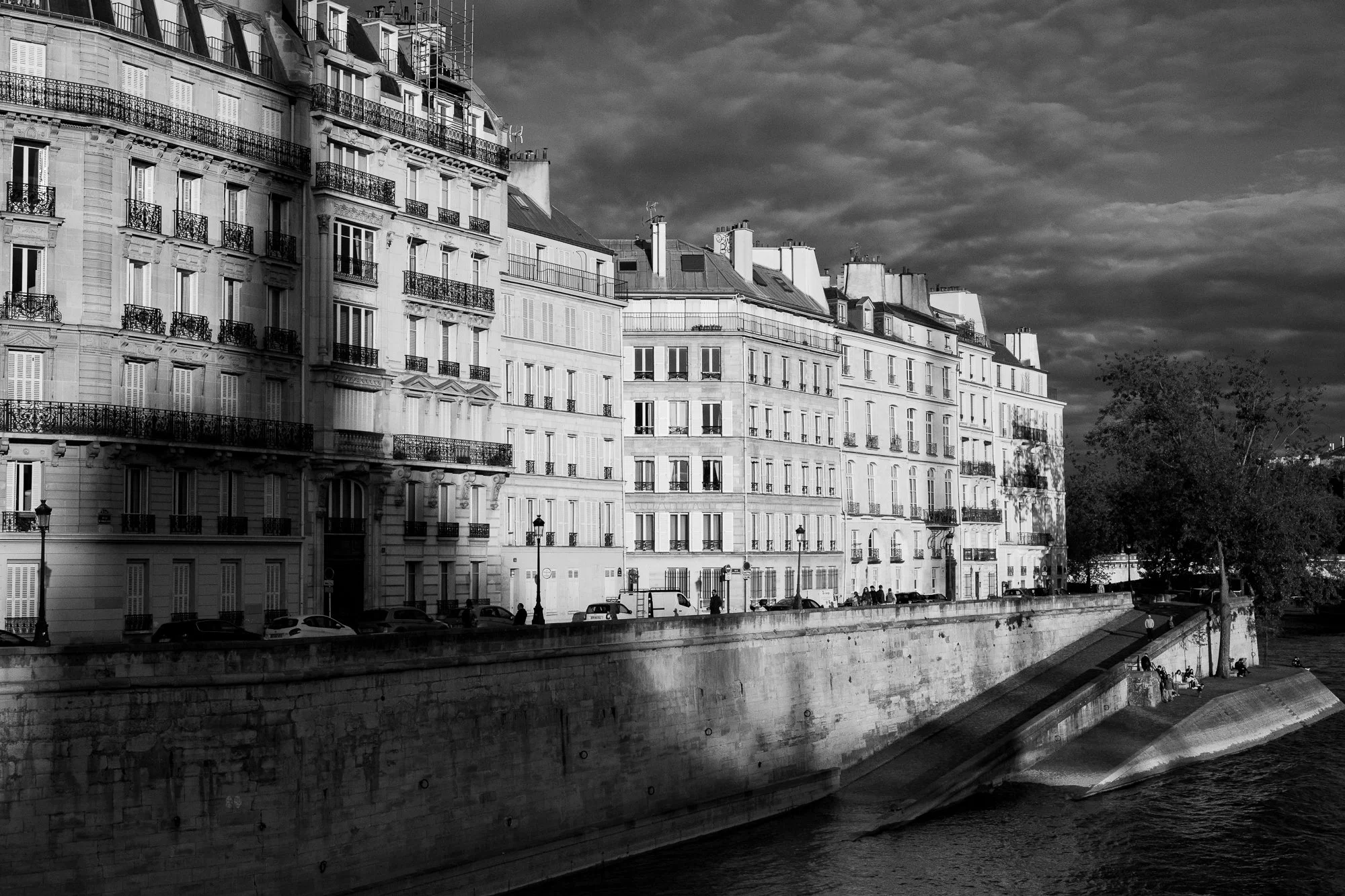
Black and white photograph of classic Paris buildings along the Seine River

Shadow the Notre Dame Cathedral on buildings along the Siene River in Paris, France

Sydney McLaughlin-Levrone

Sydney McLaughlin-Levrone - Olympics

Gold Medal - World Record - Hurdles

American Hurdler Sydney McLaughlin-Levrone has been putting on quite a show at the 2024 Olympics in Paris. If you saw her performance last night in the 400m race, then you know why people are calling her the GOAT! There wasn’t another runner even close to her at the finish line when she took home another Gold Medal and set a new world record! Making America proud!!

I shot these photographs of Sydney a few years back while she was training on the track in Los Angeles and they are available for commercial licensing, editorial licensing, and wall as fine art prints / wall art. Contact me directly to inquire rob@robhammerphotography.com

Portrait of Sydney McLaughlin Levrone

Photograph of Sydney McLaughlin-Levrone training

Sydney McLaughlin Levrone smiling

Portrait of Olympic Champion Sydney McLaughlin-Levrone

Sydney McLaughlin-Levrone training on a track

Why Choosing the Right Western Photography Gallery Makes All the Difference

What a True Western Photography Gallery Offers You

How to Recognize Authentic Cowboy Prints & Find the Gallery That Delivers

When someone searches for a Western Photography Gallery, they aren’t just shopping for images. They’re shopping for moments—stories framed in dust, sky, horses, and grit. If you’re on that path, you want work that goes beyond decor. You want pieces that truly bring you into the West.

Here’s what separates an ordinary gallery from one that shows Western photography worth owning—and why browsing the right gallery’s prints matters.

What Realness Looks Like

The most memorable Western photography galleries don’t rely on props or polished scenes. They show real cowboys, working through weather, dawn light, and hard ground. The best prints are made on working ranches (not back lots), shot in conditions most photographers don’t love: dust, heat, early light, or cold wind. That “grit,” the unscripted moments, give each photo life.
Details Matter, & They Tell Stories

  • Print Quality & Materials: Look for archival paper, fine art printing processes, signed and numbered editions. You don’t want distortion, bad color, or flimsy framing when it’s hanging in your living room.

  • Story & Location: Where was this shot? What season? Who is in the frame? Knowing it was taken at a historic ranch in Texas, or under heavy skies in Nevada, adds meaning.

  • Range of Styles: Cowboys roping, branding, open range, strong cloudscapes, old barns, quiet moments, motion blur—variety signals someone curating with intention.

Why My Gallery Is Different

Here’s how my gallery aims to hit what you’re looking for when you type in Western Photography Gallery:

  • Prints of real cowboys doing real work—no models, no stage setups.

  • Both black & white and color pieces that capture light, weather, and texture.

  • Locations from working ranches across the American West—Texas, Montana, Nevada.

  • Thoughtfully produced limited editions, signed, numbered, ready to hang or frame.

  • Enough selection to find something that speaks to you—whether you like dynamic action, sweeping landscapes, or intimate portraits.

How to Use This Gallery Right Now

If you want to see Western photography prints that match what you’re searching for:

  • Visit my gallery page - Out of a few favorites? Compare sizes and print make—think about where you’ll hang it.

  • Need framing suggestions? Reach out. I’m happy to help visualize a piece in your space.

  • Not ready yet? Bookmark the gallery or join the email list—new work drops regularly, and limited editions sell.

Gallery of western cowboy photography prints

Western cowboy photography prints

Black and white photography print of a cowboy on the 6666 Ranch in Texas

Cowboy Photography Gallery

Fine art black and white photography print of the Grand Teton Mountains

Western landscape photography print

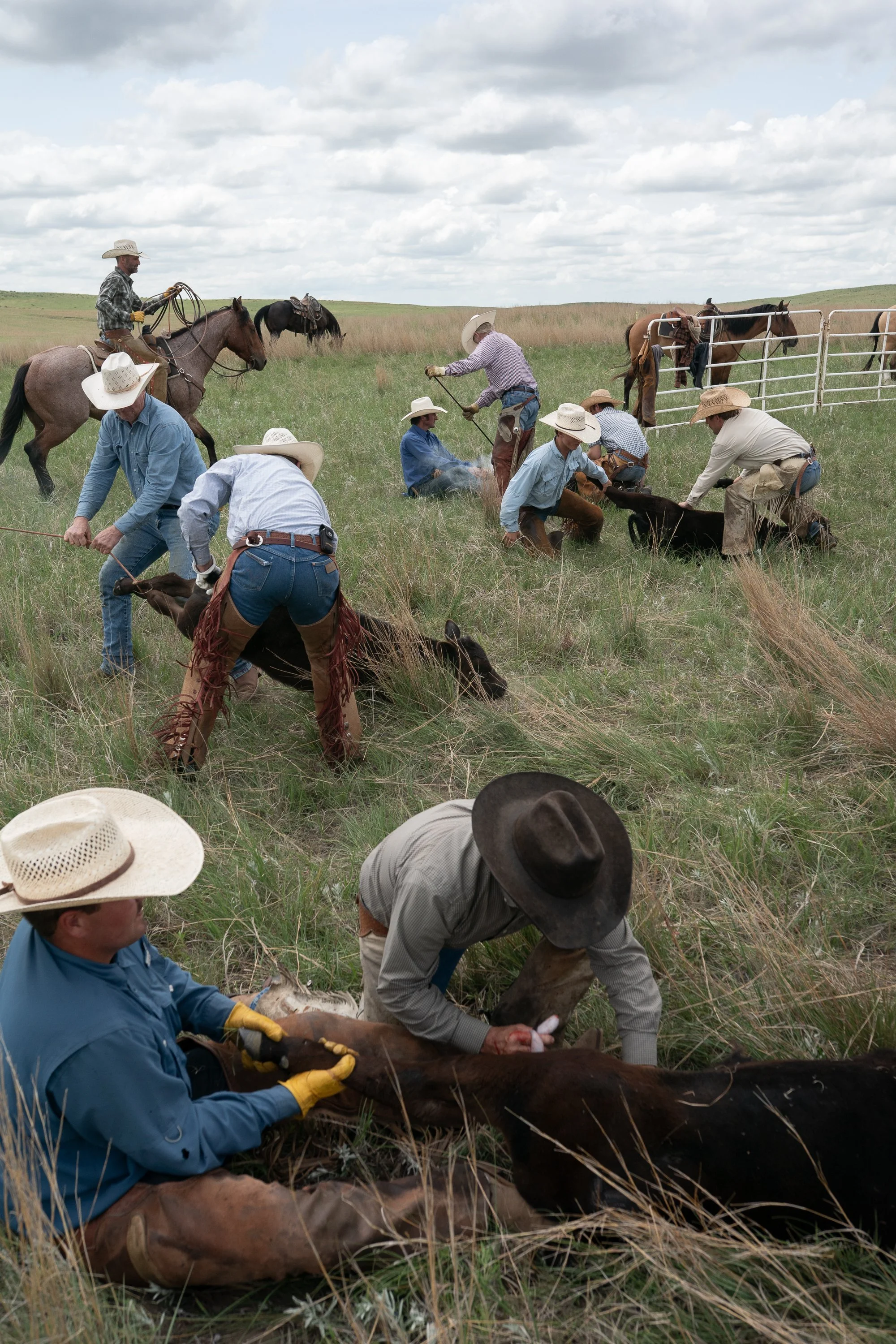
Limited edition cowboy cattle branding photography print

Cattle branding photography print

Authentic black and white cowboy photography print

Black and white cowboy print

Black and white photograph of cowboys trailing cattle on a ranch in Montana

Photograph of a Montana cattle drive

Authentic photography prints of American Cowboys

Western Photography Gallery

Cape Cod Photography

Cape Cod Photography: Quiet Coastal Landscapes & New England Summer Light

I’ve been coming to Cape Cod every summer for as long as I can remember.

Long before I ever picked up a camera, the place was already familiar—low light over the water at the end of the day, the smell of salt and marsh, the feeling of driving out toward the edge of the land where everything starts to thin out. Over time, those memories became something I wanted to hold onto more deliberately.

These photographs come from years of returning, not as a visitor passing through, but as someone who knows what the Cape feels like when you slow down enough to pay attention.

Photographing What Doesn’t Announce Itself

Cape Cod is often photographed in a very specific way—bright summer days, full beaches, the kind of scenes that make it feel like a destination.

That’s never been what stayed with me.

What I remember are the quieter edges. Early mornings before anything opens. Overcast afternoons where the light flattens everything into soft tones. Wind moving through the dune grass with no one else around. The subtle shifts in color that happen along the shoreline when the weather turns.

Those are the moments I’m drawn to now.

A Familiar Place, Seen Differently Over Time

Coming back to the same place year after year changes how you see it.

At first, it’s just memory—places you recognize, roads you’ve driven, beaches you return to out of habit. But over time, those familiar scenes start to open up in a different way. You notice the details you overlooked before. You start to understand how the light behaves. You begin to anticipate the conditions rather than react to them.

This work is shaped by that kind of repetition.

Not chasing new locations, but paying closer attention to a place that’s been part of my life for decades.

Cape Cod Photography Prints

Photographs from this series are available as museum-quality fine art prints, produced on archival paper for collectors, coastal homes, and interior spaces that call for something quieter.

Contact me directly for print sizes, pricing, and licensing info - rob@robhammerphotography.com

Part of a Larger Body of American Work

This series connects to a broader project photographing landscapes across the United States—places that sit outside of the obvious, where the details are easy to miss unless you’re looking for them.

Cape Cod fits into that naturally.

It’s a well-known place, but the version of it I’m interested in feels closer to the same quiet spaces I’ve photographed in small towns, desert edges, and roadside stops across the country.

You can view related work here:

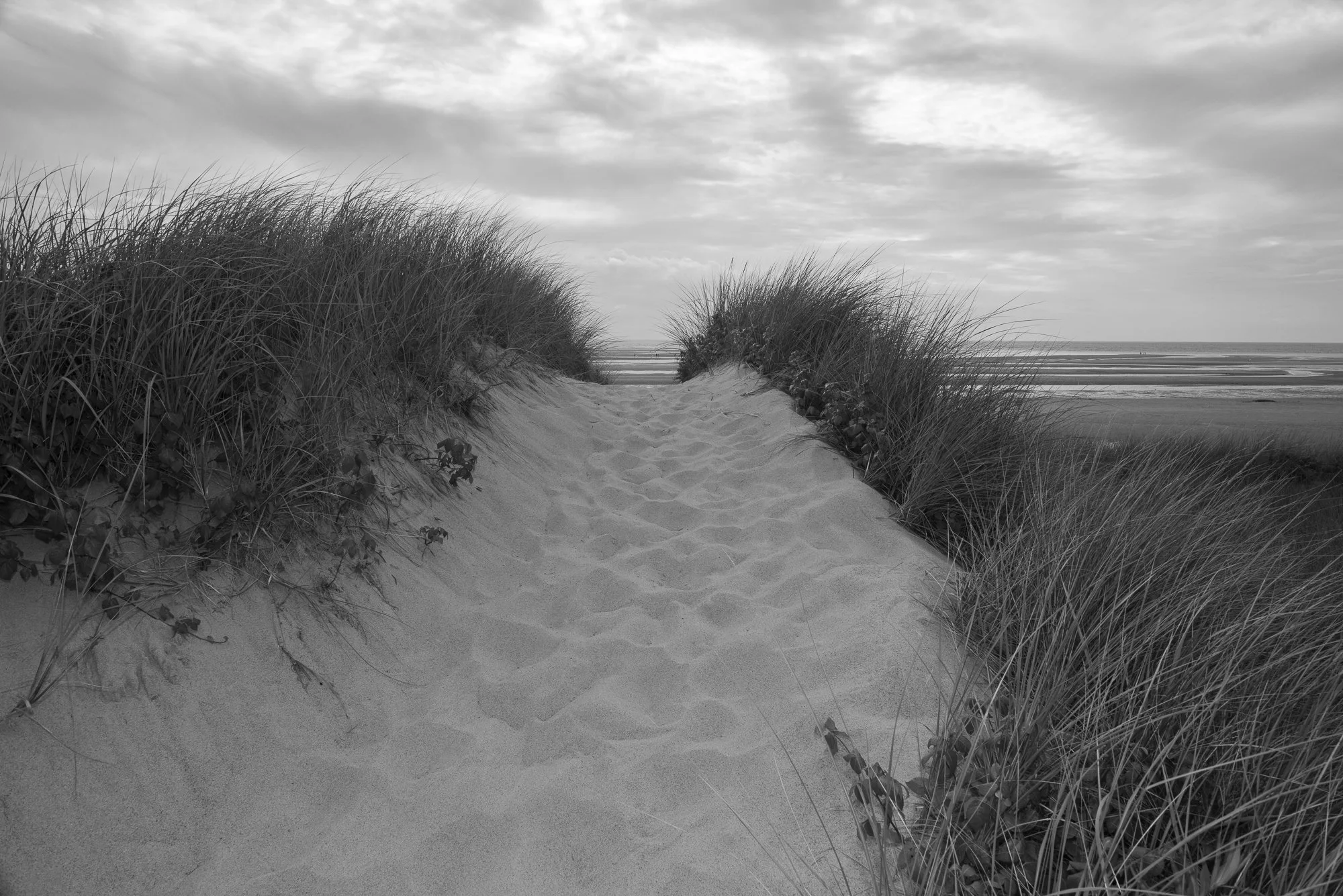
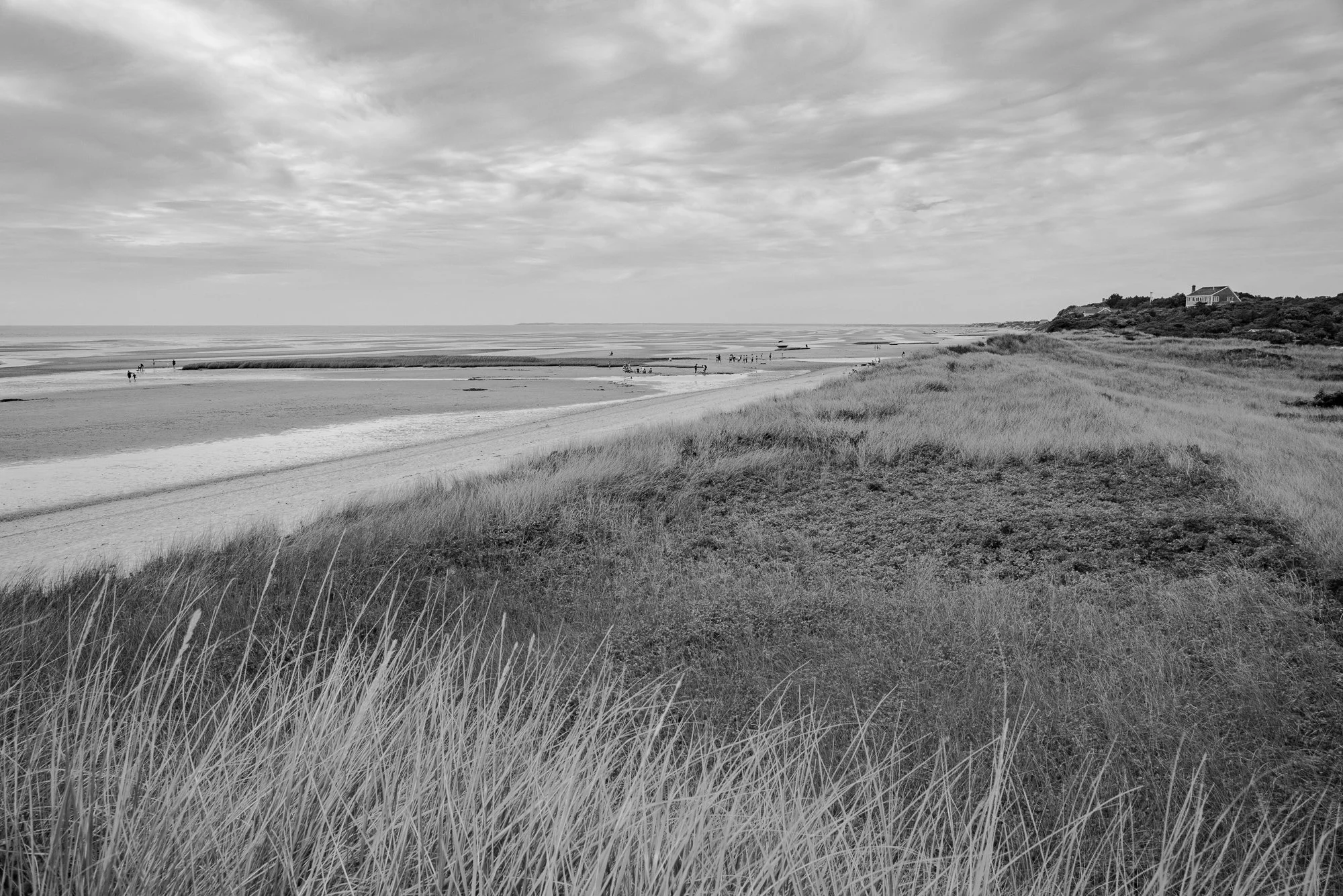
Sandy path through grass dunes leading to First Encounter Beach on Cape Cod in black and white

A narrow path through the dunes leads toward First Encounter Beach, one of the Cape’s most historic shorelines

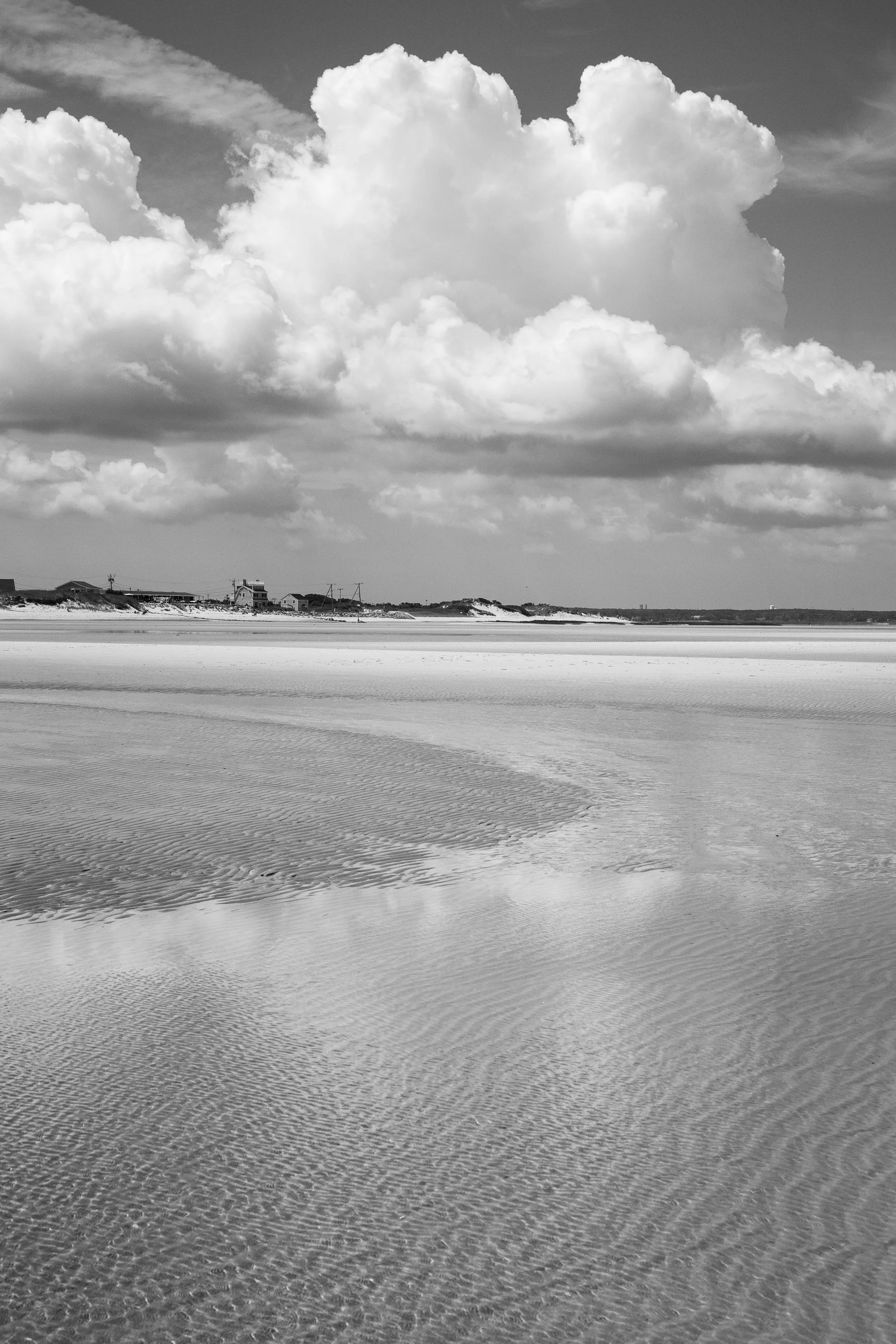
Black and white photo of Cape Cod sandbars and tidal flats with rippled textures and distant coastline
Tidal flats stretch across Cape Cod at low tide, revealing patterns in the sand that shift with the ocean

Black and white landscape of Cape Cod dunes and shoreline with distant figures along the water

First Encounter Beach - A quiet stretch of Cape Cod shoreline framed by dunes, where the landscape feels open and unhurried

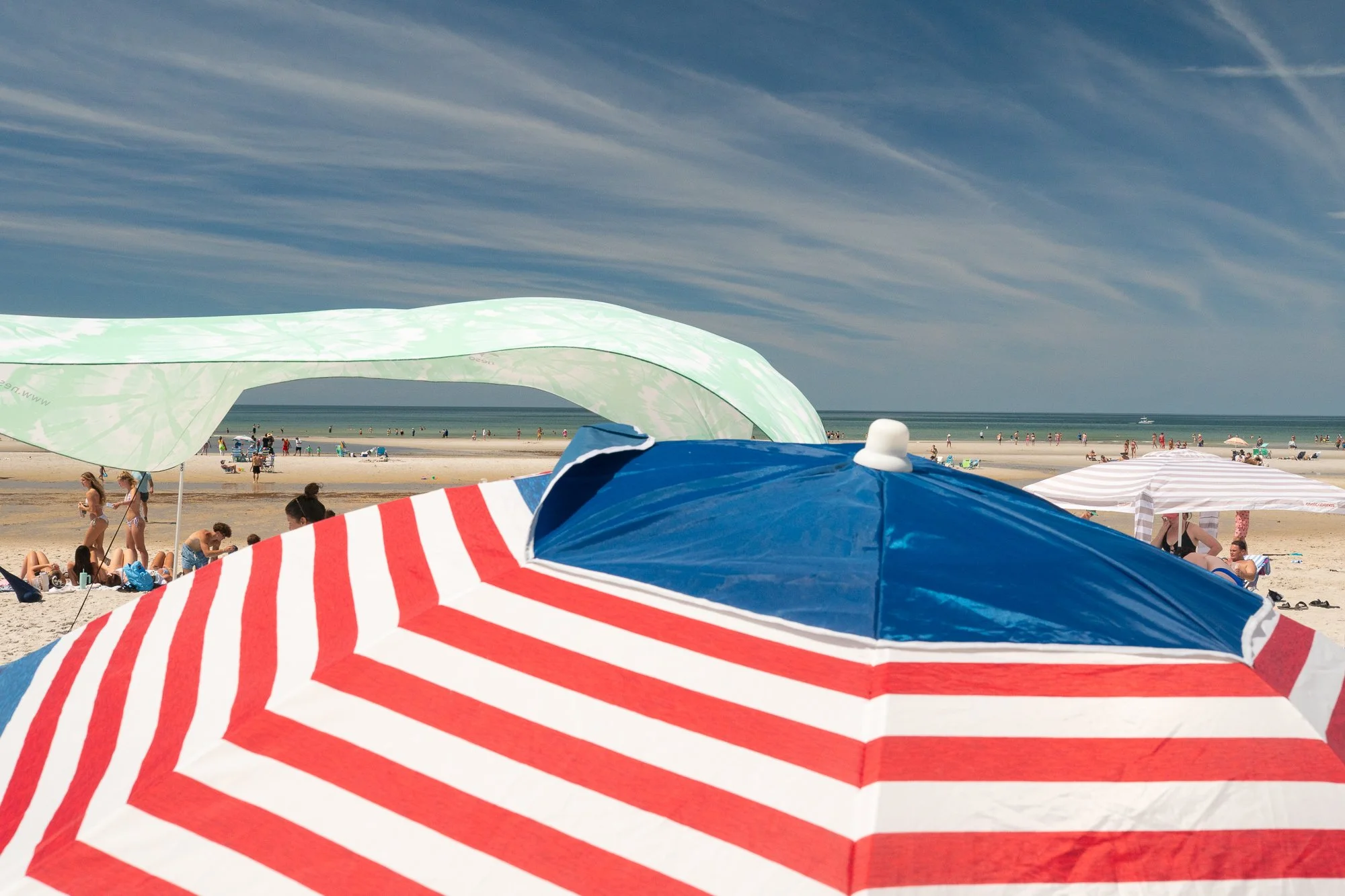
Colorful beach umbrellas on Cape Cod with people relaxing near the shoreline on a bright summer day

Mayflower Beach - Color and pattern come together along the Cape Cod shoreline, where umbrellas and ocean light define the scene

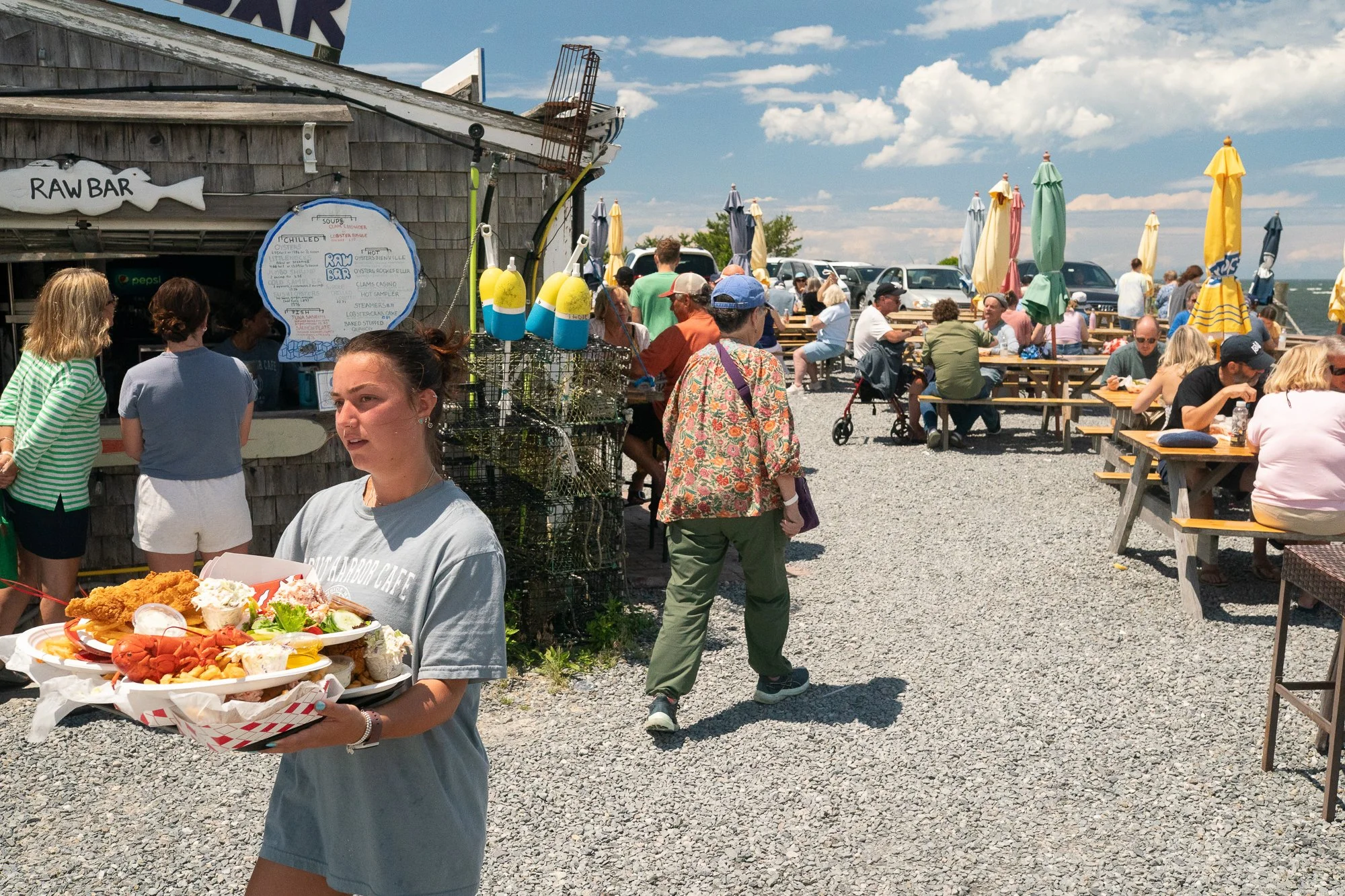
People gathered at Sesuit Harbor Cafe raw bar on Cape Cod with seafood plates and outdoor seating

A summer afternoon at Sesuit Harbor Cafe, where seafood, crowds, and harbor views define the Cape Cod experience

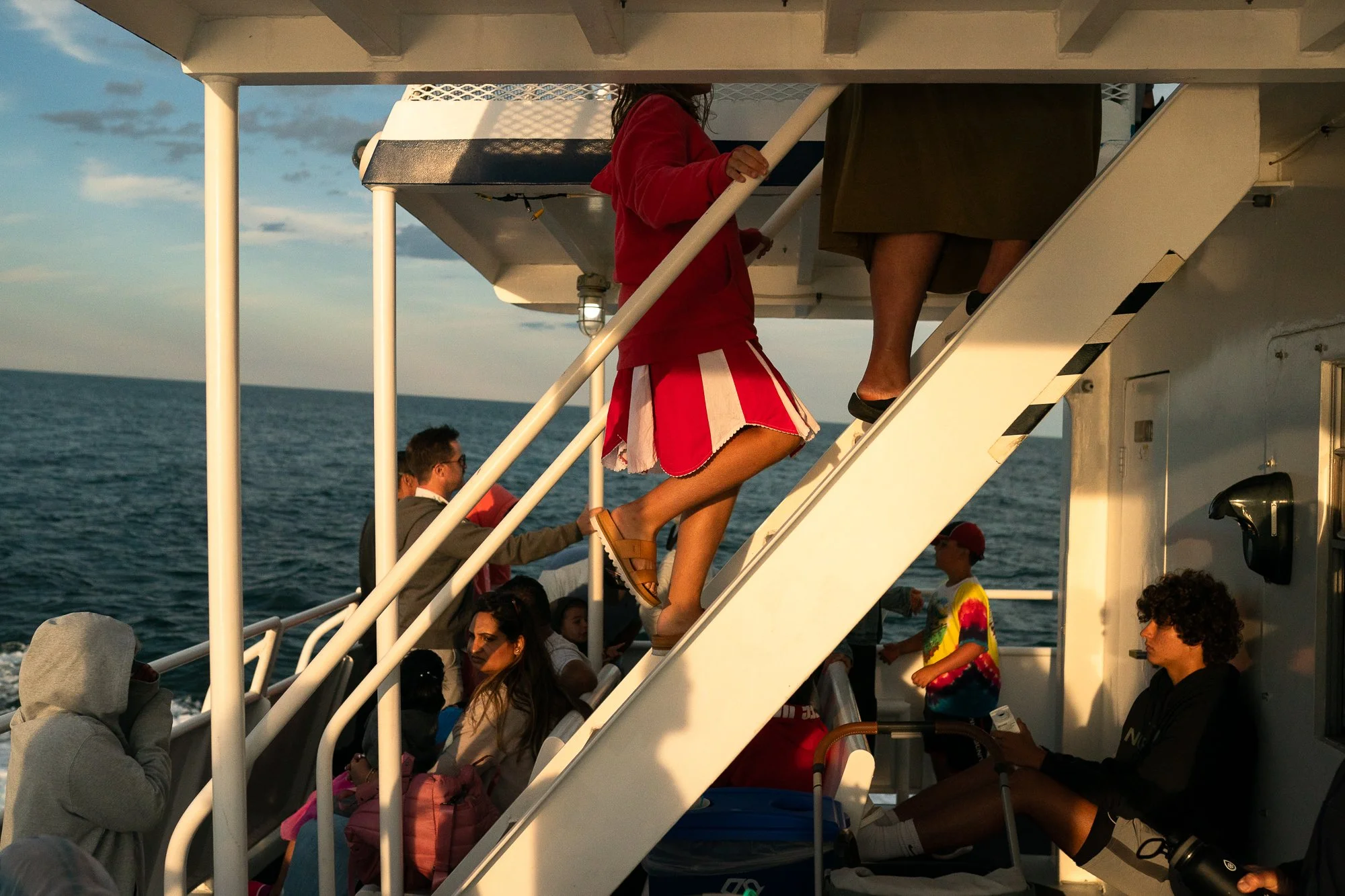
People gathered on a whale watching boat off Cape Cod during golden hour light

Aboard a whale watching boat off Cape Cod, passengers move through warm evening light as the ocean stretches out around them

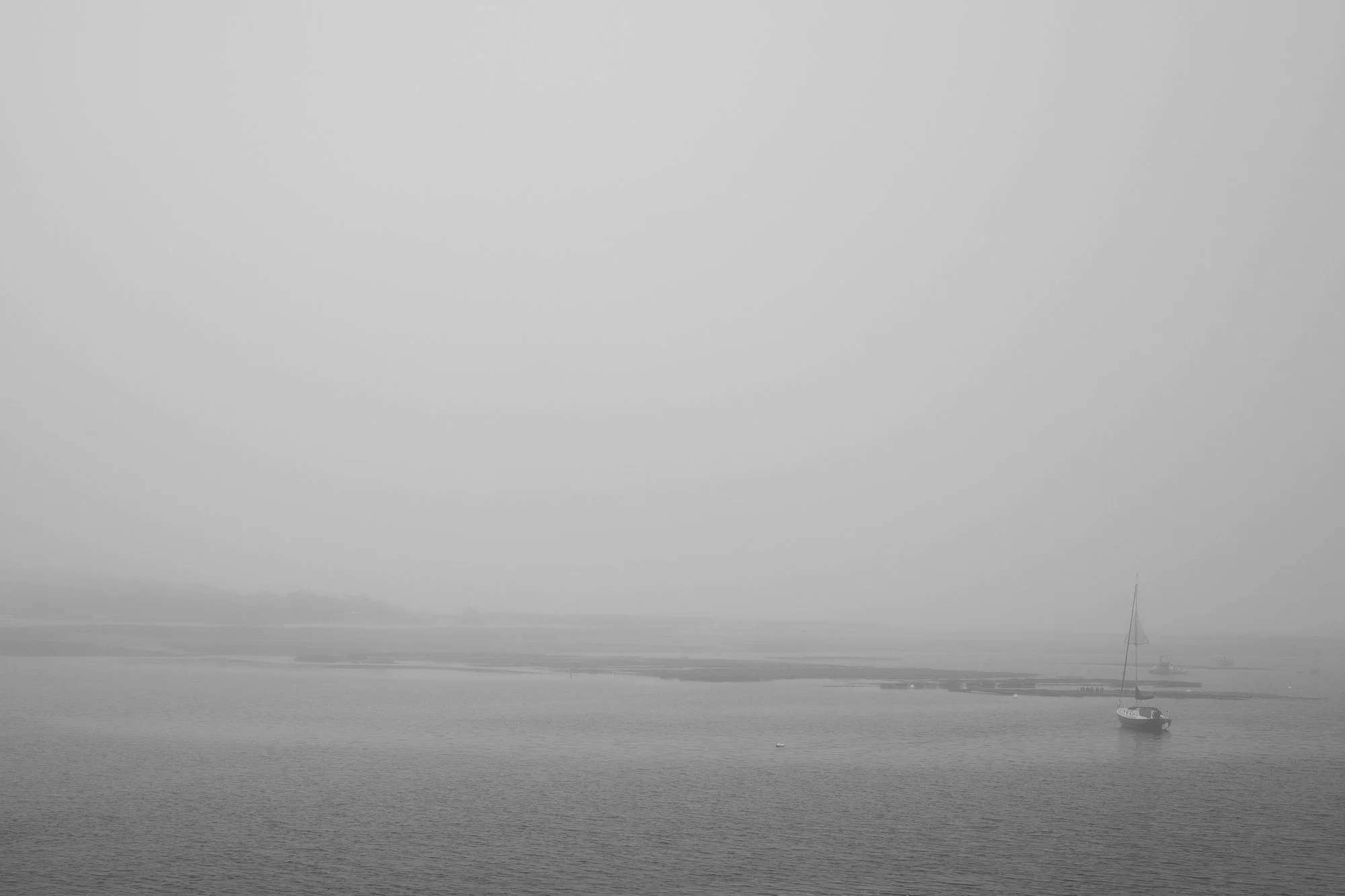
Foggy scene at Wellfleet Harbor on Cape Cod with a sailboat anchored in calm water

Fog settles over Wellfleet Harbor, softening the shoreline and reducing the scene to quiet shapes and still water
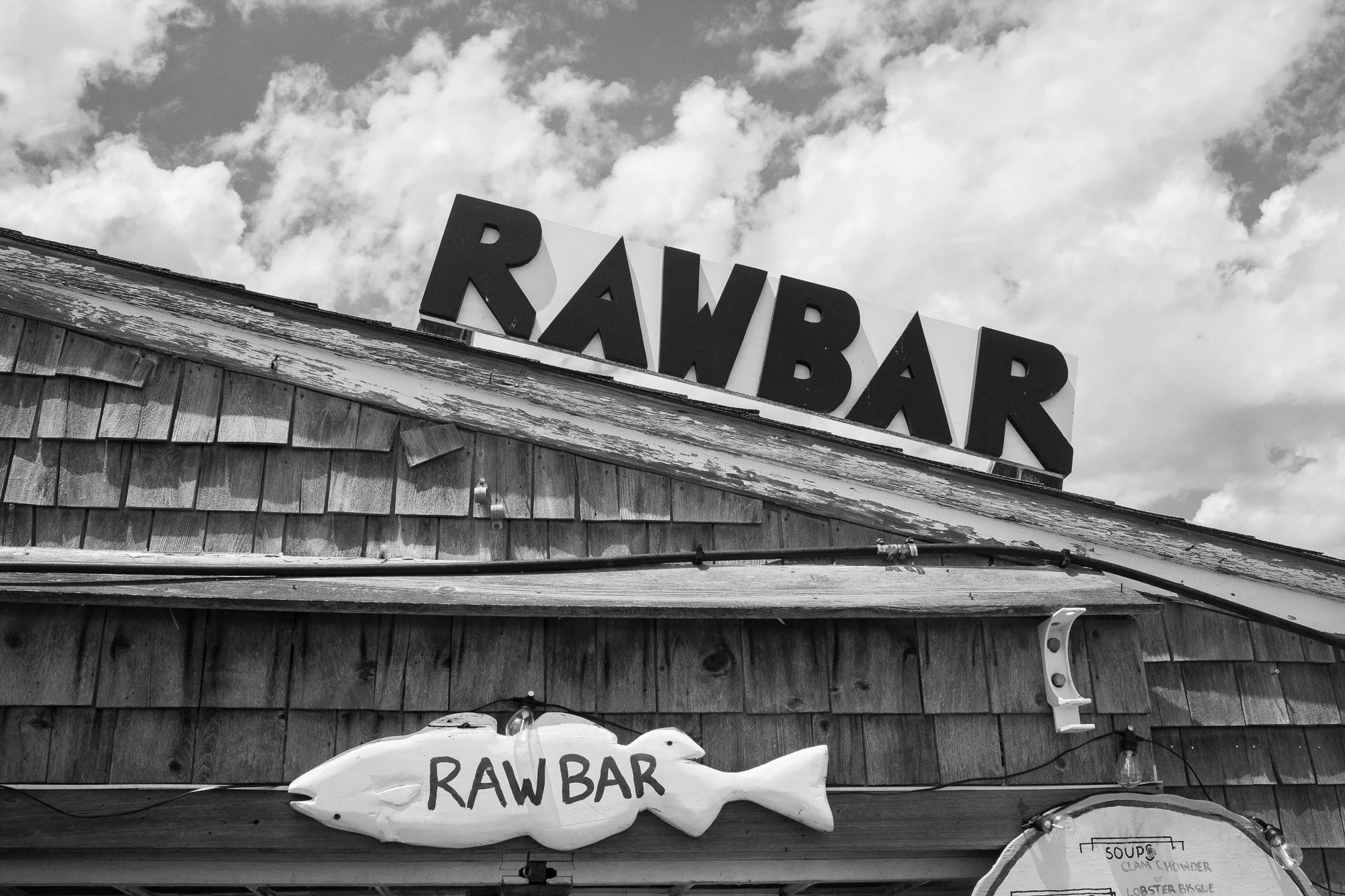
Black and white photo of a Cape Cod seafood shack with raw bar sign and weathered wood exterior
A classic Cape Cod seafood shack with a raw bar sign, capturing the character of coastal dining culture

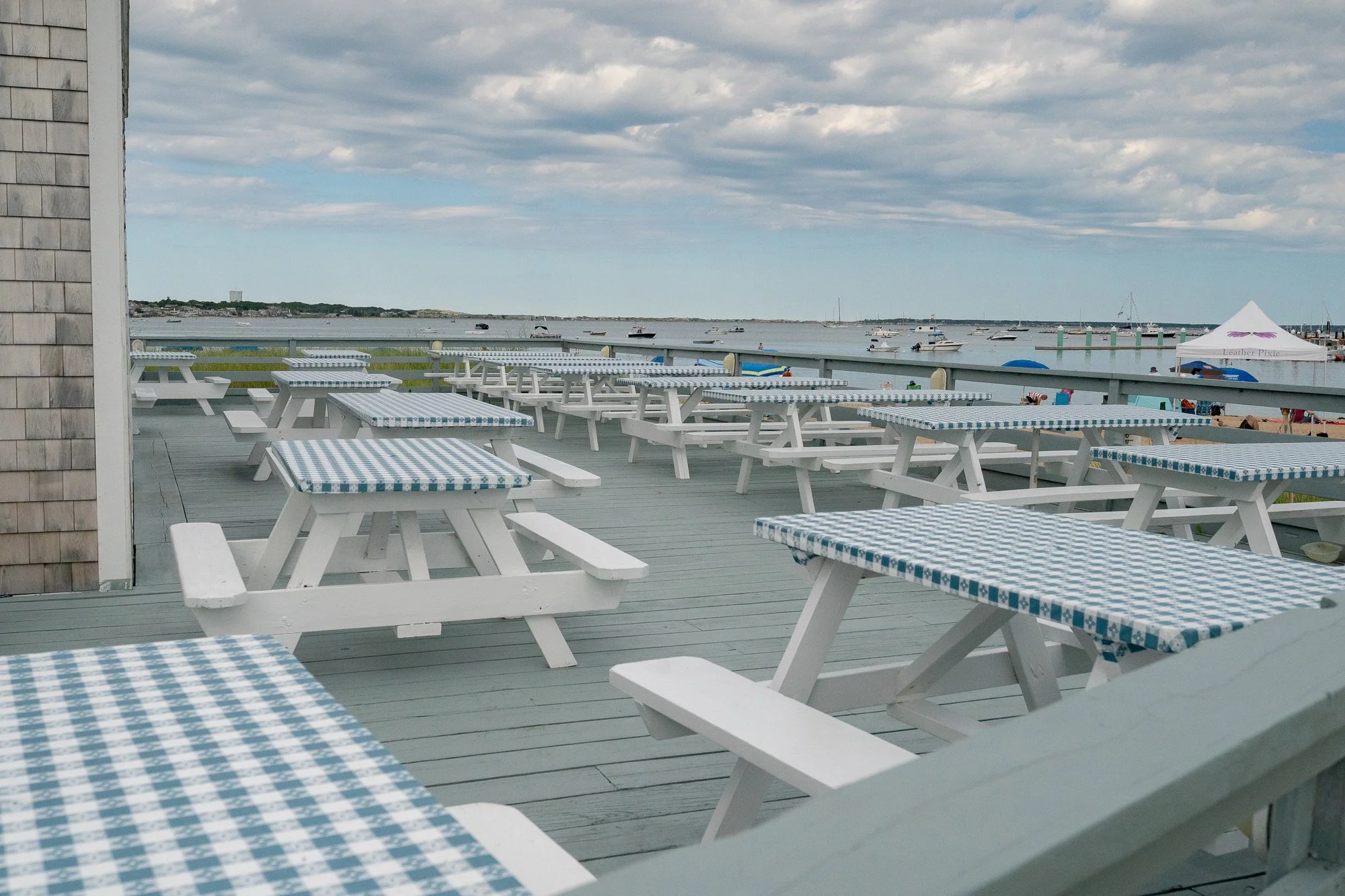
Picnic tables overlooking Provincetown harbor with boats in the distance and soft coastal light

Picnic tables sit above Provincetown harbor, offering a quiet view of boats and shifting Cape Cod light

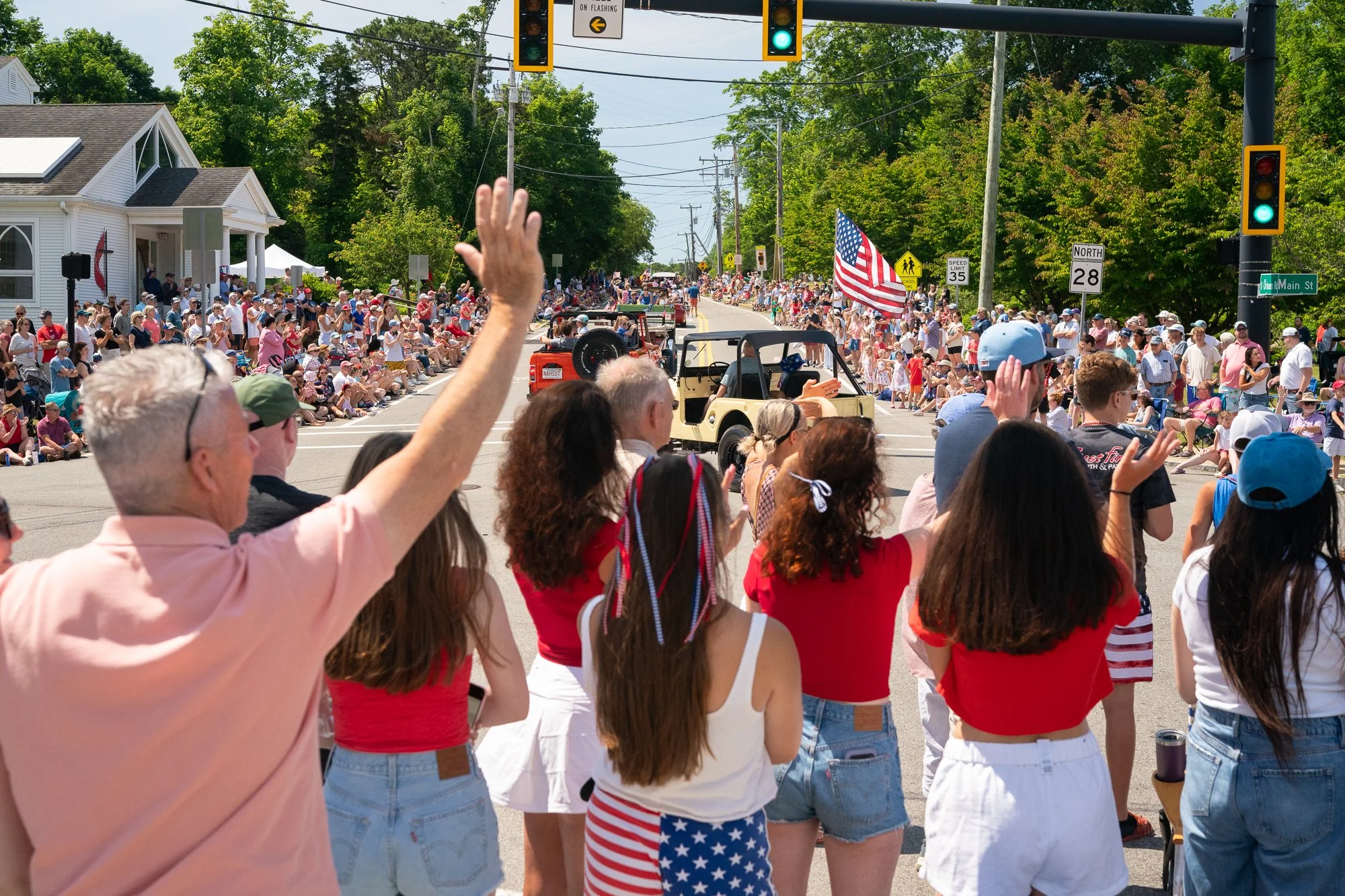
Crowd gathered along a Cape Cod road watching a 4th of July parade with American flags and summer atmosphere

Orleans, MA - A summer parade moves through a Cape Cod town, with flags, families, and a sense of local tradition

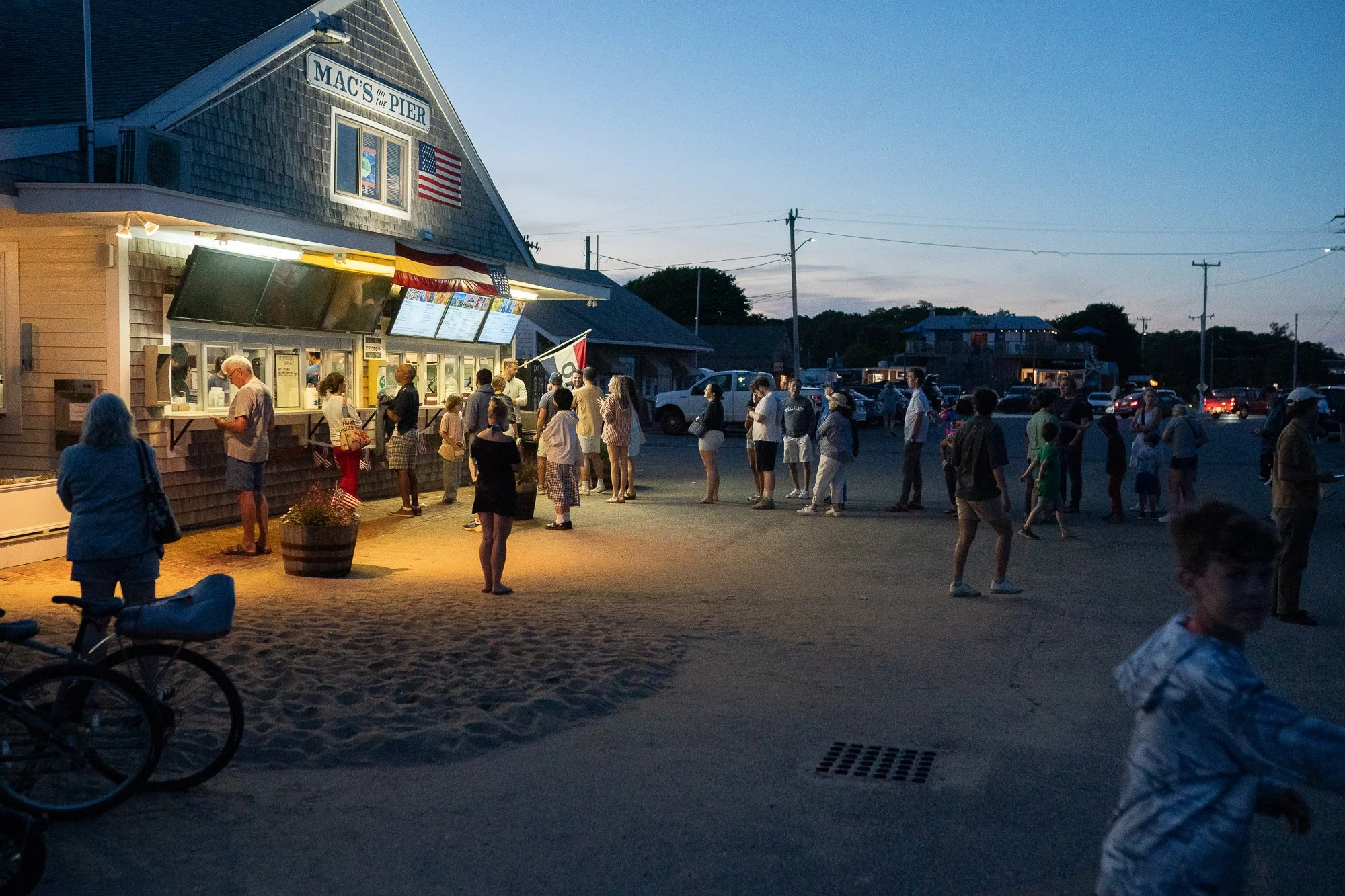
Evening scene at Mac’s on the Pier in Wellfleet with people lined up for seafood under soft light

Evening at Mac’s on the Pier in Wellfleet, where the line for seafood becomes part of the Cape Cod ritual

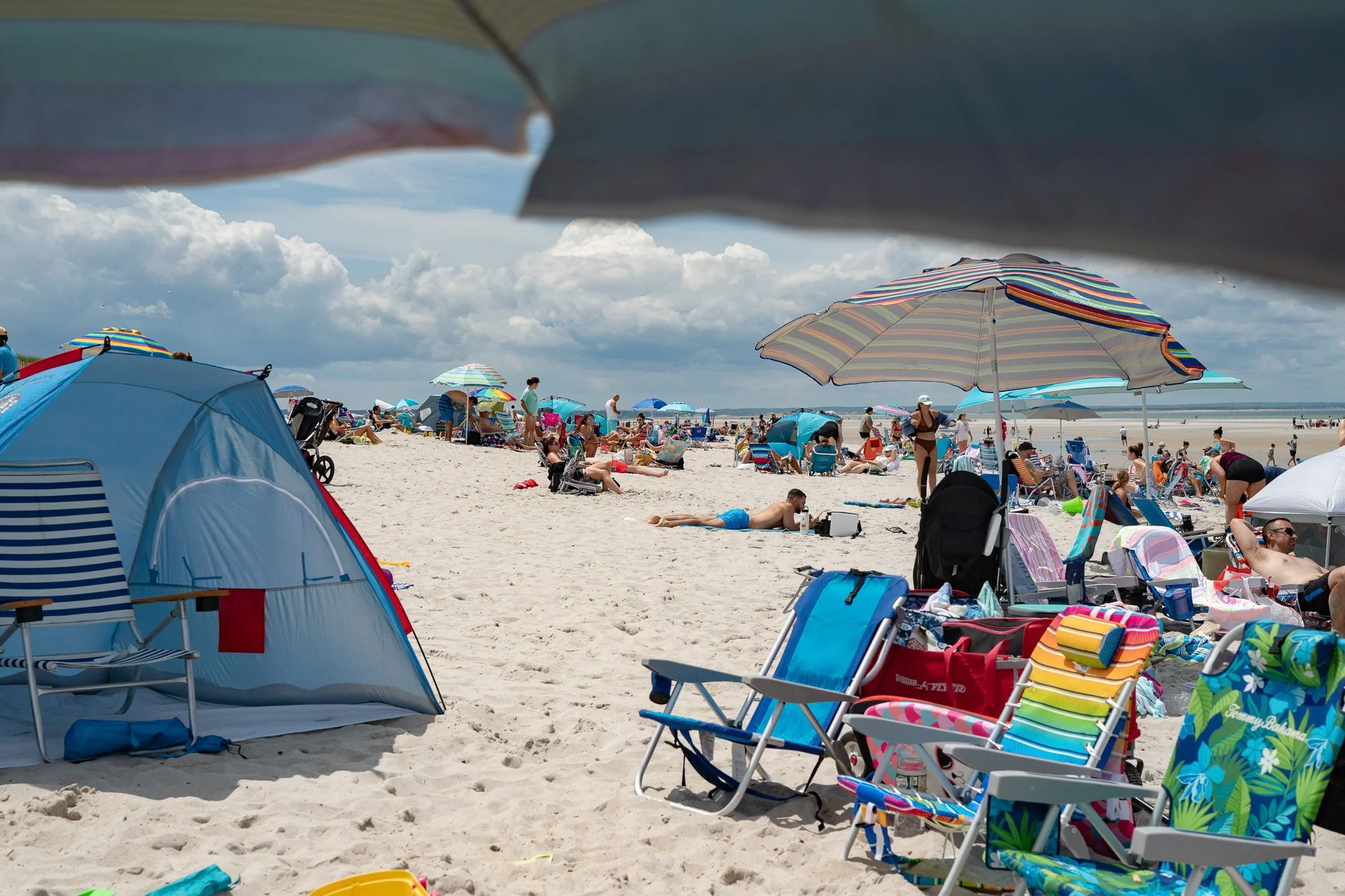
Crowded Cape Cod beach with umbrellas, chairs, and families relaxing on the sand during summer

Dennis, MA - A busy summer afternoon on a Cape Cod beach, with umbrellas and families spread across the sand under shifting coastal clouds

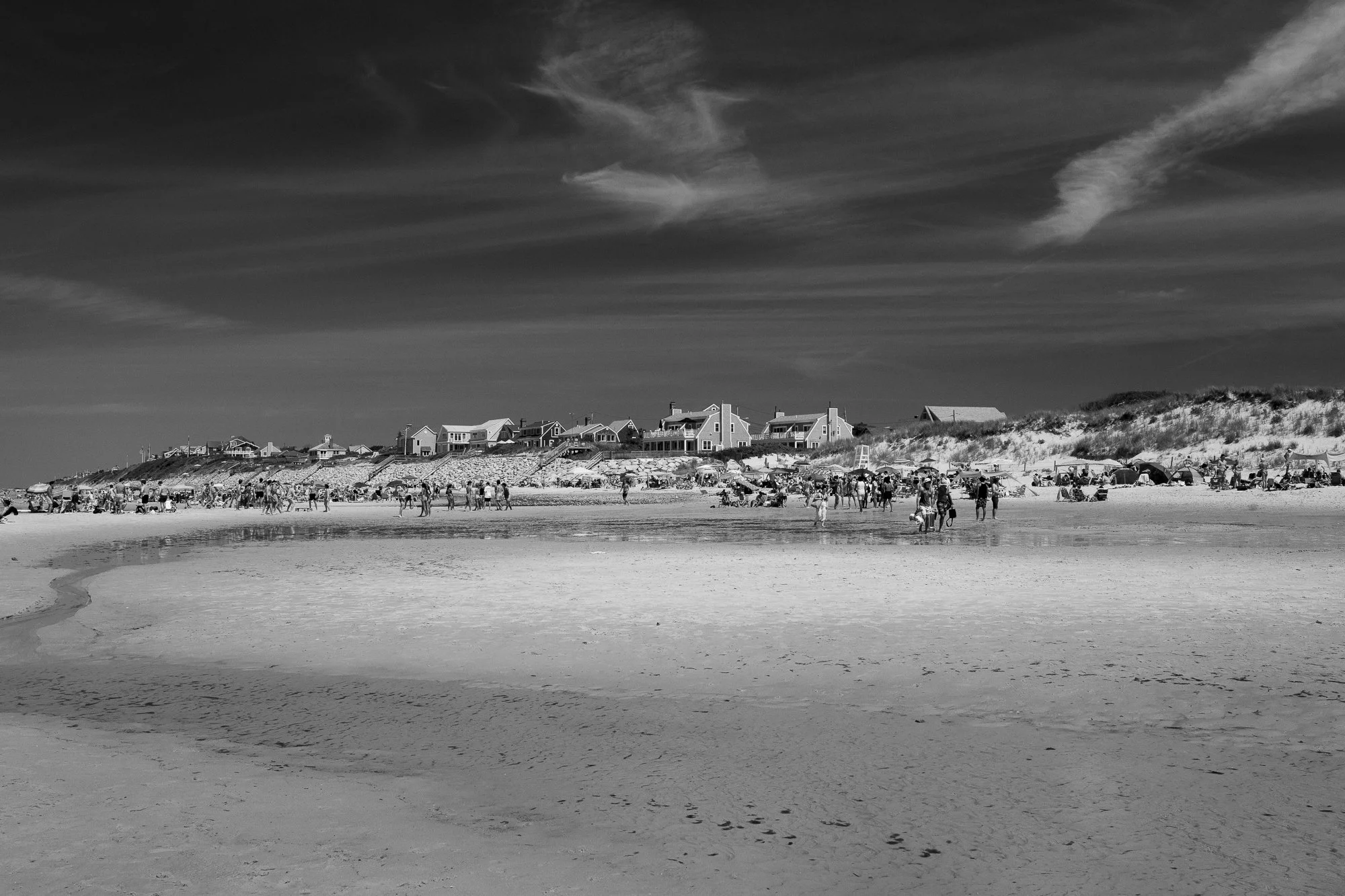
Black and white photo of Mayflower Beach on Cape Cod with people walking across shallow water at low tide
Low tide at Mayflower Beach reveals wide open sand flats, where people move slowly across the water under dramatic skies

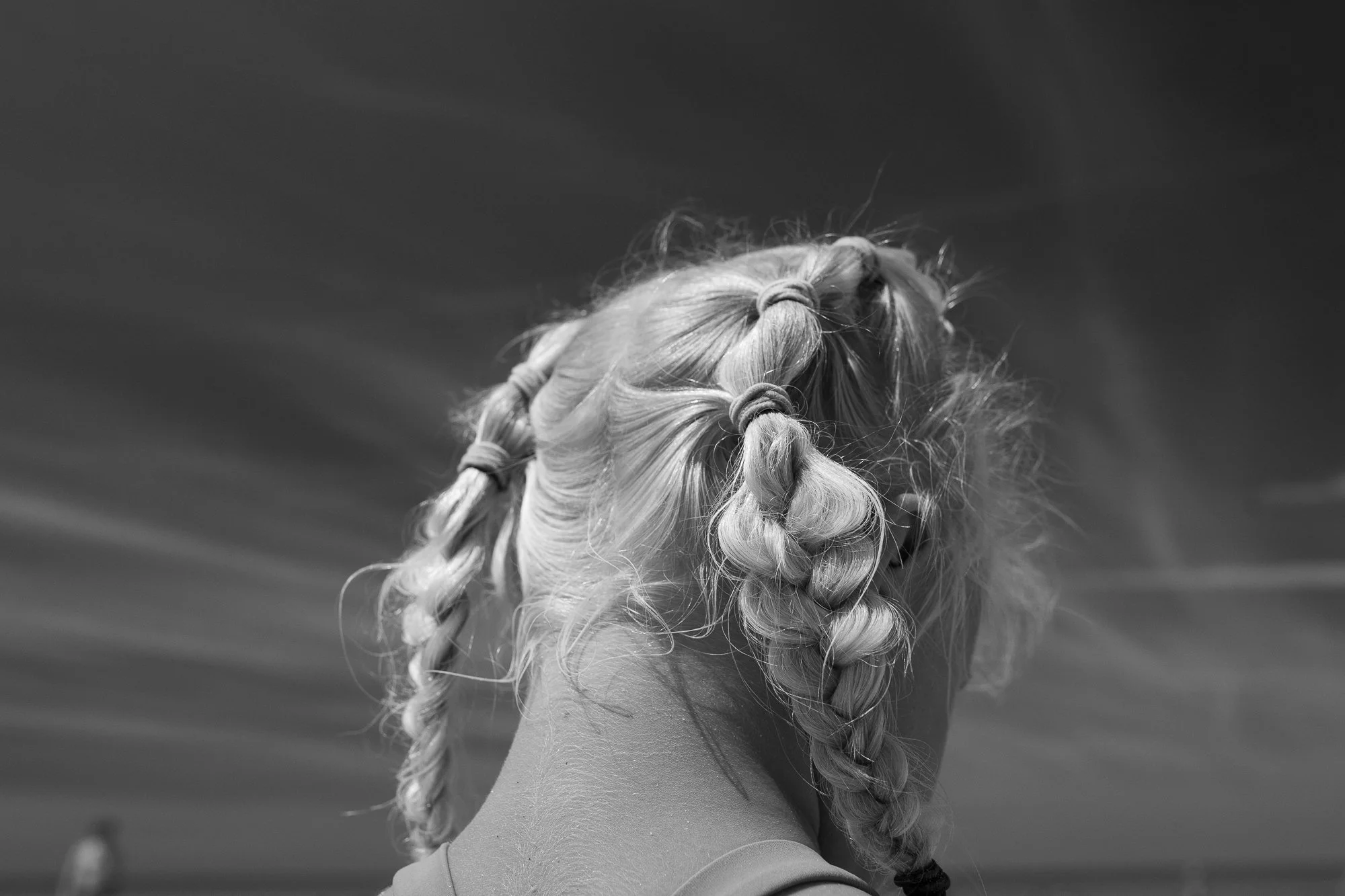
Black and white close-up of a child with braided hair at the beach on Cape Cod

A quiet portrait at the beach, capturing a small moment within the larger rhythm of a Cape Cod summer

Black and white photo of a lone person sitting in a beach chair facing the ocean on Cape Cod

A solitary figure sits facing the Atlantic, capturing a quieter side of Cape Cod beyond the crowds

Teal Blake - Portrait of a Western Artist

Teal Blake — Contemporary Western Painter

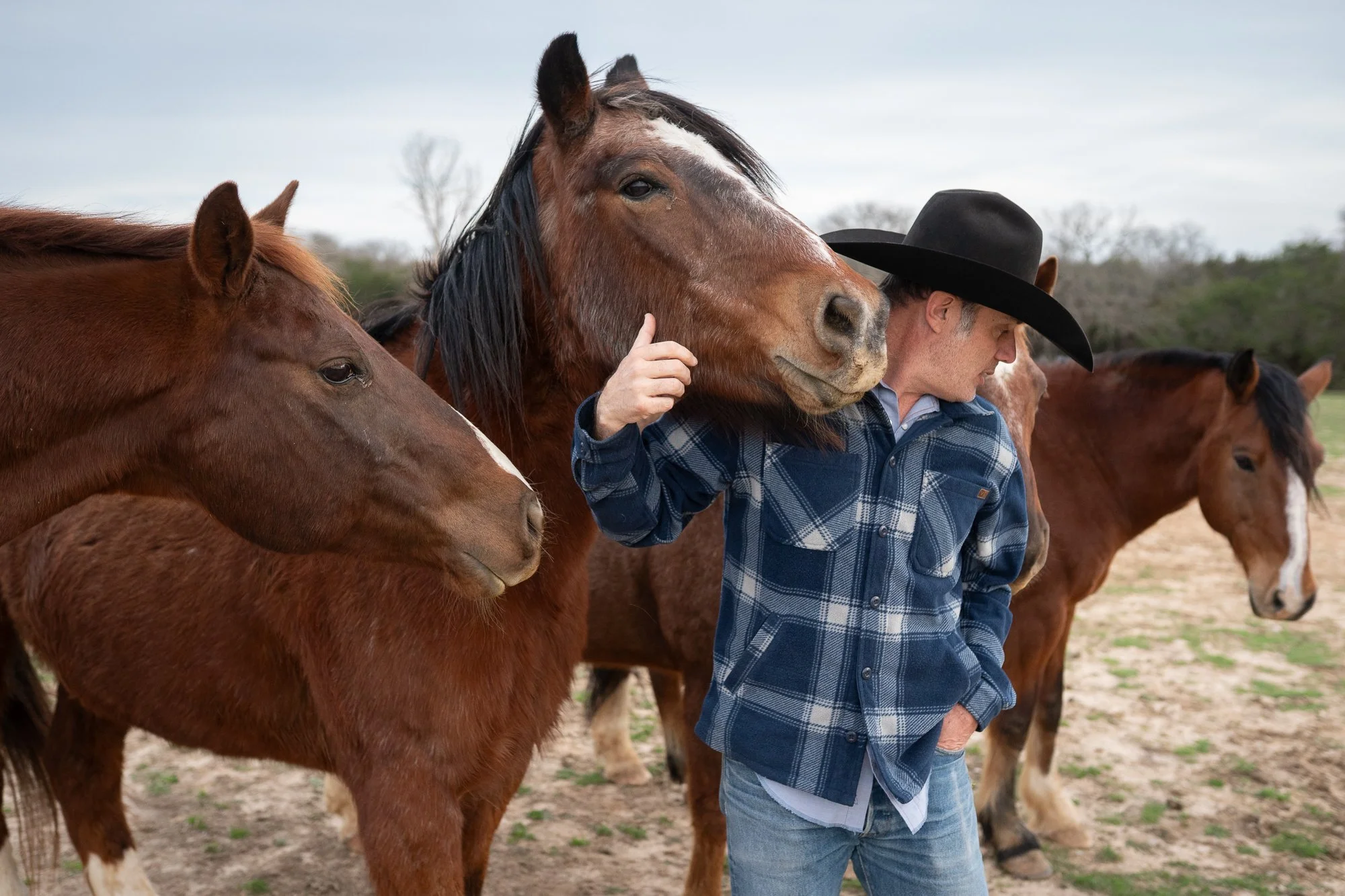
Teal Blake is a contemporary Western painter whose work is grounded in firsthand experience with ranch life in Texas. His paintings — often depicting working cowboys, horses, and cattle — carry a quiet realism that feels observed rather than imagined.

I spent time with Blake outside Fort Worth, Texas, moving between ranch and studio, chatting about how real life influences his work.

The West, for Blake, isn’t a costume. It’s a lived place.

Painting What You Know

Blake’s subjects aren’t distant symbols of the American West. They are ranches he worked, horses he’s rode, cattle he’s gathered, and fences he’s leaned against. The gestures in his paintings — the shift of weight in a saddle, the posture of a cowboy getting bucked — can’t happed without being there.

There’s restraint in his approach. Light is handled carefully. Dust and movement are suggested rather than dramatized. That restraint mirrors the culture he paints. Working cowboys rarely posture. They work. Blake paints with that same economy.

Inside The Studio

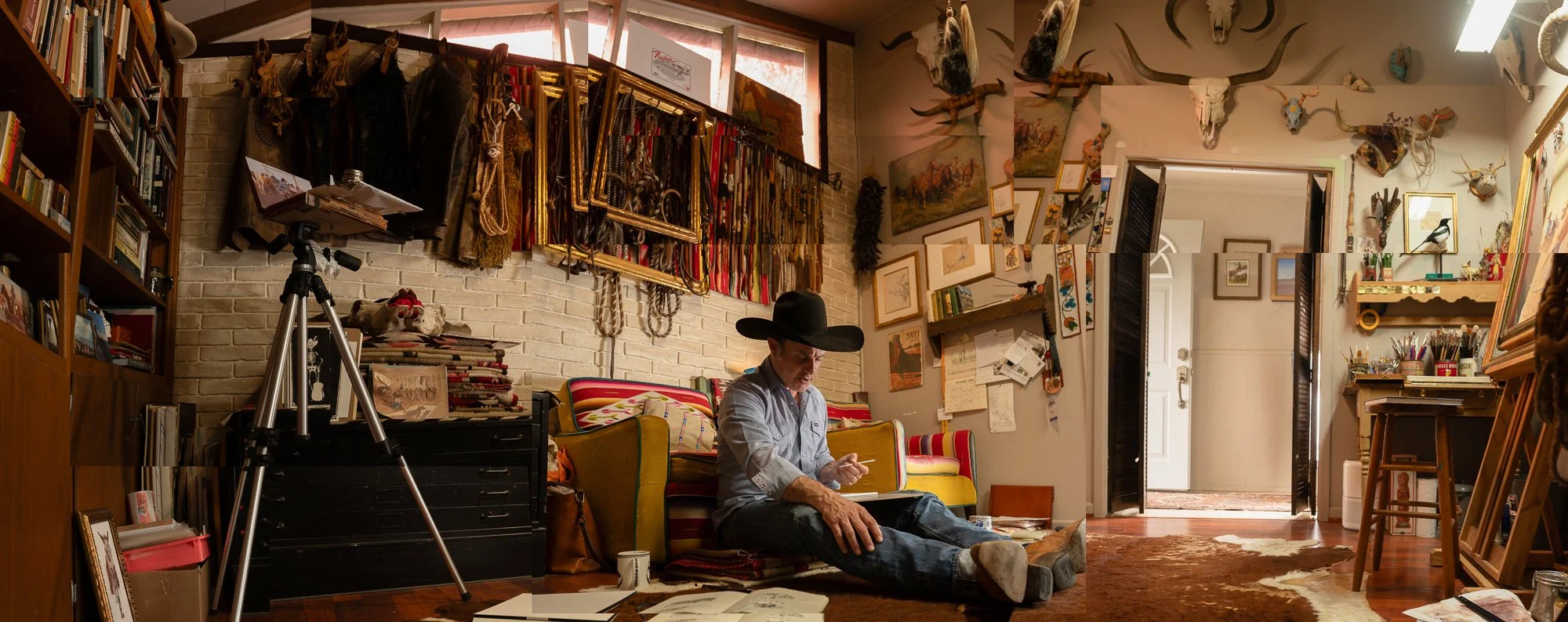
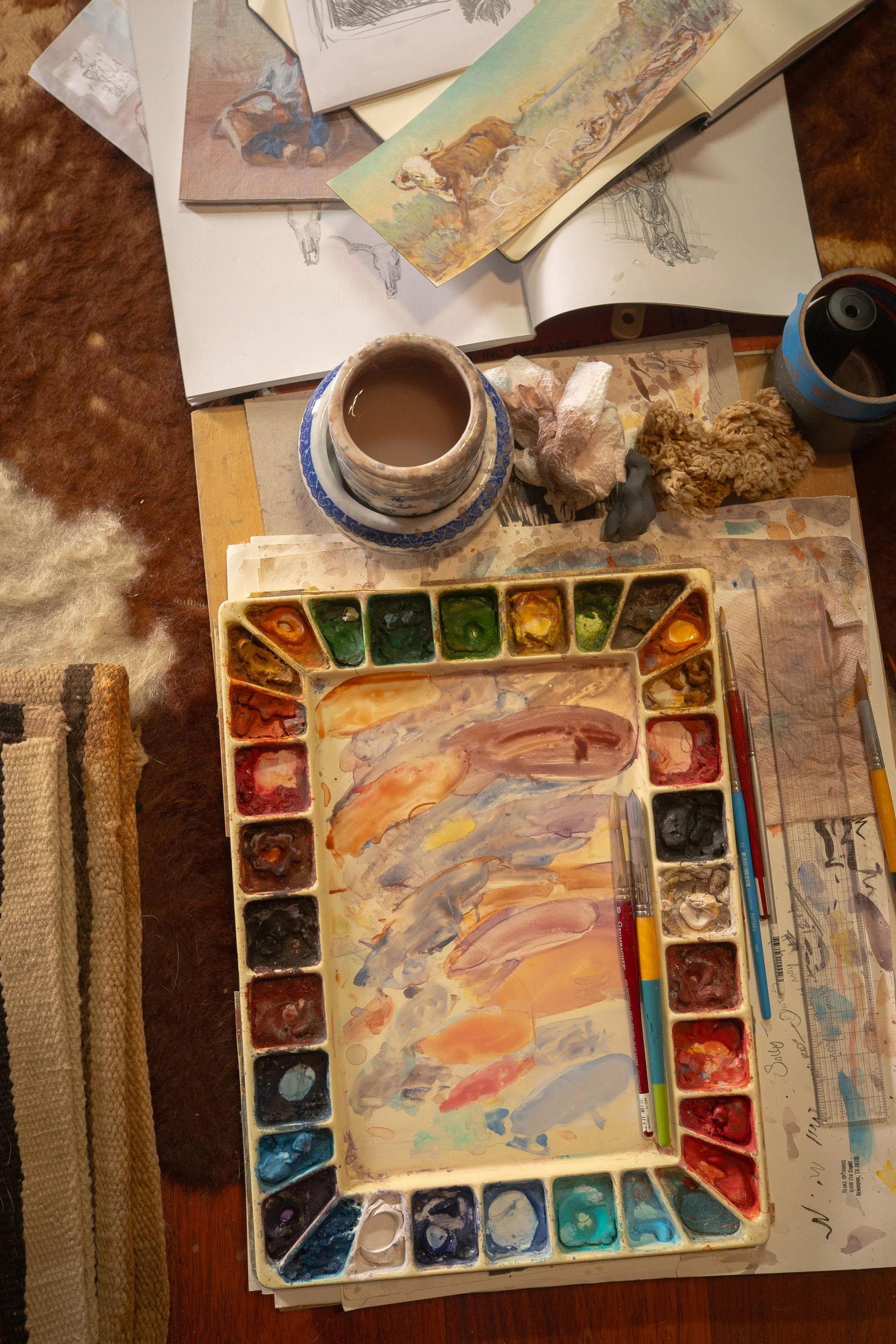
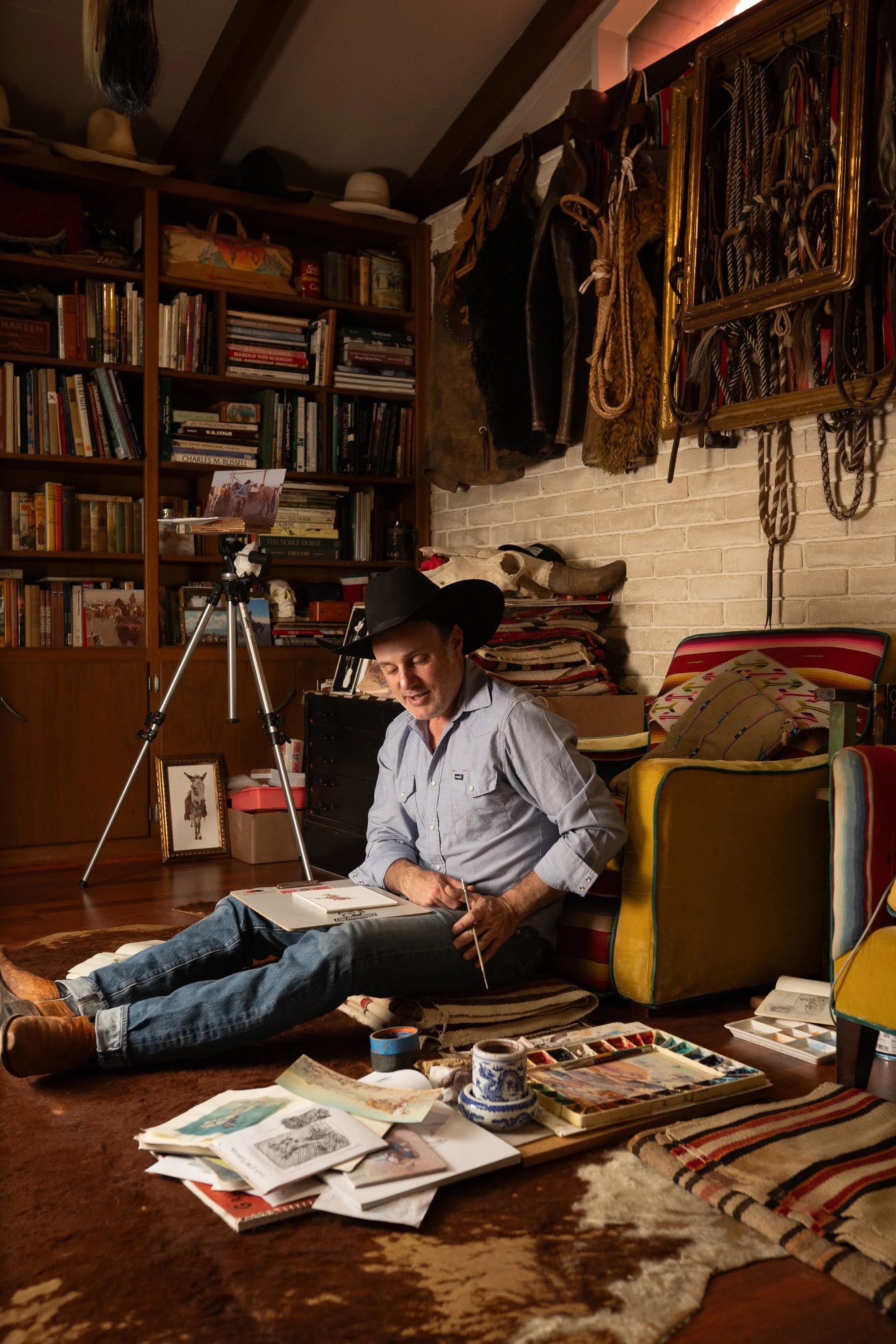
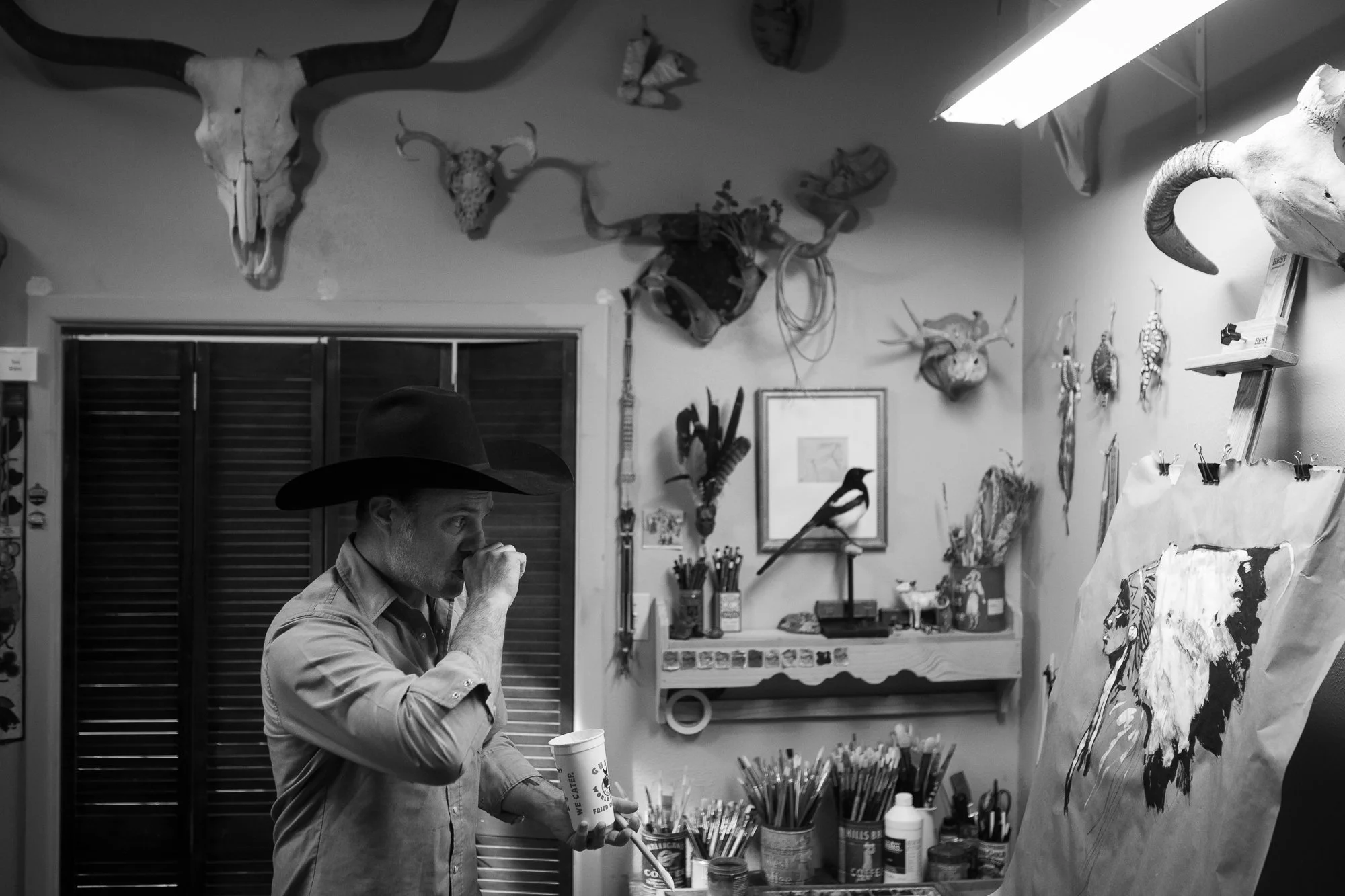
Blake’s studio feels like an extension of his personality and his happy place. Art books by the greats like Charlie Russel line the shelves. Ropes and tack hang alongside finished works and studies. Skulls, saddles, and artifacts sit comfortably beside watercolor palettes and brushes worn down from years of use.

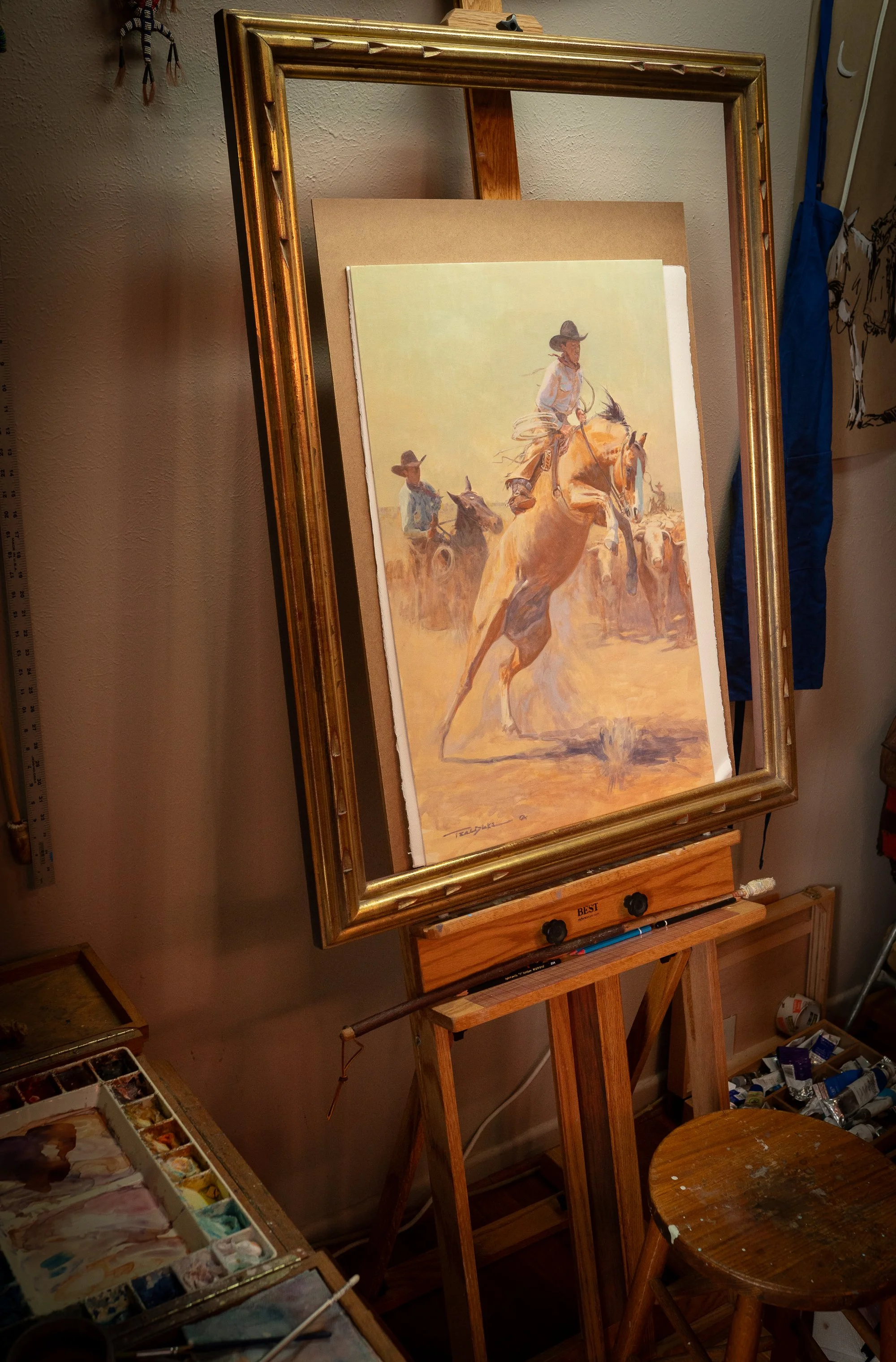
Sketches scatter across the floor. Pigment pools in the corners of a palette. A finished painting rests on an easel, framed but still close to the working space. The room is warm and inviting — an easy place for an artist to spend his life.

Photographing a Western Artist At Work

I’ve talk about this before, but I believe it’s vital for an artist or photographer to concentrate on subjects they organically connect with. For years now I’ve been photographing working cowboys all across the West, and was a fan of Teal’s work long before we collaborated on this shoot. To document a culture means more than just the action on a ranch, and Western Artists like Blake are a vital piece of the culture. So it was fun connecting with him at his studio. He’s a real easy going guy. In fact, if you didn’t know he was an incredibly talented artist, you’d think he was a normal guy. Turns out Teal loves food and fly fishing, so we had lots to talk about.

After the shoot I was headed south and wanted to fly fish the Brazos River, but forgot my fly box, and all the fly shops were closed, so Teal generously lent me his. That’s Texas Hospitality at it’s finest.

Contemporary Western Art and the American West

In a time when Western imagery is often stylized for entertainment, artists like Teal Blake continue a quieter tradition — one rooted in observation and craft.

His work contributes to the evolving story of contemporary Western art. Not nostalgic fantasy, but present-day ranch life rendered with clarity and restraint.

Spending time in his world reinforces something I’ve learned repeatedly while photographing cowboys: the American West is not disappearing. It is working. It is adapting. And it is still needs to be documented — in paint and in photographs.

Explore More Western Art & Photography

If you’re interested in contemporary Western painters, you may also want to view my studio portraits of William Matthews — another artist deeply connected to working cowboy culture.

You can also explore my long-term photographic project documenting working cowboys across the American West.

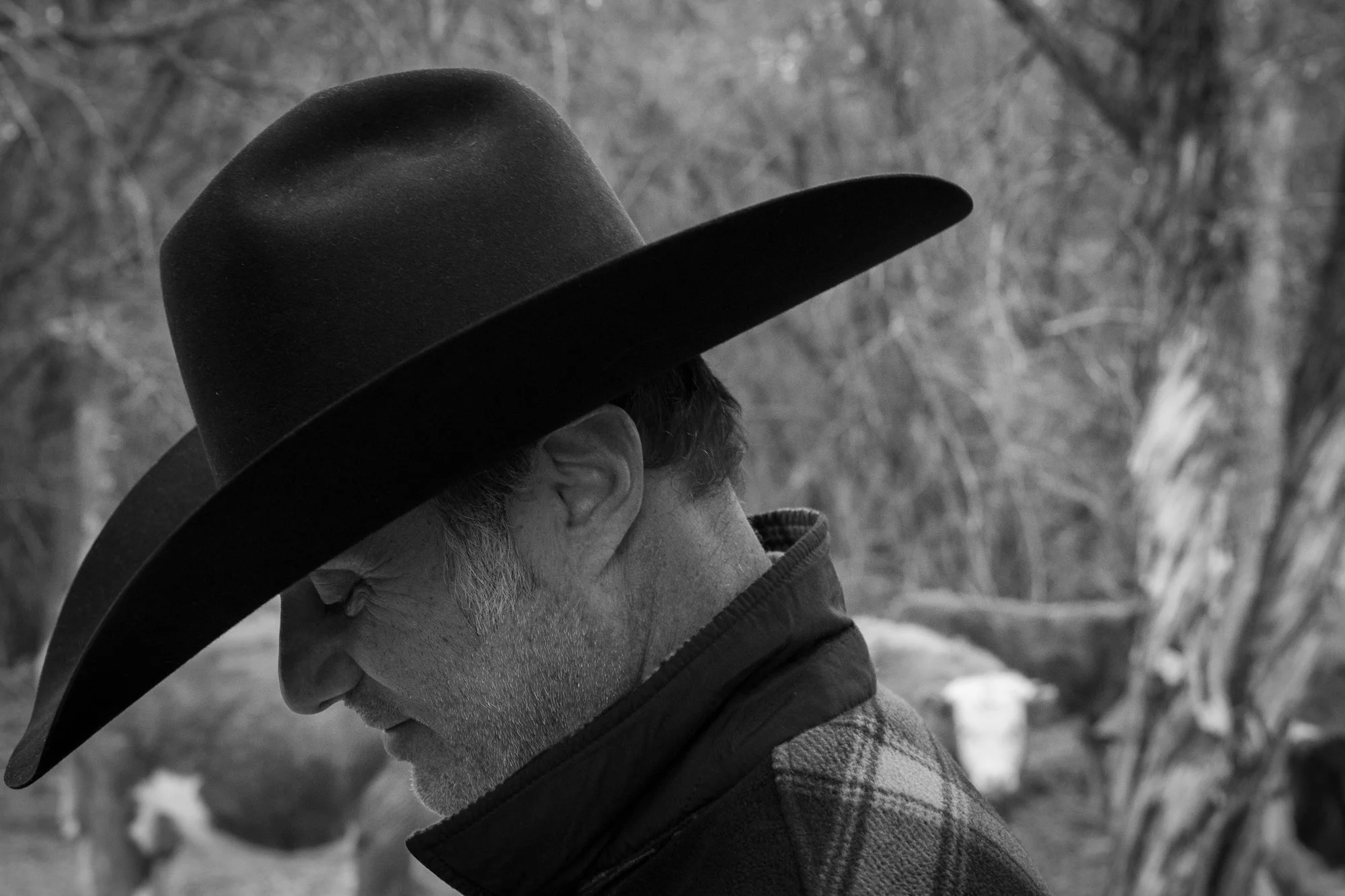
Close black and white portrait of Teal Blake wearing a cowboy hat outdoors

A close black-and-white portrait of Teal Blake, the brim of his hat casting a quiet shadow. The simplicity echoes the understated strength of his Western paintings.

Wide interior view of Teal Blake’s Western art studio filled with paintings, skulls, ropes, and books

A wide view of Teal Blake’s studio captures the full atmosphere of his creative space — Western artifacts, cattle skulls, ropes, books, and paintings surrounding him as he works. The studio itself feels like an extension of the ranch life that informs his art.

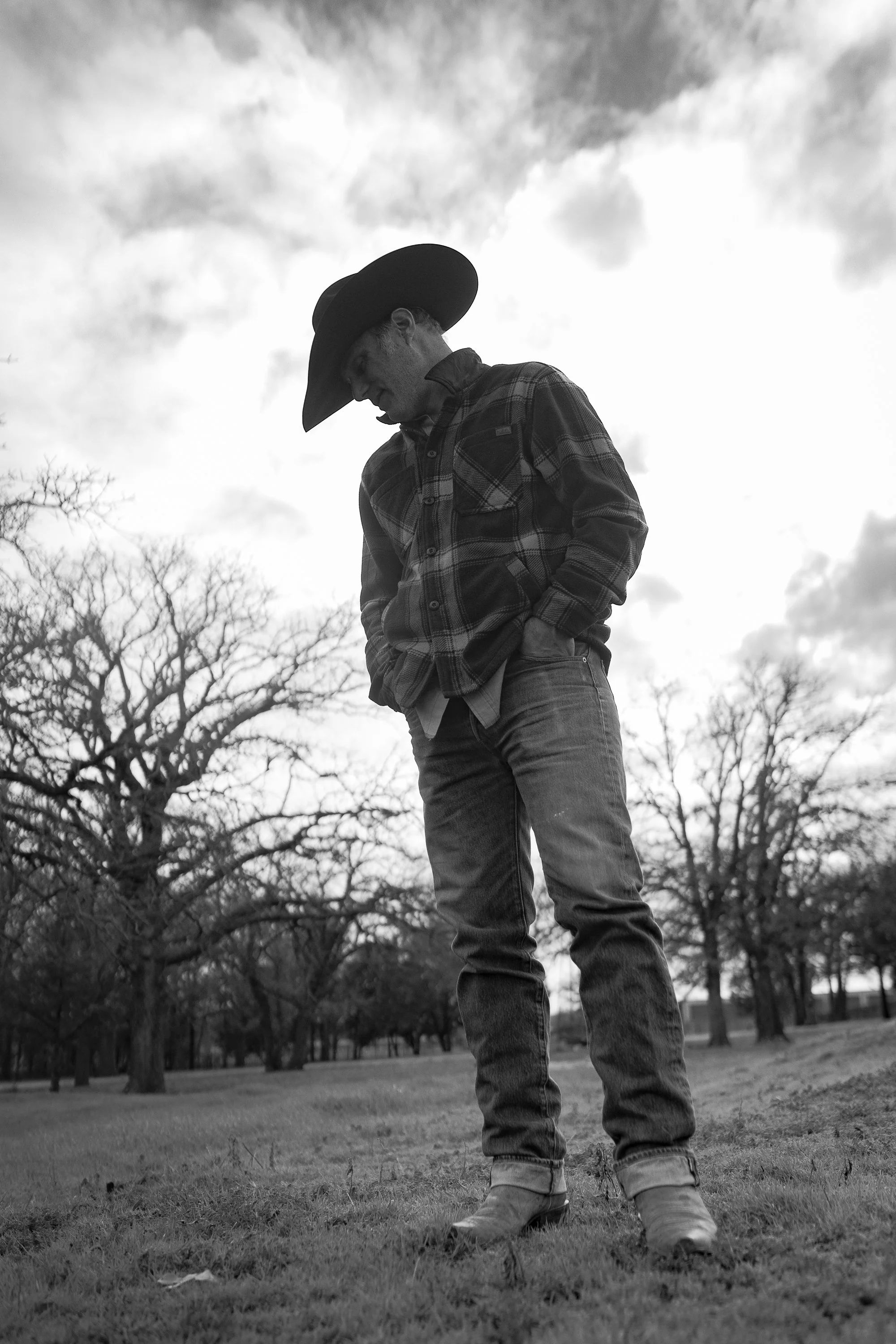
Black and white portrait of Western artist Teal Blake standing in a Texas field wearing a cowboy hat

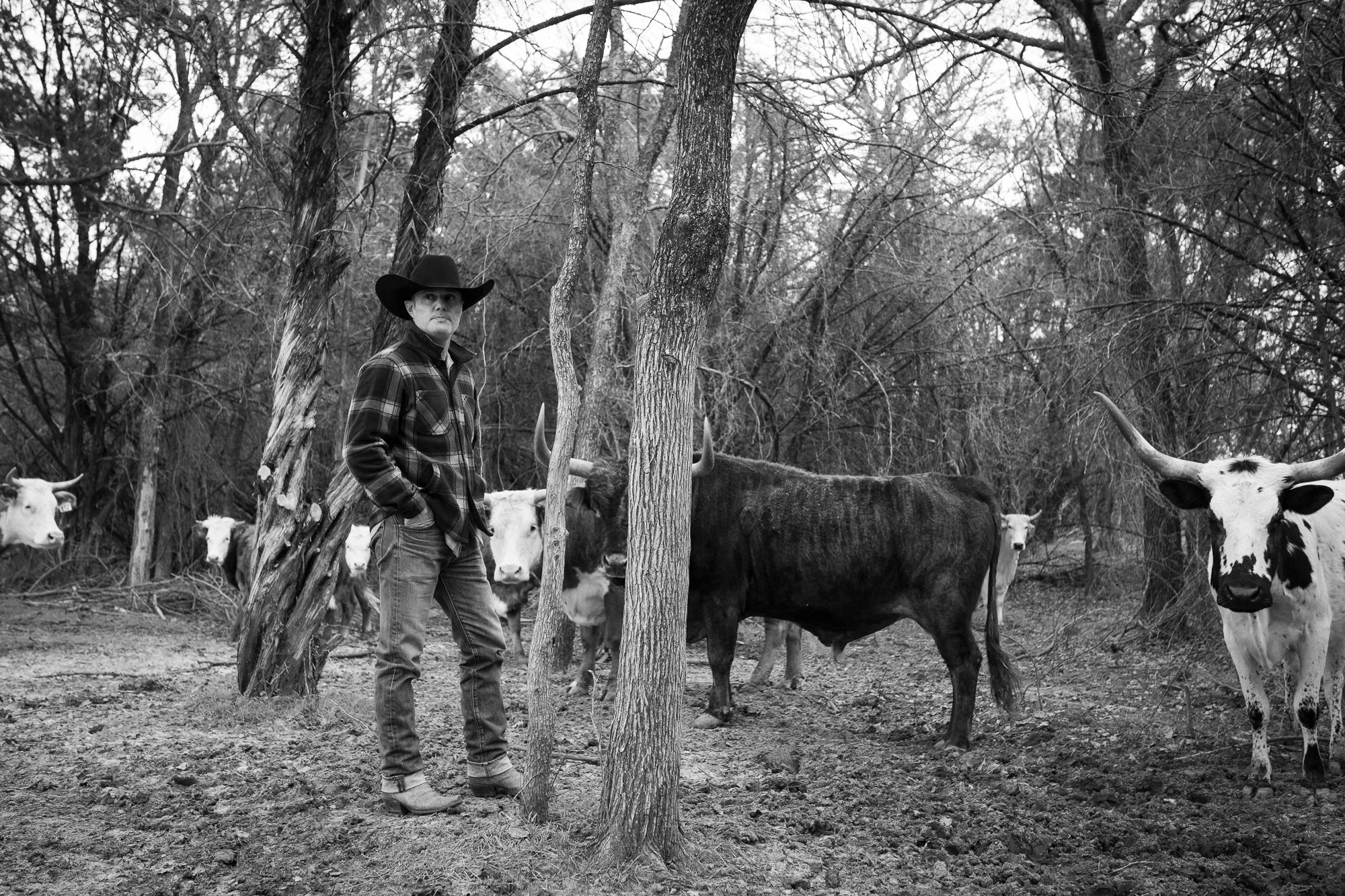
A black-and-white portrait of Western artist Teal Blake standing alone in an open Texas field. The quiet landscape mirrors the restraint and atmosphere found in his contemporary Western paintings.

Overhead view of watercolor palette, brushes, and sketches inside Western artist Teal Blake’s studio

A well-used watercolor palette sits among sketches and studies inside Teal Blake’s studio. The layered pigments and quiet experimentation reveal the discipline behind his contemporary Western paintings.

Teal Blake standing among horses on a Texas ranch wearing a cowboy hat

Teal Blake among horses on his Texas ranch. Direct experience with ranch life continues to inform the realism and sensitivity of his Western artwork.

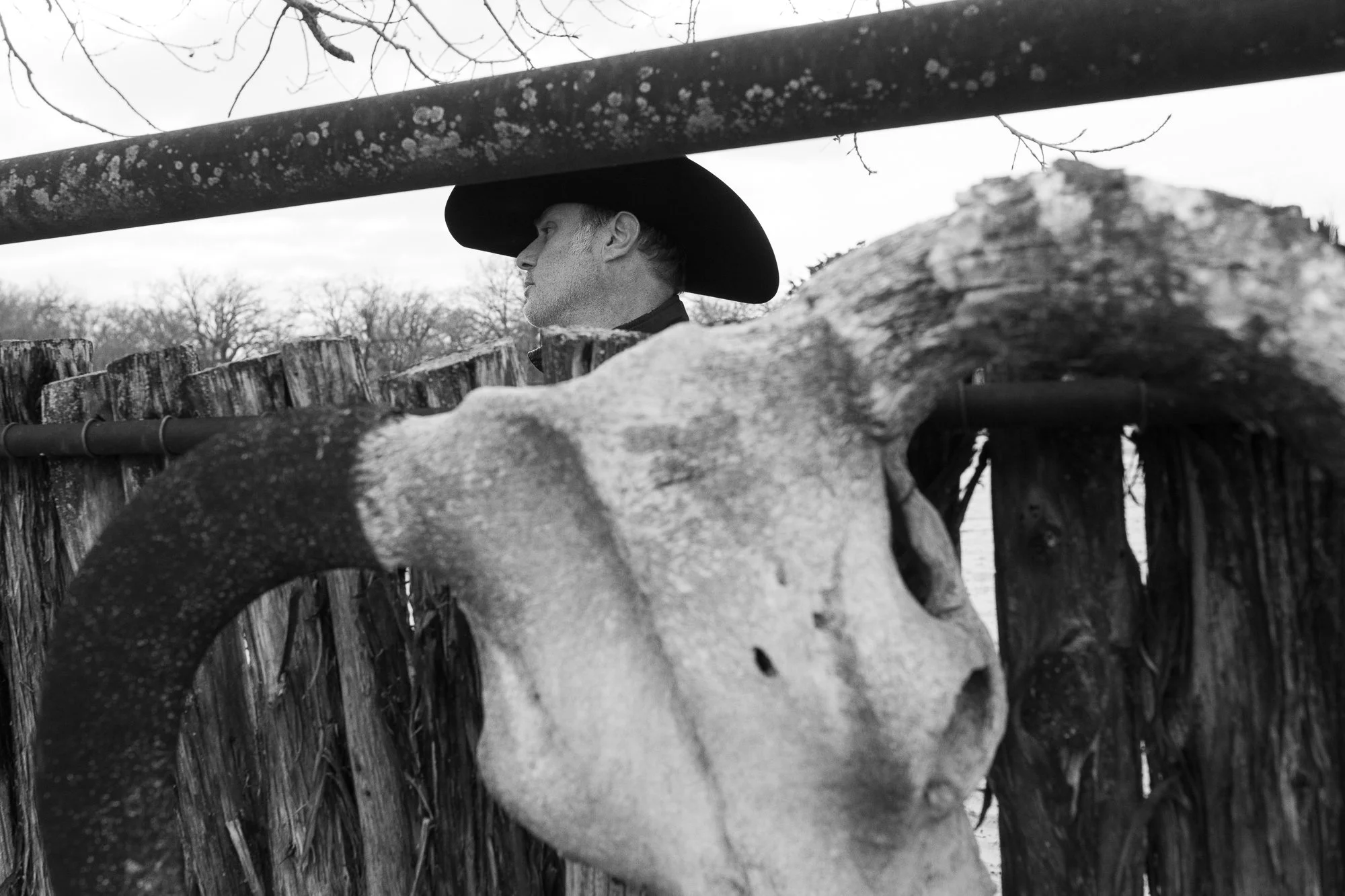
Profile of Western artist Teal Blake behind a wooden ranch fence with longhorn skull in foreground

Seen through a weathered ranch fence, Teal Blake pauses beside a longhorn skull — symbols deeply rooted in the visual language of the American West.

Teal Blake seated on studio floor surrounded by watercolor sketches and Western art materials

Inside his studio, Teal Blake works through sketches and watercolor studies. The space — layered with books, tack, and ranch artifacts — reflects decades immersed in Western culture.

Framed Western cowboy painting by Teal Blake displayed on studio easel

A finished cowboy painting rests on the easel in Blake’s studio — a glimpse into his interpretation of movement, dust, and the rhythm of working cattle.

Black and white photograph of Teal Blake reflecting in his art studio surrounded by Western artifacts

In a quiet moment inside his studio, Teal Blake reflects between works. The walls — lined with skulls, reference materials, and paintings — reveal a life shaped by the American West.

Western artist Teal Blake standing with longhorn cattle in wooded Texas pasture

Teal Blake stands among longhorn cattle in a wooded pasture, a scene that reflects the everyday realities behind much of his contemporary Western art.

Western artist Teal Blake kneeling with his dog inside his Texas art studio

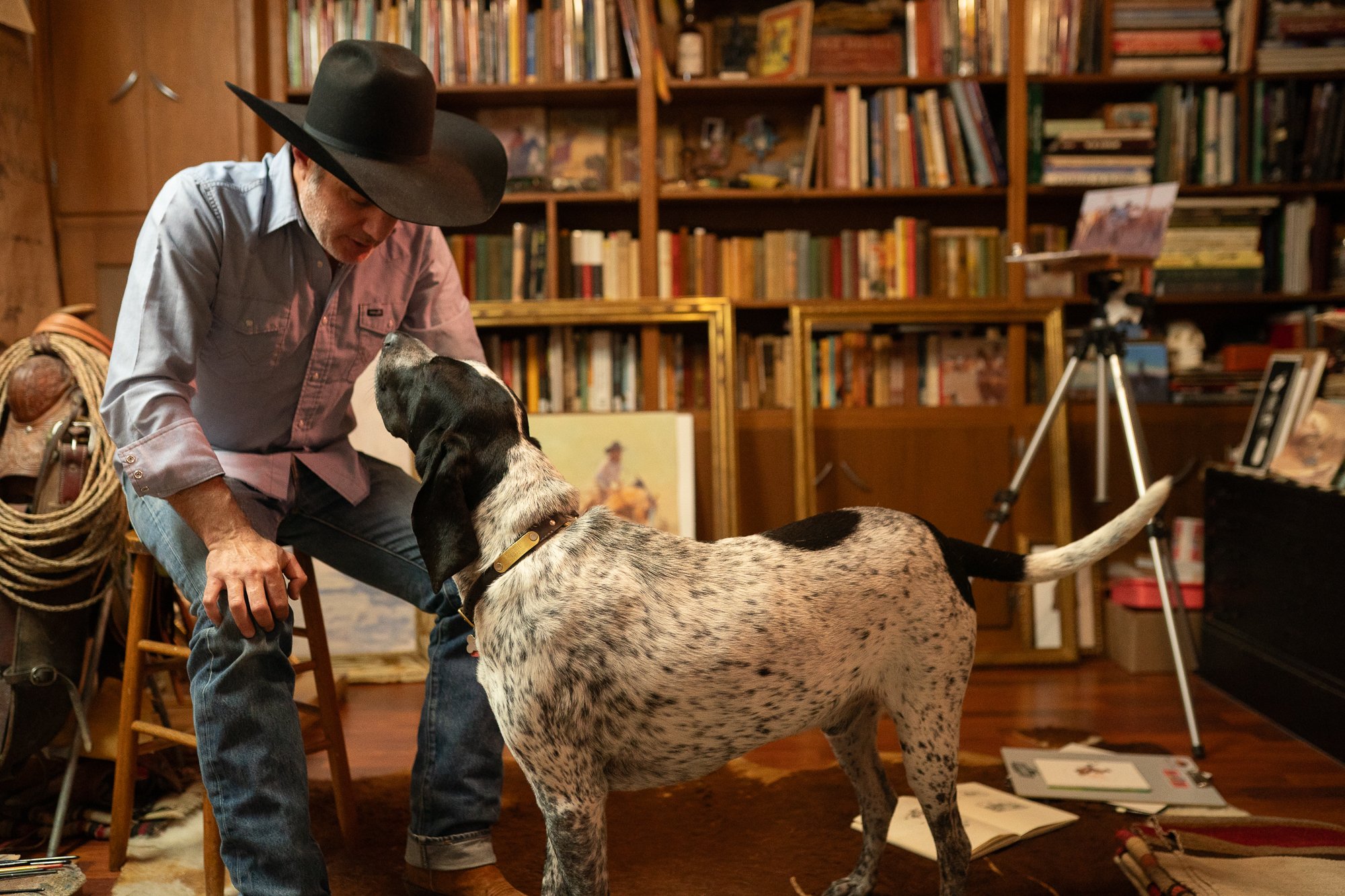
Teal Blake pauses with his dog inside the studio lined with books, tack, and finished paintings. His environment reflects a life closely tied to ranch culture and the realities of the American West.

Texas Plains Photography: Llano Estacado

Llano Estacado Photographs

The Llano Estacado is easy to misunderstand. It’s often described as flat, empty, or featureless, but spending time there reveals something very different. This high plains region of West Texas is defined less by landmarks and more by distance — by how far the horizon stretches, how light moves across open ground, and how small human presence feels once you slow down enough to notice it.

These photographs were made while traveling through small towns, farmland, and back roads that sit quietly within that vastness. They are not meant to explain the Llano Estacado so much as sit with it.

A Landscape Defined by Absence

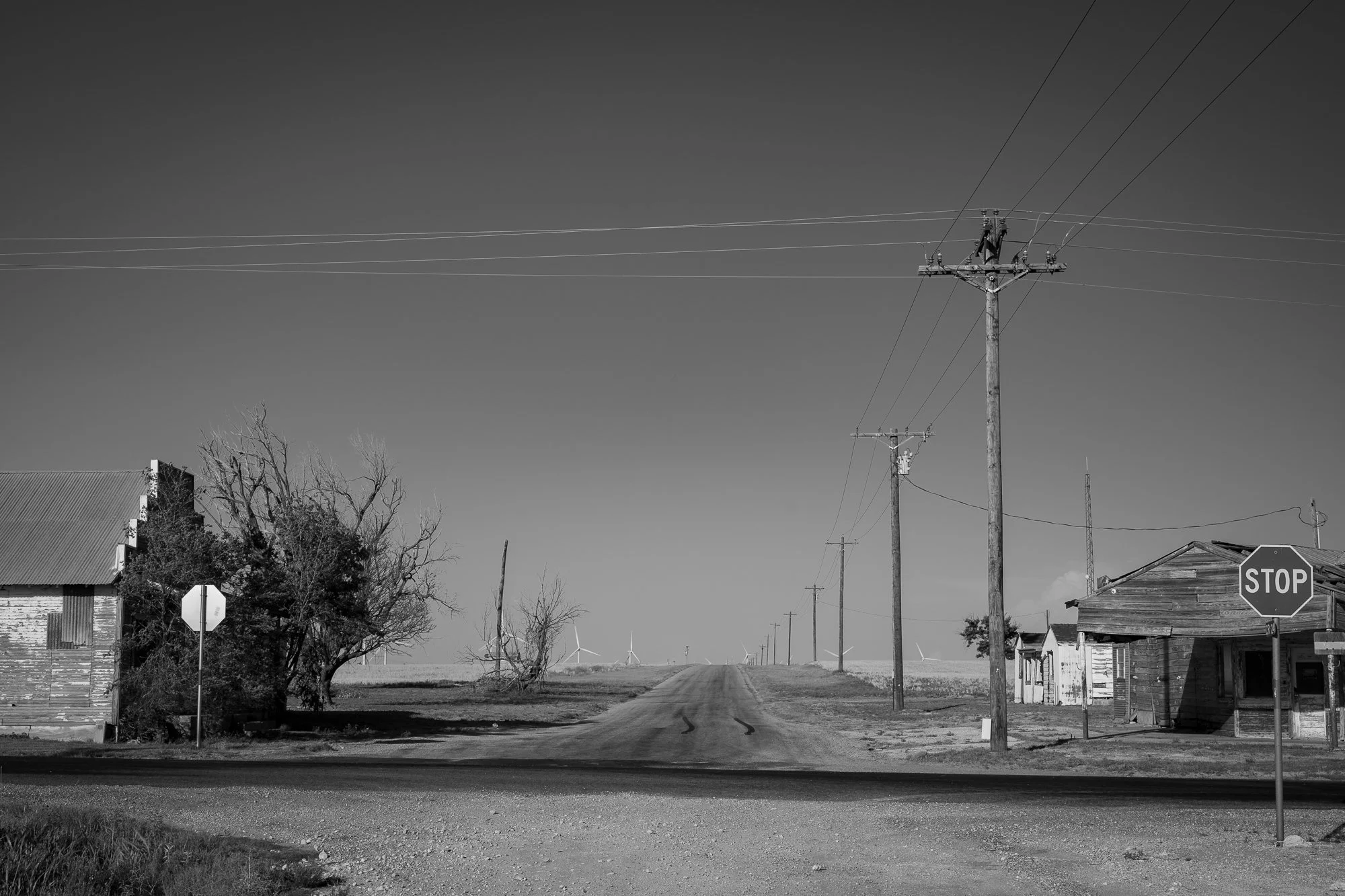
There are few visual interruptions on the Llano Estacado. Roads run straight for miles. Fields repeat themselves. Buildings appear only occasionally, and when they do, they often feel temporary — as if they were placed there out of necessity rather than permanence.

That absence becomes the subject. Empty intersections, wind-worked soil, distant structures, and isolated signage take on weight simply because there is so little competing for attention. The photographs rely on restraint: space, quiet geometry, and light doing most of the work.

Small Towns, Everyday Objects

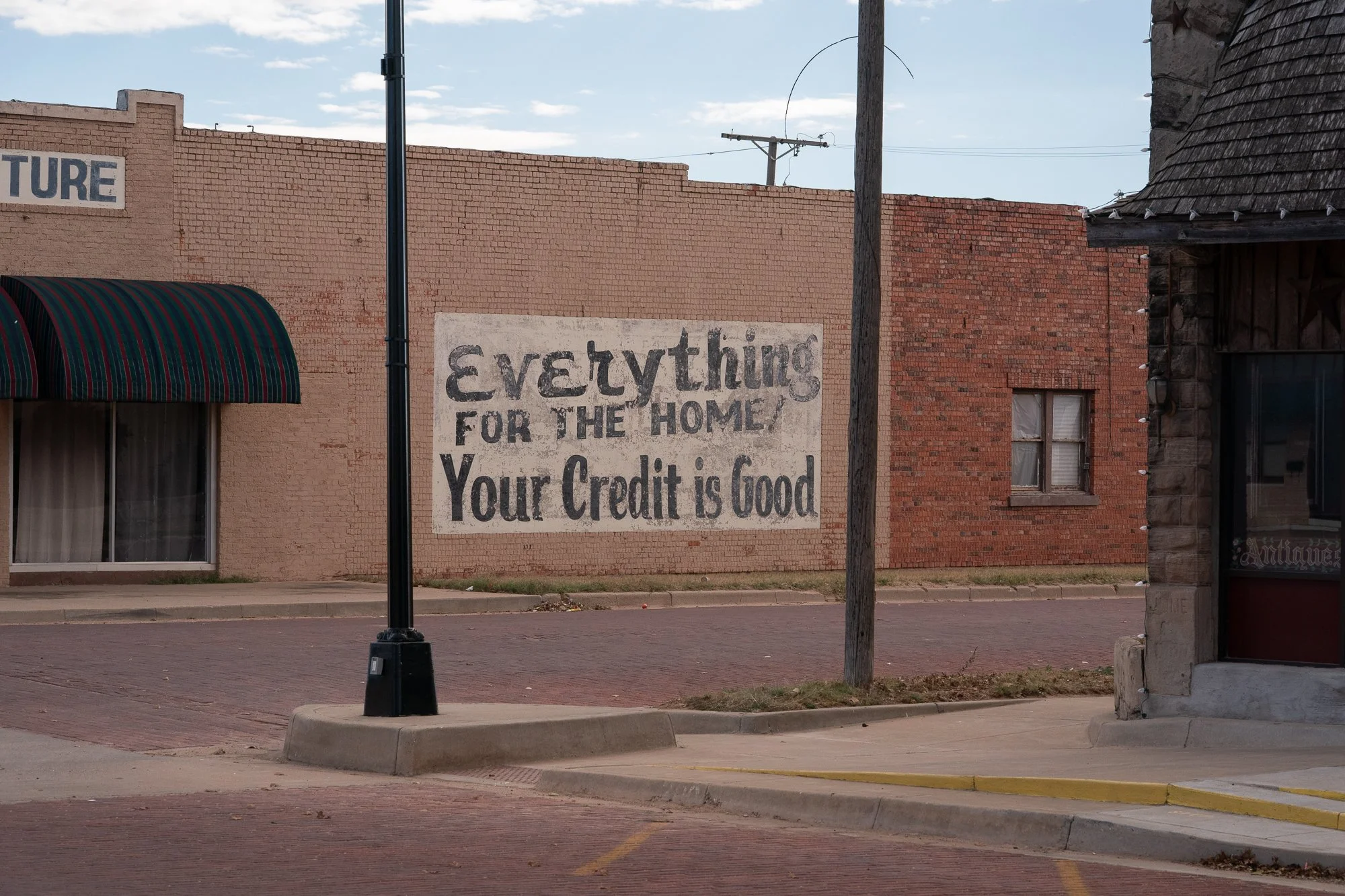
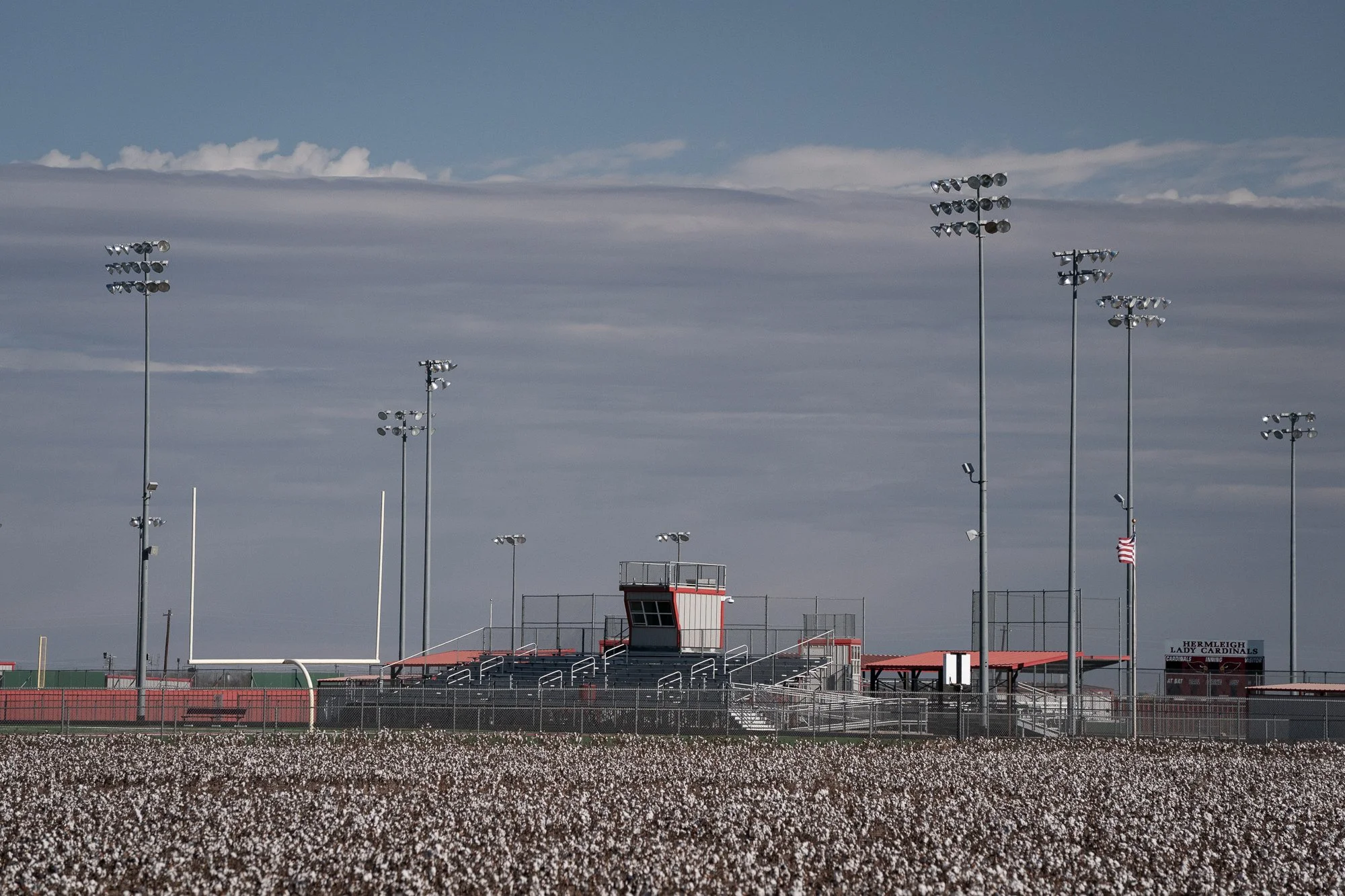
Scattered across the plains are towns built around utility rather than spectacle. Hardware stores, abandoned buildings, hand-painted signs, school stadiums, and roadside memorials all reflect daily life shaped by isolation and self-reliance.

Rather than searching for dramatic moments, this work focuses on ordinary details — objects left where they were last used, buildings holding onto their purpose a little longer than expected. These elements reveal how people adapt to scale, weather, and distance without needing to announce it.

Wind, Agriculture, and Modern Presence

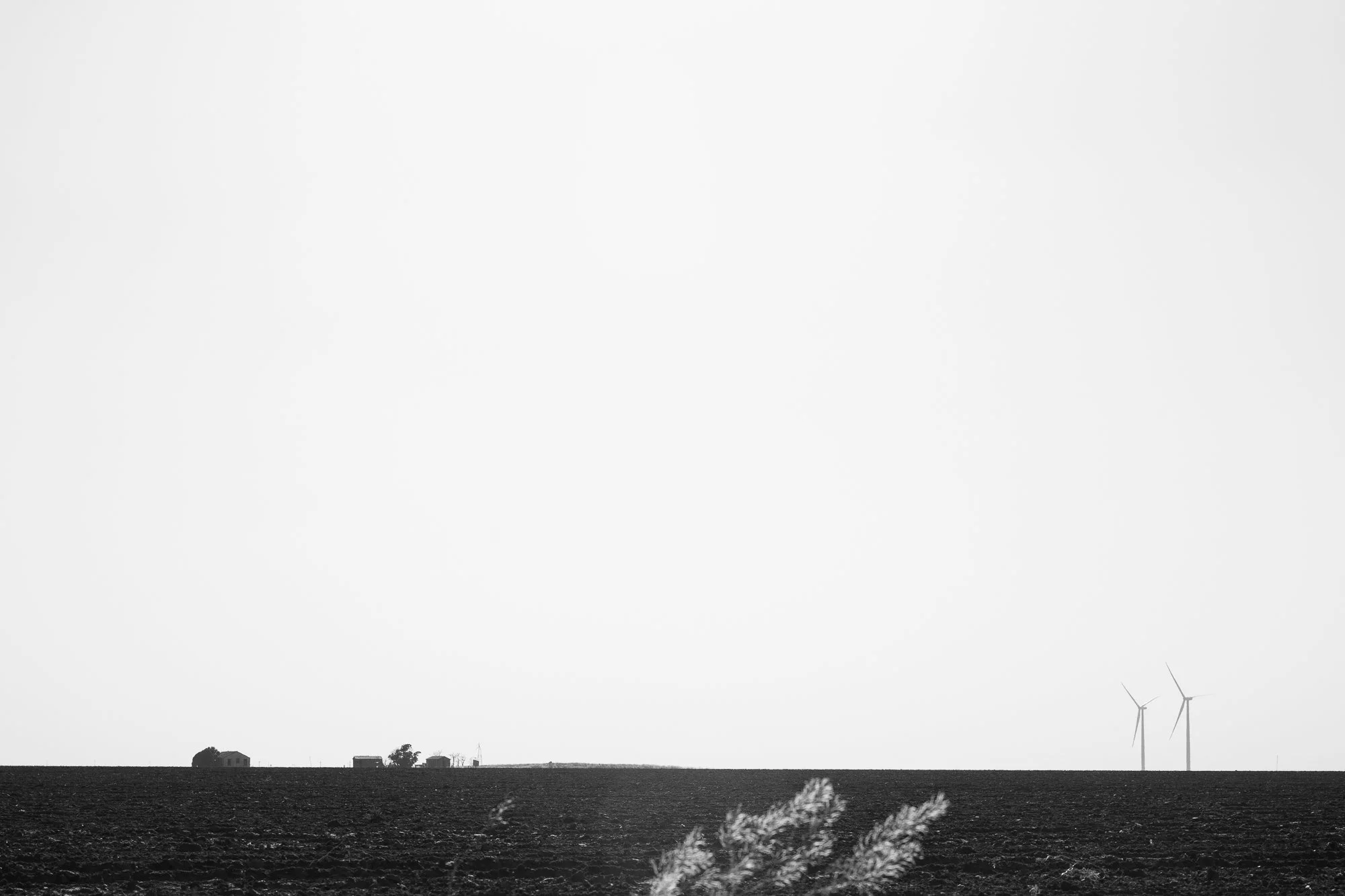
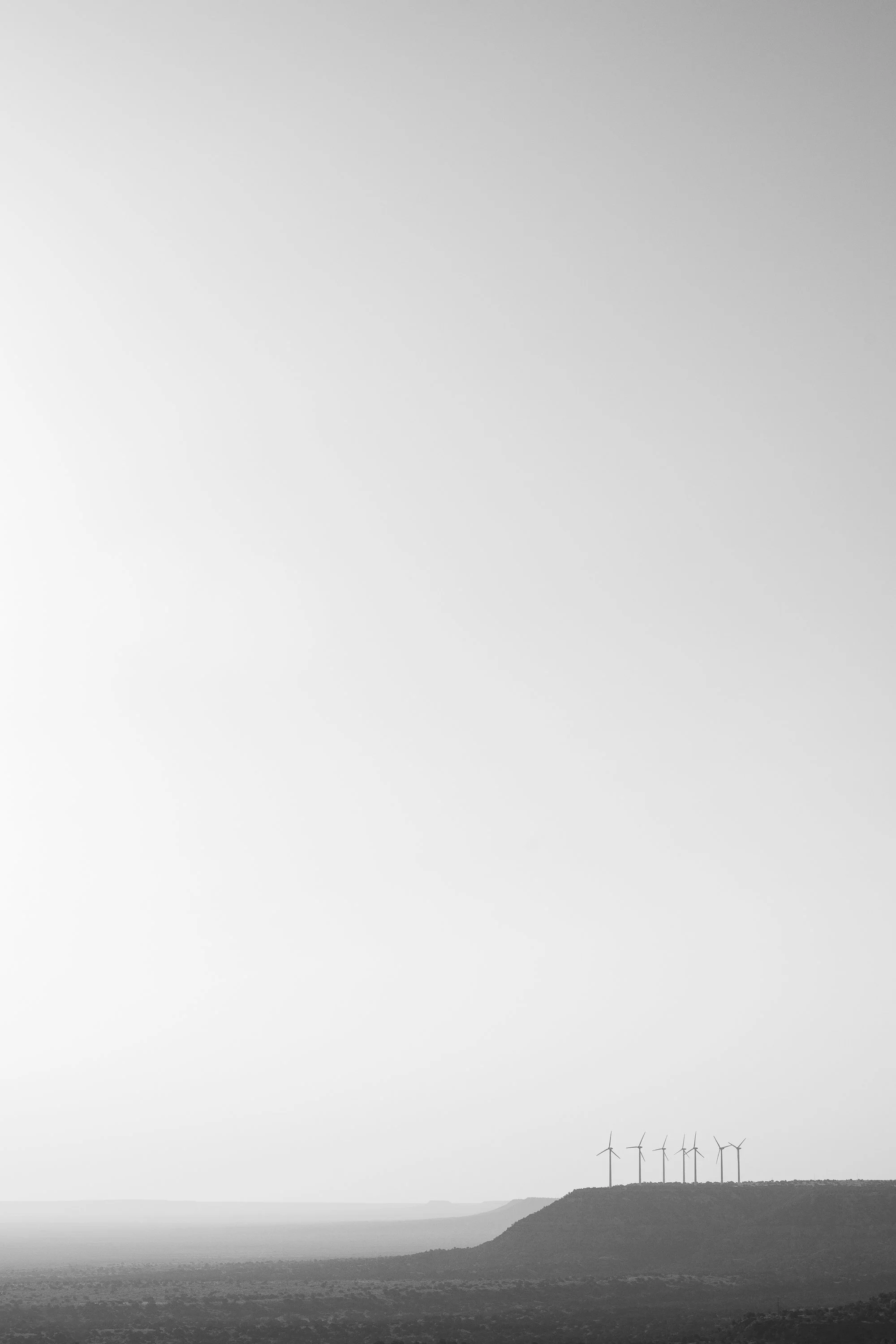
The Llano Estacado is both deeply agricultural and increasingly shaped by modern infrastructure. Wind turbines rise above fields that have been worked for generations. Long rows of crops trace patterns across land that feels otherwise unbroken.

This overlap between old and new is quiet but persistent. The turbines don’t overwhelm the landscape; instead, they become another line on the horizon — another marker of how the region continues to evolve while remaining visually spare.

Photographing the In-Between

These images are less about destinations and more about what exists between them. They were made by pulling over often, driving slowly, and paying attention to what most people pass without stopping.

The goal is not nostalgia, but observation. Not commentary, but presence. The Llano Estacado rewards patience, and these photographs reflect that pace — measured, minimal, and unforced.

Interested in These Photographs?

A selection of photographs from this series is available as fine art prints, and the full body of work is available for editorial and commercial licensing.

If you’d like more information, feel free to get in touch.

View more photography from the American West

Part of a Larger Project

Although the Llano Estacado is an entity in and of itself, it’s also an iconic piece of America, which fits perfectly in my long term project photographing the often overlooked parts of this country.

View more American photography

“It’s a long way, round the Llano Estacado” - Colter Wall

Water for sale sign along a rural road on the Llano Estacado in Texas

A hand-painted water-for-sale sign along a remote Texas highway, underscoring the scarcity and scale of life on the Llano Estacado.

Empty intersection with abandoned buildings on the Llano Estacado

A rural intersection on the Llano Estacado, where roads stretch outward and towns feel held together by distance.

Minimal black and white landscape with distant wind turbines on the Llano Estacado

A spare horizon broken only by distant farm buildings and turbines, emphasizing scale and emptiness on the Llano Estacado.

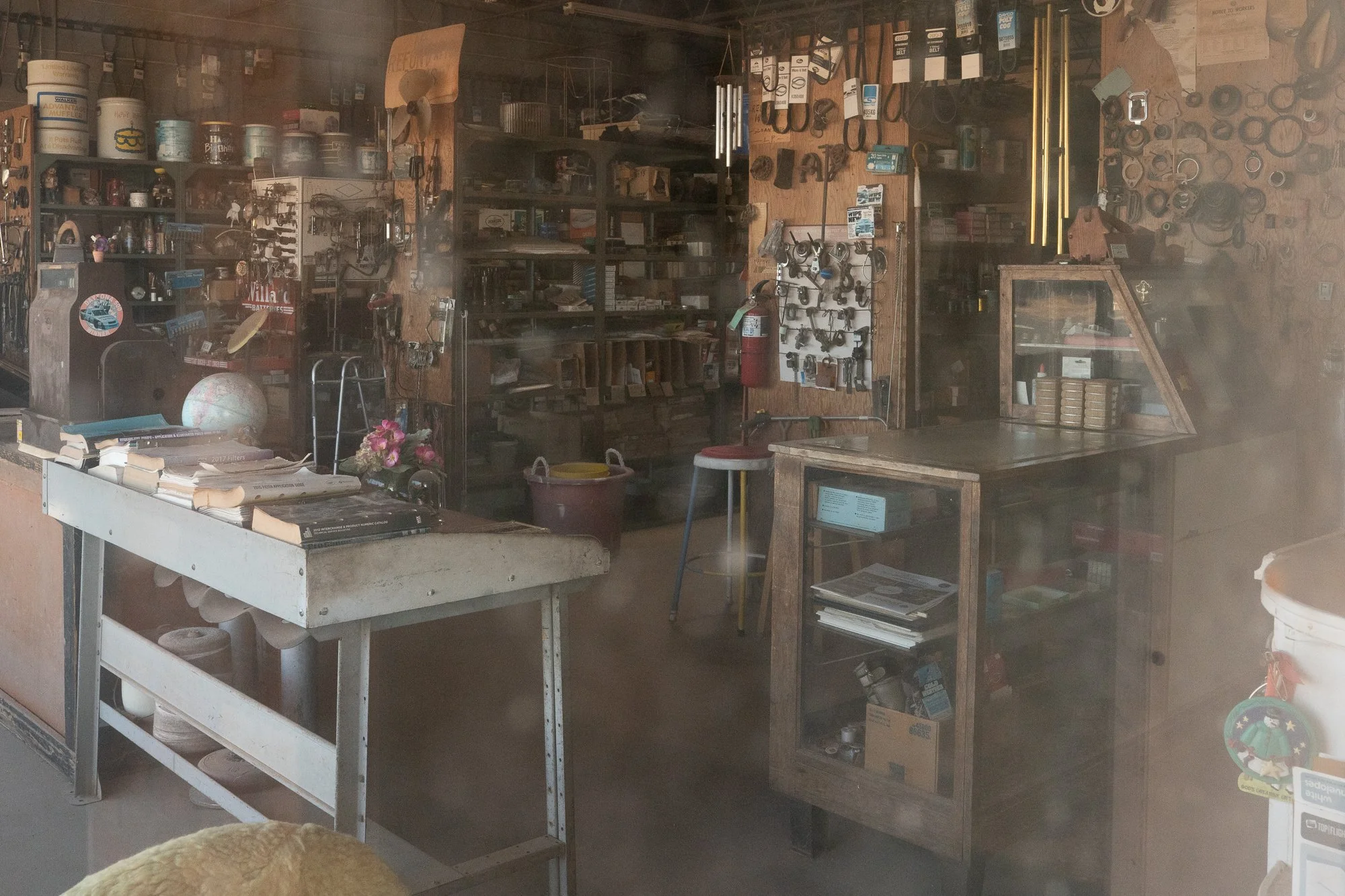
Interior of a small rural hardware store on the Llano Estacado in Texas

Inside a small-town hardware store on the Llano Estacado, where tools, shelves, and light speak to decades of daily use.

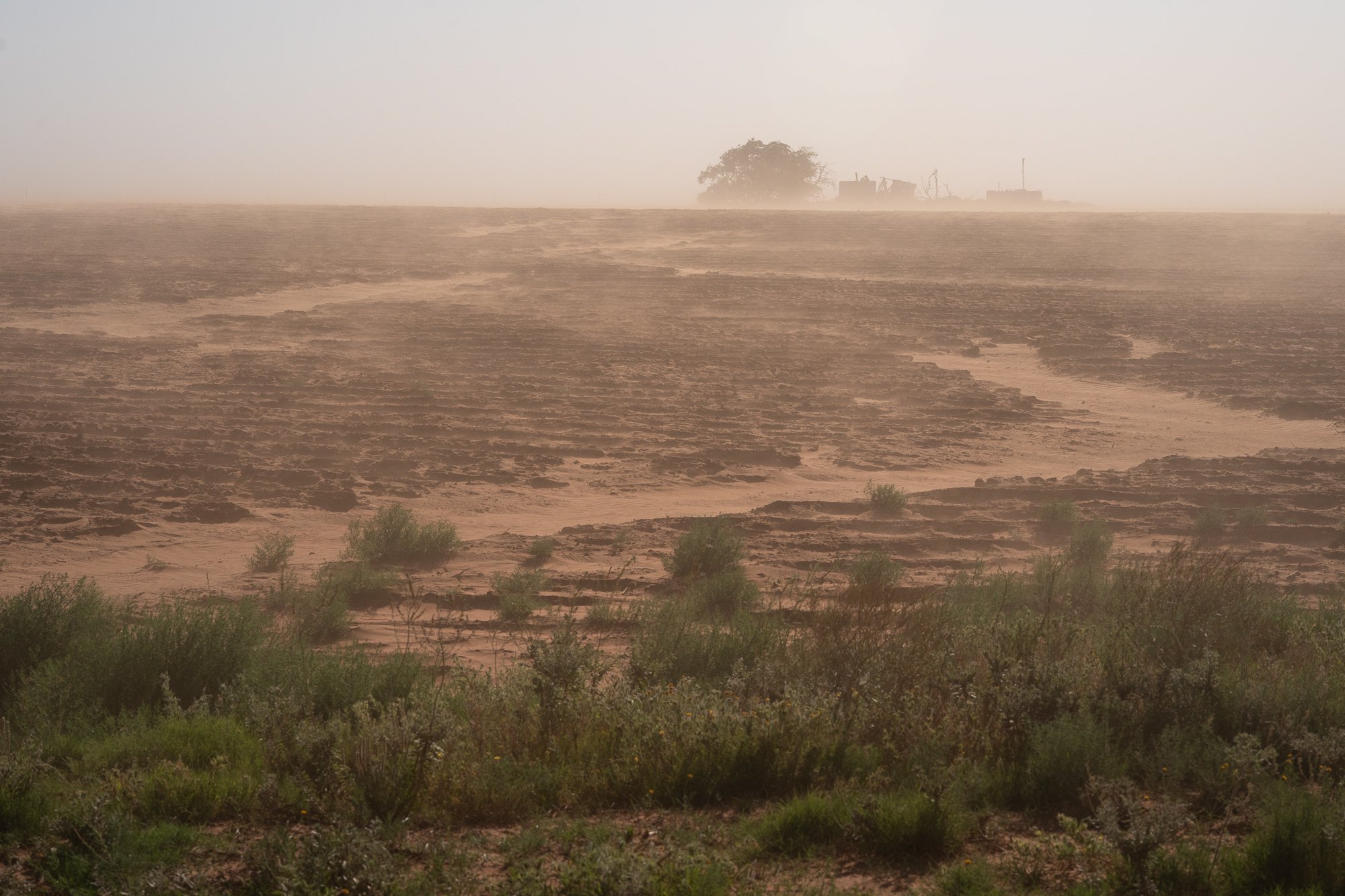
Dust blowing across a plowed field on the Llano Estacado in West Texas

Dust moves across freshly worked earth, softening the horizon on the wide, exposed plains of the Llano Estacado.

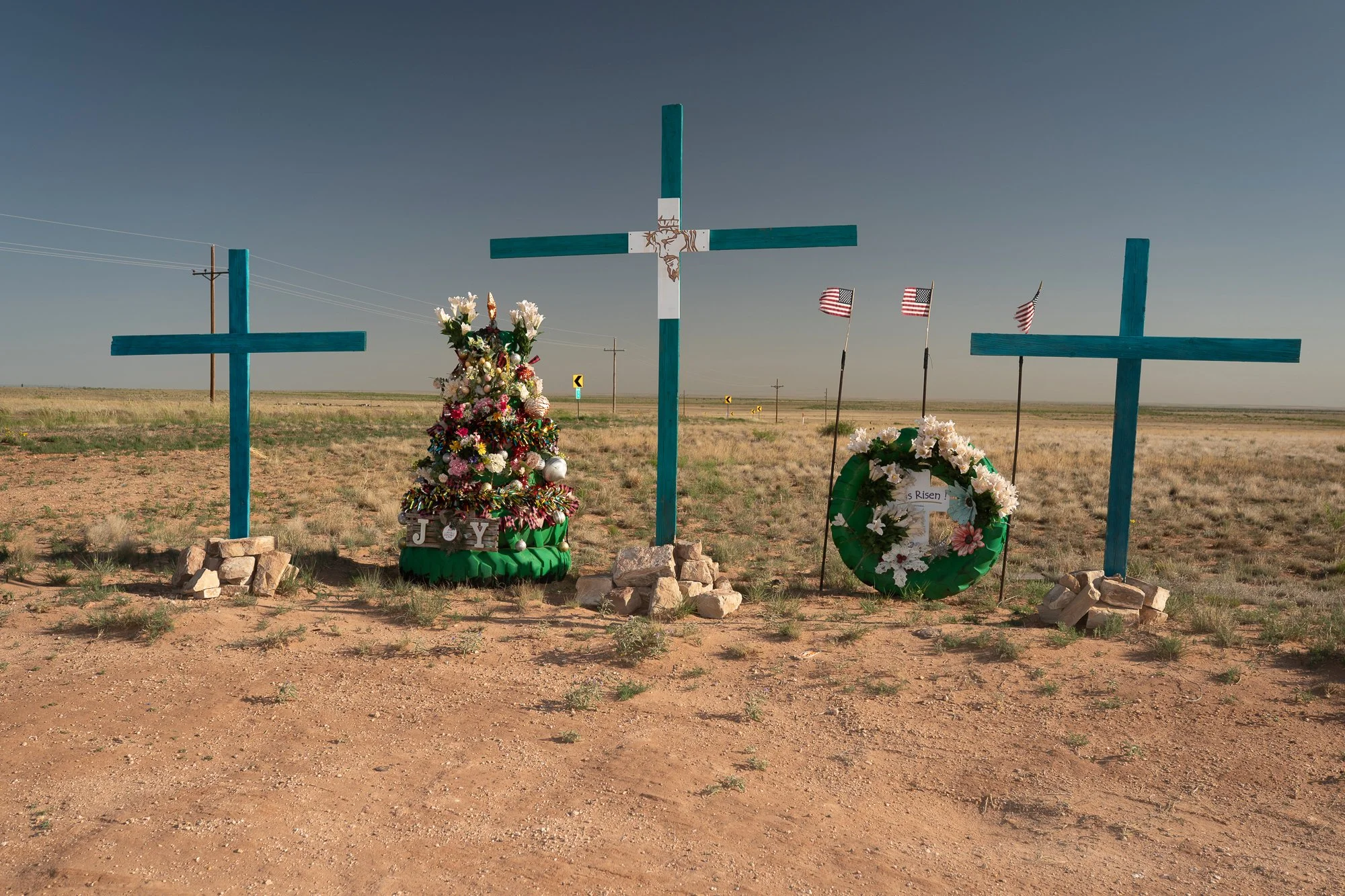
Roadside crosses and memorials in rural West Texas on the Llano Estacado

Roadside crosses stand against the open plains, marking memory, faith, and loss across the Llano Estacado.

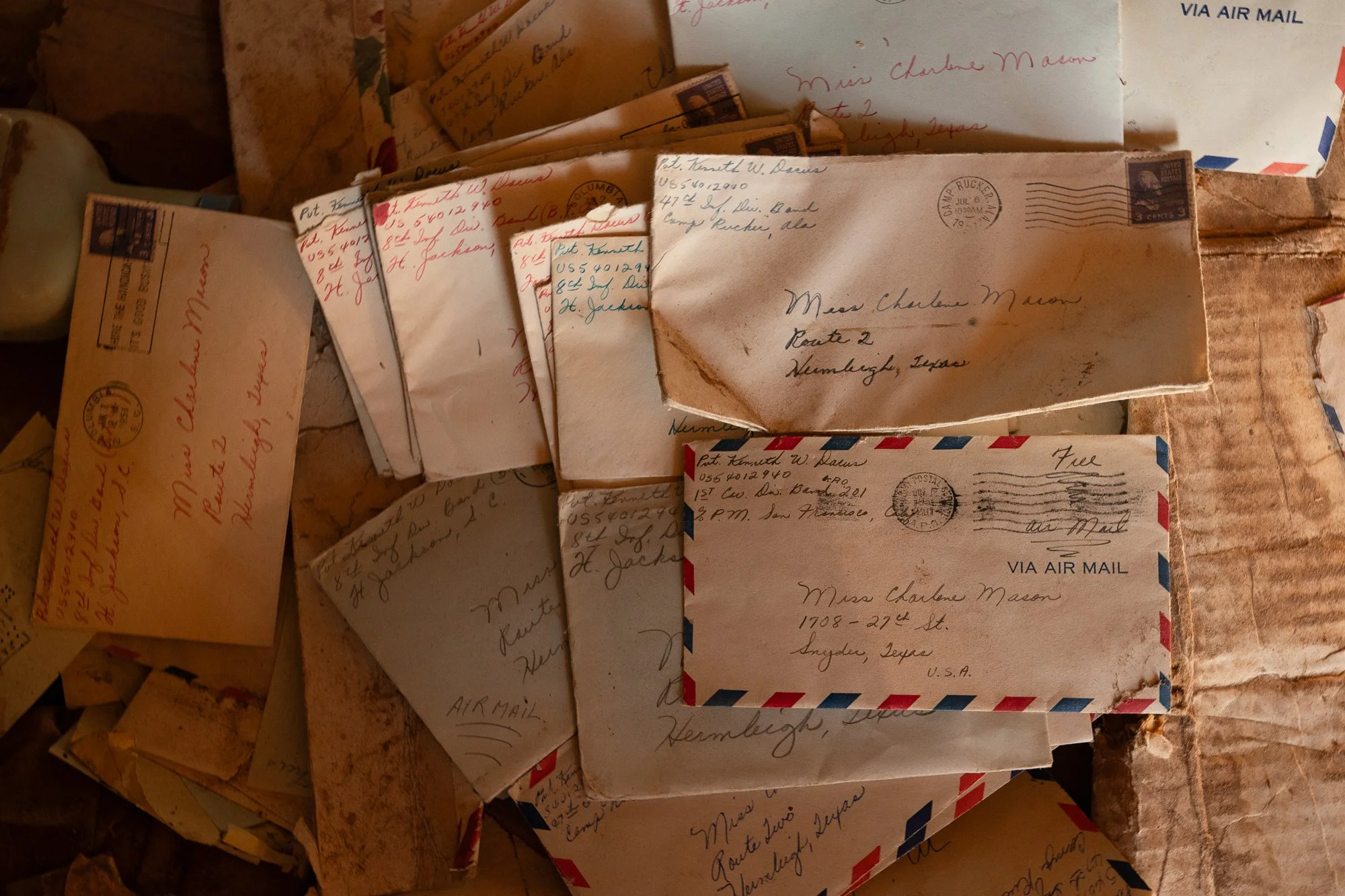
Handwritten letters and envelopes collected in a rural Texas home on the Llano Estacado

Handwritten letters from an abandoned Texas home, marked by distance, memory, and everyday life on the Llano Estacado.

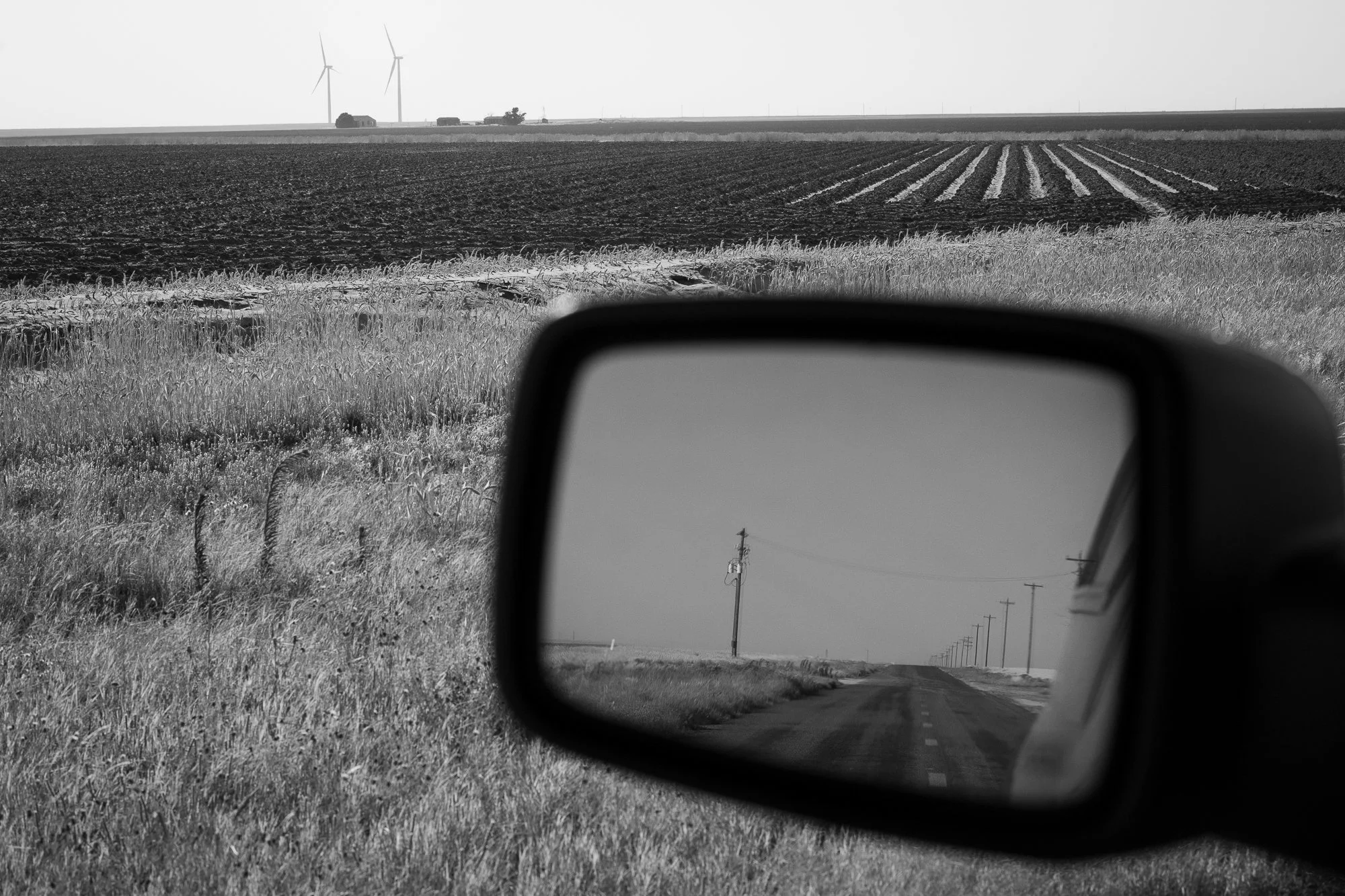
Black and white photograph of farmland reflected in a car mirror on the Llano Estacado

Farmland stretches ahead and behind, reflected in a car mirror while crossing the open roads of the Llano Estacado.

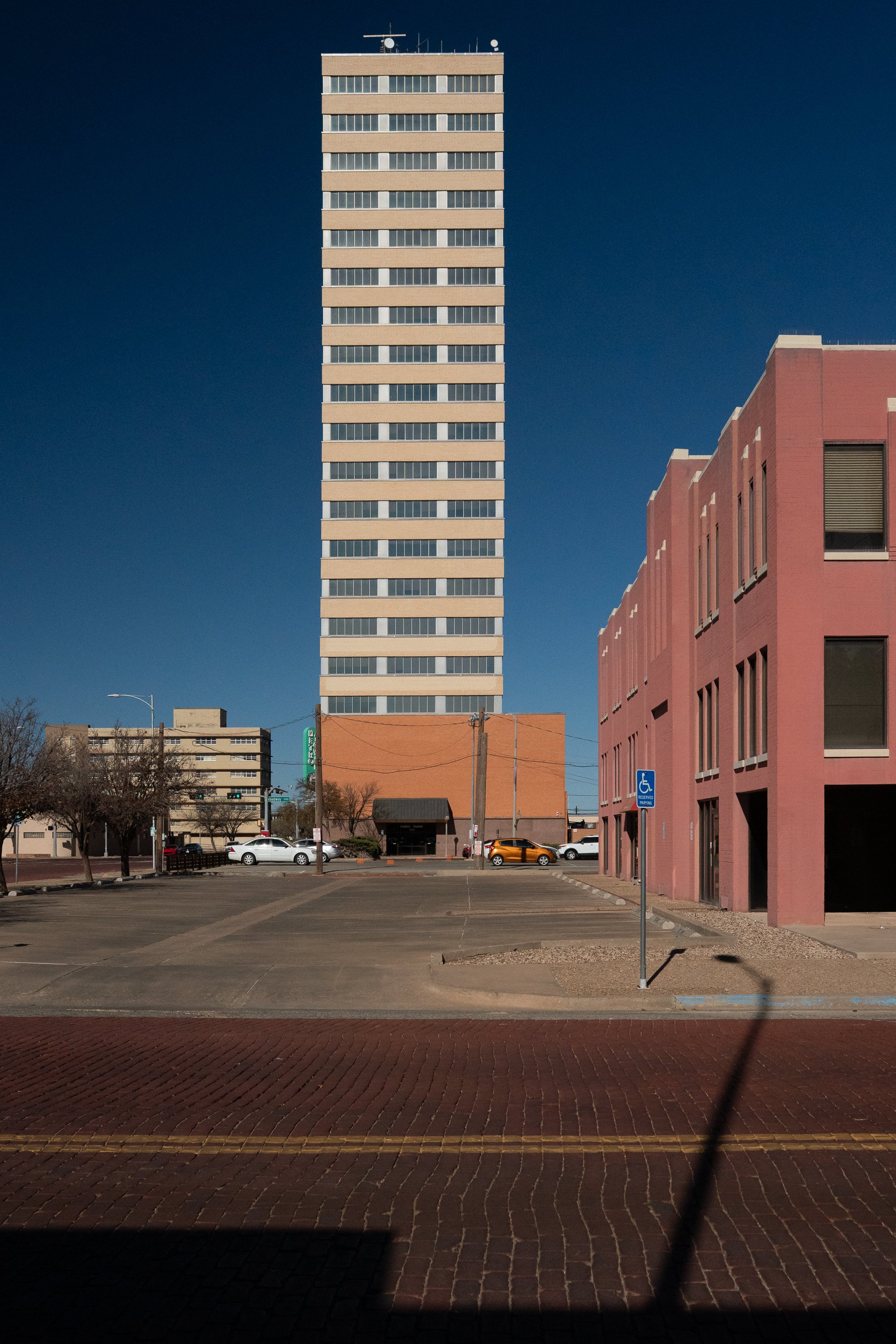
A downtown high rise tower in a small town on the Llano Estacado

A lone midcentury tower rises above a quiet town, emphasizing the scale and openness of the Llano Estacado.

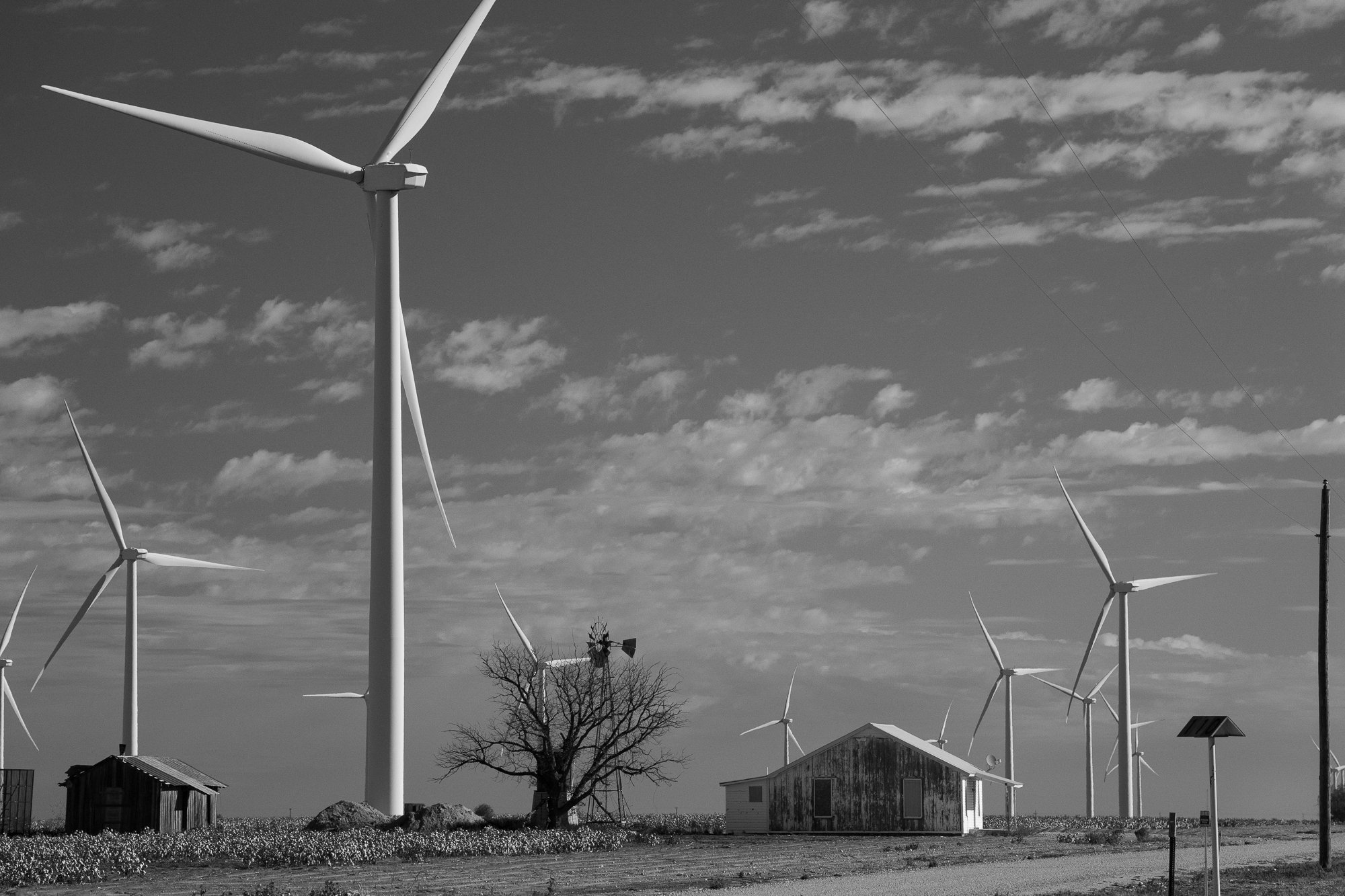
Wind turbines towering over abandoned rural buildings on the Llano Estacado in Texas

Wind turbines rise over aging structures, where modern infrastructure meets long-standing rural life on the Llano Estacado.

Vintage wall sign reading Your Credit Is Good in a small town on the Llano Estacado

A fading brick wall sign promises trust and familiarity, echoing the economic rhythms of Llano Estacado towns.

Photograph of a dirt road going through the Llano Estacado in Texas

Photograph of a long dirt road on the Llano Estacado in Texas

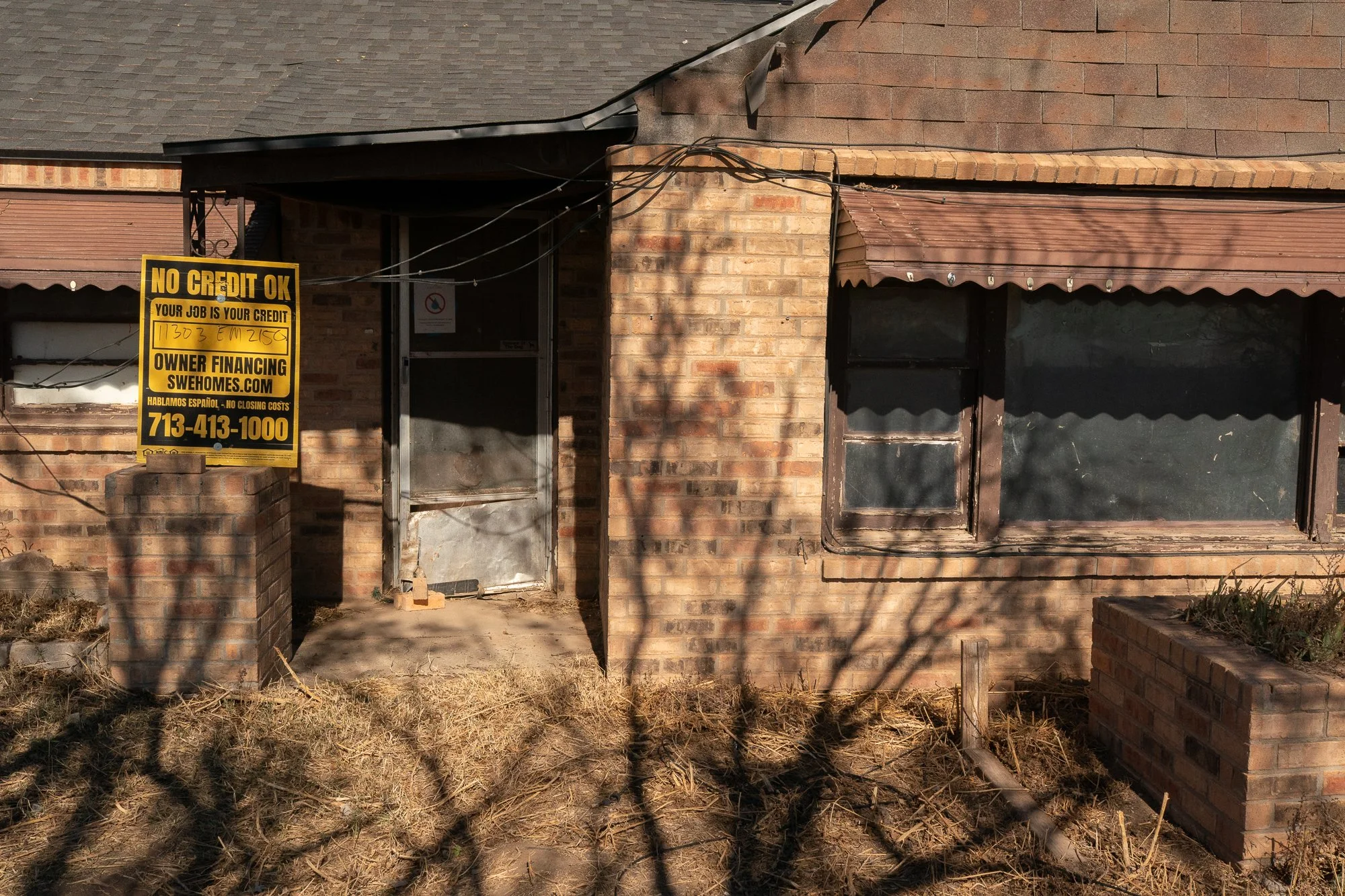
Brick house in rural Texas with an owner financing sign on the Llano Estacado

A modest brick house on the Llano Estacado, where handwritten signs and quiet streets reflect a self-reliant rural economy.

Minimal black and white photograph of a wind farm along the Llano Estacado horizon

A nearly empty frame holds a thin horizon and distant turbines, emphasizing restraint and scale on the Llano Estacado.

High school football stadium surrounded by farmland on the Llano Estacado in Texas

A high school football stadium sits among cotton fields, reflecting the cultural center of small towns on the Llano Estacado.

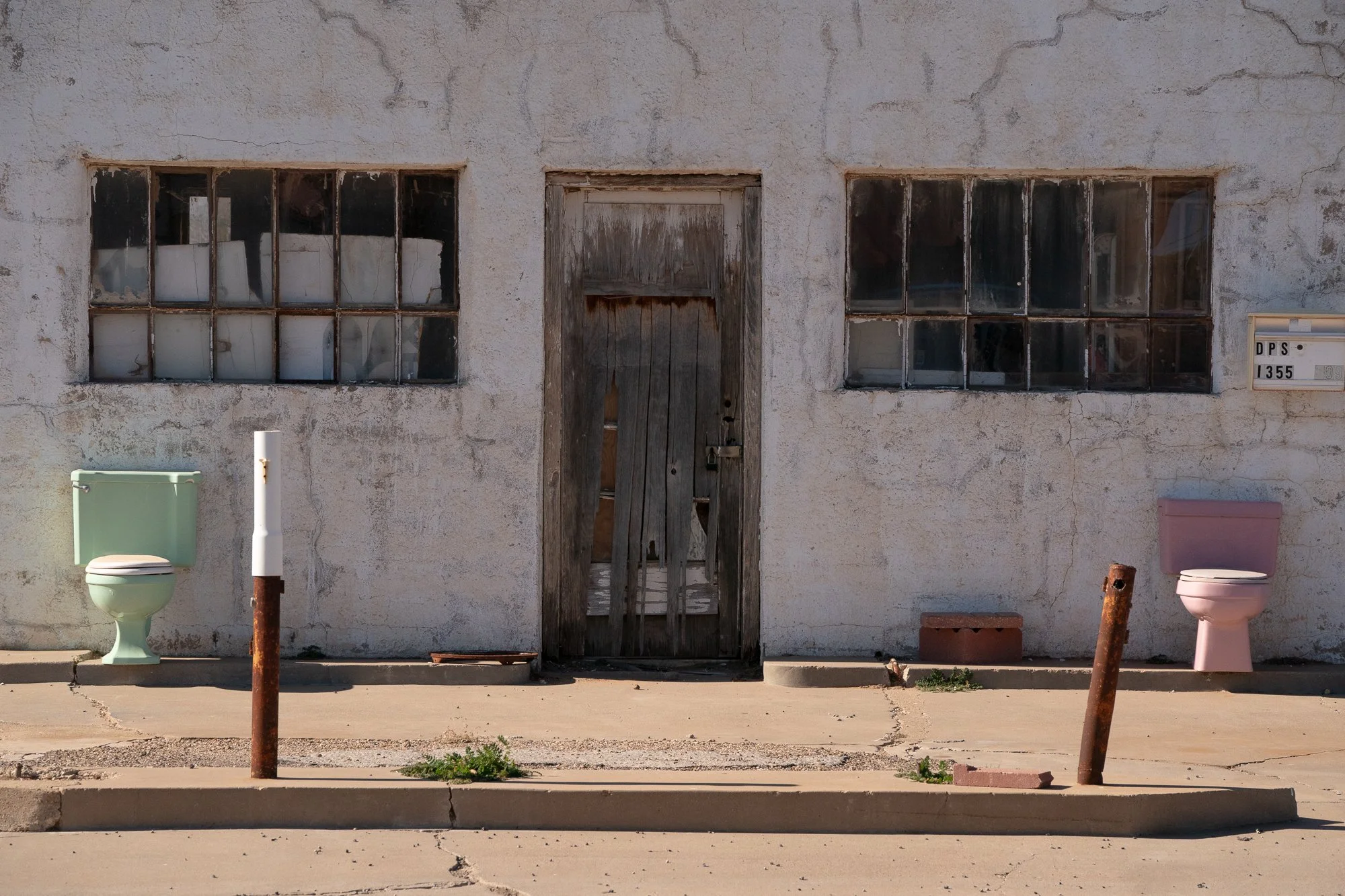
Abandoned building facade with pastel toilets outside on the Llano Estacado in Texas

An abandoned building on the Llano Estacado, where discarded fixtures and faded walls blur the line between utility and quiet absurdity.

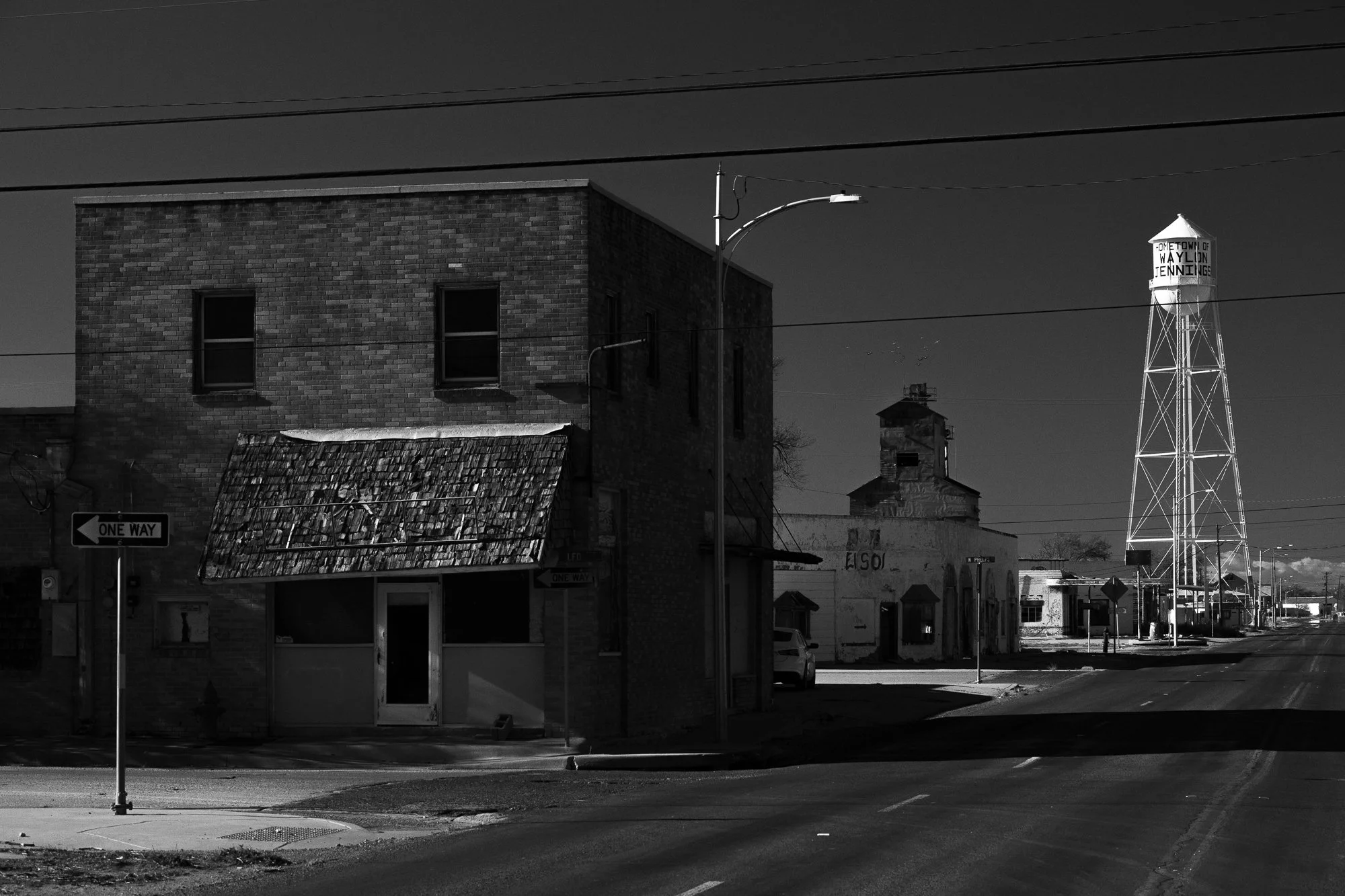
Black and white photograph of Littlefied, Texas with water tower honoring Waylon Jennings

Water tower in Littlefield, Texas - Hometown of Waylon Jennings

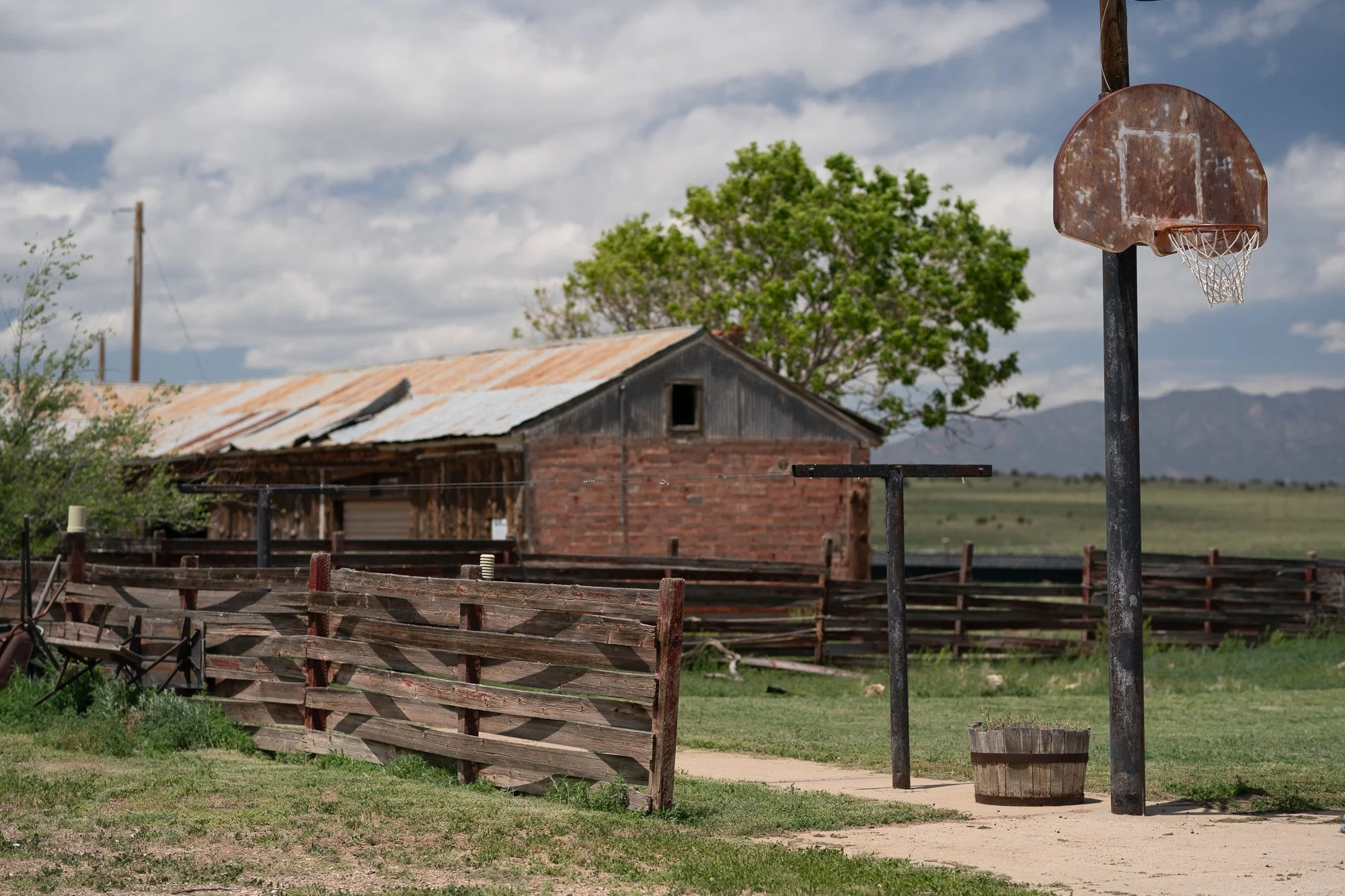
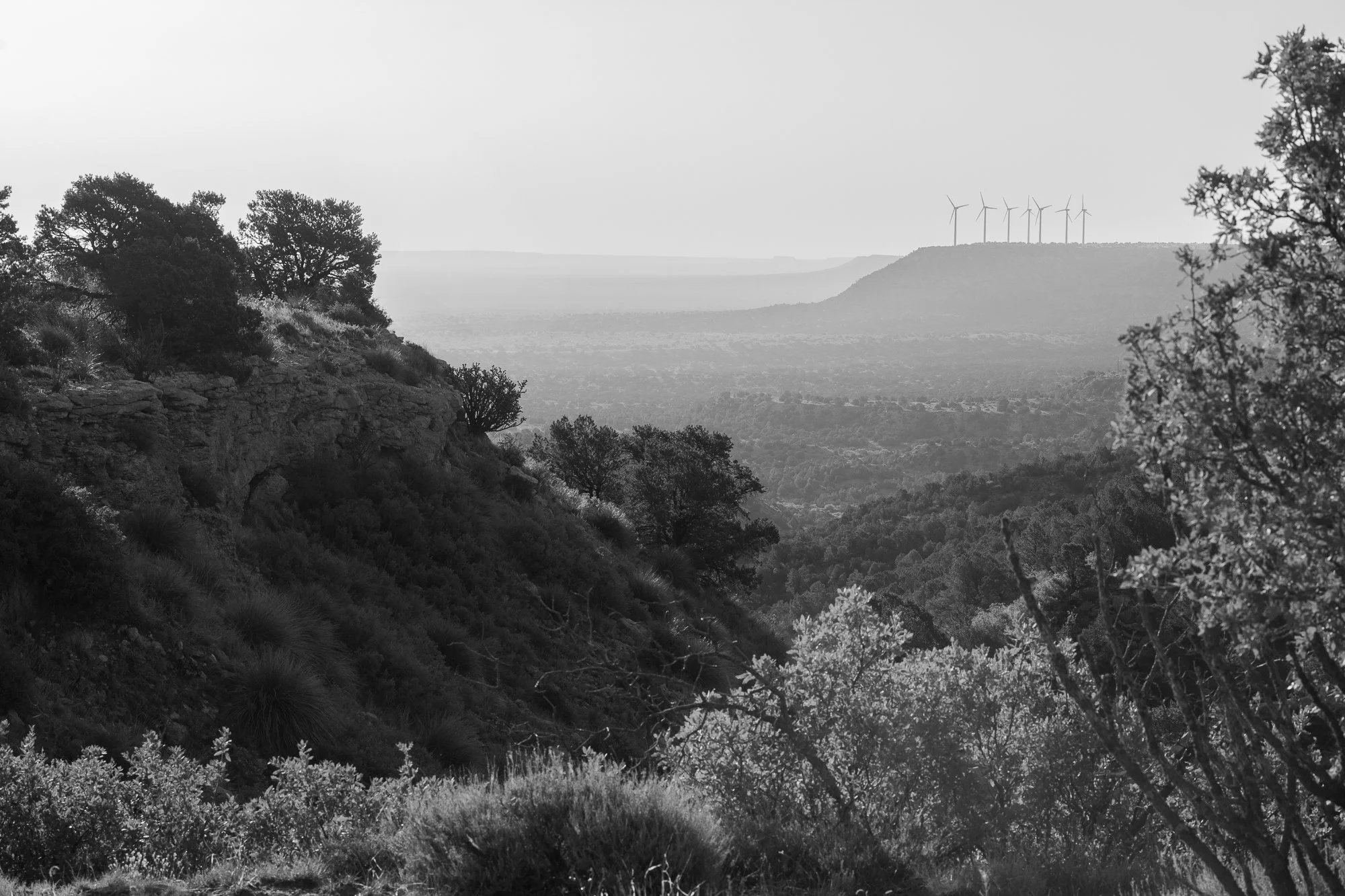
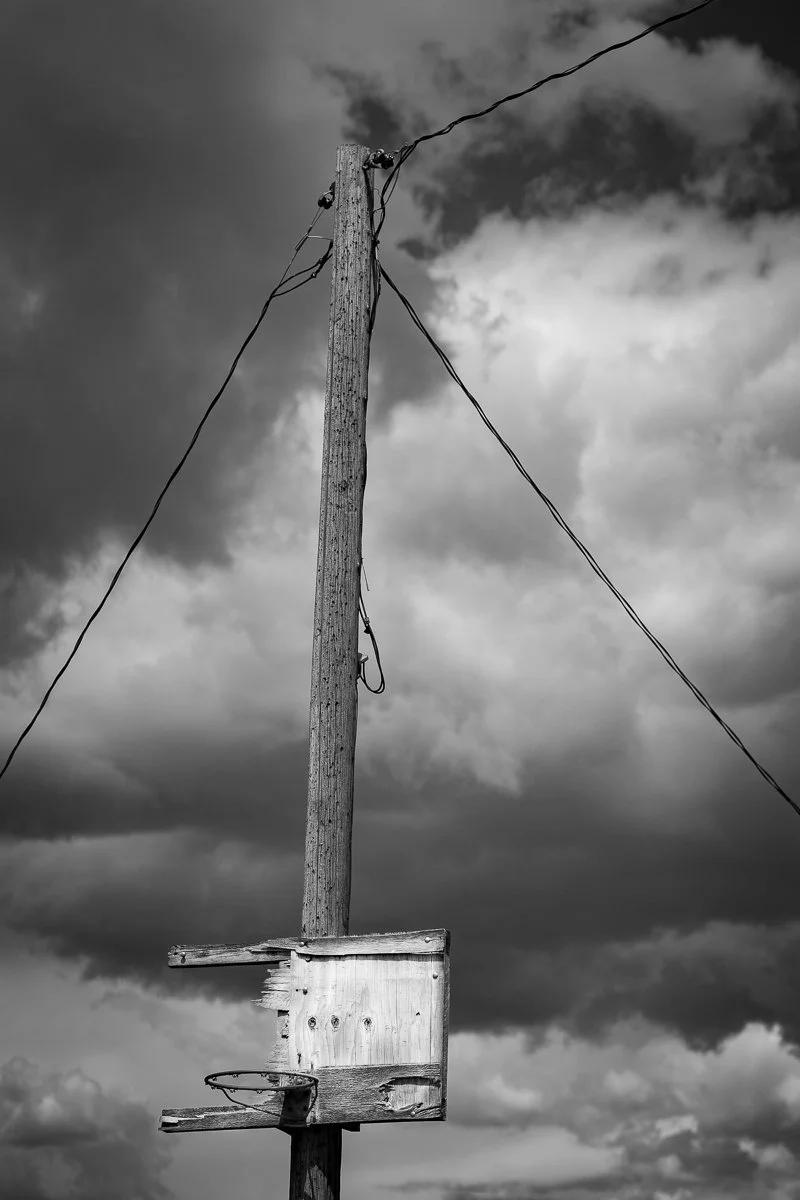
Wind turbines line a distant ridge above the canyon, where industry and landscape quietly coexist on the Llano Estacado.

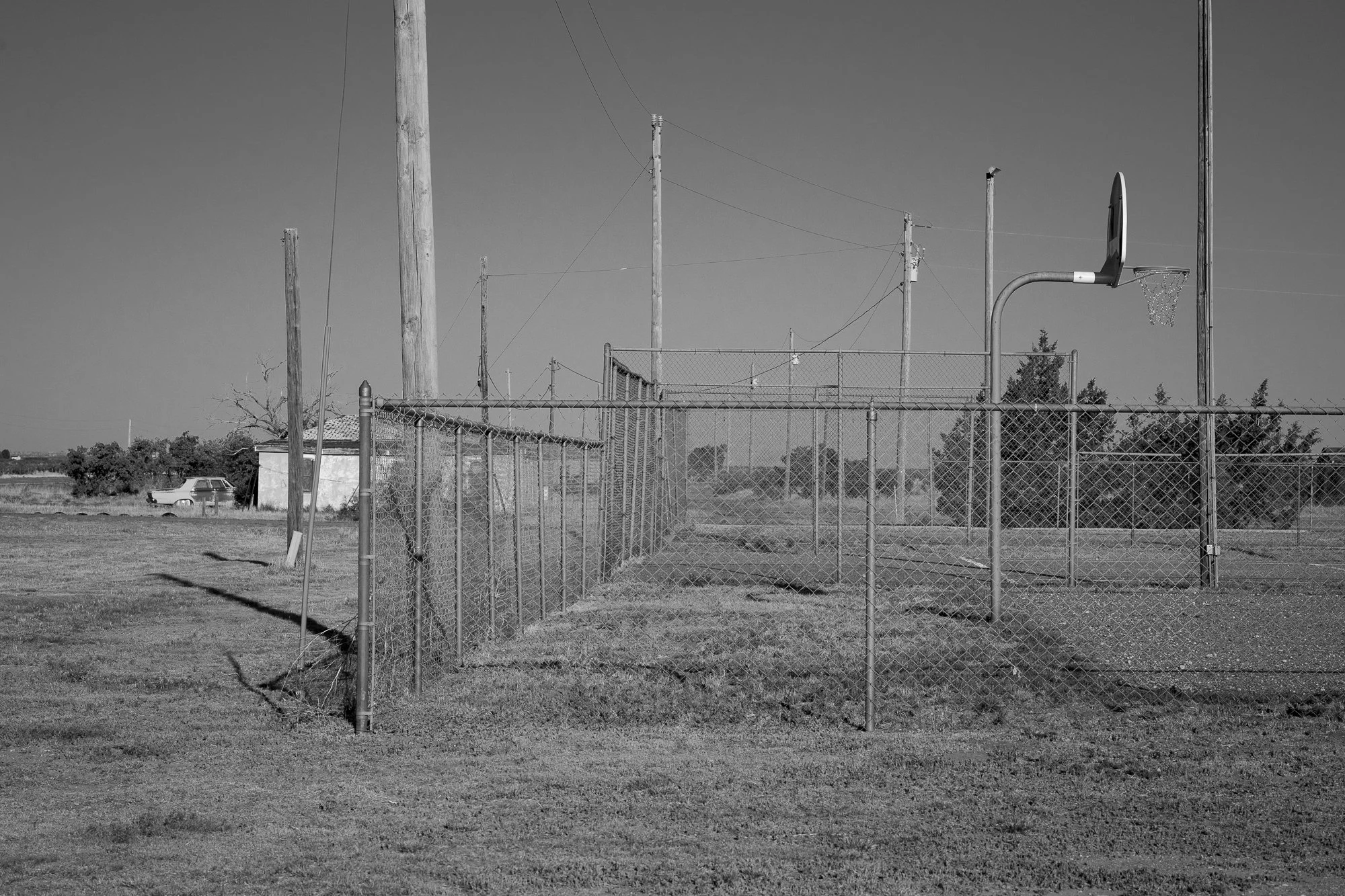
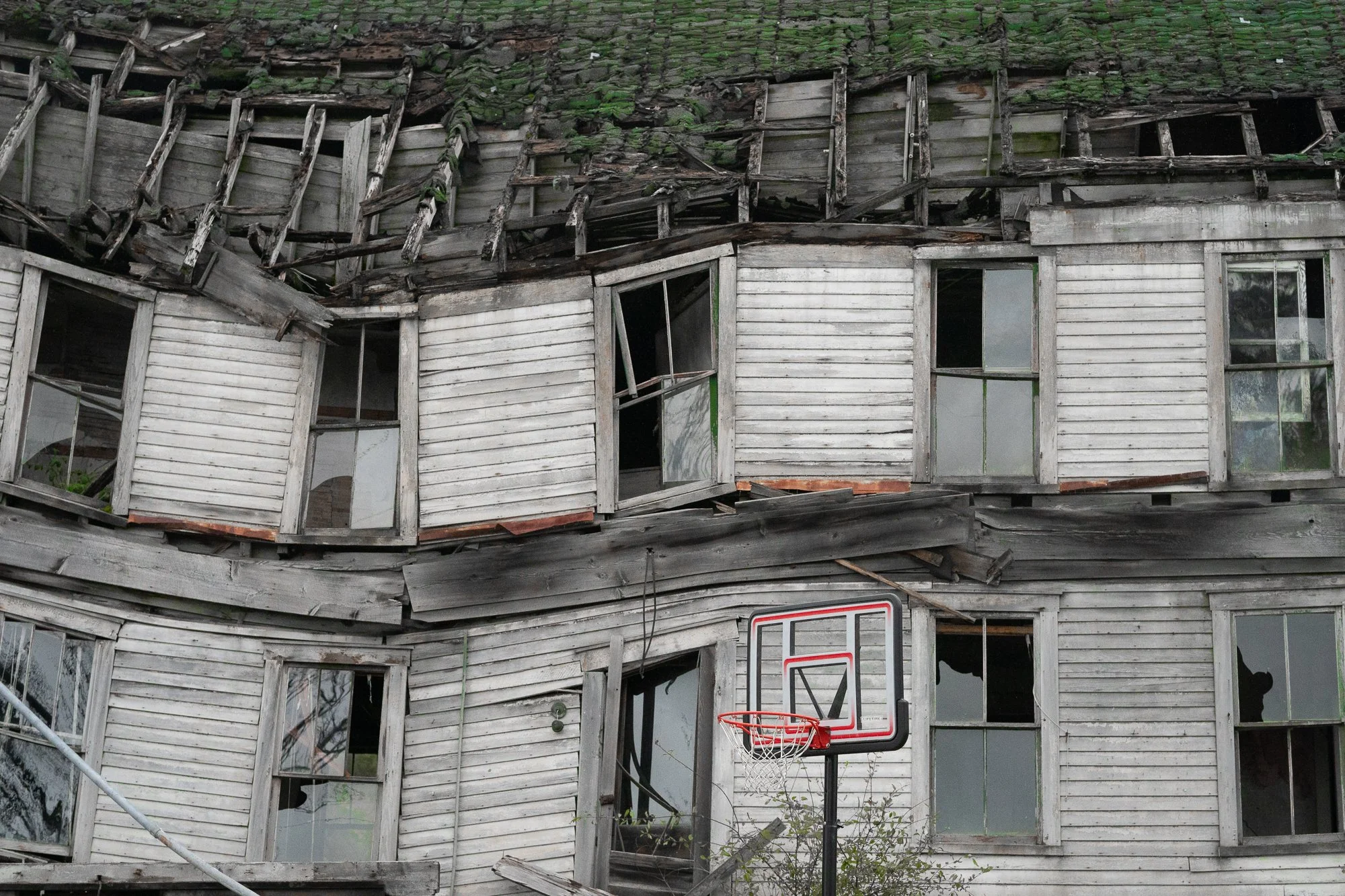
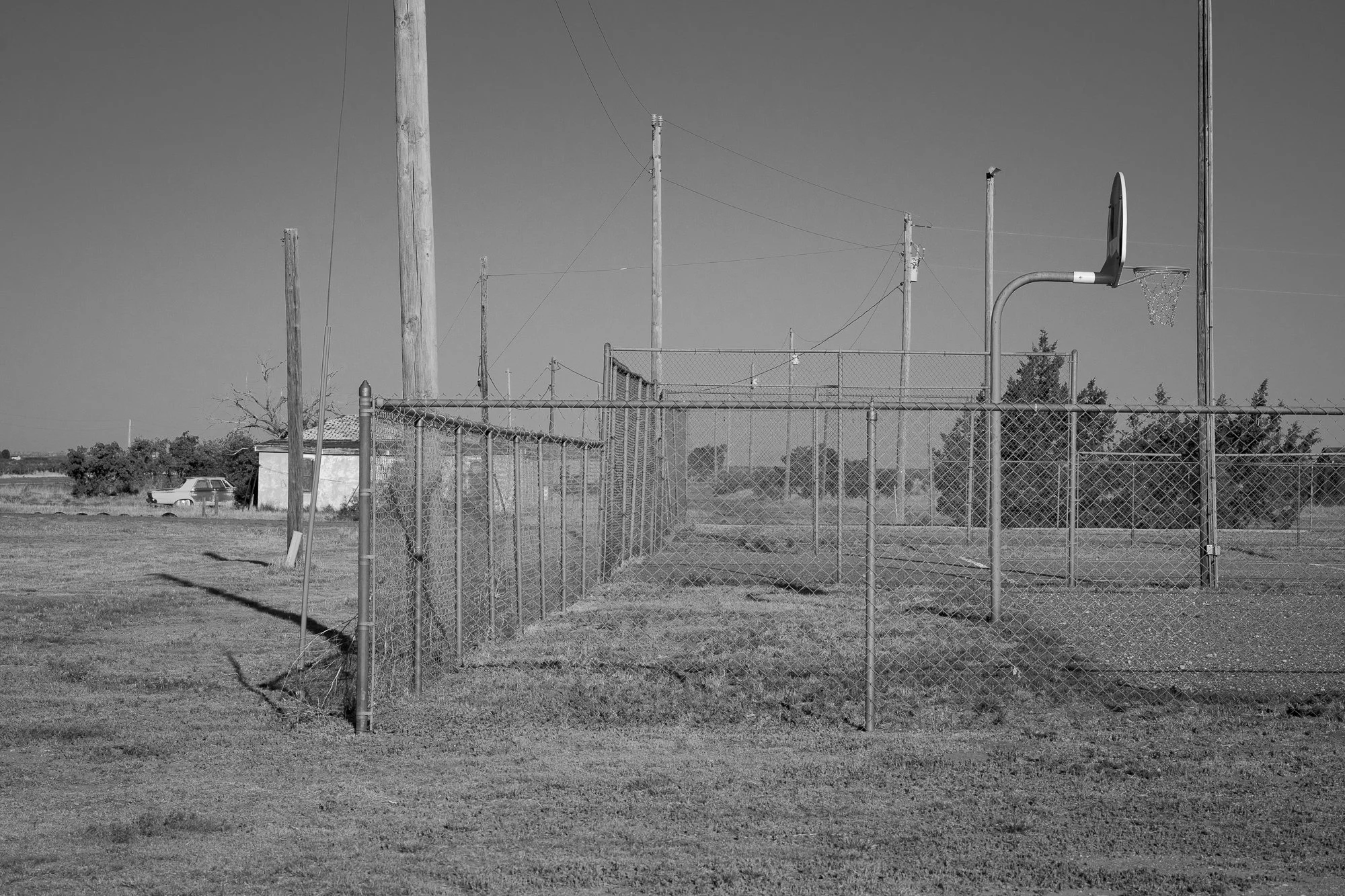
Black and white photograph of a rural basketball hoop behind a chain link fence on the Llano Estacado

A lone basketball hoop stands behind a chain-link fence, hinting at everyday life and quiet routines on the Llano Estacado.

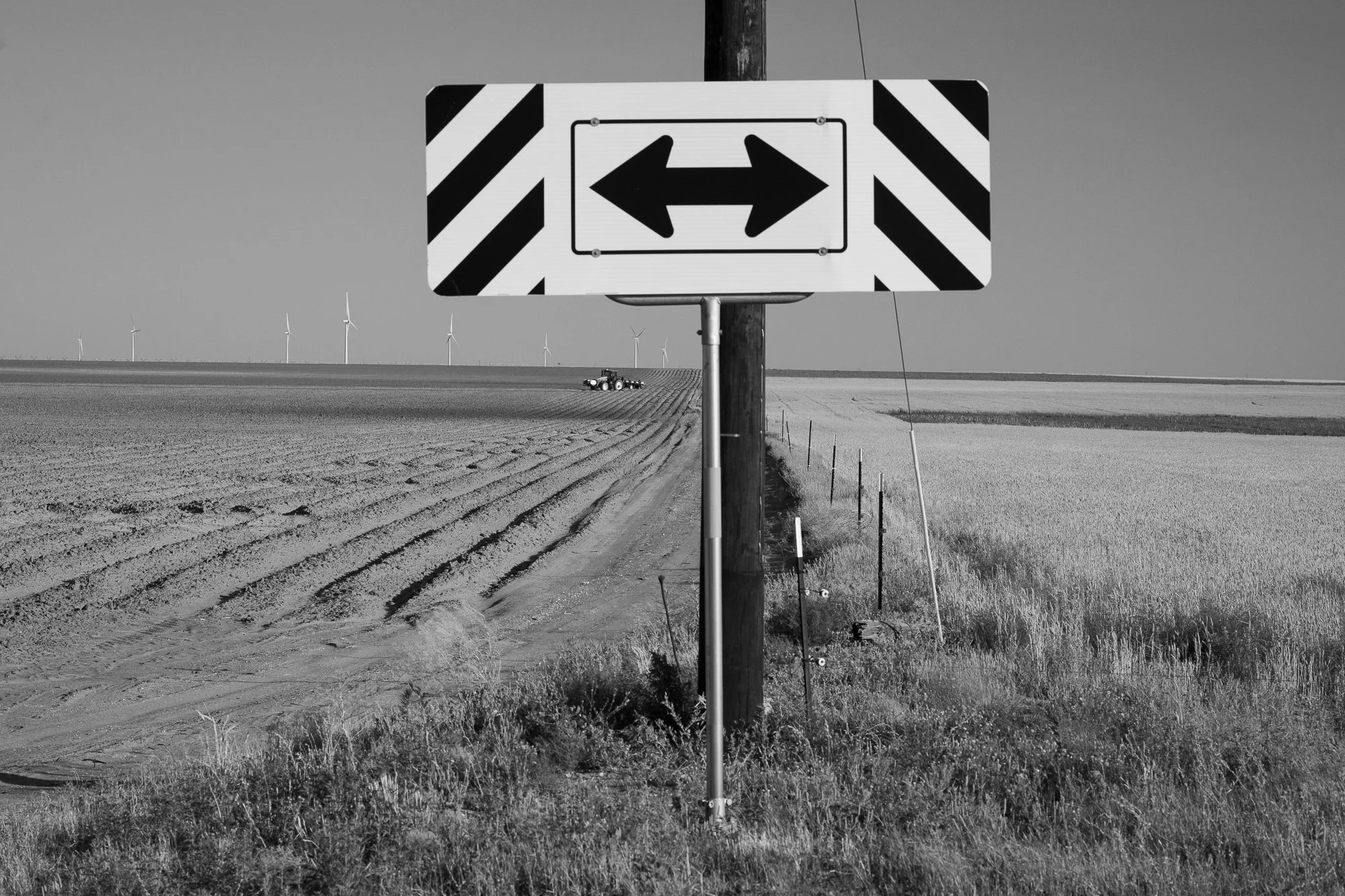
Black and white photograph of a rural directional road sign on the Llano Estacado

A simple directional sign stands between plowed fields, offering choice without urgency on the Llano Estacado.

Cowboy Photographer

Western Horseman Magazine Names Rob Hammer Among the Best Western Photographers

Being recognized by Western Horseman Magazine is an honor that carries real weight in the world of Western culture. For over 85 years, Western Horseman has documented the lives, traditions, and work ethic of ranchers and cowboys across the American West. Their editorial standards are deeply rooted in authenticity, history, and respect for the people who make a living on horseback.

That’s why being named one of the best Western photographers by Western Horseman is especially meaningful to me.

A Dedication to Authentic Western Photography

My work as a Western and cowboy photographer has never been about staged moments or romanticized versions of ranch life. I’ve spent years traveling throughout the American West, documenting real working cowboys on historic ranches, often in harsh conditions and far from anything resembling a photo shoot.
These are early mornings, long days, weather-beaten faces, and generations of knowledge passed down through hands that still carry ropes, saddles, and responsibility. Photographing this world requires patience, trust, and a deep respect for the culture.

Western Horseman’s recognition reflects that approach — one grounded in observation, honesty, and time spent earning access.

Photographing the Working Cowboy

Much of my photography focuses on:

  • Cowboys and ranch hands at work

  • Western horsemanship and ranch traditions

  • Historic ranches across Texas, New Mexico, Montana, Wyoming, and beyond

  • Quiet moments between the work — where the culture reveals itself

These photographs aren’t about nostalgia for something lost. They’re about documenting a way of life that still exists, often misunderstood or oversimplified. Cowboys today are as committed, skilled, and resilient as ever, and their stories deserve to be told accurately.

Why This Recognition Matters

Being acknowledged by Western Horseman is different from being featured by a general photography publication. It comes from within the culture itself — from a magazine that understands ranching, horsemanship, and Western life at a granular level.

That distinction matters.

For collectors, editors, and brands working in the Western space, this recognition serves as confirmation that the work is rooted in lived experience rather than surface-level aesthetics.

Western Photography for Editorial, Commercial, and Fine Art Use

In addition to editorial storytelling, my Western photography is used in:

  • Commercial and brand campaigns

  • Museum and gallery exhibitions

  • Fine art print collections

The common thread is authenticity. Every image is created in real environments, with real people, and without manufactured narratives.

Thank You to the Western Horseman Community

I’m grateful to Western Horseman for the acknowledgment and to everyone who supports thoughtful documentation of Western culture. Recognition like this reinforces why it’s important to continue investing time in long-term projects that honor the people and traditions of the American West.

View the Cowboy Photography Gallery

Shop Western Home Decor

Best photographer - Western Horseman Magazine

Western Horseman Magazine nomination badge recognizing Rob Hammer as one of the best Western photographers.

The Griffin Museum of Photography

Photography Museum - Winchester, Massachusetts

13+ years now I’ve been photographing traditional barbershops in all 50 states of the USA and the layers continue to peel. In the beginning it was just a thing to do because I love barbershops. Then as time went on I felt responsible for documenting them before they all disappeared. Now, in 2024, I see the collective body of work as a historical document of the barbers and shops that served as a staple in their respective communities for 30, 40, 50, 60+ years. On the surface the theme of this project is about a place to get your haircut. Really though, it’s about community, friendship, and human connection. So I’m honored to announce that a selection of these photographs will be shown at the Griffin Museum of Photography in Winchester, MA for their upcoming group show “Vision(ary) which focuses on communities, cultures, and environments. Please go check out the show as well as the other great exhibitions from June 7th-September 27th.

Click here to purchase a copy of Barbershops of America (photo book) and HERE to purchase prints from this series.
Exhibition at the Griffin Museum of Photography

Barbershops of America at The Griffin Museum of Photography

The Photographic Journal

Basketball Photo Essay - The Photographic Journal
Southern California Basketball Culture

Over the past couple years I’ve been quietly working on a series of photographs about the unique basketball culture that exists in Southern California. It’s been an incredibly fun project and a huge contrast to the American Backcourts photographs of hoops from far off places all across the country. So it’s great to see the series featured on The Photographic Journal - a website that puts together beautiful photo essays. Click HERE to check it out.

American Center for Photographers

American Photography Gallery

Fine Art

May has really shaped up to be a great month in the gallery exhibition category! I’m very grateful to announce that I’ll be showing some of my American photographs at the American Center for Photographers in Wilson, North Carolina. It’s always nice to show work, but this is particularly exciting because it’s the first time I’ve ever exhibited work from this series which started over 13 years ago. Back in 2011 is when my cross country road trips began but the photographs that now make up this series were sort of an after thought. At that time I was solely focused on the Barbershops of America series. So these American photographs were sort of just made during those in-between times when there were no barbershops around. It was years until I even realized that the collective images could be a body of work.

The exhibition which is comprised of 50+/- fine art prints will run from May 1st-26th. So if you’re anywhere near Wilson, please stop in and check them out.

Click here to see photographs from my America series.

Fine art photographs at the American Center for Photographers in Wilson, North Carolina

Photography exhibition at the American Center for Photographers in Wilson, North Carolina

Eugene, Oregon Photo Gallery

Photography at Oregon

Maude Kerns Art Center

Honored to share that 12 of my black and white cowboy photography prints are part of an invitational group show at the Maude Kerns Art Center with Photography at Oregon. Along with my prints will be others by Barbara Bakalarova, Tracy Barbutes, Sarah Grew, Eric Kunsman, Willie Osterman, Osceola Refetoff, and Nolan Streitberger. If you’re in Eugene, Oregon area please stop in to check out the work from May 10-June 7. They will be having an opening reception on May 10th and an artist talk on June 1st. I’m not able to attend either day, but I still encourage you to check out the show.

Click here to shop my fine art cowboy photography prints

Photography exhibition at Maude Kerns Art Center - Eugene, Oregon

Buck Brannaman Photographs

Buck Brannaman Horse Training Photography

Imagine being a fly on the wall while Marlon Brando rehearses alone. Or having an empty Yankee Stadium while Mickey Mantle takes batting practice.

Witnessing mastery up close is rare. It’s the kind of thing people usually pay for—if they can get access at all.

Every now and then though, it just happens. Right place, right time.

That’s how I found myself watching Buck Brannaman work on a hot, buggy afternoon at the OW Ranch in Montana.

An Unplanned Lesson on the OW Ranch

It wasn’t supposed to be a demonstration.

After a long day of branding calves on the OW Ranch in Montana, the crew was back at headquarters unloading horses when a young mare named Lux refused to cooperate with the trailer. What started as a routine problem quickly turned into something else entirely when Buck Brannaman stepped in.

At first, he stood back, letting the next generation work through it. But as the struggle continued, he quietly asked for a swing.

The energy shifted immediately.

What had been a relaxed end to a branding day became a classroom. Cowboys and cowgirls—many of them highly skilled—gathered in silence, watching closely. Not for spectacle, but for understanding.

What followed wasn’t dramatic. It was slow. Repetitive. Nearly imperceptible at times.

For over two hours, Buck worked inside the tight confines of the trailer, using subtle pressure and release—tap by tap of a flag—asking the horse to think rather than react. Progress came in inches. Then disappeared. Then returned again.

Some people drifted off as the work stretched on. Most stayed, knowing exactly what they were witnessing.

Patience wasn’t just part of the process—it was the process.

Lux wasn’t his horse. There was no audience to impress, no clinic to run. Just a problem that needed solving, and a responsibility to see it through. By the end, the same horse that had been slamming against metal in fear could walk calmly in and out of the trailer.

No celebration. No moment of triumph. Just a quiet acknowledgment: “that’s the one.”

For those who stayed, it was a rare kind of access—watching mastery reveal itself not through intensity, but through discipline, restraint, and time.

What Makes Buck Brannaman Different

Buck Brannaman’s approach to horsemanship helped inspire the film The Horse Whisperer starring Robert Redford, but what you see in a film doesn’t fully translate to real life.

Out here, there’s no script.

His work isn’t built on force or speed. It’s built on timing, feel, and an ability to read subtle changes most people would miss entirely. The kind of discipline that doesn’t look impressive unless you understand what’s happening.

That’s what makes photographing him difficult—and interesting.

There’s no single defining moment. No peak action. The story lives in the small shifts. A release of pressure. A change in posture. A horse beginning to trust.

You don’t chase those moments. You wait for them.

Photographing Real Cowboy Work in the American West

Moments like this are the reason I’ve spent years photographing working cowboys across the American West.

Not staged shoots. Not recreations.

Real ranches. Real work. Long days that start before sunrise and end when the job is done.

The West is often portrayed through extremes—speed, grit, drama—but most of it exists in quieter spaces. In the discipline it takes to do something well. In the repetition. In the patience.

What I saw that day on the OW Ranch wasn’t unusual in the sense that it happens all the time. But being there to witness it—without interruption, without performance—that’s rare.

And that’s what I try to carry into the photographs.

Fine Art Prints & Licensing

This body of work is part of a long-term project documenting working cowboys, historic ranches, and the realities of life in the American West.

For collectors, a selection of museum-quality prints is available here: View Fine Art Prints

For brands, editorial, or commercial use, image licensing is available upon request - rob@robhammerphotography.com

Cowboy sitting on a horse under a wide cloudy sky in Montana, looking off into the distance

Buck Brannaman sitting quiet on horseback under a wide Montana sky, taking in the moment before stepping in. The kind of stillness that comes from knowing when not to act.

Black and white photo of a cowboy on horseback roping cattle in an open field

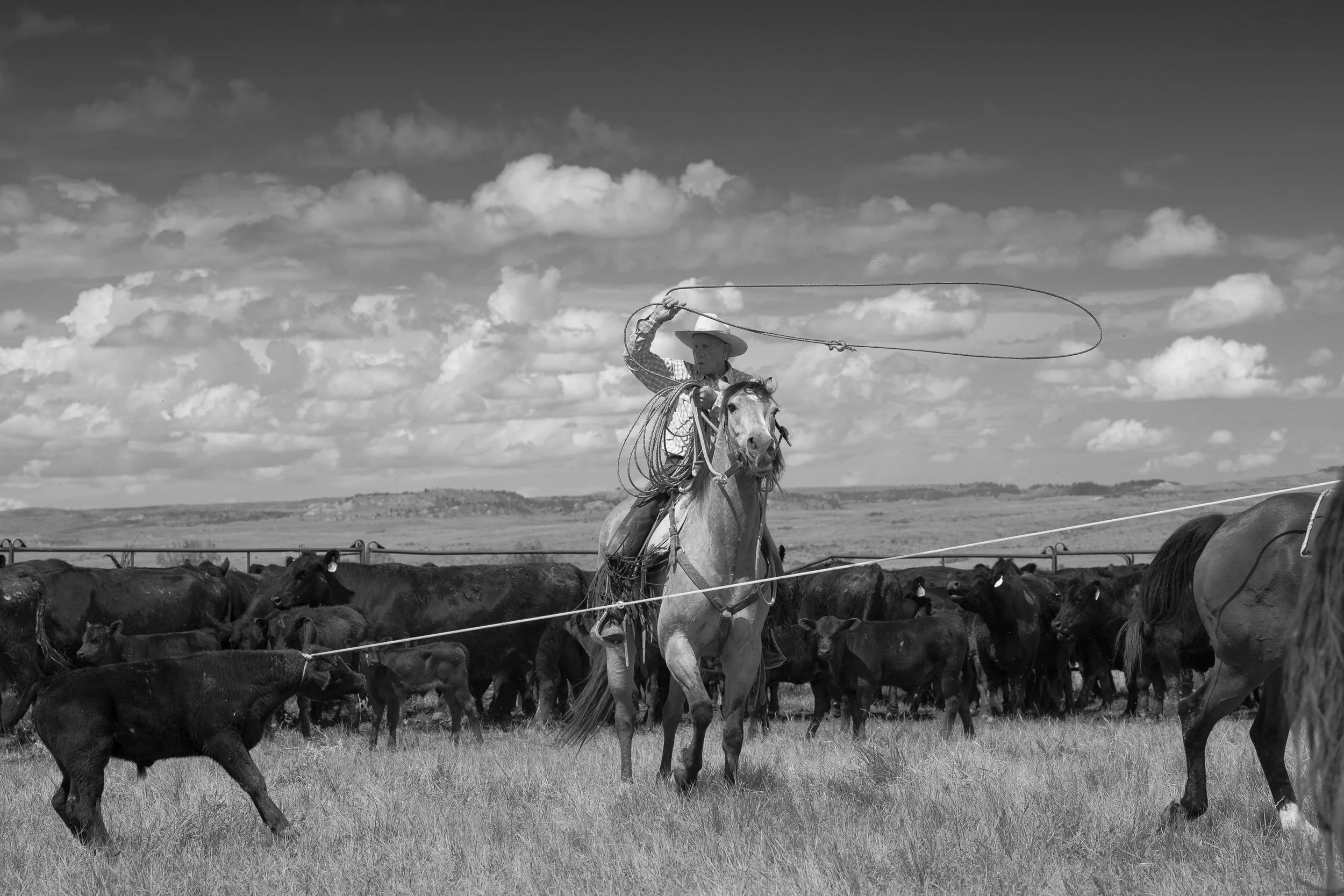
Buck Brannaman roping through cattle during the same long day of work. Different task, same rhythm, steady and controlled from horseback.

Horse sitting down inside a trailer while Buck Brannaman stands nearby during training in Montana

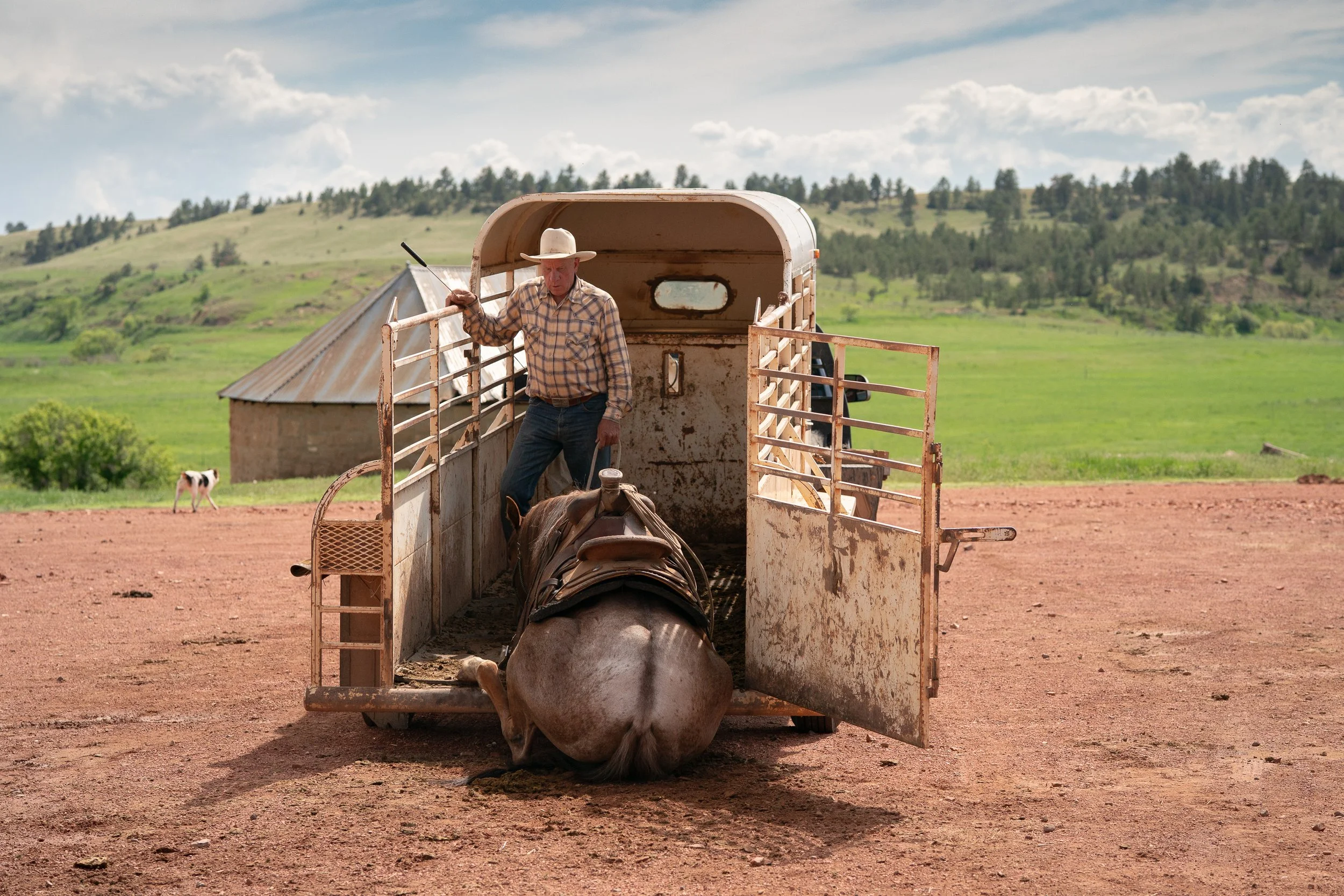
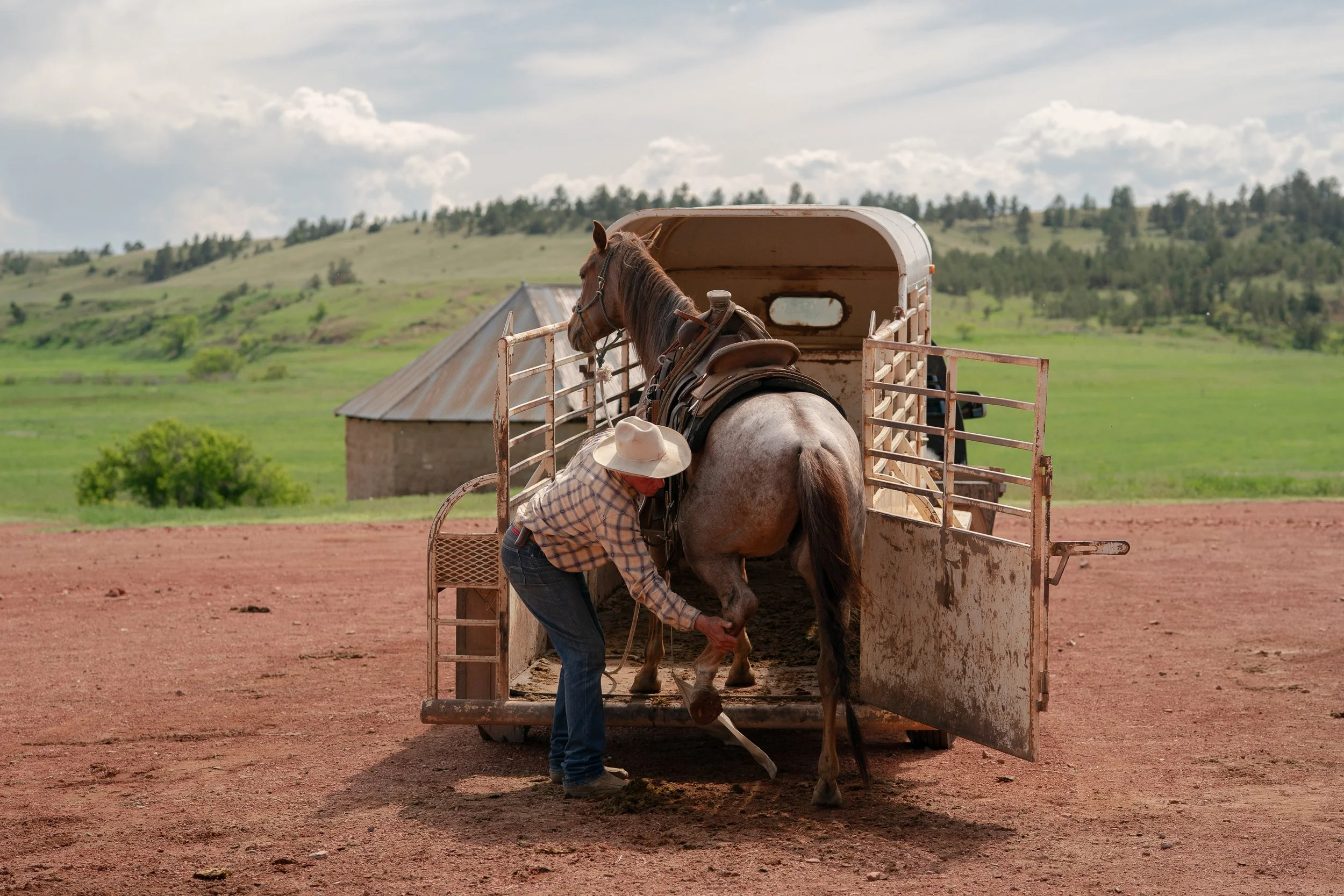
A horse that shuts down instead of moving forward, sitting back inside the trailer. This is where most would quit, but the work stays the same, steady and patient until something changes.

Buck Brannaman working a horse with a lead rope while cowboys sit and watch near trailers on a Montana ranch

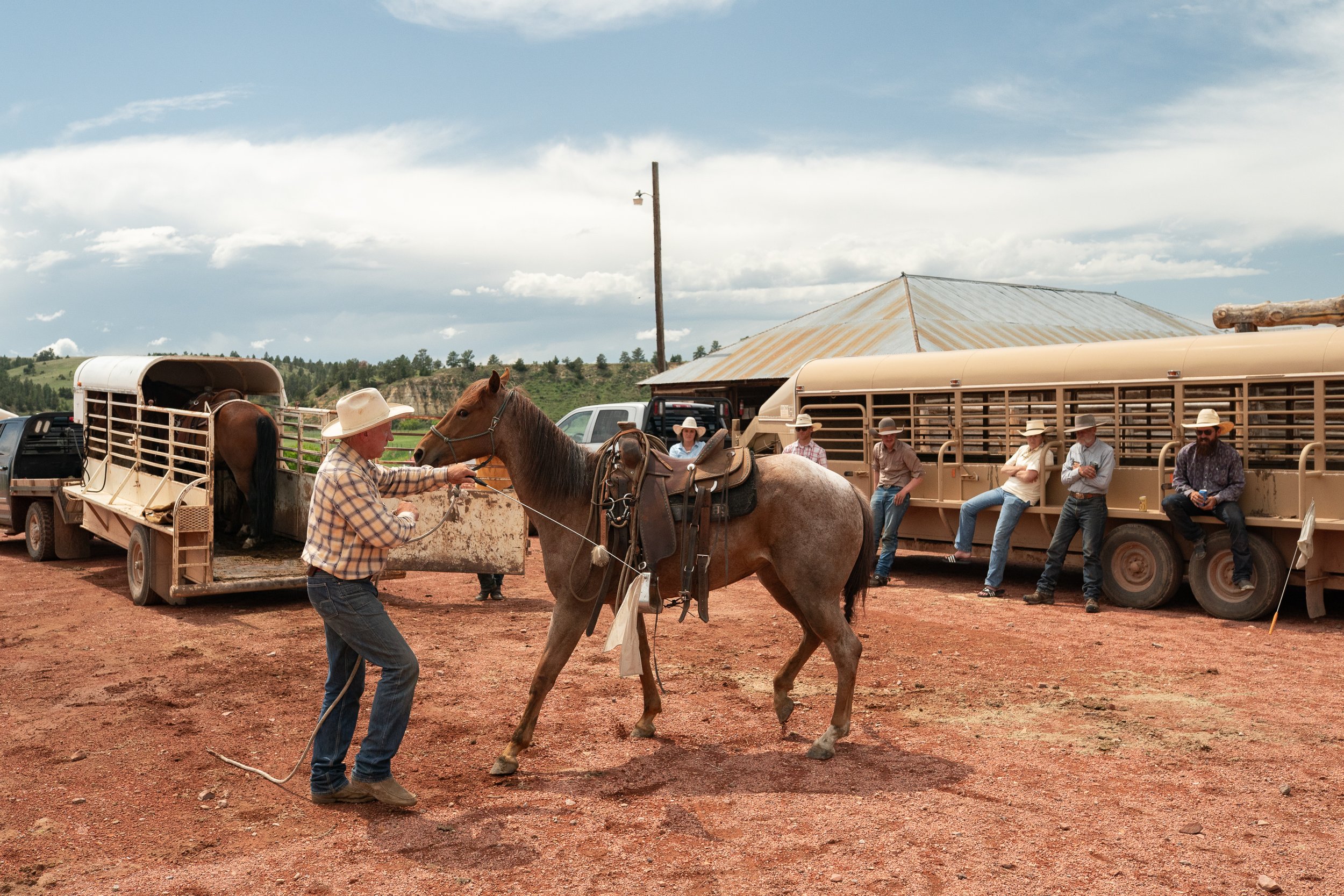
Working a young horse away from the trailer while a line of cowboys sits back and watches. No one says much. When someone like this starts working, you pay attention.

Cowboys watching through the rails of a trailer as Buck Brannaman works a horse near another trailer in Montana

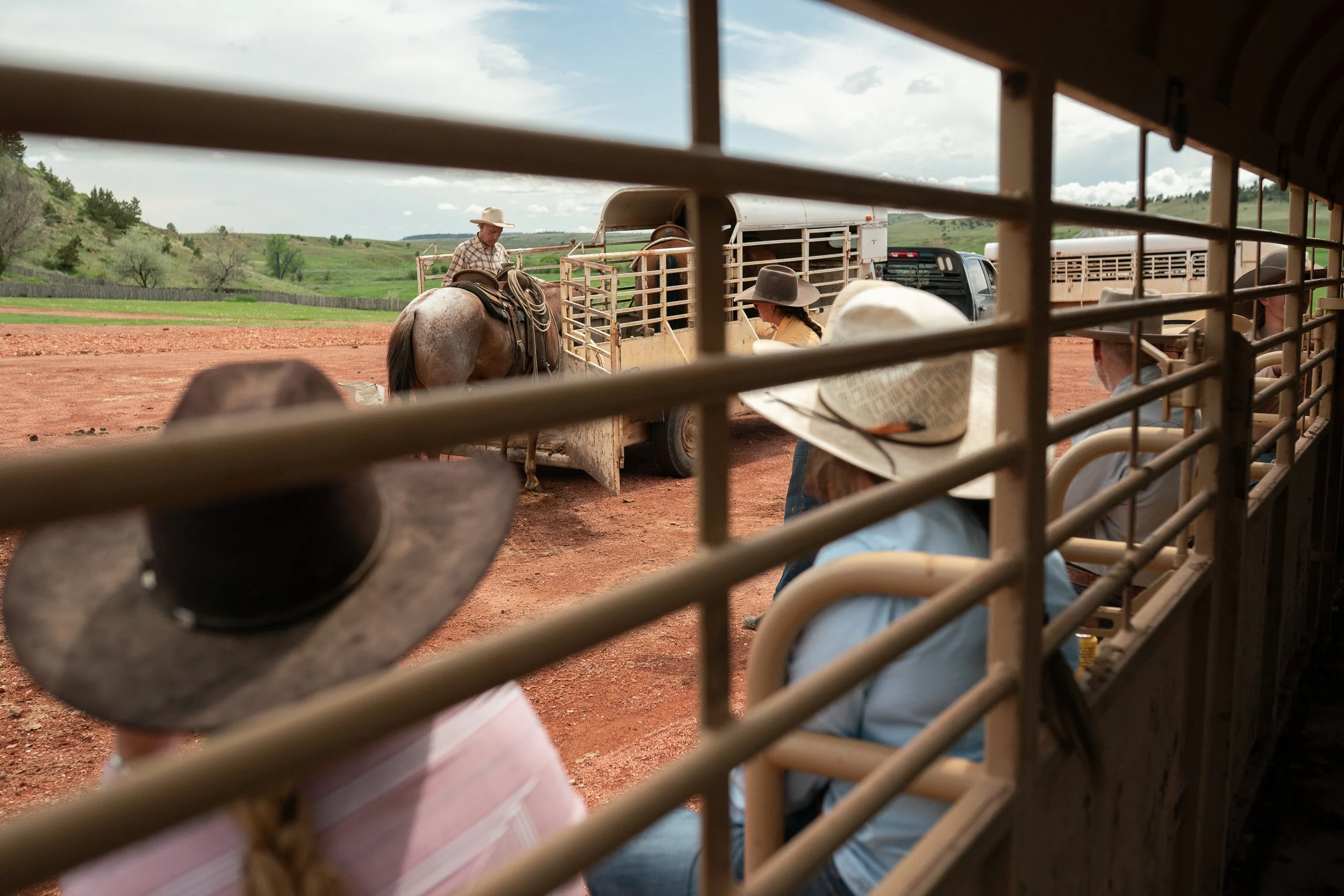
Watching through the rails of a trailer, catching pieces of the work as it unfolds. Not a formal lesson, just a rare chance to see it up close.

Buck Brannaman guiding a horse stepping into a trailer on a ranch in Montana

Buck Brannaman working at the edge of the trailer, asking the horse forward one step at a time. No force, just timing and feel, the kind of work that builds slowly in the heat after a long day.

Cowboys sitting on and inside a pickup truck holding drinks while watching horse training on a Montana ranch

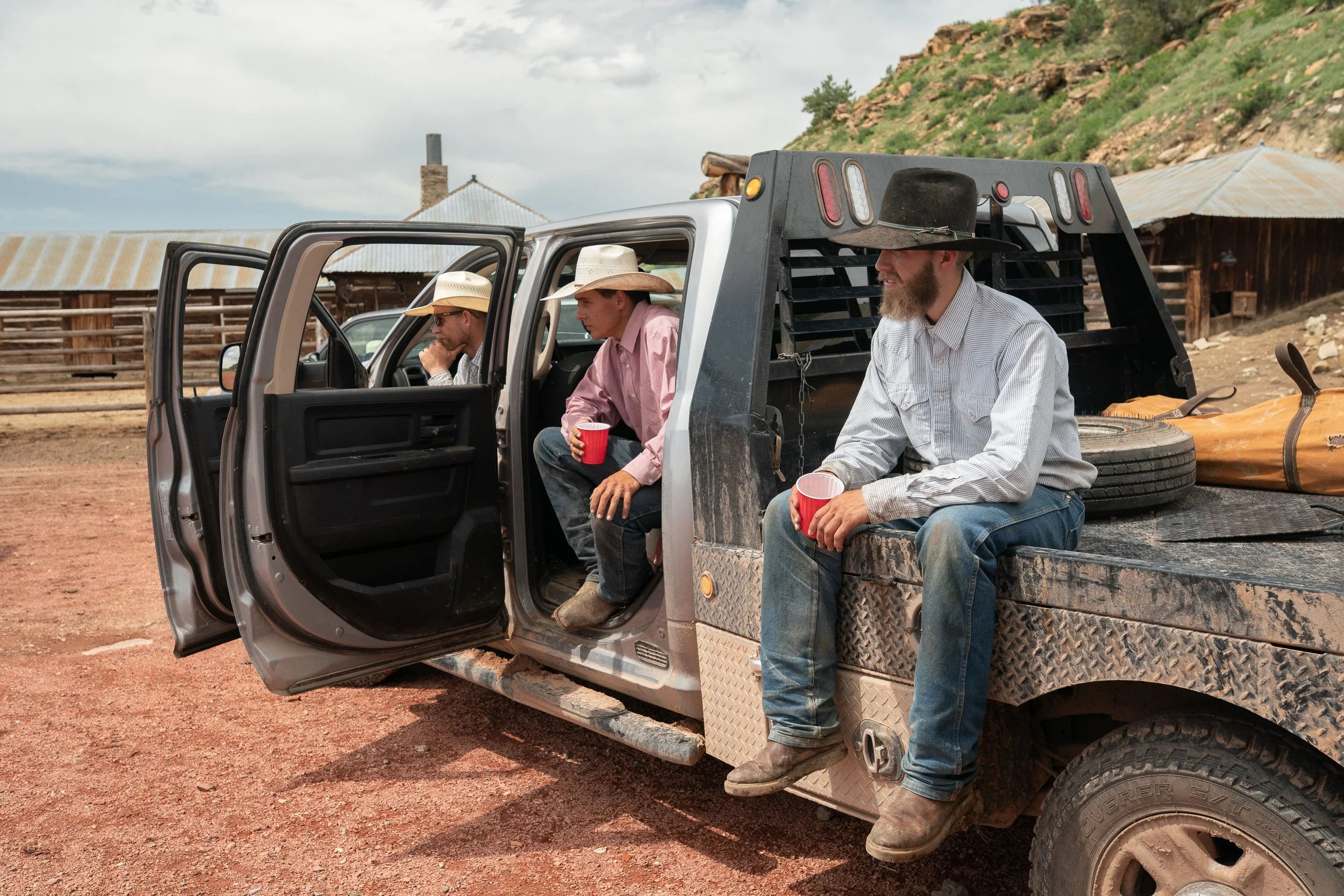
Cowboys gathered on a truck, drinks in hand, watching the work unfold from a distance. What started as the end of the day turned into something worth staying for.

View from inside a pickup truck of a cowboy watching Buck Brannaman work a horse near trailers on a ranch

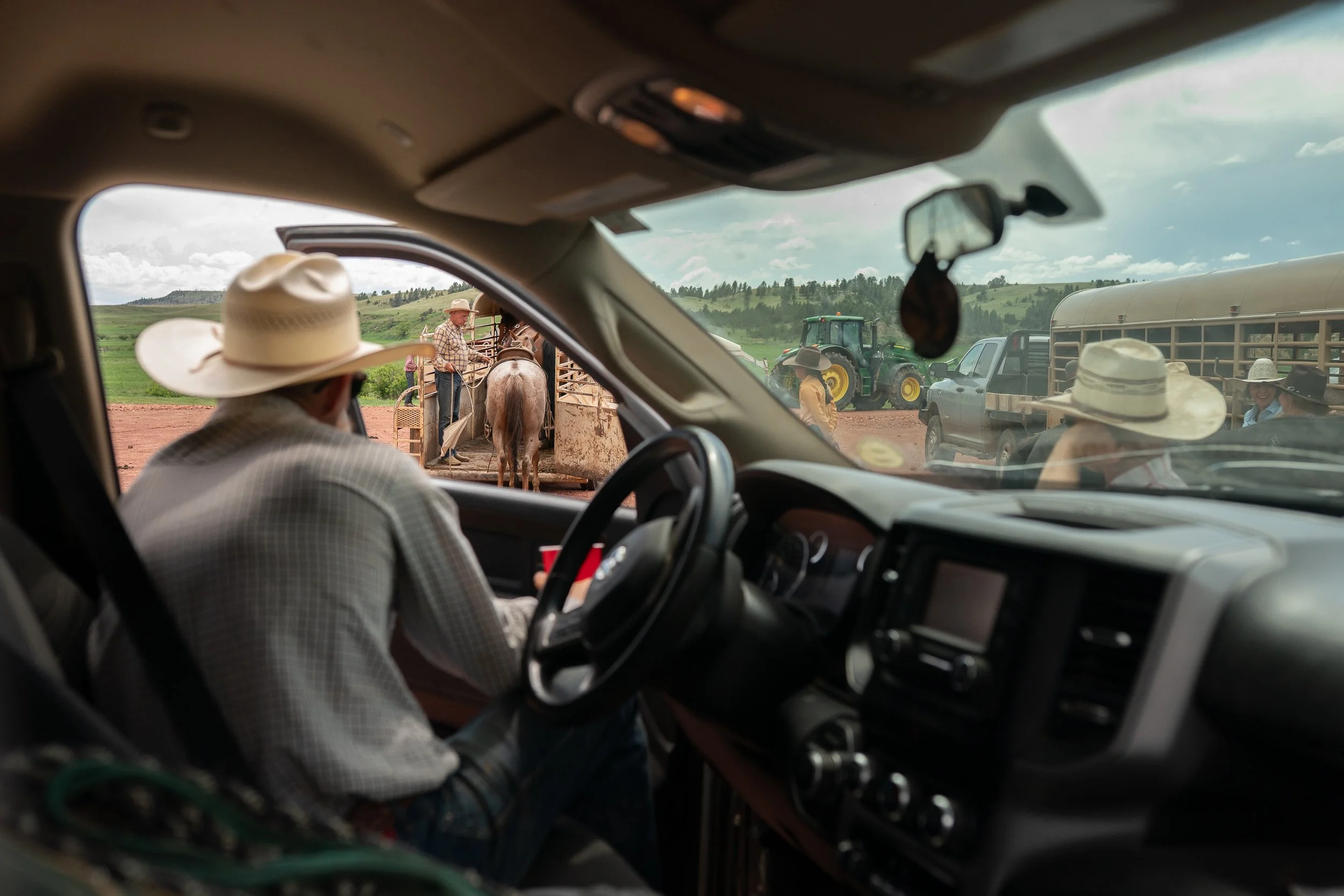
From inside a truck, looking out at the same quiet process. Different vantage point, same focus, everyone tuned in to the small changes.

Group of cowboys standing and leaning around a ranch truck talking after work in Montana

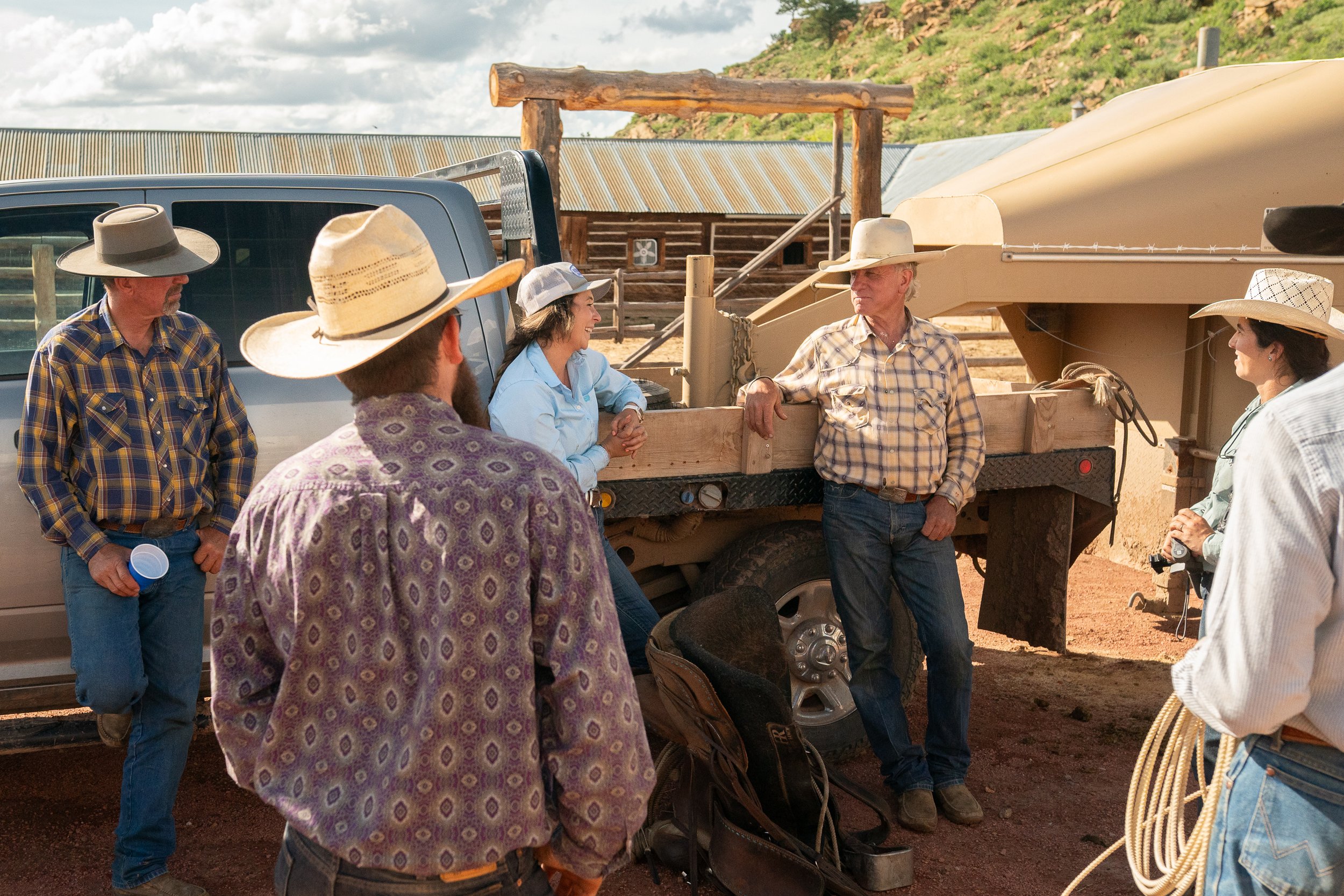
Gathered around the truck after the work, talking it through while it is still fresh. The kind of conversations that come from seeing something done right.

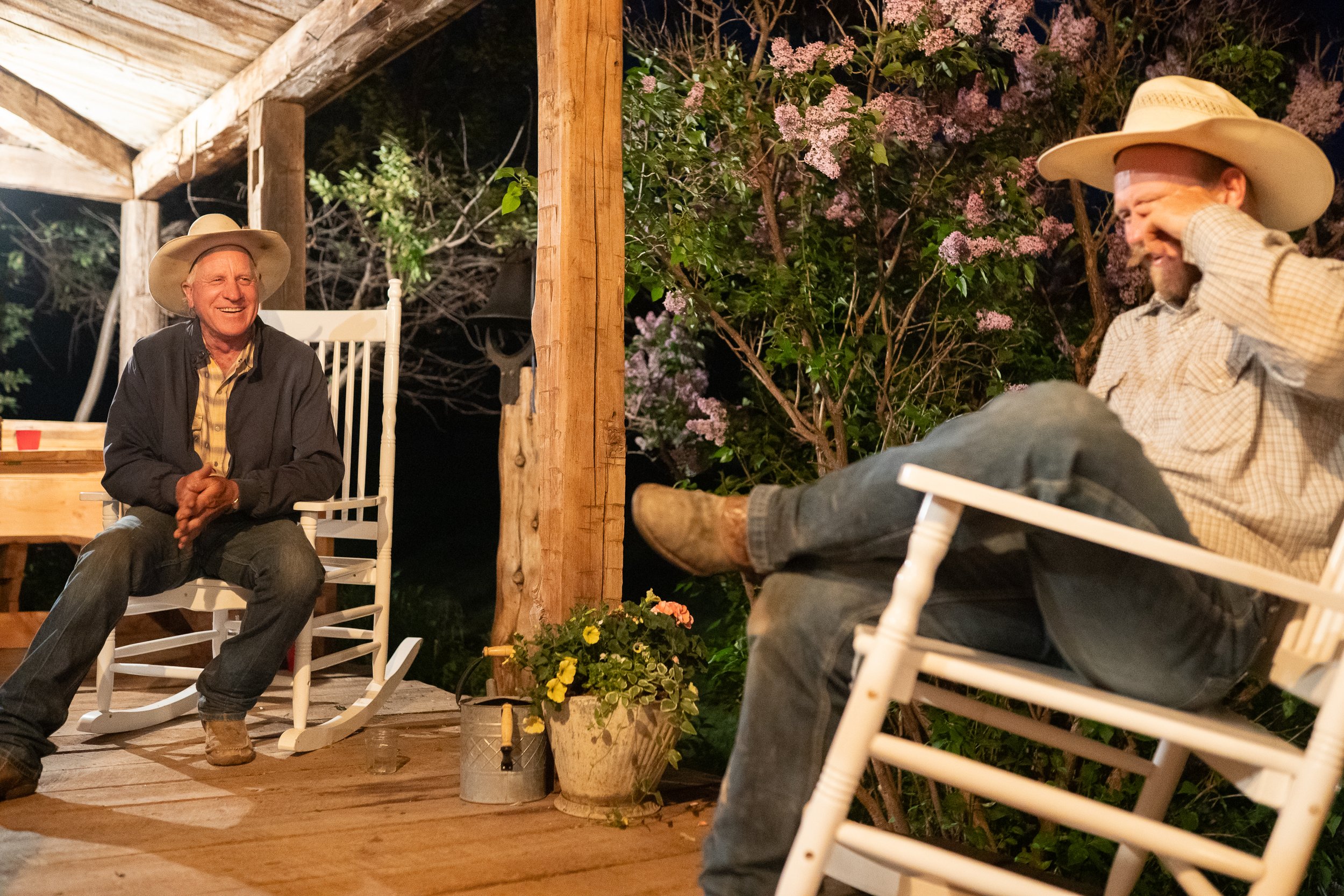
Buck Brannaman sitting on a porch at night talking with another cowboy in rocking chairs

Late evening on the porch, the work behind them and the pace slowed down. Stories, lessons, and time to sit with what the day had to offer.

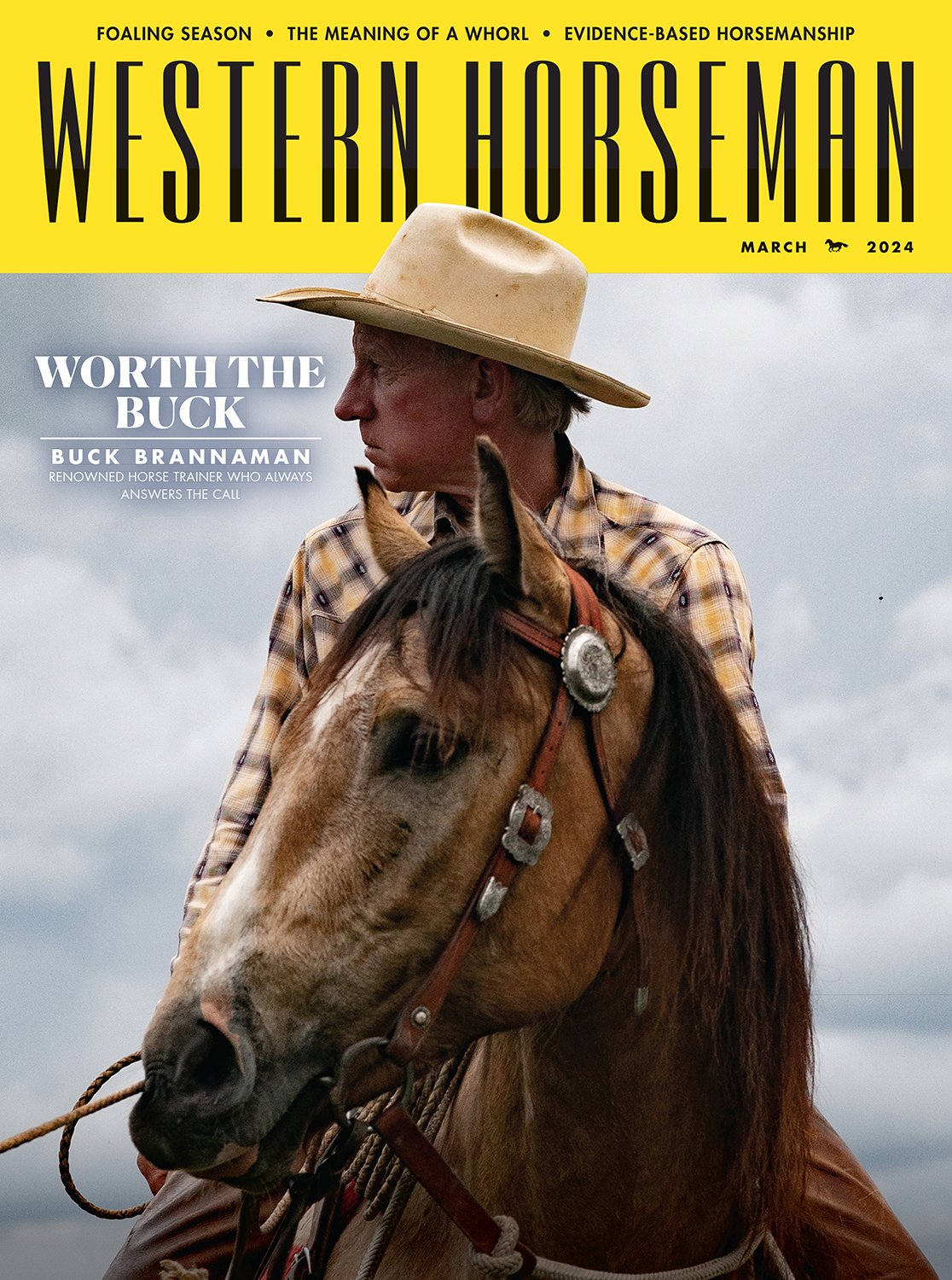
Buck Brannaman on the cover of Western Horseman Magazine

Buck Brannaman - Western Horseman Magazine

Capture the Beauty of Blowing Rock: Fine Art Photography Prints

Bring the Charm of Blowing Rock, North Carolina Into Your Home With Stunning Photography Prints

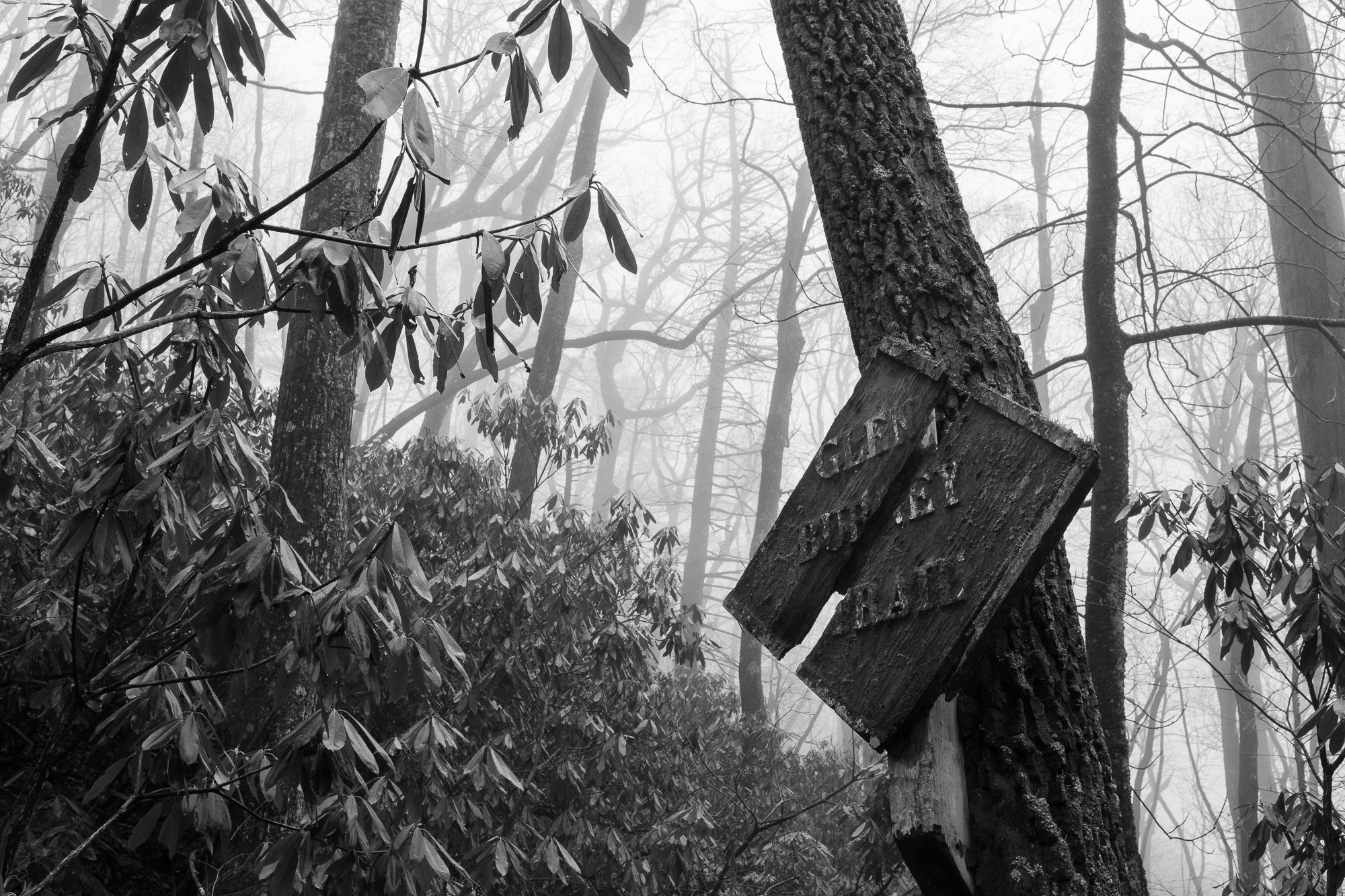
Glen Burney Falls Trail

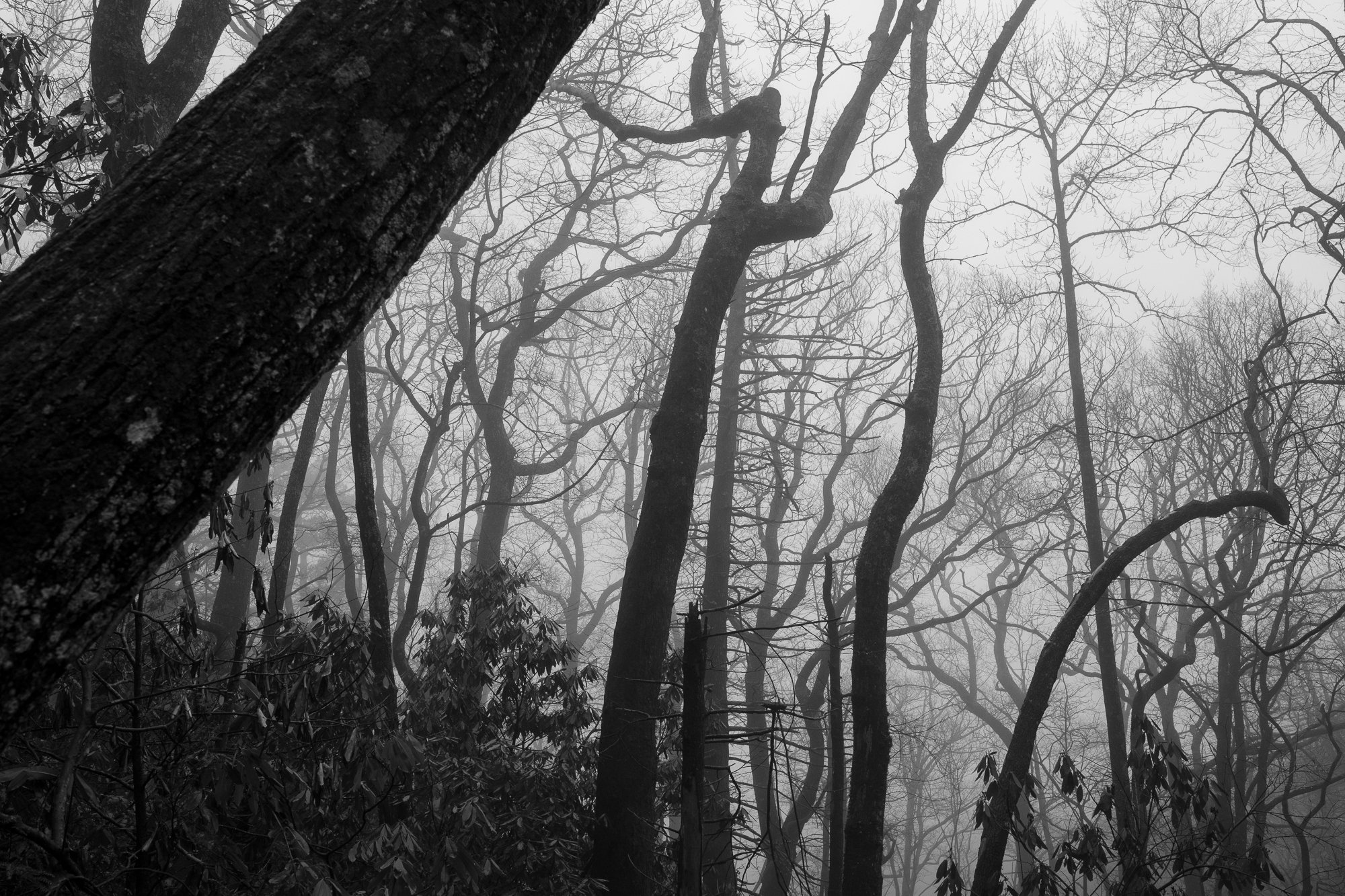
Blowing Rock is a special little mountain town in western North Carolina along the Blue Ridge Parkway. Thankfully it doesn’t get the traffic that Boone does because that would take away all of it’s charm. The Glen Burney Falls Trail starts just a few blocks off Main St. so you can get there from anywhere. Normally these easily accessible attractions are forgettable if not a total let down. Not this one. We were blown away. Granted the day we decided to hike, the forest put on special show with a thick layer of fog and mist that provided an eerie but beautiful vibe. Even without that, it’s still a beautiful trail winds gently through the woods providing great views of the waterfalls all along the way. It’s not a particularly hard hike either. In fact, it’s more of an aggressive walk than anything. so if you’re in Blowing Rock, add this short hike to the list. For only an hour or so of you’re time it provides a great mental checkout and check in with nature.

After you’re done, stop in to the Speckled Trout for lunch or dinner. They have great food and cocktails/beer. I really enjoyed the trout, grits, and collard greens. The vibe there is just great and helped along by a staff of waiters and bartenders than genuinely seem to enjoy their jobs.

If you’re visiting for a fly fishing trip, then definitely go to the Speckled Trout’s guide shop, which also has a bar in it!! I’ve been to a hell of a lot of mountain towns and lot of fly shops. Never once seen a fly shop with a bar. What a great little piece of America that you can only hope resists the massive commercialization that will inevitably be forced upon it in the future.

Blowing Rock Photography Prints

Celebrate your connection to nature and remember your visit to Glen Burney Falls with a fine art photograph that speaks to your heart. Every image in this collection is a testament to the beauty of this special trail, crafted to inspire and transport you back to one of North Carolina’s most beloved destinations. Contact me if you’d like wall art prints of the Glen Burney Falls Trail for your home, office, or commercial space - rob@robhammerphotogaphy.com

Best hike in Blowing Rock, North Carolina

Hiking in Blowing Rock, North Carolina

North Carolina Nature Wall Art - Black and White

Black and White North Carolina Wall Art

North Carolina Nature Wall Art

North Carolina Nature Photography

North Carolina Black and White Nature Photography

Glen Burney Falls Trail

Glen Burney Trail Photography Prints

North Carolina Nature Photography Prints

Best hike in Blowing Rock, North Carolina

Traditional Barbershop Photography

Historic Barbershop Photography in Birmingham, Alabama

Birmingham, Alabama has a way of holding onto its past. You feel it in the buildings, the neighborhoods, and especially in places like traditional barbershops — spaces that have quietly served their communities for generations.

This barbershop sits just off the main road, easy to miss if you’re not paying attention. Inside, time slows down. The chairs are worn, the mirrors have seen decades of haircuts and conversations, and the rhythm of the shop feels unchanged by whatever year it happens to be outside.

This photograph is part of my ongoing Barbershops of America documentary project — a long-term effort to photograph traditional barbershops across all 50 states and preserve these spaces before they disappear.

A Traditional Barbershop in Birmingham’s Magic City

Birmingham is often called The Magic City, a nickname rooted in how quickly it grew during the industrial boom. But step into a barbershop like this one and you’re reminded that not everything moves fast here.

This is the kind of shop where:

  • Regulars don’t need to explain how they want their haircut

  • Conversations drift from local politics to college football to family stories

  • The barber knows everyone by name

There’s no rush. No appointment system. Just a steady flow of people who’ve been coming here for years — sometimes decades.

From a documentary photography standpoint, these details matter. They’re what separate a real working barbershop from a styled or recreated space. This shop isn’t a set. It’s lived-in.

Photographing Barbershop Culture in the American South

Southern barbershops have a distinct character. They’re often deeply rooted in their neighborhoods, serving as informal gathering places as much as businesses.

When I photograph barbershops like this one in Birmingham, I’m not trying to stage anything. The goal is to let the room speak for itself — the light, the posture of the barber, the way a customer settles into the chair.

The best moments usually happen quietly:

  • A glance in the mirror

  • A pause in conversation

  • The way afternoon light hits the floor

Those moments are what give barbershop photography its emotional weight. They’re small, but they’re honest.

Why Traditional Barbershops Matter

Across the country, independent barbershops are slowly disappearing — replaced by chains, salons, or modern storefronts designed to look old but lack history.

Projects like Barbershops of America exist to document what’s real before it’s gone.

These photographs are not nostalgic recreations. They’re records of working spaces:

  • Where generations of families have gotten their hair cut

  • Where stories are passed down as casually as advice

  • Where community still exists without needing a label

Birmingham’s barbershops are an important part of that story.

Part of the Barbershops of America Documentary Series

This Birmingham barbershop photograph is one piece of a much larger archive. Over the years, I’ve photographed traditional barbershops in cities, small towns, and rural communities across the United States.

The full project is available as:

  • A Barbershops of America photo book

  • Fine art photographic prints

  • Editorial and commercial licensing for publications, exhibitions, and design projects

Each shop adds another chapter to a disappearing part of American culture.

Stories From The Barbershop

It’s been interesting to see how some smaller cities have groupings of barbershops all in one place. Common sense would tell you that isn’t a great business strategy, but what do I know? Birmingham, Alabama is just such a place with multiple shops all on the same block, which was exciting but things didn’t start out so hot.

There was an older gentleman sitting out in front of the first shop I approached. He was talking on the phone while sitting on a stool in front of the door. I introduced myself and said that I’d like to make some photographs of the shop. Before I could even finish he said “I don’t have time”, turned his back to me, and continued his conversation. The shop was completely empty. I tried pushing back politely, stating that I’d been working on this project for 12+ years and published a book on traditional barbershops in all 50 states, etc, etc, etc. It didn’t work. He was angry that I was still standing there trying to talk with him and even more angry that I asked for the owner’s phone number. He wasn’t annoyed. He was angry almost to the point of aggression. Ah well. Can’t win them all. That led to a stop in Magic City Barbershop, which opened it’s doors in 1930! There is a poster on the front window from the Jefferson County Historical Commission that states so, but you don’t need a poster to tell you the place isn’t far off from its 100 year anniversary. You can just feel it.

The shop was empty besides the one barber working. He was a character. Had a witty answer for everything I said or asked.

Me: “Is this your shop?”

Him: “It ain’t yours!”

There were lots of old newspaper clippings on the wall of Martin Luther King and others from the riots and bombings. “Bombingham” as he called it, has a unique past that shaped it into the city it is today. Despite all the racial violence and negativity, it’s fascinating to be in that shop because the city’s history provides an education, experience, and conversation that you’re not likely to get anywhere else in the country. Barbershops provide an unorthodox way of learning about America!

Bringing Barbershop Photography Into Your Space

These photographs are often collected by:

  • Interior designers

  • Architects and creative offices

  • Hotels, restaurants, and barbershops

  • Private collectors interested in Americana and documentary photography

If you’re looking for artwork that feels authentic, grounded, and timeless, traditional barbershop photography offers a quiet strength that works across many environments.

Interested in These Photographs?

Fine art prints from this Birmingham barbershop series are available in multiple sizes and formats. Editorial and commercial licensing is also available.

Contact me here to discuss print options, licensing, or custom projects - rob@robhammerphotography.com

View More From the Barbershops of America Project

Another Barbershop Story

Barbershops of America Photography Gallery

Barbershop Photo Book/Prints

Photograph of barber in Birmingham, Alabama

Magic City Barbershop - Birmingham, Alabama

Photograph of sneakers and shoes for sale at a classic barbershop in Birmingham, Alabama

Sneakers for sale at a barbershop in Birmingham, Alabama

Photograph of a classic barbershop in Birmingham, Alabama

Traditional barbershop photography

Portrait of barber standing in front of his shop in Birmingham, Alabama

Portrait of a barber in Birmingham, Alabama

Oregon Landscape Photography Prints

Oregon Wall Art - Landscape Photography

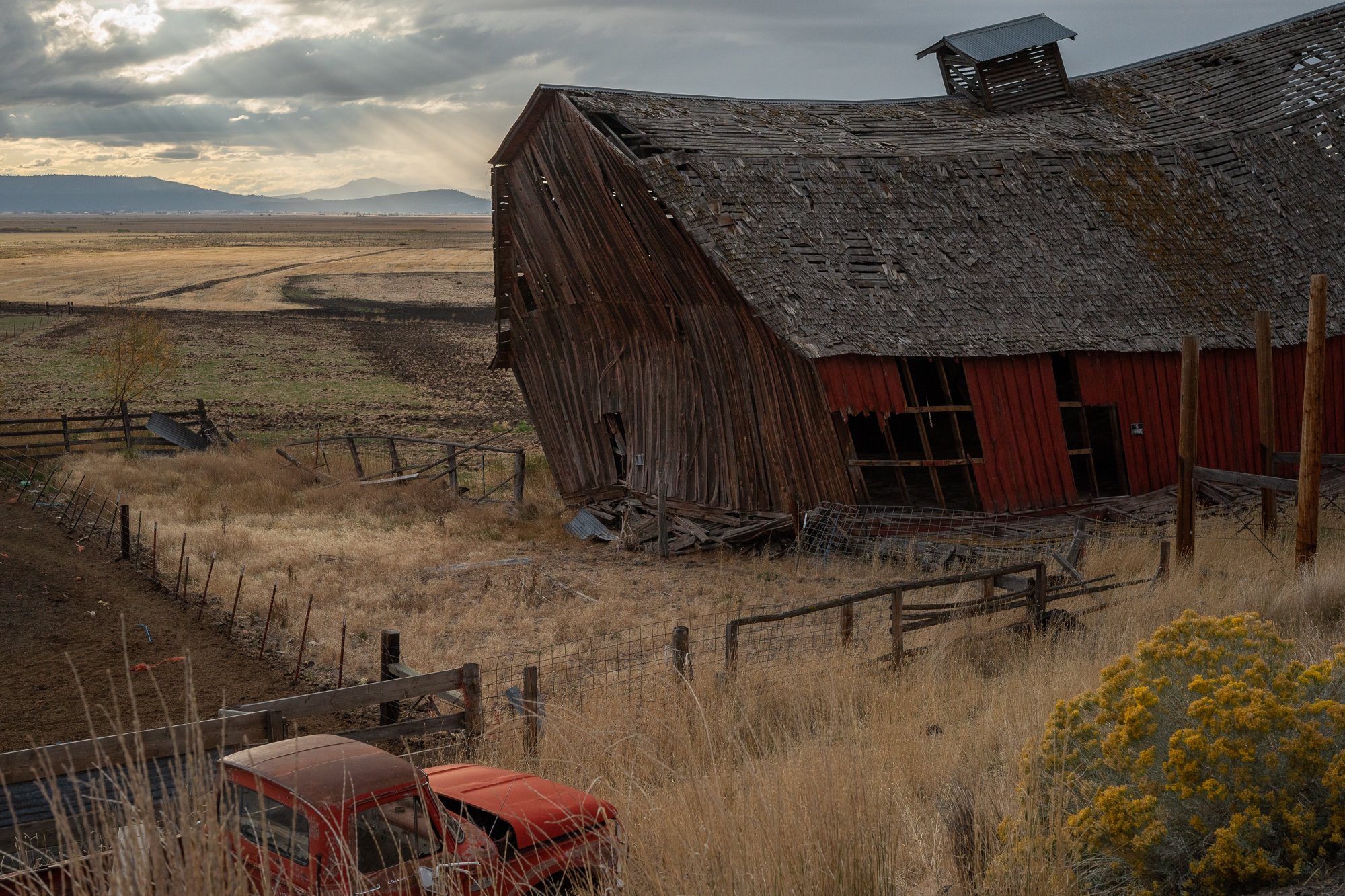
Oregon is a special place. Not just as a part of America, but of the world. It’s truly unique, with a vibe you can’t find anywhere else. Going through these images has been a lot of fun, revisiting past road trips through the state, as well as a gentle reminder that it’s been far too long since seeing that magical place. The photographs stir up great memories of being on the road with Mojo. One in particular several years back in the middle of winter. We were driving late at night on a backroad through the Cascade Range. No towns. No street lights. Nothing. It was freezing cold and the entire landscape was covered in a fresh blanket of snow. At some point I started feeling a very bizarre energy that was totally unexplainable, but it persisted long enough to make me think. “Pulsing” is the only way I can describe it. The sensation continued for a while, so I pulled over, got out of the truck and just stood there. There were no signs of civilization at all. And after my eyes adjusted to the darkness, I could see massive snow covered peaks on all corners of the horizon that seemed to be glowing. One of them was Mt. Hood, not sure what the rest of them were. Either way, I’d never experienced anything like it before or after that day. I was totally in awe at the sight and energy they were putting off. And to see so many prominent peaks so far away all at once, seemed totally surreal. All I could do was stand there and take it in. No images were made that night, but it’s a memory that will never leave me.

Click here to check out my American Road Trip photography book

Send an email if you’d like any of my Oregon wall art for your home, office, or commercial space - rob@robhammerphotography.com

Mt. Hood Landscape Photography Print

Mt. Hood Wall Art

Photography print of Lake Albert in Oregon

Lake Albert - Oregon - Photography Print

Photography of an old barn in Oregon

Oregon Photography

Photography print of a country road in Oregon

Country Road in Oregon

Photography of Seneca, Oregon

Seneca, Oregon

Lake Albert Oregon Landscape Wall Art

Lake Albert, Oregon - Wall Art

Photography of Highway 395 going through a beautiful section of Oregon at sunset near Lake Albert

Highway 395 - Oregon

Photograph of country roads leading to Mt. Hood in Oregon

Mt. Hood Photography Print

Photograph of a country road in Oregon

Country road in Oregon

Photograph of a country road in Oregon

Oregon Road Trip