Buying Cowboy Photography Prints: What to Look For
There's no shortage of cowboy photography for sale online. Spend five minutes searching and you'll find everything from inexpensive posters to original photographs selling for thousands of dollars.
So how do you know what you're actually buying?
I've spent more than six years photographing working cowboys on ranches throughout the American West. During that time, I've developed a pretty strong opinion about what makes a photograph worth putting on your wall. And it has very little to do with whether the subject is wearing a cowboy hat.
Whether you're buying your first Western photograph or adding to an existing collection, here are a few things worth considering.
Looking for photographs? Browse my limited-edition Western fine art prints or explore the complete cowboy photography project.
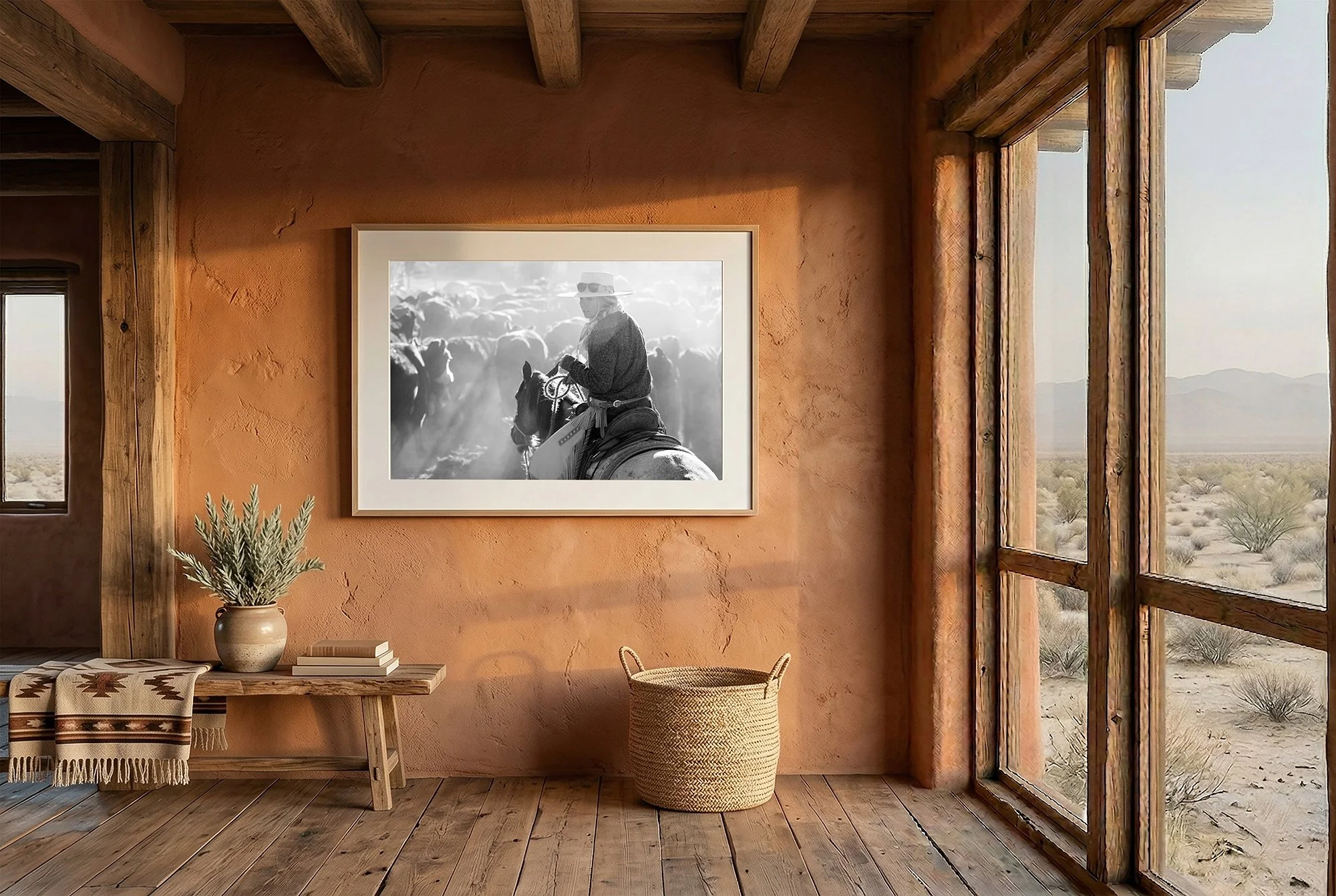
A black and white cowboy photograph displayed in a warm interior, bringing a grounded, lived-in feel to western and rustic spaces.
Where to Buy Cowboy Photography Prints
There are several good places to start, depending on what you're looking for and how much you want to spend.
Buying directly from a photographer is a good option if you want to know the story behind a particular image. You can ask where it was taken, how it was made, what printing materials are used, and whether the photograph is part of a limited edition. You may also have access to photographs that aren't publicly listed for sale.
Western art galleries are another excellent resource, particularly if you're interested in established artists or want to see prints in person before purchasing. A good gallery can also help with framing, installation, and choosing work that fits an existing collection.
Online art marketplaces offer an enormous range of photographs at nearly every price point. There's nothing wrong with buying from them, but it's worth finding out who actually made the photograph, what you're receiving, and whether the image is available elsewhere.
Ultimately, I'd encourage you to buy a photograph because you genuinely love it, not because someone tells you it's collectible or because it matches the furniture.
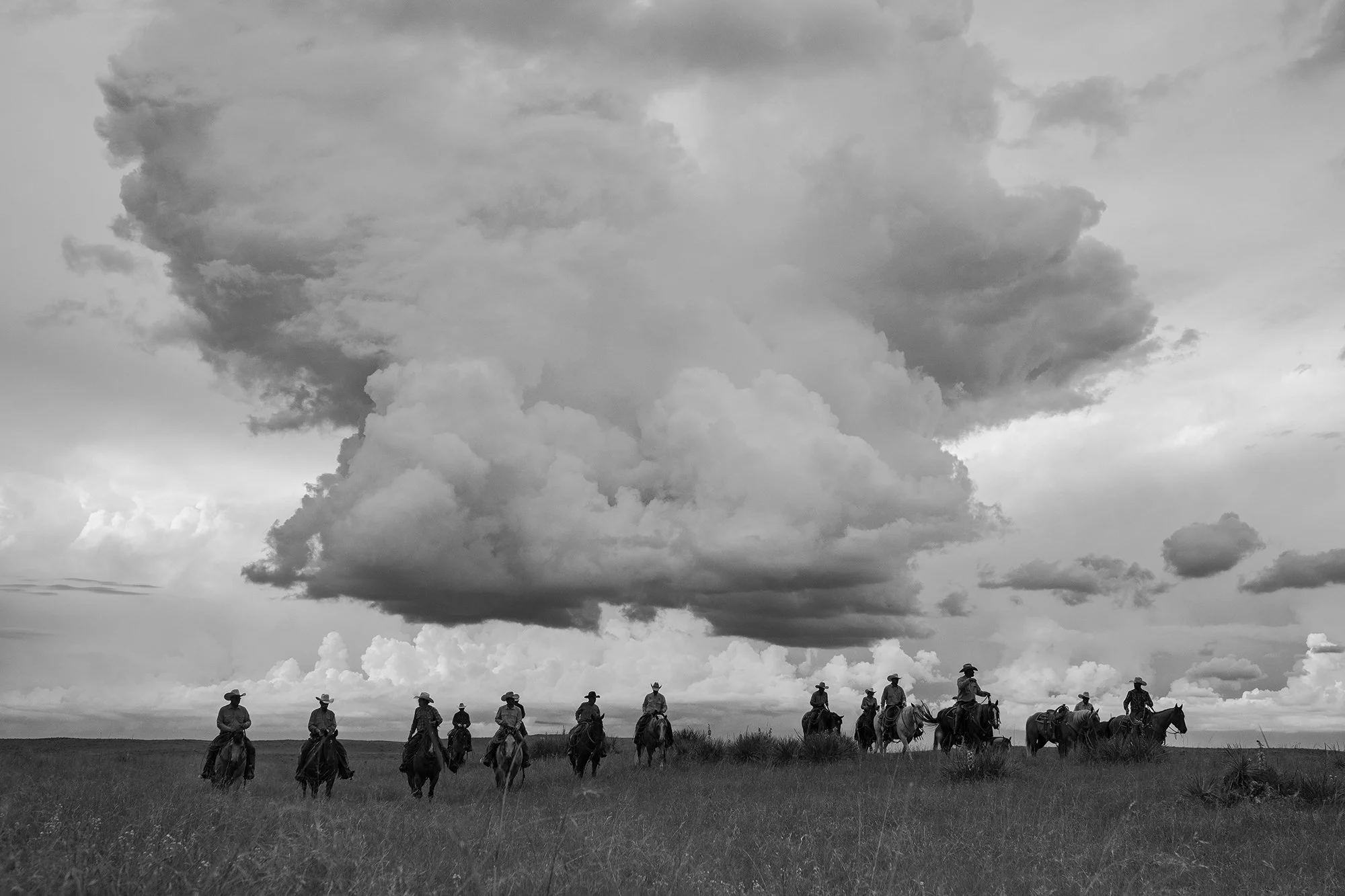
Cowboys ride across open land under a wide sky, adding scale to large wall art in living spaces.
The Story Behind the Photograph Matters
One of the things I've always loved about photography is its ability to put you somewhere you might never otherwise get to go.
Over the years, I've been fortunate enough to photograph legendary ranches like the Four Sixes in Texas, the Diamond A in Arizona, the Haythorn in Nebraska, and the Spanish Ranch in Nevada.
These aren't places where you simply show up, take a few photographs, and leave.
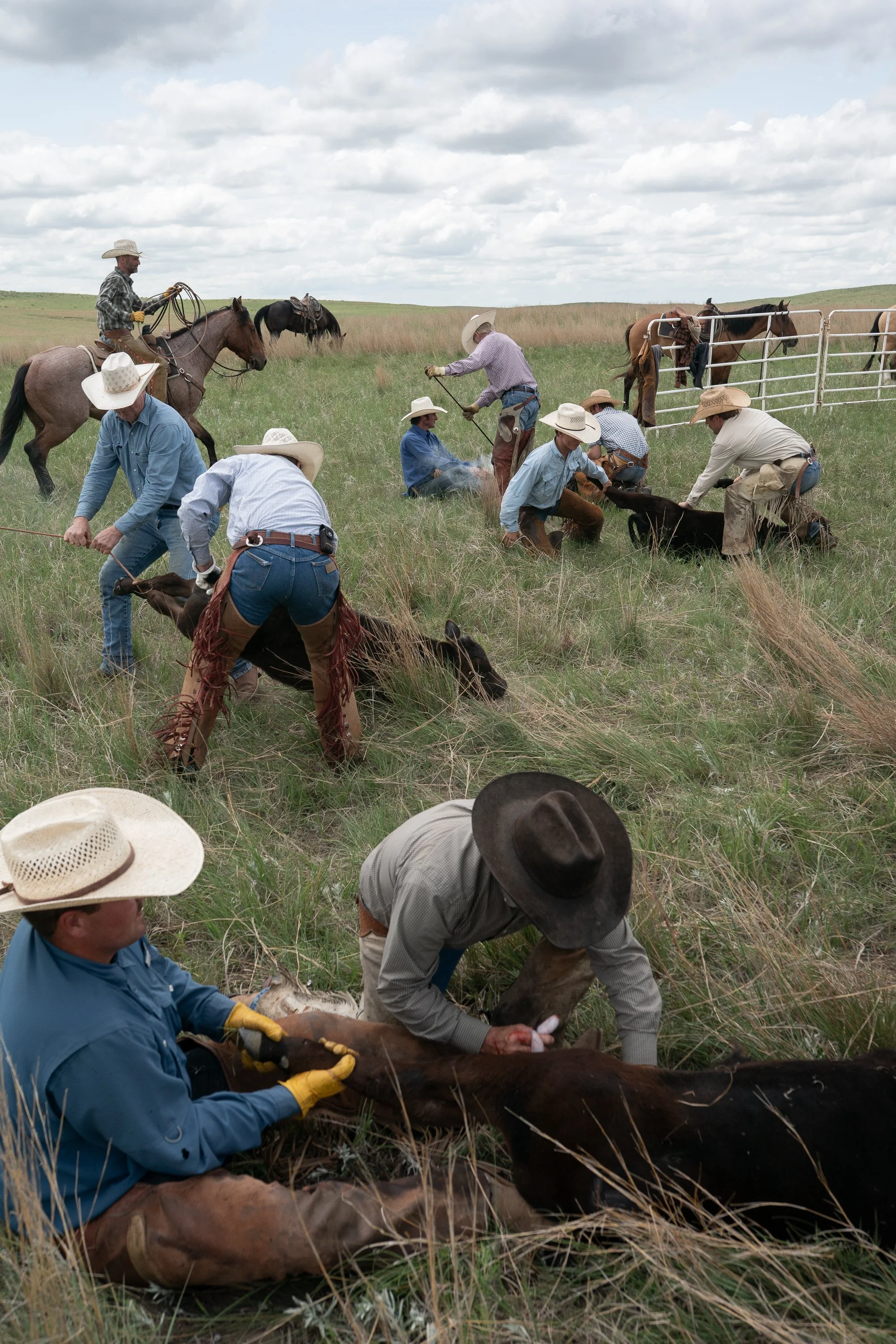
Most of the time, I'm up well before sunrise, following cowboys as they gather cattle, rope calves, brand, sort horses, or do whatever else needs doing that day. Sometimes the photographs happen immediately. Other times, I can go hours without making a single worthwhile frame.
That's just how it goes on ranches that are over 1 million acres.
The people in these photographs aren't actors, and the ranches aren't movie sets. They're working operations, often run by families who have been doing this for generations.
None of that automatically makes a photograph good. It still needs to stand on its own visually. But knowing the circumstances behind an image can make owning it a lot more meaningful.
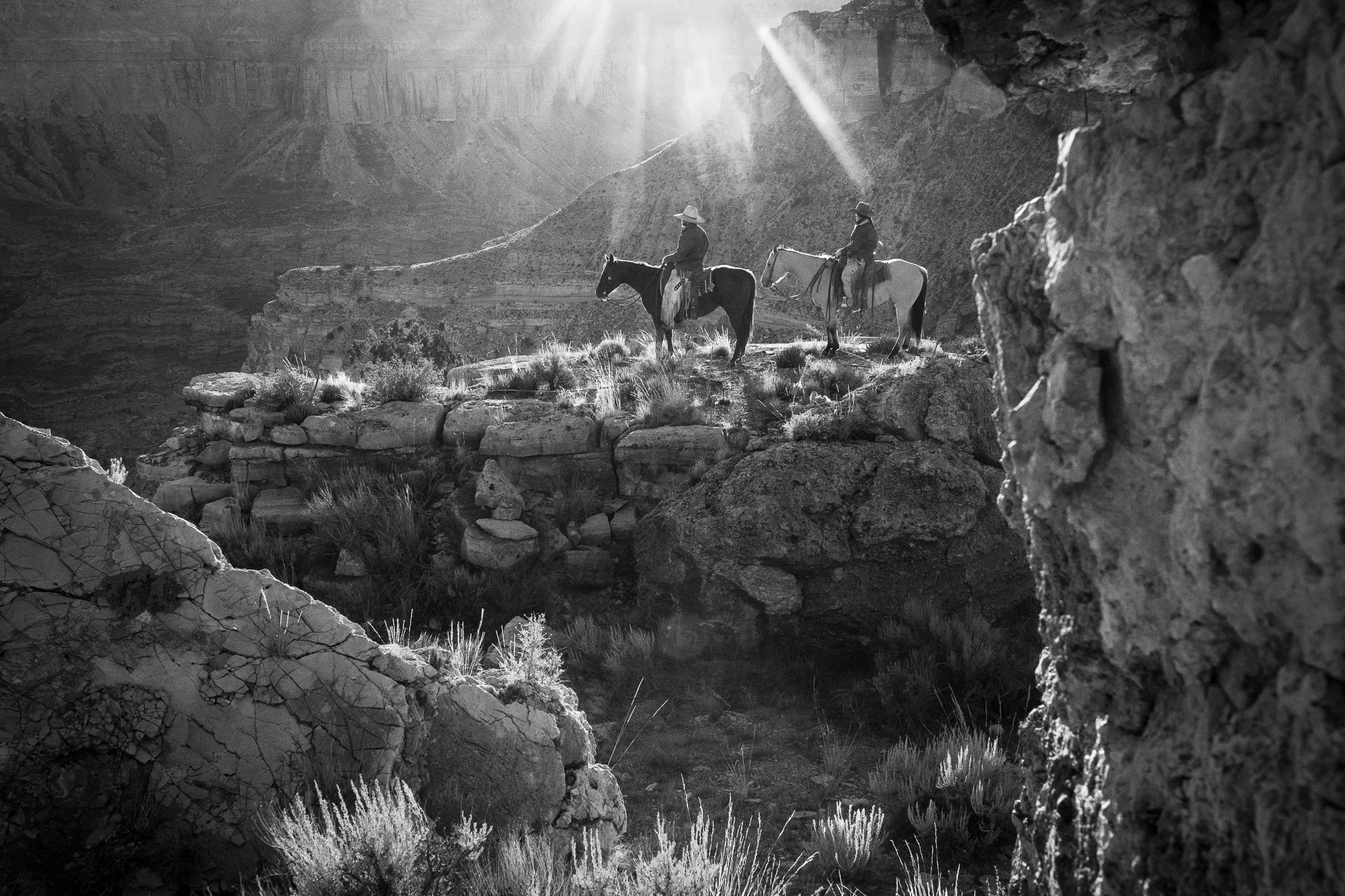
Cowboys on horseback standing along a rocky cliff, suited for western wall art and nature photography prints.
What Makes a Cowboy Photograph Worth Collecting?
This is obviously subjective, but there are a few things I look for.
First, does the photograph hold my attention?
Some of my favorite cowboy photographs are full of action. Horses, cattle, ropes, dust, and a dozen things happening at once. Others are incredibly quiet. A cowboy drinking coffee before sunrise. A weathered saddle. Two riders crossing an enormous stretch of empty country.
I don't believe one is inherently better than the other.
I'm also interested in photographs that reveal something about the people and places being documented. A good photograph should make you curious. Who is that person? Where was this taken? What happened five seconds before or after the shutter was released?
And finally, would you still want to look at the photograph ten years from now?
That's probably the most important question.
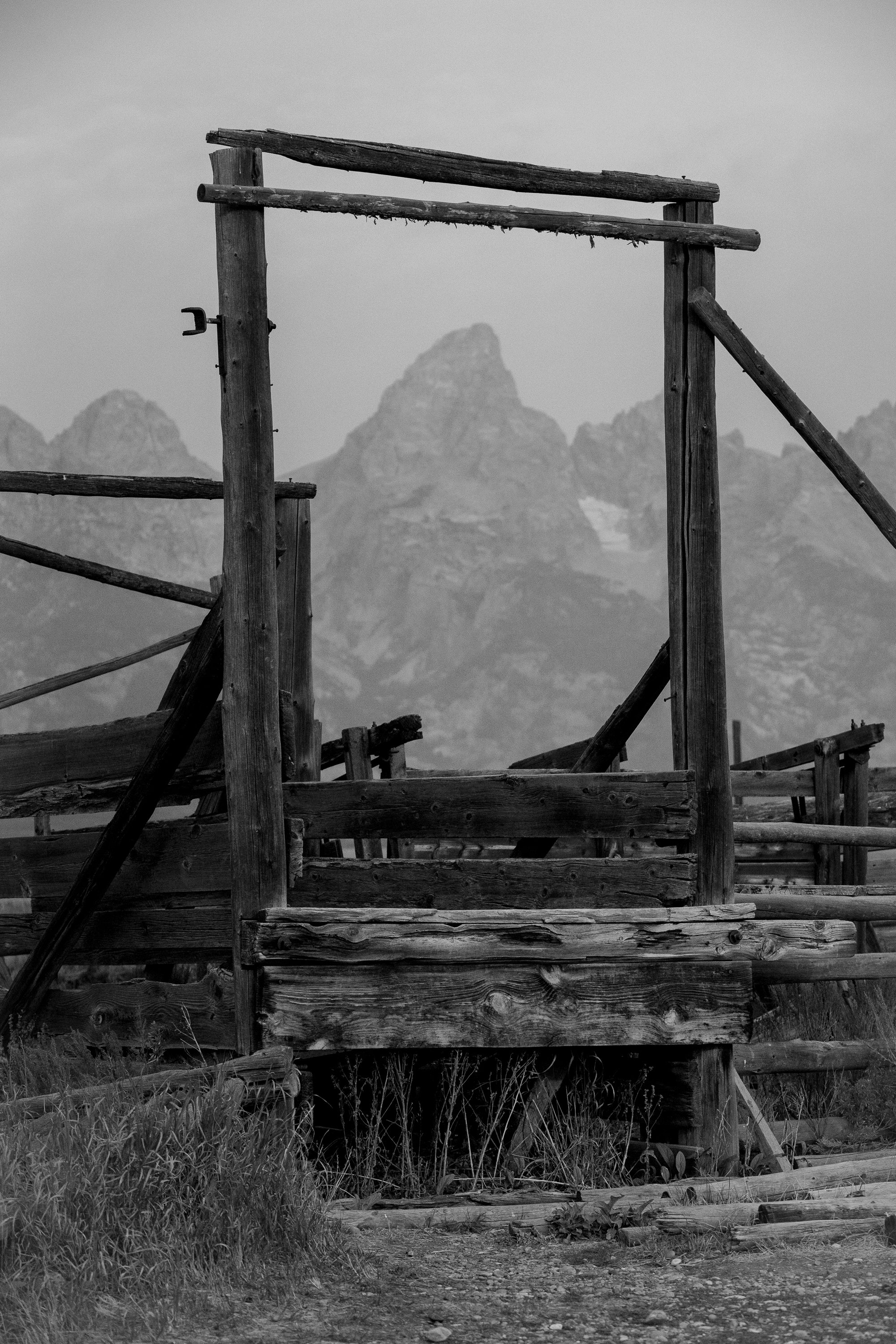
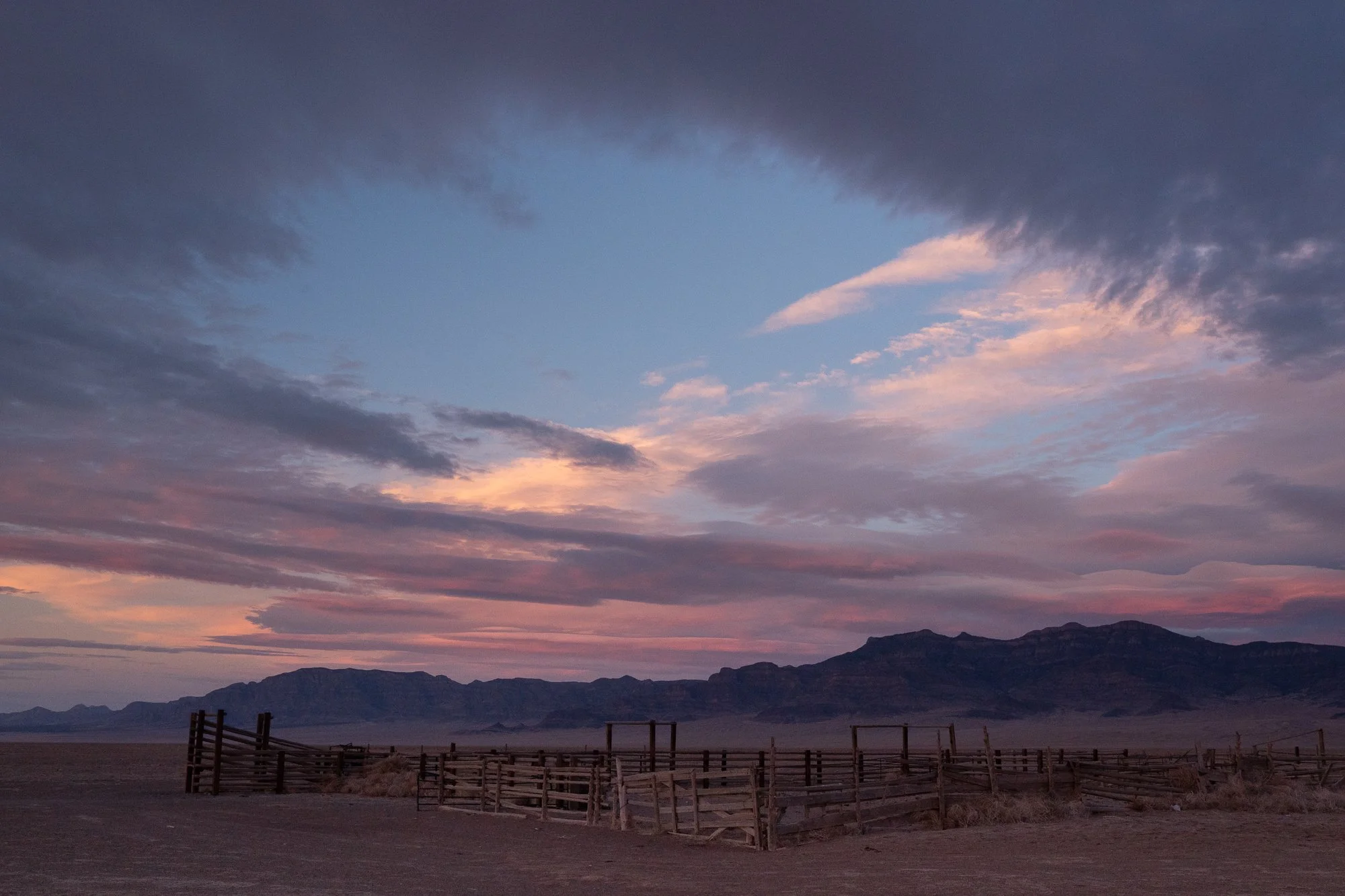
A wooden cattle gate stands in open land with mountains behind it, adding a quiet but powerful detail to rustic interiors.
Limited Edition vs. Open Edition Photography Prints
If you're shopping for fine art photography, you'll probably encounter these two terms.
An open edition means the photographer hasn't established a fixed limit on how many prints can be produced. These are often more affordable and can be a great way to own work by a photographer you admire.
A limited edition has a predetermined number of prints available, generally in a particular size. Once that edition sells out, no additional prints should be produced within the stated edition terms.
Limited editions are often signed and numbered by the photographer.
For my Western fine art collection, I offer signed limited editions in four sizes:
13 × 19 inches — Edition of 45
24 × 36 inches — Edition of 35
36 × 54 inches — Edition of 25
43 × 65 inches — Edition of 10
I prefer keeping the editions relatively small. These photographs represent years of work, and I want the prints to feel like something worth living with for a long time.
One thing worth remembering: a limited edition doesn't automatically make a photograph a good investment. Buy something you want to own, regardless of what it might be worth someday.
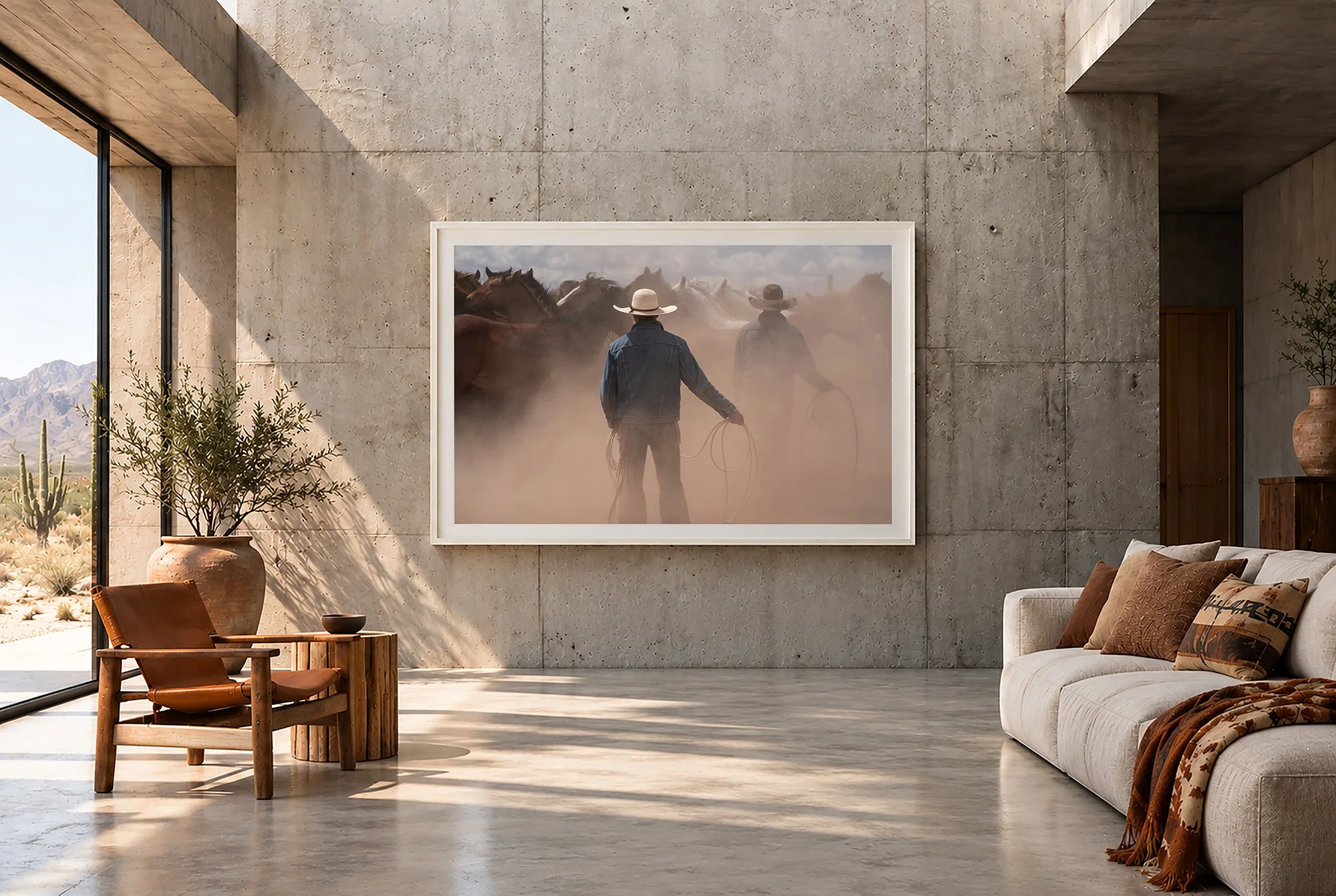
A large cowboy photography print displayed in a modern interior, ideal for minimalist wall art and neutral home decor.
Print Quality Matters More Than You Might Think
There's a substantial difference between a photograph printed on inexpensive poster paper and one produced using archival fine art materials.
A well-made print should preserve the detail, tonal range, and subtle characteristics of the original photograph.
This is especially important with black-and-white photography, where small differences in shadow detail, contrast, and paper surface can dramatically change the final result.
My prints are produced using archival pigment printing on museum-quality fine art paper. They're made to last for generations when properly handled, framed, and displayed.
If you're buying from another photographer, ask about the printing process and materials. A reputable artist or gallery should have no problem answering those questions.
Choosing the Right Cowboy Photograph for Your Home
People often ask me what size print they should buy or whether a particular photograph will work in their home.
There's no universal answer.
A large photograph of cowboys riding through open country can look incredible in a modern home with clean lines and plenty of wall space. But a smaller, intimate portrait can be equally powerful in an office, hallway, or reading room.
I wouldn't get too caught up in whether your house has a Western aesthetic.
Some of the best installations of cowboy photography I've seen have been in contemporary spaces that have almost nothing traditionally Western about them.
Black-and-white photographs can work particularly well in these environments, but color shouldn't be ruled out. Sometimes the color of the landscape, the light, or the clothing is an important part of the photograph.
Choose the image first. Figure out the wall afterward.
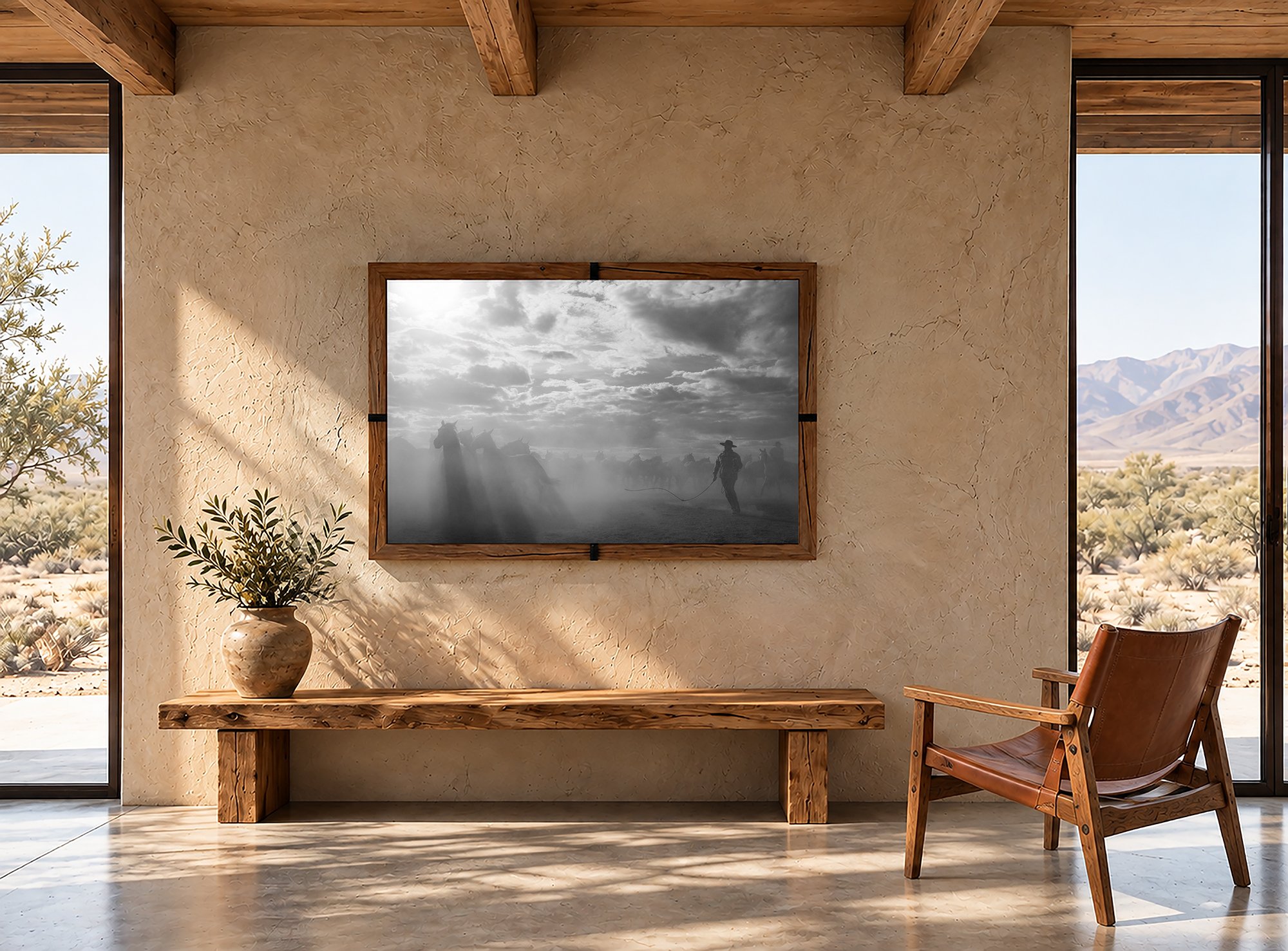
Authentic Western cowboy photography in a modern Western home.
Buying Cowboy Photography Directly From the Photographer
One advantage of buying directly from me is that the photographs on my website represent only a small portion of the larger archive.
I've made thousands of images on ranches throughout Texas, Arizona, Nevada, Montana, Nebraska, Wyoming, and elsewhere.
Some photographs are available as prints. Others have never been published.
If you're interested in a particular ranch, region, subject, or type of photograph, I'm happy to look through the archive and put together a selection.
I also work with interior designers, art consultants, and collectors who need help choosing photographs for a particular space. Custom framing is available, and I can help with sizing and presentation.
The goal isn't simply to sell you something. It's to find a photograph you'll be happy looking at every day.
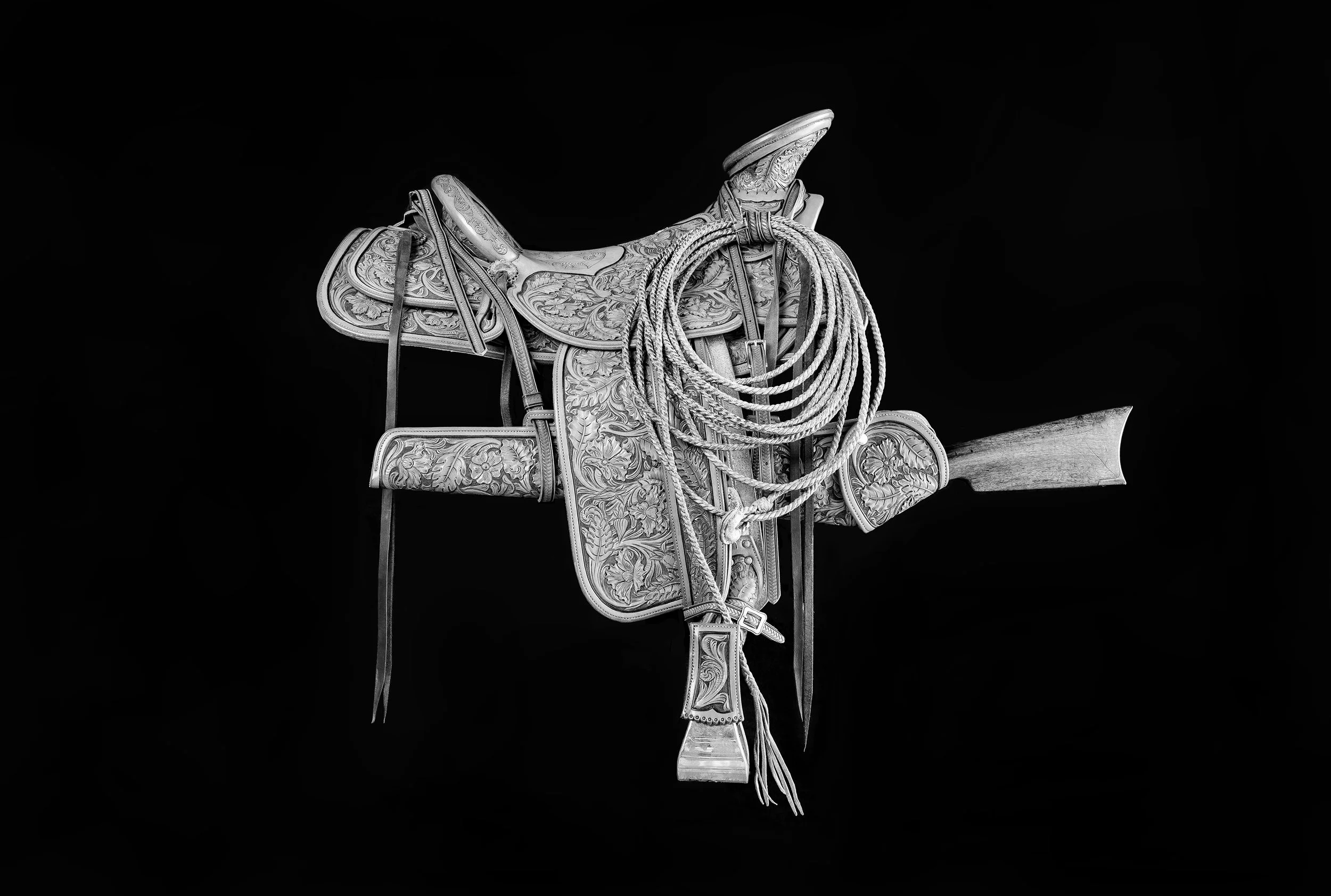
A leather saddle and rope shown in detail, highlighting gear used in everyday ranch work, a balanced piece for western and rustic interior spaces.
A Few Final Thoughts
I started photographing cowboys because I was fascinated by the people, the work, and the landscapes they inhabit.
That fascination hasn't gone away. If anything, it's gotten stronger.
I've spent countless hours riding around ranches, getting covered in dust, freezing my ass off in the mornings, and wondering whether I'd come home with anything worthwhile.
Sometimes I don't.
But every once in a while, everything comes together and I make a photograph that reminds me exactly why I keep doing it.
Those are the photographs I want people to live with.
You can explore my Western fine art photography prints, browse the complete cowboy photography gallery, or contact me if you're looking for something specific.
— Rob Hammer
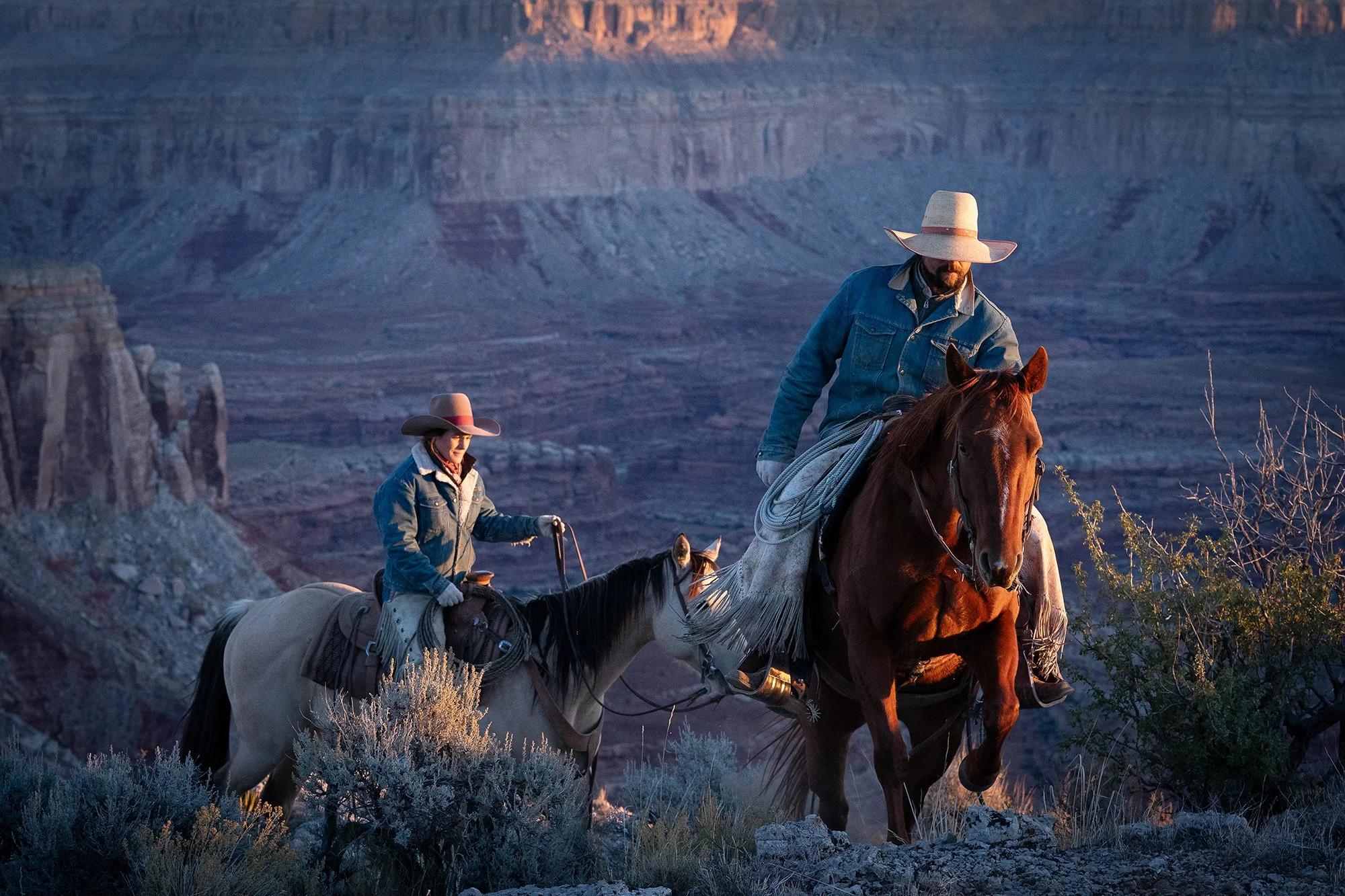
A cowboy rides along a canyon landscape, showing a real working environment suited for large wall art.