
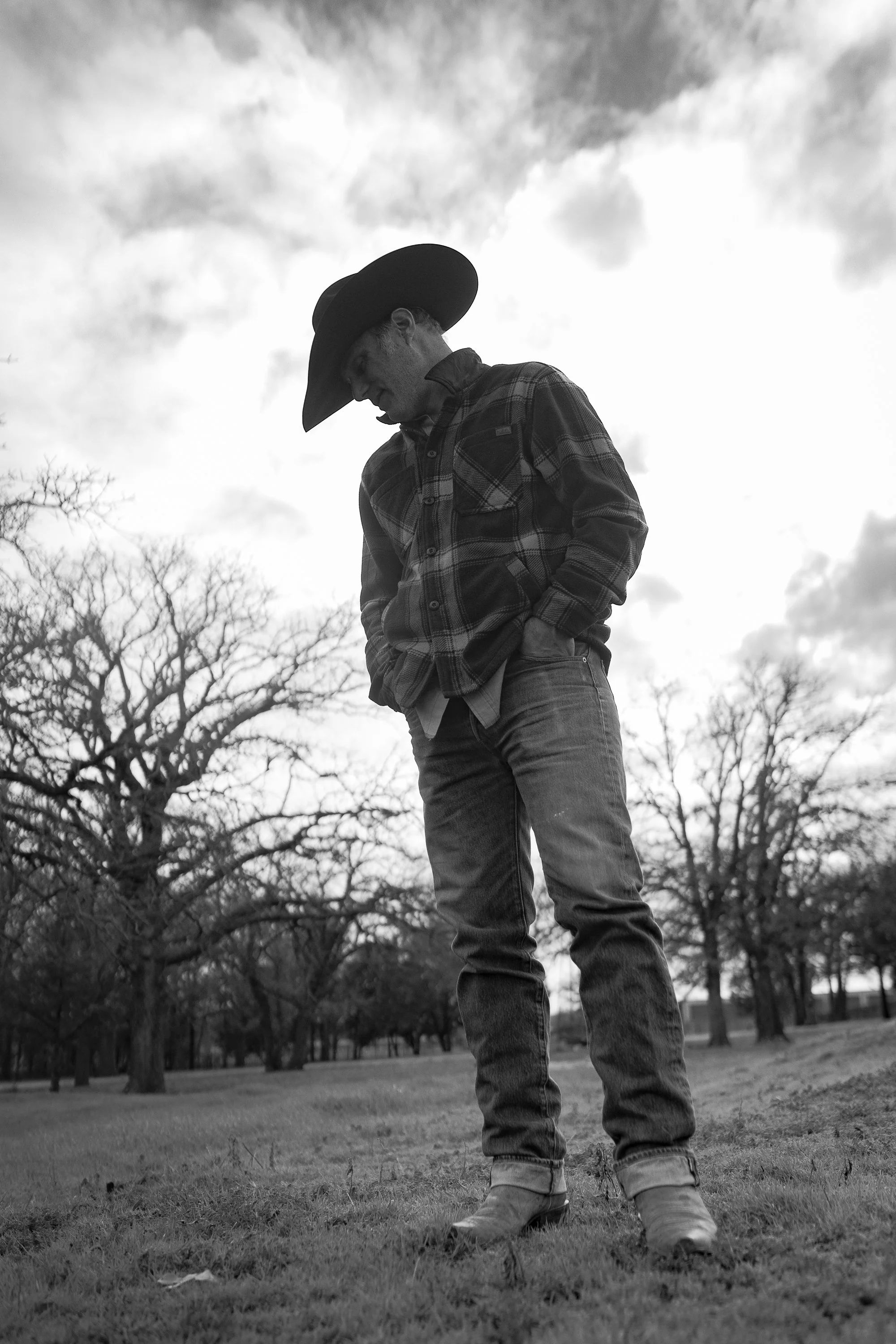
Teal Blake — Contemporary Western Painter
Teal Blake is a contemporary Western painter whose work is grounded in firsthand experience with ranch life in Texas. His paintings — often depicting working cowboys, horses, and cattle — carry a quiet realism that feels observed rather than imagined.
I spent time with Blake outside Fort Worth, Texas, moving between ranch and studio, chatting about how real life influences his work.
The West, for Blake, isn’t a costume. It’s a lived place.
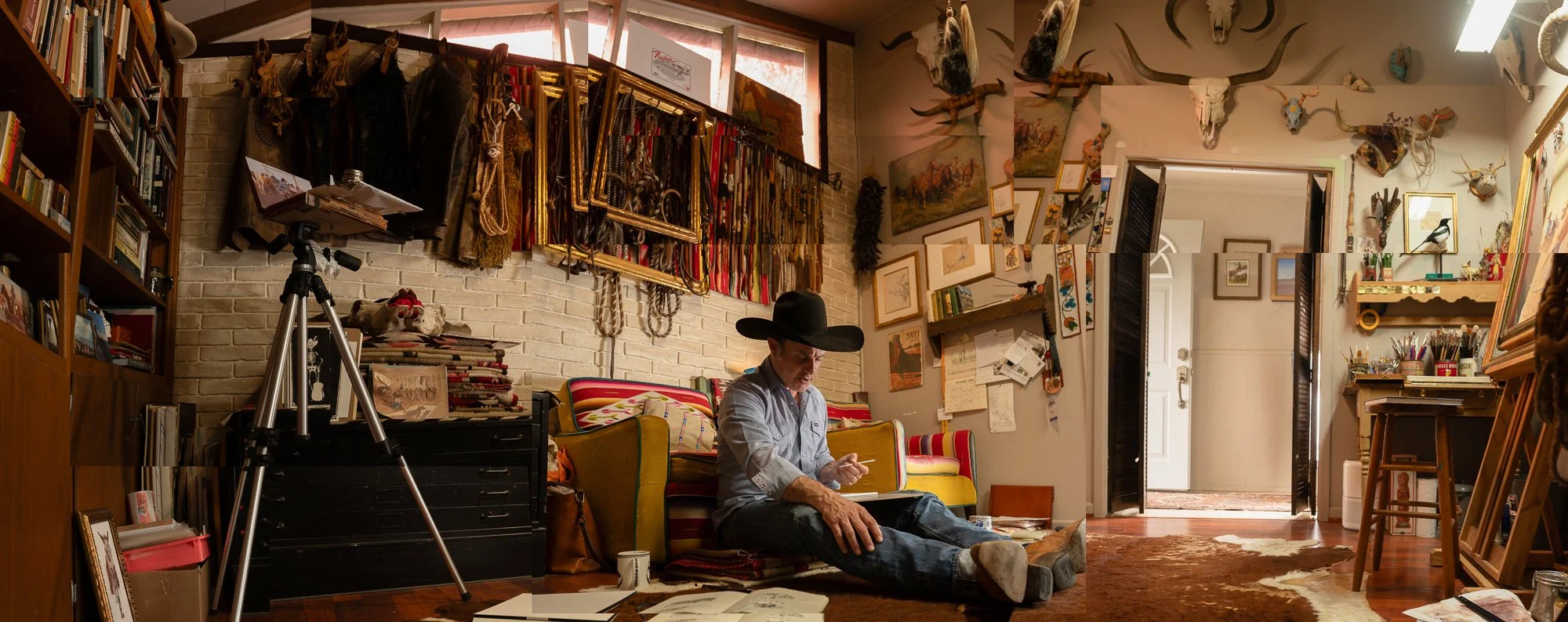
A wide view of Teal Blake’s studio captures the full atmosphere of his creative space — Western artifacts, cattle skulls, ropes, books, and paintings surrounding him as he works. The studio itself feels like an extension of the ranch life that informs his art.
Painting What You Know
Blake’s subjects aren’t distant symbols of the American West. They are ranches he worked, horses he’s rode, cattle he’s gathered, and fences he’s leaned against. The gestures in his paintings — the shift of weight in a saddle, the posture of a cowboy getting bucked — can’t happed without being there.
There’s restraint in his approach. Light is handled carefully. Dust and movement are suggested rather than dramatized. That restraint mirrors the culture he paints. Working cowboys rarely posture. They work. Blake paints with that same economy.
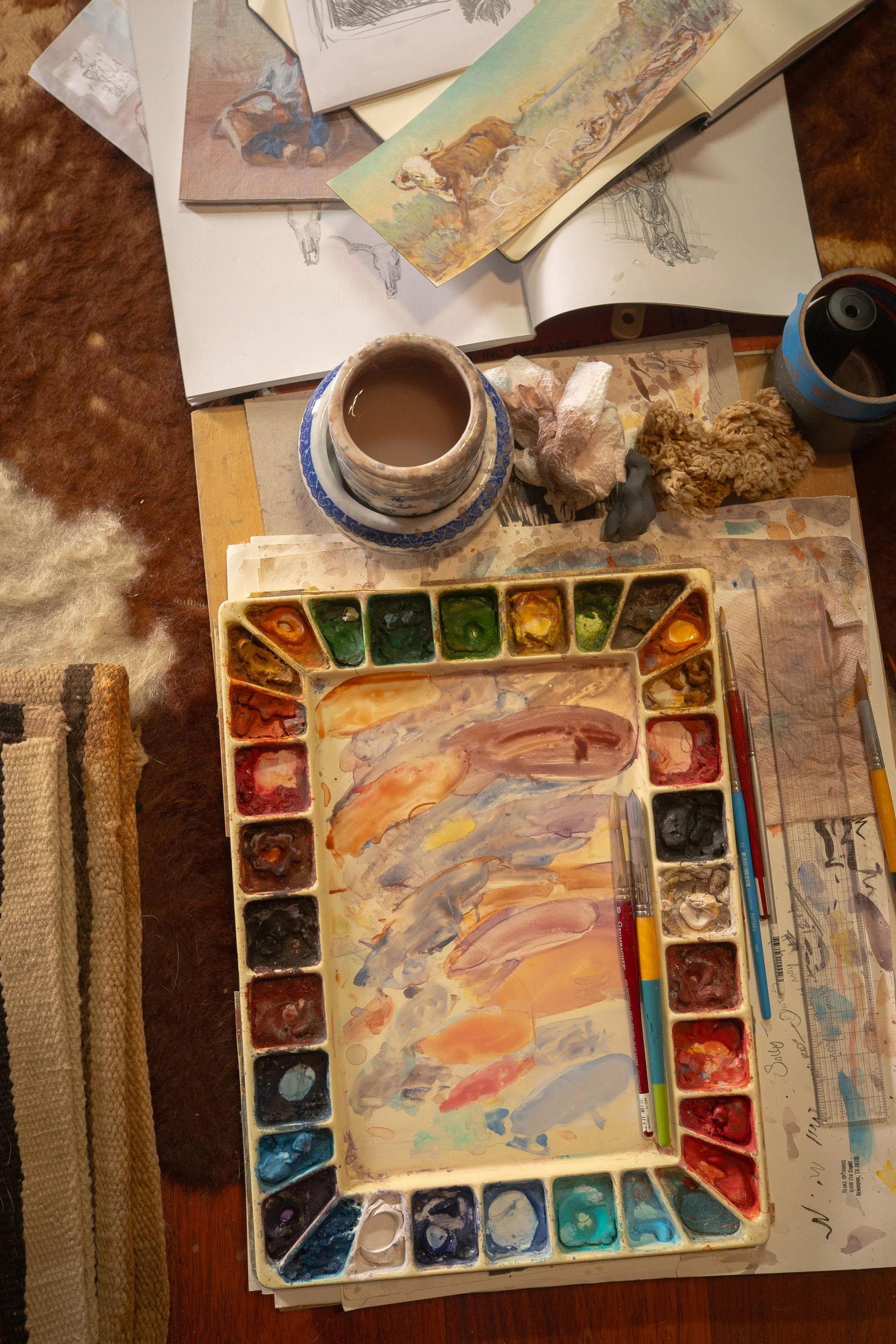
A well-used watercolor palette sits among sketches and studies inside Teal Blake’s studio. The layered pigments and quiet experimentation reveal the discipline behind his contemporary Western paintings.
Inside The Studio
Blake’s studio feels like an extension of his personality and his happy place. Art books by the greats like Charlie Russel line the shelves. Ropes and tack hang alongside finished works and studies. Skulls, saddles, and artifacts sit comfortably beside watercolor palettes and brushes worn down from years of use.
Sketches scatter across the floor. Pigment pools in the corners of a palette. A finished painting rests on an easel, framed but still close to the working space. The room is warm and inviting — an easy place for an artist to spend his life.
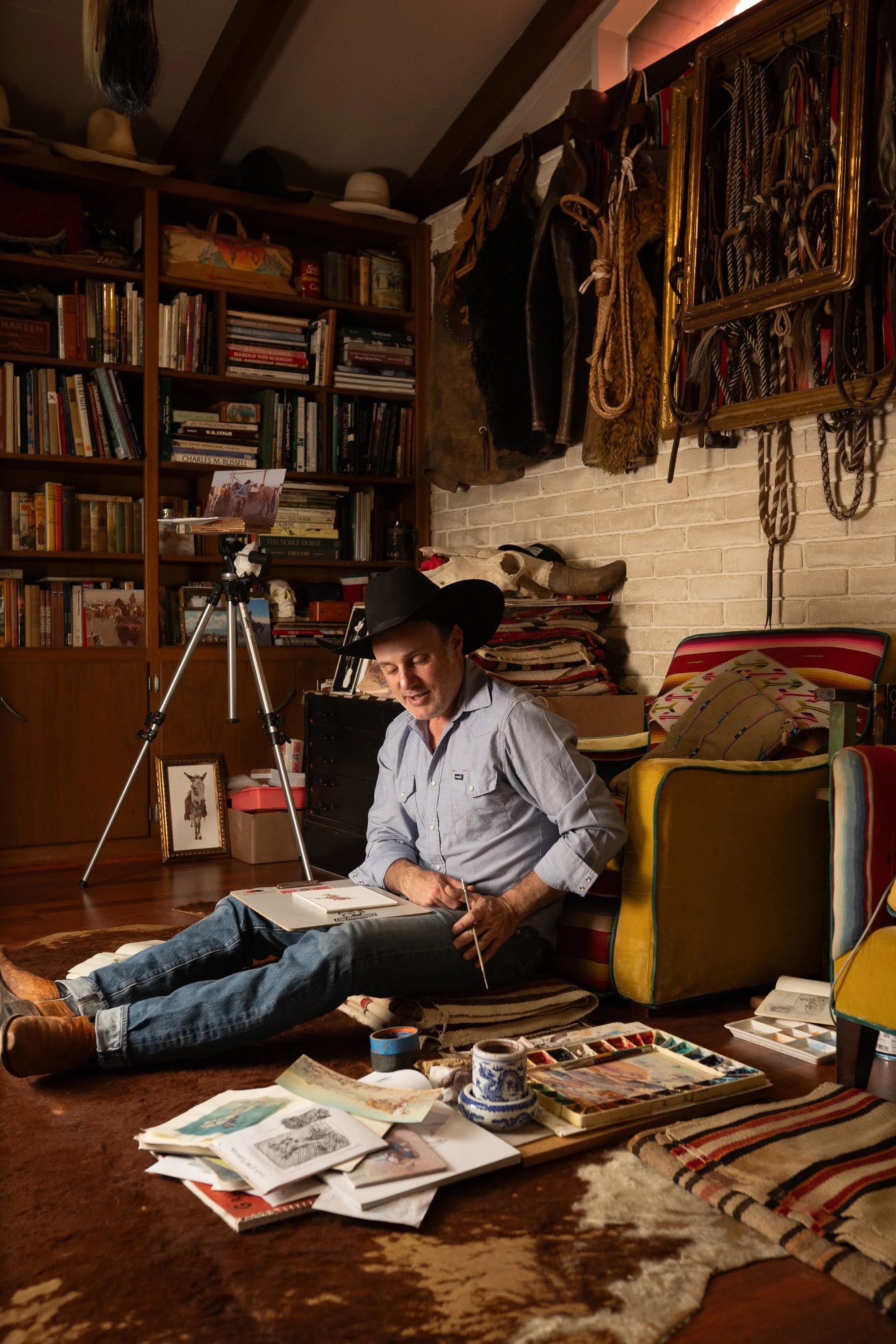
Inside his studio, Teal Blake works through sketches and watercolor studies. The space — layered with books, tack, and ranch artifacts — reflects decades immersed in Western culture.
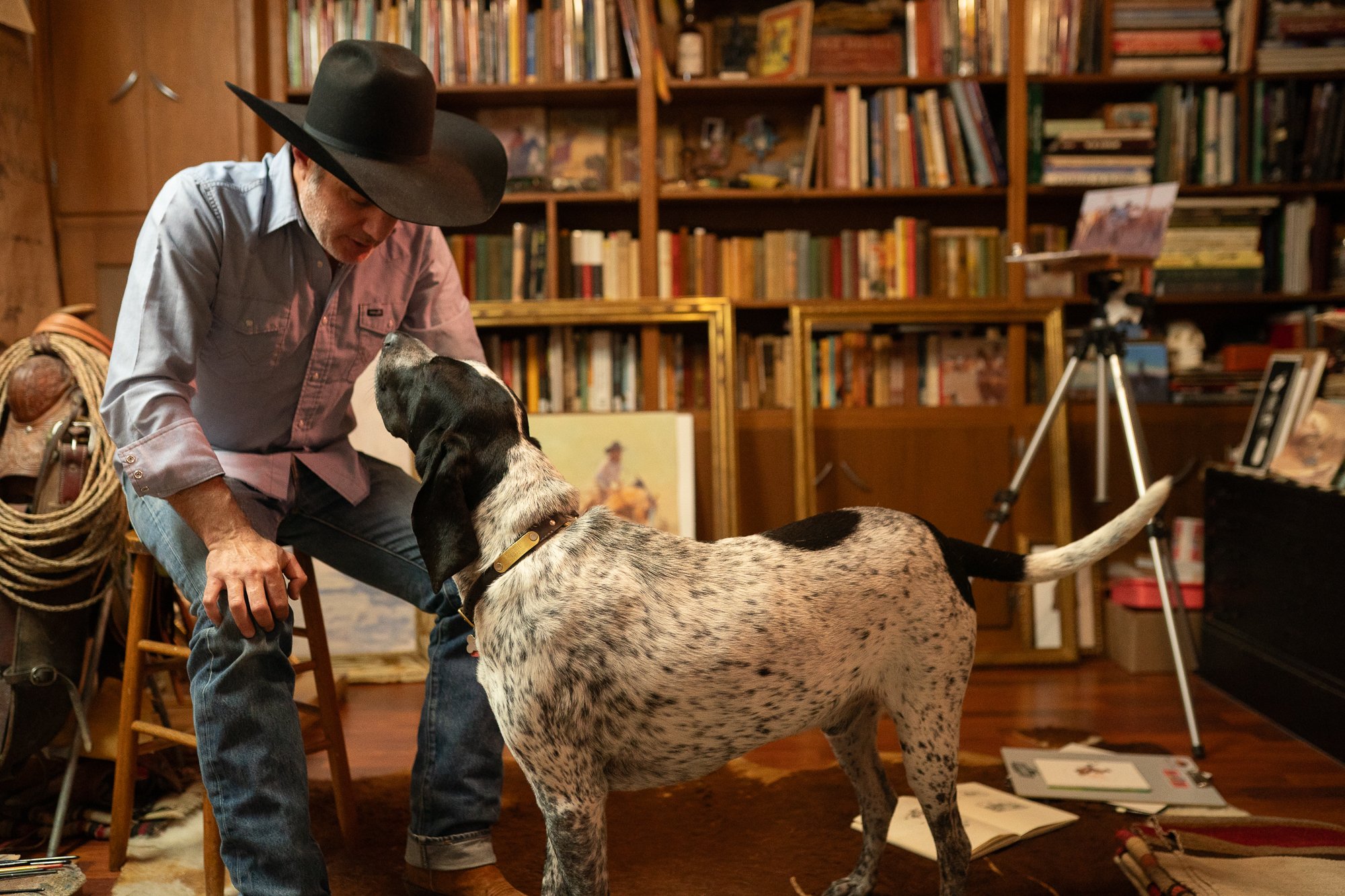
Teal Blake pauses with his dog inside the studio lined with books, tack, and finished paintings. His environment reflects a life closely tied to ranch culture and the realities of the American West.
Photographing a Western Artist At Work
I’ve talk about this before, but I believe it’s vital for an artist or photographer to concentrate on subjects they organically connect with. For years now I’ve been photographing working cowboys all across the West, and was a fan of Teal’s work long before we collaborated on this shoot. To document a culture means more than just the action on a ranch, and Western Artists like Blake are a vital piece of the culture. So it was fun connecting with him at his studio. He’s a real easy going guy. In fact, if you didn’t know he was an incredibly talented artist, you’d think he was a normal guy. Turns out Teal loves food and fly fishing, so we had lots to talk about.
After the shoot I was headed south and wanted to fly fish the Brazos River, but forgot my fly box, and all the fly shops were closed, so Teal generously lent me his. That’s Texas Hospitality at it’s finest.
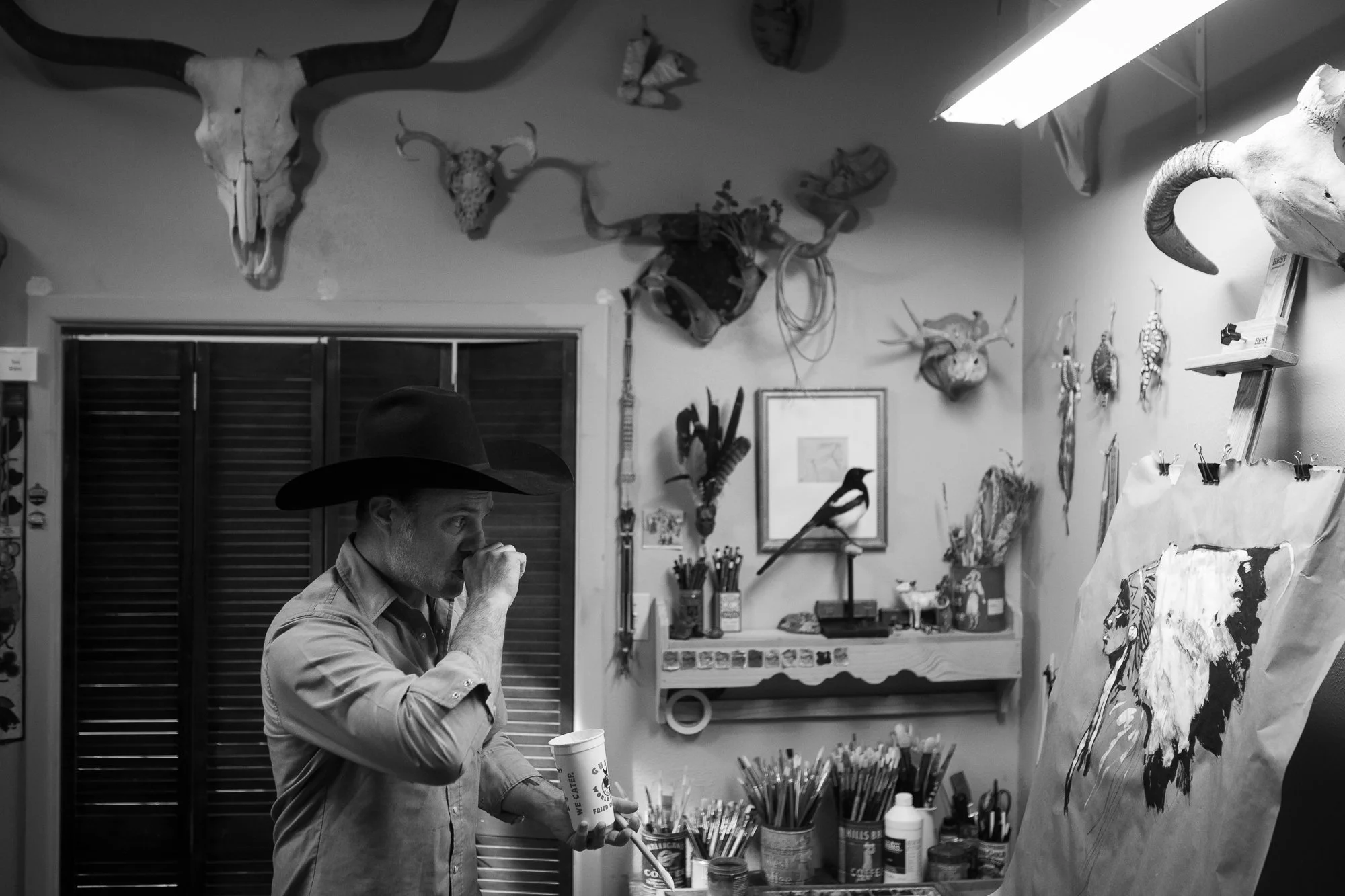
In a quiet moment inside his studio, Teal Blake reflects between works. The walls — lined with skulls, reference materials, and paintings — reveal a life shaped by the American West.
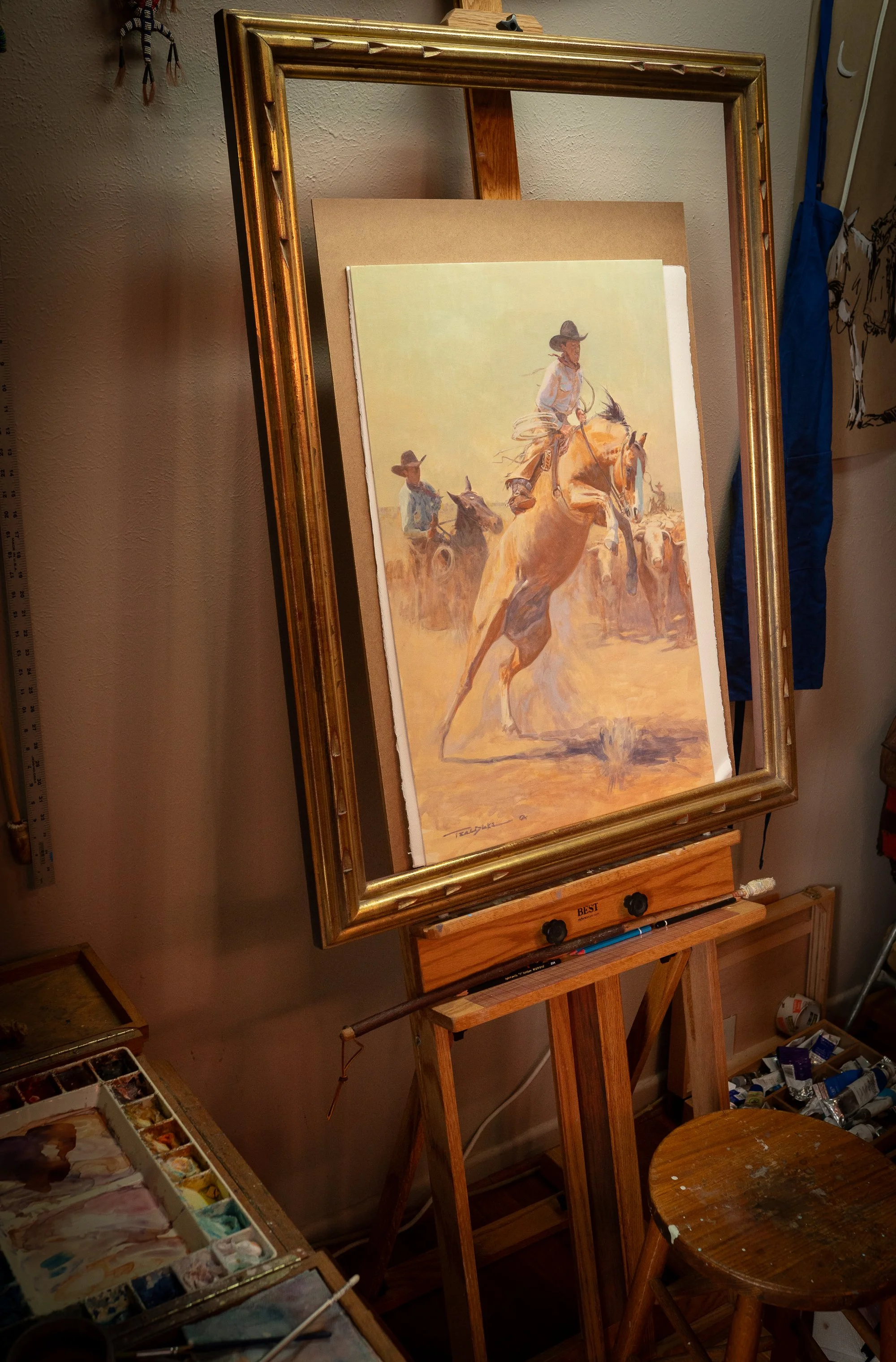
A finished cowboy painting rests on the easel in Blake’s studio — a glimpse into his interpretation of movement, dust, and the rhythm of working cattle.
Contemporary Western Art and the American West
In a time when Western imagery is often stylized for entertainment, artists like Teal Blake continue a quieter tradition — one rooted in observation and craft.
His work contributes to the evolving story of contemporary Western art. Not nostalgic fantasy, but present-day ranch life rendered with clarity and restraint.
Spending time in his world reinforces something I’ve learned repeatedly while photographing cowboys: the American West is not disappearing. It is working. It is adapting. And it is still needs to be documented — in paint and in photographs.
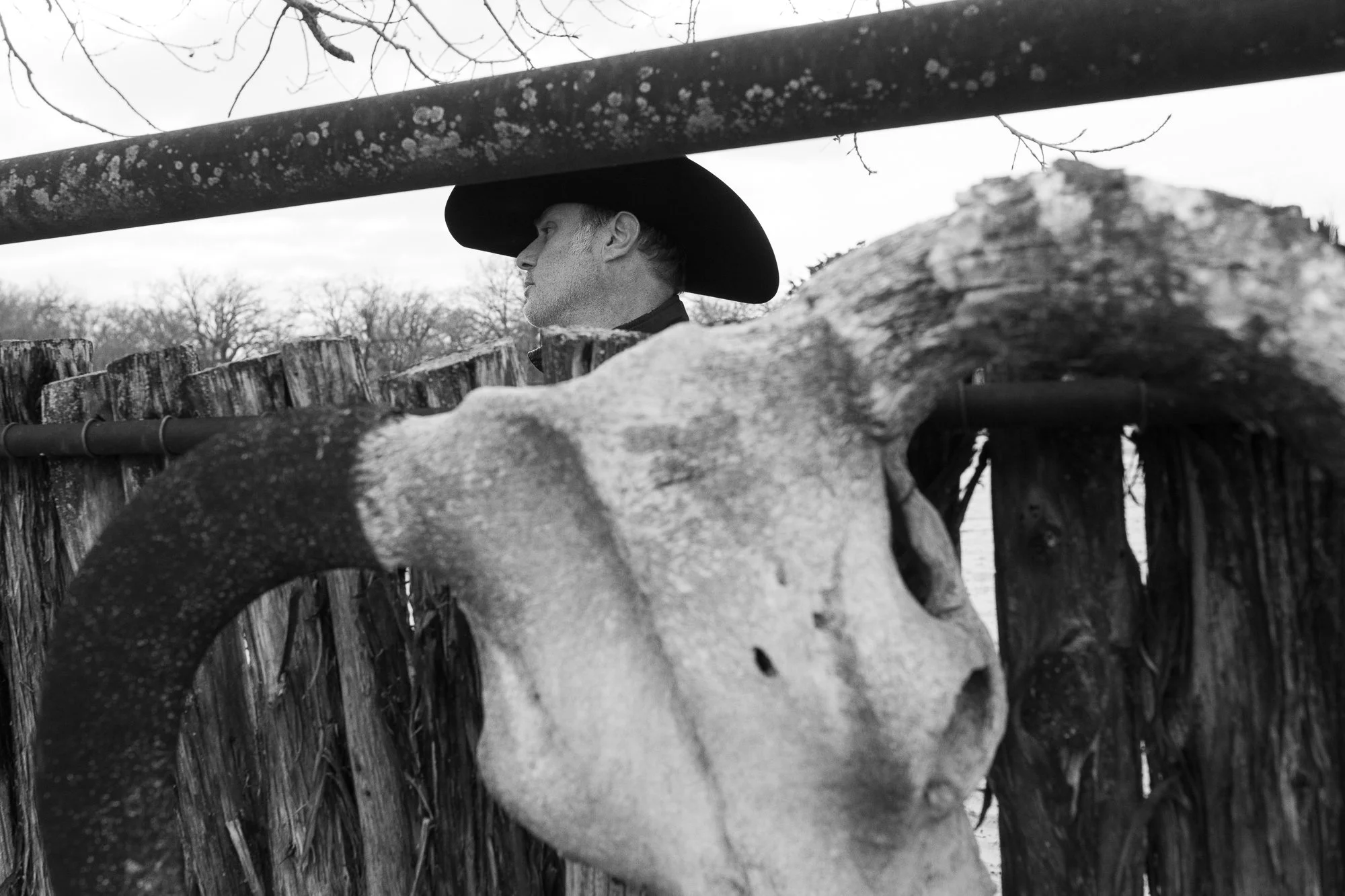
Seen through a weathered ranch fence, Teal Blake pauses beside a longhorn skull — symbols deeply rooted in the visual language of the American West.
Explore More Western Art & Photography
If you’re interested in contemporary Western painters, you may also want to view my studio portraits of William Matthews — another artist deeply connected to working cowboy culture.
You can also explore my long-term photographic project documenting working cowboys across the American West.
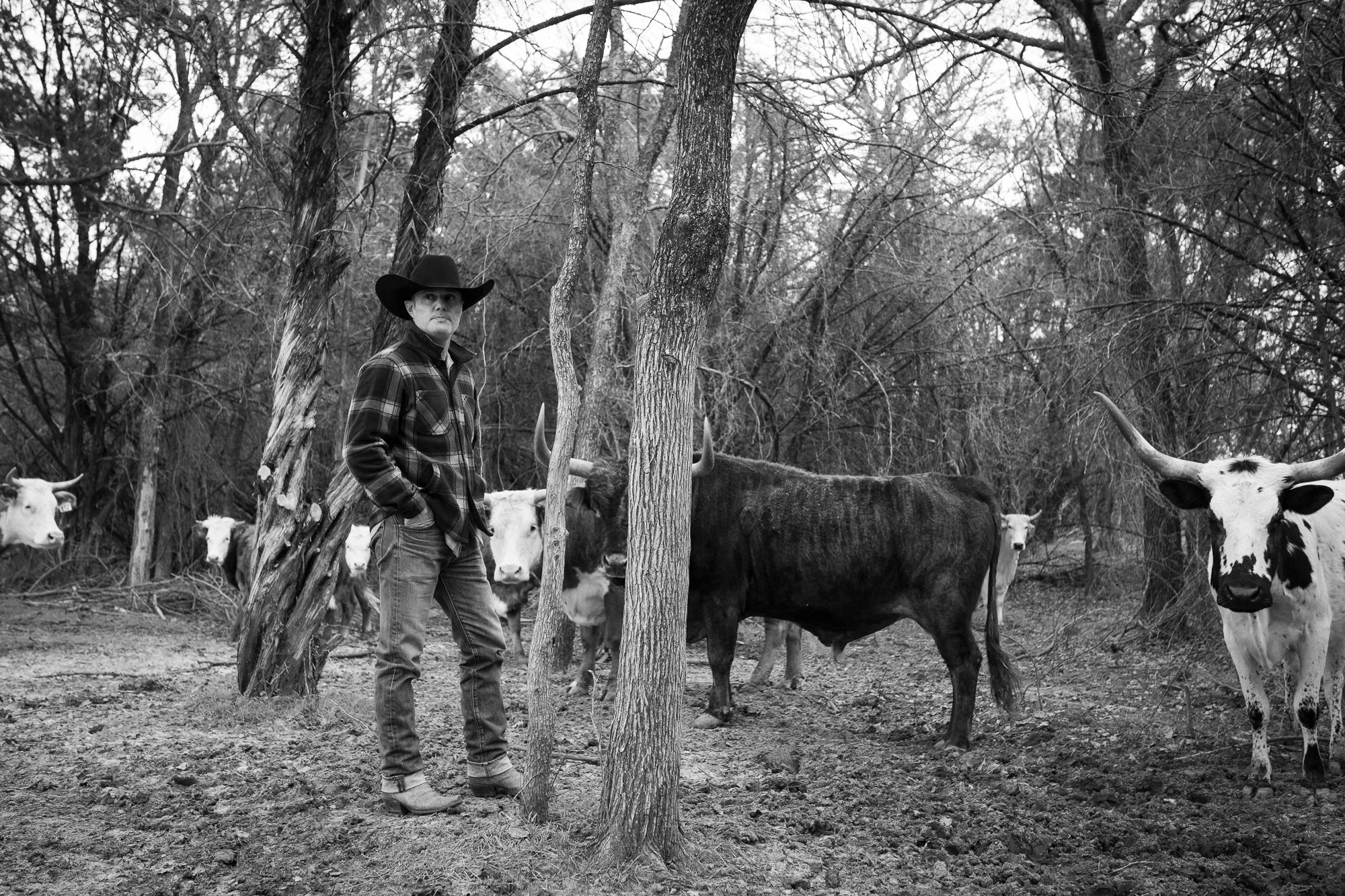
Teal Blake stands among longhorn cattle in a wooded pasture, a scene that reflects the everyday realities behind much of his contemporary Western art.
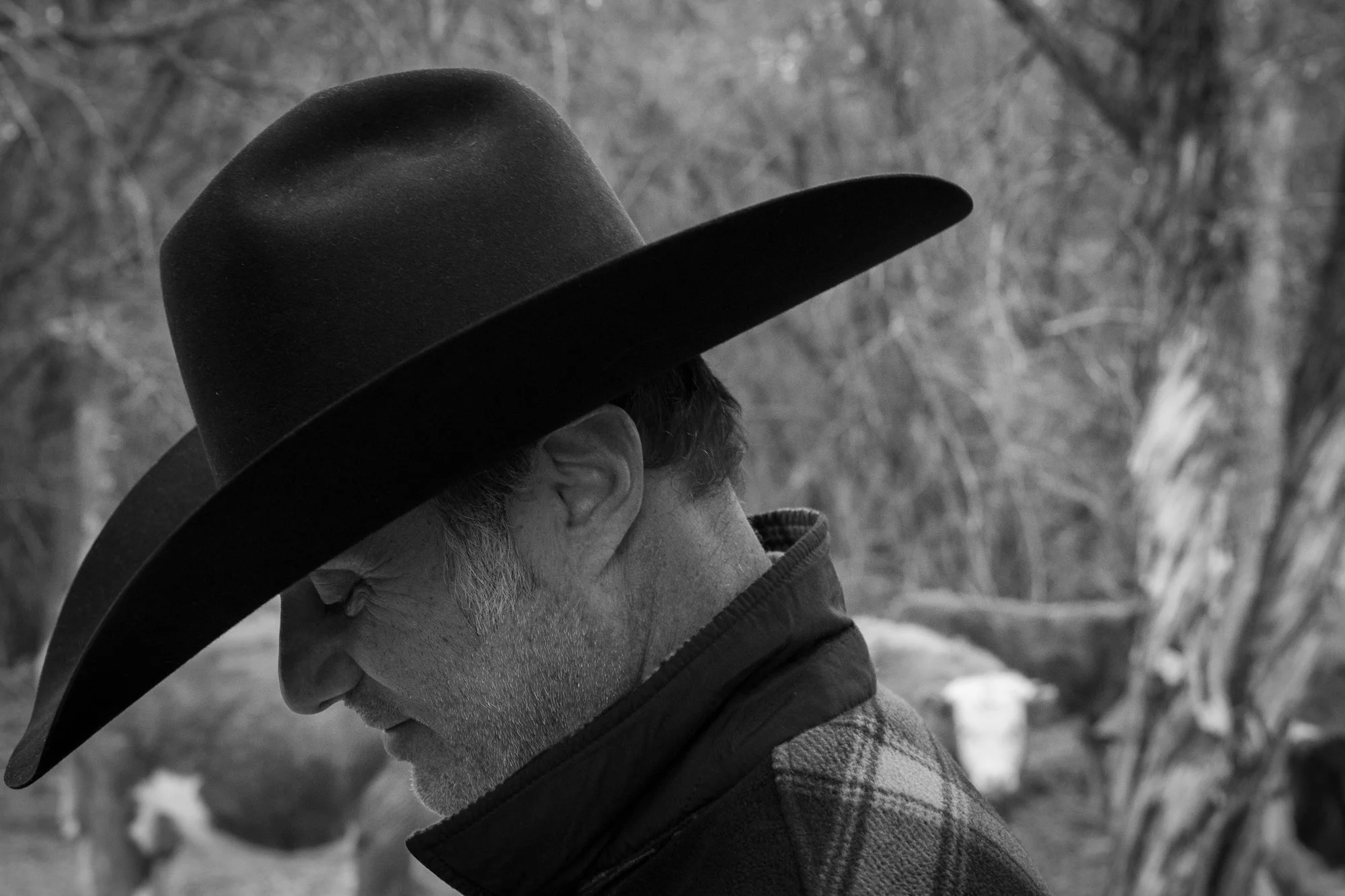
A close black-and-white portrait of Teal Blake, the brim of his hat casting a quiet shadow. The simplicity echoes the understated strength of his Western paintings.
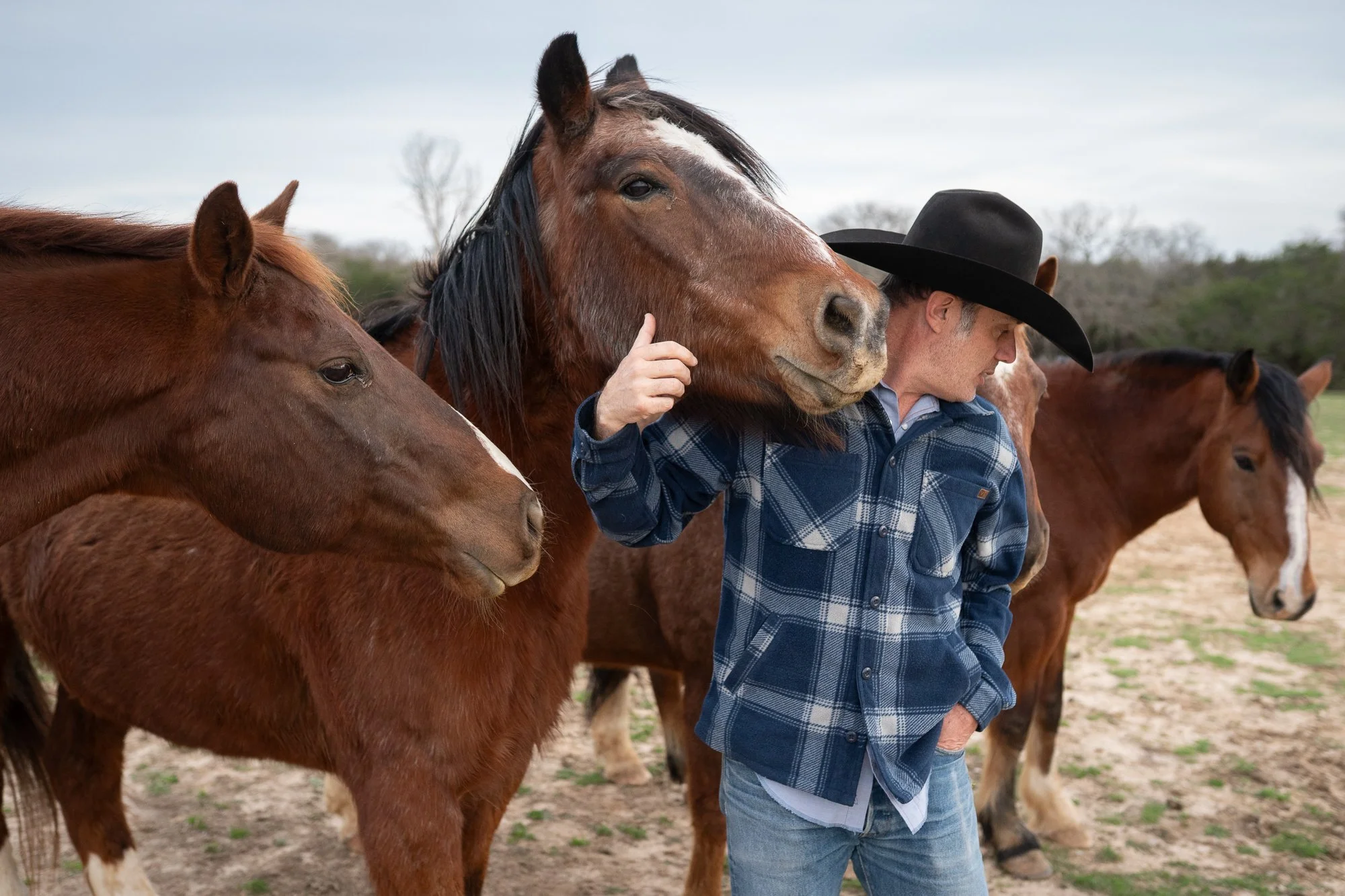
Teal Blake among horses on his Texas ranch. Direct experience with ranch life continues to inform the realism and sensitivity of his Western artwork.