Driving Through America

American Road Trip Photography

More from the road this winter. You never know what you’ll find out there, which is most of the draw. If you knew, what fun would it be? That’d be like fly fishing if you were guaranteed a catch every single time out. It’s about the hunt. The coyote image is a great example how the road always keeps you guessing. I only found them because of a pee break on the side of some desert parking lot in the middle of the Nevada desert. Parking lot is the only word available, because it didn’t seem a need for one. There was nothing around for miles and miles. Nevada desert. Which begs the question, why were the coyotes there? Clearly they were killed by hunters and placed carefully in that spot. It took effort to drag them from the kill location. Why not just leave them there? We’ll never know. Nor does it matter. Just the kind of thing you see on the road.

Click here to see more of my America series

Dave's Pubb - Tetonia, Idaho - dive bar - photo - America

Dave’s Pubb - Tetonia, Idaho

Photograph of the Lovelock Speedway - Lovelock, Nevada

Lovelock Speedway - Lovelock, Nevada

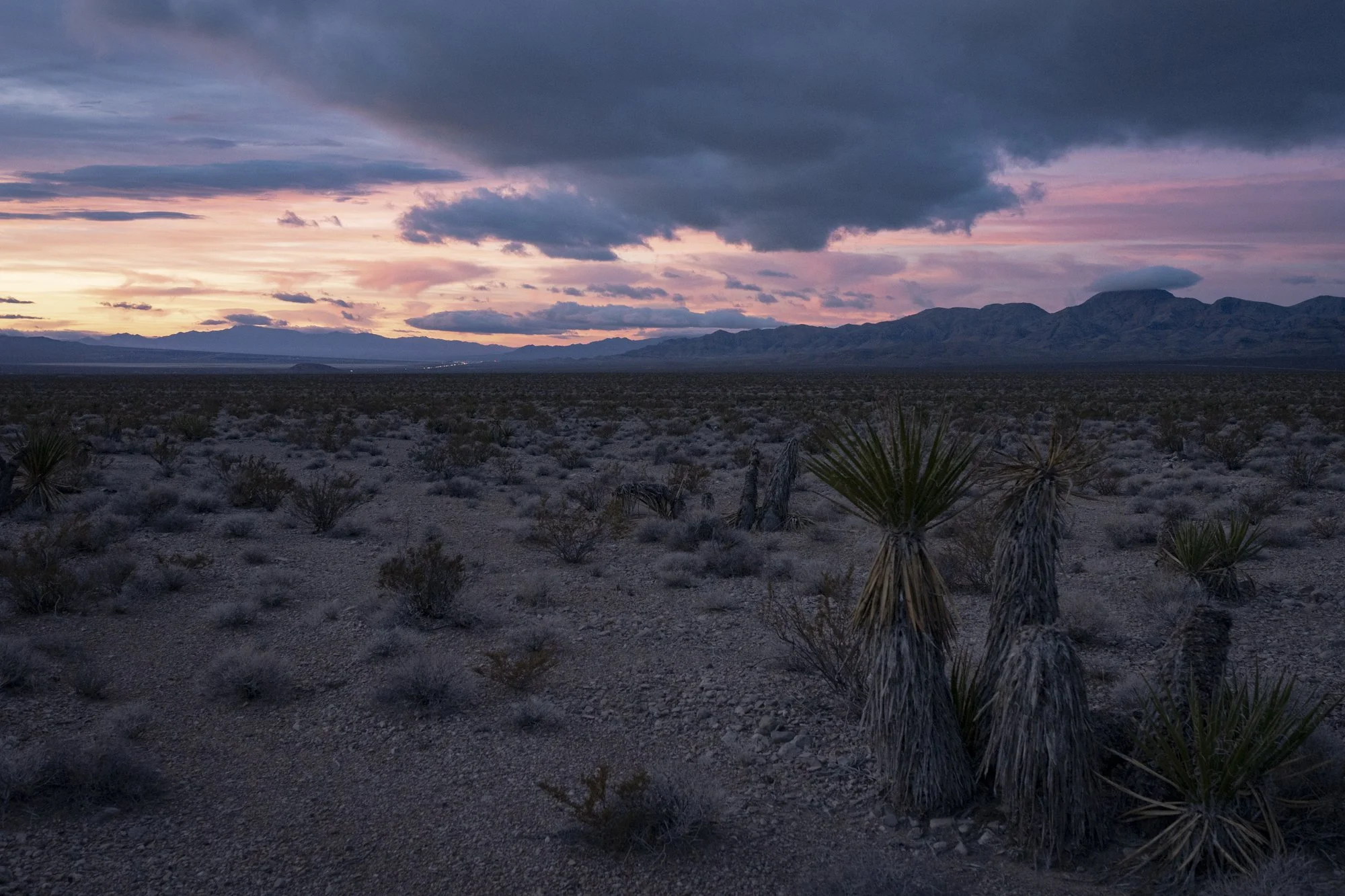
Dead coyotes in the Nevada desert -photo

Nevada desert

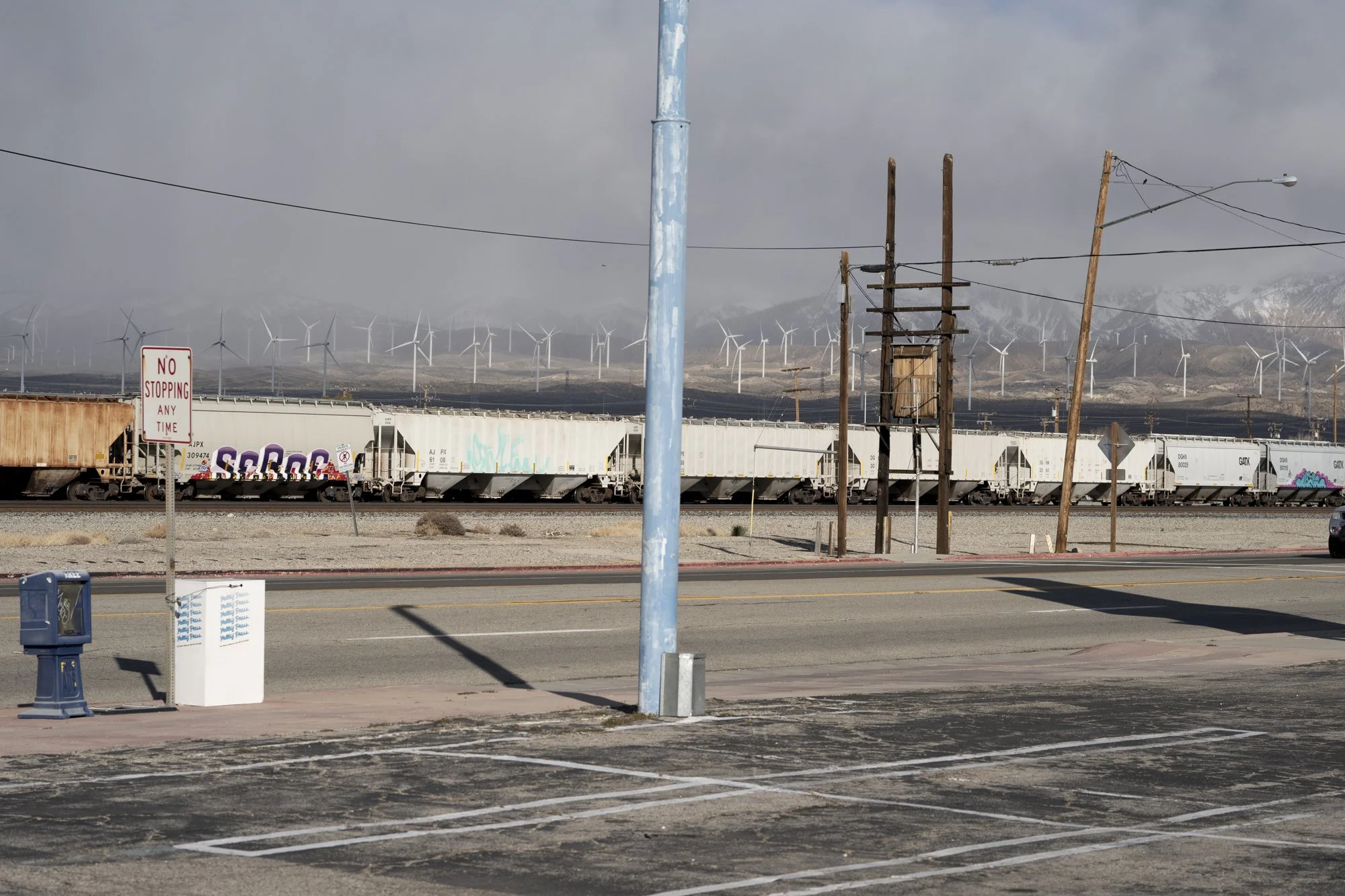
Mojave, California Photo Train Windfarm

Mojave, California

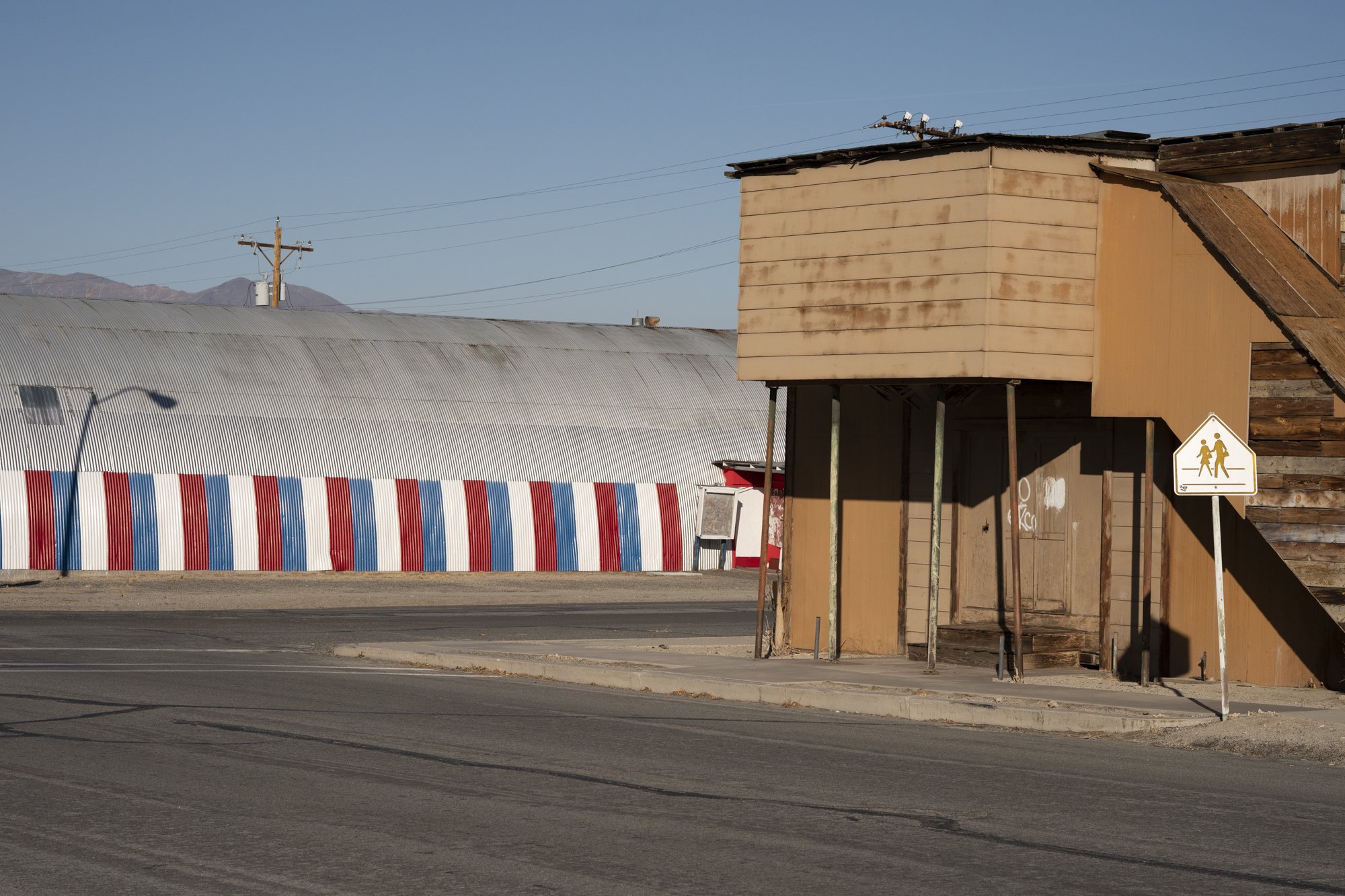
Hawthorne, Nevada - movie theater - photo

Hawthorne, Nevada

Frames Magazine

Photography Podcast - Frames Magazine

It’s rewarding connecting with people that you’re on the same page with. The motto at Frames Magazine is “Because excellent photography belongs on paper”. For quite some time I’ve been saying that photography belongs on your wall, not your phone. So you can see the natural connection to the people at Frames. They get it. So I was honored to be interviewed about Roadside Meditations by W. Scott Olsen for their podcast. Scott is as talented a photographer as he is an interviewer and writer. If you’re into long form photo essays about travel, check out the piece he did on traveling the country by train - Scenes From a Moving Window . It’s a lot of fun. Here is a link to my episode on the Frames Photography Podcast.

And here is a link to purchase Roadside Meditations

Road Trip

Road Trip Photographer - America - Open Road

What a winter it’s been. The snow just keeps on coming. Made an impromptu road trip up to Jackson Hole again for a mix of business and pleasure. More on the business part coming soon! We had two days of incredible backcountry snowboarding. The best of which was in Grand Teton National Park, where the snow was literally as good as it gets. Felt like floating on a cloud. The road trip portion was a lot of fun too, although the weather conditions made it quite interesting. On the way south while driving through northern Nevada, an emergency alert popped up on my phone. I figured it was just an overreaction, then got slammed with some of the worst driving conditions I’ve ever witnessed during 10+ years of road trips. The snow and wind was so heavy, that there were moments when I couldn’t figure out if the car was moving forward or backwards. It was also the first time I ever called it and got a hotel due to weather. That hour and a half of driving in those conditions completely fried my eyes and brain. Gotta love the road. It keeps you honest. Will be posting new images soon from the cowboy project.

Doug Monson - Western Charcoal Artist

A Charcoal Artist in Wyoming Preserving the Spirit of the American West

Western Art That Comes From Experience, Not Interpretation

There’s a noticeable difference between Western art made from observation and Western art made from experience. The best work doesn’t try to explain the West. It comes from living in it.

Doug Monson’s charcoal drawings aren’t romanticized versions of cowboy life. They carry the weight of real work—long days, unpredictable conditions, and a deep familiarity with cattle, horses, and the land itself.

That’s something I’ve seen again and again while photographing ranches across the West. The people who live this life don’t exaggerate it. And the artists closest to it don’t either.

A Chance Encounter With a Western Charcoal Atist

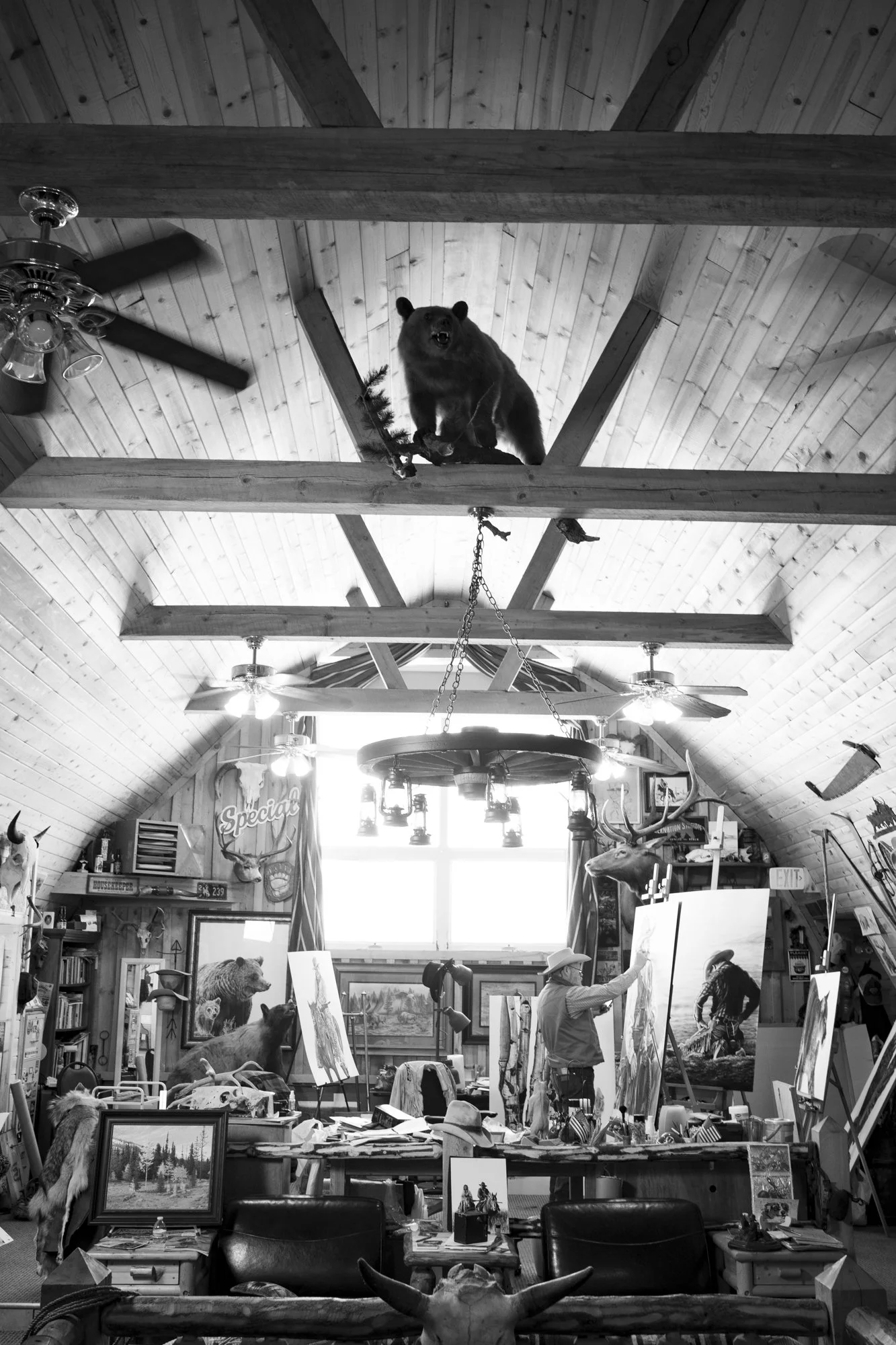
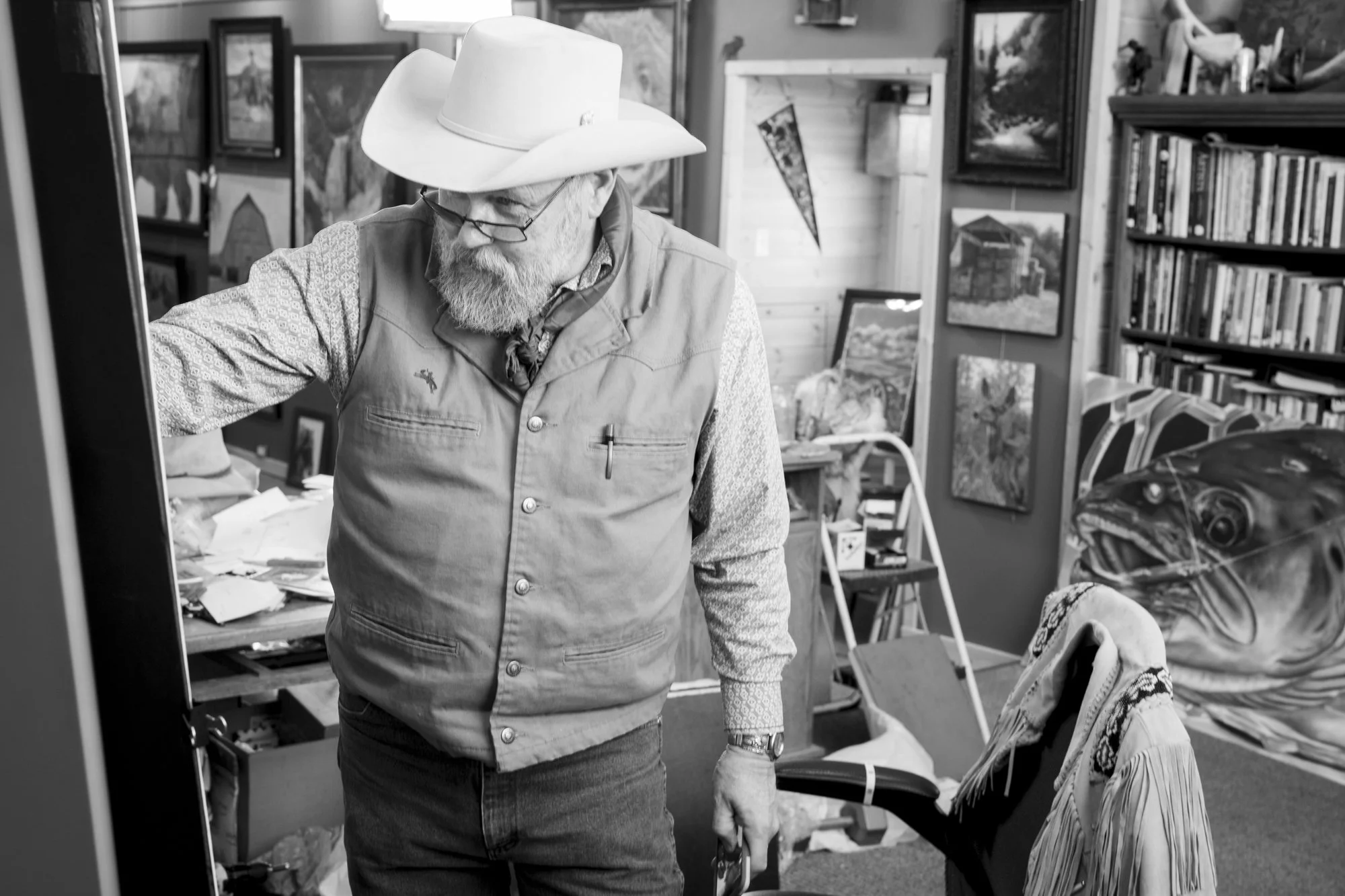
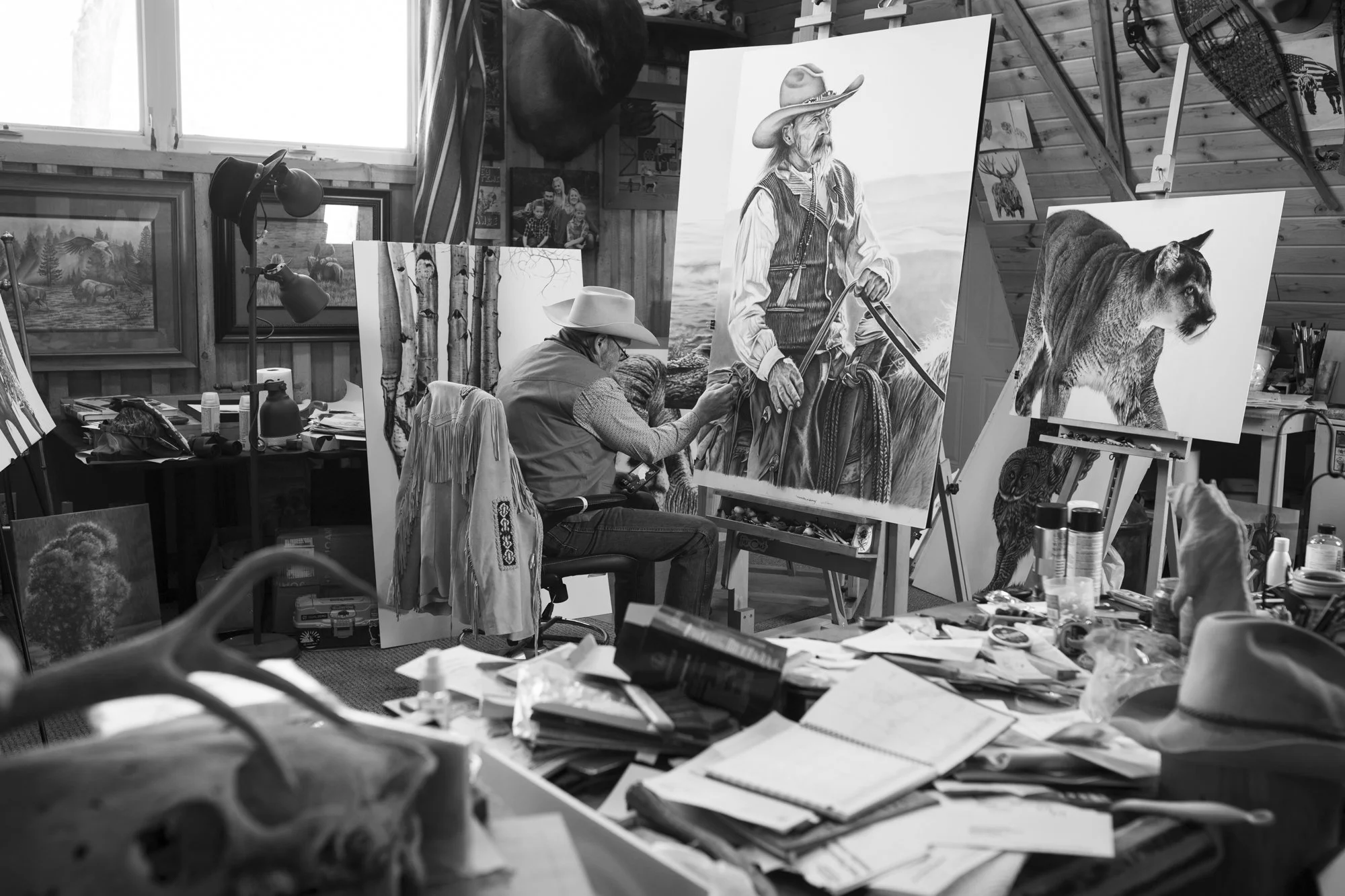
It’s always amazing how the universe brings people together. During a trip to Jackson Hole I was on a big gallery kick and spent quite some time taking in the top tier art that Jackson’s galleries have to offer. After the trip was over I began the drive back home. At the time I was living in San Diego and decided on a route that happened to go through Afton, WY - home of the Western Skies Fine Art - a gallery I had no knowledge of. Still having a thirst for art though, I popped in and was greeted by the owner Doug Monson He showed me around the gallery and his breathtaking studio upstairs. Next thing you know, I pulled the camera gear out of the track and was photographing Doug at work. Prior to that day I never even knew who Monson was. It was a pleasure spending time with him though. He’s a talented artist and a hell of a nice guy.

Why Wyoming Still Matters for Western Artists

Wyoming holds onto something a lot of places have already let go. There’s still space. Still working ranches. Still a culture that hasn’t been completely reshaped for an audience.

For artists—whether working in charcoal, photography, or anything else—that matters.

It means the subject isn’t manufactured. You’re not documenting a version of the West built for tourists. You’re seeing something that still functions the way it always has.

That’s why so much of my own work continues to bring me back to places like this.

Documenting the Same World Through Photography

While Monson works in charcoal, the intent overlaps closely with what I’ve been building through photography. For the past several years, I’ve been documenting working cowboys across the American West—on ranches where traditions like branding, roping, and horsemanship are still part of daily life. It’s not staged. It’s not styled. It’s not built for content. It’s just the work, as it happens. That same honesty is what makes both forms of work resonate. Whether it’s a drawing or a photograph, the goal is the same: create something that holds up over time because it’s rooted in reality.

The Importance of Western Crafts and Artists

There’s a broader ecosystem around cowboy culture that often gets overlooked — Saddle makers. Rawhide braiders. Bootmakers. And artists like this one working in charcoal.

These aren’t separate from Wester culture—they’re part of it. And as fewer people continue these traditions, documenting them becomes more important. Not in a nostalgic way. In a factual one. Because once these skills disappear, they don’t come back.

Collecting Authentic Western Art and Photography

For collectors, there’s a difference between work that references the West and work that comes directly out of it.

That difference shows up over time.

It’s in the details. The restraint. The lack of exaggeration.

Whether it’s a charcoal drawing or a photograph, the strongest pieces tend to be the ones that don’t try too hard. They just reflect what’s there.

If you’re interested in collecting work like this, it’s worth paying attention to where it comes from—and who made it.

A Larger Project Documenting the American West

This visit is part of a much larger body of work focused on documenting the people, places, and traditions that still define the American West.

It’s taken me across ranches in multiple states, often working in remote environments where this way of life still operates largely unchanged.

If you’re interested in seeing more:

Charcoal artist Doug Monson at work in his studio at the Western Skies Gallery in Afton, Wyoming

Charcoal artist Doug Monson at work in his daylight studio

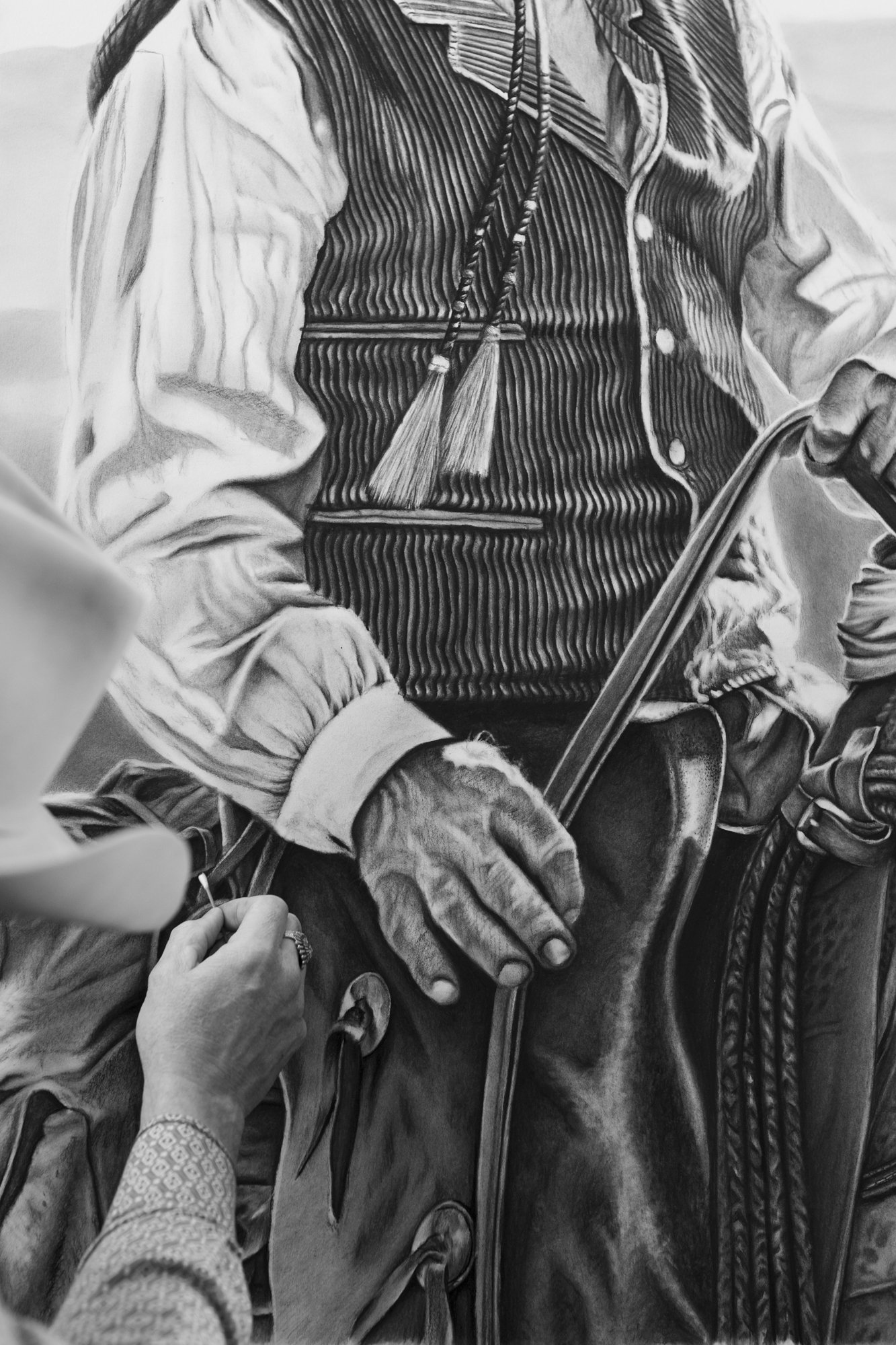
A western charcoal artist drawing a cowboy

Monson drawing a cowboy with charcoal on paper

Portrait of a Western charcoal artist

Portrait of artist Doug Monson

Western charcoal artist Doug Monson working on a drawing at the Western Skies Gallery

Doug Monson at work on a drawing in the Western Skies Gallery

Black and white photograph of a Western artist in his studio surrounded by drawings and art supplies

Doug Monson surrounded by art in his studio


Cowboy Photography - Buckaroos

Nevada Buckaroo Photos | Authentic Great Basin Cowboy Photography

Buckaroo Photography from the American West

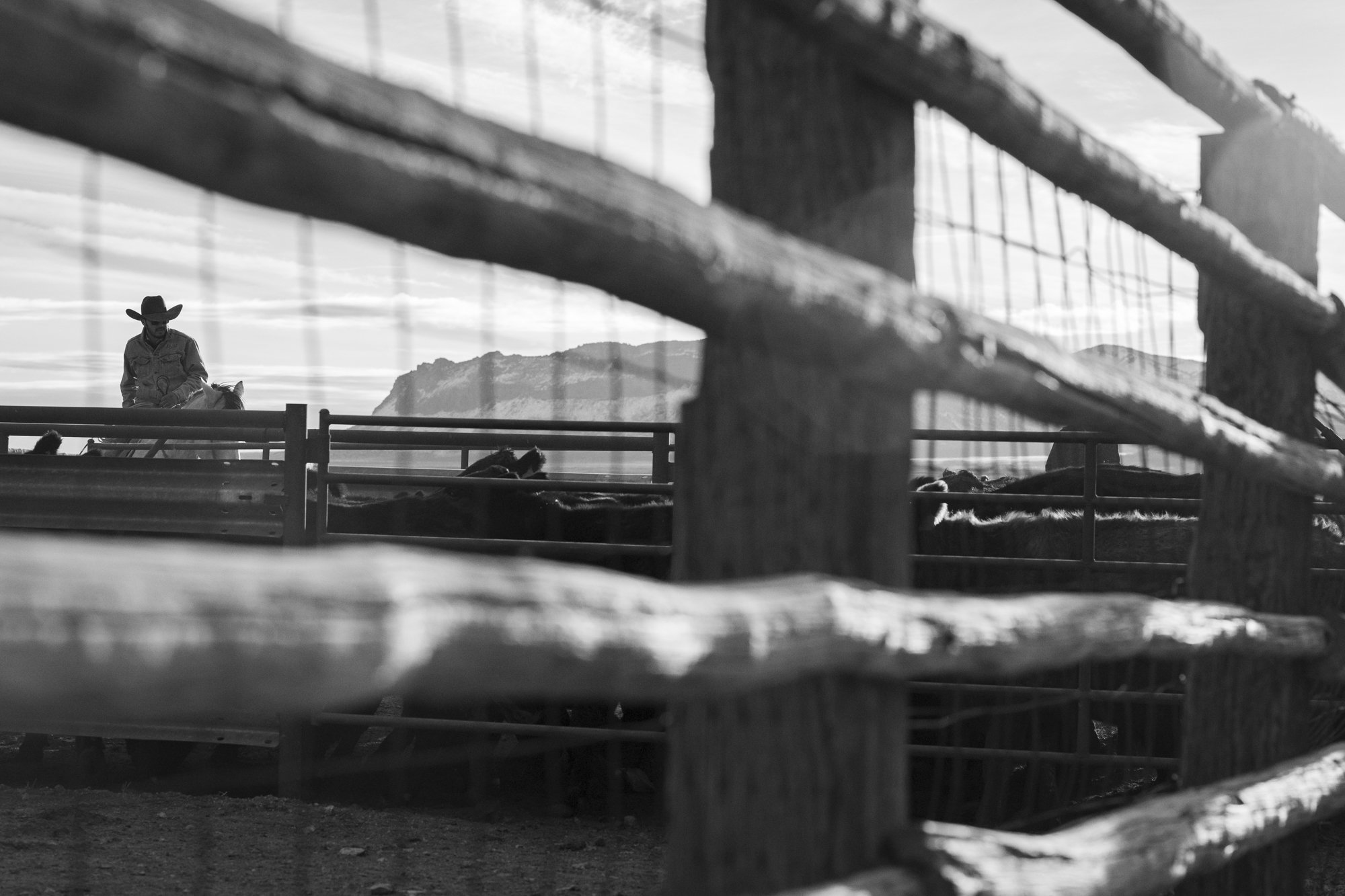
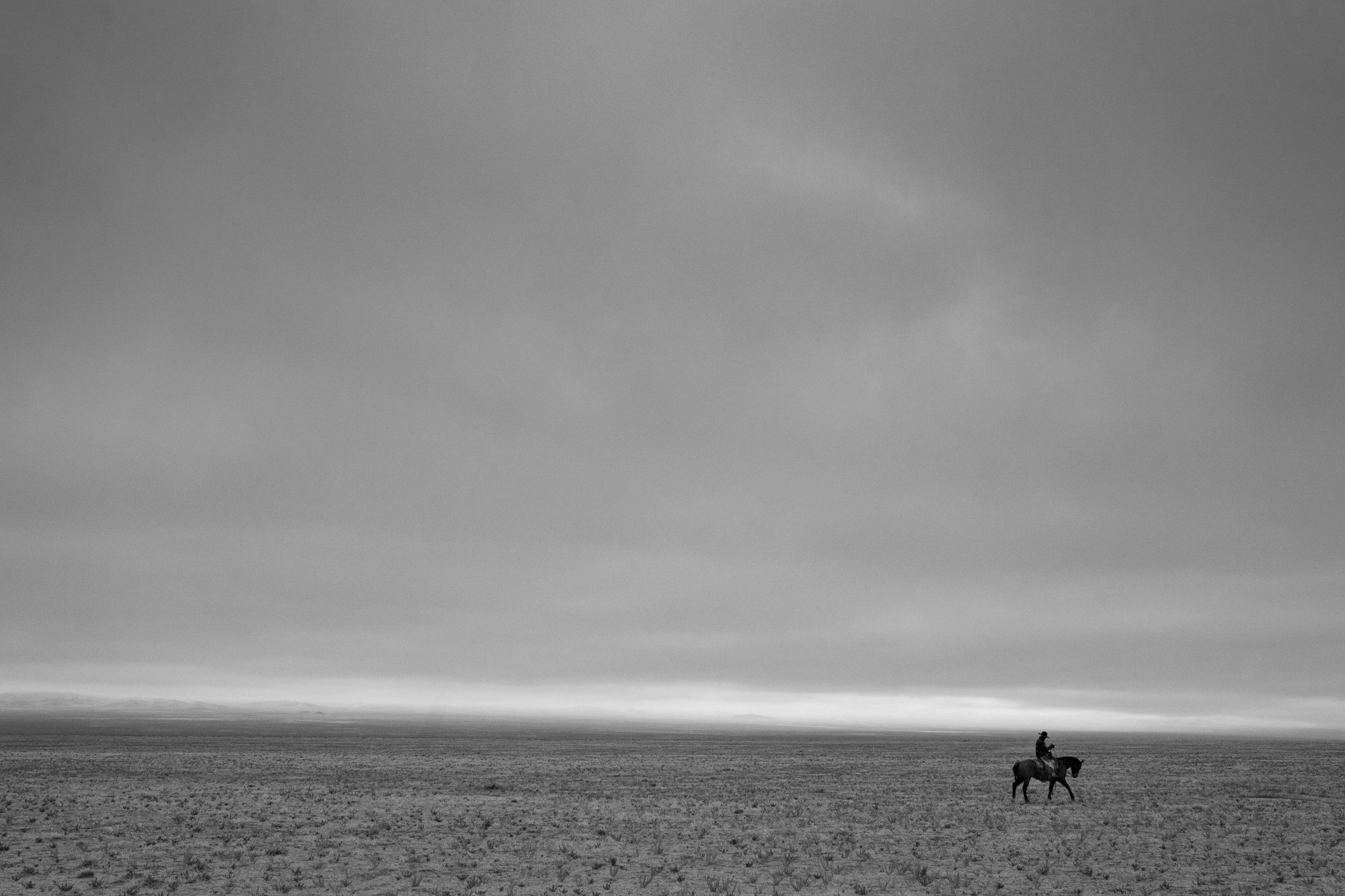
The Great Basin is a special part of the American West, particularly as it applies to cowboy culture and the buckaroos that call it home. Among the few remaining iconic ranches still left in northern Nevada are the C-Punch Ranch in Lovelock and the Winecup Gamble Ranch in Montello. Both are jaw dropping beautiful and incomprehensibly large. The C-Punch, the biggest I’ve been to so far, is 1.8 million acres. Yeah. Try wrapping your head around that. Seeing all these properties in different parts of the country has been amazing. Each region has its own allure. Nobody ever said to pick a favorite, but there’s something about the land in northern Nevada that really does it for me. Still working on putting that into words, but it’s exceptional, to say the least and took a few years to truly understand. At first, places that big, open, and seemingly void of life are difficult to grasp. Then something clicks and you can’t get enough of it. The muted colors, textures, and vibes of the Sage Brush Sea are intoxicating.

Nevada Buckaroos and Great Basin Ranch Culture

A Nevada buckaroo is not a costume or a posture. It is a way of working that developed in wide country where distance matters and horses are tools, not accessories. The Great Basin shaped this culture the way weather shapes a face—slowly, without asking permission. These photographs were made in that context, among people whose days are structured around stock, seasons, and the quiet competence required to make both endure.

The buckaroo tradition in Nevada carries deep vaquero roots, visible in gear, horsemanship, and the small details that separate function from style. While every worn saddle mark, coil of rope, and dirty Garcia bit does a job it has already done many times, make no mistake, buckaroo gear has a style all it’s own. A style that’s worm with immense pride, not just because it’s part of their very identity, but also because they know it’s the visual element that separates them from cowboys in every other region of the West.

Photographing Working Buckaroos in Nevada

Photographing buckaroos is less about chasing moments and more about staying put long enough for the work to reveal itself. The rhythm is slow, punctuated by long stretches of waiting and brief intervals where everything happens at once. These images come from time spent standing off to the side, watching cattle move, horses settle, and men do what they’ve always done without commentary.

There is no staging here. The photographs are made in real working conditions, often dictated by weather, dust, and the simple fact that ranch work does not stop for a camera. That constraint is part of the appeal. It keeps the photographs honest and the subjects unbothered.

Nevada Buckaroos Within the American West

Within the larger story of cowboy culture, Nevada buckaroos occupy a particular corner—one defined by style, scale, isolation, and continuity. This body of work fits within a broader project photographing working cowboys across the American West, but these images belong specifically to the Great Basin and the people who know it well.

Taken together, the photographs function less as individual moments and more as a quiet record of a way of life that persists without announcement. They are not meant to explain or romanticize the work, only to show it as it appears when you spend enough time around it. I am forever grateful that these these buckaroos have allowed me to spend time with them.

View More Nevada Buckaroo Photography

Shop Cowboy Photography Prints

Photograph of a cowboy working cattle on the C-Punch Ranch - Nevada

Cowboys roping cattle on the C-Punch Ranch in Lovelock, Nevada

C-Punch Ranch

Winecup Gamble Ranch - Montello, Nevada

Winecup Gamble Ranch - Montello, Nevada

Photograph of a buckaroo catching horses

Photograph of Great Basin Buckaroos branding cattle

Buckaroos branding cattle in Nevada

Cowboys working on the Winecup Gamble Ranch in Montello, Nevada

Black and white photograph of cowboys on the Winecup Gamble Ranch

Cowboy moving cattle on the Winecup Gamble Ranch

A cowboy working on the C-Punch Ranch in Lovelock, Nevada

C-Punch Ranch

Cowboys working colts in a round pen on the C-Punch Ranch in Lovelock, Nevada

C-Punch Ranch - Cowboys working horses in a round pen

A cowboy on the C-Punch Ranch in Lovelock, Nevada

C-Punch Ranch

American West Cowboys

Trapper Rogers - Winecup Gamble Ranch - Montello, Nevada

Portrait of Trapper Rodgers

A cowboy lets his horse drink water after branding on the C-Punch Ranch in Lovelock, Nevada

C-Punch Ranch - a cowboy waters his horse

A cowboy pets his cattle dog after a day of work on the C-Punch Ranch in Lovelock, Nevada

C-Punch Ranch

Photograph of a cowboy riding his horse through a huge pasture on the C-Punch Ranch - Lovelock, Nevada

A cowboy riding his horse on the C-Punch Ranch in northern Nevada

Catching Horses
from $1,500.00

American Road Trip Photography Book

American Road Trip Photography Book

Photo Book - The Open Road

For the past 13 years, I’ve been photographing the quieter edges of America—small towns, roadside motels, empty streets, and the kinds of places most people pass without stopping.

What began as a road trip became a long-term body of work built over hundreds of thousands of miles on the road.

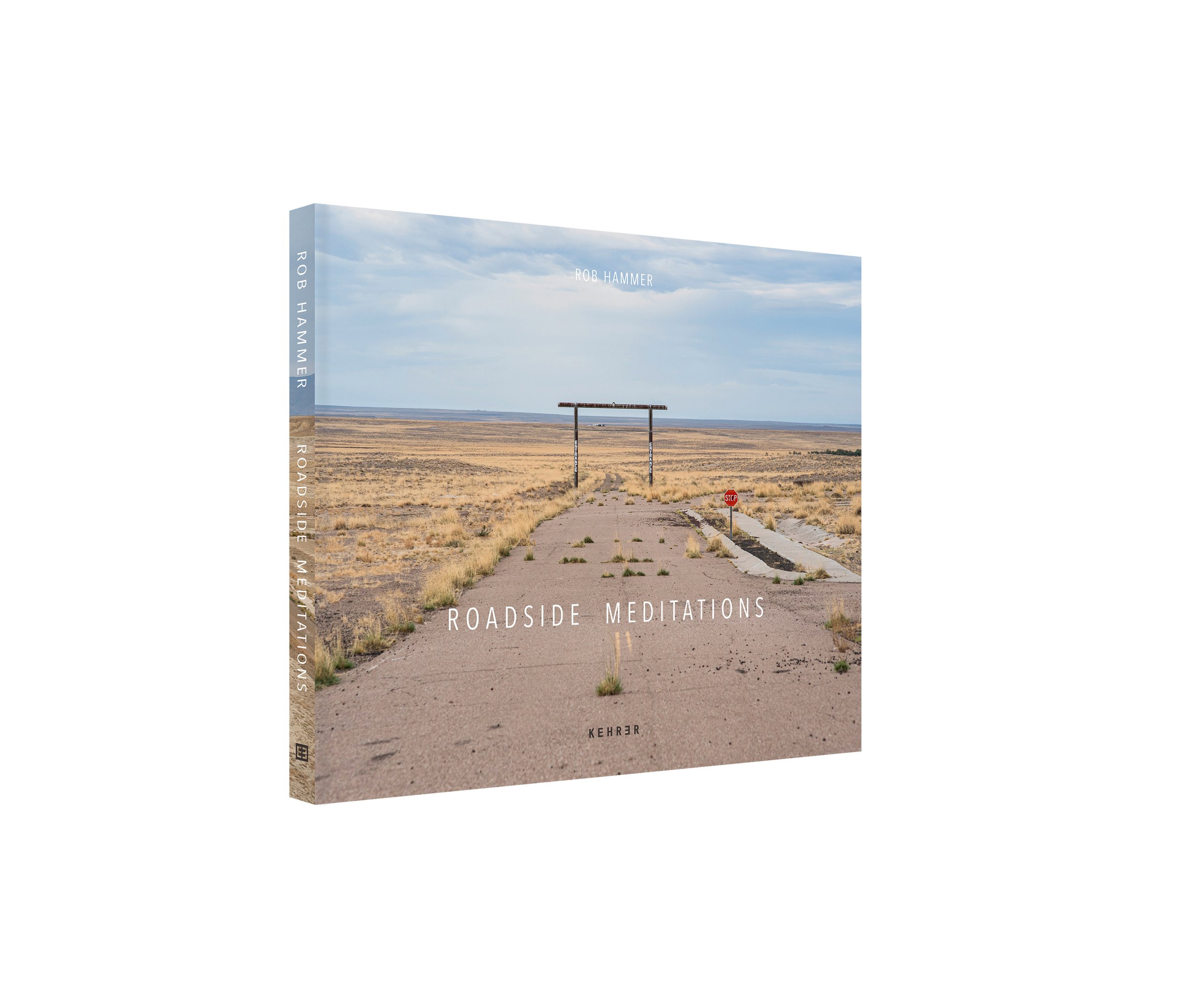
That work is now collected in the book Roadside Meditations.

Roadside Meditations — A Photographic Record of the American Road

This fine art photography book brings together photographs made across the United States, focusing on places that exist just outside of attention.

There’s no single destination or narrative arc. The work moves through the country the same way the photographs were made—slowly, without urgency, and often without a clear endpoint.

The images reflect towns that feel paused in time, buildings that have outlived their purpose, roadside spaces shaped more by use than design, and landscapes that hold a quiet, persistent stillness

This is not a document of landmarks, but of presence—of what remains when nothing is trying to be seen.

An American Landscape Between Moments

The photographs sit within a tradition of American color work that looks beyond spectacle and into the everyday.

Gas stations, motel rooms, desert edges, storefronts, parking lots—places that are often overlooked, but deeply characteristic of the American landscape.

The interest is in the in-between: The space before something happens. The trace of something that already has. The feeling that time moves differently in certain places

Many of these scenes resist being tied to a specific moment. They exist somewhere outside of it.

The Book

Last week on the drive home from Wyoming I listened to a great podcast with Rick Ruben and Rich Roll. Rick is such a unique and inspiring individual with an immense amount of knowledge from a lifetime of varying experiences. Of the many nuggets he dropped on the show, this one stuck out the most - “The audience comes last, in service to the audience. The audience wants the best thing. They don’t get the best thing when you’re trying to service them. They get the best thing when you’re servicing yourself. When you’re true to who you are”.

That’s an invaluable statement for any creator to hear and it sums up exactly how I feel about photography, for personal projects as well as commercial work. Very rarely do you see commercial work that has any great effect on people or the world of photography, because it’s watered down generic imagery that’s sole purpose is to sell a product and feature the companies logo as many times as possible. Nobody wants to take a risk. They want to play it safe and not ruffle any feathers. Seldom does an ad campaign come out with historical significance or staying power. They are about now! How much can we sell now!!?? So what does this have to do with a photography book? Everything. If I or any other photographer set out to make a book strictly with the audience in mind, it would suck. The intention would be glaringly obvious and the images would reflect a direct lack of caring. The title of the book might as well be Money Grab.

Roadside Meditations is a niche subject that’s not for everyone, which you could argue is the case for any fine art book. If it were for everyone, it wouldn’t be worth a damn. To further Ruben’s above quote, I’d like to share how my latest photo book came to be. A few years back I began collaborating with (now) photo editor/consultant Alexa Becker (Germany). At the time she was working for Kehrer Verlag and I was trying to pitch her one (maybe three?) different book ideas, none of which landed. Her interest in my work seemed genuine though, so I kept in touch. And at one point I reached out asking simply for a consultation on my “America” series. After a half dozen back and forths through Zoom, she pulled a few outlying images from my edit and asked if I had anything else that might go along with it. I did, so she began assembling a side edit. A while later she had the beginnings of Roadside Meditations, and told me to forget all about the America series, because “this” was the book! Turns out she was right, and all the roadside images I made thinking they were just accents to the bigger series, was IT all along. The point is that I never had anything in mind for the photos. I wasn’t making them for anyone but myself, and maybe one or two of them might find their way into a book, print, whatever?? Well, here we are a year and a half later, and a large shipment of books is scheduled to arrive from Germany in less than a half hour. So much has happened since then. I’ve continued shooting images that would fit into a Roadside Meditations Vol. 2, but that’s not the intention. The images are only made because I’m drawn to make them. And it would be a bonus if another book happened to develop. Vol.1 isn’t out in the world yet, so there is nothing to say people even want it, but I’m still a firm believer that “the audience comes last, in service of the audience.”

Collecting the Work

Photographs from Roadside Meditations are available as fine art prints.

Each print is produced using museum-grade materials and intended for long-term display in private collections, interior spaces, and galleries. If you’re interested in prints, please contact me directly - rob@robhammerphotography.com

Purchase the Book

Click here to purchase a copy of Roadside Meditations
Fine art American road trip photography book Roadside Meditations by Kehrer Verlag and Rob Hammer

Fine Art Road Trip Photography Book

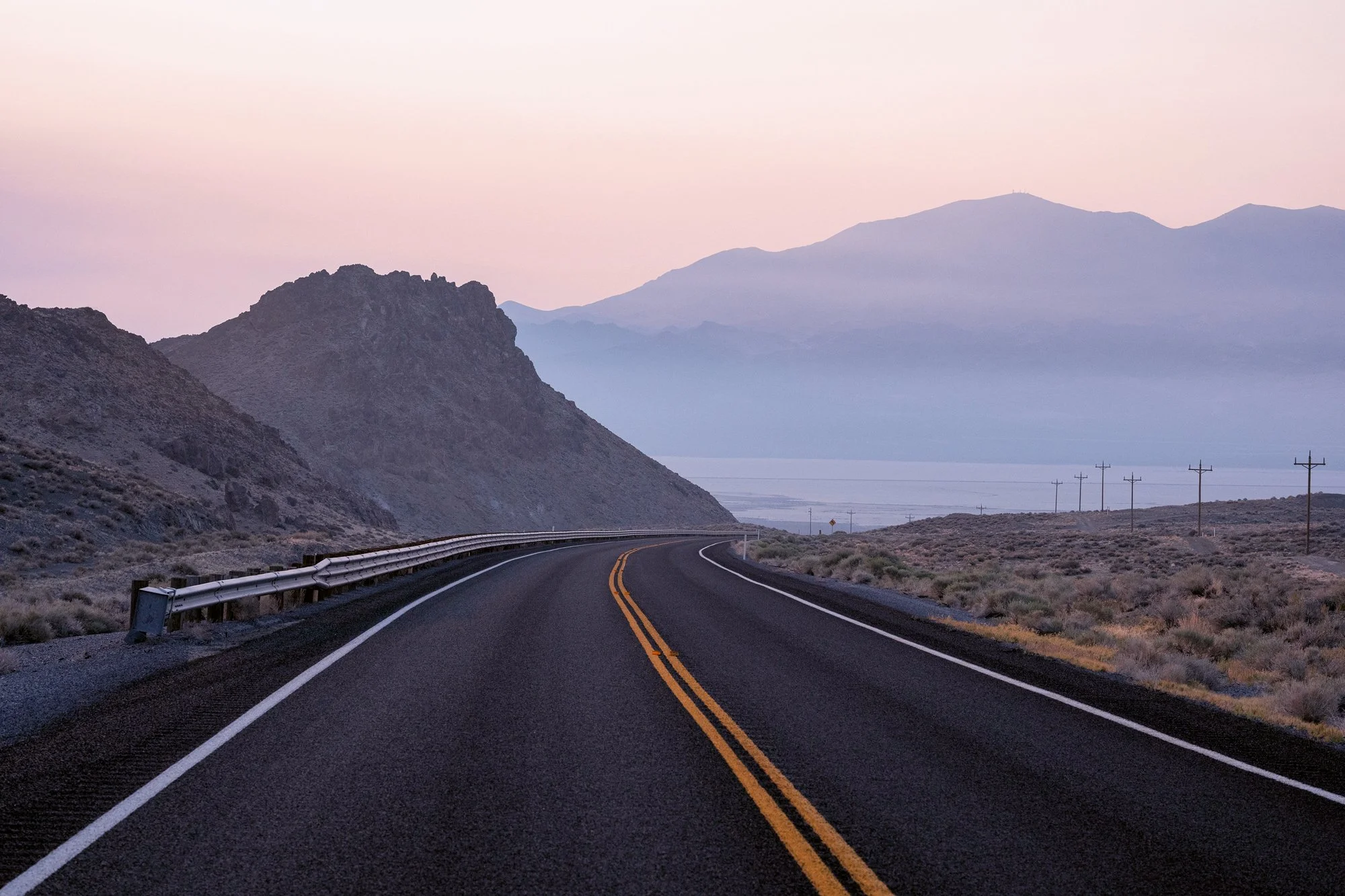
A two-lane road curves into the desert as the last light settles over the mountains.

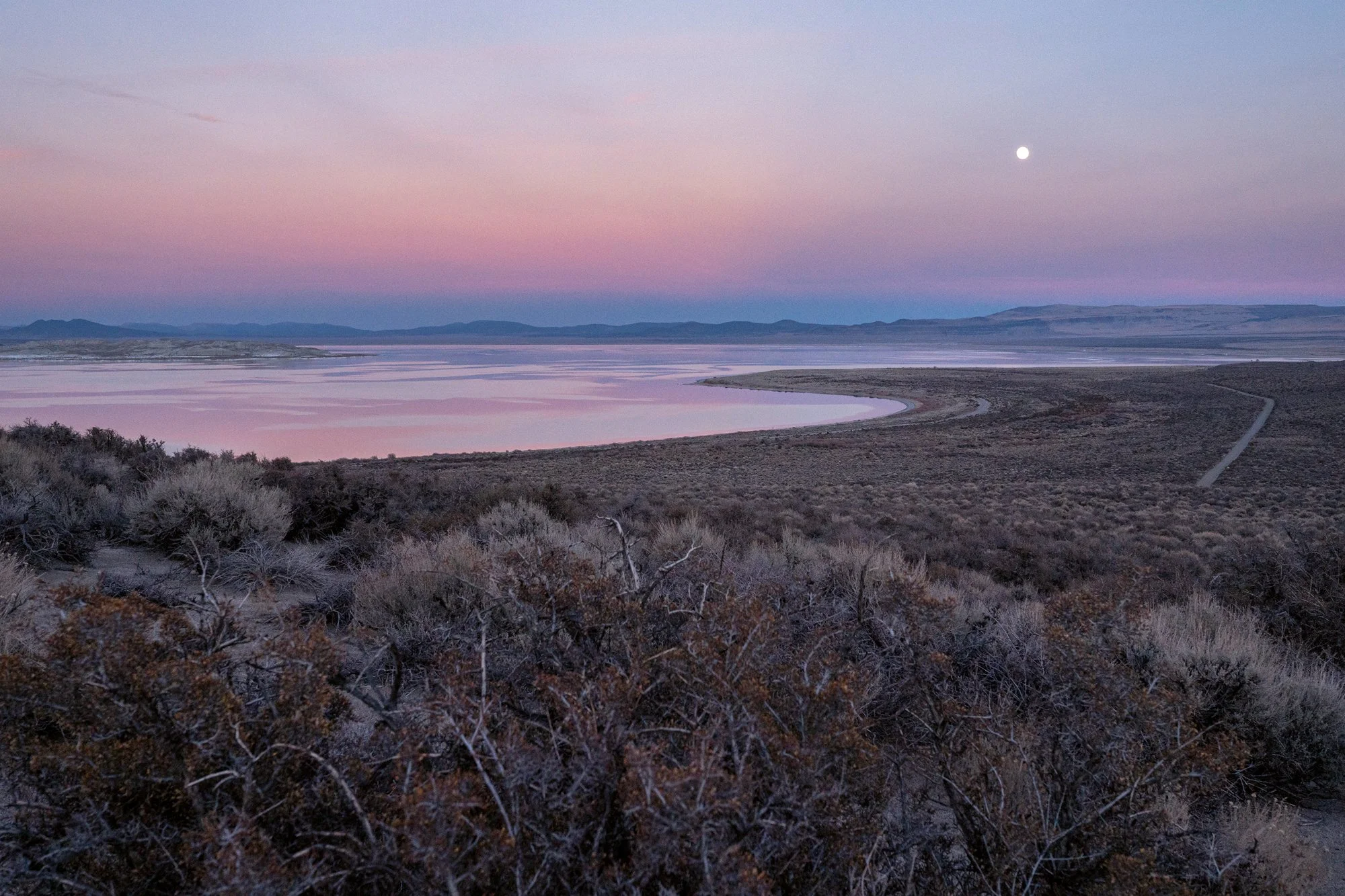
The shoreline bends into still water under a fading sky, the moon rising over the basin.

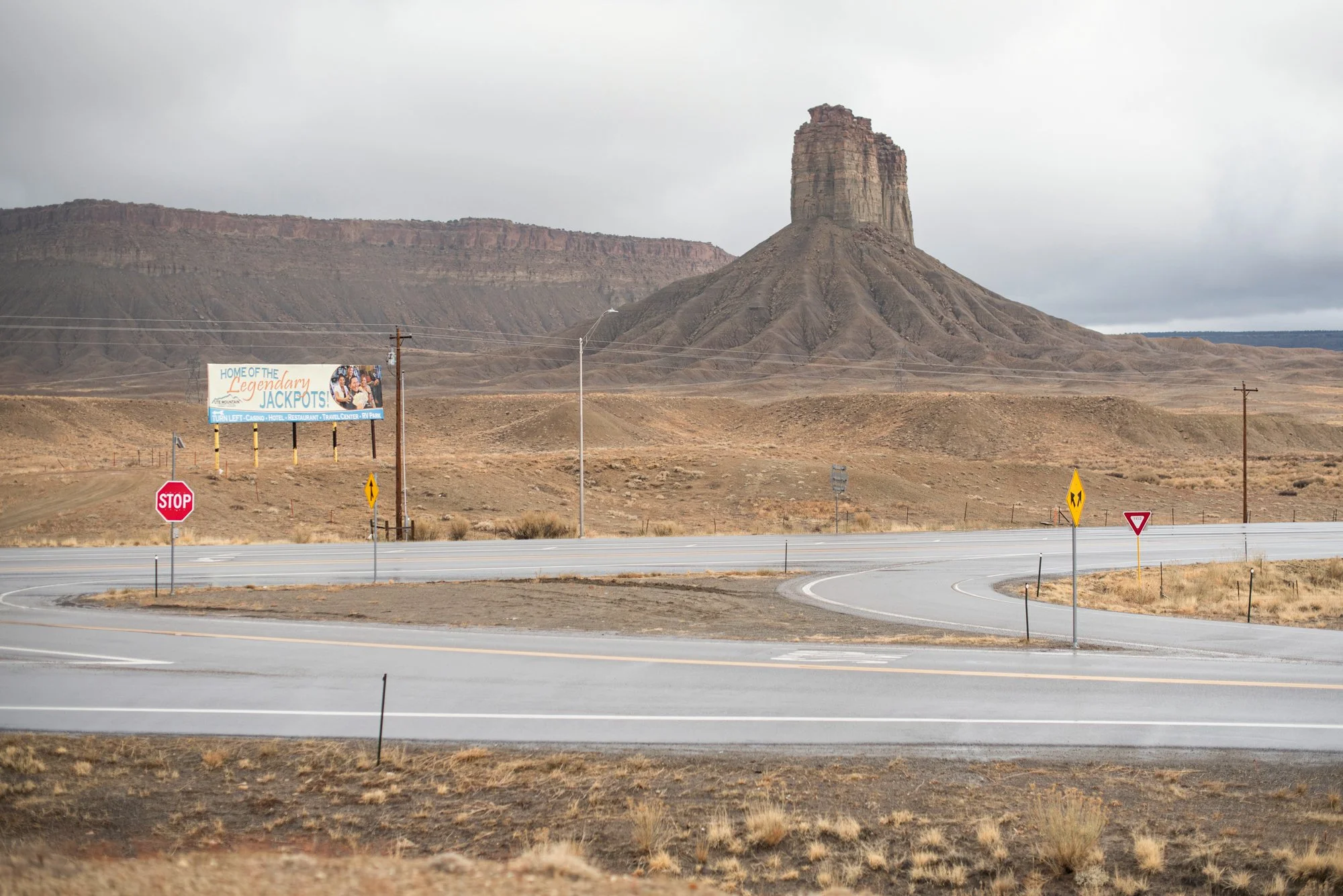
A quiet intersection sits beneath a weathered formation, where signage meets open land.

A roadside sign marks a place to stop, set against the slow movement of the landscape.

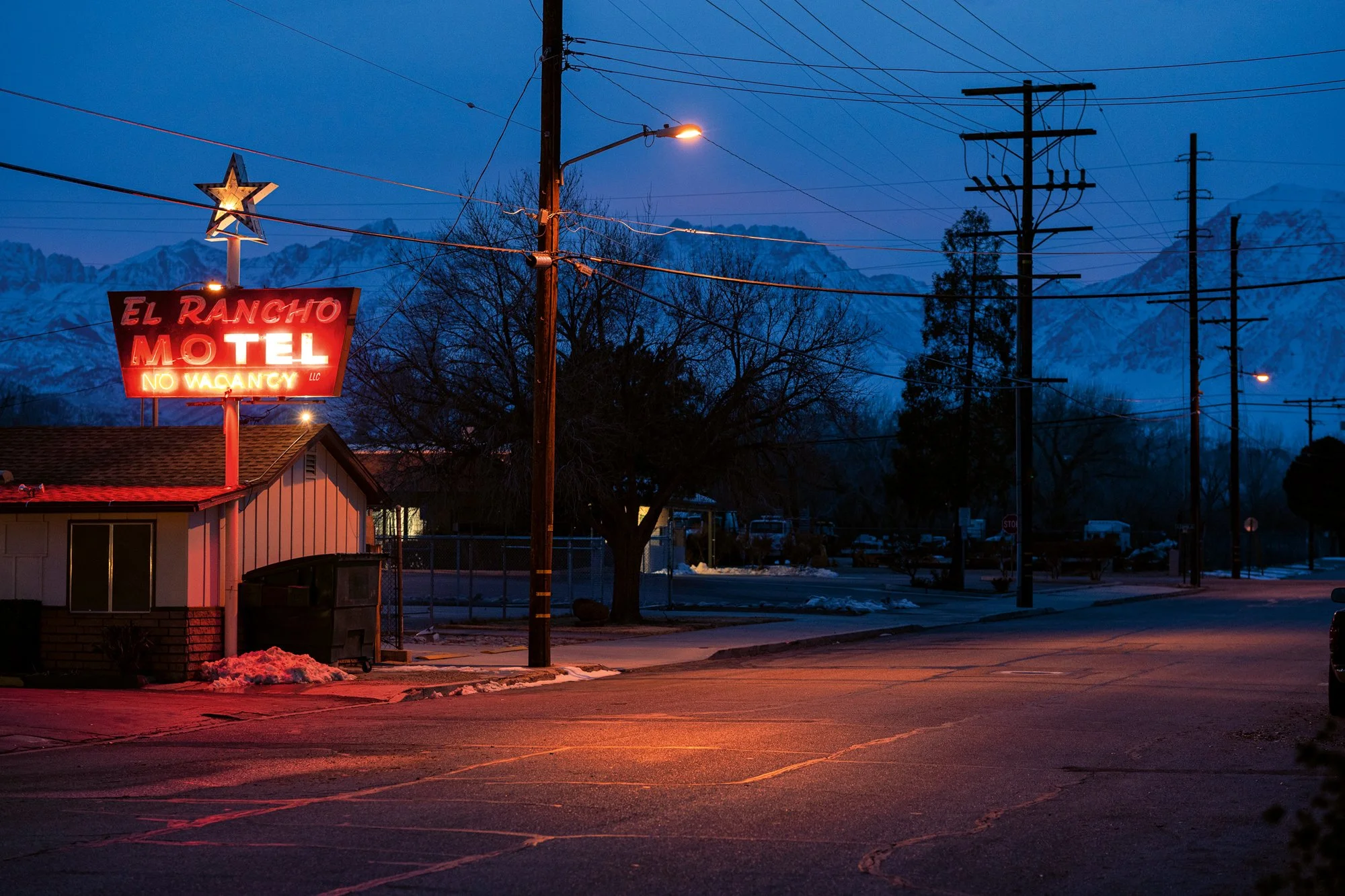
Neon light spills onto an empty street, holding the only sign of activity after dark.

Expansive desert landscape with dramatic cloud formations over vast basin

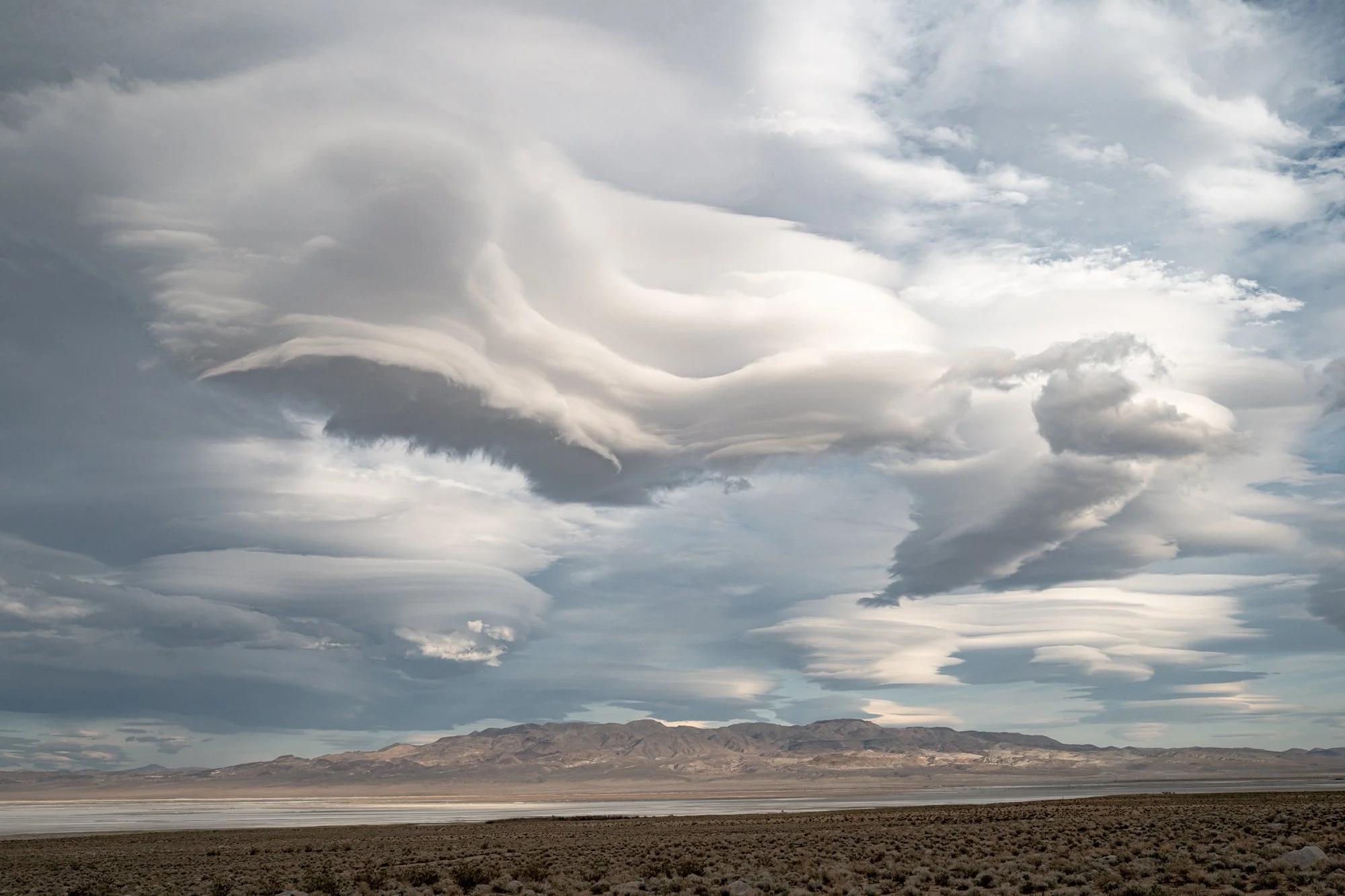
Clouds gather and stretch across the basin, moving slowly over an open and unchanged landscape.

Winter Storm Photography in Mammoth, California

Photographing a Winter Snow Storm in Mammoth

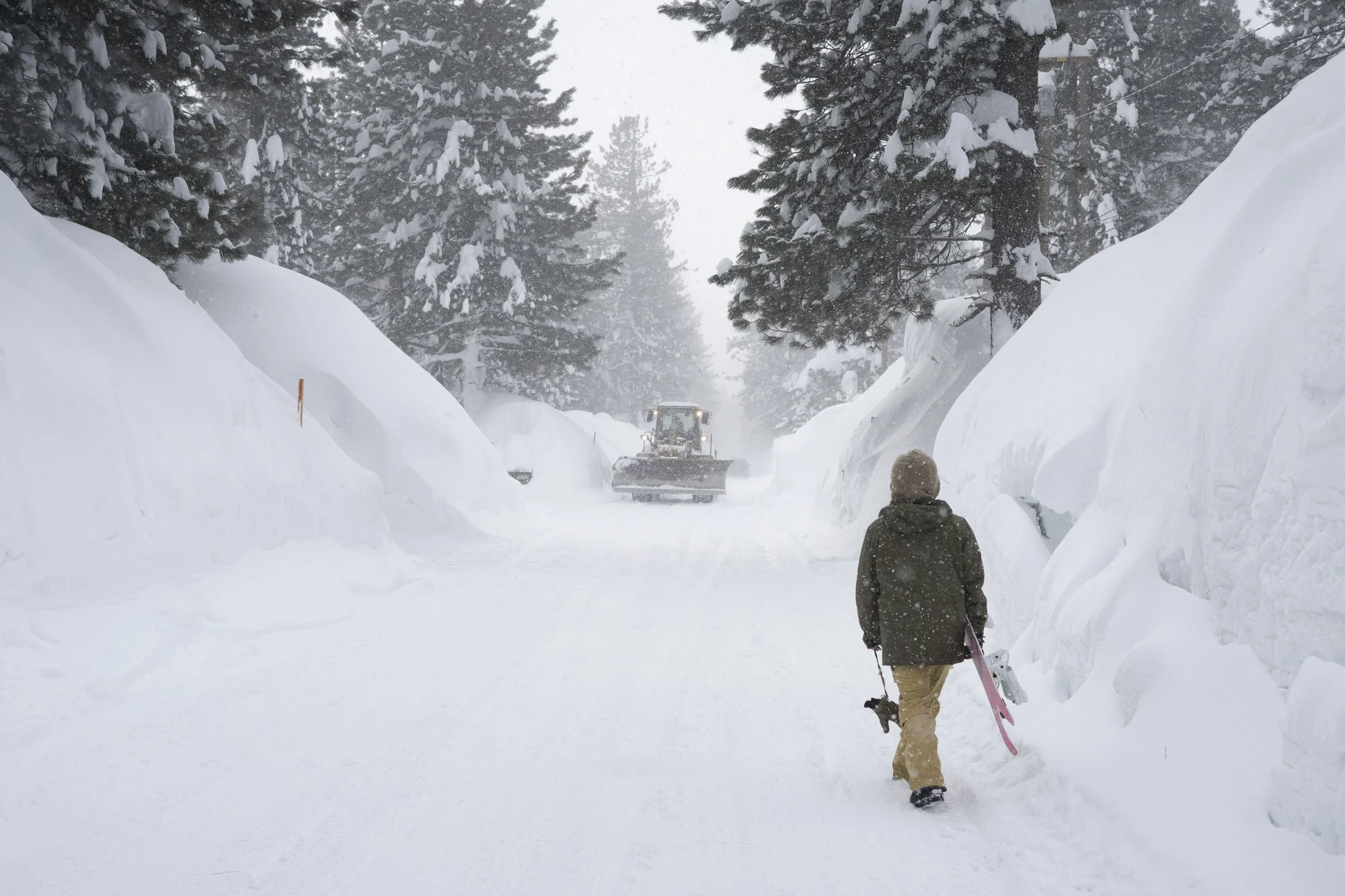
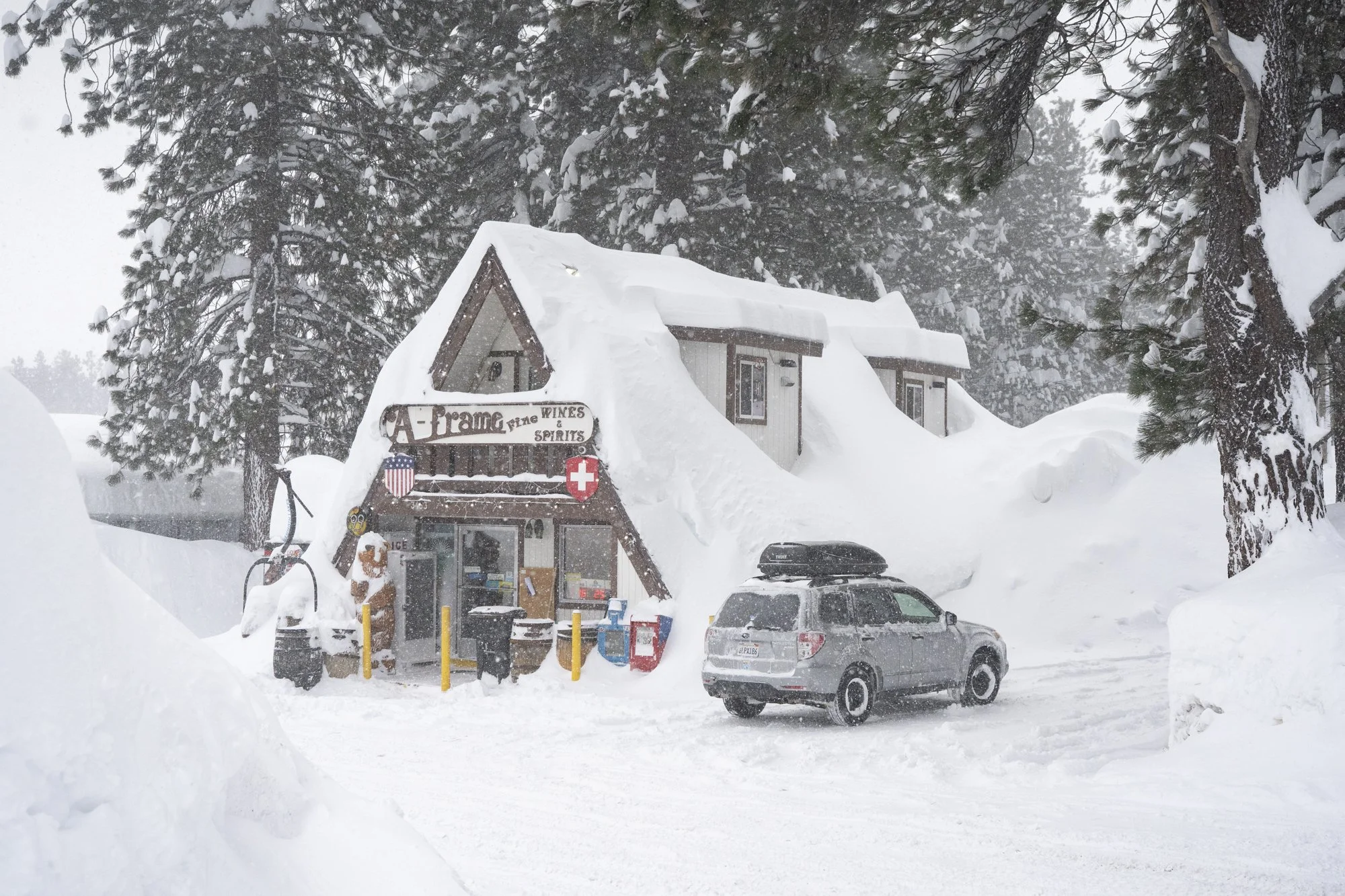
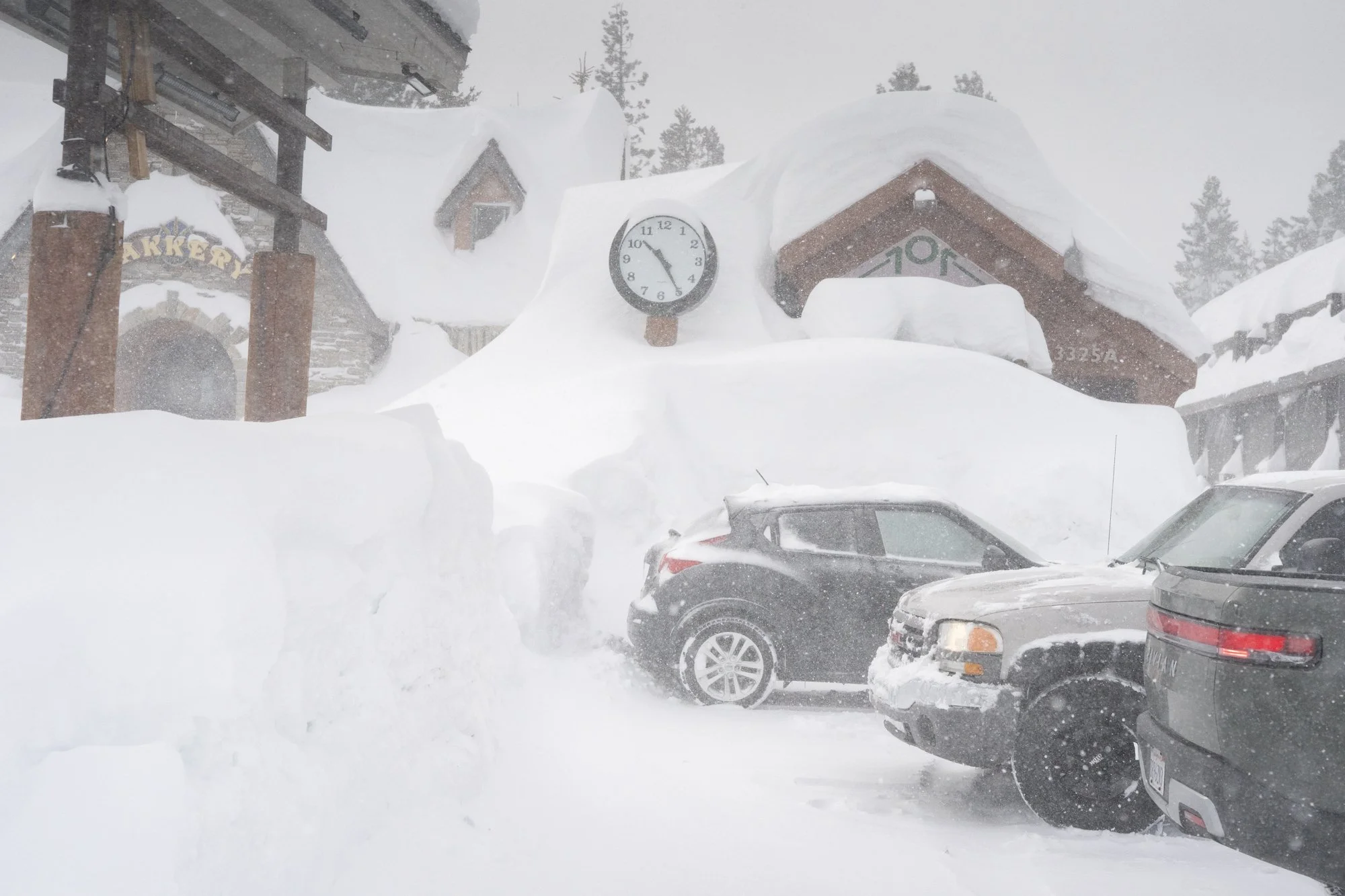
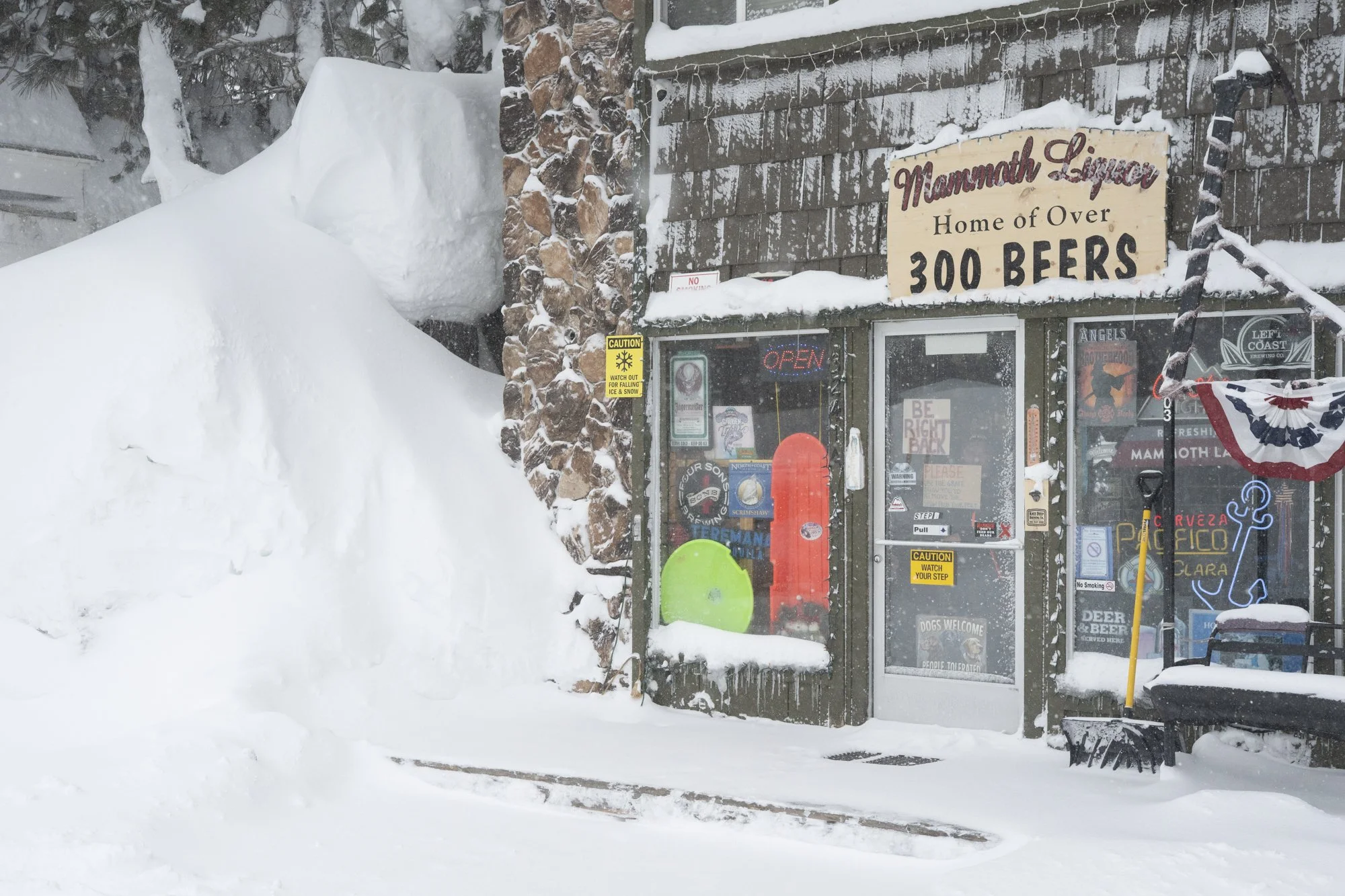
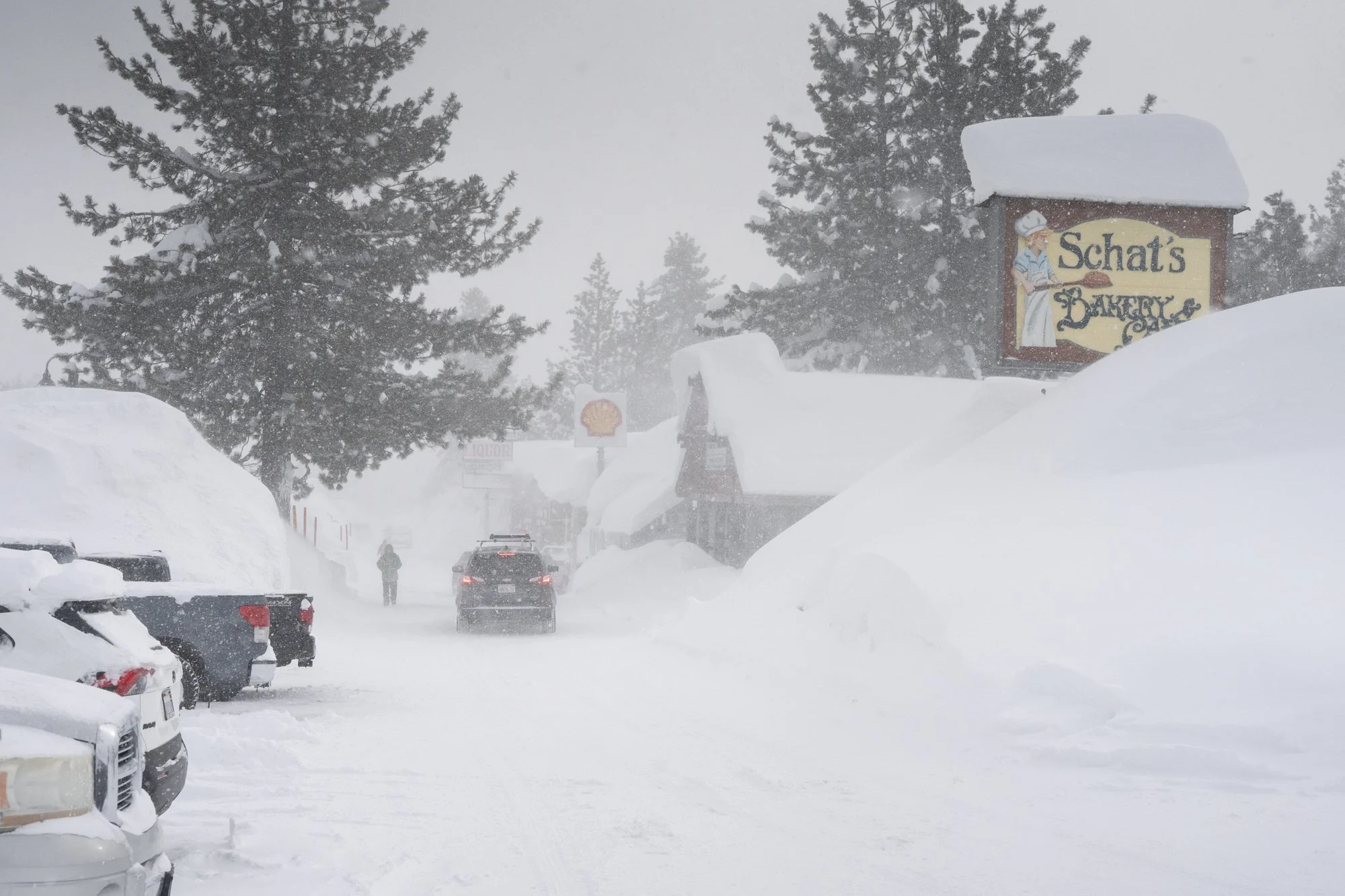
I’ve spent a lot of time in Mammoth over the years, mostly chasing snowstorms and long days on a snowboard. When a real storm rolls in, the town changes completely. Roads disappear, buildings soften, sound drops, and everything starts to feel slower and heavier. Those are the days I usually trade the board for a camera because the mountain tends to shutdown during heavy storms.

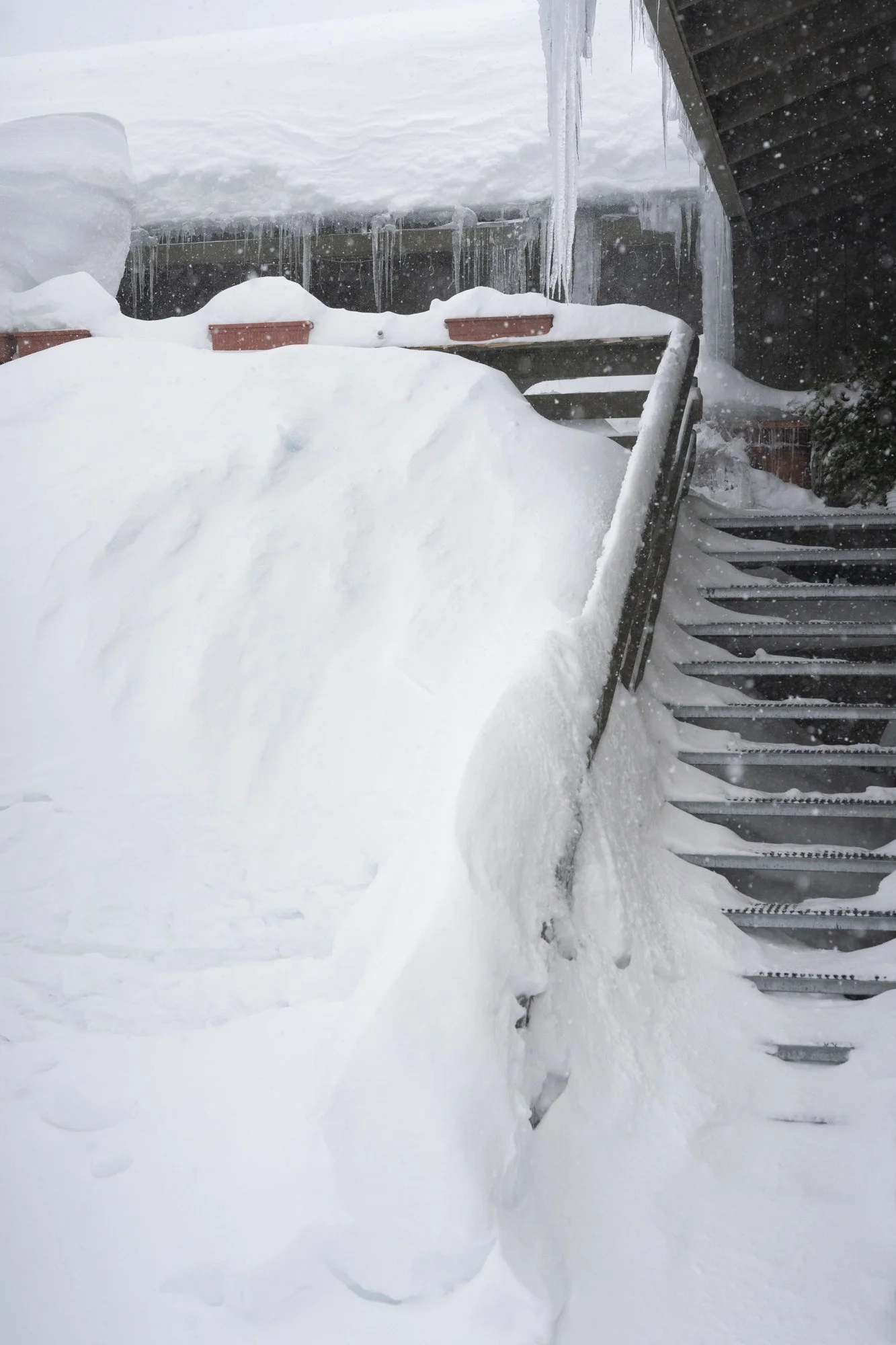
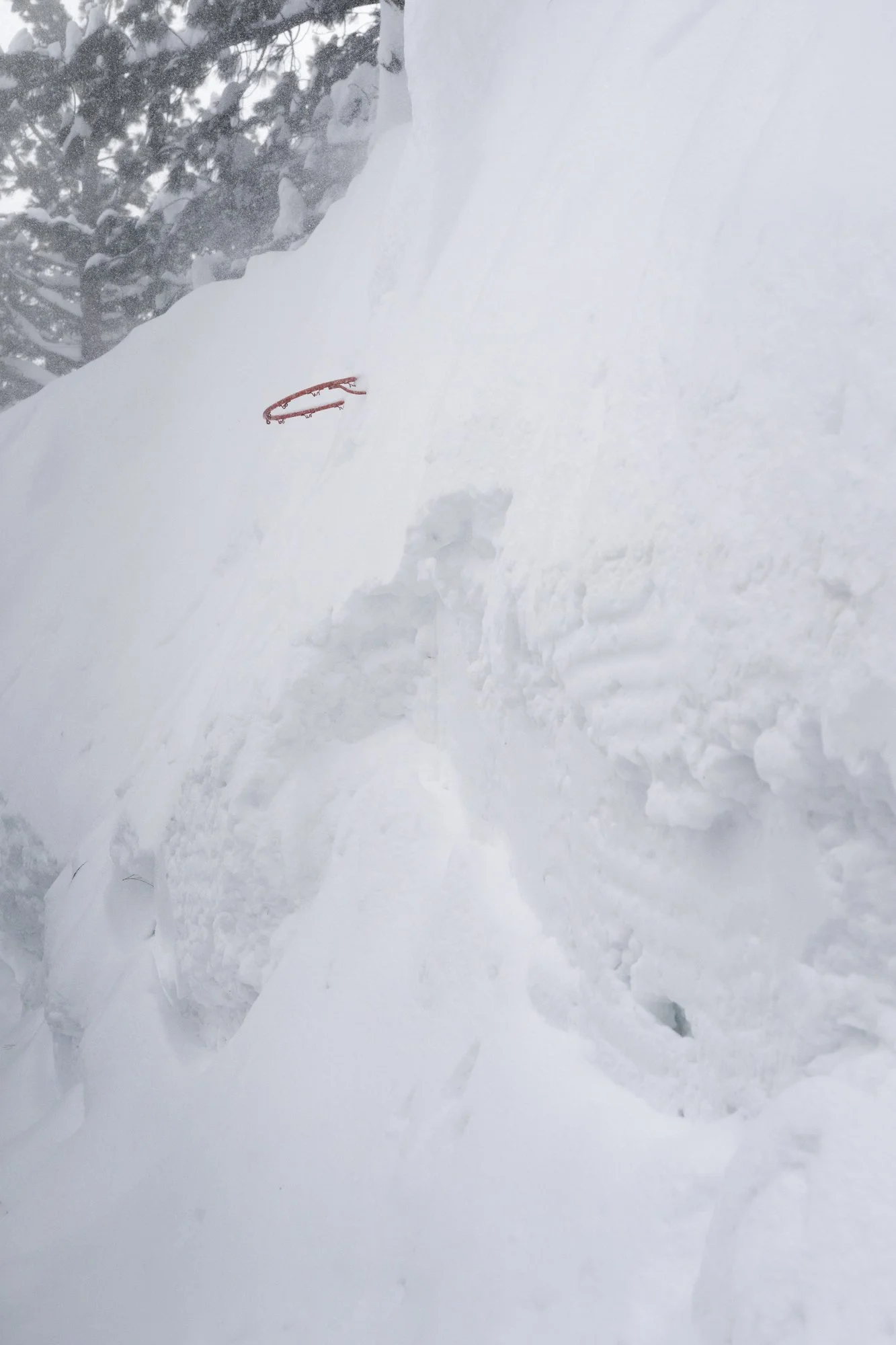
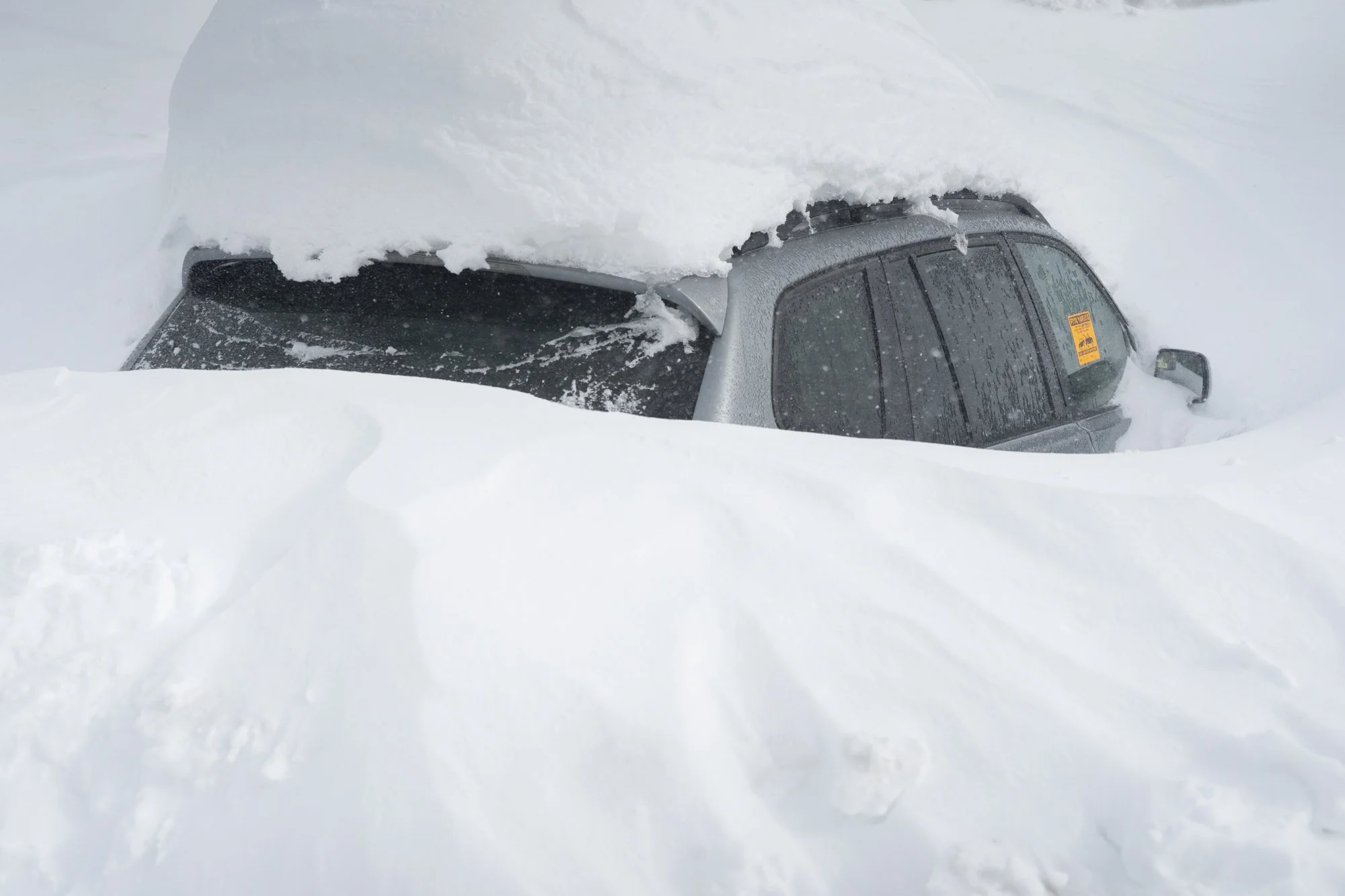
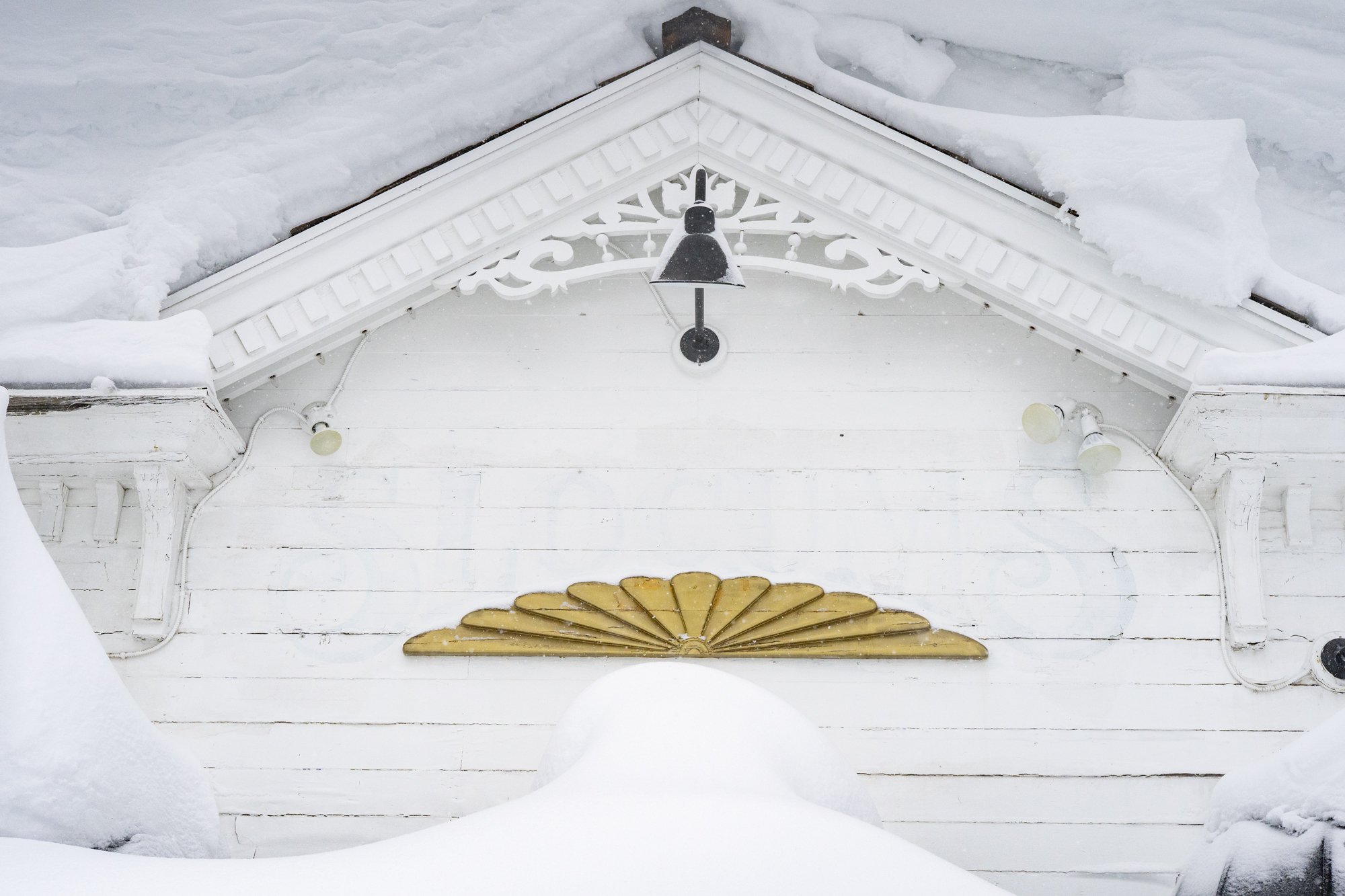
These images were made during an active winter snow storm in Mammoth, California. Not the postcard version of winter, but the kind where visibility comes and goes, snow stacks up faster than you expect, and the landscape feels stripped down to its essentials.

Living and Riding Through Winter Storms in Mammoth

If you spend enough winters here, storms stop feeling like events and start feeling like part of daily life. You wake up early to check the wind, ride when it’s good, wait it out when it’s not, and move through town while everything is still half-buried.

That familiarity makes it easier to photograph in tough conditions. I’m not chasing drama — I’m paying attention to how snow reshapes familiar places. A parking lot becomes abstract. A road turns into a line of tone and texture. Scale shifts constantly as the storm moves through.

Photographing Snow, Wind, and Scale

Winter storm photography is less about spectacle and more about restraint. Snow simplifies scenes, but it also hides detail. Light flattens quickly. Wind erases edges. The challenge is working within those limits without forcing a moment that isn’t there.

Most of these photographs were made quietly, between riding and driving, while the storm was actively changing the landscape. I’m drawn to scenes where human presence feels temporary — plowed roads, snow-covered buildings, tracks that won’t last long.

Why Winter Storm Photography Matters

Severe weather has a way of revealing place. In the mountains, storms expose how people build, move, and adapt. They show scale in a way clear days don’t. For editors, designers, and brands, winter storm imagery can communicate isolation, endurance, calm, and intensity without explanation.

These photographs aren’t about tourism or ski culture. They’re about atmosphere and environment — images that work as visual anchors in editorial layouts, books, campaigns, and long-form storytelling.

Editorial and Commercial Licensing

This series of winter storm photographs from Mammoth, California is available for editorial and commercial licensing. The images are well suited for magazines, books, outdoor and lifestyle brands, environmental storytelling, and large-format applications where mood and scale matter.

If you’re looking for cinematic winter imagery made from lived experience rather than a one-day shoot, I’m happy to help you find the right images or build a custom edit for your project.

Images from this series are also available as fine art prints. Contact me for details.

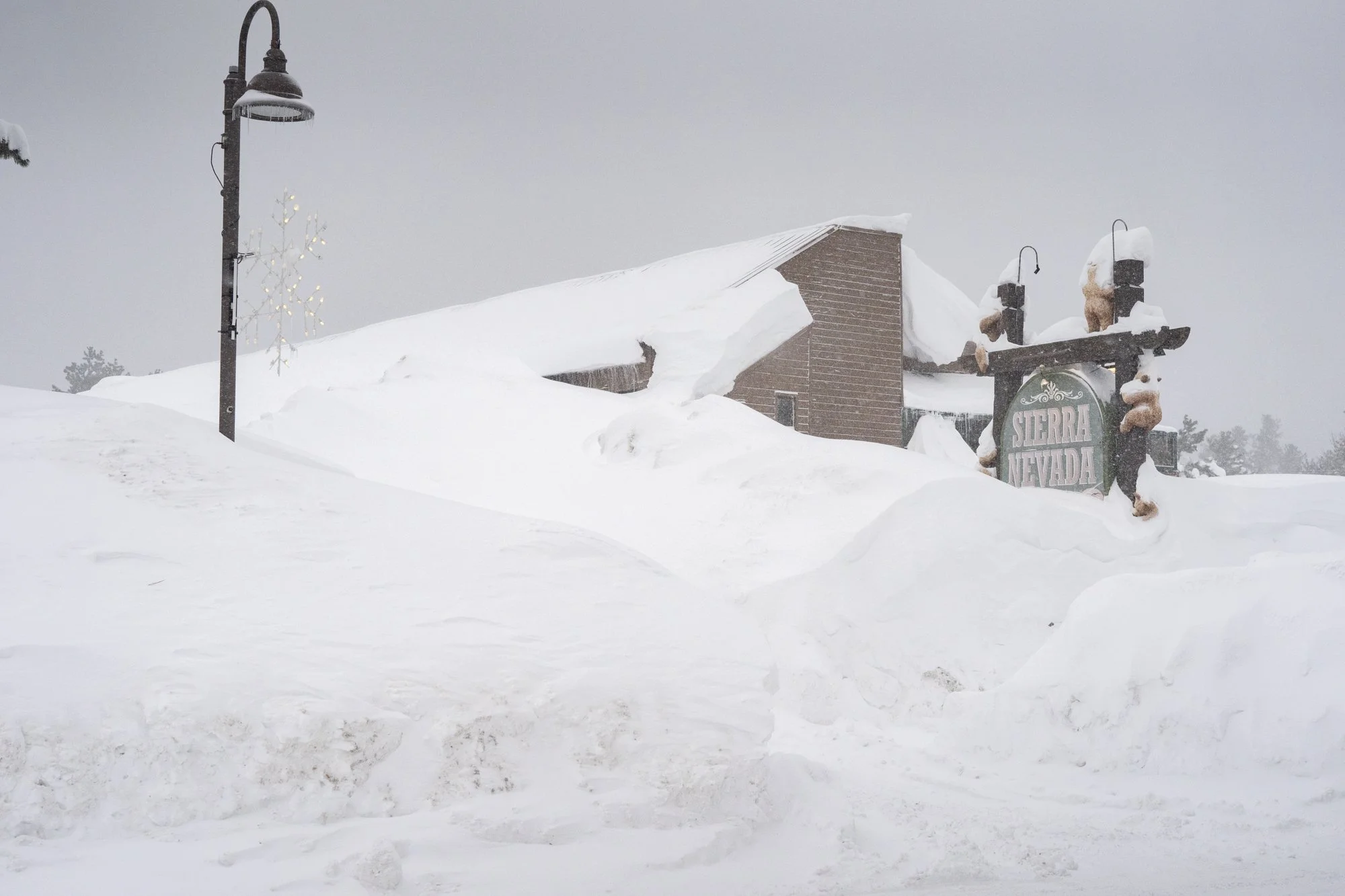
The Sierra Nevada Resort in Mammoth Lakes, California after a huge winter snowstorm

Sierra Nevada Resort covered in snow after a winter storm

Schat's Bakery in Mammoth Lakes, California covered in snow after a massive snow storm

Schat’s Bakery in Mammoth, California covered in snow

Photograph of a house covered in deep snow after a storm in Mammoth, CA

Photograph of a record breaking snow storm in Mammoth Lakes, CA

A snowboarder walks down the street after a massive winter snow storm in Mammoth Lakes, California

Streets covered in snow after a record storm in Mammoth Lakes, CA

A-Frame Liquor store covered in snow after a record breaking winter storm in Mammoth Lakes, California

A-Frame Liquor covered in snow after a winter storm in Mammoth Lakes, CA

A basketball hoop completely covered in snow after a record breaking winter storm in Mammoth Lakes, California

A basketball hoop sticking out of a snow bank after a record breaking storm in Mammoth,CA

A car completely covered in snow after a massive winter storm in Mammoth Lakes, California

Photograph of a car covered in snow after a storm in Mammoth Lakes, CA

Schat's Bakery and other local businesses covered in snow after a massive winter storm in Mammoth Lakes, California

Snow storm in Sierra Nevada Mountains in California

Buildings covered in snow after a record breaking winter storm in Mammoth Lakes, California

Photograph of a Mammoth California restaurant covered in snow

Mammoth Liquor Store covered in snow after a record breaking storm in Mammoth Lakes, California

Photograph of Mammoth Liquor covered in snow after a record breaking storm

San Francisco Photography

Street Photography - San Francisco

Candid Moments From The City By The Bay

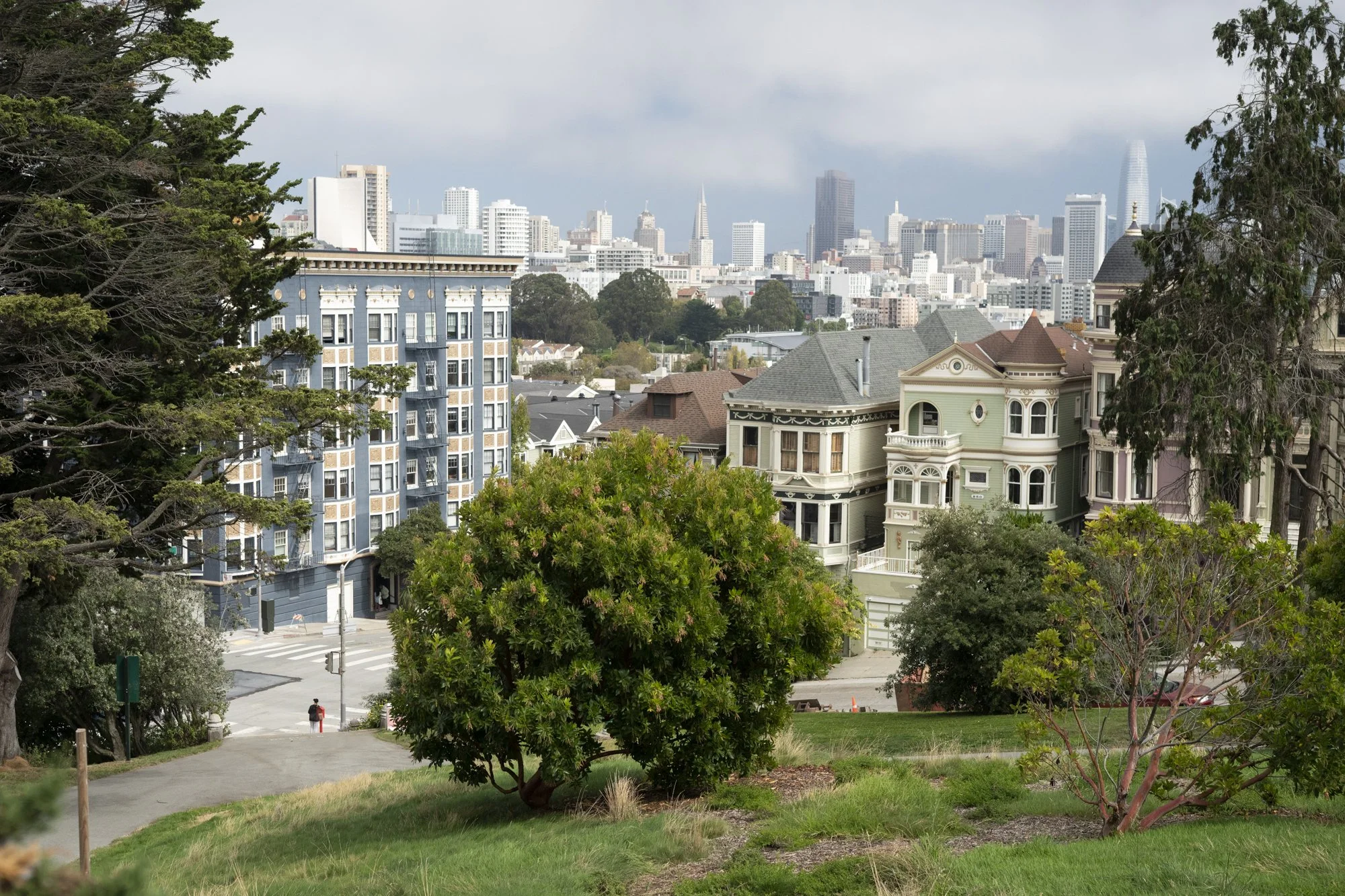
Had another commercial shoot in San Francisco a while ago and planned a little extra time to play around in the streets. It’s always a fun way to relax and grow as a photographer. No idea what the bigger picture is for this ongoing series, but that doesn’t matter. Even if it’s just a personal documentation of the city, that’s ok too. This particular day got interesting about an hour in to the walk, when a women pulled up in her car and asked what I was doing. She didn’t like my simple answer and continued to disagree with everything that came after. So I went on my way, only to have her creep behind me for an hour, watching from a distance. At one point our paths crossed closely and her window was down, so I asked if she was having fun. She replied with an entitled grin as if she had cracked the case of the century, saying “I know what you’re after, mailboxes and garages”. I just kept walking. Eventually she couldn’t follow any longer after my path went through a park. People are funny. Did I handle the situation properly? Probably not. If there was a business card in my pocket it would have went immediately to her, but there was not. And her attitude was such shit, that it seemed like a losing battle to convince her of anything other than what she already had in her head. Moral of the story: always carry a business card to show Karen??

View The Full Gallery of San Francisco Street Photography

Street photography from the streets and neighborhoods of San Francisco, California by Rob Hammer

San Francisco street photography

San Francisco street photography

San Francisco street photography

San Francisco Street Photography

San Francisco photography

San Francisco Street Photography

San Francisco street photography

Street Photography in San Francisco, California

Street photography - San Francisco, CA

Photography - San Francisco, California - Street Photography

San Francisco, CA

Street Photography - San Francisco, California

San Francisco, CA

Street Photography - San Francisco, California

Street Photography - San Francisco, CA

Street Photography - San Francisco, California

San Francisco street photography

San Francisco Street Photography

Street photograph of a San Francisco neighborhood

Street Photography - San Francisco, California

San Francisco, CA

San Francisco Street Photography

Photo of a beautiful home in San Francisco

Street Photography San Francisco, California

San Francisco street photography

American Photography

Photographing America - The Open Road

Road Trip Photography Prints - Americana

A new batch of American photographs from the last couple road trips around the country. This series has gotten increasingly overwhelming from an archive perspective. It’s probably the largest series to date, but also the one I’ve done the least with. And by “least”, I mean nothing. So to look at it as a whole feels like a monumental tasks to make sense of for a book or any other publication. Guess it’s time to turn things over to a professional??!!

Click here to see more of the America series.

Contact me directly to order fine art prints for your home, office, or commercial space - rob@robhammerphotography.com

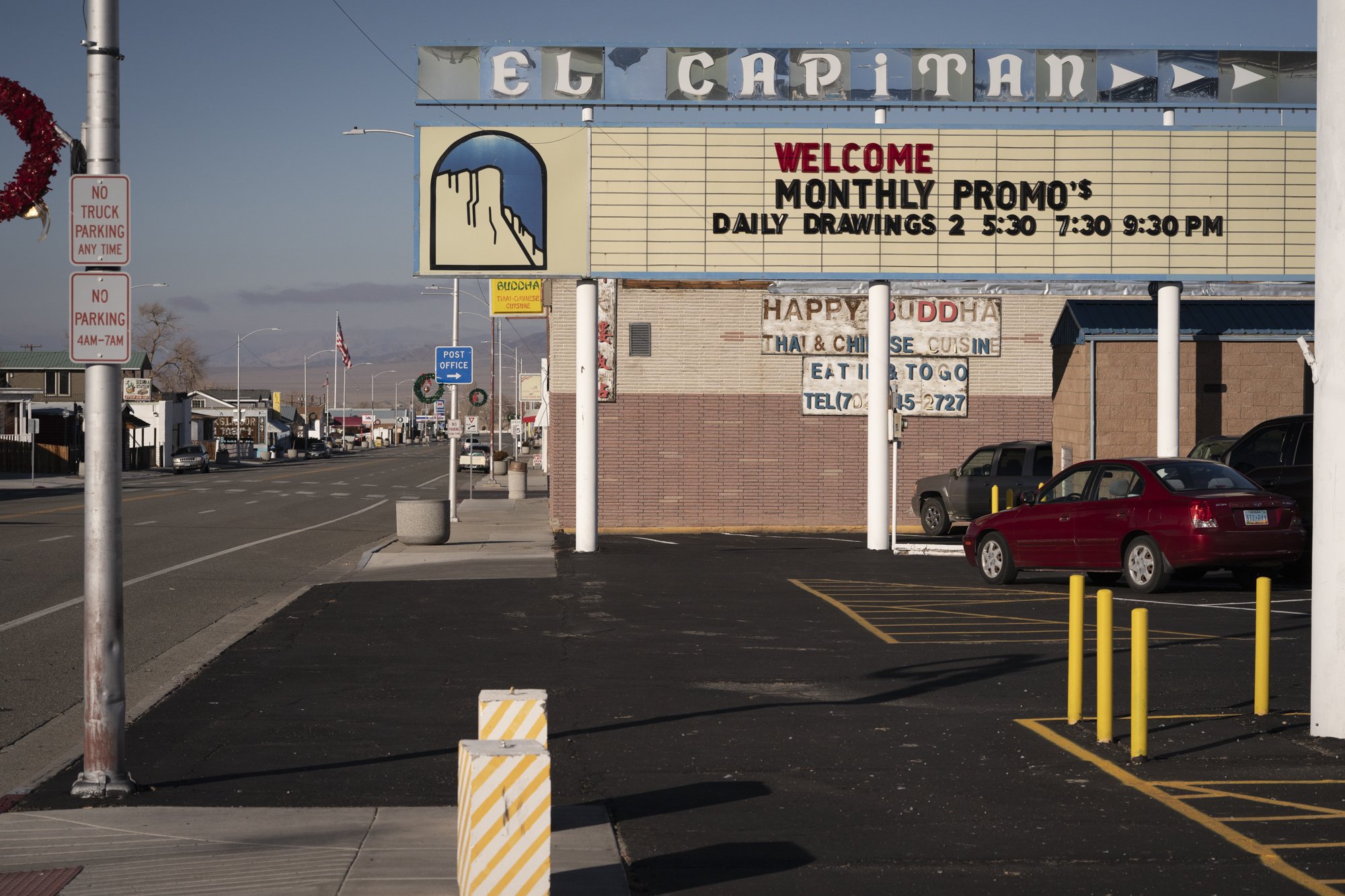
El Capitan Casino in Hawthorne, Nevada - Photo

Hawthorne, Nevada

Photo of the Honolulu Club bar in Yucca, Arizona - vintage sign.

Honolulu Club - Yucca, Arizona

McDonald's billboard and other signs in the desert landscape outside Tuba City, Arizona - Photo

Tuba City, Arizona

A small town graveyard with wind turbines in the background in southern Iowa

Southern Iowa

A Little League baseball field in the small farm town of Griswold, Iowa

Griswold, Iowa

Photo of a broken down truck in front of a factory in Big Island, Virginia

Big Island, Virginia

A baseball field in front of farm silos in Mountain Home, Idaho - Photo - Rob Hammer

Mountain Home, Idaho

Hillsboro, Ohio

Hillsboro, Illinois

Photo of a palm tree, power lines, and clouds in the California desert

California Desert

Vintage Whiting Bros sign in the small town of Yucca, Arizona

Whiting Bros - Yucca, Arizona

Photo of an old theater in Hawthorne, Nevada

Old movie theater - Hawthorne, Nevada

The Lovelock Speedway in Lovelock, Nevada - Photo

Lovelock Speedway - Lovelock, Nevada

Interior of an old shoe shop in Texarkana, Texas - photo

Shoe shop - Texarkana

An empty pool in a small town neighborhood near Griswold, Iowa

Griswold, Iowa

Barbershop - Marfa, Texas

Marfa, Texas — A Barbershop Now Closed

This barbershop in Marfa, Texas is no longer open.

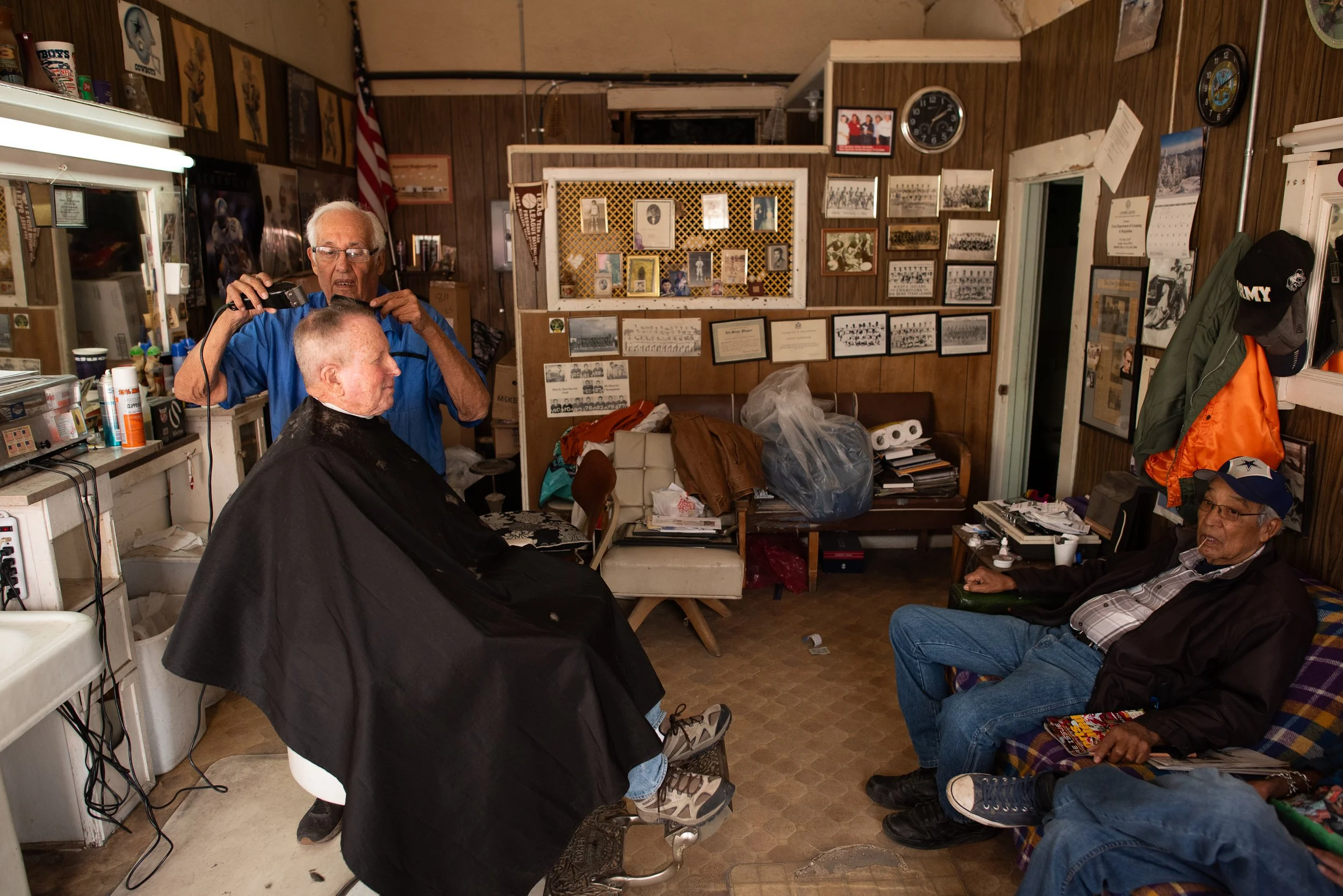
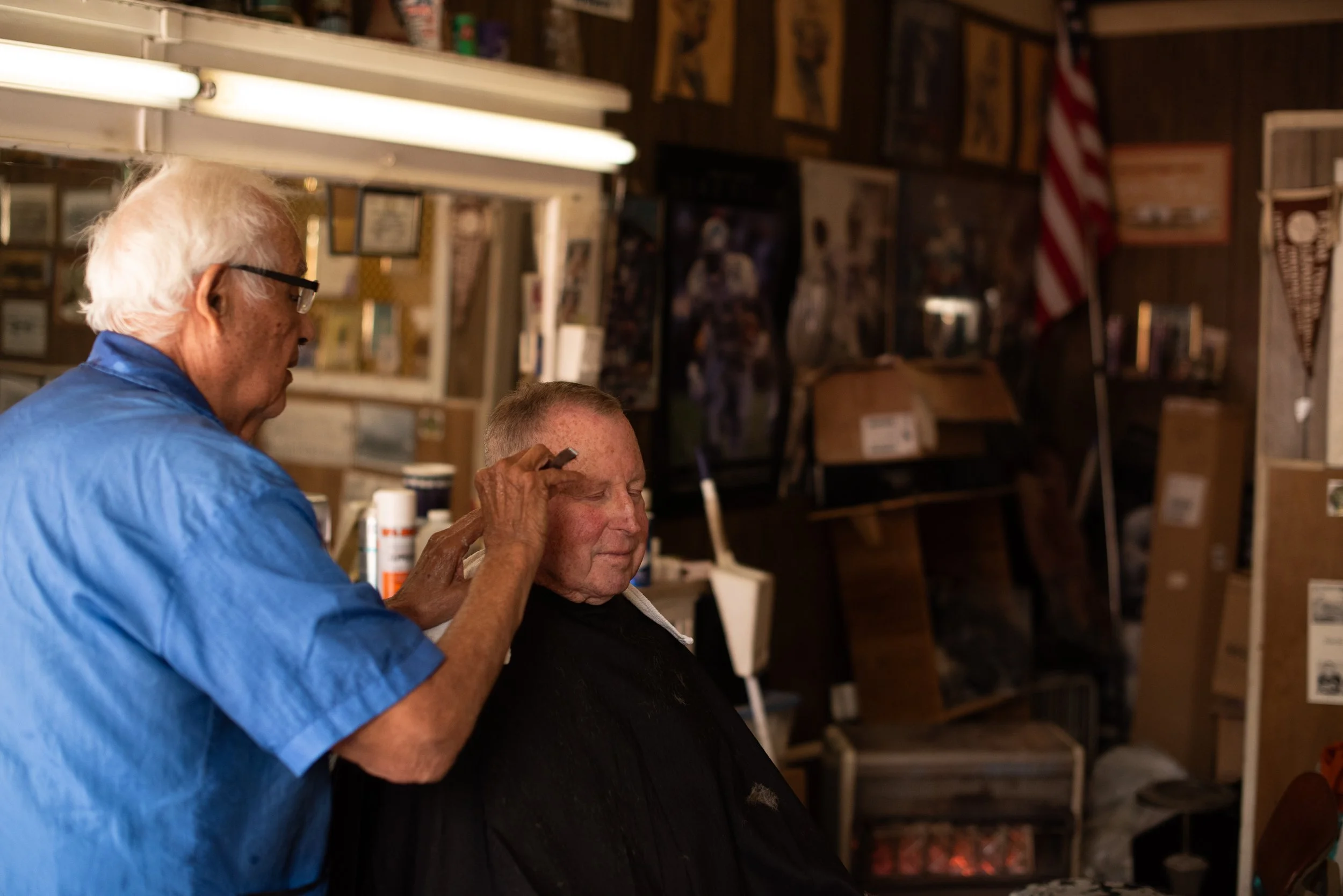
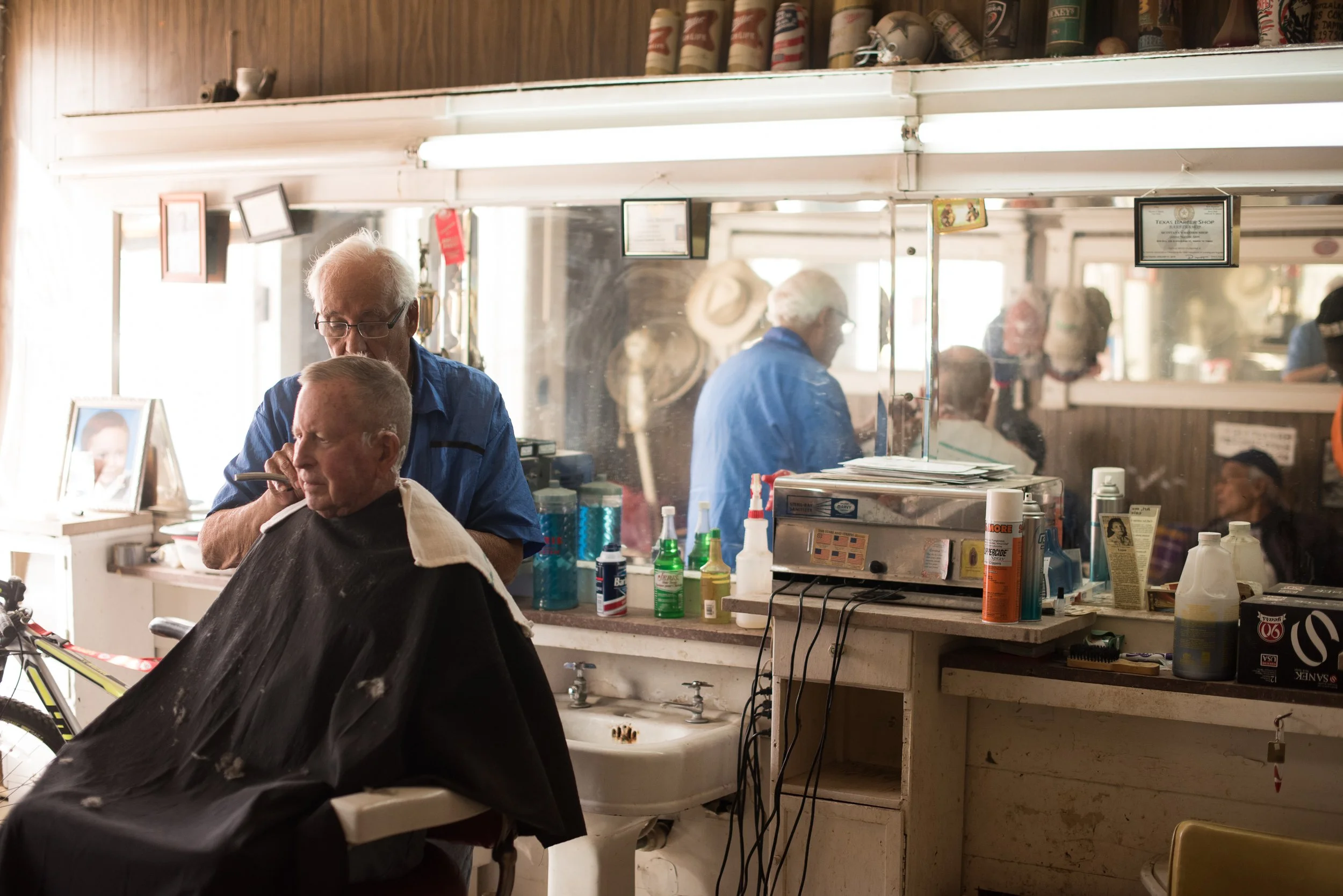
When these photographs were made, the shop was still operating — quietly, modestly, and without spectacle. An elderly barber continued cutting hair for longtime clients beneath fluorescent lights and wood-paneled walls layered with decades of memorabilia.

Not long after, the doors closed.

What remains now are the photographs.

The Final Years

Inside, nothing felt staged.

The floor was worn.
The sink chipped.
Sports posters faded at the edges.
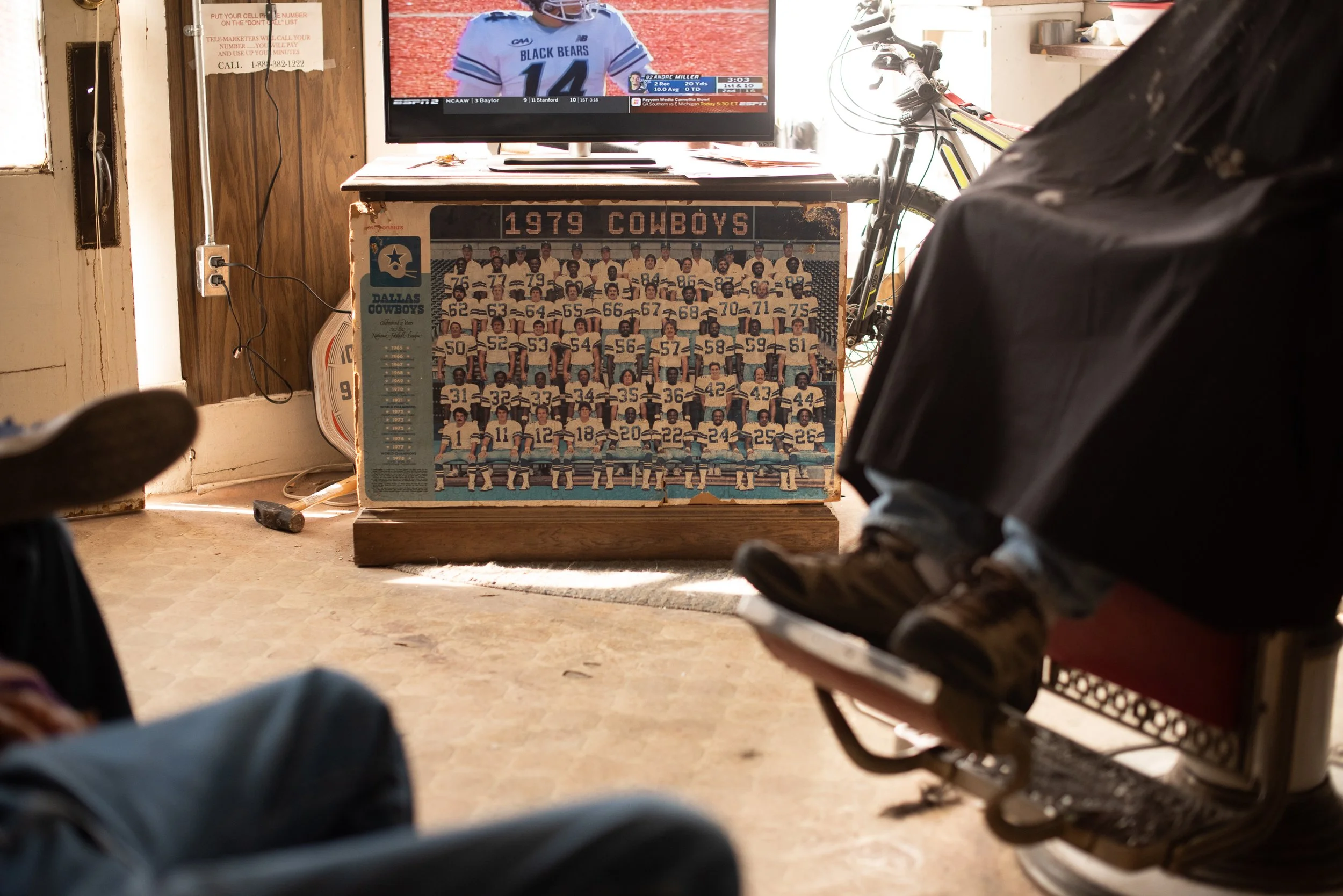
A 1979 Cowboys team photo sat beneath a television.

Customers — mostly older men — waited their turn as they likely had for years. The routine continued as it always had. No announcement. No ceremony. Just haircuts.

In small towns like Marfa, institutions often end not with a grand closing, but with a gradual thinning of time — fewer customers, older hands, fewer reasons to keep the lights on.

A Vanishing American Interior

Barbershops have long functioned as community anchors across the United States, particularly in rural towns. They are practical spaces, but they are also repositories of memory:

  • Photographs of local teams

  • Certificates and clippings

  • Posters taped to wood-paneled walls

  • Objects that accumulate without ever being curated

When a shop closes, those layers often disperse. The room empties. The rhythm stops.

What disappears isn’t just a business. It’s a pattern of local community.

Marfa in Context

Marfa is widely known today for contemporary art and desert minimalism. This shop represented something different — a working-class interior untouched by trend cycles or design updates.

It was modest.
Functional.
Unchanged.

Its closure marks a quiet shift in the town’s cultural landscape — one less everyday institution, one more room that no longer holds history.

The Story Behind The Photographs

As much as I try to embrace social media, it’s difficult to genuinely say anything positive about it sometimes. Every once in a while though, something happens that makes me think twice. A few days ago I posted this image of a traditional barbershop in Marfa, Texas on my @barbershopsofamerica Instagram account, which was re-posted as a story by Visit Marfa. That day I received a direct message from a woman in that had seen their story and was filled with sentimental feelings, as she used to know the shop and the owner. She went back to look at it again later and noticed that the man in the chair was her father, who had passed away two years ago from cancer. The image caused her to cry happy tears and she asked about purchasing a print. Turns out we live 15 minutes from each other! So this morning I drove to her house to deliver some prints and a copy of Barbershops of America. Social media isn’t all bad!

This project has been going on for 10 years now. Hard to believe. Aside from the obvious joy it gives me to make theses images, it’s the auxiliary things that really make it special. The people I’ve met out of pure coincidence or from having shared interests will keep this series going forever.

Continue Through the Archive

The Marfa barbershop is one chapter in a 15+ year effort documenting independent and traditional barber shops across all 50 states.

Some shops are expanding.
Some are adapting.
Others, like this one, have closed.

→ View the full Barbershops of America archive
→ Explore the Barbershops of America photo book
Read another barbershop story from Kentucky

Together, these spaces form a record of a disappearing American institution — preserved one shop at a time.

Customers sitting inside a wood-paneled barbershop in Marfa, Texas as a haircut continues.

Regular customers wait beneath walls lined with photographs and memorabilia inside the now-closed Marfa barbershop.

Worn 1979 Dallas Cowboys team poster displayed beneath a television inside a Marfa, Texas barbershop.

A 1979 Cowboys team poster sits beneath the television, one of many personal details layered into the shop’s interior.

Close view of an elderly barber doing a straight razor shave in a small West Texas barbershop.

Elderly barber cutting a client’s hair inside a small barbershop in Marfa, Texas shortly before the shop closed.

An elderly barber cuts a longtime client’s hair inside a modest Marfa, Texas barbershop in its final period of operation.

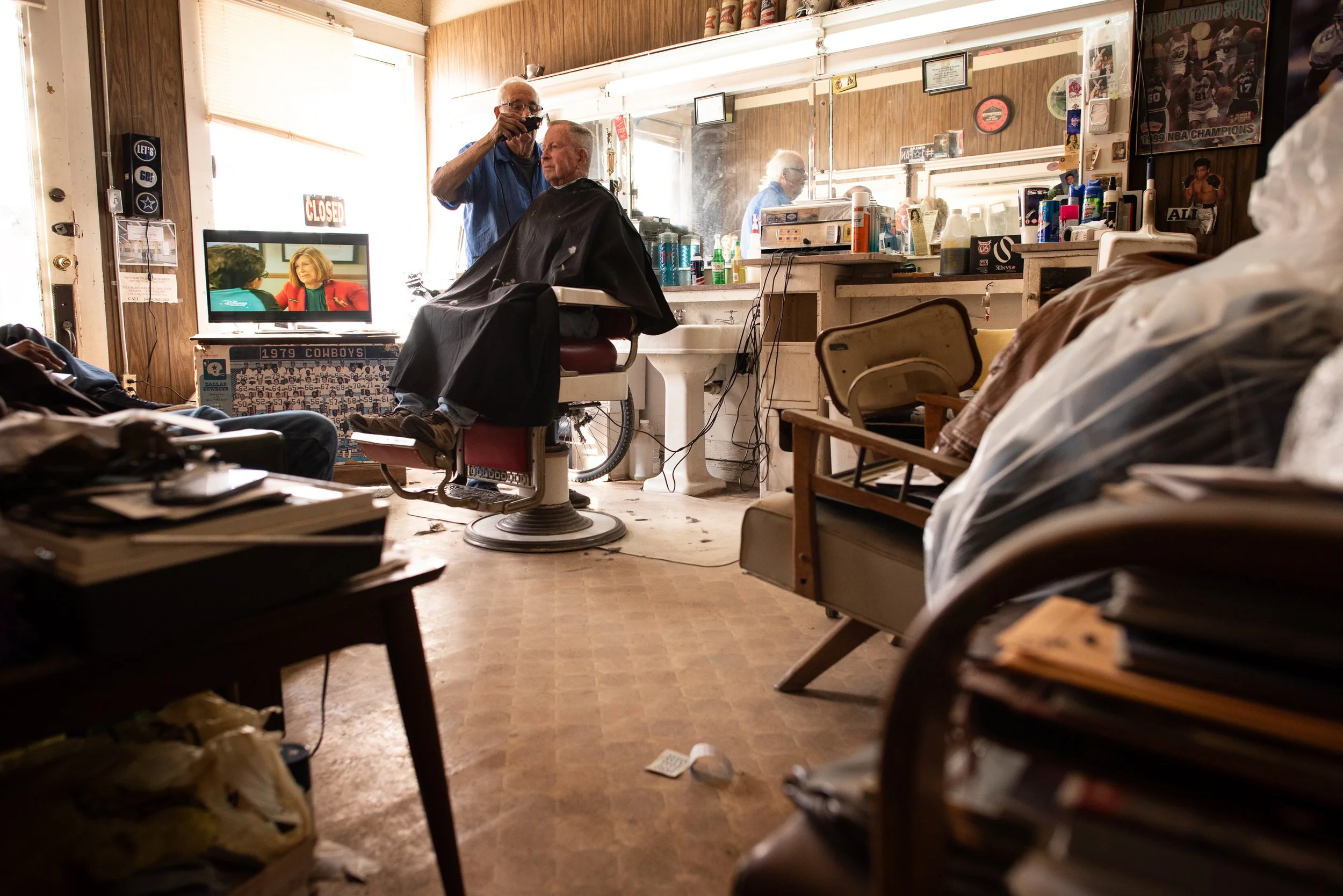
Mirror reflection of barber and client inside a compact workstation in a Marfa, Texas barbershop.

Reflections reveal the compact workstation—fluorescent lighting, worn counters, and tools accumulated over decades.

Basketball Wall Art For Modern Interiors

Basketball Wall Art Ideas for Modern Interiors

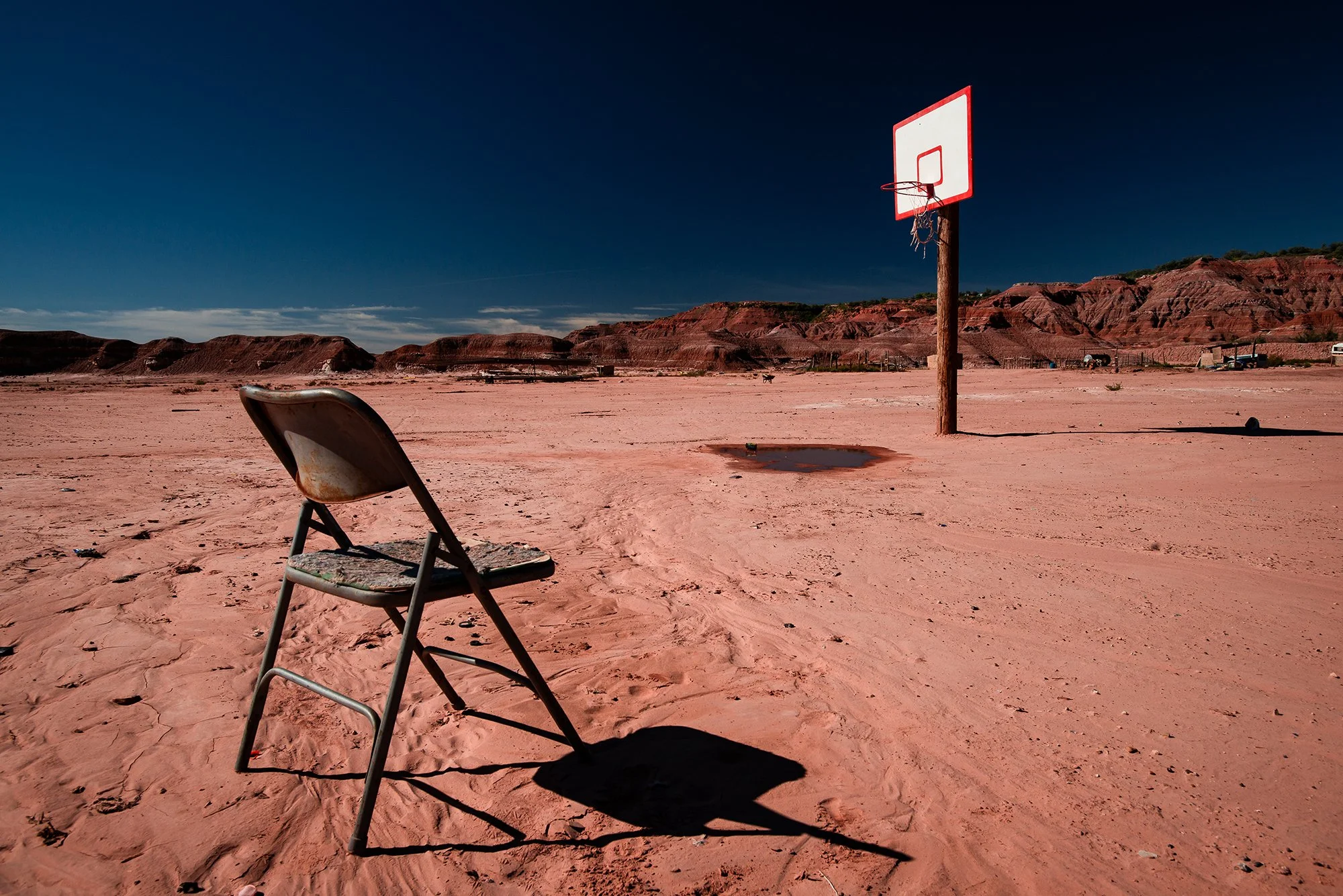
Basketball doesn’t just belong in arenas. It shows up in driveways, alleyways, deserts, and small towns—places where the game exists without an audience. As wall art, these scenes bring a sense of quiet, structure, and familiarity into a space.

For those looking to add basketball wall art to their home or office, the question isn’t just what to hang—but what kind of image holds attention over time.

Why Basketball Works as Wall Art

At its simplest, basketball is a set of recognizable forms—a rim, a backboard, a painted line. When photographed outside of a stadium, those elements become graphic and minimal.

A single hoop against an open sky. A backboard weathered by years of use. A court fading into the landscape.

These images tend to work well as wall art because they balance:

  • strong, simple composition

  • texture and age

  • a subject that feels familiar without being overly specific

They don’t rely on action or players. Instead, they create space—something that holds attention without overwhelming it.

Different Styles of Basketball Wall Art

Not all basketball imagery feels the same in a room. The setting and composition shift the tone entirely.

Minimal / Isolated Hoops
A lone hoop in an open environment creates a clean, understated presence. These pieces often work best in modern interiors.

Urban Courts and Alleyways
Layers of texture—walls, pavement, fencing—bring more density and detail. These images tend to feel more grounded and architectural.

Rural and Landscape-Driven Scenes
Hoops set against fields, mountains, or desert environments introduce scale and atmosphere. These often read as quieter, more contemplative pieces.

Graphic Light and Shadow
Reflections, silhouettes, and strong contrast push the work toward abstraction, where the subject becomes more about shape than place.

Basketball Photography as Fine Art

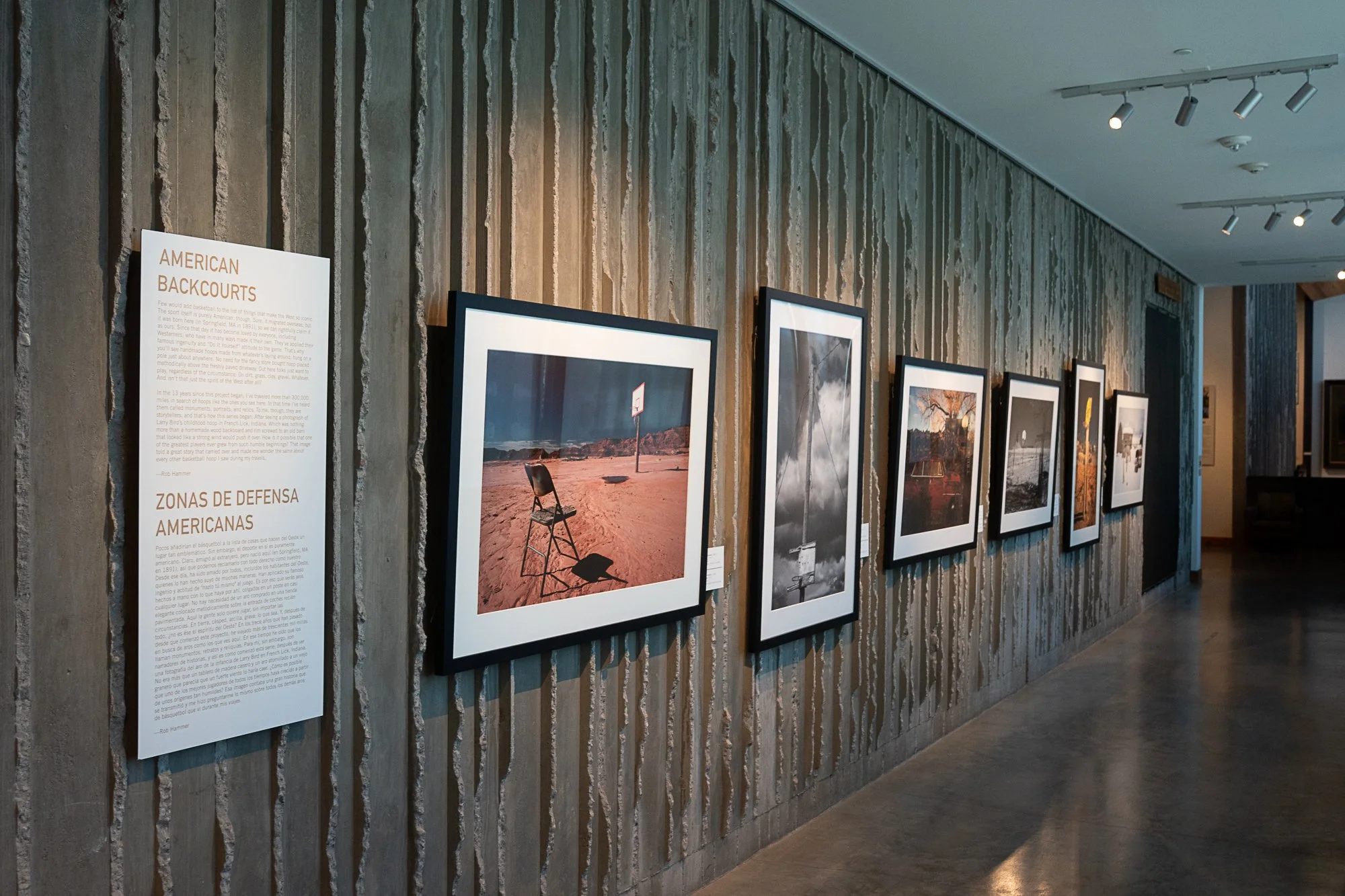
For over 15 years, this project has focused on basketball hoops found far from stadiums—mounted to barns, garages, telephone poles, and fading backboards in rural towns.

The photographs are not staged. Each one is discovered, observed, and documented as it exists. Together, they form a visual record of basketball as a constant presence in American life, regardless of location or scale.

This ongoing series has been featured in galleries, museums, on NBA TV, in iconic magazines like SLAM, ESPN, and Sports Illustrated, and international fine art books on basketball, reflecting the broader cultural significance of the work.

View The Full Project

Where to Find Basketball Wall Art Prints

For those looking to bring this work into their own space, a selection of photographs from the series is available as fine art prints.

View Basketball Wall Art Prints

For Collectors, Designers, and Licensing

These basketball hoop photographs are also available for editorial and commercial licensing. The work has been used by brands, publications, and media outlets looking for an authentic representation of basketball culture beyond the professional game.

For inquiries regarding larger installations, hospitality projects, or licensing, please get in touch - rob@robhammerphotography.com

Basketball photography print on the wall of a beautiful home

Basketball hoop wall art for residential design

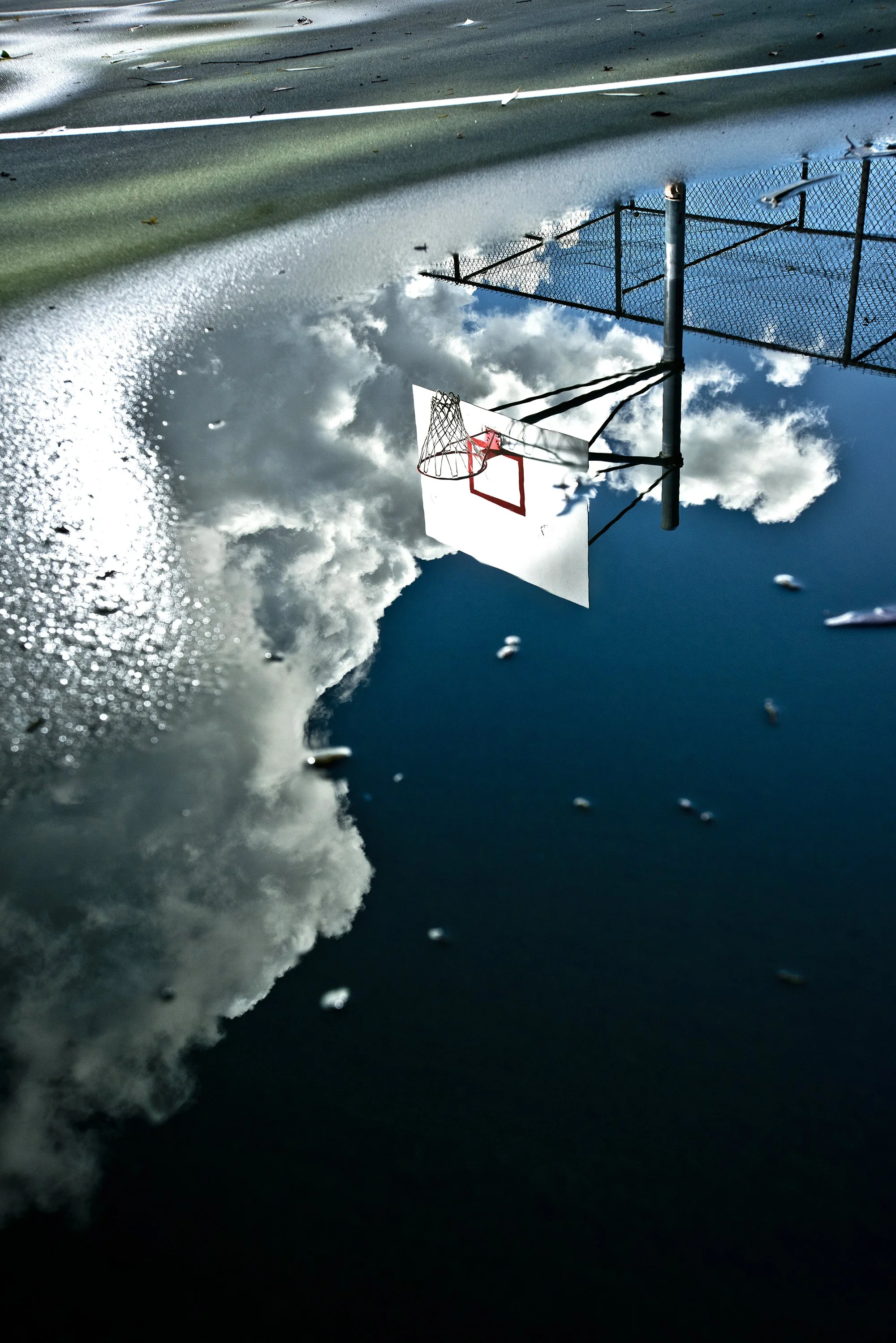
basketball hoop reflected in water puddle on outdoor court fine art print

A basketball hoop reflected in a puddle on an outdoor court, creating a surreal, inverted scene. Available as a fine art basketball photography print for modern interiors and collectors.

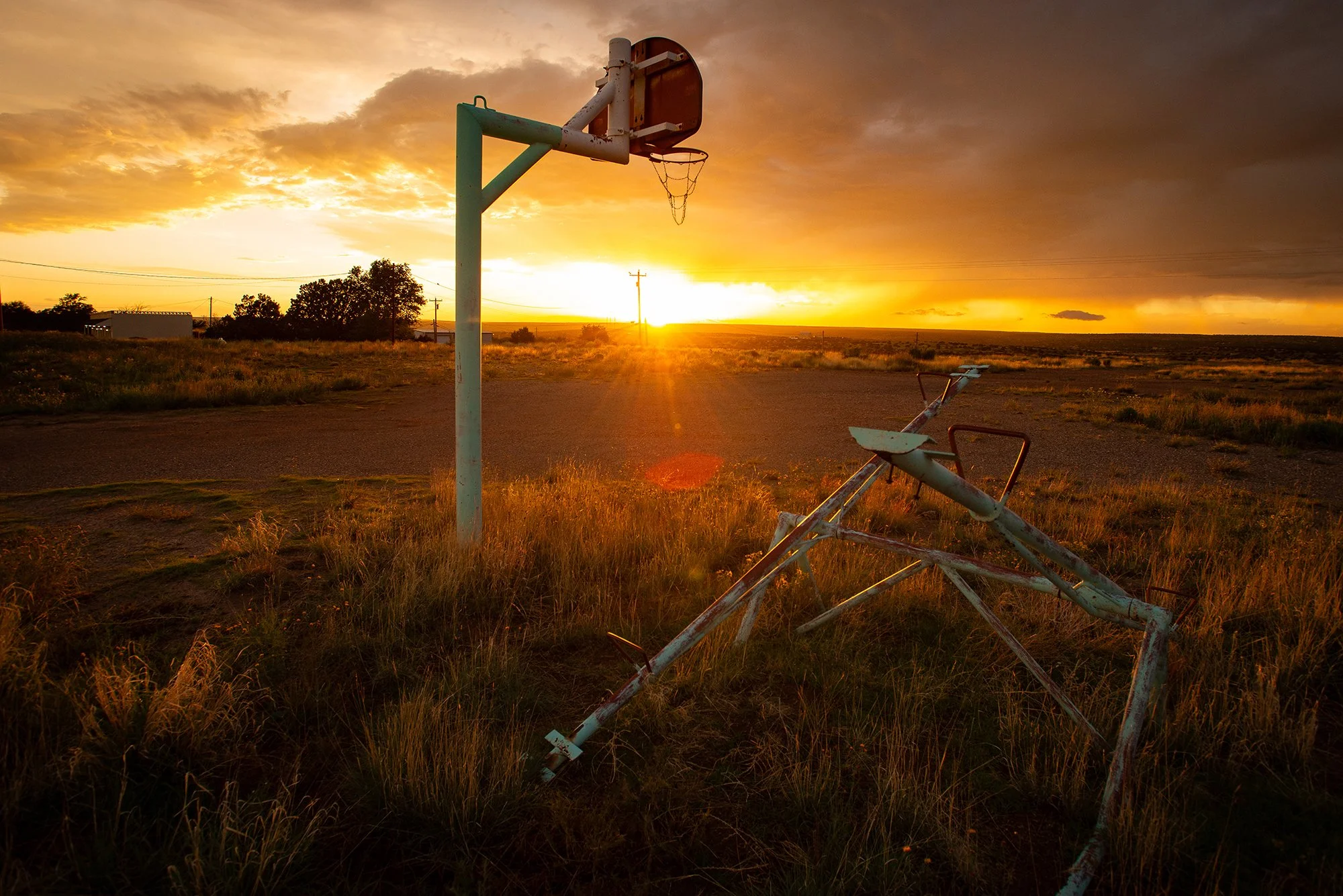
basketball hoop at sunset in rural landscape fine art photography print

A weathered basketball hoop standing against a dramatic sunset in rural America, captured as part of the American Backcourts series. Available as a fine art basketball wall art print for collectors and modern interiors.

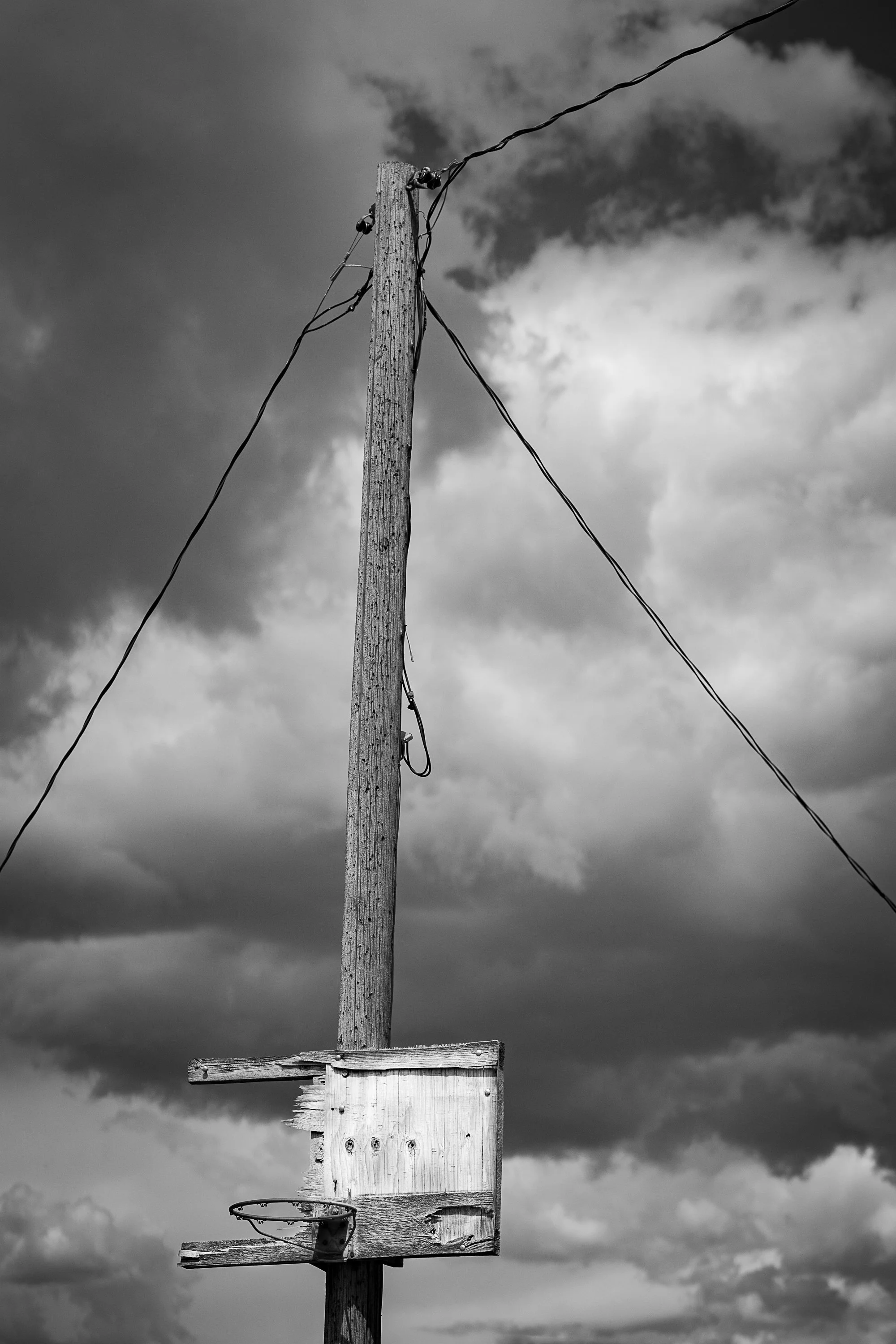
black and white photo of weathered wooden basketball hoop on pole under cloudy sky

A weathered wooden basketball hoop mounted to a utility pole, photographed in rural America as part of a long-term series documenting the overlooked places where the game is played.

basketball hoop in desert landscape with chair fine art photography print

A solitary chair facing a basketball hoop in a remote desert landscape, part of the American Backcourts series. Available as a fine art basketball wall art print.

Basketball hoop photography prints displayed in gallery exhibition from the American Backcourts series

Installation view from the American Backcourts series, a long-term project documenting basketball hoops across the United States, exhibited in gallery settings and featured in publications including SLAM and NBA TV.

The American Barbershop

Inside an Old School Barbershop

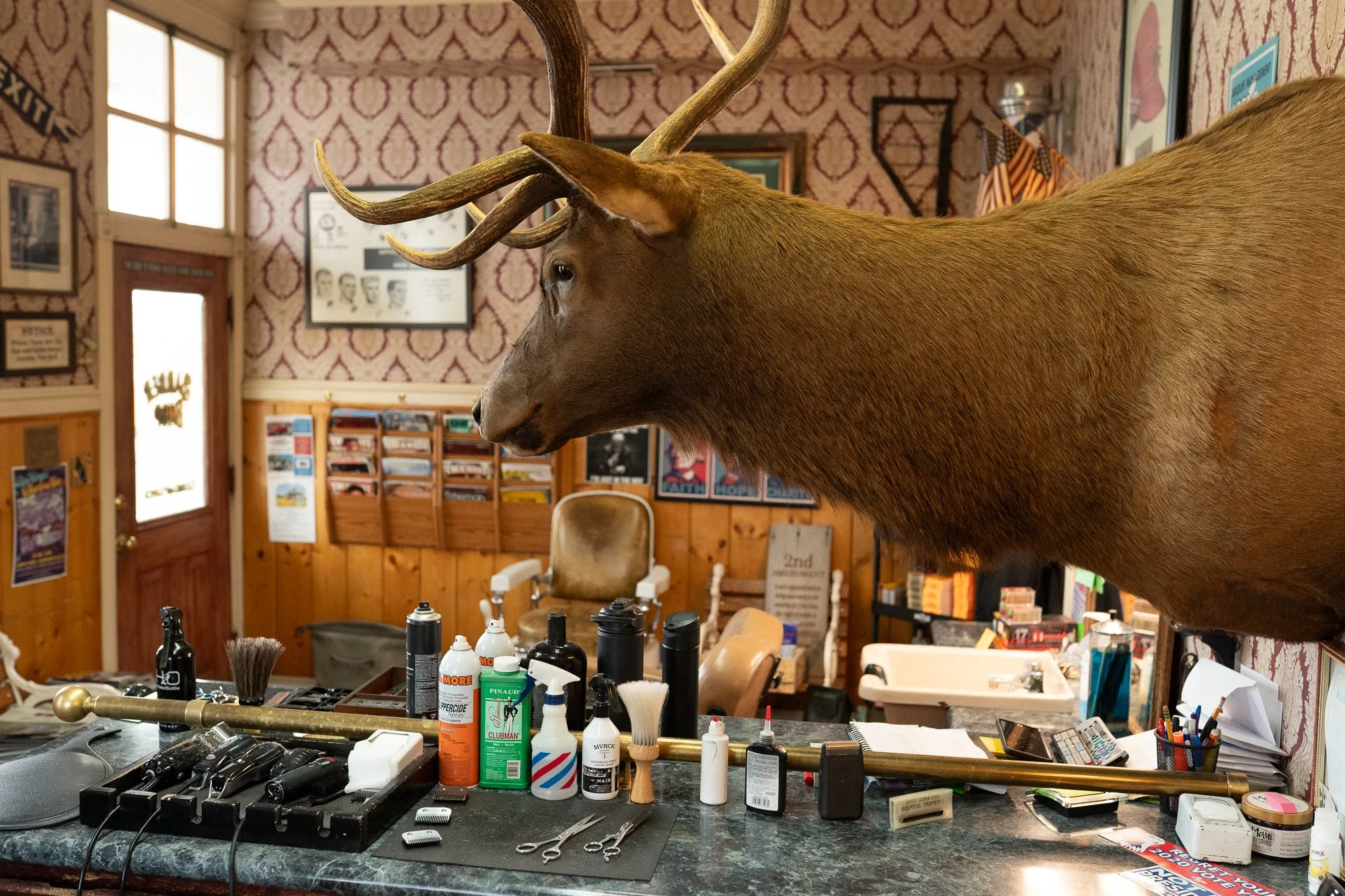
Some barbershops just feel different the moment you walk in, at least they should. This one sits right on Main Street in a small Nevada town, and it hasn’t tried to reinvent itself or keep up with trends. It doesn’t need to. It’s an old school barbershop in the truest sense — a place built on community, friendships, decades of doing things the same way because they work.

You notice it in the details first. The worn chairs. The mirrors that have seen thousands of haircuts. The quiet hum of clippers and conversations that don’t feel rushed. This is the kind of traditional barbershop where people come not just for a haircut, but because it’s part of their weekly or monthly rhythm.

An Old School Barbershop That Still Feels Like Main Street America

Main Street barbershops like this one are becoming harder to find. A lot of them have disappeared, replaced by newer spaces that feel more like salons than barber shops. Luckily, this place hasn’t gone that route. It still feels rooted in tradition, serving the same community it always has.

People come in, take a seat, and wait their turn. Some talk. Some don’t. The barbers know all the faces, and the ones they don’t quickly become familiar. There’s no rush to move people through. The pace is steady and comfortable — exactly what you expect from an old school barber shop that’s been around long enough to earn that confidence.

This is Main Street America in its simplest form.

Photographing a Traditional American Barbershop

When I photograph barbershops, I’m not looking to stage anything or make the space feel more polished than it really is. I’m drawn to places like this because they already have character. The work is about paying attention — to how light hits the mirrors, how chairs sit slightly crooked from decades of use, how people interact when they feel at home.

This traditional barbershop didn’t need direction. I spent time watching, waiting, and letting moments happen naturally. A barber stepping back to check his work. Someone laughing mid-conversation. A quiet pause while clippers buzz in the background. Those are the moments that tell the real story of a shop like this.

Why Old School Barbershops Matter

Old school barbershops are more than just places to get a haircut. They’re social spaces, community anchors, and in many towns, one of the last places where people still slow down a little. They reflect the personality of the neighborhood they’re in and the people who keep them going.

Photographing spaces like this feels important, especially as so many of them disappear. Once they’re gone, they’re gone for good. These photographs are a way of preserving what these places look and feel like — not in a nostalgic or romanticized way, but honestly, exactly as they are.

Vintage Barbershop Photography Prints

This series is part of my ongoing Barbershops of America project (and photo book), documenting traditional and vintage barbershops in all 50 states of the USA. Photographs from this Main Street barbershop are available as fine art prints, and they tend to resonate with collectors, interior designers, and anyone drawn to classic American spaces.

If you’re interested in prints from this series, or in licensing images for editorial or commercial use, you can explore more work from the project through my barbershop photography gallery.

View the barbershop photography book

View the barbershops photography gallery

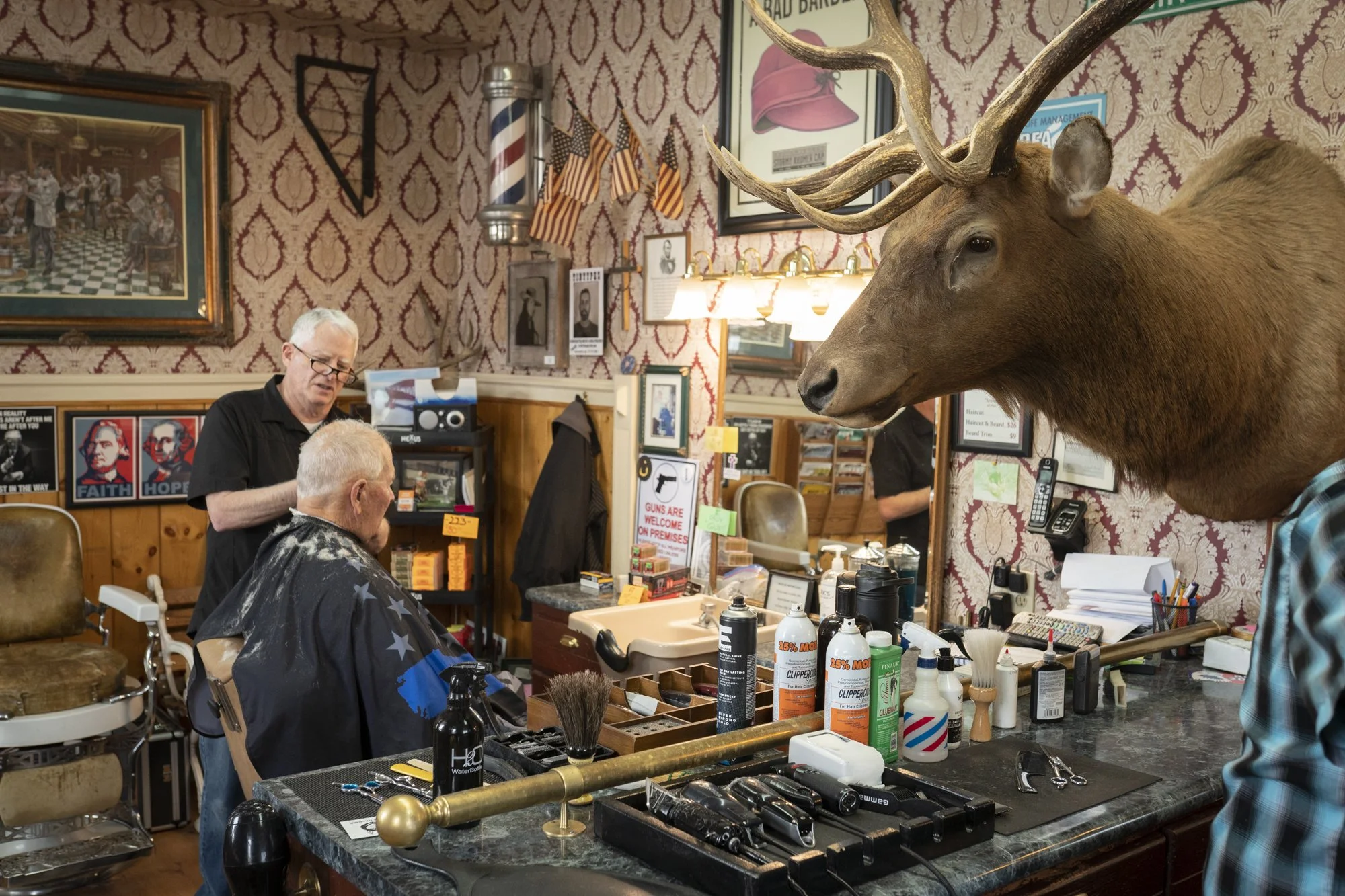
Vintage barbershop interior with a mounted elk head above a counter lined with clippers, shaving tools, and bottles.

A mounted elk watches over the barber’s counter—an unmistakable detail that roots this barbershop firmly in old school tradition.

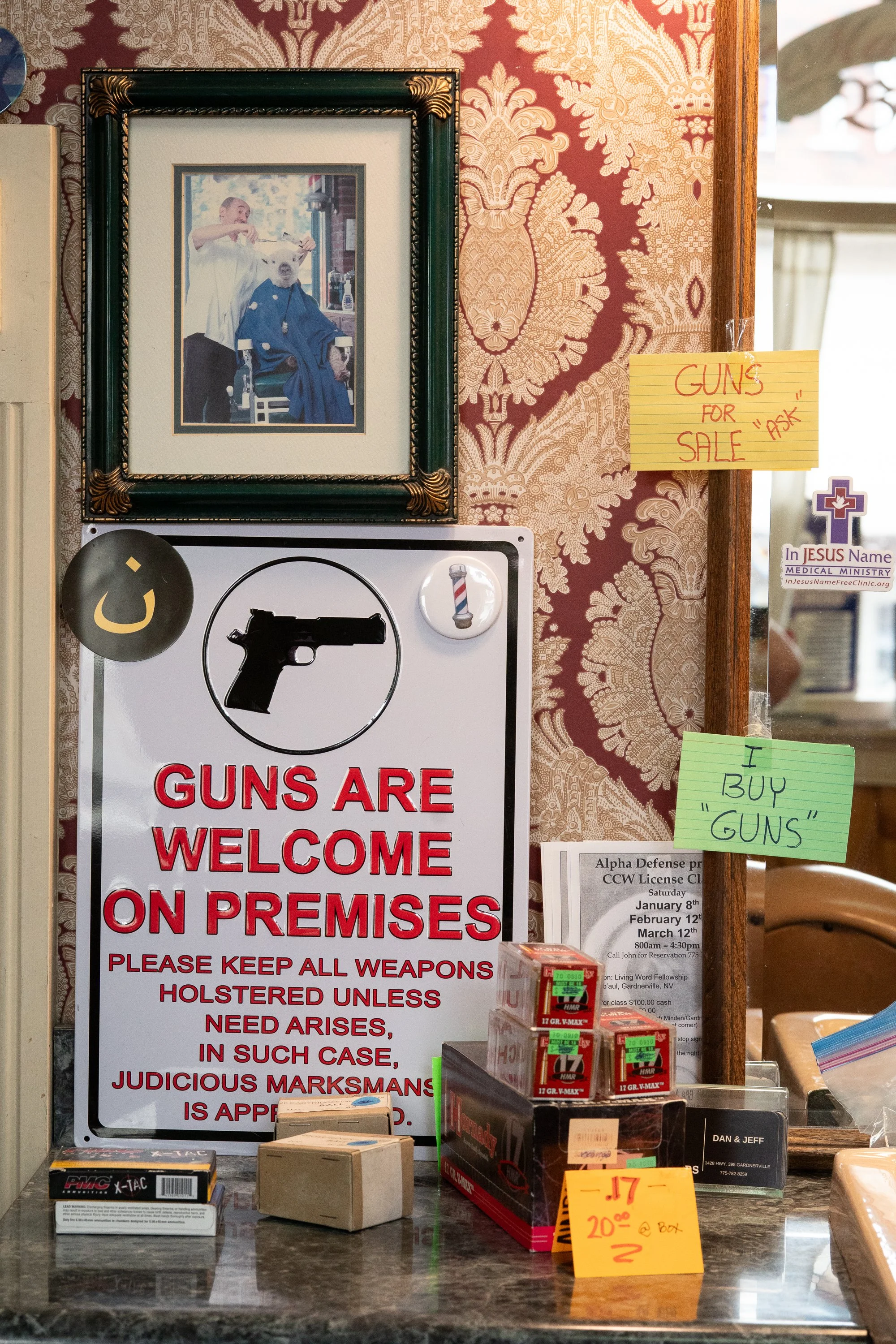
Details like handwritten signs, framed photographs, and unapologetic Americana are part of what defines this old school barbershop.

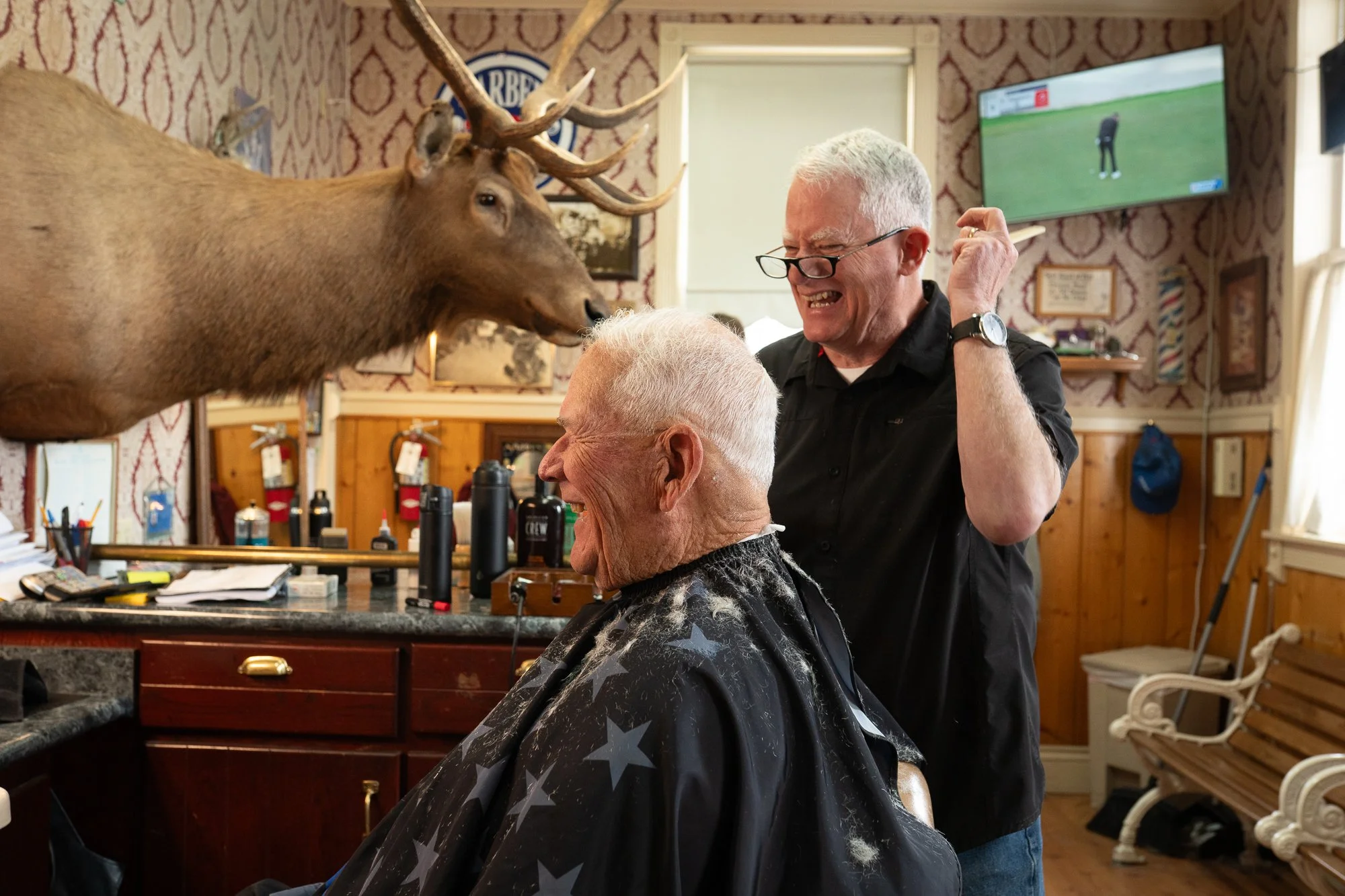
Old school barbershop haircut with a barber laughing beside a client seated beneath a mounted elk head.

A moment of laughter during a haircut in an old school barbershop, where mounted elk and decades of tradition share the same wall.

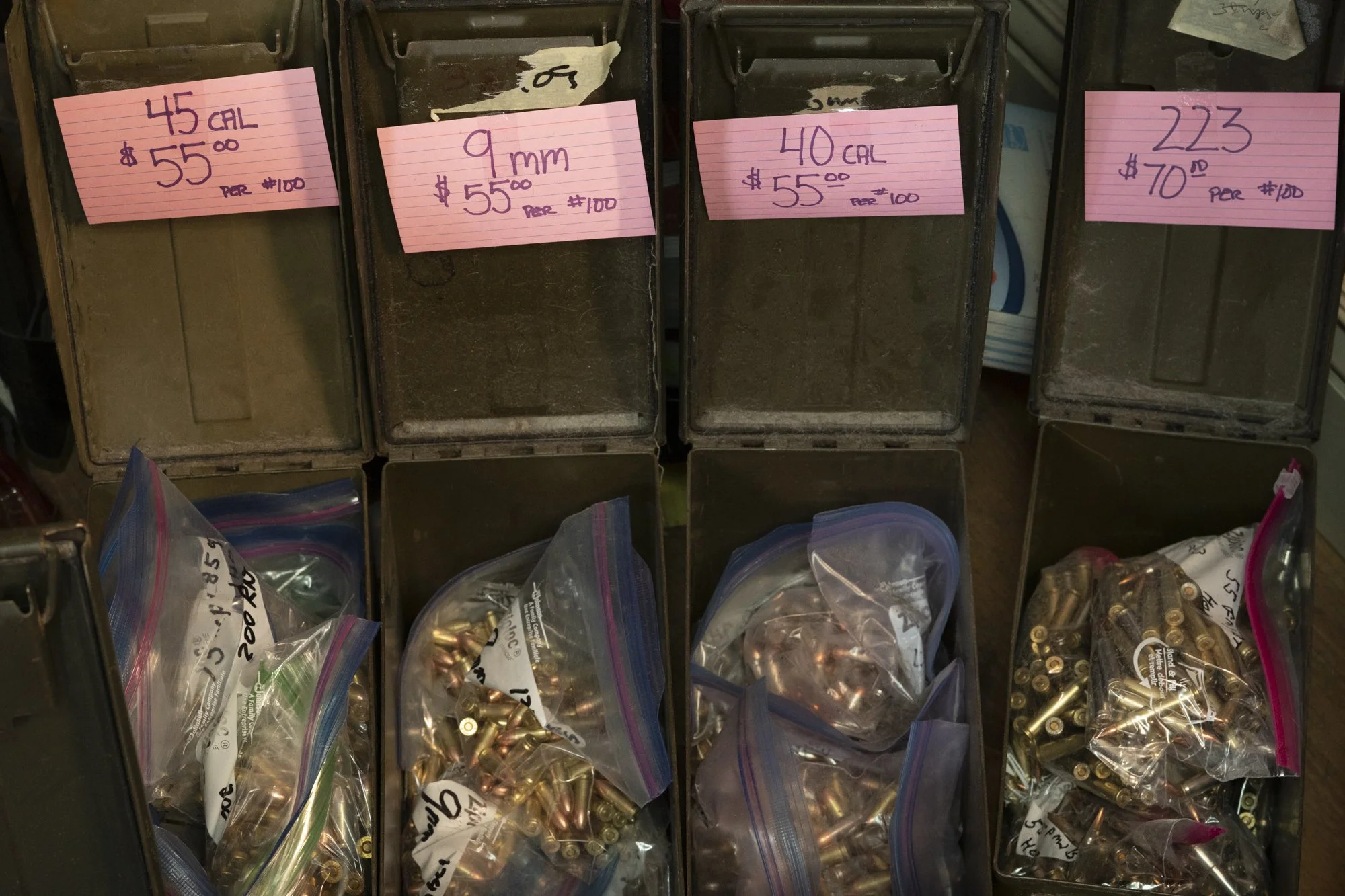
Ammunition for sale on the counter of an old-school barbershop, reflecting rural Americana and local culture.

A detail that stops you in your tracks—ammo for sale on the barbershop counter, a reminder that these shops often reflect the character of the towns they serve.

Old-school barbershop haircut beneath a mounted elk head in a traditional American barbershop interior.

An old-school barbershop moment—regulars in the chair, clippers on the counter, and a mounted elk watching over decades of haircuts and conversation.

Kansas City Basketball

Basketball Hoop Photography - Prints

Story Behind The Image

Of my many vices, BBQ is damn near the top of the list. Food in general is a big part of my life, but great BBQ is an especially large weakness. Many years ago while driving cross country, I stopped in Kansas City for some of their famous meat, and almost immediately complained to friends about the quality of that particular establishment. One of them recommended Arthur Bryant’s on Brooklyn Avenue. Ever since that trip AB’s has been a must stop anytime I’m within a couple hundred miles. They don’t miss. You know walking in there that they are going to take care of you. The place just feels right. Like walking into Madison Square Garden, you can feel the history. What the hell does this have to do with basketball? Nothing really, but if you’ve ever had a proper plate of BBQ, then you know the only thing that follows is immense satisfaction followed by meat sweats and a nap. So the ritual goes that I eat too much food, sparing the napkin full of scraps that are saved for Mojo who is (was) always waiting in the truck, drool already hanging several inches from his mouth. Poor bastard had to sit there while the smell of burnt ends and pulled pork wafts steadily in the window. After his treat we go for a long walk which turned into the same familiar route over the years. One of the regular sites is an abandoned school that I’ve made some mediocre images of. Viewing it from the outside always led to daydreaming of what the  gym inside looked like. As luck would have it, while walking by one year the plywood on a ground floor window was ripped off and the metal grate had been ripped open. That’s an invitation, right? Of course it is. Anyone that takes if for anything less is a fool. So I hopped in the window with a tripod, camera bag, and a headlamp. Kansas City summers are hot to say the least. Inside a sealed off brick building is something else altogether. It felt like you could chew on the air in there. Walking into the gym didn’t even seem real. My jaw must have drooped right to the floor. Couldn’t believe what a gift I was handed.  The whole room was all but gutted, yet the backboard still stood. I could have been happy in there for days. Still though it wasn’t a place to be for long. There were obviously people squatting and I didn’t have much interest in them knowing I was there. So after waiting waiting waiting for my lens to defog, a few frames were made, and I hit the road without any interactions between the squatters or the police. Moral of the story is eat more BBQ. 

If you’re a photography collector looking for basketball wall art, please contact me directly. All of my basketball hoop photography is available as fine art prints - rob@robhammerphotography

American Photography

Photographing America - Road Trip - USA - Travel

Every day spent on the road is educational in some way, especially when you drive for hours upon hours without producing anything. Half days even. A full day, and you still might not have put the camera up to your eye. Then you get to some kind of hot spot, for the lack of a better word. That’s what happened here. These top 3 images were made within 100 feet of each other in some small Illinois town on a day that otherwise produced almost nothing. Odd how that happens.

Click here to see more from my America series.

Roadside Meditations - Kehrer Verlag

Just returned from the road to find the first copy of Roadside Meditations waiting quietly at home. Feels so good to finally hold a hard copy in my hands after the long (but fun) production process with Kehrer Verlag in Germany. Unfortunately the books aren’t for sale yet in the States, but I will be posting and talking much more about this when the time comes. Hoping to have them up and ready to sell on my web store in about a month. Check back here or Instagram (@robhammerphoto) for updates.
Fine art photography book Roadside Meditations by Rob Hammer and Kehrer Verlag.

Wyoming Cattle Ranch

Wyoming Cowboy Photography

American West

A cowboy gathering cattle on a ranch outside Laramie, Wyoming. Cowboy Photographer Rob Hammer.

Wyoming cattle drive

Wyoming is a land rich in rugged beauty, where open plains meet towering mountain ranges, and the cowboy way of life still thrives. One of the most iconic images that evokes the spirit of the American West is that of a working cowboy on a Wyoming cattle ranch. These photos not only showcase the breathtaking landscapes but also the hard work, dedication, and heritage that define ranch life.

A cattle drive on a large ranch in Wyoming by cowboy photographer Rob Hammer.

Cowboys moving cattle on a ranch in Wyoming

A cowboy lets his horse drink from a pond during a long cattle drive on a ranch in Wyoming by cowboy photographer Rob Hammer.

Black and white cowboy photography print

Cowboys herd cattle on a rugged section of open ranch in Wyoming by cowboy photographer Rob Hammer

Wyoming cowboys

At Work

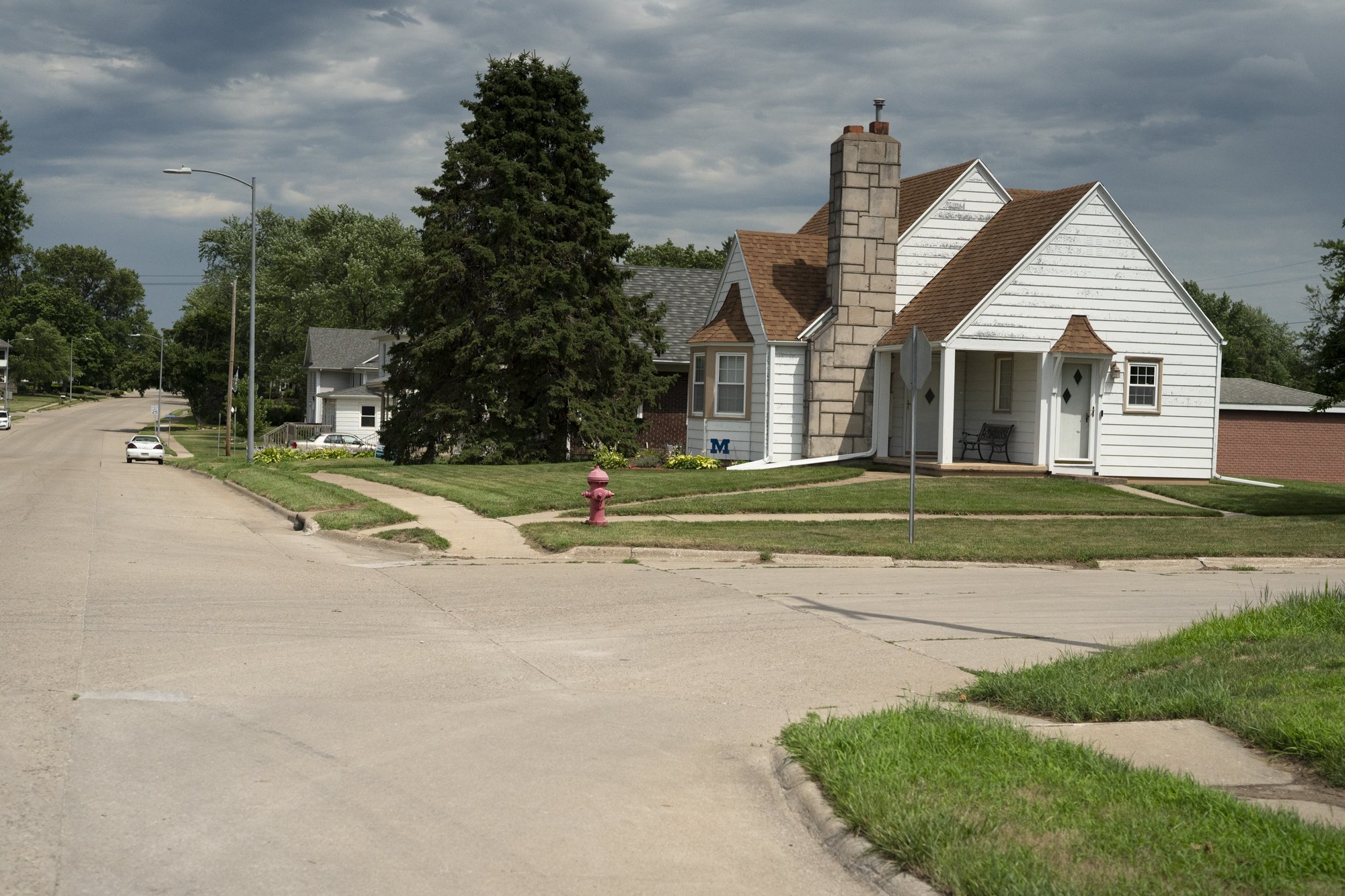
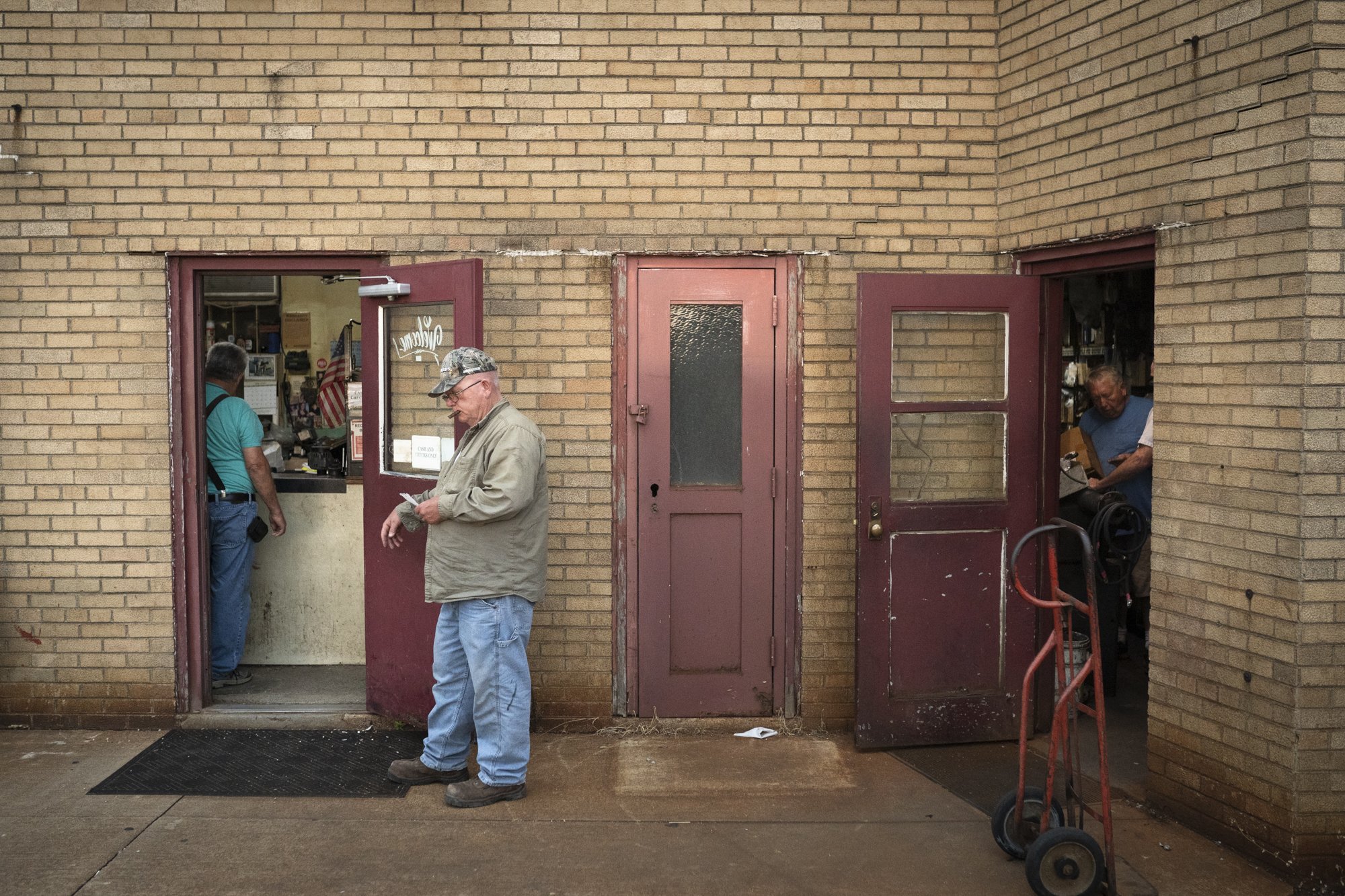
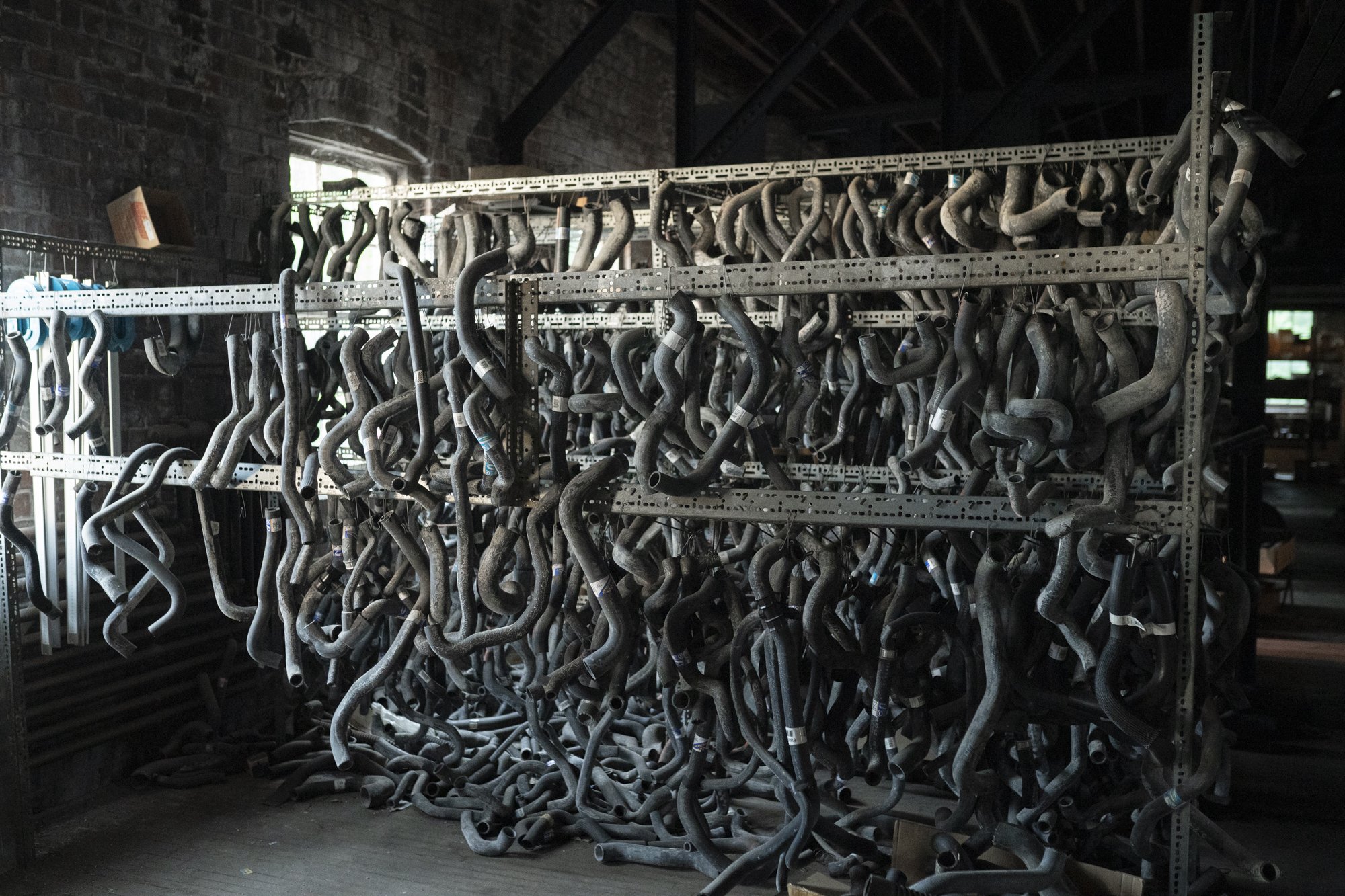
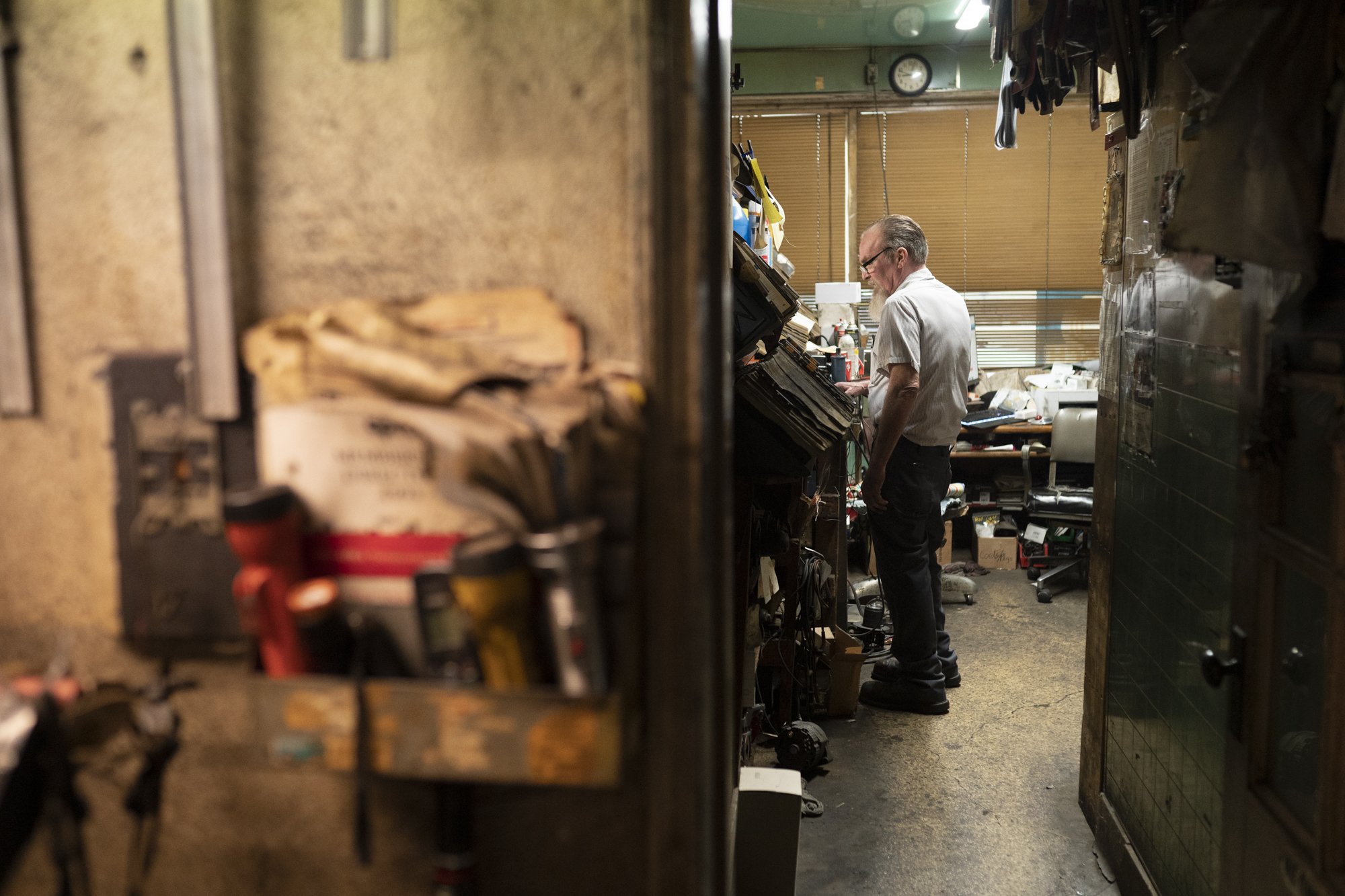
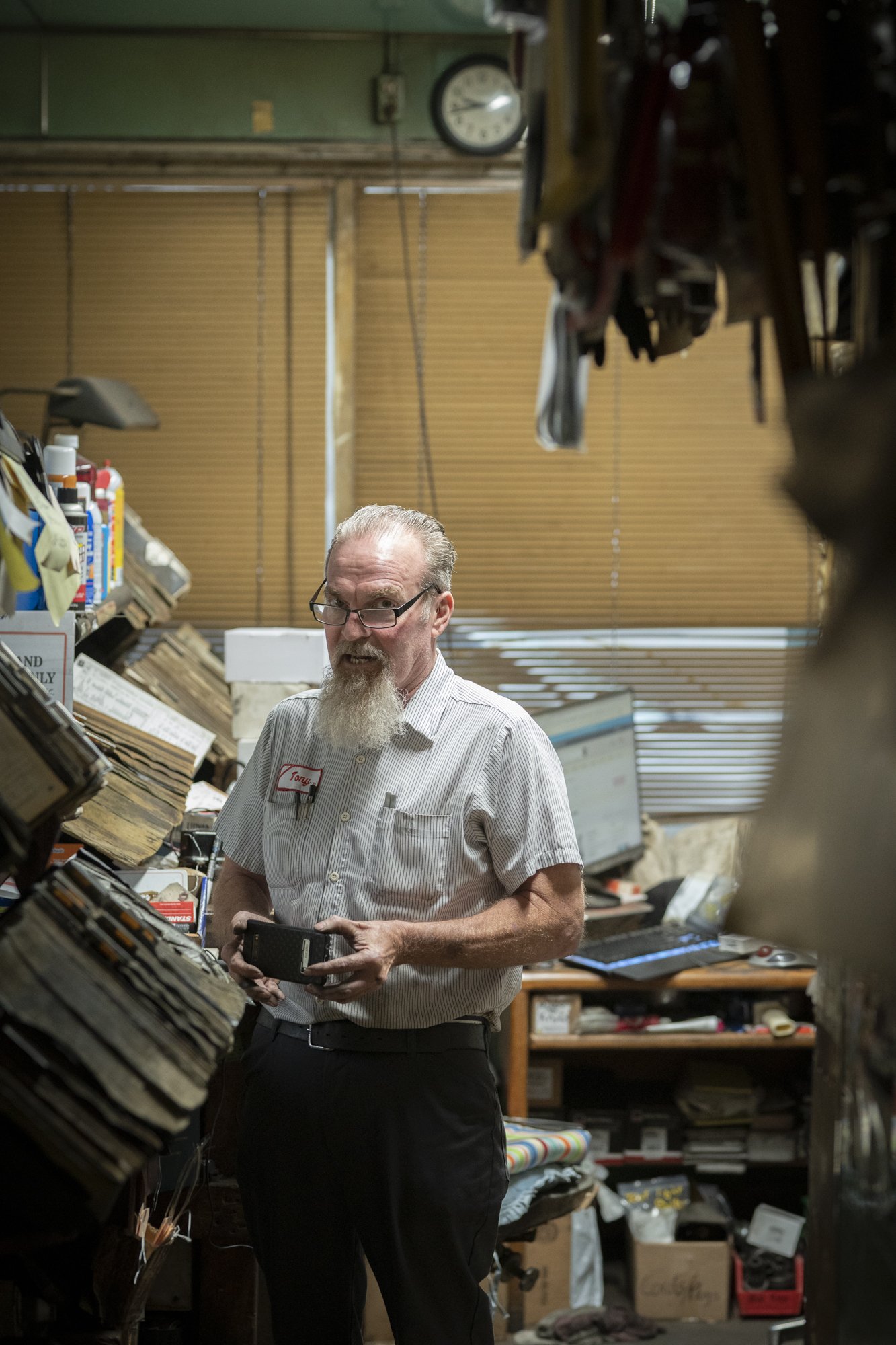
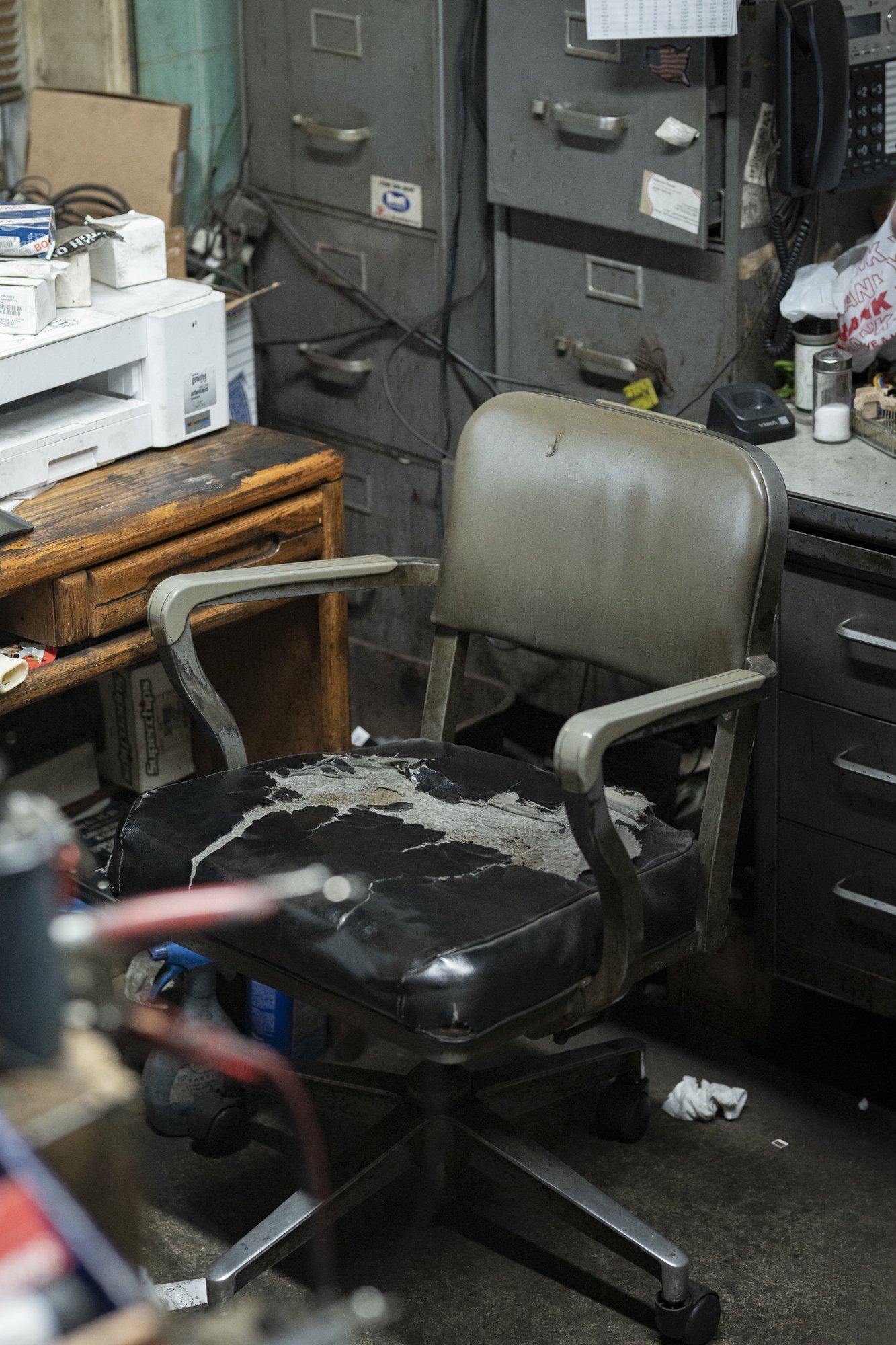
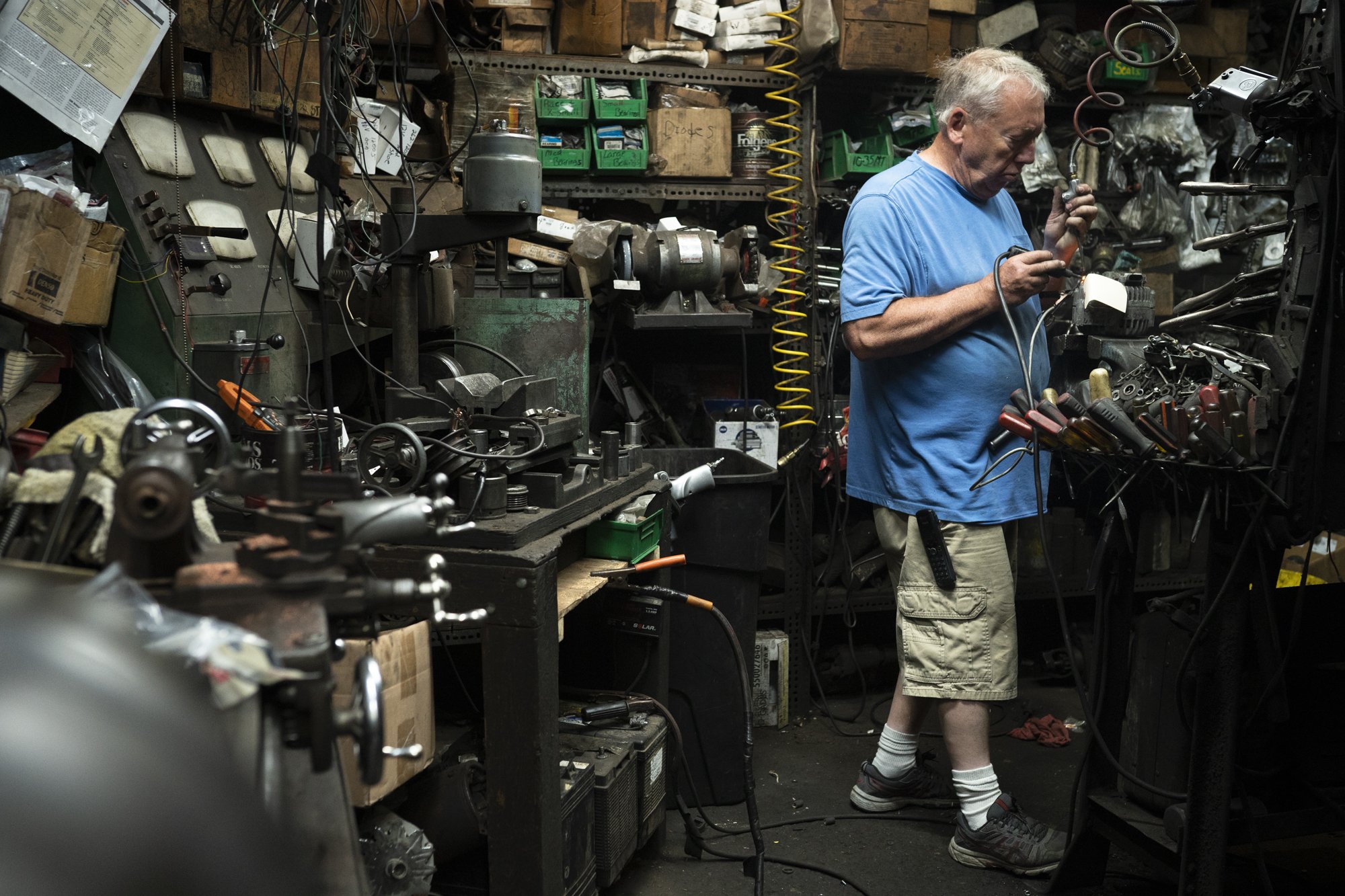
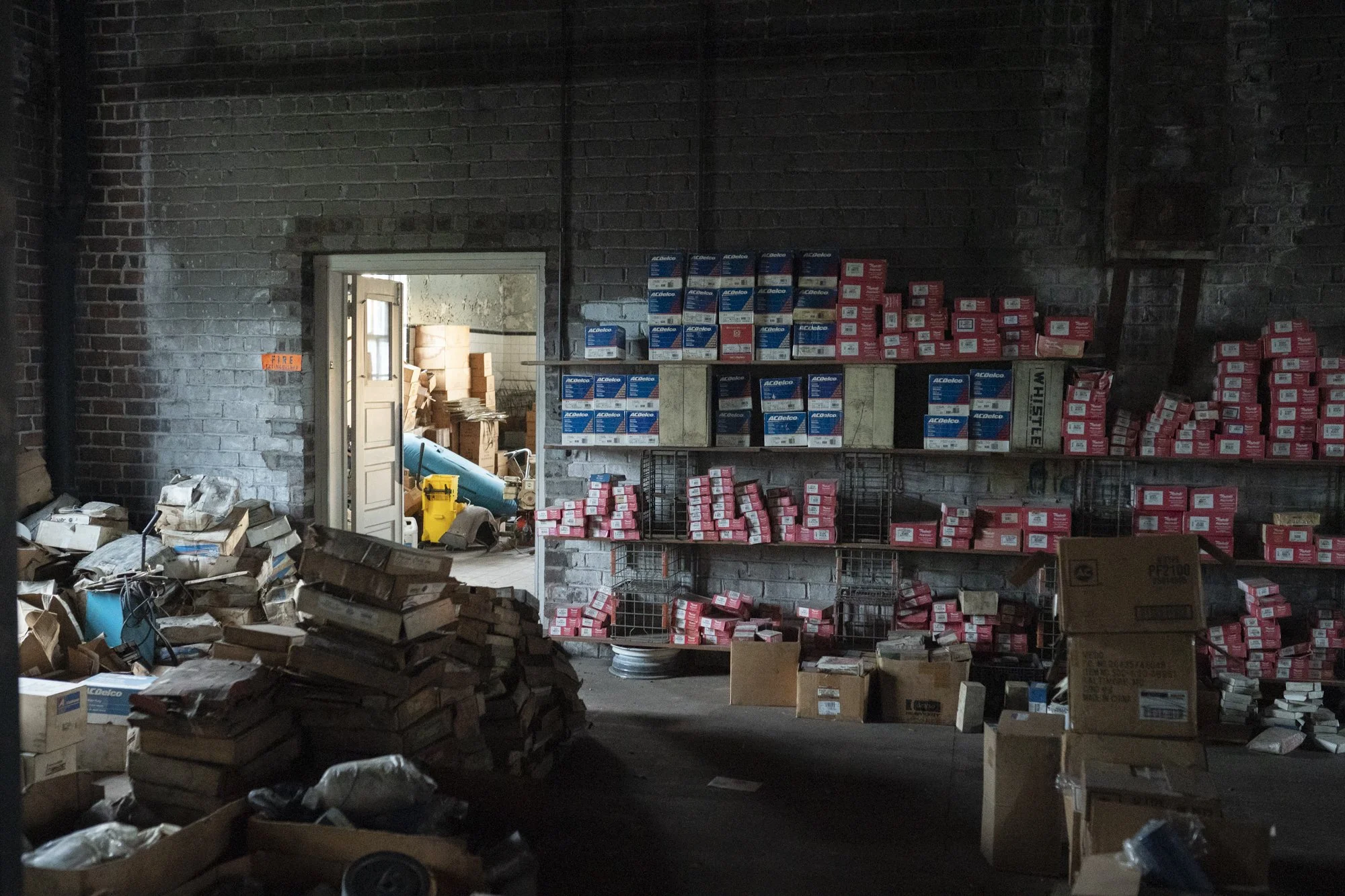
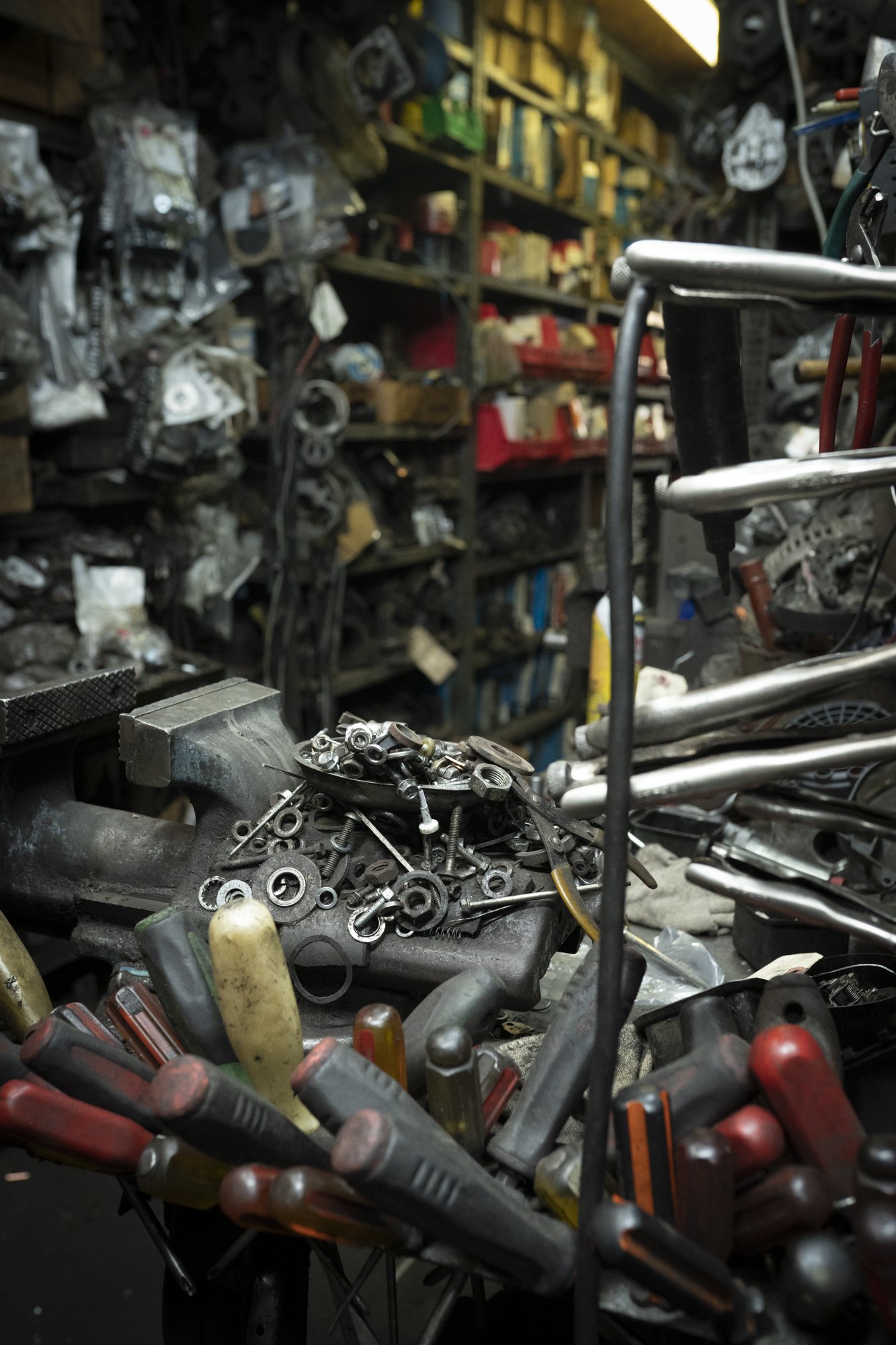
There are a lot of strategies for being productive while on the road. One of them is the “pop-in”. It’s become my go-to when rain won’t let you do much outside. That’s precisely how these images came to be. The pop-in isn’t for everybody. It used to scare the hell out of me. Then you realize there are only two answers, yes or no. If it’s a no, who cares? Just move on. Tony, the owner of this garage, was happy to let me hang out for a few minutes to make some images. Confused as to why, but it didn’t bother him any. Obviously they are going into my “At Work” series that has been so much fun to shoot. Some of the images you’ll see in the gallery are personal and others were made for clients. Better yet, some of them are personal assignments that were later published. Love when that happens.

American Road Trip

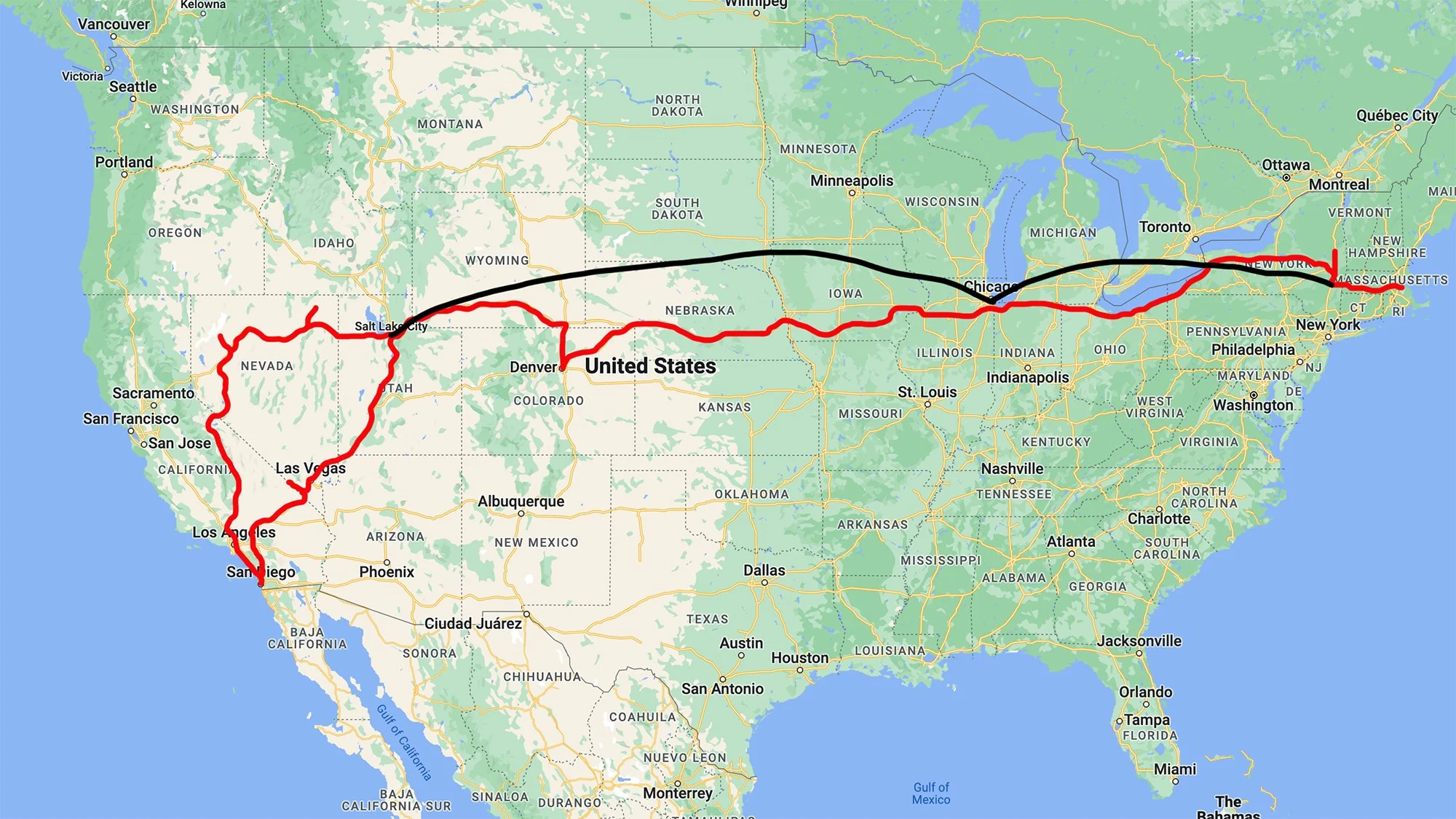
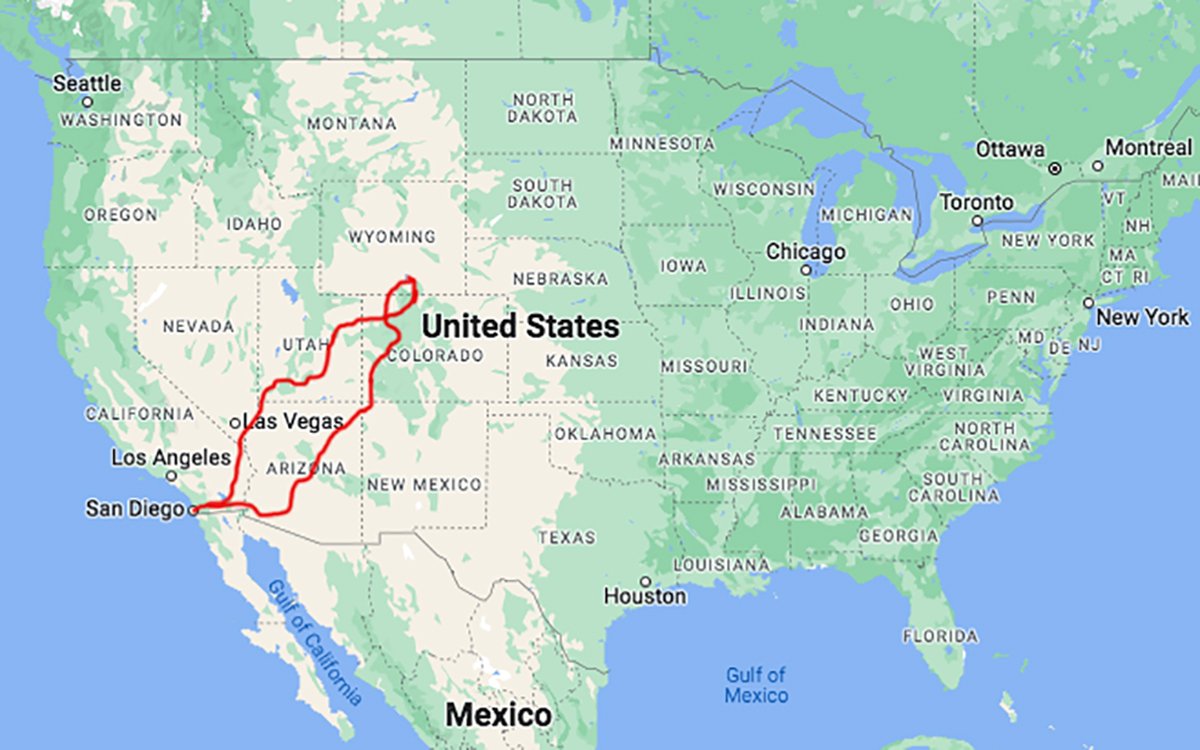
It seems like every road trip has its own personality filled with unique findings and activities. Of course photography is always the main focus of these trips, but there are also auxiliary goals that I try to squeeze in as well. Ranching, fly fishing, friends, and hunting are just a few of the things that happened in the squiggly red lines on the map. So far it seems like the results are good in the photography category and a hell of a lot of good times were had along the way. Excited to share more the miles soon.

View the American Roadtrip Gallery

Shop my American Roadtrip Photography Book

Historic Texas Barbershop Photographs

Raymond’s Barbershop - Lockhart, Texas

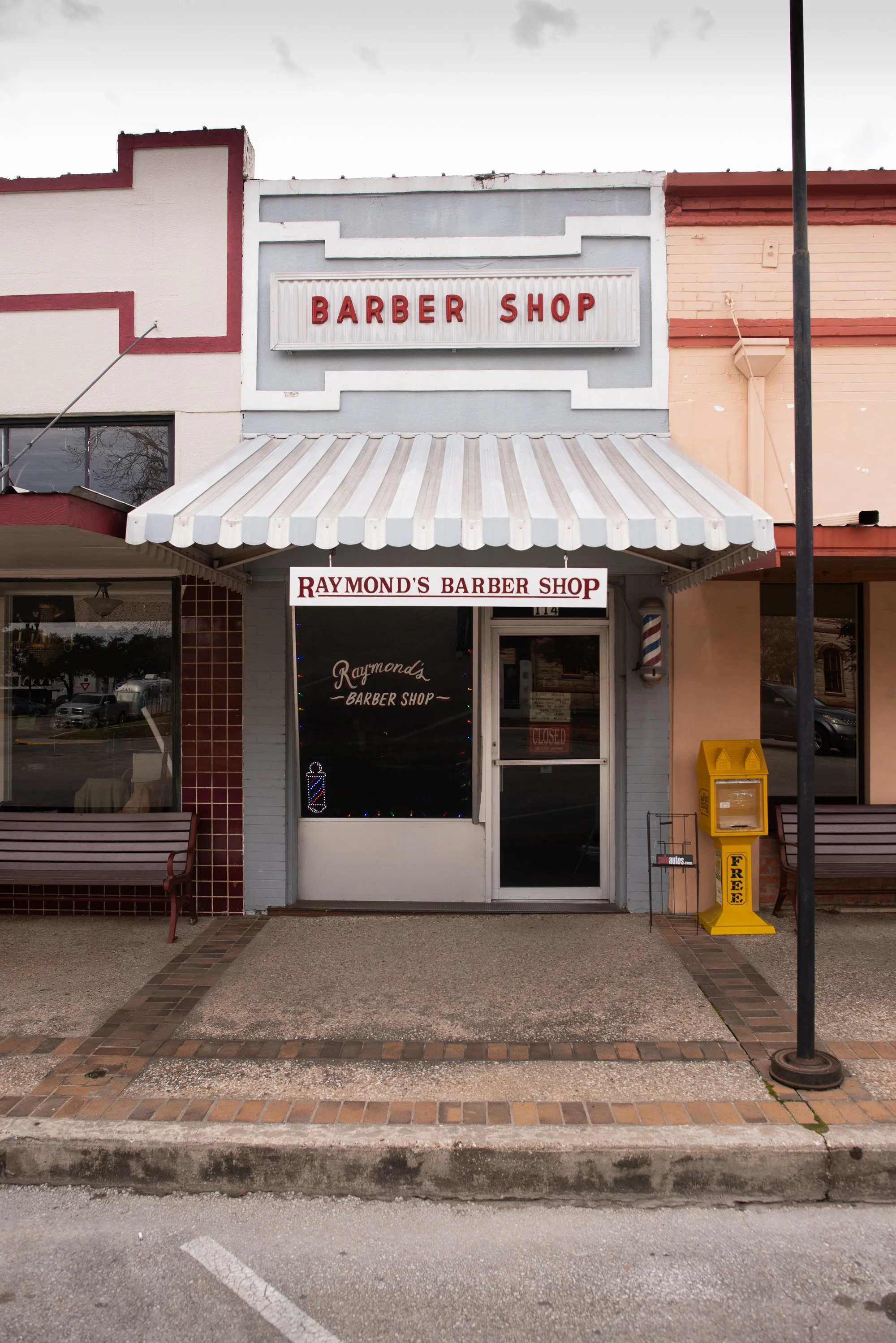
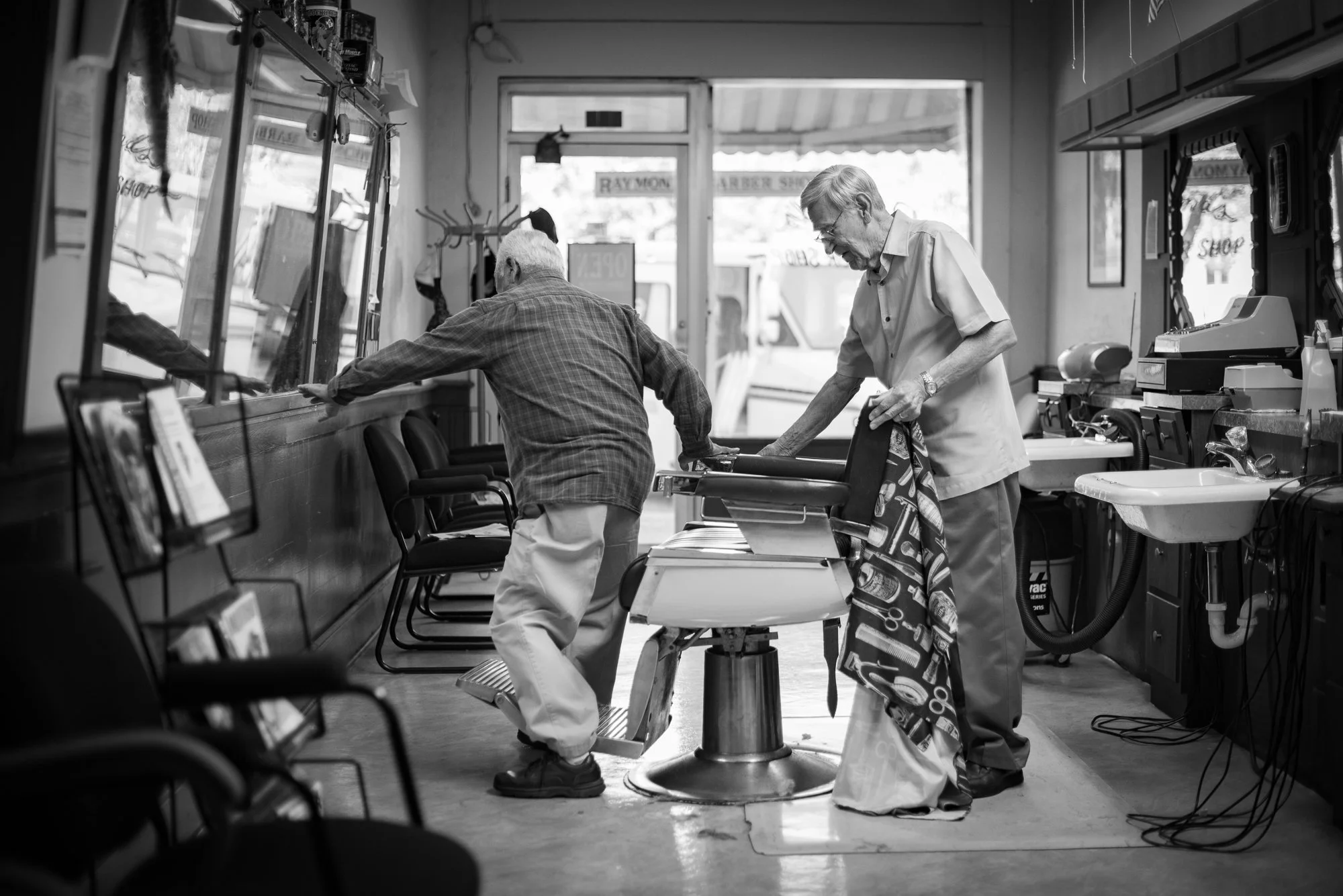
Lockhart is best known for its barbecue, but places like Raymond’s Barbershop tell another side of the town’s story. Between visits to longtime institutions like Smitty’s Market, everyday routines continue in quiet spaces that rarely draw attention but shape the rhythm of local life just as much.

A Traditional Barbershop in Lockhart, Texas

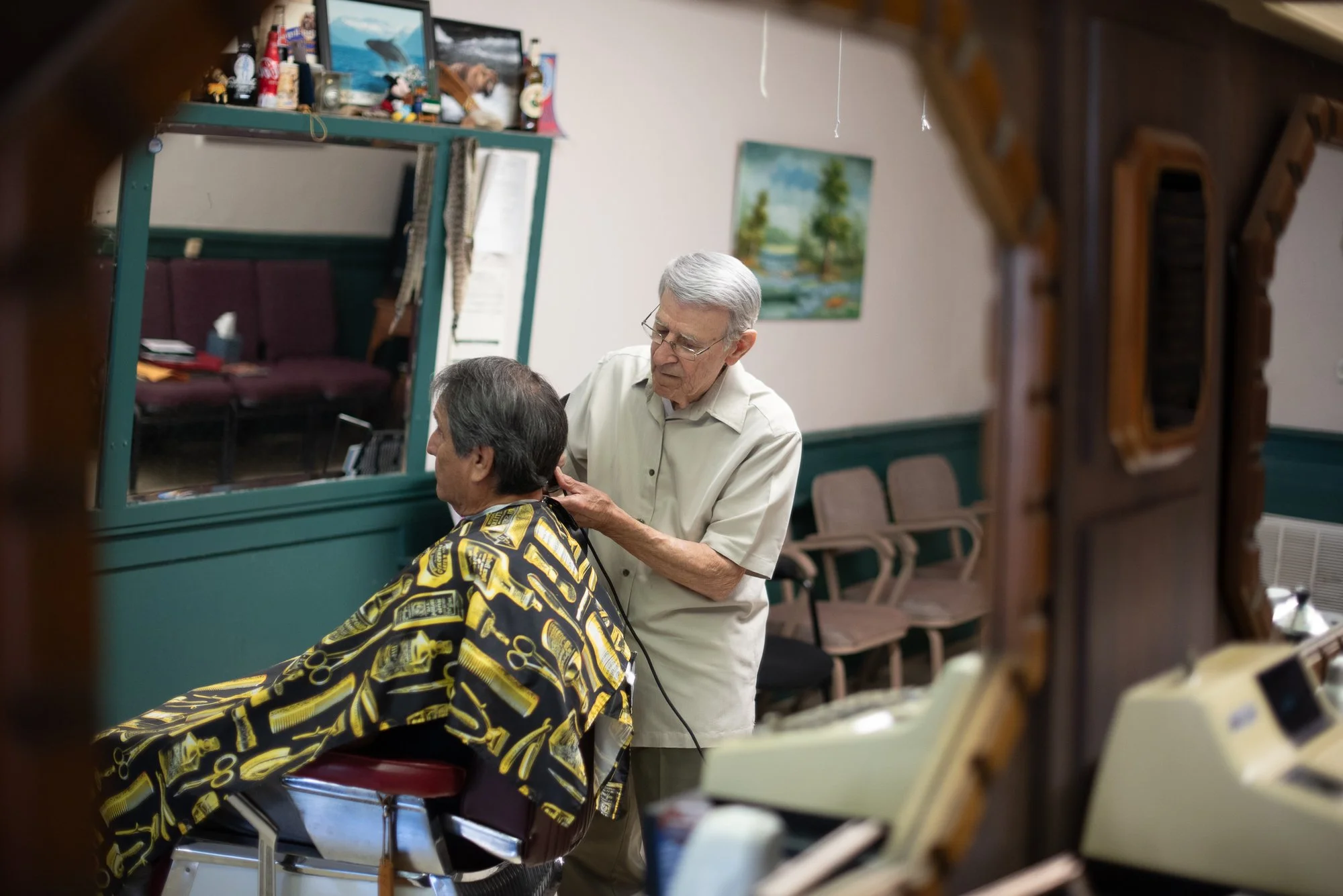
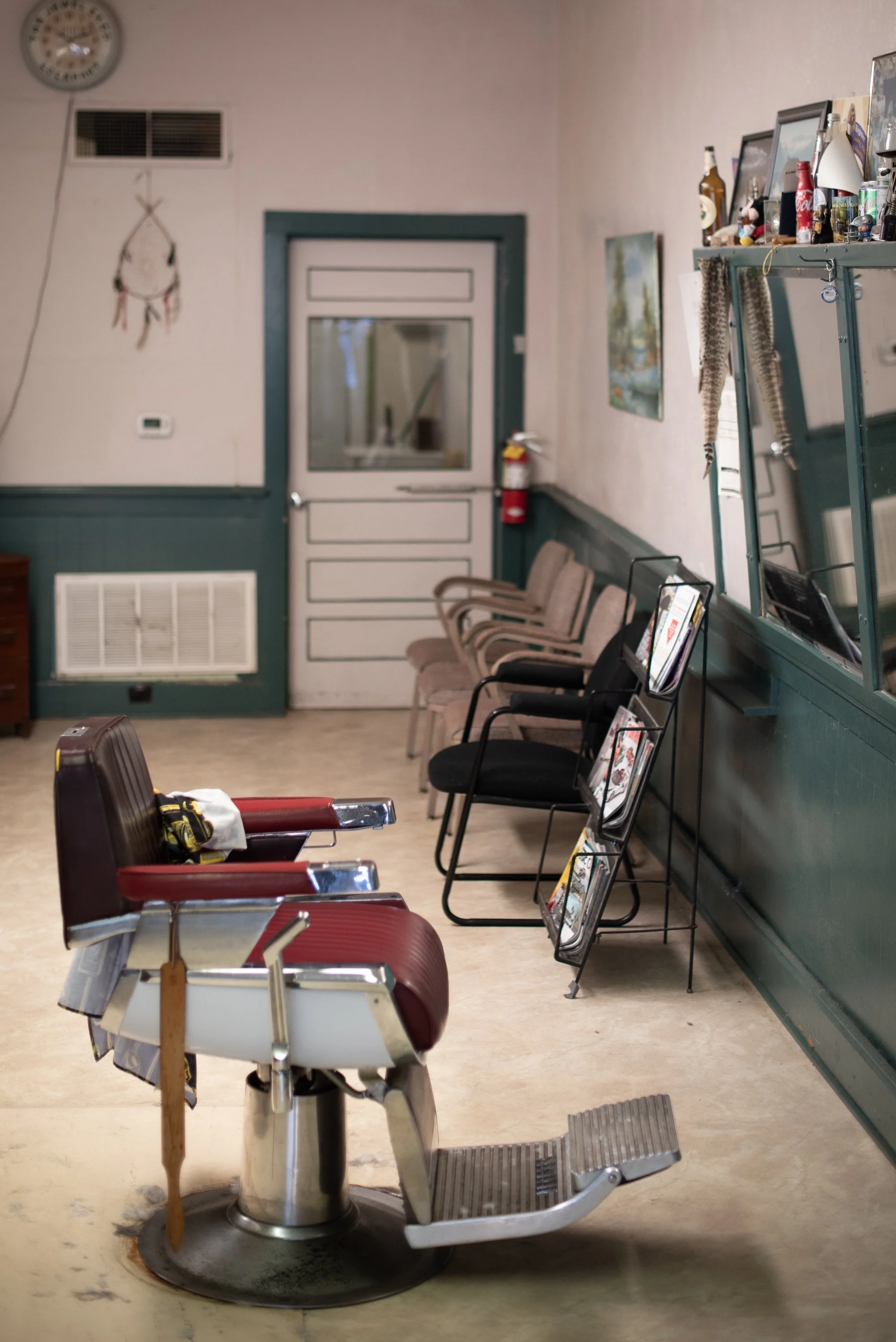
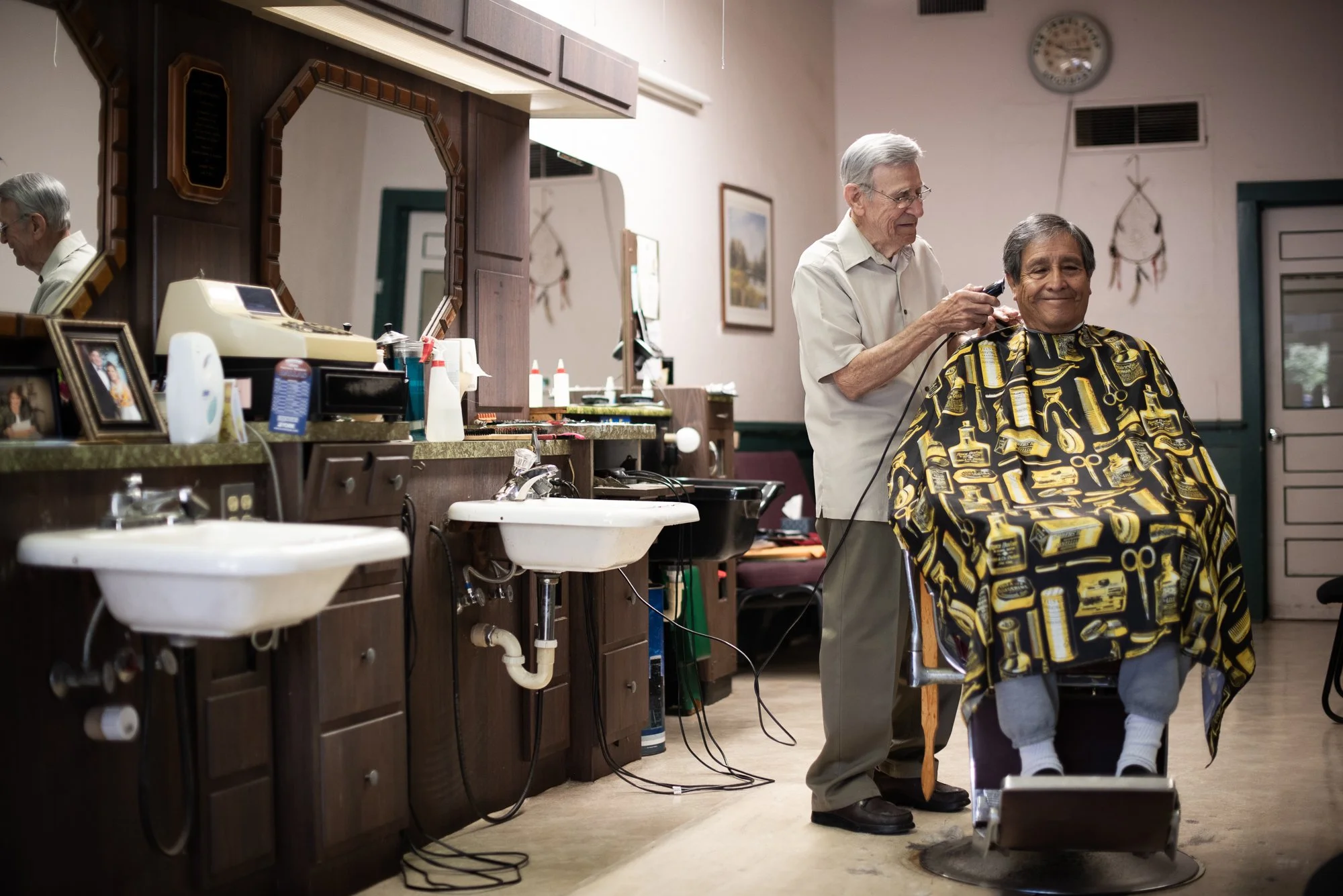
Lockhart has no shortage of visitors passing through, but Raymond’s Barbershop remains firmly rooted in local life. The worn chairs, utilitarian layout, and unpolished surfaces reflect decades of daily use rather than intentional preservation. This is not a styled space—it’s one that has simply been allowed to age naturally alongside the town itself. During my time at Raymond’s, he was cutting the hair of an old friend. This wasn’t made known explicitly, rather in the chemistry the two had—genuine smiles exchanged as the customer walked through the door and candid, easy banter which can only be formed by time.

Why Small-Town Barbershops Still Matter

In towns like Lockhart all across America, barbershops have long functioned as informal gathering places—spaces where news travels, laughs are shared, and familiarity carries more weight than novelty. As commercial rents rise and older barbers retire, places like Raymond’s quietly disappear, taking a long and irreplaceable history with them.

Documenting Raymond’s Barbershop as Part of a Larger Archive

Truth be told I only found Raymond’s because of my obsession with BBQ, which brought me to Lockhart, but that’s just the luck of the draw. You never know how important subjects are going to come into your life. Regardless, these photographs of Raymond and his beautiful old shop are part of an ongoing, 15-year effort to document traditional barbershops across the United States. Each shop is approached individually—rooted in its town, its people, and its history—while collectively contributing to a broader visual record of a disappearing American institution.

View More Traditional Barbershops

→ View the full Barbershops of America gallery

For more work made in Texas, you can also view photographs from another long-standing barbershop documented as part of the same project:

→ View a Texas barbershop in Marfa

Exterior storefront of Raymond’s Barber Shop in downtown Lockhart, Texas.

The storefront of Raymond’s Barber Shop in Lockhart, Texas—a modest main street presence that has served generations of local residents.
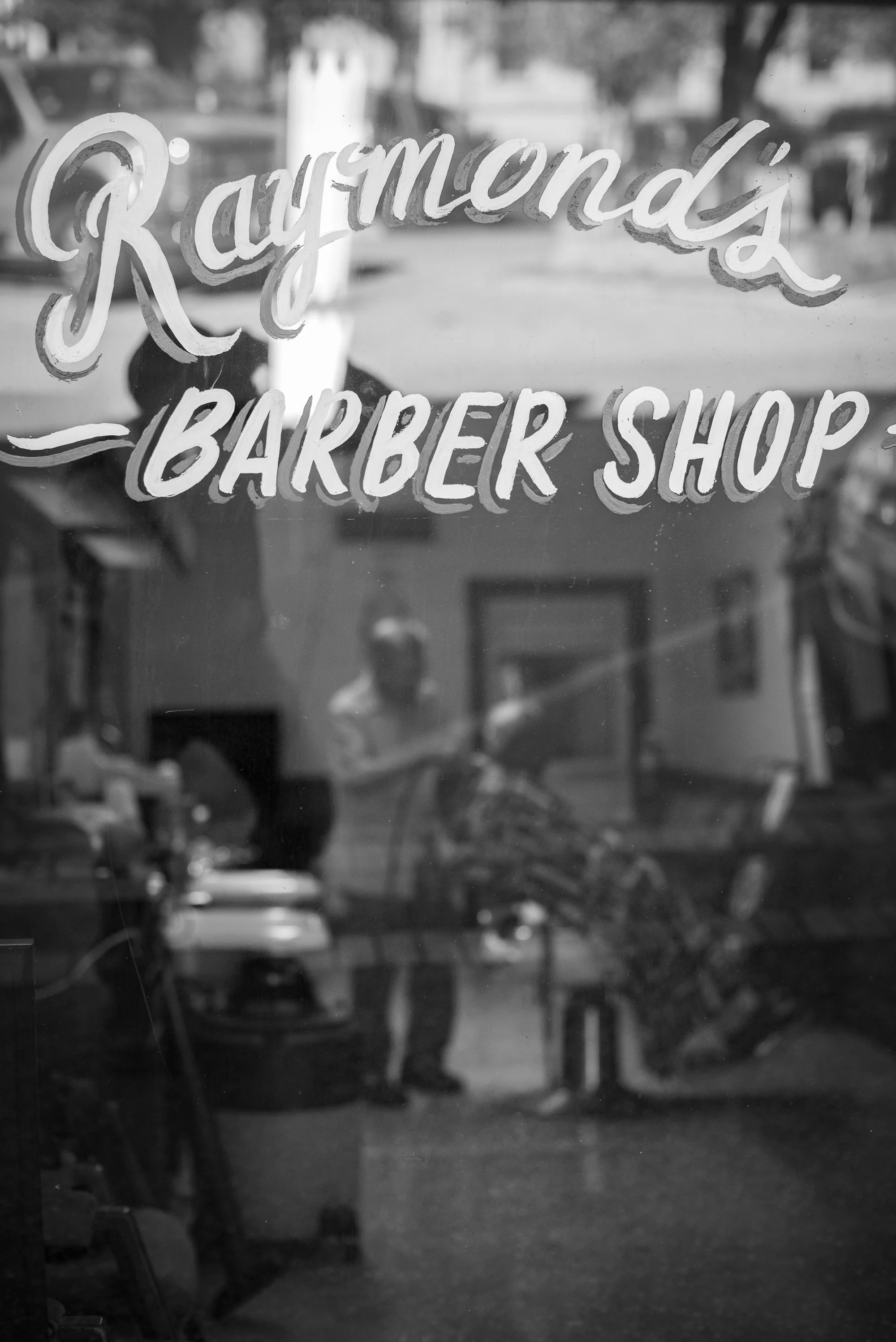
Hand-painted “Raymond’s Barber Shop” lettering on the front window in Lockhart, Texas, with reflections of the barbershop interior.
Hand-painted lettering on the front window of Raymond’s Barber Shop in Lockhart, Texas, separating the street outside from the quiet work happening inside.
Empty barber chair and waiting area inside Raymond’s Barber Shop in Lockhart, Texas.

An empty chair and quiet waiting area inside Raymond’s Barber Shop in Lockhart, Texas, between customers and conversations.

Barber giving a haircut to a customer inside Raymond’s Barber Shop in Lockhart, Texas.

Barber and customer smile together during a routine haircut underway at Raymond’s Barber Shop in Lockhart, Texas, where familiarity and trust guide the work as much as technique.

An elderly man sits in a barber chair inside Raymond’s Barber Shop in Lockhart, Texas.

Barber holds the chair as his elderly customer braces himself at Raymond’s Barber Shop in Lockhart, Texas—part of a daily routine that has remained largely unchanged for decades.