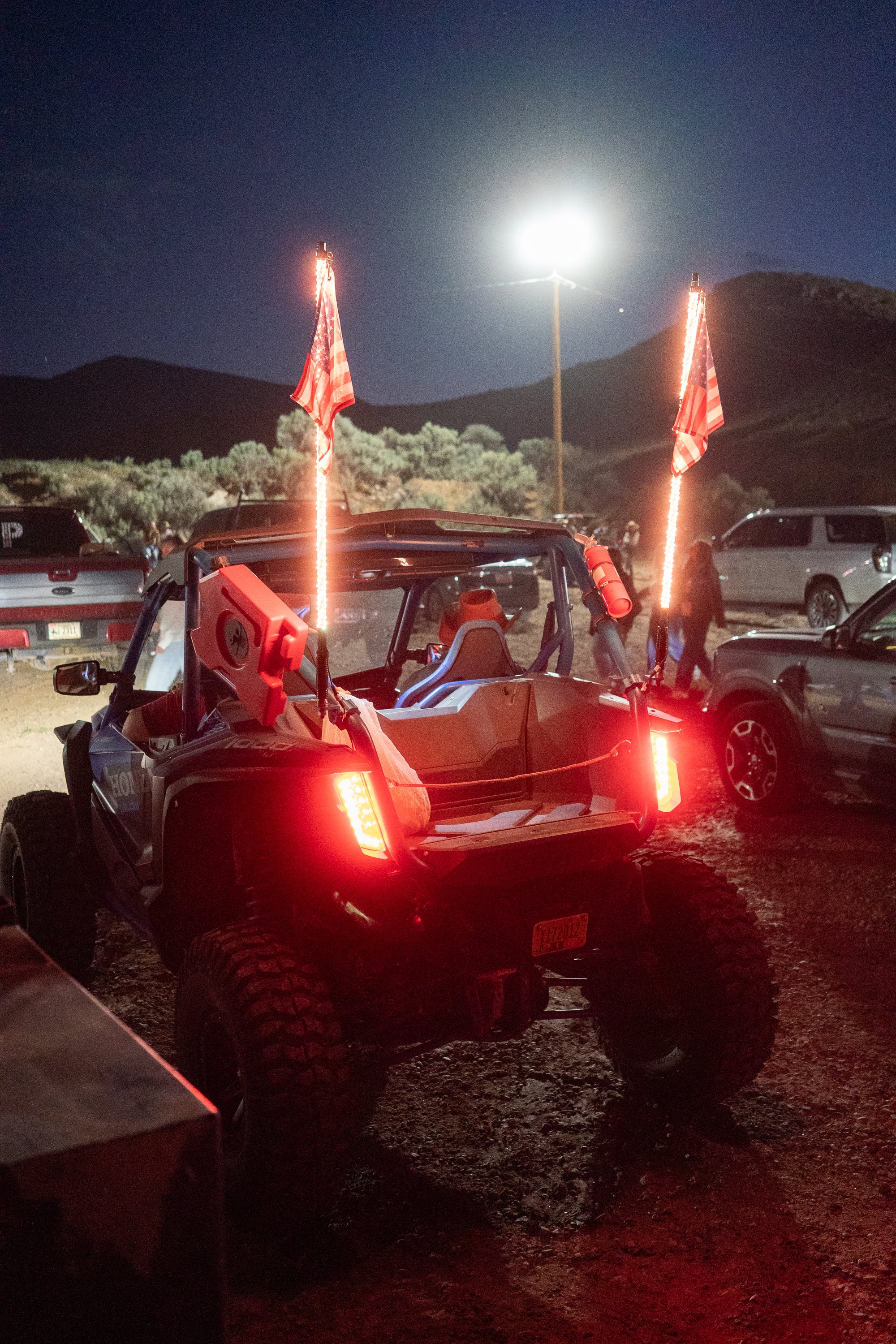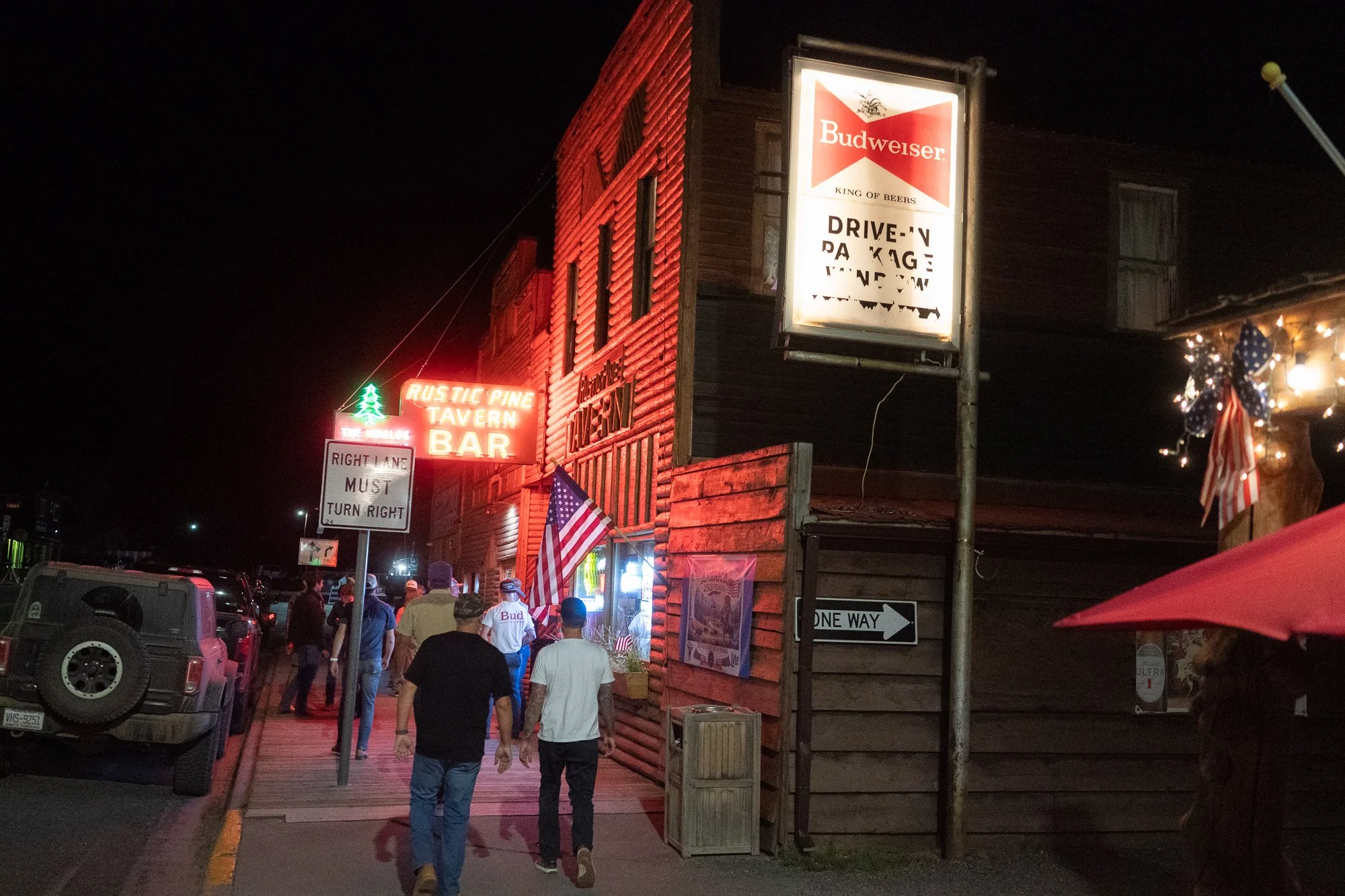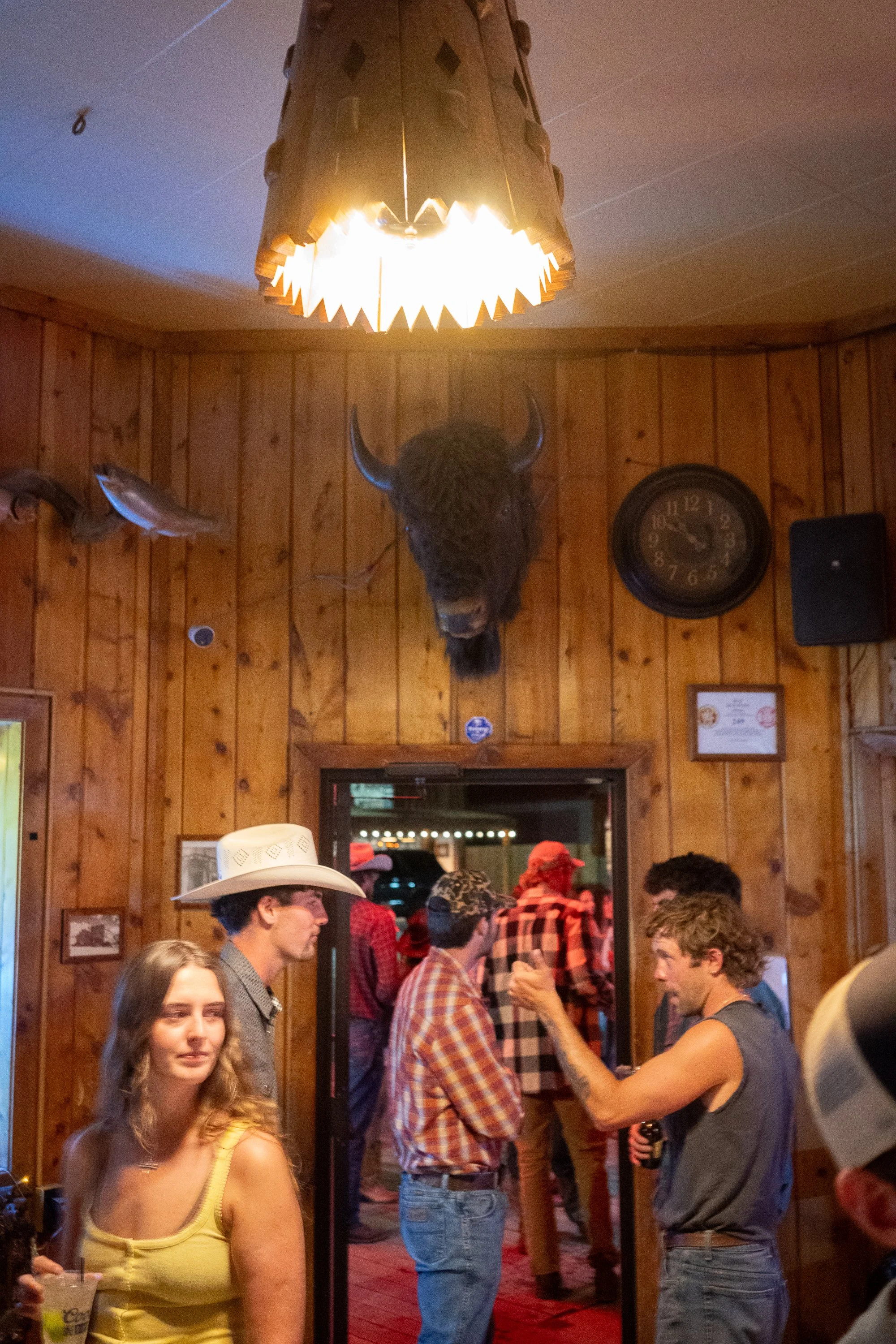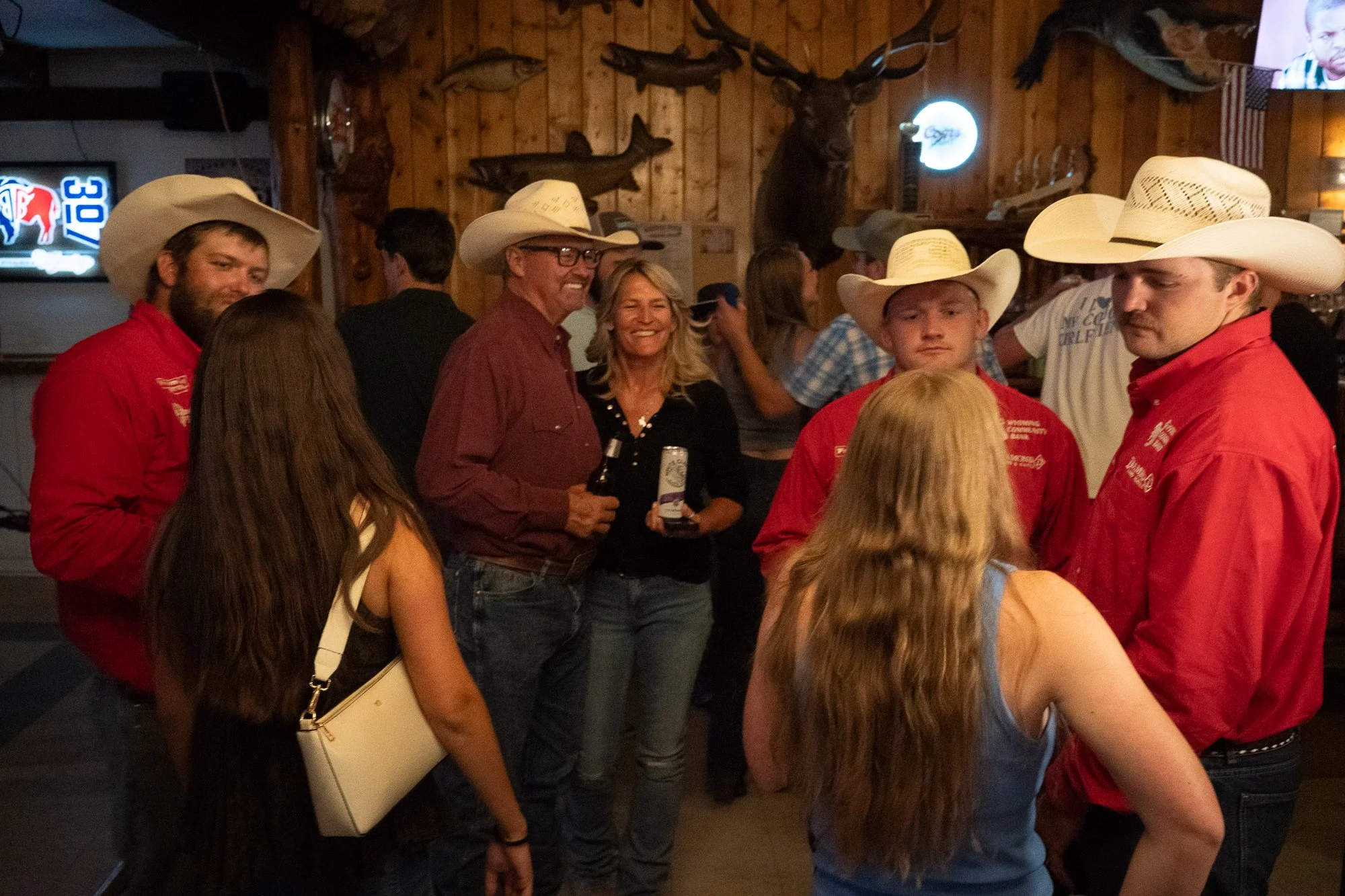
Photographing Wyoming: Cowboys, Ranches & the Open Road

Wyoming Photography: Cowboys, Ranches, Small Towns & the American West

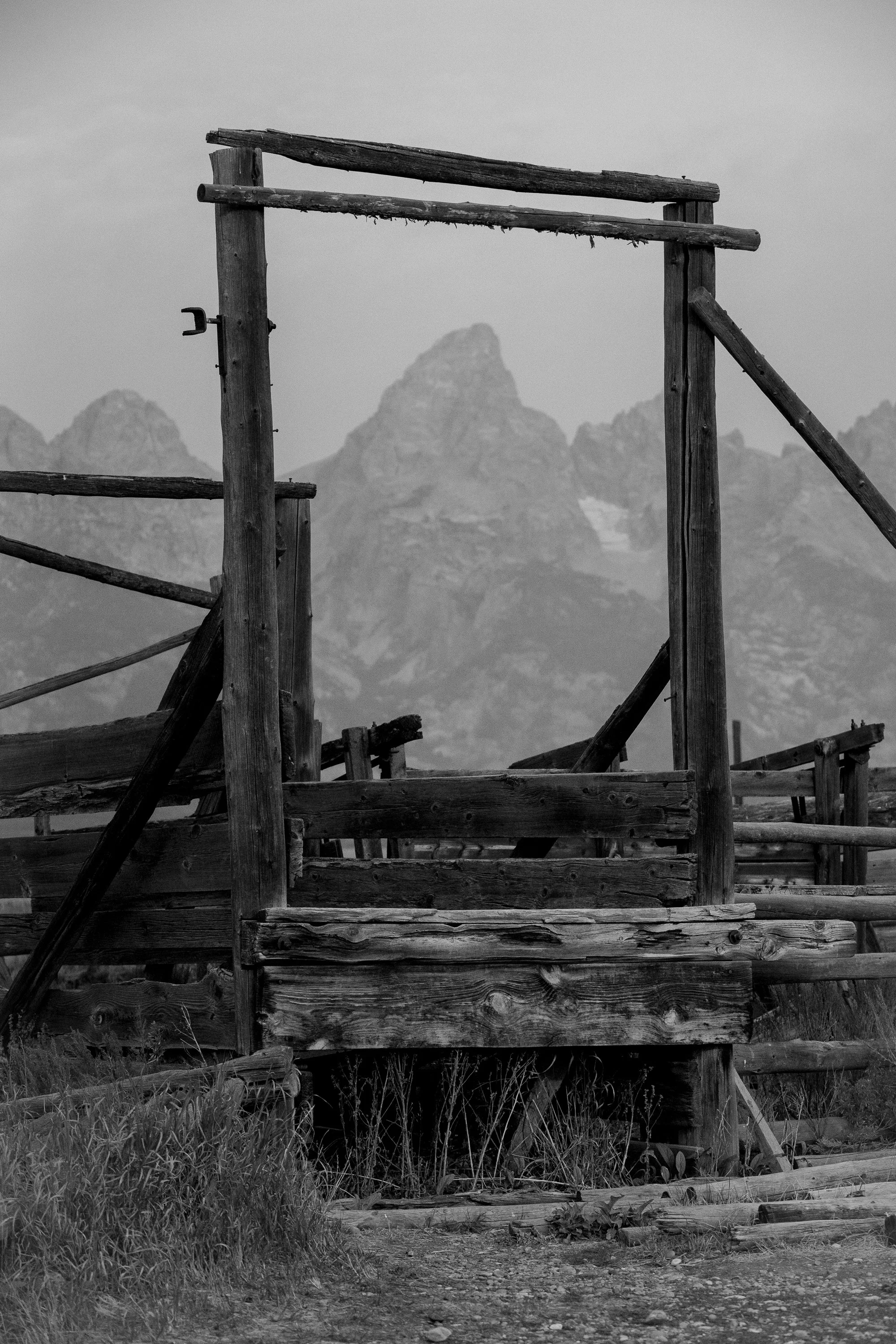
Weathered wooden ranch corrals with Wyoming mountains in the distance

Weathered wooden corrals sit against the mountains in the distance.

I've spent a lot of time driving through Wyoming over the years, usually with somewhere specific to be and enough time built into the trip to stop when something catches my attention. And in Wyoming, that happens a lot.

Most photography of Wyoming understandably focuses on the obvious places. Yellowstone, wildlife, etc etc. All of which deserve the attention they get. But that's never really been what keeps me coming back with a camera.

I'm more interested in the Wyoming between those places.

The working ranches. Cowboys. Small towns. Rodeos. Bars. Old motels. Empty highways. People going about their lives. And all the strange, quiet things you find after enough hours on the road.

Over the years, those photographs have become part of several long-term bodies of work documenting the American West. Taken together, they tell a story about Wyoming that has less to do with its famous scenery and more to do with what it feels like to spend time there.

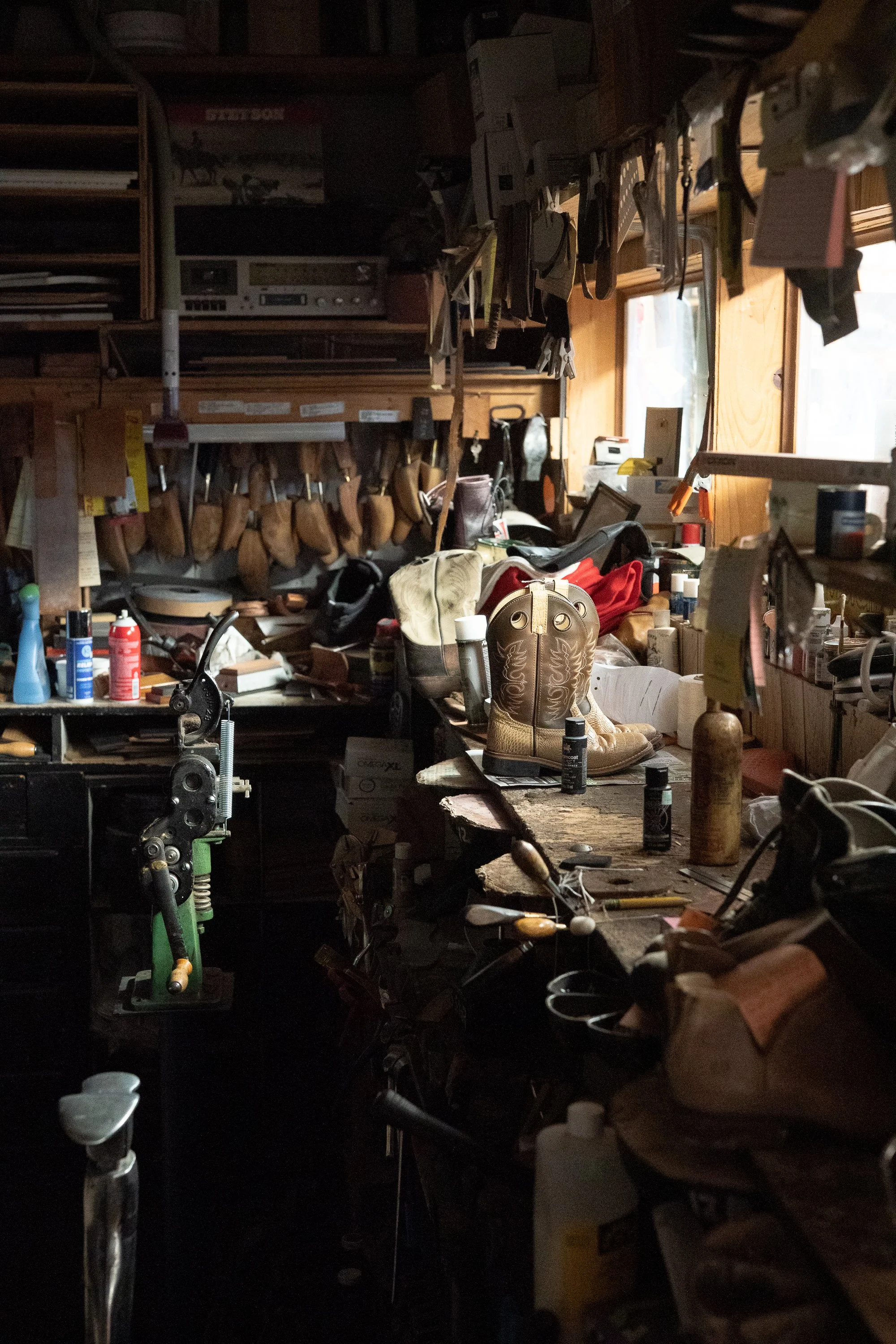
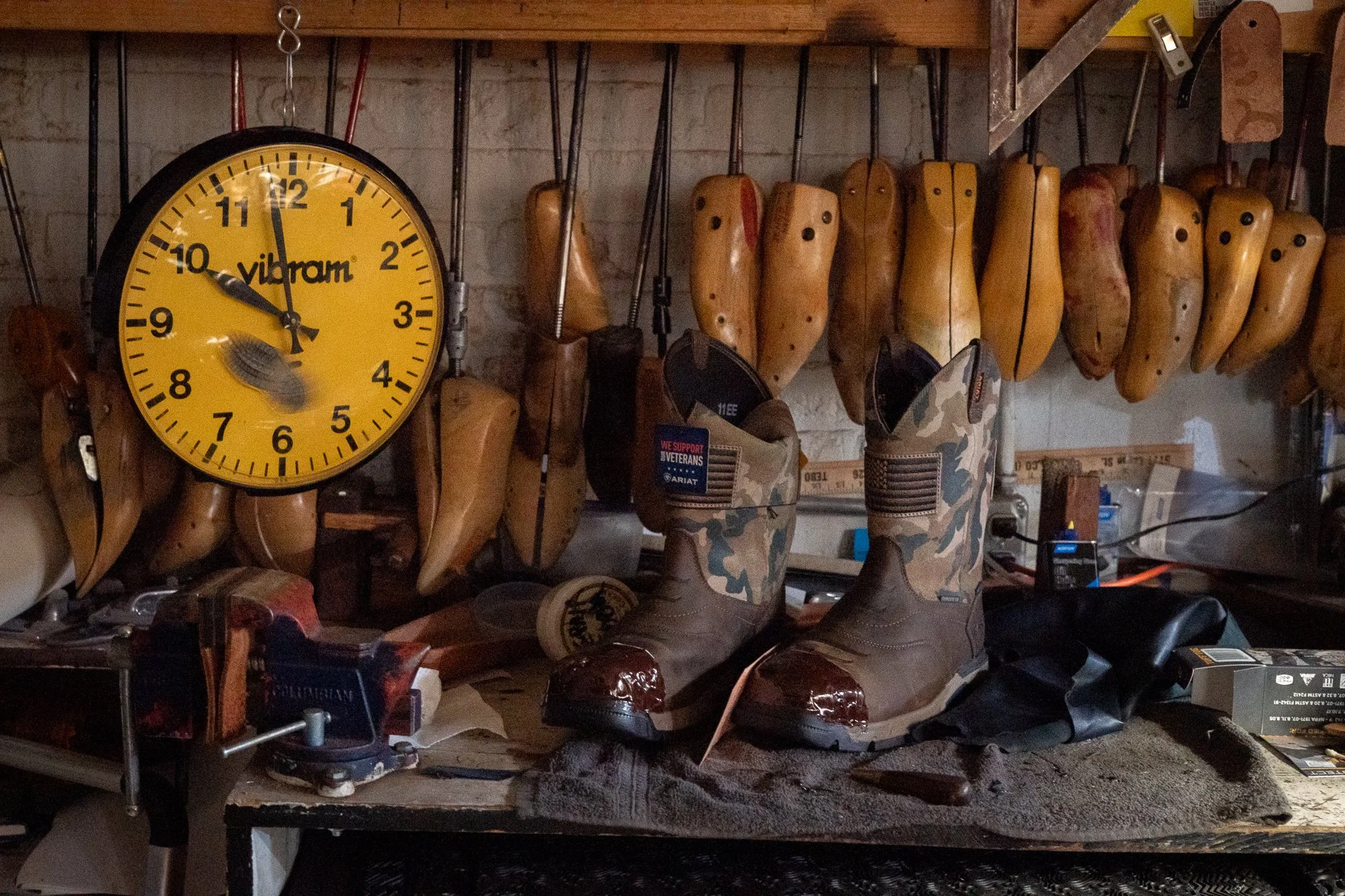
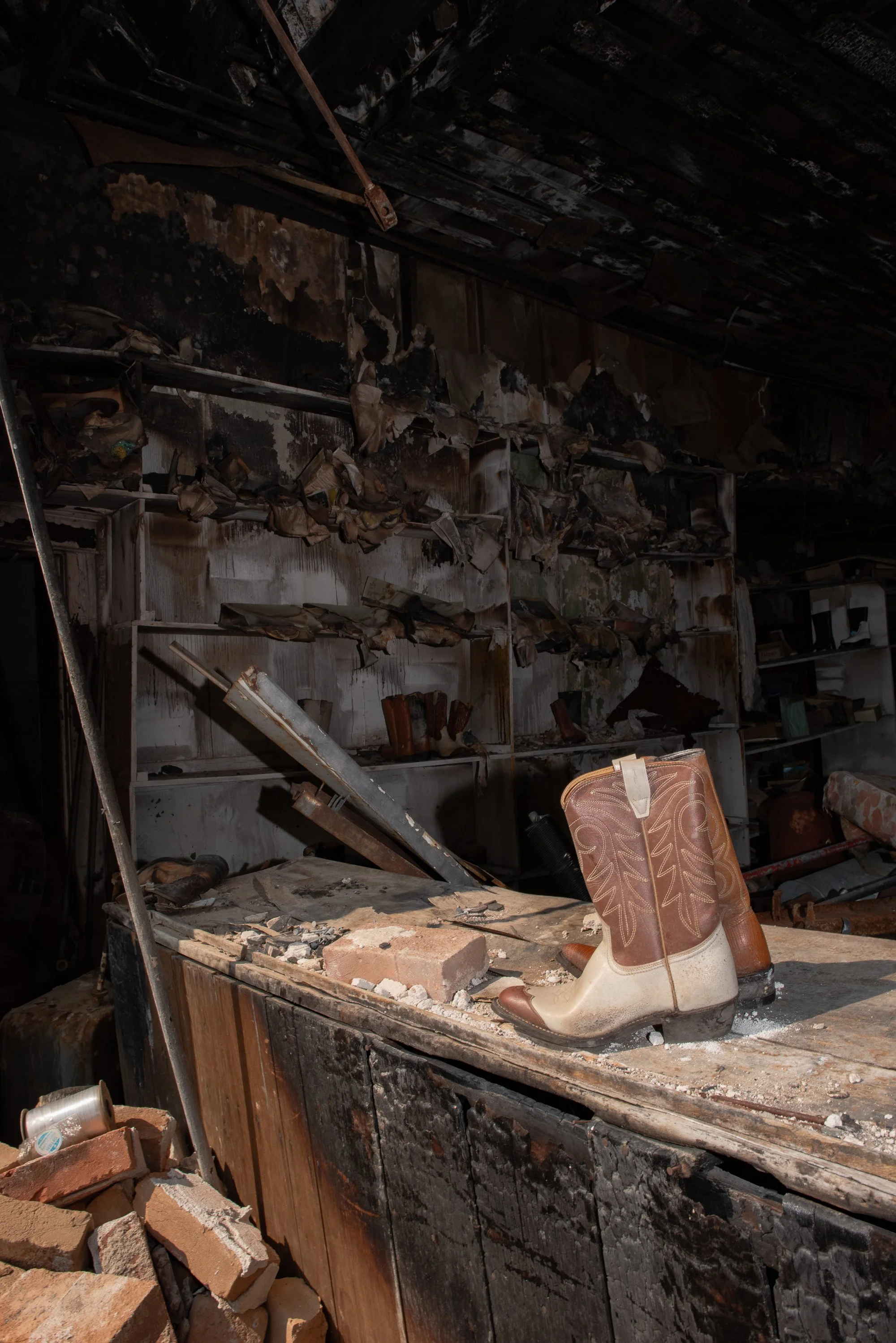
Worn cowboy boots resting on a workbench inside an old Western building

Worn cowboy boots sit among the tools and debris in a burned out building.

Photographing Wyoming Beyond The Instagram Hot Spots

There probably isn't another state in America as visually associated with the West as Wyoming. It's hard to separate the place from the mythology surrounding it.

The landscape certainly has something to do with that. Everything feels bigger. Towns are separated by enormous stretches of nothing. Weather can change quickly. Mountains appear on the horizon and stay there for hours.

But the longer I've photographed Wyoming, the more interested I've become in the evidence of people living inside that landscape.

A faded motel sign. An old truck parked outside a bar. A gas station in the middle of nowhere. Horses standing behind a fence. A main street that looks like it hasn't changed much in 40 years.

None of those things are unique to Wyoming on their own. Together, though, they start to describe the place in a way that another photograph of the Tetons can't.

That's the Wyoming I keep looking for.

Weathered green vintage car parked beside an old Wyoming building

An old car parked beside a dilapidated building adds another detail along the road.

Man sitting in a pickup truck with an American flag on a Wyoming street

A man holding a gun sits in his truck with a Trump flag hanging off the tailgate.

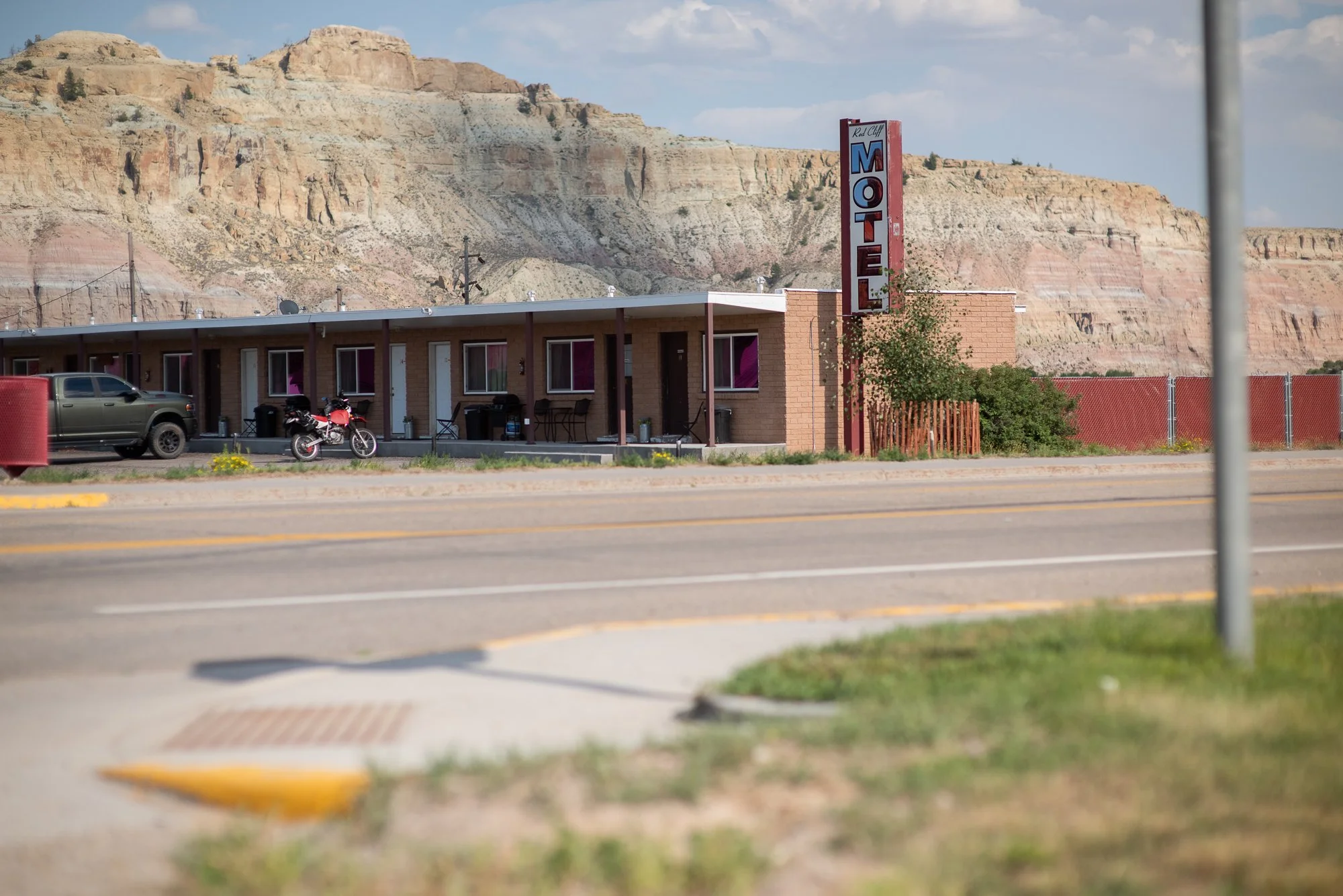
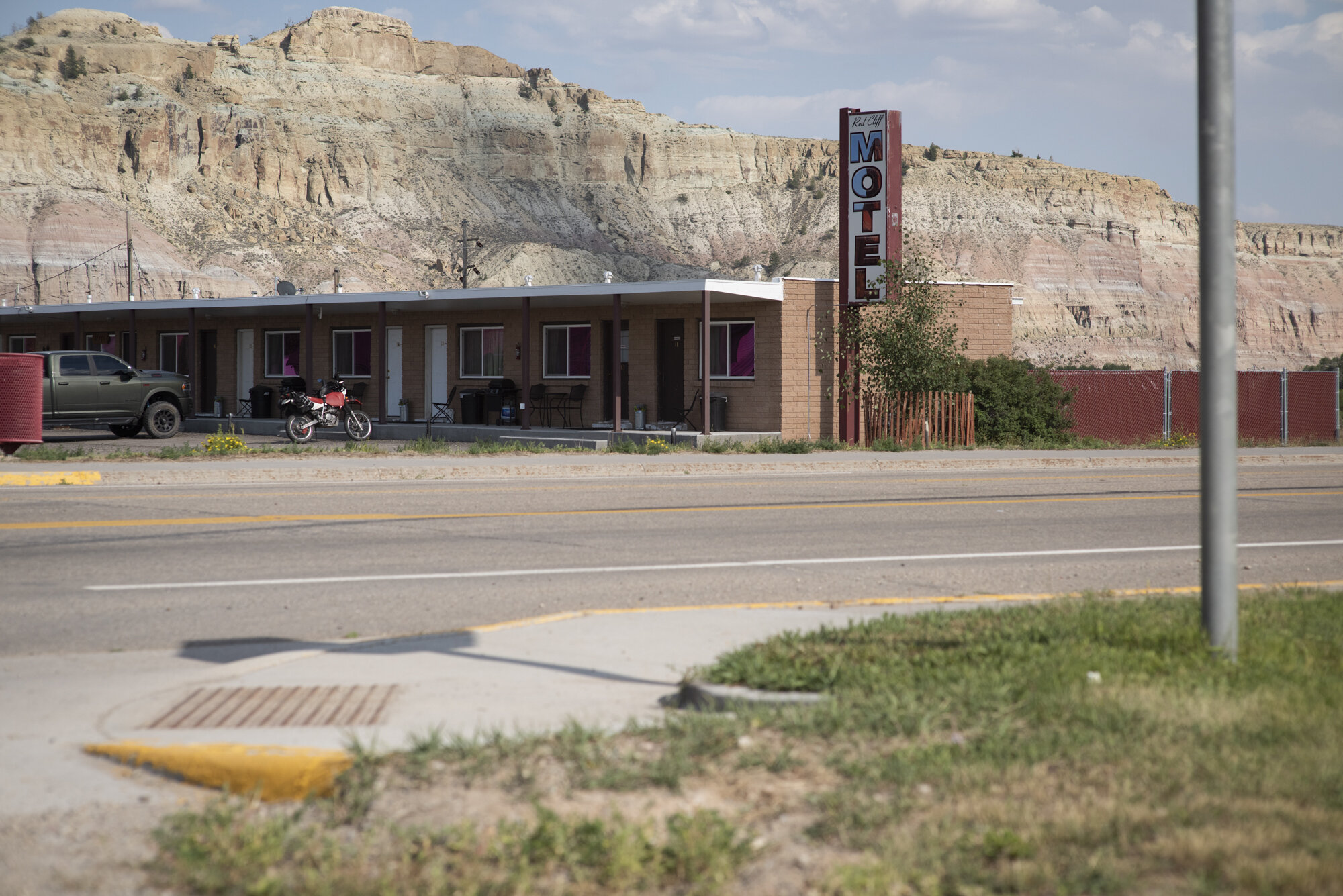
Old motel beside a Wyoming road with rocky cliffs behind it

The old motel sits beside the road with rocky cliffs behind it.

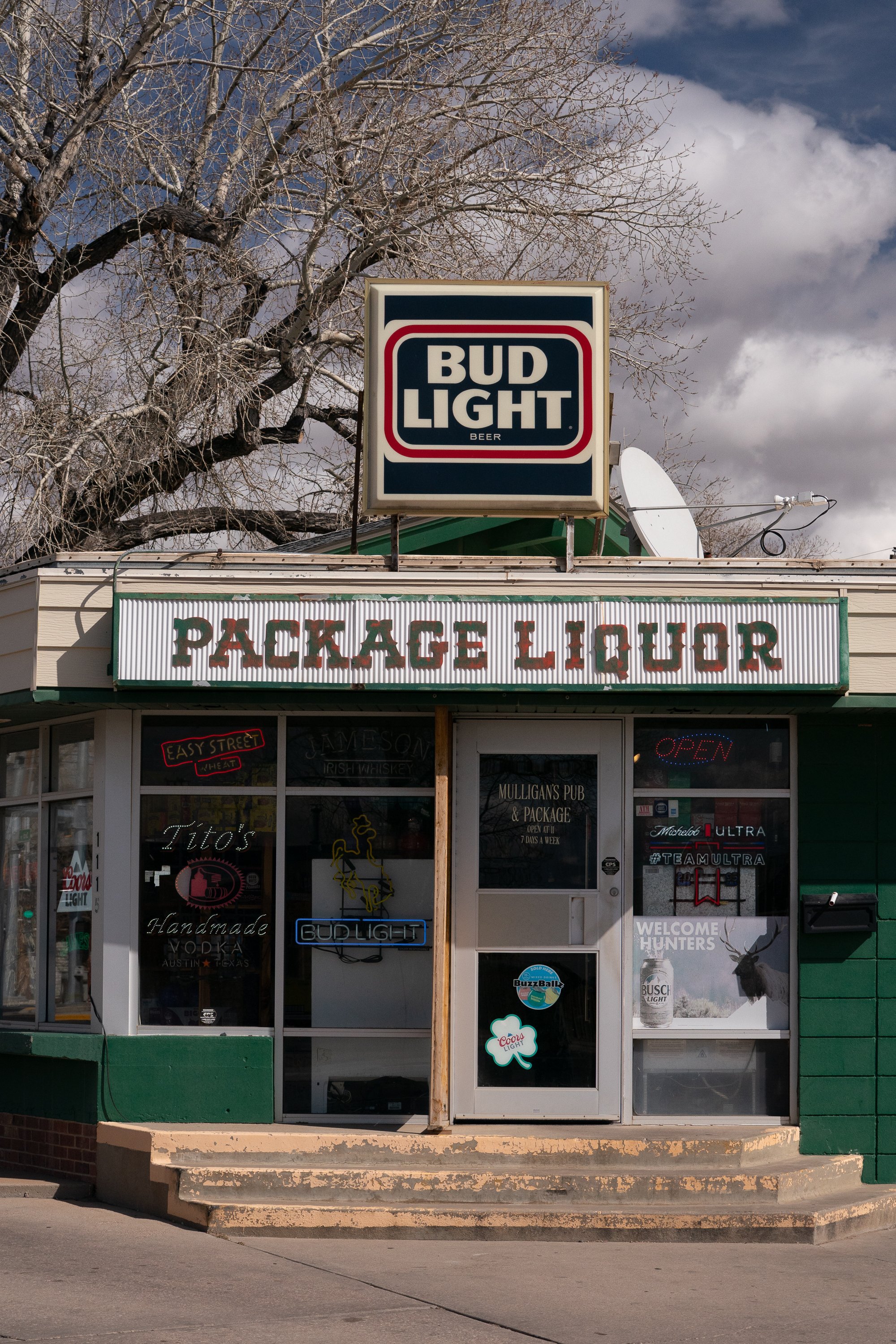
Package liquor storefront with Bud Light sign in a Wyoming town

Old signs and storefronts are part of the small-town landscape.

Wyoming Cowboy Photography

For the past several years, a significant part of my work has focused on working cowboys and ranches throughout the American West.

There's an enormous difference between photographing the idea of a cowboy and photographing someone who actually makes a living horseback.

The work isn't performed for the camera. Cattle need to be gathered and moved. Calves need to be branded. Fences need fixing. Horses need to be saddled. The weather doesn't care that you're trying to make photographs.

That's precisely what makes it interesting.

When I'm photographing cowboys in Wyoming, I'm not interested in manufacturing some romantic version of the West that doesn't exist. I'm interested in the things that happen naturally when people are doing work they've spent their lives learning how to do.

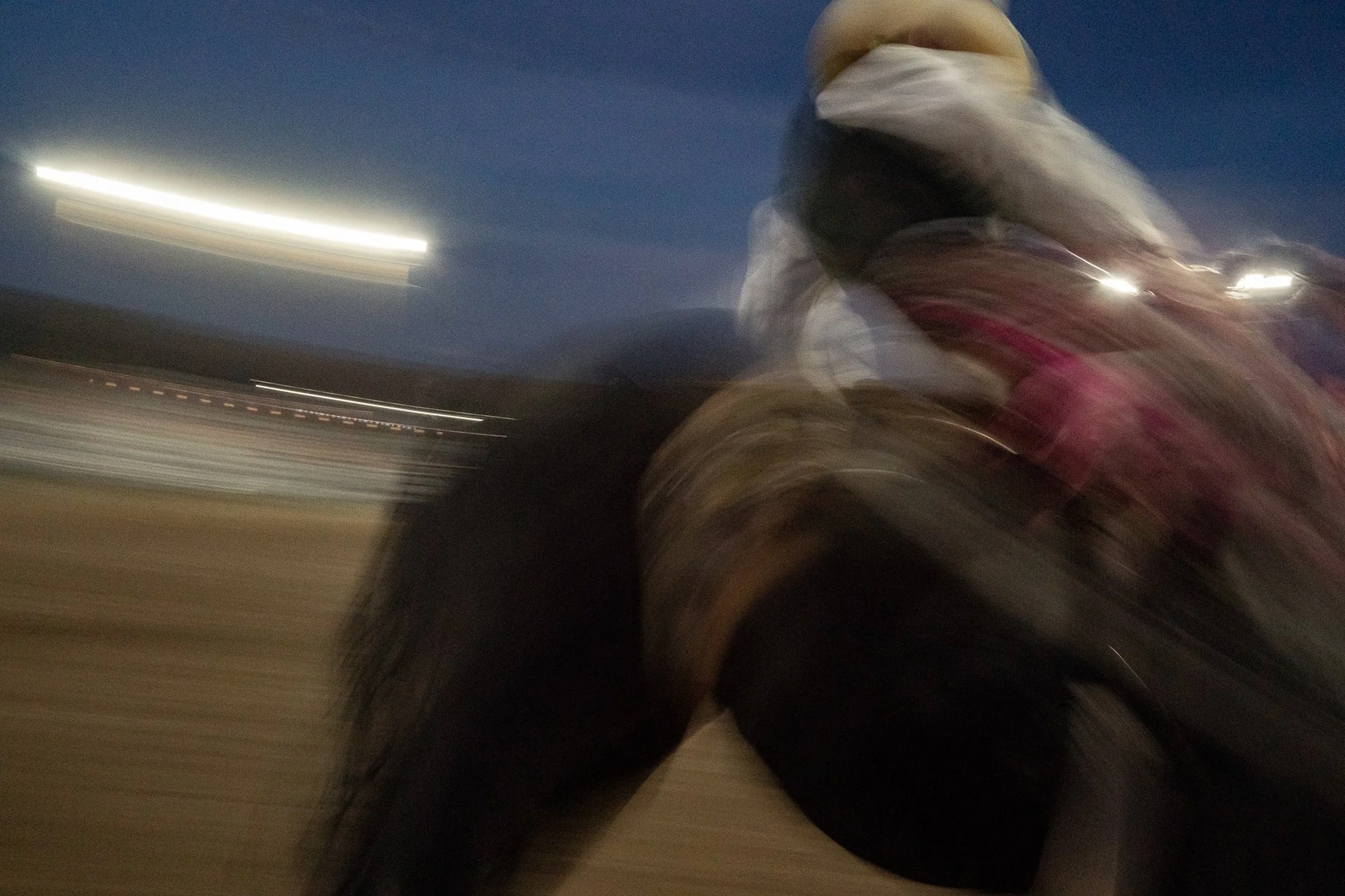
A rider disappearing into a cloud of dust. The way a horse and cowboy move together while sorting cattle. Frozen hands early in the morning. Long stretches where nothing particularly dramatic happens, followed by thirty seconds when everything happens at once.

Those moments are what have kept me working on this project year after year.

They also serve as a reminder that the American cowboy isn't simply a historical character. Ranching culture is still very much alive in Wyoming.

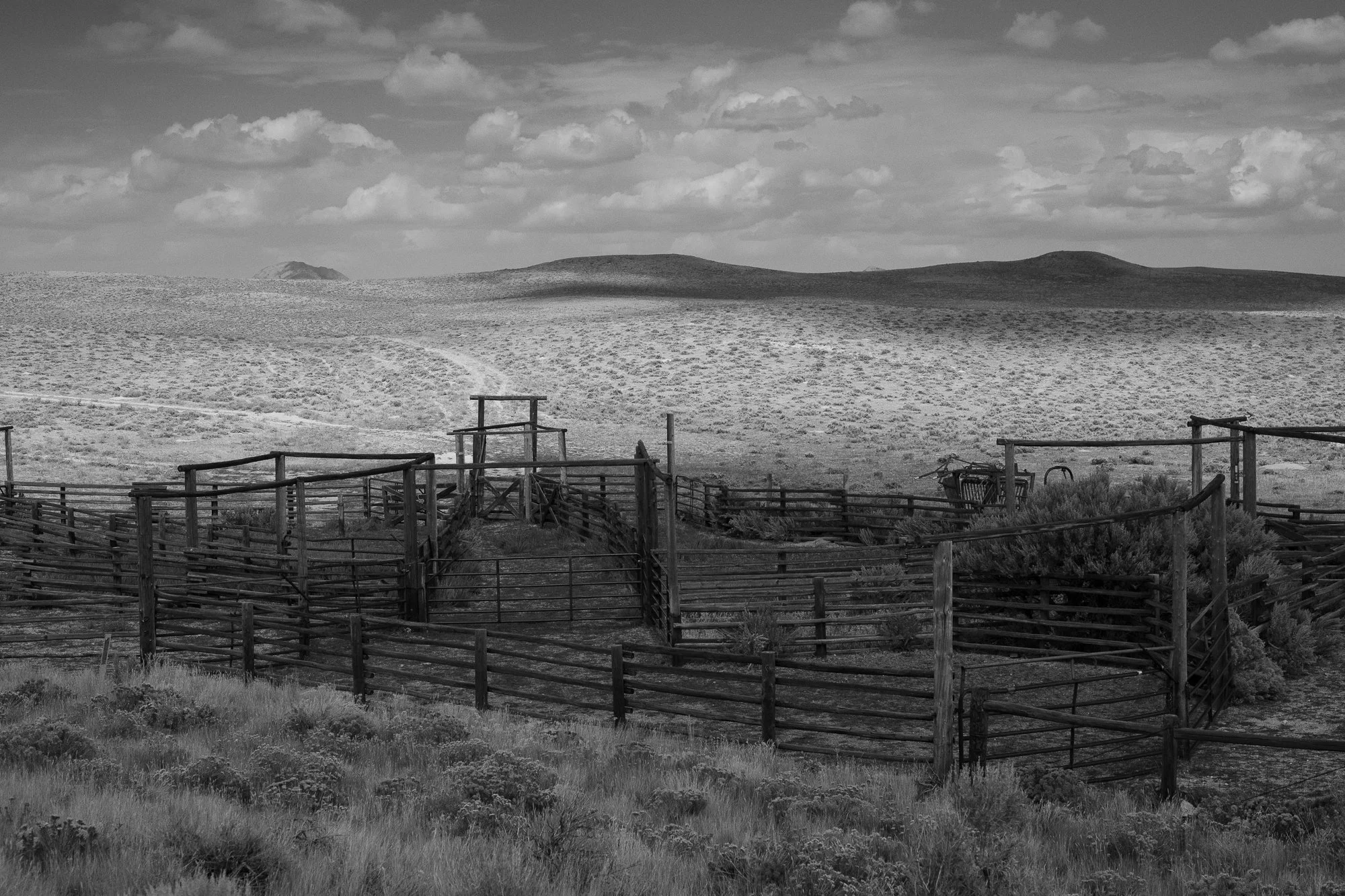
Weathered wooden cattle corrals on a working ranch in Wyoming

Weathered cattle corrals sit below the rolling hills on a working ranch in Wyoming.

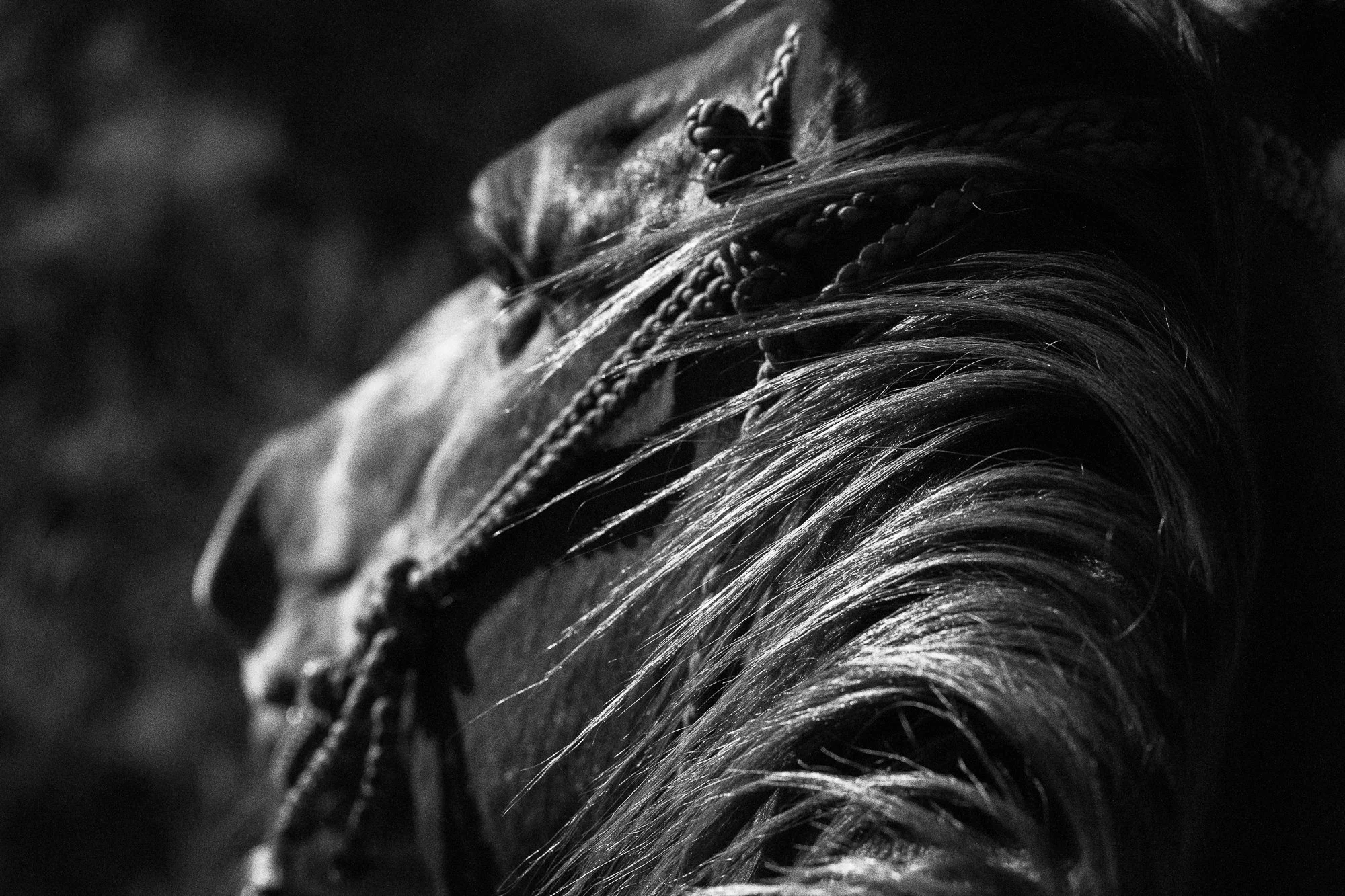
Close view of a cowboy's horse wearing a worn Western bridle

First light illuminates a horses face on a working cattle ranch.

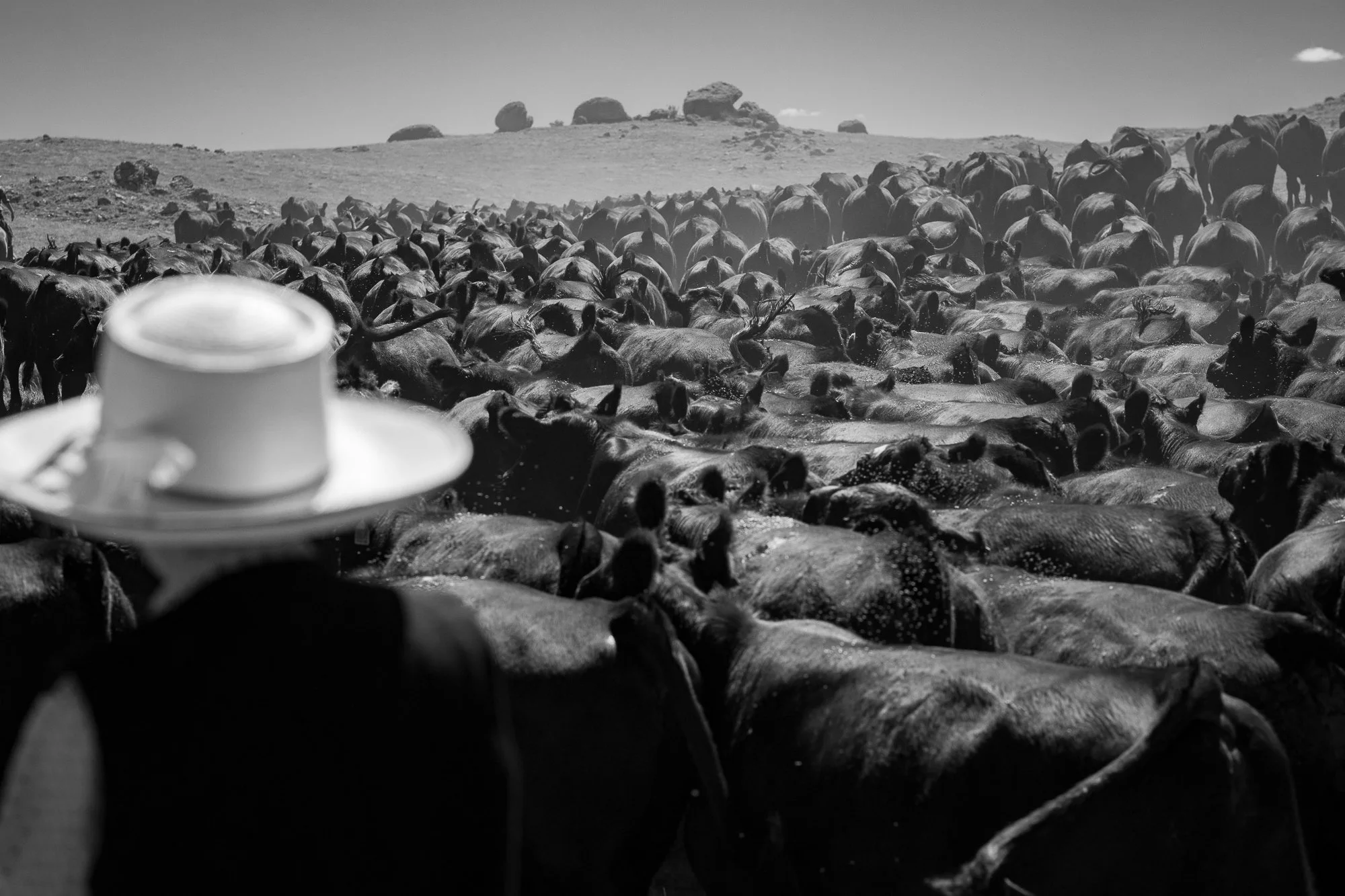
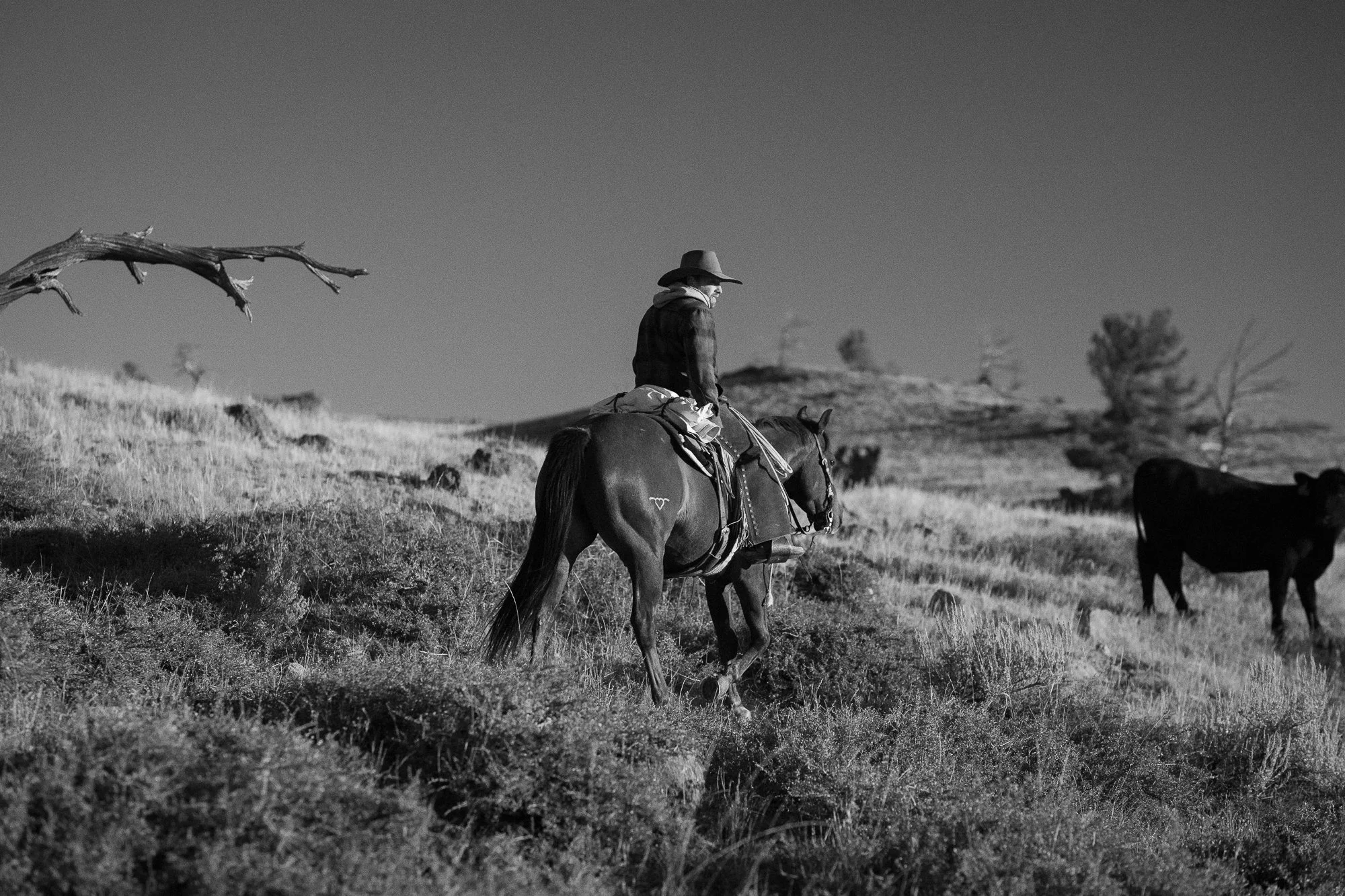
Cowboy on horseback moving cattle across a Wyoming ranch

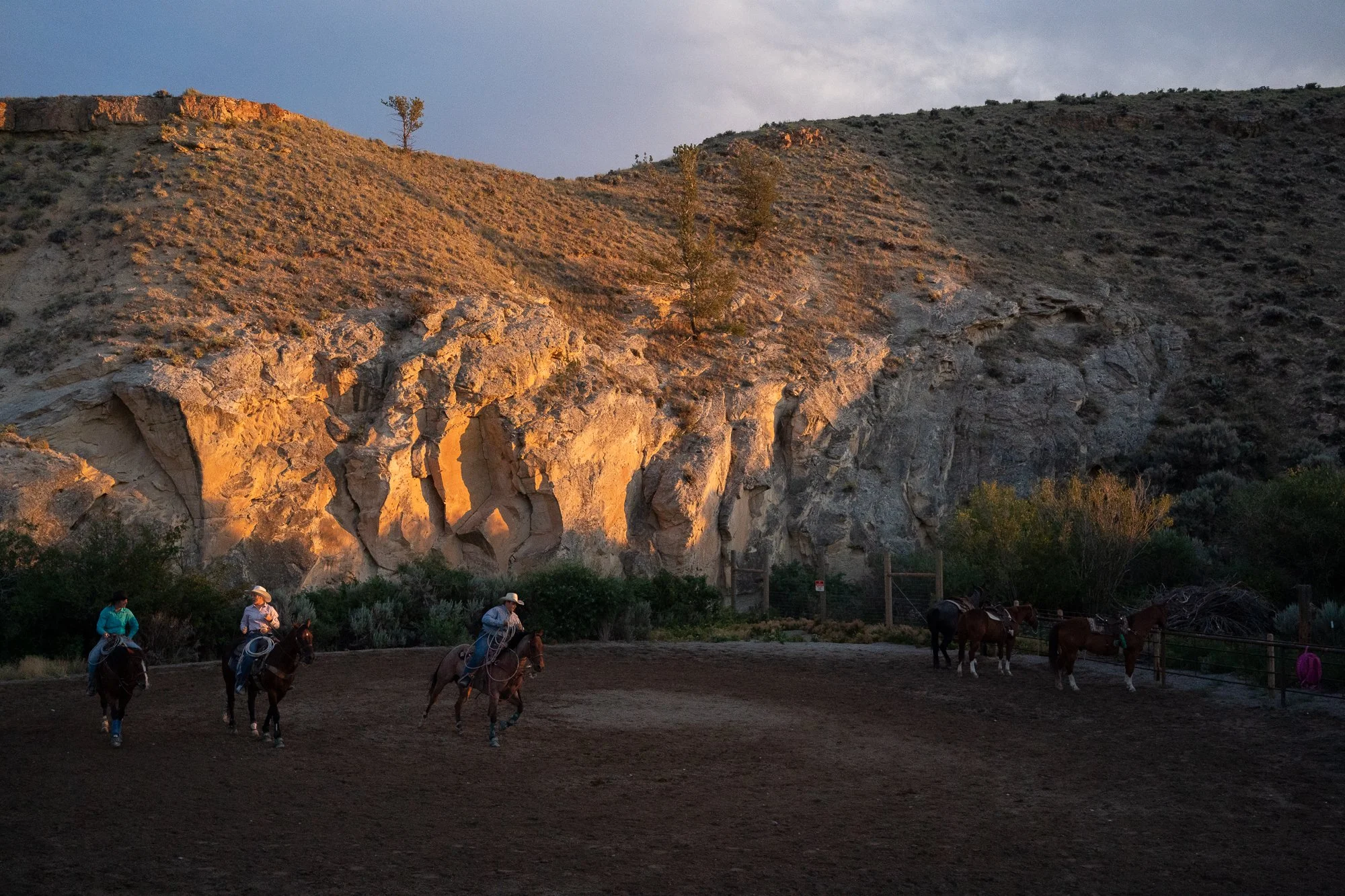
Working cattle brings the cowboy, horses, and land into the same frame.

Photographing Working Ranches in Wyoming

Access is everything when photographing ranches.

You can't understand much about a place by showing up for twenty minutes, making a few photographs and leaving. The pictures get better when people stop paying attention to the camera.

That takes time.

Over the years I've been fortunate to spend time on working ranches throughout the West, documenting cattle drives, brandings, roundups and the everyday work that happens between those bigger events.

Some of my favorite photographs aren't necessarily of cowboys at all.

They're the details surrounding the work. Saddles worn smooth from years of use. A pair of gloves sitting on a fence post. Steam coming off a horse on a cold morning. Trucks covered in dirt. Dogs waiting for something to happen. People standing around talking after the work is finished.

Those details say as much about ranching as the dramatic moments do.

The landscape is always present too. In Wyoming, it's impossible for it not to be. Ranching happens at a scale that can make a rider on horseback look insignificant against the country surrounding them.

That relationship between people, animals and land is a large part of what I'm trying to photograph.

Cowboy on horseback moving cattle across a Wyoming ranch

Horse and rider move through the pasture as cattle gather nearby.

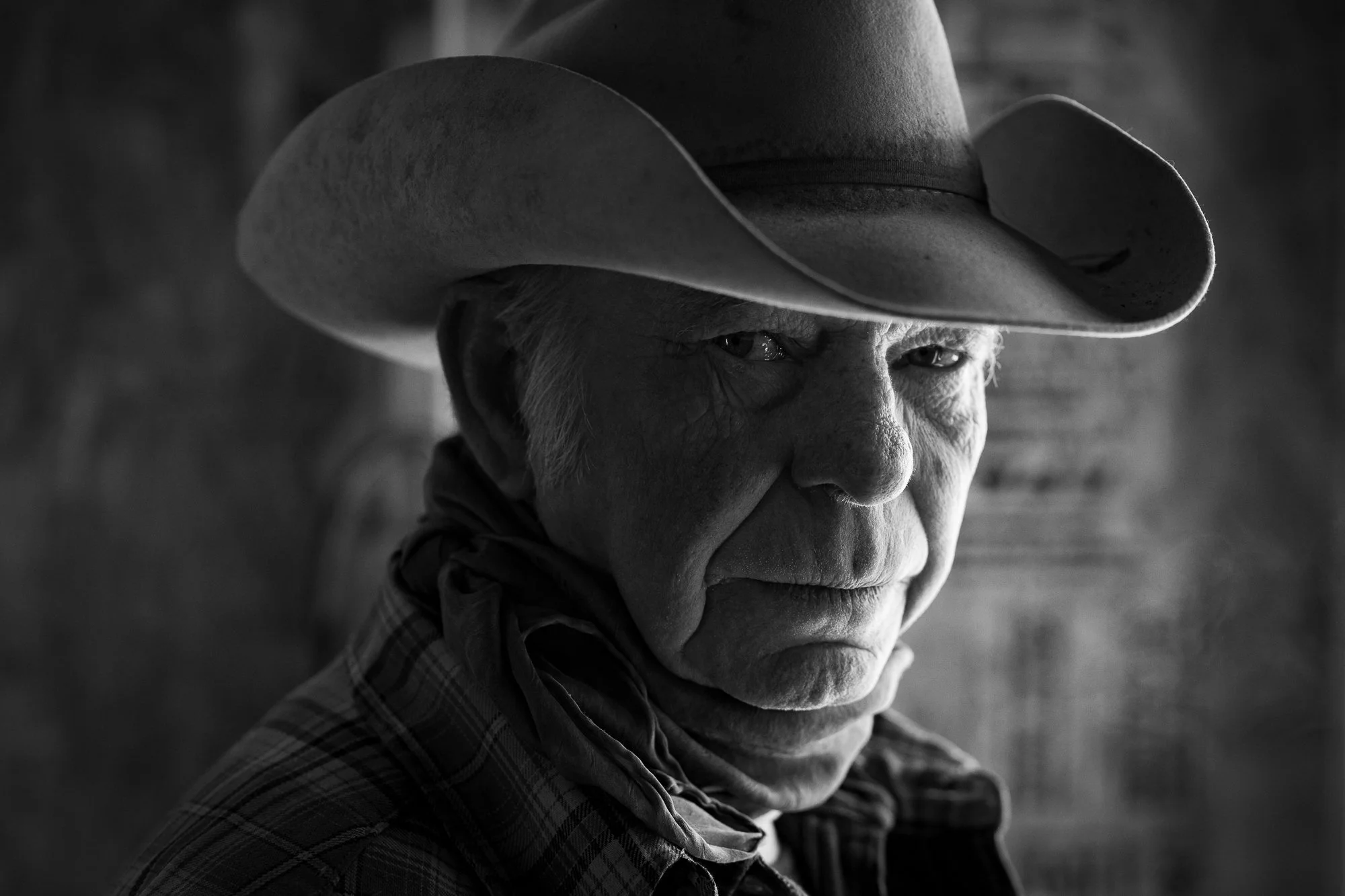
Portrait of a cowboy wearing a hat and bandana

Cowboy portrait inside a working ranch workshop.

Small Town Wyoming

Long before I started seriously photographing cowboys, I was photographing the American road.

For years I've driven around the country making photographs of places and objects that aren't typically considered important enough to photograph. Motels. Diners. signs. Abandoned buildings. Old cars. Storefronts. Bars. Basketball hoops. And whatever else makes me pull over.

Wyoming is particularly good for that kind of wandering.

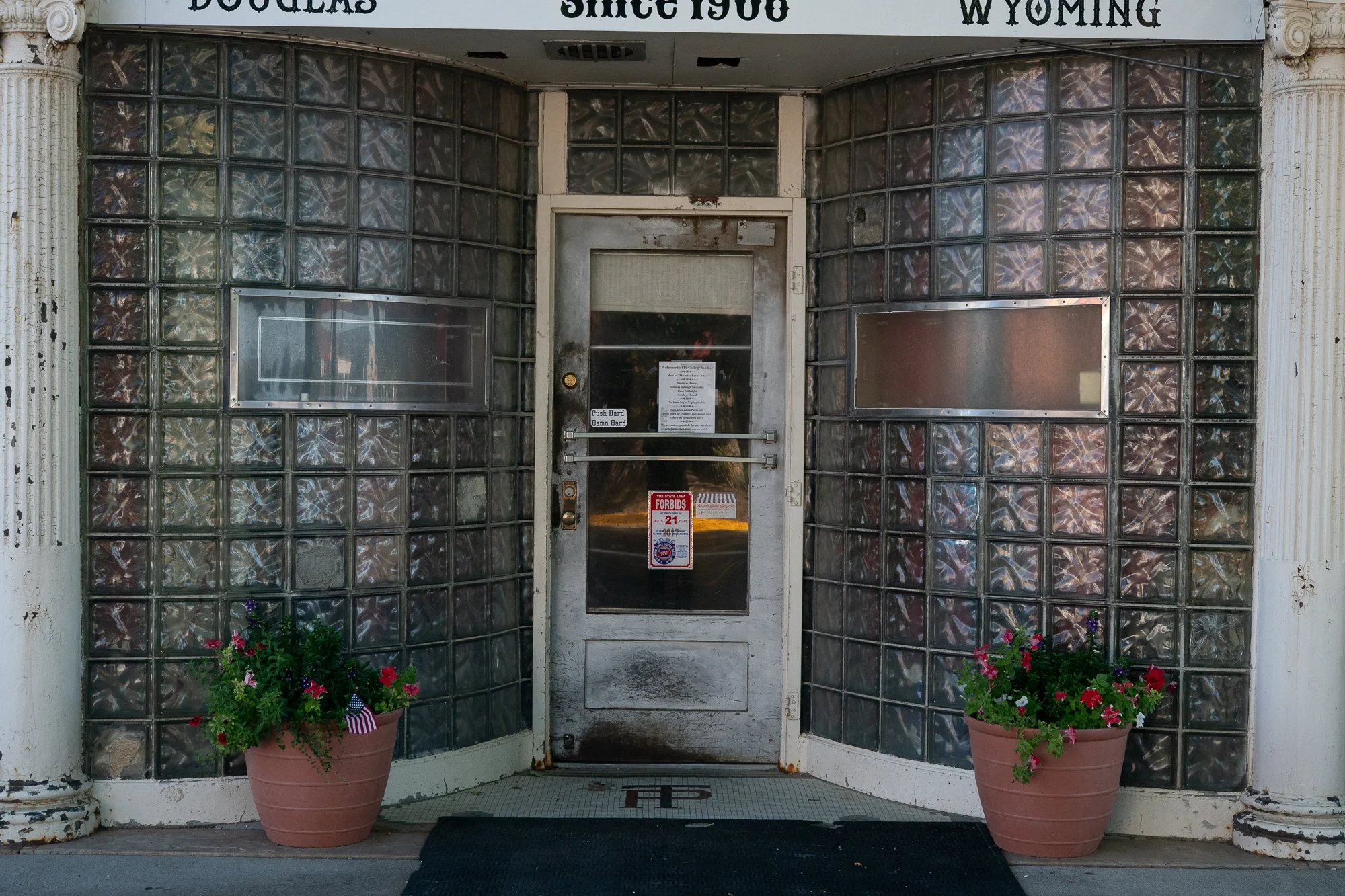
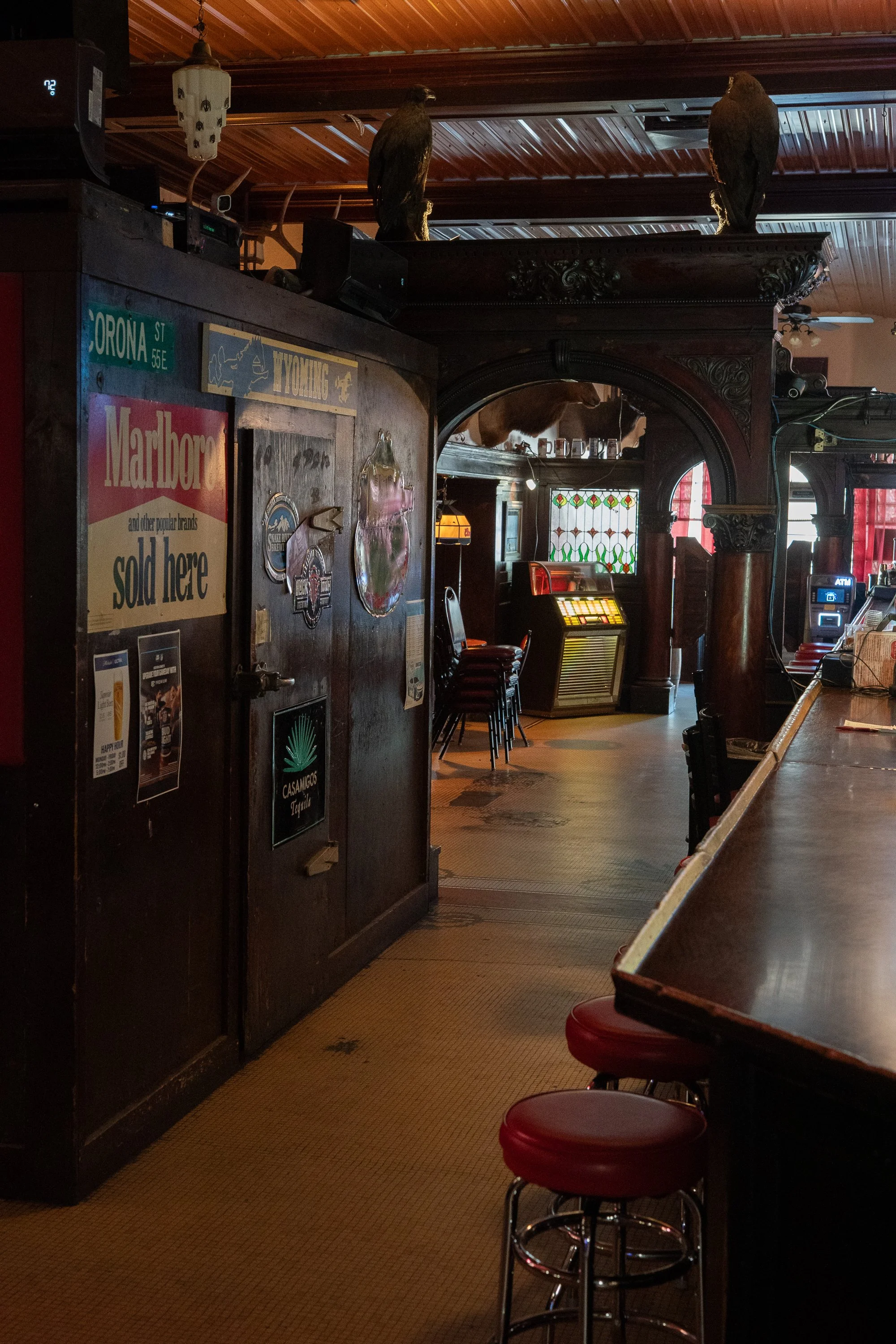
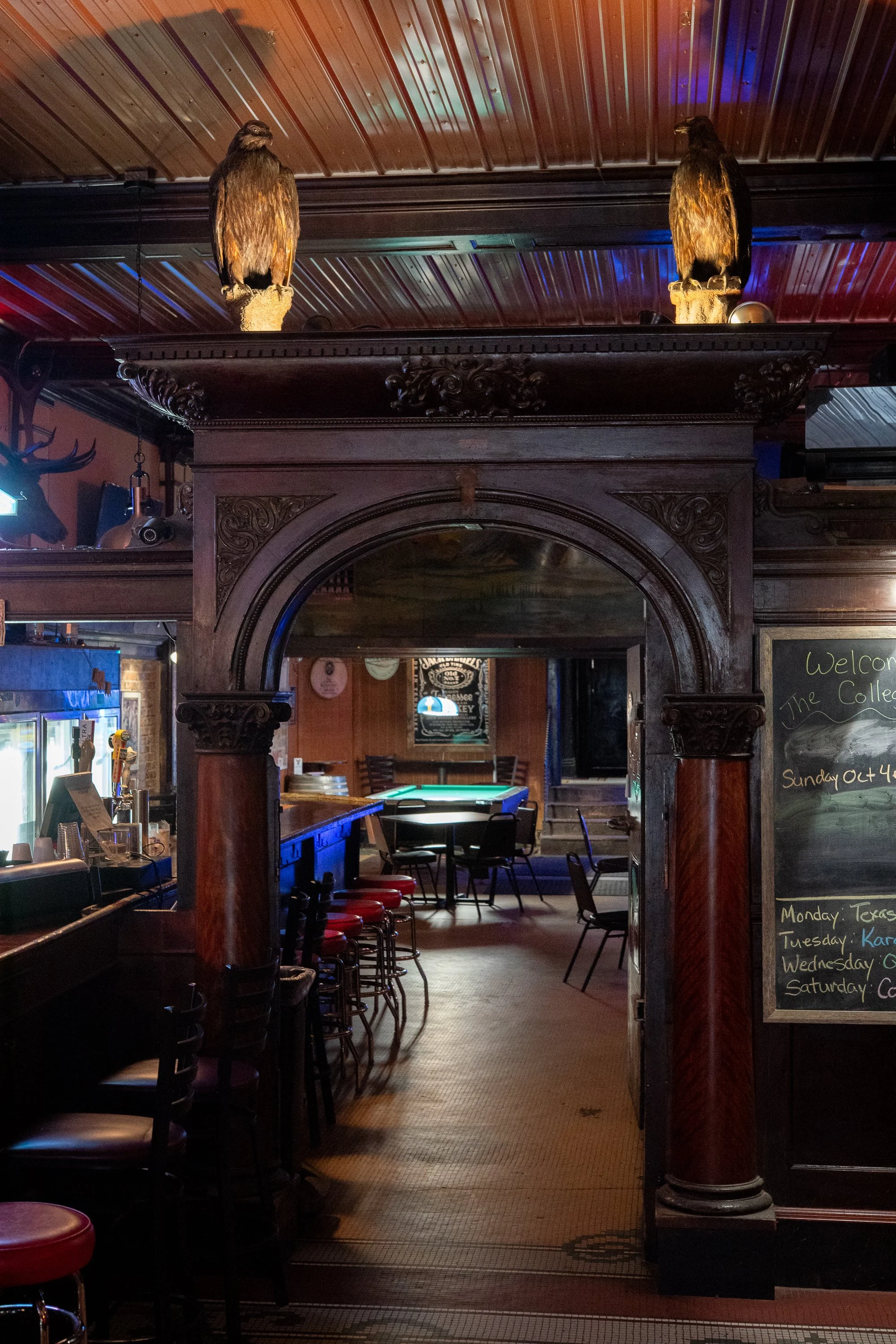
There are towns where the main street seems disproportionately wide for the number of people living there. Bars that might be the only place open for miles. Old motels hanging on beside highways that travelers now pass through without stopping.

Some places are changing quickly. Others feel like they exist in their own time zone.

That's what interests me.

Road trips are usually organized around destinations, but photography has taught me that the spaces between those destinations are often more interesting.

Wyoming has a lot of space between destinations.

And I've learned not to hurry through it.

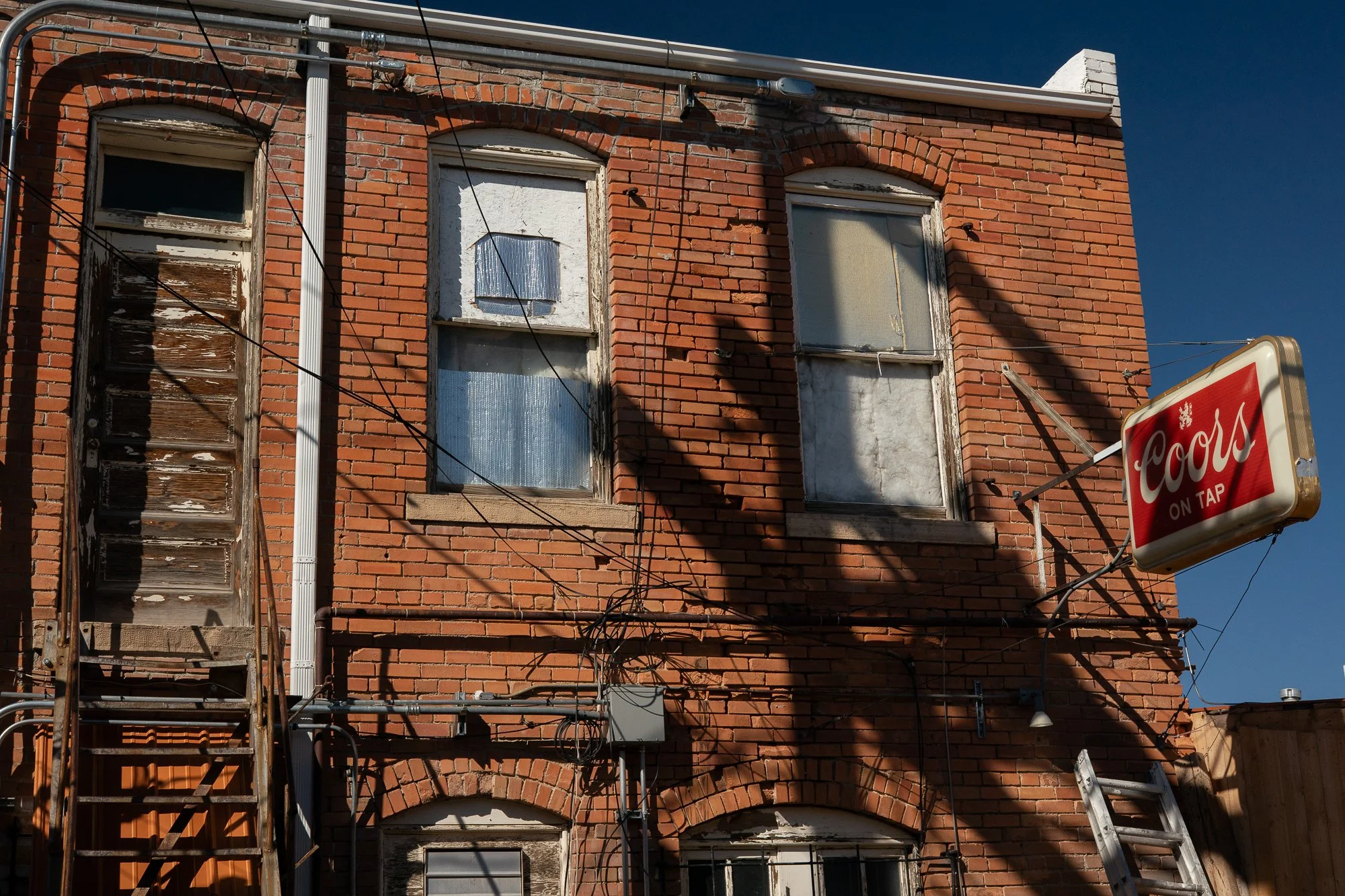
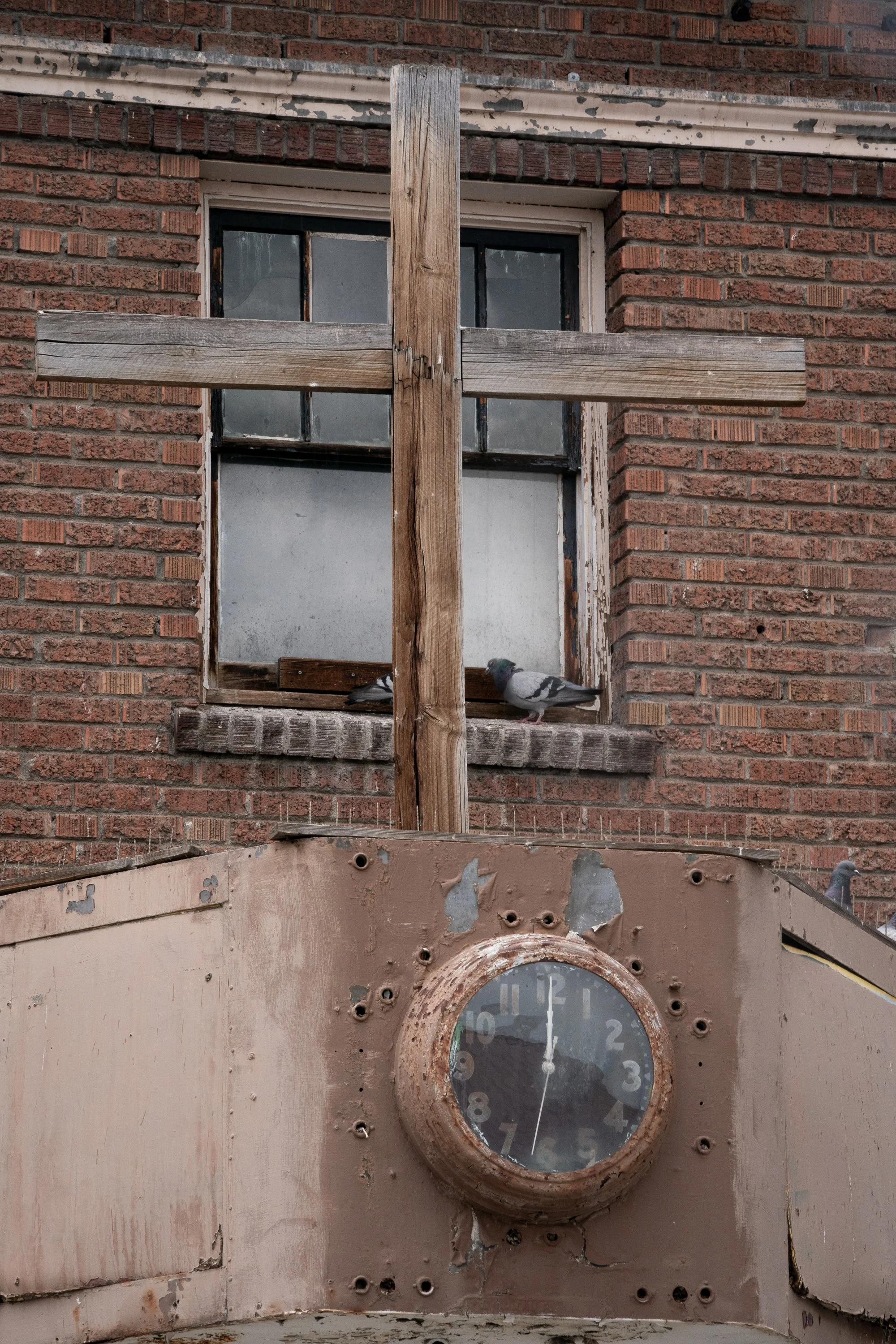
Weathered brick building with an old clock and boarded window in Wyoming

Old clocks, weathered brick, and worn storefronts are part of the small-town landscape.

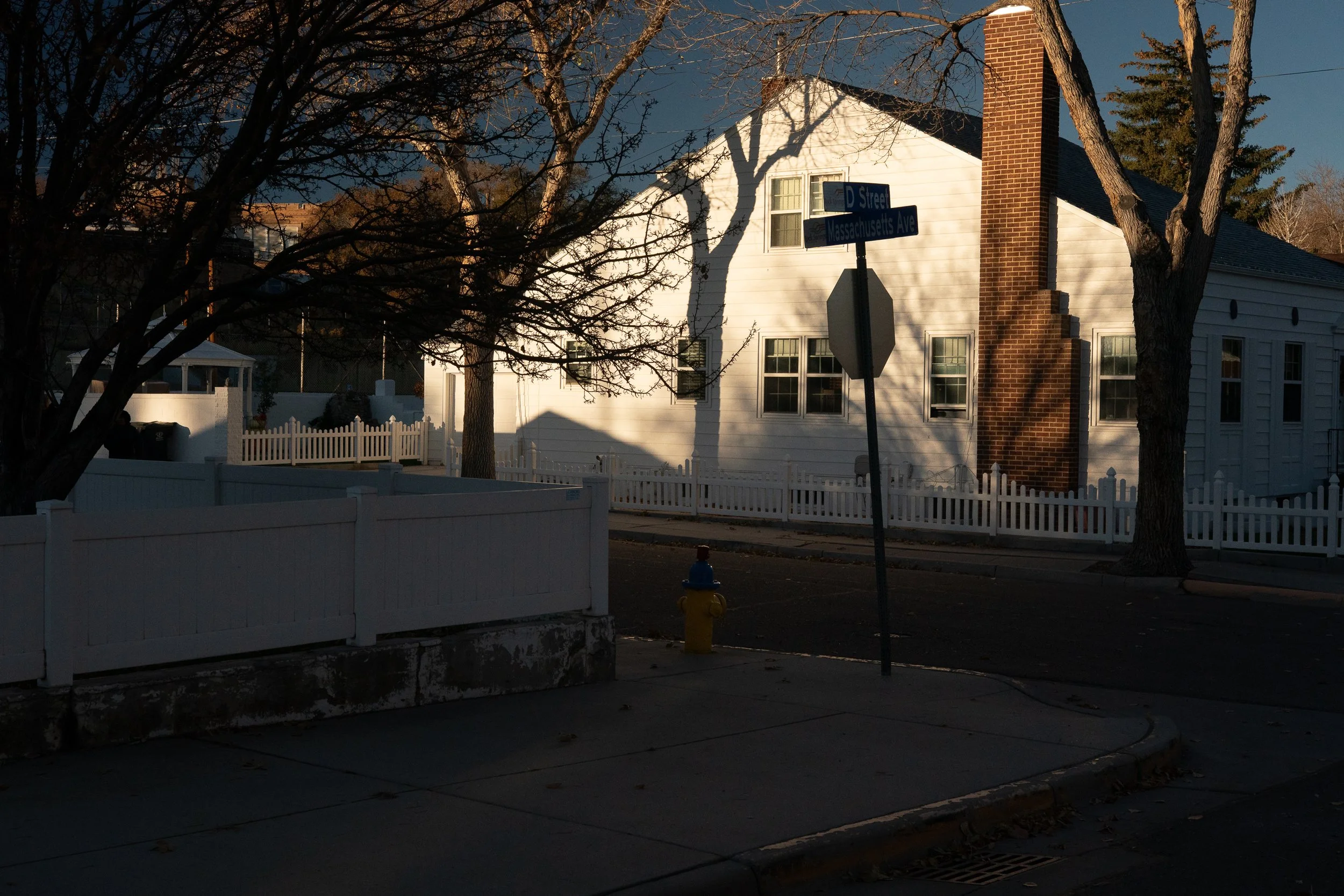
White church and quiet main street in a small Wyoming town

Small-town streets like this make it easy to slow down and look around.

Wyoming small town street with storefronts and mountains in the distance

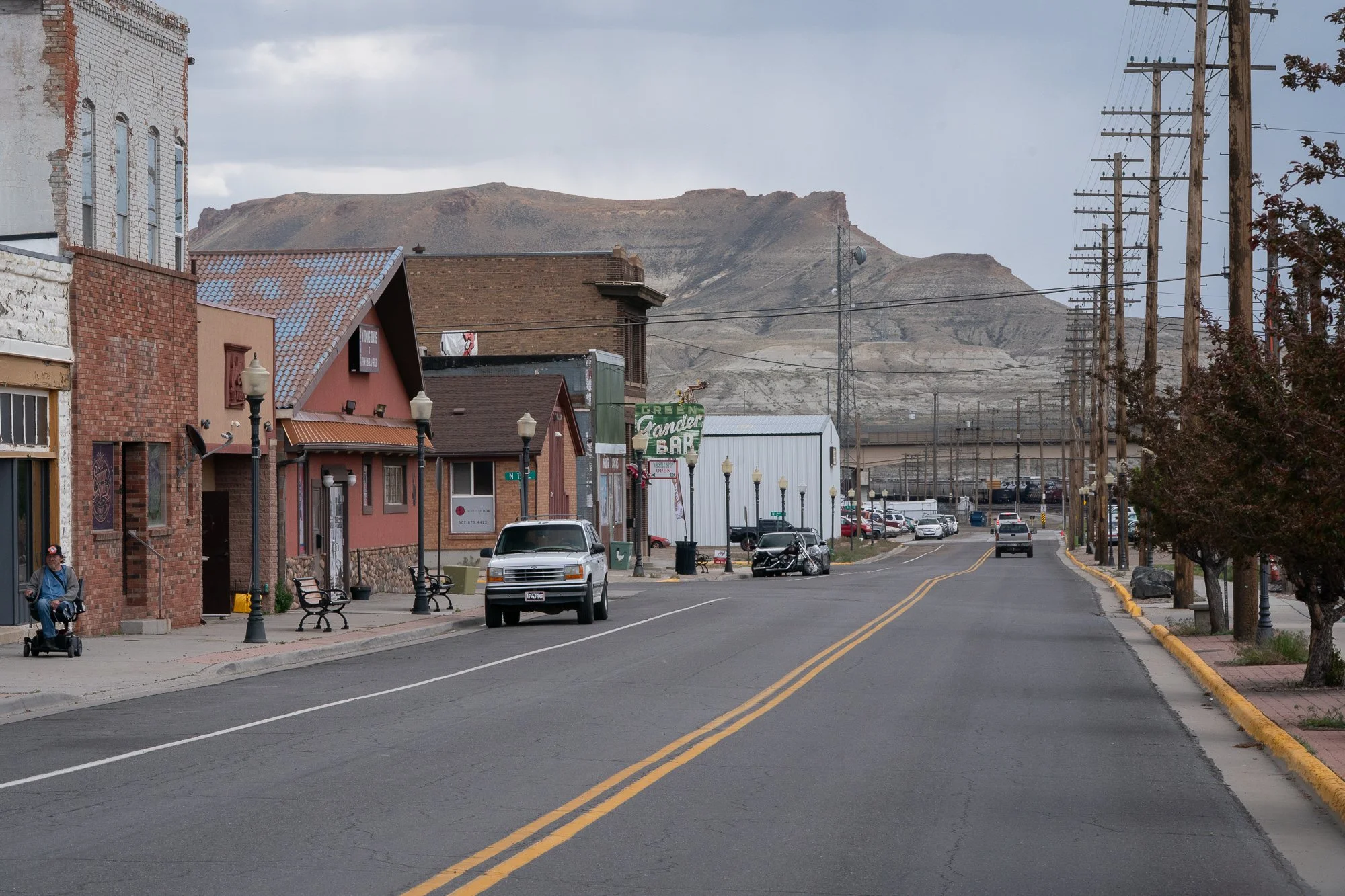
Wyoming's main streets often run straight toward the mountains, with businesses and storefronts along the road.

Small Wyoming town with homes and a mountain rising behind them

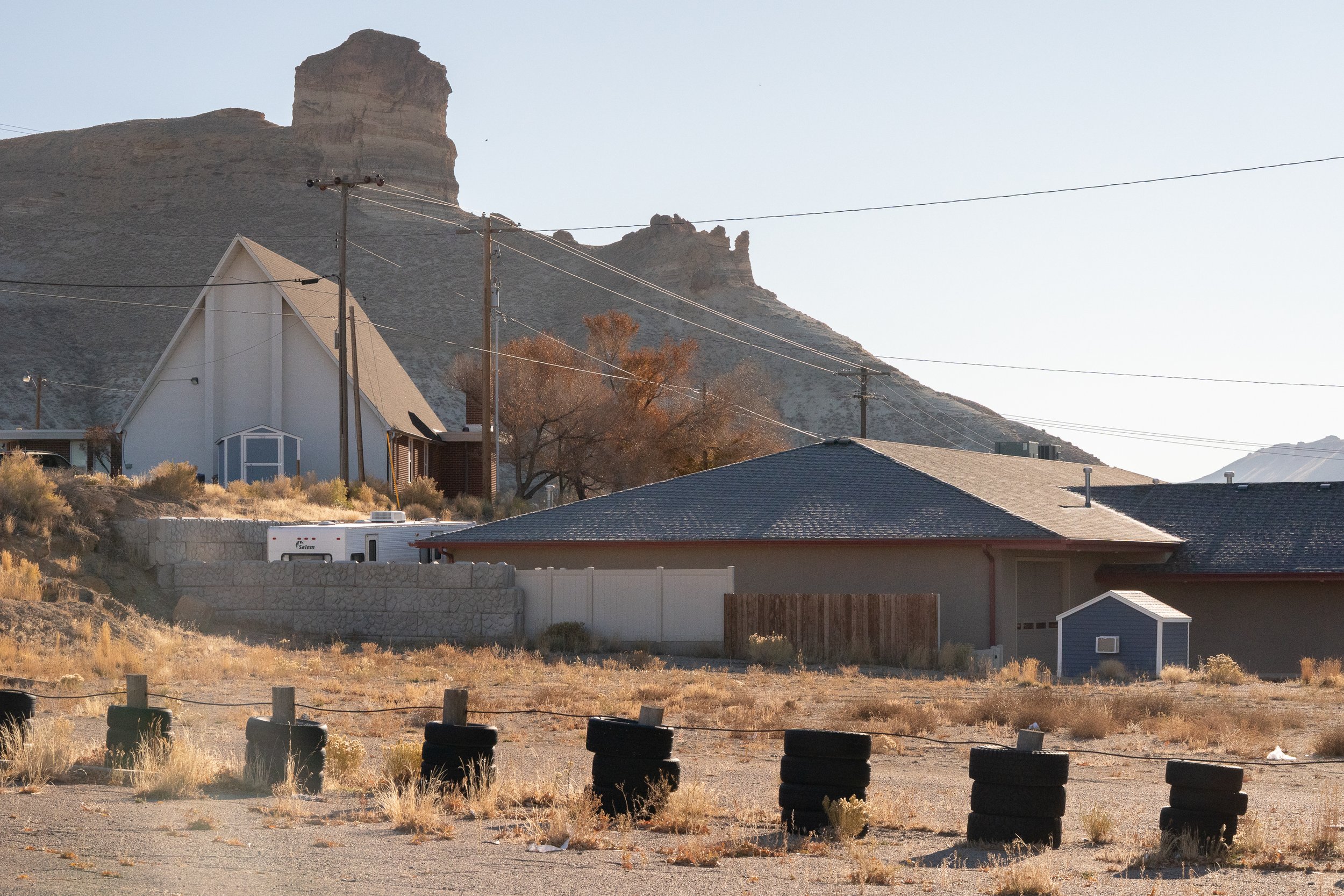
The mountains rise behind the houses and streets of town.

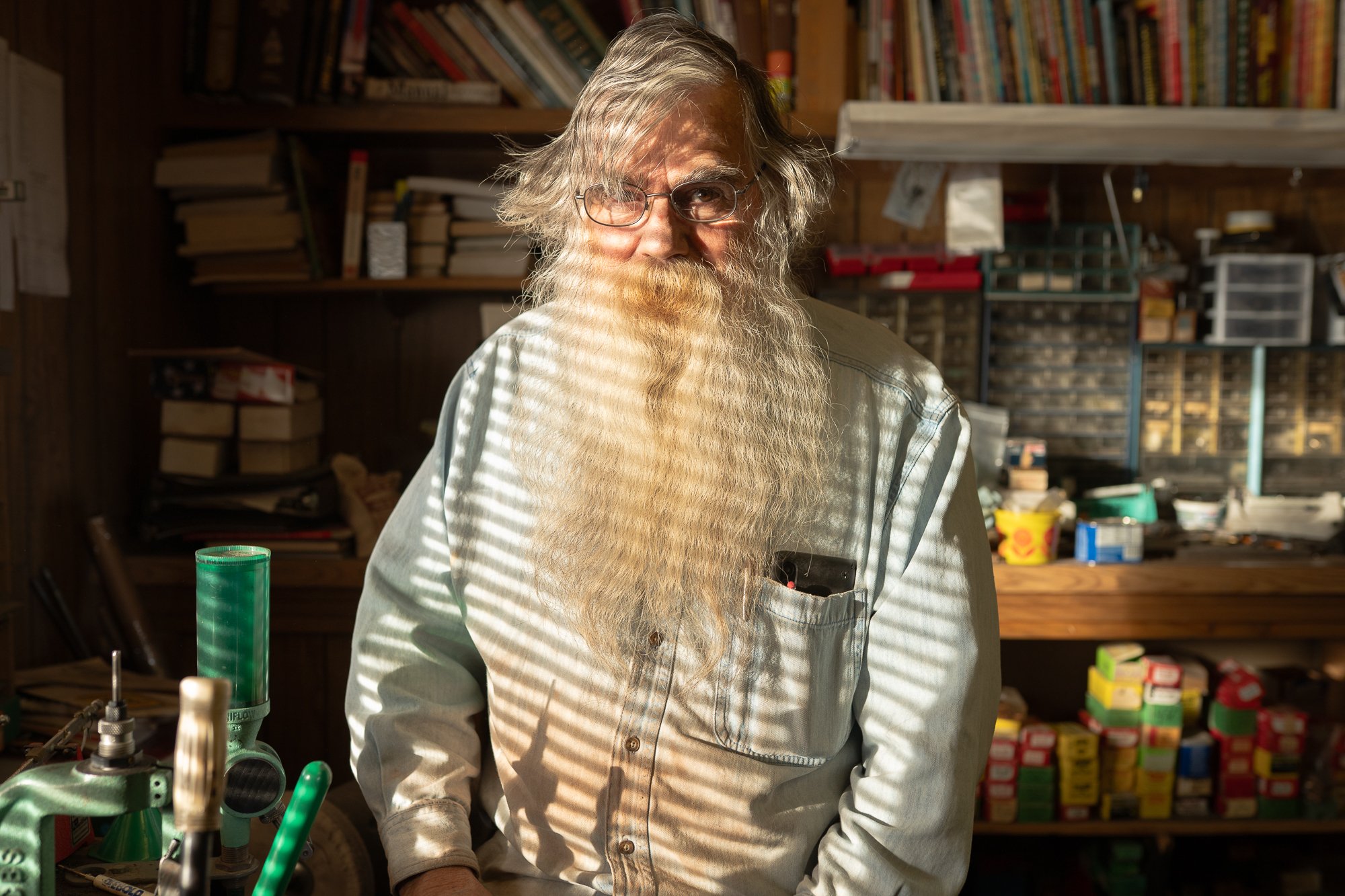
Portrait of a man standing inside a Western workshop in Wyoming

Light from the window adds detail to the portrait.

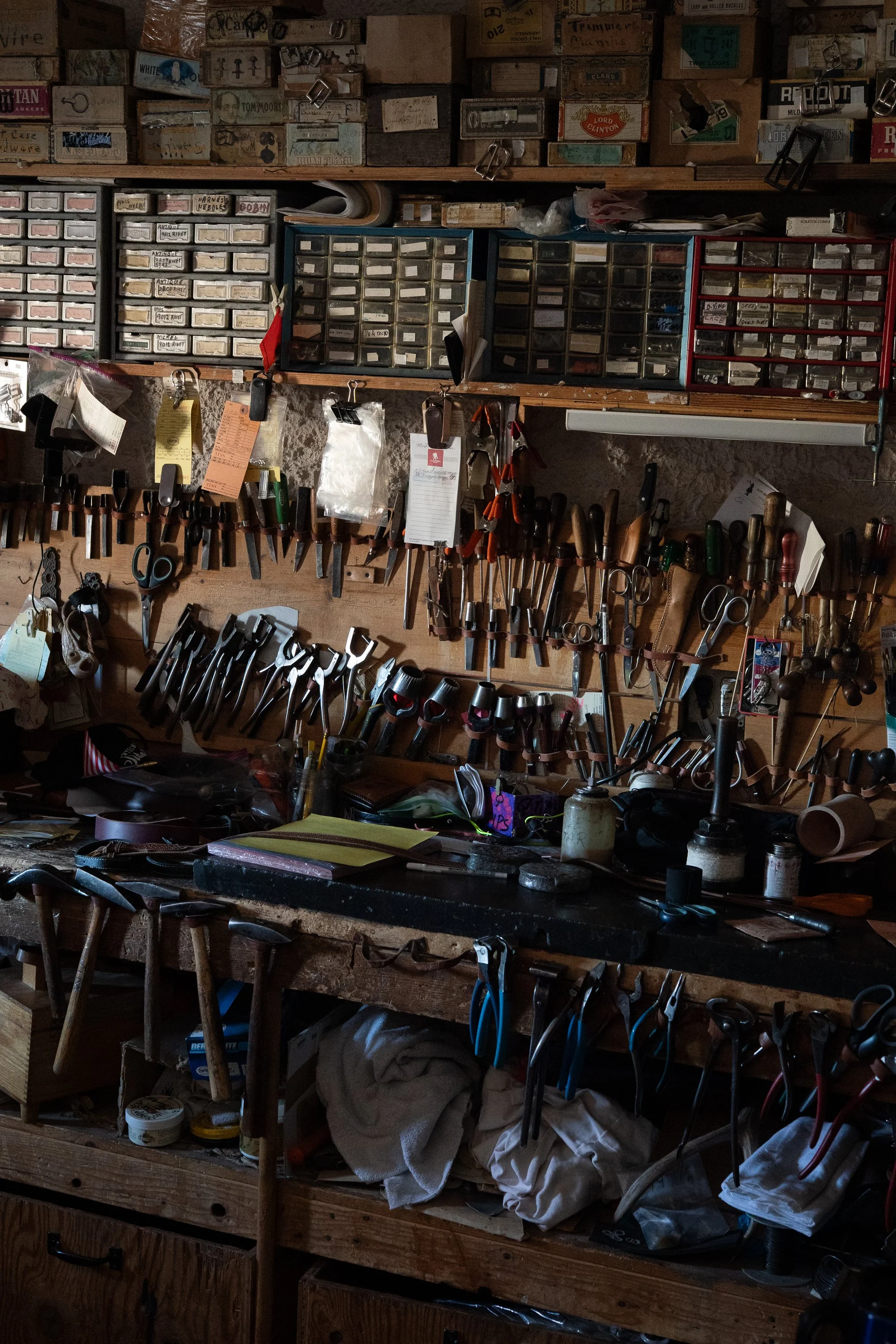
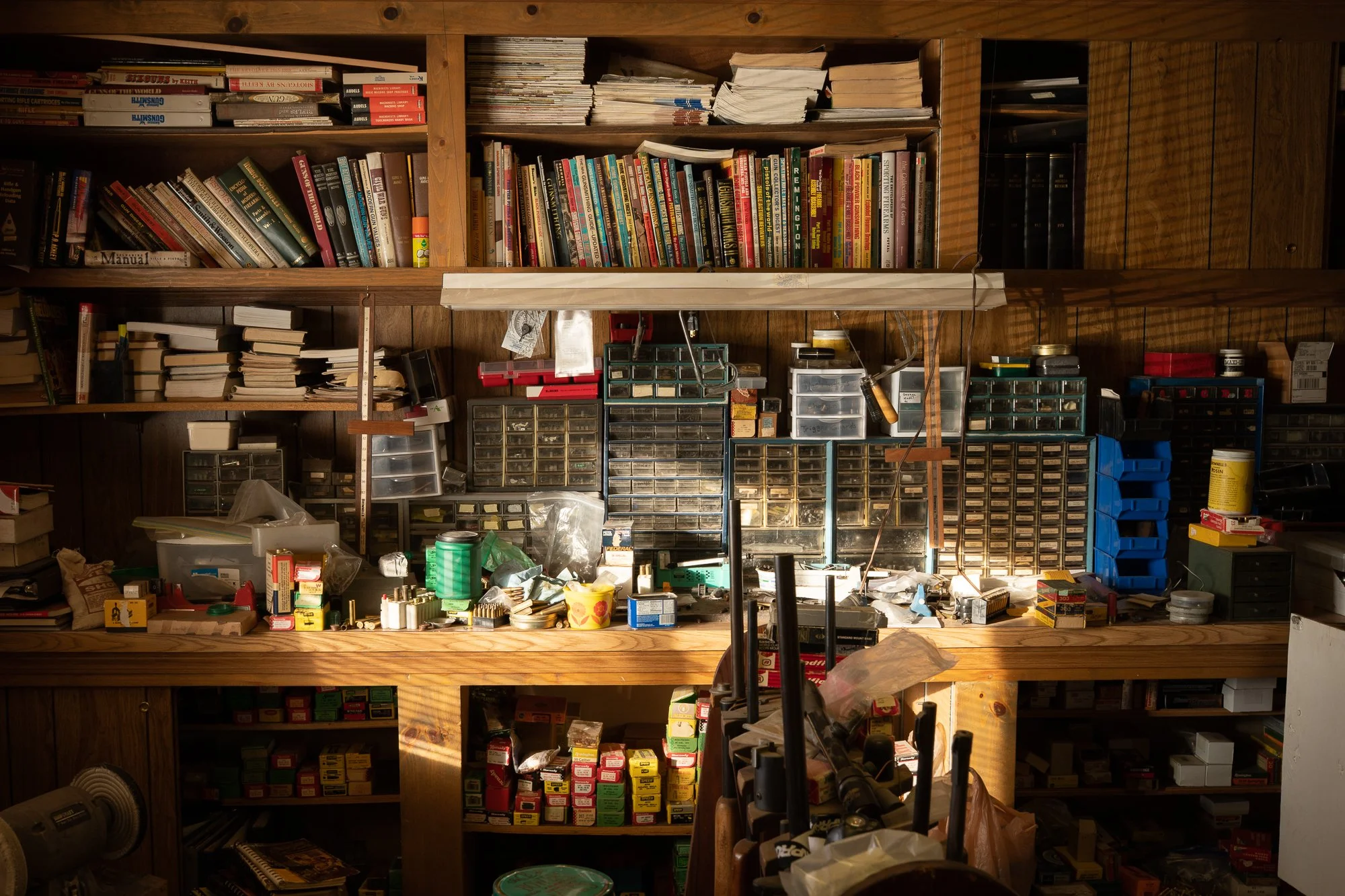
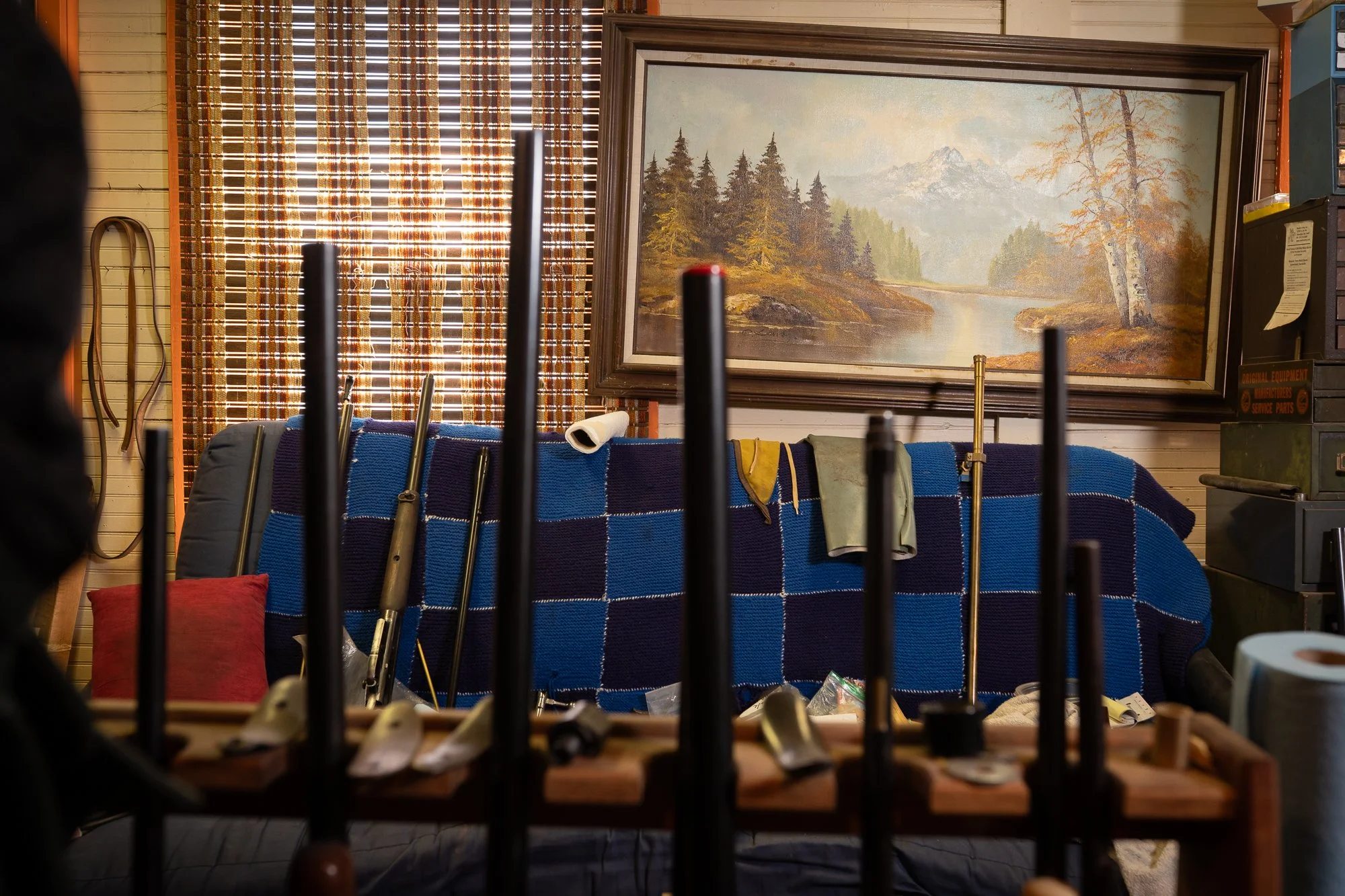
Books tools and supplies on shelves inside a Wyoming ranch workshop

Books, tools, and supplies fill the shelves and workbench of the shop.

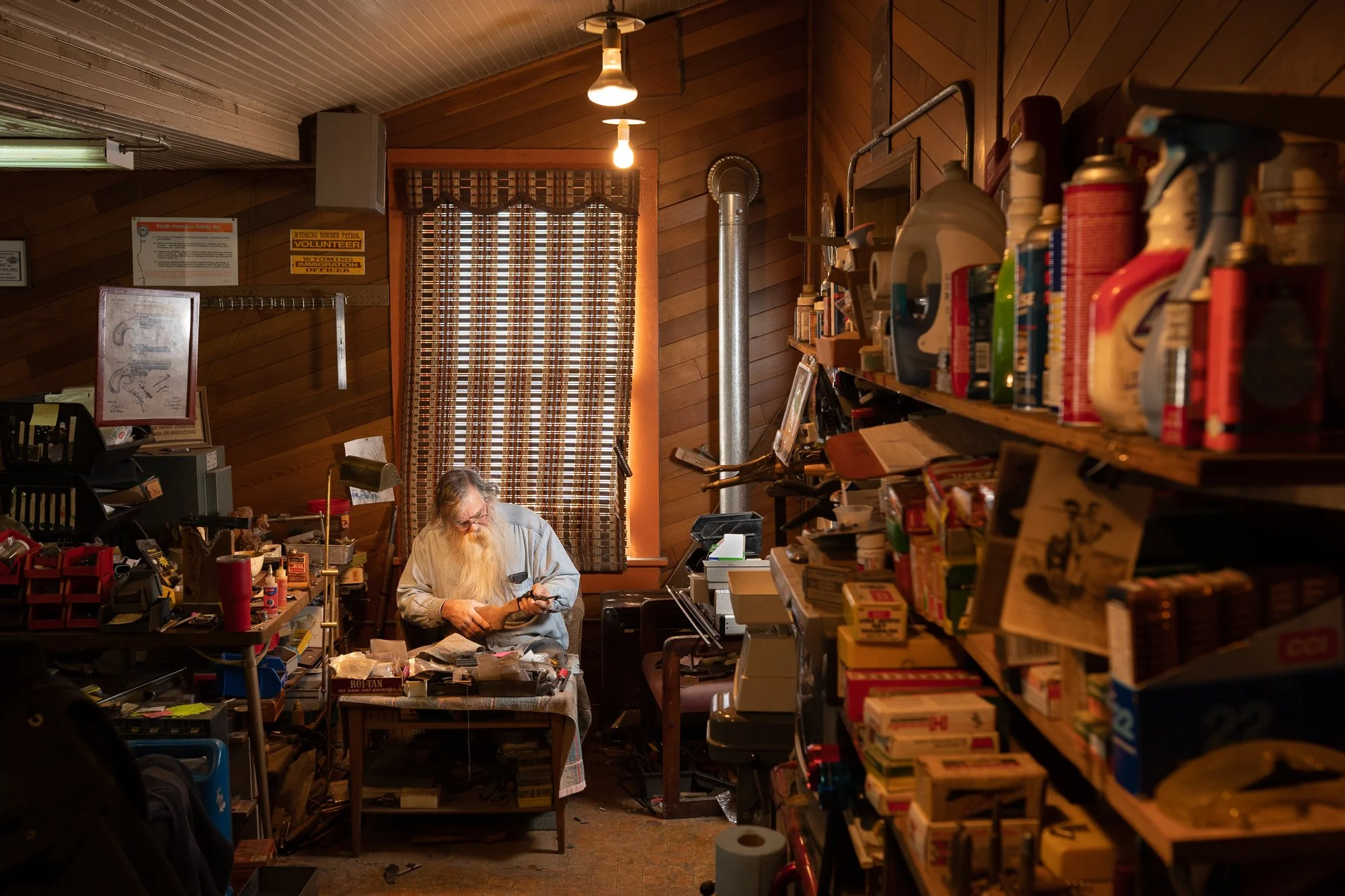
Man working on a rifle at a cluttered workbench in a Wyoming shop

A man works on a rifle at the crowded workbench.

Saddles and Western ranch gear inside a Wyoming ranch building

Saddles and ranch gear fill the interior of the building.

Rodeo Culture in Dubois, Wyoming

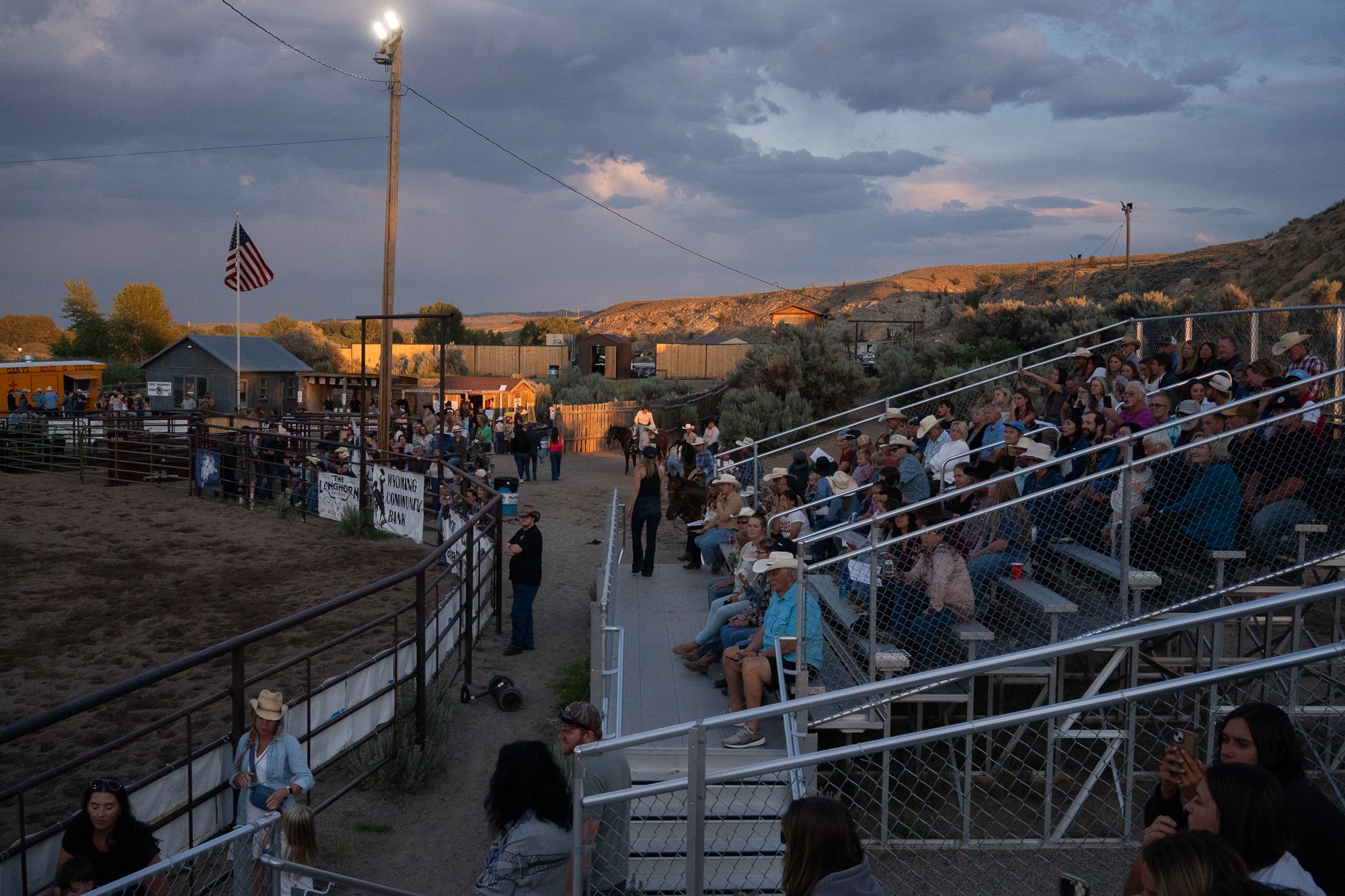
Dubois is a small town in western Wyoming with a population of roughly a thousand people. During the summer, Friday nights mean rodeo.

I went there expecting to photograph the rodeo and came away much more interested in everything surrounding it.

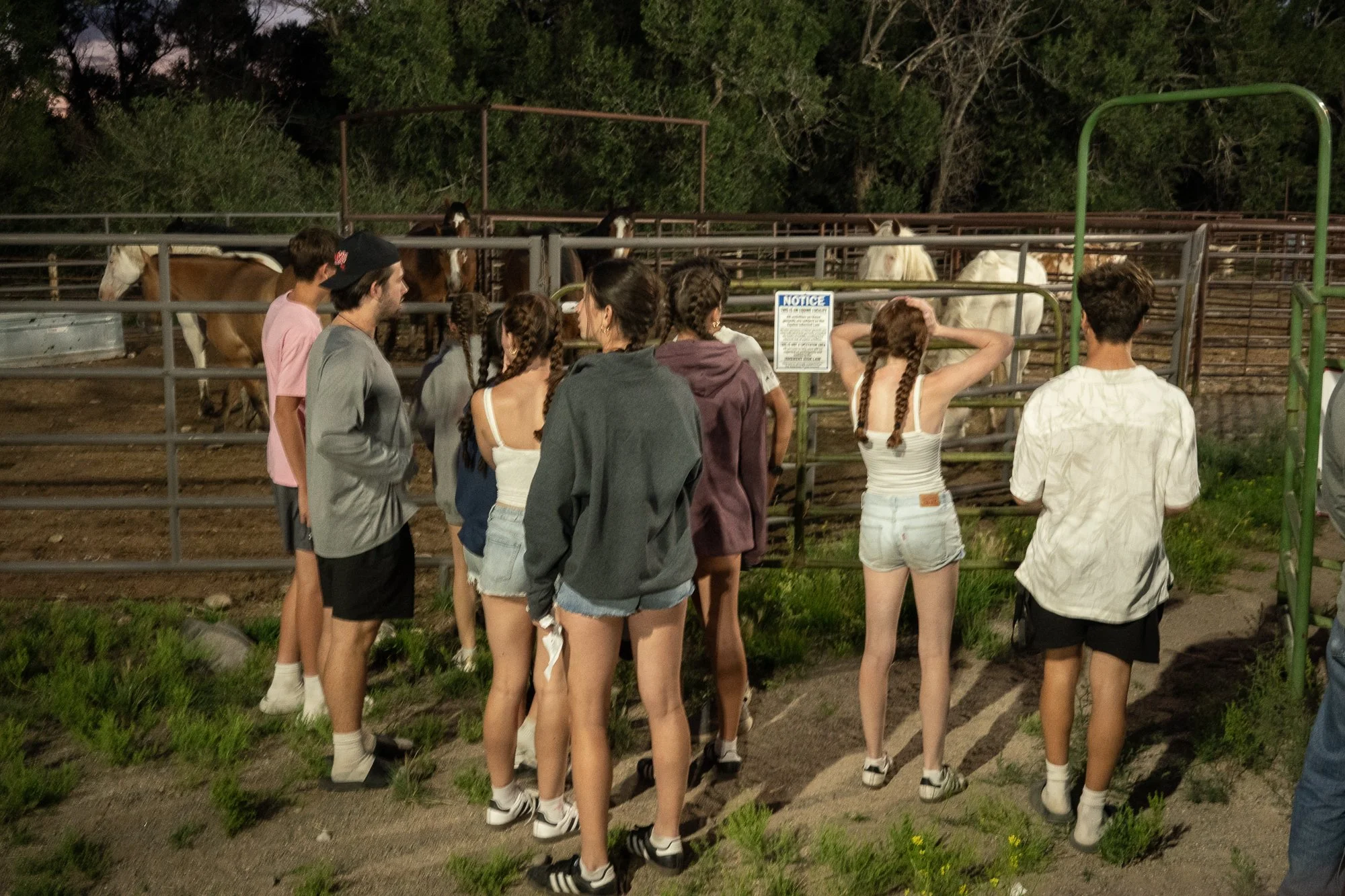
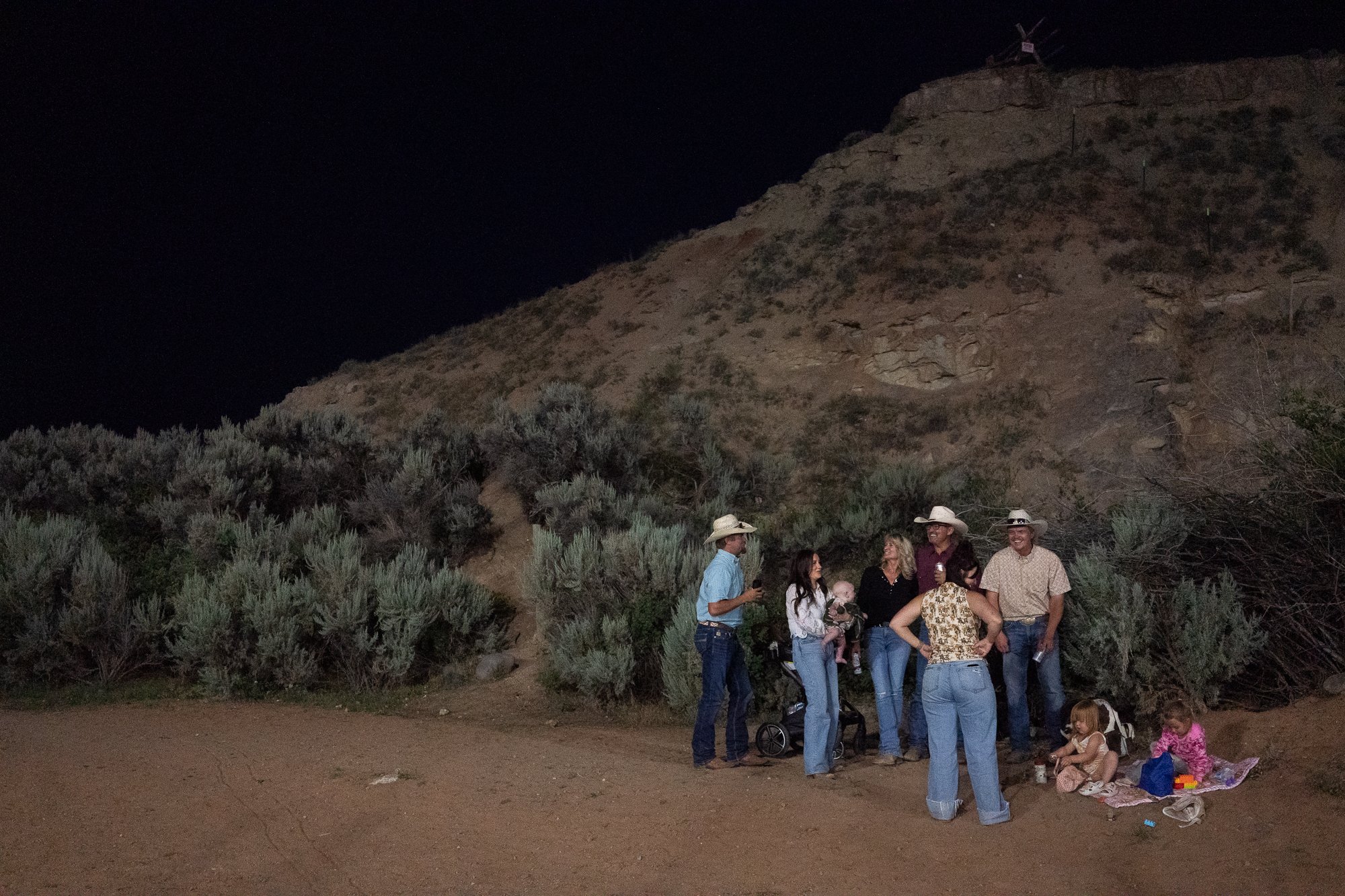
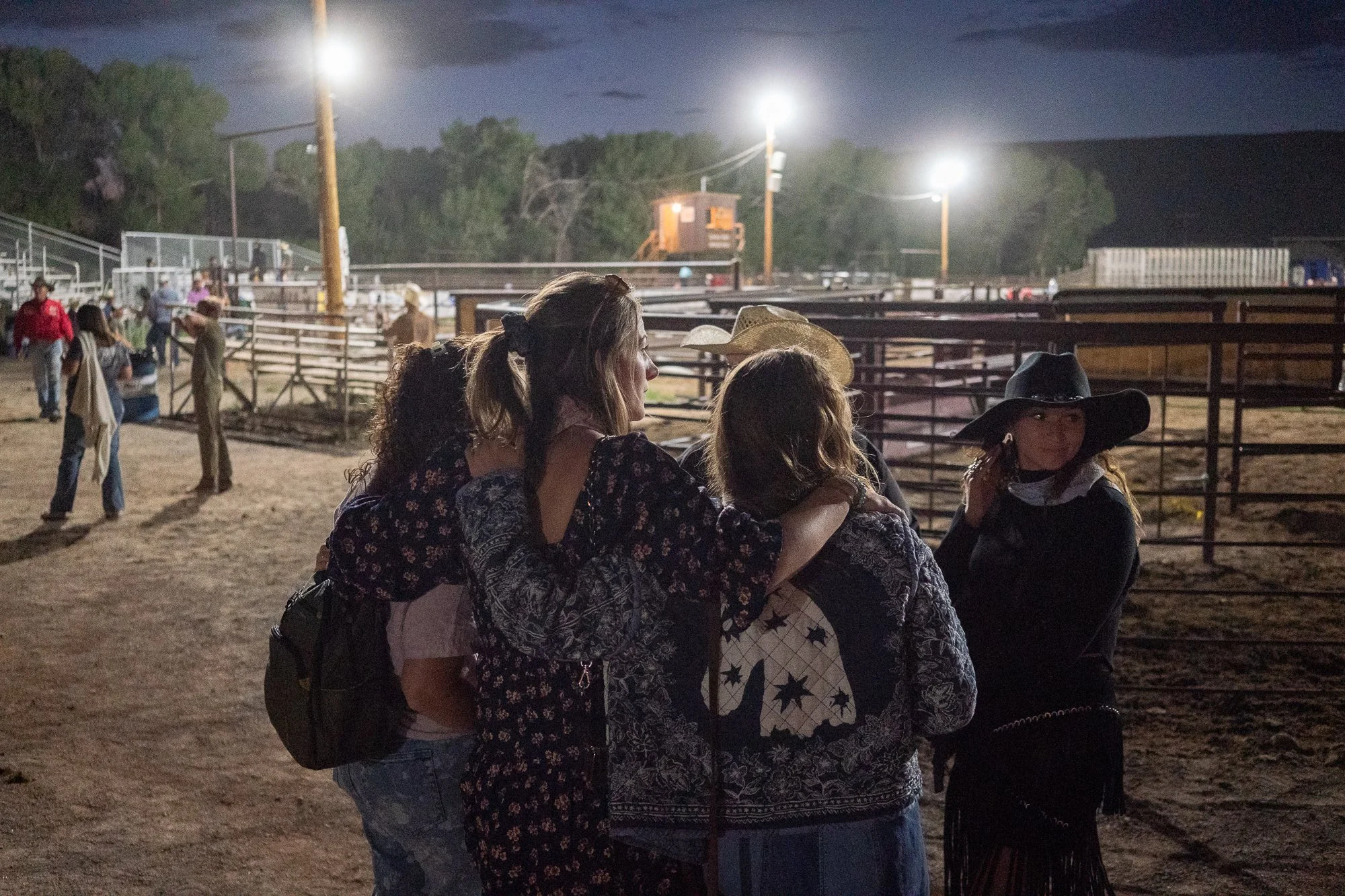
Of course there were cowboys, horses, broncs and bulls. But there were also kids running around behind the chutes, families sitting in the stands, competitors talking before their events and all the little interactions happening away from the arena.

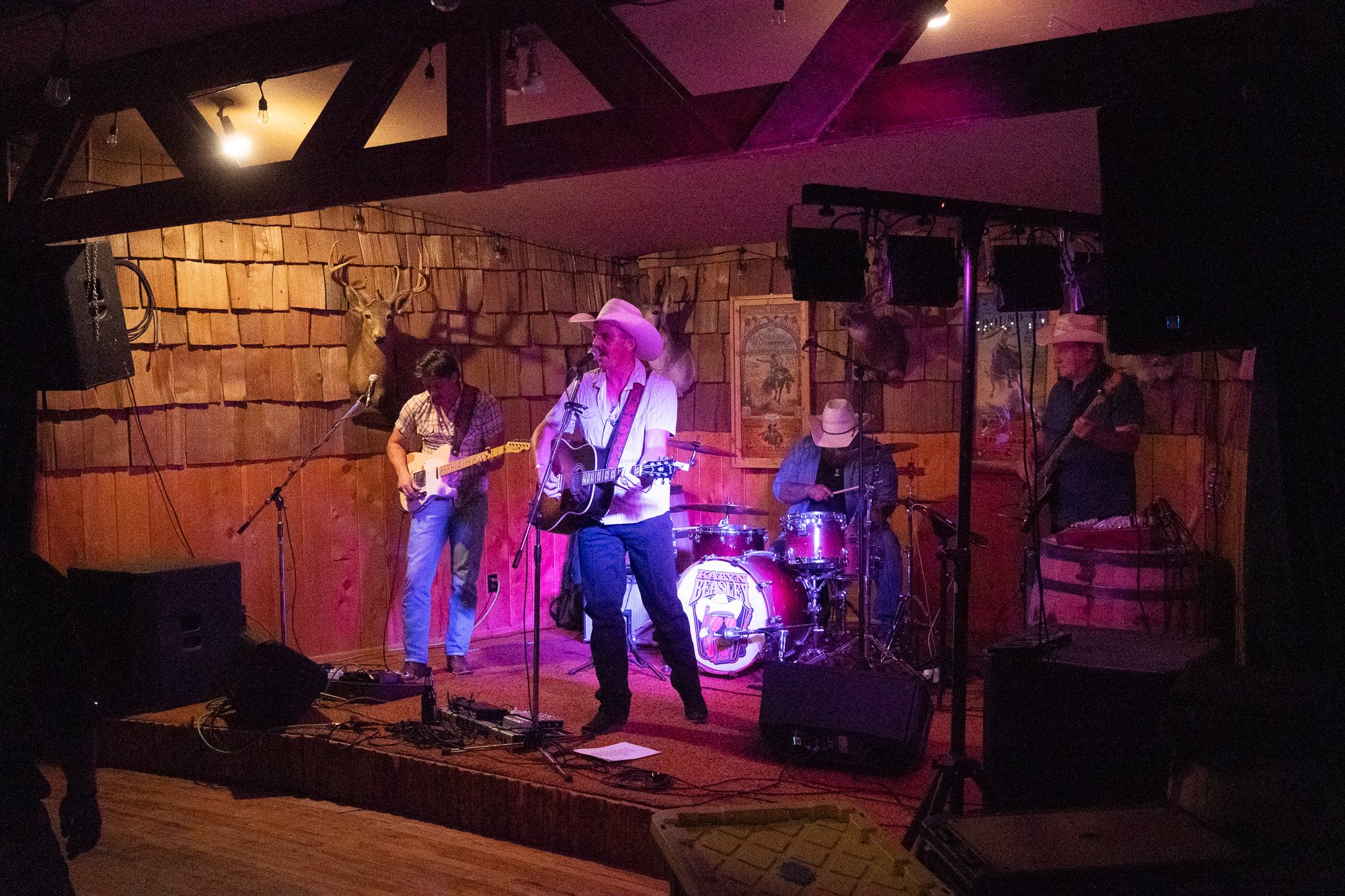
Afterward, a lot of the same people ended up at the local bar.

That's where the story became more interesting to me.

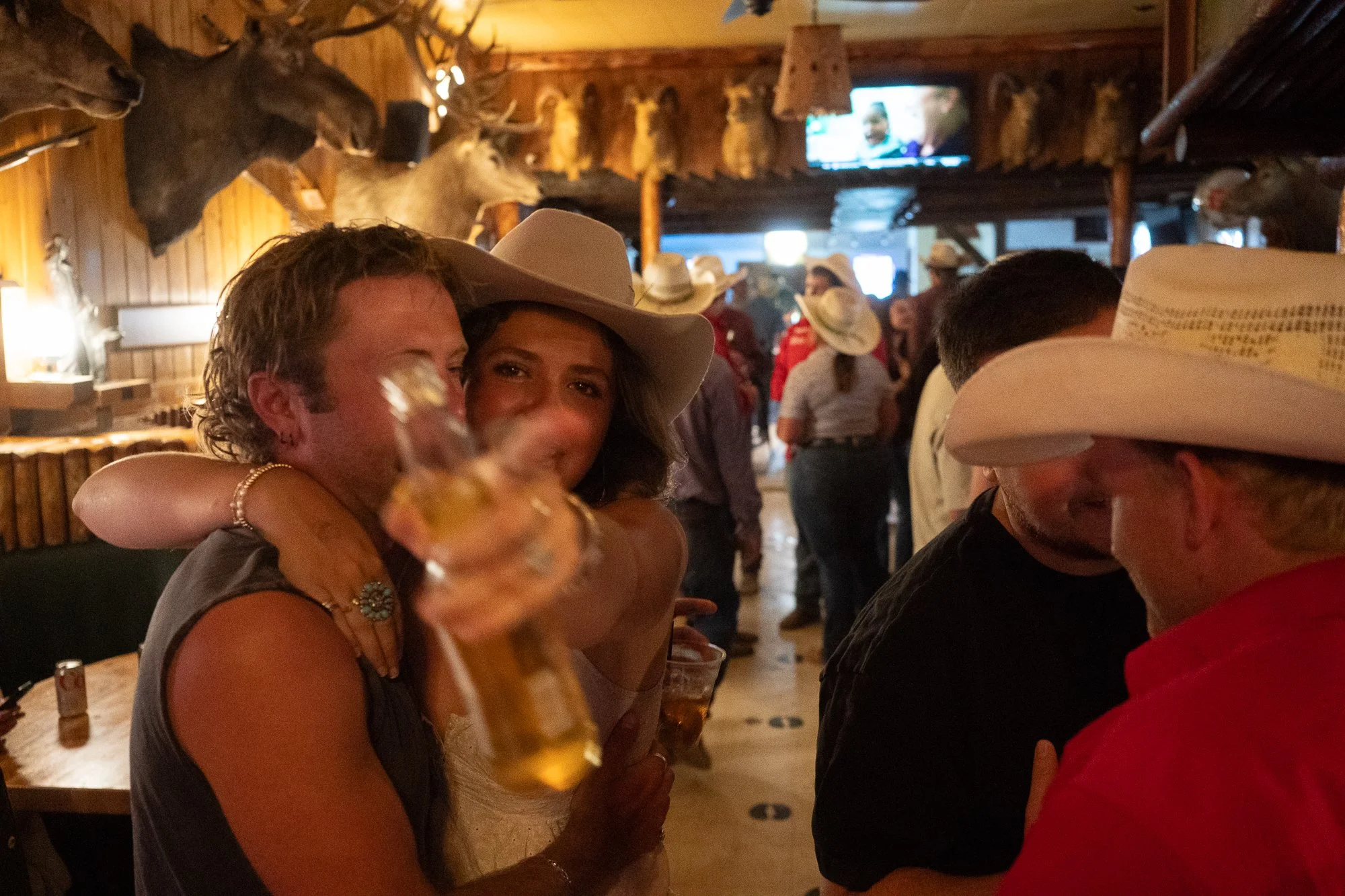
Cowboys who had been competing a few hours earlier were drinking, talking and dancing. Rodeo spectators mixed with locals. The distinction between the event and everyday life disappeared.

Those photographs became less about rodeo and more about a small Western community.

That's generally where I want the camera to be.

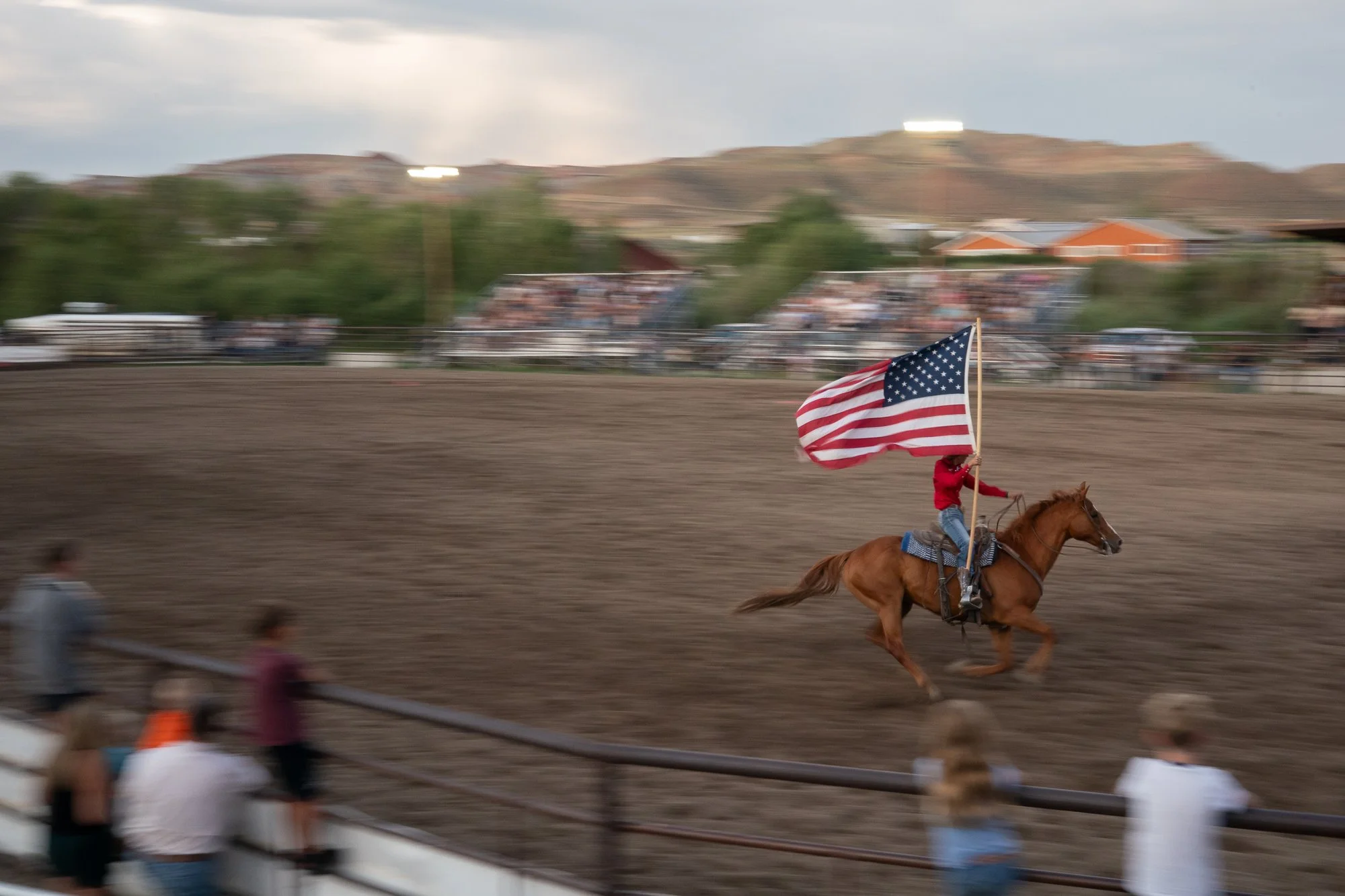
Cowboy on horseback carrying an American flag at a Wyoming rodeo

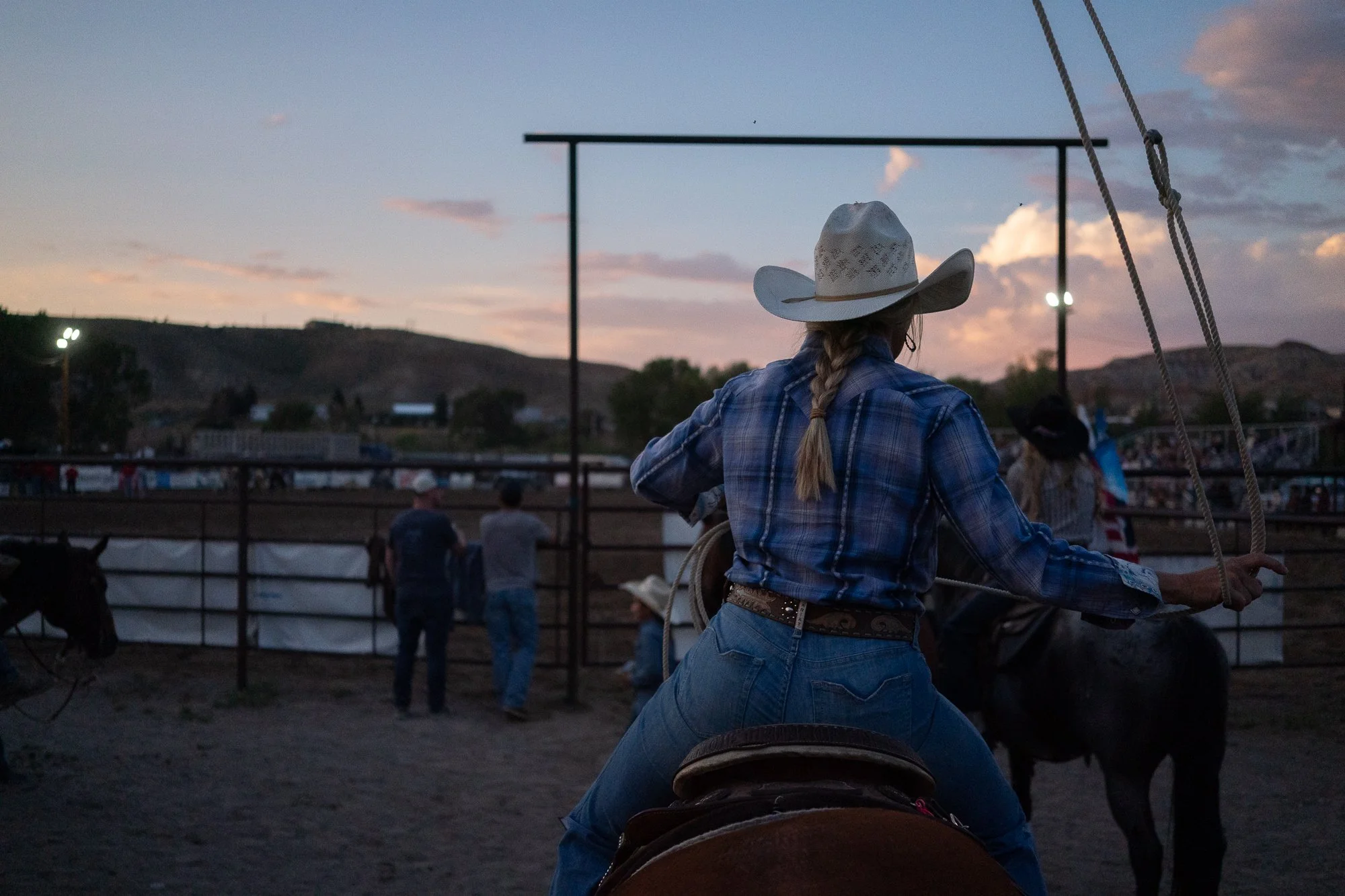
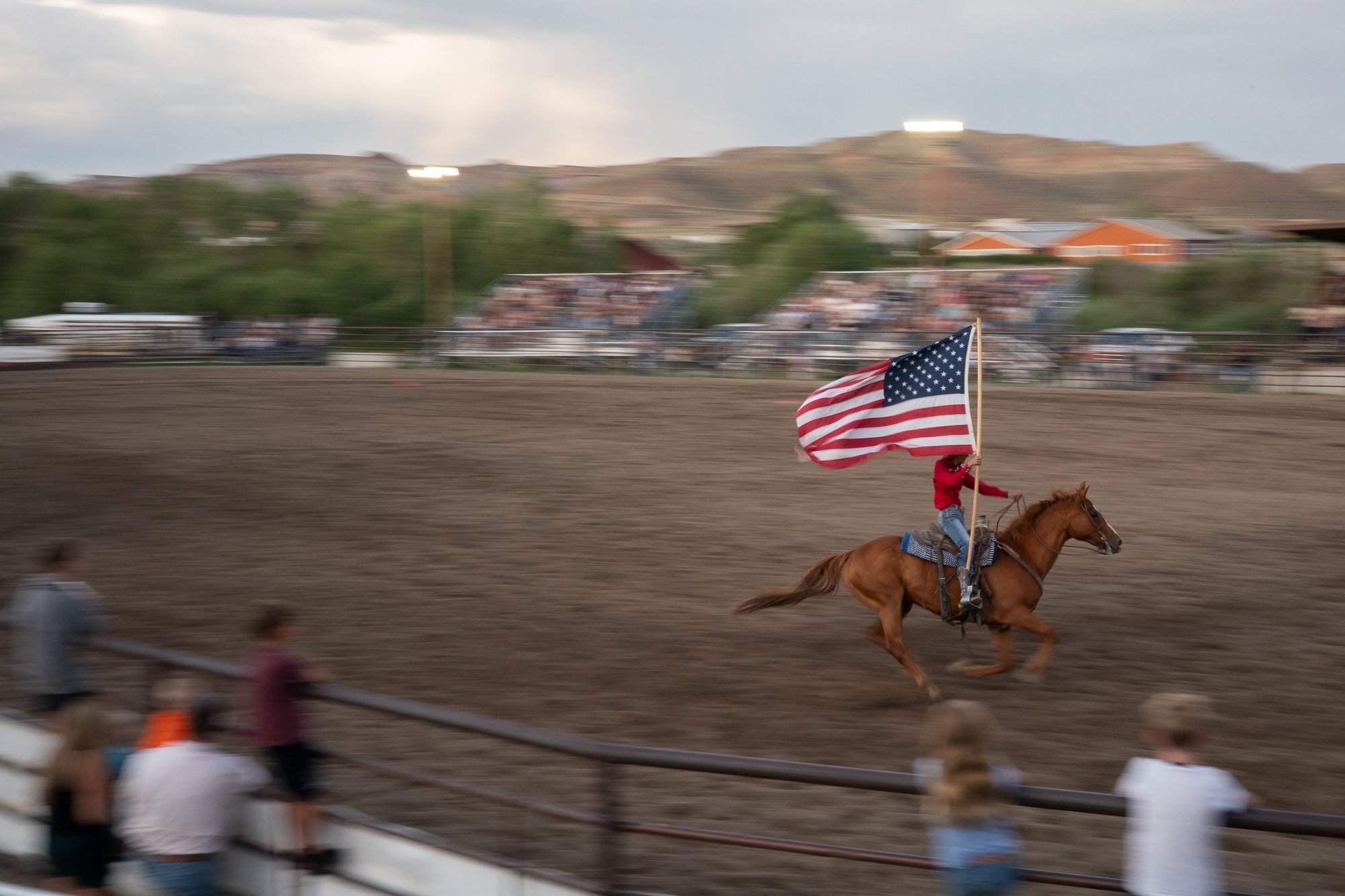
A cowboy carries an American flag through the rodeo arena.

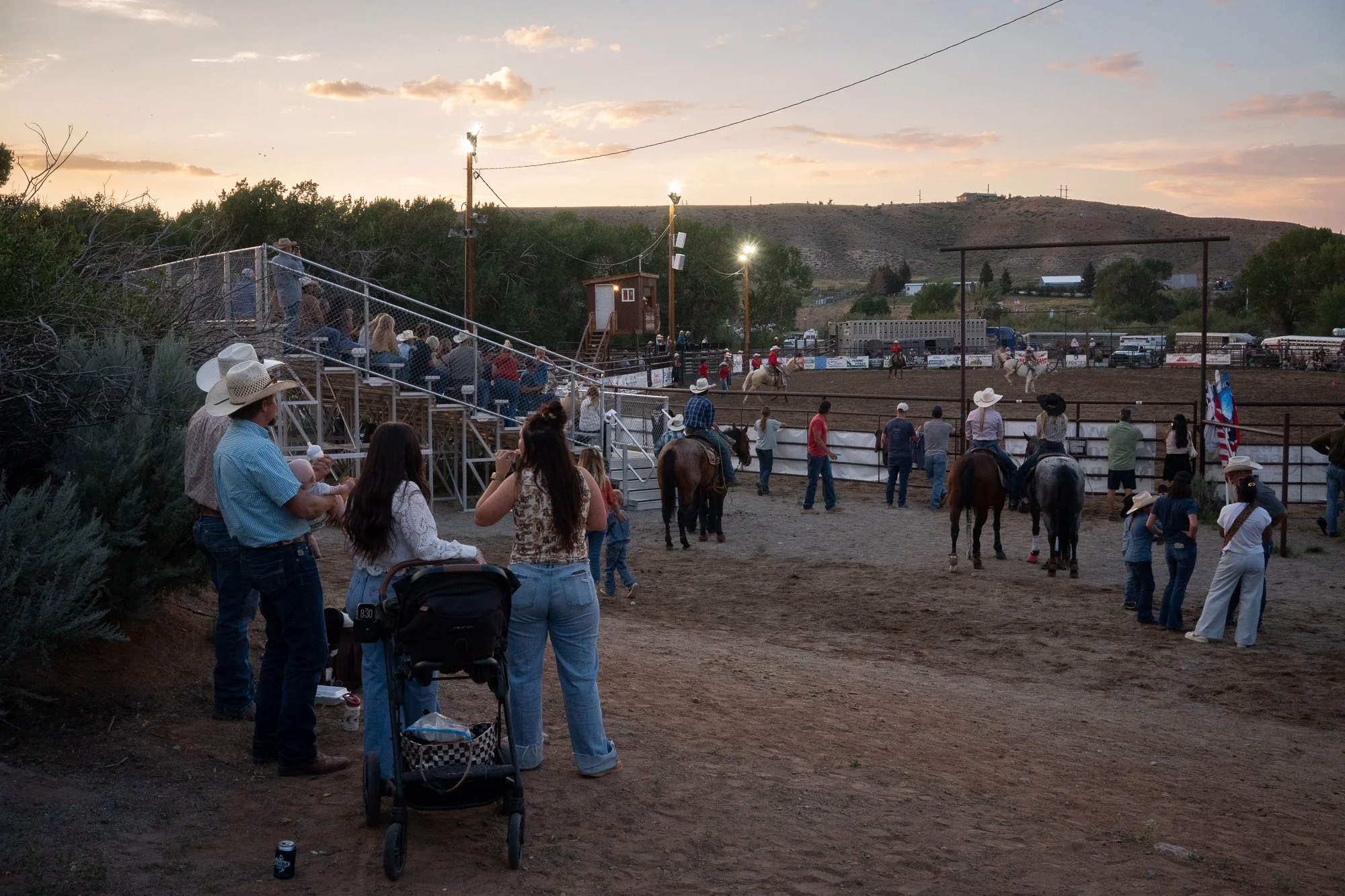
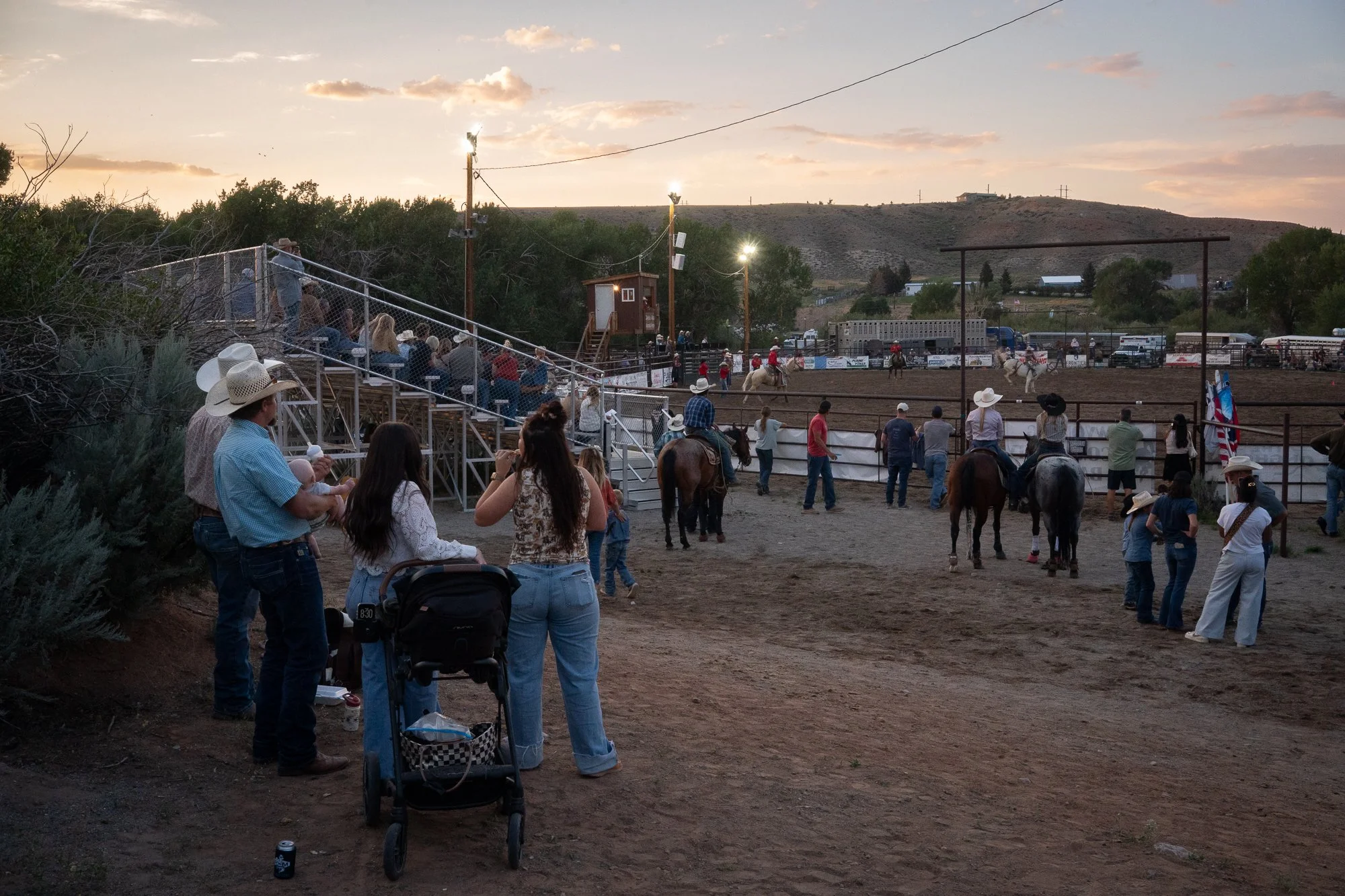
Cowboys and spectators gathered at a Wyoming rodeo in the evening

Cowboys and spectators gather around the rodeo as the evening gets underway.

Cowboy riding a horse at a Wyoming rodeo in low light

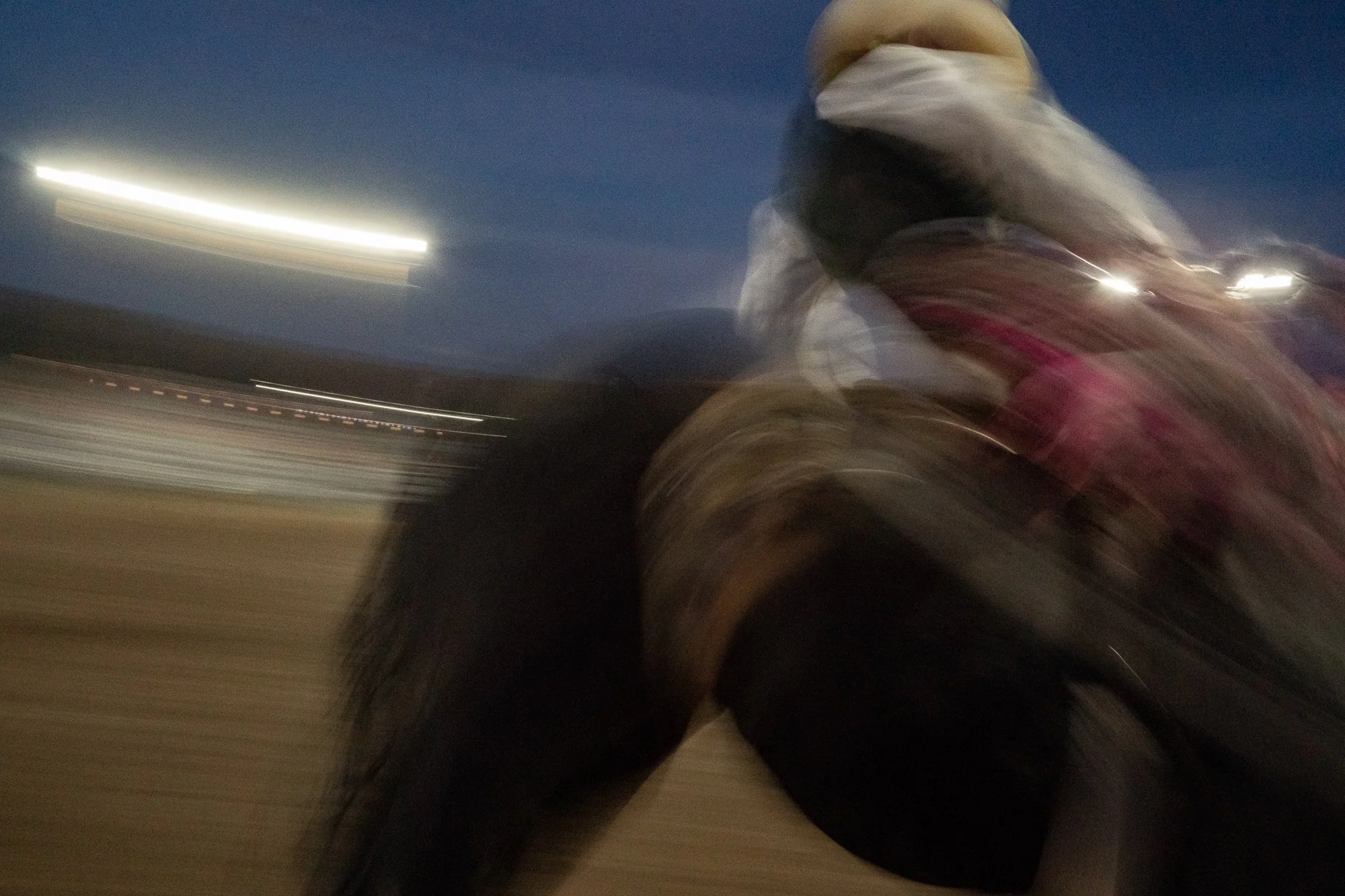
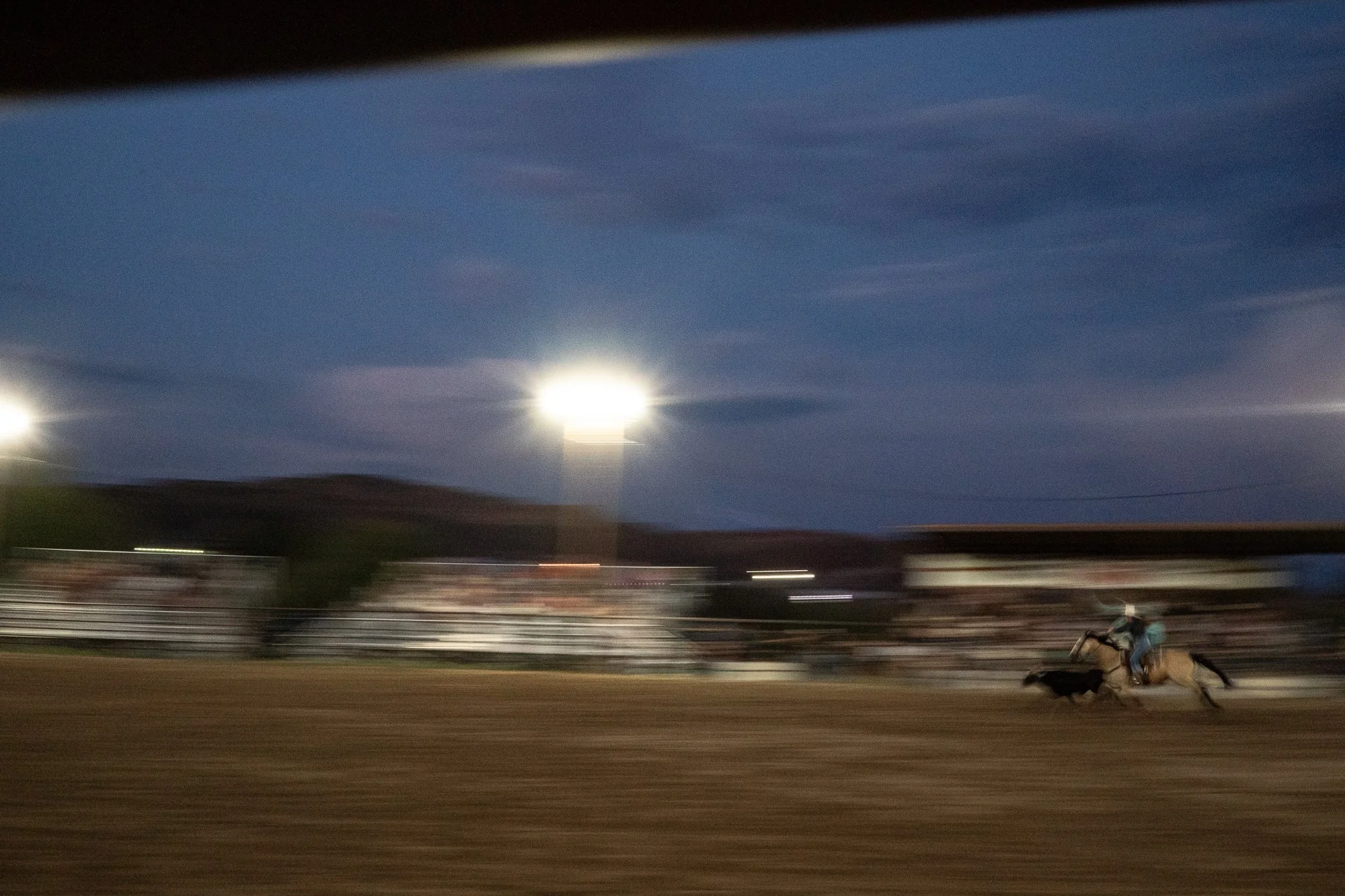
Horse and rider move through the arena in a blur of motion.

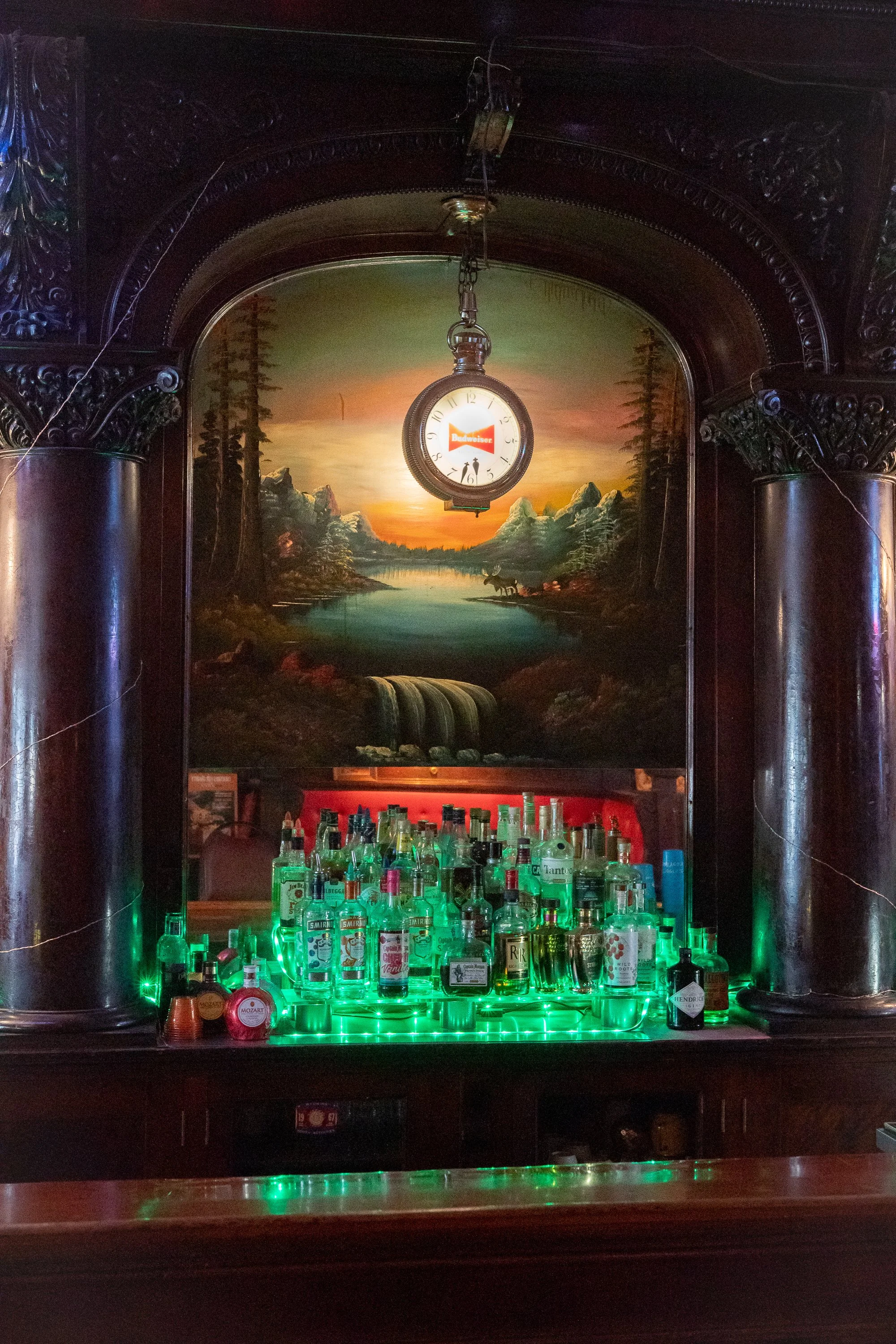
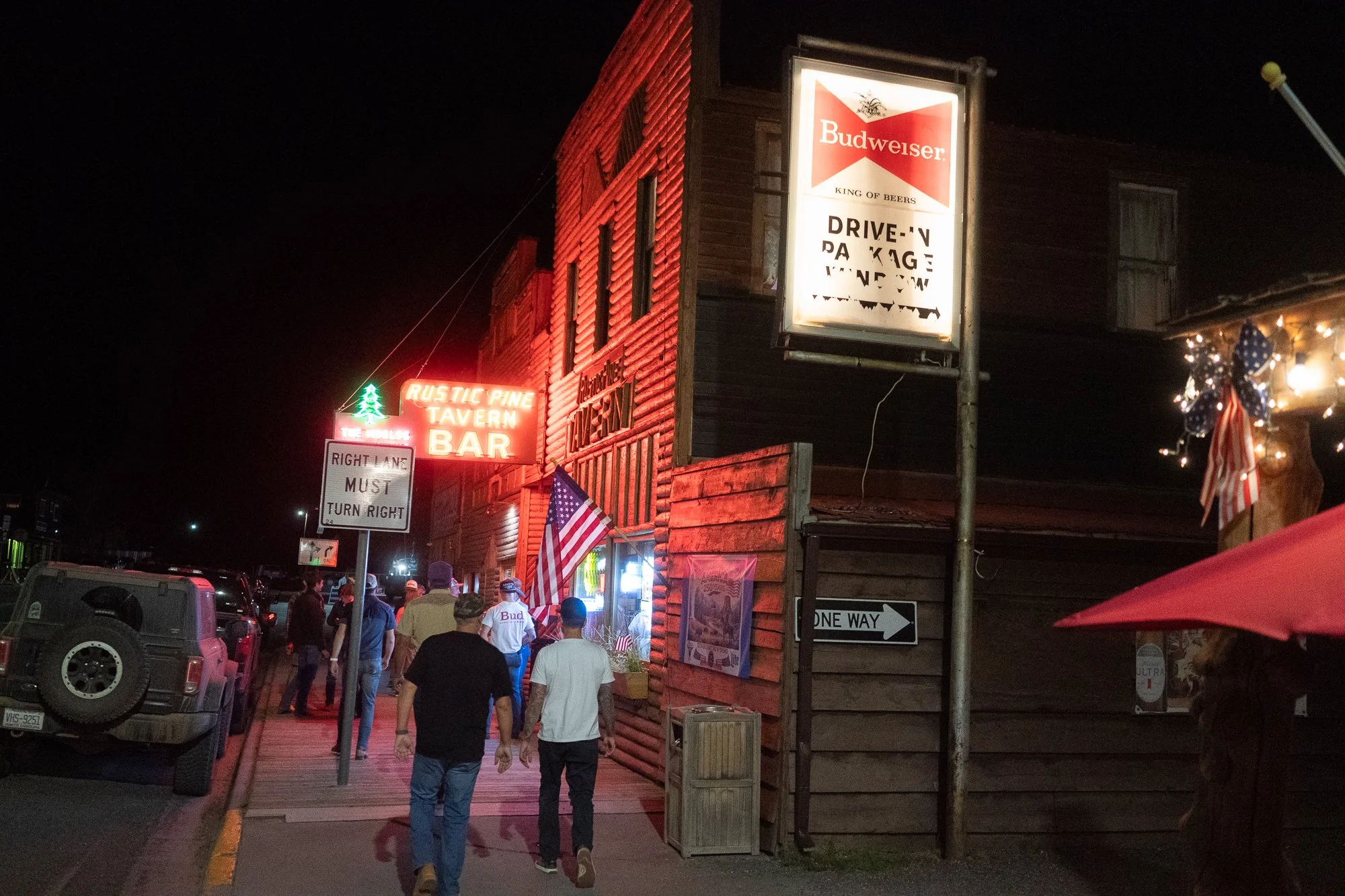
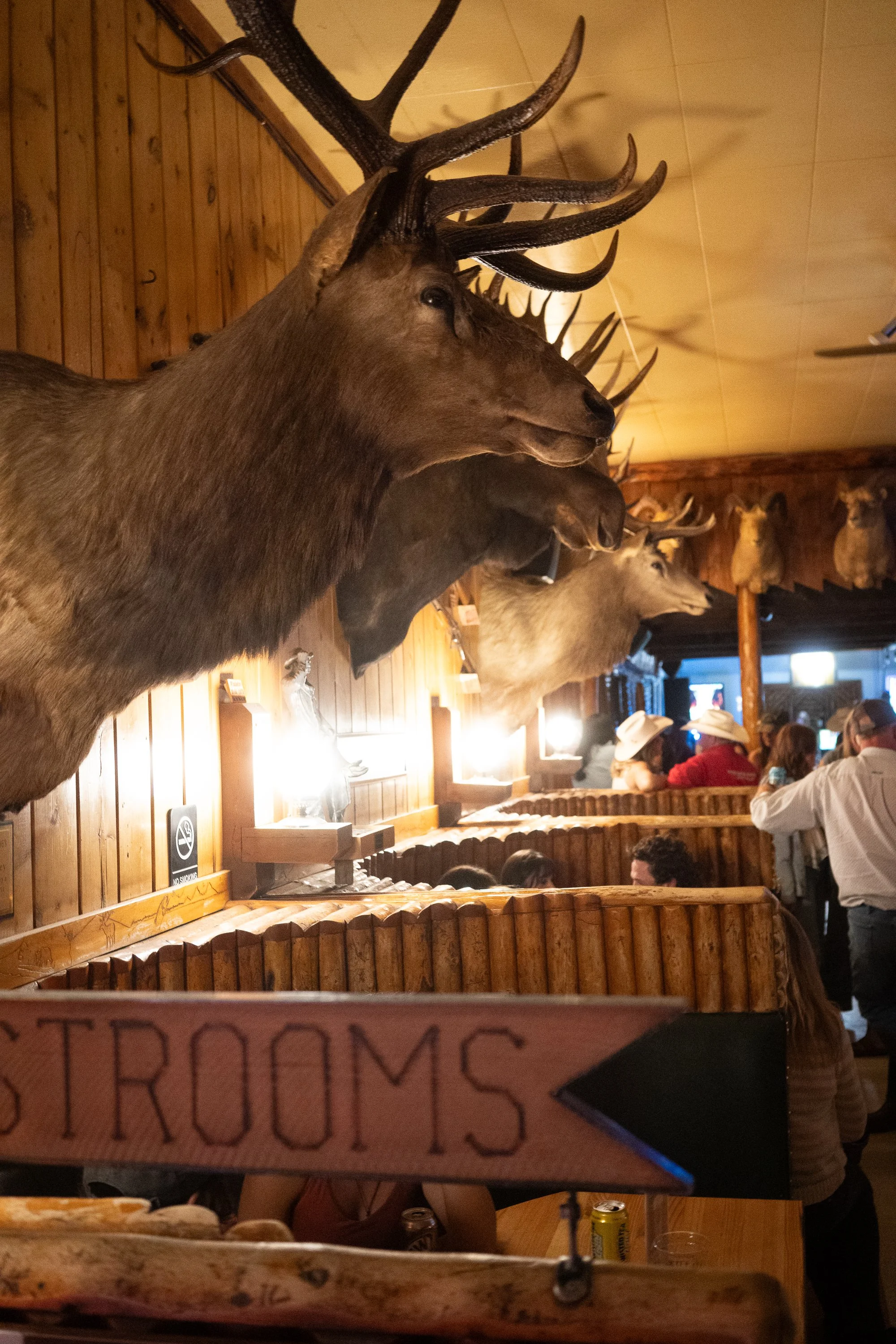
Crowded Western bar at night in a Wyoming town after a rodeo

The night continues at the local bar after the rodeo.

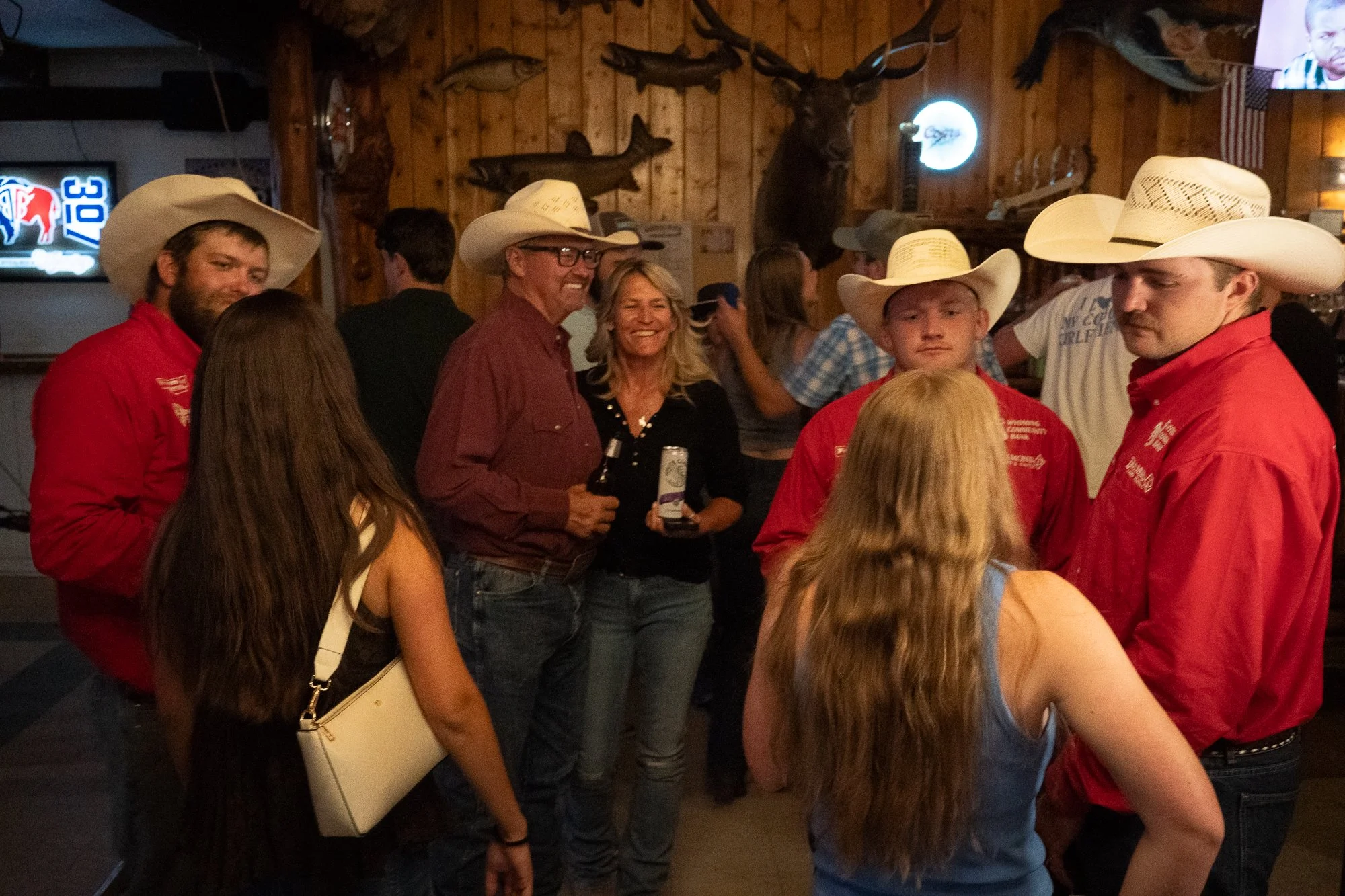
Cowboys and spectators gathered inside a Wyoming bar after a rodeo

Rodeo competitors and spectators mix together inside the bar after the events.

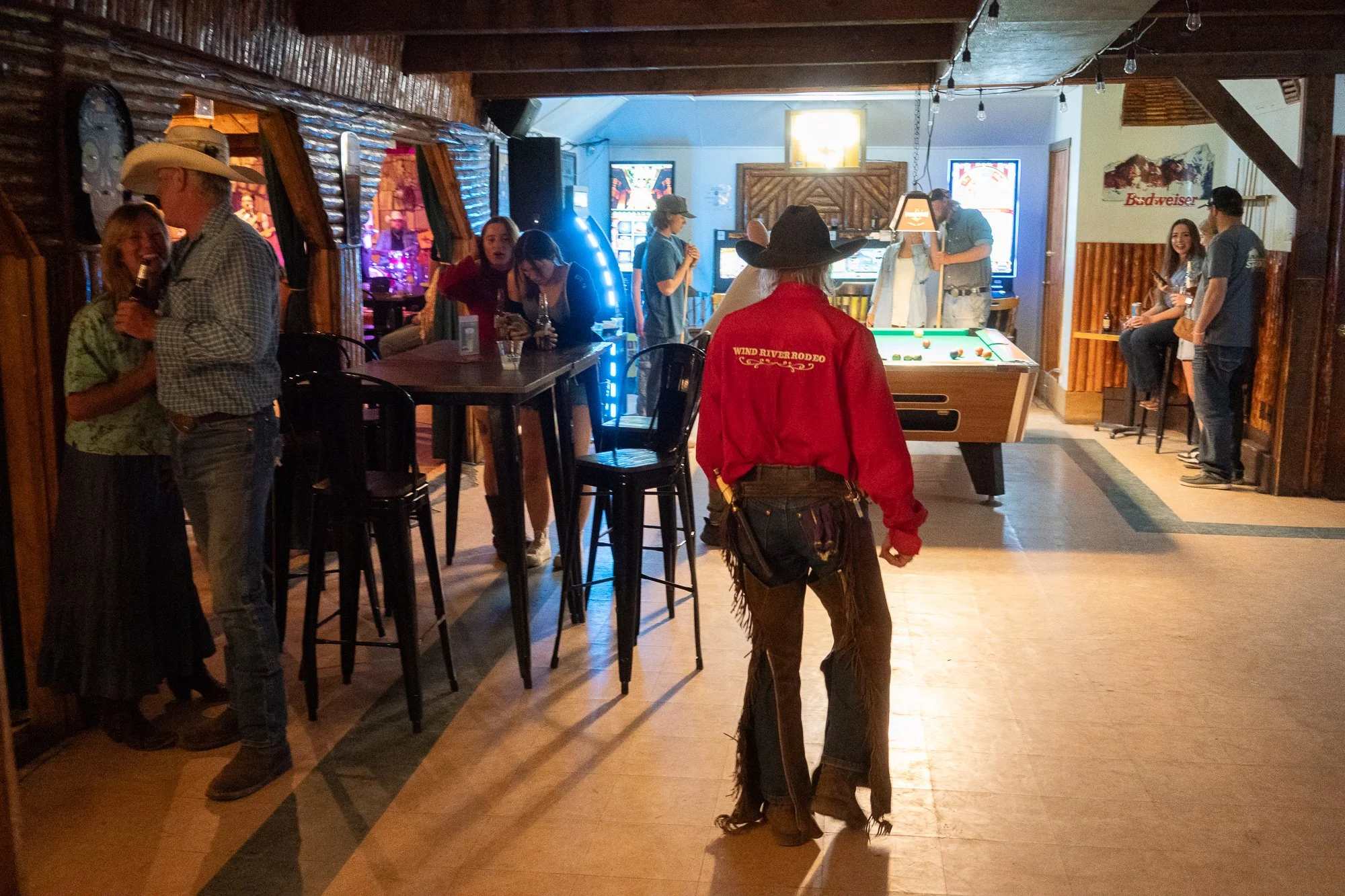
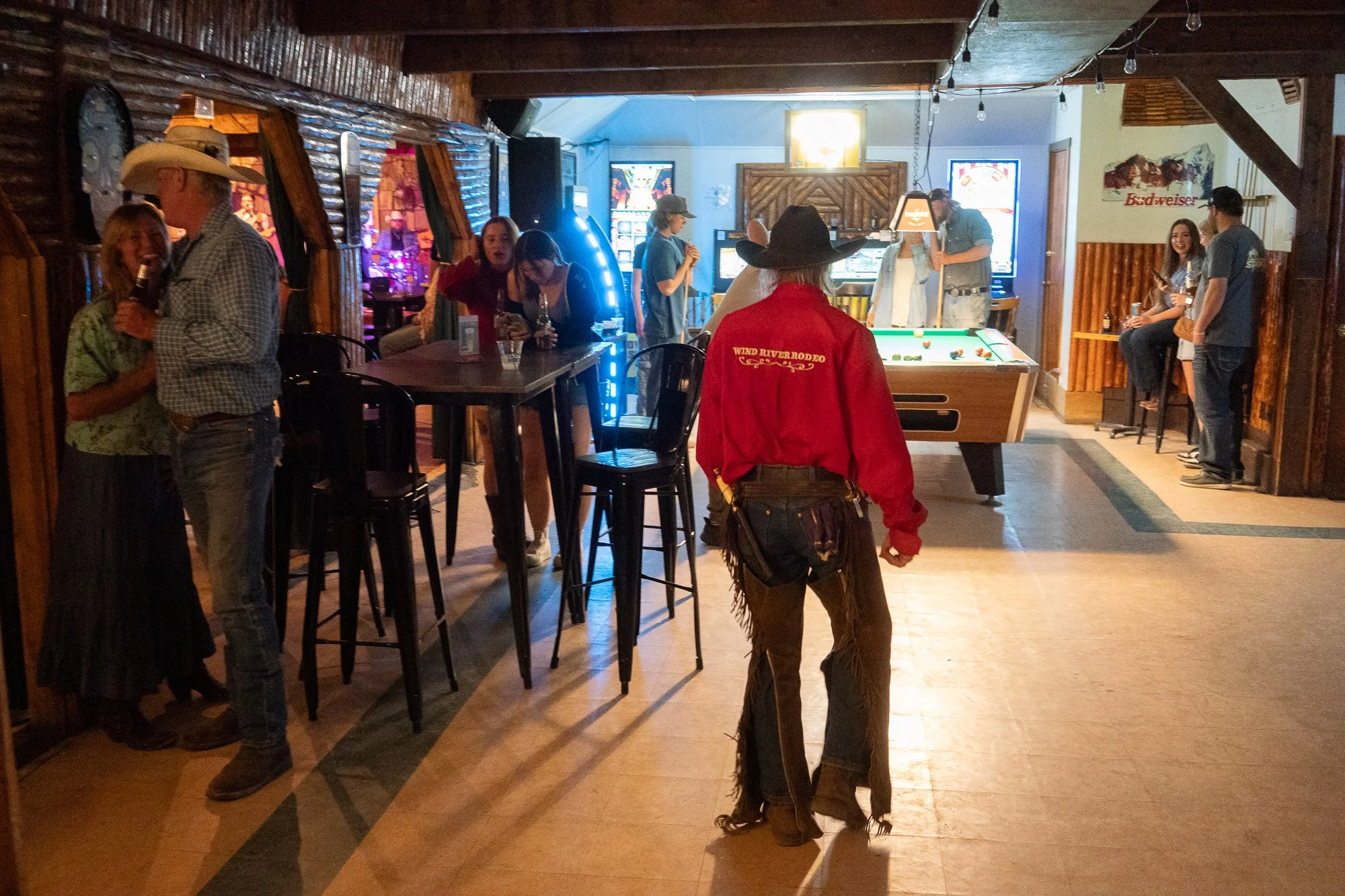
Rodeo participant in Western clothing walking through a Wyoming bar

The rodeo continues into the evening at the local bar.

Wyoming Road Trip Photography

Driving is an enormous part of making this work.

There isn't really another way around it.

Wyoming rewards that kind of travel because the distances force you to slow down. You can drive for hours through country that initially appears empty before realizing how much is actually there.

Weather systems move across the horizon. Light changes constantly. Pronghorn appear beside the highway. Towns come and go in a few minutes.

Then there's all the human stuff.

Hand-painted signs. Old bars. Gas stations. Churches. Trucks. Motels. Ranch entrances. Buildings whose original purpose isn't immediately obvious.

I've missed plenty of photographs because I told myself I'd stop on the way back.

I've learned not to do that anymore.

If something makes me look twice, I turn around.

Sometimes it turns into a photograph. Most of the time it doesn't. That's part of the process.

There isn't a checklist for this kind of Wyoming road trip photography. I'm not driving from one famous overlook to another trying to reproduce photographs I've already seen.

The whole point is not knowing what I'm looking for until I see it.

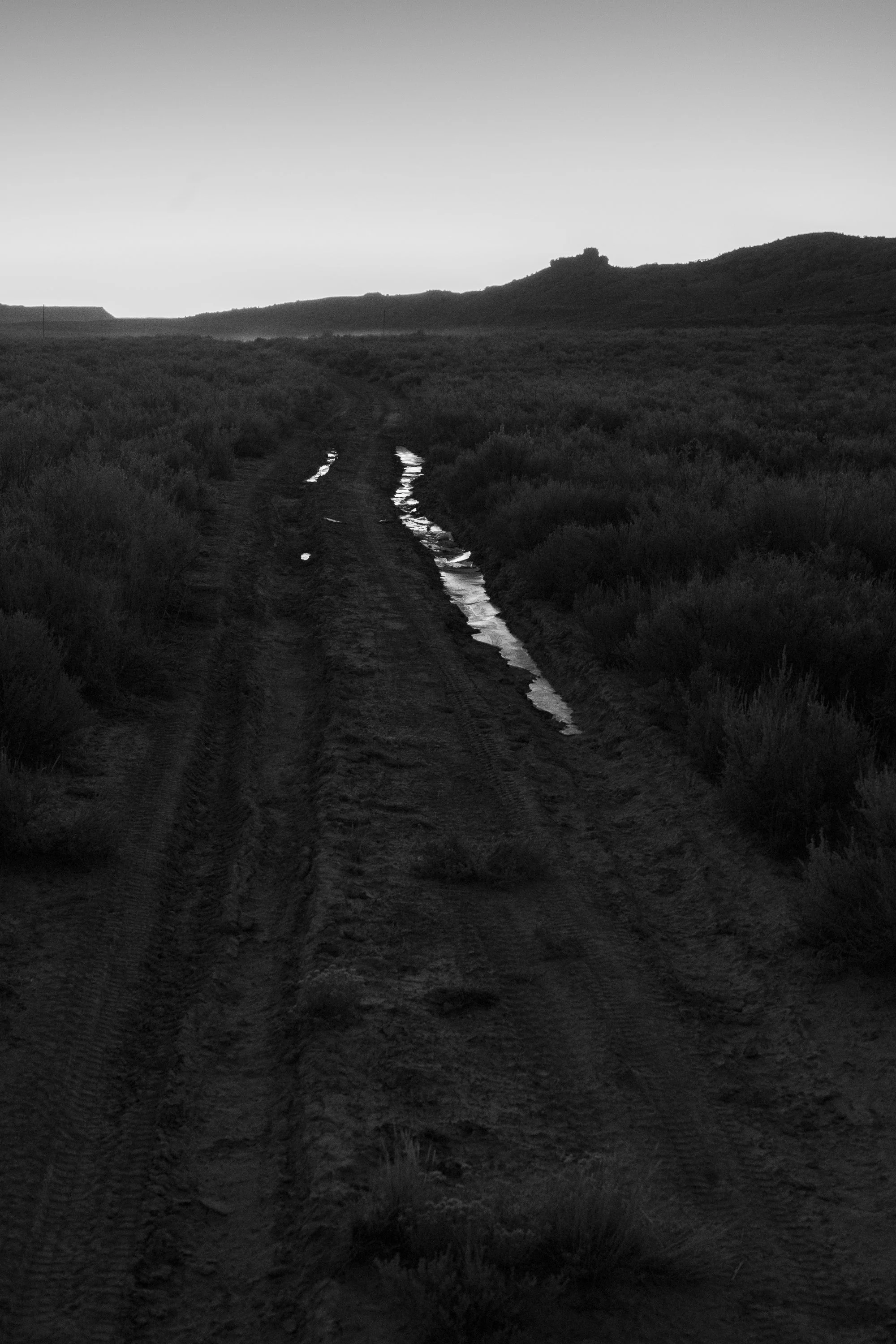
Dirt road winding through sagebrush and open Wyoming countryside

The dirt road cuts through the open country and sagebrush.

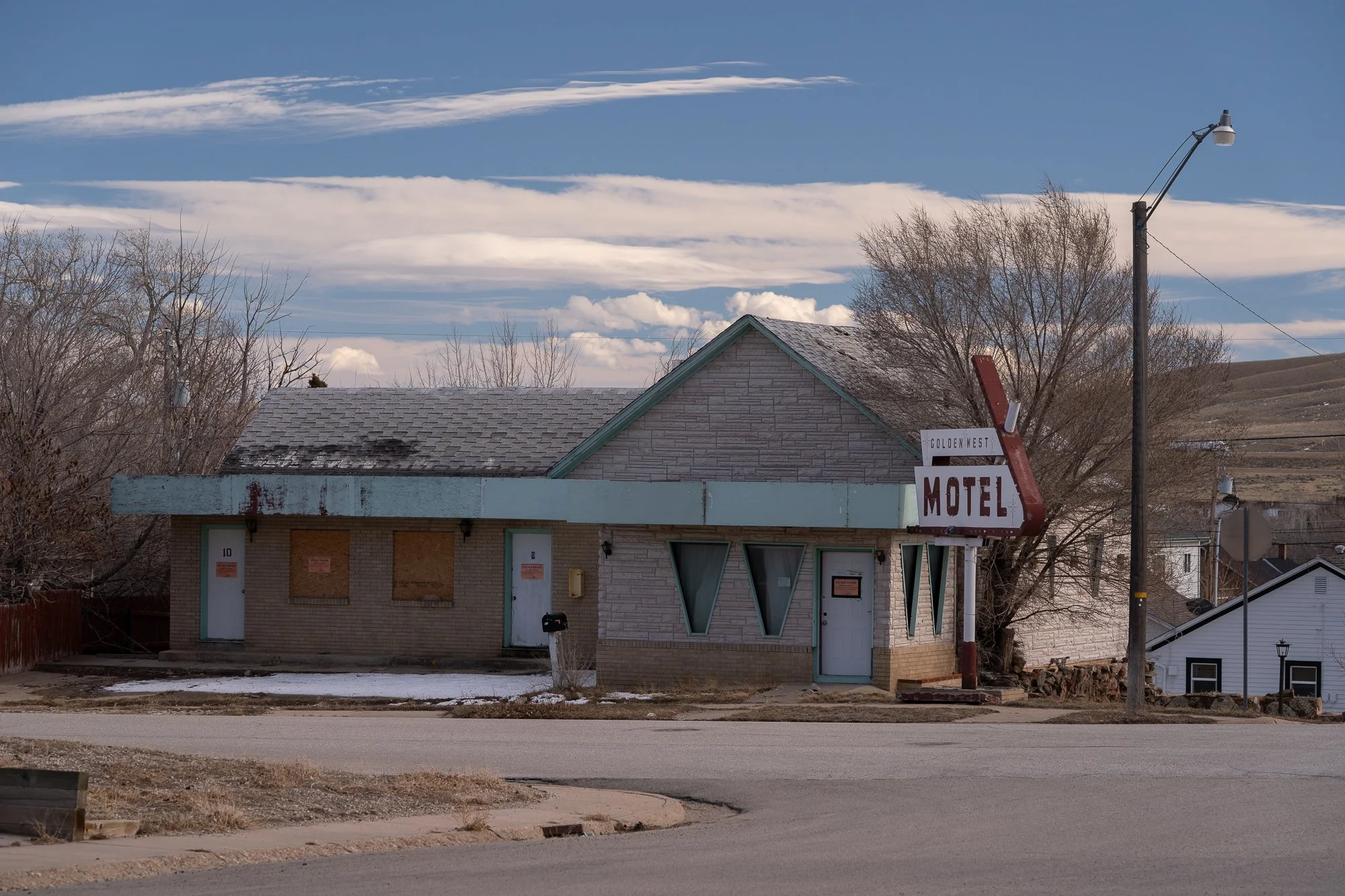
Golden West Motel sign and weathered building in a Wyoming town

Mountains rise behind the Golden West Motel and its roadside sign.

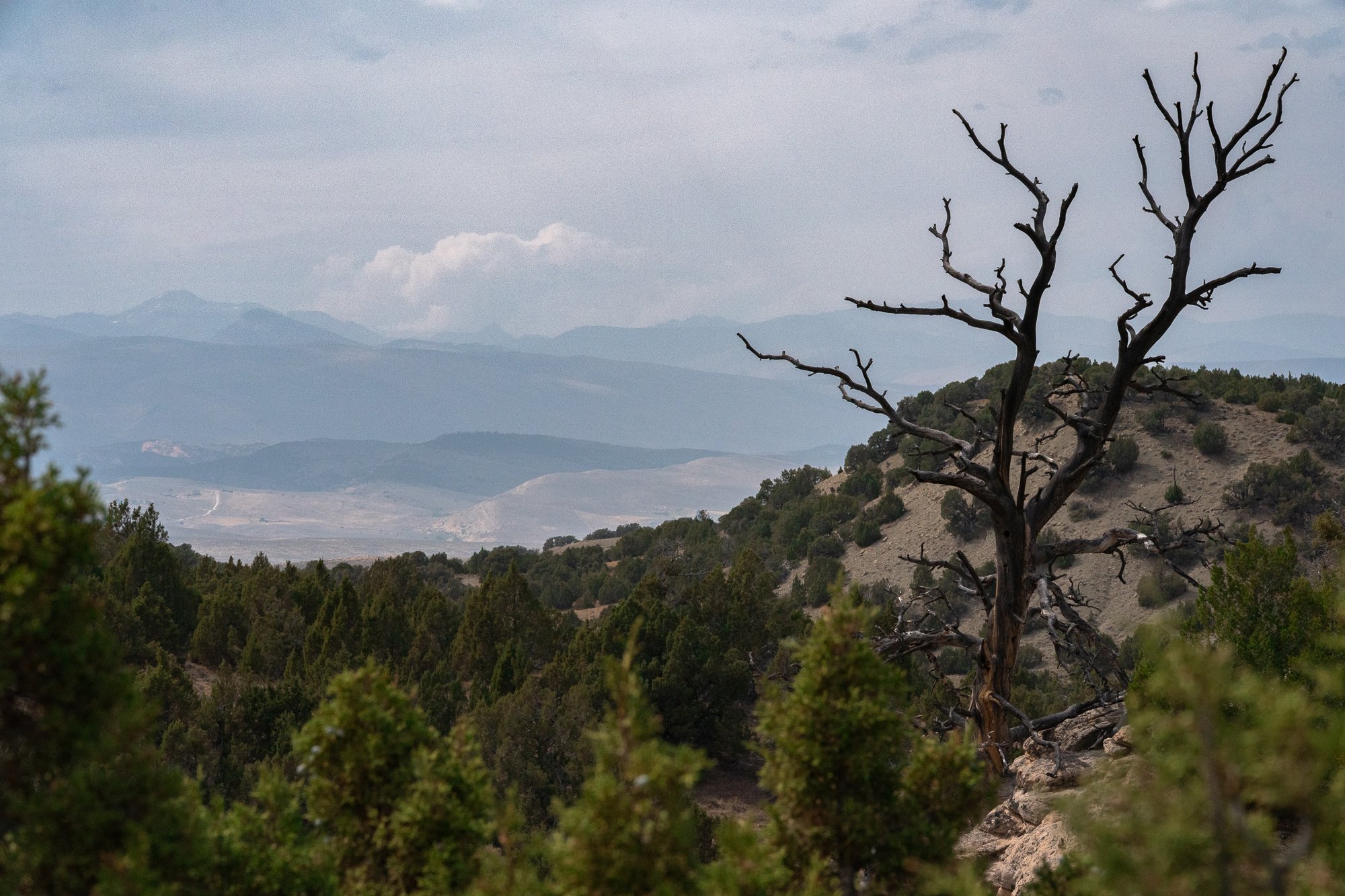
Open Wyoming landscape with a mountain ridge and lone tree

Open country and scattered trees stretch toward the mountains.

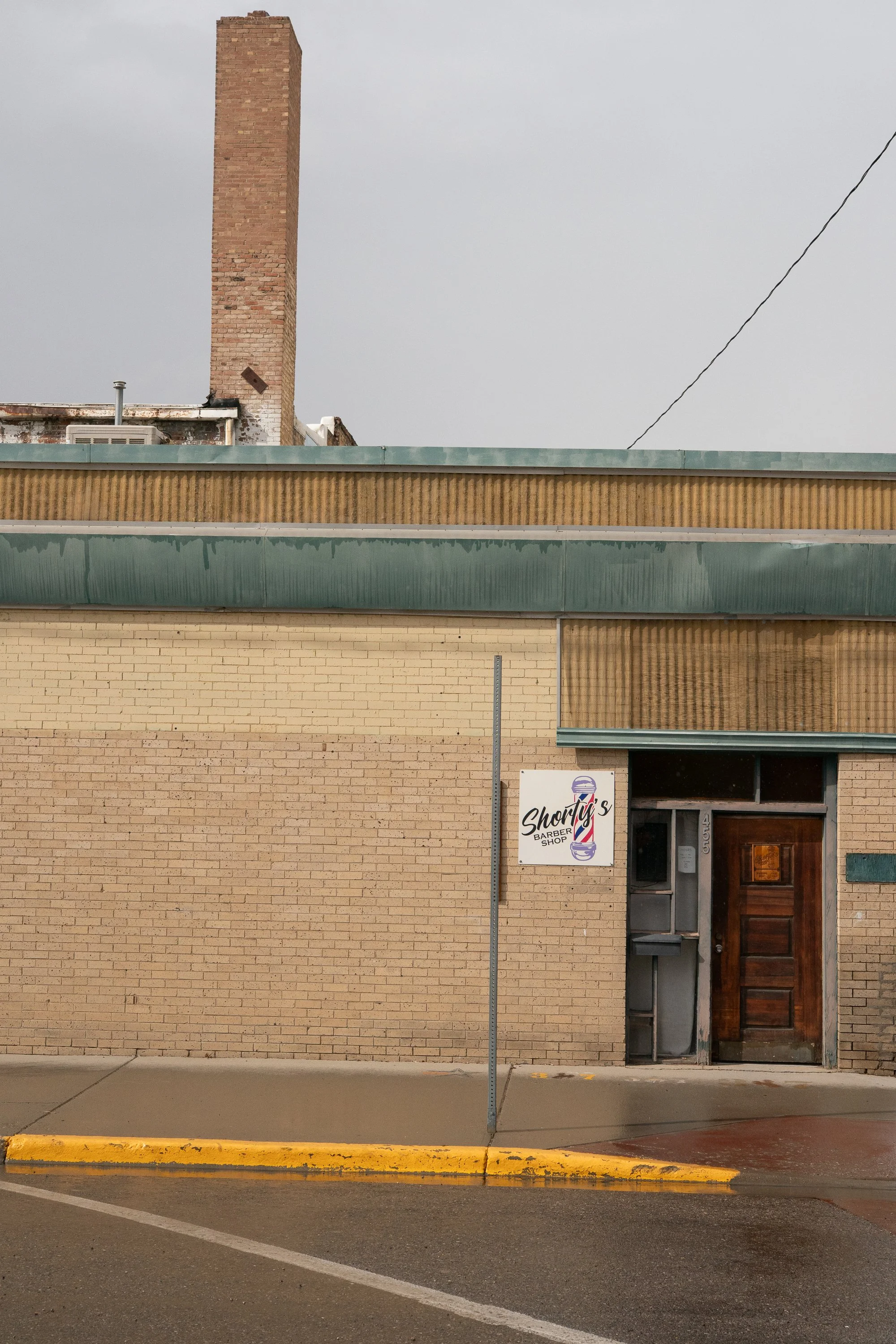
Weathered brick storefront with chimney and entrance in Wyoming

Weathered brick and an old storefront show the age of the building.

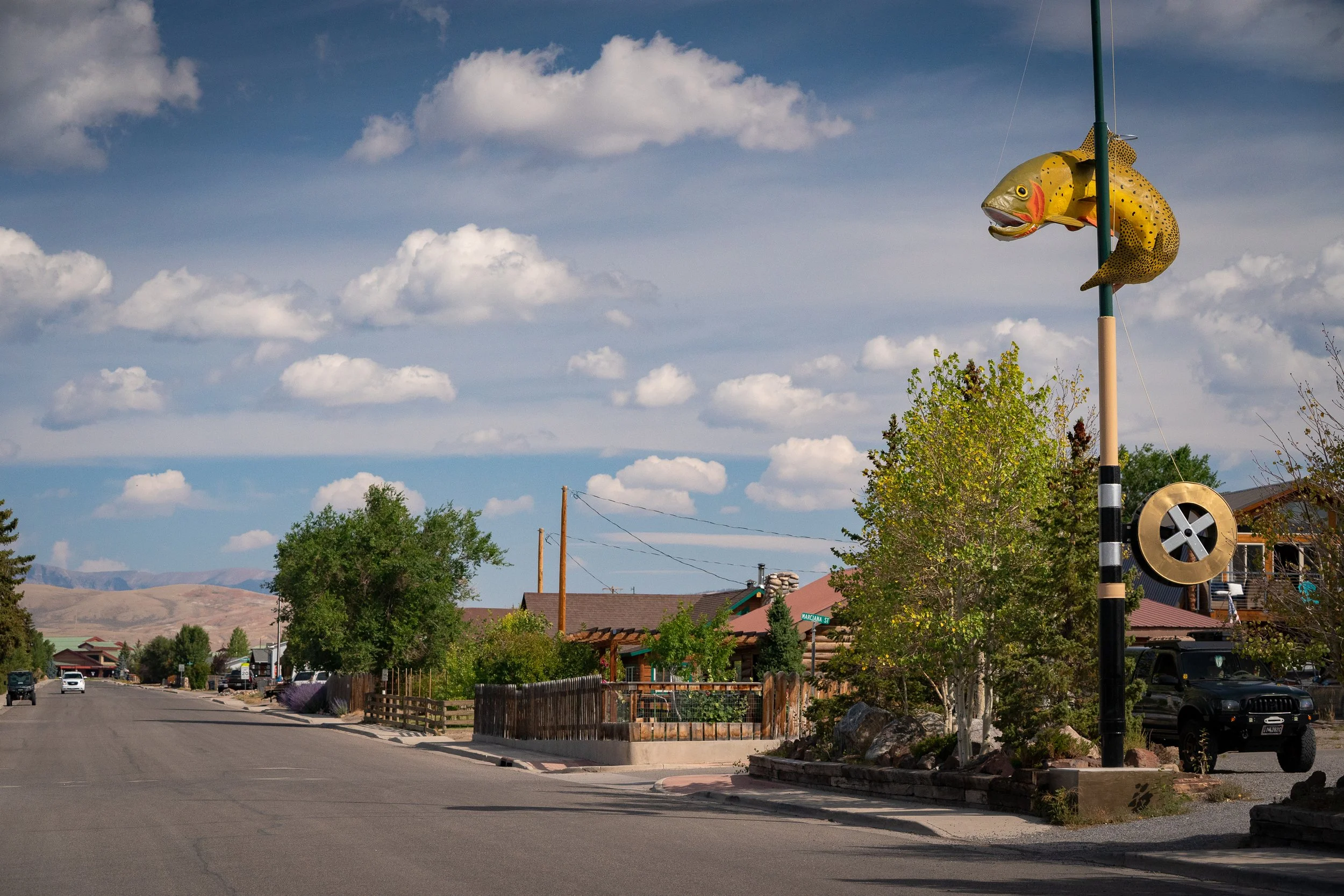
Fish shaped sign above a street in a small Wyoming town

A fish-shaped sign adds another unexpected detail to a small Wyoming town.

Why I Keep Photographing Wyoming

The West has changed enormously, and it continues to change.

That's part of the reason I feel an urgency to keep photographing it.

I'm not interested in pretending Wyoming is frozen in some earlier era. It isn't. New houses go up. Old businesses disappear. Ranches change hands. Towns grow. People leave and other people arrive.

At the same time, there are aspects of life here that remain closely connected to the state's history.

People still make their living raising cattle. Cowboys still spend long days horseback. Small-town rodeos still bring communities together on summer nights. There are still roads where you can drive a long time without seeing another car.

The tension between those things interests me.

Photography can't preserve a place, but it can preserve evidence of what it looked and felt like at a particular moment.

That's enough reason for me to keep going back.

There will always be another road I haven't driven, another ranch I haven't visited, another town I've passed through too quickly.

And probably another reason to turn the truck around.

Sandman Motel sign and storefront along a Wyoming street

The Sandman Motel sign stands beside the road in town.

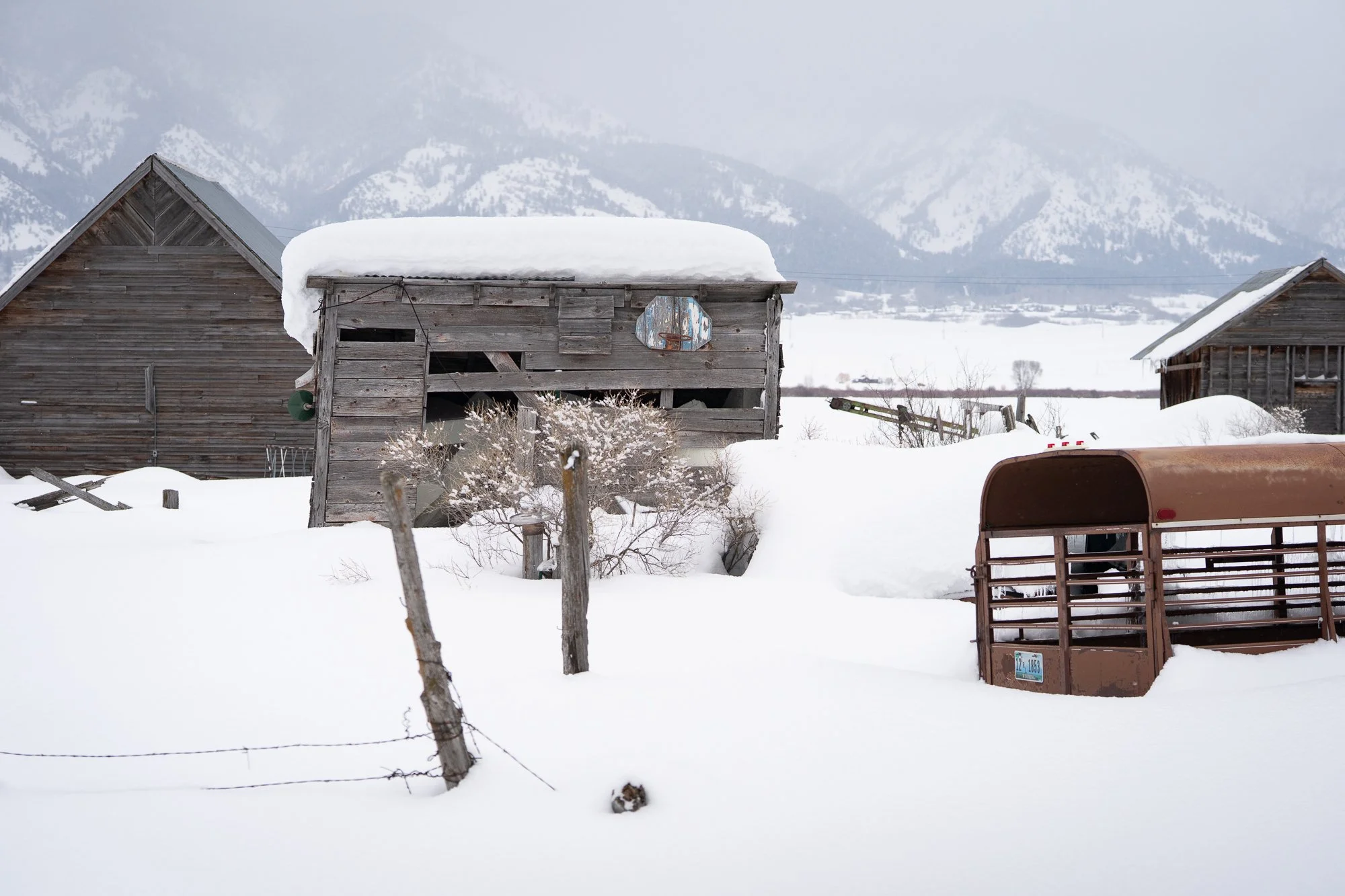
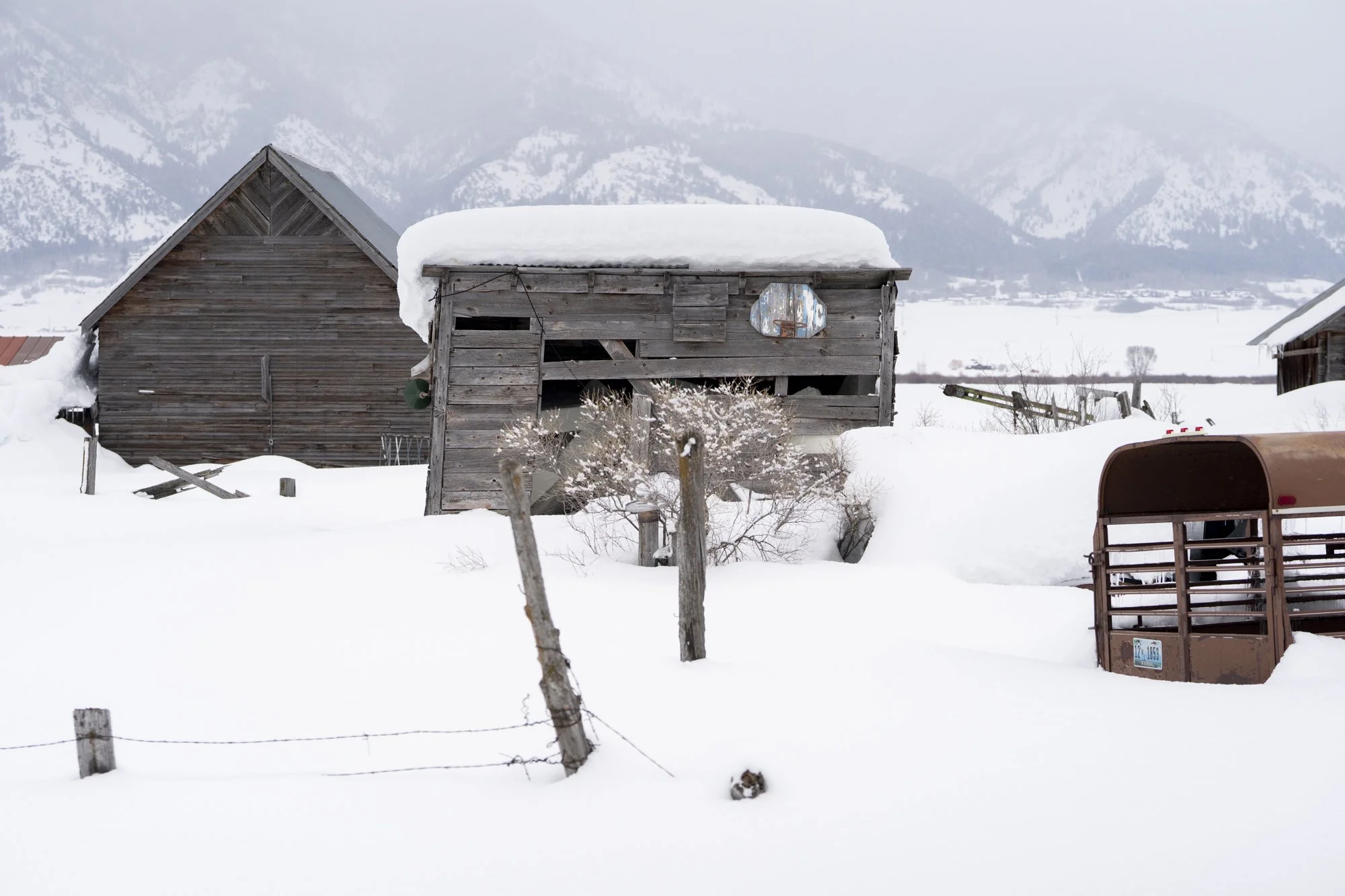
Snow covered ranch buildings and livestock trailer beneath Wyoming mountains

Ranch buildings and a livestock trailer sit in the snow below the mountains.

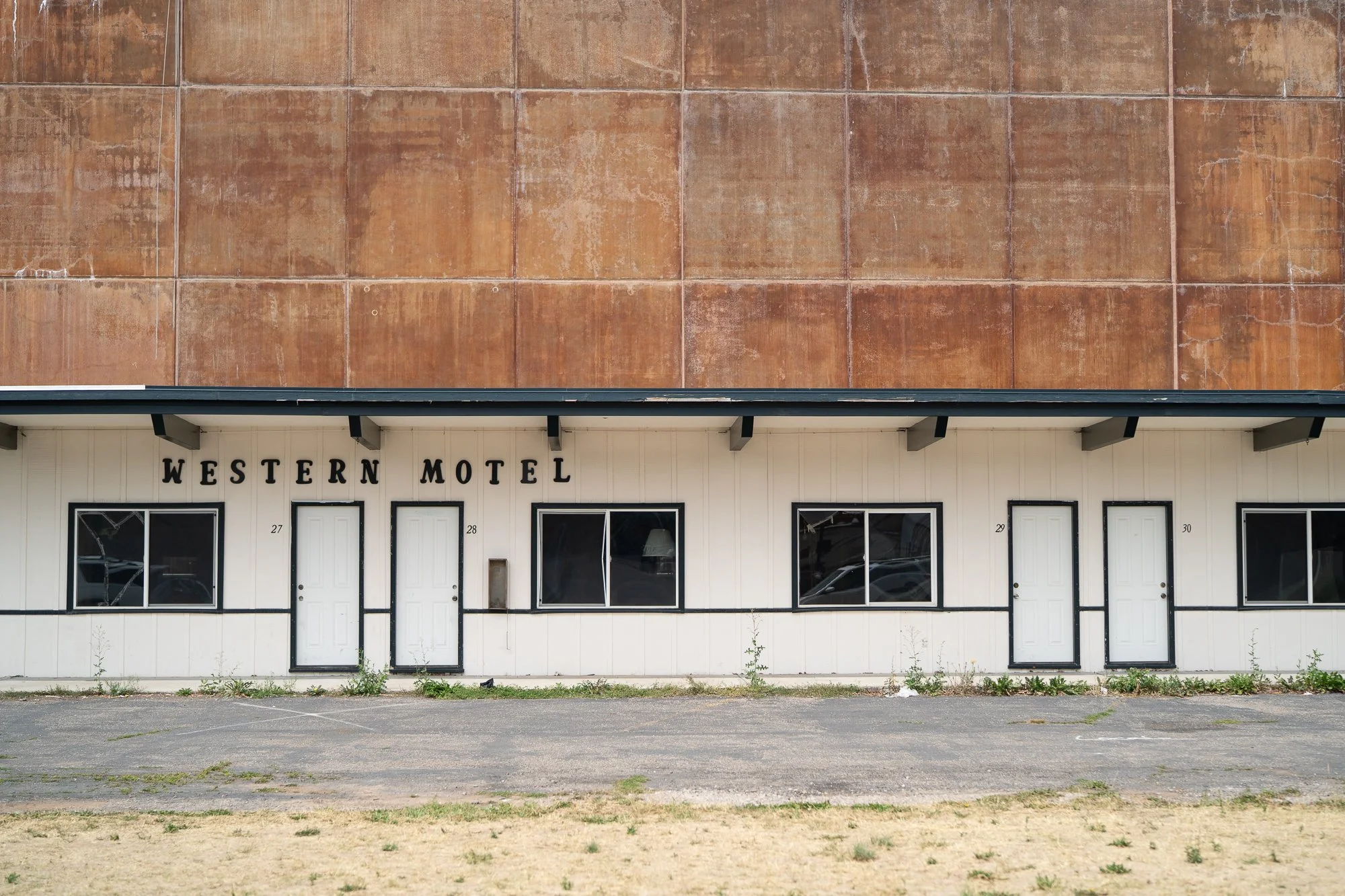
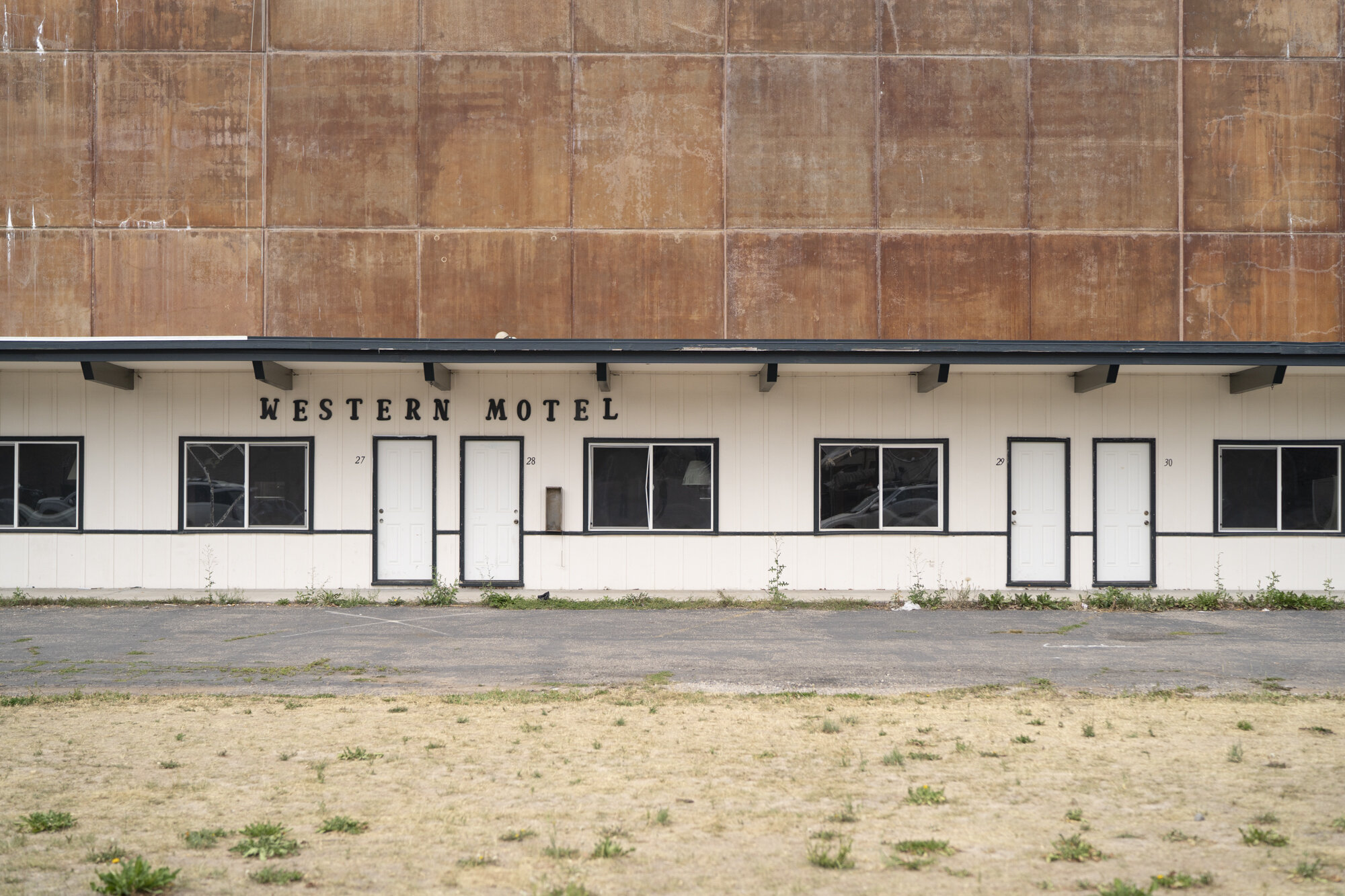
Western Motel building and sign in a small Wyoming town

The Western Motel sits along the road beneath the rocky cliffs.

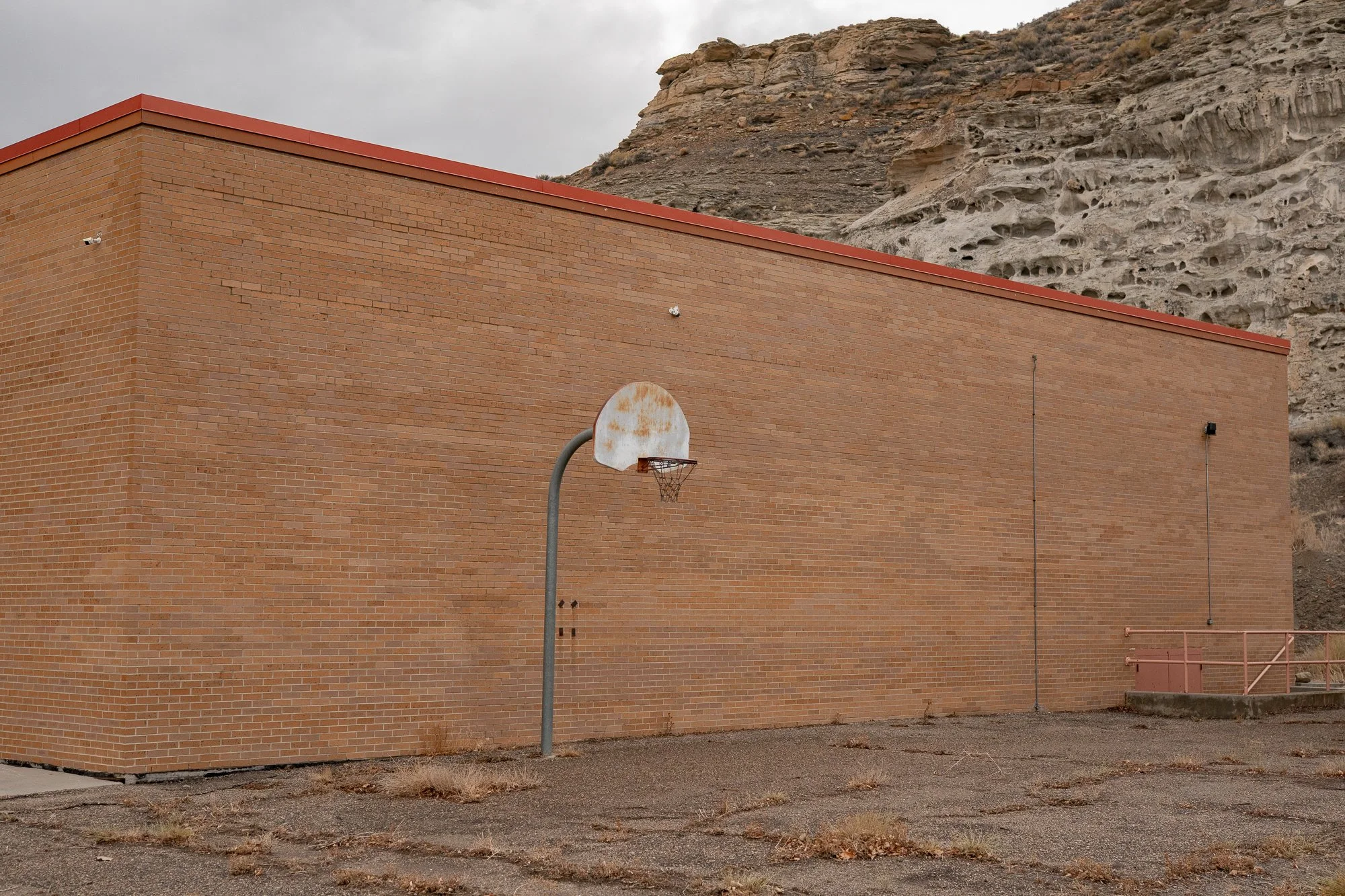
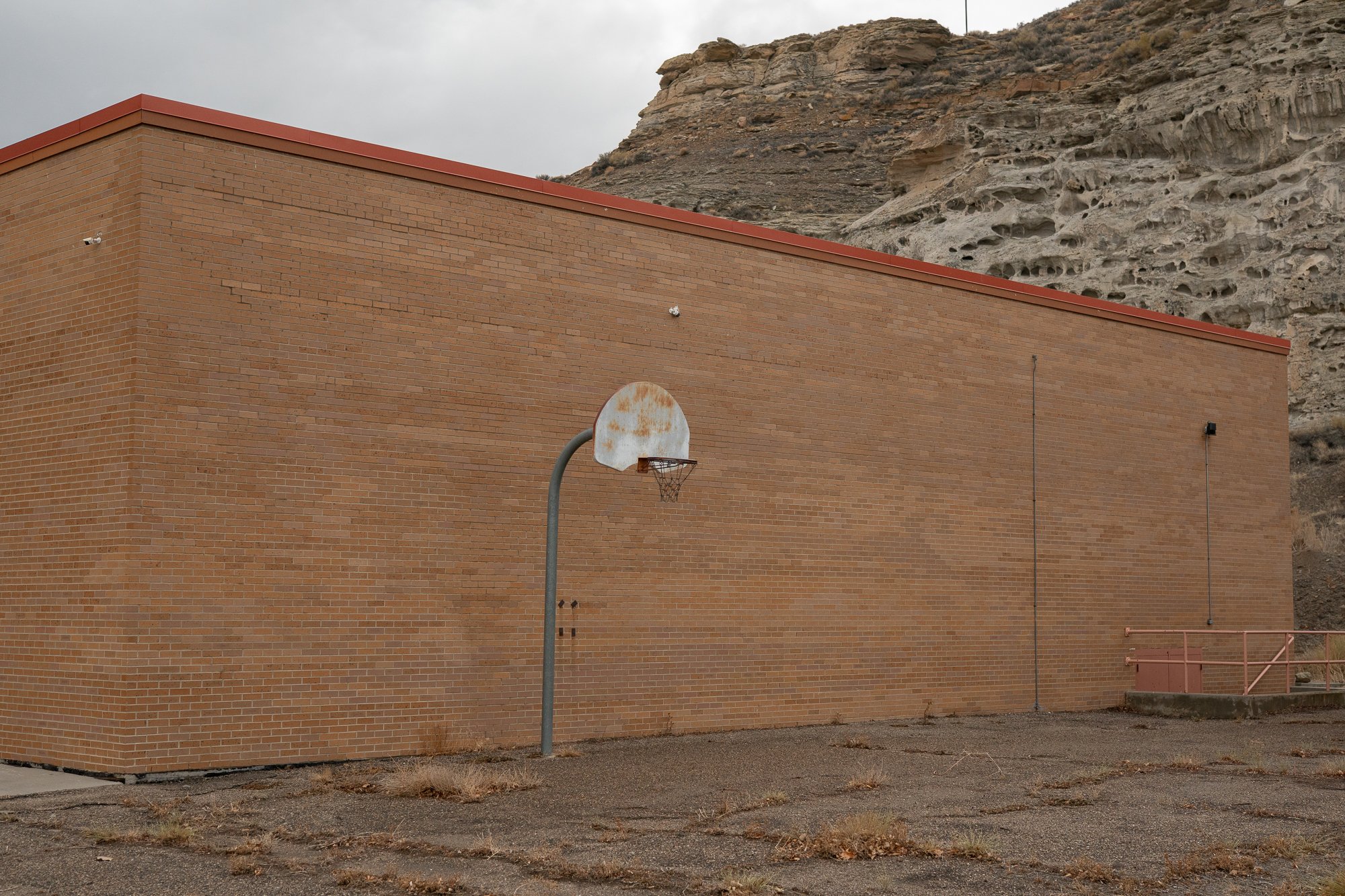
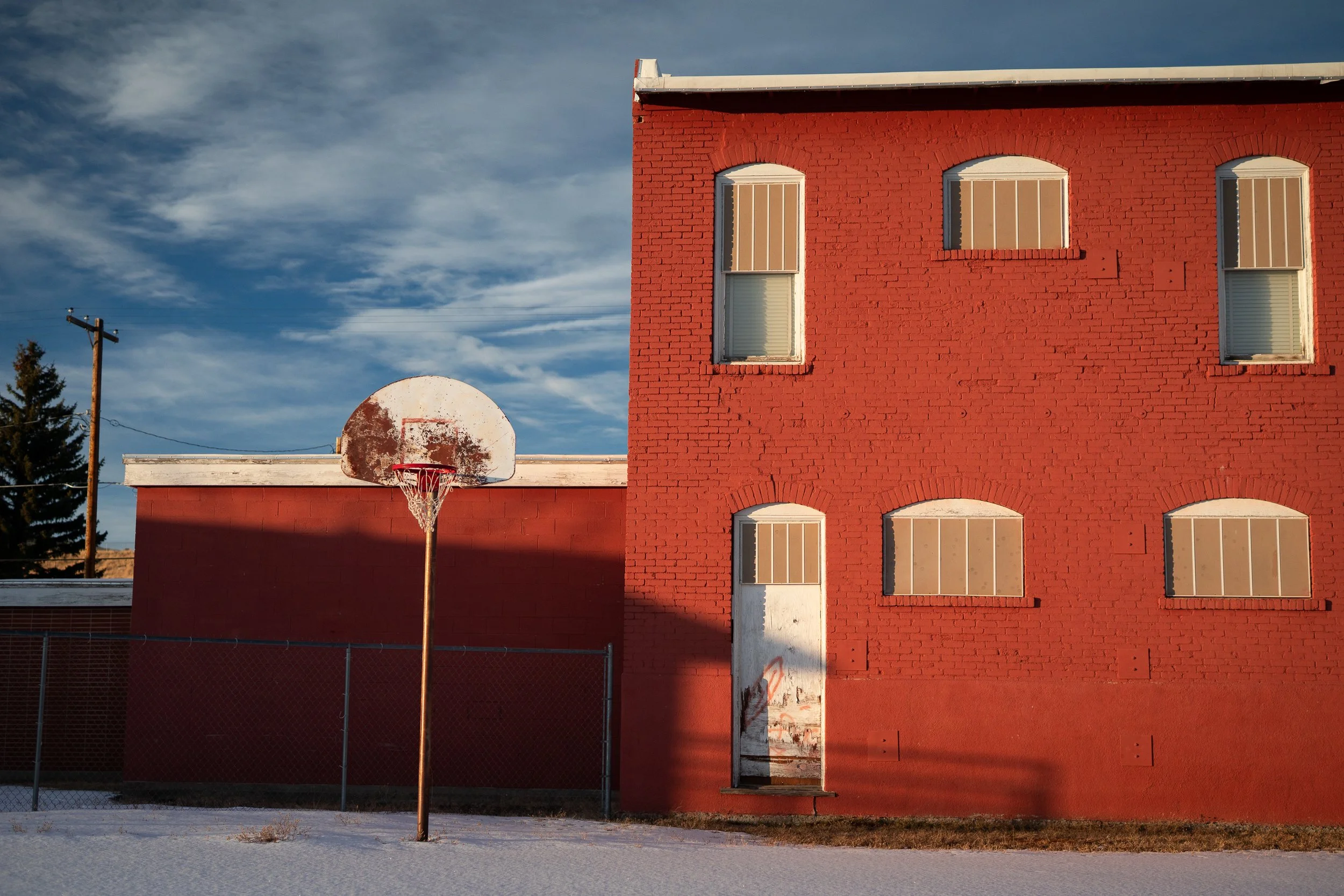
Basketball hoop mounted against a brick building beneath a Wyoming hillside

A basketball hoop stands against a brick building below the rocky hillside.

Fine Art Photography of Wyoming & the American West

These Wyoming photographs are part of my larger ongoing documentation of cowboy culture, working ranches, rural communities and everyday life throughout the American West.

A selection of the work is available as limited-edition fine art photography prints, produced using archival materials and available in a range of sizes and custom framing options.

The photographs aren't intended to present a polished or invented version of the West. They're records of people, places and moments I've encountered after years of traveling and photographing this part of America.

View the Full Cowboy Gallery

View Cowboy Photography Prints

View More Roadtrip Photography

View my Roadtrip Photography Book

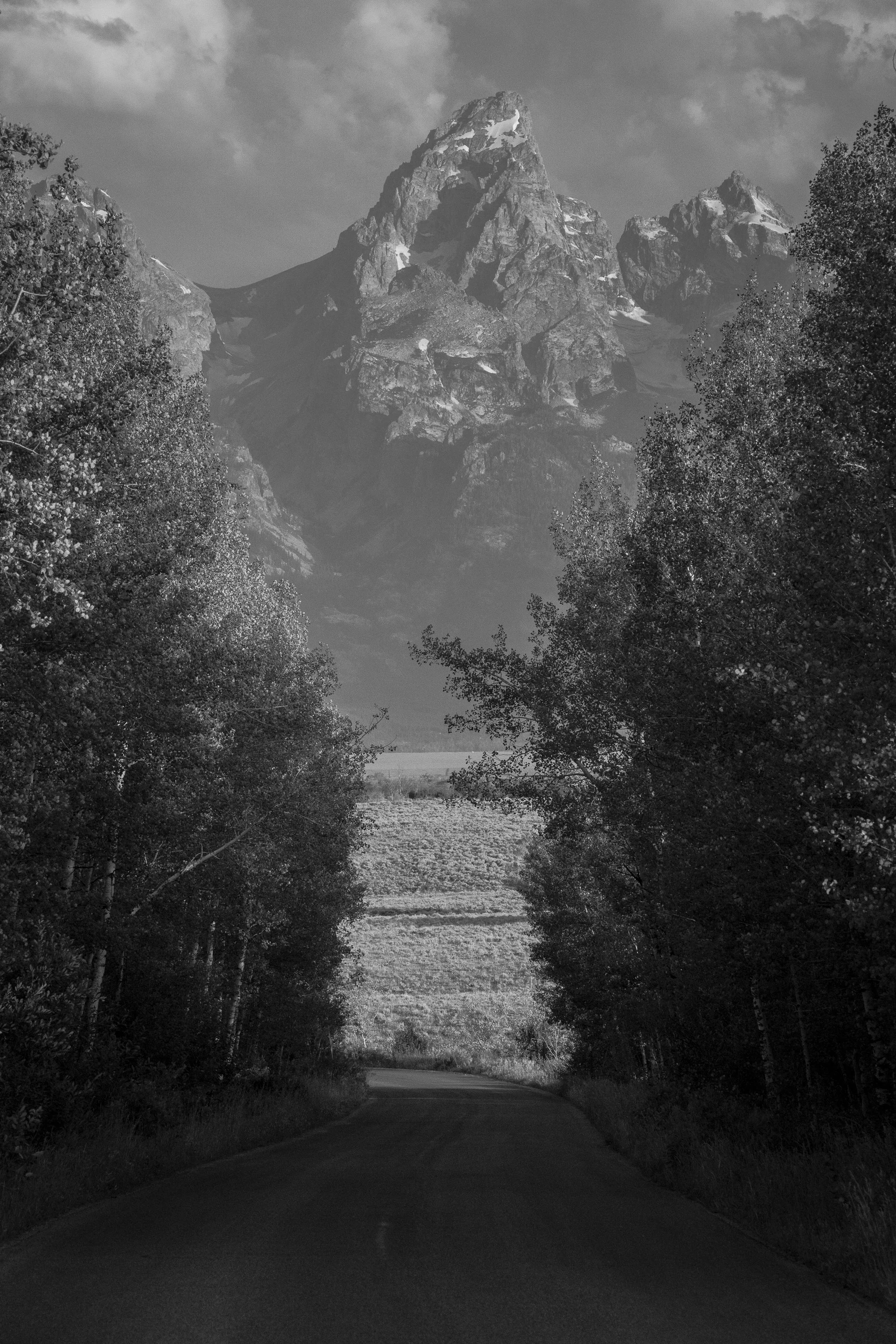
Wyoming road leading through open country toward a mountain

The road runs through open country toward the mountains.

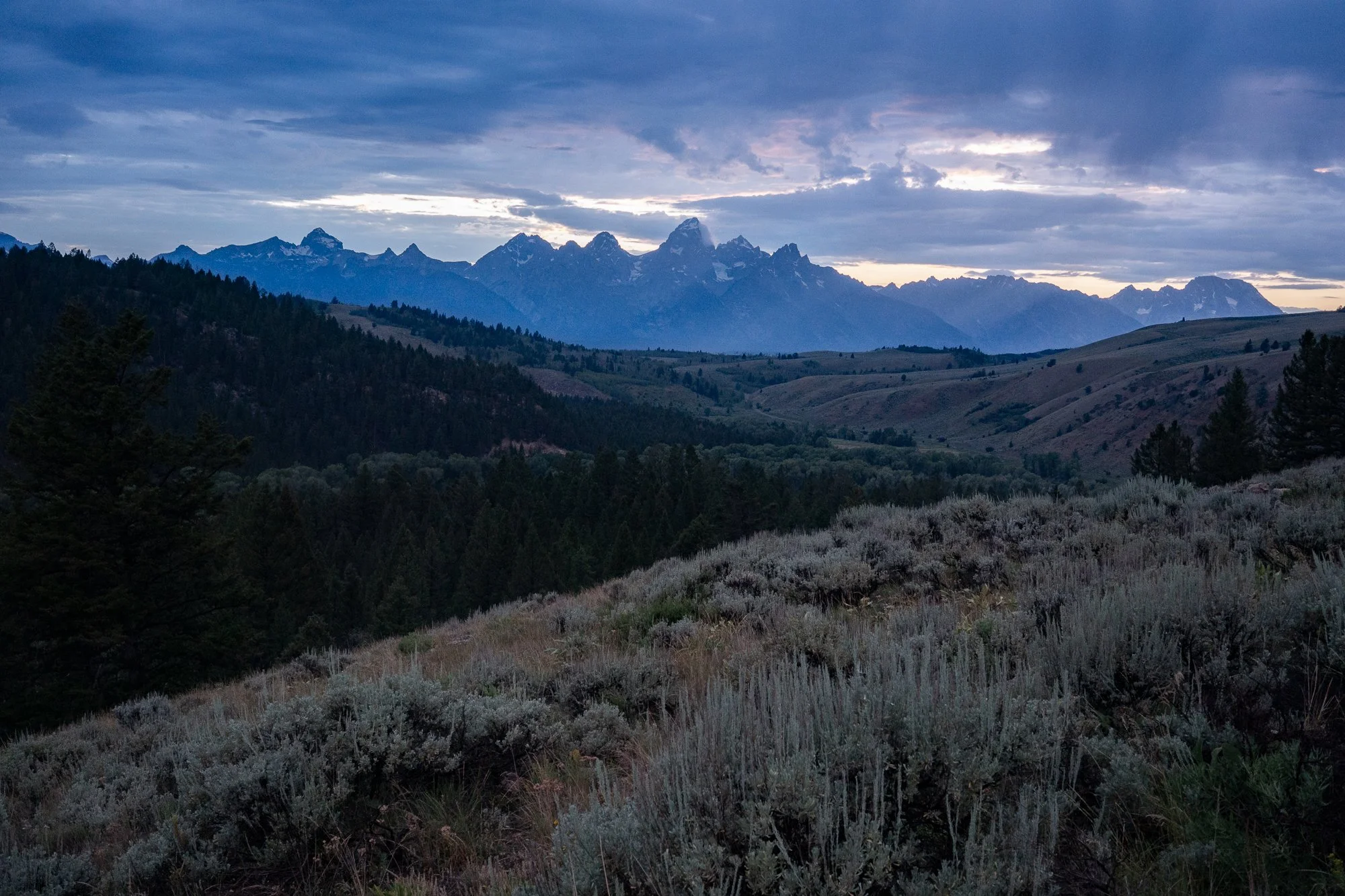
Wyoming mountain range beyond a sagebrush covered hillside

Sagebrush and open country stretch toward the mountain range.

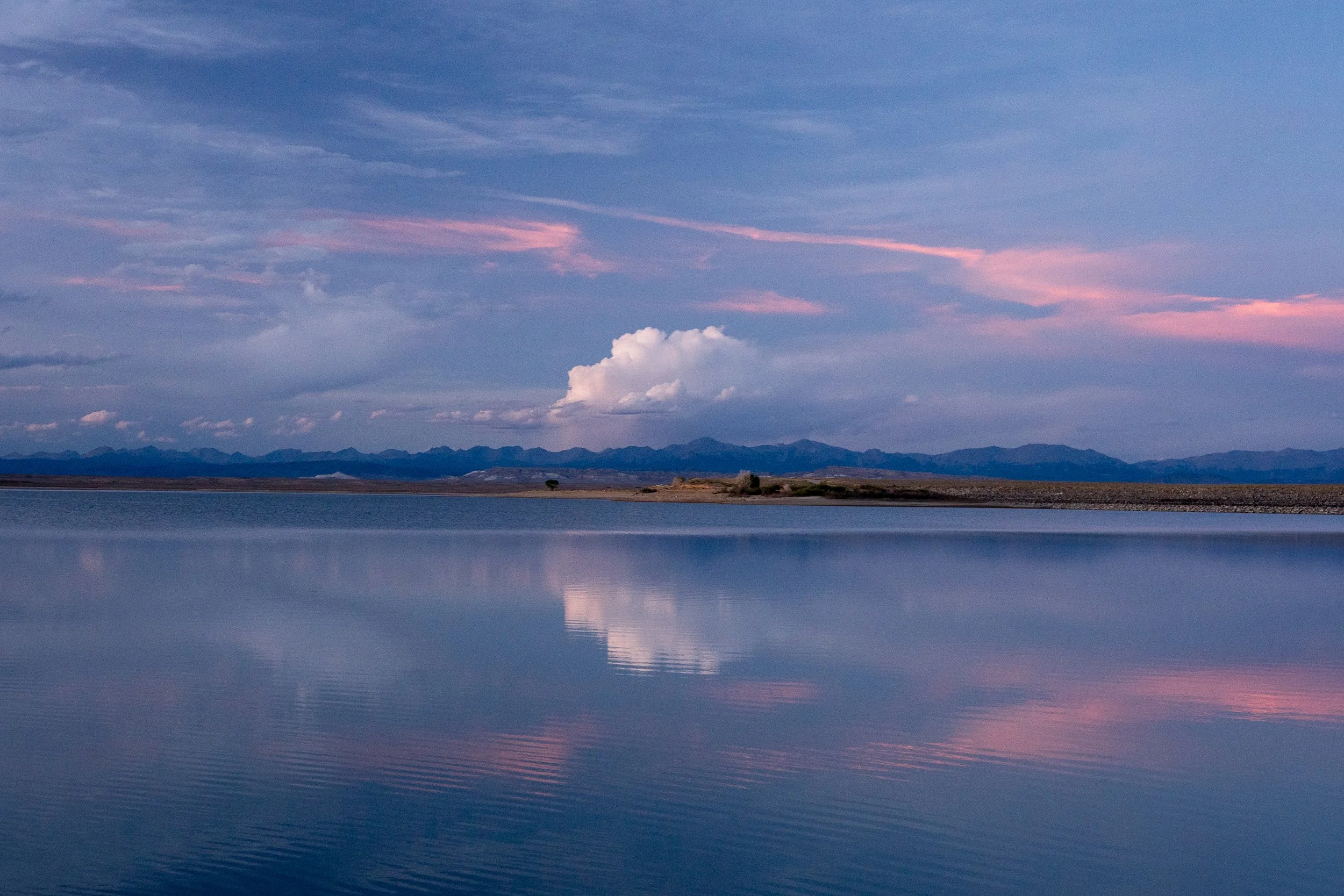
Wyoming lake reflecting mountains and clouds across the open landscape

The lake reflects the mountains and clouds across the open country.

Grand Teton mountain range rising above the Wyoming landscape

The Grand Teton range rises above the landscape.

Rock Springs, Wyoming: Photographs From an Overlooked American Town

Photographing Rock Springs, Wyoming

Spending 35k miles a year on the road photographing America brings you to a lot of interesting places. Most are often a welcomed surprise, but this visit to Rock Springs was a forced hiatus. While driving through Wyoming on the way to a ranch further out west, my truck broke down in the middle of nowhere, an hour outside of Rock Springs. After having it towed into town, and a series of unfortunate events, I was stranded there for four days waiting for a new fuel pump to arrive.

Rock Springs sits in Sweetwater County along Interstate 80, a corridor that thousands of travelers cross every day on their way somewhere else. Many of them never leave the highway. But like a lot of towns shaped by mining, railroads, and the boom-and-bust cycles of the West, Rock Springs carries a deeper history beneath its surface.

Rock Springs, Wyoming: A Town With a Complicated Past

Rock Springs has a deeper history than many travelers realize. In 1885 the town became the site of one of the most violent anti-Chinese riots in American history when tensions between white coal miners and Chinese workers erupted into violence. Dozens of Chinese miners were killed and much of the Chinese community in town was burned to the ground. Today the streets of Rock Springs appear quiet and ordinary, but like many Western towns the landscape holds layers of history that aren’t always visible at first glance.

People of Rock Springs

Each day in Rock Springs blended into the next as the arrival of the truck part kept getting delayed, souring my mood by the hour. With little else to do, the only productive option was to keep walking around with the camera. Naturally, that led to some interesting encounters with the locals.

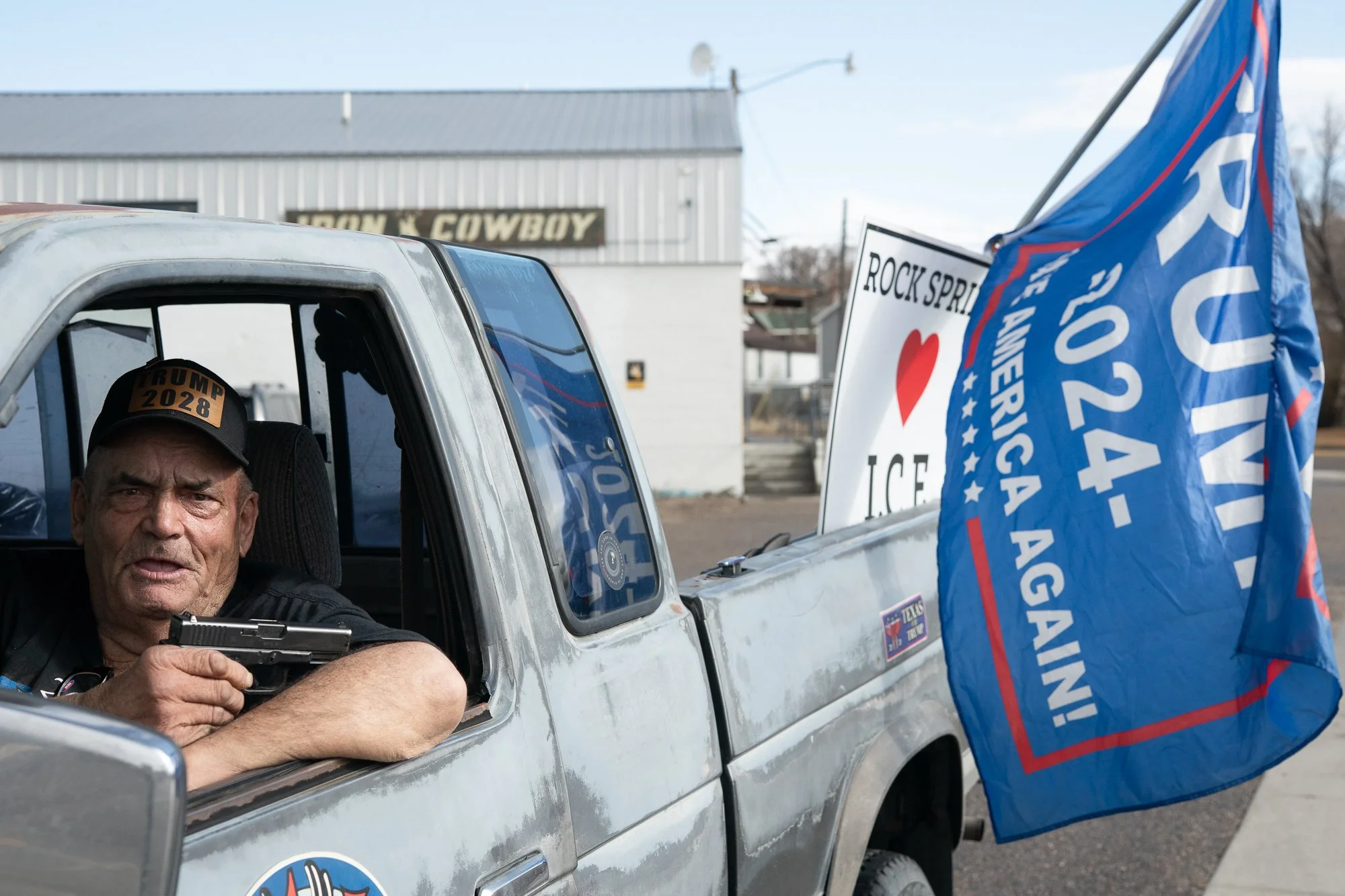
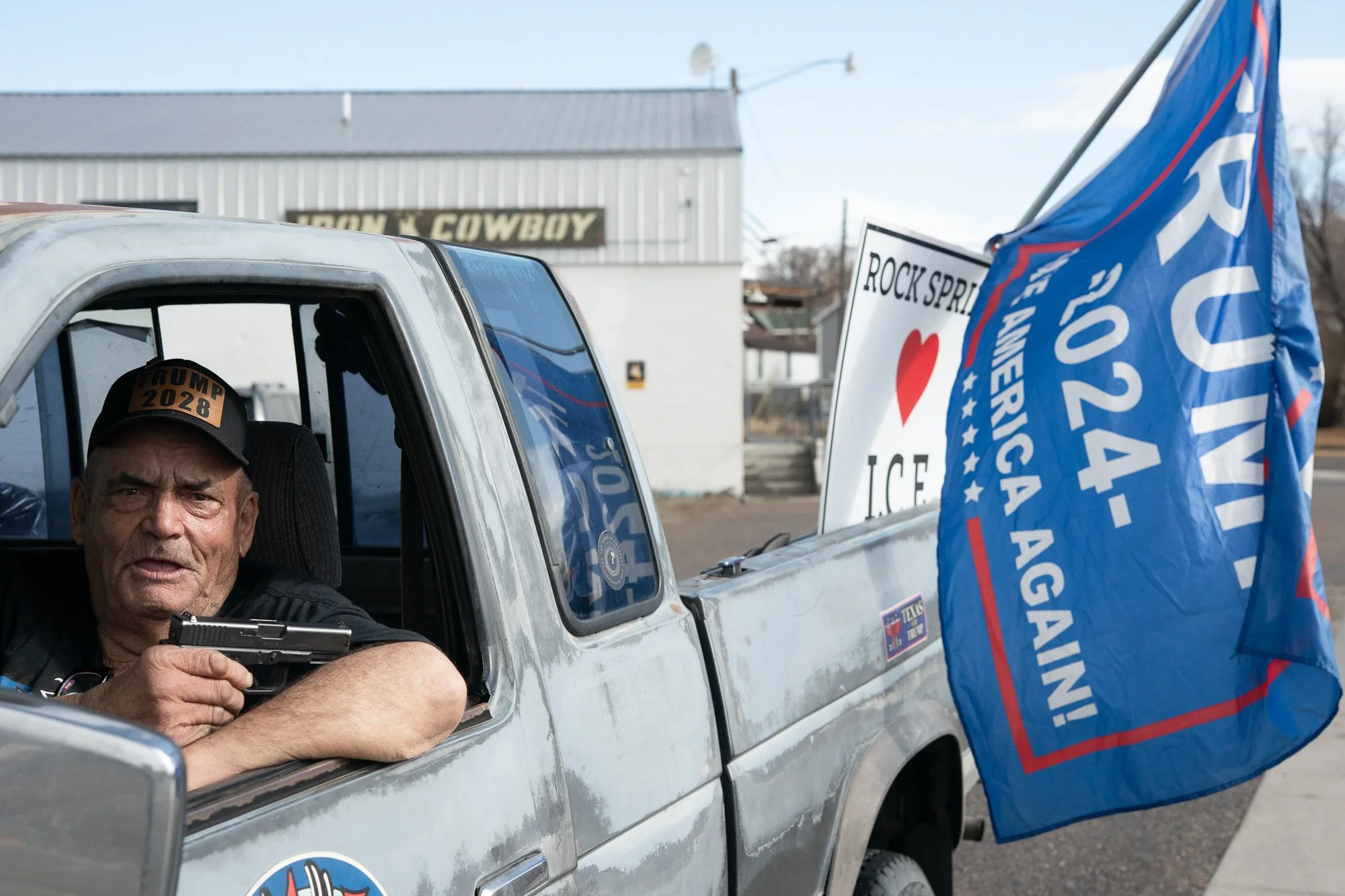
The first portrait below is of a lone protester I approached and asked to make his photograph. “I sure wish you would,” he replied immediately, then pulled out a gun that had been sitting on the passenger seat beside him and held it up for the picture. After a few minutes of conversation he asked what I was doing in town, so I explained the situation with my truck. Without missing a beat he asked if I was doing alright—if I had money for food and gas to get back home. It was a very genuine response, and one I hadn’t expected.

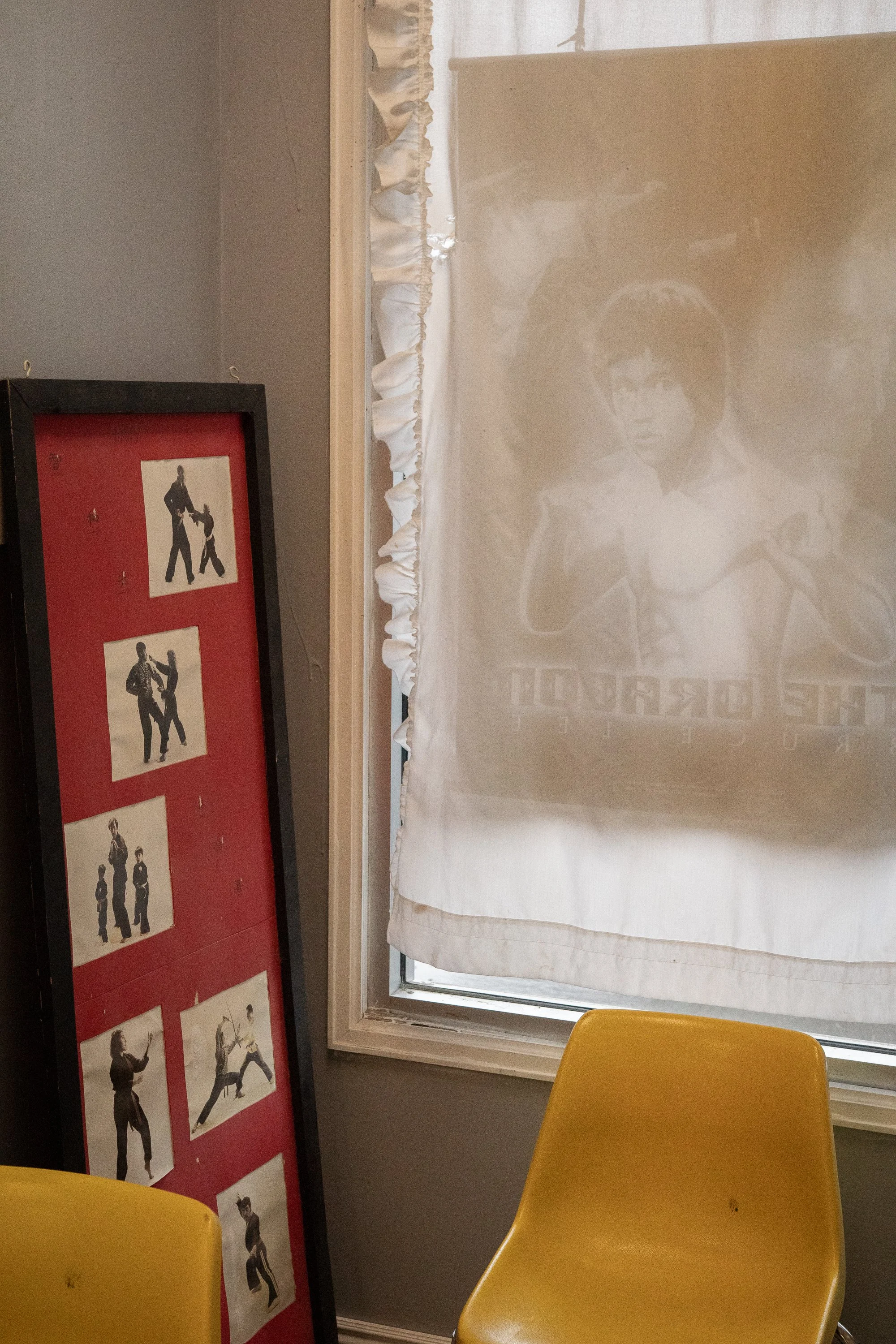
A few hours later I was still wandering around shooting when it started to rain. I ducked under the entrance of a karate dojo to wait out the storm. Not soon after, the owner arrived and asked, “Do you want to come inside and warm up?” What the hell—why not.

Once inside he launched into an impromptu oral history of Rock Springs during its oil boom years. “These streets right here were filled with nothing but drunks, whores, and pimps,” he told me. Then went on to describe finding a dead man outside his building one morning and how the girls working the streets would sometimes come inside to warm themselves on his couch during the winter months.

Today the town is quiet and well past it’s prime, like many American boomtowns after the rush has passed. Most residents now work in the nearby trona mines, but you can still feel what is was like during the days of rough bars, gambling halls, and brothels. The locals sure haven’t forgotten that history.

A Town Along The American Railroad

I never planned to spend four days in Rock Springs, but sometimes the road decides where you stop. In the end I left with a set of photographs that feel true to the town and to a larger project I’ve been working on for years — documenting the overlooked places that quietly shape the American landscape.

Explore more photographs from the America project

View more photographs from an another overlooked American mining town - Helper, Utah

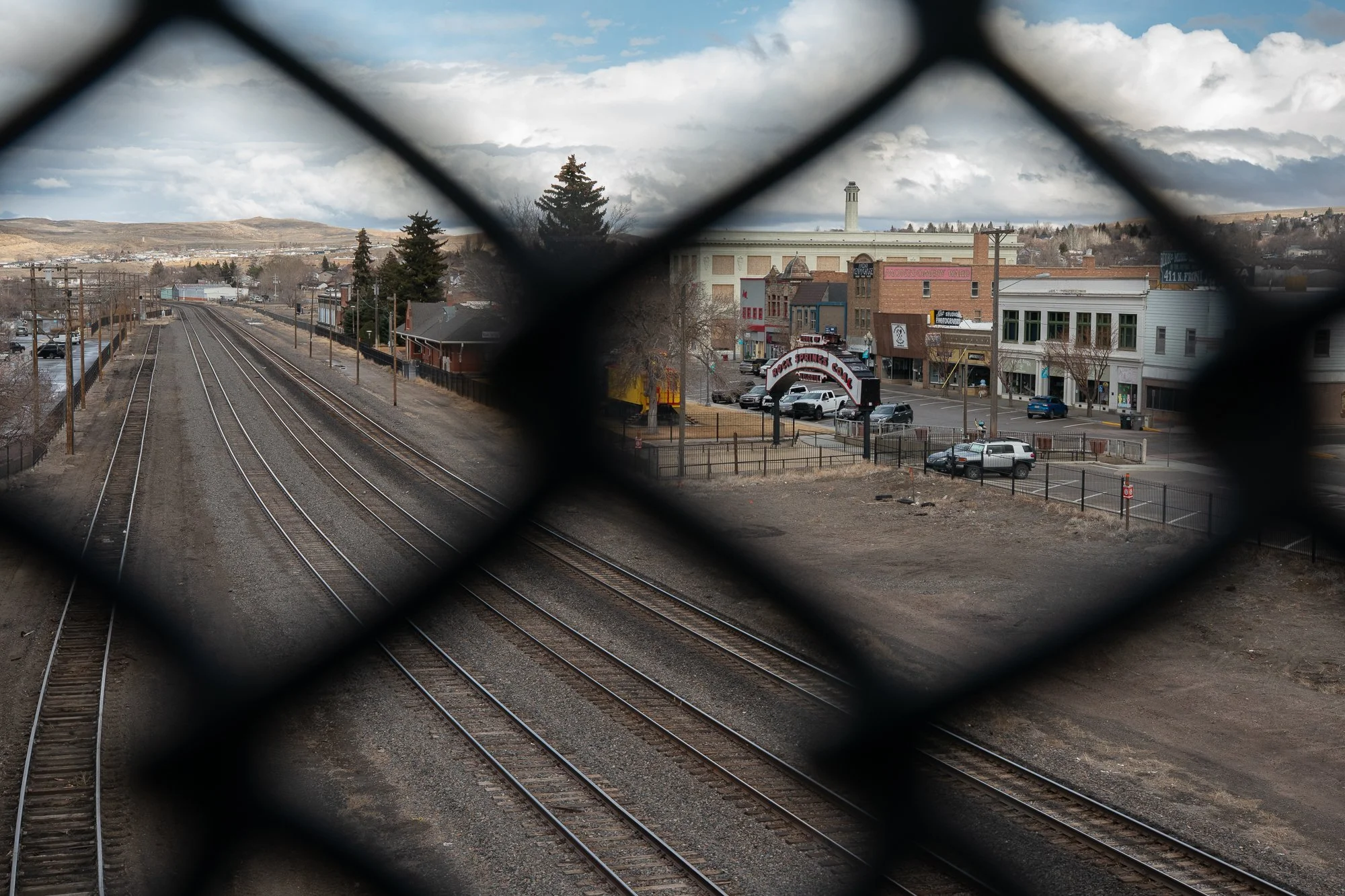
Railroad tracks leading toward downtown Rock Springs Wyoming seen through chain link fence

Railroad tracks stretch toward downtown Rock Springs from an overpass above the line.

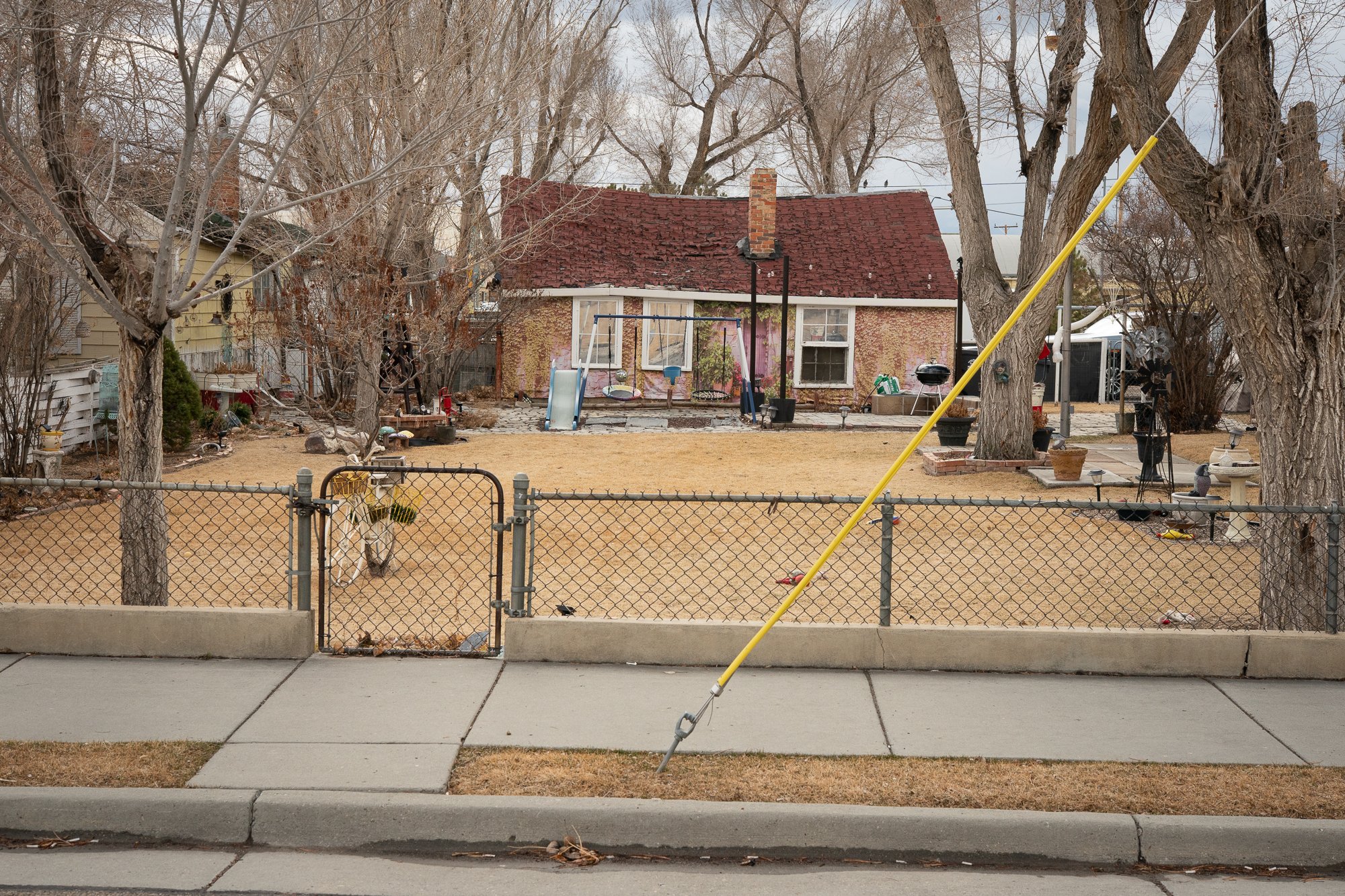
Small house and backyard behind a chain link fence in a residential neighborhood in Rock Springs

A small house and backyard sit quietly behind a chain-link fence in a Rock Springs neighborhood.

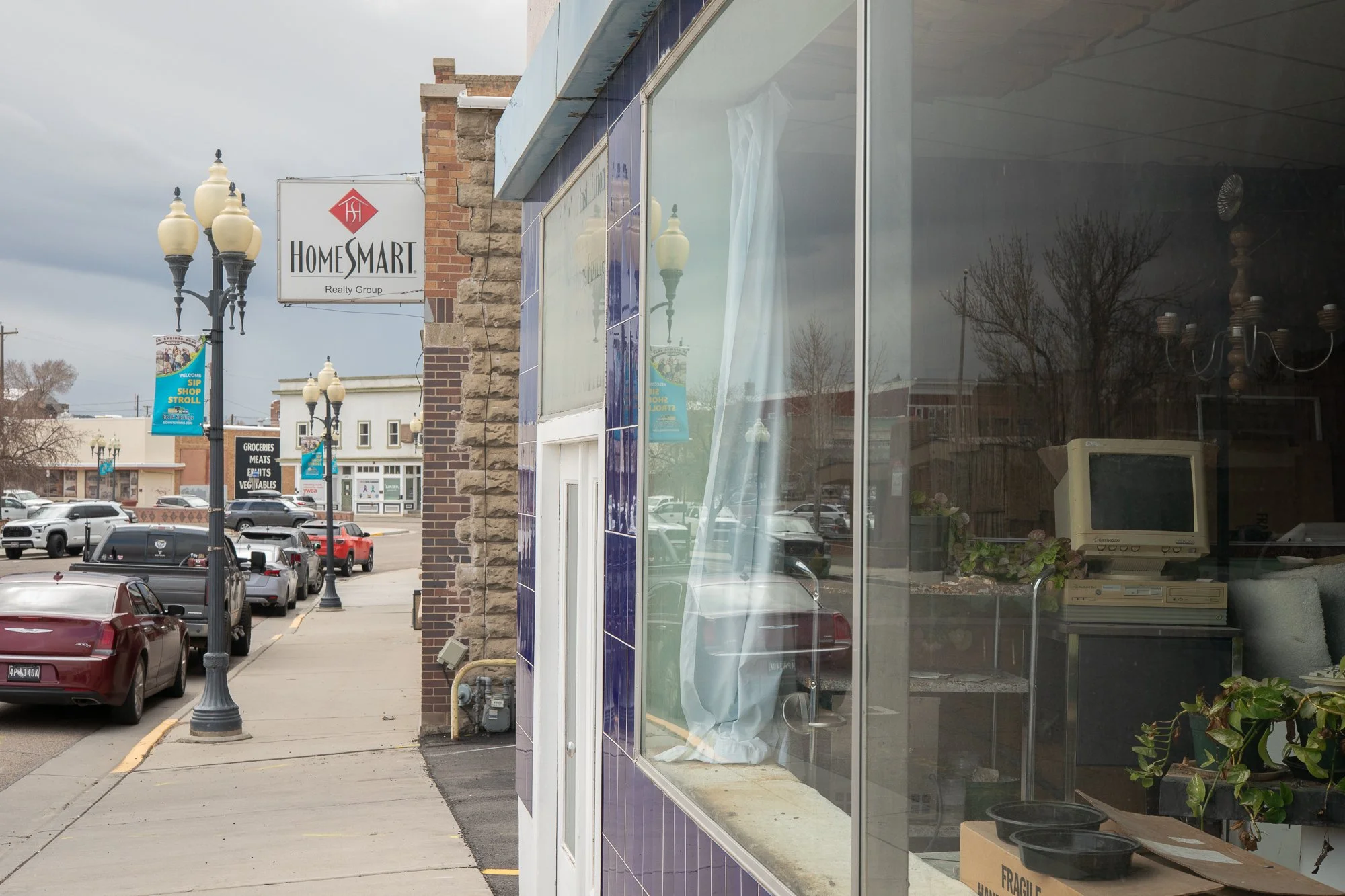
Old computer monitor displayed inside a storefront window in Rock Springs Wyoming  On-Page Caption

An aging computer sits in a storefront window along a downtown street in Rock Springs.

Man sitting in pickup truck with political flags along roadside in Rock Springs Wyoming

A protester with a gun and political flags attached to his truck.

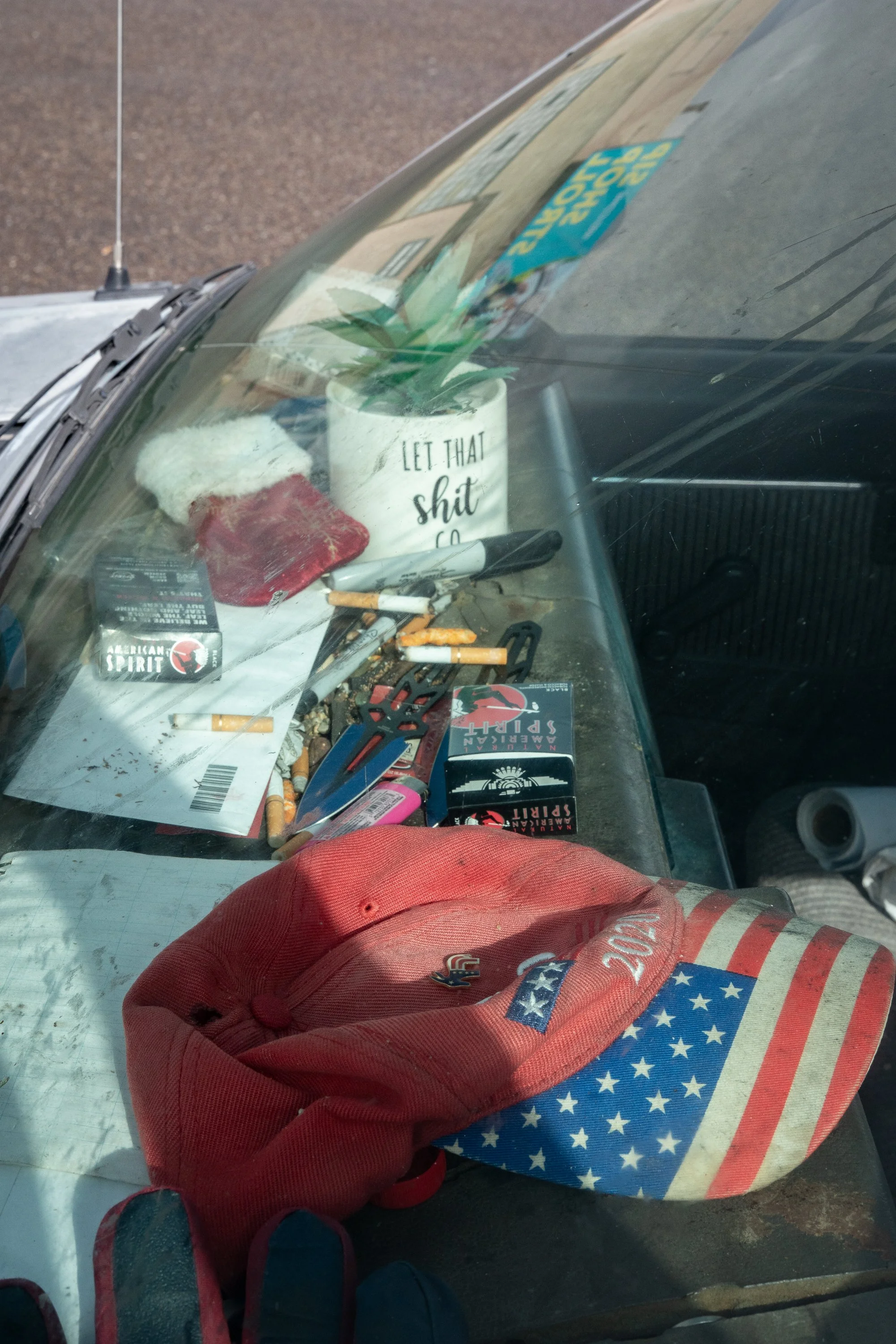
Dashboard of pickup truck cluttered with cigarettes hat and small objects in Rock Springs Wyoming

Personal items gather across the dashboard of a pickup truck parked in Rock Springs.

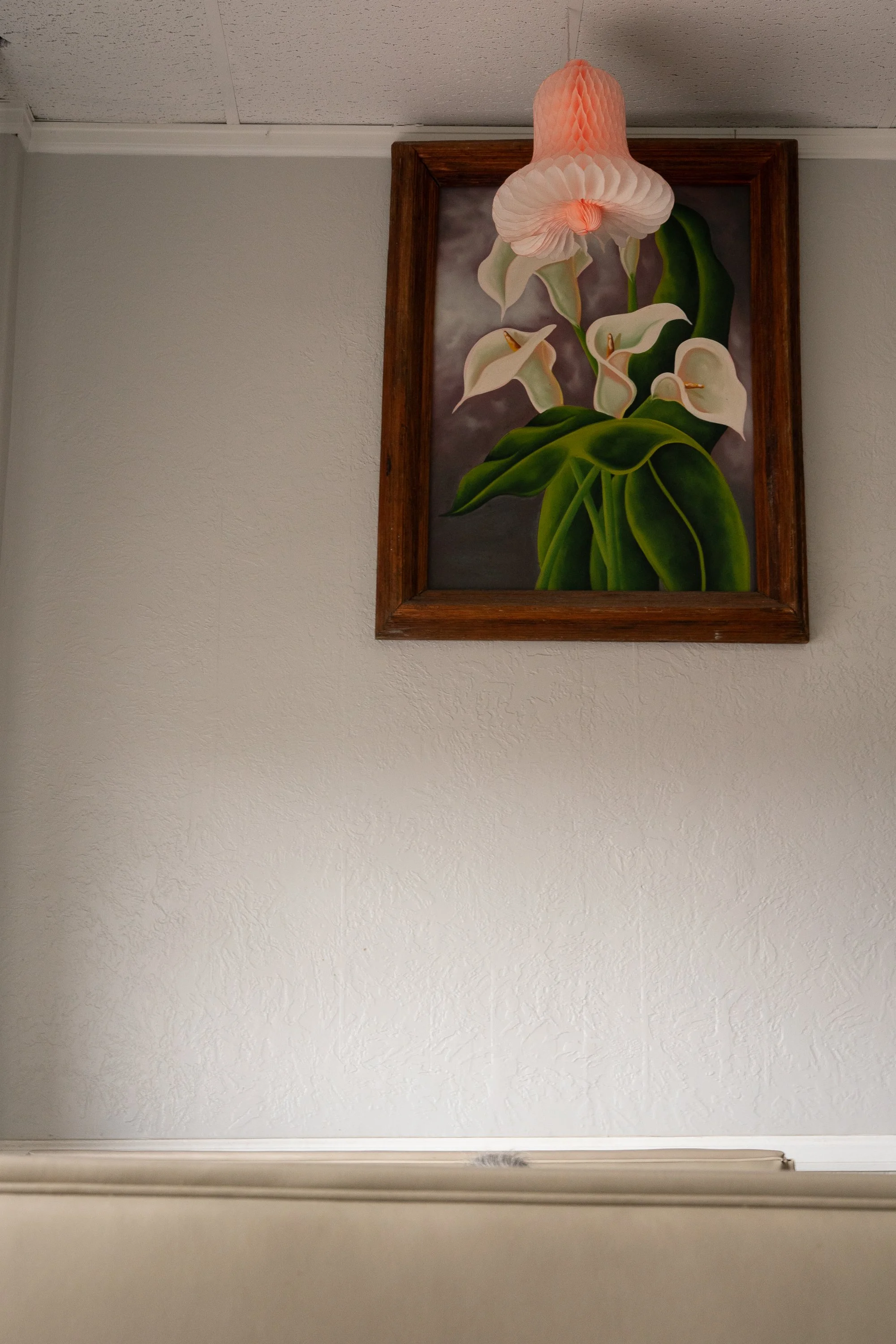
Framed calla lily painting hanging on a wall inside a room in Rock Springs Wyoming

A framed painting of calla lilies hangs awkwardly on the wall of a Mexican restaurant in Rock Springs.

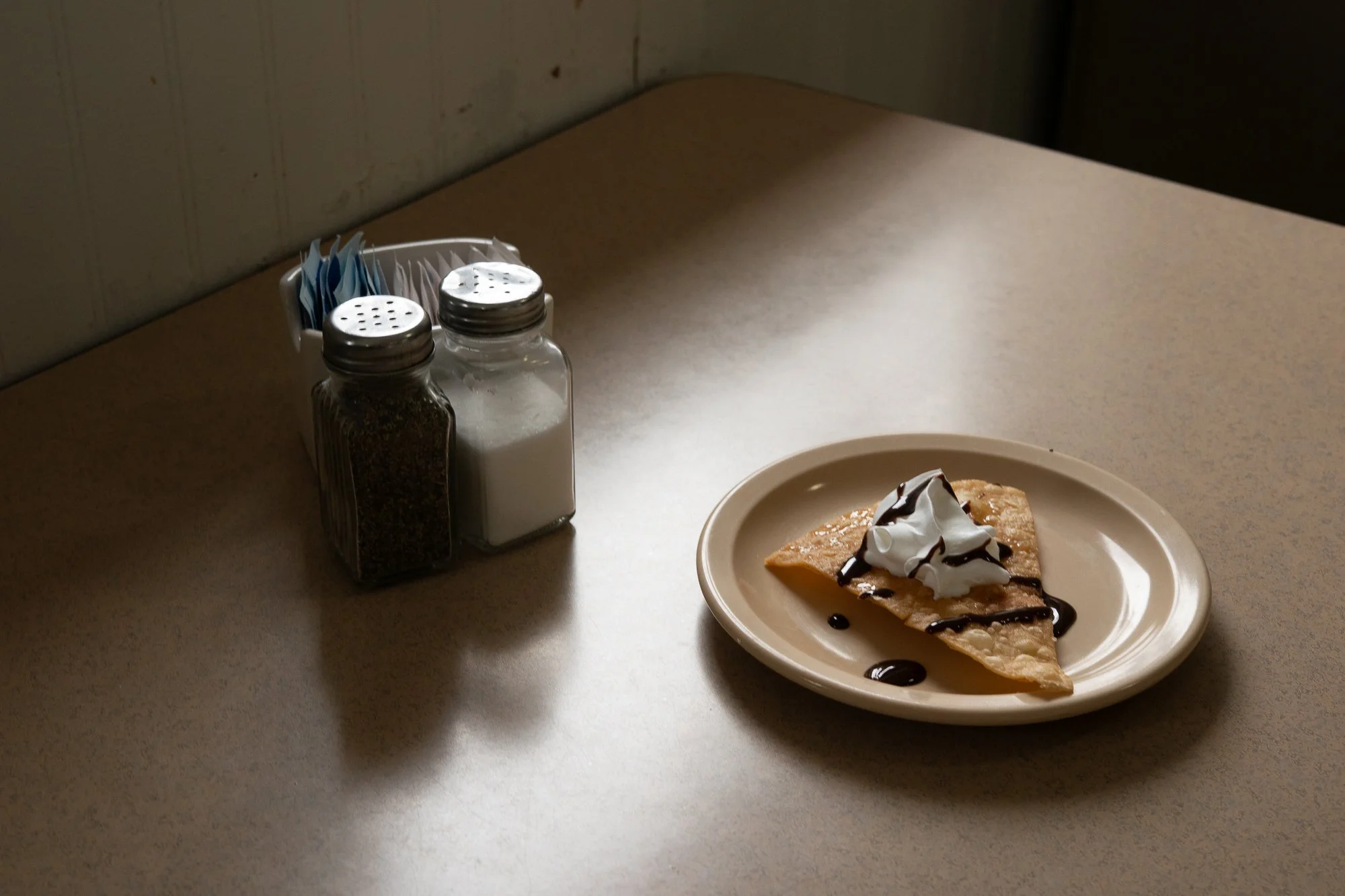
Slice of fried dessert with whipped cream and chocolate syrup on a diner table in Rock Springs Wyoming

A small dessert arrives on a diner table in Rock Springs.

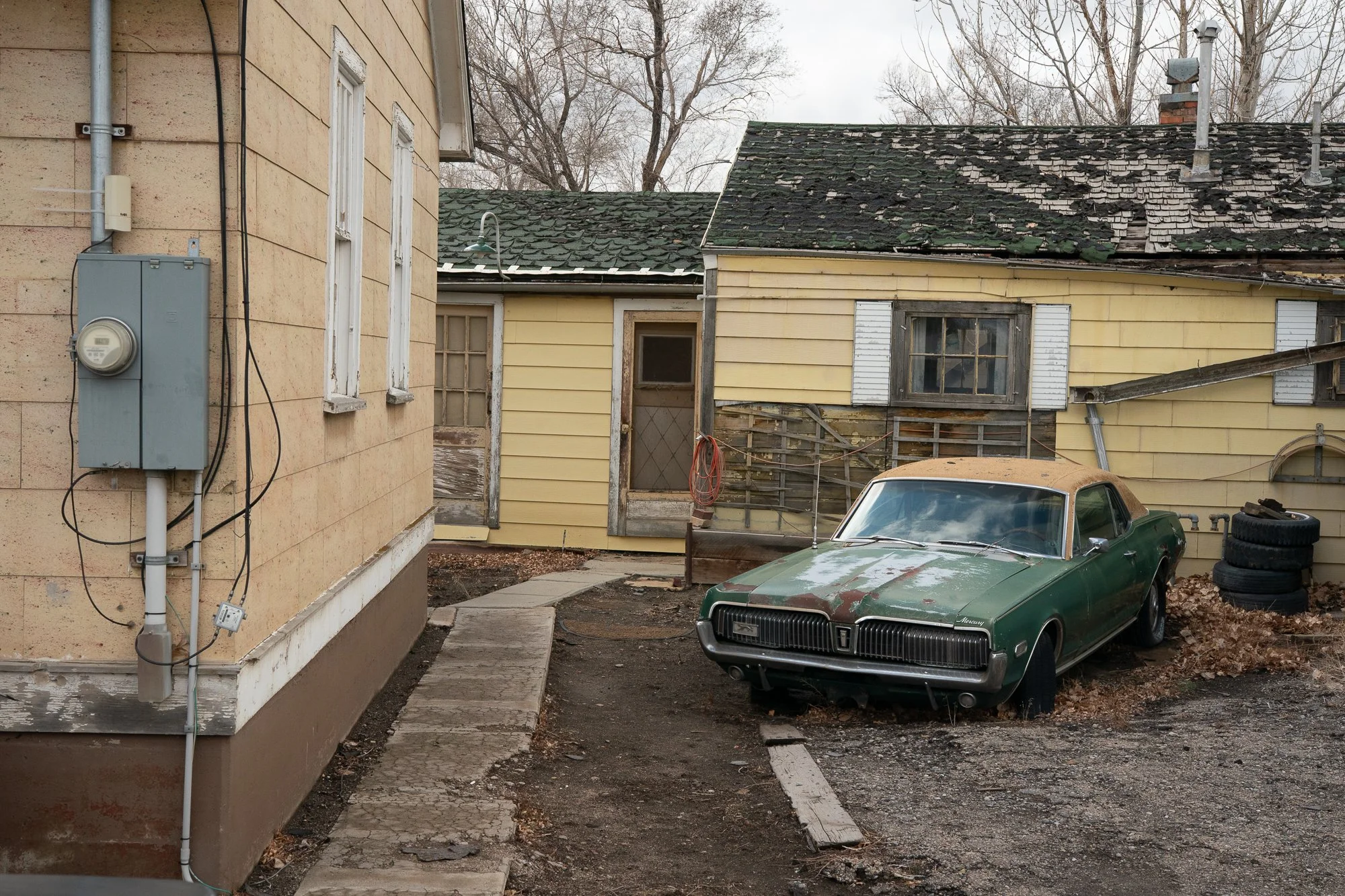
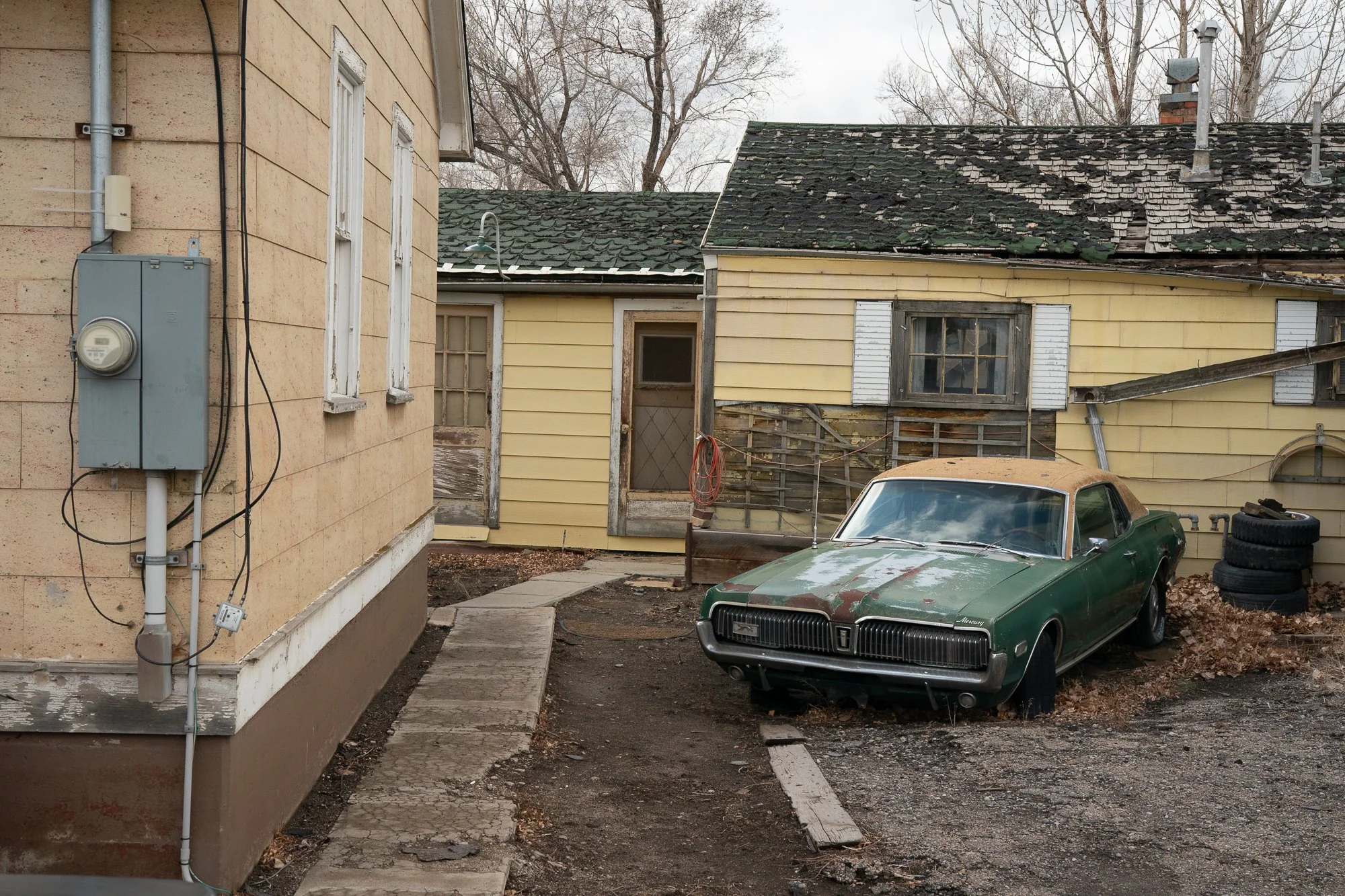
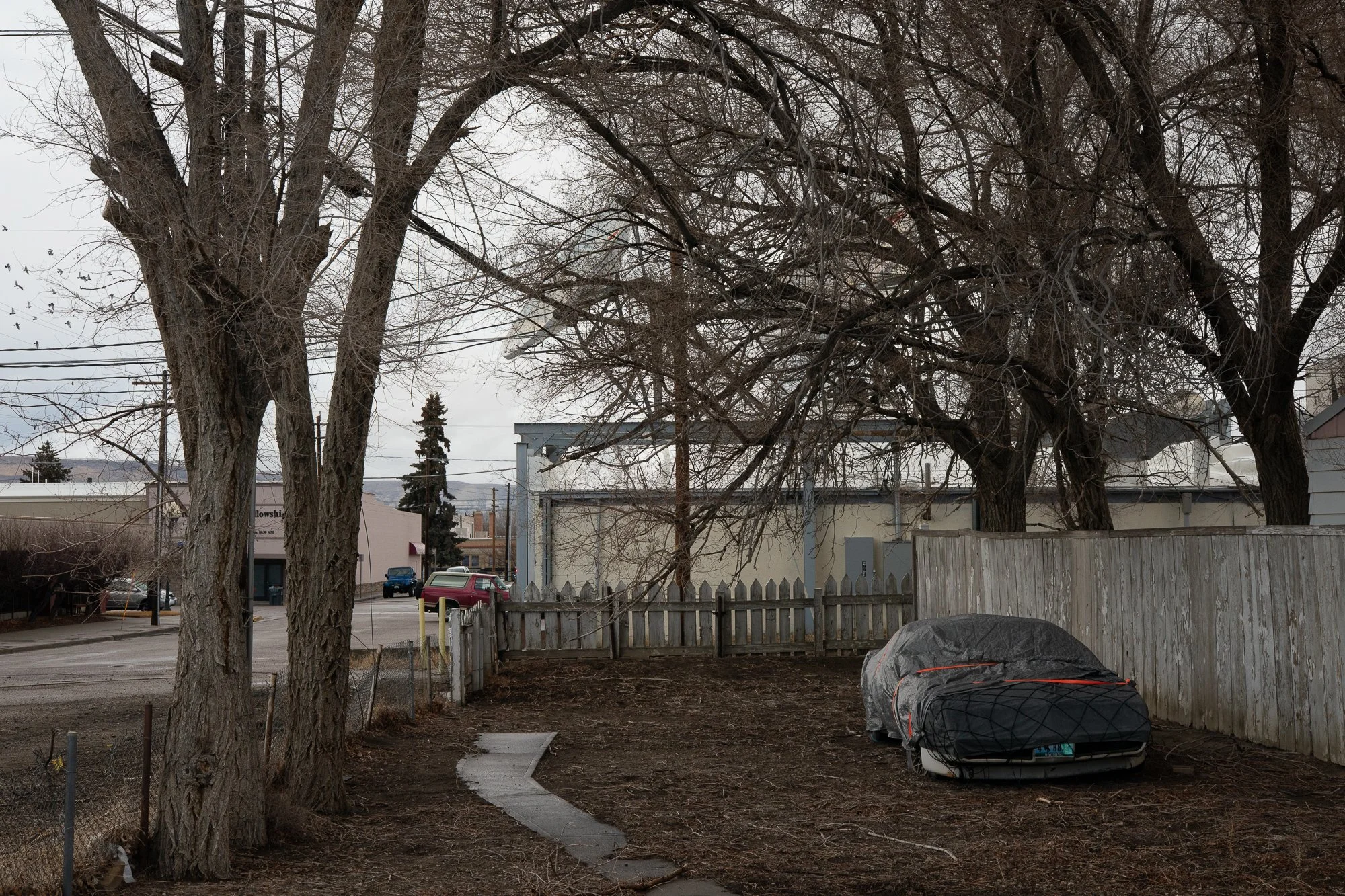
Vintage Mercury Cougar parked beside an aging house in Rock Springs Wyoming

An old Mercury Cougar rests beside a weathered house in Rock Springs, a scene that feels suspended somewhere between the past and present.

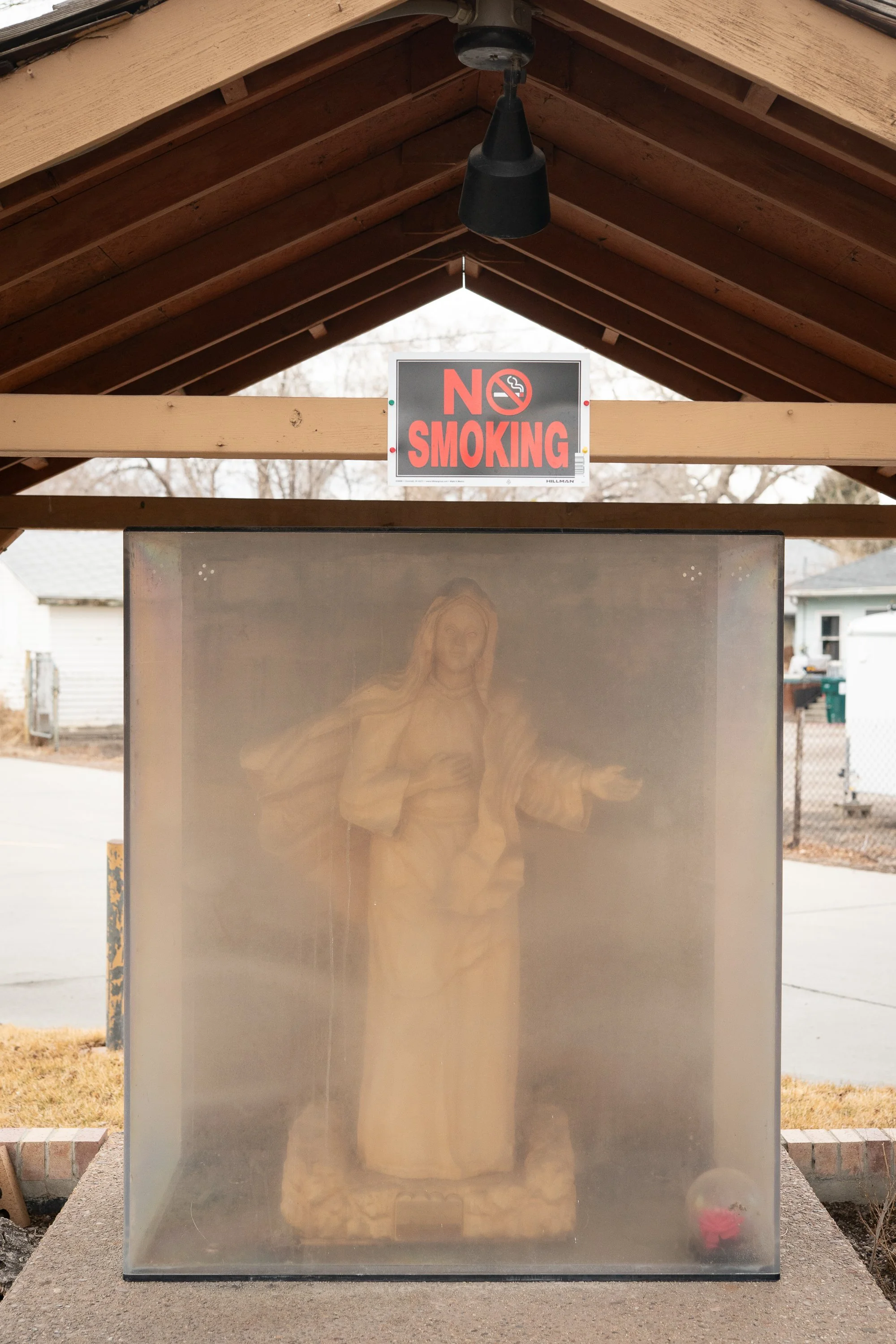
Statue of Jesus inside a glass case beneath a No Smoking sign in Rock Springs Wyoming

A roadside shrine in Rock Springs pairs a statue of Jesus with an unexpected “No Smoking” sign above it.

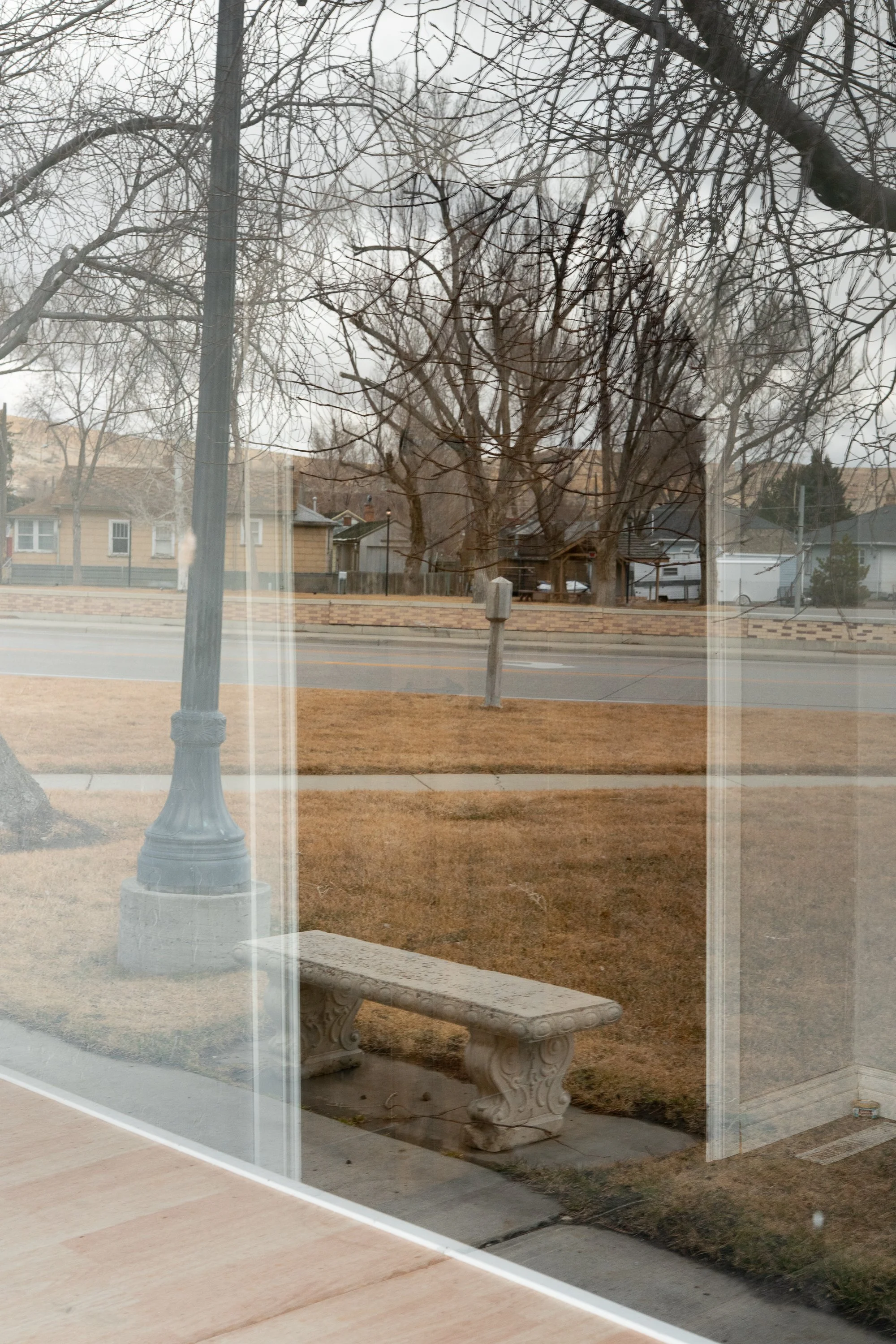
Reflection of trees and a bench in a storefront window in Rock Springs Wyoming

Reflections of winter trees and a park bench appear in a storefront window along a quiet Rock Springs street.

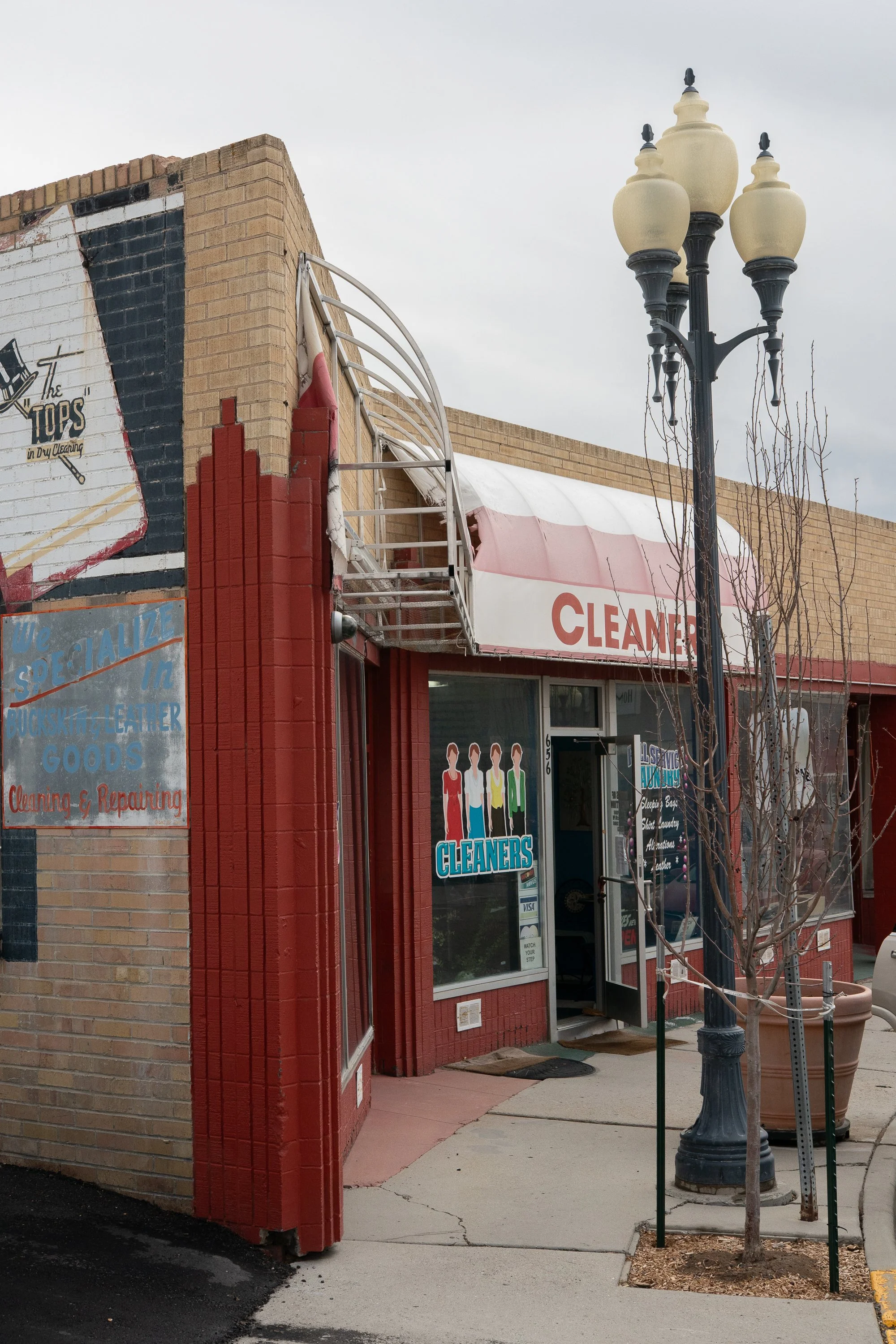
Neighborhood cleaners storefront on a street corner in downtown Rock Springs Wyoming

A neighborhood cleaners sits on a quiet corner in downtown Rock Springs.

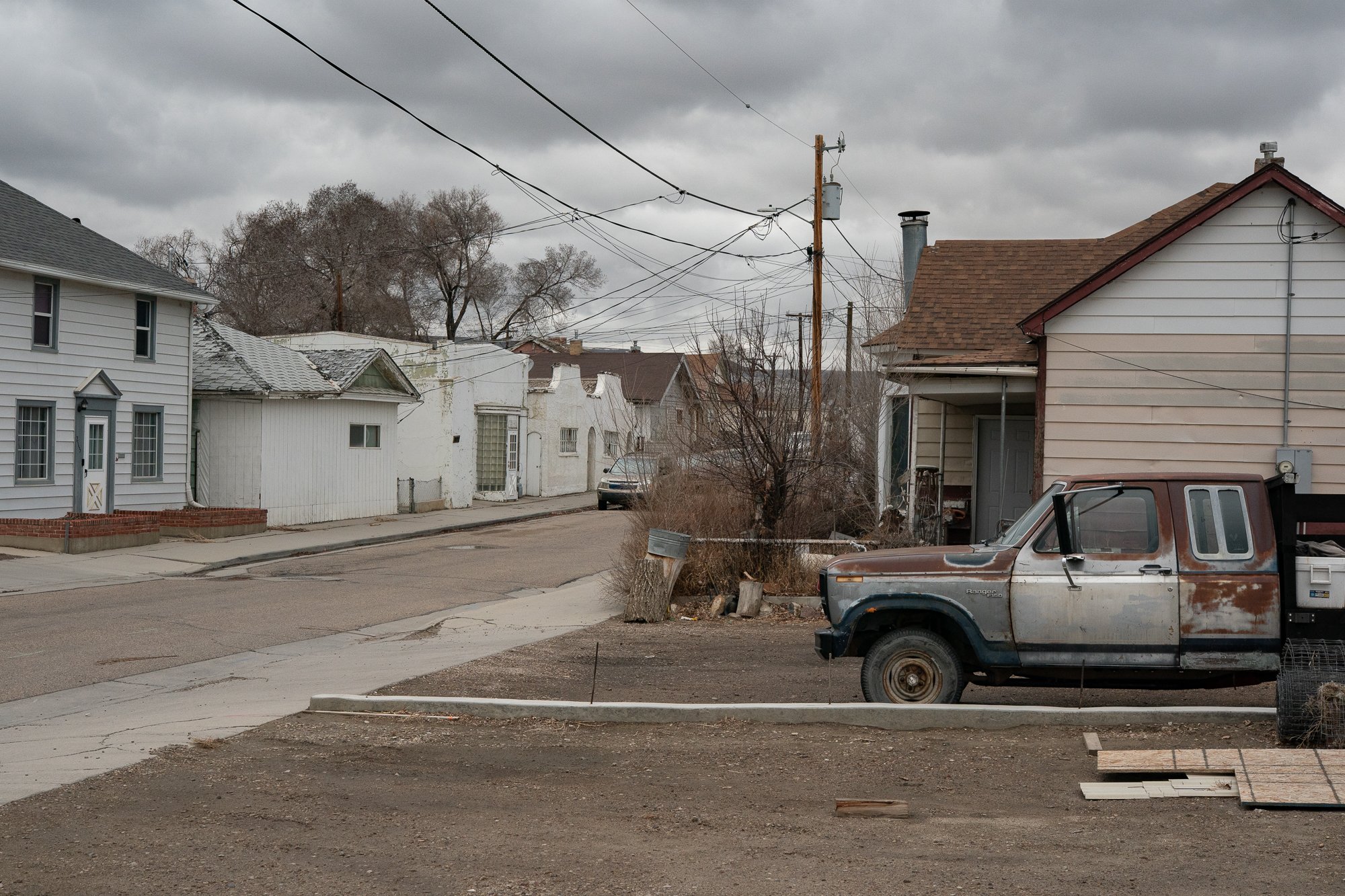
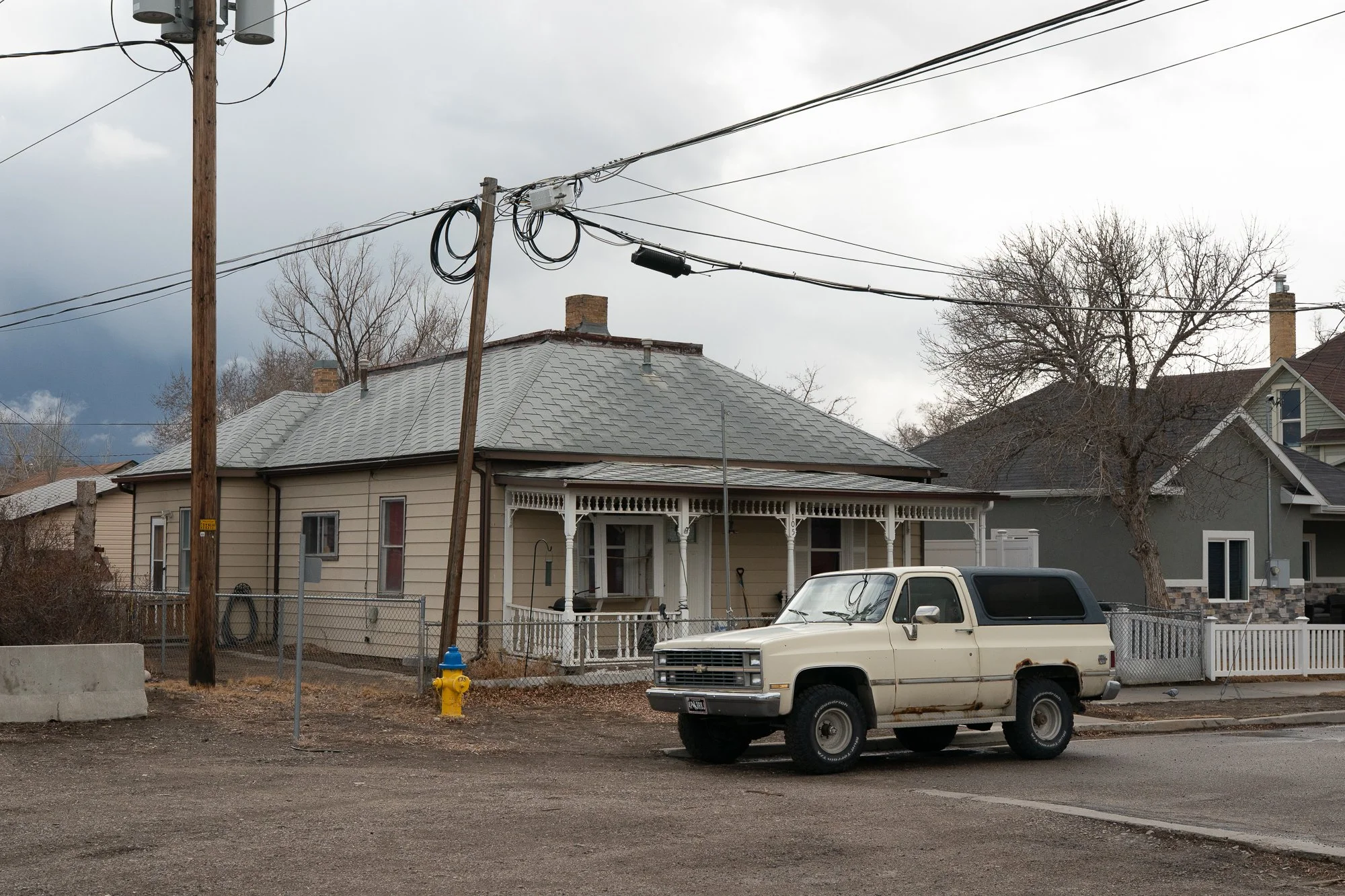
Old rusted pickup truck parked beside a residential street in Rock Springs Wyoming

An aging pickup truck sits along a residential street in Rock Springs beneath a web of overhead power lines.

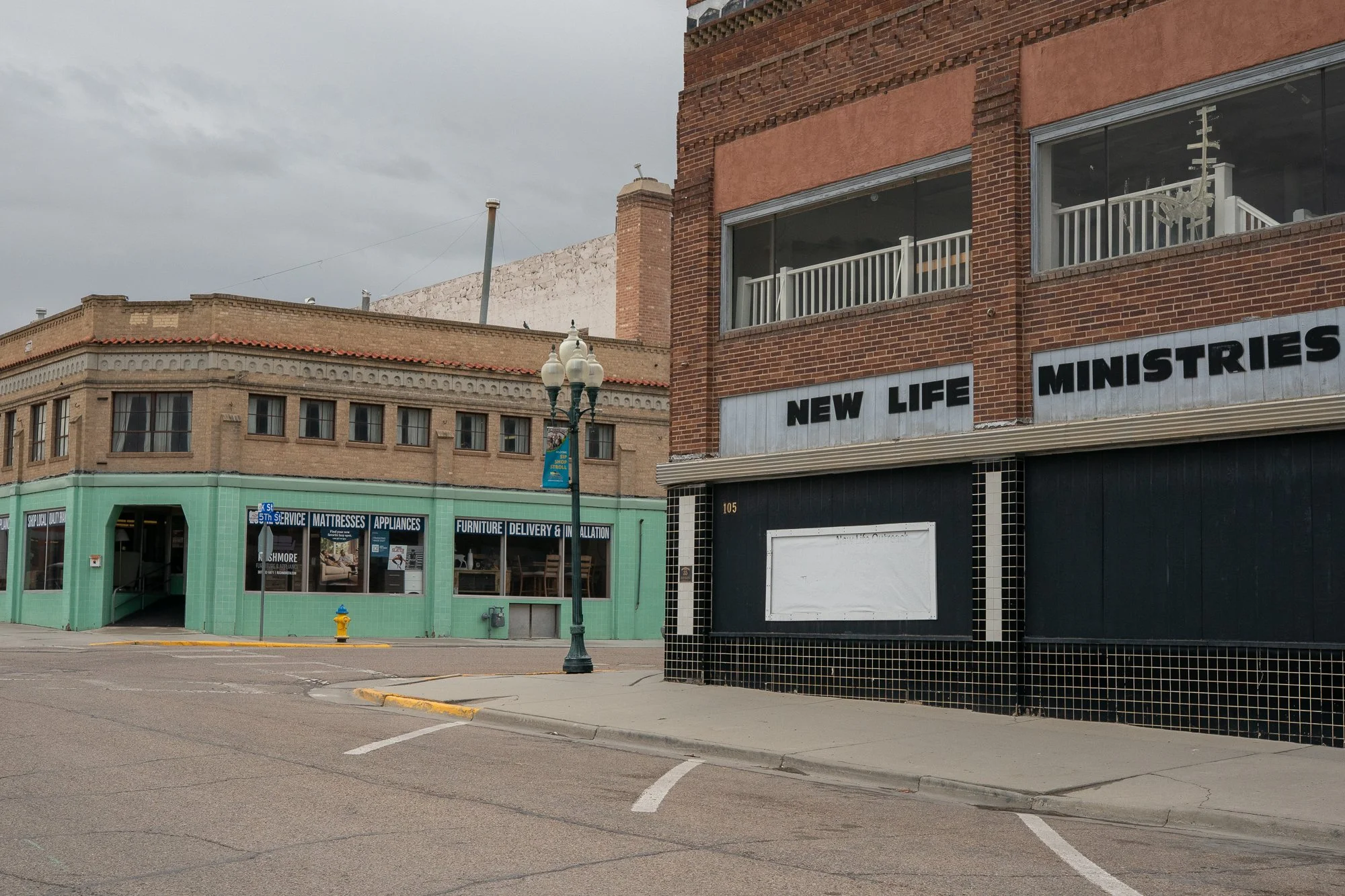
New Life Ministries church building along a downtown street in Rock Springs Wyoming

New Life Ministries occupies a brick building along a quiet street in downtown Rock Springs.

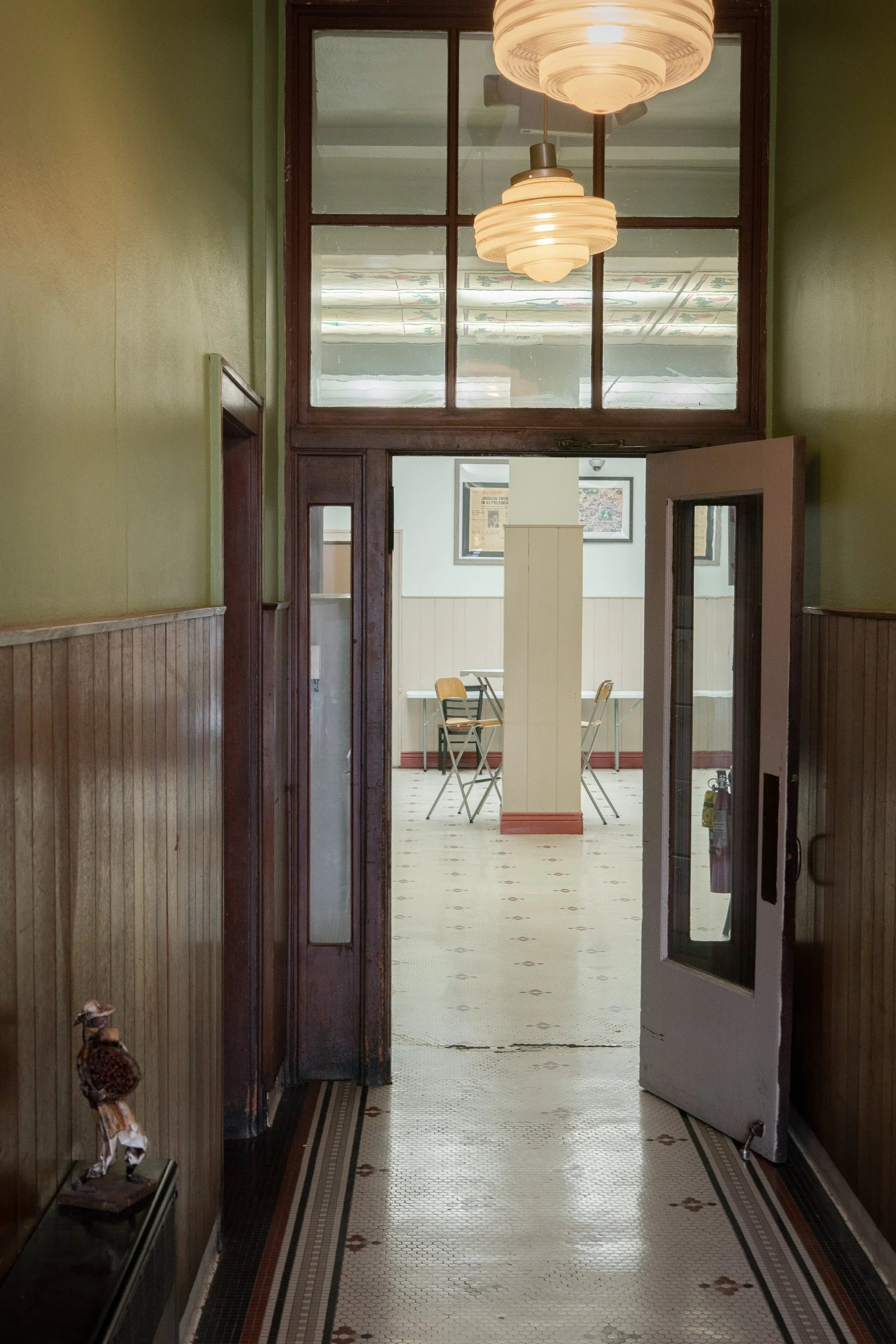
The hallway and lobby of the Park Hotel in Rock Springs, Wyoming

A narrow hallway opens into the lobby at the Park Hotel in Rock Springs

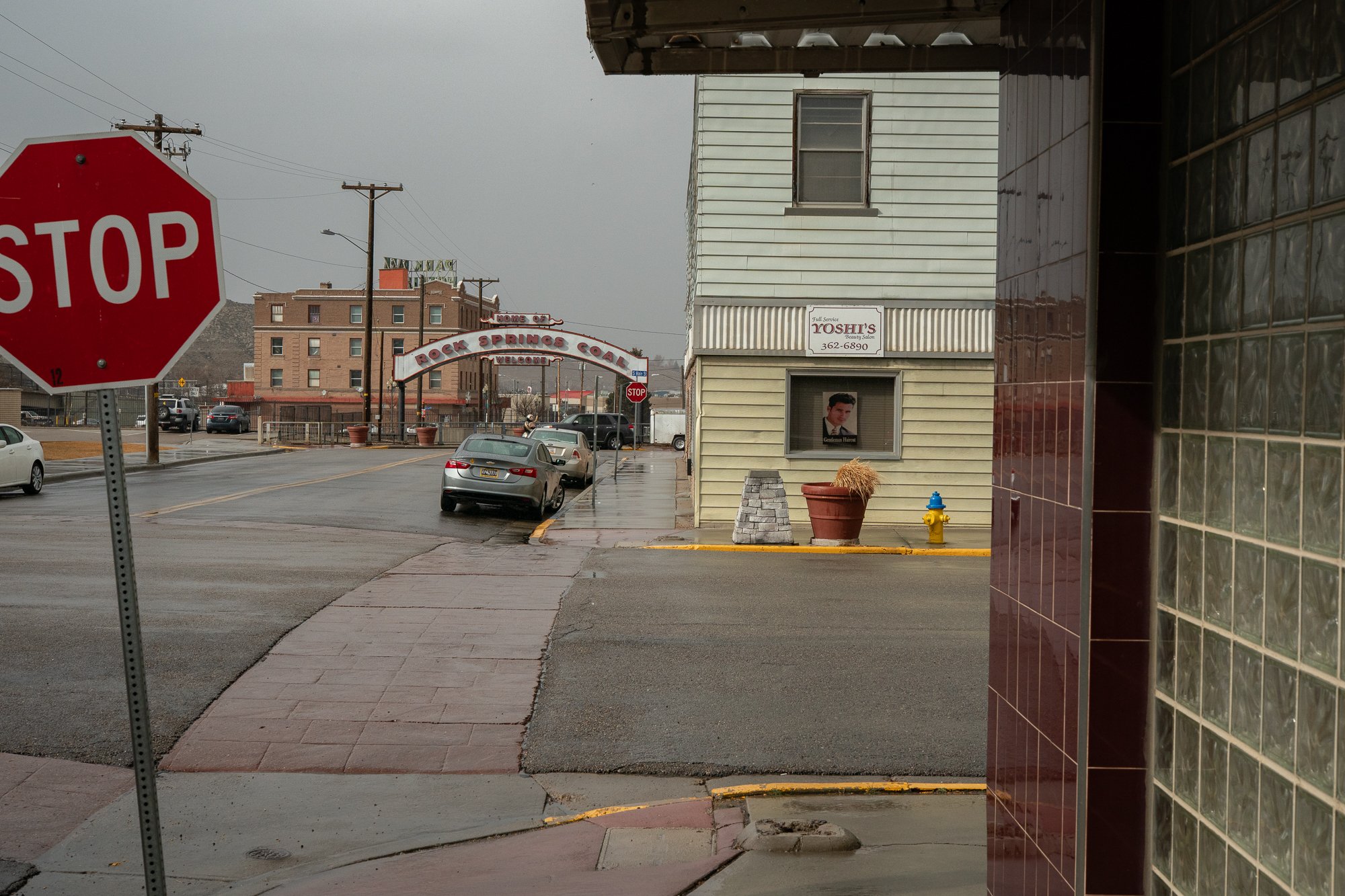
street scene near the Rock Springs Coal arch in downtown Rock Springs Wyoming

A rainy street corner near the Rock Springs Coal arch in the center of town.

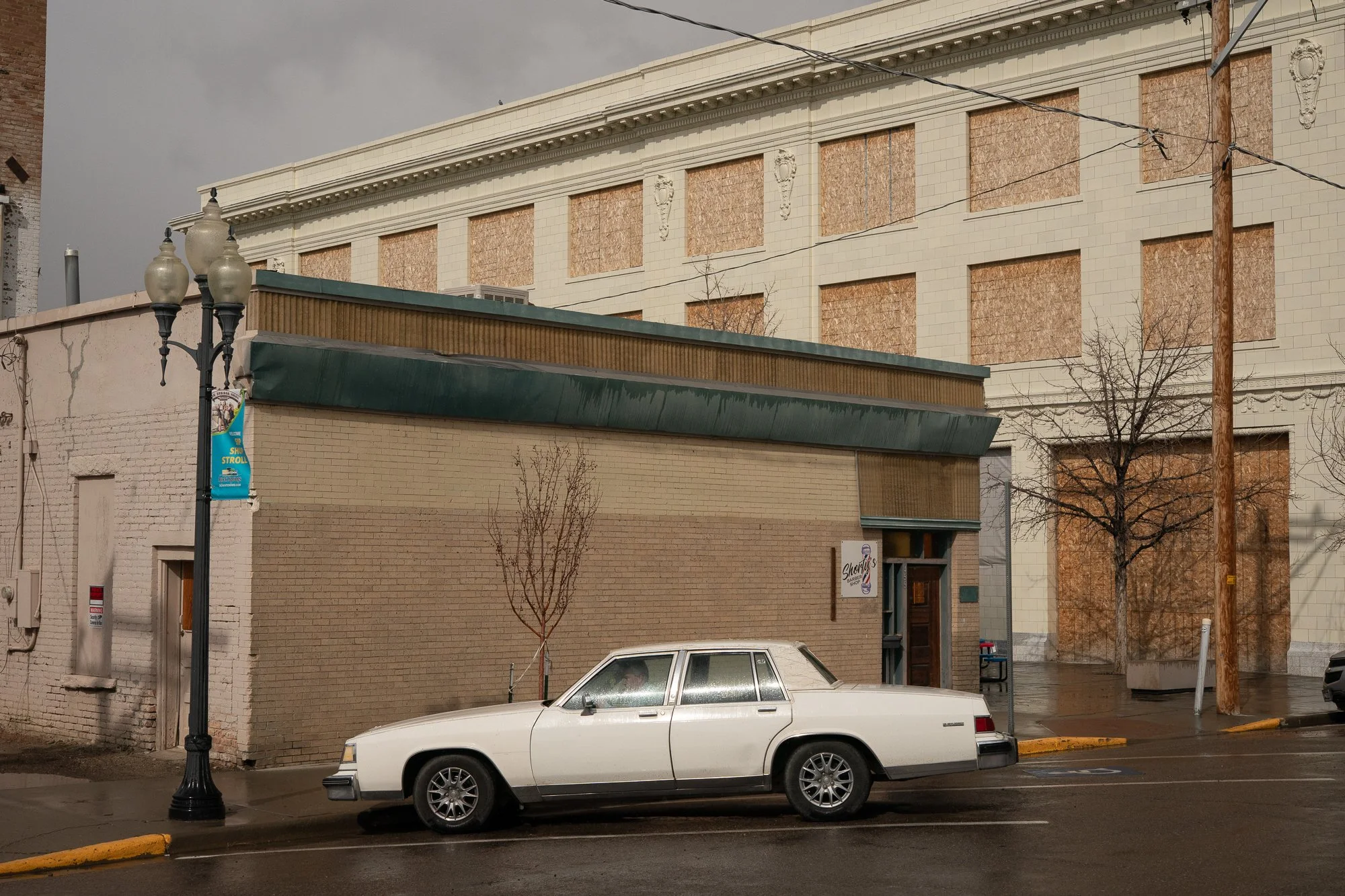
Older sedan parked beside buildings with boarded windows in downtown Rock Springs Wyoming

An older sedan sits parked along a wet street lined with boarded windows in downtown Rock Springs.

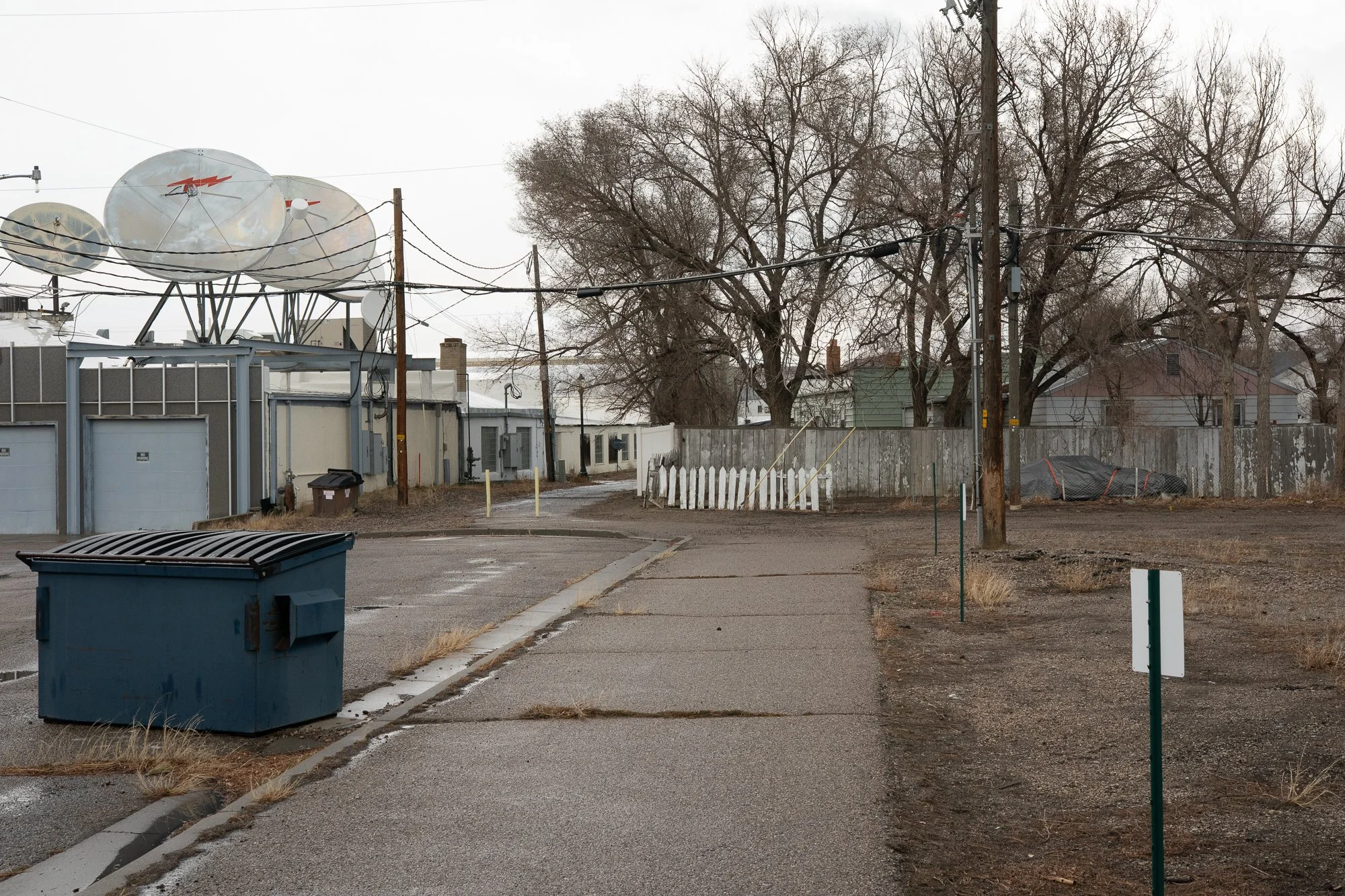
Satellite dishes and utility wires above a back street in Rock Springs Wyoming

Satellite dishes and overhead wires crowd the skyline above a quiet back street in Rock Springs.

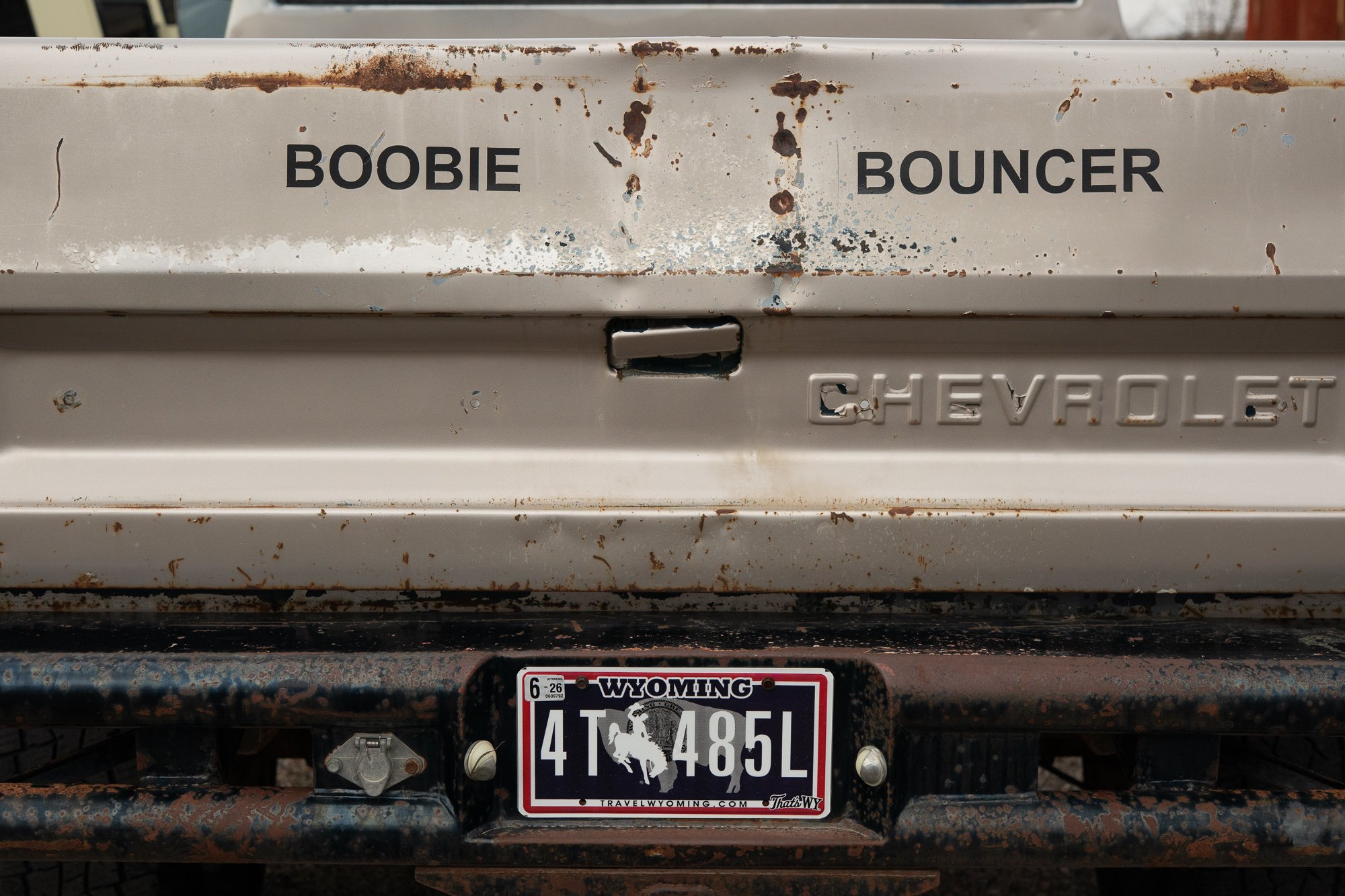
Rusted Chevrolet pickup tailgate with Wyoming license plate in Rock Springs Wyoming

An old Chevrolet pickup truck with “Boobie Bouncer” stickers on the tailgate.

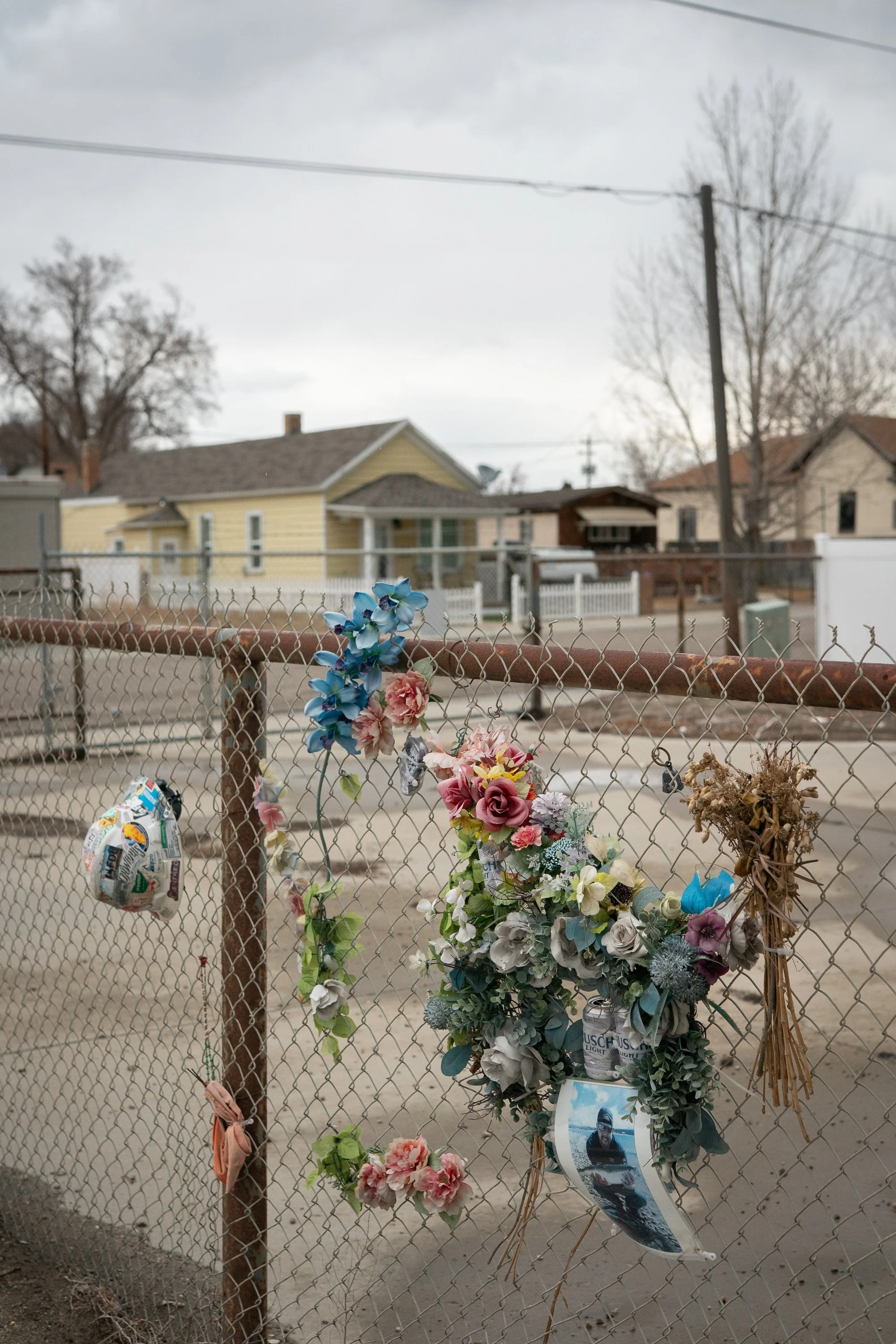
Flowers and memorial decorations attached to chain link fence in Rock Springs Wyoming

Flowers and small objects hang from a chain-link fence marking a roadside memorial.

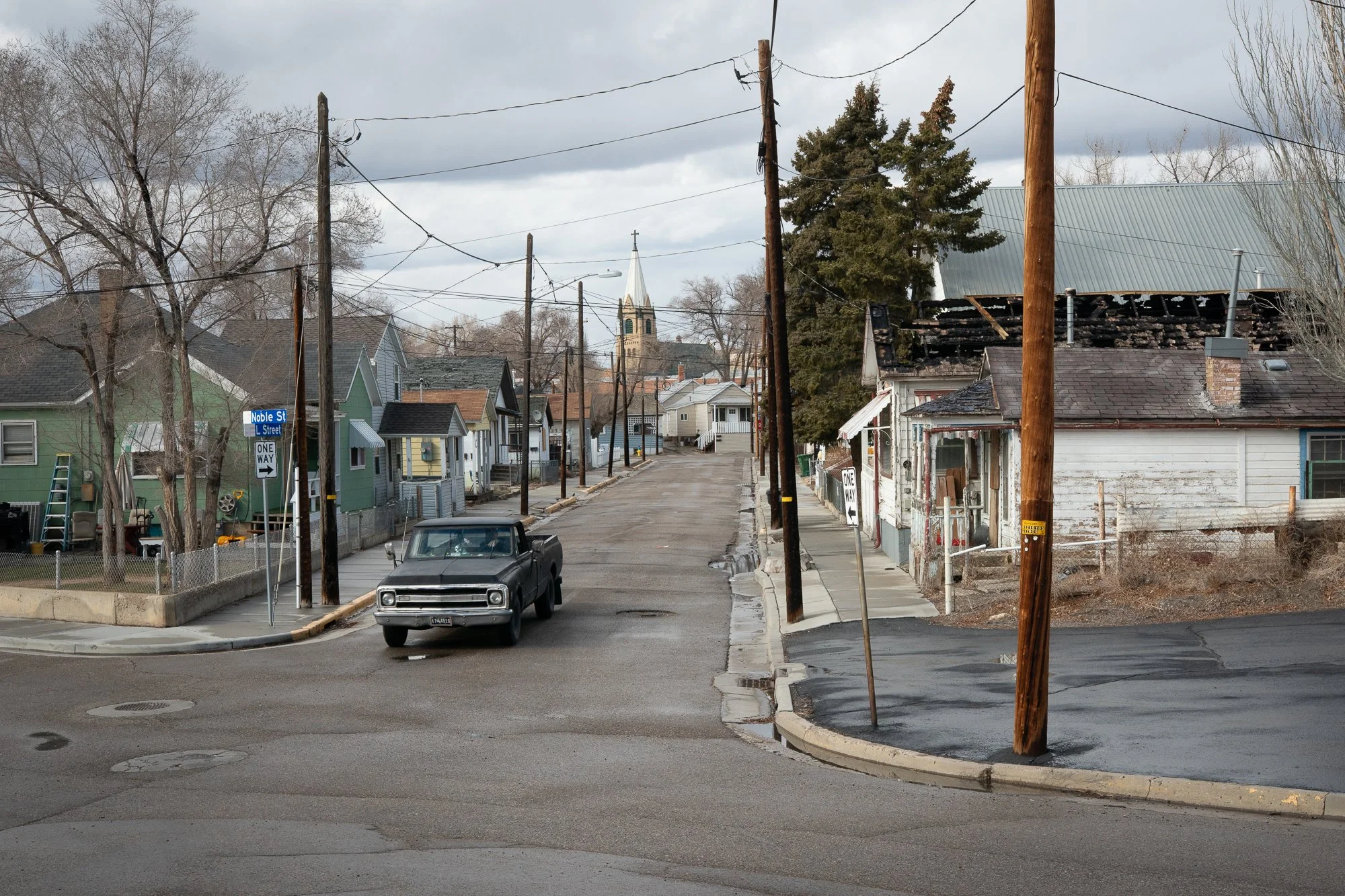
Pickup truck driving through residential neighborhood street in Rock Springs Wyoming

A pickup truck moves slowly through a quiet neighborhood street in Rock Springs.

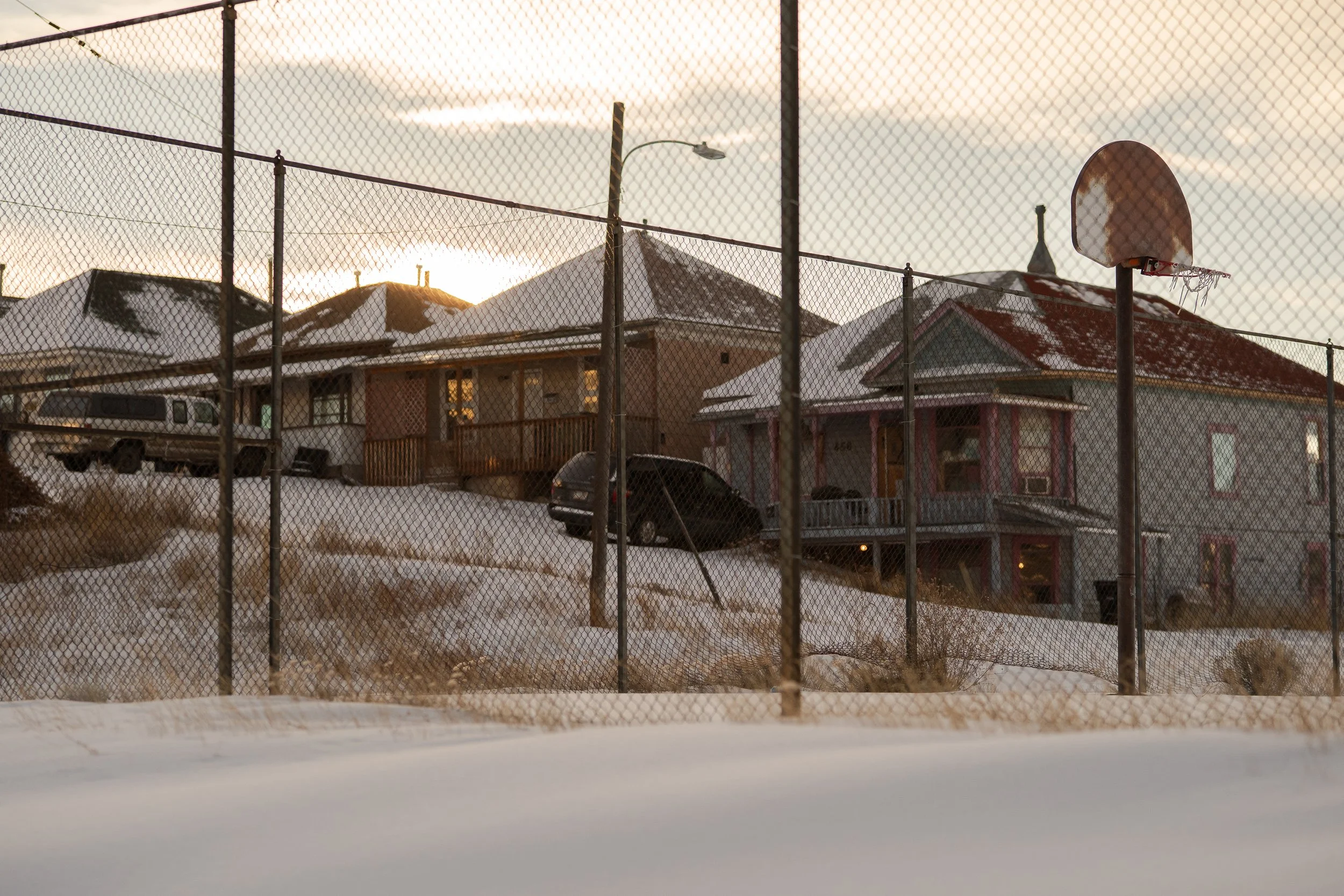
Rusted basketball hoop beside large brick building in Rock Springs Wyoming

A rusted basketball hoop stands beside a long brick wall near the edge of town.

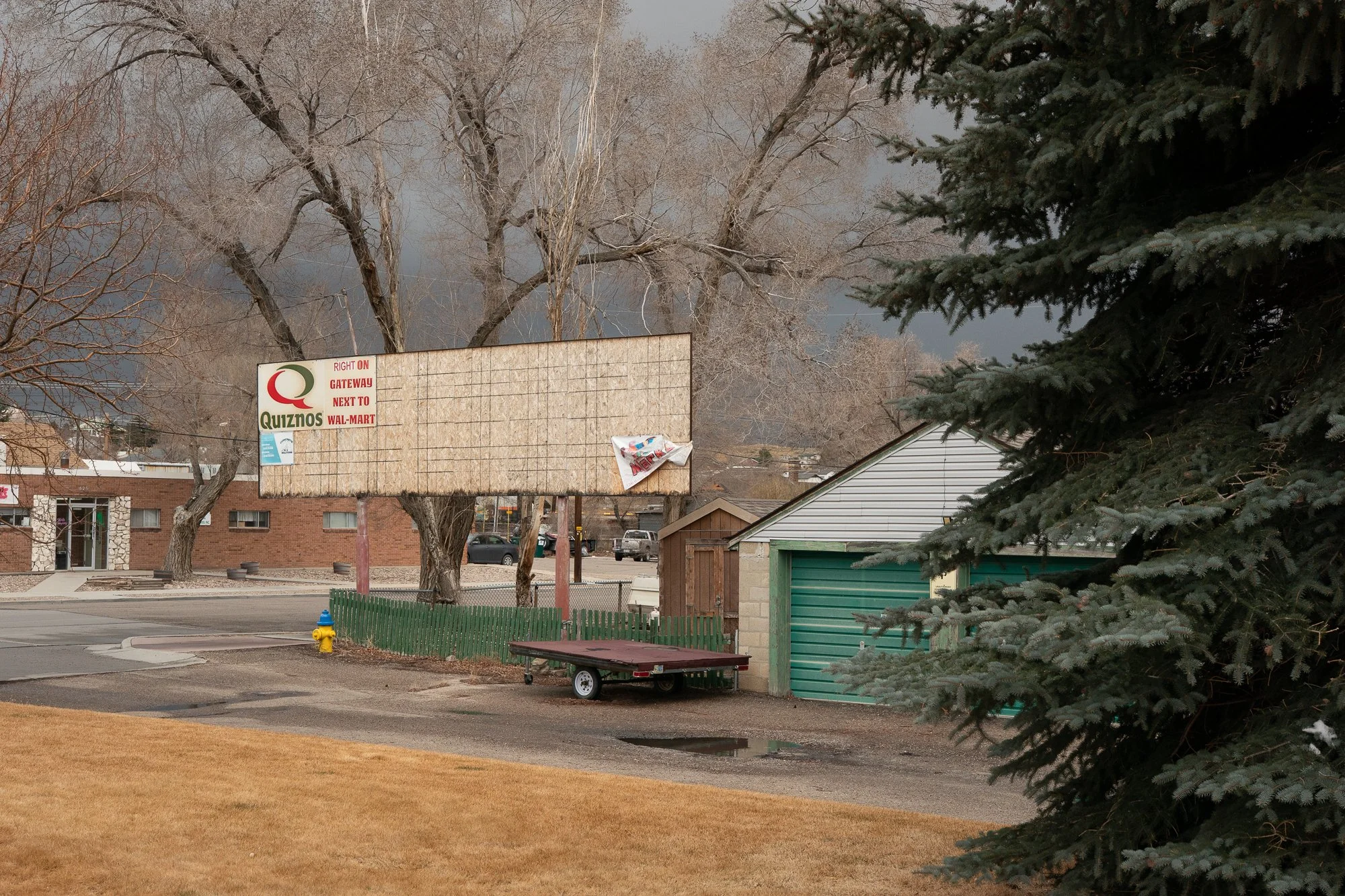
Old faded Quiznos restaurant sign along street in Rock Springs Wyoming

A faded Quiznos sign hangs on a dilapidated wood billboard in Rock Springs

Car covered with tarp in a backyard beneath large leafless trees in Rock Springs Wyoming

A car rests beneath winter trees in a backyard on the edge of a Rock Springs neighborhood.

Older pickup truck parked at a residential corner beside a small house in Rock Springs Wyoming

A weathered pickup truck sits at a quiet residential corner beneath a web of overhead wires in Rock Springs.

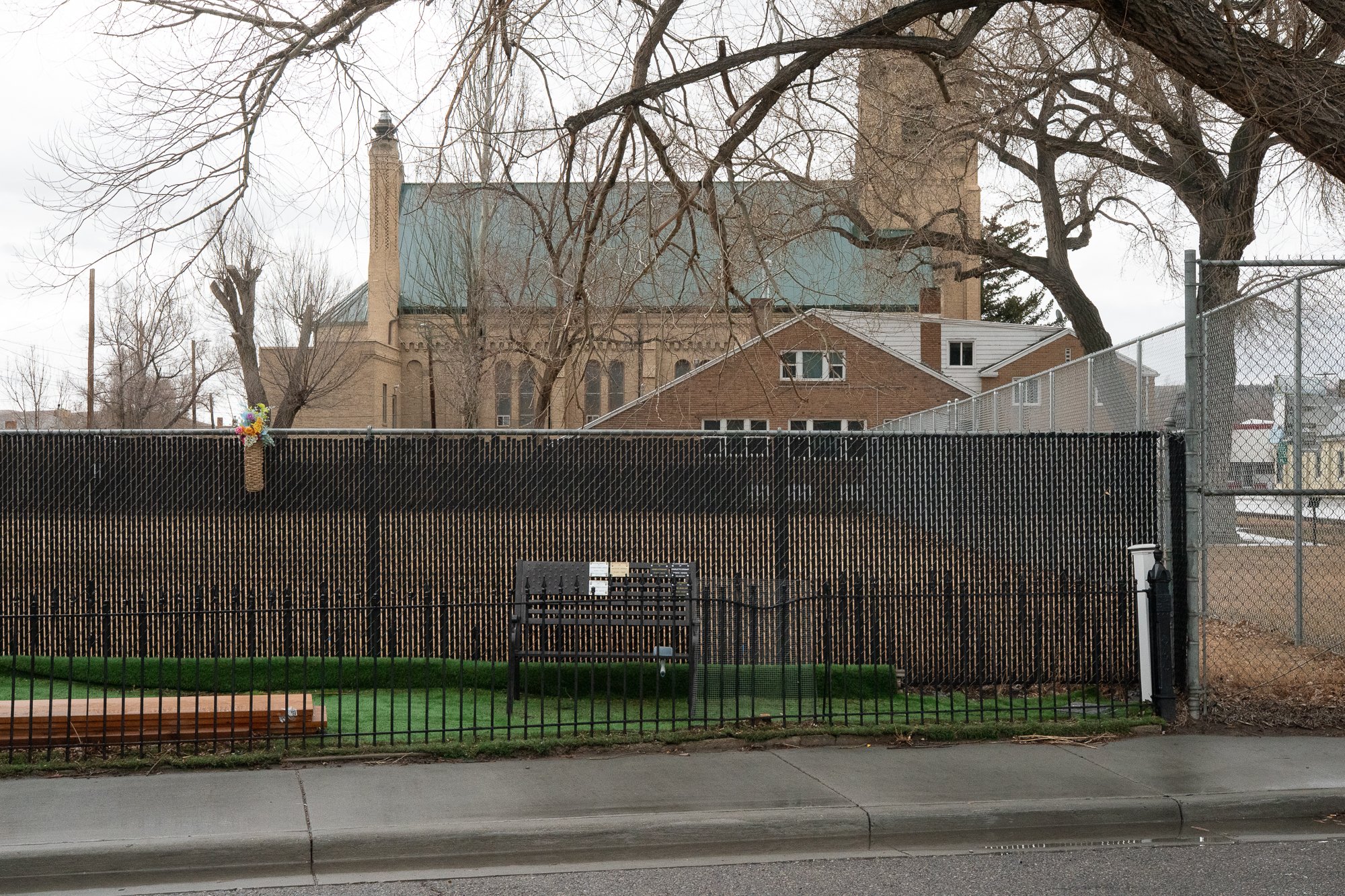
Church building seen behind fence and winter trees in Rock Springs Wyoming

A church rises behind fences and bare winter trees along a quiet street in Rock Springs.

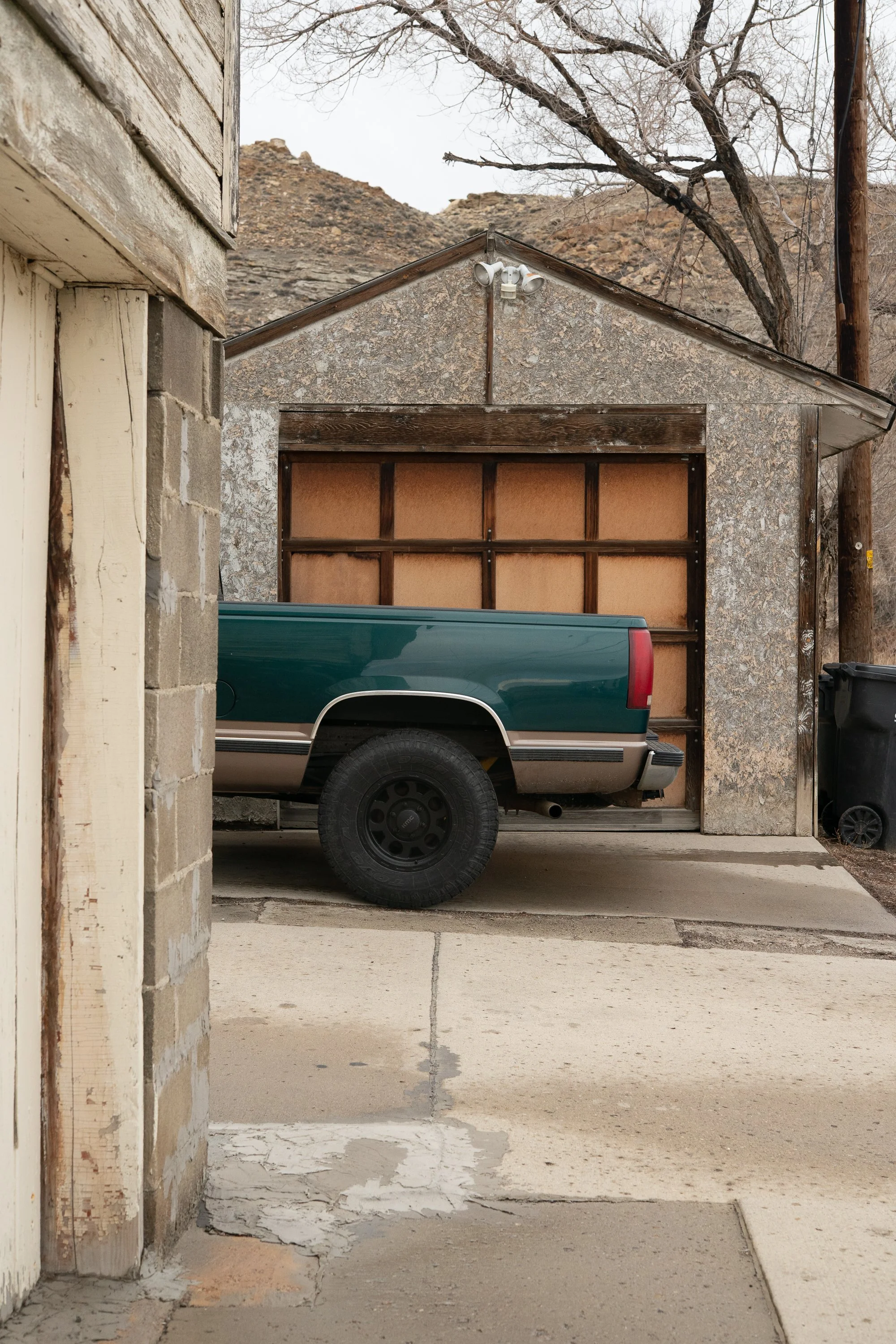
Pickup truck parked beside a garage at the end of a narrow driveway in Rock Springs Wyoming

A pickup truck sits tucked beside a small garage at the end of a narrow driveway in Rock Springs.

Bruce Lee poster visible through curtain beside martial arts photos in Rock Springs Wyoming

A Bruce Lee poster hangs behind a thin curtain beside framed martial arts photos inside a karate dojo.

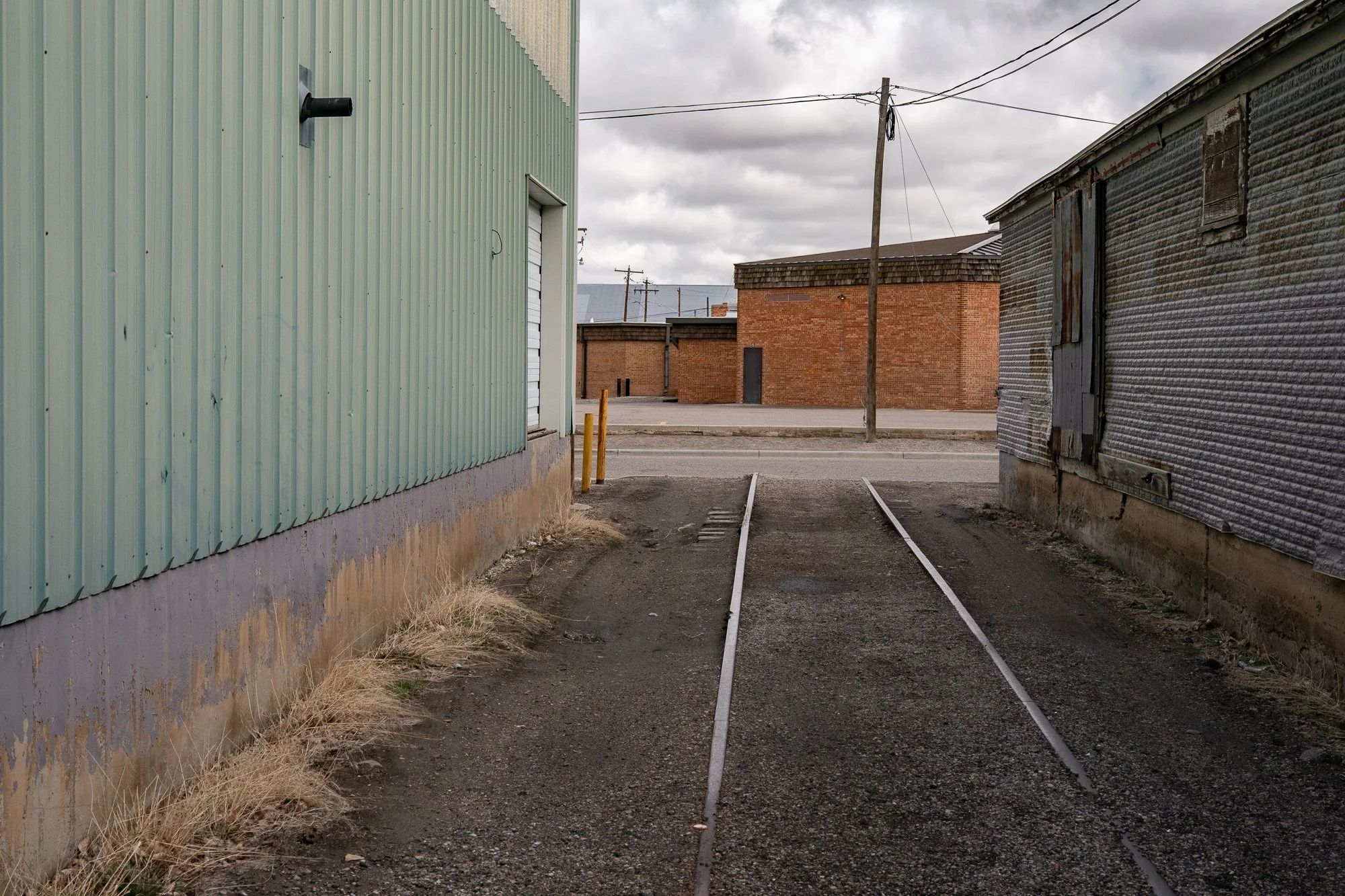
Railroad tracks running through an industrial alley between metal buildings in Rock Springs Wyoming

Old rail tracks cut through an industrial alley in Rock Springs, a quiet reminder of the railroad and coal economy that built the town.

American Road Trip Photography

The Great American Road Trip - Photography

When are you supposed to say enough is enough and move on to another subject? Roadside Meditations was published a few months back, which would (should?) be the logical line in the sand stating ok, you did the thing, now try something else! And a person smarter than myself would probably do that! History thus far does not comply. My long term personal project are just that, personal. So I might partially focus on a new subject, but I’m always on the look-out for images that fit the older projects too. It’s not intentional. It just is. I love these projects and can’t help myself.

Click HERE to purchase a copy of Roadside Meditations or contact me directly to inquire about prints of my American road trip photography.

Photograph of a road going through a beautiful cattle ranch in Montana

Wyola, Montana

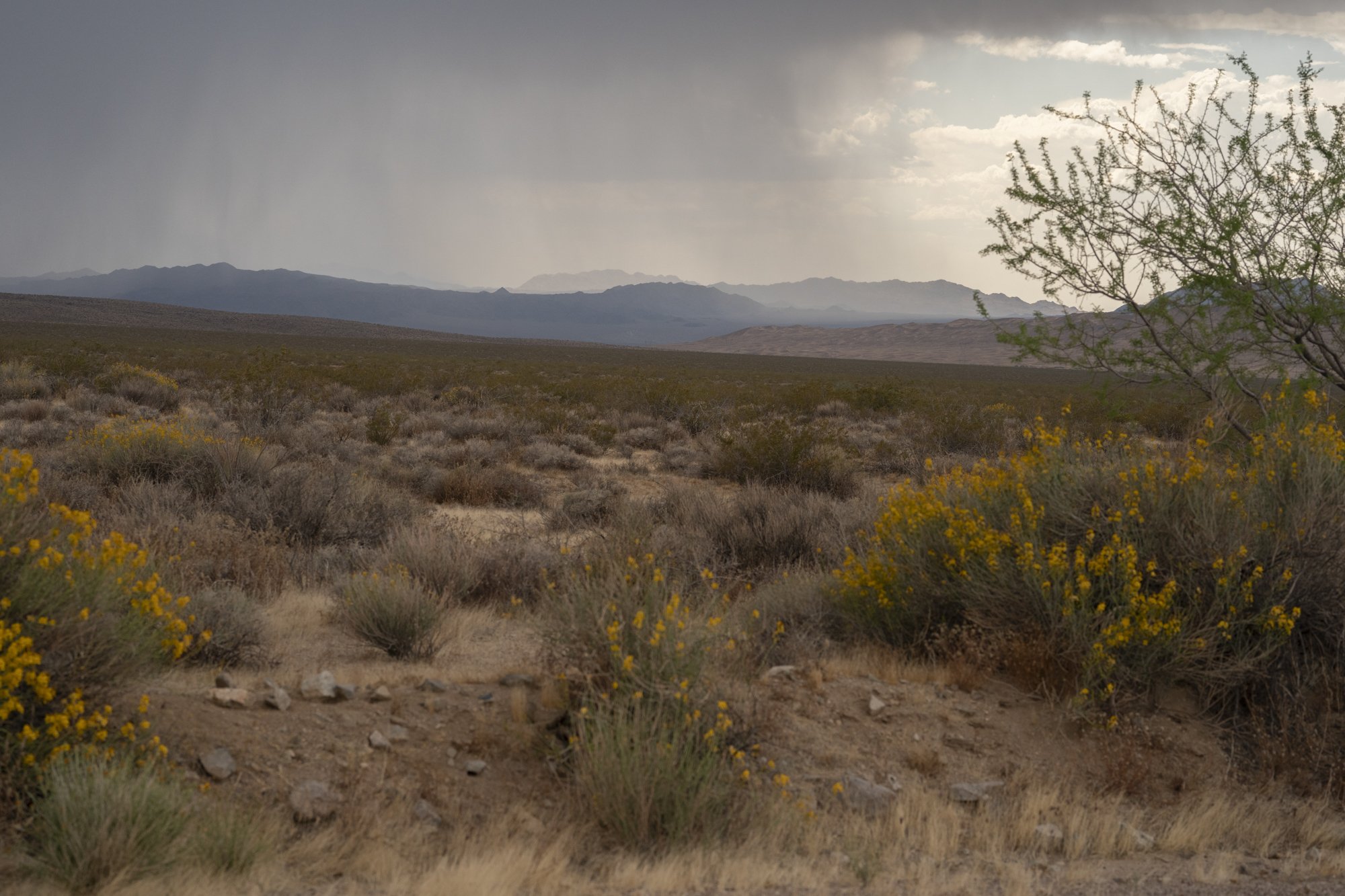
Landscape photo of the California desert

California desert

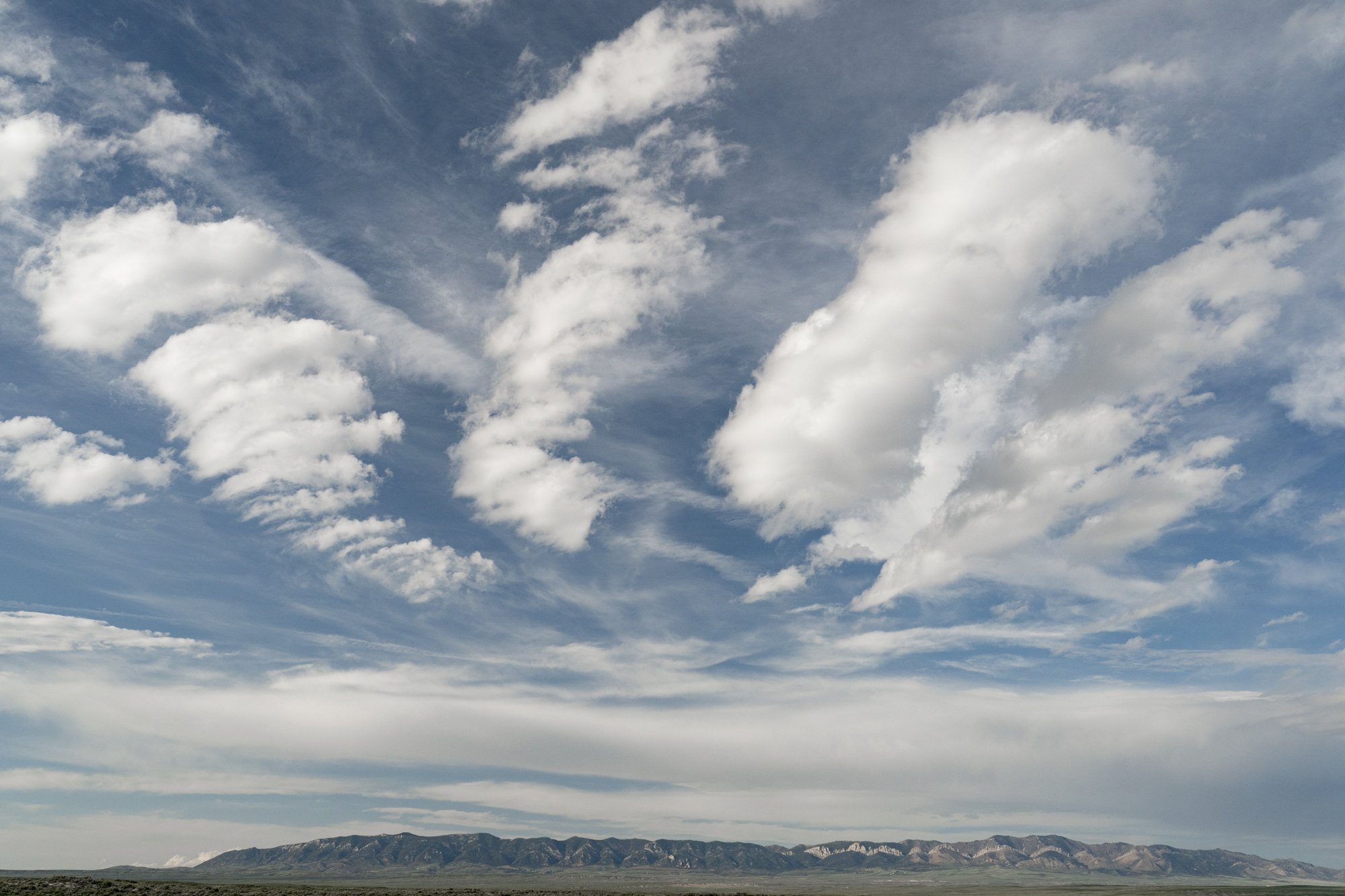
Photograph of a vast Wyoming landscape

Wyoming

Landscape photo of the California desert

California desert

Photograph of a train going through the landscape of Parker, Wyoming

Parker, Wyoming

California desert road trip photo

California desert

Photograph of plants in the California desert

California desert

Aerial Photograph of a road going through a desolate section of the California desert

California desert

Doug Monson - Western Charcoal Artist

A Charcoal Artist in Wyoming Preserving the Spirit of the American West

Western Art That Comes From Experience, Not Interpretation

There’s a noticeable difference between Western art made from observation and Western art made from experience. The best work doesn’t try to explain the West. It comes from living in it.

Doug Monson’s charcoal drawings aren’t romanticized versions of cowboy life. They carry the weight of real work—long days, unpredictable conditions, and a deep familiarity with cattle, horses, and the land itself.

That’s something I’ve seen again and again while photographing ranches across the West. The people who live this life don’t exaggerate it. And the artists closest to it don’t either.

A Chance Encounter With a Western Charcoal Atist

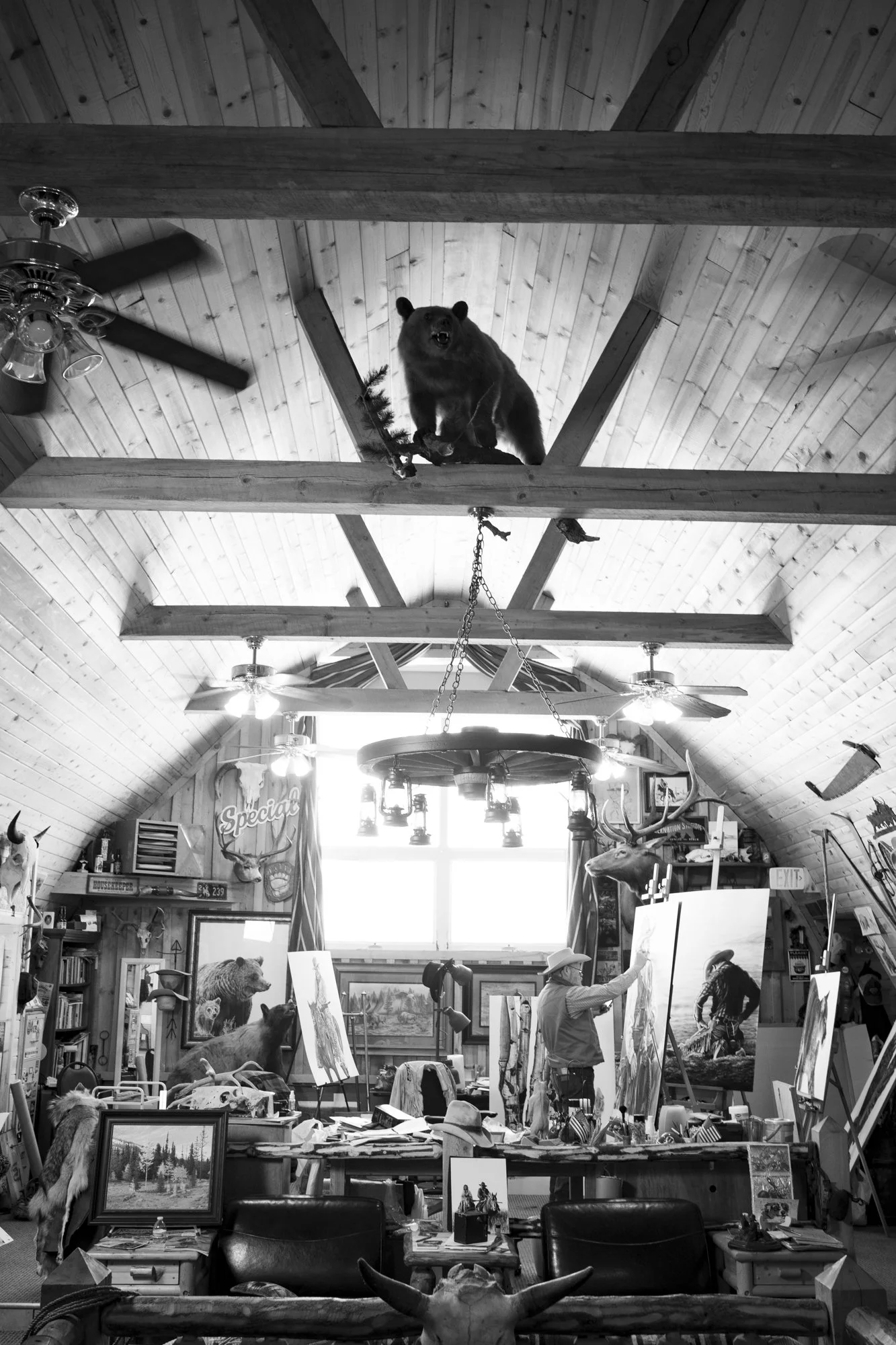
It’s always amazing how the universe brings people together. During a trip to Jackson Hole I was on a big gallery kick and spent quite some time taking in the top tier art that Jackson’s galleries have to offer. After the trip was over I began the drive back home. At the time I was living in San Diego and decided on a route that happened to go through Afton, WY - home of the Western Skies Fine Art - a gallery I had no knowledge of. Still having a thirst for art though, I popped in and was greeted by the owner Doug Monson He showed me around the gallery and his breathtaking studio upstairs. Next thing you know, I pulled the camera gear out of the track and was photographing Doug at work. Prior to that day I never even knew who Monson was. It was a pleasure spending time with him though. He’s a talented artist and a hell of a nice guy.

Why Wyoming Still Matters for Western Artists

Wyoming holds onto something a lot of places have already let go. There’s still space. Still working ranches. Still a culture that hasn’t been completely reshaped for an audience.

For artists—whether working in charcoal, photography, or anything else—that matters.

It means the subject isn’t manufactured. You’re not documenting a version of the West built for tourists. You’re seeing something that still functions the way it always has.

That’s why so much of my own work continues to bring me back to places like this.

Documenting the Same World Through Photography

While Monson works in charcoal, the intent overlaps closely with what I’ve been building through photography. For the past several years, I’ve been documenting working cowboys across the American West—on ranches where traditions like branding, roping, and horsemanship are still part of daily life. It’s not staged. It’s not styled. It’s not built for content. It’s just the work, as it happens. That same honesty is what makes both forms of work resonate. Whether it’s a drawing or a photograph, the goal is the same: create something that holds up over time because it’s rooted in reality.

The Importance of Western Crafts and Artists

There’s a broader ecosystem around cowboy culture that often gets overlooked — Saddle makers. Rawhide braiders. Bootmakers. And artists like this one working in charcoal.

These aren’t separate from Wester culture—they’re part of it. And as fewer people continue these traditions, documenting them becomes more important. Not in a nostalgic way. In a factual one. Because once these skills disappear, they don’t come back.

Collecting Authentic Western Art and Photography

For collectors, there’s a difference between work that references the West and work that comes directly out of it.

That difference shows up over time.

It’s in the details. The restraint. The lack of exaggeration.
Whether it’s a charcoal drawing or a photograph, the strongest pieces tend to be the ones that don’t try too hard. They just reflect what’s there.

If you’re interested in collecting work like this, it’s worth paying attention to where it comes from—and who made it.

A Larger Project Documenting the American West

This visit is part of a much larger body of work focused on documenting the people, places, and traditions that still define the American West.

It’s taken me across ranches in multiple states, often working in remote environments where this way of life still operates largely unchanged.

If you’re interested in seeing more:

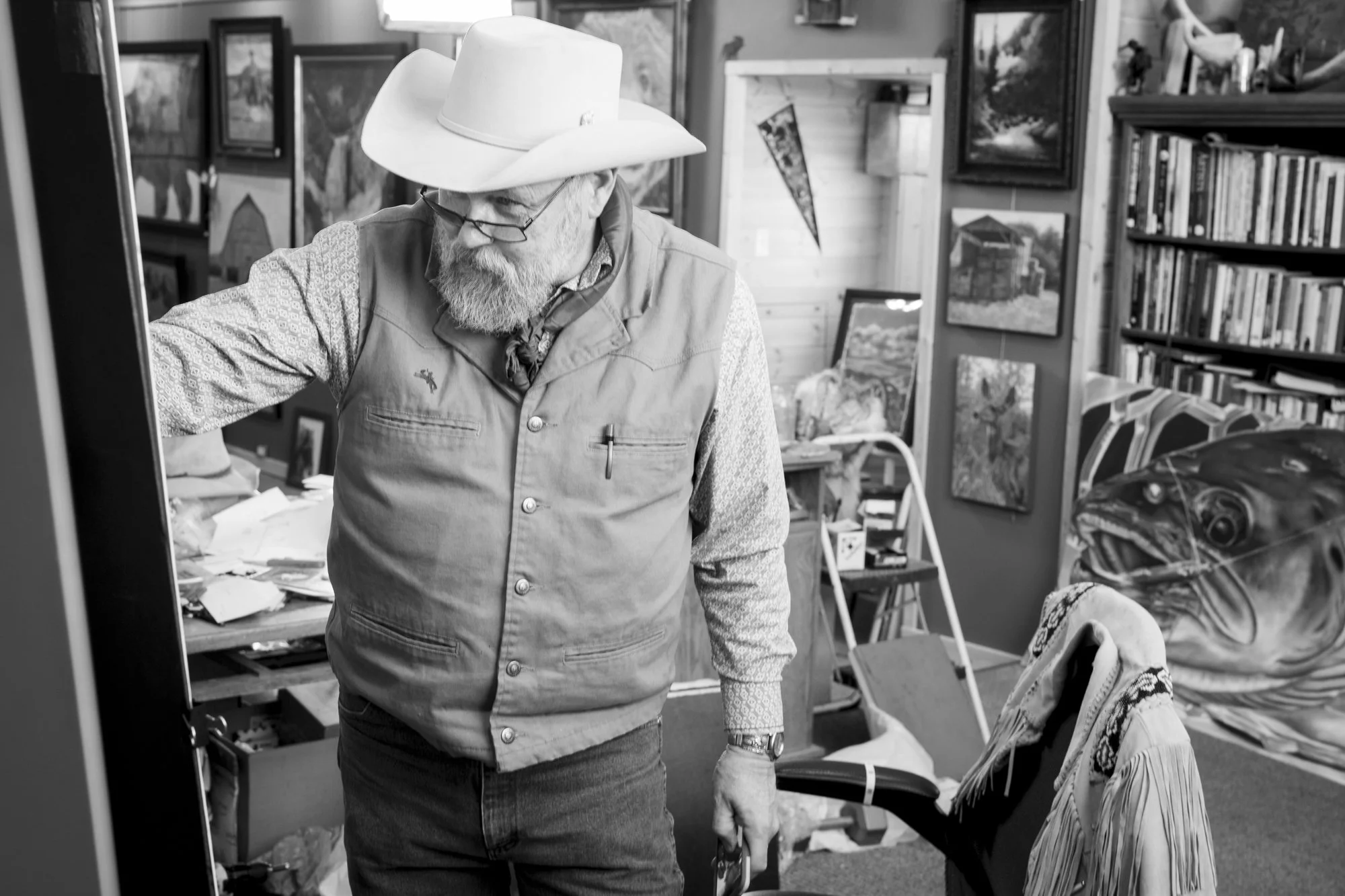
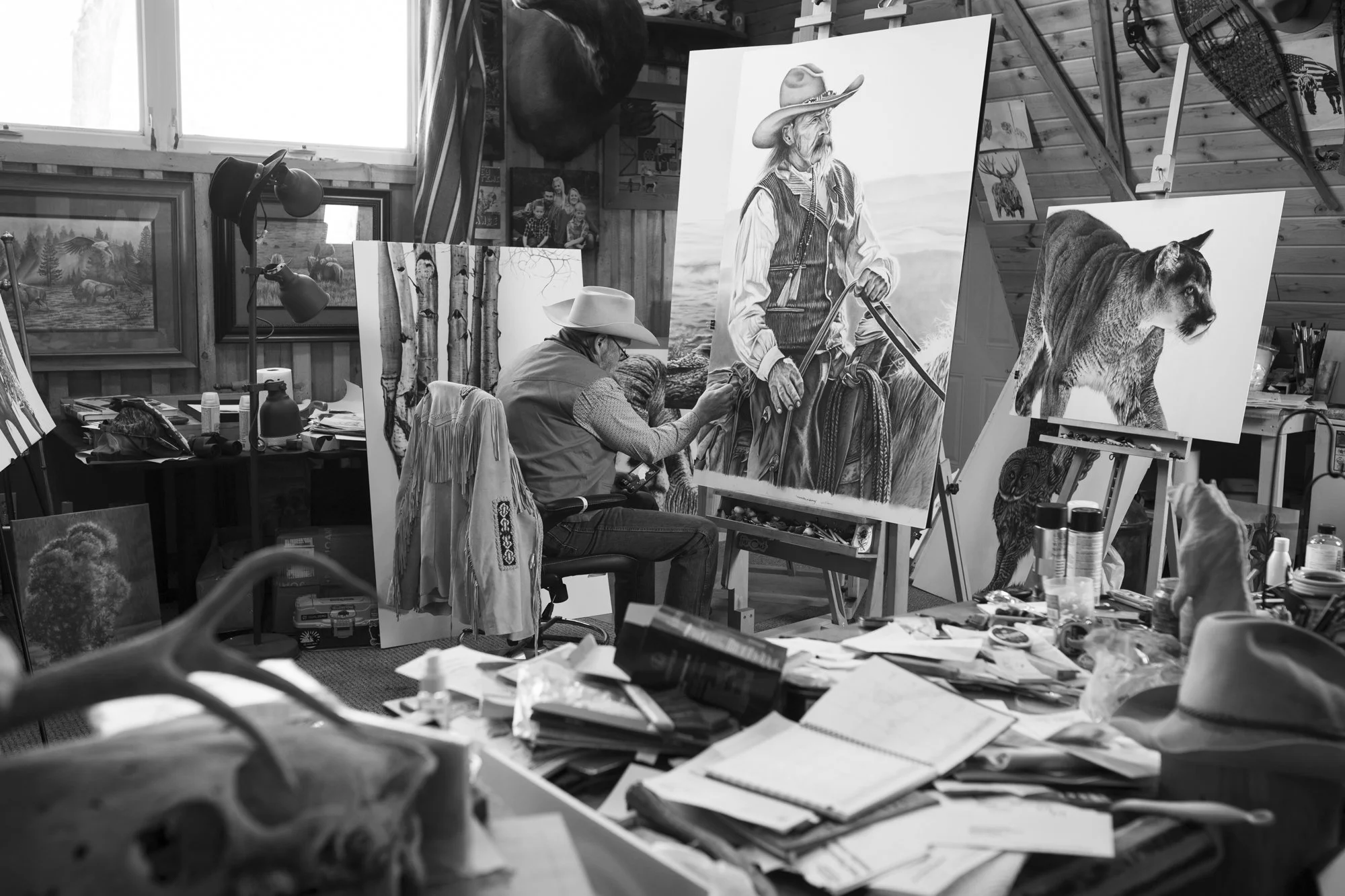
Charcoal artist Doug Monson at work in his studio at the Western Skies Gallery in Afton, Wyoming

Charcoal artist Doug Monson at work in his daylight studio

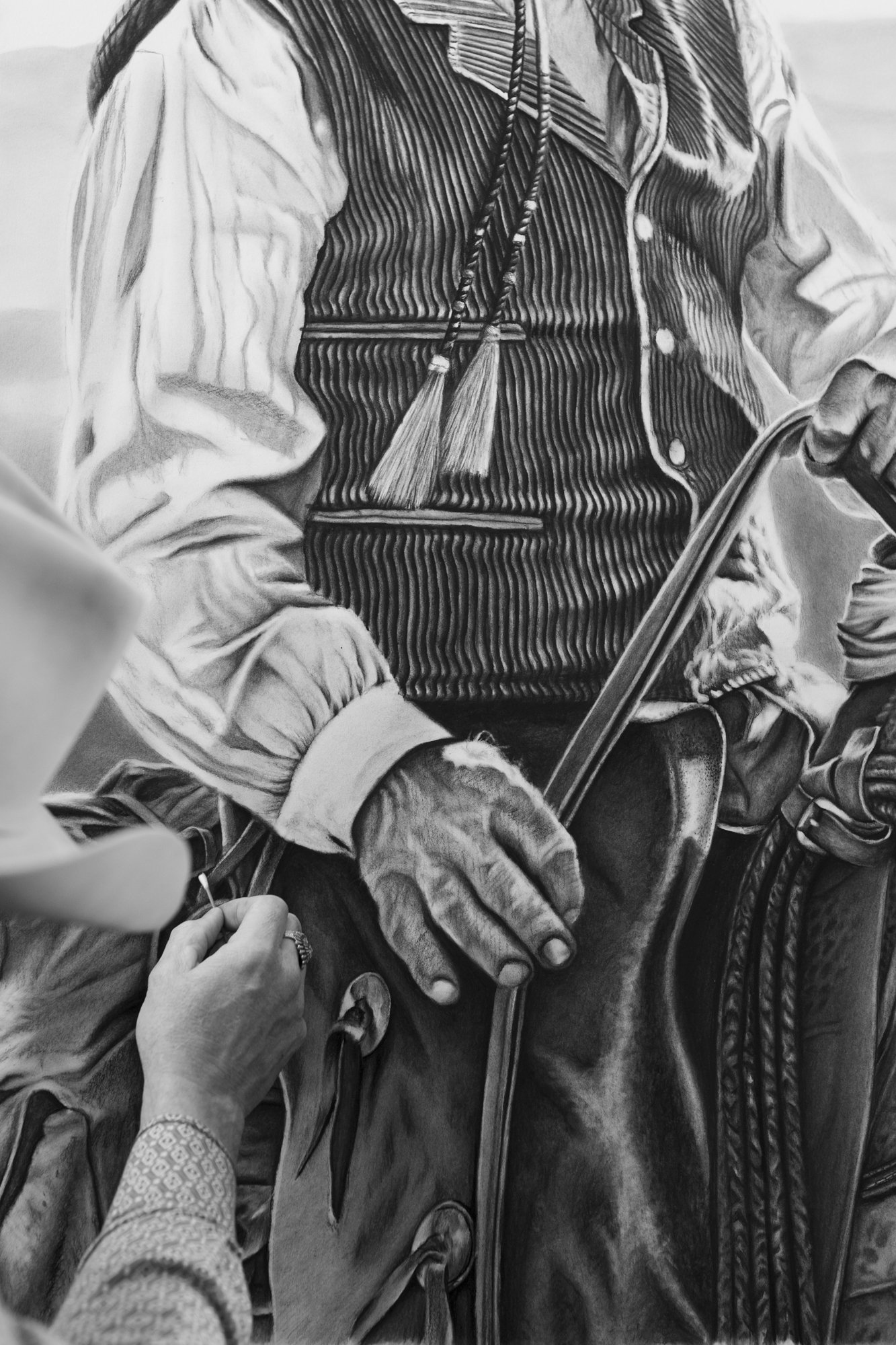
A western charcoal artist drawing a cowboy

Monson drawing a cowboy with charcoal on paper

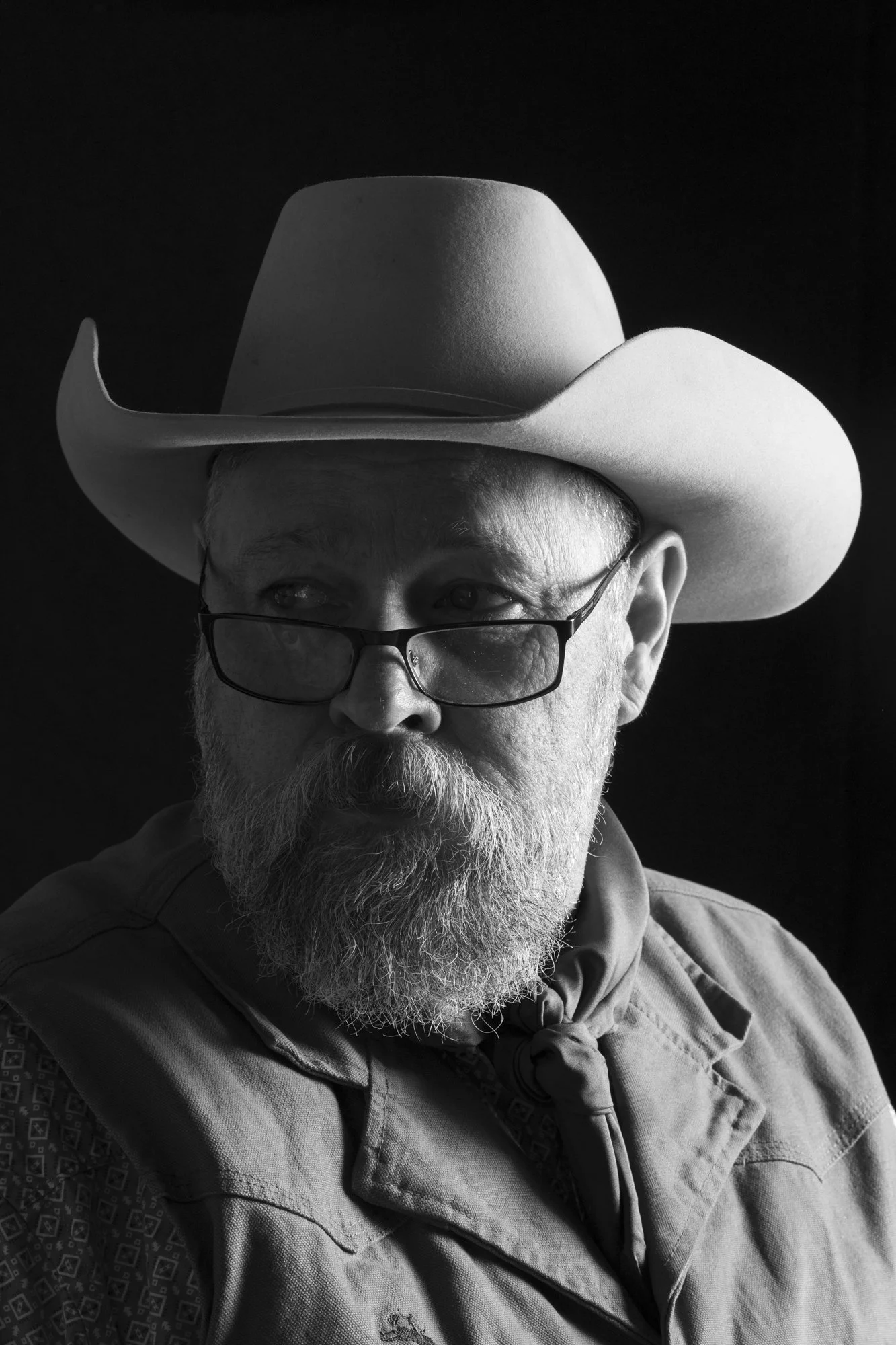
Portrait of a Western charcoal artist

Portrait of artist Doug Monson

Western charcoal artist Doug Monson working on a drawing at the Western Skies Gallery

Doug Monson at work on a drawing in the Western Skies Gallery

Black and white photograph of a Western artist in his studio surrounded by drawings and art supplies

Doug Monson surrounded by art in his studio


American Road Trip

Road Trip Photography - America - Open Road

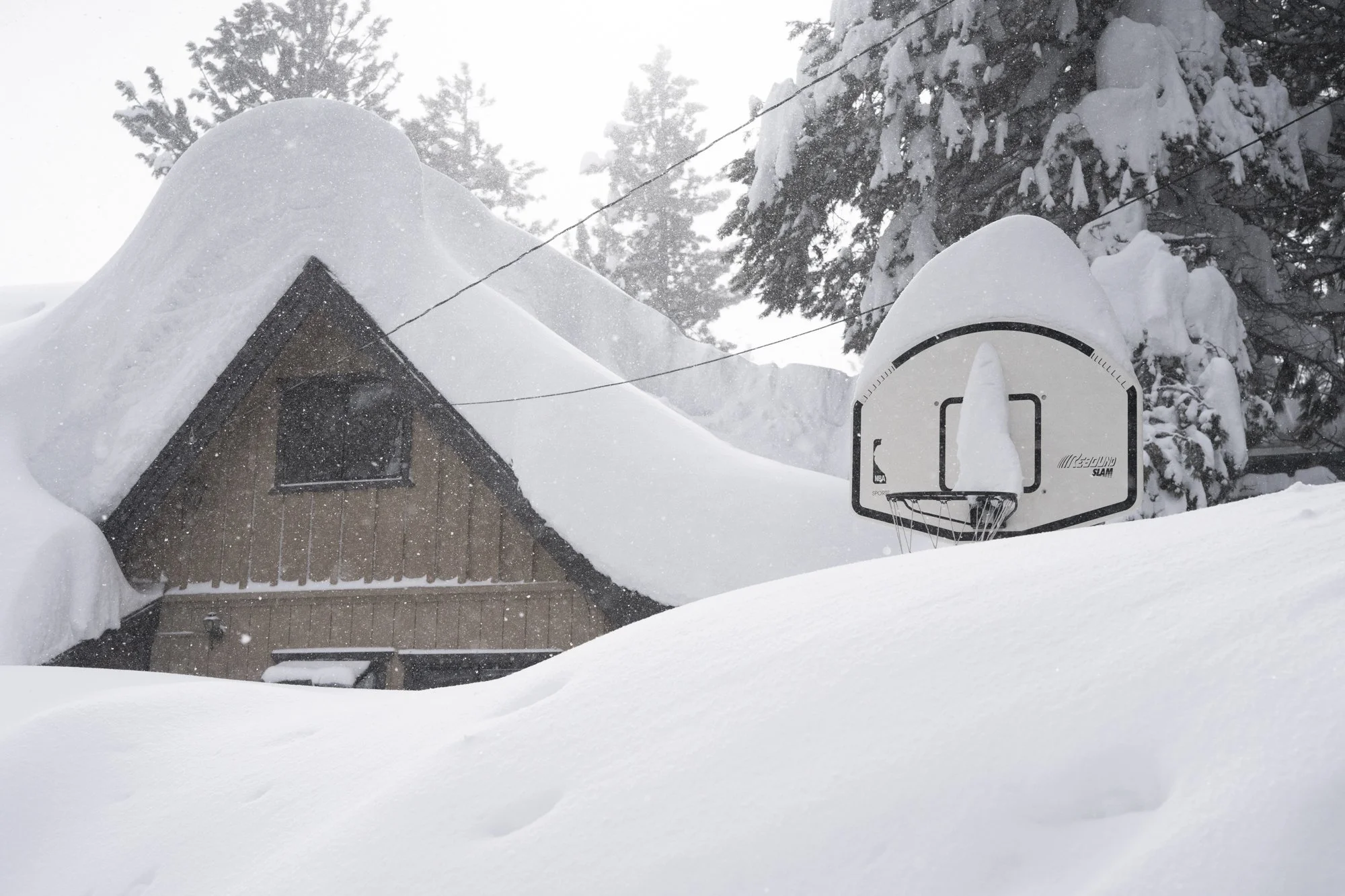
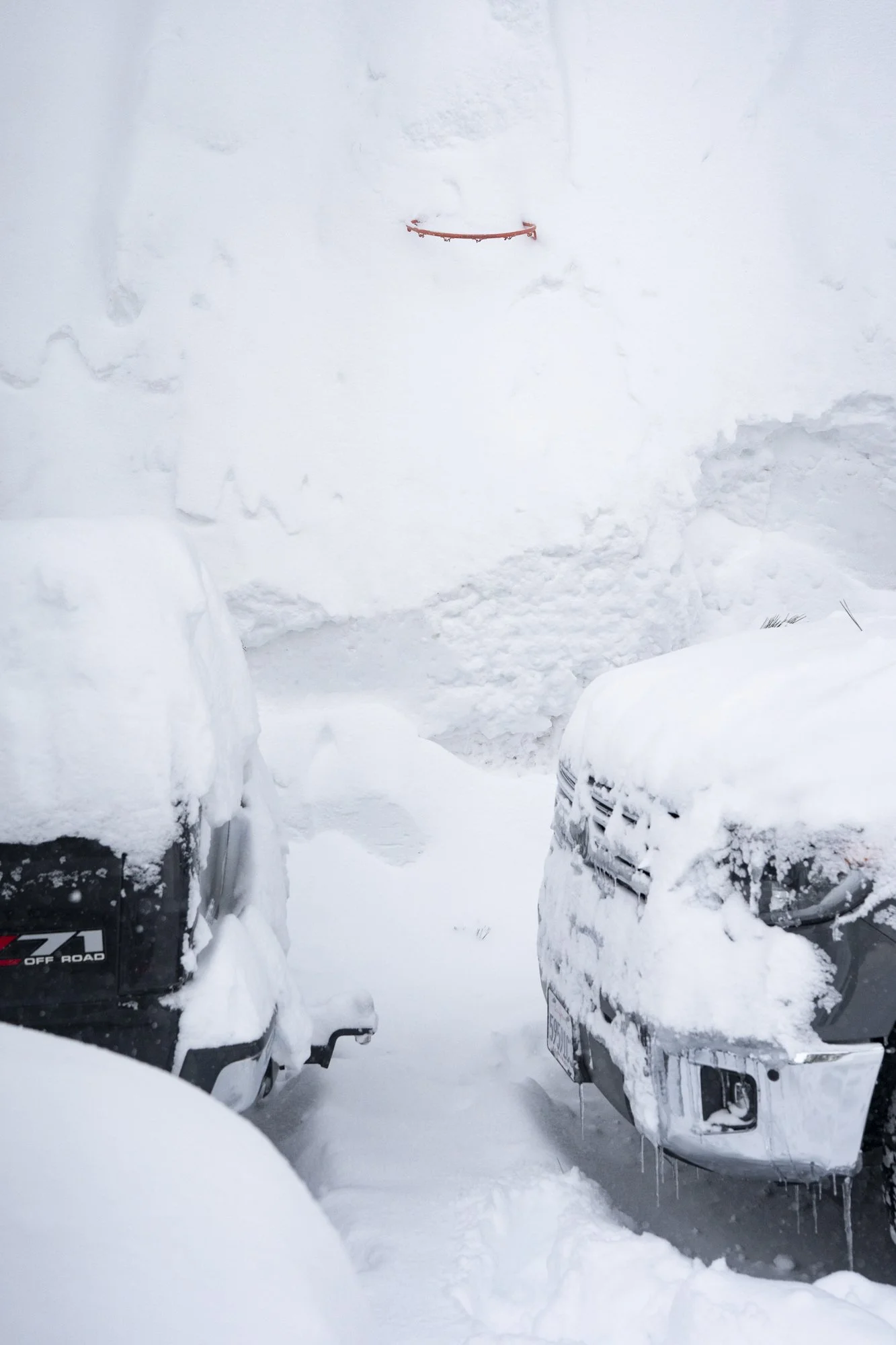
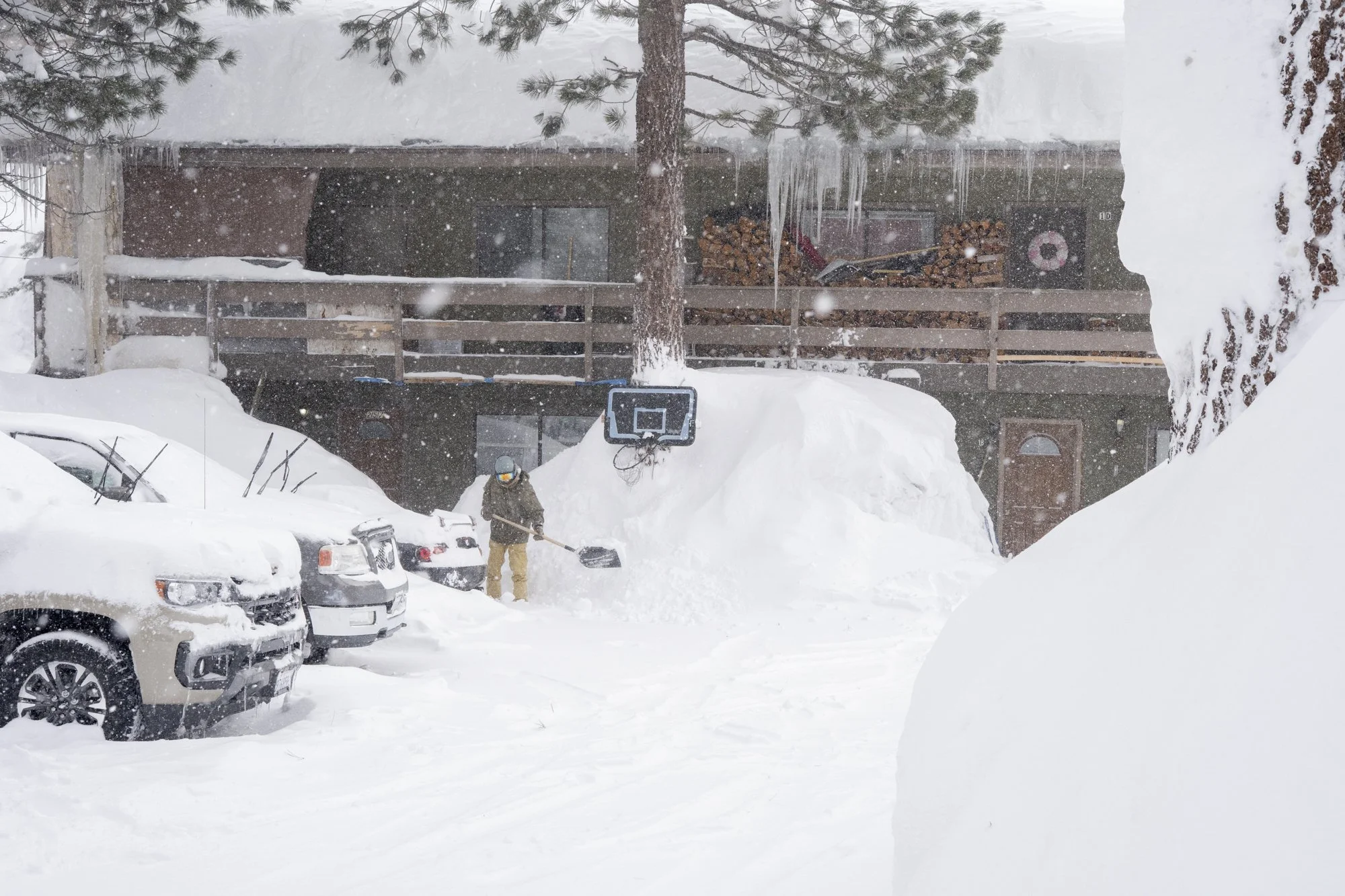
Winter is such a special time in the West. Especially if you’re lucky enough to be in it when a massive snowstorm hits. Such was the case this past week in Wyoming where the snow never seemed to stop. I drove up there to do some shooting and for a backcountry snowboarding hut trip in the Tetons. Jackson Hole and the surrounding area never disappoint in the snow category. Snowboarding is my “selfish time”, meaning I generally put the camera away and just ride, so there are no images of powder to share. However, the image below made in Afton, Wyoming is a great example of the odd things you see while on the road that are only made possible by the hand of mother nature.
Winter in Afton, Wyoming

American Road Trip

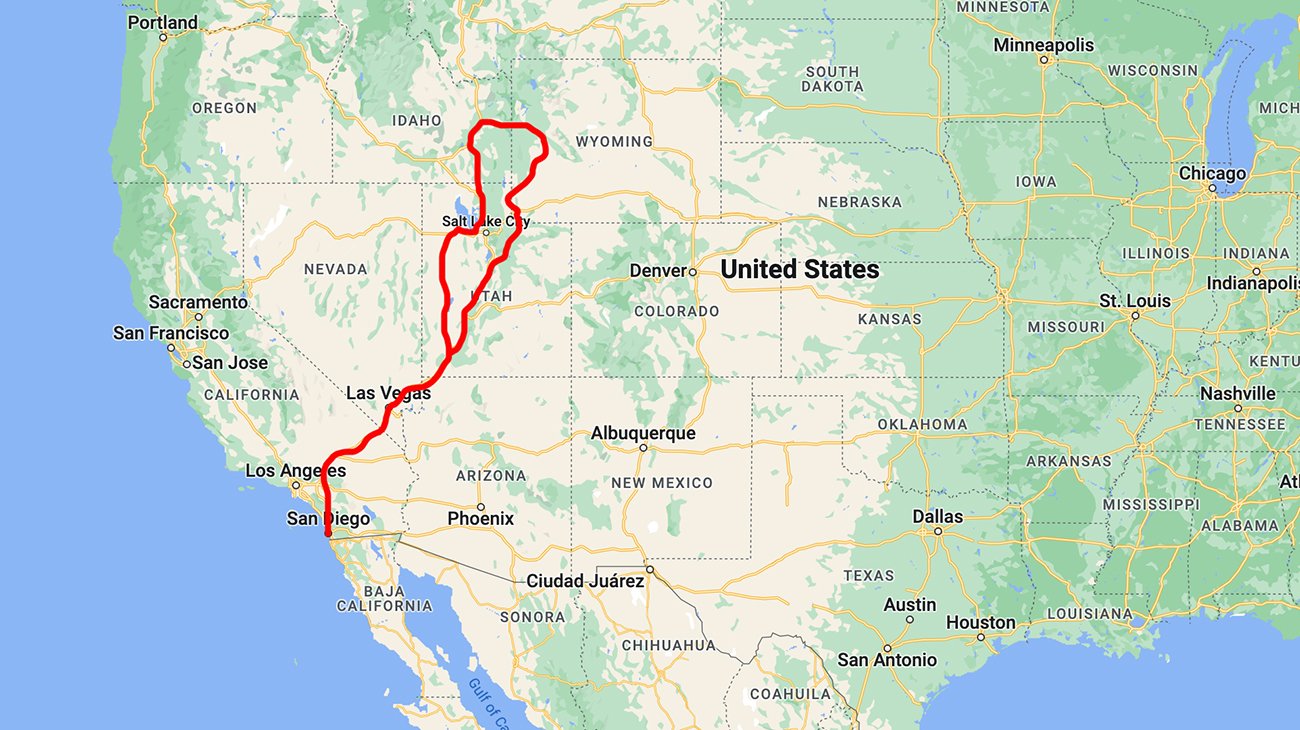
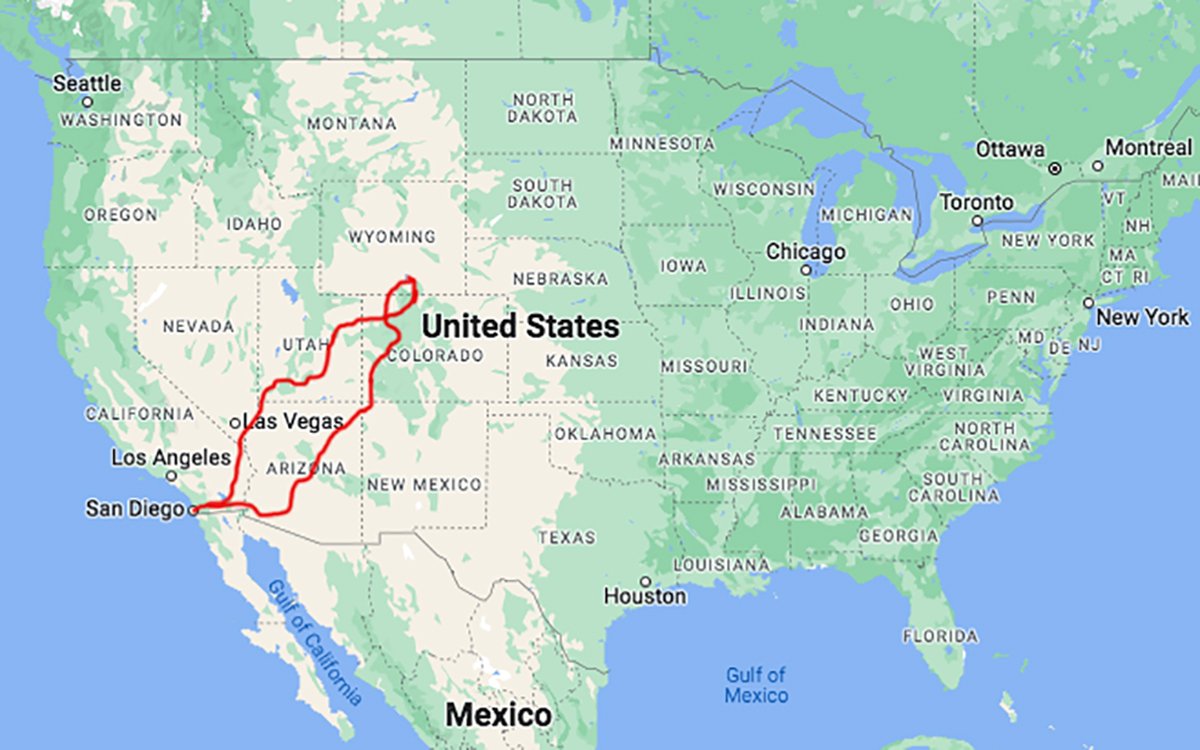
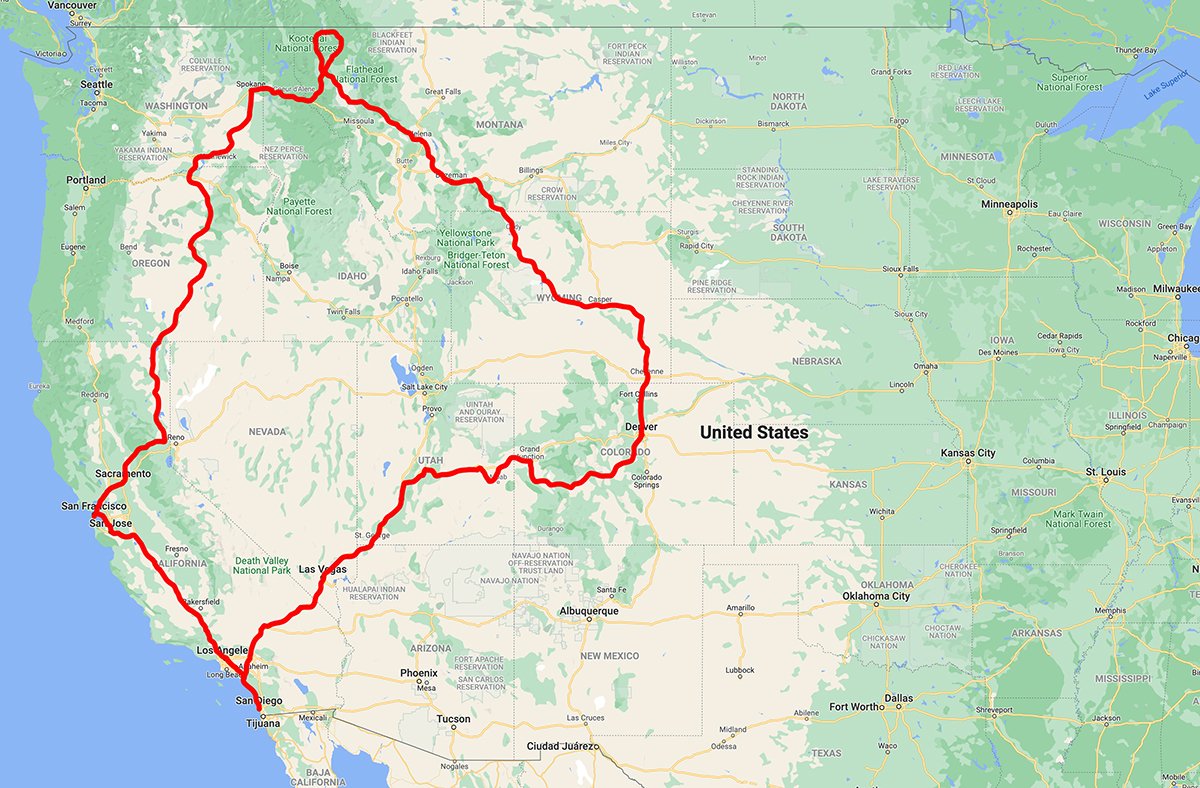
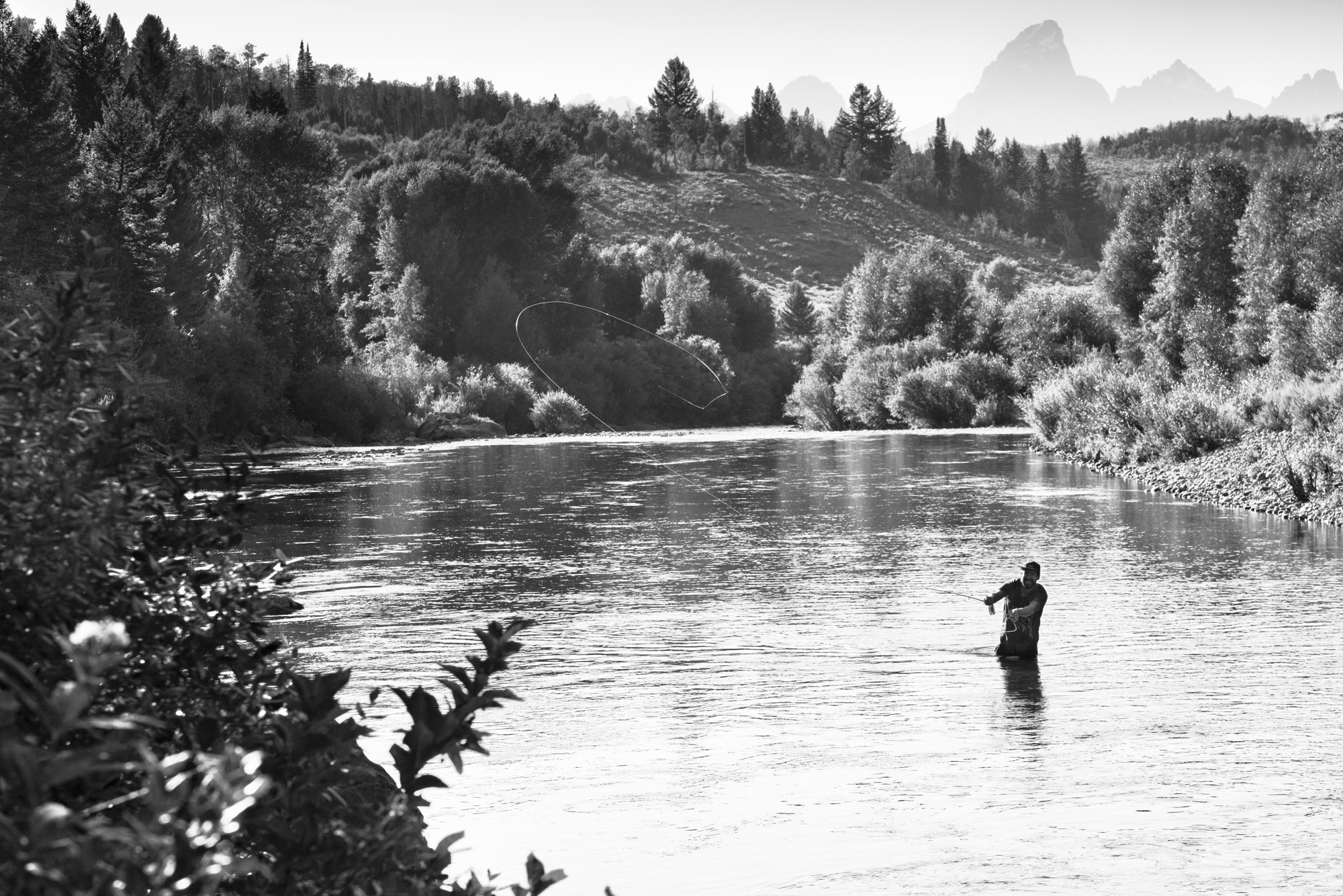
It seems like every road trip has its own personality filled with unique findings and activities. Of course photography is always the main focus of these trips, but there are also auxiliary goals that I try to squeeze in as well. Ranching, fly fishing, friends, and hunting are just a few of the things that happened in the squiggly red lines on the map. So far it seems like the results are good in the photography category and a hell of a lot of good times were had along the way. Excited to share more the miles soon.

View the American Roadtrip Gallery

Shop my American Roadtrip Photography Book

Meat Processing Photographs

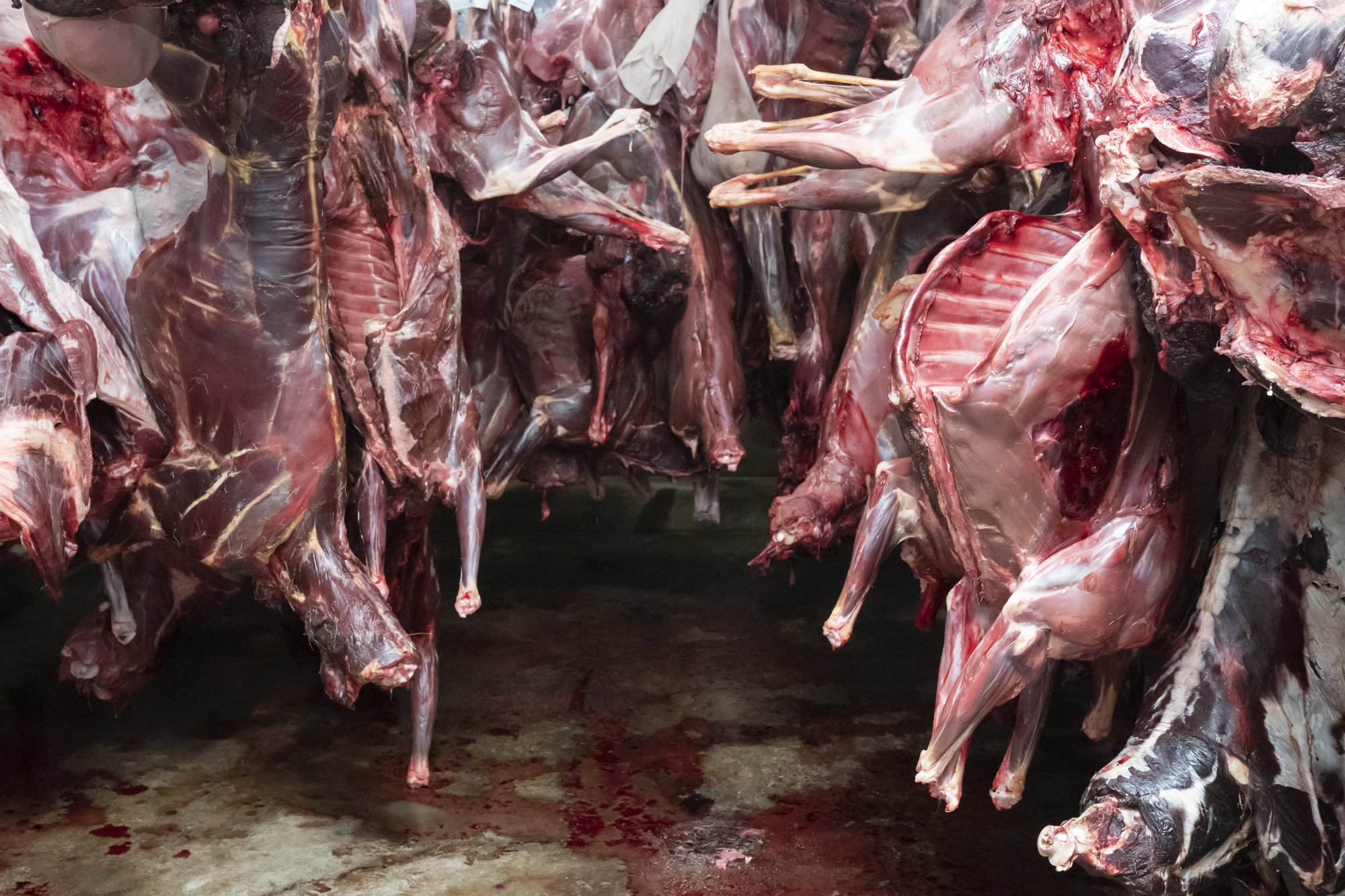
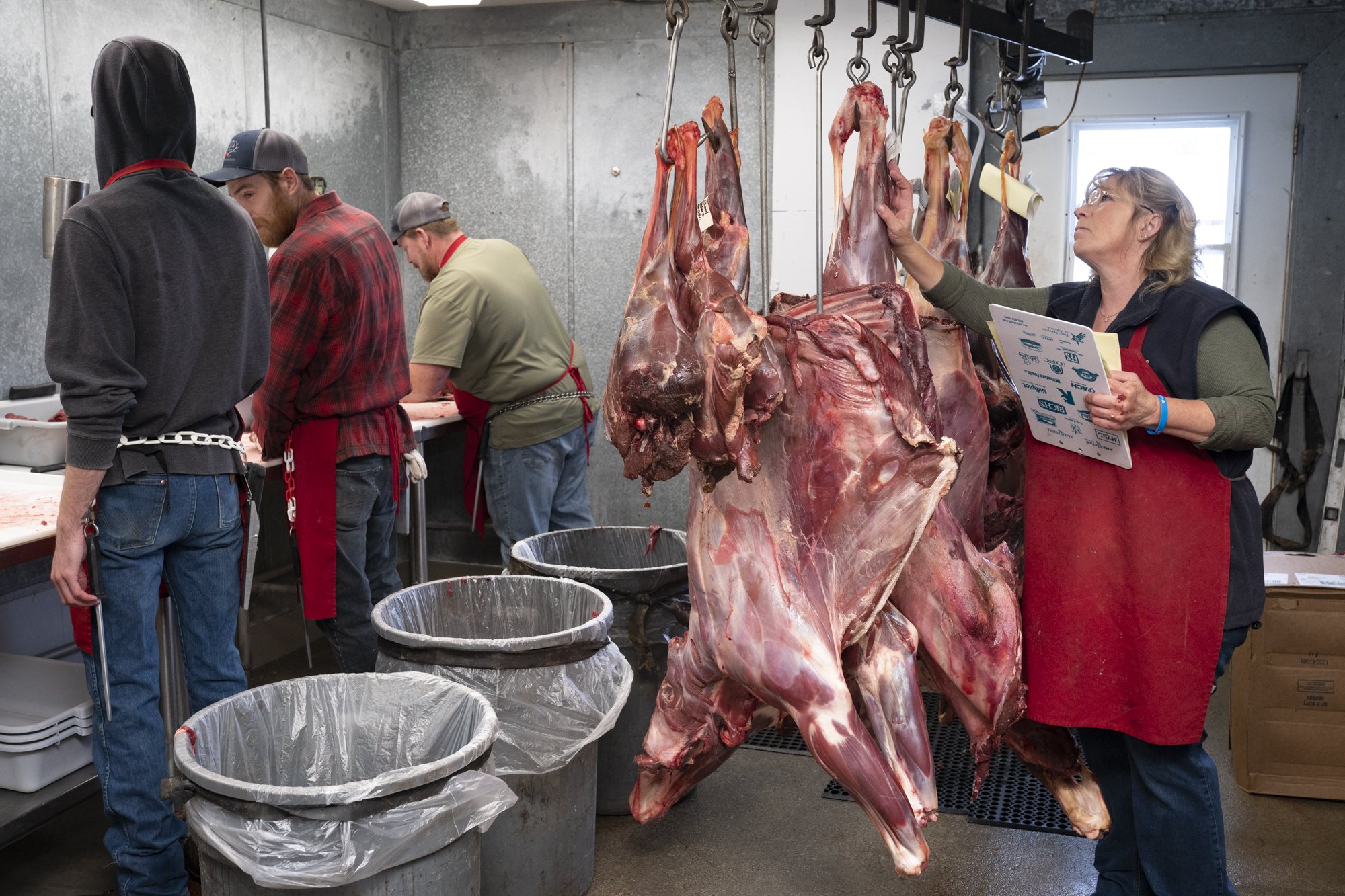
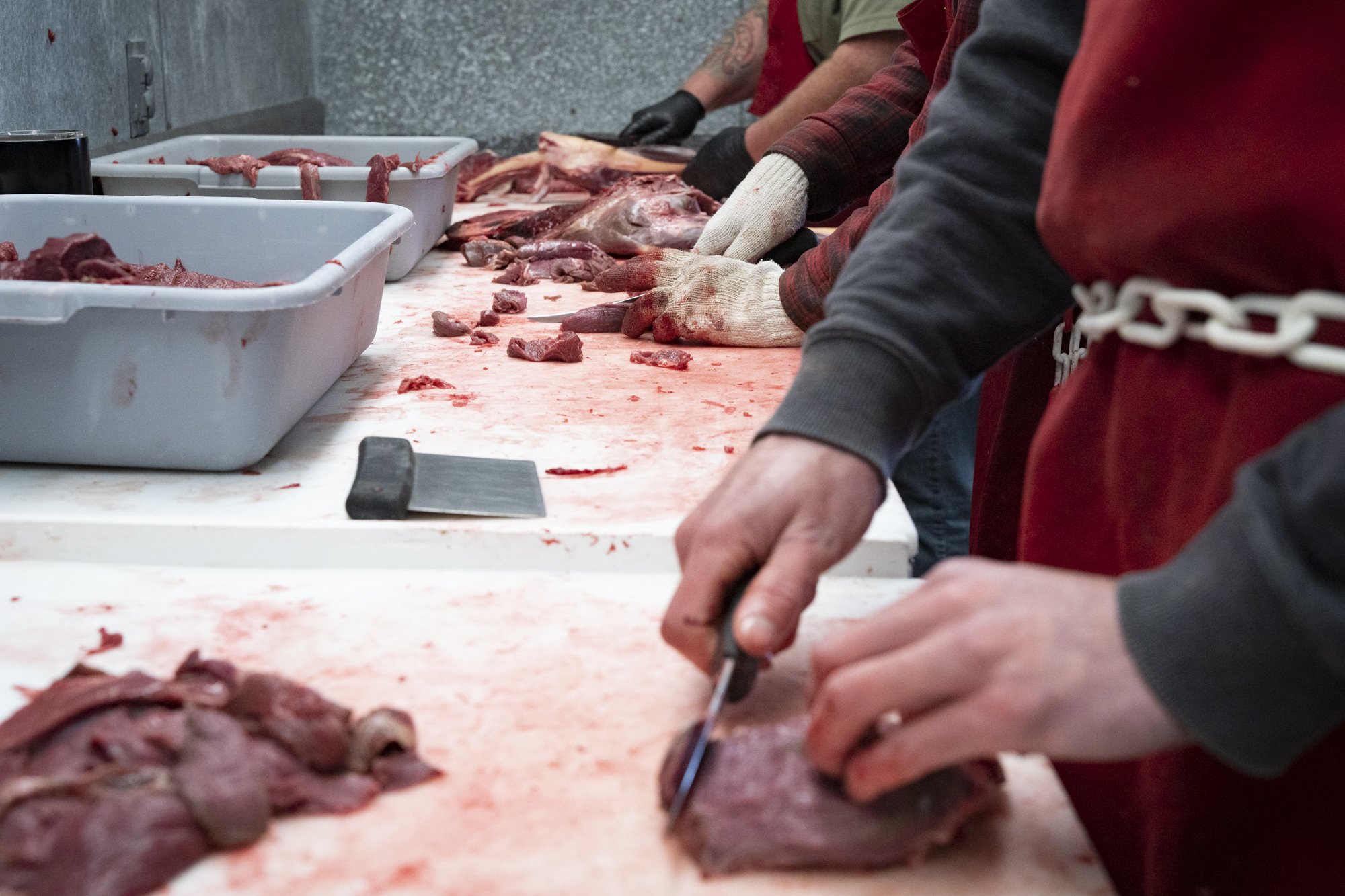
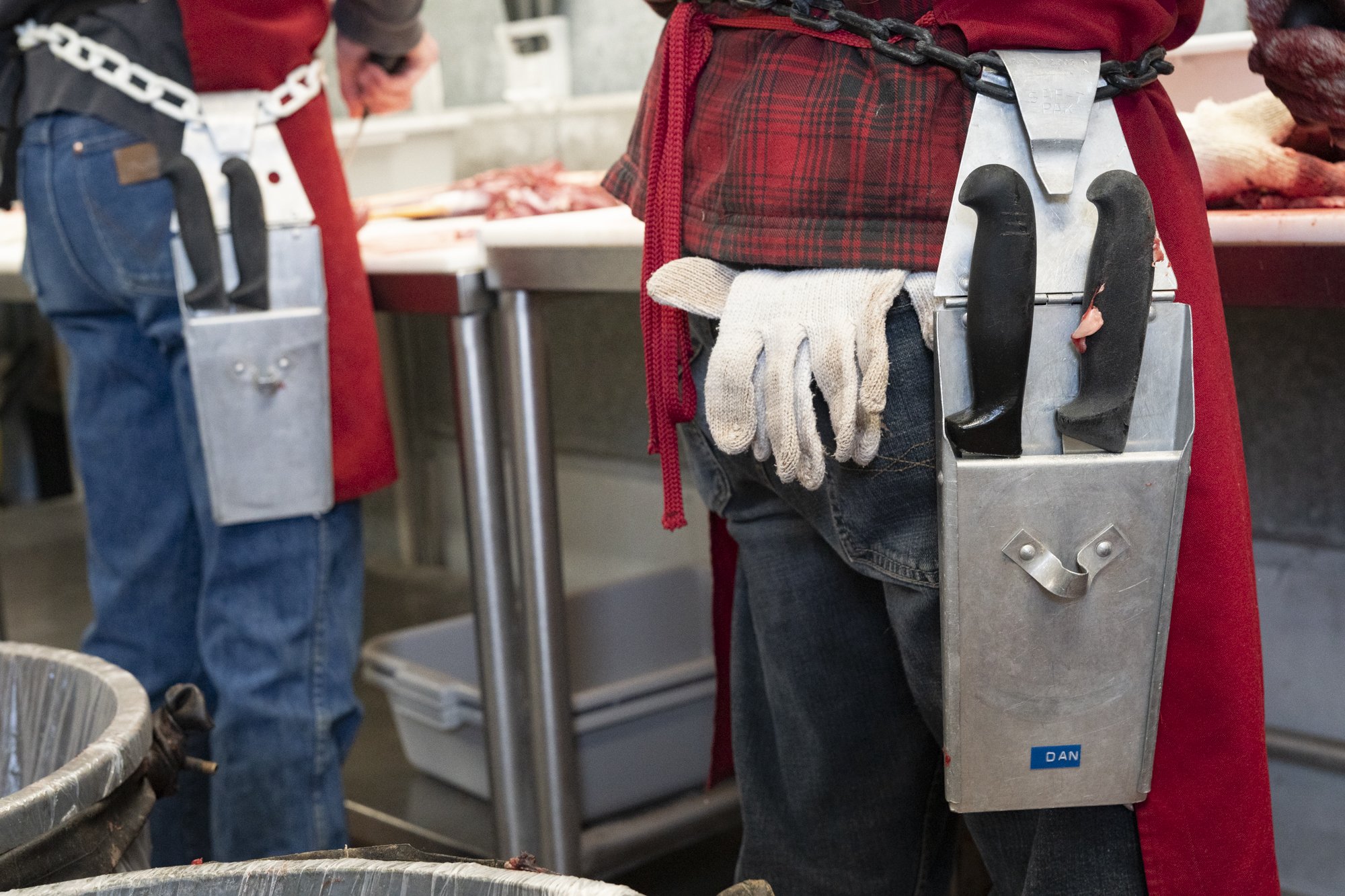
Meat Processing Plant Photography in Wyoming | Real Food Production Environments

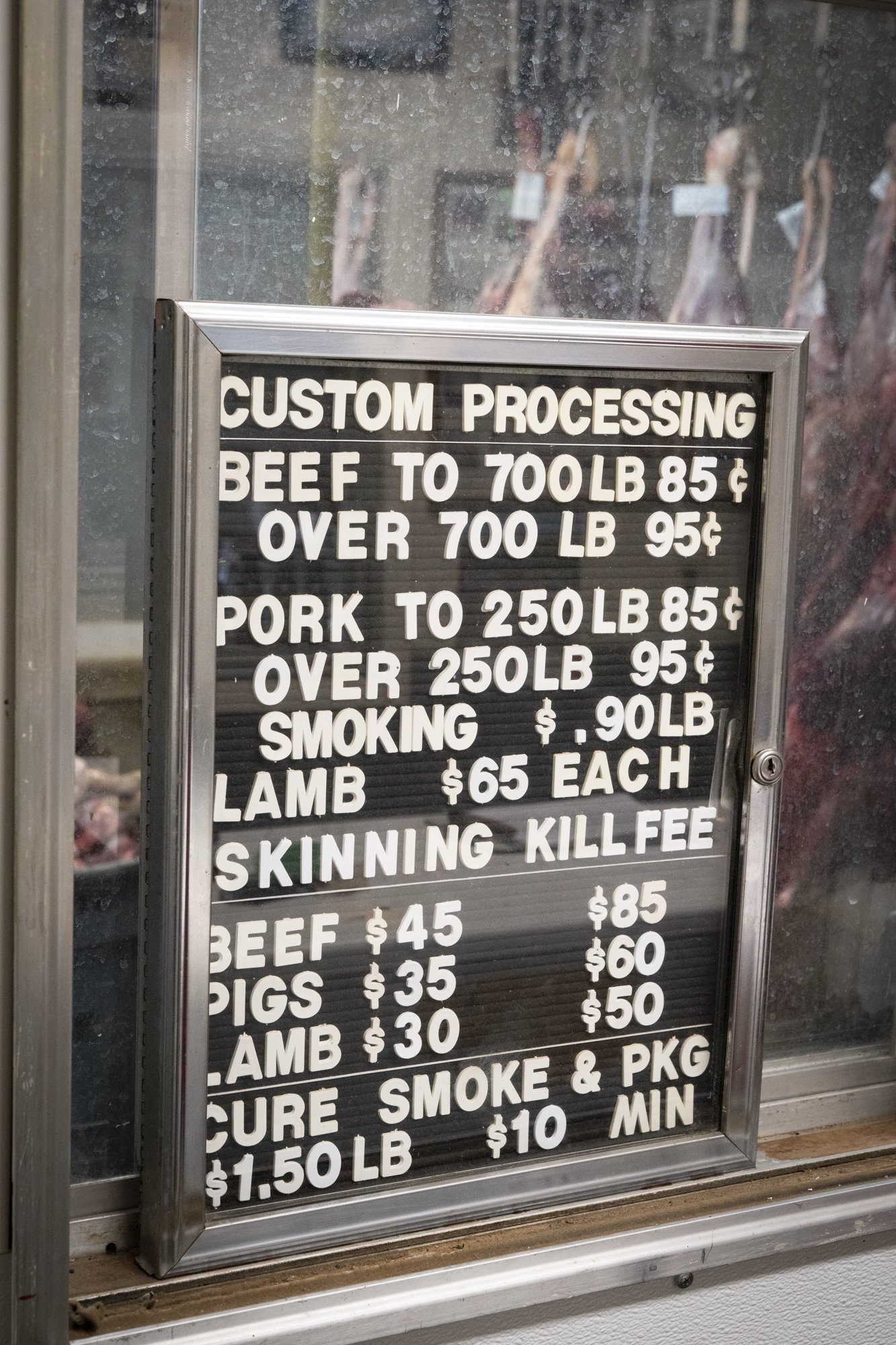
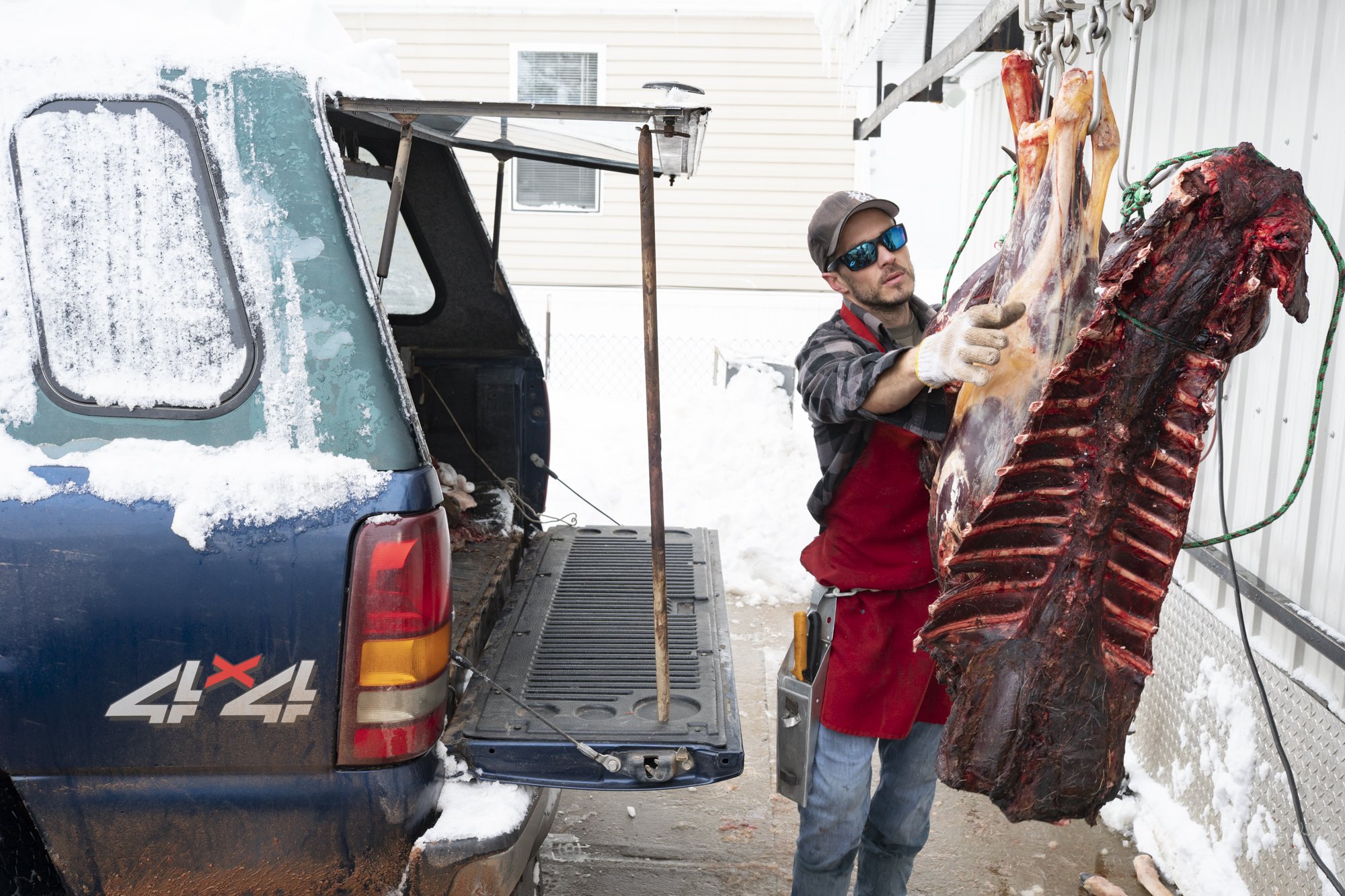
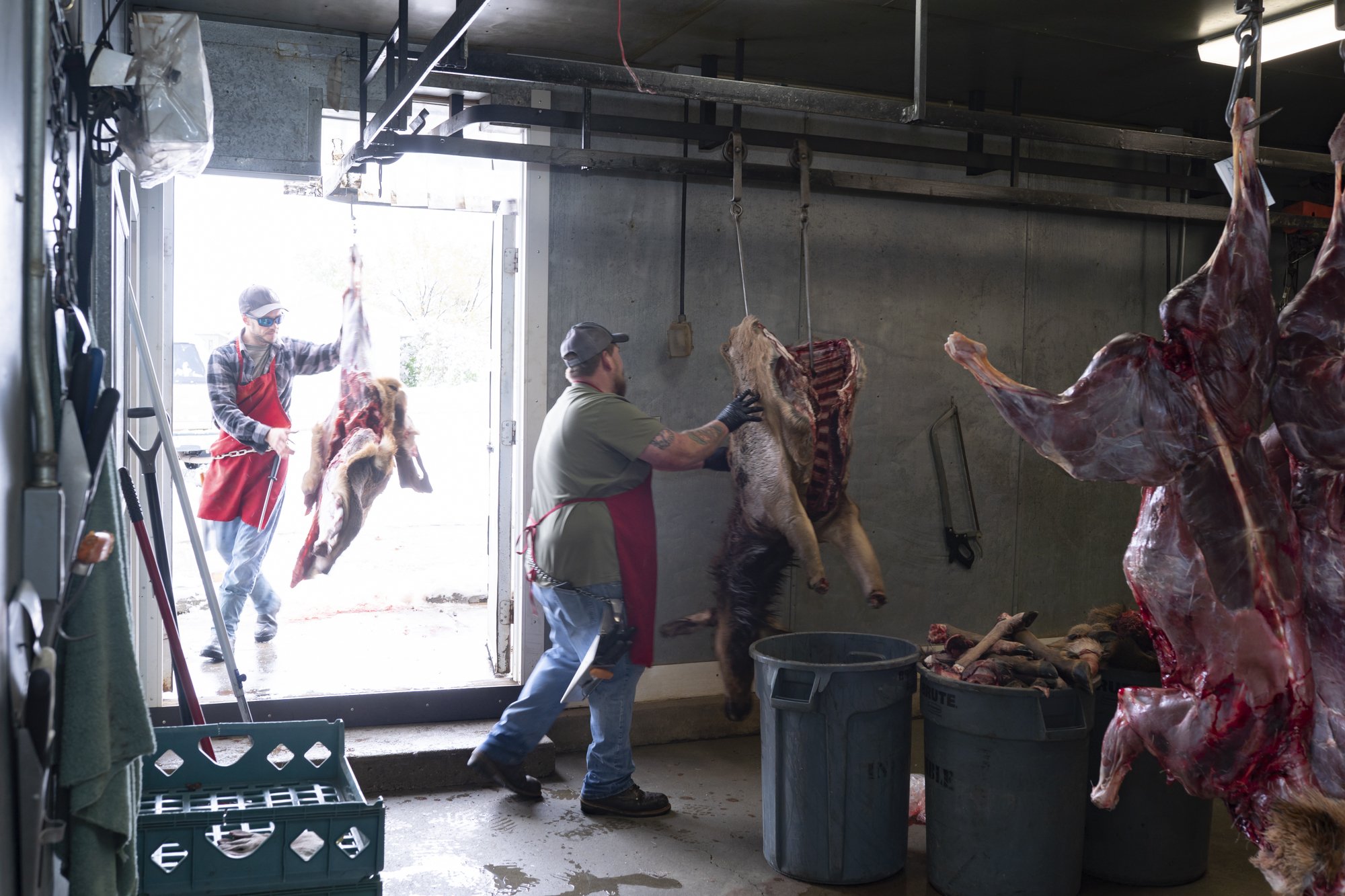
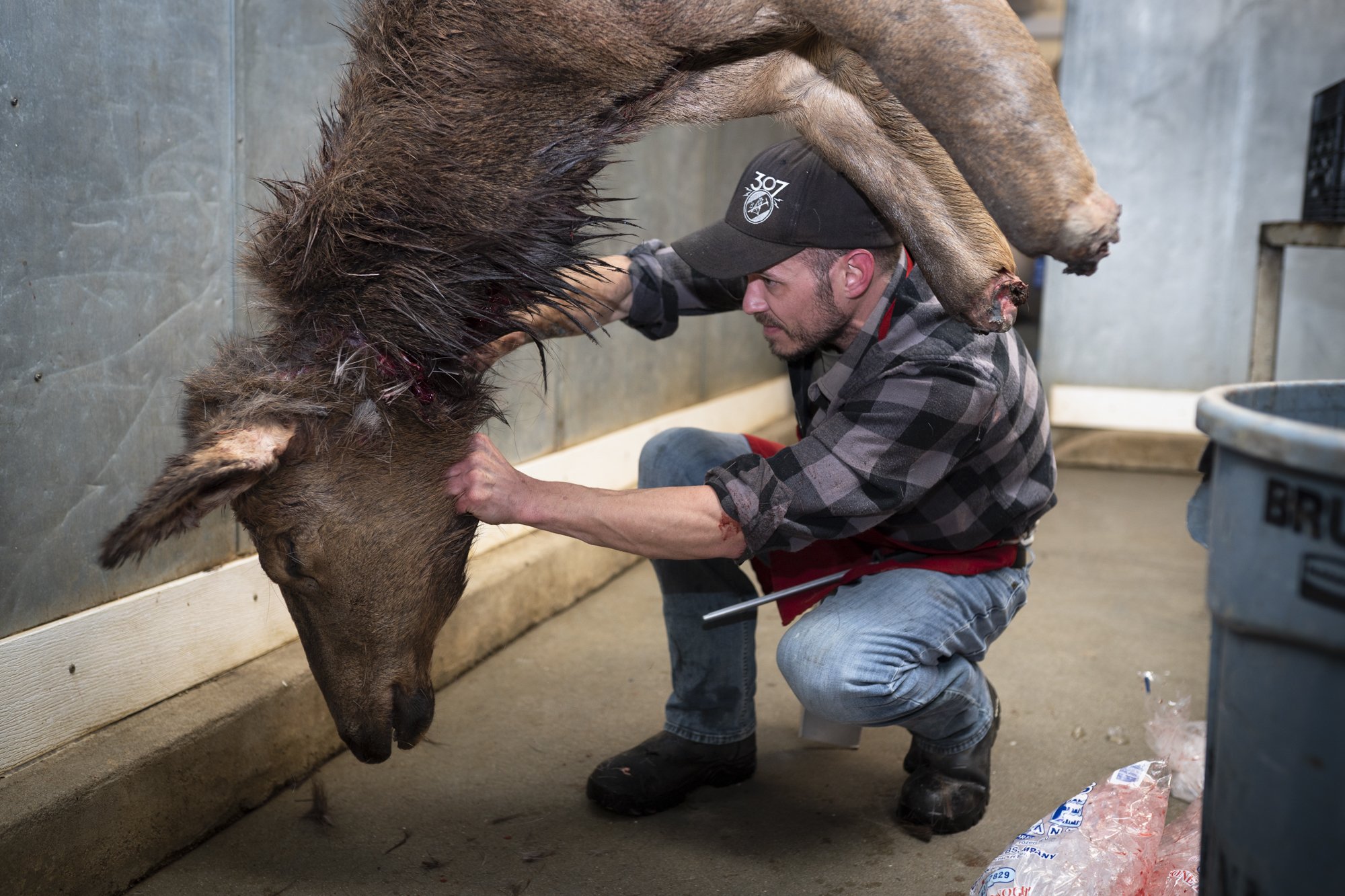
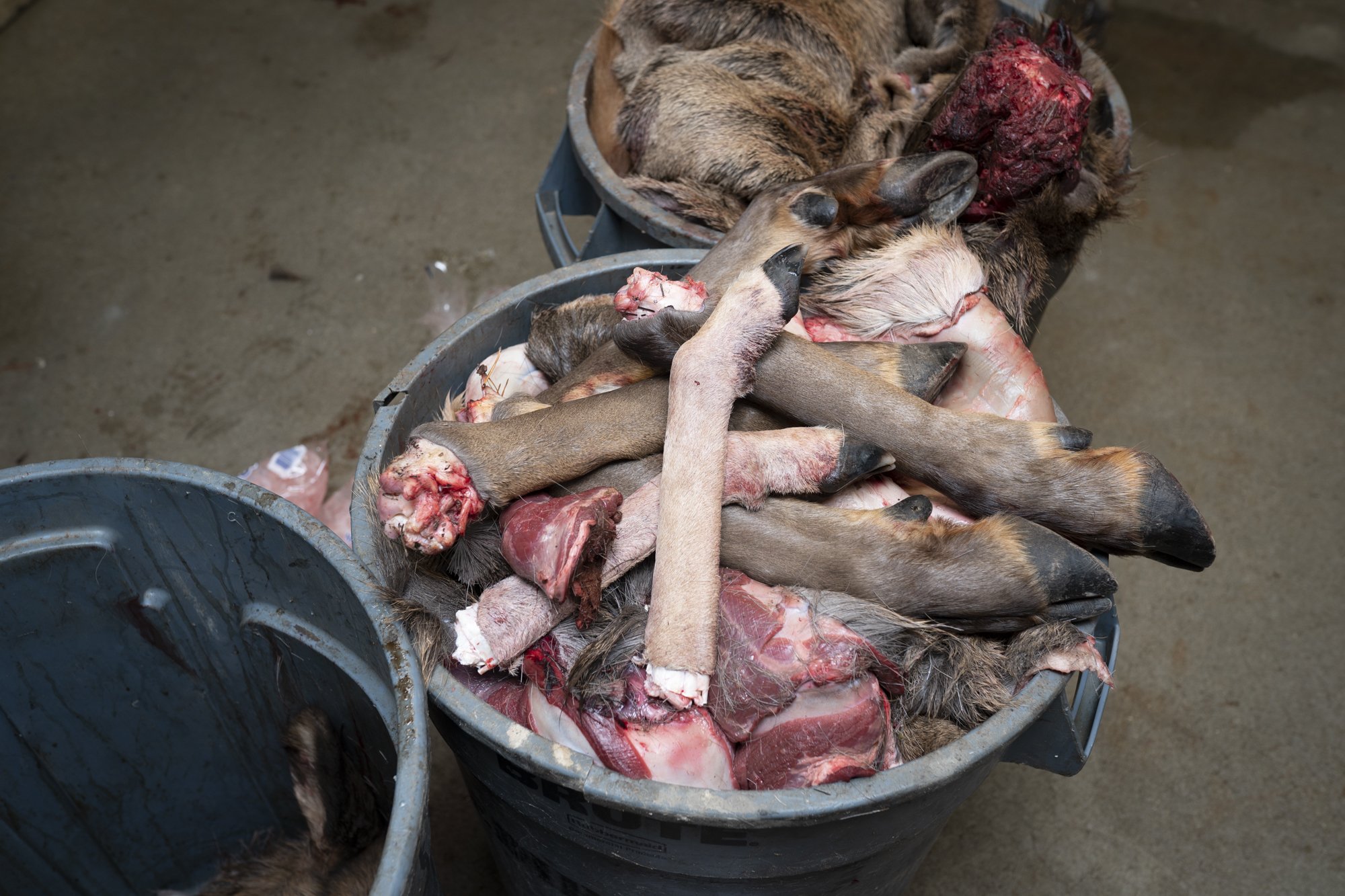
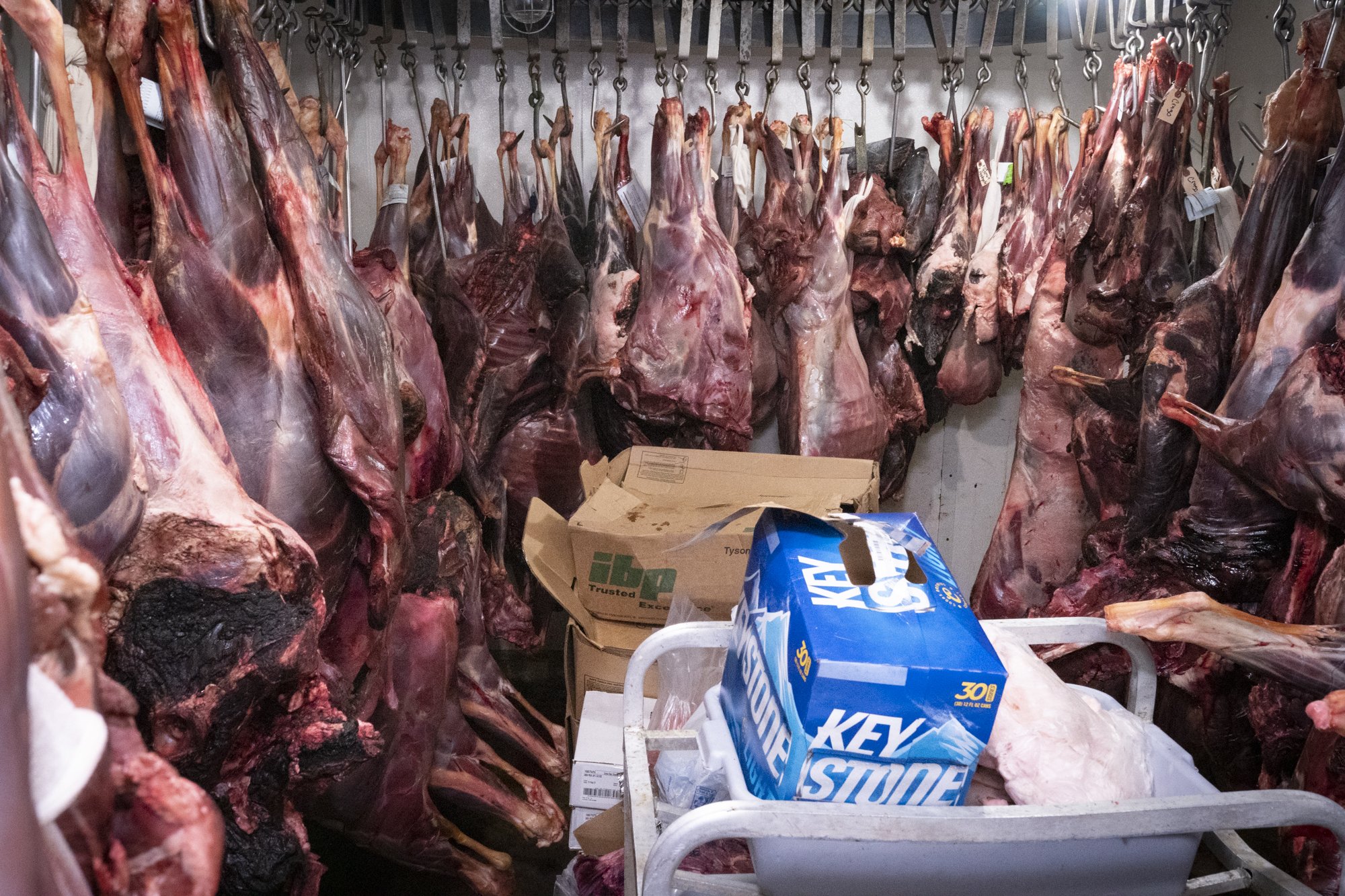
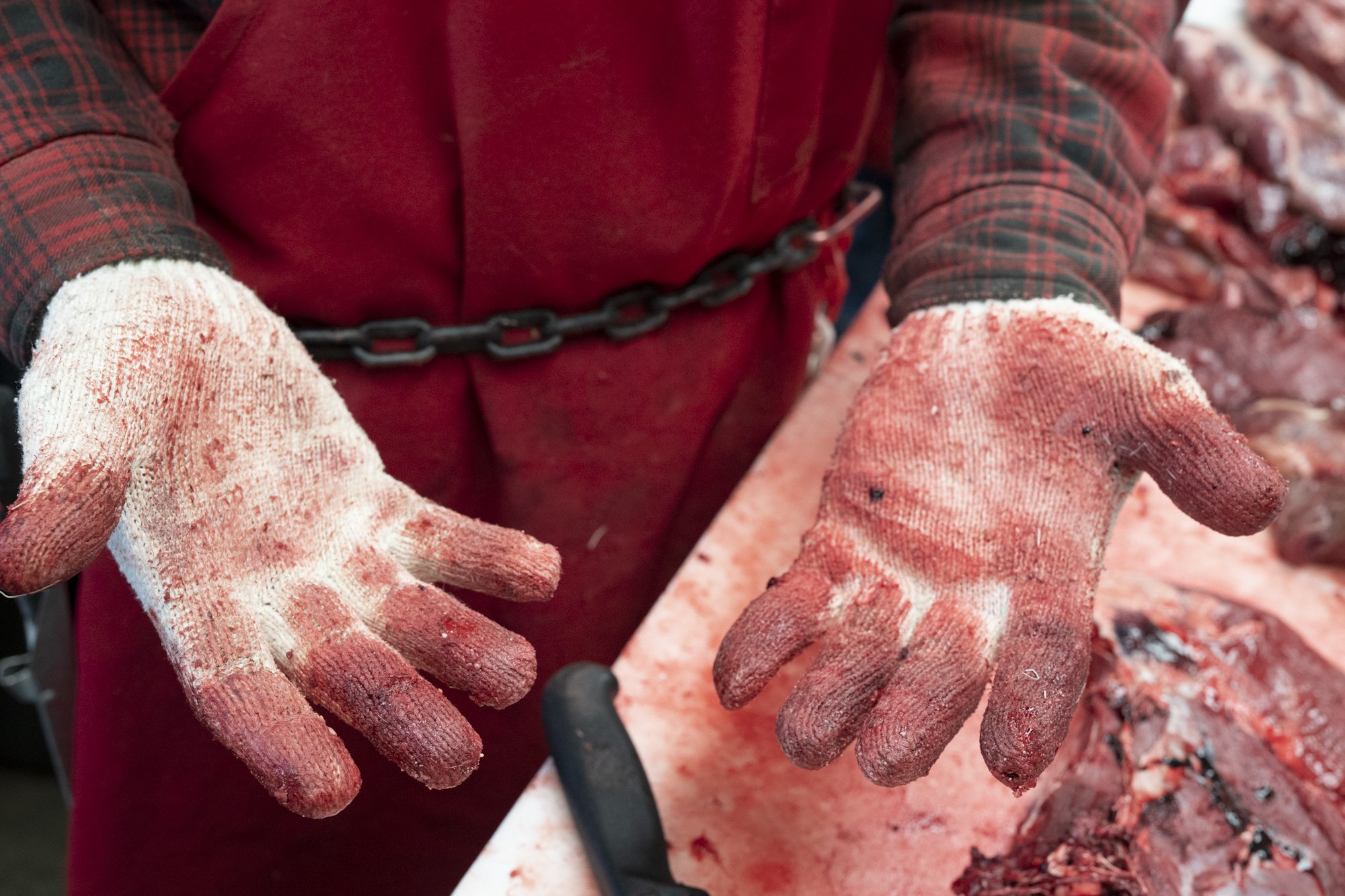
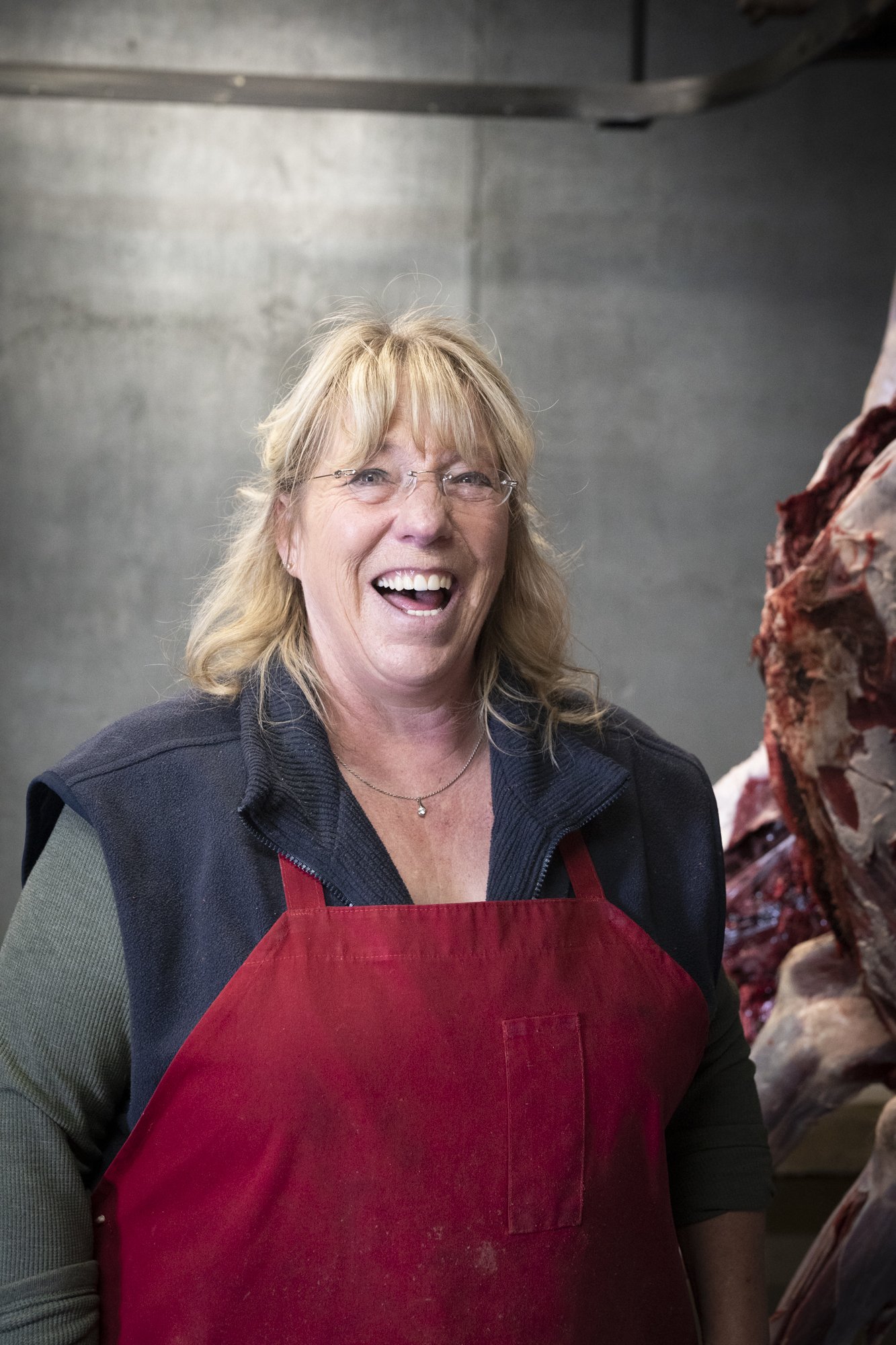
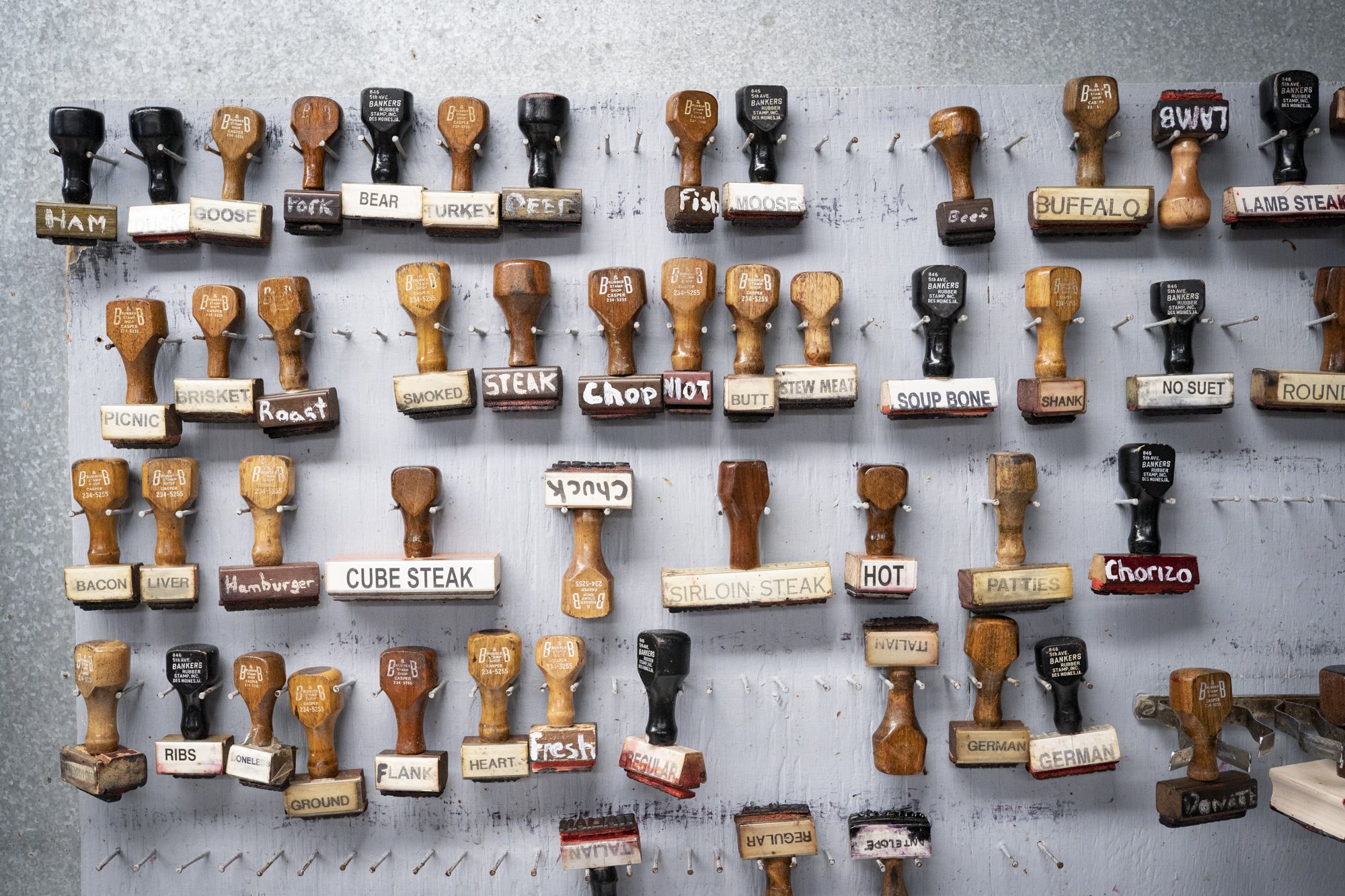
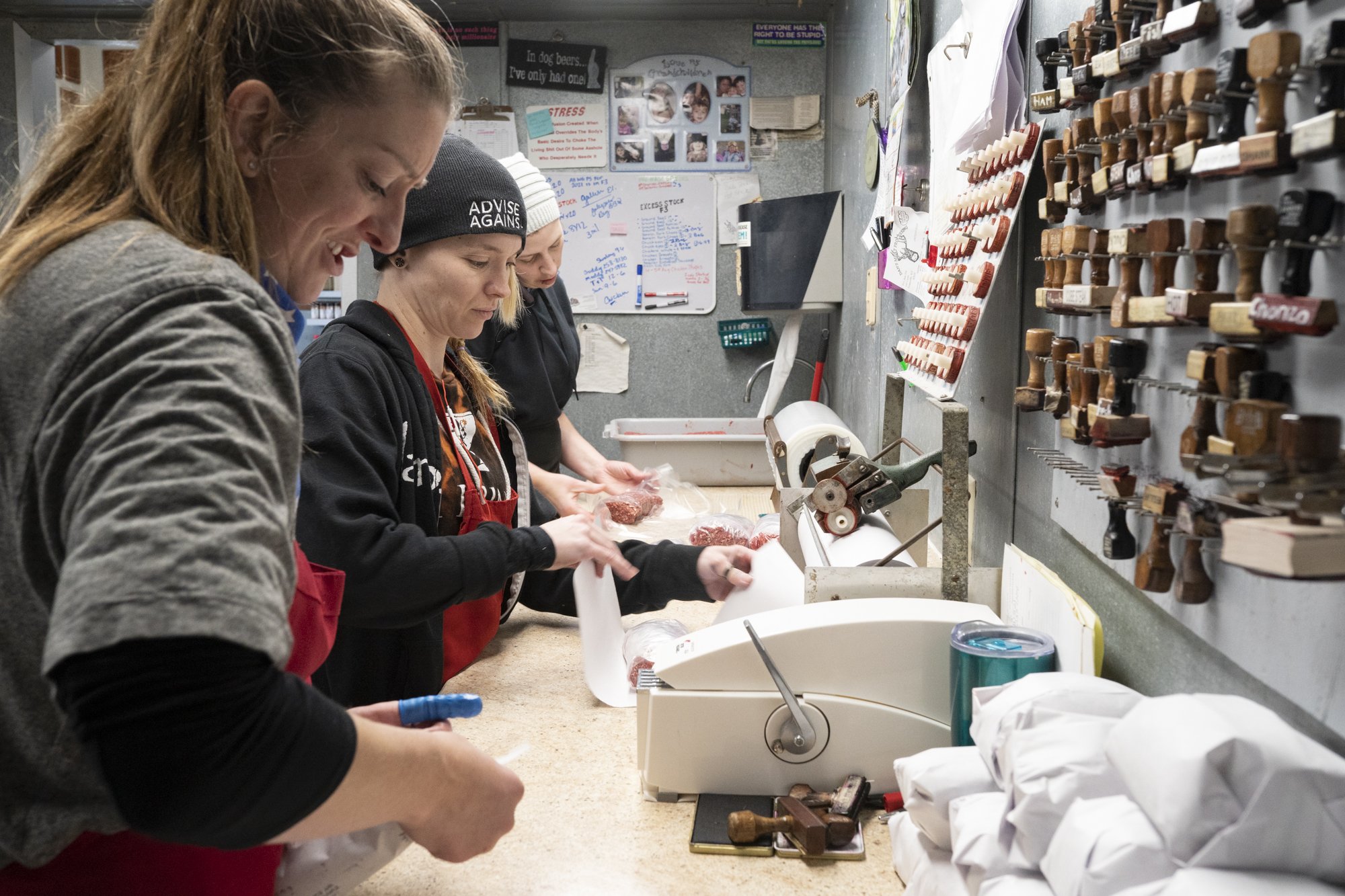
One thing you can always depend on during a road trip is that weather will at some point throw a wrench in your plans. It’s unavoidable. You can either sulk about it or seek out an alternative. Admittedly, I used to get bent about bad weather! It has to be sunny to make any kind of pictures that are worth a damn, I thought! False. When you’re in the mountains it’s always smart to consider snow, but it’s not often that you figure on an October storm big enough to shut down travel! Well, it happened last month when I was scheduled to shoot with a rancher in southern Wyoming on my way from Montana to Colorado. It was a hairy drive from Bozeman down through northern Wyoming and got worse as the night went on. Being October the summer tires were still on my truck which didn’t help matters any. Made it as far as Casper and hit the proverbial wall. Couldn’t keep my eyes open any more so I got a hotel with the plan to wake up at the ass crack in order to arrive at the ranch on time. Only the snow didn’t stop and every which way to Laramie was closed down. Not a single highway or back road to be had. Frustrated but determined not to let it ruin the day I began driving local roads in search of something to photograph. Early on I came upon a local taxidermist shoveling the sidewalk in front of his shop. We chatted for a bit, unfortunately he didn’t have anything going that warranted shooting. No pun intended. When asked for a recommendation he quickly pointed me towards Dan’s Meat Processing about a mile down the road. So I headed directly over there and was warmly greeted by the owner who was more than willing to let me hang out and photograph their operation.

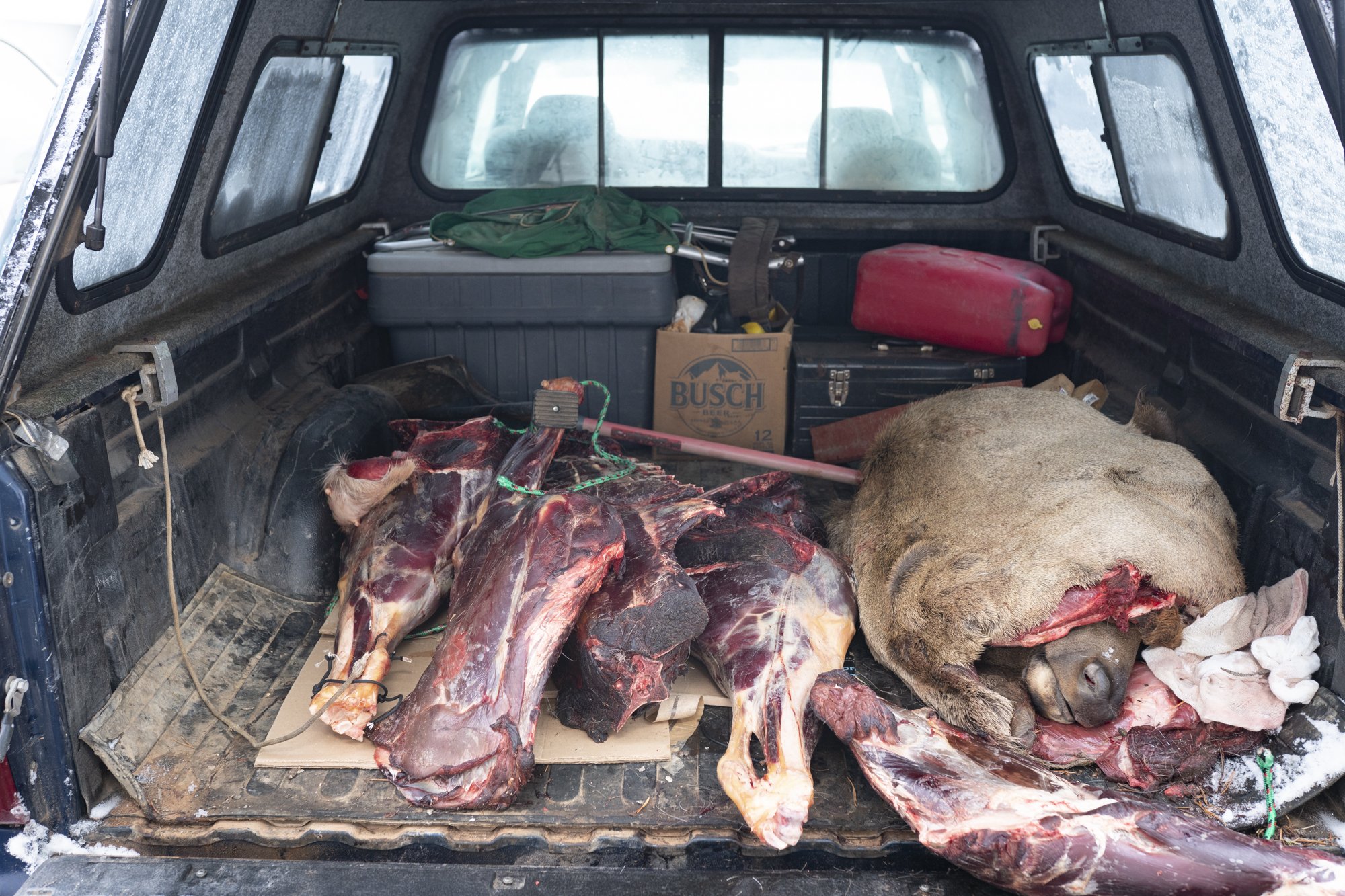
It would have been easy to sit in the hotel waiting out the storm and catch up on some much needed rest, but why? These trips and time on the road are so valuable to me that I don’t ever want to waste an opportunity. Even if that means creating one from nothing. And the images you see here are exactly the kind of thing I would have wanted to shoot anyway! Showing the viewer a glimpse into a world they might not otherwise be familiar with or ever have access to. Being a part of cultures like these never gets old and makes me appreciate the fact that you don’t have to travel to some exotic country in order to experience something different. You just have to look a little harder. I’ve personally never been on an elk hunt. Would like to change that, but my knowledge of them from talking to people in different parts of the country is that you need to dedicate a lot of time to the hunt. Something in the neighborhood of a week seems to be standard in most places. On this morning a guy backed his truck up to the loading door with a massive elk in the bed. I asked him how long he was out before shooting it. “Oooohhh, about 30 minutes”, he said.

Part of a Larger Body of Work Photographing People at Work

This series is part of a long-term project documenting people at work across America—inside environments most people never see. From meat processing facilities in Wyoming to ranches, machine shops, and industrial job sites, the focus is always the same: real people, real conditions, and the tools they rely on every day.

For brands producing workwear, safety equipment, or industrial products, this kind of environment isn’t staged—it’s where your gear is actually used.

View the full Workwear & Industrial Photography Portfolio

Get in touch to discuss a shoot in a real working environment

American Road Trip

So grateful for this time on the road especially when it can incorporate the trifecta of shooting for a client, shooting for myself, and vacation time with Emily and Mojo. There really is nothing better. Our main destinations were Idaho/Montana and what a special time of year to be up there. The color and weather make you appreciate the seasons so much as people who live in southern California where we don’t get those drastic changes. Also made me realize how much I need to plan for this every year to shoot some fly fishing in locations surrounded by fall foliage. Maybe it’s just getting older (aka wiser), but that fall beauty was lost on me while going to school in Vermont where people would visit from all over the world. The “leaf peepers”. It makes a lot more sense once you start to pull your head out of your own ass. Check back soon for images from this trip.

ROAD TRIP

Just back from another US road trip. Most days I think Colorado is my favorite place in America but Wyoming is now competing for the top spot. Been spending a lot of time there during all seasons over the past couple years and it just gets better the more I explore.

Side note: the first part of 2020 was quite limiting (and frustrating) for travel and rightfully so. Things have really picked up though. Most years I do about 35k+ miles of road travel throughout the USA, but it’s looking to be a heavier 12 months if things keep up at this rate.

CLICK HERE TO SEE IMAEGS FROM THE ROAD

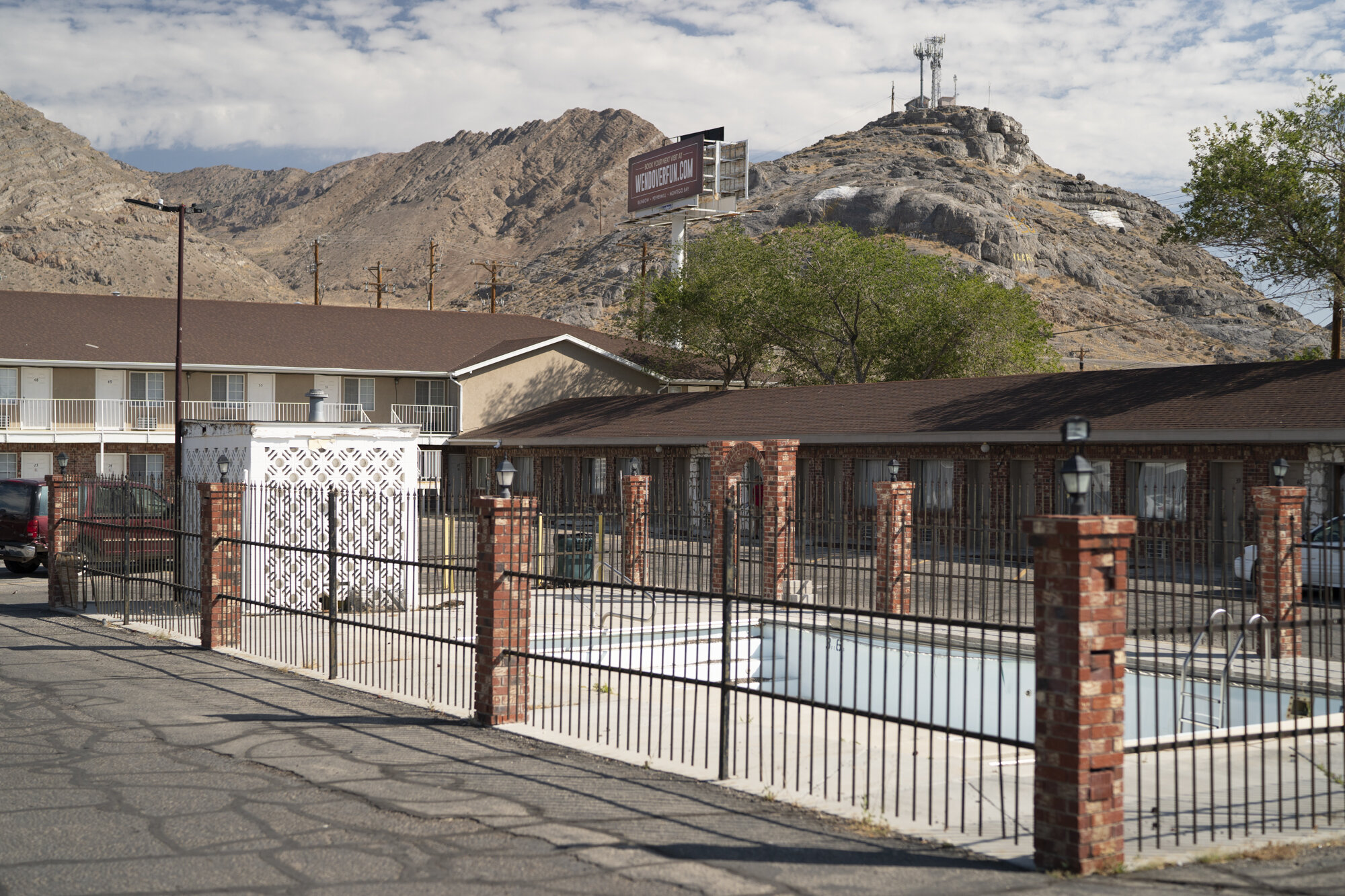
American Motels

American Motels - Road Trip Photography

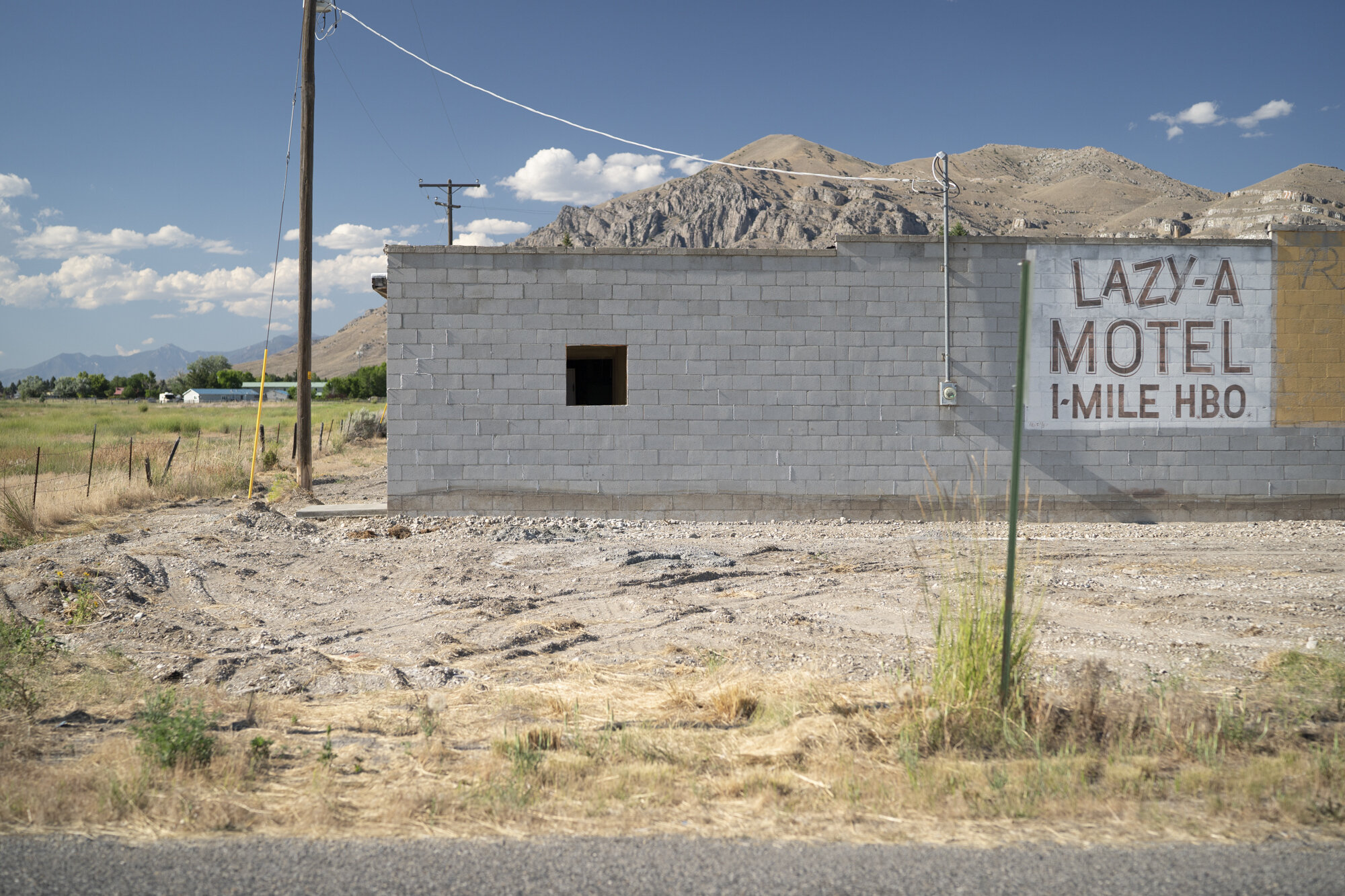
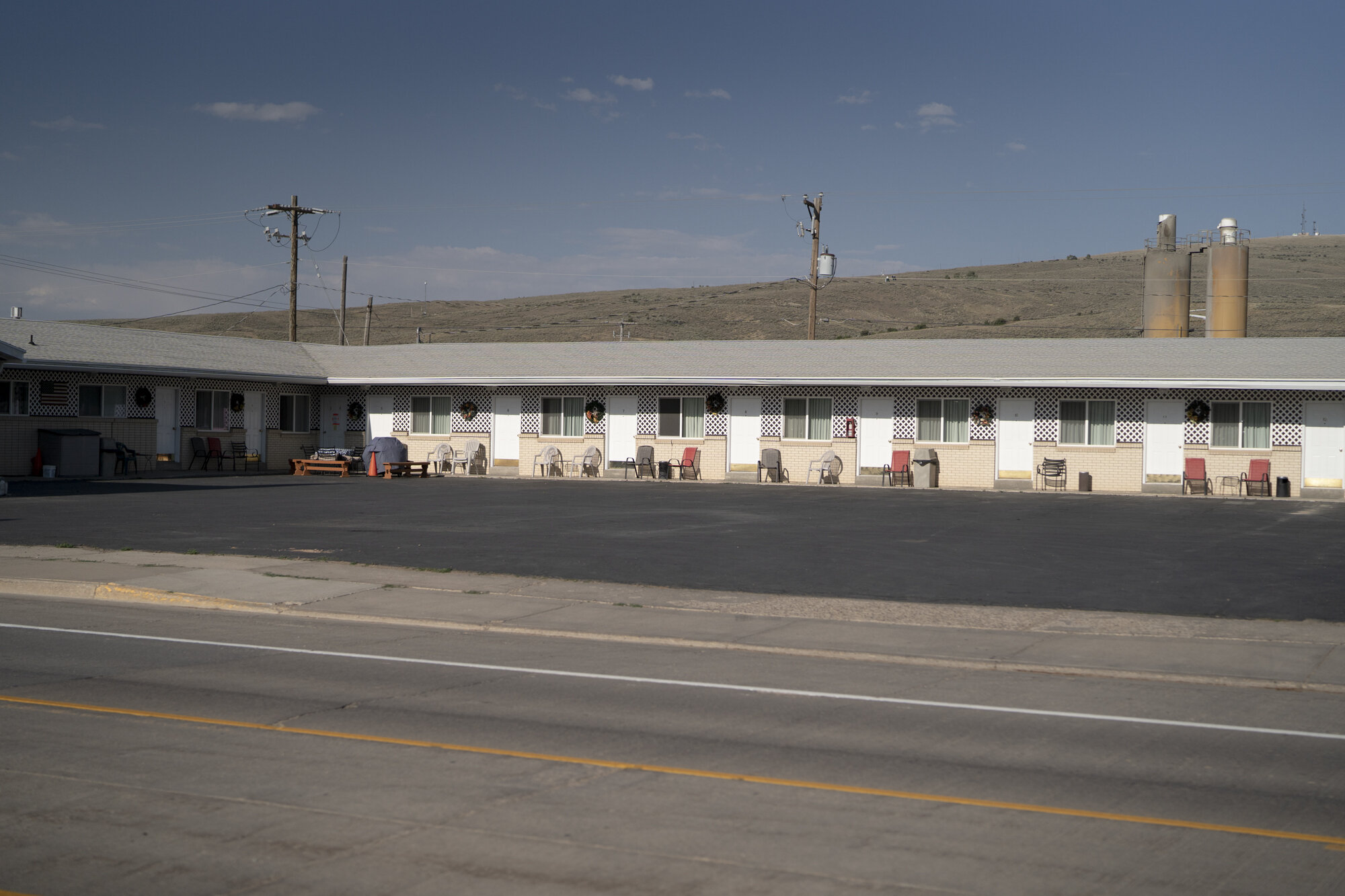
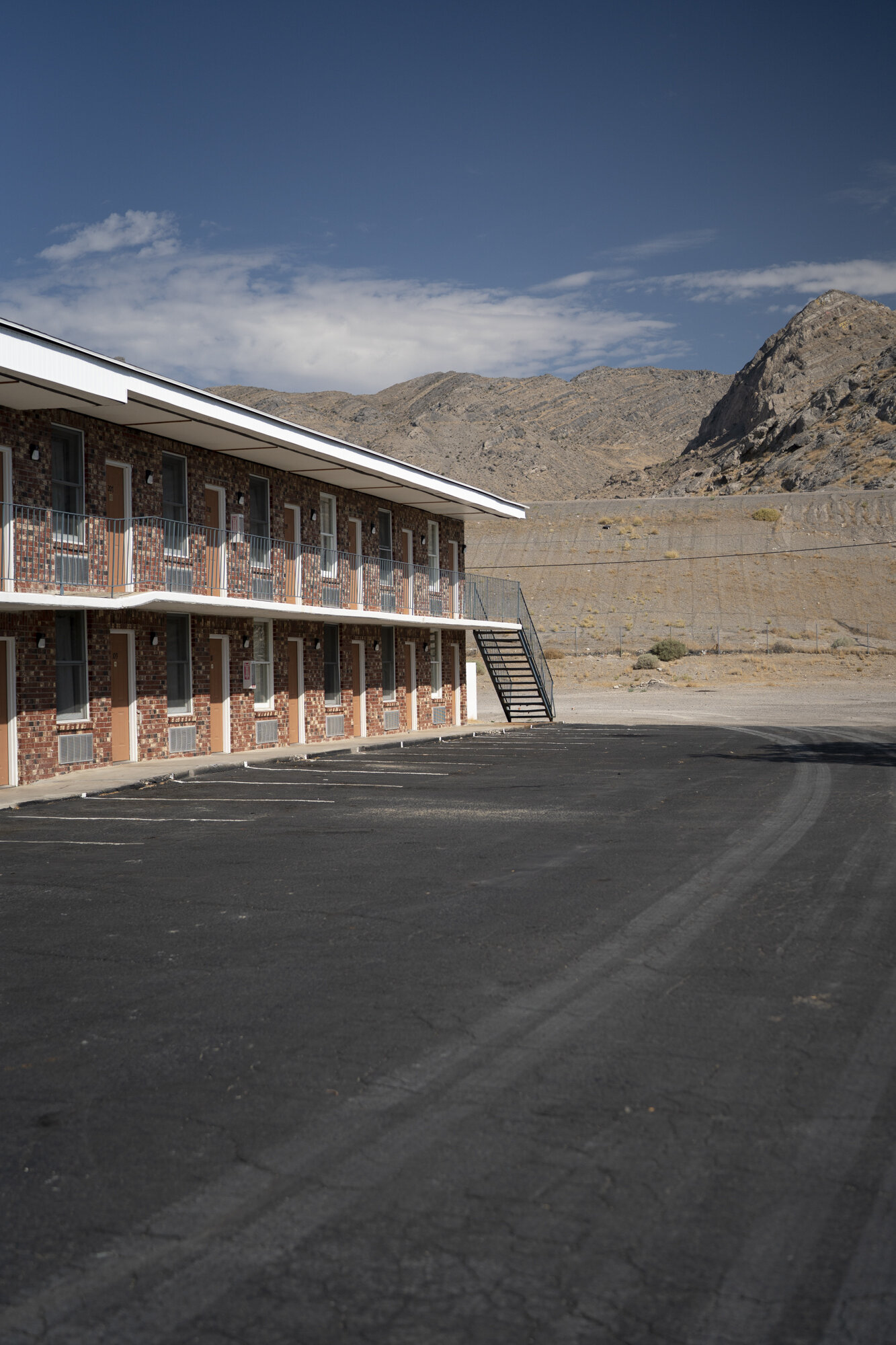
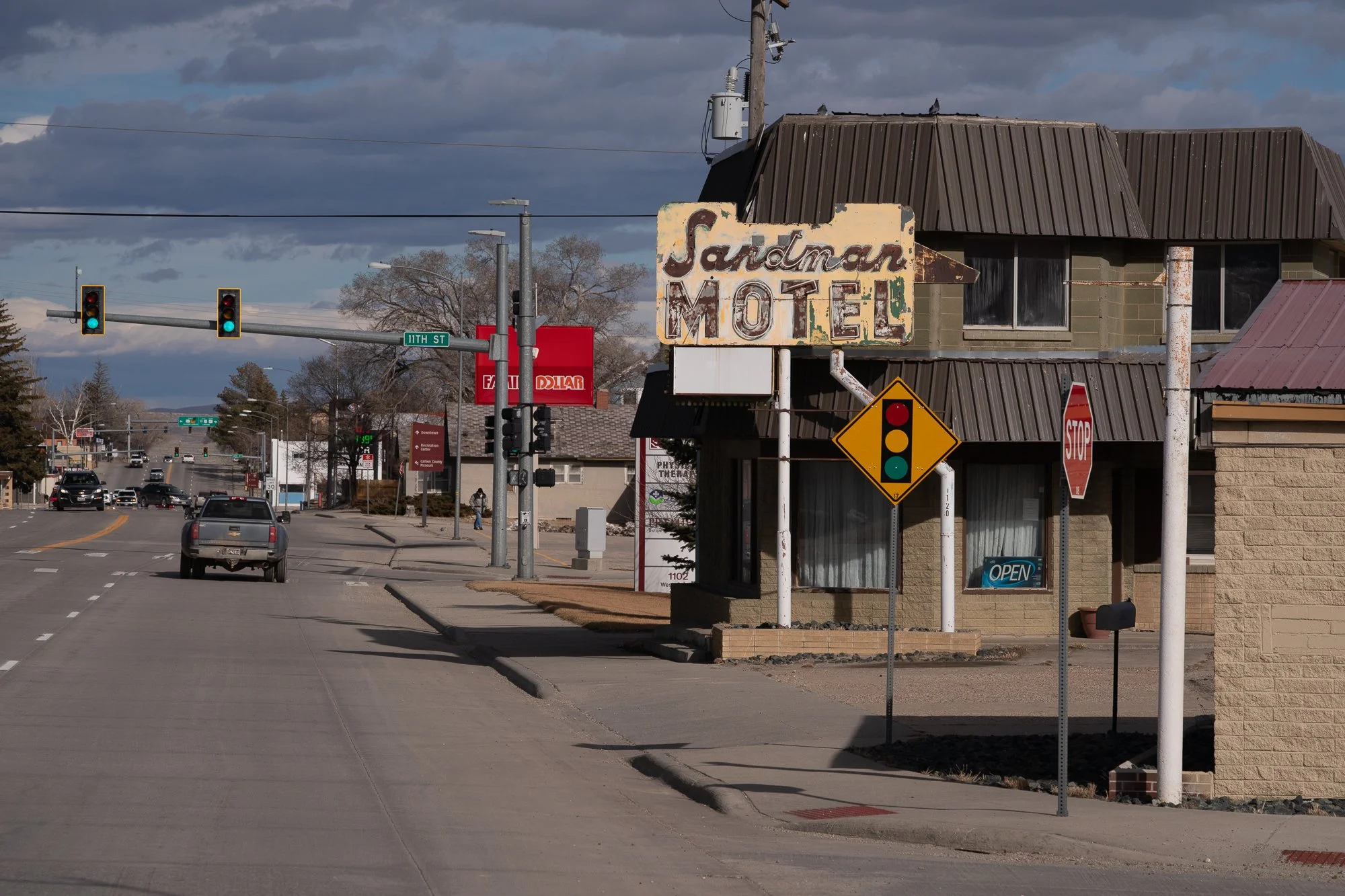
Apparently my fascination with small town motels continues? Not sure what that is. Perhaps it’s because I’ve stayed in so many during all my time on the road, but they fit nicely into my America series either way.

Click here to see more from the America series.

Road Trip

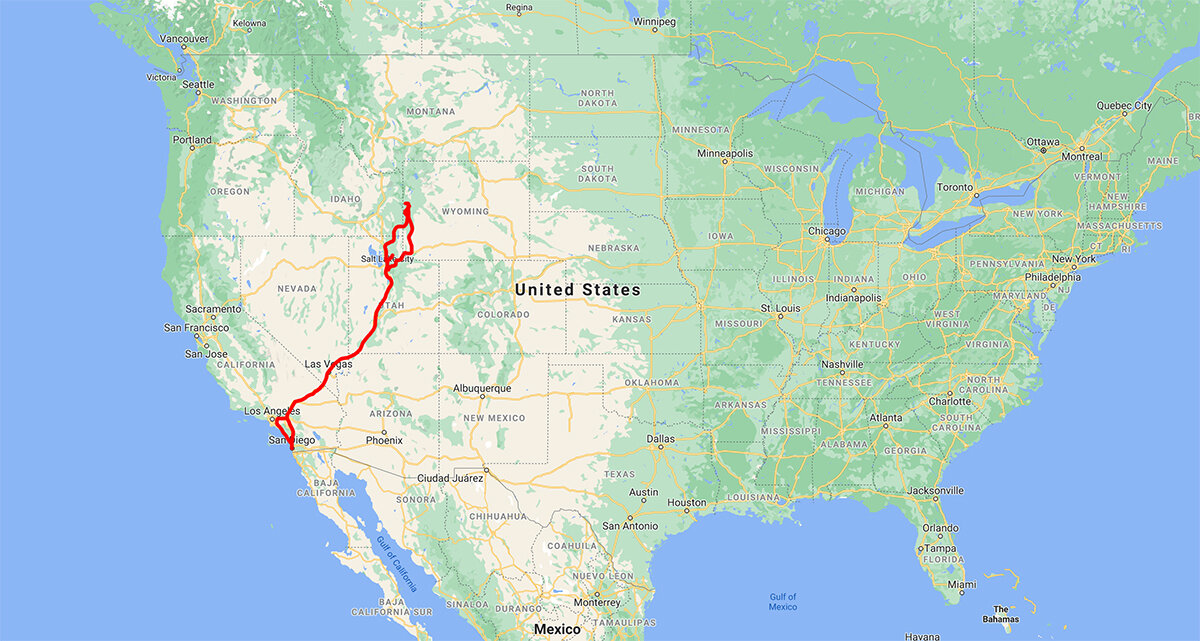
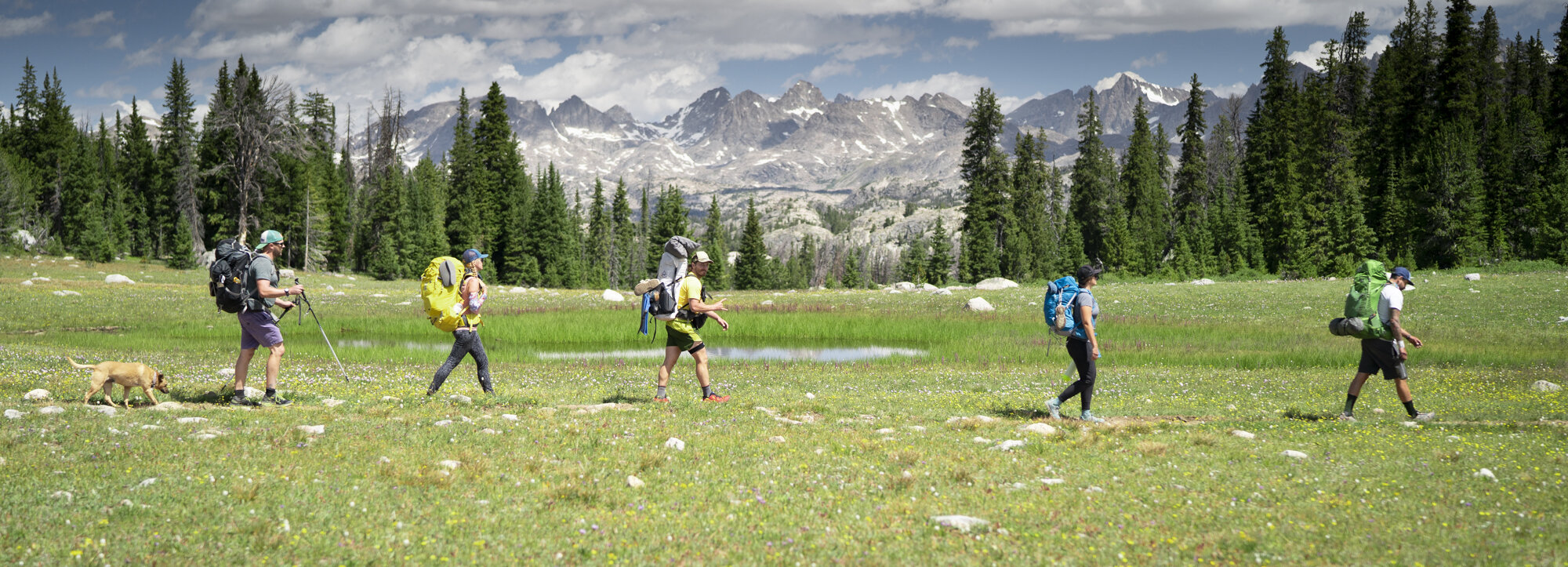
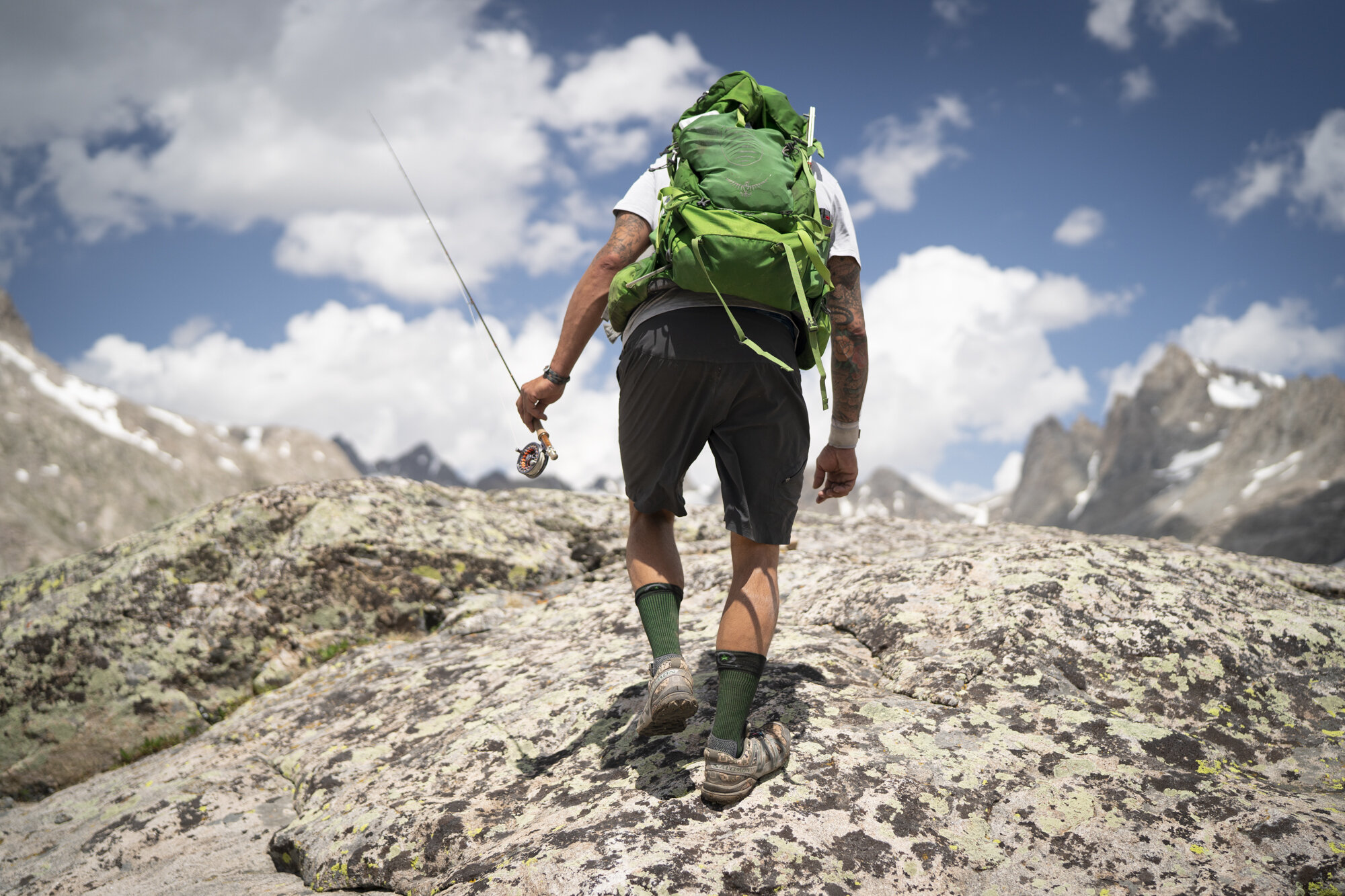
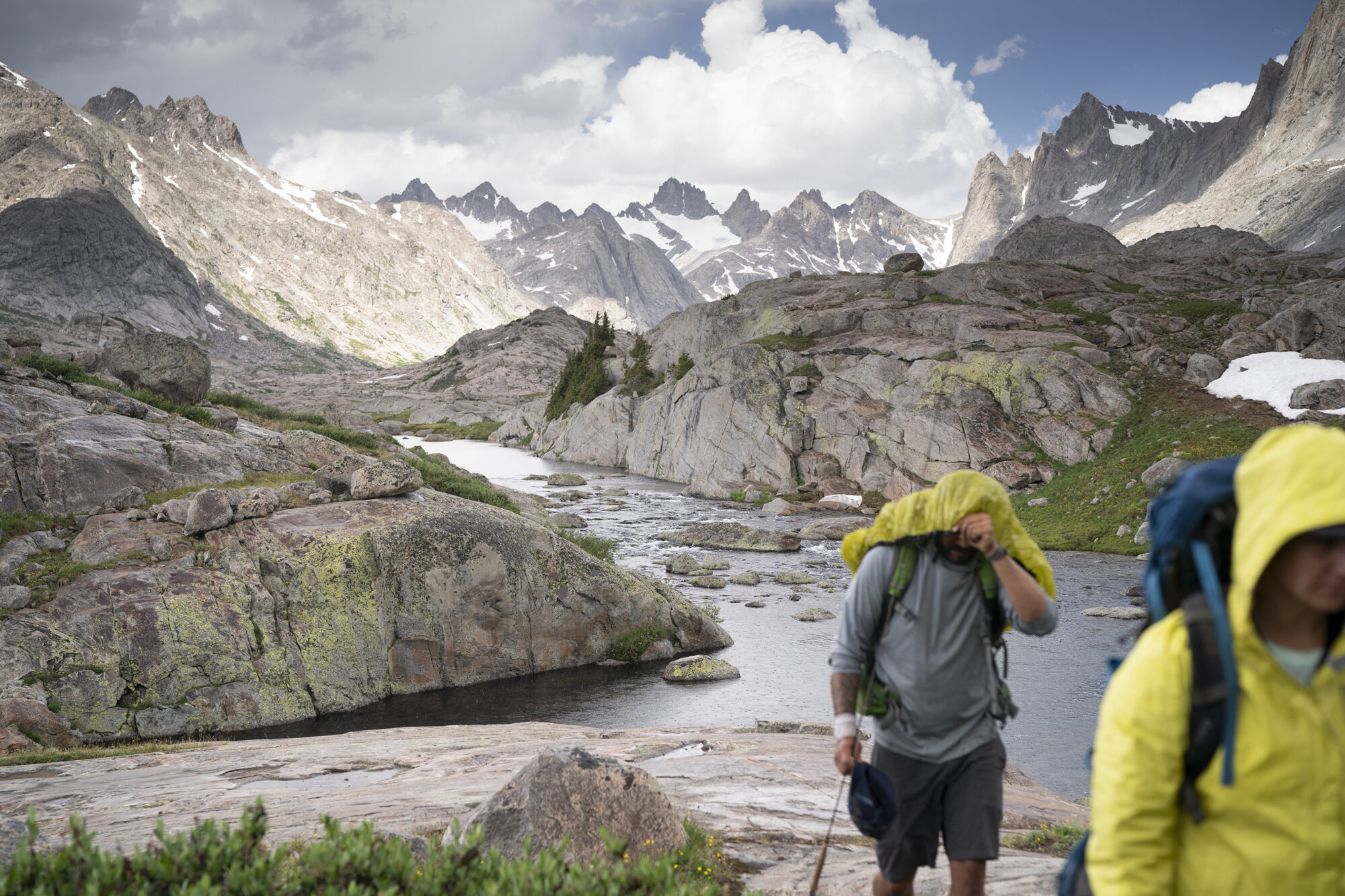
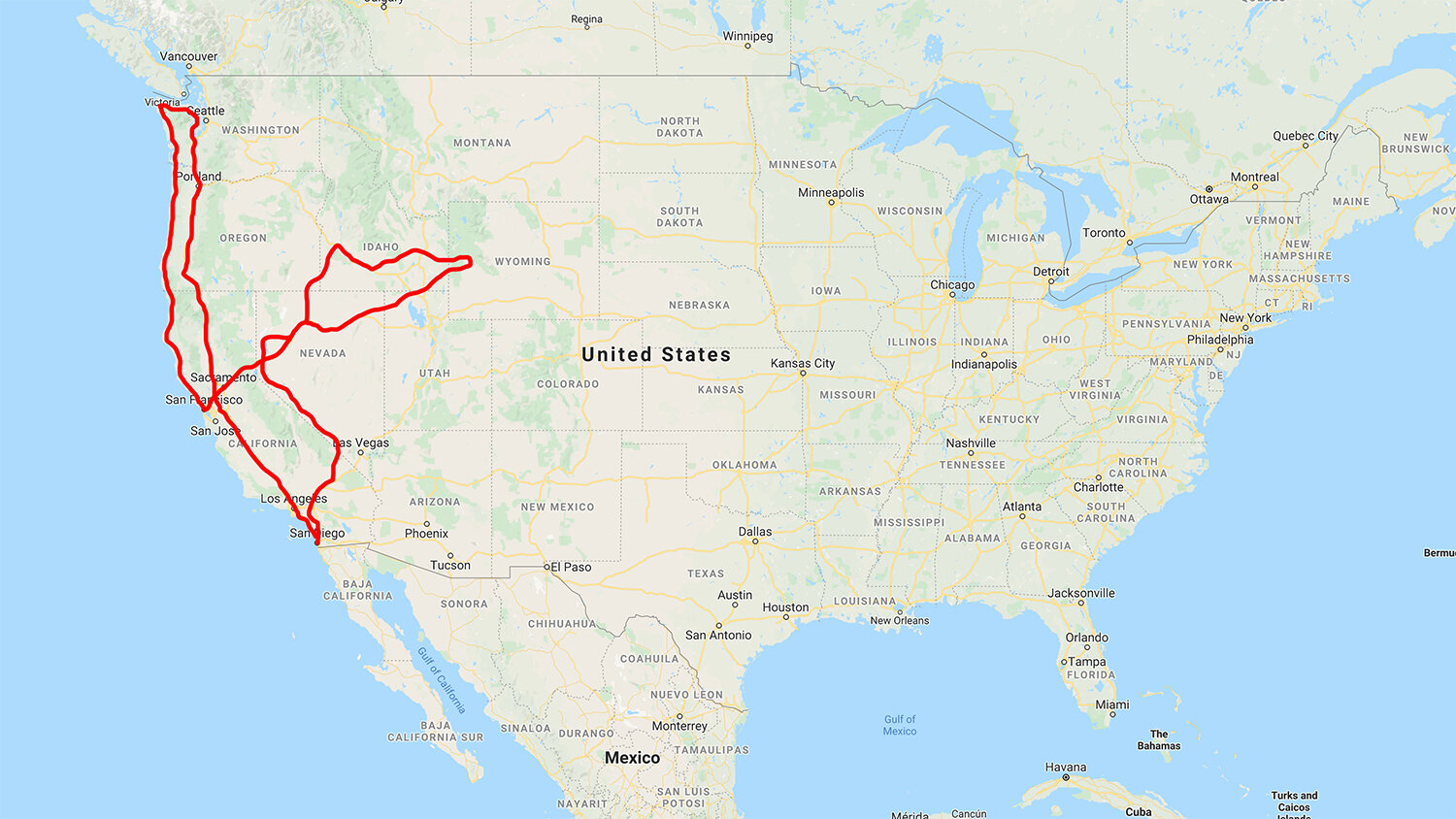
Another one in the books, and what a trip it was. This was the time that I planned to be heading east for our annual family trip to Cape Cod, but that was canceled due to COVID. That was a real bummer. Still though, I wasn’t going to let it stop me from being on the road. As you can see from the route, this trip was quite different from the rest. Then again, every trip is quite different from the last. Was very happy to see parts of the country not previously seen, most notably in Nevada. Overall this trip was filled with fly fishing, backpacking, camping, commercial shooting, personal shooting, old friends, new friends, good times, and as always lots of food.

After leaving Southern California, I headed out toward Nevada and went up the western border of almost the whole state. It was 117 degrees out there, so not a lot of productive shooting got done. Loved what I saw though. And northern Nevada is almost an entirely different state altogether. Very mountainous. From there I clipped a portion of Oregon, then into Idaho where I met up with a couple old friends and met up with a photographer that I greatly admire. Next it was on to Wyoming for some fly fishing and back packing with friends in the Wind River Range. More on that later. When that was done I made my way back to San Fransisco for a 3 day commercial shoot, which was also a hell of a lot of fun. Then Emily and Mojo met me there and we started a week+ long drive up the coast. Completing the 101 was never an intention, but it worked out that way. And I have to say, it was really special. That route has a great reputation for a reason. Almost sounds dumb saying it out loud, but the coast of California, Oregon, and Washington are world class places. We ended the meat of the trip up on the Olympic Peninsula, which could be a whole trip in itself. The amount of shellfish we harvested alone was worth the drive. Every day we were eating fresh oysters, clams, mussels, and crabs. Once we started heading south, my truck decided to act up, causing a detour and semi brief stay at the RAM dealership. Not a huge deal though. After that happened, it seemed like the universe was telling me it was time to head home. So, with some fresh clams in the YETI, I did just that.

Stay tuned for images.

Jackson Hole, Wyoming Backpacking

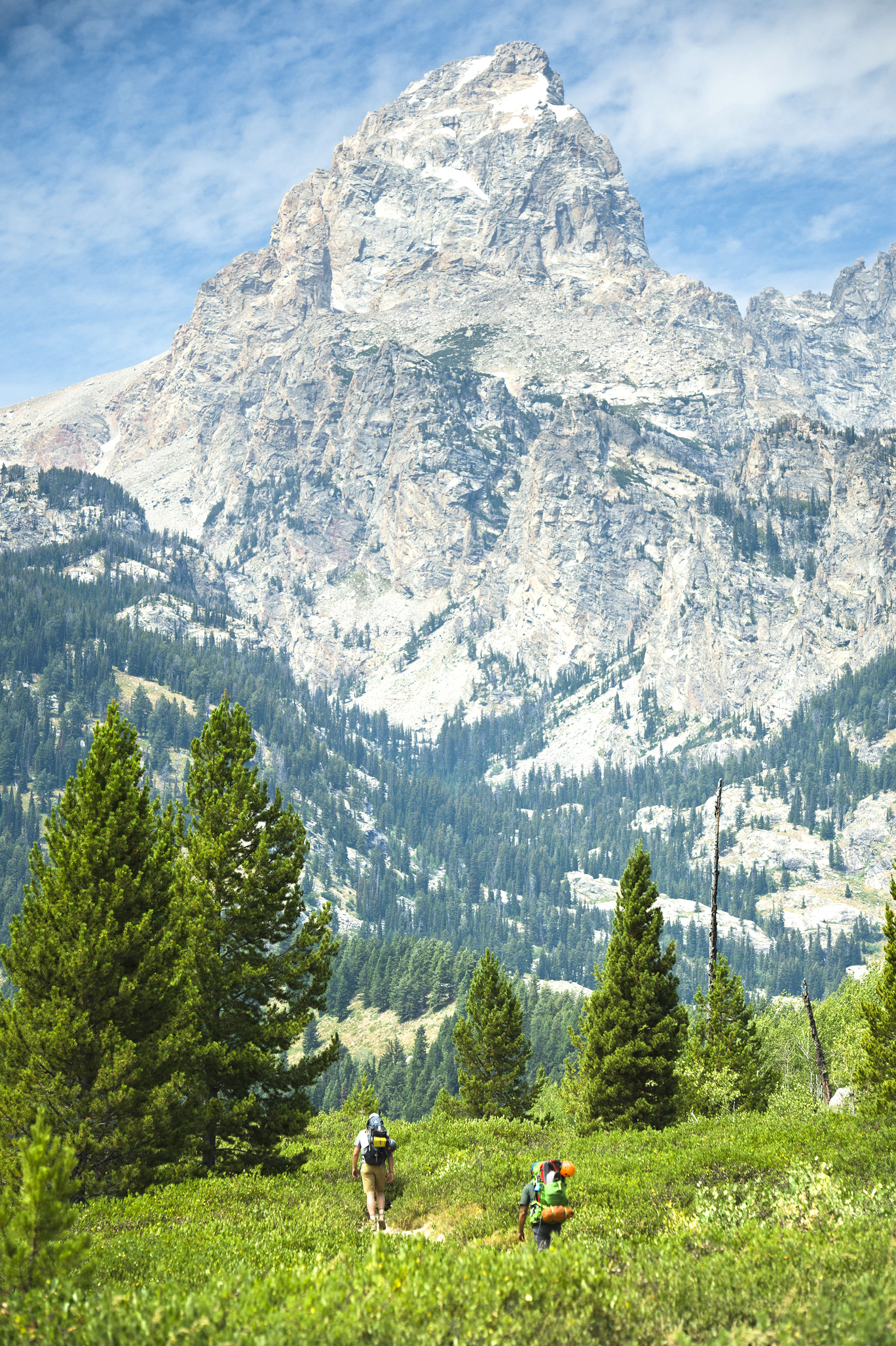
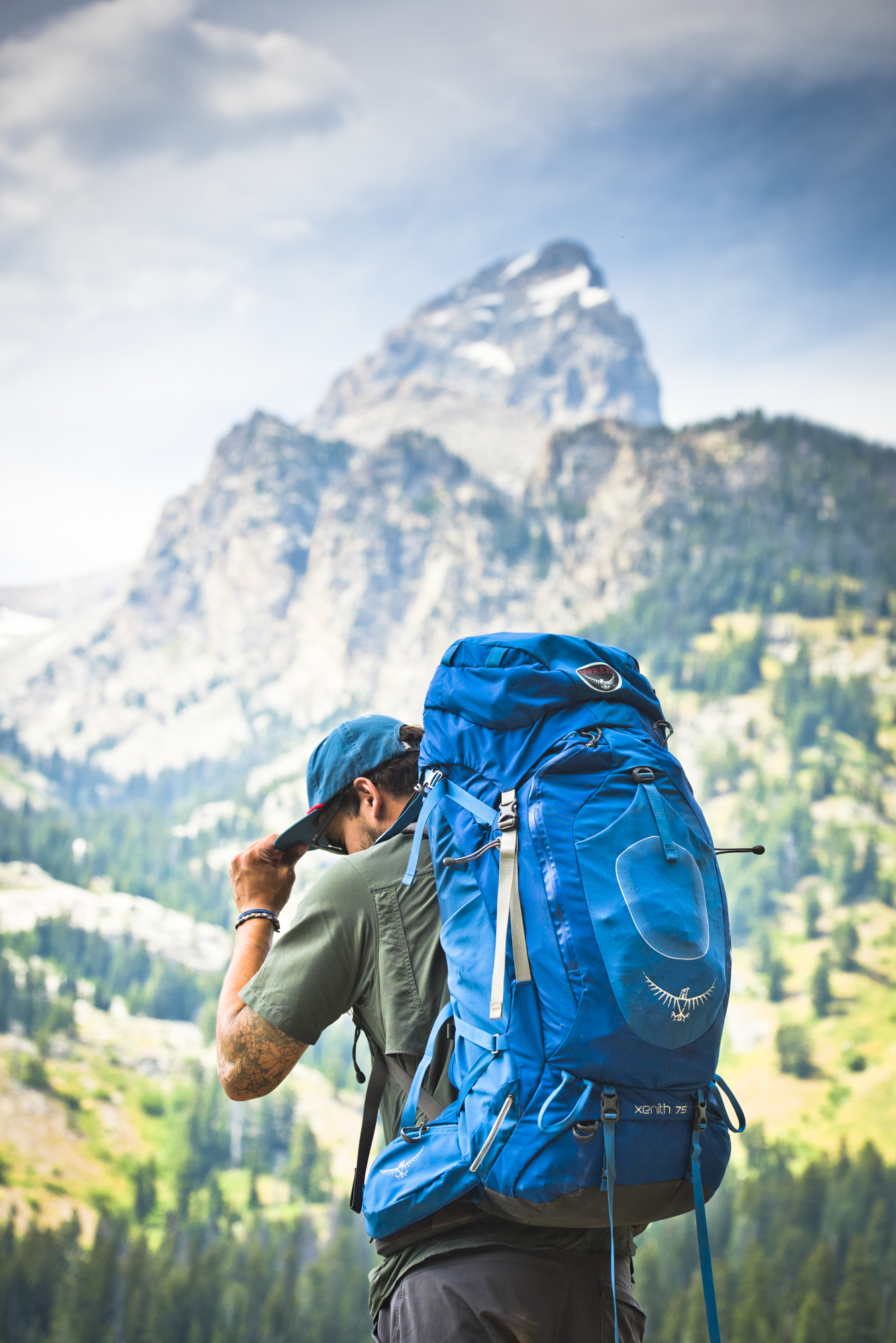
Hiking the Middle Teton

Backpacking - Adventure-Photography

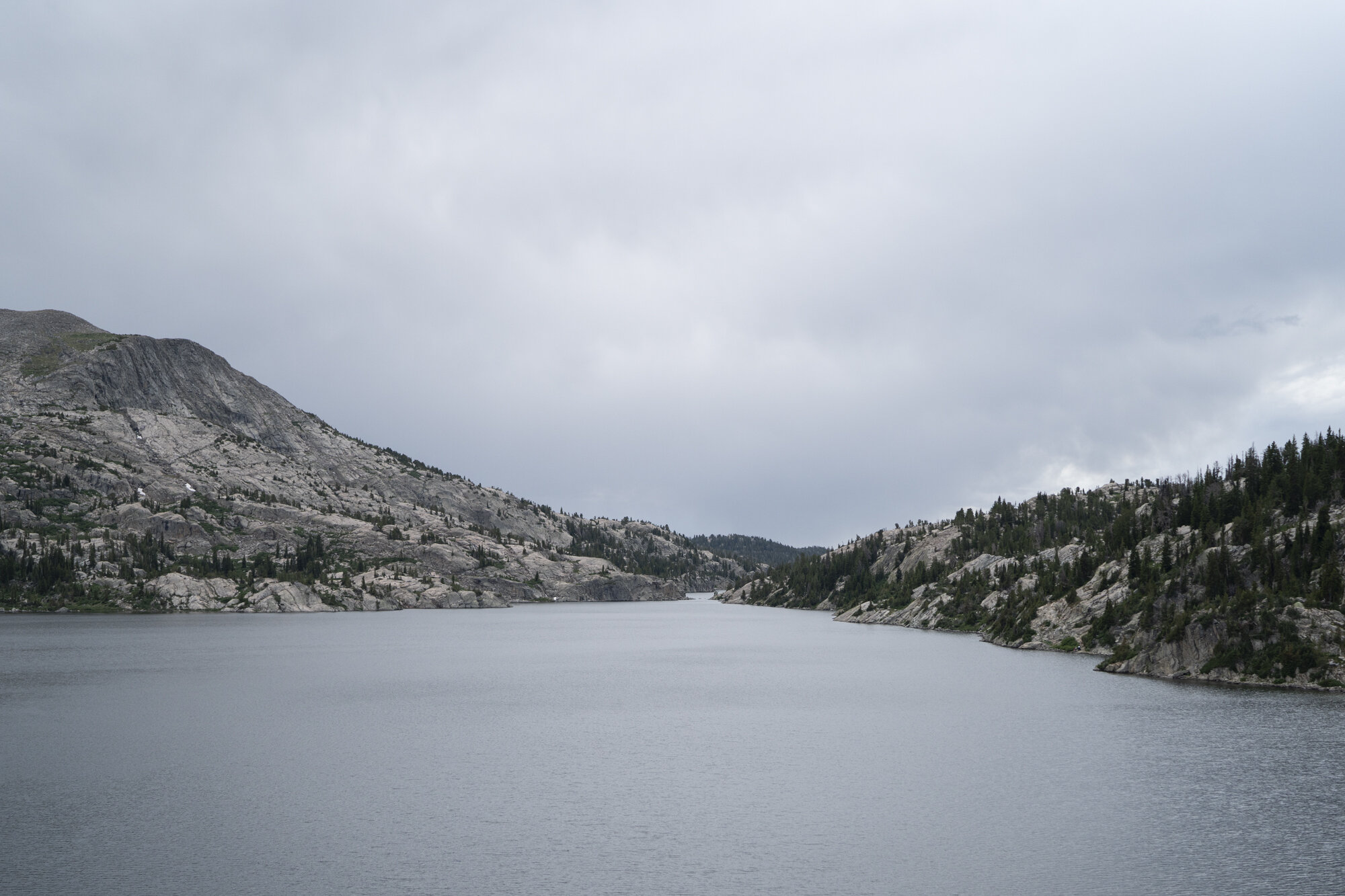
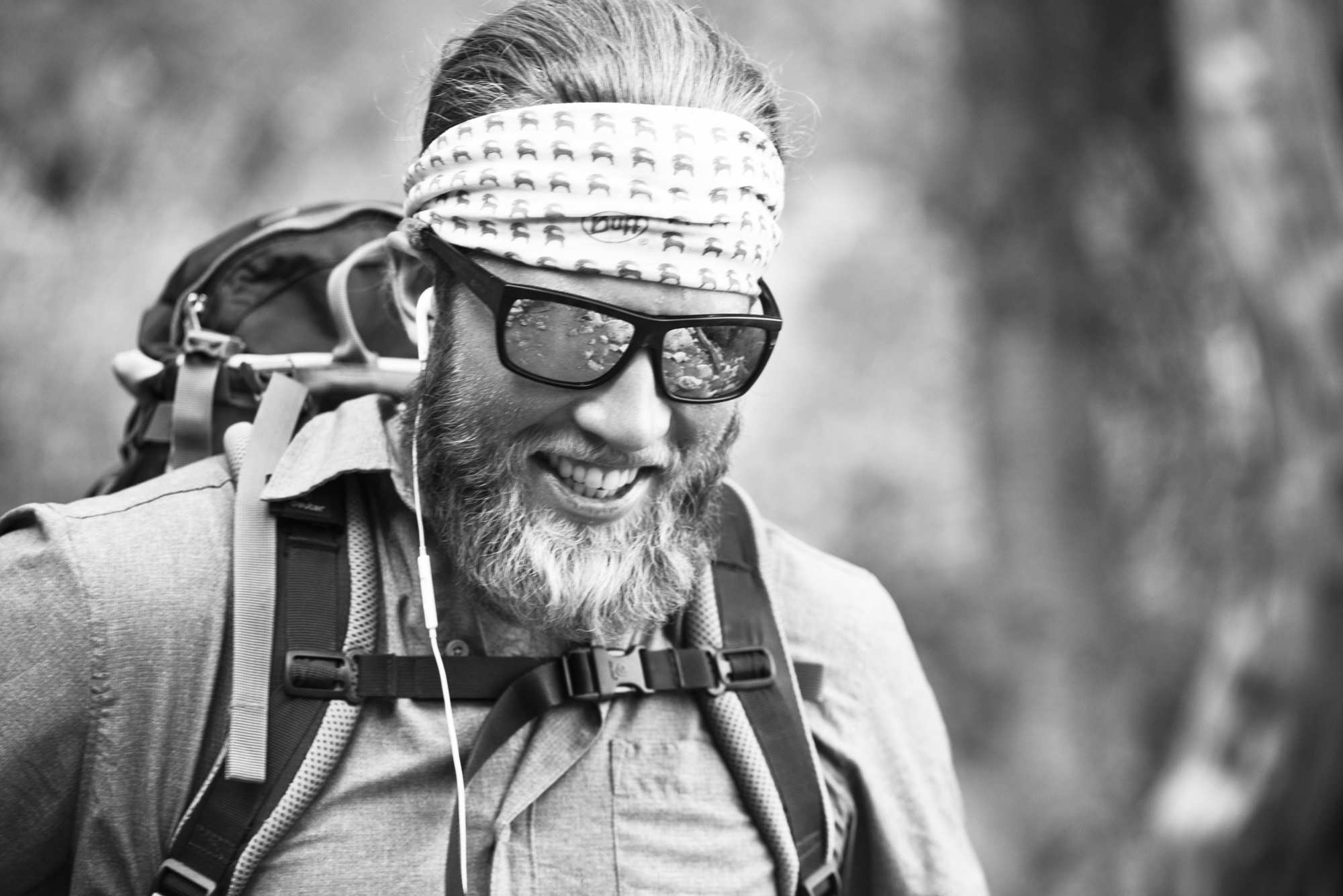
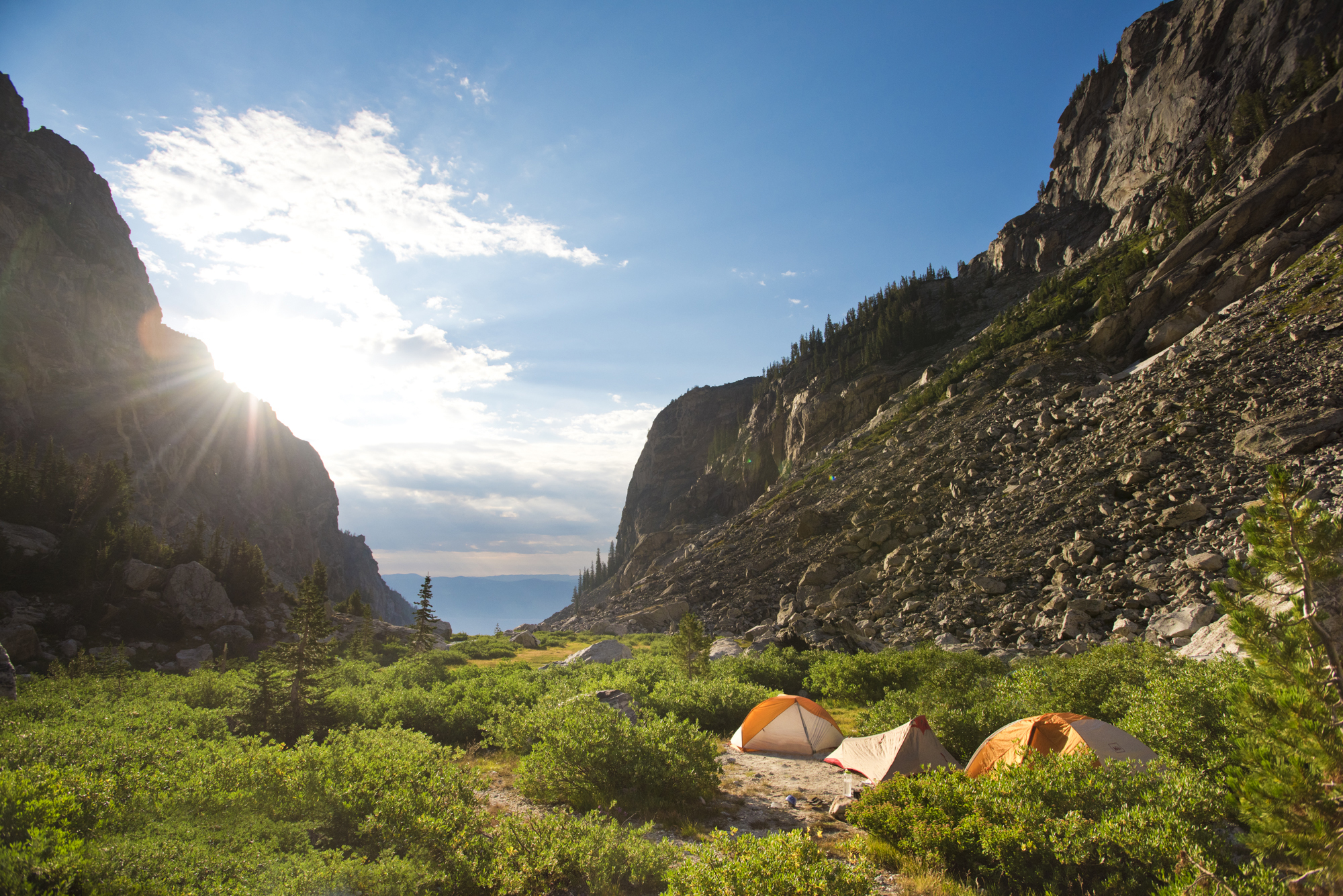
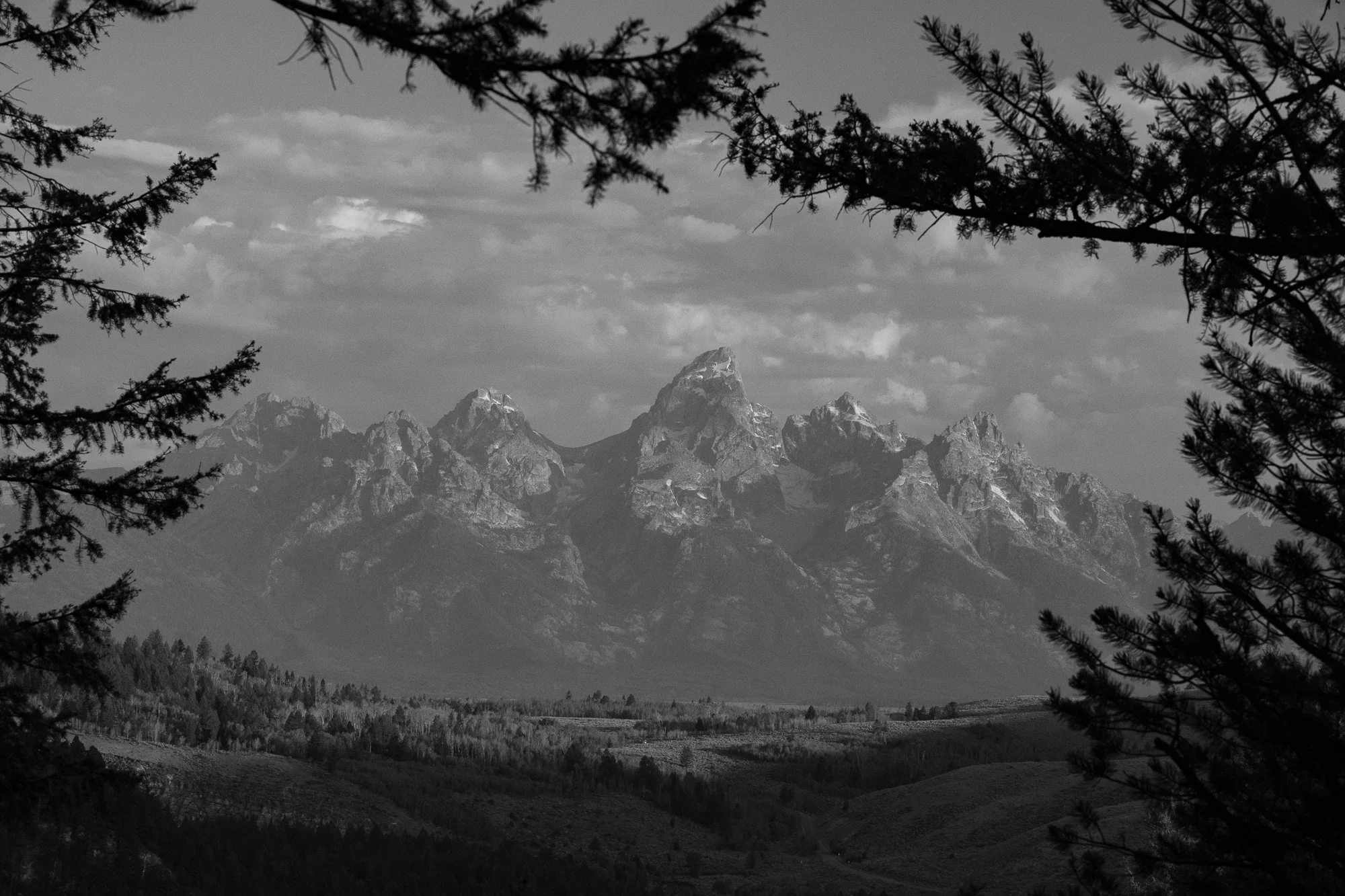
It's only been a year+ since this trip and I'm finally getting around to posting about it. Have been back several times since. Wonder how many other trips I have sitting on my hard drive? Jackson Hole is top notch. Really top notch. The more I go back, the better it is, and the amount of time we actually spend in town is less and less. Grand Teton National Park and everything else that surrounds town is phenomenal. The hiking, camping, fishing, etc, is so good. And on this particular trip we did all of that. Up the middle Teton to be exact. A very different type of backcountry climbing than I'm used to. So much of it is just huge boulder fields. Which means that you spend a lot of time going from rock to rock, or scrambling. Not my favorite style of hiking, but what an incredible trip. The Tetons have to be the most picturesque range in the USA. The way they rise up from the the valley floor is so dramatic. They look so massive from afar, and even bigger when you're right up close. Not sure how we got so lucky, but it was perfectly sunny at the summit without an ounce of wind. That can't happen too often?  As I'm writing this it's snowing in Jackson Hole, and I can't wait to get back up there.  The snowboarding there is so good. You'd have to put it up there as some of the best in the country, especially when you really get to know the mountain. This is the worst thing I've written in a while. Sorry. 

J.C. Penney-Mother Store

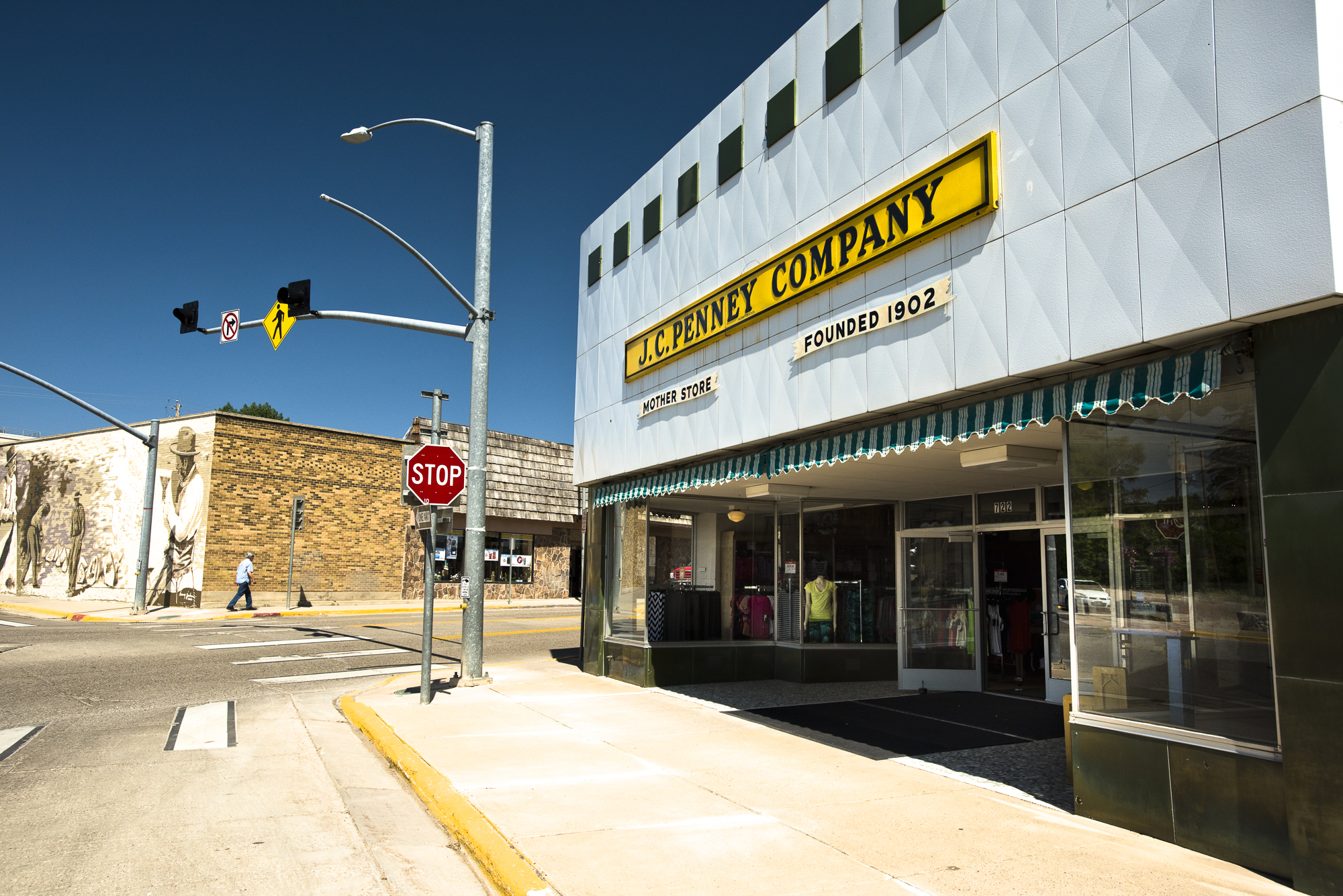
Whether you shop there or not, you know J.C. Penney. It's an America staple that can be found anywhere you go, from the biggest of cities to the smallest of towns. One thing you probably never think of though, is where it all began. I certainly never did. And definitely didn't expect to stumble up it's "mother store" while traveling through Kemmerer, Wyoming. Cool think about how far it's come from this little town in 1902.