
Marfa, Texas — A Barbershop Now Closed
This barbershop in Marfa, Texas is no longer open.
When these photographs were made, the shop was still operating — quietly, modestly, and without spectacle. An elderly barber continued cutting hair for longtime clients beneath fluorescent lights and wood-paneled walls layered with decades of memorabilia.
Not long after, the doors closed.
What remains now are the photographs.
The Final Years
Inside, nothing felt staged.
The floor was worn.
The sink chipped.
Sports posters faded at the edges.
A 1979 Cowboys team photo sat beneath a television.
Customers — mostly older men — waited their turn as they likely had for years. The routine continued as it always had. No announcement. No ceremony. Just haircuts.
In small towns like Marfa, institutions often end not with a grand closing, but with a gradual thinning of time — fewer customers, older hands, fewer reasons to keep the lights on.
A Vanishing American Interior
Barbershops have long functioned as community anchors across the United States, particularly in rural towns. They are practical spaces, but they are also repositories of memory:
Photographs of local teams
Certificates and clippings
Posters taped to wood-paneled walls
Objects that accumulate without ever being curated
When a shop closes, those layers often disperse. The room empties. The rhythm stops.
What disappears isn’t just a business. It’s a pattern of local community.
Marfa in Context
Marfa is widely known today for contemporary art and desert minimalism. This shop represented something different — a working-class interior untouched by trend cycles or design updates.
It was modest.
Functional.
Unchanged.
Its closure marks a quiet shift in the town’s cultural landscape — one less everyday institution, one more room that no longer holds history.
The Story Behind The Photographs
As much as I try to embrace social media, it’s difficult to genuinely say anything positive about it sometimes. Every once in a while though, something happens that makes me think twice. A few days ago I posted this image of a traditional barbershop in Marfa, Texas on my @barbershopsofamerica Instagram account, which was re-posted as a story by Visit Marfa. That day I received a direct message from a woman in that had seen their story and was filled with sentimental feelings, as she used to know the shop and the owner. She went back to look at it again later and noticed that the man in the chair was her father, who had passed away two years ago from cancer. The image caused her to cry happy tears and she asked about purchasing a print. Turns out we live 15 minutes from each other! So this morning I drove to her house to deliver some prints and a copy of Barbershops of America. Social media isn’t all bad!
This project has been going on for 10 years now. Hard to believe. Aside from the obvious joy it gives me to make theses images, it’s the auxiliary things that really make it special. The people I’ve met out of pure coincidence or from having shared interests will keep this series going forever.
Continue Through the Archive
The Marfa barbershop is one chapter in a 15+ year effort documenting independent and traditional barber shops across all 50 states.
Some shops are expanding.
Some are adapting.
Others, like this one, have closed.
→ View the full Barbershops of America archive
→ Explore the Barbershops of America photo book
→ Read another barbershop story from Kentucky
Together, these spaces form a record of a disappearing American institution — preserved one shop at a time.
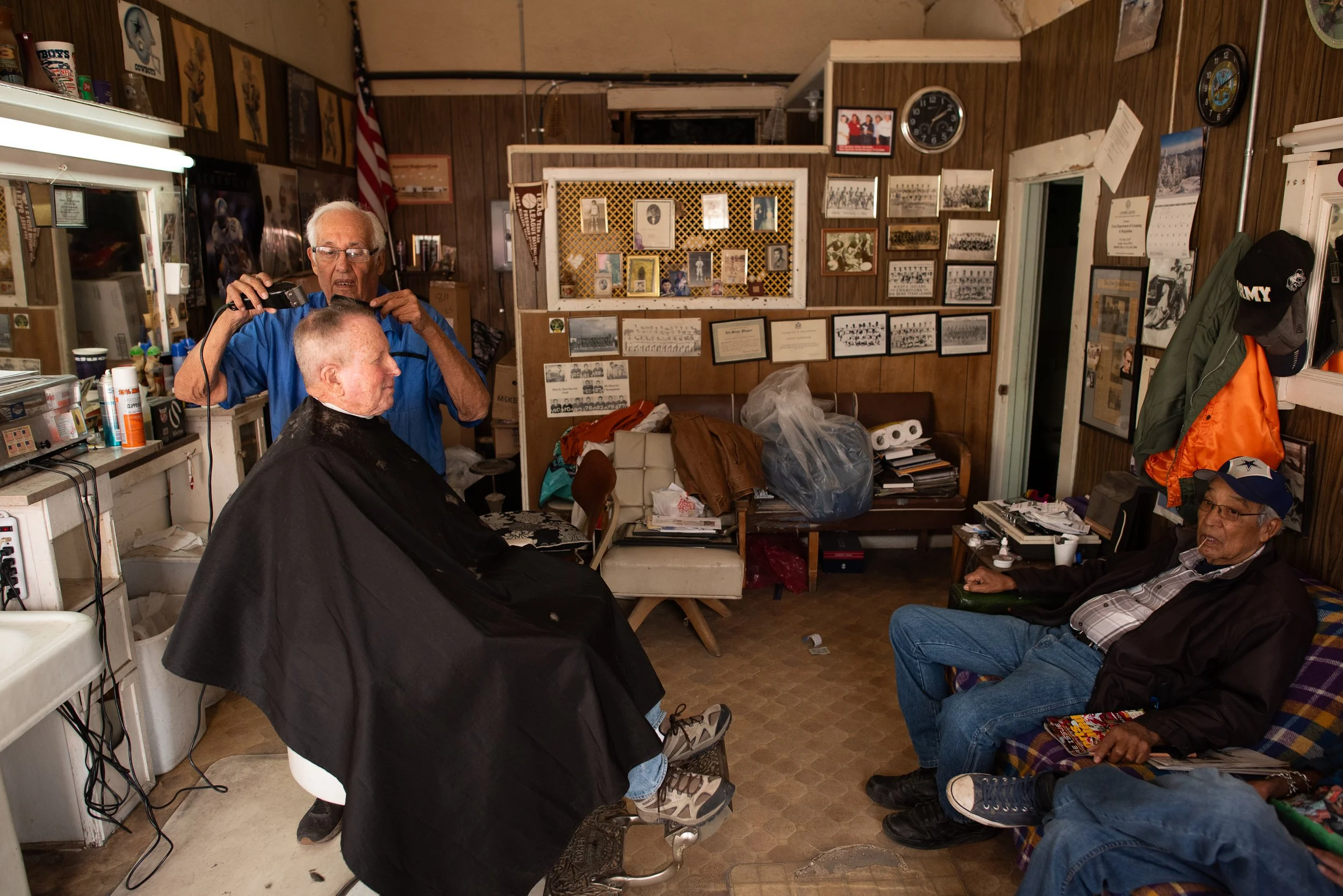
Regular customers wait beneath walls lined with photographs and memorabilia inside the now-closed Marfa barbershop.
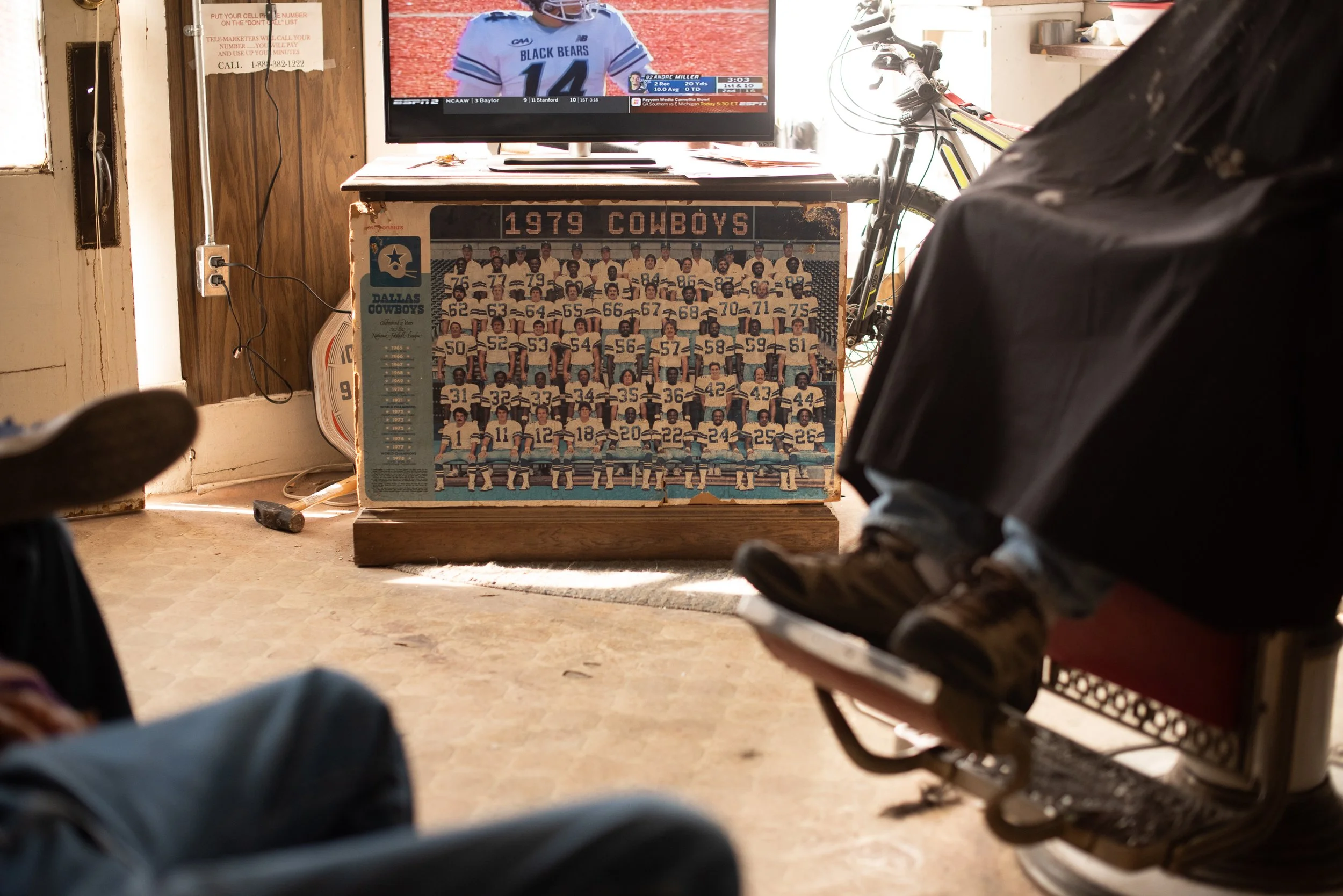
A 1979 Cowboys team poster sits beneath the television, one of many personal details layered into the shop’s interior.
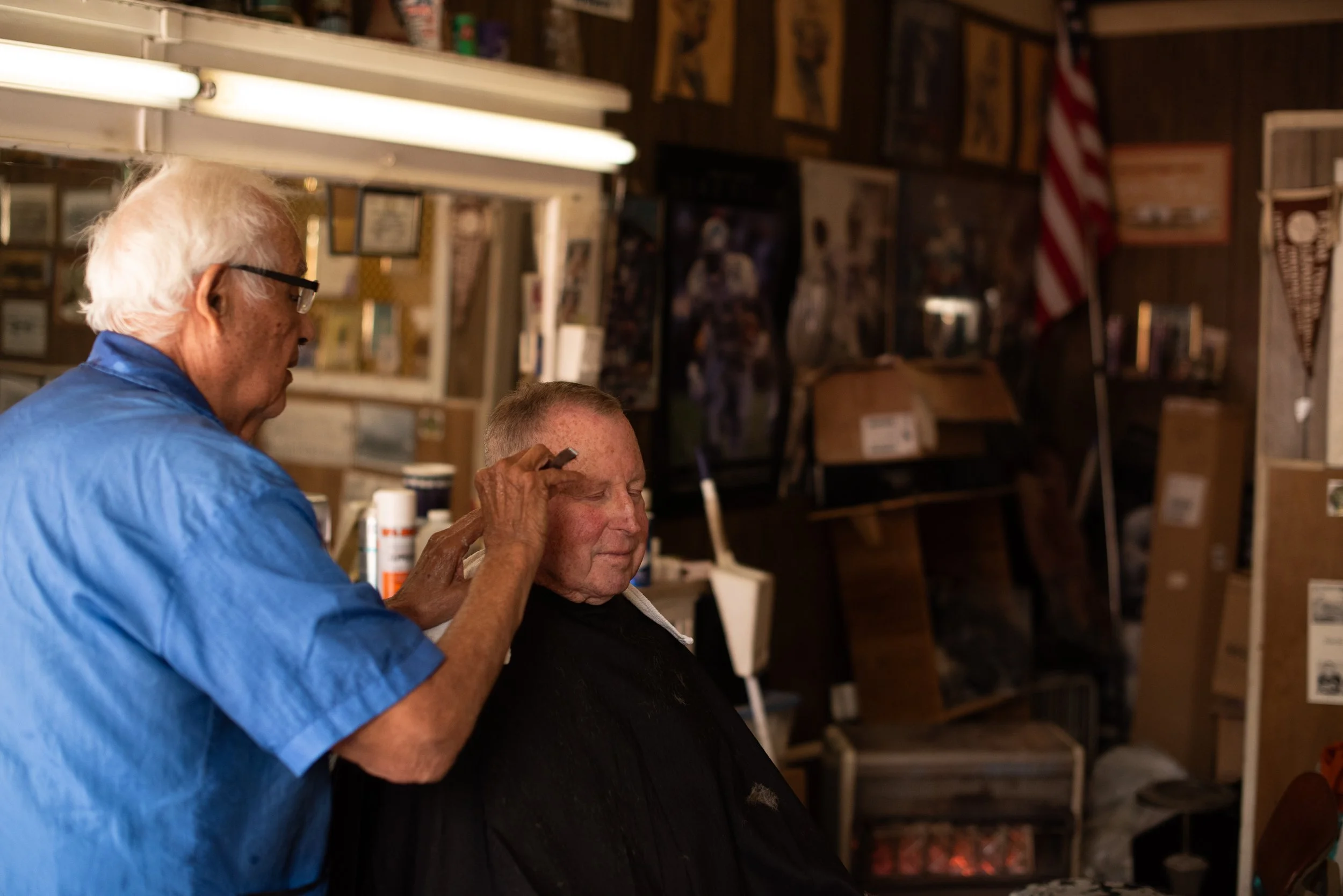
Close view of an elderly barber doing a straight razor shave in a small West Texas barbershop.
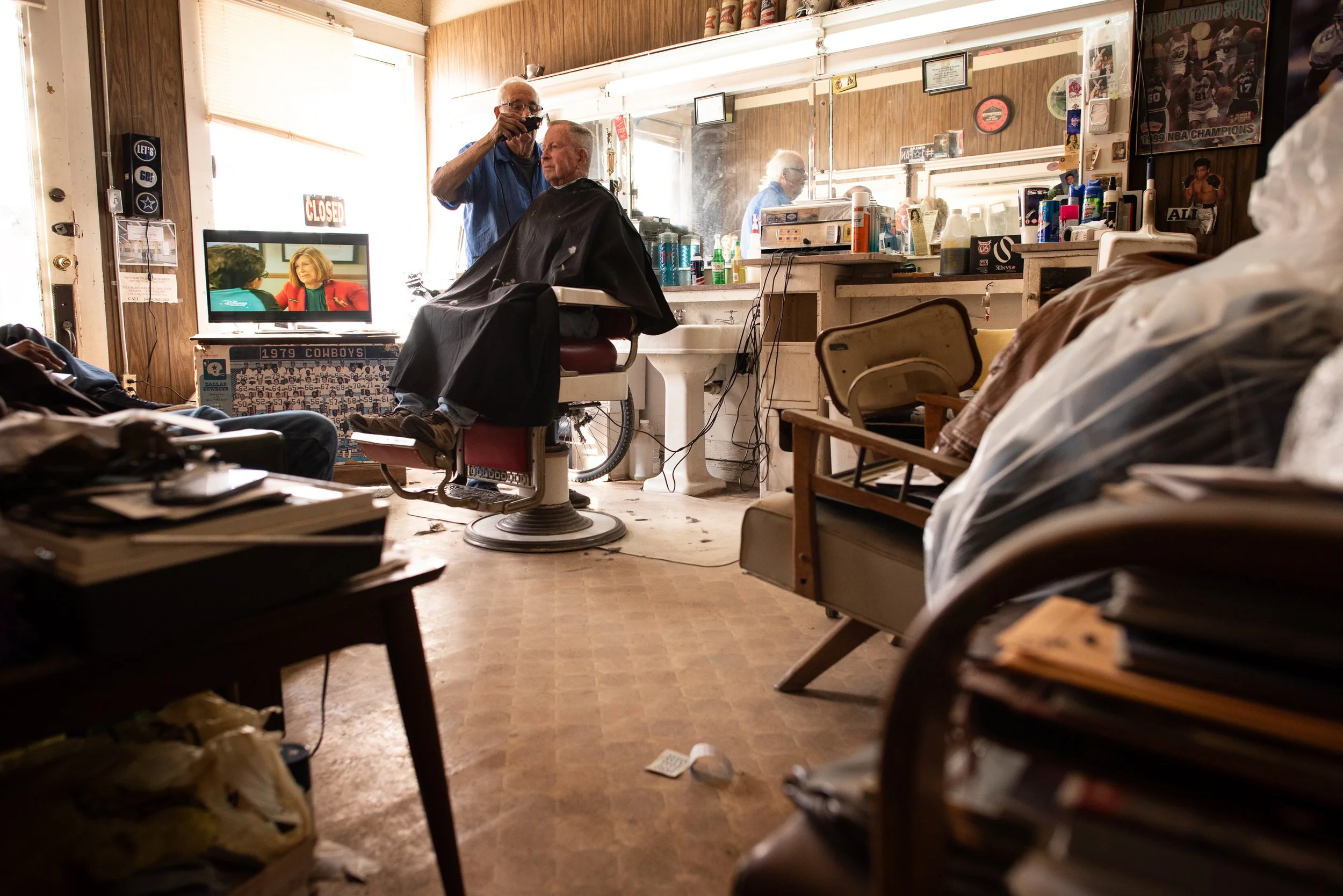
An elderly barber cuts a longtime client’s hair inside a modest Marfa, Texas barbershop in its final period of operation.
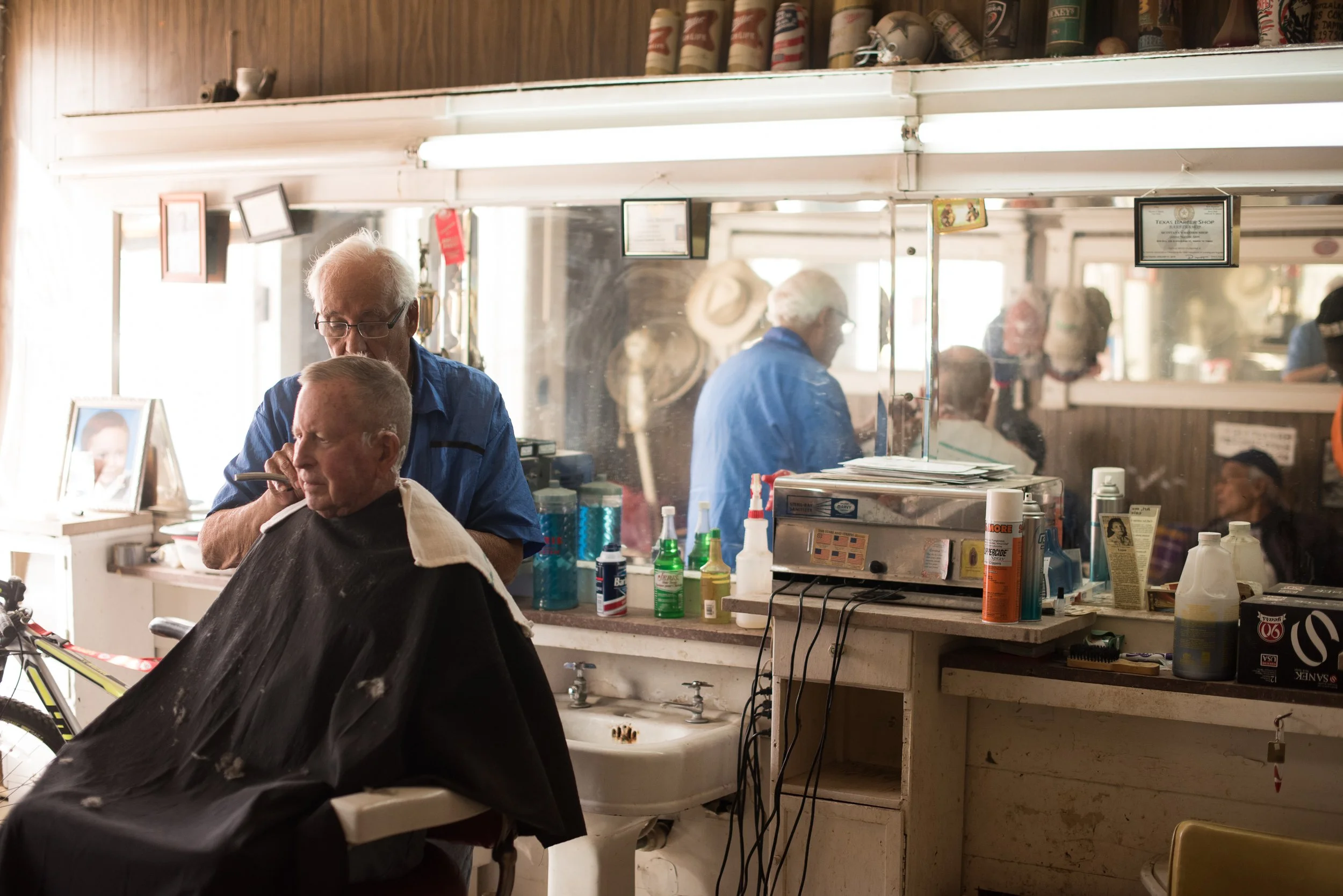
Reflections reveal the compact workstation—fluorescent lighting, worn counters, and tools accumulated over decades.