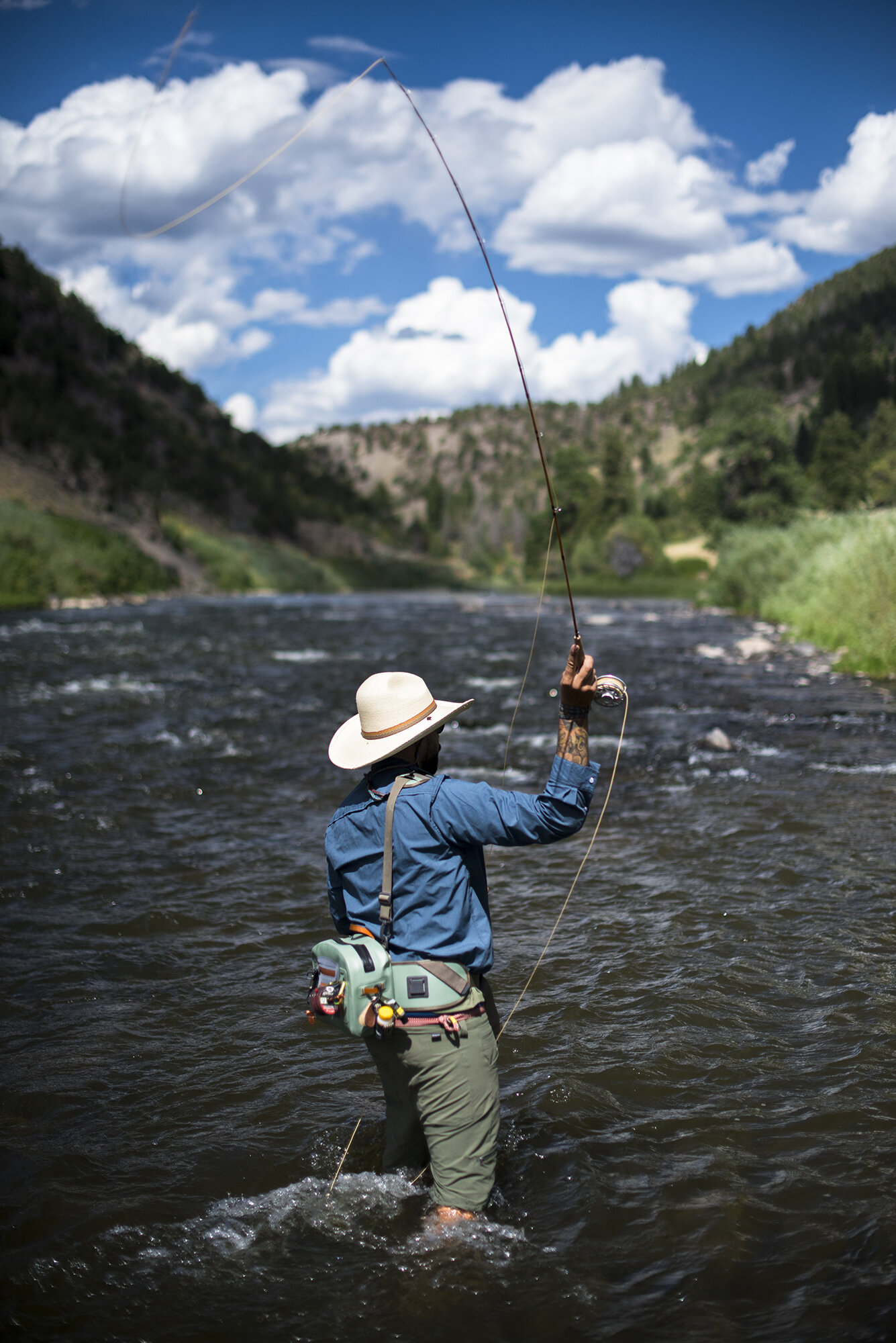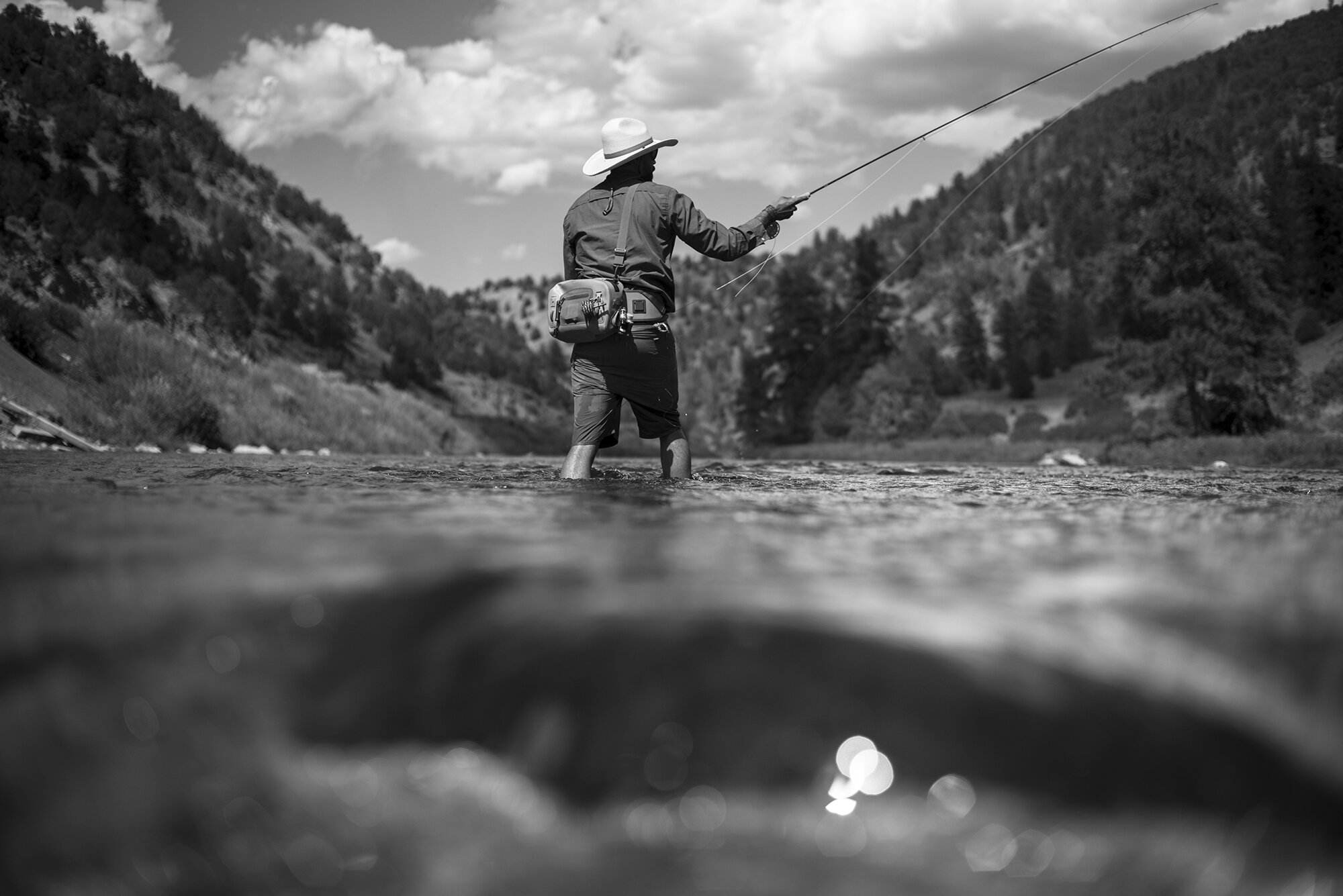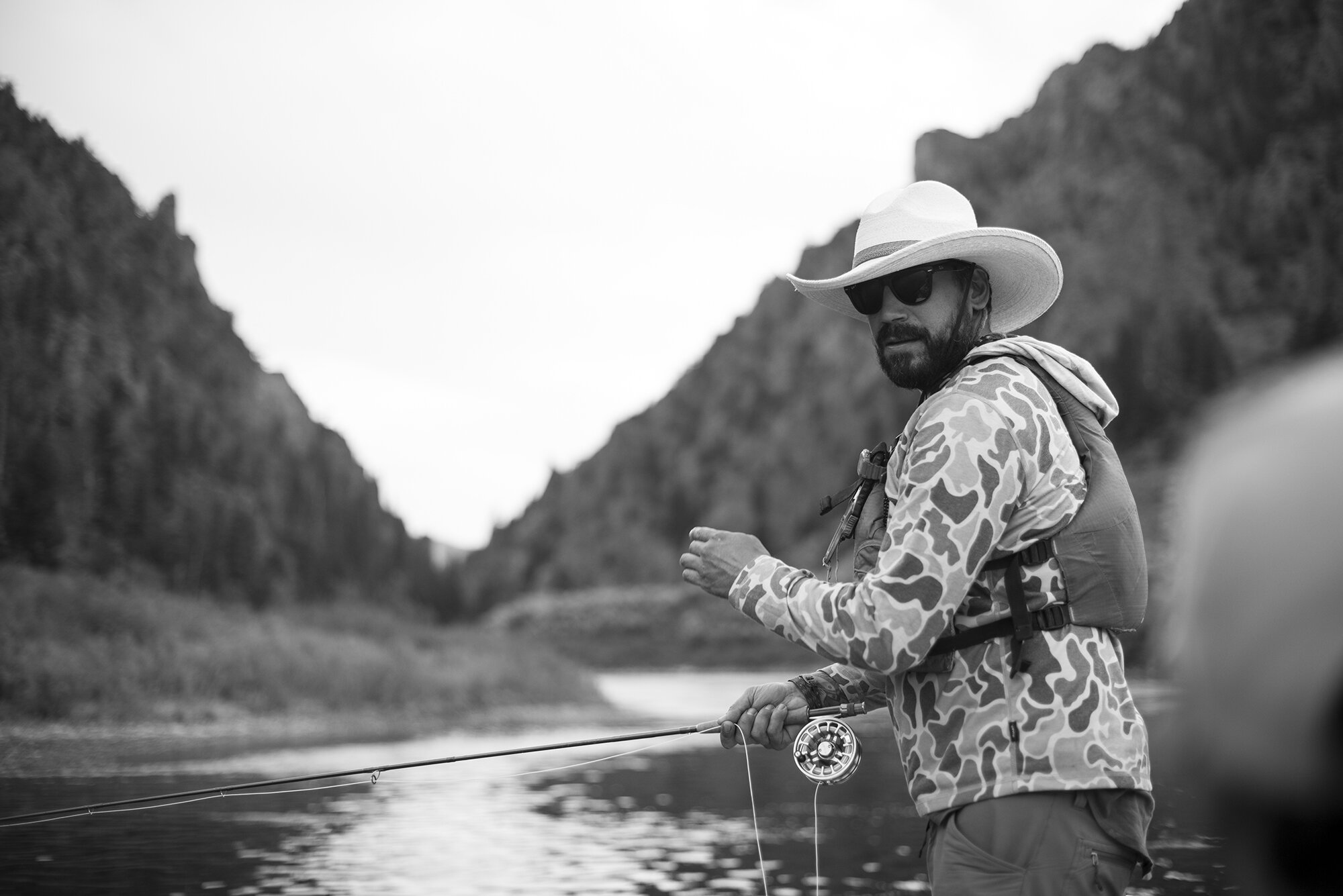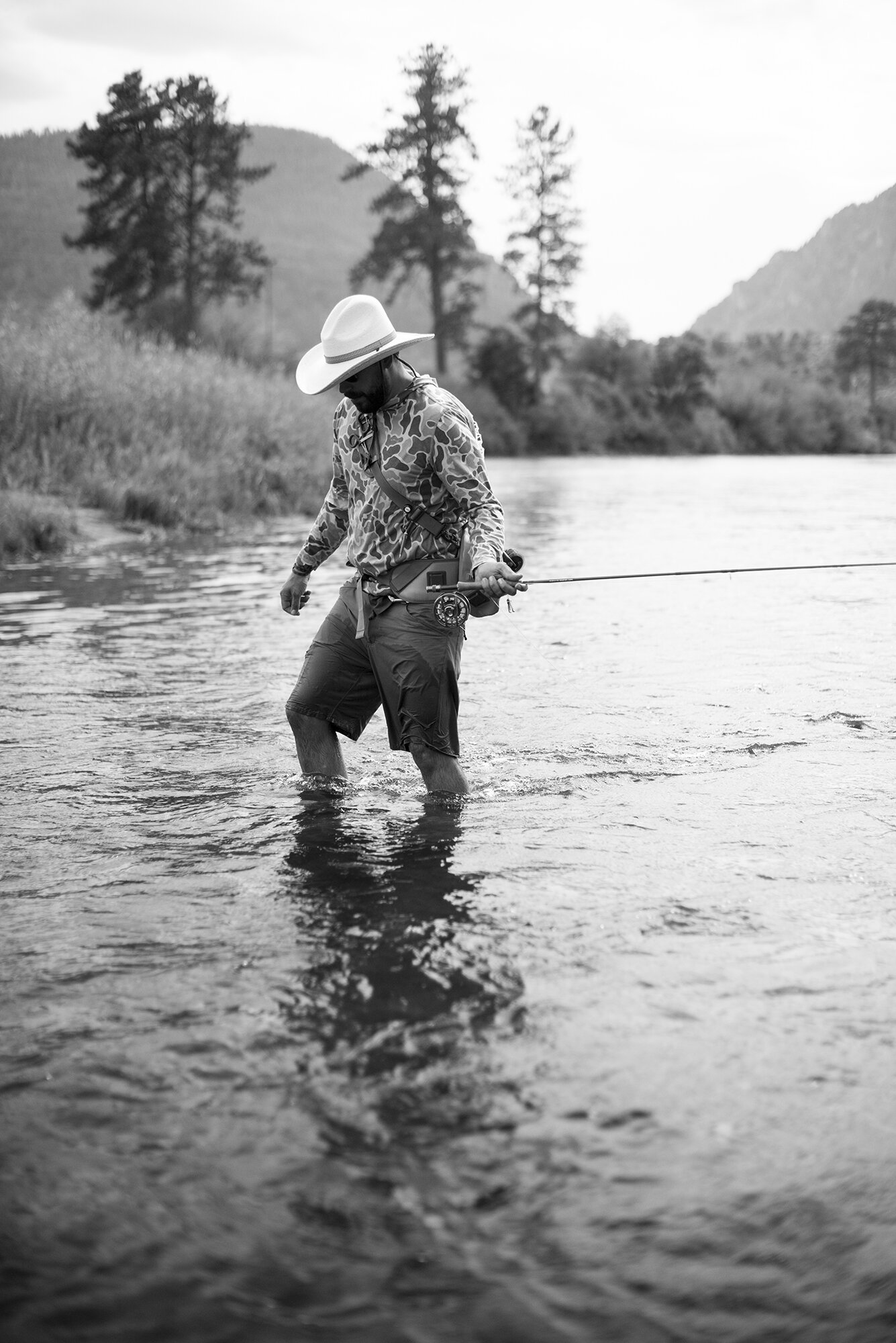
WINTER FLY FISHING PHOTOGRAPHY

Winter Fly Fishing on Clear Creek, Colorado: What It Really Looks Like

There’s a certain kind of quiet that only shows up in winter.

Not the peaceful, postcard version of Colorado people expect—but the kind that settles in when the temperature drops, the crowds disappear, and the river keeps moving anyway.

Clear Creek runs cold this time of year. The flows are low, the banks are stiff with ice in the morning, and most days you won’t see another angler. It’s not comfortable, and it’s not easy. But that’s part of the draw.

Winter fly fishing here isn’t about numbers or perfect conditions. It’s about showing up when most people don’t—and seeing what’s still there.

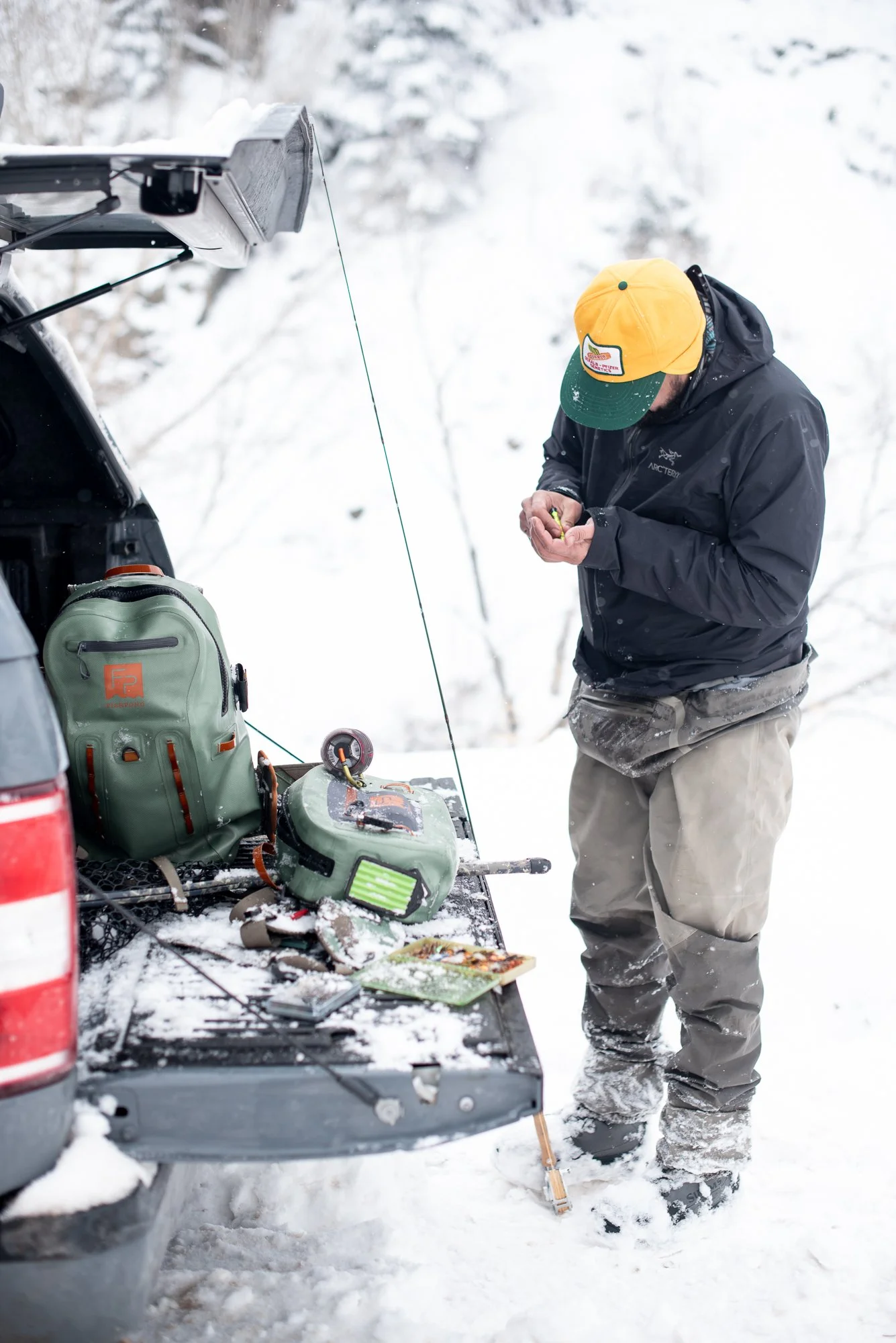
A fisherman prepares fly fishing gear at the back of a truck in snowy winter conditions near Clear Creek in Colorado.

A fisherman prepares his gear at the back of a truck before heading back to the creek.

Can You Fly Fish in Colorado in the Winter?

You can—and people do—but not in the way most expect.

The idea of winter fishing in Colorado usually brings up images of tailwaters and midges, maybe a few rising fish if you’re lucky. That’s all true. But on smaller creeks like Clear Creek, the experience is different.

You’re dealing with:

  • Short windows of active fish

  • Water temperatures hovering just above freezing

  • Icy banks and slow, deliberate movement

It’s not a numbers game. It’s a timing game.

Midday becomes the focus. You wait for the sun to do just enough work to wake things up, then fish carefully and move slowly. Every cast matters more because you’re not getting many chances.

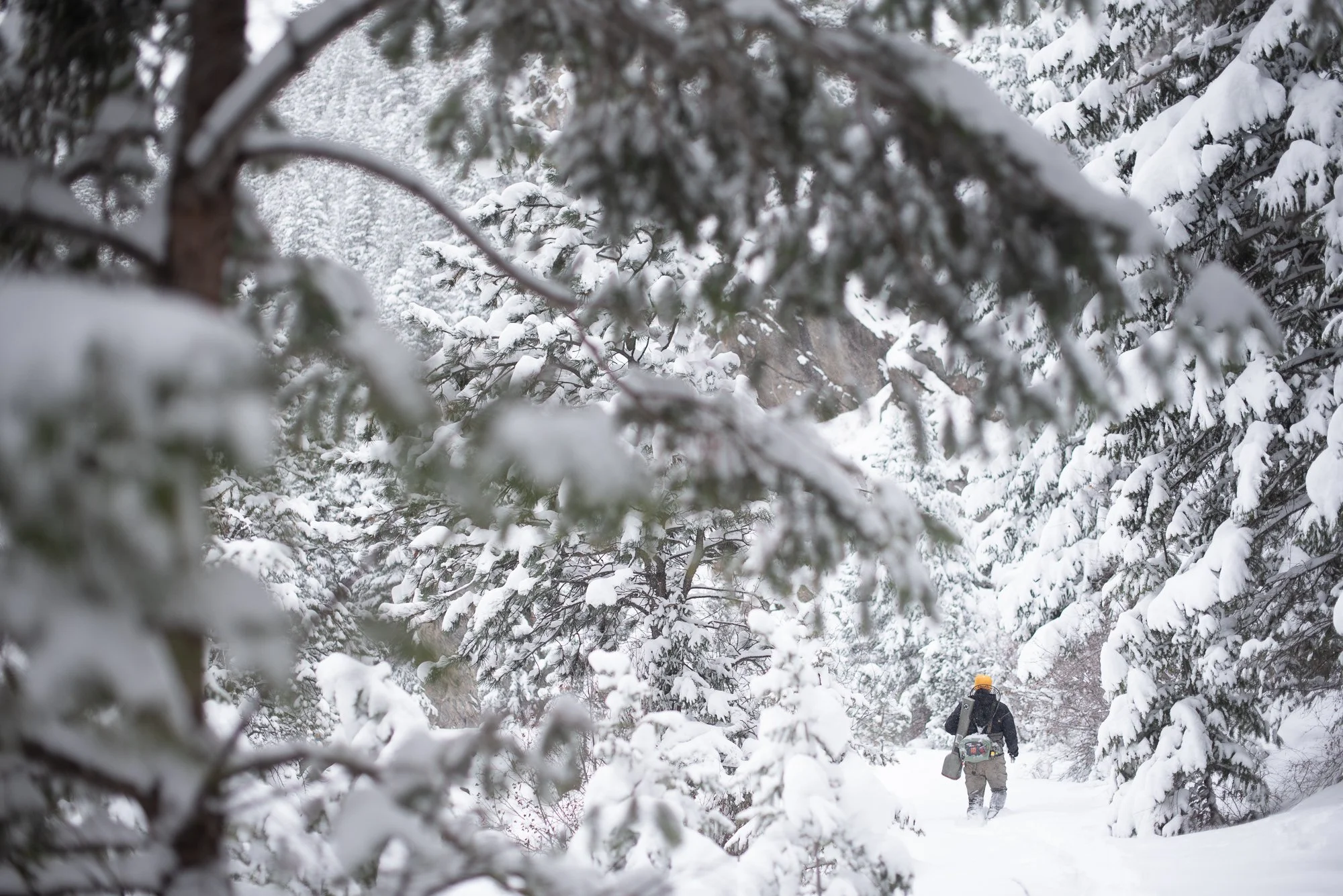
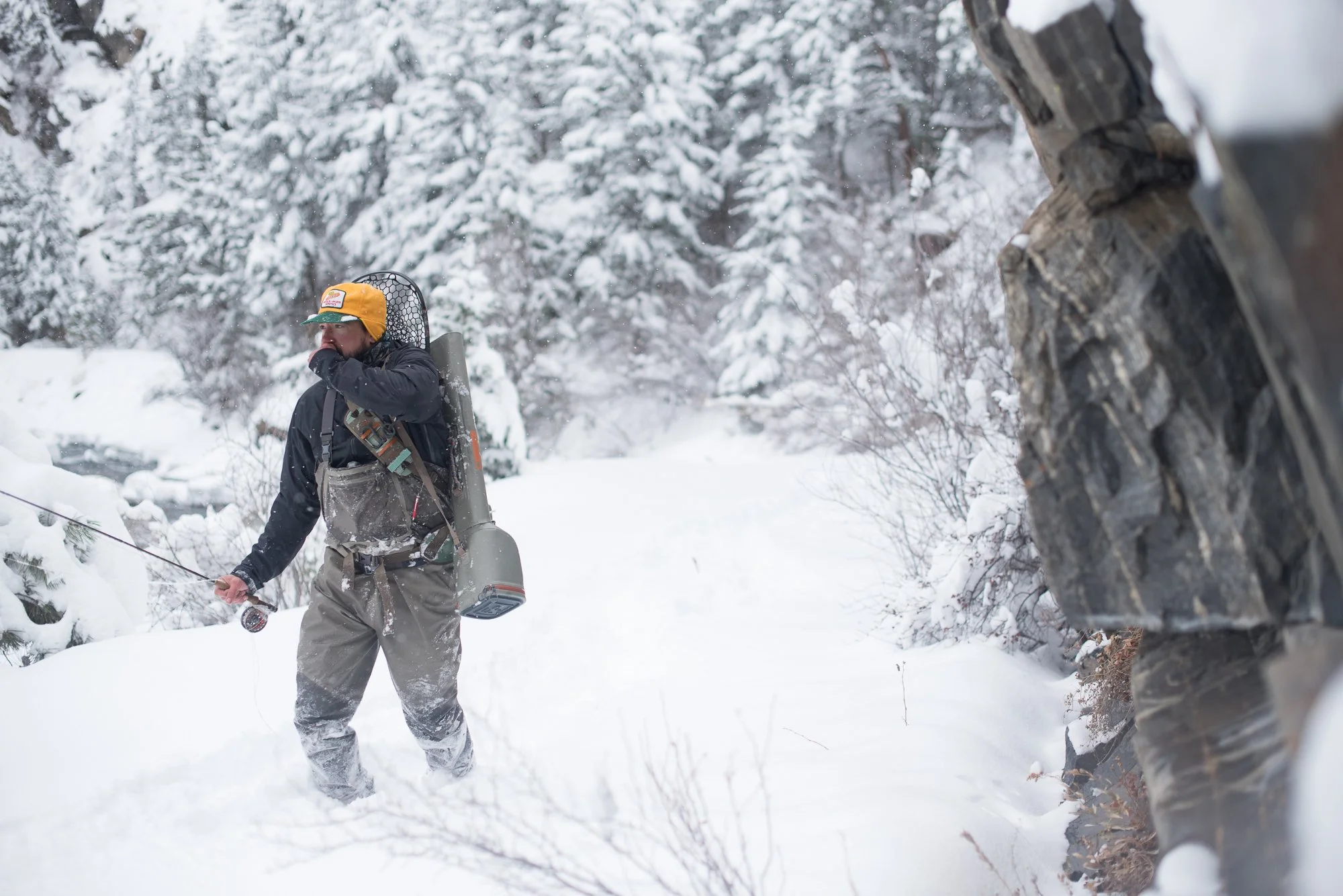
An angler walks through a snow-covered trail near Clear Creek in Colorado carrying fishing gear.

An angler walks through deep snow near Clear Creek, following a path through the trees.

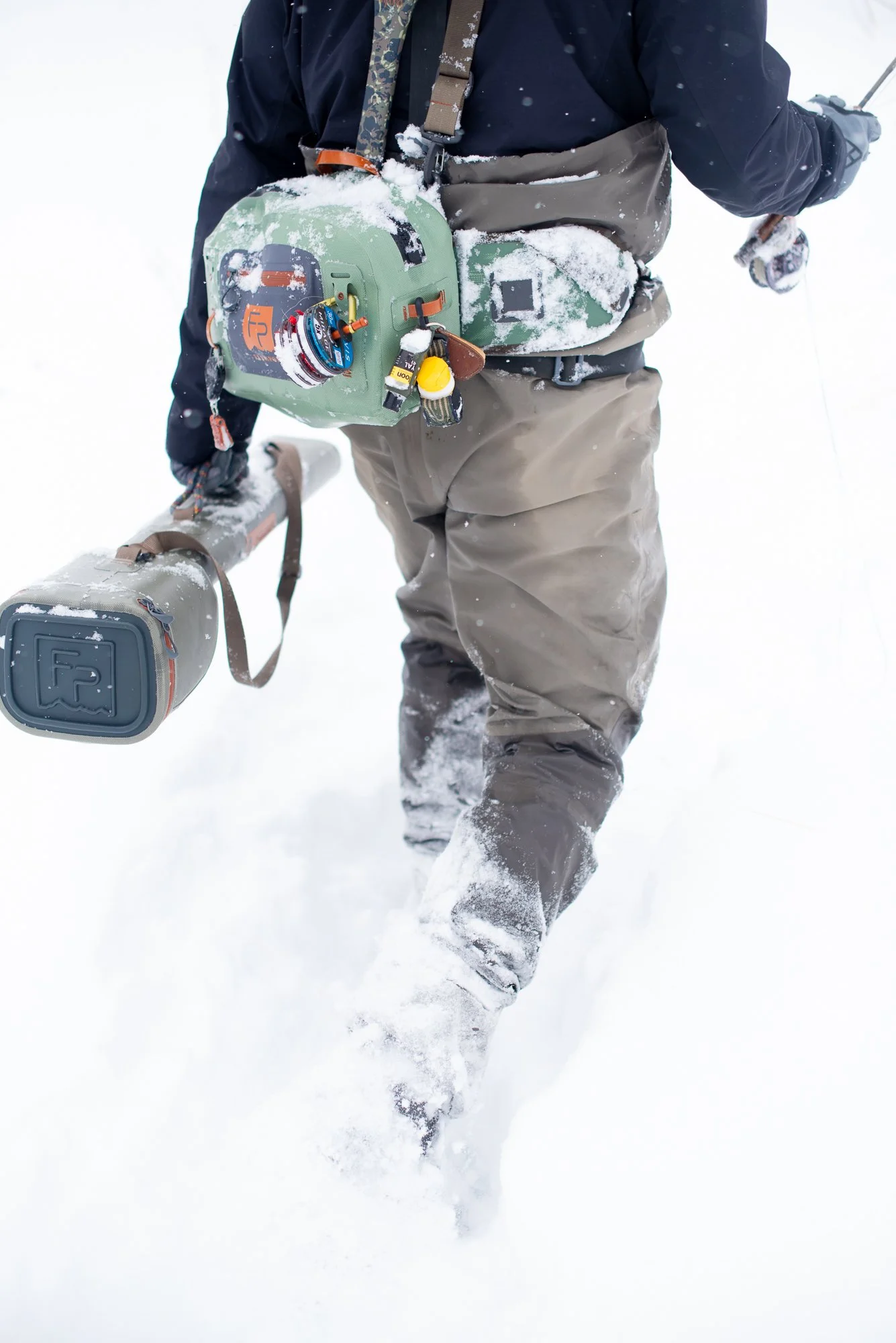
A close-up of fishing gear and pack covered in snow during winter fly fishing on Clear Creek in Colorado.

Fishing gear and a pack collect snow during a winter day along Clear Creek.

Why Small Creeks Like Clear Creek Fish Differently in Winter

Clear Creek isn’t a wide, forgiving river. It’s tight in places, fast in others, and technical when the water drops.

In winter, that becomes even more pronounced.

The fish don’t spread out—they consolidate. Deep pockets, slower seams, and protected water hold most of the activity. If you’re not putting a fly exactly where it needs to be, you’re probably not getting a look.

What makes small creeks interesting this time of year is how intimate everything feels. There’s no hiding from bad drifts or sloppy approaches. You’re close to the water, close to the fish, and aware of every mistake.

And when it comes together, it feels earned.

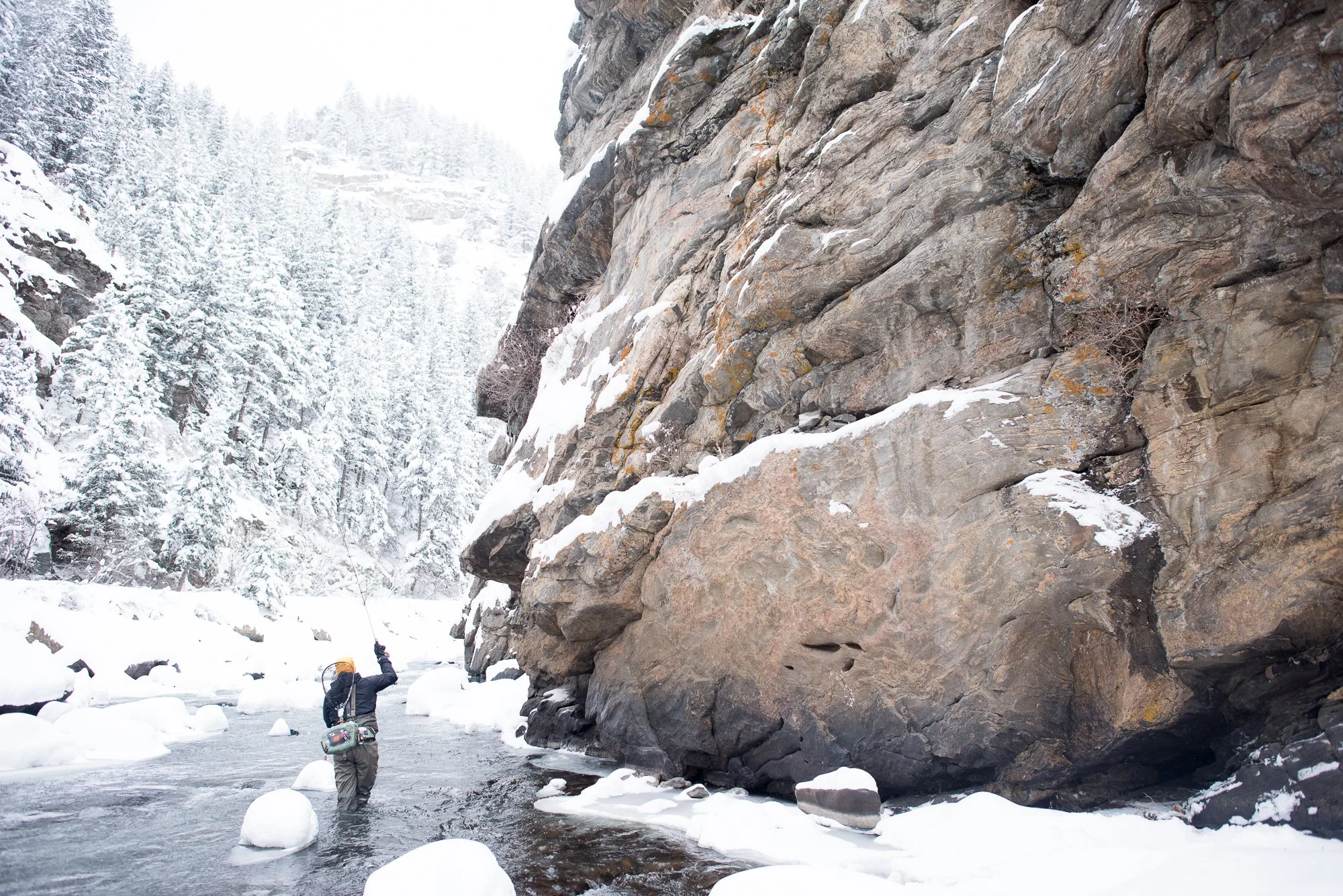
An angler fishes along a rocky wall on Clear Creek in Colorado during winter with snow-covered banks.

An angler fishes along a rock wall on Clear Creek, moving through a narrow stretch of water in winter.

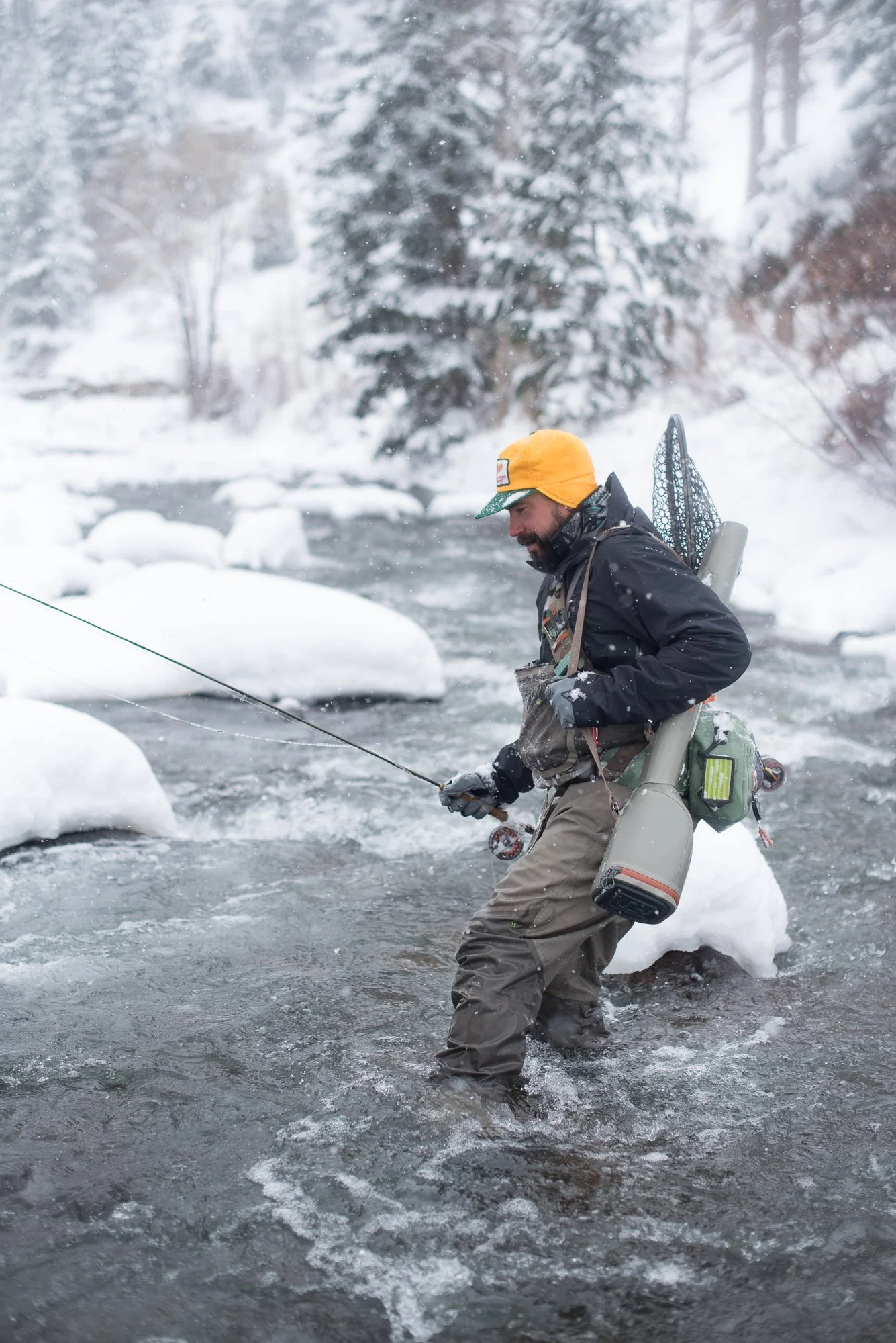
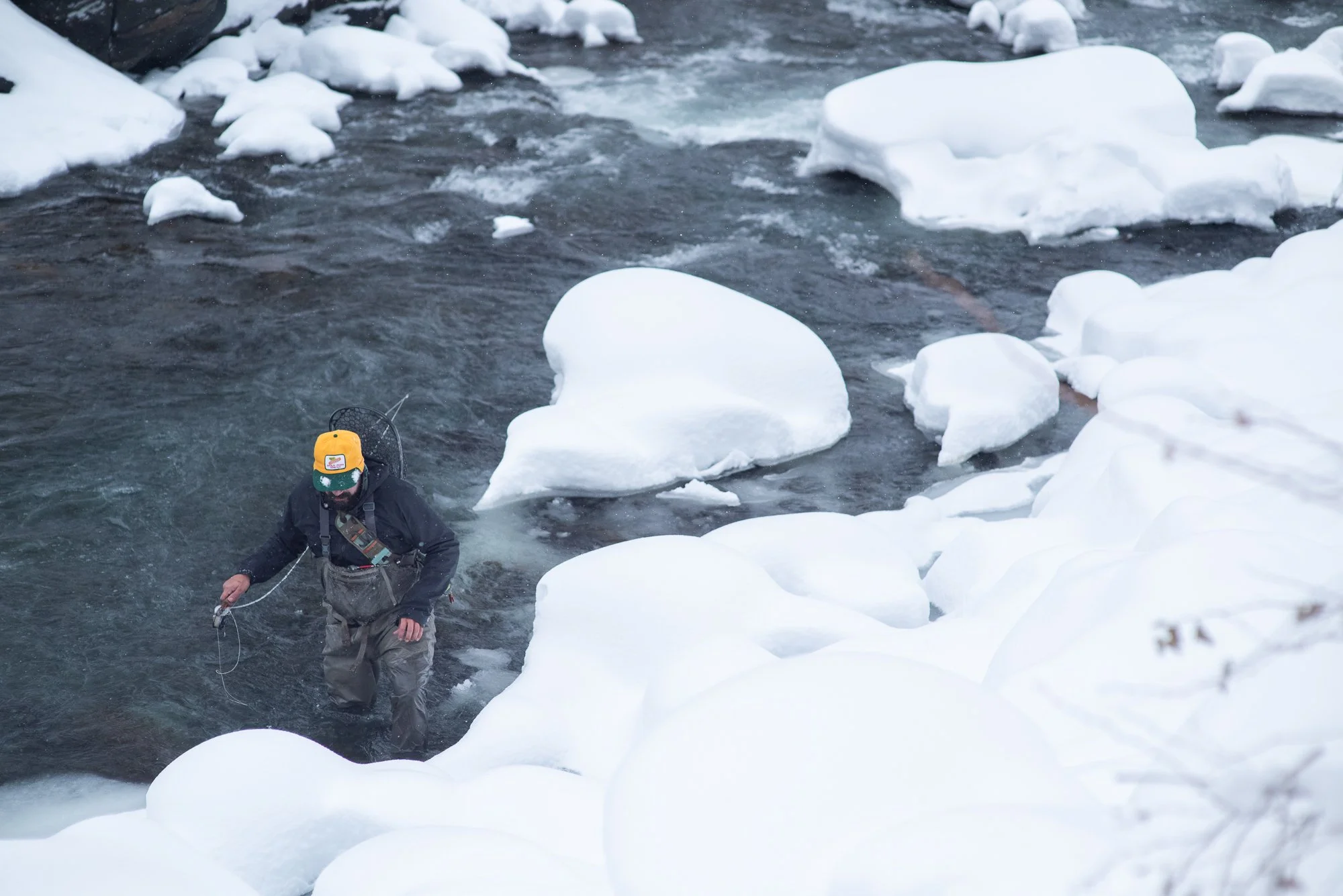
A fisherman wades through Clear Creek in winter with snow falling and gear on his back.

A fisherman wades through the current in winter as light snow falls around him.

The Reality of Winter Fly Fishing Conditions

This is where most of the romantic ideas about winter fishing fall apart.

It’s cold in a way that sticks with you. Not dramatic, just persistent. Fingers go numb. Guides freeze. You break ice out of your rod between casts and keep going.

There’s a rhythm to it:

  • Cast

  • Check the drift

  • Clear ice

  • Repeat

You don’t rush. You can’t.

The light is different too. Lower in the sky, flatter, quieter. It doesn’t light up the river—it settles over it. That changes how everything looks, especially in photographs. The colors are muted, the contrast is softer, and the scenes feel more stripped down.

It’s not dramatic. It’s honest.

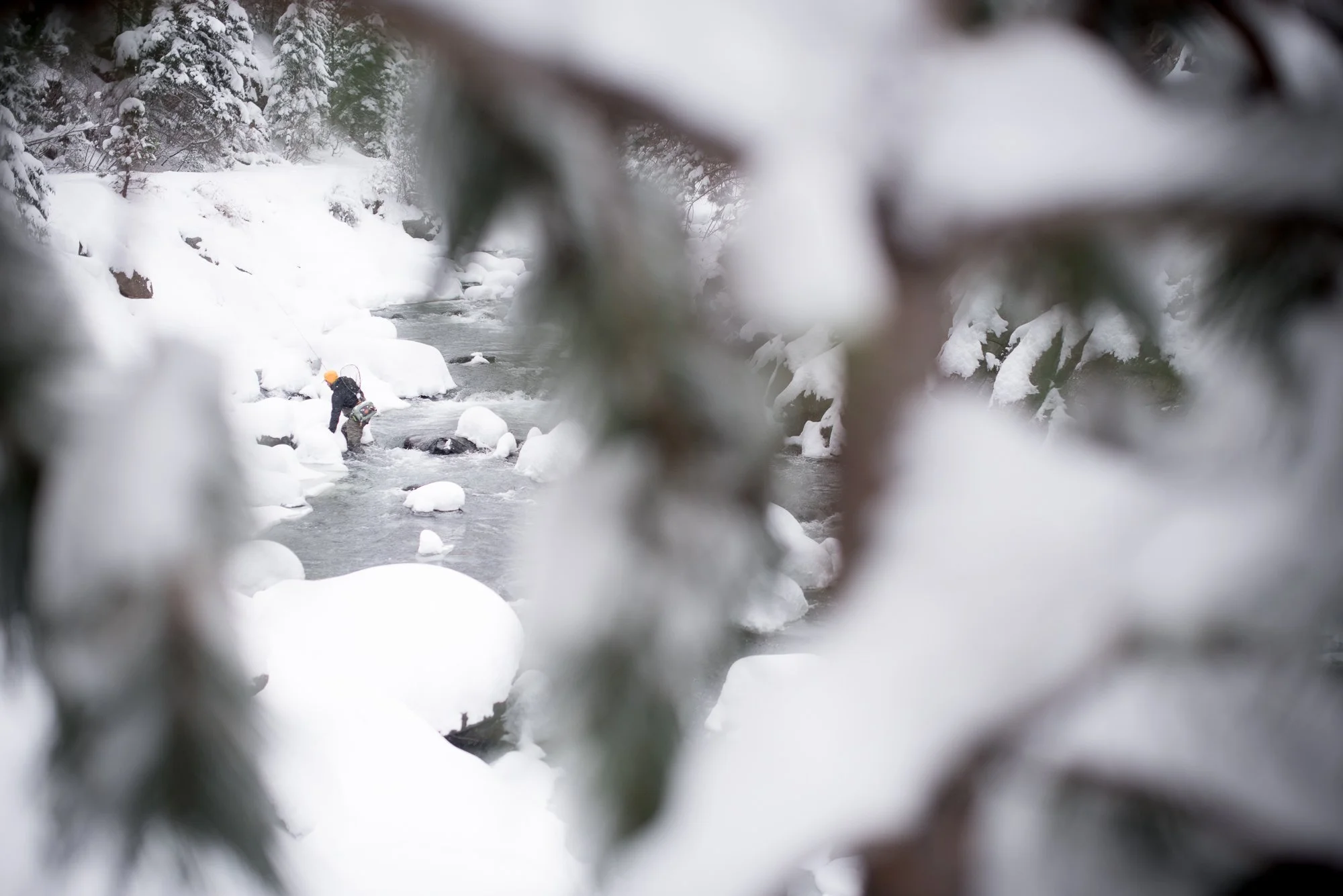
A fisherman stands in Clear Creek framed by snow-covered trees during winter.

A fly fisherman walking out of Clear Creek, partially framed by snow-covered trees along the bank.

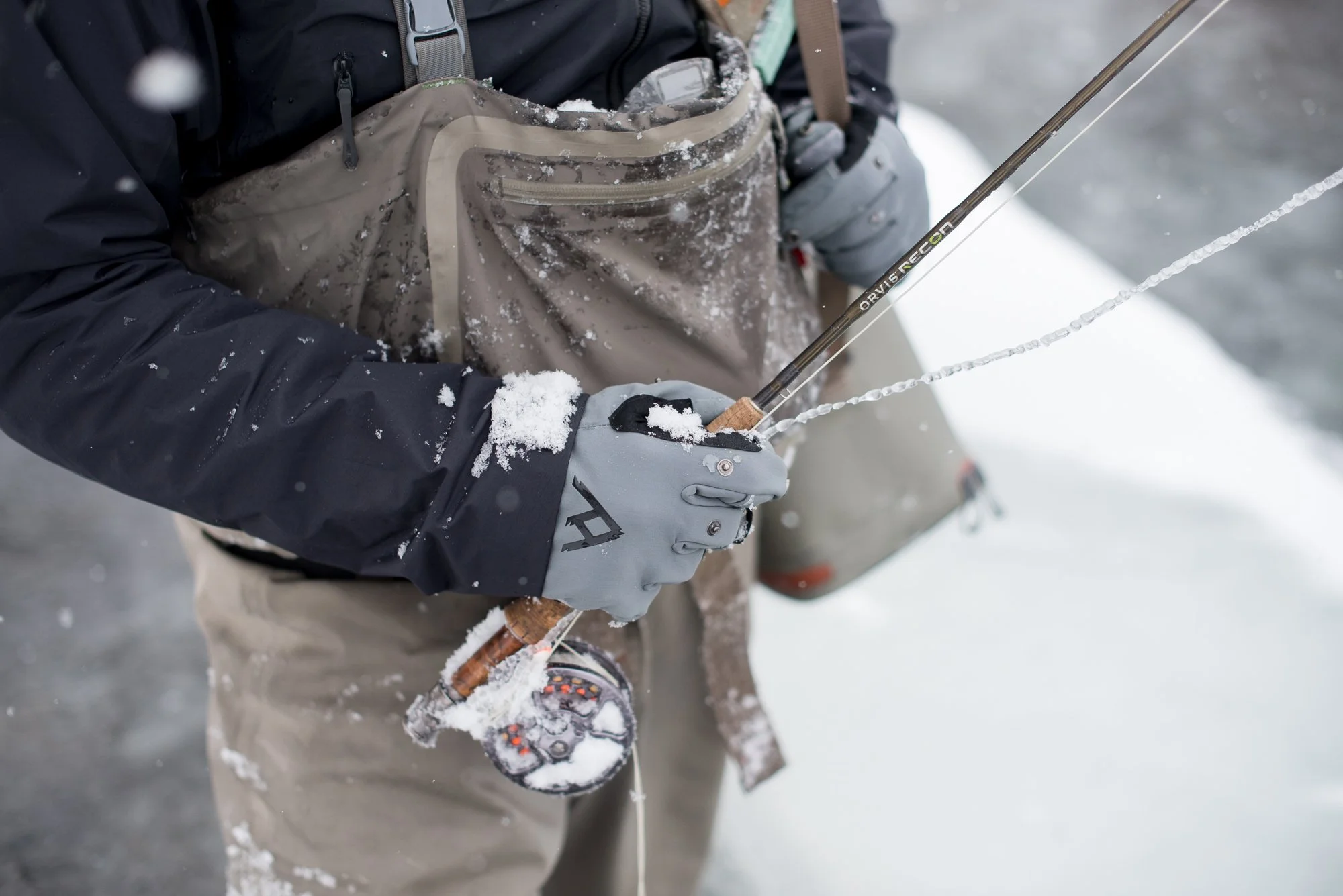
A close-up of gloved hands holding an iced fly fishing rod during winter on Clear Creek.

Gloved hands hold a fly rod as ice forms along the line in cold conditions.

A Morning on Clear Creek

Most winter mornings start the same way.

You step out into air that feels sharper than expected. The creek is already moving, thin ribbons of steam rising where the water meets the cold. Nothing about it suggests urgency.

The first stretch is usually quiet. Fish aren’t moving much yet, and neither are you. It’s more about paying attention—watching the water, seeing where things might happen later.

By late morning, something shifts.

Maybe it’s subtle—just enough warmth to change the current slightly or bring a fish off the bottom. That’s when you start to see life again. Not in big, obvious ways, but in small signs: a hesitation in the drift, a slight take, a fish that wasn’t there an hour ago.

There’s no rush to it. No pressure to move quickly or cover miles of water. You stay with it, work through a stretch carefully, and take what the day gives you.

Some days that’s a few fish. Some days it’s none.

Either way, it’s enough.

A fisherman wades through Clear Creek in Colorado during winter surrounded by snow-covered rocks and flowing water.

A fisherman wades through, stepping carefully between snow-covered rocks in winter conditions.

A wide view of an angler fishing in Clear Creek in Colorado during winter surrounded by snow-covered banks and trees.

An angler fishes a wider stretch of Clear Creek in Colorado, working through slow winter water.

Why Winter Fly Fishing Is Worth It

It’s not about comfort. And it’s definitely not about easy fishing.

What keeps people coming back to places like Clear Creek in the winter is something harder to define. Maybe it’s the absence of distraction. Maybe it’s the way everything gets simplified—water, movement, attention.

Or maybe it’s just the fact that the river doesn’t stop when the season changes.

For me, this time of year has always been less about the outcome and more about the experience of being there. The photographs come out of that—quiet moments, small movements, and the kind of light you don’t get any other time of year.

They’re not dramatic images. They’re not meant to be.

They’re a record of what it actually feels like to stand in a Colorado creek in the middle of winter and keep fishing anyway.

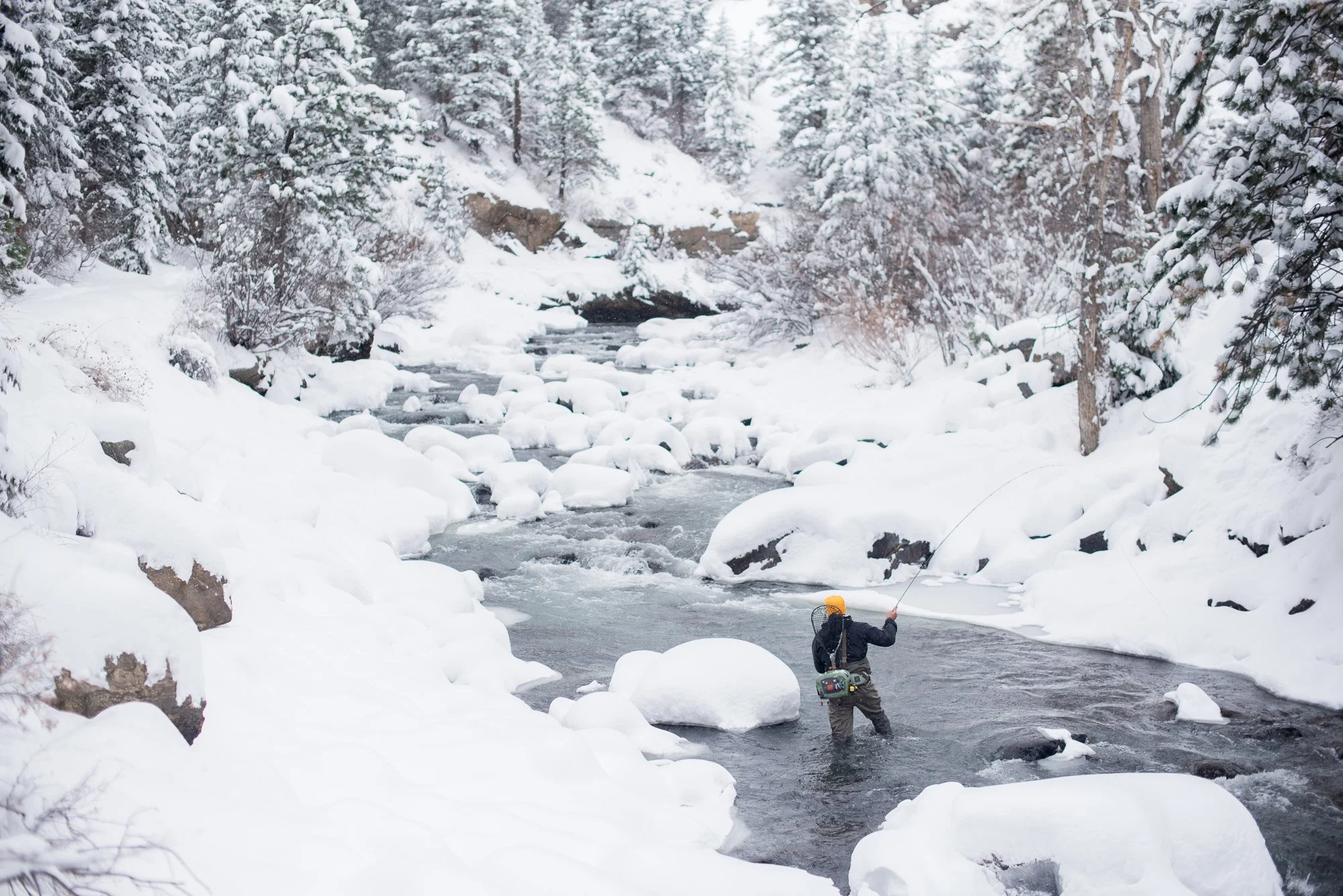
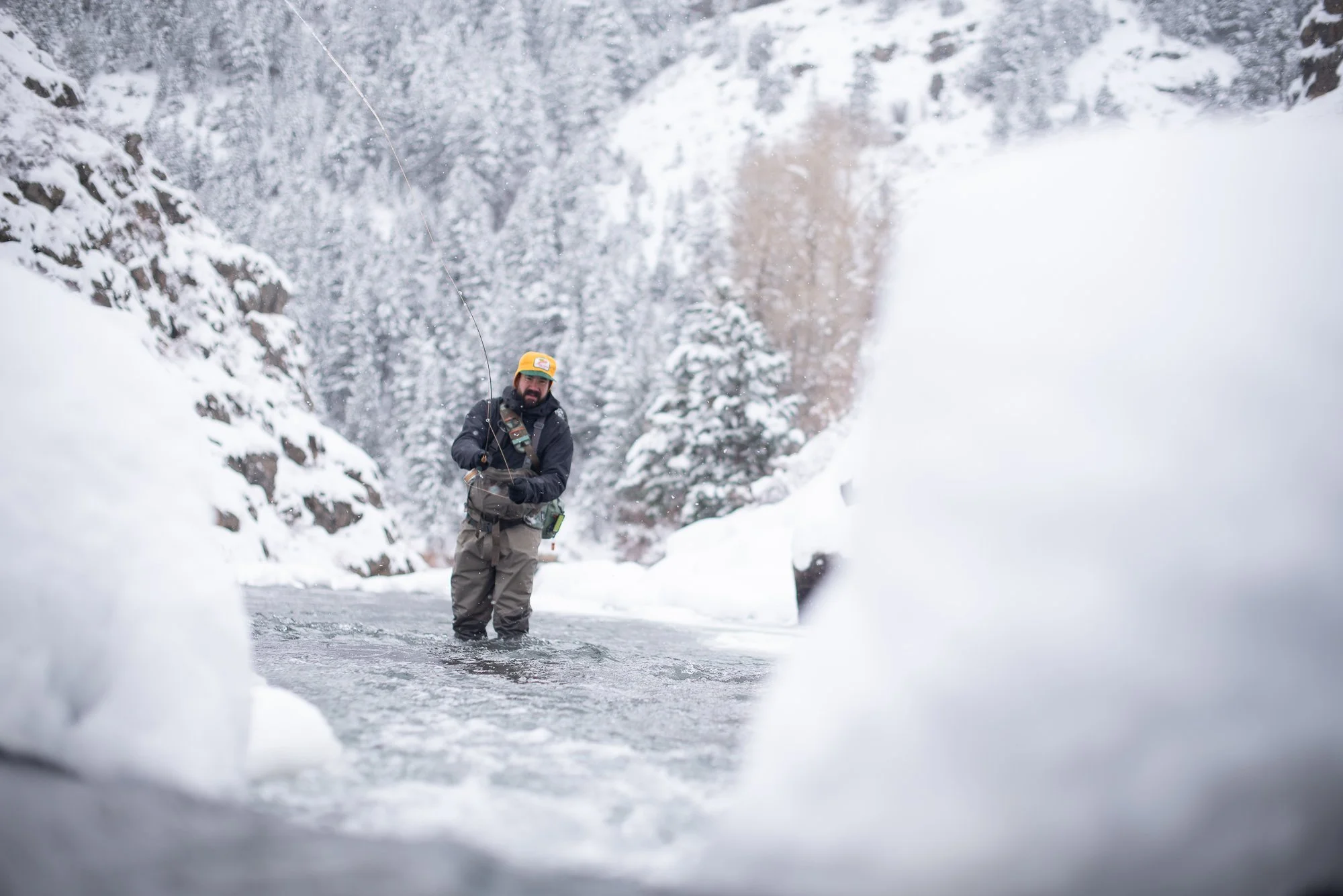
An angler casts a line while standing in Clear Creek during winter with snow falling around him.

An angler casts into Clear Creek in Colorado, working through a cold winter stretch of water.

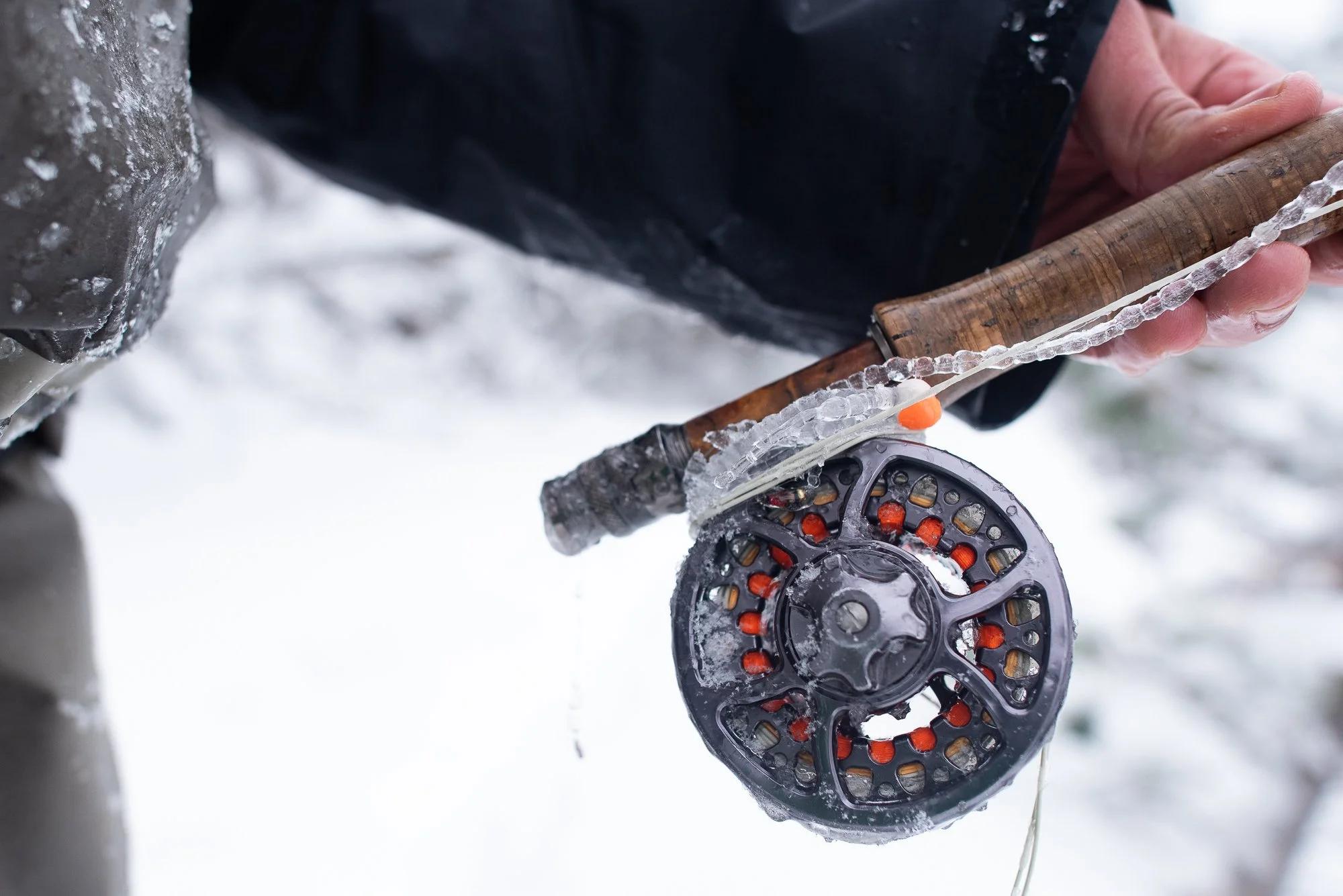
A close-up of a fly fishing rod and reel covered in ice during winter fishing on Clear Creek.

Ice builds along a fly rod and reel during winter fishing, requiring it to be cleared between casts.

Explore the Full Fly Fishing Photography Collection

If you’re interested in seeing more work like this—across different seasons, rivers, and parts of the American West—you can view the full collection below.

For brands, outfitters, and publications looking for authentic fly fishing imagery—real anglers, real conditions, and a documentary approach—licensing inquiries are always welcome - rob@robhammerphotography.com

View my full fly fishing photography gallery

Shop fly fishing prints

Explore more winter fly fishing in Colorado

A fisherman walks along the snowy bank of Clear Creek carrying fishing gear in winter conditions.

An angler walks through the snow, blowing warm air onto his frozen hands

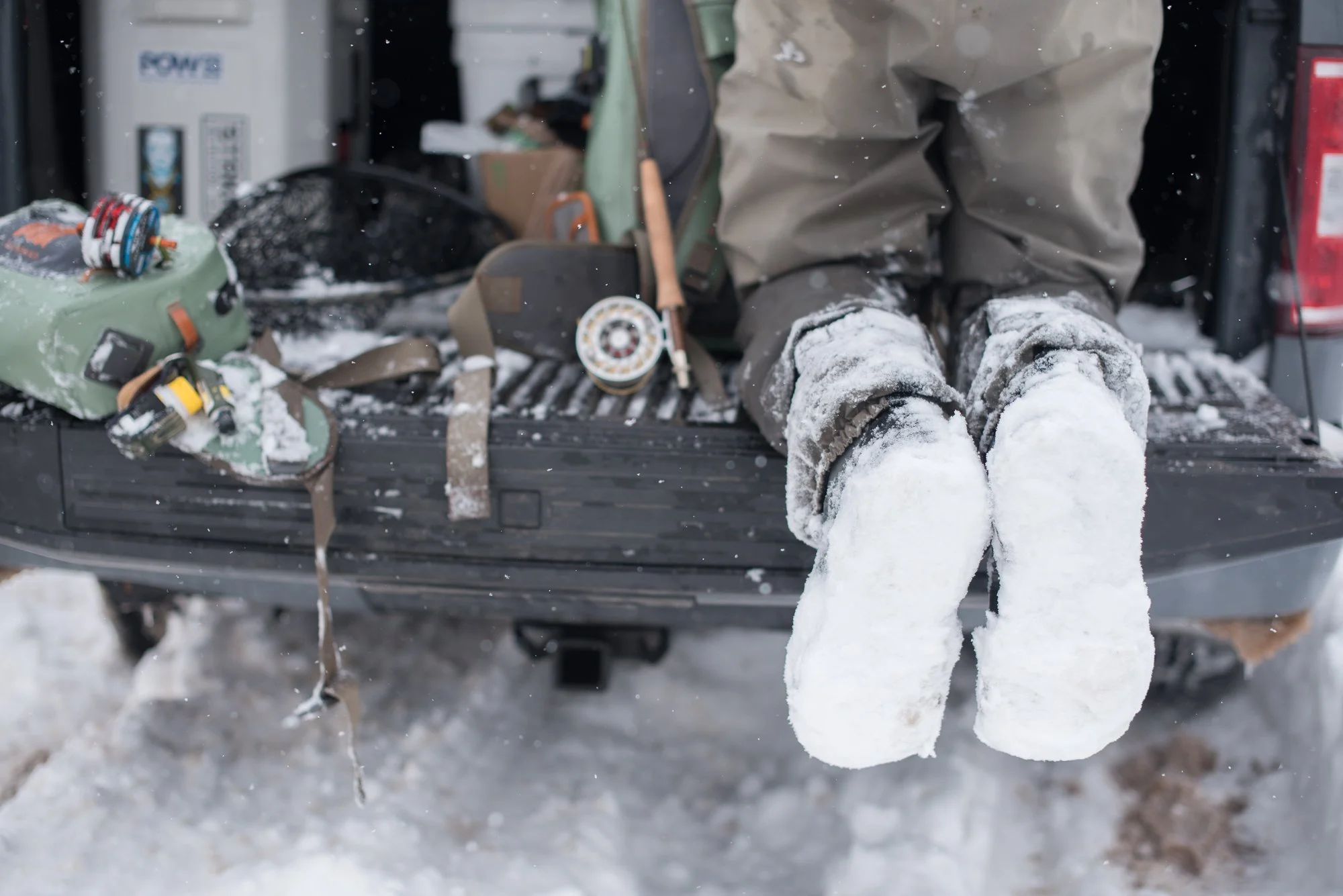
A fisherman sits on a truck tailgate with snow-covered boots and fishing gear after time on Clear Creek.

A fisherman sits on a truck tailgate with snow-covered boots and gear after time on the water.

Fly Fishing - Crested Butte, CO

Taylor River Fly Fishing

Fly Fishing Photography - Colorado

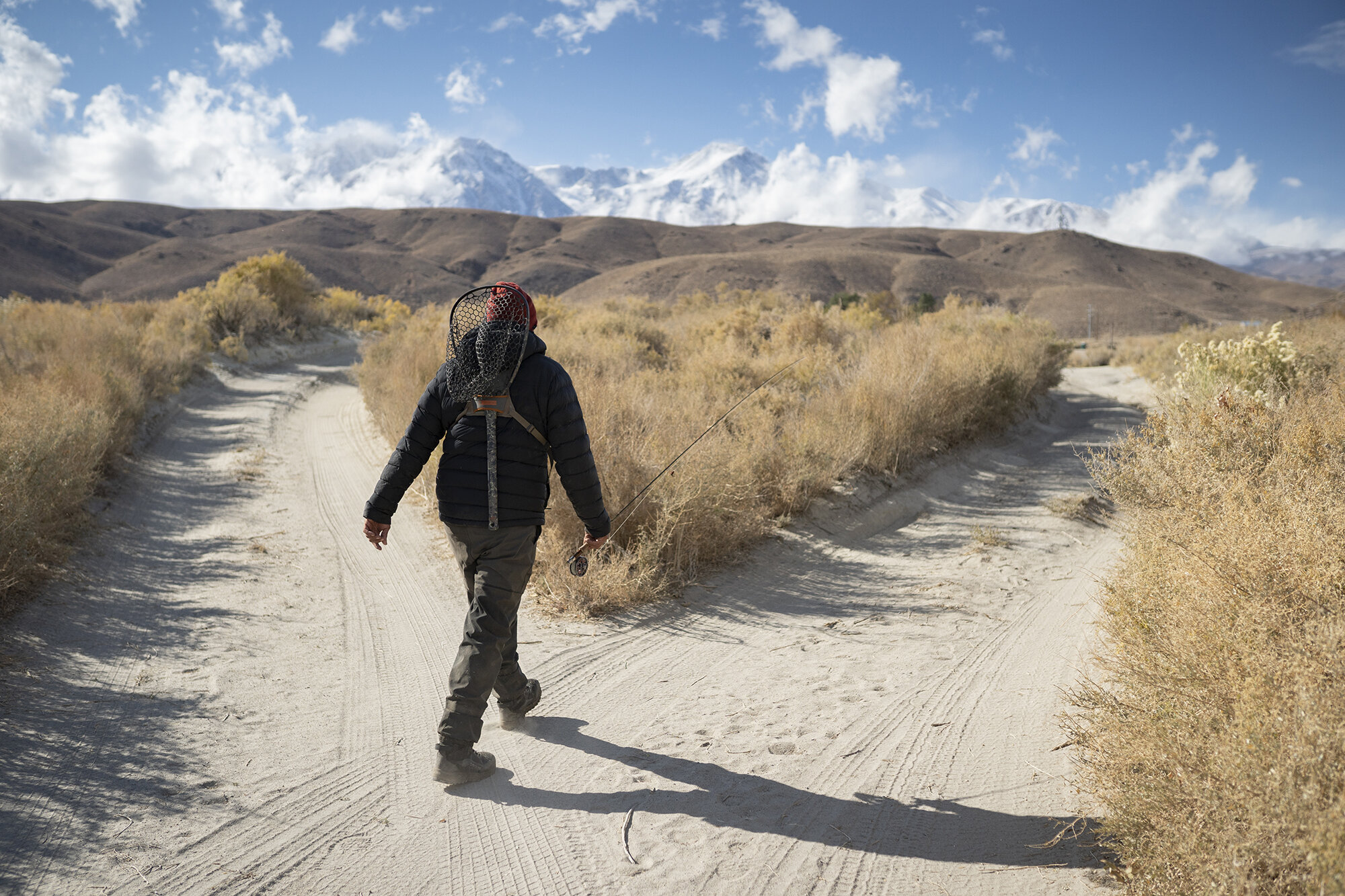
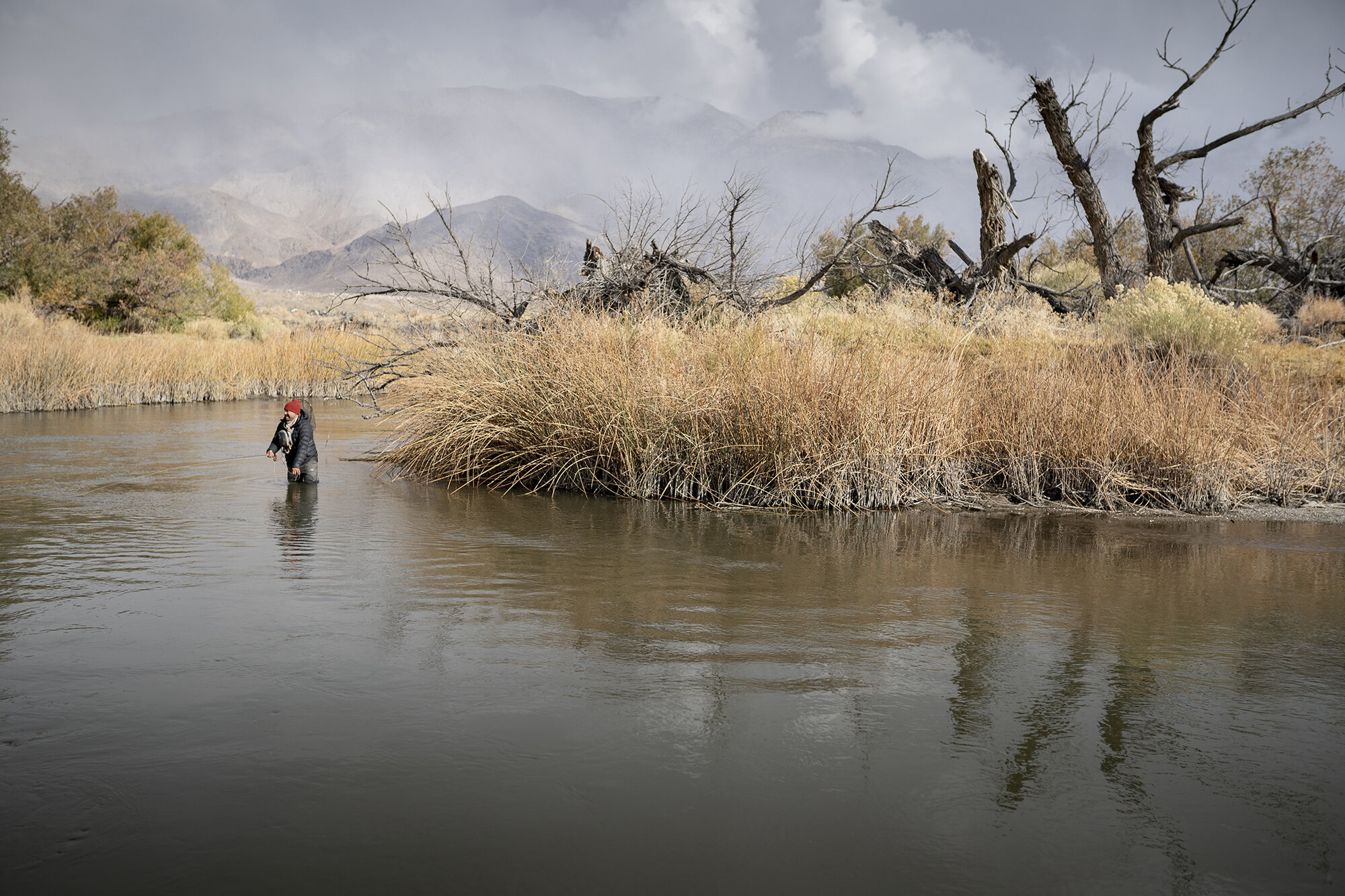
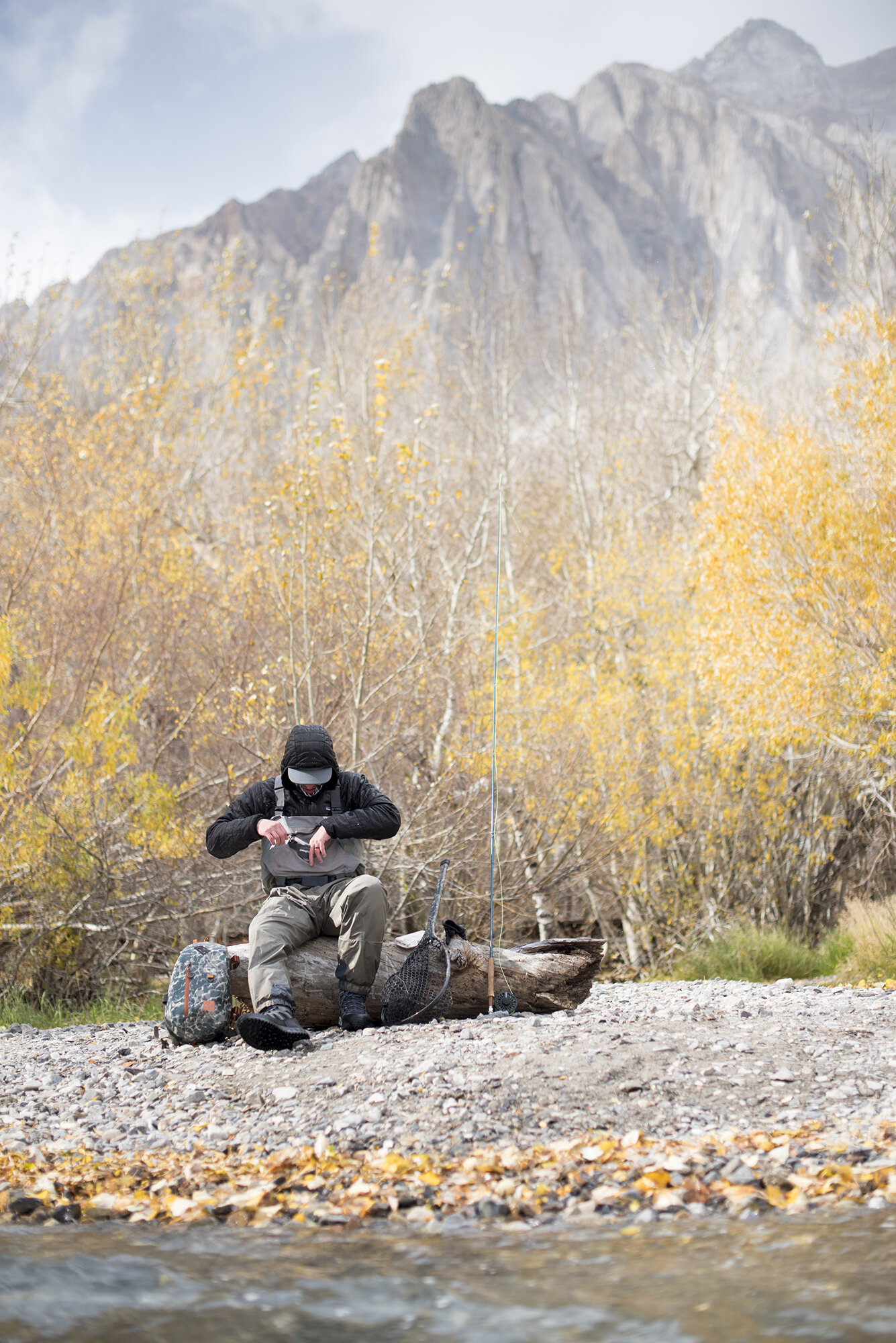
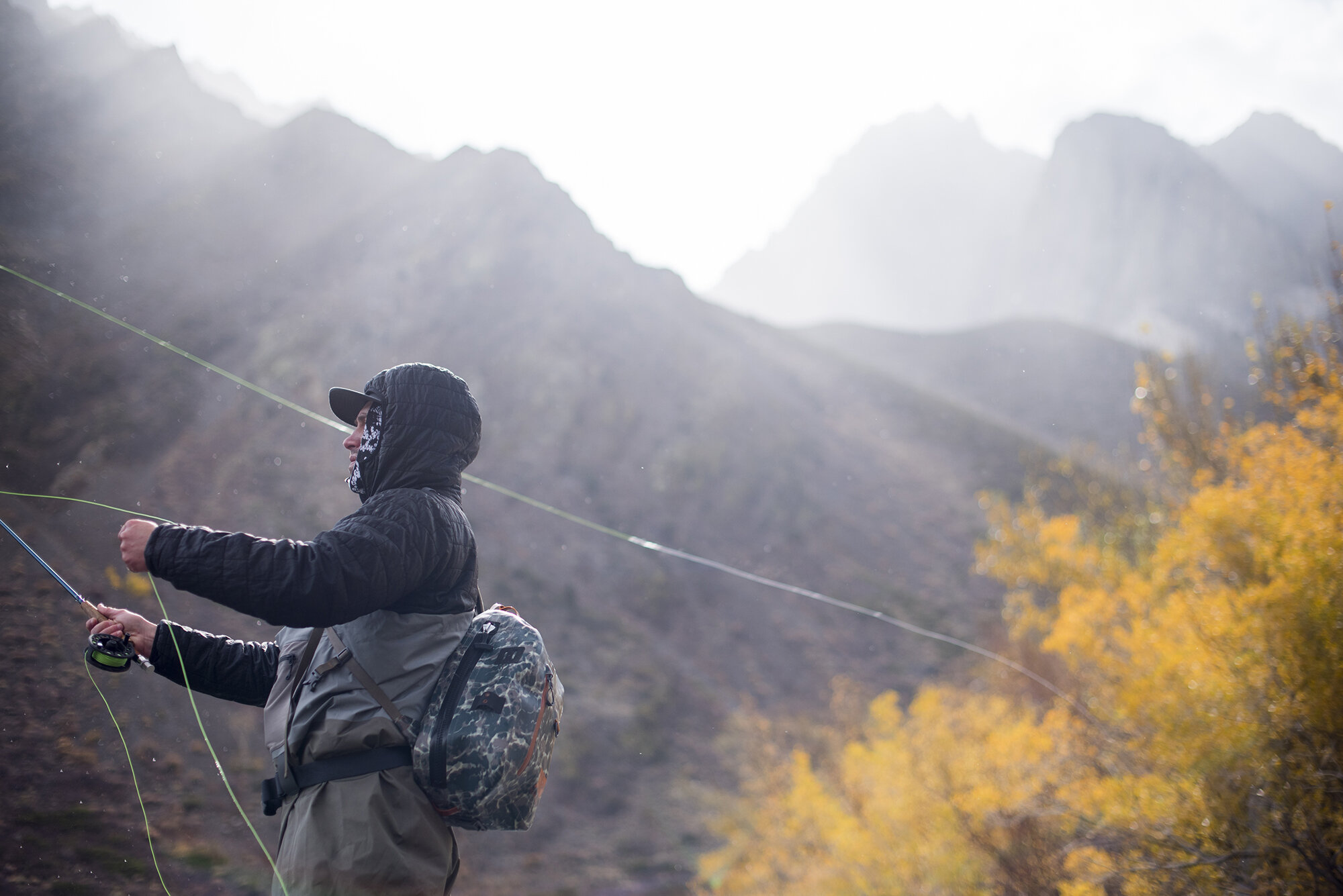
Sometimes you think the sun is going to help with the cold and on certain days is does. For all the rest of the days, it’s easiest to just accept the fact that you won’t feel your hands again until you get back to the truck. At which point you’ll need to put a koozie around your beer just so they don’t get any worse. Thankfully this wasn’t one of those. It’s only the middle of October but that doesn’t matter. If you spend time in the mountains then you know an early summer morning can feel oddly similar to winter. It’s got to be part of that whole love/hate thing.

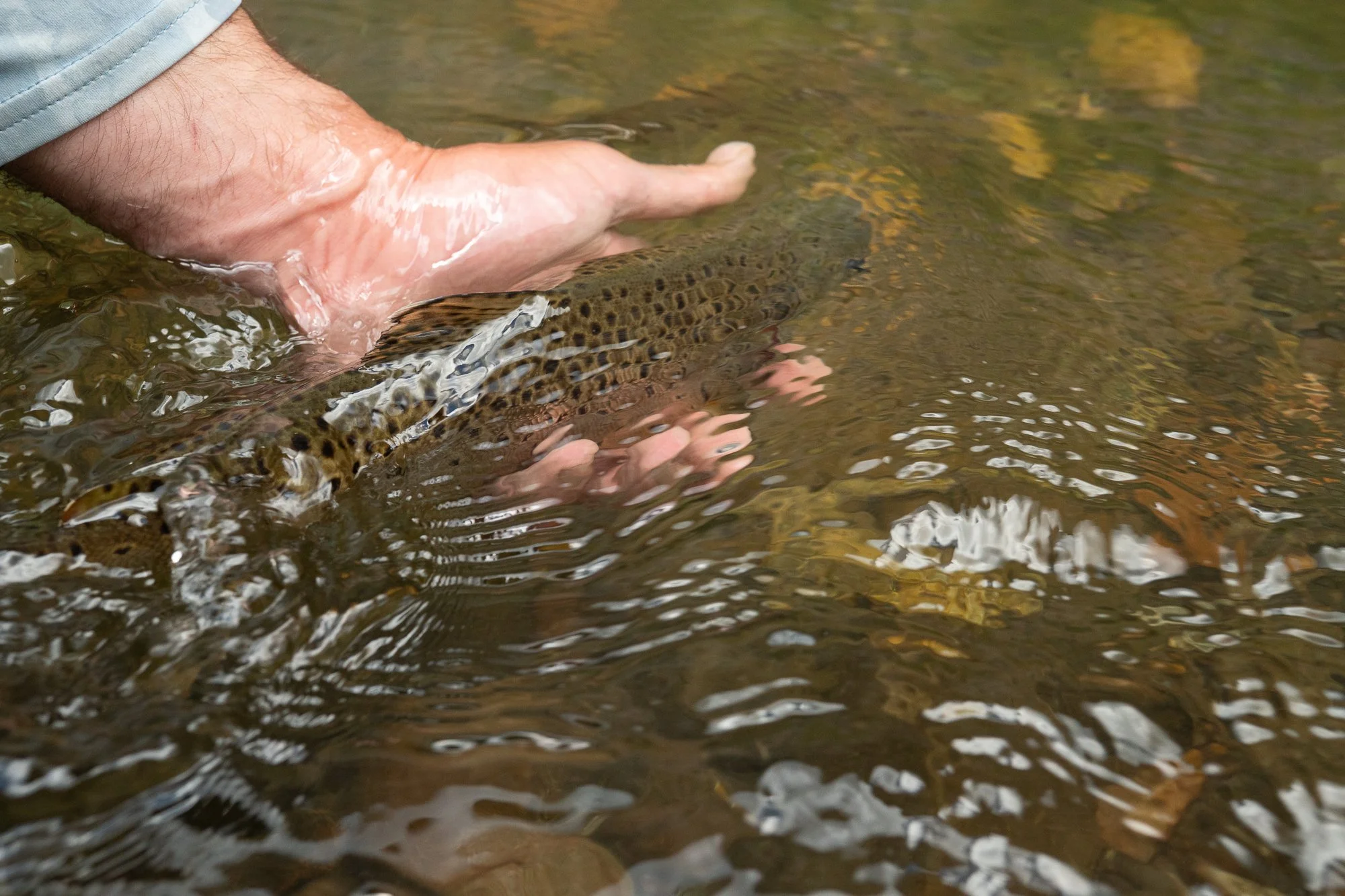
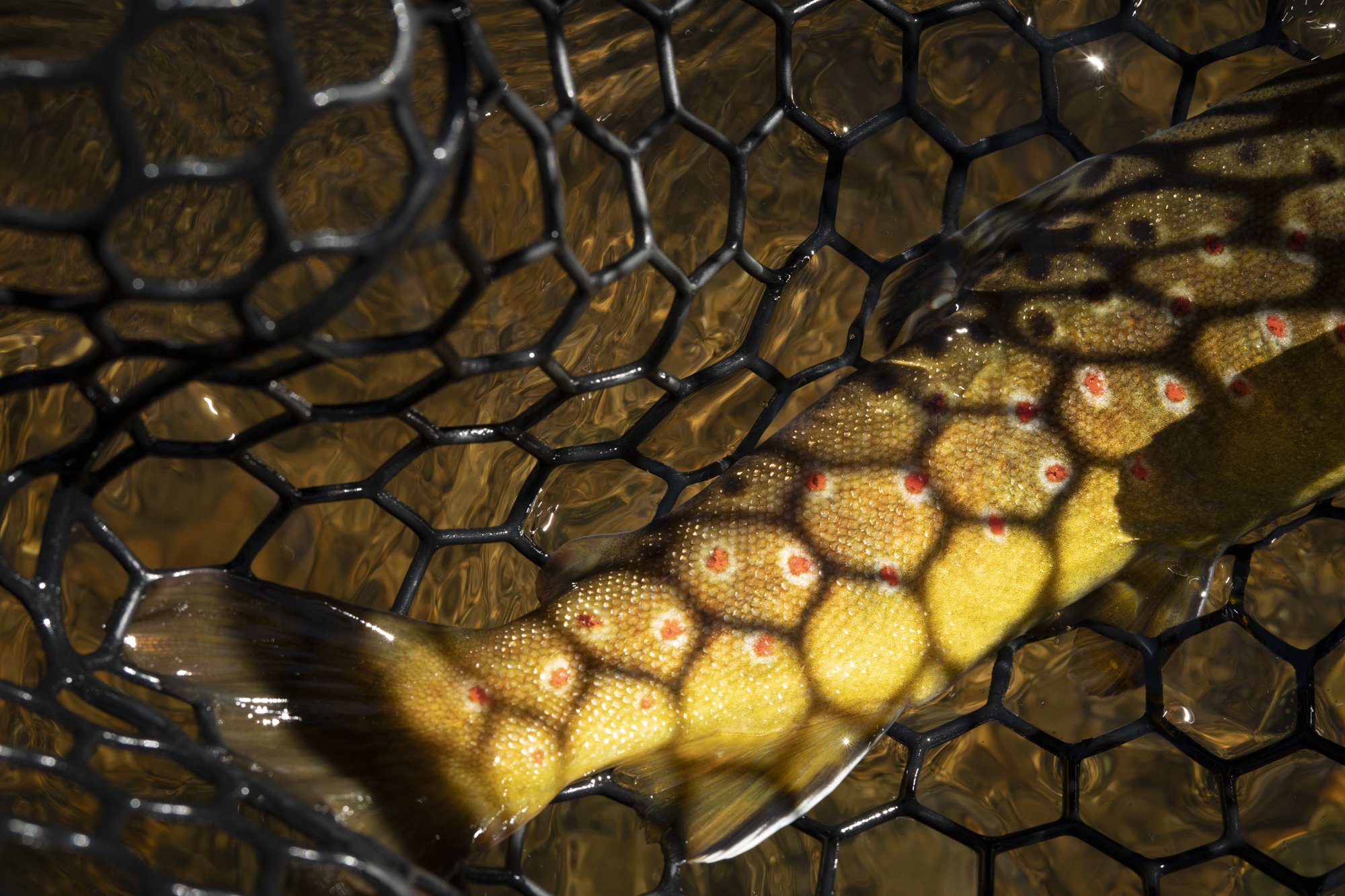
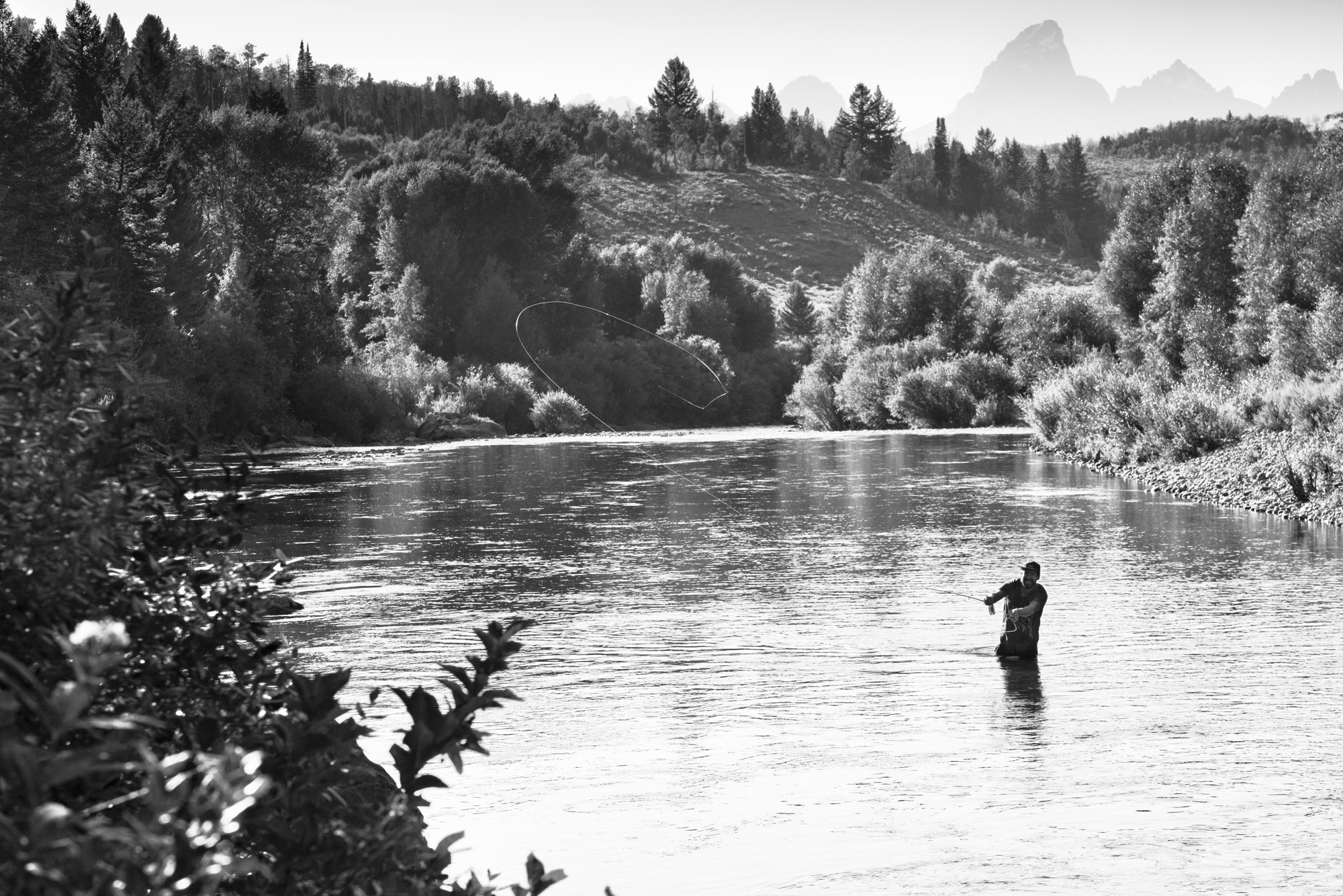
It’s safe to assume that most western fly fisherman, in the beginning at least, are only concentrated on the rainbow trout. It’s put up on a pedestal. The trophy. The goal. Won’t deny having those same feelings, but that’s all changed over time, as everything does. Now, in my opinion, brown trout are king. Their colors and markings are really special.Now, In the name of transparency this isn’t my fish, but my friend caught it while I was shooting. Which means I was sort of catching it vicariously through him. That’s the only way I’ve found to calm the urge to set the camera down and replace it with a fly rod. It’s a vicious cycle that I’m trying to be at peace with. On the scale of problems, it’s a good one to have. Snowboarding is the only thing I do that absolutely won’t involve a camera unless it’s the one on my phone. Fly fishing on the other hand is a constant battle.
Good times on the Taylor River that day.

Click here to see more of my Fly Fishing photography

Fly Fishing the Owens River

Owens River Fly Fishing

Mammoth Lakes, California - Winter

Some time over the past couple months has been spent archiving my library of images which is a hell of a process. Sorta seems like moving houses in that you have no idea how many stuff you’ve accumulated over the years until it’s necessary to move it. Archiving my library is daunting but necessary. Should have been doing it all along. A lesson I’ve learned during this process is how easy it is to forget about images once they sit on hard drives for a certain period of time. Life goes on. You get busy. Commercial shooting and other paying projects get put on the front burner. So now I’m faced with having to archive 10+ years of imagery onto a separate site that will allow the images to be licensed instead of collecting dust on a shelf. That aside, it brings a lot of joy to see images from trips past that I haven’t looked at since they happened. Also brings the thought of travel to the forefront and what COVID has done to the possibility of doing it at all. Internationally at least.

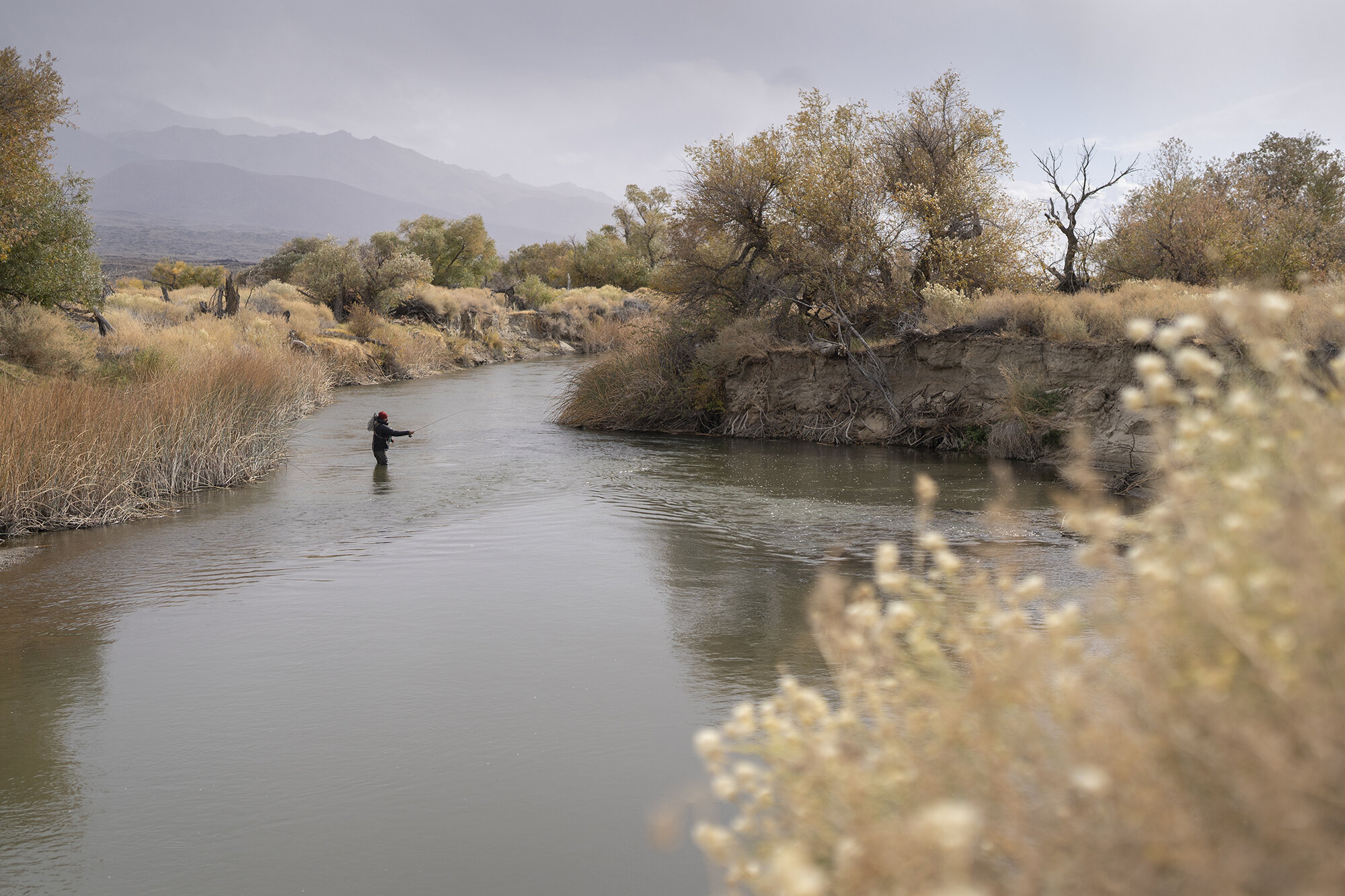
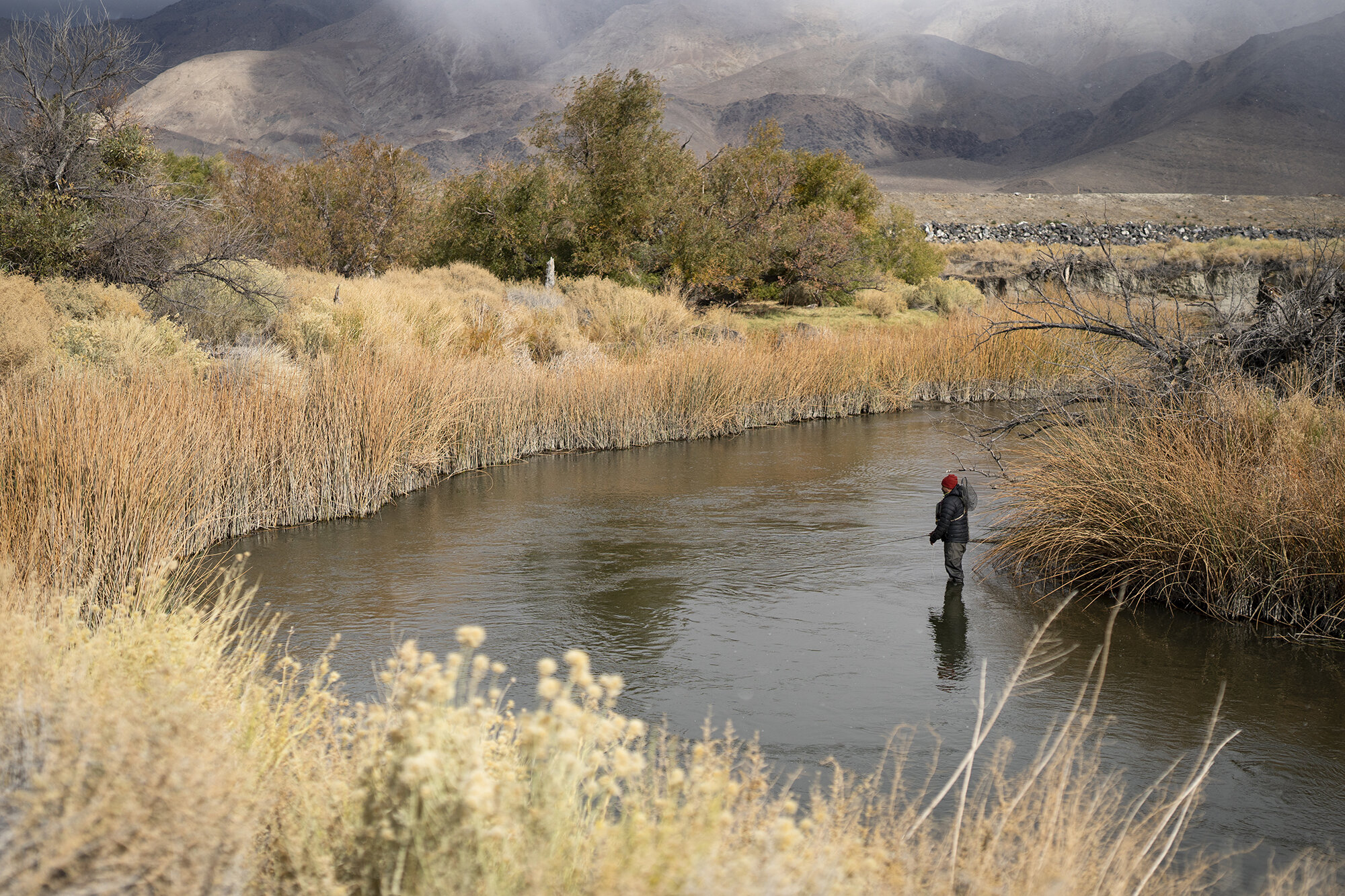
The images you see here are from a camping trip last year to Lone Pine, CA in the Alabama Hills. On the way out we hit the Owens River briefly to see if there were any trout hanging out in a particular section we’d never been to. Turns out, there weren’t……

Click HERE for an archive of fly fishing imagery which will is still a work in progress and always will be as my library continues to grow.

California Fly Fishing Photographer

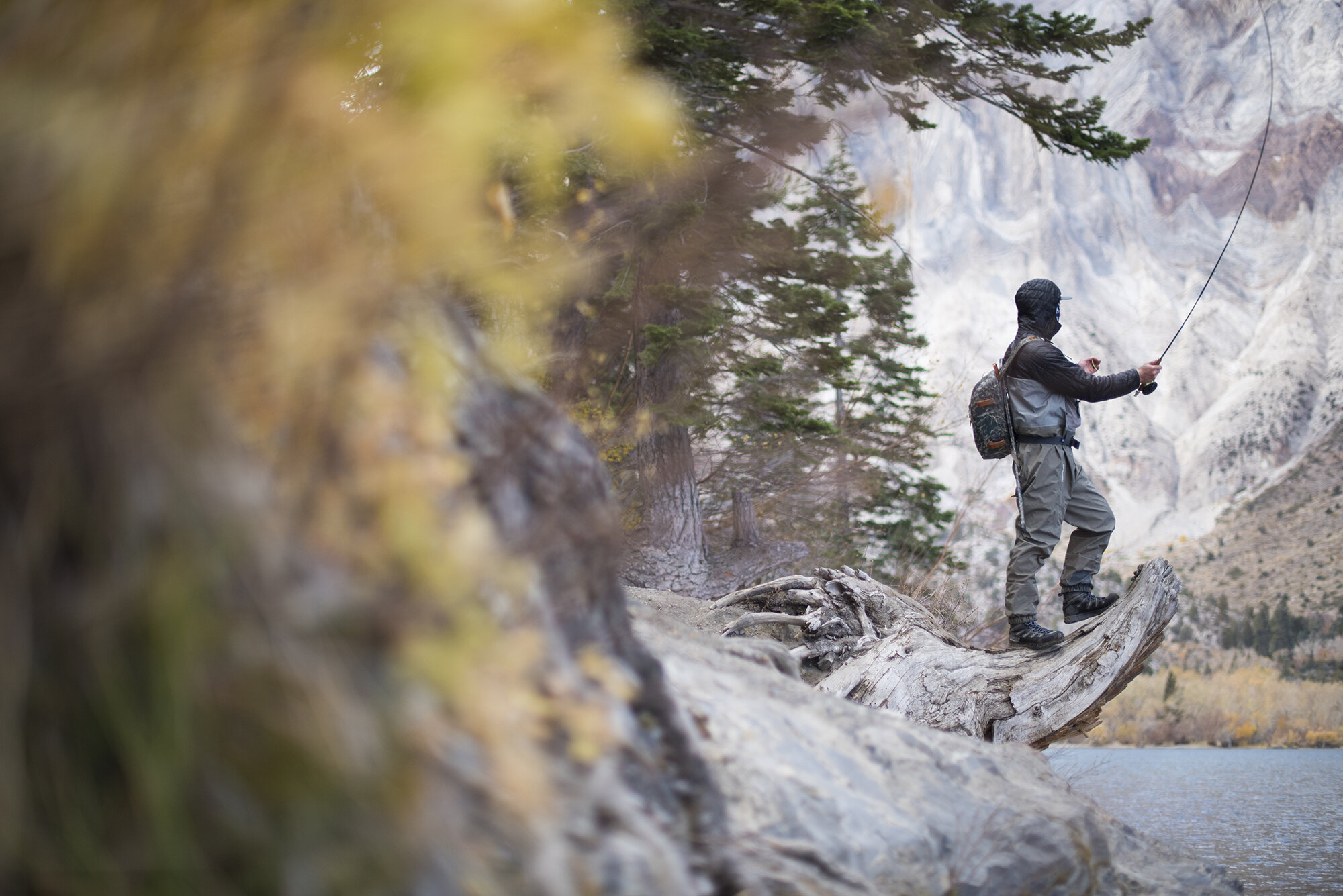
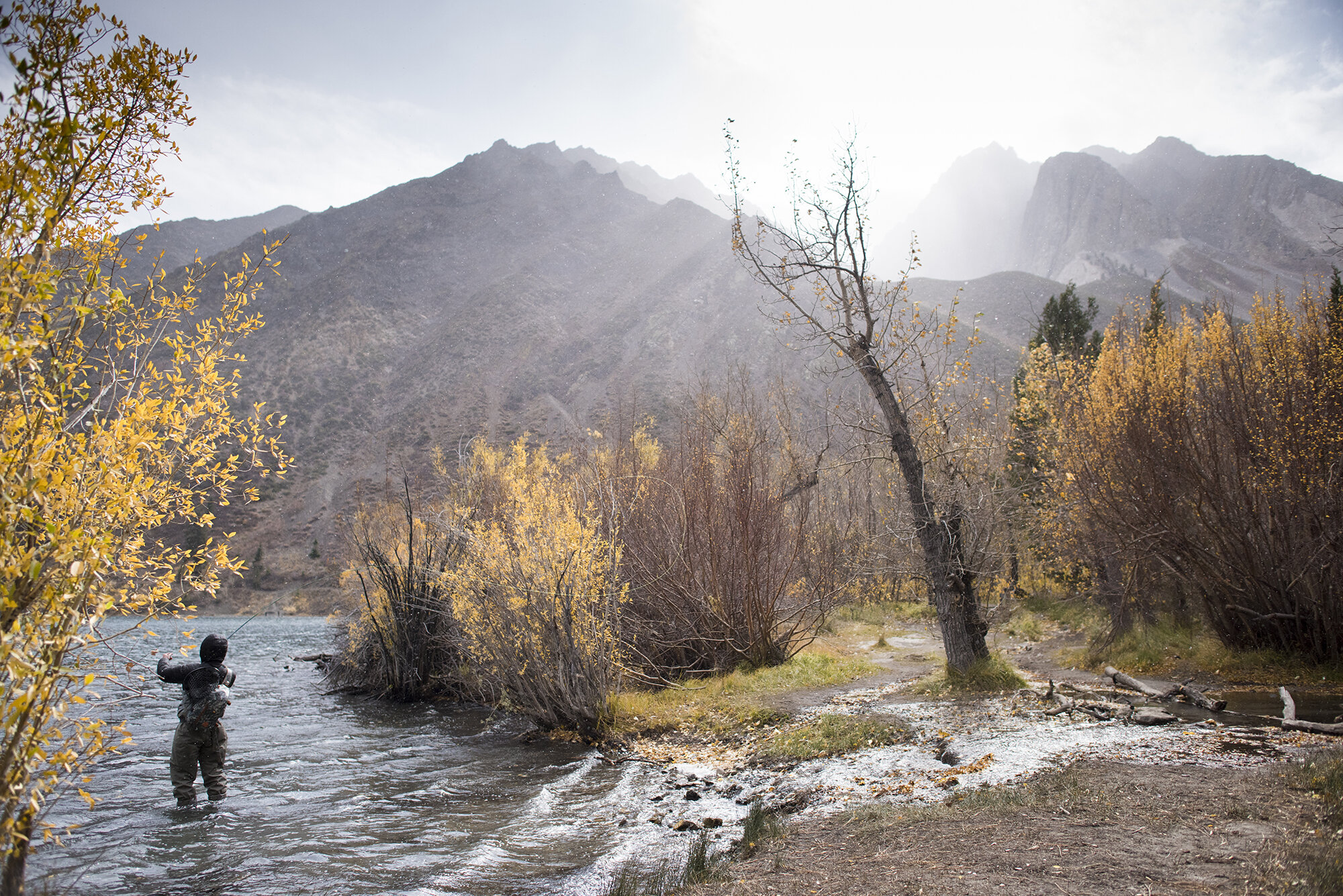
Eastern Sierra Fly Fishing - Convict Lake

Mammoth, California

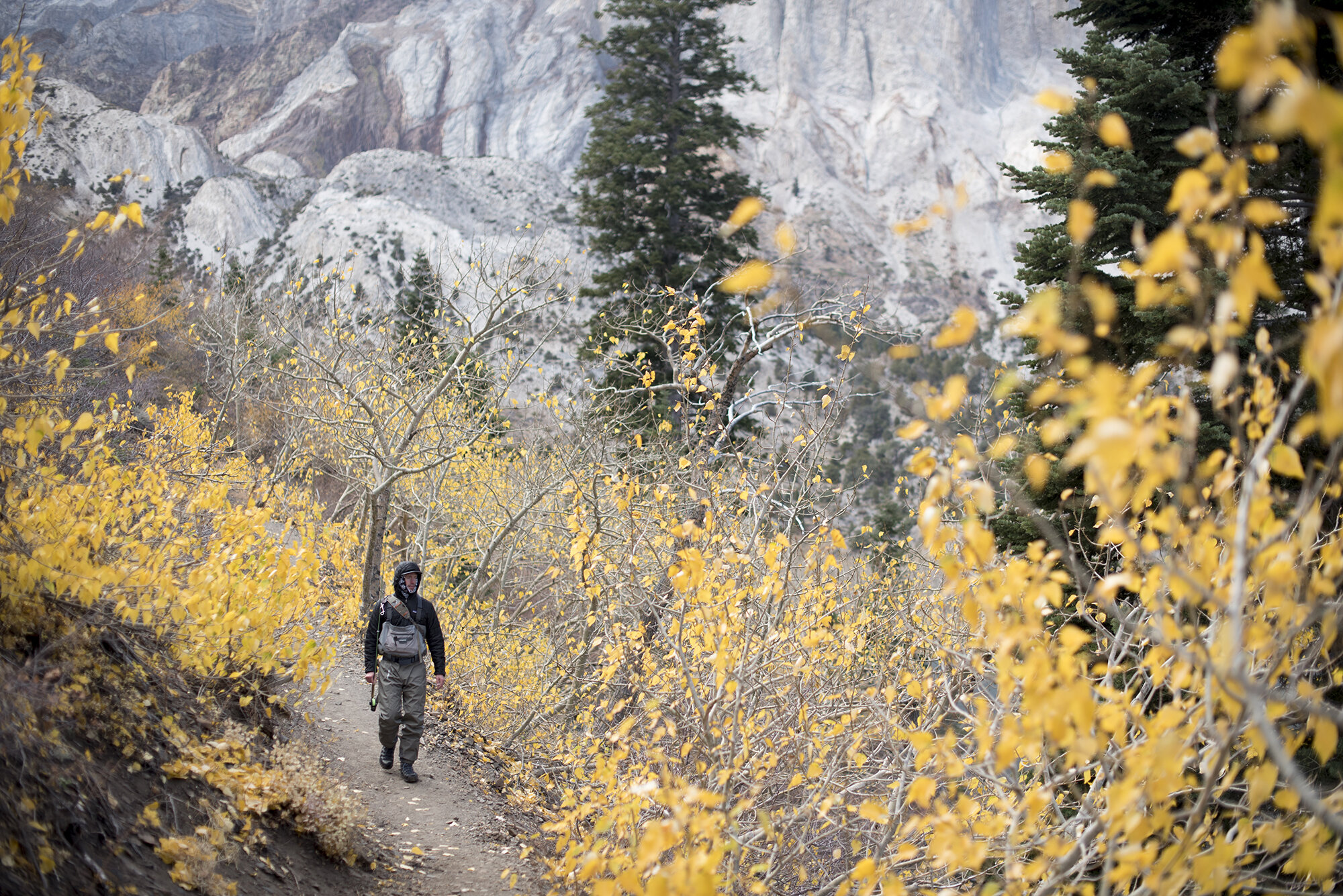
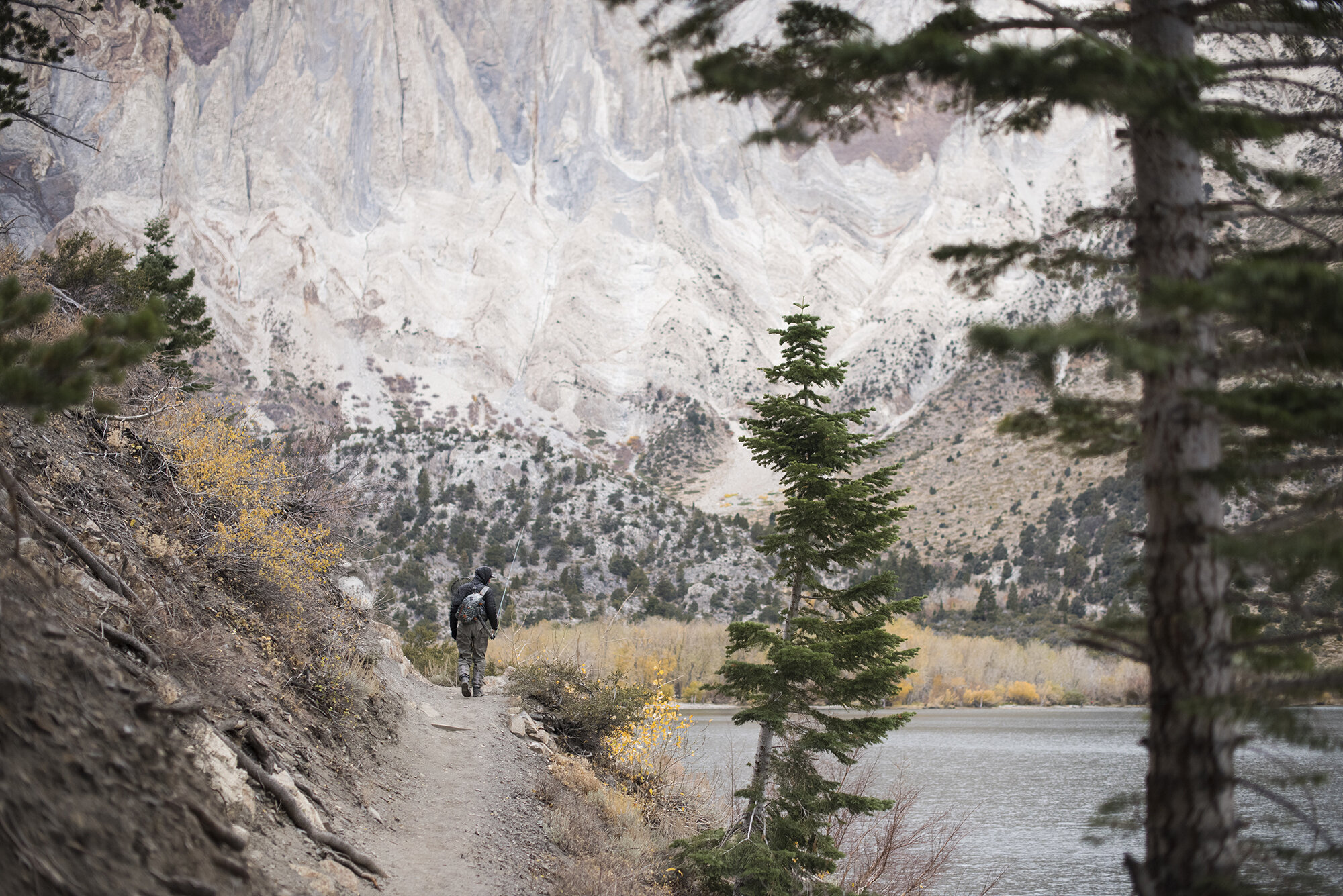
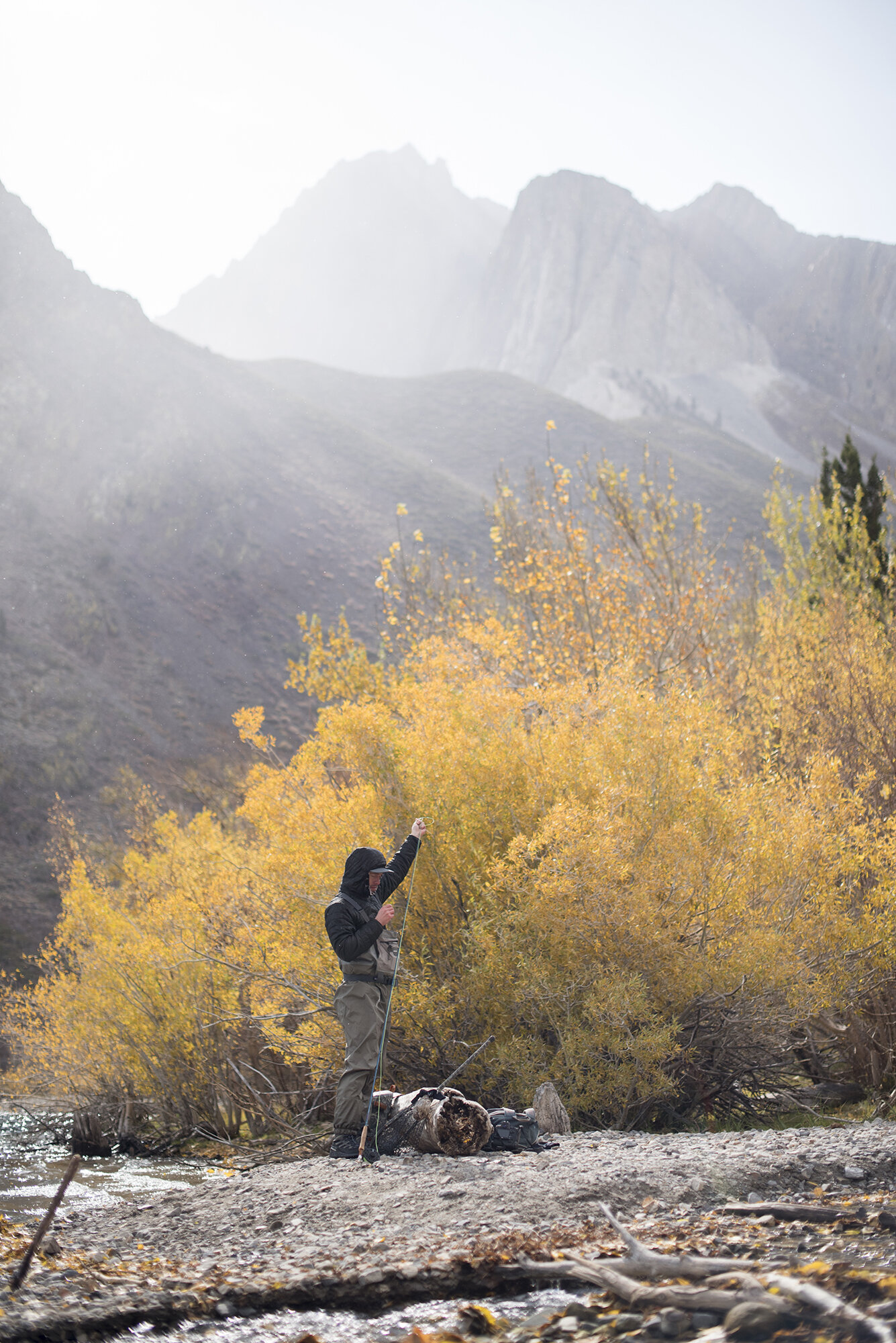
As the leaves begin to don their vibrant autumn colors and the crisp air signals the change of seasons, Convict Lake near Mammoth, California, transforms into a fly fishing paradise. Nestled in the stunning Sierra Nevada mountains, this lake is not only a backdrop for nature's autumnal palette but also a haven for anglers seeking tranquility and the thrill of the catch. In this post, I share a collection of photographs capturing the unique essence of fly fishing at Convict Lake during the fall season.

The Magical Autumn Setting

Fall at Convict Lake is a spectacle of nature. The surrounding aspens and willows flaunt shades of gold, orange, and red, reflecting off the clear, calm waters. Early mornings at the lake are serene, with mist hovering over the water and soft light filtering through the trees, creating a perfect setting for both photography and thoughtful fishing.

Capturing the Essence of Fly Fishing

Fly fishing is as much an art as it is a sport, and Convict Lake in the fall provides the perfect canvas. My photographs focus on the fly fishermen in action, highlighting their deep connection with the environment. The images showcase the elegance of the cast, the intense focus of the angler, and the natural beauty that envelops them. This collection is not just about the act of fishing but the experience of being one with nature.

For commercial brands, these images offer a glimpse into the authentic experiences that their products can facilitate. For collectors, they provide a moment of peace and a reminder of the quiet beauty of the natural world. Enjoy this visual journey through one of California's most picturesque fly fishing destinations during the most magical time of the year.

Click here to shop my fly fishing photography prints - and contact me directly about editorial and commercial licensing - rob@robhammerphotography.com

Fly Fishing The Colorado River - Photography

Colorado River Fly Fishing

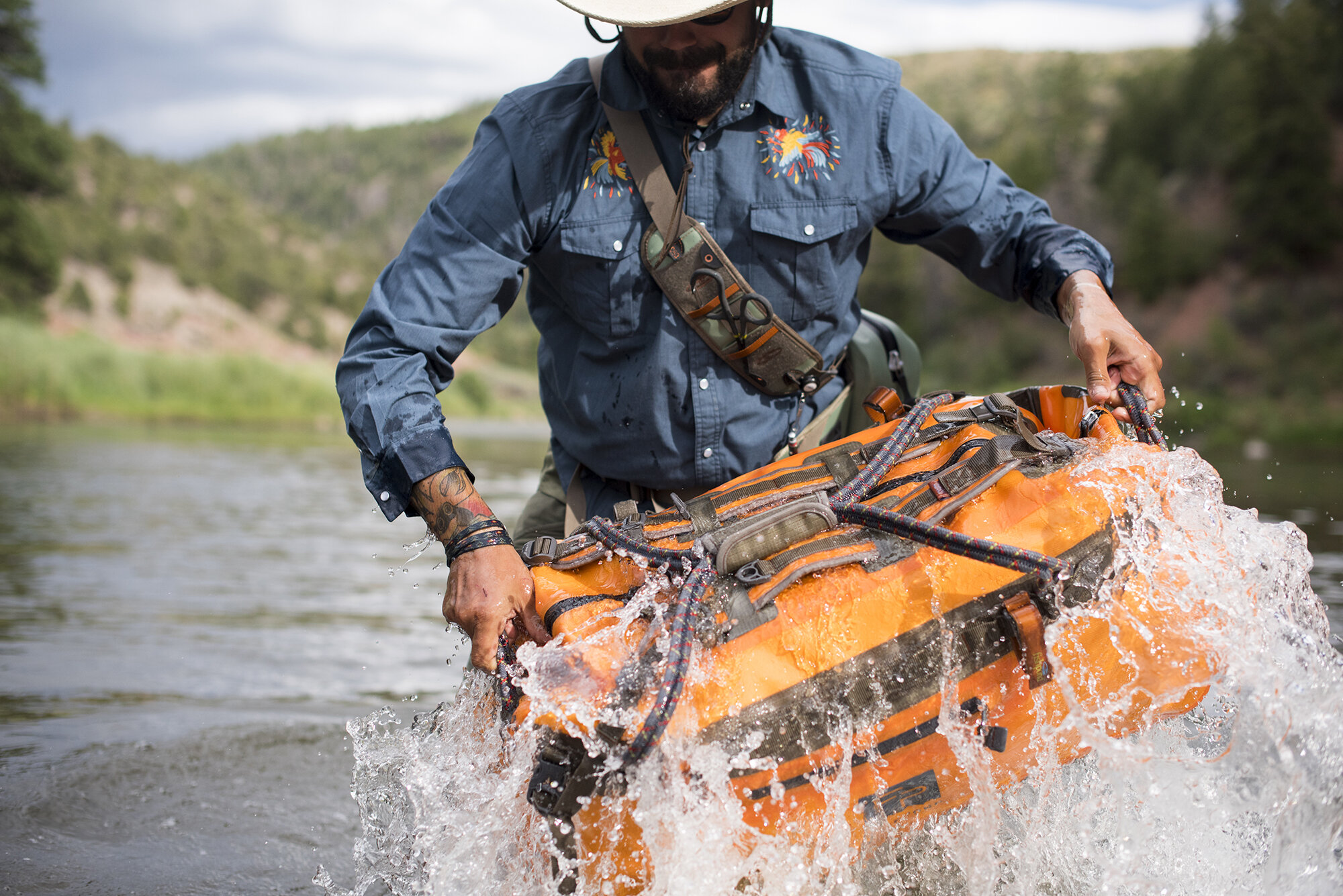
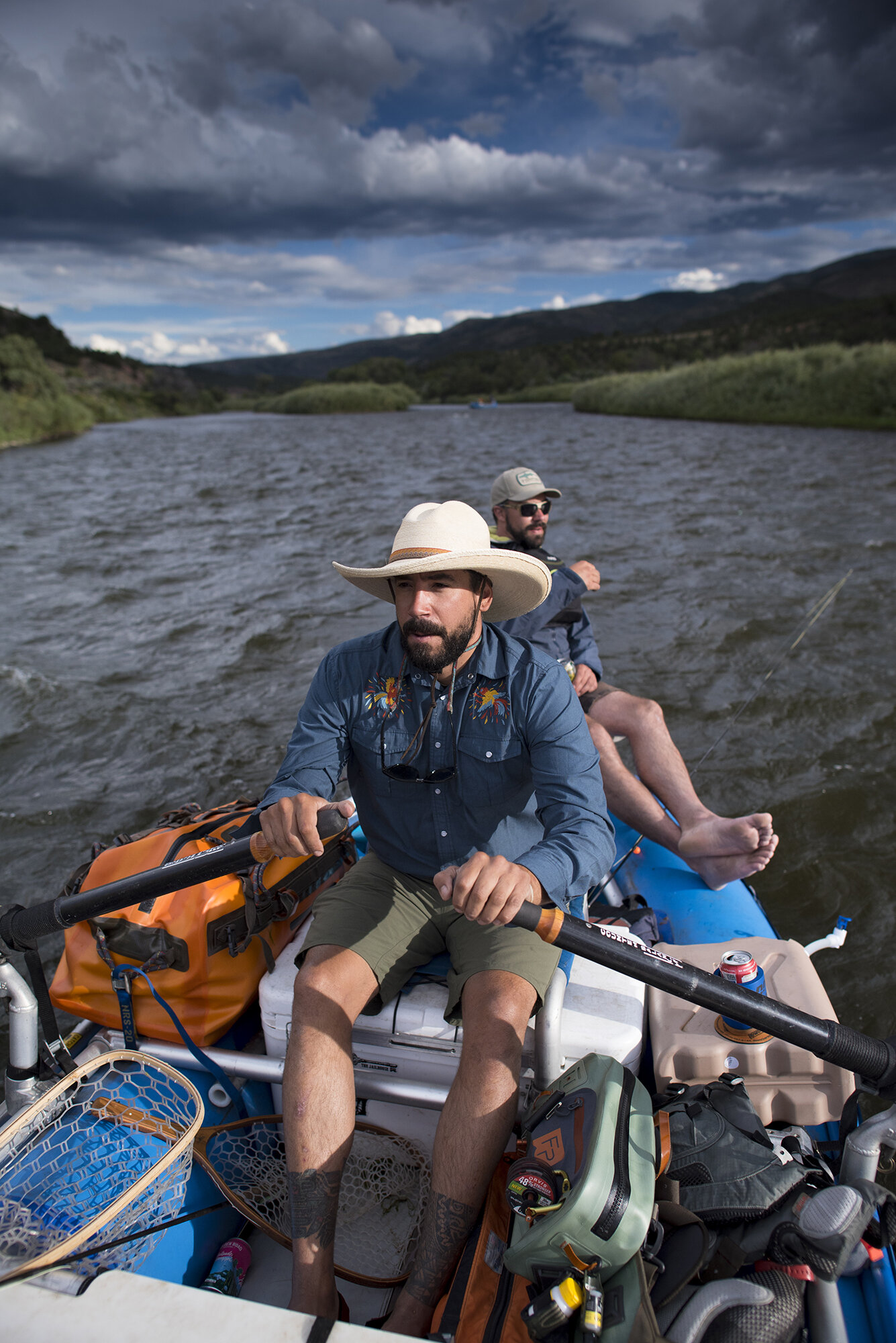
Bunch of random images from a fly fishing trip on the Colorado River. Great times out there. Can’t wait to get back. It’s no secret that fly fishing is a relaxing sport, but it still not lost on me the effect a river can have on your brain. No matter how much time you spend out there, where it’s 30 minutes or 3 days, you’re a different person afterwards.

Click here to see more of my fly fishing/adventure images.

How Fly Fishing Photography Lands Magazine Covers (The Drake Magazine Case Study)

Fly Fishing Photography Published on the Cover of The Drake Magazine

There are a lot of ways to measure success in photography, but a magazine cover still carries weight—especially in a niche as tight-knit as fly fishing.

When one of my photographs was selected for the cover of The Drake Magazine, it wasn’t just a milestone. It was a reflection of years spent on the water, learning how to photograph fly fishing in a way that feels honest to the people who actually do it.

This isn’t staged work. It never has been. The goal has always been to document fly fishing as it exists—early mornings, cold water, missed casts, and the moments that make it worth it.

What It Takes to Shoot a Fly Fishing Magazine Cover

Fly fishing photography is unpredictable by nature. Unlike controlled environments, everything is working against you—light, weather, water clarity, and the movement of both angler and fish.

To create an image that’s strong enough for a cover, everything has to come together at once:

  • Light that defines the scene without overpowering it

  • An angler who moves naturally, not for the camera

  • A setting that places the subject within the landscape, not separate from it

Most importantly, the photograph has to feel real. The fly fishing world is small, and people can tell immediately when something is forced.

That authenticity is what separates an image that works online from one that earns a cover.

Behind the Photograph

The image that ultimately became the cover wasn’t planned as one.

Like most of my work, it came out of time spent on the river—watching how anglers move through water, waiting for the right light, and being ready when everything lines up for just a few seconds.

There’s no shortcut to that process. And I truly believe that the worst approach is setting out with the intention to make a magazine cover. Keeping that idea in your head clouds everything and will cause you to miss all the great moments. Instead, just be present. Be patient.

Let the day unfold naturally. Whenever I’m out on the water, there is never an agenda other than having fun and making the best possible photographs. Even with that mindset, I never think about making photographs for an ad campaign, a cover shot, editorial feature etc. Real photographs come just by paying attention and letting it all happen.

Why The Drake Magazine Matters

In fly fishing, The Drake Magazine holds a unique place.

It’s not just a publication—it’s part of the culture. Known for its independent voice and irreverent tone, it has built a reputation as one of the most respected magazines in the industry.

Being featured on the cover means the photograph resonates beyond aesthetics. It connects with anglers who care deeply about the experience, not just the outcome.

That alignment matters. It reinforces the same philosophy behind my work: document the reality of fly fishing, not an idealized version of it.

Fly Fishing Photography for Brands and Editorial Use

This photograph is part of a larger body of work focused on fly fishing across the American West.

Over time, that work has led to collaborations with brands and publications that value authenticity in how the sport is represented, including:

  • Patagonia

  • Fishpond

  • Duck Camp

For brands and editors, the goal is simple: create imagery that reflects how fly fishing actually looks and feels in the real world.

If you’re looking for photography for a campaign, editorial story, or long-term project, this work is available for licensing.

Fine Art Fly Fishing Prints

While this photograph reached a wide audience through publication, it also exists as a fine art print.

Printed with the same attention to detail as the work itself, these images are meant to hold up over time—both as photographs and as representations of a place and experience.

For collectors, anglers, or anyone drawn to the quiet side of the sport, the prints offer a way to bring that connection into a physical space.

Part of a Larger Body of Work

This image is one piece of a long-term project documenting fly fishing throughout the American West.

From small Colorado creeks in winter to larger, well-known rivers across the region, the focus has remained consistent: real anglers, real conditions, and the landscapes that define the experience.

Over time, that body of work has expanded beyond the river itself to include the broader culture—guides, fly shops, and the communities that keep it alive.

Explore the Full Fly Fishing Photography Collection

To see more work from this project:

Sri Lanka - Photography

Sri Lanka Travel Photography

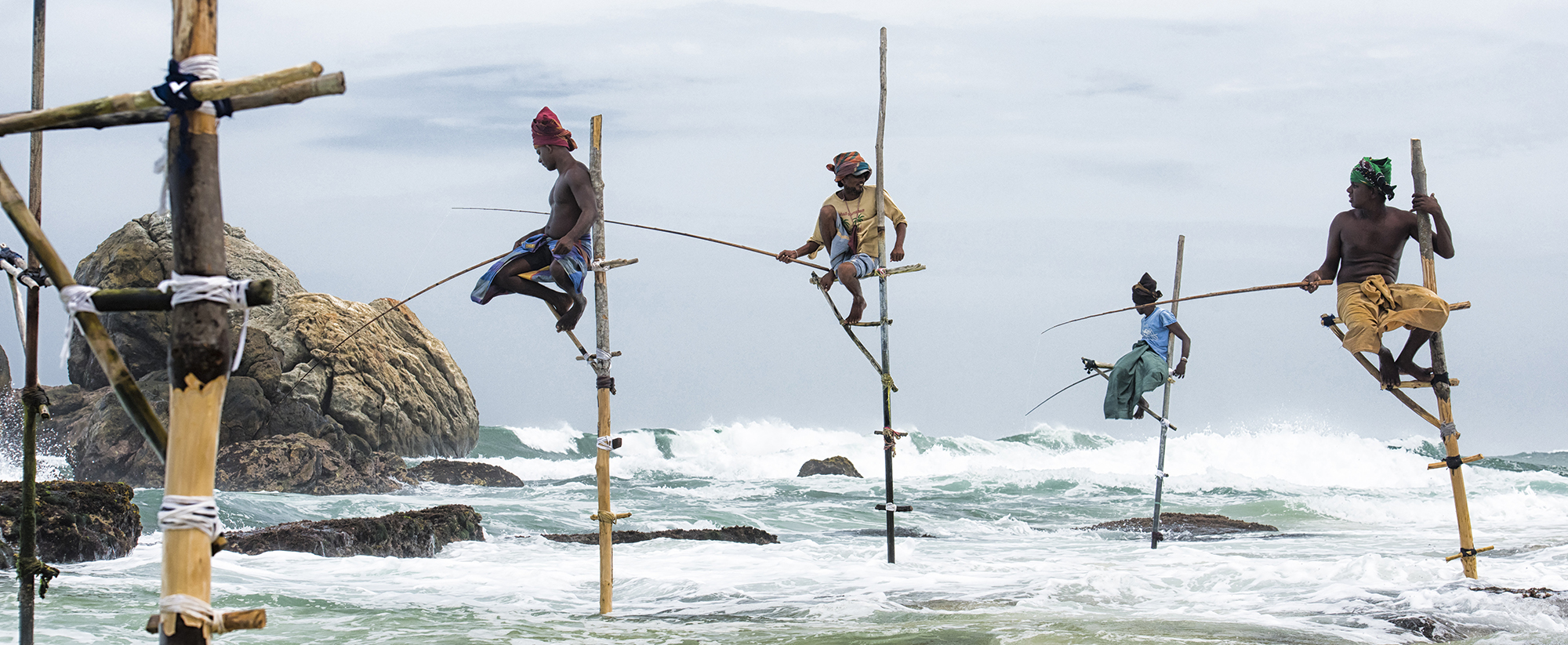
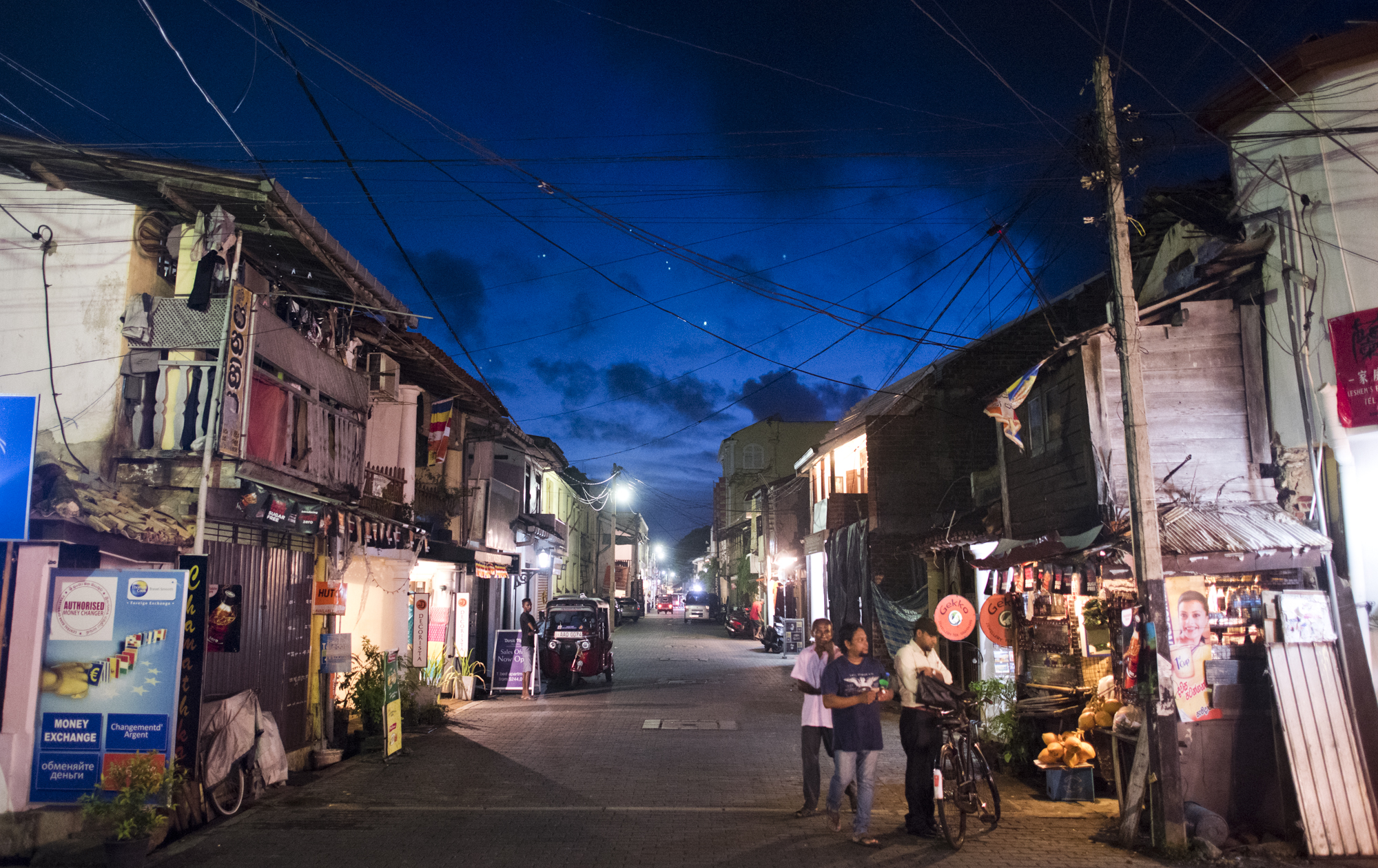
Years and years ago Steve McCurry made an iconic photograph of the Sri Lanken stilt fisherman. At the time, it was a rich part of the countries culture, and a real way for the fisherman to earn a living while also providing for local residents. That was then. Fast forward X amount of years, and this beautiful trade has become nothing more that a tourist attraction. To the point that you can click on them on Google Maps. I didn't realize this before visiting, and very much wanted to see them all based on McCurry's photo. How ignorant of me. On this day, we pulled up to a beautiful beach where they are located, and were greeted by tourist buses filled with people waving their selfie sticks around. The worst part though, you can't even do this for free. If you want to take a picture, you have to pay a guy on the beach who almost acts like their agent. At the end of the day they divvy up the profits. Not sure what's more sad, the fact that hoards of idiot tourists ruin a beautiful scene with their selfie sticks, or that these guys don't even fish anymore? IF you can set all of that aside, it's still something to appreciate as a unique scene that you won't find anywhere else in the world. I tried to picture them 30+ years without the crowds just trying to earn a buck. It helped a little.

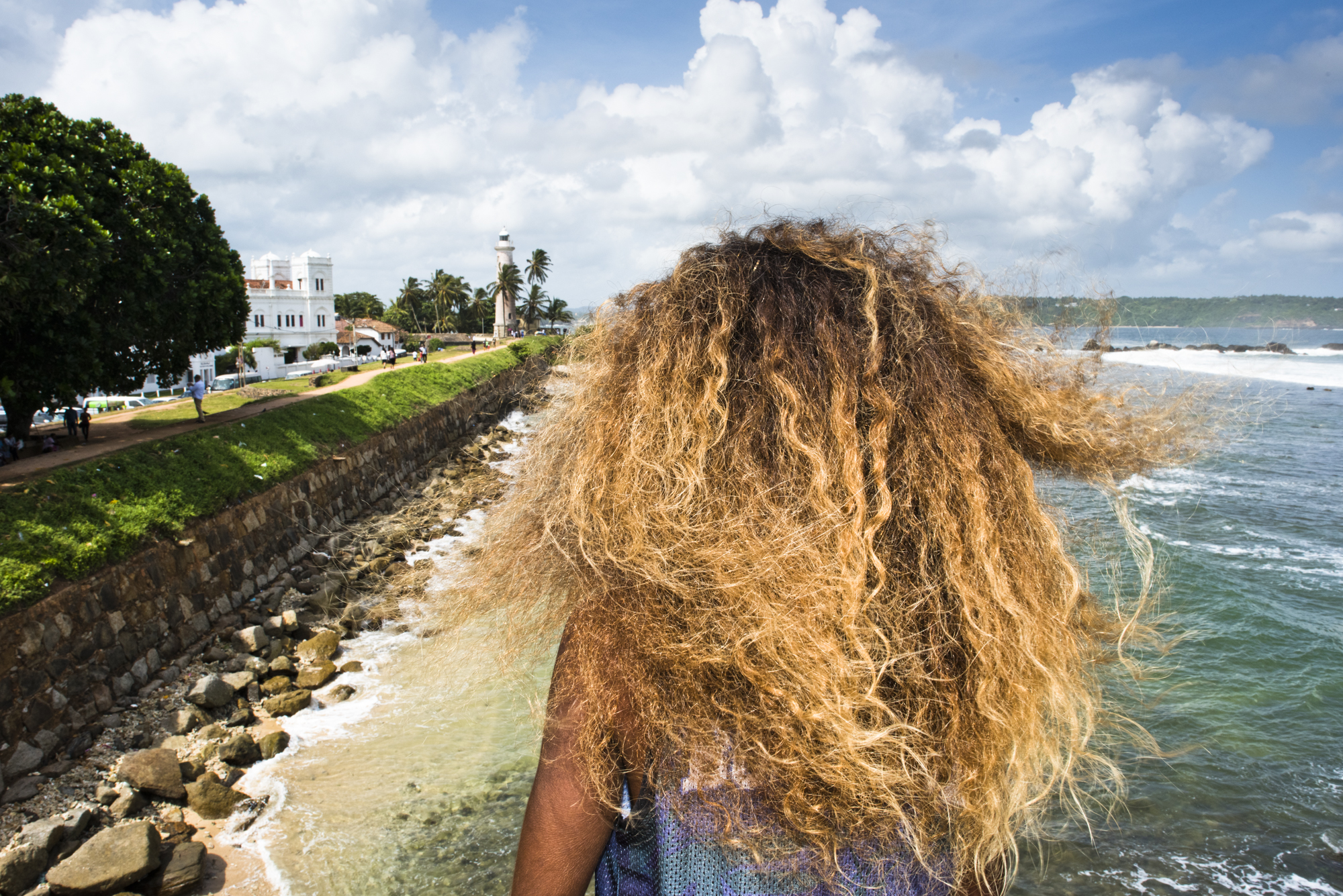
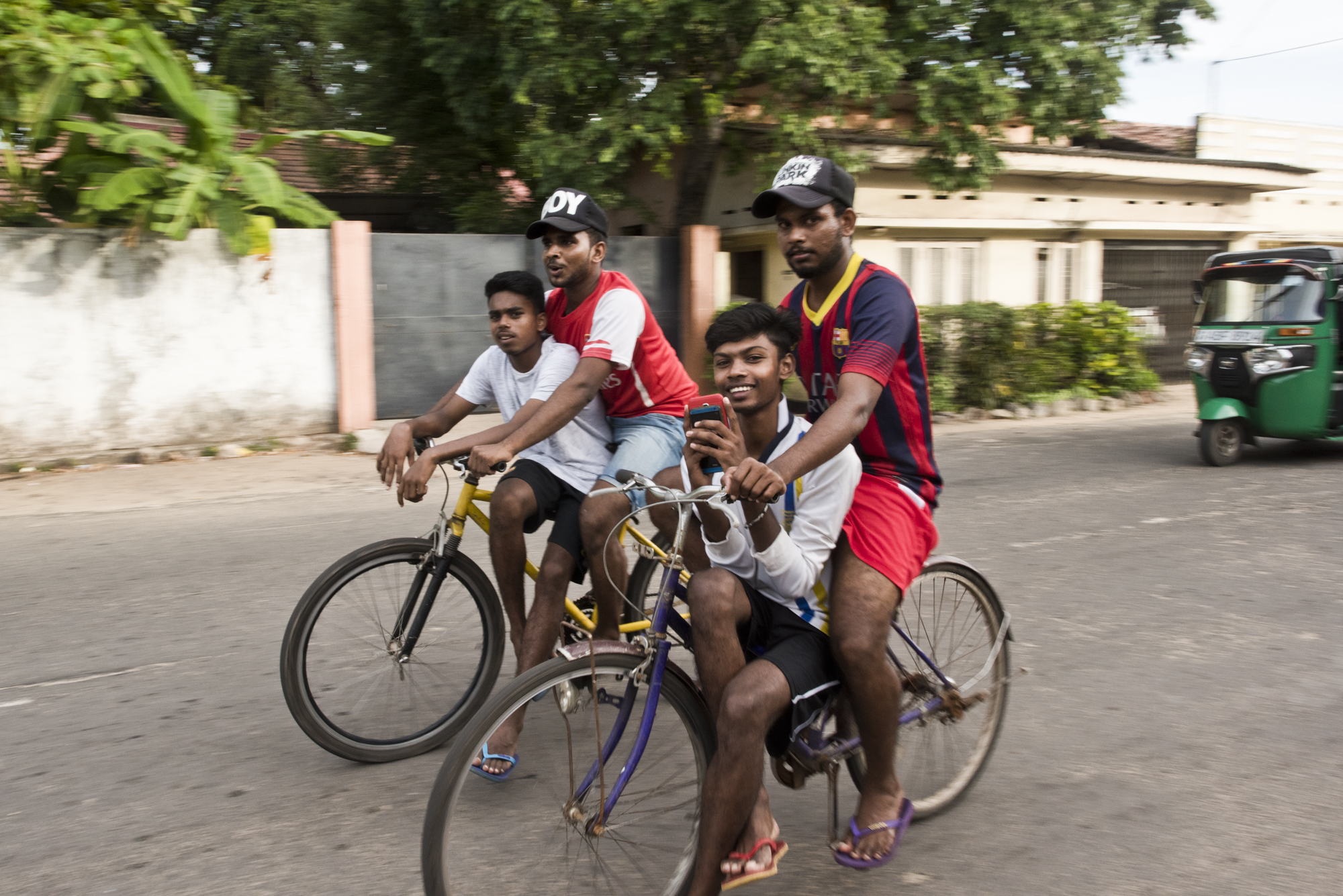
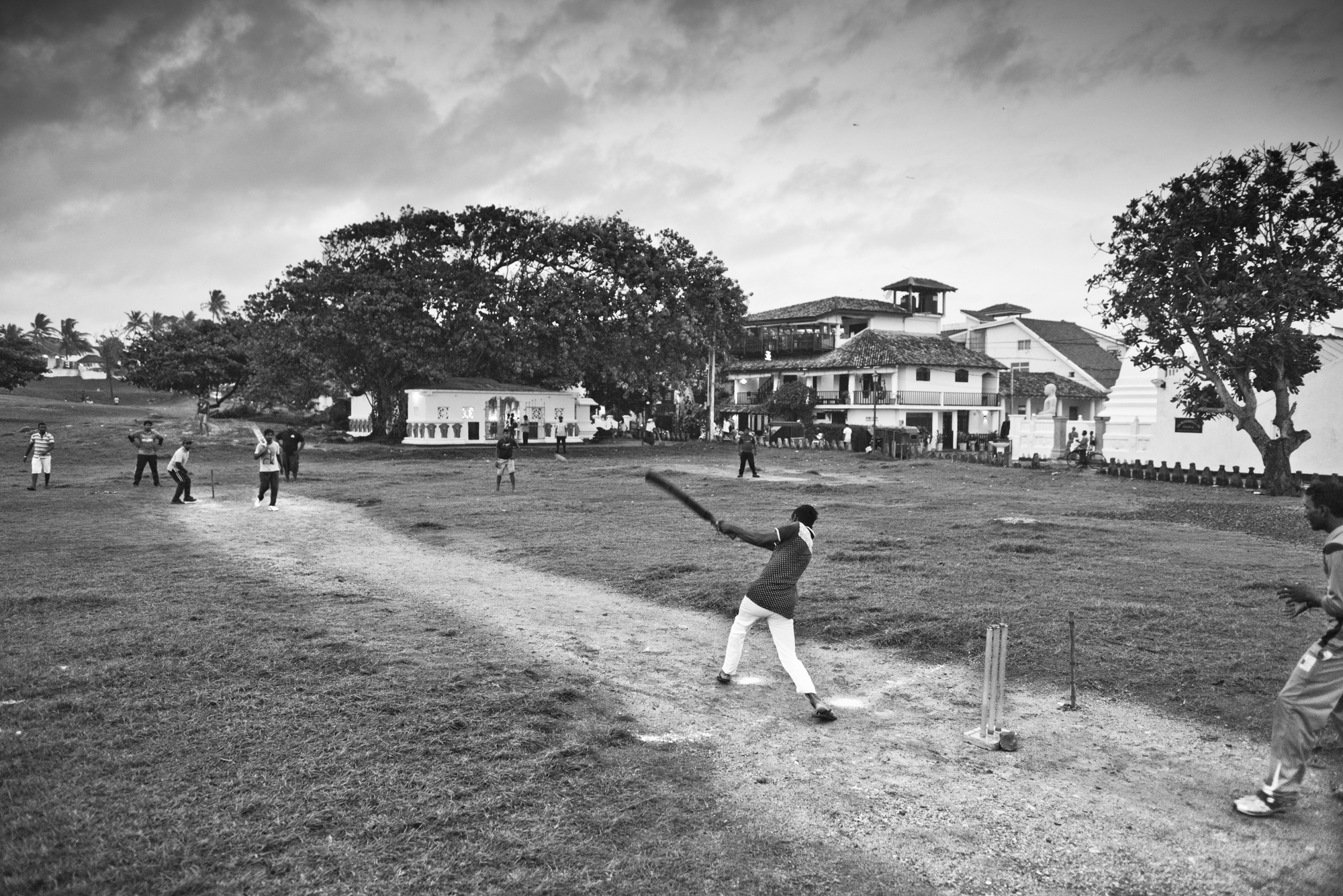
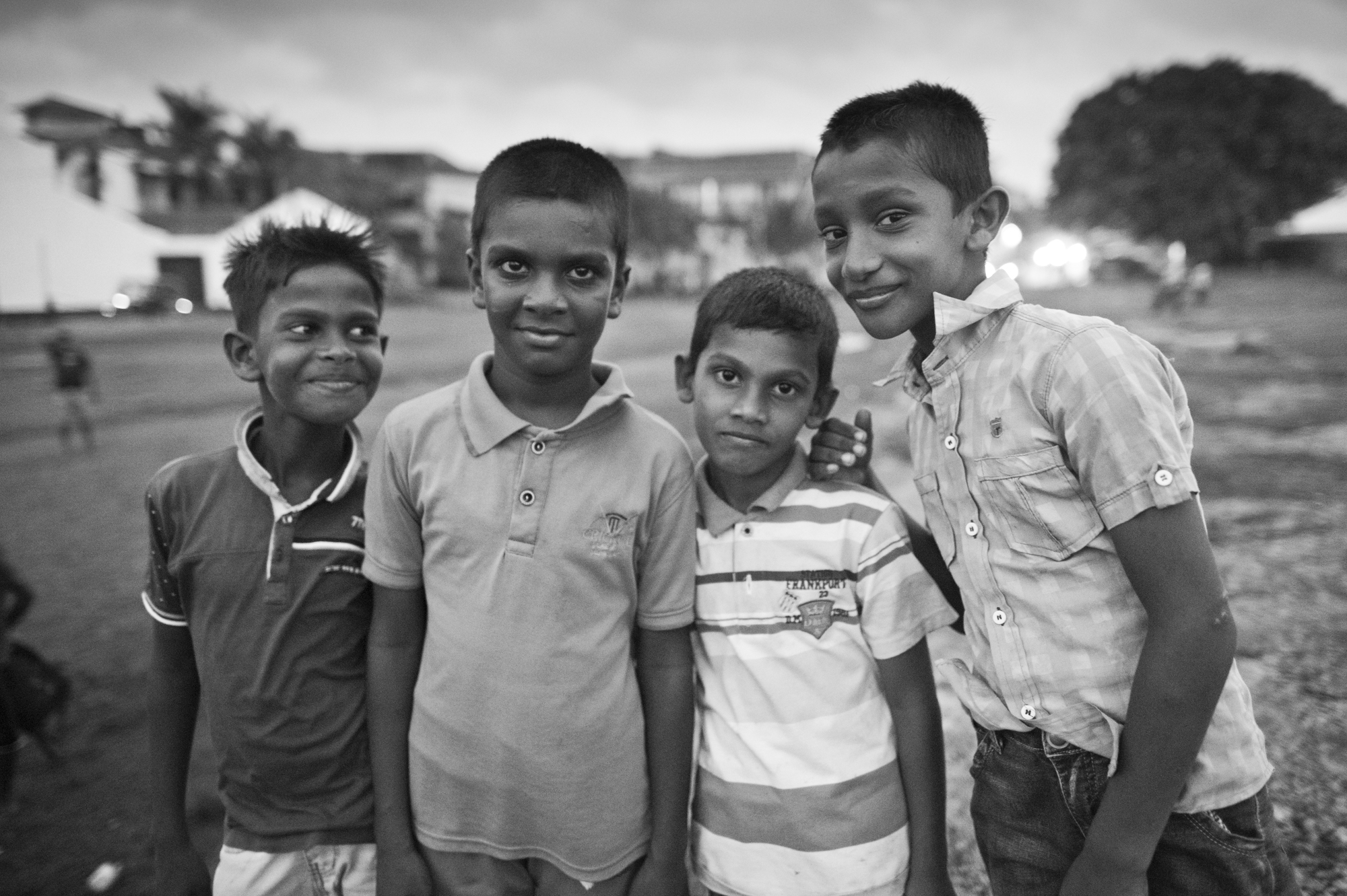
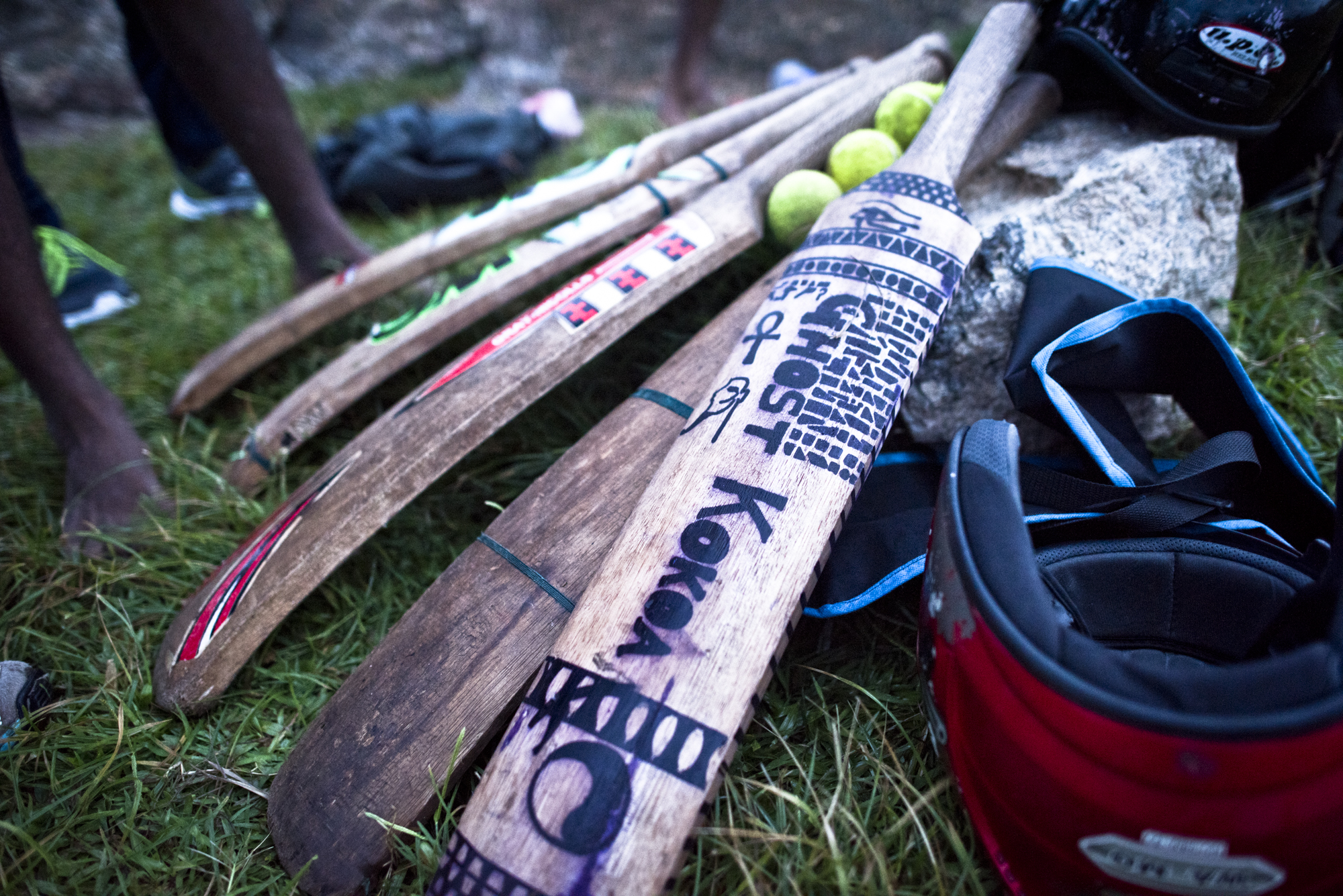
Forget everything I just said, because otherwise Sri Lanka is a great country. I really enjoyed it, and would have loved to spend more time there. A highlight for me was seeing how big the cricket culture is. Seems like everywhere we went there were pick-up games going on. Grass fields, dirt lots, concrete, doesn't matter. Sri Lankan's just want to play cricket. 

Jackson Hole, Wyoming Backpacking

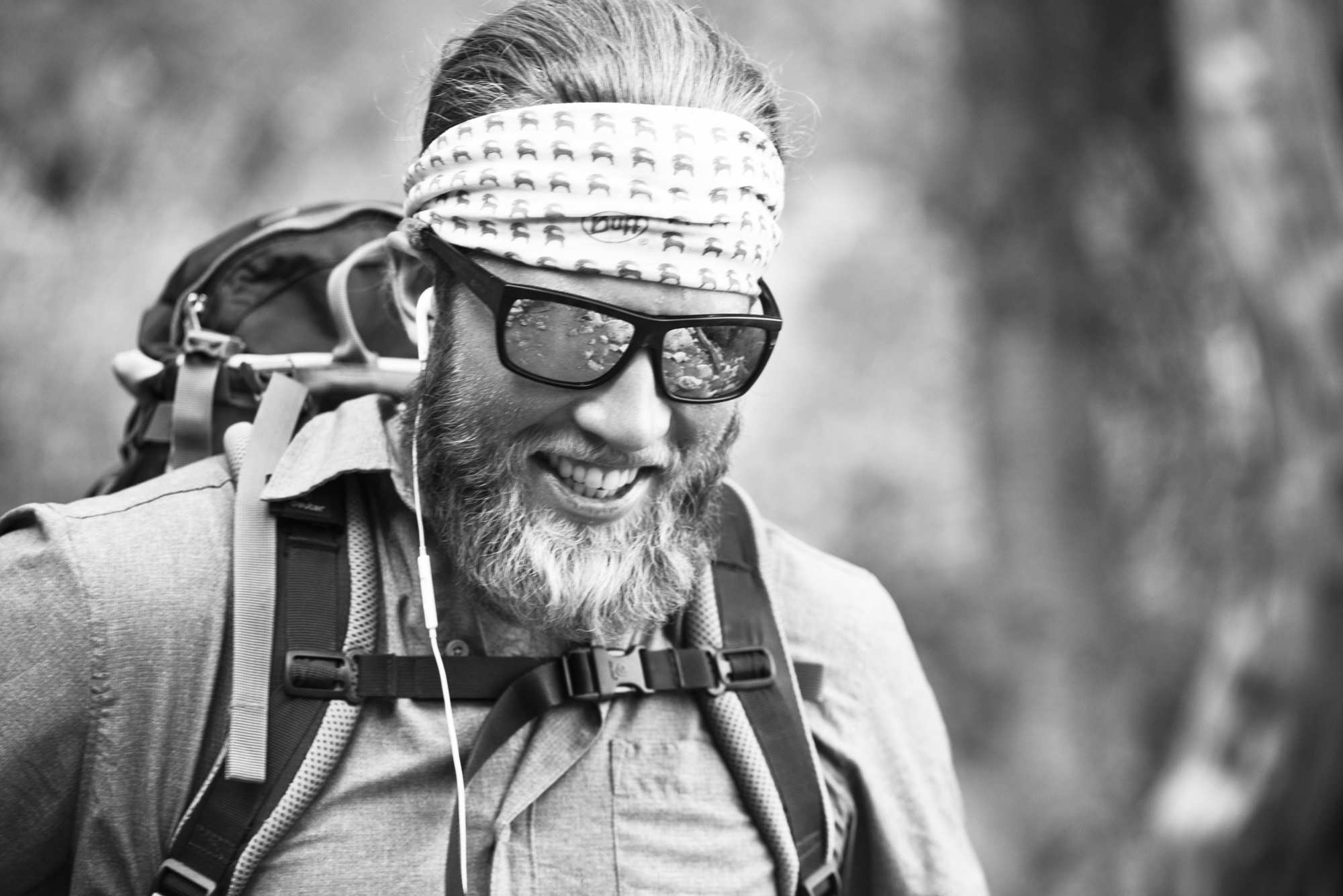
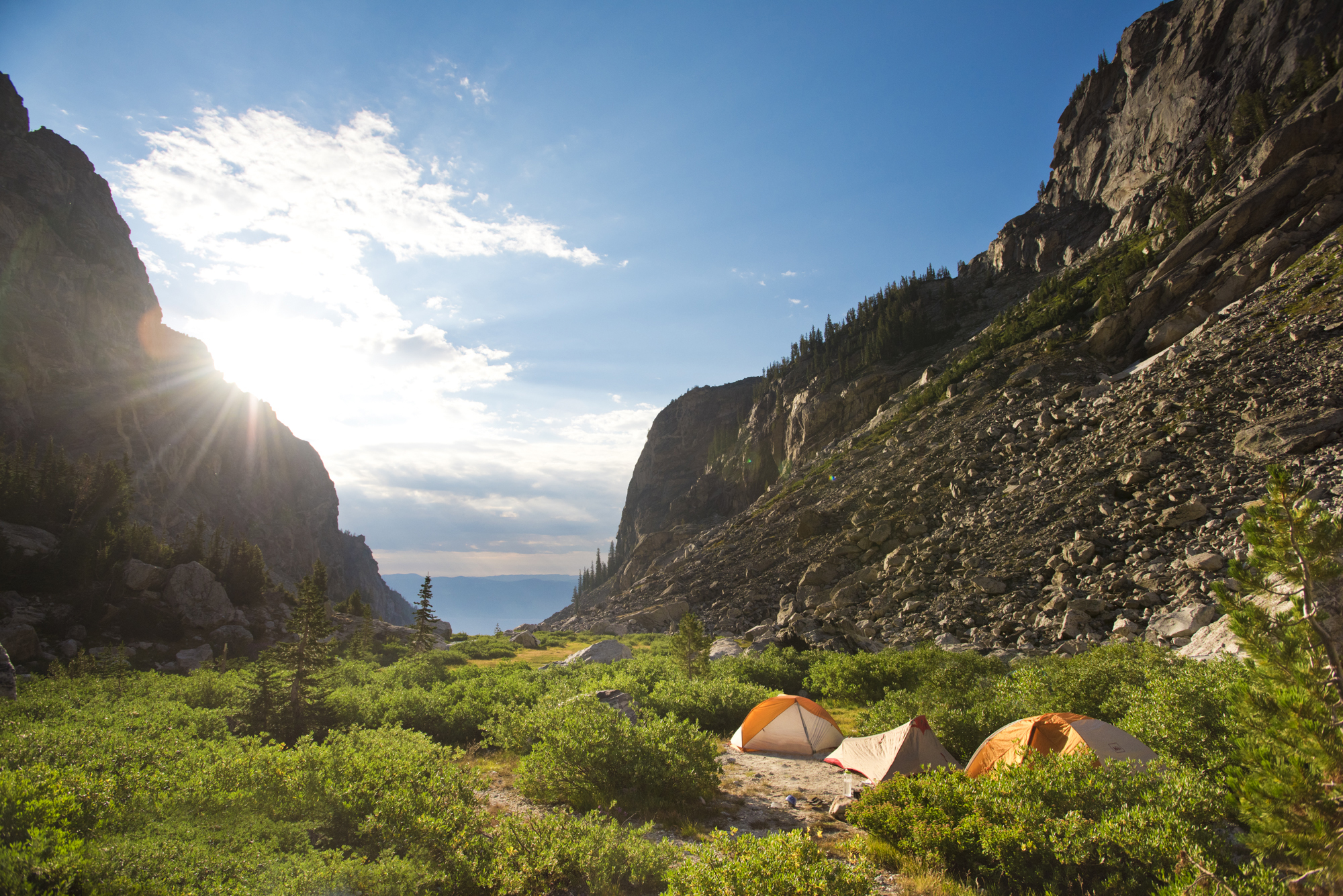
Hiking the Middle Teton

Backpacking - Adventure-Photography

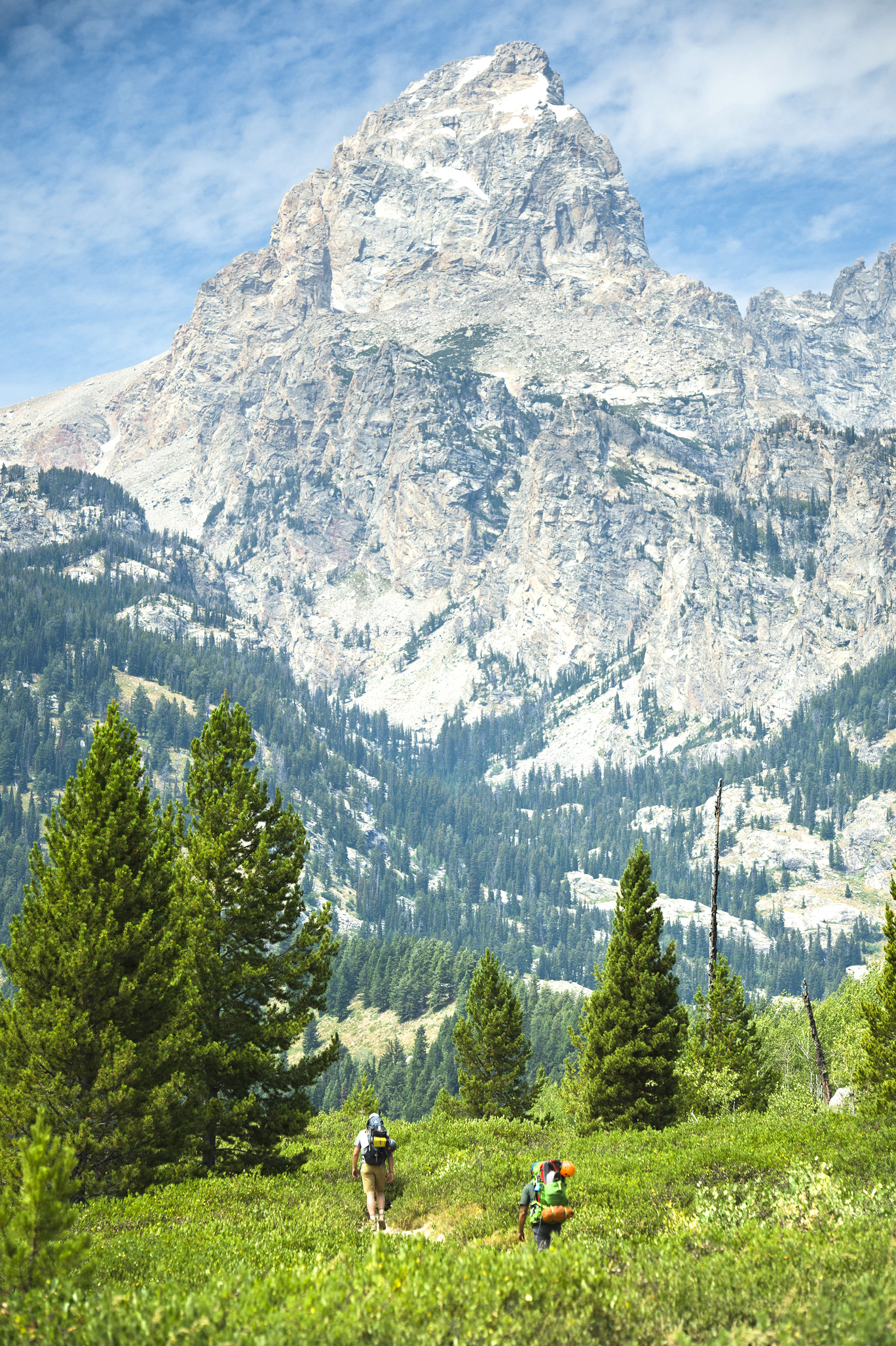
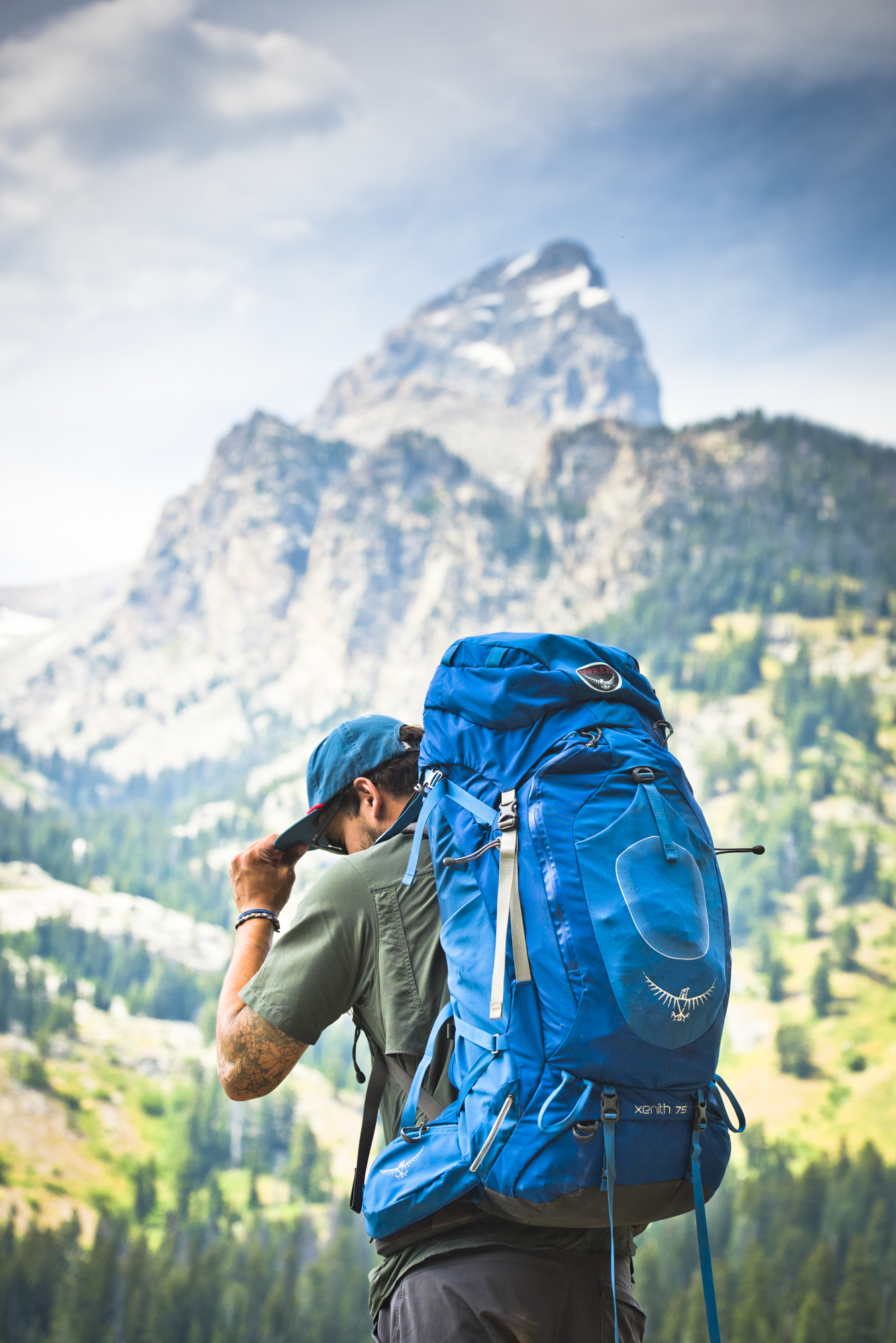
It's only been a year+ since this trip and I'm finally getting around to posting about it. Have been back several times since. Wonder how many other trips I have sitting on my hard drive? Jackson Hole is top notch. Really top notch. The more I go back, the better it is, and the amount of time we actually spend in town is less and less. Grand Teton National Park and everything else that surrounds town is phenomenal. The hiking, camping, fishing, etc, is so good. And on this particular trip we did all of that. Up the middle Teton to be exact. A very different type of backcountry climbing than I'm used to. So much of it is just huge boulder fields. Which means that you spend a lot of time going from rock to rock, or scrambling. Not my favorite style of hiking, but what an incredible trip. The Tetons have to be the most picturesque range in the USA. The way they rise up from the the valley floor is so dramatic. They look so massive from afar, and even bigger when you're right up close. Not sure how we got so lucky, but it was perfectly sunny at the summit without an ounce of wind. That can't happen too often?  As I'm writing this it's snowing in Jackson Hole, and I can't wait to get back up there.  The snowboarding there is so good. You'd have to put it up there as some of the best in the country, especially when you really get to know the mountain. This is the worst thing I've written in a while. Sorry. 

Catalina Island Adventure Photography

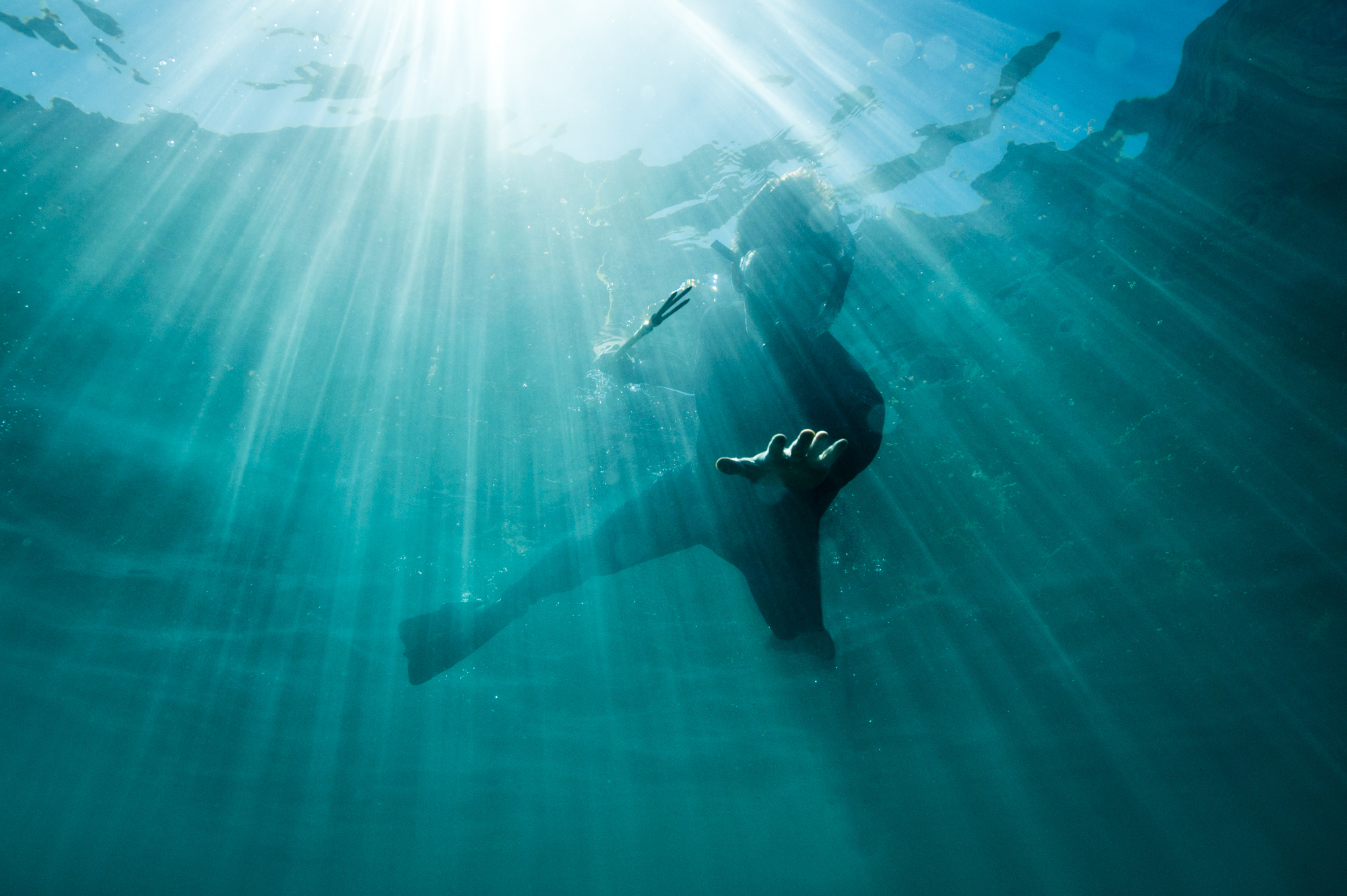
Spear Fishing - Catalina Island - California

Adventure Photography

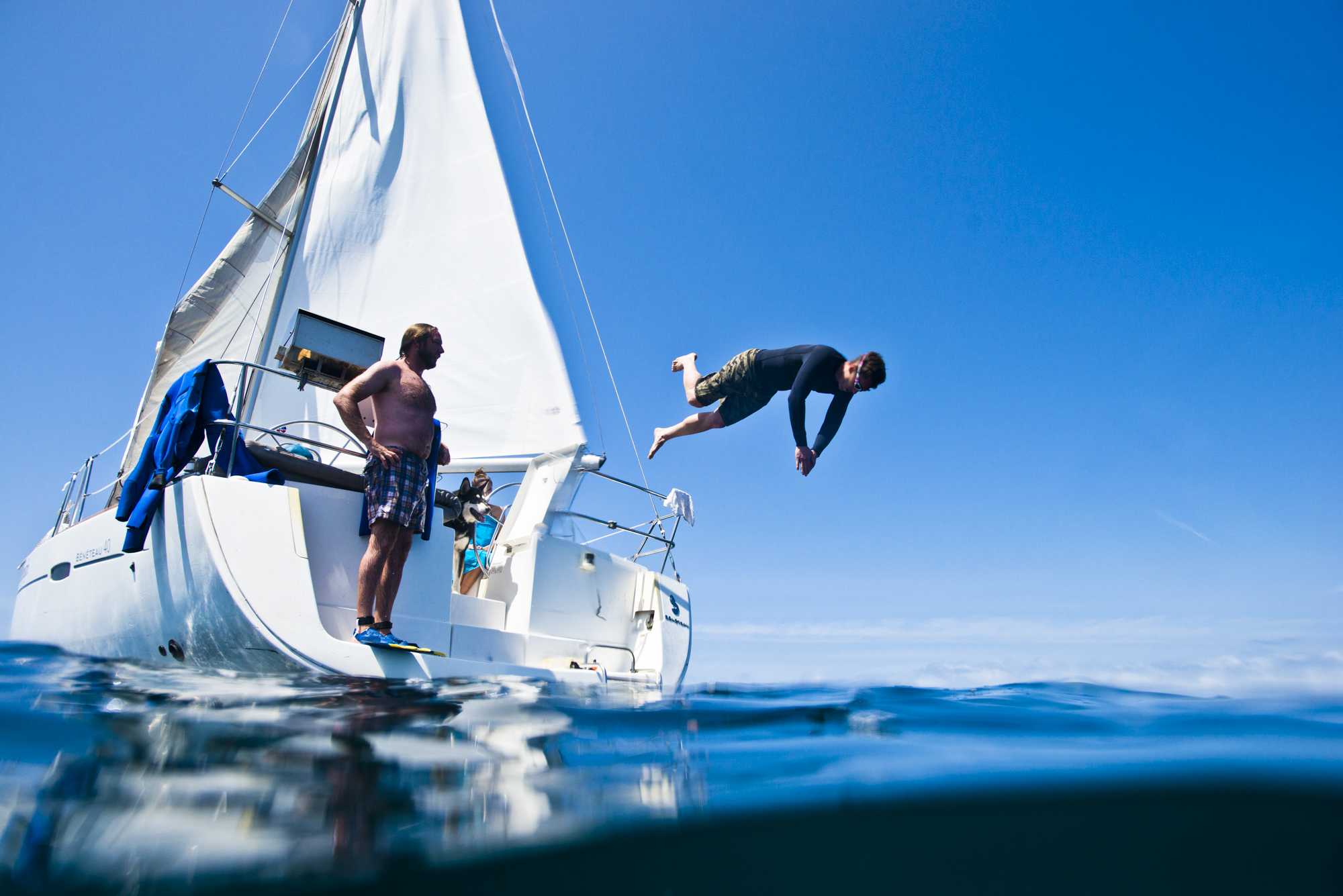
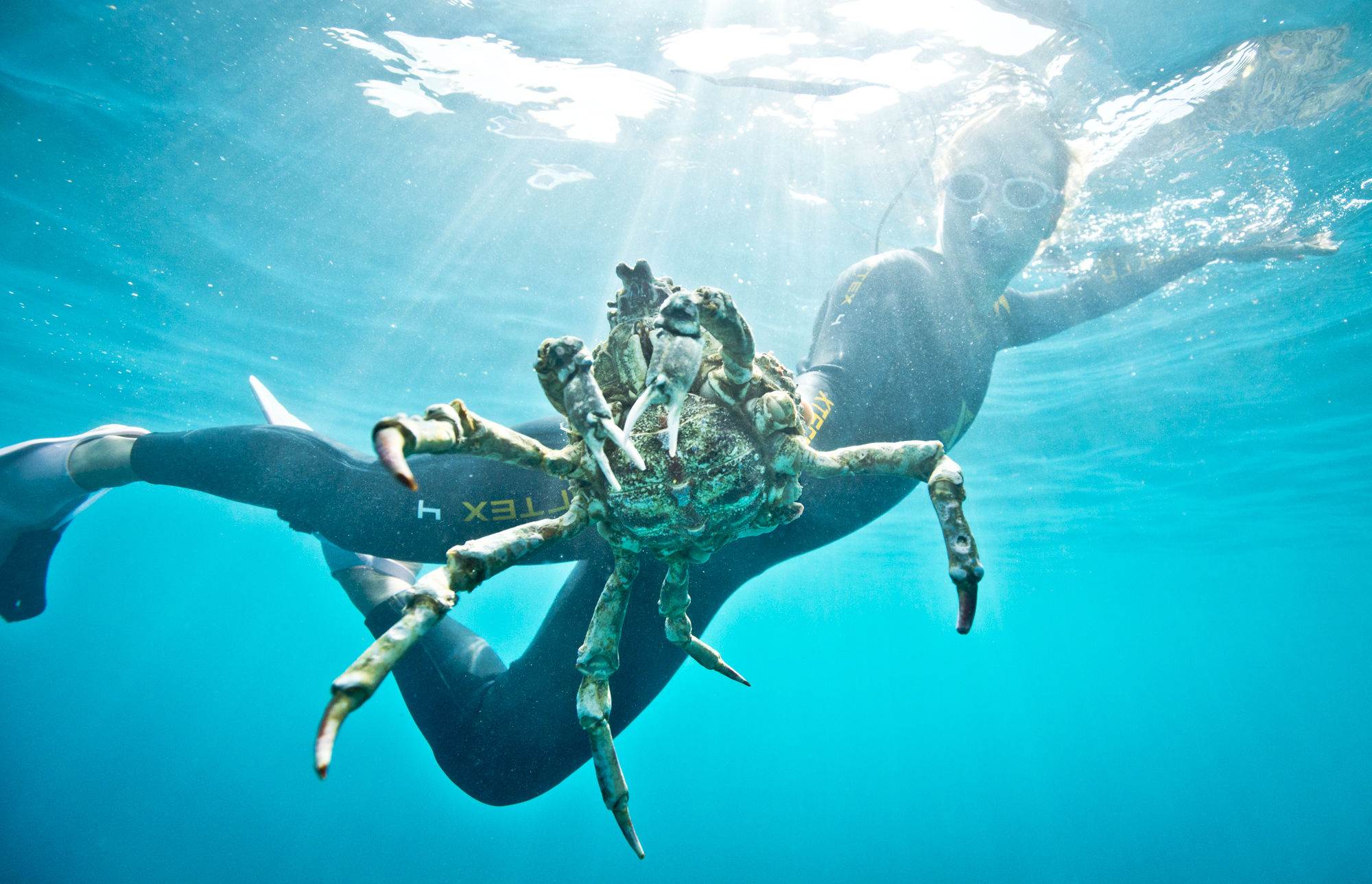
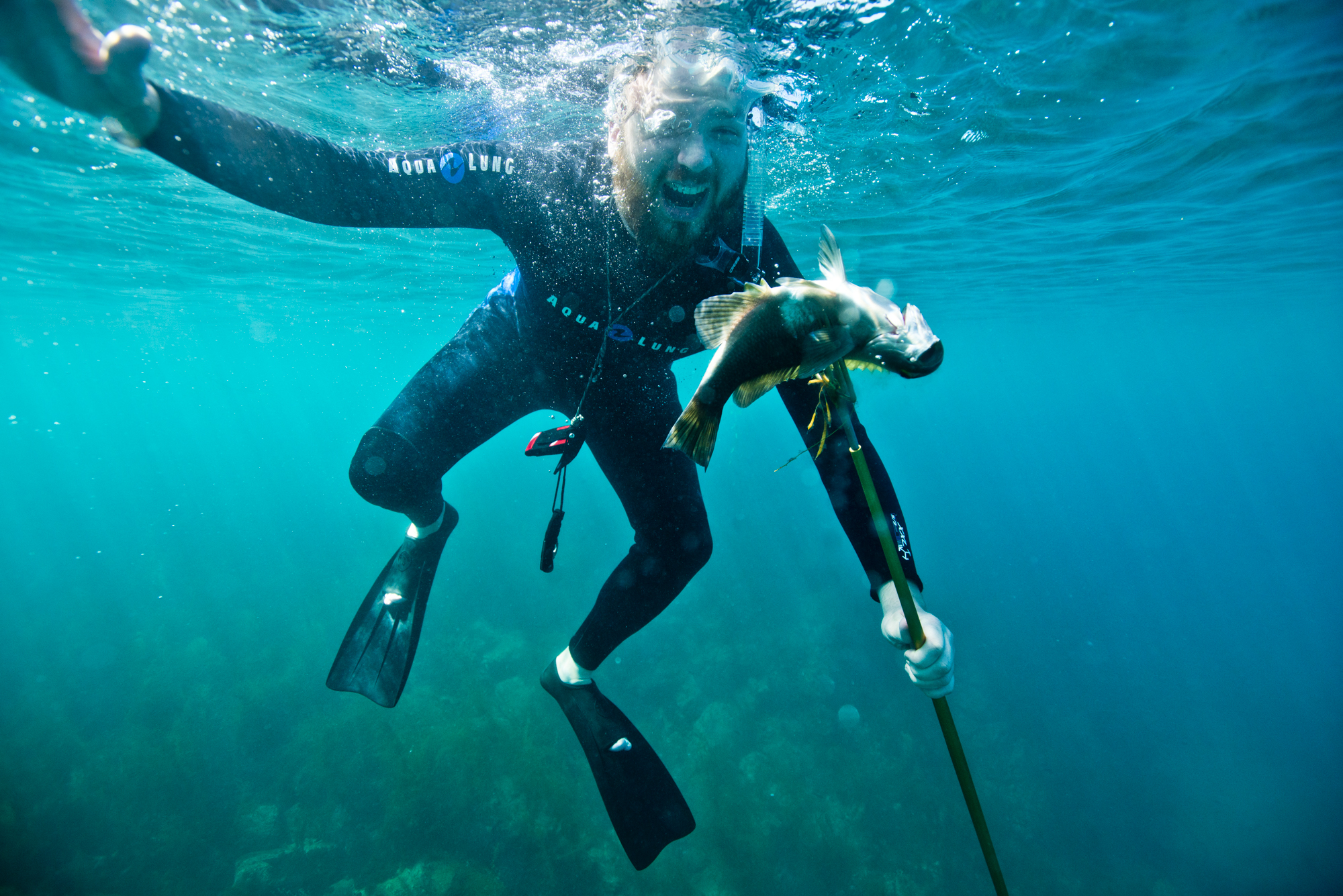
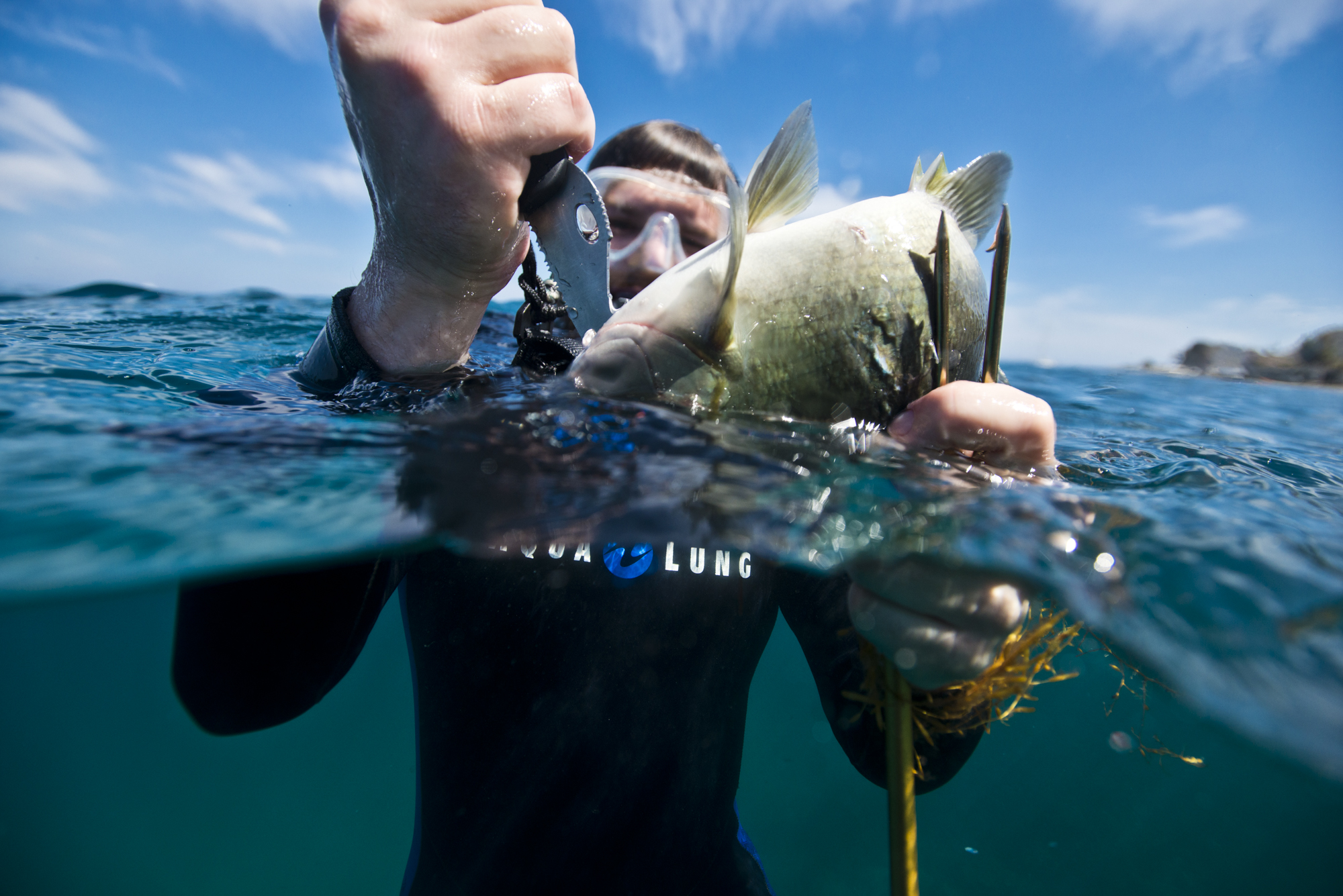
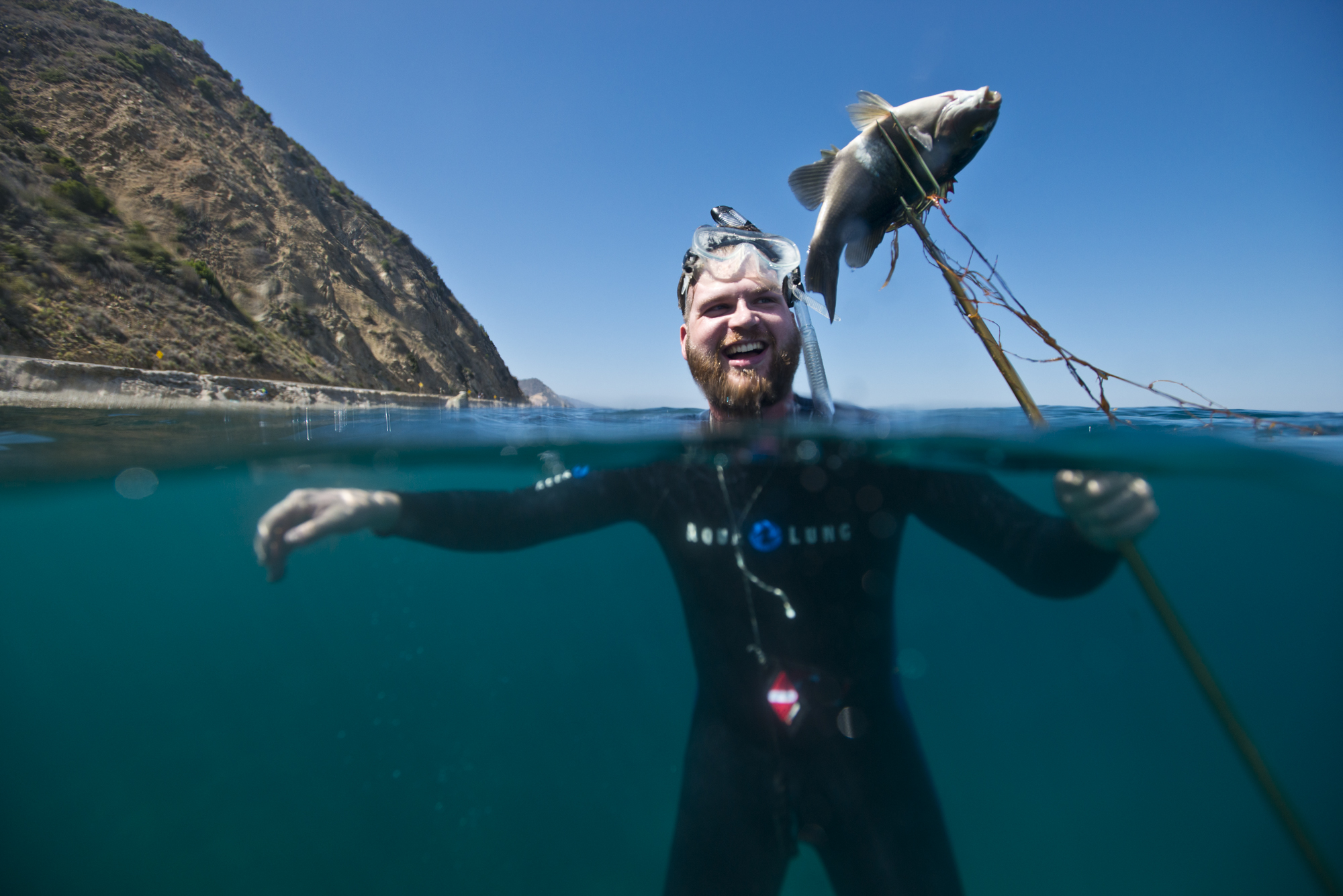
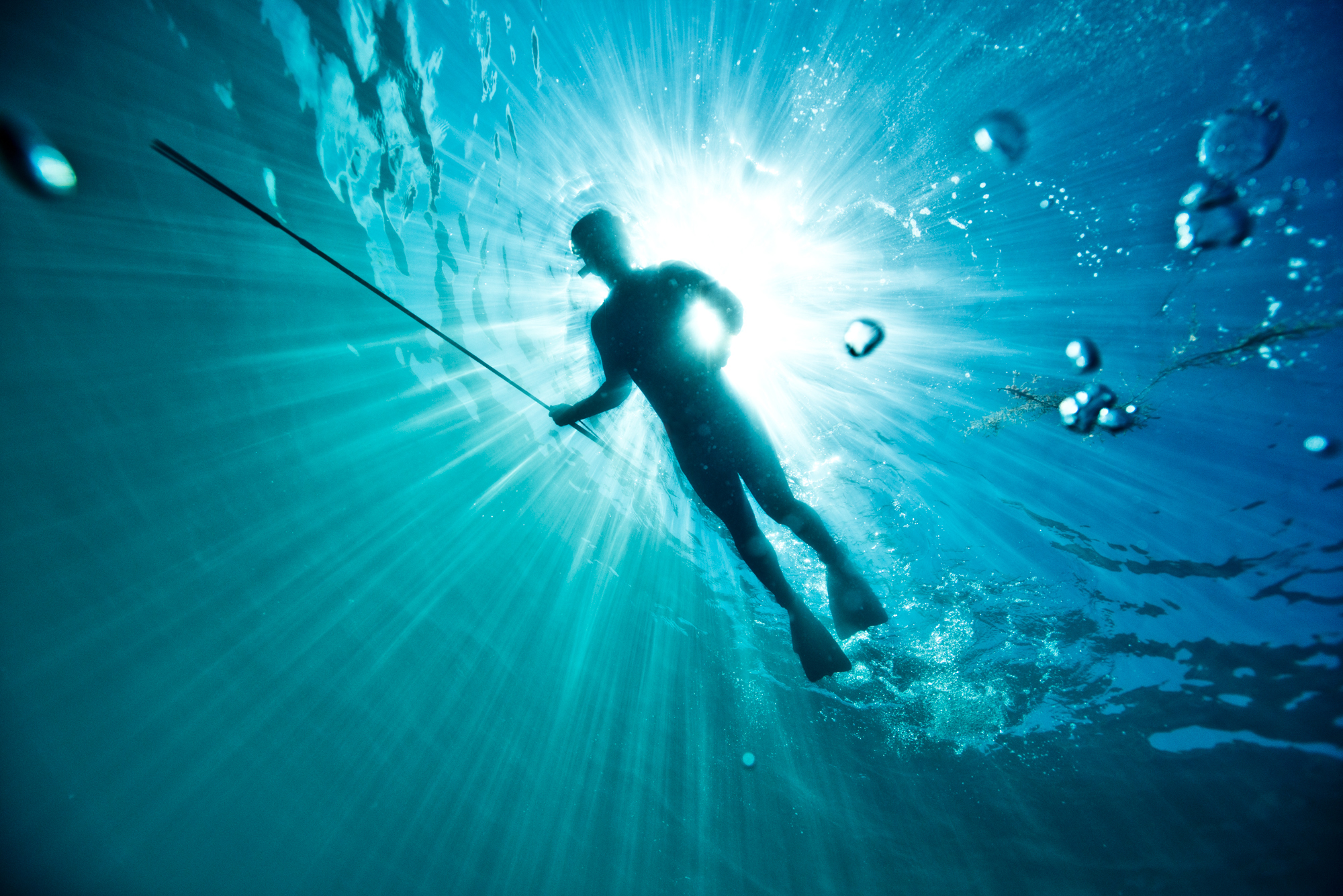
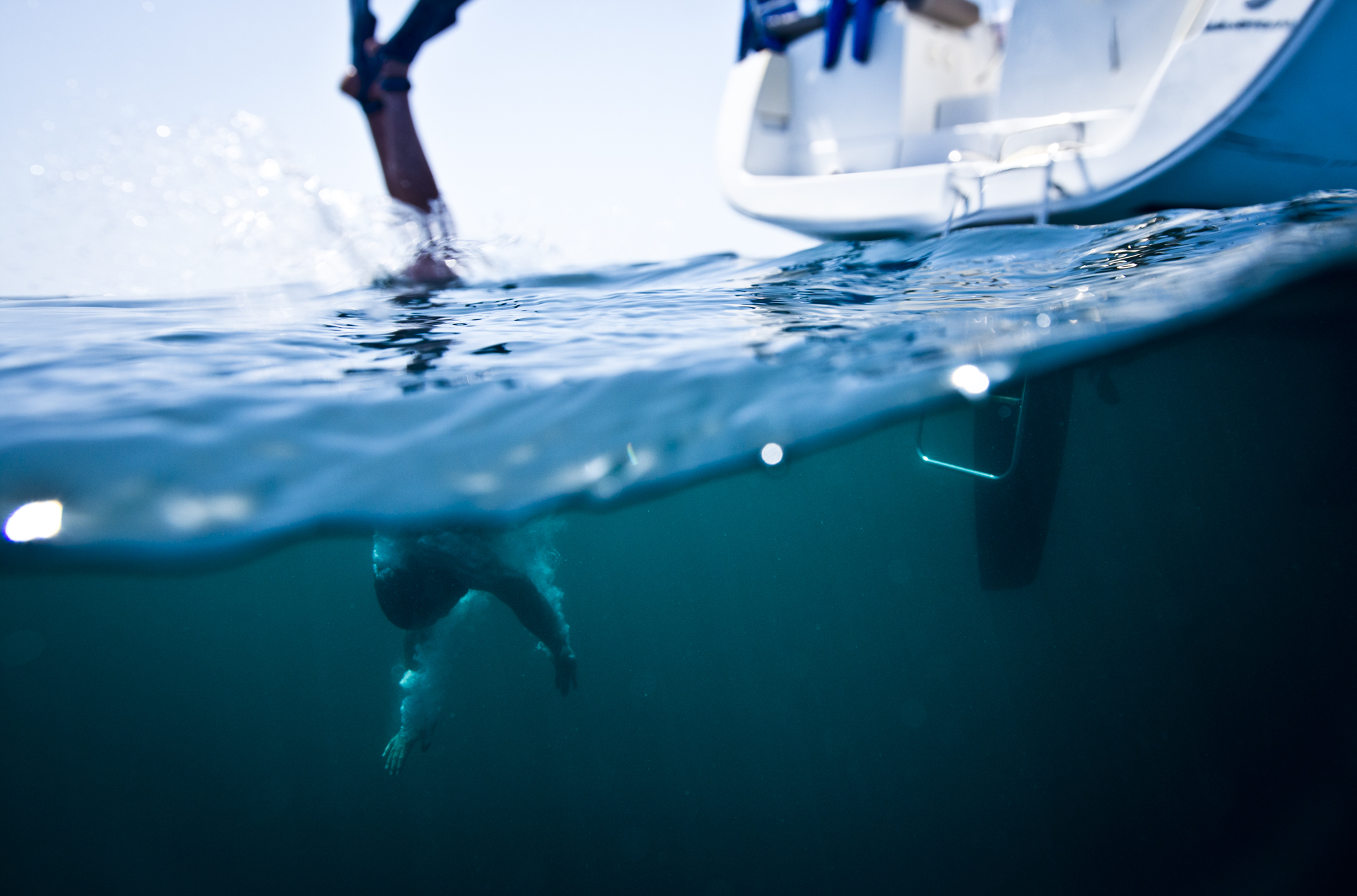
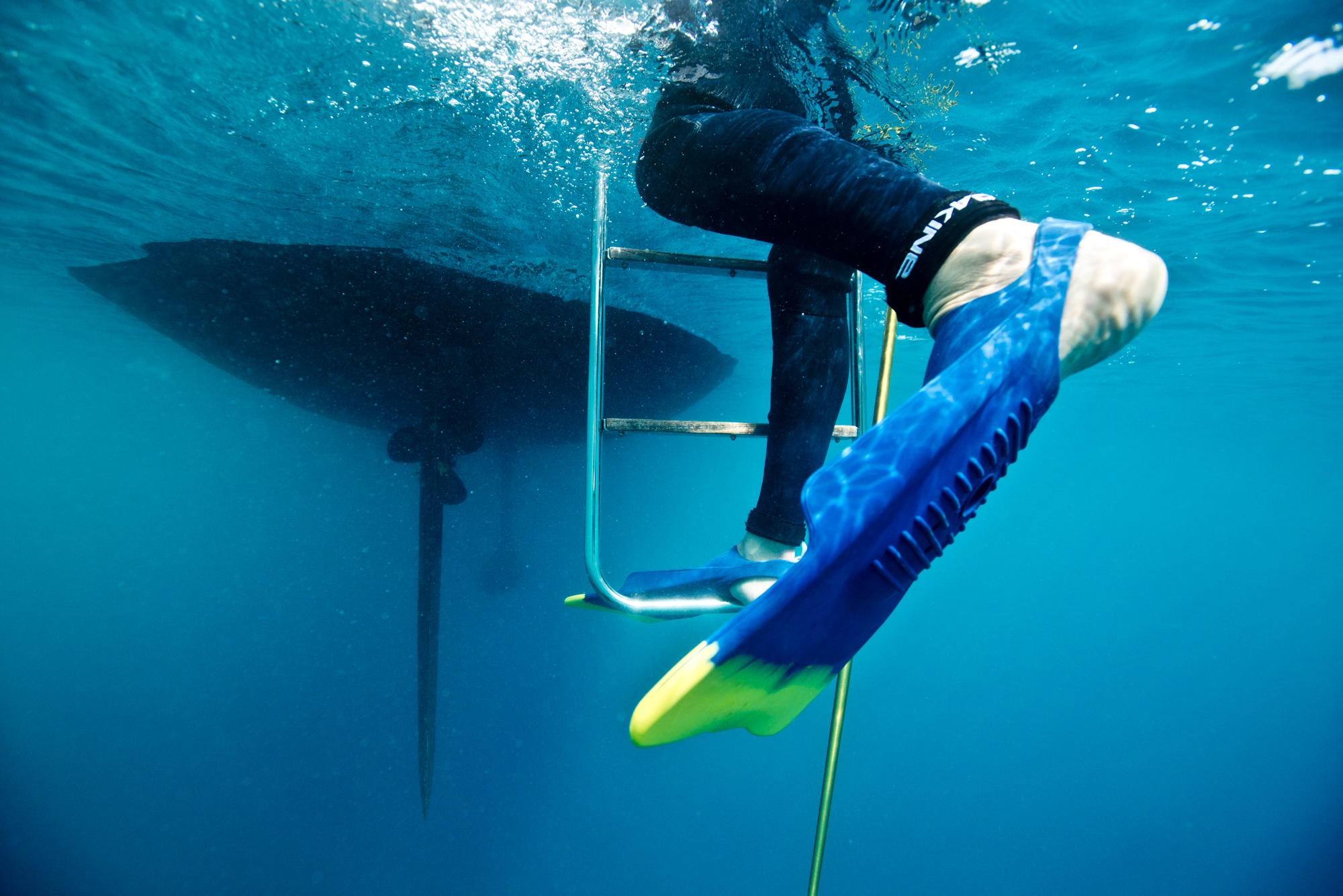
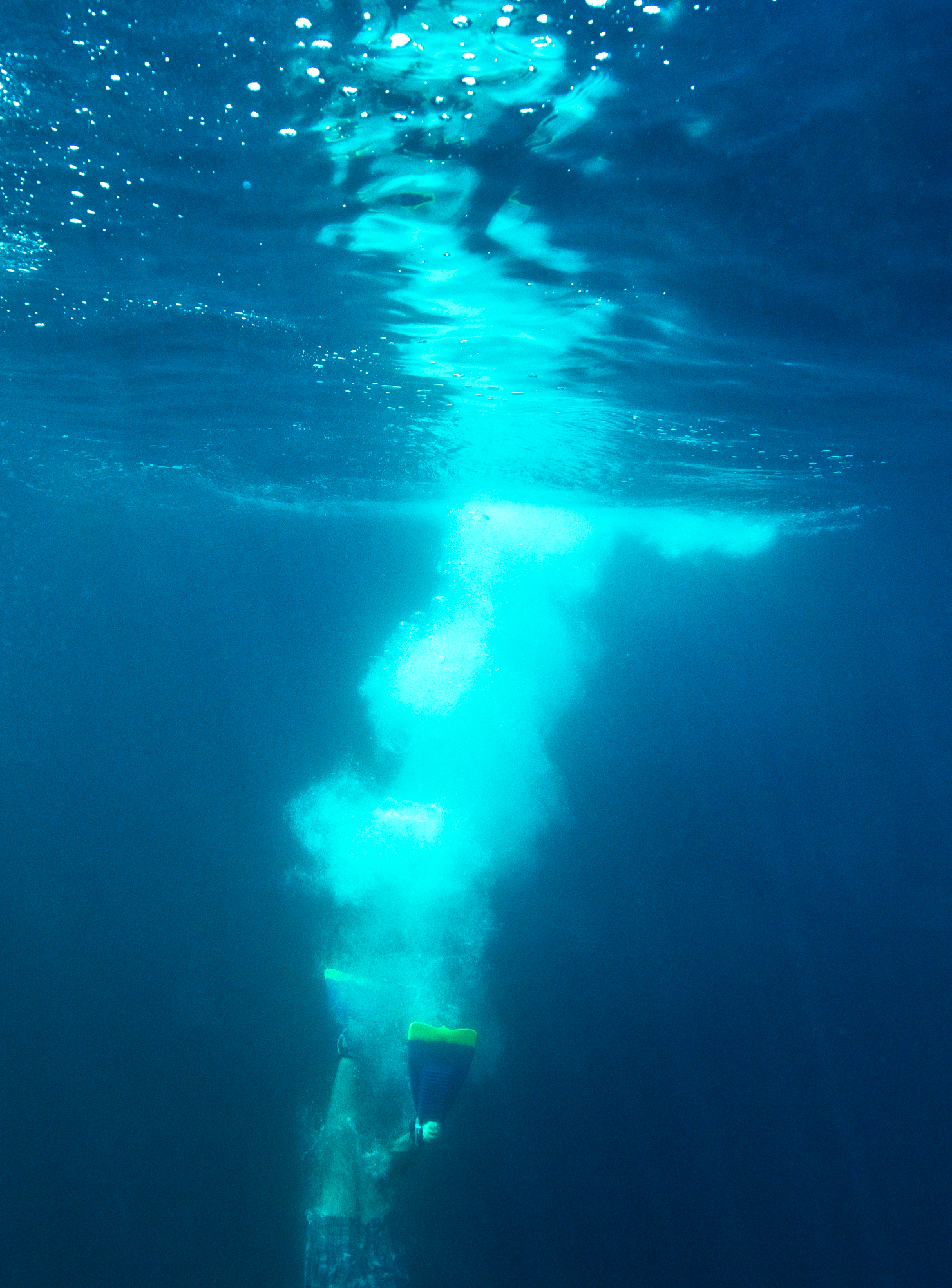
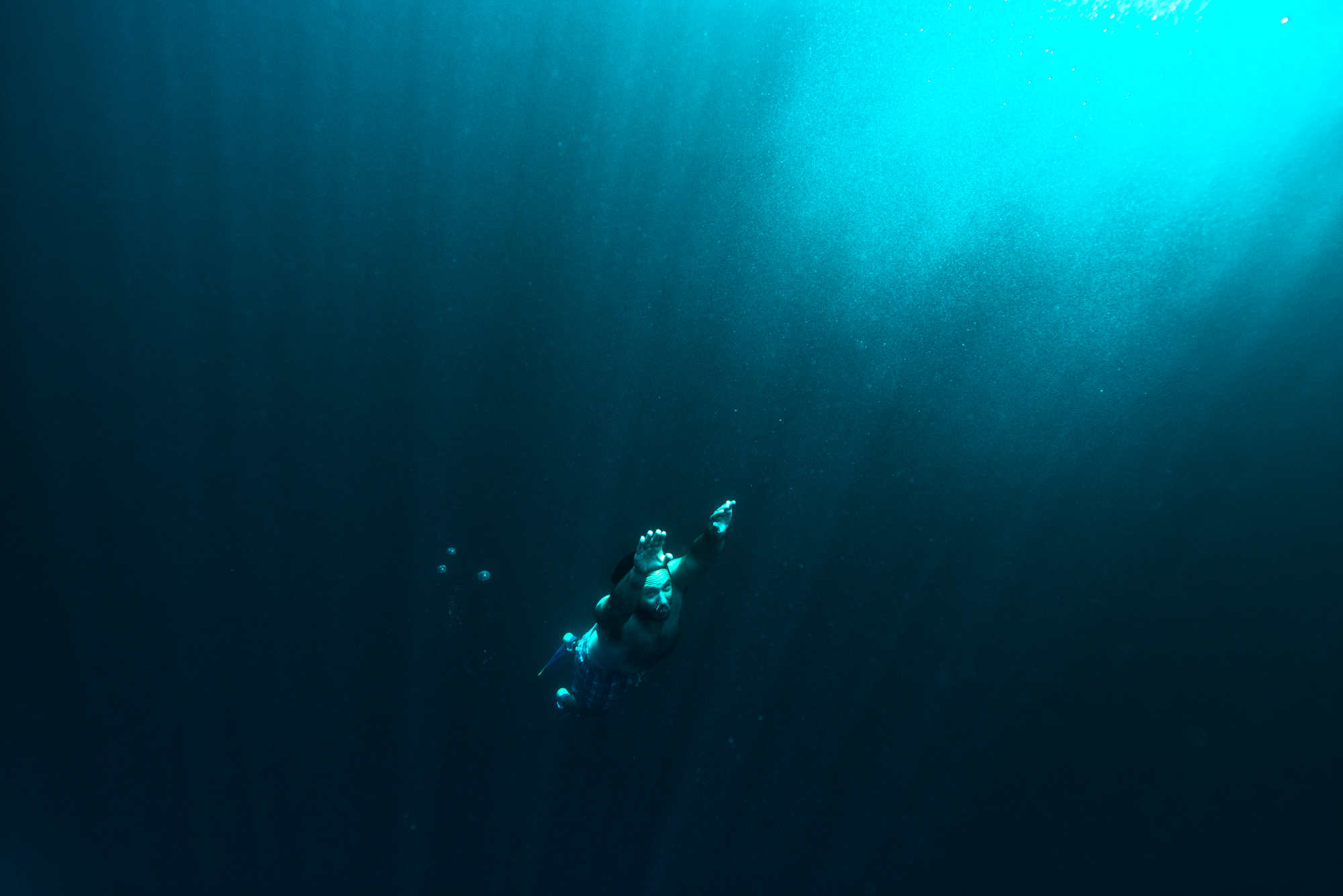
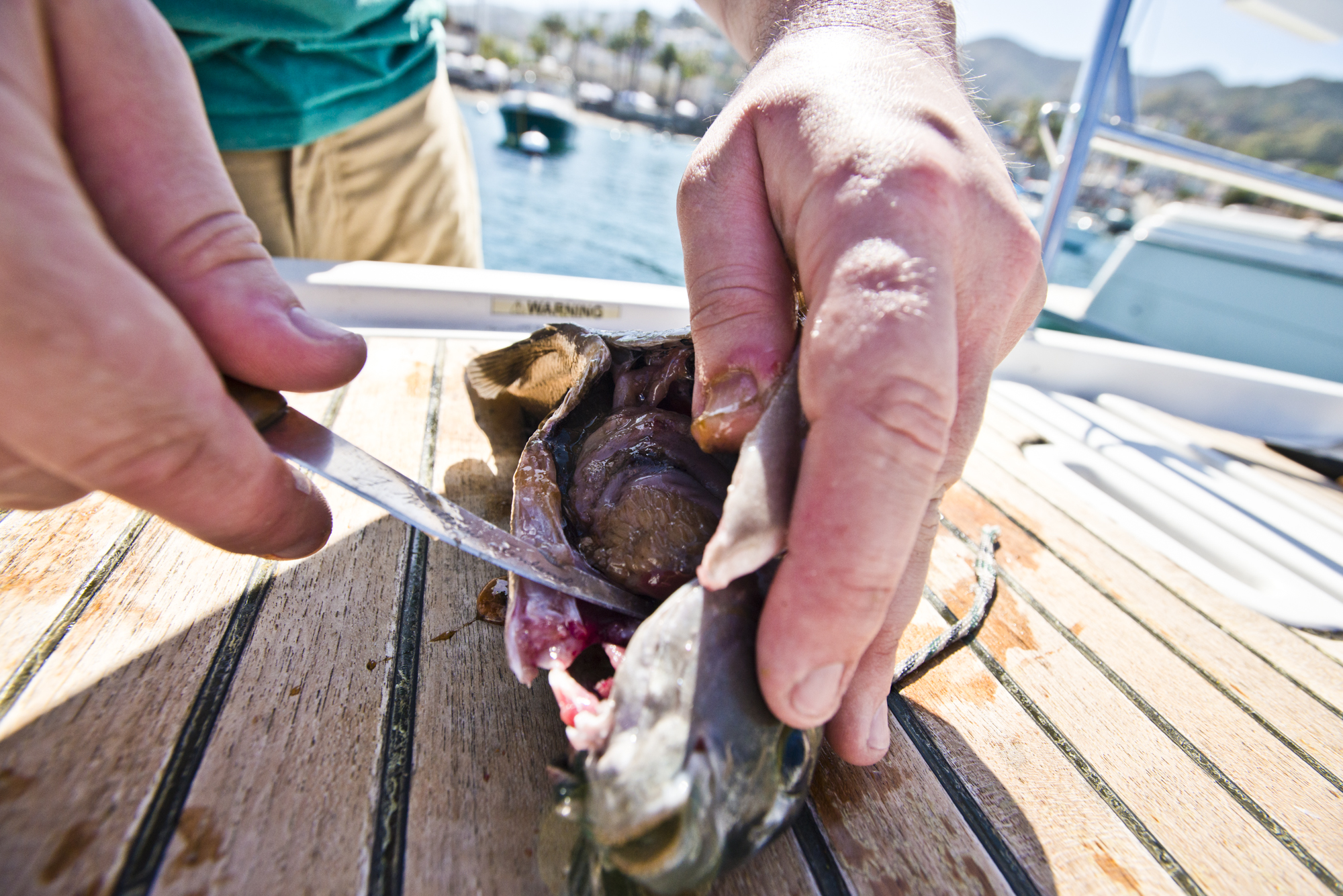
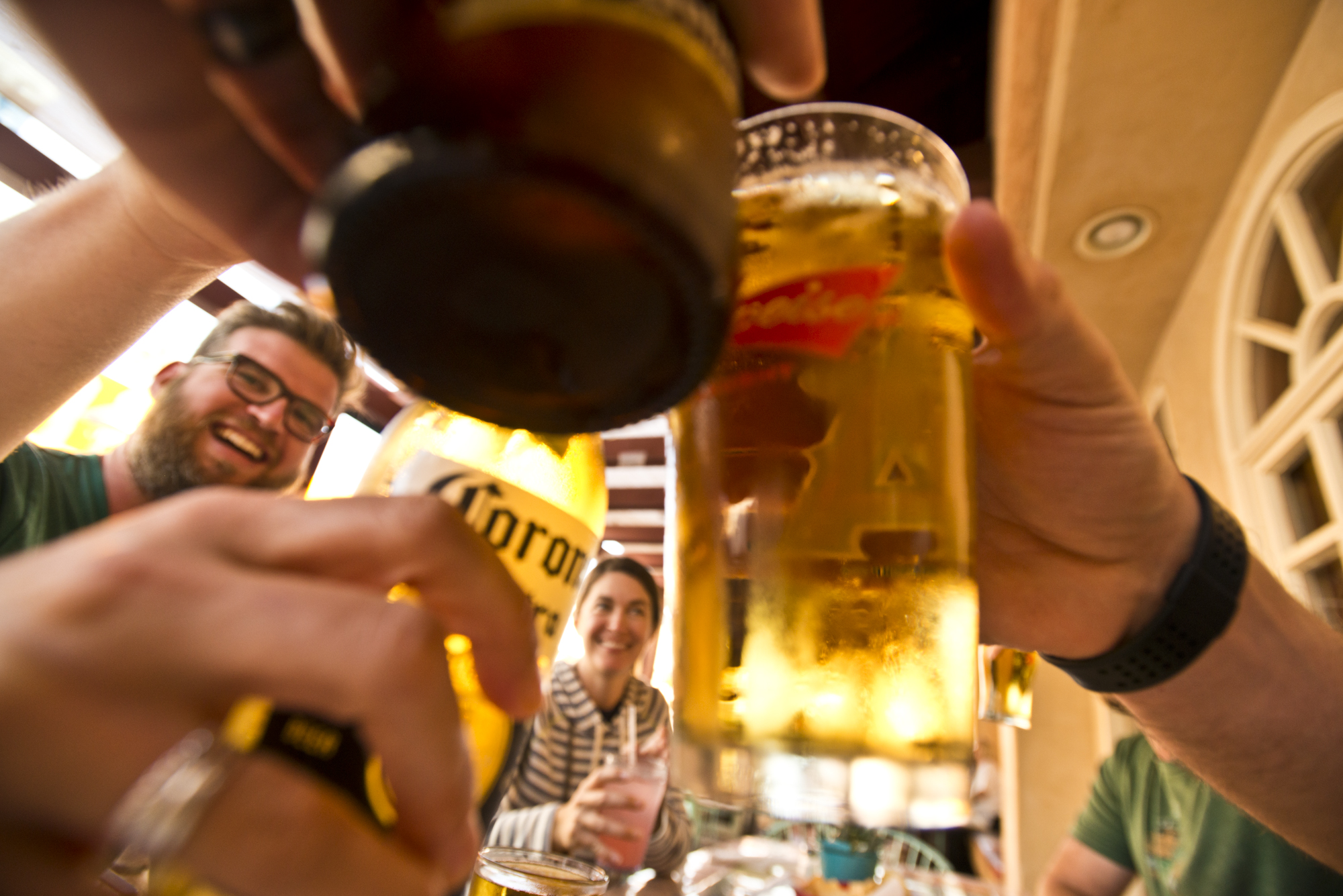
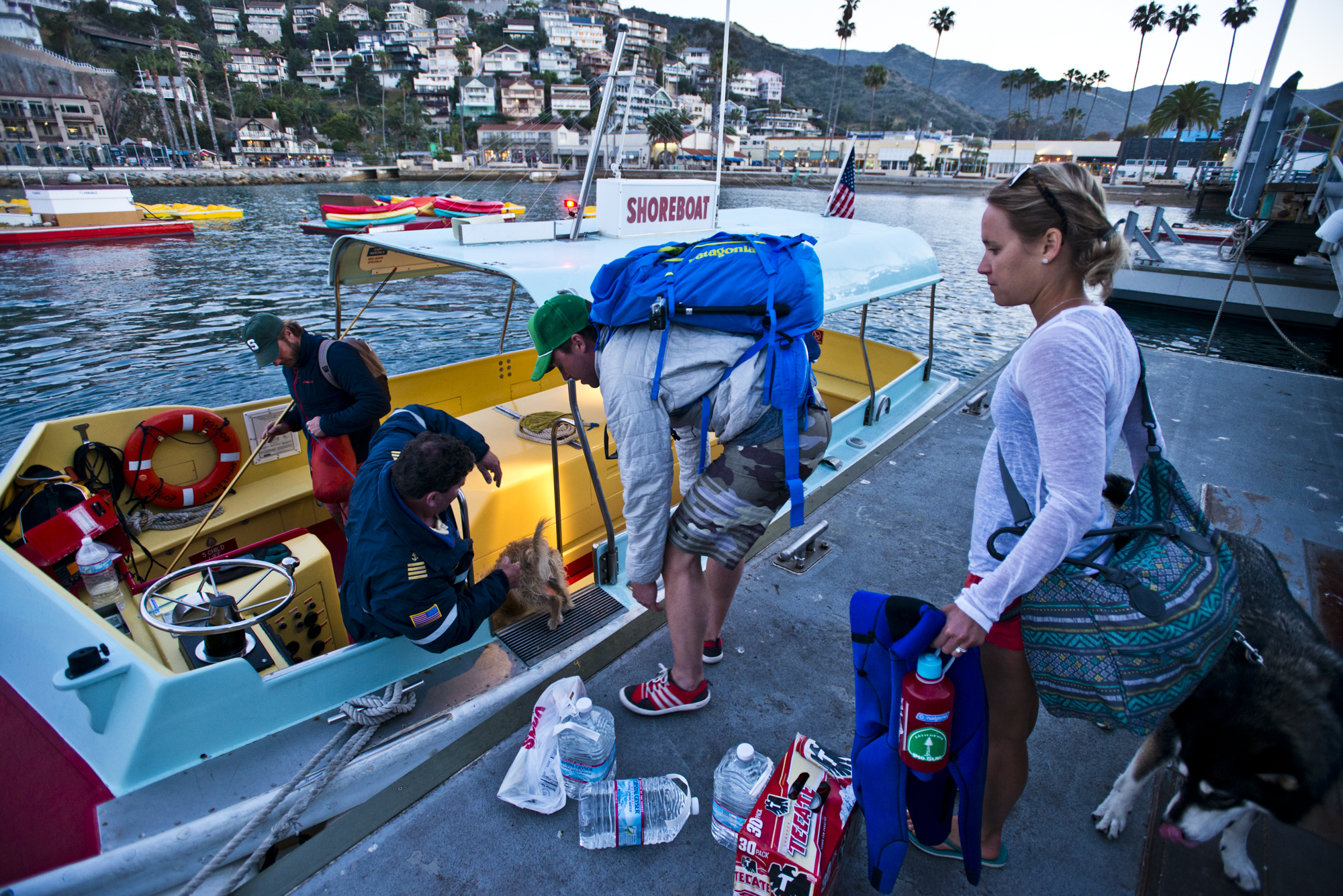
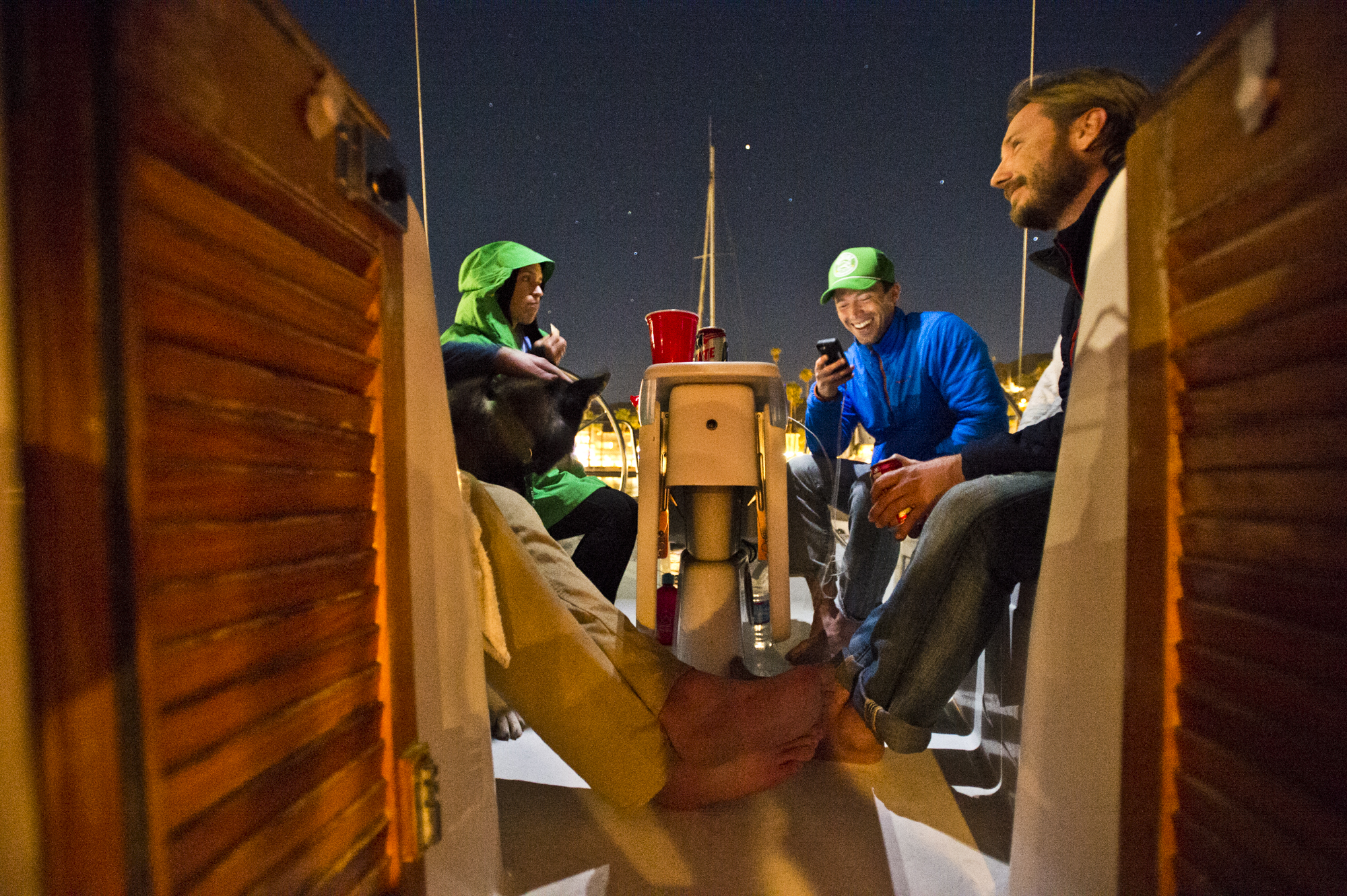
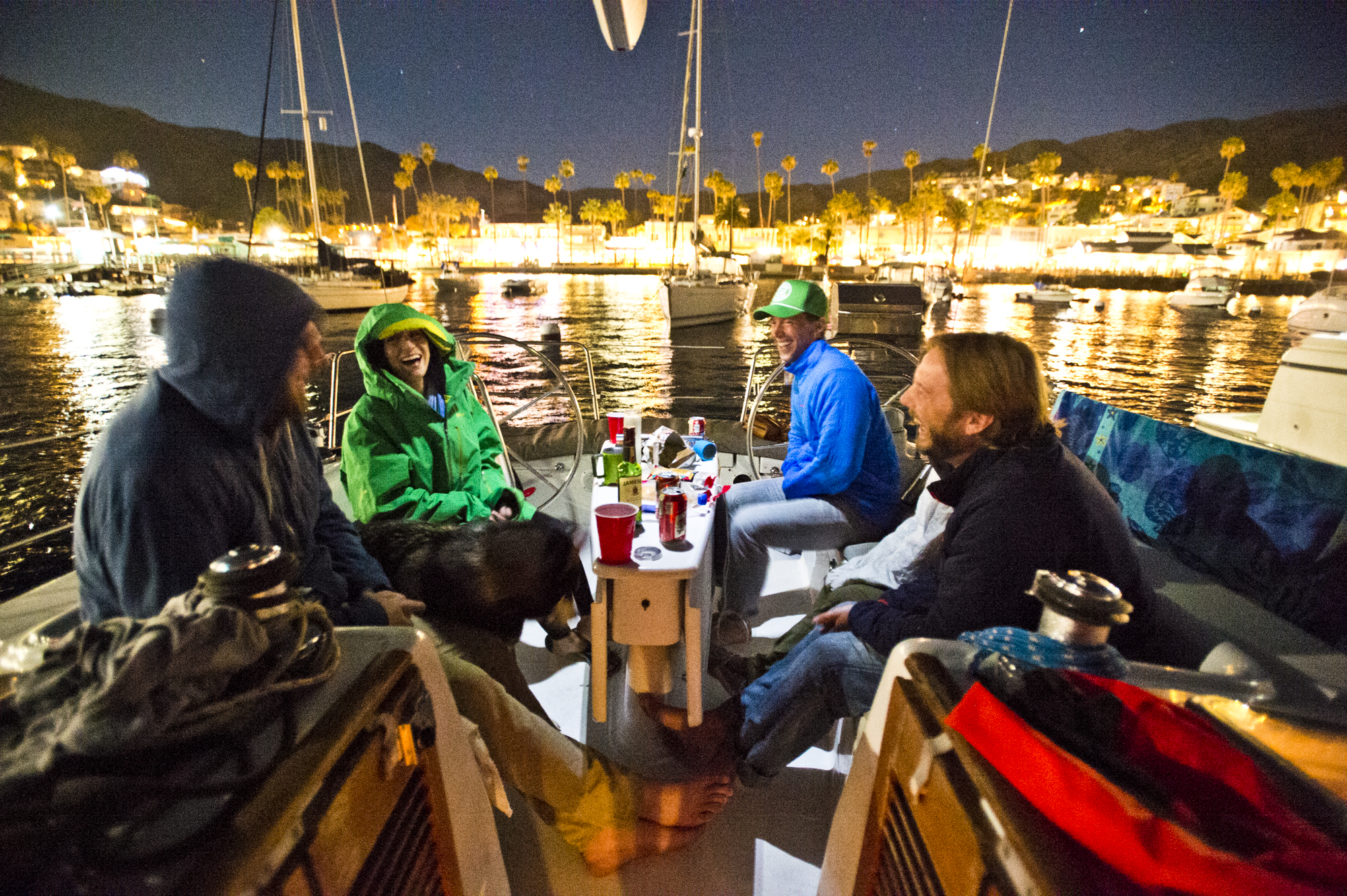
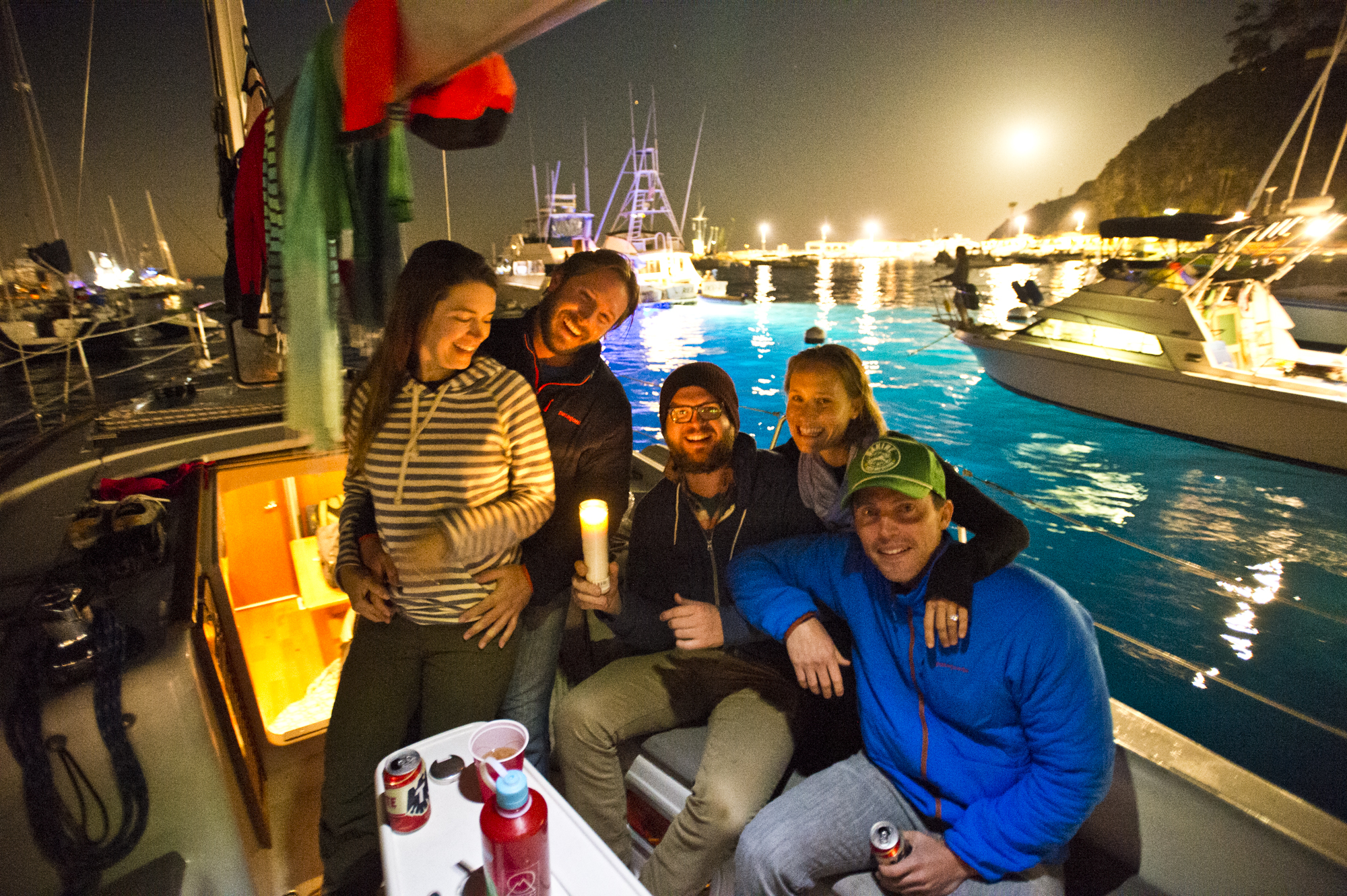
Hard to have a bad time sailing to Catalina Island. In fact, it seems impossible to have a bad time there, period. It's a special place. If you've never been, change that. Summer time is great because it's bumping with people. And winter is just as good, when it's quiet and sleepy. Either way you win. We were out there last month, and spent just about the whole time in the water looking for fish. 


Buffalo, NY

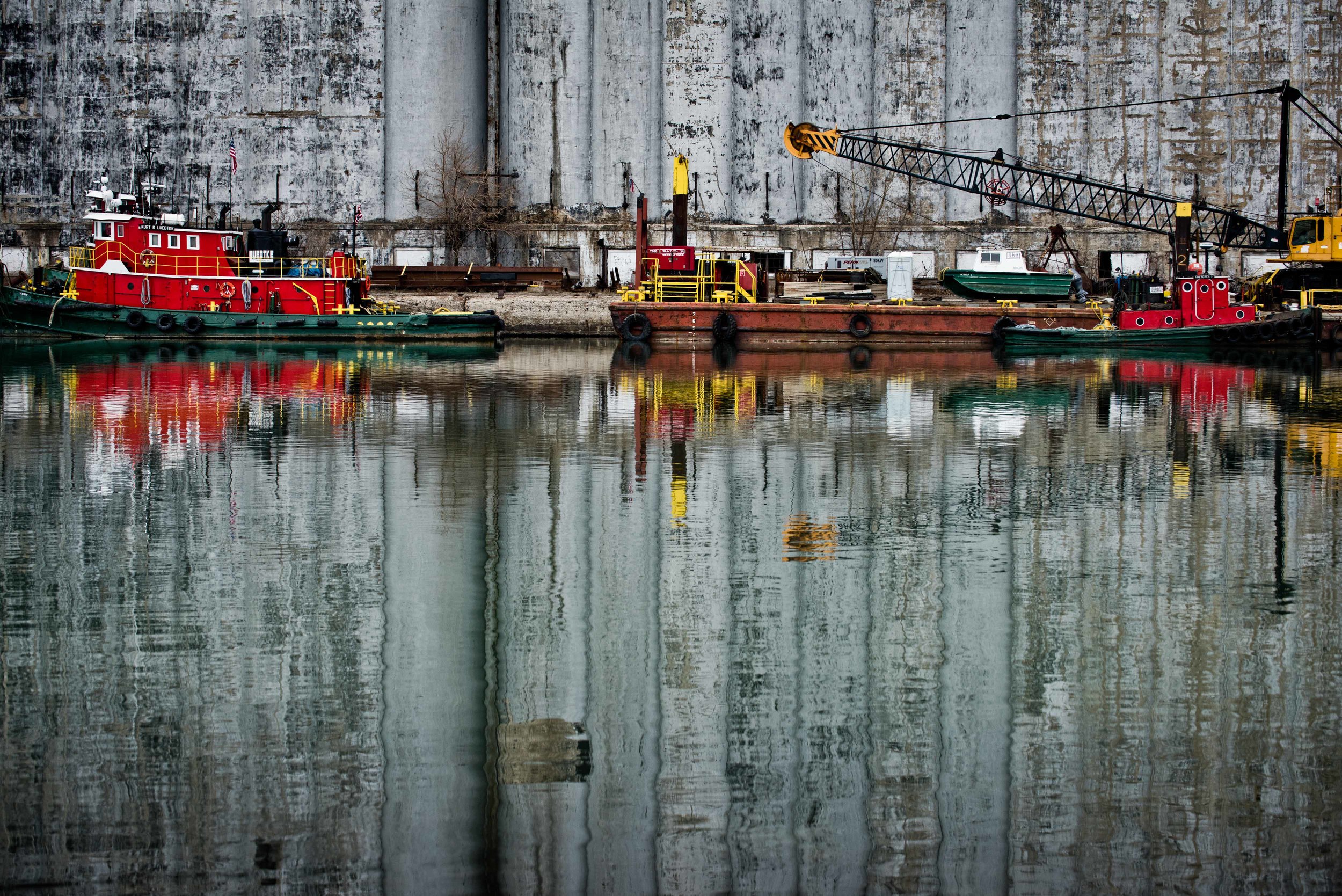
One of the many great things about road trips is the food you can find along your way. Some of it is totally random. And then there are places which are obviously known for a certain kind of food. Buffalo, NY is one of those places. Birthplace of the chicken wing. I'm originally from NY, so naturally have a deep appreciation for the chicken wing. Now living out in San Diego, it's hard to find a proper wing. So while traveling through western NY, I thought it only fitting to try the best. I'd never been to Buffalo before, and it seemed like a good enough excuse? Buffalo itself was a pretty cool place. Has a very "neighborhood" feel to it. Like everything is friendly and local. The outskirts though, were much different. Lots of deserted old factories. Great for shooting. And had it not been for the chicken wing, I never would have stumbled on this scene. Sometimes it pays to eat. 

TRAVEL.MORE. 

Rob Hammer