Fly Fishing Photography in Estes Park, Colorado

Fly Fishing Photography Near Denver: Estes Park and the Front Range

Not every fly fishing trip is a destination trip.

Some of the most consistent time on the water happens close to home—quick drives when you only have a couple hours in your work schedule or you need to get back on a plane.

Estes Park sits right on that edge for Colorado’s Front Range. Close enough to Denver to be accessible, but far enough to feel like a different environment entirely. It might not come with all the fanfare of Colorado’s most iconic fly fishing locations, but it sure is pretty.

This series of photographs comes from time spent working in that space—fishing and photographing in real conditions, without the pressure of a “big trip” or a big name location.
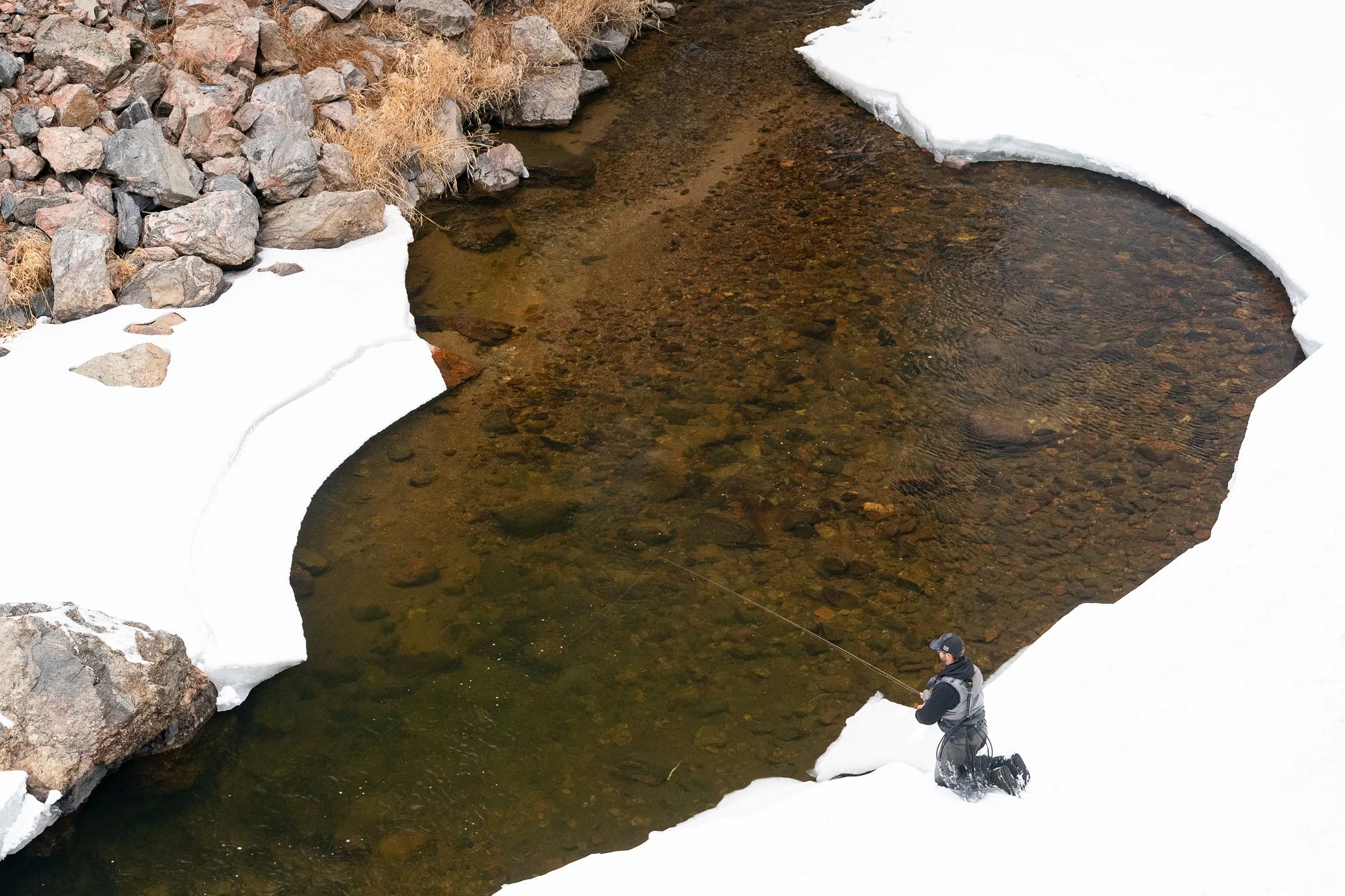
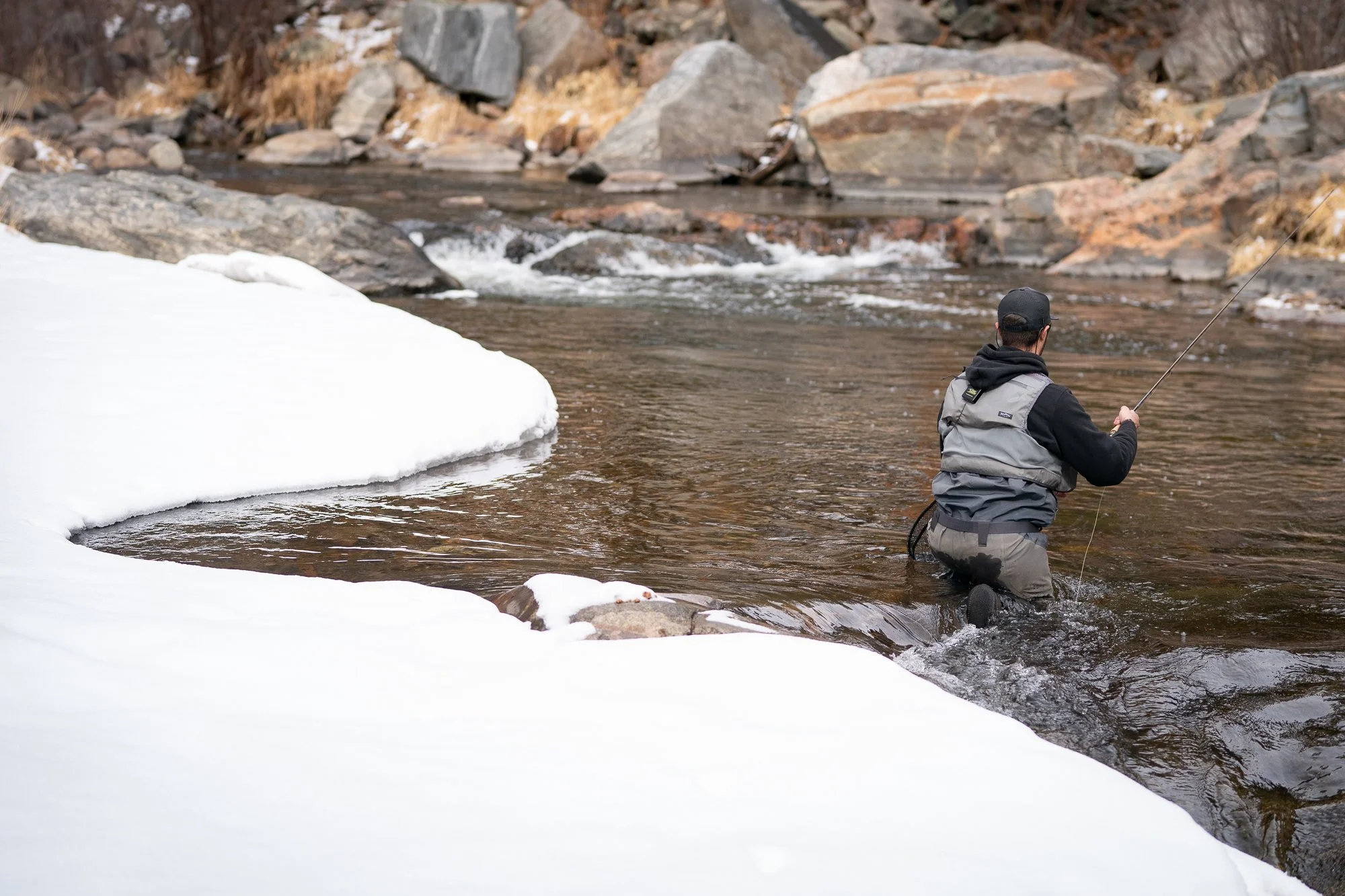
Photograph of a fly fisherman kneeling on ice while casting into the Big Thompson River near Estes Park, Colorado.

Estes Park Fly Fishing

Fly Fishing Close to Denver Changes the Approach

Fishing within reach of Denver means working with limitations:

  • tighter timeframes

  • unpredictable weather

  • more pressure on the water

From a photography standpoint, that changes how you shoot.

You don’t have a full day on the water, so there’s less waiting for perfect conditions and more adapting to what’s in front of you:

  • shifting light through the canyon

  • quick decisions on composition

  • moments that happen once and don’t repeat

It forces a more responsive way of working—and often leads to more honest images.
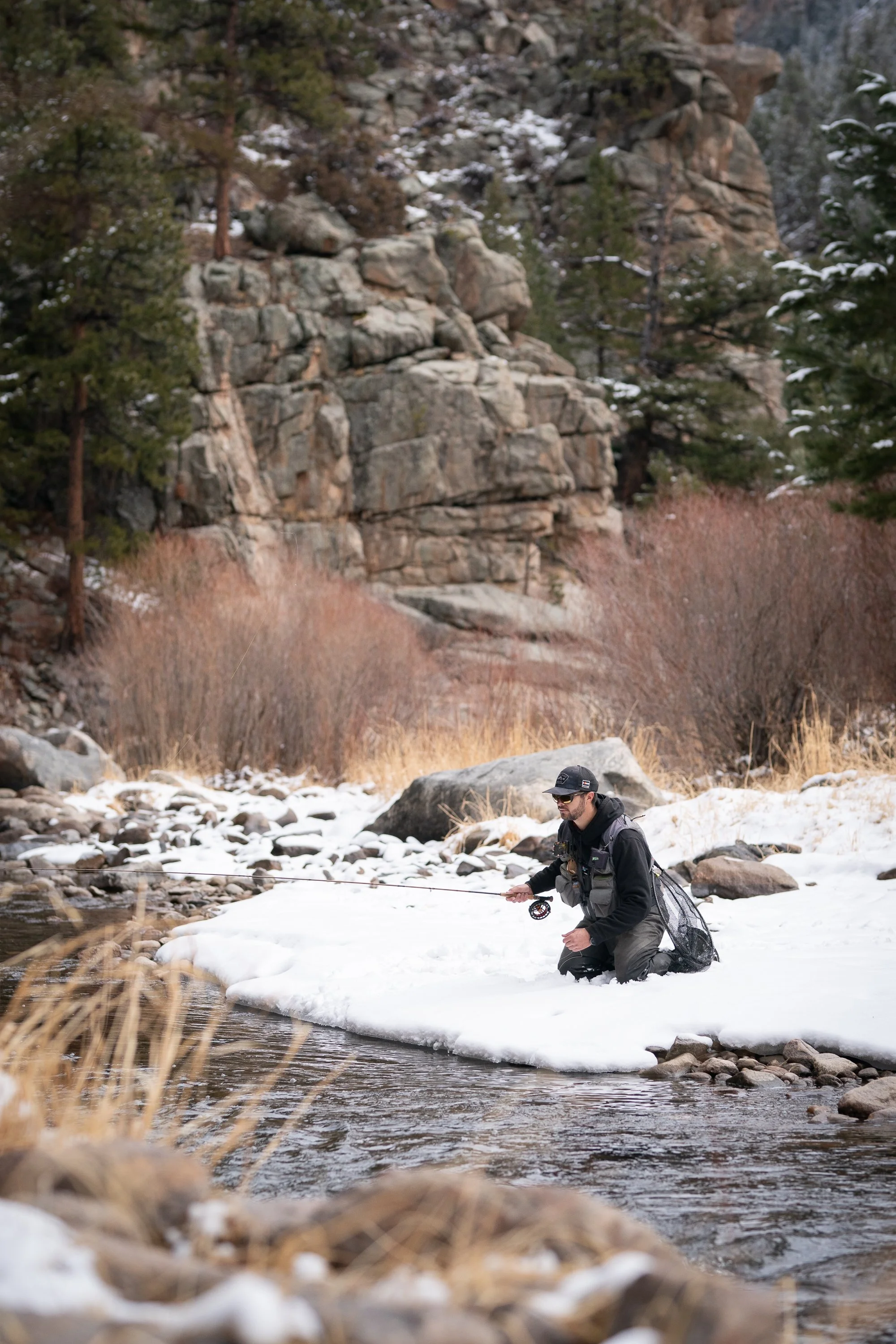
A fly fisherman casting into a winter stream in a rocky canyon near Estes Park, CO

A fly fisherman in a rocky canyon near Estes Park, CO

Real Conditions, Not Ideal Ones

In the Rocky Mountains there is no such thing as ideal conditions, and that’s a lot of the fun - you’re always finding a way to make the most of what comes at you. That part of the process is what’s so addicting about fly fishing and photographing the sport.

Instead of building images around ideal conditions, the focus is on documenting what’s actually there:

  • anglers adjusting on the fly

  • reading water in real time

  • working through imperfect situations

That’s why the work separate from all the polished, staged imagery found out there on the internet for 50 cent a download.
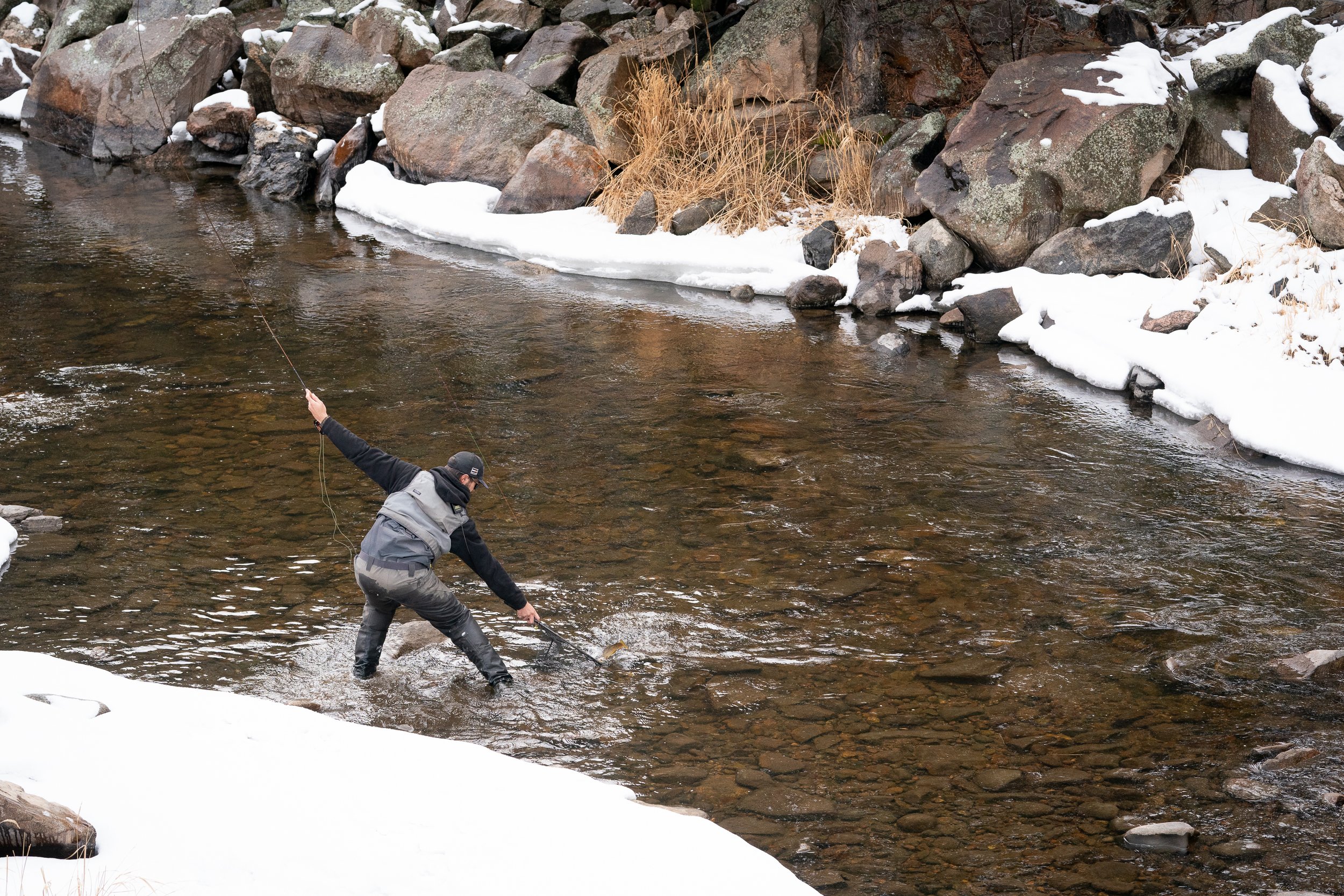
Photograph of a fly fisherman netting a trout in Estes Park, Colorado

Winter trout fishing in the Front Range outside Denver, CO
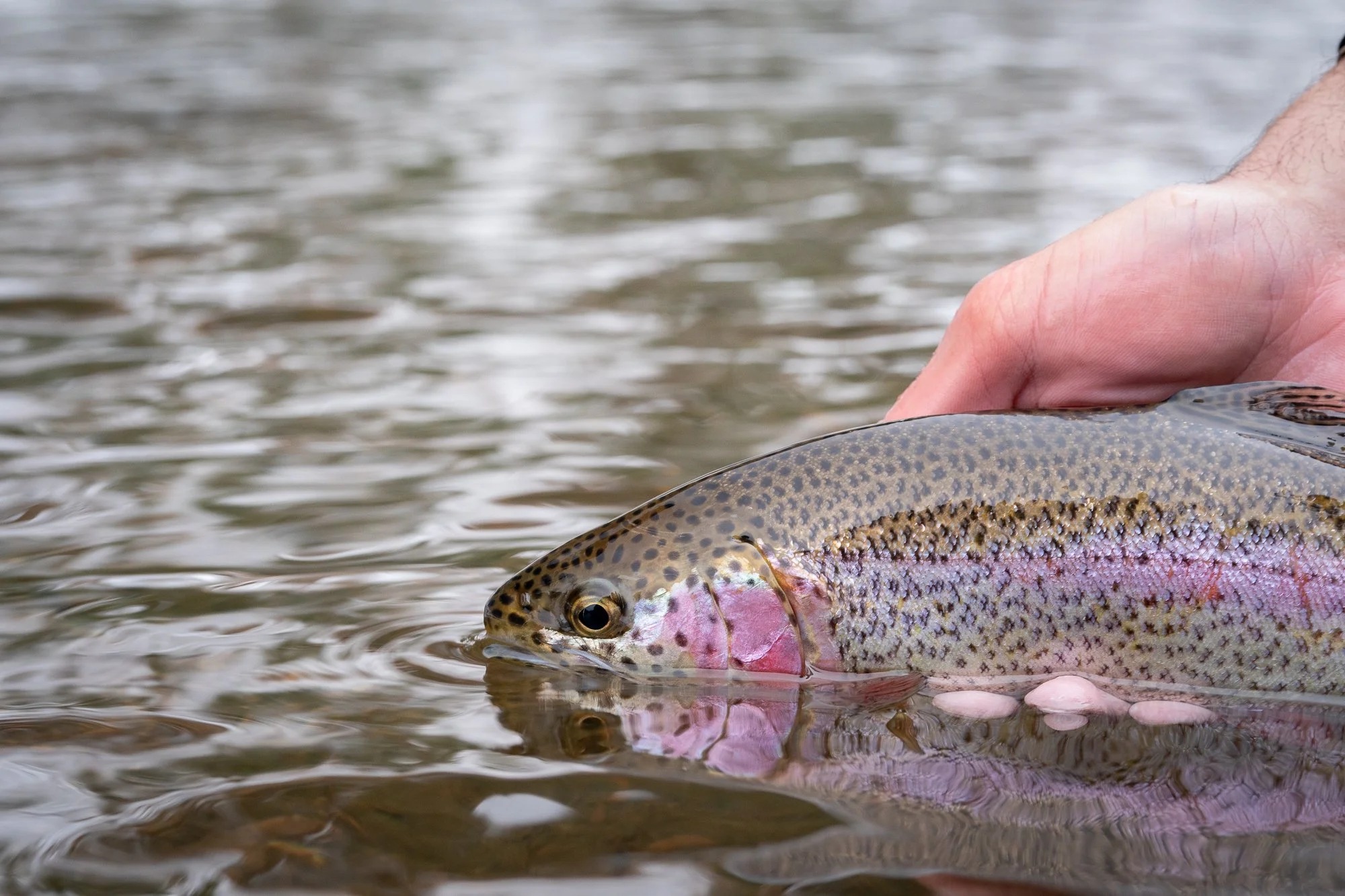
Rainbow trout caught in winter near Estes Park, CO

Rainbow Trout - Estes Park

Why Local Water Produces Strong Photography

When you’re not chasing a “bucket list” location, the mindset shifts.

You’re not trying to prove anything—you’re just paying attention.

That tends to lead to:

  • more observational images

  • better use of available light

  • compositions that feel less forced

Over time, those images become more useful for:

  • editorial storytelling

  • brand work that values authenticity

  • regional campaigns tied to Colorado and the Front Range
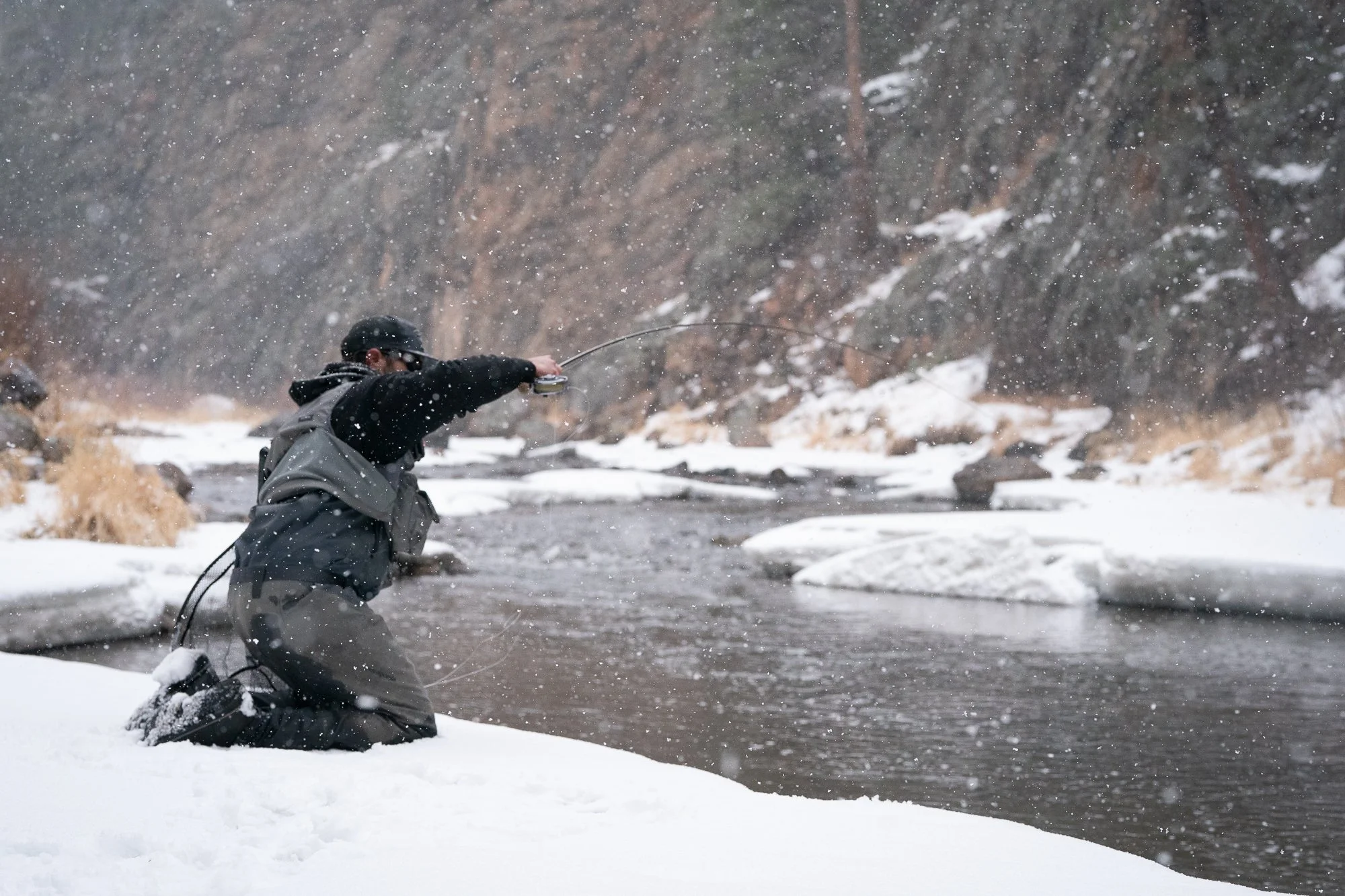
Photograph of a fly fisherman in a snowstorm in Colorado near Estes Park

Fly fishing in the snow near Estes Park, CO
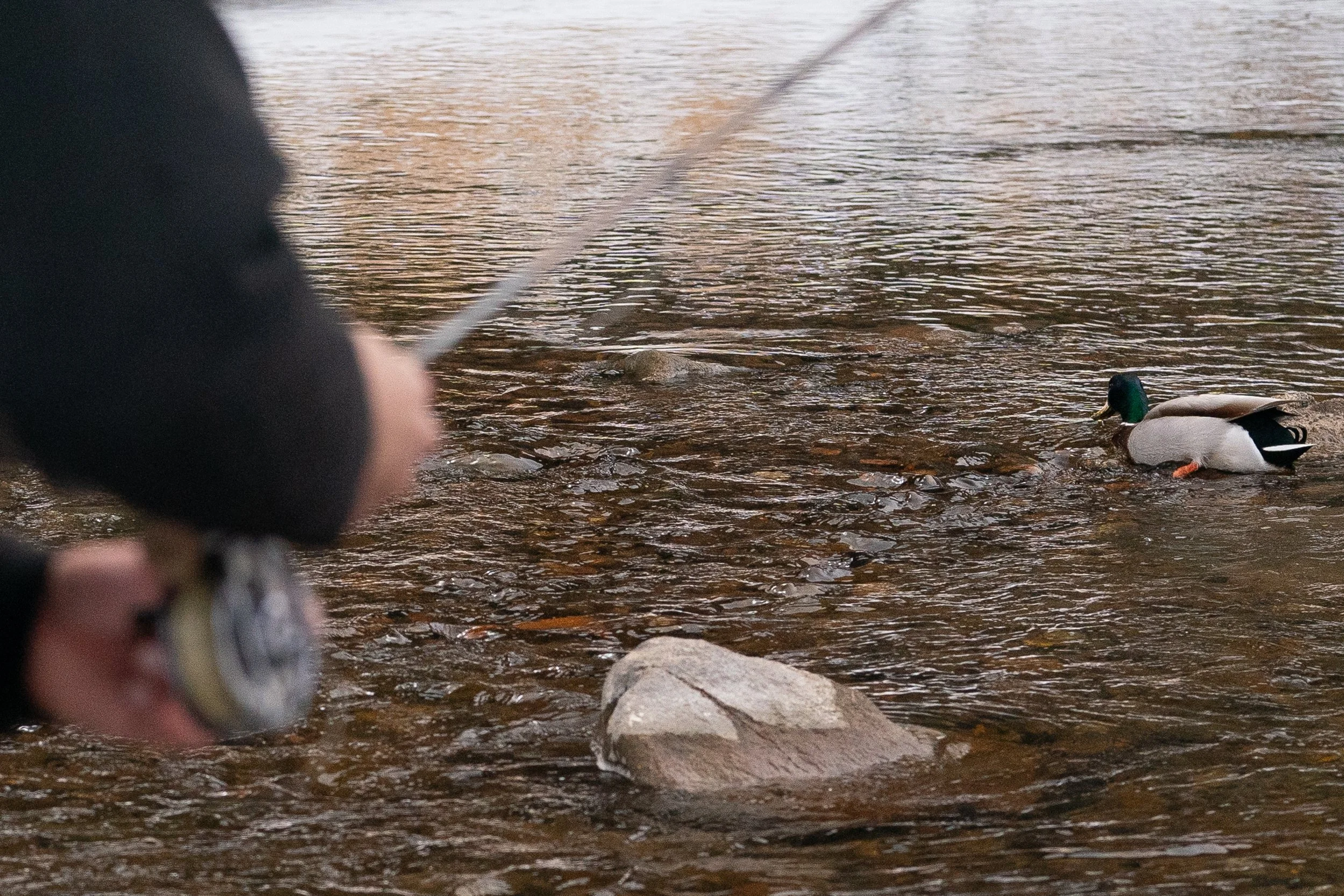
Photograph of a mallard swimming by a fly fisherman

A mallard swims in front of a fly fisherman on the Big Thompson River

Fly Fishing Photography for Regional and National Use

Work created in accessible environments like this often translates well across different uses.

It doesn’t rely on a specific landmark or recognizable destination. Instead, it focuses on:

  • the act of fishing

  • the relationship with the environment

  • moments that feel familiar and repeatable

That makes the images flexible for:

  • outdoor brands

  • editorial features

  • tourism and regional campaigns

A fly fisherman kneels in a stream next to snow covered banks to avoid spooking fish

A fly fisherman kneels in the river to avoid spooking fish near Estes Park
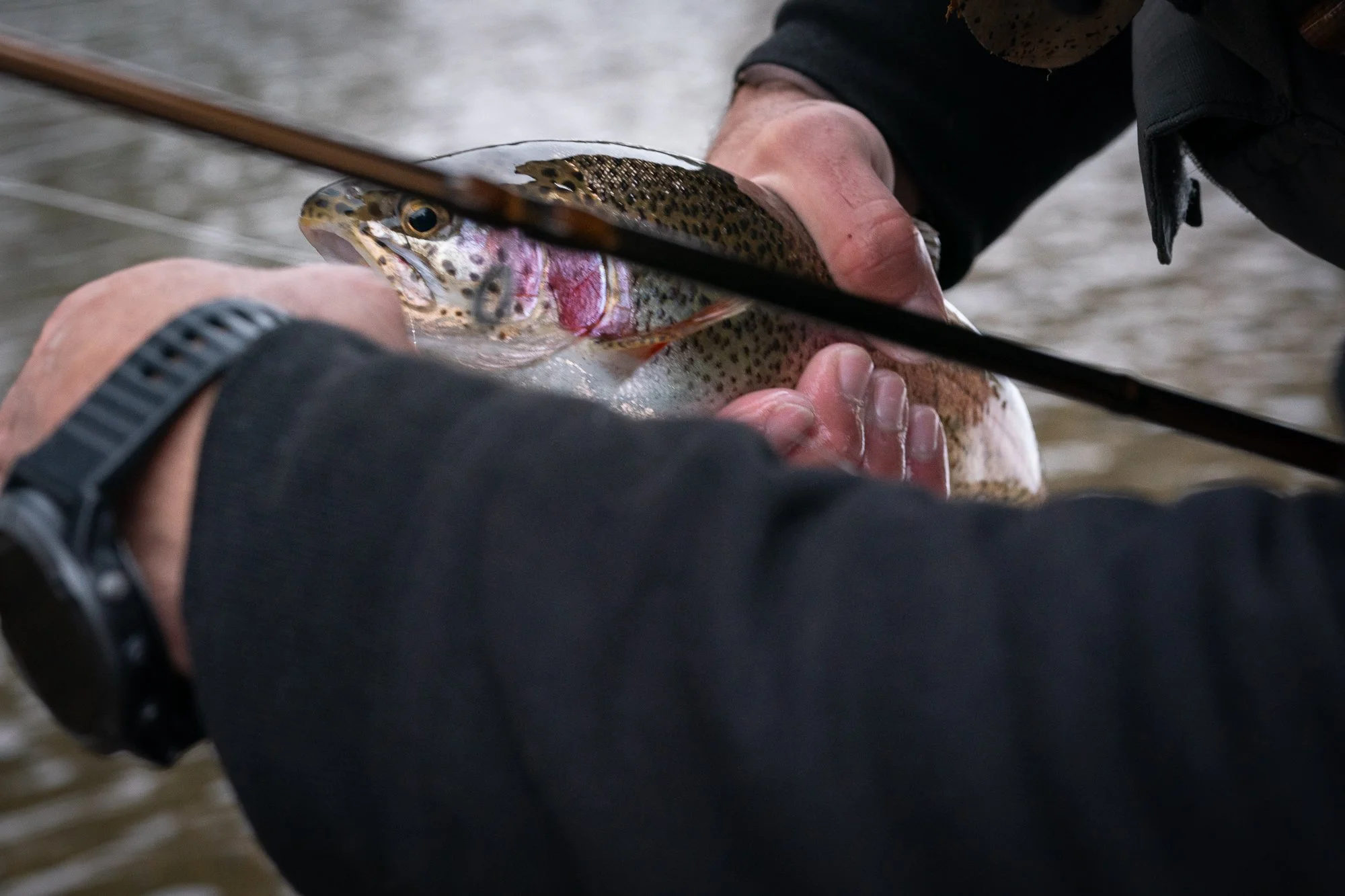
Photograph of a fly fsherman removing a hook from the mouth of a rainbow trout near Estes Park, CO

Removing hook from Rainbow Trout

Part of a Larger Body of Fly Fishing Work

This series connects to a larger and ongoing body of fly fishing photography across different environments:

Each location brings a different pace and visual language, but the approach stays consistent—real conditions, no staging, and a focus on the experience rather than the result.
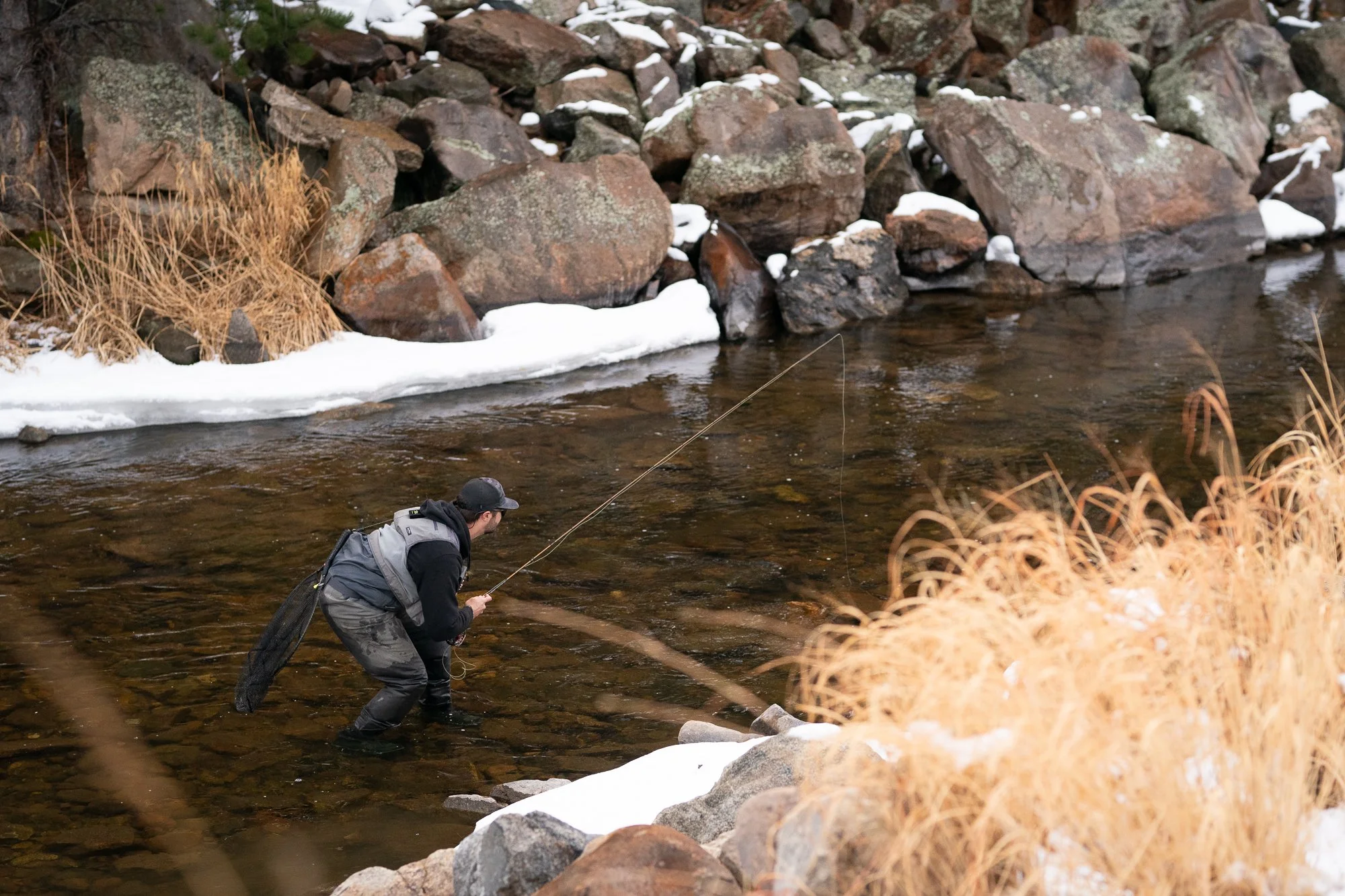
Photograph of a fly fisherman crouching in the river to avoid being seen by fish

A fly fisherman approaches with stealth to avoid spooking fish
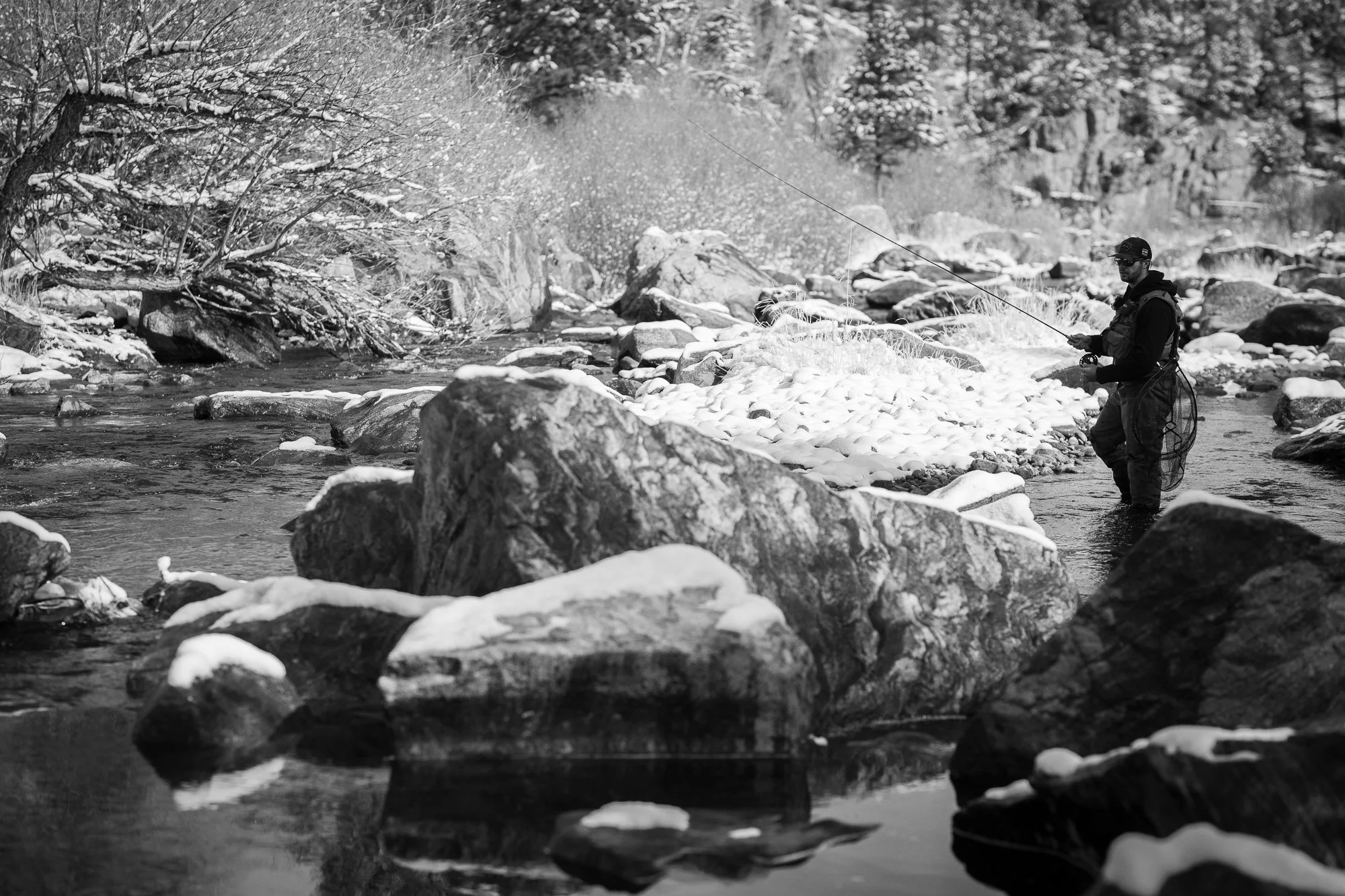
Black and white photograph of a fly fisherman in Big Thomson Canyon near Estes Park

Black and white photo of winter fly fishing in Estes Park

Prints and Licensing

Select images from this series are available as fine art prints, particularly landscape-driven compositions that work well in interior spaces.

View available fly fishing photography prints

Licensing is also available for brands, agencies, and publications looking for fly fishing imagery created in real conditions. Contact me for details - rob@robhammerphotography.com

Long exposure photograph of water flowing on a river

Abstract river photograph
American Road Trip

Road Trip Photography - America - Open Road

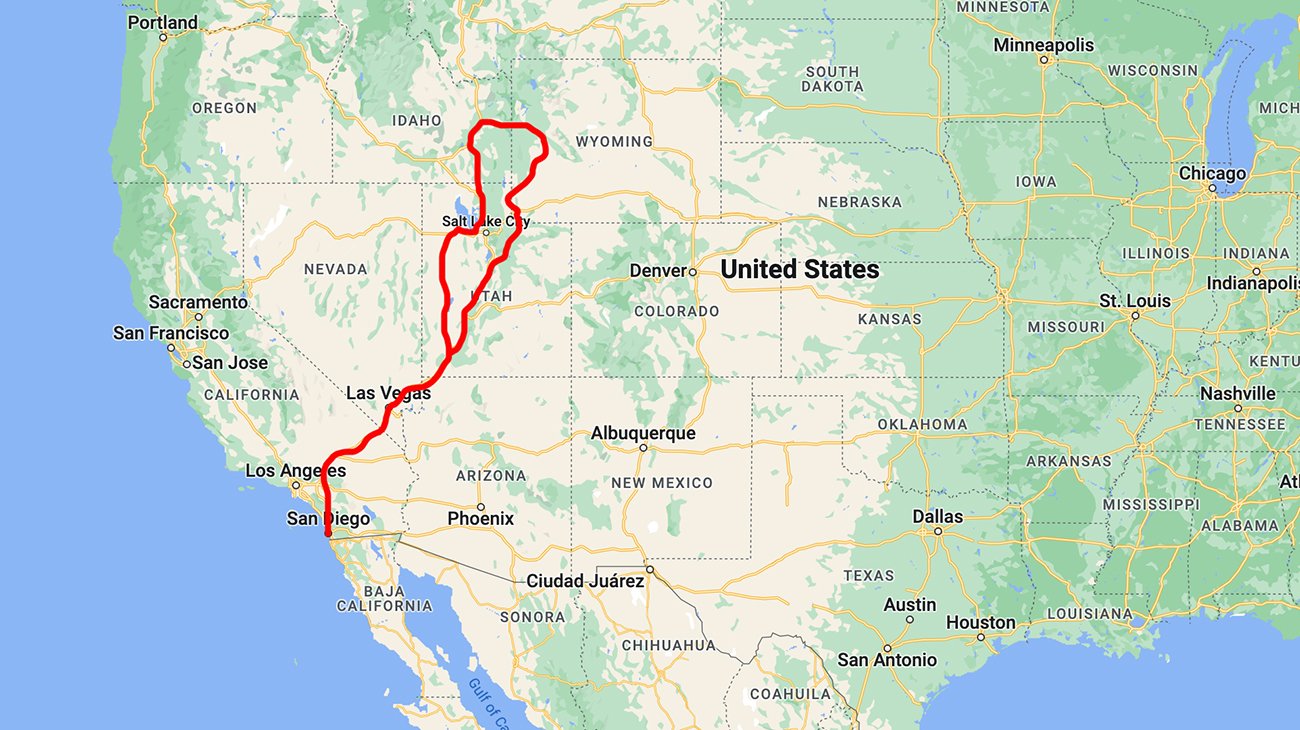
Winter is such a special time in the West. Especially if you’re lucky enough to be in it when a massive snowstorm hits. Such was the case this past week in Wyoming where the snow never seemed to stop. I drove up there to do some shooting and for a backcountry snowboarding hut trip in the Tetons. Jackson Hole and the surrounding area never disappoint in the snow category. Snowboarding is my “selfish time”, meaning I generally put the camera away and just ride, so there are no images of powder to share. However, the image below made in Afton, Wyoming is a great example of the odd things you see while on the road that are only made possible by the hand of mother nature.

Winter in Afton, Wyoming

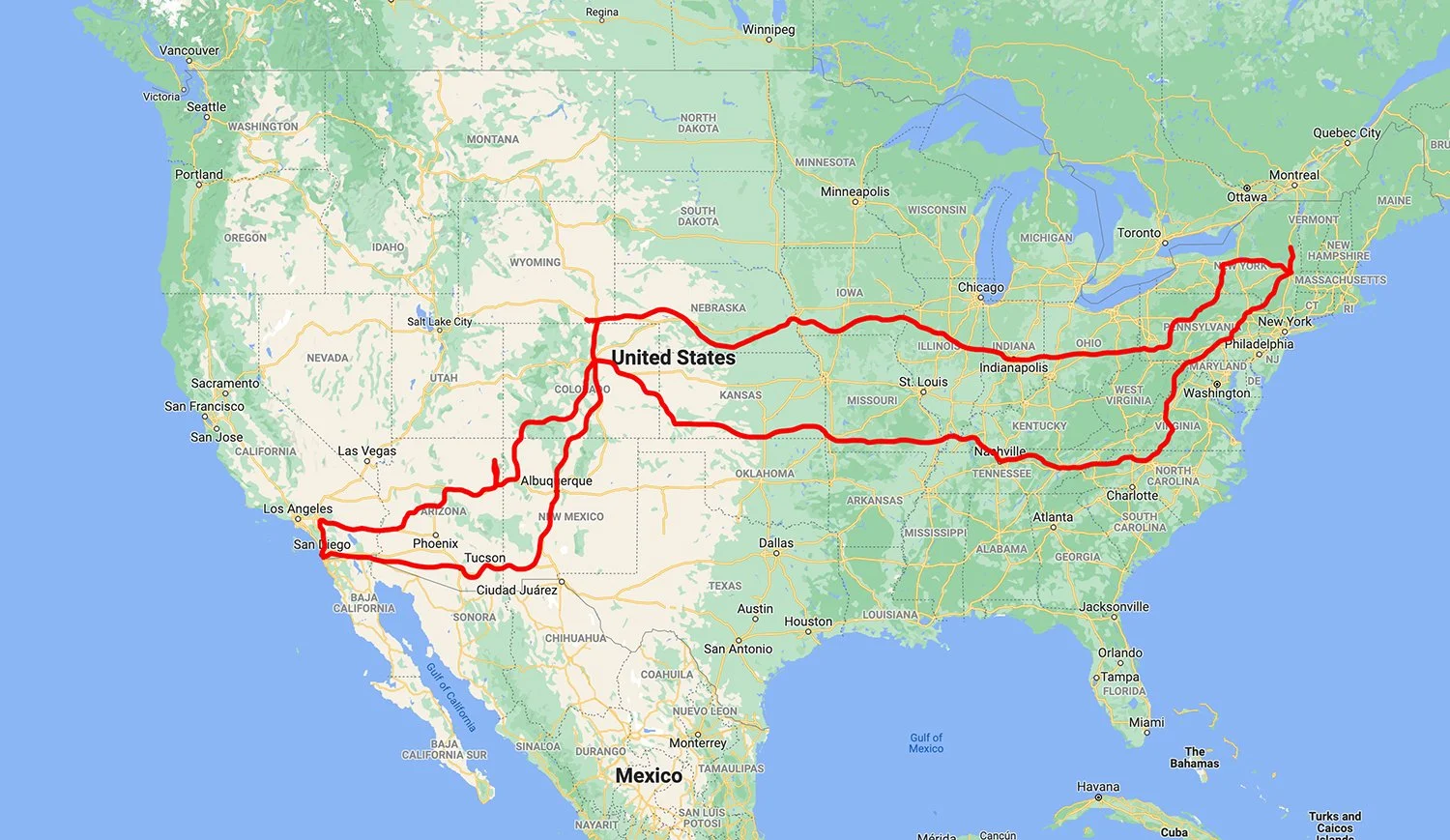
Road Trip Map

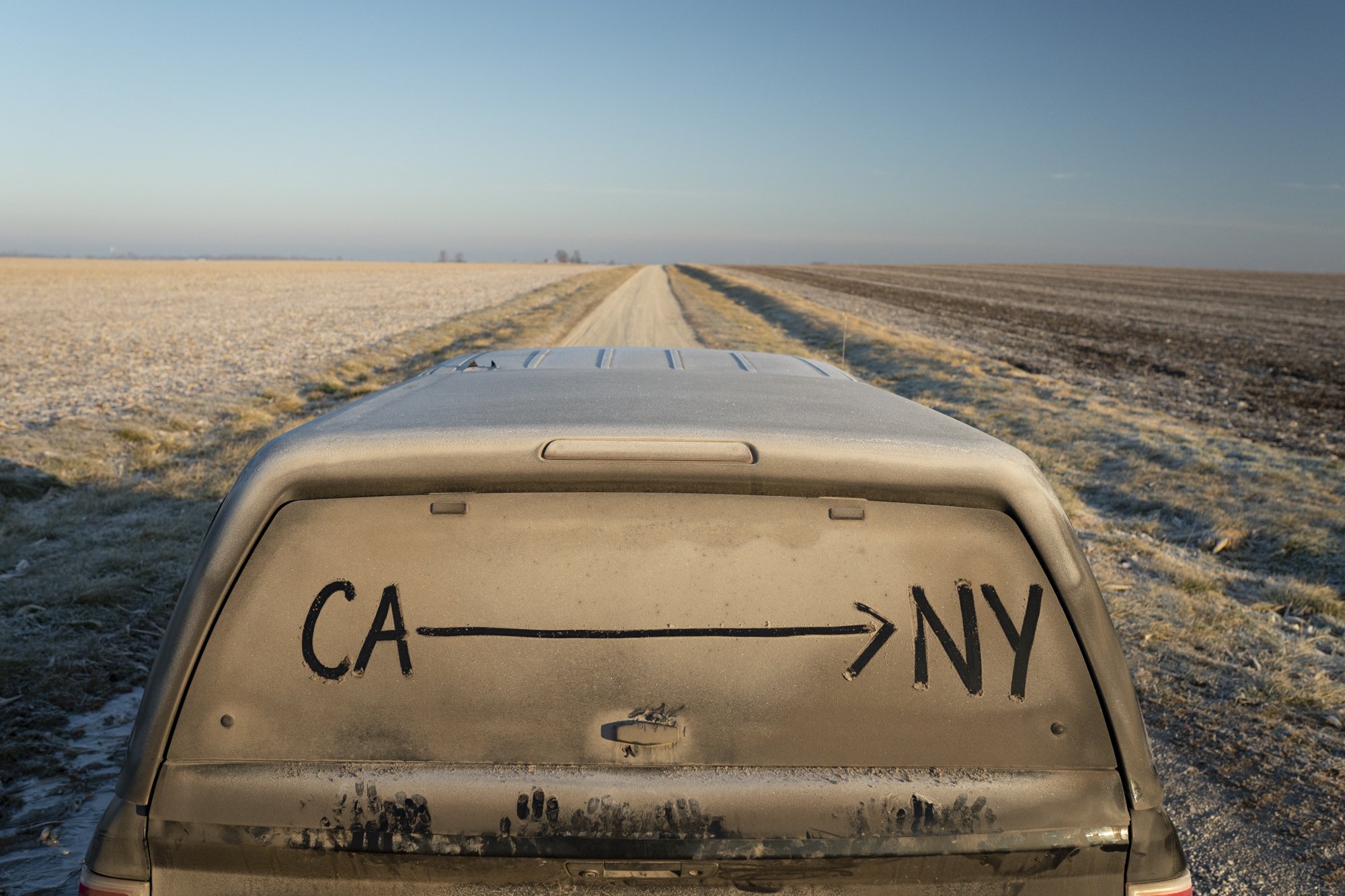
Mojo and I did it again. Another lap around the country filled with good times, foul weather, family, friends, and if all went even remotely well, a solid handful of images that I’m happy with. These trips never stop surprising me and hopefully they never do. Some days on the road you’ve got to scratch and claw to find just one decent frame. There were numerous times I asked myself “Is this America project done? Have I seen all there is to see?” Of course that’s complete nonsense. It was just frustration and exhaustion talking. A person could spend a lifetime traveling this great country and never see all it has to offer. The flip side is those days where you can’t seem to stop shooting. Those are a gift. You find that honey hole, you’re seeing really well, and the frames just start stacking up. That’s the best feeling in the world because you know it’s fleeting. You know it might not happen again for a couple days or 1,000+miles. There are so many factors at play that you can’t possibly pretend to know what’s going to happen out there. That’s the best part though. The not knowing. The hunt. It’s a drug.

Have a lot on the plate right now but will be going through this batch of images soon, so check back to see what I came up with out there.

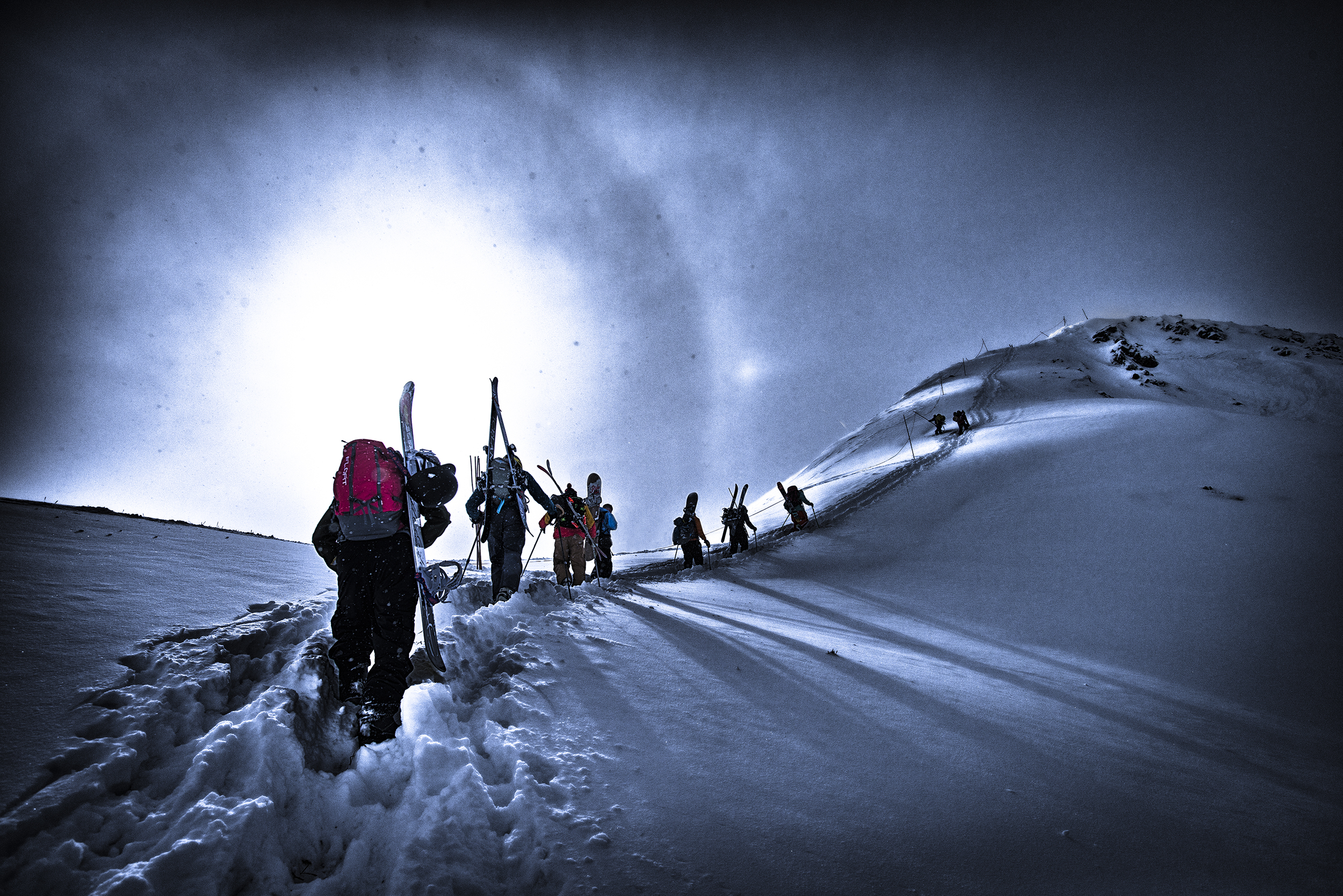
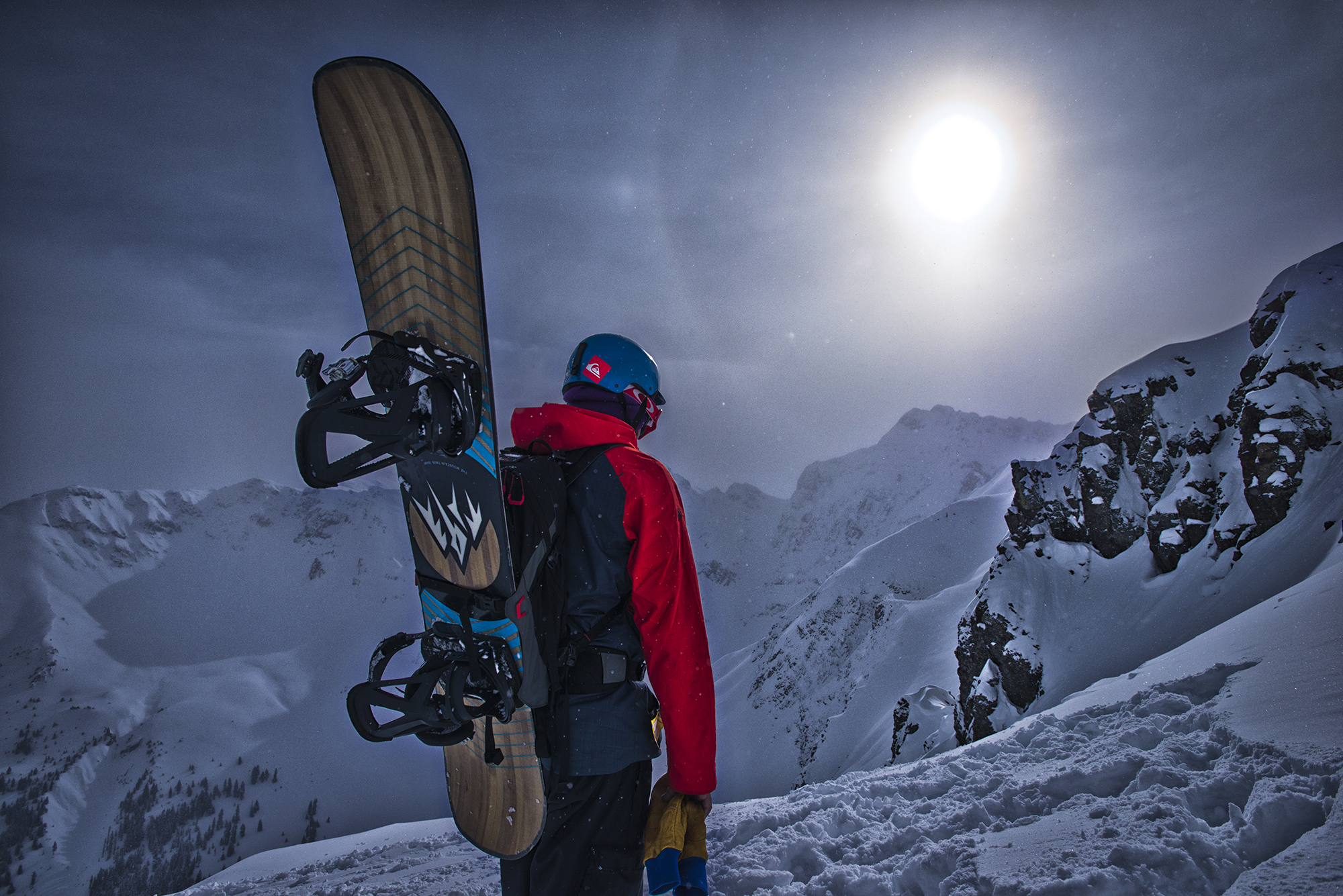
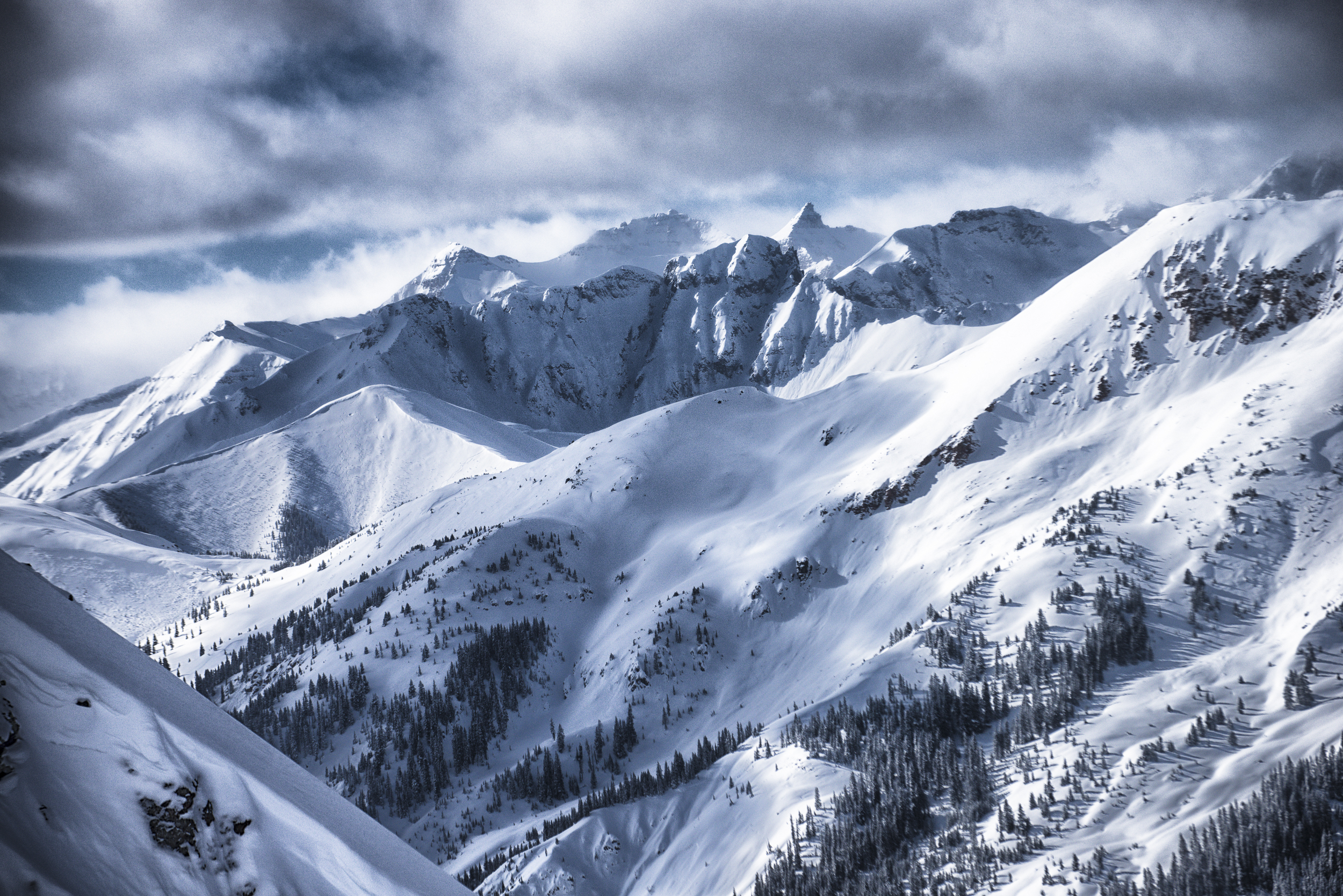
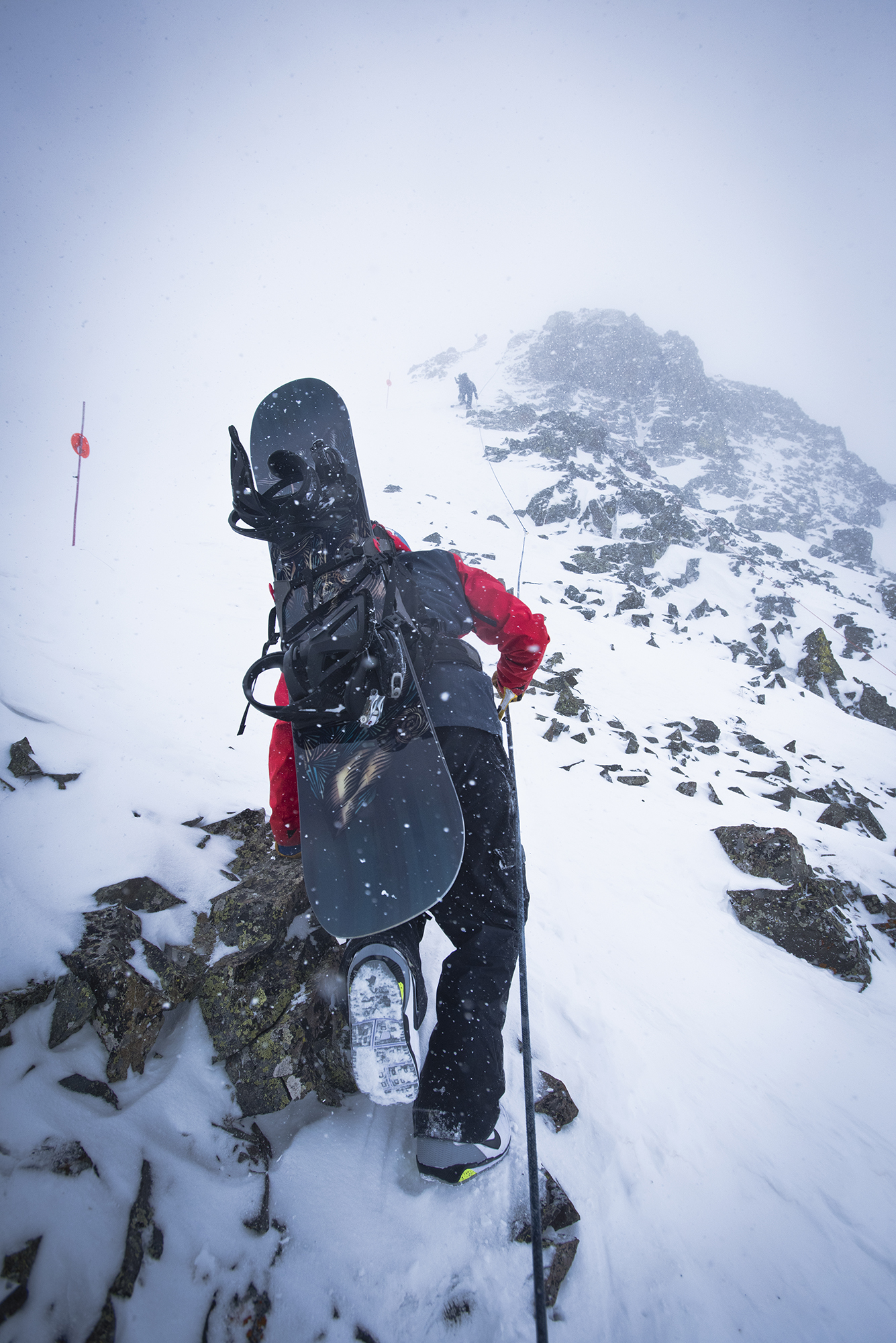
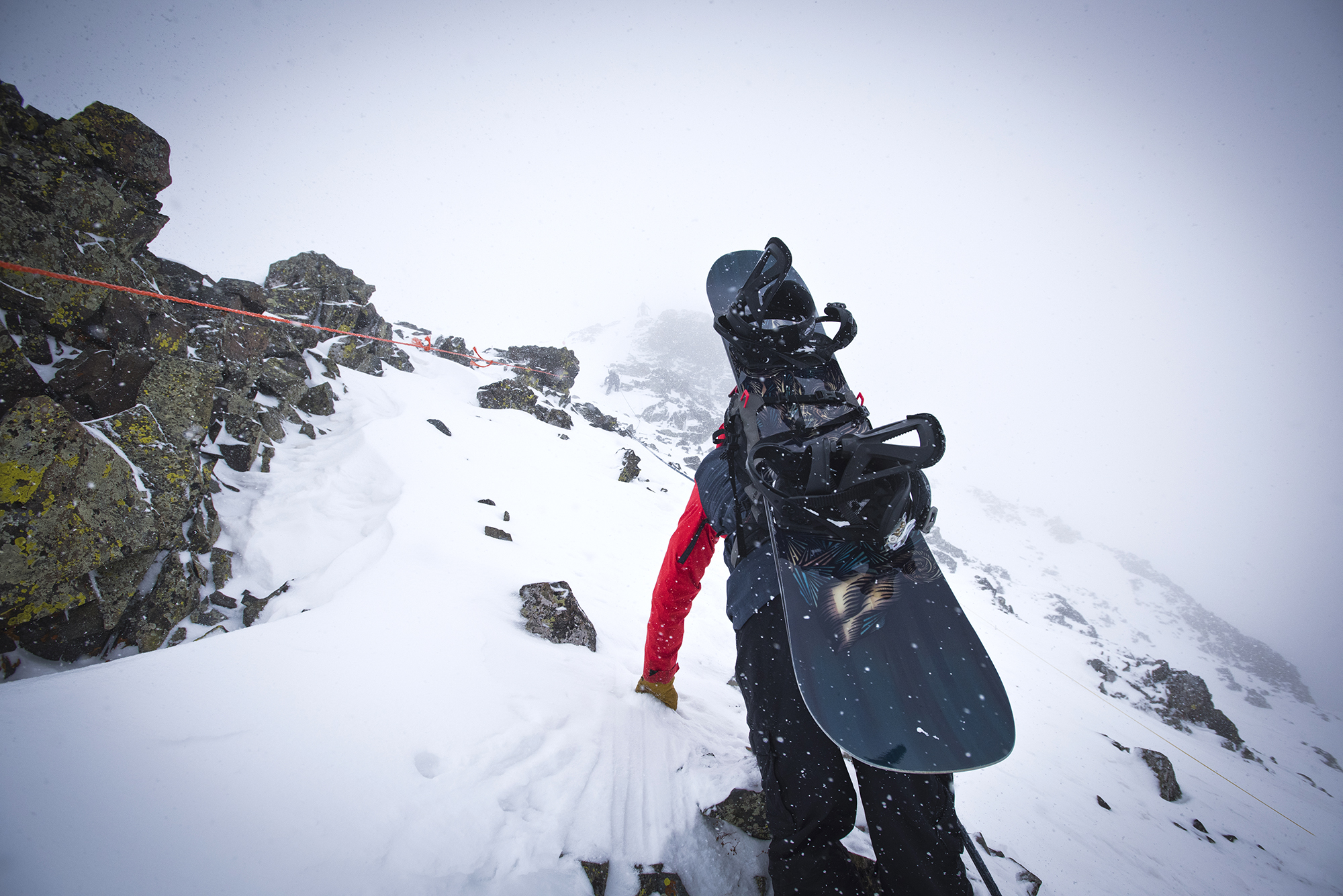
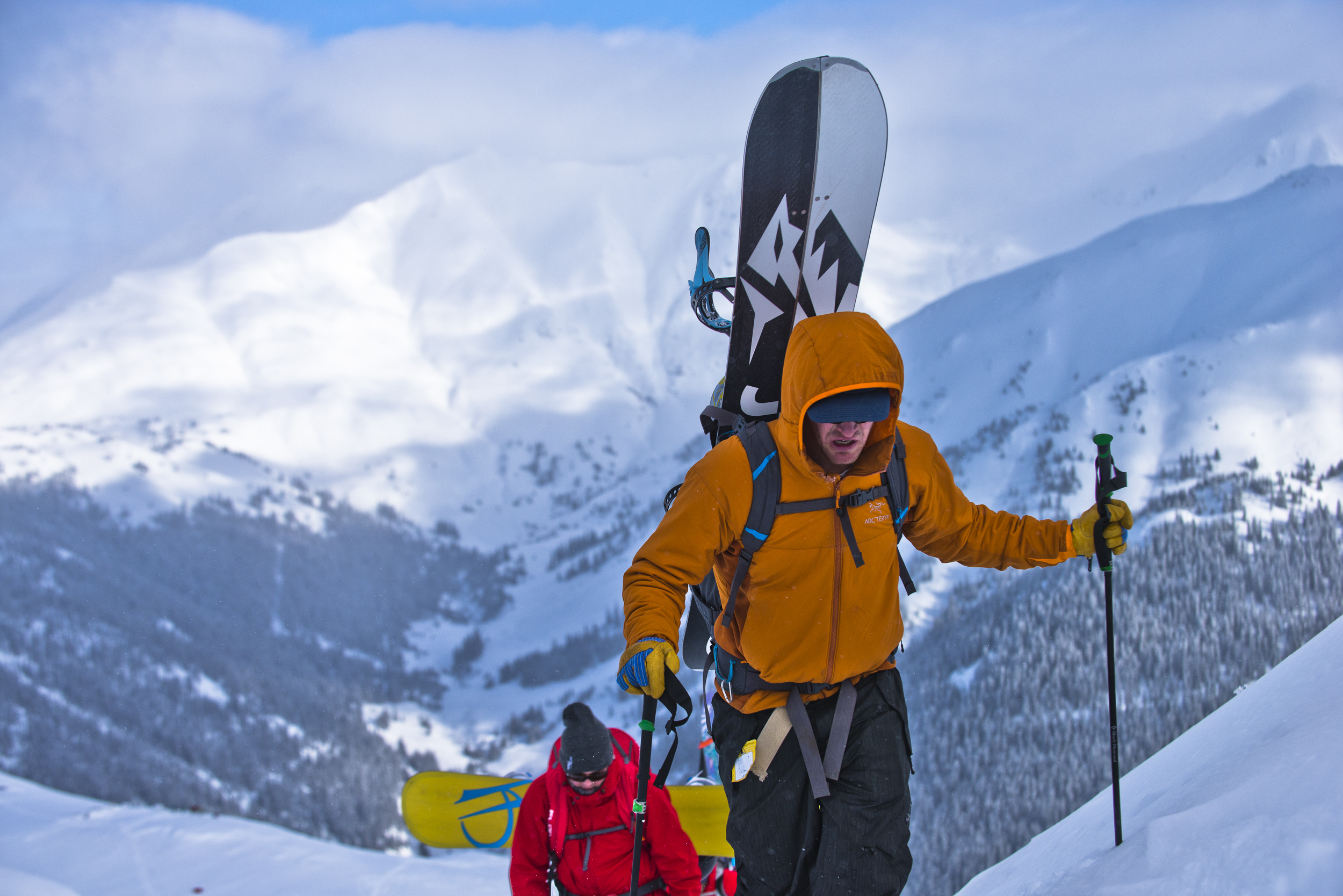
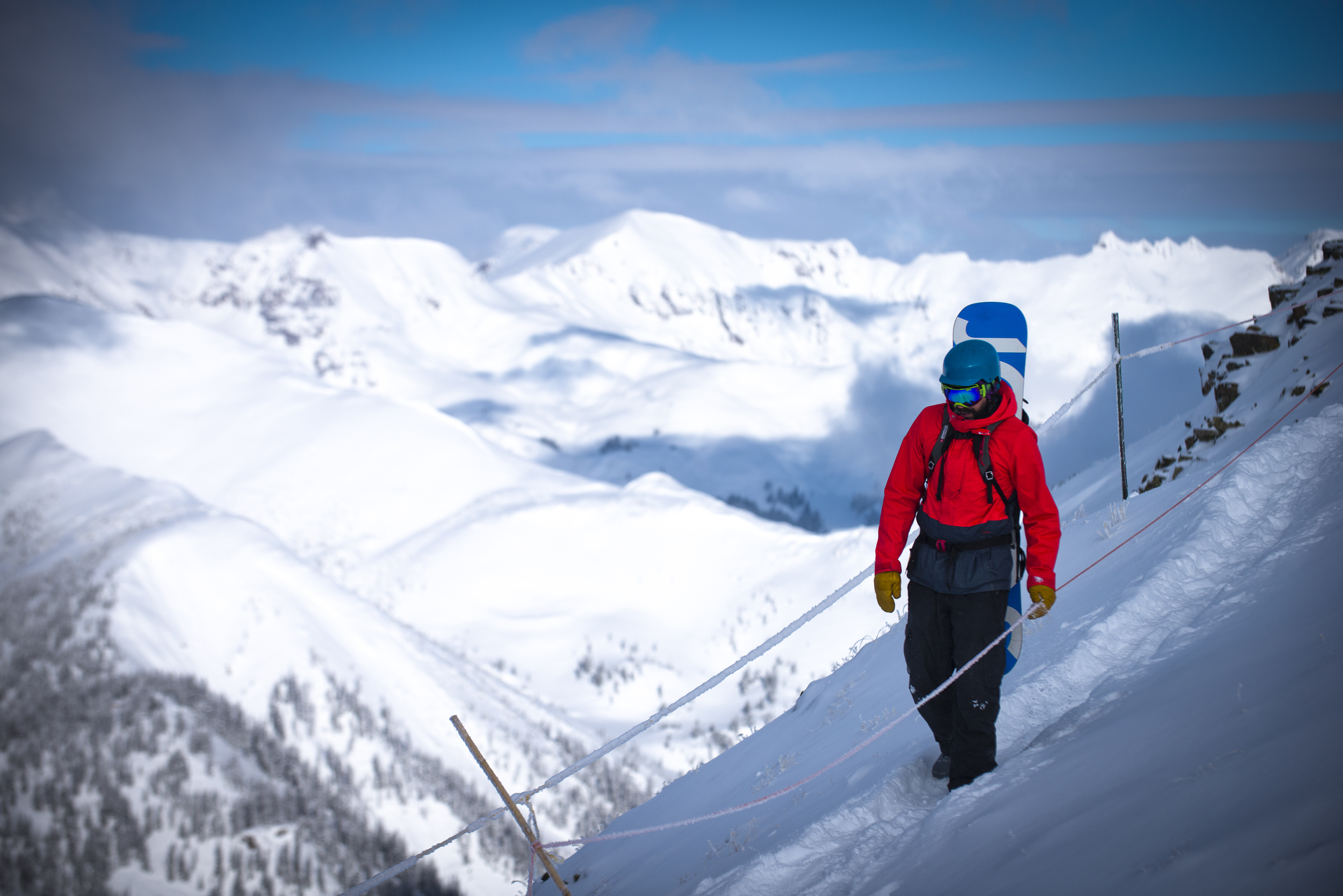
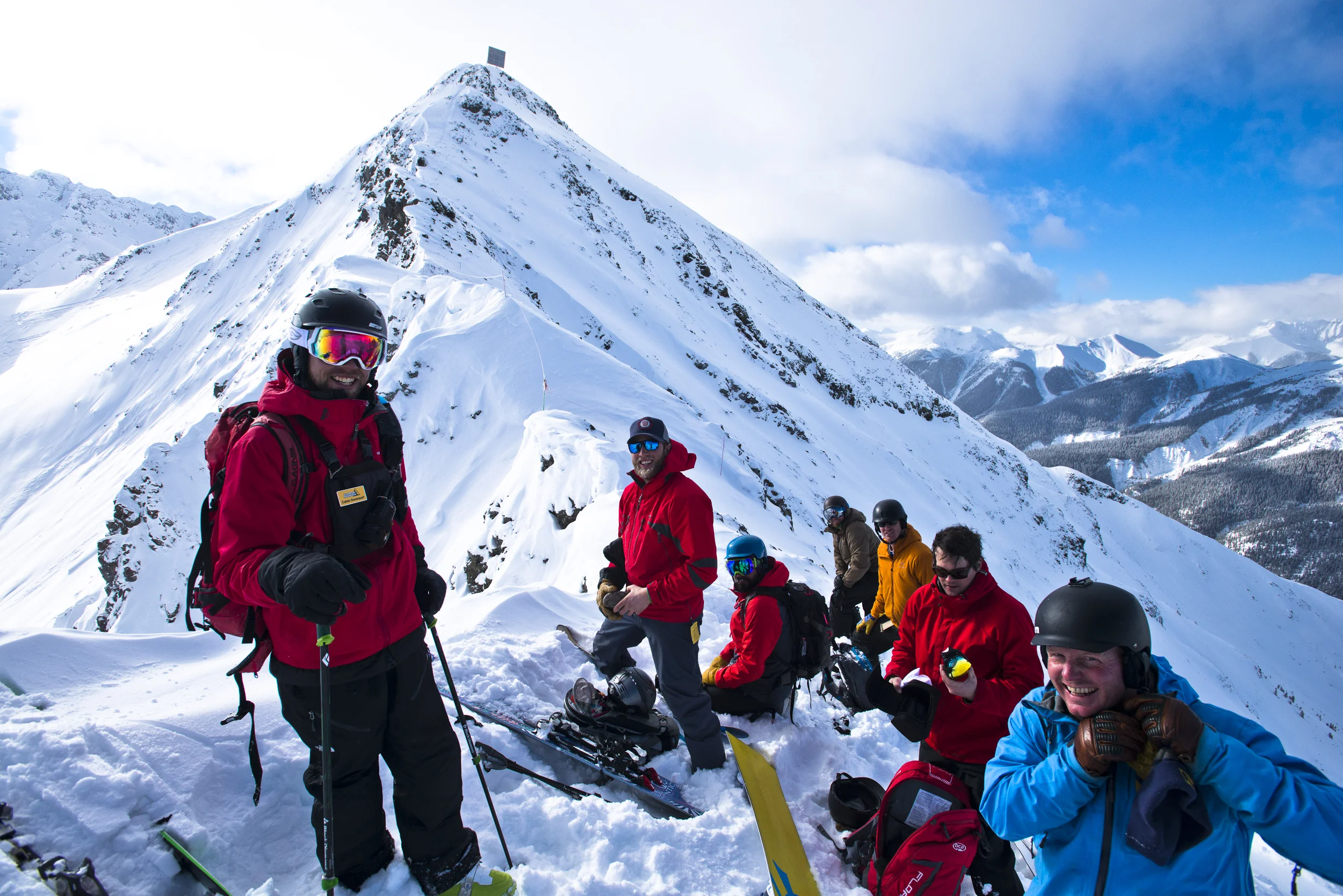
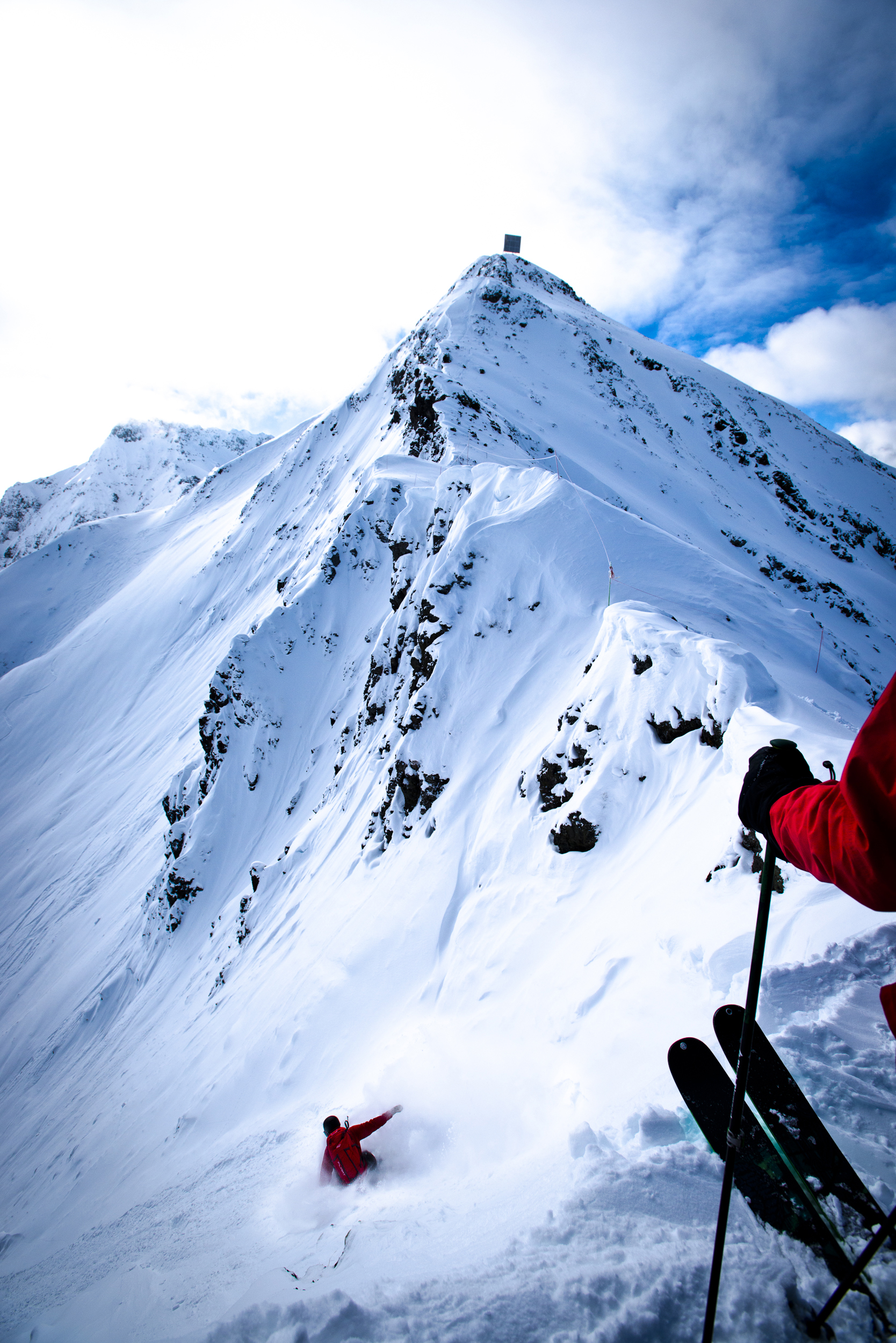
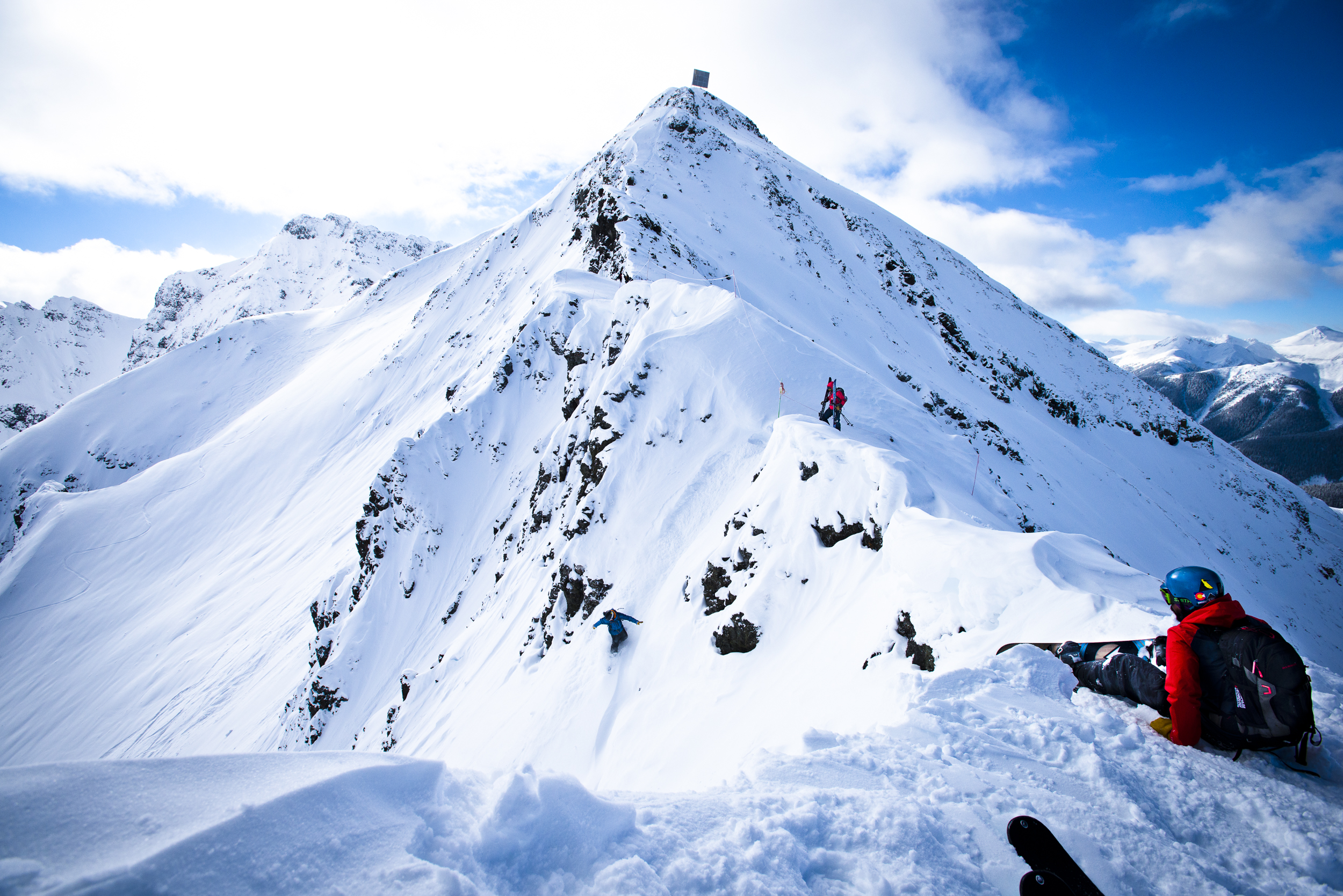
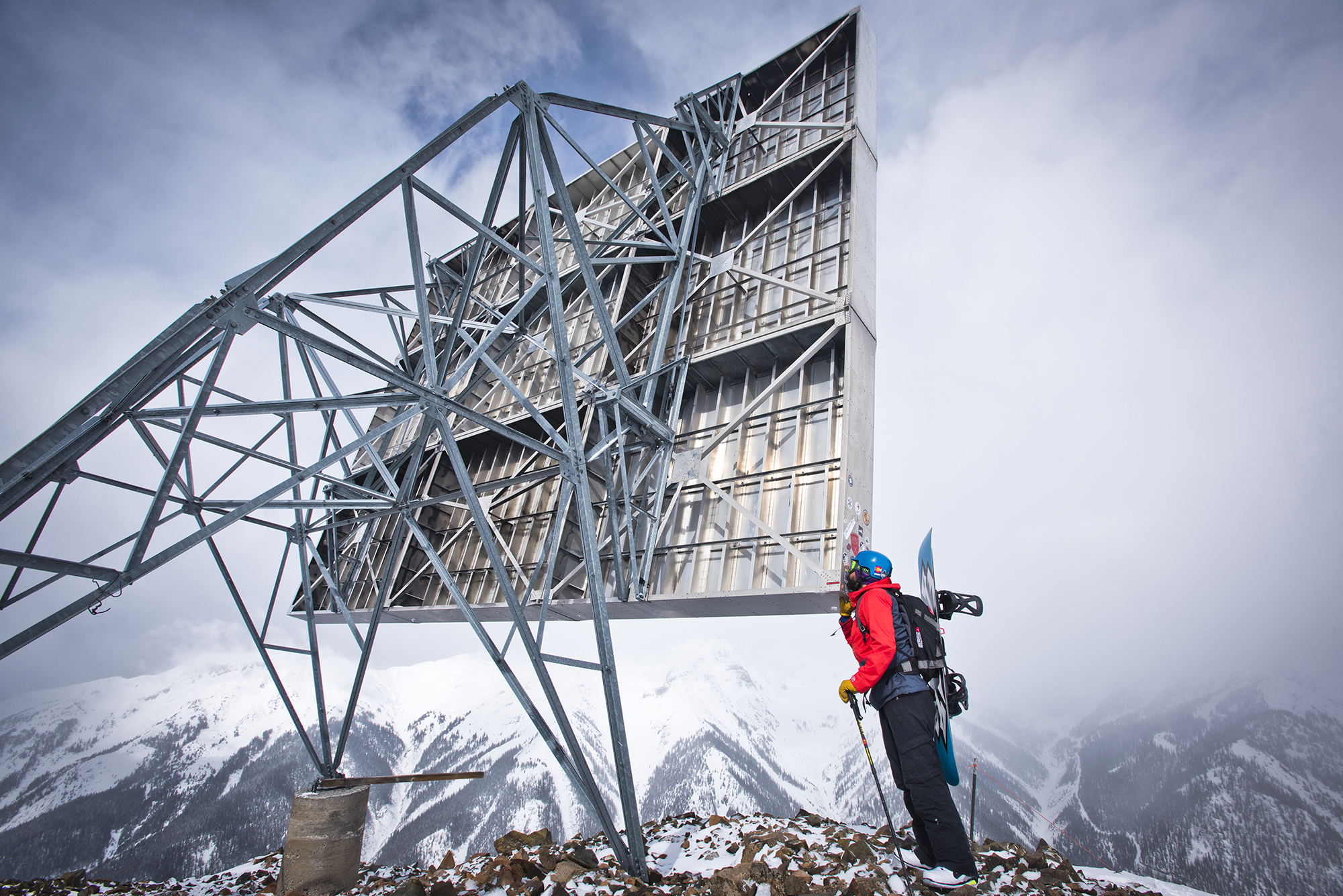
Silverton Mountain

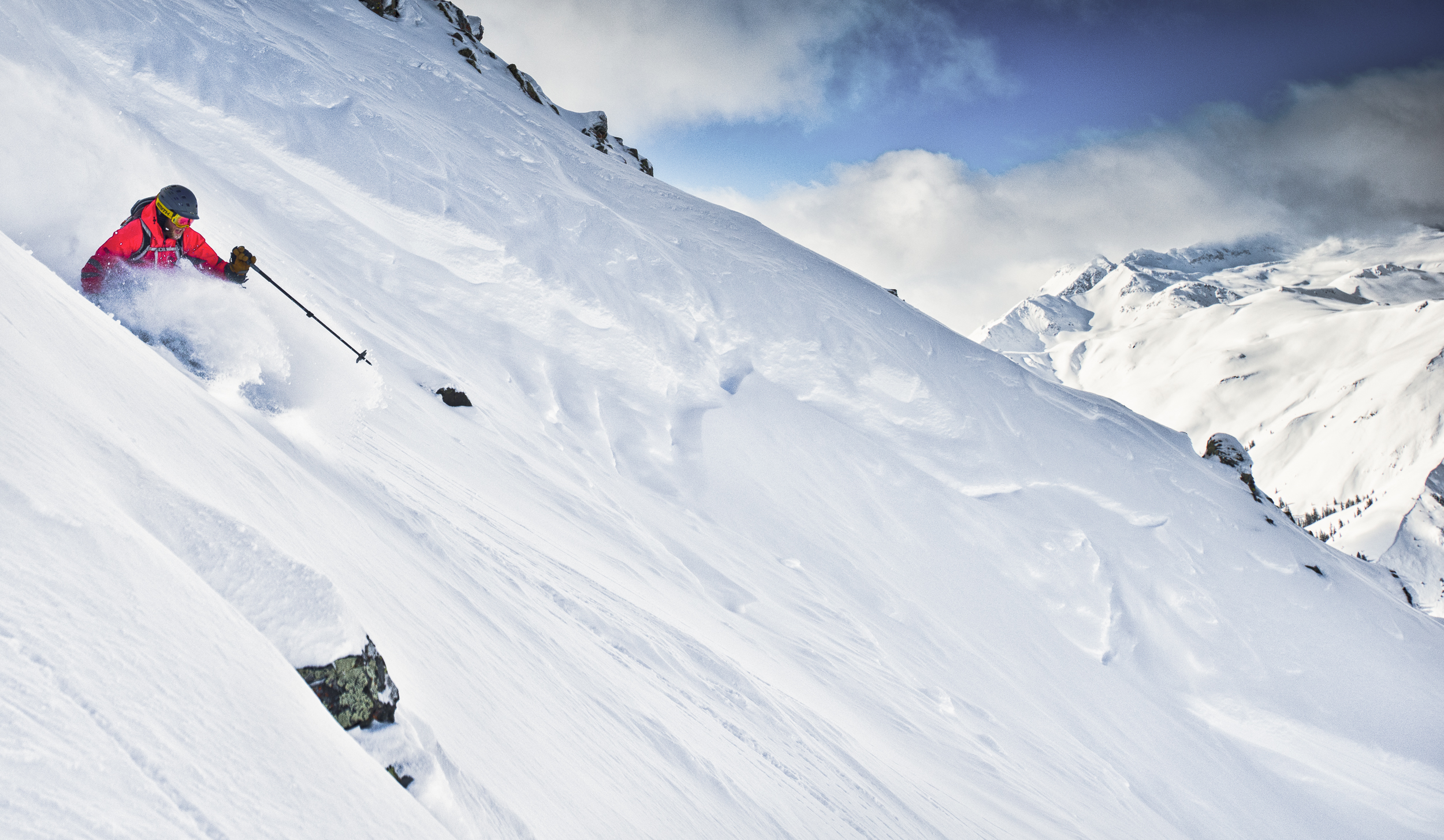
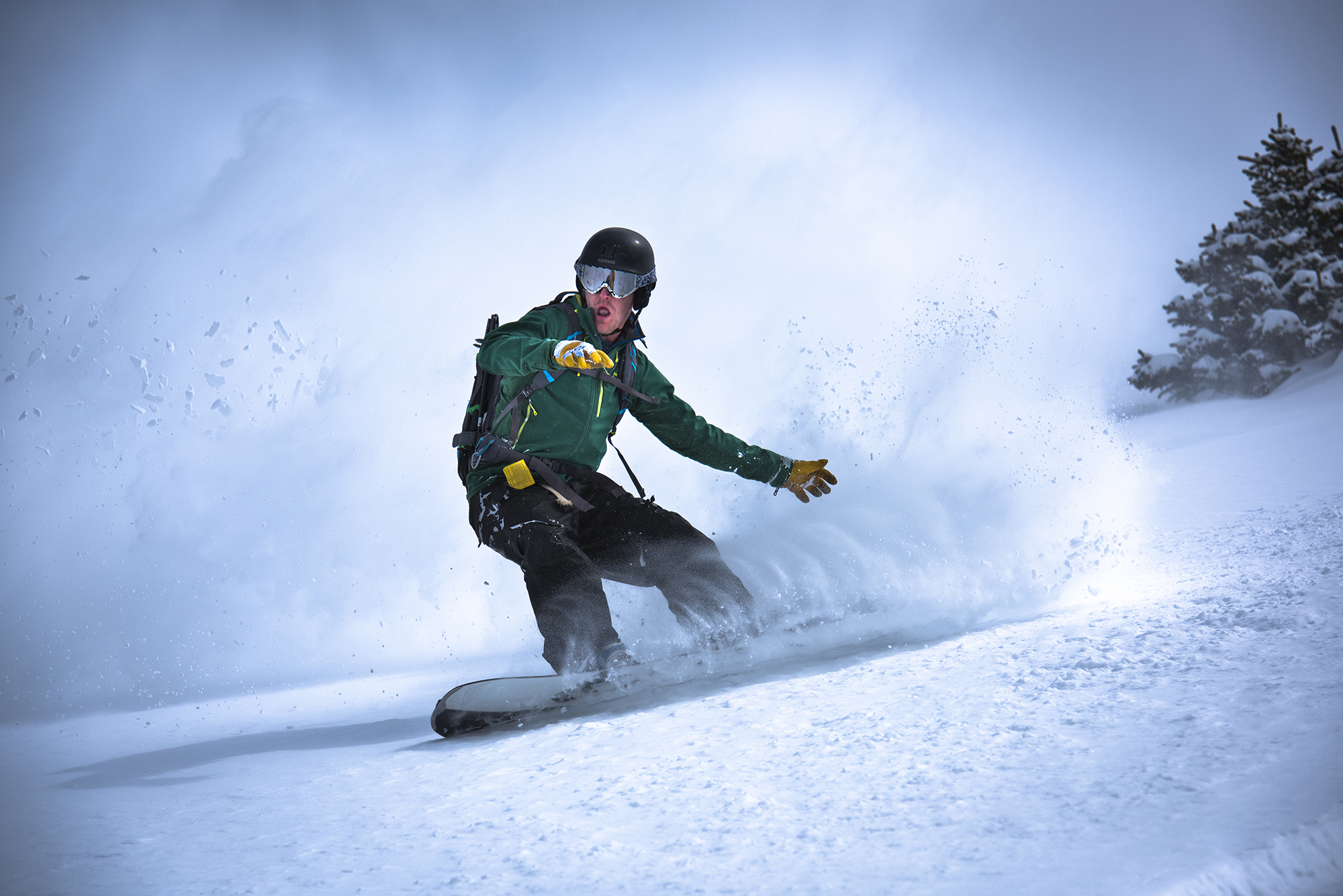
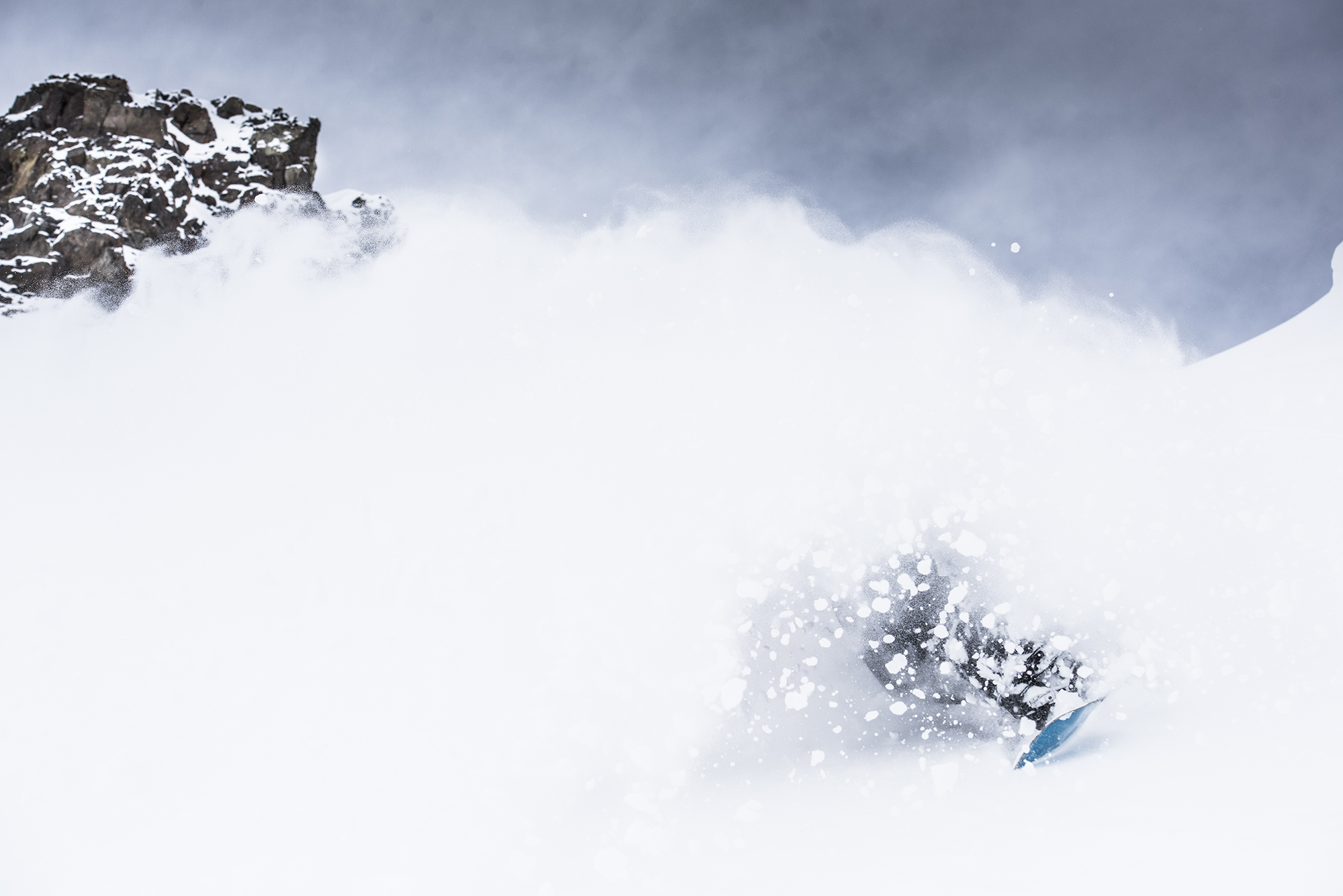
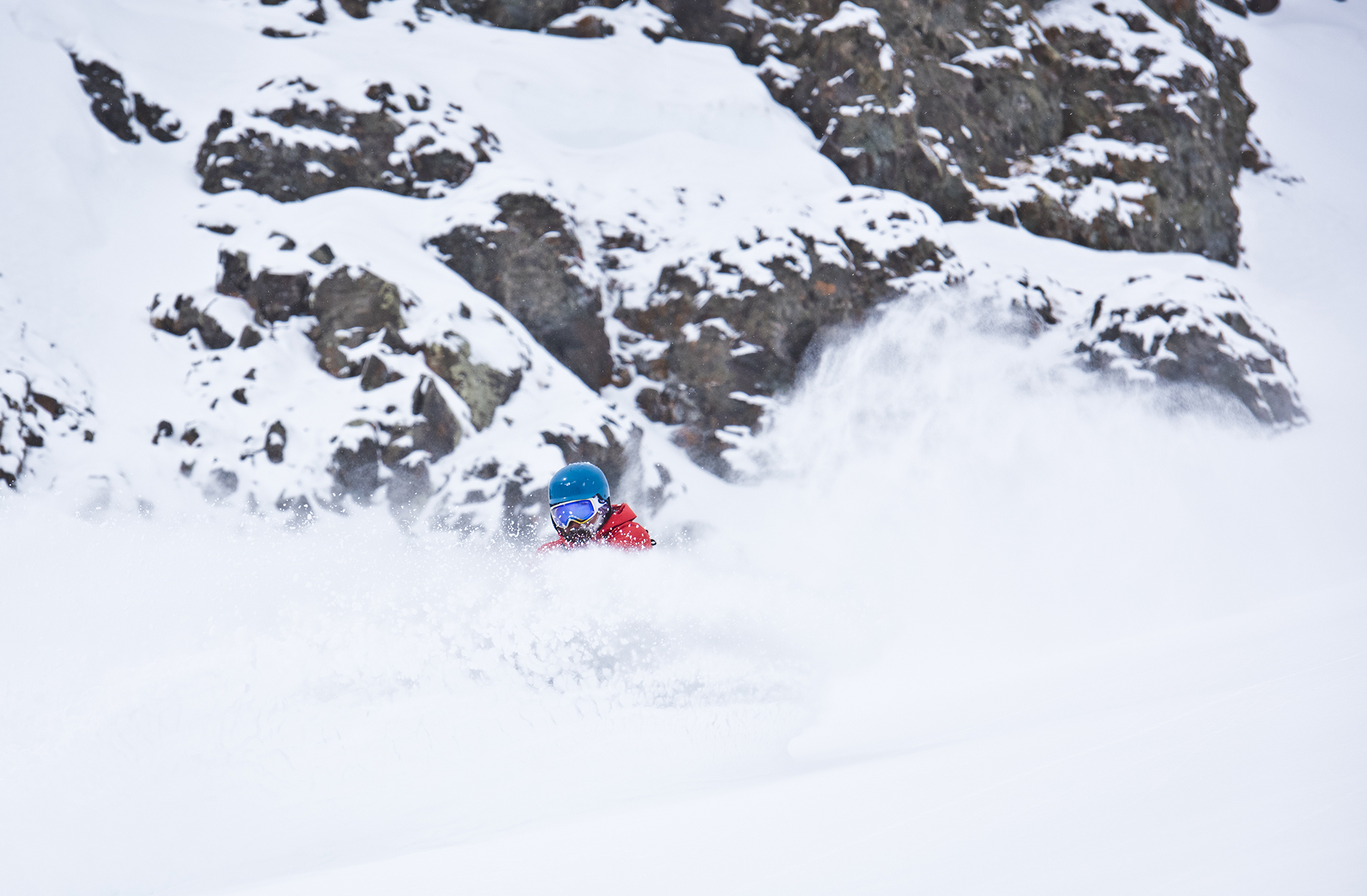
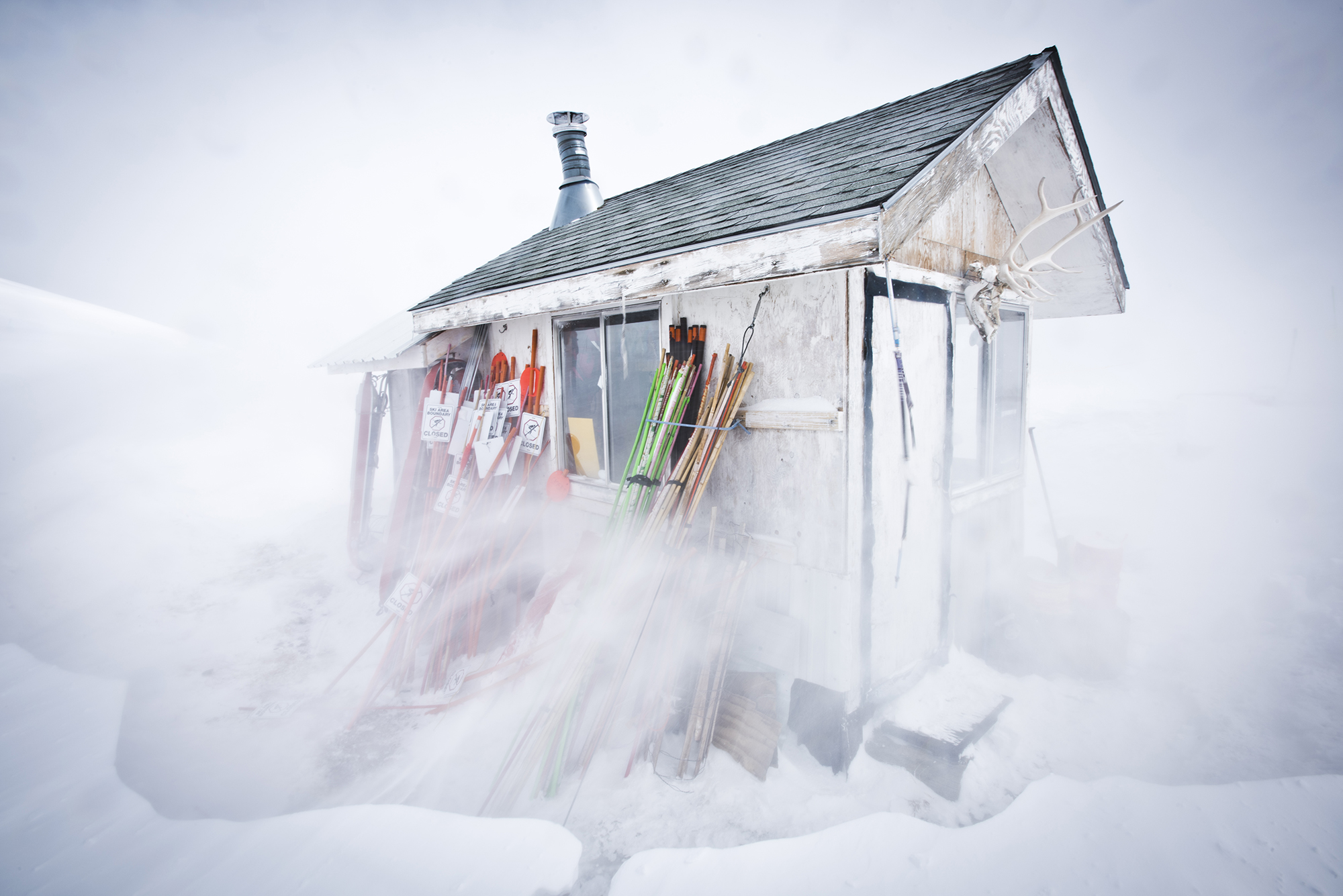
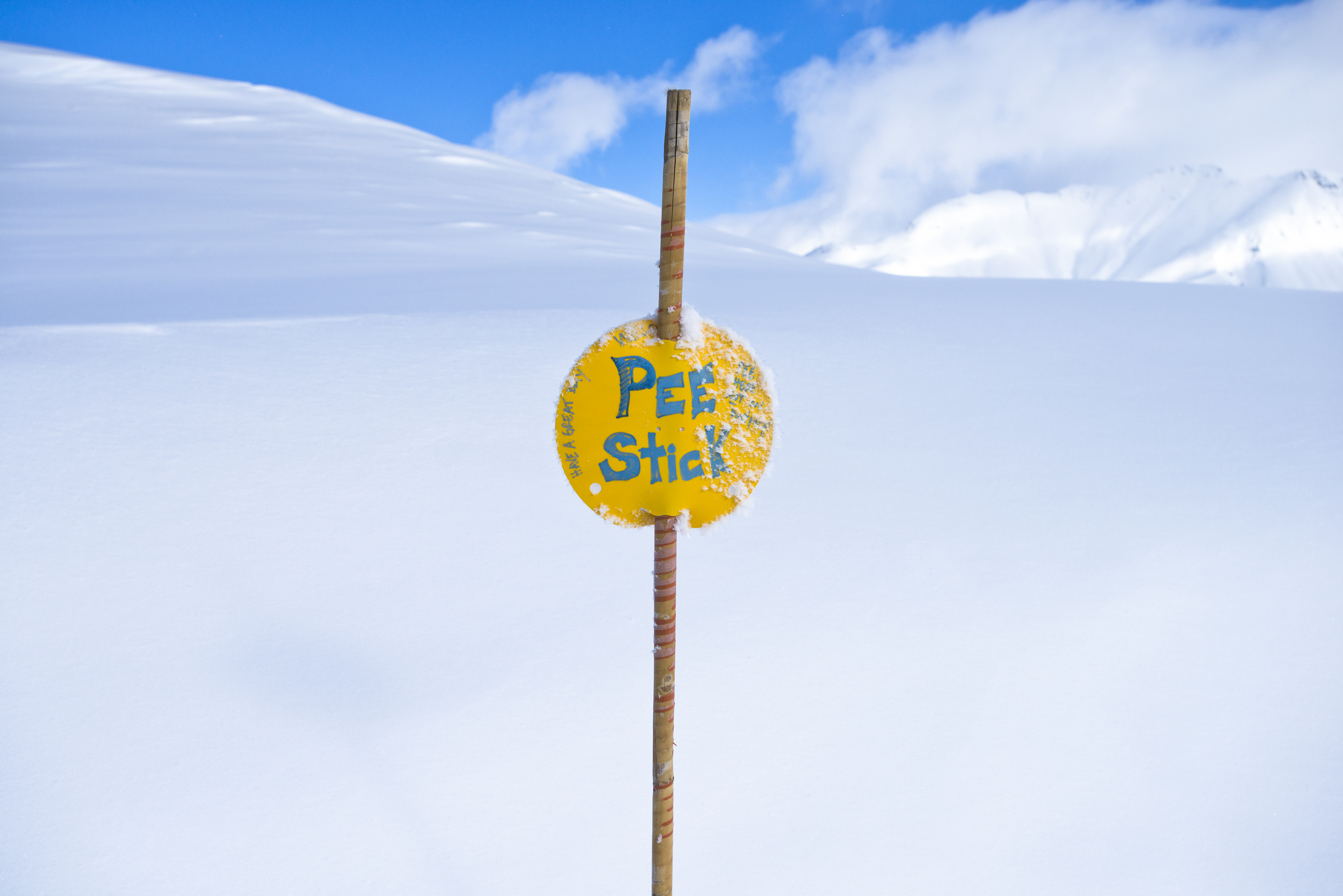
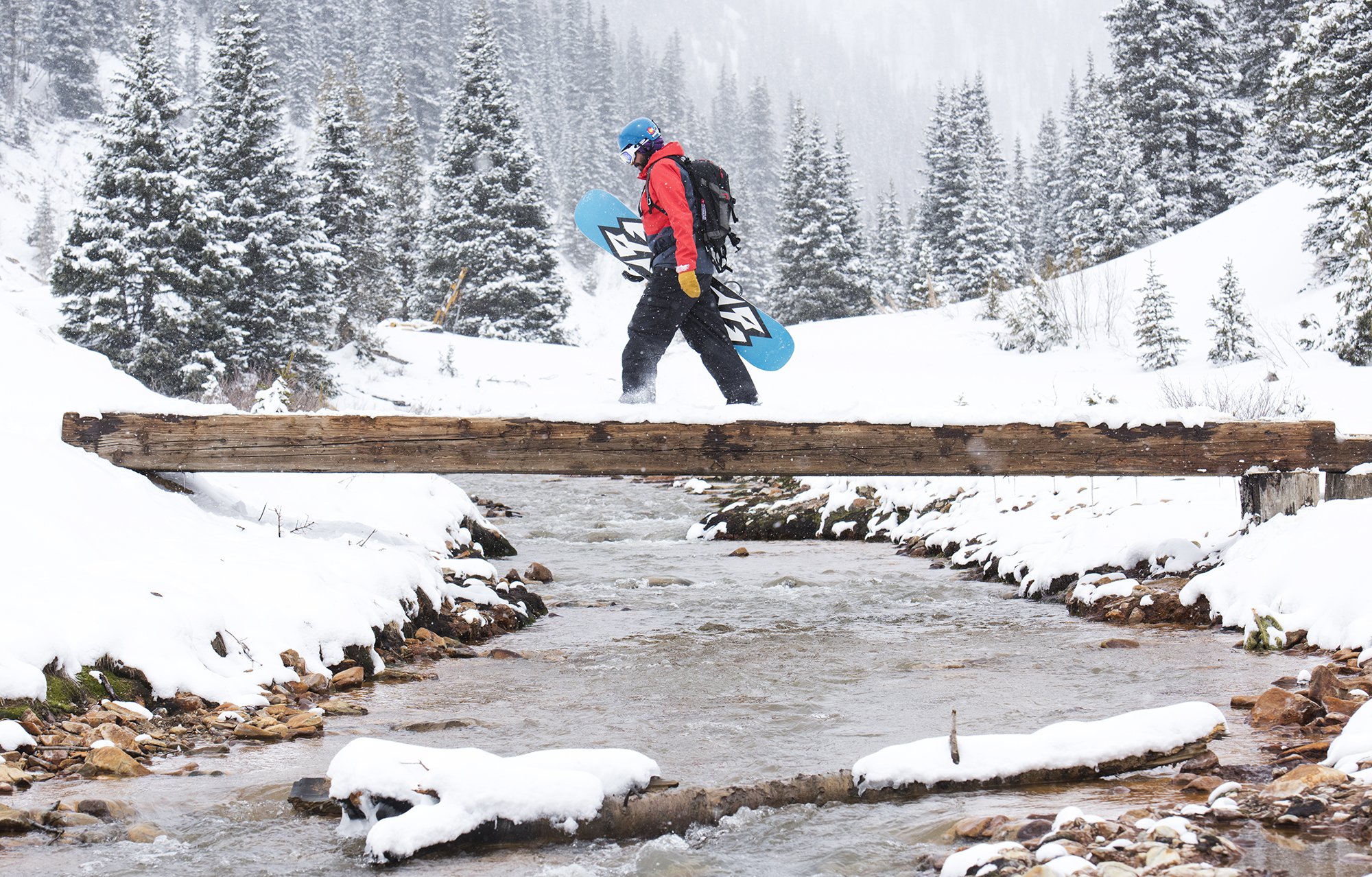
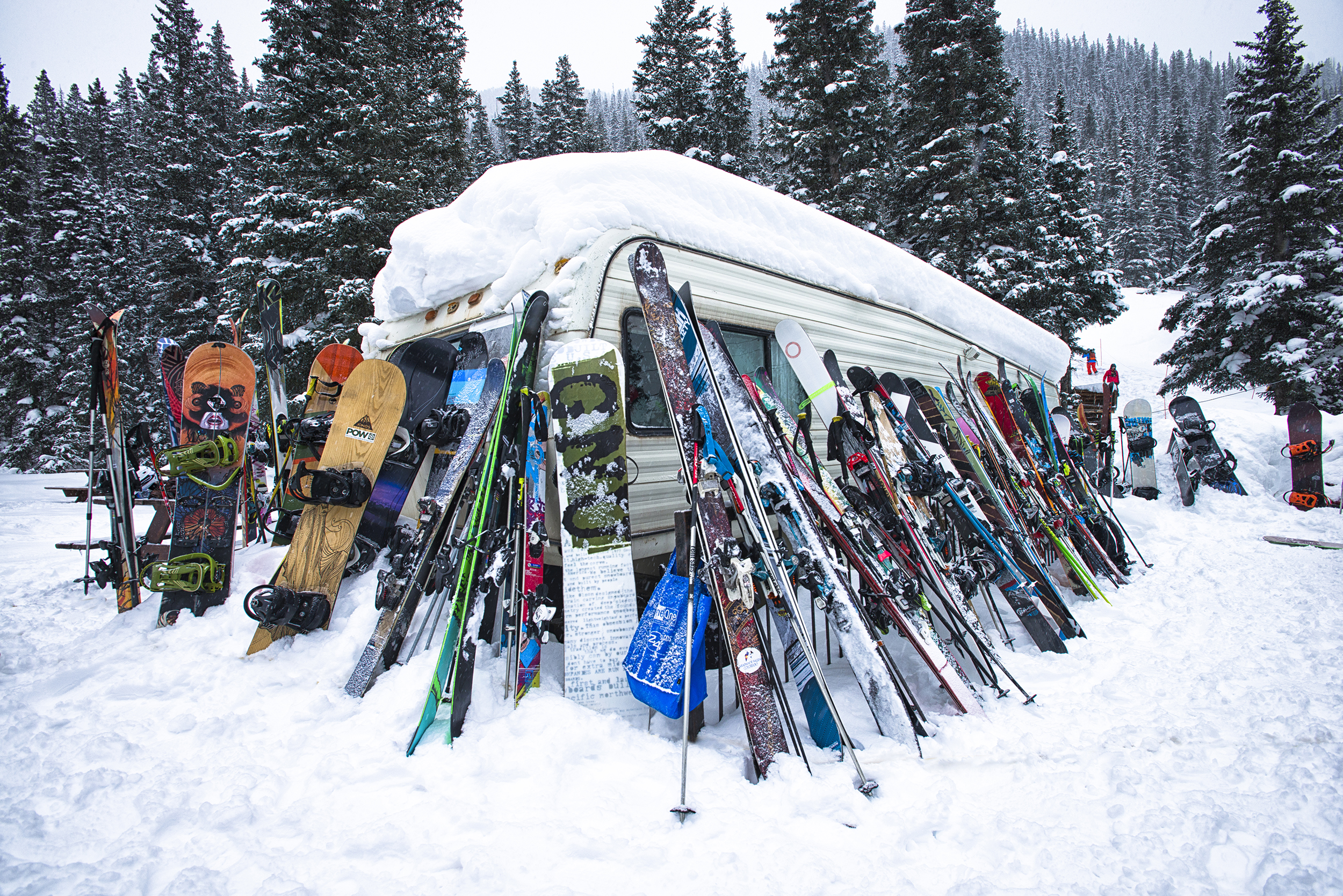
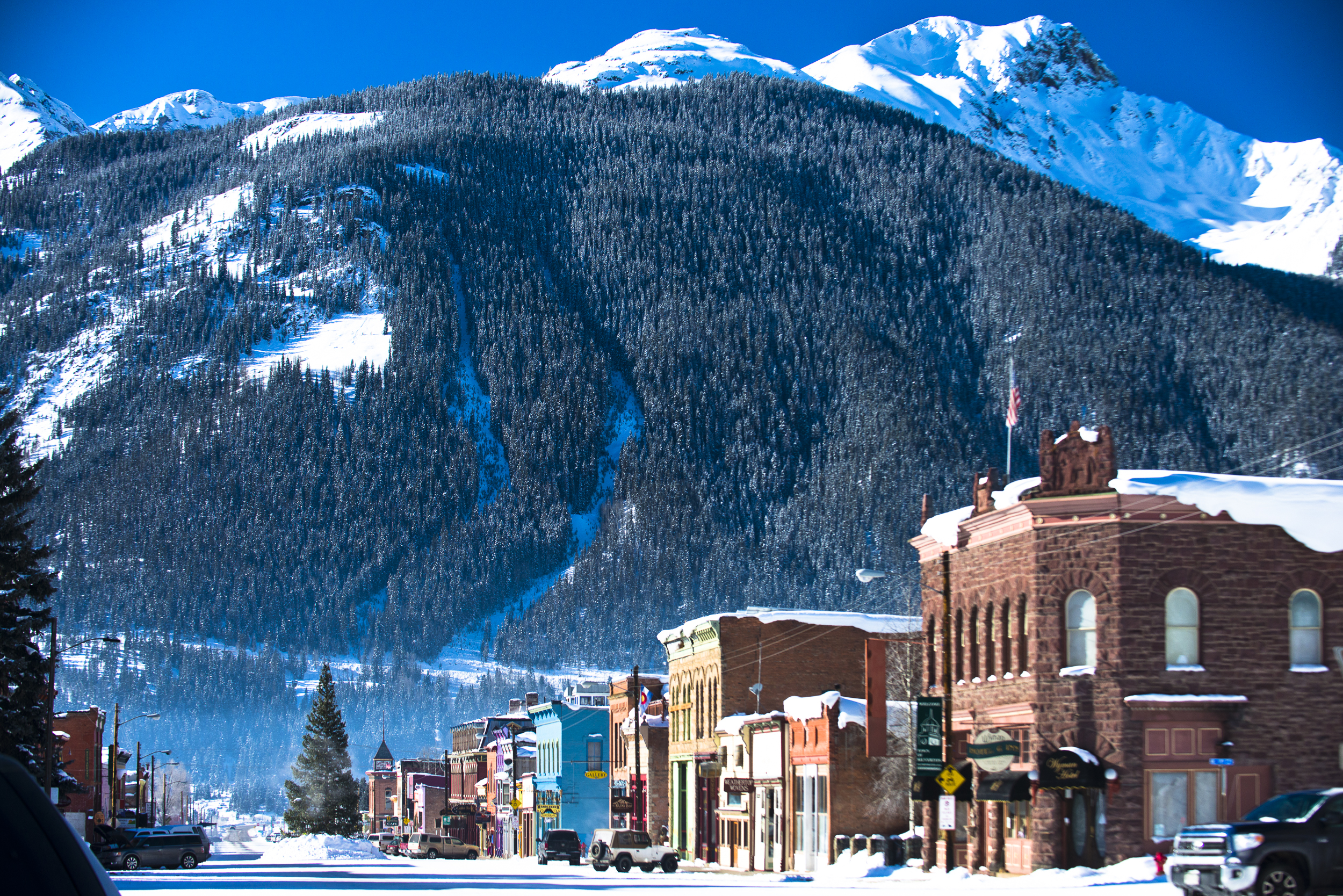
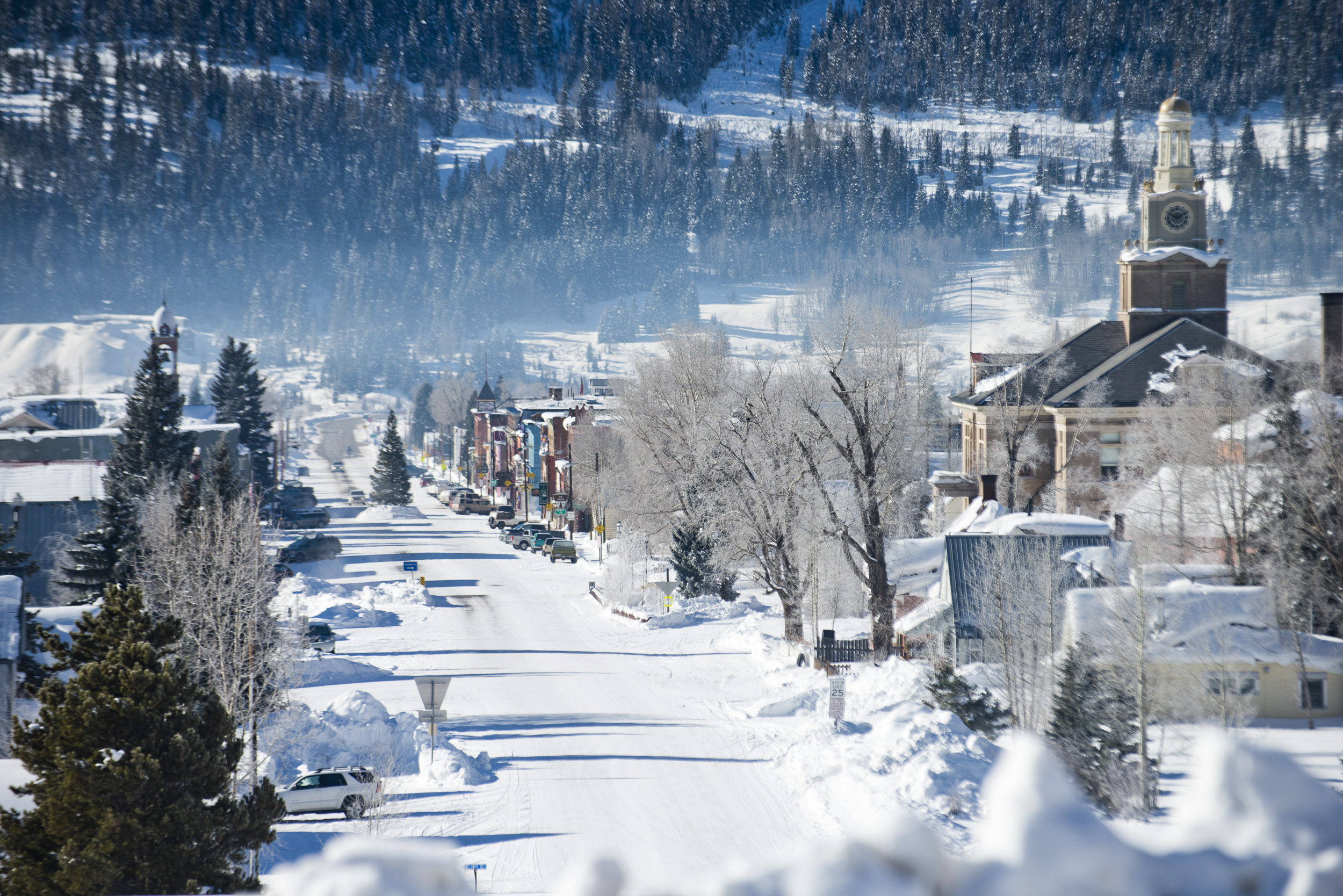
Silverton Mountain in Colorado is unlike any other place you can ski/ride in the U.S. Think of it as the exact opposite of Vail. First of all, just getting there is a commitment, as it's about a 6.5 hour drive from Denver. The last part of the drive titled "The Million Dollar Highway" is about as much fun as you can have on a mountain pass. Switchback after switchback, with very few if any guardrails, and long steep drops off the side. The town itself is the kind of place you can see having gun fights in the street back in the day. That kind of town. Drive about 15 minutes out the back of town, and there is a parking lot. Next to the parking lot is a trailer with skis/snowboards piled on it. Next to that is a 2 person chairlift and a yurt for a lodge. That's it. No bougie villages with people wearing fur boots while sipping on a Hot Toddy. Just friendly people that want to ride. And all those people are earning there turns, because that 2 seater lift only goes 3/4 of the way up. From there, your guide leads you on a hike up ardigeline to the place he chooses for you to drop in. And did I mention that they are only open Friday-Sunday? Which means the snow piles up all week, so you're always getting fresh turns. On top of that, the guides section off the mountain, to keep things fresh for the next two days. The terrain is steep and technical. And fun. If you're a serious skier, you should get to Silverton. I loved it so much and wasn't even in great skiing shape when we were there. It was only my second day riding for the year, and I was just finishing up a month long cross-country road trip. Hell of a cap, but definitely wish I was in better shape. Either way, it was a great time, and I can't wait to go back in March. Did a little bit of shooting while I was there too. Hard not to. On day two, the light was so good, I didn't have a choose. It was partly cloudy, so the sun was peaking in and out of clouds. Creating some surreal conditions. Silverton rocks.