Where to Buy Authentic Cowboy Photography Prints for Western Homes

Where to Buy Authentic Cowboy Photography Prints That Actually Feel Real

There’s no shortage of “cowboy wall art” online.

A quick search turns up thousands of options—rustic prints, sepia-toned riders, staged Western scenes, and mass-produced imagery designed to fit a certain idea of the West.

But for people who actually know the difference—or simply want something that feels real—most of it is fake, staged, or made for tourists.

Authentic cowboy photography isn’t about aesthetic alone. It’s about proximity, trust, and time spent in a world that isn’t easily accessed.

And that changes everything.

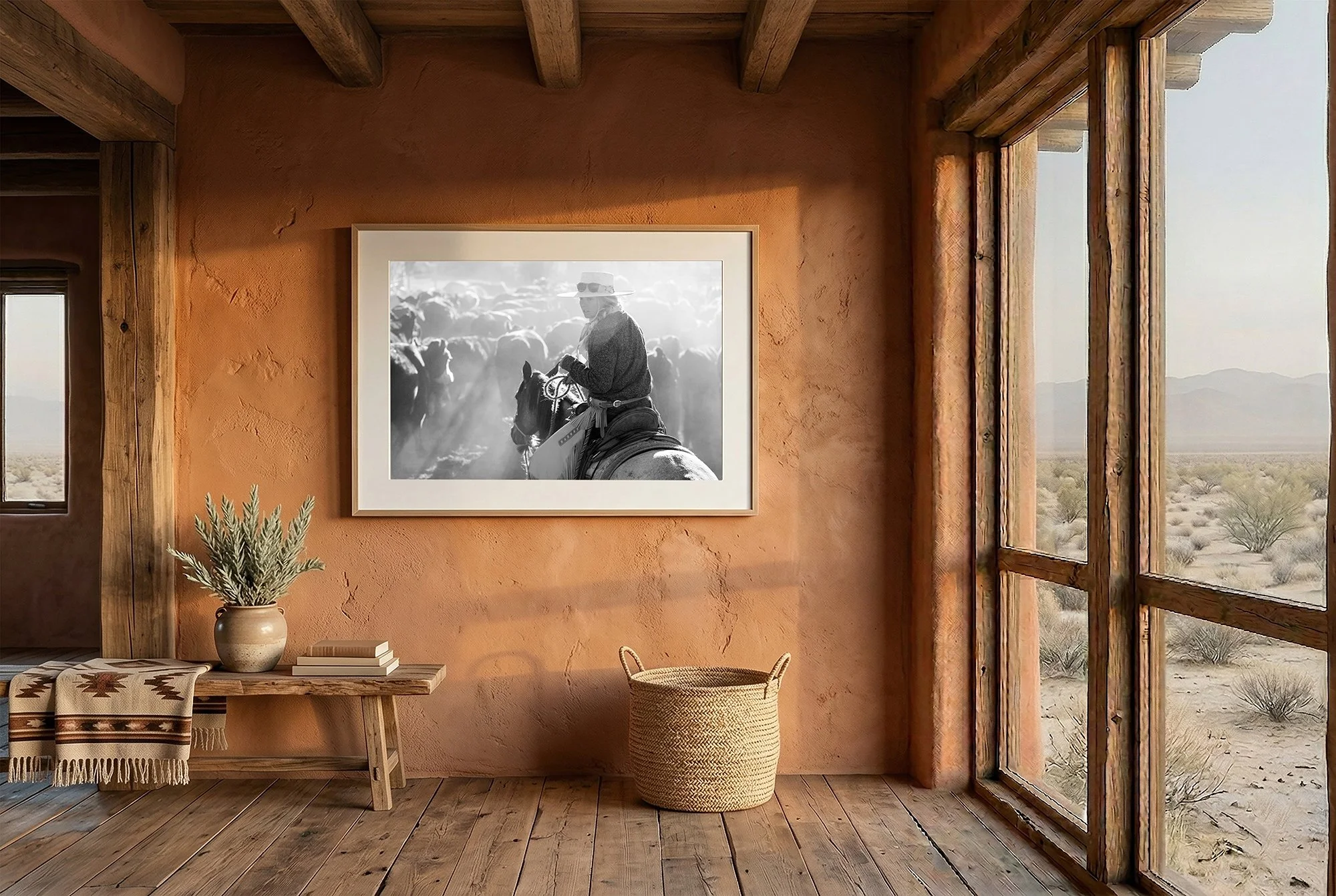
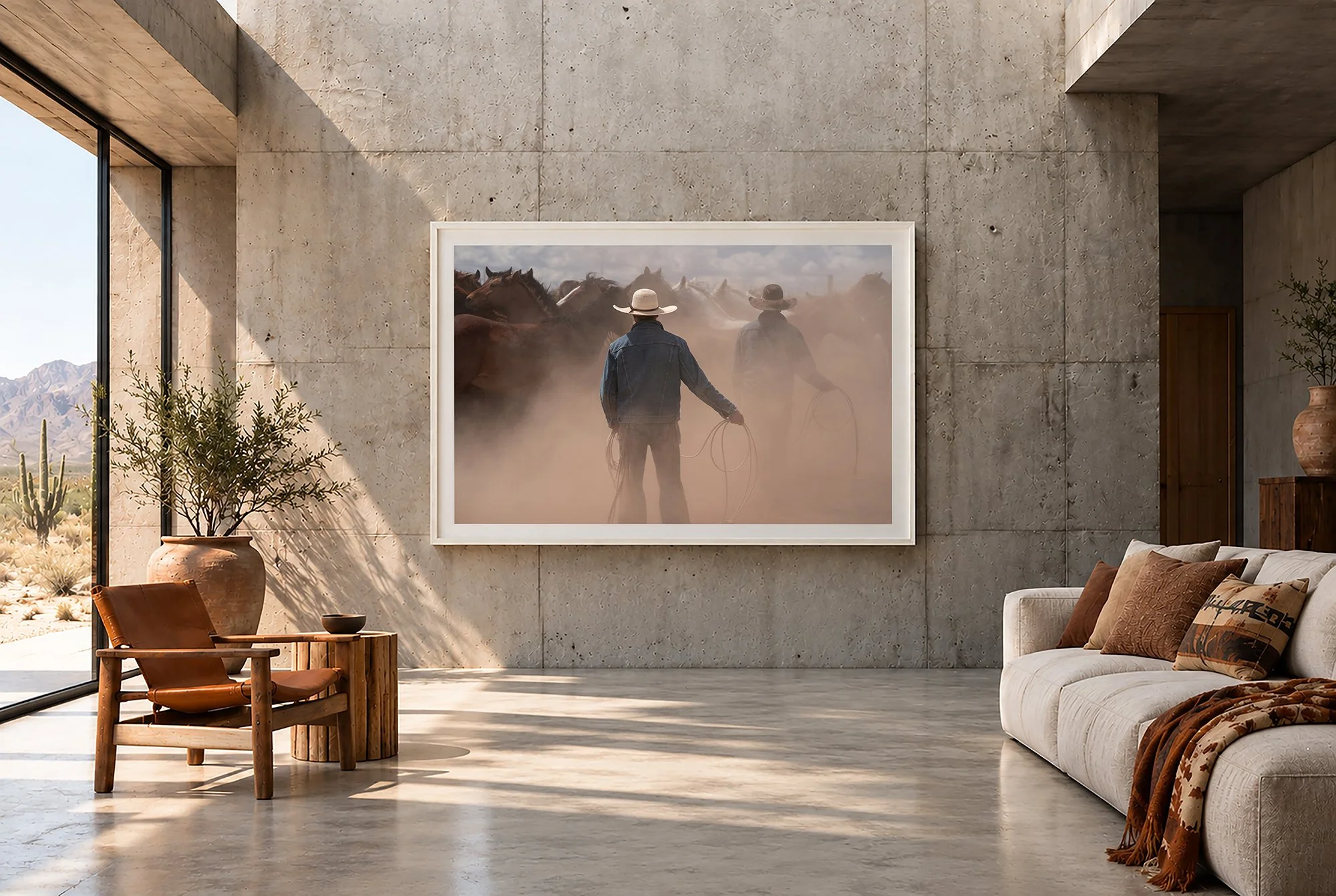
A large black and white cowboy photography print displayed in a modern interior, ideal for minimalist wall art and neutral home decor

A large black and white cowboy photography print displayed in a modern interior, ideal for minimalist wall art and neutral home decor.

What Makes Cowboy Photography Feel Authentic?

The difference is usually immediate, even if you can’t quite explain it.

Real cowboy photography tends to have:

  • Unscripted moments — work happening as it naturally unfolds

  • Functional environmentscorrals, branding pens, open range, not staged sets

  • Working gear — worn saddles, ropes, dust, sweat, and weather

  • Light that isn’t controlled — early mornings, harsh midday sun, or fading daylight

Most importantly, it reflects work, not performance.

That’s where a lot of “Western art” falls short—it’s built around the idea of a cowboy, not the reality of one.

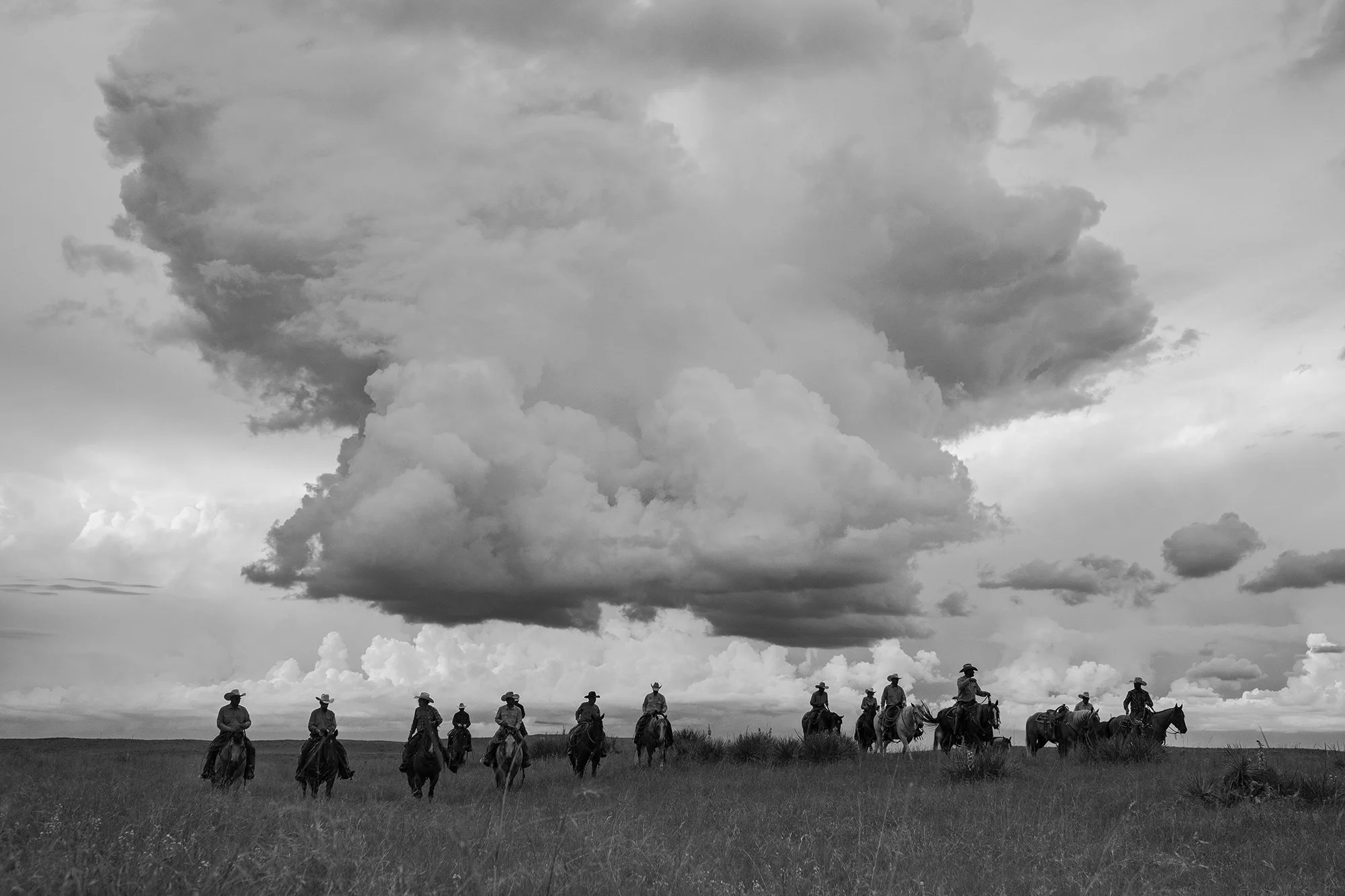
Cowboys riding across an open range beneath large clouds, ideal for large wall art and western landscape photography prints

Cowboys ride across open land under a wide sky, adding scale to large wall art in living spaces.

The Problem With Most “Cowboy Wall Art” Online

Most of what’s sold as “cowboy wall art” isn’t connected to real ranch life at all. It’s staged, over-processed, or pulled from stock libraries and printed at scale.

It’s made to look like the West—not to come from it.

  • Stock photography printed as décor

  • Heavily staged lifestyle shoots

  • Over-processed images designed to look “vintage”

  • Mass-produced prints with no connection to real ranch life

There’s nothing inherently wrong with decorative art—but if you're looking for something with depth, it becomes obvious pretty quickly.

The West has texture. It has grit. It has history.

When those elements are missing, the image might still look good—but it won’t hold your attention for long.

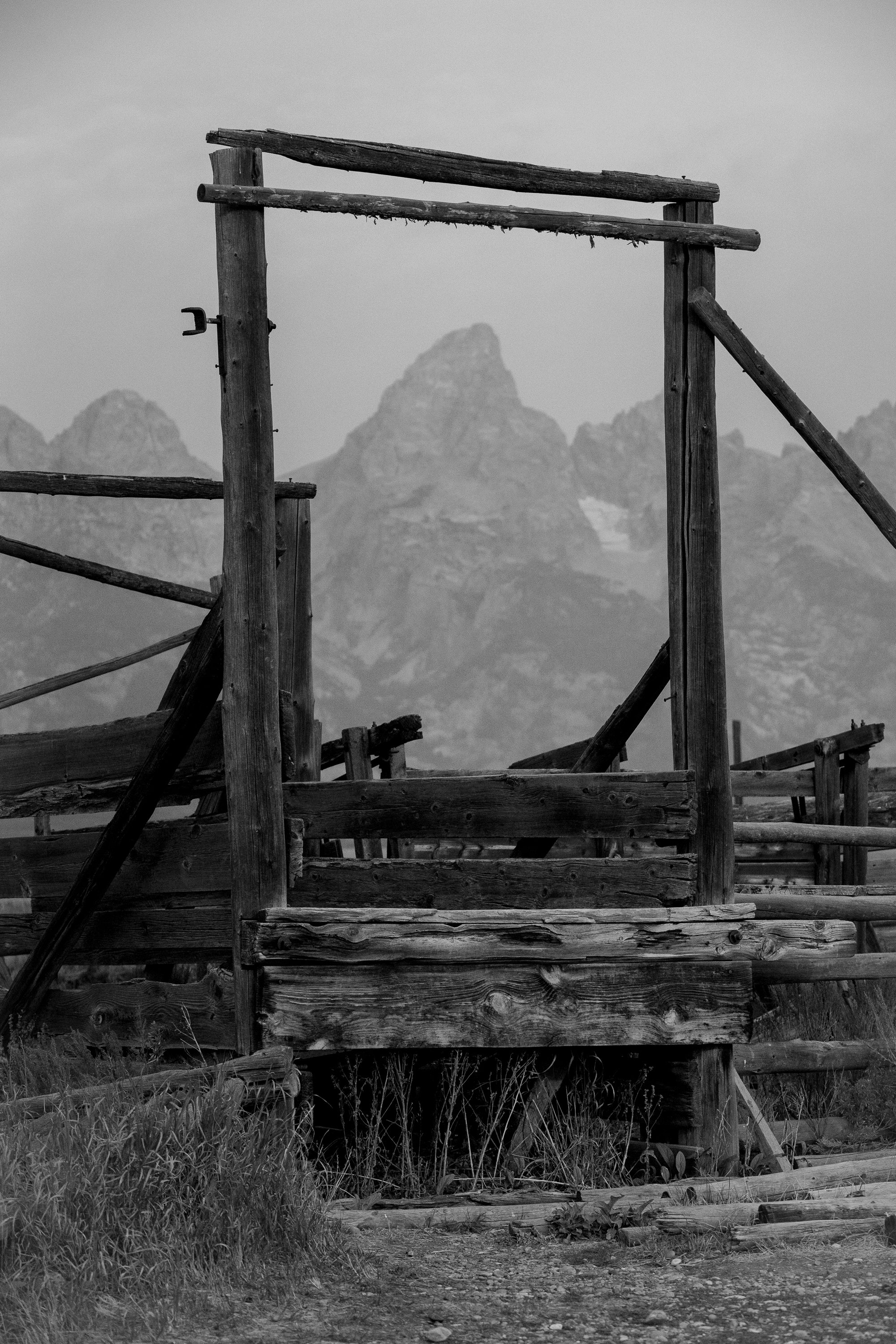
A weathered wooden cattle gate set against mountains in a black and white landscape, suited for rustic wall art and nature photography prints

A wooden cattle gate stands in open land with mountains behind it, adding a quiet but powerful detail to rustic interiors.

Where to Buy Authentic Cowboy Photography Prints

If authenticity matters, where you buy from becomes just as important as what you buy.

Here are the sources that consistently produce more meaningful work:

1. Directly From Photographers Working in the Field

This is the strongest option.

Photographers who spend years documenting ranches, cowboys, and Western traditions bring something that can’t be replicated in a studio or pulled from a stock archive.

When buying directly, you’re also getting:

  • A clear understanding of where and how the image was made

  • Higher quality print processes (often archival materials)

  • Limited editions rather than mass production

👉 If you're looking for real working cowboy imagery, you can view the full collection here:
Browse Cowboy Photography Prints →

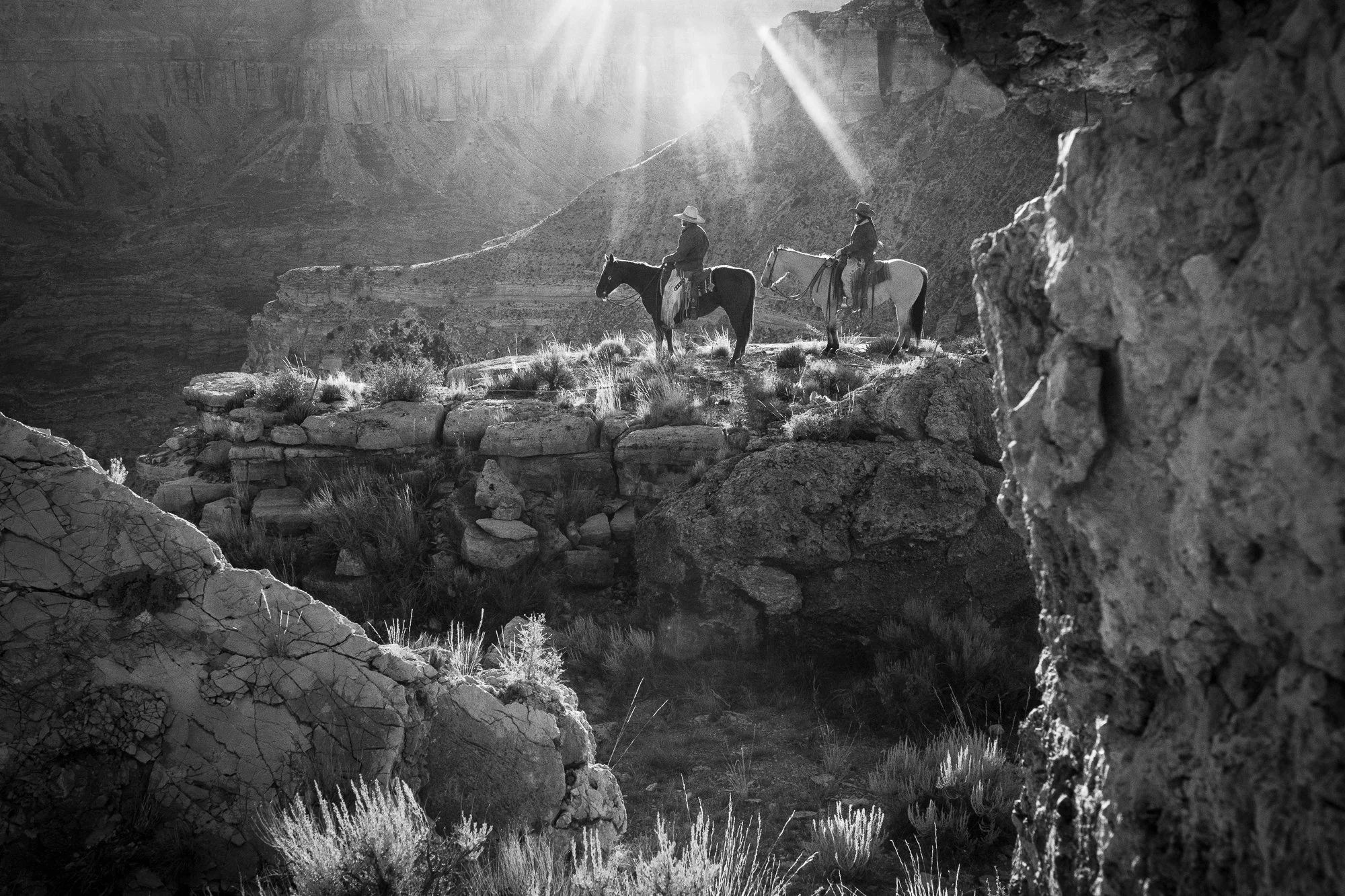
Cowboys on horseback standing along a rocky cliff, suited for western wall art and nature photography prints

Cowboys on horseback standing along a rocky cliff, suited for western wall art and nature photography prints.

2. Fine Art Galleries Specializing in Western Work

Some galleries curate authentic Western photography and fine art—but it’s important to pay attention to who they represent.

Look for:

  • Artists with long-term projects (not one-off shoots)

  • Work tied to specific ranches or regions

  • Consistency in subject matter and approach

Galleries can be a great source, but they often come with higher price points and less direct access to the artist.

A cowboy roping cattle in a foggy open field, suited for western wall art and nature photography prints

A cowboy ropes cattle in low visibility, creating a quiet scene suited for calm, neutral interiors.

3. Independent Artist Websites (Not Marketplaces)

There’s a difference between buying from an artist’s website and buying from a marketplace.

Marketplaces tend to prioritize volume.

Independent sites are usually:

  • More curated

  • More intentional

  • More transparent about the work

This is often where you’ll find the most cohesive bodies of work—especially from photographers who have spent years focused on a single subject.

Cowboys working cattle in an open field during branding, suited for western wall art and documentary-style photography prints

Cowboys work cattle in an open field during branding, showing a real process that fits western and ranch spaces.

Why Real Cowboy Photography Is Rare

Access is the biggest factor.

Working ranches aren’t open environments. The people working them aren’t performing for an audience.

Photographing this world requires:

  • Time—often years, not days

  • Trust from ranchers and cowboys

  • A willingness to be present in physically demanding environments

That’s why truly authentic work is limited—and why it tends to resonate more deeply when you see it.

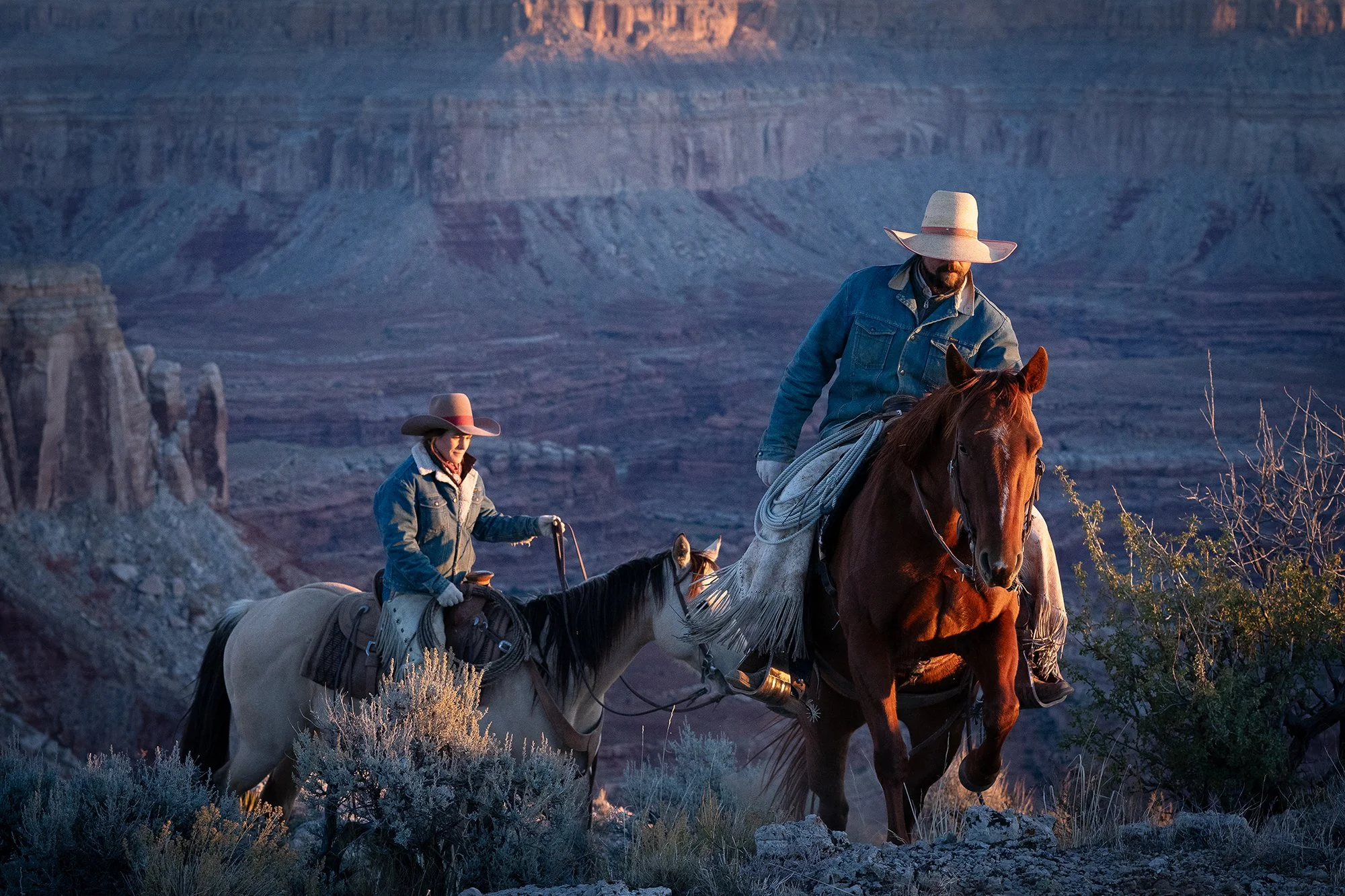
A cowboy riding on horseback through a canyon landscape, suited for western wall art and large wall decor for living rooms

A cowboy rides along a canyon landscape, showing a real working environment suited for large wall art.
How to Choose the Right Print for Your Space

Once you’ve found work that feels authentic, the next step is choosing a piece that fits.

A few things to consider:

  • Scale — Larger prints allow the environment and detail to breathe

  • Tone — Black and white vs. color can completely change the feel of a room

  • Subject — Action (roping, branding) vs. quiet moments (portraits, landscapes)

  • Placement — Entryways, offices, and living spaces all carry different energy

If you're designing a space—whether a home, office, or hospitality environment—authentic Western imagery tends to work best when it feels grounded, not decorative.

A wooden cattle corral in an open desert landscape with mesas in the background, suited for western landscape wall art and nature photography prints

A wooden cattle corral sits in open desert with distant mesas, adding a sense of place to western interiors.

A Body of Work Built Over Time

The photographs available here aren’t one-off images. I’ve spent the past six years photographing working cowboys on ranches across the American West. Not just for something fun to do, but over time—earning access, building trust, and documenting the work as it actually happens with real people that have been dedicated to this life for generations. That’s the difference. And it shows up in the photographs.

👉 You can explore the full project here:
View the Cowboy Photography Project →

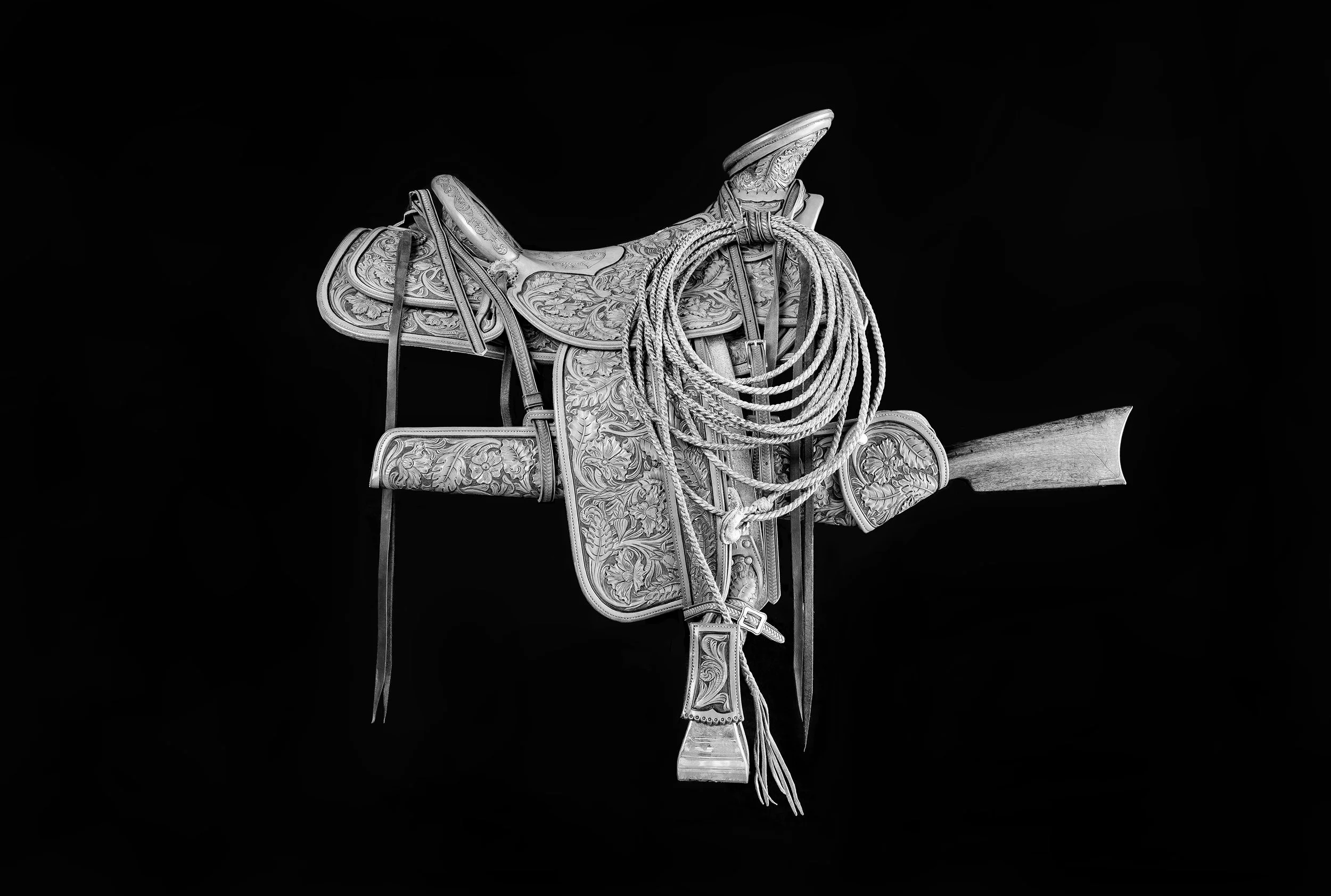
A detailed leather saddle with a coiled rope against a black background, ideal for western wall art and rustic decor

A leather saddle and rope shown in detail, highlighting gear used in everyday ranch work, a balanced piece for western and rustic interior spaces.

For Designers, Brands, and Hospitality Spaces

Authentic cowboy photography isn’t limited to private collectors.

It’s increasingly being used in:

  • Boutique hotels and lodges

  • Western and outdoor brands

  • Restaurants and hospitality spaces

  • Corporate environments looking for grounded, regional identity

If you're sourcing work for a larger space or project, licensing and custom print options are available.

👉 Inquire About Licensing & Large-Scale Prints →

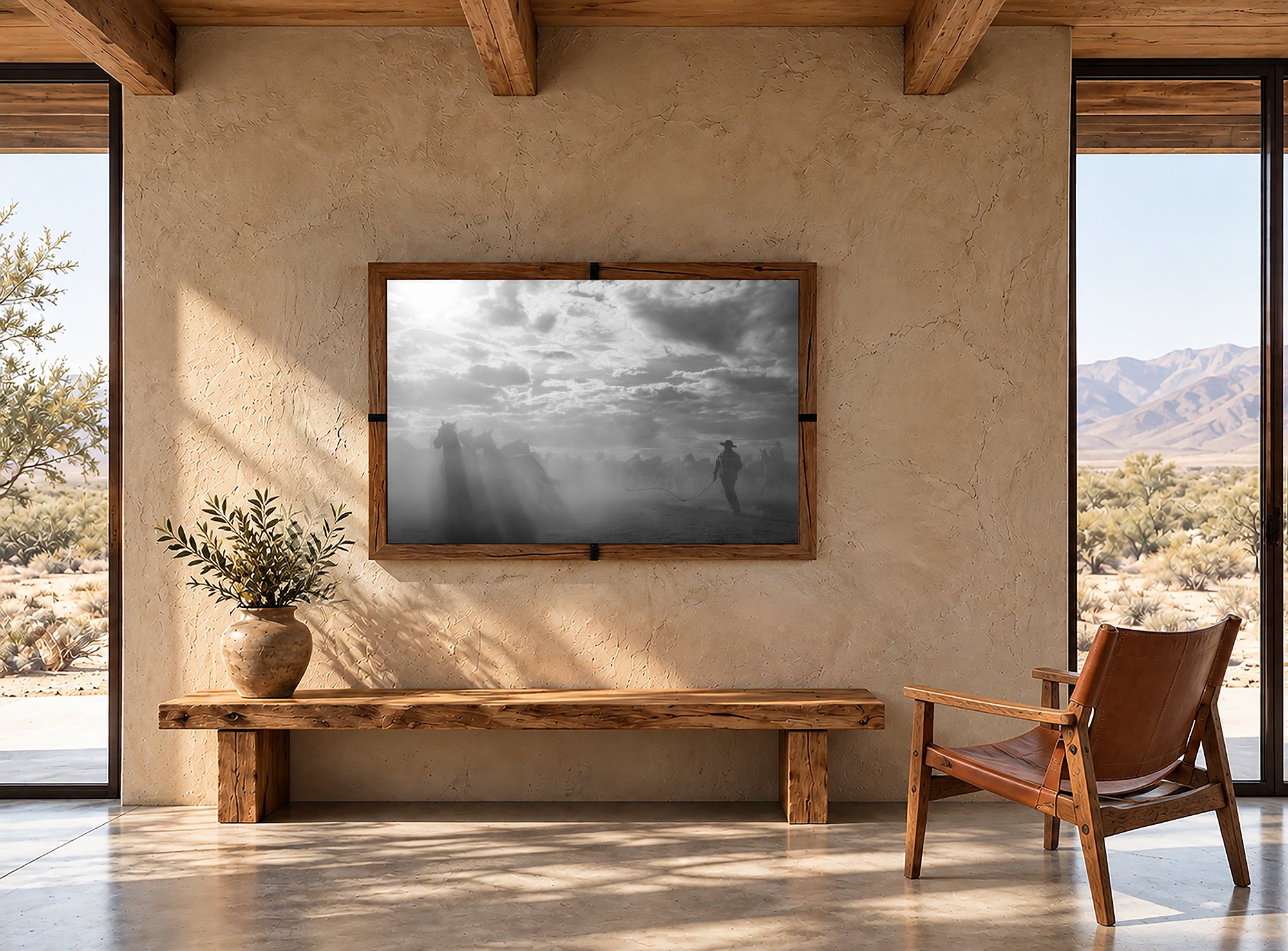
A black and white cowboy photography print displayed in a warm rustic interior, ideal for western wall art and neutral home decor

A black and white cowboy photograph displayed in a warm interior, bringing a grounded, lived-in feel to western and rustic spaces.

The reality is, most people will never set foot on a working ranch.

These photographs are one of the few ways to bring that world into a space—without filtering or staging it.

And when it’s real, you can feel the difference.

Authentic Cowboy Lifestyle Photography for Brands & Editorial Use

Authentic Cowboy Lifestyle Photography for Brands & Editorial Use

There’s no shortage of photographs of cowboys. But most of them aren’t made where the work actually happens.

Over the past several years, I’ve spent time on working ranches across the American West—photographing cattle being gathered at first light, horses being saddled in the dark, long days moving cattle through rough country, and the quiet moments in between.

This isn’t staged. It isn’t a production.

It’s the real pace and texture of ranch life as it exists today.

For brands and editors looking for something honest, that difference matters.

Authentic Western Photography, Shot on Working Ranches

The photographs in this collection are made on historic and working ranches throughout the West, often in remote locations where access is limited and the work is physically demanding.

What draws me to these places isn’t just the visual side of it—it’s the rhythm of the work:

  • early mornings before the sun breaks

  • the repetition of daily tasks

  • the relationship between rider, horse, and land

  • the wear on tools, gear, and hands over time

That’s where the photographs come from.

Not just the big moments, but the small, often overlooked ones that define the reality of the job.

Cowboy Photography for Brands, Advertising & Editorial

This body of work is well suited for:

  • Western apparel and workwear brands

  • Outdoor and lifestyle campaigns

  • Agricultural and ranching publications

  • Editorial features focused on American culture and labor

There’s a growing demand for imagery that feels grounded and believable—especially from brands trying to move away from overly polished or staged campaigns.

Because these photographs are made in real environments, with working cowboys, they carry a level of authenticity that’s difficult to replicate on a set.

Licensing Authentic Cowboy Photography

Images from this ongoing project are available for licensing across a range of uses, including:

  • advertising campaigns

  • editorial features

  • brand storytelling

  • web and digital use

  • print and publication

If you’re looking for specific moments—branding, roping, sorting cattle, life in the bunkhouse, or broader environmental scenes—there’s a deep archive to draw from.

Licensing can be tailored depending on scope, usage, and exclusivity.

Assignment-Based Photography on Working Ranches

In addition to licensing existing work, I take on a limited number of assignments each year.

This includes photographing:

  • campaign imagery for Western and workwear brands

  • editorial stories on ranching and rural culture

  • long-form documentary projects

Having worked on multiple ranches over time, I understand how to move within these environments without disrupting the work—something that’s critical when timing and conditions matter.

A Long-Term Documentary Project

This work is part of a long-term project documenting working cowboys and ranching culture across the American West.

Over time, it’s taken me to ranches in Texas, Montana, Nevada, and beyond—each with its own way of doing things, but connected by a shared commitment to the work.

The goal isn’t to romanticize it, but to document it honestly.

Because much of this way of life is changing, and in some places, disappearing.

Licensing & Assignment Inquiries

If you’re a brand, agency, or editor looking for authentic cowboy and ranch lifestyle photography, feel free to get in touch.

Whether you’re looking to license existing work or commission a shoot, I’m happy to discuss what you need.

Contact Rob
More Cowboy Photography

Fine Art Cowboy Prints

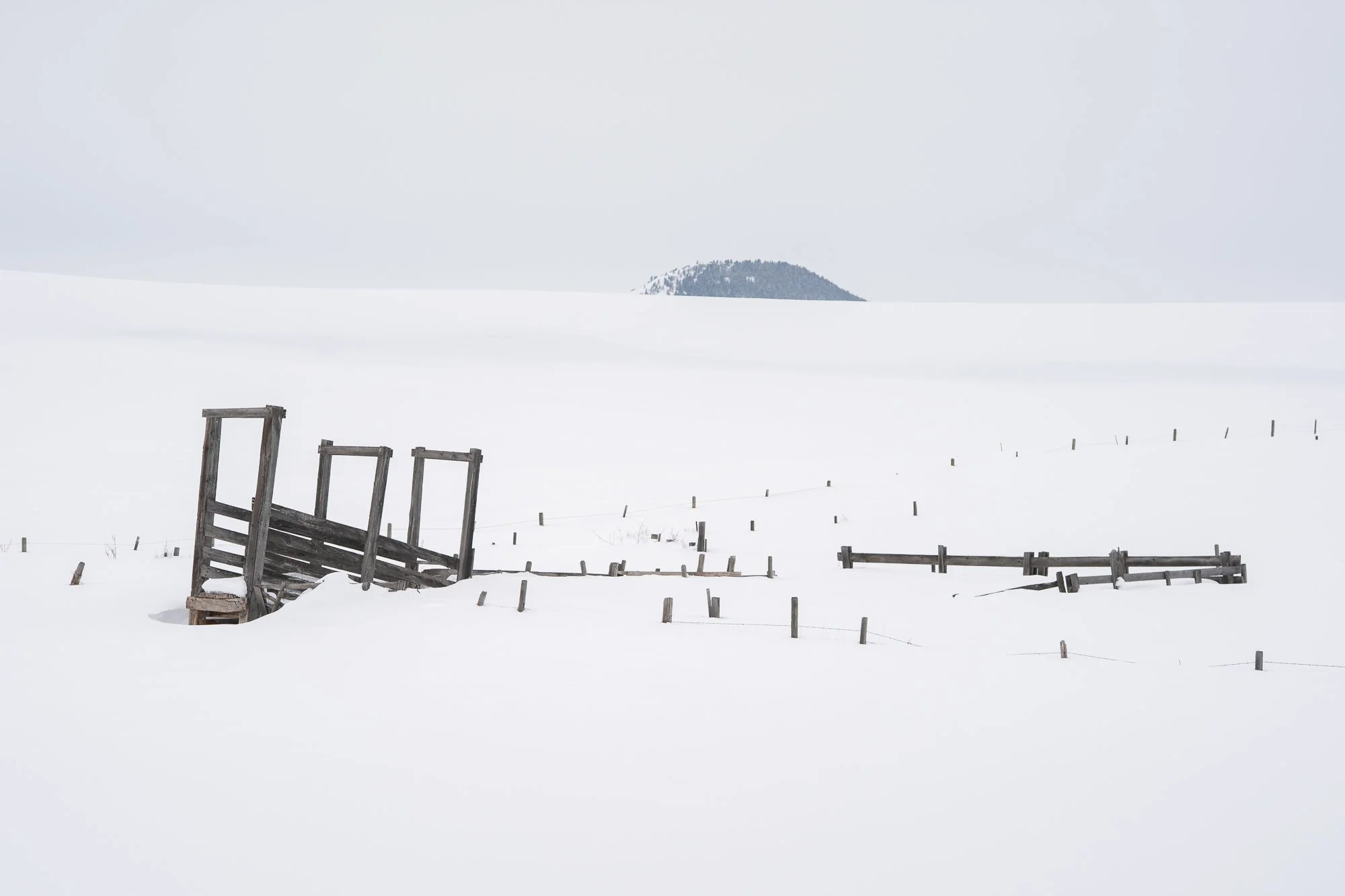
Minimal snow covered ranch landscape with old wooden fence and distant hill

A quiet winter scene shows a snow-covered ranch, where fences and land disappear into the cold.

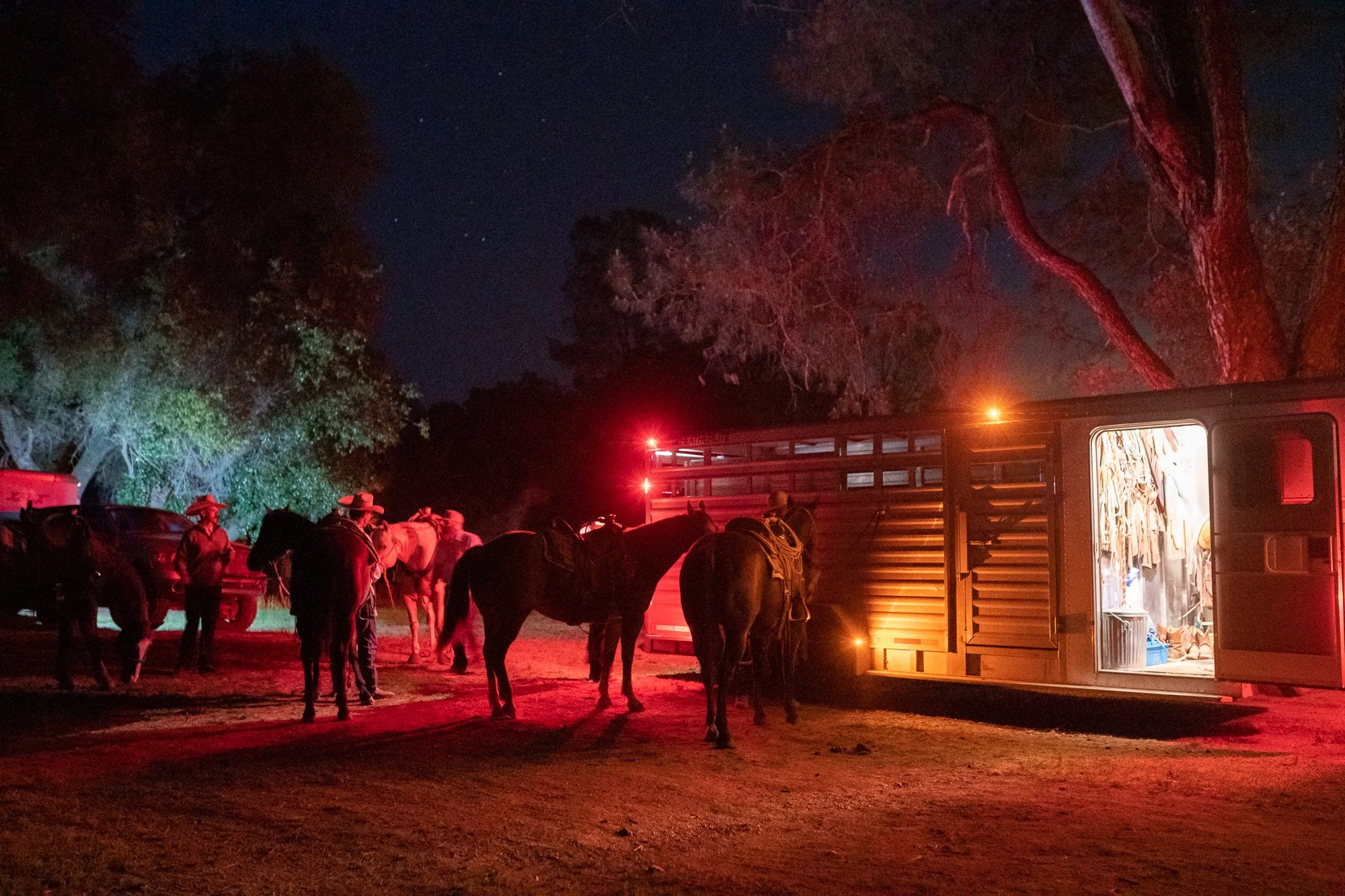
Cowboys and horses gathered near trailer at night illuminated by red and warm lights

Horses and riders prepare under the glow of trailer lights before an early start.

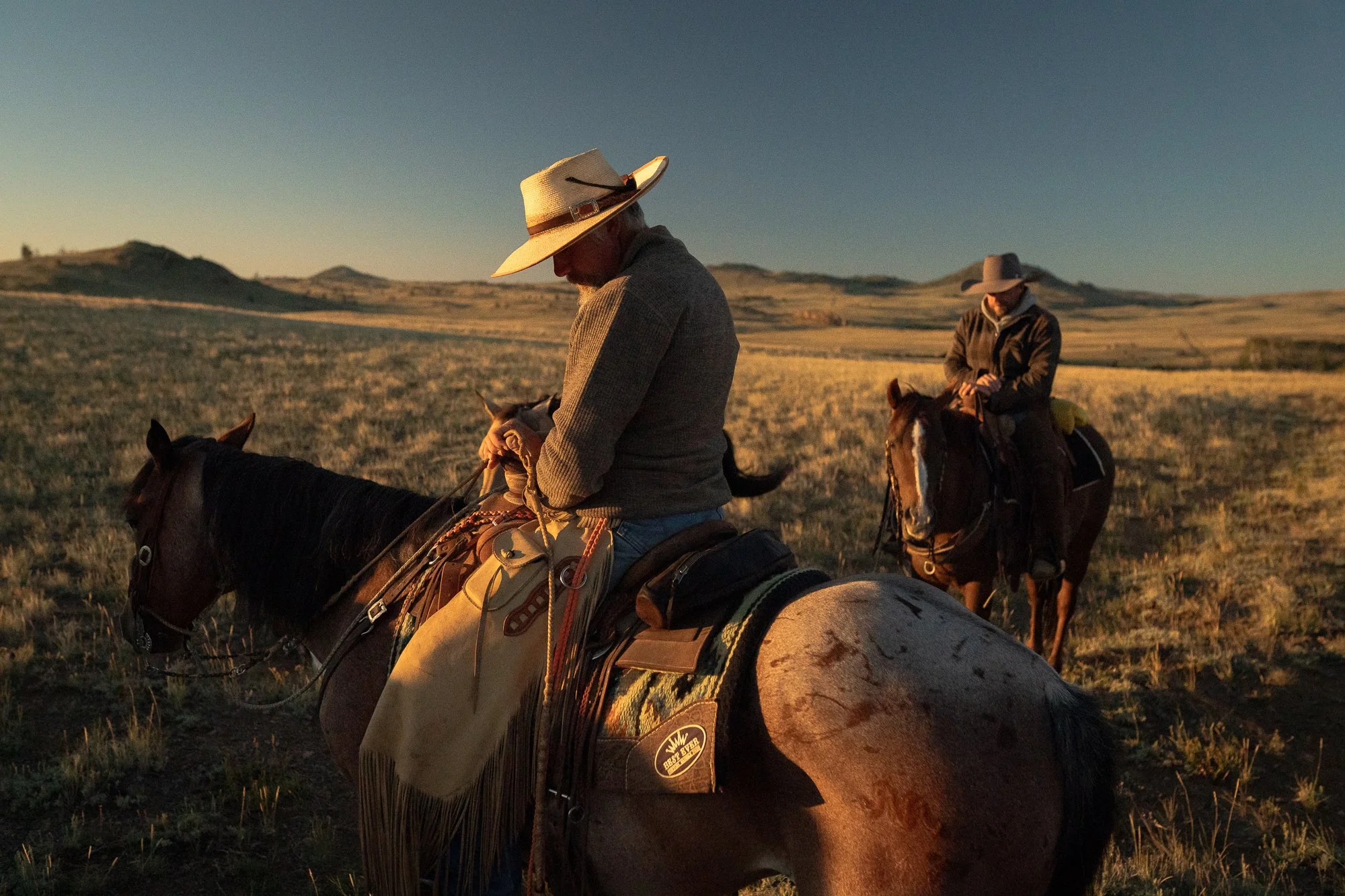
Cowboys riding horses across open range at golden hour with long shadows

Evening light falls across the range as cowboys move through open country on horseback.

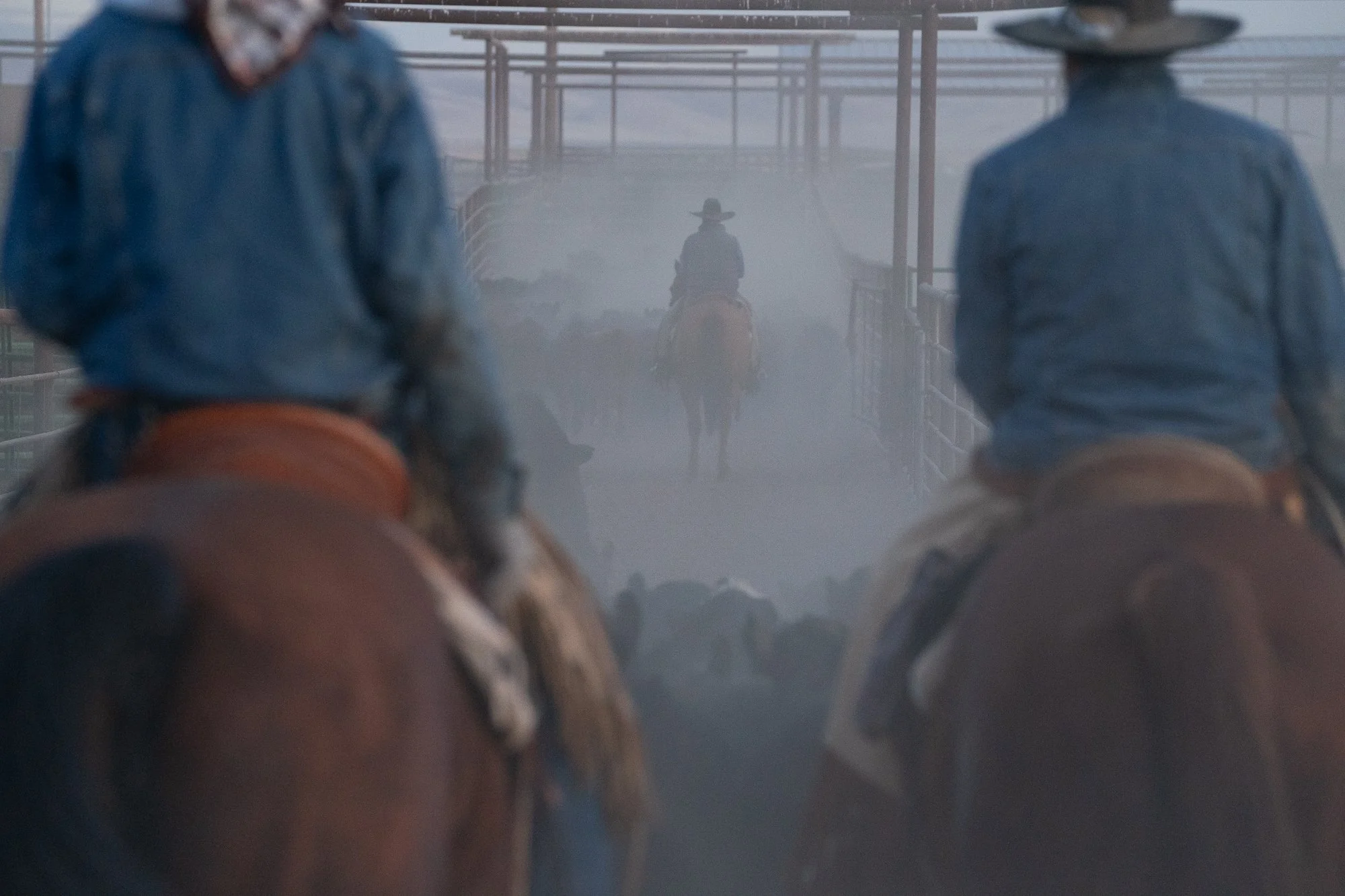
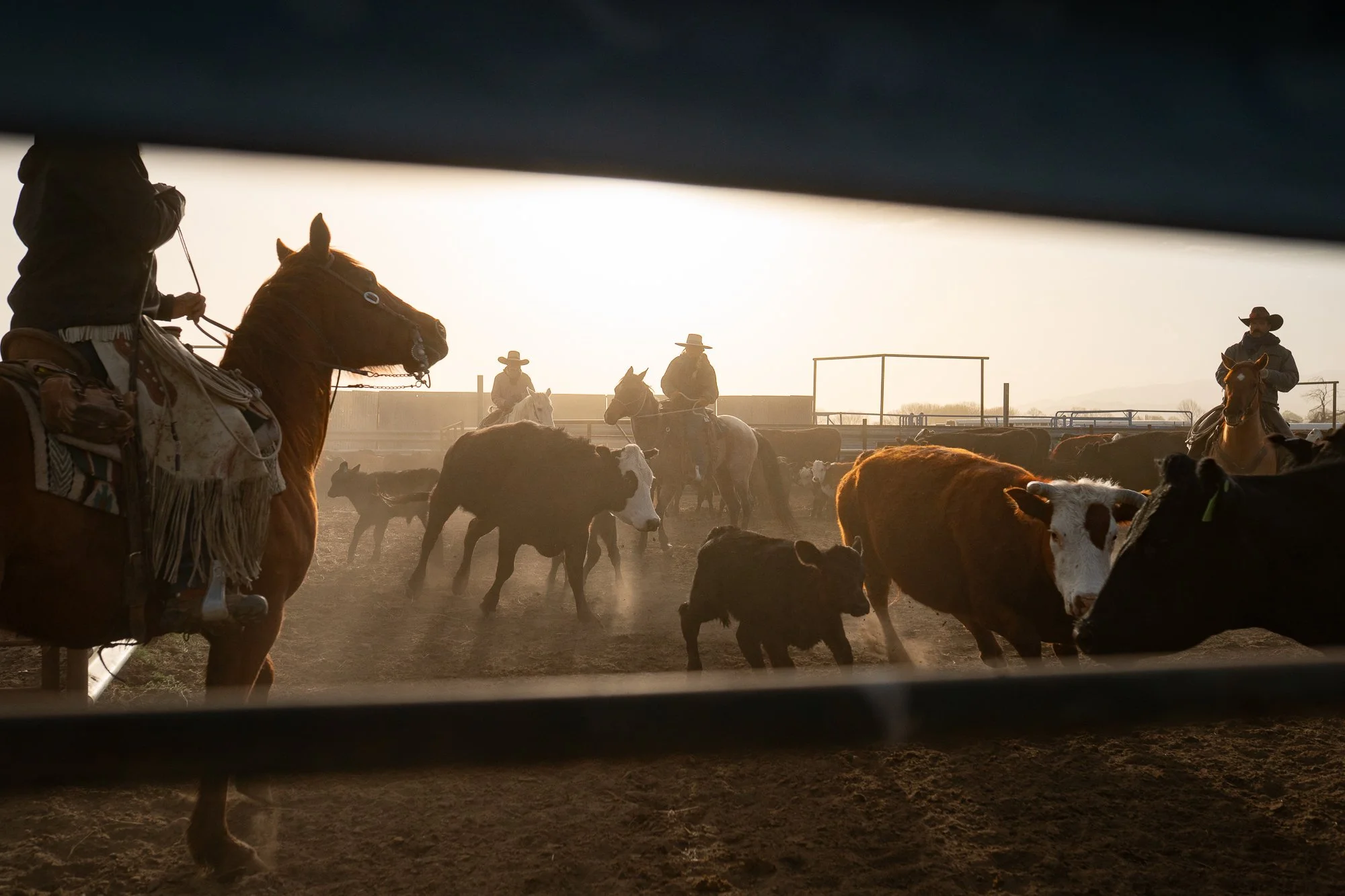
Cowboys on horseback driving cattle through dusty corral with backlit haze

Dust and movement fill the corral as cowboys push cattle forward in low visibility conditions.

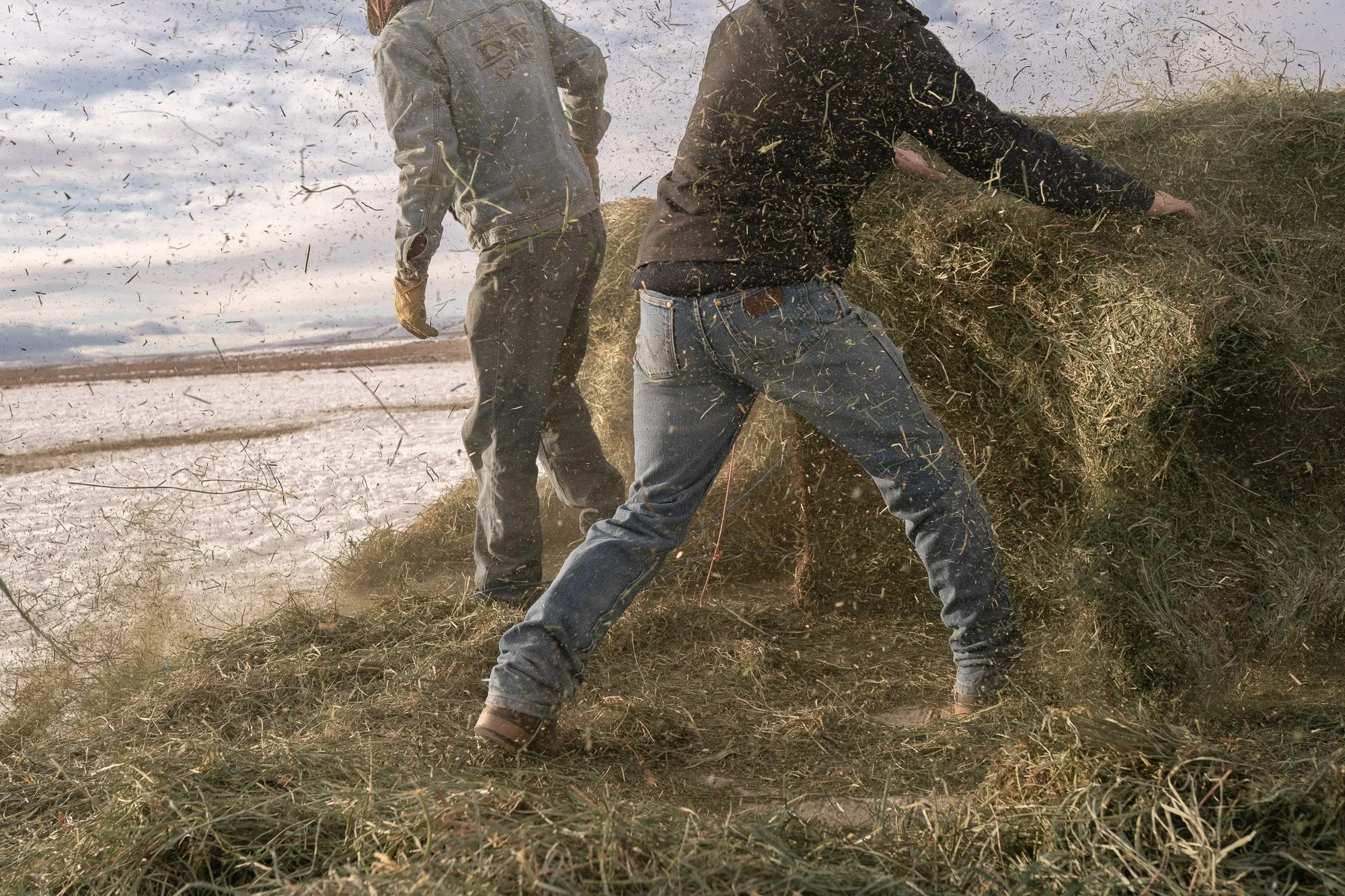
Cowboys stacking loose hay in winter pasture with flying debris and dust during feeding

Two cowboys stack loose hay in harsh winter conditions, a daily task that keeps cattle fed through the cold months.

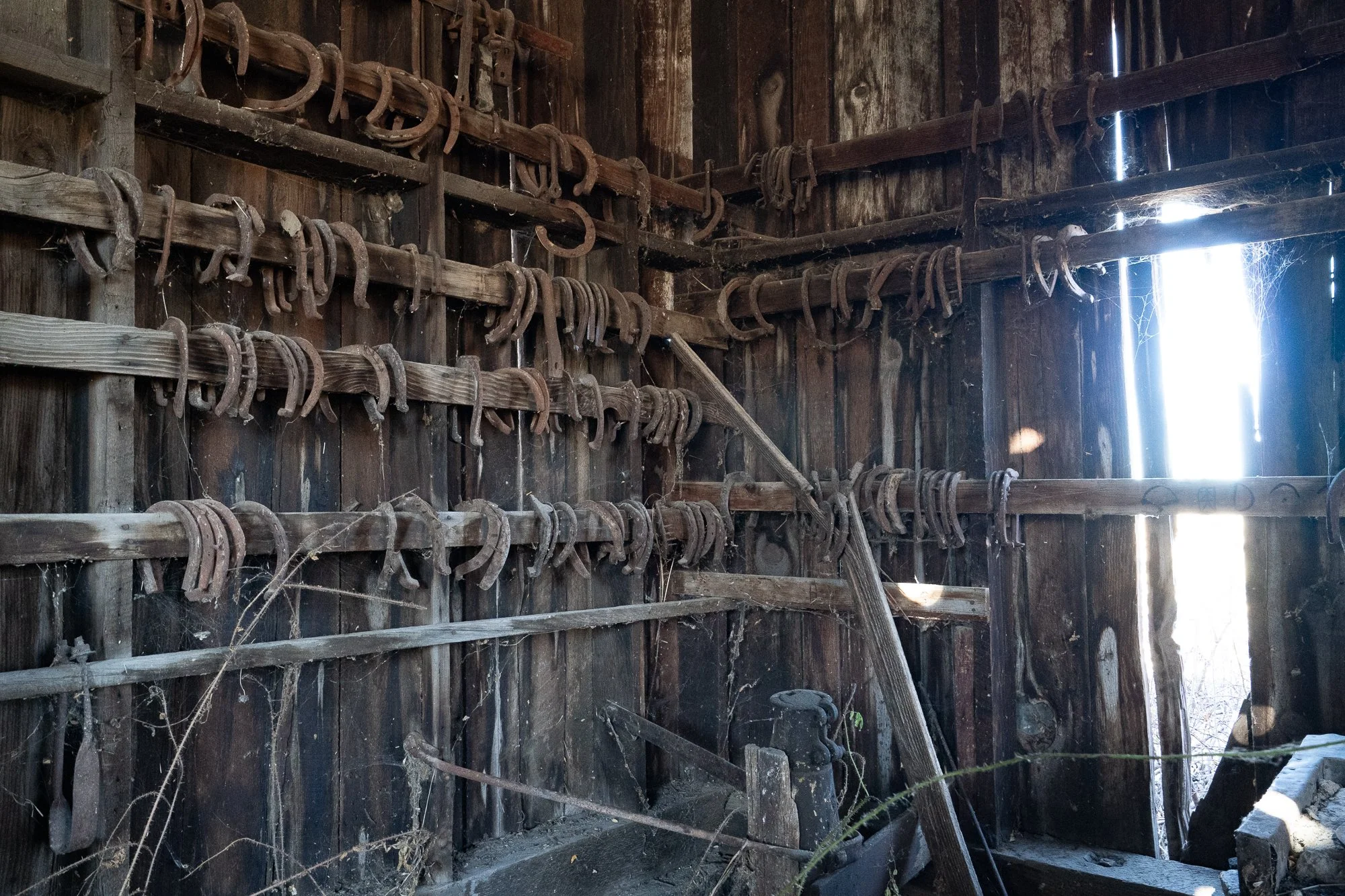
Interior of old wooden barn wall lined with worn horseshoes and ranch tools

Horseshoes line the walls of a weathered barn, a quiet record of years of ranch work and horsemanship.

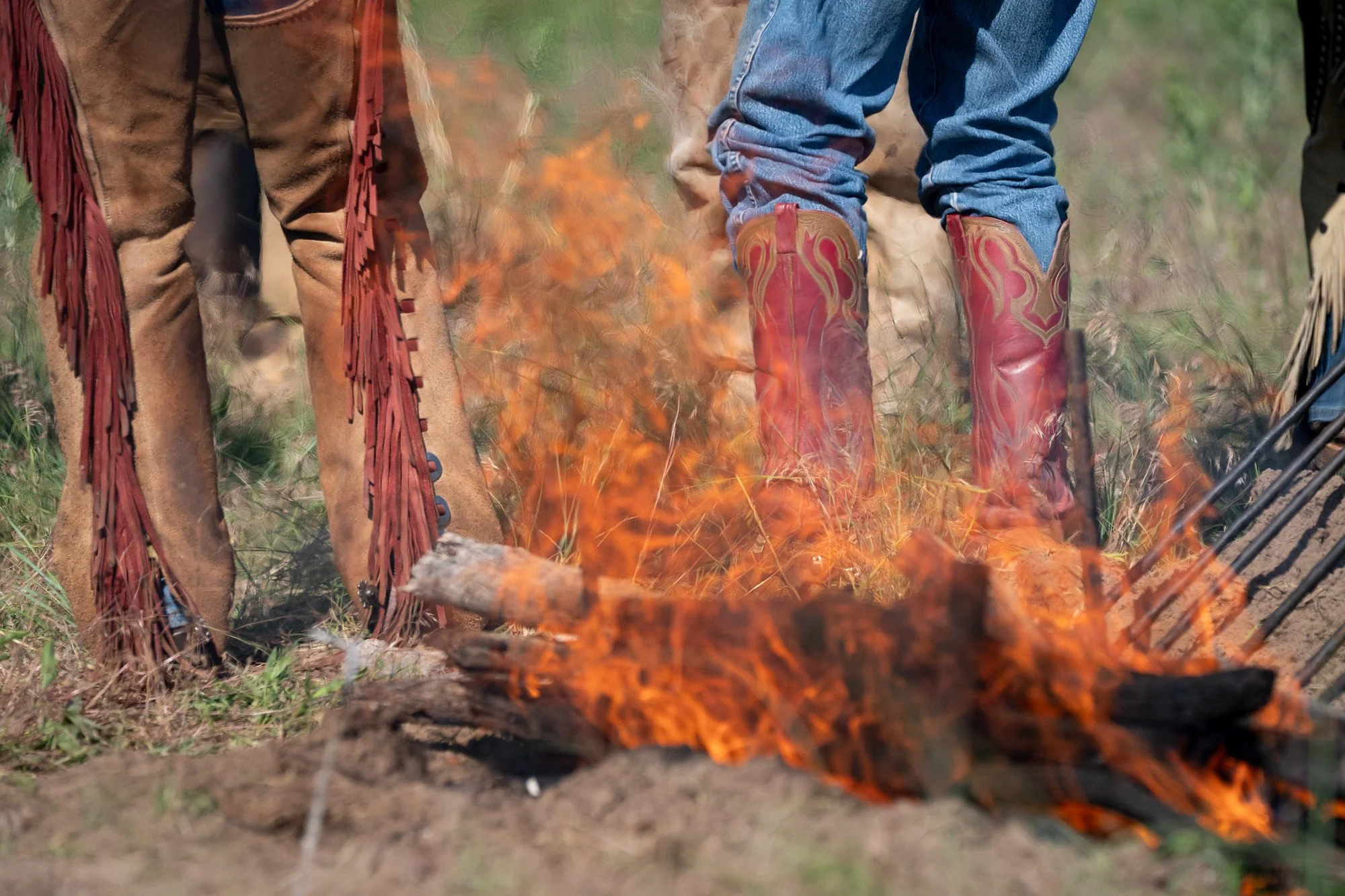
Cowboy boots and chaps standing near open fire during ranch work or camp

Cowboys gather around an open fire, a moment of warmth and reset during long days of work on the range.

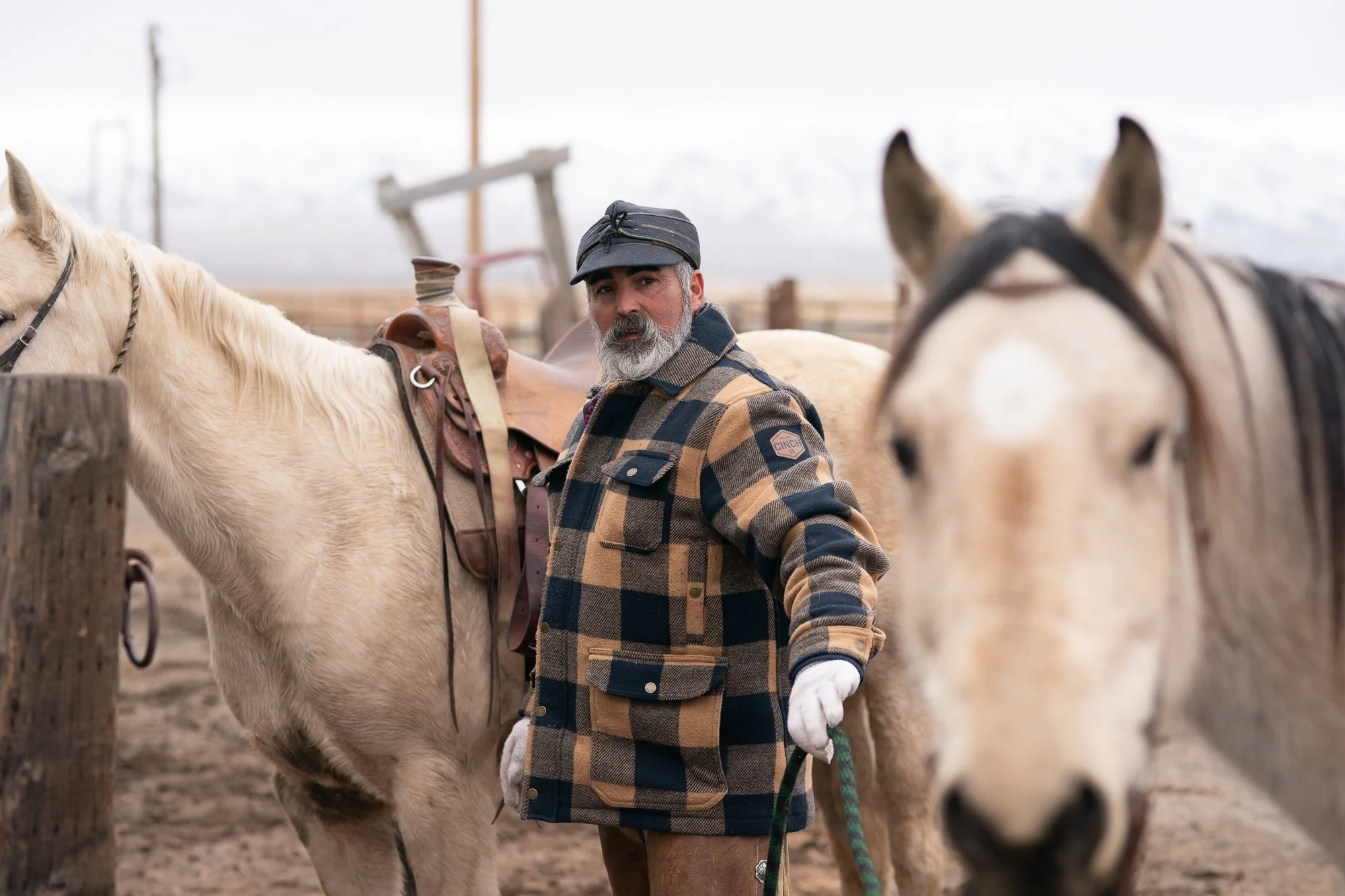
Cowboy standing with horses in cold weather wearing plaid jacket and gloves

A working cowboy stands with his horses in the cold, ready for the next task on the ranch.

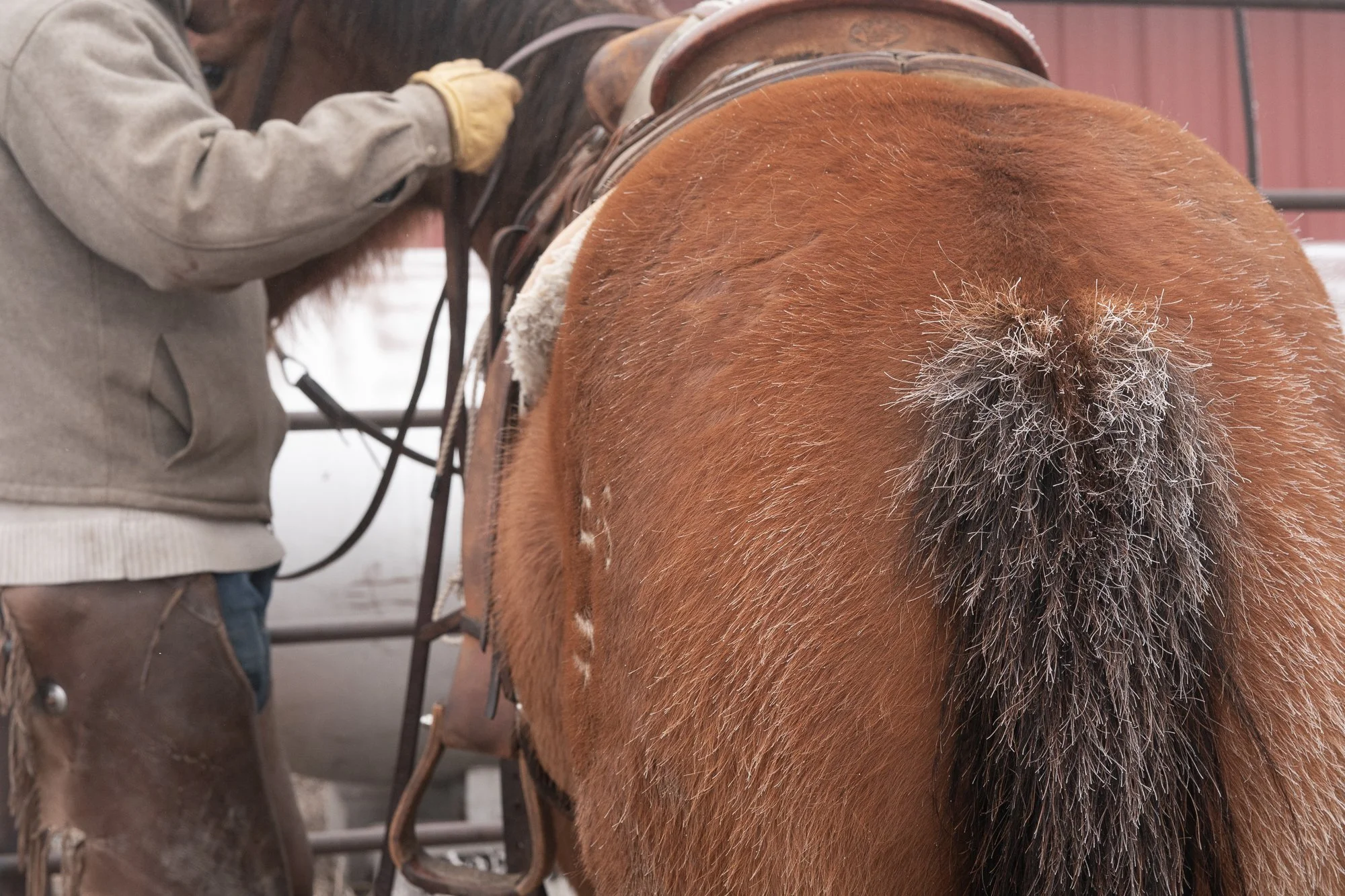
Close up of cowboy saddling horse with frost on tail in cold conditions

A quiet moment of preparation as a cowboy saddles his horse in freezing morning conditions.

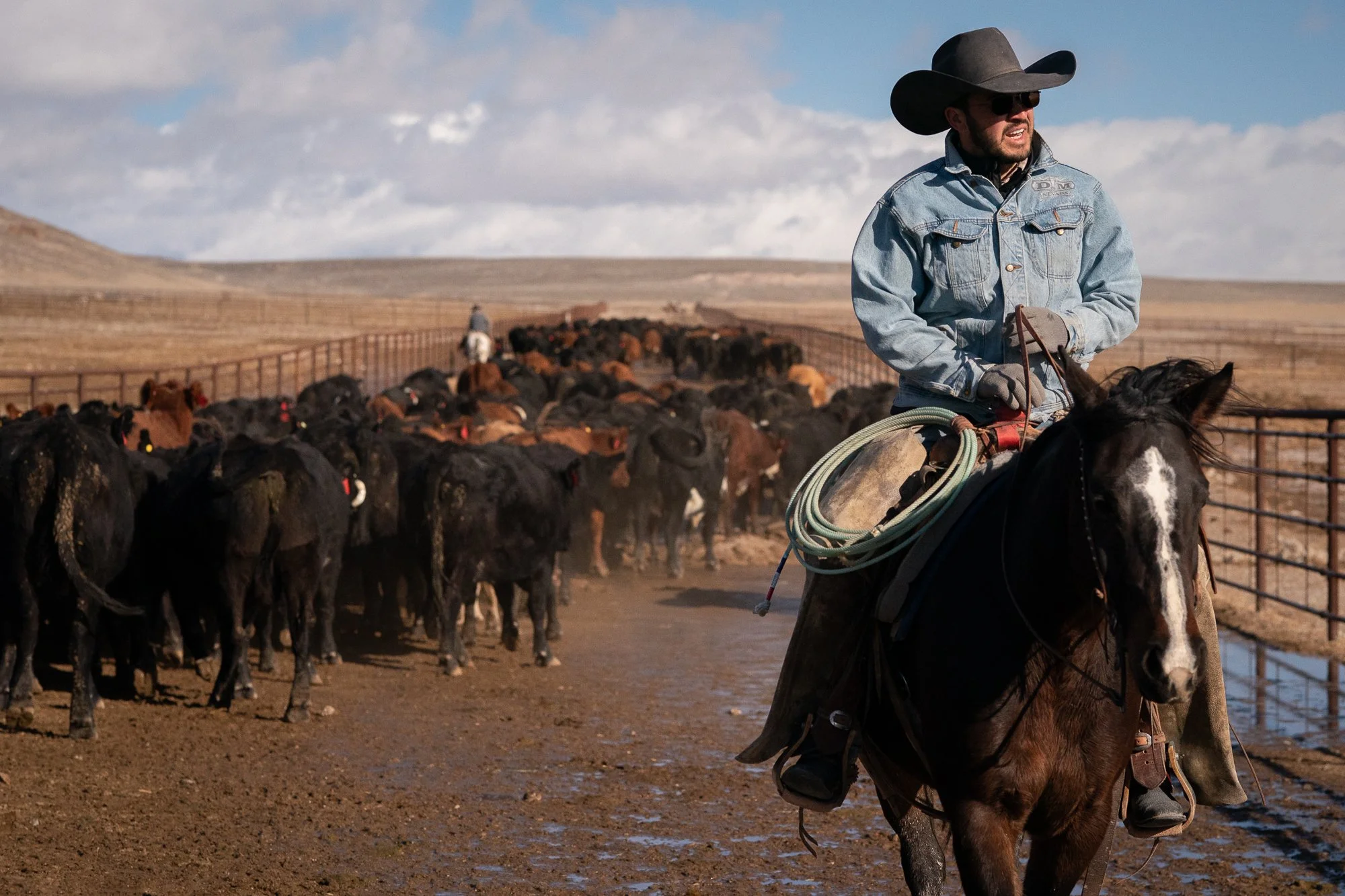
Cowboy on horseback guiding herd of cattle through muddy corral

Cattle are pushed through the pens as a cowboy guides the herd from horseback during processing.

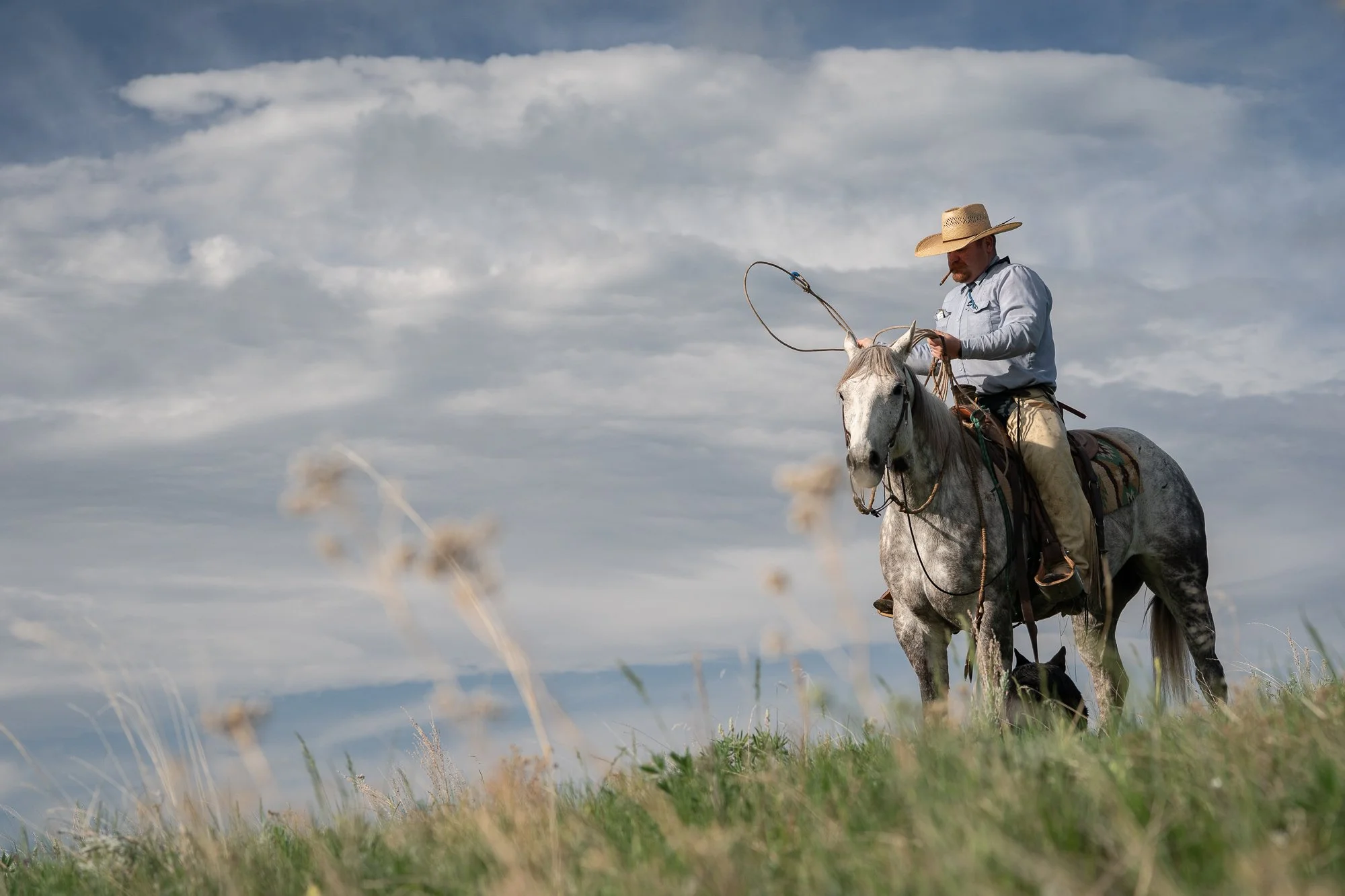
Cowboy on horseback holding rope in open landscape with dramatic sky

A cowboy pauses with rope in hand, scanning the herd across wide open country.

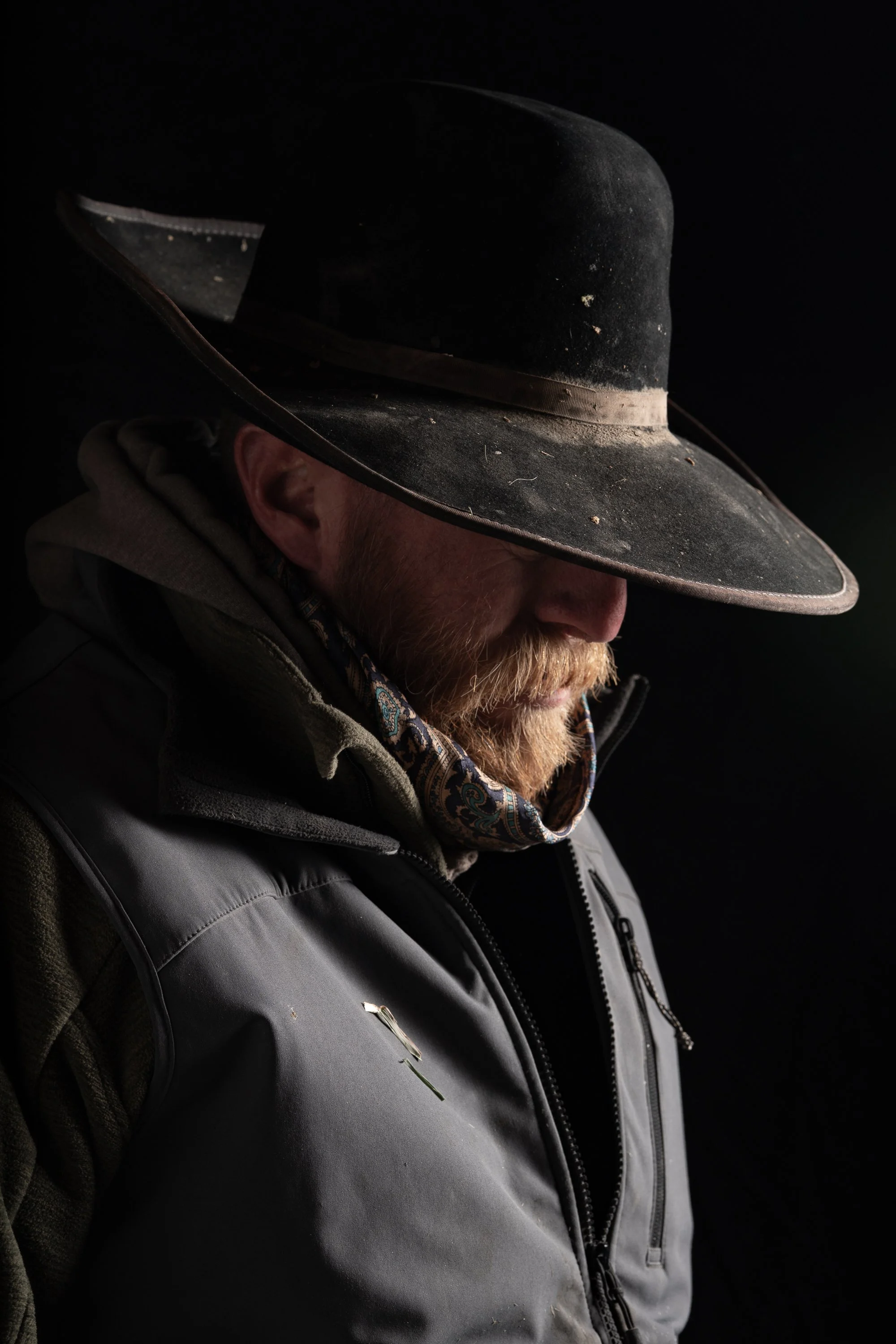
Moody portrait of cowboy in hat with dramatic light and shadow

Light cuts across a cowboy’s face, revealing the quiet focus that defines the work.

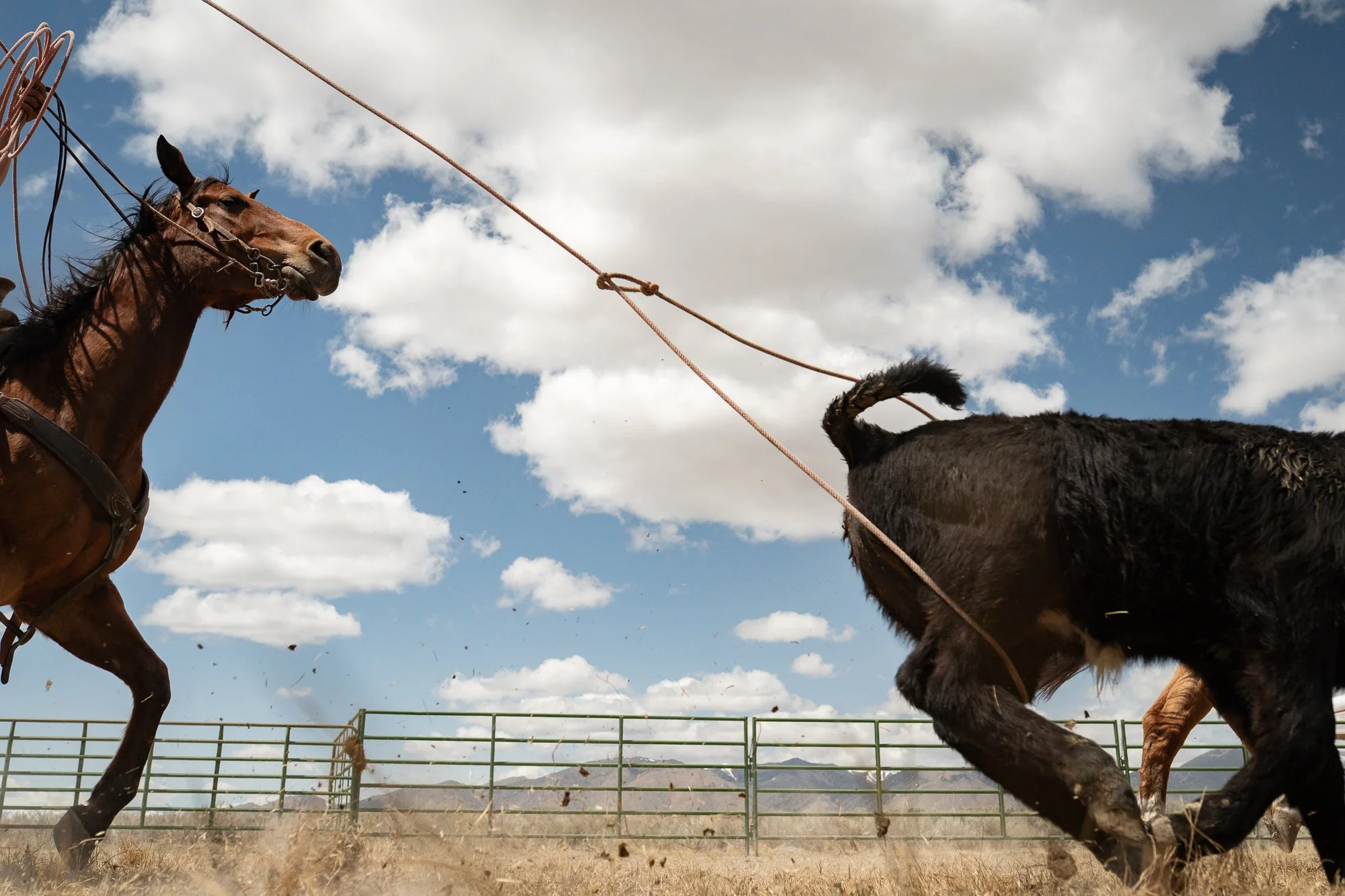
Cowboy on horseback roping calf with rope tension and movement against blue sky

A rope goes tight as a cowboy works a calf from horseback, a fast and precise moment of ranch work.

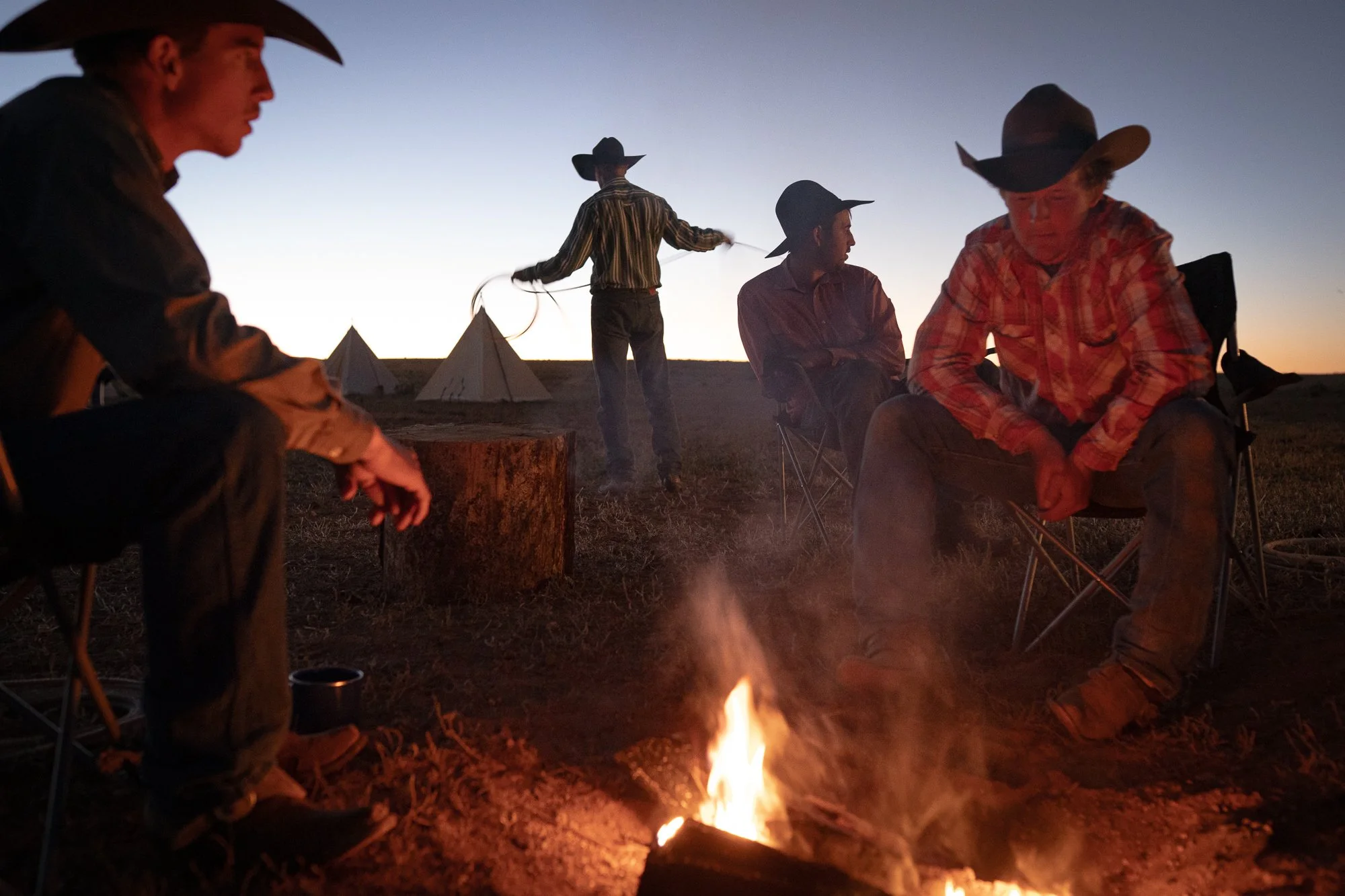
Cowboys gathered around campfire at night with tents and open landscape in background

Cowboys gather around a fire after dark, sharing a rare moment of rest on the open range.

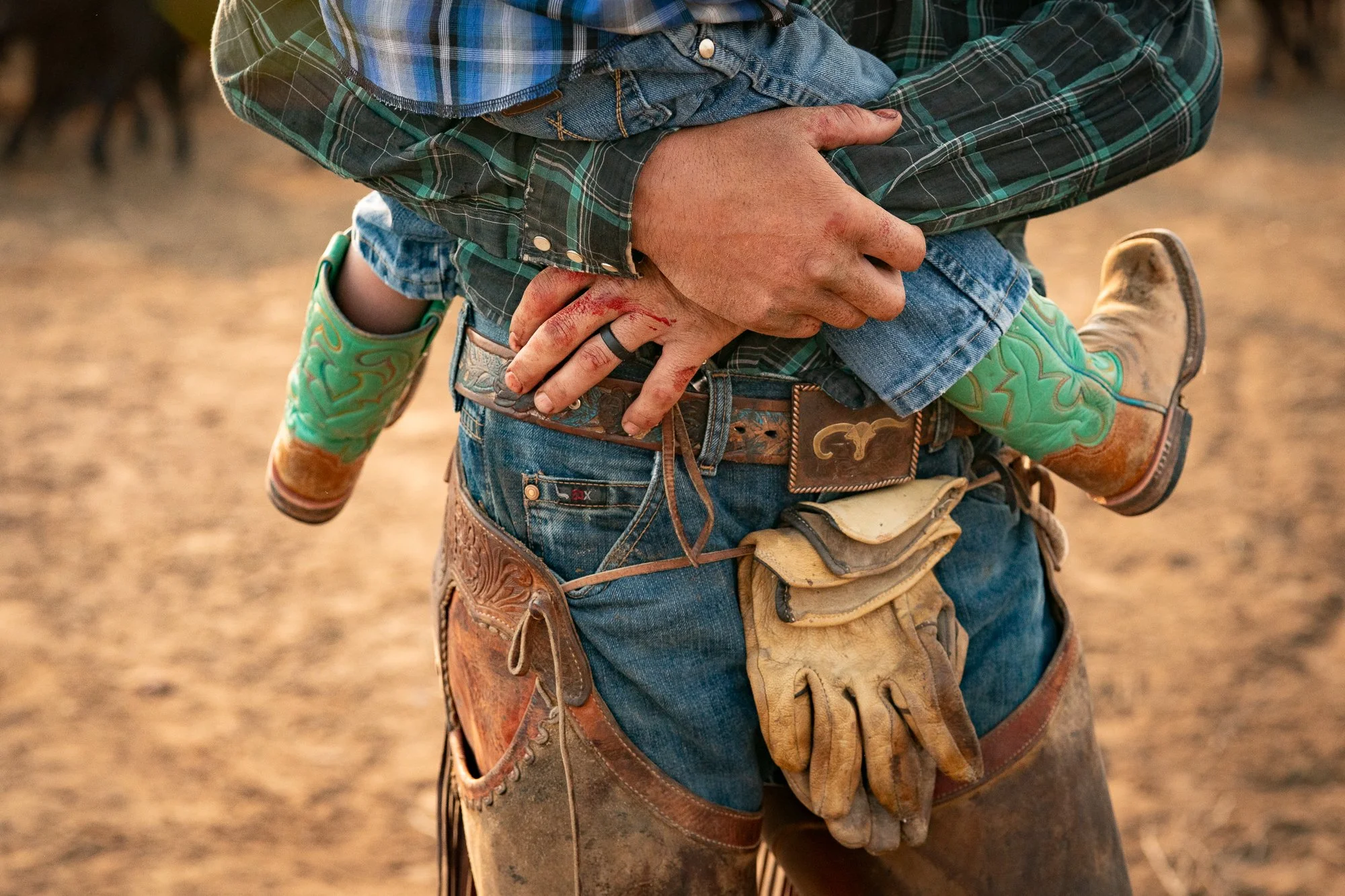
Cowboy holding small child wearing green boots with visible dirt and worn chaps detail

Close detail of a working cowboy holding a child, revealing the balance between hard labor and family life on the ranch.

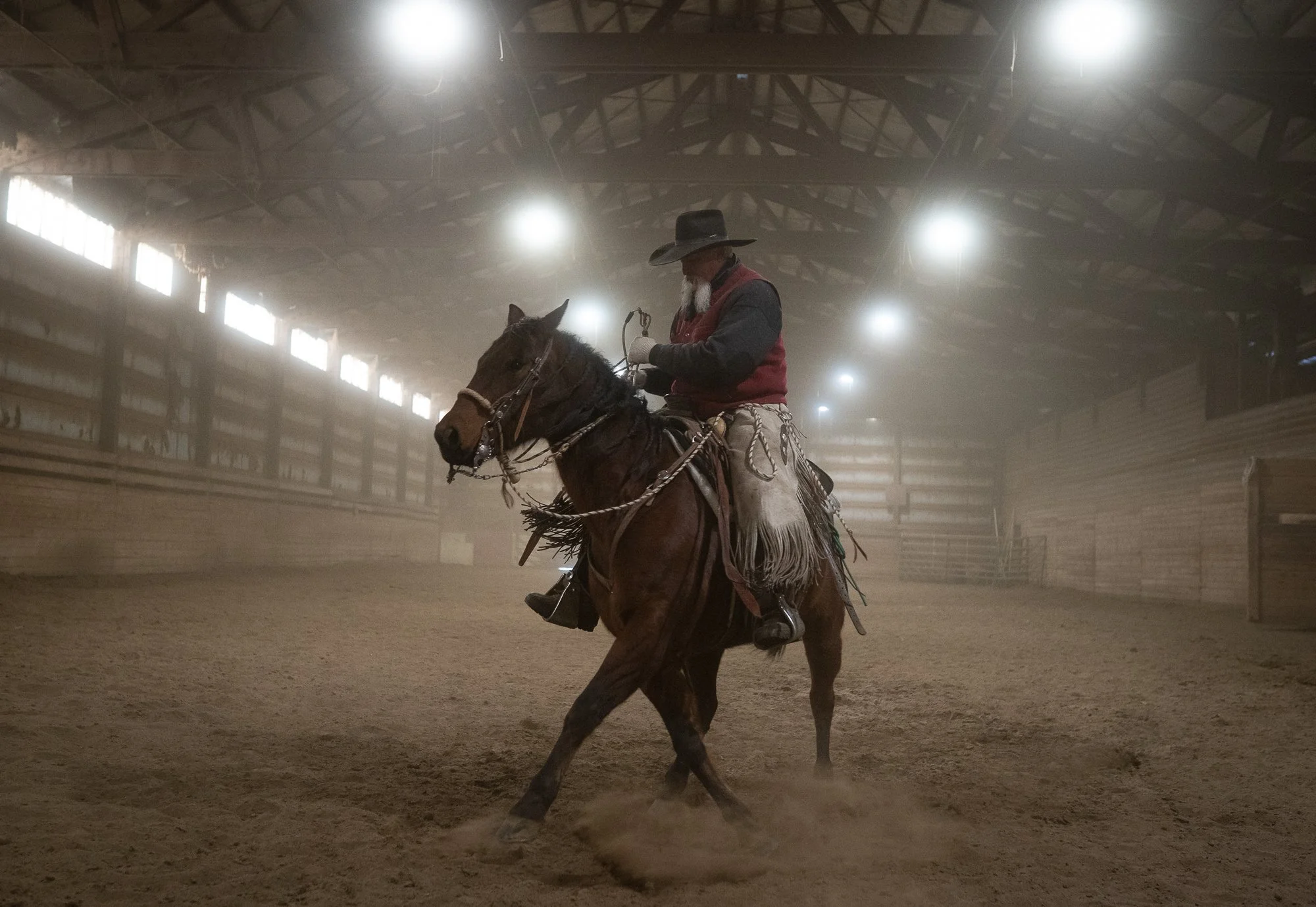
Cowboy riding horse inside dusty indoor arena with dramatic overhead lights

A cowboy works his horse inside a dim arena, dust hanging in the air under artificial light.

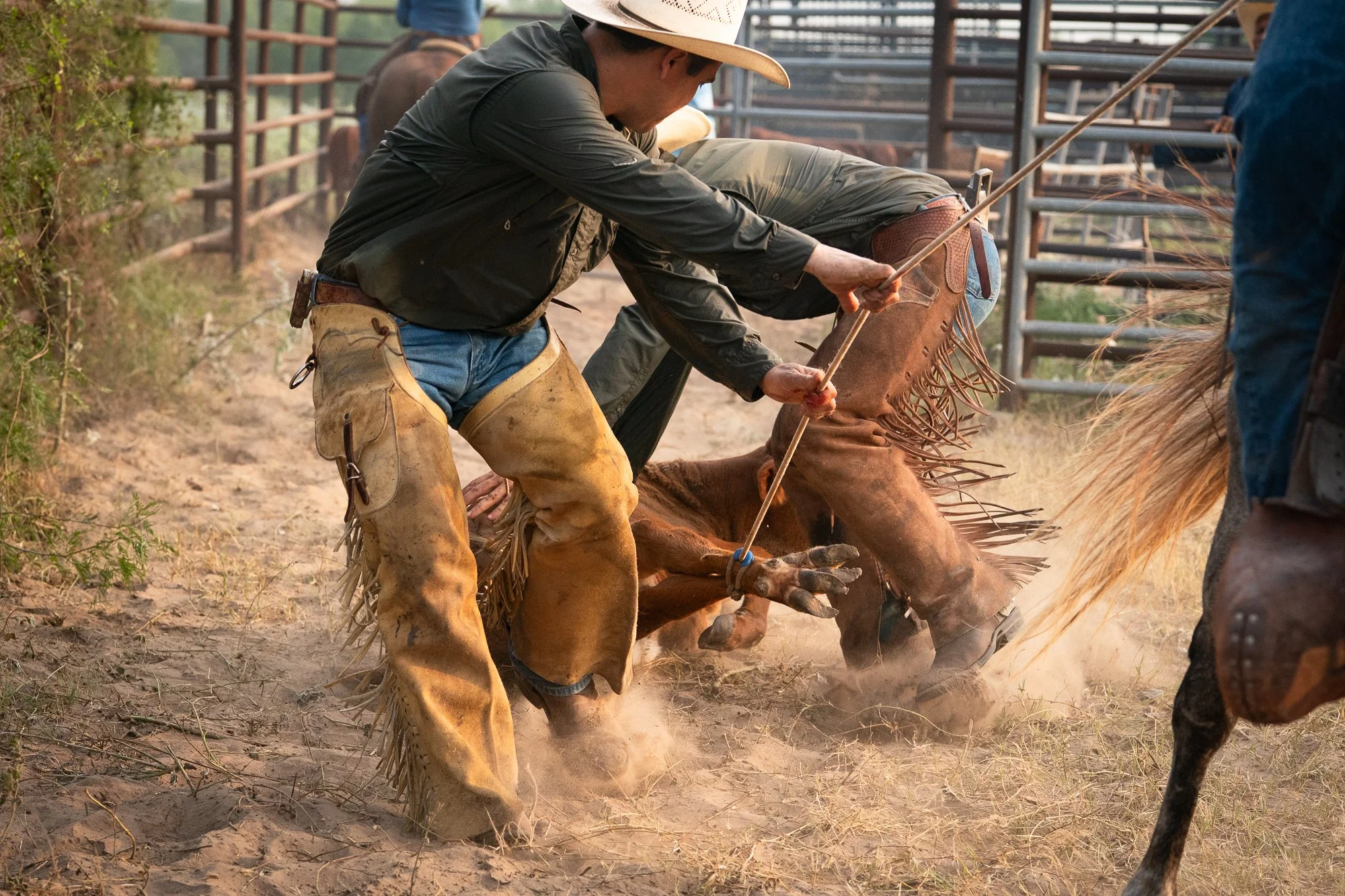
Cowboy restraining calf during branding with rope and chaps in dusty corral

A calf is roped and held during branding, a necessary and demanding part of cattle ranching.

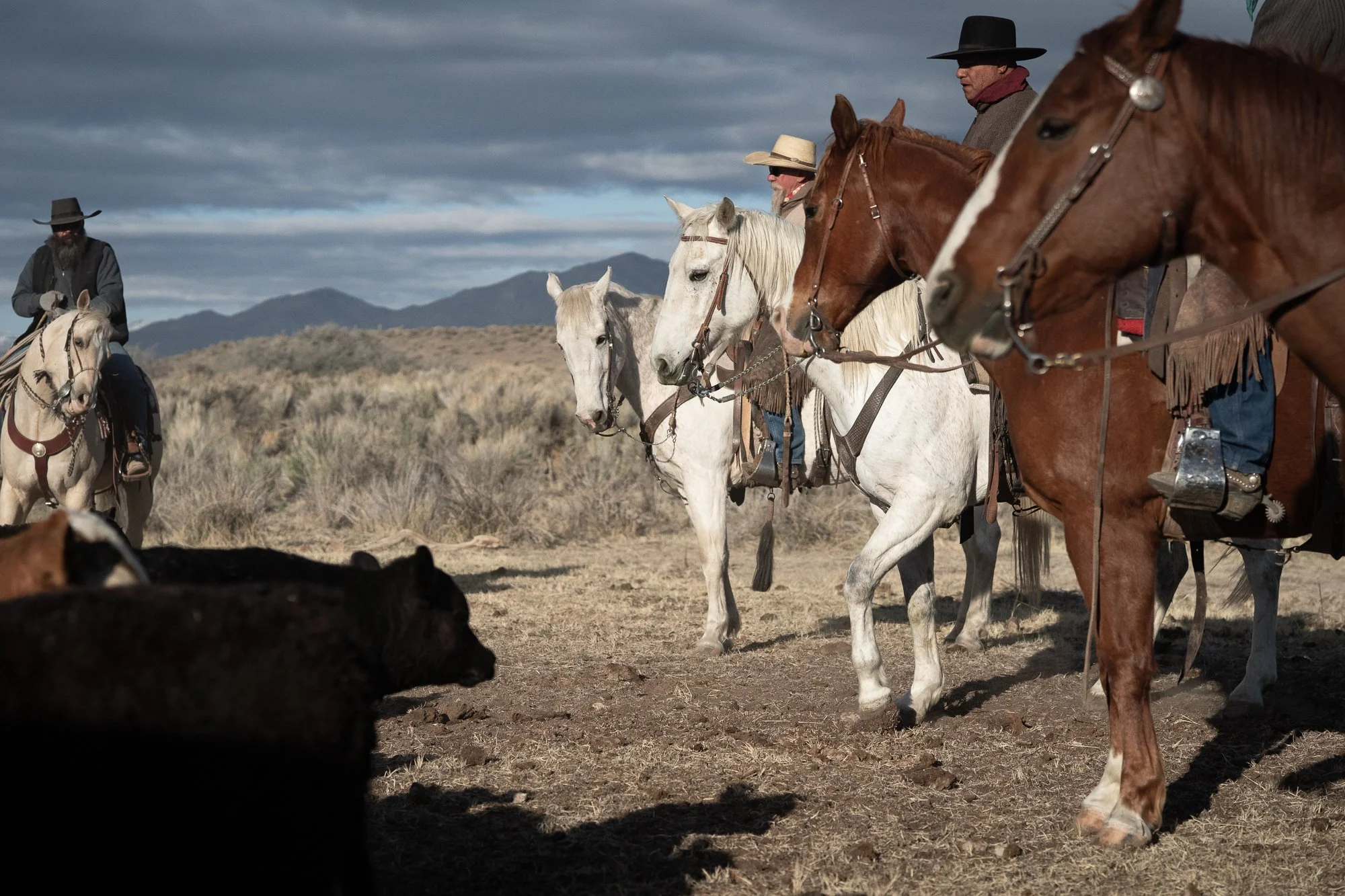
Cowboys on horseback working cattle with dog in open western landscape

A small group of cowboys watches cattle movement across open country, working alongside a stock dog.

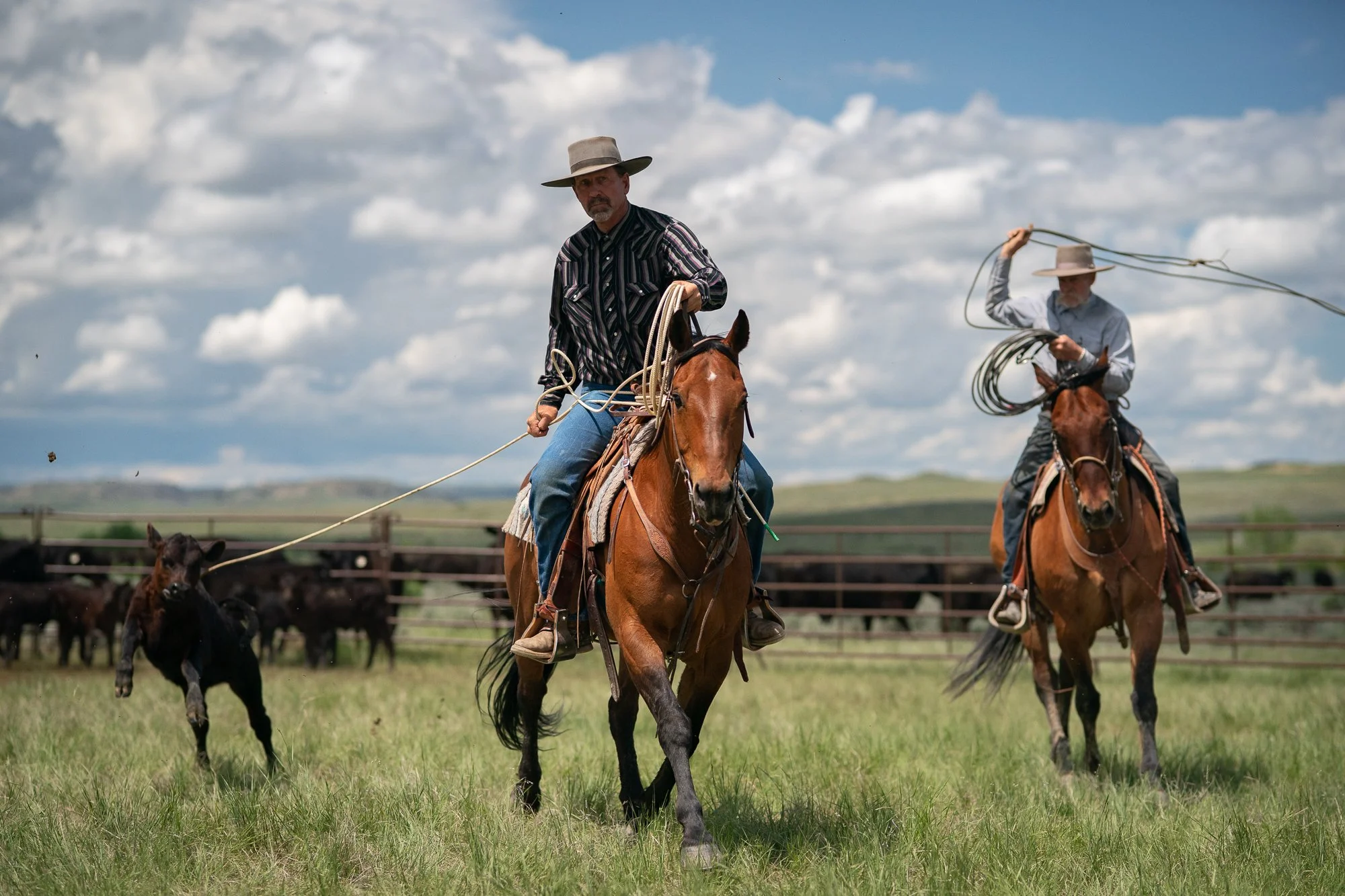
Cowboys on horseback roping cattle in grassy pasture under bright sky

Cowboys rope cattle from horseback, a skill built through years of repetition and experience.

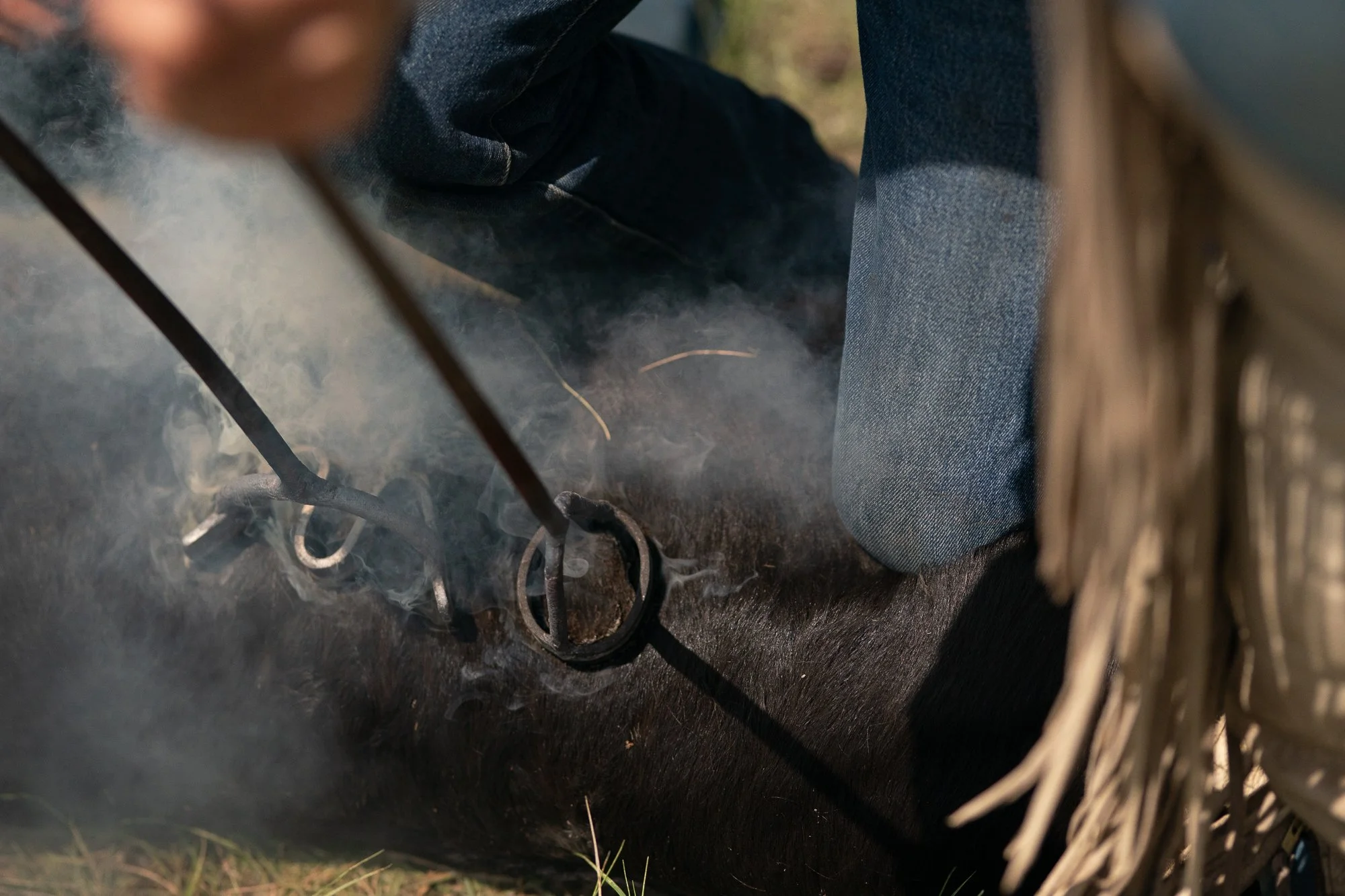
Close up of hot branding iron applied to cow with smoke rising from hide

A hot branding iron meets the hide as smoke rises, marking cattle for identification.

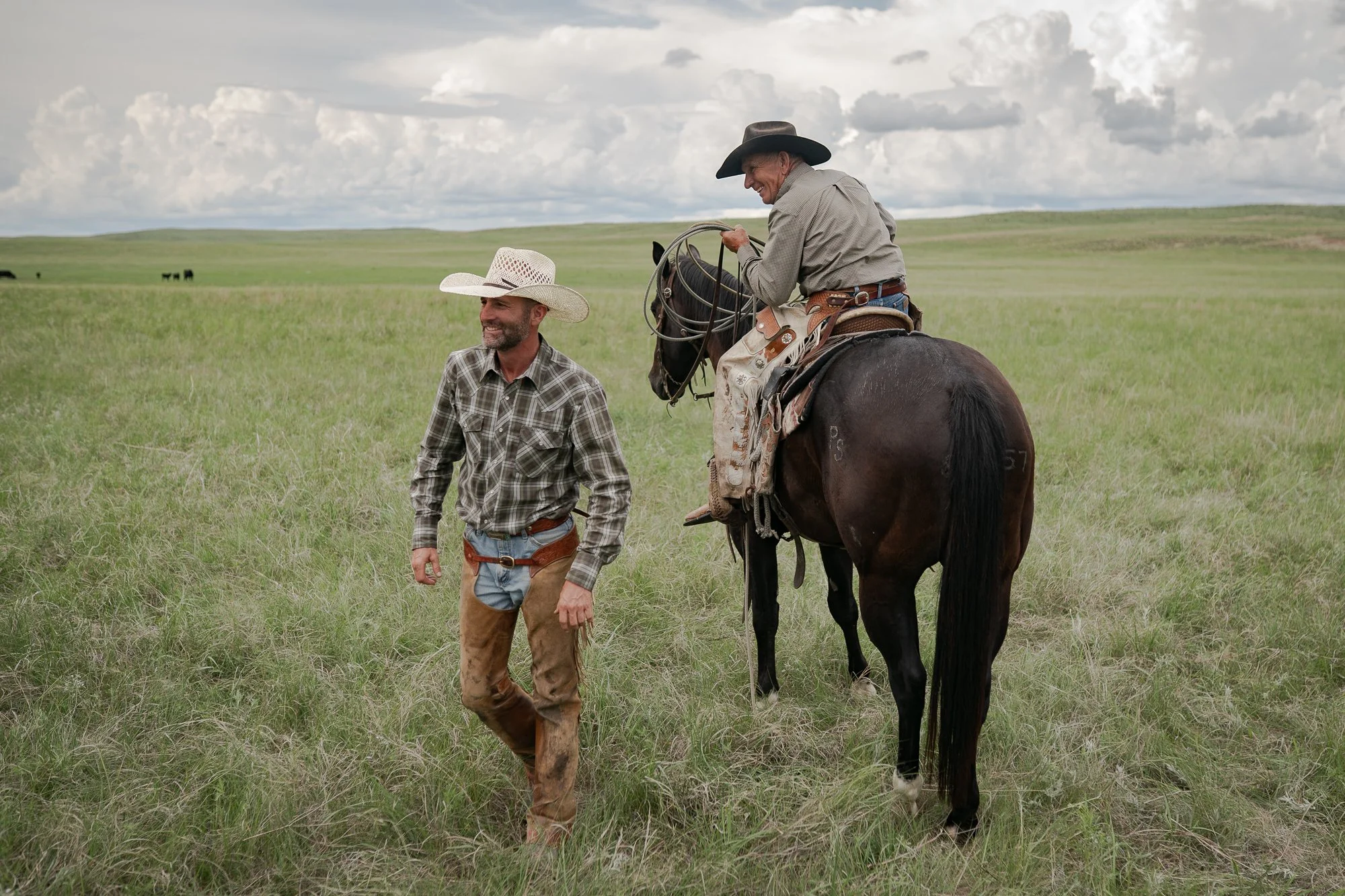
Cowboys walking and riding horses across grassy plains under cloudy sky

Cowboys move across open grassland, balancing time in the saddle with work on foot.

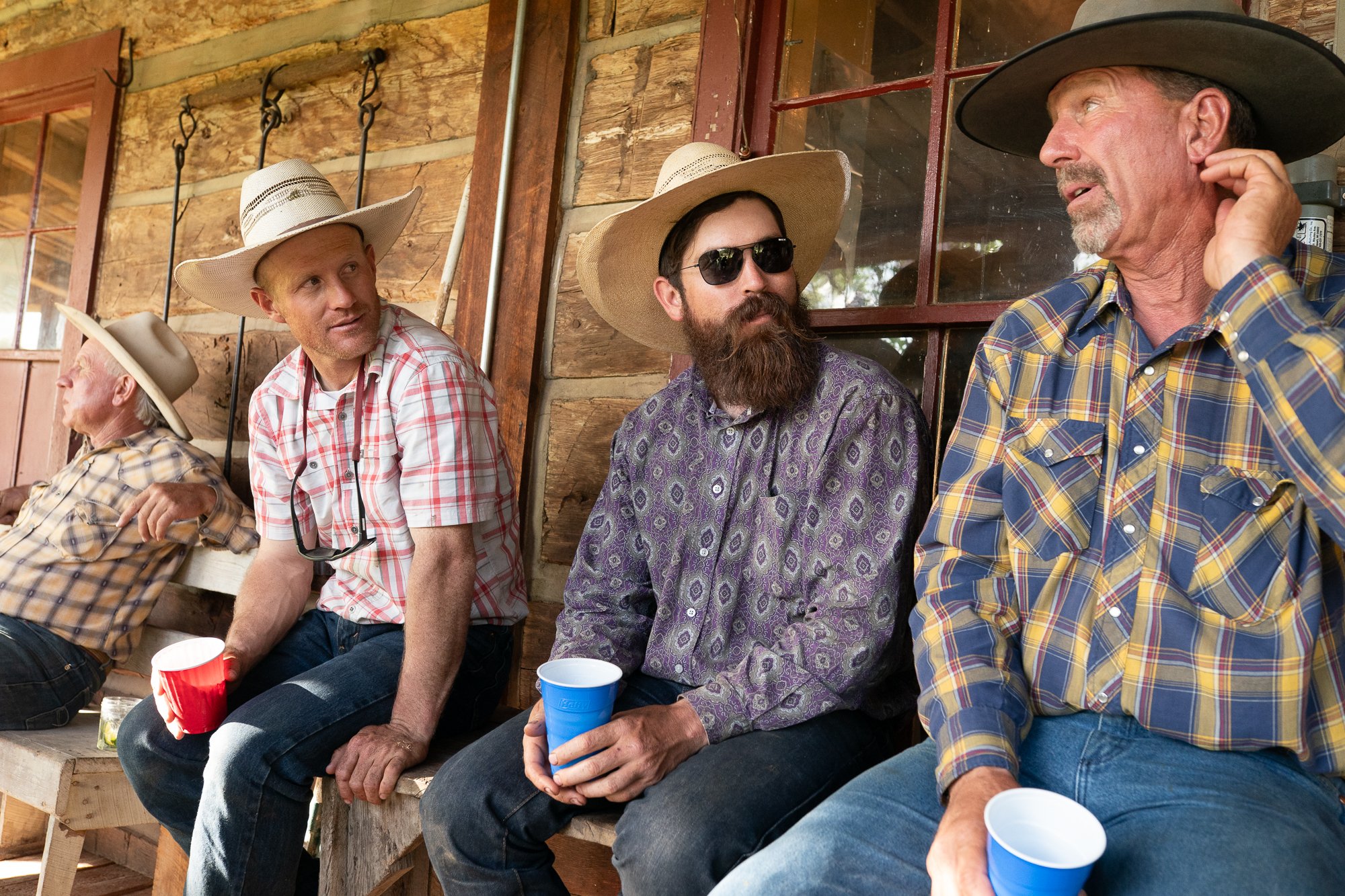
Group of cowboys sitting on rustic porch drinking and talking in casual setting

Cowboys sit on a porch after a long day, conversation and camaraderie as much a part of the job as the work itself.

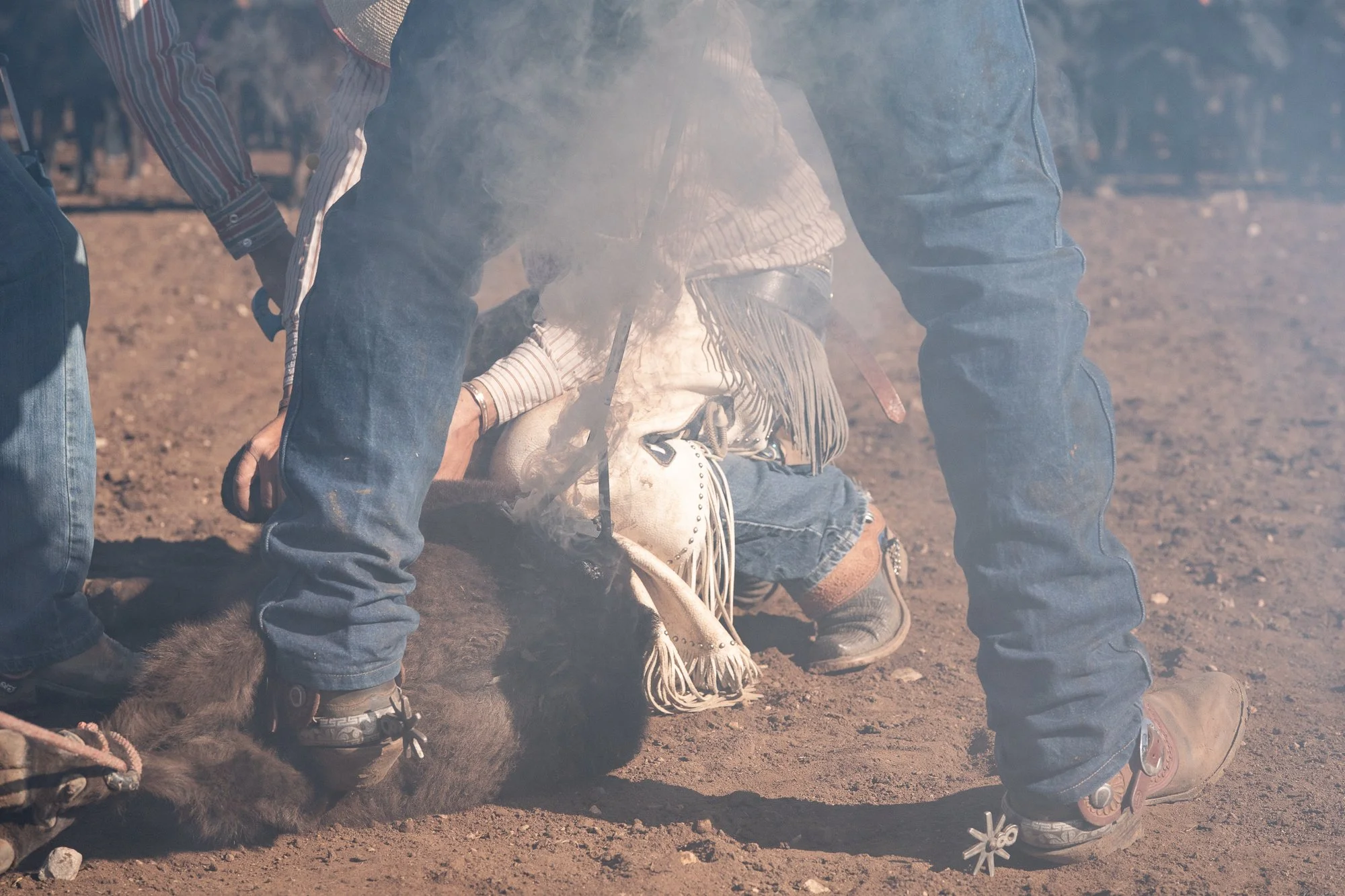
Cowboys restraining calf during branding with smoke and dust in close action view

A calf is held during branding as smoke and dust fill the frame, capturing the intensity of the work.

Cowboys on horseback moving cattle in dusty corral during warm golden light

Cattle move through the corral as cowboys work in warm evening light, dust hanging in the air.

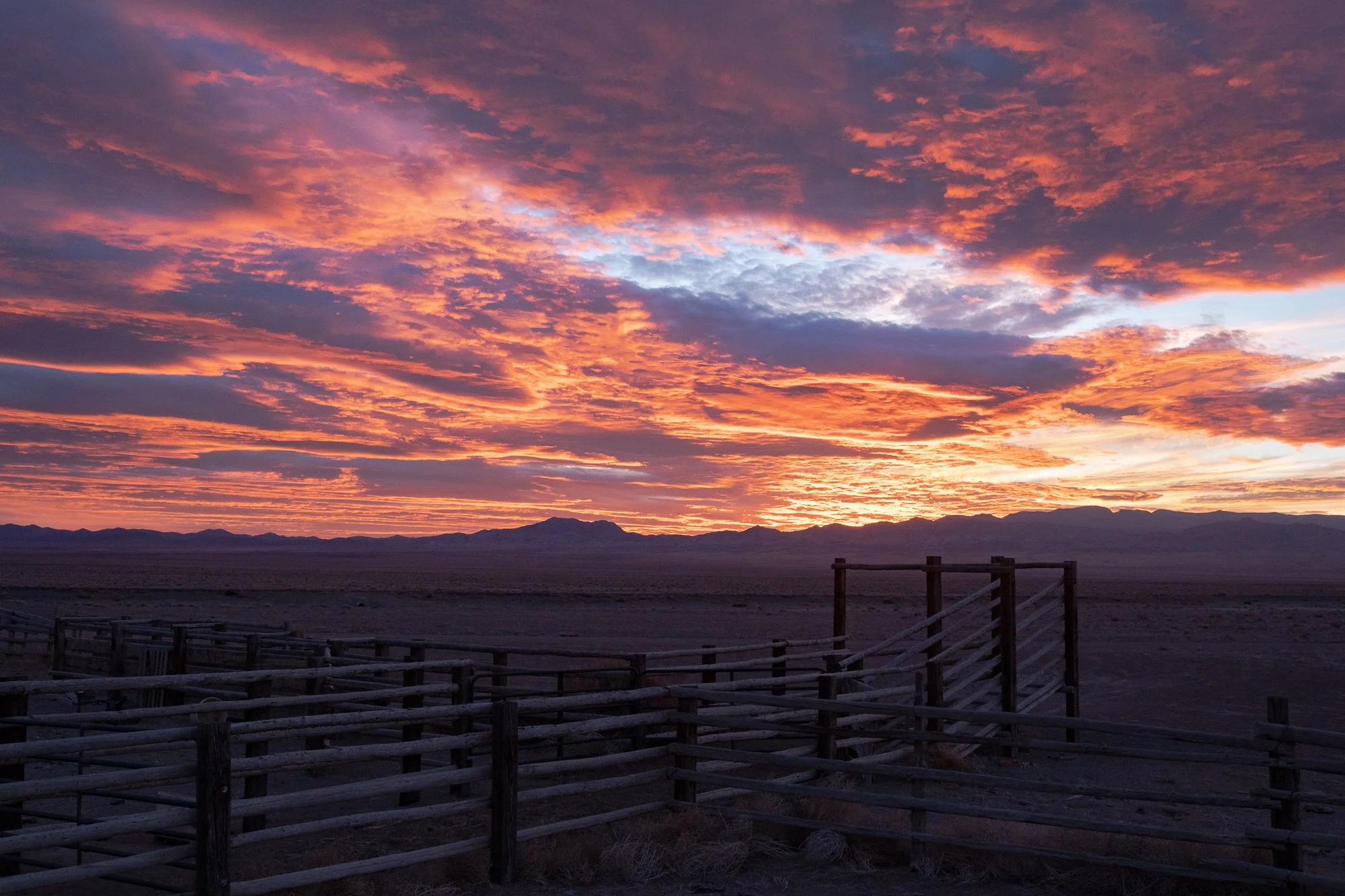
Sunset over empty cattle pens with dramatic sky and mountain horizon

A wide western sky settles over the ranch at dusk, marking the end of a long day’s work.

Editorial Cowboy Photographer

Professional Western / Cowboy Photography Services — Magazine & Commercial Assignments

Capturing Western Stories with Depth

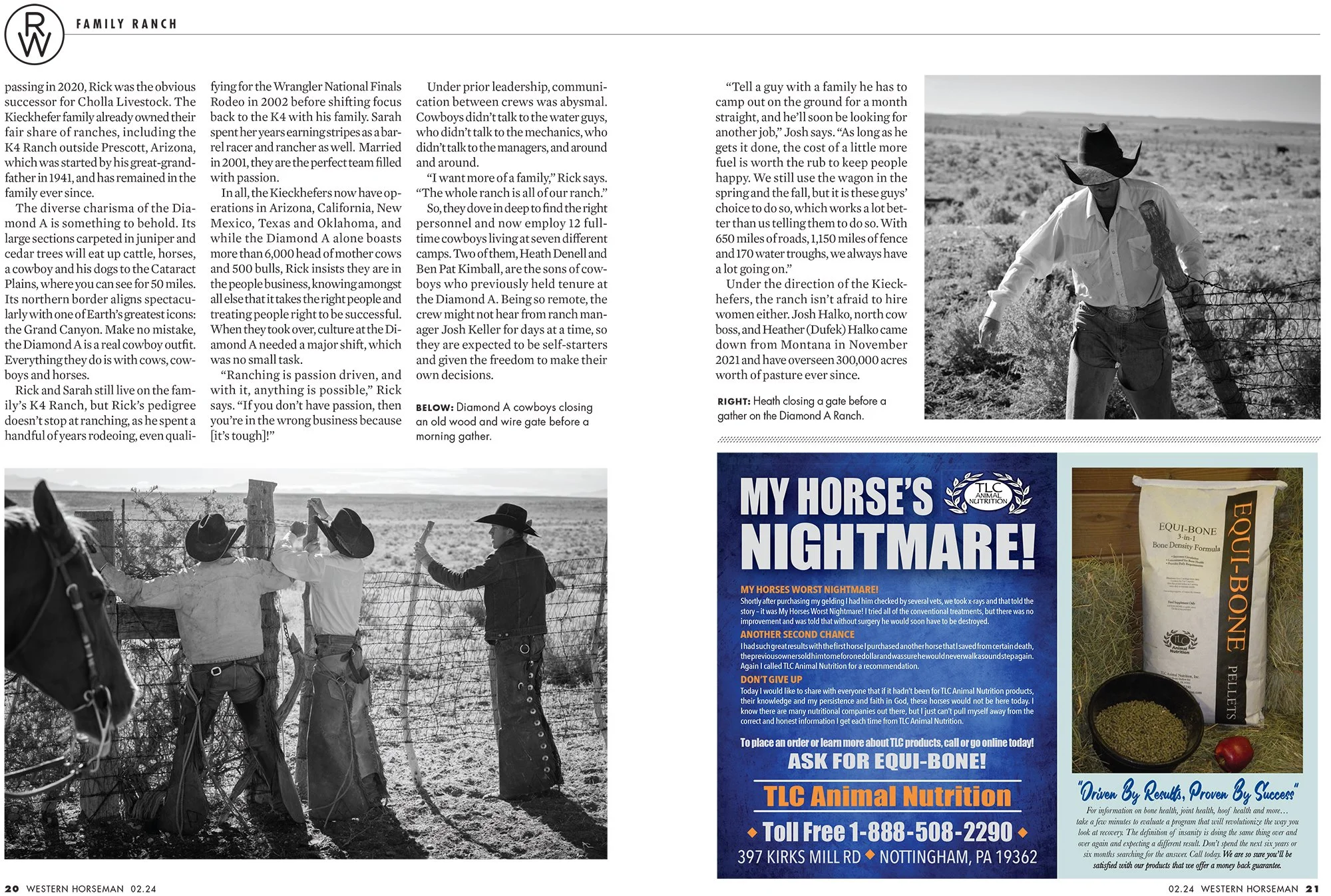
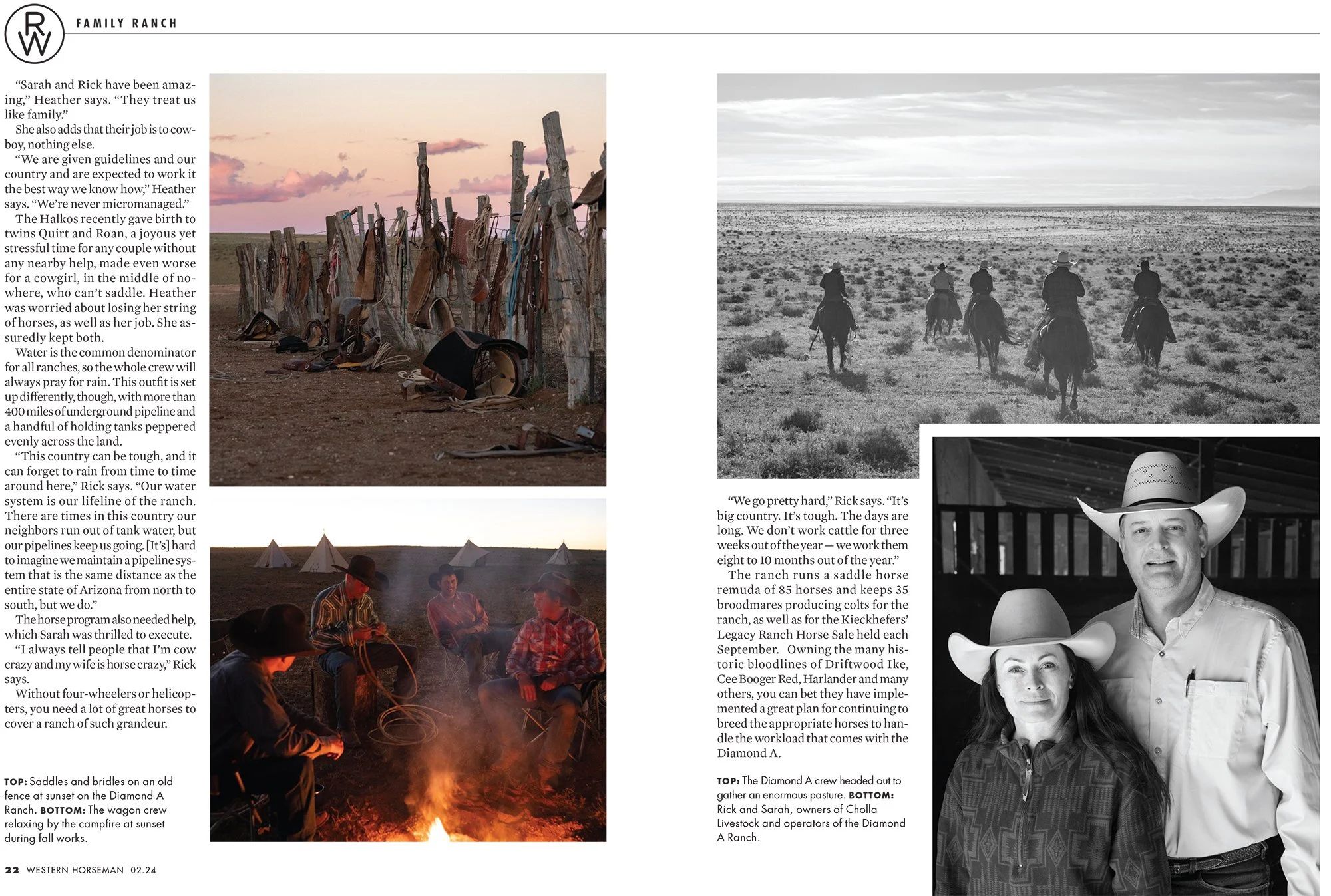
The largest cattle ranch in the Southwest was the backdrop for one of my feature assignments with Western Horseman Magazine. But what that experience taught me goes far beyond one location—it’s proof of what I can bring to any ranch, any story, anywhere.

When a magazine or brand hires me, they don’t just get photos. They get someone who knows how to work in remote country, navigate ranch protocols, gain trust, and produce visuals with authenticity, emotion, and technical quality.

On the Diamond A shoot, I captured wide scenes, close portraits, action frames—each image crafted for storytelling. I’ve licensed those images, seen them published, and held to deadlines and narrative needs. This is the kind of work I’m ready to do for your next piece: whether a feature story, coffee table spread, hospitality branding, or campaign that needs real Western grit.

Let’s talk about your project. I can help with:

  • Editorial assignments (magazine features, online storytelling)

  • Licensing imagery for publications or brand use

  • Commissioned ranch photography for hospitality, books, or design

Scroll through the Diamond A images below and imagine what we could do together for your next Western story and get in touch if you’d like to collaborate - rob@robhammerphotography.com

You can also view a selection of fine art cowboy photography prints or more from cowboy series

Original article from the magazine:

A crew of 5 leaves the corrals at a trot, heading out to gather a pasture that only ends at the morning sun hovering above the horizon. It feels like watching a fleet of sailboats gracefully catch wind from harbor into the open ocean, getting smaller and smaller until they melt into the sea. There’s no telling when or if they’ll ever return. Such is life for cowboys on the Diamond A Ranch outside of Seligman, Arizona. At 725,000 acres it’s the largest in the southwest and aptly nicknamed The Big Boquillas. 

“Don’t hire him if his wife isn’t there for the interview” says Sarah Kieckhefer to her husband Rick - owners of the Diamond A. She knows it takes a special breed to work this kind of spread and deal with such solitude. If the wife shows up sight unseen on day 1 and realizes her camp is 3.5 hours from the nearest town with a grocery store, it doesn’t matter how handy the cowboy is, they won’t be staying long. The land itself is owned by the Navajos and was leased for 32 years by the legendary Harvey Dietrich, who hand picked Rick in 2018 as his successor. The Kiechkefers already owned their fair share of ranches, including the K4 outside Prescott, which has been in the family since his great grandfather started it in1941. So Rick didn’t jump at Harvey’s offer until he said “you know, they aren’t making any more land”. A hard fact to argue for anyone looking to grow, and it’s not everyday that a ranch of this size falls in your lap. So he accepted the full lease in 2021, increasing his acreage overnight by roughly the size of Rhode Island. 

The diverse charisma of the Diamond A is something to behold. From its large sections carpeted in Juniper and Cedar trees that will eat up cattle, horses, a cowboy, and his dogs, to the Cataract Plains, where you can see for 50 miles. Oh, and its northern border collides eloquently with one of planet earth’s greatest icons - The Grand Canyon! But make no mistake about it, The Diamond A is a real cowboy outfit. Everything they do is with cows and horses. There is no oil money like most in Texas. Rick and Sarah still live on the family ranch, so it’s no surprise that they continue the dying tradition of pulling a wagon for the Diamond A’s spring and fall works. Rick’s pedigree doesn’t stop at ranching, as he spent a handful of years rodeoing in the NFR (2001-2006), before shifting focus back to the K4 with mom+dad. Then spreading his wings further with the purchase of a few other leases and a feed yard near the Mexican border. Sarah spent all of her years earning stripes as a barrel racer and rancher as well. The perfect team. And while the Diamond A alone boasts 8,000 head of mother cows, he insists they are in the people business. Knowing amongst all else that it takes the right people, and treating people right. When they took over, culture at The Big Bo needed a major shift,  which was no small task, but as Rick says “Ranching is passion driven. If you don’t have passion then you’re in the wrong business, because it’s a tough son of a buck”. Under prior leadership, communication between crews was abysmal. Cowboys didn’t talk to the water guys, that didn’t talk to the mechanics, and around in a circle. Rick says “I want more of a family. The whole ranch is all of our ranch”. So they dove in deep to find the right personnel and currently employ 12 full time cowboys living at 7 different camps. Two of which (Heath Denell and Ben Pat Kimball) are the sons of cowboys that previously held tenure at the Diamond A.  Being so remote, the crew might not hear from the boss for days at a time, so they are expected to be self starters, but also given the freedom to make their own decisions. Tell a guy with a family he has to camp out on the ground for a month straight, and he’ll soon be looking for another job. As long as he gets it done, the cost of a little more fuel is worth the rub to keep people happy.  The Kiechefers aren’t afraid to hire women either if they come as a team. Josh Halko (cow boss) and Heather (Dufek) Halko came down from Montana in November of 2021 and have overseen 300,0000 acres worth of pasture ever since. “Sarah and Rick have been amazing. They treat us like family” says Heather. She also adds that their job is to cowboy, nothing else. “We are given guidelines and our country, and expected to work it the best way we know how. We’re never micromanaged.” The Halko’s recently gave birth to twins (Quirt and Roan). A joyous yet stressful time for any couple without any nearby help. Even worse for a cowgirl in the middle or nowhere that can’t saddle. So Heather was worried about losing her string of horses as well as her job. She assuredly kept both.

Water is the common denominator for all ranches, so the whole crew will always pray for rain. This outfit is set up a bit differently though, with 400 miles of underground pipeline and a handful of holding tanks peppered evenly across the land. Nevertheless,  genetics were changed by bringing down heifers from Montana and the Dakotas that would be more tolerant of Arizona’s weather conditions. The horse program also needed help, which Sarah was thrilled to execute. “I always tell people that I’m cow crazy and my wife is horse crazy,” says Rick. Without four wheelers or helicopters, you need a lot of great horses to cover a ranch of such grandeur. Rick again adds “We go pretty hard. It’s big country. It’s tough. The days are long. We don’t work cattle for 3 weeks out of the year. We work em’ 8 months out of the year.” Owning the historic bloodlines of Driftwood Ike, you can bet they have implemented a great plan for continuing to breed the appropriate horses. And have already attracted some big names to their own Legacy Ranch Horse Sale. 

Sarah will be the first to tell you that her husband’s greatest asset is progressive thinking. He always gives a considerable amount of his already overflowing days and nights to what will be best for the ranch 1, 5, 10, and 20 years from now. He knows that you need to diversify in order to survive, so he took cues from Dietrich about meat packers suppressing the industry and making record profits, while the producers remained handcuffed. Unfortunately Harvey passed on Christmas Eve of 2020, but the building blocks were already in place to “write their own story”, dedicating 20% of production to boxed beef. And after a few years of figuring out all the moving parts, their gourmet products can now be found in such restaurants as the 5 star - Orange Sky and Phoenician in Phoenix as well as the Royal Palms and Sanctuary in Scottsdale. They’ve even attracted famous chefs like Chris Bianco that want to collaborate because they believe in the story and the product. If that sounds glamorous, think again. Only the middle meats of each cow can be sold to a restaurant, so ranchers need an outlet for the remaining 75%, or they’ll soon be out of business. And, if you can’t  deliver a year round supply, your partners will find someone who can. The Kiechefers want to grow their boxed beef sales to about 30-40%, but the main goal is to be better every day in every aspect of their business through efficiency. And the best way to achieve that in their mind, is having people that want to be there. People that feel ownership and pride in the ranch. Ricks says “the most important thing is that it’s those guys this year, those guys next year, and it’s those guys the year after making the decisions”.

Cowboys on the Diamond A Ranch in Arizona
Western cowboy photographer for brands and magazines

Western photography for magazines and brands

Photographer serving the American cattle industry

Editorial photography services for the cattle industry

Commercial cowboy photographer based in Denver, CO

Cowboy photographer for editorial and commercial assingments