
TS Ranch: 156 Years of Buckaroo Tradition in the American West
The TS Ranch sits in northeastern Nevada, in the country stretching between Carlin and Battle Mountain—part of the larger Great Basin where cattle ranching has operated on open range for well over a century.
Originally known as the T Lazy S Ranch, the operation has long been tied to the development of both ranching and mining in this part of Nevada. Like many ranches in the region, its history isn’t isolated—it’s connected to the broader story of land use in the West, where cattle operations and resource extraction have overlapped for generations.
The ranch itself is owned by Nevada Gold Mines, but that doesn’t matter much to the cowboys, because they just want to cowboy. Although it does give them plenty of room to roam, as the mines own almost 3 million acres of earth between all of their ranches.
Ranching in the Carlin and Battle Mountain Country
This part of Nevada is defined by distance.
The land is dry, open, and expansive—sagebrush valleys broken by low mountain ranges, with limited water and long seasonal swings. Ranching here has always required movement. Cattle are spread across large allotments, often miles apart, and gathering them means covering serious ground on horseback.
At the TS Ranch, that hasn’t changed.
The work still follows the same patterns established generations ago: long days in the saddle, trailing cattle across open range, managing herds in terrain that offers very little room for error. Efficiency comes from experience, not speed.
From T Lazy S to TS Ranch
The ranch’s earlier identity as the T Lazy S reflects a period when large, independently run cattle operations dominated northern Nevada.
As mining expanded in the Carlin Trend—one of the most significant gold-producing regions in the world—land ownership and management structures began to shift. Ranches like this became part of a broader landscape where livestock production and mining interests coexisted.
Despite those changes, the function of the ranch itself remained consistent.
Cattle still move across the same country. Riders still gather and trail them the same way. The systems in place today are less about ownership on paper and more about what continues to work on the ground.
Photographing TS Ranch
I’ve said this before, but I’m partial to the ranches in Nevada, and love photographing on them. Everything from the buckaroo style, to the nature of the land, colors, and textures is, in my opinion, exceptional. Ranches in this part of the world represent a culture unique in itself, yet still part of the greater cowboy universe. Photographing here means working within the rhythm, not interrupting it.
Nothing is staged. Nothing is slowed down. The work happens whether a camera is present or not.
The photographs come from paying attention to what’s already there—dust hanging in the air during a gather, a rider holding position on a ridge, cattle settling at the end of a long push. Over time, those moments build into a more accurate picture of what ranching in this part of Nevada actually looks like.
I’m grateful to the whole crew for letting me be a small part of their work and look forward to being back on The TS. They are a good bunch of humans with a great chemistry that was fun to take in from the outside.
Part of an Ongoing Western Project
The photographs from TS Ranch are part of a larger body of work focused on working cowboys across the American West.
This project has been developed over years of access to ranches where the work is still done horseback, across open range, and without alteration for the camera. Each image is part of a broader effort to document a way of life that continues largely out of public view.
Limited edition prints from this series are available for collectors
View more photographs from another historic Nevada cattle ranch - The C-Punch
Contact me directly for editorial and commercial licensing - rob@robhammerphotography.com
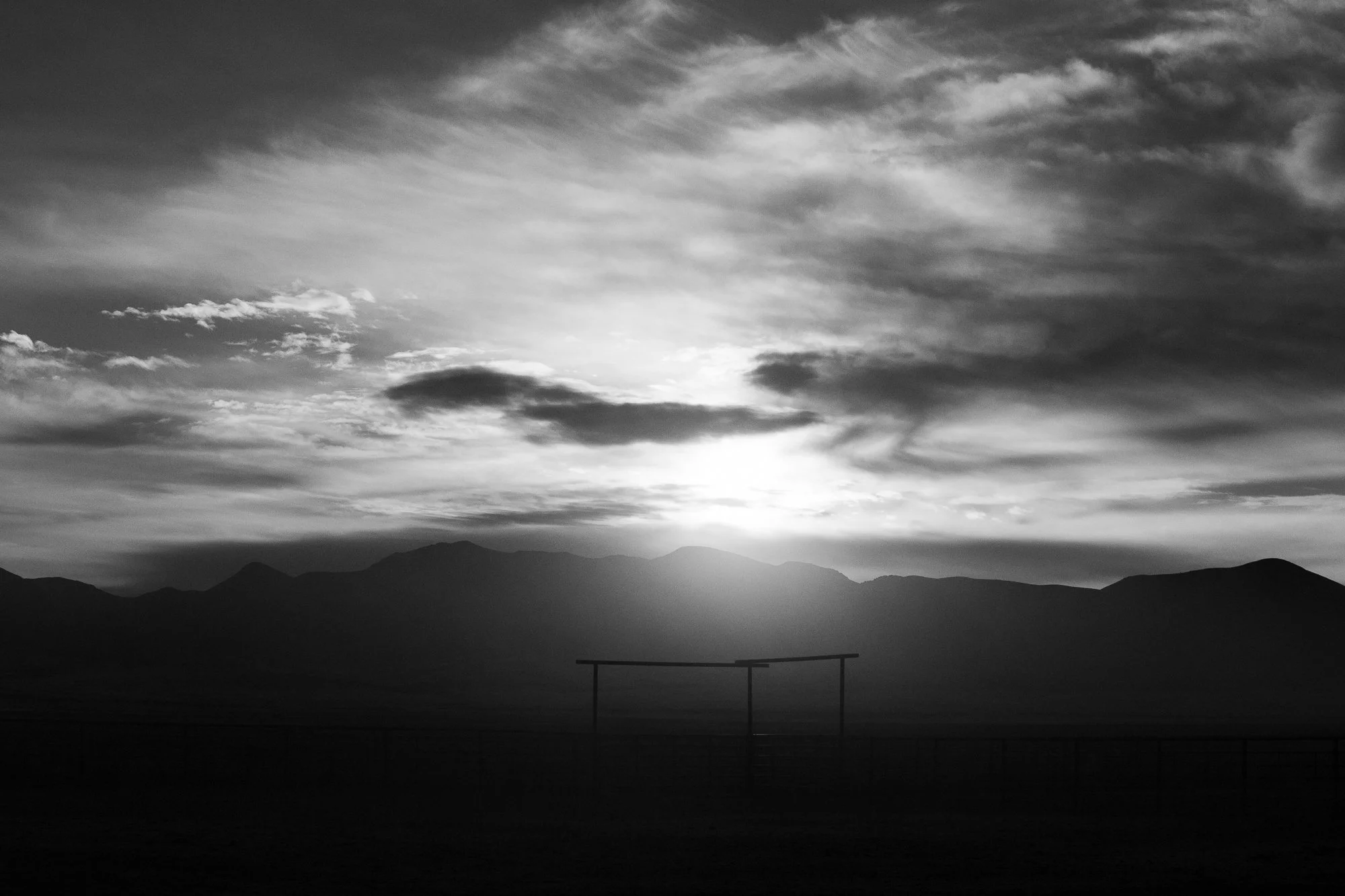
The first light breaks over the mountains, casting long shadows across the open ranch land.
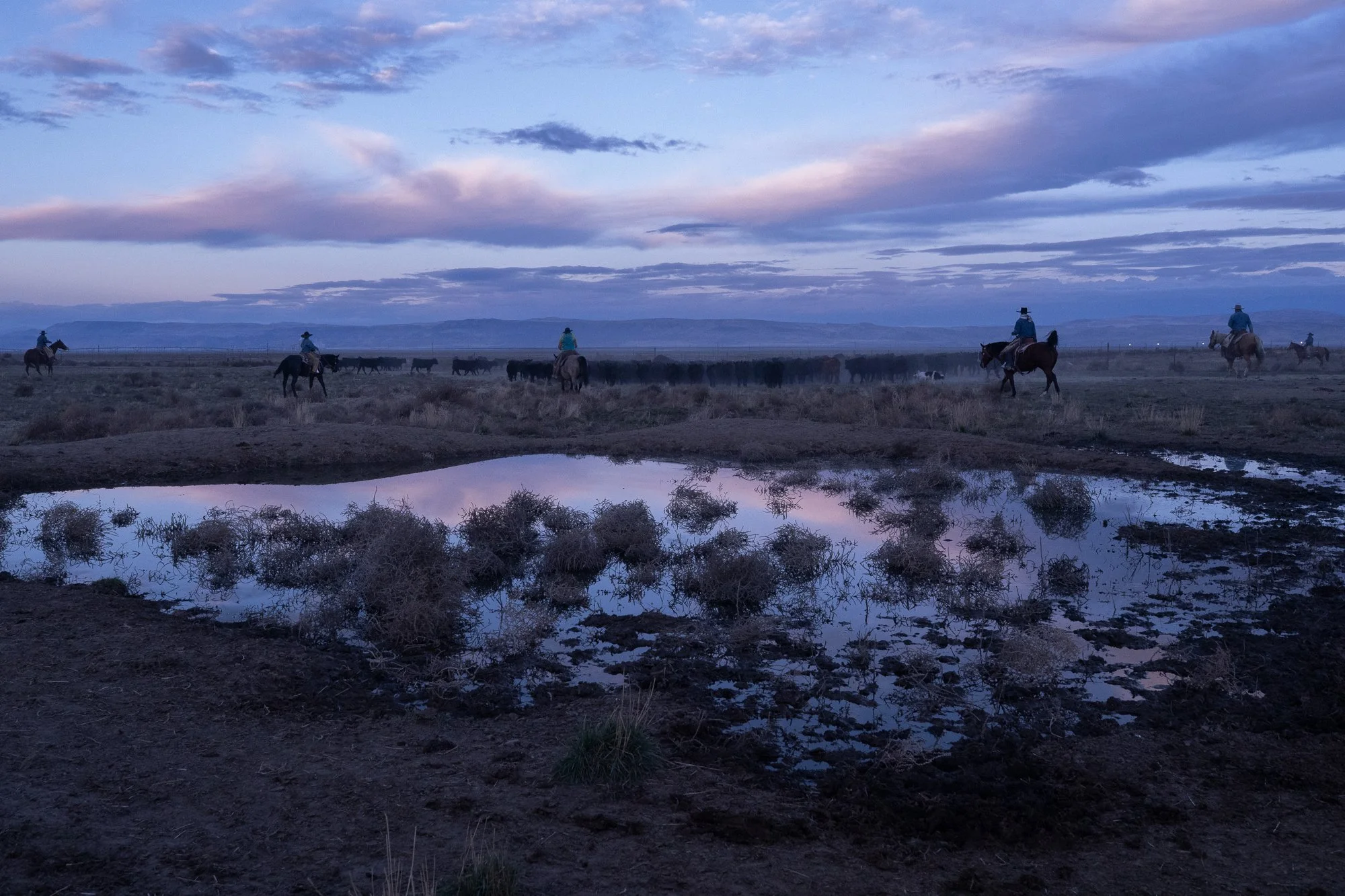
Buckaroos spread out across the range, slowly gathering cattle as the morning light settles over the high desert.
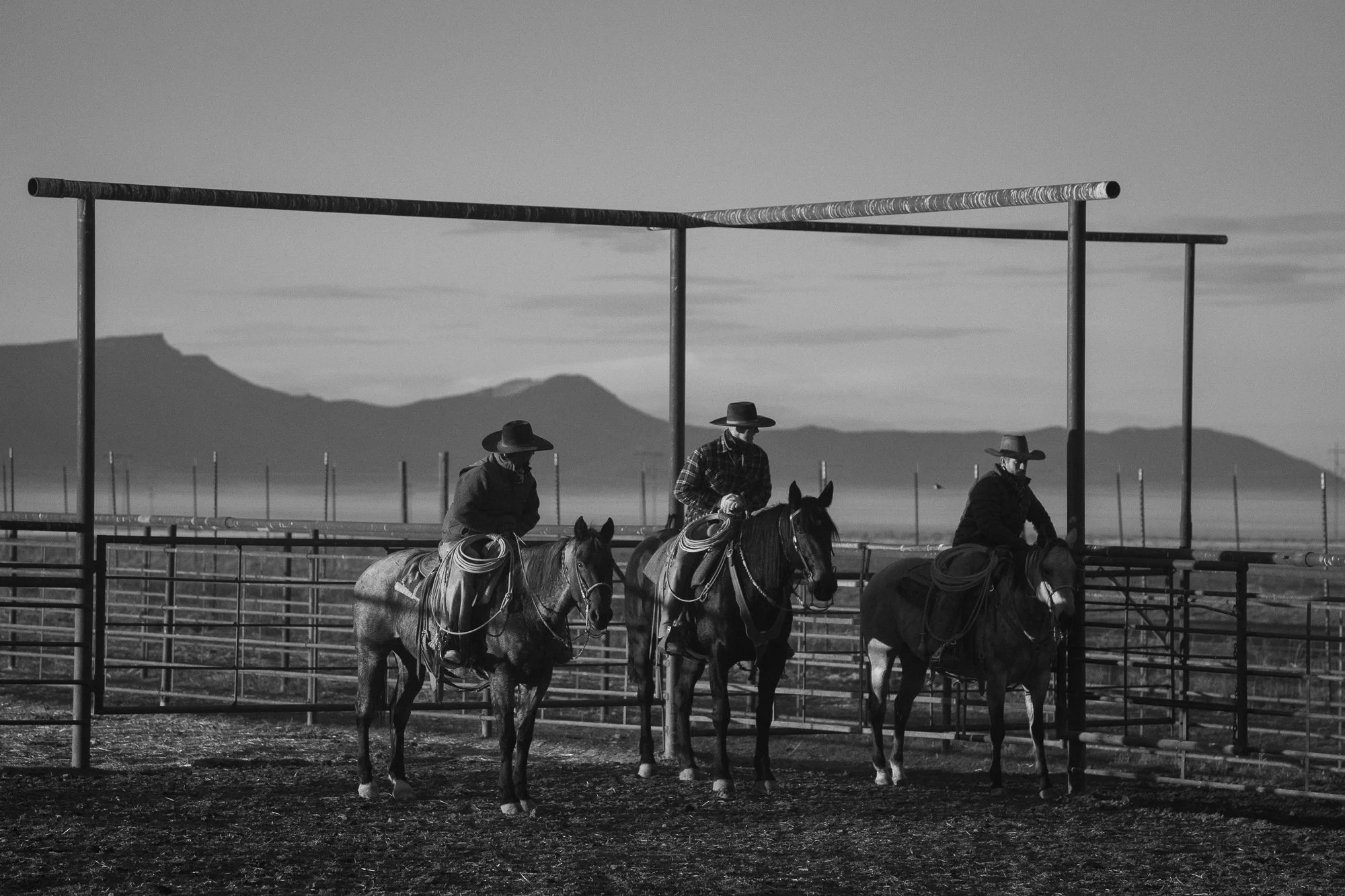
Buckaroos sit mounted in the pens, waiting for the next move as cattle work begins to unfold.
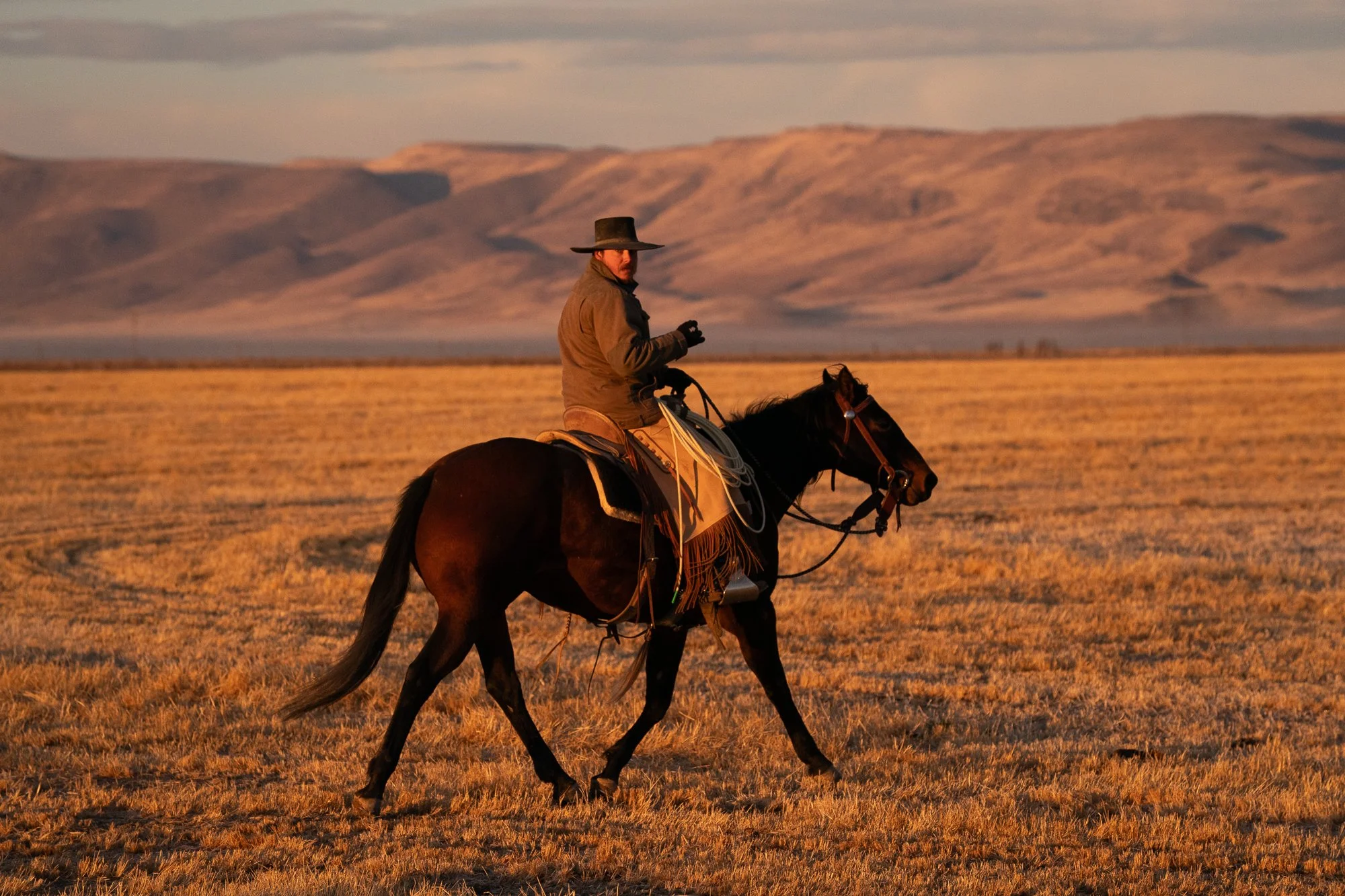
A buckaroo rides across the open range at TS Ranch, the high desert stretching out beneath the evening light.
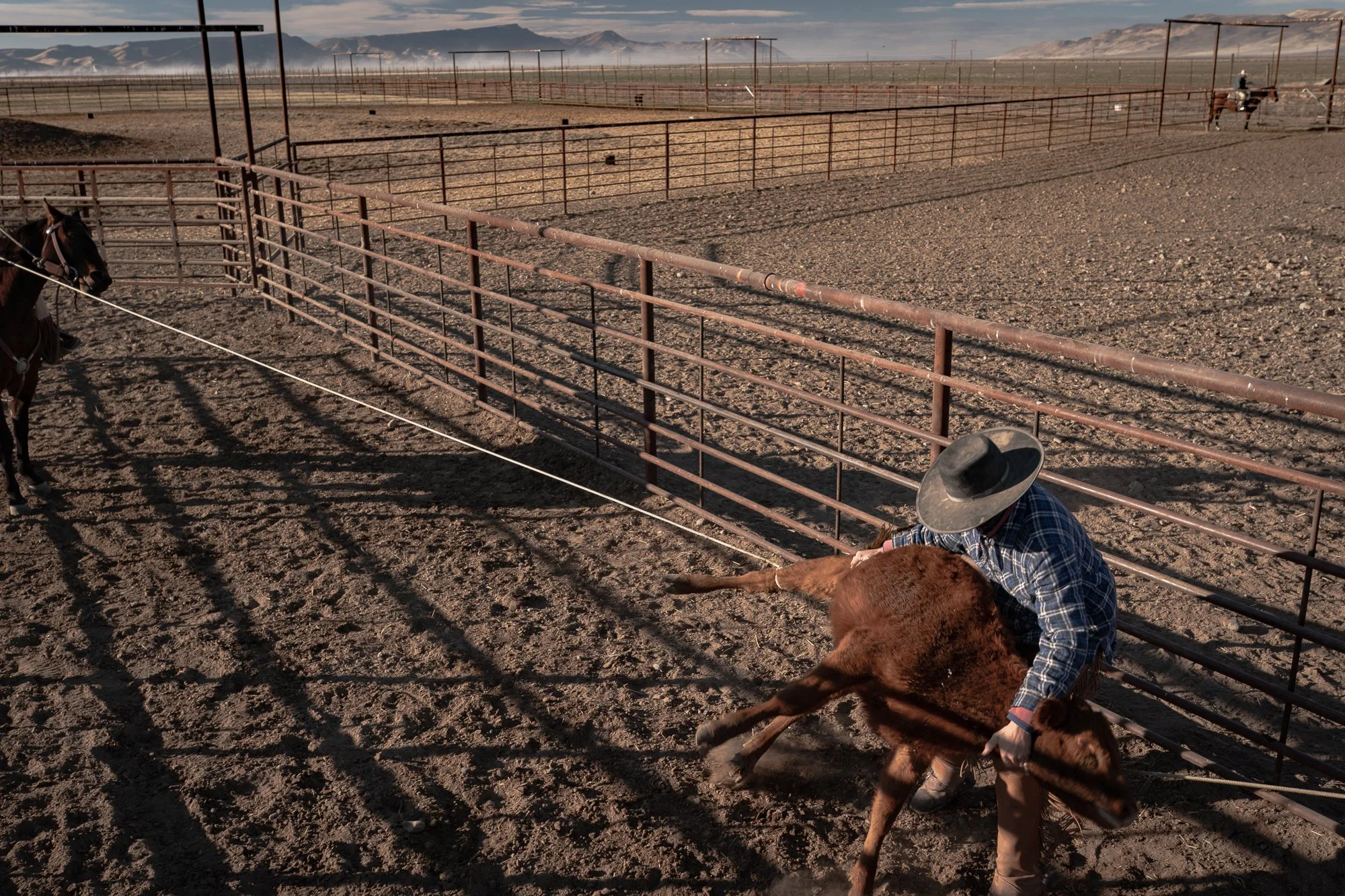
A calf is roped and held steady in the branding pen, a routine part of cattle work that has remained unchanged for generations.
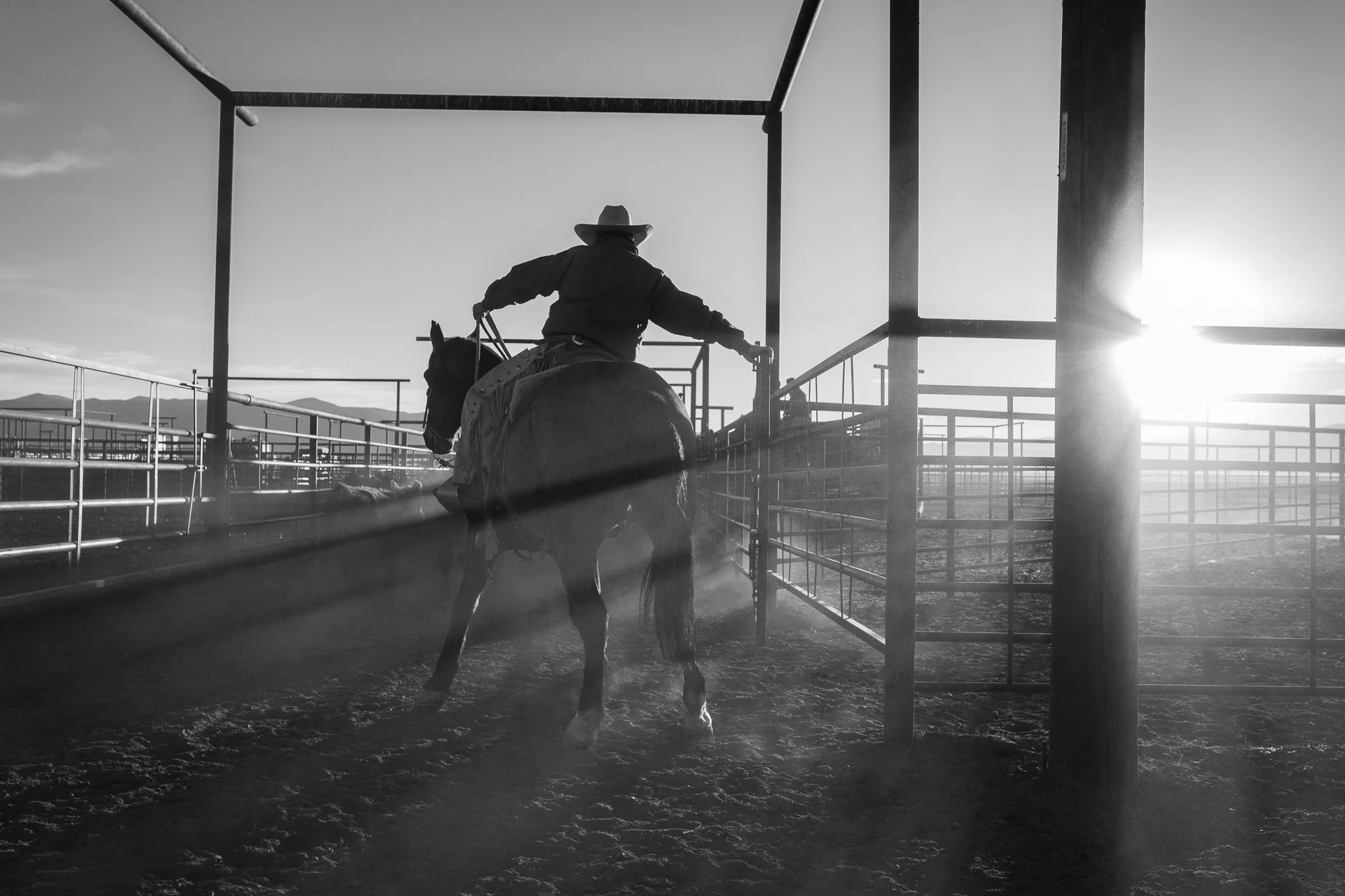
A buckaroo moves through the cattle pens at first light, dust catching the sun as the day’s work begins at TS Ranch.
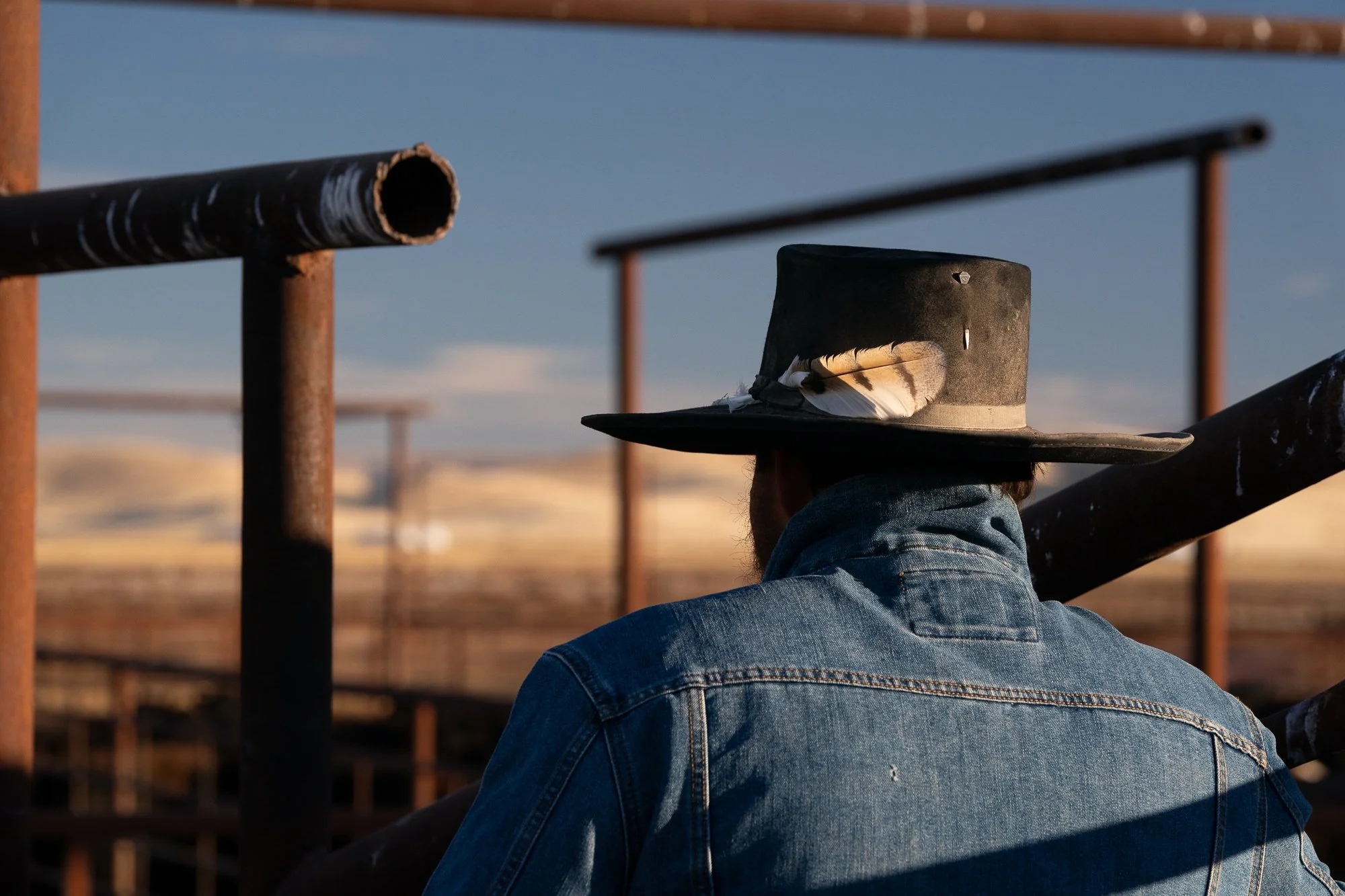
A worn hat catches the early light, a quiet detail that reflects the long days and tradition behind the work.
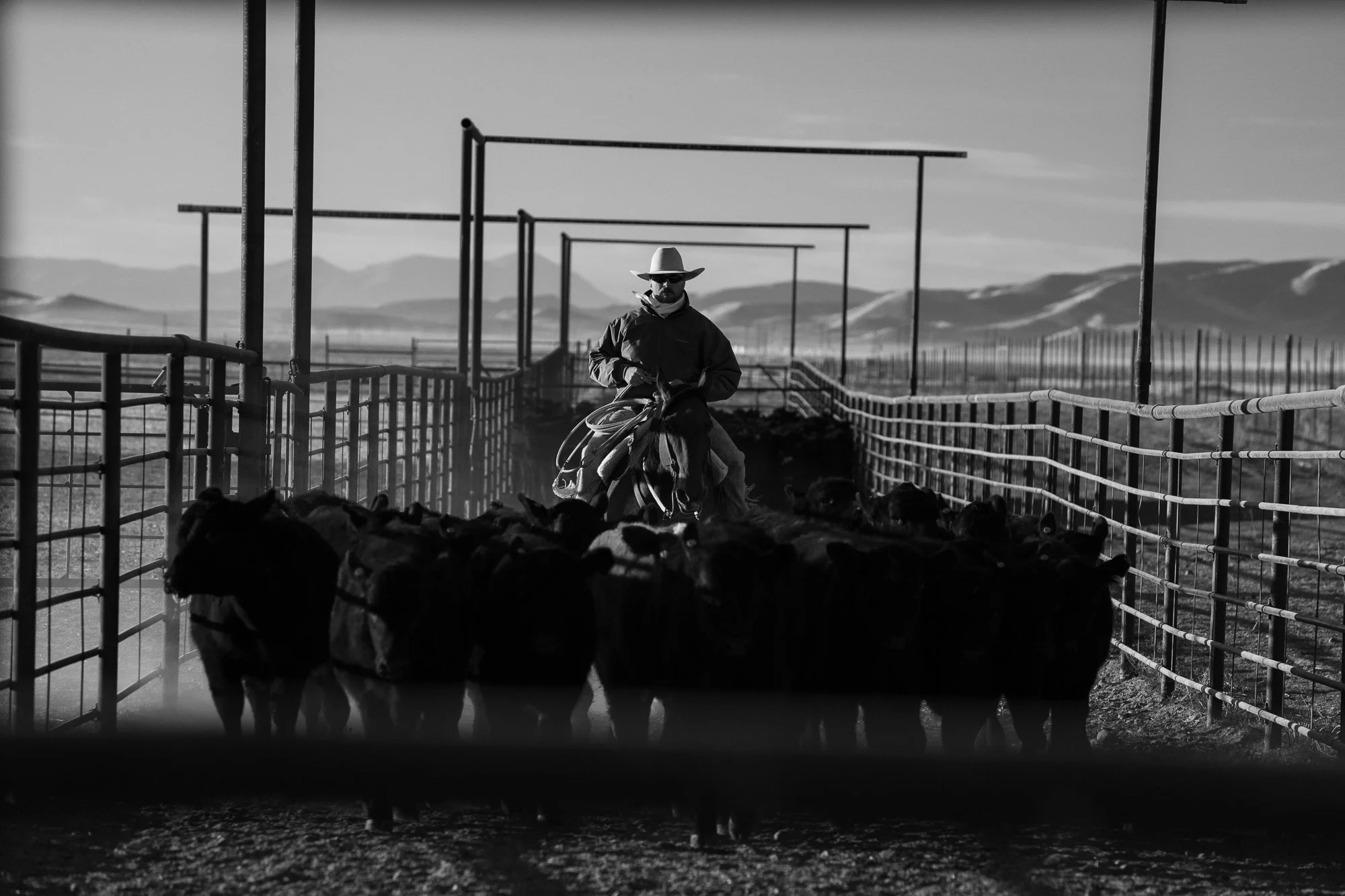
A buckaroo pushes cattle through the alleyway, guiding the herd forward through the maze of steel pens.
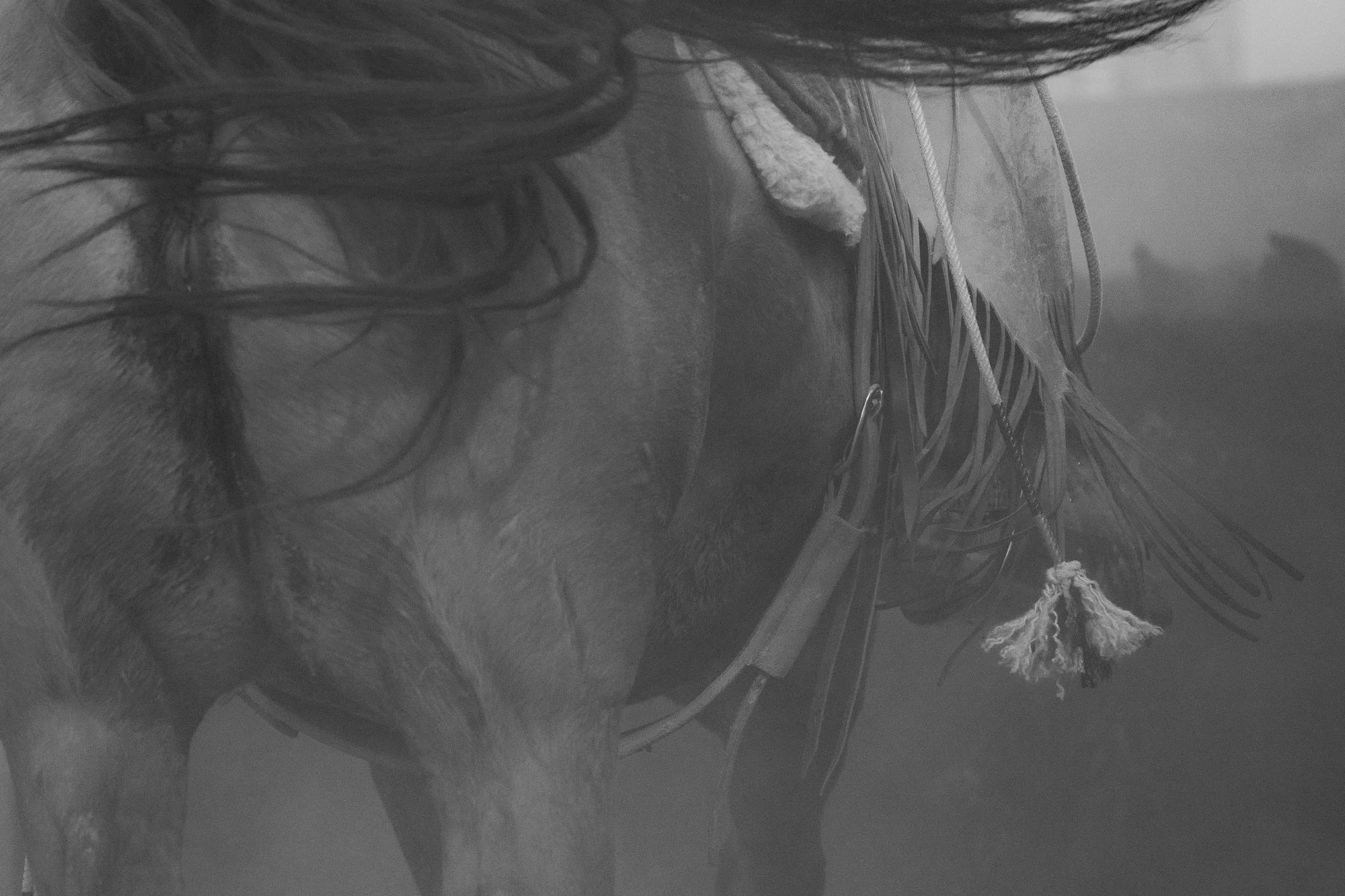
A close study of horse and gear, where movement and dust soften the edges of the scene.
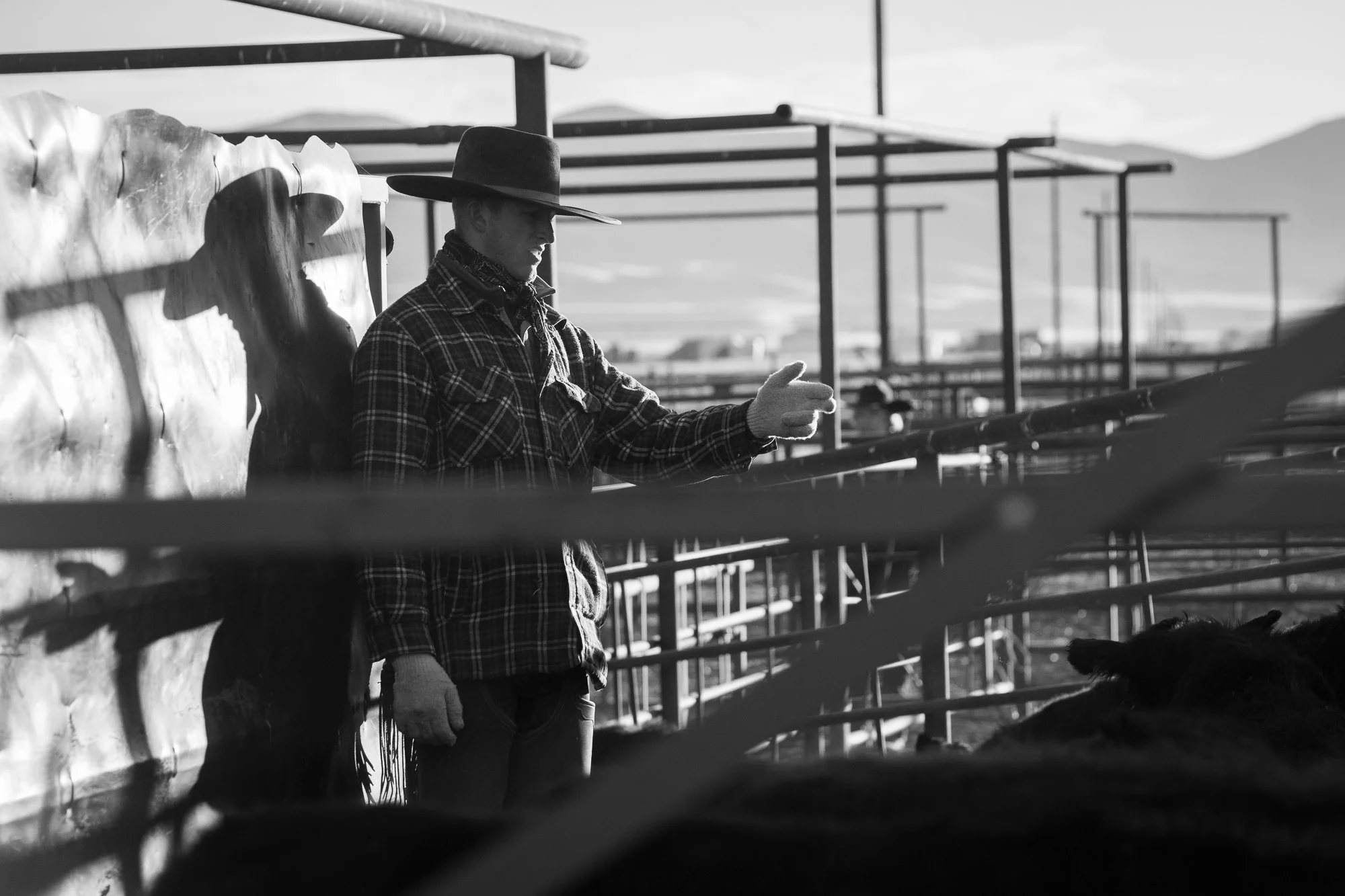
A buckaroo counts cattle inside the pens, before they are loaded onto the shipping truck.
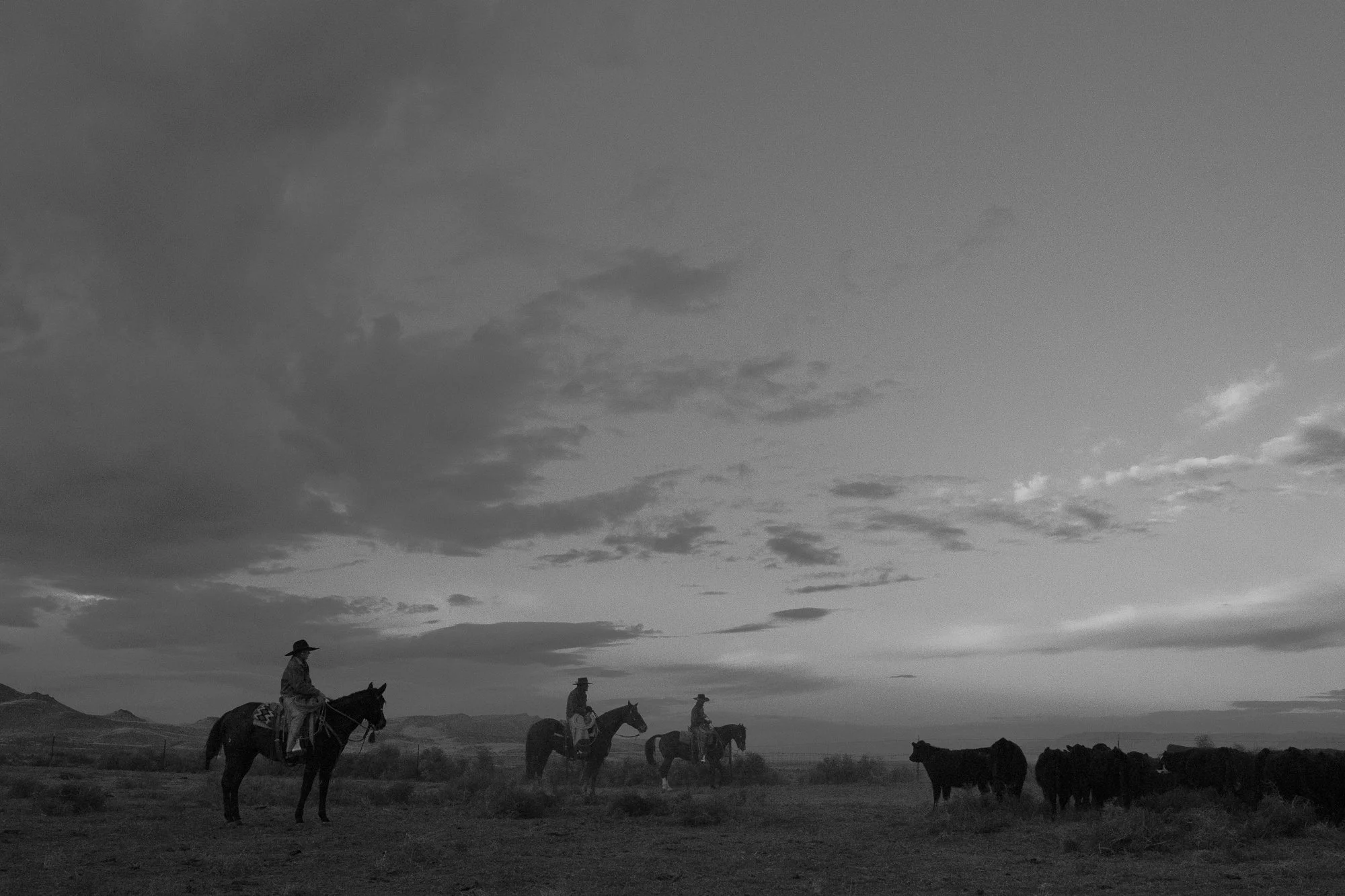
Buckaroos hold the herd in place, spacing themselves across the landscape to keep the cattle settled.
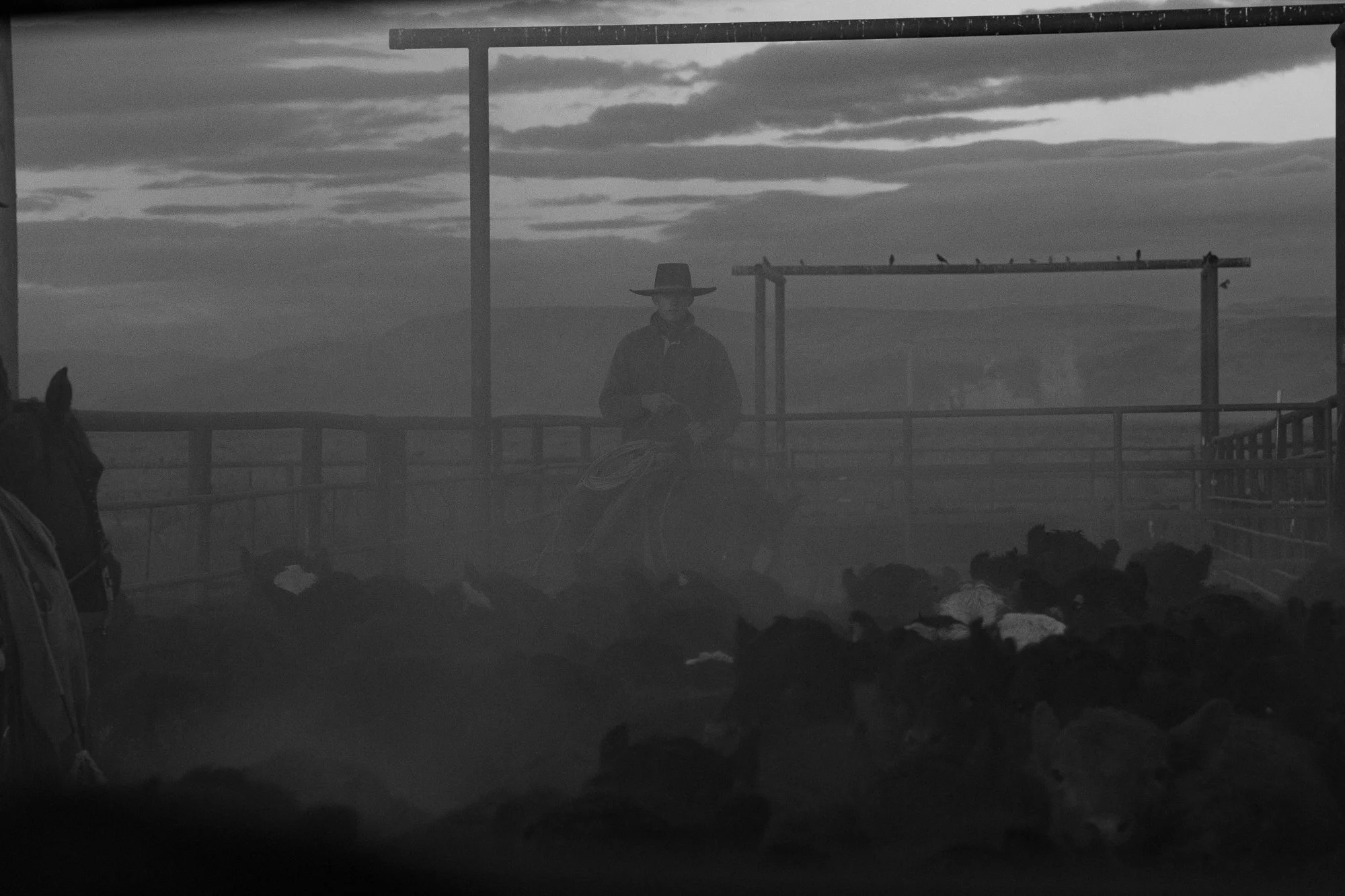
A buckaroo holds position behind the herd, keeping the cattle together as they move through the corrals.
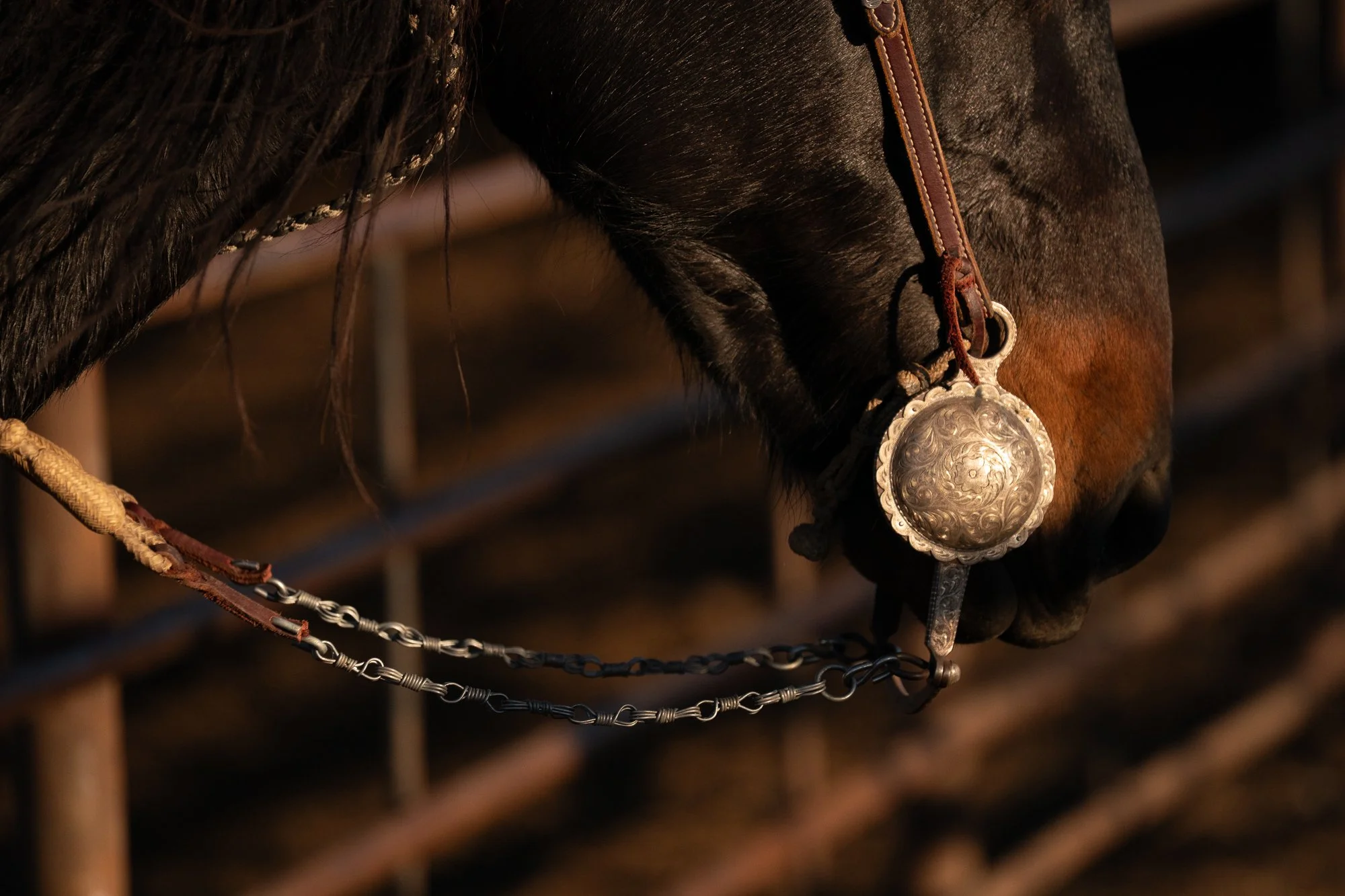
A close look at the craftsmanship of a working bridle, worn and used daily in the rhythm of ranch work.
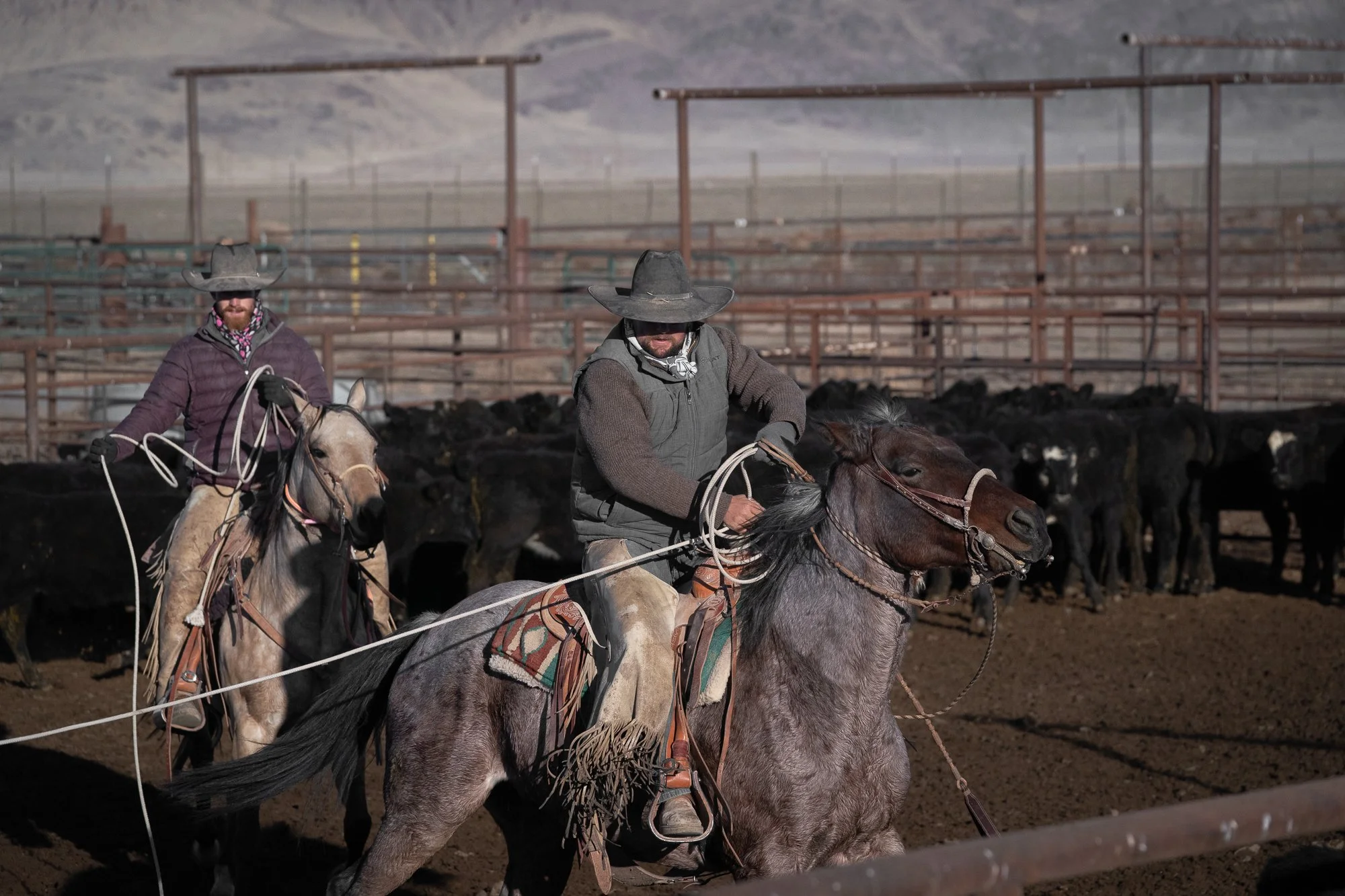
Two buckaroos rope cattle in the pens, working together to manage the herd with precision and control.
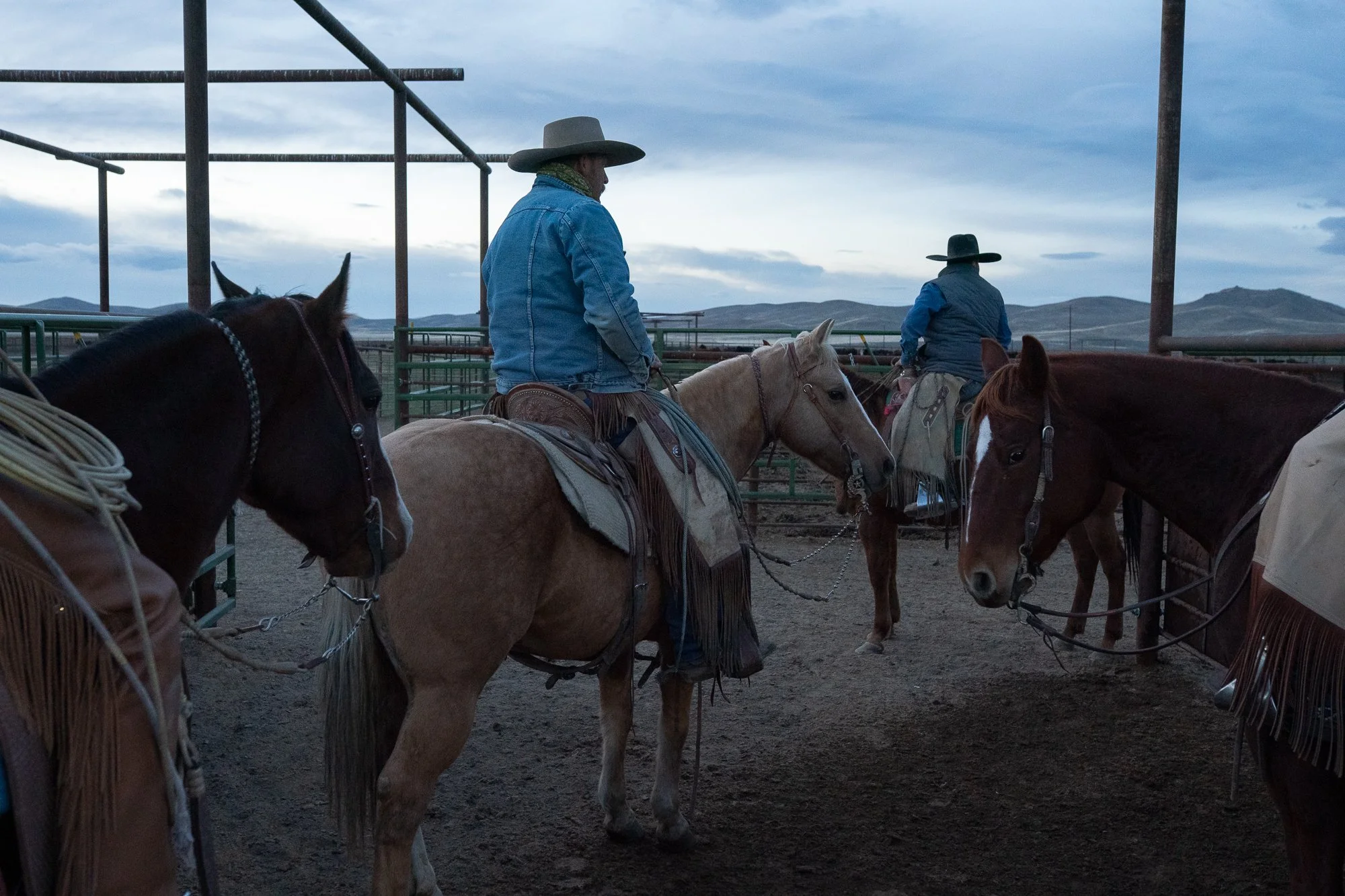
Buckaroos sit mounted in the pens at first light, preparing for the day’s work as the ranch comes to life.
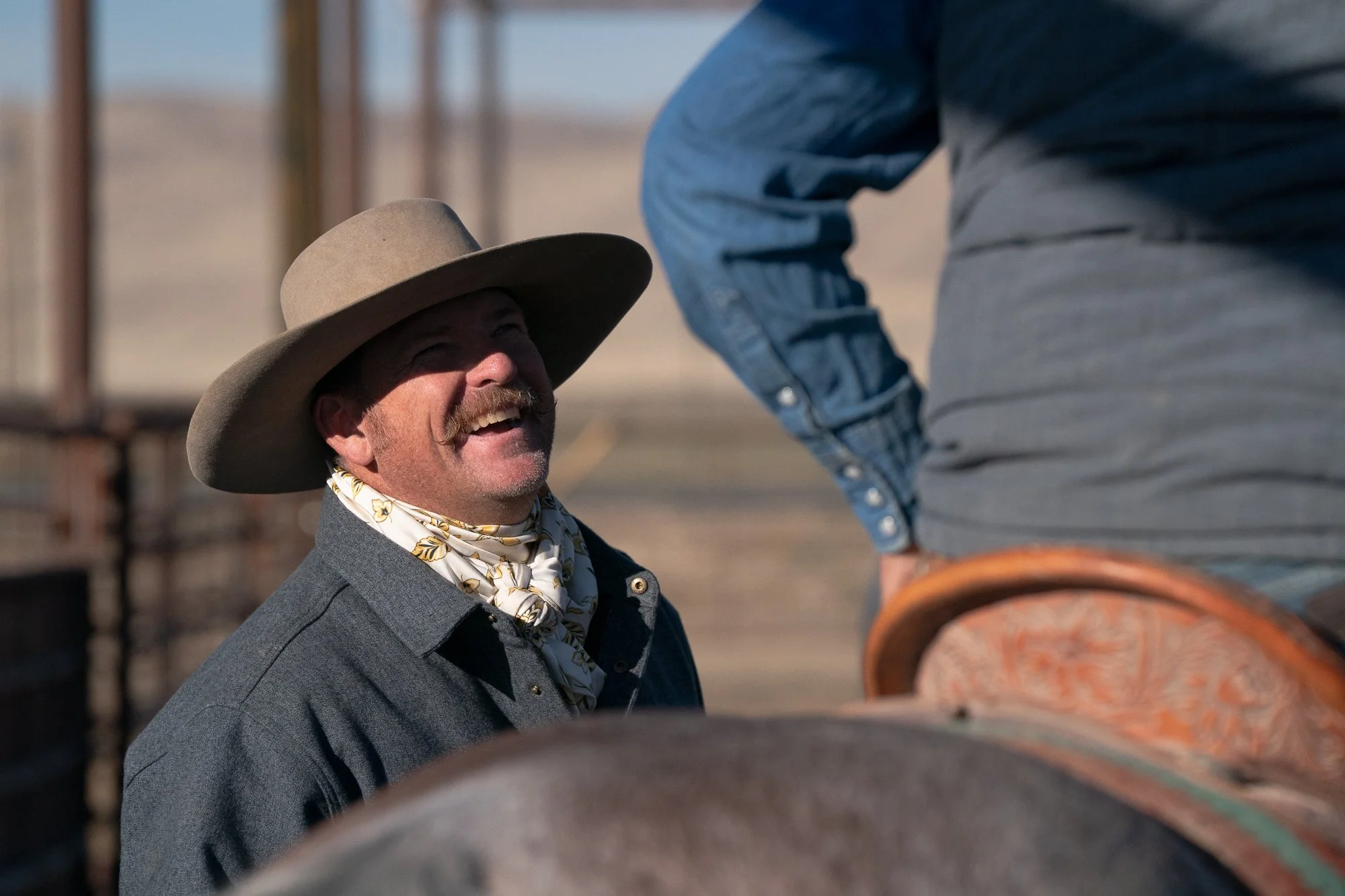
A quiet moment between tasks, where conversation and humor break up the rhythm of the day.
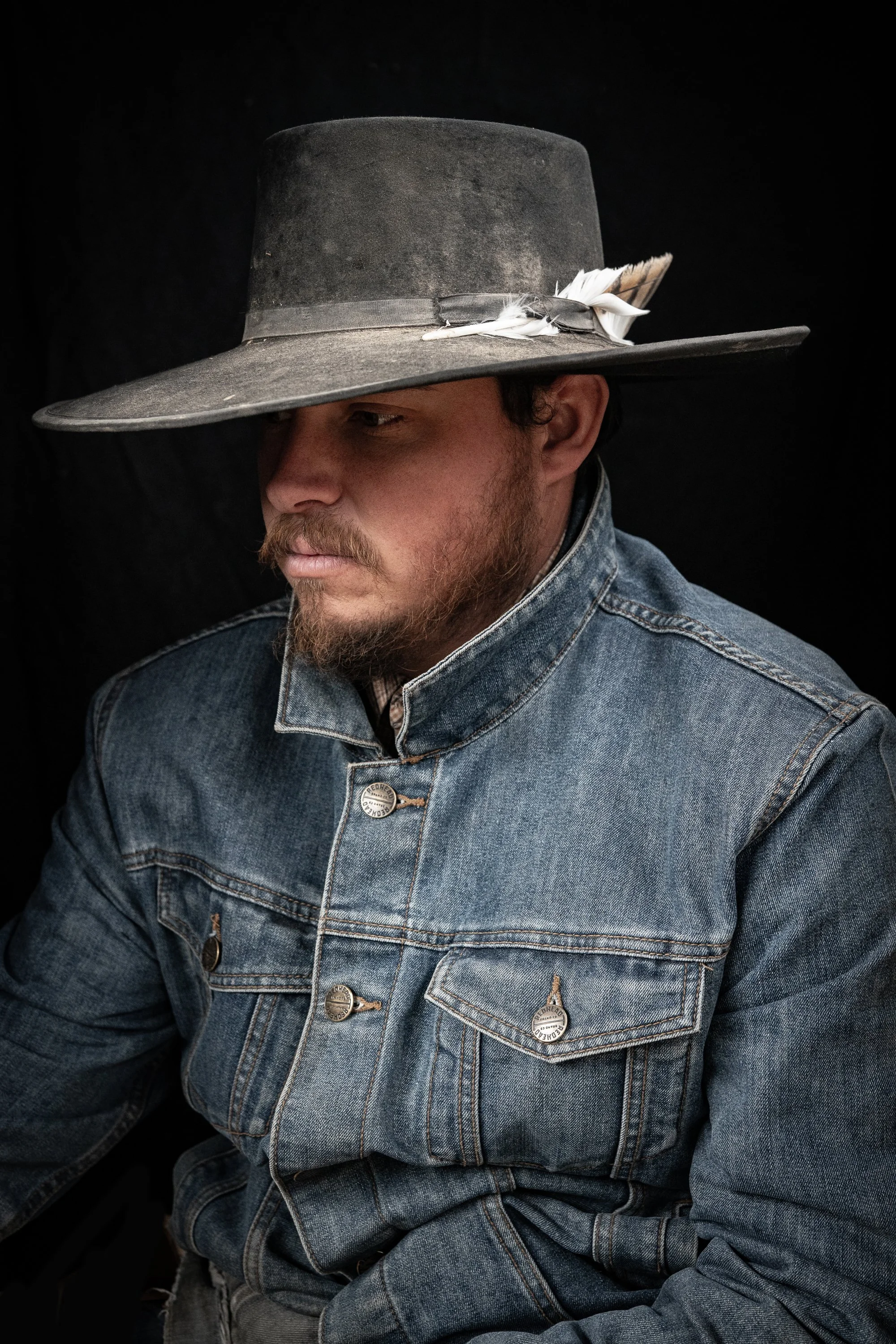
A quiet portrait of a buckaroo, worn denim and dust marking years of work in the West.
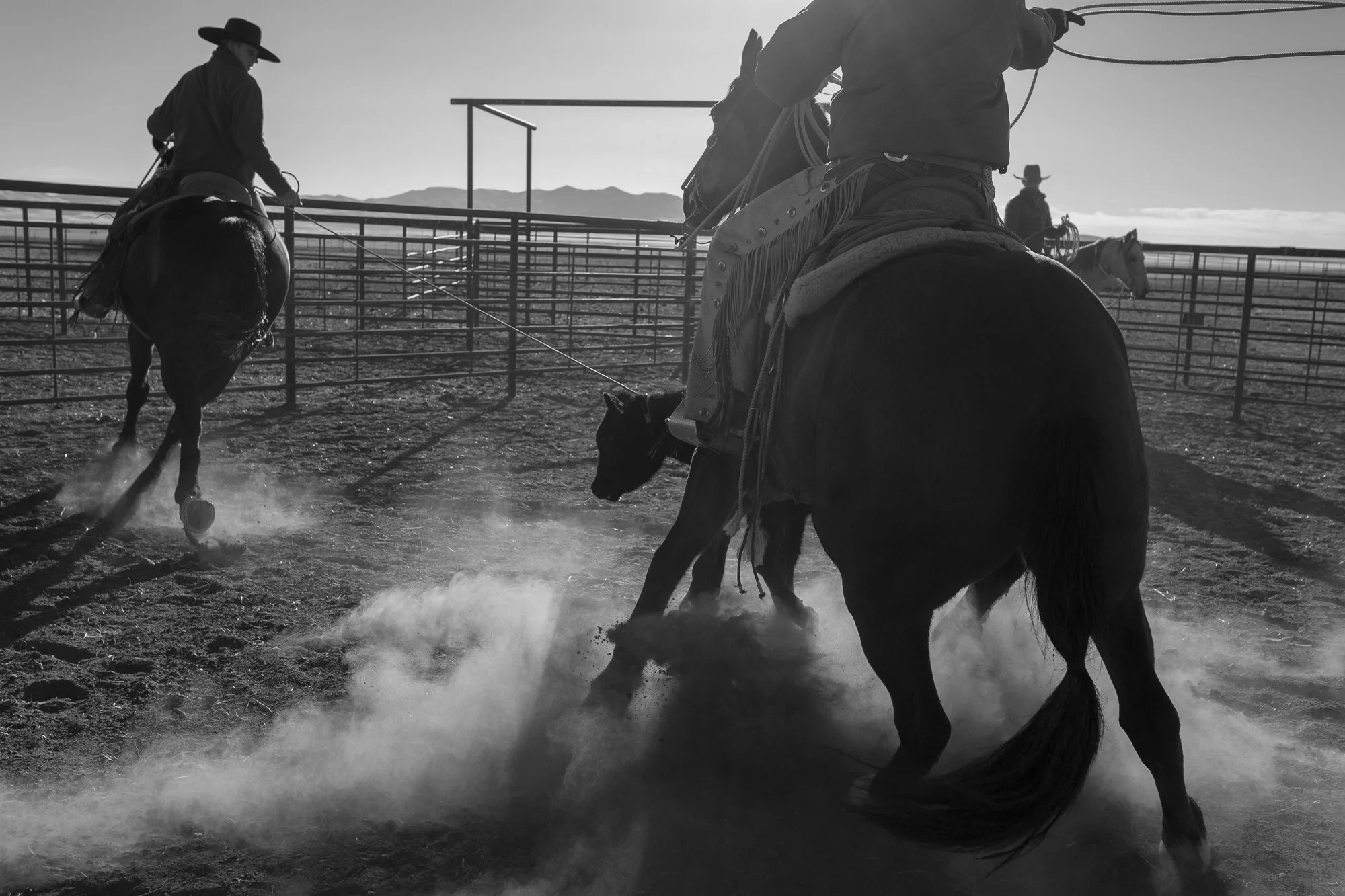
A rope swings through the dust as a buckaroo works cattle in the pens, the movement quick and deliberate.
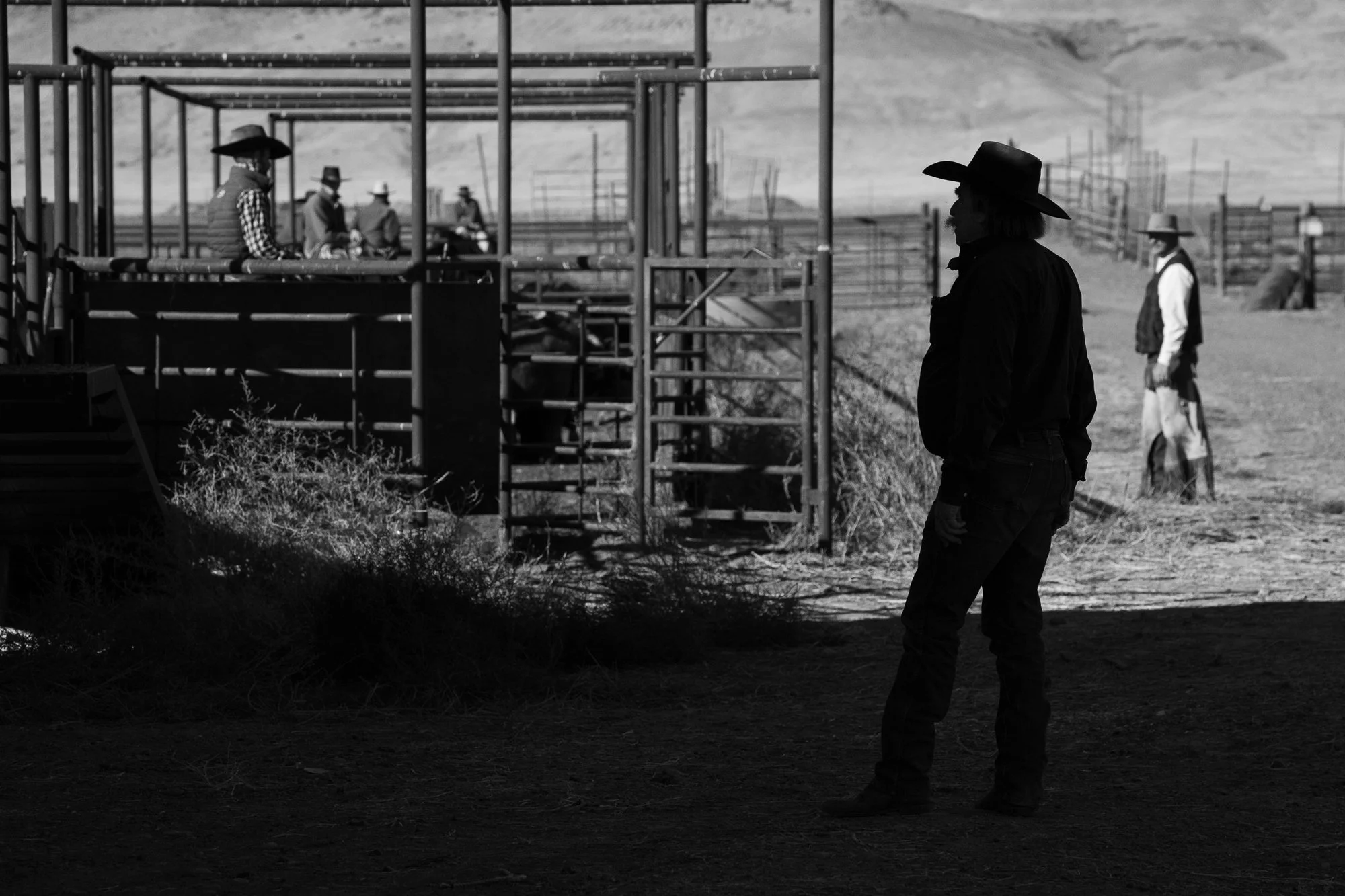
A quiet moment on the edge of the pens, where observation is just as important as action.
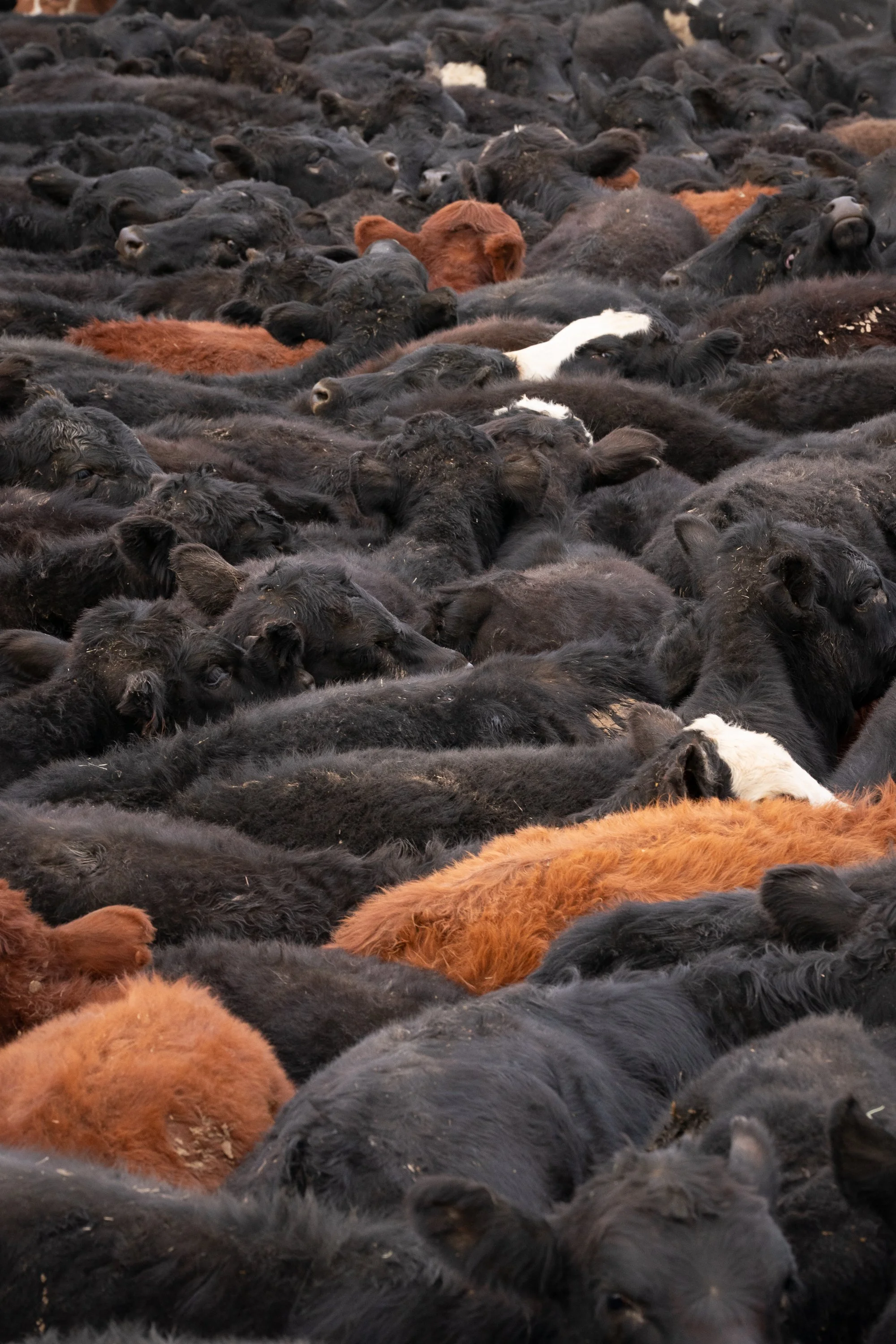
Packed tightly together, the herd becomes a study of movement, texture, and weight.
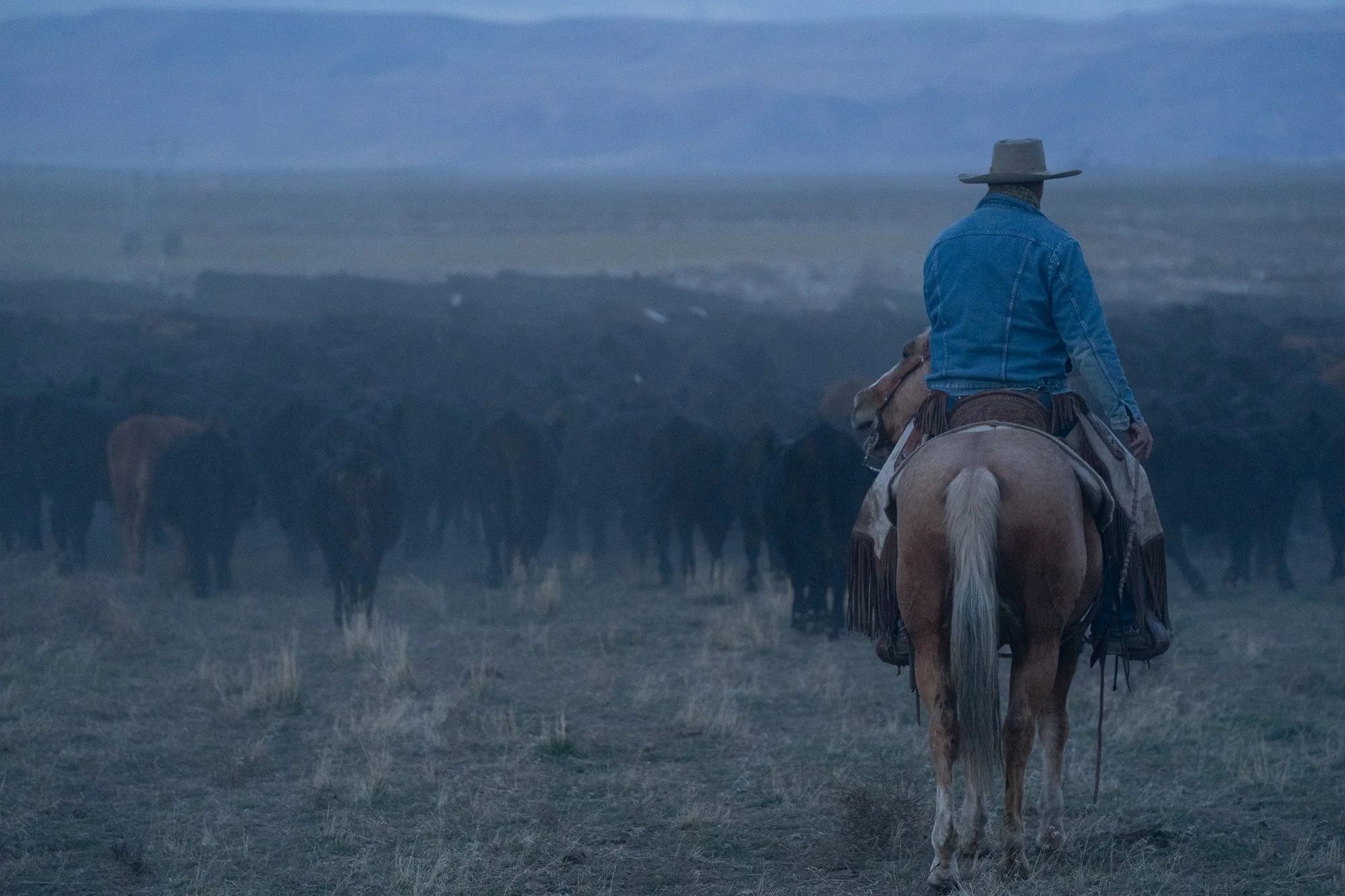
A buckaroo moves into the herd through the morning haze, guiding cattle forward as the dust begins to rise.
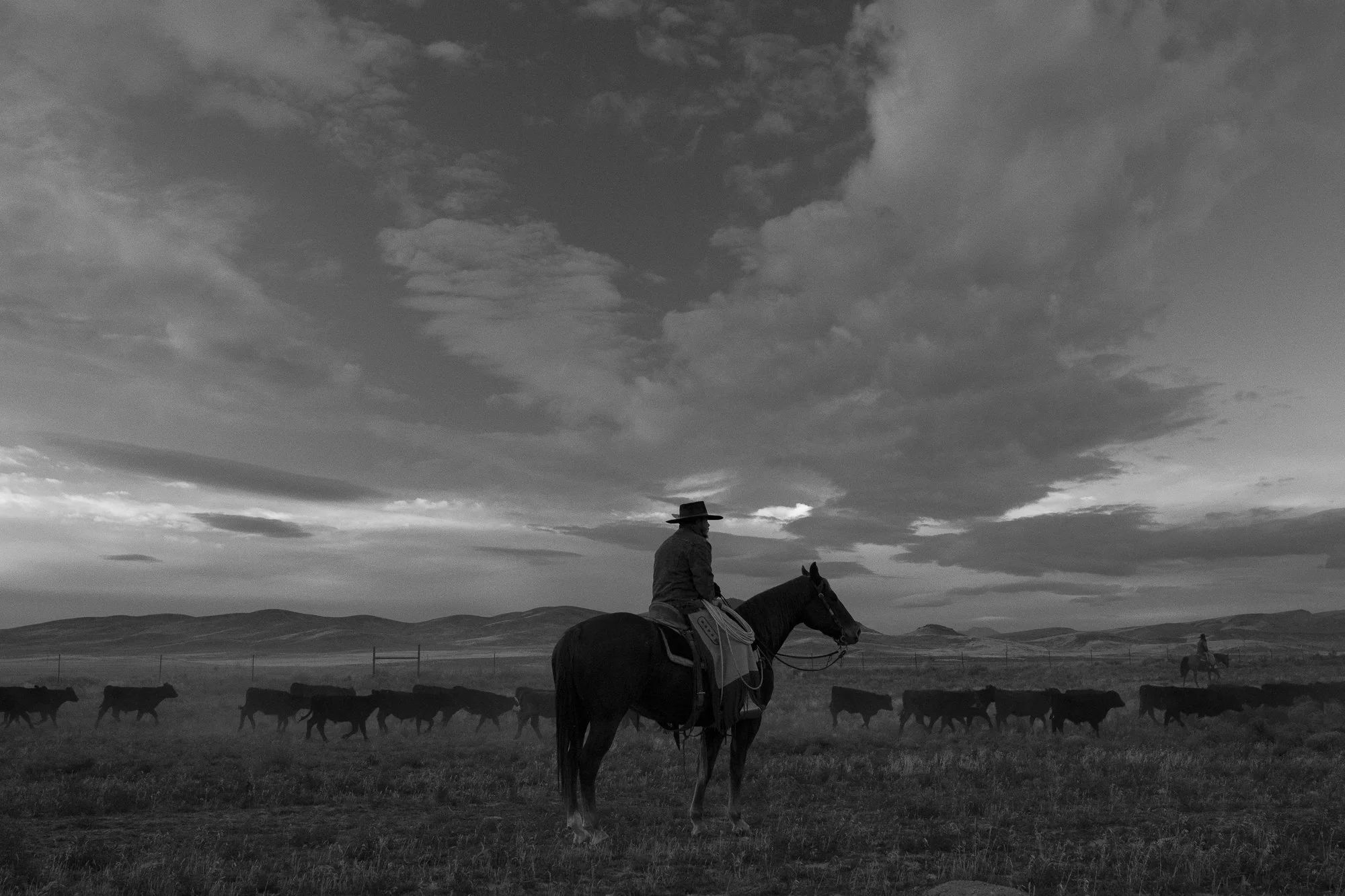
A buckaroo sits steady as cattle drift across the range, holding position while the herd moves past.
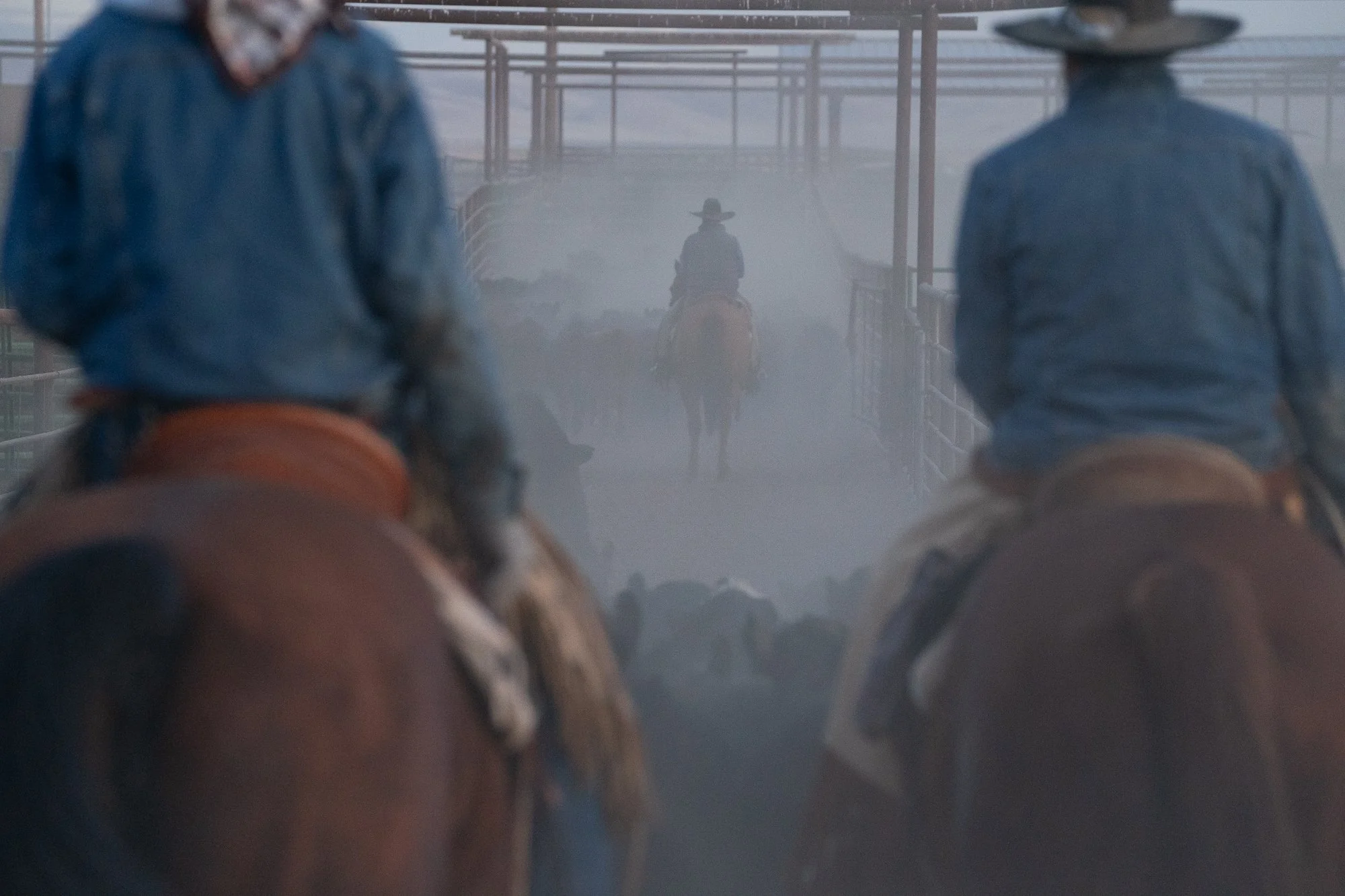
Buckaroos push cattle through the pens, the air thick with dust as the herd moves forward.
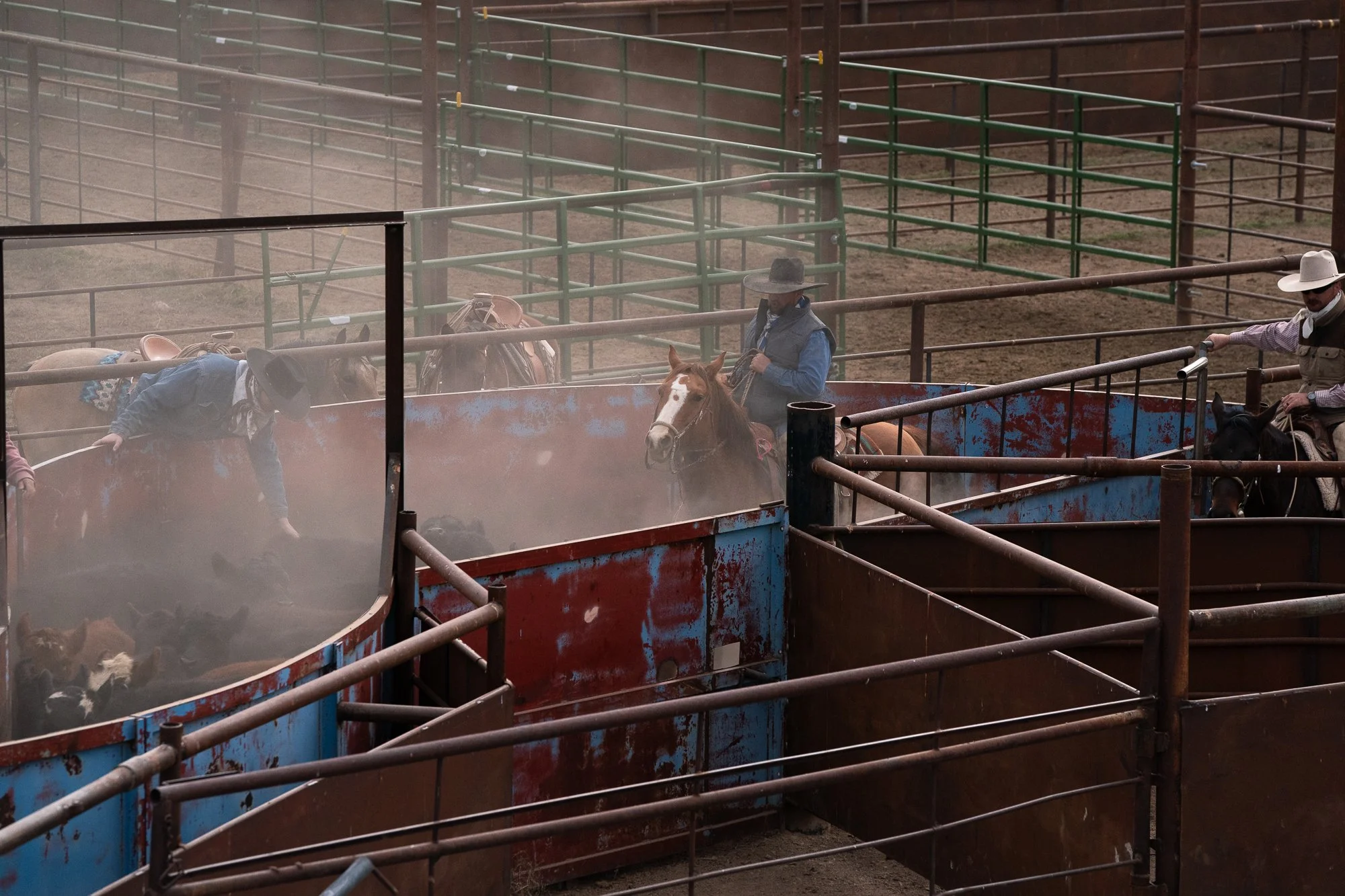
Buckaroos work cattle through the maze of pens, guiding movement through dust and steel.
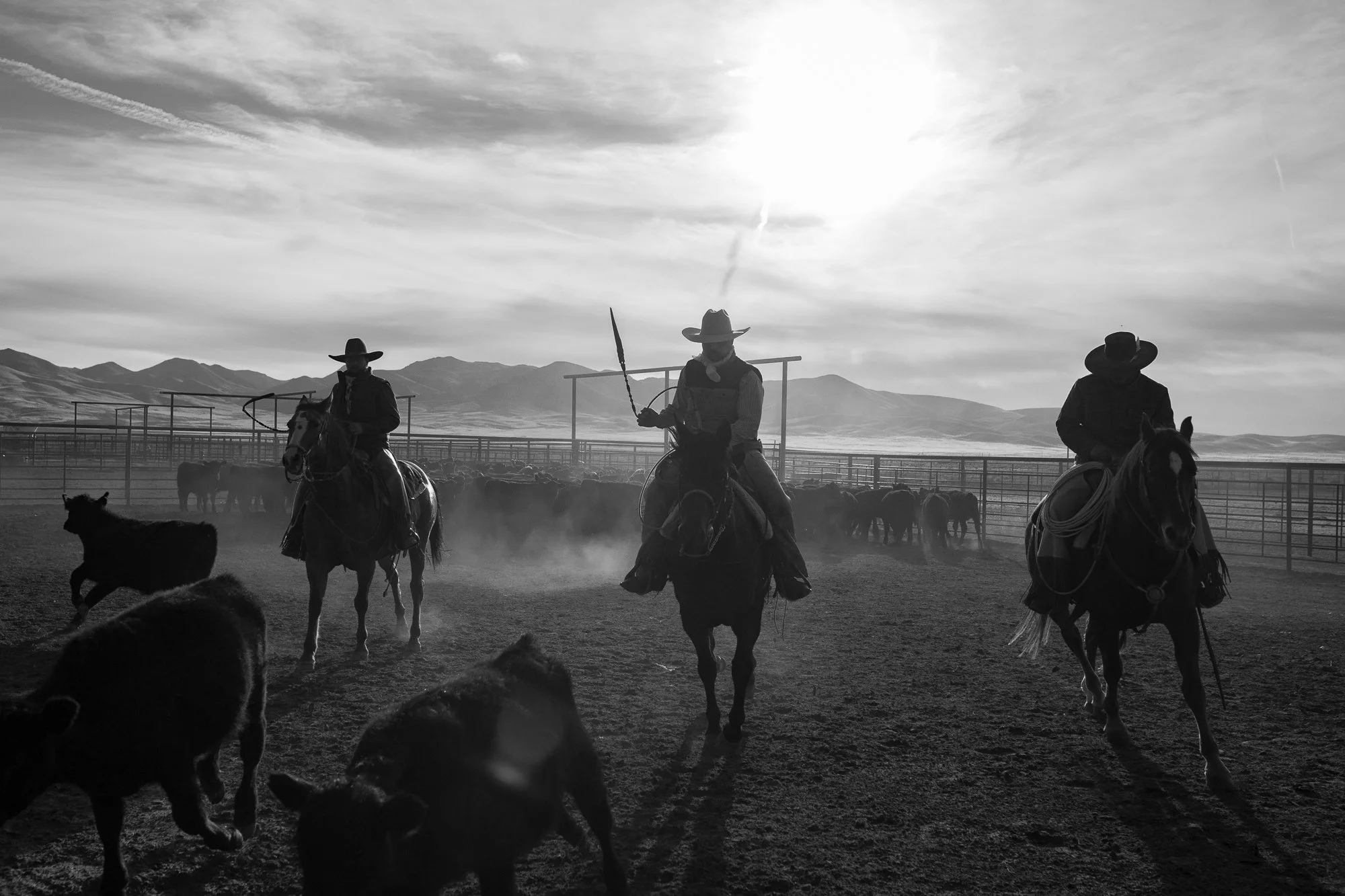
Three buckaroos move in sync, guiding cattle through the pens with quiet precision.
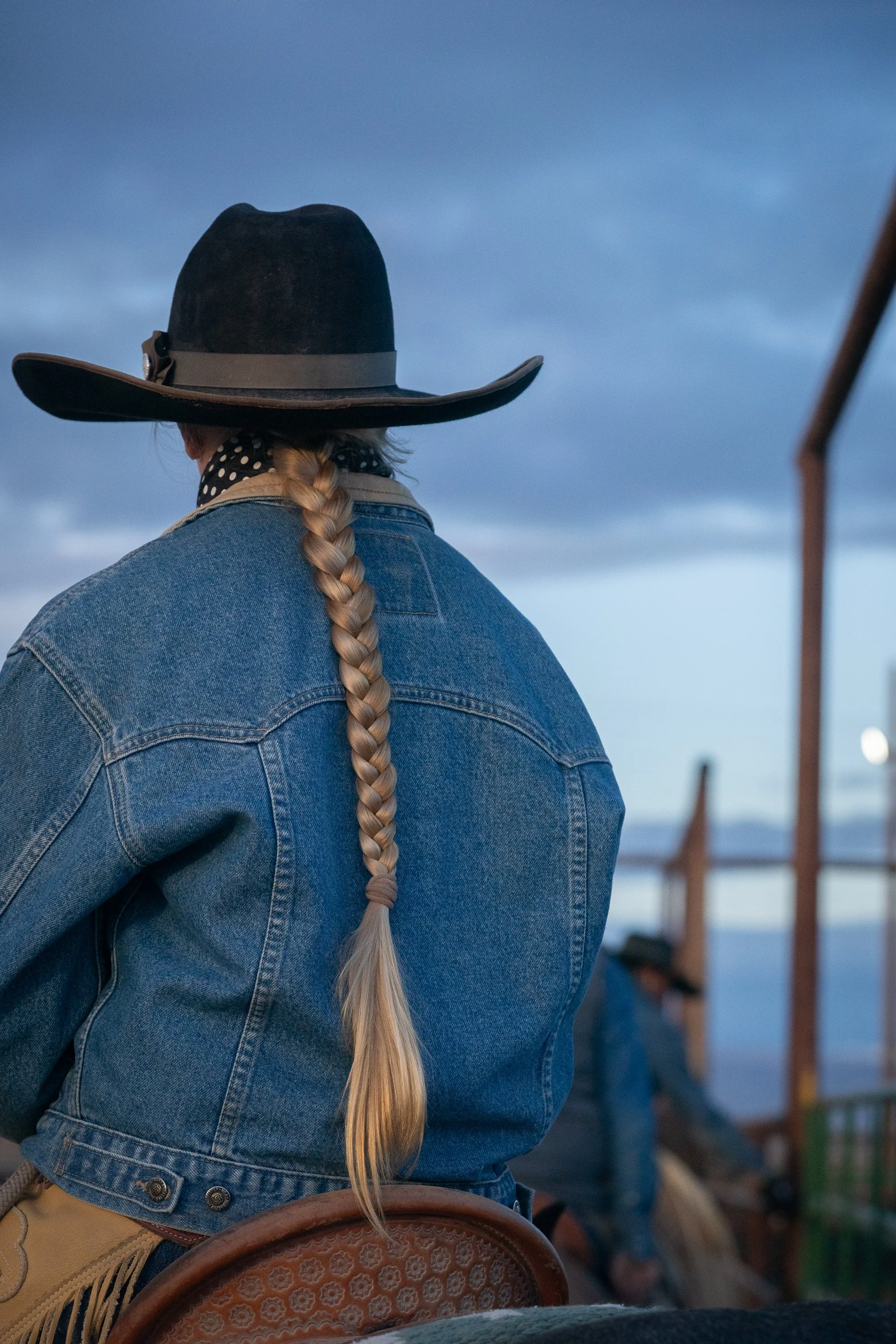
A long braid falls down the back of a denim jacket, a quiet detail rooted in buckaroo tradition.
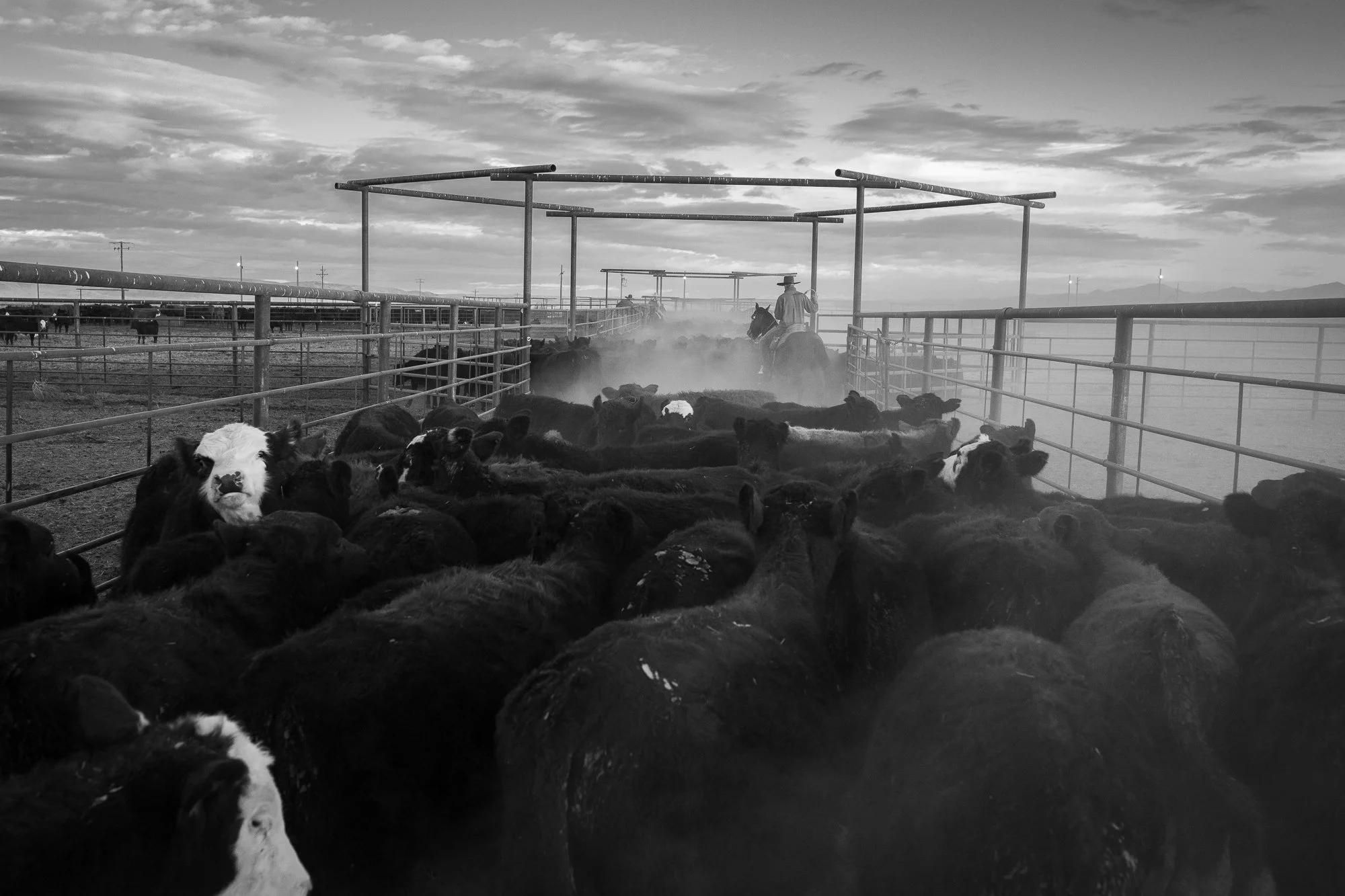
Cattle press forward through the pens as a buckaroo guides them from horseback, the air thick with dust.
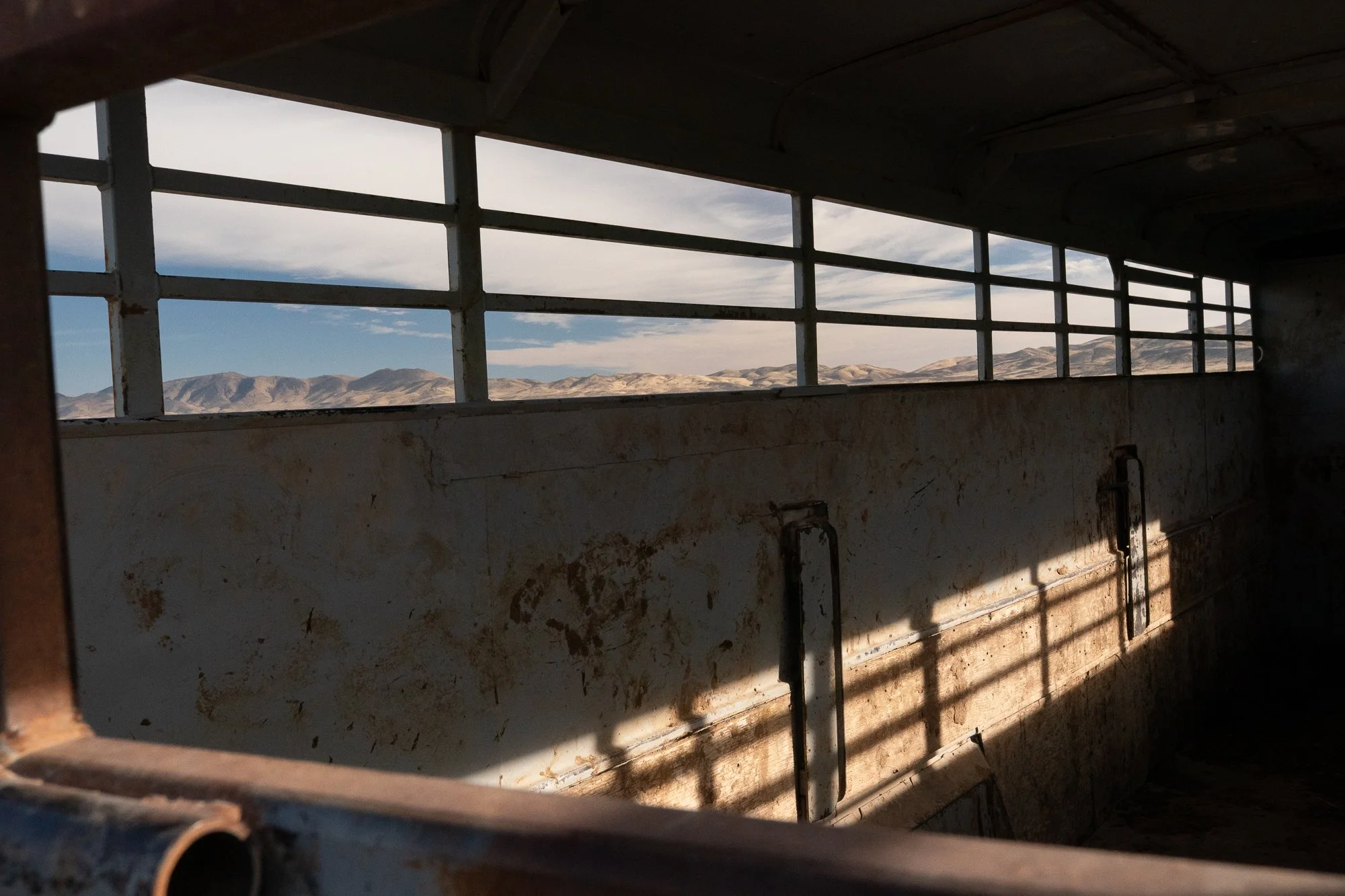
Light cuts through the slats of a stock trailer, revealing the worn surfaces shaped by years of use.
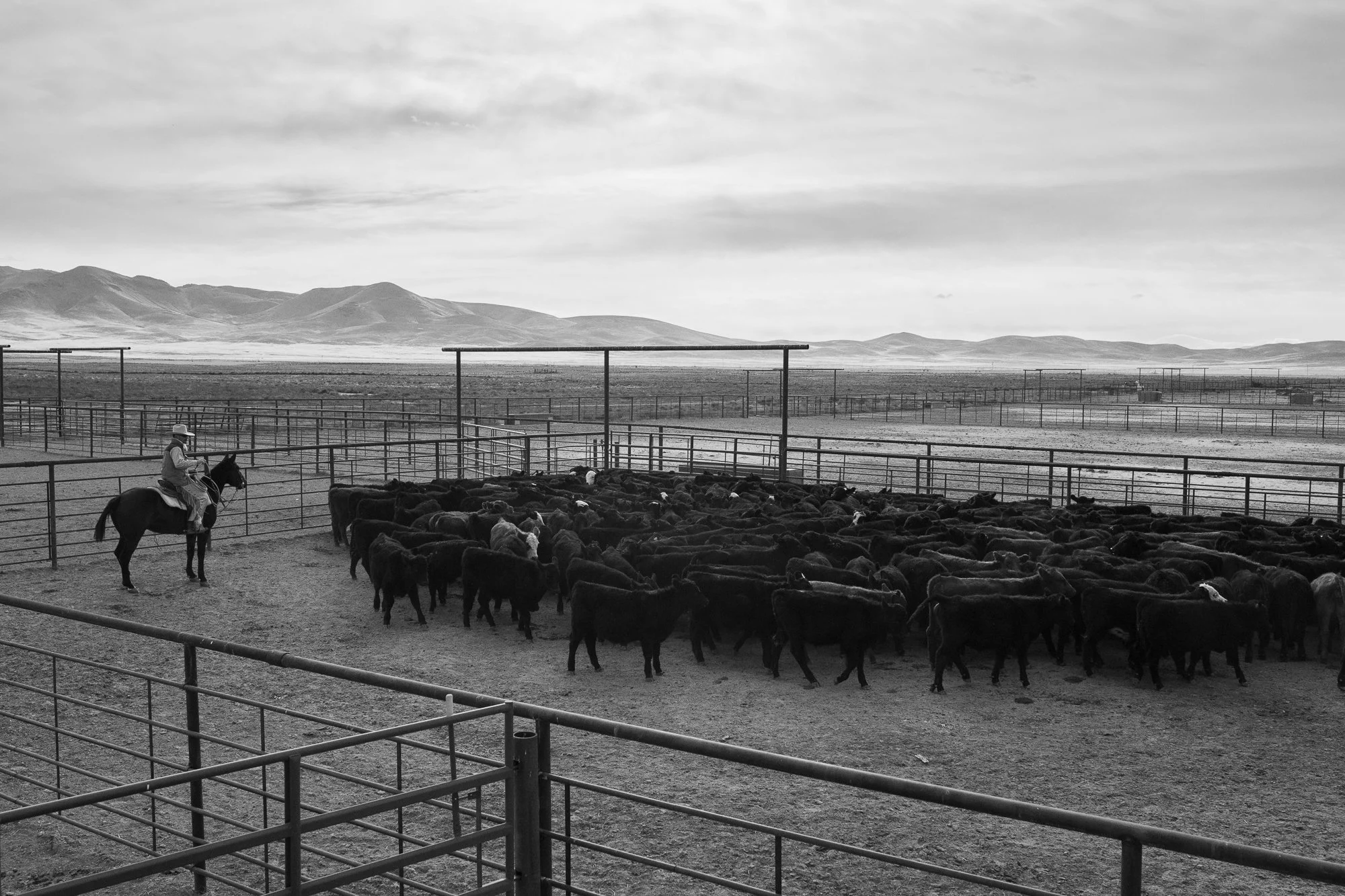
A buckaroo watches over a tight group of cattle, keeping them settled inside the pens.
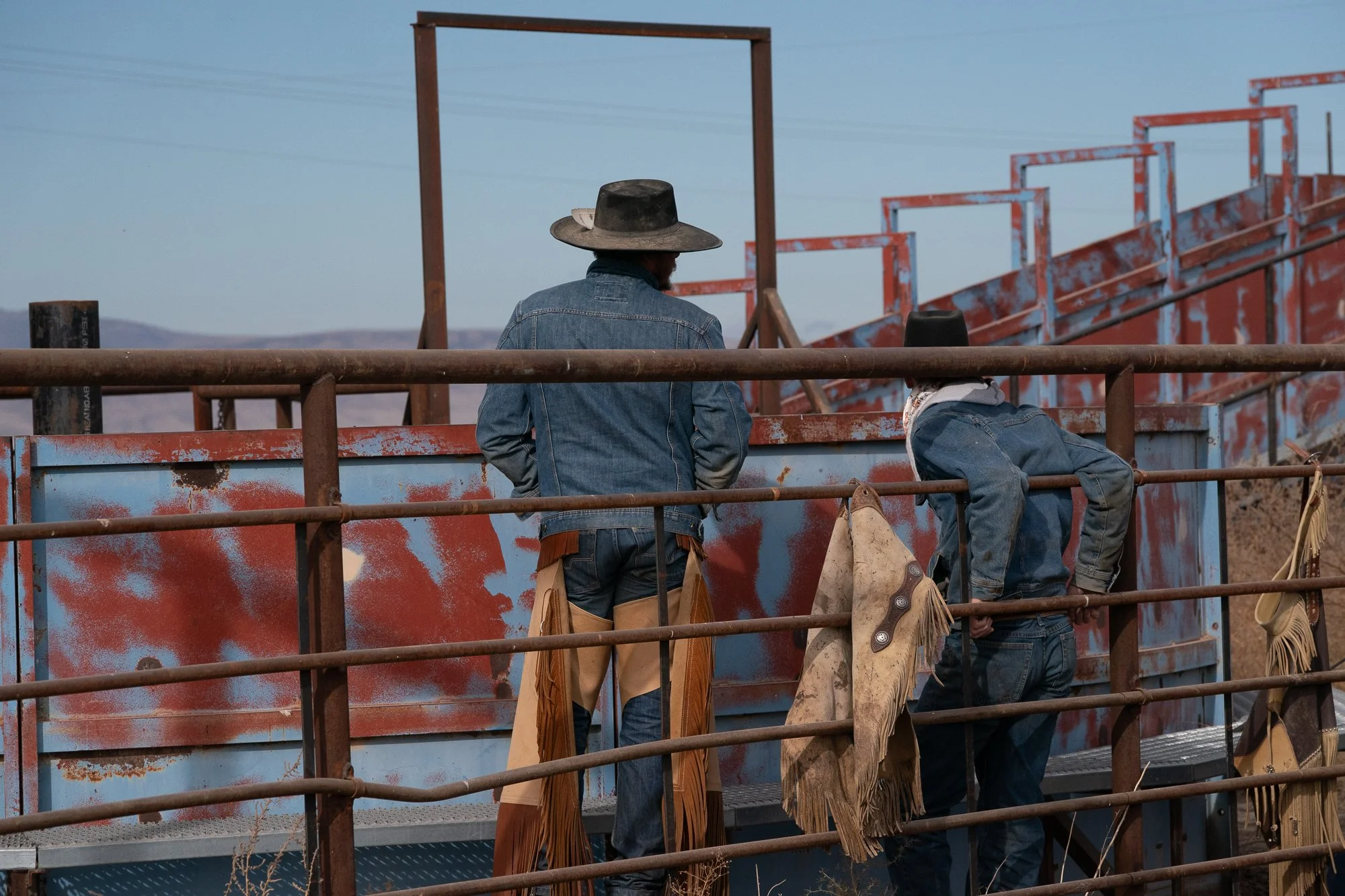
Two buckaroos lean against the fence, watching the work unfold between runs through the pens.
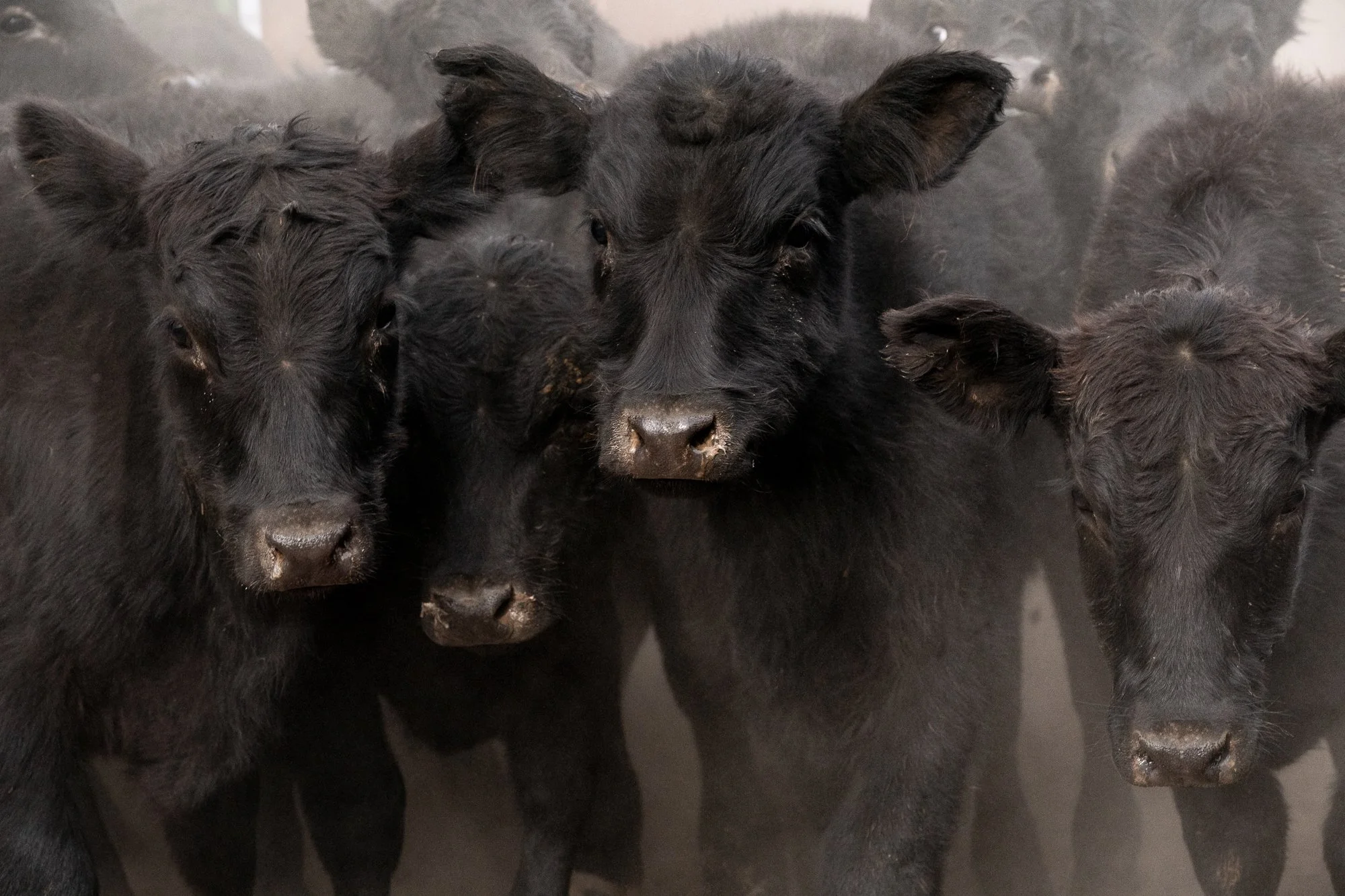
A few heads rise above the herd, each animal alert as dust hangs in the air.
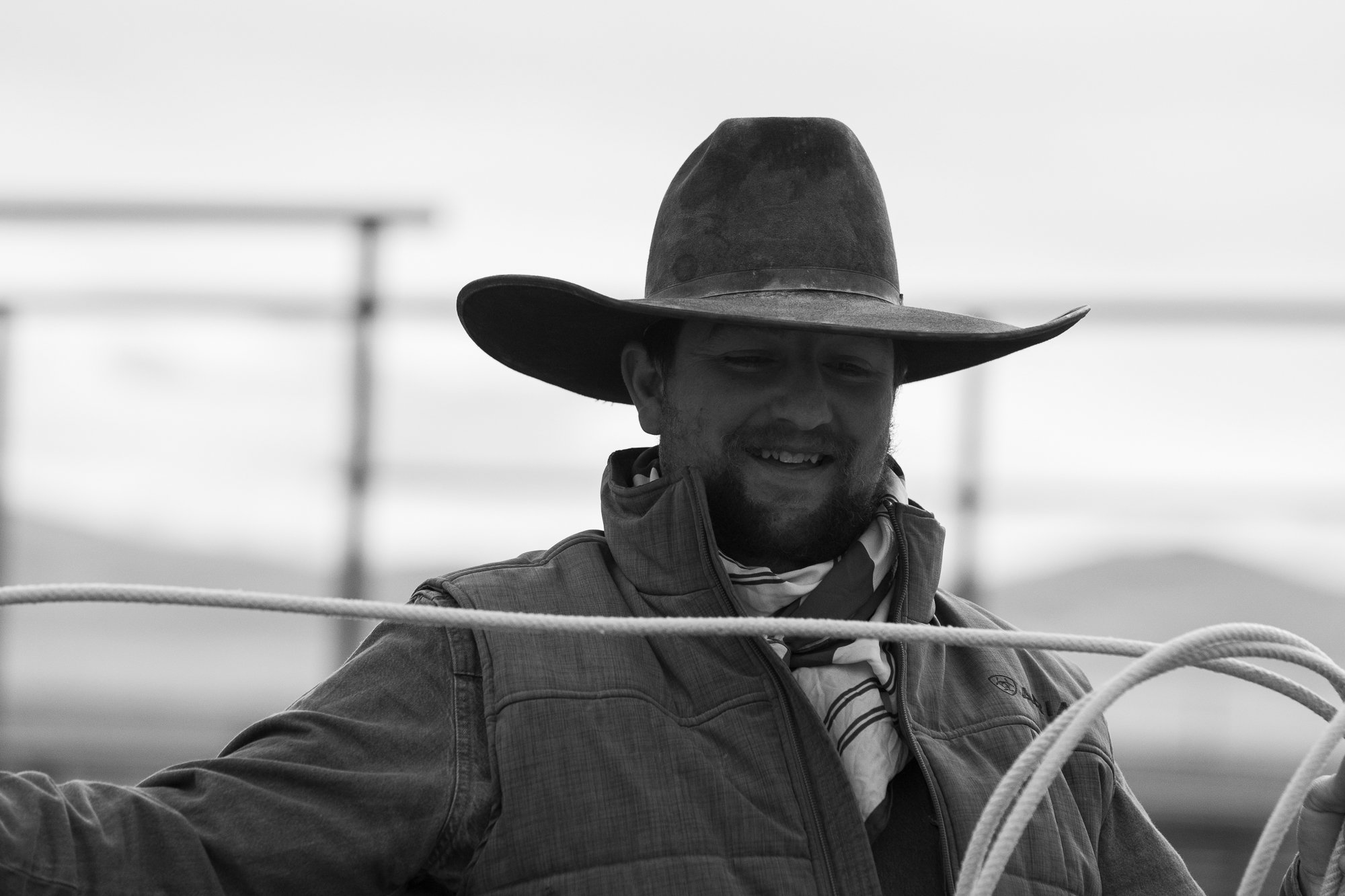
A moment of ease breaks through the work as a buckaroo smiles between tasks.
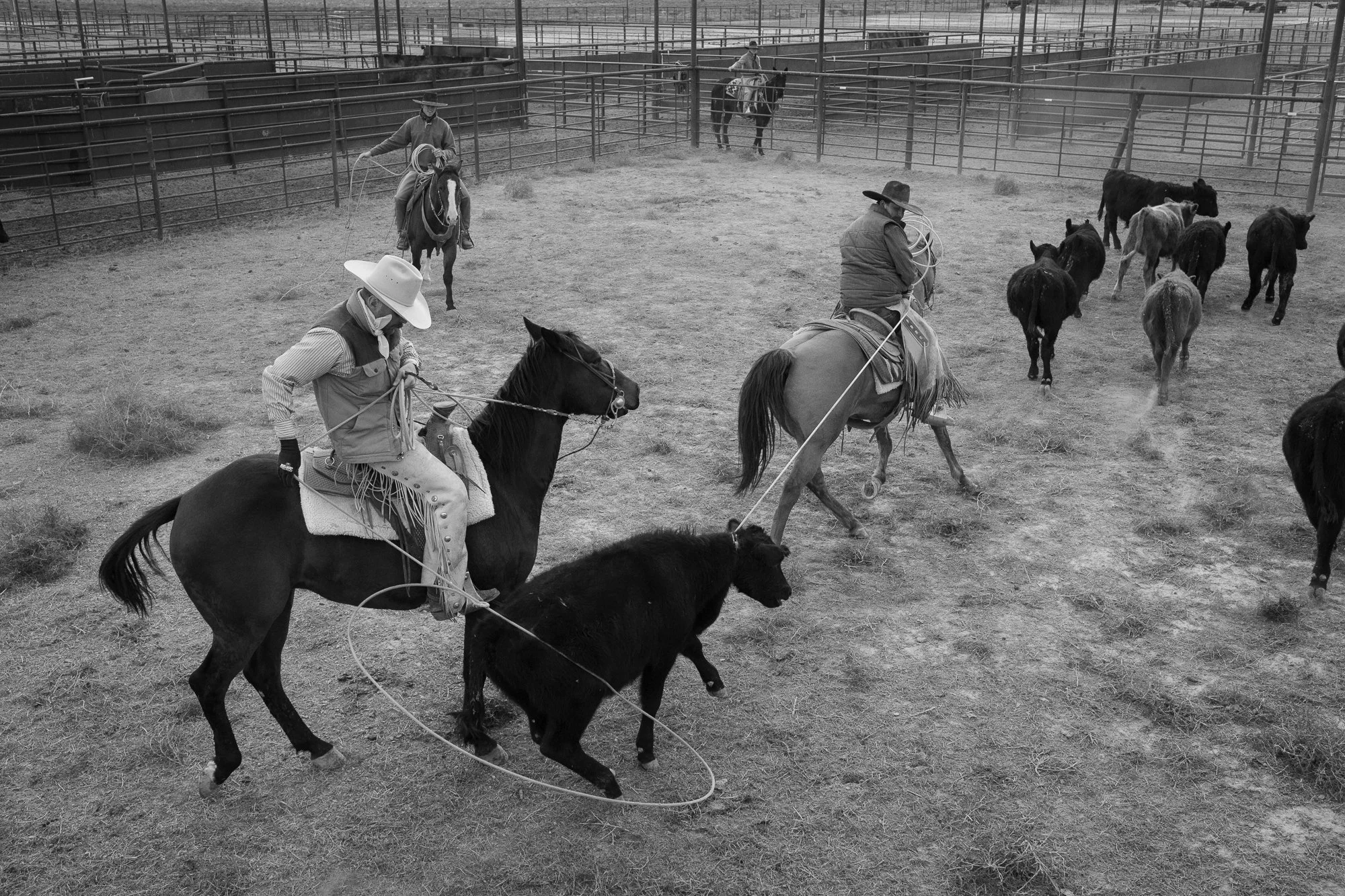
A buckaroo steps into position, roping a calf as others guide cattle across the pen.
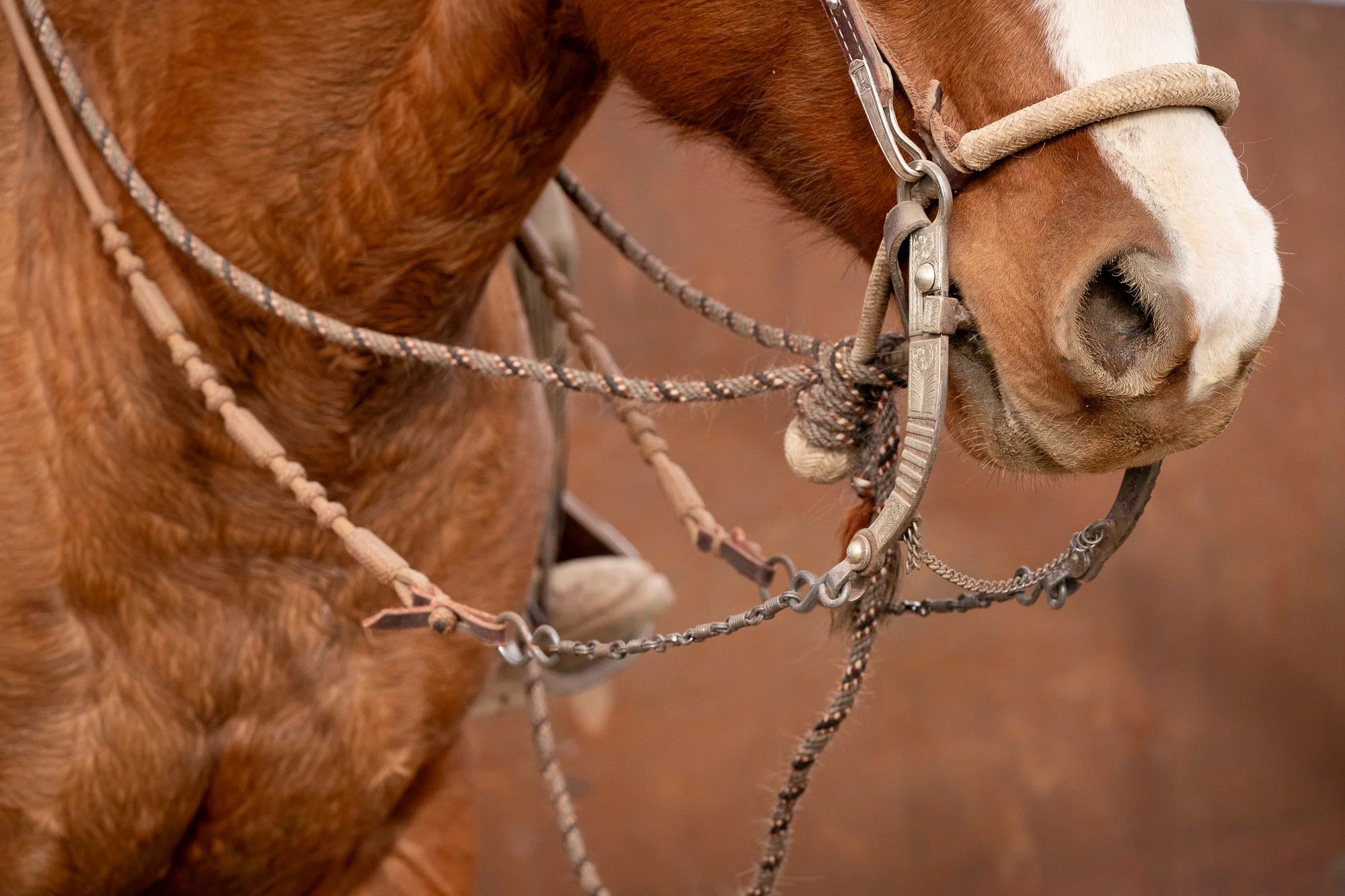
A close look at the reins and bridle, where craftsmanship and daily use meet.
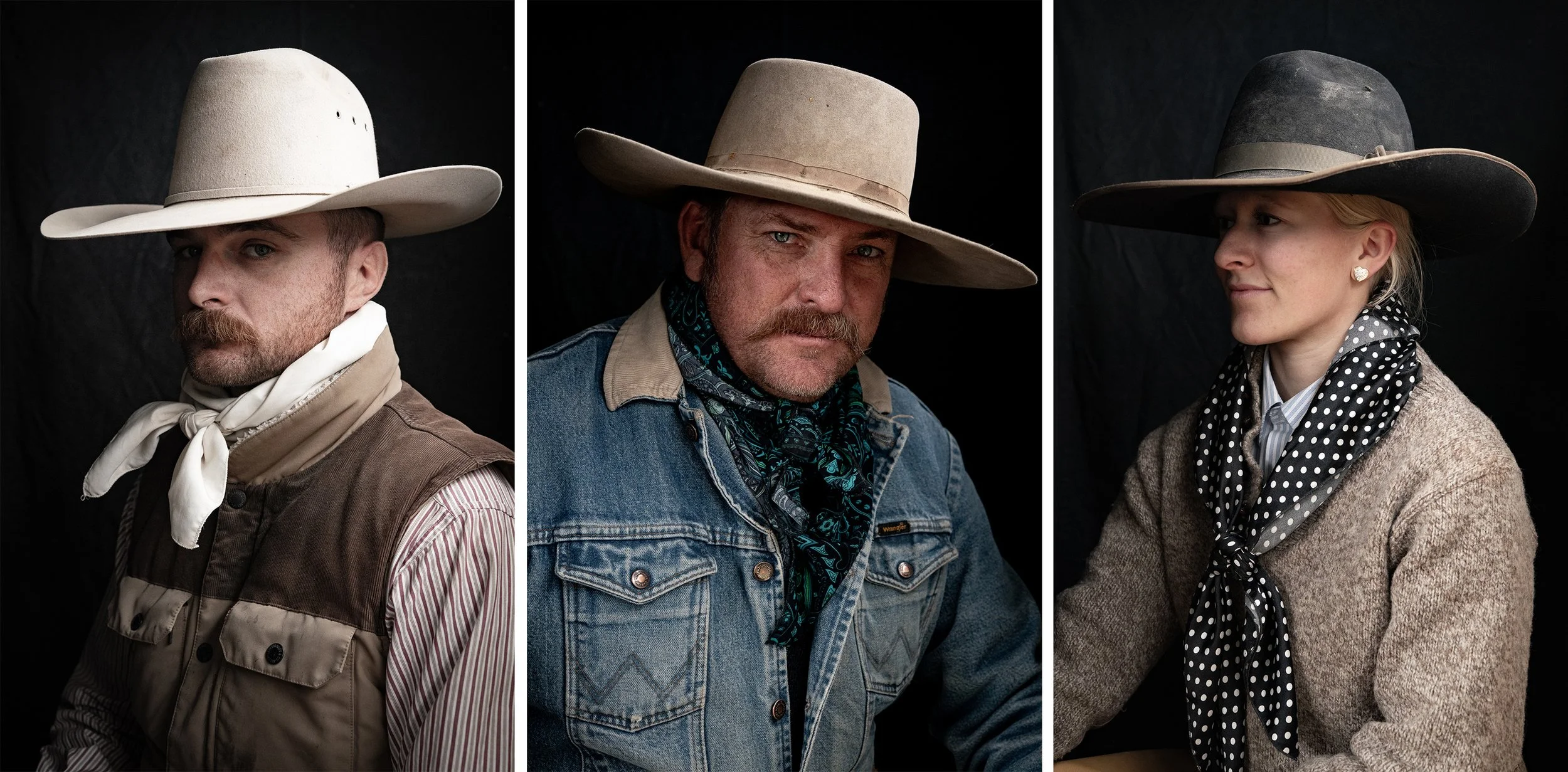
A series of buckaroo portraits, each shaped by the work and traditions of the American West.