Alton, Illinois Photography — A Study of America’s Overlooked River Towns
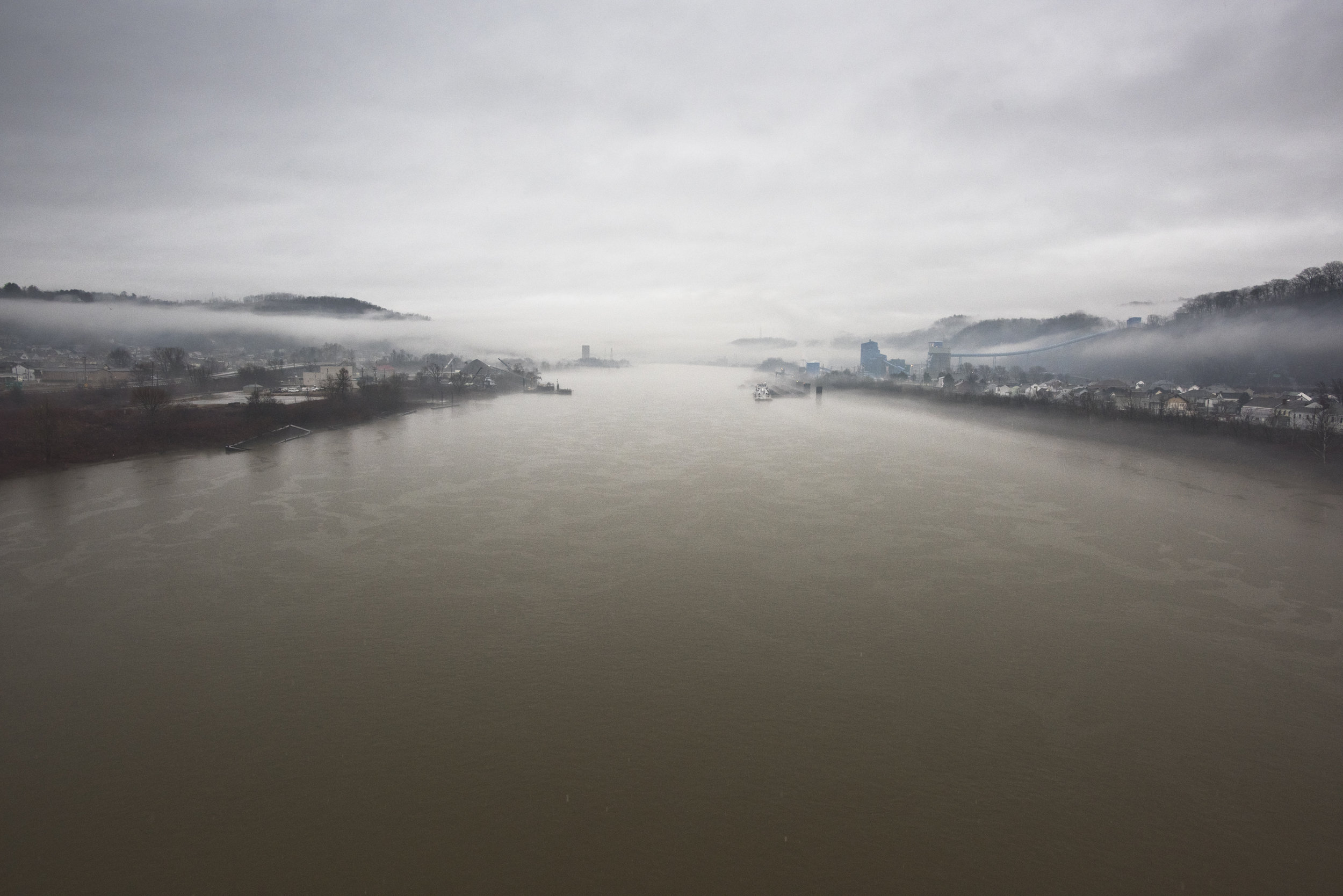
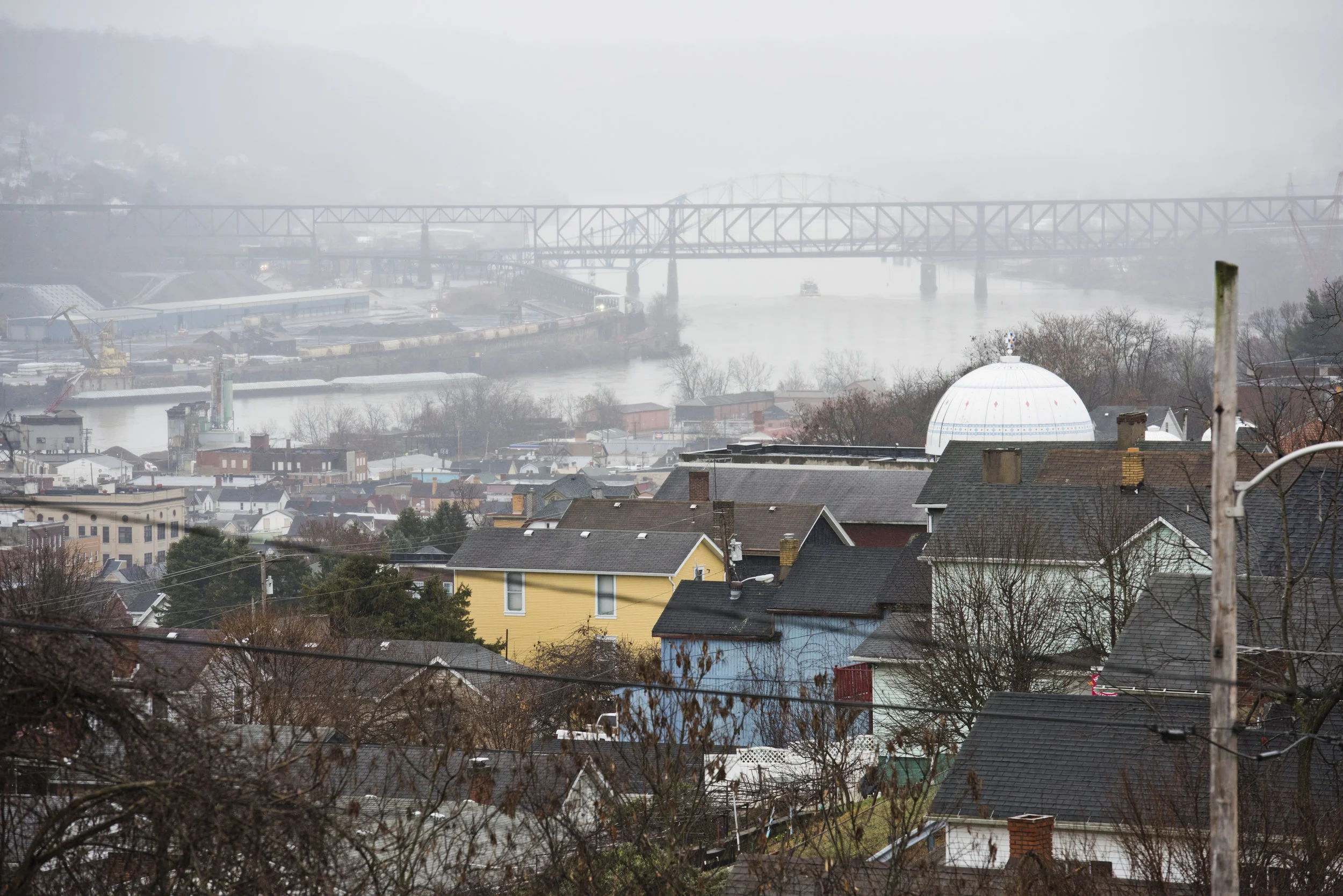
There are towns across America that most people pass through without noticing. Alton, Illinois is one of them. Set along the Mississippi River just north of St. Louis, it carries the layered weight of industry, architecture, and time in a way that feels distinctly American—unpolished, functional, and quietly enduring.
This series is part of a larger body of work exploring small towns and in-between places across the country—places that aren’t built for attention, but reveal something deeper when you slow down long enough to look.
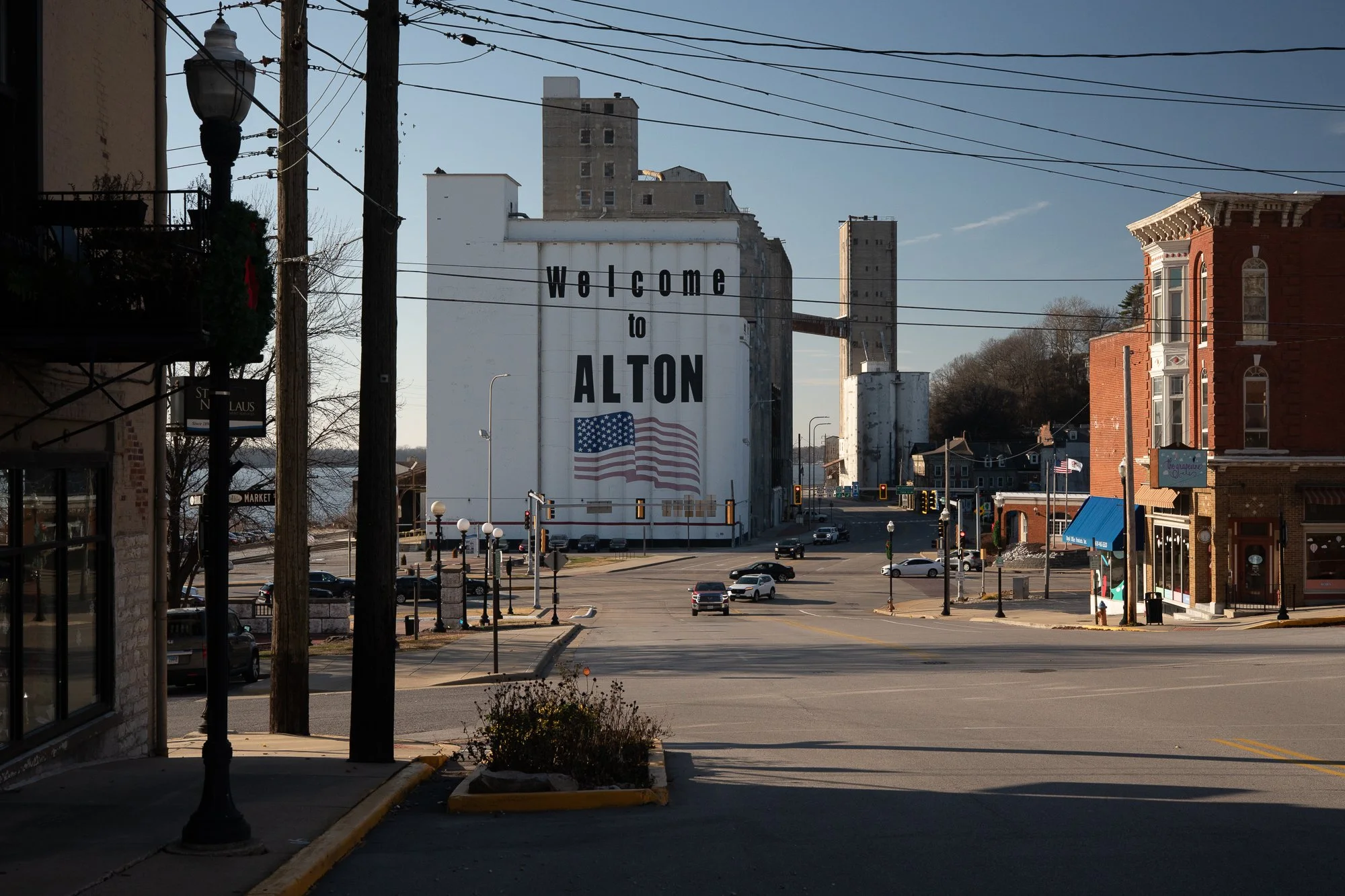
Grain elevators with a “Welcome to Alton” sign anchor a downtown intersection in Alton, Illinois, tying the town’s industrial past to its present streets.
A River Town Built on Industry
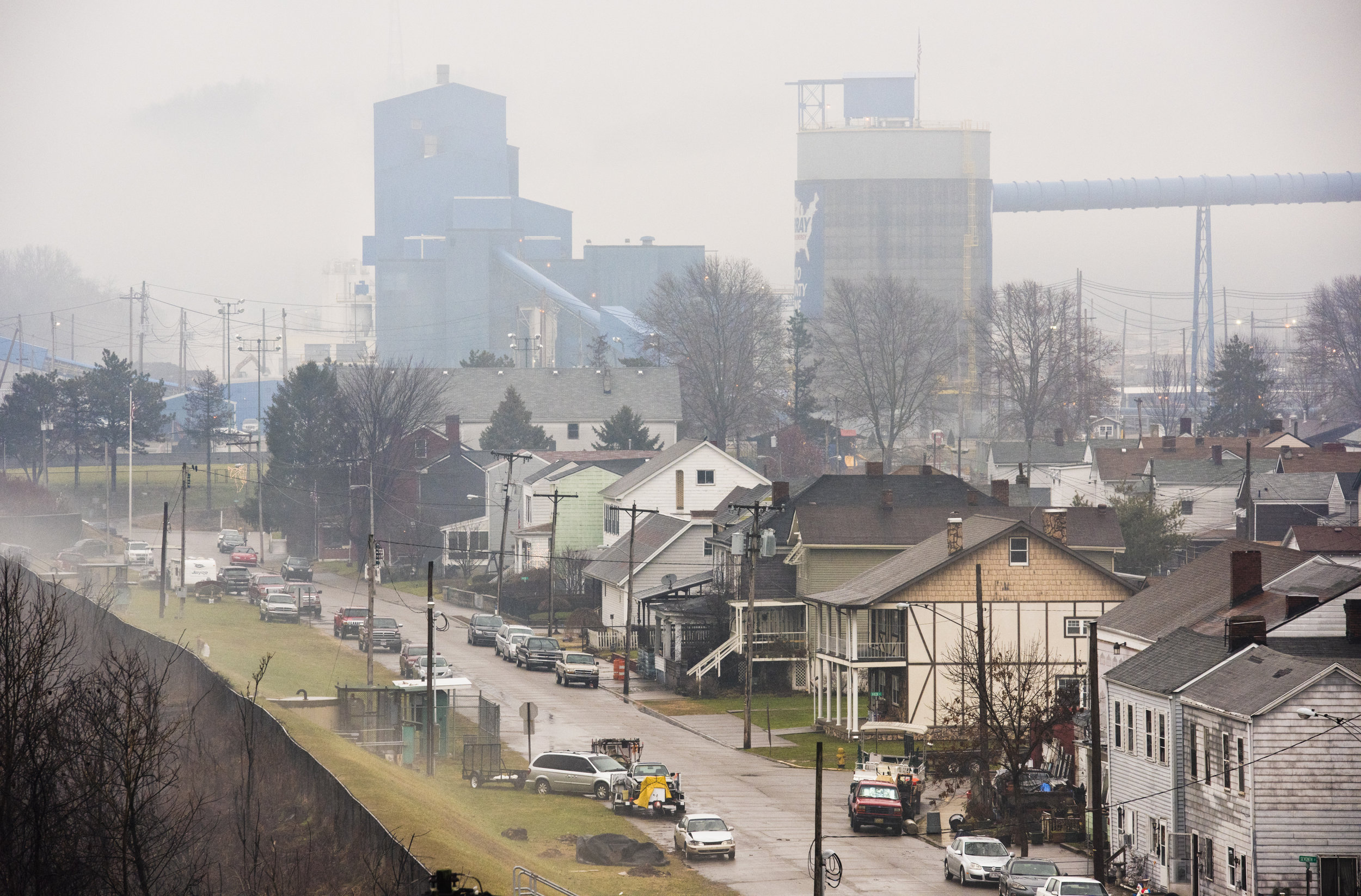
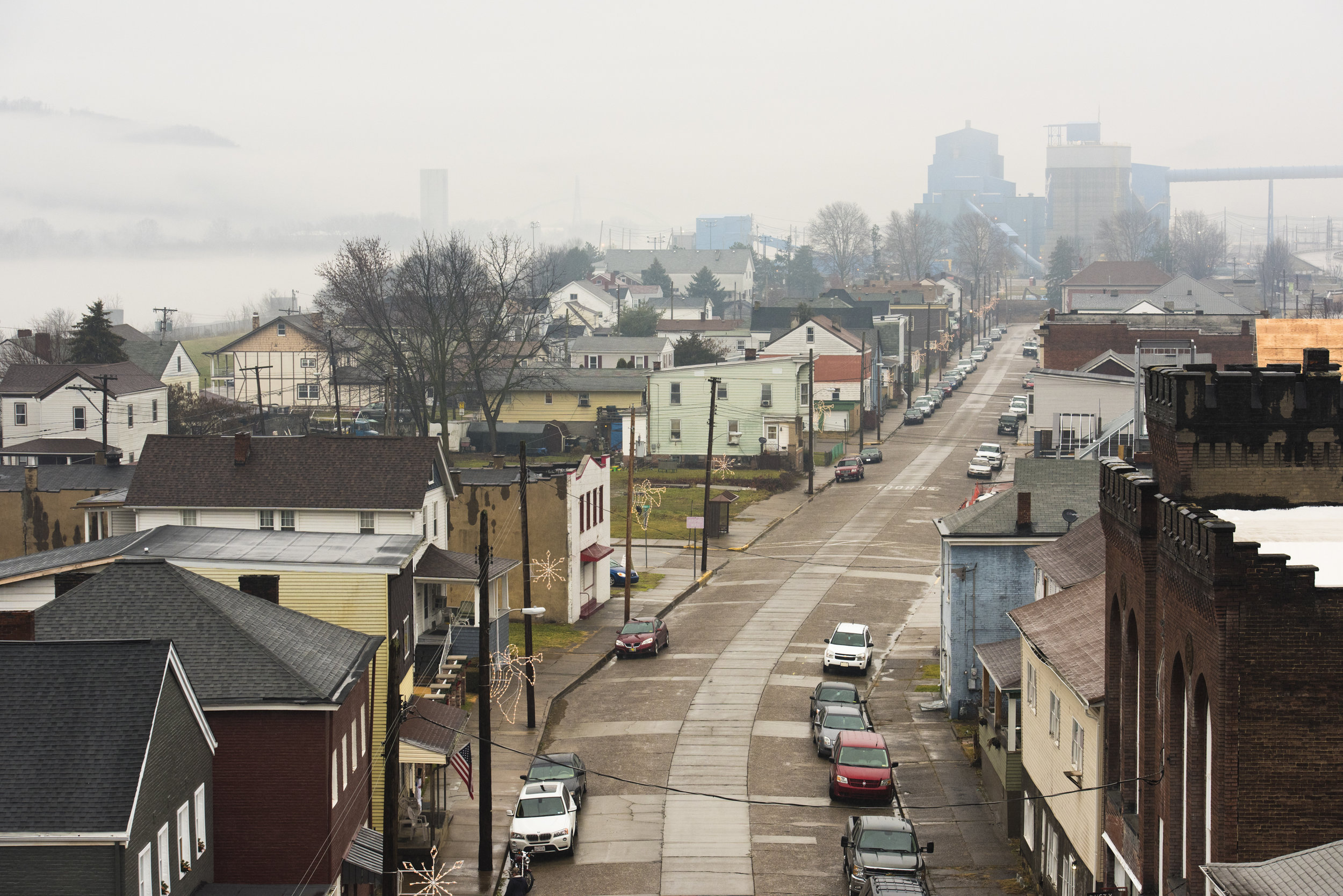
The visual anchor of this set is unmistakable: the grain elevators and concrete silos rising over the town.
They aren’t hidden. They dominate.
From nearly every angle—behind storefronts, above intersections, next to bars and brick buildings—they sit as a reminder of what built towns like Alton in the first place. The Mississippi River turned places like this into working infrastructure, not destinations.
That contrast shows up repeatedly:
A bar with an Irish flag sitting in the shadow of concrete silos
A “Guns & Ammo” sign facing a massive industrial wall
Small businesses dwarfed by the scale of production behind them
This is the American landscape without editing.
Towns like this exist all over the West and Midwest, shaped by industry and geography in similar ways—whether along the Mississippi River or out in places like Nevada where isolation and infrastructure define the landscape.
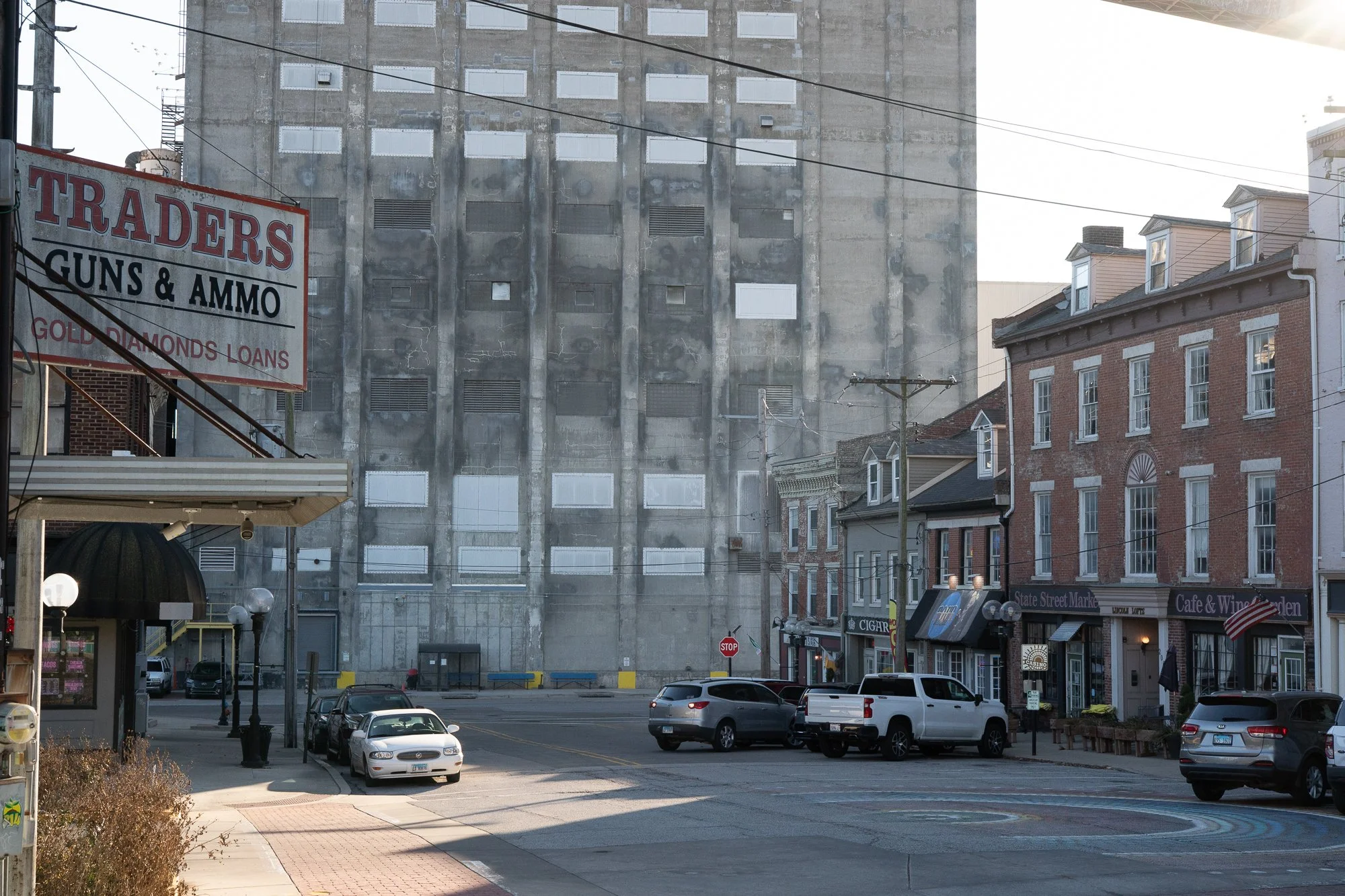
A large industrial building stands behind the main street in Alton, Illinois, where daily life unfolds alongside the town’s industrial scale.
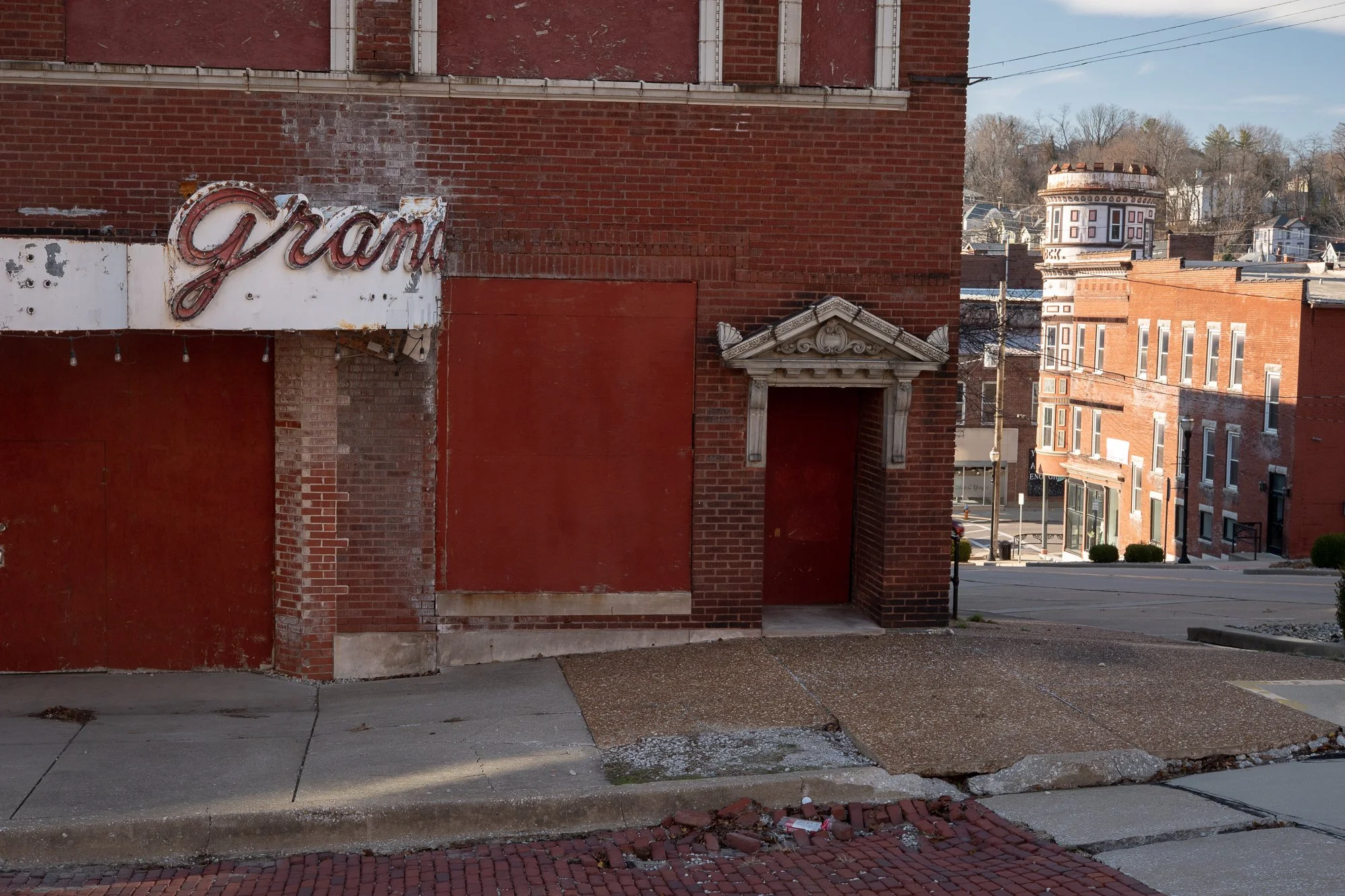
Faded lettering and a boarded brick storefront in Alton, Illinois reflect the aging buildings found across small town America.
Architecture That Refuses to Disappear
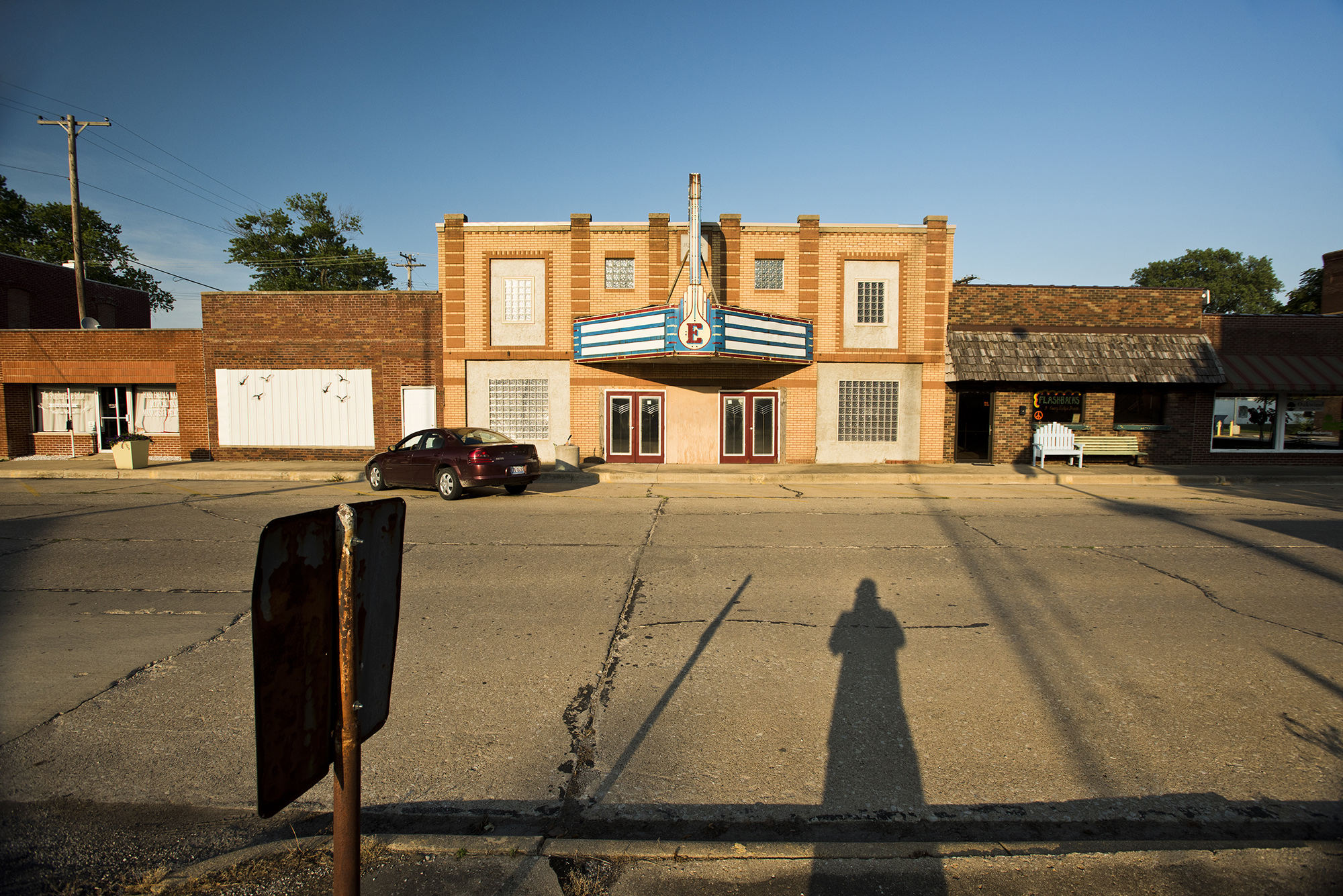
What makes Alton compelling isn’t just the industry—it’s what exists alongside it.
There’s a persistence in the architecture:
Ornate brick buildings with detailed cornices
A cylindrical turret that feels pulled from another era
Storefronts that have changed names, but not structure
Nothing feels preserved in a curated way. It’s just… still there.
Even the fading signage—the partial “Grand” marquee—adds to that sense of time stacking rather than being replaced.
You see this same persistence in other small towns across the country, where architecture outlasts the industries that built it—places like Helper, Utah, where buildings tell the story long after the economy shifts.
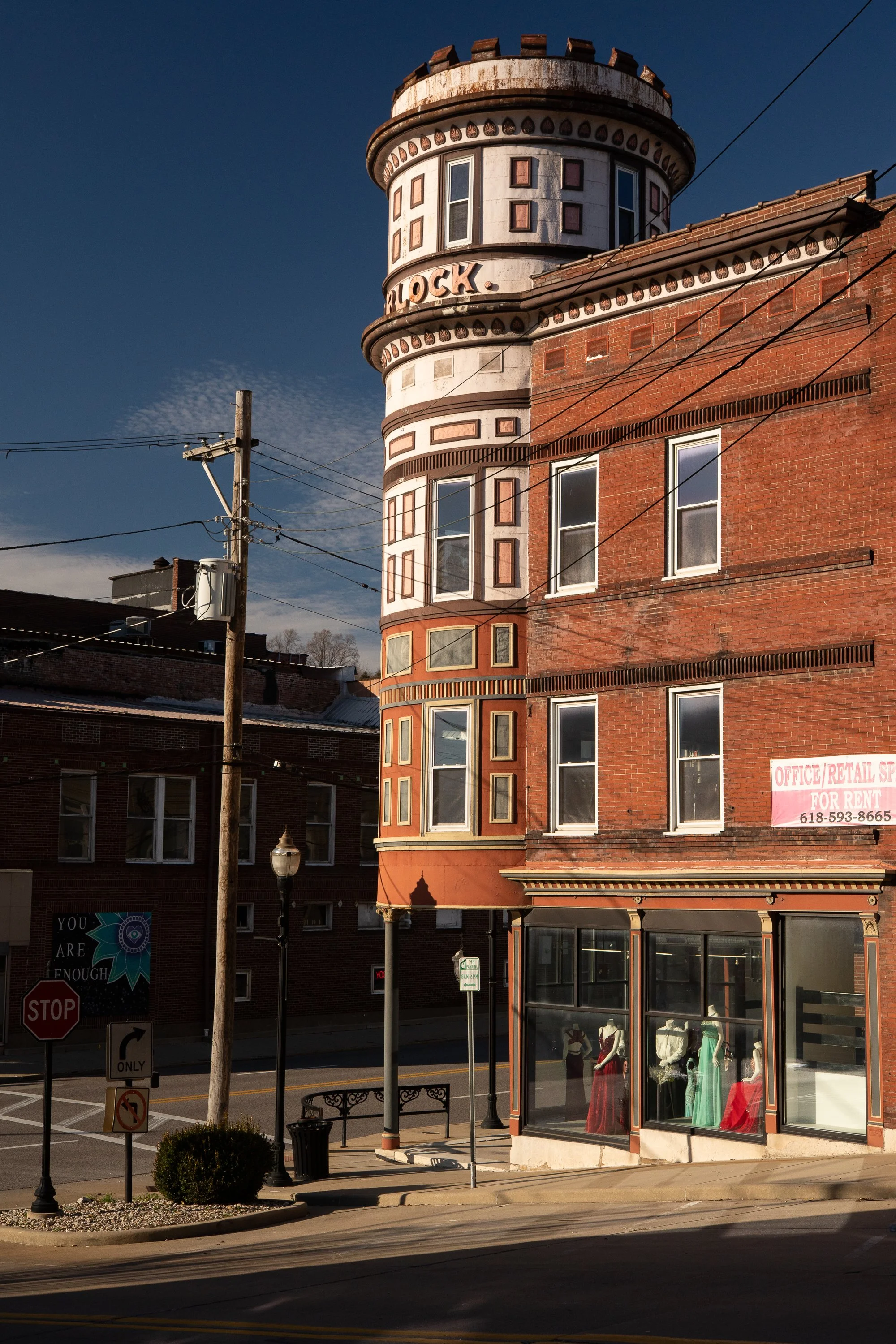
A rounded tower rises above the street in Alton, Illinois, a detail of historic architecture that still defines this Midwest town.
The Space Between Things
Some of the strongest images here aren’t landmarks—they’re transitions.
A blank white wall punctuated by small square windows
A single tree leaning slightly off balance on an empty sidewalk
A parking lot bordered by collapsing stone and patched brick
These are the in-between spaces that define most American towns but rarely get photographed.
They aren’t designed. They’re accumulated.
And that accumulation—of repairs, decay, utility, and adaptation—is where the real visual language of this project lives.
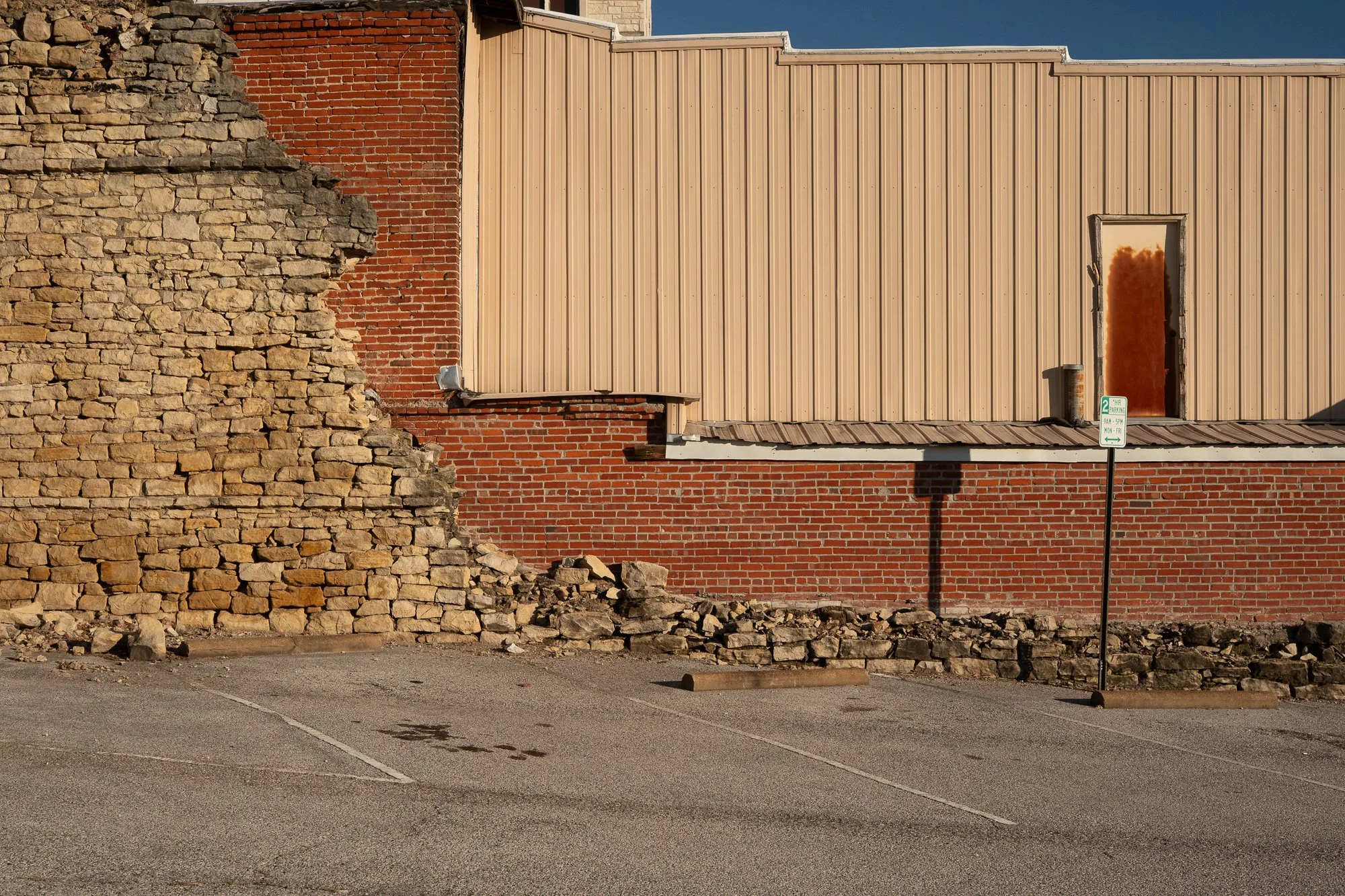
A broken stone wall and empty parking spaces in Alton, Illinois capture the overlooked textures of the American landscape.
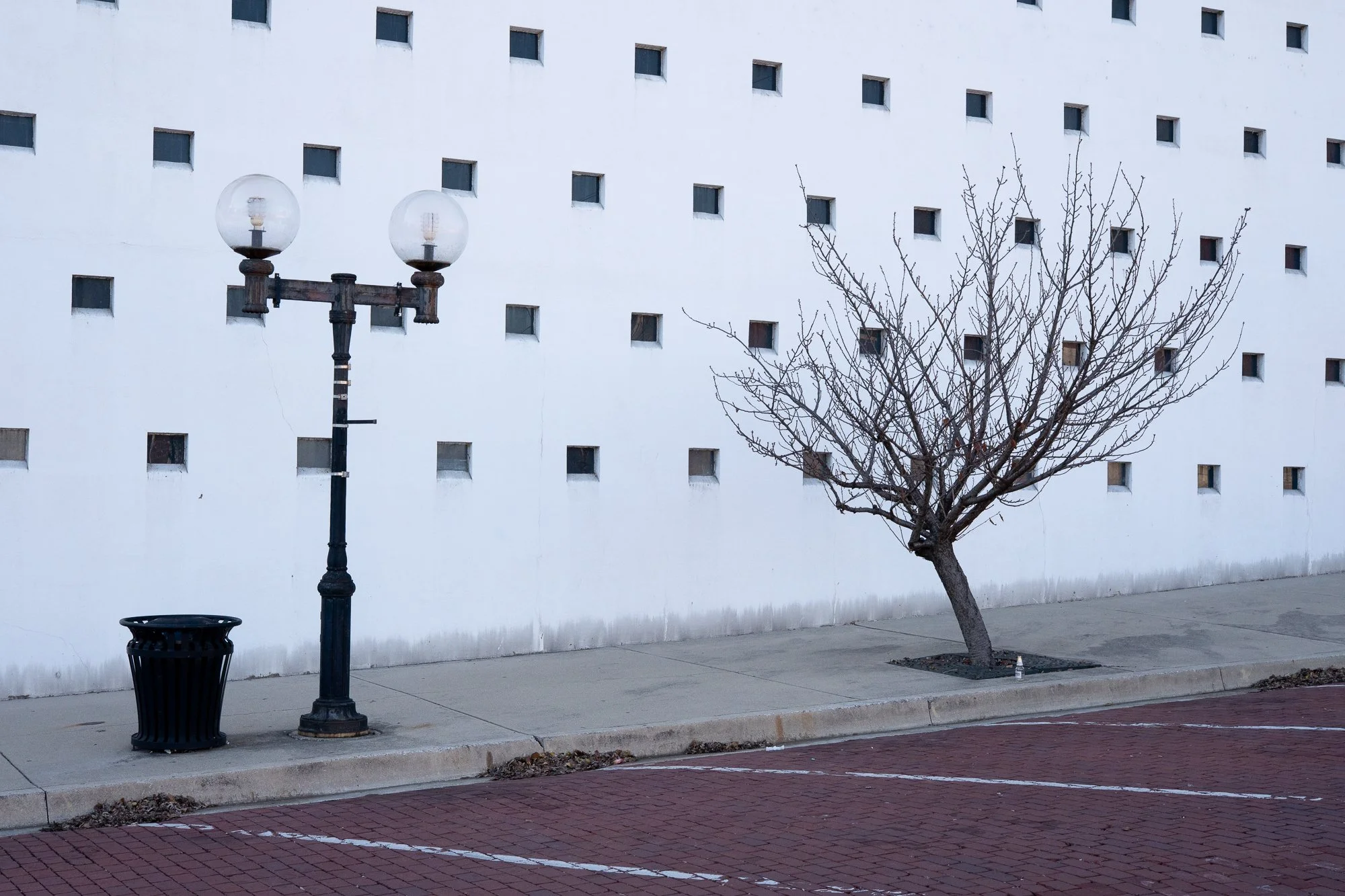
A small tree and streetlamp sit against a stark white wall in Alton, Illinois, a quiet moment within the broader American landscape.
Main Streets Still Holding On
There’s still a rhythm to the town.
Cars move through wide intersections.
Shops remain open.
Light hits the buildings the same way it probably has for decades.
But there’s also space—physical and economic.
That openness becomes part of the composition:
Wider streets than necessary
Gaps between active businesses
Light falling deeper into the frame than it would in a denser city
It creates a slower visual pace, which is exactly what allows these photographs to exist in the first place.
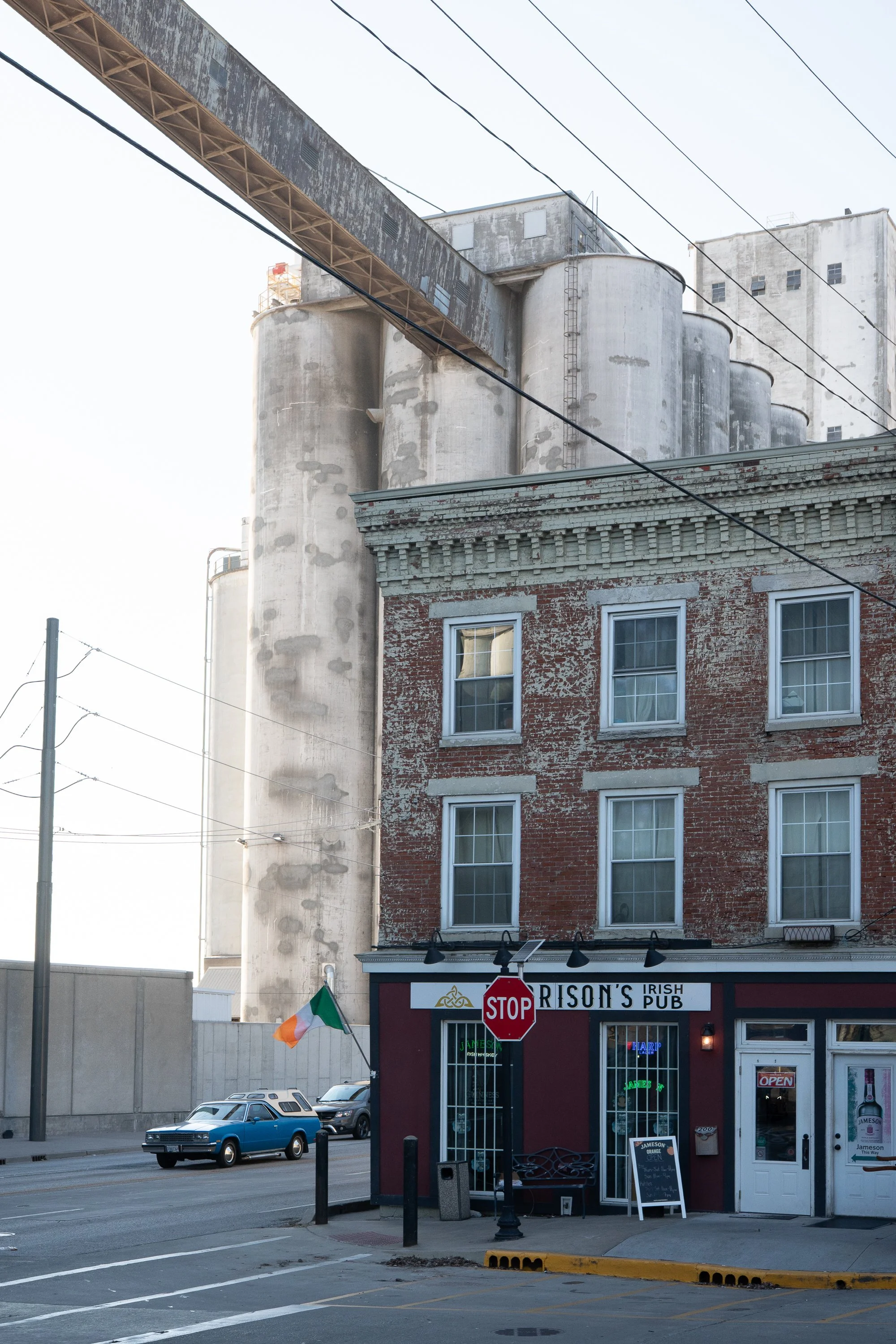
Grain silos rise behind a neighborhood pub in Alton, Illinois, where industry and local gathering spaces exist side by side.
Part of a Larger American Landscape
This work from Alton, Illinois is one piece of a much larger project—years spent photographing towns, roads, and overlooked places across the United States.
Explore the full America photography project
This body of work also led to the publication of Roadside Meditations, a book that explores similar themes across the American landscape—quiet places, long roads, and the overlooked details in between.
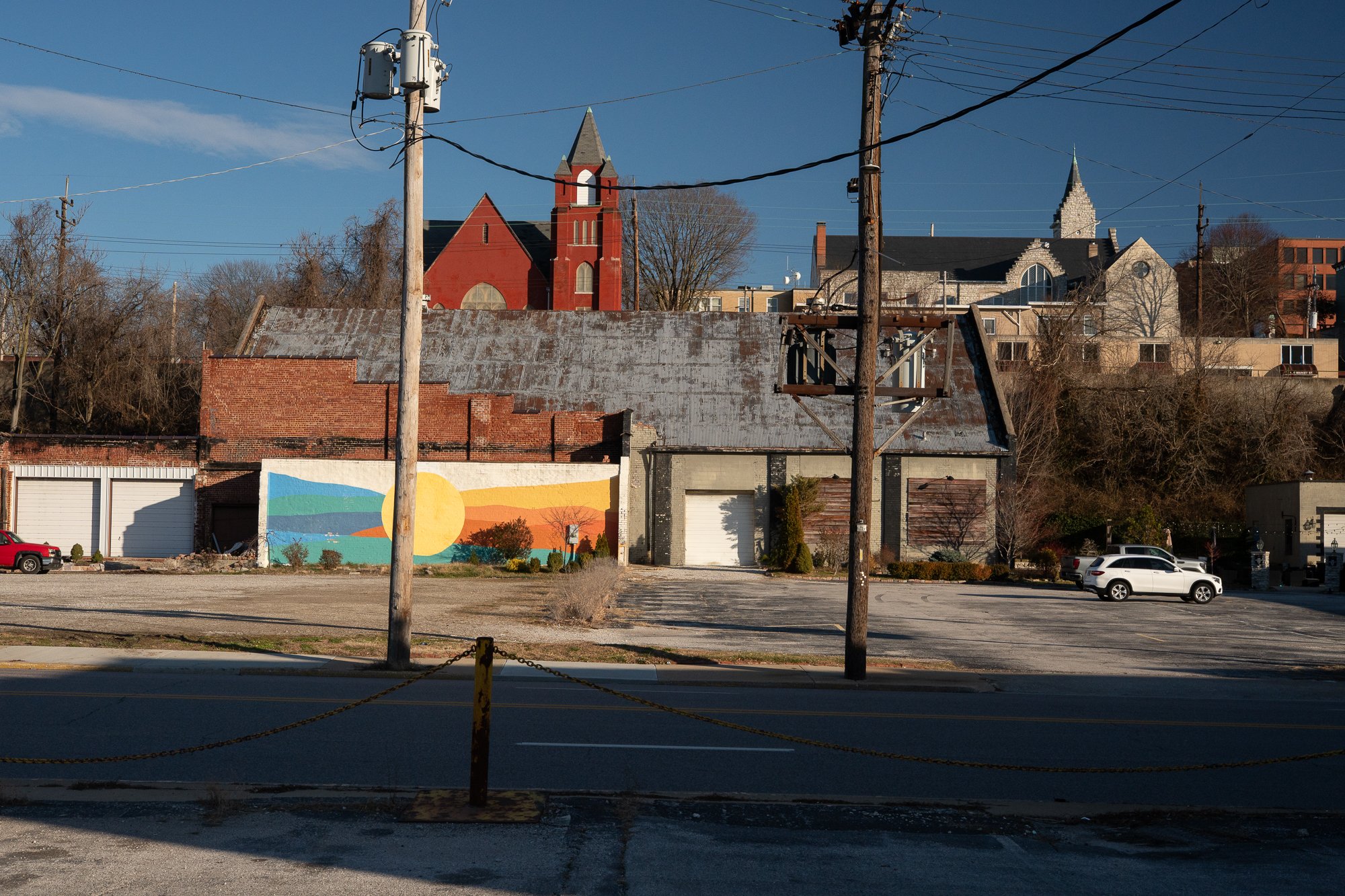
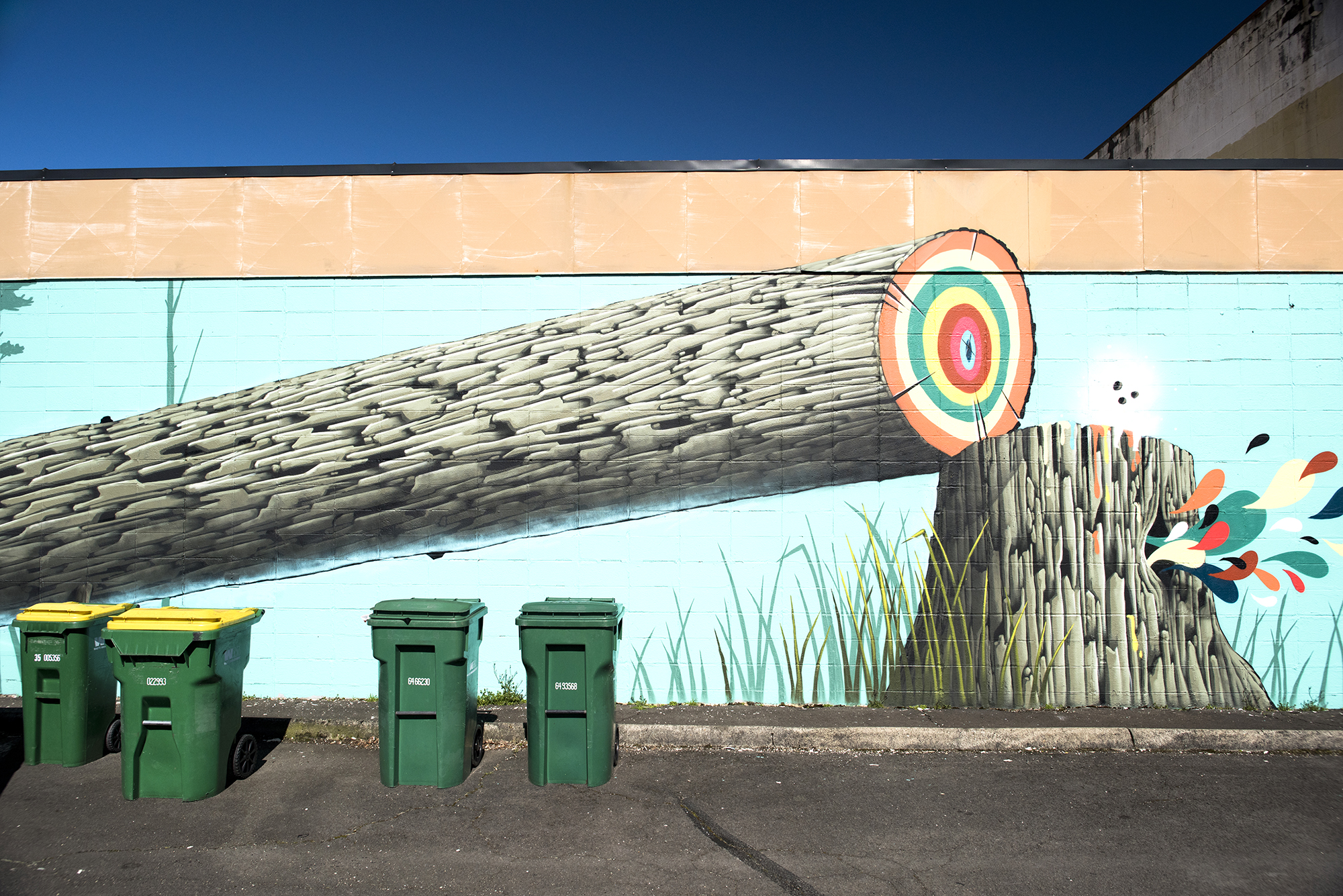
A mural stretches across a low building in Alton, Illinois, set against older industrial structures and an open lot.
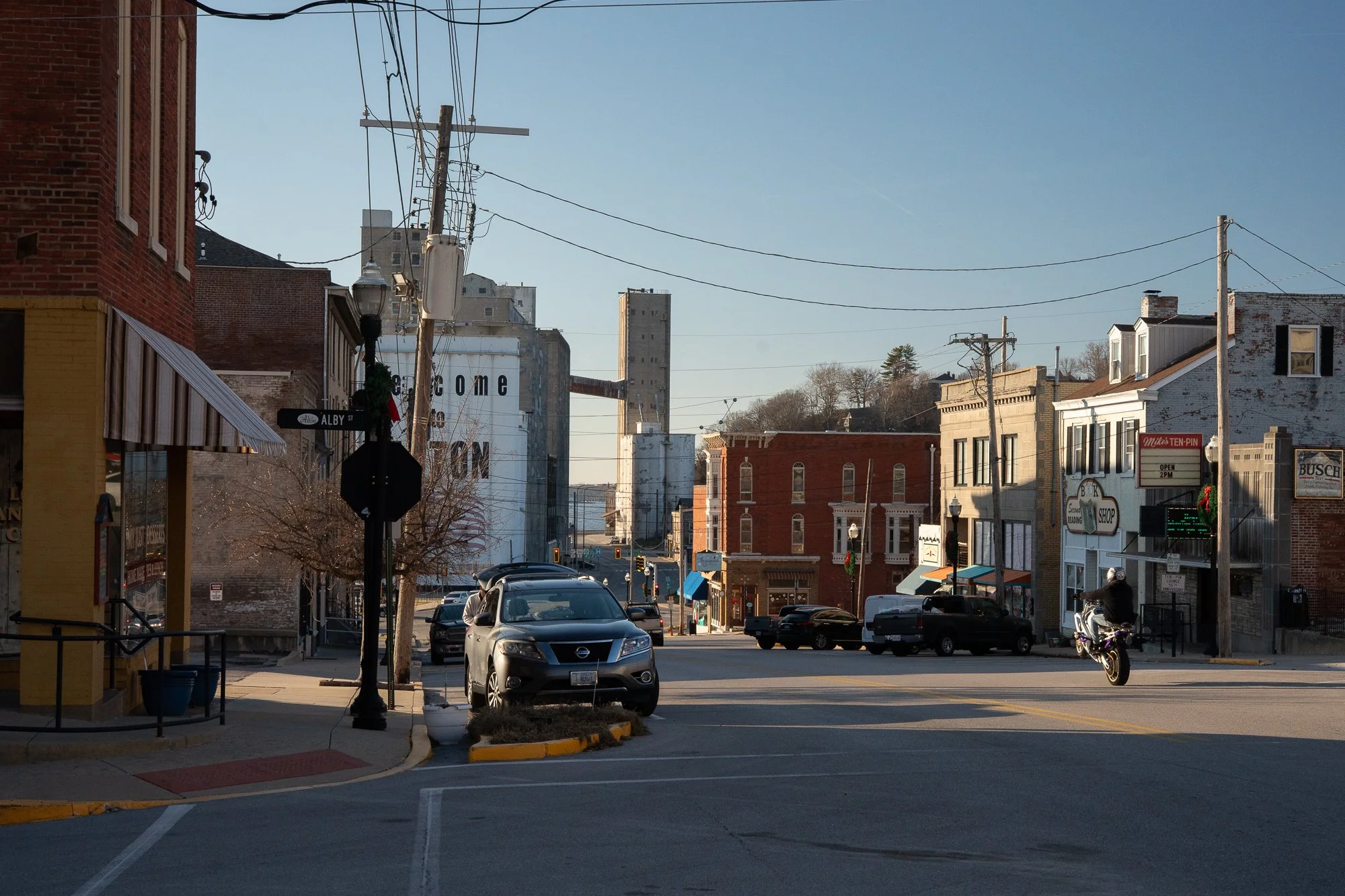
Cars move through a downtown street in Alton, Illinois toward the grain elevators, connecting the town center to its industrial edge.