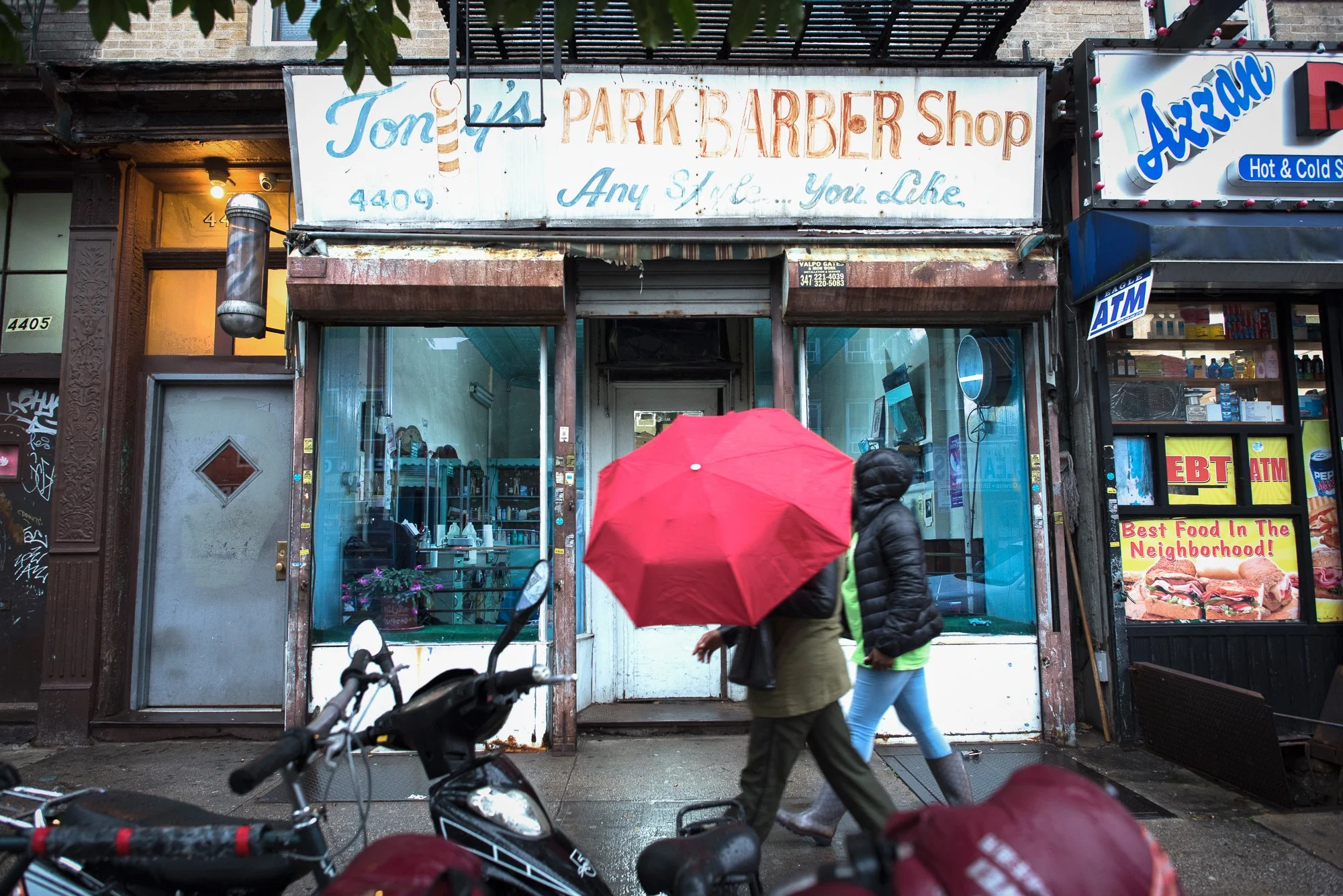
Tony’s Barbershop, Brooklyn, New York
For more than 200 years, Tony’s Barbershop stood in the Sunset Park neighborhood of Brooklyn as a constant—outlasting wars, economic cycles, and generations of change. Inside, little evolved by design: the same chairs, the same mirrors, the same daily rhythms shaped by friendship and conversation rather than efficiency or trend. It was a place where time moved at a human pace, where neighbors returned year after year not just for a haircut, but for continuity. When the owner passed away in 2020 and the shop closed soon after, that unbroken history ended quietly, marking the loss of not just one of America’s oldest barbershops, but a form of community that is becoming increasingly rare.
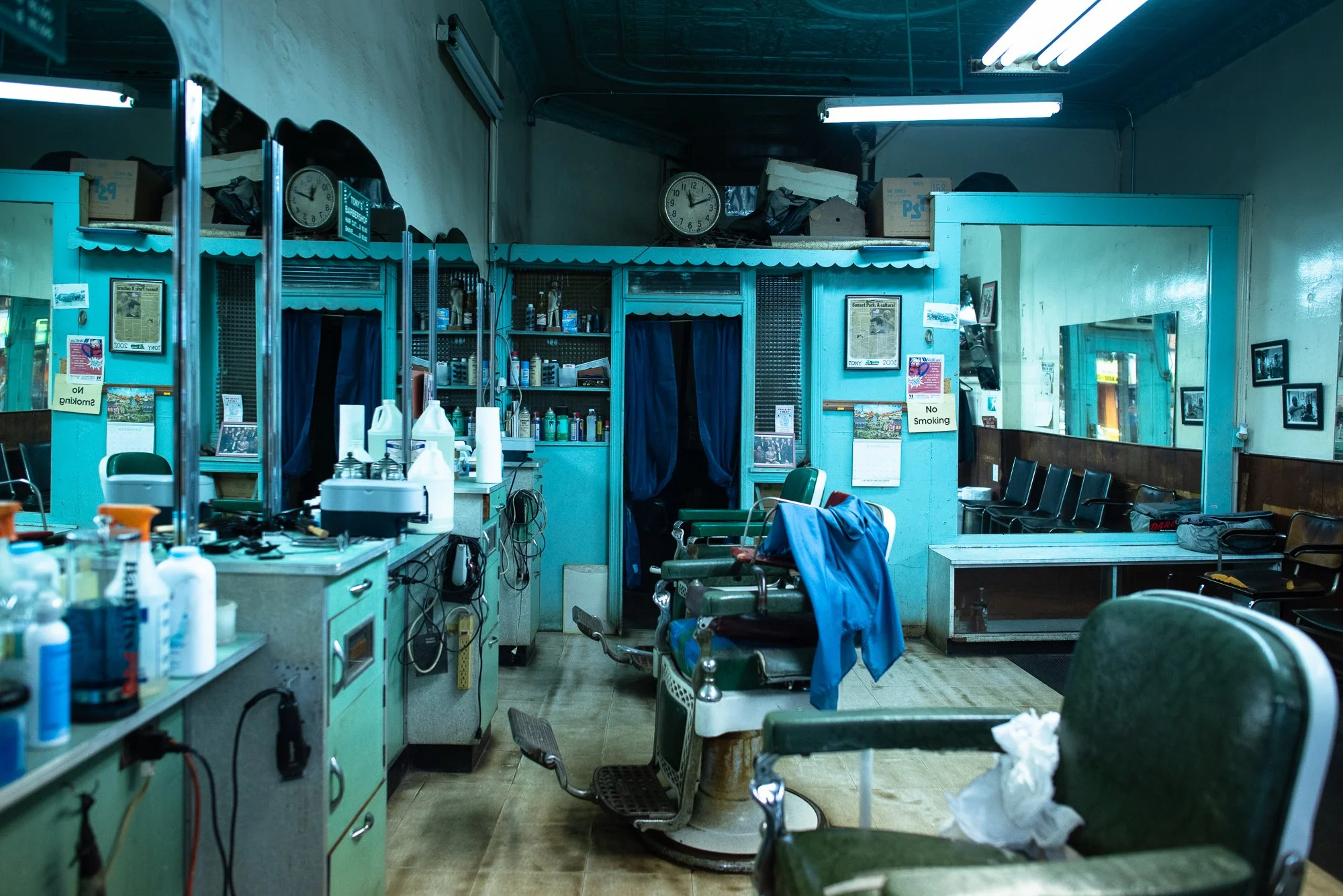
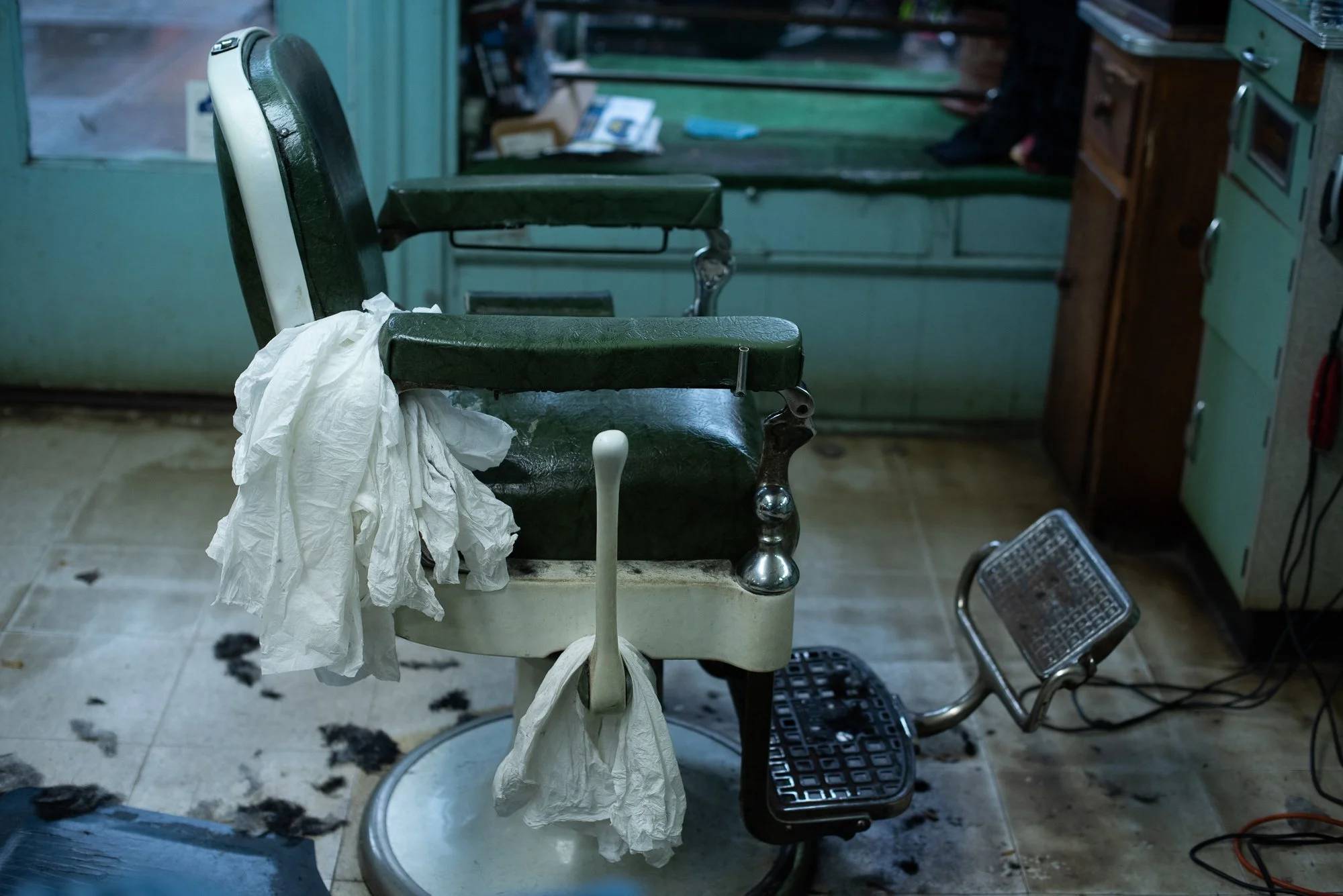
Barber chairs and workstations inside Tony’s Barbershop in Brooklyn, New York, reflecting decades of continuous use.
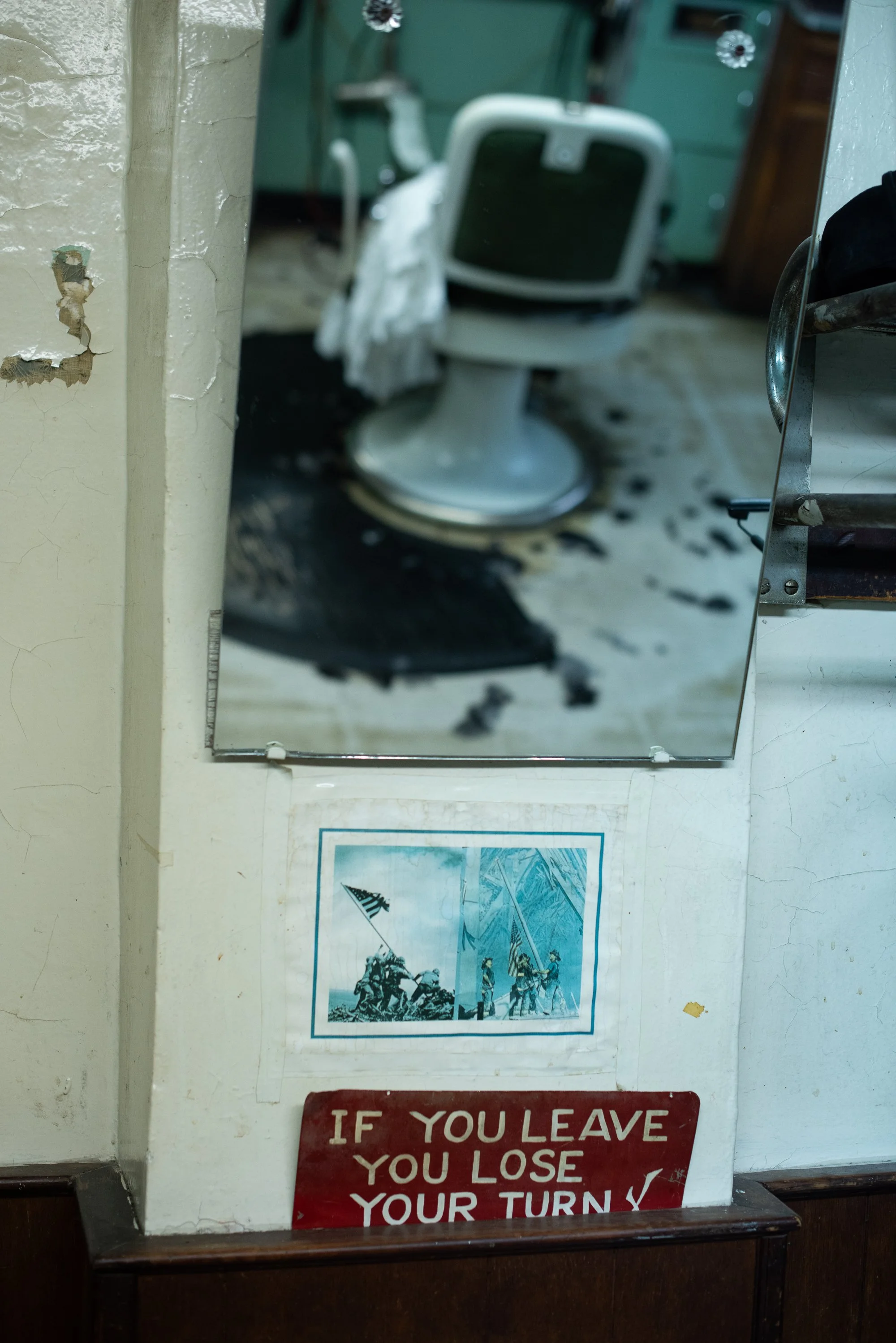
A barber chair reflected in the mirrors at Tony’s Barbershop above a sign reading “If you leave you lose your turn”. The walls showing decades of use and an interior largely unchanged over time.
A Barbershop Shaped by Time
There is no faking what Tony’s has. It’s the kind of place you’d want to use as inspiration for the classic American barbershop in a movie, but achieving that look is impossible because the grit and patina, the thing that truly makes it special, is time. Centuries, in fact. Hard to say for sure, but you could argue that Tony’s was one of, if not the oldest barbershop in America?
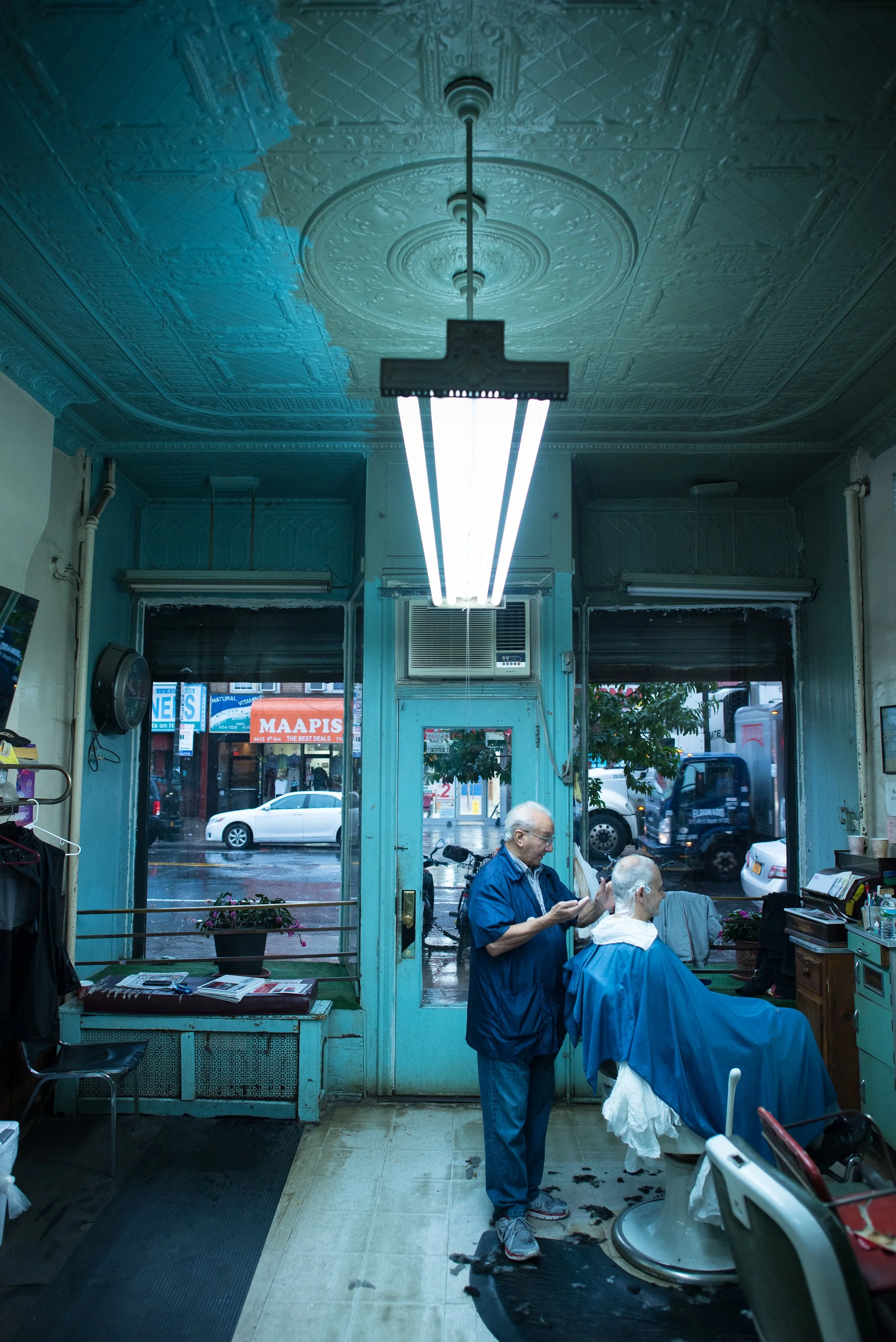
The interior of Tony’s Barbershop in Brooklyn, New York. The space remained largely unchanged for decades, preserving a traditional working environment.
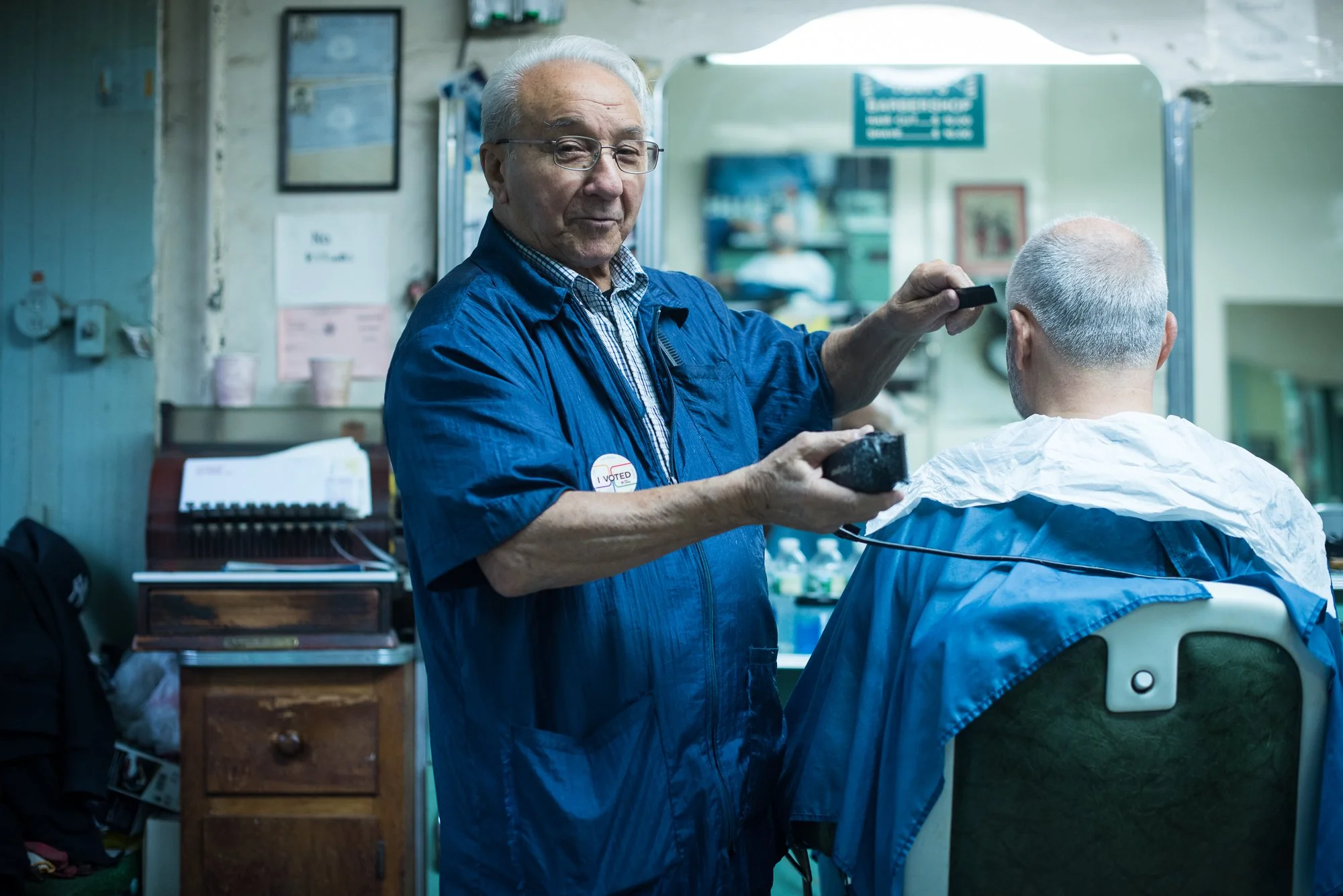
A barber and client during a routine haircut at Tony’s Barbershop in Brooklyn, New York.
Routine, Relationships, and Community
Ever since he moved to American from Italy, Tony has been cutting hair in the same Brooklyn barbershop, decade after decade. There is no way to measure the effect his shop and his presence has had on a neighborhood. It’s people like him that have made barbershops more than just a place to get your haircut. They are about community and friendship. In a lot of ways, Tony is a true American success story. When he first arrived here with just a few dollars to his name, his English was so bad that he could barely communicate with customers. They would come in and he’d introduce himself by his real name - Felice. Only his accent was so thick that everyone thought his first name was Phil. This caused a lot of frustration until one day a “Tony” came in and asked his name, to which he replied “I’m like you, Tony!” Later when he bought the shop, it became Tony’s. Years passed and he was able to buy the apartments above the shop too!
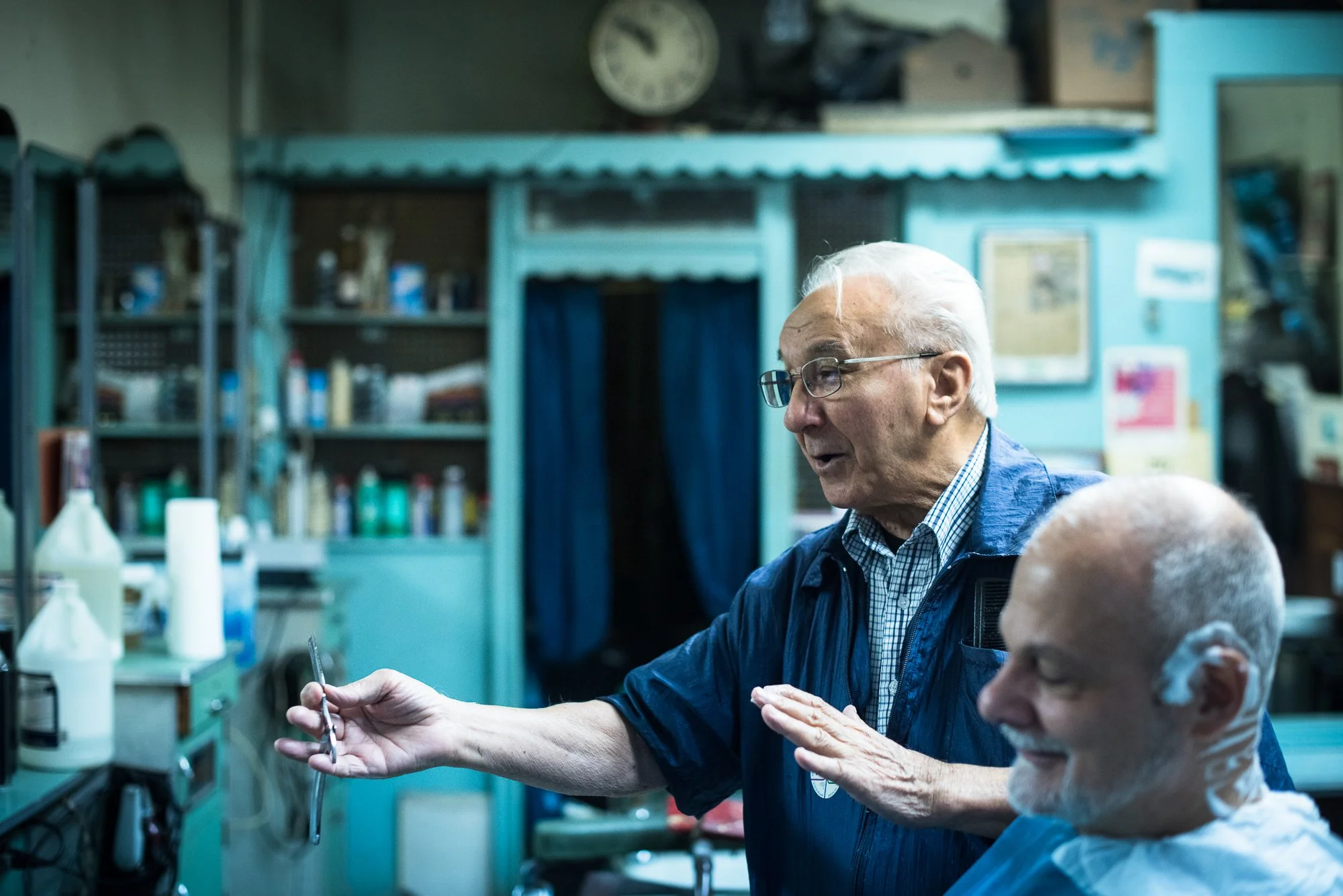
A barber laughing with his client inside Tony’s Barbershop in Brooklyn, New York. The shop served generations of neighborhood residents and functioned as a long-standing community space.
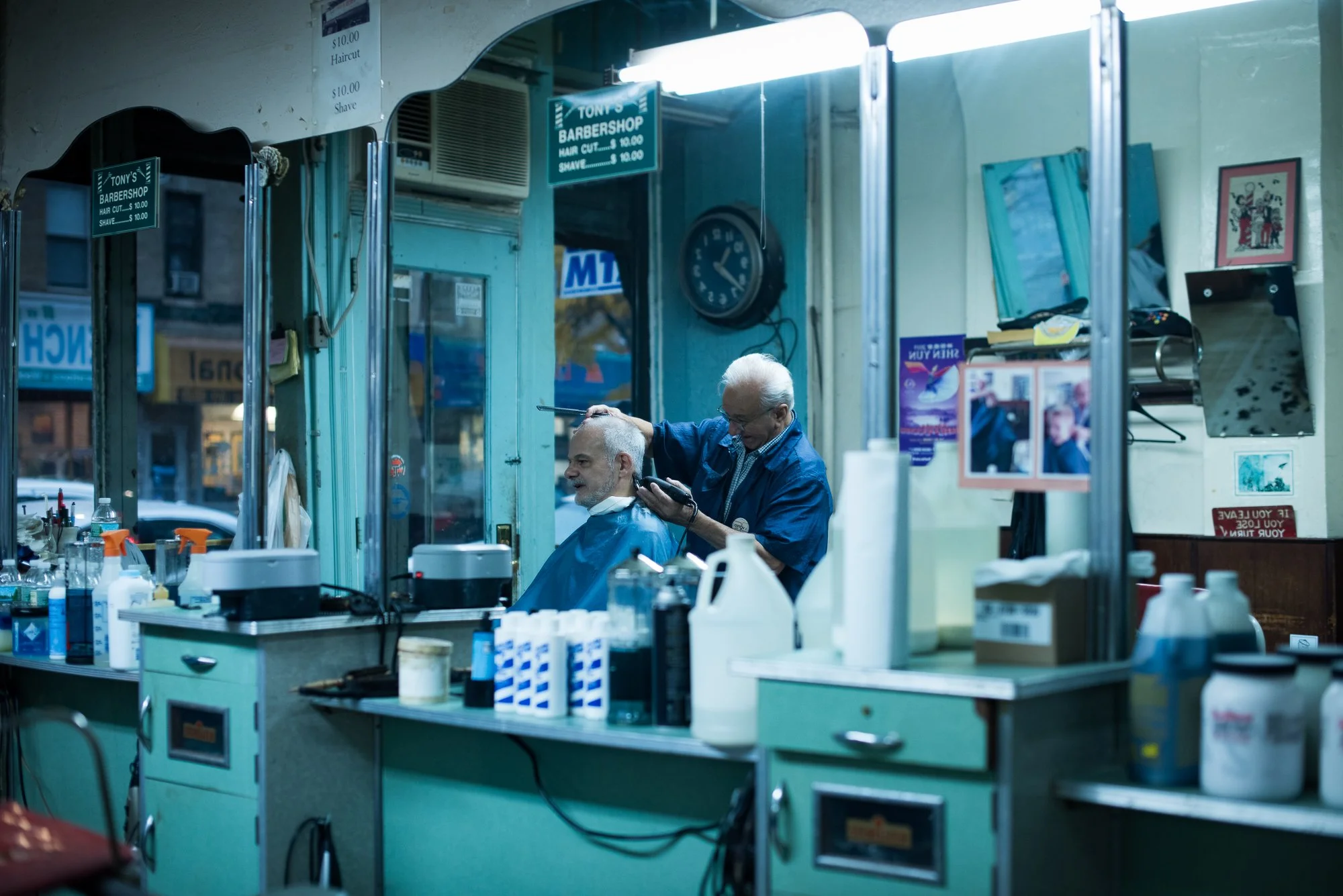
A barber and client reflected in the mirrors at Tony’s Barbershop in Brooklyn, New York, emphasizing the intimacy and routine of the barber–client relationship.
The Quiet End of a Long Continuity
Most traditional barbershops do not disappear by choice. Across the country, many are forced out by rising rents and landlords eager to replace long-standing tenants with more profitable uses, cutting short decades of continuity with little regard for the communities those shops served. Tony’s Barbershop was spared that fate. Because Tony owned the building, the shop did not end in eviction or displacement, but concluded on his own terms, following his retirement and passing in 2020. Even so, the outcome is no less final. Ownership could protect the space from outside pressure, but it could not preserve what mattered most—the accumulated history of daily routines, relationships, and shared memory built over more than two centuries. Once that continuity ends, there is no way to replicate it, only to acknowledge what has quietly been lost.
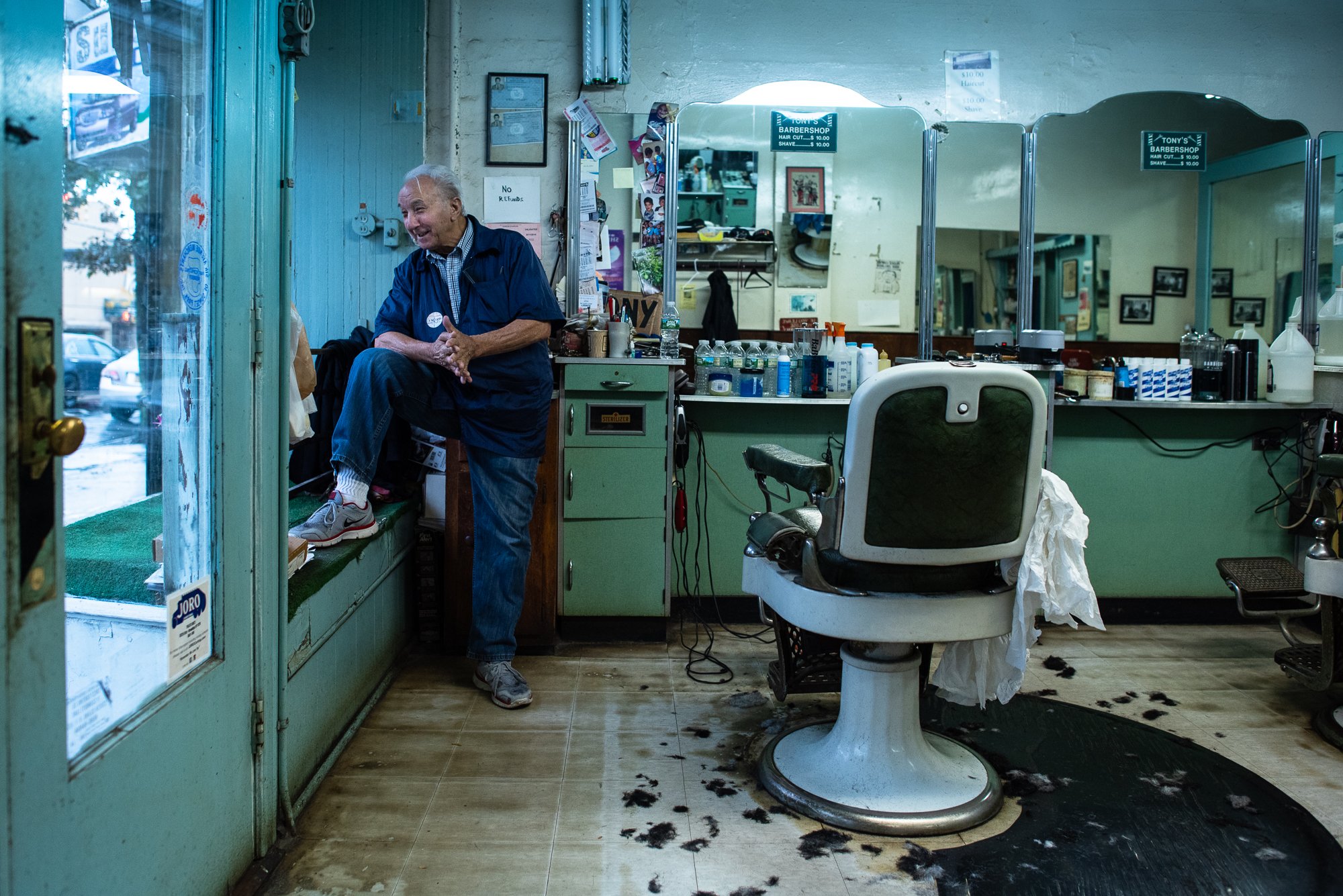
A barber pauses between appointments at Tony’s Barbershop, a place where relationships extended beyond the chair.
Documenting America’s Vanishing Barbershops
Projects like Barbershops of America exist not just out of nostalgia, but necessity. As traditional barbershops disappear—often quietly and without record—their absence leaves a gap that is cultural as much as physical. Over the past 15 years, documenting these spaces across all 50 states has revealed how deeply they are woven into the fabric of American life, particularly in working-class and rural communities. These shops are not interchangeable businesses; they are long-term social institutions shaped by trust, routine, and presence. Photographing them is an effort to preserve evidence of places that once held communities together, before they vanish without acknowledgment.
More work from the Barbershops of America series can be found here:
Barbershop Photography Gallery
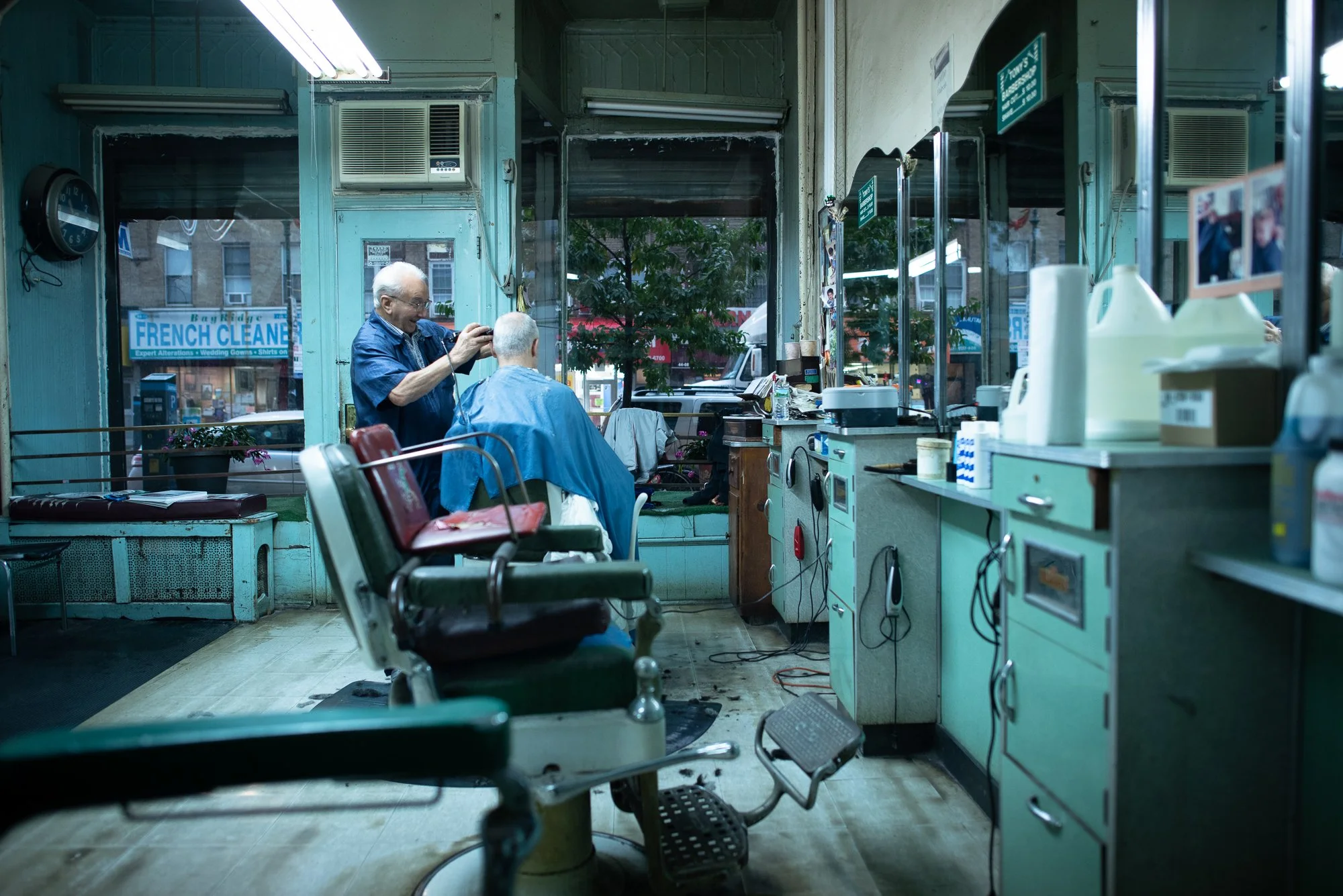
A wide interior view of Tony’s Barbershop in Brooklyn, New York, where the layout and tools reflected decades of daily practice.
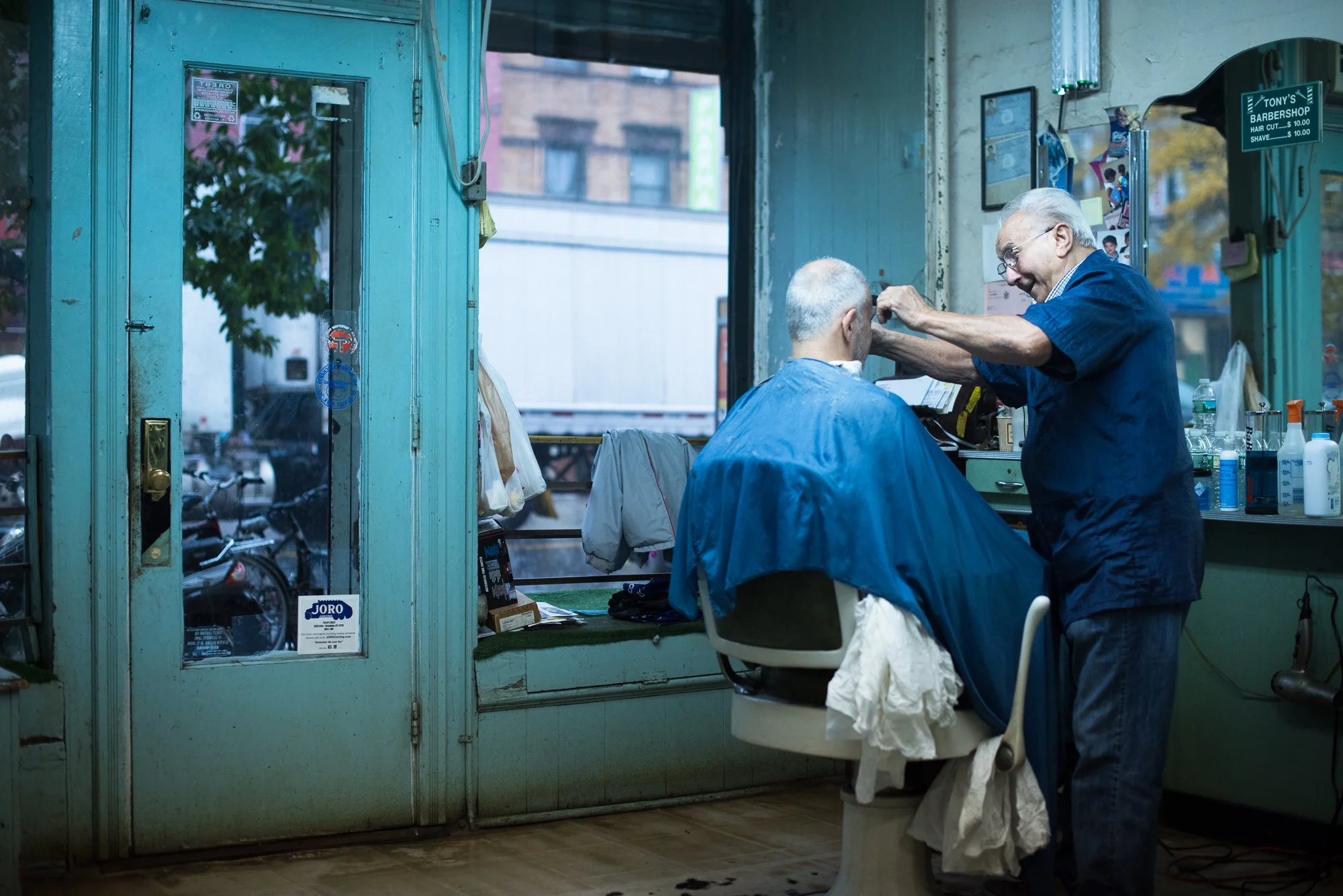
A haircut in progress near the front window of Tony’s Barbershop in Brooklyn, New York. The shop’s street-facing layout reinforced its role as an open, accessible community space.
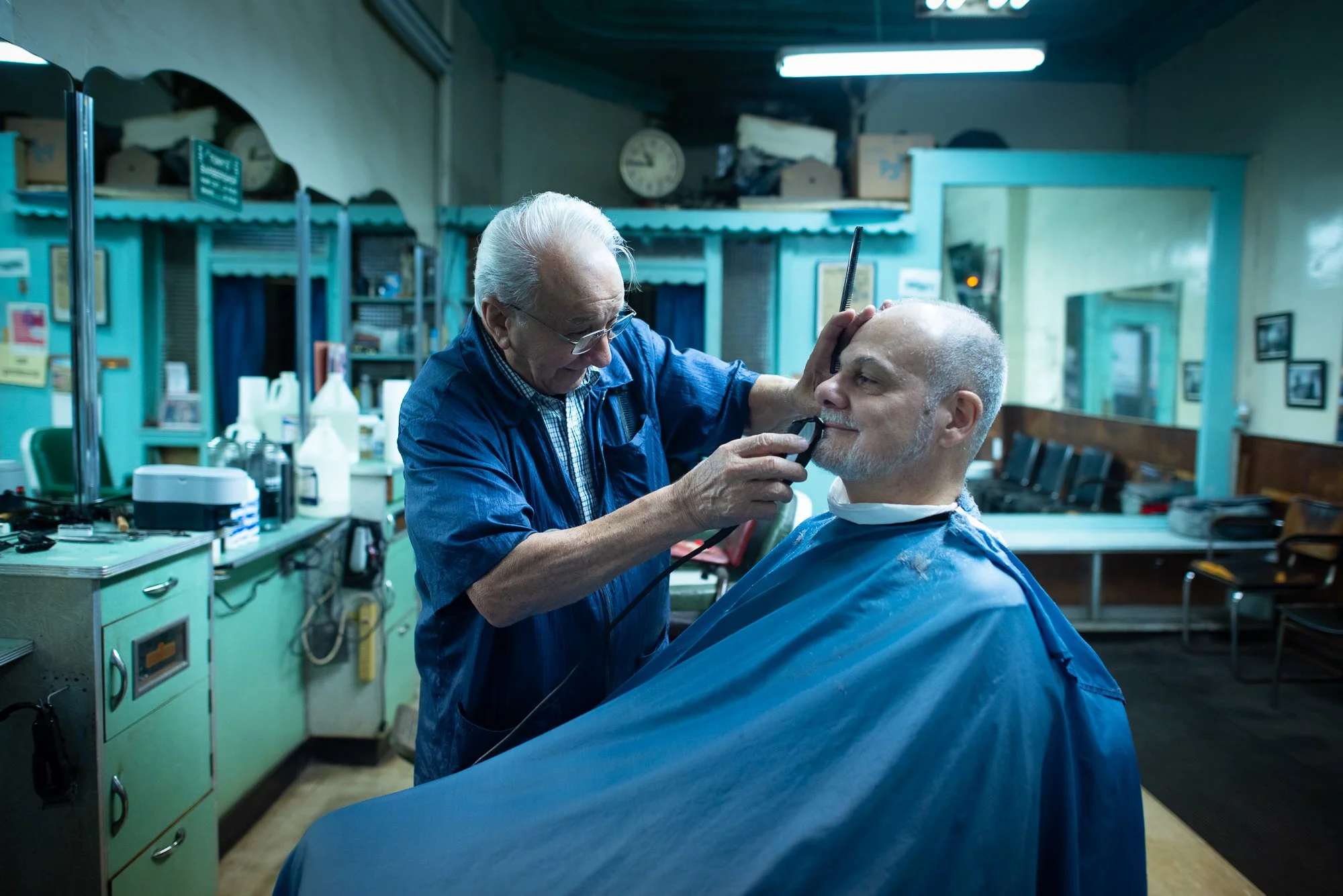
A haircut in progress at Tony’s Barbershop in Brooklyn, New York, where barbering was practiced through experience and repetition.