Pugsly's Barbershop

Pugsly’s Barbershop, 15 Years Later


Photographing a Kingston, New York Barbershop Across Three Visits

One of the unexpected benefits of working on the same photography project for more than 15 years is getting the chance to go back.

When I started Barbershops of America, the goal was fairly simple: travel around the country and photograph traditional barbershops. I certainly wasn't thinking about what it would mean to photograph the same people and places multiple times over the course of 5, 10, or 15 years.

Pugsly's in Kingston, New York is one of the places that has given me that opportunity.

I've now photographed The Nefarious Dr. Pugsly three different times during the life of this project. The first was at his original barbershop. The second and third were at Pugsly's SideShow, the second shop he opened a short distance away.

Put together, those photographs tell a different kind of story than any single visit could.
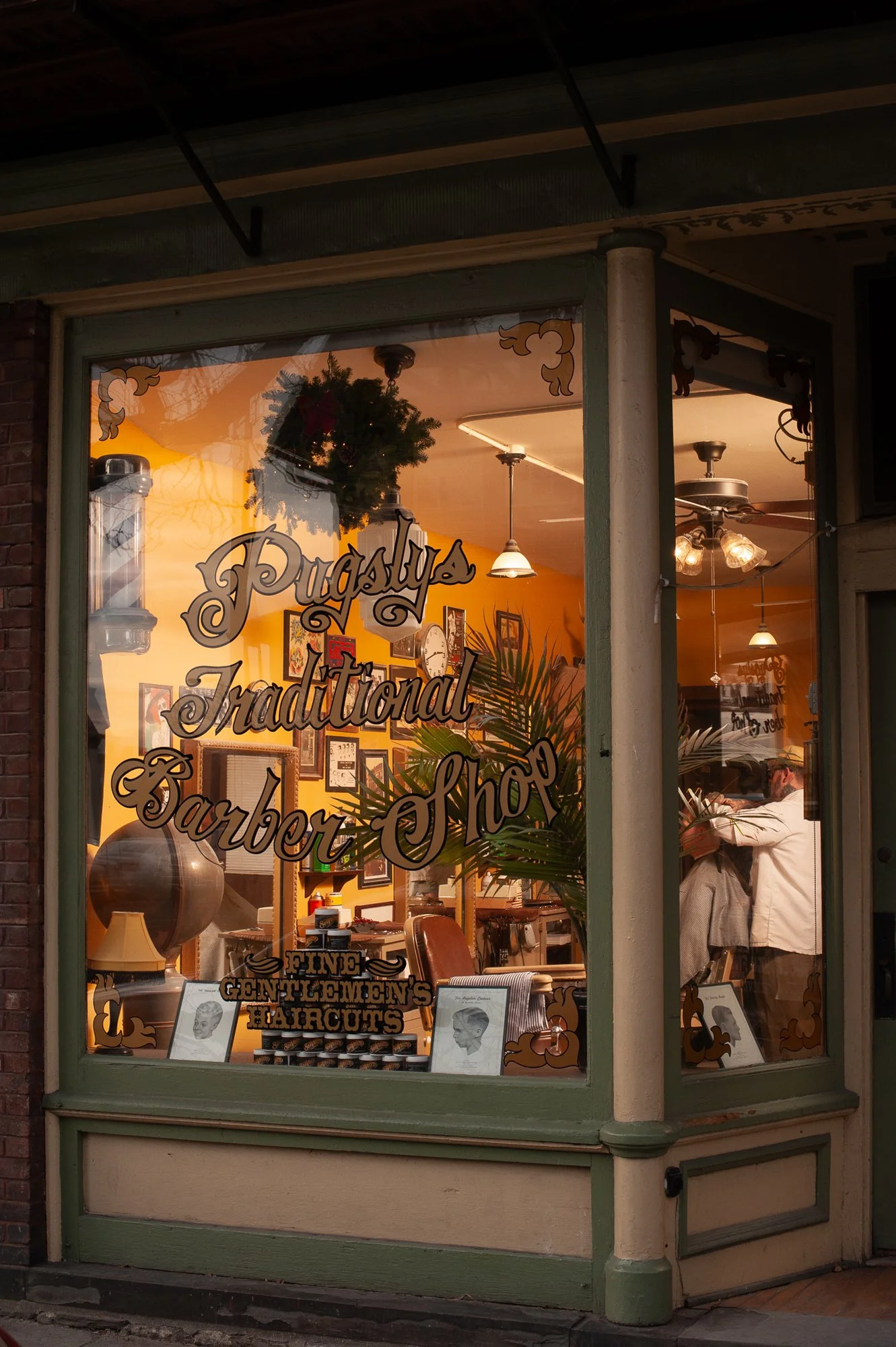
Exterior view of Pugsly’s Traditional Barber Shop in Kingston, New York, with the barbershop visible through the front windows.

Pugsly’s Traditional Barber Shop seen from the street in Kingston, New York.
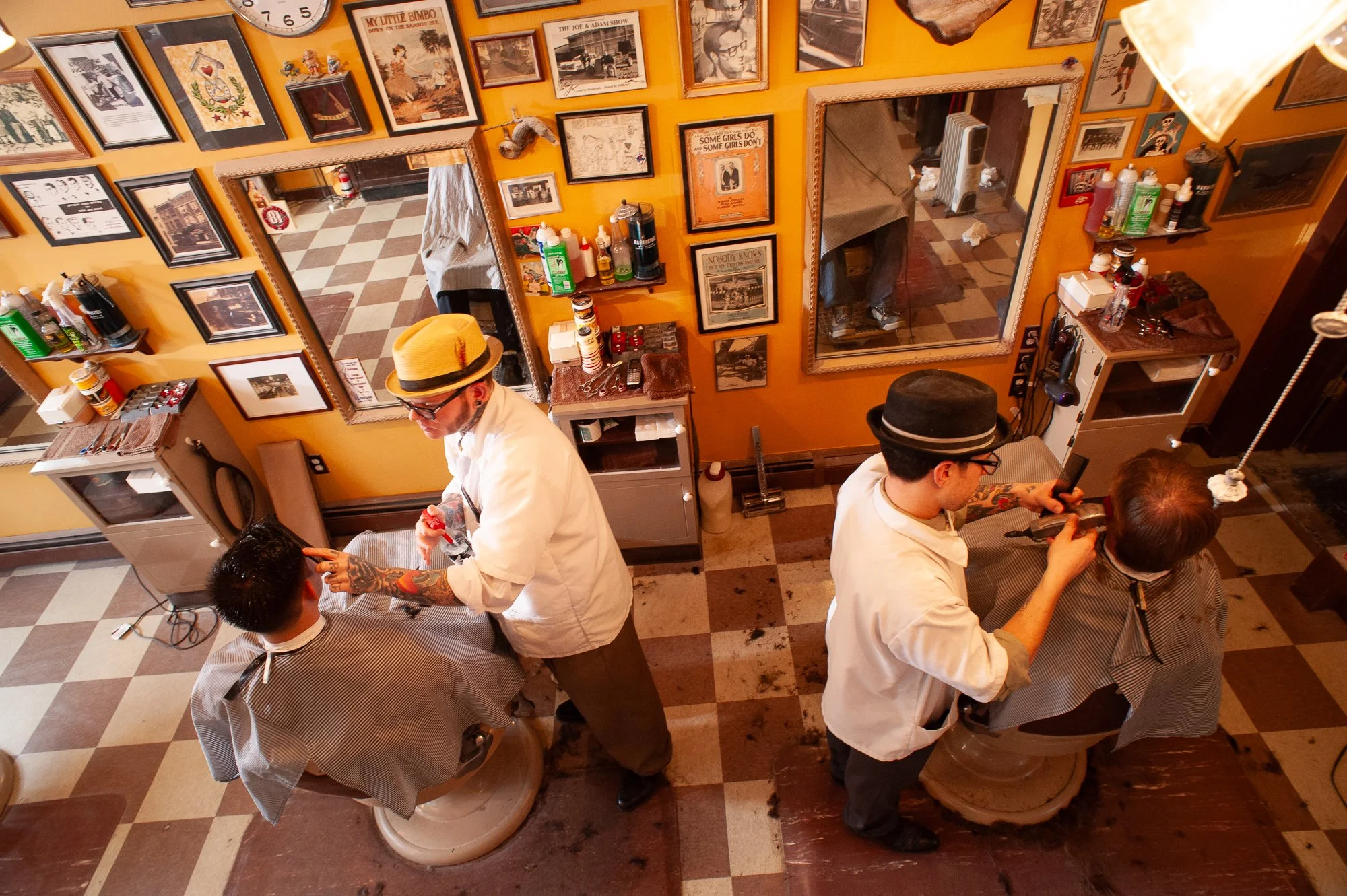
Two barbers cutting clients' hair inside Pugsly's SideShow Barbershop in Kingston, New York.

Barbers work on haircuts across the shop, with the checkered floor and decorated walls visible throughout the space.
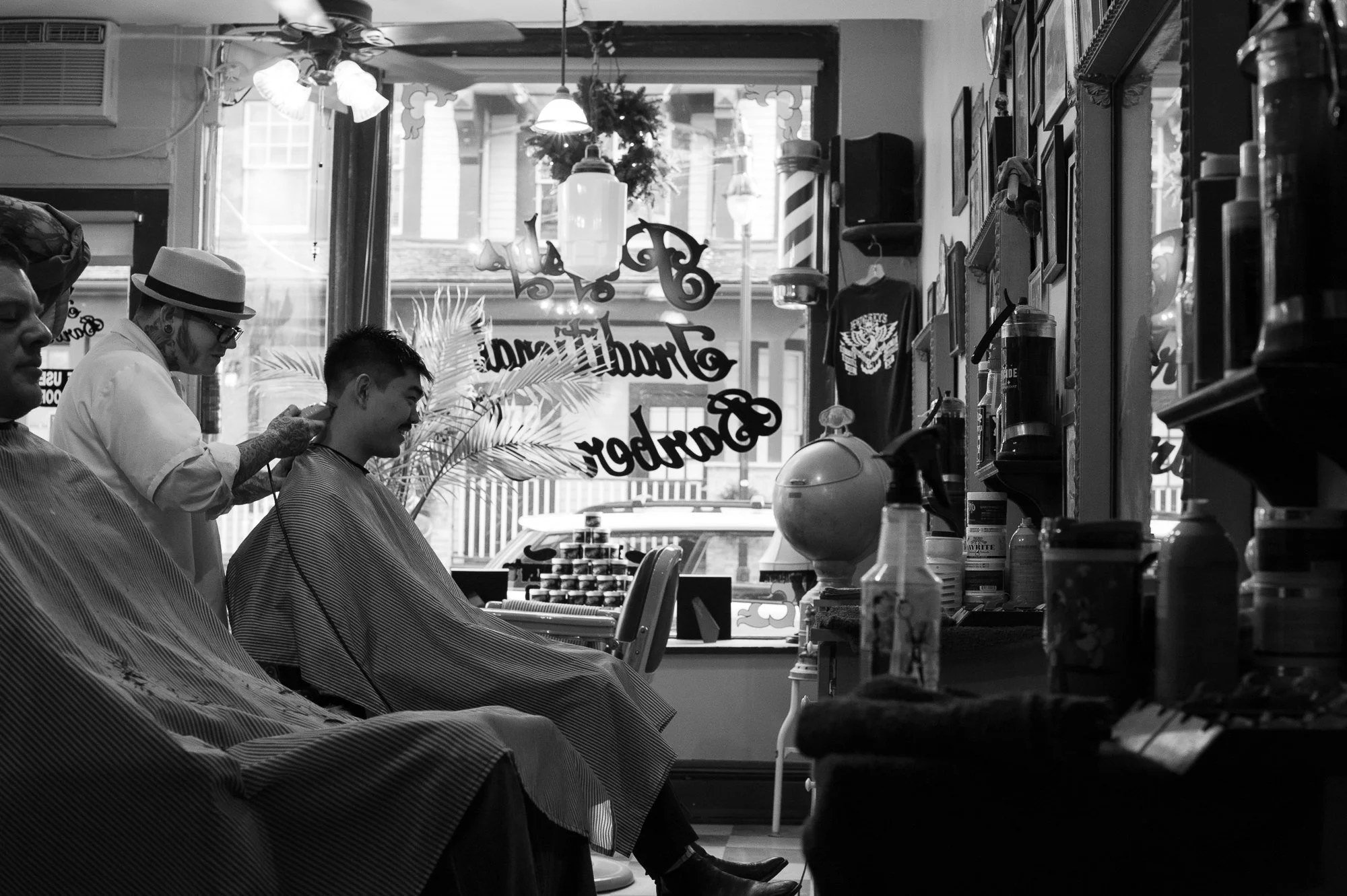
Barber cutting a client's hair inside Pugsly's SideShow Barbershop in Kingston, New York.

Barber trims a client's hair beside the front window, surrounded by the working details of the shop.

The First Visit: Pugsly’s Original Barbershop

I first met Pugsly sometime around 2011. I honestly don't remember exactly how we connected, which is true of quite a few relationships that came out of the early years of this project. What I do remember is him and the shop.

At that point I had already photographed plenty of old neighborhood barbershops, but Pugsly's felt different. It had all the visual references of a traditional American barbershop, but it wasn't an old shop that had simply survived unchanged for decades.

Pugsly had built his place very deliberately.

He was part of a generation of barbers who clearly respected the history of the trade but weren't interested in simply preserving it. There was an obsessive attention to the space, the tools, the haircut, and the experience of being there.

Years later, when I interviewed him, Pugsly described his intention as creating a traditional walk-in gentleman's barbershop with a 1940s influence, while making the quality of the haircut and the experience equally important.

That philosophy was visible before I ever knew how to put it into words.

And it made the shop an important part of Barbershops of America.
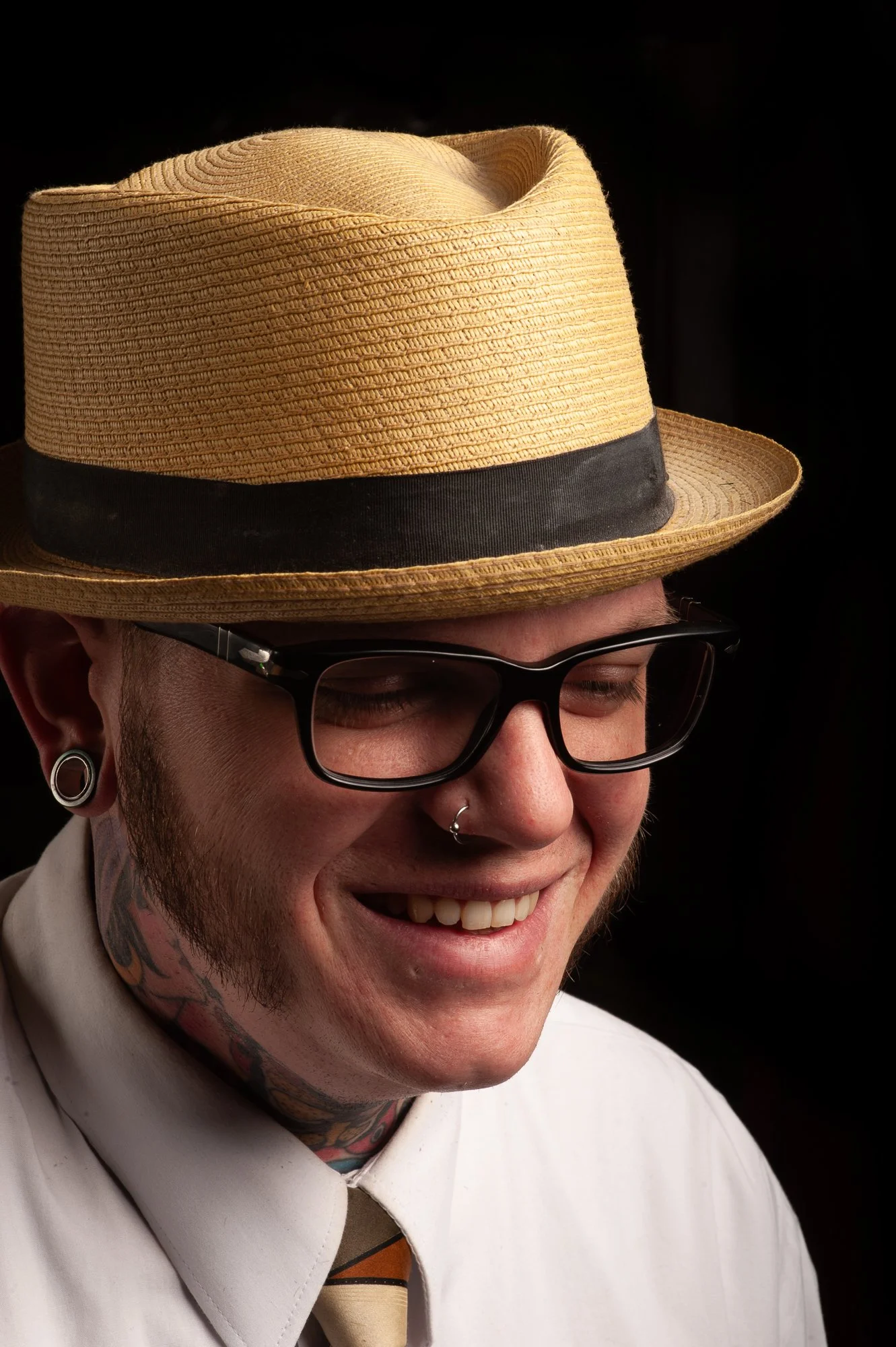
Barber portrait at Pugsly's Barbershop in Kingston, New York, wearing a straw hat and glasses.

Pugsly smiling in his straw hat and glasses during a portrait inside the shop.
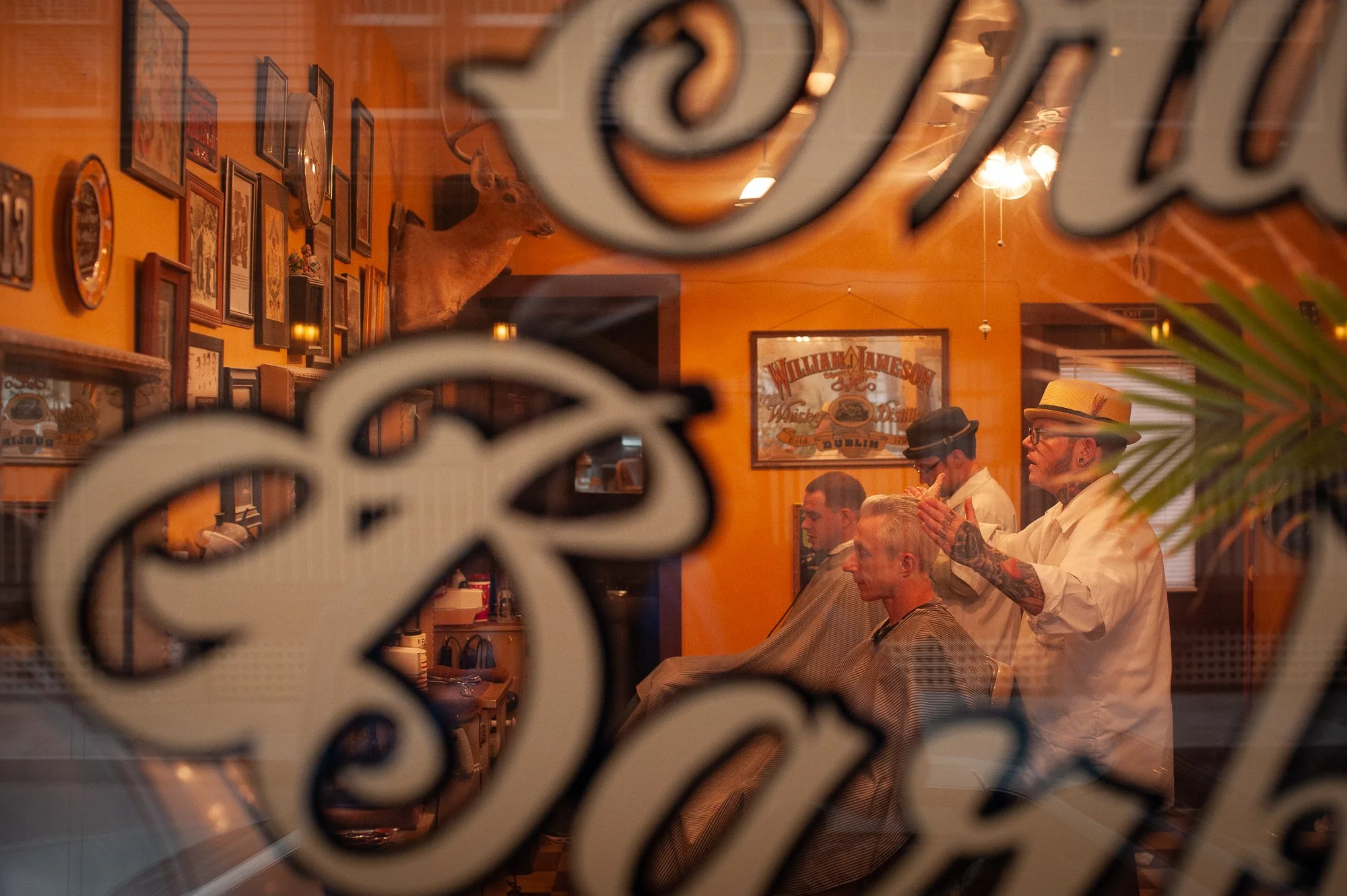
Vintage taxidermy and barber shop details fill the interior of Pugsly’s SideShow in Kingston, New York.

Through the front window, a haircut is underway inside Pugsly’s Barbershop in Kingston, New York.
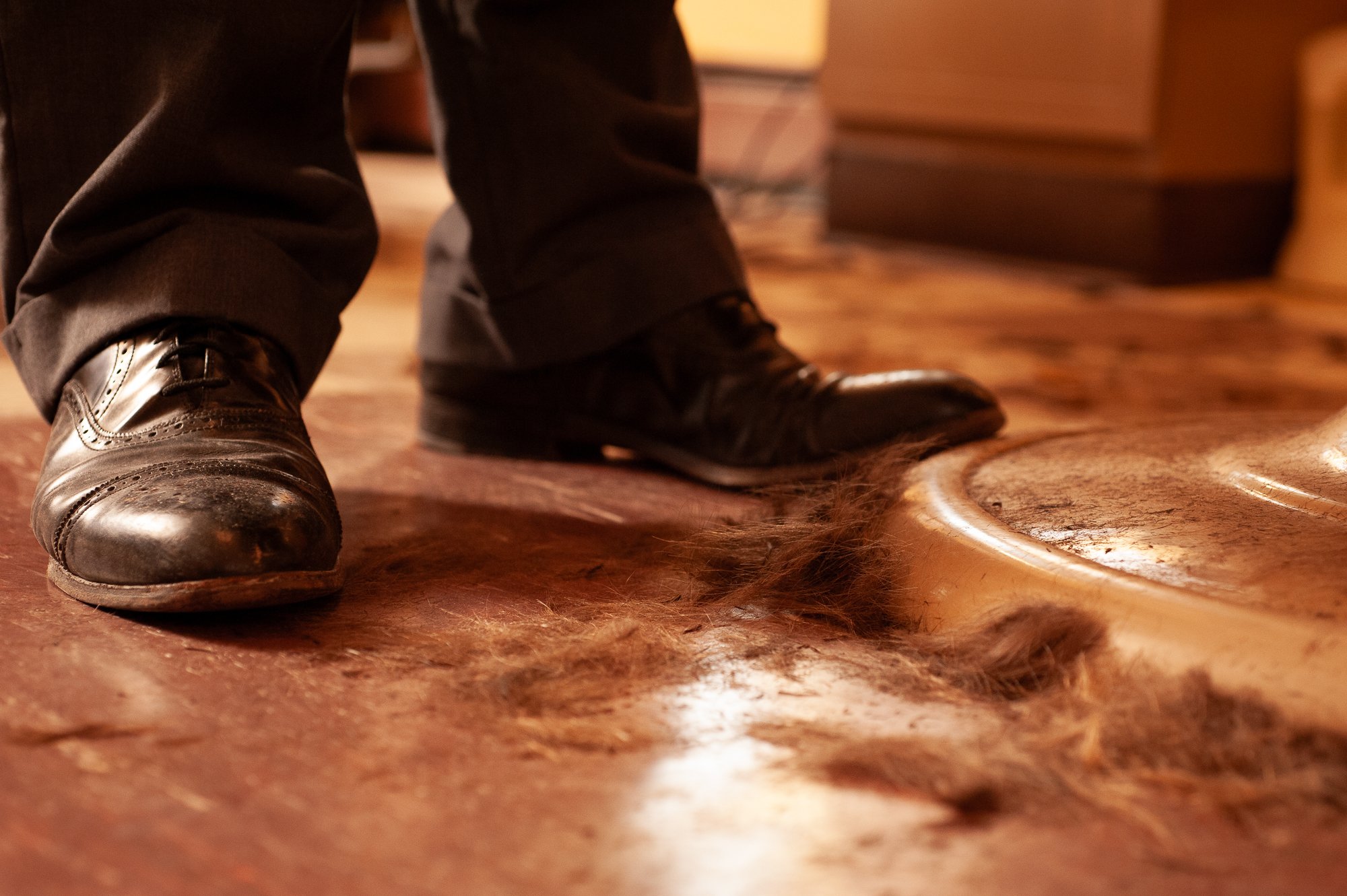
Hair clippings on the floor beside a barber's shoes and chair at Pugsly's SideShow Barbershop.

Hair clippings on the floor capture a small detail from a day of work inside the shop.
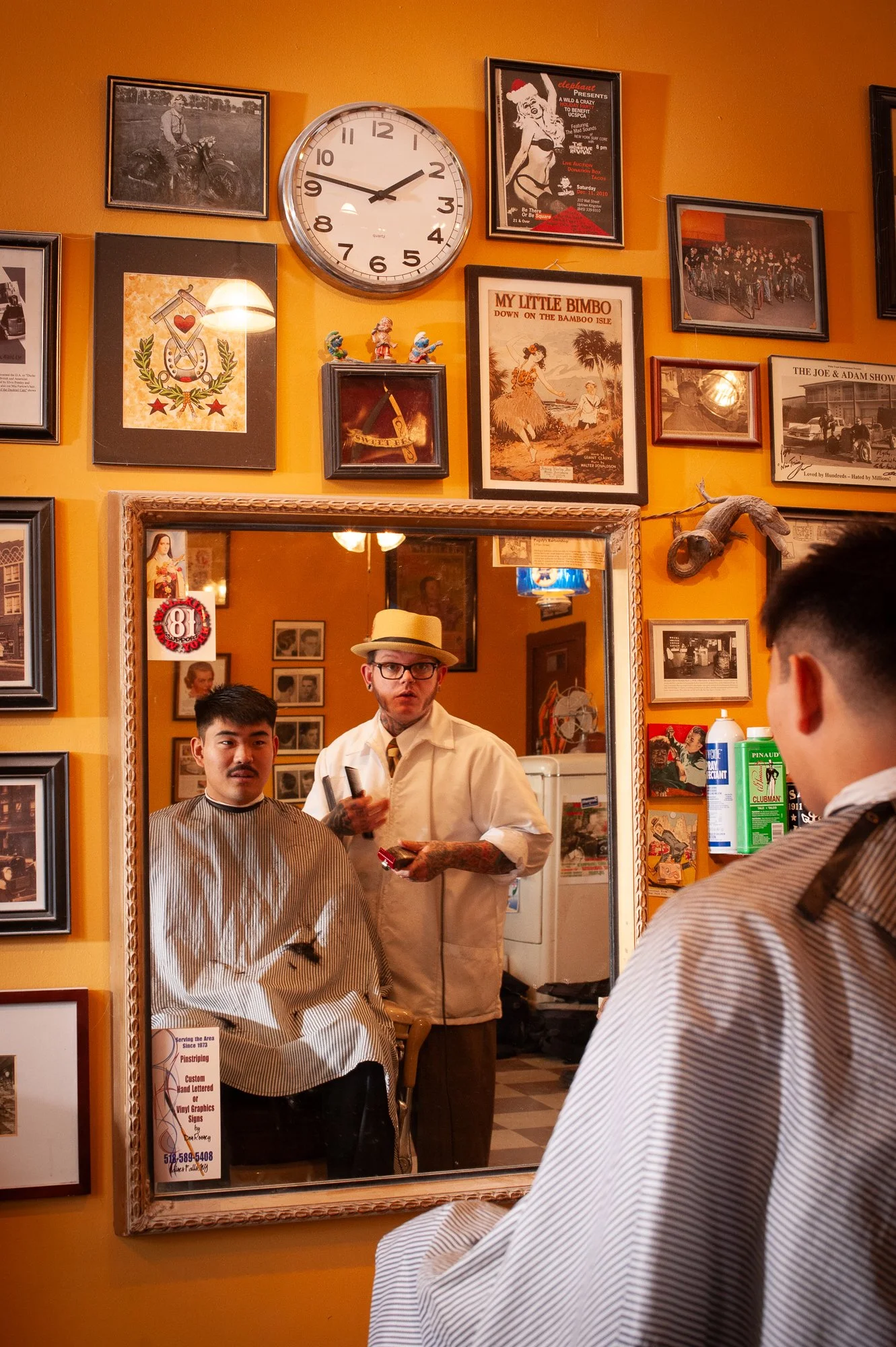
Barber cutting a client's hair inside Pugsly's SideShow Barbershop in Kingston, New York.

A haircut in progress at Pugsly's Barbershop, surrounded by the shop's photographs, artwork, and vintage decor.
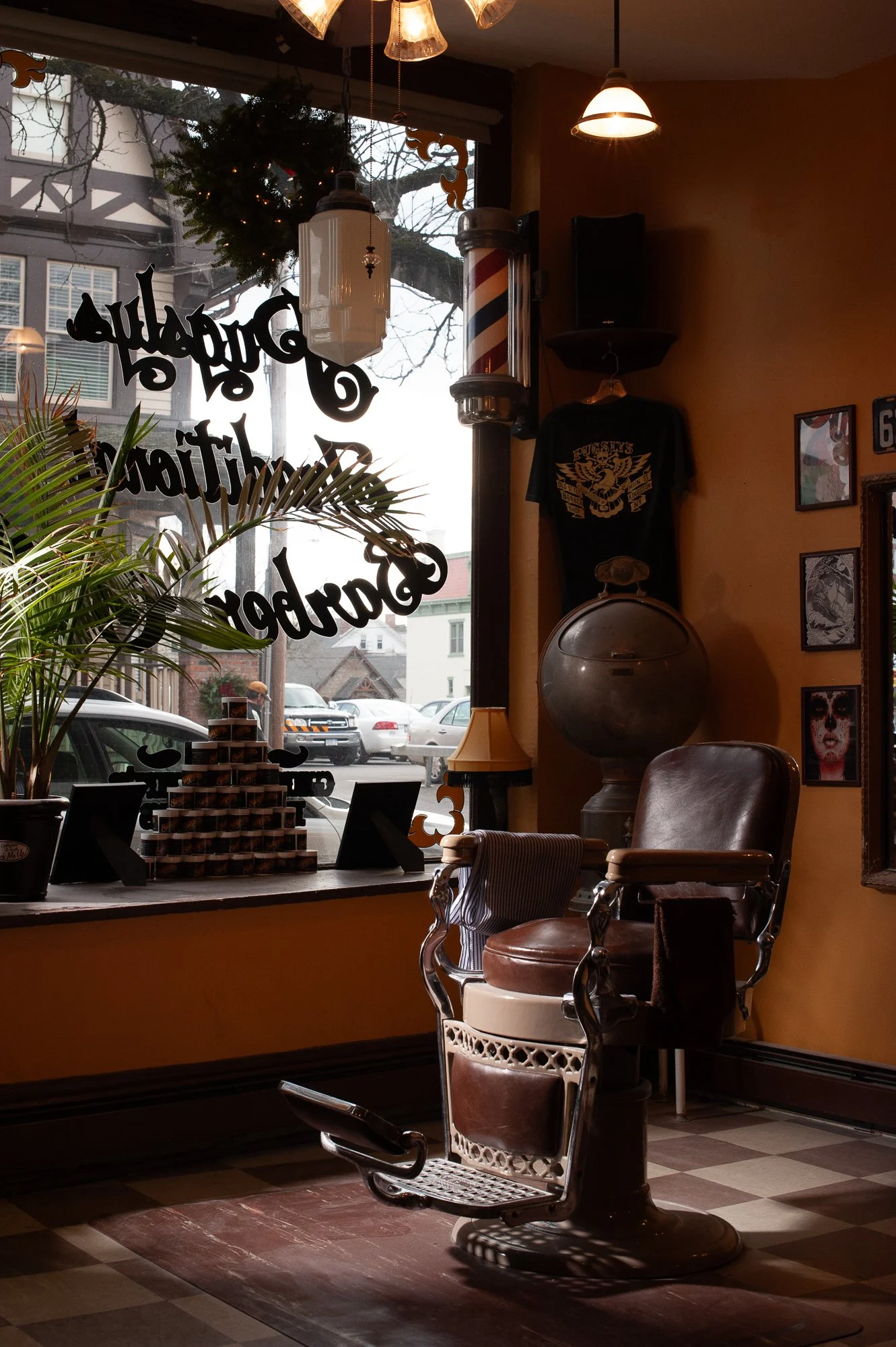
Interior of Pugsly's SideShow Barbershop showing a vintage barber chair and decorated window.

Warm light, vintage details, and a barber chair waiting for the next client.

A Second Shop: Pugsly’s SideShow

By the time I returned, Pugsly had opened another shop.

Pugsly's SideShow wasn't intended to be a copy of the original. It grew out of a practical problem with the first shop: people were waiting too long.

The original was built around the traditional walk-in model. SideShow was appointment-based and gave Pugsly an opportunity to create something slightly different.

It also looked different.

The original shop leaned heavily into the visual language of the classic American barbershop. SideShow was more eccentric and personal. It still had one foot planted firmly in barbering tradition, but there was more room for Pugsly's other influences: cars, motorcycles, custom culture, music, signs, paint, and all the strange objects that somehow make perfect sense when they're together in the same room.

I photographed SideShow for the first time during the final push for the Barbershops of America book.

The timing wasn't exactly ideal.

I was crossing the country and the only opportunity I had to photograph the shop was Christmas Eve. Pugsly opened the place anyway.

That's the kind of thing I remember as much as the photographs.
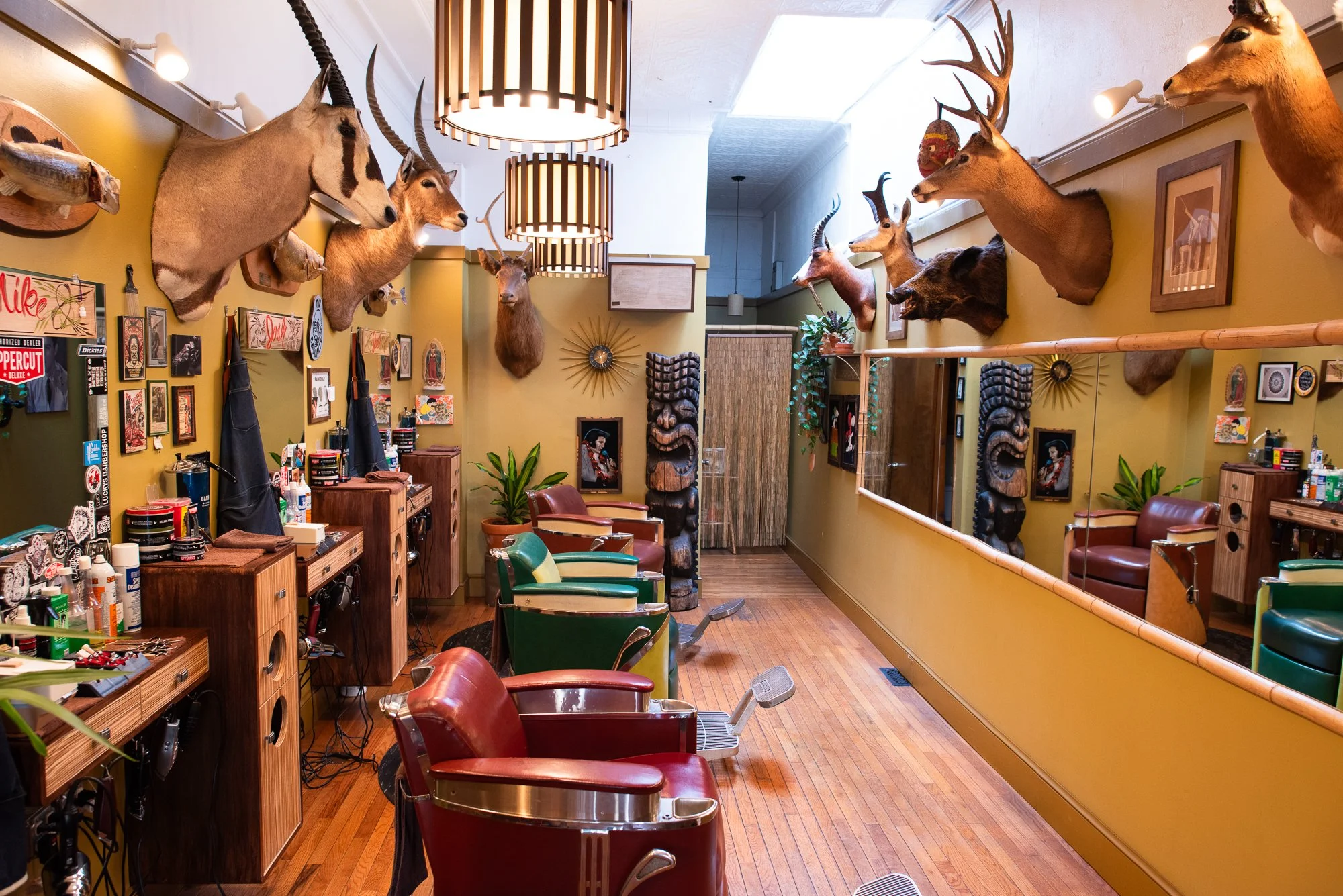
Barber stations and vintage decor line the interior of Pugsly’s barbershop in Kingston, New York.

Inside Pugsly’s Sideshow, vintage decor and barber stations fill the Kingston, New York shop.
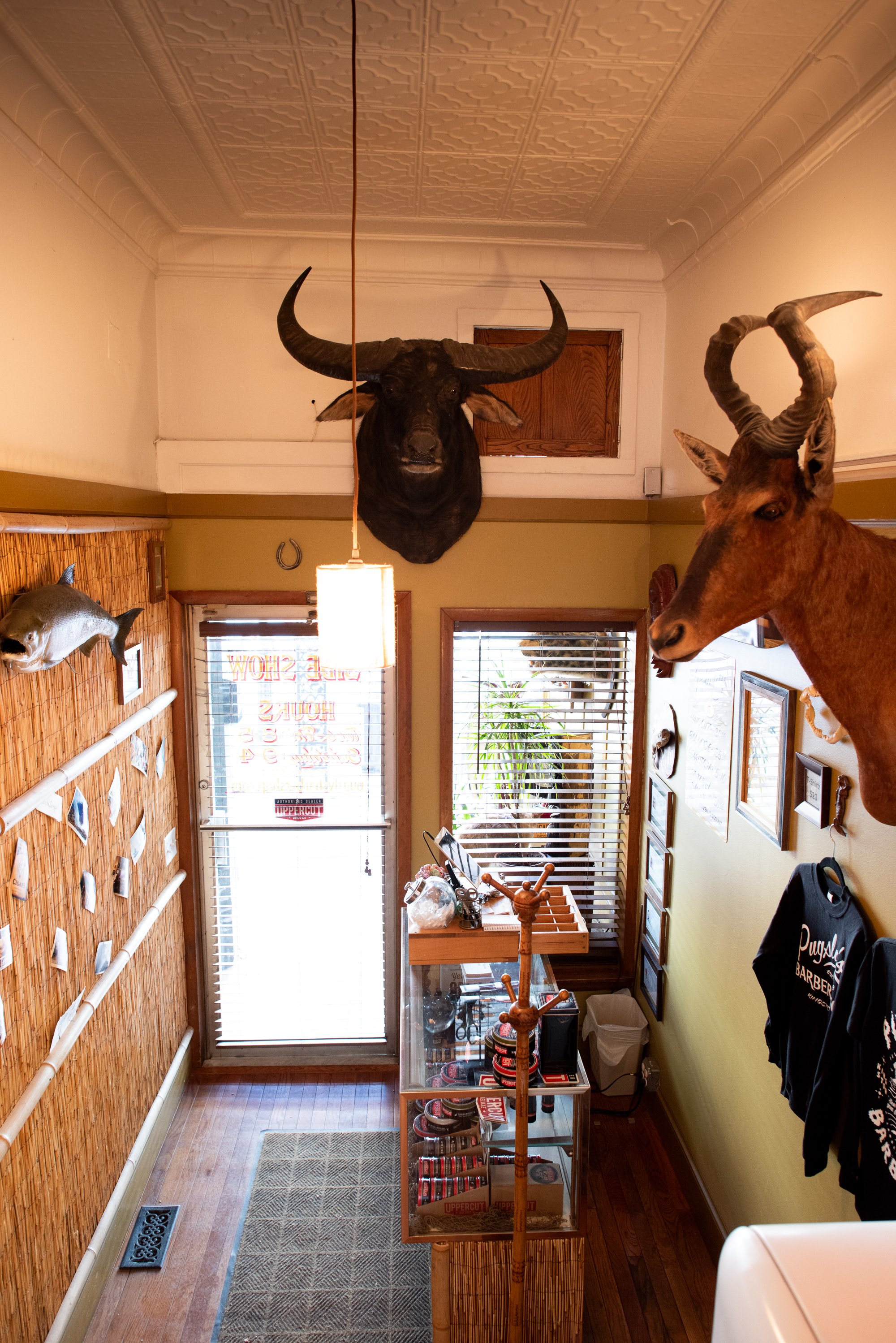
Vintage barber chair inside Pugsly’s Traditional Barber Shop.

Taxidermy and vintage barber shop details surround the entryway inside Pugsly’s SideShow.
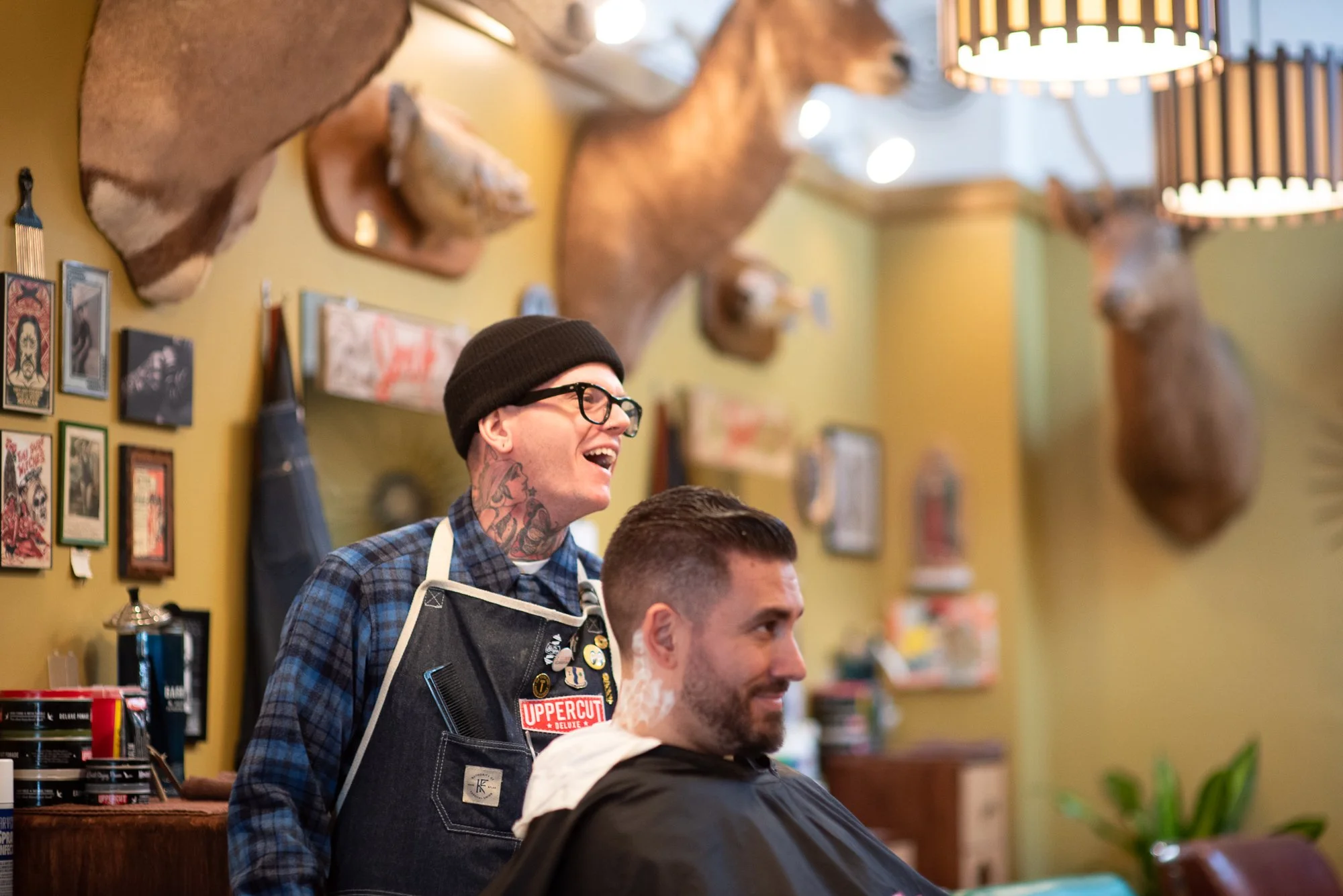
Pugsly shares a laugh with a client during a haircut at his barbershop in Kingston, New York.

Between cuts, there’s always time for a laugh.
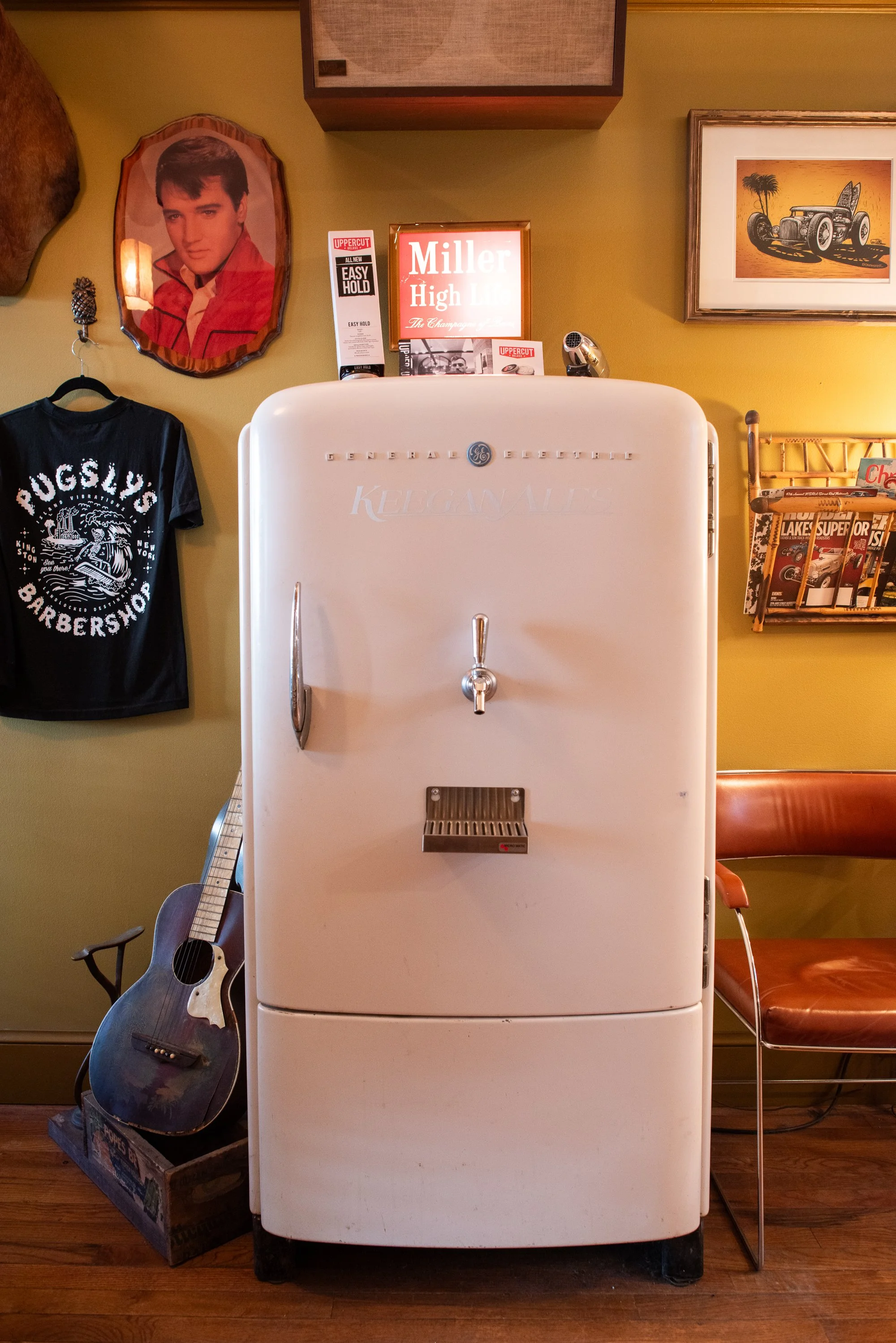
Vintage interior details at Pugsly's SideShow barbershop in Kingston, New York

Vintage kegerator and memorabilia fill a corner inside Pugsly’s SideShow.

Going Back Again

In 2026, I found myself back in Kingston.

By this point, Barbershops of America had been part of my life for more than 15 years. I had photographed roughly 250 barbershops across all 50 states, published a book, driven an unreasonable number of miles, and watched plenty of the places I photographed disappear.

So I went back to SideShow.

This was the third time I had photographed Pugsly and the second time I had photographed this particular shop.

There was no need to recreate the photographs from the previous visits. That isn't really the point.

The point was to photograph what was there now.

A barbershop isn't a movie set. Things move. Objects accumulate. Chairs get worn. Walls fill up. People get older. Businesses evolve. Something that seemed completely ordinary during the first visit can become significant simply because it is still there years later.

And things that seemed permanent sometimes disappear.
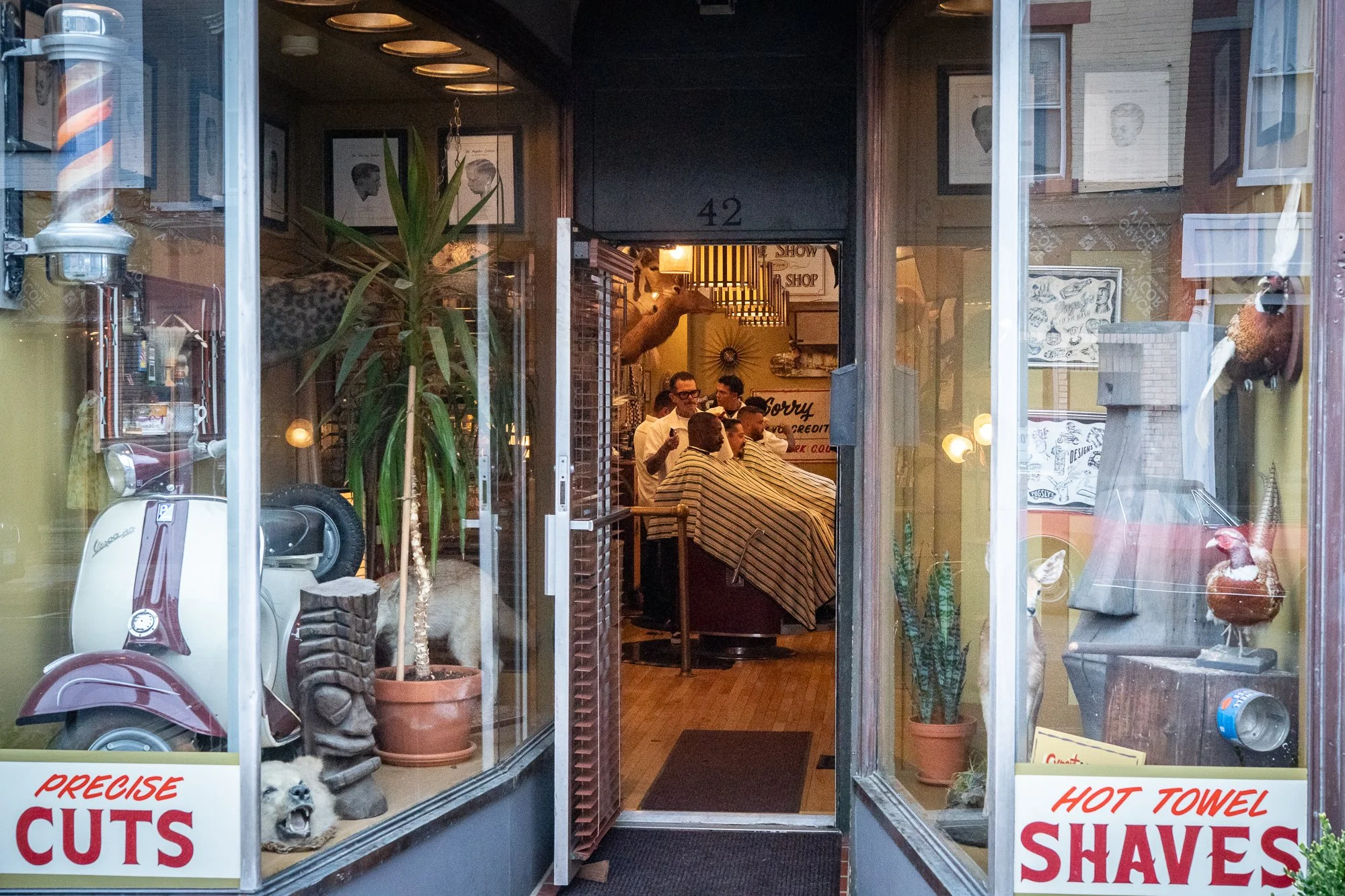
Barbers and clients inside Pugsly’s Barbershop in Kingston, New York, viewed through the front entrance.

Seen from the street, barbers work with clients inside Pugsly’s Sideshow.
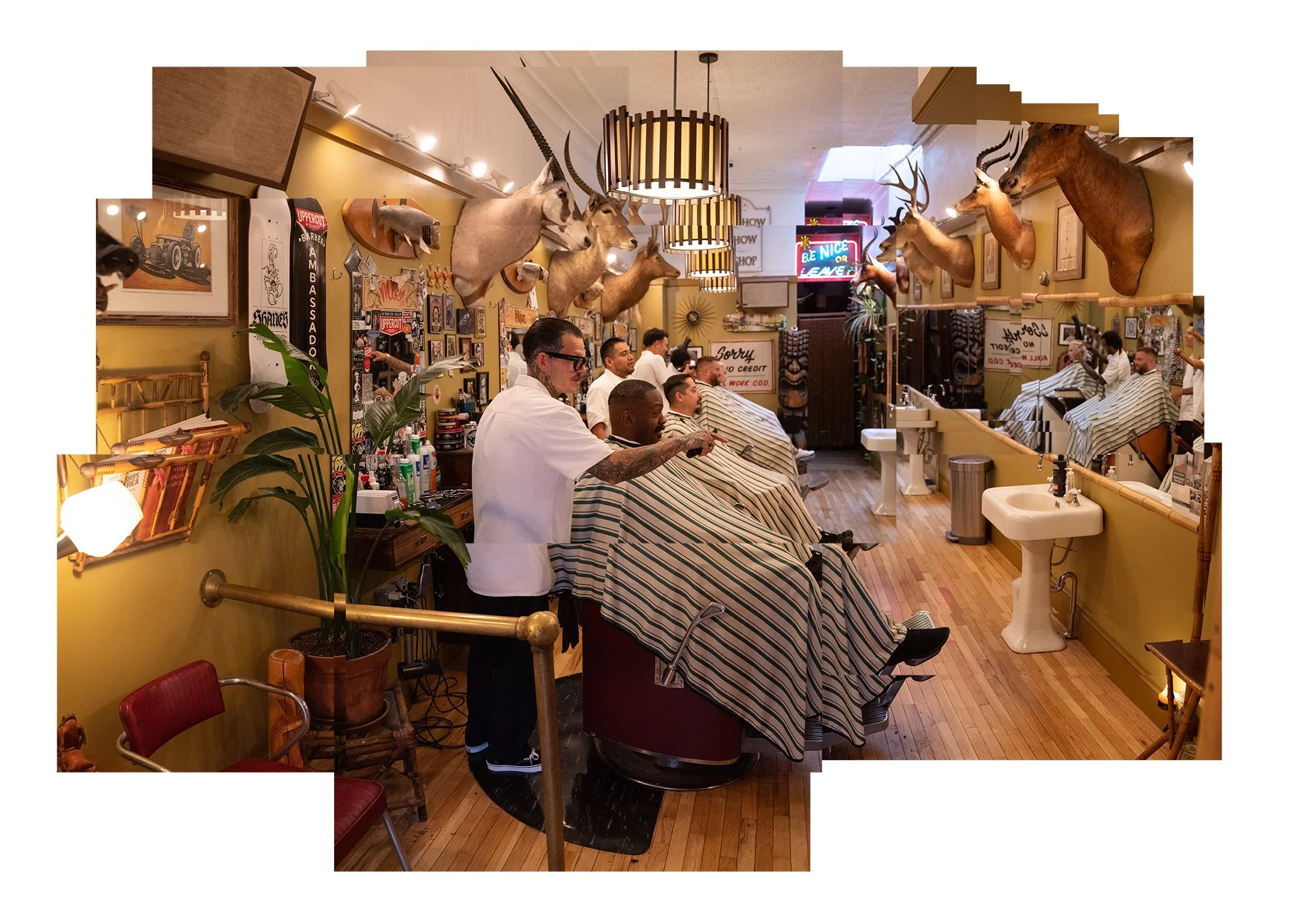
A collage of the Pugsly's barbershop interior showing barbers working with clients, barber chairs, mirrors, plants, and mounted animal displays.

A busy day at Pugsly's Sideshow - barbers working across the shop's row of chairs and detailed interior.
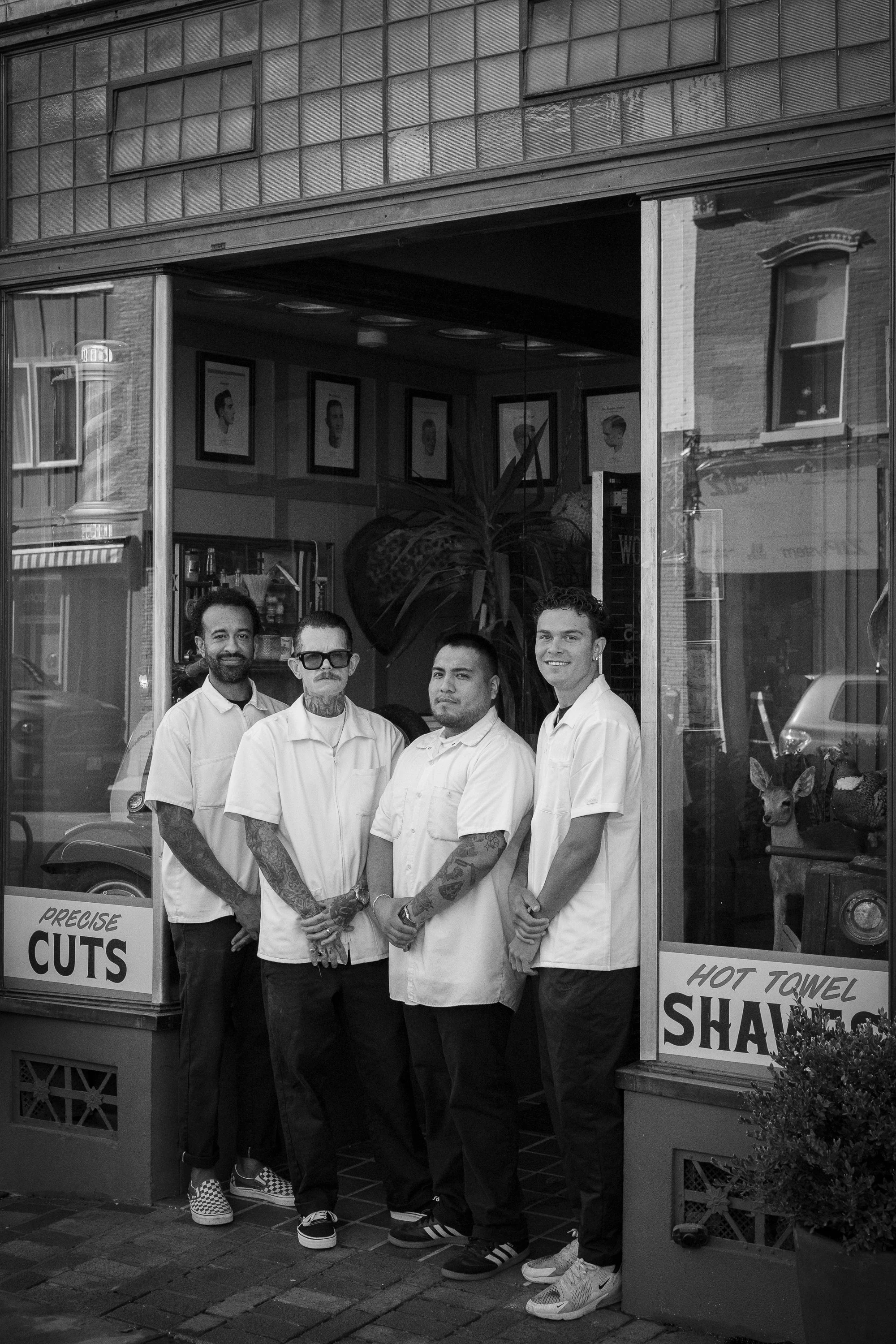
Four barbers standing together outside Pugsly's barbershop in matching white work shirts.Four barbers standing together outside Pugsly's barbershop in matching white work shirts.

The Pugsly's team outside the shop.

What 15 Years Does to a Photograph

This is the part of Barbershops of America that has become increasingly interesting to me.

When I started the project, I was primarily documenting places.

Now I'm documenting time.

A photograph of a barbershop made today can be interesting because of the people, light, architecture, objects, or activity happening inside the frame. But make another photograph of that place ten years later and suddenly the first photograph contains information you didn't realize you were recording.

The haircut on the wall. The price board. The magazines. The barber chair. The person sitting in it. The businesses next door. The way people dressed. The objects that disappeared and the ones that somehow never moved.

None of those things necessarily feel historic when you're standing there.

Time does that work for you.

That's why returning to Pugsly's matters to me.
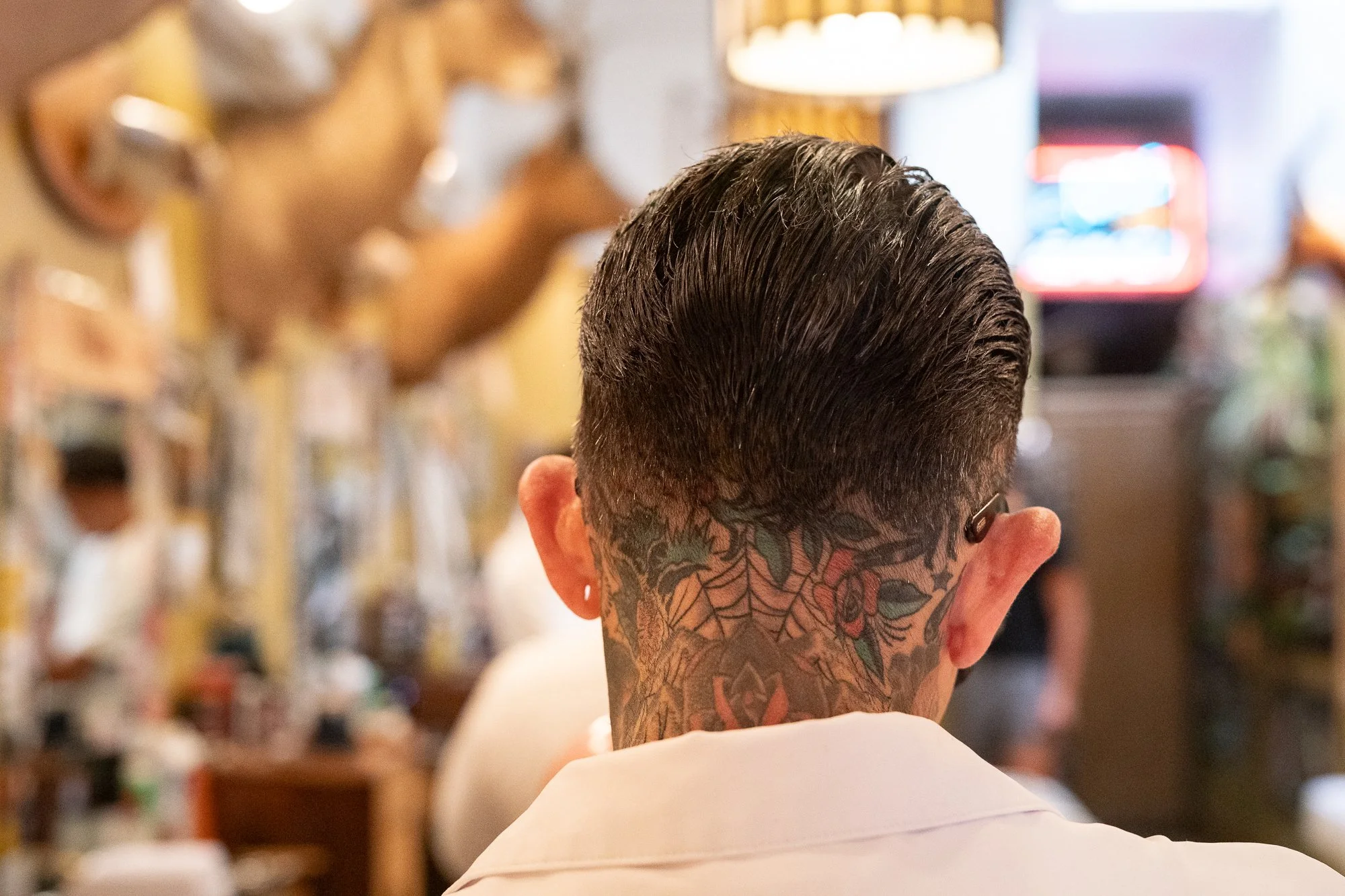
Close-up of a barber’s slicked-back haircut and neck tattoo as he works inside Pugsly’s SideShow Barbershop in Kingston, New York.

Slicked-back hair and a tattooed neck as Pugsly works behind the chair.
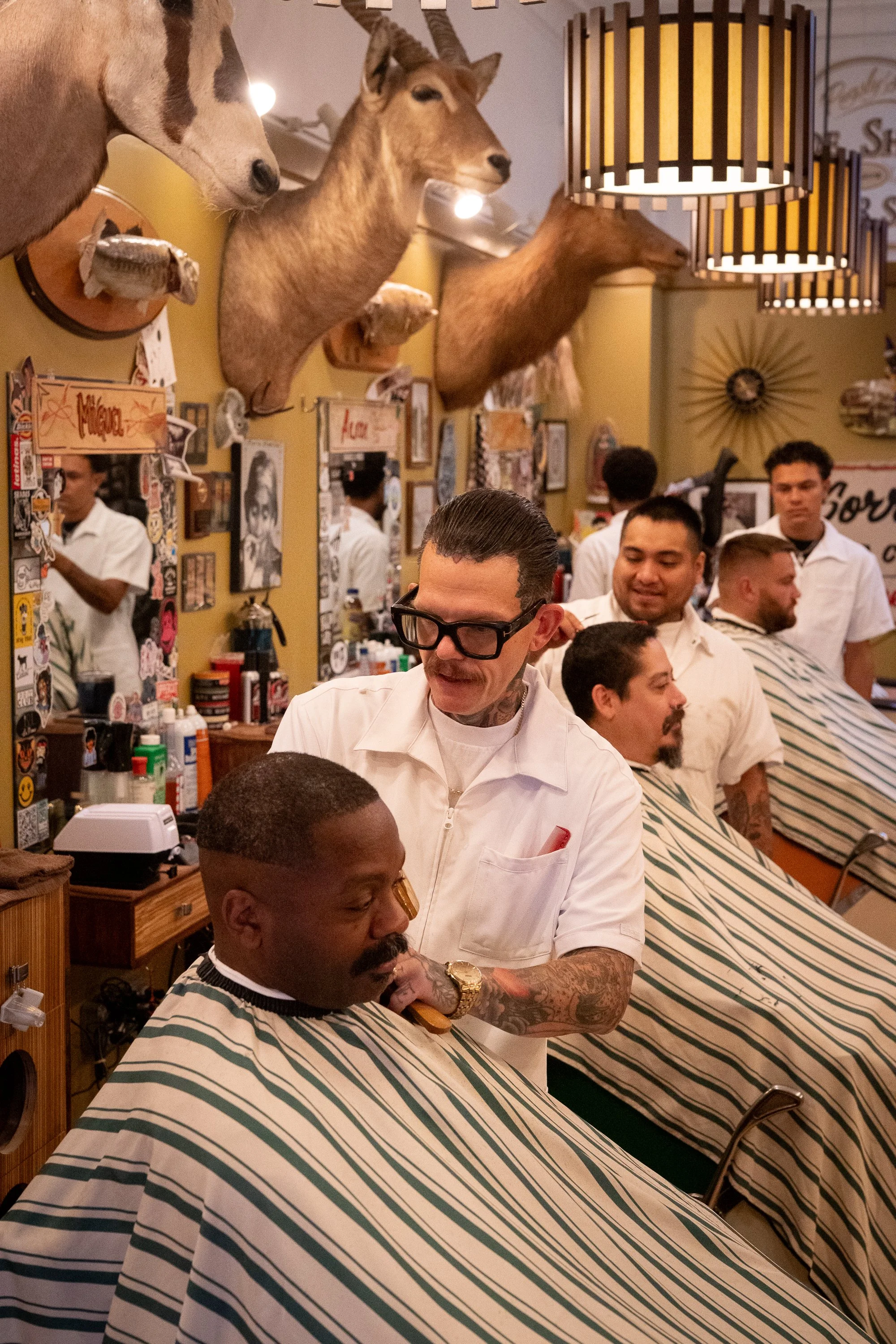
Barbers in white uniforms trim clients’ hair inside Pugsly’s Barbershop.

Haircut underway at Pugsly's as several barbers work throughout the shop.
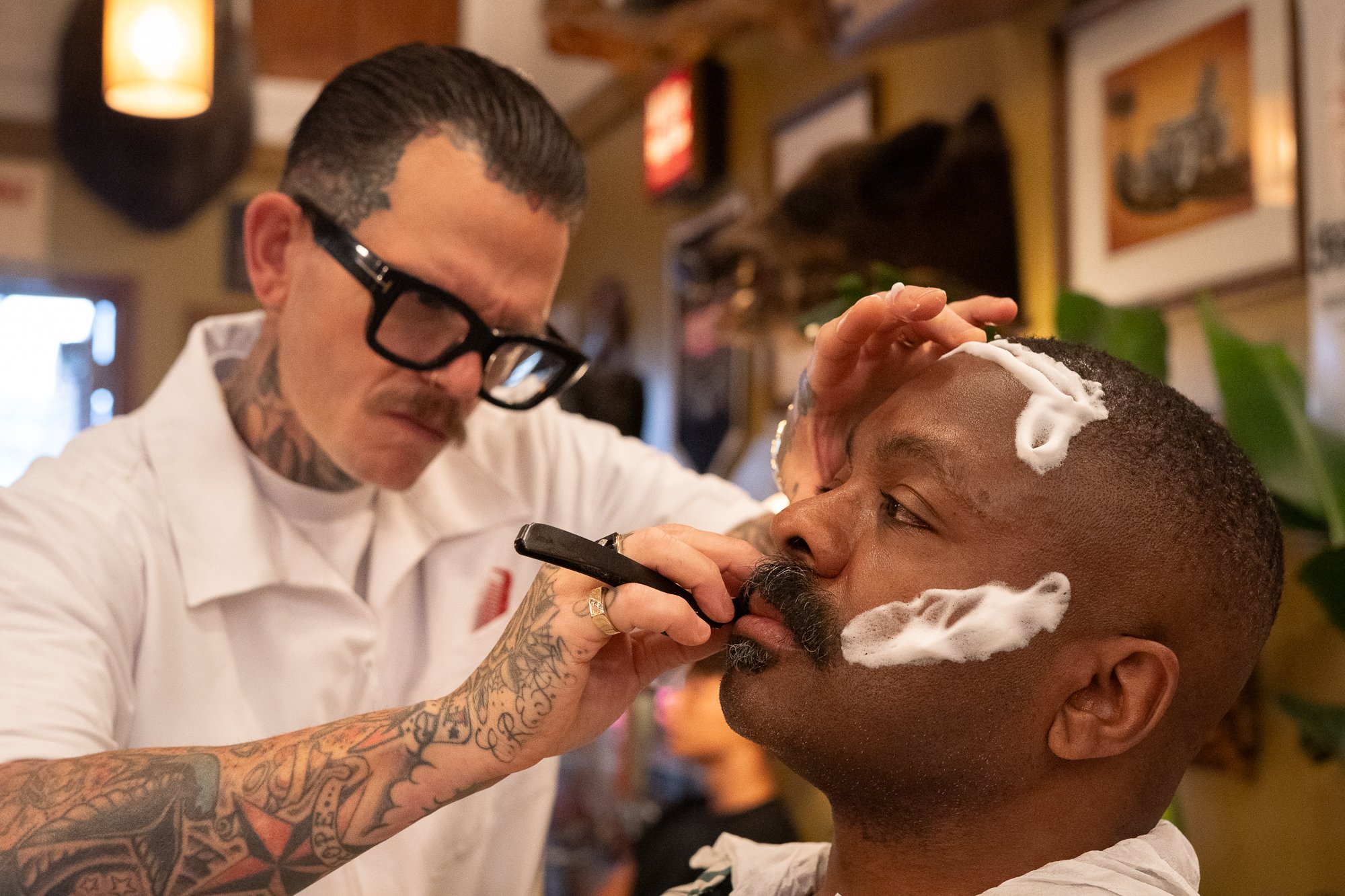
A barber in a white uniform uses a straight razor to shave a client's beard at Pugsly's barbershop.

Straight-razor shaving in progress inside the barbershop.

More Than a Collection of Barbershops

For years I described Barbershops of America as a project about traditional barbershops across the United States.

That's still true, but after 15 years it feels incomplete.

The project has become a photographic record of a particular piece of American culture during a period when that culture has changed dramatically.

Some shops I've photographed have closed. Some barbers have retired or died. Others have expanded, moved, or passed their chairs to another generation. New shops have appeared that borrow heavily from traditions that nearly disappeared a generation earlier.

And a handful of places have allowed me to come back.

Those repeat visits are becoming some of the most valuable photographs in the archive because they allow the project to show something a single photograph can't:

what stayed, what changed, and what disappeared.

Pugsly's is now part of that story.

And hopefully this wasn't the last time I photograph it.
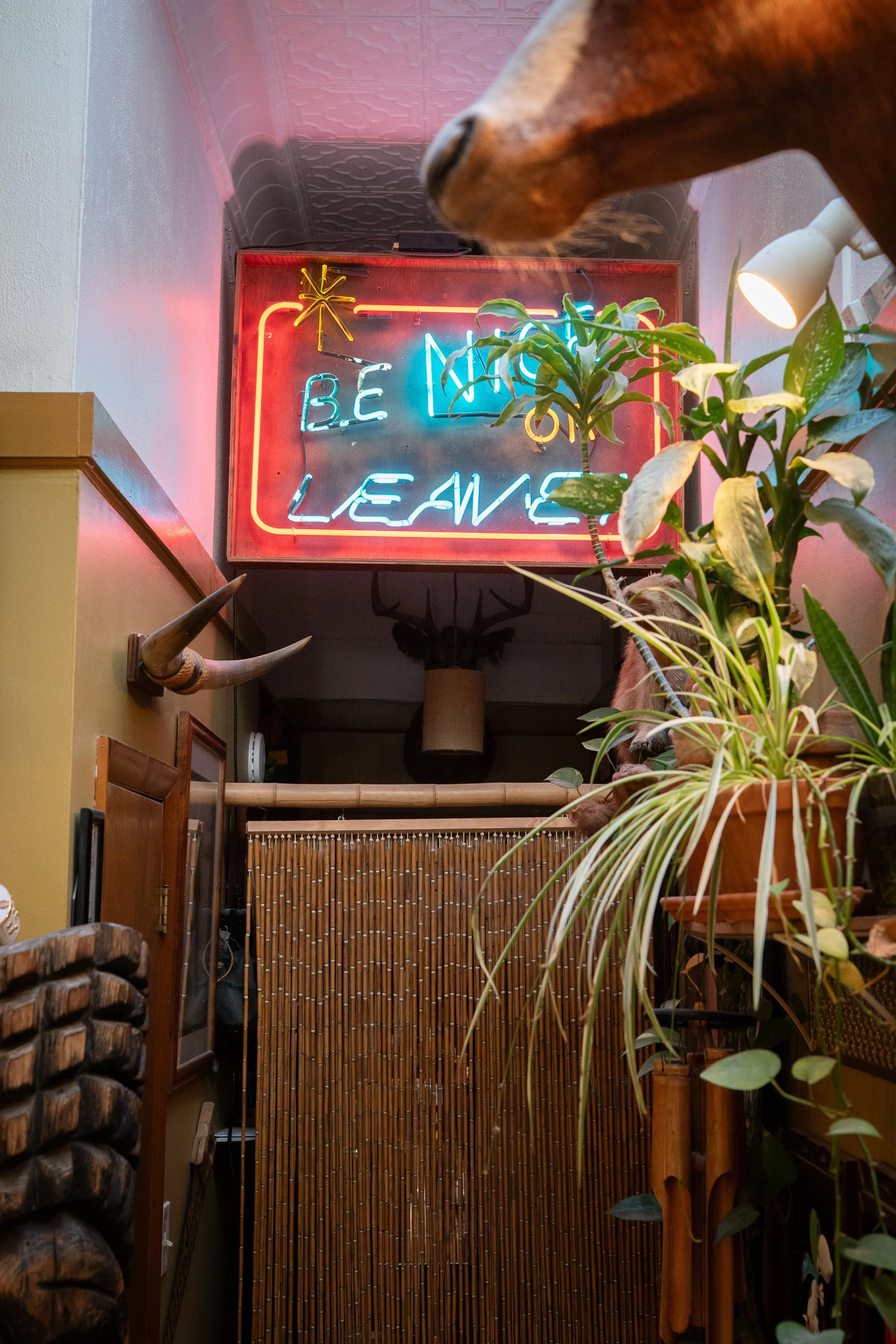
Neon “Be Nice or Leave” sign surrounded by plants and vintage barbershop decor.

The “Be Nice or Leave” neon adds another layer to the shop’s character.
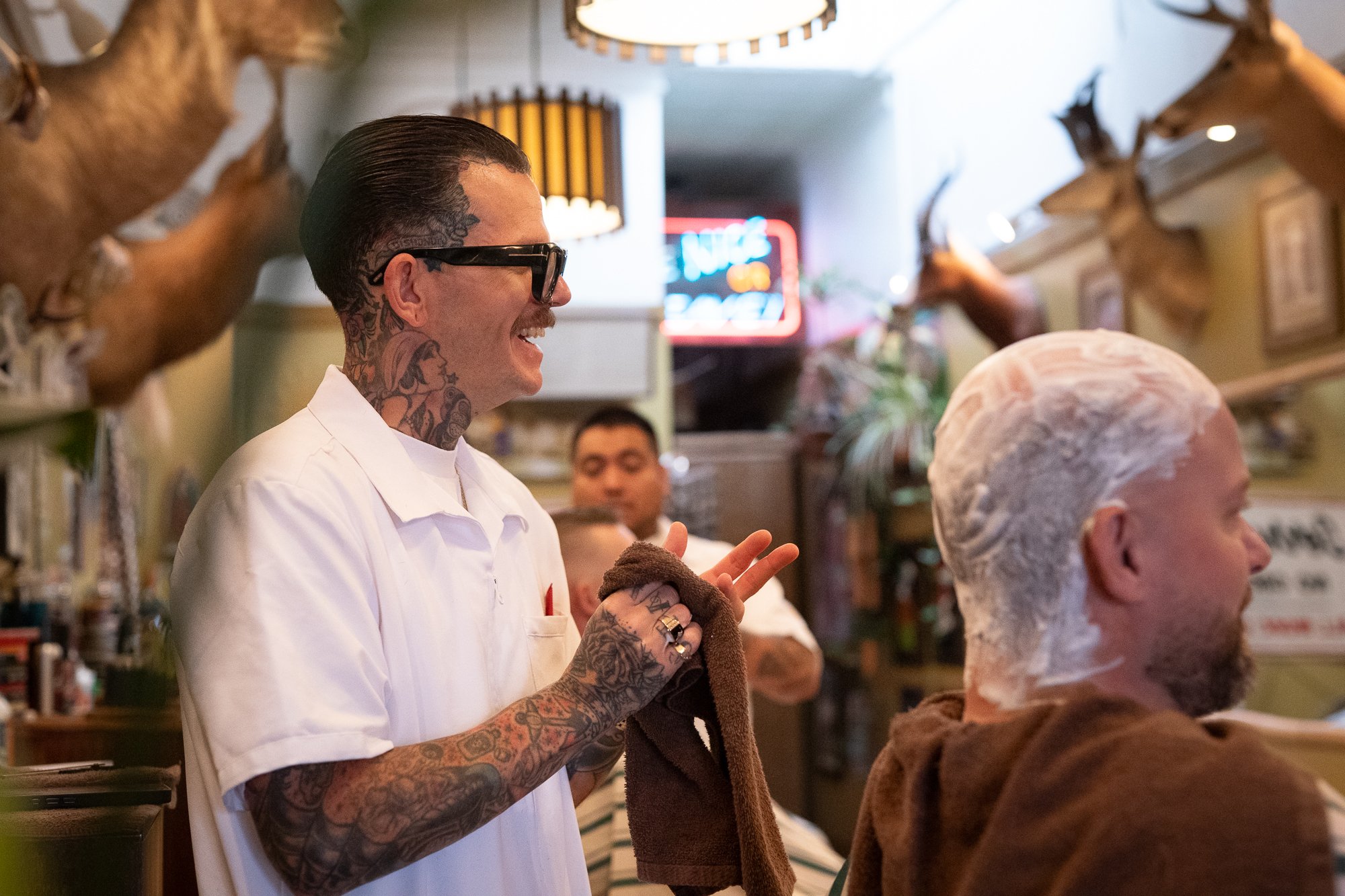
Barber holding a hot towel while working with a client during a grooming service inside the barbershop.

Between haircuts, conversation and laughter keep the shop moving.
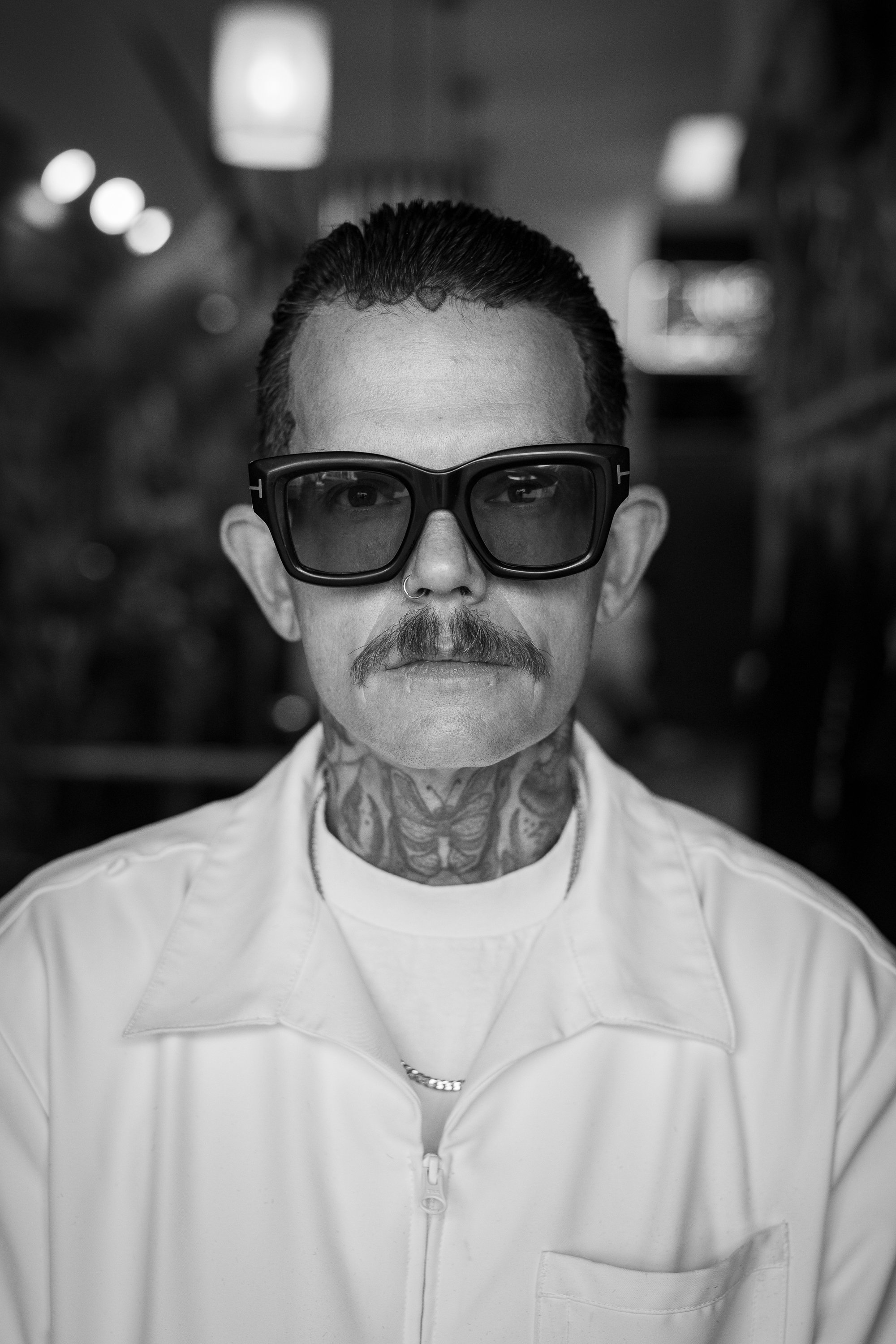
Pugsly, owner and barber at Pugsly’s SideShow Barbershop in Kingston, New York.

Portrait of Pugsly inside his Kingston barbershop.

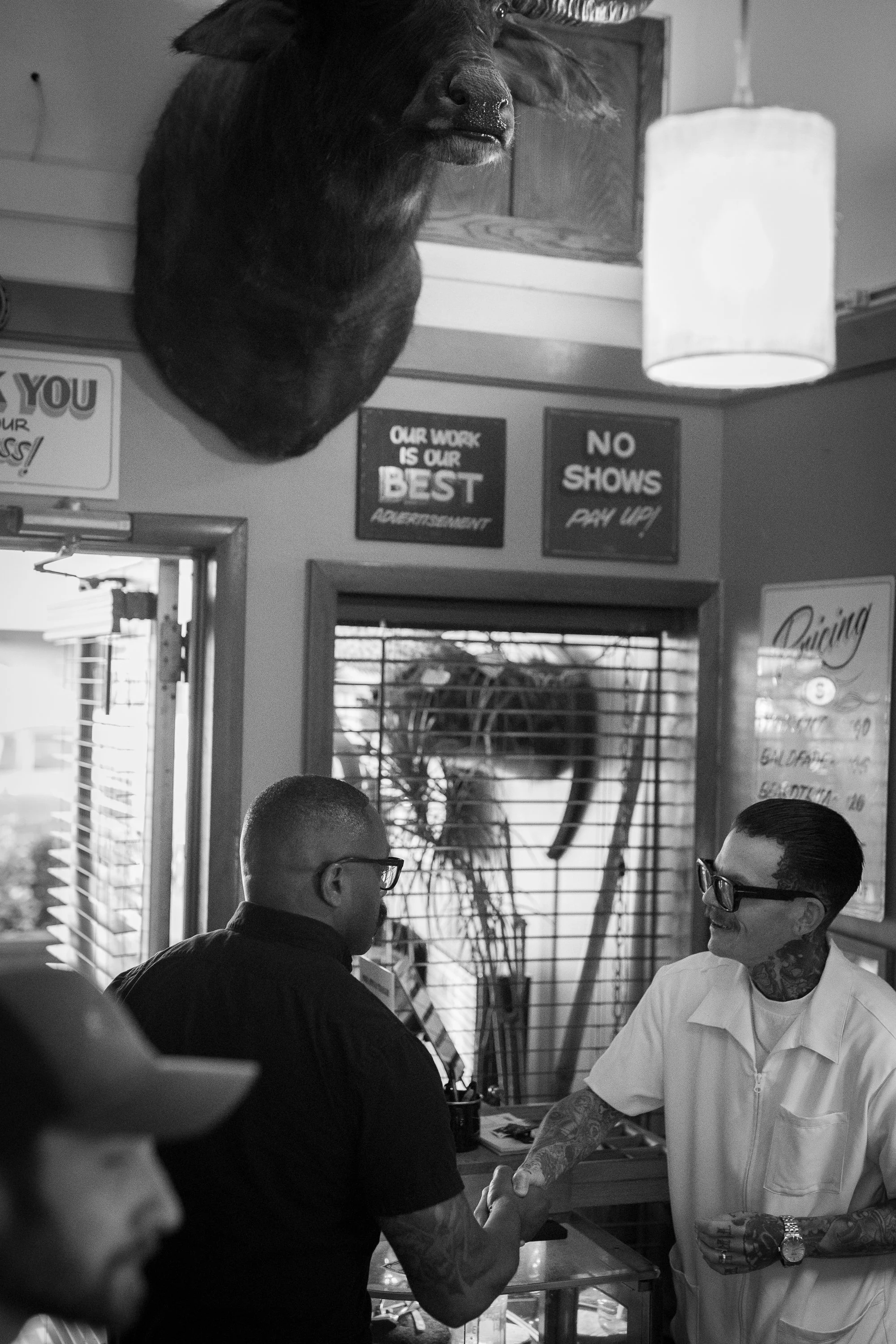
A barber in a white uniform shakes hands with a client inside Pugsly's barbershop.

Signs, displays and a mounted taxidermy fill the background as Pugsly greets his client.
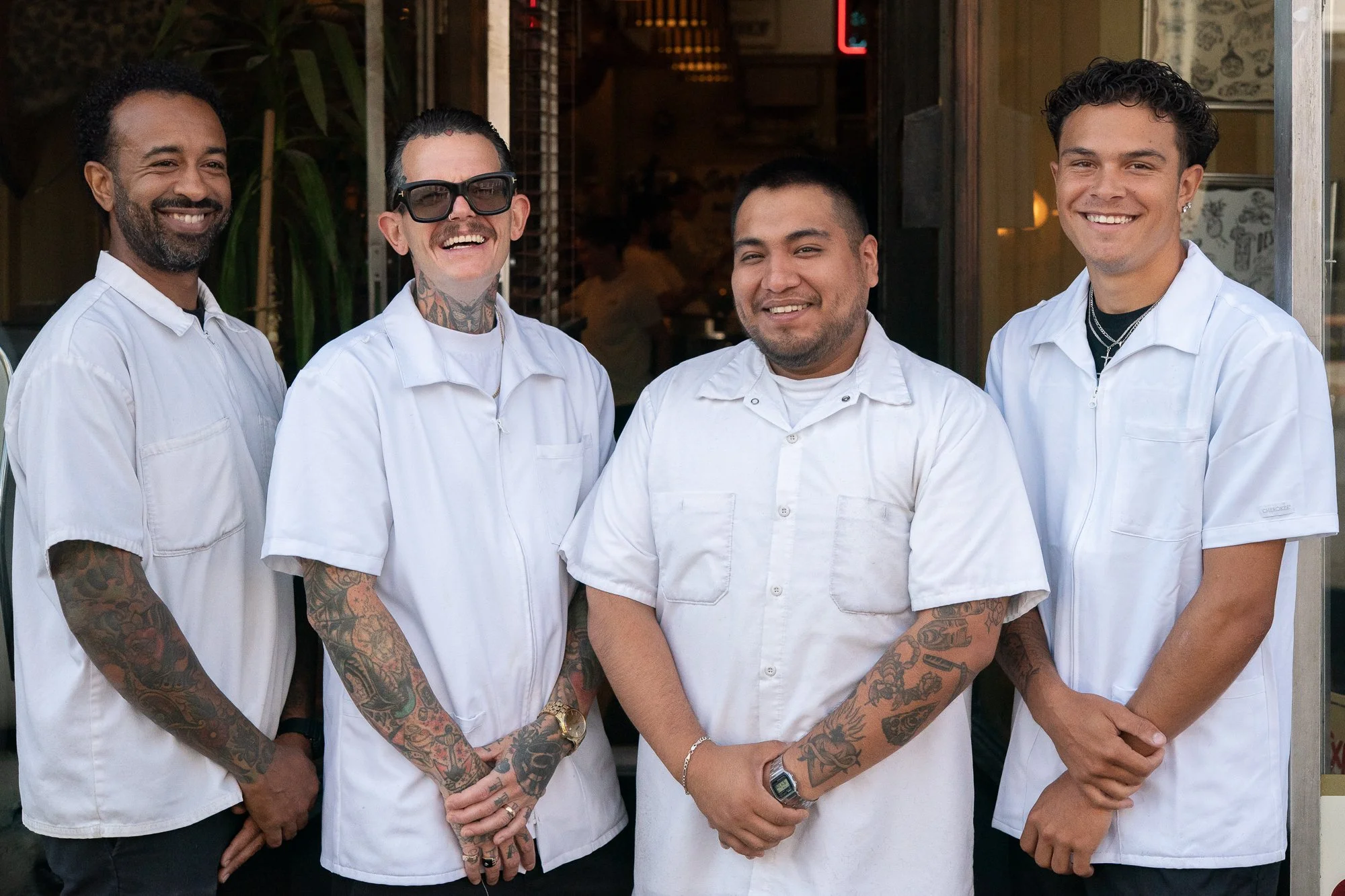
Four barbers standing together in the doorway of Pugsly's barbershop.

Pugsly’s SideShow barbers gather for a portrait in the shop doorway.
Shane's Barbershop - San Mateo, CA

Shane’s Barbershop, San Mateo

A Standard That Hasn’t Been Matched

There was a time when if you cared about getting a proper haircut in San Mateo, you knew exactly where to go.

Shane’s Barbershop didn’t run on normal hours. The lights were on at 3:00 in the morning. Guys heading to work, early shifts, long days—they could count on Shane being there before most of the city was even awake. That alone set him apart. But it wasn’t the reason people kept coming back.

The work did that.

Shane Nesbitt built a reputation the hard way—one cut at a time, day after day, year after year. His standards were high, and he didn’t bend them. There was a level of consistency to what he did that a lot of shops never reach. Clean fades, sharp lines, no shortcuts. You sat in his chair, you knew what you were getting.

And other barbers paid attention.

Shane was, and still is, a reference point—someone peers and younger barbers looked to, whether they realized it or not. The kind of barber who quietly raises the bar for everyone else in the room. Not by talking about it, but by showing up and doing the work.

A Shop Built on Culture

Shane’s Barbershop was curated, but not overdone. It felt lived in. And a natural extension of Shane’s life.

There was a strong undercurrent of skateboard culture in the space—something that came through in the details more than anything obvious. The music, the energy, the way people moved through the shop. It wasn’t trying to be anything. It just was.

That mattered.

Because the best barbershops aren’t built around aesthetics or trends. They’re built around identity. Around the people who spend their time there. Around the conversations, the routines, the repetition of daily life.

Shane’s shop had that.

It was a place where working people came through the door, where time moved a little differently, where the day started early and didn’t slow down until it was done.

The Hours, The Work, The Reputation

Opening at 3:00am isn’t something you do for show.

It’s a reflection of who you are and who you’re there for.

Shane understood his customers—guys who didn’t have the luxury of showing up midday, who needed to be in and out before the rest of their day started. That schedule built a kind of loyalty you can’t manufacture.

And over time, that kind of consistency turns into something else.

Respect.

Not just from customers, but from other barbers. From people who know how hard it is to maintain that level of work, that kind of schedule, that kind of focus over years.

Shane was ahead of his time. He was the first barber to become a brand - selling t-shirts, stickers, even his own custom branded straight razors. Nobody else was doing that. Most importantly though, Shane knew that he was there to serve. A lot of barbers these days have giant egos and think their clients don’t deserve to sit in the chair. Yet despite Shane’s status, he knew he was there for the customer!

A Barbershop That’s No Longer There

The shop is closed now.

Things change. Life moves on. That’s part of it.

But places like Shane’s don’t just disappear. They stick with the people who spent time there. In the routines. In the stories. In the way other barbers approach their own work after seeing what was possible.

For a lot of people, Shane Nesbitt wasn’t just another barber.

He was the blueprint.

Part of a Larger Archive

This set of photographs is part of a long-term project documenting barbershops across America—places like this that define their communities, shape local culture, and, in many cases, quietly disappear over time.

Some shops are still open. Others, like Shane’s, live on through the people who remember them.

If you’ve spent enough time in barbershops, you know the difference between a place that cuts hair and a place that means something.

Shane’s was the latter.

Explore the Barbershops of America gallery

Read another barbershop story - Spanky’s Barbershop - Covington, KY

View Barbershop Prints + Photo Book

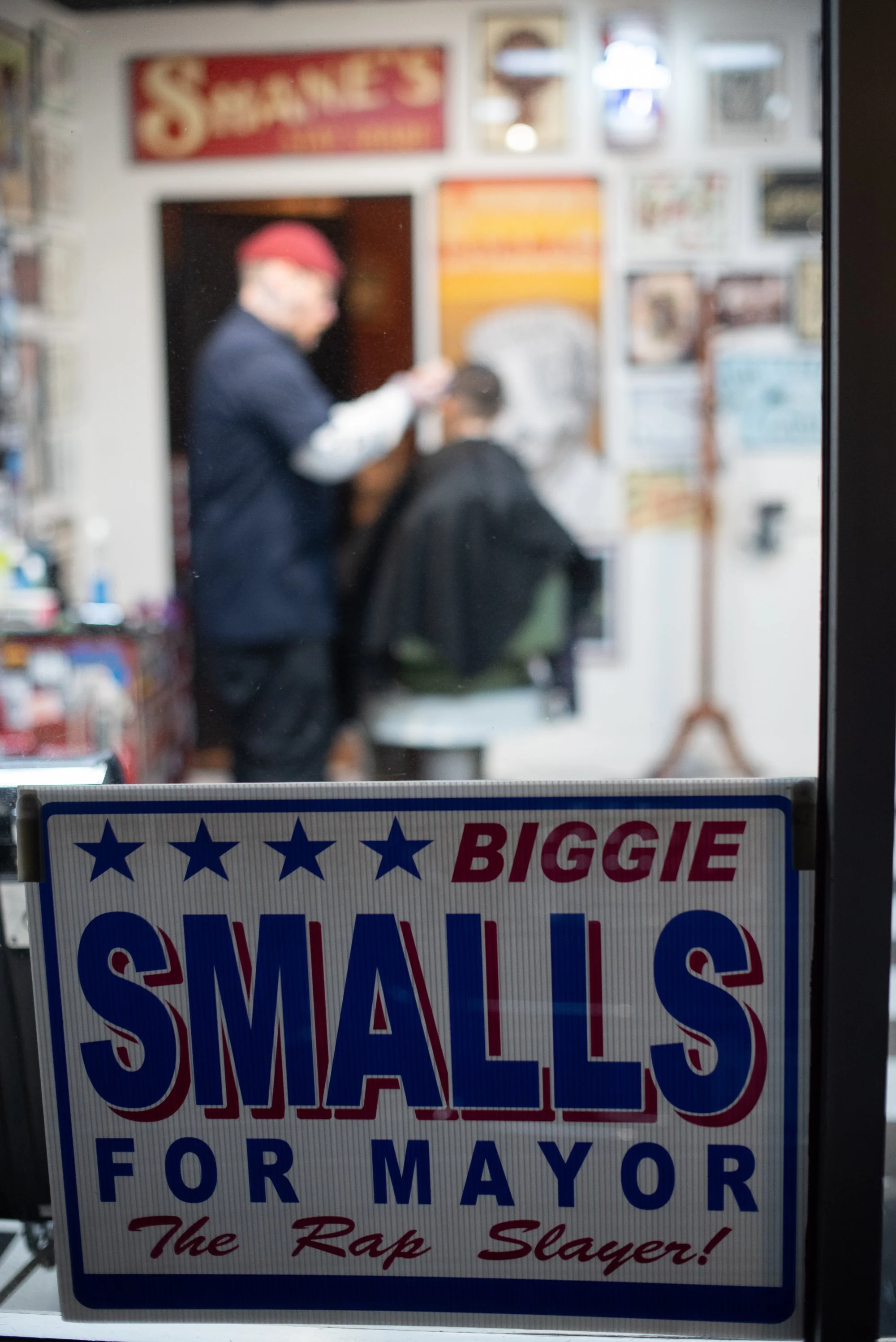
view through window into Shane's Barbershop San Mateo with barber cutting hair and campaign sign in foreground

View into Shane's Barbershop in San Mateo capturing everyday life inside the shop from the street

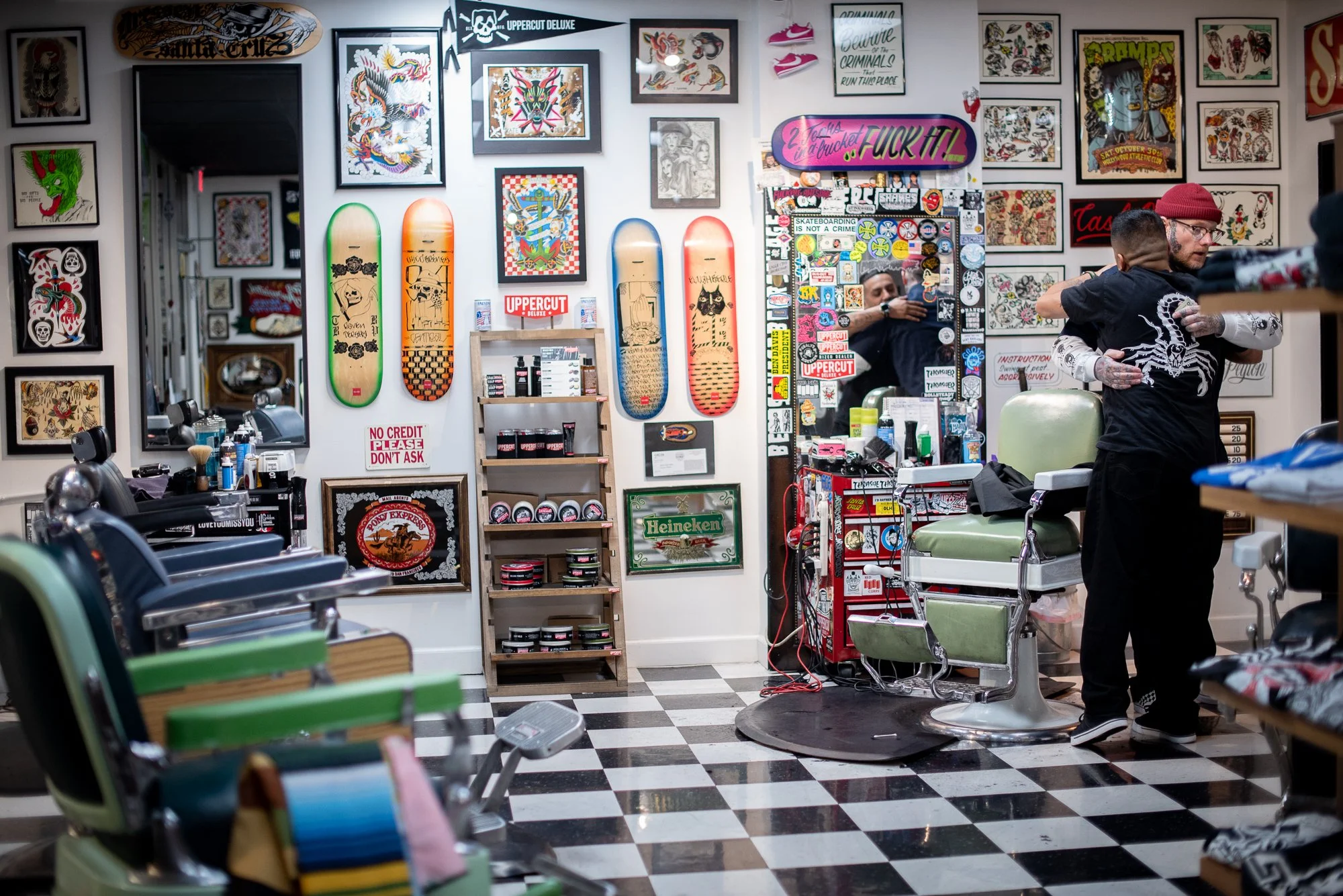
interior of Shane's Barbershop San Mateo with barber hugging client and tattoo artwork walls

Barber Shane Nesbitt shares a moment with a client inside his San Mateo shop surrounded by tattoo art and personal memorabilia

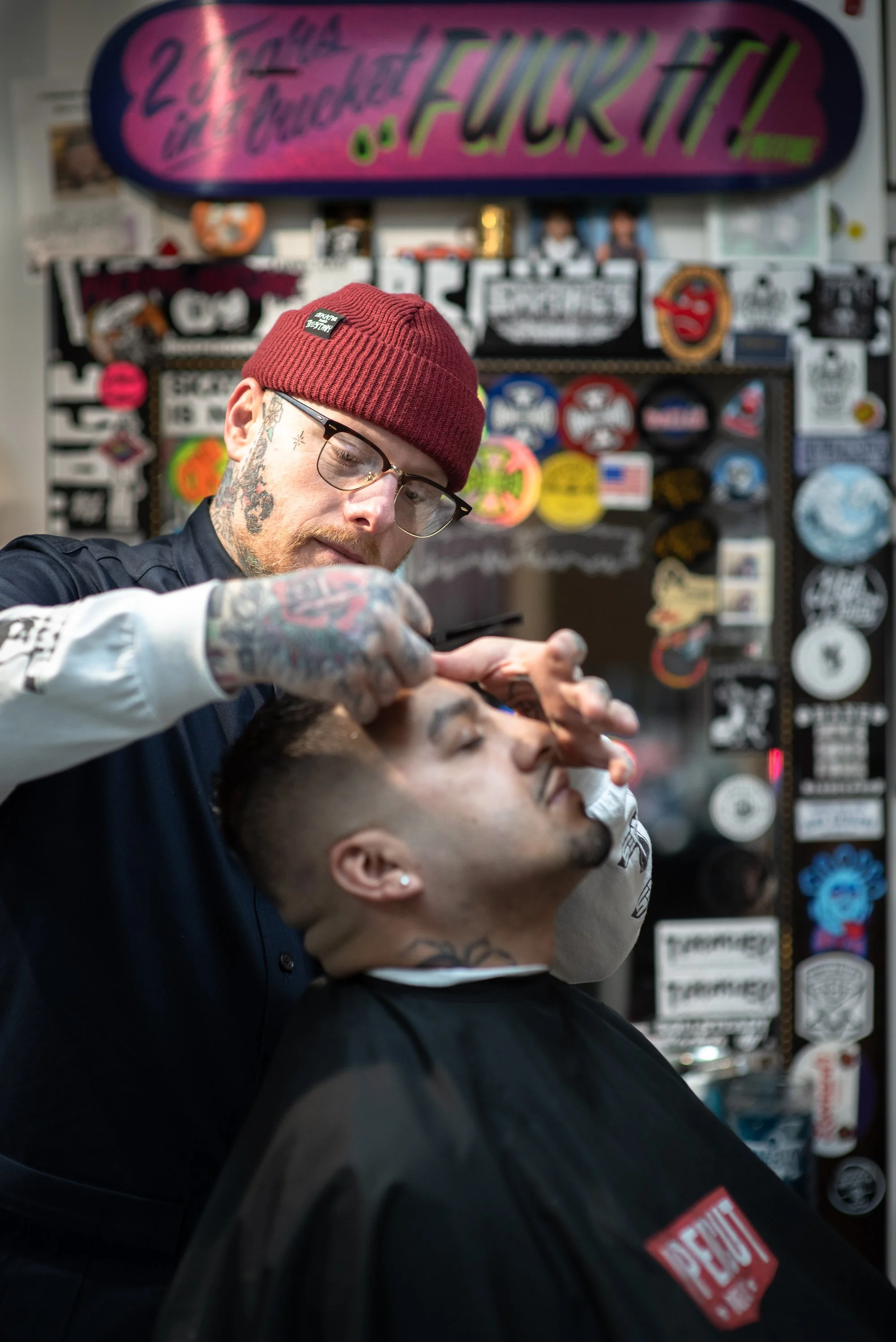
barber Shane Nesbitt giving detailed haircut to client inside Shane's Barbershop San Mateo

California barber Shane Nesbitt focuses on precision haircut inside Shane's Barbershop in San Mateo

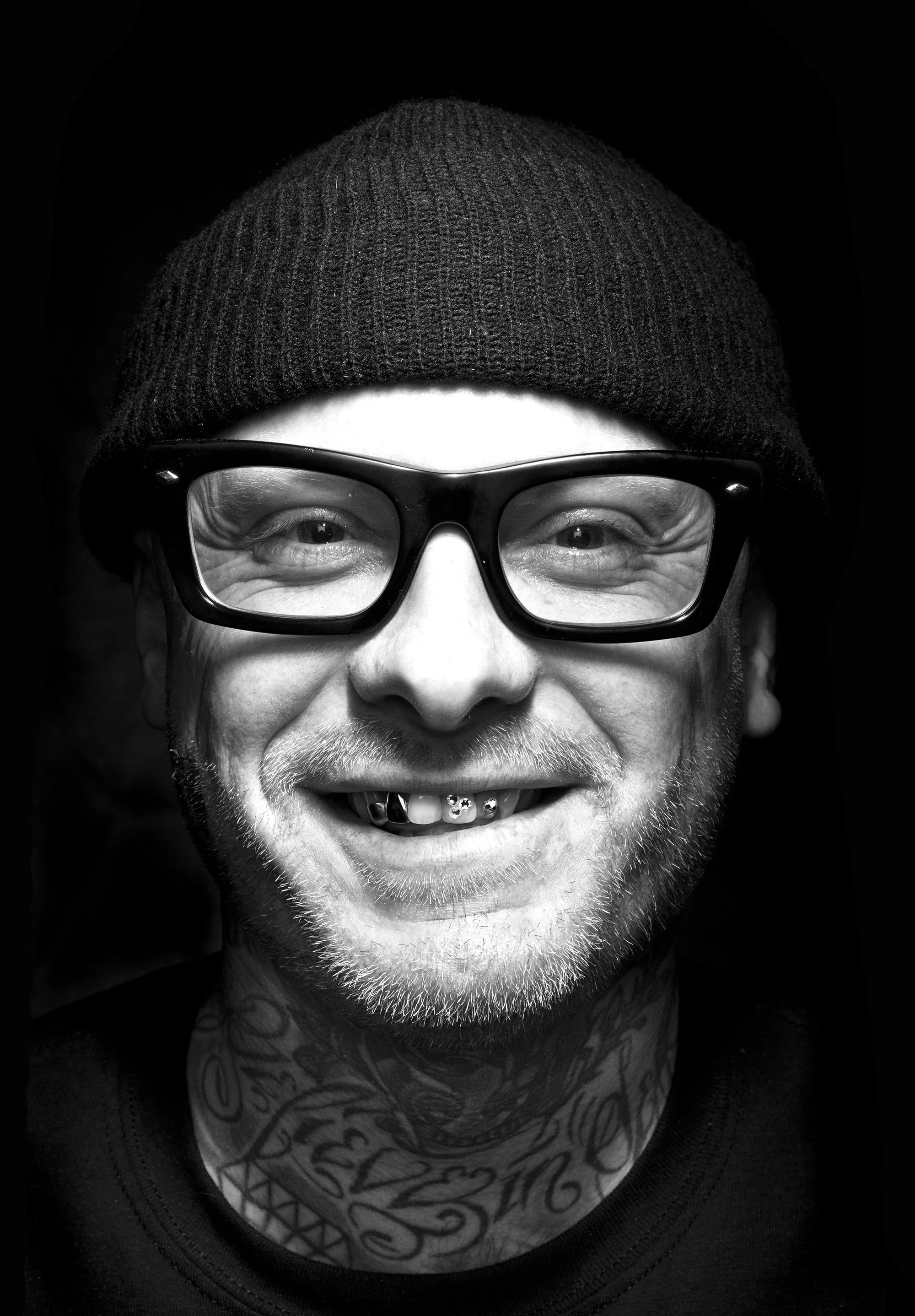
Black and white portrait of barber Shane Nesbitt wearing glasses and a beanie, San Mateo California

Shane Nesbitt, photographed in his San Mateo barbershop. For years, he set the standard—opening before dawn, cutting hair for working people, and building a reputation that reached far beyond the shop itself.

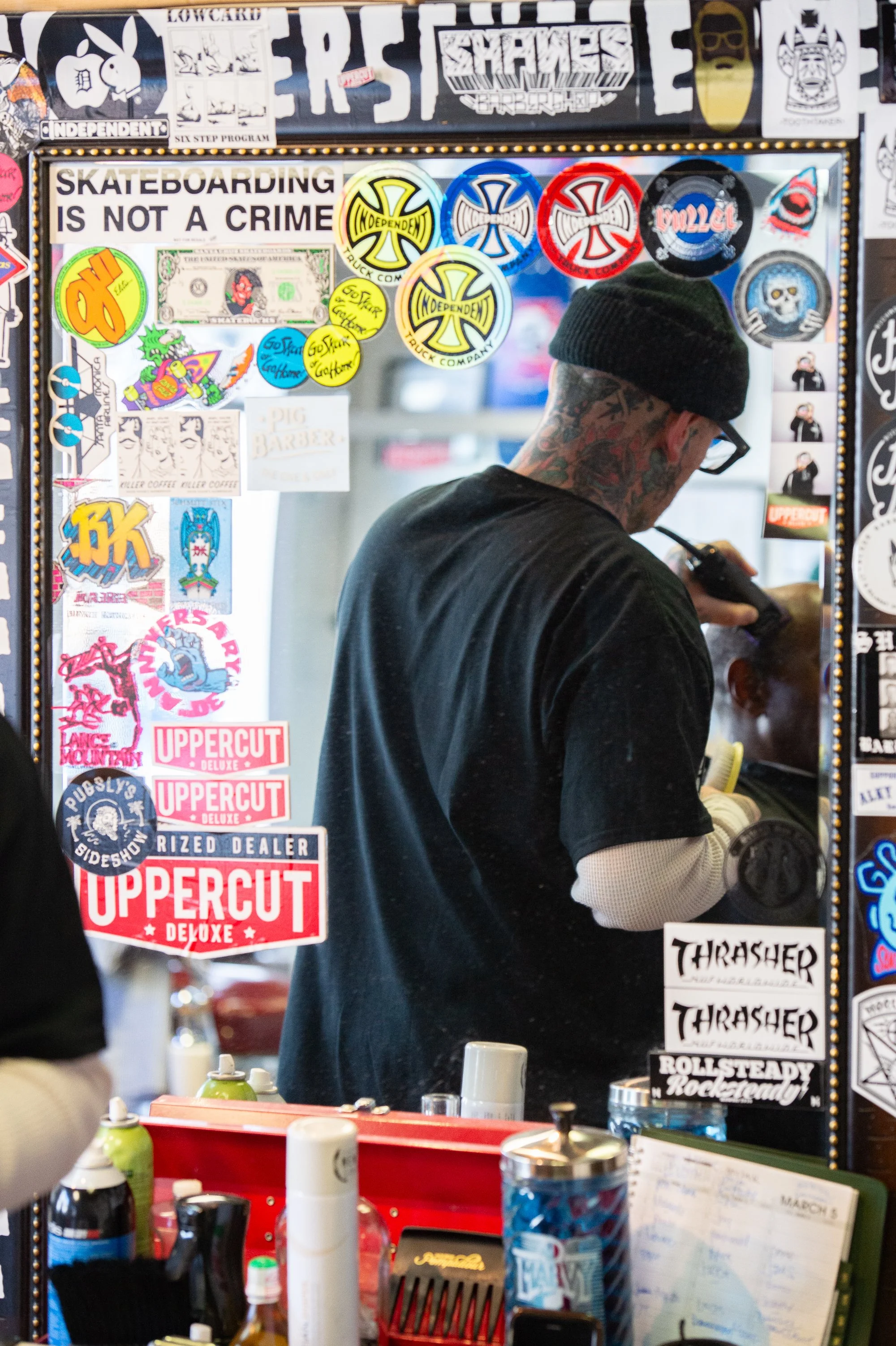
barber working through mirror covered in stickers inside Shane's Barbershop San Mateo

Barber Shane Nesbitt works through a sticker-covered mirror reflecting the layered skateboard culture inside his San Mateo shop

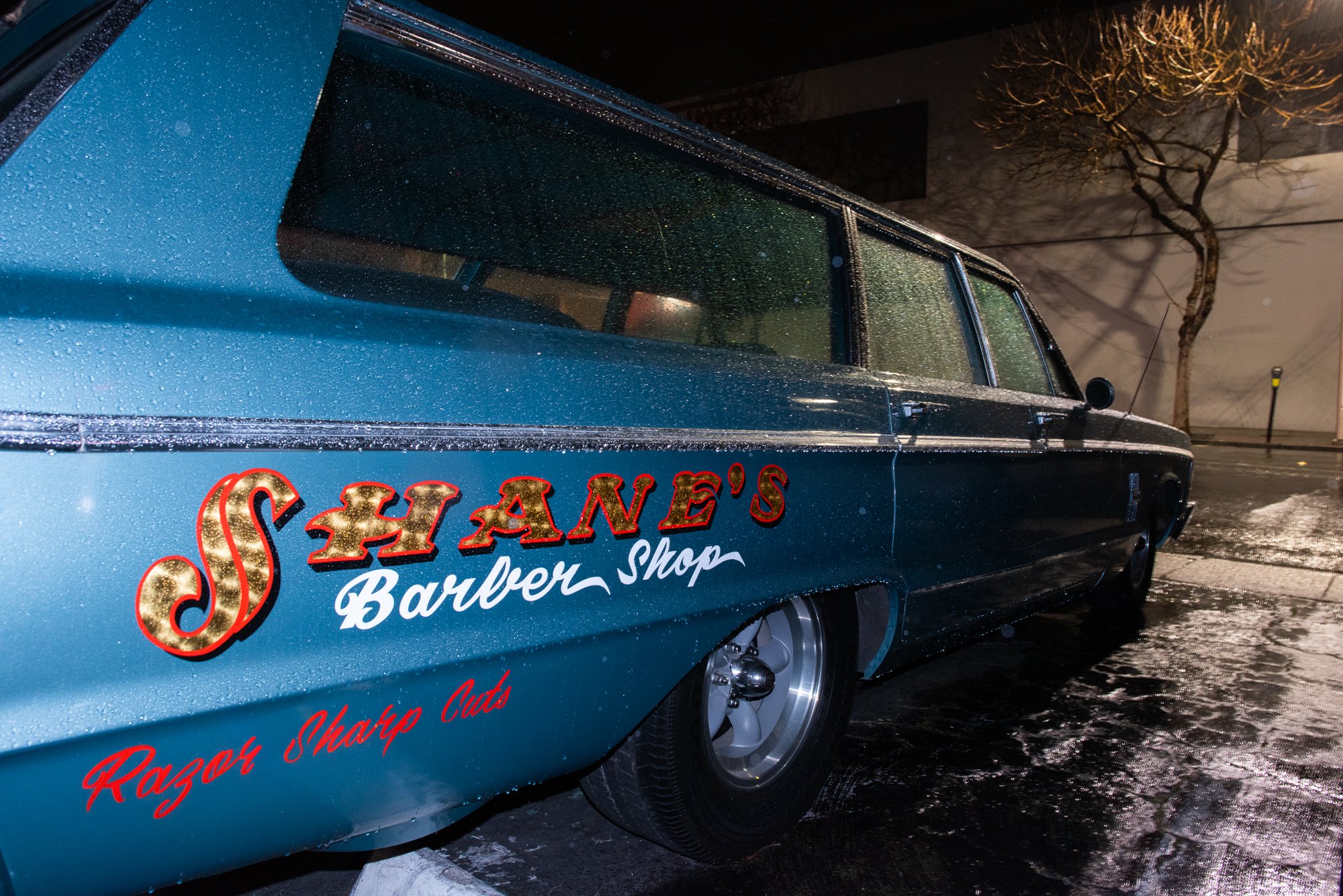
hearse with Shane's Barbershop lettering parked outside at night San Mateo

California custom hearse with Shane's Barbershop branding parked outside at night reflecting the personality of the shop

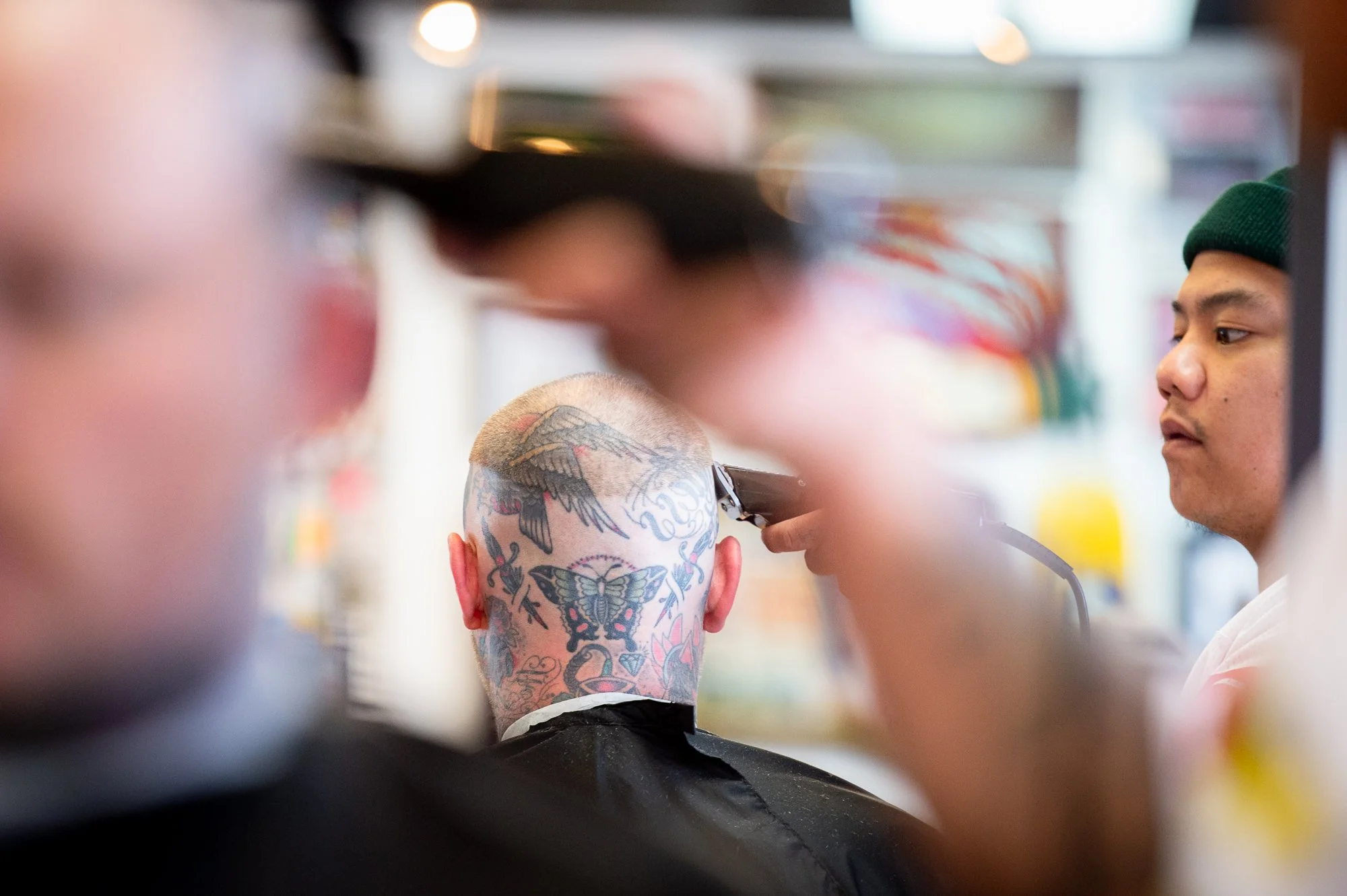
client with tattooed head getting haircut inside Shane's Barbershop San Mateo

Close-up of Shane’s tattooed head receiving a haircut highlighting the detail and individuality inside Shane's Barbershop

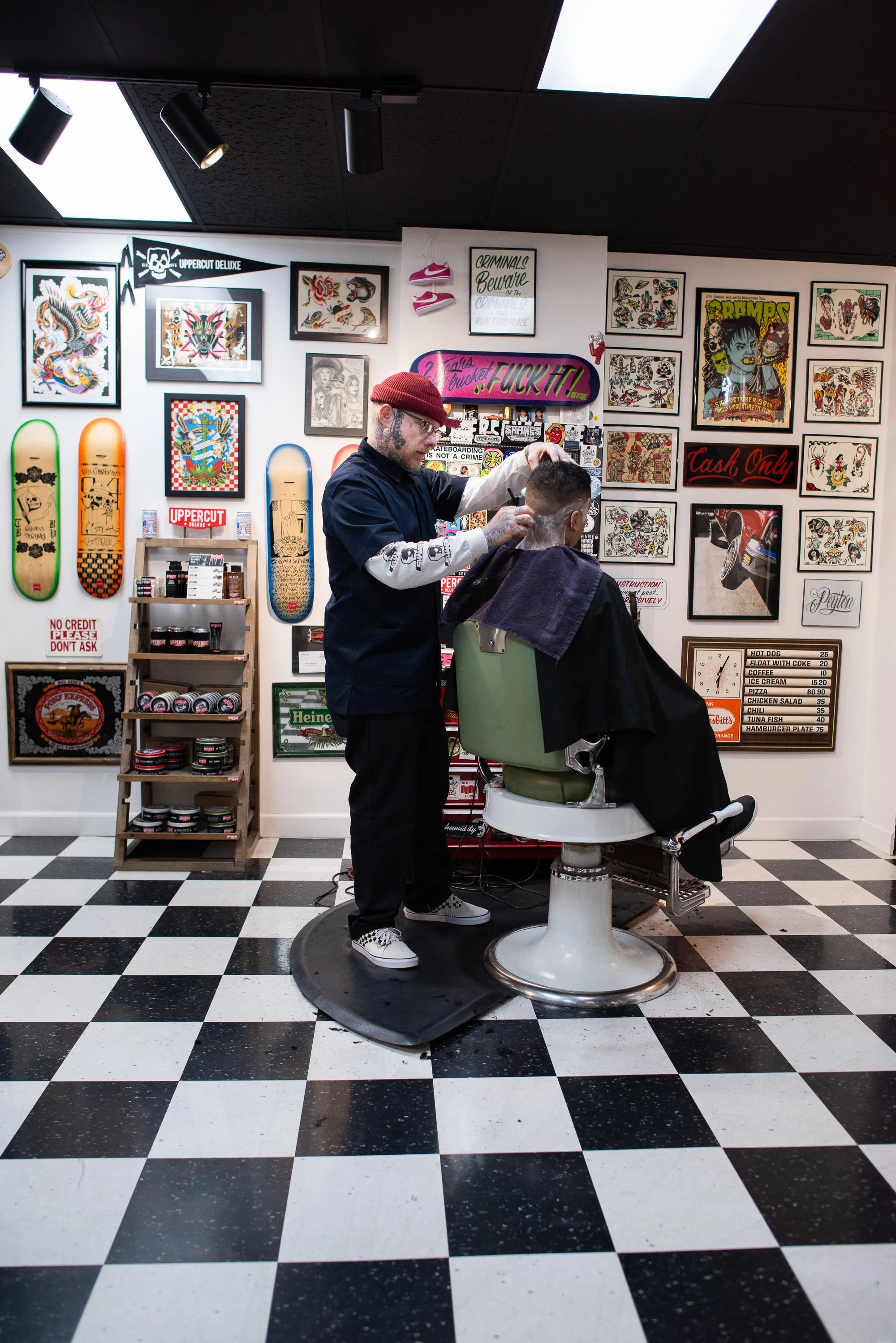
barber Shane Nesbitt cutting hair in vintage barber chair inside Shane's Barbershop San Mateo

Wide view of Shane Nesbitt cutting hair in his San Mateo barbershop surrounded by artwork and classic barber chairs

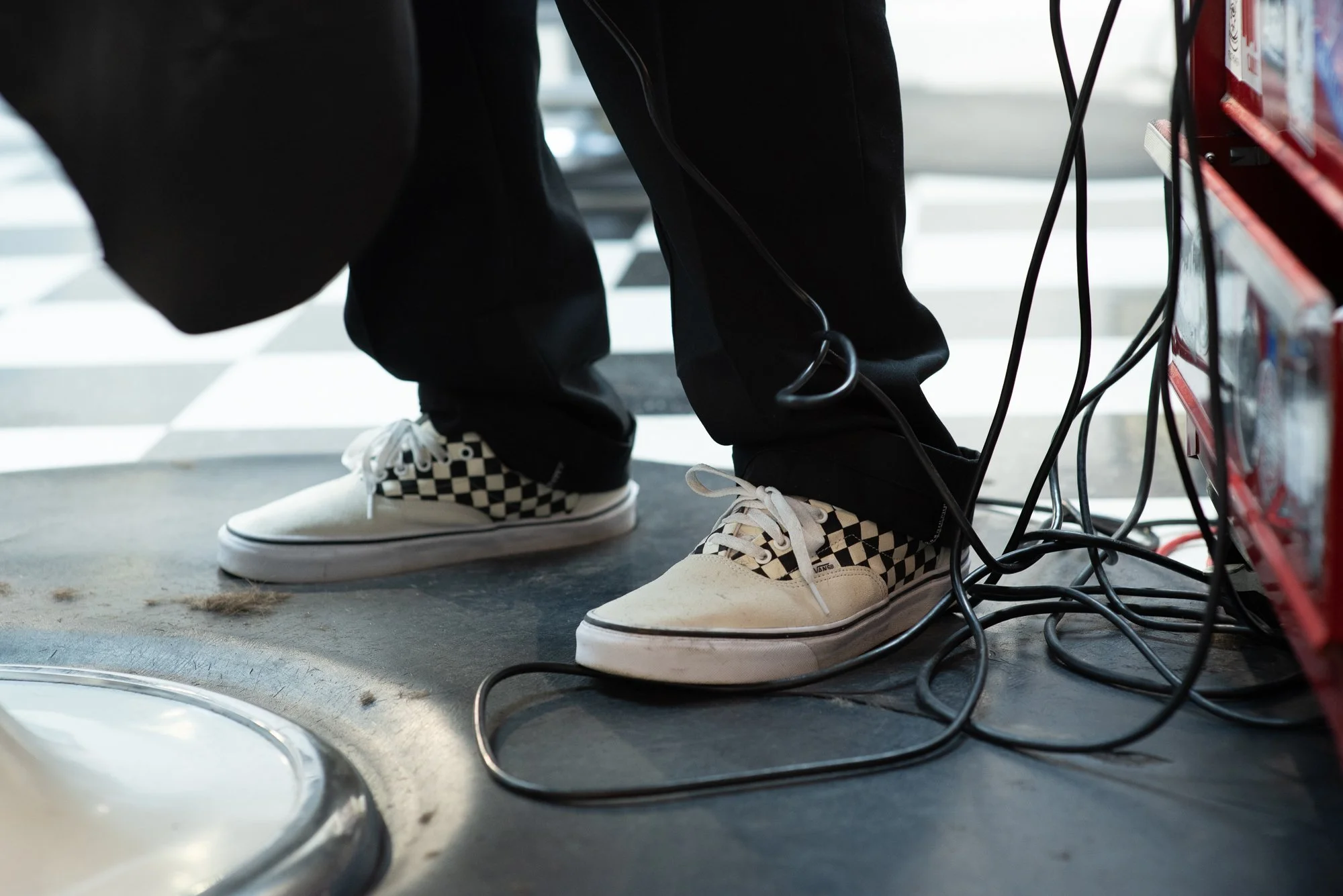
Checkerboard Vans shoes standing on barbershop floor with hair clippings and electrical cords

Hair on the floor, cords underfoot, and long days on your feet—details like this are what defined the rhythm inside Shane’s Barbershop.

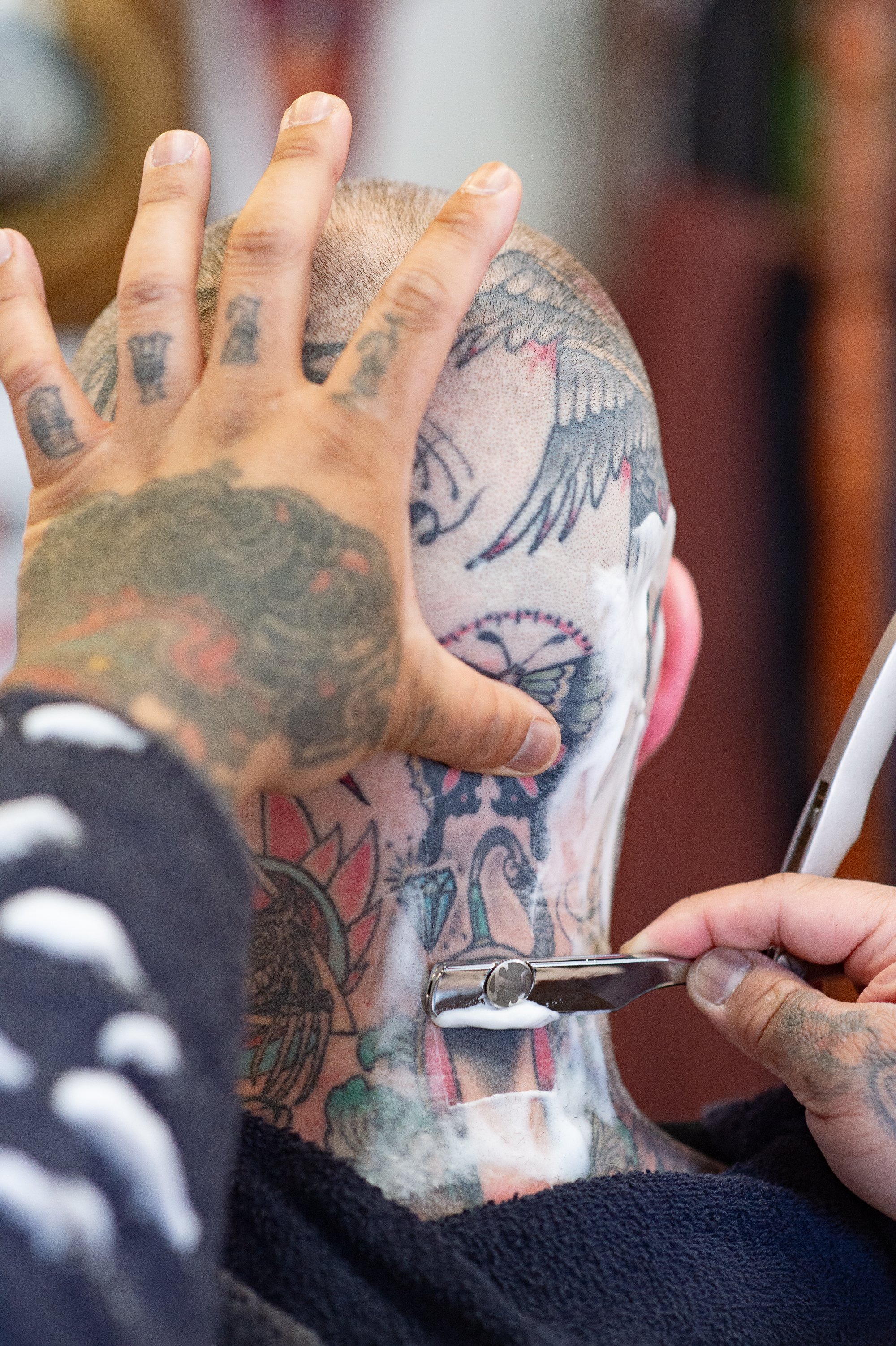
straight razor shave on tattooed head inside Shane's Barbershop San Mateo

Close-up of straight razor shave highlighting the craftsmanship and trust inside Shane's Barbershop in San Mateo

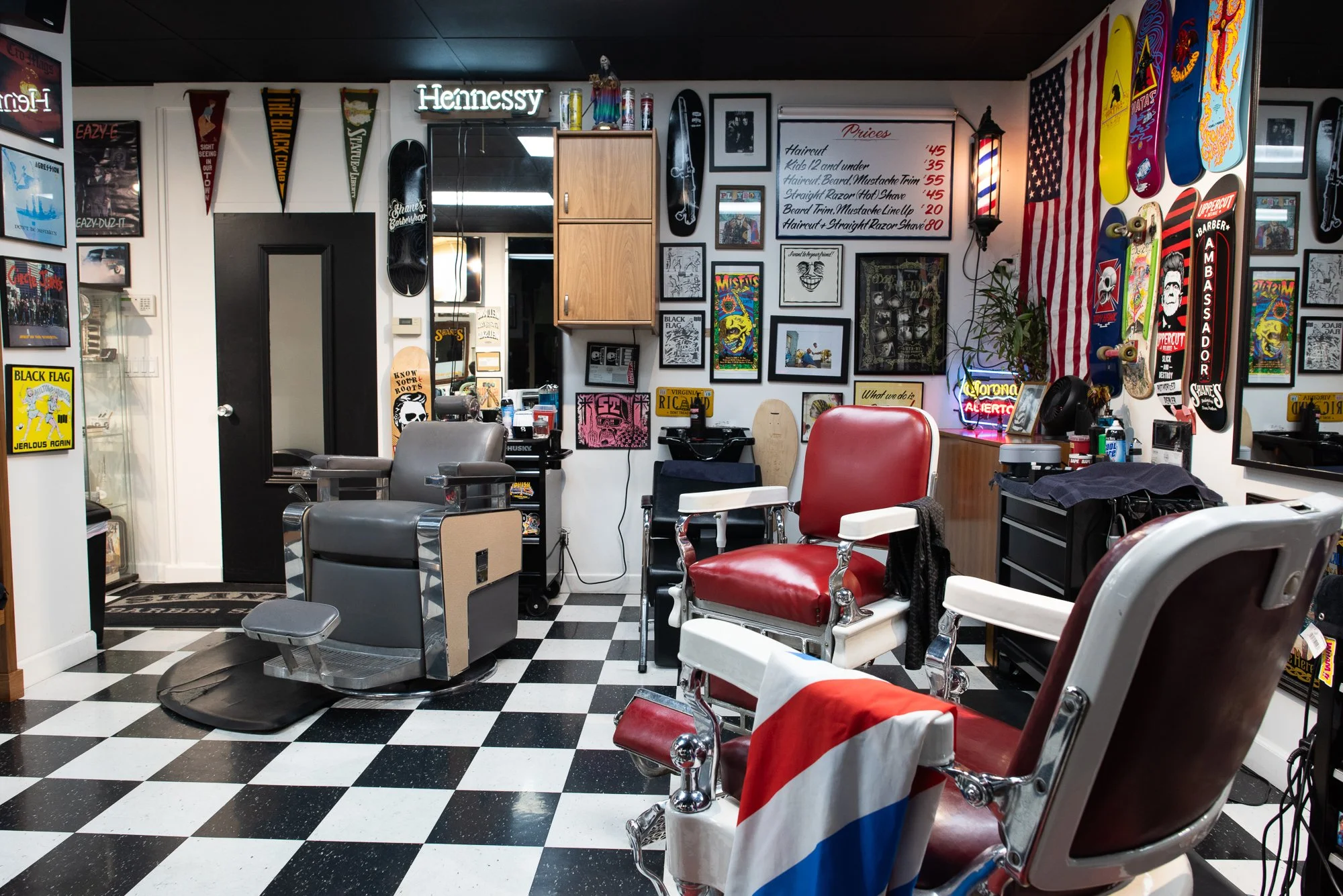
empty interior of Shane's Barbershop San Mateo with barber chairs and artwork on walls

Interior of Shane's Barbershop in San Mateo showing the space that once served its community

Eagle & Pig Barbershop

Best Barbershop in Costa Mesa, CA

Eagle&Pig Barbershop - Photography

Eagle&Pig Barbershop is a gem of gems. Have loved this place since the first day I walked in. And like most shops worth their weight, Pig is the organic creation of it’s owner Dane Hesse. Spend 30 seconds here and you’ll realize there is as much going on in his head as there is in the shop. That should be read and taken as a compliment. Dane is a complex dude with plenty of smarts to go around. I have endless appreciation for anyone who was “supposed to be” one thing, but decided that one thing wasn’t for him or her. And then sets out on their own path without any fear of the repercussions or opinions of others. That’s exactly what Dane did, and since then he has created something truly unique. A place that he, his customers, and friends love to be. What more can you want from a barbershop?

Follow the shop on IG @pigbarber.

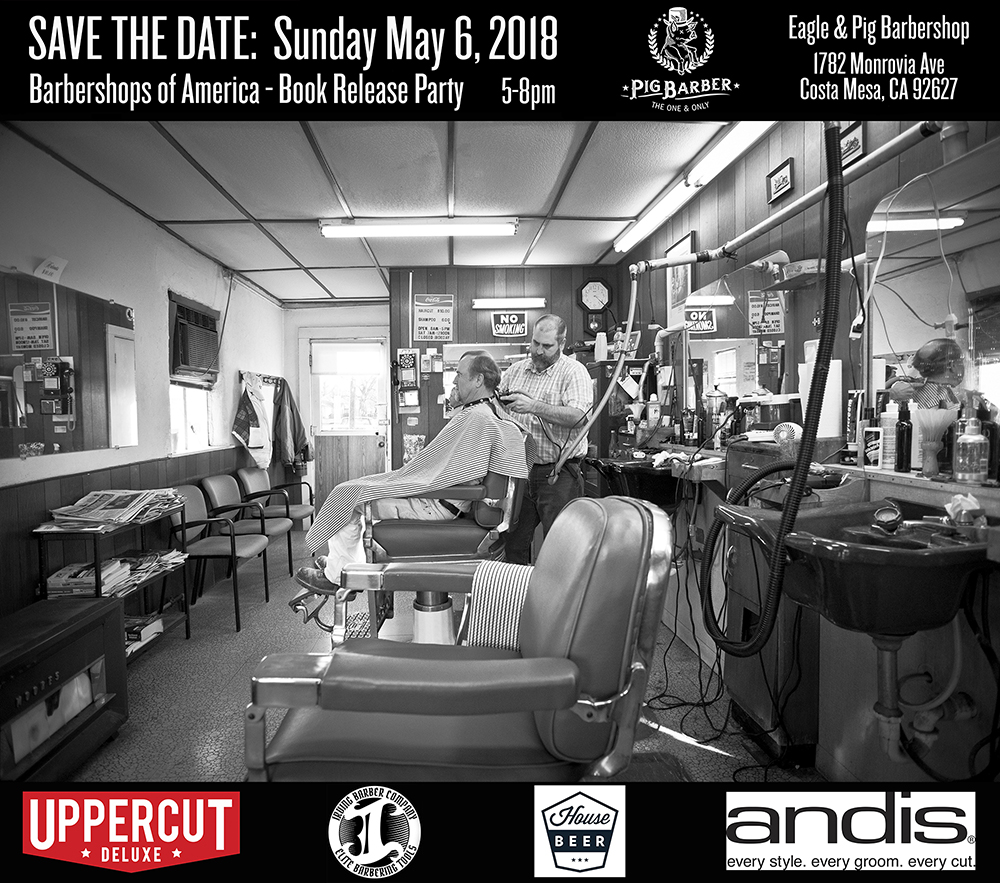
Click here to read the last Q&A with Josh from Lucky’s Barbershop.

Click here to check out the book.


“…..my “school” believes that being supportive is much more beneficial than being a dick.”

EagleandPigBarbershop-9937.jpg

1) Tell me about where you're from, what you did before you were a barber, and what led to the decision of going to barber school.

I am Southern California born and raised. I grew up in North County San Diego surfing, skateboarding, riding BMX and playing sports. When I graduated from high school I ended up attending Vanguard University in Costa Mesa, Ca. Orange County was a really cool place to live then. After I graduated from college I was able to find work helping grow a kettlekorn business with a buddy of mine and work for an MMA publication writing and selling advertisements. My long term goal was to attend law school at some point, but I wasn't really dedicated to the idea nor had I worked hard enough to get into law school easily. That being said, I was impressed upon by a local barber, Mark Miller, that barber school and the subsequent profession were the best decisions he made. So not wanting to pursue a career in law lead me to become a barber instead.

Are you not a fan of living in Orange County now?

You know what’s funny about this question, is that until recently the answer would have always been "I love Orange County." And dont get me wrong, its still wonderful to me, but it has change a decent amount from the secretive, artistic, and influential coastal oasis it once was. There is so much greed and excess here now. Houses and cool communities have all given themselves away to profiteering over culture. There is a lot of gentrification that doesnt even really include the middle class families that live here. Everyone is being priced out. Luckily, there are still so many good things about the OC that make it worth staying here. Every once and awhile SD or Ventura calls my name or pulls on the heart strings. In the end though, I just know that my success really does come from being influenced by Costa Mesa and its history of surf, skate, music, art, etc. My shop wouldnt be what it is or as successful without the love the county has given to it over the years.

EagleandPigBarbershop-3783.jpg

2) How have your decisions as a shop owner changed over the years? What do you contribute a lot of your success to?

Honestly, and this word will answer both questions...consistency. As a shop owner my decisions haven't changed much. I started out in the shop solo. Then I hired Justin in 2015 and Richie in 2017. Even with bringing them on the consistency with which the shop is ran stayed the same. Customers make appointments the same way. The standards for the services are high. The toilet gets cleaned. The towels folded. Etc.

My success comes from busting my ass and being in the shop when its advertised that i'm in the shop. I make sure to plan days off well in advance on the scheduling software so that customers can adjust their lives to my absence. I've probably only missed a dozen days in 7 full years from being sick. And, back to the word consistency, my goal with each haircut is to make it, consistently, as close to each individual’s expectations or needs. Show up when you say you are going to be there, don't cancel on people, and do good haircuts. Easy recipe.

3) You have a very unique shop. How has it developed over the years? Why does it look the way it does?  What bothers you about it?

Thank you. It's a growing amoeba. I've actually seen some old photos of the shop recently and it was amazing to see it with nothing on the walls. I grew up in a construction/hard work/do it yourself household so its development hinges on that mentality greatly. Most of the projects in the shop I've done myself or with the help of close friends and family.

My shop takes influence from a few exact experiences in my life. I love stickers. They decorate things so well, abstractly. I used to cover things in them as a kid, but with order, not complete randomness. Another direct influence was Mark Millers shop in Costa Mesa. His style was so cool. Old posters from punk shows lined his walls along with other awesome memorabilia to look at. Surf and Skate culture across the decades are all huge influences as well. They each have their own unique styles that I really connect with.

I'm usually bothered with how much work it is to clean the shop and what a massive pain in the ass it is to change things up. I like to move things around from time to time so that when people shoot photos in the shop they get different visuals. So much work.

EagleandPigBarbershop-9757.jpg

How did the name Eagle & Pig come to be?

Originally, when I got the space for the shop I had a business partner named Sean. His plan was to use his knack for finding old furniture and selling it out of the shop. We were going to furnish the shop with his findings, but everything was going to be for sale. We sort of just landed on the name through word games. Eagle comes from America, simple enough. Pig comes from a few places...1960s surfboard design, men can be pigs, sailors good luck charm, Reagan has this quote "I am glad they call me a P.I.G it stands for Pride, Integrity, Guts." Sean and his wife decided that three kids were more important than me though, hahaha...so his stint in the shop selling stuff never really happened. 2020 will be 10 years in the shop.

4) How do you feel about the younger generation of barbers/celebrity barbers/instagram barbers?

I'm not necessarily a fan of them. I think that their perspective on the profession is massively skewed by becoming cool or sponsored. That's all bullshit. Its cool, and don't get me wrong, I am beyond grateful for the awesome adventures being “sponsored” has given me, but at the end of the day the barbers “sphere of influence” is wherever he or she consistently shows up, services their customers, and develops a book of business. Customer loyalty has always been a major contributing factor to a barber’s success and vice versa. Its a 2 way street relationship. Wasting time hoping that your social media pops off disallows you the opportunity to create genuine long lasting relationships with patrons who will help pay your bills for years, not just for the short period of time that “insta cool” exists. If you aren't behind your chair for long periods of time you can't expect to have customers sitting there waiting for you to come back. They dont give a shit about how cool you are at the end of the day...they just need a damn haircut.

5) One of the great things about your "school" of barbers is the support you all give each other. That doesn't happen in a lot of professions. Can you talk about that?

There are barbers who operate from a train of thought based on that consistency i've already mentioned. You show up and cut, have barbers that do the same, and you keep your patrons happy. Realistically, beef in the barbering industry is usually petty bullshit that involves short sighted and simple minded people. Supporting people should be easy. We all work in 10ft squares most of the day..not anywhere else. Some of us go out of our way to send customers, when they move away, to shops that will service them similarly or have a good reputation of quality. Having an ego in a blue collar industry like ours is just ignorant. There are enough customers to go around and my “school” believes that being supportive is much more beneficial than being a dick.

EagleandPigBarbershop-3875.jpg

6) Talk about the culture of your shop specifically.

My shop is an enigma, I think. It grew out of my need to have structure and believing that our customers could conform to that idea. We are a pretty no holds bar barbershop. I've got a degree in history/political science and I read a lot. I will allow the entire spectrum of conversation to happen in the shop. I make sure that people understand the concept of respect in dialogue. Not many people, let alone barbers, care enough to be educated on subjects varying from socio economic conditions, beer company politics, fuck trump, fuck hillary, gang books, girl pop music...you see where i'm going with this. I'll say, clearly, I think that barbers tend to short change their ability to be intelligent. Some “smart” ones come across as absolute fucking morons. Some “dumb” ones suppress their smarts to be cool. That being said, my shop is a haven for everyone. Everyone is both safe and vulnerable. We like to enjoy our lives because barbering is supposed to be a fun, community focused profession.We also want our customers to grow, personally, by our influence. And, get laid because of our haircuts.

Maybe you're the enigma? You were supposed to go to Law School, but didn't and instead became a barber/shop owner that is very educated and continues to read a lot, can build things with your hands, and also loves to chug beer. How does that all add up? 

Math was definitely not a strong subject for me in school, hahaha. I knew turning by back on the lawyer track in life was going to provide me with a new set of challenges. Some I knew for sure, others I had to take with stride. I don’t come from money. I DO come from a household that always taught ingenuity and hard work WILL get you by. My parents both fulfilled their specific rolls in my life and honestly most of the lessons I learned were the same, just in different circumstances. Sacrifice, courtesy, honesty, diligence, and other strong words came to me through their examples. My dad worked on the cars, was a welder, managed ranches, built homes, owned a construction company. My mom was a librarian, beach shuttle driver, cooked, helped my dad in every way she could, forced me to mount bugs and cross stitch instead of take ADD meds. I was given the responsibility at a young age to take care of portions of my life, simple things that I could handle for the age that I was. I learn visually. So watching my parents do a plethora of tasks throughout my lifetime I was able to learn a lot of little skills. The skills and the way I learned actually translated over to barbering really well. In barber school I was able to watch and learn, know when and what questions to ask, etc. Its funny how the things you might encounter or endure as a child prepare you for your future. If you decide to fine tune some of those skills into productive adulting you might just end up good at something.

As for the beers. I love beer and all the rest of the booze in this world. Im fortunate enough to not have any sort of dependency on alcohol though, that I am grateful for. As barbers we are always being exposed to cool new things. So many of my customers work for different companies in the booze world and they love sharing their knowledge and perks. Ive been fortunate enough to drink all sorts of amazing top shelf liquors. At the end of the day though, I will drink anything under the sun. You have to know how to handle yourself if you are gunna drink with me. Nobody likes a sloppy drunk. Ive been sloppy, maybe, a half dozen times since I became of legal drinking age. It just such a calming feeling to sit down at the bar top and throw a few back. Its also amazing to do keg stands or order rounds of shots or slug it down straight from the whiskey bottle.

Moral or this question: Balance is your absolute best friend.

EagleandPigBarbershop-3892.jpg

3 books you would recommend everyone read? 

Im gunna break these down into genres with some suggestions

1.Gang Related Autobiographies or Biographies: A Piece of Cake by Cupcake Brown, Monster by Sanyika Shakur, Autobiography of a Recovering Skinhead by Frank Meeink, Blood in Blood Out by John Lee Brook

2.Post Modern/Modern Fiction: Anthology of Franz Kafka, Most novels by Chuck Palahniuk, House of Leaves by Mark Z Danielewski 

3.Philosophy: The Republic by Plato, The Will to Power by Friedrich Nietzsche, Leviathan by Thomas Hobbes, Candide by Voltaire, A Modest Proposal and Paradise Lost by Jonathan Swift

4....If you plan to read and convey the "news" to people try to read the same topic across several sources and maybe cross reference the "factual" information provided. You will actually sound and BE smarter for it. 

7) Anything that bothers you on a daily basis?

Bad customers. Cocky customers. “No Call/No Shows.” I despise people who mess with the schedule. Its disrespectful to our other customers. We try to stay on schedule to our best ability, but sometimes people mess that up for us and the customers following after them. I don’t mind product in peoples hair. I can afford to buy new clippers or blades a few times a year. But what I hate is when they talk shit about weird parts of their last cut or ask for MORE product when they already have a TON in their hair. Its your dumbass fault you ALWAYS come in with product in your hair. And, you DO NOT need more product.

EagleandPigBarbershop-9573.jpg

8) At the end of a week, what is it you are most proud about/what gives you the most satisfaction?

Honestly...that every day/week that I show up consistently, so do my customers. My schedule is fully booked every day that I work. I cut on the 30min. Im not doing hour cuts and wasting my time filming or taking studio photos. Im proud to bust my ass for my customers. They know that I will be there, give them an above par cut, and be everything they need from me. Barber. Counselor. Friend. etc...

9) Advice for someone trying do what you do?

You cant be me, or anyone else. You have to be yourself. Barbering is an artform. It requires individuality. You have to want to be selfless. Be covered in tiny little pieces of other peoples hair day in and day out. If you want to be like me you have to provide quality service, with speed and efficiency, while maintaining a high level of educated conversation. You have to show up to work and not miss days or take days off without replacing those days. If you are getting busy or already busy its making sure that your customers have the opportunity to get their cut which helps your pocket book to remain full and their mops chopped.

EagleandPigBarbershop-3862.jpg

11) Random thoughts about what you do.....

Being a good barber is so much more selfless than the social media era has made it. I refer to it as the 50/50 scale. When we are in the shop we are 100% barbers. 50% technical barber. 50% personable barber. Now some of us are always going to be more technical than personable, and vice versa. The goal should be to strive for a 50/50 standard...that's what makes the most complete, well rounded barber. Somedays, you might not want to put out the effort to be personable so you can slide your technical game to 60% for the day. Or 70% if you are really grumpy. Other times you might get caught up in a good mood or vibe in the shop that takes your timing off, thought process off, steps off, messes with the game and your scale might slide to 70% personable...some of you out there that already operate at 70% personable might slide to 100% too often and thats why you lose customers to the quiet guy in the shop that puts out white hot technical haircut heat every cut. That dudes customers might be bored as shit, but they look like $1M everytime they leave the shop. Random enough Rob?

Biggest thing you've learned about yourself since passing on Law School and opening up your own shop? 

That I’m not "wasting my potential." That was a big issue for some people around me when I made the leap from possible future lawyer to barber. The idea that I would "waste” my intellect on a blue collar profession. If anything, my blue collar job choice has given me the opportunity to continue to learn, grow and be influential as human being, friend, husband, barber.

What do you get into out side the shop?

Hopefully not legal trouble. I enjoy spending time with my wife and friends. I really like being in the sun, not doing much, by a pool, with a cocktail. I surf when I can, ride my harley, work on the endless project that my truck has become. Try to relax. I am really good at stressing myself out and over working myself into shut down mode. Im trying to get better at that. I just want to find the balance between contentment and drive for more. Im gettting there slowly but surely. 

EagleandPigBarbershop-3633.jpg

Steve Purcell & Uppercut Deluxe: A Barbershop Culture Story

An Interview with Steve Purcell on Barbering, Heritage, and Why the Barbershop Still Matters

The modern barbershop has become one of the most recognizable cultural spaces in the world. From small-town America to major cities in Australia and Europe, the barbershop remains a place rooted in tradition, craft, and human connection. Few brands understand this better than Uppercut Deluxe, a globally respected grooming company known for its pomades and hair products that are staples in barbershops worldwide.

I first connected with Steve Purcell, founder of Uppercut Deluxe, while working on my long-term documentary project Barbershops of America. What stood out immediately wasn’t marketing language or trend-chasing—it was a shared respect for barbering as a trade and a desire to build a unique brand with their own voice, regardless of what others think.

This conversation explores barbering beyond products: where the culture comes from, why it still resonates globally, and how authenticity continues to matter in an industry that’s constantly evolving.

Uppercut Deluxe: A Brand Built Inside the Barbershop

Uppercut Deluxe didn’t emerge from a boardroom. It came out of real barbershops, real clients, and real hands-on experience. Steve’s background as a barber shaped how the brand was built—from the products themselves to how the company shows up in barber communities around the world.

Rather than chasing trends, Uppercut Deluxe focused on classic barbering fundamentals: products that work all day, respect traditional styles, and make sense behind the chair. That grounding is a big reason the brand has earned credibility among barbers—not just customers.

In many ways, their success mirrors what I’ve seen repeatedly while photographing barbershops across America: longevity comes from understanding the trade, not trying to reinvent it every five minutes.

Photographing Barbershops as Living History

Conversations like this reinforce why documenting barbershops matters. These spaces are not frozen in time—they are working, evolving environments shaped by the people inside them.

My Barbershops of America project exists to preserve these places as they are, before they disappear to rising rents, redevelopment, or simple retirement. Talking with someone like Steve—who has spent decades inside the culture—helps place those photographs within a much larger global context.

Barbering may look different in Australia than it does in Kansas or New York, but the underlying values remain strikingly similar.

Continue Exploring Barbershop Culture

If this conversation resonates, you can see more of my ongoing documentary work in the
Barbershops of America project—an archive built over 15 years, photographing traditional barbershops across all 50 states.

→ View the Barbershops of America photo series and book/prints

Read more from the Barbershops of America blog

“It's like jumping off a cliff and trying to build the plane before you hit the ground!“

Portrait of Uppercut Deluxe owner Steve Purcell

1) What did you do prior to becoming a barber? 

I worked as a clean up kid in my dads butcher shop after school. 

2) What was the barbershop scene like in Australia when you thought about becoming a barber and what made you take the jump? What year was it? 

There was no scene! I was 15, late 90's, struggling at school and I'd always enjoyed seeing the barber with my granddad growing up. There was a job offer on the table at the local barbershop so I jumped at it. 

3) How did people react when you started on that path?

Brutal! The scene was totally misunderstood at the time, it was all super salon focused and no-one my age was doing it. But I knew I could make it into something rad. Its such a heritage trade. I was the ONLY kid in Australia doing the barber apprenticeship that year. Haha. My friends gave me heaps of shit about it...would call up asking for a perm or a purple rinse.

Literally the only kid? Where did you get the idea that you could make it into something cool? 

The ONLY kid. My grandad used to take me to his barber growing up, a hilarious old italian guy and I always loved the banter and bad jokes. I grew up surfing and skating so just wanted to create a space that I felt was rad, and just wanted to do it my way. I was 22 when I opened the shop, my every cent we had went into it and hoped for the best! 

4) How did people react when you opened your own shop?

This is where I saw the shift where people stopped rolling their eyes at the trade. People have to physically see things to understand it. We decked the shop out like a mates garage so it was a rad place to just come and hang. Once people figured out what we were doing in there, word spread pretty quick. 


Portrait of Steve Purcell the founder of Uppercut Deluxe

5) What is the barbershop scene like in Australia compared to when you started?

Night and Day! Its awesome to see, it stokes me out. Barbering scene in Australia draws inspo from everywhere in the world- European/US/Asia we get the influence from everywhere and it merges out some amazing talent...plus our certification is strict here, to be fully qualified takes 3-4 years so you gotta earn your stripes the old fashioned way. 

3-4 years? That's crazy? Is it like America where you have to go to school? Or more like on the job training in a shop? 

Its on the shop floor learning, with some school elements. 4 long years!! Shitty pay and definitely a lot of shitty cuts on some brave customers who let me practise on them. 

6) How do Australians view American barbers/barbershops? 

Classic and traditional. Huge respect, some of my favourite barbers and shop fit outs are in the US. 

Care to name a few?

So many! Don't wanna leave anyone out. But I Iove the ones that haven't been updated since the 60's, they grow around the barber and the walls have stories. My ambassador crew are dear to my heart and are amazing barbers with rad shops. 

7) What prompted you to start Uppercut and how was it initially received by the locals?

It was the perfect storm, we couldn't easily access products for the shop that we loved. I have always been into mixing products together, and fascinated by the product process. 

The locals were overwhelmingly supportive, and still are! We were just doing what we thought was rad and did it the way we wanted to do it.

What do you mean by "I have always been into mixing products together?" What other kinds of products were you previously mixing together? 

I was mixing Oil based products with a water soluble/ gel base along with my kernels herbs and spices haha. I had a list of 4 products I would mix together and send my customers to the grocery store. My wife was always mad at me for clogging up our sinks. 

8) Describe the journey from the idea to where Uppercut is now. Ups/downs/expectations/growing pains/etc. 

It's like jumping off a cliff and trying to build the plane before you hit the ground! 

Looking back we were so naive when we started, the journey has taught us so much and we still learn as we go. We timed it well. If we did every single thing the same way but did it later, it wouldn't have worked. We've had amazing people involved in the journey and made lifelong friends, we've also had some huge let downs, which in hindsight has taught us some of our hardest lessons. 

You gotta block out the comments, everyone has opinions and if you listened to everything you hear you'd lose your mind. You're either too niche, or a total sell out. Or both! My vision for the brand has never changed, I always listen to my internal compass. 

I'm a huge believer in learning the best lessons from screw ups or let downs. Can you talk about one in-particular that happened and how you turned it into a positive? 

There isn't one major event that stands out. I've learned that if you can surround yourself with talented people and hire people who inspire and are smarter than you, thats half the battle won. Keep a thick skin and stay focused on your own race. People can be the hardest and the best part of business, looking back the highs and lows have actually happened simultaneously, you have to enjoy the journey along the way or you'll lose your mind. 

9) Uppercut is a very distinct and tangible "brand". How did that develop? Why is your roster filled with those particular people?

Coz they're my homies! Ha. They genuinely live the lifestyles so they can't help but be mad dogs. Uppercut is a family and the bigger the brand grows the bigger that family is. The biggest compliment I get is when people say they feel like its a big ass family. Mission accomplished. 

10) How do you keep the brand feeling so authentic?  

Refer to answer above!! We only bring in the good eggs. Mad love. 


11) Any random thoughts you want to get out....

Yes! How the hell did Tim from Syndicate get the front cover of your book? Haha just kidding love you Timmo

Portrait of the owner of mens grooming company Uppercut Deluxe