
Black and White Cowboy Photography
Black and white cowboy photography strips the American West down to its essentials. Without color, the emphasis shifts to light, texture, weather, and gesture — the dust on denim, the worn leather of a saddle, the way a horse and rider move together through long days of work. These photographs are less about nostalgia and more about presence: moments observed as they unfold on working ranches across the West.
For generations, black and white imagery has been used to document labor, place, and tradition. In the context of cowboy life, it carries a particular weight. The absence of color removes distraction and places focus on form, grit, and endurance — qualities that define both the landscape and the people who work it. The resulting photographs feel timeless, echoing earlier documentary traditions while remaining grounded in the present.
This body of work was created through long-term access to real ranches and real working cowboys, photographed in the course of everyday ranch life rather than staged scenarios. The goal is not romanticization, but clarity — an honest visual record of a way of life that continues to evolve while remaining deeply tied to history.
Further down this page, you’ll find information for collectors, designers, and institutions interested in acquiring prints or licensing imagery from this series.
Black and White as a Documentary Language
Black and white has long been the visual language of documentary photography. Without the influence of color, attention shifts to structure, contrast, and moment — the quiet details that might otherwise be overlooked. In the context of cowboy life, this approach emphasizes the physical realities of the work: weathered hands, sweat-soaked shirts, dust rising behind cattle, and the geometry of fences, corrals, and open land.
These photographs are made in the course of real ranch work. Nothing is staged or directed. The scenes unfold naturally, shaped by long days, changing weather, and the rhythm of life on working ranches. Black and white allows those elements to exist without embellishment, presenting cowboy life as it is rather than how it is often imagined.
A Timeless Approach to the American West
Color often ties an image to a specific era. Black and white, by contrast, removes that timestamp. The photographs in this series could belong to many decades at once, reflecting a continuity that runs through generations of working cowboys and ranch families.
This timelessness is not about nostalgia. It’s about continuity — the persistence of skills, routines, and values that remain essential despite modern equipment and changing economics. The absence of color reinforces the idea that the work itself, not the era, is the subject.
Photographing Real Working Cowboys
This body of work was created through long-term relationships and repeat visits to ranches across the American West. Access comes from trust built over time, allowing moments to unfold naturally rather than for the camera.
The photographs focus on:
daily ranch labor
quiet moments between tasks
the physical connection between cowboy, horse, and land
the spaces where work happens — barns, corrals, pastures, and open range
The goal is documentation rather than spectacle. These images exist as a record of contemporary cowboy life, grounded in reality rather than performance.
Black and White in Contemporary Fine Art Photography
Within fine art photography, black and white continues to hold a unique place. It invites slower looking and emphasizes composition and mood over immediacy. In gallery and exhibition settings, black and white work often encourages viewers to engage more deeply with subject matter and form.
In the context of the American West, this approach places cowboy photography within a broader documentary and fine art tradition, rather than isolating it as purely Western or regional imagery.
Prints, Licensing, and Institutional Use
For collectors, designers, and institutions interested in this work, photographs from this series are available in a range of formats, including limited and open edition prints, large-scale exhibition prints, and custom framed pieces. These works are often placed in private collections, ranch homes, hospitality spaces, and curated environments where quieter, contemplative imagery is appropriate.
The archive also supports editorial, commercial, and exhibition use. Images from this project have been shown in galleries and museums and published in magazines and books focused on Western culture, photography, and documentary work.
Interested in this body of work?
A curated selection of black and white cowboy photographs from this project is available as fine art prints.
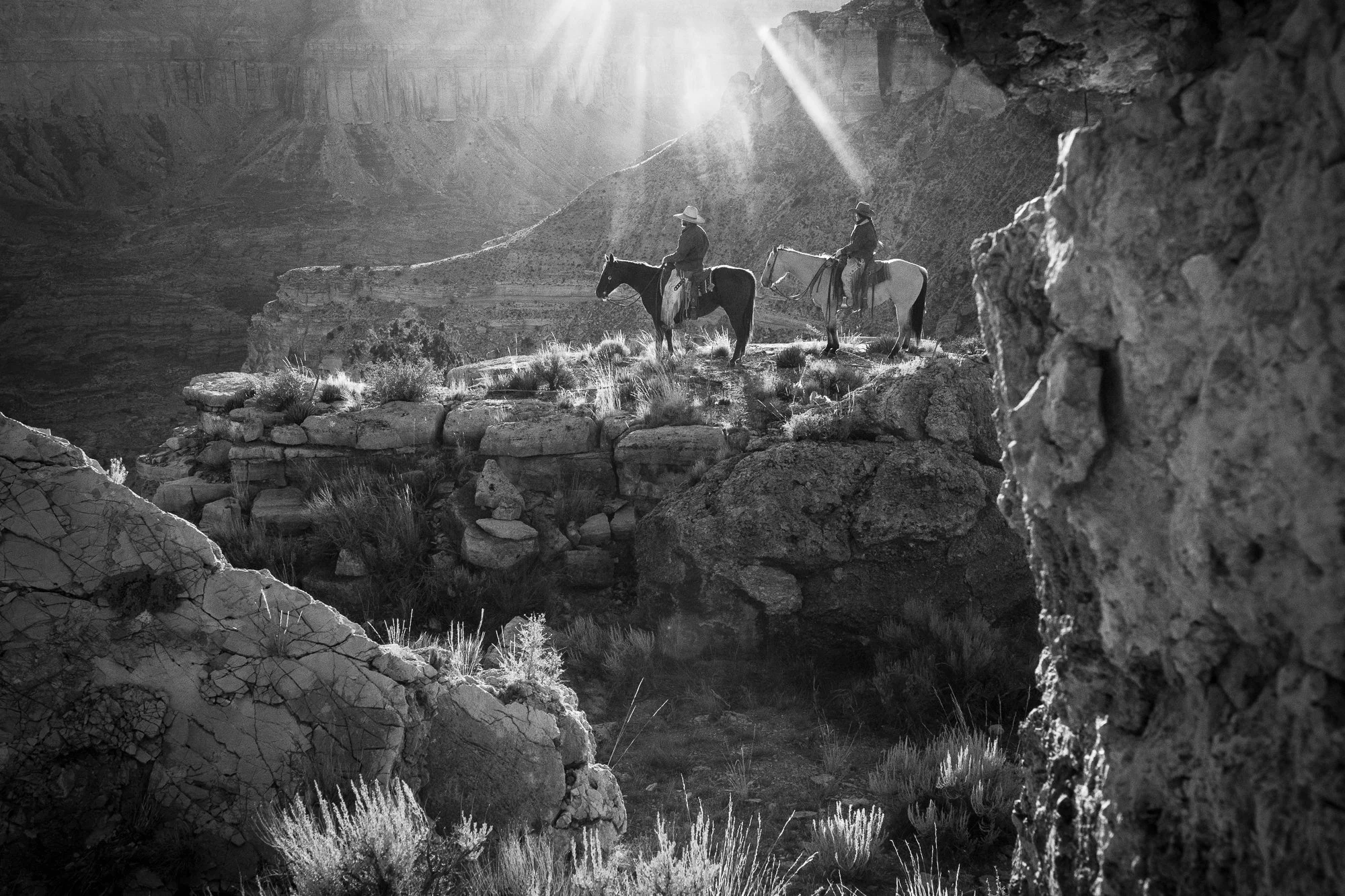
Cowboys on horseback overlooking a canyon during a pause in the workday.
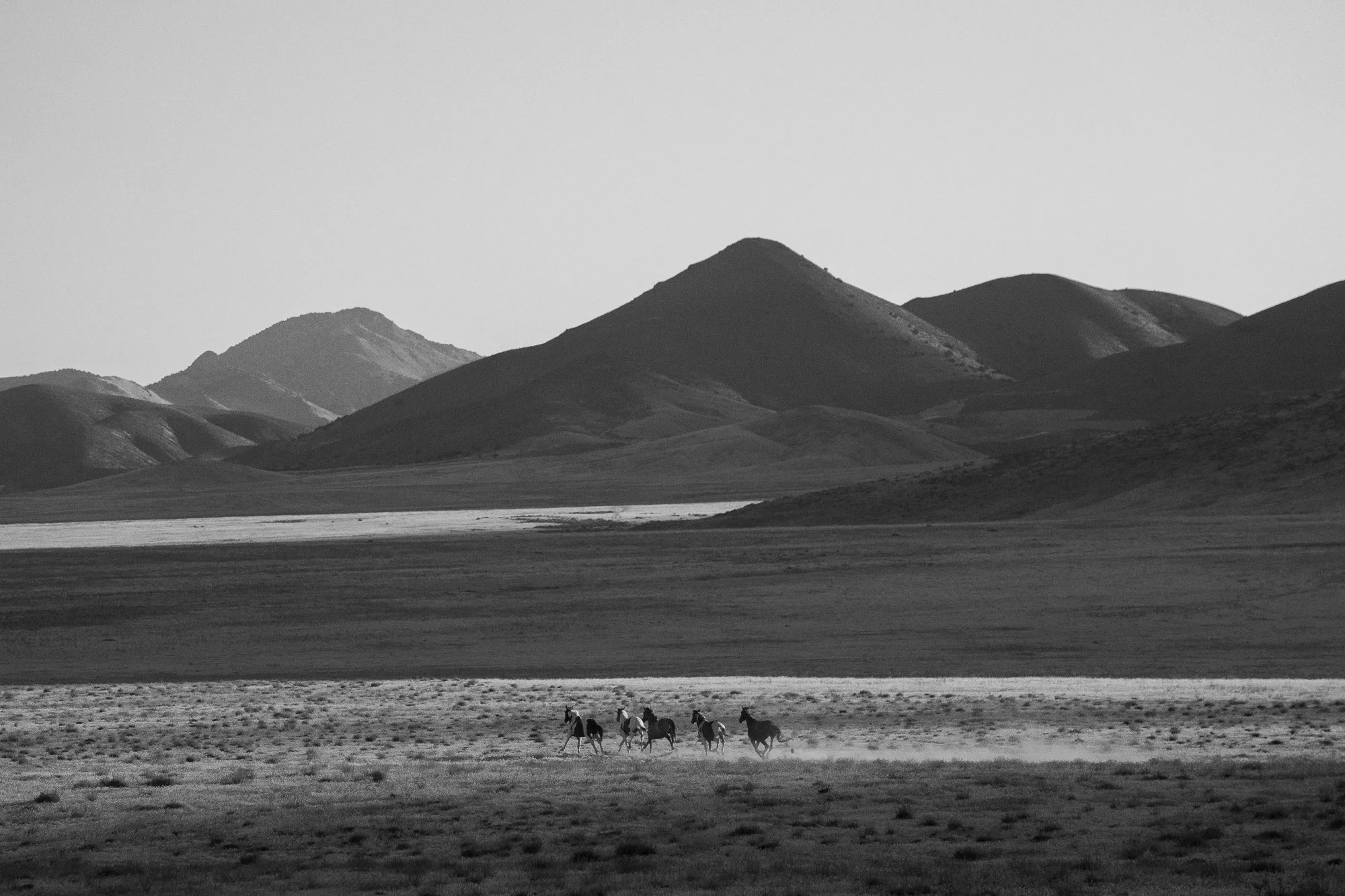
Horses moving across open range, dust rising in the distance.
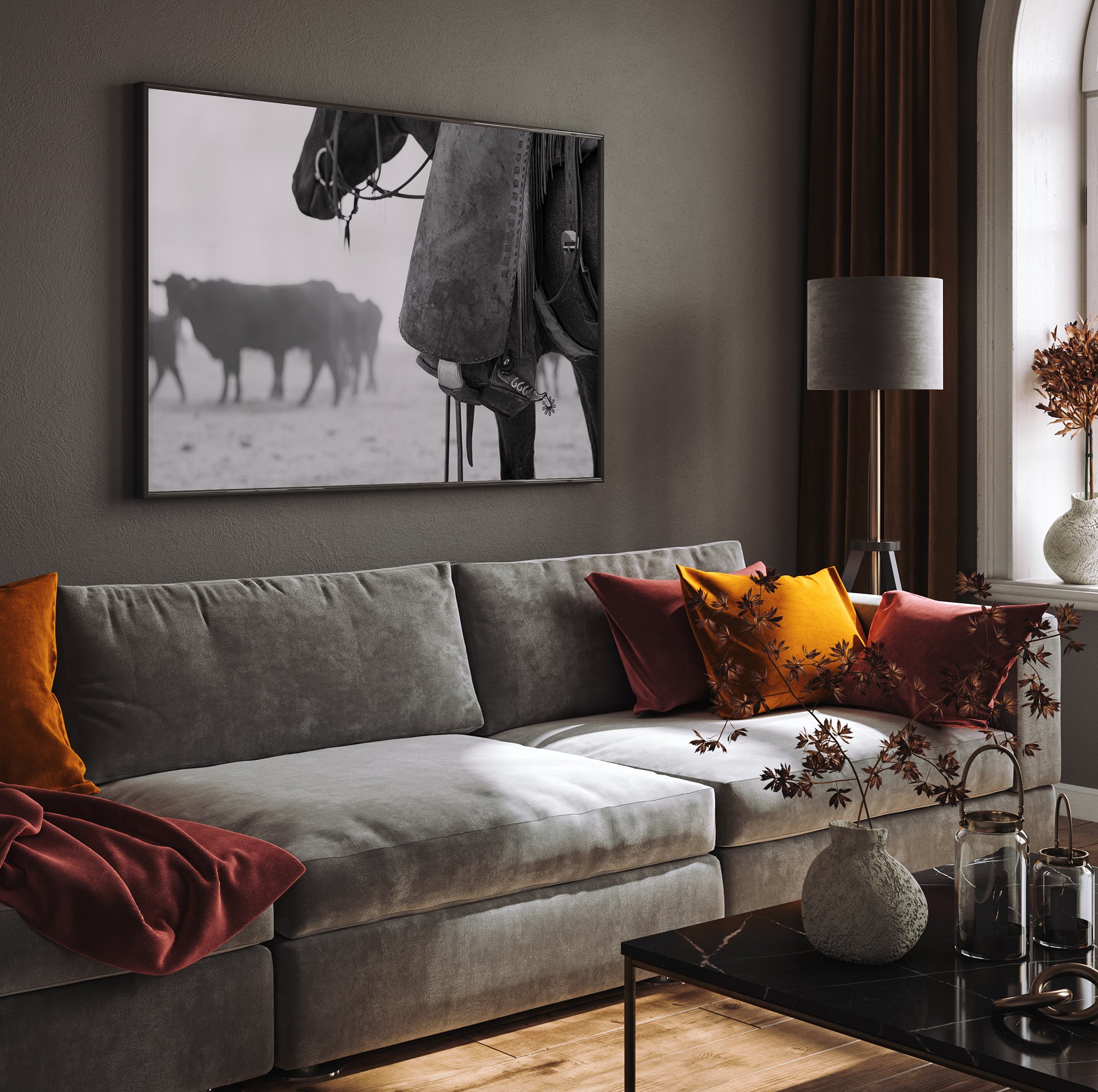
Black and white cowboy photograph installed in a private interior.
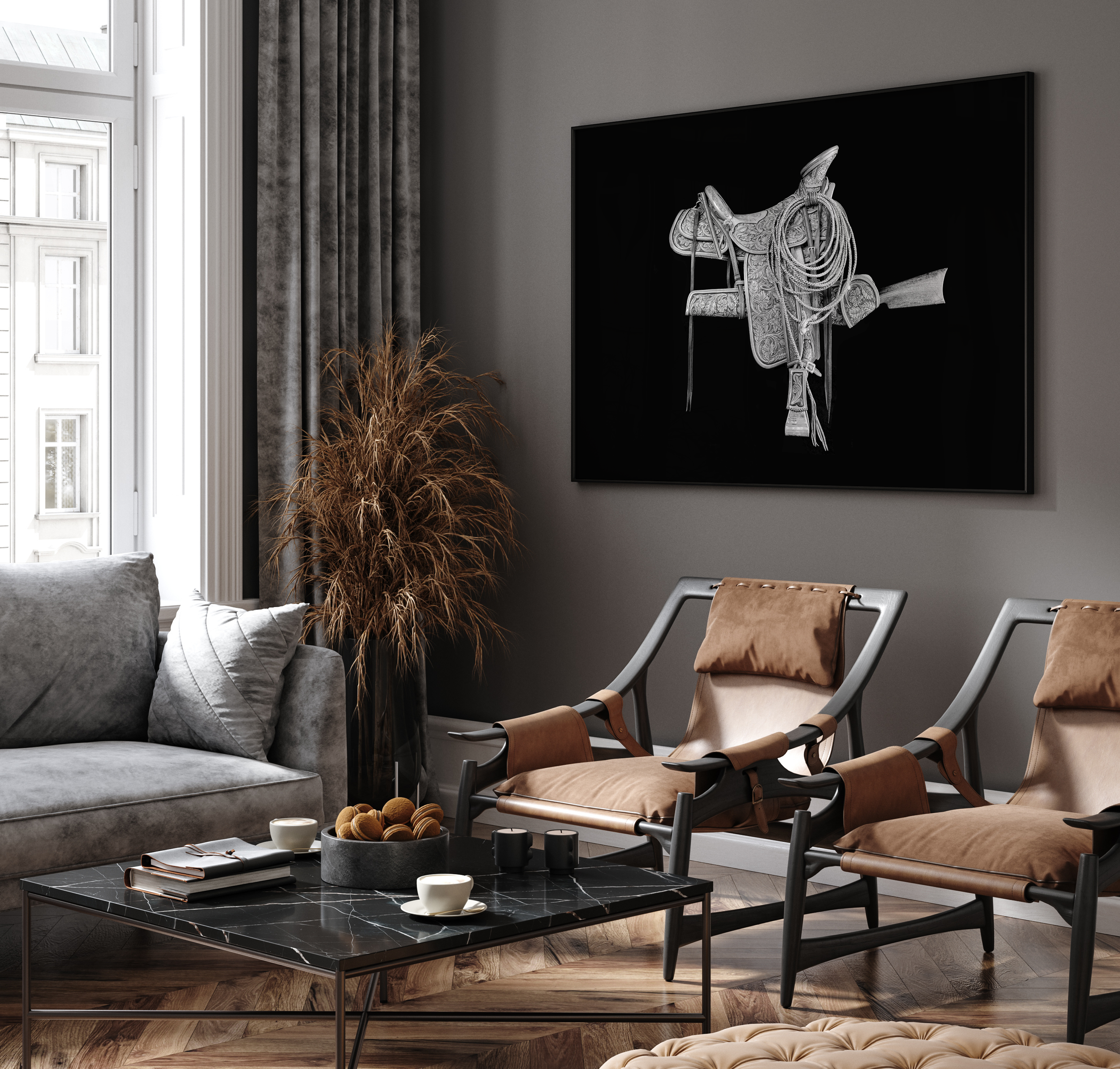
Studio photograph of a Western saddle displayed in a contemporary interior.