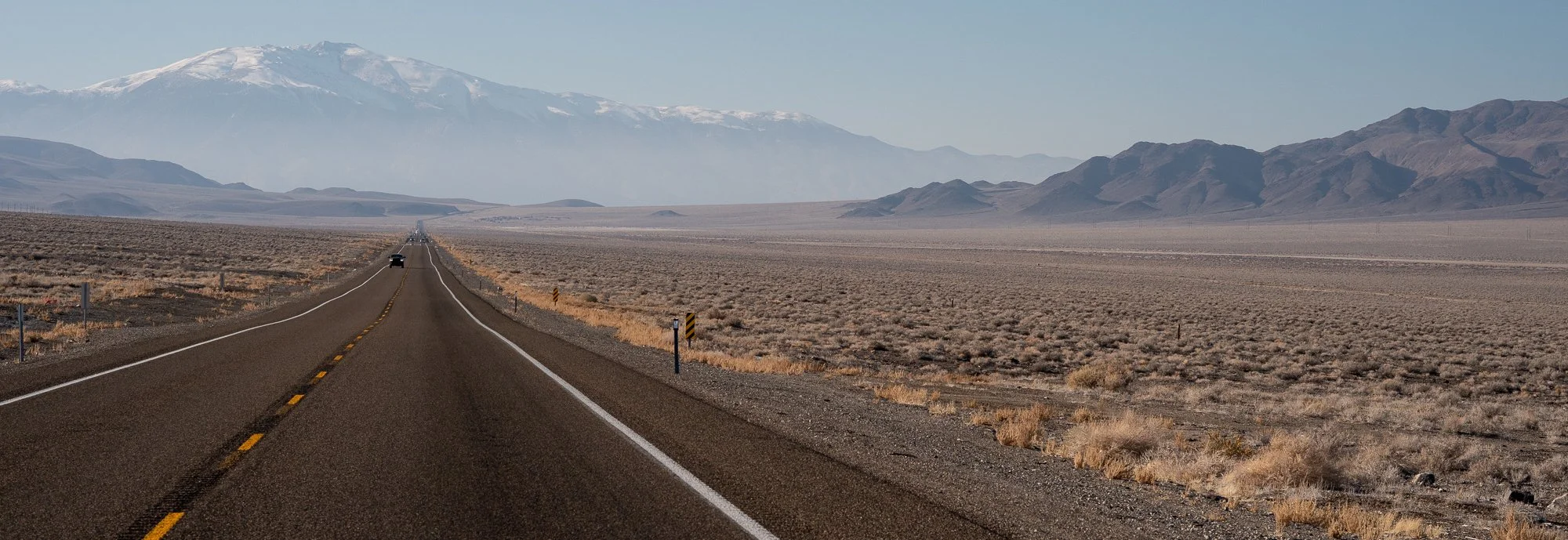
Nevada Roadside Photography: The Quiet Corners of the American West
Nevada has a way of stretching things out—time, distance, silence. You can drive for hours without seeing much of anything, and then suddenly there’s a building, a sign, a road bending into the mountains like it has somewhere important to go.
Most people pass through Nevada on their way to somewhere else. That’s part of what makes it interesting to photograph.
These images come from years of driving across the state—backroads, highways, small towns that sit just off the map. The kinds of places that don’t announce themselves, but stay with you long after you’ve left.
The Space Between Destinations
There’s a certain rhythm to Nevada. Seemingly endless stretches of road where your radio never stops looking for a signal, around and around. Power lines marching into the distance. Storm systems building over empty basins.
Nothing is rushed here. Even the light feels like it’s taking its time.
A lot of this work happens in those in-between moments—pulling over when something feels right, even if it’s hard to explain why. A curve in the road. A stretch of desert under heavy clouds. A horizon that doesn’t seem to end.
It’s not about landmarks. It’s about paying attention.
Small Towns, Fading Edges
The towns scattered across Nevada aren’t trying to reinvent themselves. Many of them feel suspended—caught somewhere between their mining days and whatever may or may not come next.
Old casinos. Empty storefronts. Motels that have seen better decades.
There’s a quiet honesty to these places. Nothing is polished. Nothing is staged. What you see is unapologetic.
That’s part of what draws me in. These towns reflect a version of America that doesn’t get much attention anymore and isn’t asking for any.
The Road as Subject
The road shows up again and again in this work—not just as a way to get somewhere, but as the subject itself.
Two lanes cutting through open desert. A highway disappearing into a storm. A sign pointing in both directions with no real indication of what’s waiting either way.
Driving through Nevada, you start to realize the road isn’t leading you to anything specific. It just keeps going, and that’s enough.
Many of these scenes translate well beyond personal work. The simplicity of the compositions—open space, strong lines, and a strong sense of place—makes them well suited for editorial features, brand storytelling, and commercial campaigns looking for an authentic depiction of the American West.
If you’re looking to license photography like this for a campaign, publication, or brand project, you can contact me directly - rob@robhammerphotography.com
Light, Weather, and Timing
The light in Nevada can be as harsh as it comes, when it’s a bluebird day without a single cloud to soften any horizon. So a lot of these photographs happen at the edges of the day—early morning, late evening, or just before a storm breaks.
Nevada’s landscape changes quickly depending on the light. A place that feels flat and empty at noon can take on a completely different character at sunrise or under heavy cloud cover.
There’s no controlling it. Just being there when it happens.
Part of a Larger Body of Work
This work is part of a much larger project photographing the American landscape—particularly the overlooked places that exist between major destinations.
Over the past thirteen years, I’ve driven hundreds of thousands of miles across the country documenting these kinds of scenes. Nevada is one of the places I return to the most. There’s a consistency to it, but it never feels repetitive.
It’s also where I spend a significant amount of time photographing working cowboys on remote ranches. Those assignments often take me deep into parts of the state most people never see, and the time in between—on the road, in small towns, crossing long valleys—is where a lot of these images come from.
Roadside Meditations and the America Project
This body of work is part of Roadside Meditations, a long-term photography project (and fine art photography book) exploring the overlooked spaces that define much of the American landscape.
Over the past fifteen years, I’ve driven hundreds of thousands of miles across the country photographing places most people pass without noticing—empty intersections, quiet towns, stretches of road that exist somewhere between use and abandonment. Nevada has become one of the most important states within that work. The scale, the isolation, and the subtle shifts in landscape make it a place that continues to reveal itself slowly.
The project eventually became a published book, bringing together photographs from across the United States into a single, cohesive body of work centered on those in-between moments.
Alongside the book, the broader America project expands on this idea—documenting small towns, roadside architecture, and landscapes that sit just outside the spotlight but remain essential to understanding the country as a whole.
If this series resonates, you can explore the full body of work here:
→ Roadside Meditations Photography Book
→ America Landscape and Small Town Photography
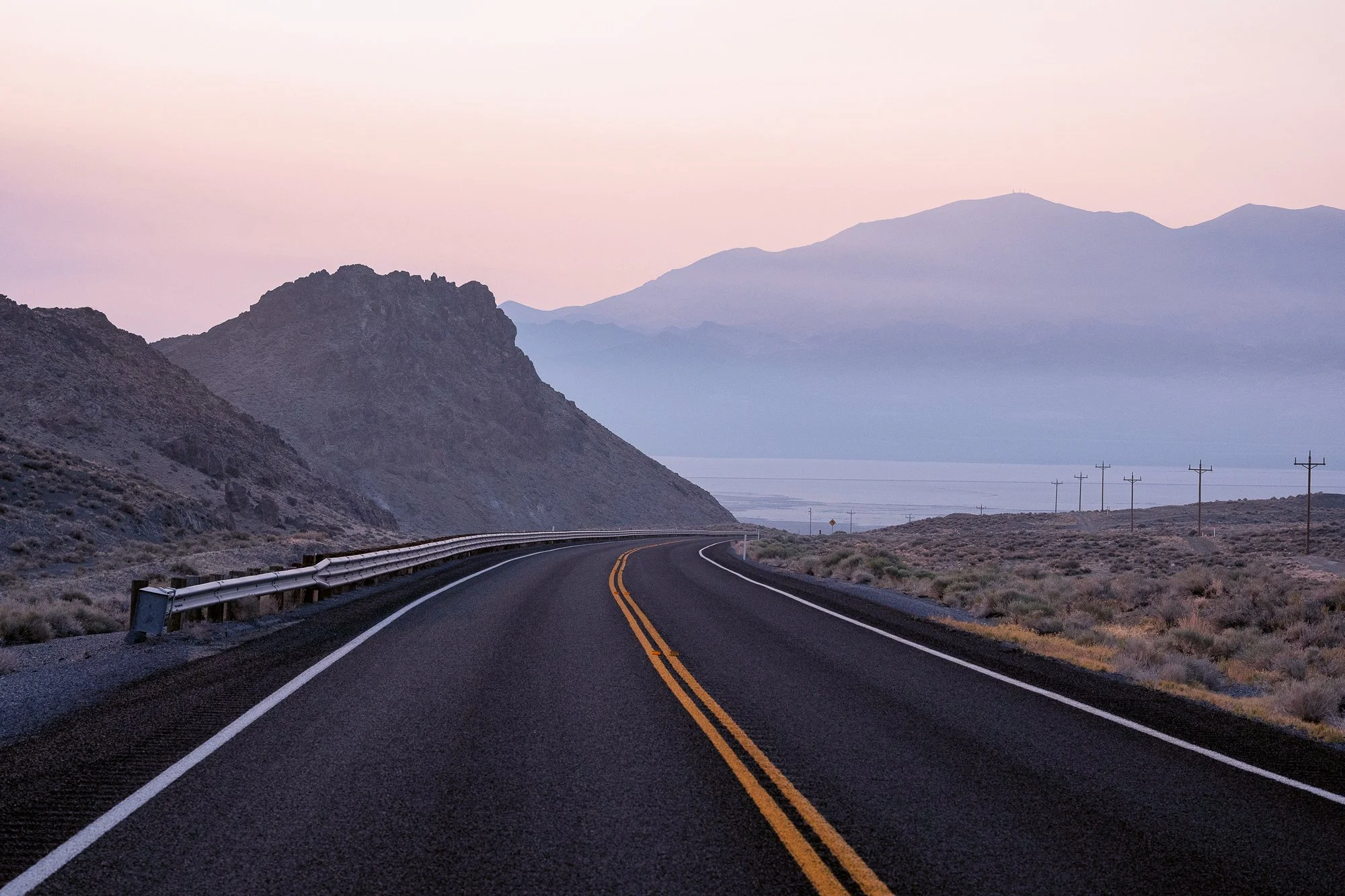
Two-lane road through the Nevada desert at the end of the day. The sky goes pink, the road goes quiet.
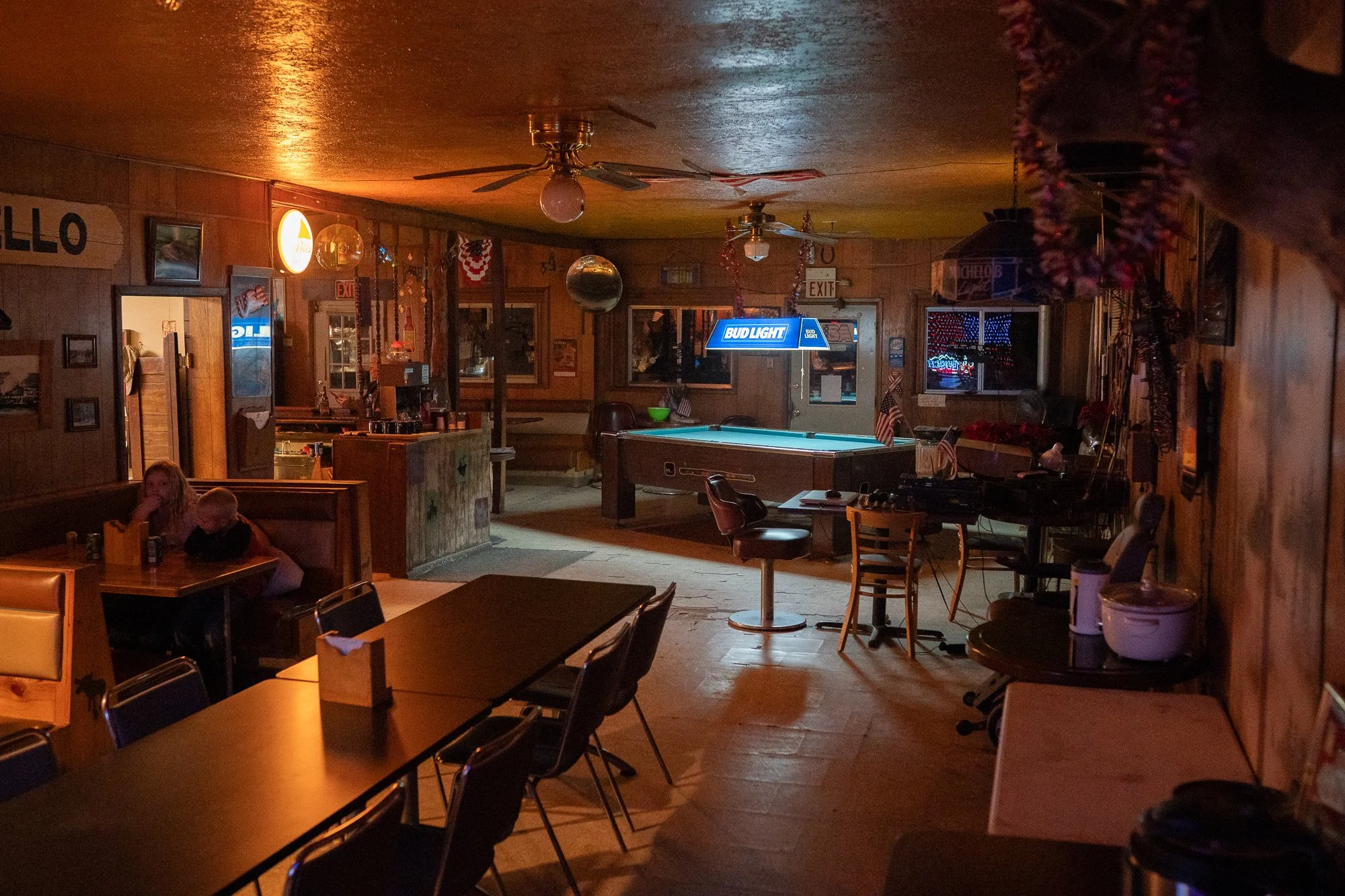
Quiet night at The Cowboy Bar in Montello, Nevada
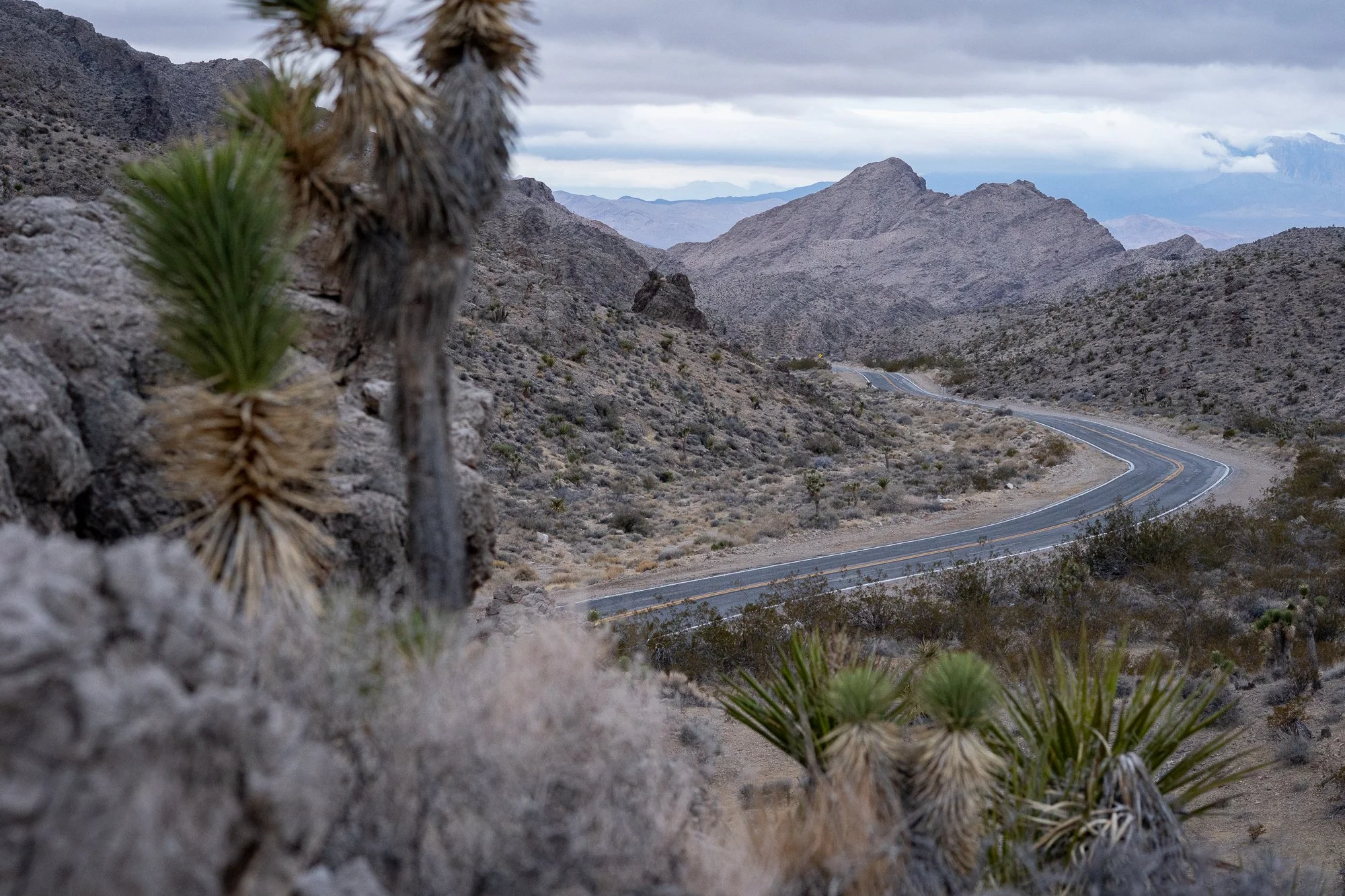
Road through Nevada high desert terrain, overcast day. No guardrails, no traffic, just the curve and the rock.
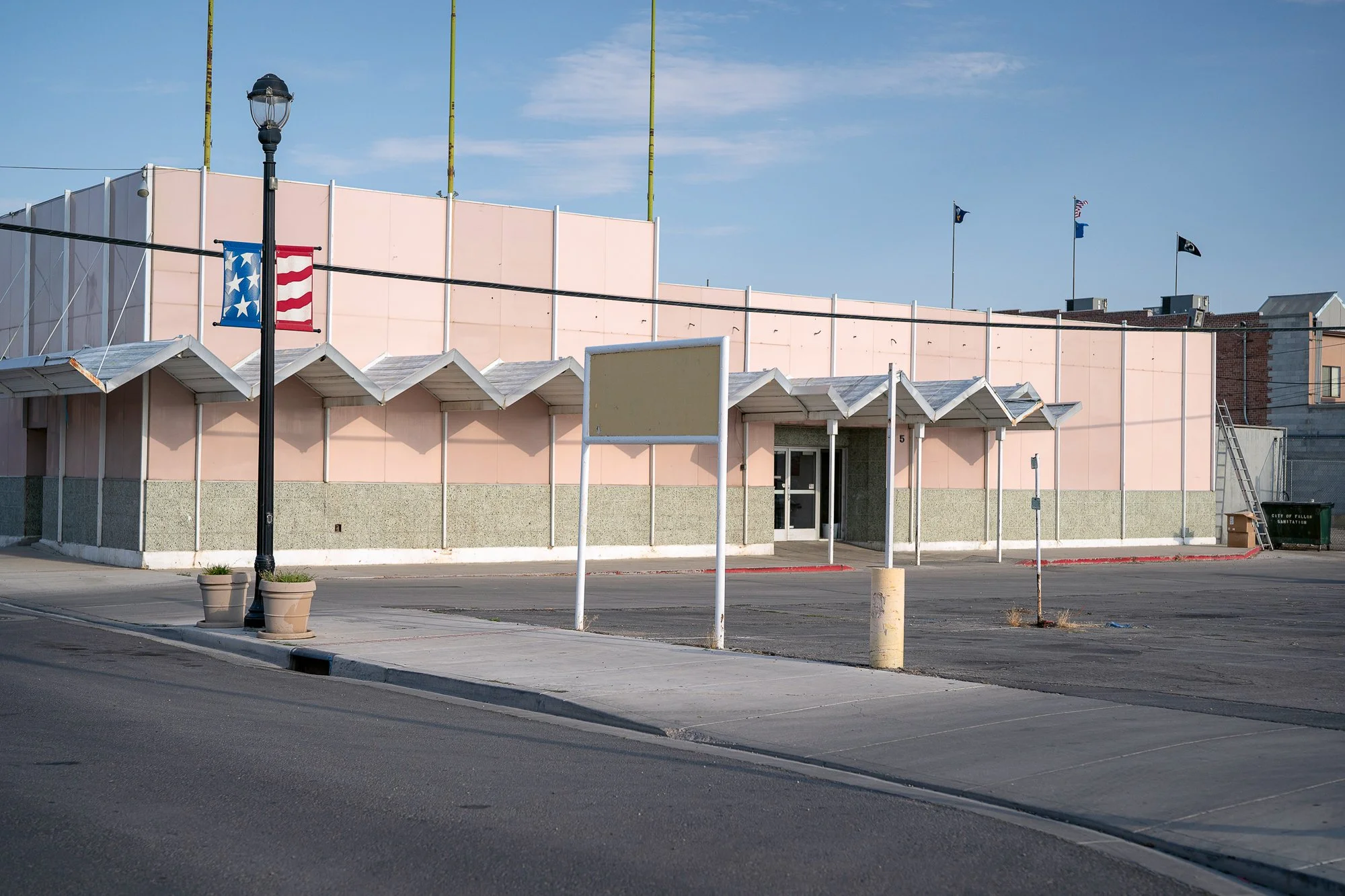
Downtown Fallon storefront, mid-morning. No one around, nothing on the sign.
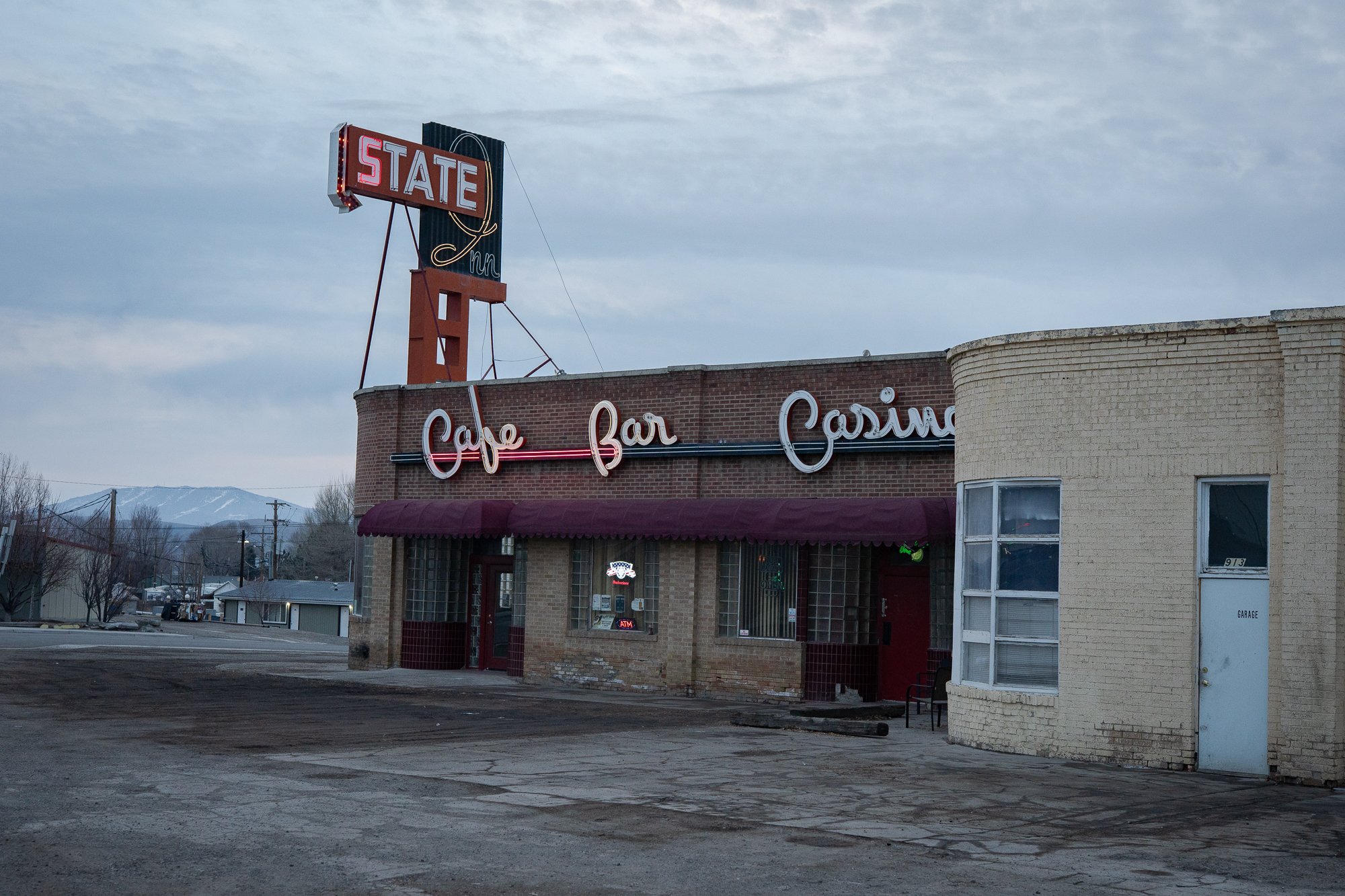
The State Inn - Carlin, Nevada
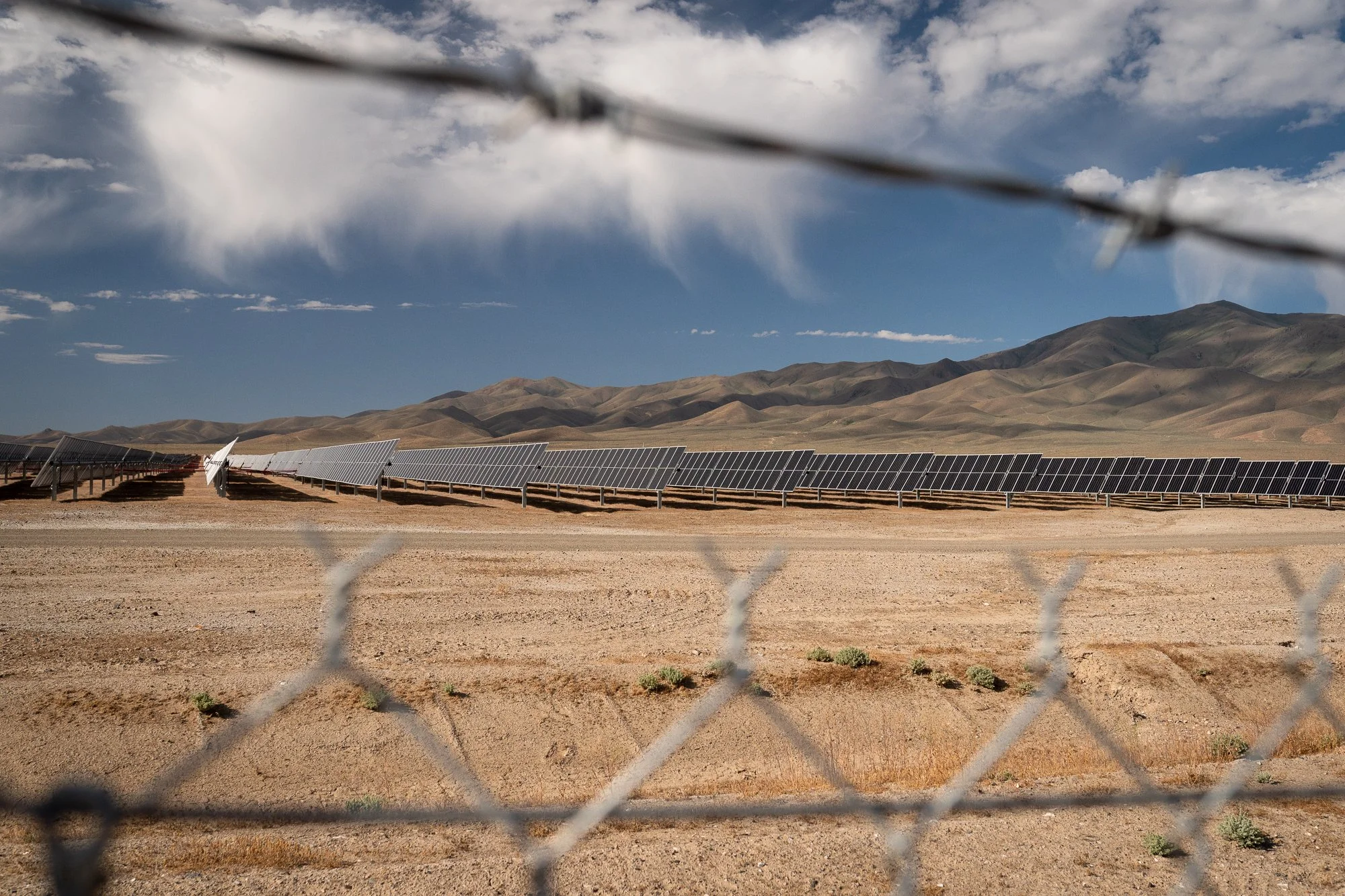
Solar panels line the desert floor behind a chain-link fence. The mountains beyond are dry and bare — nothing between them and the sun.
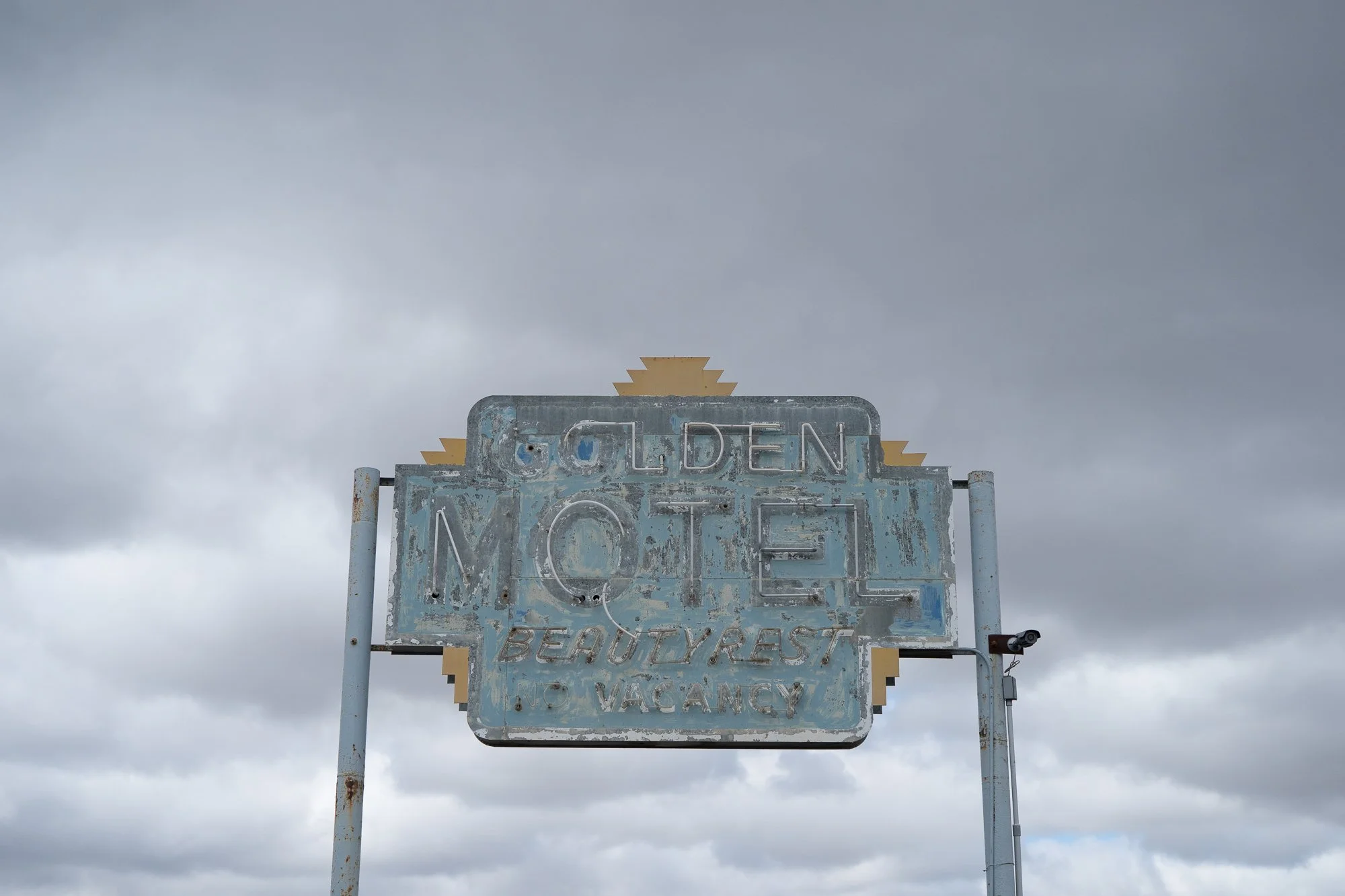
Faded roadside motel sign against a flat gray Nevada sky. Beautyrest. Vacancy. Both claims uncertain.
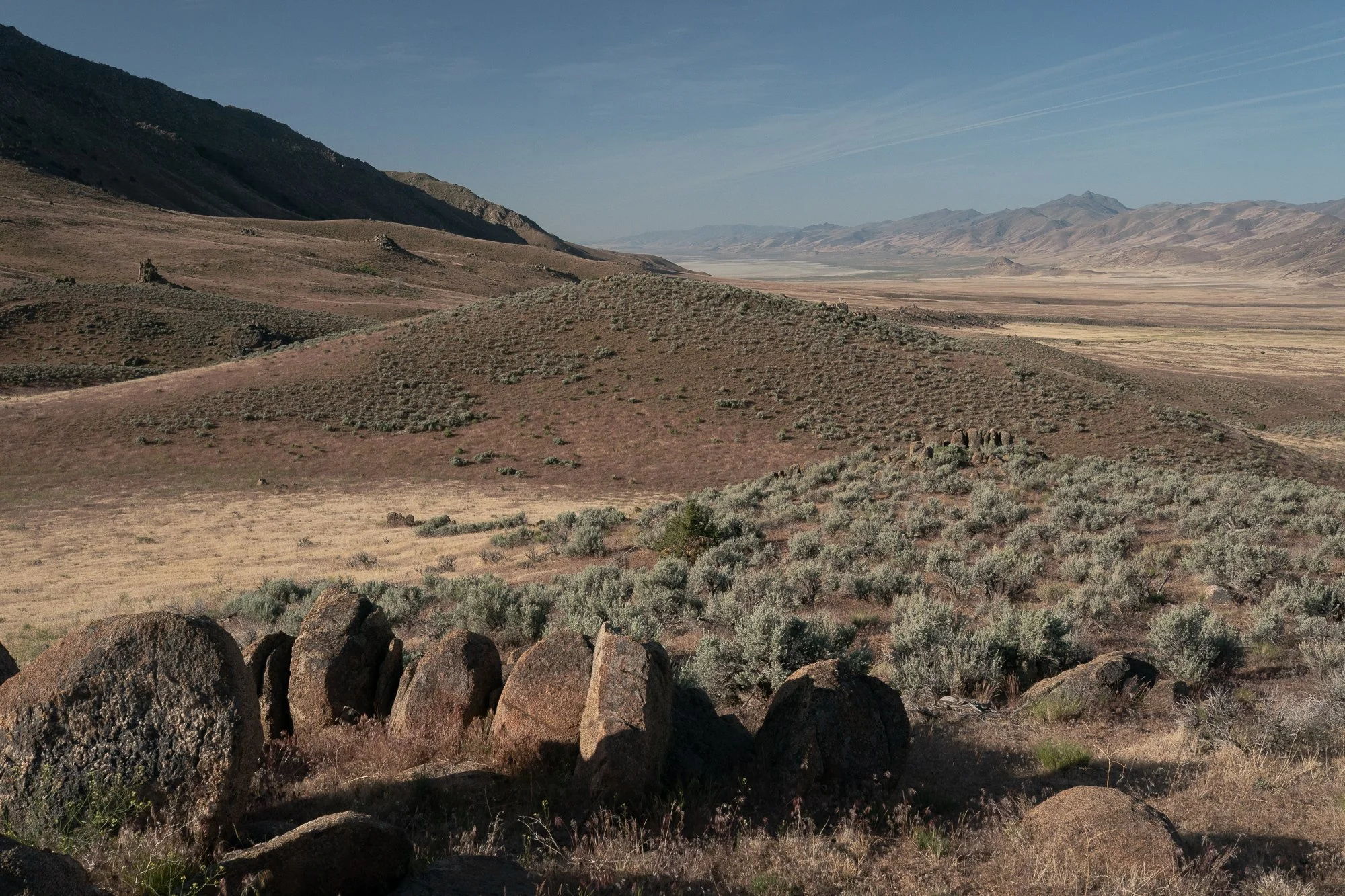
A view from the hillside down into a wide Nevada desert basin. Sagebrush and boulders fill the foreground, mountains stretch across the horizon.
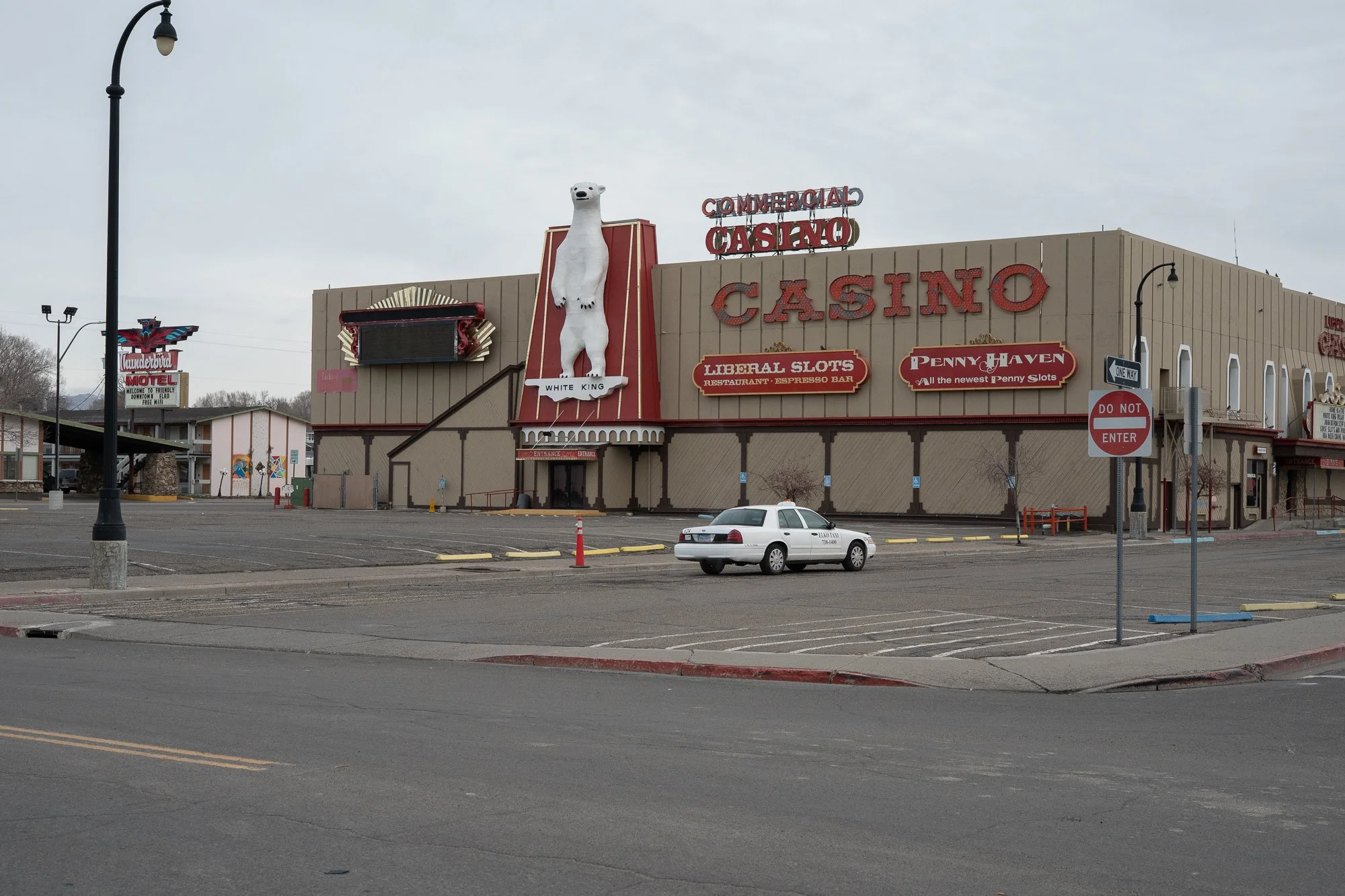
The White King and a white taxi cab at the legendary Commercial Casino in Elko, Nevada
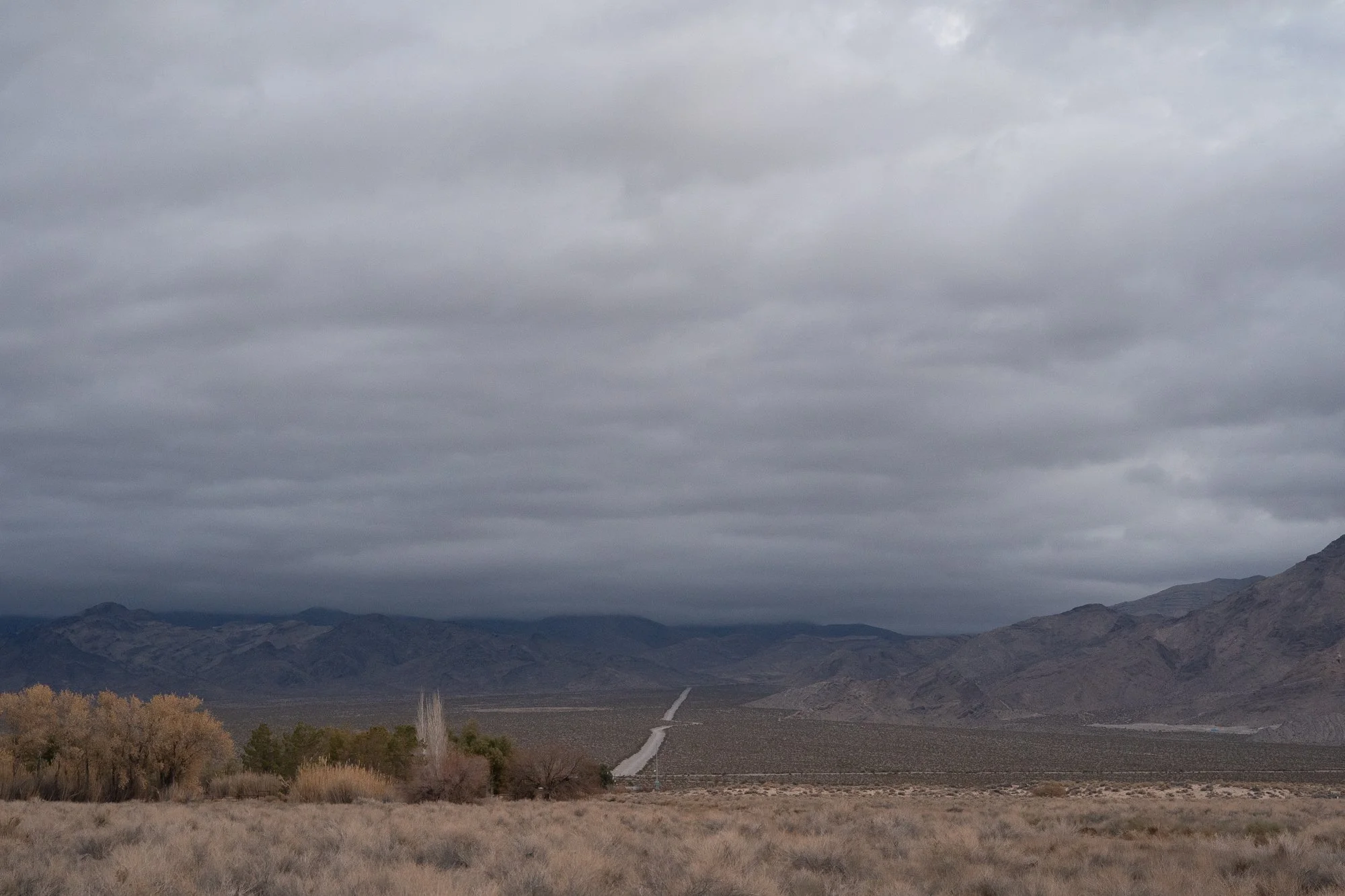
Looking out across a Nevada basin on an overcast day. The road is there — small and direct, headed somewhere between two mountain ranges.
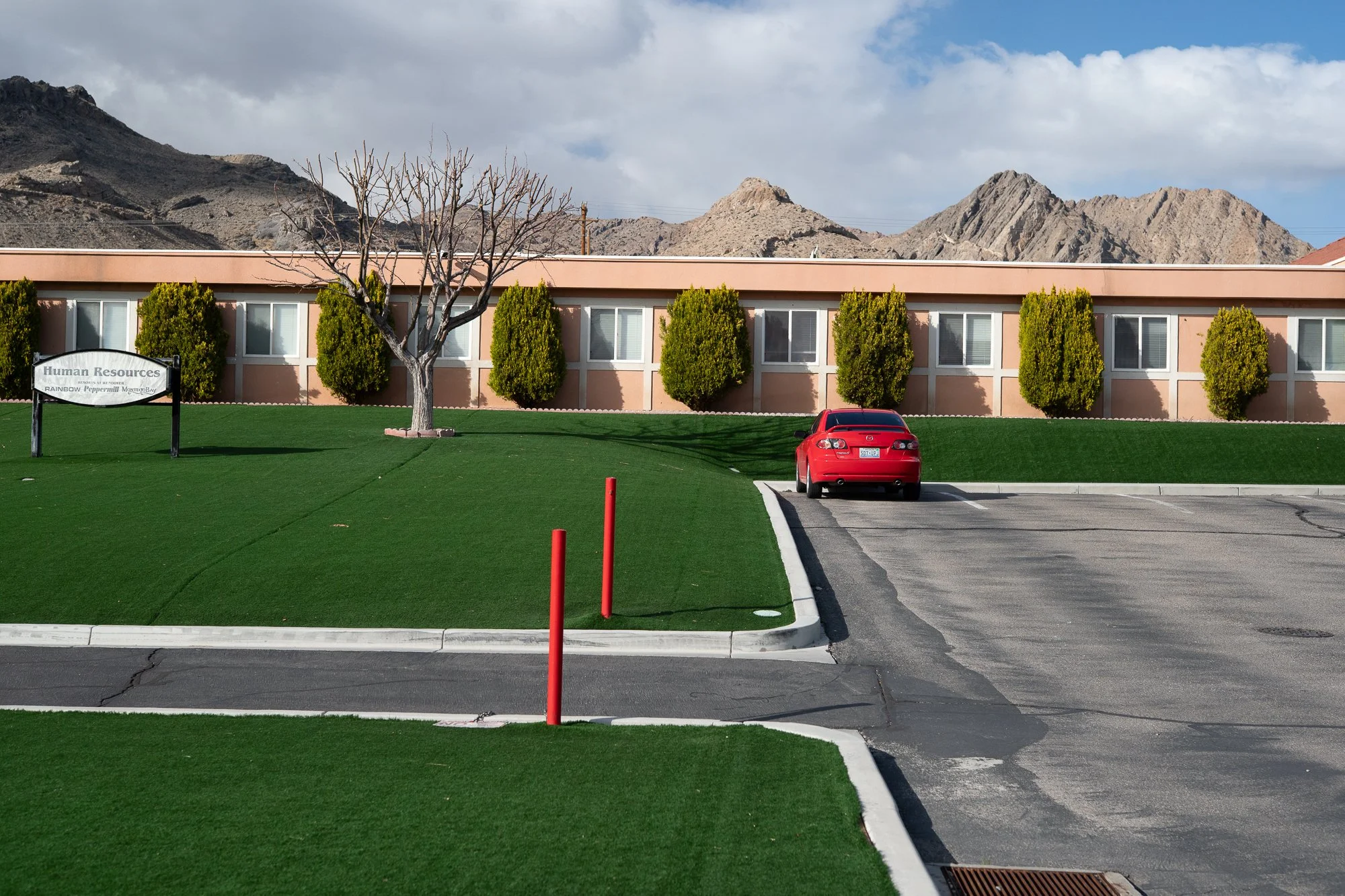
Human Resources signage, green turf, red car — and then a Nevada mountain range right behind it. The contrast does the work.
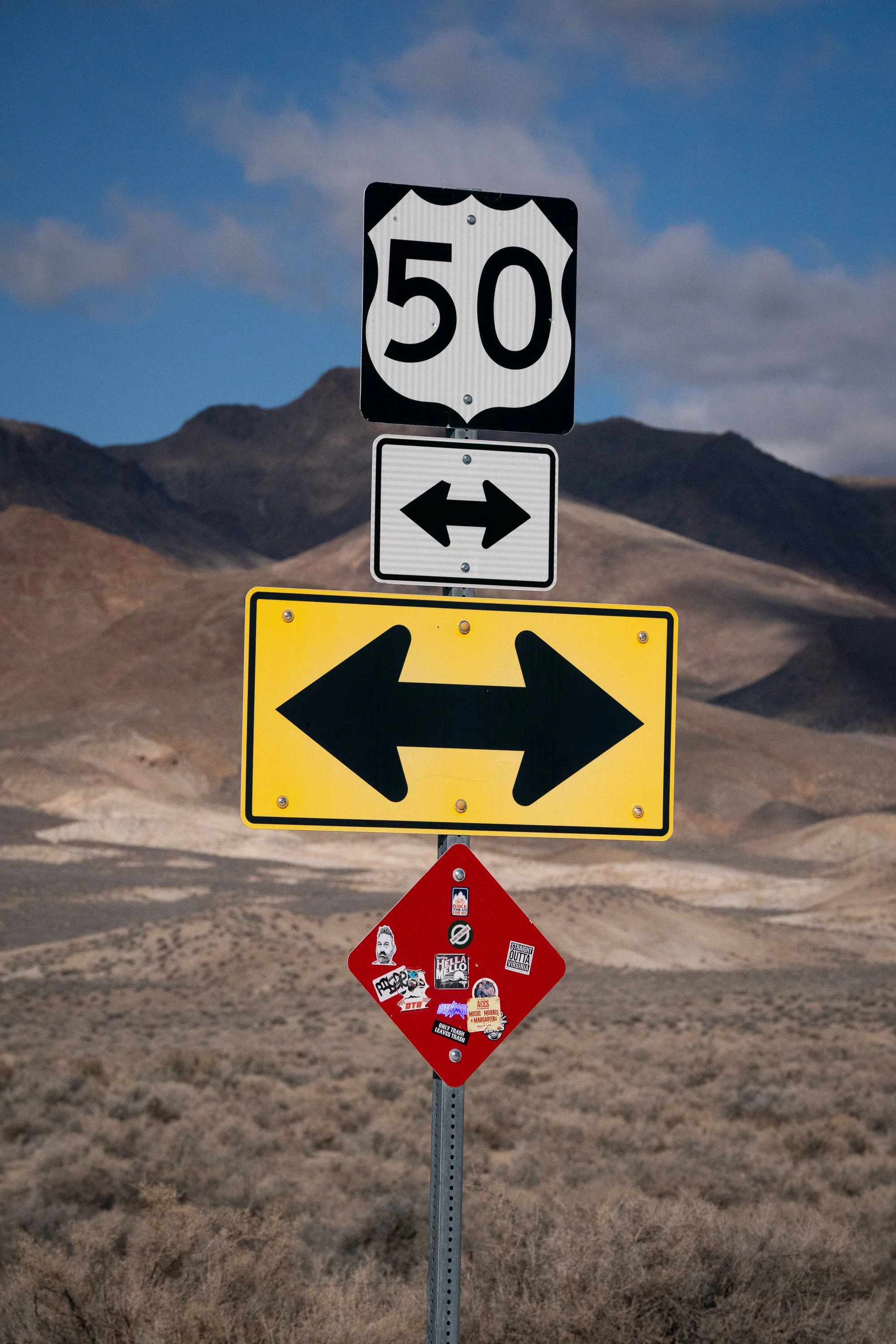
US Highway 50 - Nevada - “The Loneliest Road In America”
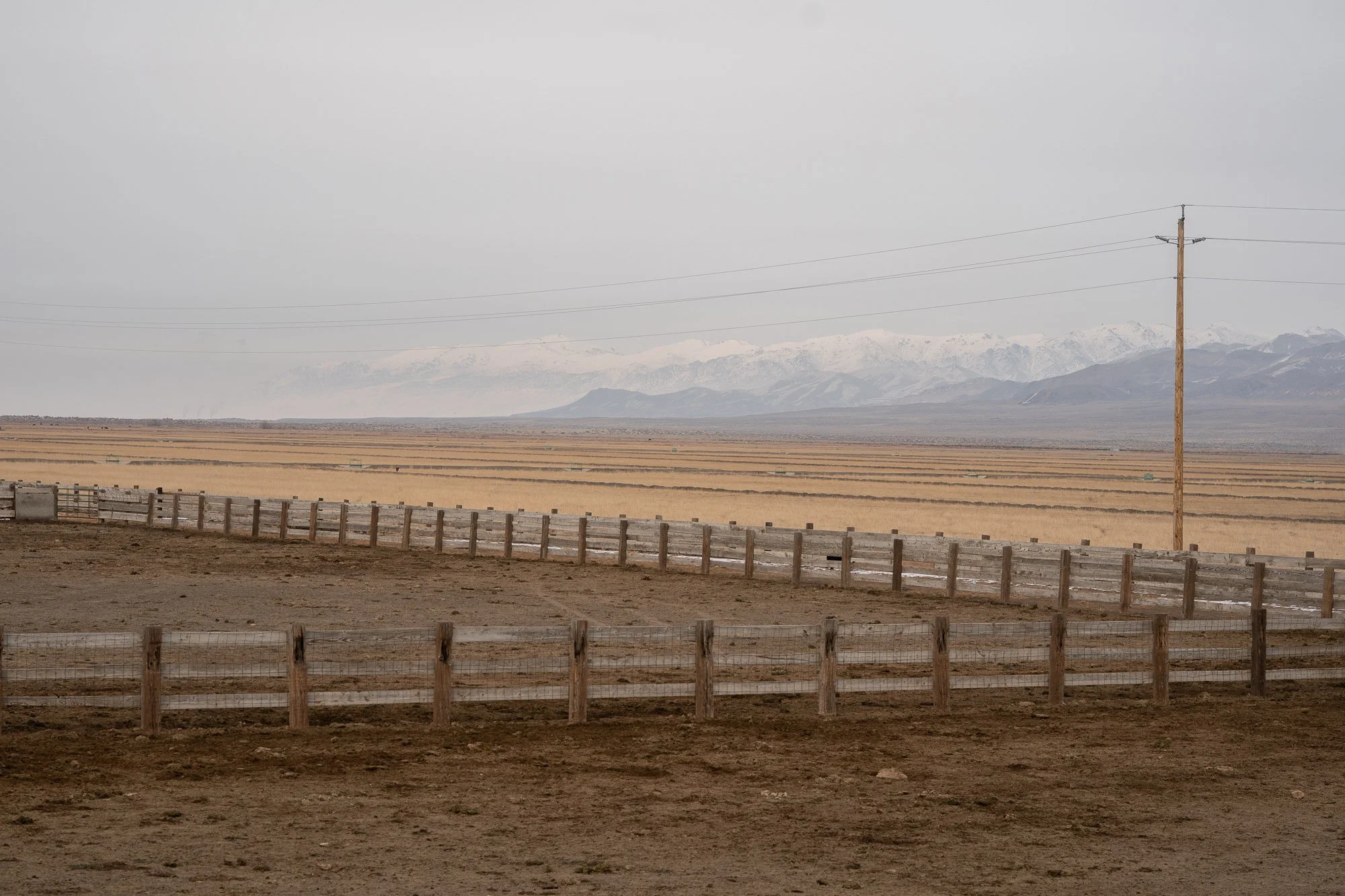
Empty ranch enclosure in rural Nevada. One utility pole, one fence, and a long flat view toward snow-covered peaks.
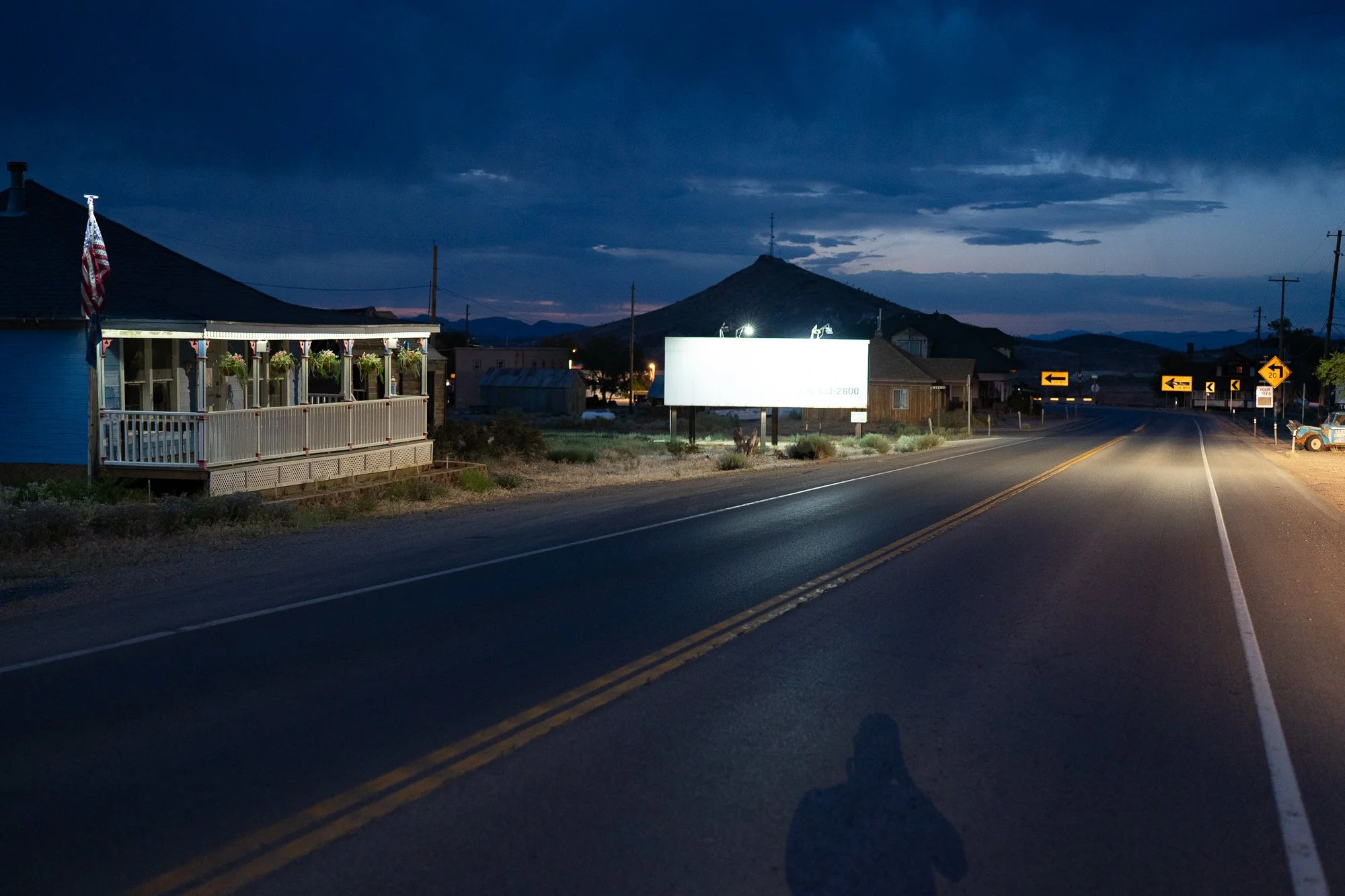
Late evening in a small Nevada town. The billboard is lit but empty. Everything else is still.
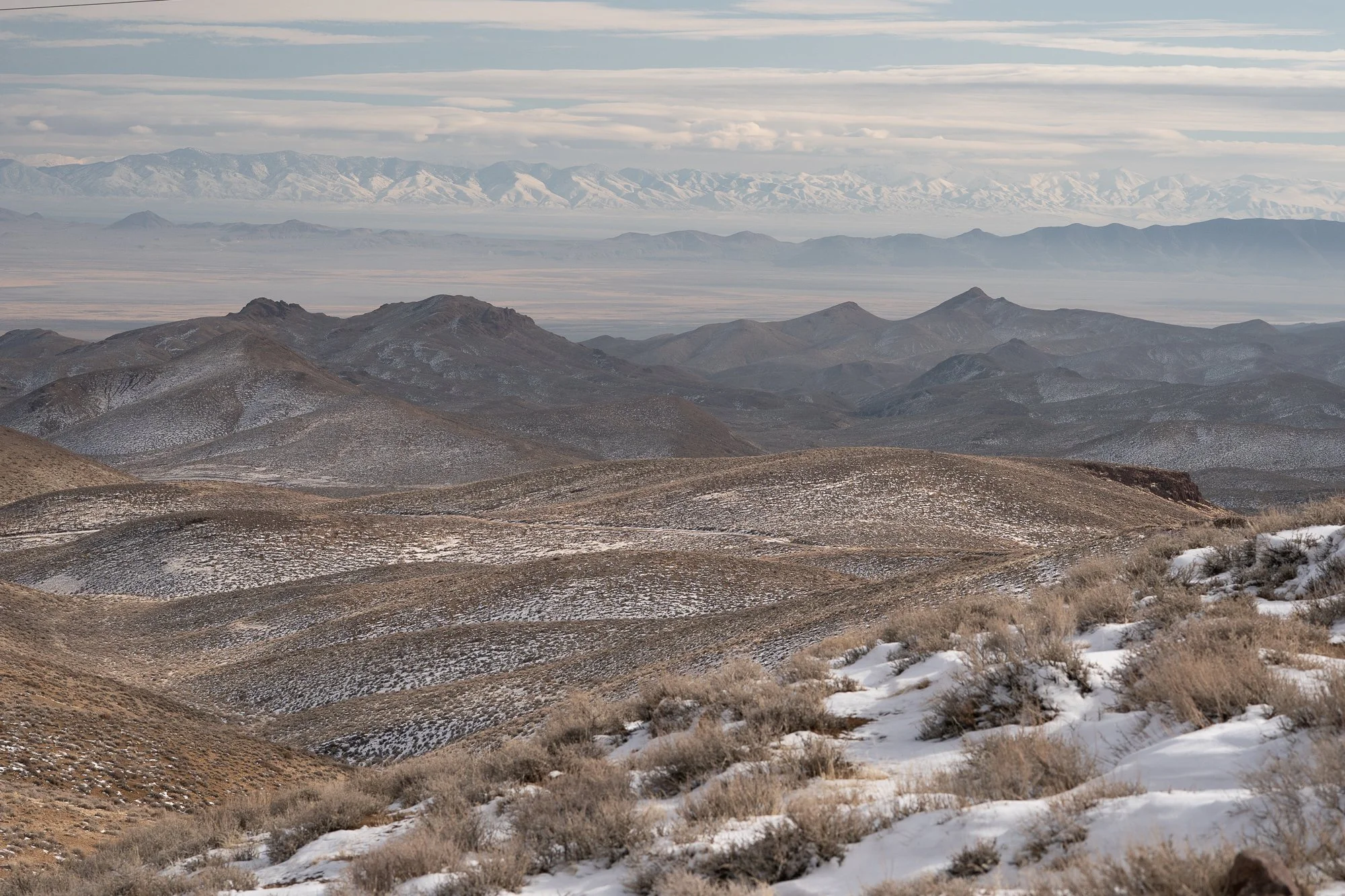
Snow on the high ridges, scrub in the foreground. The Ruby Mountains stack one behind the other, each a little lighter than the last.
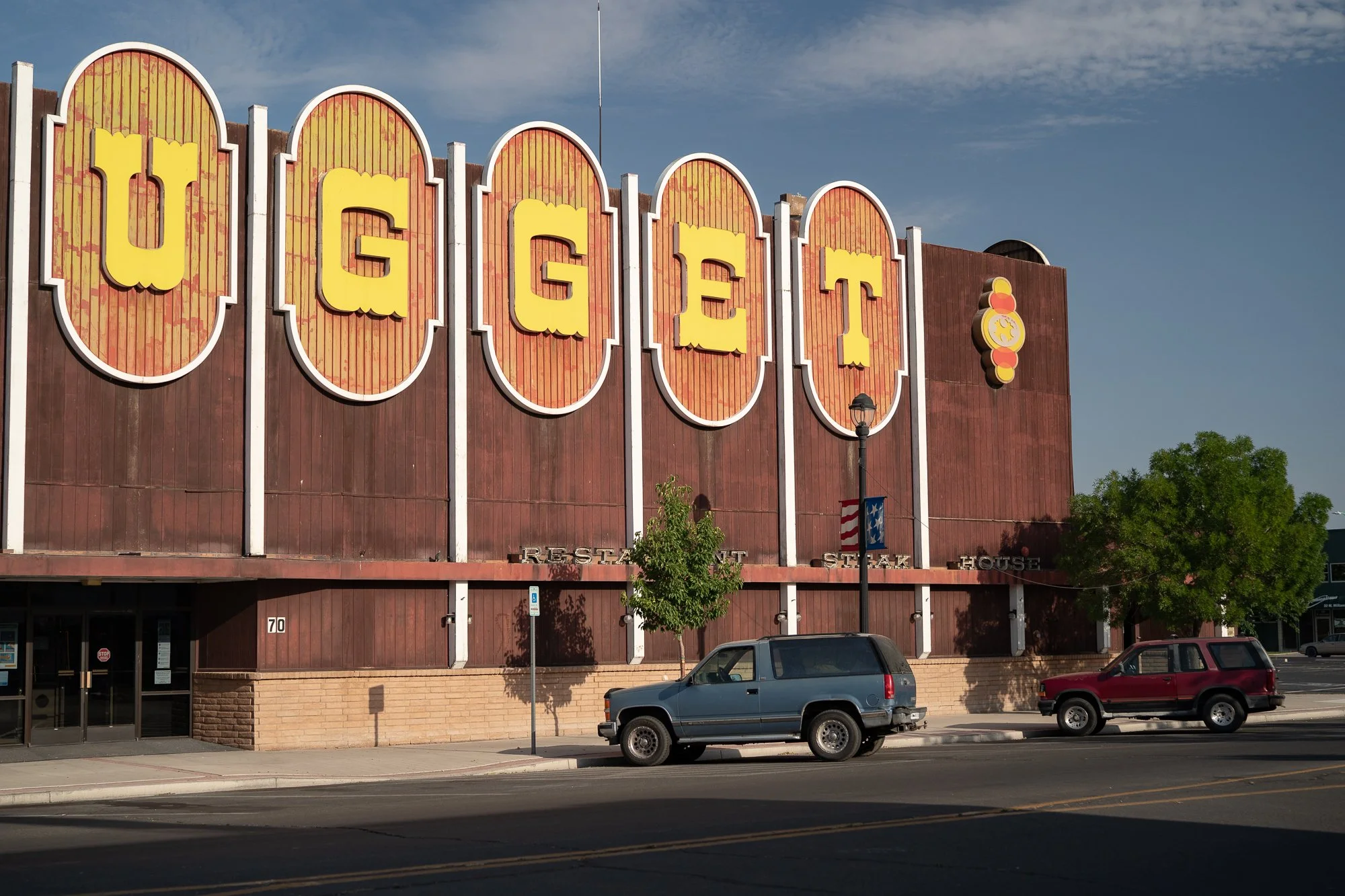
Fallon, Nevada -small Nevada town casino storefront, midday. Big signage, not much foot traffic.
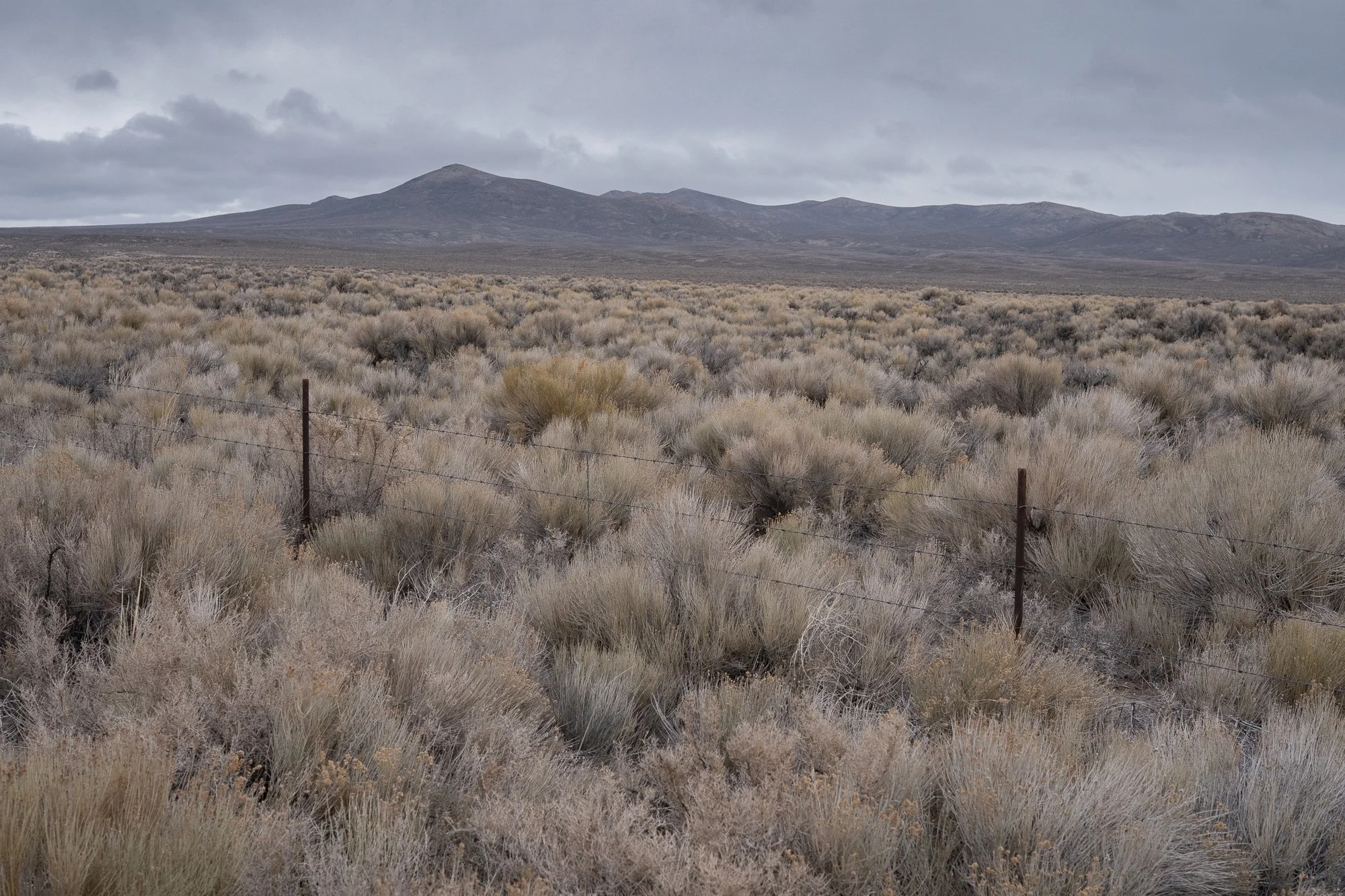
Nevada high desert on a gray day. Sagebrush in every direction, one fence line, nothing else.
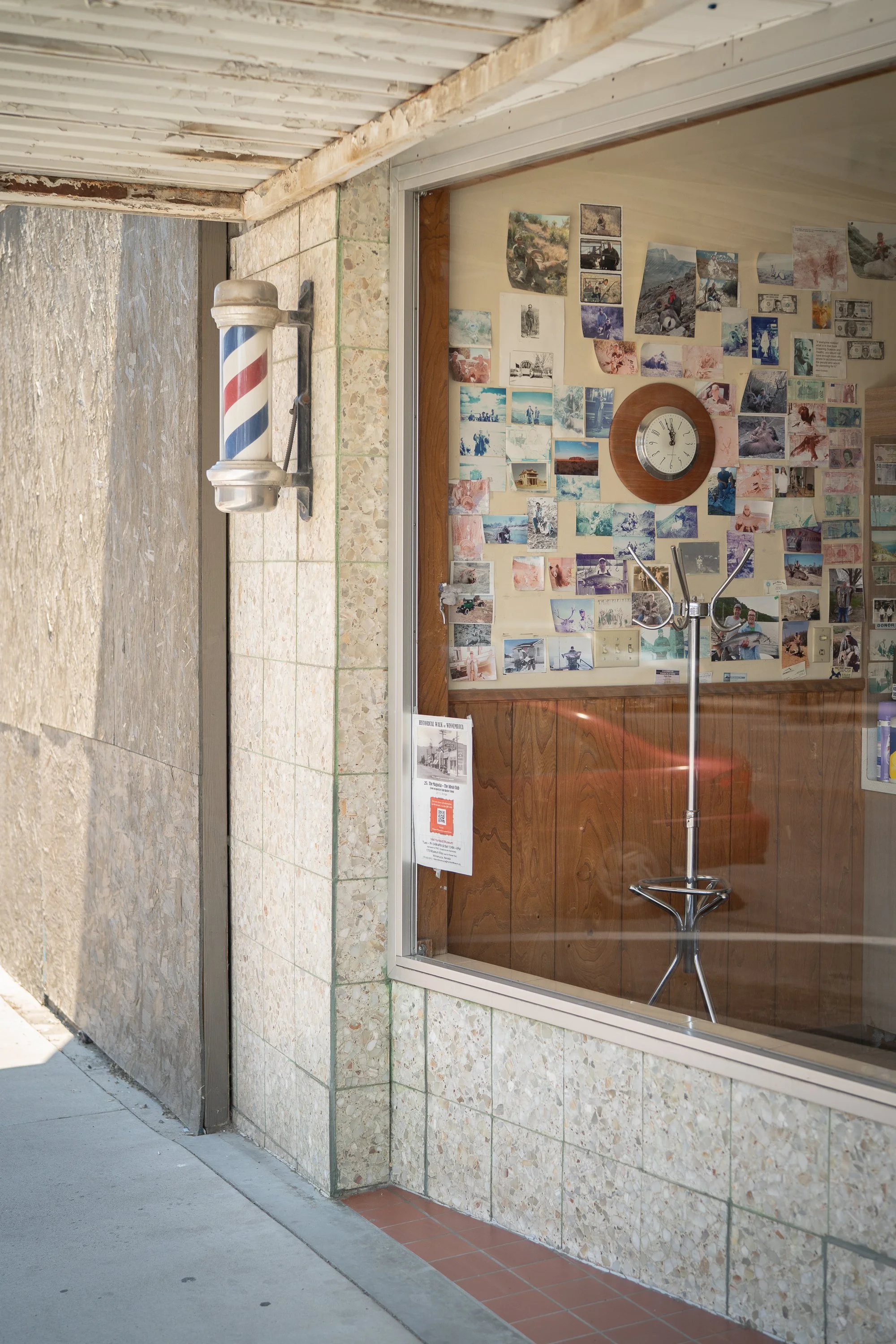
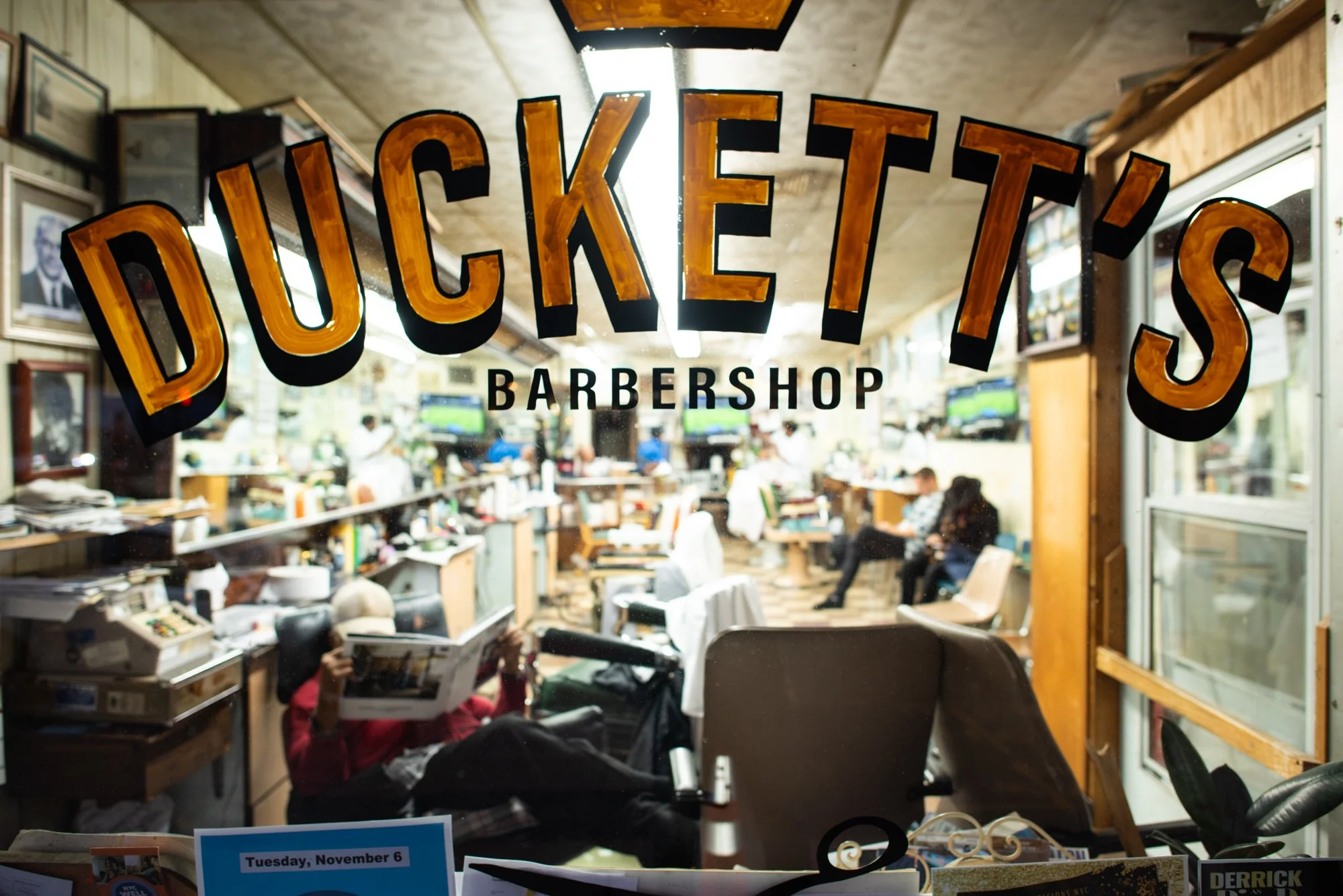
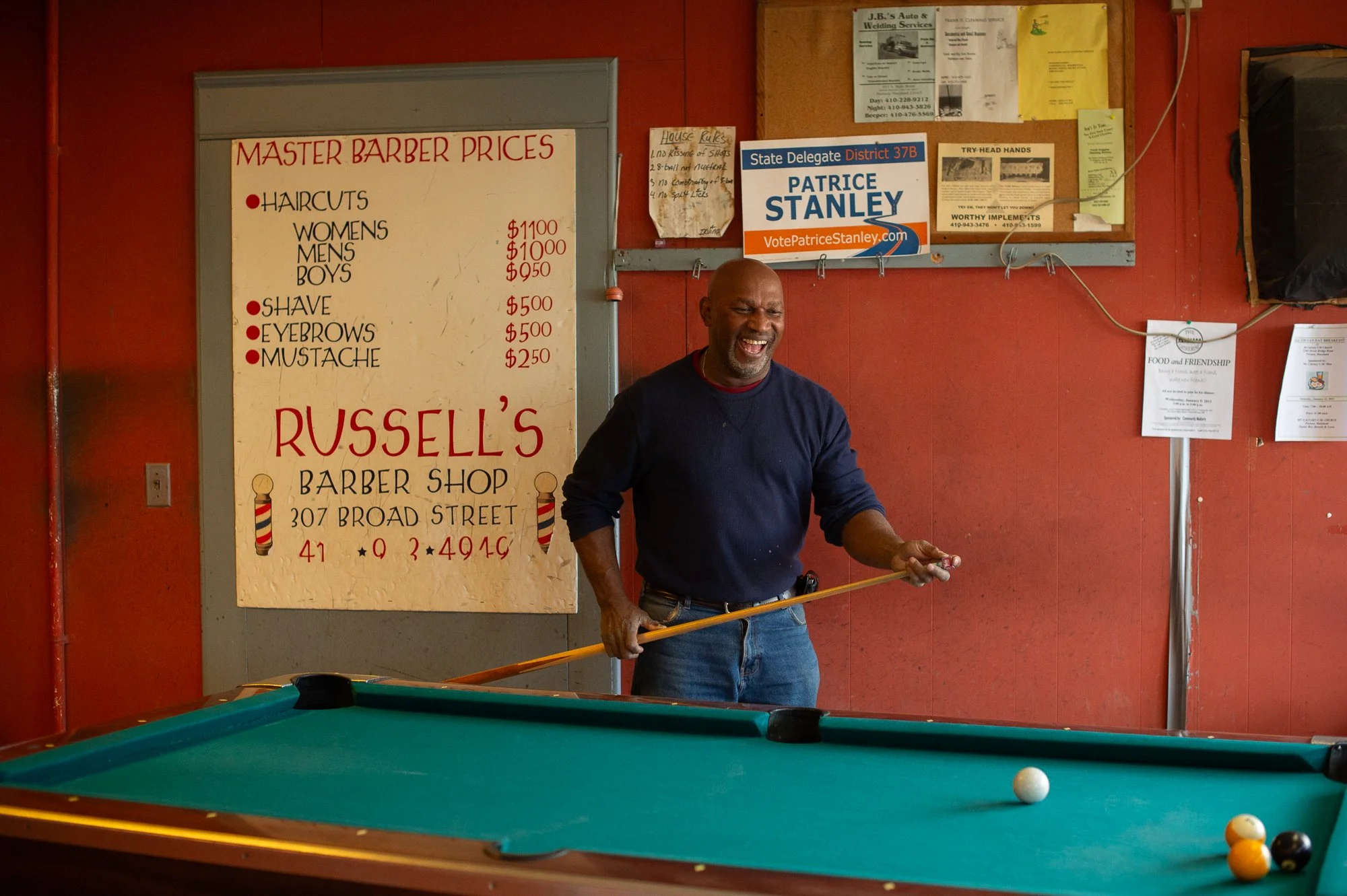
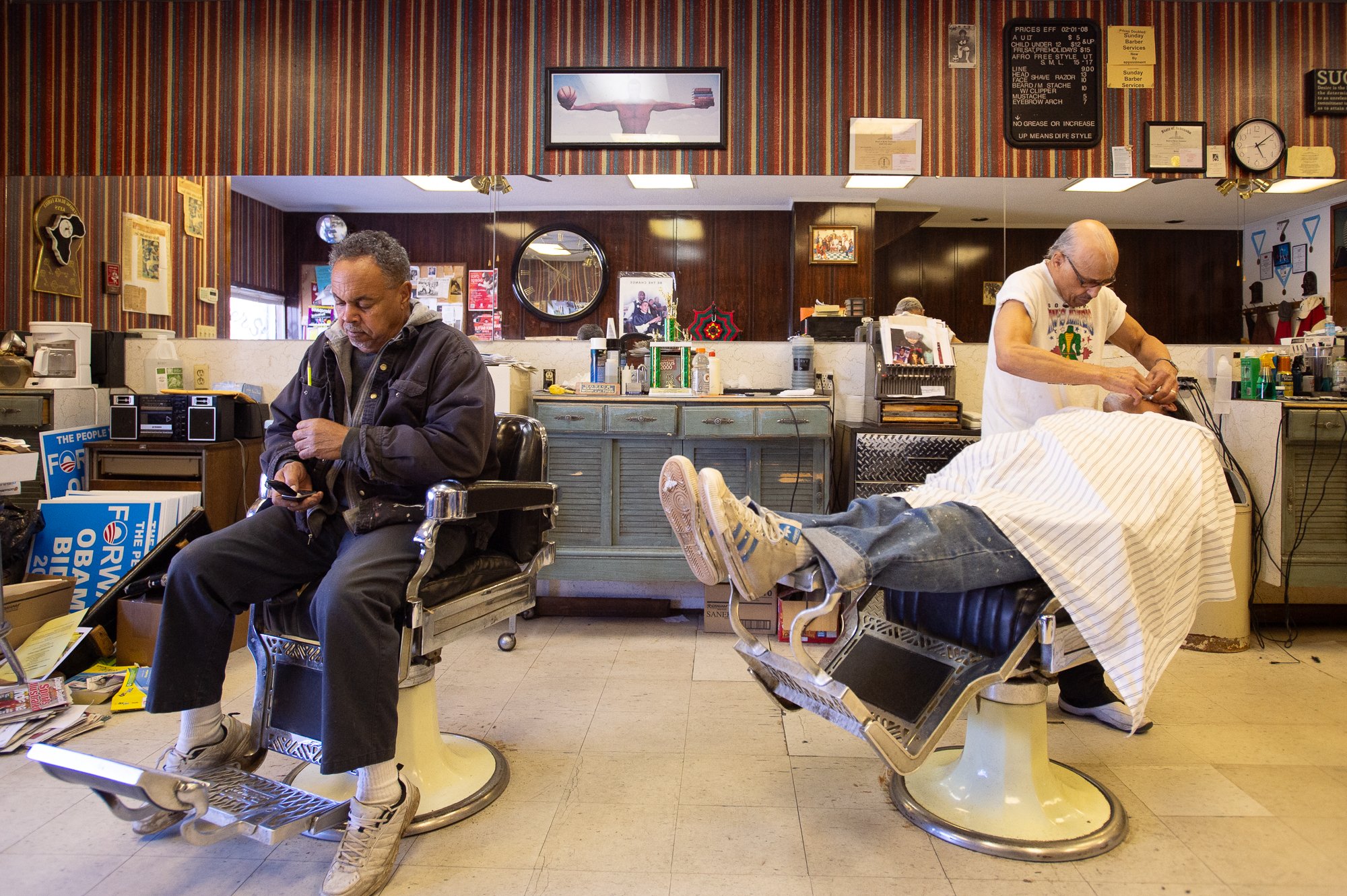
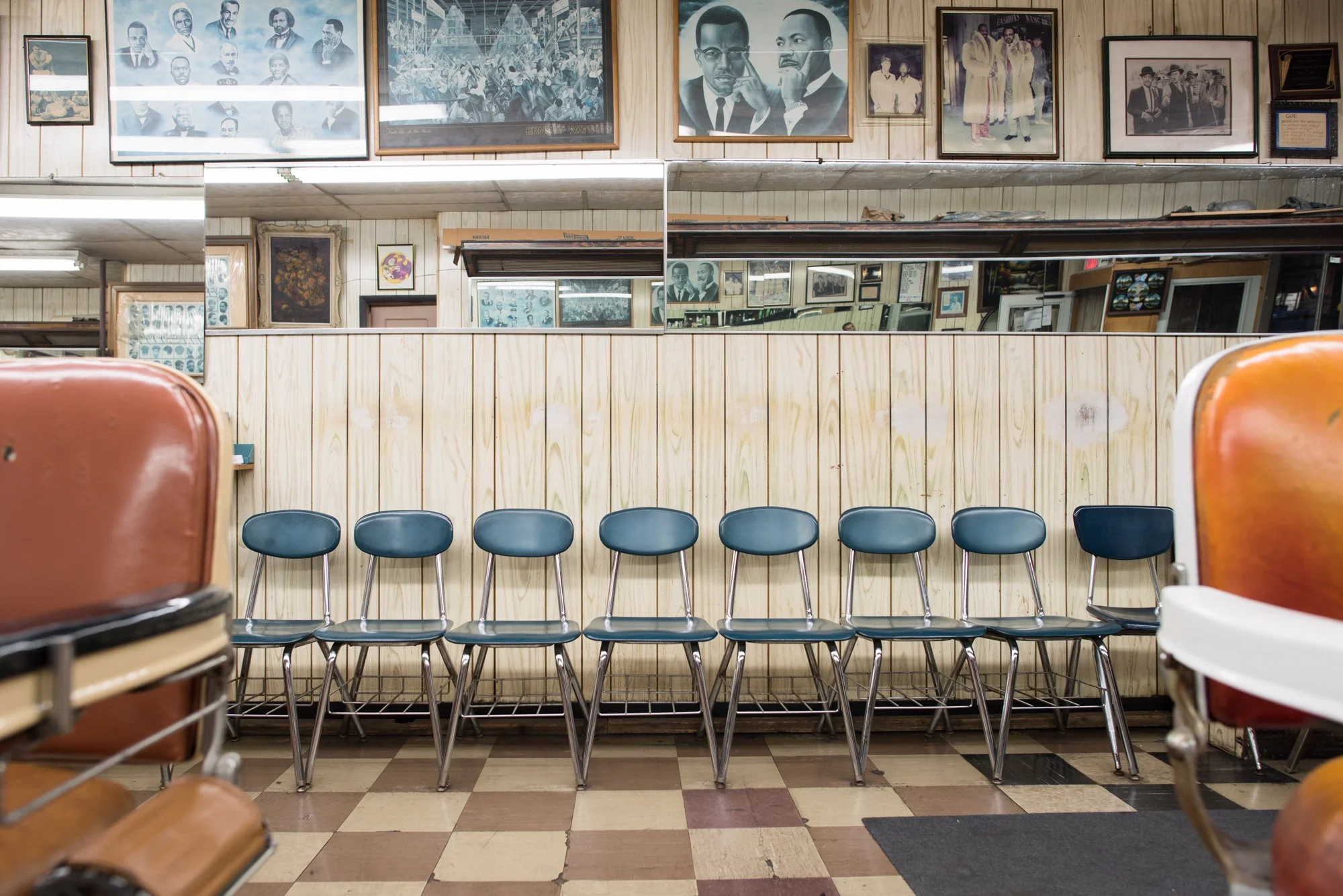
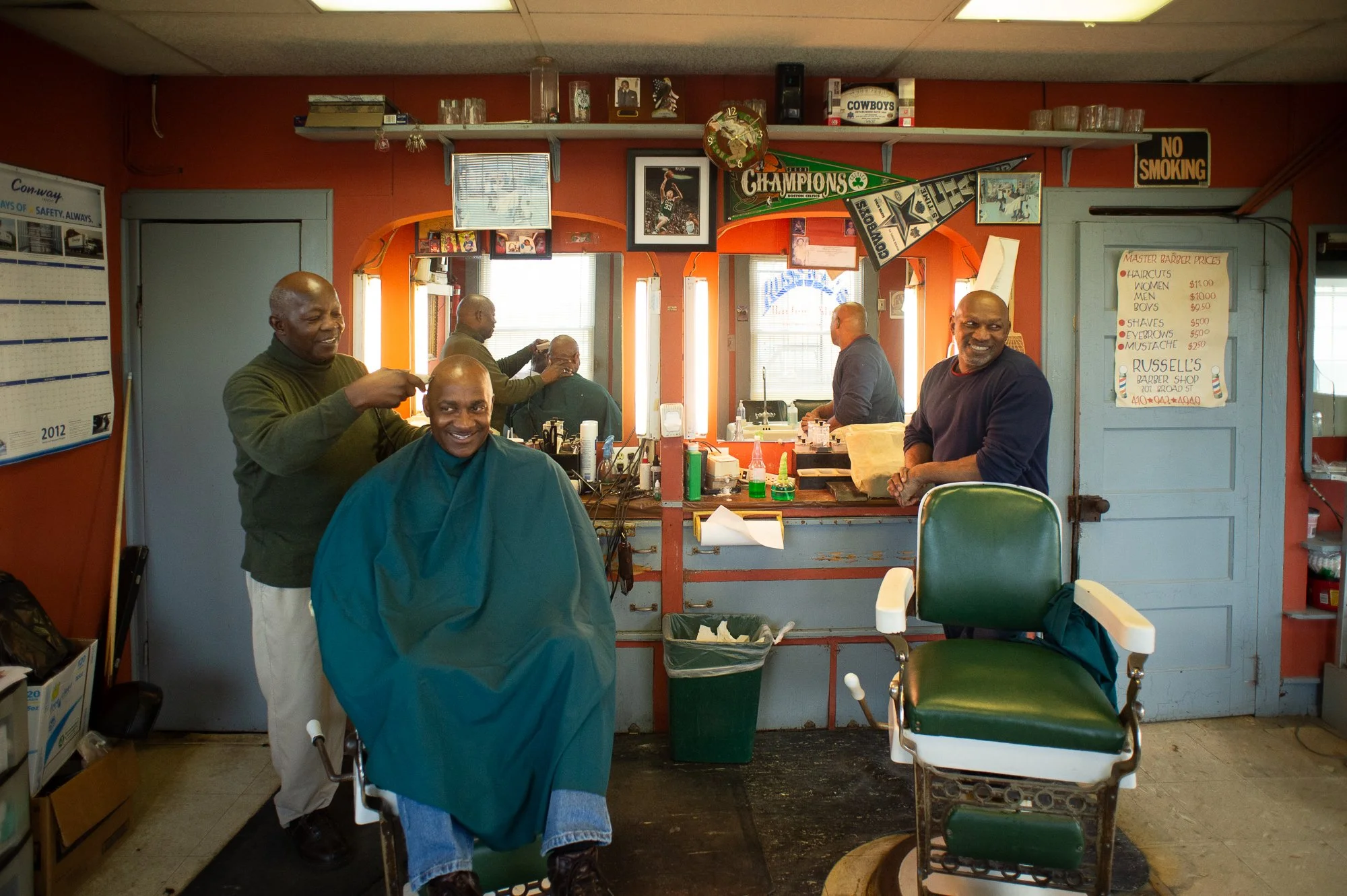
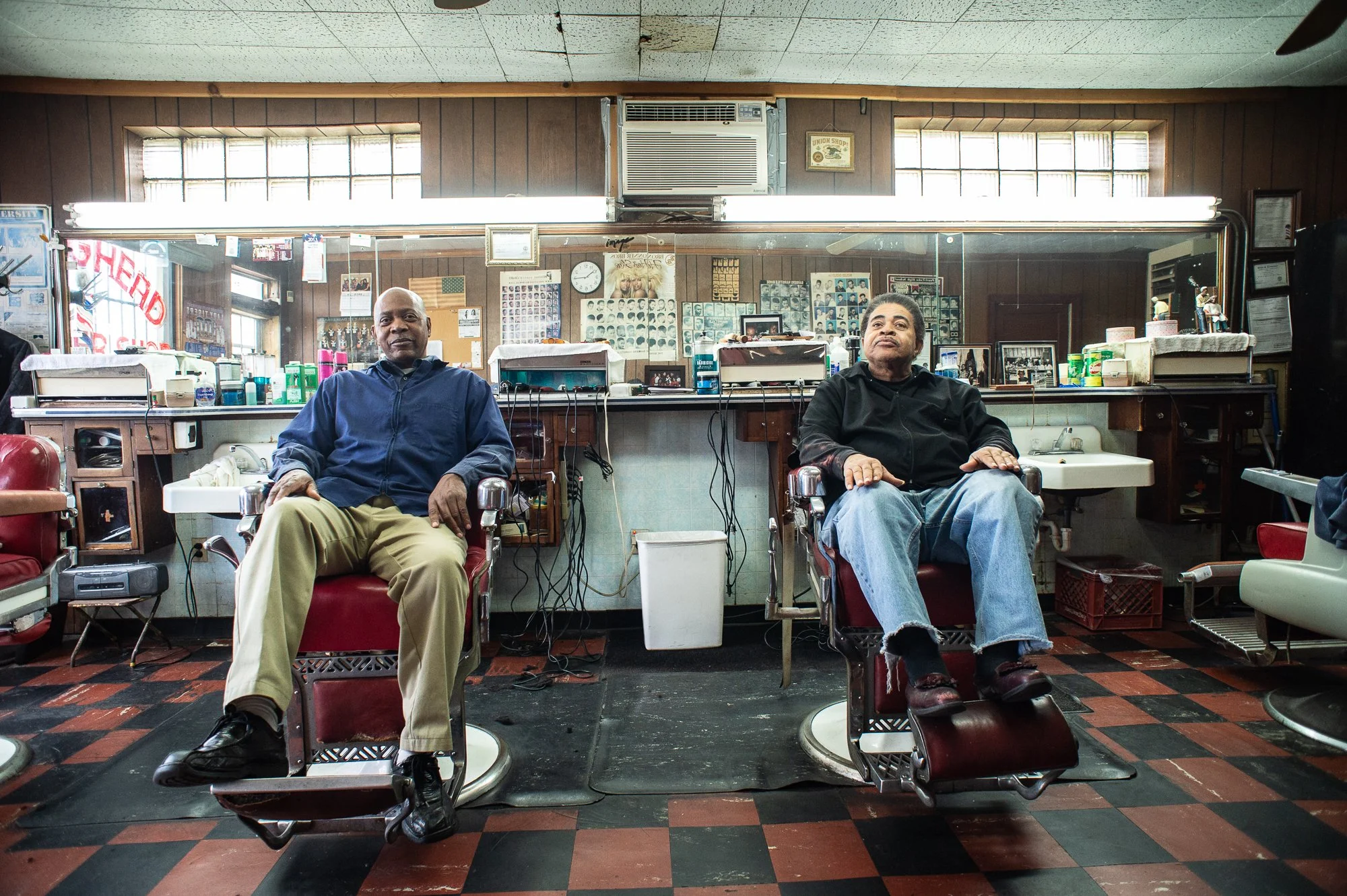
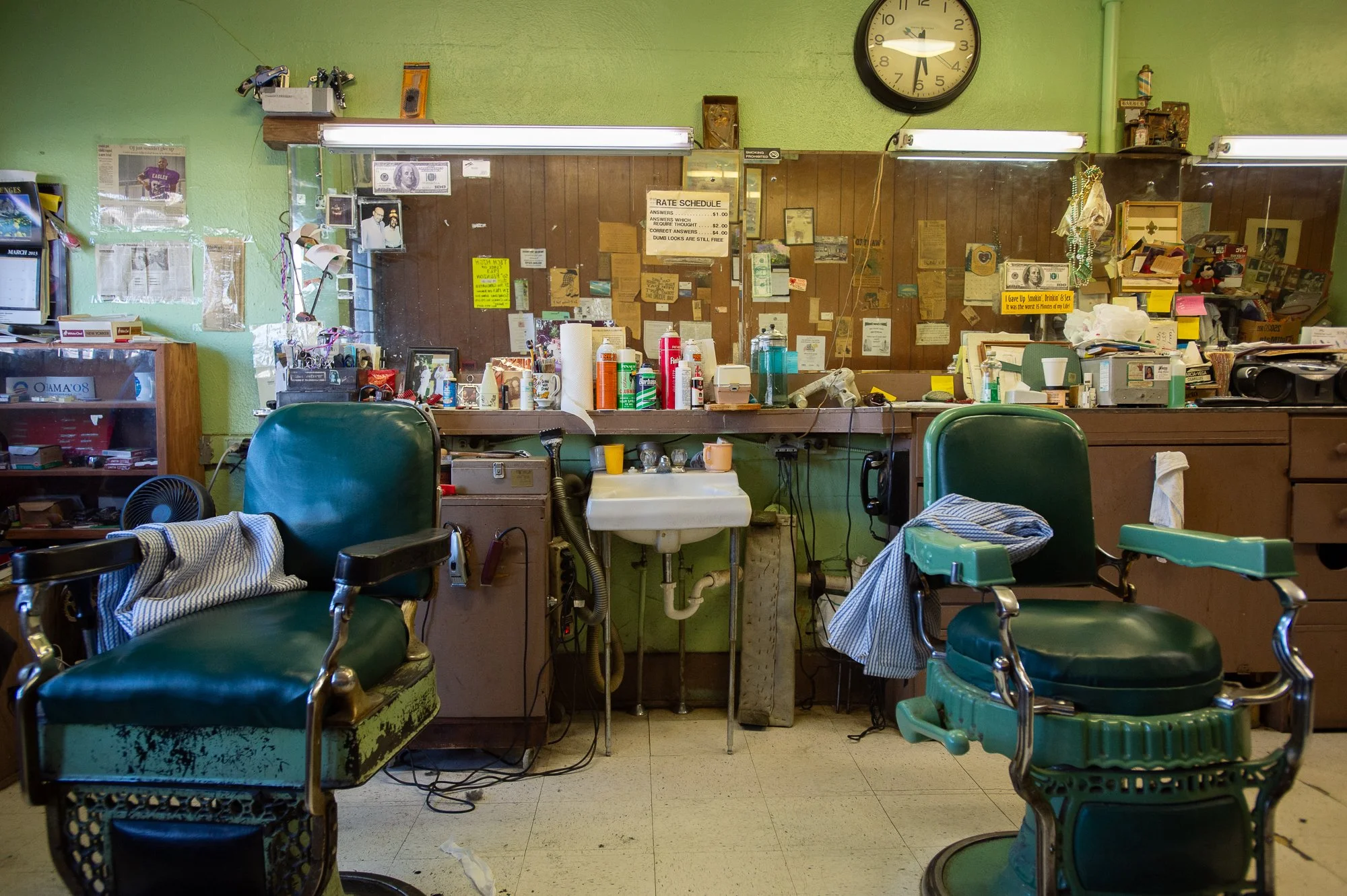
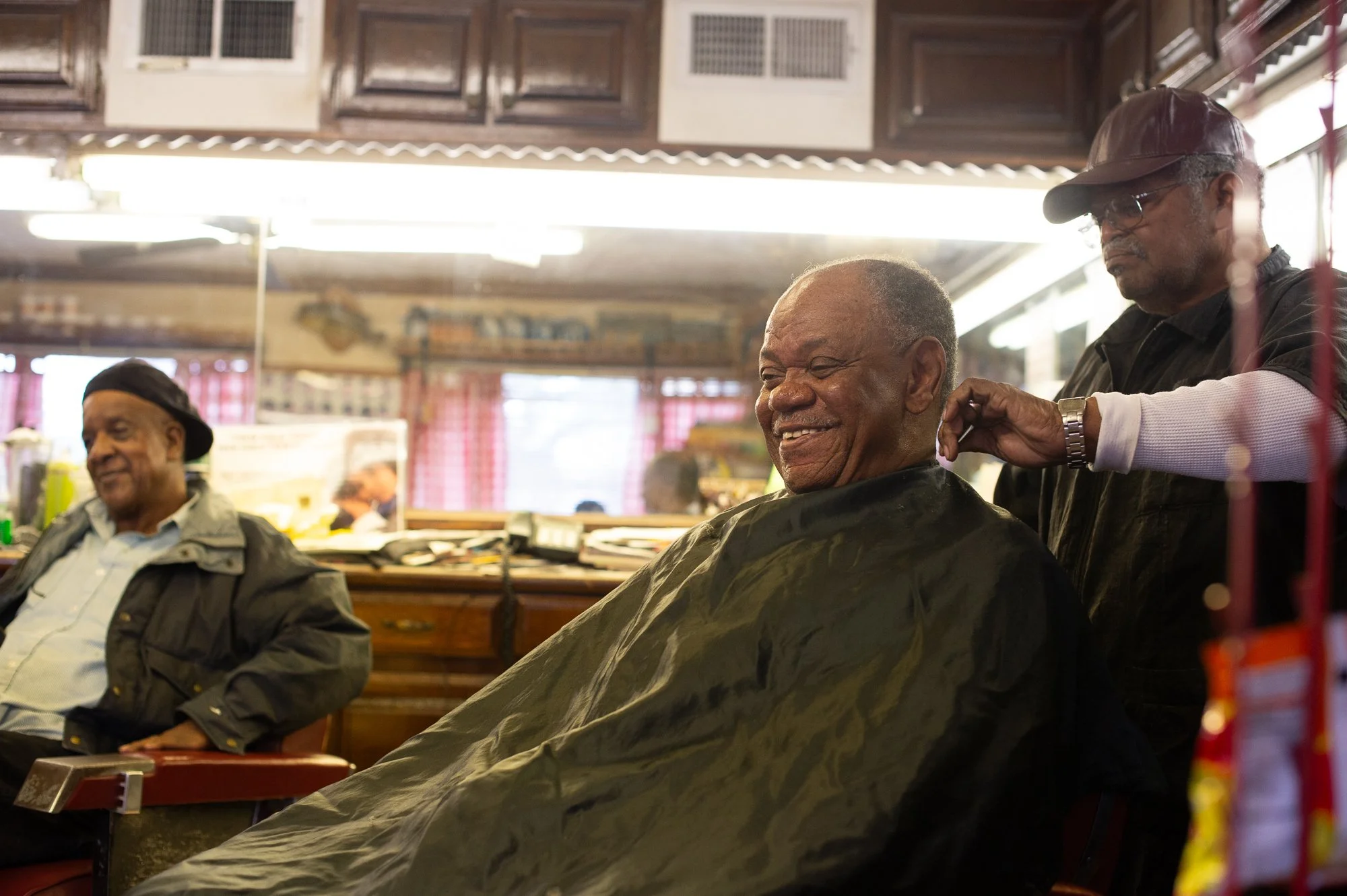
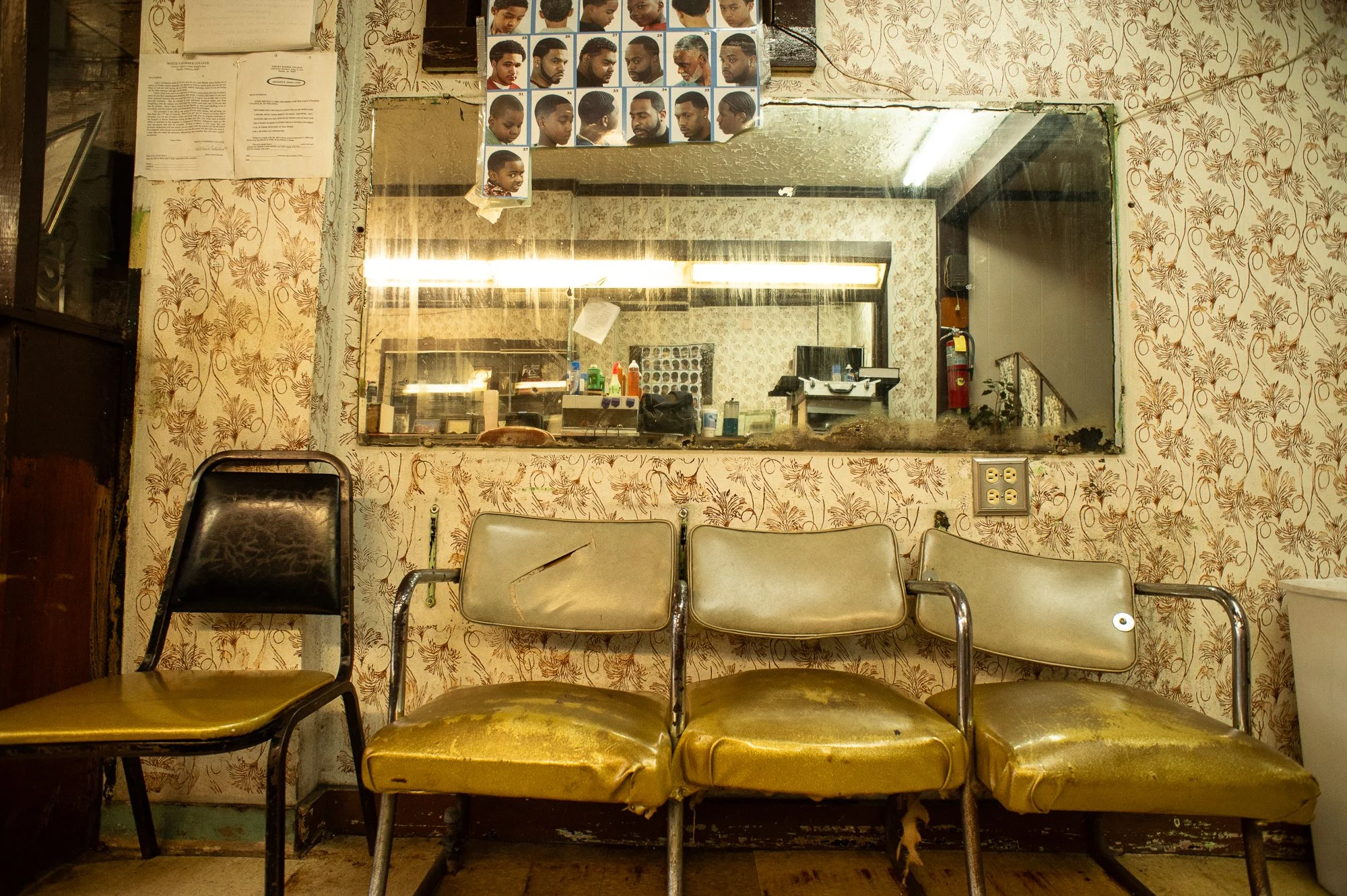
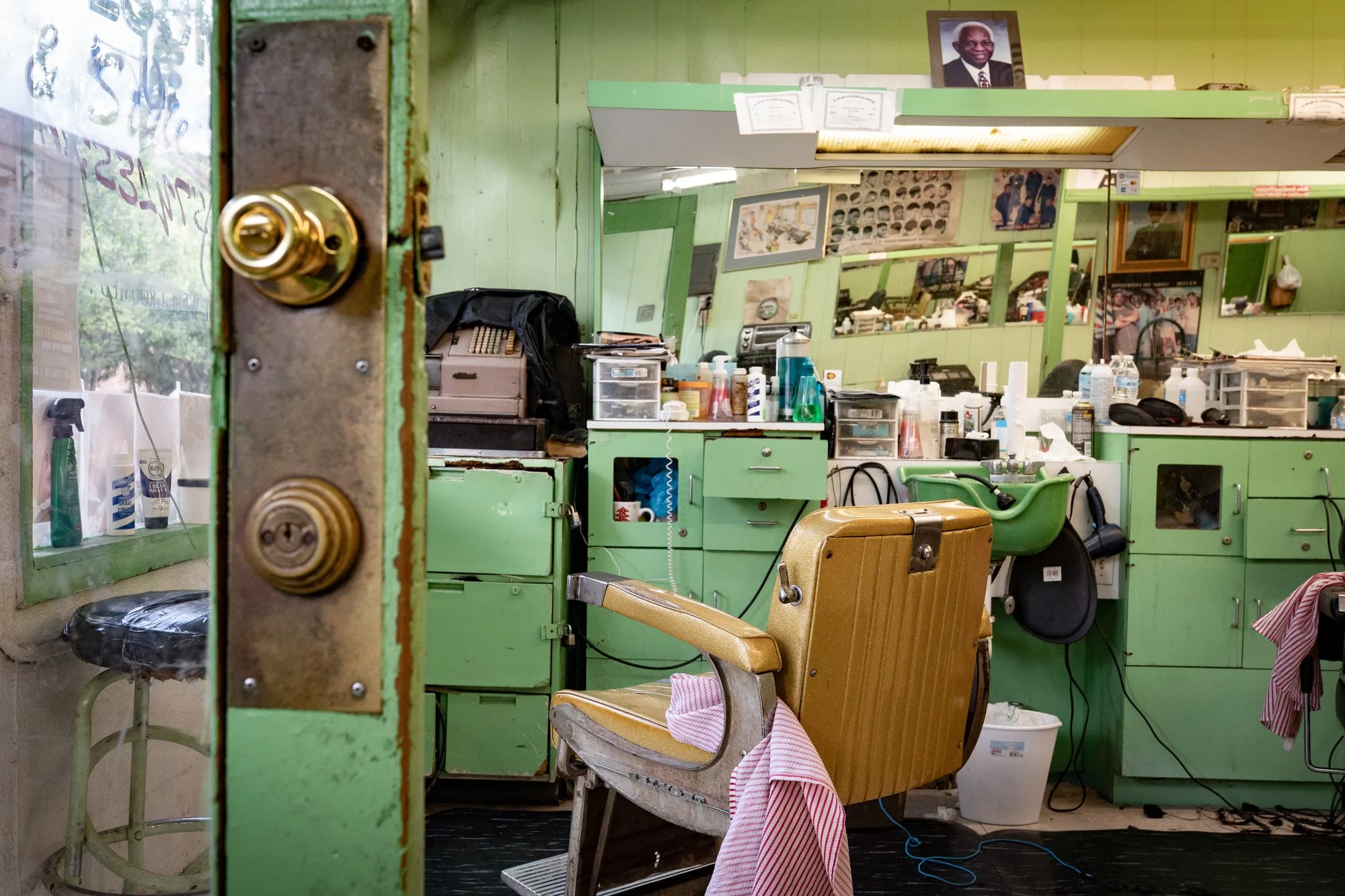
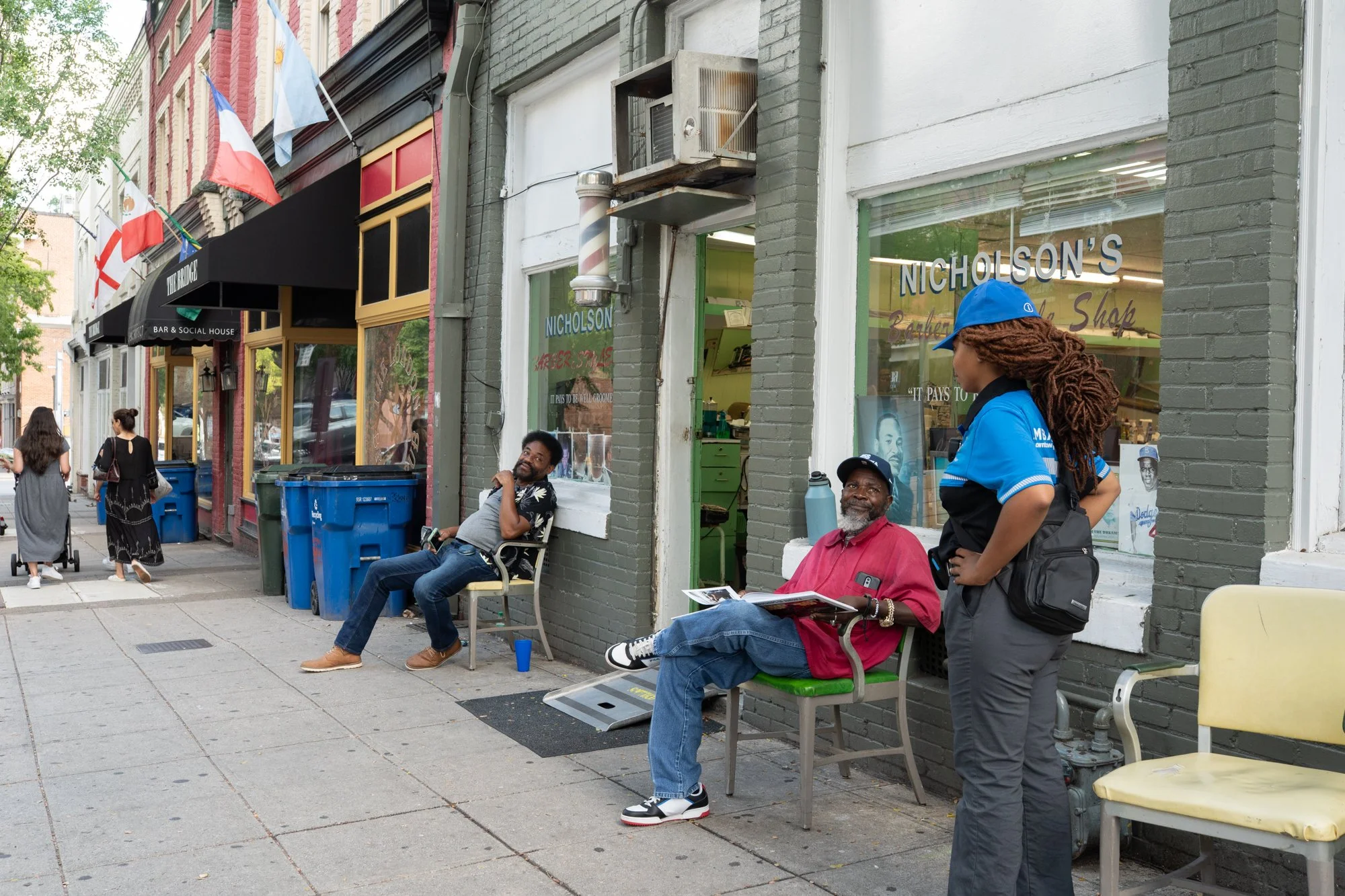
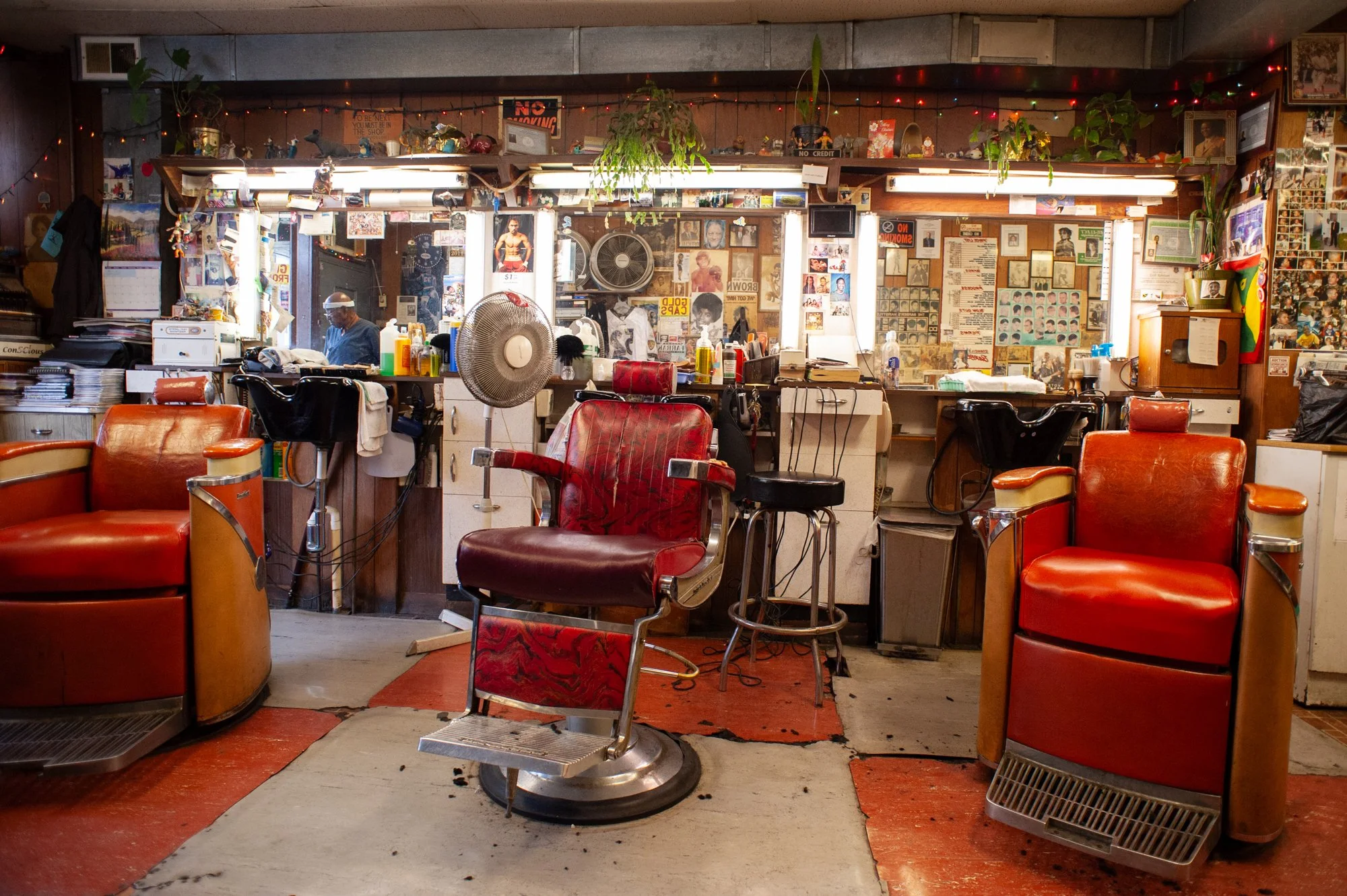
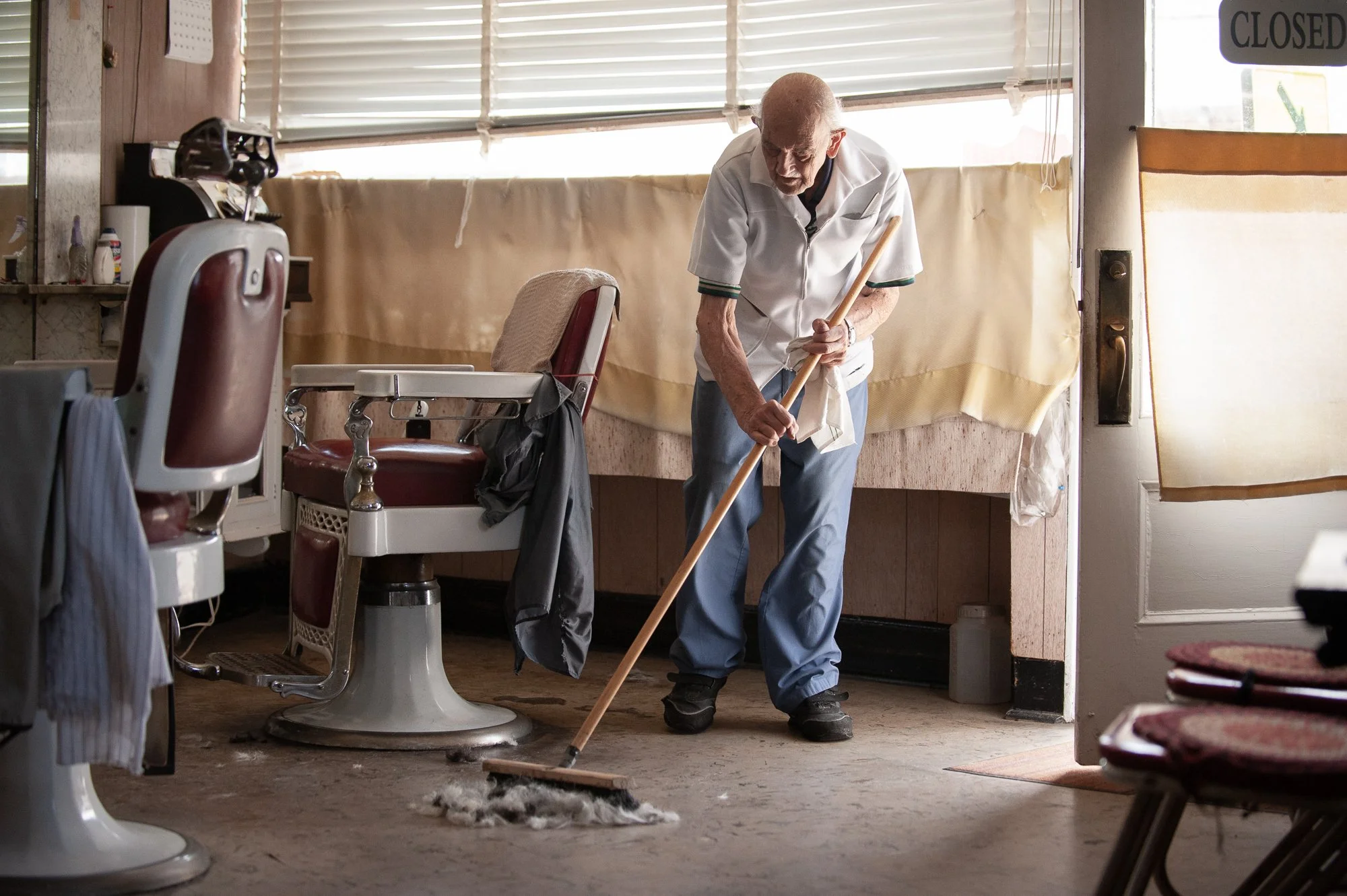
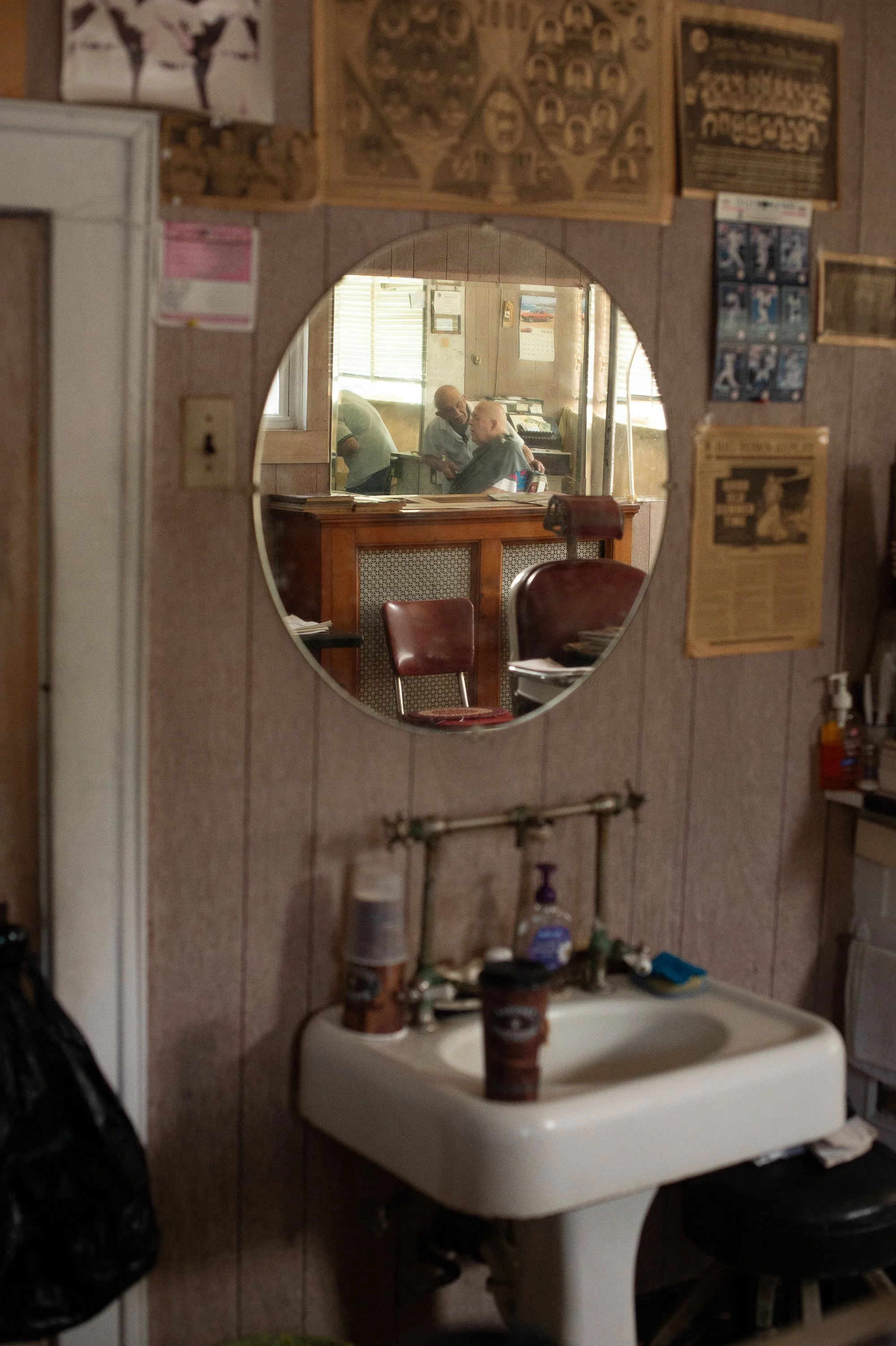
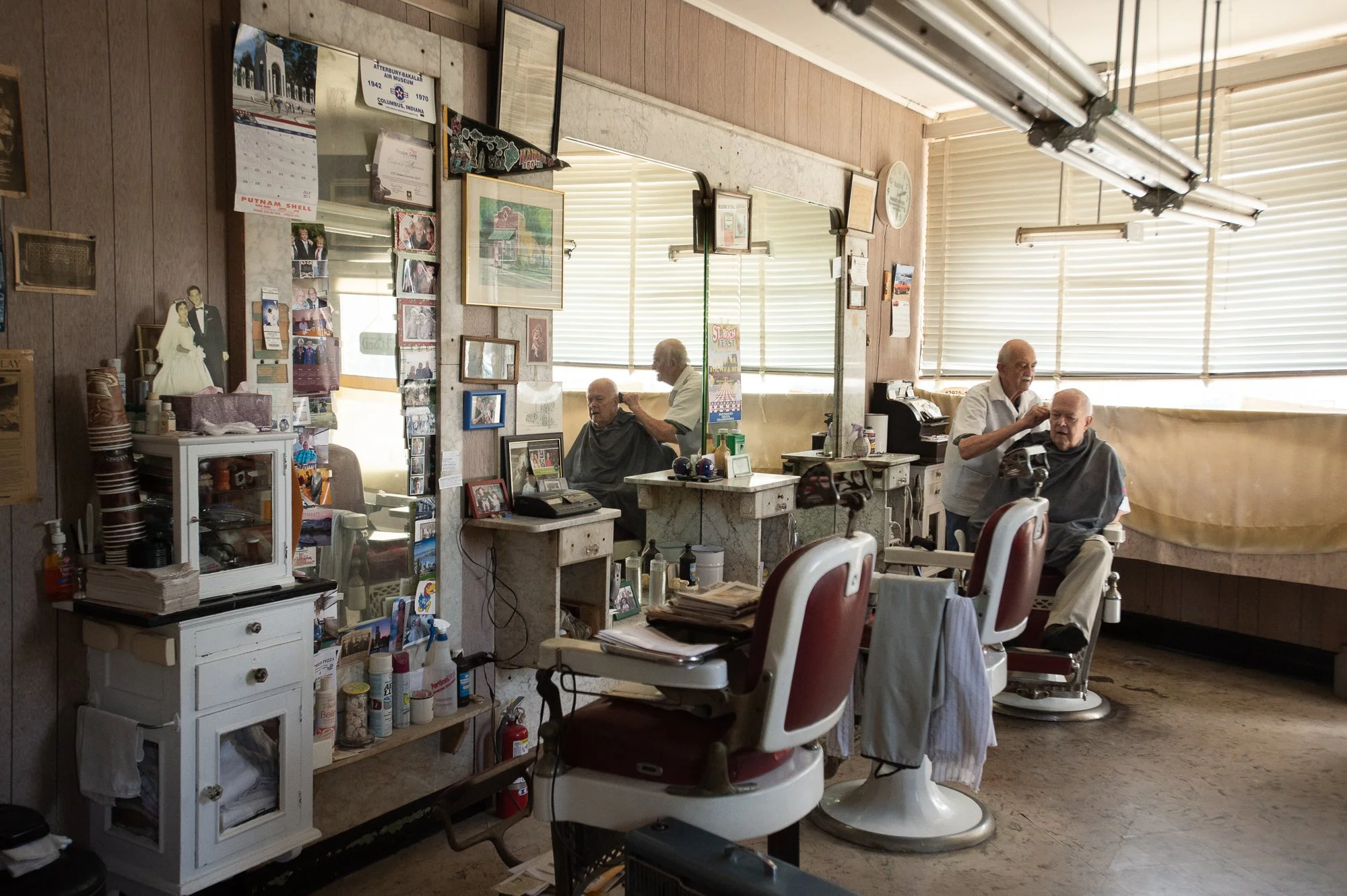
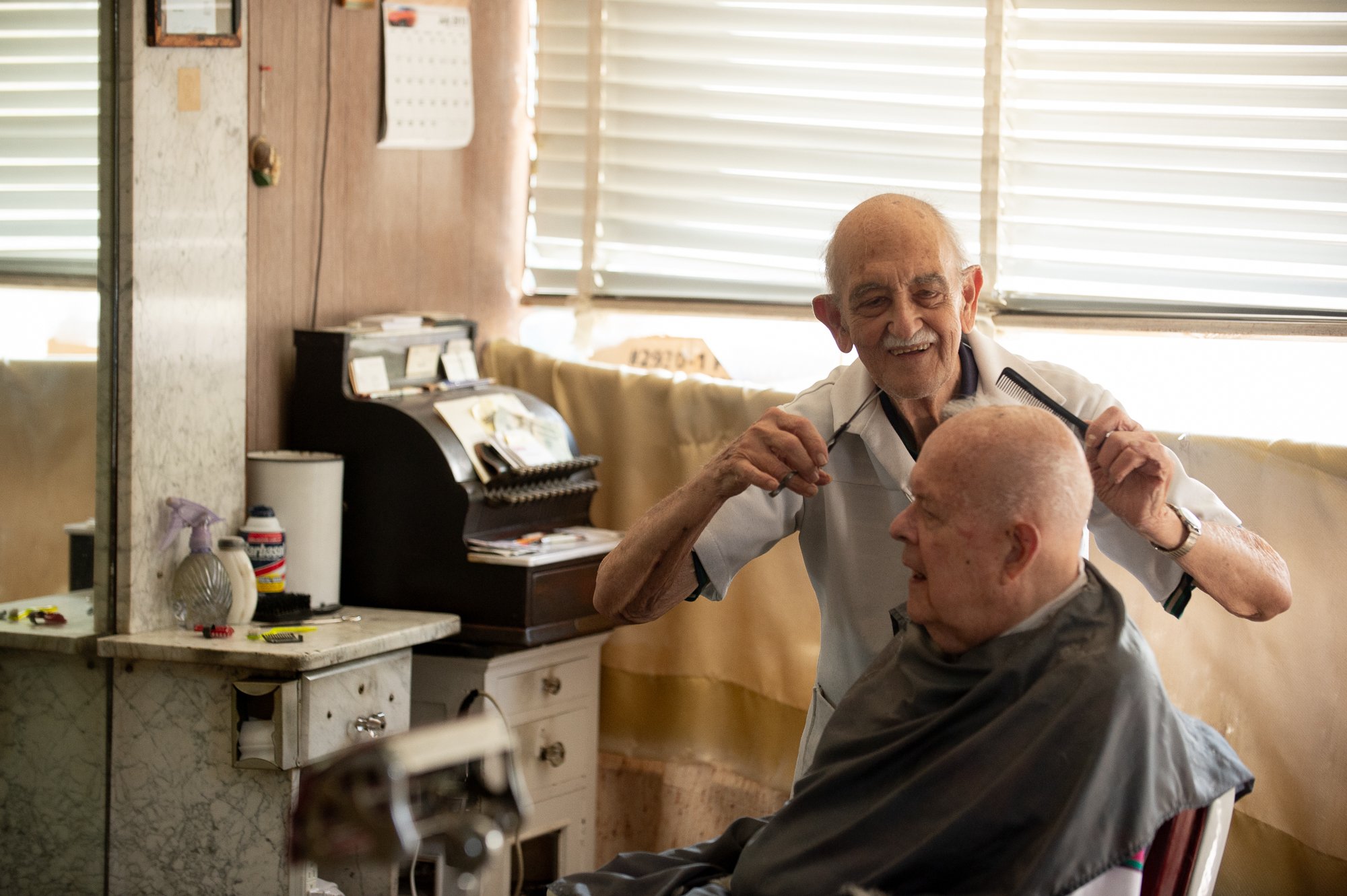
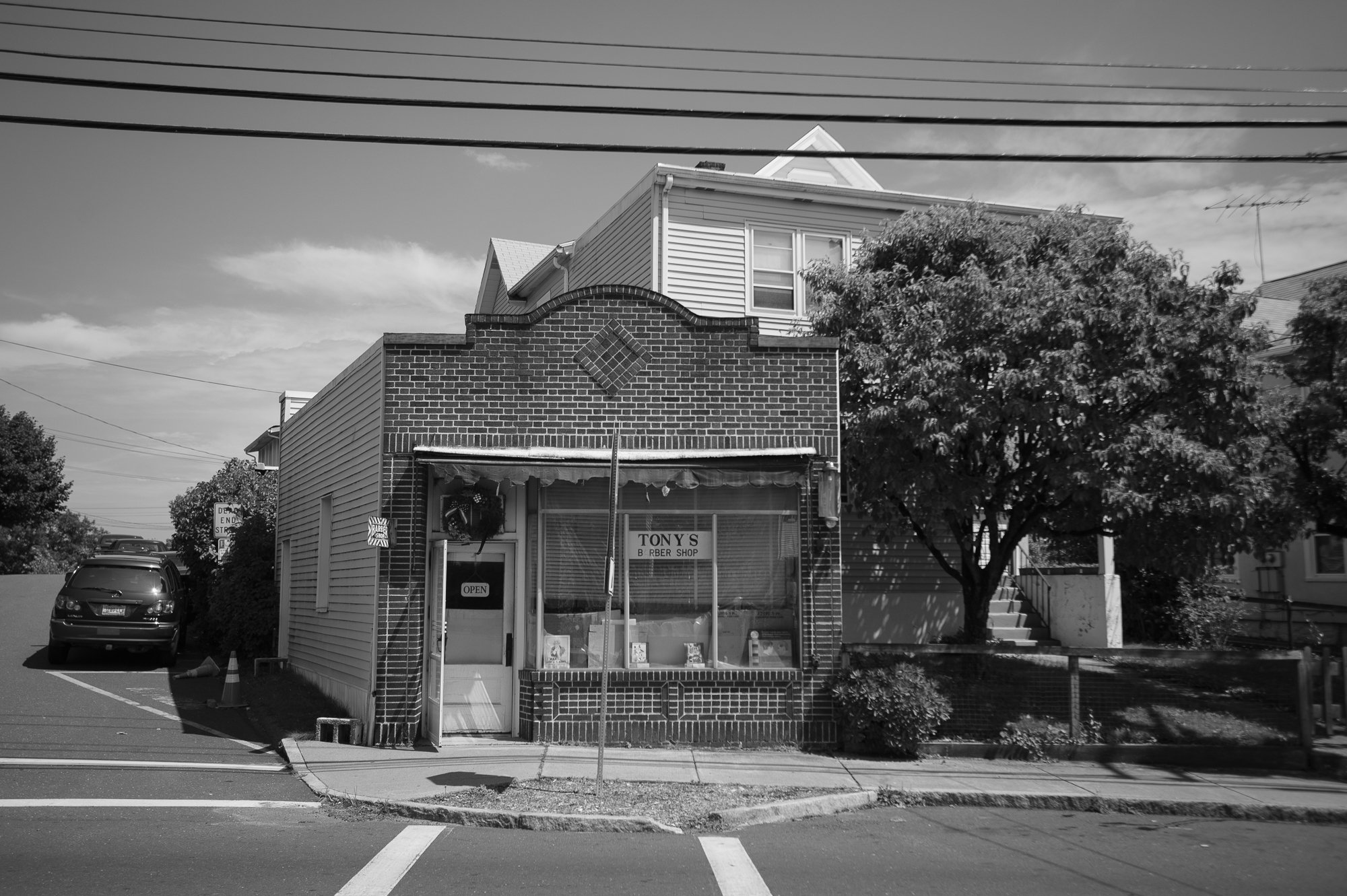
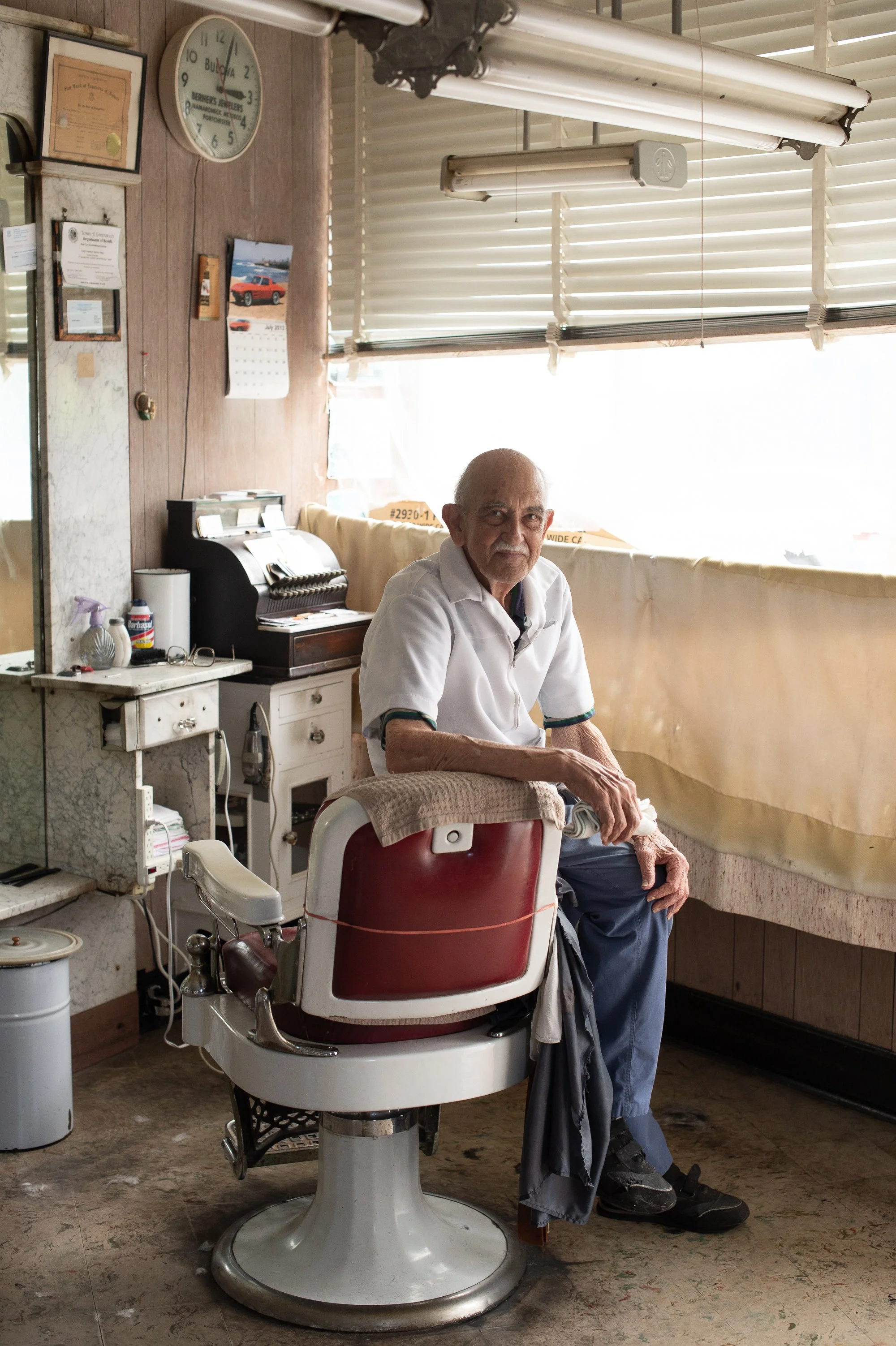
Classic barbershop in Winnemuca, Nevada
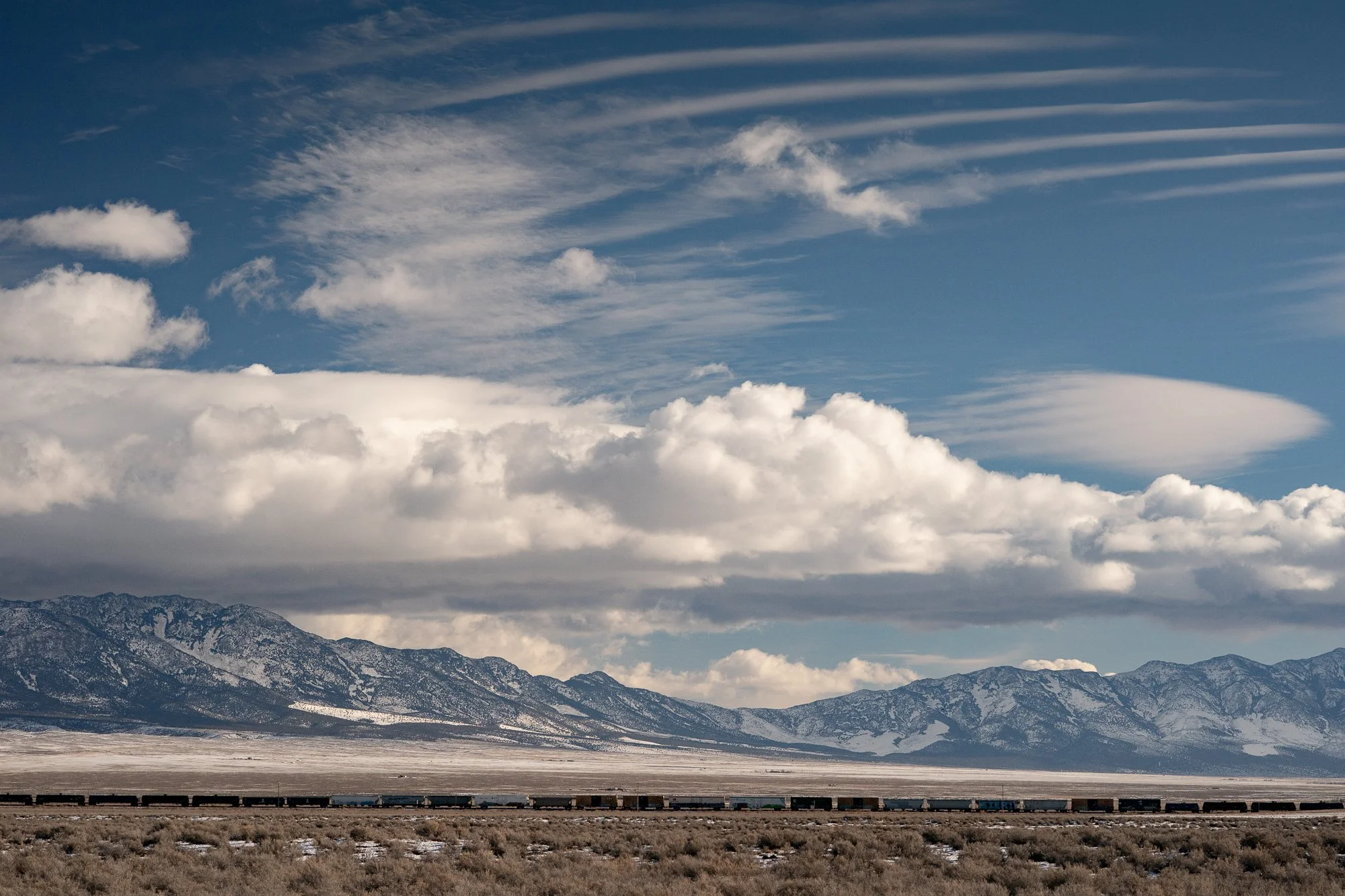
A train moving through a Nevada desert basin with snow covered mountains in the background
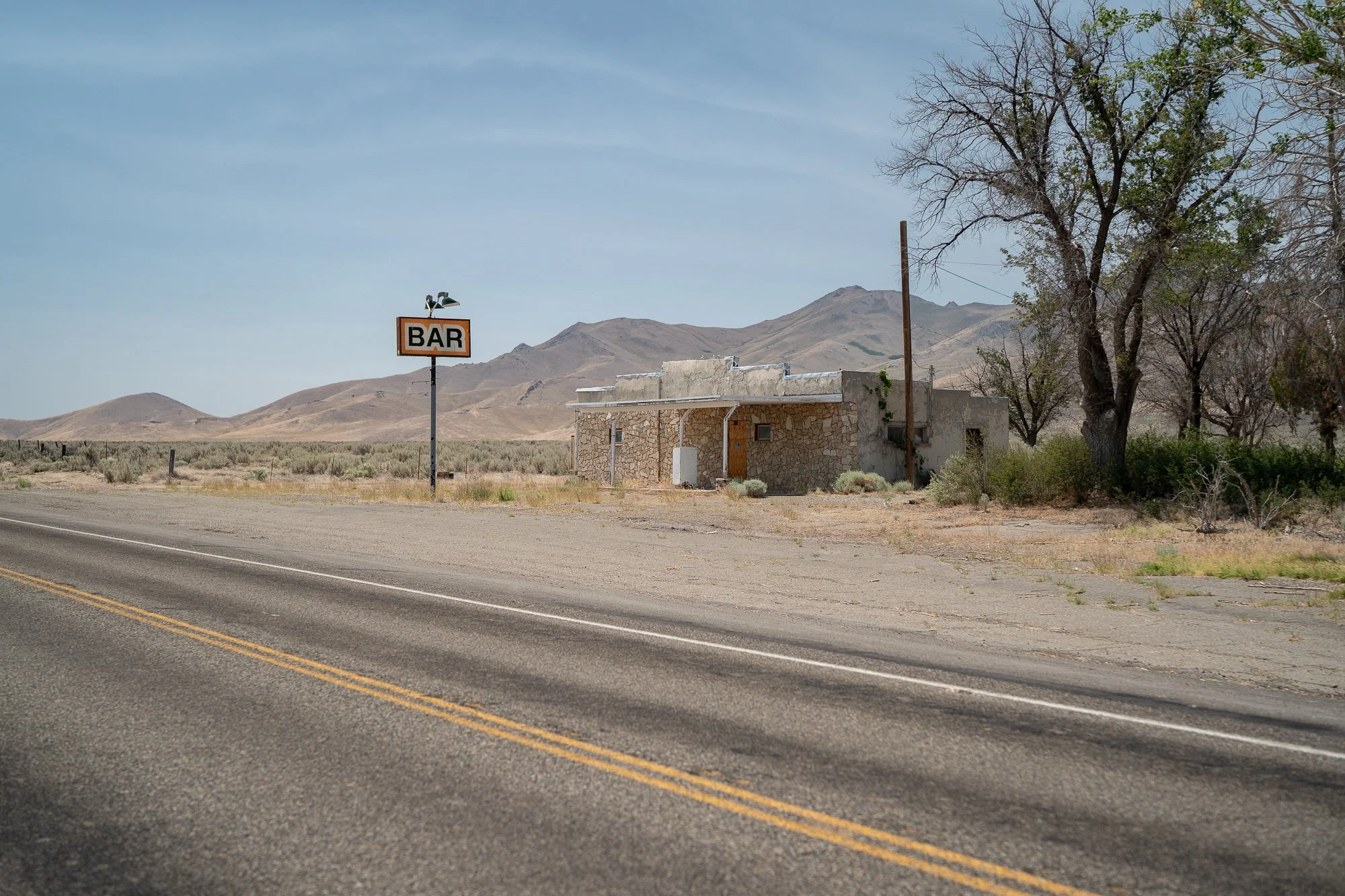
Paradise Hill, Nevada - the bar where the outlaw Claude Dallas hid the body of a murdered game warden
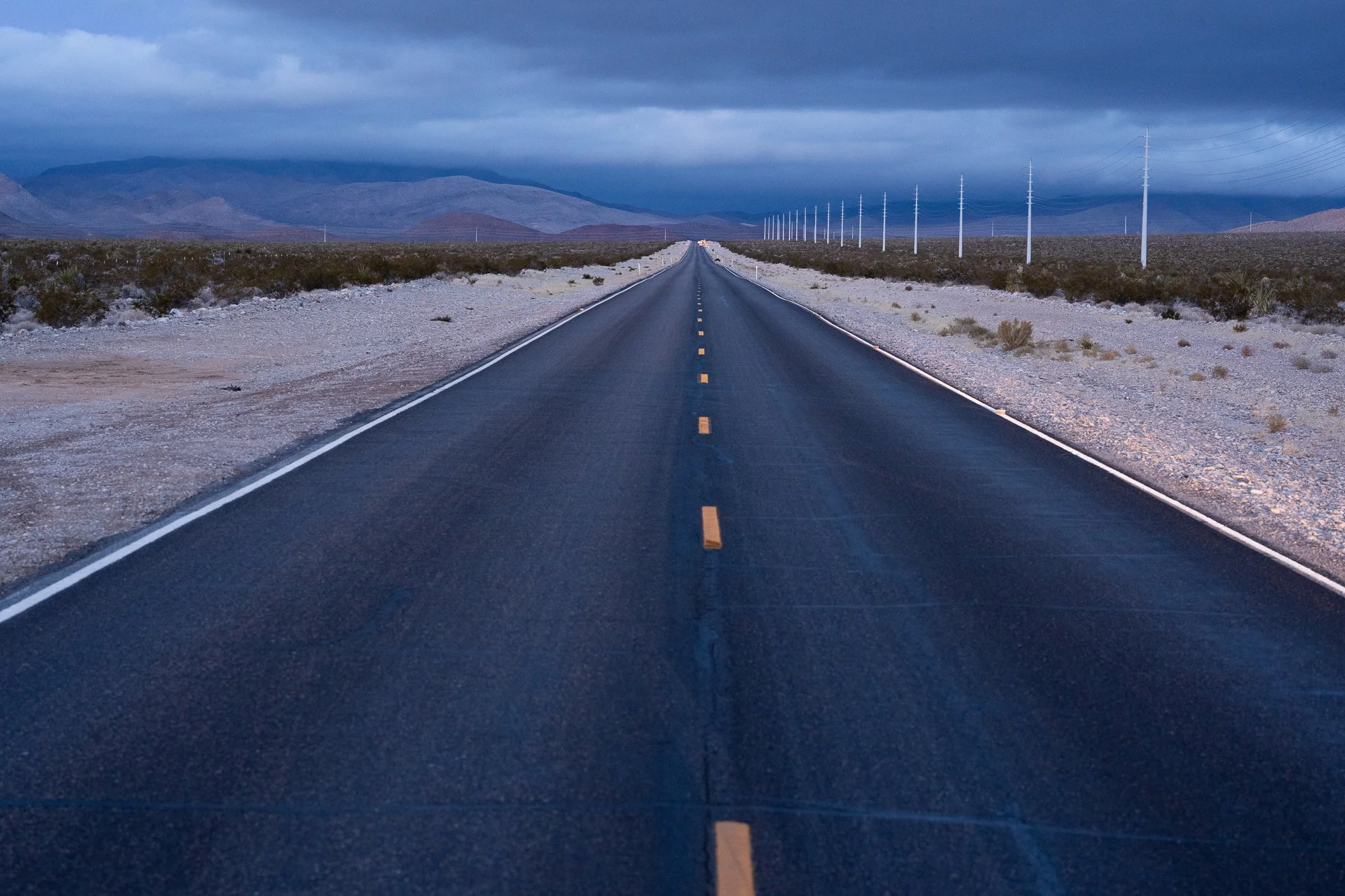
A straight Nevada highway disappears into the distance under a heavy, dark sky. Utility poles line the right side all the way to the horizon.
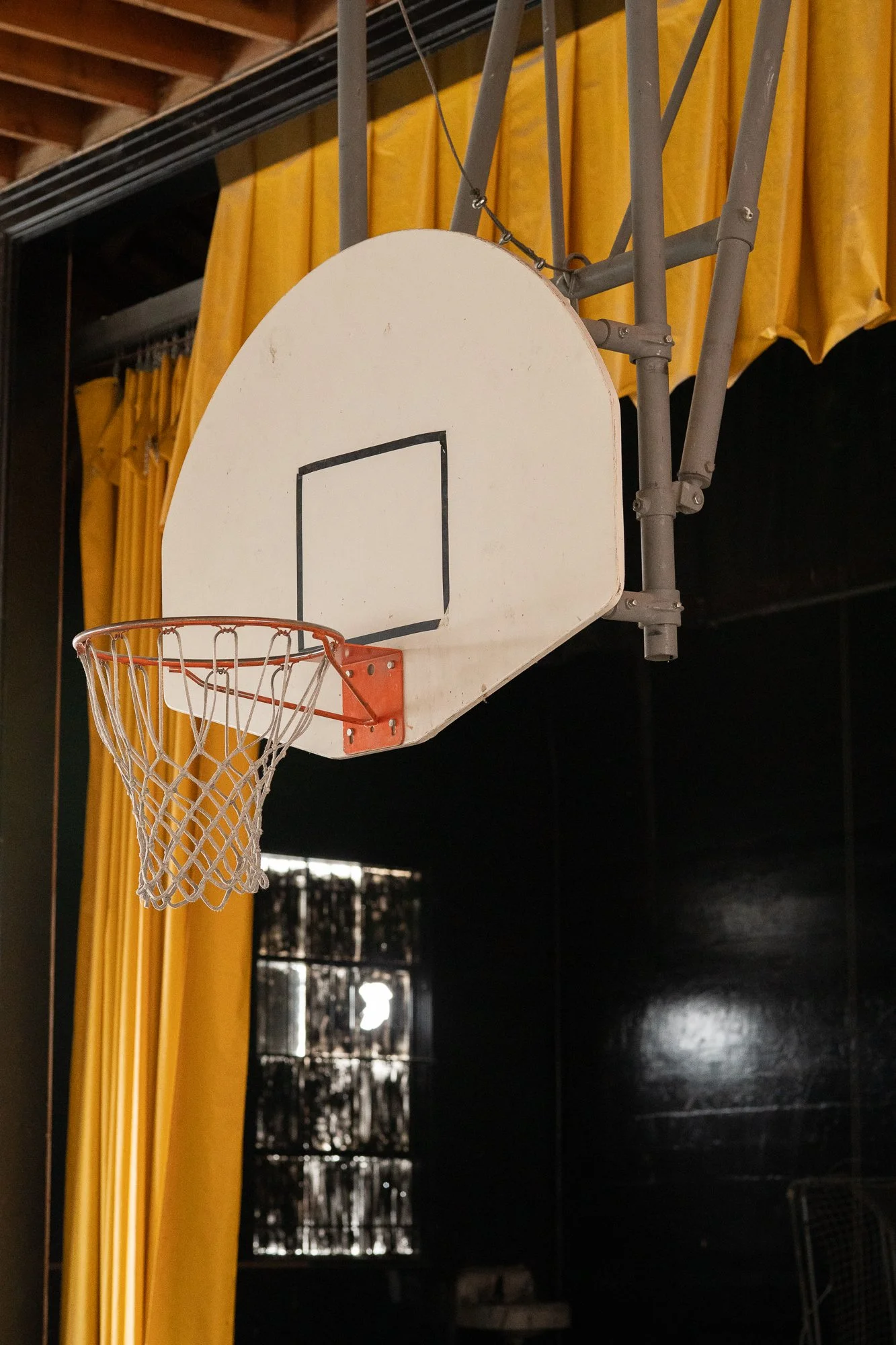
A basketball hoop hangs in a small-town Nevada gym. Yellow curtains, dark walls, old hardware. The place looks like it hasn't changed in decades.
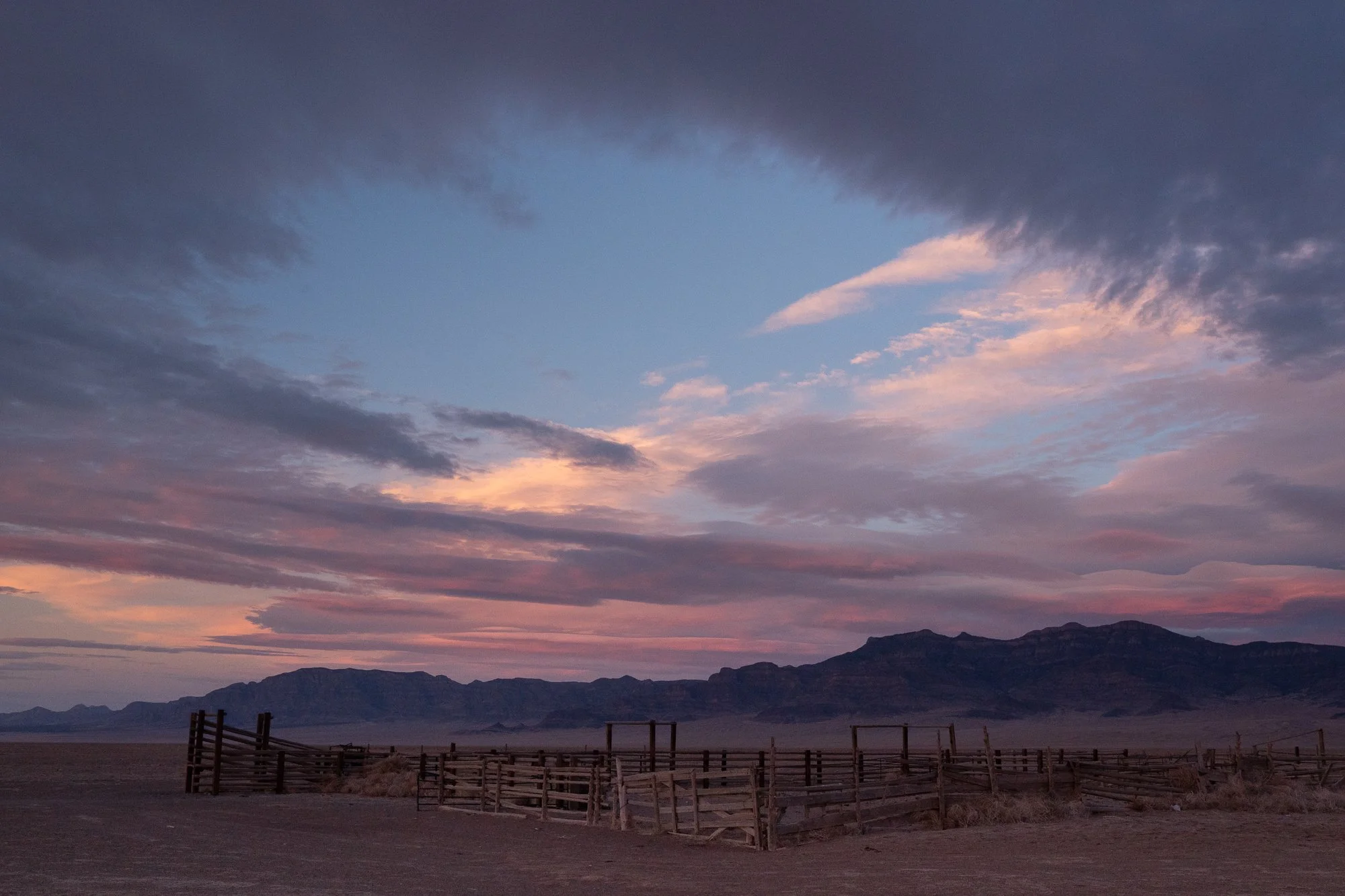
An old wood cattle corral in a remote desert basin at sunset
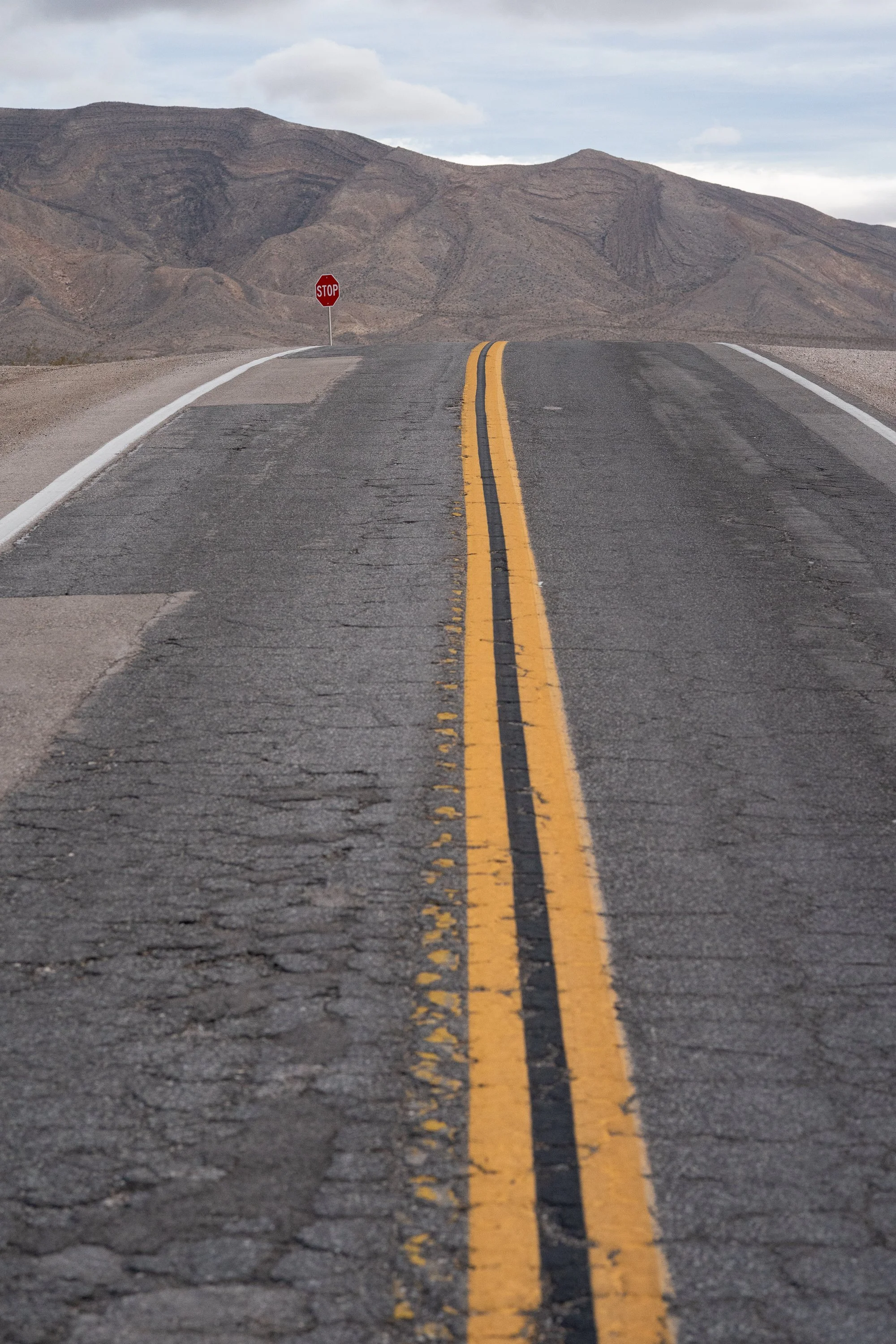
The road surface is cracked and patched, the center line faded. A stop sign sits at the intersection ahead with nothing around it for miles.
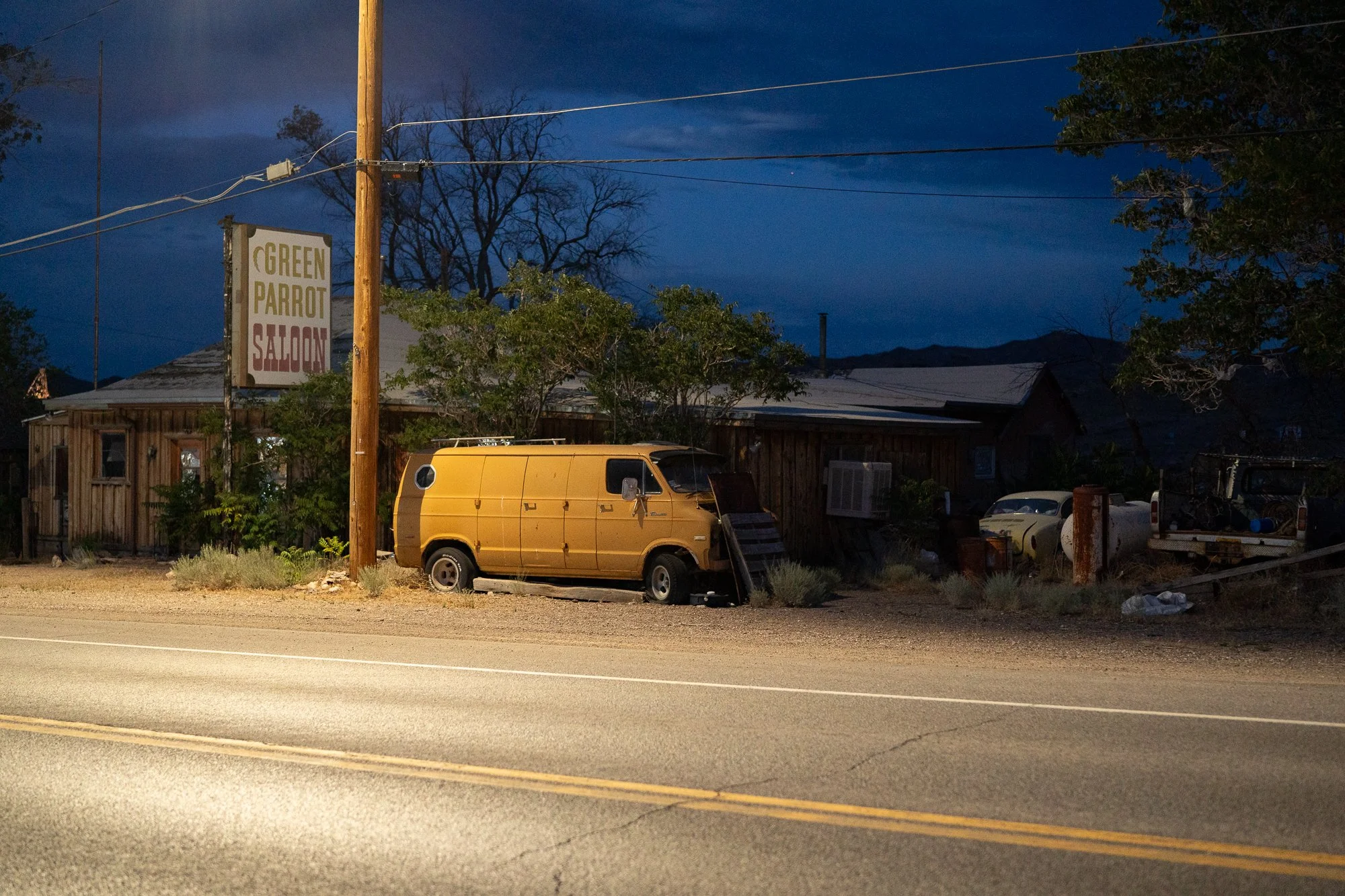
Nevada roadside saloon after dark. One van parked, one sign lit, the rest left to the dark.
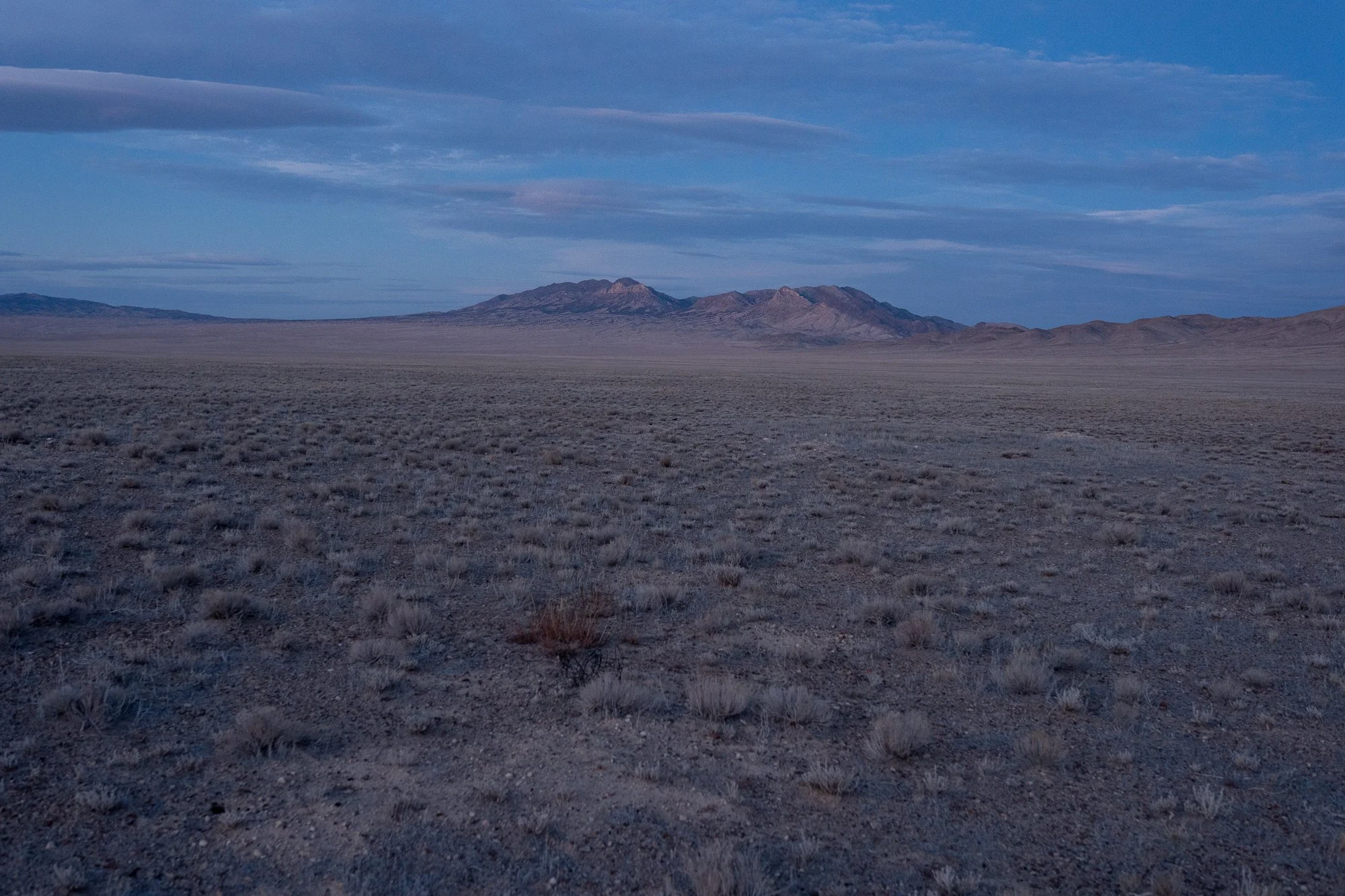
Flat sagebrush desert in rural Nevada, early light just reaching the mountain in the distance. Nothing between here and there.
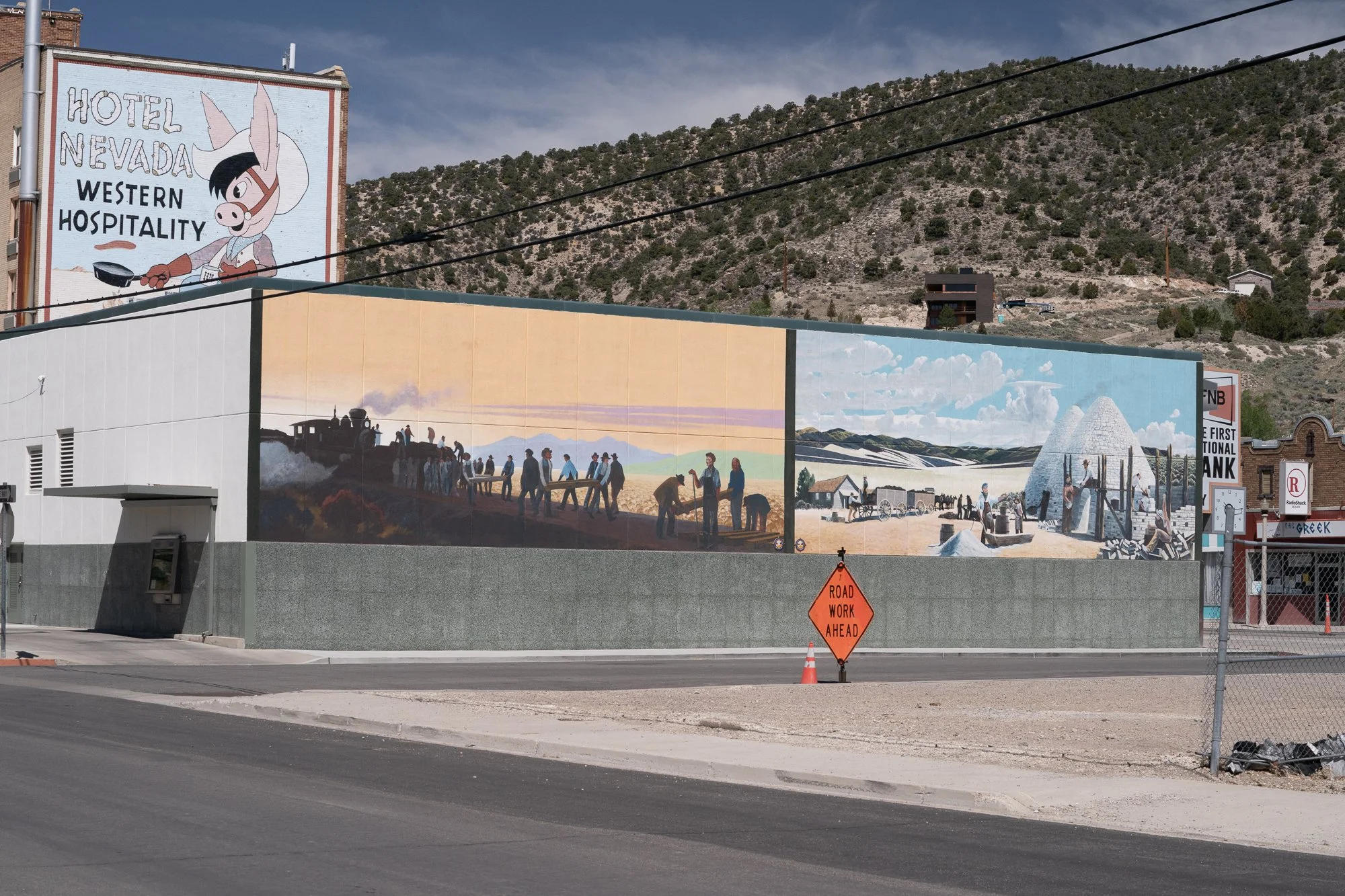
Murals cover buildings showing the local history of mining in Ely, Nevada
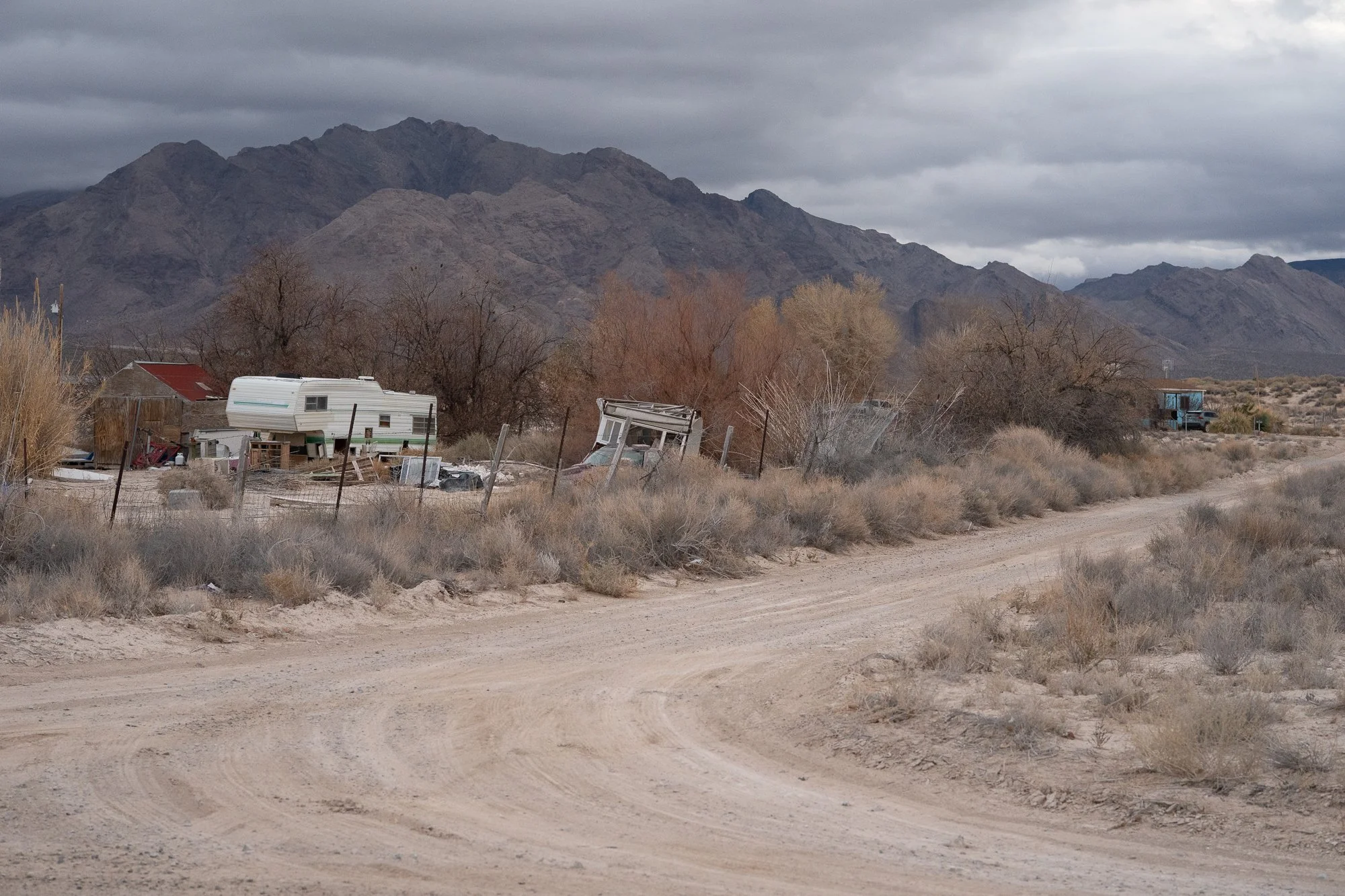
A dirt road curves past trailers and old vehicles in a Nevada desert community. Mountains rise close behind, clouds sitting low on the ridge.
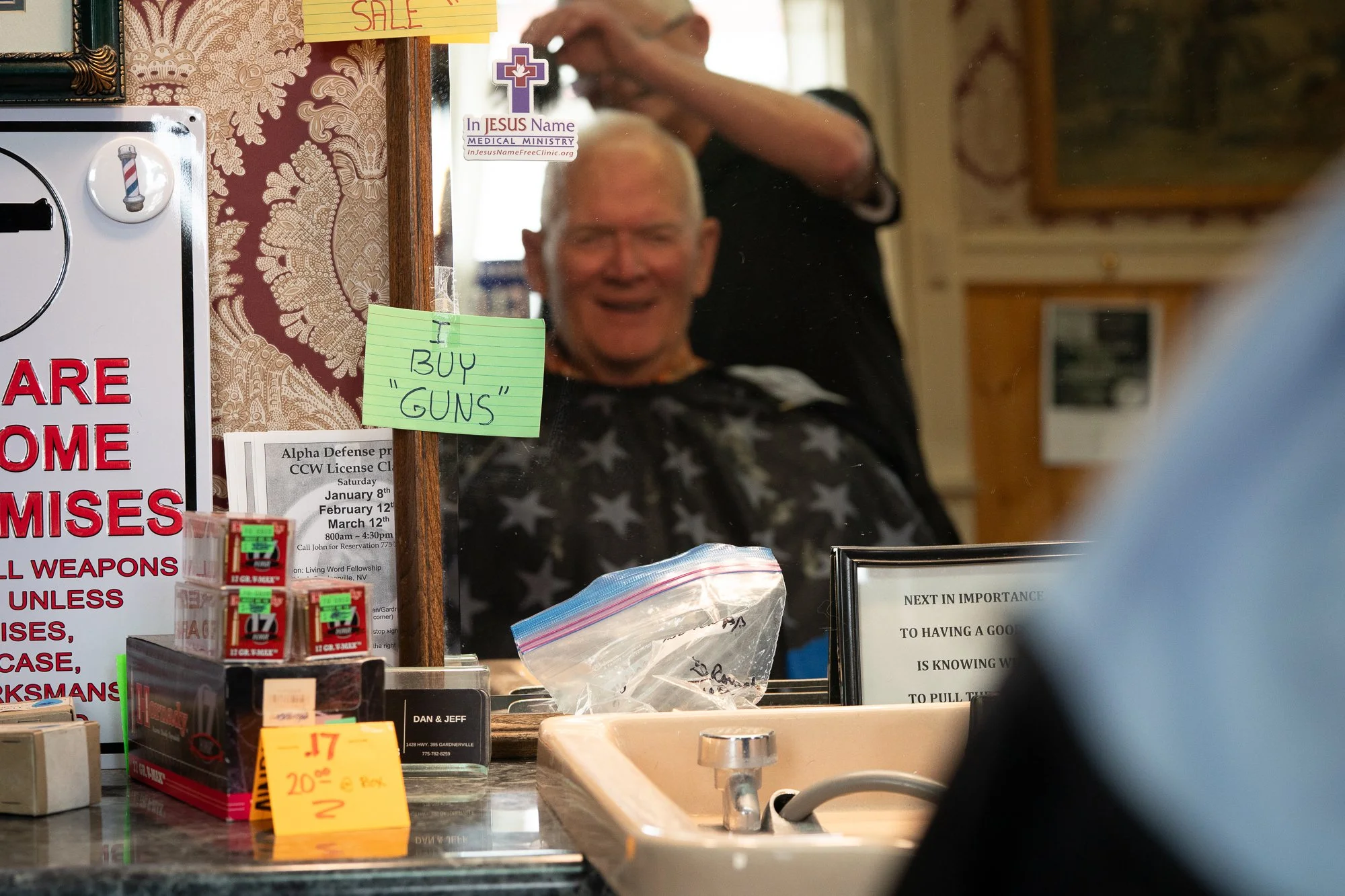
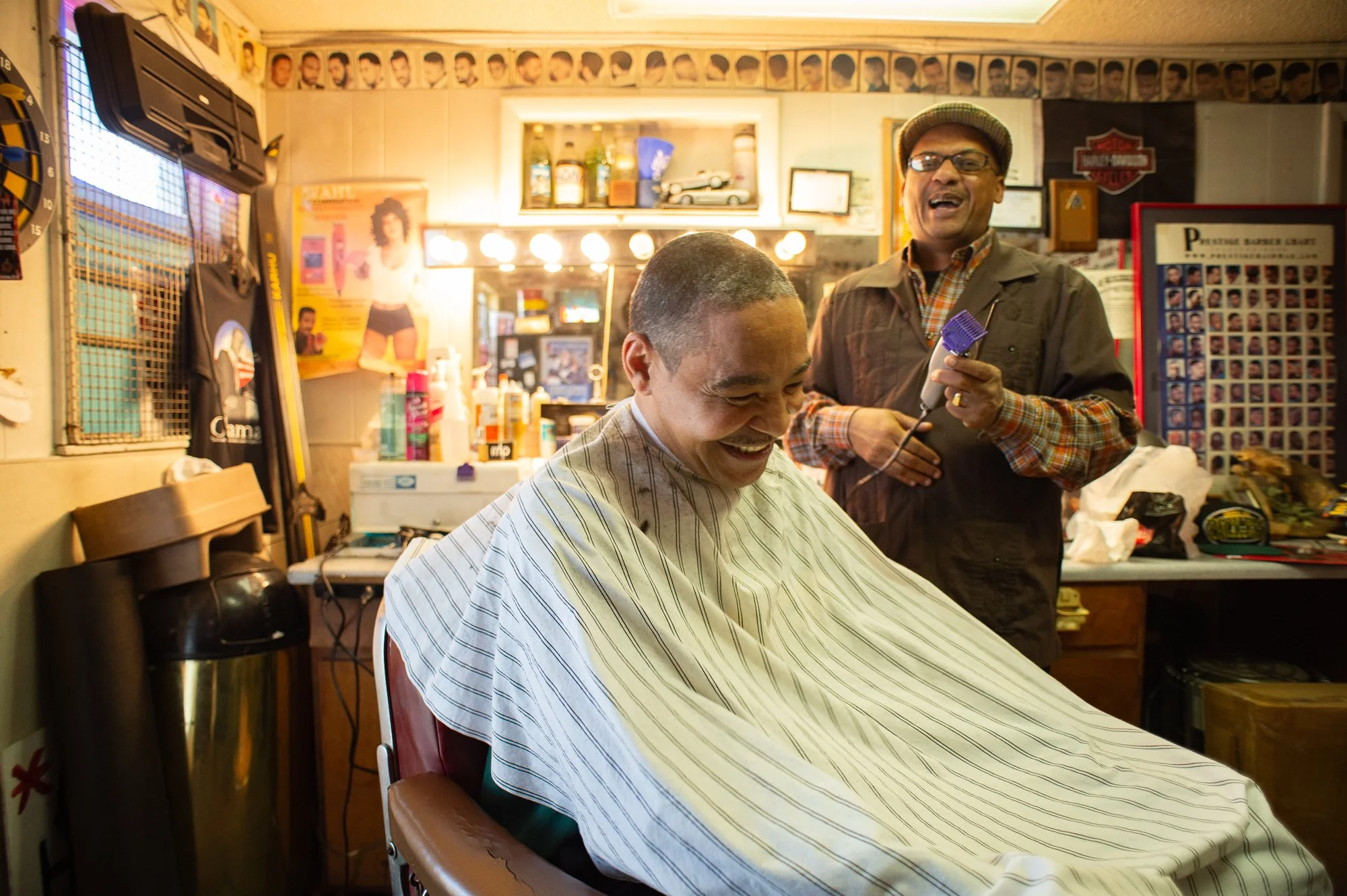
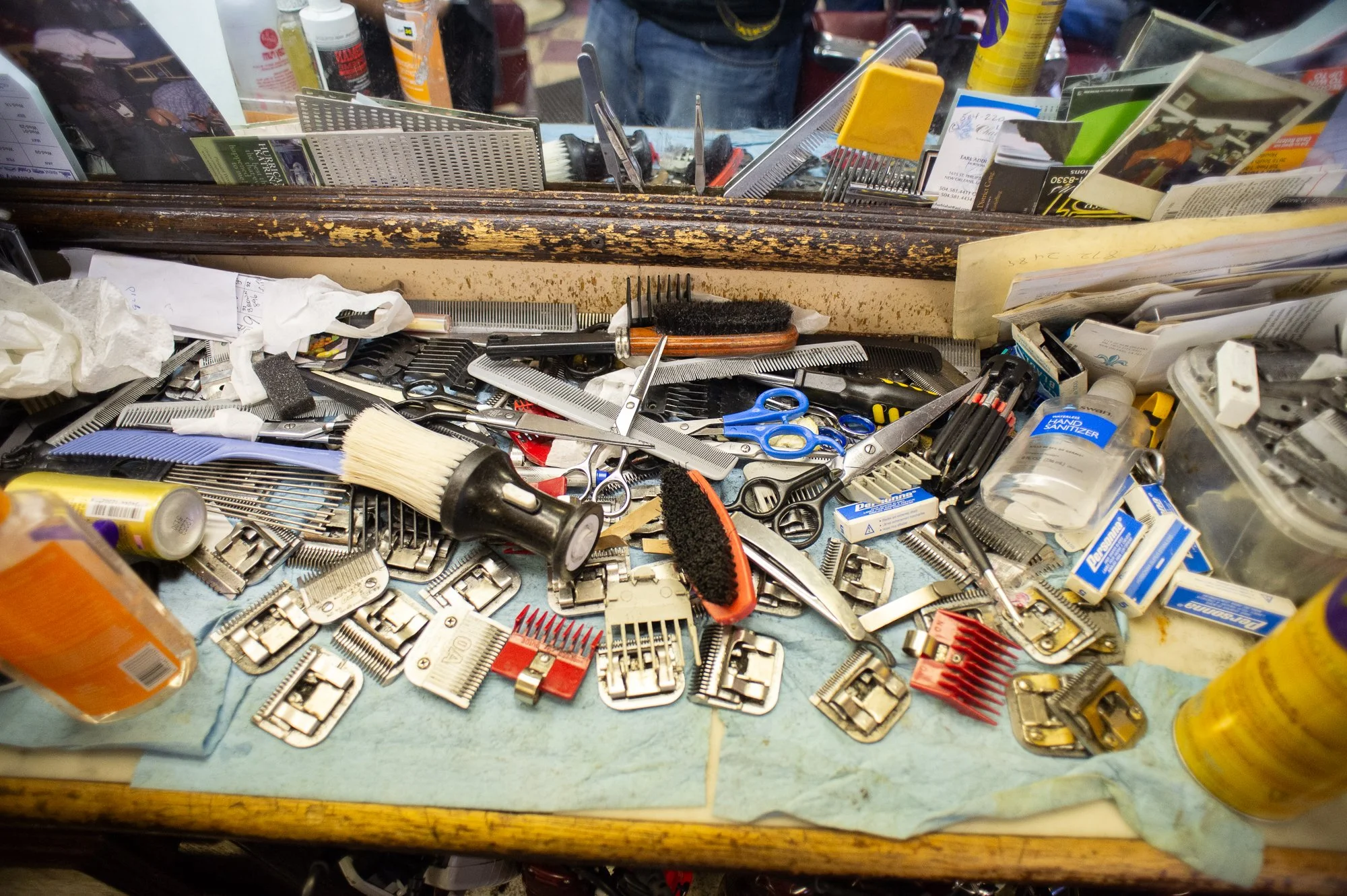
Inside a Nevada barbershop. Haircut in progress, ammunition on the counter, a handwritten 'I Buy Guns' note taped to the mirror.
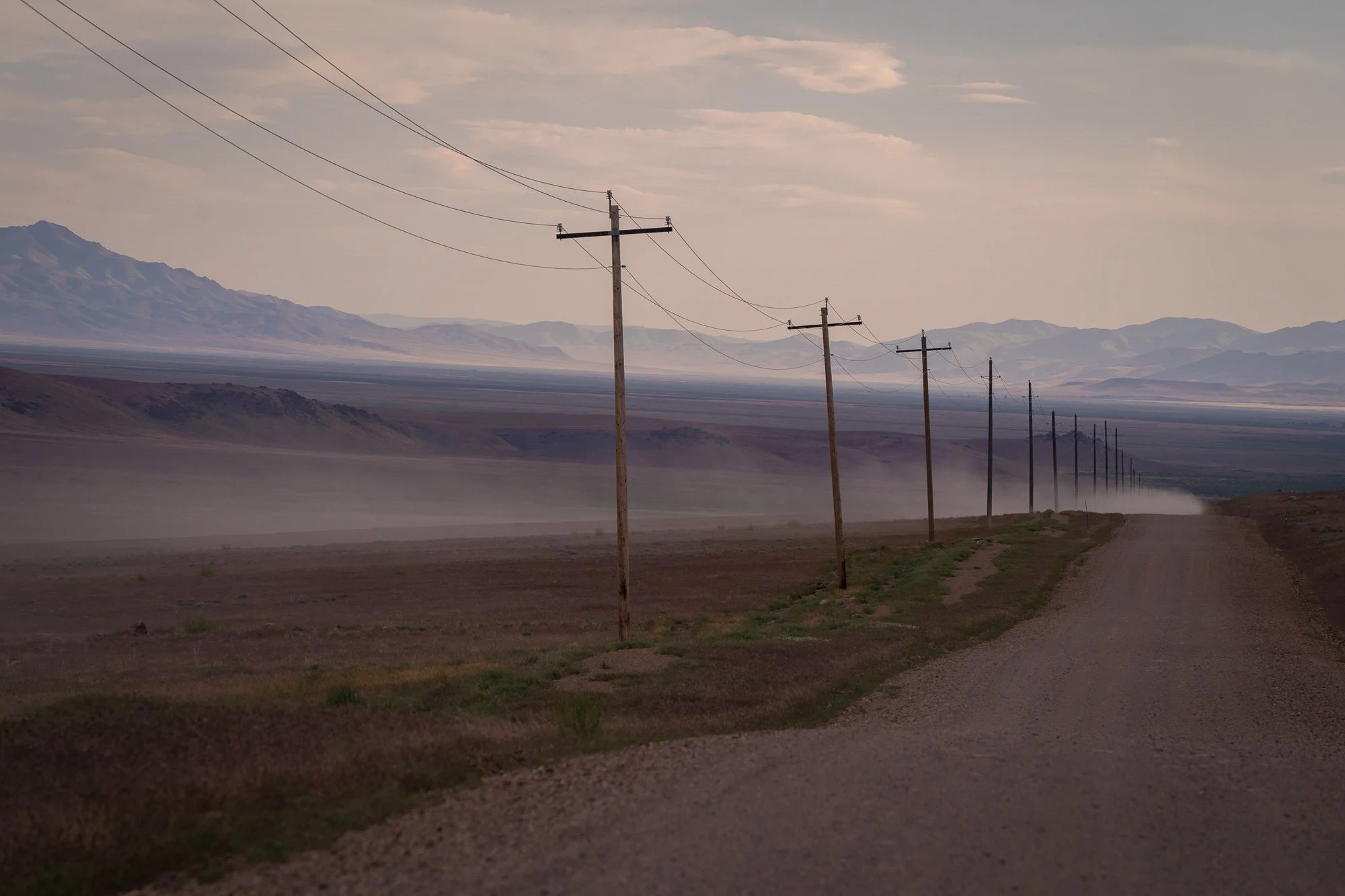
Unpaved Nevada back road at dusk. The poles go on longer than the eye can follow, and the dust is moving west.
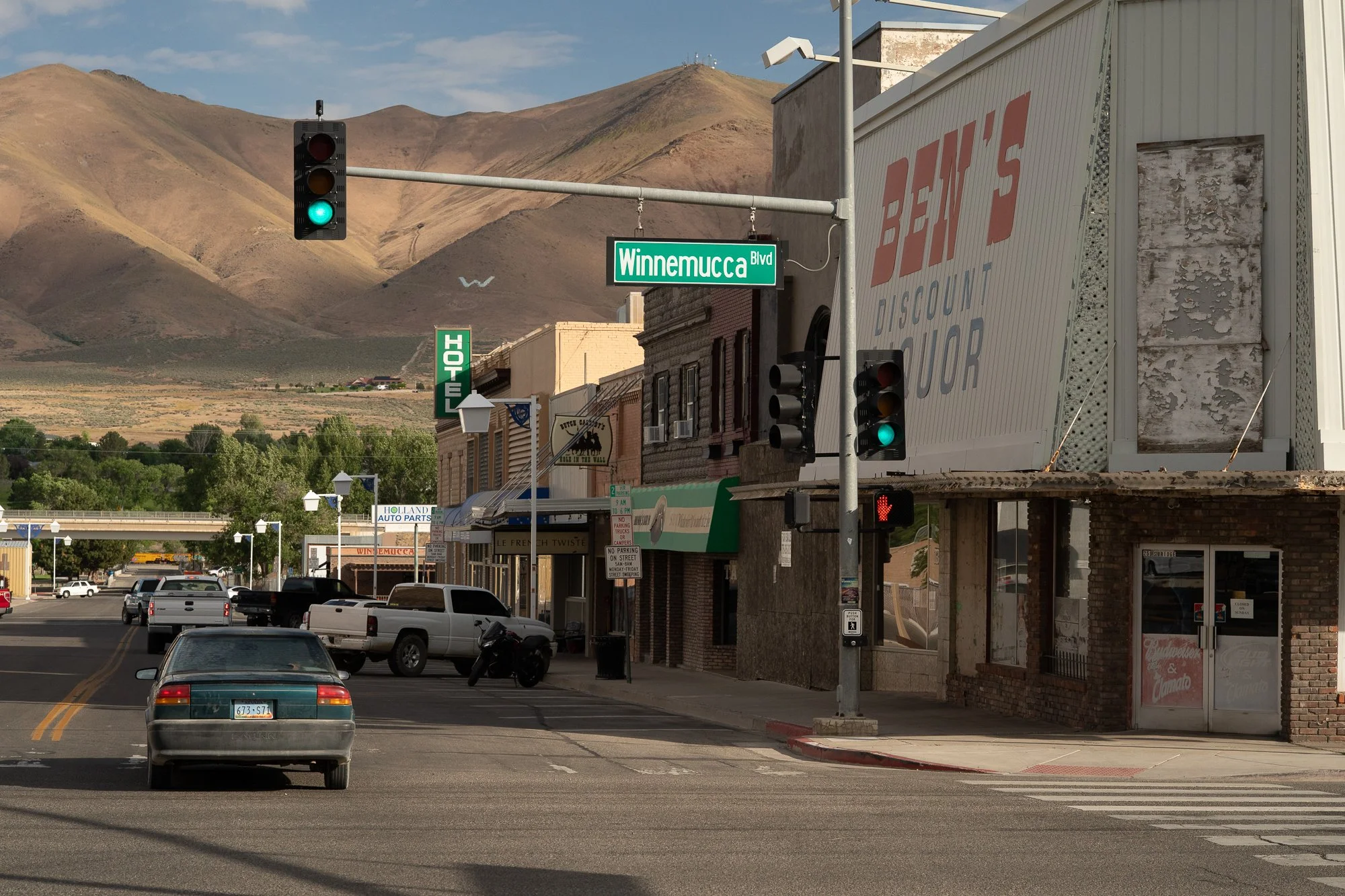
Main street in Winnemucca, Nevada on a summer afternoon. The mountain at the end of the block doesn't let you forget where you are.
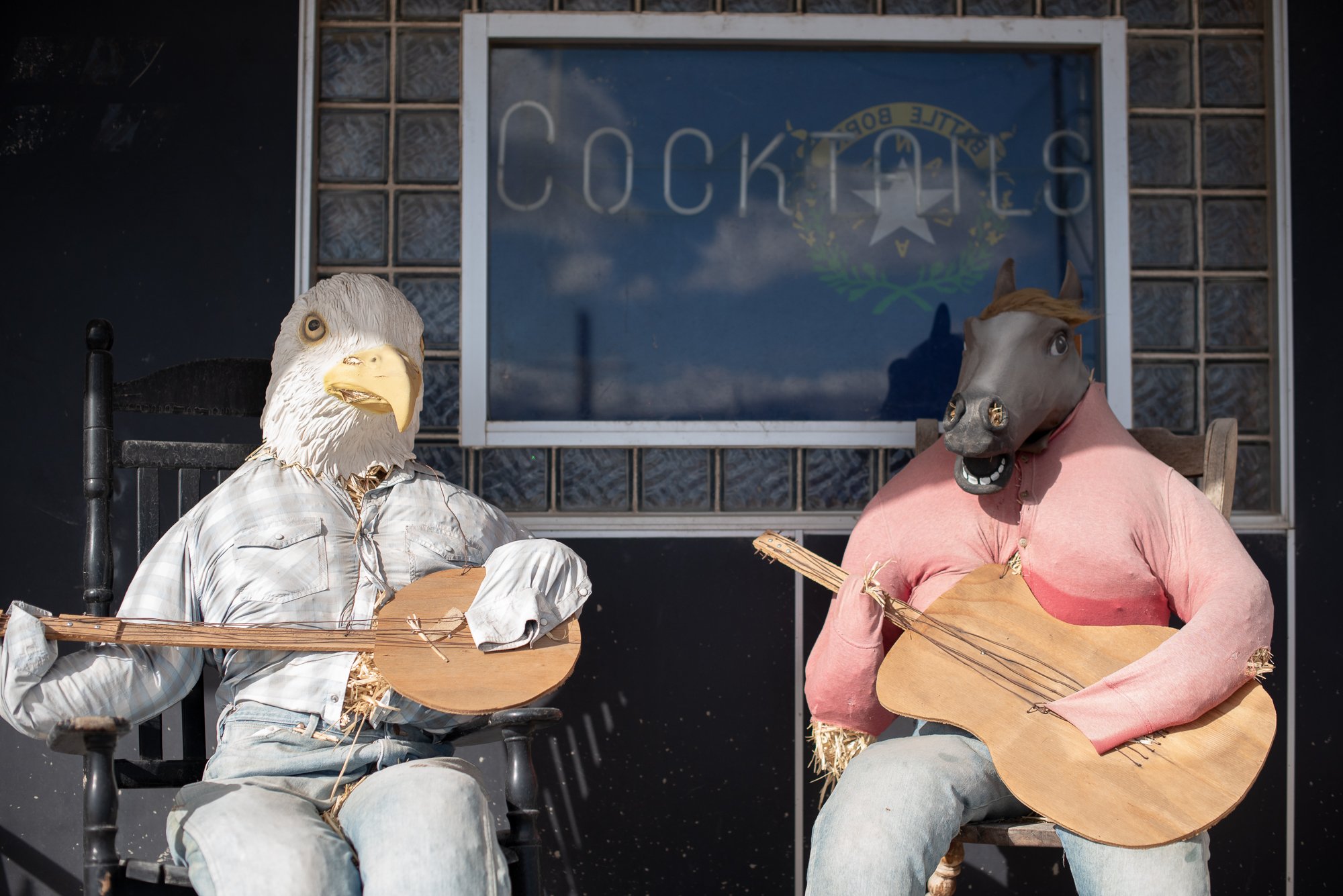
Whatever's happening outside this Nevada bar, it's been there a while. The Cocktails sign is visible through the glass behind them.
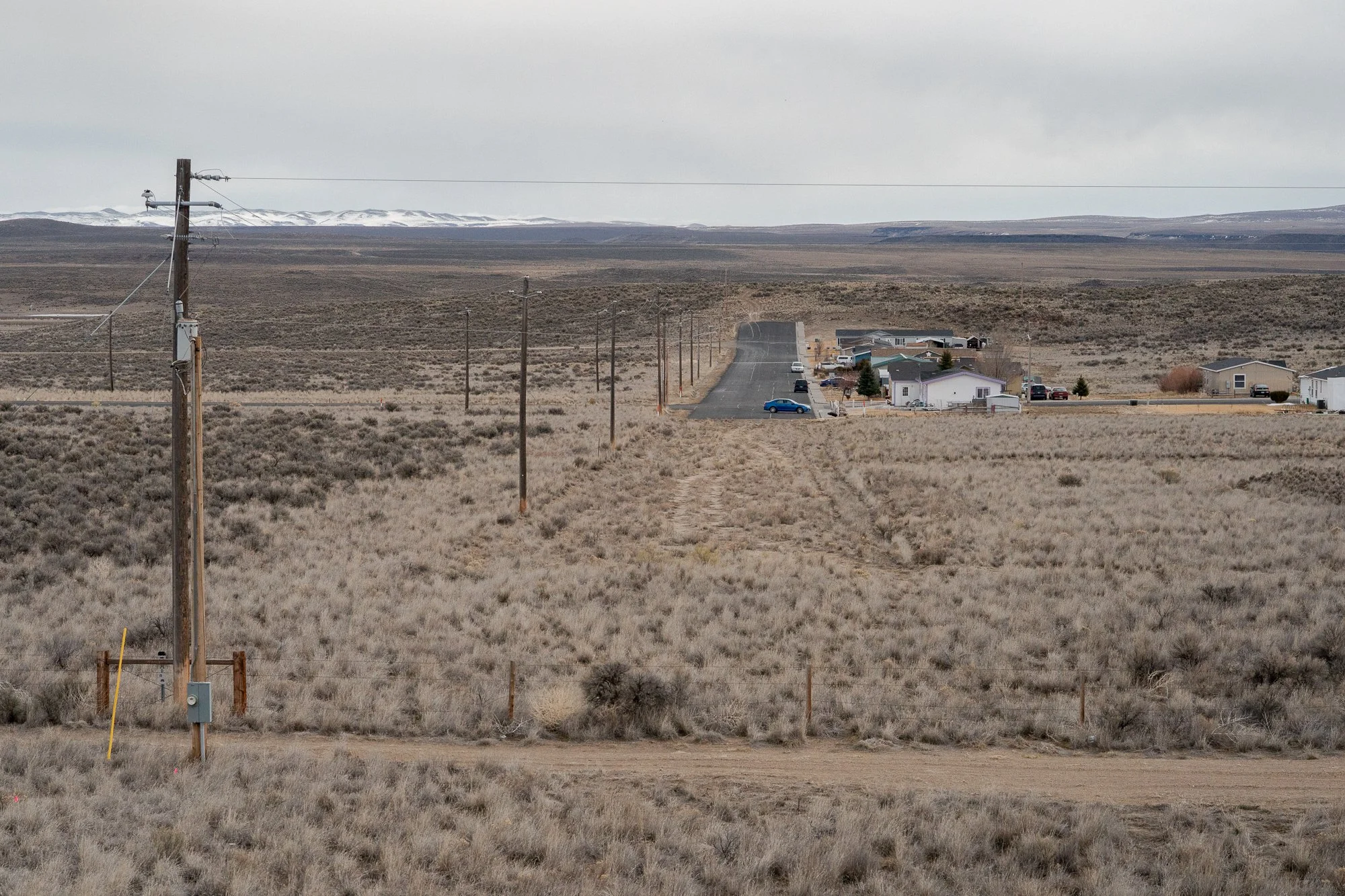
Remote Nevada settlement viewed from the edge of the flats. A road goes in. Not much else goes out.
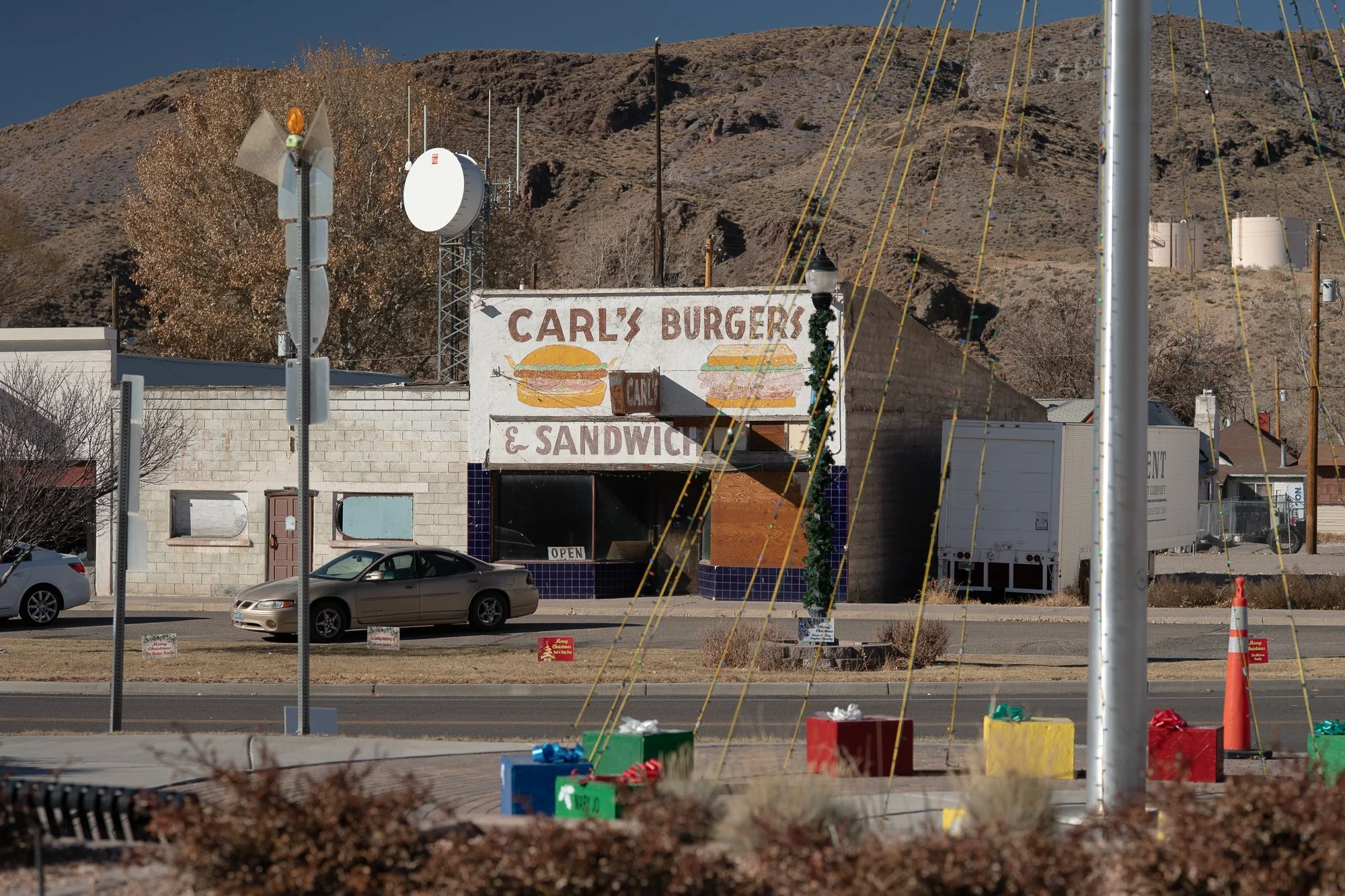
Caliente, Nevada - Carl's Burgers sits on a Nevada main street with a hand-painted sign and an Open sign in the window. Christmas decorations are up on the median out front.
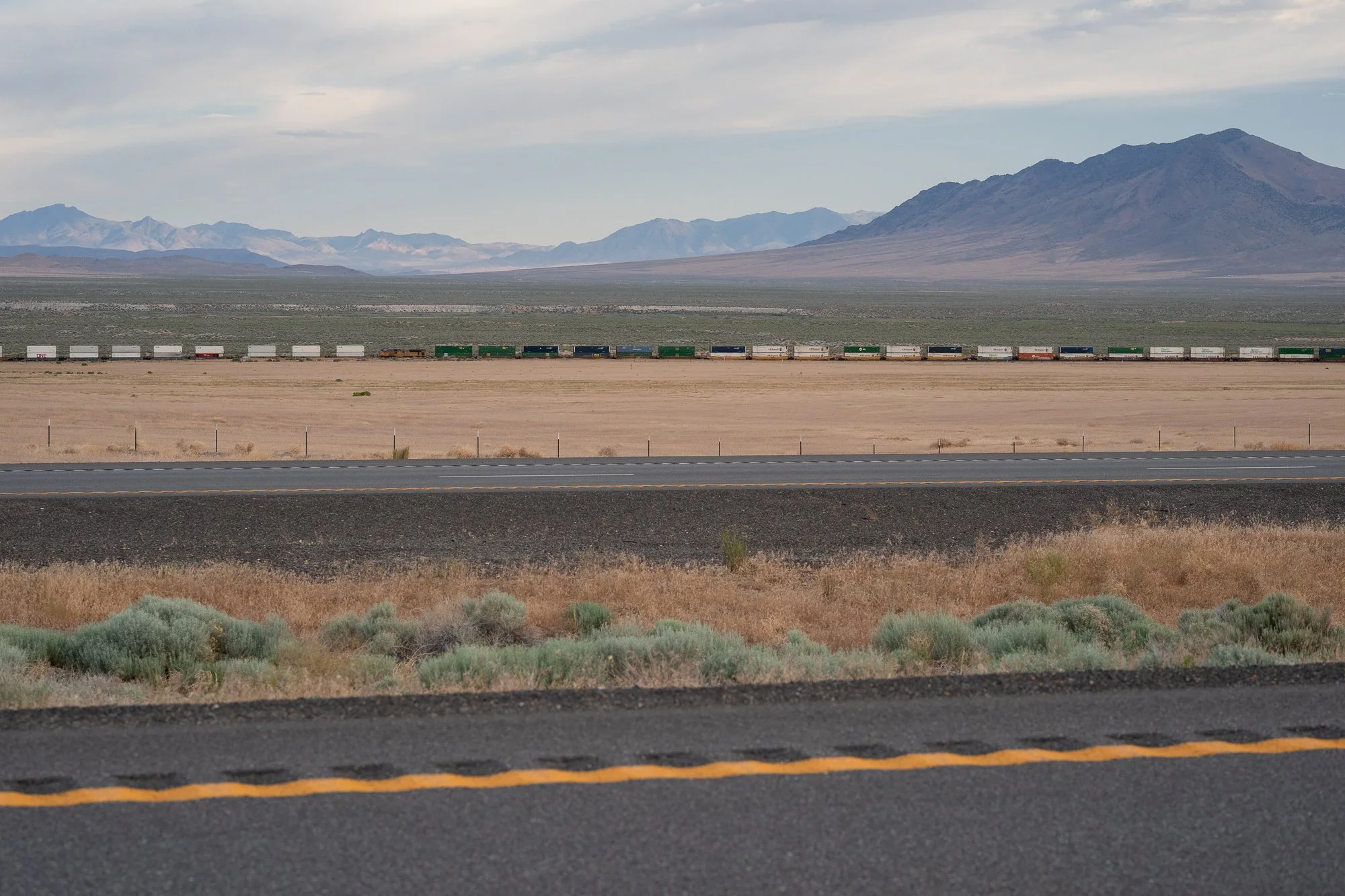
Two lines cutting through the Nevada desert — the road in front, the rail line behind it. Both going the same direction.
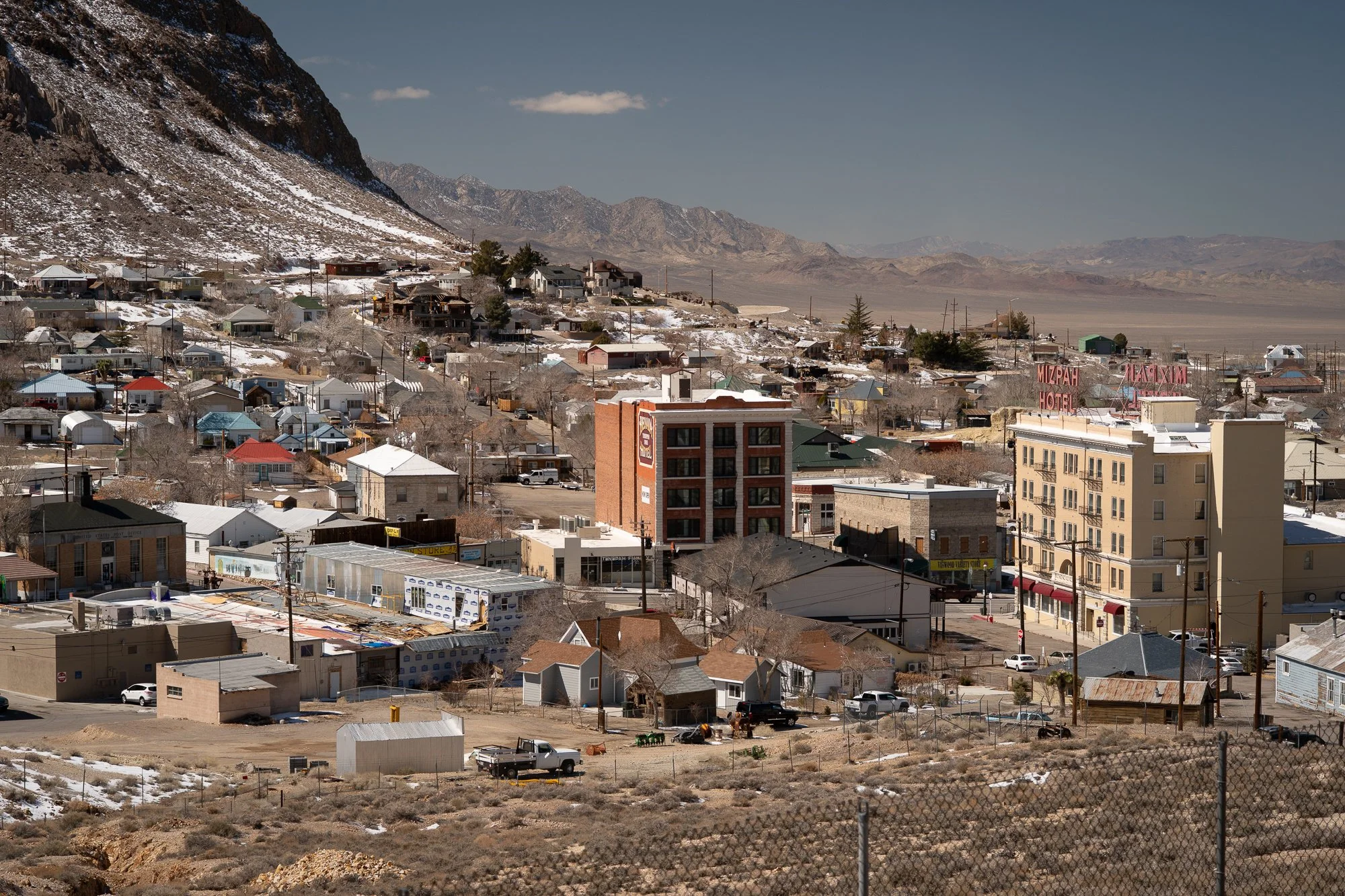
Tonopah, Nevada in winter. The town climbs the mountain behind it and drops into open desert in front. The Mizpah Hotel is still the tallest thing on the block.
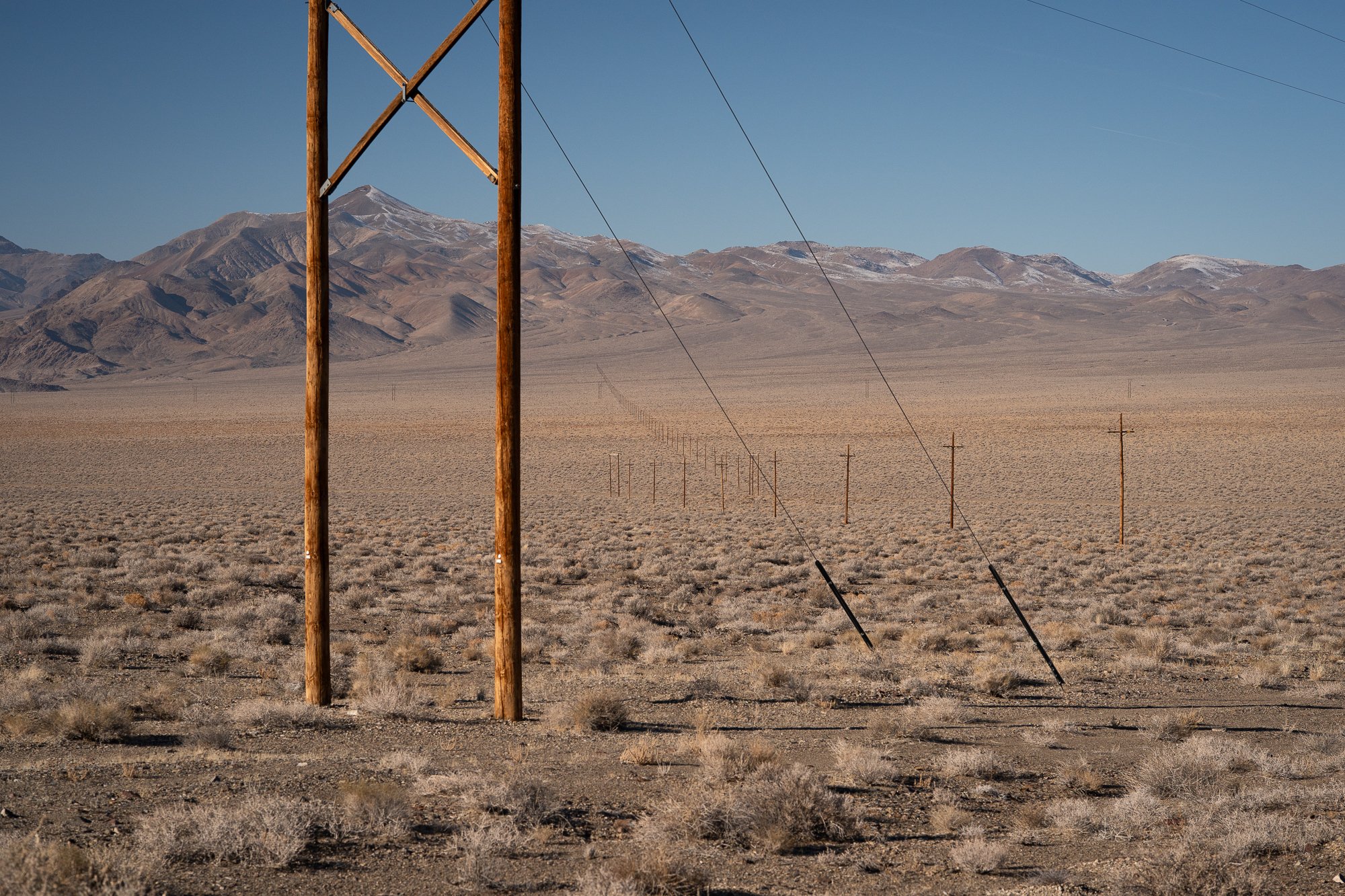
Utility poles cross the Nevada basin in a straight line toward the mountains. The desert is flat, the sky is clear, and nothing else competes for attention.
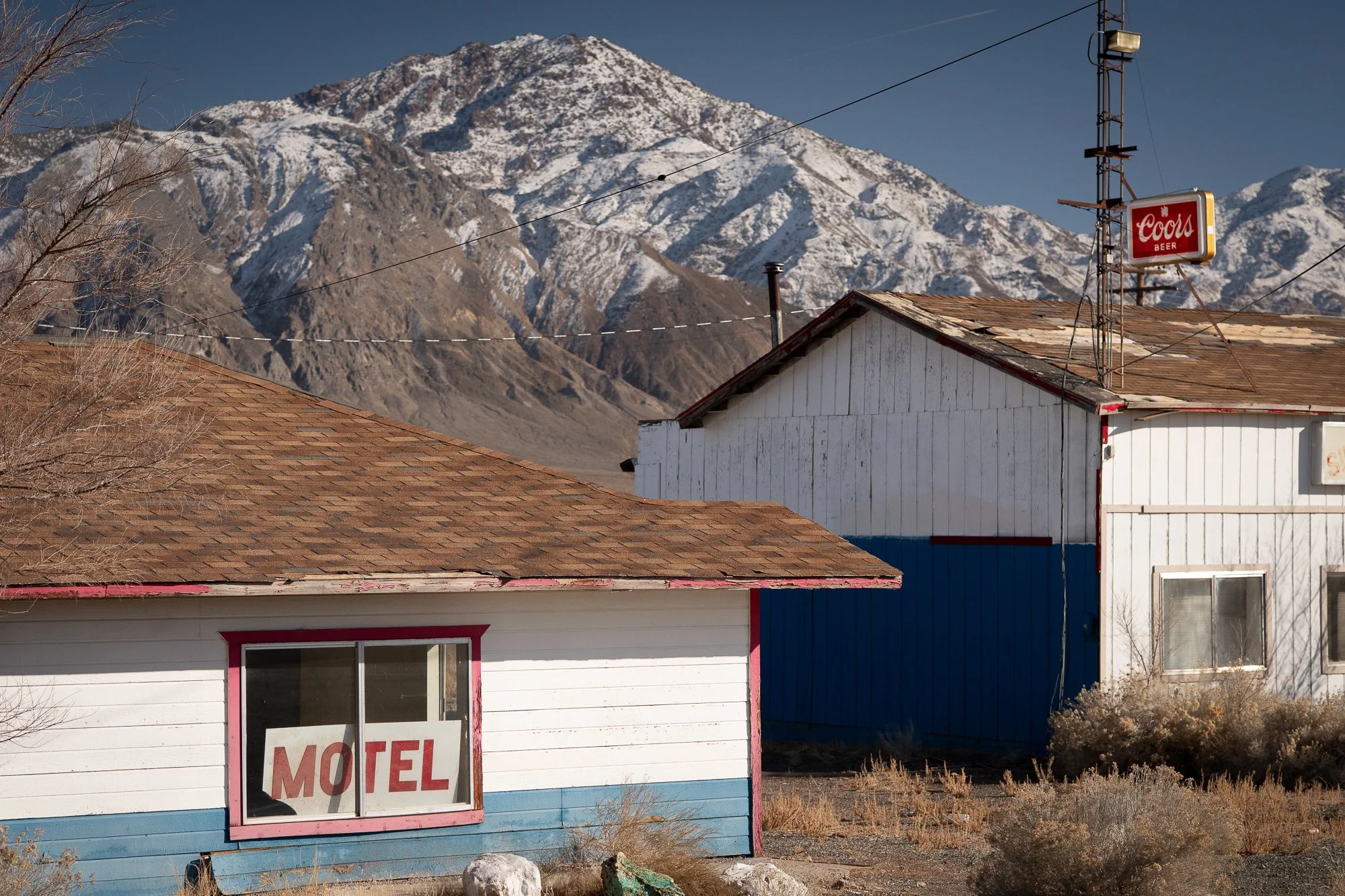
A motel sign is propped in a window along a Nevada roadside. A Coors Beer sign is mounted on a post nearby. The mountain behind the building is close and covered in snow.
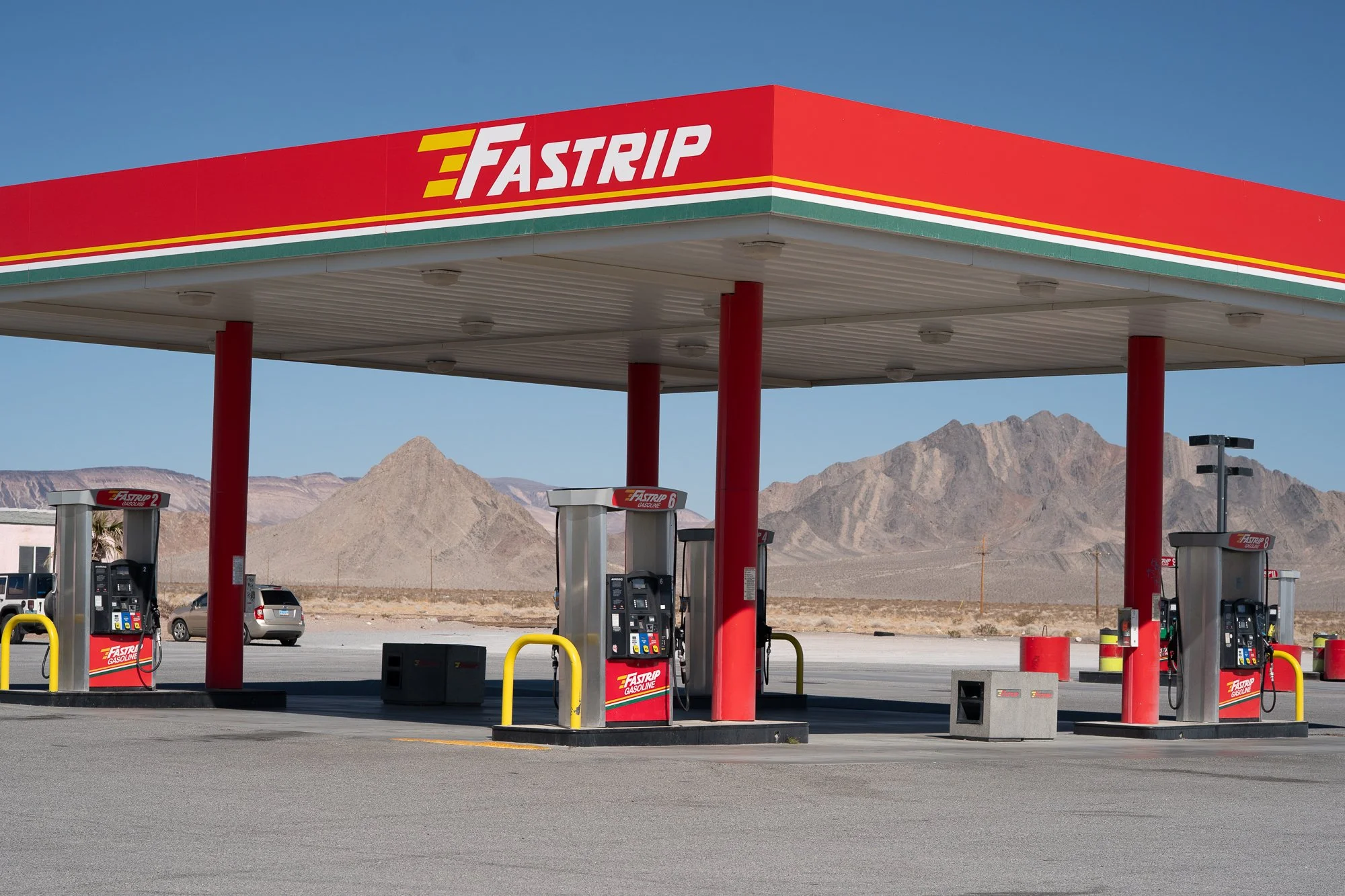
No customers, no traffic. A Nevada gas station in the middle of the day with a mountain range where the horizon should be.
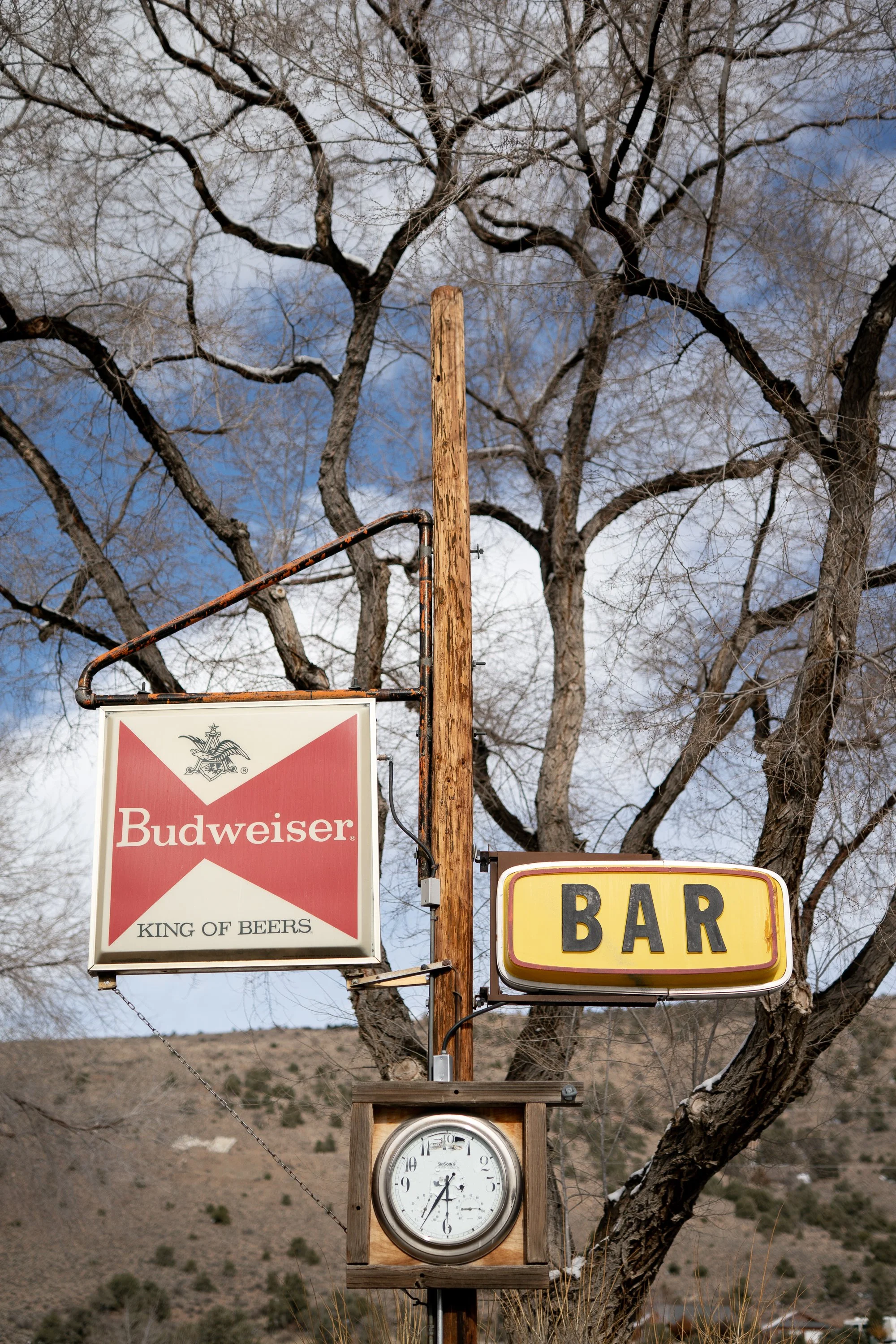
Two signs and a clock on a post outside a Nevada bar. The trees are bare, the hills are dry, and the clock is still running.