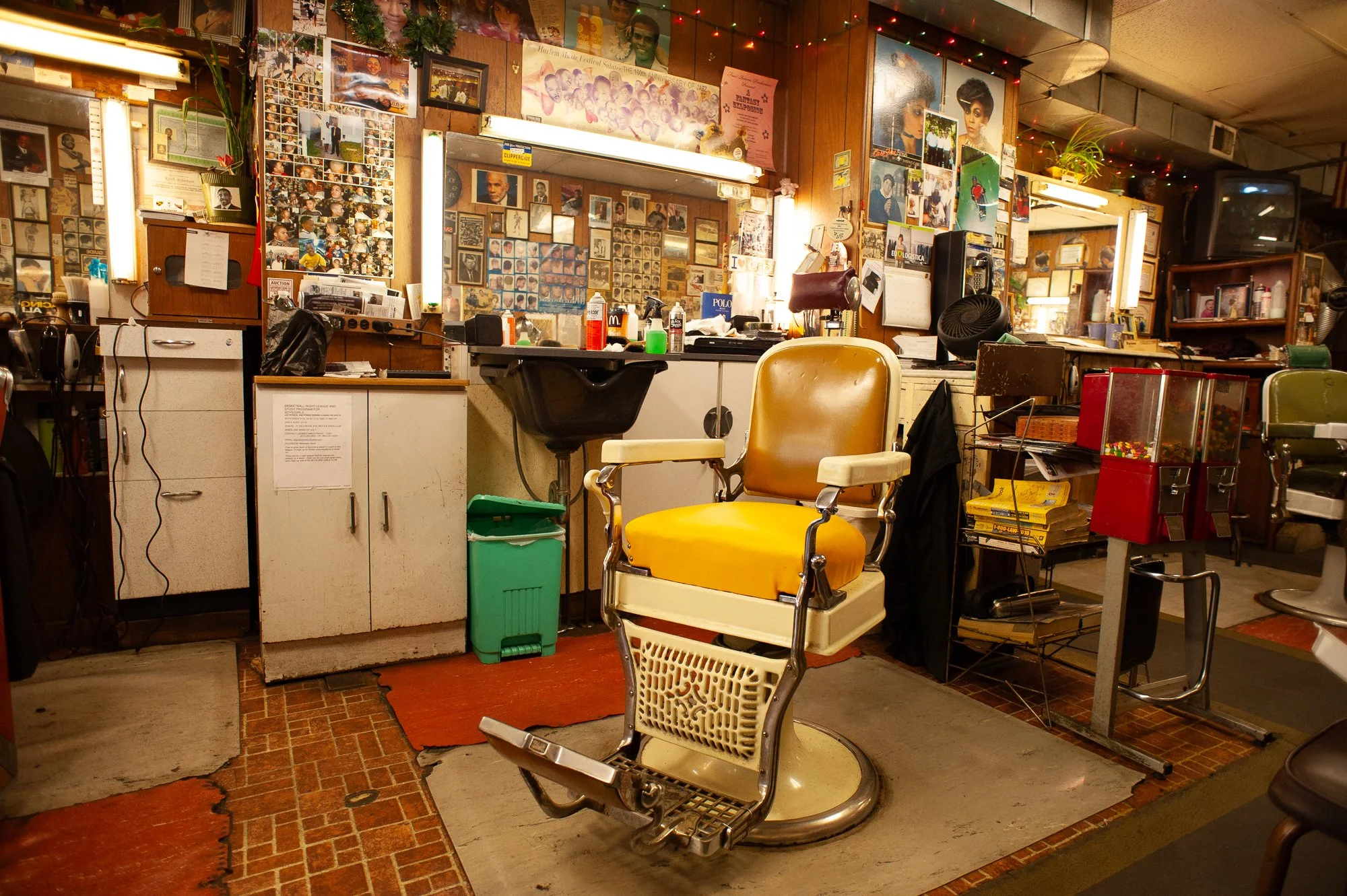
Black Barbershop Culture in America

Black Barbershop Culture in America: A Documentary Photography Project

For more than a decade, I’ve been photographing barbershops across the United States. Some are well-known, others are easy to miss if you’re not looking for them. Many have been around for decades. Others have quietly disappeared.

What’s consistent isn’t the layout or the signage—it’s what happens inside.

Black barbershops, in particular, carry a different kind of weight. They are places where people return week after week, if not daily. Not just for a haircut, but for conversation, friendship, and a sense of familiarity that doesn’t change much, even as everything around them does.

A Space Defined by Consistency

There’s a rhythm to a barbershop that can’t be explained.

The door opens. Someone takes a seat. Another person is already mid-conversation. Clippers harmonize. A game is on in the back corner. People come and go, but the structure stays the same. The energy rises and falls depending on who’s there and where the conversation goes - sometimes it stays between one customer and his barber. Other times the topic flows throughthe whole shop. It’s a glorious energy to witness.

What makes these spaces distinct isn’t just the haircut—it’s the familiarity, like being at home. The same chairs, the same mirrors, the same people you can count on day after day.

Over time, that consistency builds something more permanent than the physical space itself.

More Than a Haircut

It’s easy to reduce a barbershop to its function, but that misses the point entirely.

These shops operate as meeting places. Conversations move between topics without structure—sports, work, family, local news. Some are loud, some are quiet. Some are built on long-standing relationships, others on quick exchanges between people who may never see each other again.

What matters is that the space allows for it.

There’s no expectations. It’s a place you can feel safe and open.

Details That Hold the History

Much of what defines a barbershop isn’t immediately obvious.

It’s in the details: the tools worn down from years of use. Handwritten signs. Photographs of real people - local people. Chairs older than anyone in the shop.

These elements aren’t curated. They accumulate.

Over time, they become a record of the people who have passed through the space—both barbers and customers.

The Barbershop as Community

In many neighborhoods, the barbershop extends beyond its walls.

People gather outside. Conversations continue on the sidewalk. The shop becomes part of the street itself—connected to everything happening around it.

This is especially true in Black barbershops, where the role of the space has historically gone beyond business. It has functioned as a place of connection, discussion, and continuity within the community.

That presence is still there, even as many of these shops face pressure from rising costs, changing neighborhoods, and shifting culture.

What’s Changing—and What Isn’t

Some of the barbershops in this series are no longer there.

Others are still operating, largely unchanged.

There’s a tendency to focus on what’s disappearing, but that only tells part of the story. What’s just as important is what remains—the memories, the relationships, and the role these spaces continue to play.

The physical details may shift. The structure holds.

Part of something Bigger

This work is part of Barbershops of America, a long-term documentary photography project(and photo book) spanning more than fifteen years and all fifty states.

The goal has never been to define these spaces, but to document them as they are—honestly, without direction, and over time.

Some shops close. Others continue. All of them contribute to a larger record of a place that has remained a constant in American life.

If you’re interested in seeing more from this project, you can view the full Barbershops of America series here and the photography book/prints here.

Explore another barbershop story - Tony’s Barbershop

Contact me directly for editorial and commercial licensing - rob@robhammerphotography.com
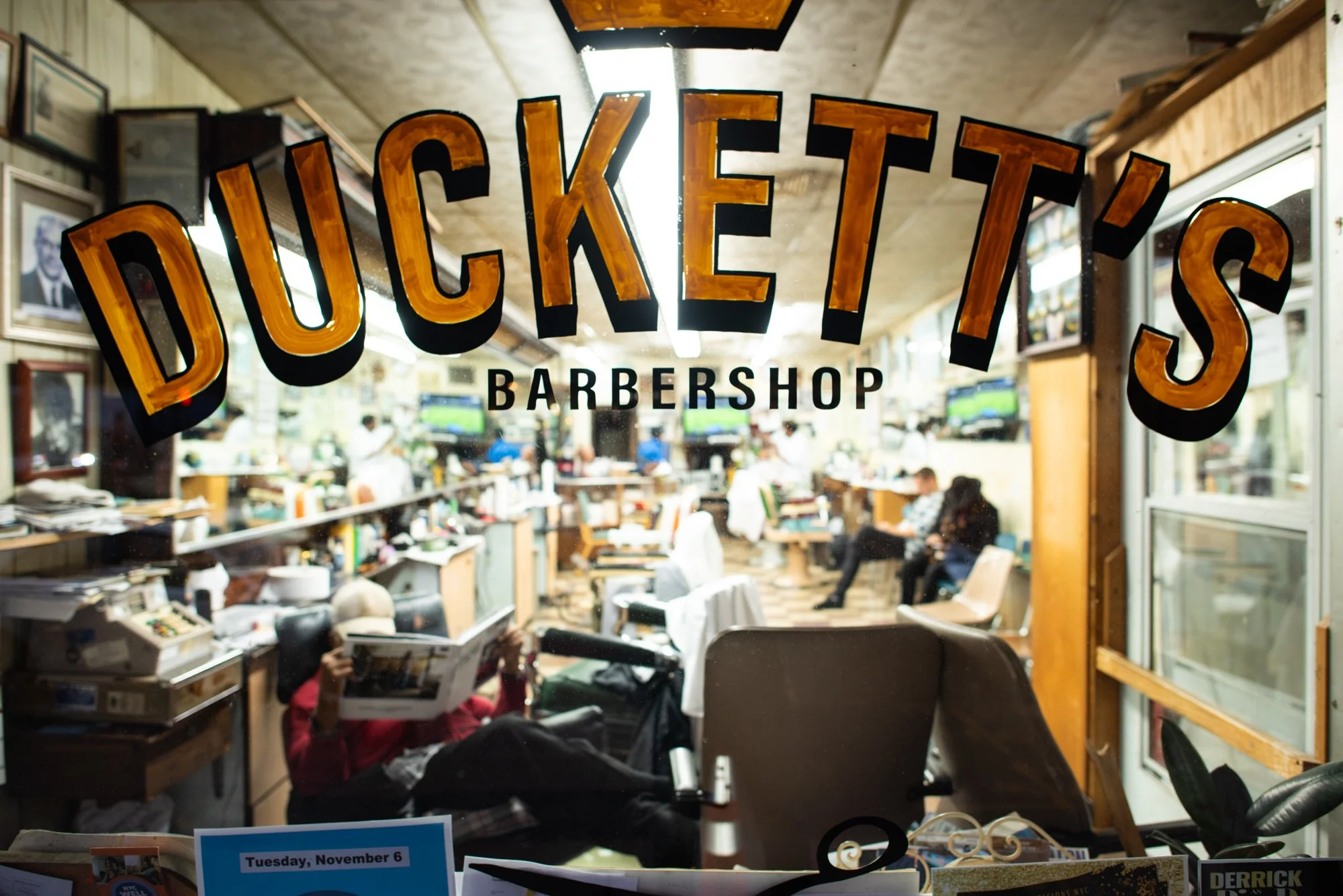
View through a barbershop window with lettering reading Ducketts Barbershop and customers inside

Looking in from the outside—another day unfolding inside a working barbershop.
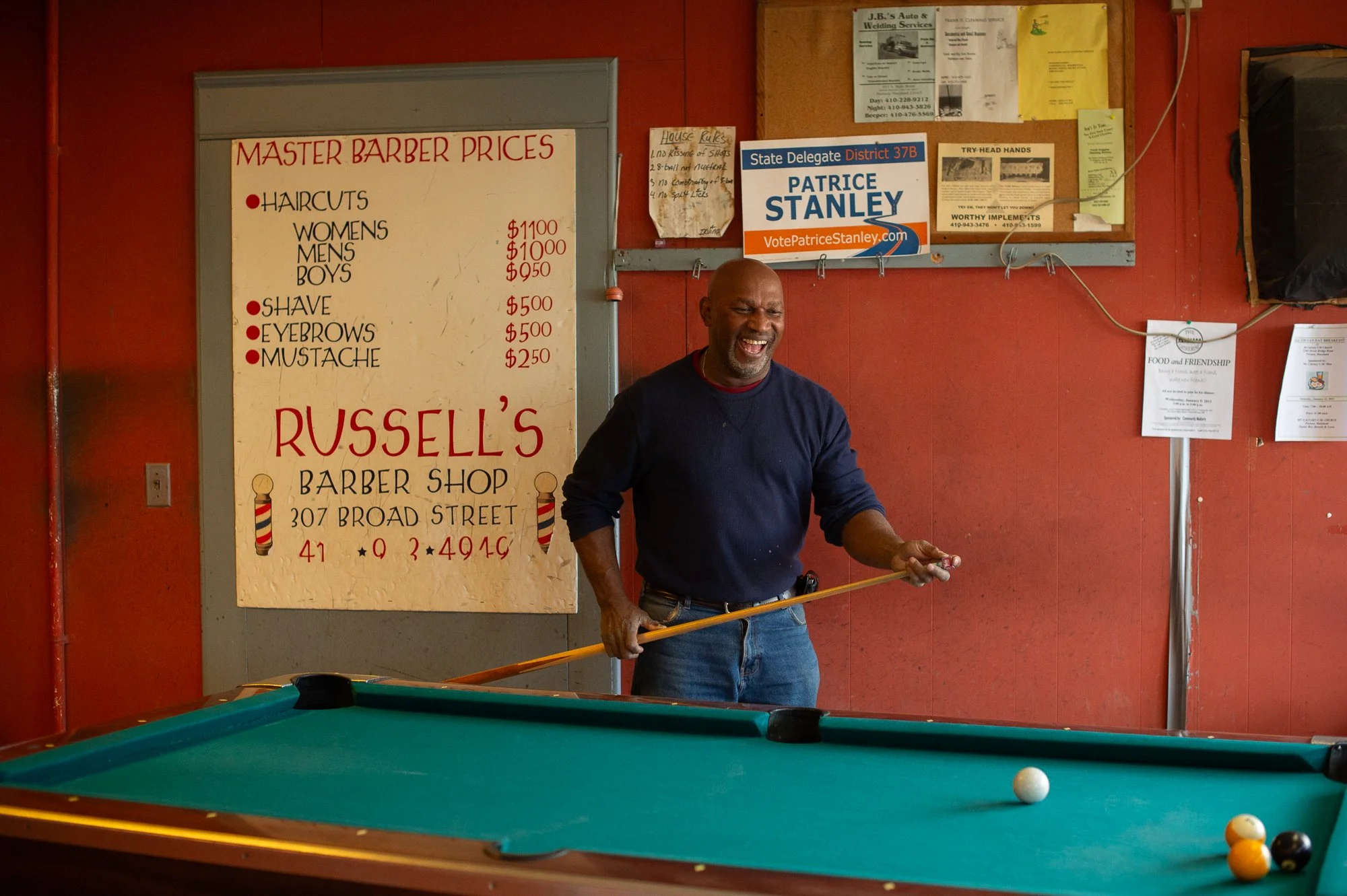
Man smiling and holding a pool cue inside a barbershop with signage and price board behind him

Beyond haircuts, the barbershop becomes a social space—games, laughter, and time shared between neighbors.
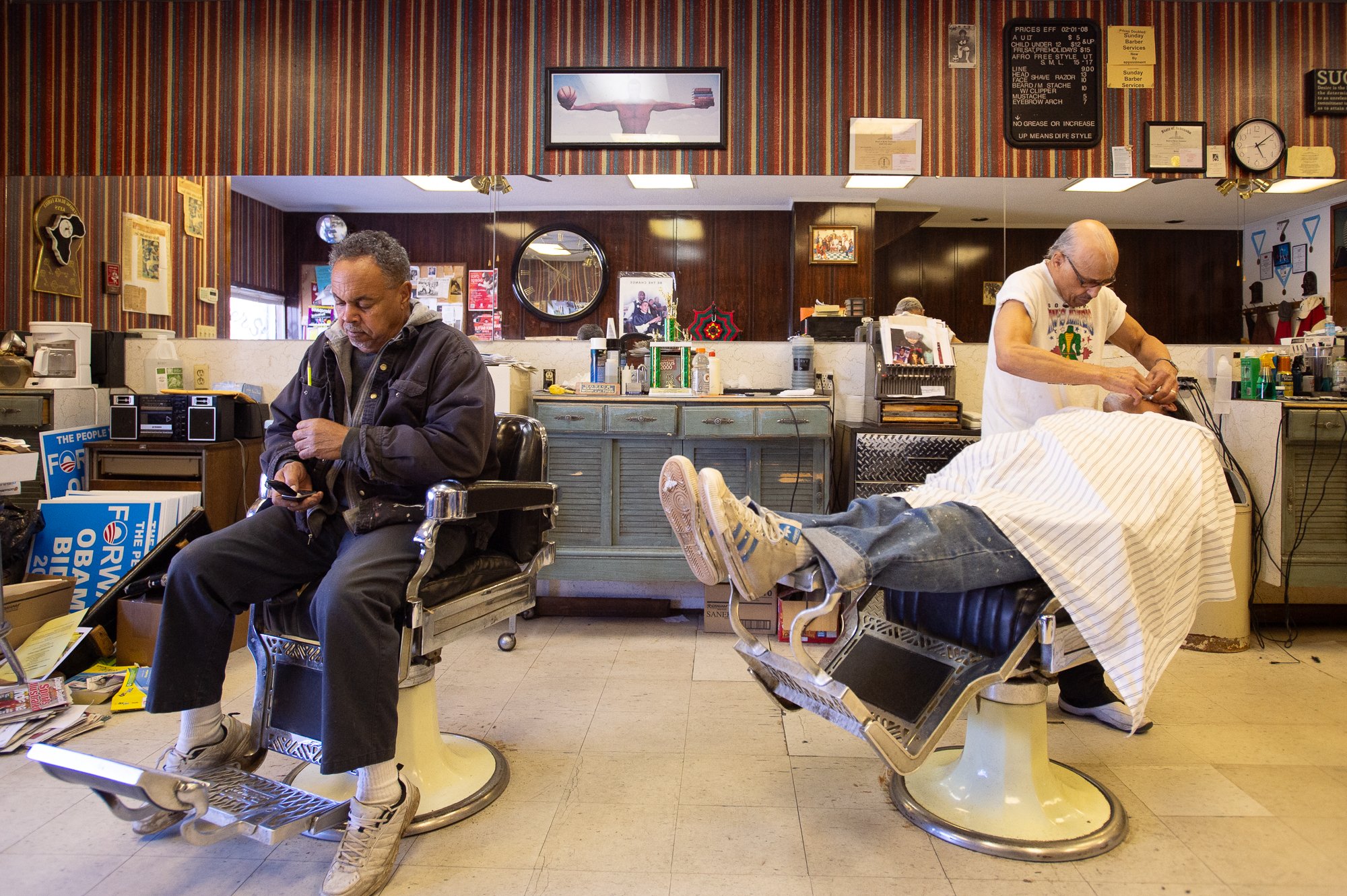
Barber cutting a client’s hair while another man sits nearby in a traditional Black barbershop

An everyday moment inside the shop—conversation, routine, and the quiet rhythm of a haircut unfolding.
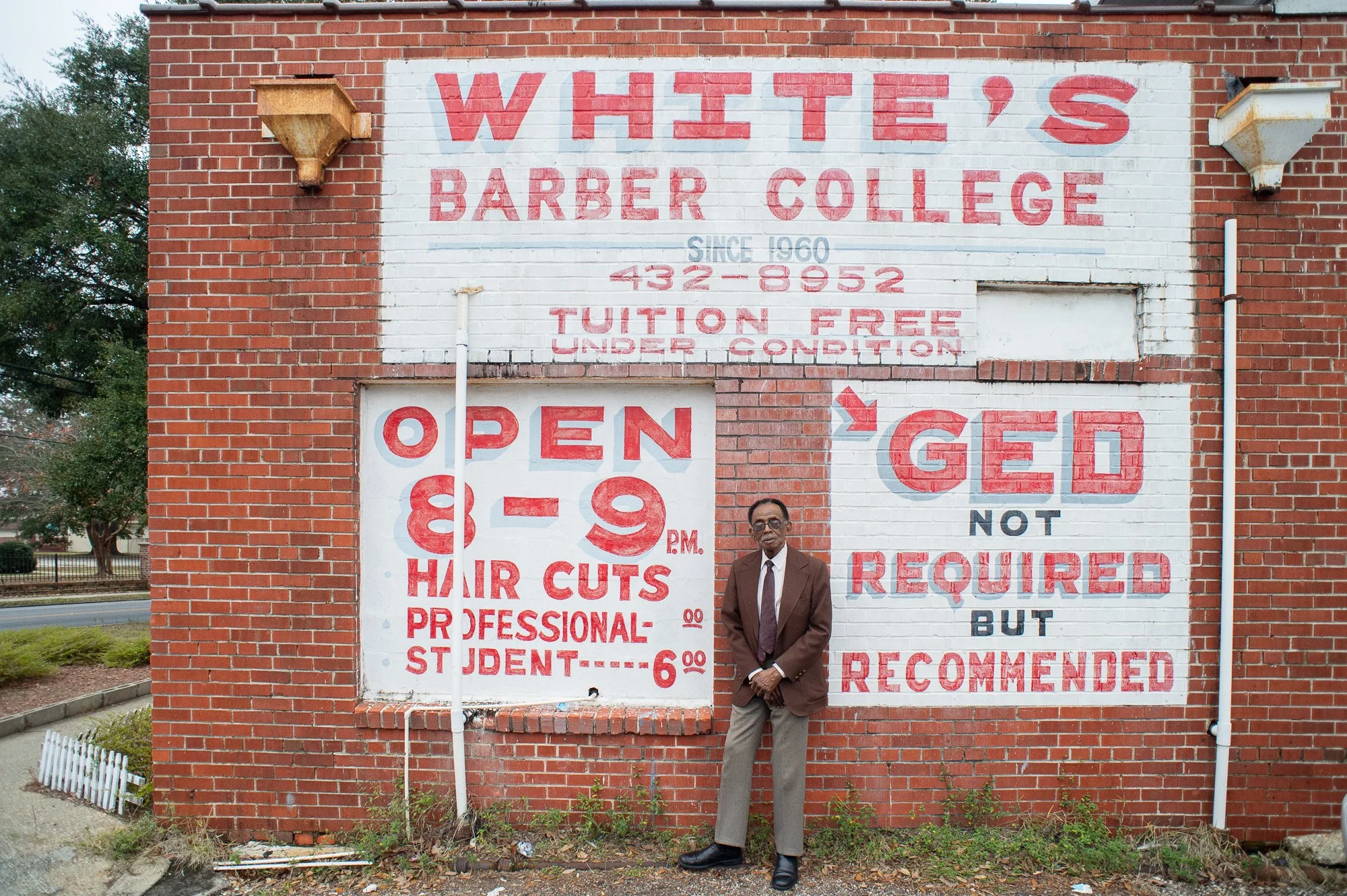
Man standing in front of Whites Barber College exterior with painted signage

A portrait rooted in place—barbering passed down through training, tradition, and time.
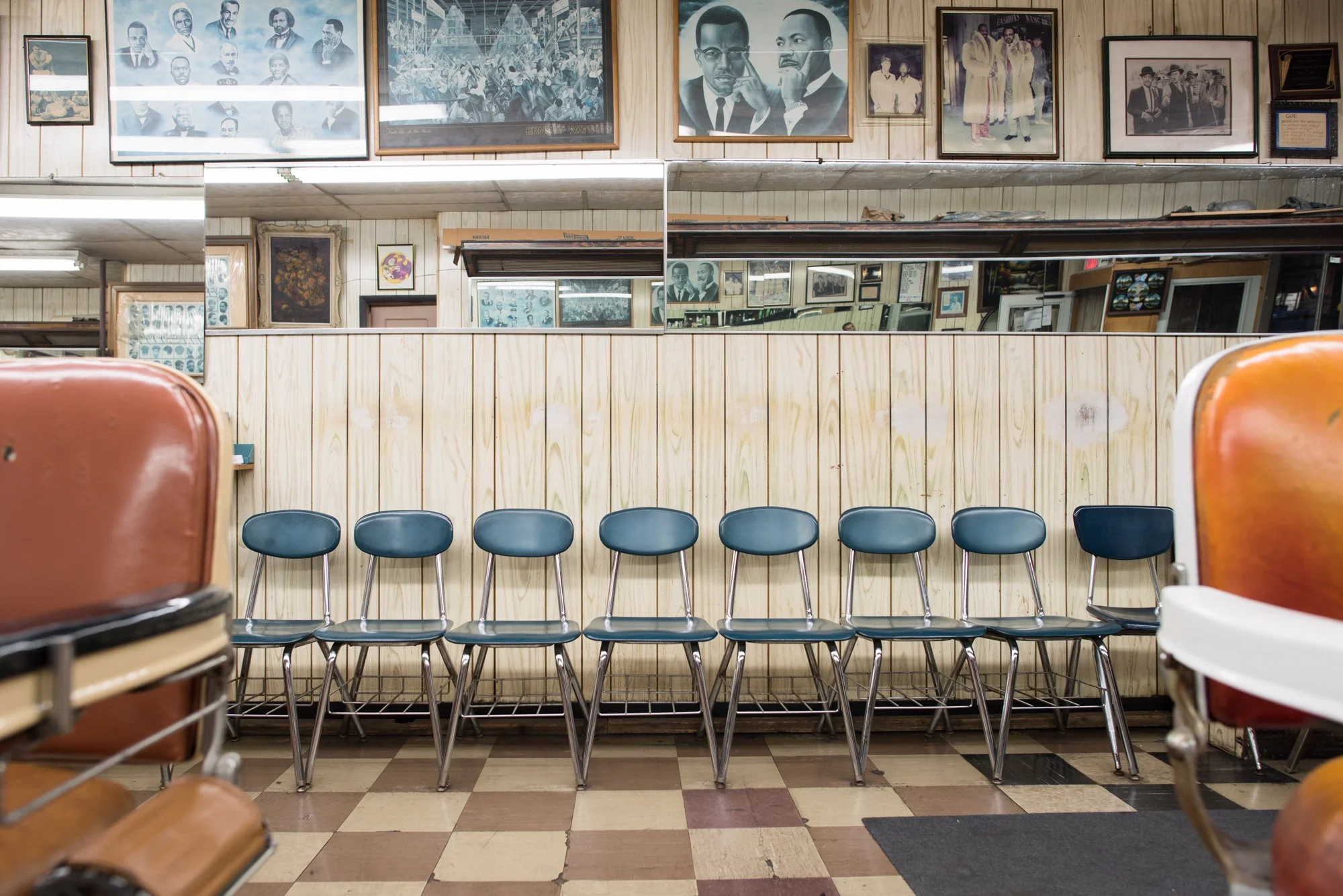
Row of empty chairs inside a historic Black barbershop with framed portraits and mirrors

A row of worn chairs sits beneath decades of history—photographs, mirrors, and memories layered into the walls of a neighborhood barbershop.
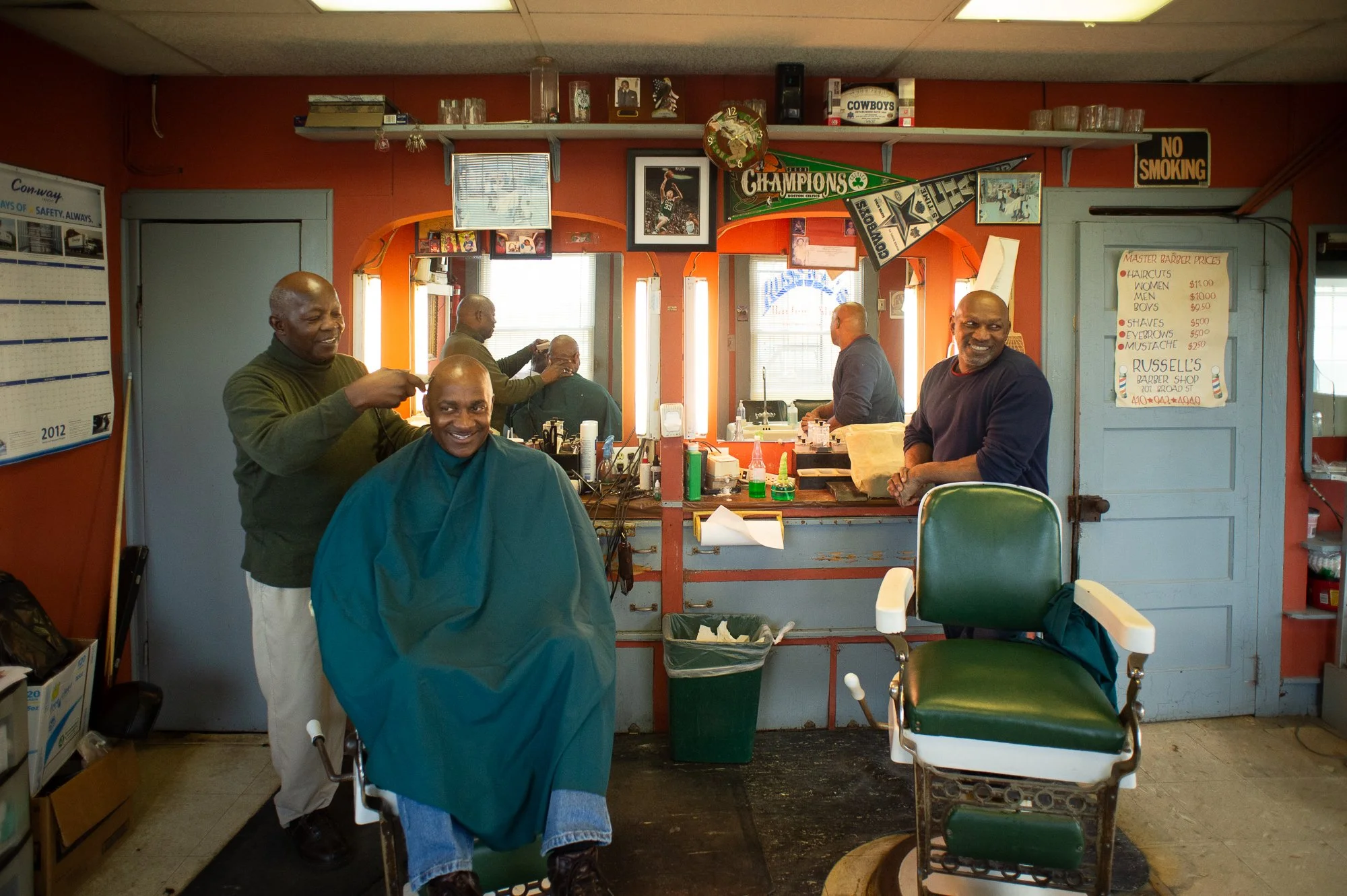
Barber cutting hair while other men watch and talk inside a lively Black barbershop

A gathering place as much as a business—where conversation, humor, and community unfold alongside every cut.
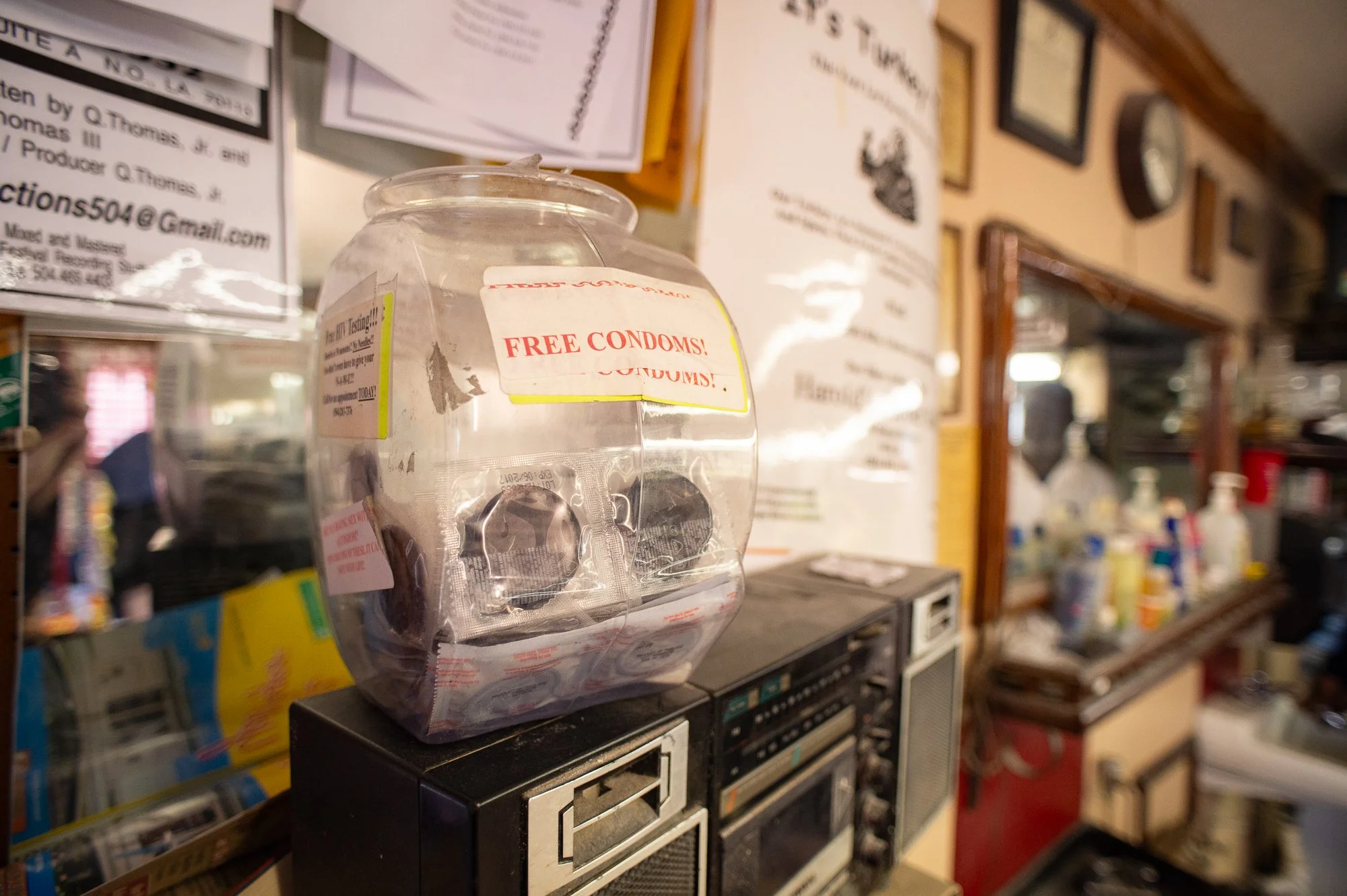
Jar labeled free condoms sitting on a counter inside a Black barbershop with posters behind it

A small but telling detail—barbershops have long served as places of care, conversation, and community beyond the haircut.
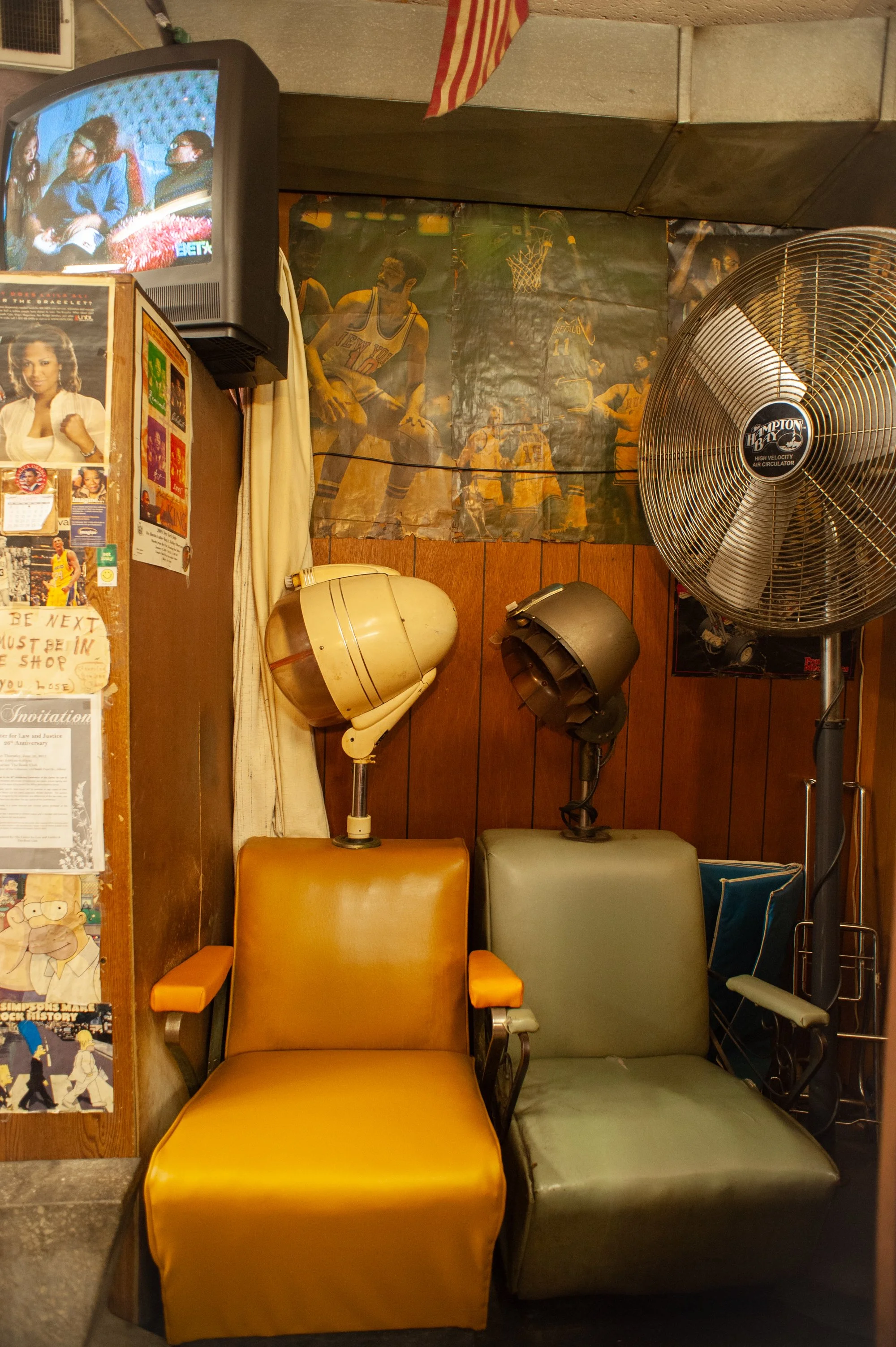
Old hair dryers and posters on the wall inside a classic barbershop interior

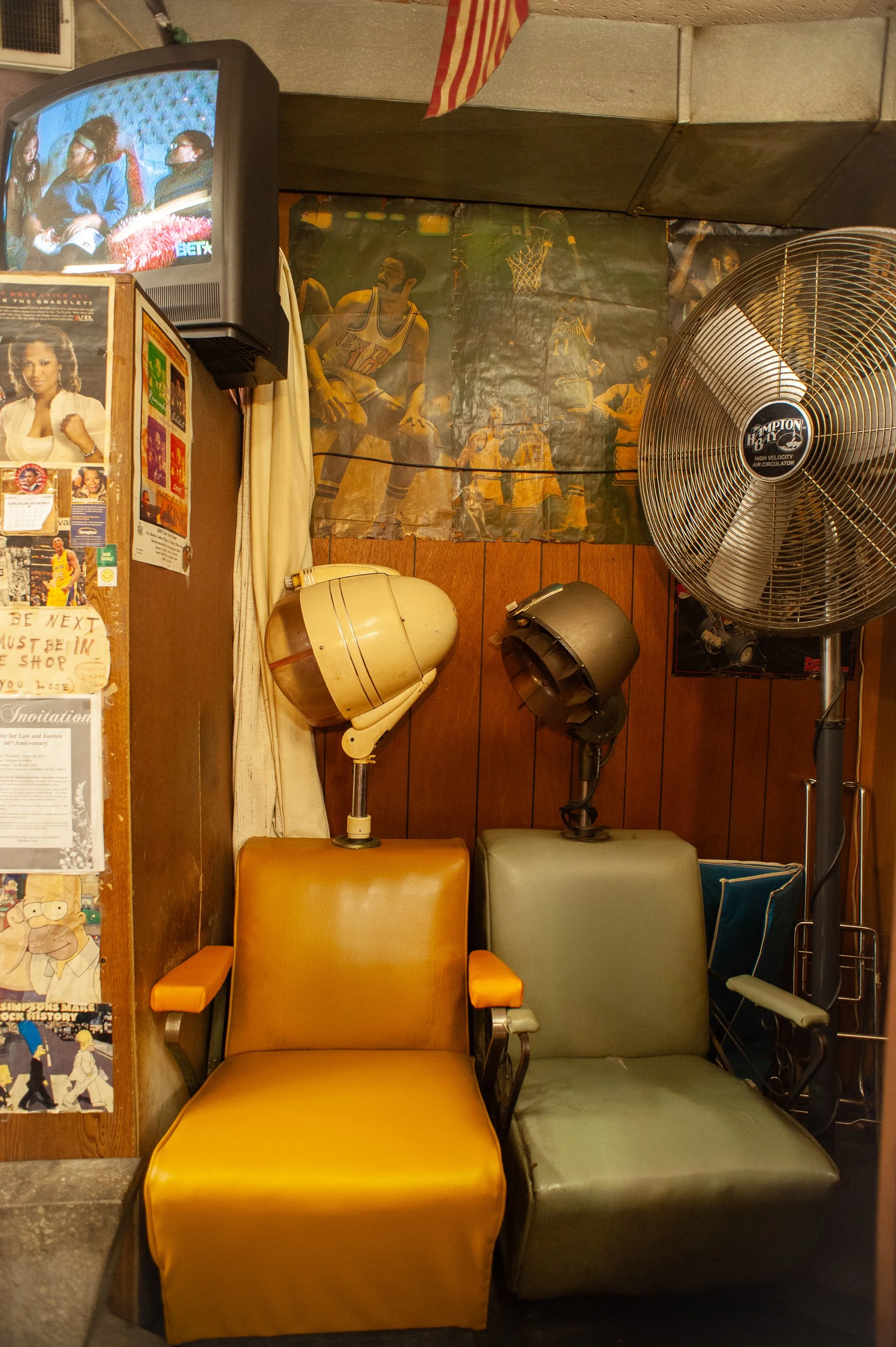
Details that mark the era—equipment and imagery that speak to decades of use and change.
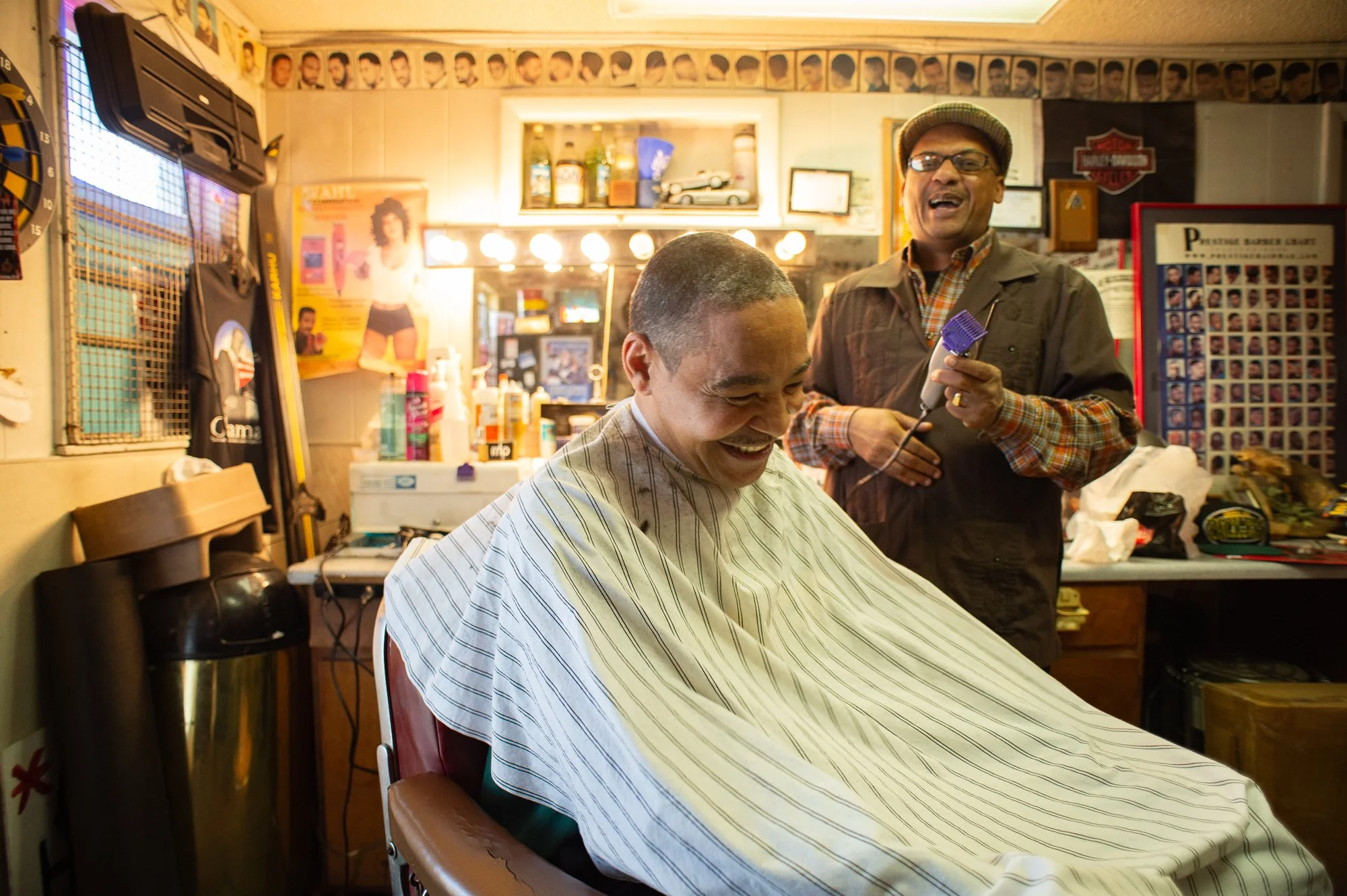
Barber smiling while cutting a client’s hair inside a traditional Black barbershop

A moment of humor during a haircut—relationships built over years, not just appointments.
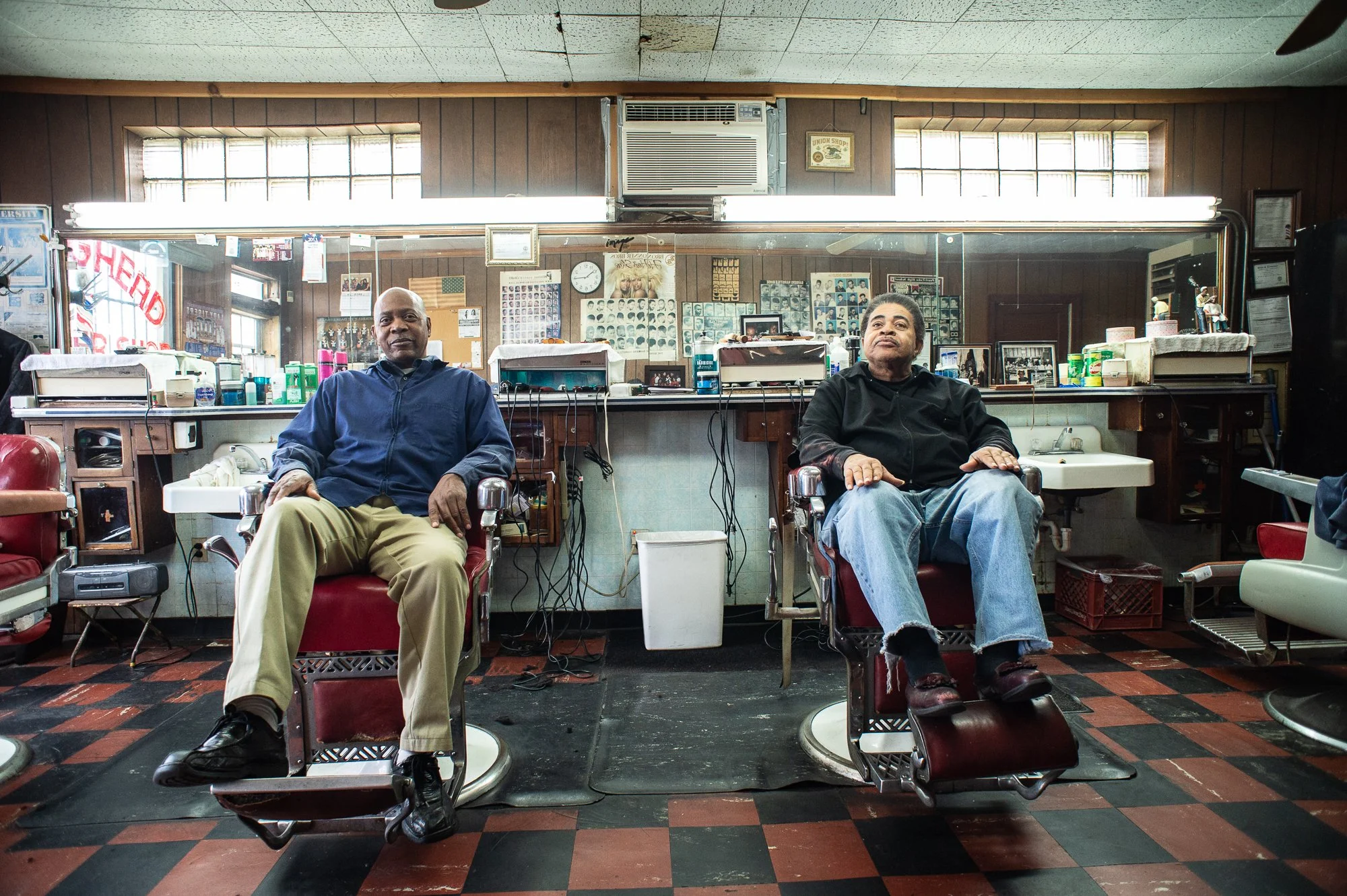
Two men seated in barber chairs inside a historic Black barbershop interior

Waiting, watching, and talking—the chair is as much about presence as it is about the haircut.
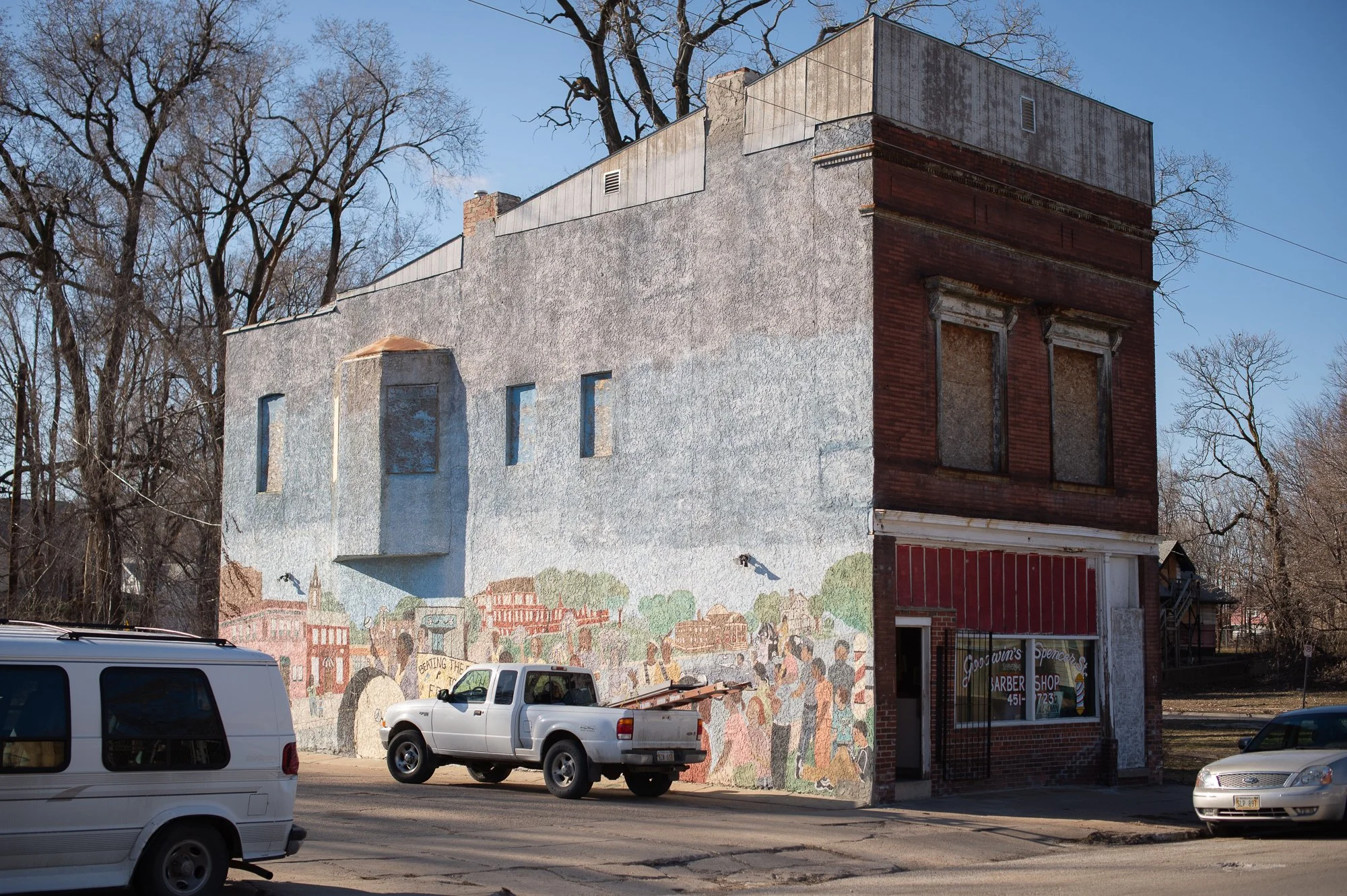
Exterior of an old Black barbershop building with mural and parked cars in a small American town

The outside of the shop carries its own story—weathered walls, murals, and a presence rooted in the neighborhood.
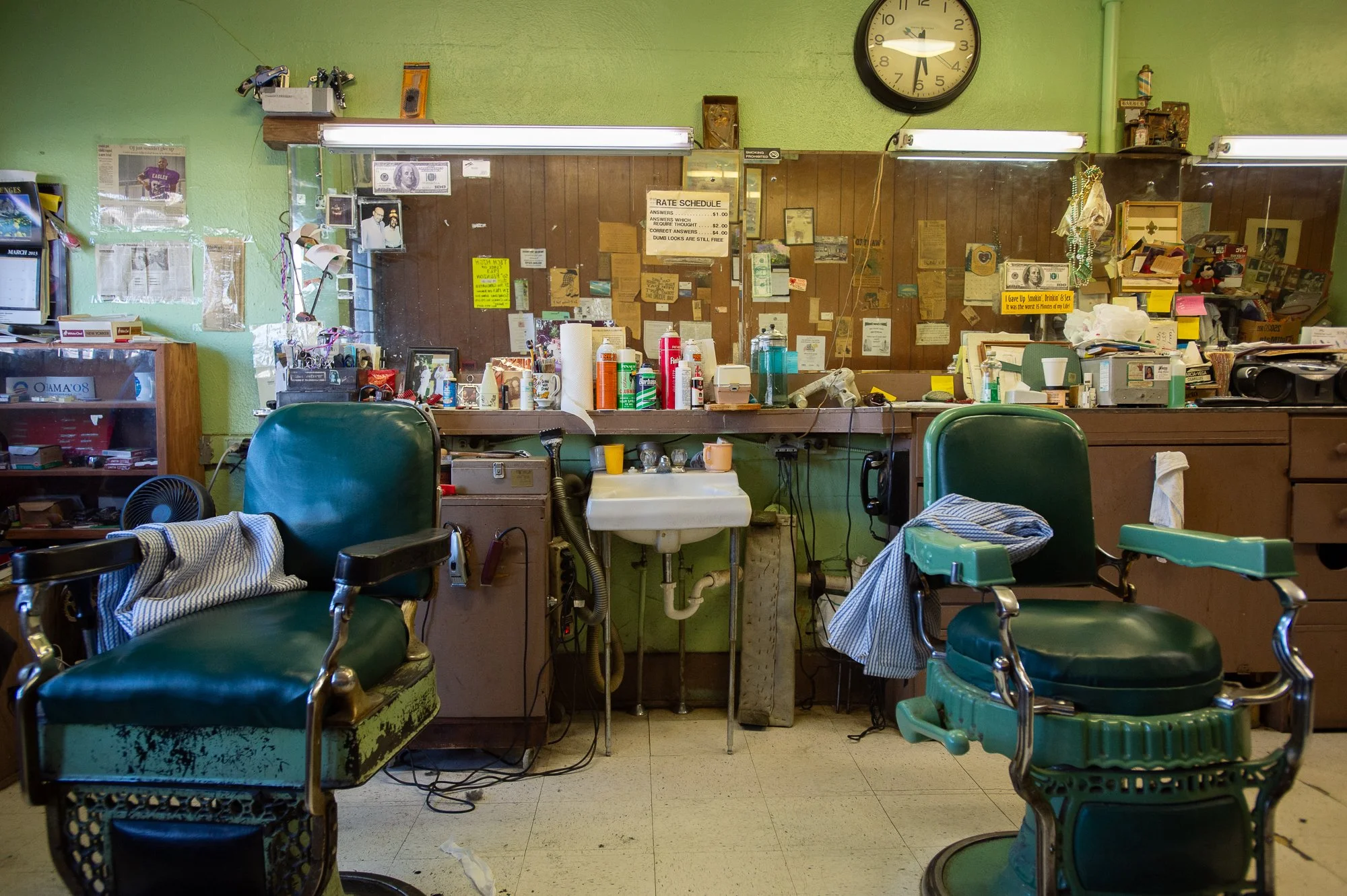
Two vintage green barber chairs facing a cluttered mirror and work station in a traditional shop

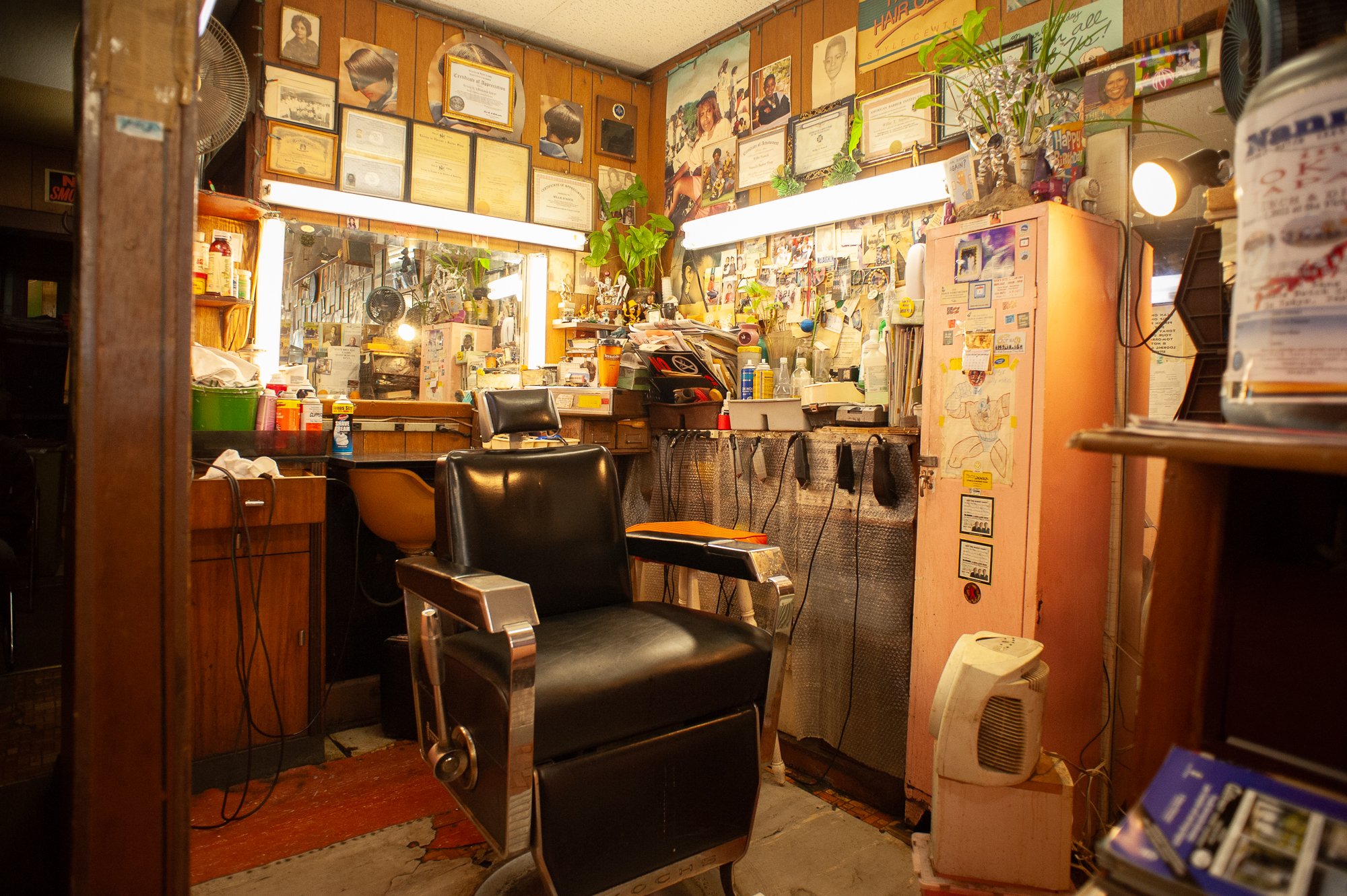
Tools, notes, and years of work surround the chair—evidence of a craft practiced daily over decades.
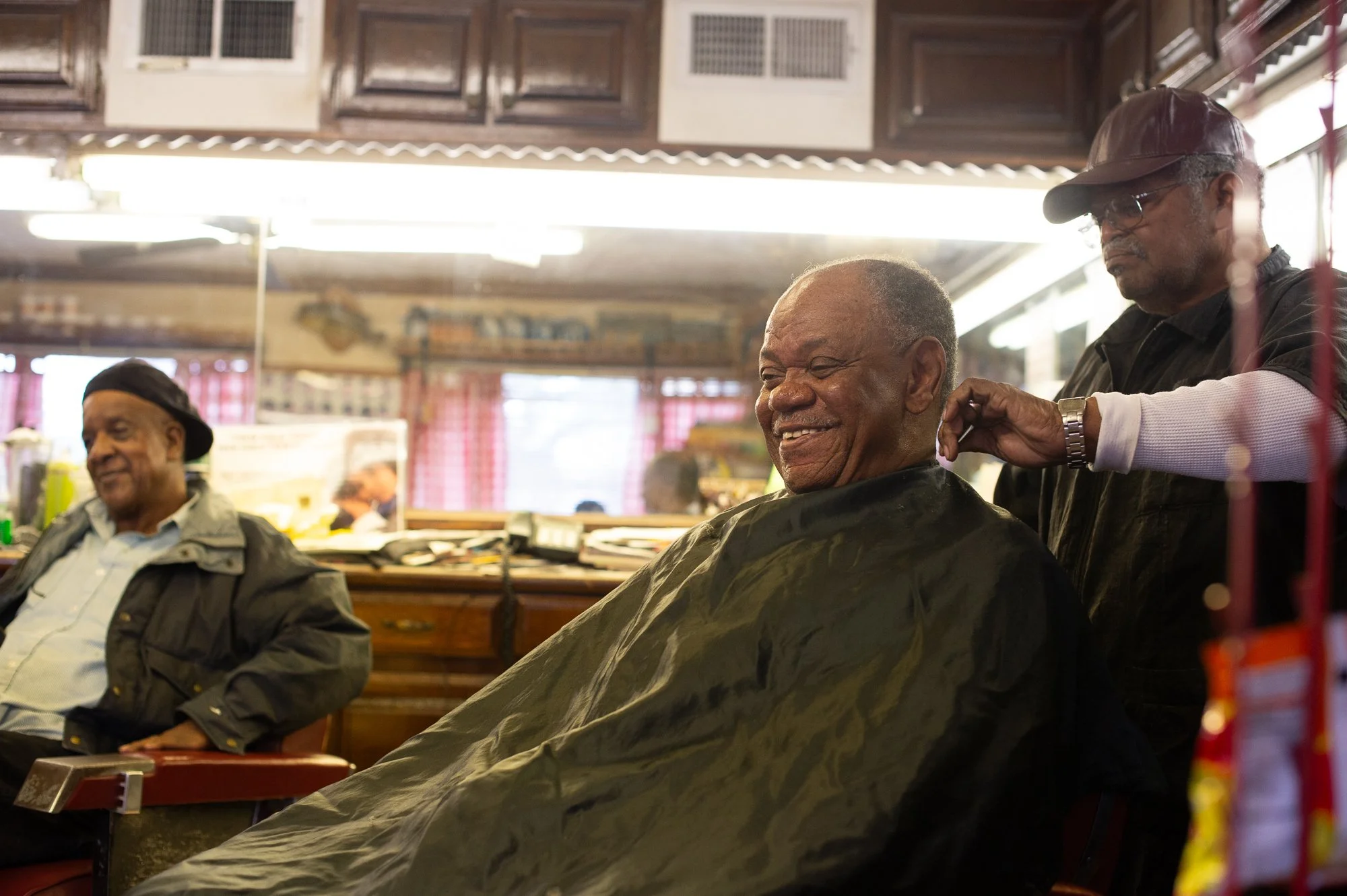
Barber trimming a client’s hair with another man sitting nearby in a classic barbershop interior

Generations gather in these spaces—routine, trust, and tradition carried forward one cut at a time.
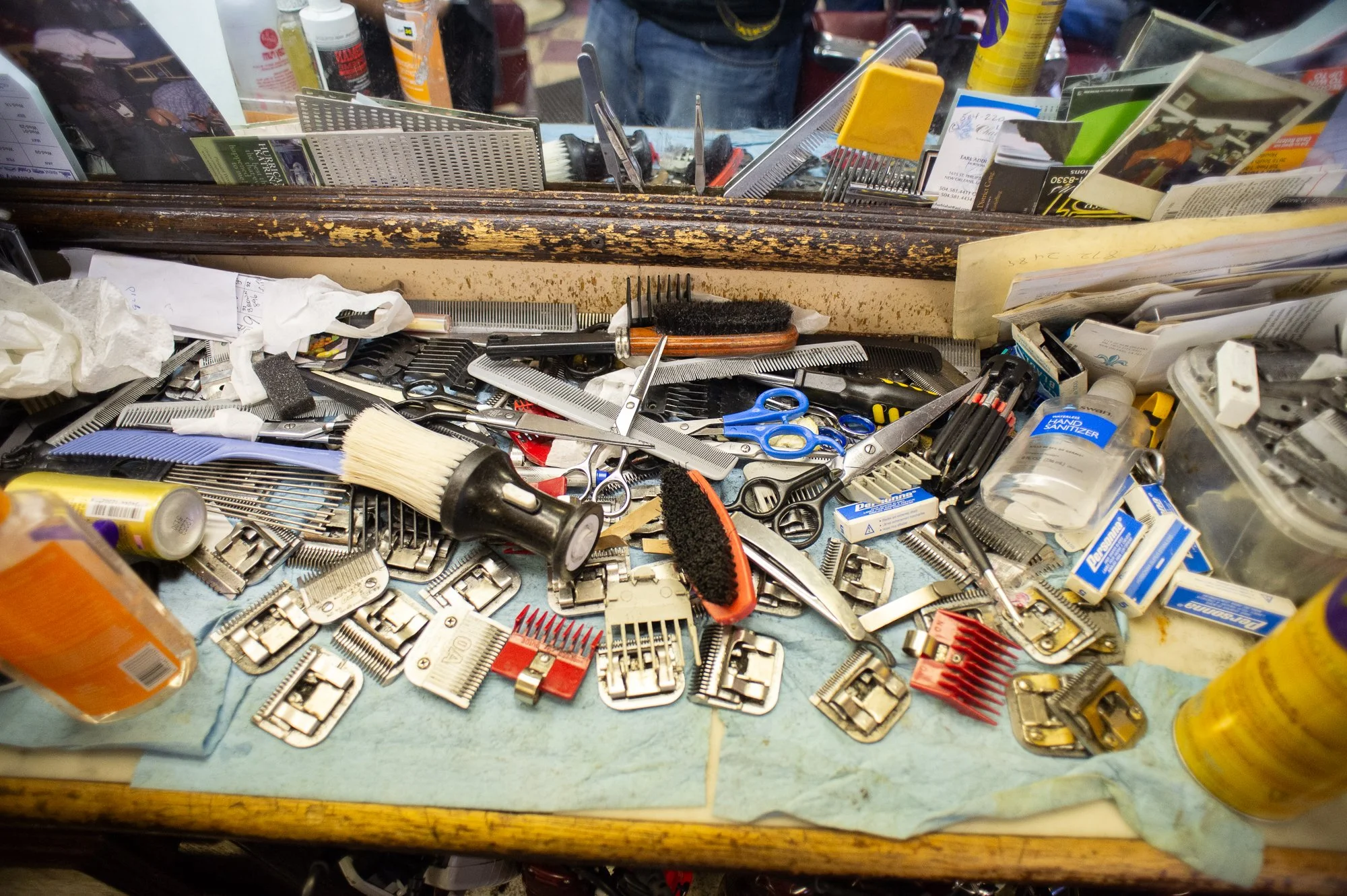
Close up of barber tools including clippers, combs, scissors, and brushes scattered across a worn counter

The tools of the trade—used daily, worn over time, and essential to the craft practiced in every shop.
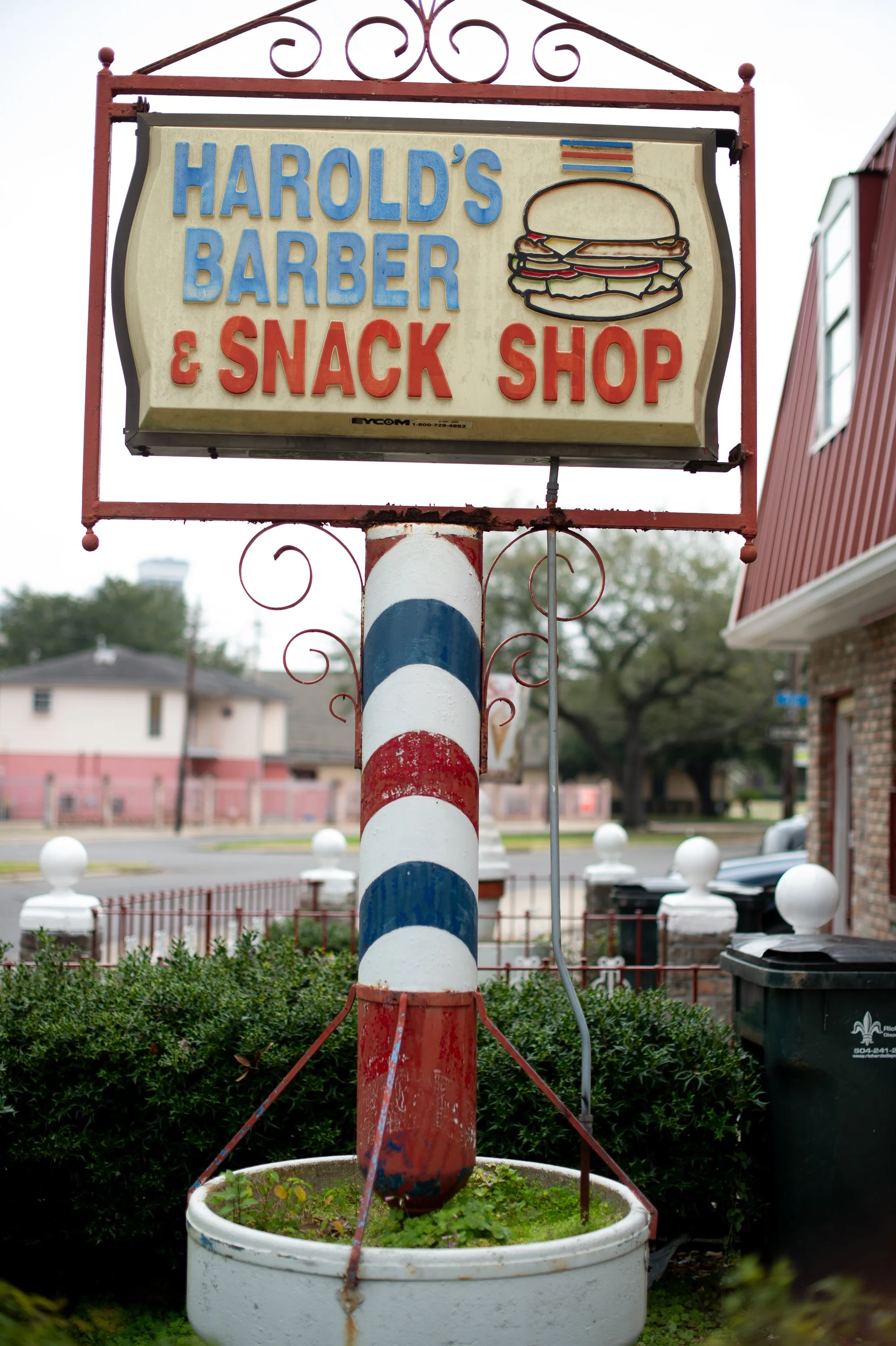
Vintage sign reading Harold’s Barber and Snack Shop above a barber pole outside

A sign that reflects the role of the barbershop as both business and gathering place within the neighborhood.
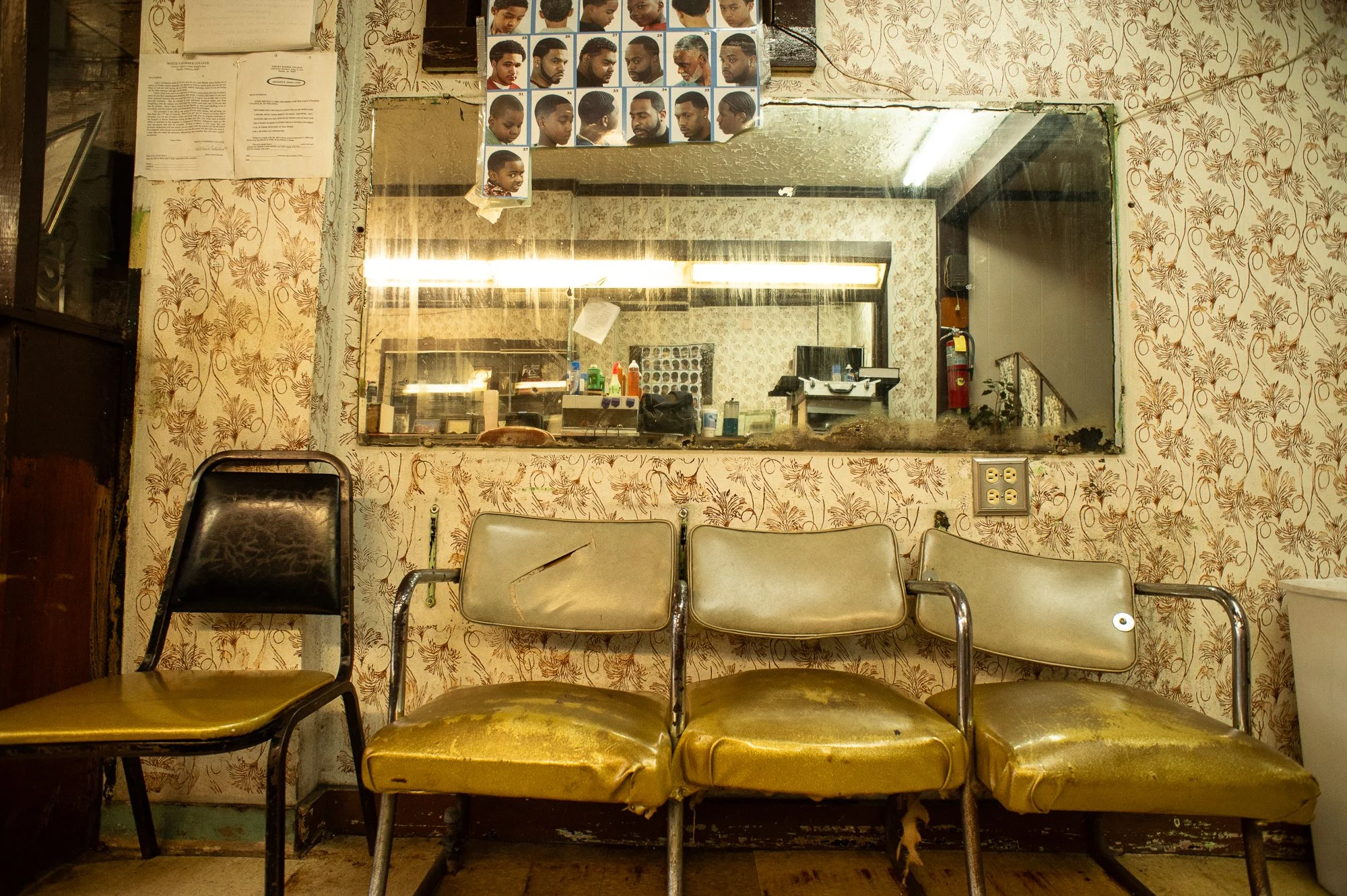
Old worn waiting chairs inside a historic barbershop with patterned wallpaper and mirror

Chairs worn from years of use—each one holding its own history of conversations and waiting.
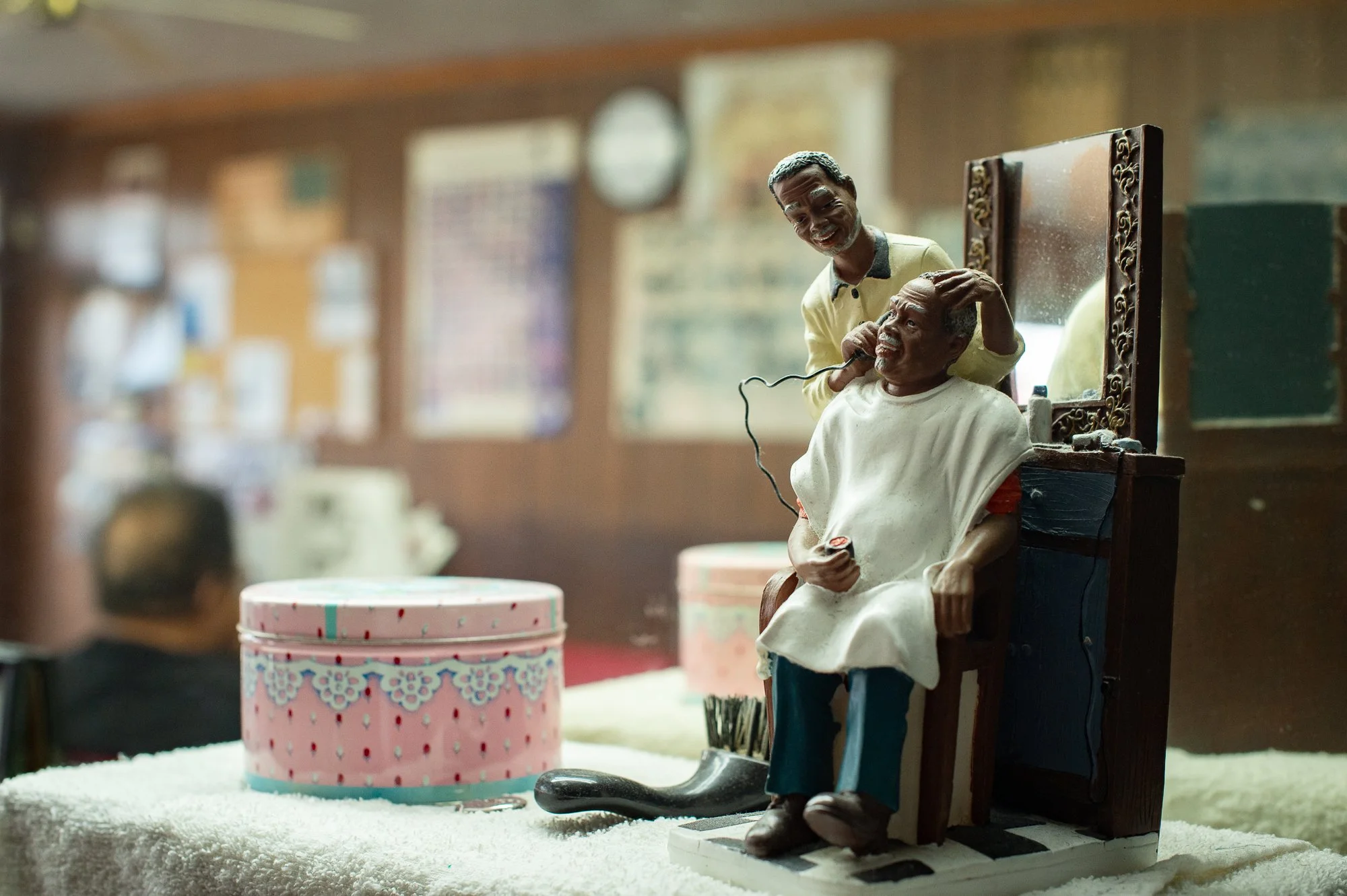
Small figurine of a barber cutting hair placed on a towel inside a barbershop

A small detail on the counter—a reflection of the craft and culture that defines the space.
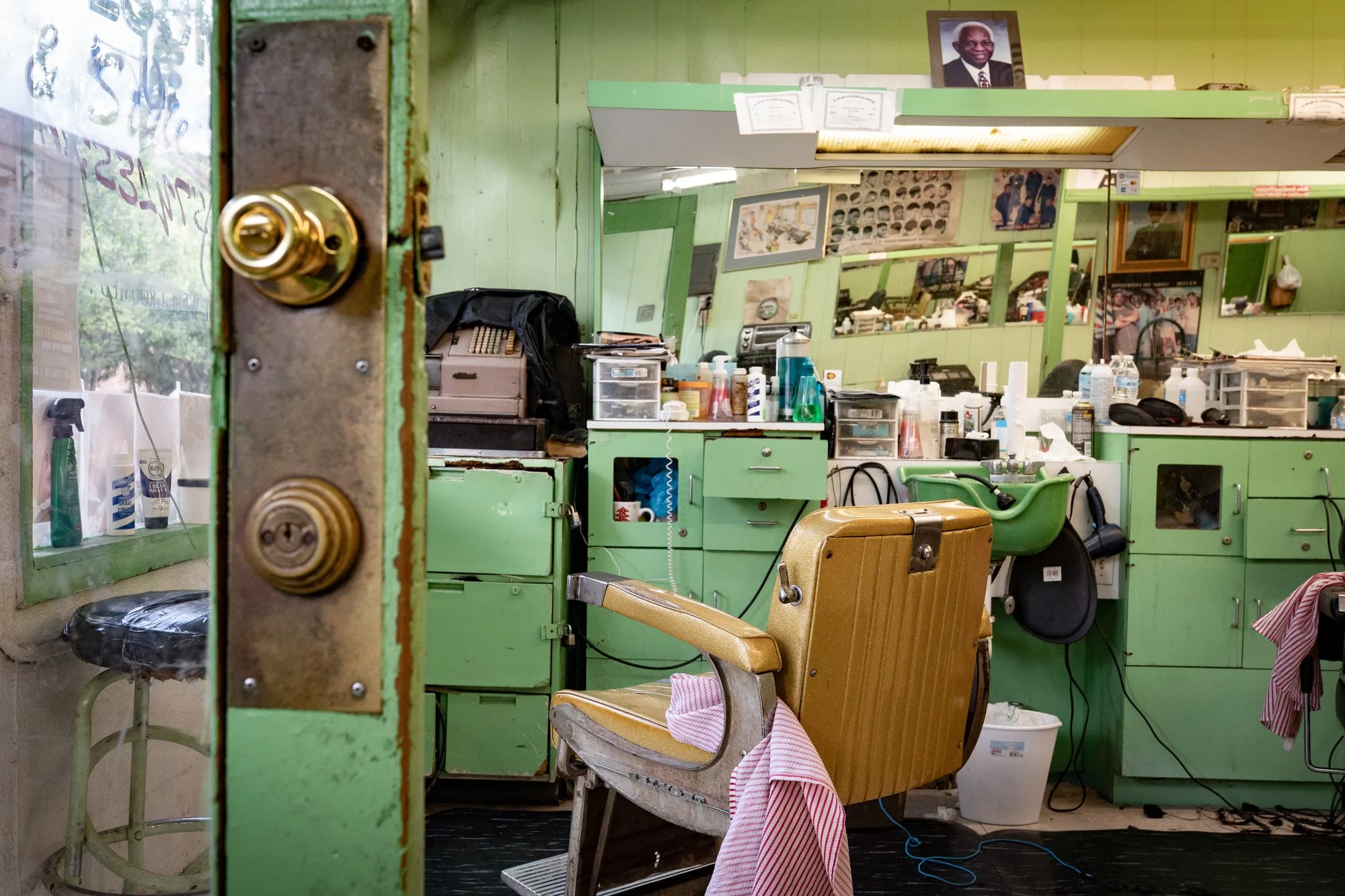
Interior of a barbershop with green cabinets and a vintage barber chair viewed through an open door

A quiet interior between customers—the shop as both workspace and daily routine.
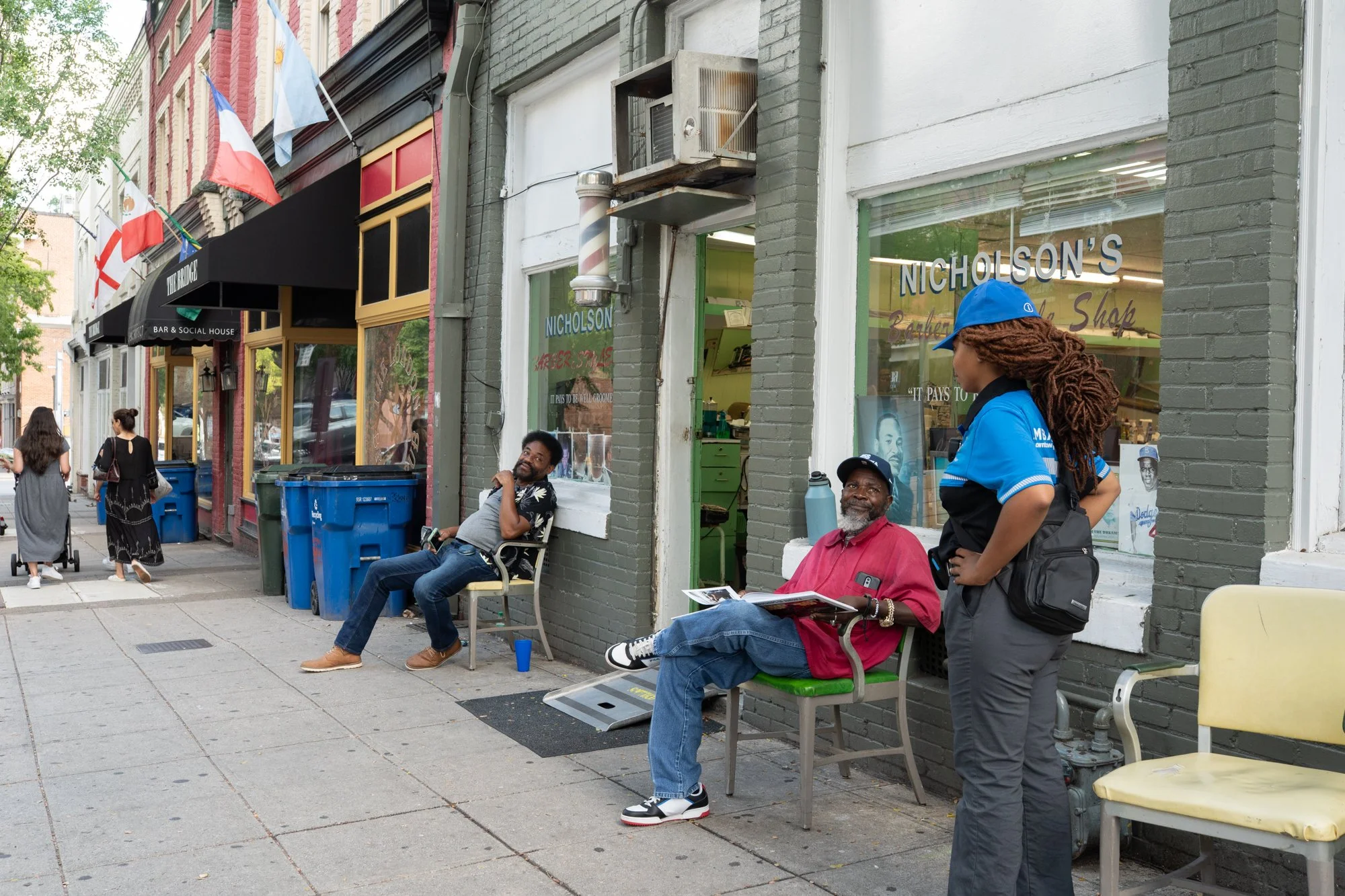
People sitting and talking outside a neighborhood barbershop on a city street

The sidewalk becomes an extension of the shop—conversation and community continuing just outside the door.
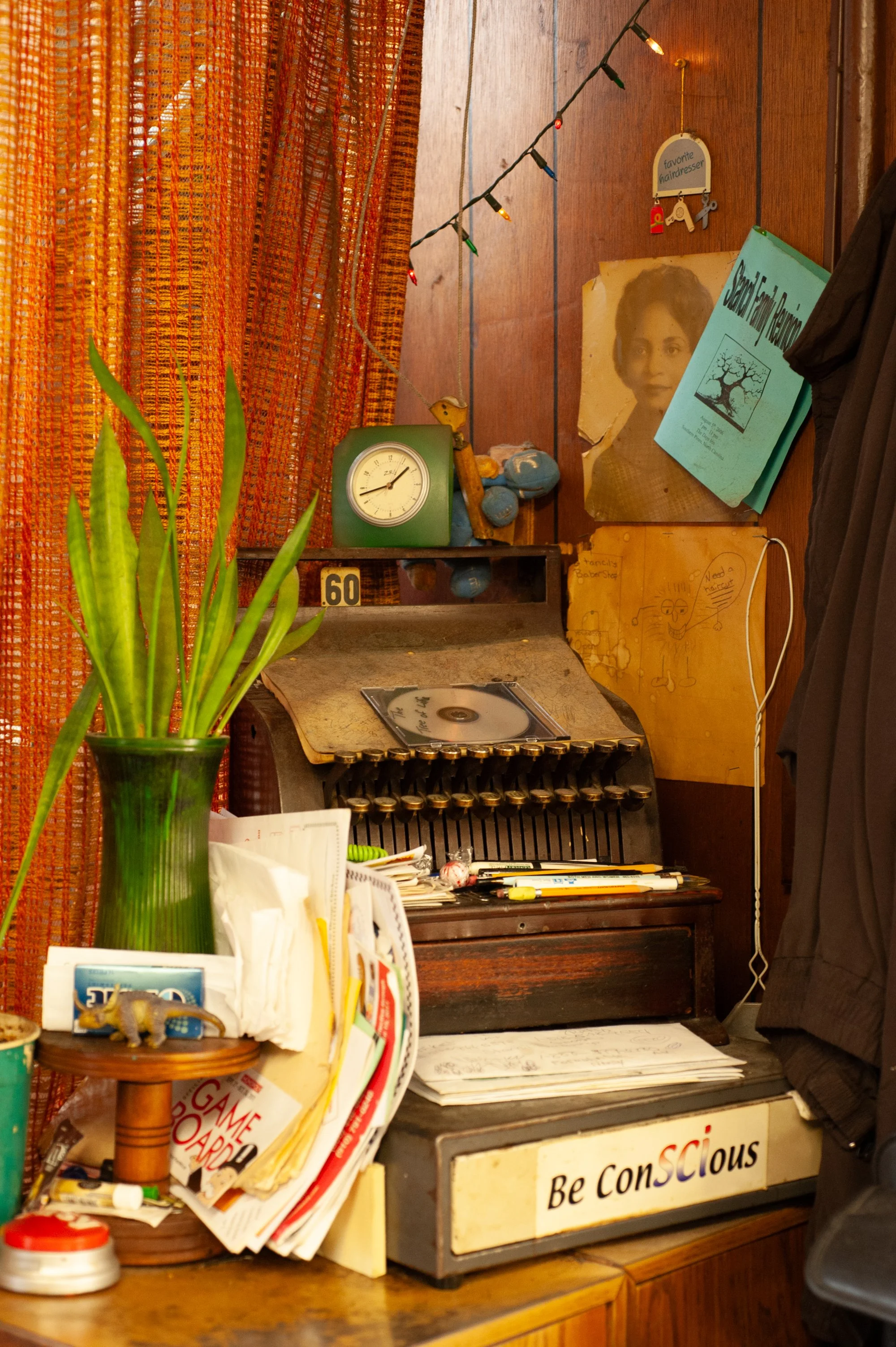
Vintage typewriter and personal items on a cluttered counter inside a Black barbershop

Personal objects layered into the space—notes, tools, and history sitting side by side on the counter.
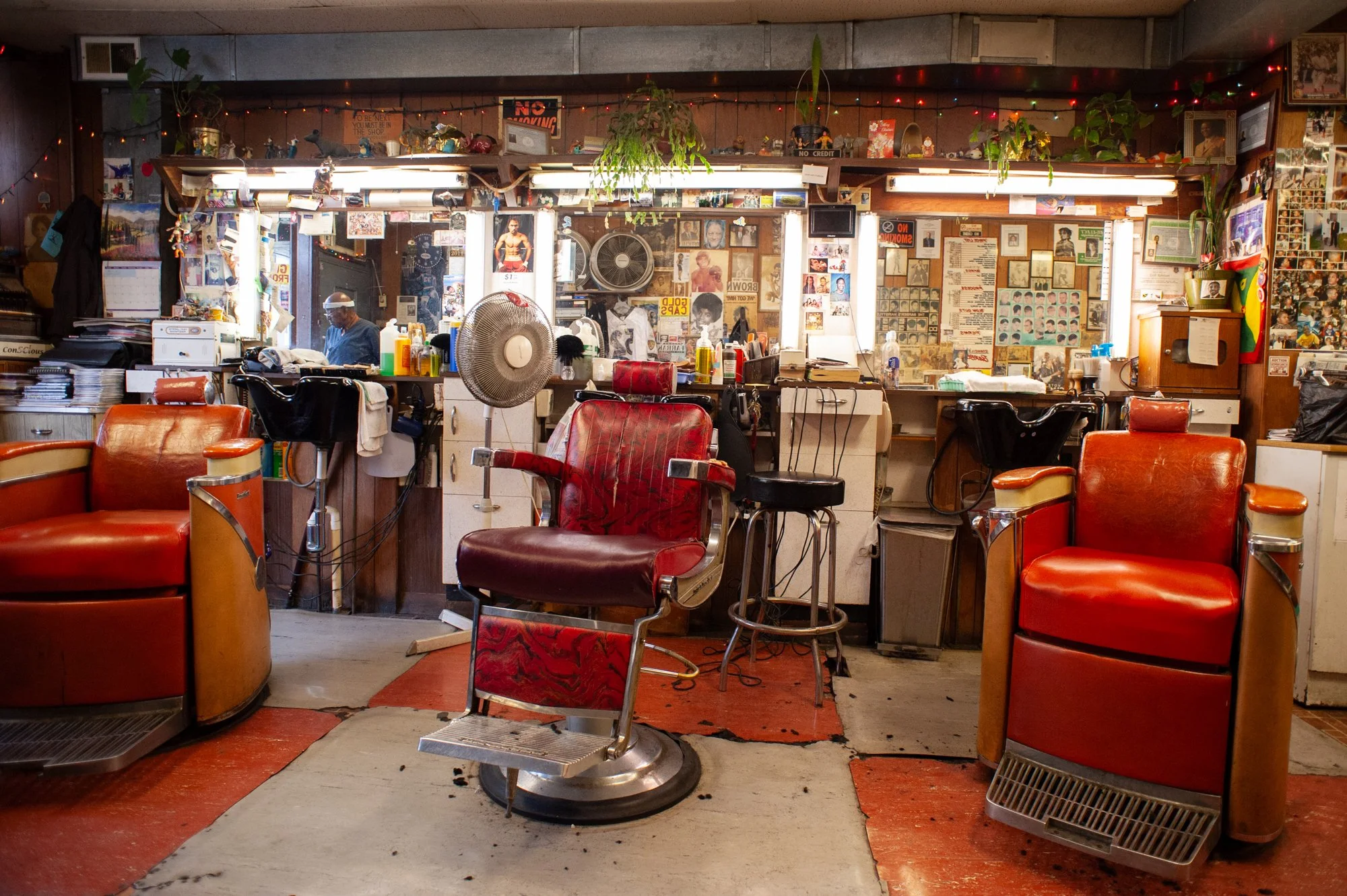
Interior of a traditional barbershop with red vintage barber chairs and mirrors

A full view of the shop—chairs, mirrors, and walls layered with history and everyday life.
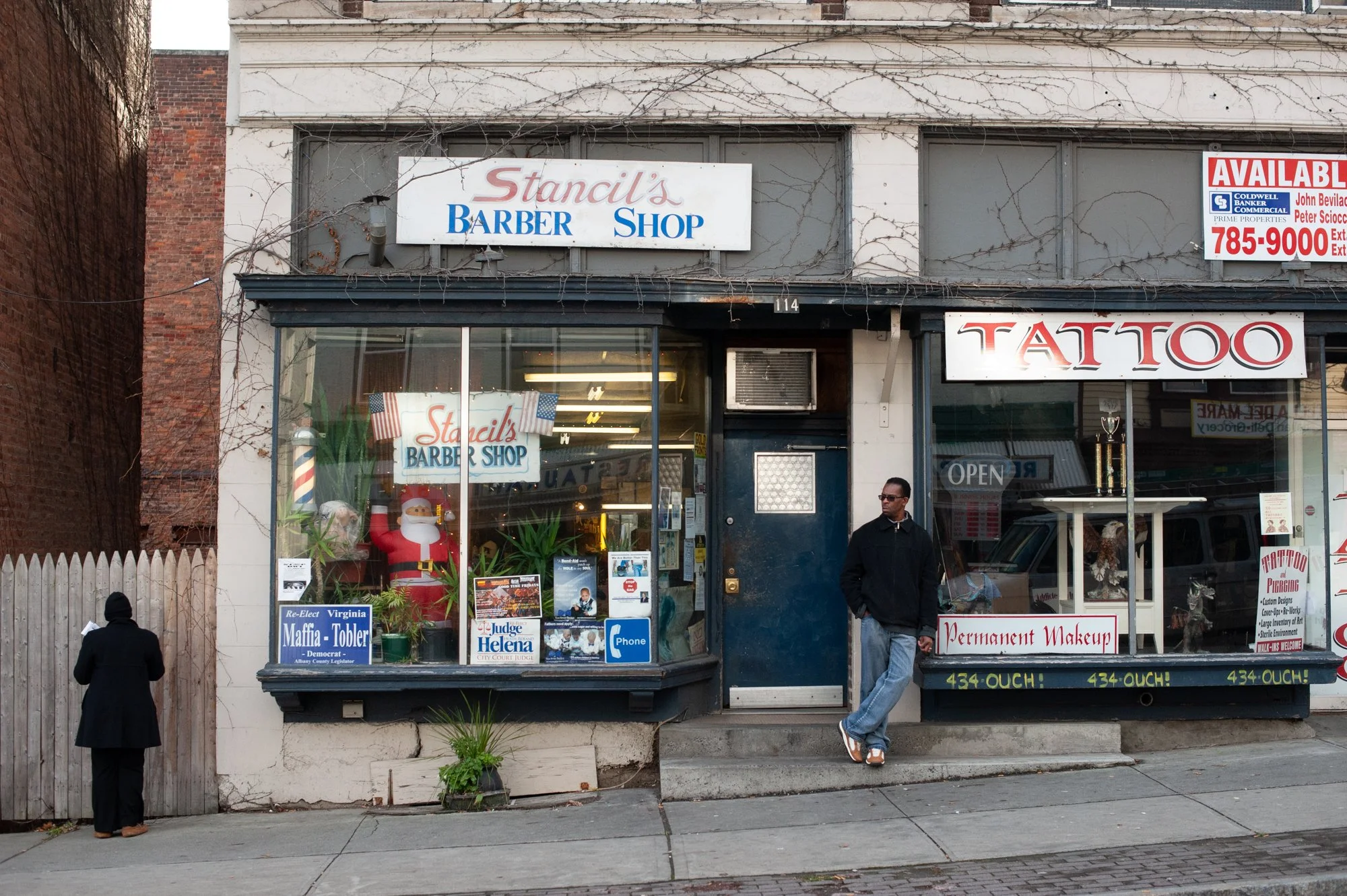
Exterior of Stancil’s Barbershop with people standing outside on a city street in Albany New York

The shop as part of the street—where daily life, community, and routine meet the sidewalk.
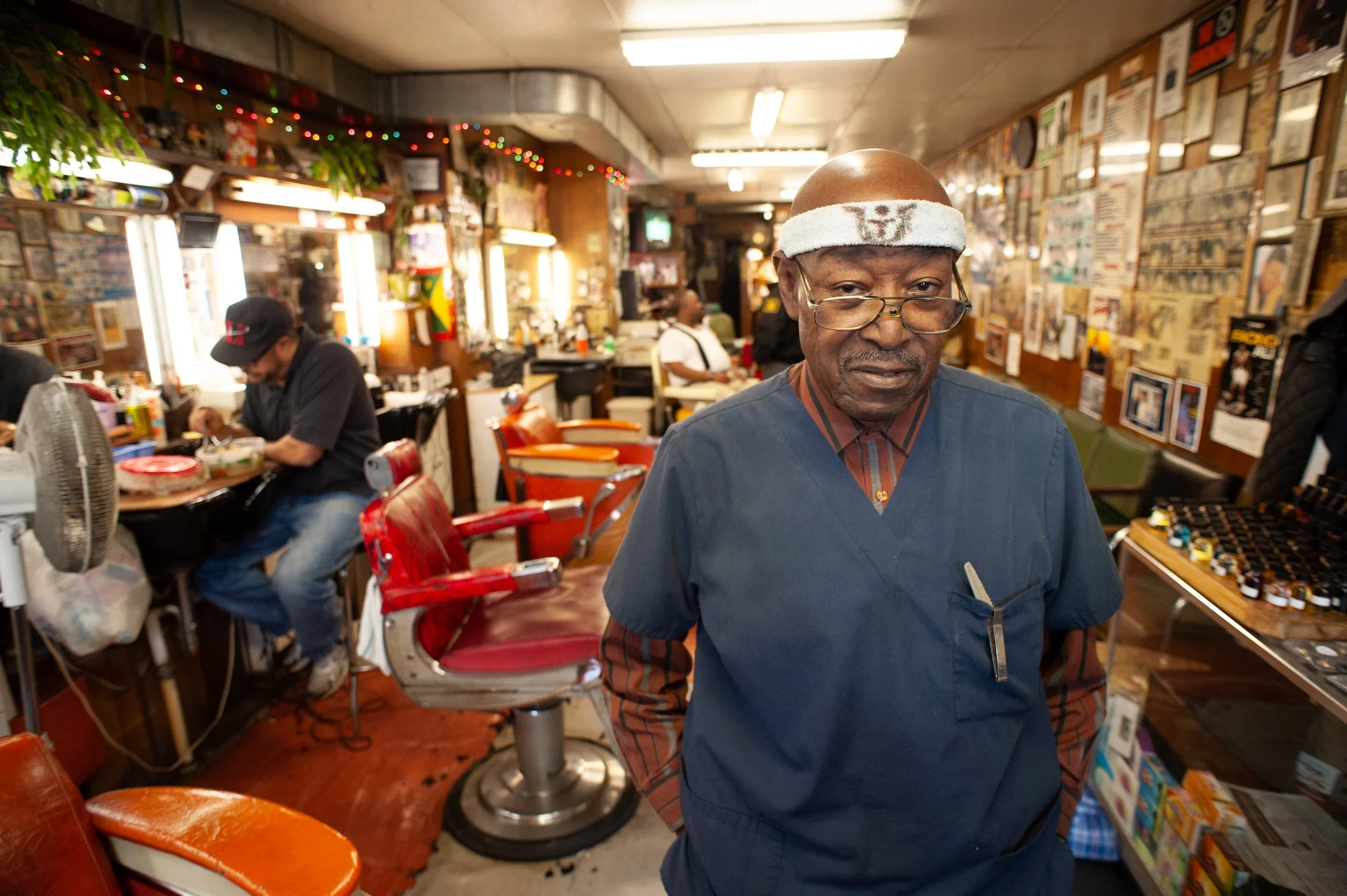
Portrait of a barber standing inside a traditional Black barbershop with chairs and mirrors behind him

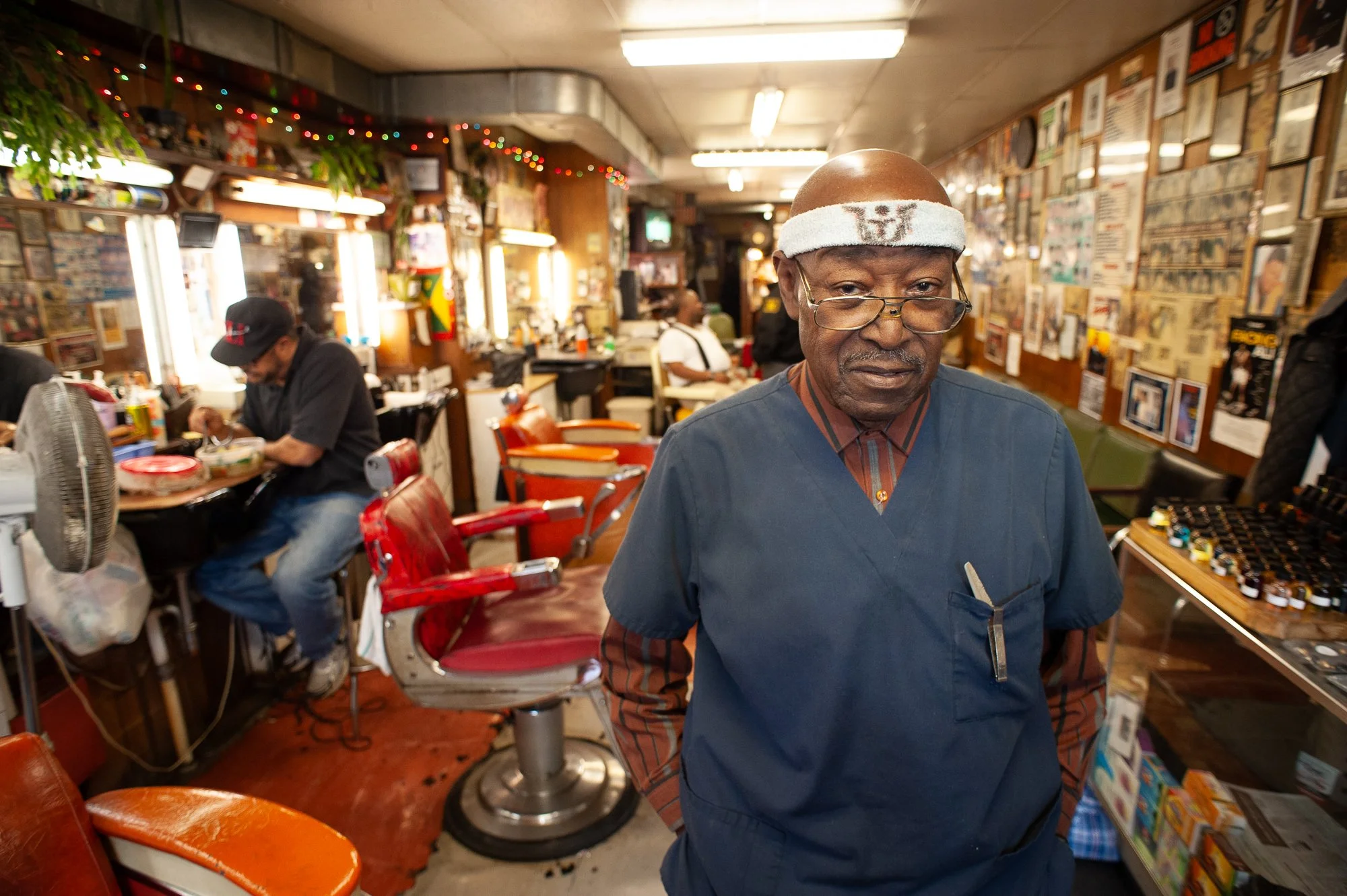
A portrait inside the shop—years of experience, routine, and presence behind the chair.
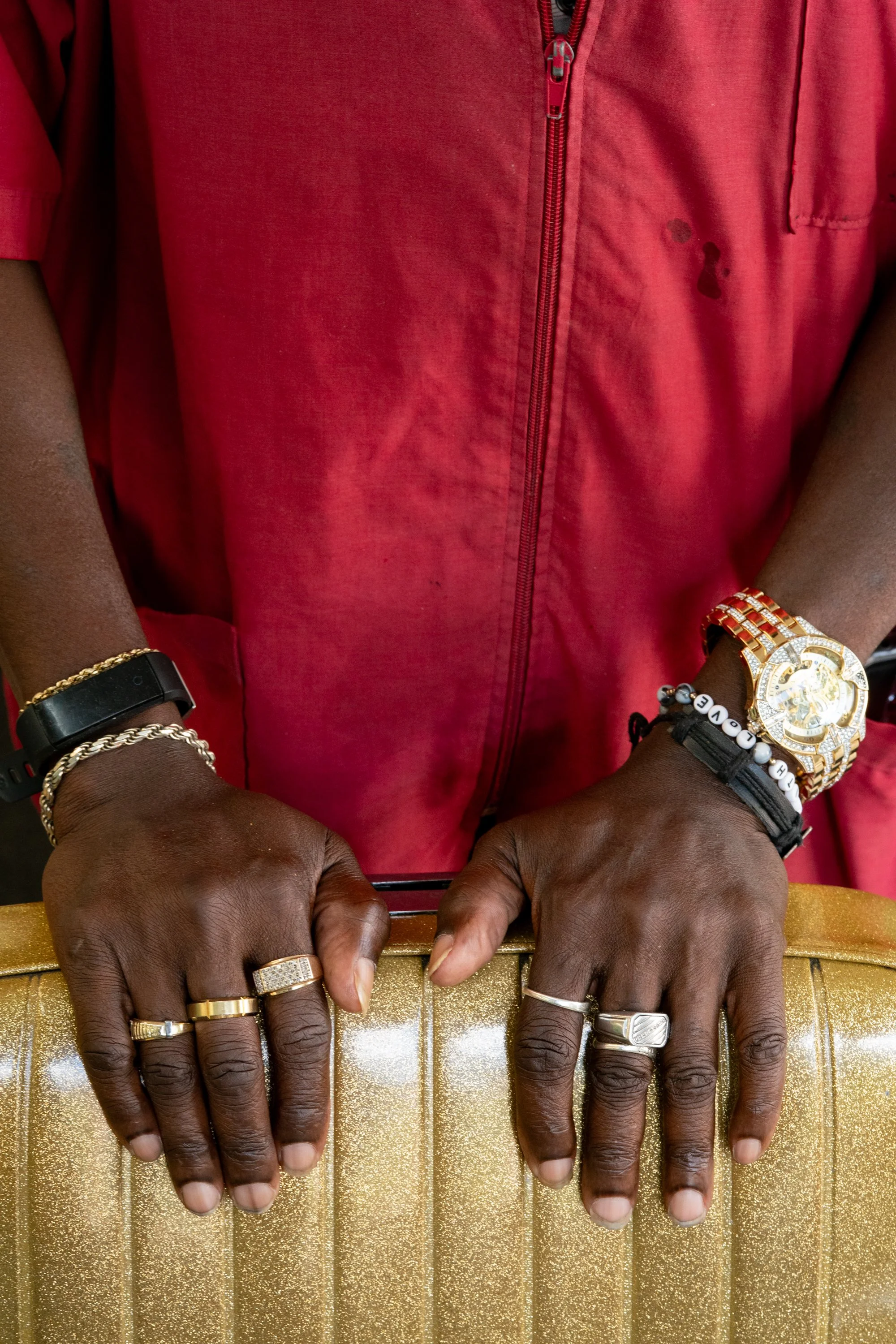
Close up of a barber’s hands with rings and watch resting on a barber chair

Hands that define the craft—tools, precision, and personal style carried into the work.
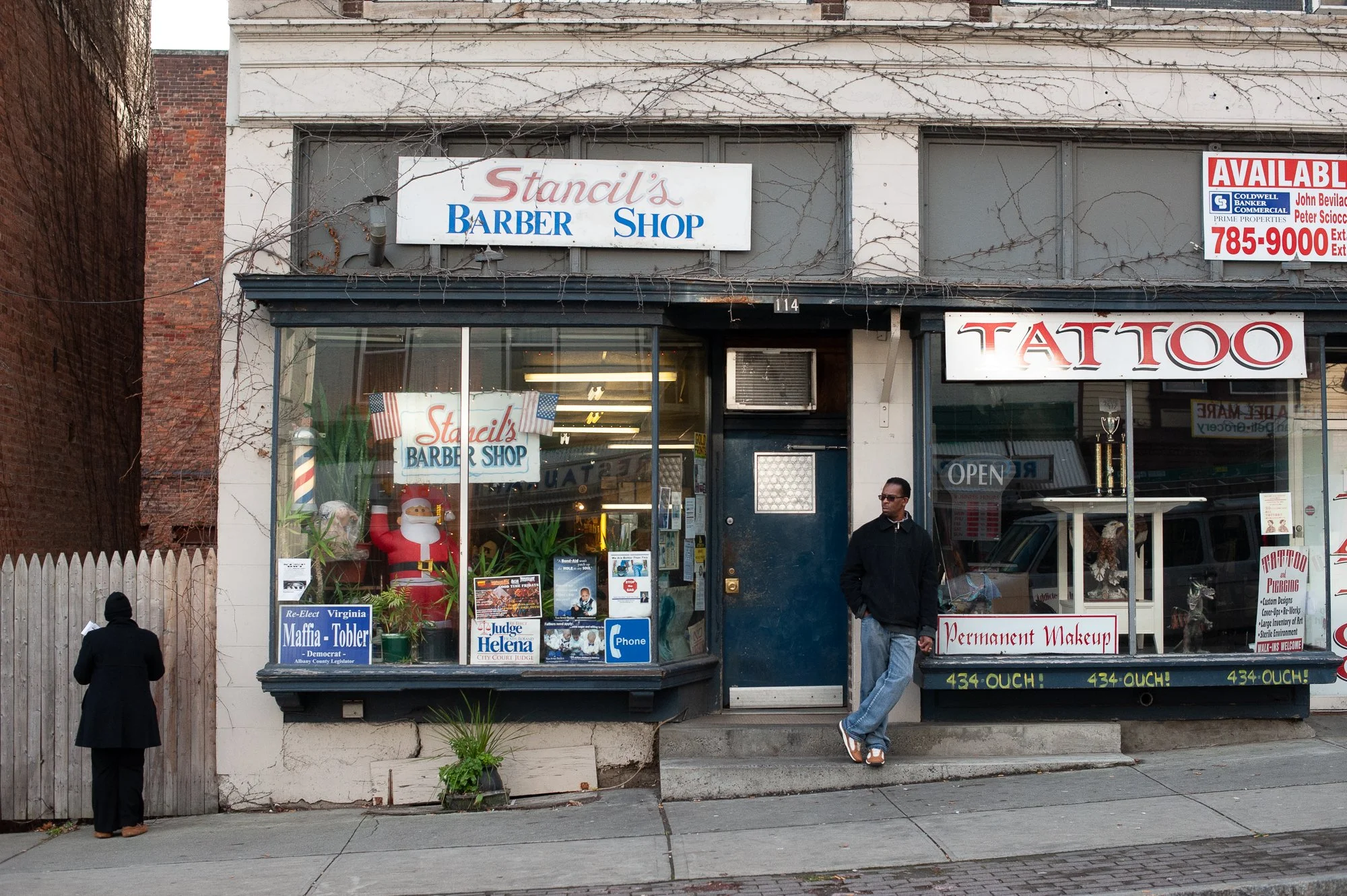
Albany, NY Barbershop

Historic Black Barbershop in Albany, New York

There was nothing particularly flashy about Stancil’s Barbershop when I photographed it in 2011. It sat on Madison Avenue like it had for decades—blending into the rhythm of the street. The kind of place you could walk past a hundred times without thinking twice, unless you knew what it was.

But once you stepped inside, it was all there.

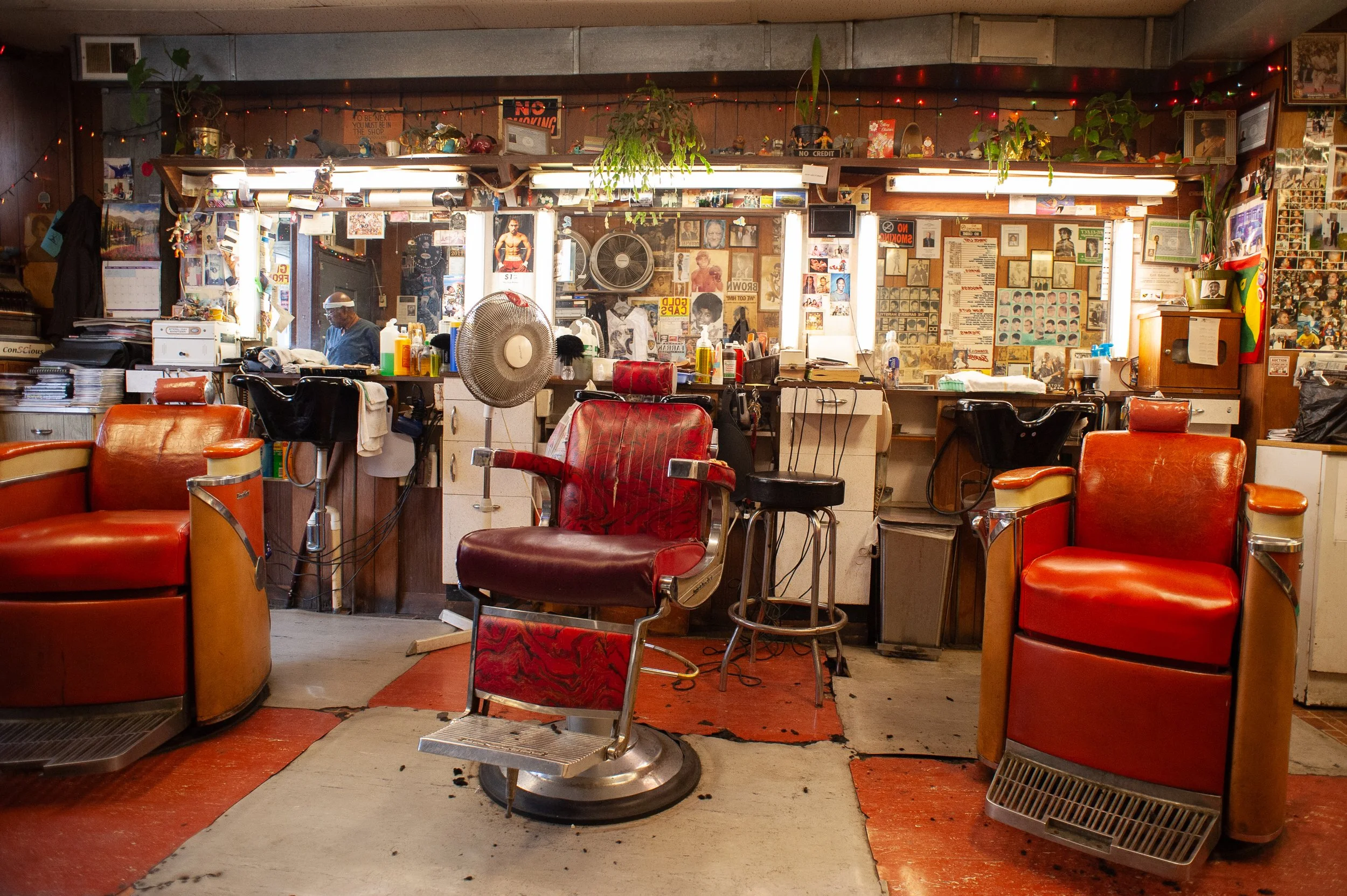
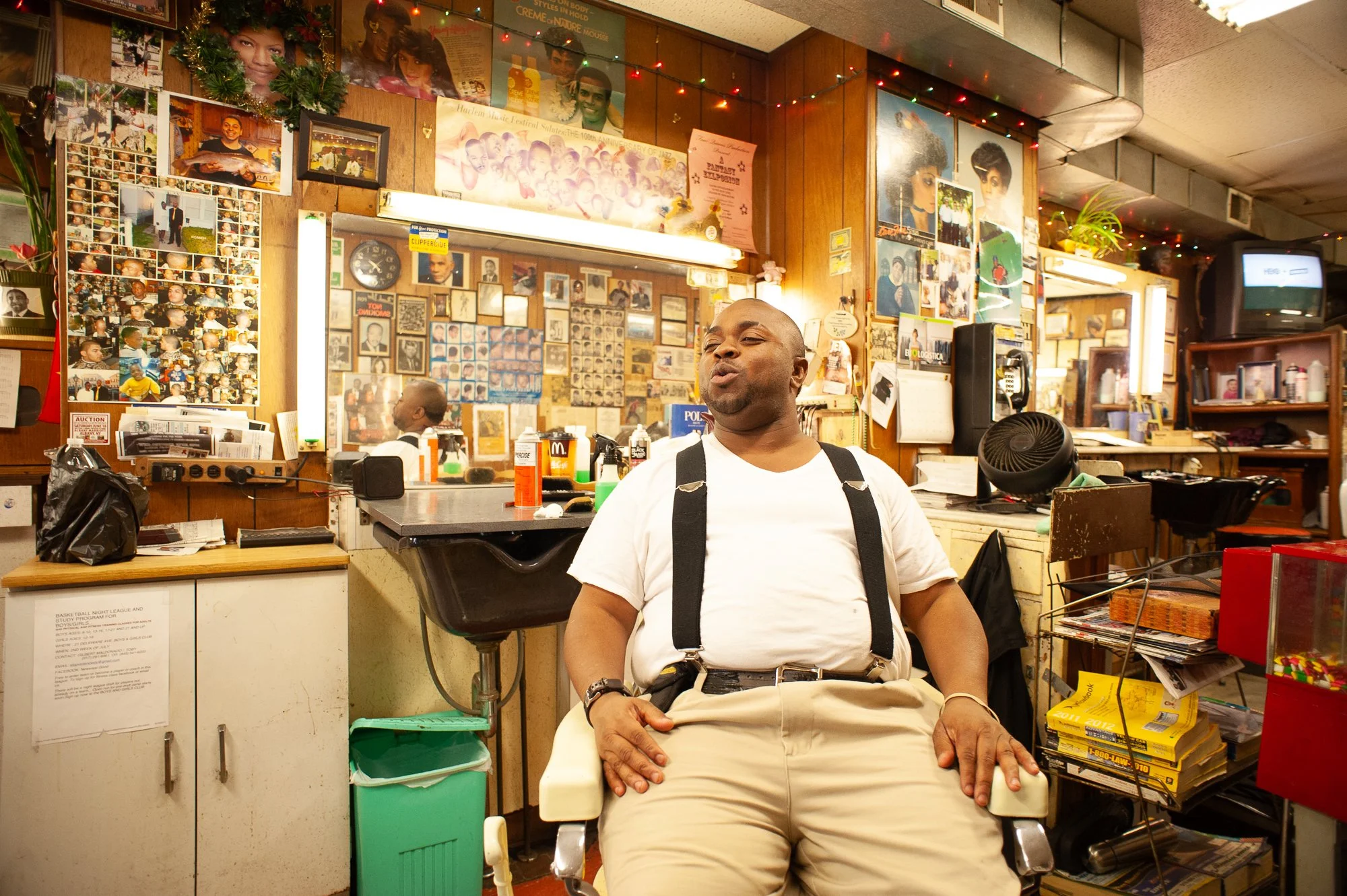
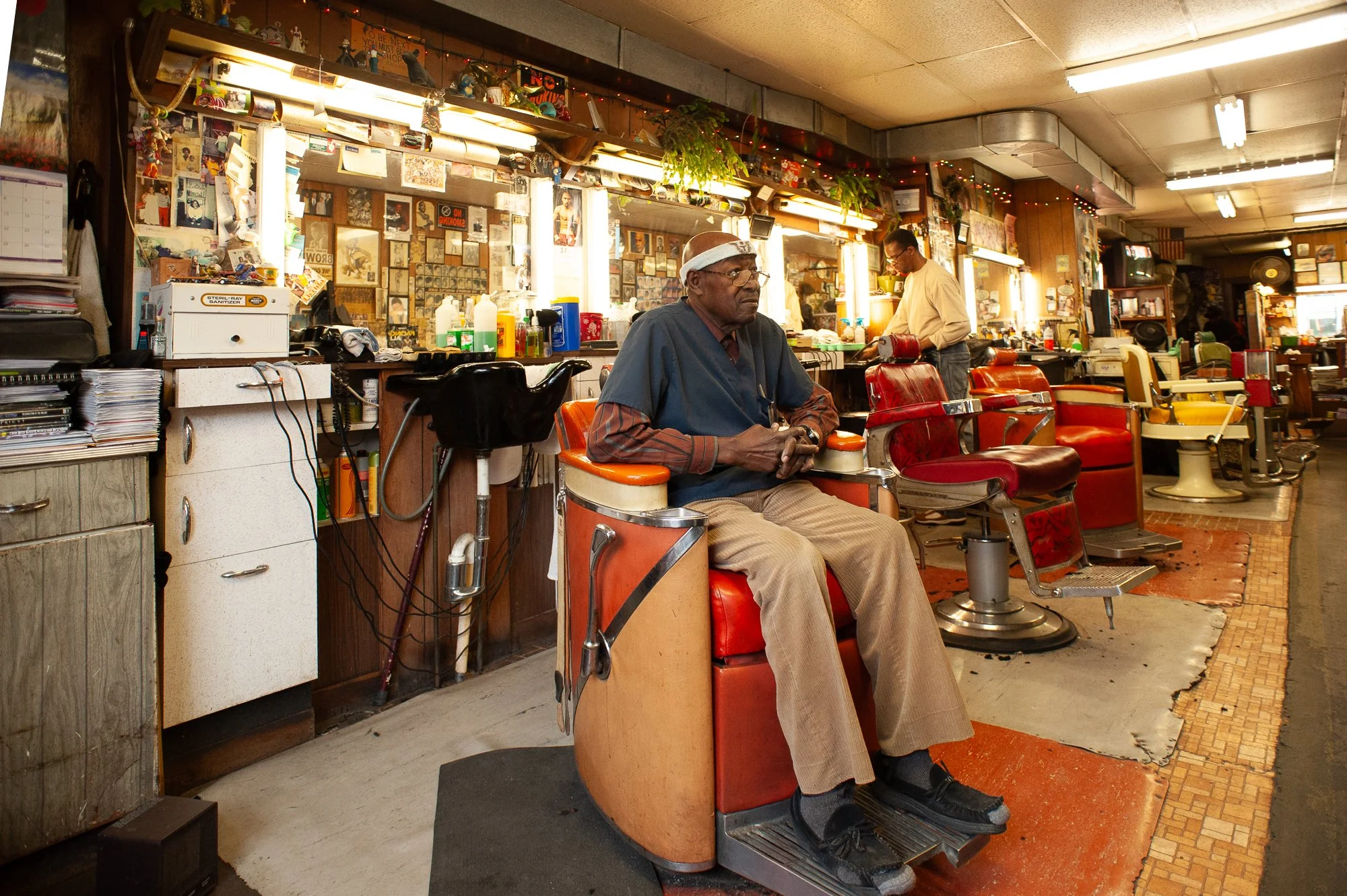
Wood-paneled walls covered in photographs and newspaper clippings. An overall patina from years of use. Chairs that had seen thousands of haircuts, laughs, arguments, and long pauses in between. Nothing curated. Nothing staged. Just a shop that had grown into itself over time. A one of a kind.

A Place Built Over Time

From the outside, Stancil’s didn’t ask for attention. The sign was faily straightforward. The windows were filled with whatever had accumulated—plants, flyers, a few political signs, whatever made sense at the time.

It felt like a place that existed for the people who already knew it was there.

Not everything needs to be rebranded or reimagined. Some places just hold their ground.

Inside the Shop

Inside, it was exactly what you’d hope for. As a photographer working on a project like this, Stancil’s was a dream.

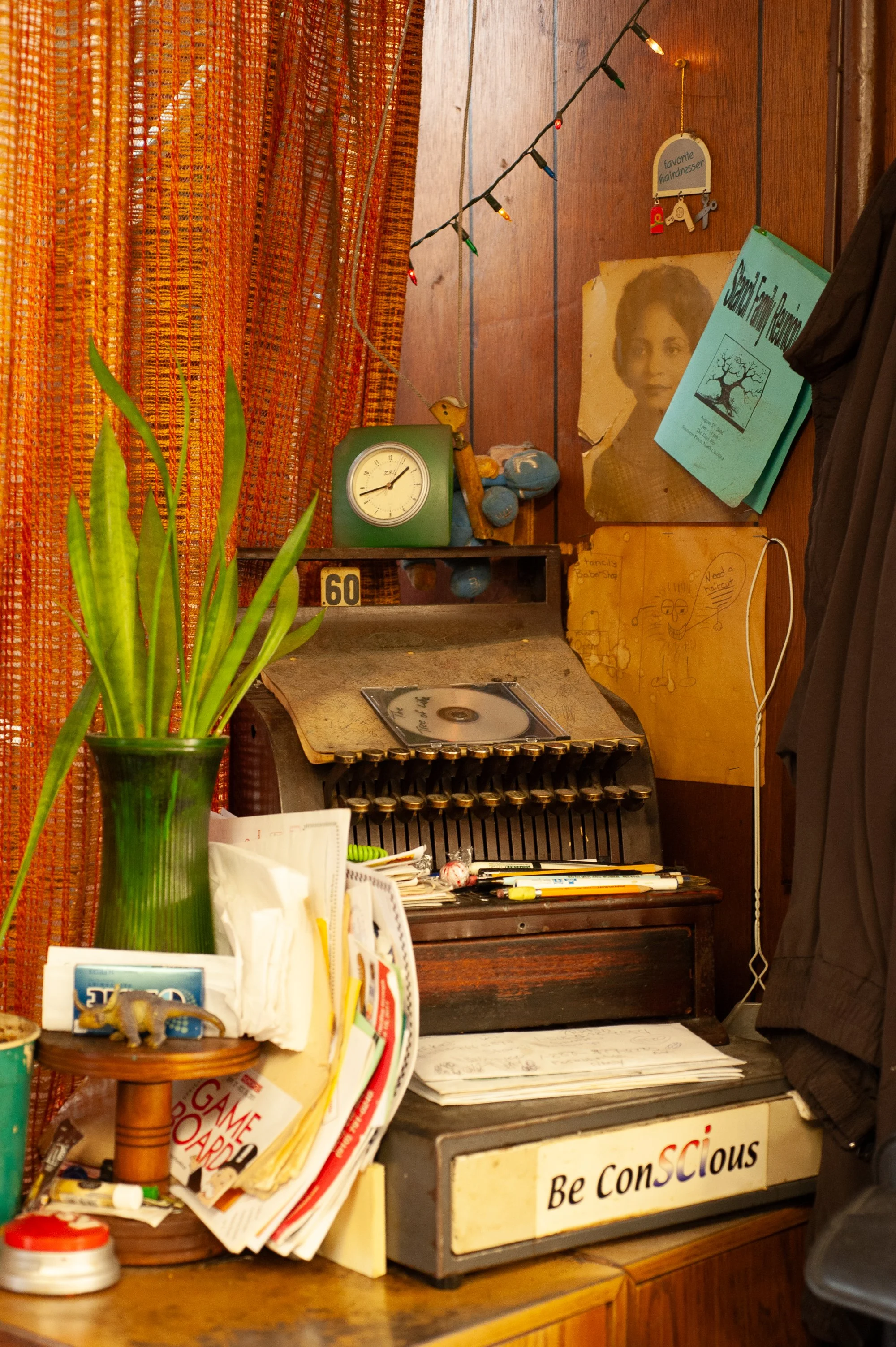
The layout hadn’t been touched in years. Maybe longer. Chairs spaced just far enough apart. Mirrors lined with lights that had seen better days but still did their job. Every surface carried something—photographs, certificates, handwritten notes, reminders of people who had passed through. The classic barber hairstyle charts still clung to the same wall where they were placed 40 years ago - the styles themselves had clearly come and gone, but they remained. A stack of Yellow Page phone books sat quietly, although it was obvious they still got used. Ironically, not far away, was a padlocked rotary phone.

You could tell this wasn’t designed. It was accumulated, organically.

That’s the difference.

The Barbers

My time at Stancil’s wasn’t long, but it was more than memorable. The thing that stuck out was how candid all the barbers were together. Comedy was a constant. Stancil himself has an old pair of slippers on that must have been handed down because the toe section had been cut off so his feet could fit. Life at this barbershop didn’t feel like work, it was a second home. There didn’t happen to be any customers at the time, so some of the barbers calmly watched television while throwing sarcastic remarks across the shop to their co-workers (friends).

What’s Left

Sadly, I checked in on Stancil’s recently only to find a Google street view of the place boarded up.

Like a lot of shops across the country, it eventually closed its doors. The reasons are usually the same—rising costs, changing neighborhoods, time catching up with the people who built them.

When a place like this disappears, it’s not just a business that’s gone.

It’s the accumulation of years—of routines, relationships, and small, everyday moments that don’t get documented unless someone happens to be there with a camera.

Part of a Larger Project

This photograph is part of a long-term project documenting traditional barbershops across the United States.

Over the past 15 years, I’ve photographed shops in all corners of the country—some still operating, many no longer there. Together, they form a kind of archive of places that were never meant to last forever, but somehow did for longer than expected.

→ View the full Barbershops of America archive
→ Explore a 200 year old barbershop in Brooklyn
→ Fine art prints available from this series

Stancil’s Barbershop exterior on Madison Avenue in Albany New York photographed in 2011, historic Black barbershop now closed

Stancil’s Barbershop on Madison Avenue in Albany, New York, photographed in 2011. A neighborhood shop that quietly served its community for decades—now gone.

Empty barber chairs inside Stancil’s Barbershop Albany New York, historic Black barbershop interior photographed in 2011

Rows of worn chairs inside Stancil’s Barbershop. Even when empty, the space carried the weight of years of daily routine and conversation.

Portrait of barber inside Stancil’s Barbershop Albany New York, historic Black barbershop documented in 2011

A barber at Stancil’s Barbershop. Places like this were built on people—their presence, their stories, and years behind the chair.

Vintage hair dryers and chairs inside Stancil’s Barbershop Albany New York historic Black barbershop interior

Old dryers tucked into the corner—equipment that stayed long after trends had moved on.

Vintage barber chair and mirror station inside Stancil’s Barbershop Albany New York photographed in 2011

A single chair beneath fluorescent lights, surrounded by decades of photographs, certificates, and memory.

Barber sitting in barber chair at Stancil’s Barbershop Albany NY, Black barbershop culture documented in 2011

A moment in the chair. For many, the visit was routine—but the shop itself was something much deeper.

Cash register and counter inside Stancil’s Barbershop Albany NY small business interior photographed in 2011

A corner of the shop where transactions were simple and personal—part of the daily rhythm.

Barber seated inside Stancil’s Barbershop Albany NY, traditional Black barbershop interior photographed in 2011

Inside Stancil’s, where time moved at its own pace. Shops like this were as much about community as they were about haircuts.

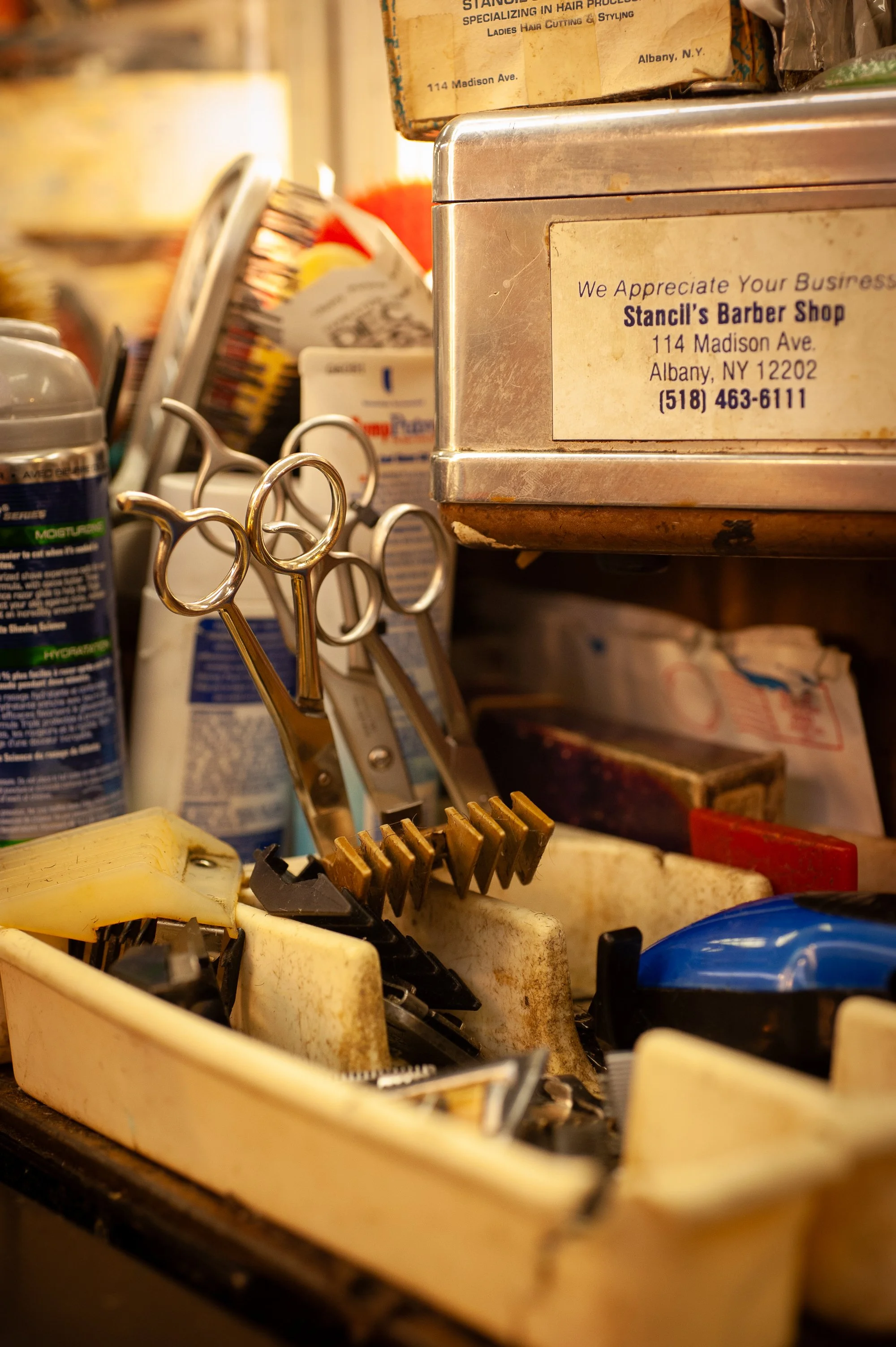
Close up of barber tools scissors combs clippers inside Stancil’s Barbershop Albany New York 2011

Tools of the trade, worn from years of use—handled thousands of times without much thought.

Yellow vintage barber chair and shop details inside Stancil’s Barbershop Albany NY historic interior 2011

A worn yellow chair surrounded by everyday objects that gave the shop its character.