
Buckaroos of the Great Basin: Cowboy Photography from Nevada
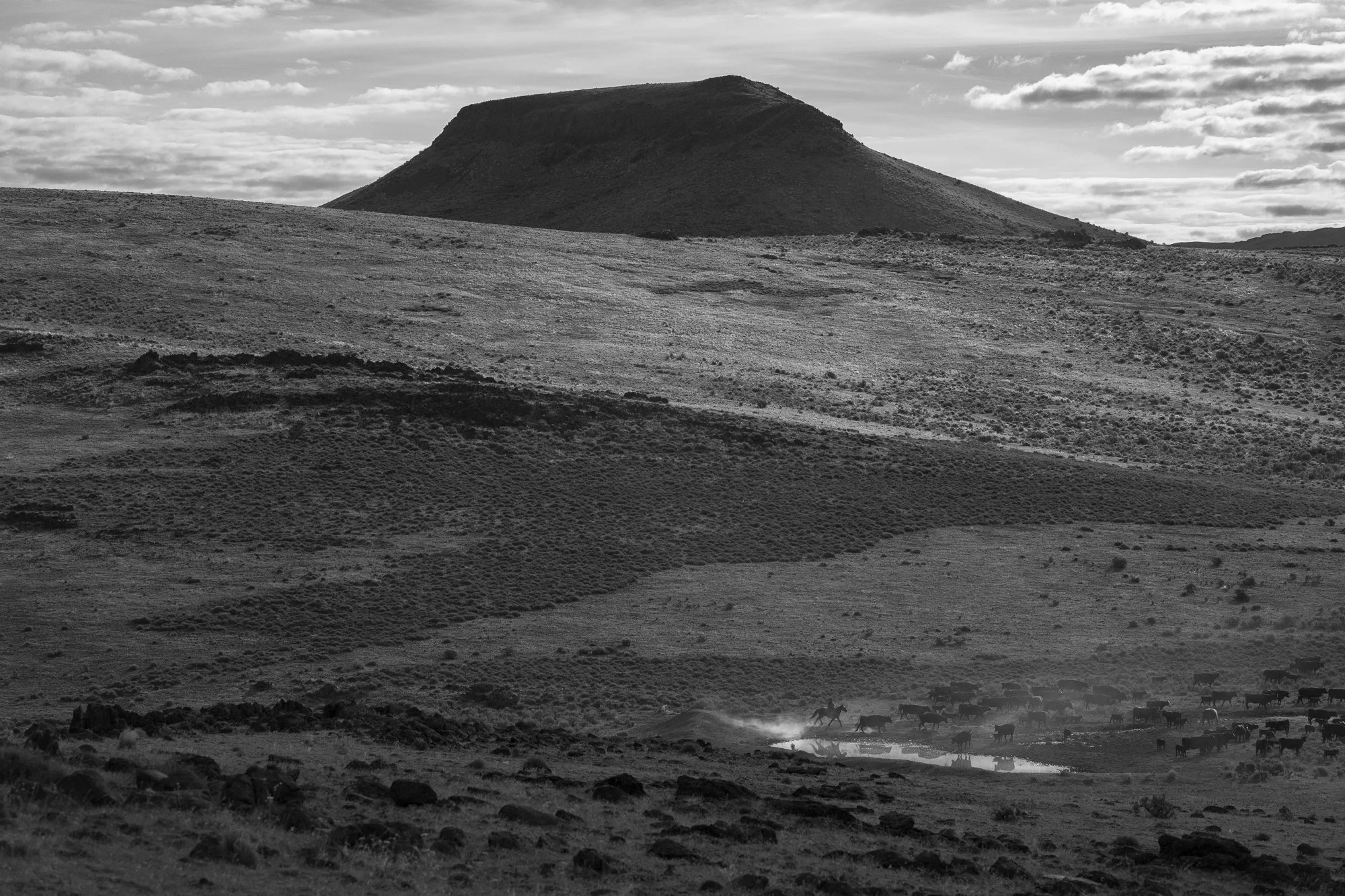
A cowboy moves cattle from a watering hole in open range on the Spanish Ranch
There are places in Nevada where the distances seem to change the scale of everything. Mountains rise out of open basins, ranches sit hundreds of miles apart, and a cowboy on horseback can disappear into the landscape.
The buckaroo tradition grew out of this country. The word traces back to the Spanish vaquero, and the horsemanship, equipment and methods still carry that influence. But this isn't a reenactment of the old West. The people in these photographs make their living here.
These images were made while photographing working ranches and buckaroos in Nevada as part of Calves to the Fire, my long-term project documenting contemporary cowboy and ranching culture throughout the American West.
Explore the complete Calves to the Fire project
Working Cowboys
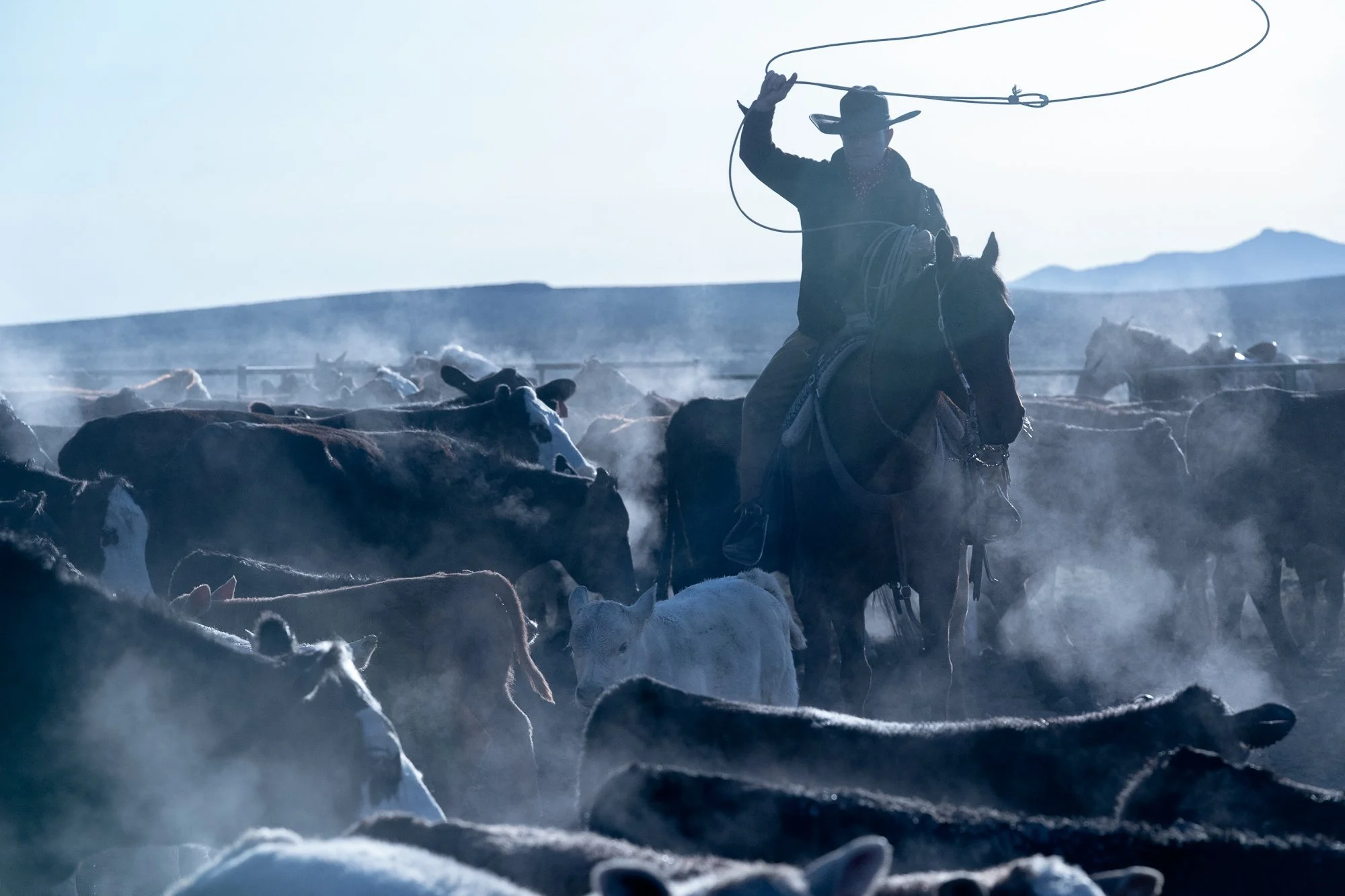
A buckaroo swings his rope from horseback as cattle move through the branding pen on a cold morning on the ZX Ranch
Much of ranch work happens without any consideration for what it looks like in a photograph. Cattle need to be gathered. Calves need to be branded and doctored. Horses need to be caught. Fences break. Weather changes.
That's also what makes photographing it interesting.
There isn't much opportunity to manufacture a moment. You watch what's happening, figure out where you need to be, and try not to get in anyone's way.
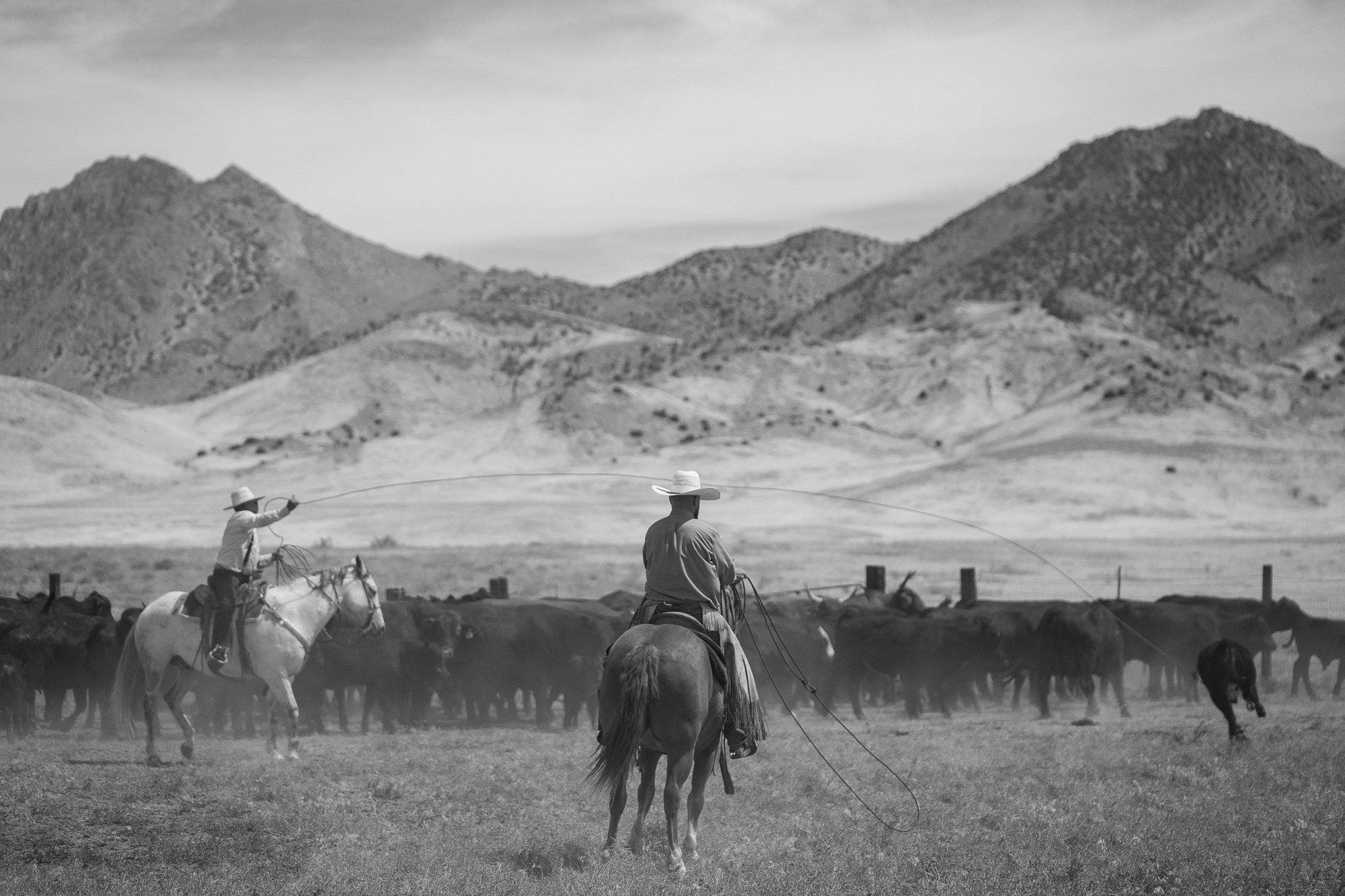
Rope stretches between two mounted buckaroos as they work cattle across the range.
Smoke and dust are part of the visual language of a branding, but they're also simply part of the job. Cowboys rope calves from horseback and bring them toward the crew, where everything happens quickly before the calf is released.
The photographs I'm interested in aren't really about the spectacle of cowboy culture. They're about the work itself. The repetition, skill and physical knowledge that become almost invisible when you've done something thousands of times.
A rope in the air lasts a fraction of a second. The more interesting part is everything that had to happen before it got there.
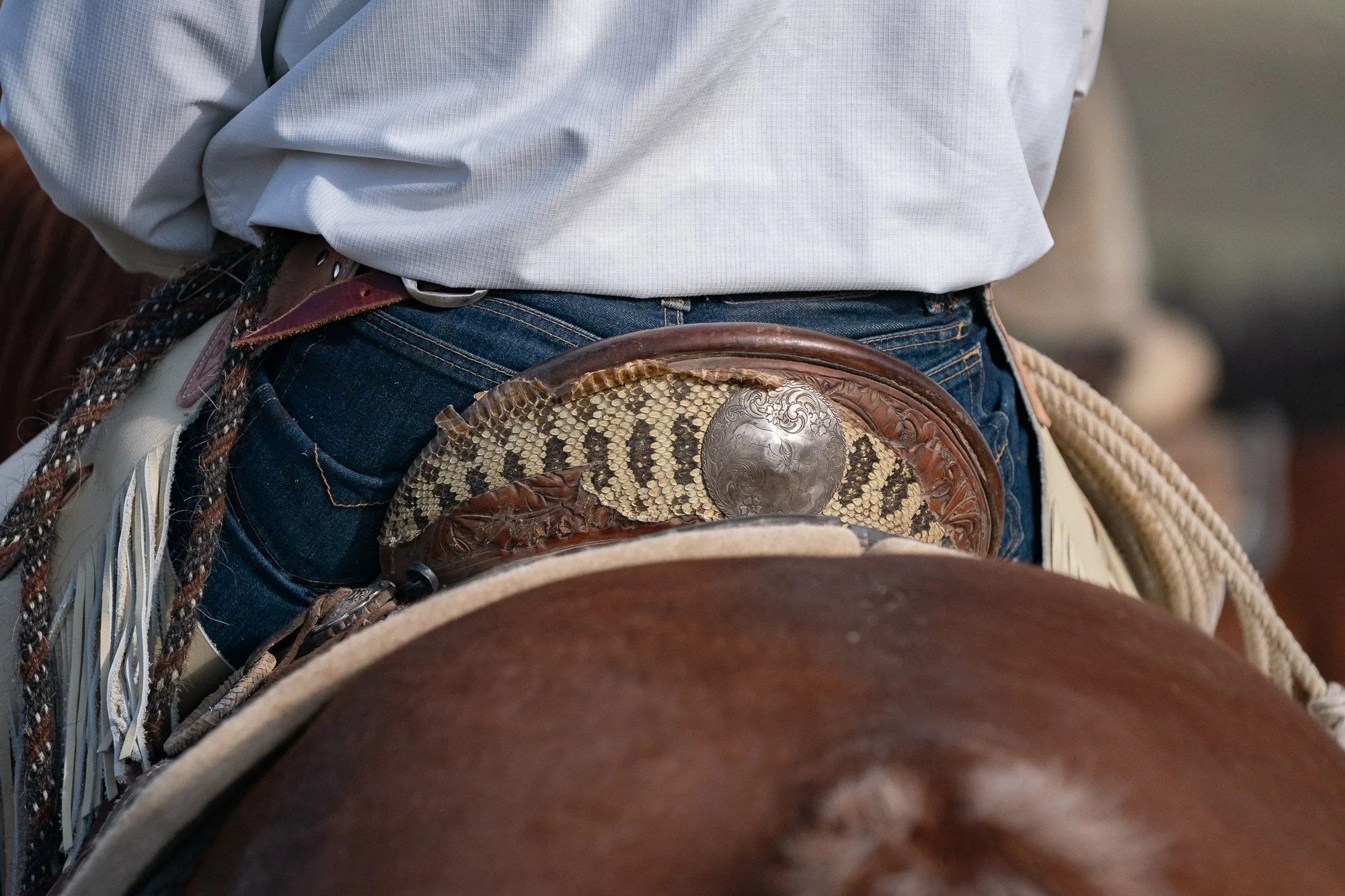
Rattlesnake skin and an engraved silver concho on a buckaroos saddle in northern Nevada.
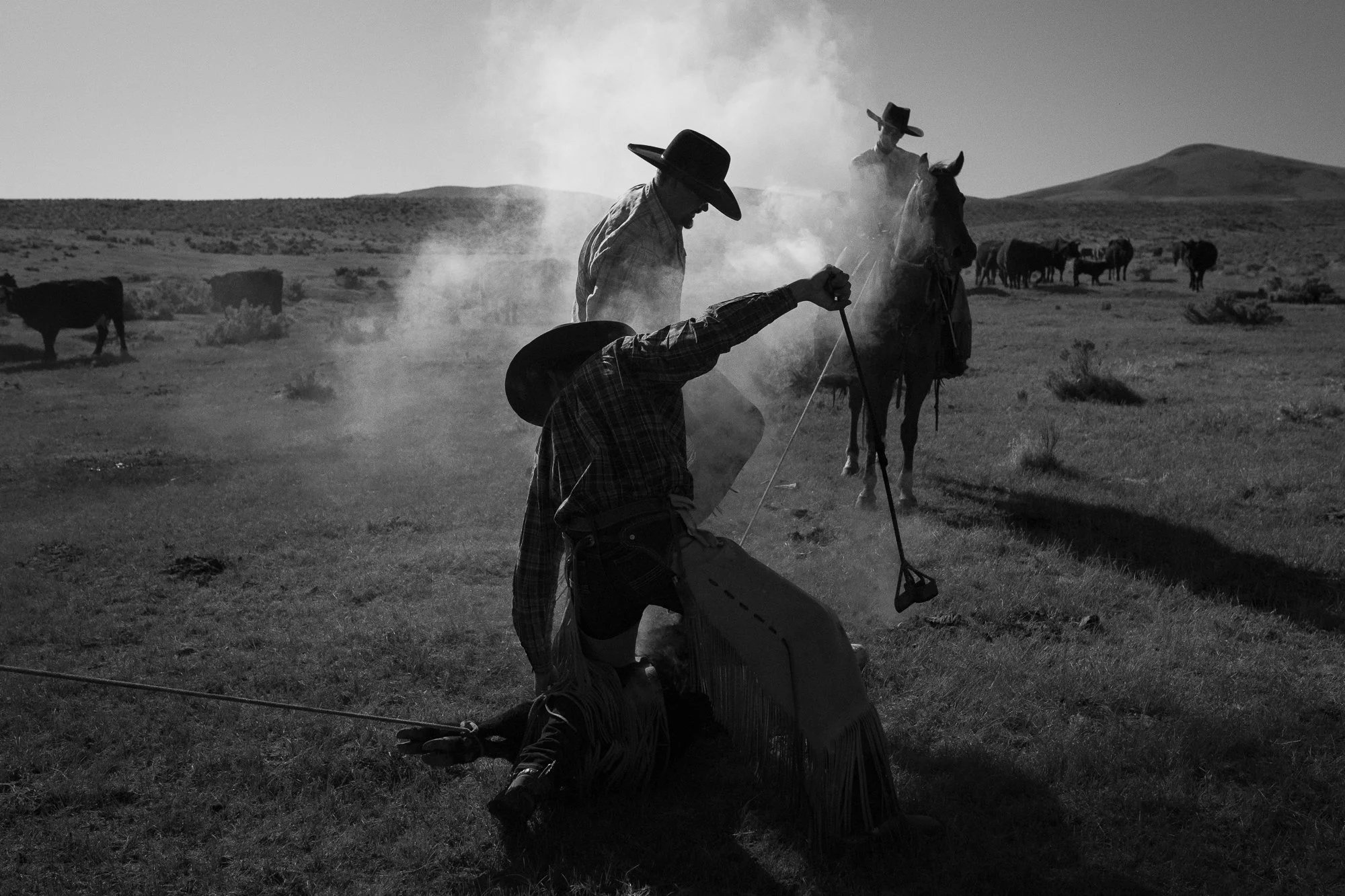
Buckaroos branding cattle on a northern Nevada cattle ranch
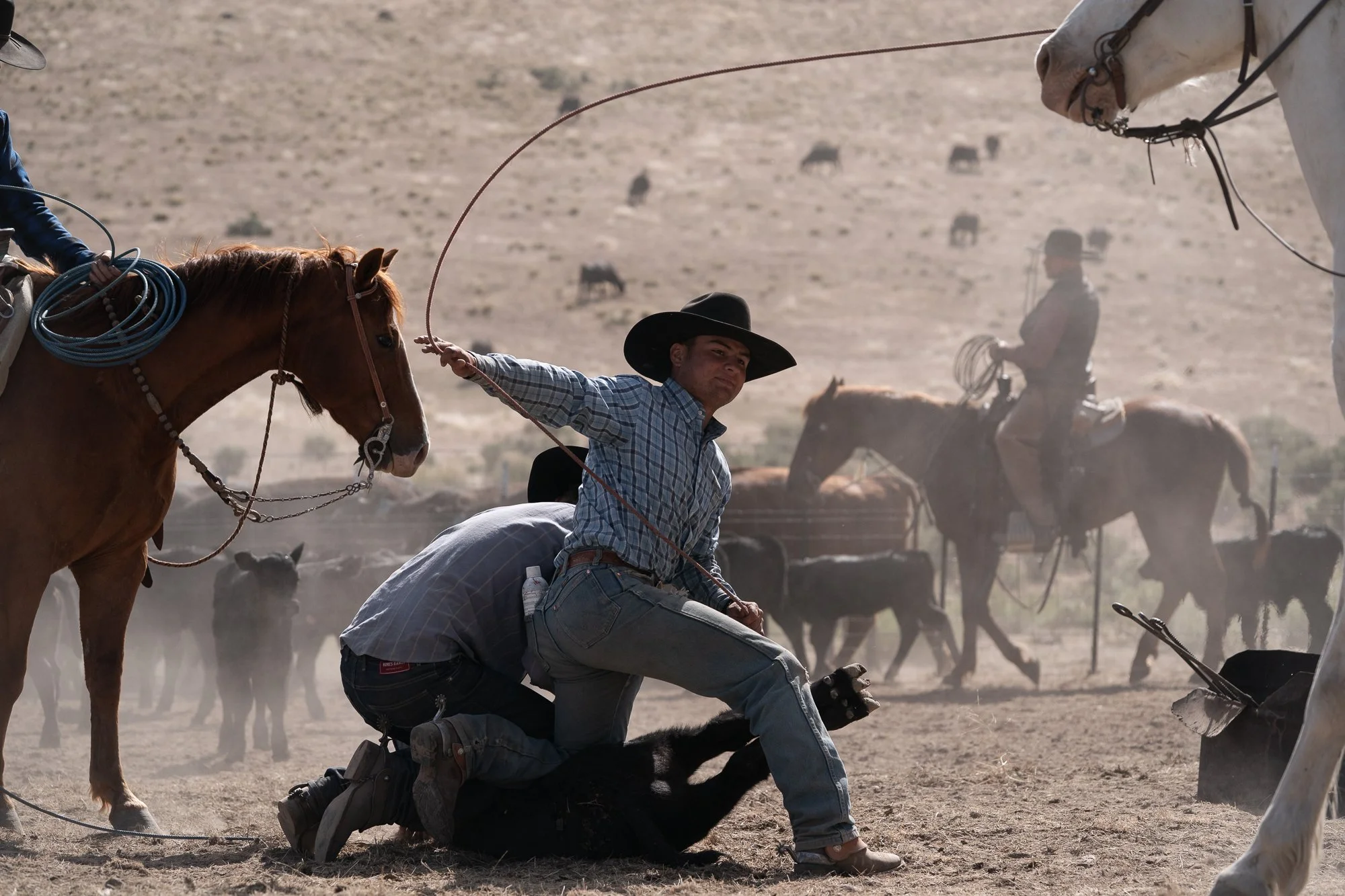
A cowboy restrains a calf on the ground while horses and other ranch hands work nearby.
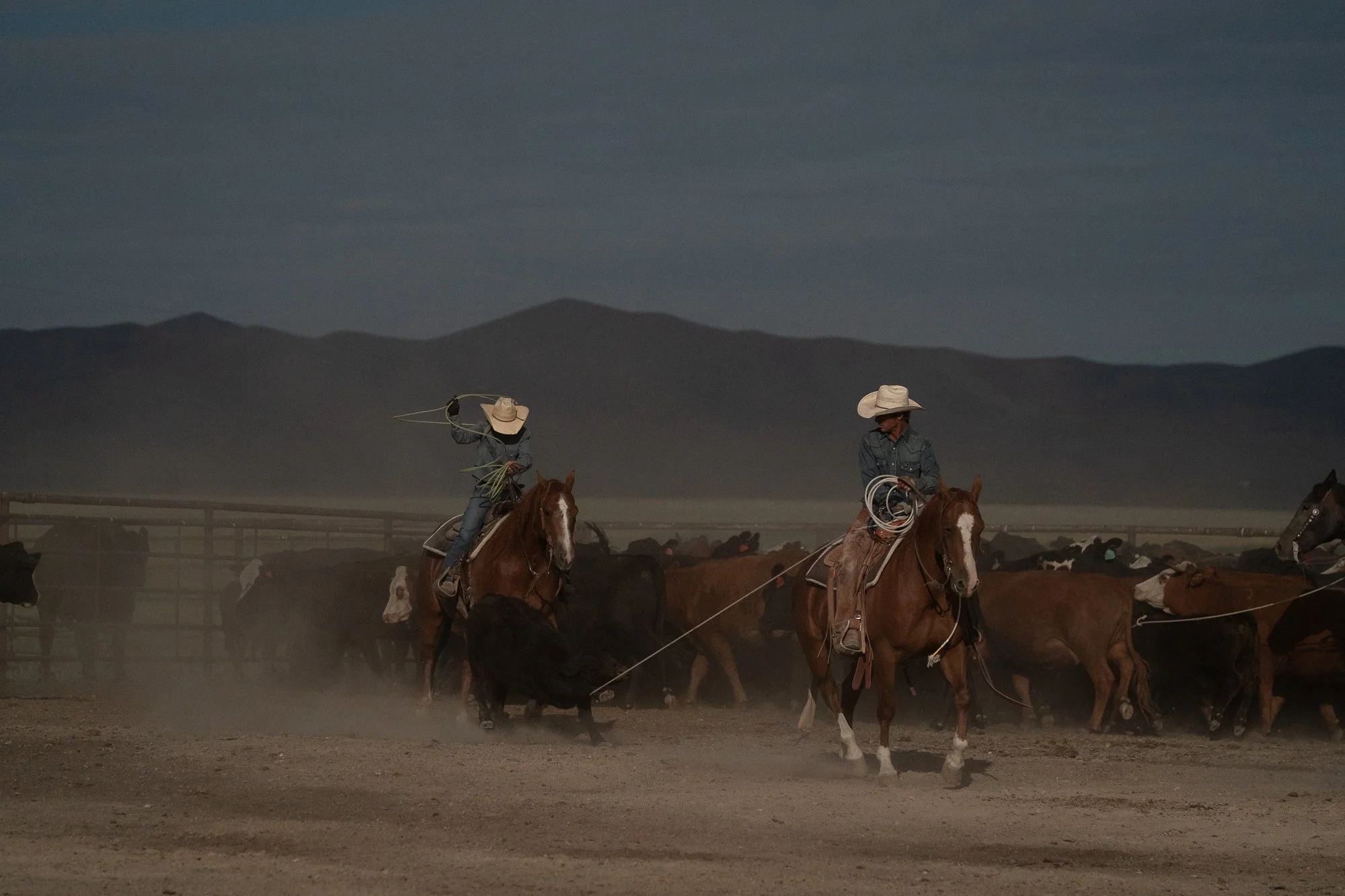
Cattle move through the dusty pen as buckaroos work from horseback on the Winecup Gamble Ranch
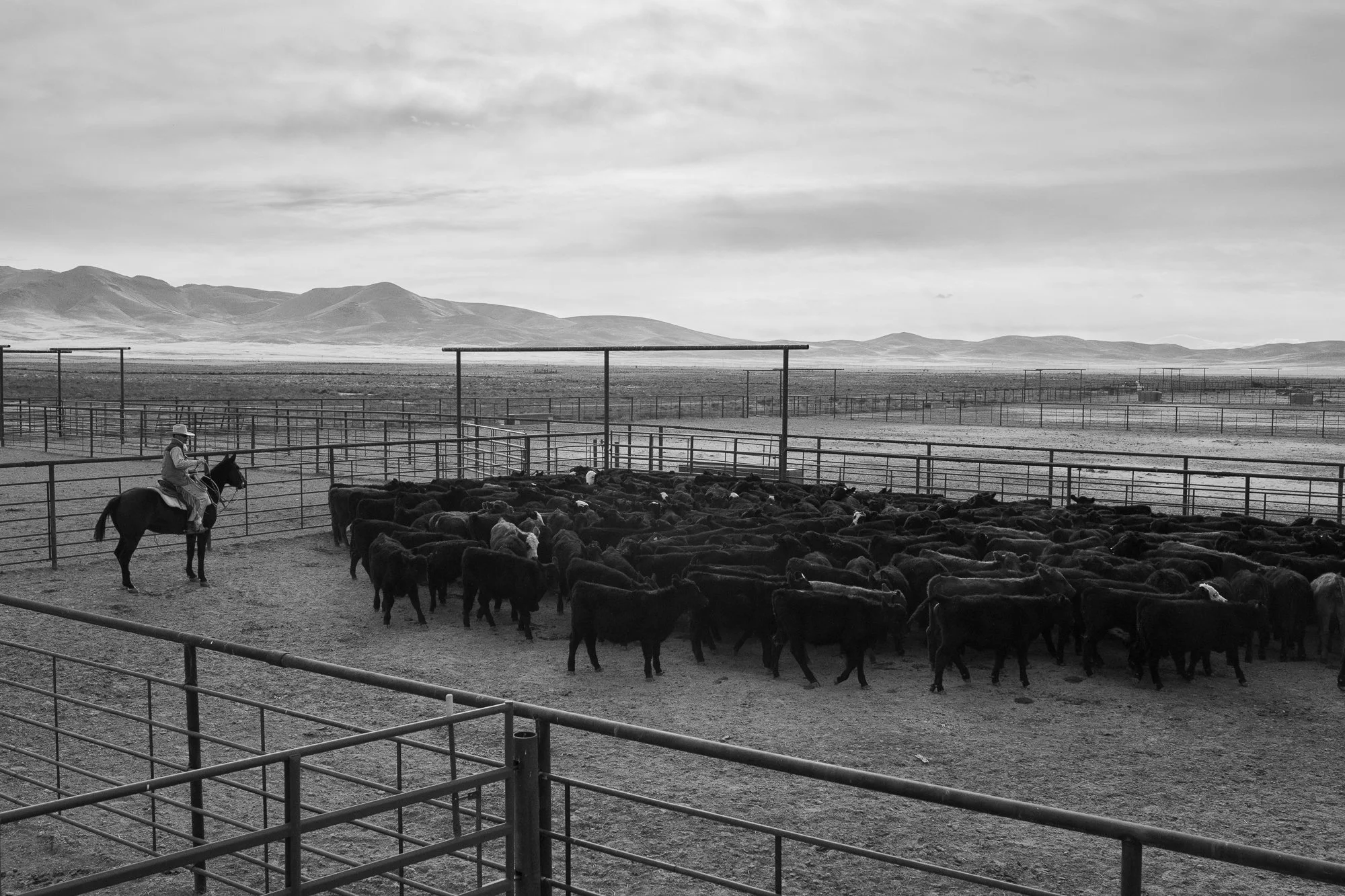
In a vast desert landscape a buckaroo works cattle in a corral on the TS Ranch
The People Behind the Work
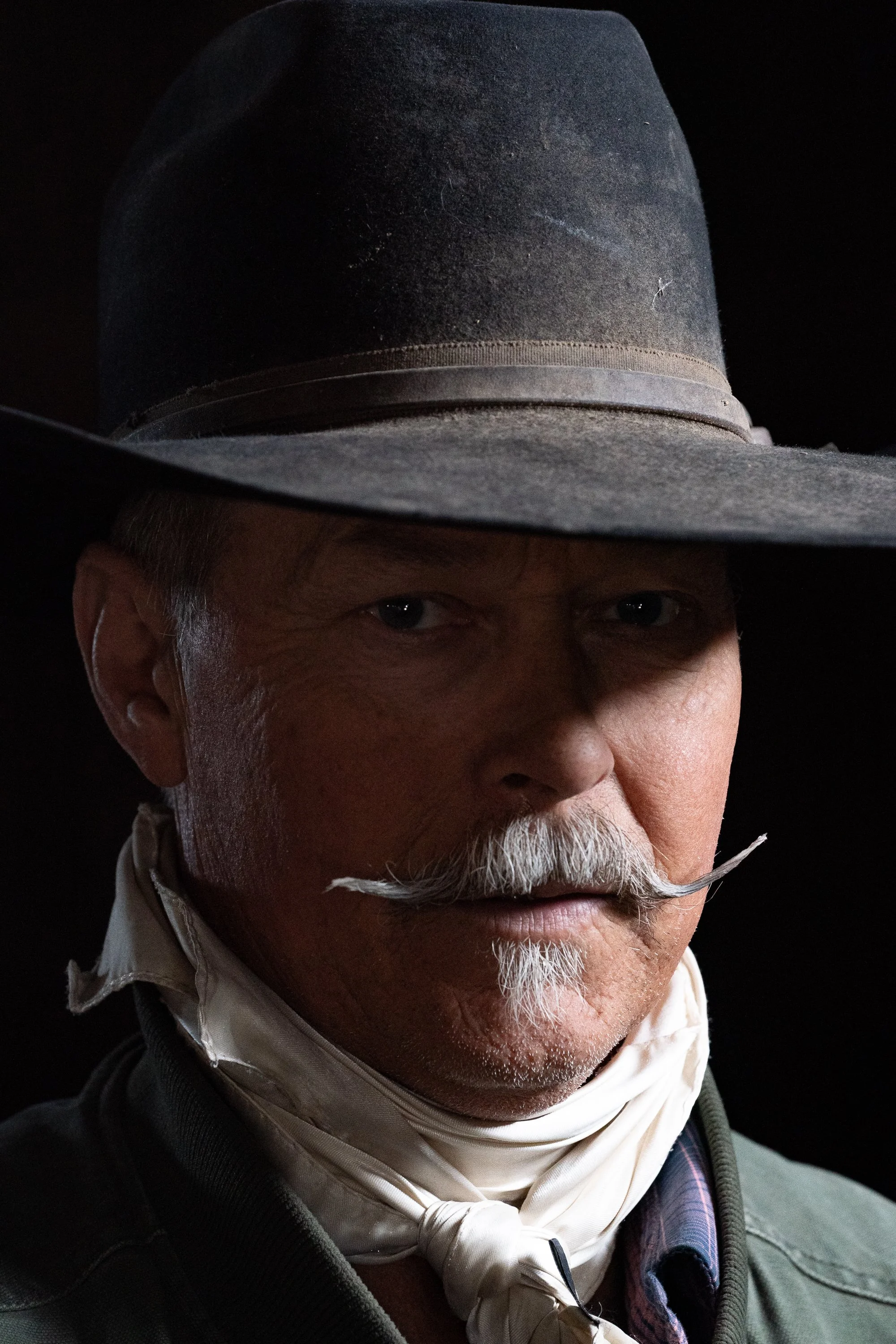
Curled white mustache and wild rag frame the cowboy's face beneath his hat.
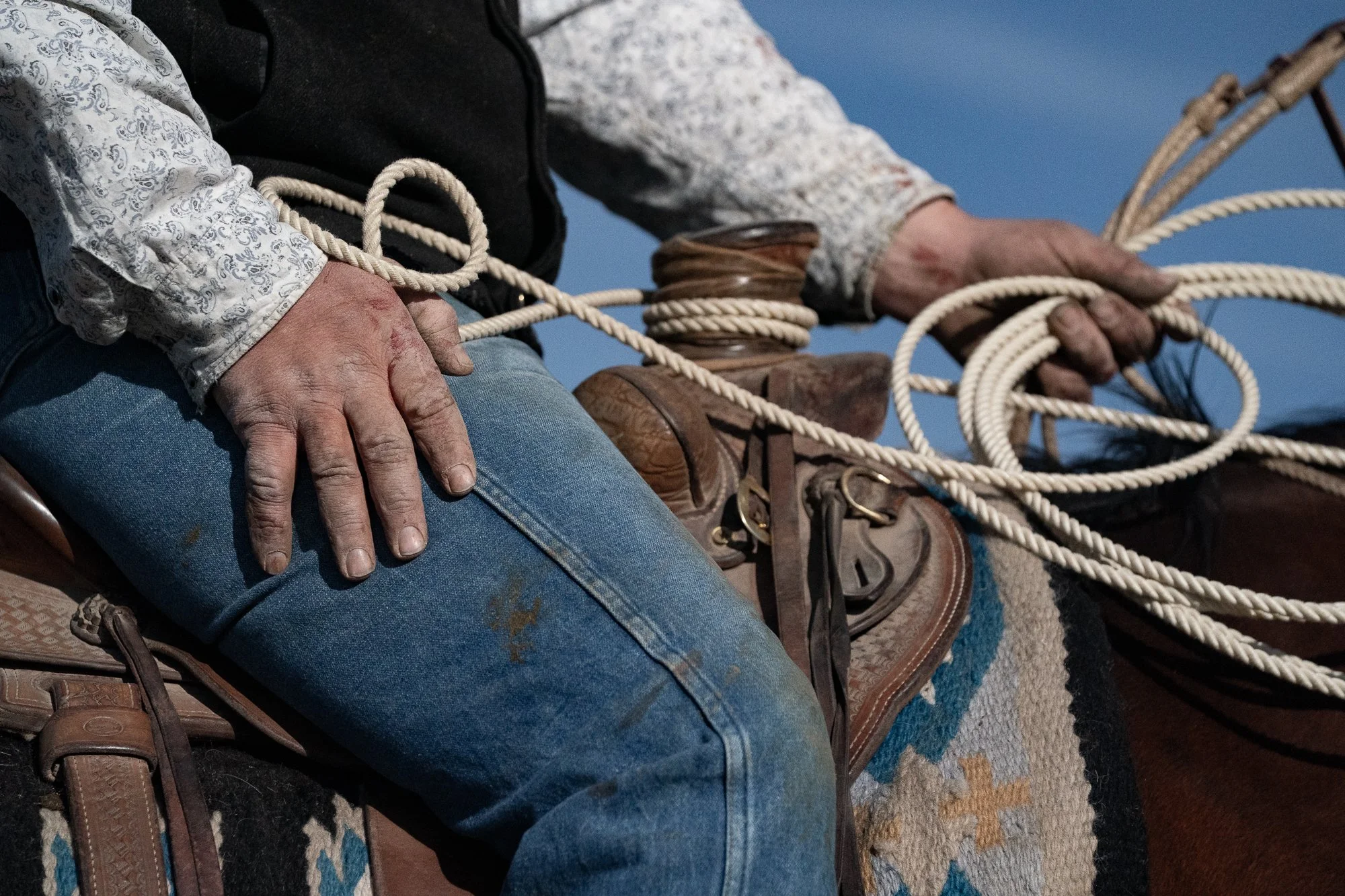
Rope, worn leather, and denim come together in a close view of a buckaroo's saddle and gear.
The West is easy to reduce to symbols: a hat, a horse, a pair of boots, a rope.
Spend enough time around working ranches and you’ll realize that those things are equipment. In the Great Basin though, buckaroos have a style all their own. A style they are proud to wear because it separates them from cowboys in every other region of the West.
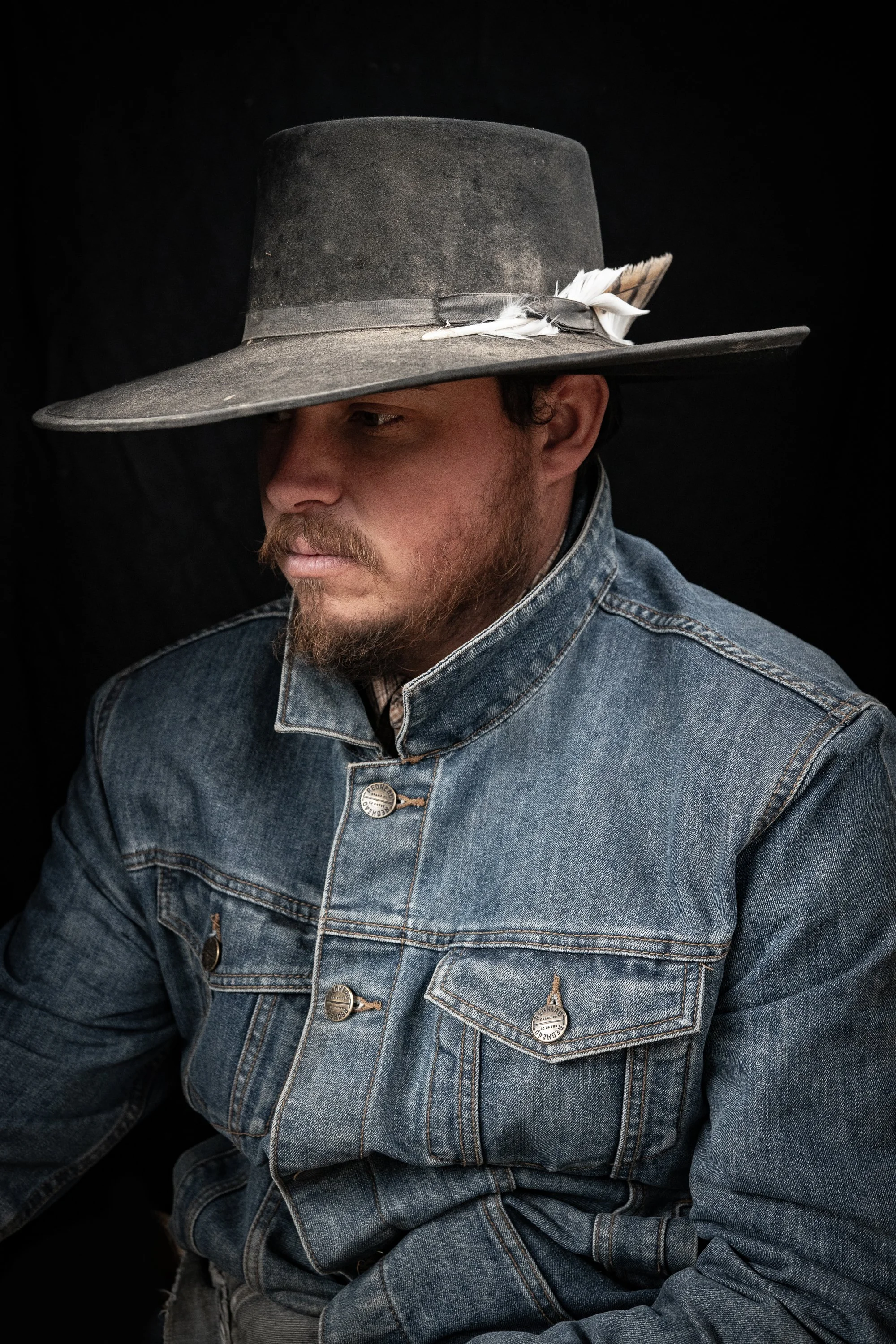
White feathers tucked into a weathered flat brim hat stand out against the buckaroo's denim jacket.
I've been photographing cowboys for years, and the portraits I like most tend to happen somewhere between everything else. They aren't meant to turn the subject into a character. They're simply a record of someone who was there.
Hands, leather, rope and tack show the same wear as the people using them.
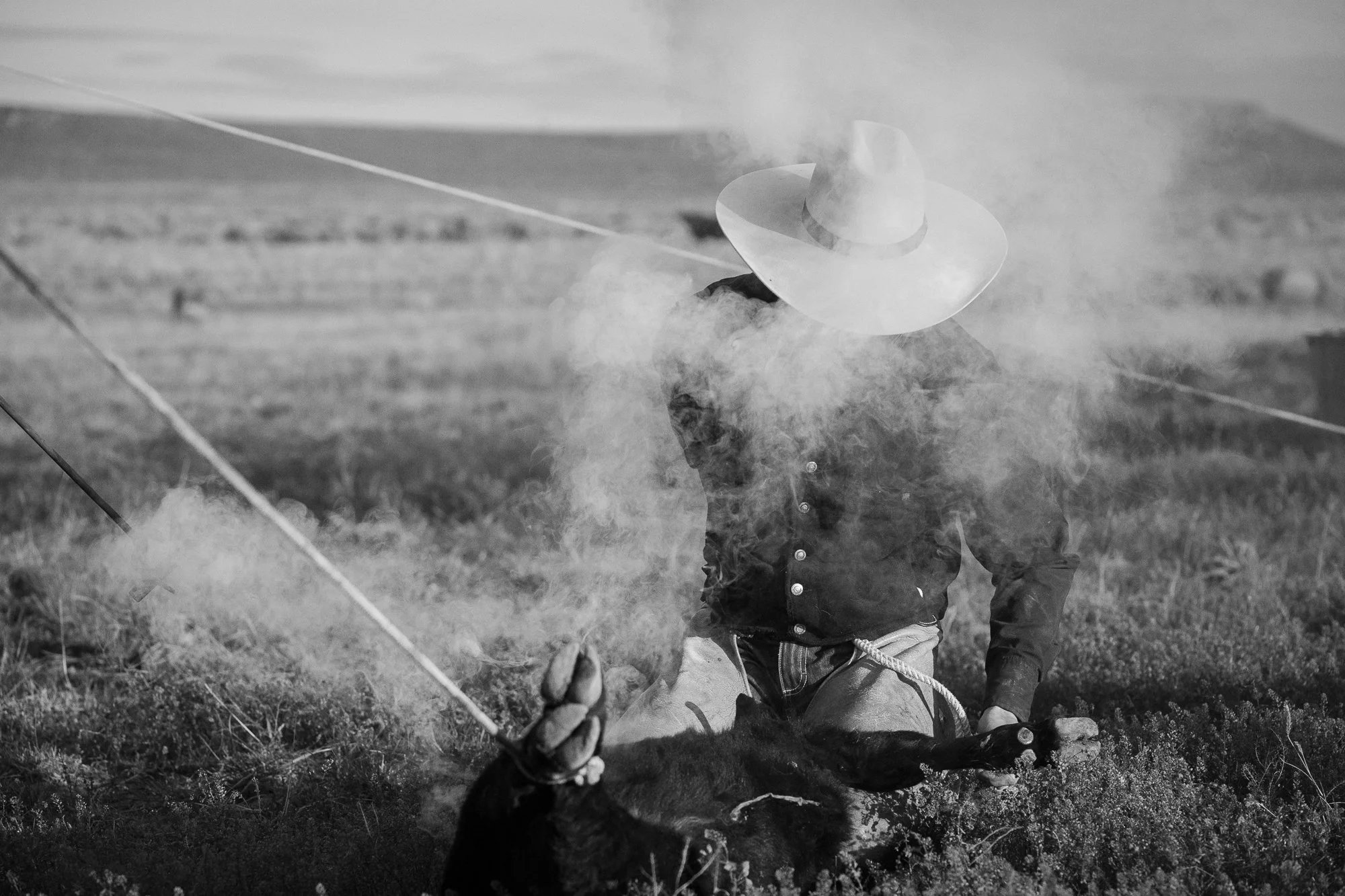
Smoke drifts across the branding ground as a cowboy works beside a calf held on its side.
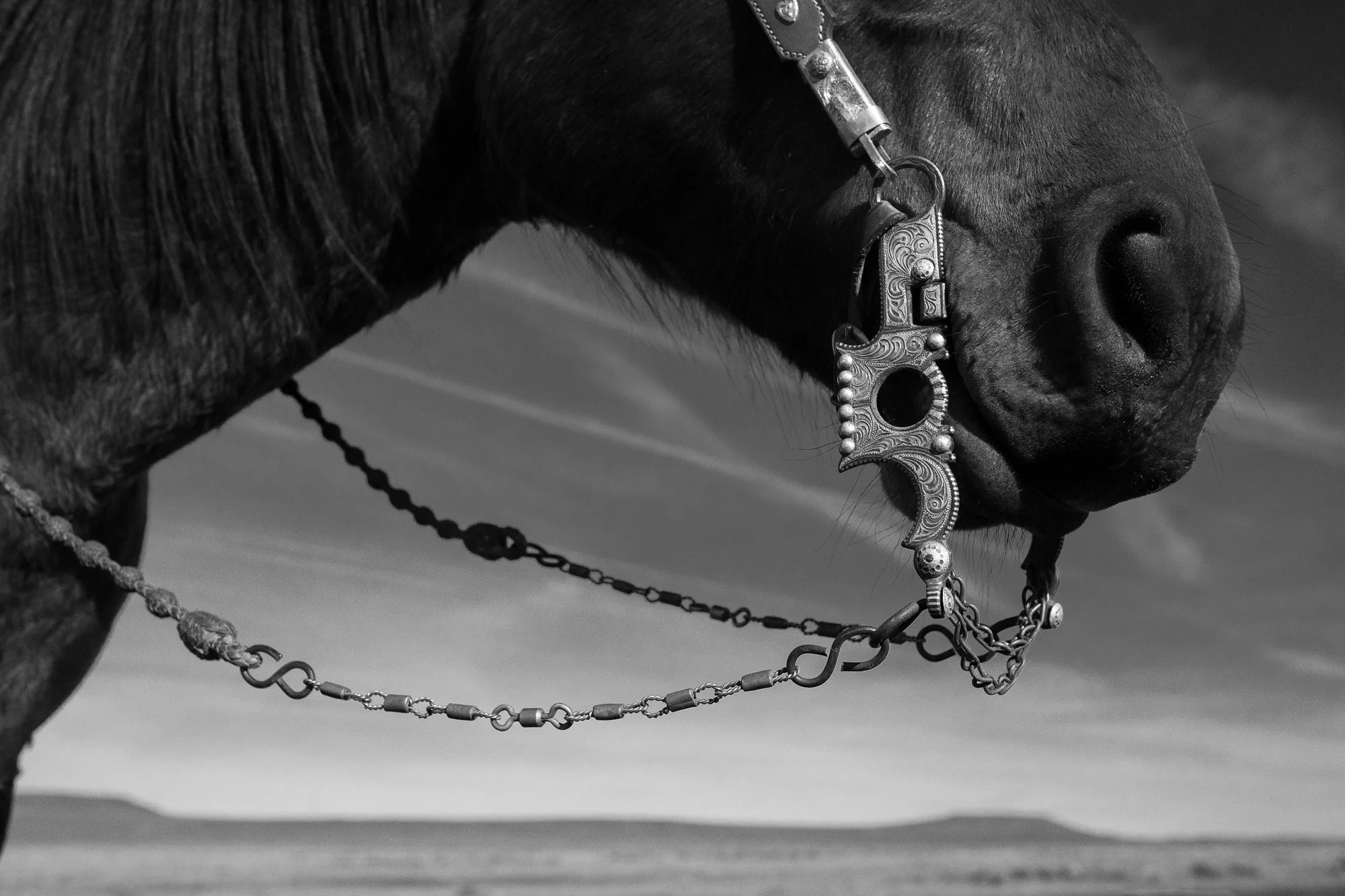
An engraved silver bit and linked chains detail the horse's bridle against the open range.
The equipment varies from ranch to ranch and cowboy to cowboy. Saddles, bits, reins and handmade silver aren't decoration added for a photograph. Many are working objects that have been used for years, but also represent the Buckaroo culture.
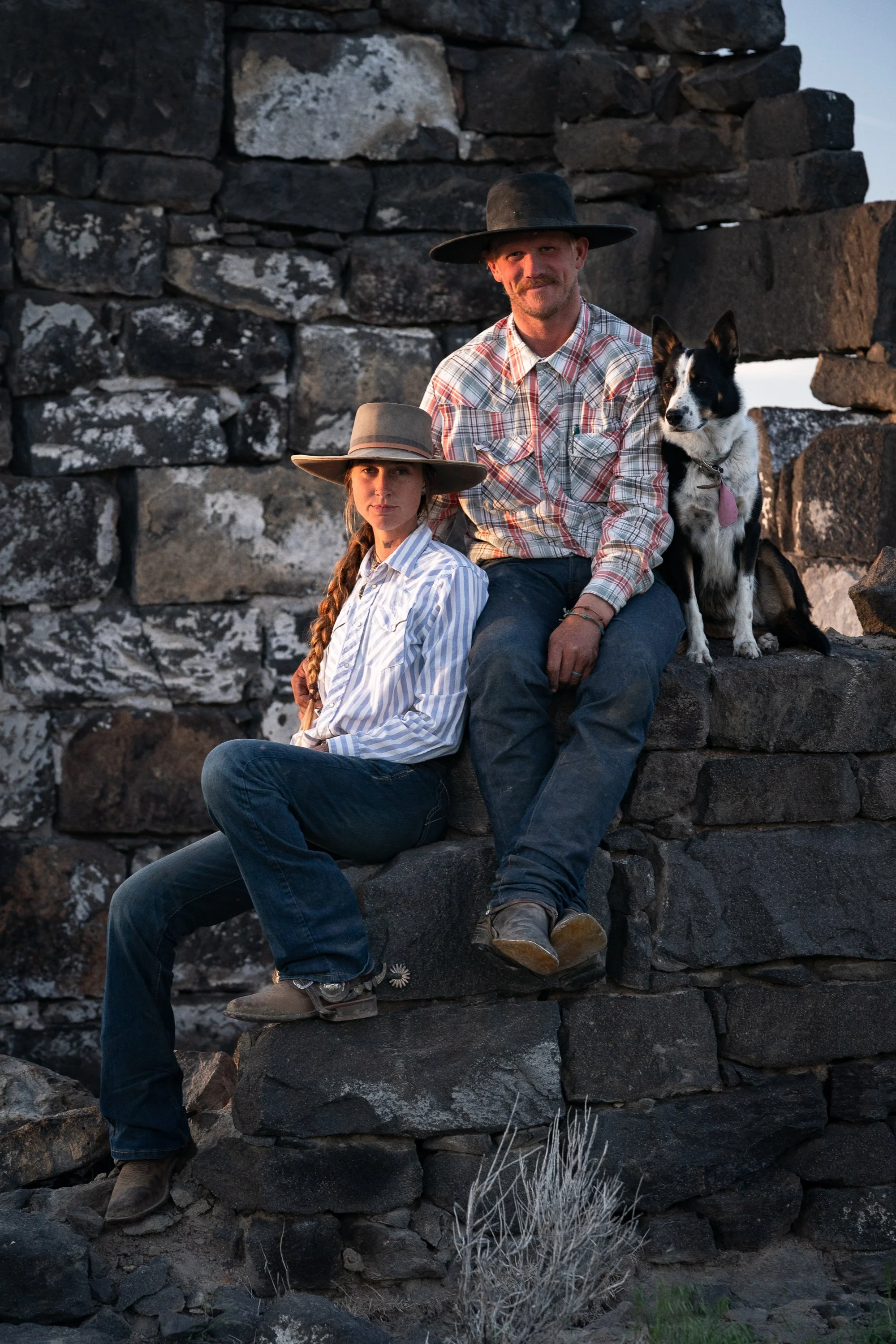
Seated on a stone wall, the couple poses with their herding dog beside the weathered rock structure.
Ranch life is also bigger than the moments most commonly associated with cowboy photography. Families, dogs, meals, horses, equipment and long stretches of ordinary life all exist around the work.
That quieter material has become increasingly important to the larger project.
Life in Cow Camp
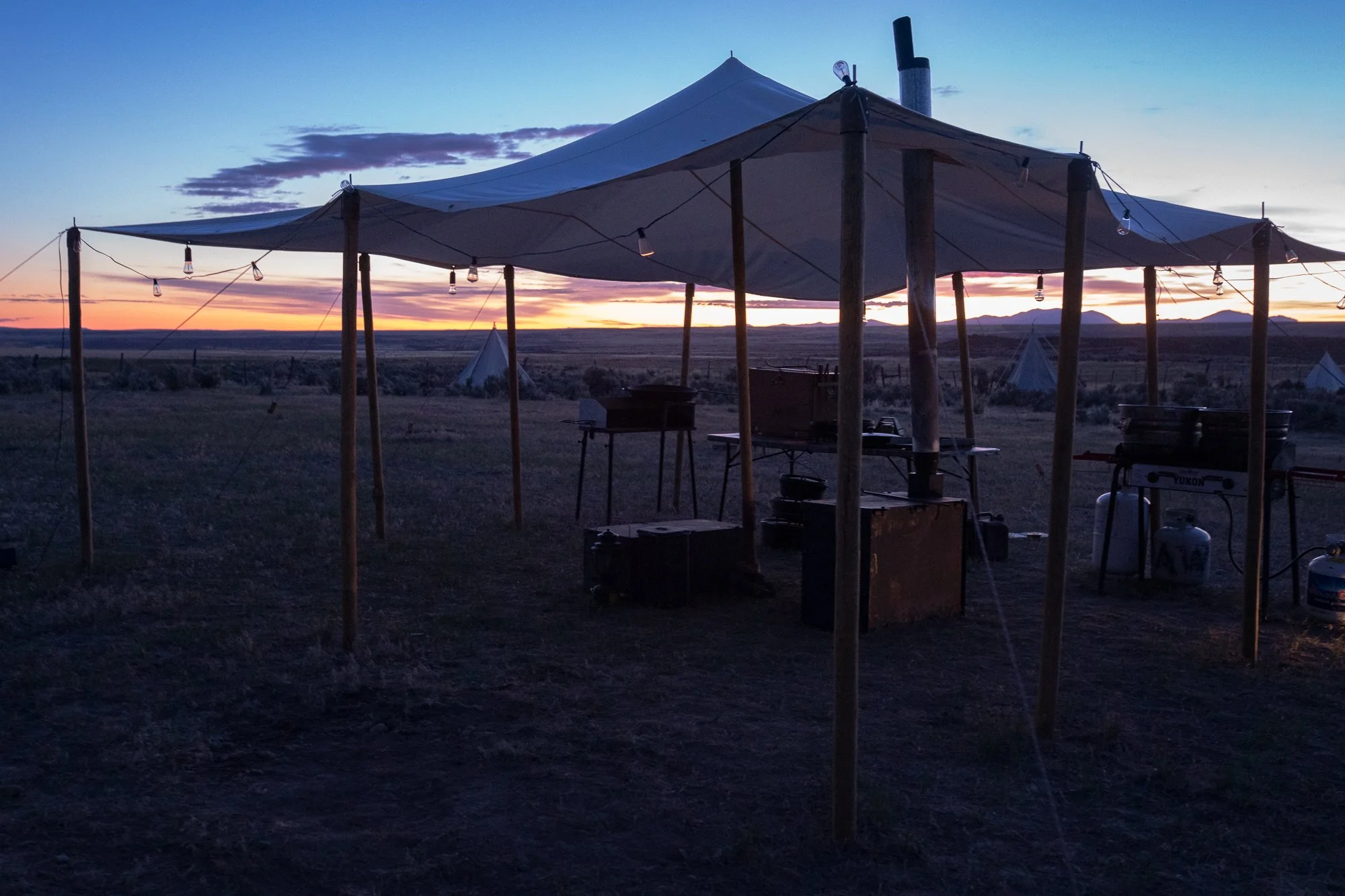
Sunrise at cow camp on a working cattle ranch in the American West
Days don't necessarily begin or end according to a clock. They begin when the work requires it and end when the work is finished.
Cow camp has its own rhythm. Meals, coffee, saddling horses and whatever brief amount of sleep can be fit between one day's work and the next.
There isn't much romance involved while you're living it.
Looking back at the photographs is another matter.
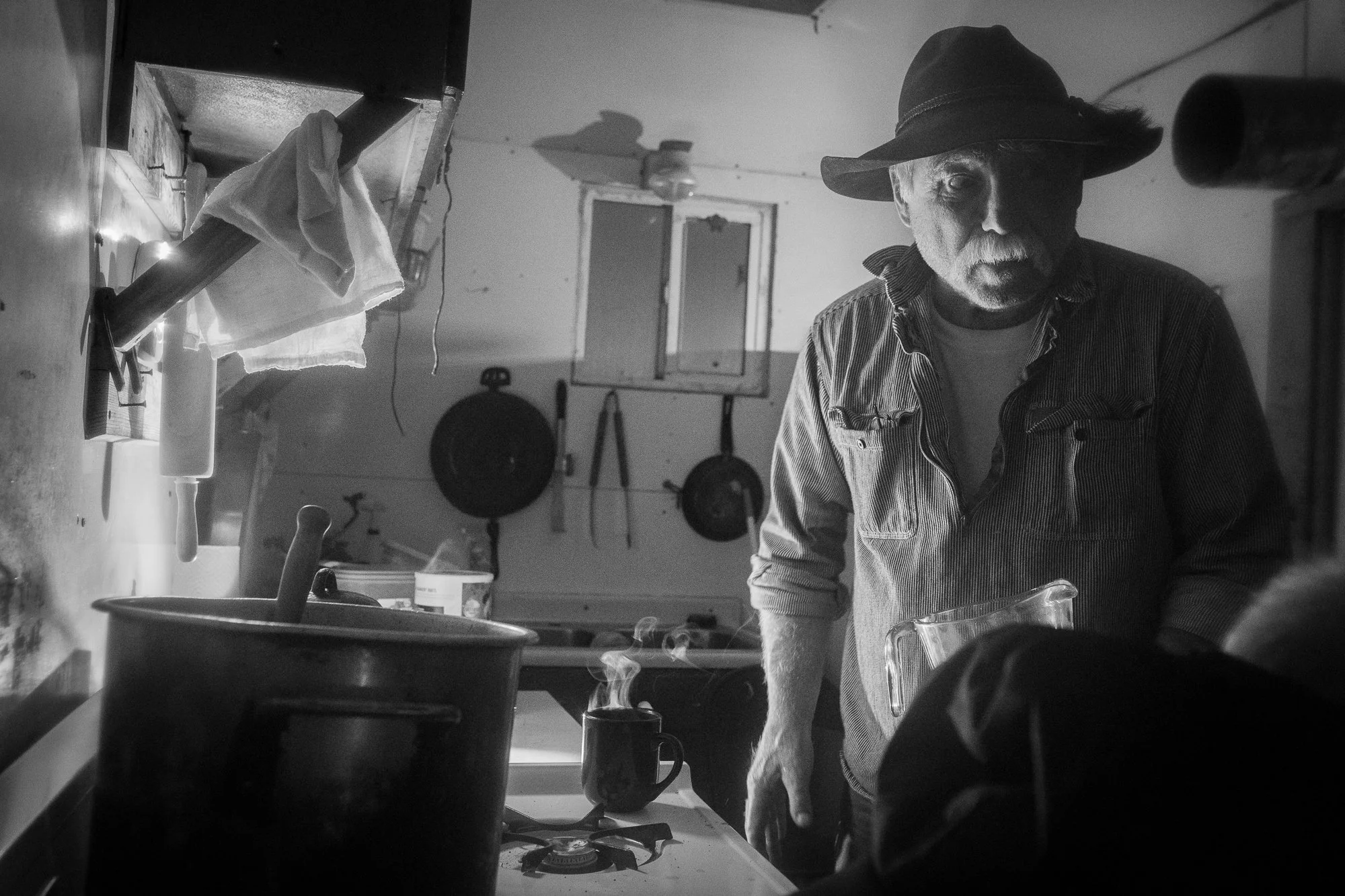
The chuckwagon cook on a buckaroo outfit in Nevada
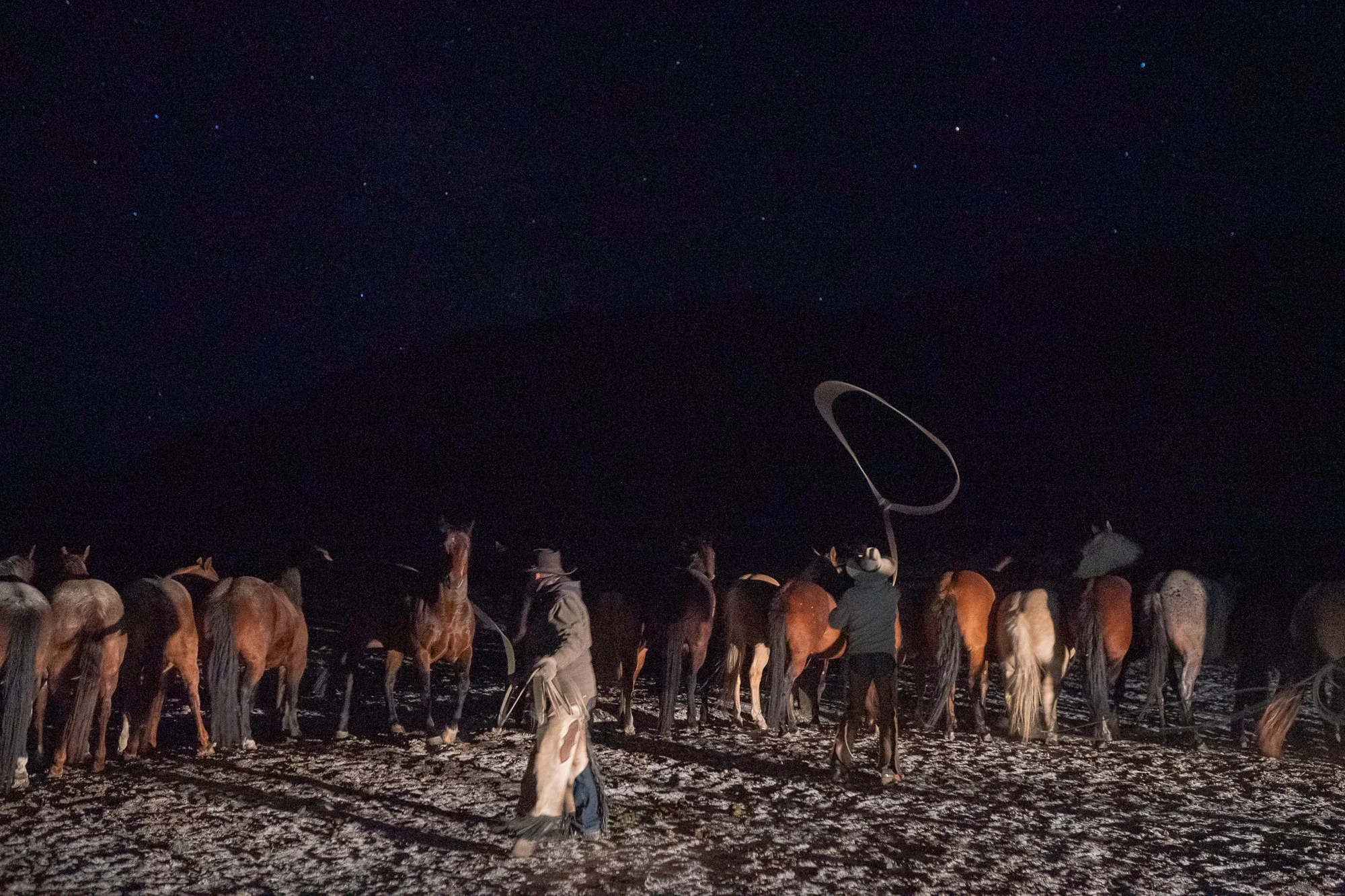
Under a star-filled sky, two buckaroos catch horses from the herd in the early morning.
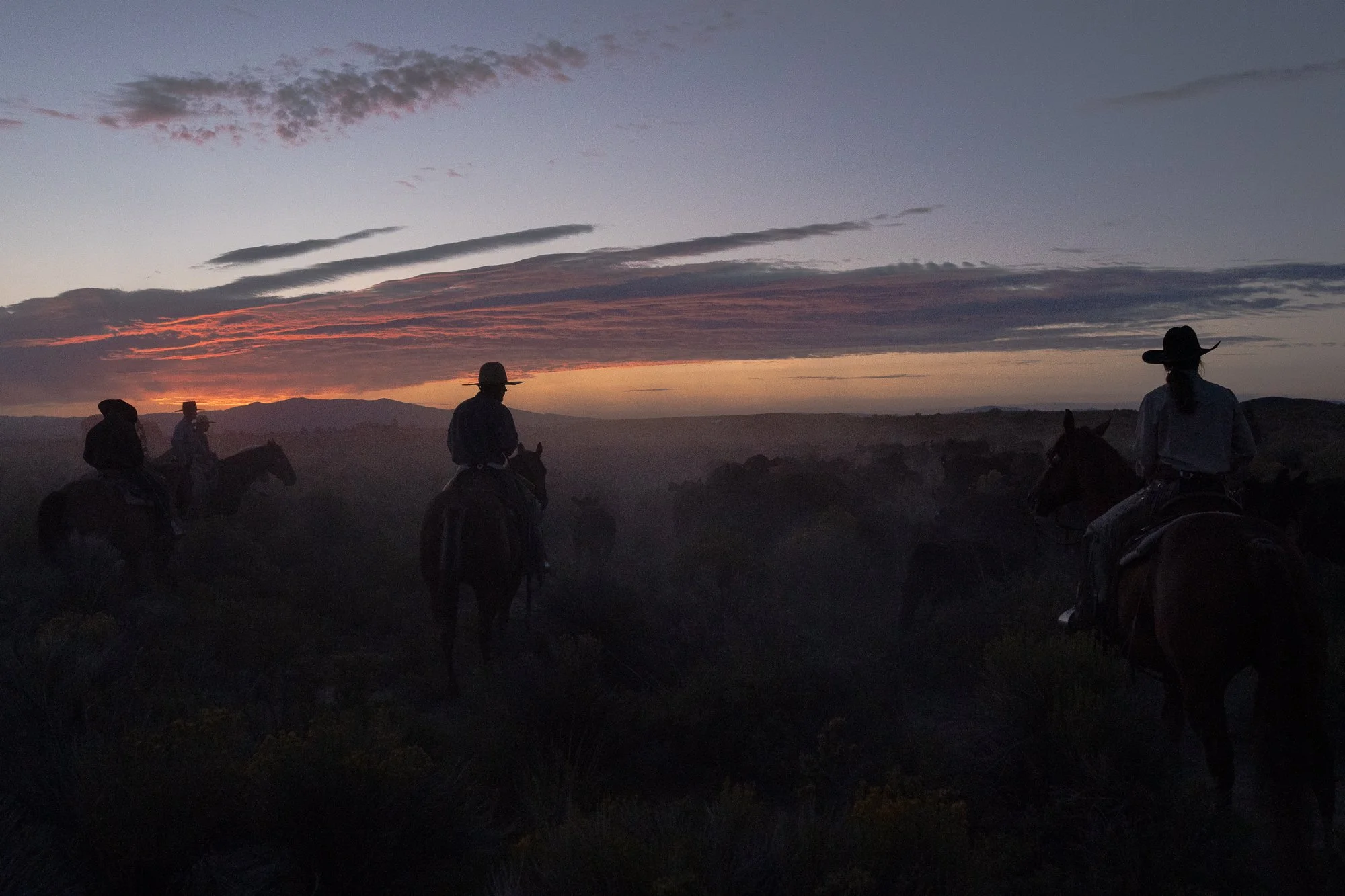
Cowboys move cattle across the range as the rising sun lights the clouds above the mountains.
At night, the landscape disappears and the horses become shapes beneath the stars.
Then morning comes and it starts again.
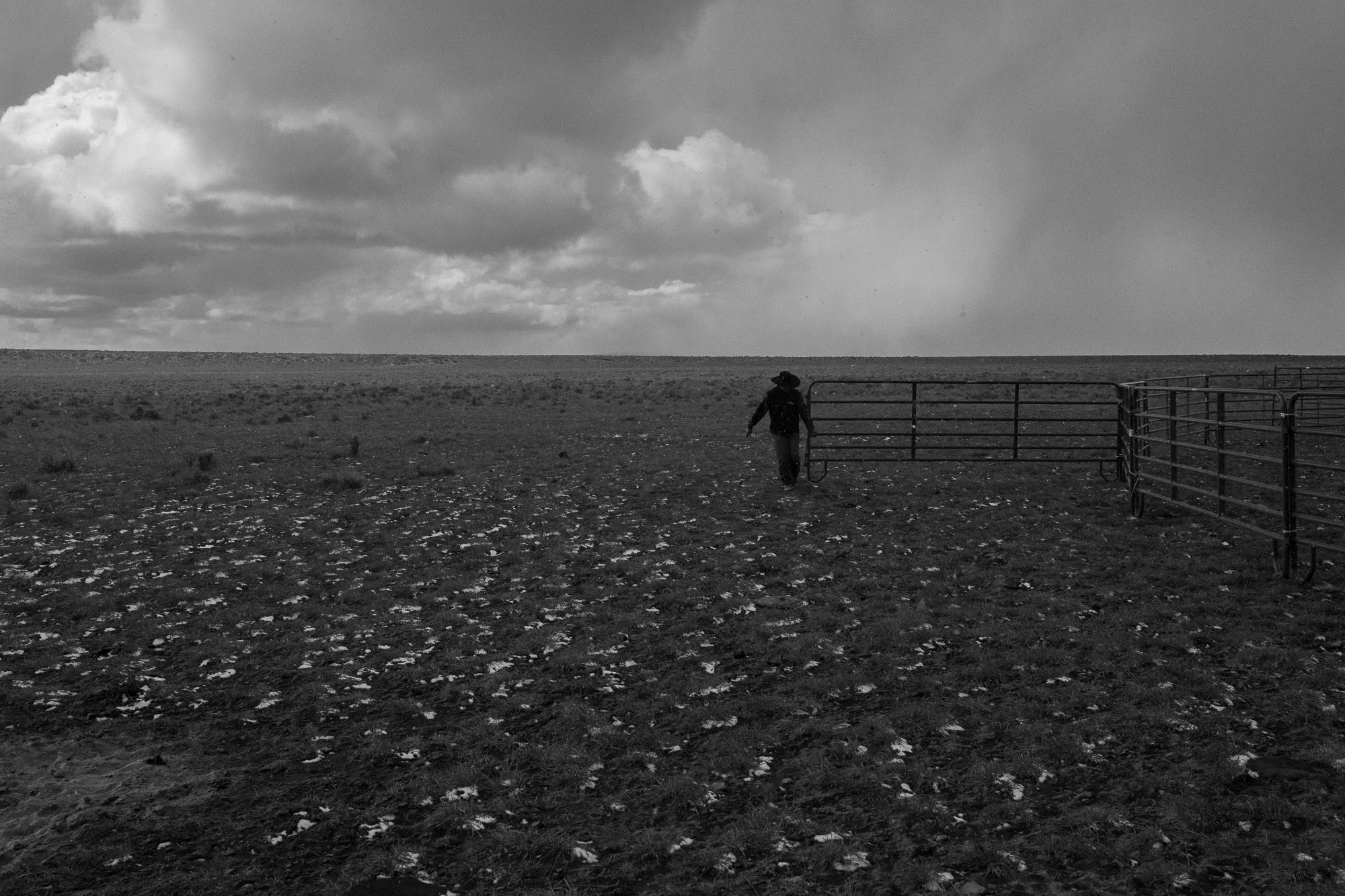
A buckaroo closes the metal gate as snow patches cover the open pasture.on the ZX Ranch
The Great Basin
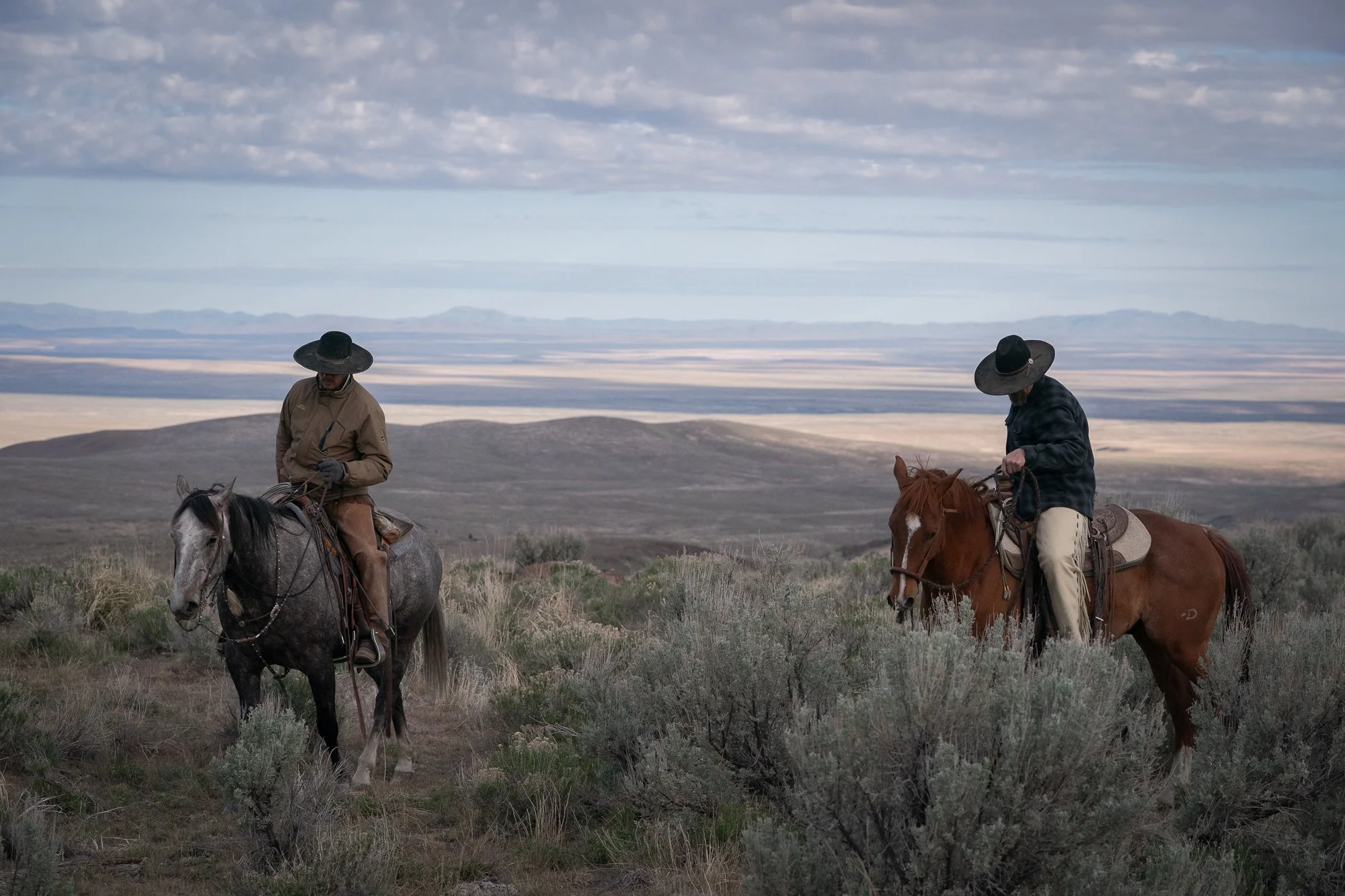
Two buckaroos make their way through sagebrush across the open range.
You can't separate buckaroo culture from the landscape that produced it.
Nevada's Great Basin is enormous, dry and sparsely populated. Ranching here means working across distances that are difficult to understand from a map.
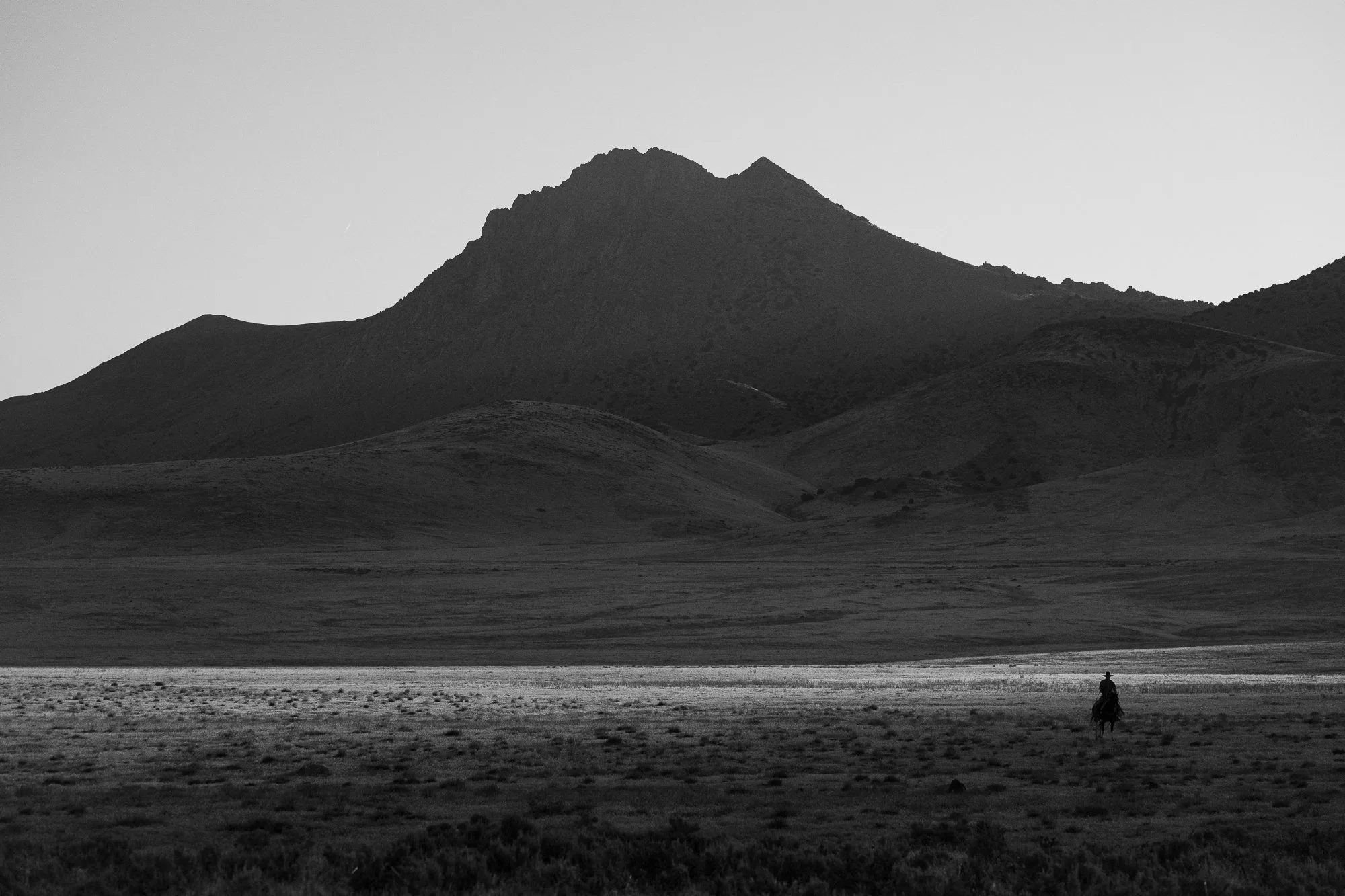
A lone rider crosses the open plain below a rugged mountain range on the C-Punch Ranch.
That scale is something I've become increasingly interested in photographing.
The cowboy doesn't always need to dominate the frame.
Sometimes the photograph works precisely because he doesn't.
Ranch structures can look temporary against this landscape, even when they've been standing for generations.
A rider becomes a small mark against miles of country.
And sometimes almost disappears completely.
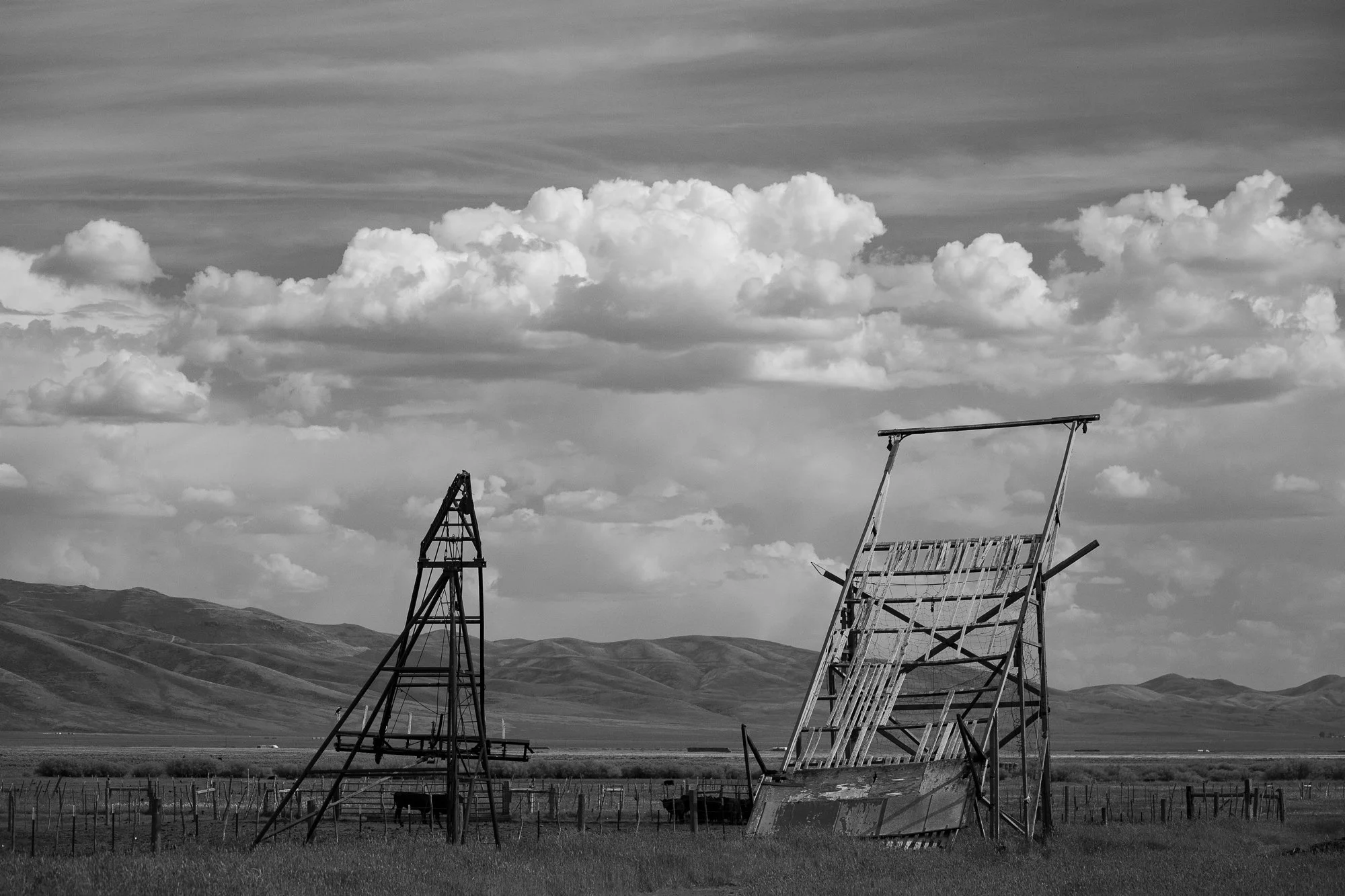
A beaver slide hay stacker stands inside a fenced pasture beneath a cloud-filled sky.
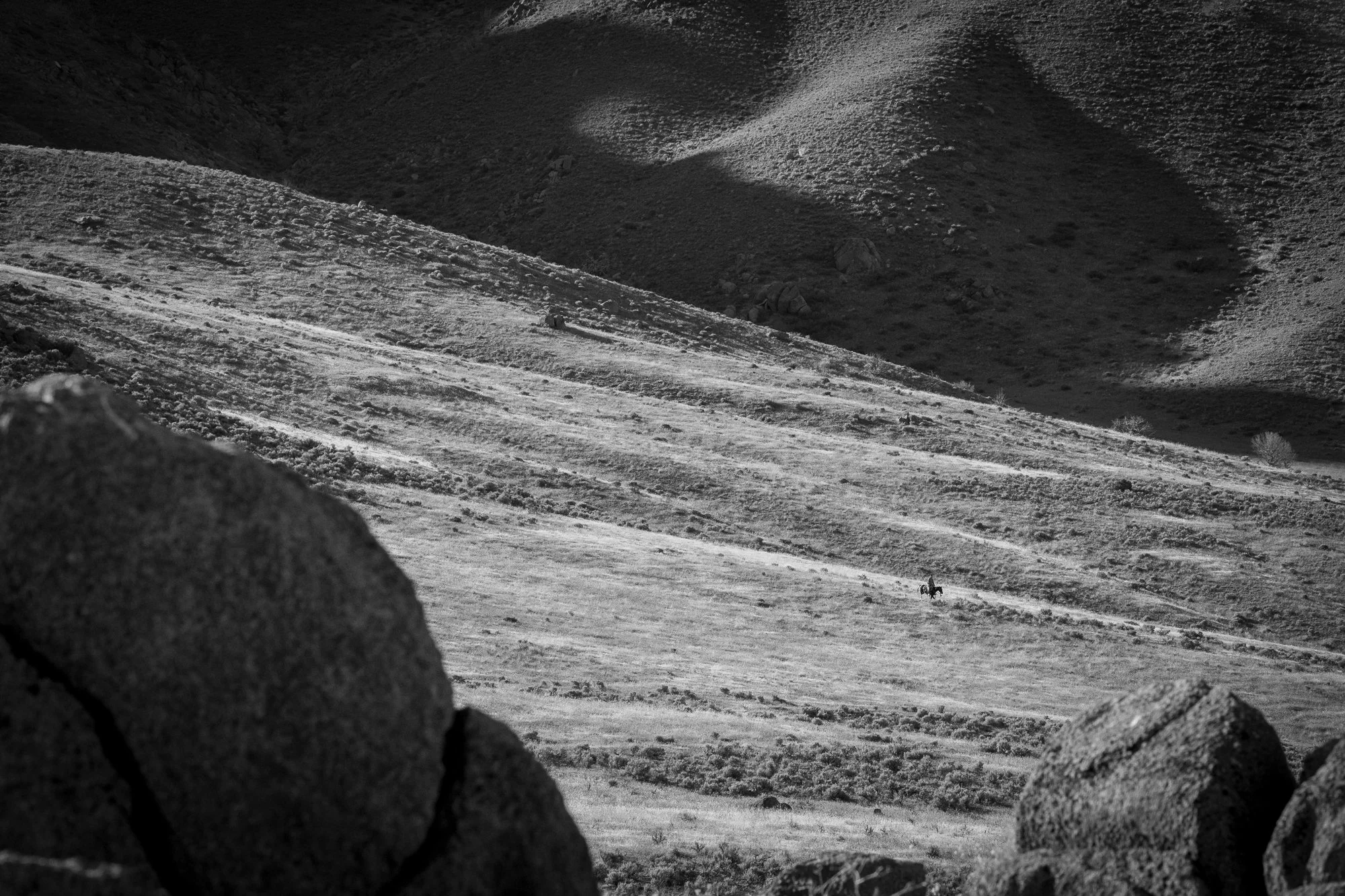
Framed by rocky outcrops, a lone rider crosses the massive open hillside on the C-Punch Ranch.
A Working West
One of the things that originally drew me to photographing cowboys was the gap between the popular image of the American West and the reality of people who still work in it.
The mythology isn't completely wrong. It's just incomplete.
The hats are real. The horses are real. So are the ropes, cattle drives and brandings. But so are busted equipment, bad weather, exhaustion, early mornings and endless miles of fence.
The West didn't disappear.
It just kept working.
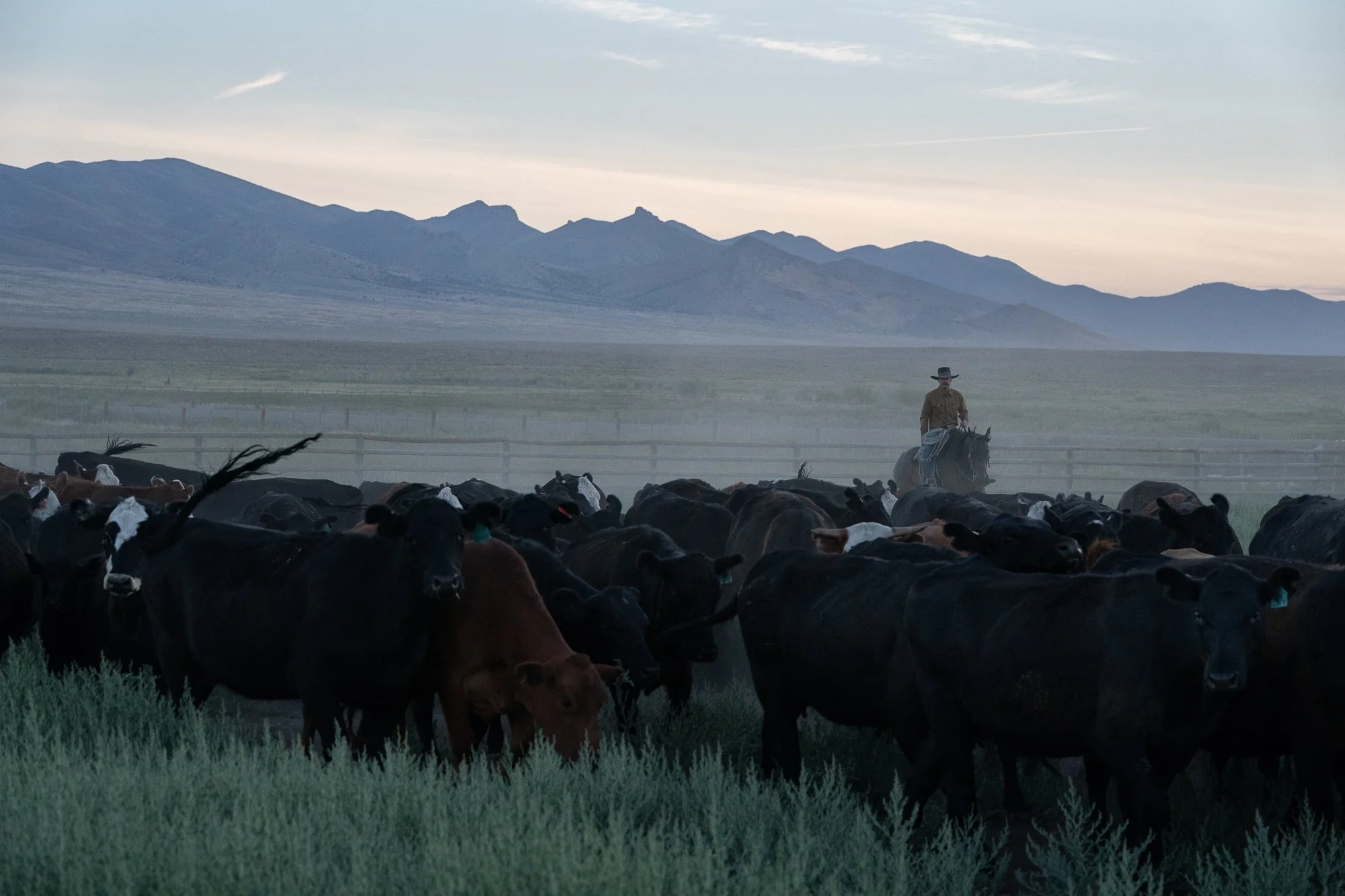
Cattle move through the pasture as a buckaroo follows on horseback, with mountains rising beyond the ranch.
These photographs are part of Calves to the Fire, an ongoing body of work I've made over years of traveling to working ranches throughout the American West. The larger project follows cowboys through brandings, cattle drives, everyday ranch work, portraits and the quieter moments that happen in between.
I don't think of the project as an attempt to preserve a disappearing West.
I'm more interested in documenting the one that's still here.
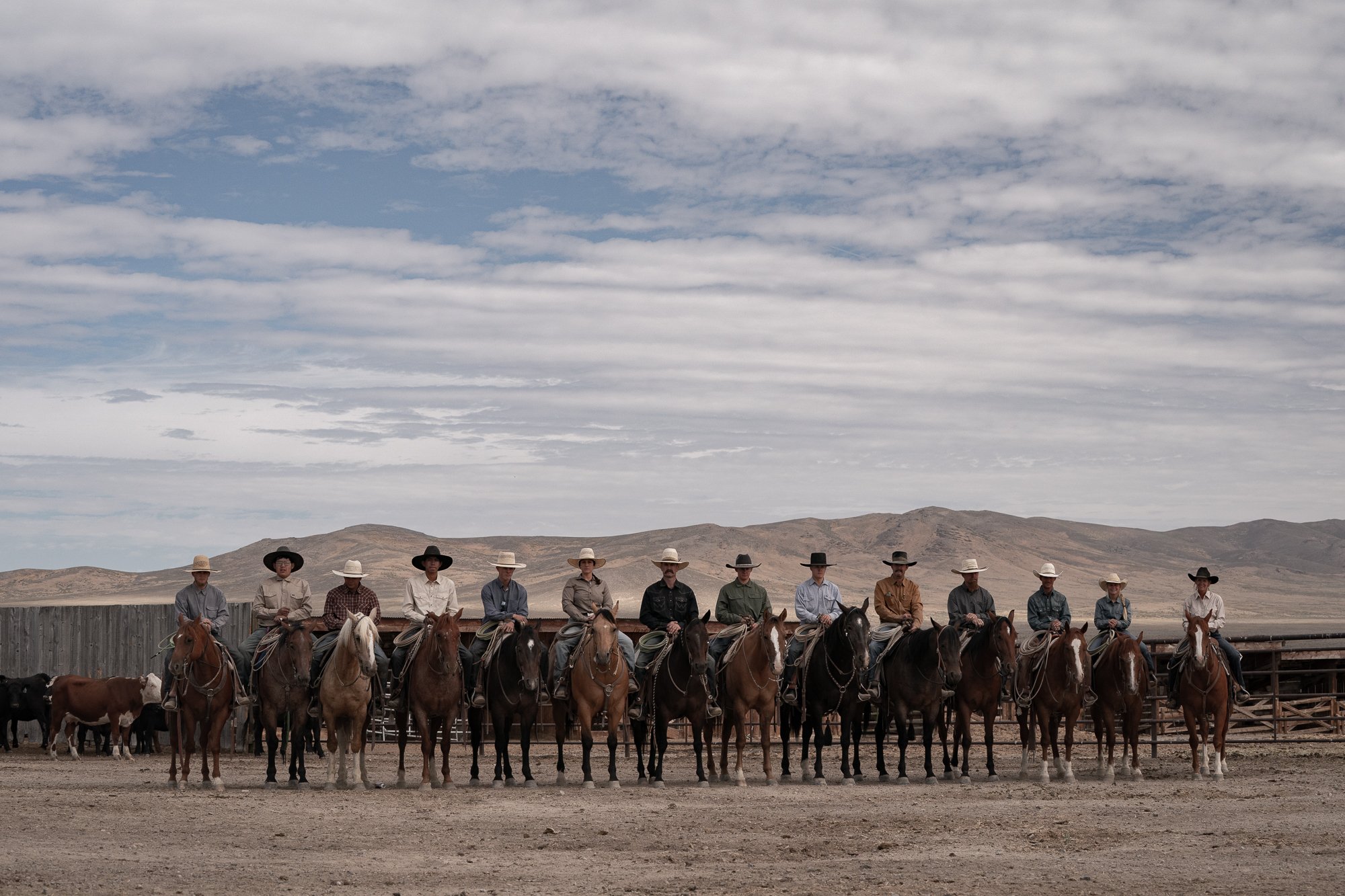
A line of buckaroos sits mounted along the corral with cattle gathered nearby.
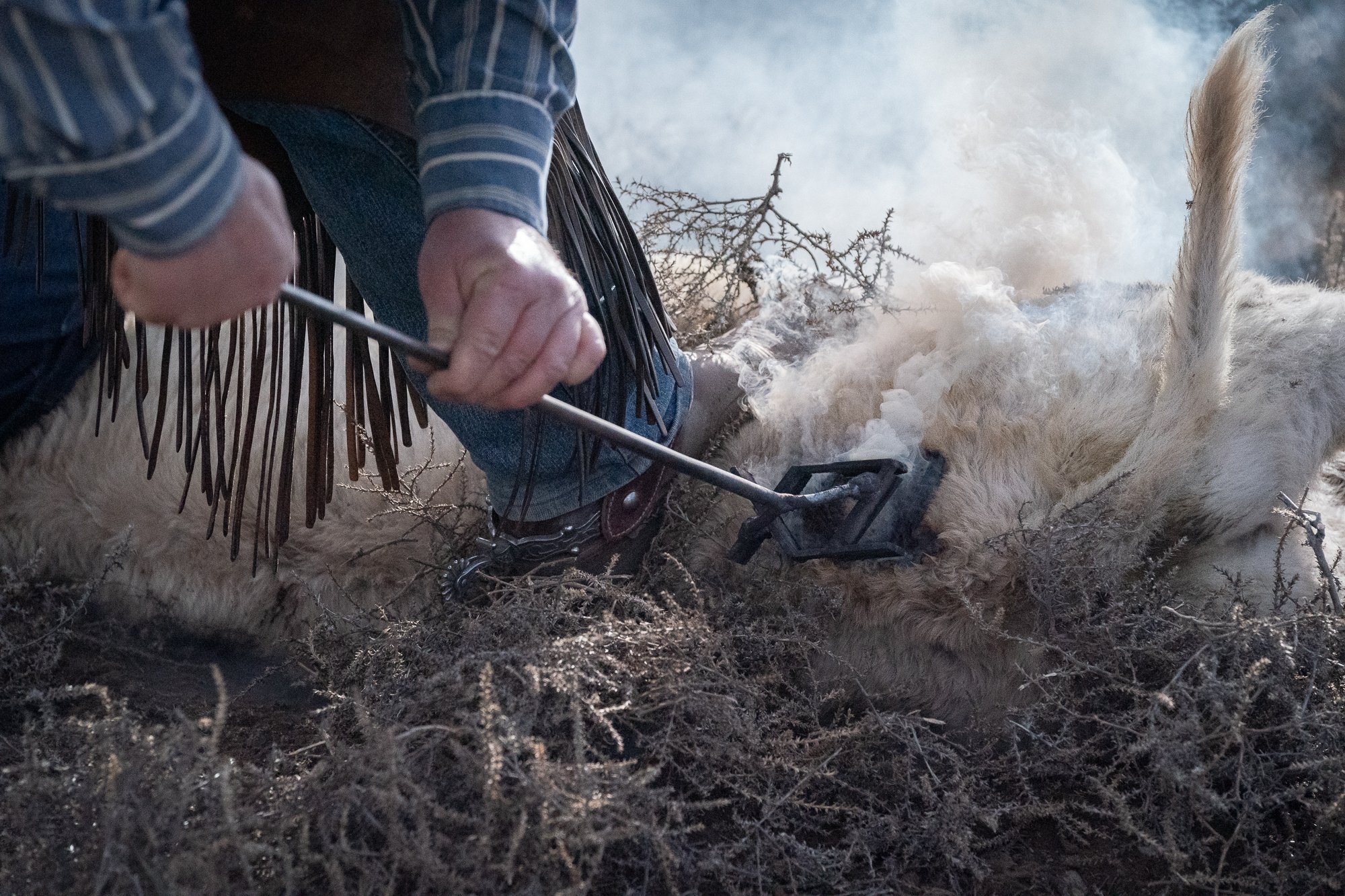
Branding calves in rough country on the ZX Ranch-Oregon
Explore Calves to the Fire
Calves to the Fire is an ongoing documentary photography project about working cowboys, ranching culture and the landscape of the American West.
The larger archive includes photographs made across Nevada, Texas, Montana, Nebraska, Arizona, Colorado, Wyoming and other parts of the West.
VIEW THE COMPLETE COWBOY PHOTOGRAPHY PROJECT
View more from the ranches featured in this blog:
Cowboy Fine Art Prints
Selected photographs from Calves to the Fire are available as signed, limited-edition fine art prints.
The collection includes photographs from working ranches throughout the American West, with multiple sizes available for private collections, residential interiors, hospitality and commercial spaces. Additional photographs from the archive can also be considered for specific projects.
Interior designers & art consultants: inquire about trade pricing, custom framing and archive selections.

Photograph of a buckaroo catching horses
Western Photography Licensing
The Calves to the Fire archive includes years of documentary photography from working cattle ranches throughout the American West.
Images are available for select editorial, publishing, advertising, hospitality and commercial licensing, including photographs of working cowboys, ranchers, horses, cattle, brandings, roping, ranch landscapes, Western equipment and contemporary ranch life.
If you're searching for a specific subject, region or type of image, much of the archive has never appeared on the website.

Cowboy moving cattle on the Winecup Gamble Ranch

C-Punch Ranch

C-Punch Ranch - Cowboys working horses in a round pen

Portrait of Trapper Rodgers