
Behind the Scenes at a Wyoming Rodeo | Photographing Cowboy Culture in Dubois
There are photographs that happen in eight seconds.
Then there are photographs that take an entire evening.
The latter are the ones I usually come home thinking about.
For more than six years, I've been documenting working cowboys and ranches throughout the American West. The project has taken me from some of the largest cattle ranches in Texas, Nevada, Arizona, Montana, Nebraska, and Colorado to small family operations where the work still begins before sunrise. Much of that time has been spent photographing branding fires, calving season, horseback gathers, shipping cattle, and the quiet routines that define life on a working ranch.
Because of that, people often assume I'm a rodeo photographer.
I'm not.
At least not in the traditional sense.
I admire rodeo immensely. It preserves traditions born from everyday ranch work and gives cowboys and cowgirls a place to test skills that were once essential to earning a living. But what draws me to a rodeo isn't necessarily the competition itself.
It's everything surrounding it.
Last weekend I spent an evening at the Dubois Rodeo in western Wyoming, not looking for the winning ride or the biggest wreck, but for the moments that reveal the character of a community.
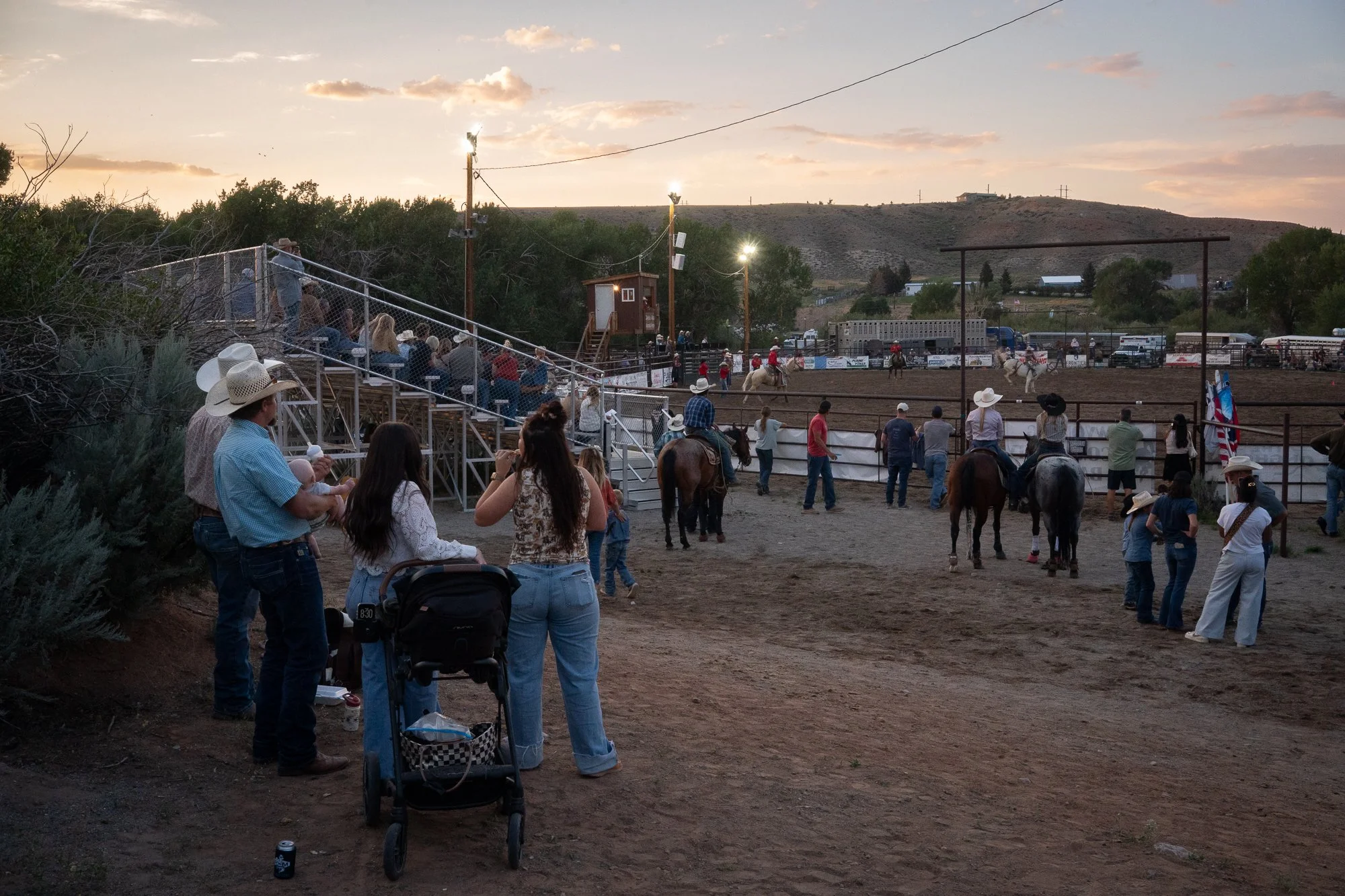
The fence line fills with spectators while riders and families watch the action from every angle.
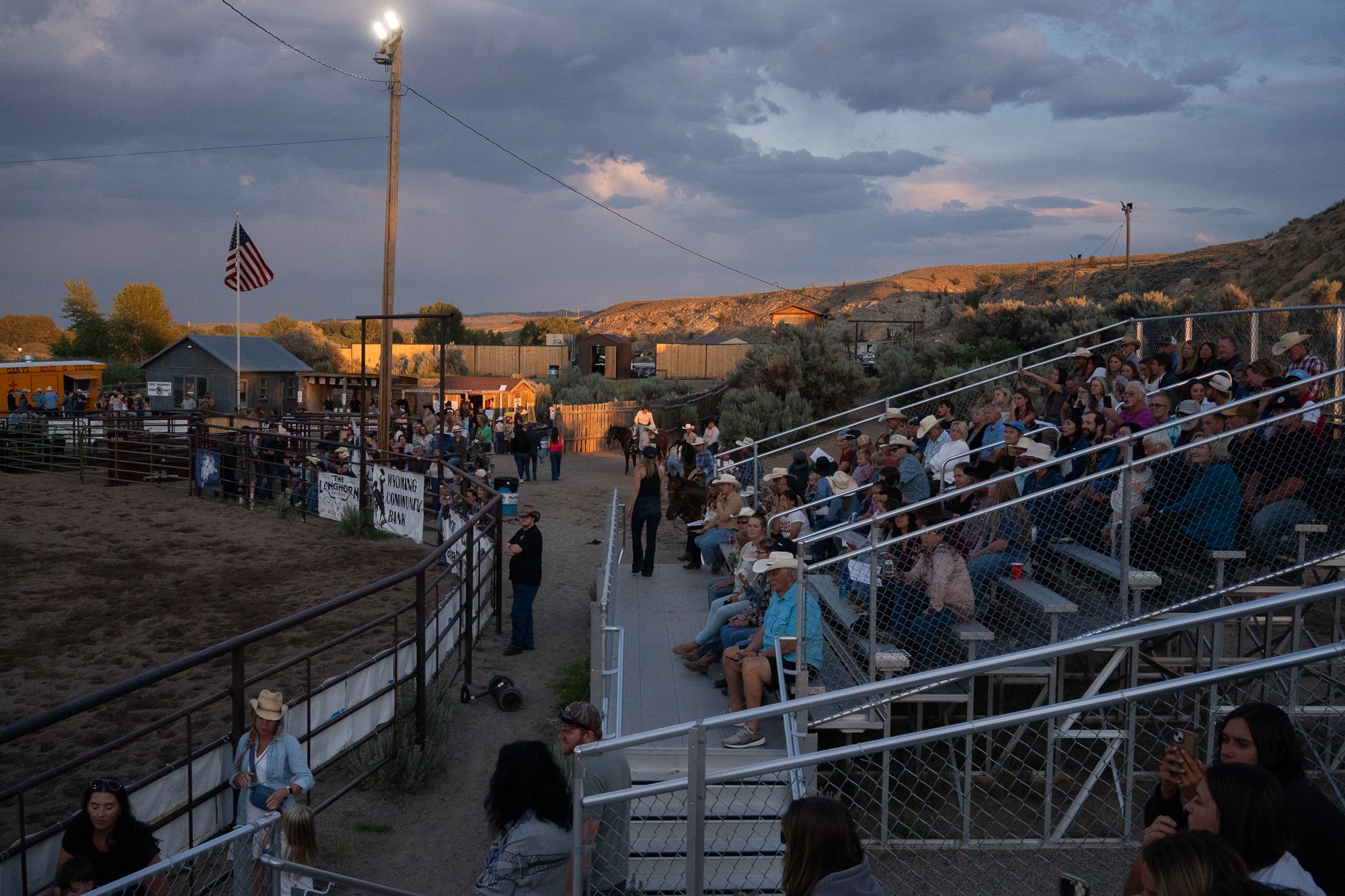
The grandstands fill as the community settles in for another Friday night at the Dubois Rodeo.
Why I'm Not a Traditional Rodeo Photographer
My work has never been about documenting sporting events.
It's about documenting people.
While rodeo and ranching are deeply connected, they aren't the same thing. Most of my photographs are made on working ranches where there are no grandstands, announcers, prize money, or crowds. The stories unfold slowly, often over several days, and the photographs are built through trust rather than access.
That same approach follows me into a rodeo.
Instead of focusing solely on the arena, I find myself wandering toward the fences, the warm-up pens, the parking lot, and eventually the local bar after the last event ends. Those places often reveal more about Western culture than the arena itself.
If you're interested in the broader documentary project, you may also enjoy these stories:
Silver Spur Ranch in Colorado – documenting riding health, calving season, and everyday ranch work.
Spanish Ranch in Nevada – exploring one of the oldest horseback traditions in the American West.
Dakota May: Rawhide Braiding – preserving a traditional craft that continues to serve working cowboys.
Magnum Feedyard – an inside look at one of the final stops in the beef production chain.
Together, they form chapters of the same ongoing project.
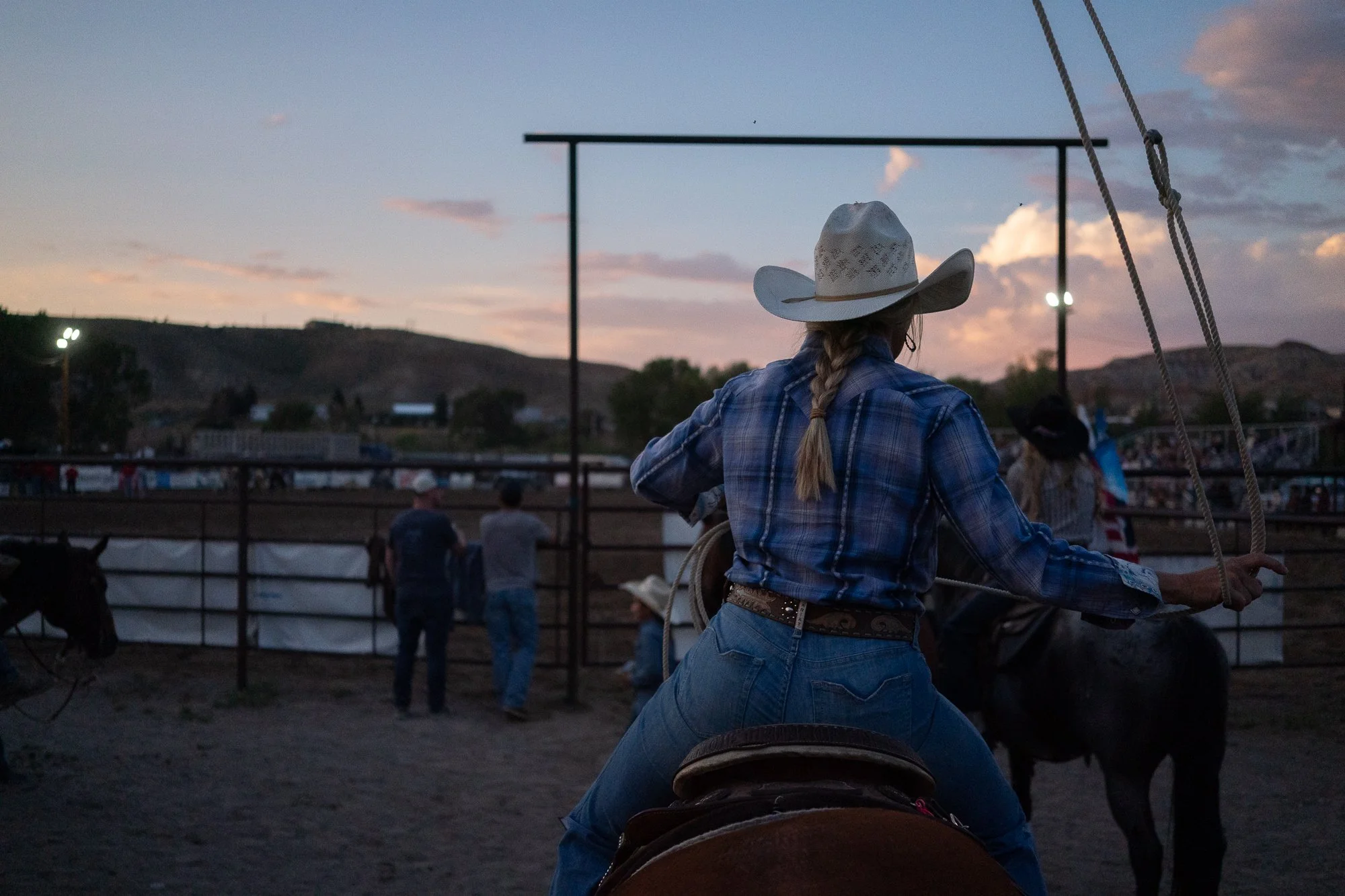
The evening continues with riders positioned just outside the arena.
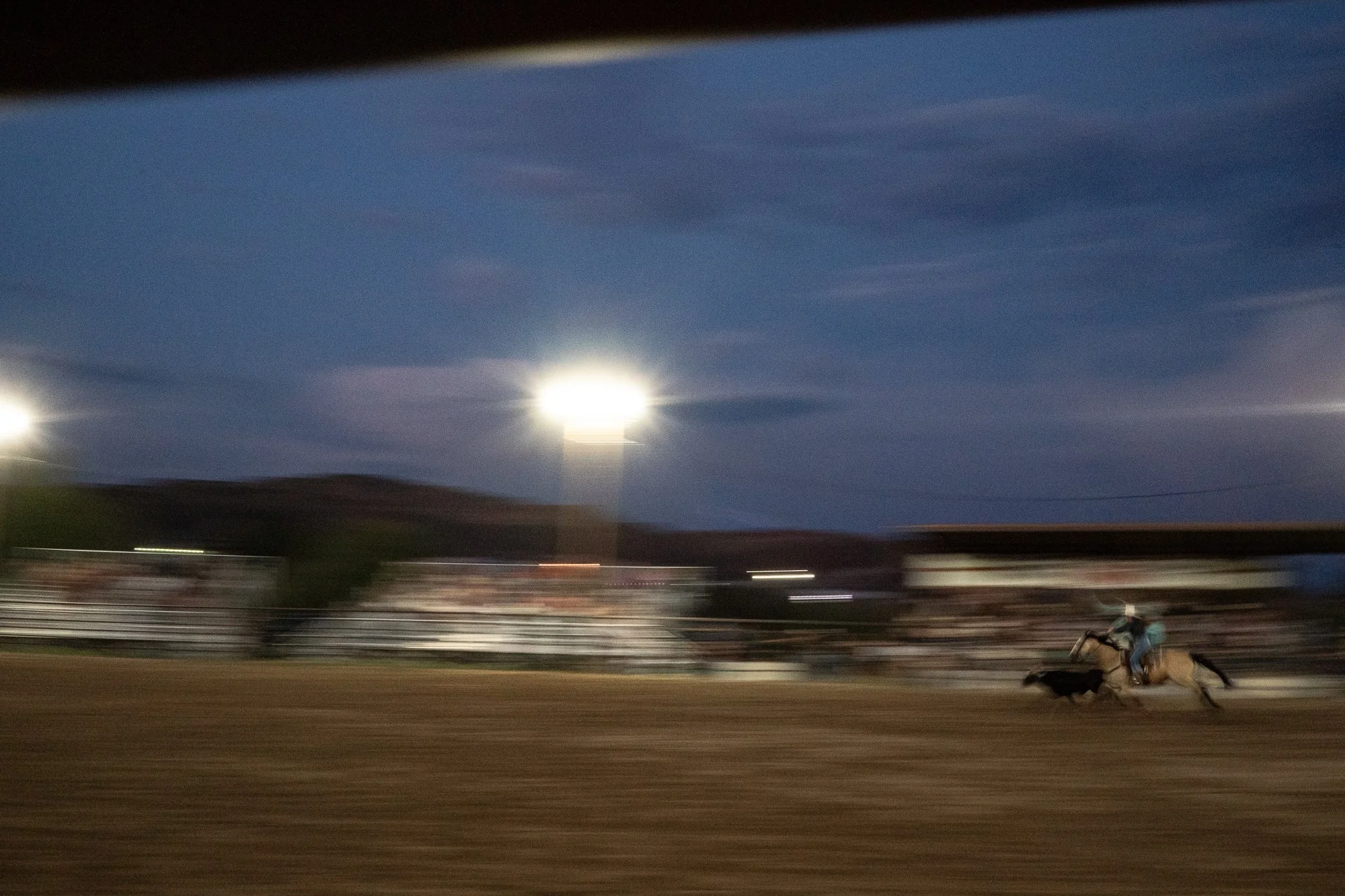
The pace changes quickly once the team roping begins under the arena lights.
The Dubois Rodeo Reflects Everyday Western Life
Dubois is the kind of town where a rodeo still feels like a community gathering instead of a production.
People arrive early.
Some watch from the grandstands.
Others sit on horseback outside the arena fence.
Children wander between pickup trucks while parents catch up with neighbors they haven't seen in a week.
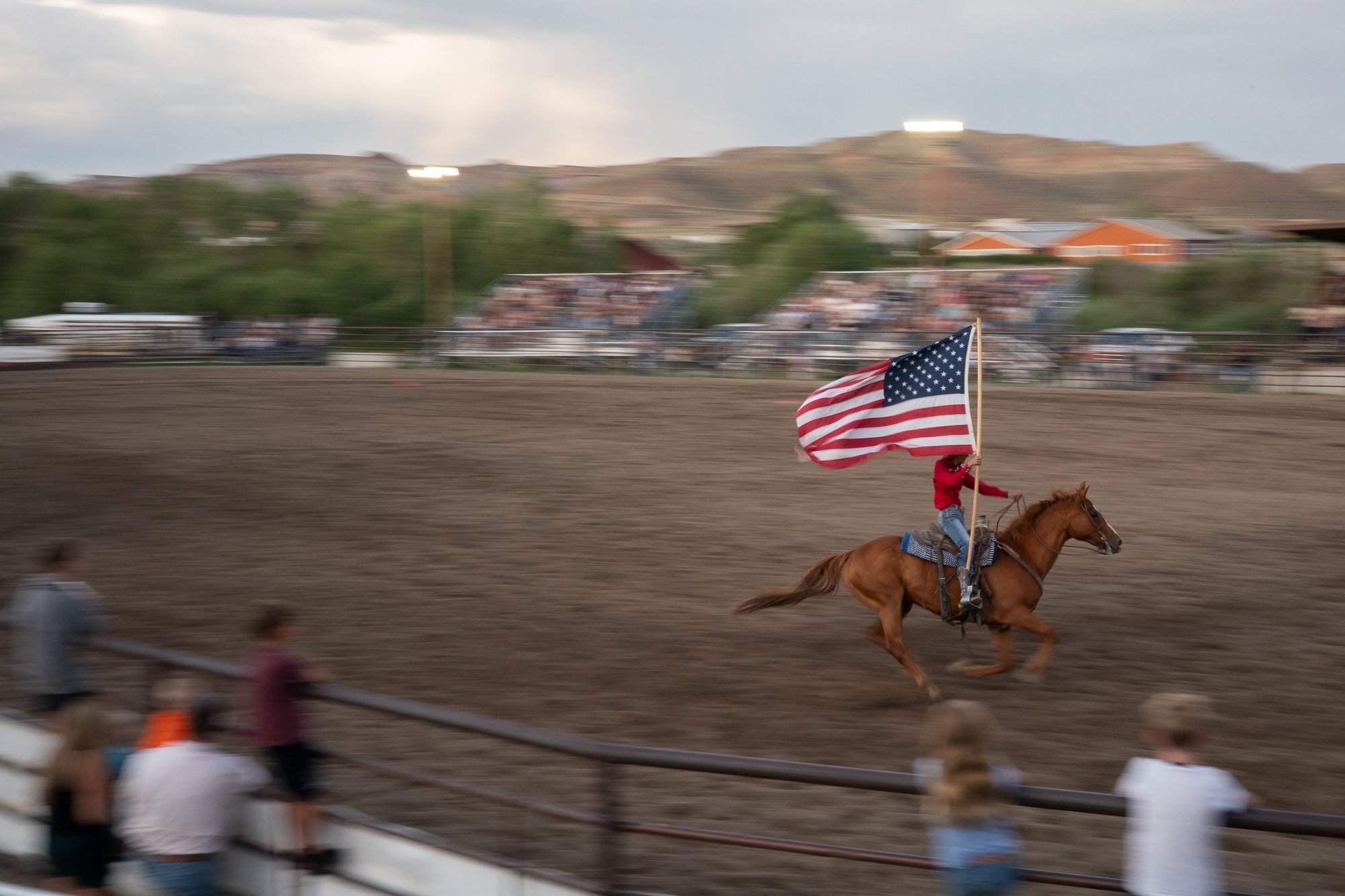
As the evening progresses, the light changes dramatically. Summer storms drift across the mountains, sunlight briefly illuminates the cliffs above town, and the American flag circles the arena before the first event begins.
Those transitions are every bit as compelling as the competition.
One of my favorite photographs from the evening isn't of a bronc rider or a steer wrestler. It's of the flag rider galloping beneath Wyoming skies while the town settles into another Friday night tradition. Another shows families leaning against the fence simply watching together.
They're photographs about place.
About belonging.
About the pace of life in a small Western town.
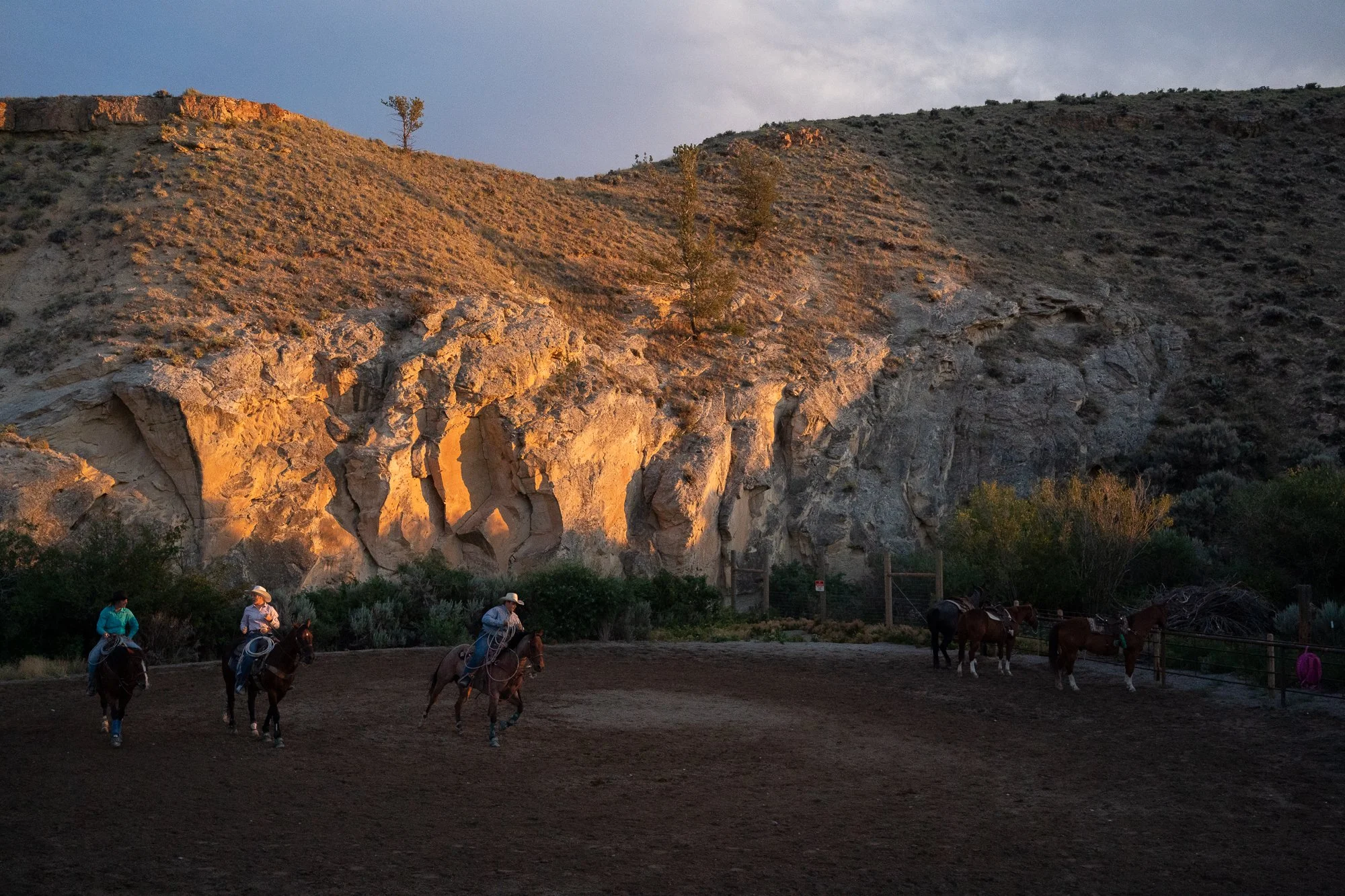
Evening light reaches the cliffs above the arena as riders prepare for the night's events.
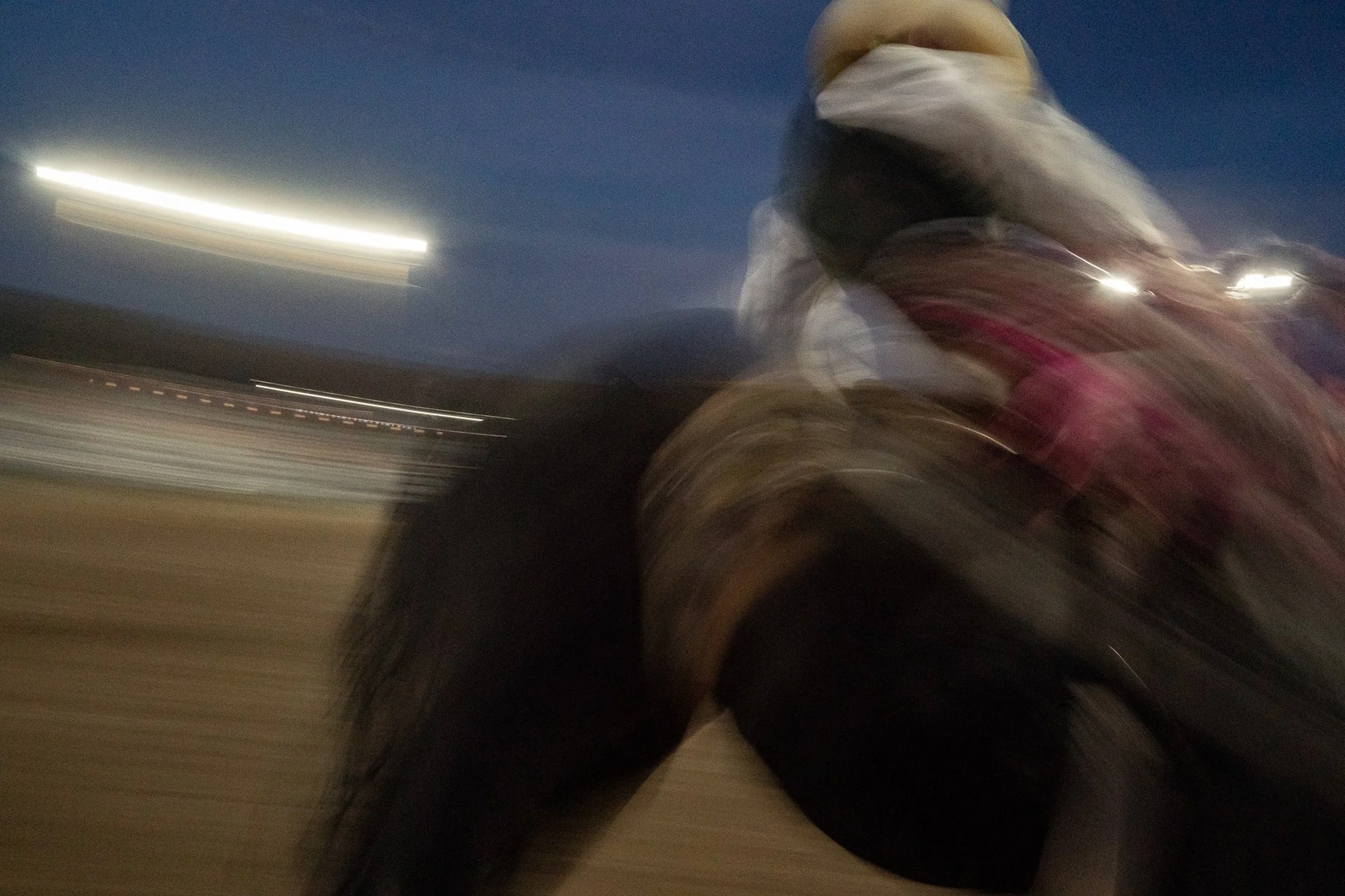
Rider moves through the arena as the rodeo continues.
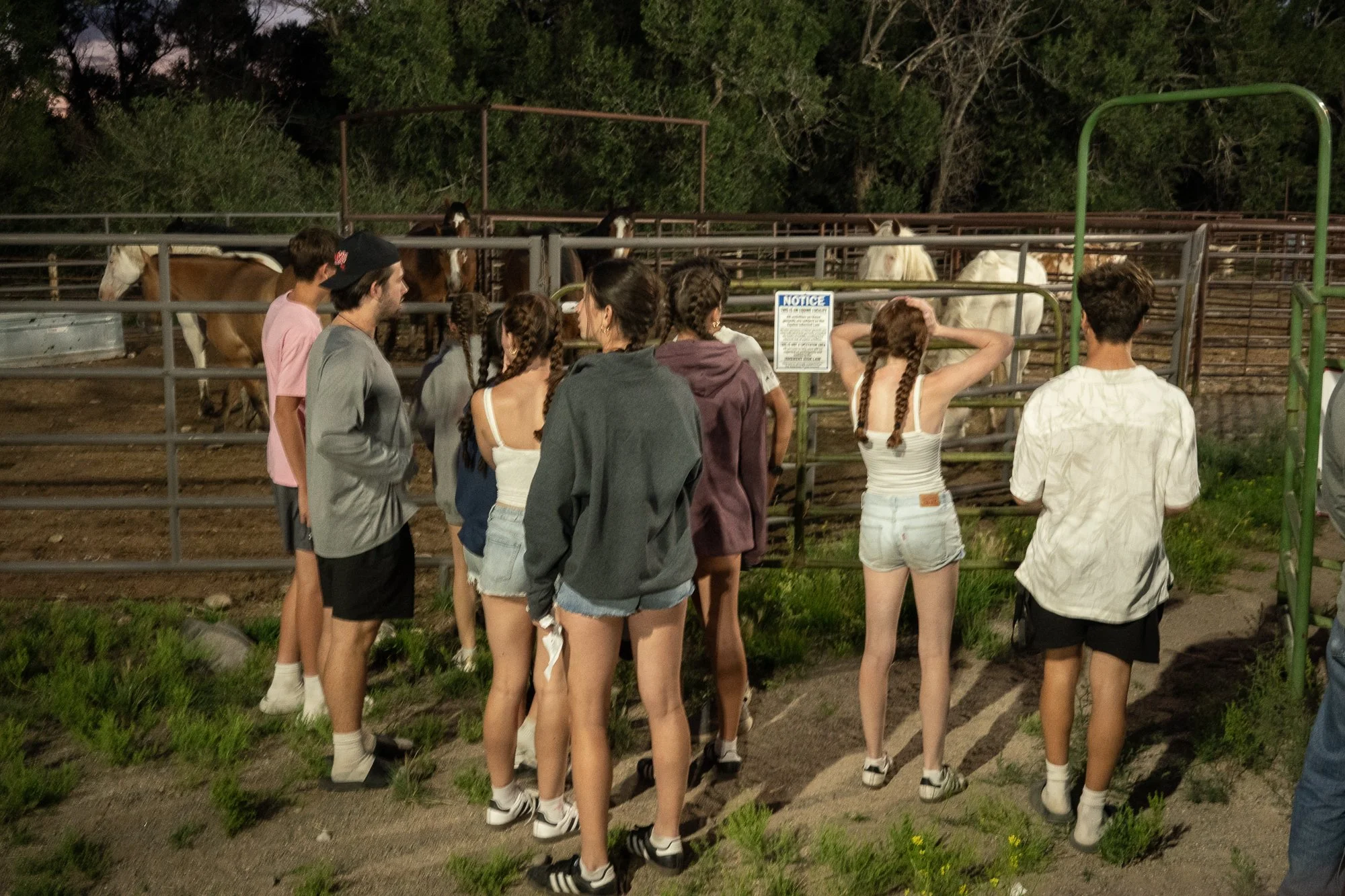
The horses draw a crowd away from the arena.
Why Rodeos Matter to Cowboy Culture
Rodeos occupy a unique place in the American West.
Historically, many rodeo events grew directly from the skills required on working ranches. Roping, horsemanship, stock handling, and riding difficult horses weren't invented for entertainment—they were part of everyday work.
Today, rodeos preserve those traditions while serving another equally important role.
They bring communities together.
In many rural towns, the annual or weekly rodeo isn't simply entertainment. It's where multiple generations gather in one place. Ranch families, contestants, local businesses, visitors, musicians, and volunteers all contribute to an event that reflects the identity of the town itself.
That's what interests me most.
Not simply the competition, but the culture surrounding it.
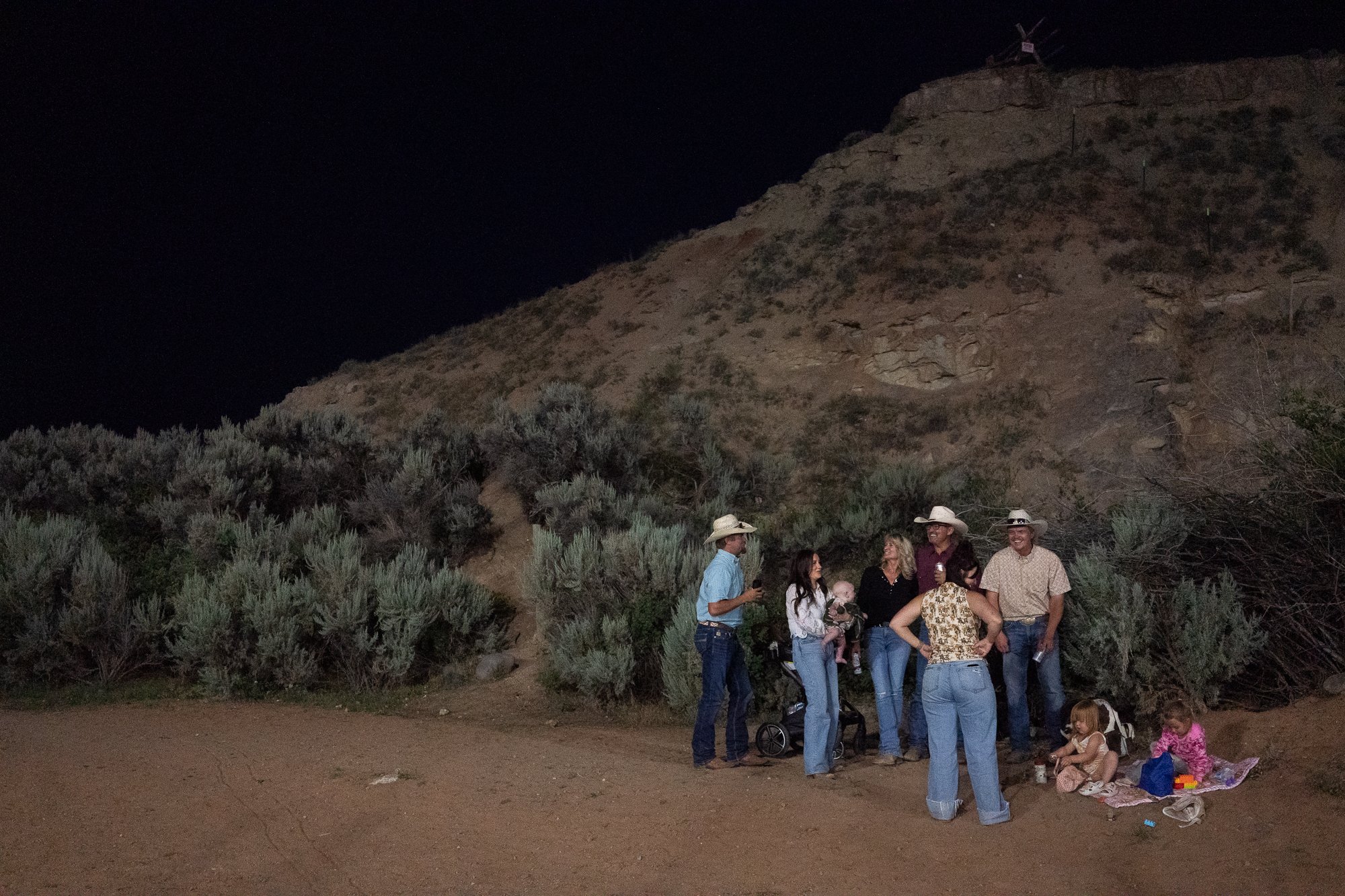
Conversations continue long after the final event has ended.
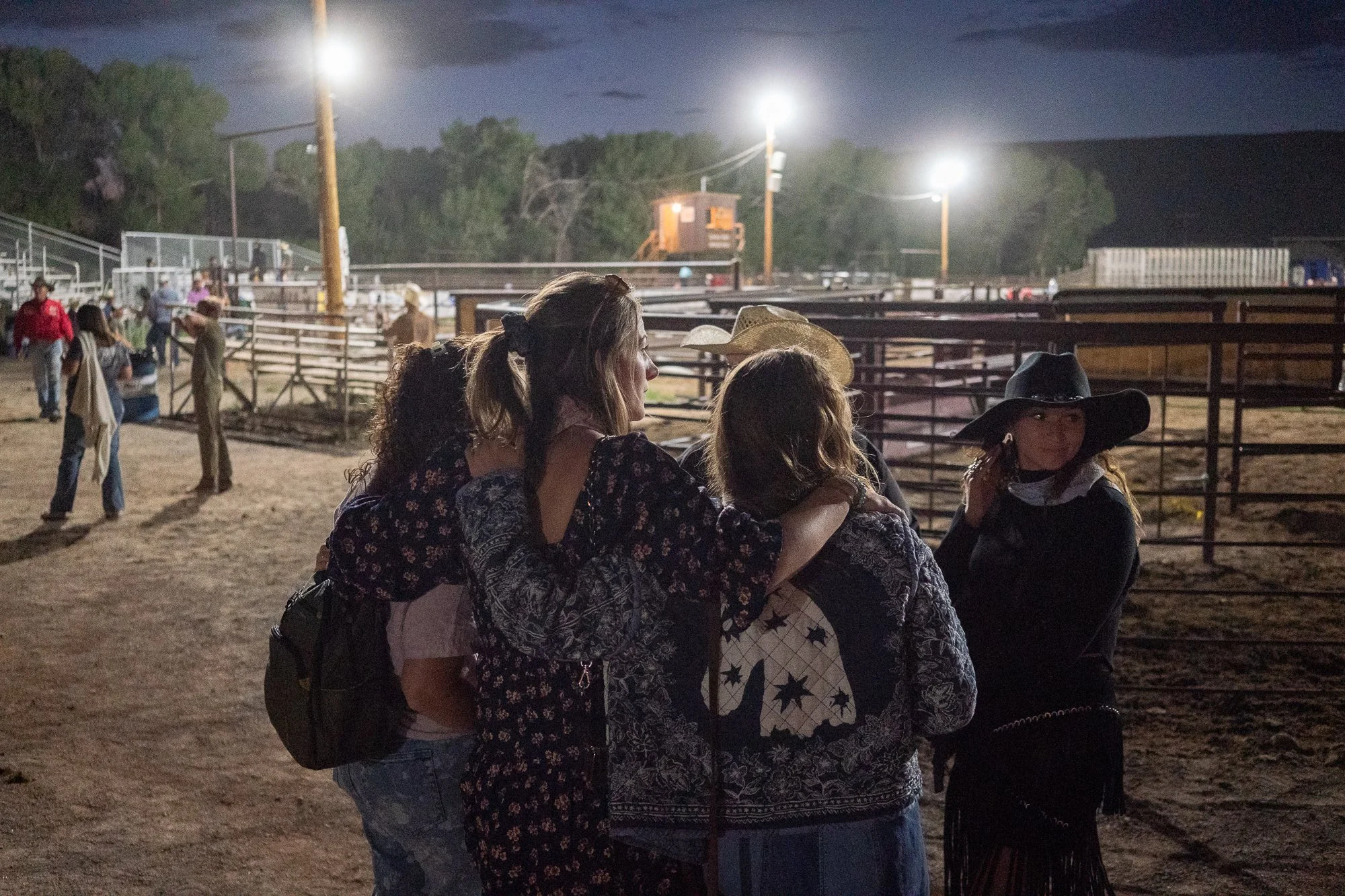
People continue visiting around the rodeo grounds after the final event.
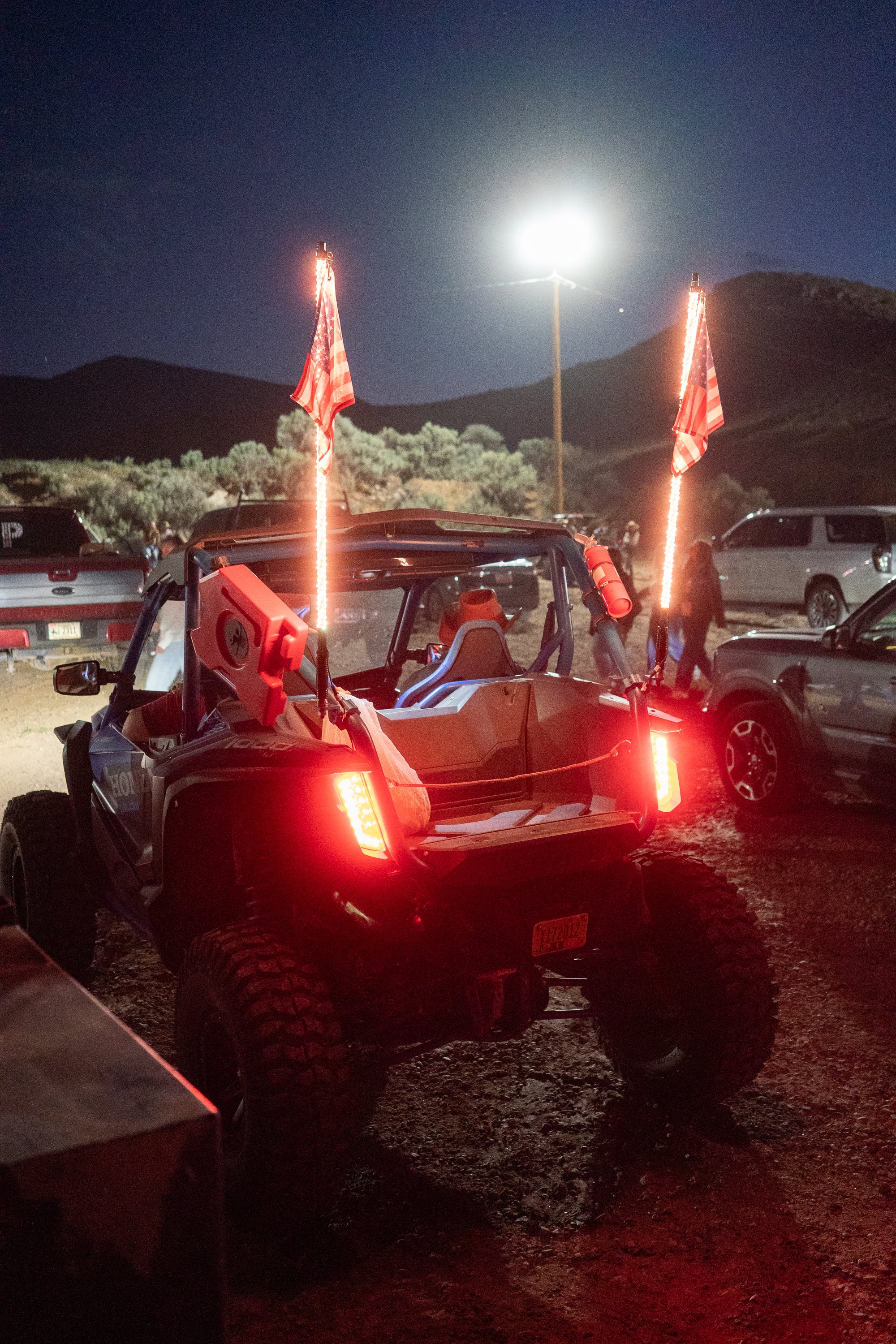
American flags remain lit in the parking area as the crowd begins to leave.
Looking Beyond the Arena
When the final event ended, many of the contestants and spectators made their way to a local bar.
The cowboy hats stayed on.
The conversations continued.
A country band took the stage.
Contestants who had been competing only an hour earlier were now talking with friends, laughing over drinks, and dancing with people they'd known for years.
Those photographs may never appear in a rodeo magazine.
But they say something important.
They remind us that cowboy culture doesn't end when the arena lights shut off.
It continues wherever people gather.
In conversations between friends.
In local music.
In family celebrations.
In worn dance floors and small-town bars that have served generations of ranch families.
Those moments rarely make headlines, yet they're often the photographs that feel most honest.
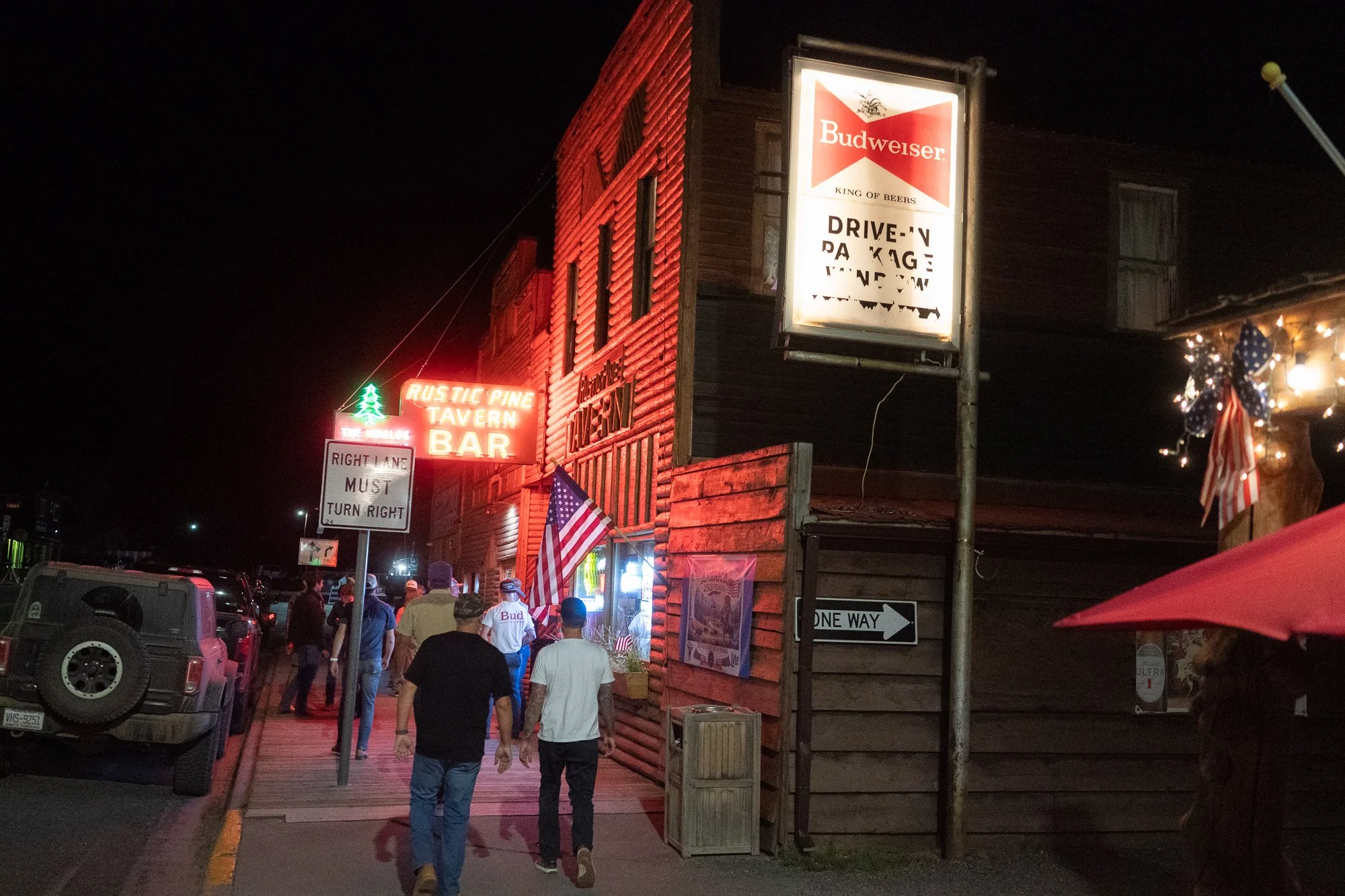
For many, the night continues at one of Dubois' longtime gathering places.- The Rustic Pine Tavern
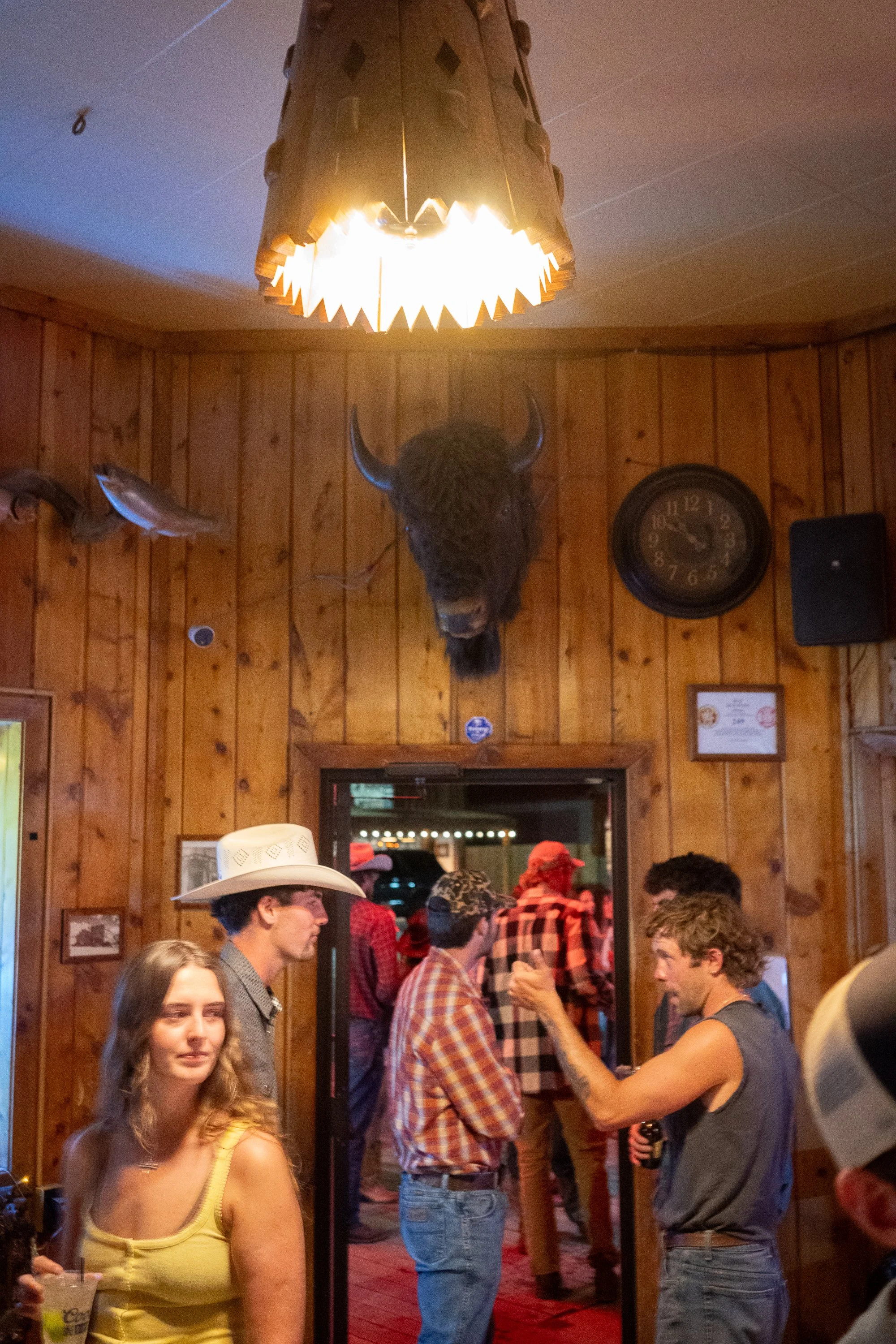
The bar fills as another rodeo night gives way to conversation and familiar faces.
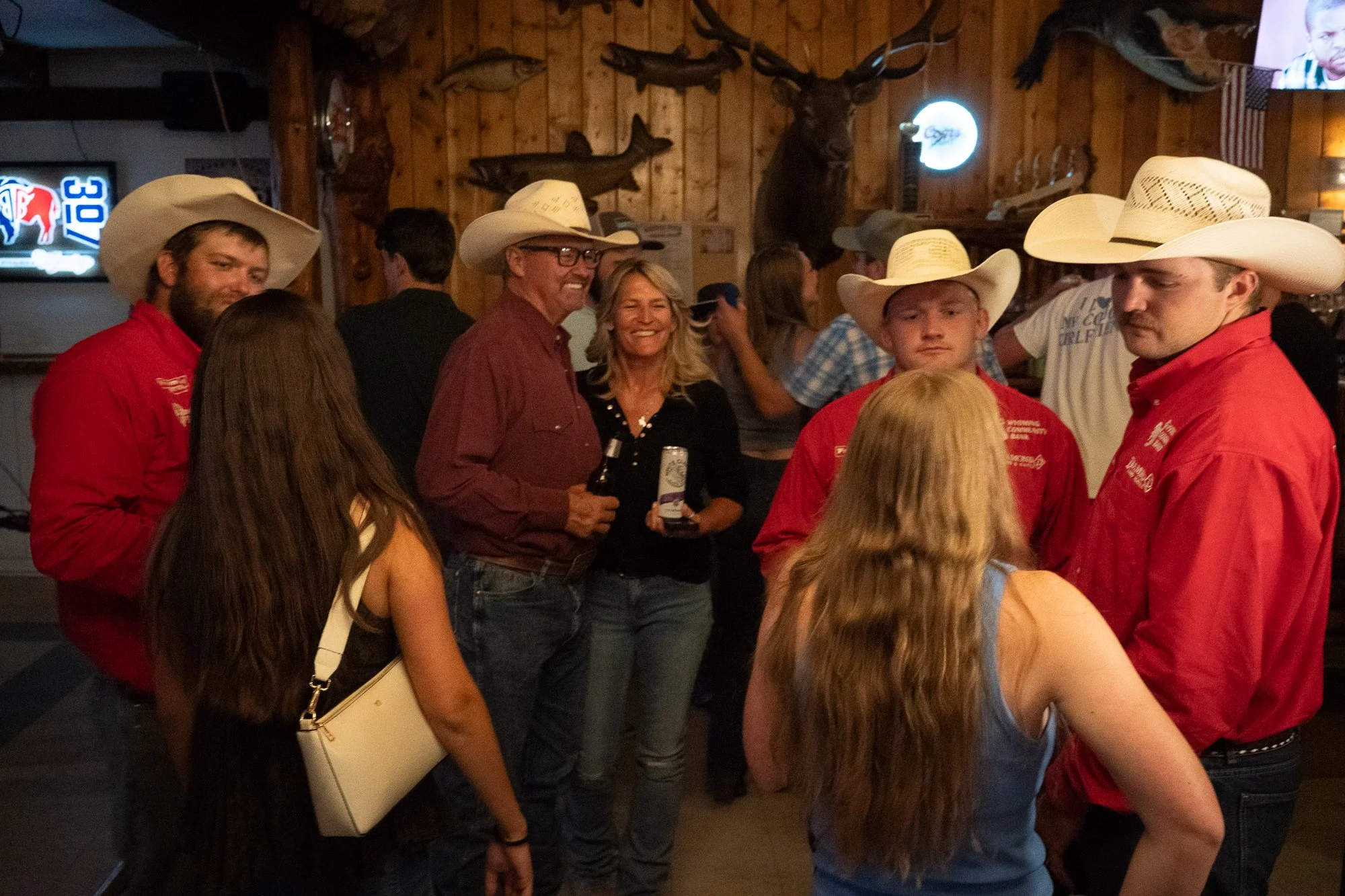
Conversations pick up where the rodeo left off.
Cowboy Culture Is More Than Ranch Work
One of the biggest misconceptions about my project is that it's exclusively about cowboys working cattle.
The work has always been broader than that.
Cowboy culture exists on ranches, certainly, but it also lives in rodeos, livestock auctions, county fairs, saddle shops, rawhide braiding shops, small-town cafés, and local bars after the rodeo is over.
Those places matter because they're where traditions are shared, friendships are maintained, and younger generations begin to understand the culture they're inheriting.
If we only photograph the work, we miss part of the story.
If we only photograph the competition, we miss another part.
I'm interested in documenting the spaces in between.
The moments that feel ordinary today but will become history tomorrow.
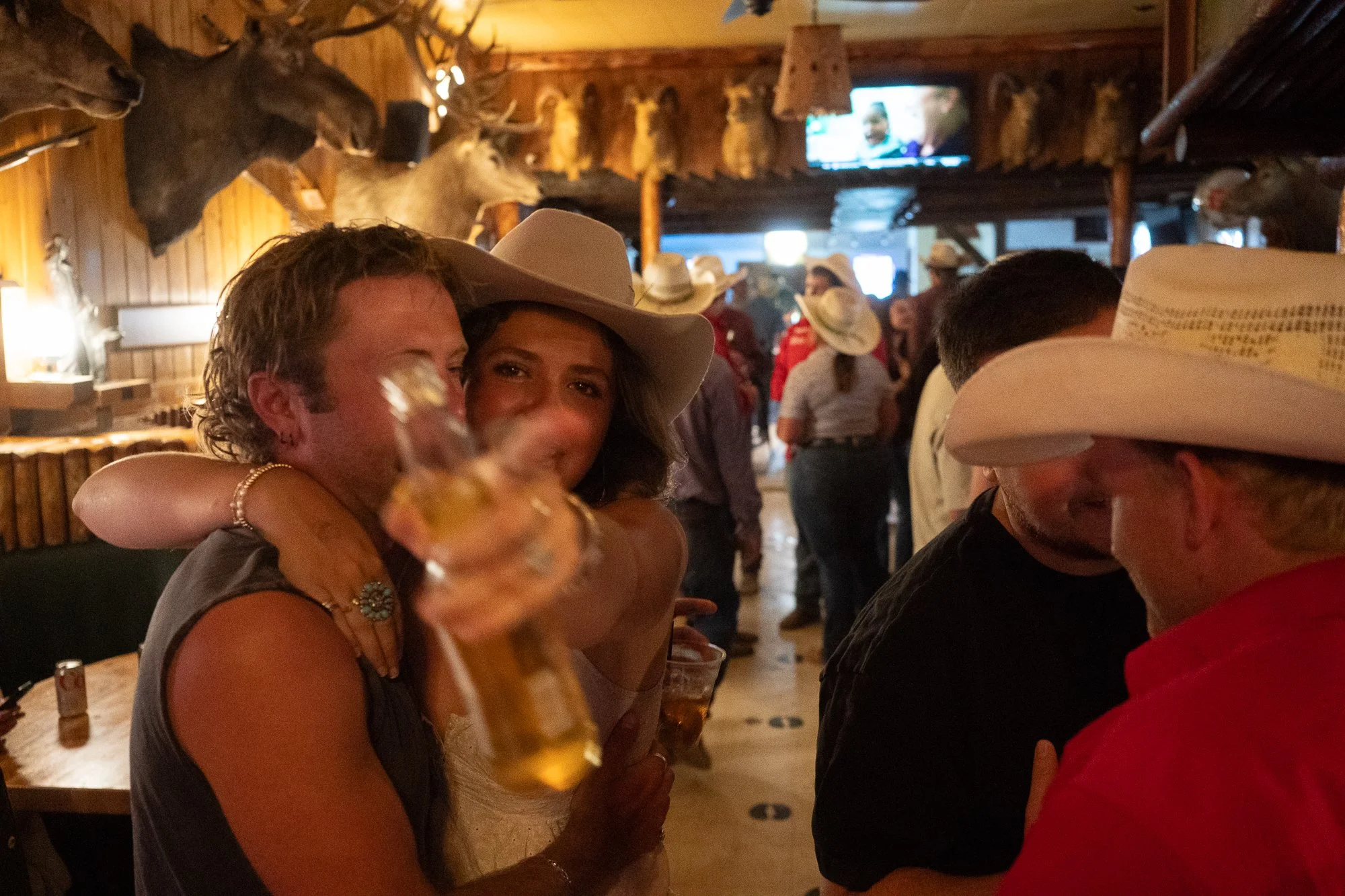
The evening continues inside the Rustic Pine Tavern.
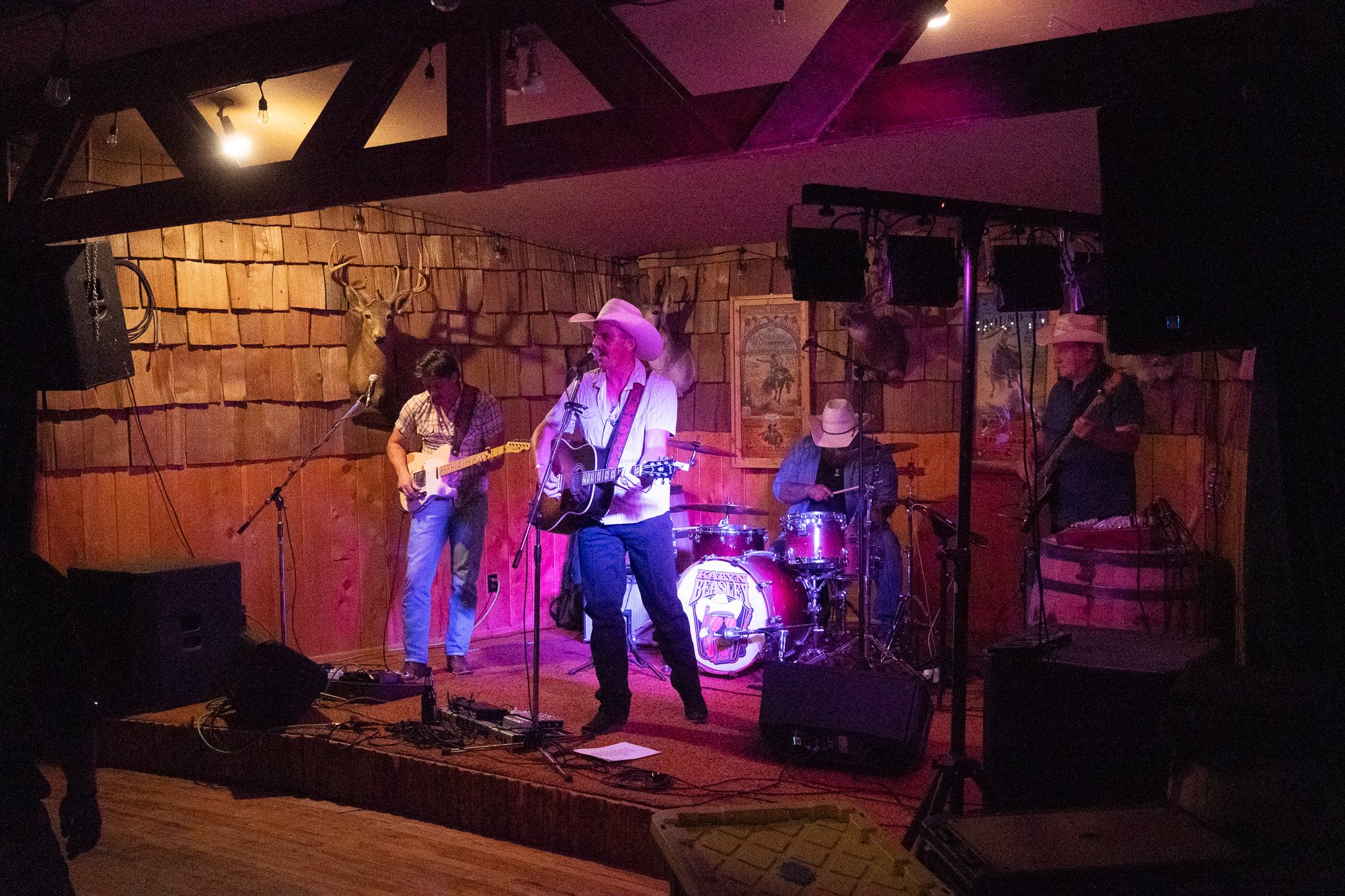
Live music carries the evening forward after the rodeo has ended.
An Ongoing Documentary Project About the American West
These photographs from Dubois are one small chapter in a documentary project that has taken me across thousands of miles of the American West over the past six years.
Some stories happen during branding season.
Others unfold in remote mountain pastures or desert ranches.
Sometimes they happen beneath the lights of a small-town rodeo, and sometimes they continue hours later inside a crowded Wyoming bar where the music starts after the livestock trailers have already headed home.
Together, they tell a larger story—not simply about cowboys, but about a living culture that continues to evolve while remaining deeply rooted in tradition.
If you'd like to explore more of this ongoing work, I invite you to browse the rest of the Cowboy Project, including stories from working ranches, traditional craftsmen, and communities throughout the American West.
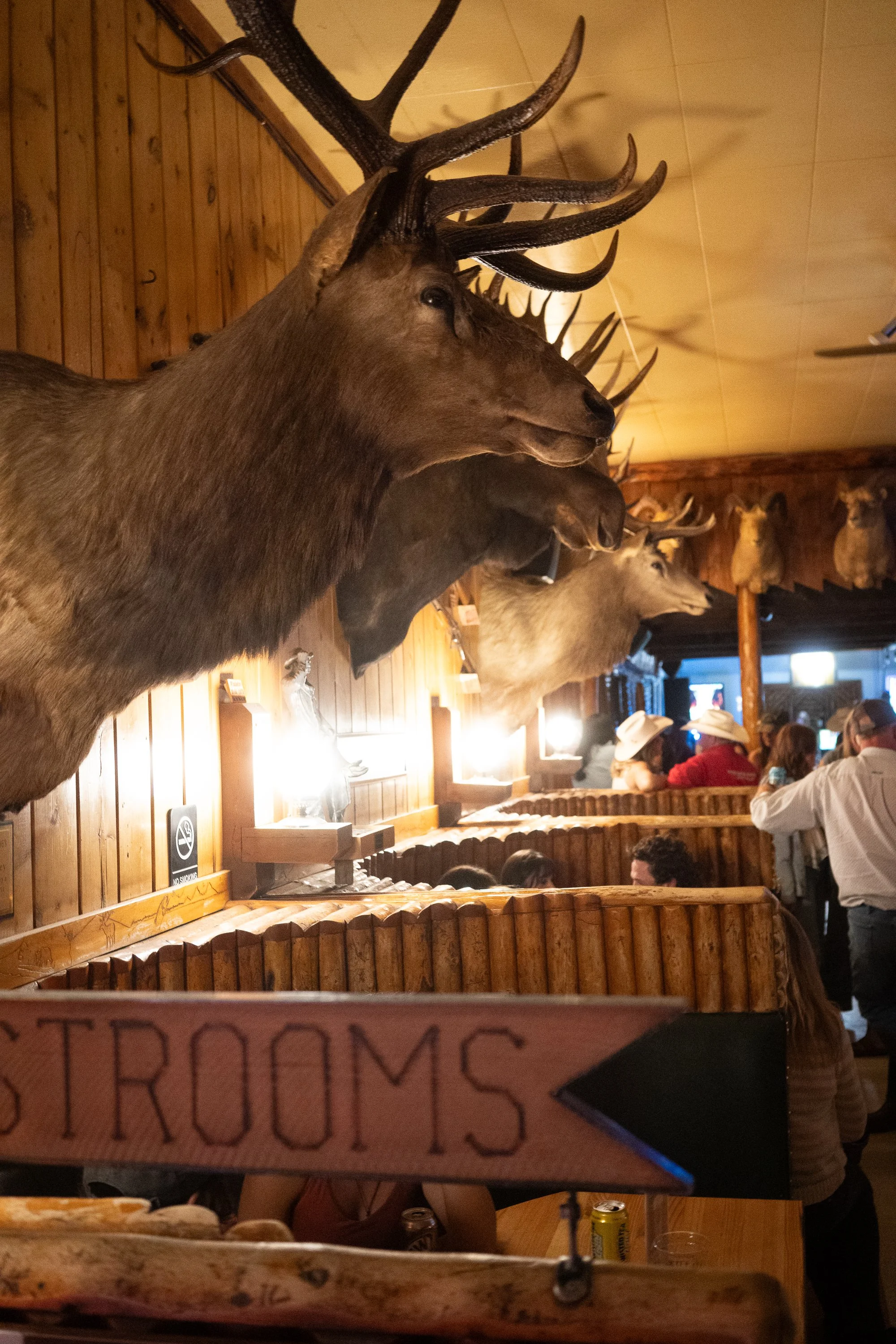
Inside the Rustic Pine Tavern, the evening settles into conversation among mounted wildlife and worn wood walls.
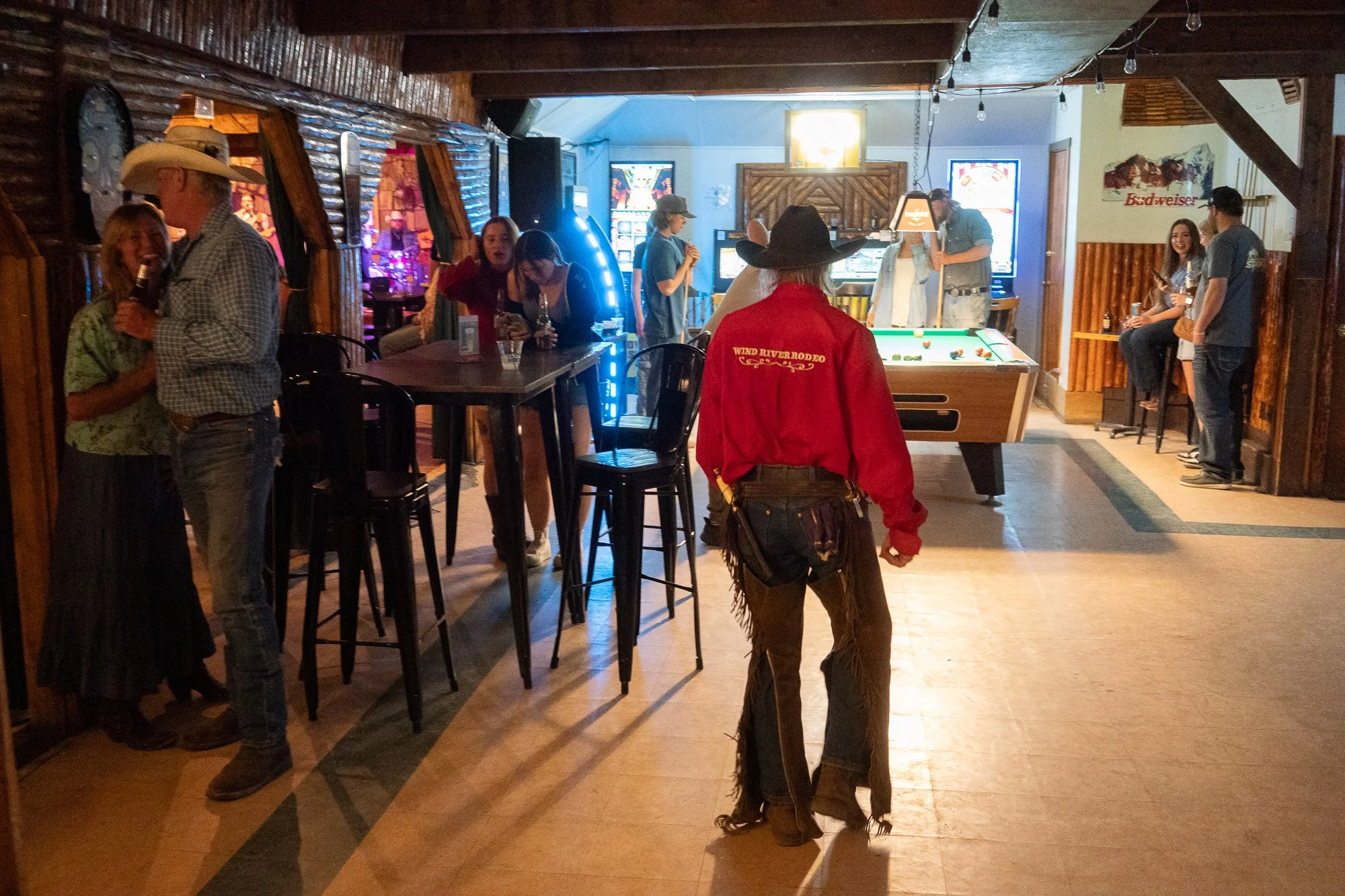
A cowboy in a Wind River Rodeo shirt, chaps, and a 10 inch knife walks through the Rustic Pine Tavern.