
Avenue Barbershop, Austin — A Tradition That Refuses to Fade
There are barbershops that lean into nostalgia, and then there are barbershops that never left it behind in the first place. Avenue Barbershop in Austin, Texas belongs firmly in the second category.
Opened in 1933, this shop has outlived trends, neighborhoods, and entire eras of American culture. What’s remarkable isn’t just that it’s still here — it’s that it hasn’t tried to reinvent itself to stay relevant. It hasn’t needed to.
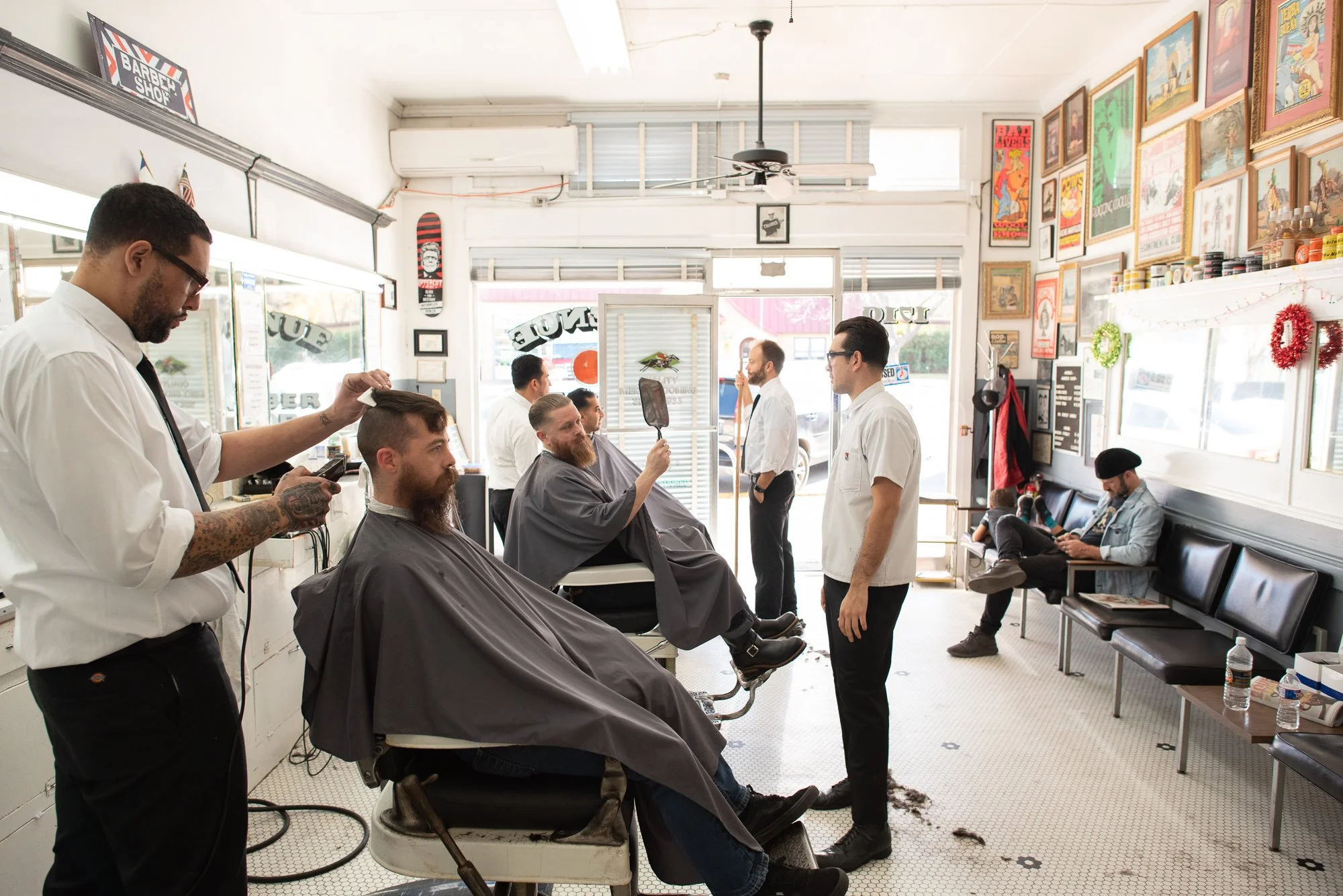
Barbers work throughout Avenue Barbershop as posters and framed photos cover the walls.
A Uniform That Says Everything
Walk through the door and one of the first things you notice is the consistency. Every barber is dressed the same: black shoes, black pants, white dress shirt, black tie. No variations, no personal branding, no modern reinterpretations.
It’s not a costume. It’s a standard.
And in a time where so many shops are built around individuality and aesthetic, there’s something quietly powerful about that uniformity. It reinforces the idea that this place is about the work — not the persona behind the chair.
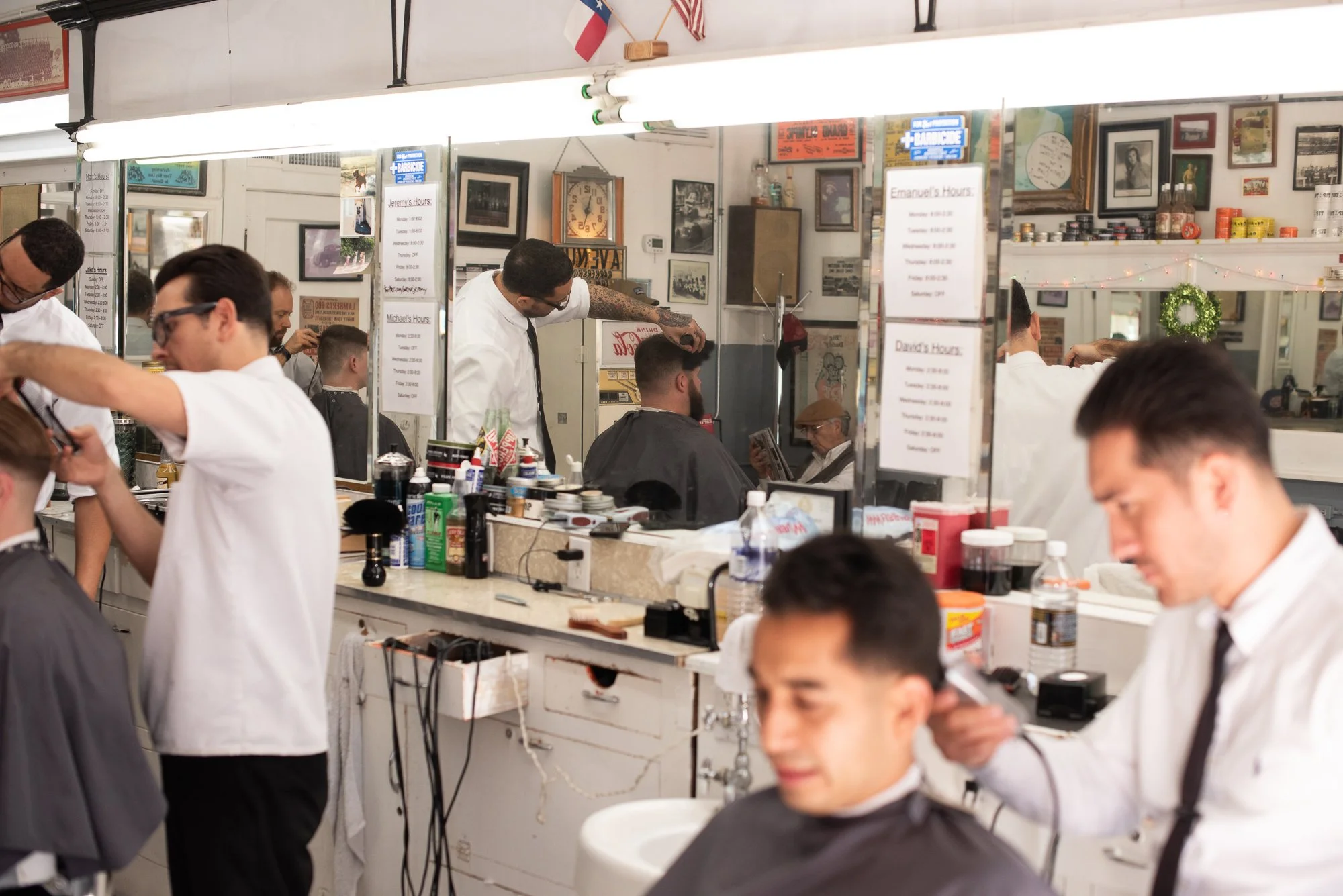
Barbers in white shirts and black ties work along a row of chairs as customers sit in front of the mirrors.
A Shop That Stayed the Course
Avenue Barbershop has been cutting hair in Austin since long before the city became what it is today. Before the tech boom, before the influx, before “Austin” became a brand in itself.
What’s interesting is that the barbers working there today — guys in their 30s and 40s — have chosen to carry that legacy forward without trying to modernize it into something else.
There’s no attempt to blur the line between barbershop and lifestyle boutique. No curated retail wall. No forced nostalgia.
Just a room built around the fundamentals: chairs, mirrors, tools, and the understanding that if you do the work right, that’s enough.
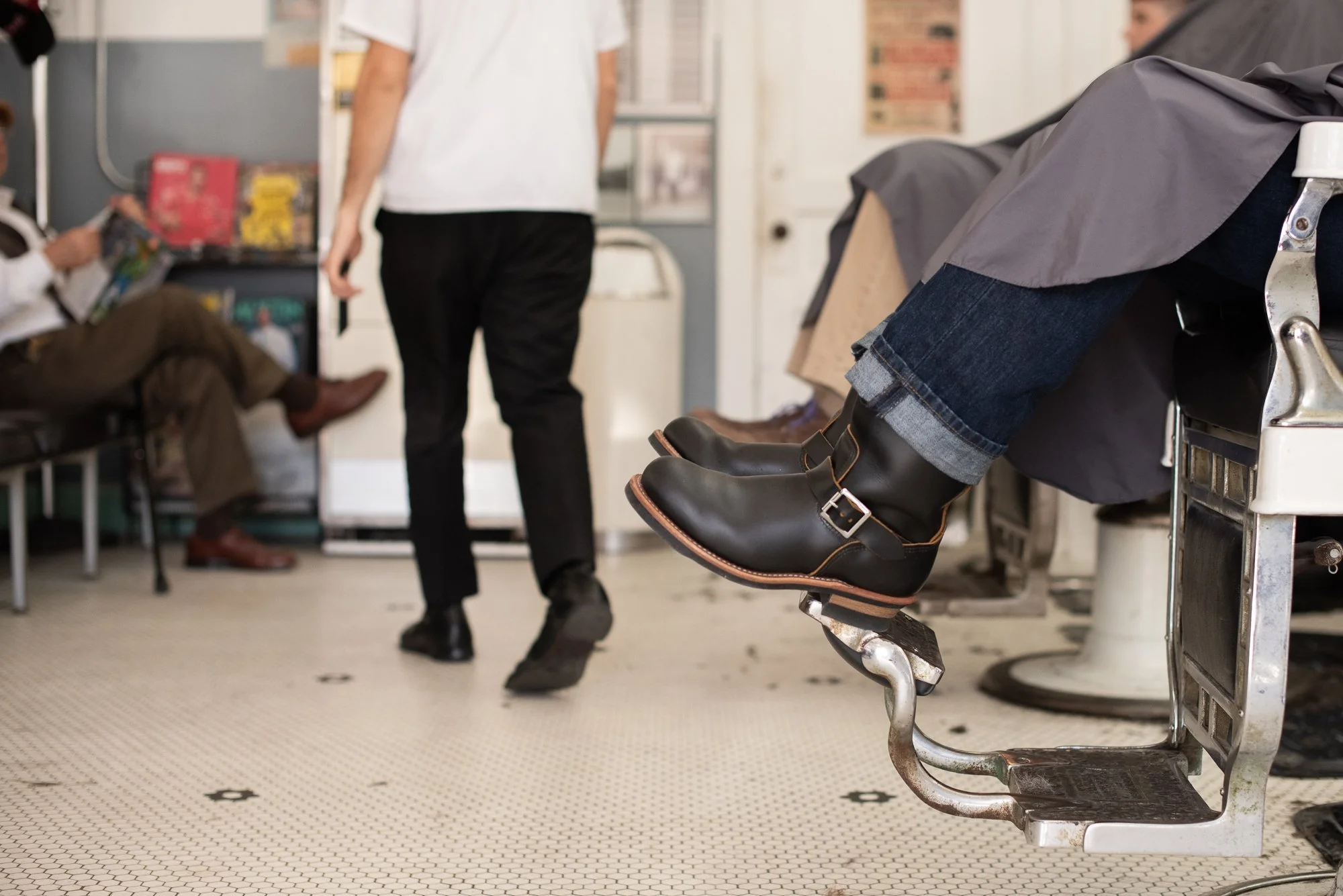
Black biker boots rest on the footrest of a barber chair—details that repeat across each station in the shop.
The Value of Restraint
There’s a discipline to a place like this.
It would be easy to update the look, to lean into trends, to capitalize on the current wave of barbershop culture that mixes vintage aesthetics with modern branding. But Avenue doesn’t chase any of that.
Instead, it holds the line.
That restraint is what gives the shop its weight. It doesn’t feel like a reinterpretation of the past — it feels like a continuation of it.
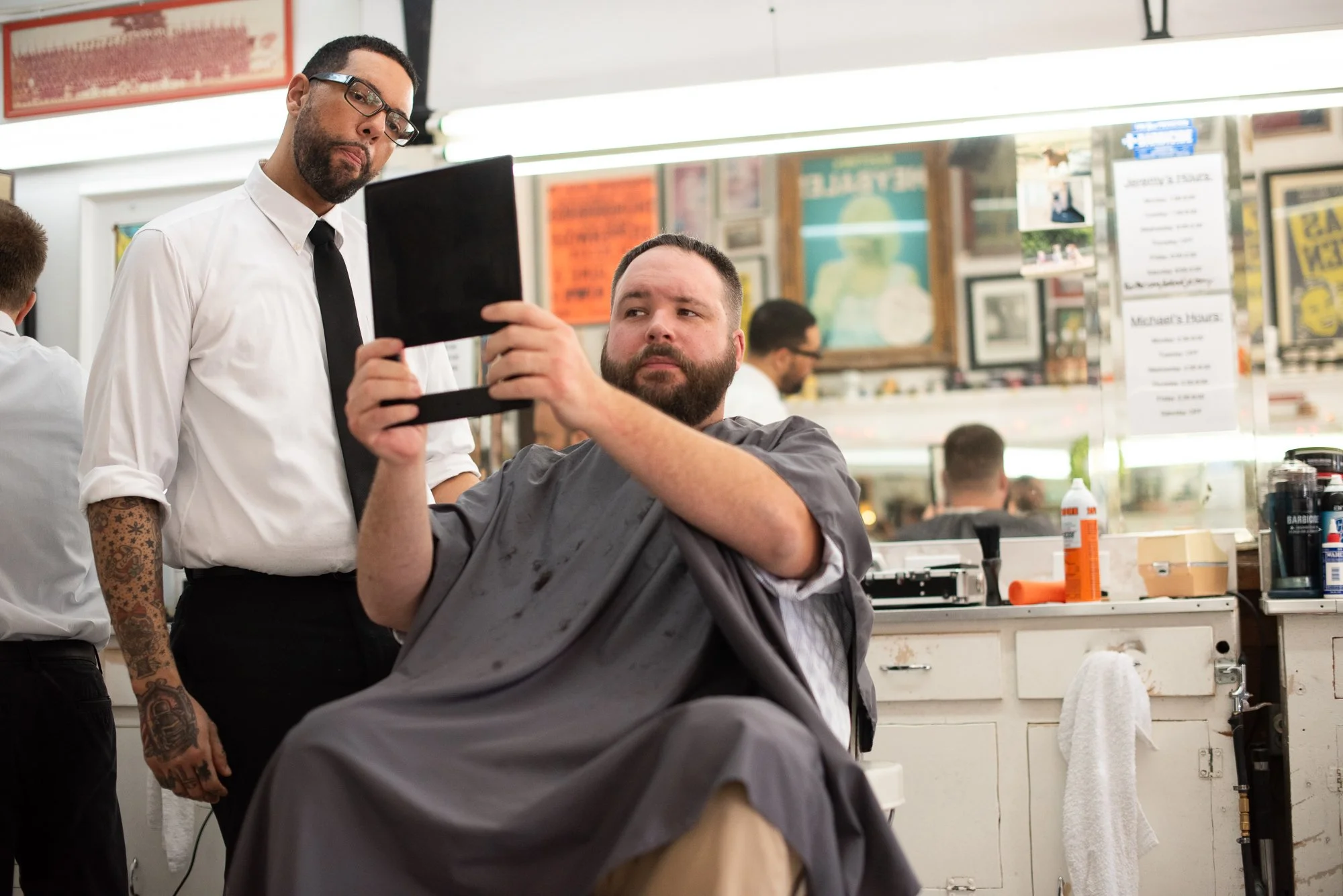
A barber holds up a mirror so the customer can see the back of his haircut at a neighborhood barbershop in Austin, Texas.
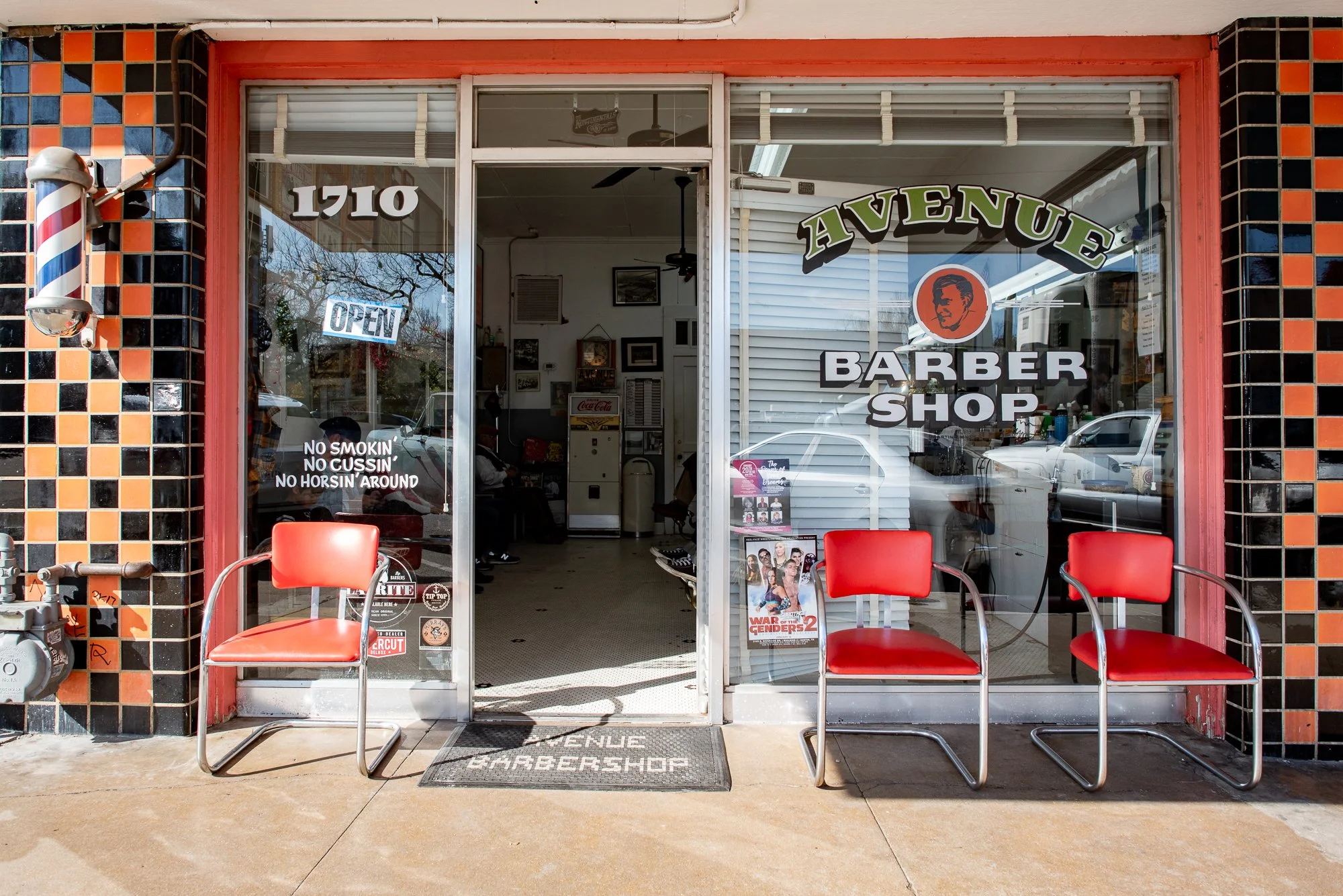
The storefront of Avenue Barbershop in Austin, Texas, a longstanding neighborhood institution on South Congress known for its classic approach and timeless style.
A Living Piece of American Craft
Barbershops like Avenue aren’t just businesses. They’re part of a larger story about skilled labor in America — trades that have been passed down, refined, and preserved over time.
The details matter here:
The way a haircut is approached without shortcuts
The rhythm of the shop throughout the day
The quiet understanding between barber and client
These are things that don’t show up on a price list or a website, but they’re what keep people coming back.
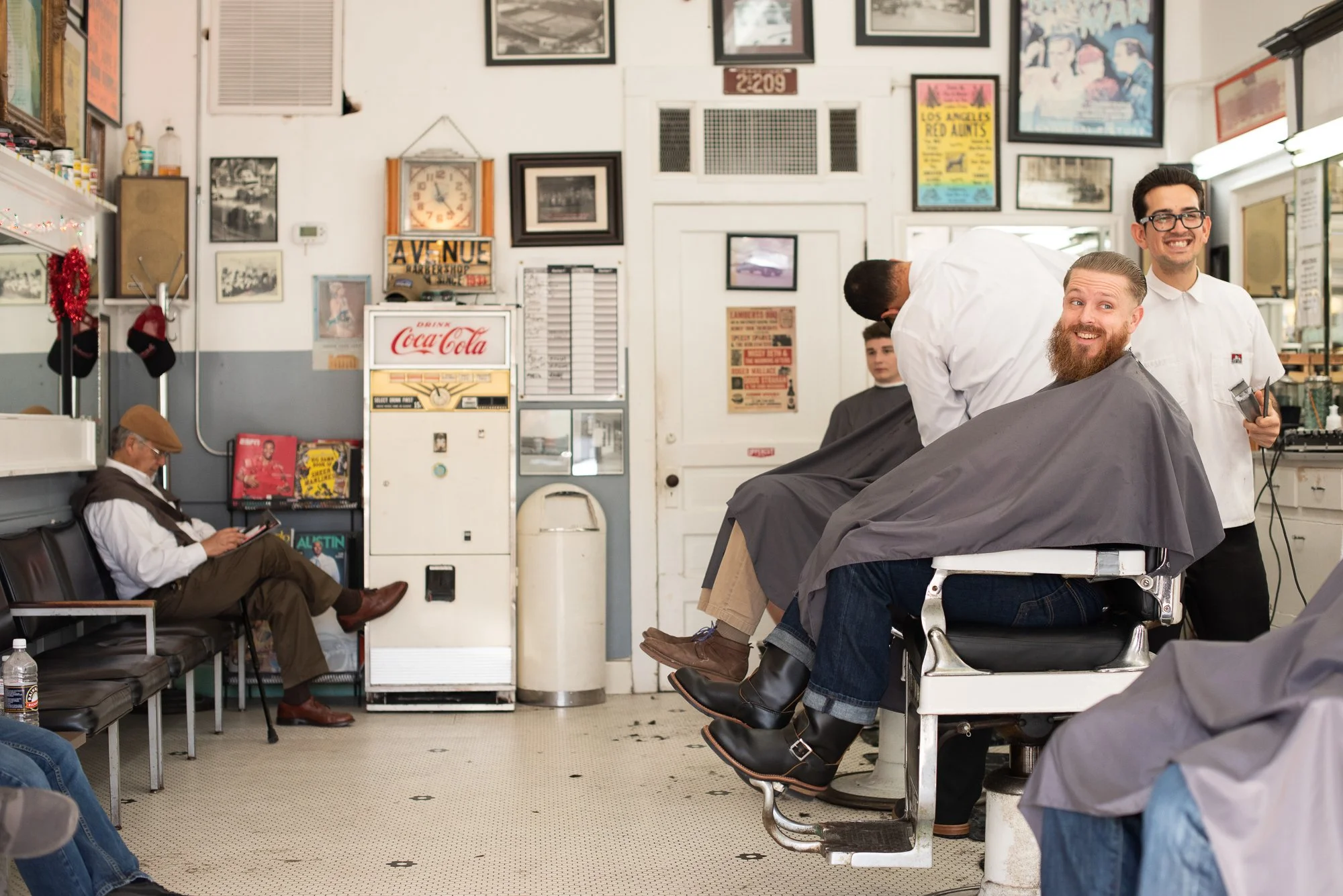
Conversation in progress at Avenue Barbershop in Austin, Texas, where a new generation of barbers carries forward a tradition that dates back to 1933.
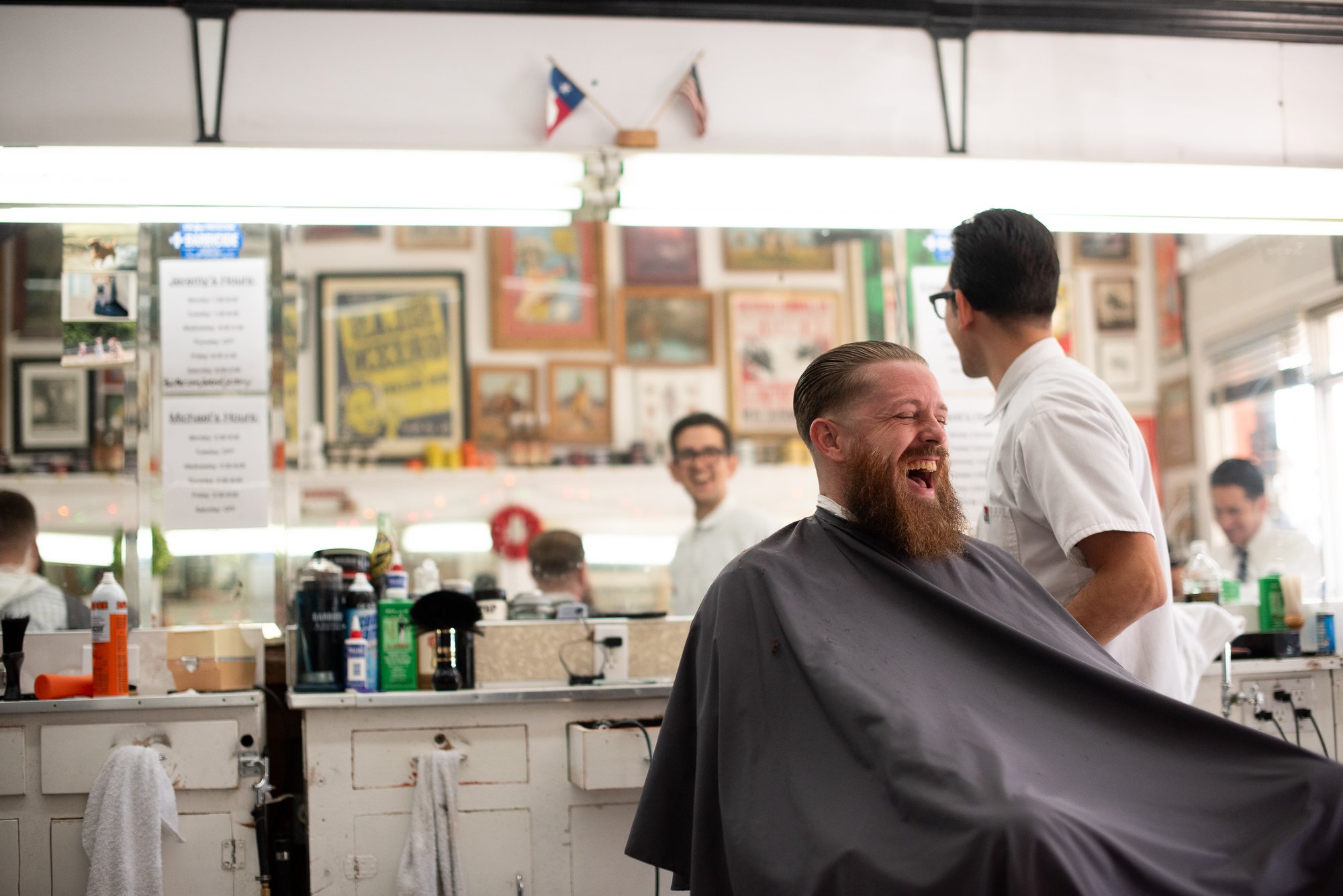
A customer laughs in the chair while the barber stands beside him.
Part of a Larger Body of Work
This shop is one of many I’ve documented over the past 15+ years photographing barbershops across the United States — from small-town single-chair shops to historic spaces like this one that have stood the test of time.
The goal has never been just to document interiors, but to preserve the feeling of these places — especially as so many of them disappear or evolve into something else entirely.
→ View the full Barbershops of America project
→ Read another story from a classic American barbershop
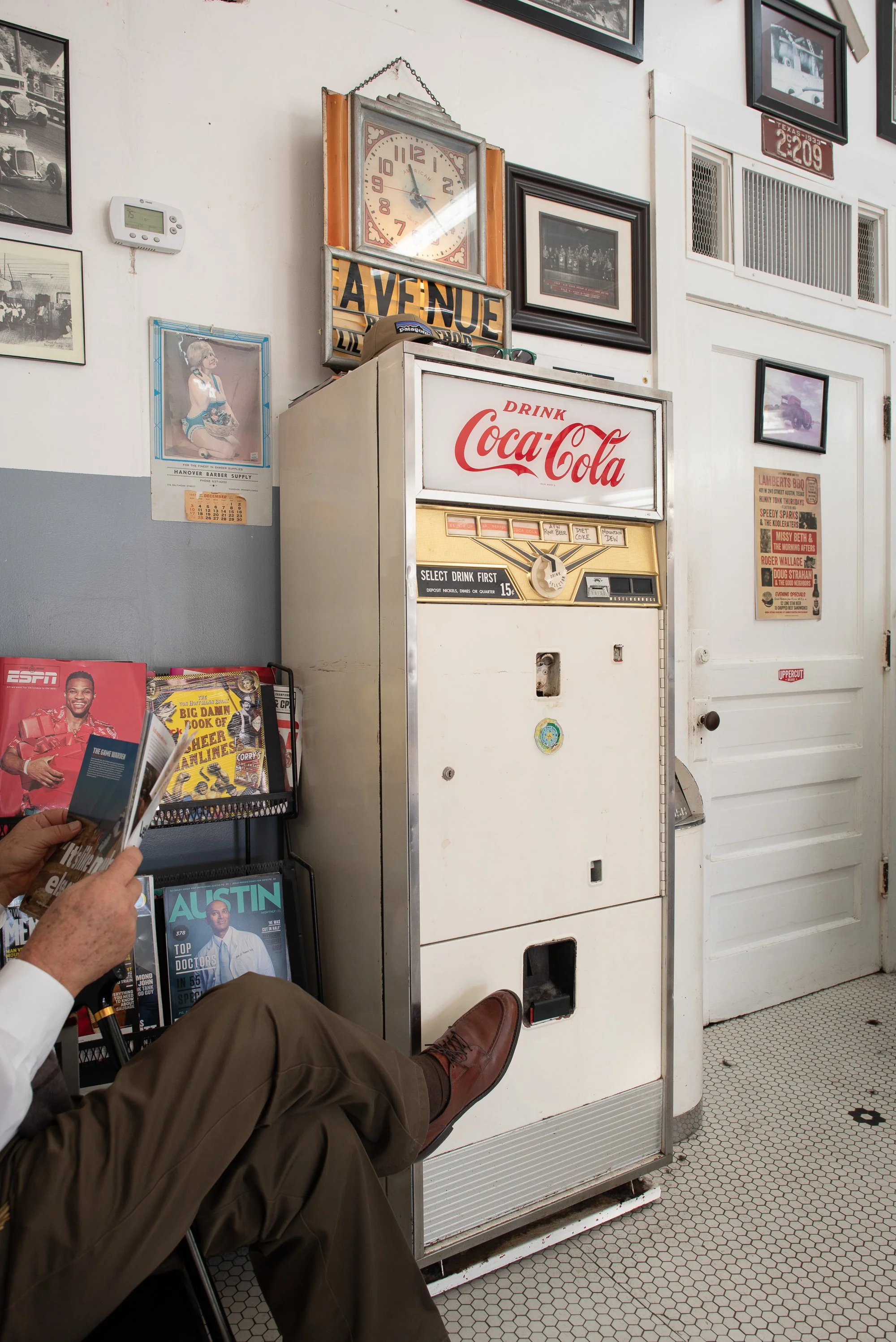
A vintage Coca-Cola machine stands against the wall beside framed photos and posters at Avenue Barbershop in Austin, TX.
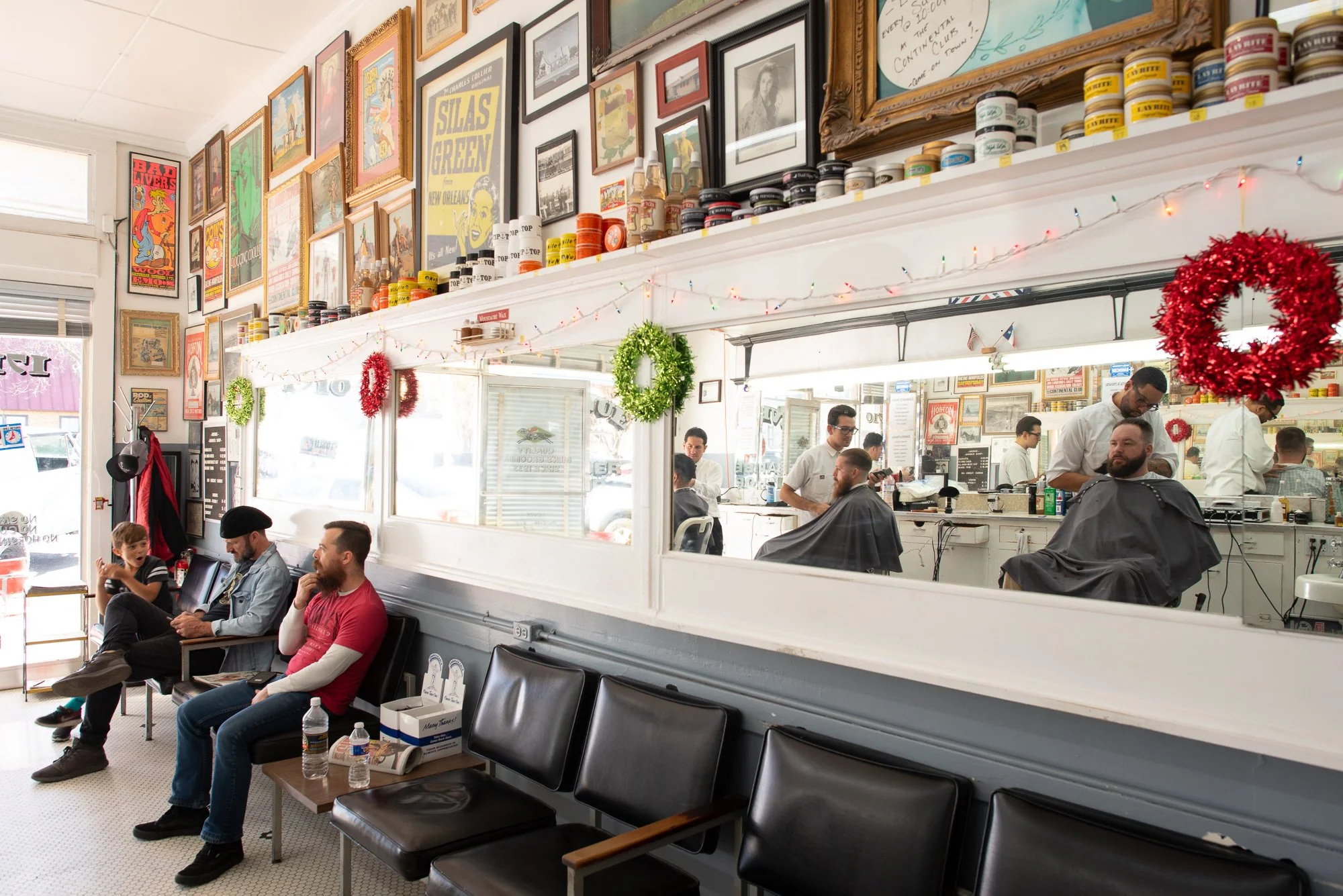
Customers sit along the wall as others get their hair cut across from them.
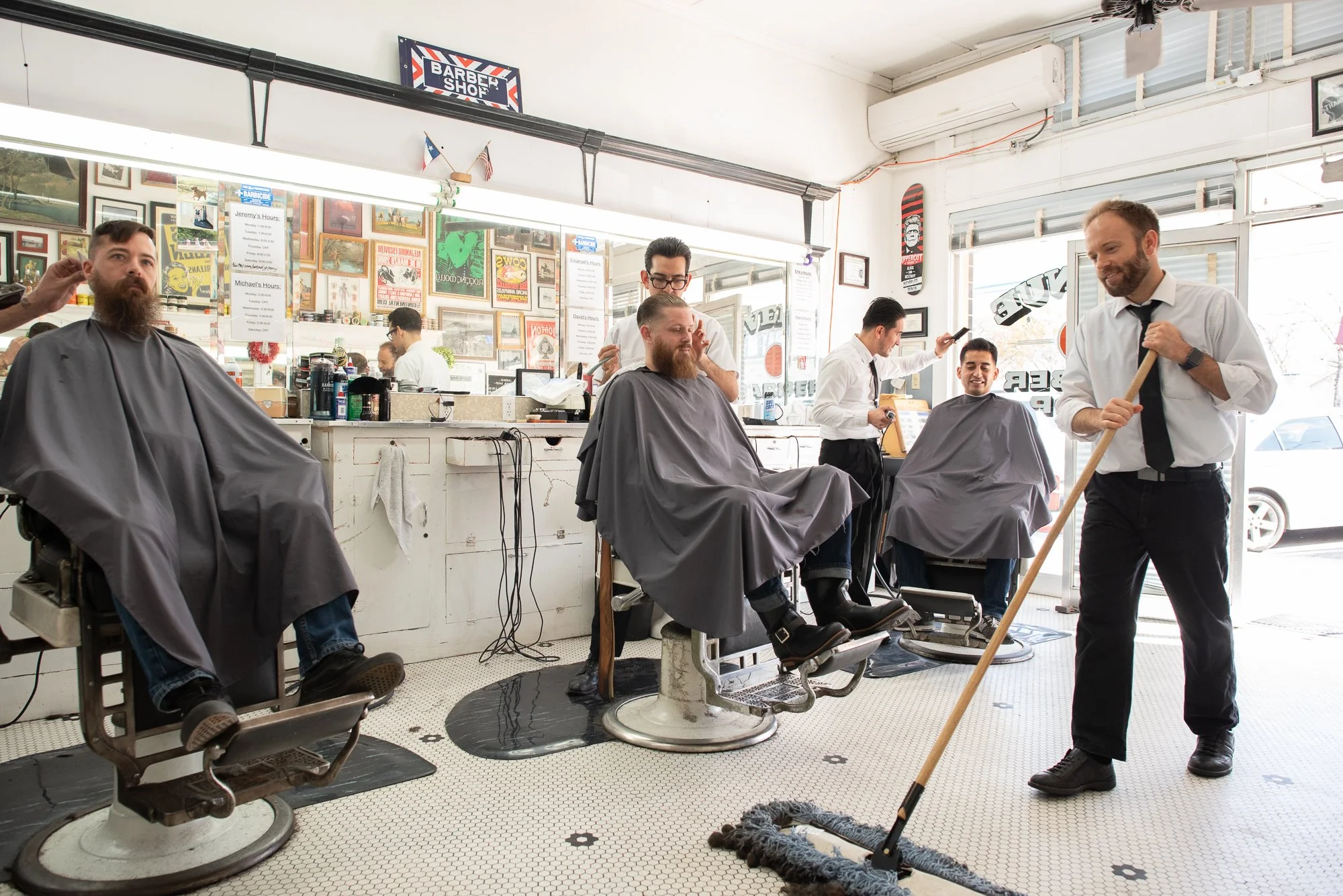
A barber sweeps the floor between the chairs—part of the daily rhythm inside the shop.