Traditional Barbershops of Scotland

Barbershops of Scotland

After more than 15 years photographing barbershops across all 50 states, I’ve come to recognize certain constants—spaces shaped by routine, built on familiarity, where the walls carry just as much history as the people sitting in the chair. What started as a project rooted in American culture gradually extended beyond it. Everywhere I travel, I find myself stepping into barbershops. Different countries, different cities—but often, the same feeling.

It wasn’t something I set out to do. At some point, it just became part of how I move through a place. I’ll walk past a shop, look through the window, and recognize something immediately—an arrangement of chairs, a certain kind of light, the way tools are laid out, or what’s hanging on the walls. It’s familiar, even when it shouldn’t be.

In Scotland, that feeling was there from the start.

The shops are different in the details, and their history - often sitting on narrower street in front of a 500 year old church. The signage has its own character. The interiors feel a little more restrained in some cases, a little more utilitarian in others. But step inside, and the rhythm is the same. A customer in the chair, another waiting, conversation moving easily through the room. The quiet repetition of a trade that hasn’t changed much, even as everything around it has.

That’s what continues to stand out—how consistent these spaces are, no matter where you are. The barbershop may be one of the last places that still exists in nearly the same form across different cultures. Not identical, but recognizable. You don’t need to be from there to understand it.

And yet, like many of the shops I’ve photographed across America, there’s a sense that these places are becoming less common. The pace of change is different depending on where you are, but the result is often the same. Older shops close. New ones open with a different feel. Something shifts.

That’s part of what makes photographing them feel important.

The Barbershops of America project has always been about more than documenting interiors. It’s about holding onto these spaces as they exist right now—before they change, before they disappear, before they’re replaced by something else entirely. Photographing barbershops in Scotland—and in other countries I’ve traveled to—has only reinforced that idea. It’s not just an American story. It’s a broader one.

But America is still the foundation.

Fifteen years of work, across small towns and cities, documenting shops that are deeply tied to the communities around them. The photographs from Scotland don’t sit apart from that—they connect back to it. They show how far this kind of place reaches, and how much of it is shared.

A Growing Archive

This work in Scotland is part of a much larger archive built over more than a decade on the road—photographing barbershops across the United States and, increasingly, in other parts of the world.

Some of these shops are still operating. Many are not.

Together, they form a record of a space that has remained remarkably consistent over time, even as the world around it continues to change.

Explore the Barbershops of America archive
Read more individual shop stories → Tony’s - a 200 year old barbershop in Brooklyn
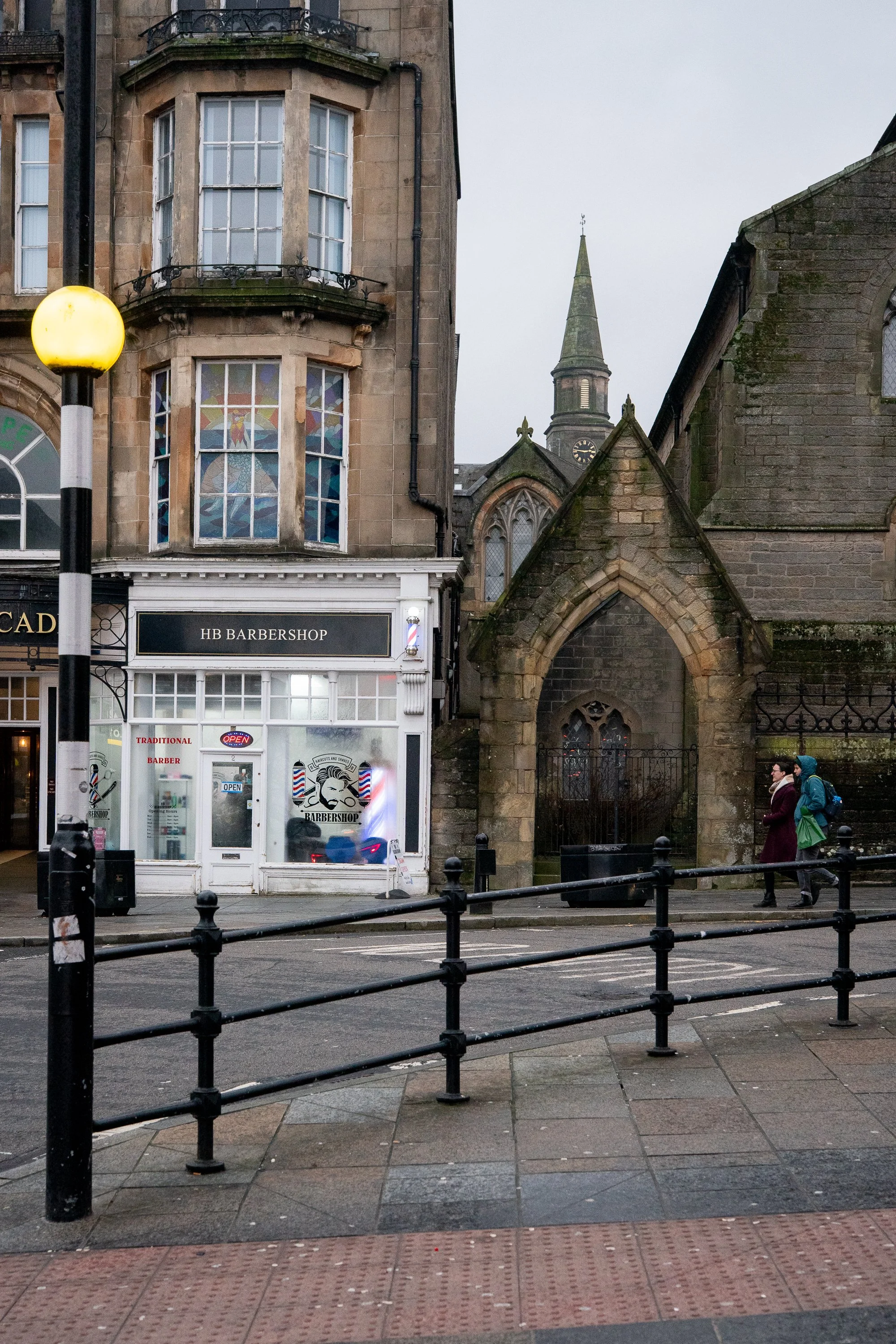
hb barber shop next to historic stone church in scotland street scene

HB Barber Shop sits beside a historic church, blending into the layered streets of Scotland
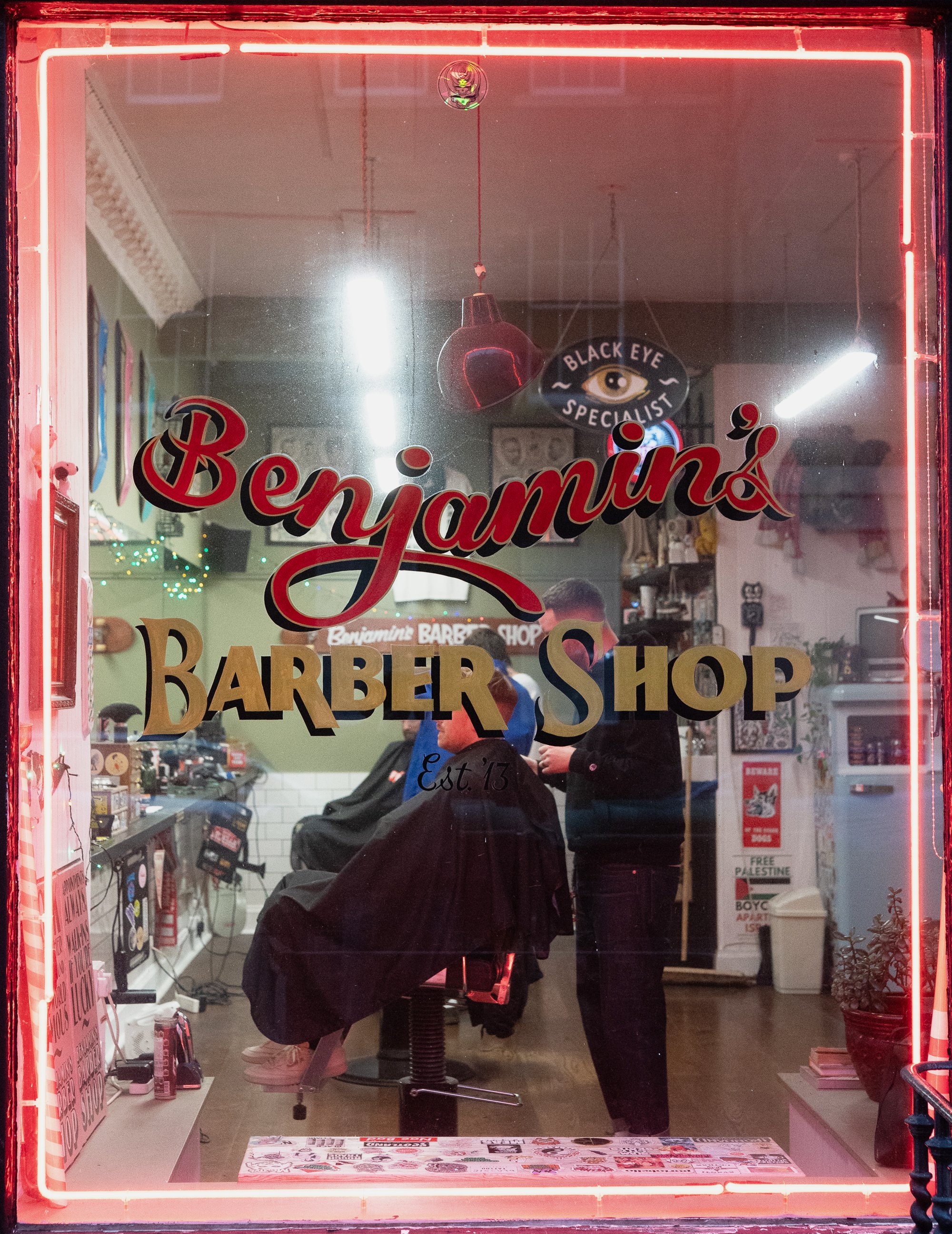
barber cutting hair inside benjamins barber shop edinburgh through window

A haircut in progress inside Benjamin’s Barber Shop, seen through the glass from the street
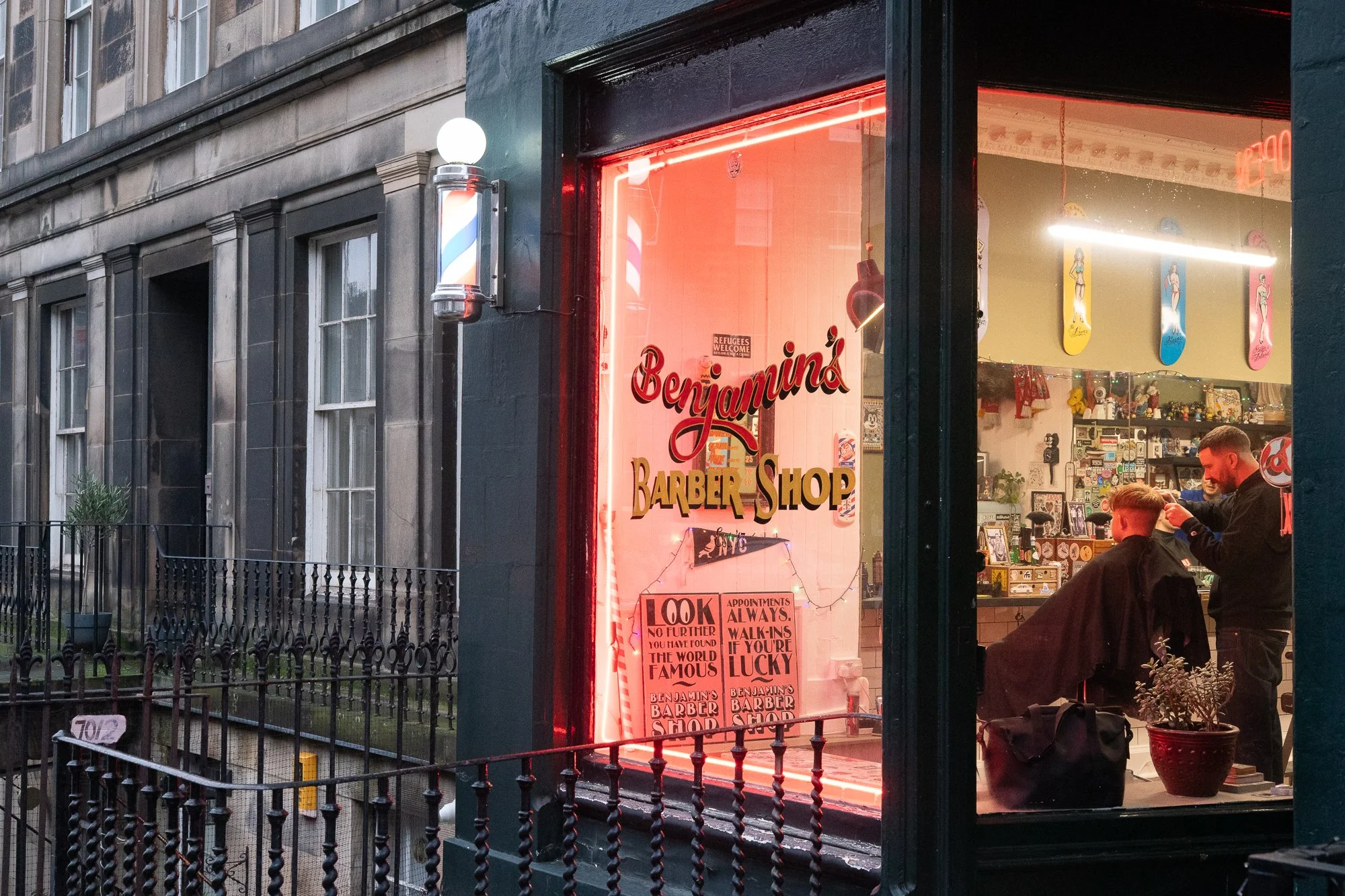
benjamins barber shop window with red neon glow in edinburgh street

Neon-lit window of Benjamin’s Barber Shop glowing onto the street, revealing a working shop inside
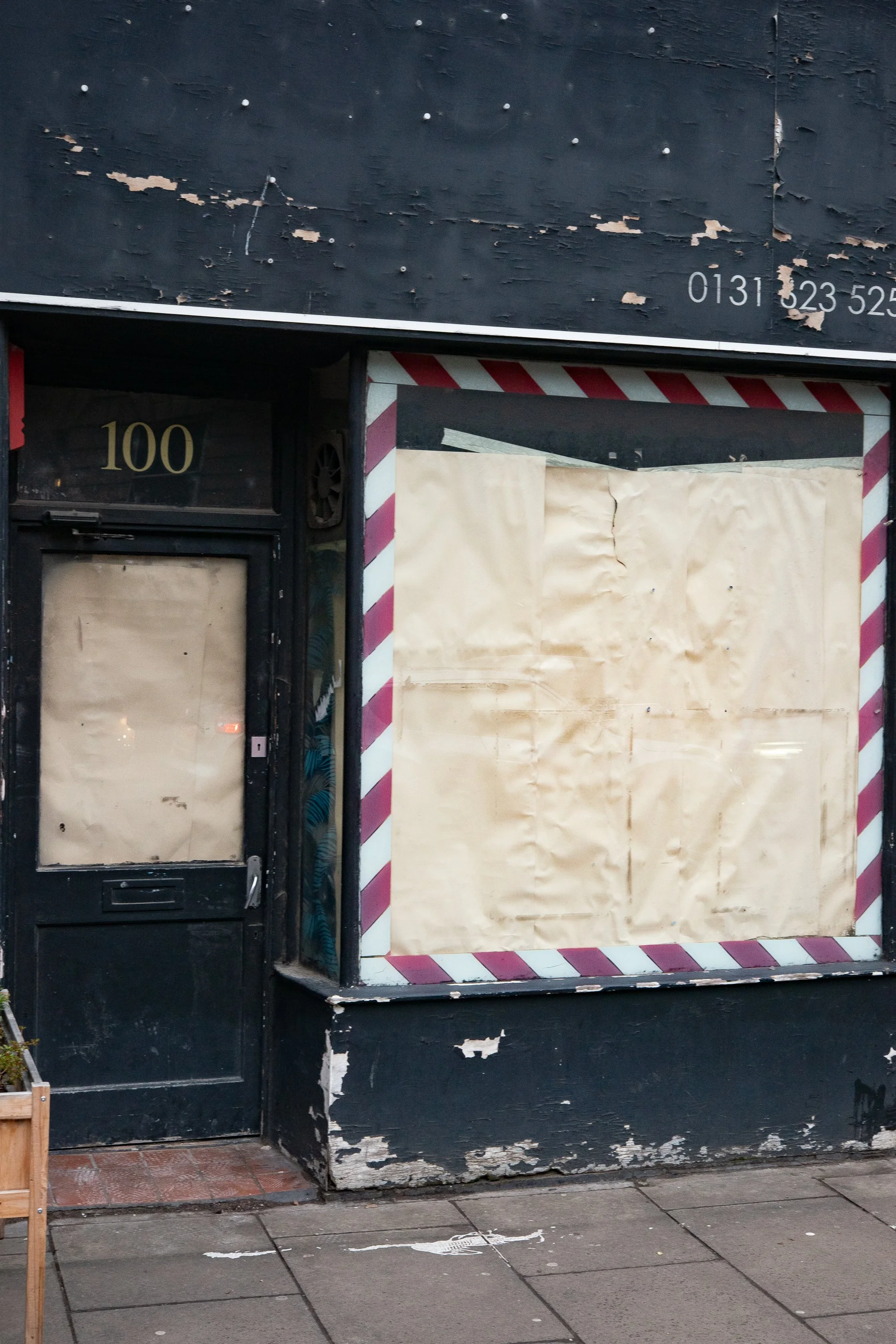
boarded-up barbershop storefront with striped trim and peeling paint in scotland

Boarded-up barbershop with classic red-and-white trim, showing the quiet disappearance of neighborhood shops in Scotland
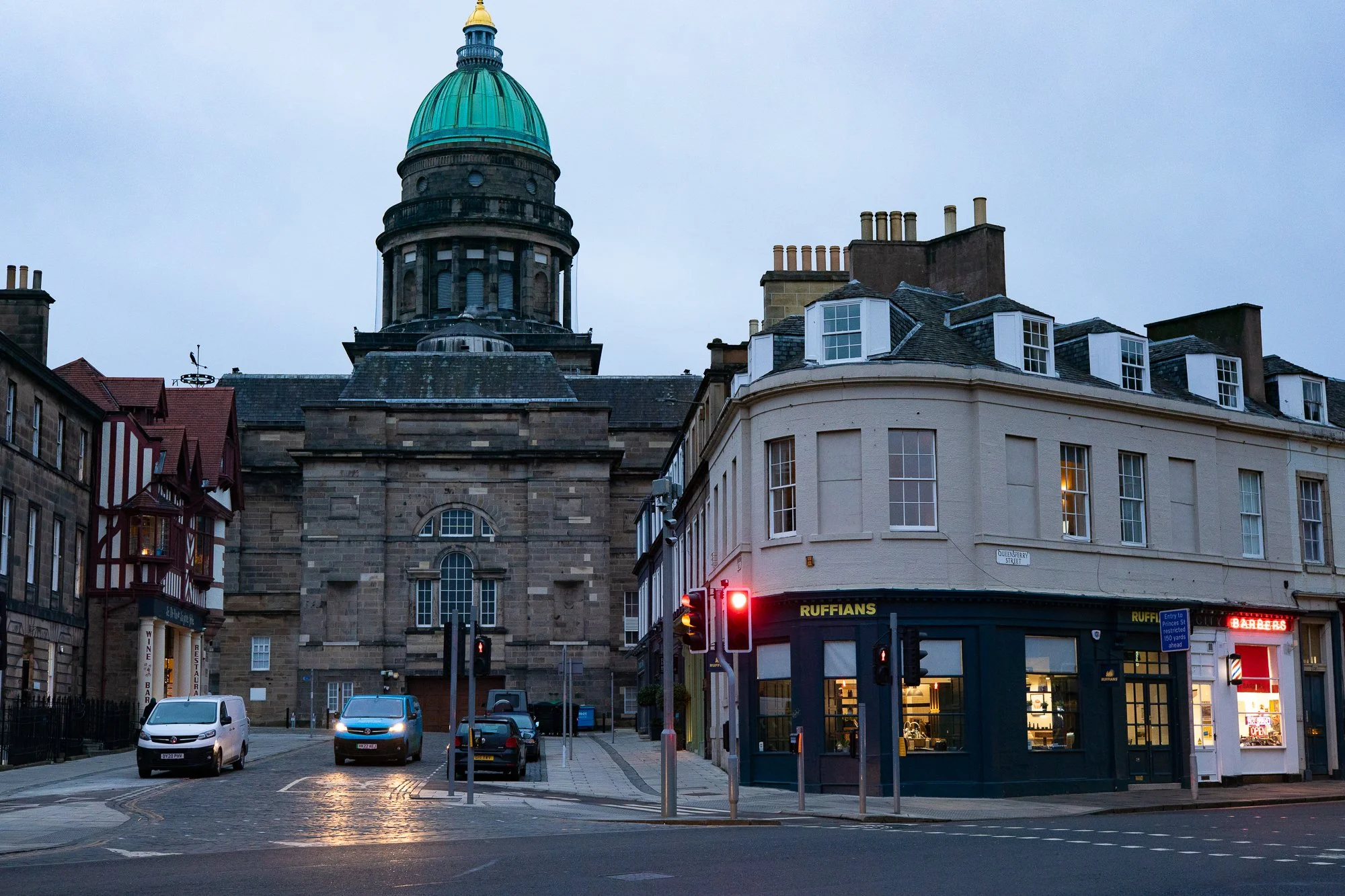
ruffians barbershop on historic edinburgh street corner at dusk

Ruffians barbershop on a quiet Edinburgh corner, framed by historic stone architecture and evening light
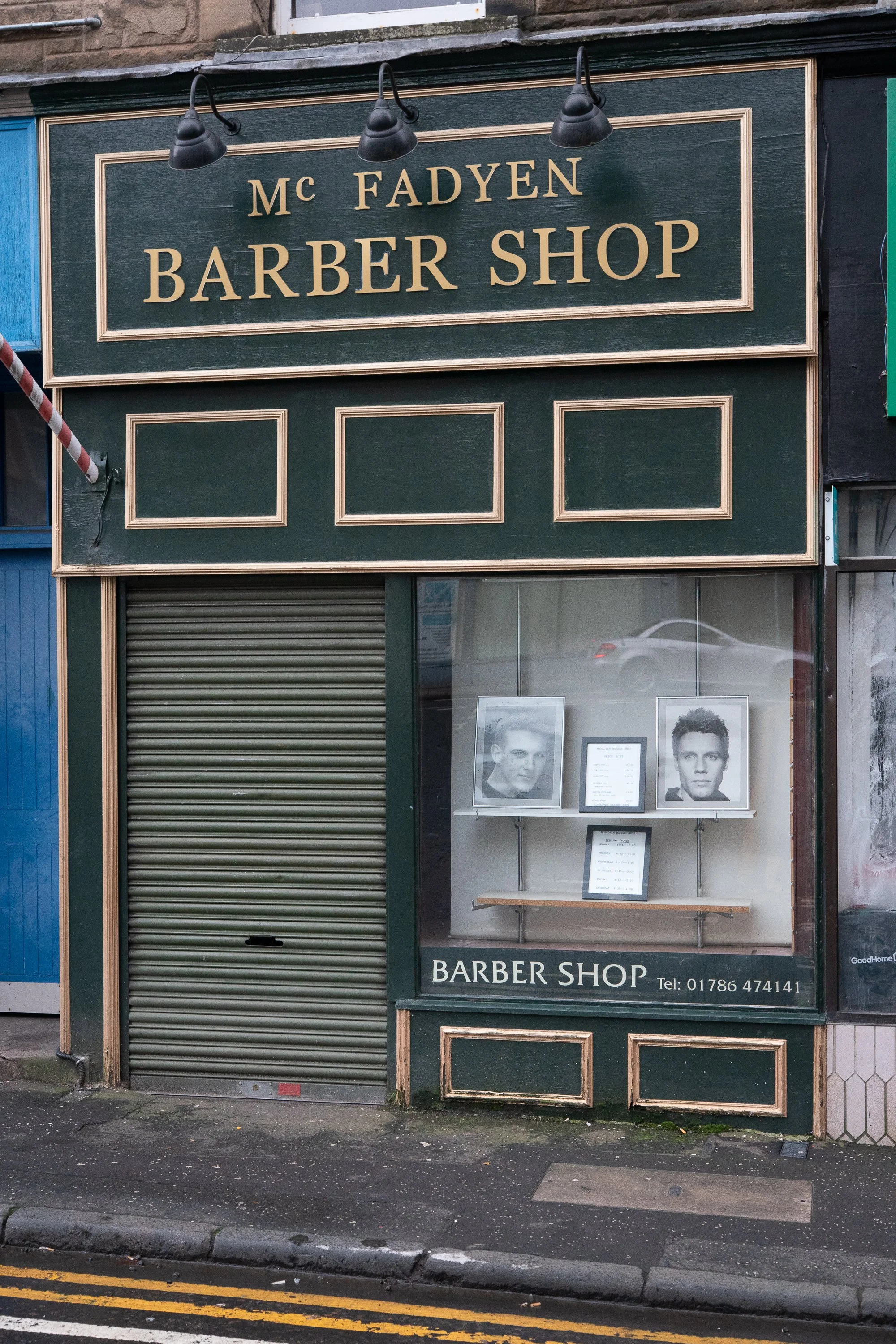
mcfadyen barber shop storefront with traditional signage and display window

McFadyen Barber Shop with classic painted signage and a simple, traditional front window display
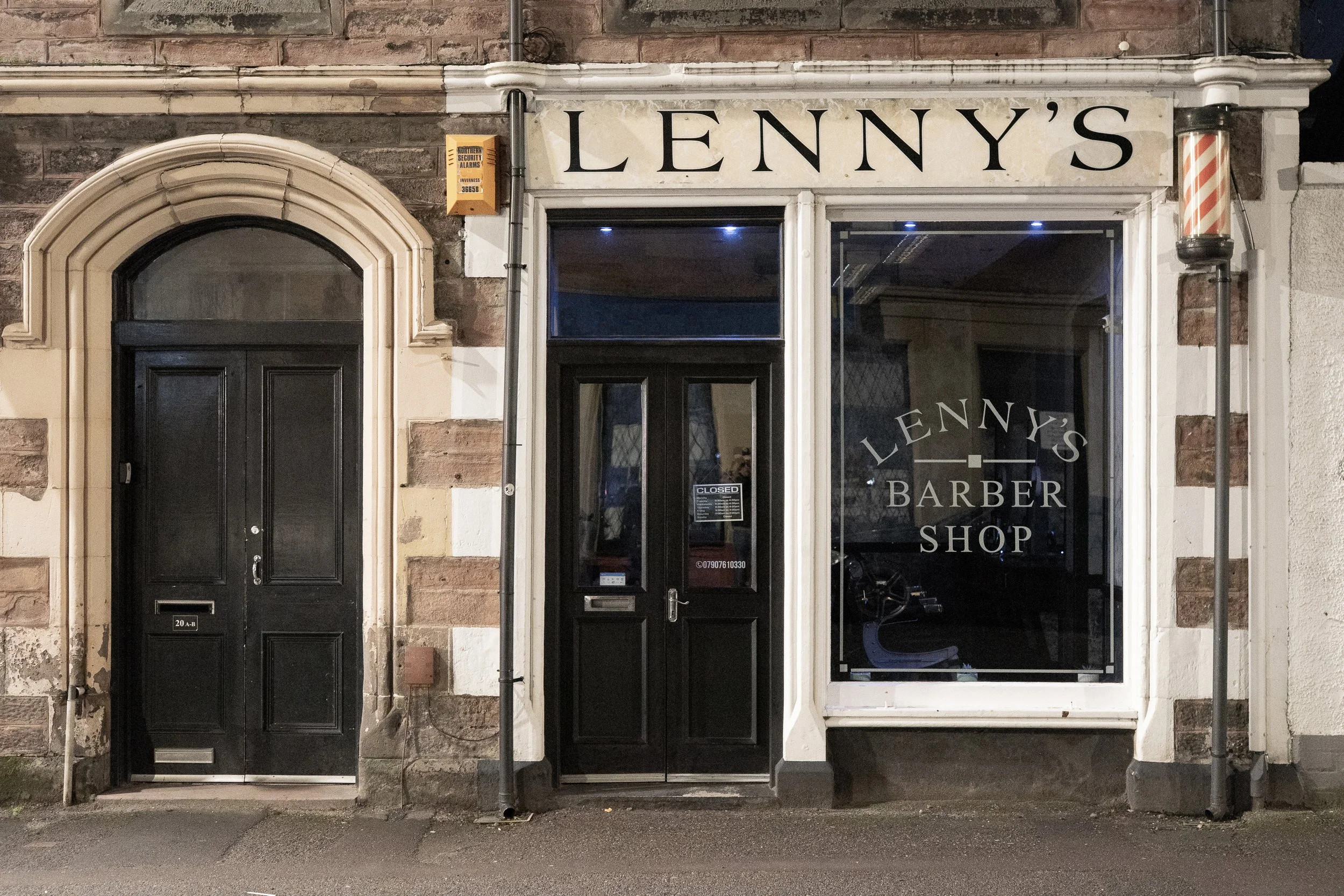
lennys barber shop storefront closed at night with sign on door

Lenny’s Barber Shop closed for the night, its windows dark and the street quiet
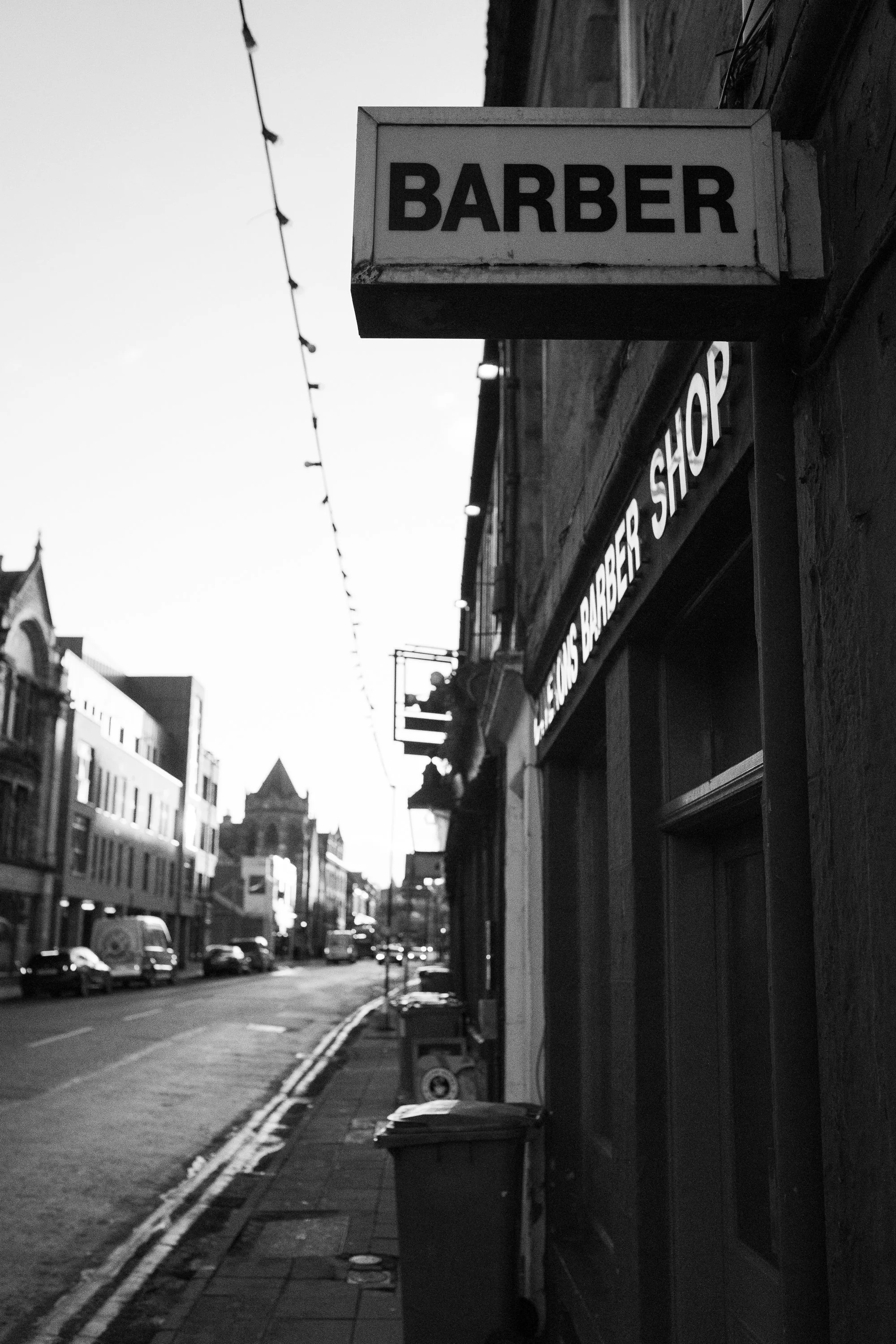
barber shop sign on empty street in scotland black and white photo

A simple barber shop sign extends over an empty street, captured in black and white
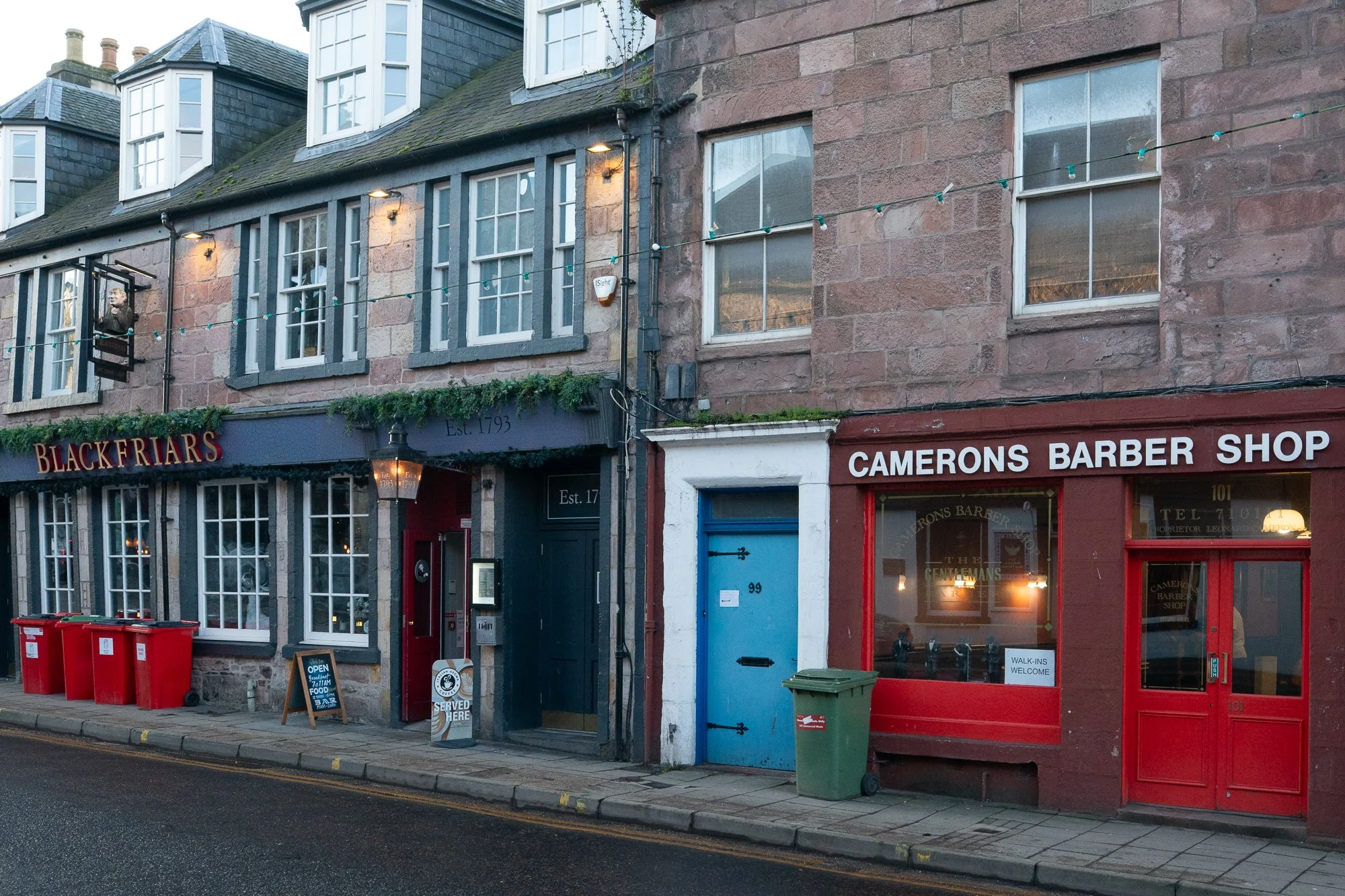
camerons barber shop red storefront on traditional scottish street

Camerons Barber Shop stands out in red along a row of weathered buildings on a Scottish street
Pubs of Edinburgh, Scotland

Historic Pubs in Edinburgh | A Photographer’s Study of Cultural Spaces

I recently spent time photographing pubs throughout Edinburgh, focusing not only on the historic interiors the city is famous for, but also on newer establishments that are quietly building their own character. What interested me wasn’t simply age. It was atmosphere — and how authentic that atmosphere can feel regardless of when a pub first opened its doors.

Walk around Edinburgh for any amount of time and you’ll come across countless pubs in famous places like The Royal Mile, Princess St. and Victoria St. And sure they do serve beer and haggis, but they are tourist traps cloaked as pubs. Venture out a little further and you’ll find some incredible communal living rooms filled with people from all walks of life enjoying a Proper Pint.

Old Edinburgh Pubs: Age You Can Feel

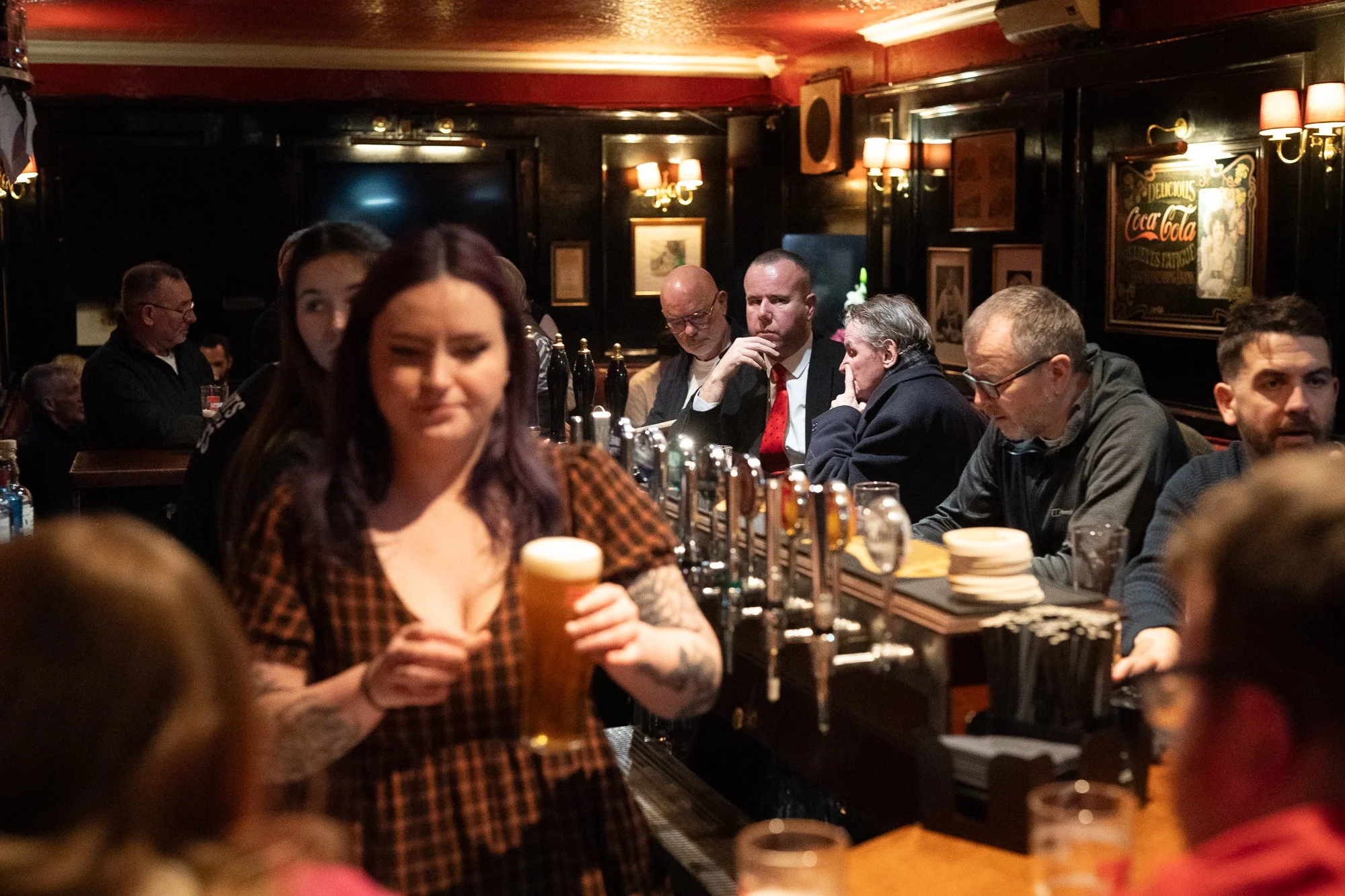
Some of Edinburgh’s traditional pubs carry centuries in their walls. In places like The Bailie, the wood is darkened by time, mirrors show their age in softened edges, and the floors lean slightly from generations of use.

These rooms don’t need to advertise their history. You sense it in the walls and in the unselfconscious way people occupy the space. Regulars move with familiarity across the carpeted floor to their regular stool. The bartender doesn’t perform; he or she simply works. The architecture frames the experience, but it doesn’t dominate it.

There is restraint in these historic pubs. Nothing feels curated for spectacle. The room exists to welcome conversation and return visits.

Newer Edinburgh Pubs with the Same Atmosphere

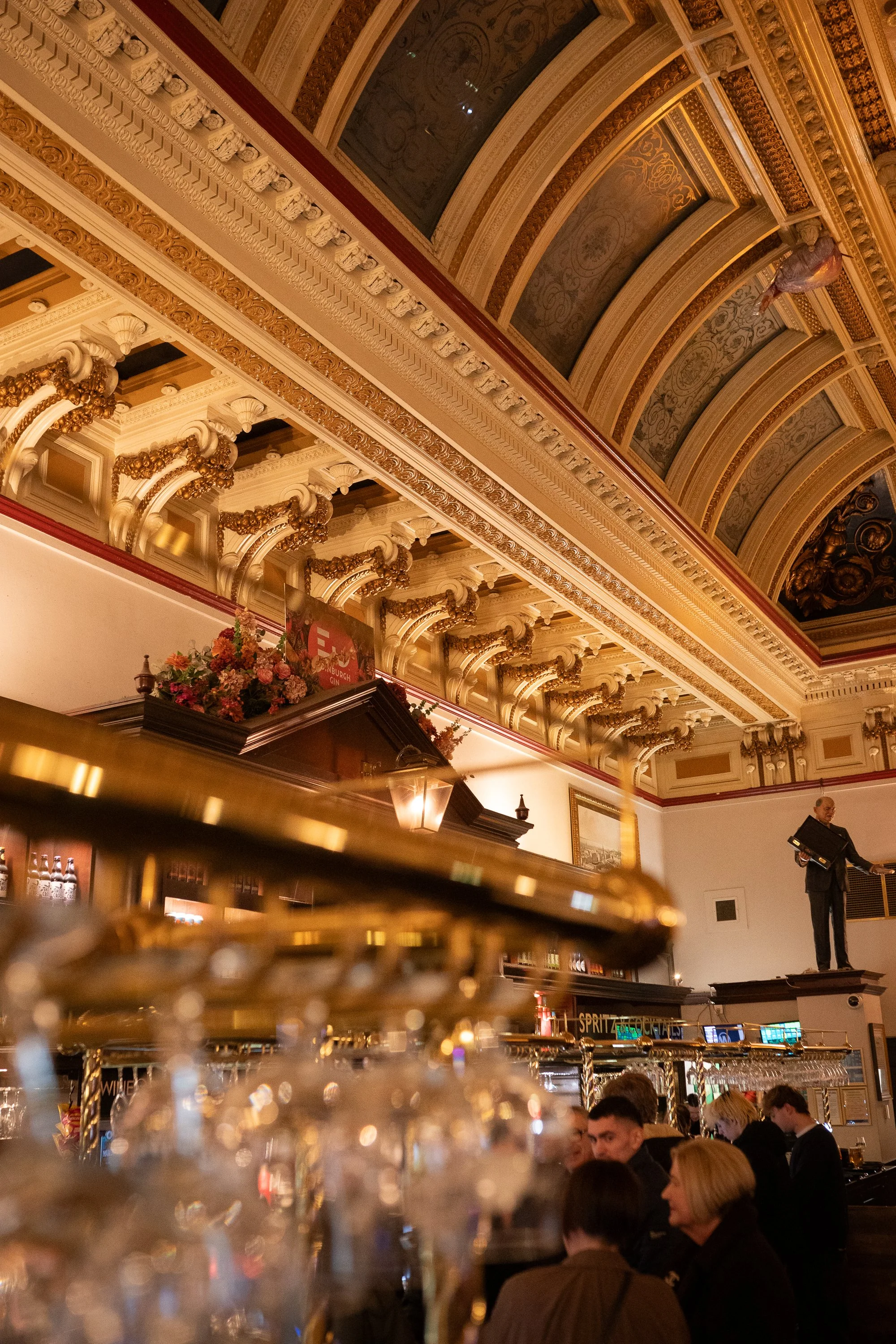
What surprised me most was how similar the feeling remained in newer pubs. In spaces like The Standing Order, which was once a bank, the design may be more grand, the lines cleaner, the lighting slightly more intentional — yet the atmosphere carries the same steady rhythm.

The bar still anchors the room. People still return to the same seats. Conversations still expand and contract in familiar corners. The success of the space has less to do with its age and more to do with intention and the quiet accumulation of evenings spent there enjoying cask ales.

Authenticity, I was reminded, isn’t guaranteed by centuries. It’s built through use.

What Edinburgh’s Pubs Share with American Dive Bars

Sitting in the back of one Edinburgh pub, I was struck with familiarity. For years I’ve been documenting American dive bars and roadside motels across the West and Midwest. Many of them are far younger than Scotland’s historic pubs, yet the emotional architecture is strikingly similar.

In a small-town dive bar in Wyoming or Nevada, the makings are humbler — paneled walls instead of stone, fluorescent light instead of filtered daylight — but the function is identical. The bar is an anchor. The room absorbs stories. The regulars give it gravity.

The same is true of roadside motels. Some are mid-century survivors with neon signs buzzing against the night. Others have been partially updated. Yet they continue to serve as quiet infrastructure for travelers and locals alike.

The geography changes. The timeline stretches or contracts. The human need remains consistent.

Photographing Cultural Spaces That Endure

Whether historic or newly established, a pub succeeds when it becomes woven into daily life. The same can be said for a dive bar in rural America. Age may add texture, but continuity builds meaning.

Photographing these spaces — in Scotland and in the United States — is less about nostalgia and more about record-keeping. These rooms function as cultural anchors. They are democratic environments. They hold celebration, argument, solitude, and routine without demanding attention.

Edinburgh reinforced something I’ve long believed: authenticity isn’t a design choice. It’s the result of intention and presence.

View the American Dive Bars & Roadside Motels Gallery

If you’re drawn to spaces with atmosphere, history, and lived-in character, I invite you to view my ongoing series documenting American dive bars and roadside motels throughout the United States.

→ View the full American Dive Bars & Roadside Motels gallery
→ Licensing inquiries welcome

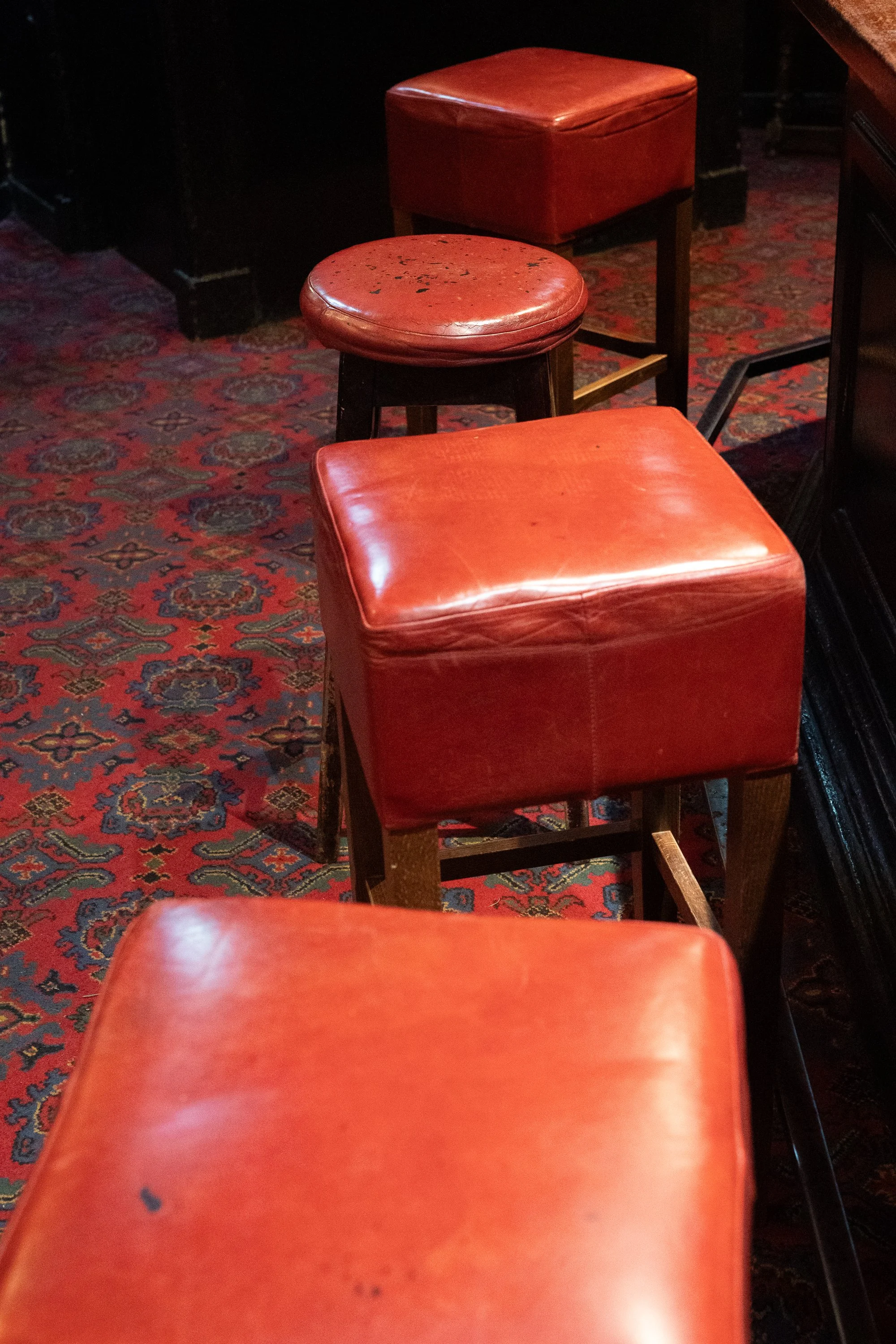
Red leather bar stools lined up on patterned carpet inside a traditional Edinburgh pub

Worn red leather stools rest quietly on patterned carpet, the kind of small detail that reveals how long a pub has been lived in rather than designed.

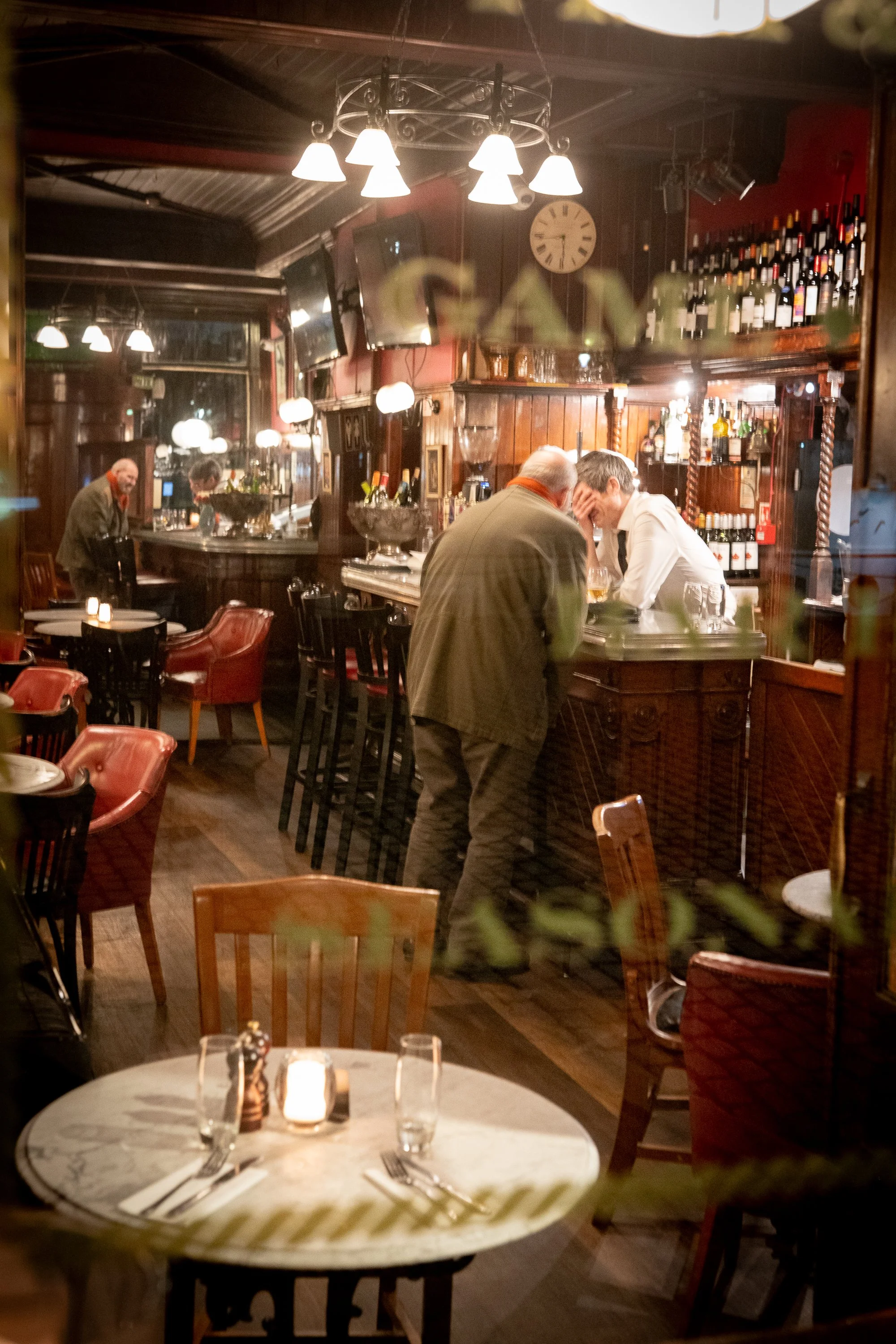
Man leaning on bar counter inside traditional Edinburgh pub at night

Through the window, a quiet exchange unfolds at the bar — a familiar posture, a familiar ritual, the steady rhythm of an evening in an Edinburgh pub.

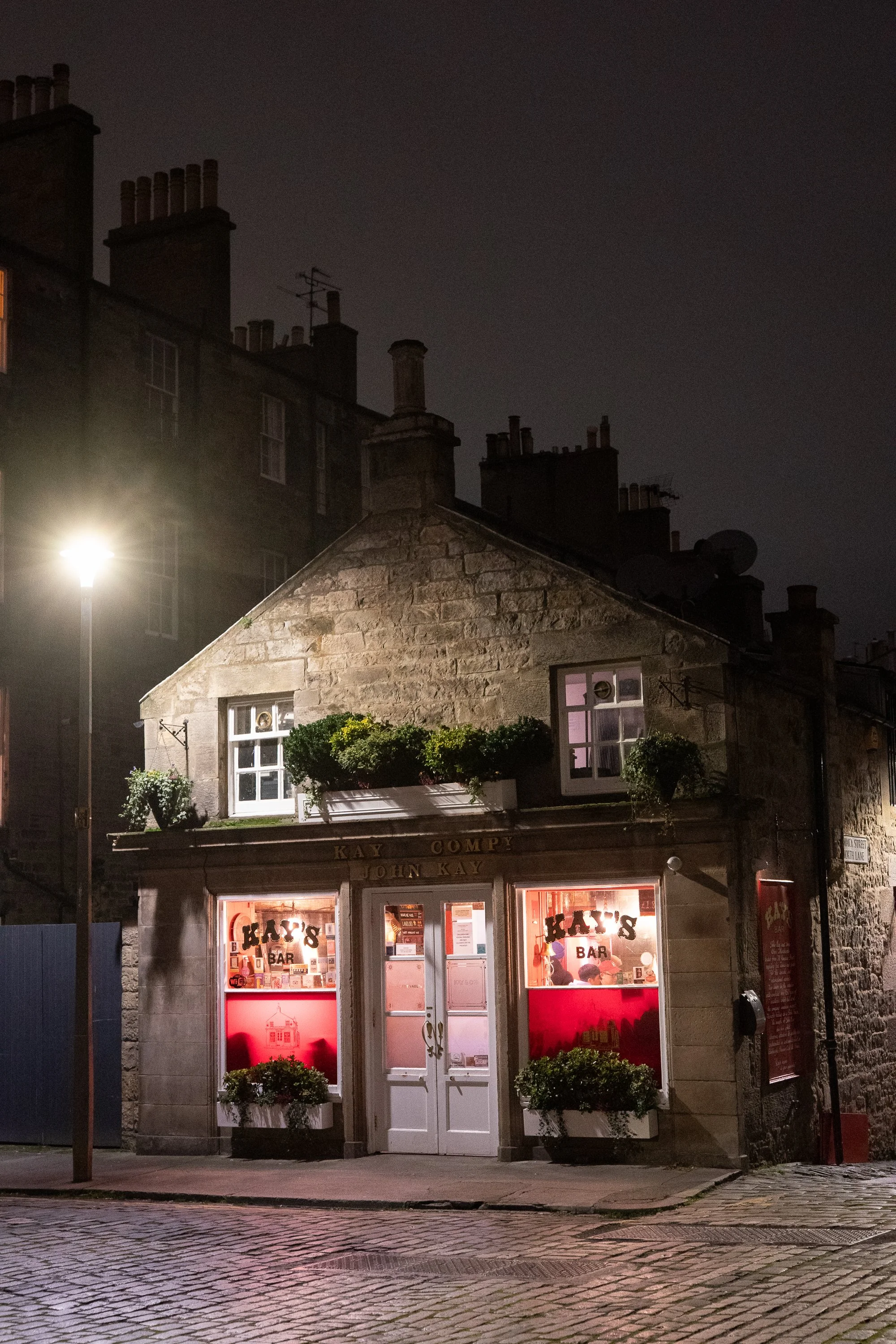
Kay’s Bar illuminated at night on cobblestone street in Edinburgh

Kay’s Bar glows against the dark stone of the city, a small corner pub holding its ground beneath the streetlight and chimney-lined skyline.

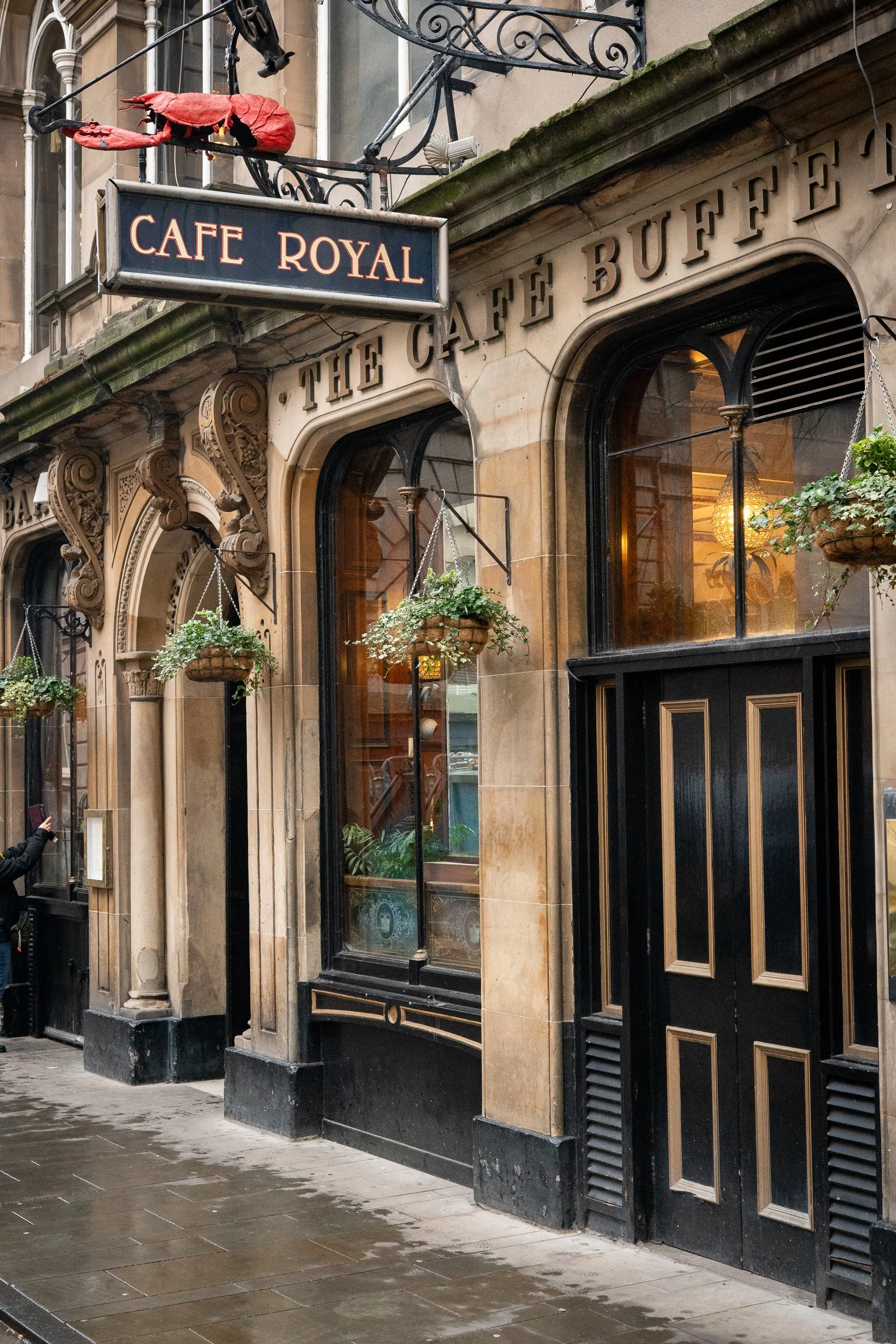
Exterior facade of Cafe Royal in Edinburgh with hanging plants and ornate stonework

The facade of Cafe Royal stands with carved stone and hanging greenery, its Victorian architecture hinting at the grandeur waiting just inside.

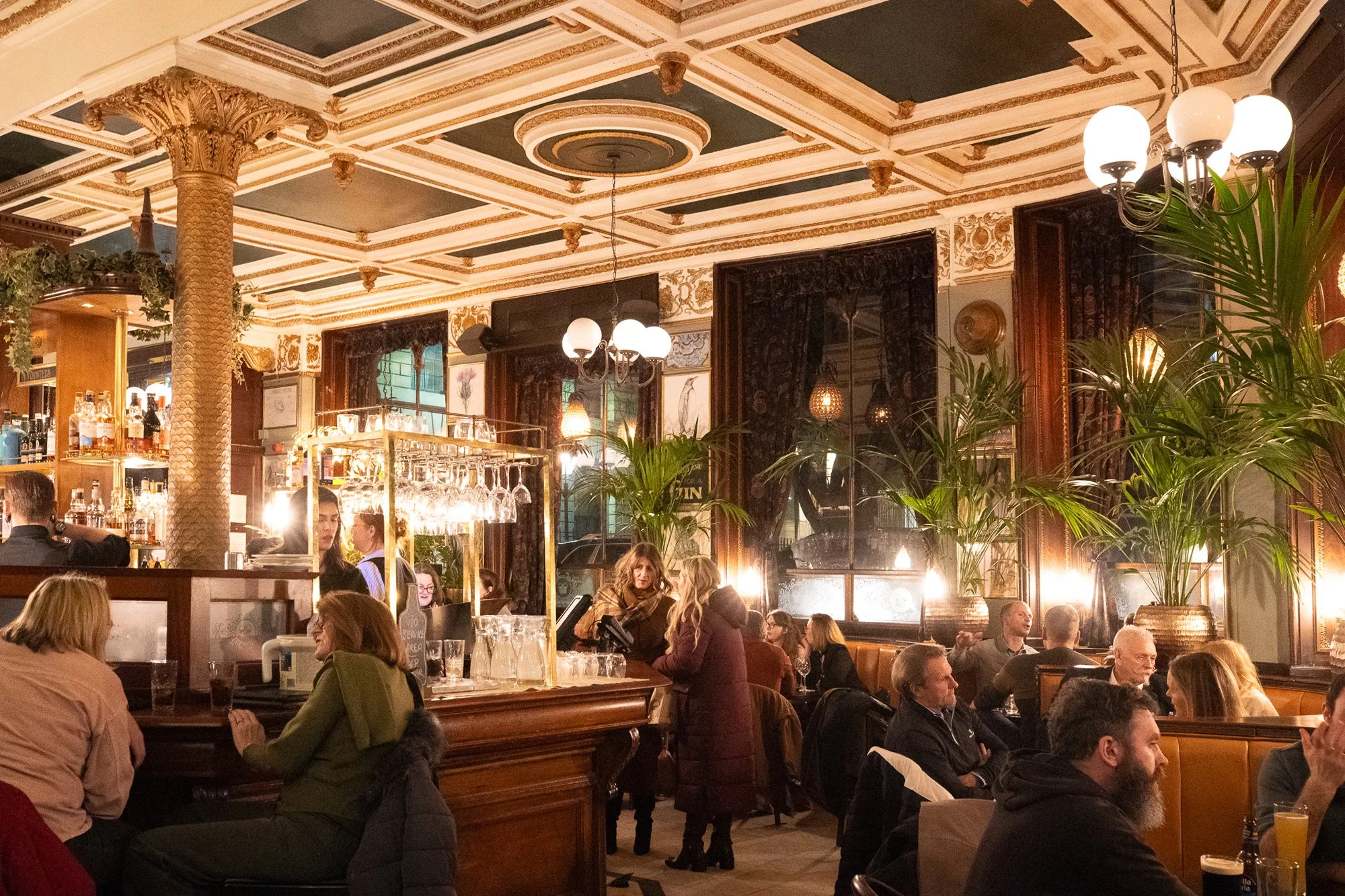
Wide interior view of Cafe Royal in Edinburgh with ornate ceiling, carved columns, and evening crowd

Inside Cafe Royal, carved columns and gilded ceilings frame a room that feels almost theatrical. Conversations move between tables while the architecture quietly holds the weight of another century.

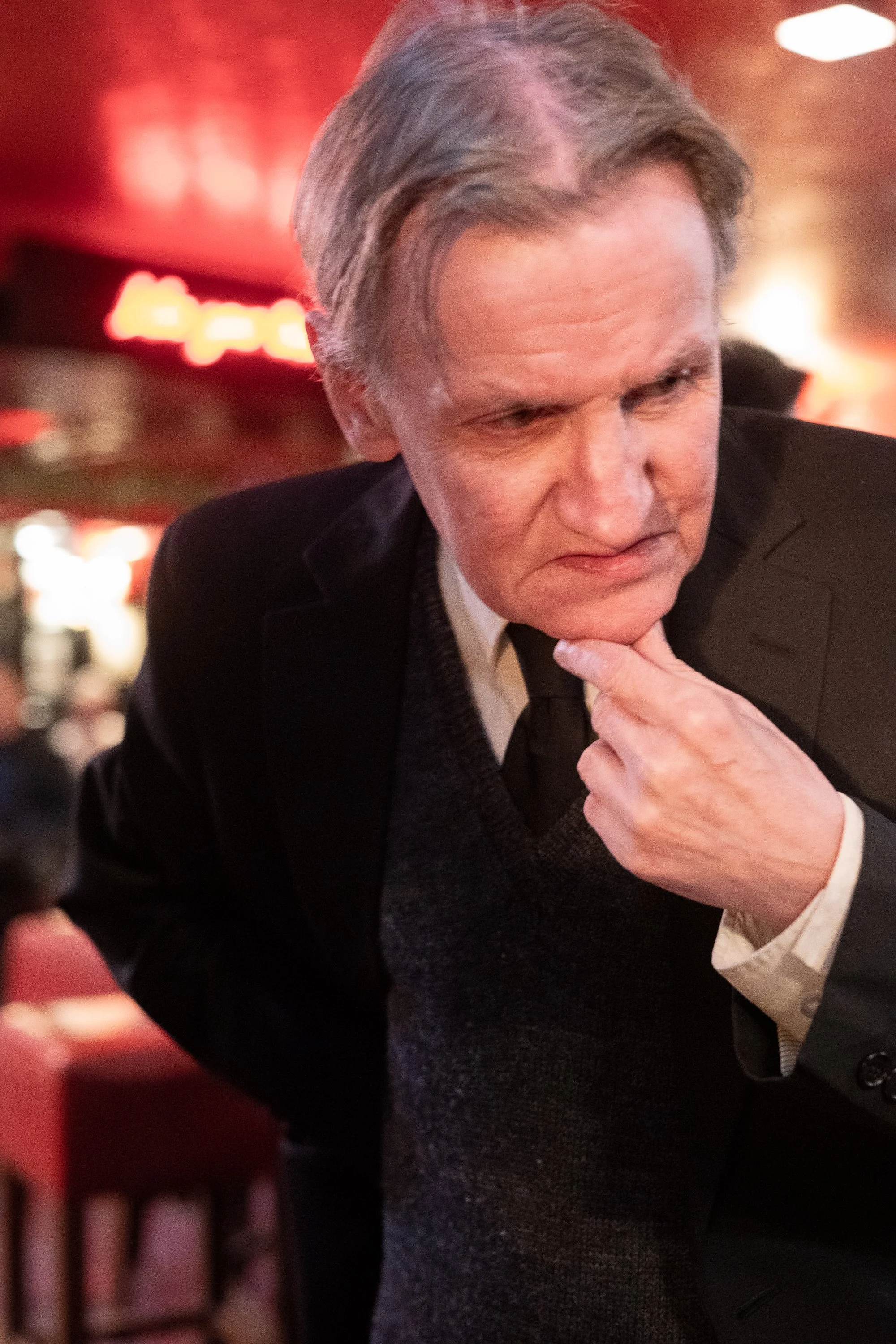
Portrait of man in suit standing thoughtfully inside Edinburgh pub

A moment of stillness at the bar — one hand at his chin, the noise of the room fading as he stands briefly alone in his thoughts.

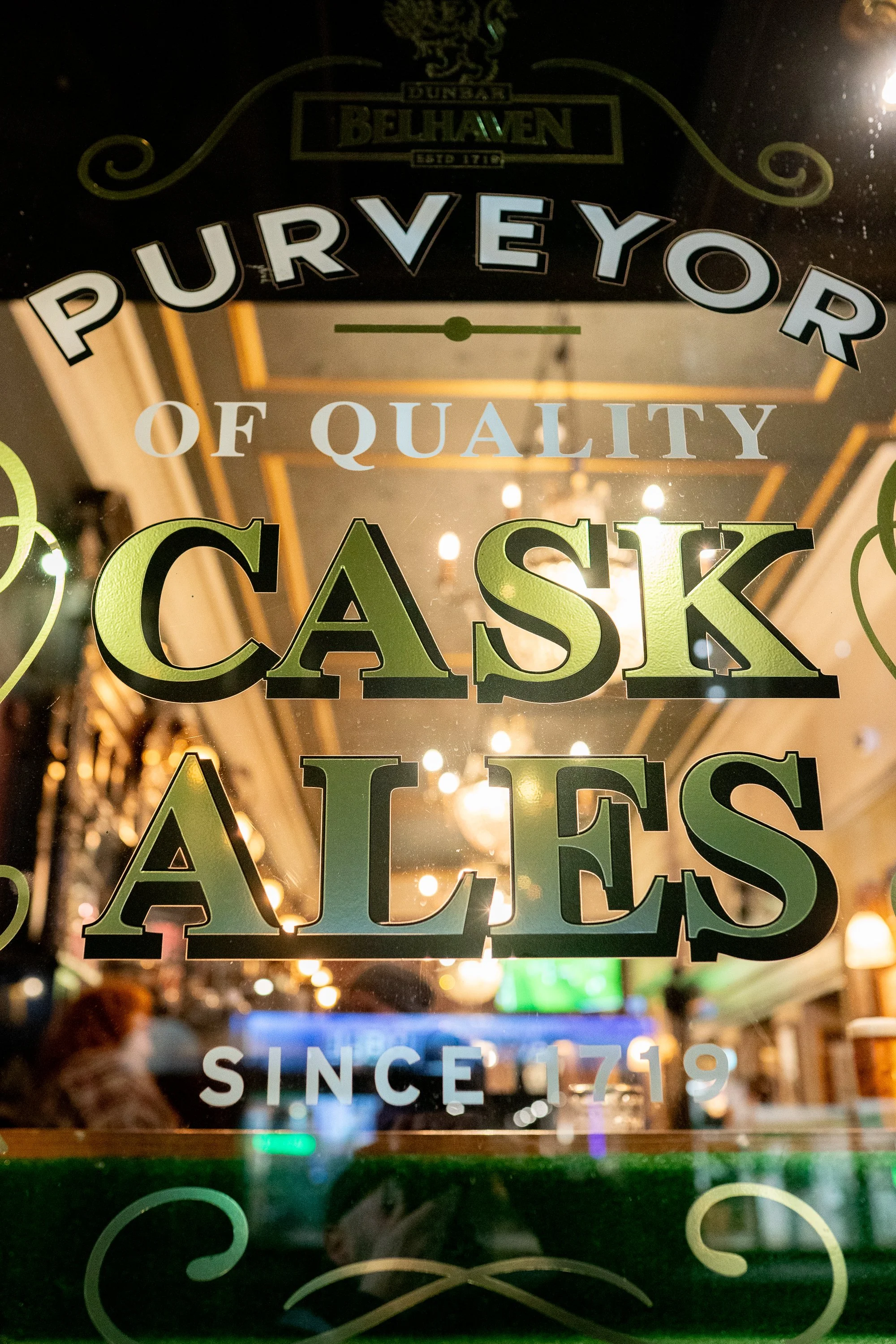
Window sign reading Purveyor of Quality Cask Ales inside Edinburgh pub

Lettering on glass announces “Purveyor of Quality Cask Ales,” a quiet declaration of standards that predate modern branding.

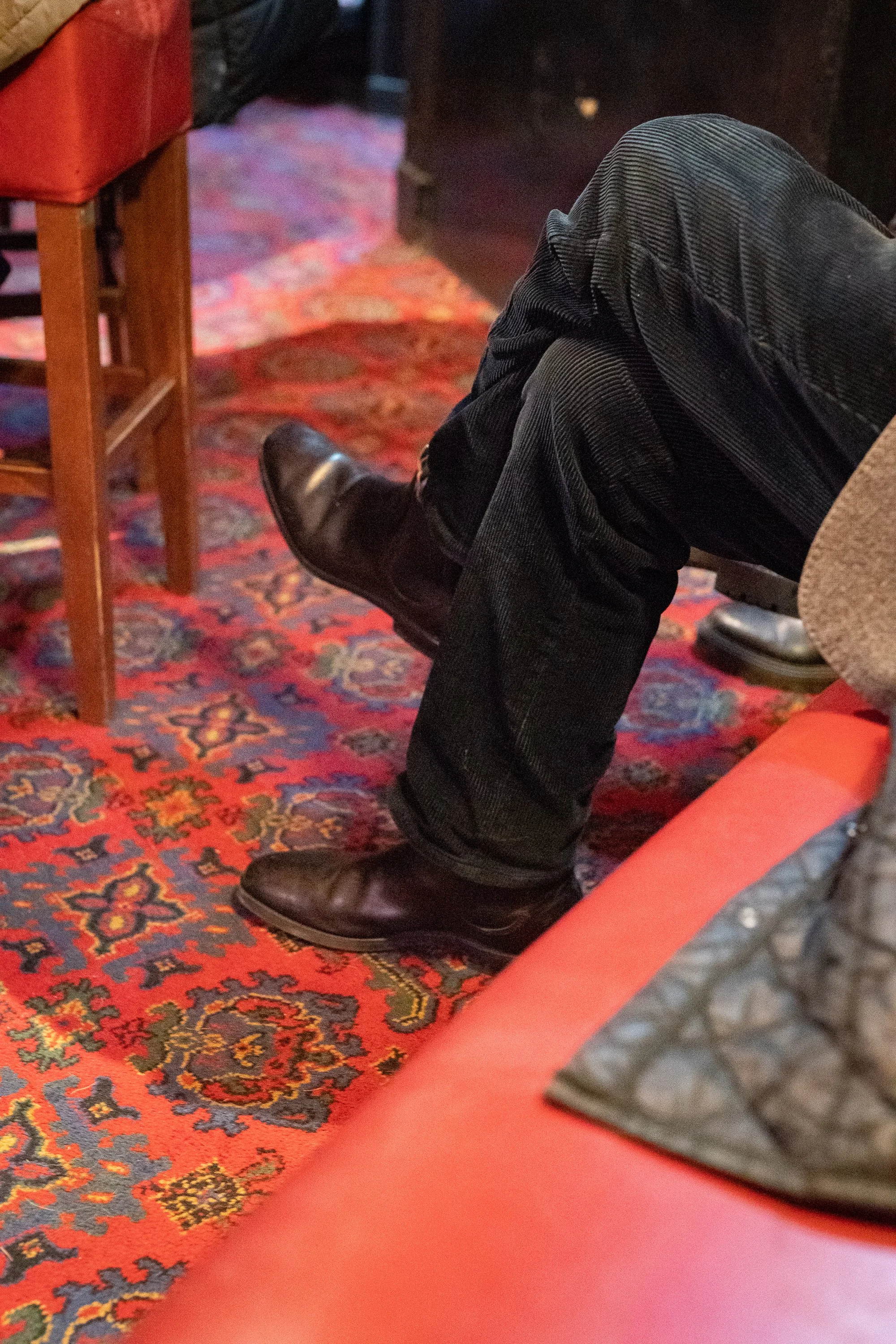
Close-up of boots resting on red patterned carpet inside traditional pub

Boots and corduroy pants planted firmly on worn carpet — the kind of grounded detail that says more about a place than any wide shot ever could.

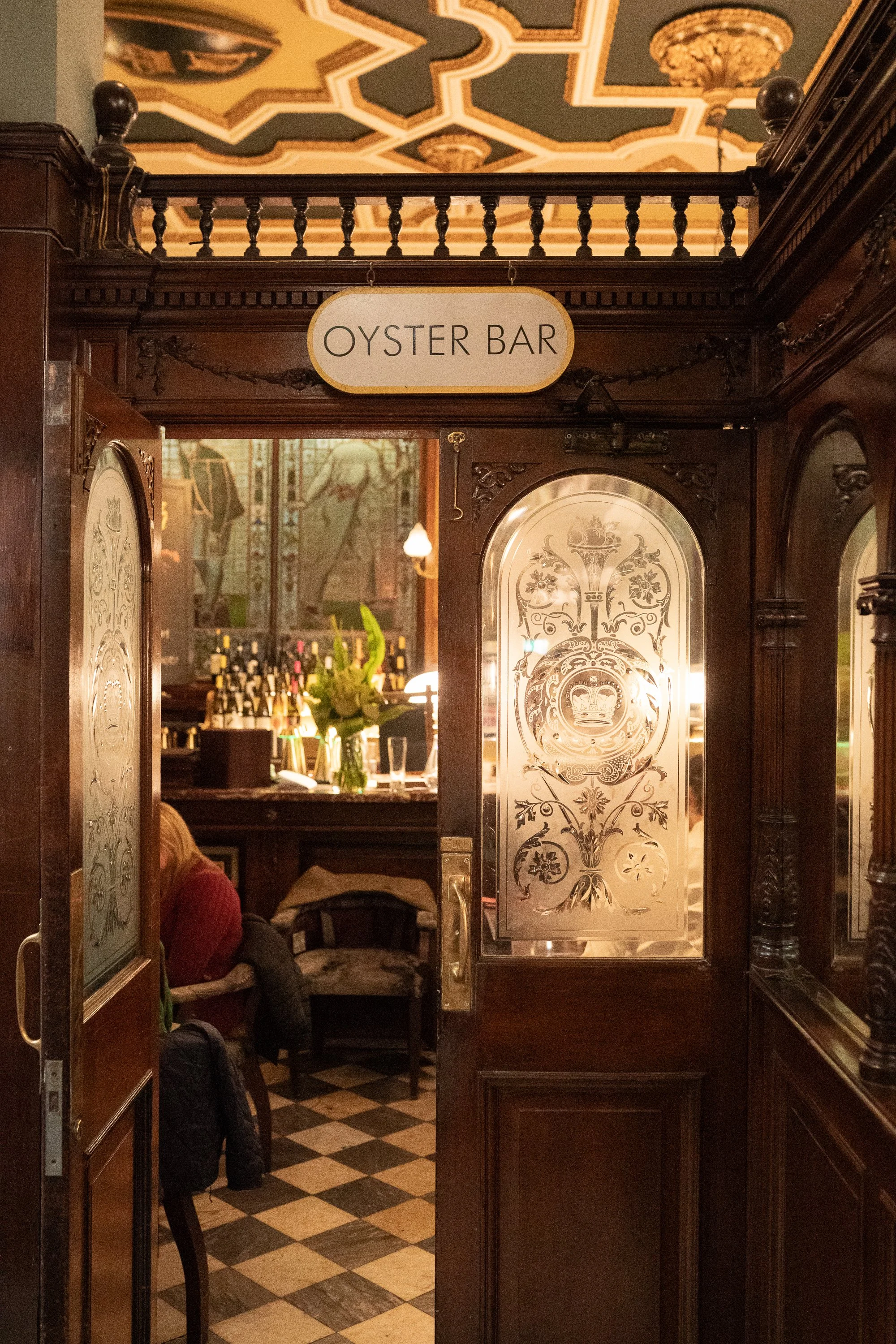
Wooden doorway entrance to the Oyster Bar at Cafe Royal in Edinburgh with etched glass panels

The Oyster Bar entrance at Cafe Royal stands beneath carved wood and etched glass, a narrow threshold between the noise of the main room and a more intimate corner of the pub.

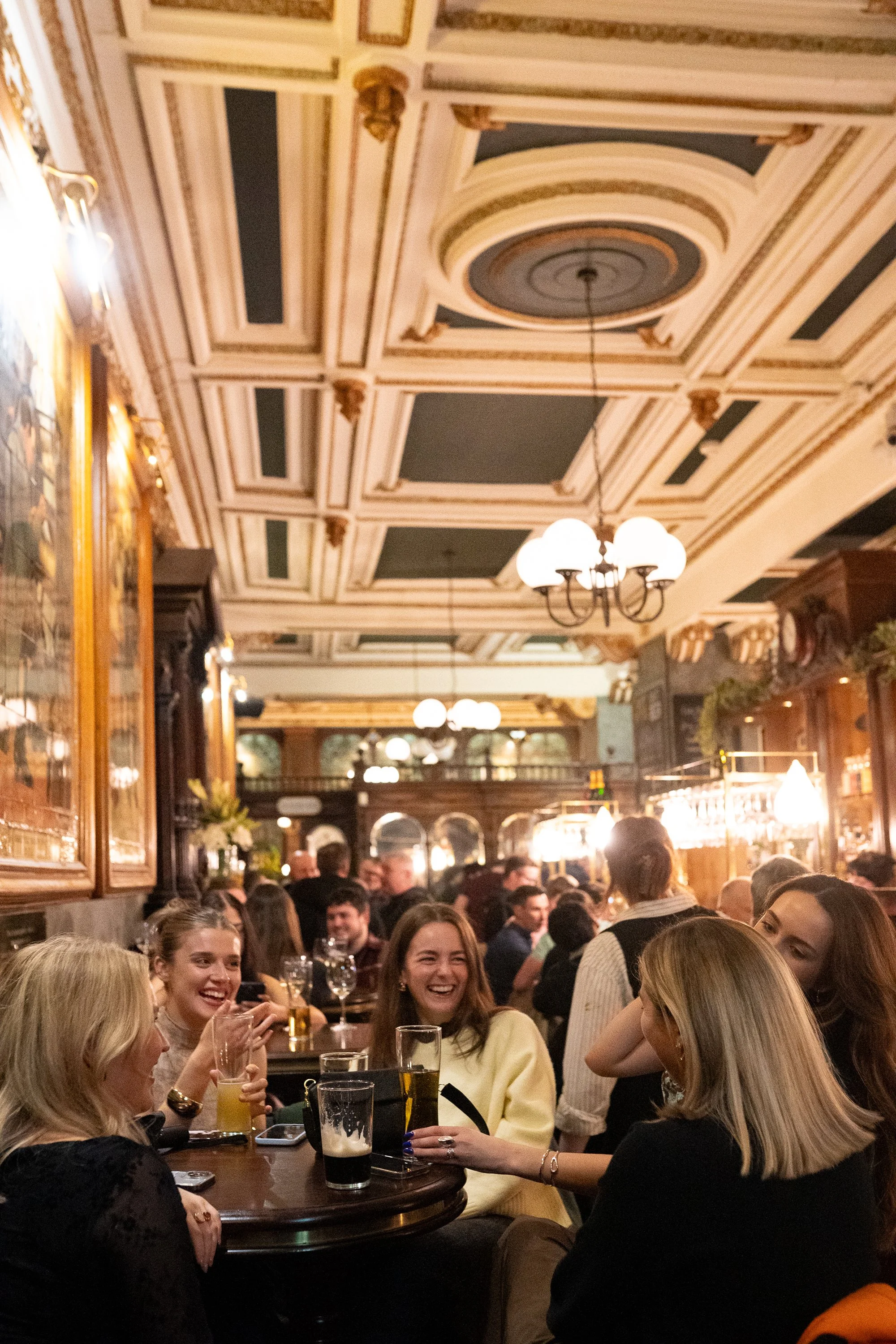
Group of women laughing at table inside Cafe Royal Edinburgh

At the Cafe Royal in Edinburgh friends lean in close at a small round table, their laughter rising into a room that has held a century of similar evenings.

Bartender serving pint of beer inside The Bailie Bar in Edinburgh

The Bailie Bar- Edinburgh, Scotland

Ornate ceiling and crowded bar interior at The Standing Order in Edinburgh

Beneath gilded ceilings and carved arches, the bar hums with conversation — architecture and atmosphere sharing the same space at The Standing Order in Edinburgh