
Barbershops of Scotland
After more than 15 years photographing barbershops across all 50 states, I’ve come to recognize certain constants—spaces shaped by routine, built on familiarity, where the walls carry just as much history as the people sitting in the chair. What started as a project rooted in American culture gradually extended beyond it. Everywhere I travel, I find myself stepping into barbershops. Different countries, different cities—but often, the same feeling.
It wasn’t something I set out to do. At some point, it just became part of how I move through a place. I’ll walk past a shop, look through the window, and recognize something immediately—an arrangement of chairs, a certain kind of light, the way tools are laid out, or what’s hanging on the walls. It’s familiar, even when it shouldn’t be.
In Scotland, that feeling was there from the start.
The shops are different in the details, and their history - often sitting on narrower street in front of a 500 year old church. The signage has its own character. The interiors feel a little more restrained in some cases, a little more utilitarian in others. But step inside, and the rhythm is the same. A customer in the chair, another waiting, conversation moving easily through the room. The quiet repetition of a trade that hasn’t changed much, even as everything around it has.
That’s what continues to stand out—how consistent these spaces are, no matter where you are. The barbershop may be one of the last places that still exists in nearly the same form across different cultures. Not identical, but recognizable. You don’t need to be from there to understand it.
And yet, like many of the shops I’ve photographed across America, there’s a sense that these places are becoming less common. The pace of change is different depending on where you are, but the result is often the same. Older shops close. New ones open with a different feel. Something shifts.
That’s part of what makes photographing them feel important.
The Barbershops of America project has always been about more than documenting interiors. It’s about holding onto these spaces as they exist right now—before they change, before they disappear, before they’re replaced by something else entirely. Photographing barbershops in Scotland—and in other countries I’ve traveled to—has only reinforced that idea. It’s not just an American story. It’s a broader one.
But America is still the foundation.
Fifteen years of work, across small towns and cities, documenting shops that are deeply tied to the communities around them. The photographs from Scotland don’t sit apart from that—they connect back to it. They show how far this kind of place reaches, and how much of it is shared.
A Growing Archive
This work in Scotland is part of a much larger archive built over more than a decade on the road—photographing barbershops across the United States and, increasingly, in other parts of the world.
Some of these shops are still operating. Many are not.
Together, they form a record of a space that has remained remarkably consistent over time, even as the world around it continues to change.
Explore the Barbershops of America archive
Read more individual shop stories → Tony’s - a 200 year old barbershop in Brooklyn
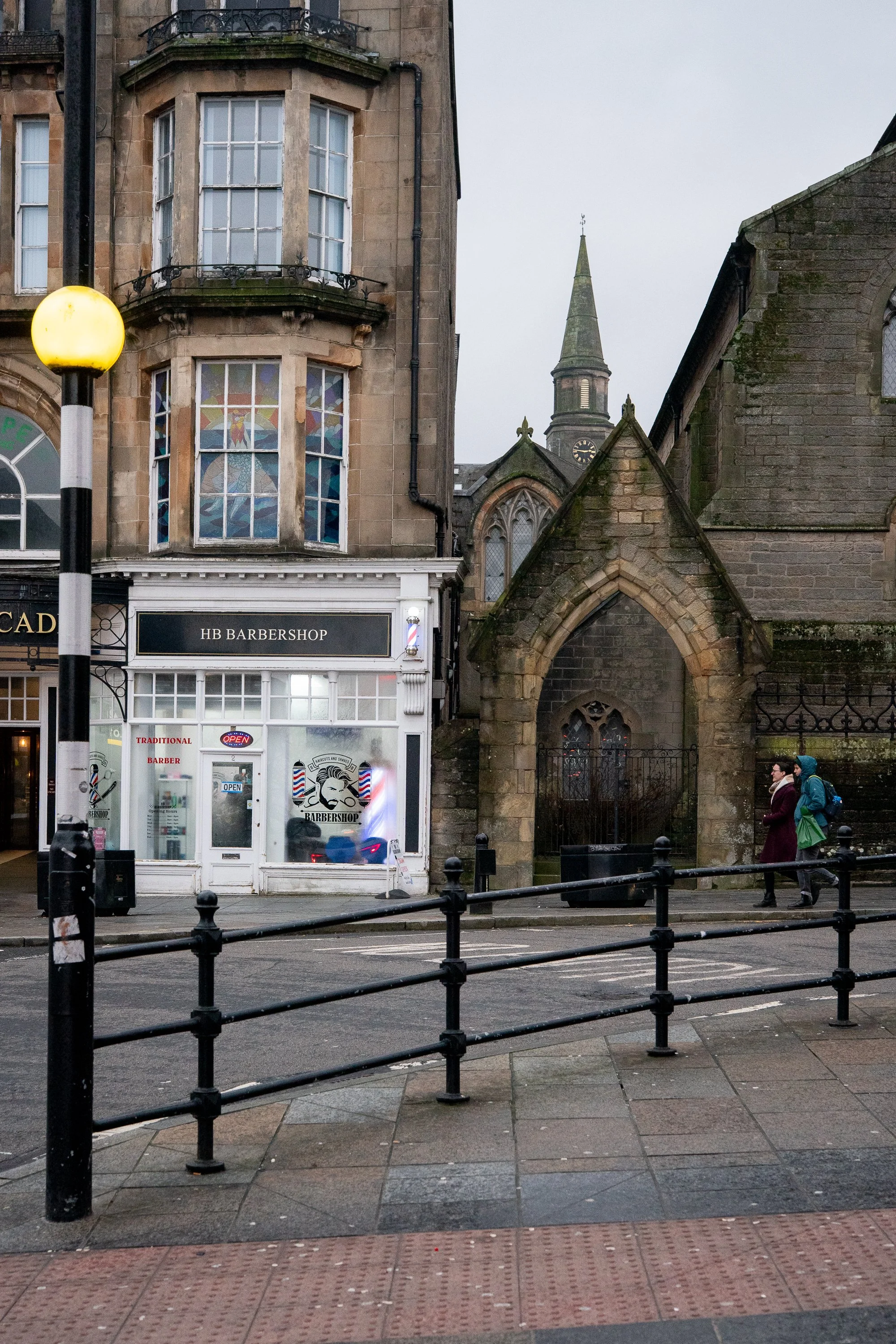
HB Barber Shop sits beside a historic church, blending into the layered streets of Scotland
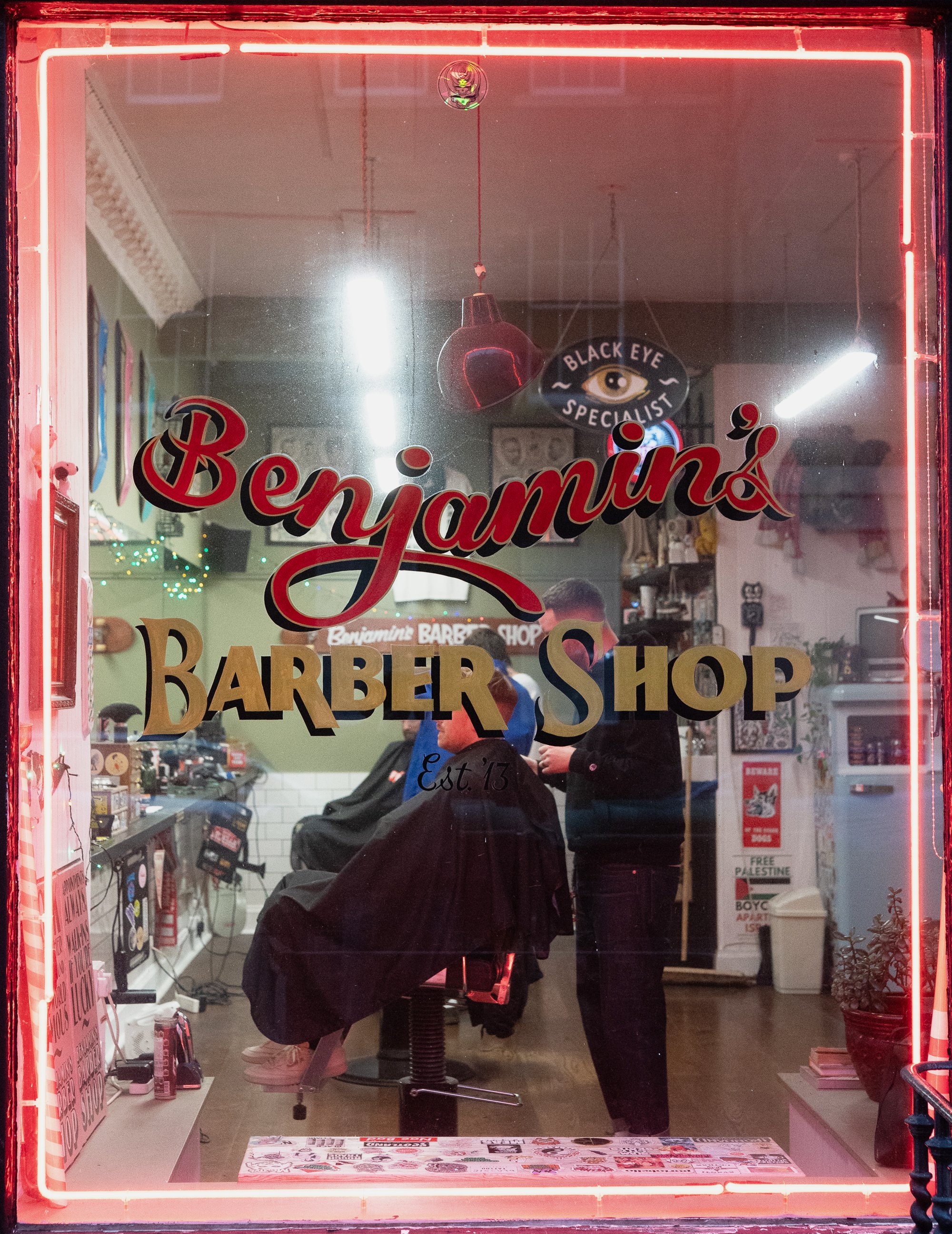
A haircut in progress inside Benjamin’s Barber Shop, seen through the glass from the street
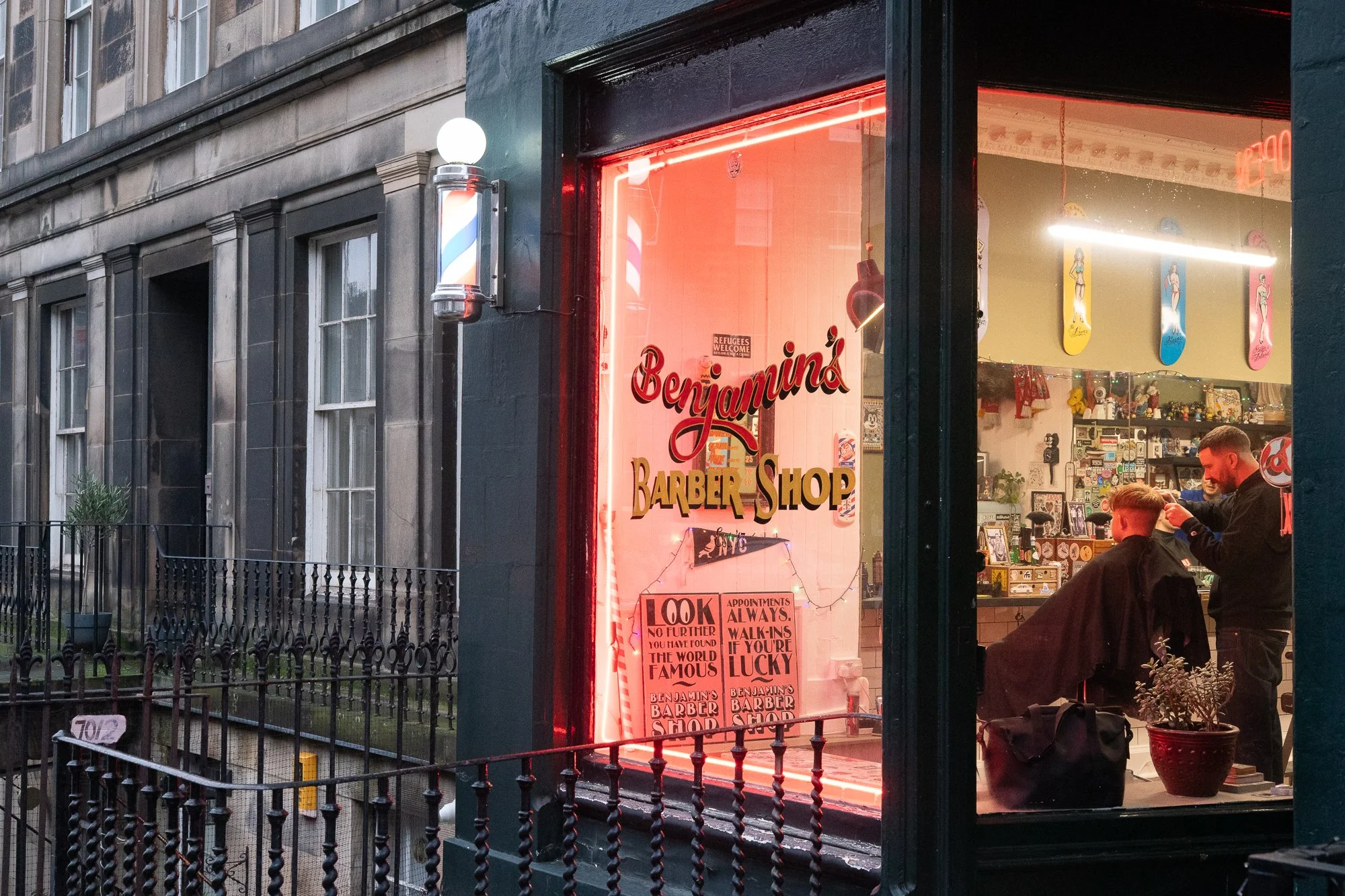
Neon-lit window of Benjamin’s Barber Shop glowing onto the street, revealing a working shop inside
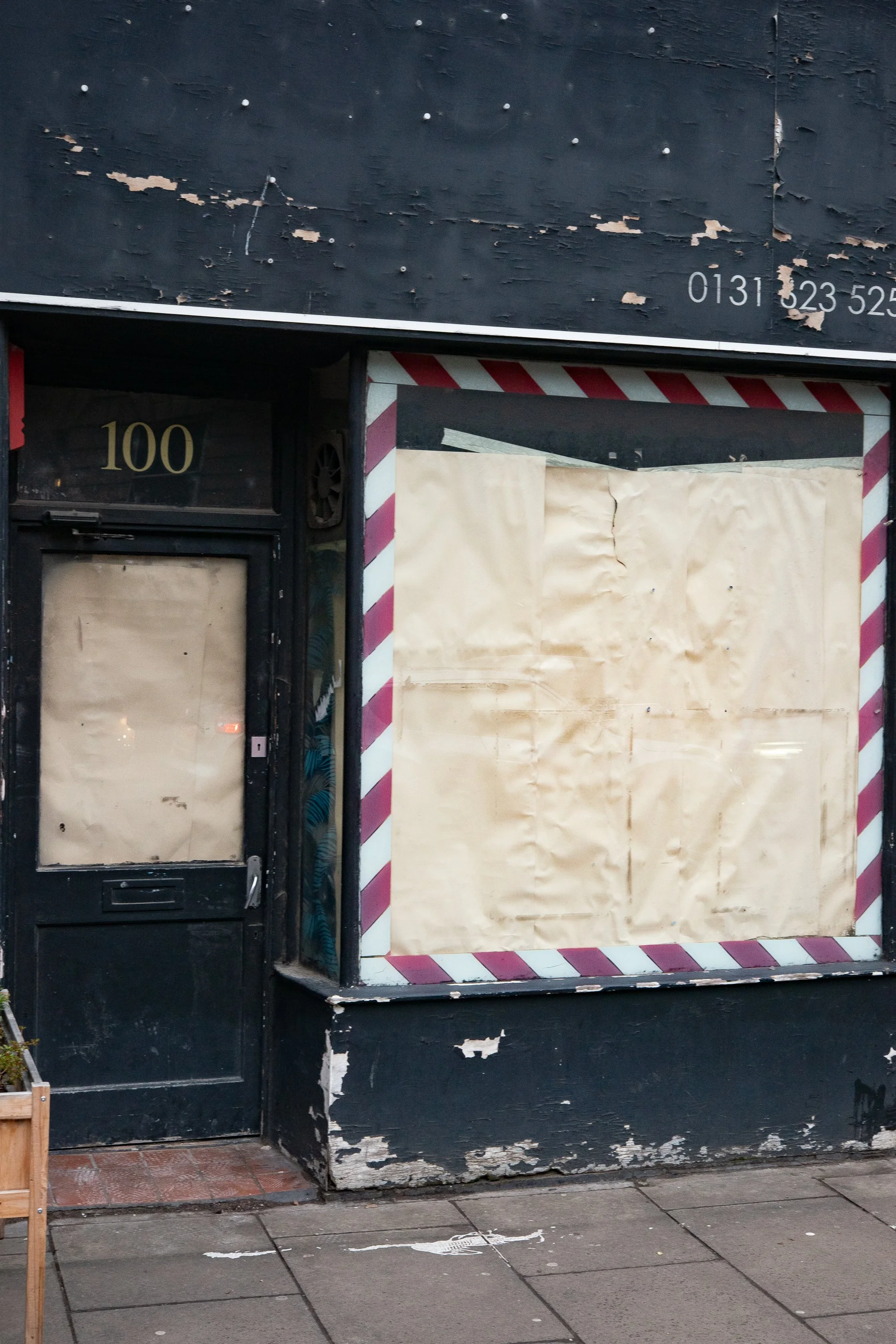
Boarded-up barbershop with classic red-and-white trim, showing the quiet disappearance of neighborhood shops in Scotland
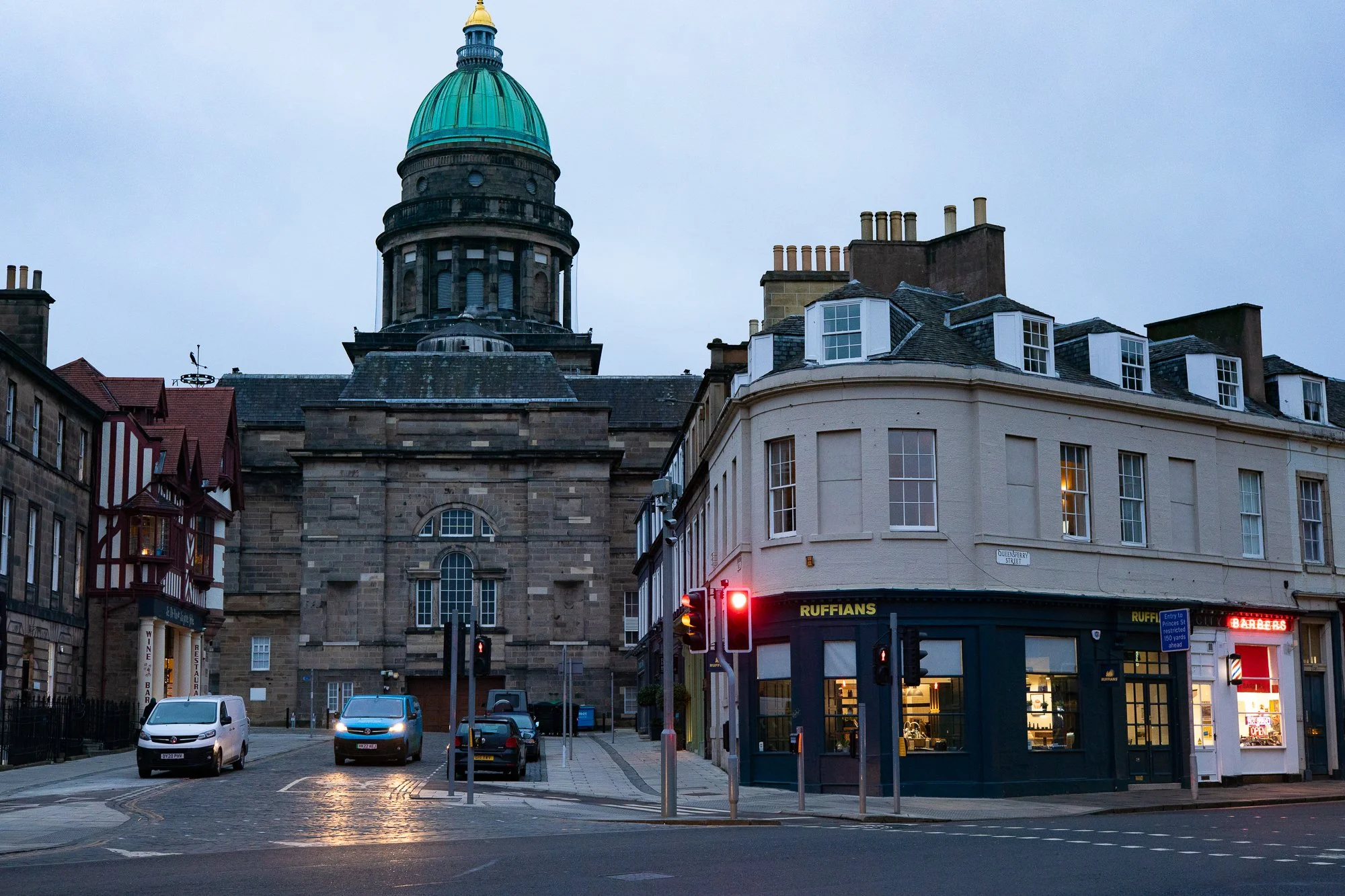
Ruffians barbershop on a quiet Edinburgh corner, framed by historic stone architecture and evening light
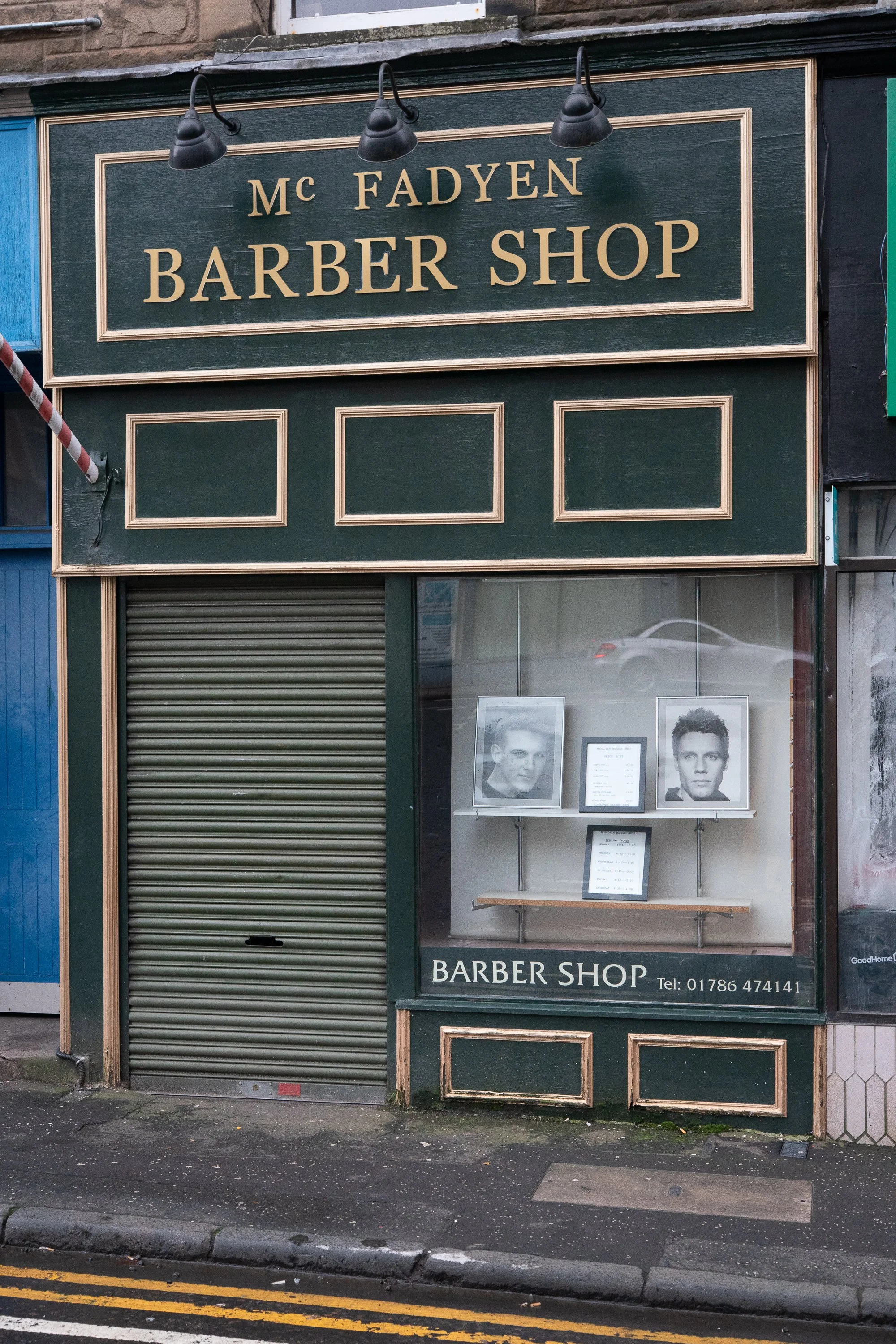
McFadyen Barber Shop with classic painted signage and a simple, traditional front window display
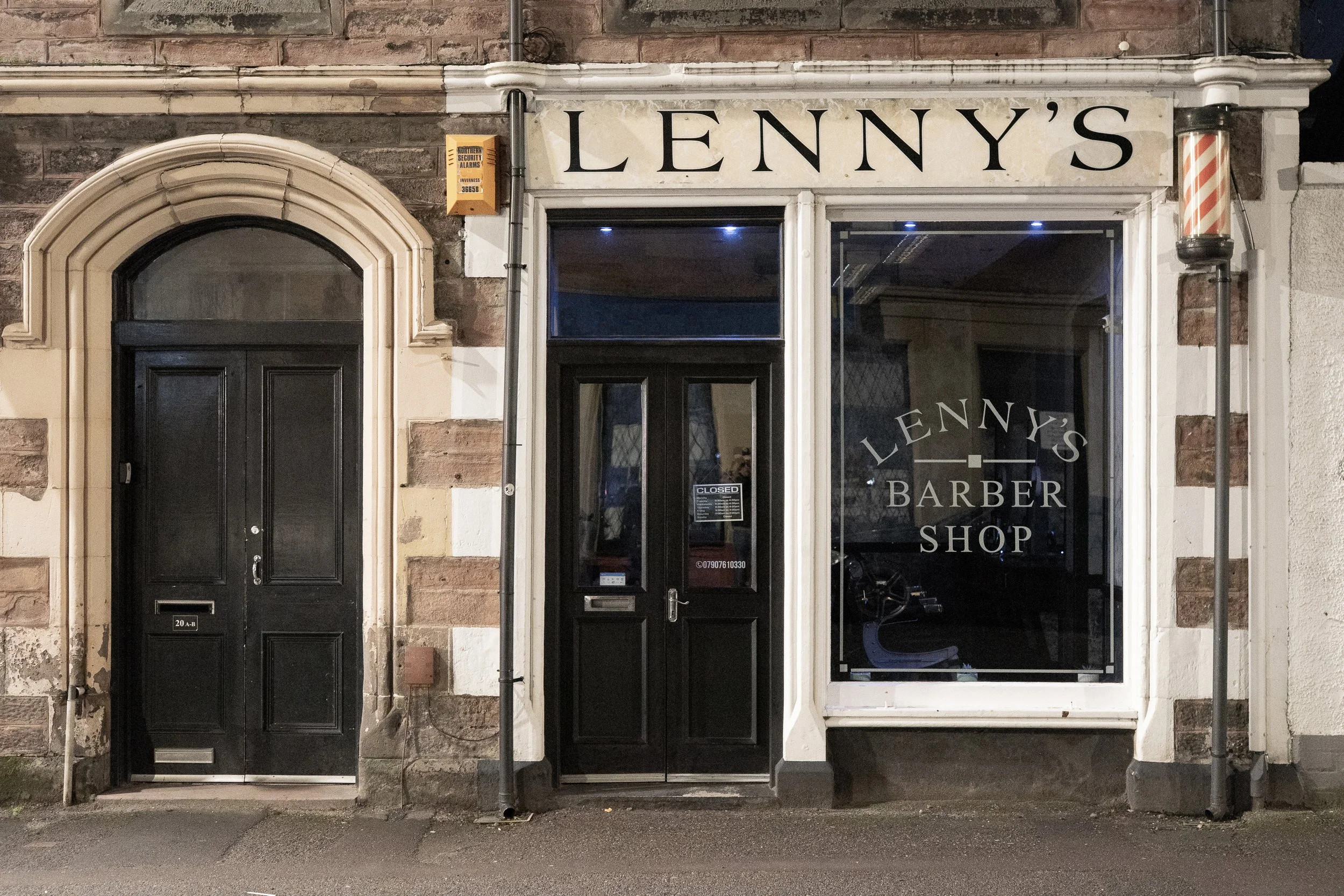
Lenny’s Barber Shop closed for the night, its windows dark and the street quiet
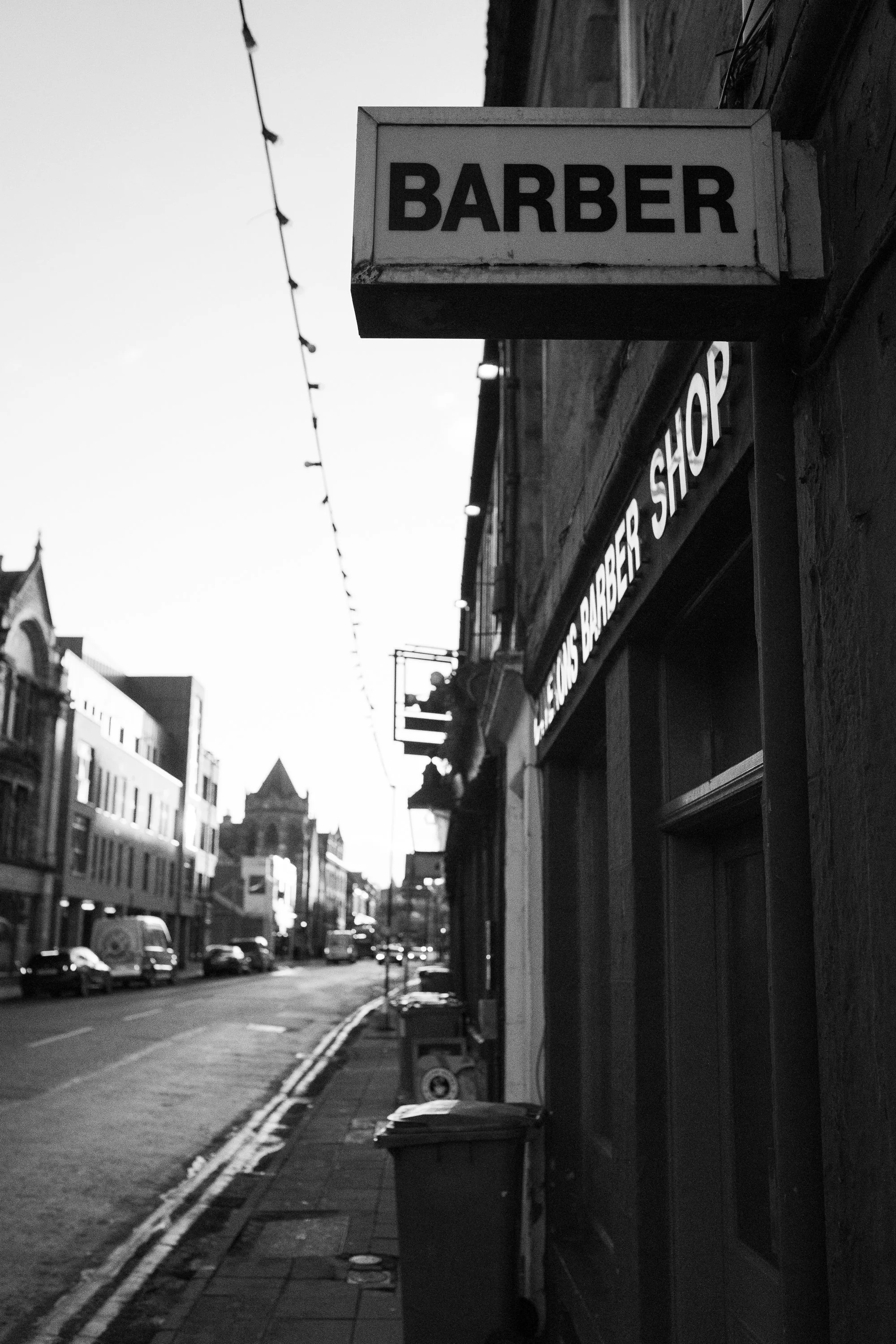
A simple barber shop sign extends over an empty street, captured in black and white
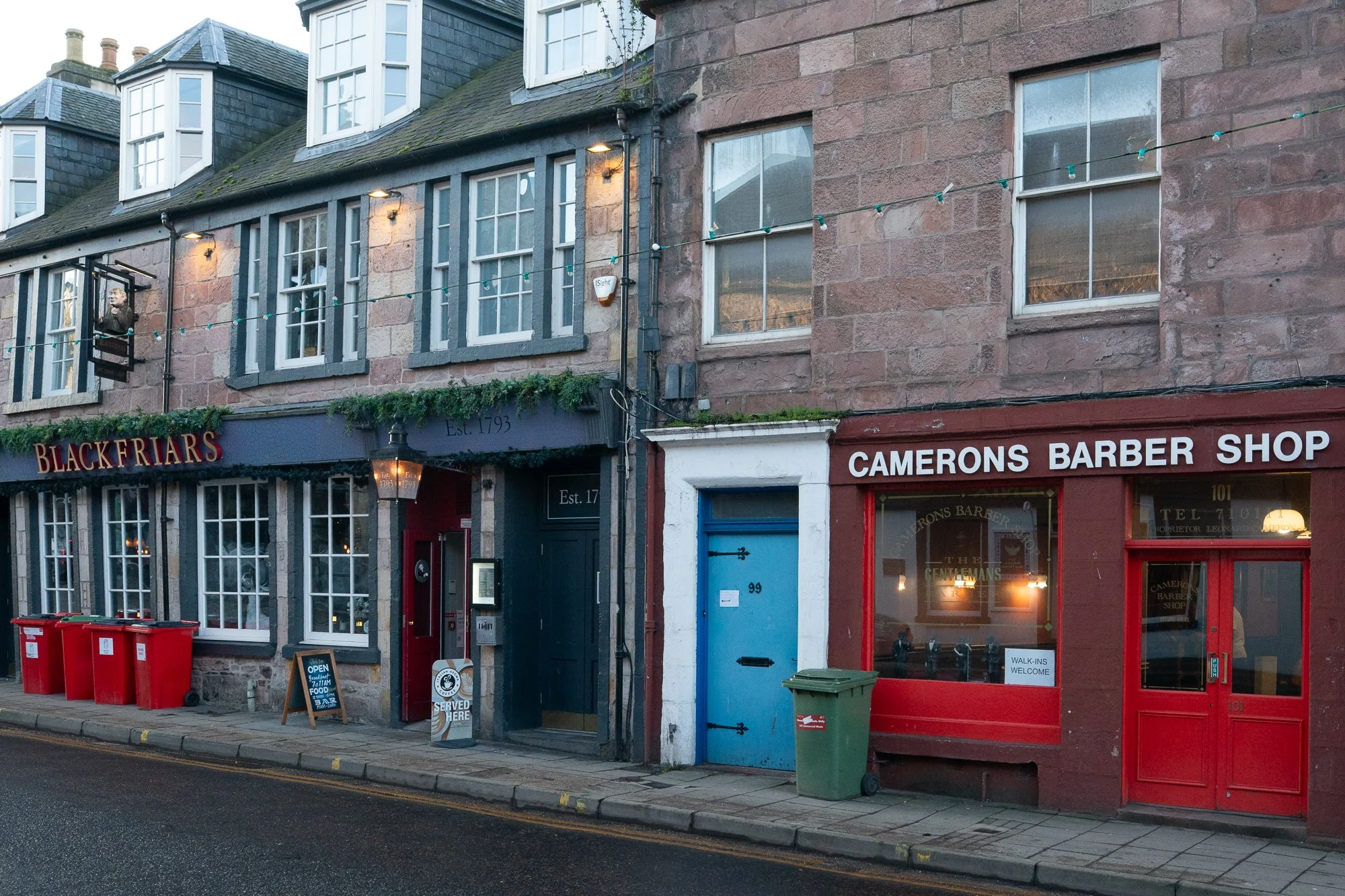
Camerons Barber Shop stands out in red along a row of weathered buildings on a Scottish street