
Barbershop Culture in Long Beach, California
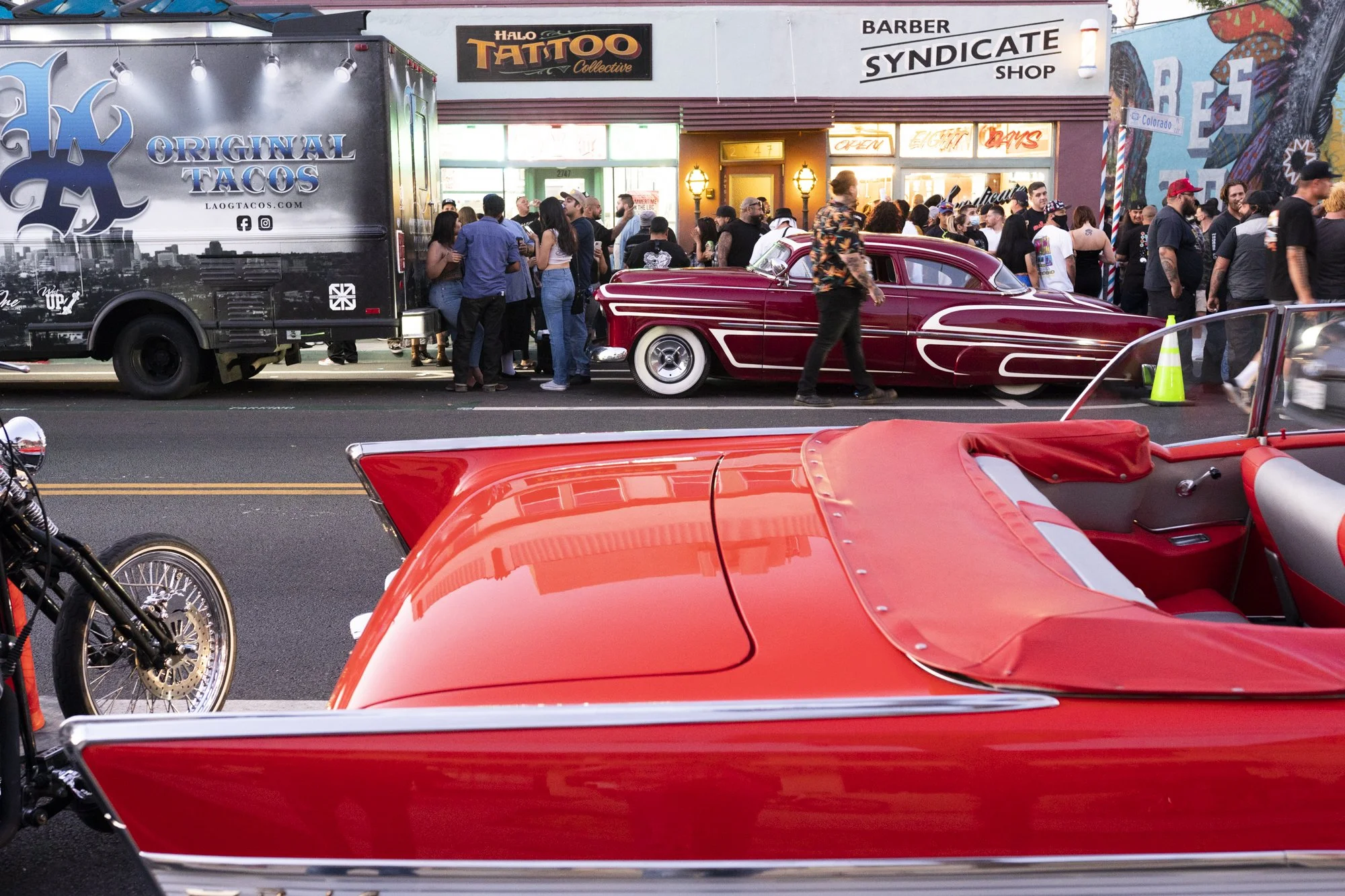
By the time the sun started to drop in Long Beach, the sidewalk outside Syndicate Barbershop was already full. A taco truck idled at the curb, lowriders began lining the street, and a crowd gathered in front of the shop—waiting, talking, watching.
This wasn’t just an anniversary party.
It was what happens when a barbershop becomes part of the identity of a place.
After 20 years, Syndicate Barbershop wasn’t celebrating alone. The neighborhood showed up with it.
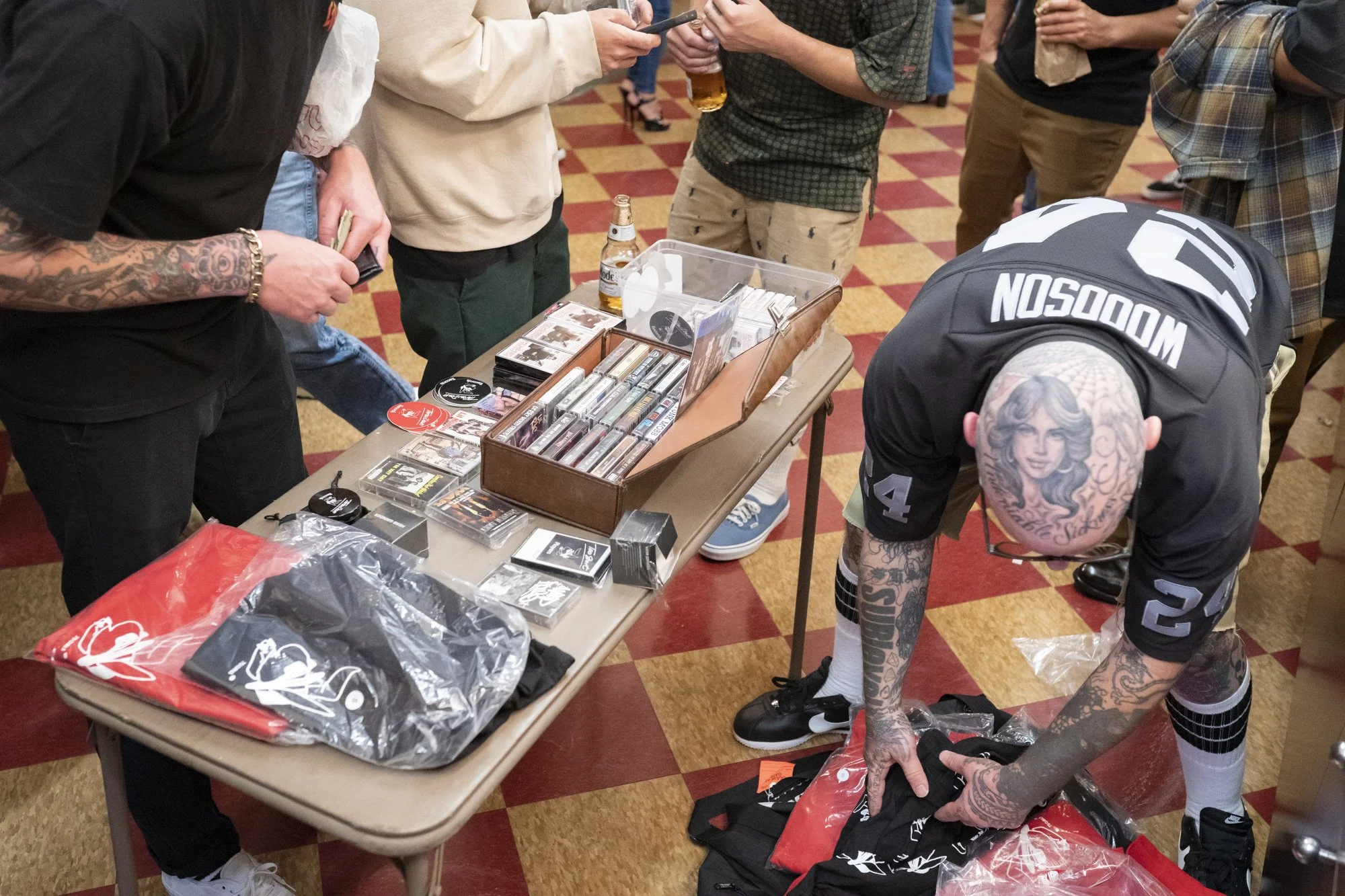
A table of cassette tapes, shirts , and stickers for sale inside the shop. People gather around it as part of what has been built over time.
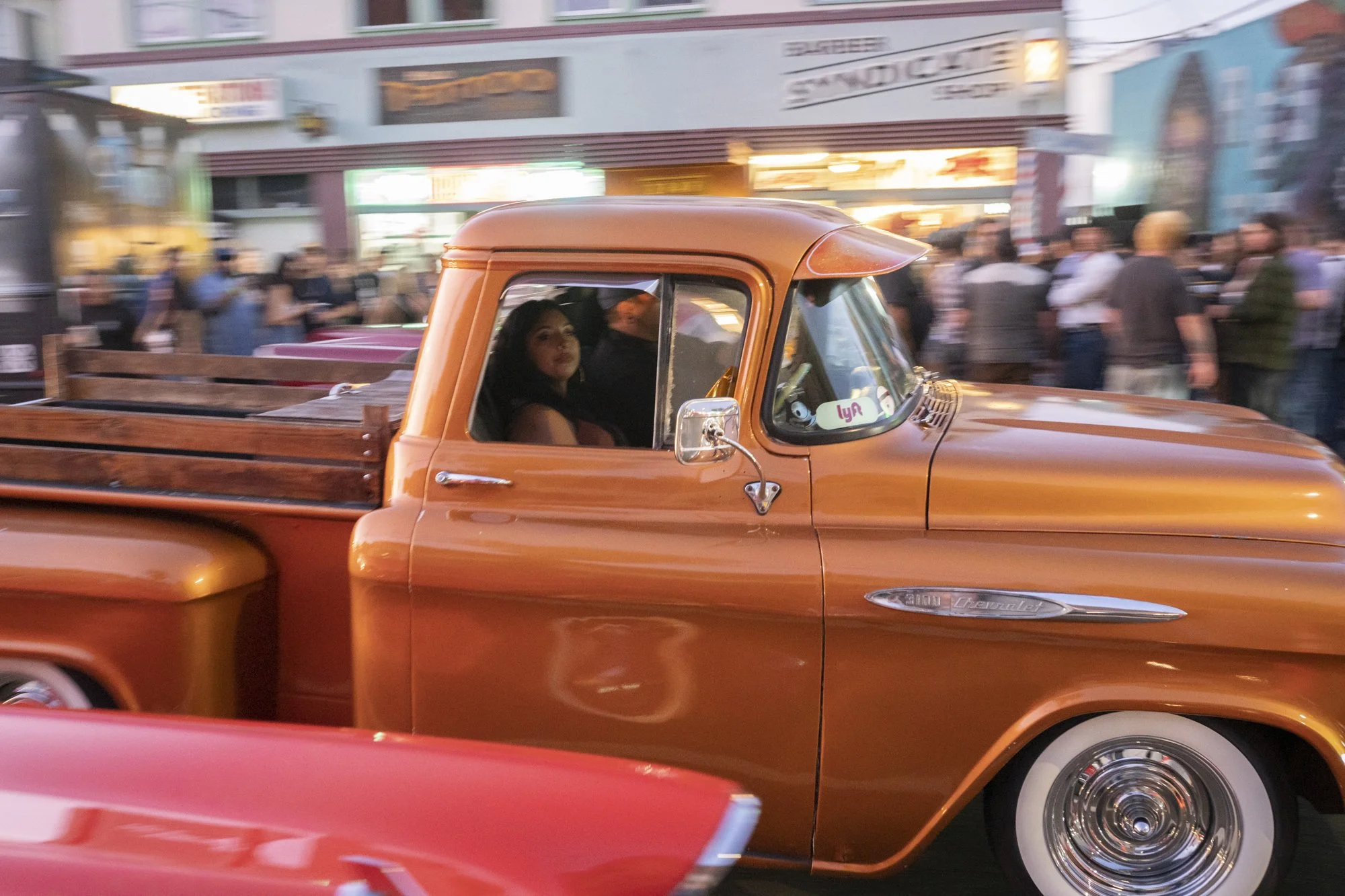
A vintage truck rolls past as people line the sidewalk. The street stays active as the crowd builds.
More Than a Barbershop
There’s a point where a shop stops being a place you go, and starts becoming something people belong to.
That line disappeared quickly as the night unfolded.
People filled the sidewalk, then the street. Conversations stretched from the shop doors out into traffic. Music, engines, voices—everything blended together into something that felt less like an event and more like a scene that had been building for years.
Inside, the chairs were still there, but the clippers were off, so the energy outside told a different story.
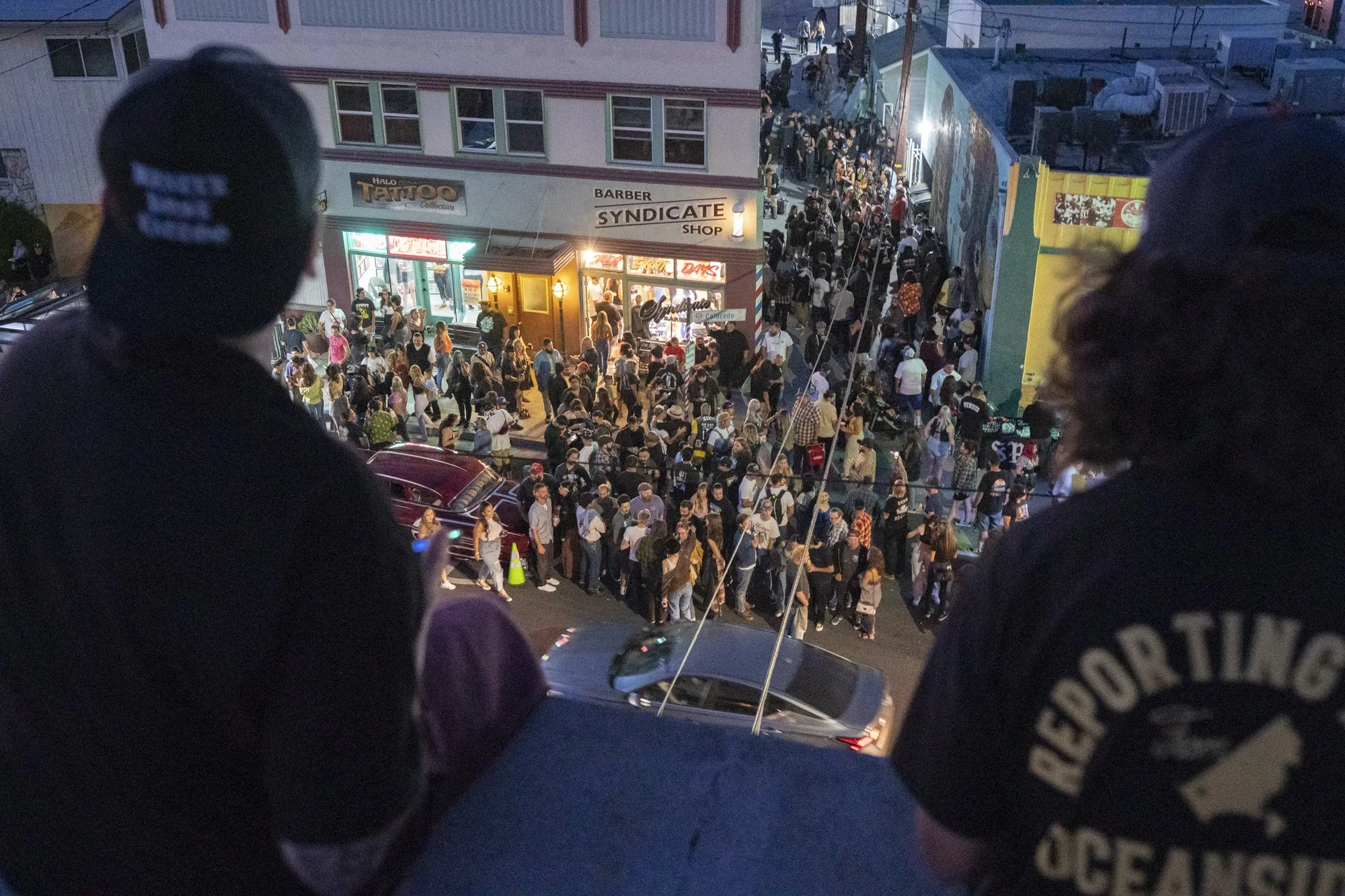
From above, the crowd fills the block in front of the shop. What started at the sidewalk stretches fully into the street.
Lowriders, Tattoos, and West Coast Identity
The cars said as much about the night as anything else.
Polished lowriders rolled in one after another, each one deliberate—paint, chrome, stance, history. They didn’t just park. They became part of the atmosphere, like extensions of the people who drove them.
The same could be said for the crowd.
Tattoos, streetwear, pressed fits, workwear—every detail felt specific to Southern California. Nothing forced. Nothing for show. Just a reflection of a culture that’s been built over decades, expressed in real time on a Long Beach street.
Back inside, the connection ran deeper. A pop up tattoo shop took the place of haircuts, artists working under bright ring lights while the crowd moved between spaces.
This is where barbershop culture overlaps with everything else and shows what Southern California is all about.
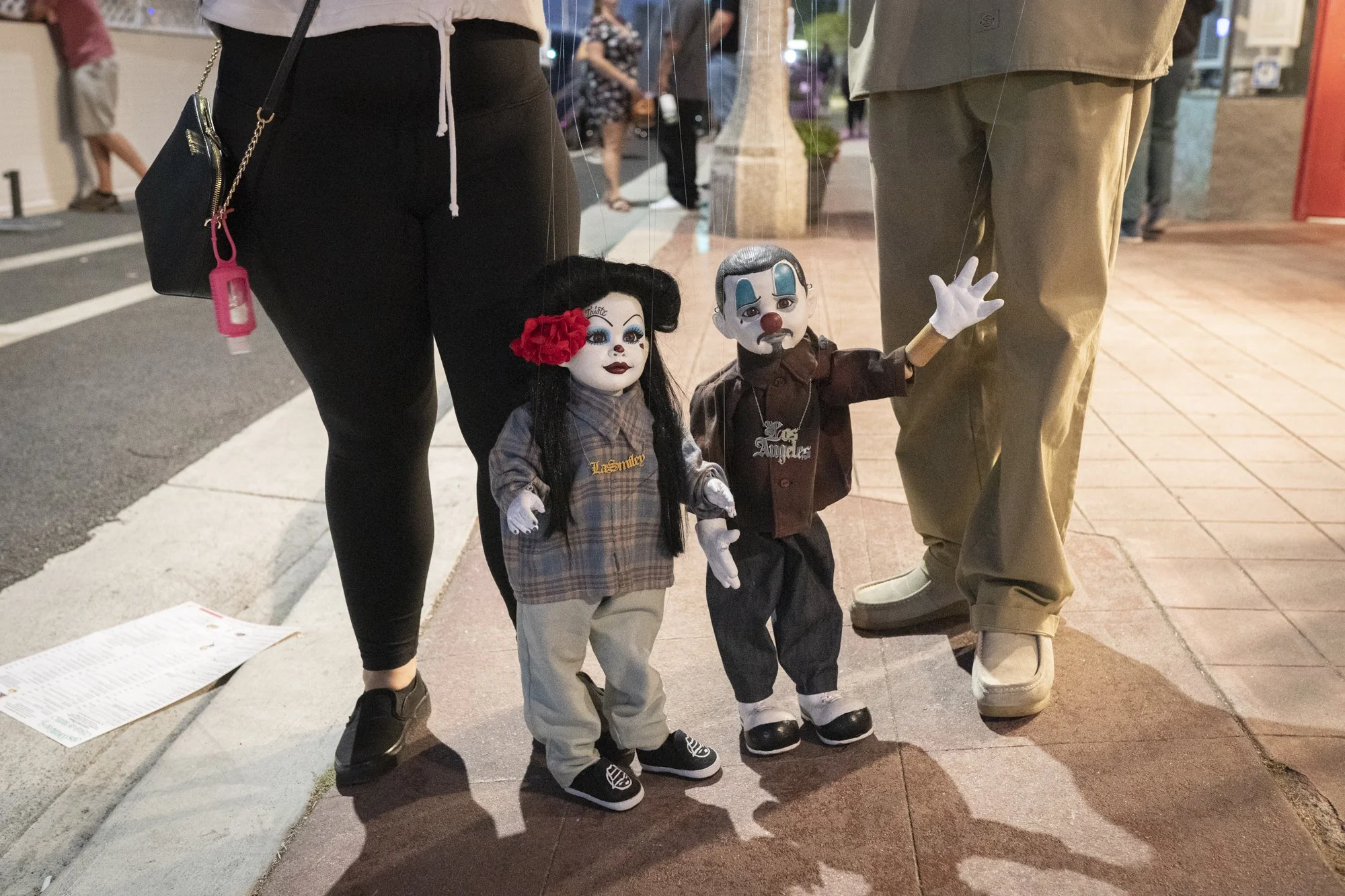
Two styled dolls sit on the sidewalk between people gathered outside. Details like this reflect the culture around the shop.
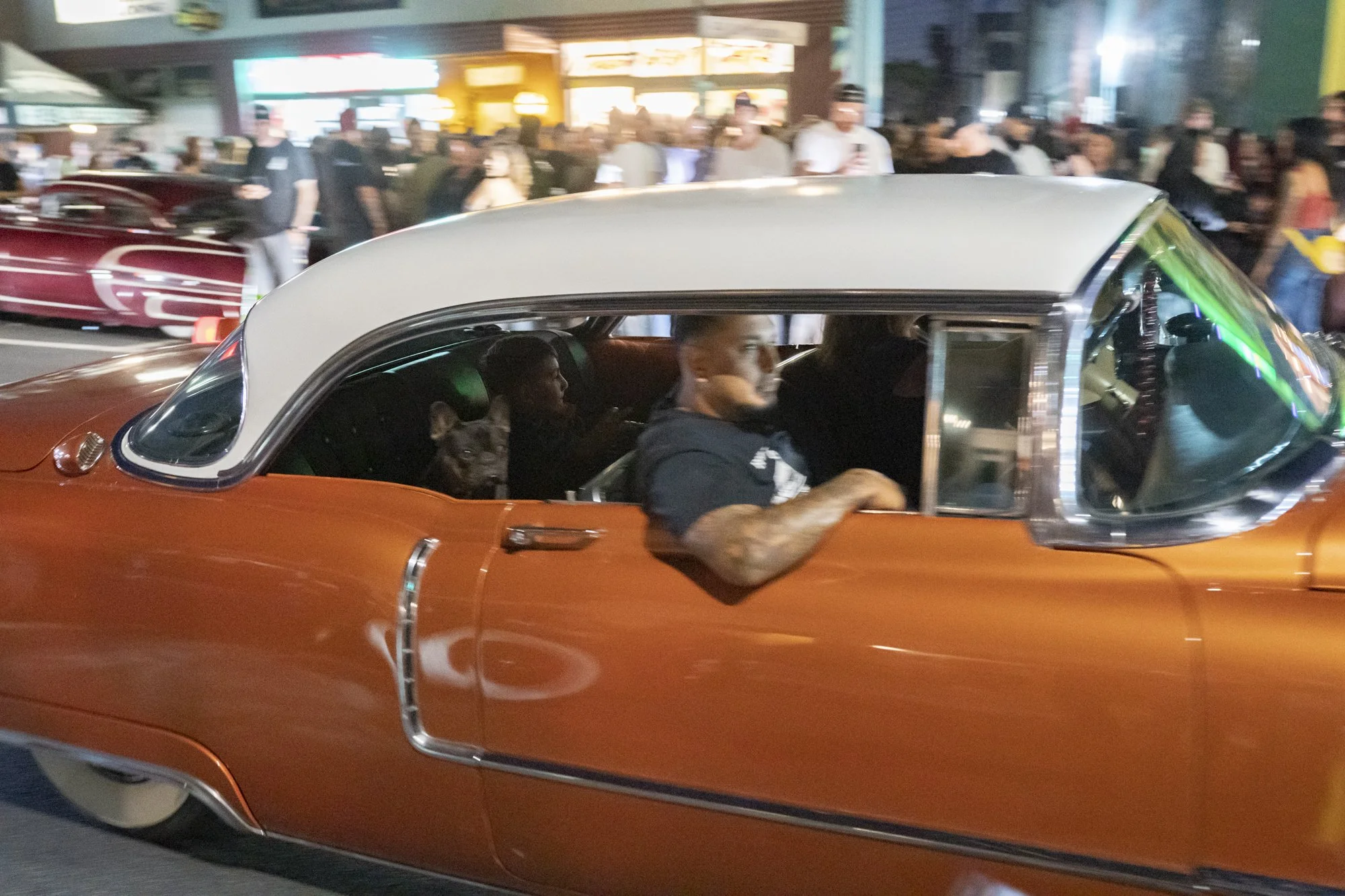
A lowrider moves through the block as people line both sides of the street. The cars stay in motion throughout the night.
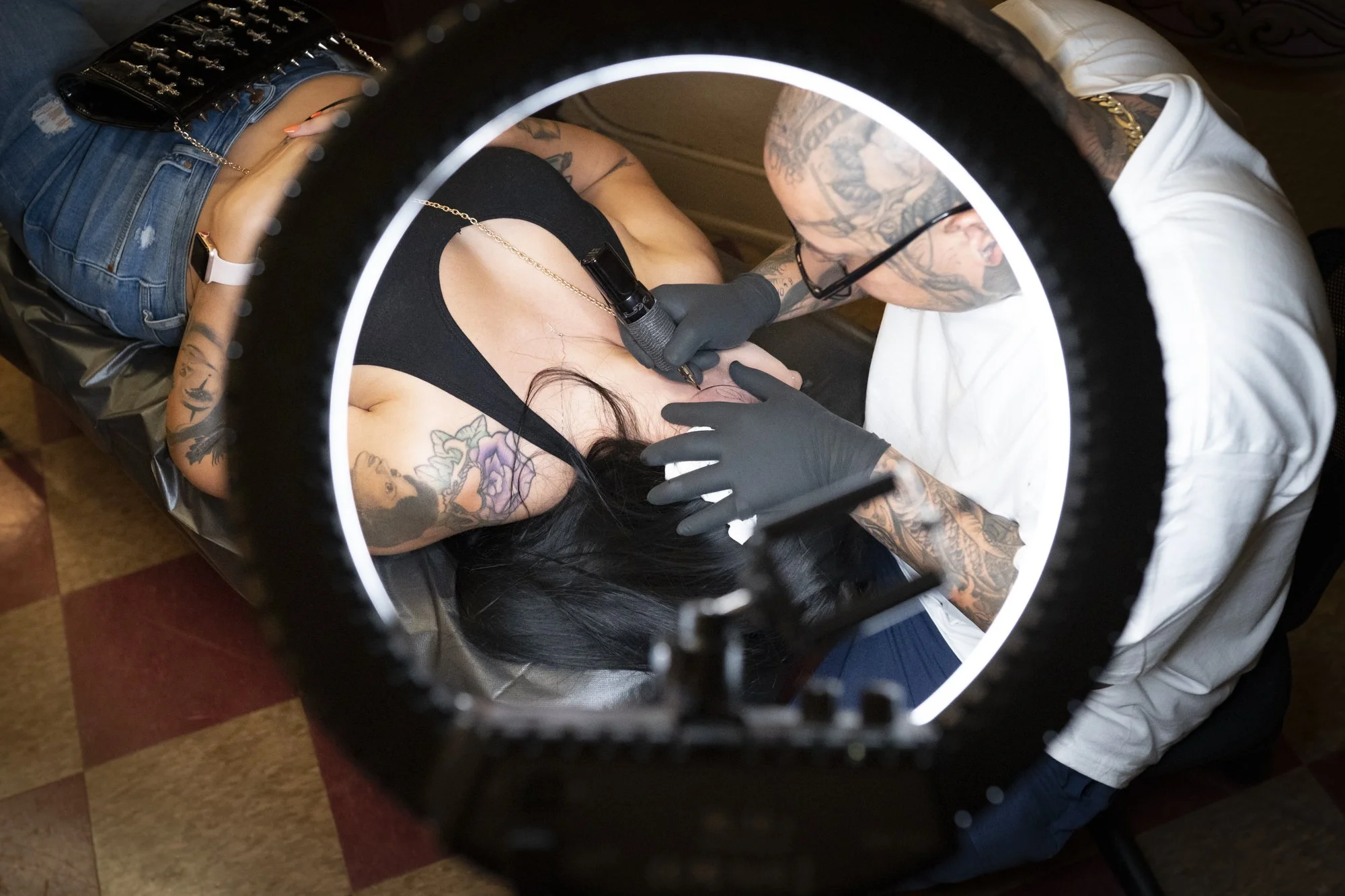
A tattoo artist works under a ring light inside the shop. For the anniversary, the space shifts away from haircuts.
A Neighborhood Shows Up
What stood out wasn’t just the size of the crowd—it was who made up that crowd.
Friends, families, kids, longtime clients, first-timers. People who had been coming to the shop for years standing next to people just discovering it, and other that came from across the country to support.
There’s a rhythm to places like this. You see it in the way people greet each other, the way they move through the space, the way they linger.
It’s not transactional.
It’s personal.
And over time, that turns a shop into something much harder to define—and much harder to replace.
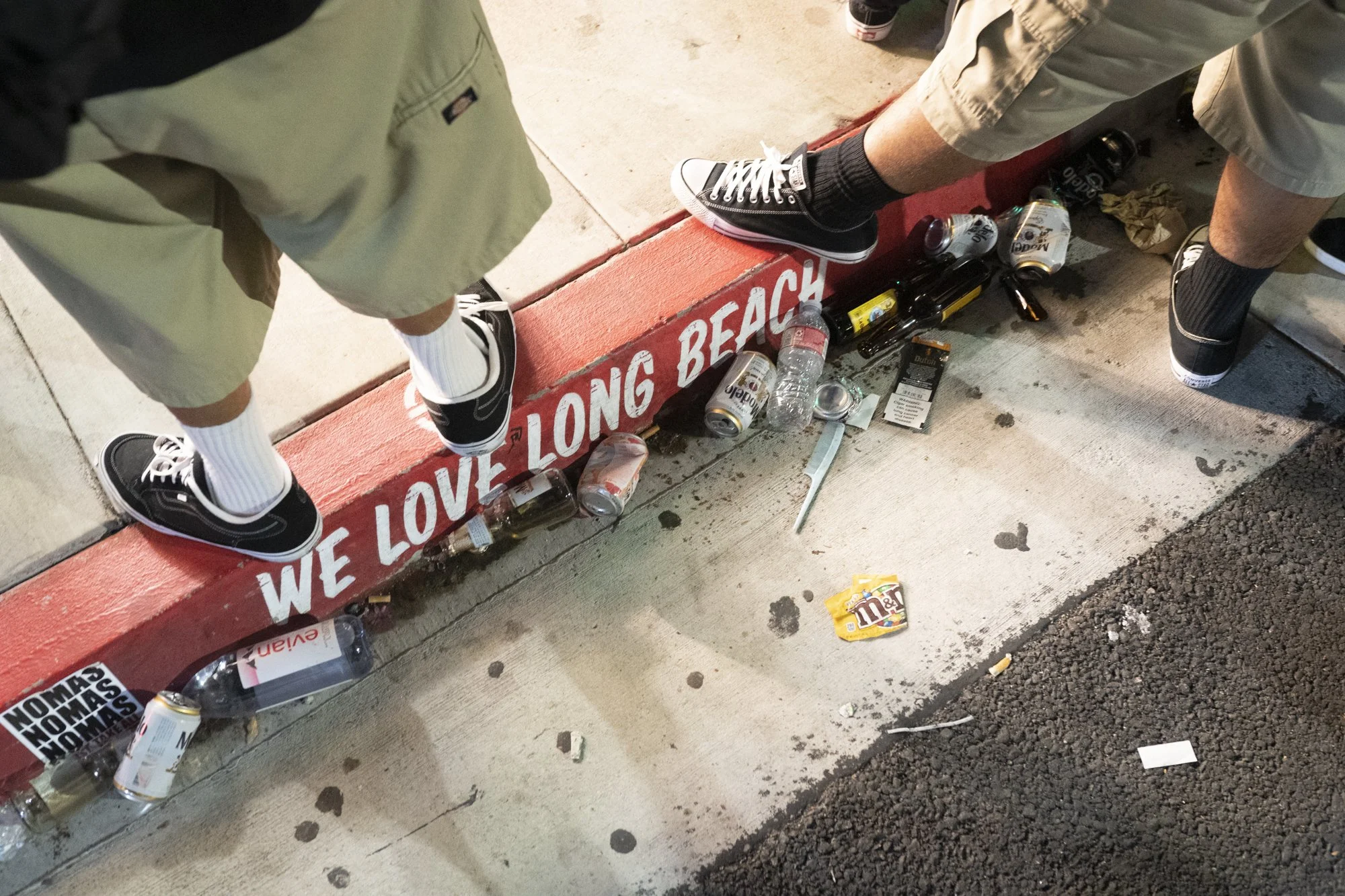
A curb painted “We Love Long Beach” sits lined with bottles and debris after the gathering. What’s left behind reflects the pace and scale of the night.
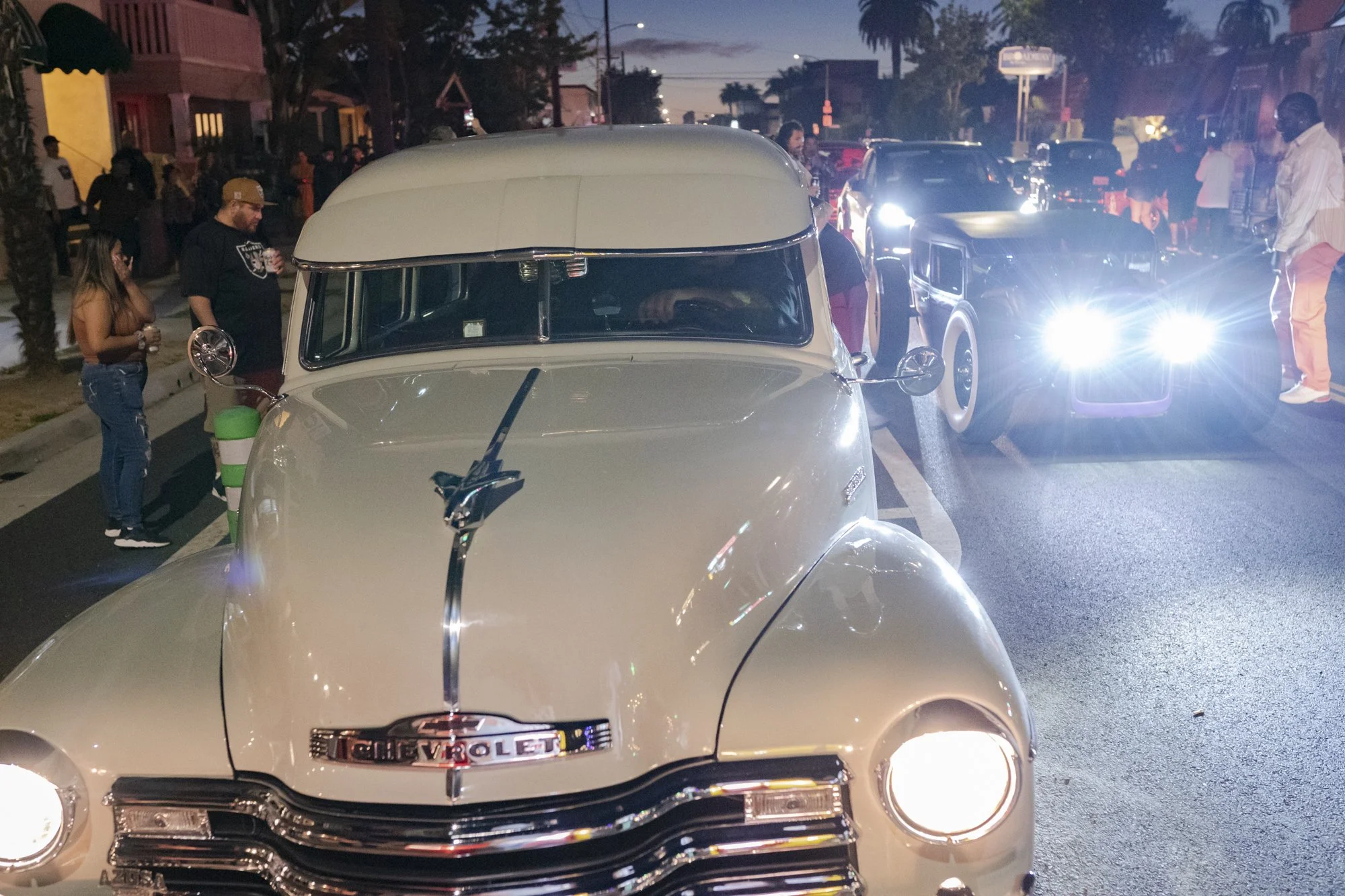
A classic Chevrolet moves through the street as people watch from both sides. The cars become part of the atmosphere.
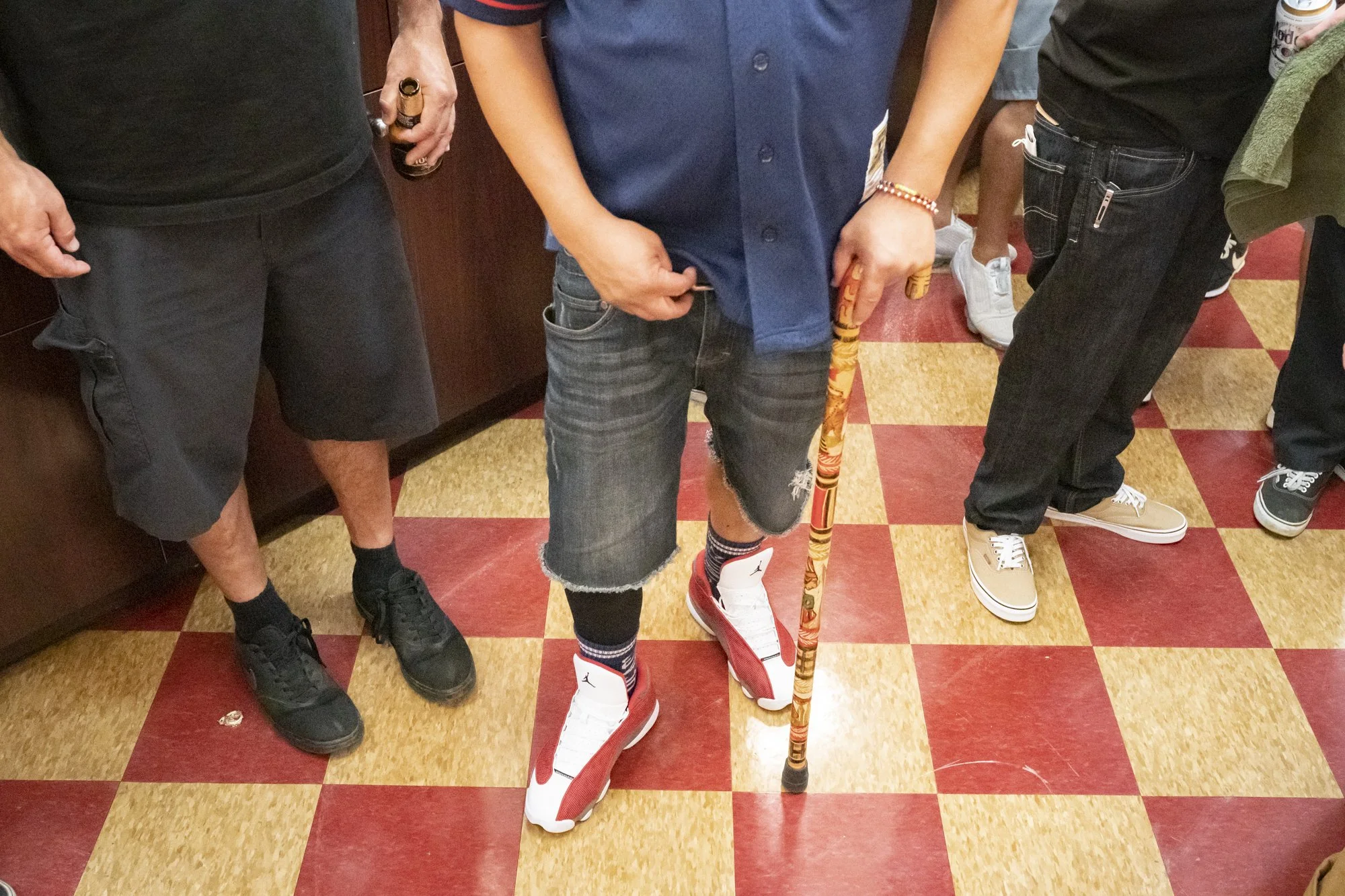
Sneakers and a cane rest on the checkerboard floor inside the shop. The focus shifts to the people who showed up.
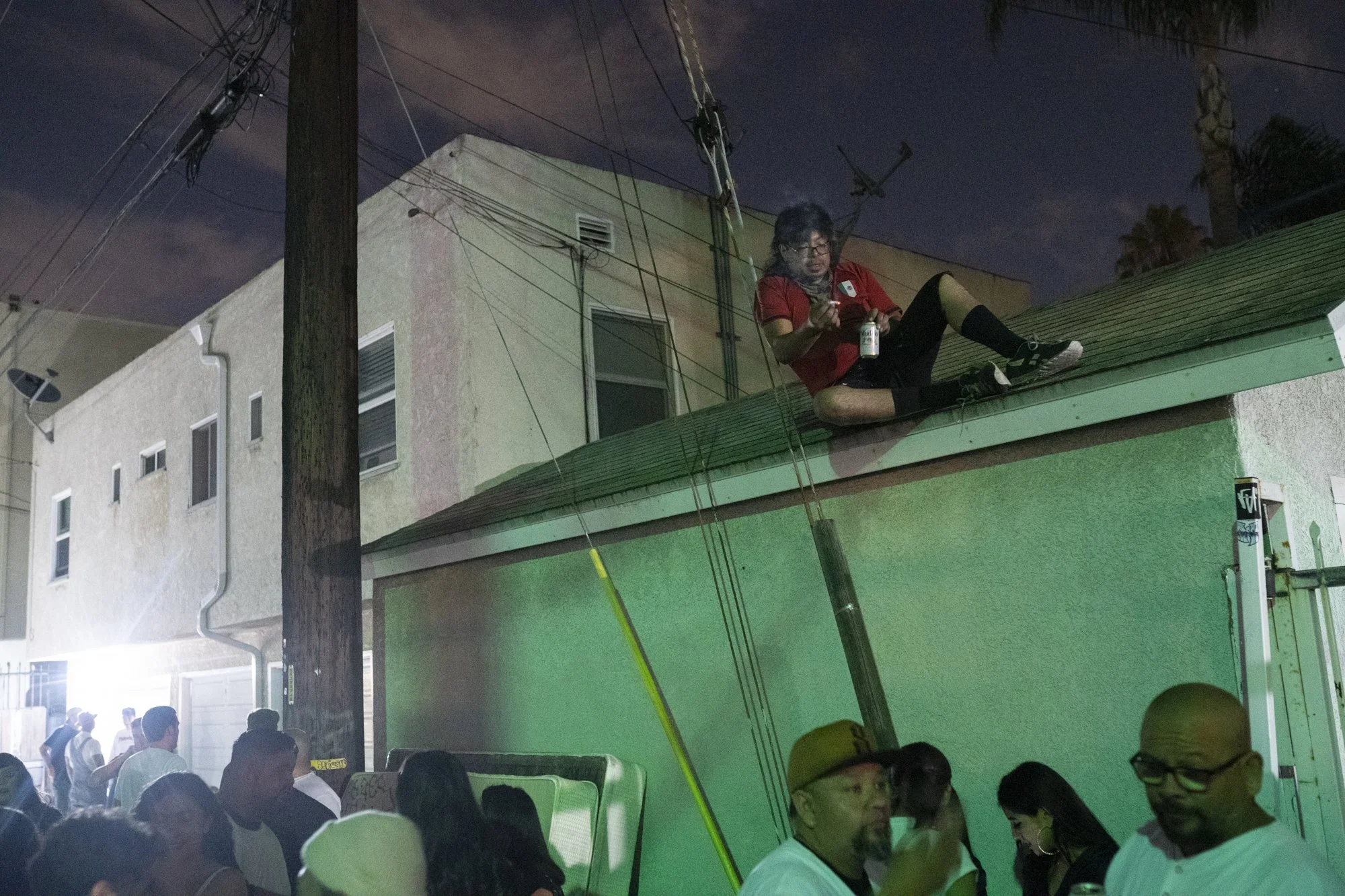
From the rooftop, the crowd fills the street below in Long Beach. The scale of the anniversary becomes clear from above.
When a Shop Becomes a Brand
At some point during the night, a table went up inside—shirts, hats, cassette tapes, all for sale, and a small pieces of something larger.
People gathered around it the same way they gathered around the cars outside.
Because Syndicate isn’t just a barbershop anymore. It’s something people represent.
And it wasn’t contained to the shop itself.
Out back, in the alley behind the building, a full dance party took shape—music echoing off the walls, people packed shoulder to shoulder, moving in a space that had nothing to do with haircuts and everything to do with community. It felt spontaneous, but also inevitable. Like an extension of what the shop has built over the past 20 years.
Twenty years will do that.
Consistency. Presence. Showing up day after day, year after year, until the shop becomes part of the fabric of the neighborhood—and the people in it carry that forward.
You could see it in what people wore, how they talked about the shop, how they moved through the space.
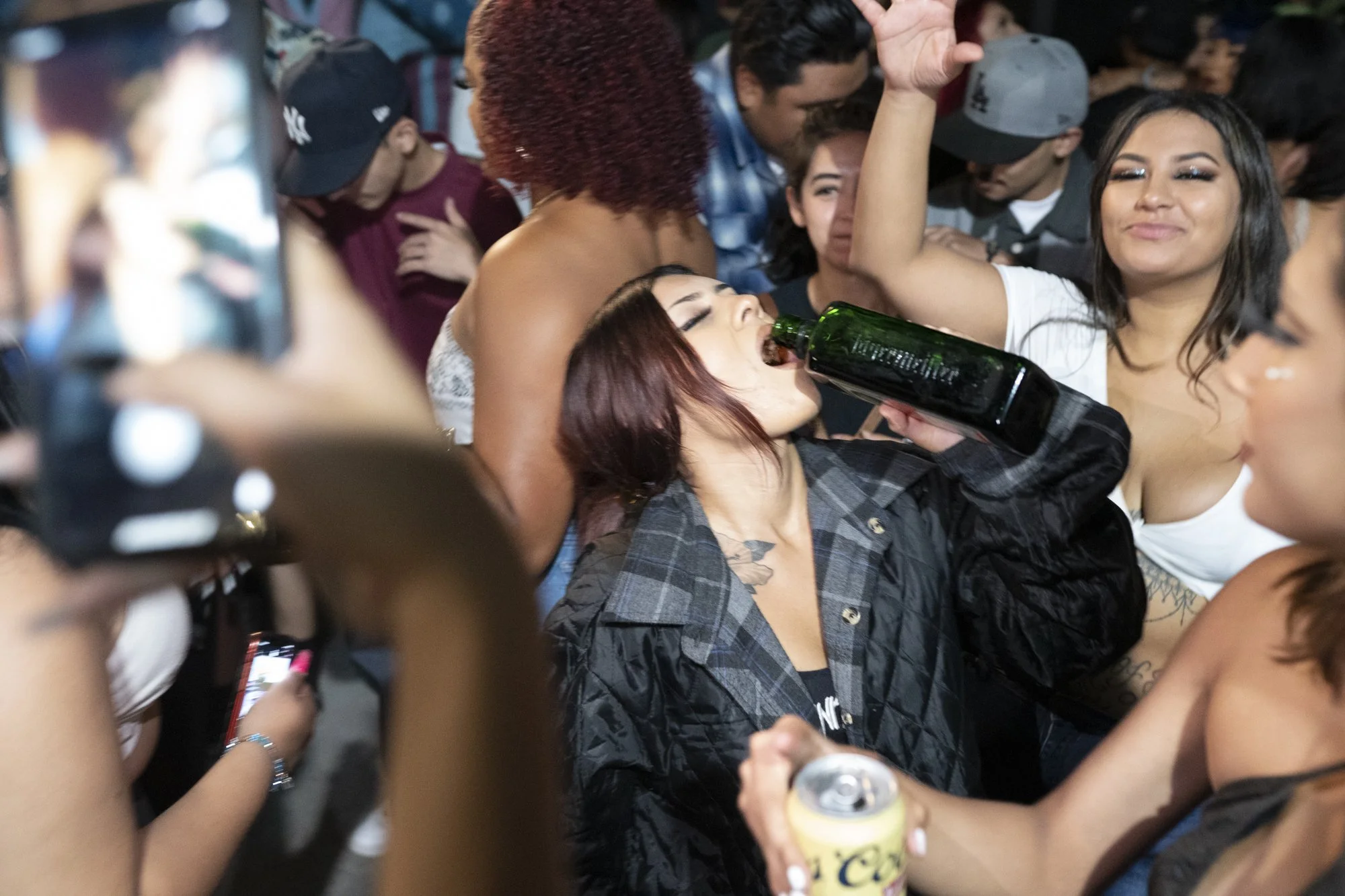
A bottle of Jagermeister is lifted in the middle of a dense crowd during the anniversary night. Moments like this unfold within the larger gathering outside the shop.
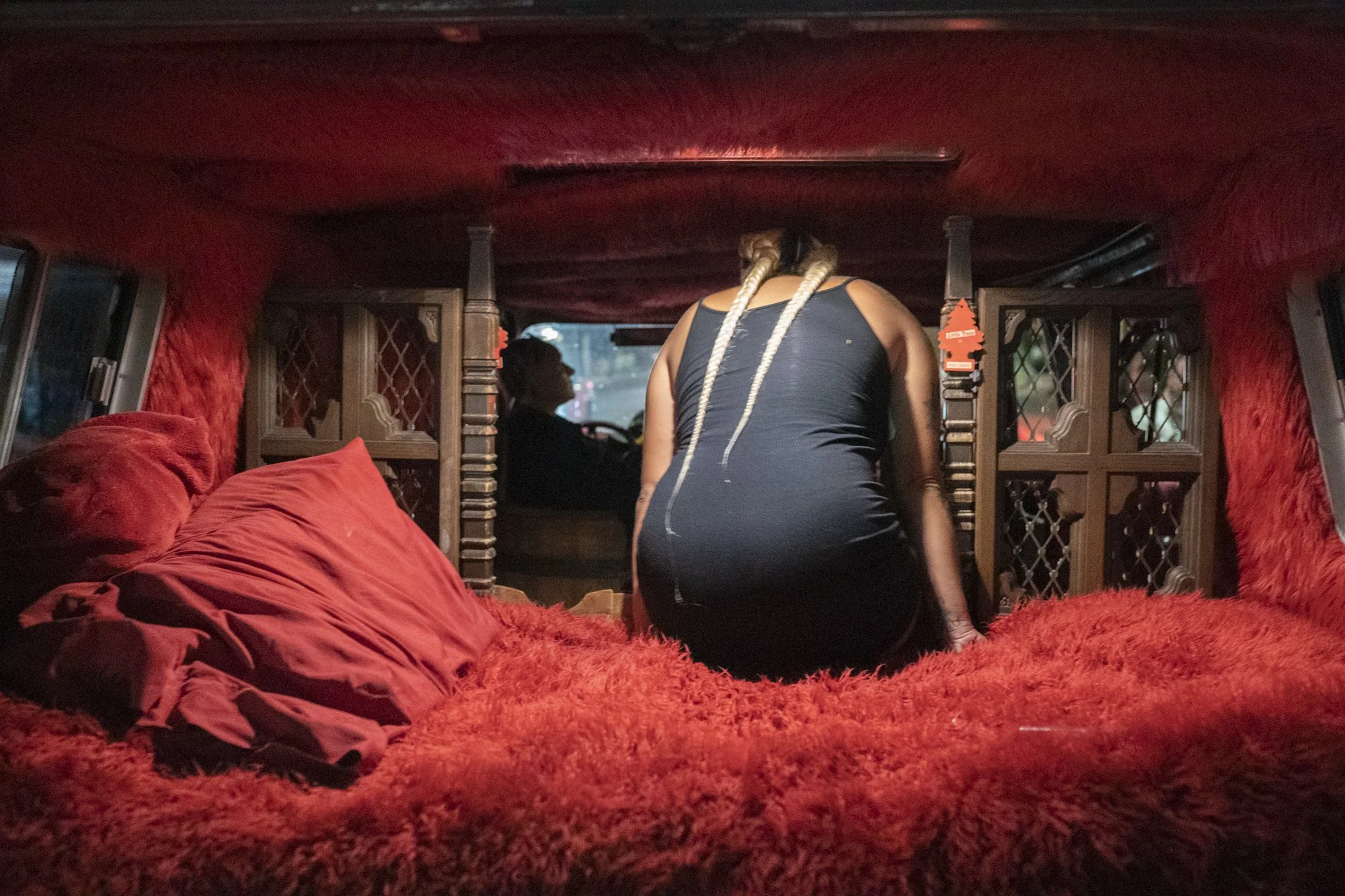
Inside a lowrider van, red upholstery frames a quieter moment away from the street. Even here, the car remains part of the same atmosphere outside.
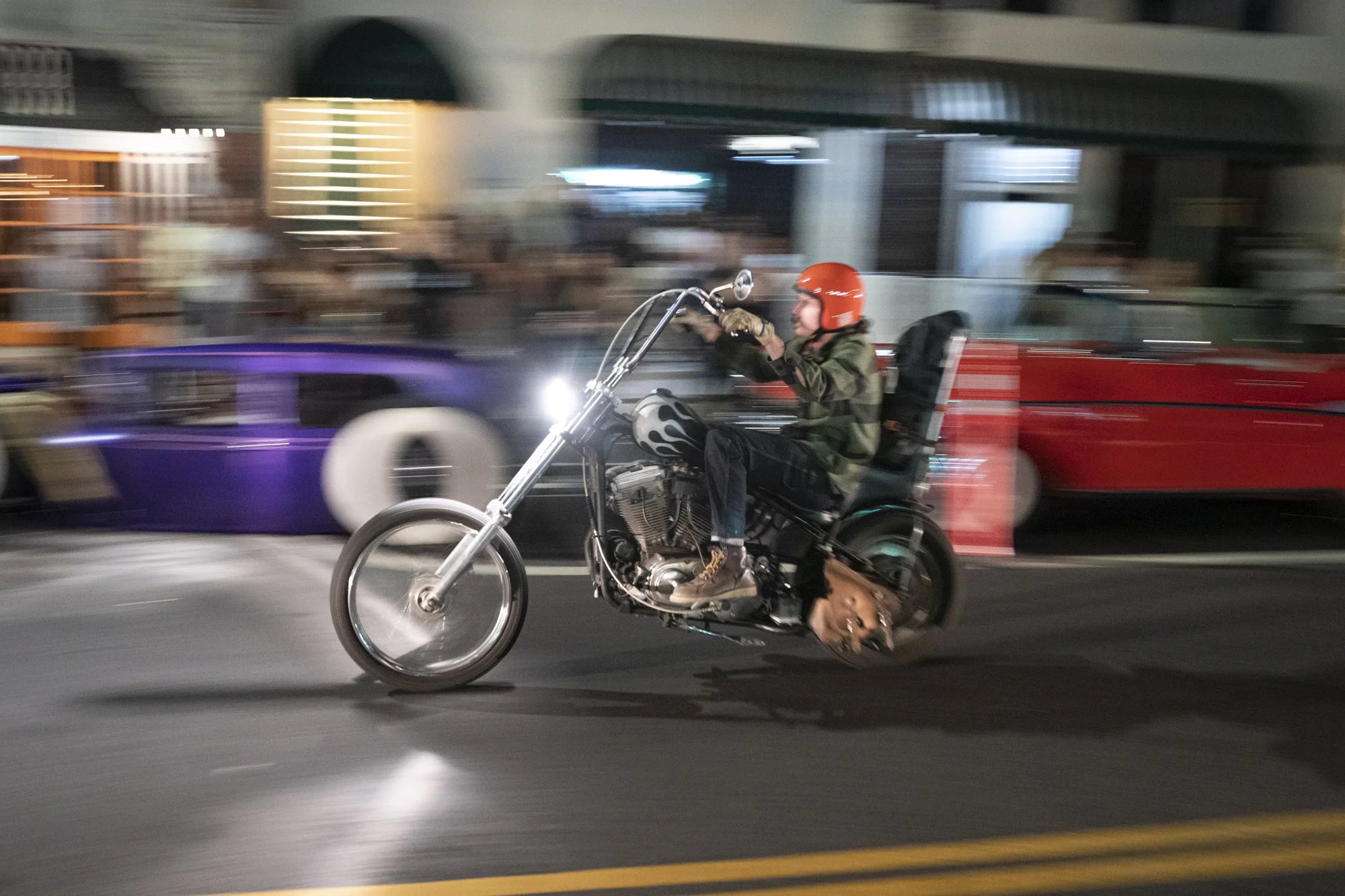
A motorcycle cuts through the street as the crowd holds its ground. It moves quickly past the gathering.
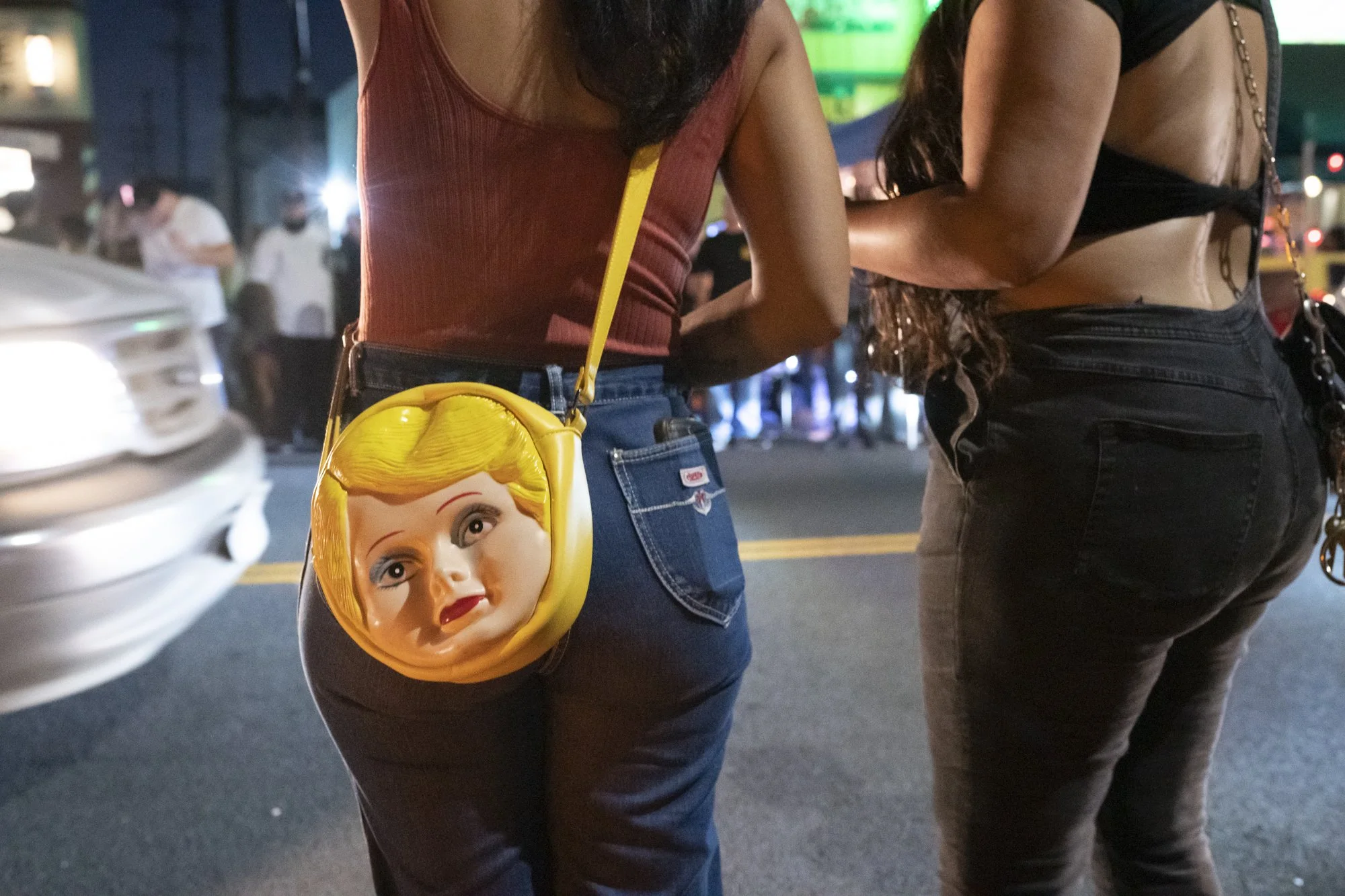
A doll-shaped purse stands out in the crowd. Personal style shows up in small ways.
Part of a Larger Body of Work
For the past 15 years, I’ve been photographing barbershops across the United States—small one-chair shops in rural towns, historic neighborhood institutions, and places like this, where the shop grows into something much bigger than itself.
Every shop is different. But the role they play is often the same. They bring people together.
Syndicate Barbershop, 20 years in, is a clear example of what that can become when it’s done right—not just a place to get a haircut, but a place that reflects the identity, energy, and culture of the community around it.
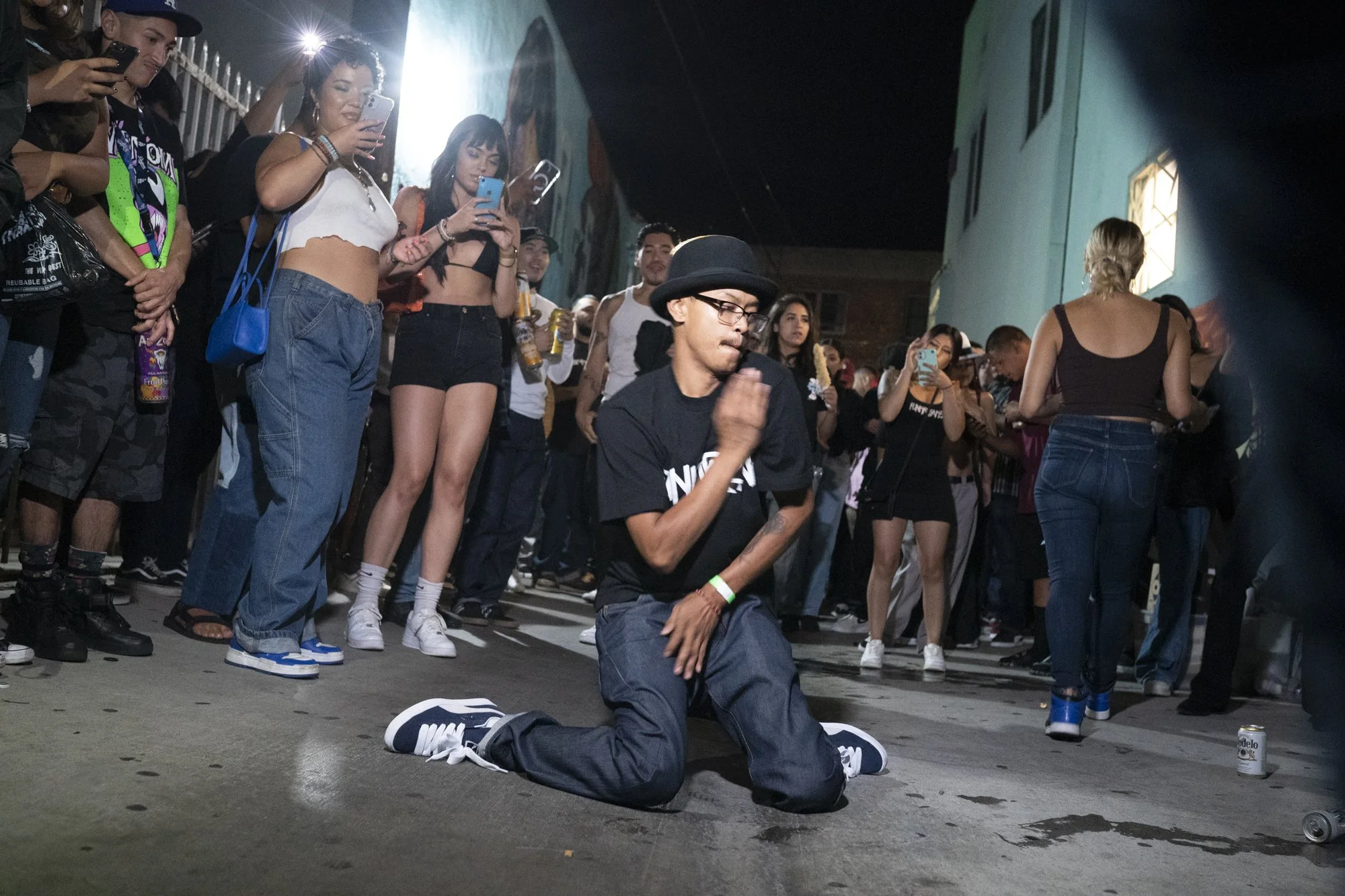
A circle forms as one person steps in to dance. The crowd holds the space around them.
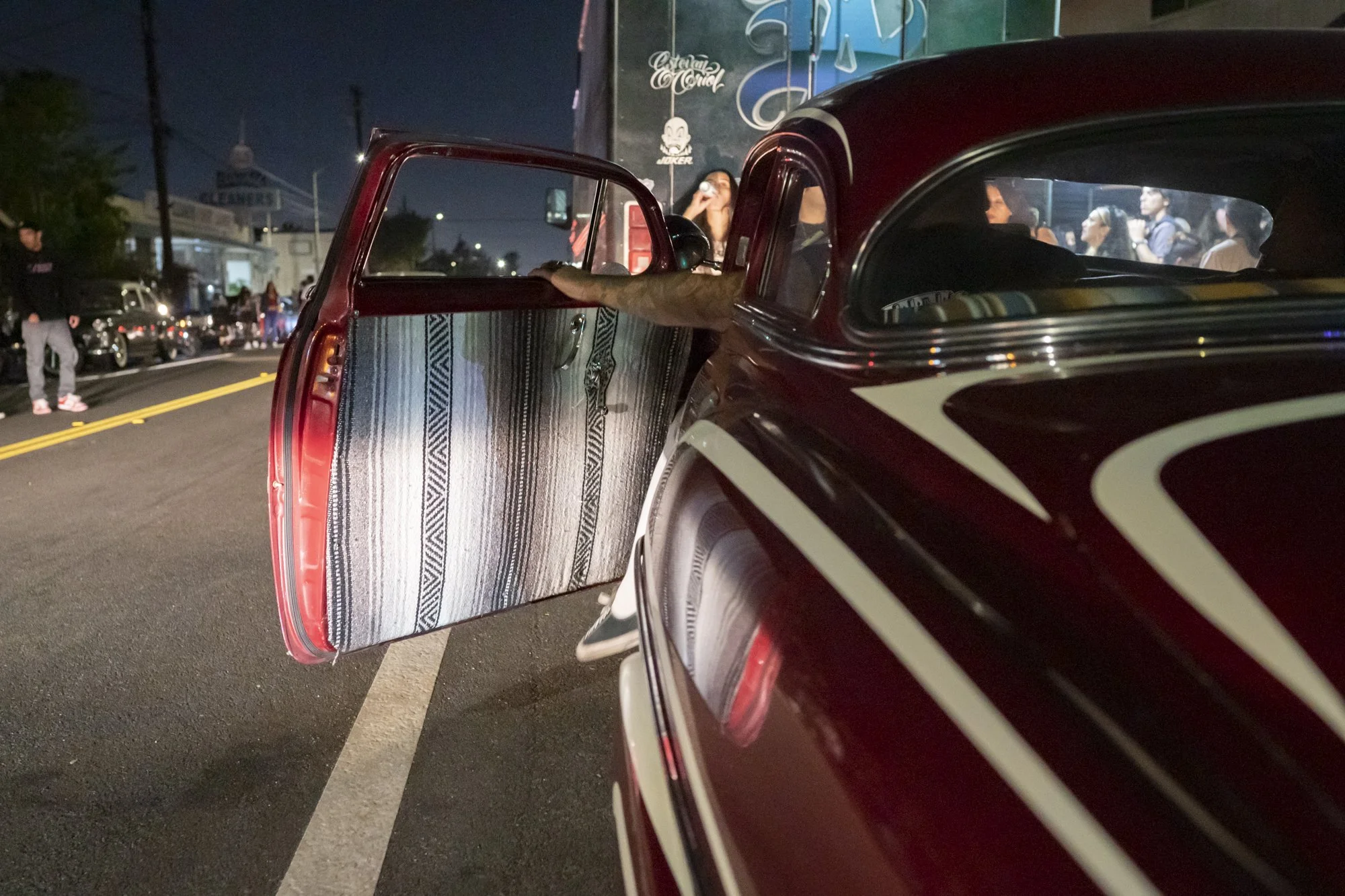
A car door stays open while people move through the street. Interior details remain part of the scene.
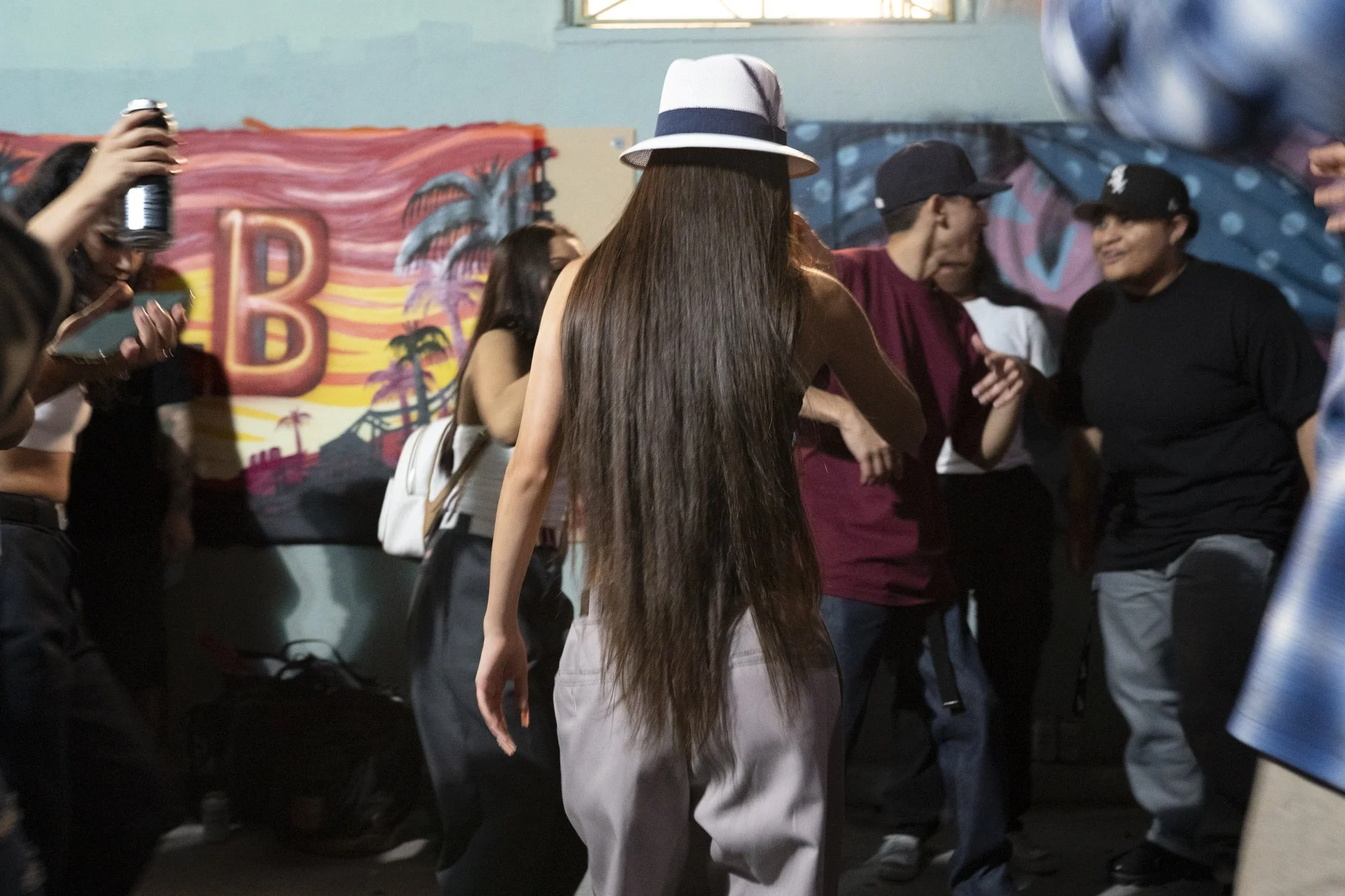
The alley behind the building turns into a dance floor as people pack in. It builds naturally out of the night.
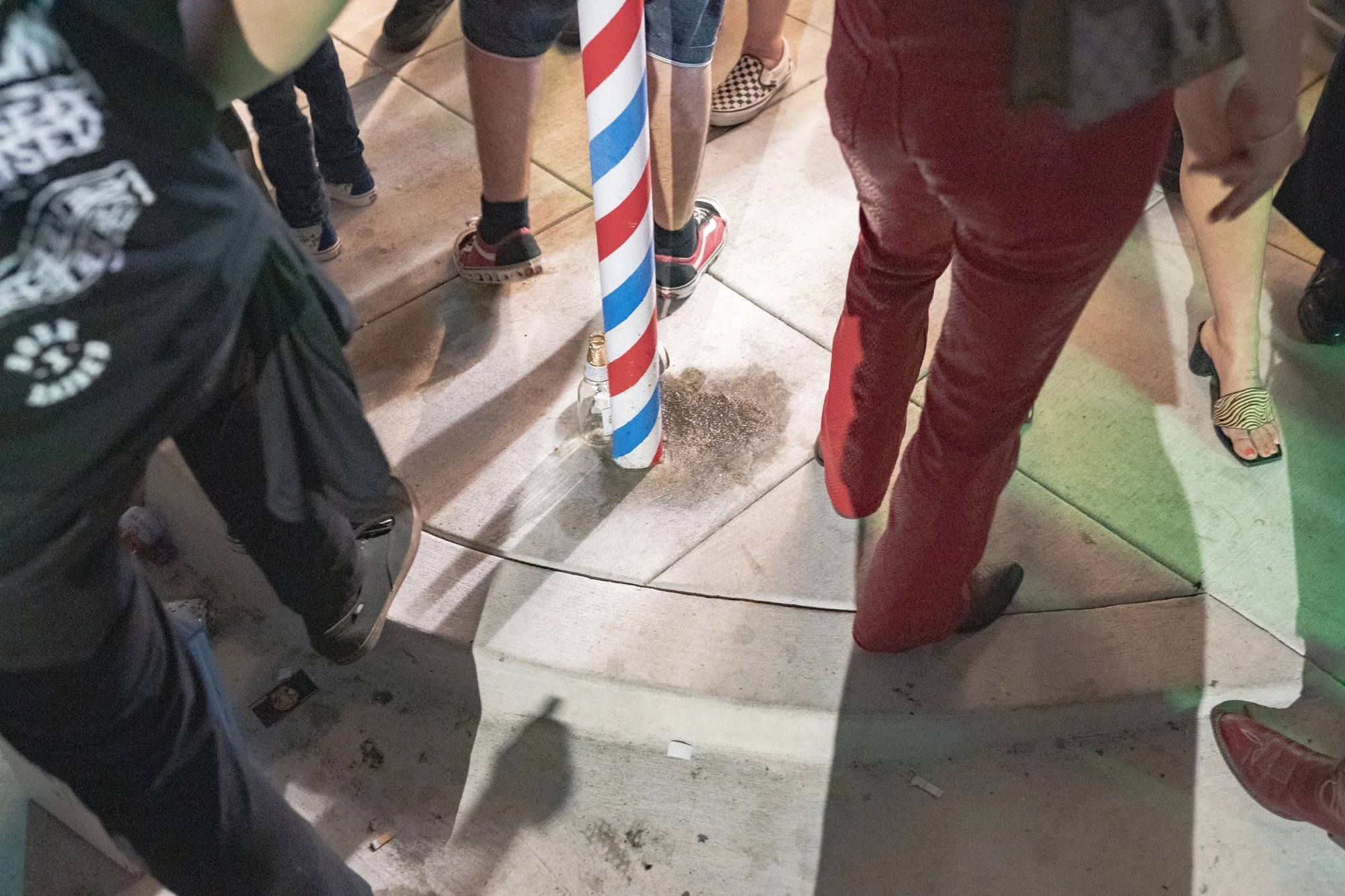
The barber pole stands at street level as people gather tightly around it. The sidewalk fills in as the night grows.
Explore More from the Barbershops of America Project
If you’re interested in seeing how barbershop culture shows up in different parts of the country, explore more stories from the project below.
→ View the full Barbershops of America series
→ Explore another barbershop story
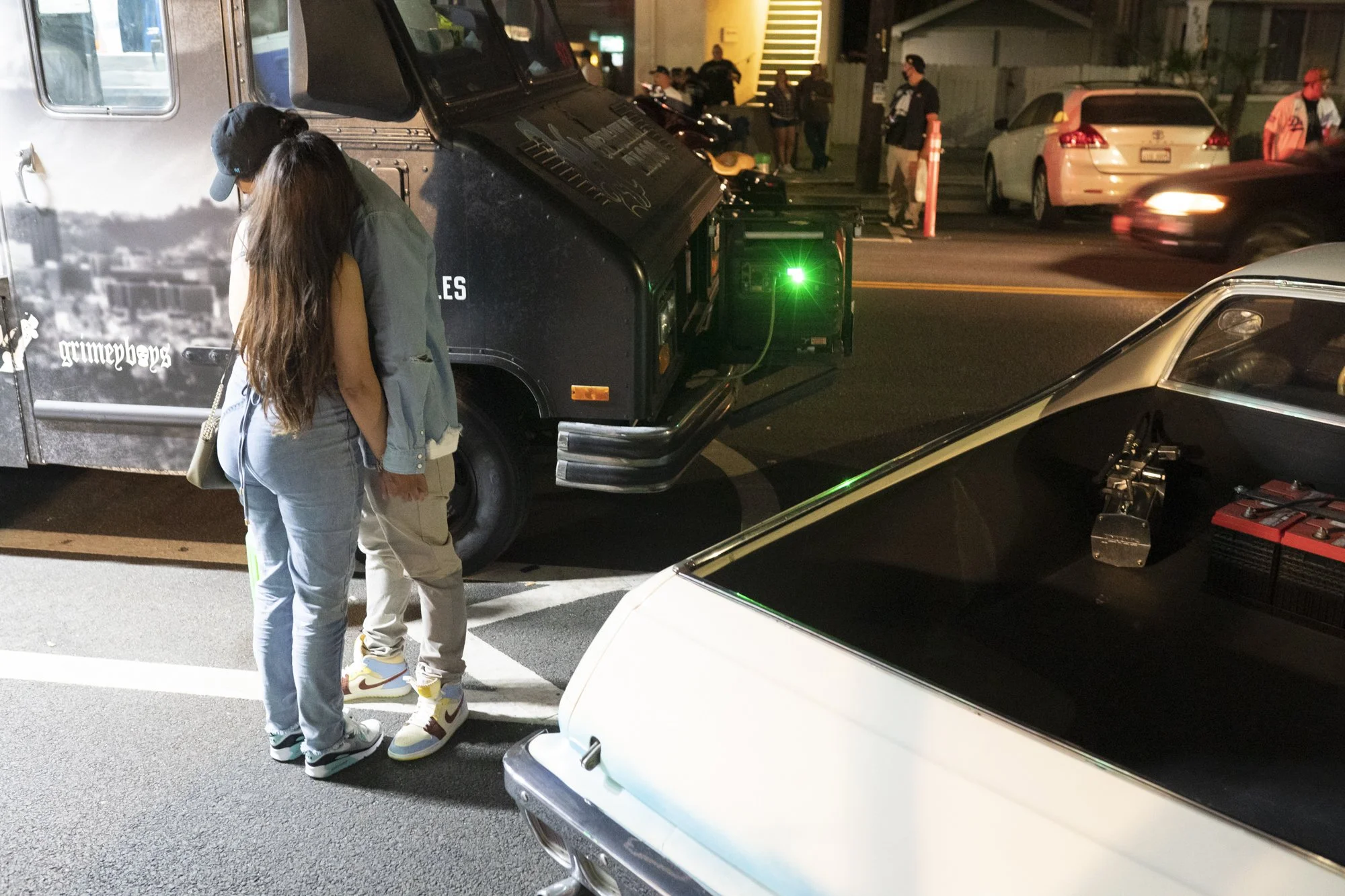
A couple stands beside an open trunk near the back. The gathering extends beyond the front sidewalk.
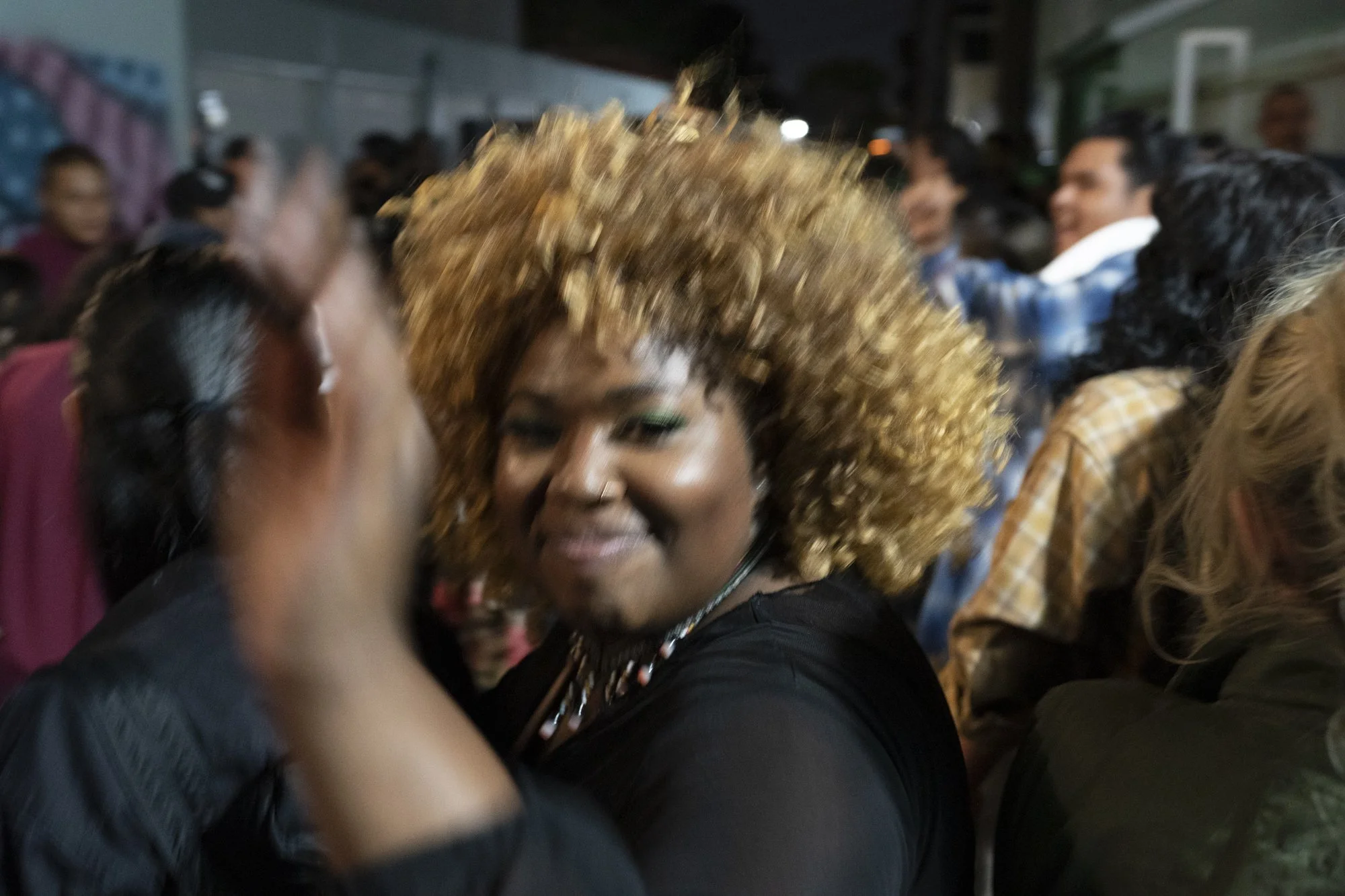
The crowd tightens as people begin to move together. The energy shifts deeper into the night.
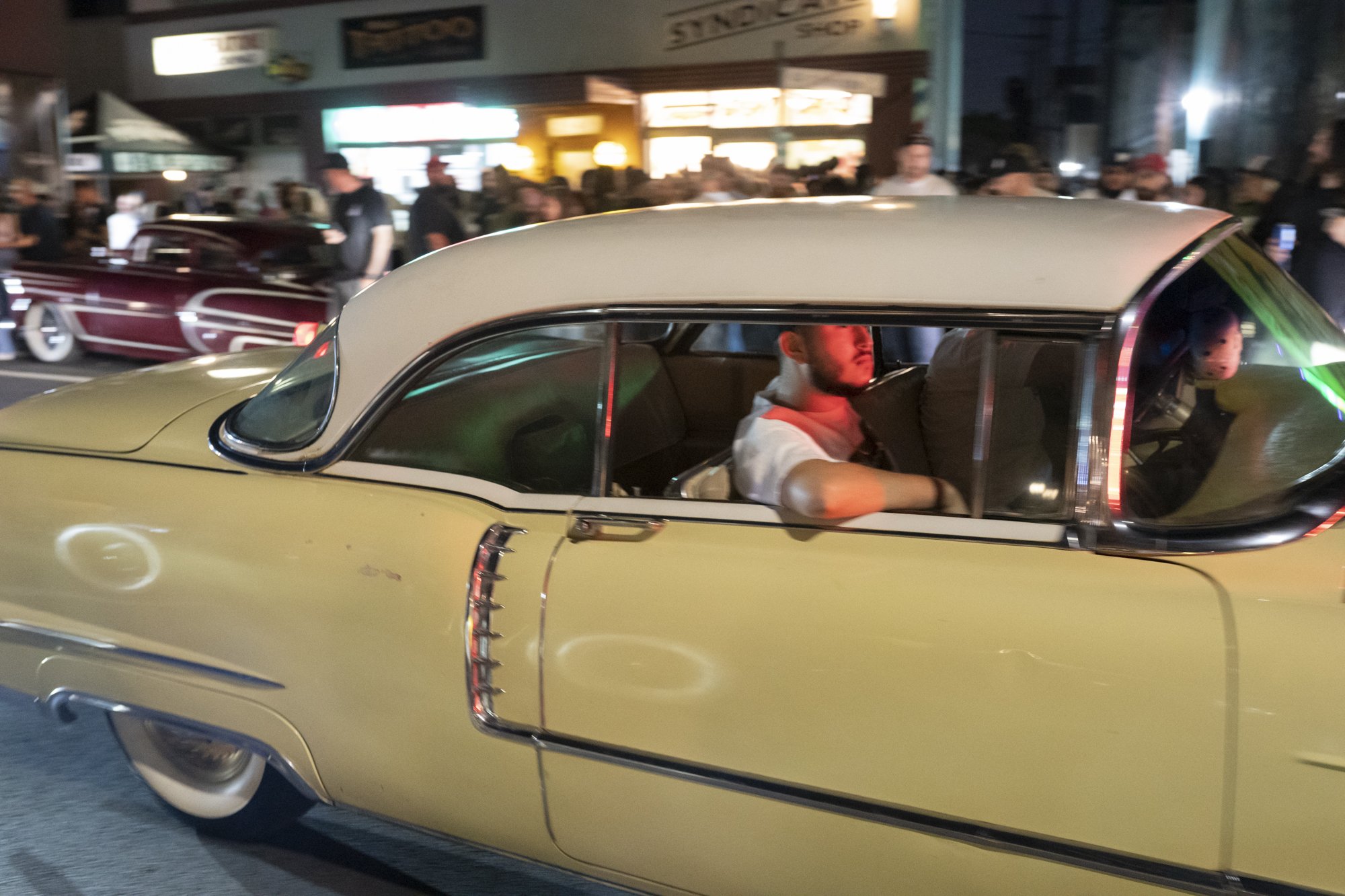
A lowrider passes by with another following behind. Cars continue to circle as people watch.
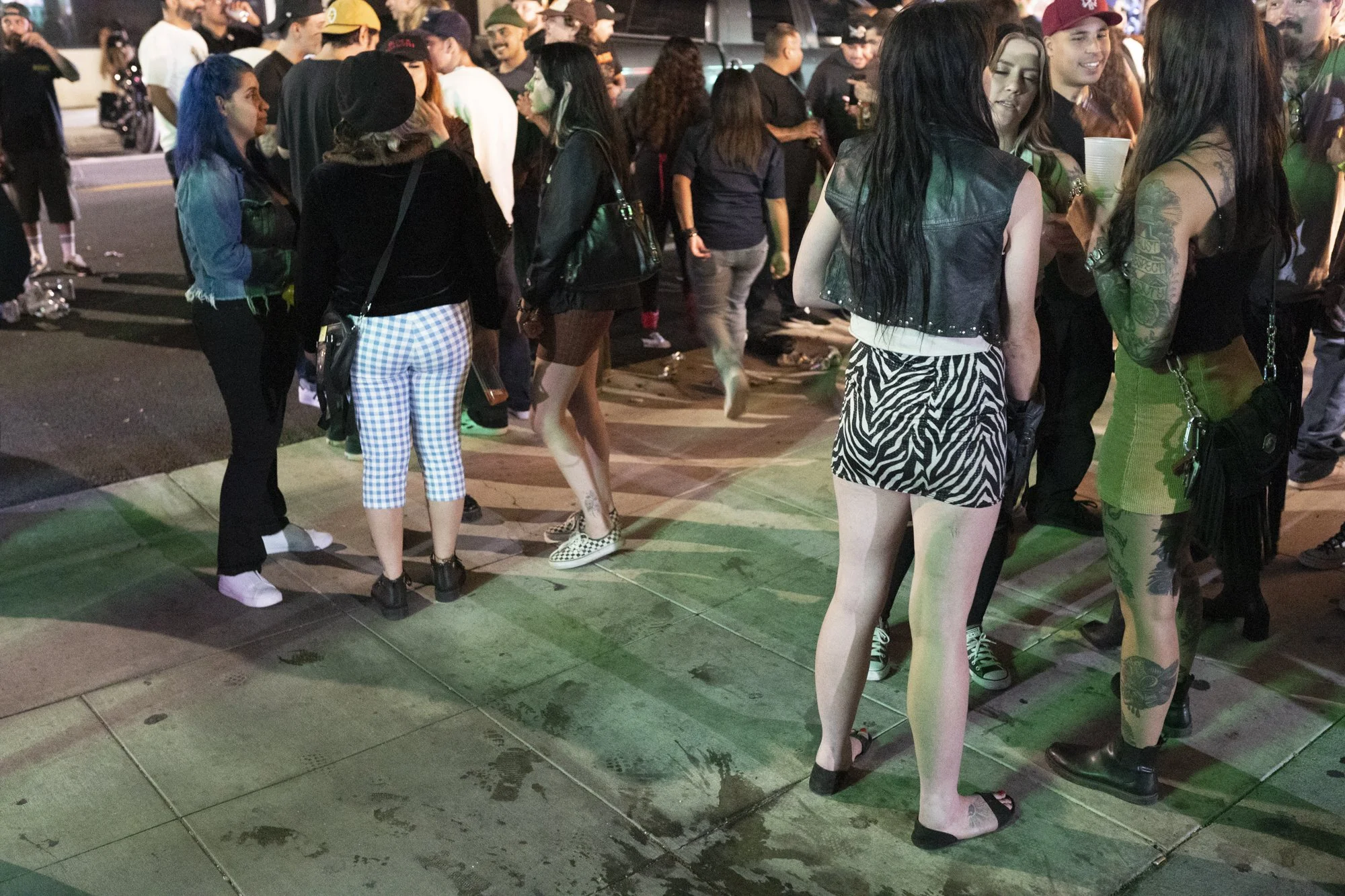
People step aside to talk along the sidewalk as the crowd continues nearby. At the edges, the pace slows but the night keeps moving.
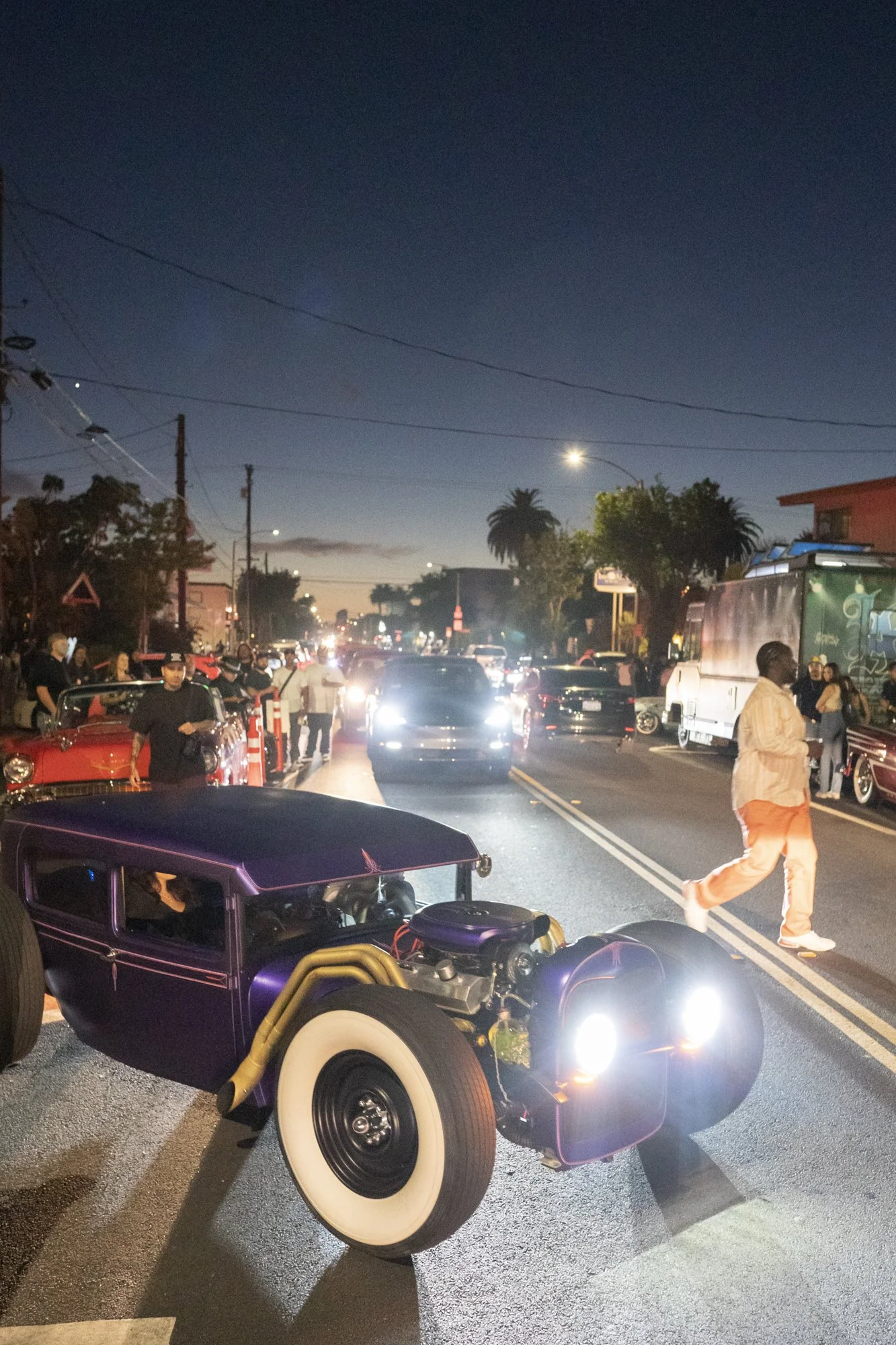
Traffic slows as people move between cars and across the street. The space shifts into part of the gathering.
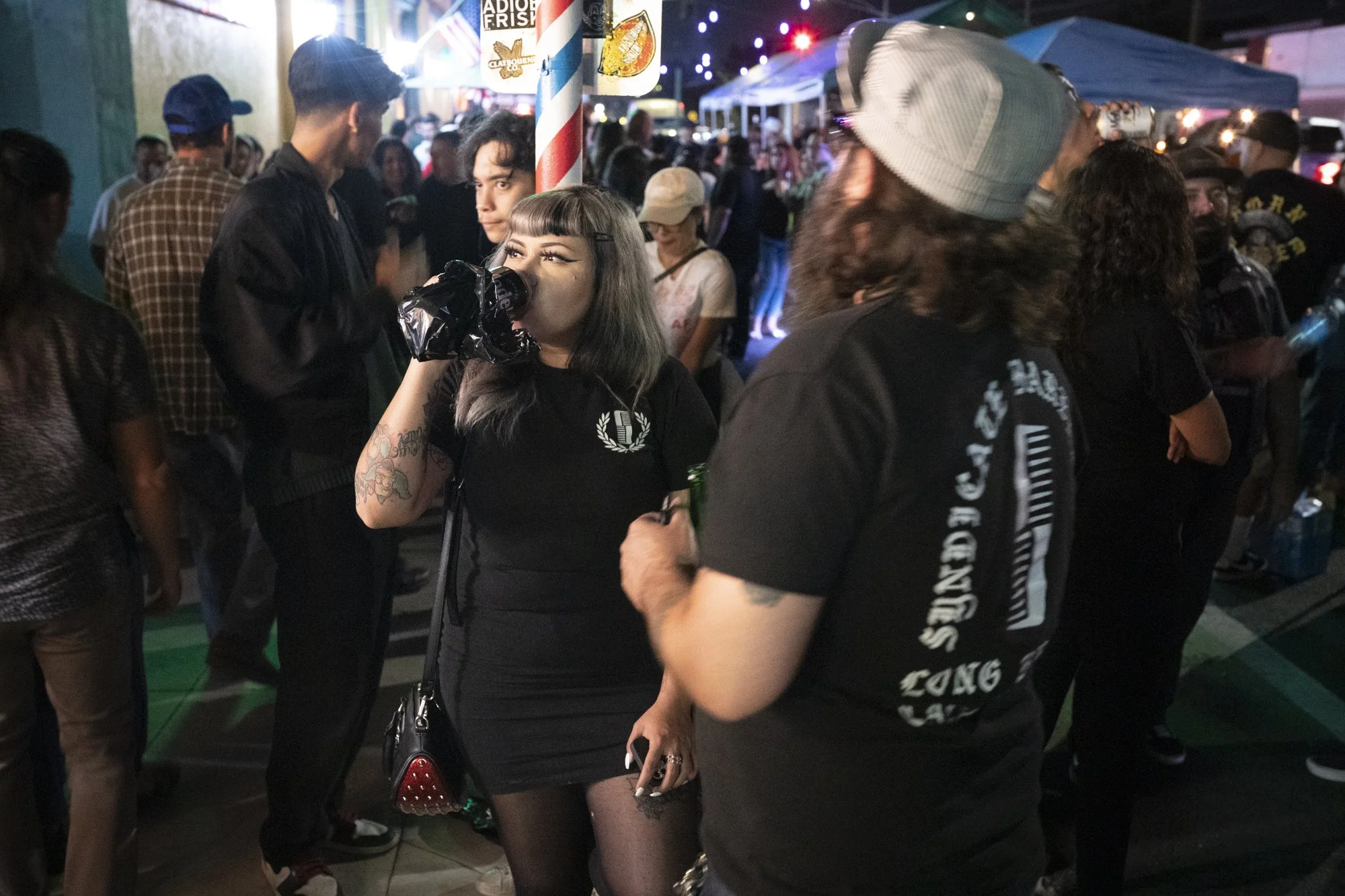
Groups stand and talk along the street as the crowd spreads across the block in Long Beach. Conversations carry through the night as people move between spaces.