
Pugsly’s Barbershop, 15 Years Later
Photographing a Kingston, New York Barbershop Across Three Visits
One of the unexpected benefits of working on the same photography project for more than 15 years is getting the chance to go back.
When I started Barbershops of America, the goal was fairly simple: travel around the country and photograph traditional barbershops. I certainly wasn't thinking about what it would mean to photograph the same people and places multiple times over the course of 5, 10, or 15 years.
Pugsly's in Kingston, New York is one of the places that has given me that opportunity.
I've now photographed The Nefarious Dr. Pugsly three different times during the life of this project. The first was at his original barbershop. The second and third were at Pugsly's SideShow, the second shop he opened a short distance away.
Put together, those photographs tell a different kind of story than any single visit could.
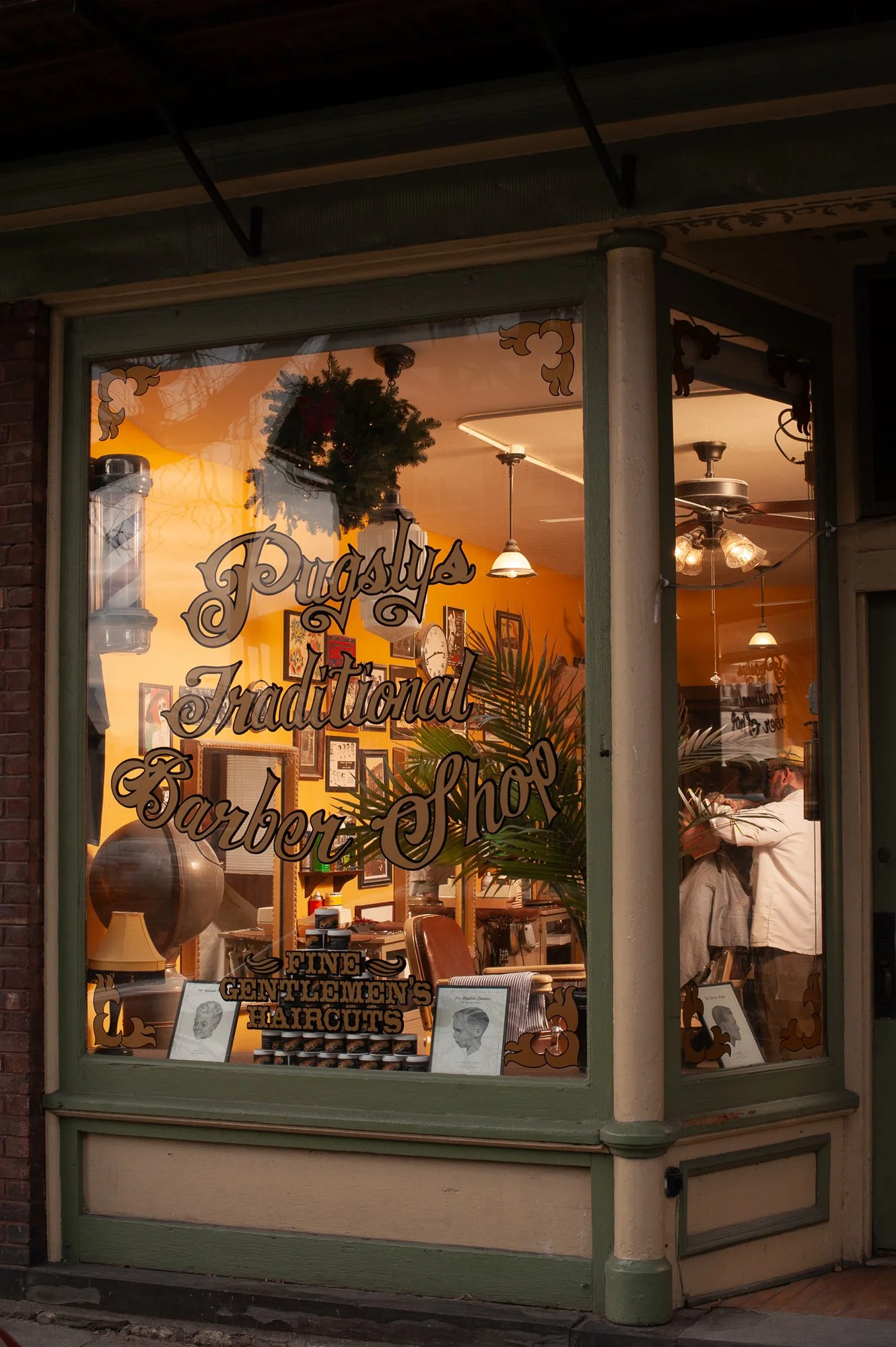
Pugsly’s Traditional Barber Shop seen from the street in Kingston, New York.
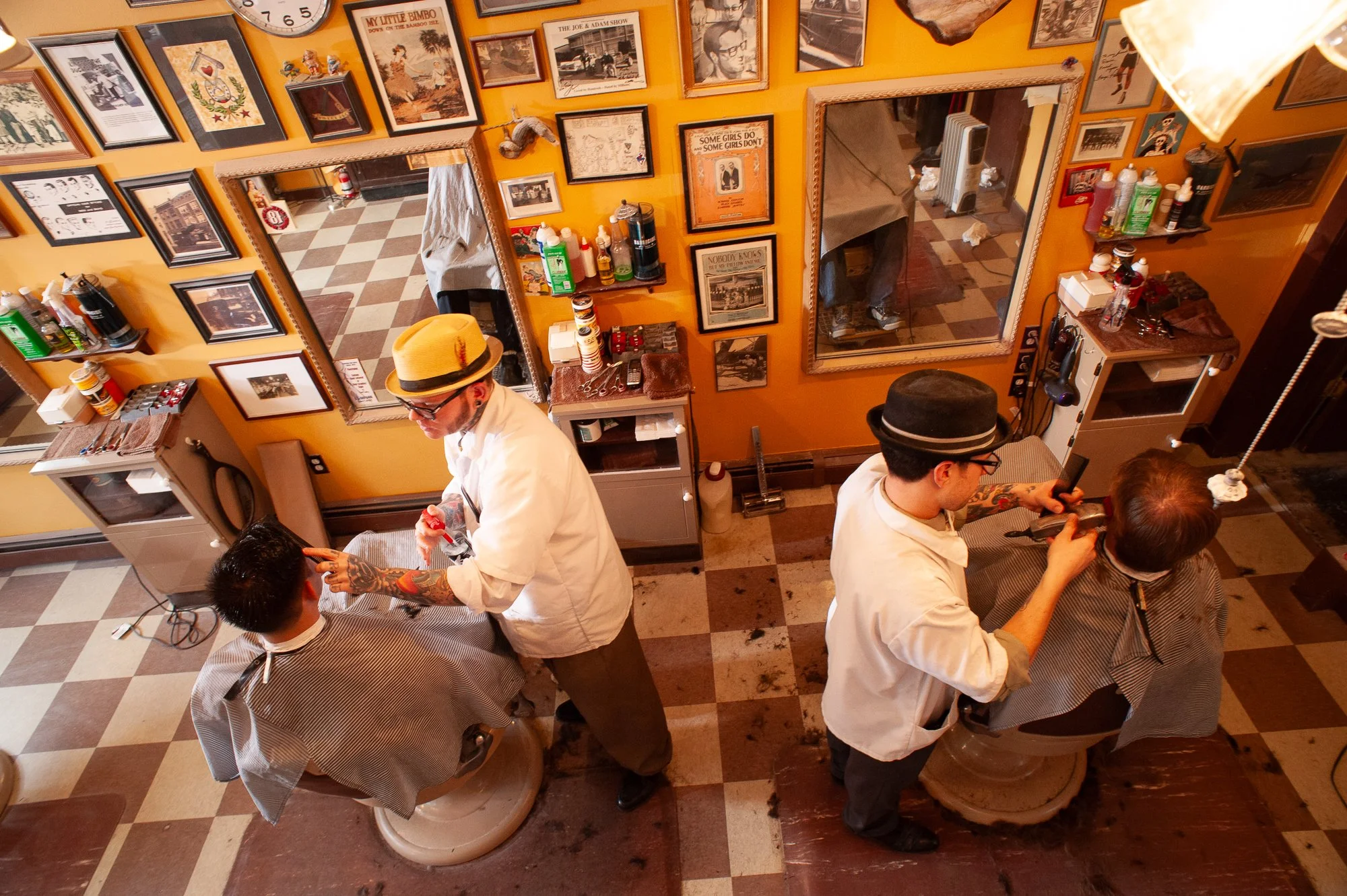
Barbers work on haircuts across the shop, with the checkered floor and decorated walls visible throughout the space.
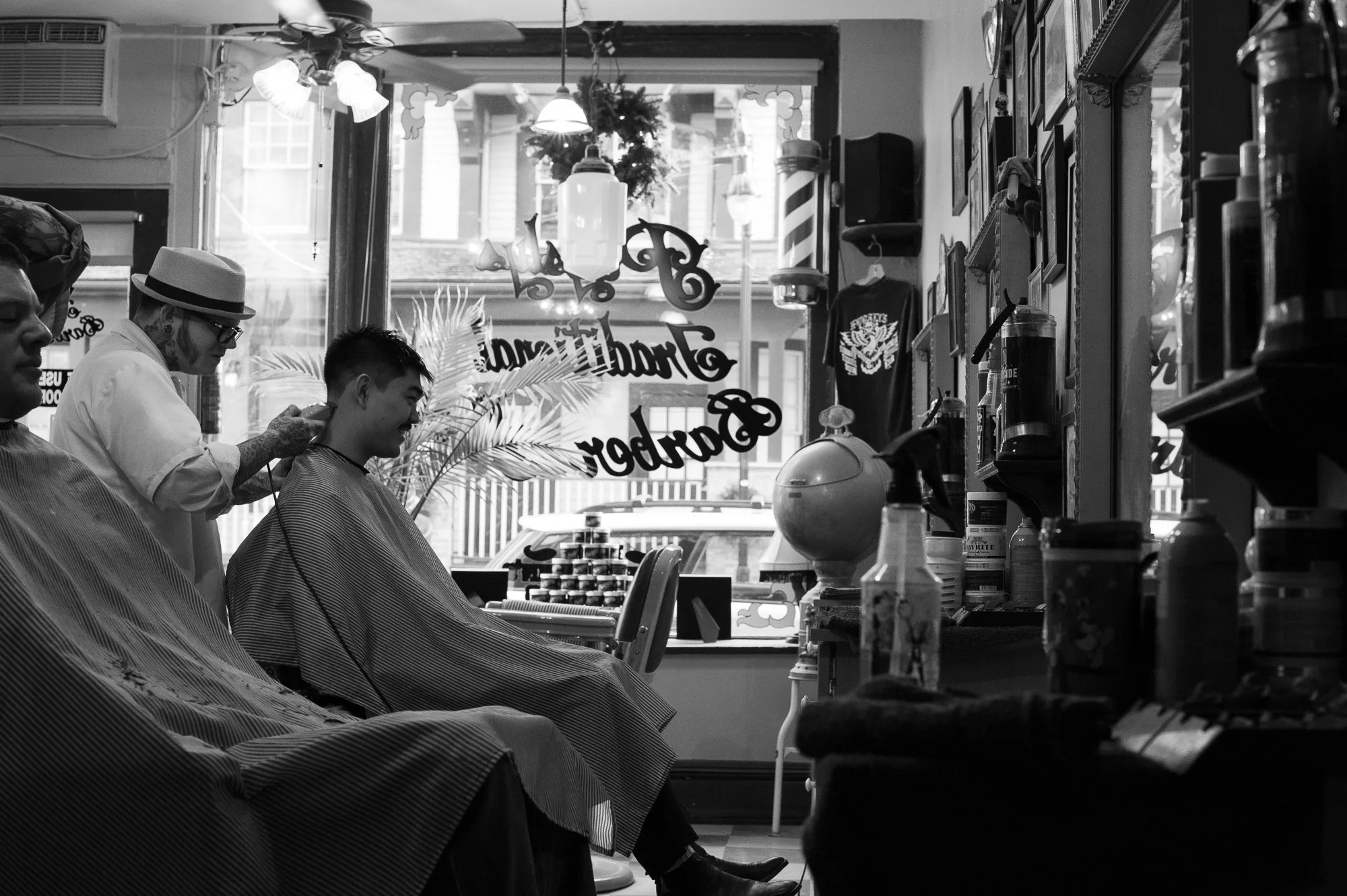
Barber trims a client's hair beside the front window, surrounded by the working details of the shop.
The First Visit: Pugsly’s Original Barbershop
I first met Pugsly sometime around 2011. I honestly don't remember exactly how we connected, which is true of quite a few relationships that came out of the early years of this project. What I do remember is him and the shop.
At that point I had already photographed plenty of old neighborhood barbershops, but Pugsly's felt different. It had all the visual references of a traditional American barbershop, but it wasn't an old shop that had simply survived unchanged for decades.
Pugsly had built his place very deliberately.
He was part of a generation of barbers who clearly respected the history of the trade but weren't interested in simply preserving it. There was an obsessive attention to the space, the tools, the haircut, and the experience of being there.
Years later, when I interviewed him, Pugsly described his intention as creating a traditional walk-in gentleman's barbershop with a 1940s influence, while making the quality of the haircut and the experience equally important.
That philosophy was visible before I ever knew how to put it into words.
And it made the shop an important part of Barbershops of America.
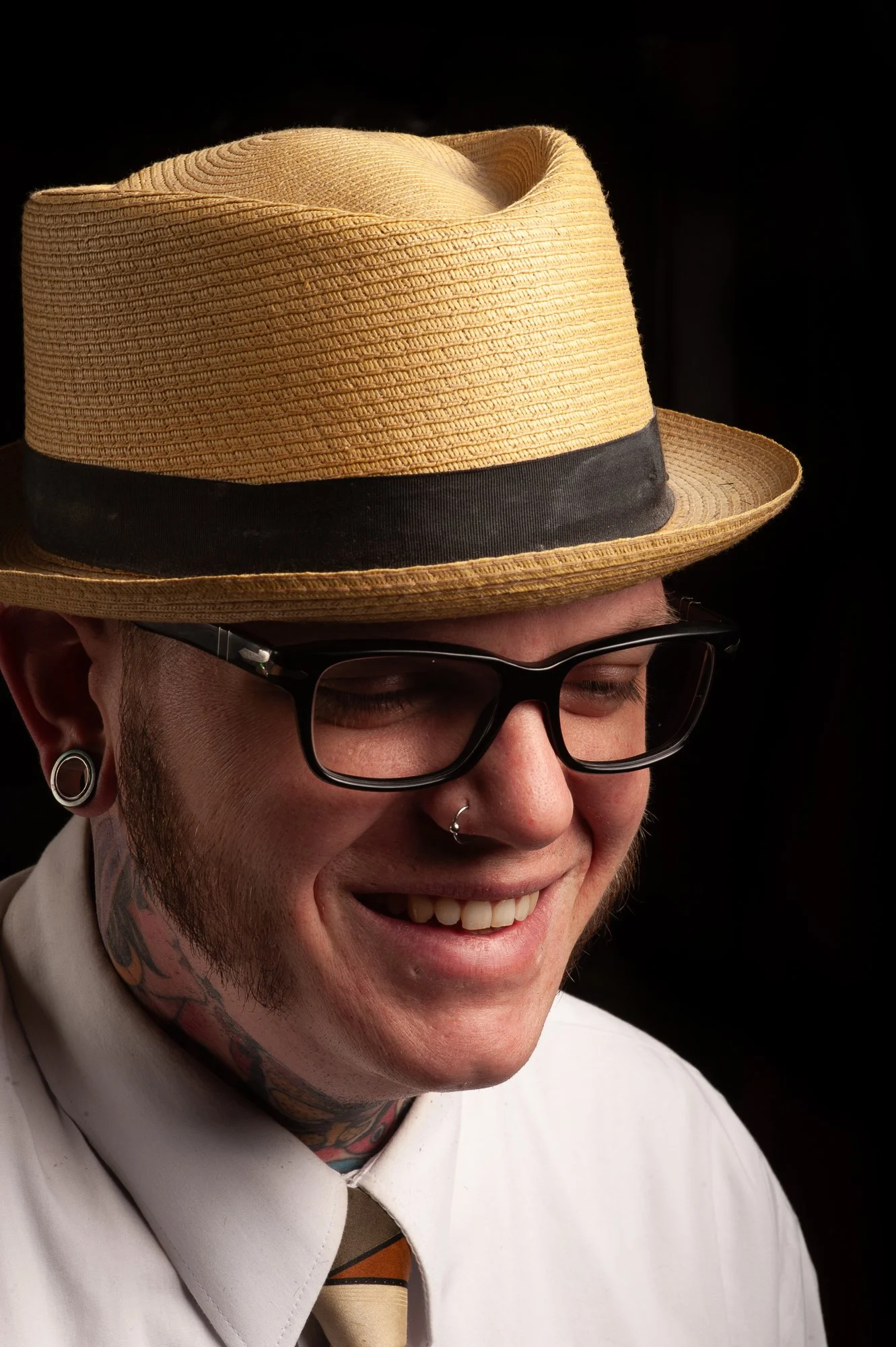
Pugsly smiling in his straw hat and glasses during a portrait inside the shop.
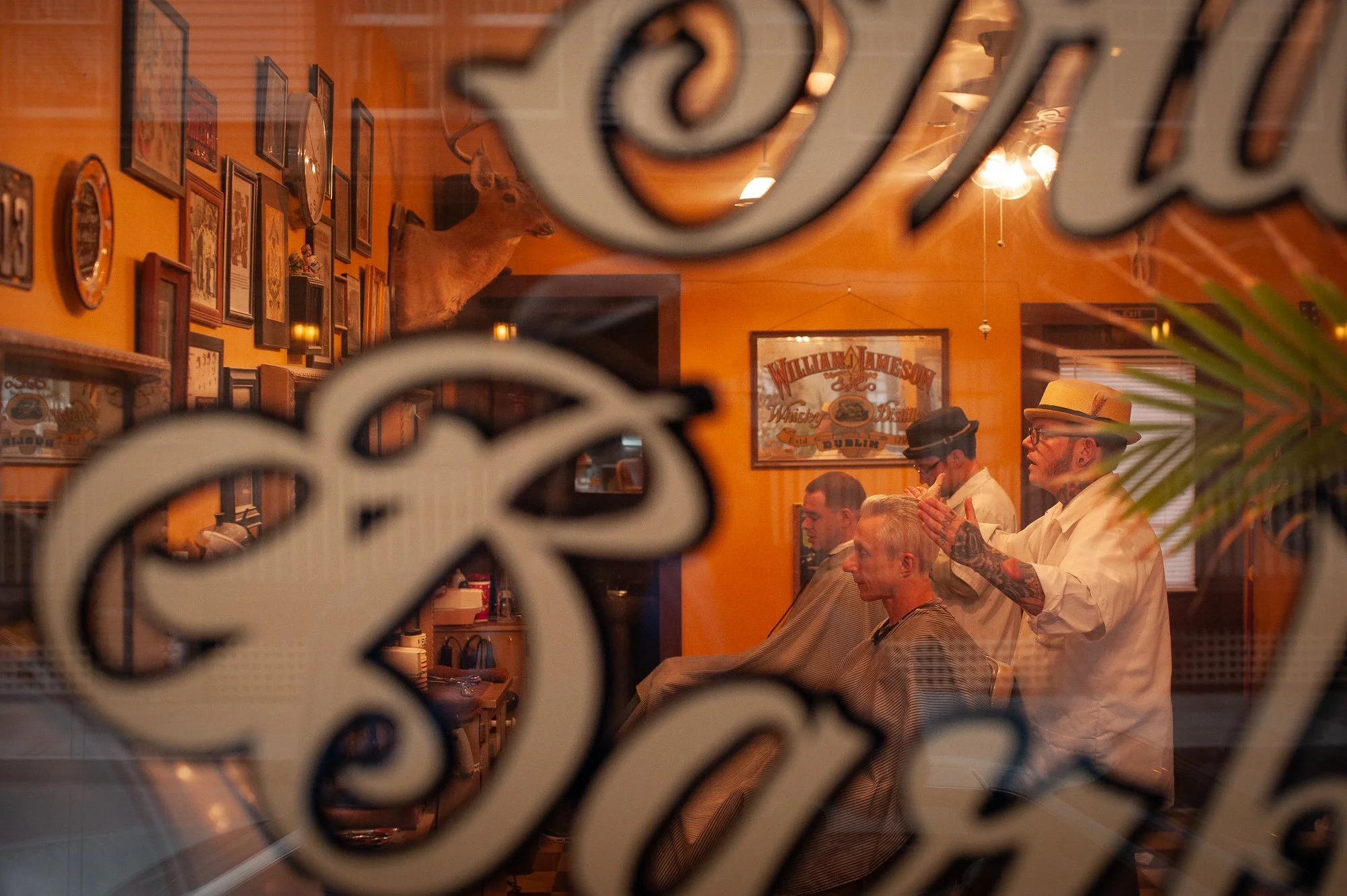
Through the front window, a haircut is underway inside Pugsly’s Barbershop in Kingston, New York.
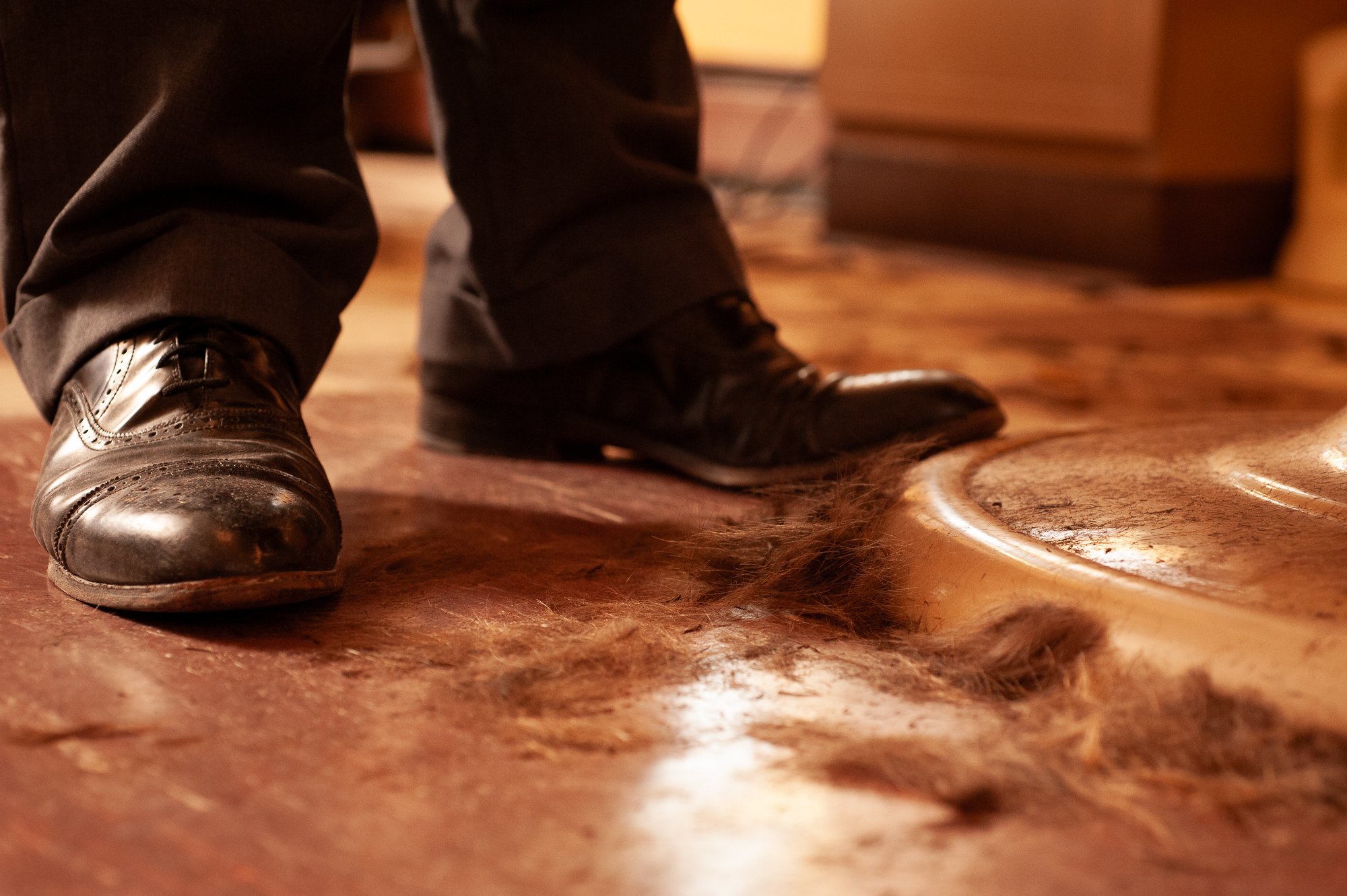
Hair clippings on the floor capture a small detail from a day of work inside the shop.
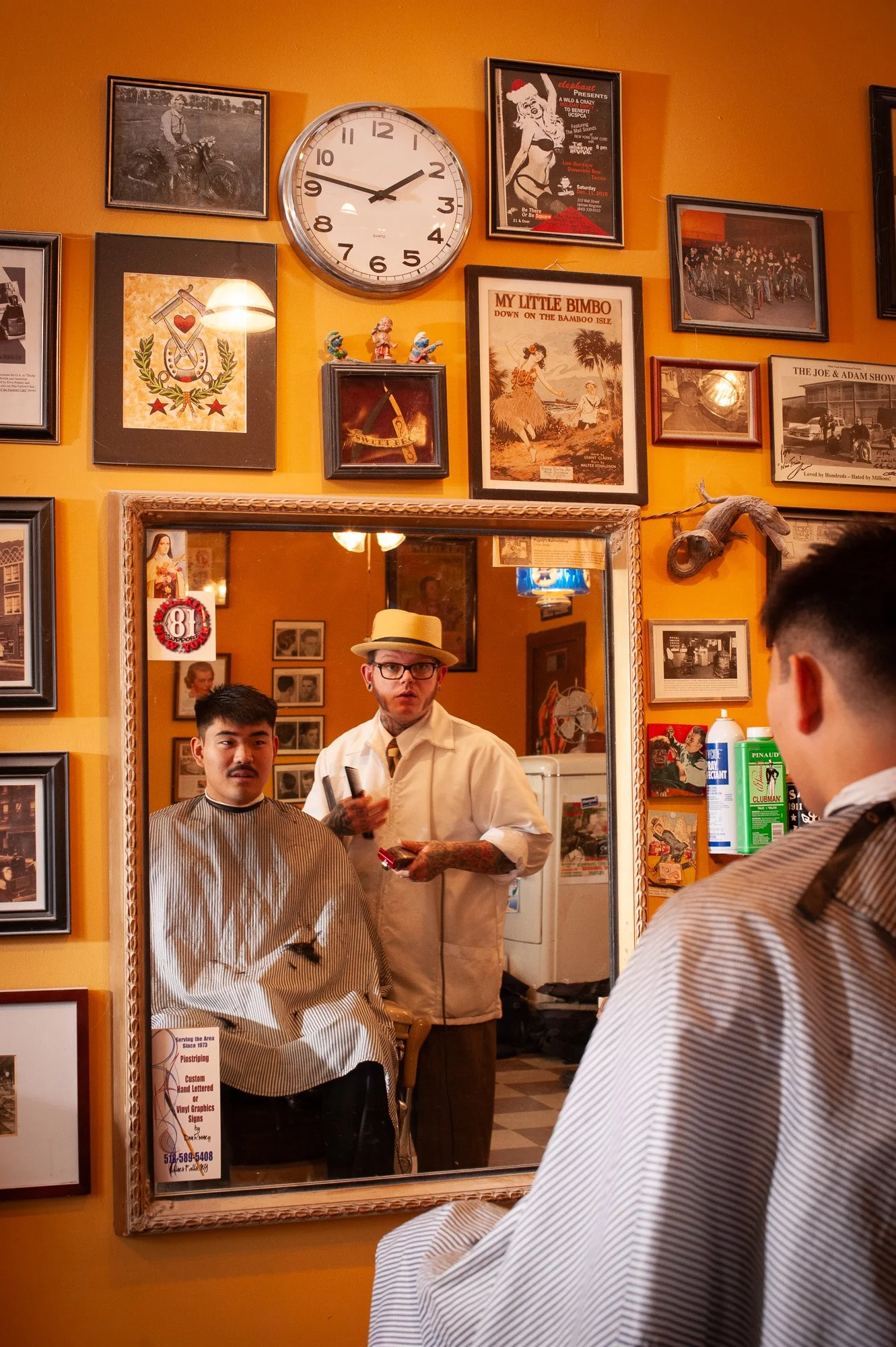
A haircut in progress at Pugsly's Barbershop, surrounded by the shop's photographs, artwork, and vintage decor.
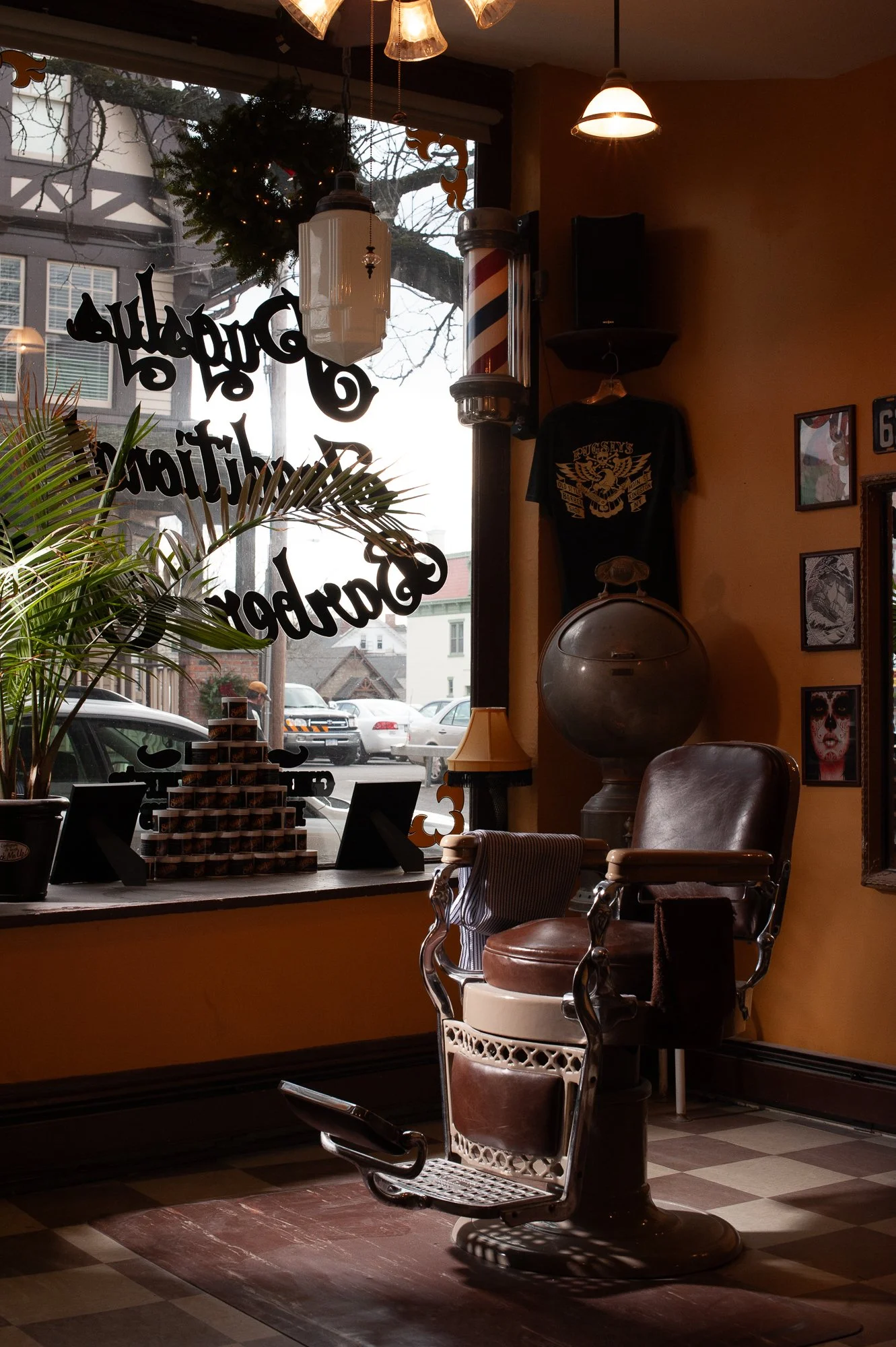
Warm light, vintage details, and a barber chair waiting for the next client.
A Second Shop: Pugsly’s SideShow
By the time I returned, Pugsly had opened another shop.
Pugsly's SideShow wasn't intended to be a copy of the original. It grew out of a practical problem with the first shop: people were waiting too long.
The original was built around the traditional walk-in model. SideShow was appointment-based and gave Pugsly an opportunity to create something slightly different.
It also looked different.
The original shop leaned heavily into the visual language of the classic American barbershop. SideShow was more eccentric and personal. It still had one foot planted firmly in barbering tradition, but there was more room for Pugsly's other influences: cars, motorcycles, custom culture, music, signs, paint, and all the strange objects that somehow make perfect sense when they're together in the same room.
I photographed SideShow for the first time during the final push for the Barbershops of America book.
The timing wasn't exactly ideal.
I was crossing the country and the only opportunity I had to photograph the shop was Christmas Eve. Pugsly opened the place anyway.
That's the kind of thing I remember as much as the photographs.
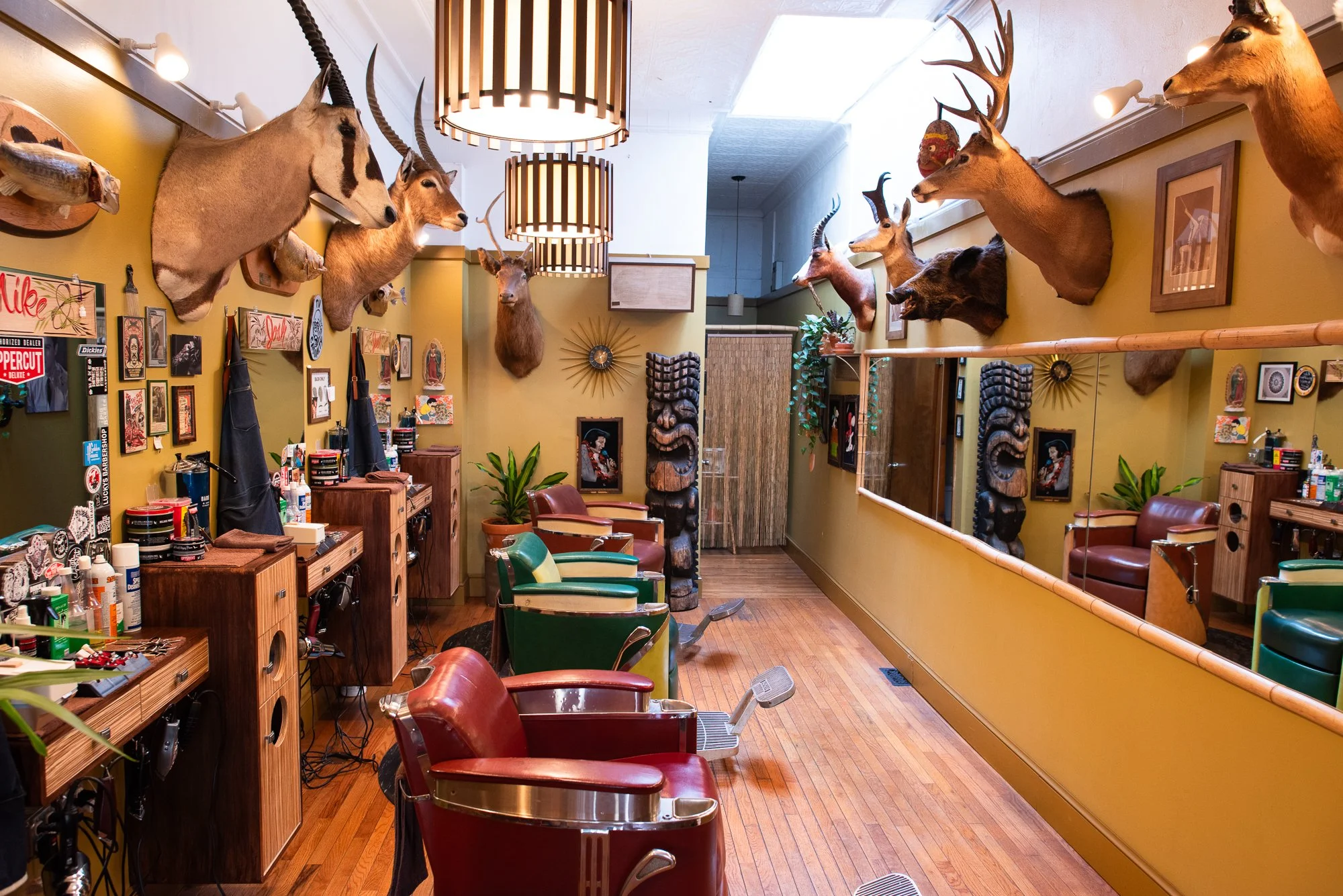
Inside Pugsly’s Sideshow, vintage decor and barber stations fill the Kingston, New York shop.
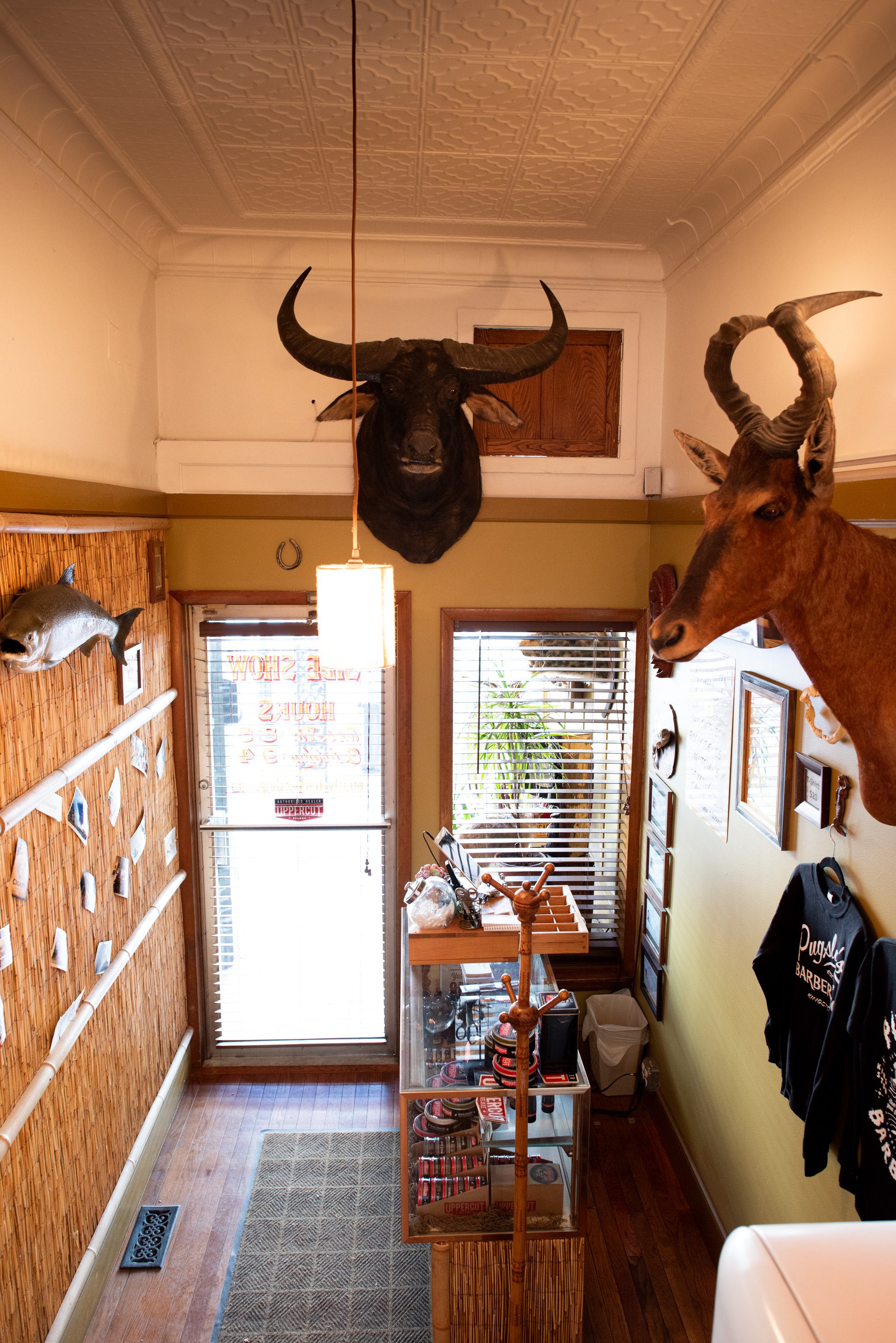
Taxidermy and vintage barber shop details surround the entryway inside Pugsly’s SideShow.
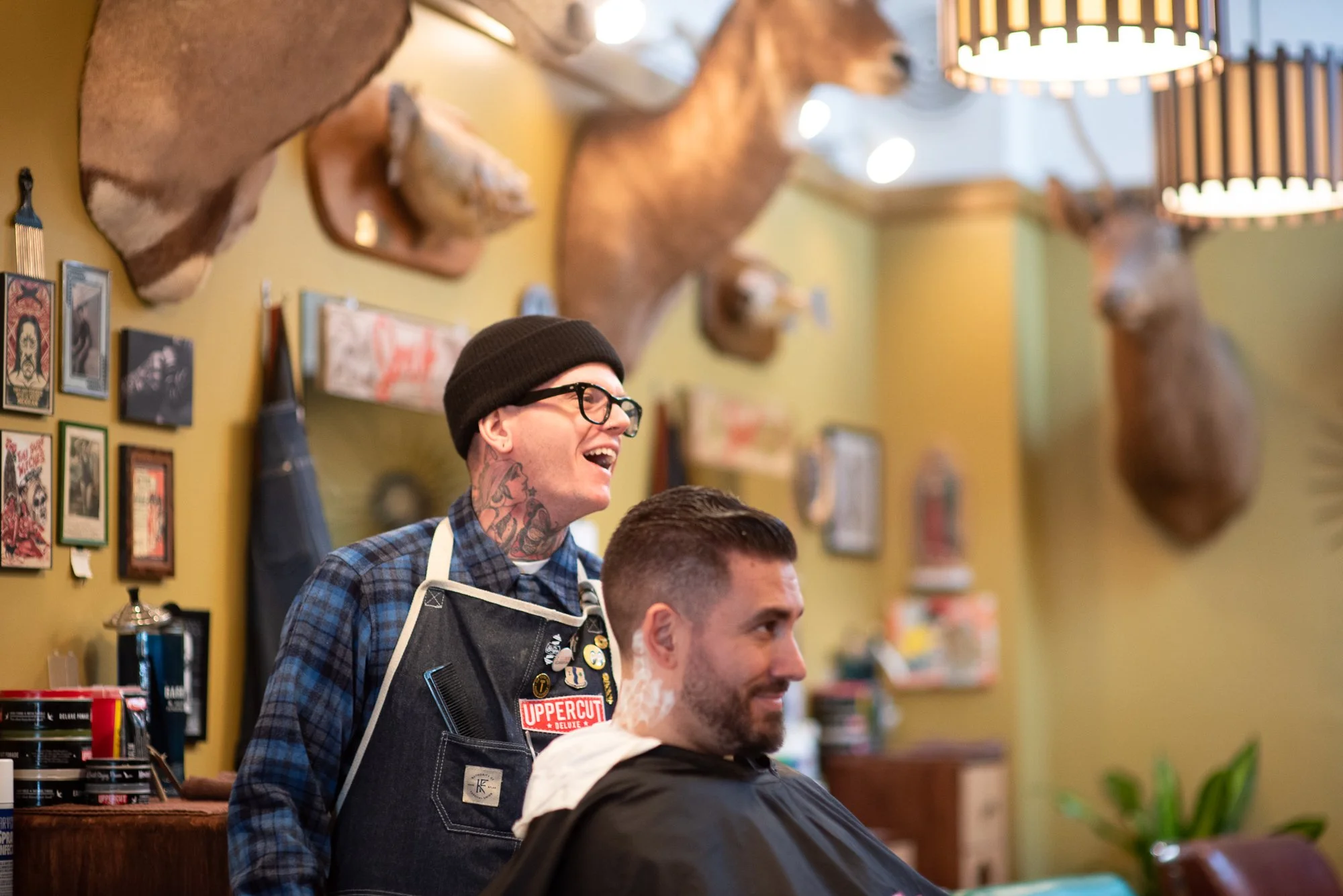
Between cuts, there’s always time for a laugh.
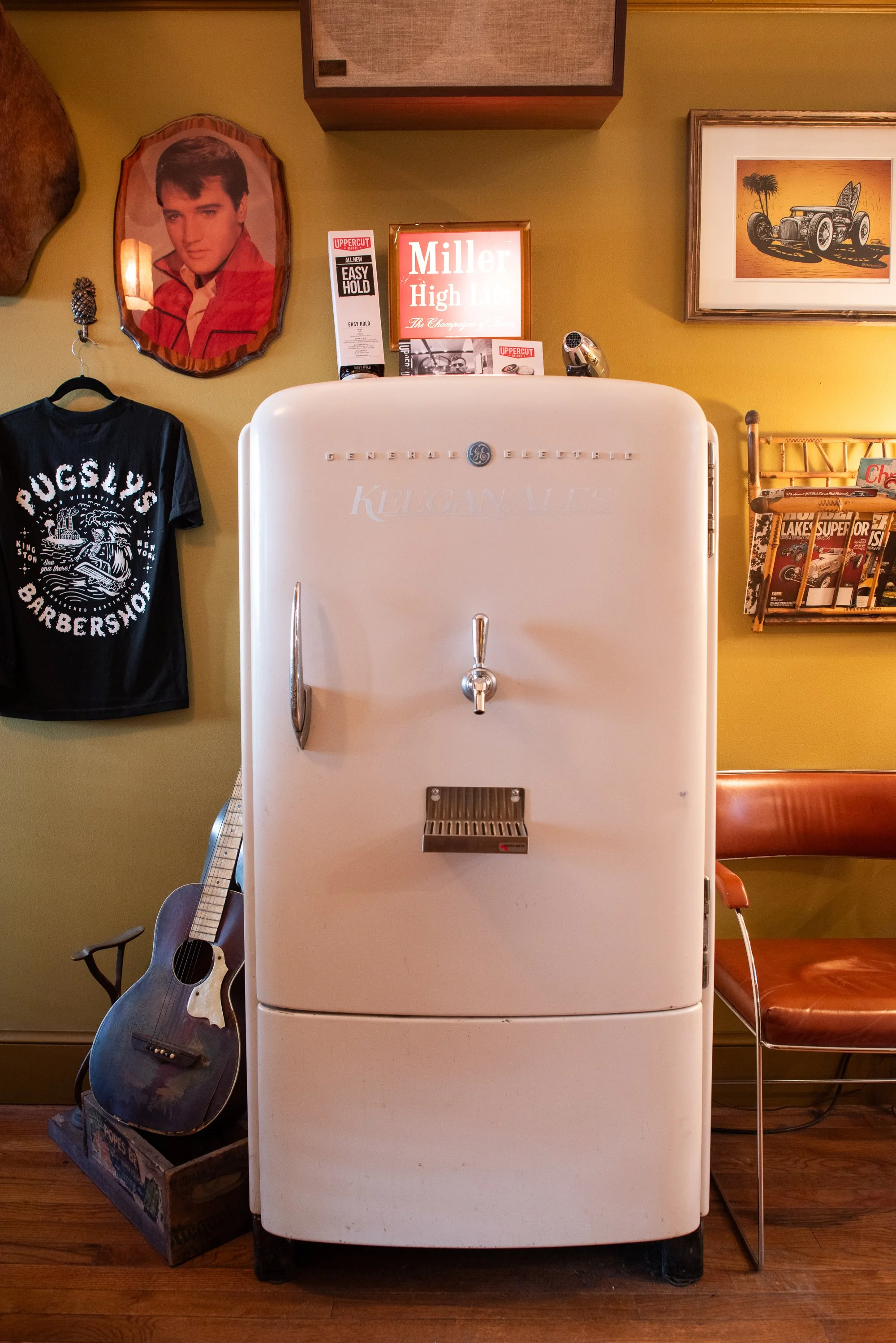
Vintage kegerator and memorabilia fill a corner inside Pugsly’s SideShow.
Going Back Again
In 2026, I found myself back in Kingston.
By this point, Barbershops of America had been part of my life for more than 15 years. I had photographed roughly 250 barbershops across all 50 states, published a book, driven an unreasonable number of miles, and watched plenty of the places I photographed disappear.
So I went back to SideShow.
This was the third time I had photographed Pugsly and the second time I had photographed this particular shop.
There was no need to recreate the photographs from the previous visits. That isn't really the point.
The point was to photograph what was there now.
A barbershop isn't a movie set. Things move. Objects accumulate. Chairs get worn. Walls fill up. People get older. Businesses evolve. Something that seemed completely ordinary during the first visit can become significant simply because it is still there years later.
And things that seemed permanent sometimes disappear.
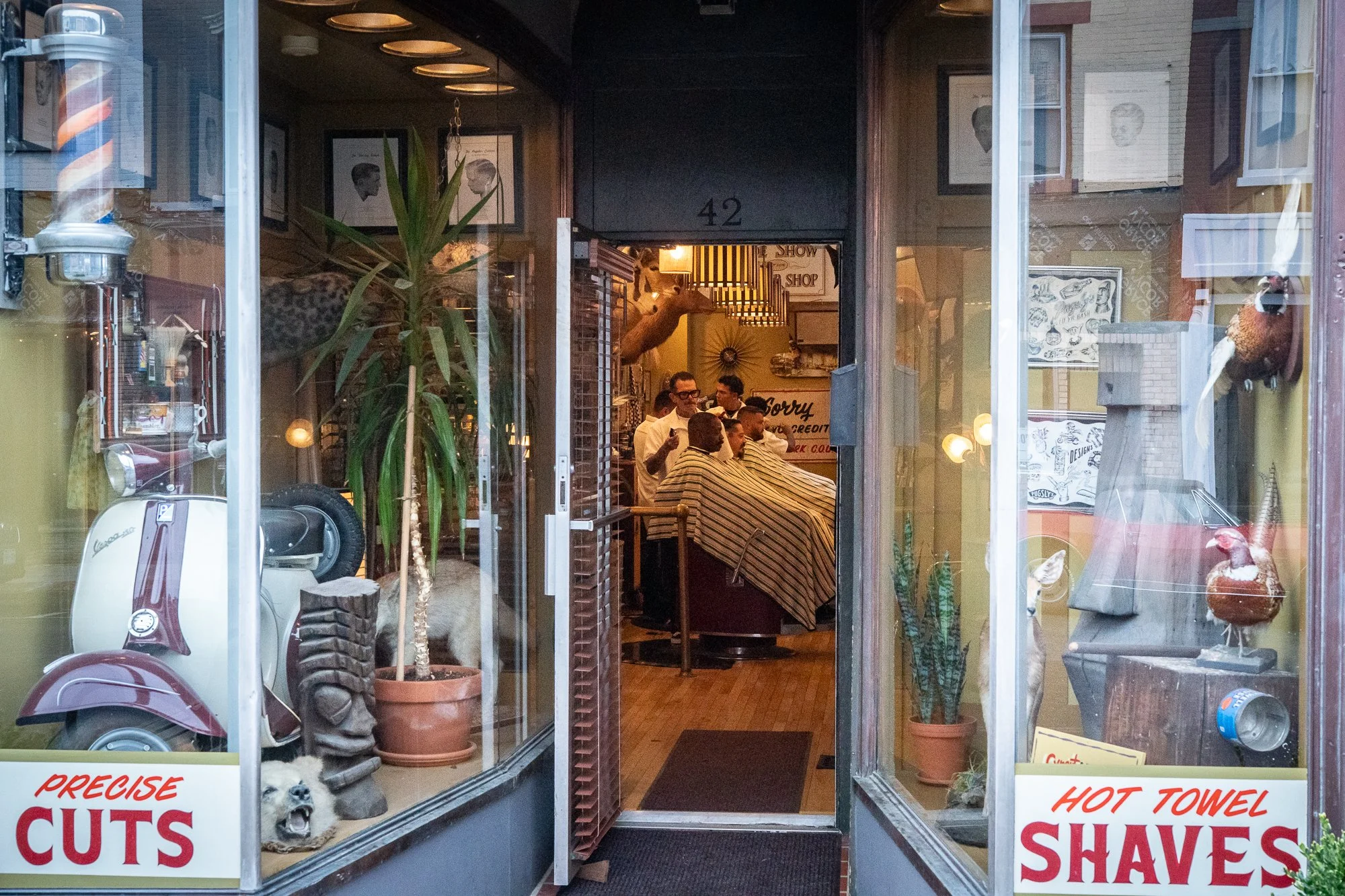
Seen from the street, barbers work with clients inside Pugsly’s Sideshow.
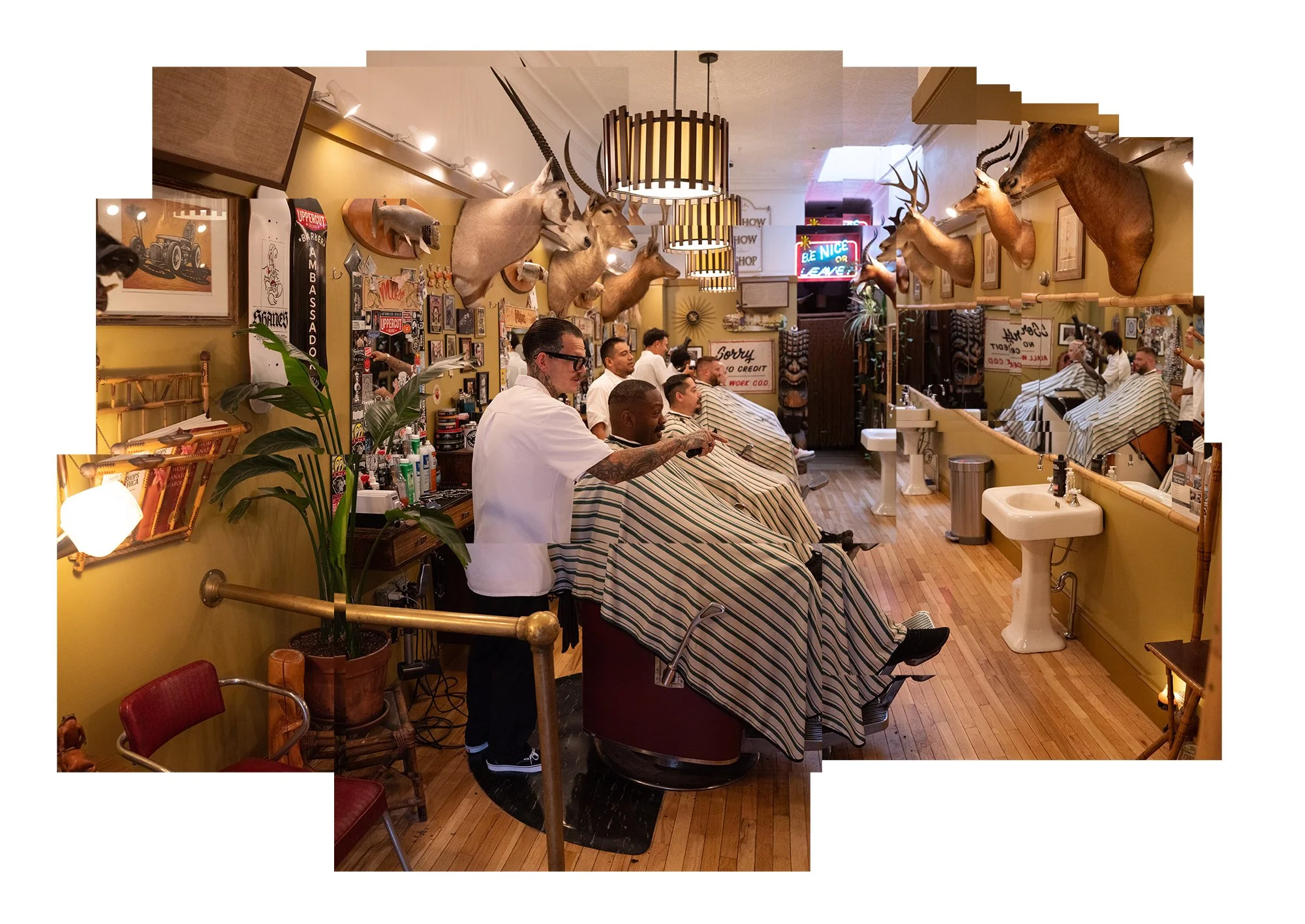
A busy day at Pugsly's Sideshow - barbers working across the shop's row of chairs and detailed interior.
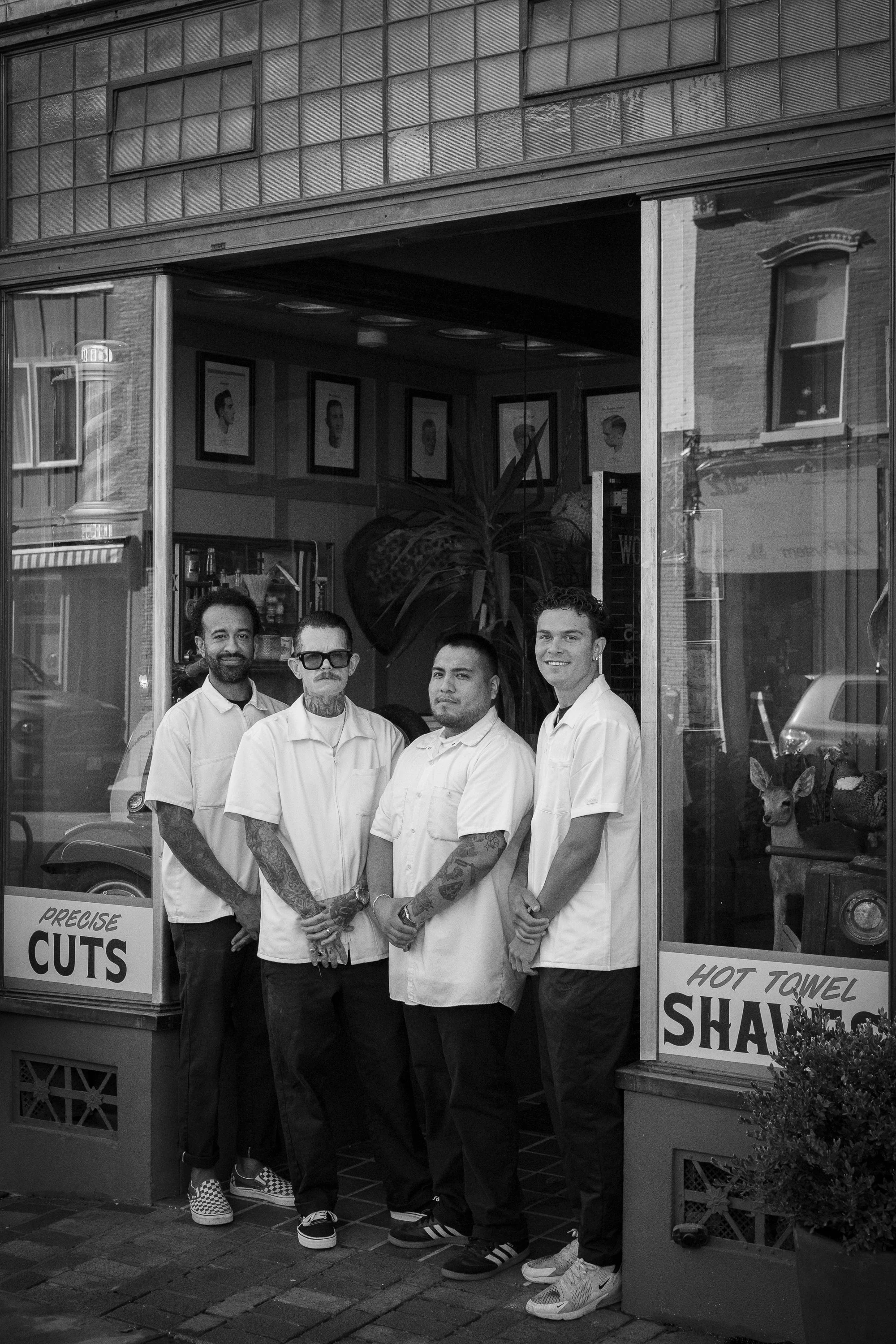
The Pugsly's team outside the shop.
What 15 Years Does to a Photograph
This is the part of Barbershops of America that has become increasingly interesting to me.
When I started the project, I was primarily documenting places.
Now I'm documenting time.
A photograph of a barbershop made today can be interesting because of the people, light, architecture, objects, or activity happening inside the frame. But make another photograph of that place ten years later and suddenly the first photograph contains information you didn't realize you were recording.
The haircut on the wall. The price board. The magazines. The barber chair. The person sitting in it. The businesses next door. The way people dressed. The objects that disappeared and the ones that somehow never moved.
None of those things necessarily feel historic when you're standing there.
Time does that work for you.
That's why returning to Pugsly's matters to me.
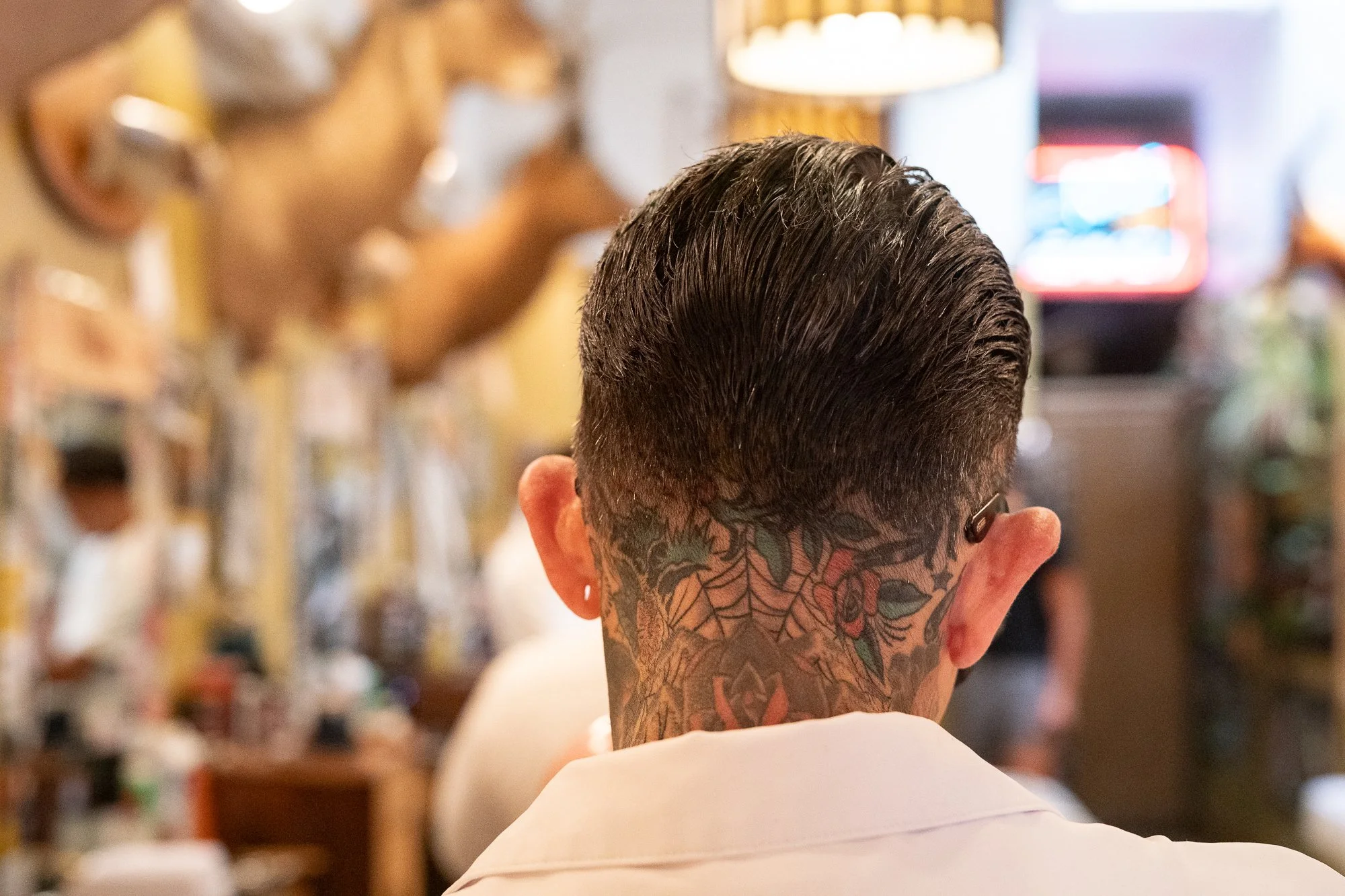
Slicked-back hair and a tattooed neck as Pugsly works behind the chair.
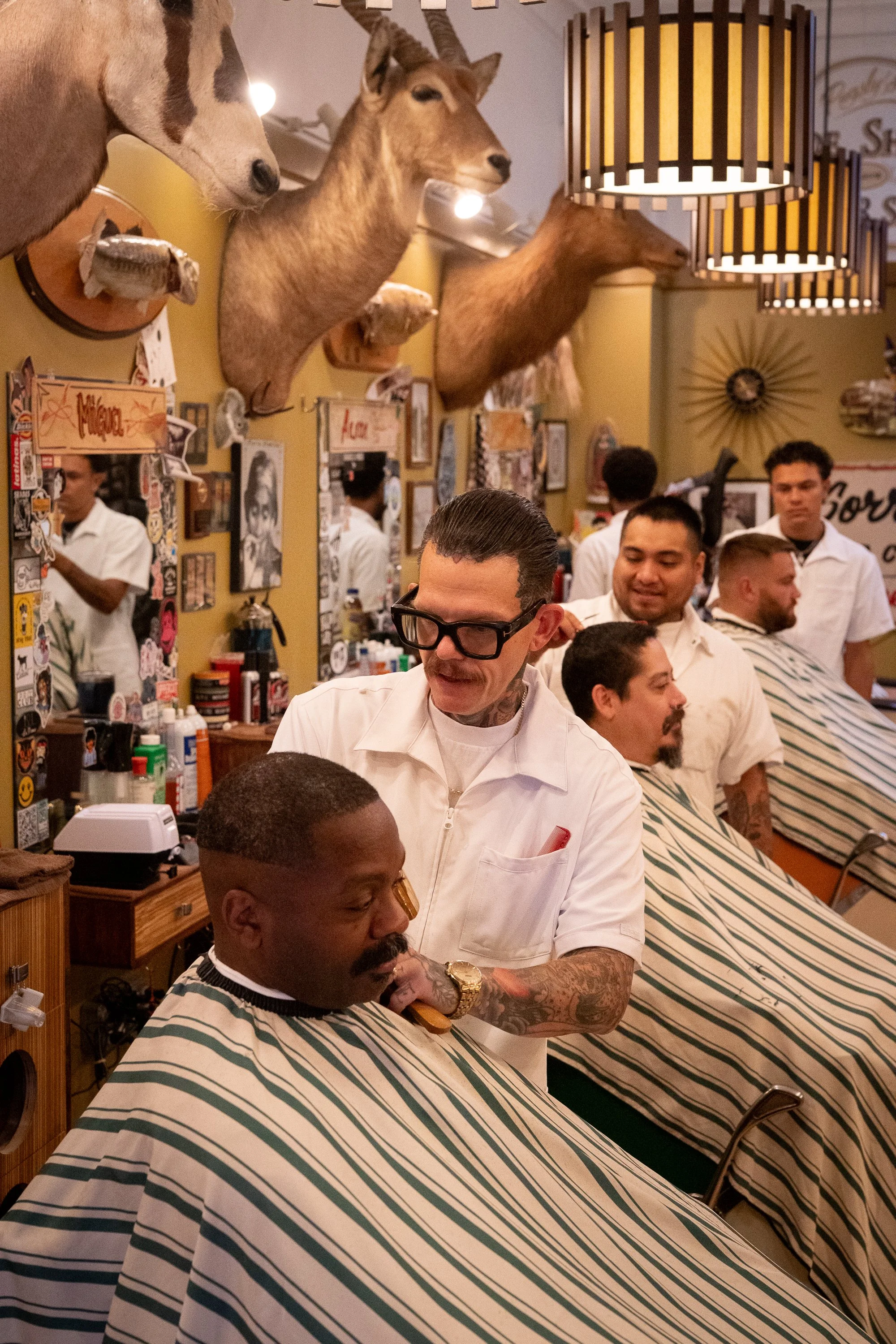
Haircut underway at Pugsly's as several barbers work throughout the shop.
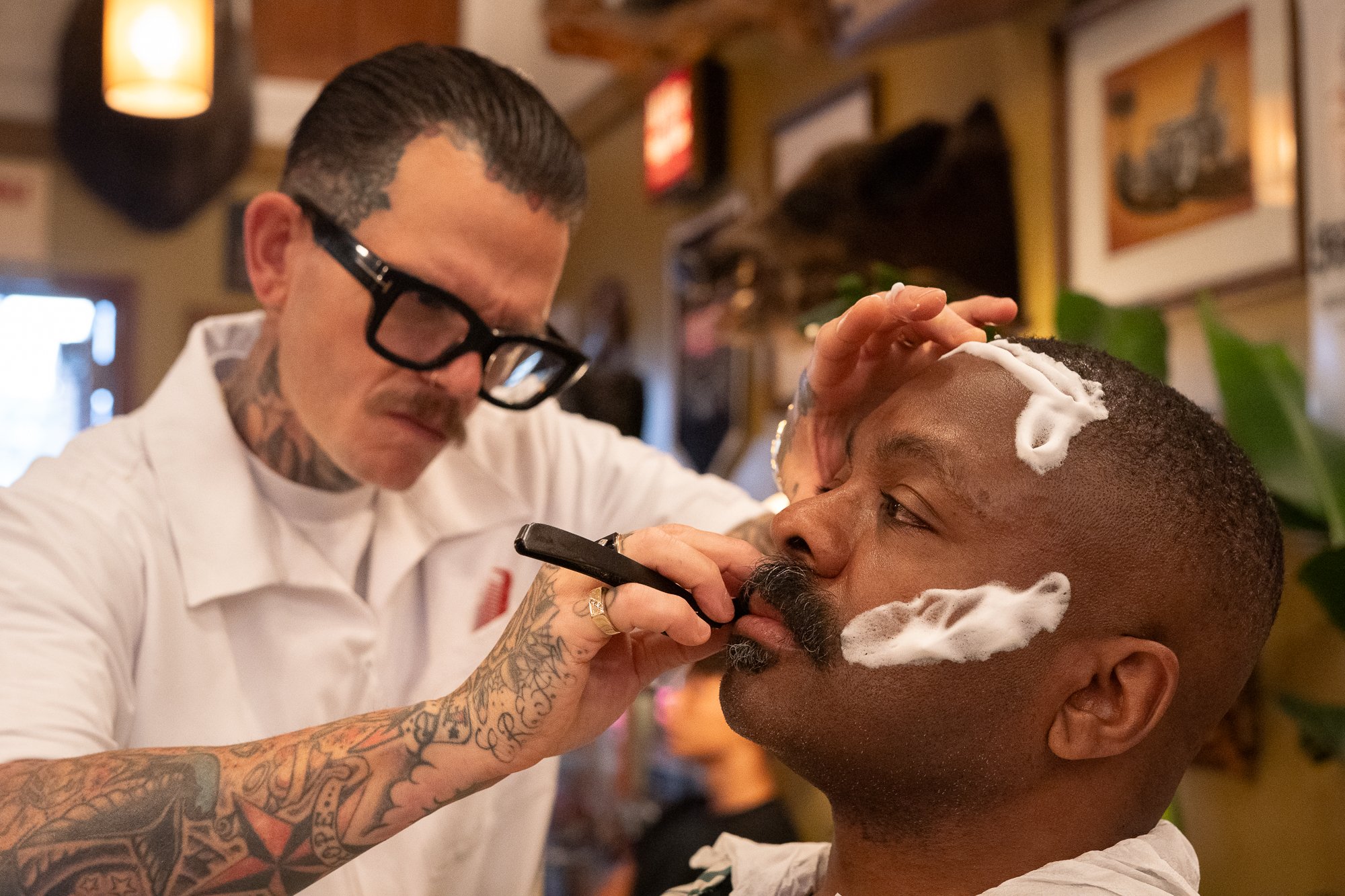
Straight-razor shaving in progress inside the barbershop.
More Than a Collection of Barbershops
For years I described Barbershops of America as a project about traditional barbershops across the United States.
That's still true, but after 15 years it feels incomplete.
The project has become a photographic record of a particular piece of American culture during a period when that culture has changed dramatically.
Some shops I've photographed have closed. Some barbers have retired or died. Others have expanded, moved, or passed their chairs to another generation. New shops have appeared that borrow heavily from traditions that nearly disappeared a generation earlier.
And a handful of places have allowed me to come back.
Those repeat visits are becoming some of the most valuable photographs in the archive because they allow the project to show something a single photograph can't:
what stayed, what changed, and what disappeared.
Pugsly's is now part of that story.
And hopefully this wasn't the last time I photograph it.
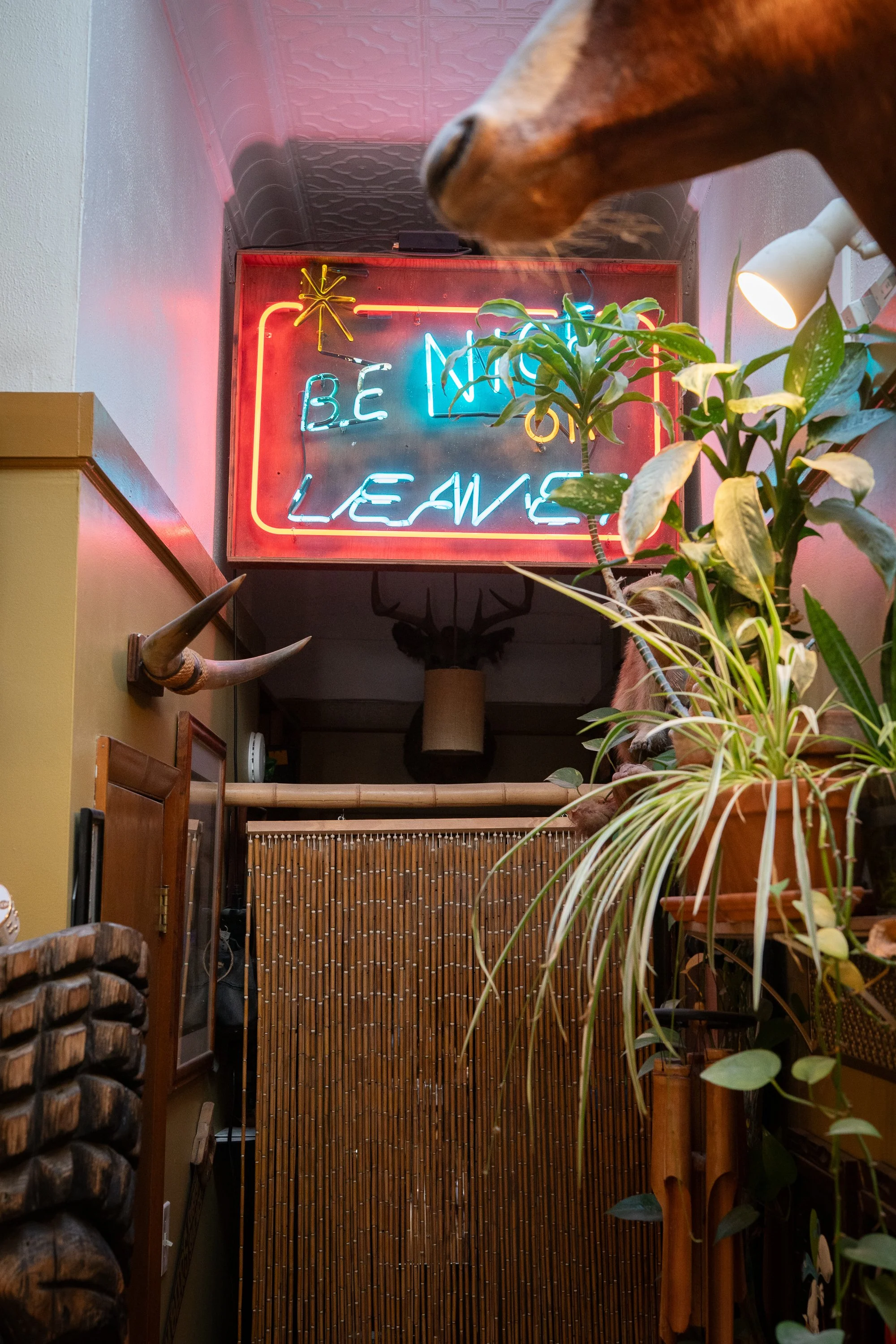
The “Be Nice or Leave” neon adds another layer to the shop’s character.
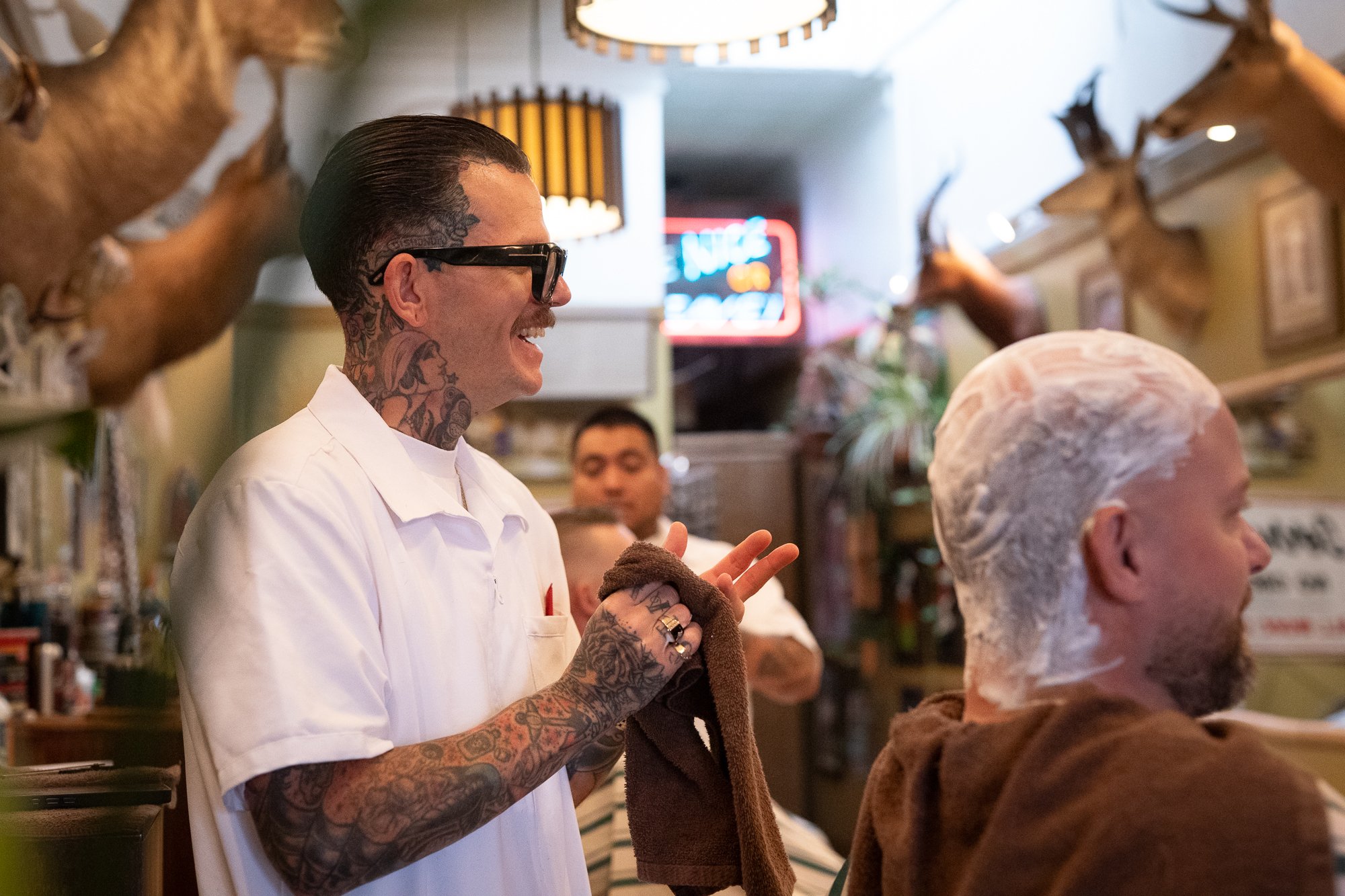
Between haircuts, conversation and laughter keep the shop moving.
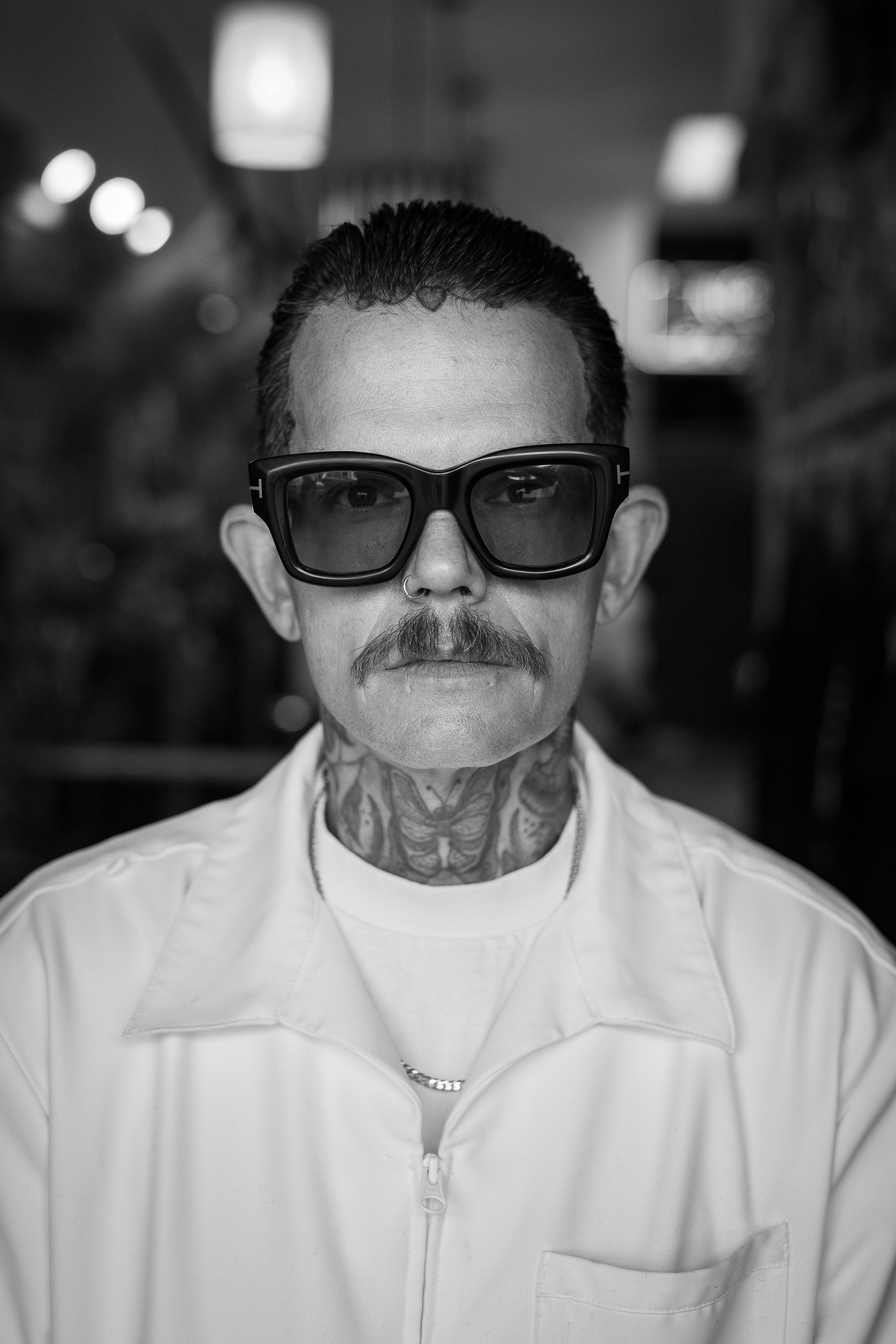
Portrait of Pugsly inside his Kingston barbershop.
Barbershops of America
Explore the complete Barbershops of America project
View the Barbershops of America book
Shop Barbershops of America photography prints
More From the Project
Patsy's Barbershop
Albany, New York
Joe's Barbershop
Chicago, Illinois
Belmont Barbershop
Boise, Idaho
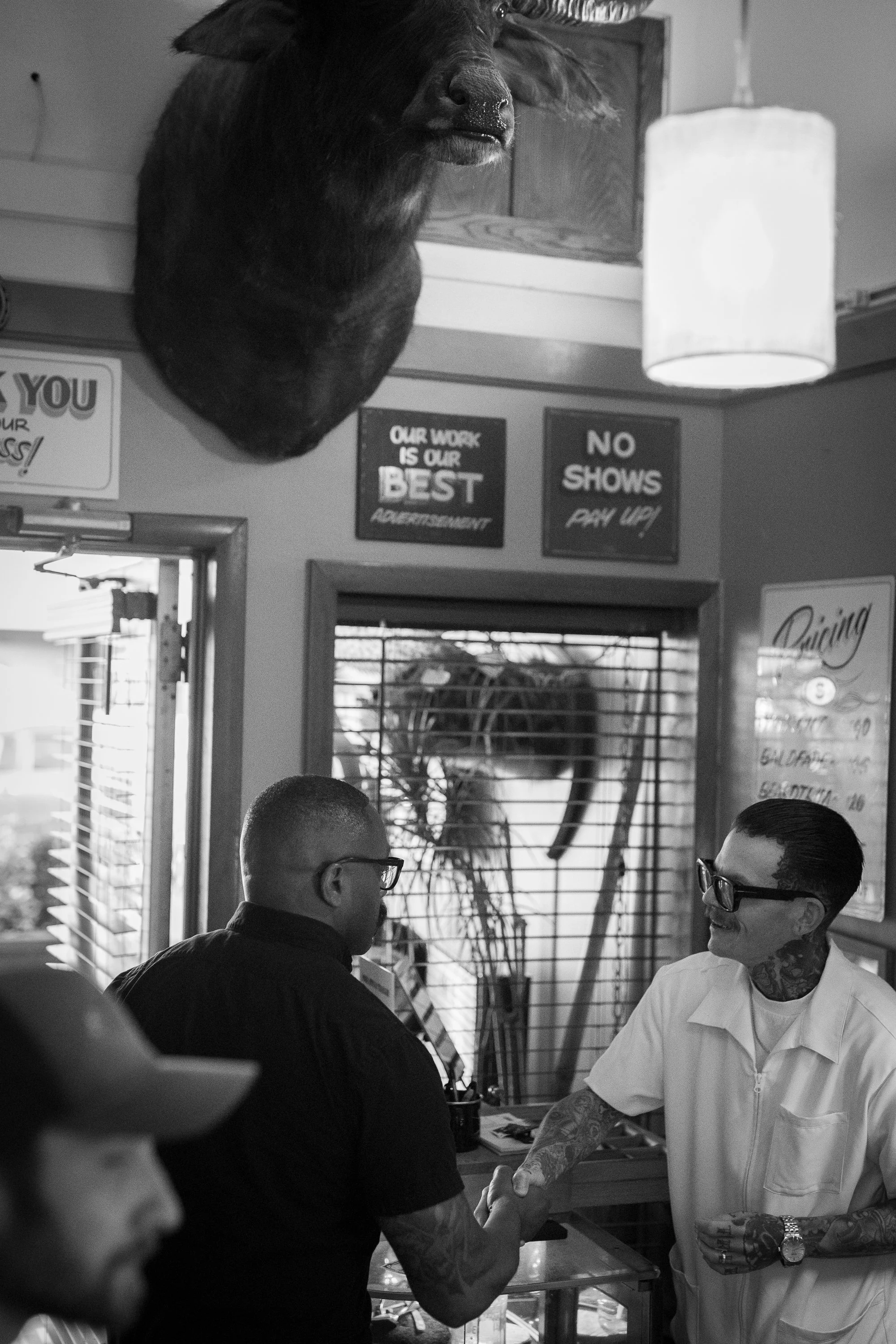
Signs, displays and a mounted taxidermy fill the background as Pugsly greets his client.
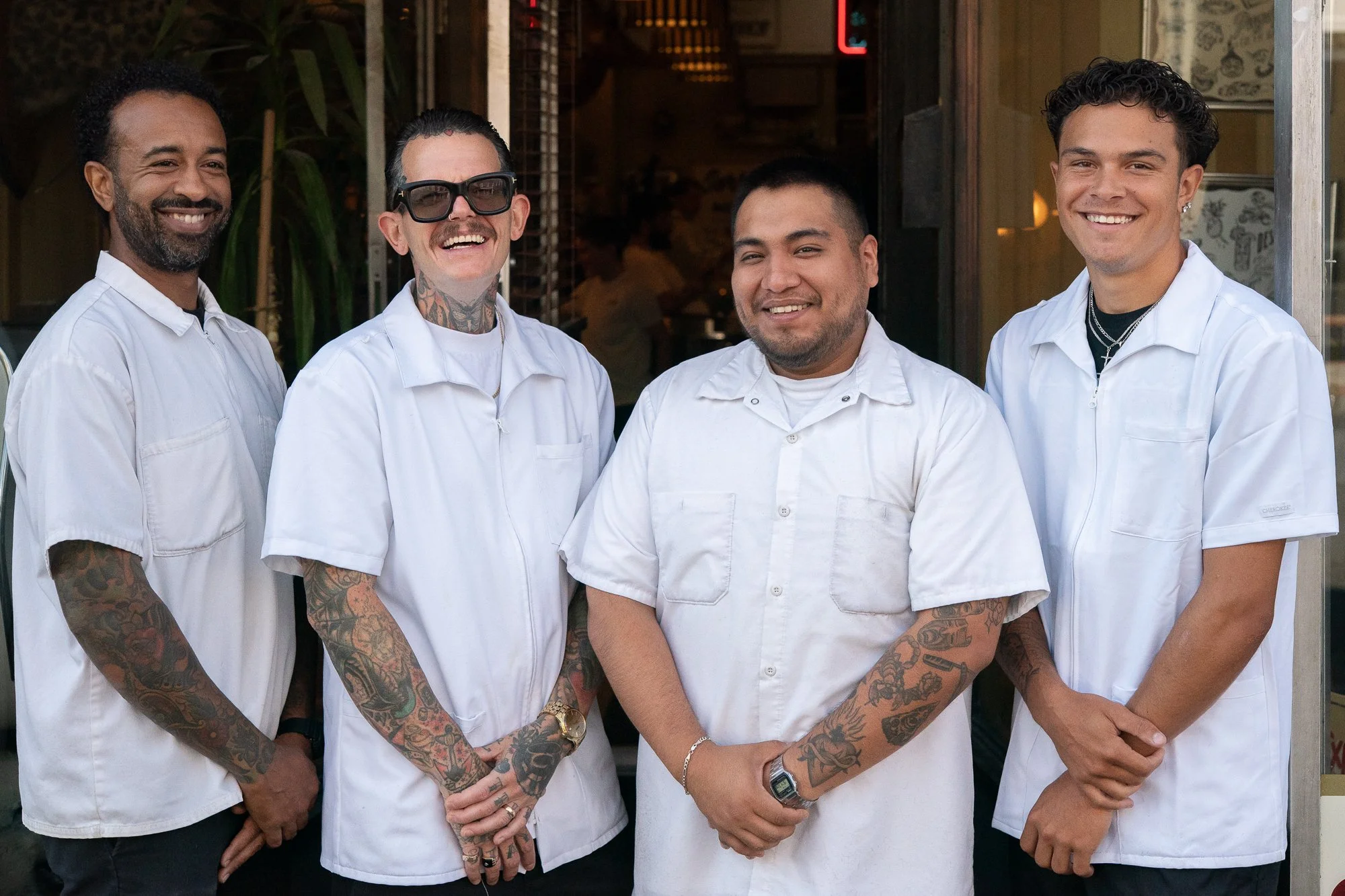
Pugsly’s SideShow barbers gather for a portrait in the shop doorway.