
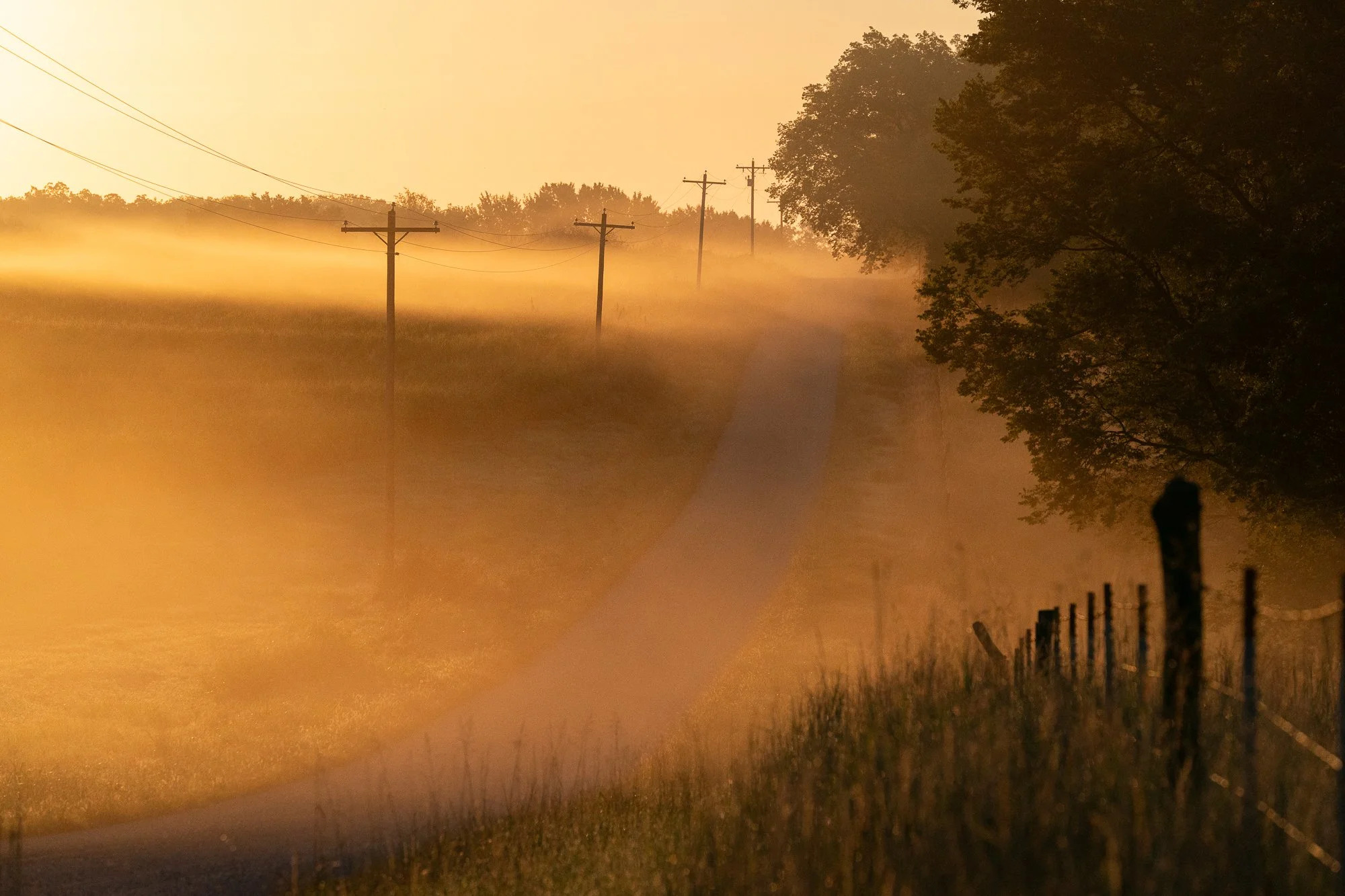
Beyond Route 66: Photographing America Without the Nostalgia
Route 66 has become one of the most recognizable symbols of the American road. Its neon signs, old gas stations, diners, motels and vintage cars have created a visual language recognized around the world. There is real history there, and good reason for much of it to be preserved. But somewhere along the way, the mythology surrounding Route 66 began to overshadow the road itself.
Drive enough of it today and the experience can start to feel like America performing an older version of itself. Restored gas pumps, murals, tchotchke’s, bumper stickers, and businesses carefully maintaining a mid-century aesthetic all reinforce an image we've already been taught to recognize. And the whole time it just feels like you’re being funneled to the Gift Shop, but it raises a more interesting question: Is Americana the same thing as America?
For Roadside Meditations, the answer has always been found elsewhere.
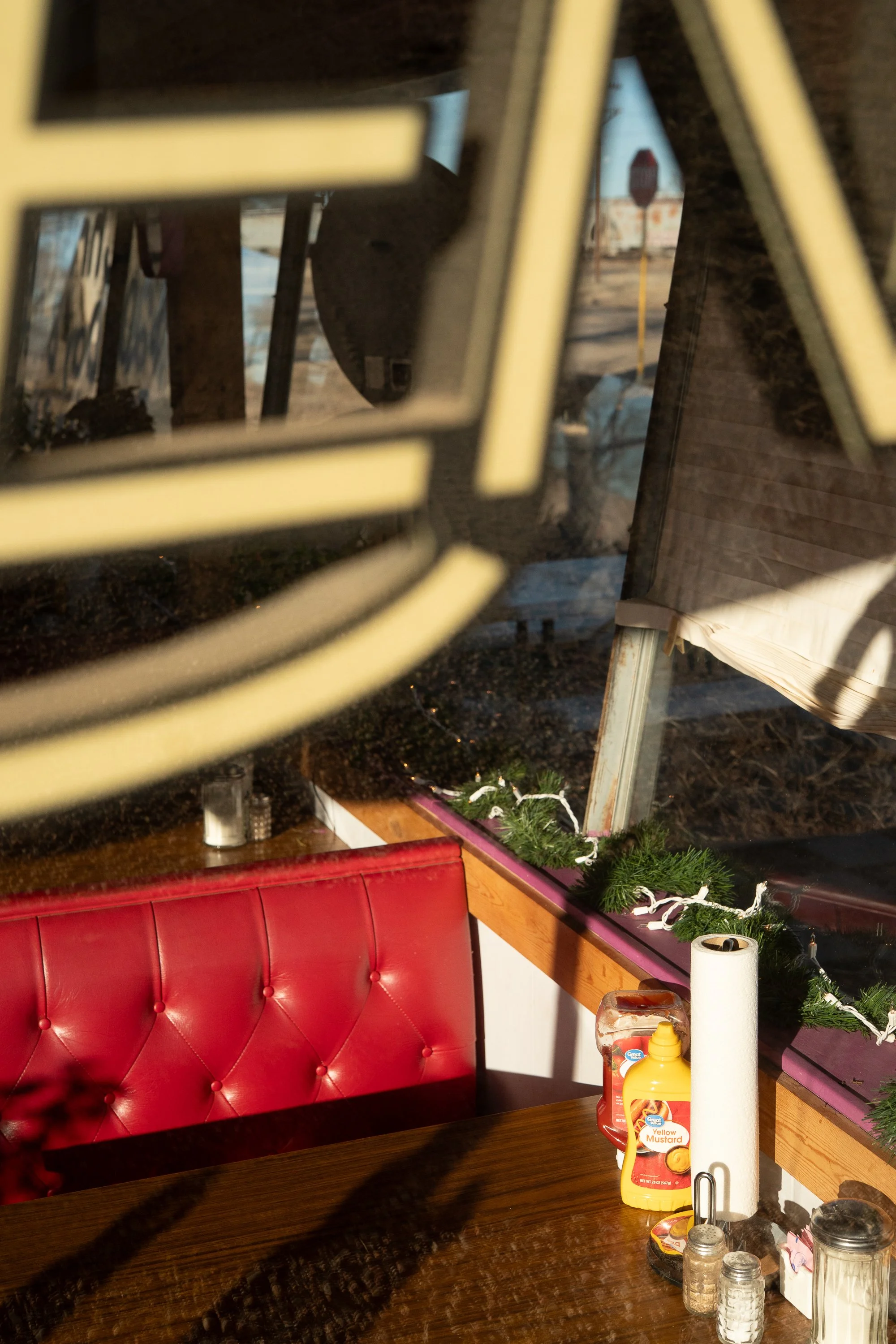
Sunlight falls across a red diner booth and a table set with condiments beside the window.
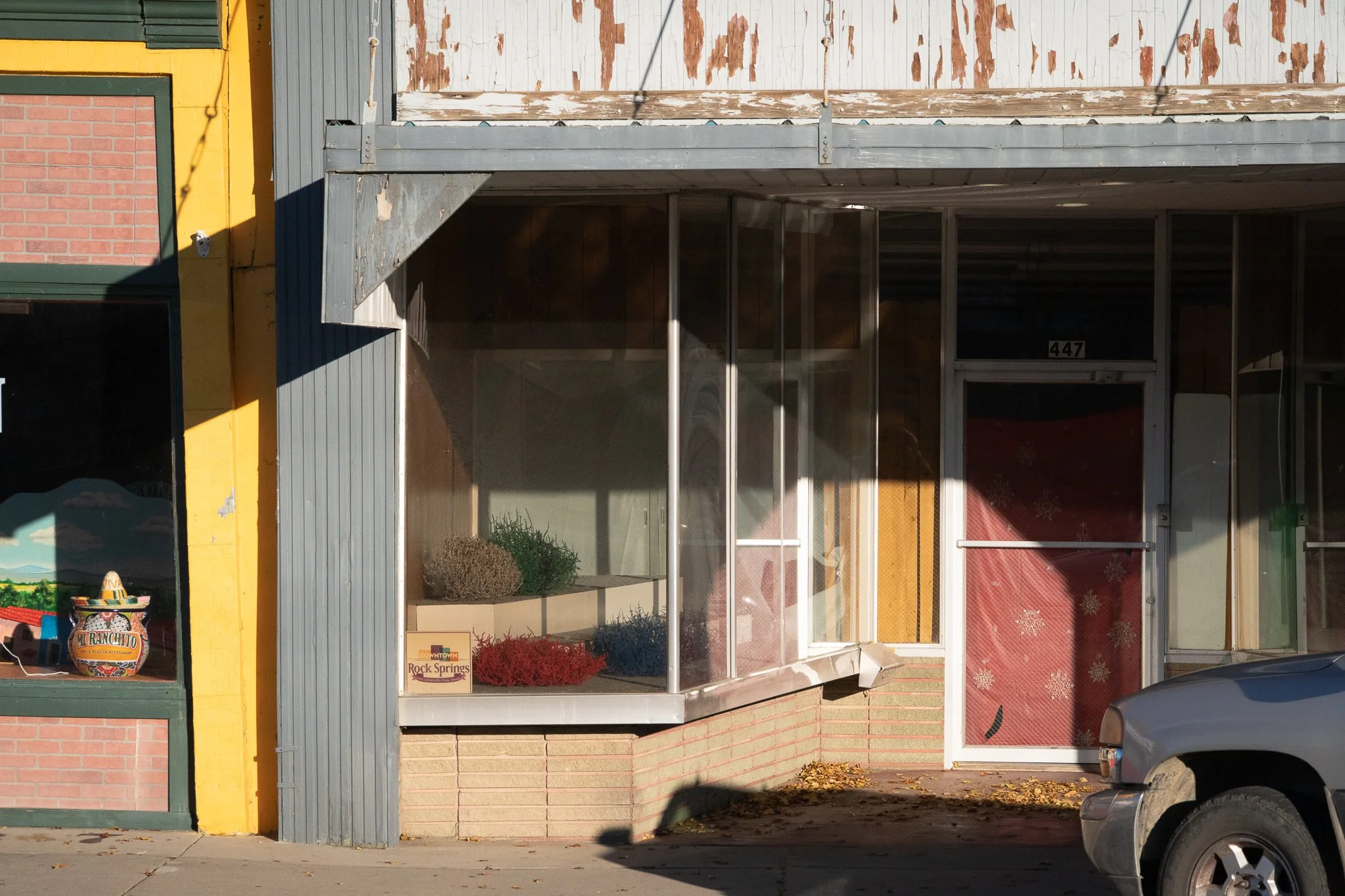
In Rock Springs, a weathered storefront shows peeling paint, colorful window displays, and a glass entrance marked 447.
Americana Isn't the Same Thing as America
Americana has developed a familiar visual shorthand. An old pickup truck, a weathered barn, a faded Coca-Cola advertisement and a diner with chrome stools immediately communicate a certain idea of America. These things are genuinely part of the country's visual history, but they represent only a small piece of it.
Most of America doesn't look like that.
It looks like Dollar General. It looks like a modular home sitting beneath an incredible mountain range, a new truck stop, a cell tower, an ugly strip mall or a motel somebody painted an inexplicable shade of pink 30 years ago. It looks like a hand-lettered sign made without any consideration for design and an intersection where nothing seems to belong together.
These places aren't trying to be Americana. They're simply America as it exists right now.
And that distinction matters.
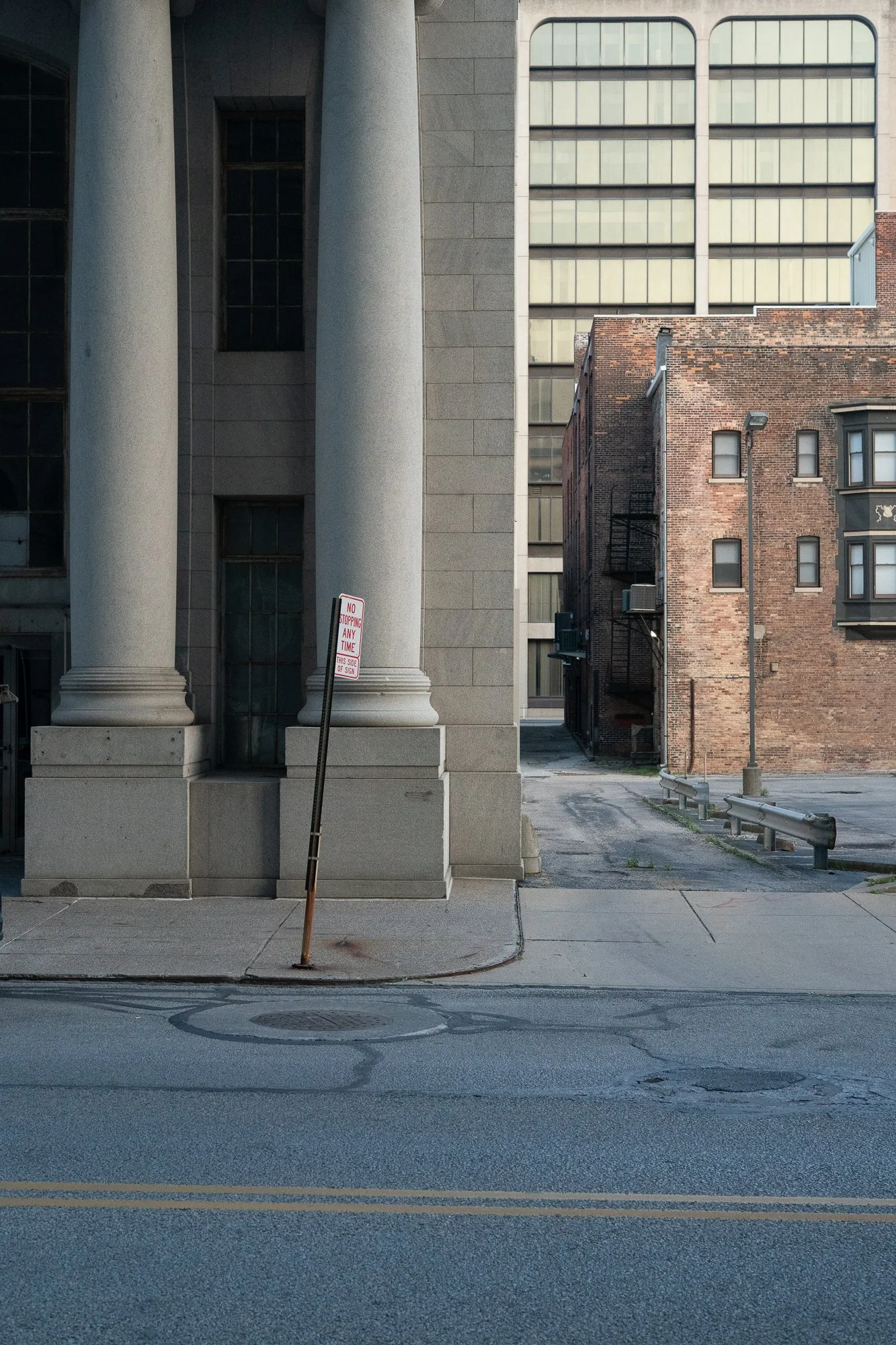
Stone columns and brick buildings line a city street in the Mid West.
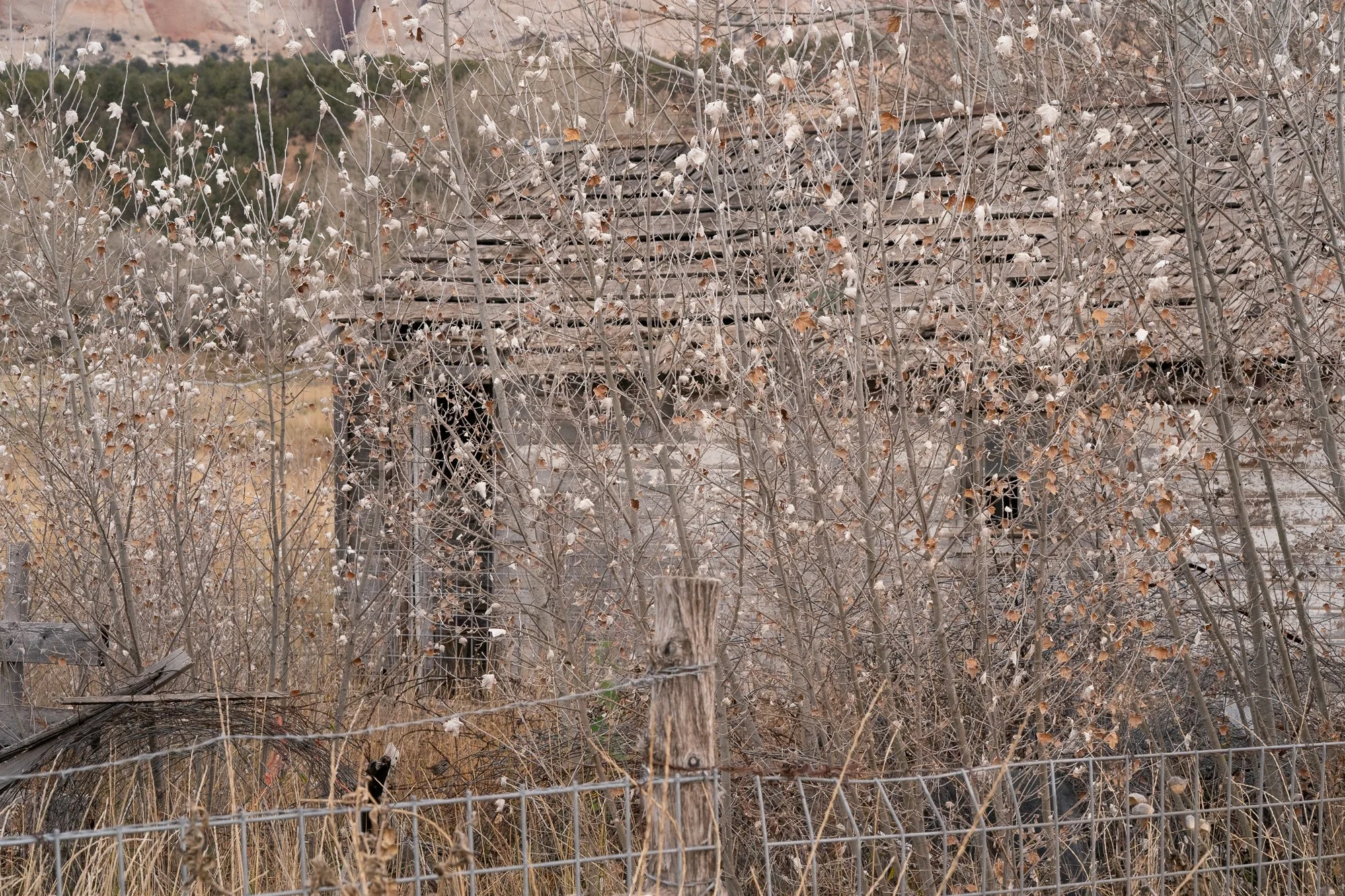
Dry grass and leafless brush surround a fenced-in structure along the roadside.
When the Photograph Has Already Been Chosen
Part of the appeal of traveling with a camera is not knowing where the next photograph will come from. Hours can pass without anything happening, followed by something glimpsed at 60 miles an hour that demands a U-turn.
There may be nothing historically significant about the place. It may not appear on a map beyond an address. Nobody has identified the best angle, written about its history or suggested that anyone should stop.
The photographer has to decide whether it matters.
That uncertainty disappears when a place becomes an attraction. The famous motel, historic filling station and iconic roadside sign arrive with their significance already established. Millions of photographs have been made there before. The visitor already knows what is worth seeing, so they hop out of the car, make their snapshot, then continue on without a second thought.
There is nothing inherently wrong with photographing those places. But there's something more interesting about having to find the photograph yourself.
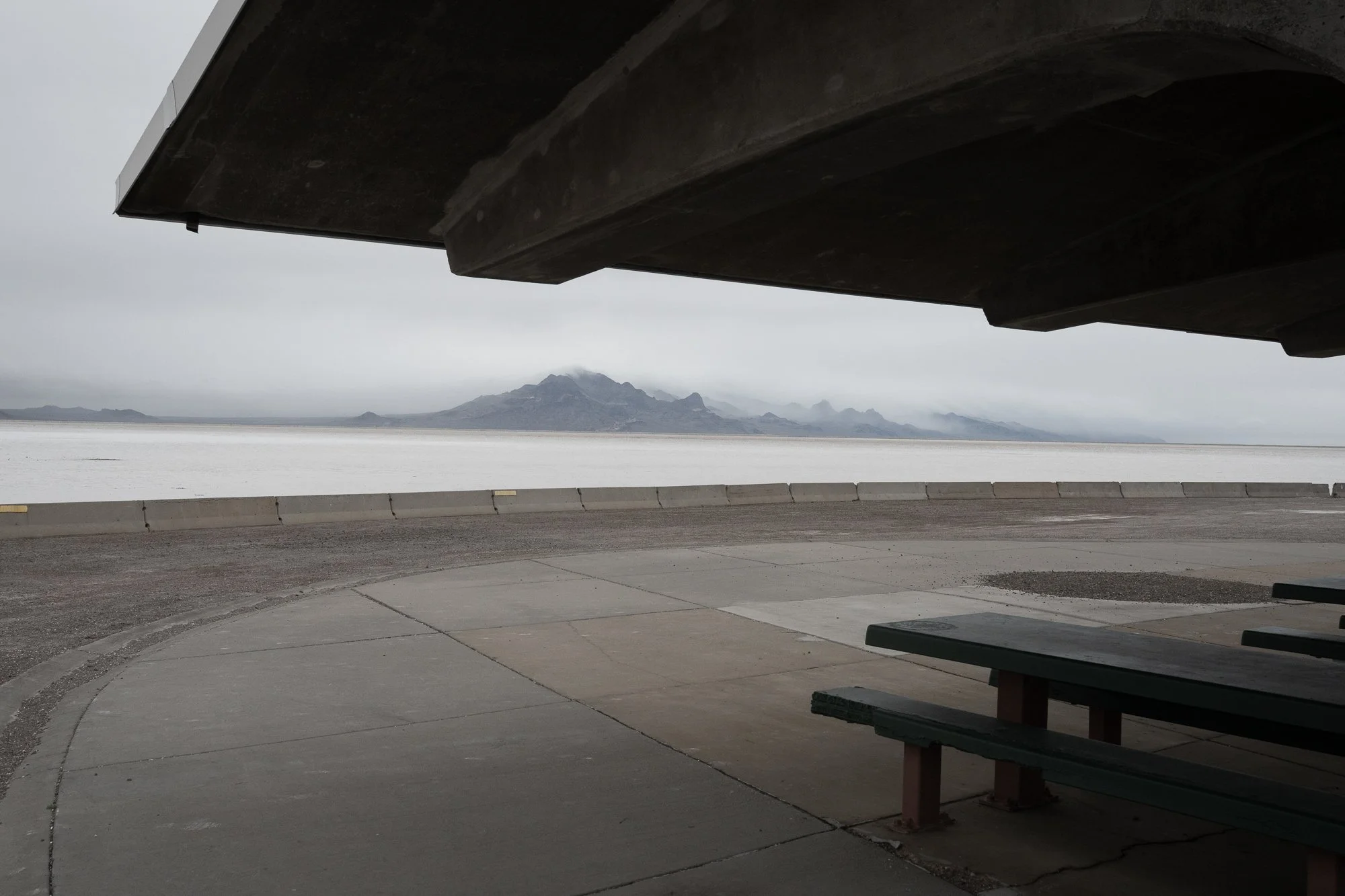
Picnic tables sit beneath a roadside shelter overlooking the open landscape and distant mountains of the Salt Flats in Utah.
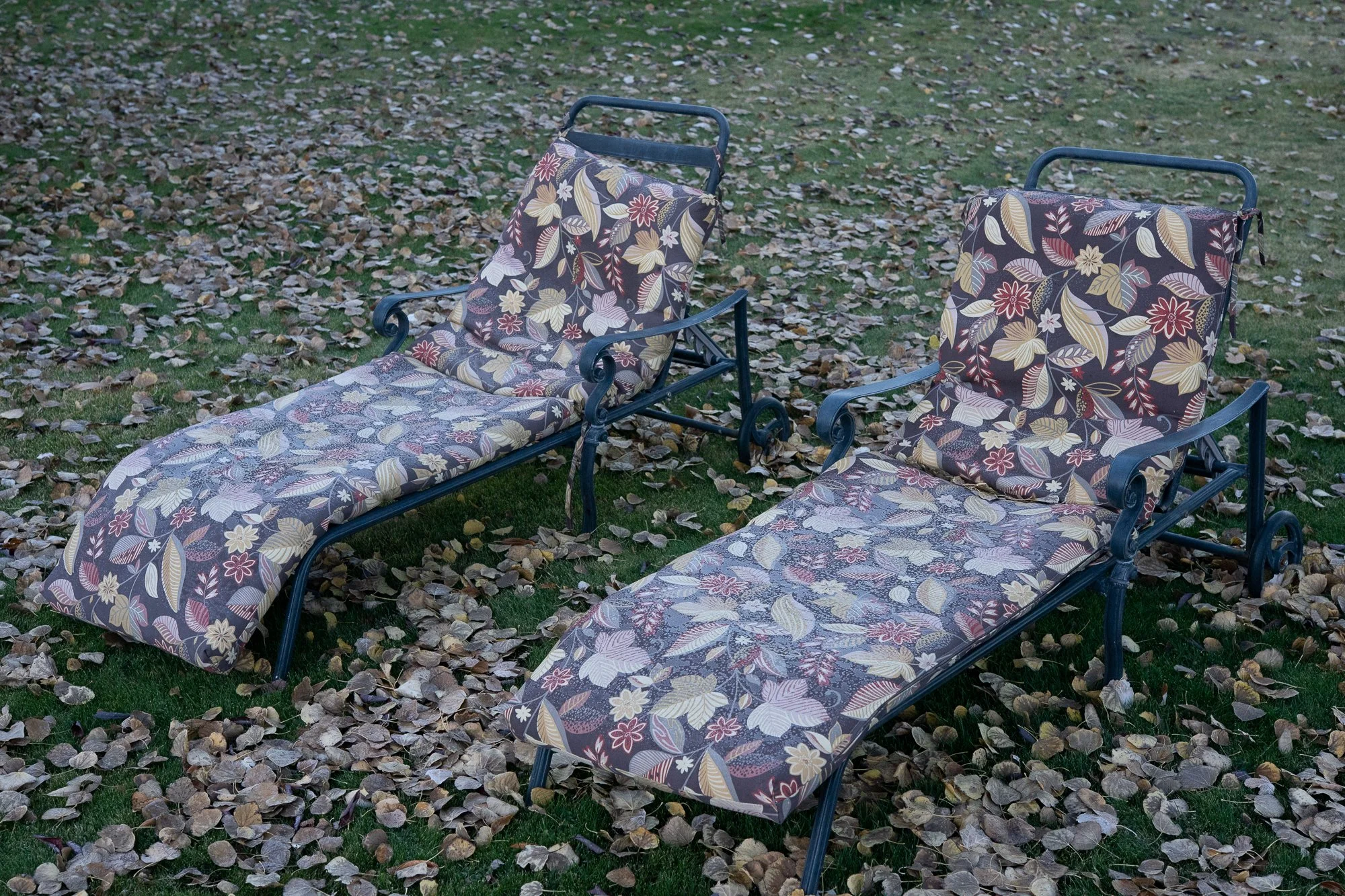
Two cushioned lounge chairs sit on the grass among fallen leaves in an everyday residential setting.
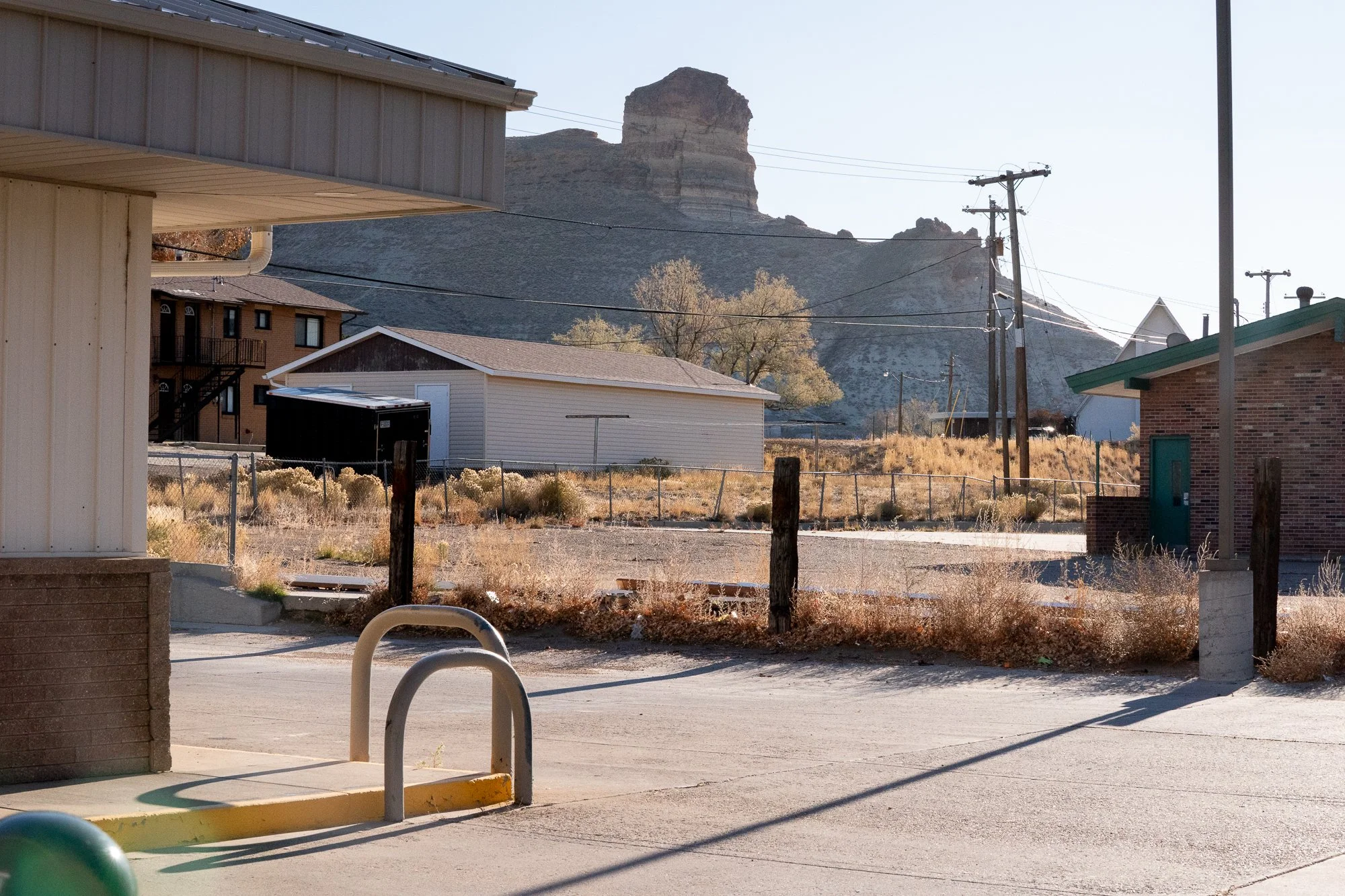
A small-town street runs beneath a mountain, with utility poles and low buildings along the roadside in Green River, Utah.
The America Between the Attractions
The American roadside is enormous, and most of it isn't famous.
Thousands of towns sit along state highways, county roads and old commercial routes without ever becoming destinations. Motels still operate without neon signs worth preserving. Bars open and close. New convenience stores replace old filling stations. Dollar stores appear on the edges of towns. Warehouses and subdivisions spread into landscapes that were empty a decade earlier.
This is the America that tends to disappear from romantic depictions of the road.
Yet these places say just as much about the country as the things we've decided to preserve.
Roadside Meditations grew from years spent moving through these environments, often while traveling somewhere else. The photographs weren't made from a list of landmarks or along a predetermined historic route. They accumulated through looking and paying attention to places that were easy to pass by.
Empty roads. Small towns. Motels. Storefronts. Parking lots. Signs. Deserts. Industrial buildings. Sometimes beautiful. Sometimes awkward. Sometimes funny or bleak. Often difficult to explain.
Together, they form a different kind of American road trip.
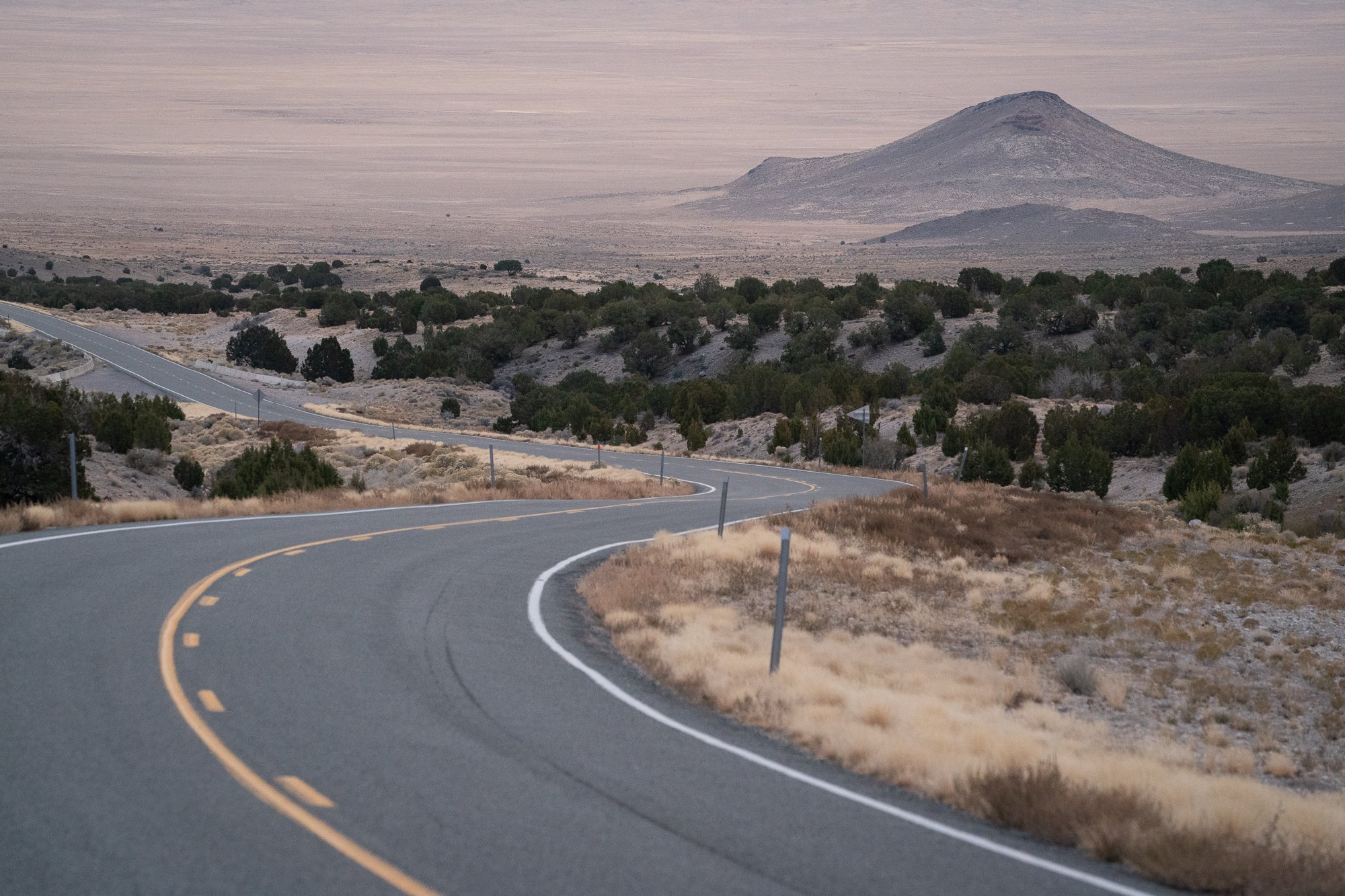
A paved road curves away through dry country, with a mountain at the horizon.
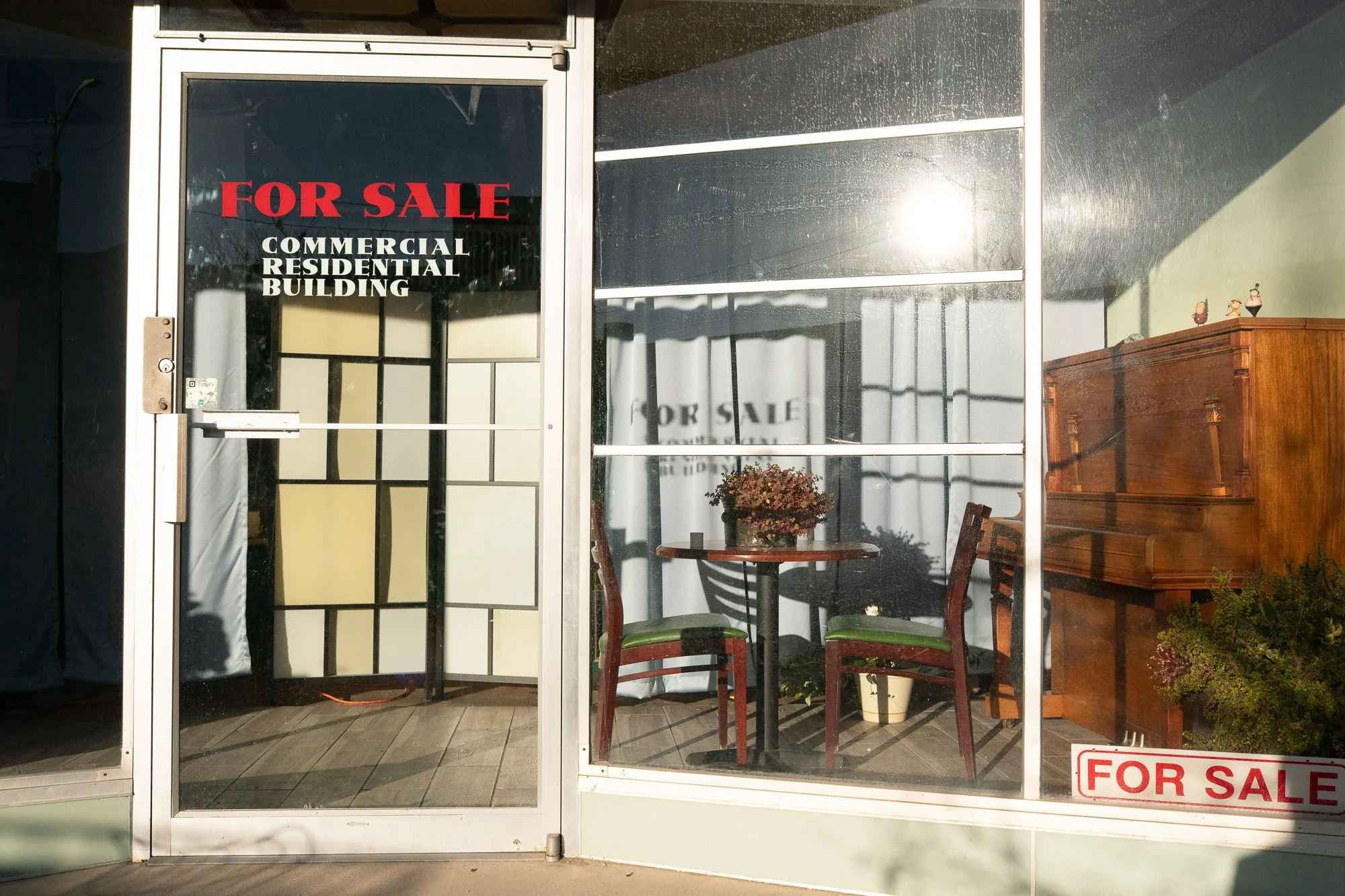
For sale signs are posted at a storefront where a piano and a few chairs are visible through the glass.
We Keep Photographing the America That Used to Exist
Nostalgia is selective.
When the American roadside is romanticized, certain things tend to make the cut. Neon instead of LED. An independent motel instead of a Hampton Inn. A classic pickup instead of a Toyota Camry. An old diner instead of Taco Bell. A hand-painted sign instead of a digital billboard.
There are obvious reasons for this. The older things often have more character and frequently make better photographs.
But constantly removing the present from pictures of America creates its own kind of fiction.
A photograph made today doesn't have to look as though it could have been made in 1957 to have value. The architecture, businesses, signs and infrastructure being built now are becoming part of the country's visual history whether anyone considers them beautiful or not.
Today's ordinary is tomorrow's history.
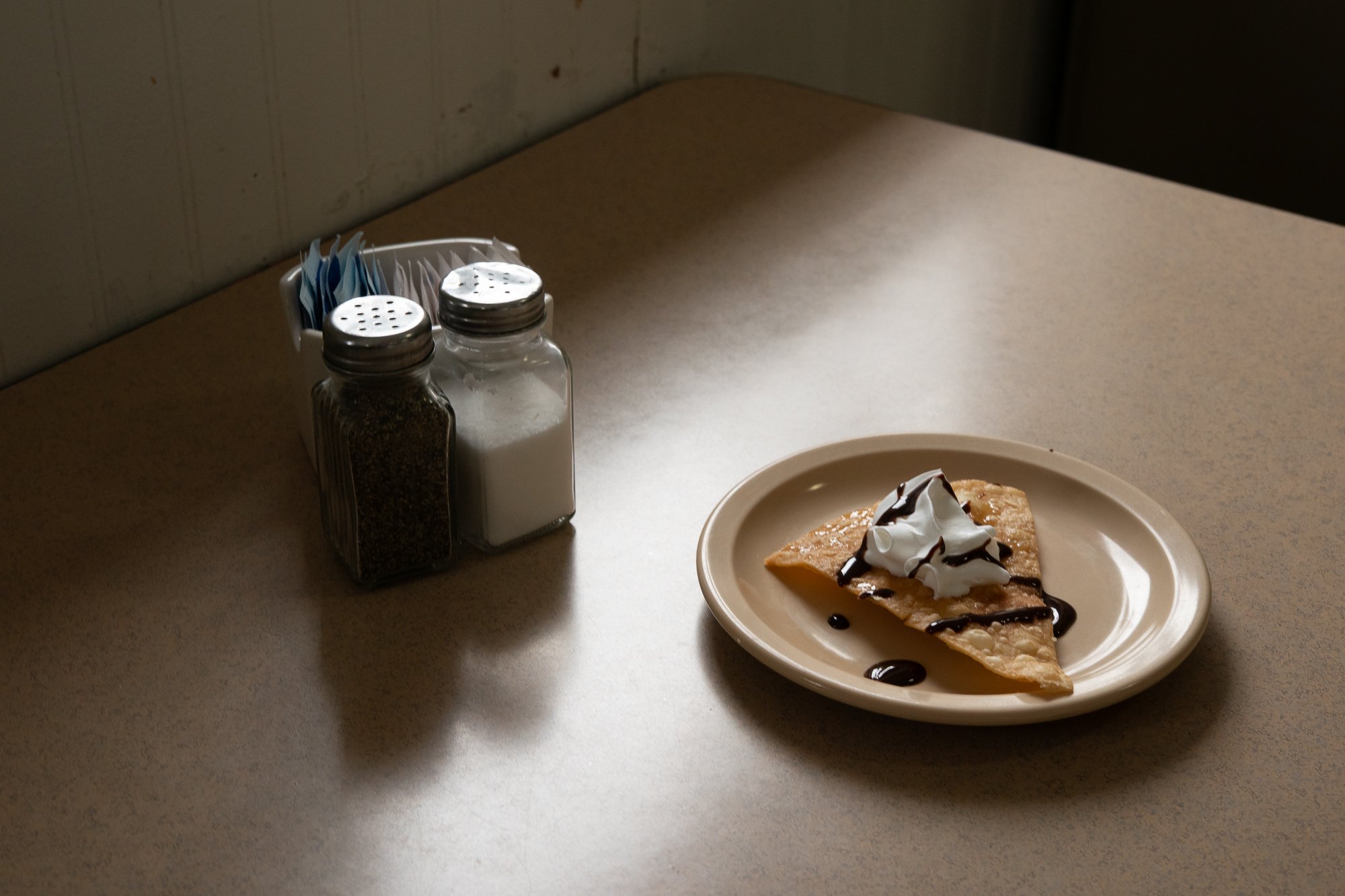
A plate of dessert sits on a diner table in small town America.
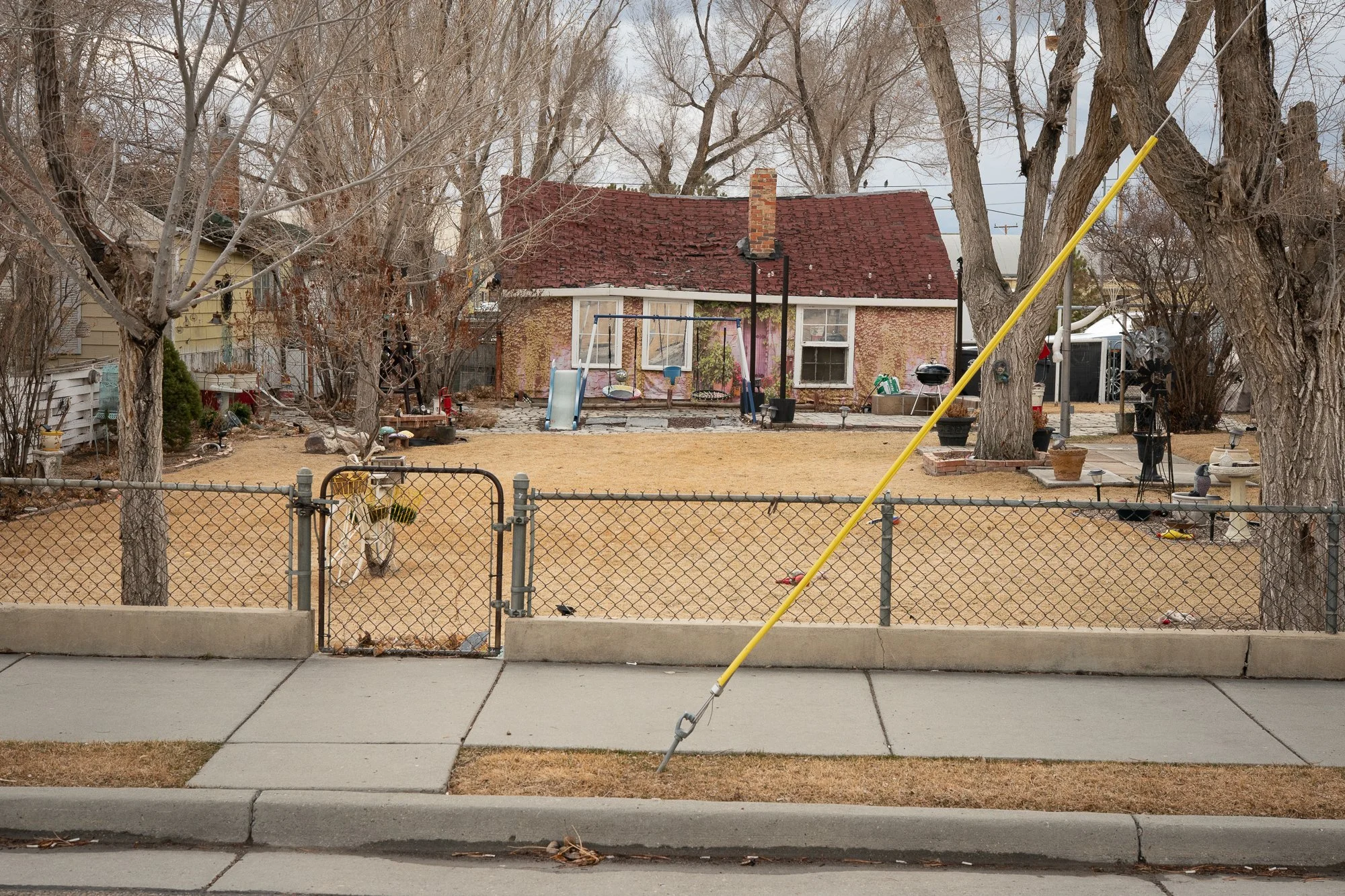
A decrepit house and yard in a small Wyoming town.
The Landscape Doesn't Have to Be Beautiful
The same problem exists with landscape photography.
Certain places arrive with their importance already established. Monument Valley, Yosemite, the Grand Canyon and countless other landmarks have become part of a shared visual vocabulary. Stand in front of one of them in beautiful light and the subject is already doing an enormous amount of work.
The ordinary landscape asks more questions.
Why photograph a closed laundromat in a town of 800 people? What is interesting about a gas station surrounded by empty land? Why stop for an awkward building, a telephone pole, a parking lot or a road disappearing behind a warehouse?
Often there isn't a photograph.
Occasionally there is.
Finding it requires looking at the landscape without first deciding what deserves to be beautiful.
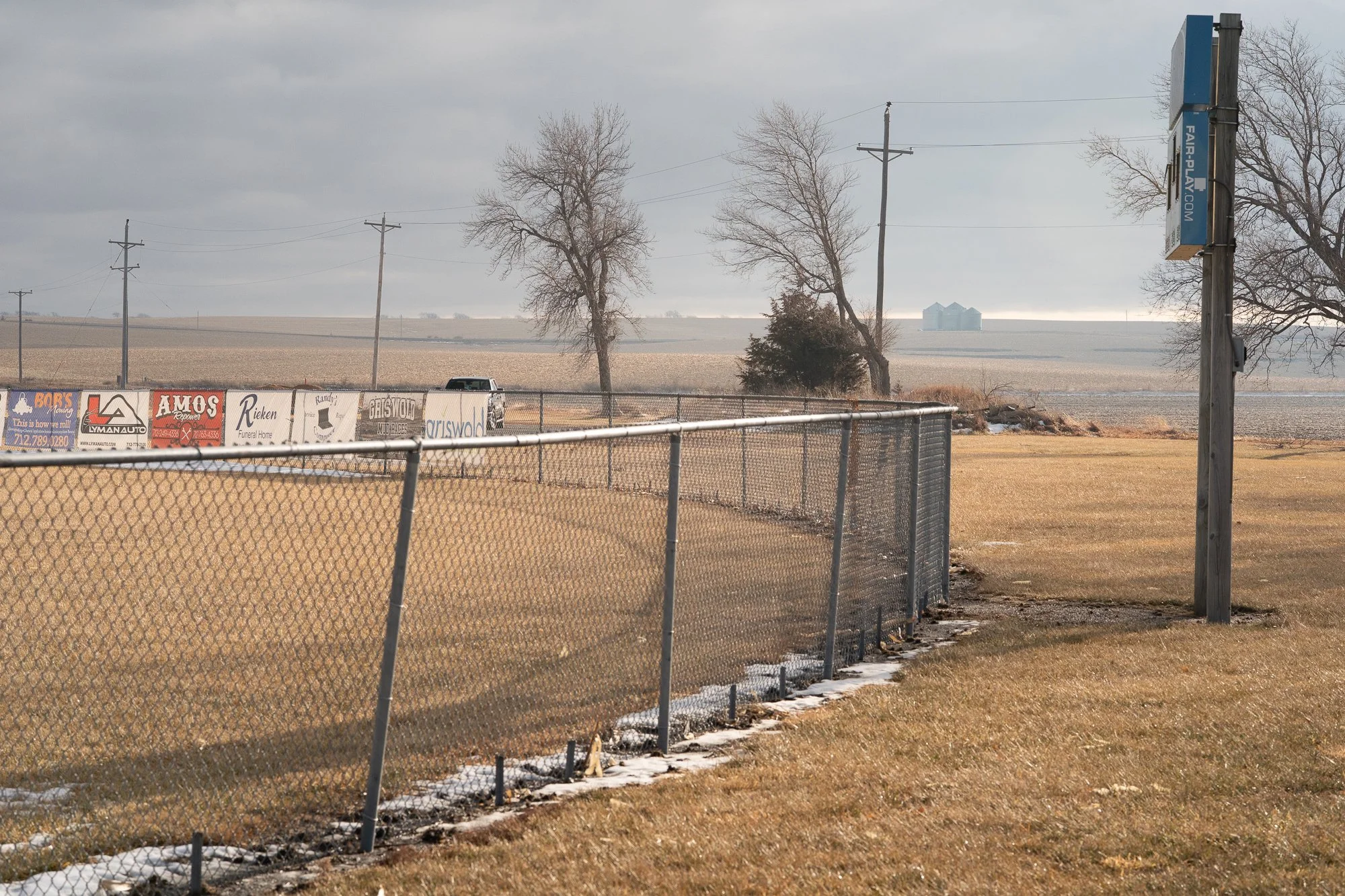
Open farmland stretches beyond a baseball field in Iowa.
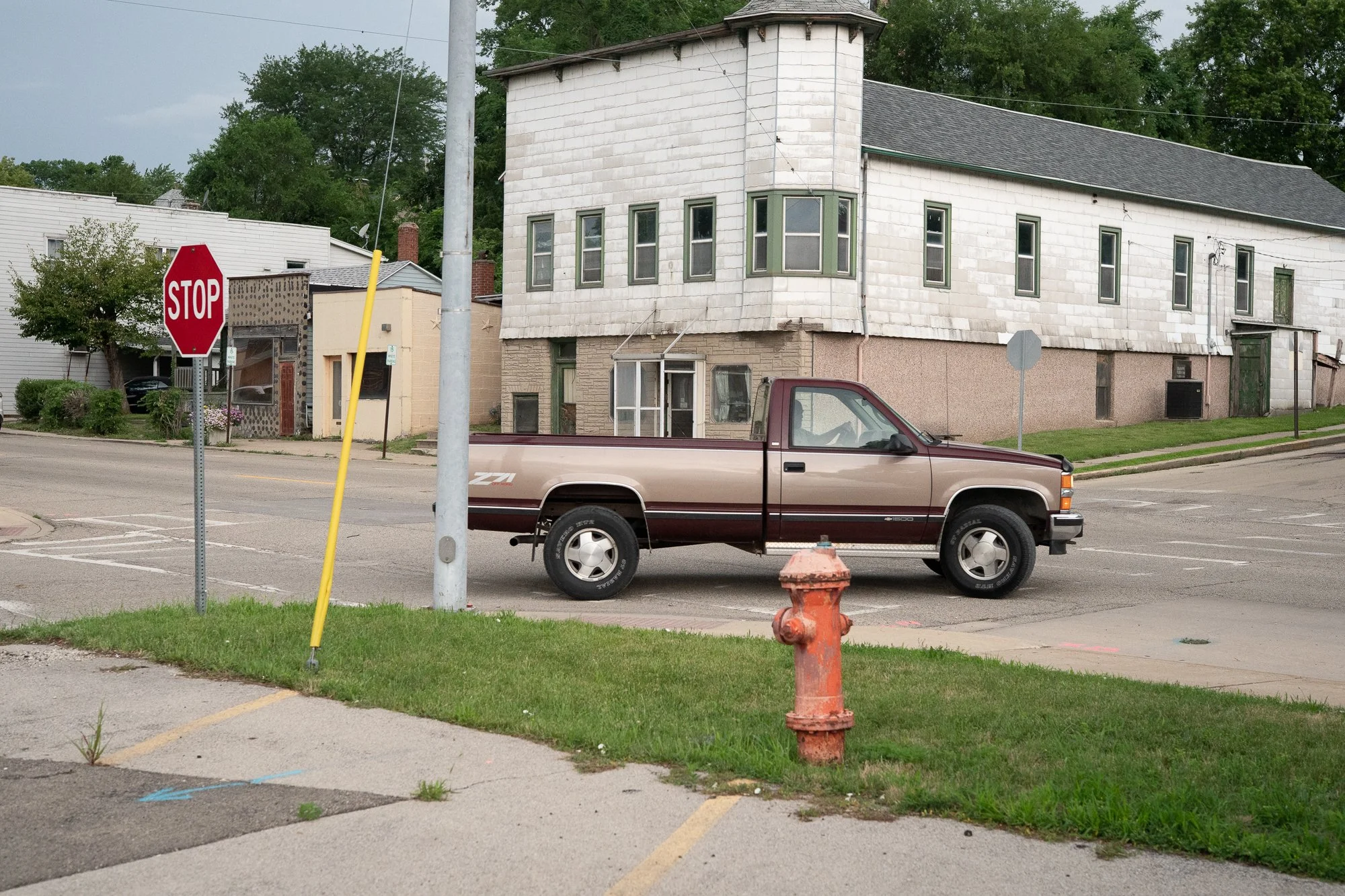
A pickup truck turns through a quiet street beside an older building in a run down Mid West town.
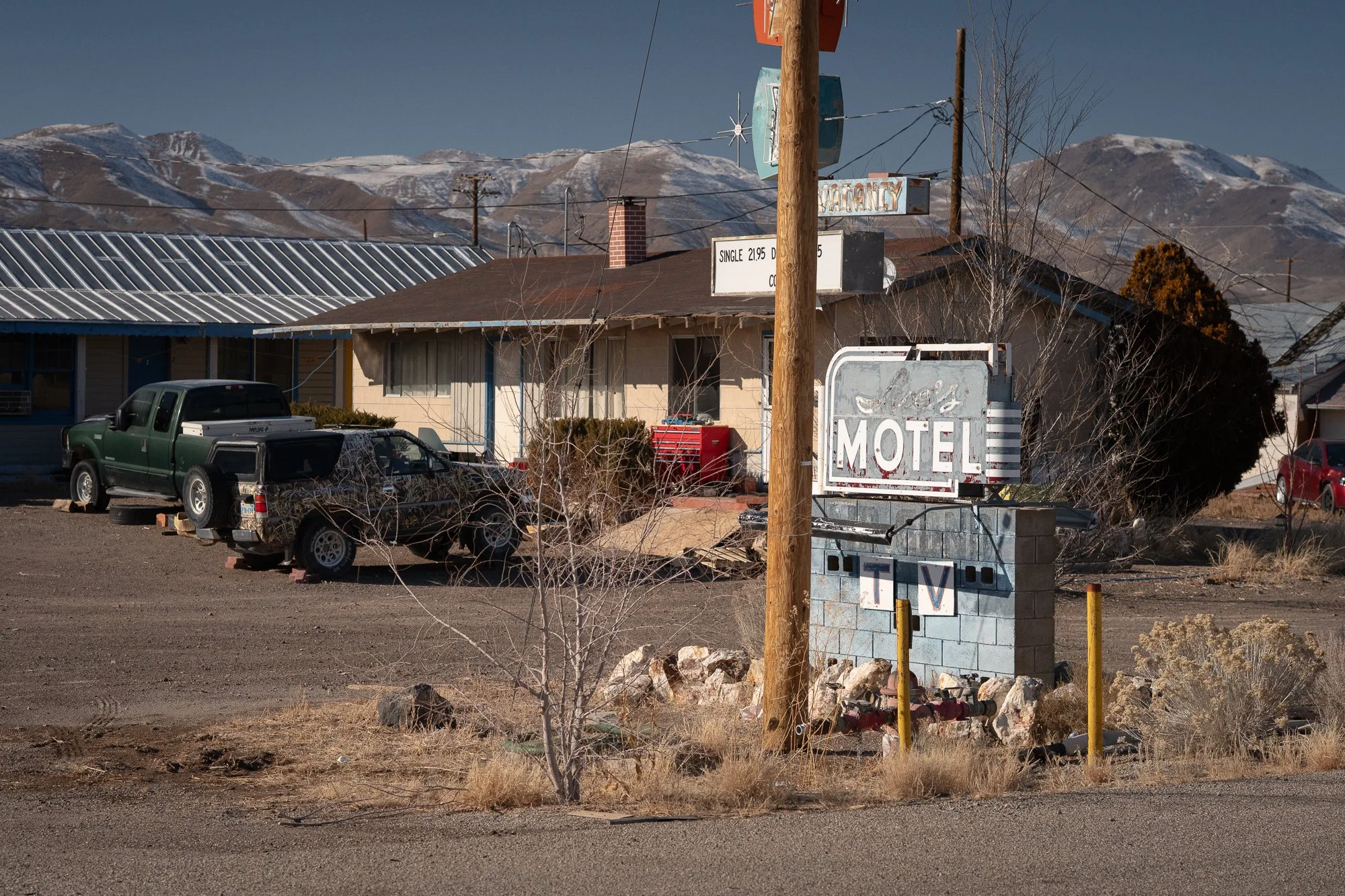
A roadside motel sits among dry grass and utility poles with snow-covered mountains rising behind it.
Photographing America as It Exists
None of this makes Route 66 somehow less "real" than the places beyond it. The restored diners, souvenir shops, vintage cars and tourists standing beneath Route 66 signs are all part of contemporary America too.
The distinction is about intention.
There's a difference between photographing a place that has already been culturally designated as Americana and discovering something ordinary that happens to reveal something about America.
The latter leaves more unanswered.
There is no established story. No prescribed nostalgia. No assurance that the thing being photographed is important at all.
That uncertainty is part of what makes the American roadside endlessly interesting.
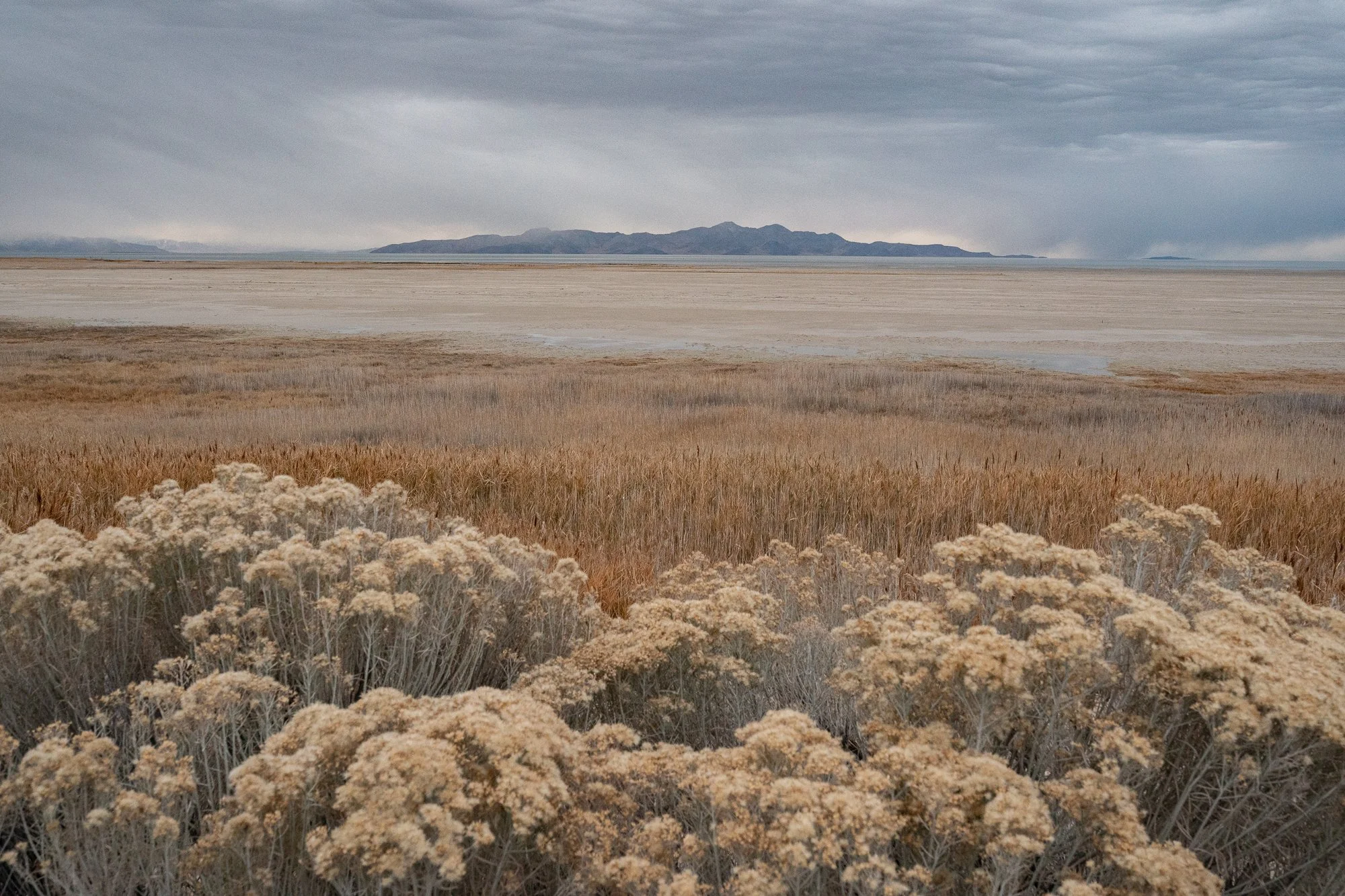
A vast Utah landscape opens across dry grasses toward a distant mountain range beneath a cloudy sky.
Roadside Meditations
The photographs in Roadside Meditations were made over more than a decade and hundreds of thousands of miles traveling throughout the United States. Eventually, 75 of those photographs became a fine art photography book published by Kehrer Verlag.
The project isn't intended as a guide to the American road or a collection of its greatest hits. It's a record of paying attention to the spaces between destinations: towns, buildings, landscapes and strange little moments that might otherwise disappear through the windshield.
Some of those places are already gone. Others have changed. Many probably still look almost exactly the same.
That's part of the point.
America doesn't need to look like Americana to be worth photographing.
Sometimes the most revealing places aren't the ones preserved to remind us what the country used to look like. They're the ordinary places showing us what it looks like right now.
And there are millions of miles of them beyond Route 66.
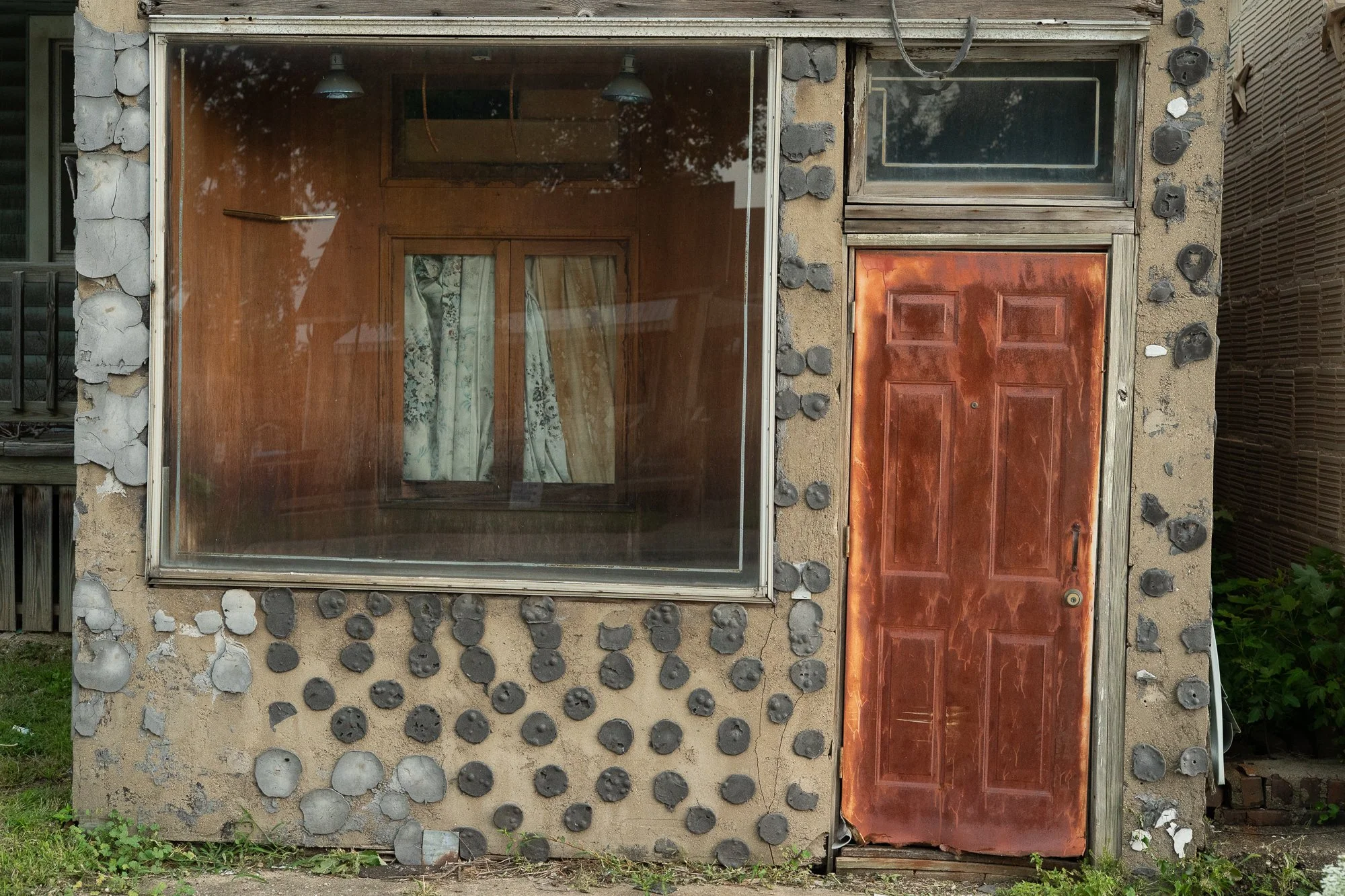
The dilapidated facade of an old apartment in the Mid West.
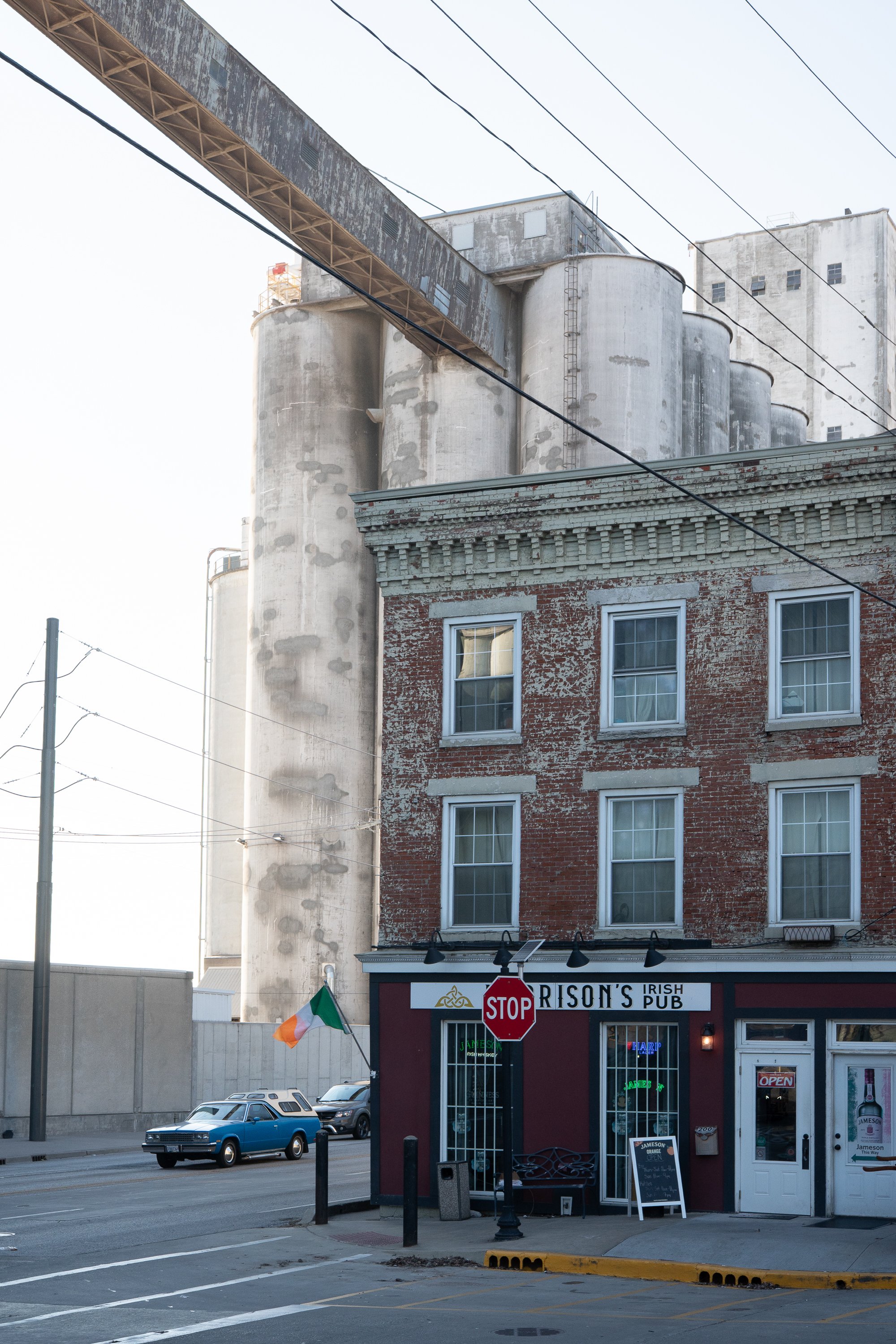
In a small Illinois town, concrete grain silos rise behind an Irish pub.