
Sweeney Todd’s Barbershop, Los Angeles
Tucked into the Los Feliz neighborhood of Los Angeles, Sweeney Todd’s barbershop carries a kind of visual weight that comes from it’ impeccable design. Walking in there for the first time you’d have to seriously question whether or not you’d been transported to a different era. All of the shops layered objects, textures, and details reflect something different than our current reality. It’s so well done that the only clue hinting at present day, is the clothing warn by customers.
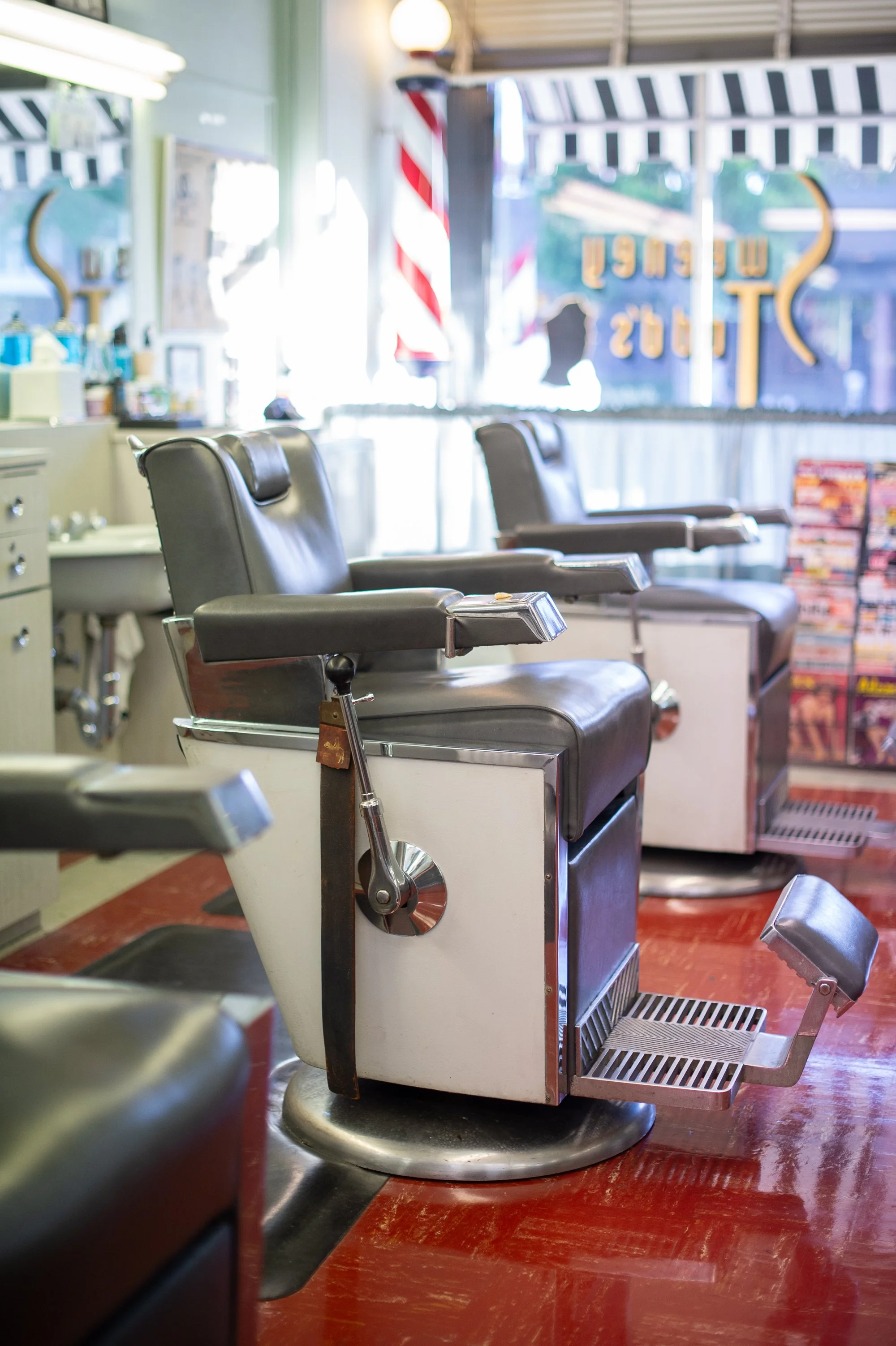
The chairs sit empty between cuts, chrome bases and worn leather catching the light. Through the front window, the barber pole turns and the gold lettering reads in reverse. The shop is open.
A Shop Defined by Atmosphere
The first thing that stands out isn’t any one object—it’s the density of the space. The walls are filled, but not cluttered. Vintage signage, photographs, tools, and ephemera stack up in a way that feels intentional without being precious. There’s empty wall space, but none of it begs for decoration. Everything already has a purpose.
The lighting is a mix of classic barbershop interior and a steady flow of California sunshine, creating pockets of contrast across the room. It highlights the patina of worn wood, the shine of old metal fixtures, and the texture of well-used barber chairs. It’s the kind of environment that feels cinematic without trying to be.
Nothing feels new. And that’s exactly the point.
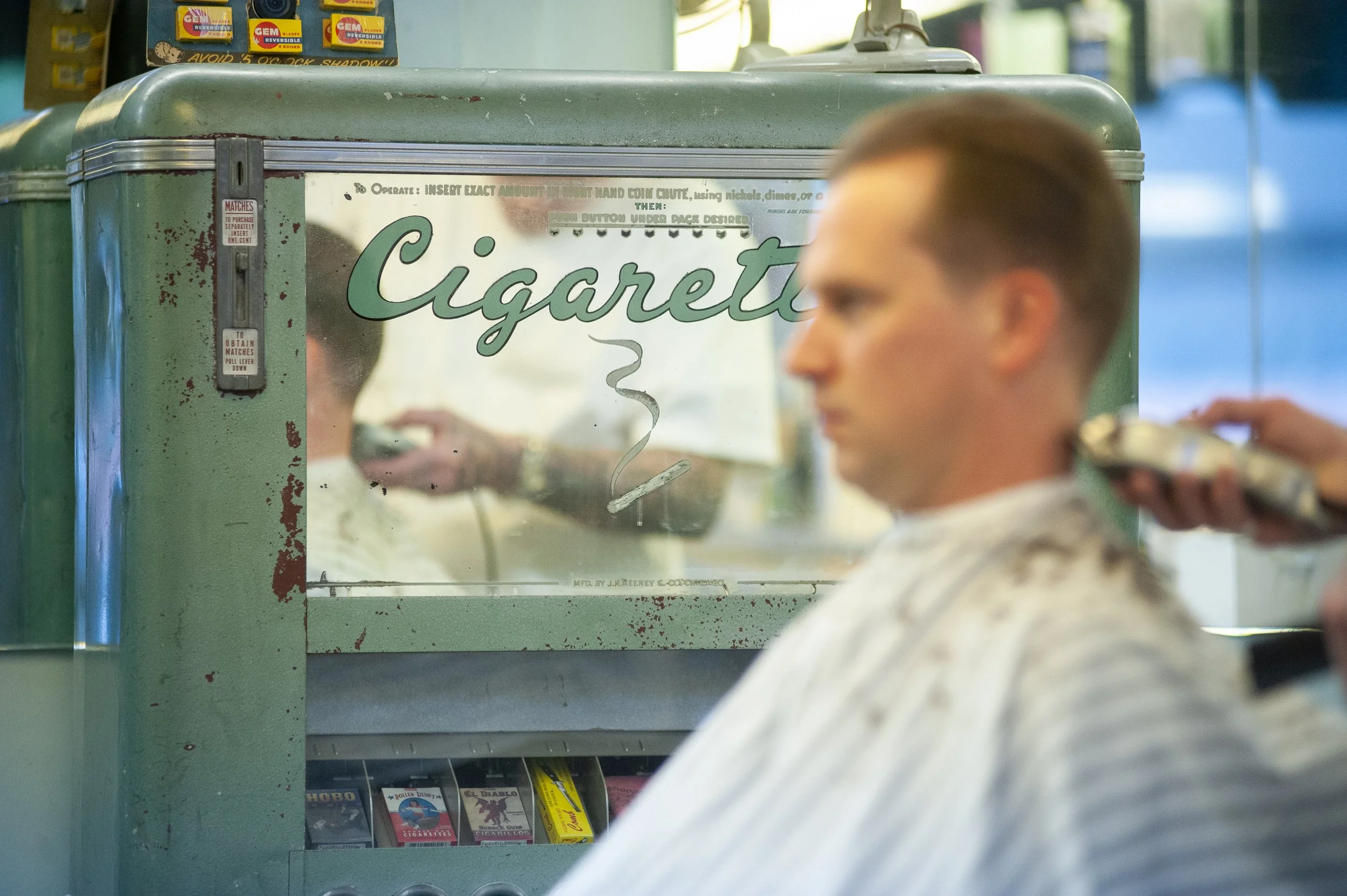
A haircut is happening in the foreground. In the background, a vintage cigarette machine holds its ground, paint worn, decals faded. The shop doesn't explain what it keeps.
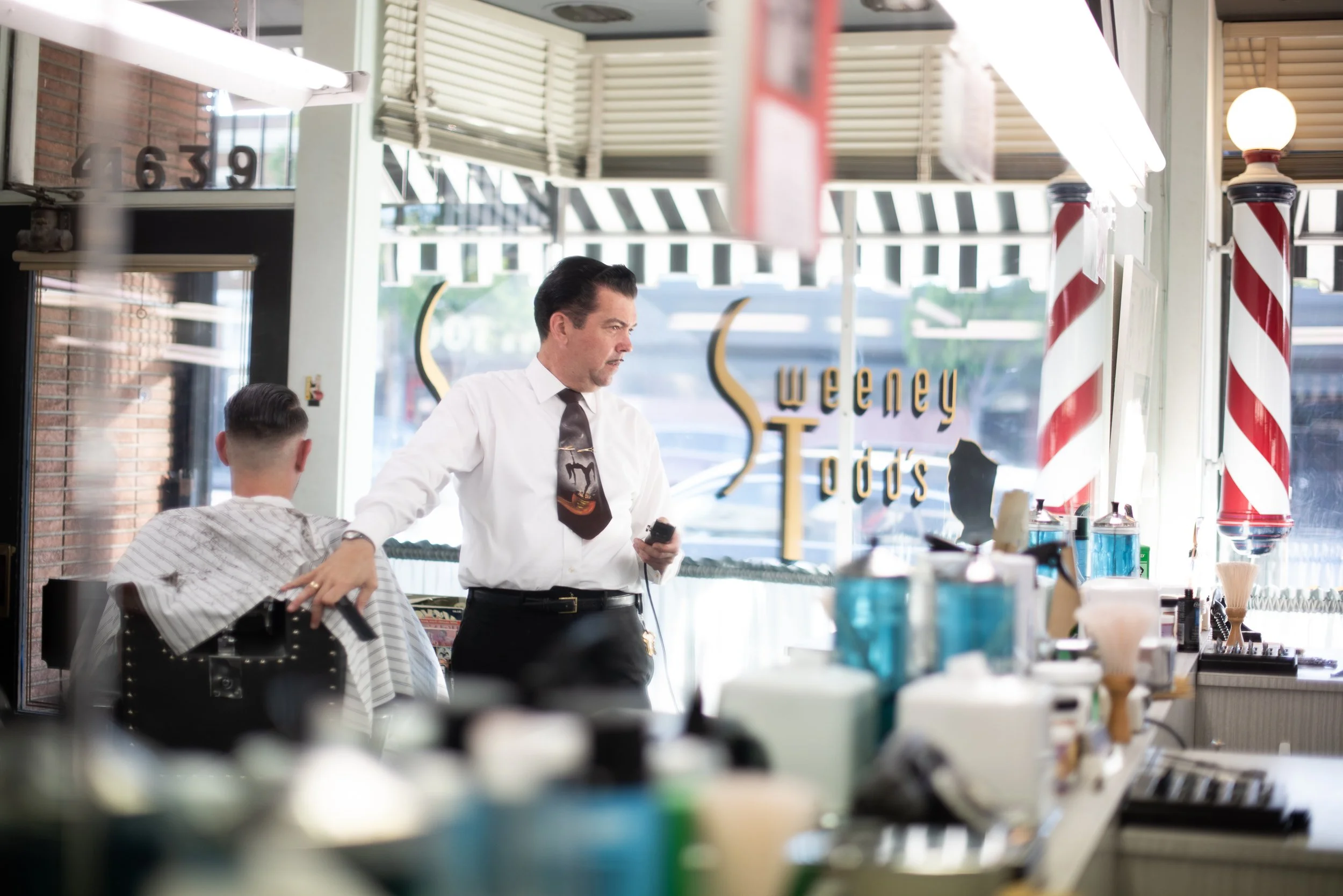
He steps back and looks over the cut, clippers still in hand, not finished yet. The Sweeney Todd’s sign sits in the window behind him, the barber pole off to the side, the counter lined with tonics and brushes.
The Details That Matter
Look closer and the shop reveals itself in pieces:
Old barber chairs that have seen decades of use. Each barber wearing classic smocks. Mirrors that reflect not just the customer, but the entire layered environment behind them.
Shelves lined with tools and products that feel chosen over time, not stocked overnight.
Even the small things—Playboy Magazines, perfectly dated photos, worn edges on countertops—contribute to the larger story. These are the details that can’t be manufactured quickly. They accumulate.
And in a city like Los Angeles, where so much is constantly being built, rebuilt, and rebranded, that kind of permanence stands out.
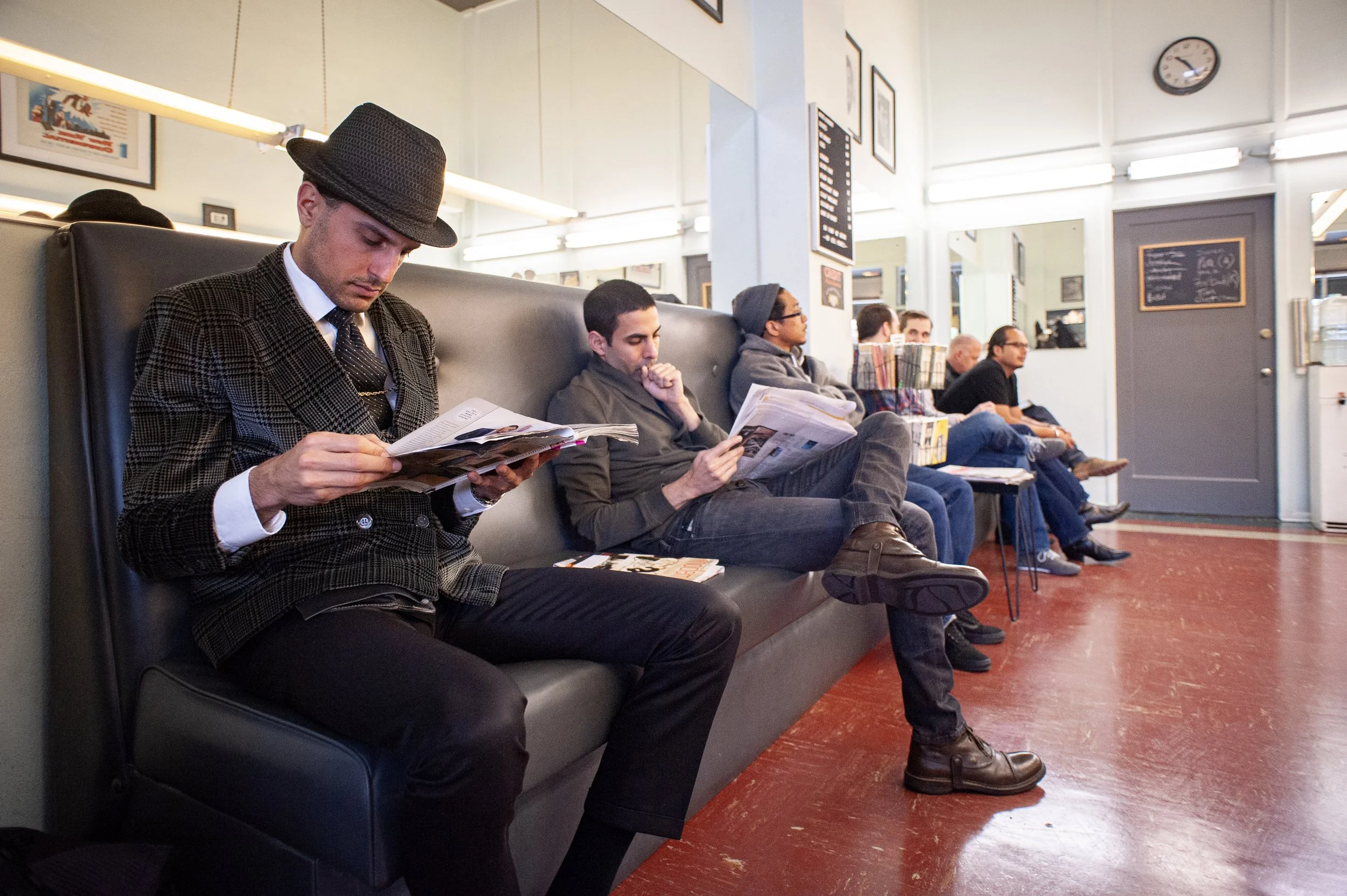
The waiting area fills up. Men sit shoulder to shoulder with magazines and newspapers, the red linoleum floor reflecting the fluorescent light above. Nobody's in a hurry.
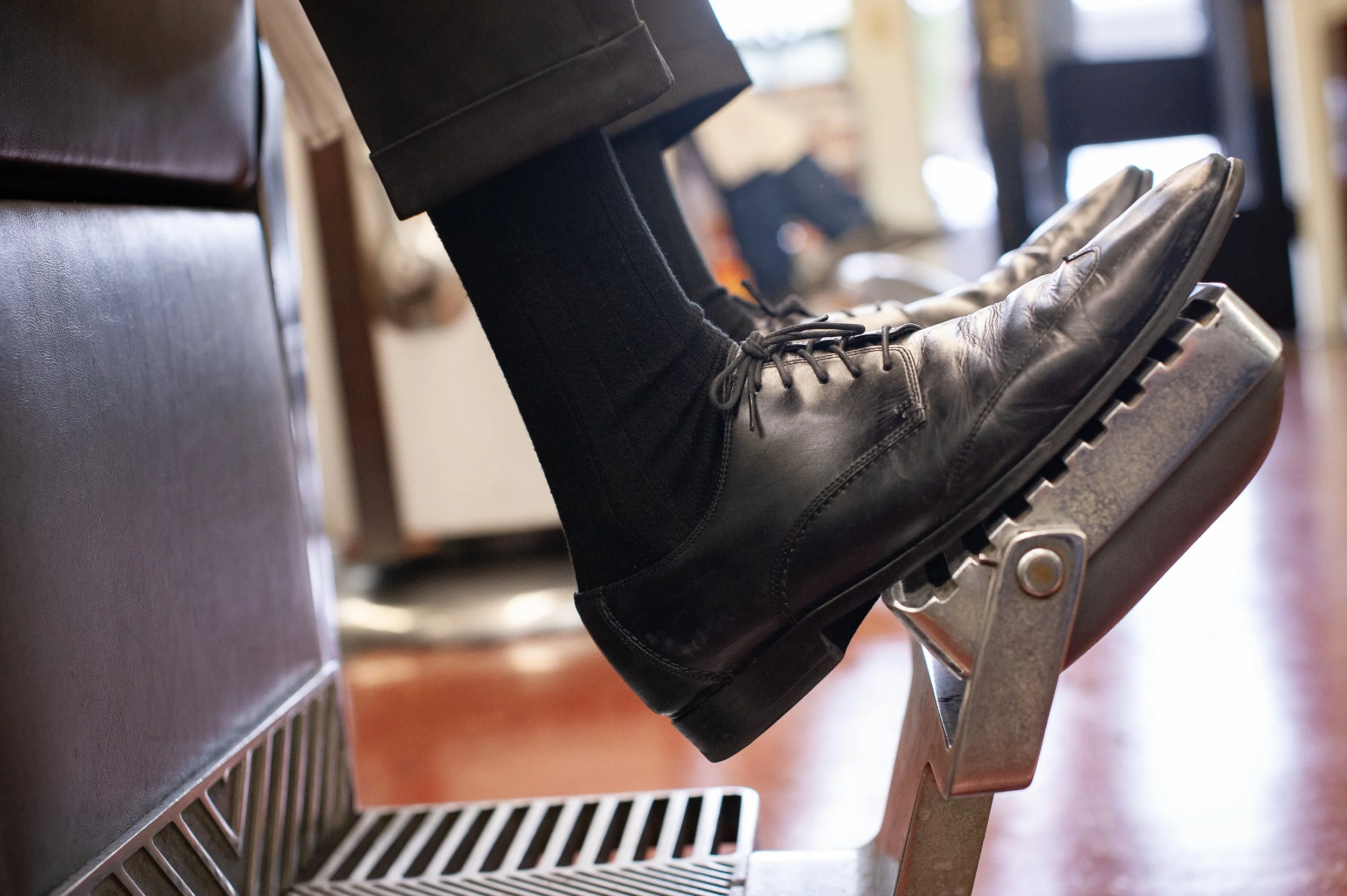
Black leather on chrome — shoe polished, footrest built to last. The kind of detail you notice when everything else in the shop is exactly where it belongs.
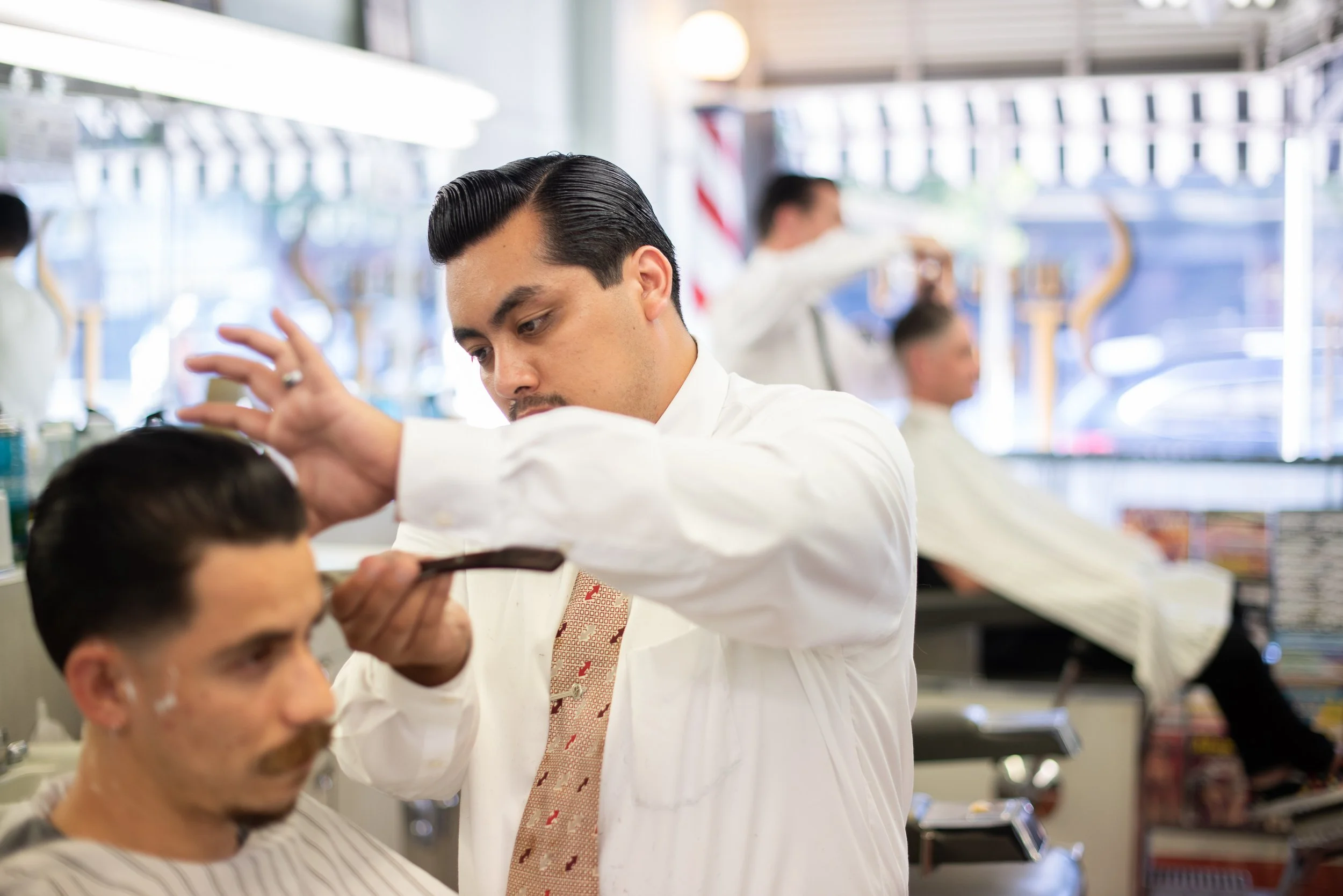
The straight razor comes out for the detail work. The barber's eyes stay on the line. In the background, through the fluorescent-lit mirrors, the shop keeps moving.
A Working Shop, Not A Set
Sweeney Todd’s could and should be used for a movie set, but what makes the place compelling isn’t just how it looks—it’s how it functions. This isn’t a space preserved for aesthetics. It’s actively used, day in and day out.
Sween and his barbers move through the space with such familiarity that it almost feels like a choreographed dance. Tools are exactly where they need to be. Clients settle into chairs that have held thousands before them. There’s a rhythm to it that only comes from repetition and trust.
It’s easy to imagine a place like this being imitated elsewhere. It would be much harder to recreate what actually gives it value: time, consistency, and a community that returns again and again.
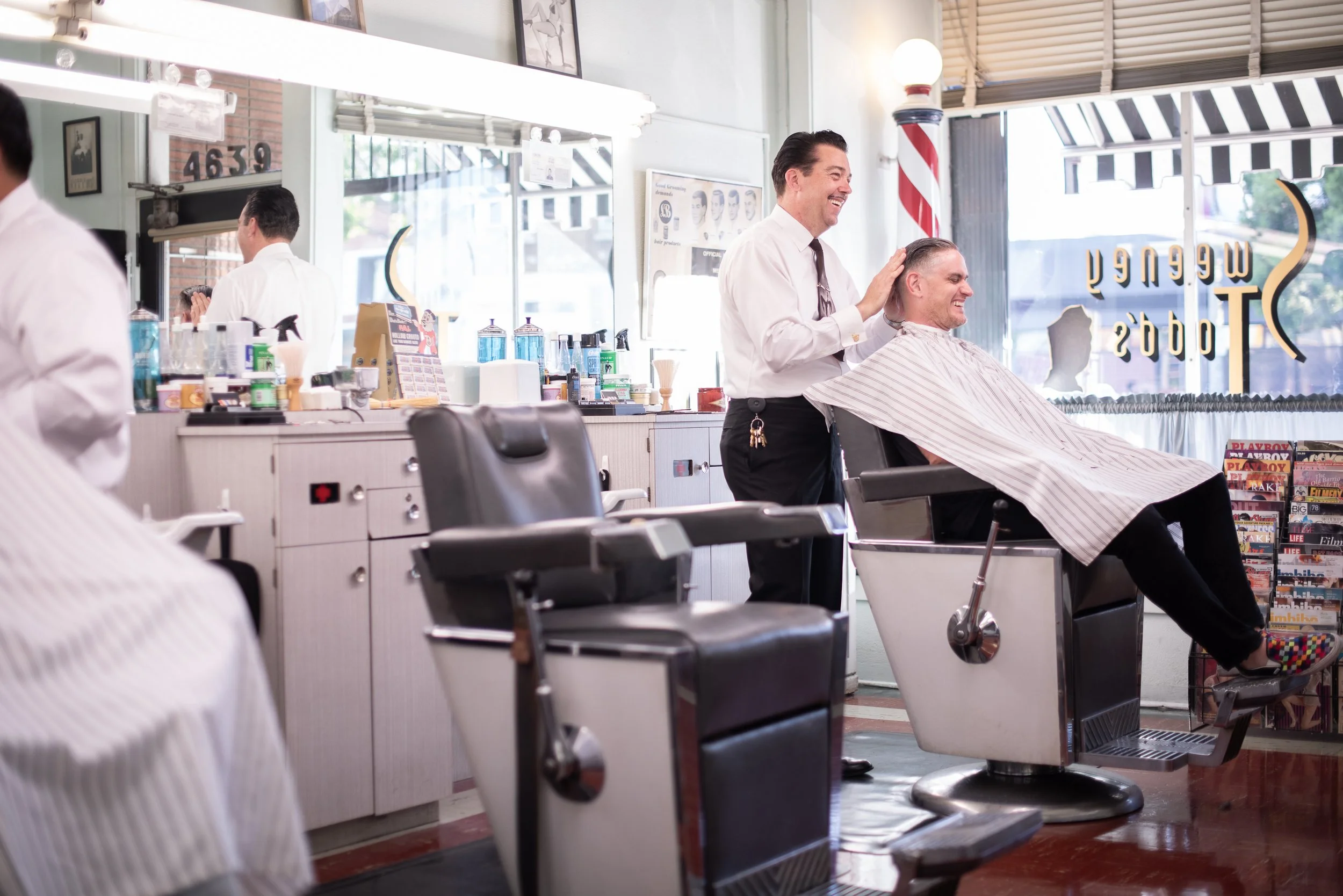
The full room in one frame, vintage chairs and a red floor, the Sweeney Todd’s sign reading backward in the front window. A barber adjusts the cape while the client sits already smiling.
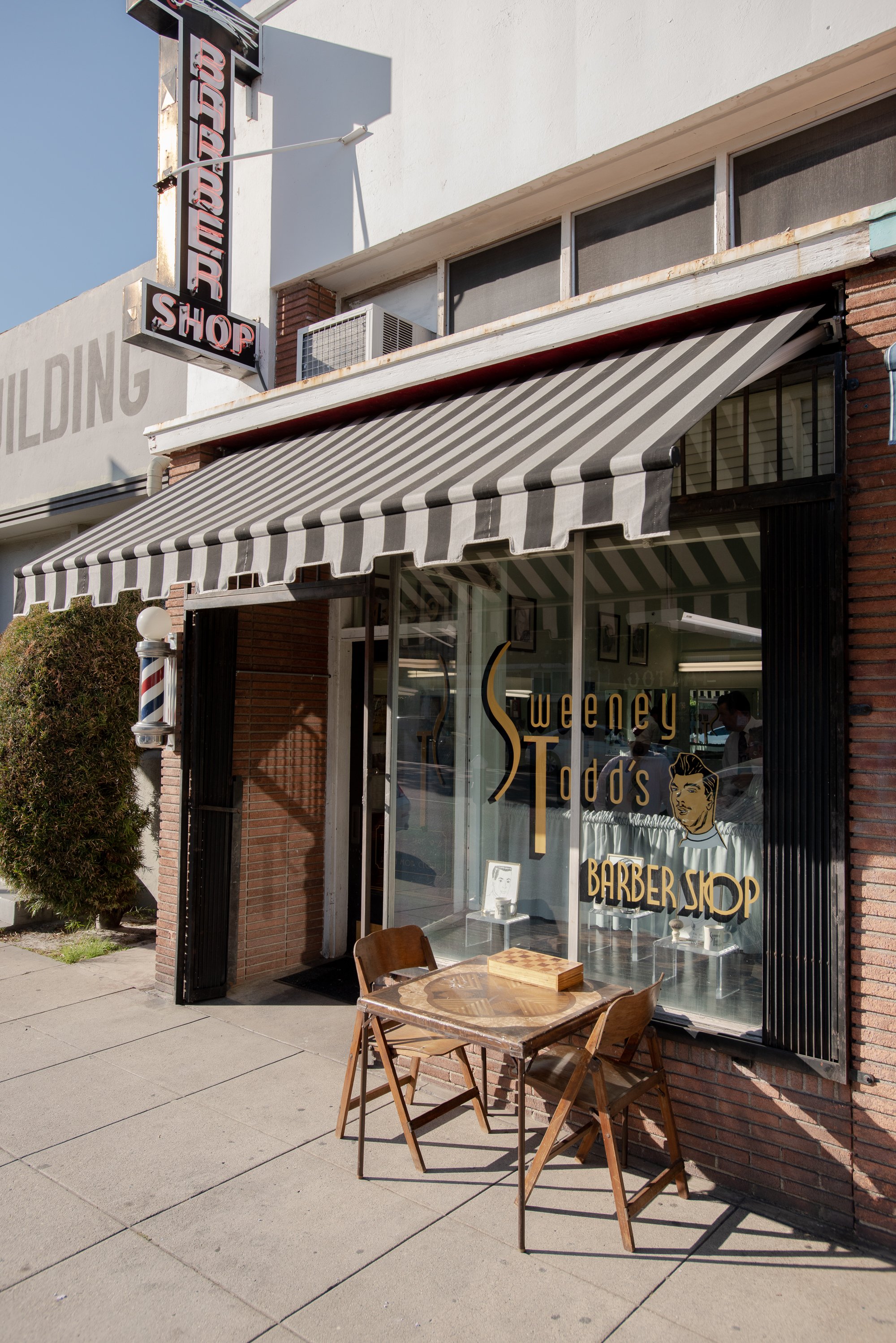
From the sidewalk it reads clearly as a barbershop, the striped awning, the barber pole, and gold script on the glass. A small table and two chairs sit out front, the door left open.
Part of a Larger Story
Sweeney Todd’s Barbershop is one piece of a much larger body of work documenting barbershops across America. Over the course of 15 years, the project has traced spaces like this in all 50 states—some still operating, others long gone.
What ties them together isn’t just the act of cutting hair. It’s the way each shop reflects its surroundings. The architecture, the objects, the clientele—they all carry subtle clues about the neighborhood, the city, and the era the shop has lived through.
In that context, Sweeney Todd’s becomes more than a single location. It becomes part of a visual record of a trade that continues to evolve while still holding onto its roots.
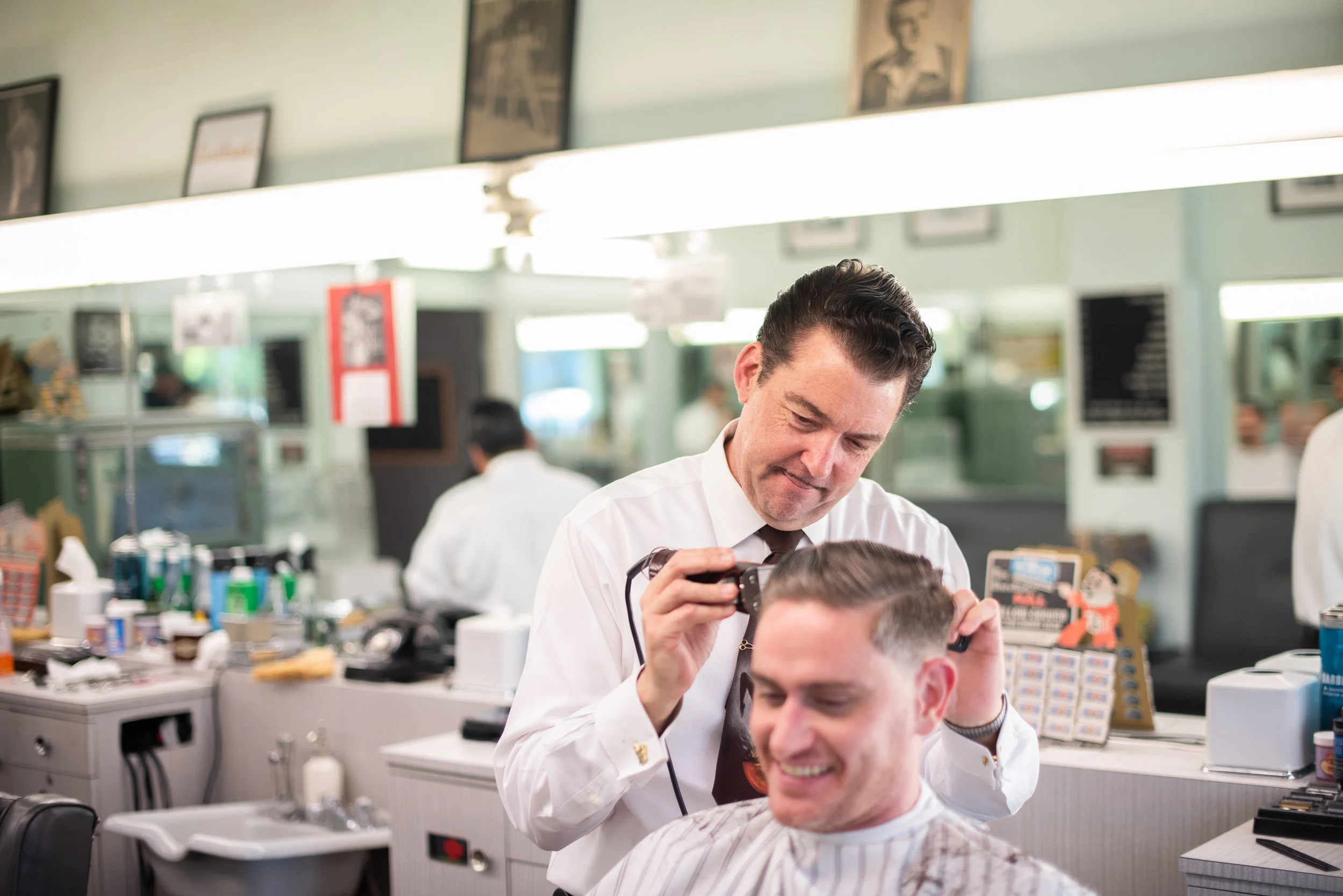
Something lands and they both laugh, the barber mid-clip and the client mid-cut. The exchange stays easy and personal. The room allows for it without calling attention to it.
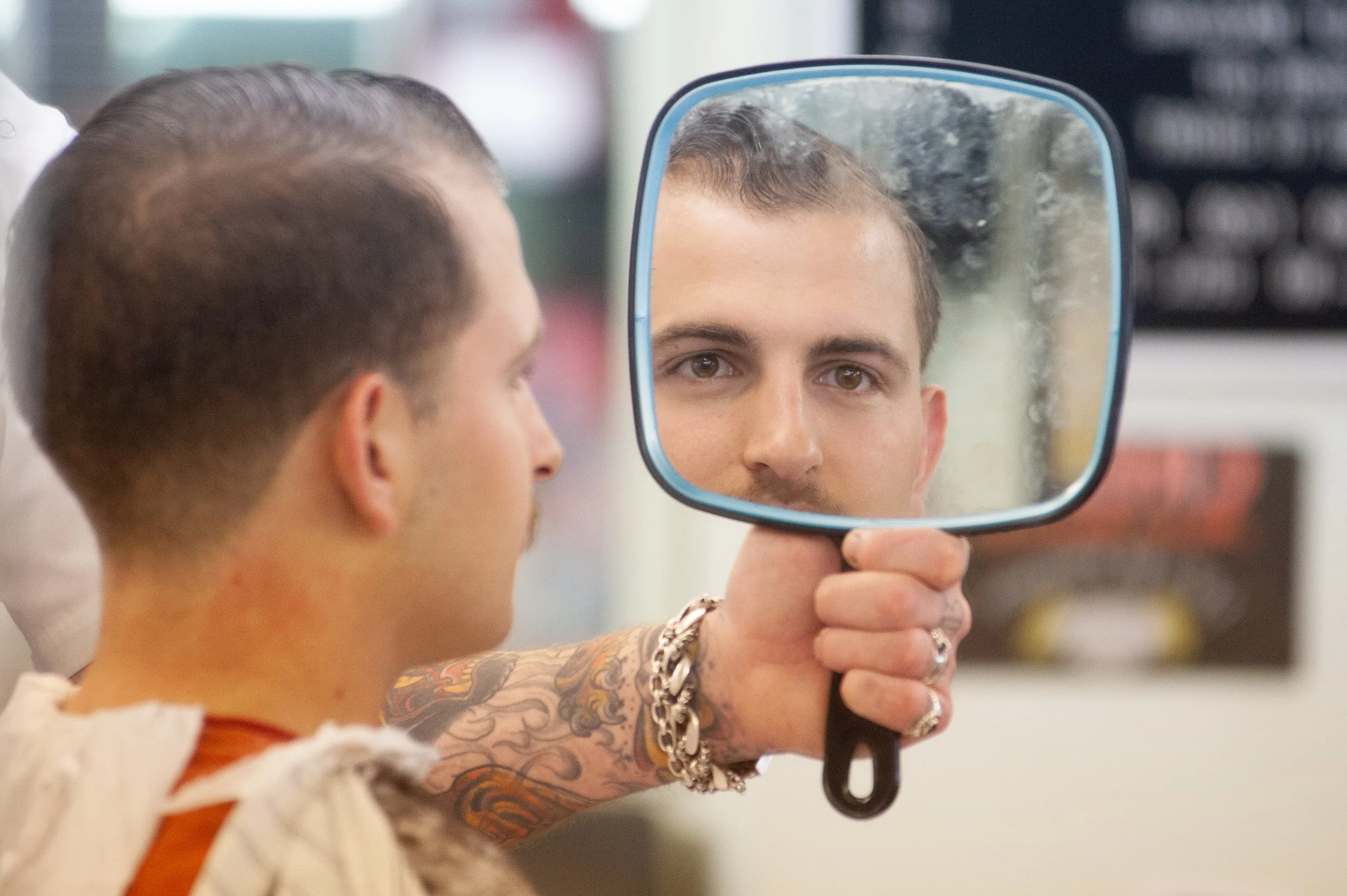
The barber holds the mirror steady with a tattooed hand, a chain bracelet and rings catching the light, as the client checks the back. A moment that’s played out here countless times.
Collect Fine Art Barbershop Prints
Select photographs from this project are available as museum-quality fine art prints. Each piece is produced to highlight the texture, light, and character that define these spaces.
If this shop resonates with you, there are others in the collection that carry a similar sense of place.
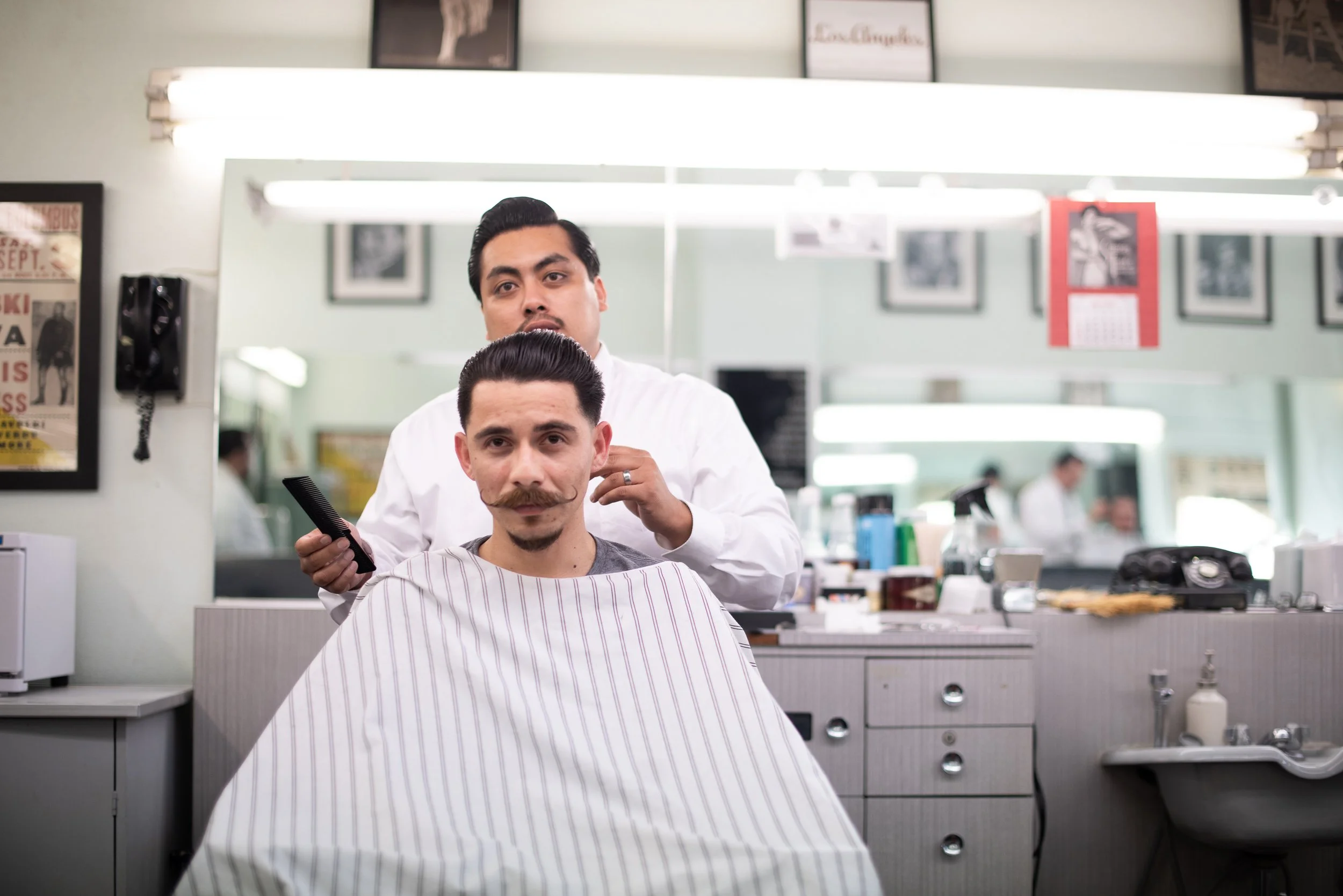
Barber and client, face to camera. One in the cape, one holding the comb. The cut is clean, the mustache is waxed, the framed photographs line the wall above the mirror.
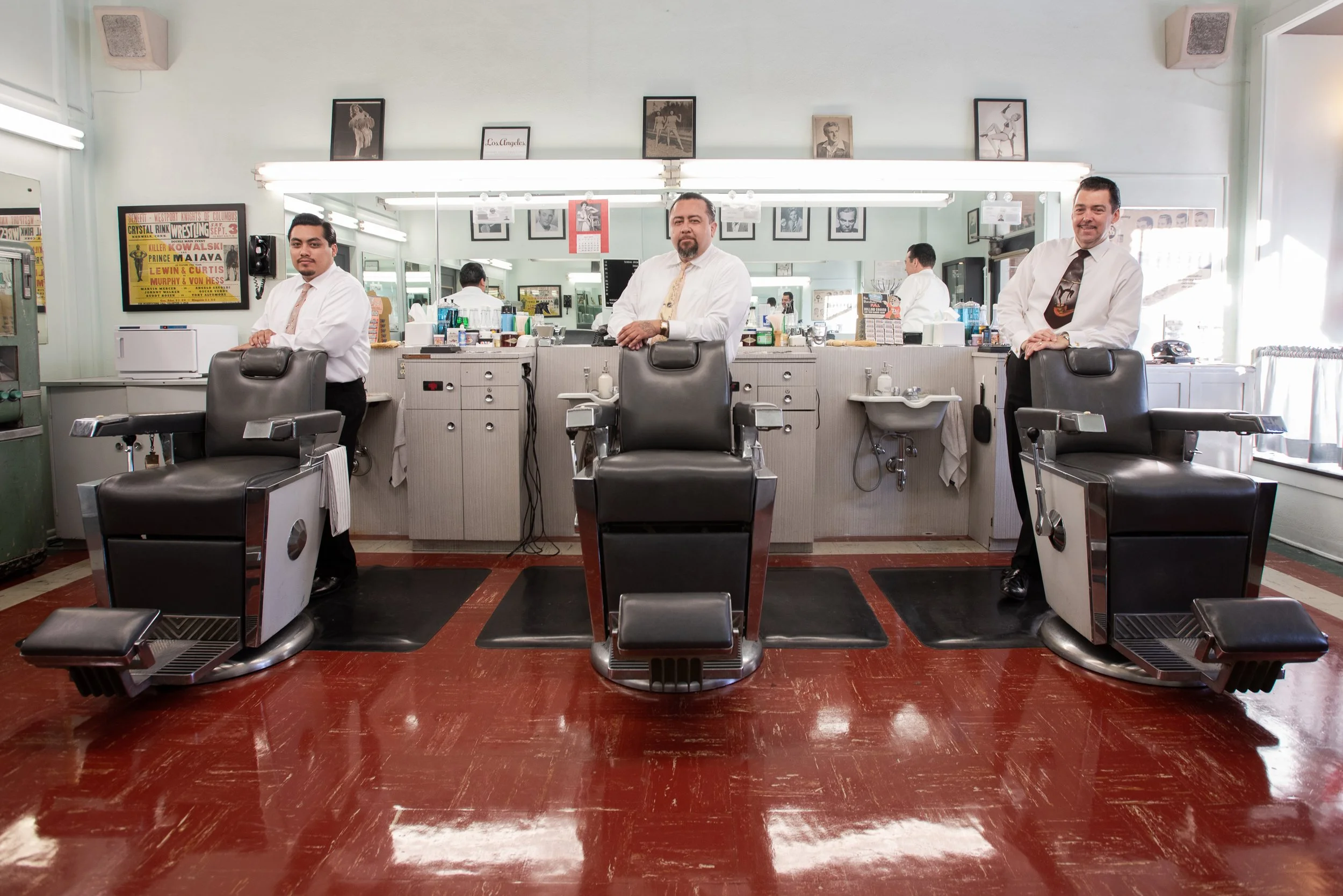
The crew stands behind their chairs in white shirts and ties, the red floor clean underfoot. The mirror carries the room back again. This is how the place sits when it’s ready.
Why Places Like This Matter
Shops like Sweeney Todd’s don’t just disappear overnight—but when they’re gone, they’re gone for good. The details that define them rarely get preserved in any formal way. They fade with time, replaced by something newer, cleaner, and often less personal.
Photographing these spaces is less about nostalgia and more about recognition. Recognizing that there’s value in places that aren’t trying to be anything other than what they are.
Sweeney Todd’s Barbershop is exactly that—a place shaped by years of work, repetition, and presence. And in a city built on constant change, that kind of consistency is worth paying attention to.
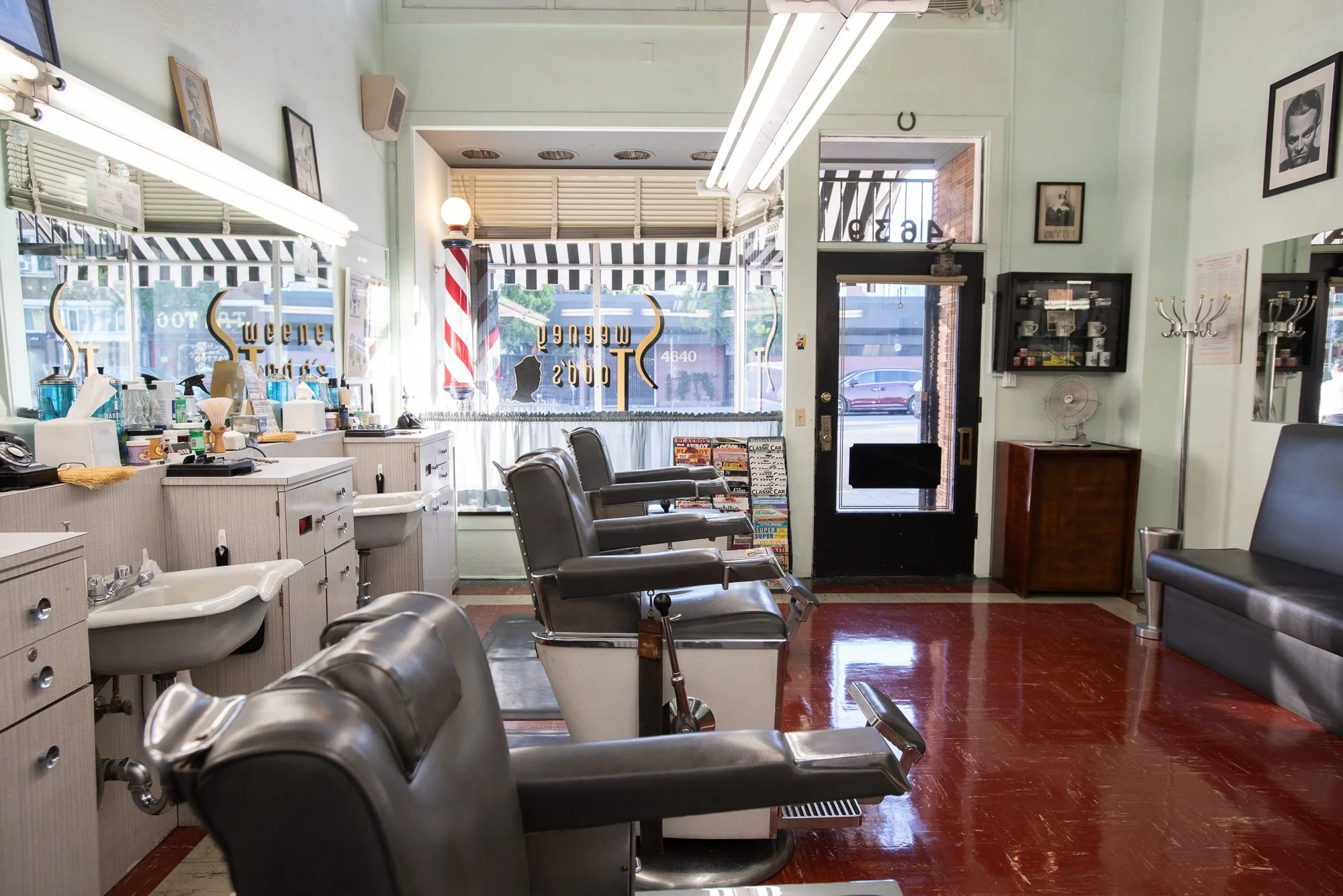
Wide view of Sweeney Todd’s Barbershop in Los Angeles before the rush comes in.
Licensing & Editorial Use
These photographs are available for licensing for editorial features, brand campaigns, and commercial projects looking for authentic barbershop environments.
If you’re working on a project that needs real spaces with real history, this archive was built for exactly that.
Explore More California Barbershops
California has no shortage of character when it comes to barbershops. From long-standing neighborhood staples to newer shops with deep roots in classic barbering, the range is wide—and worth exploring.