
Dark Fitness Photography: Creating Dramatic Images for Athletic Brands
Dark fitness photography isn't simply about making a photograph dark.
Done well, it's about using light selectively. Instead of illuminating everything in a gym, the light can isolate an athlete, define muscle and movement, bring texture out of the environment, and let everything unnecessary disappear.
It's an approach I've used for years photographing athletes and fitness campaigns, particularly when a brand needs imagery that feels strong, focused, and intense.
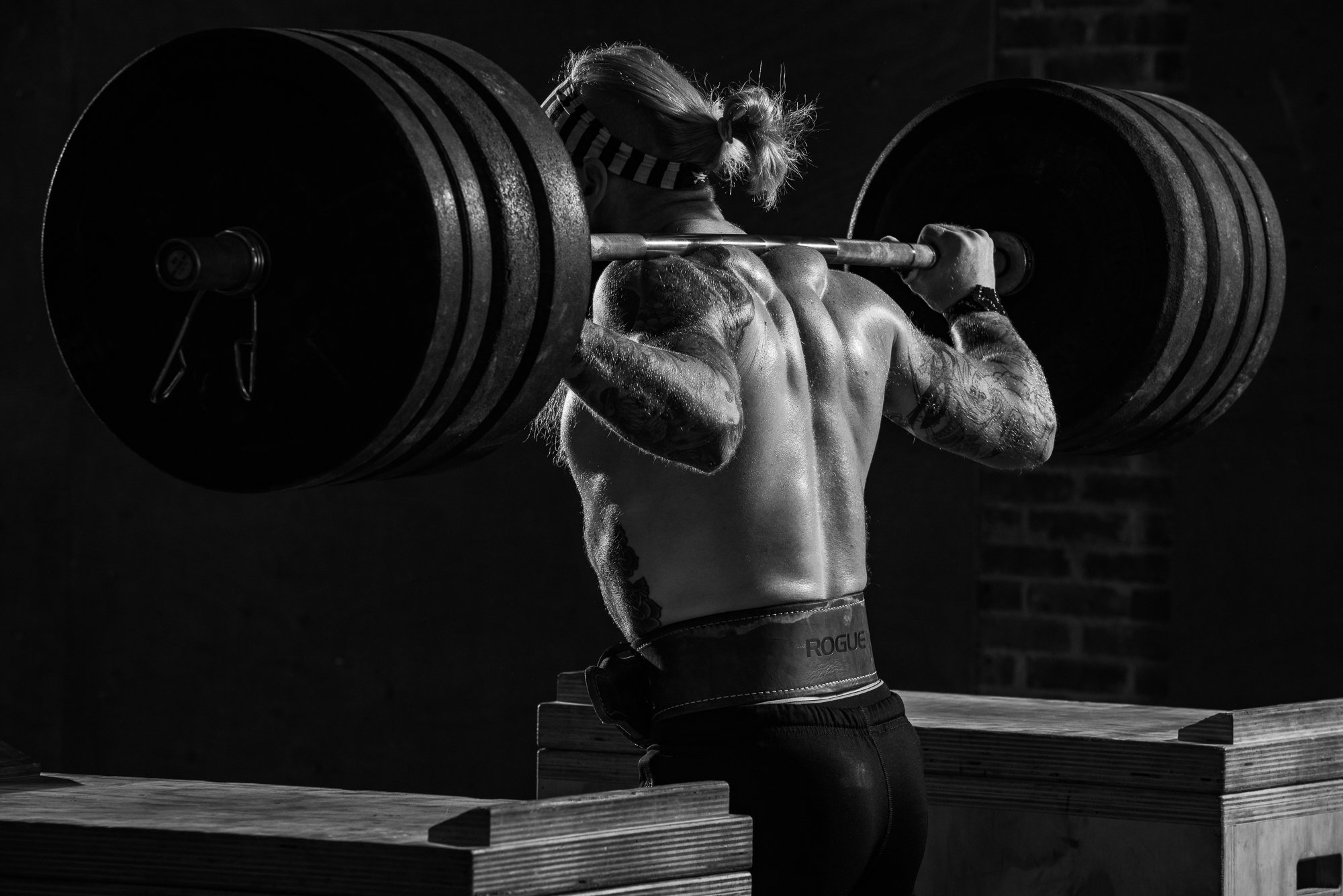
A heavily loaded barbell rests across the athlete’s shoulders as he braces between wooden plyometric boxes.
What Makes Dark Fitness Photography Work?
Gyms are visually complicated places.
There are mirrors, machines, signs, windows, equipment, fluorescent lights, people, and dozens of other elements competing for attention. Lighting everything can sometimes make the photograph more confusing.
Darkness can simplify it.
By controlling where light falls, the athlete becomes the obvious focus while the environment provides context without taking over the photograph.
The result can feel much more intentional than simply photographing whatever ambient light happens to exist inside the gym.
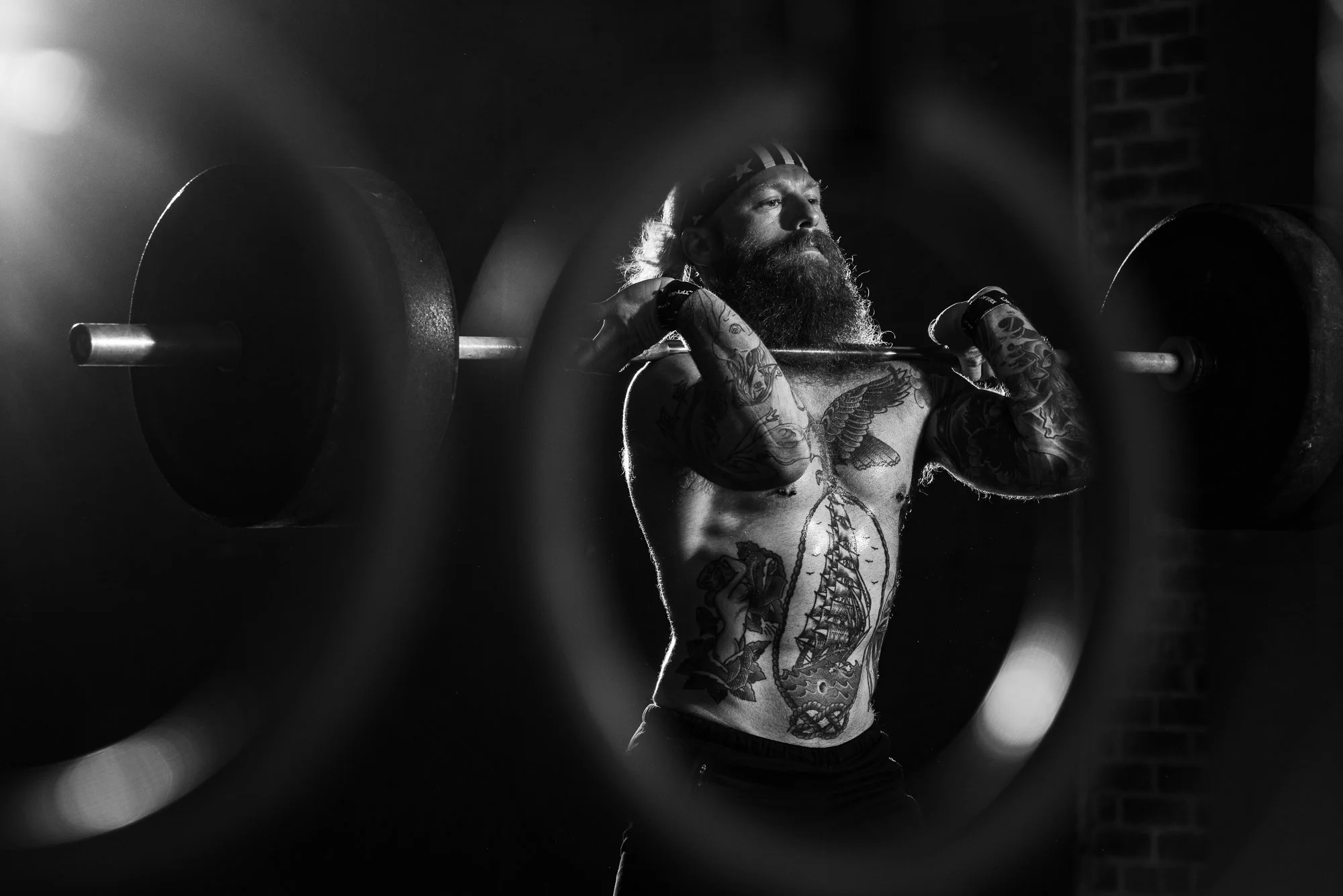
A loaded barbell rests across the athlete’s shoulders as he prepares for the next part of the lift.
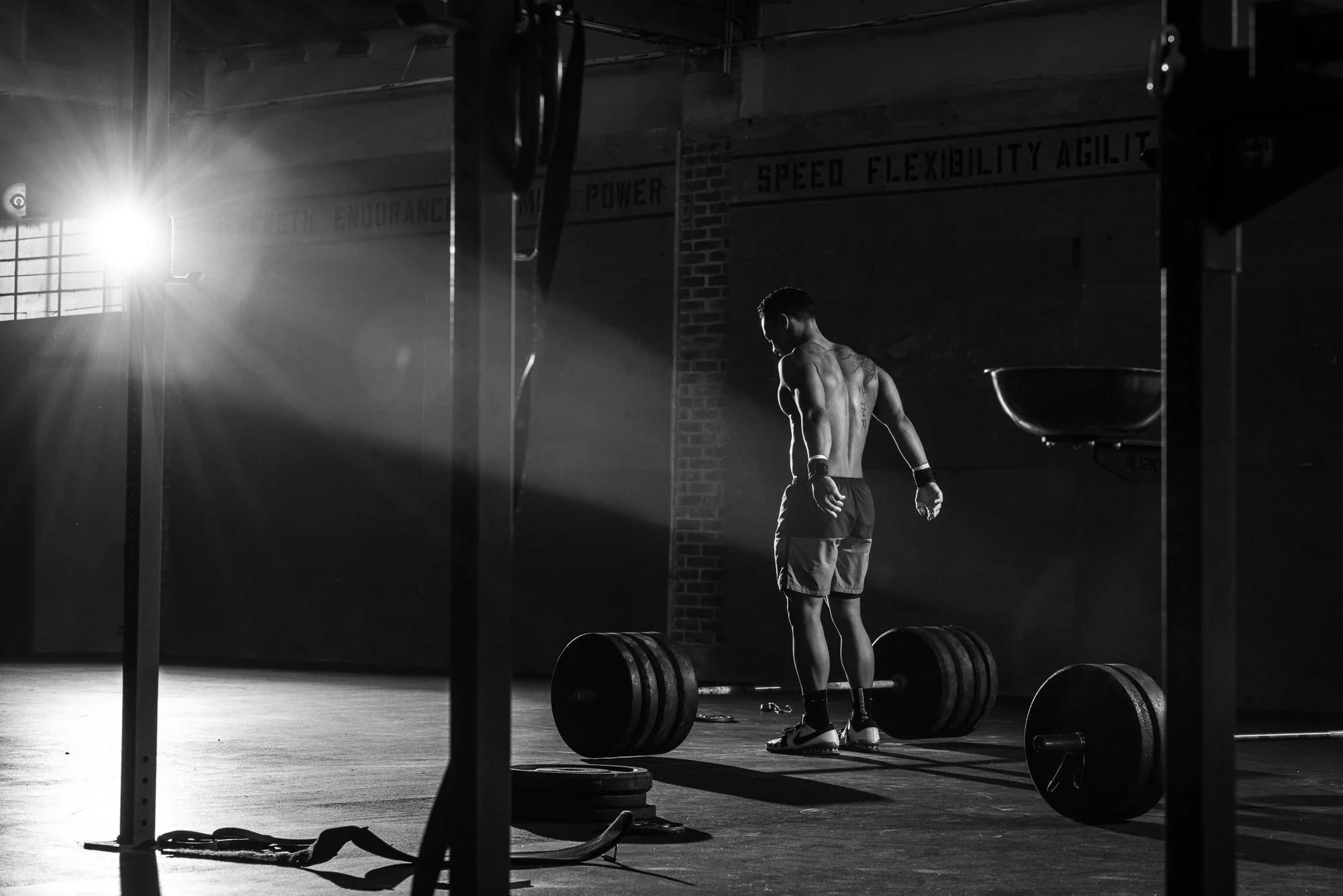
Sunlight cuts across the gym floor as the athlete stands beside a heavily loaded barbell.
Using Light to Photograph Strength and Movement
For this kind of fitness photography, I frequently use strobes to create shape rather than simply adding more light.
Where the light comes from matters.
Side and back lighting can define an athlete's body, separate them from a dark background, emphasize sweat and texture, and give movement more dimension. Areas of the frame that don't contribute to the photograph can fall naturally into shadow.
The objective isn't necessarily to make someone look more dramatic than they really are. It's to use light to communicate the intensity that's already there.
That becomes particularly effective with strength training, explosive movement, and exercises where body position and muscular definition are important parts of the photograph.
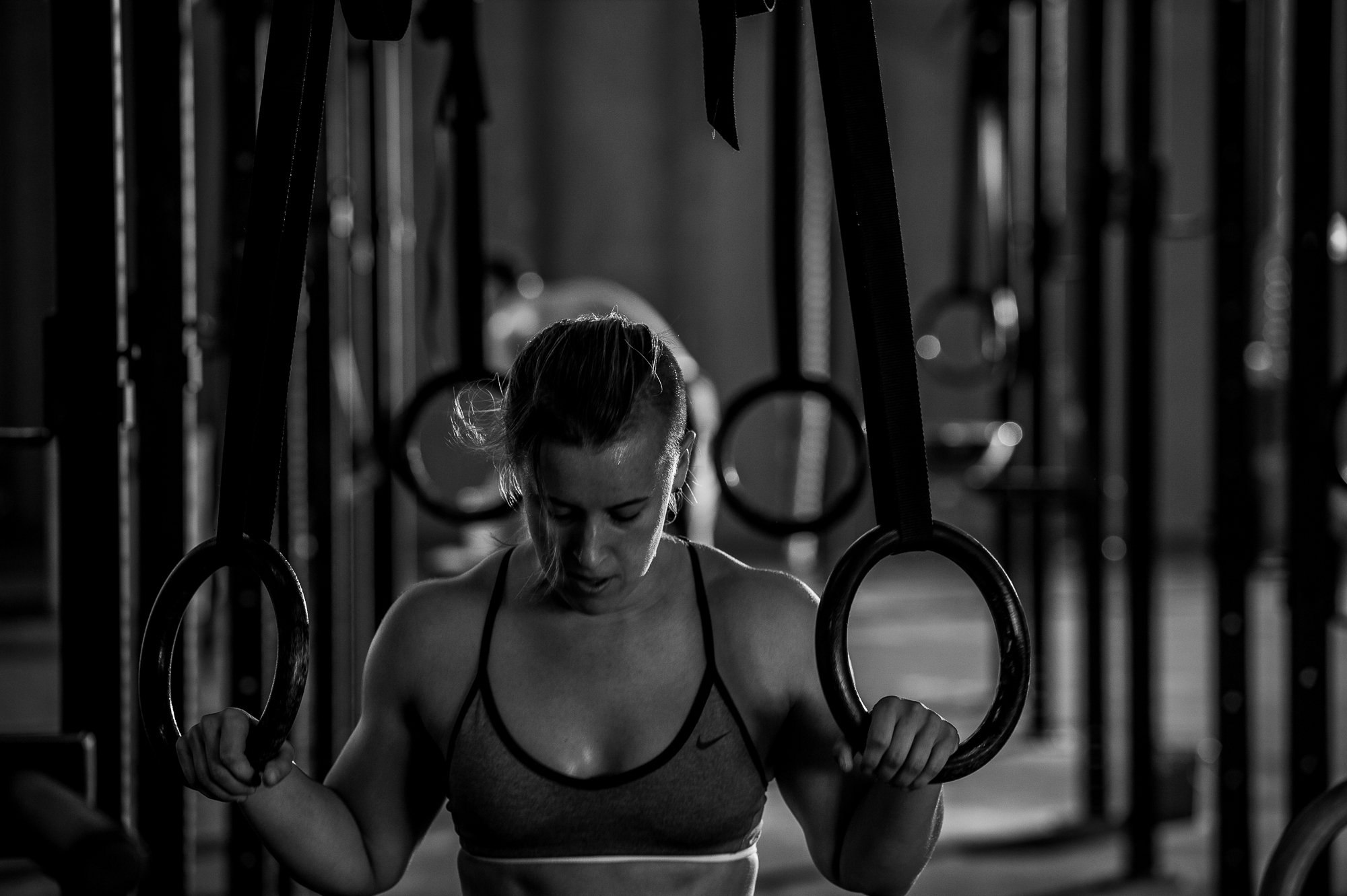
Framed by hanging rings, an athlete rests between sets inside the gym.
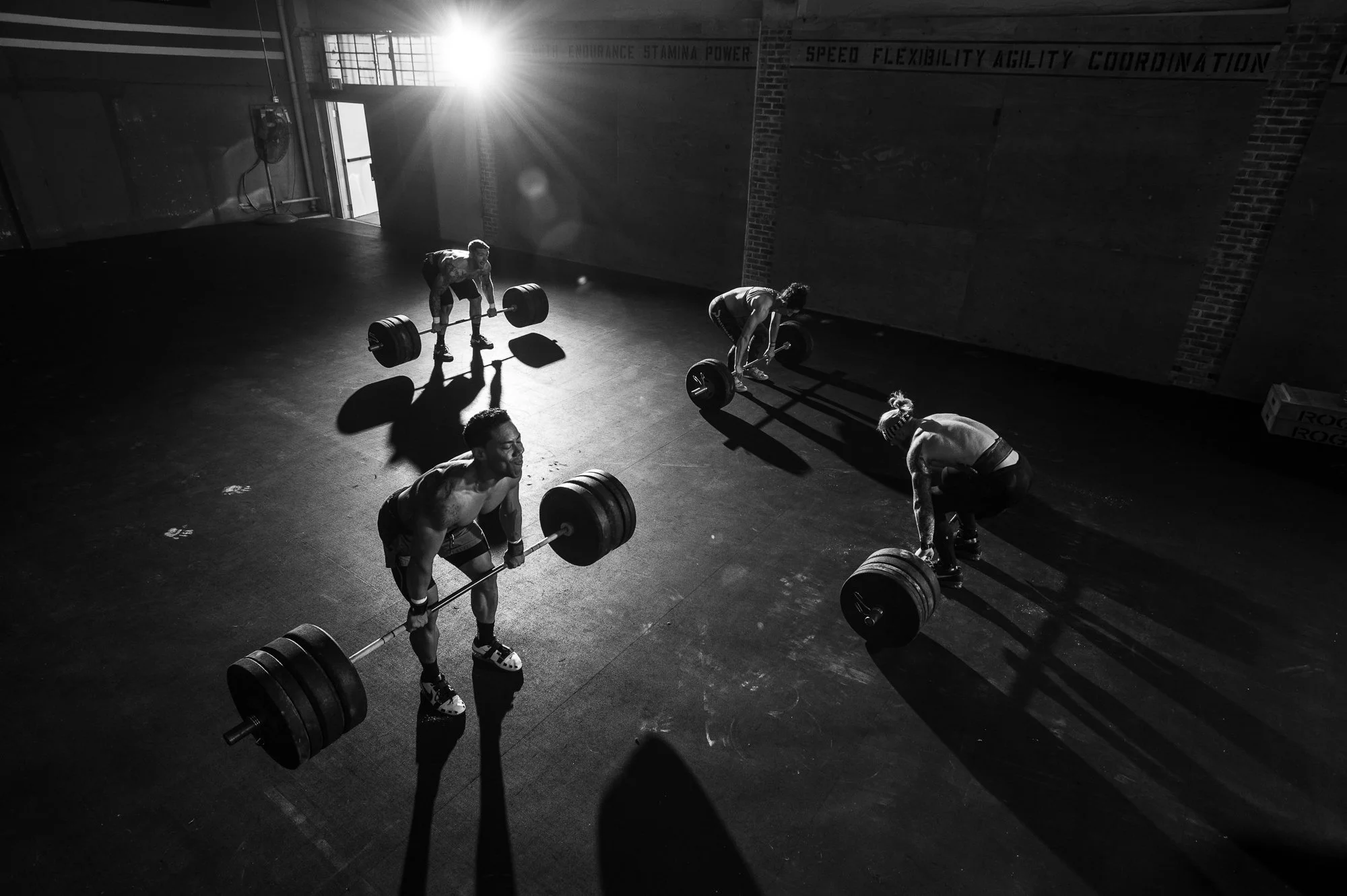
Four athletes work through heavy barbell deadlifts as sunlight stretches across the gym floor.
Why Dark Fitness Photography Works for Advertising
A fitness campaign needs more than a collection of impressive individual photographs. The images have to work together.
A darker visual approach can create consistency across different athletes, locations, exercises, and products. It can also give designers room to work with typography, logos, headlines, and other campaign elements.
That matters when photographs need to function across advertising, websites, social campaigns, retail displays, packaging, and other brand applications.
The goal is to create photographs that work as photographs while also understanding that they're part of a larger visual system.
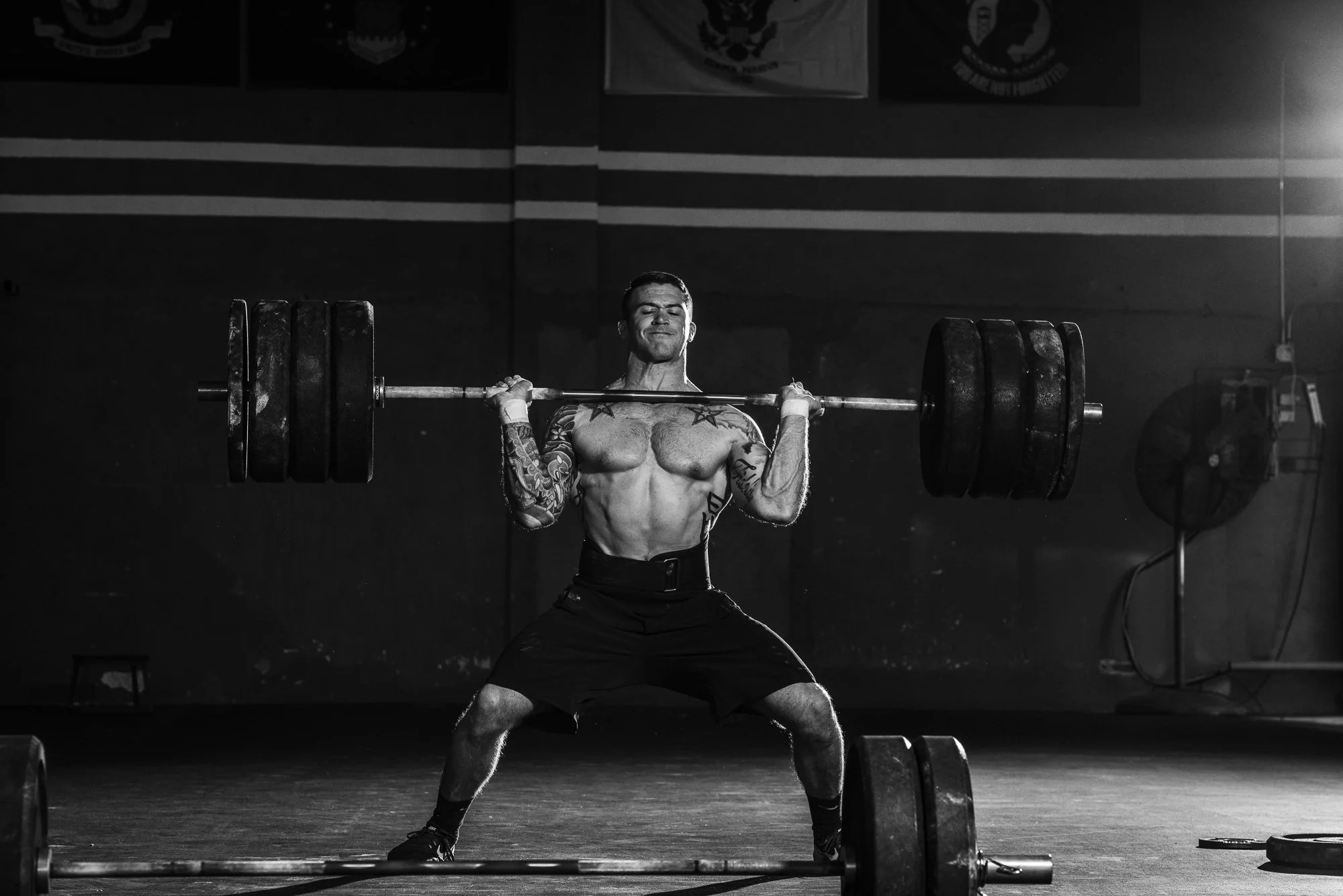
Driving upward from a wide stance, the athlete holds a heavily loaded barbell across his shoulders.
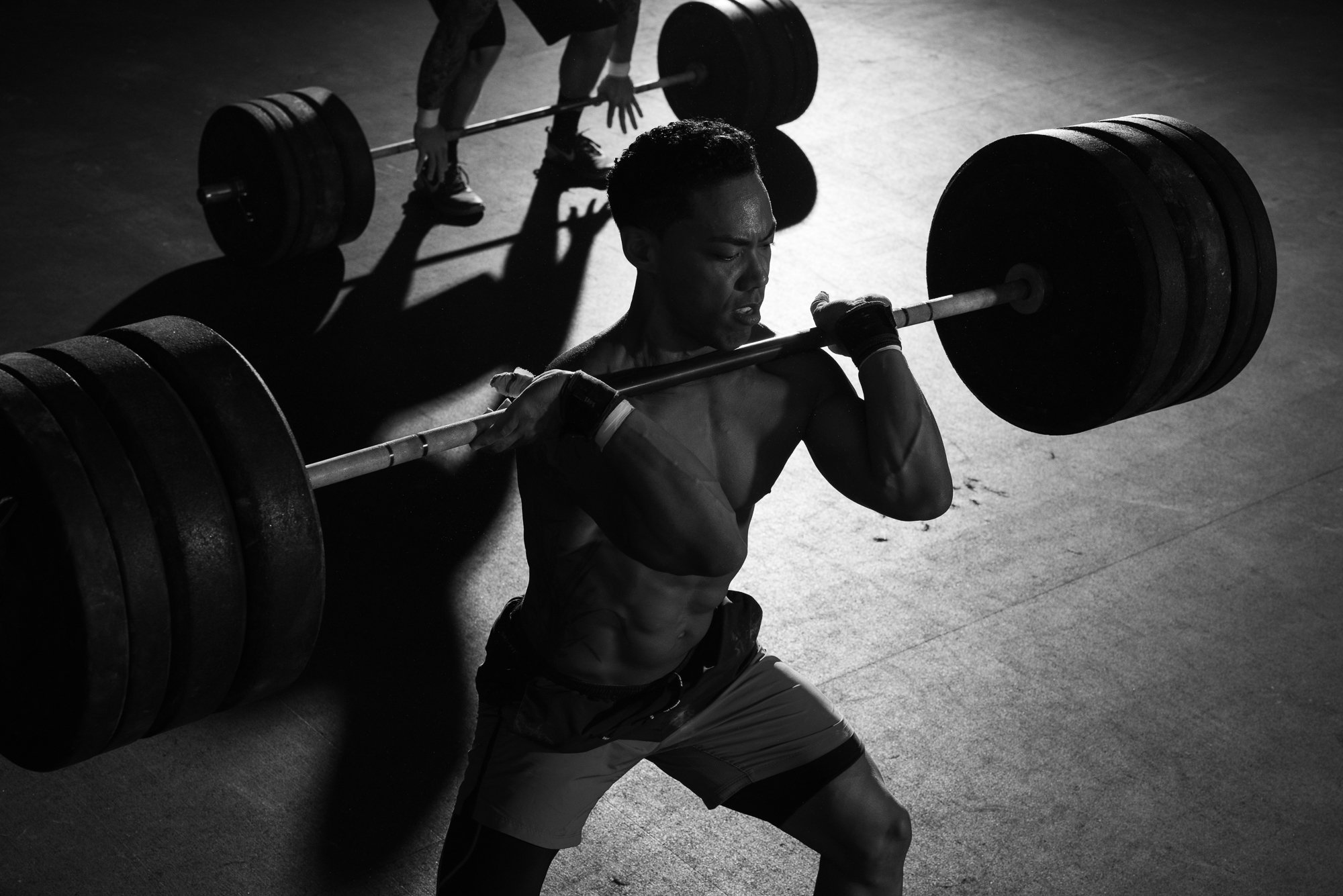
Working from a deep squat, the athlete drives upward with a heavily loaded barbell as another athlete prepares behind him.
Real Athletes Still Matter
Lighting can change the mood of a photograph. It can't manufacture believable athletic movement.
That's why I prefer photographing real athletes whenever possible.
Someone who has performed a movement thousands of times carries themselves differently than someone performing it for a photograph. Their grip, stance, posture, timing, and reaction to effort are instinctive.
It also allows the photography to move faster.
Instead of spending a production teaching movements or endlessly recreating them, we can concentrate on light, composition, products, wardrobe, angles, and the moments happening around the workout.
The finished photographs can be highly produced without feeling artificial.
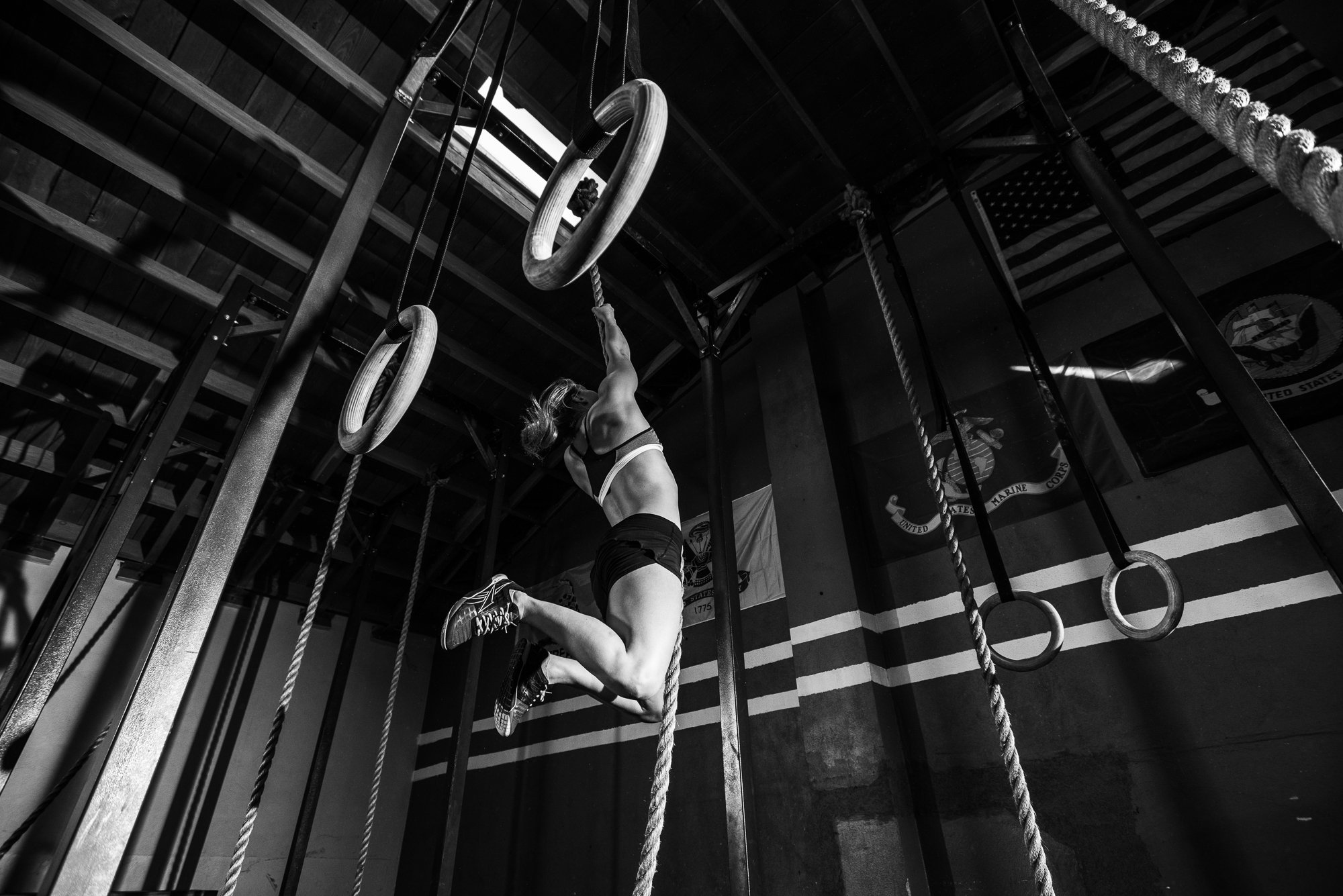
Reaching for the rope above, the athlete climbs through the rig surrounded by gymnastic rings and climbing ropes.
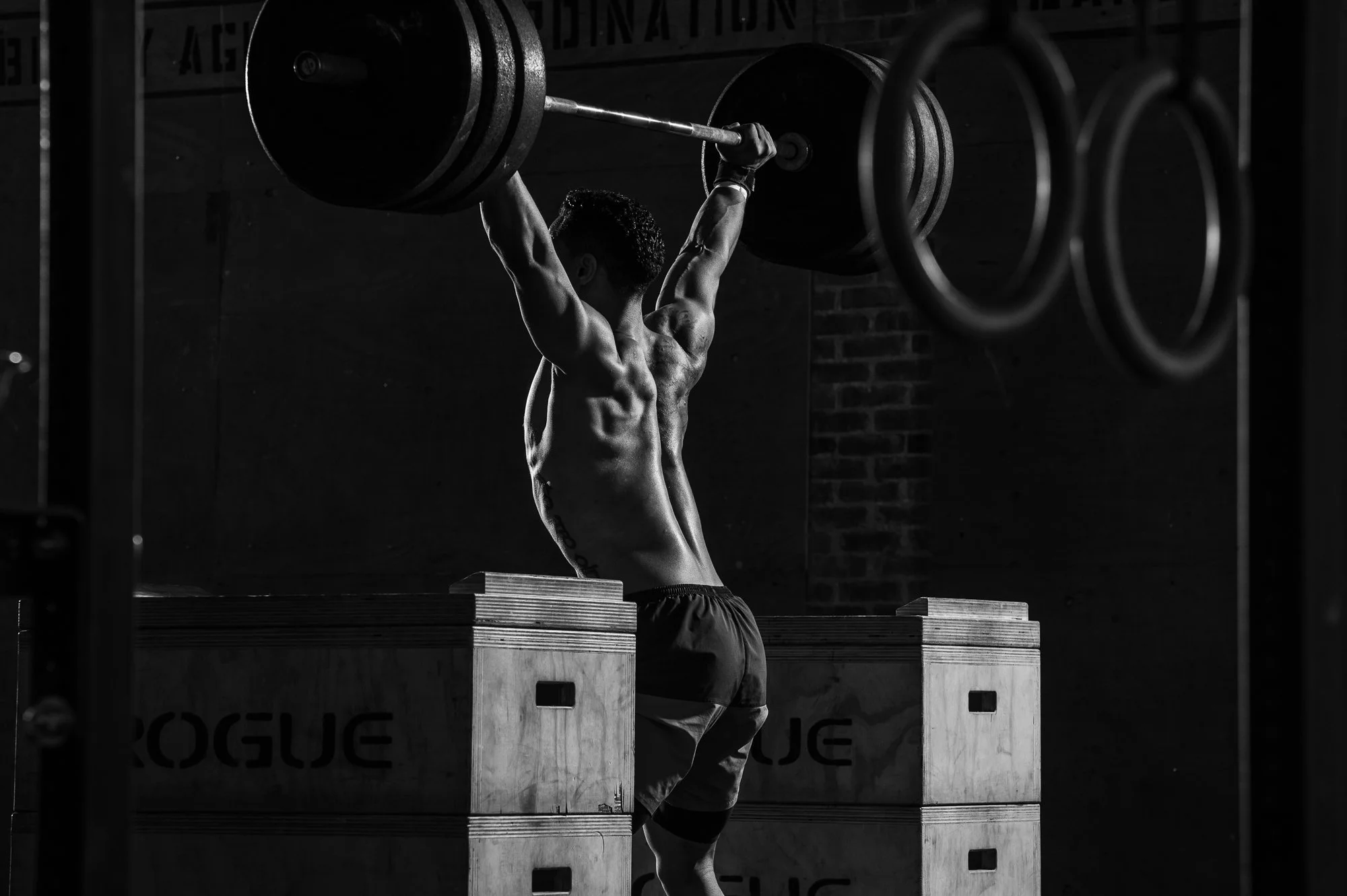
Holding a loaded barbell overhead, the athlete works between wooden plyometric boxes as gymnastic rings hang in the foreground.
Dark and Gritty Doesn't Have to Mean Cliché
Fitness advertising has developed a familiar vocabulary: sweat, chalk, dramatic expressions, heavy weights, dark rooms.
Those elements can work, but repeating them isn't enough.
The environment, athlete, product, and brand should determine what the photographs look like.
Sometimes that means hard directional light and deep shadows. Sometimes it's a quieter portrait between sets. Sometimes the strongest photograph isn't the lift itself, but the anticipation beforehand or exhaustion immediately afterward.
The visual treatment should support the story rather than become the story.
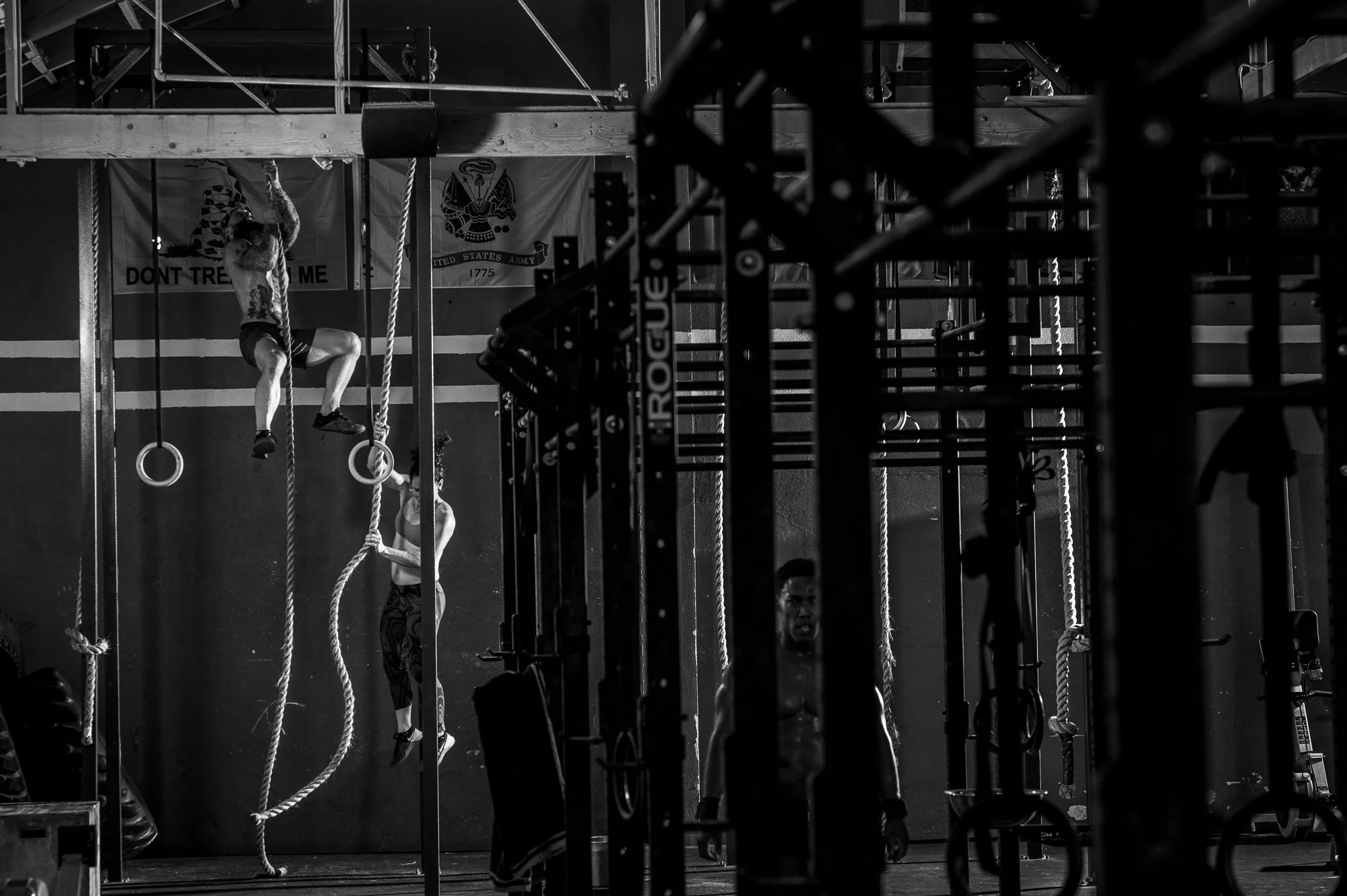
Ropes, rings and a Rogue rig fill the gym as athletes move through their workout.
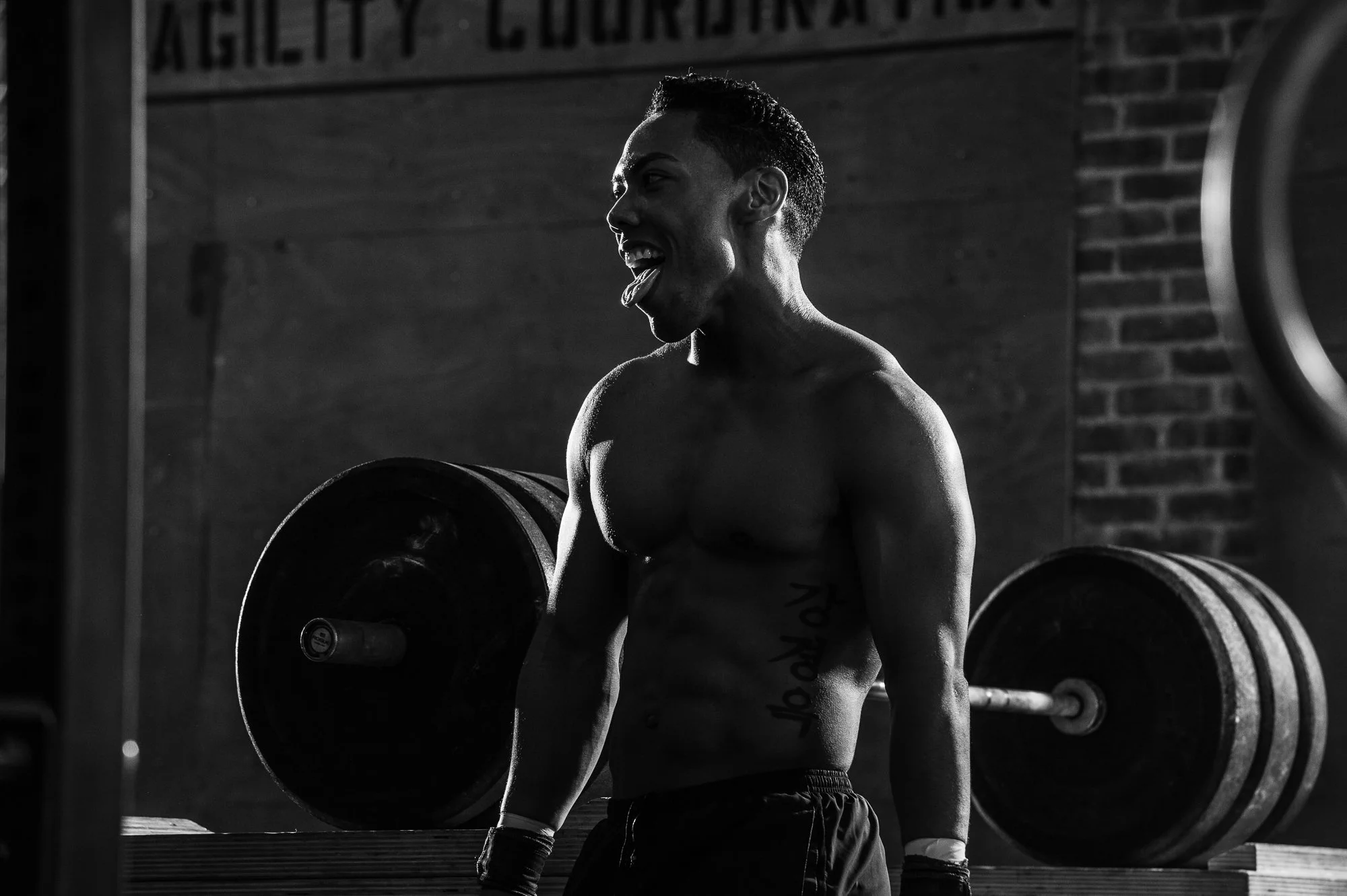
Athlete stands beside a loaded barbell between efforts, still wearing wrist wraps.
Building a Fitness Campaign Around a Visual Direction
One advantage of establishing a dark visual direction before a shoot is that it gives the entire production a common language.
Hero photographs can live alongside portraits, movement, details, product imagery, and quieter documentary moments without feeling like they came from five different shoots.
That gives brands and agencies a deeper library of photographs to work with across a campaign.
And when a project calls for something completely different, I also photograph fitness with a brighter, more natural and colorful approach.
The style should always serve the project.
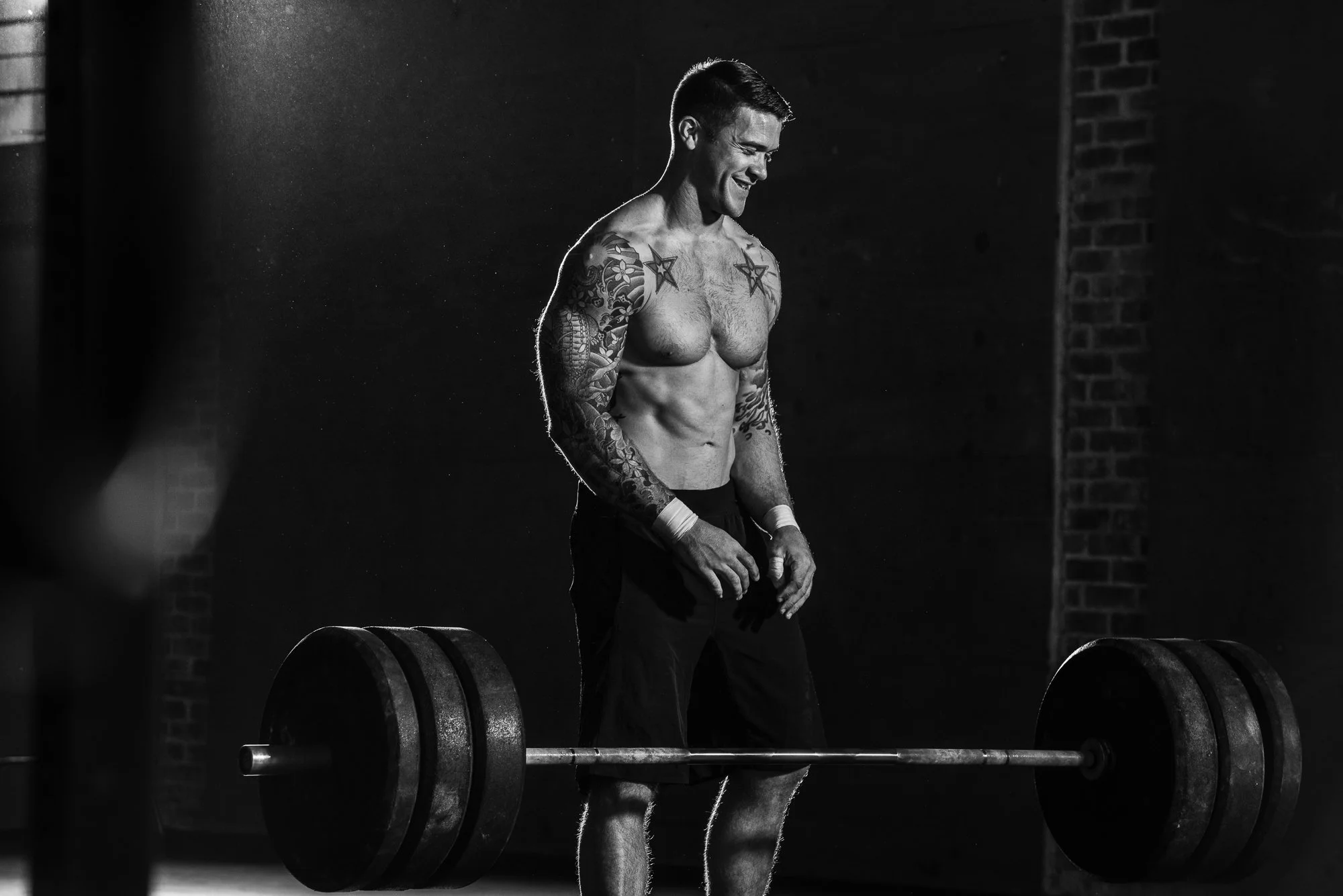
The athlete resets beside a heavily loaded barbell, his tattoos catching the light.
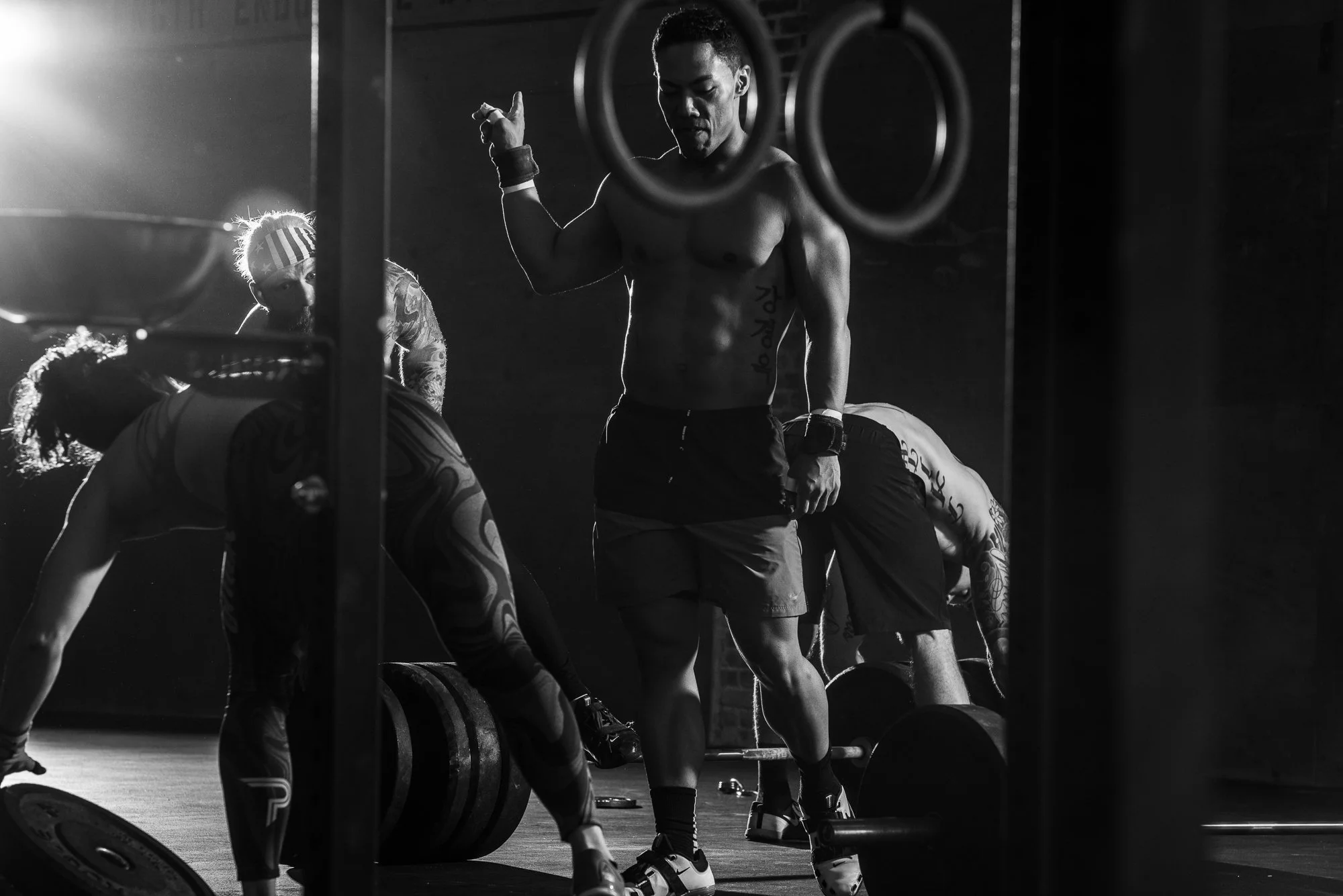
Athletes work around loaded barbells as gymnastic rings and the rig fill the foreground and background.
Dark Fitness and Athletic Photography
I photograph fitness and athletic campaigns for brands, advertising agencies, athletes, and companies throughout Colorado and across the country.
My fitness work ranges from dark, controlled, high-contrast photography to bright, colorful active lifestyle imagery depending on the visual direction of the campaign.
The common thread is making photographs that feel believable.
View my Dark + Gritty Fitness portfolio to see more of this work, or get in touch to discuss a photo shoot or image licensing.
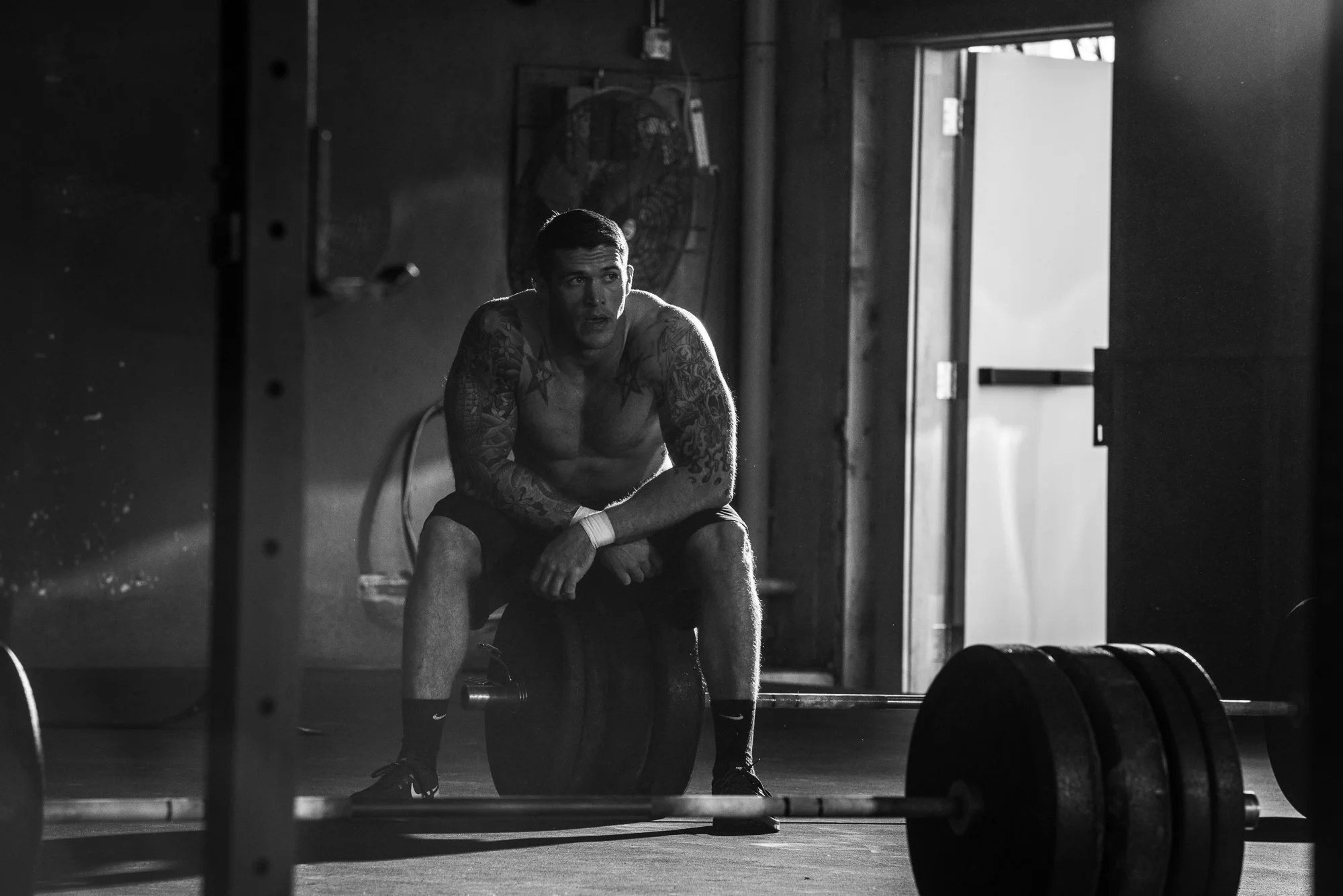
Between efforts, an athlete sits exhausted on a loaded barbell.
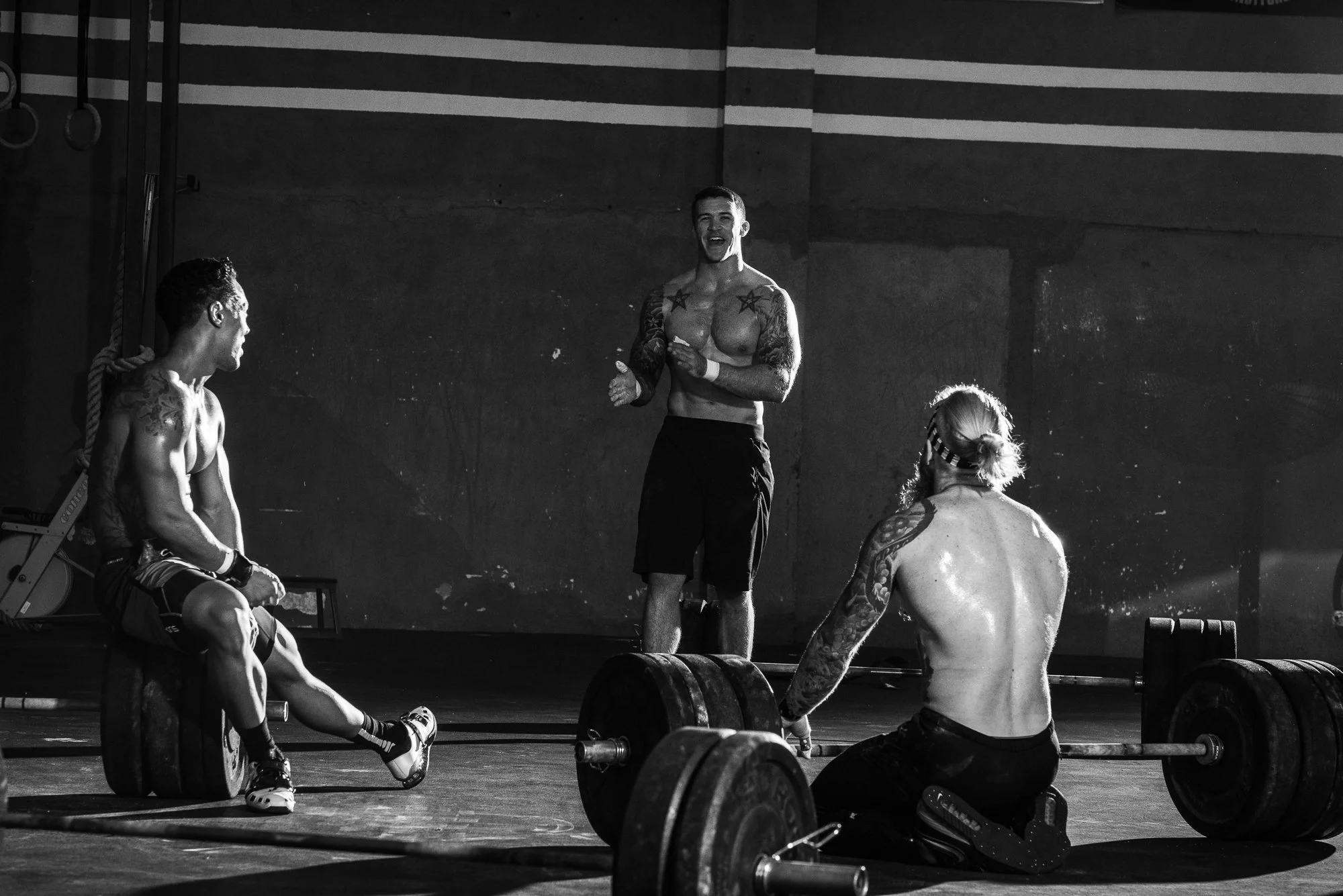
Athletes having fun together after a workout in a warehouse gym.