
The Forgotten Architecture of the American West
Historic barns, ranch buildings, corrals and the working structures of the West
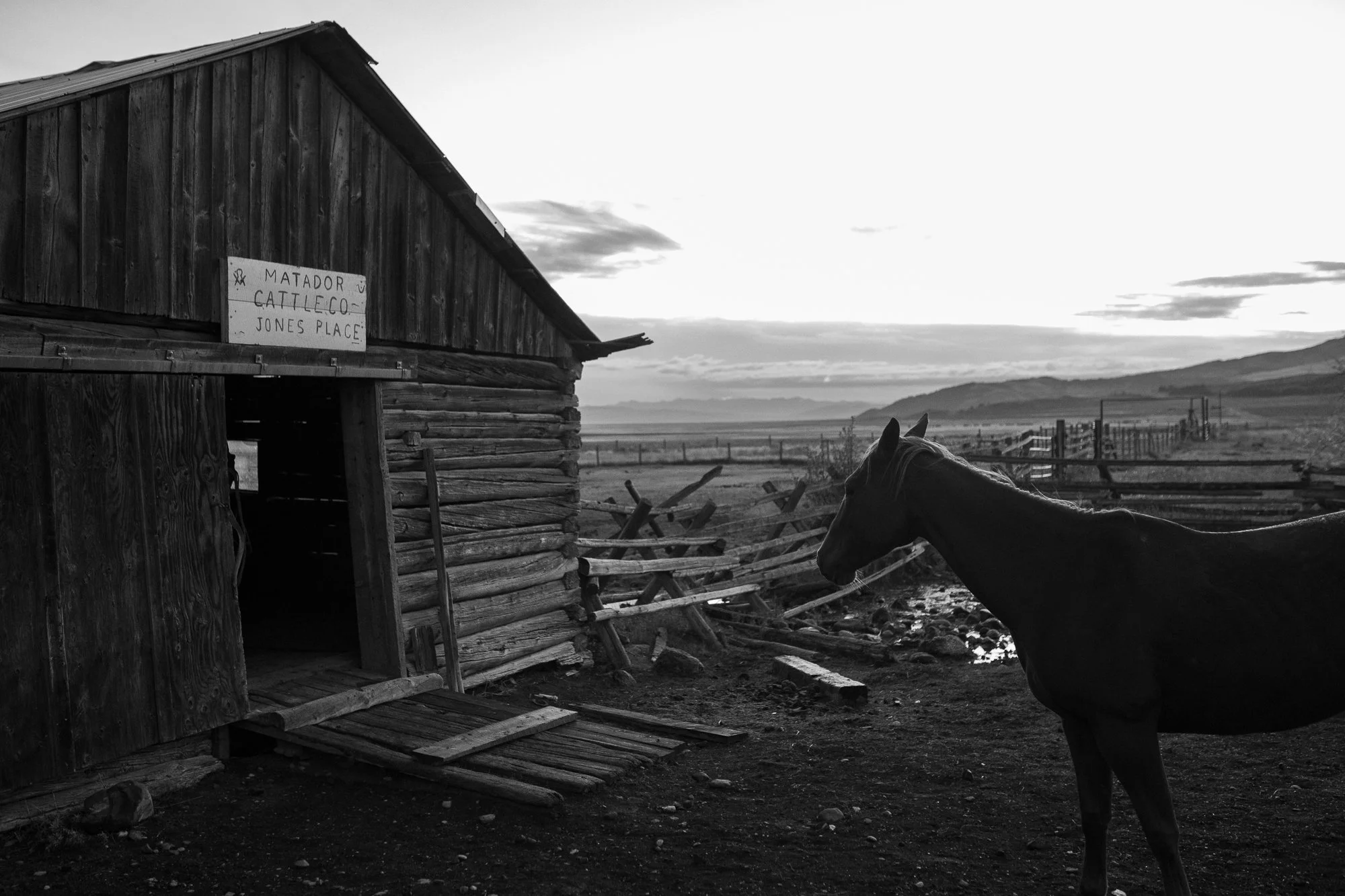
A horse stands beside the weathered log barn, where a hand-painted ranch sign marks the building against the open range.
Most of the buildings on working ranches were never meant to be admired.
They were built because something needed to happen inside them. Horses needed shelter. Cattle needed to be worked. Hay needed to stay dry. Saddles, tools and equipment needed somewhere to go.
Over time, these buildings were added onto, patched, reinforced and repaired. A broken board was replaced with whatever was around. Wire held together what nails no longer could. New doors went into old openings. Generations of ranchers changed the buildings to suit whatever the ranch needed at the time.
After years of photographing working ranches throughout the American West, I've become increasingly interested in these structures.
Not simply because they're old, but because of what they reveal about the places and people around them.
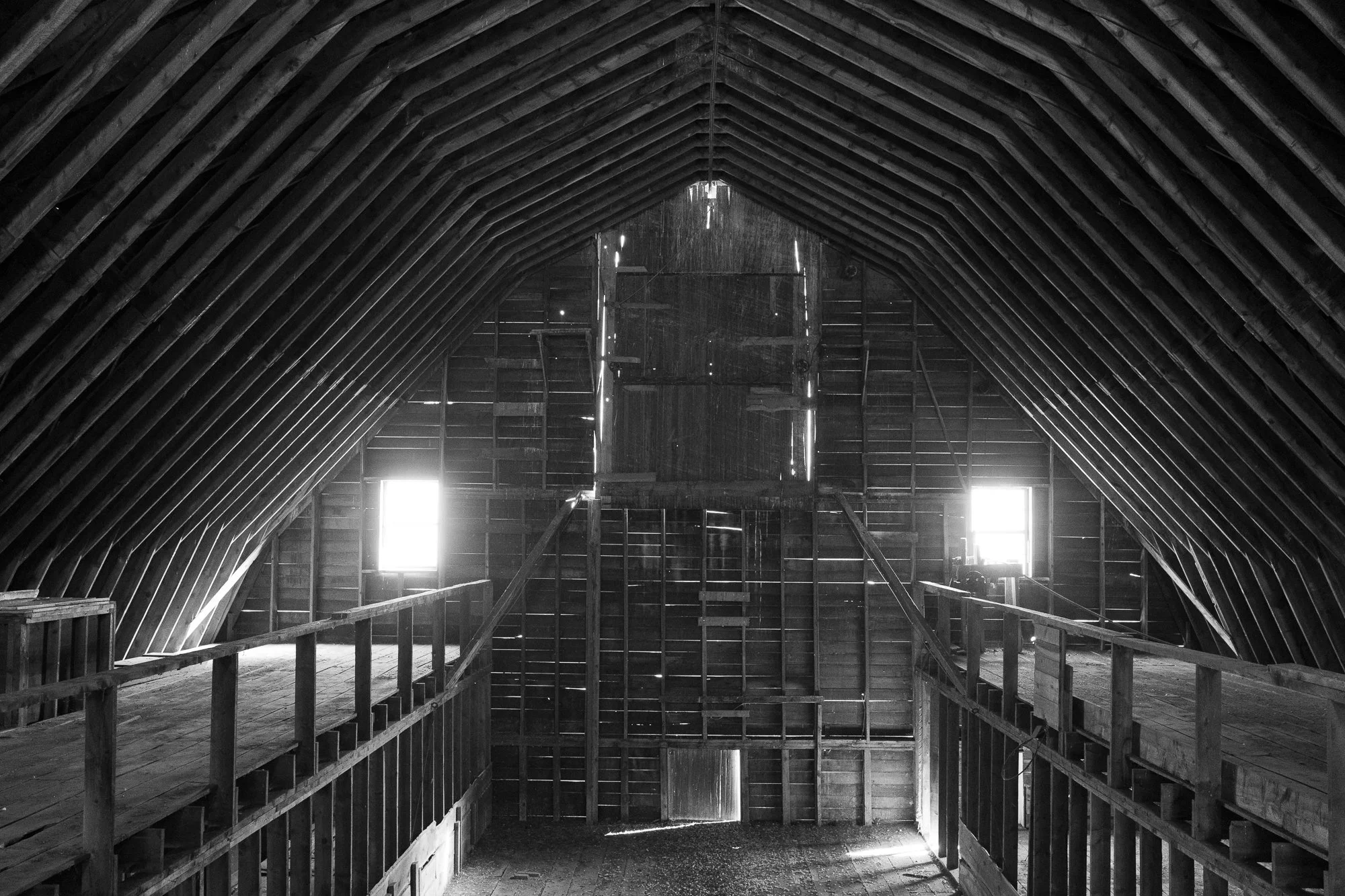
Exposed rafters and narrow loft walkways reveal the barn's timber framing, with daylight slipping through gaps in the siding.
Built to Work
Buildings that look romantic to the rest of the world, only exist because they were built to work.
That distinction is part of what makes old ranch buildings so interesting. There usually isn't much decoration. Form follows whatever job needed to get done.
Inside an old barn, the structure is often completely exposed. Rafters, joists, rough-cut lumber, lofts, stalls and pulleys are all visible. You can see how the building stands and, sometimes, how it has managed to keep standing.
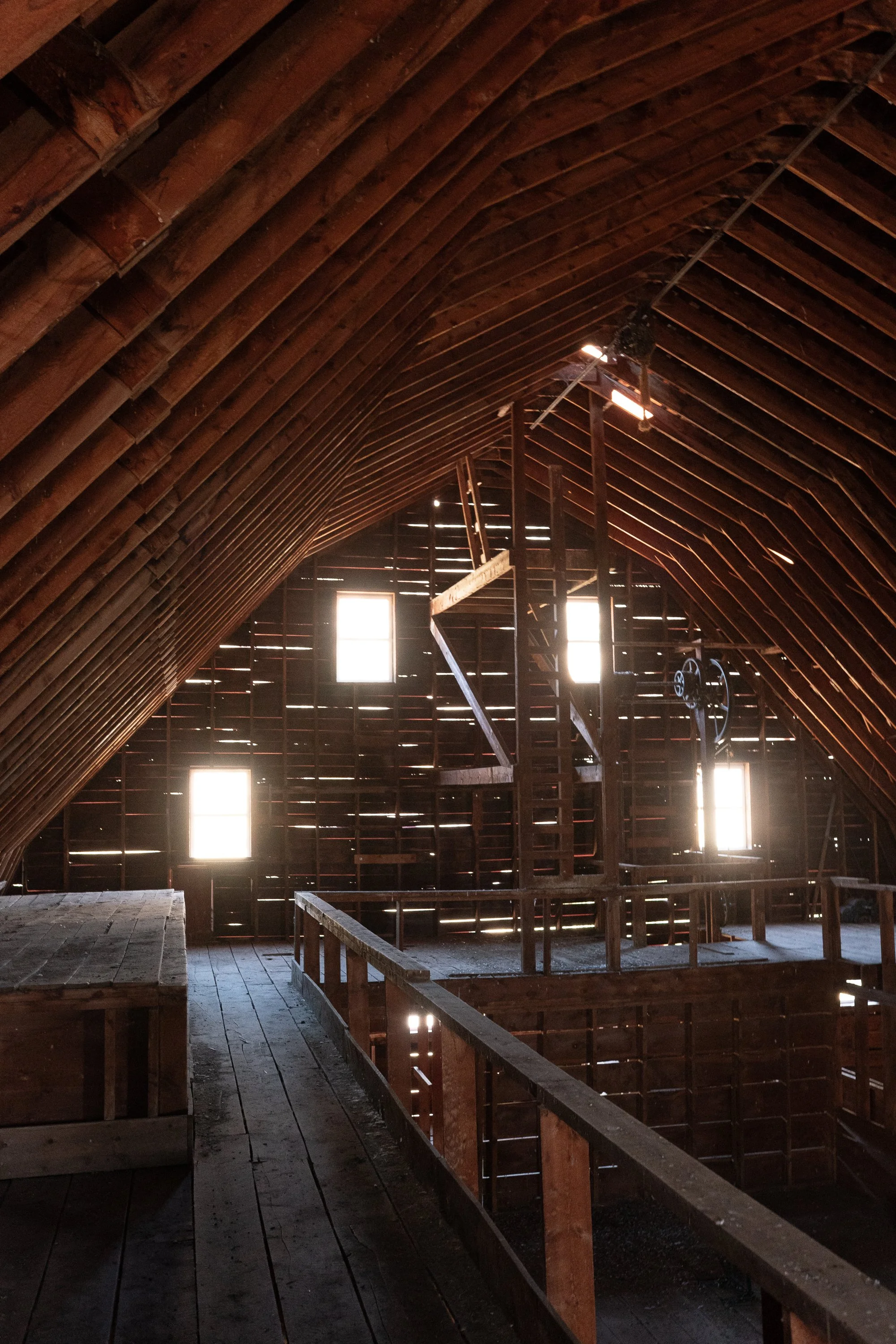
Wooden walkways and a central pulley system divide the barn's interior, while sunlight finds its way through the plank walls.
The buildings also changed with the ranches.
Walls moved. Stalls were added. Doors were widened. Equipment became obsolete but remained bolted to a beam because there was no particular reason to remove it.
The result isn't architecture preserved at a single moment in history. It's architecture that has accumulated history.
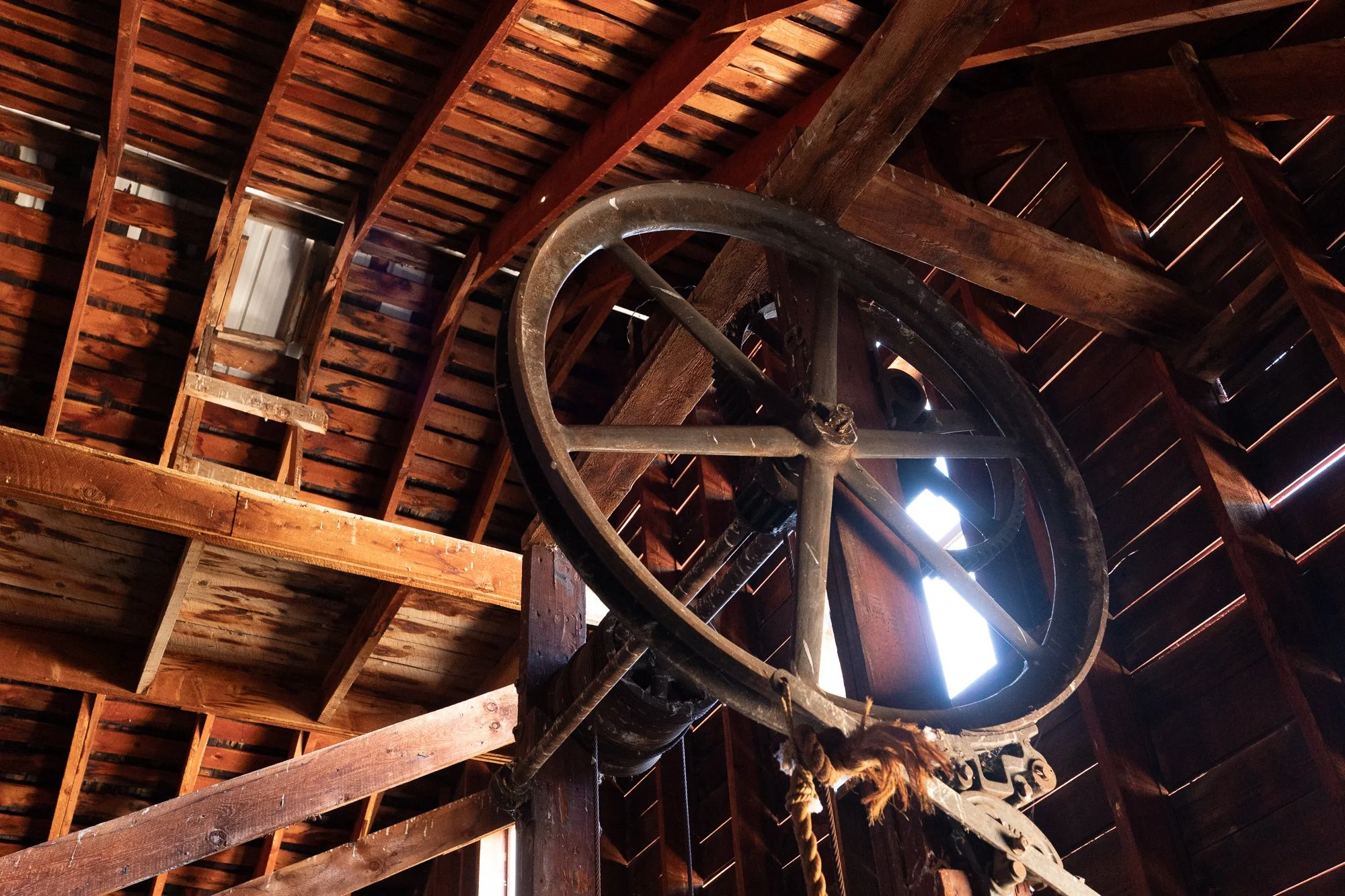
An old pulley wheel remains suspended beneath the barn's heavy timber rafters.
Some of the machinery still hanging inside these buildings is difficult to identify without asking someone who has been around long enough to remember what it did.
That's part of the appeal.
Nothing was placed there to create atmosphere. It is simply where it ended up after decades of work.
Inside the Old Barns
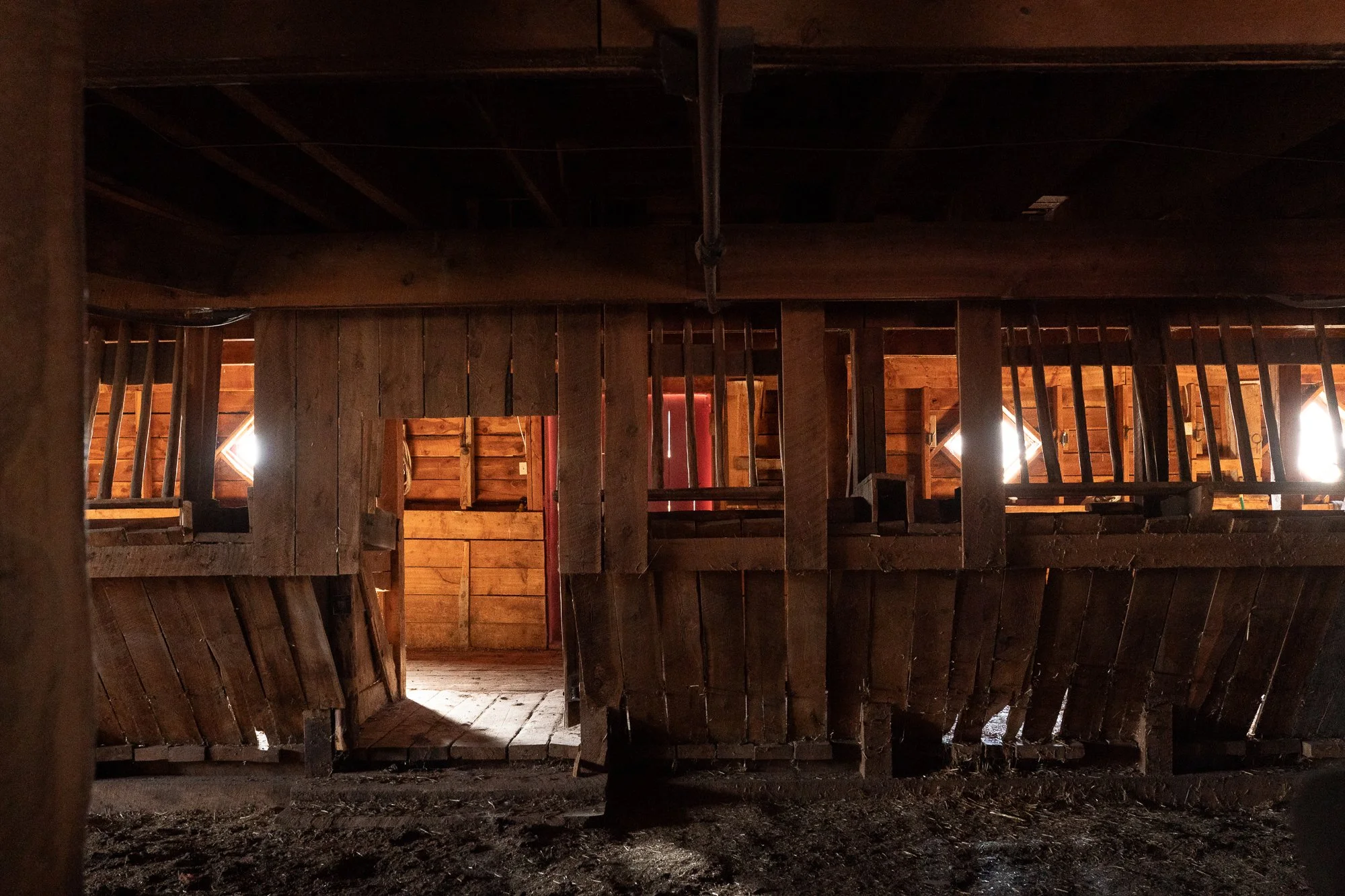
Rough plank partitions form narrow livestock stalls beneath the barn's heavy support beams.
Walking into one of these buildings can be a strange transition.
Outside, the West is enormous. The horizon can run for miles. Inside a barn, everything suddenly becomes close: worn wood, narrow stalls, dusty floors and thin lines of daylight coming through gaps in the siding.
Those small imperfections are often what make the interiors so beautiful.
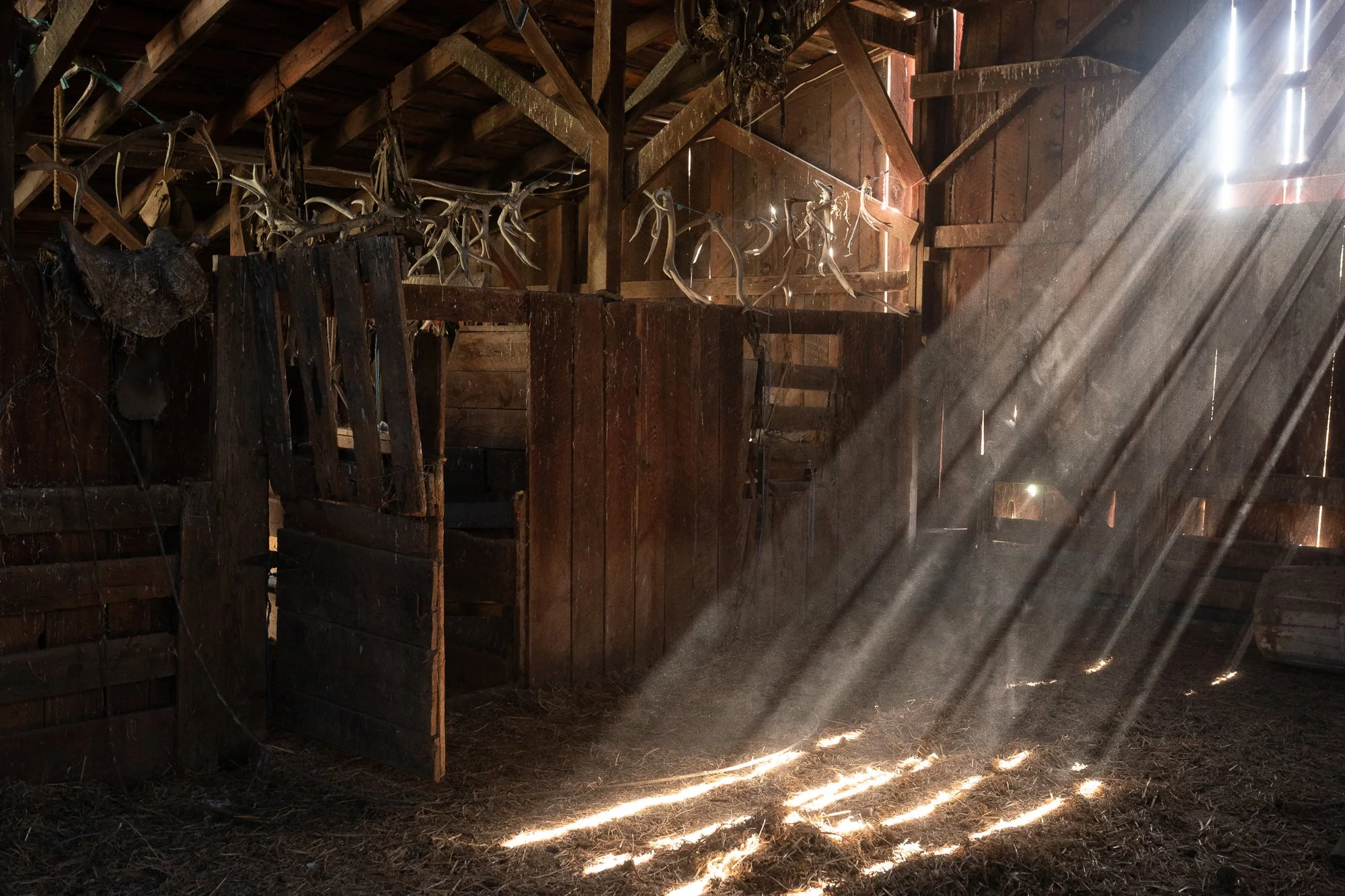
Sunlight cuts through gaps in the siding, reaching the wooden stalls and antlers stored among the barn's rafters.
Light finds every opening.
On the right day, an ordinary barn can become almost theatrical for a few minutes. Dust hanging in the air makes the sunlight visible. Objects that probably haven't moved in years suddenly emerge from the darkness.
Then the light changes and it's gone.
That is one of the reasons I keep photographing these buildings whenever I have the opportunity.
They aren't sets.
Nothing has been styled.
And nothing needs to be.
The People Are Still There
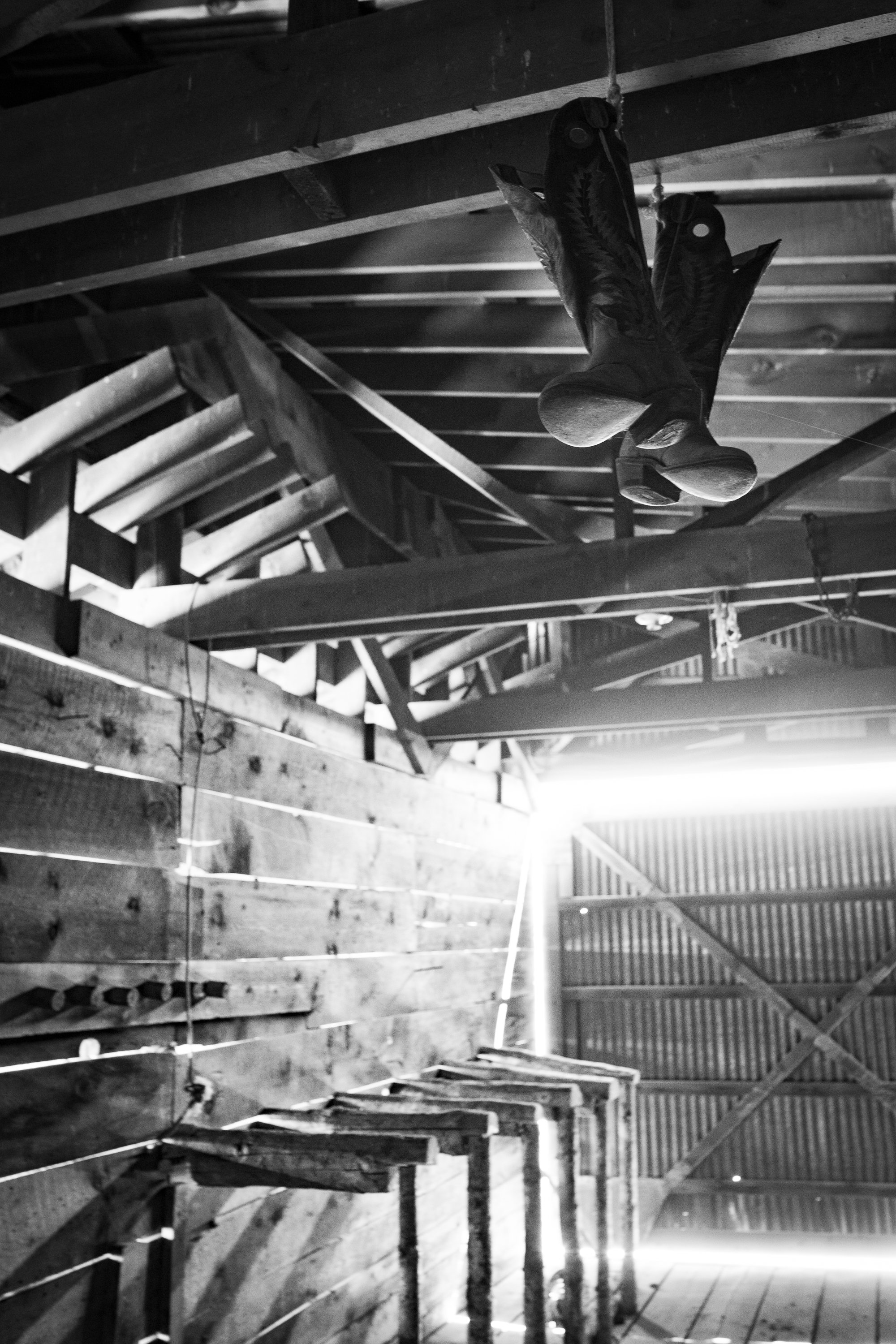
Cowboy boots hang from the rafters as daylight streams through gaps in the weathered boards.
The most interesting ranch buildings contain evidence of the people who use them.
A pair of boots hanging overhead. A saddle worn smooth in the same places after years of use. Horseshoes nailed to wood. Antlers stored in a corner. Pieces of machinery repaired long after replacing them would probably have been easier.
The people themselves don't necessarily need to be in the photograph.
Their presence is everywhere.
That's an important part of this work for me.
Calves to the Fire has always been about more than photographing cowboys. It's about documenting a working culture and the environment that surrounds it.
The buildings are part of that culture.
So are the corrals, fences, bunkhouses, barns, workshops and countless improvised structures that rarely receive much attention until they're gone.
Ranch Buildings and the Western Landscape
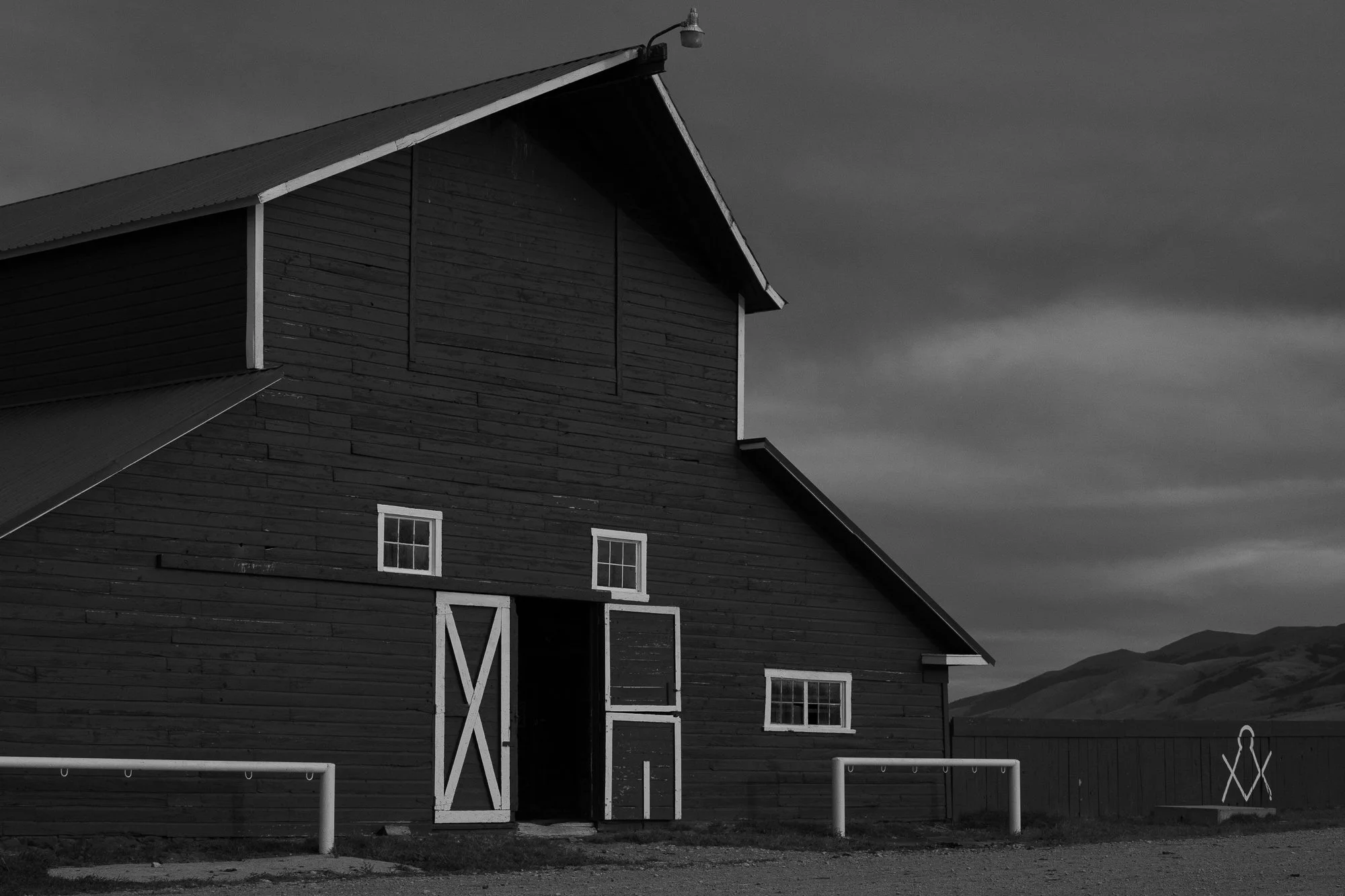
White trim outlines the barn's doors and windows against dark siding, with the marked fence continuing toward the mountains.
A ranch building rarely makes complete sense without the land around it.
Some sit almost anonymously in enormous landscapes. Others become the visual center of a ranch because everything seems to radiate outward from them: corrals, fences, roads, pastures and livestock.
The scale can be deceptive.
A barn that feels enormous when you're standing inside it can become a tiny shape against a mountain range or several thousand acres of open country.
The materials change with geography and time.
Log buildings appear where timber was available. Stone was used where stone made sense. Corrals were built from local wood, railroad ties, pipe, wire or whatever else could survive livestock and weather.
There isn't one architectural style that defines a Western ranch.
The common language is utility.
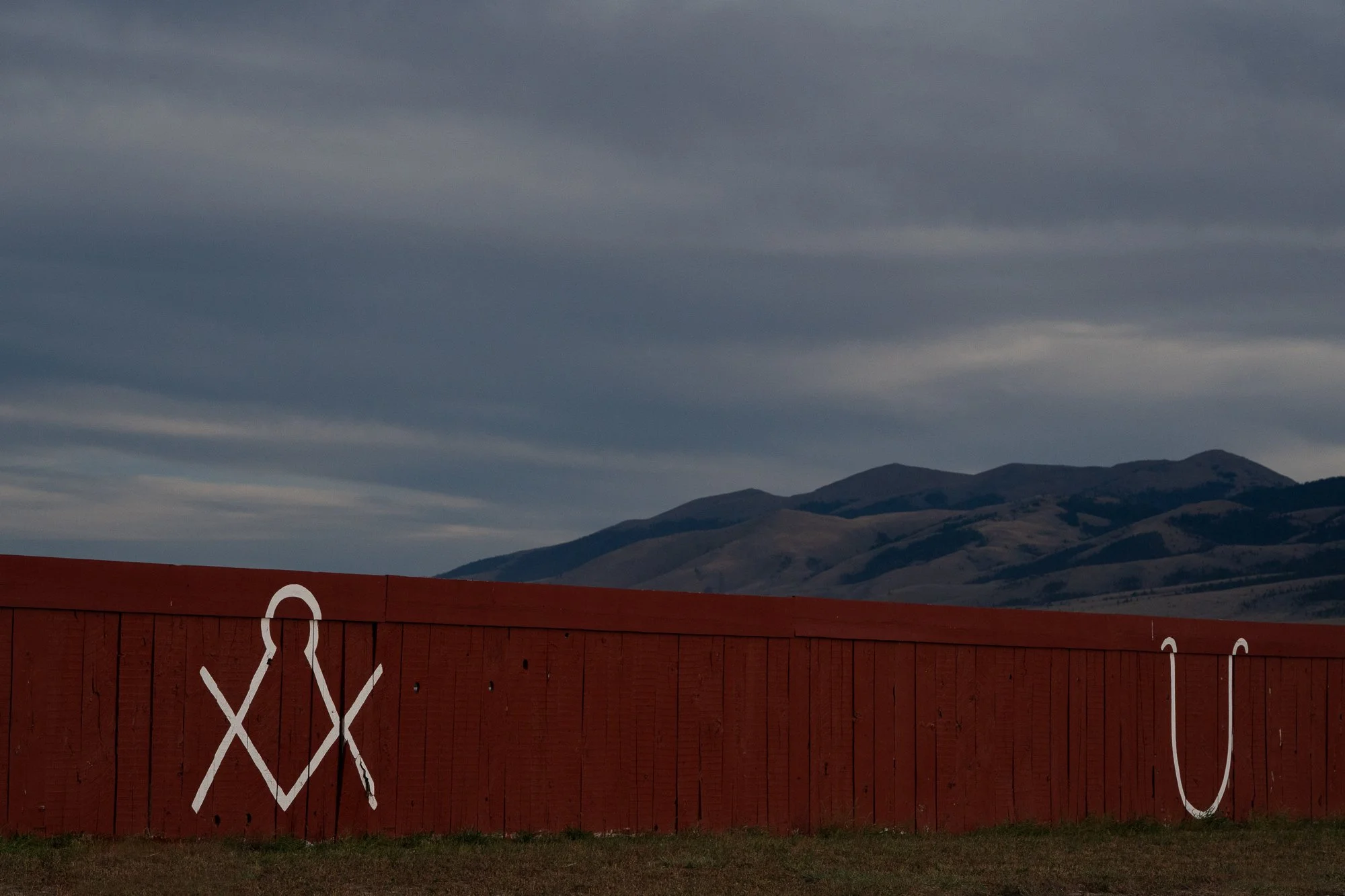
White livestock brands stand out against the red fence, with mountain ridges rising beyond the ranch.
Even the markings become part of the architecture.
Brands, names, dates, horseshoes and hand-painted signs identify one ranch from another. They turn otherwise anonymous structures into places with histories.
Buildings That Change With Time
One reason I've become more conscious of photographing these structures is that they aren't permanent.
Wood eventually gives way. Roofs fail. Corrals are rebuilt. Old barns become too expensive to maintain. Ranch operations change, and buildings that were once essential become unnecessary.
Sometimes they're restored.
Sometimes they're replaced.
Sometimes they're simply allowed to fall.
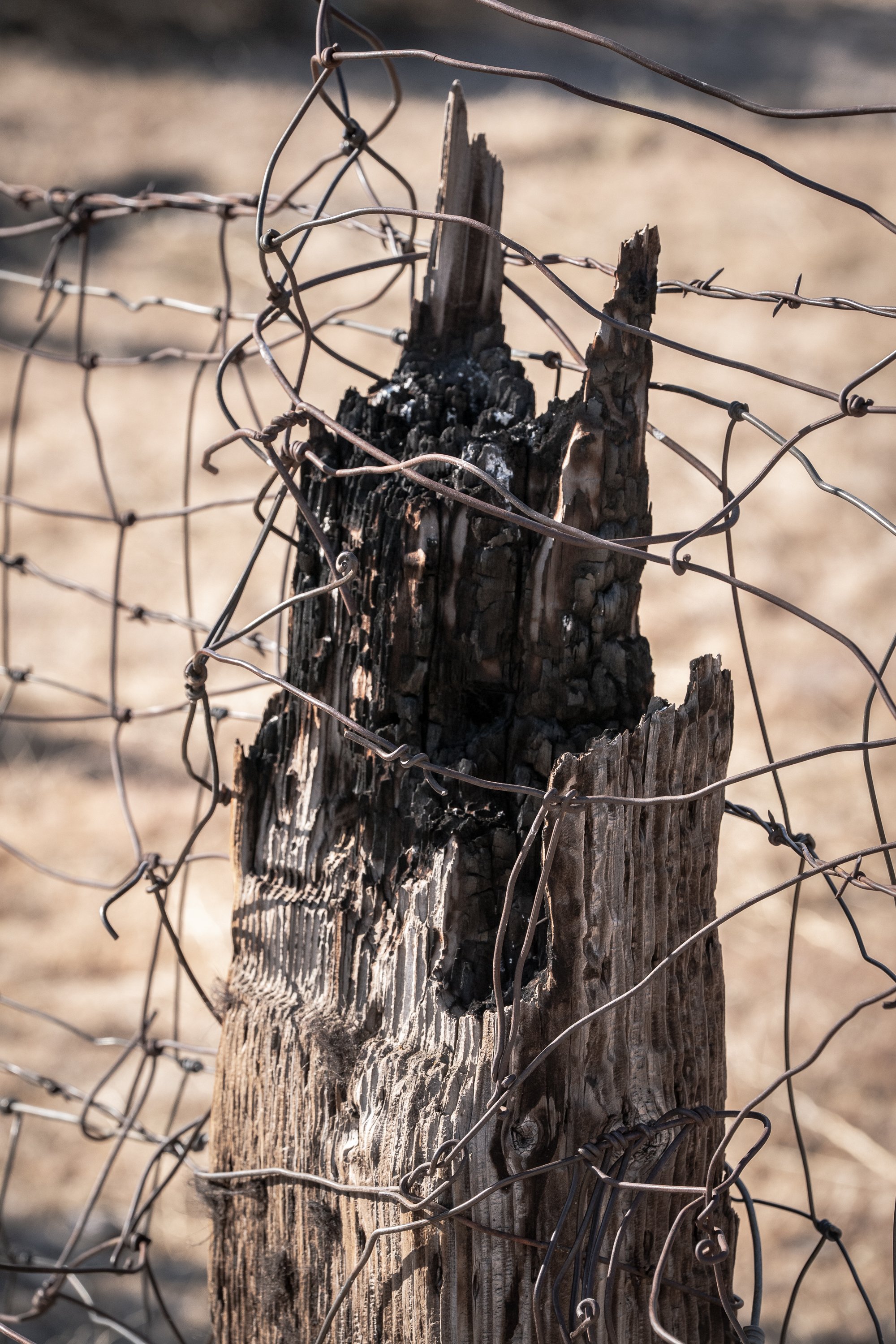
Barbed wire twists around a charred, splintered fence post, showing the wear left by weather and time.
Repairs can tell their own story.
There is something distinctly Western about seeing several generations of solutions occupying the same few feet of fence or wall: old nails, newer screws, baling wire, different kinds of fencing and pieces of lumber added decades apart.
None of it was intended to become historical evidence.
Eventually, that's exactly what it becomes.
What Remains
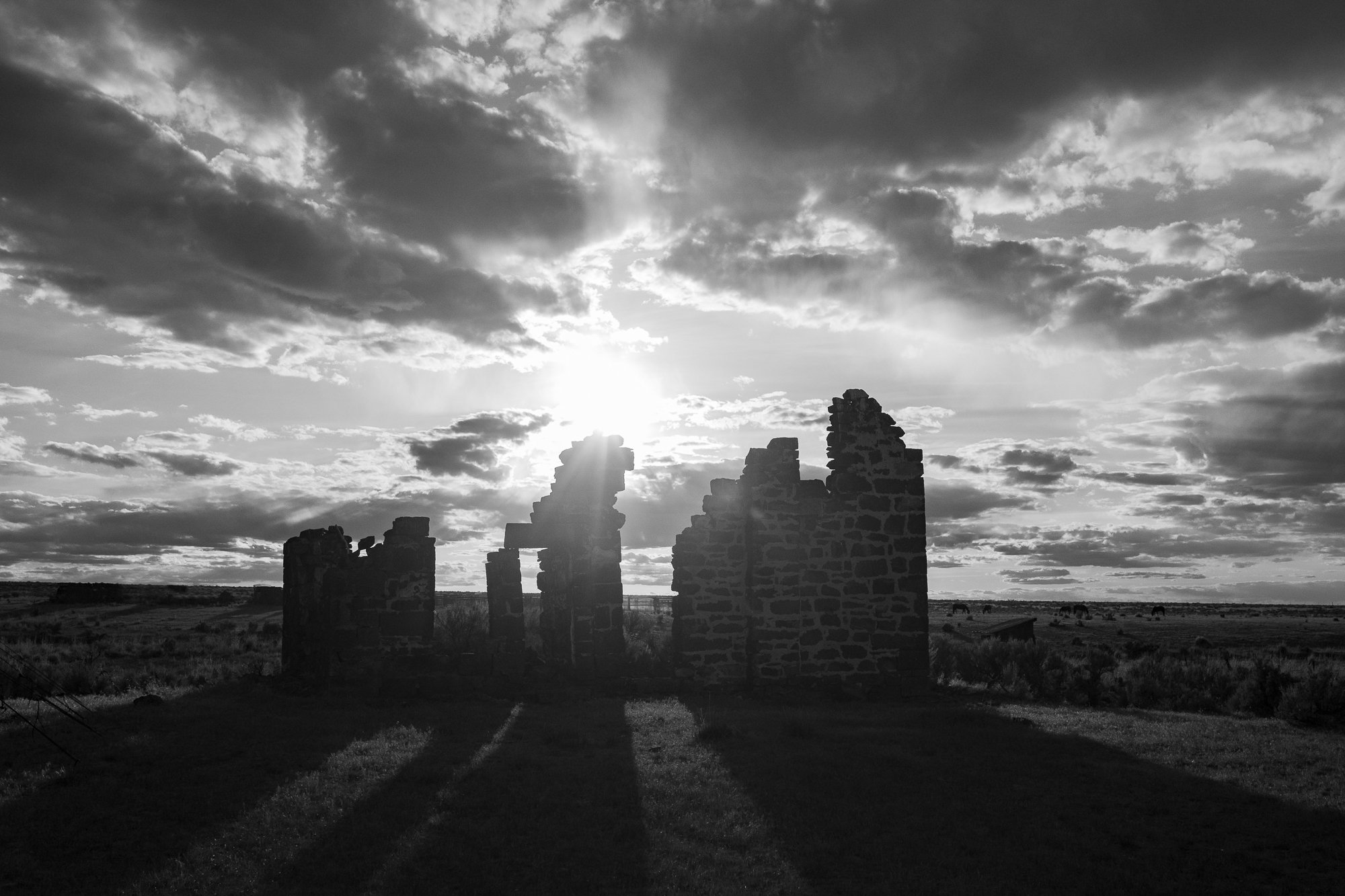
Only sections of the stone walls remain, standing against the open grassland beneath a broken sky.
Eventually some buildings reach a point where there isn't much left to save.
A roof disappears. Then the windows. Wood collapses and returns to the ground. Stone walls tend to last longer, sometimes standing alone long after the building they supported has vanished.
Photographs can't preserve the buildings themselves.
But they can preserve some evidence that they were here.
And increasingly, that feels like an important part of photographing the contemporary American West.
The West isn't frozen in time.
It never was.
The ranches I've photographed are working places, not historical reenactments. New equipment sits beside machinery that hasn't moved in 50 years. Modern trucks park next to century-old barns. Steel corrals replace wooden ones. Buildings disappear and new ones take their place.
That's precisely why I want to photograph them now.
Calves to the Fire
These photographs are part of my ongoing project Calves to the Fire, documenting cowboys, working ranches and the culture of the American West.
The project has taken me through ranches across Colorado, Montana, Nebraska, Nevada, Arizona, Texas, Wyoming, and elsewhere throughout the West. The photographs include the cowboys doing the work, but also the landscapes, animals, buildings and details that make these places what they are.
View The Full Cowboy Photography Gallery
Western Fine Art Photography
A selection of photographs from Calves to the Fire is available as fine art prints in multiple sizes. Additional photographs from the larger archive are also be available by request.
For collectors, designers and art consultants looking for a particular landscape, ranch, subject or visual direction, selections can also be curated from the larger archive.
Image Licensing
Photographs from this project and the larger Western archive are also available for select editorial and commercial licensing.
The archive includes working ranches, historic ranch buildings, barns, corrals, cattle, horses, cowboys, Western landscapes and details of ranch life photographed throughout the American West.
For publishing, editorial, advertising, hospitality or other licensing inquiries, please get in touch with information about the project and intended use.
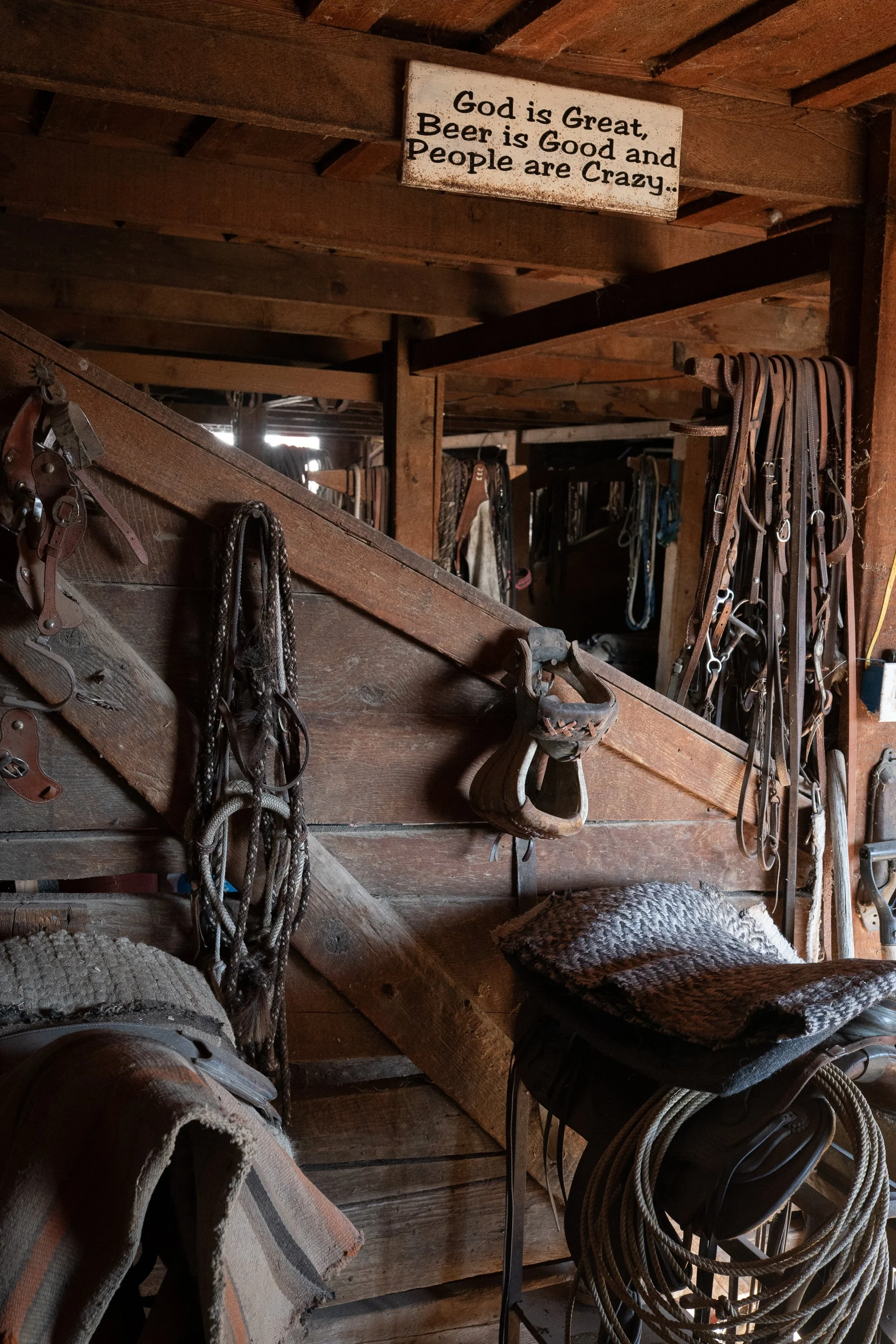
Saddles, bridles and coiled ropes fill the wooden partitions, keeping working gear within reach.
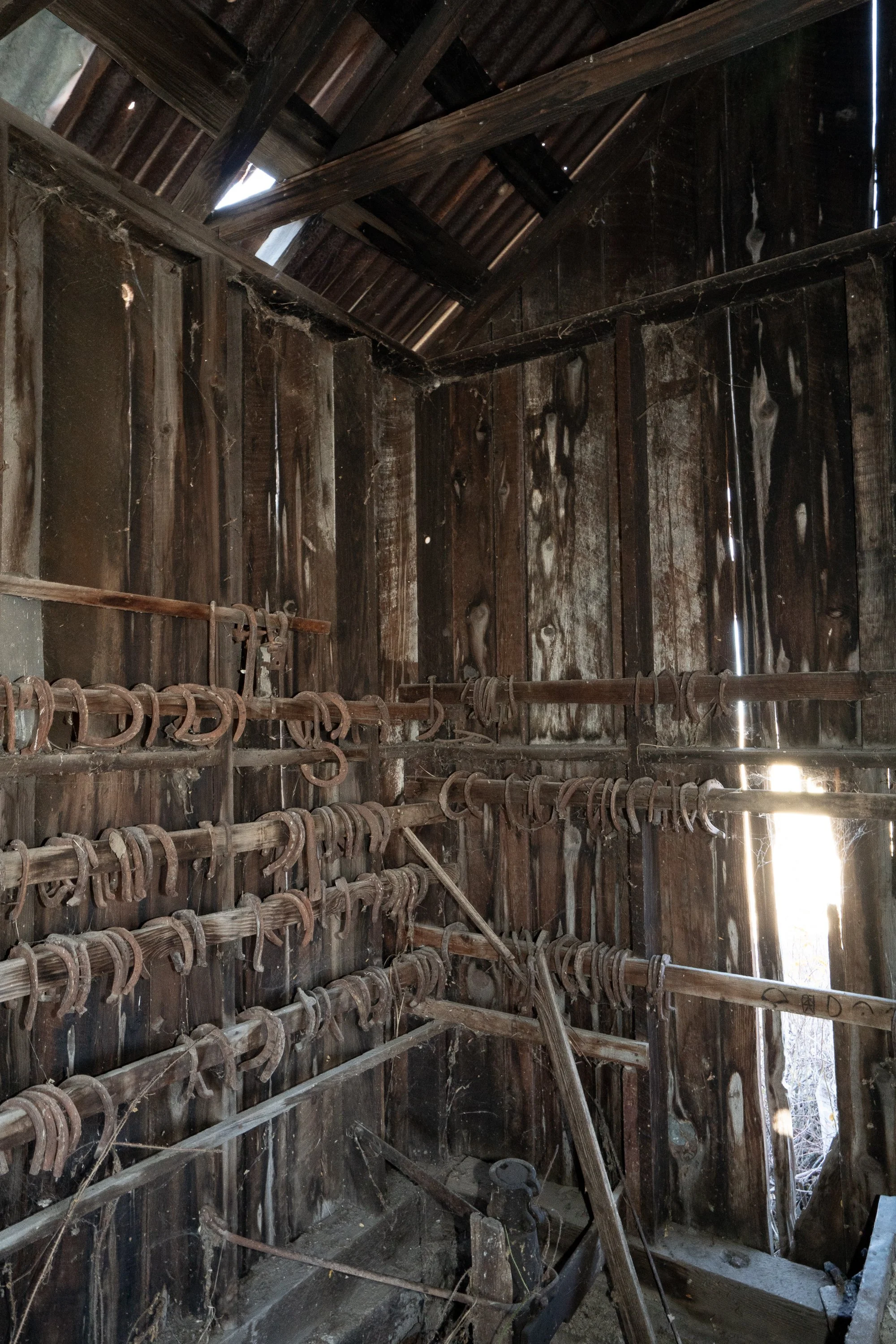
Rows of horseshoes line the wooden racks, stored along the weathered walls of the ranch building.
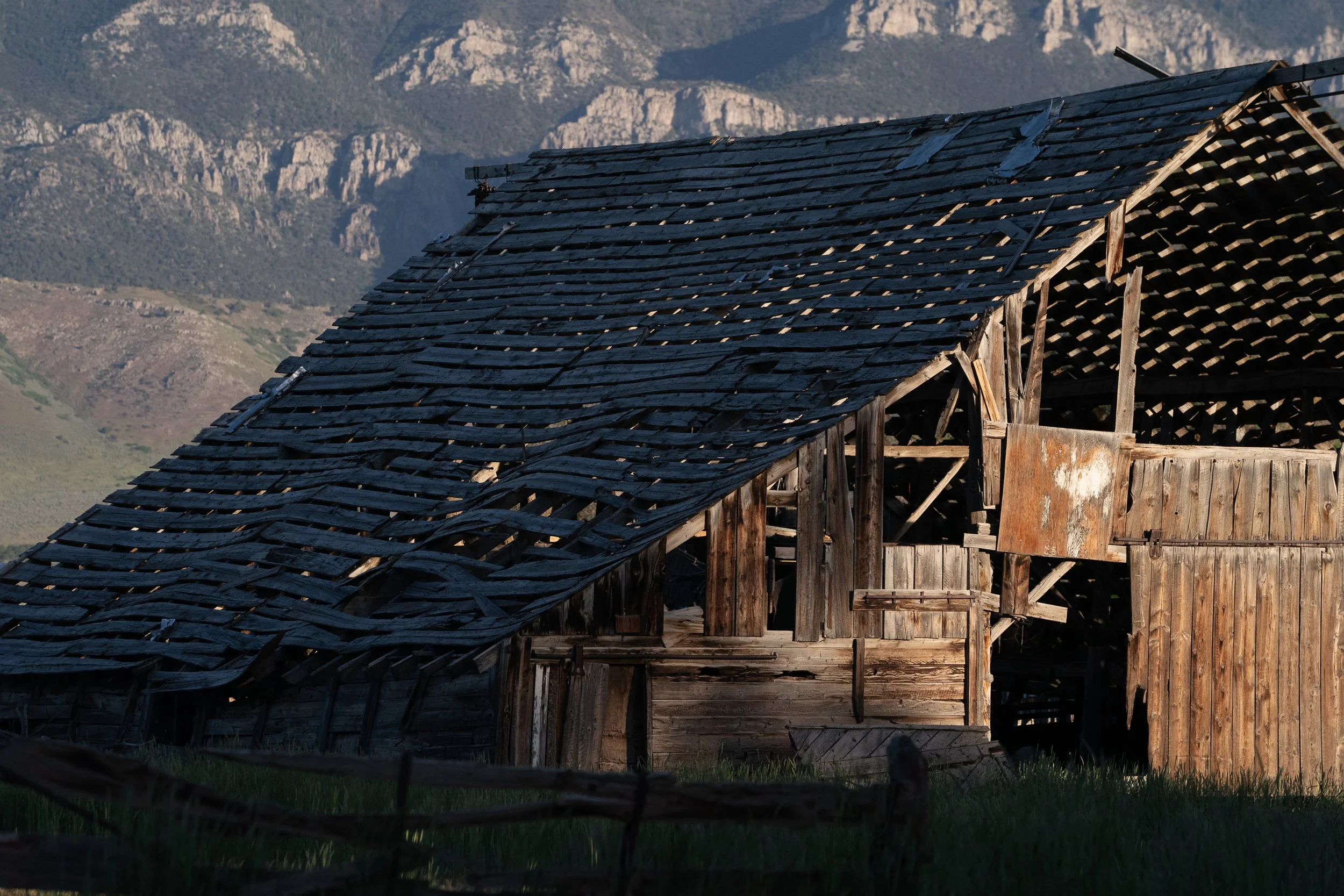
Missing shingles and exposed framing reveal the deterioration of the old barn's roof.