
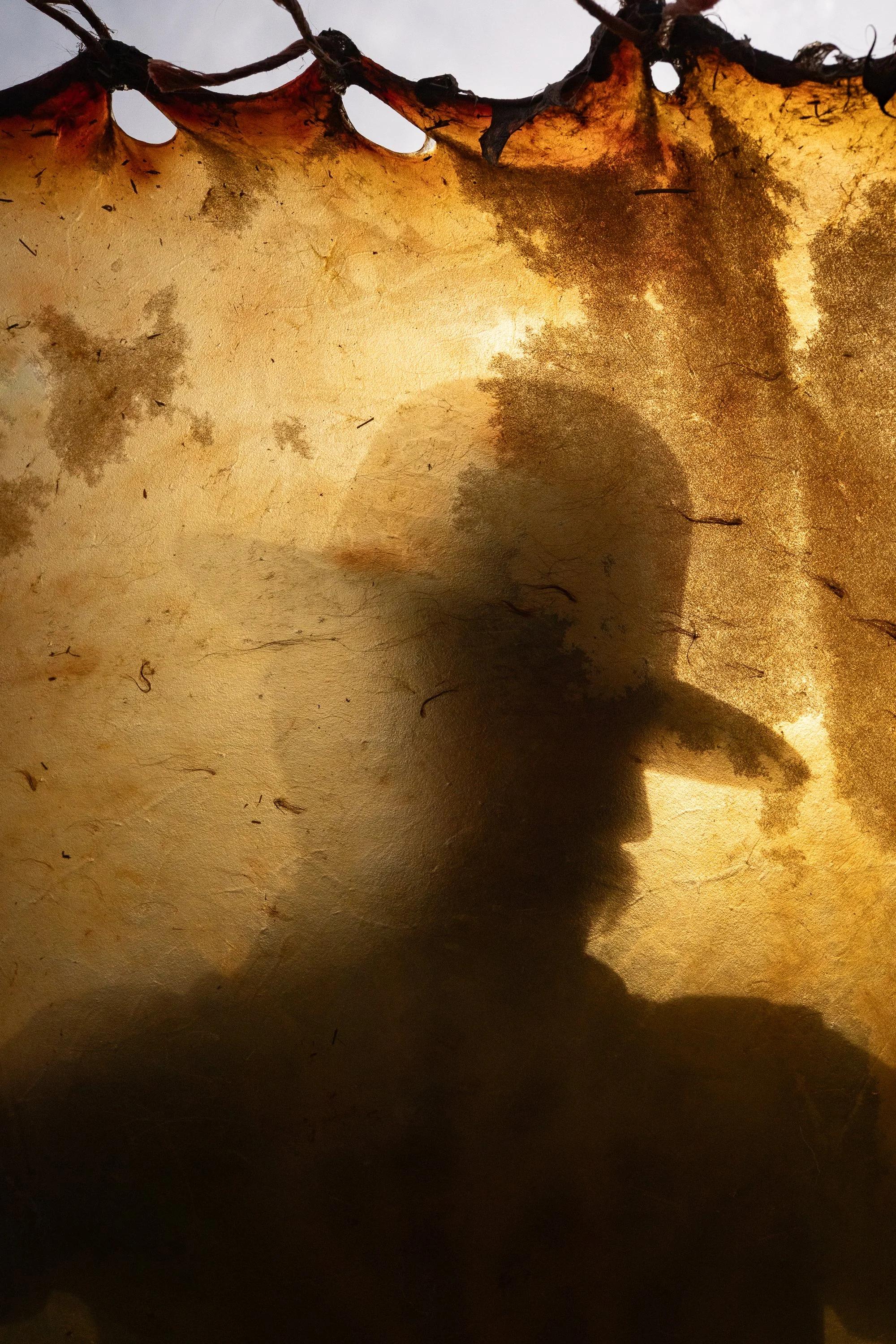
The Art of Rawhide Braiding: Inside the Workshop of Dakota May
There are some crafts that refuse to be hurried.
Rawhide braiding is one of them.
Long before synthetic ropes, factory-made tack and online catalogs, the working cowboy depended on gear built by skilled hands. Every bosal, mecate, set of reins and reata represented countless hours of preparation, patience and repetition. The quality of that work wasn't judged by how it looked hanging on a wall—it was judged by whether it held together after years of riding rough country.
Today, only a small number of artisans continue that tradition.
Among them is rawhide braider Dakota May.
I had the opportunity to photograph Dakota at work, documenting not only the finished pieces but the quiet, methodical process behind them. It quickly became obvious that this isn't simply leatherwork or craftsmanship. It's the preservation of an entire way of life.
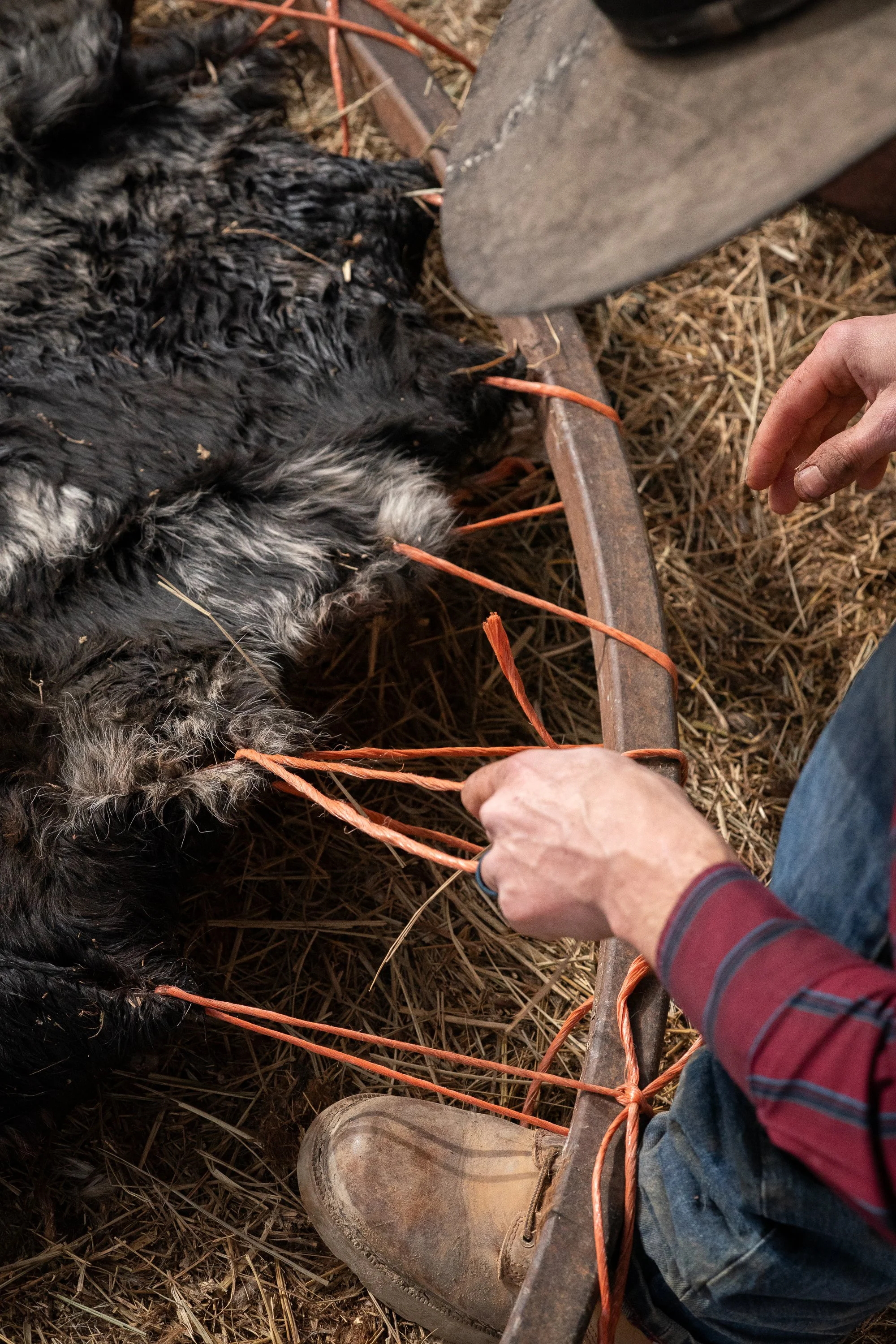
The hide is stretched and secured to dry evenly before any strands are cut.
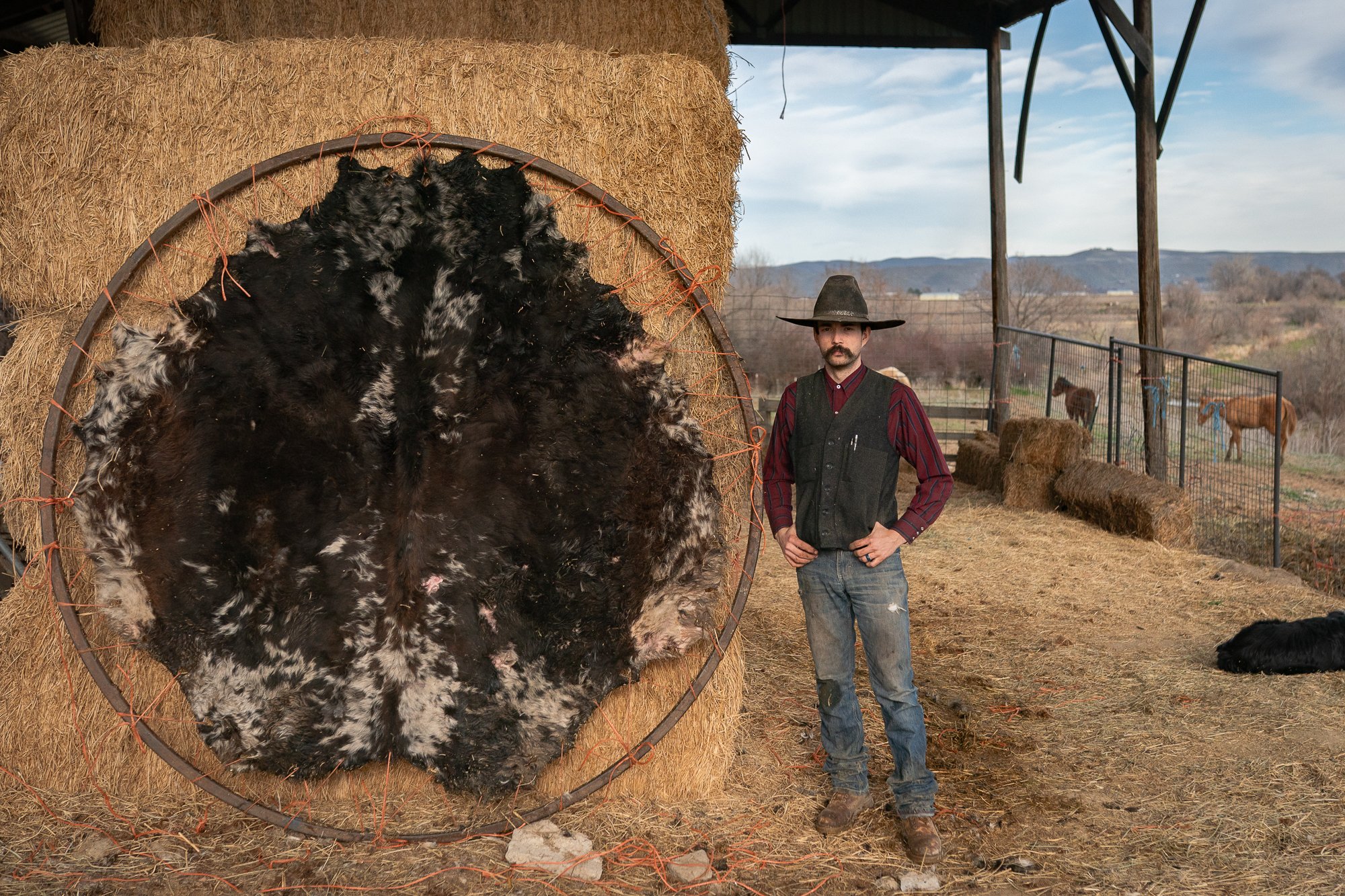
A freshly stretched hide dries on a round frame while Dakota May prepares it for the careful work that follows, preserving techniques passed down through generations of Western craftsmen.
More Than Beautiful Gear
To someone unfamiliar with the West, a braided bosal or set of romal reins might appear to be decorative artwork.
To a working buckaroo, they're tools.
Every strand serves a purpose. Every knot has a function. Every decision affects how the finished piece balances, flexes and performs in the hands of a horseman.
That marriage of beauty and utility has always fascinated me.
The finest examples of Western craftsmanship rarely separate art from function. The object becomes beautiful precisely because it was made to work.
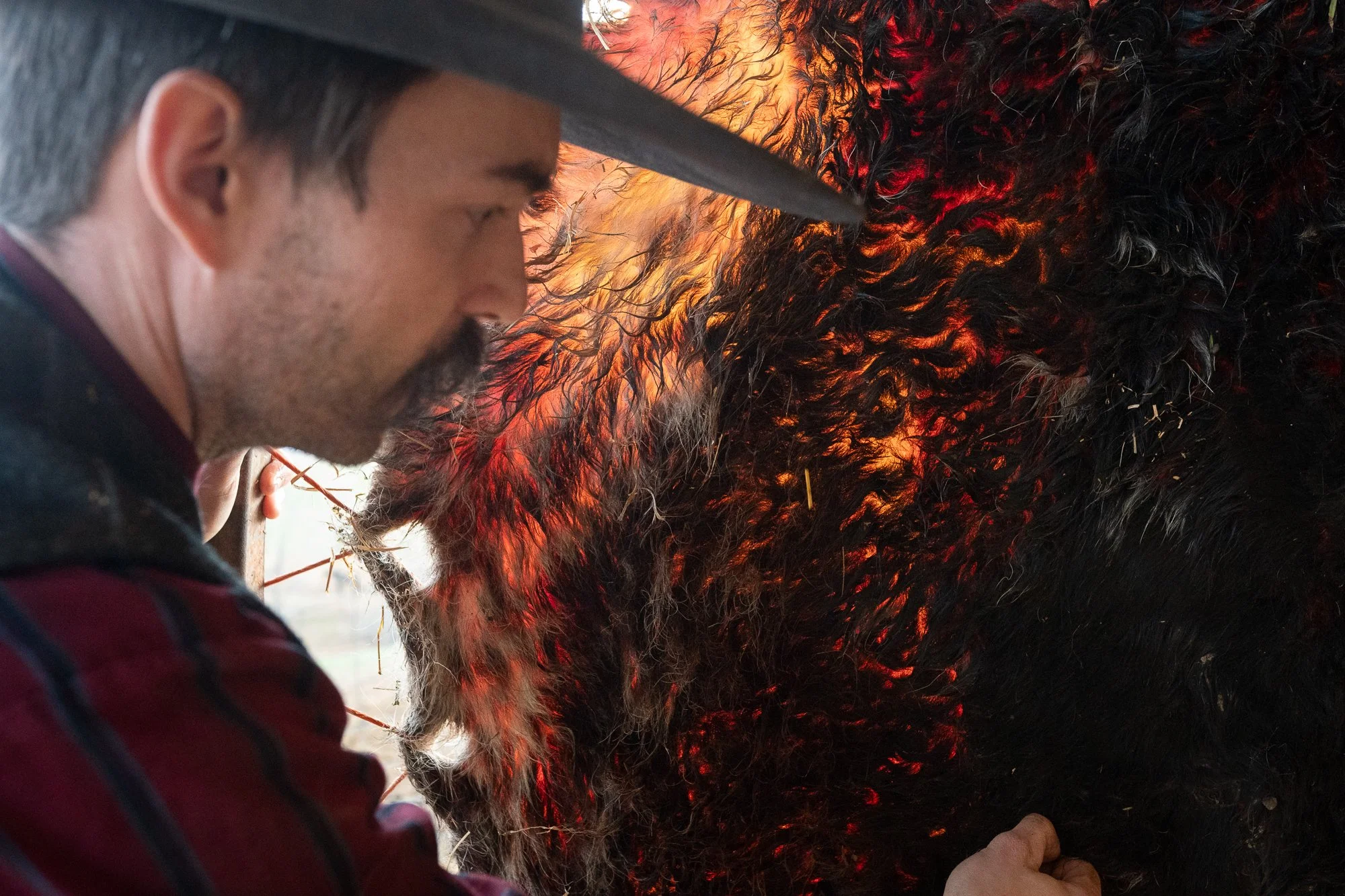
Examining the hide is one of the first steps before it is cut into working strands.
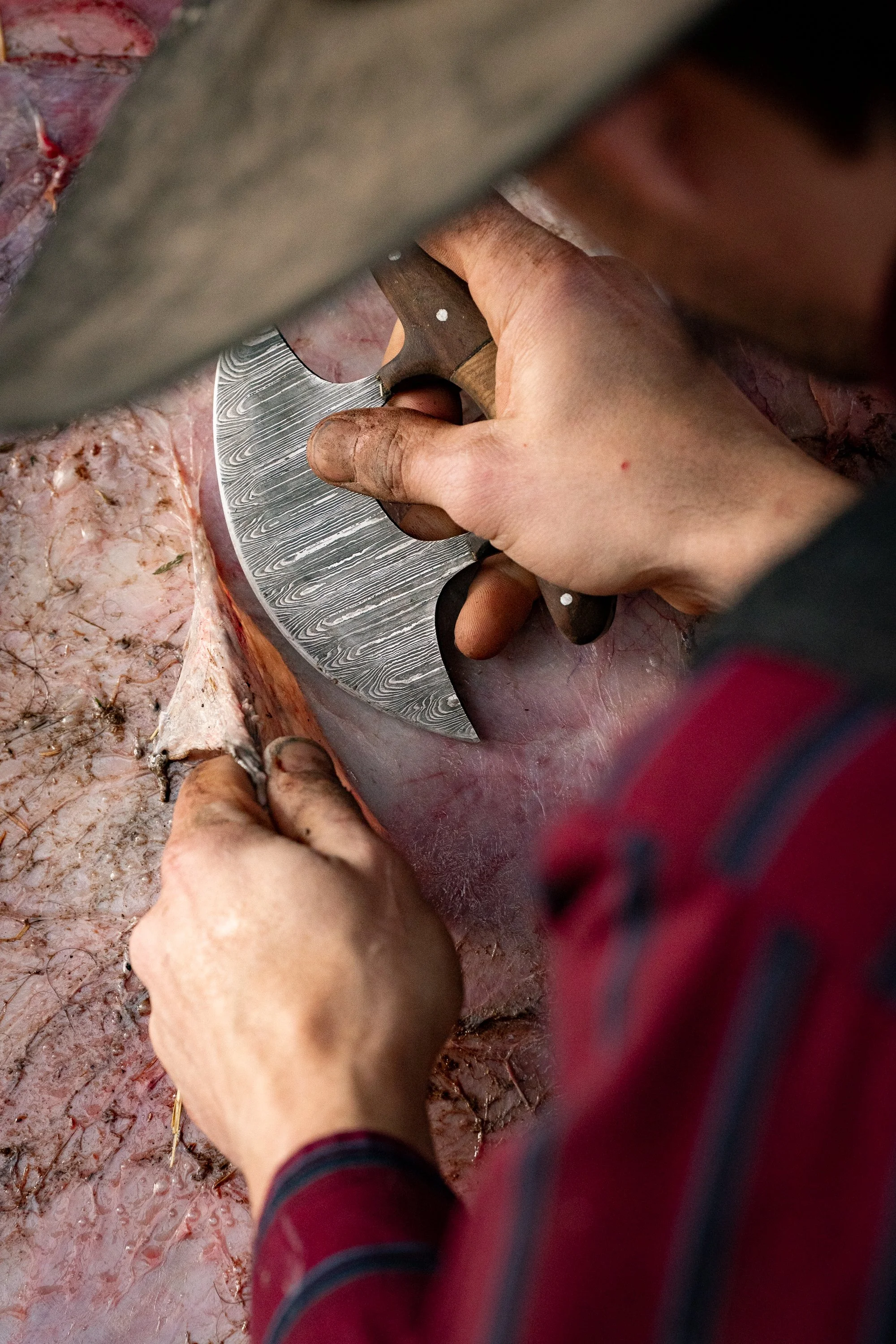
The hide is carefully cleaned by hand before the braiding process begins.
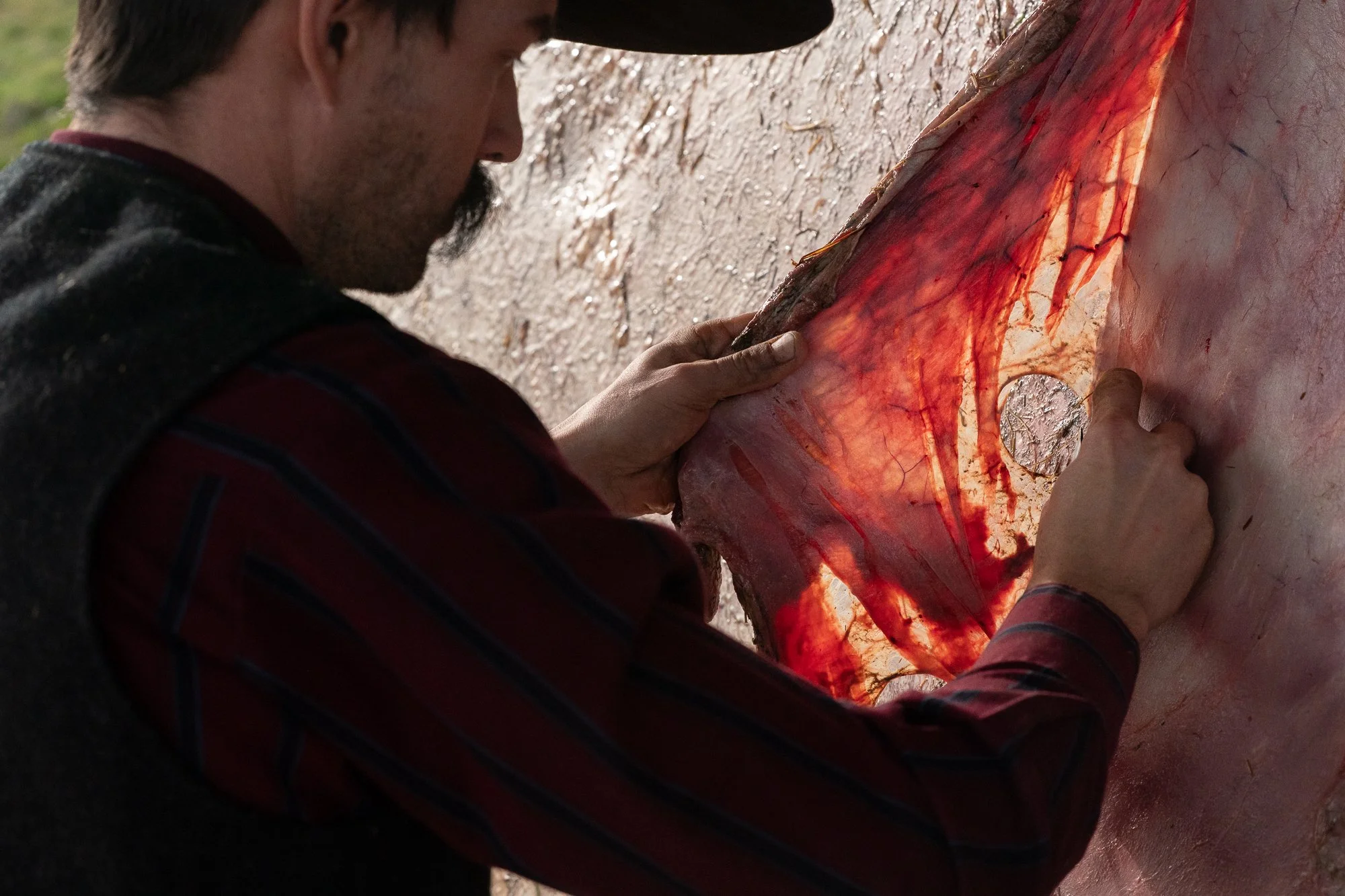
Natural light helps reveal subtle variations in the hide before preparation continues.
What Is Rawhide Braiding?
Unlike leather, rawhide is made from animal hide that has been cleaned, stretched and dried without tanning. The material is incredibly strong, but it demands patience and precision.
Before a single braid is started, hours of preparation go into the material itself.
The hide must be carefully prepared, cut into long continuous strands, beveled to create smooth edges, and brought to exactly the right moisture content before braiding begins. If it's too dry, it becomes brittle. Too wet, and it loses consistency. Experienced braiders develop an instinct for working the material at precisely the right moment.
Only then does the real work begin.
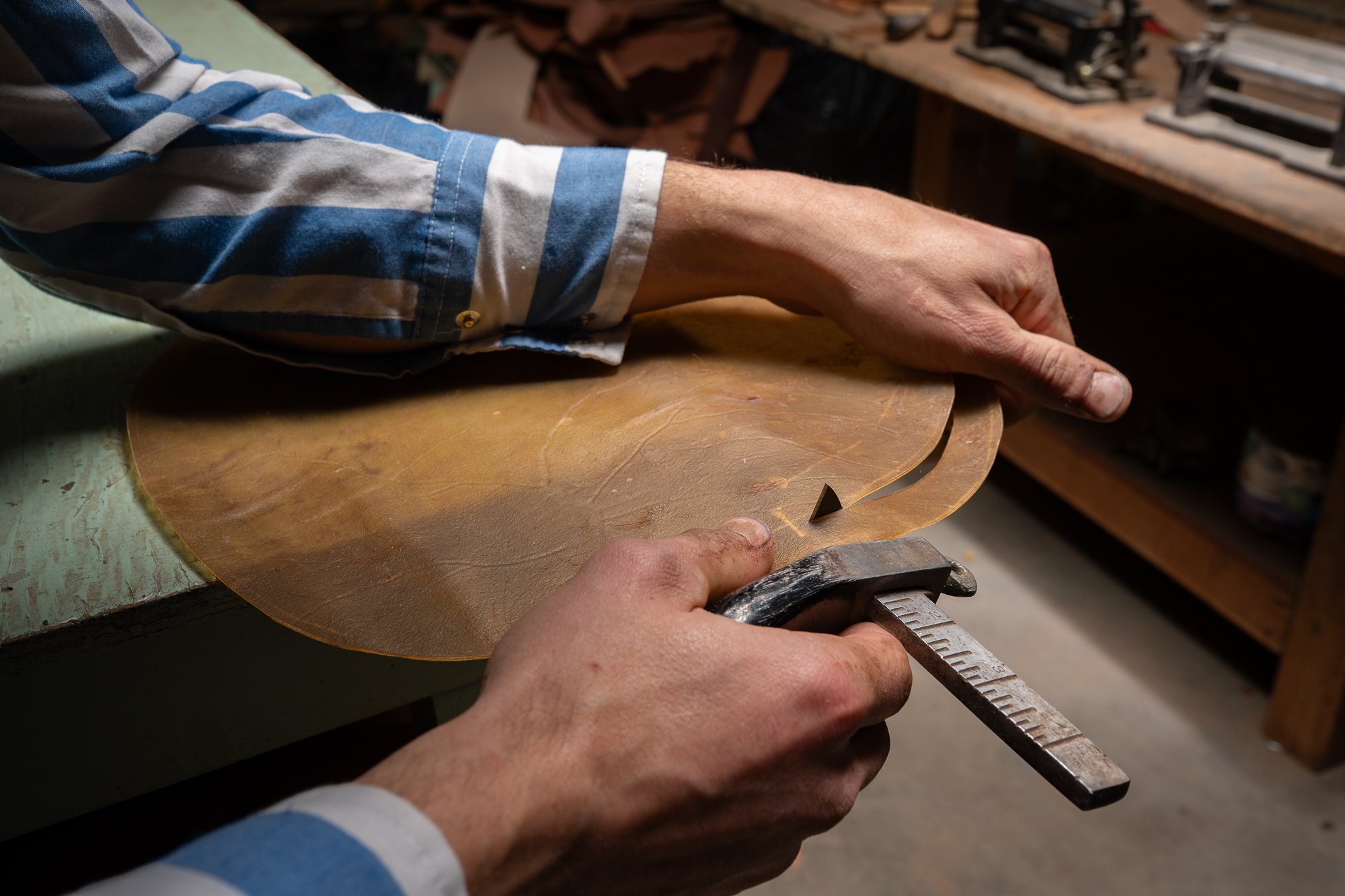
Each strip is cut with precision, creating long, consistent strands that will eventually become handmade cowboy gear through hours of patient braiding.
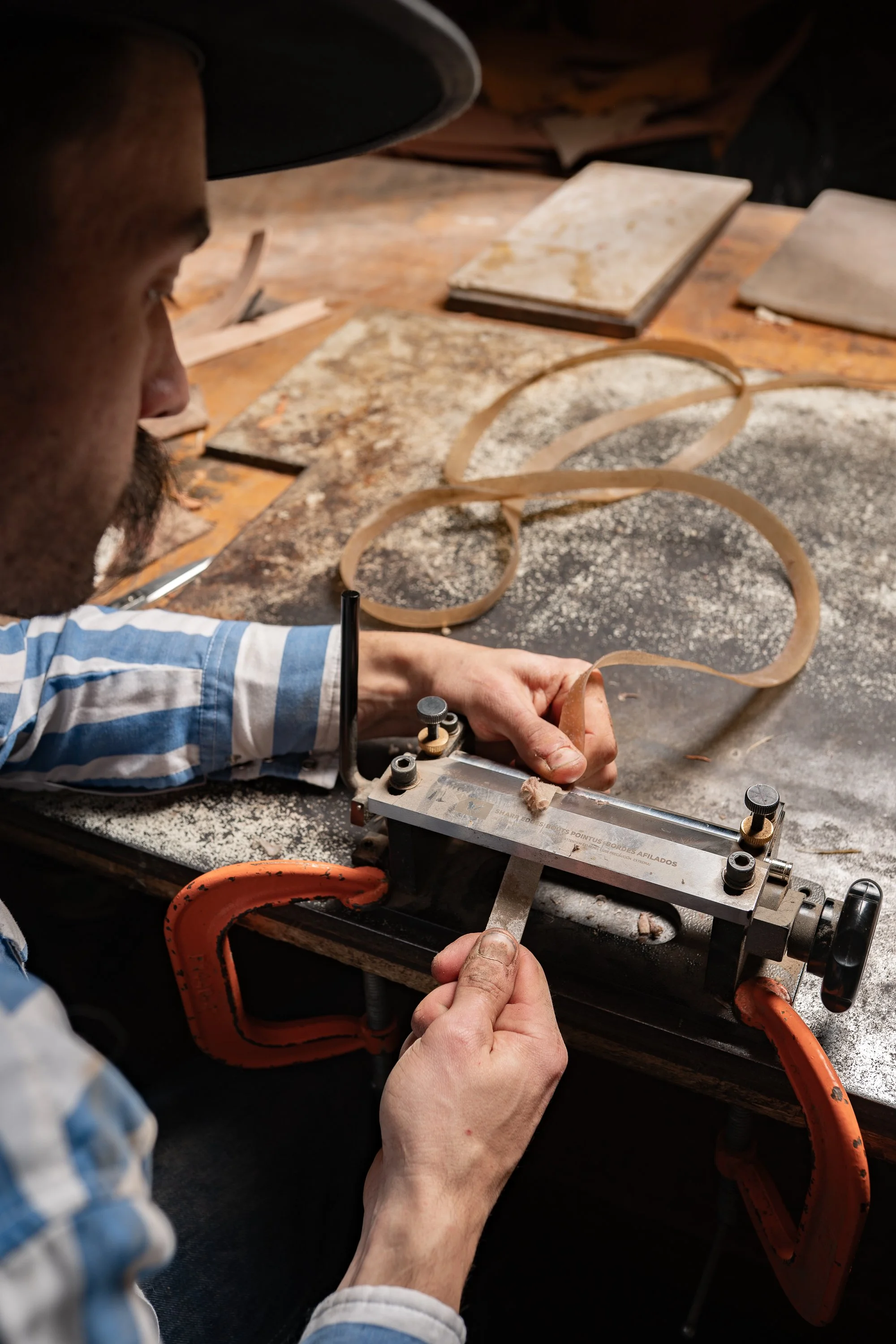
Each strand is shaped with a beveling tool before the braiding begins.
A Tradition Passed Between Cowboys
Rawhide braiding has deep roots in the vaquero traditions of Spain, Mexico and the American West. For generations, the knowledge was passed from one cowboy to another on working ranches throughout the Great Basin, where winter evenings often became time to repair tack and learn the craft from older hands. Along with the techniques came stories, ranch histories and a shared culture that helped preserve the traditions of the buckaroo.
That heritage is still visible today.
Every braided piece carries echoes of the generations who came before.
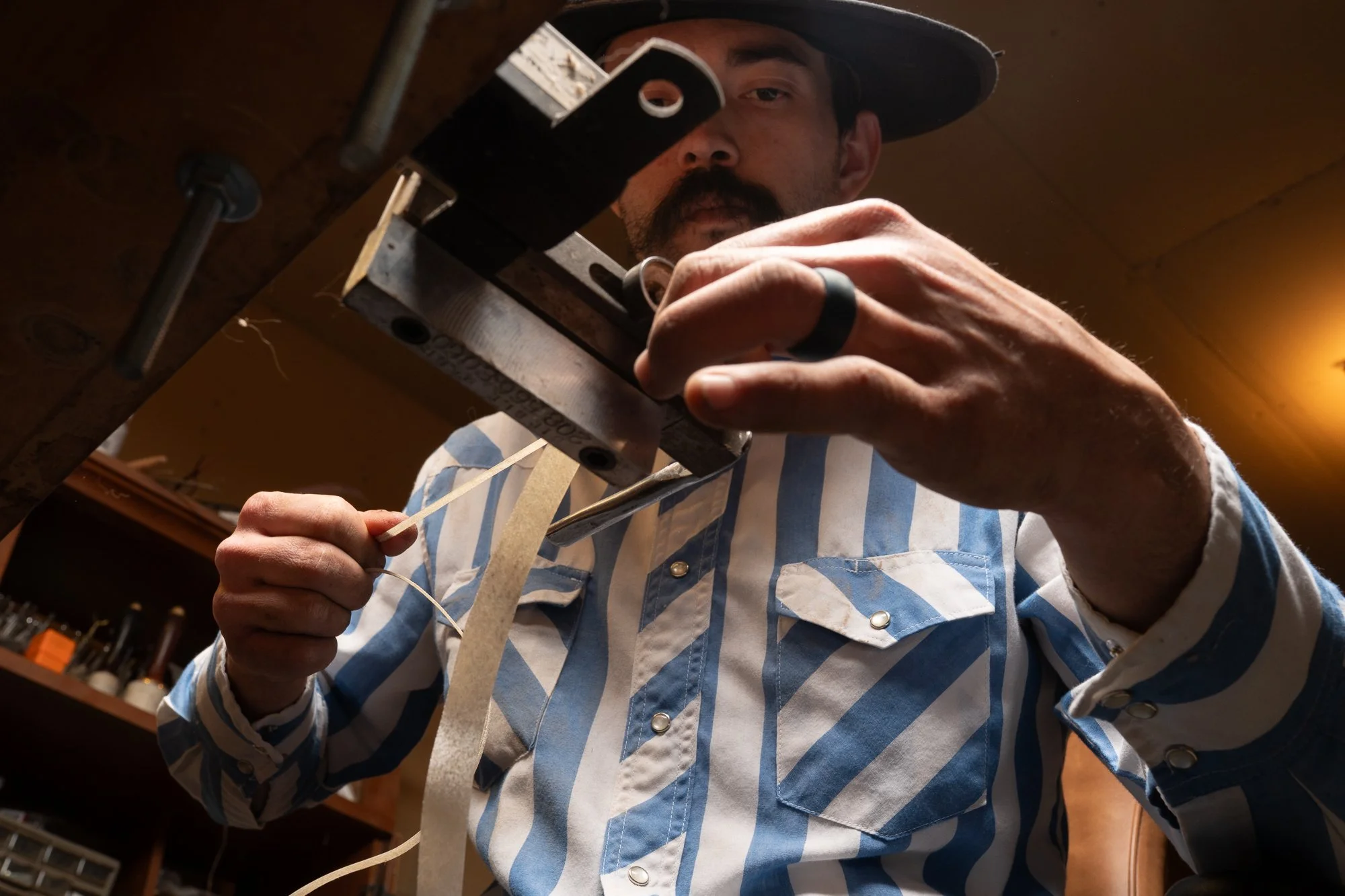
Every strip is shaped and refined before it becomes part of a bosal, reins, or other cowboy gear.
Photographing Dakota May
Walking into Dakota's workspace, what struck me first wasn't the finished gear.
It was the pace.
There was no rush.
The rhythm of the work seemed almost meditative.
Hands moved almost automatically, weaving one strand over another before tightening each braid with quiet confidence. Knives, gauges and braiding tools rested nearby, worn smooth from years of use. Coiled strands of rawhide waited patiently for their turn.
Photography often rewards dramatic moments.
This wasn't one of them.
Instead, it rewarded paying attention.
The subtle pull of a strand.
The texture of unfinished rawhide.
The concentration required to tie a knot that disappears into the overall pattern.
Those details tell the real story.
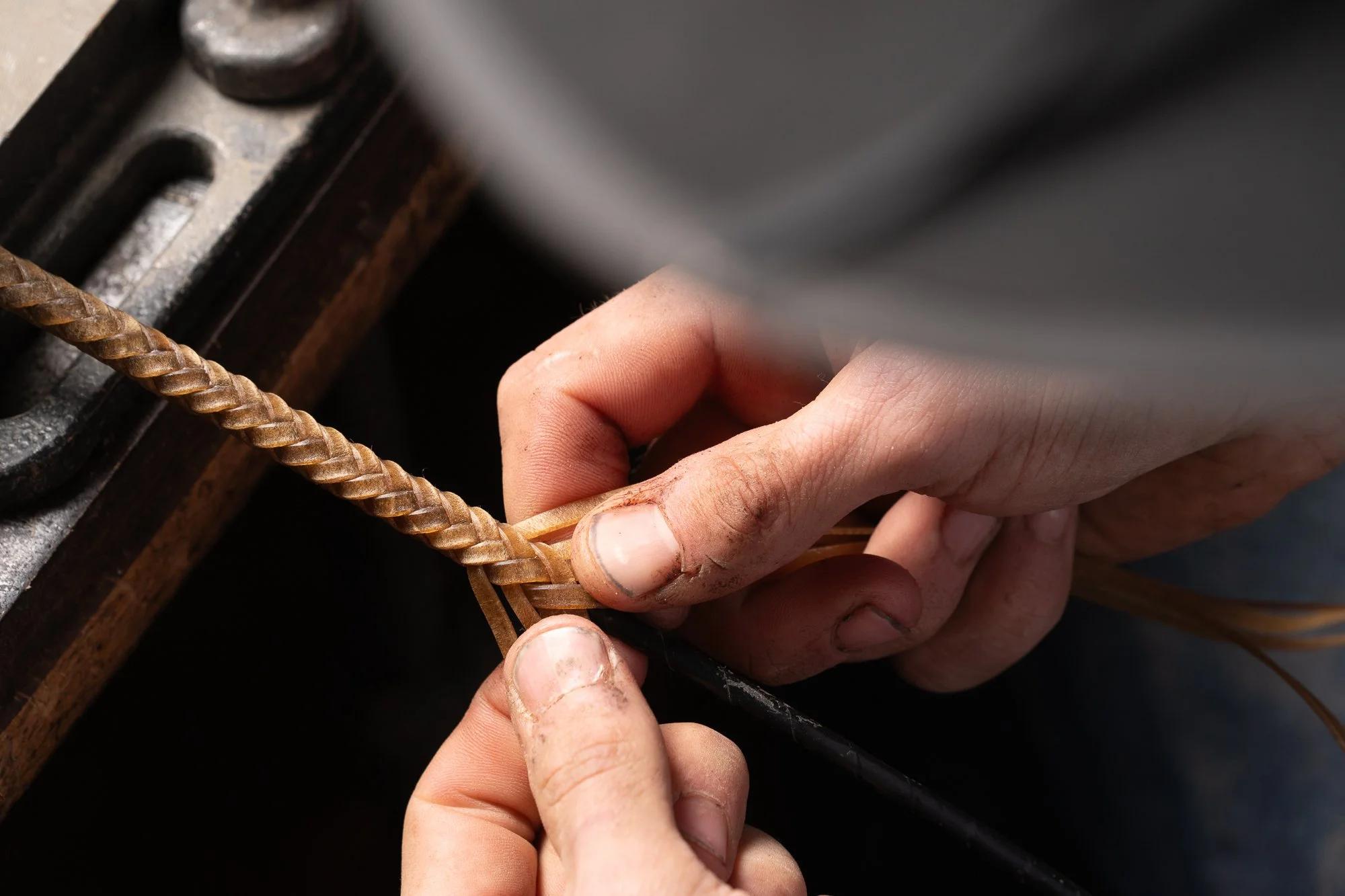
Strand by strand, the braid takes shape through steady hands and practiced technique.
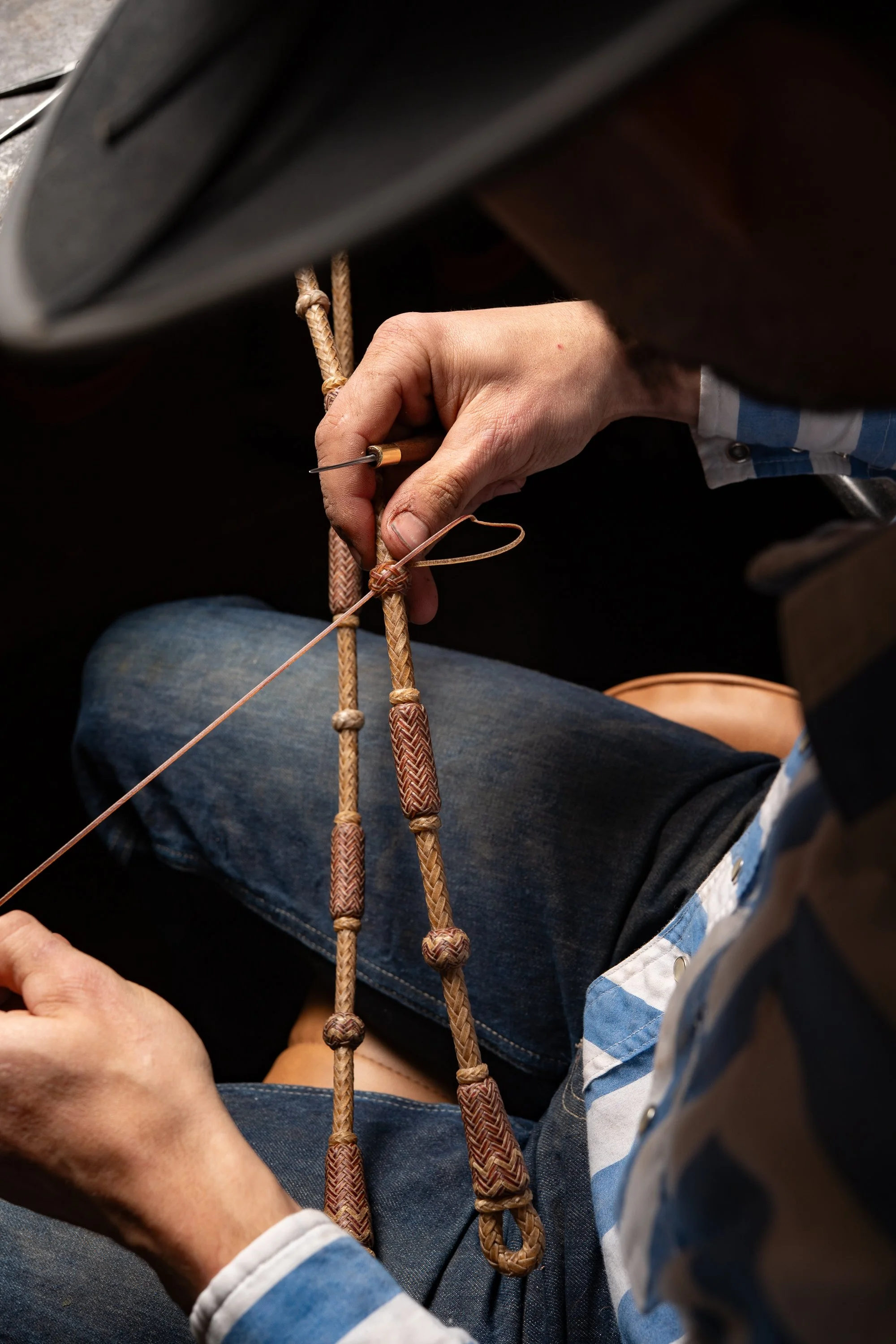
Each knot adds to the strength and balance of the finished rawhide reins.
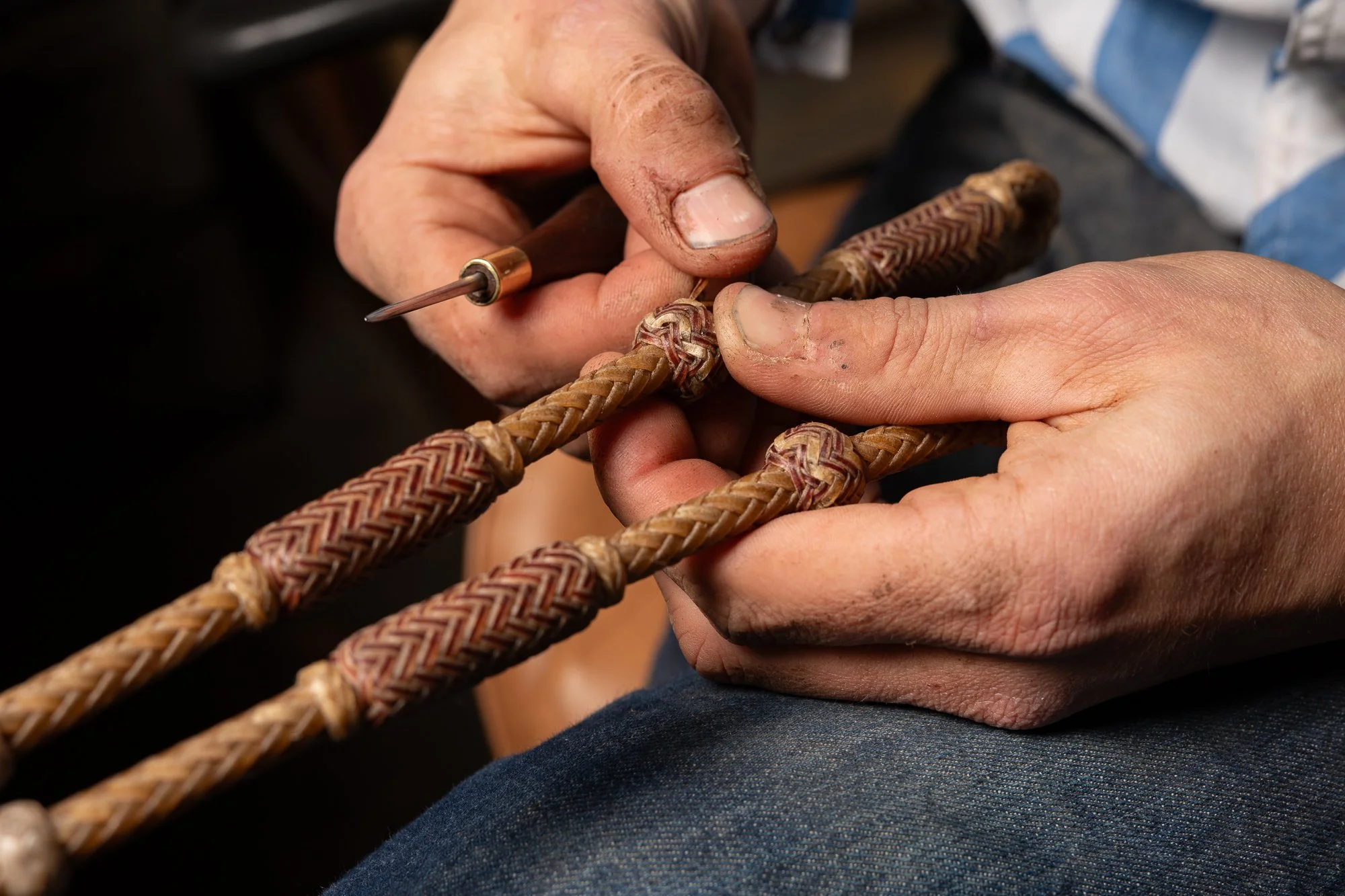
Years of practice show in the smallest details, where decorative knots are tightened by hand to secure and finish the braid with precision.
Why Handmade Cowboy Gear Still Matters
Modern materials have replaced much of what working cowboys once relied on every day.
Synthetic ropes are stronger, cheaper and easier to maintain than traditional rawhide in many situations.
Yet handmade rawhide gear continues to be valued—not simply because of tradition, but because of the craftsmanship behind it.
Collectors appreciate it as functional art.
Horsemen appreciate the balance, feel and connection to generations of Western knowledge.
And for many makers, the process itself has become just as important as the finished product.
The work demands patience in a world that increasingly rewards speed.
Preserving the American West
One of the reasons I continue photographing working ranches and the people connected to them is because these traditions are easy to overlook.The American West isn't preserved only through landscapes or old photographs.
It's preserved through people.
Rawhide braiders like Dakota May.
Each carries forward knowledge that has survived because someone took the time to learn it—and then took the time to teach it to someone else.
Those are the stories that deserve to be documented.
Because while handmade gear can last for generations, the knowledge required to create it only survives if someone is willing to keep practicing the craft.
As a photographer, I feel fortunate to witness—and preserve—small pieces of that story.
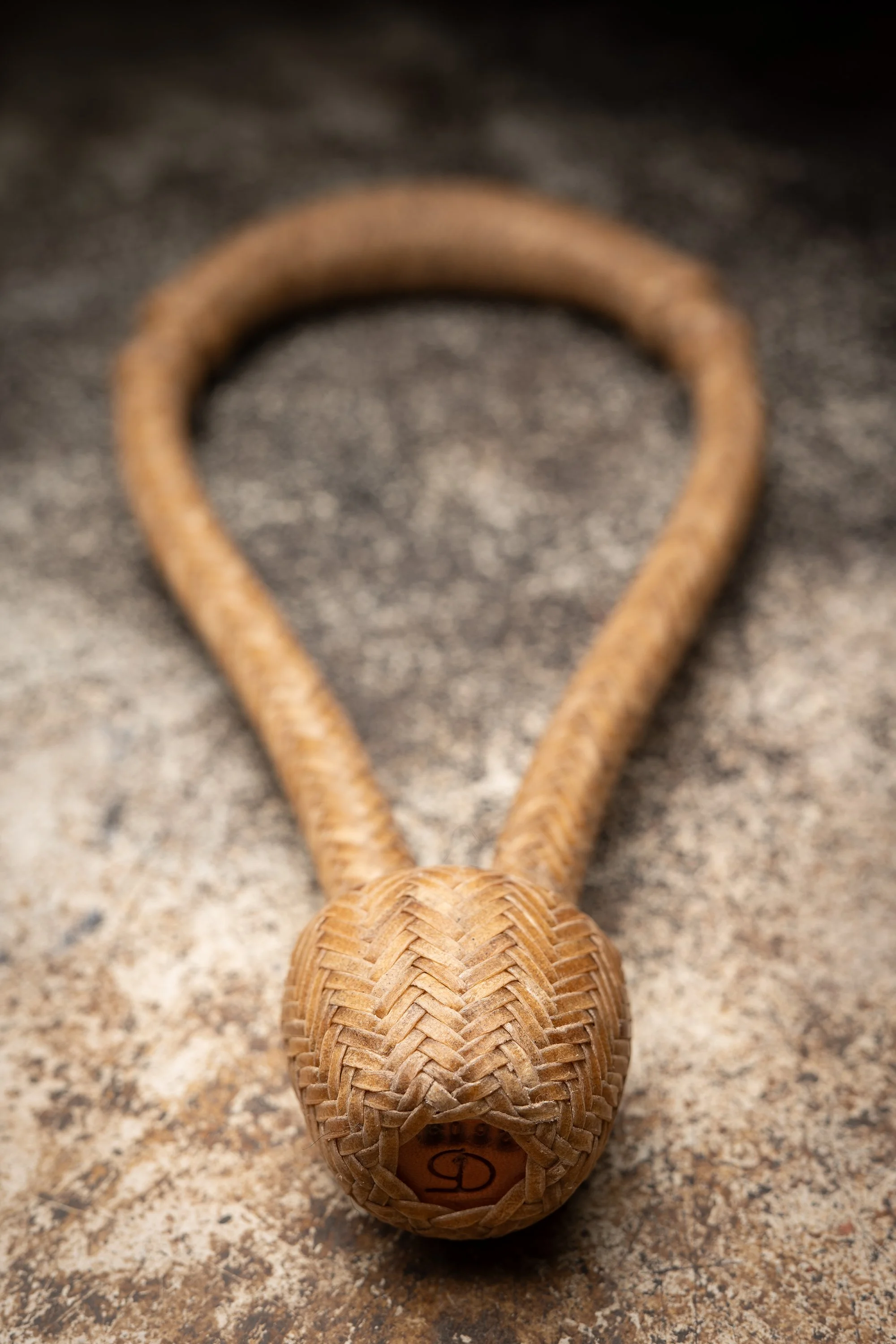
The finished rawhide Bosal reflects hours of careful preparation.