
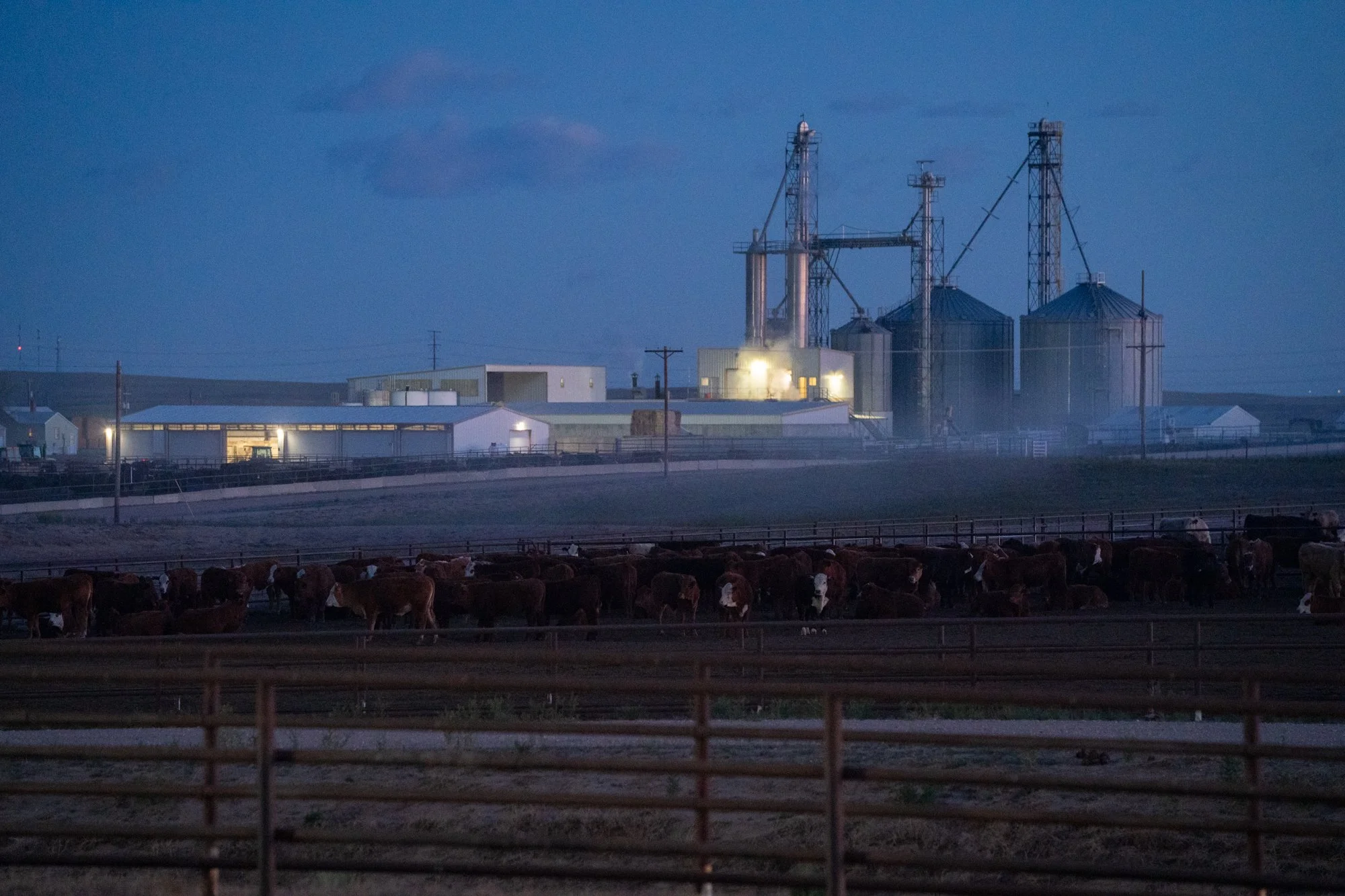
Inside a Cattle Feedyard: A Behind-the-Scenes Look at Magnum Feedyard
Most people will never step inside a working cattle feedyard.
They'll drive past one on a highway, catch a glimpse of thousands of cattle in the distance, and continue on their way. For many, it's simply another stop somewhere along the beef supply chain. But beyond the fences is an operation that begins long before sunrise and depends on an entire team of people whose work is rarely seen.
Earlier this year, I had the opportunity to photograph Magnum Feedyard near Wiggins, Colorado while on assignment for Mad Agriculture Magazine. Established in 1994, Magnum has grown from a modest feedyard into one of Colorado's largest feeding operations, caring for approximately 35,000 head of cattle while serving ranchers and cattle owners from across the region.
What surprised me most wasn't the scale. It was how much of the work still happens horseback and the care given to all of the cattle that go through the yard.
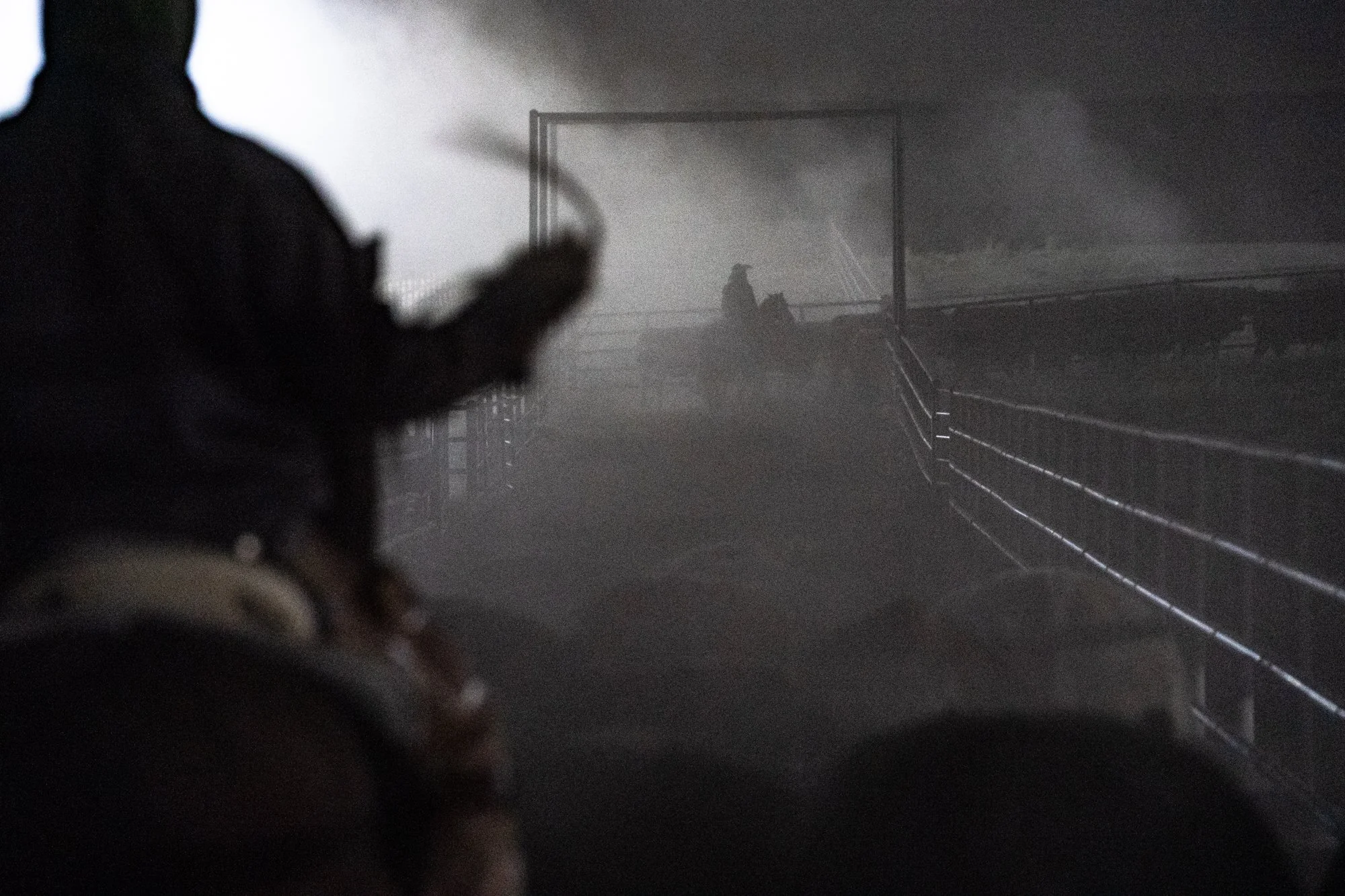
The first riders are already making their way through the yard before daylight.
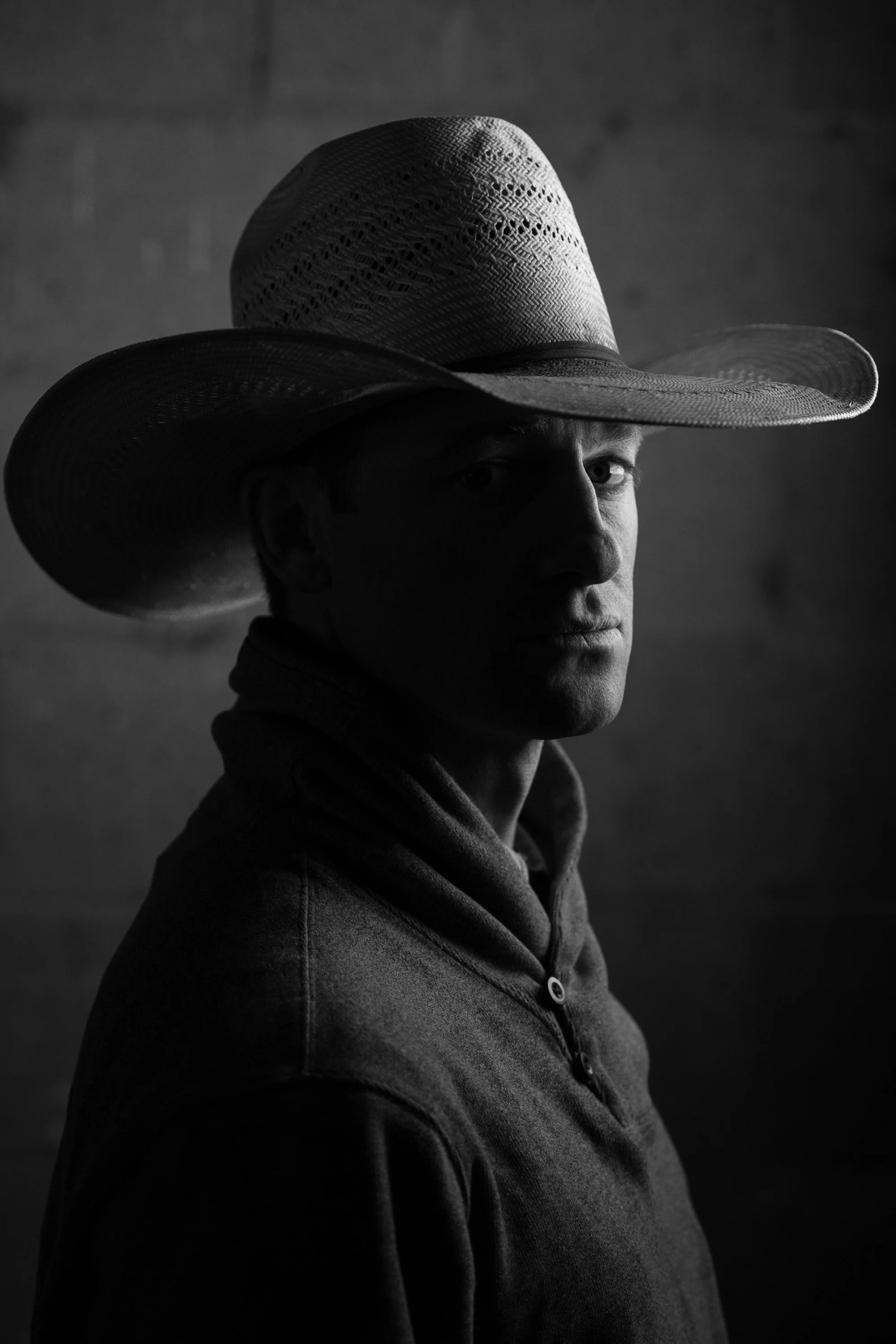
Ready for another morning at Magnum Feedyard.
Before Sunrise
Long before daylight reaches the eastern plains, the day is already underway.
Horse trailers pull into the yard.
Coffee is poured.
Saddles are lifted from racks worn smooth by years of use.
Boots that have seen countless miles step onto concrete before finding dirt only minutes later.
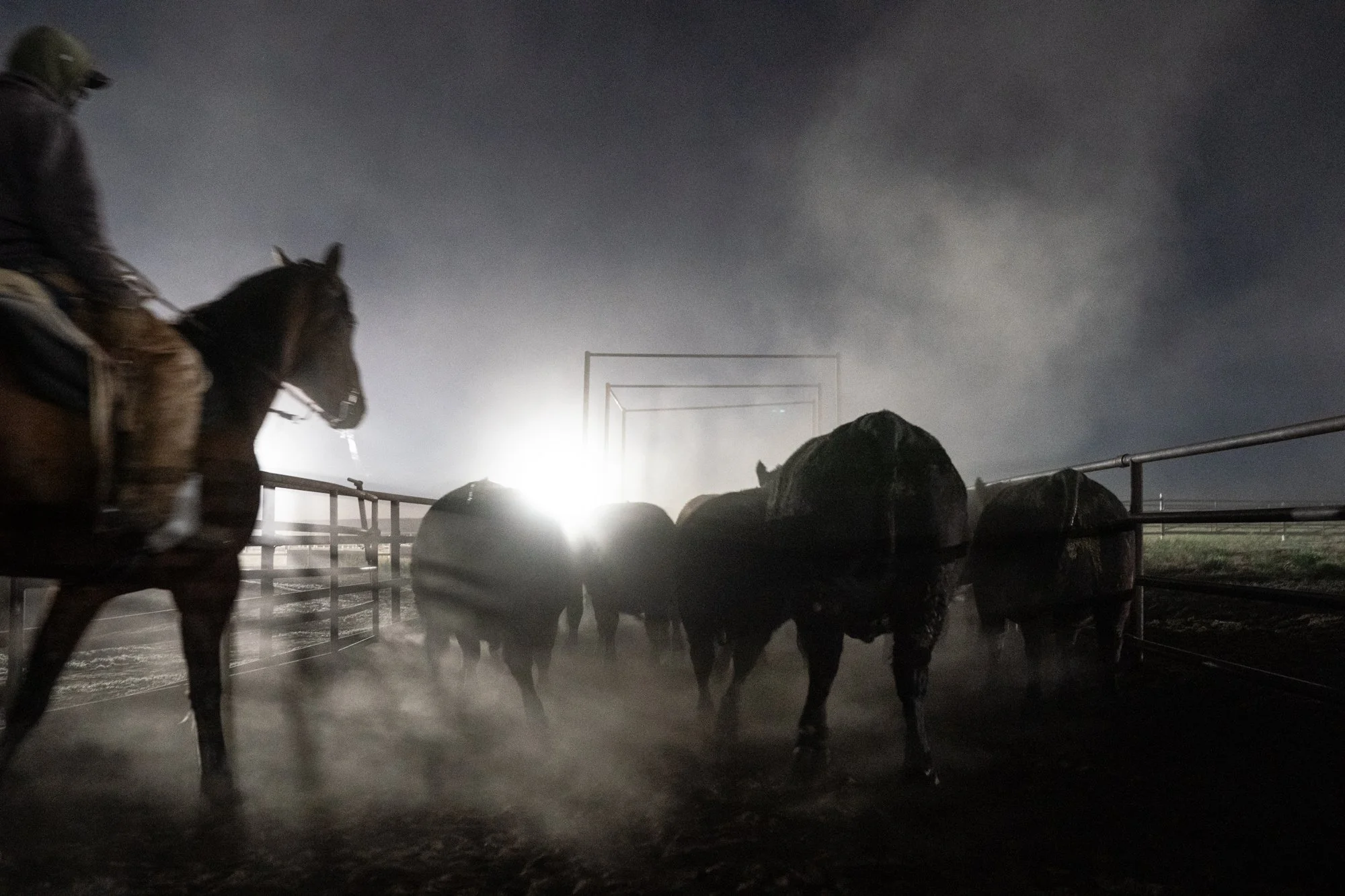
Before sunrise, cattle move through the alleys under the watch of the morning crew.
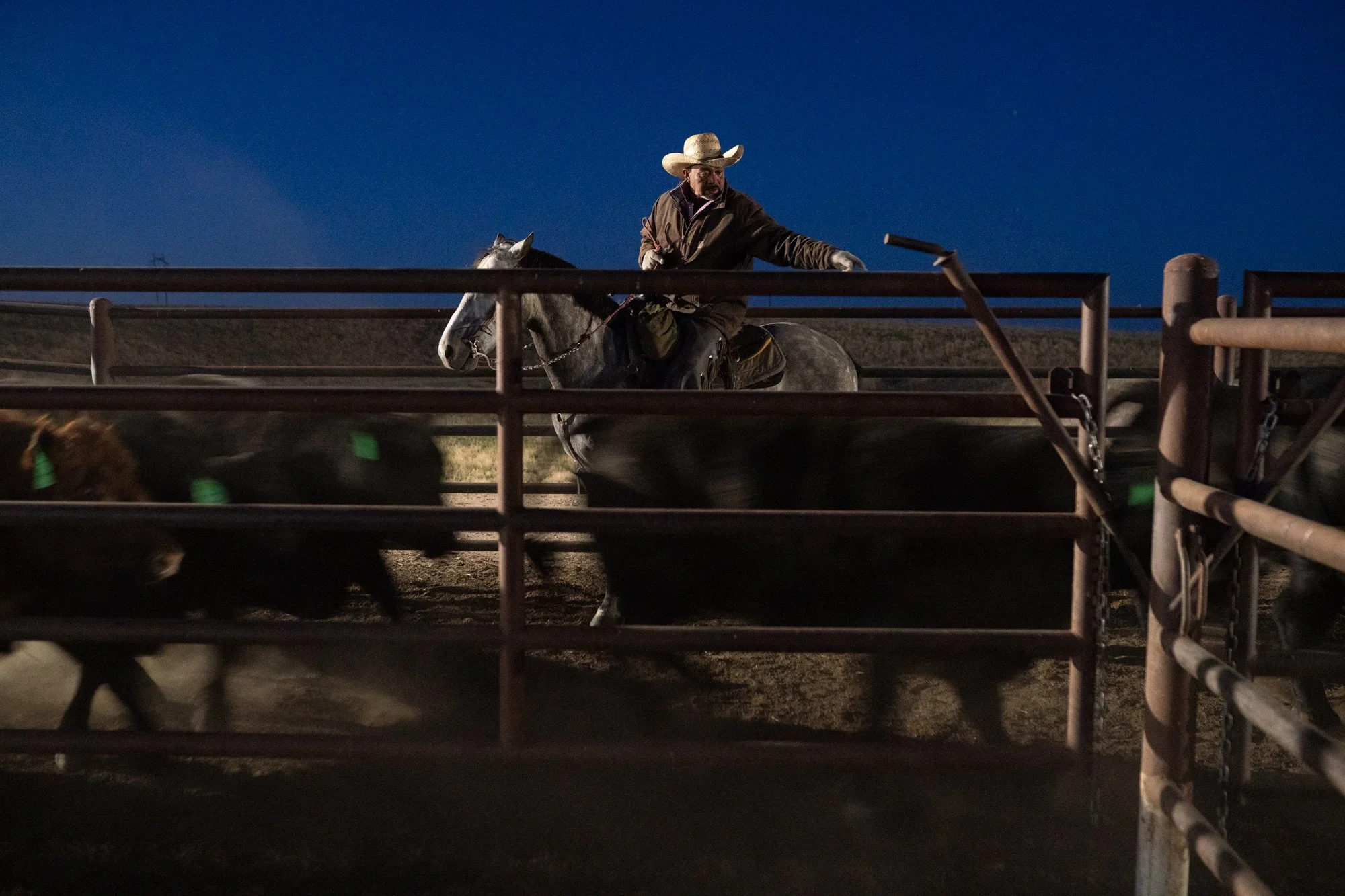
The day's work begins long before daylight reaches the plains.
The Cowboys of the Feedyard
One of the biggest misconceptions about feedyards is that they're entirely mechanical.
The feed trucks, mills and equipment are certainly impressive, but they don't replace experienced horsemen, because they know the correct way to work and care for cattle, is horseback.
Every morning, pen riders move quietly through thousands of cattle, looking for subtle changes that most people would never notice. A single animal that hangs back, walks differently or doesn't come to the feed bunk may need additional attention. Catching those signs early is an important part of keeping cattle healthy.
Watching these riders work, it became clear that this wasn't simply transportation. The horse remains one of the most effective tools on the operation.
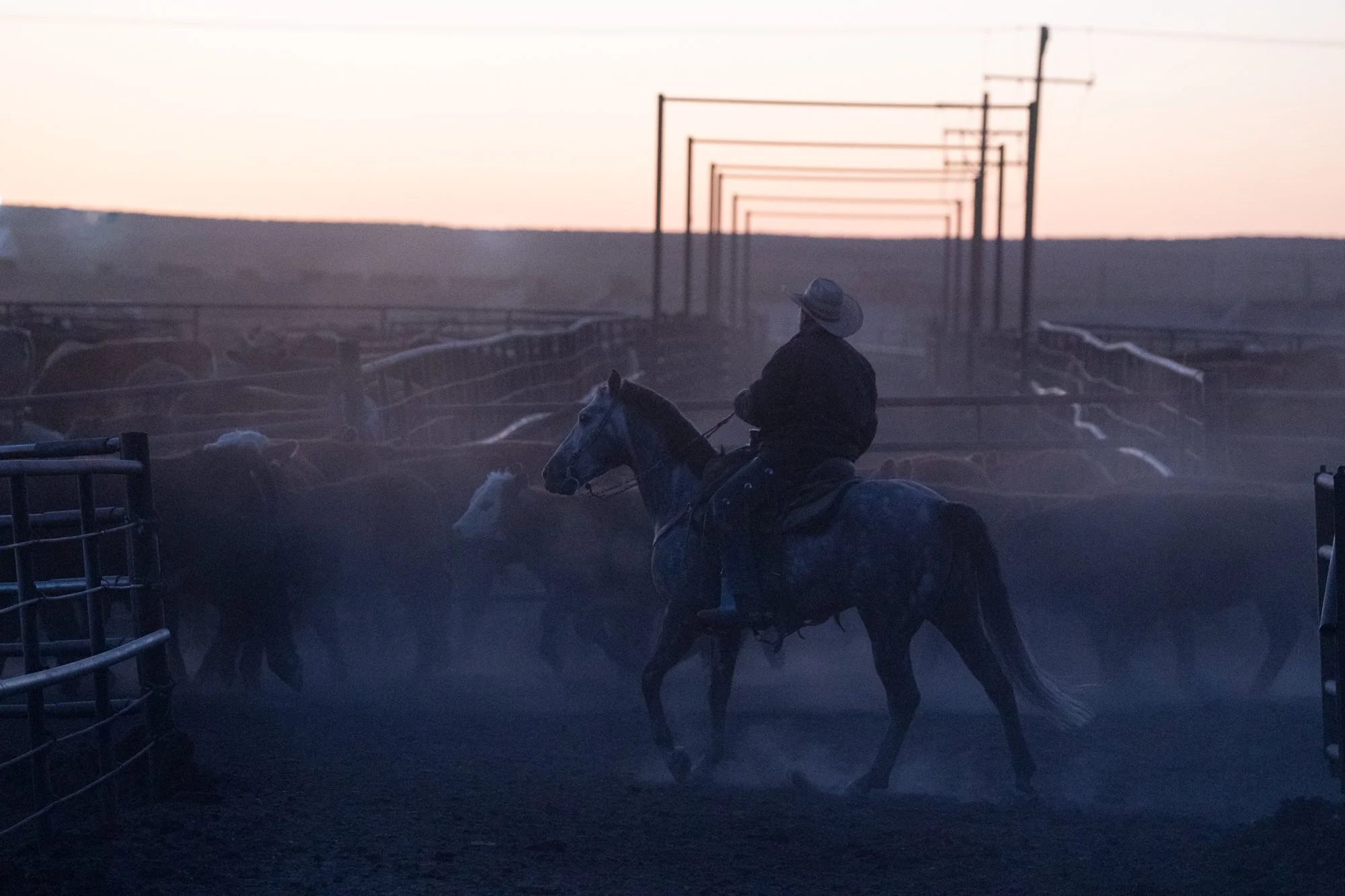
Morning rounds begin on horseback as cattle settle into the day.
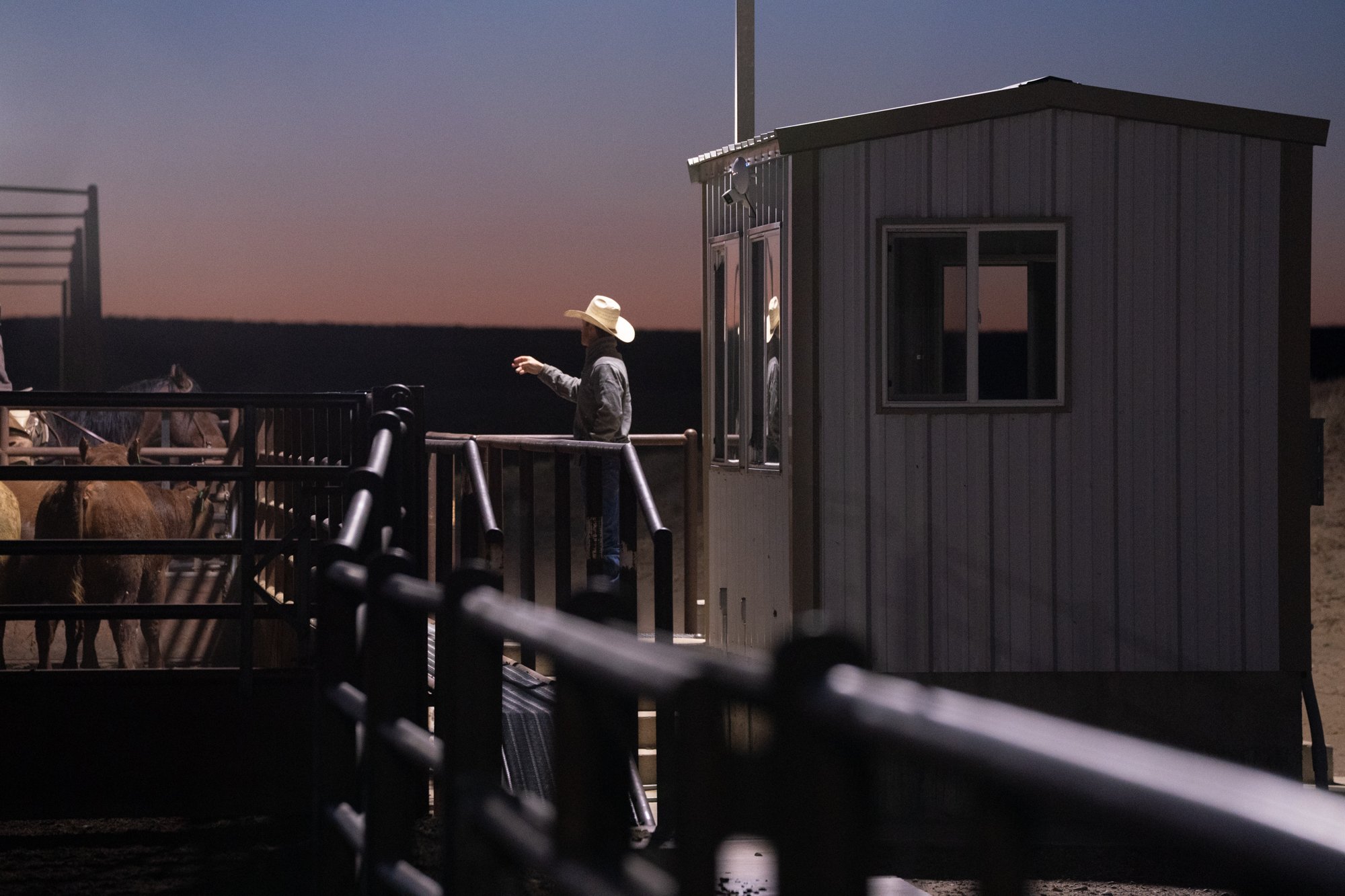
Horses are readied before the morning work begins.
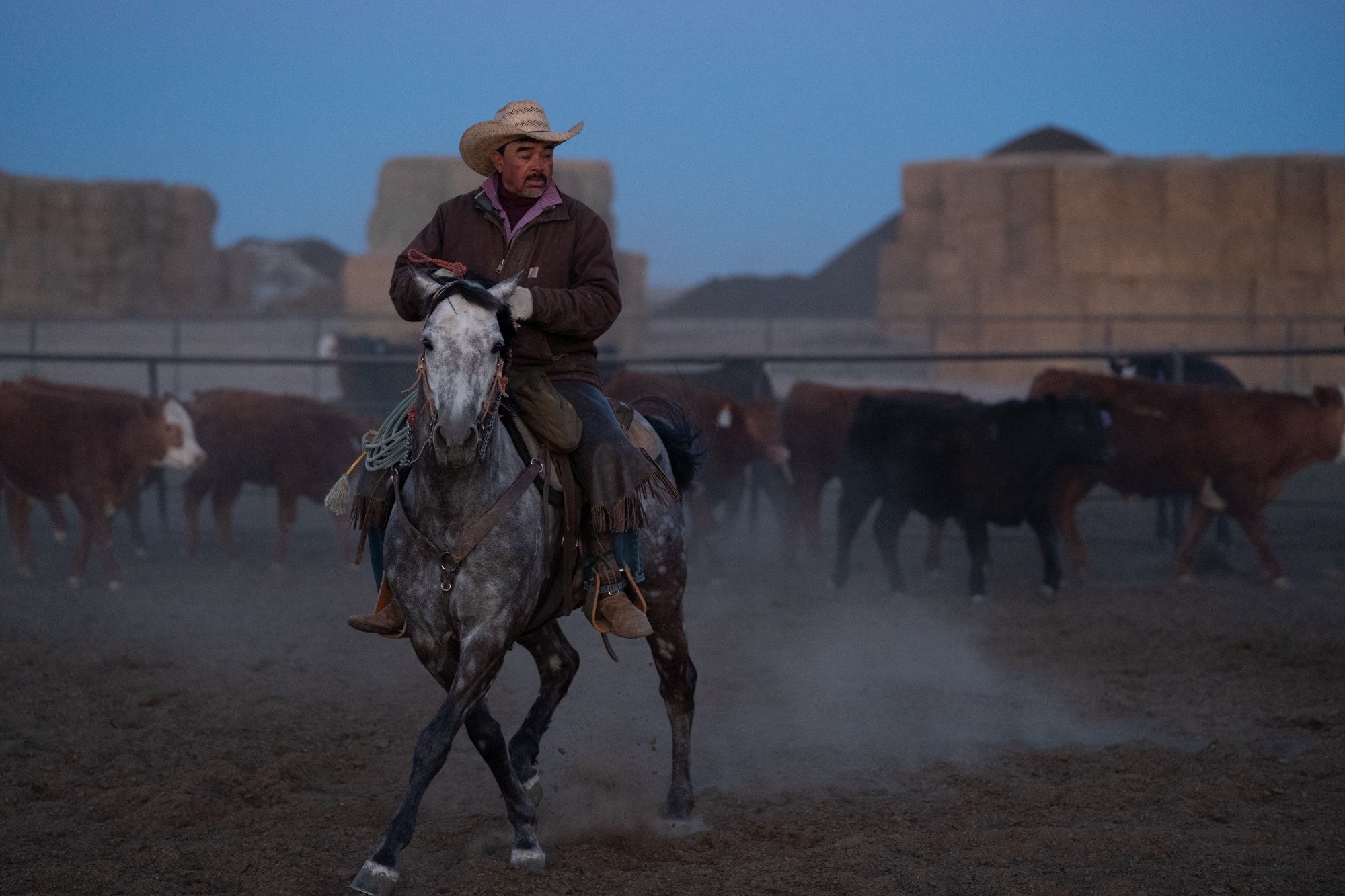
Horseback remains one of the most effective ways to work cattle through the yard.
A Landscape Built for Cattle
At sunrise the scale of the yard begins to reveal itself.
Pens stretch toward the horizon.
Dust catches the morning light.
Steam rises from feed as trucks begin their routes.
The operation sits in Morgan County, one of Colorado's most productive agricultural regions, where nearby farms produce much of the corn and alfalfa that help feed cattle throughout the year. Magnum's location on Colorado's Eastern Plains provides ready access to feed resources while taking advantage of the region's dry climate, conditions well suited to cattle feeding.
Despite the size, there is an unexpected rhythm to the morning.
Nothing feels hurried.
Everyone simply knows where they need to be.
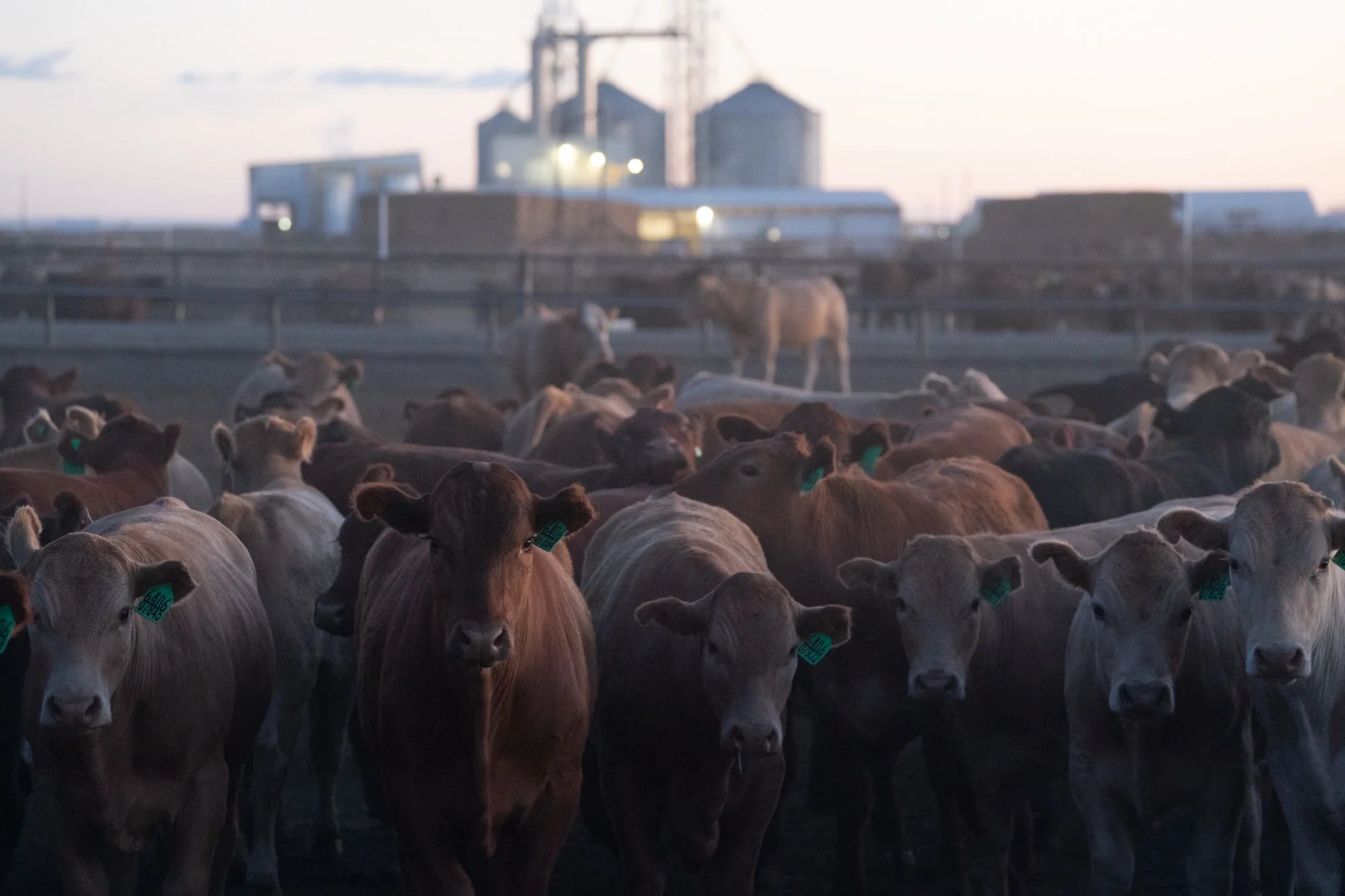
Morning light reaches the cattle as another day begins at Magnum Feedyard.
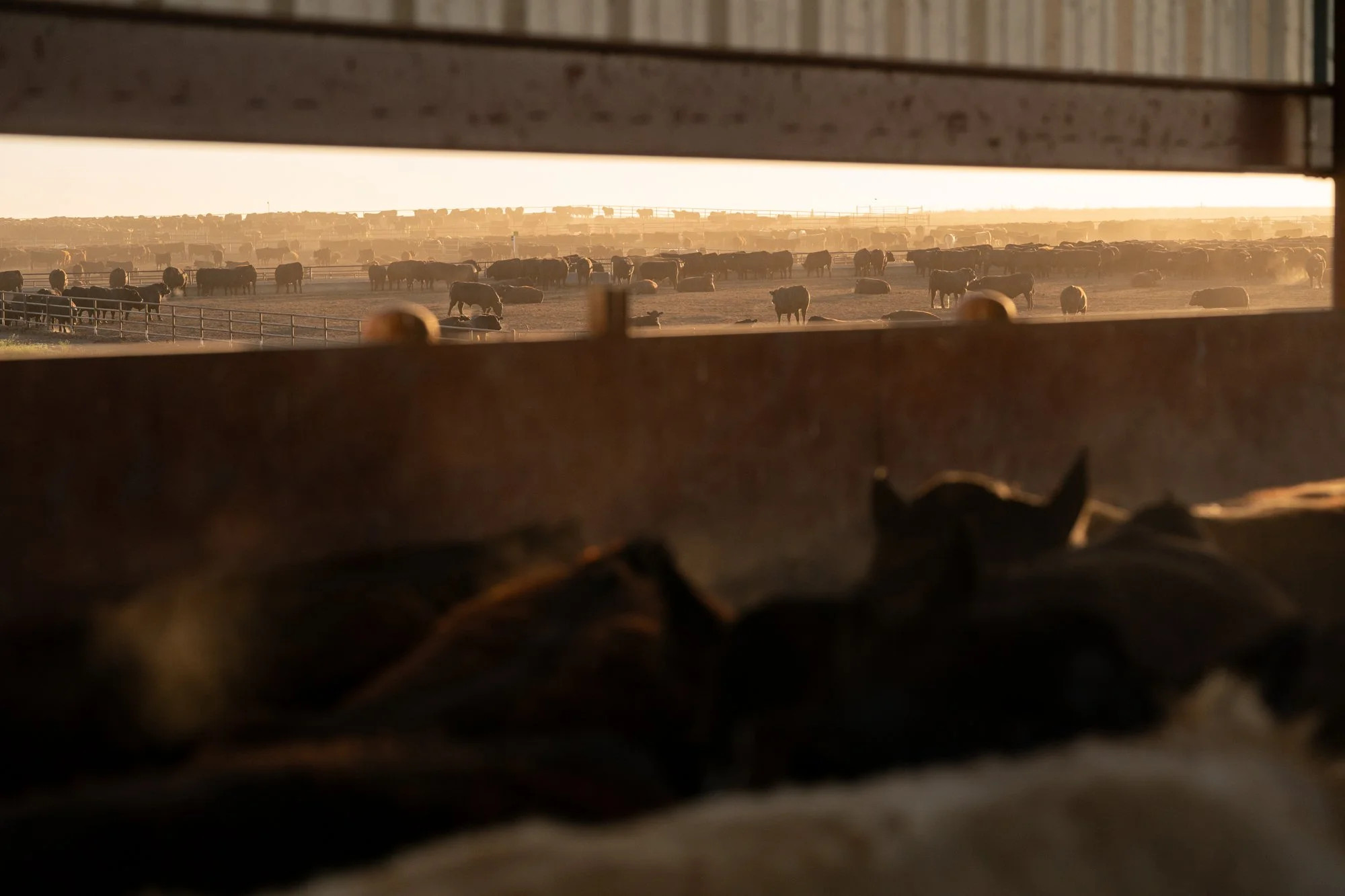
Looking across the feedyard as the morning settles into its daily rhythm.
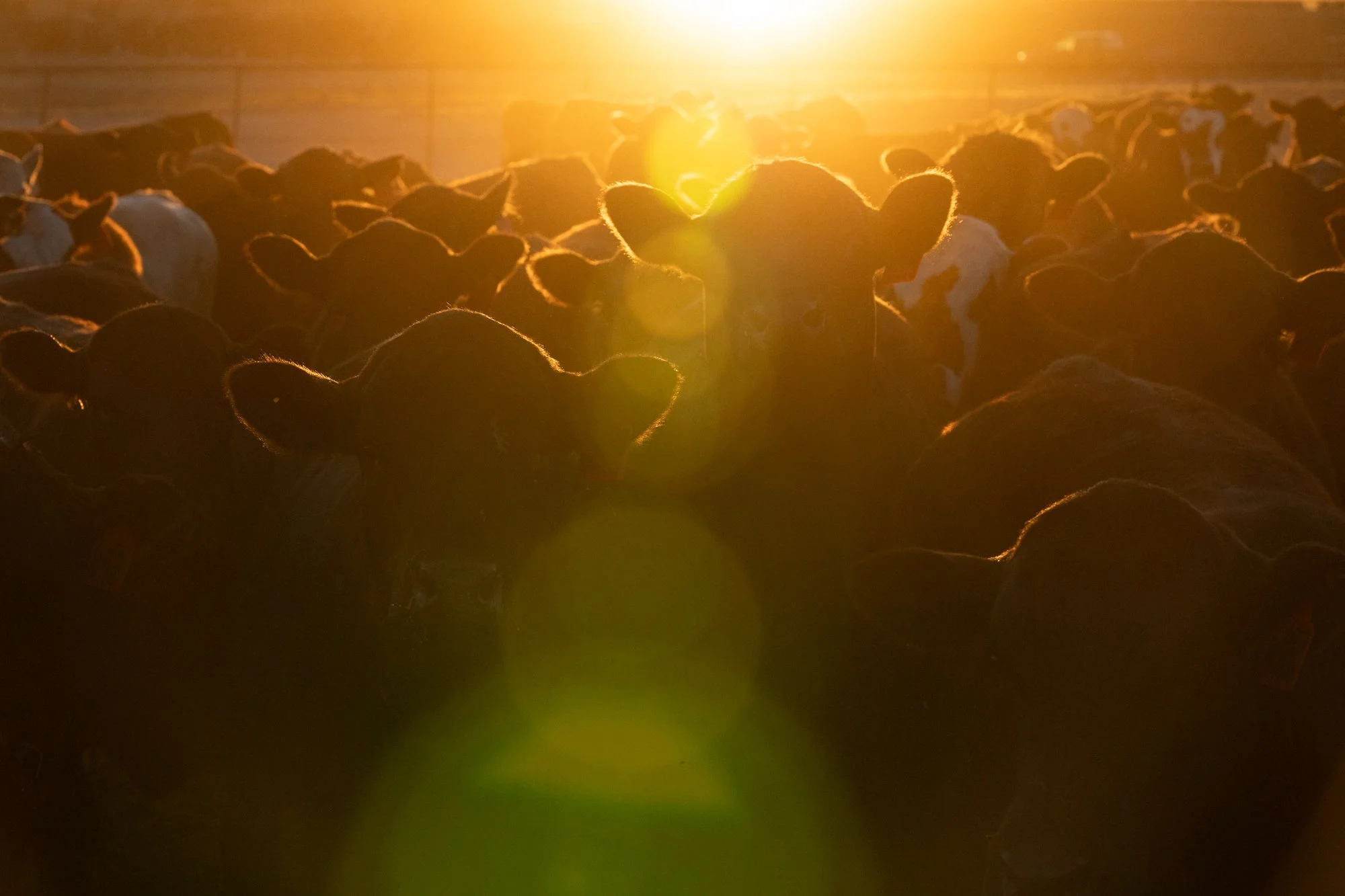
Sunrise filters across the pens as thousands of cattle begin the day.
Feeding Thousands of Animals
One of the most fascinating parts of the operation happens behind the scenes.
Large piles of corn, silage and other ingredients are blended into carefully formulated rations before being loaded into feed trucks that make their rounds throughout the yard.
Every ration is designed to meet the nutritional needs of the cattle at different stages of finishing, and consistency matters. Feed delivery, timing and animal observation all work together.
It's an enormous logistical operation, yet much of it unfolds with remarkable precision.
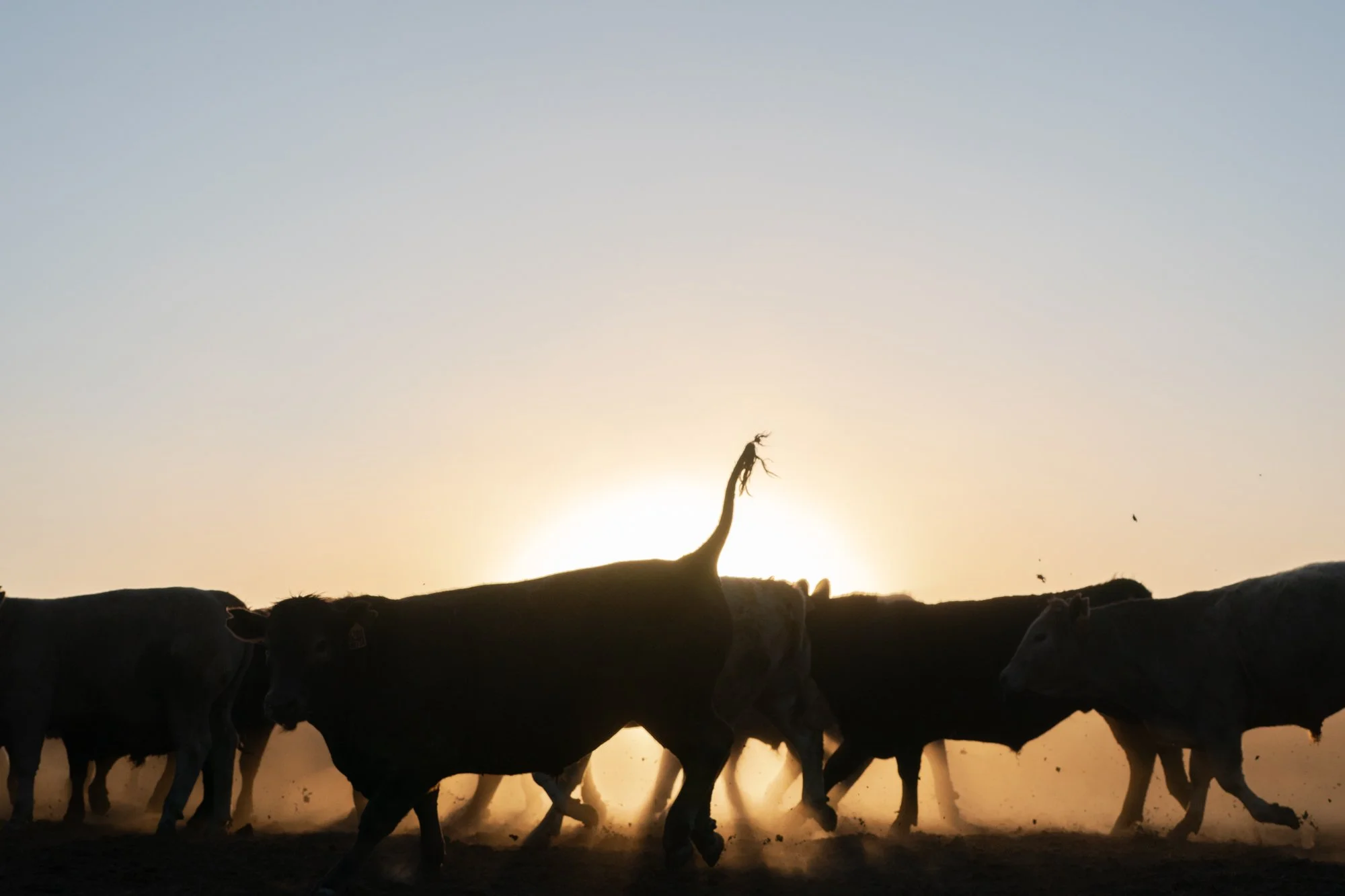
Dust rises as cattle move through the pens in the early morning light.
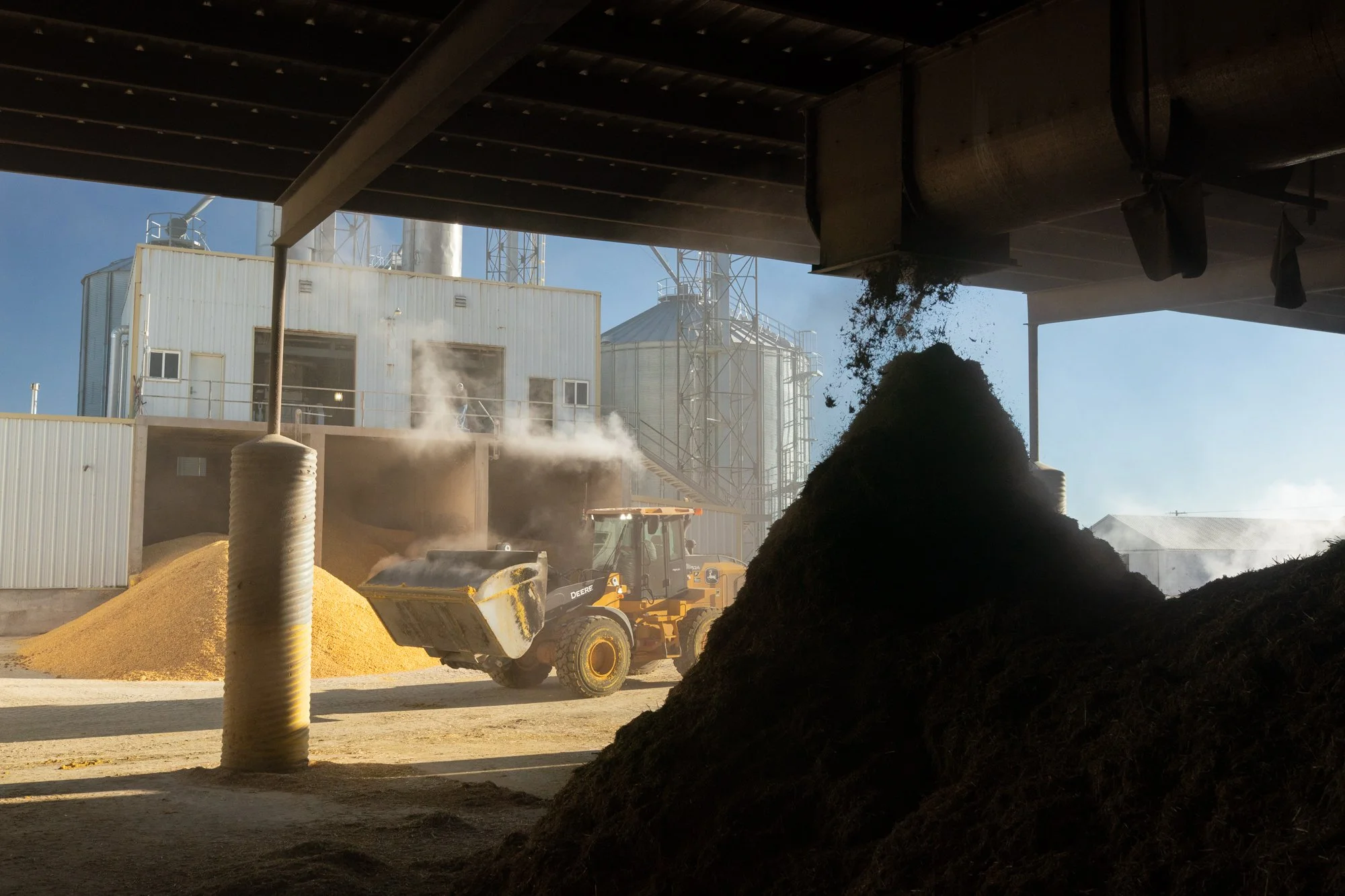
Feed ingredients begin their journey through the mill before the trucks head out.
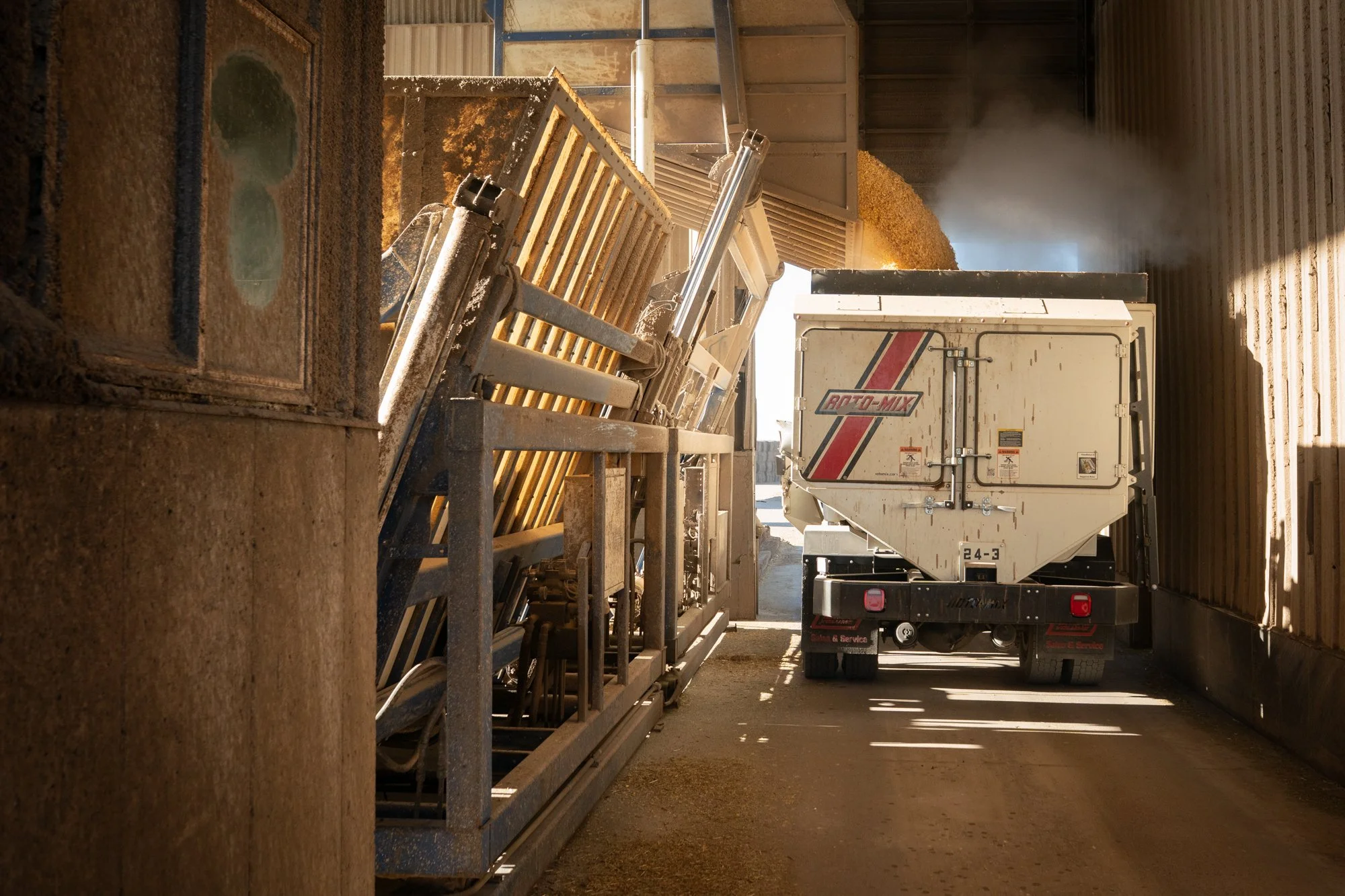
Feed trucks are loaded before making their rounds through the yard.
Details That Tell the Story
Some of my favorite photographs from the assignment weren't made outside.
They were inside the barns and break rooms.
A pair of worn boots.
Cowboy hats hanging above lockers.
Well-used saddles.
Quiet portraits made before the day began.
These small details say as much about the place as the sweeping views across thousands of cattle.
They're reminders that, despite the size of the operation, everything ultimately depends on people showing up every morning to do demanding work with care and consistency.
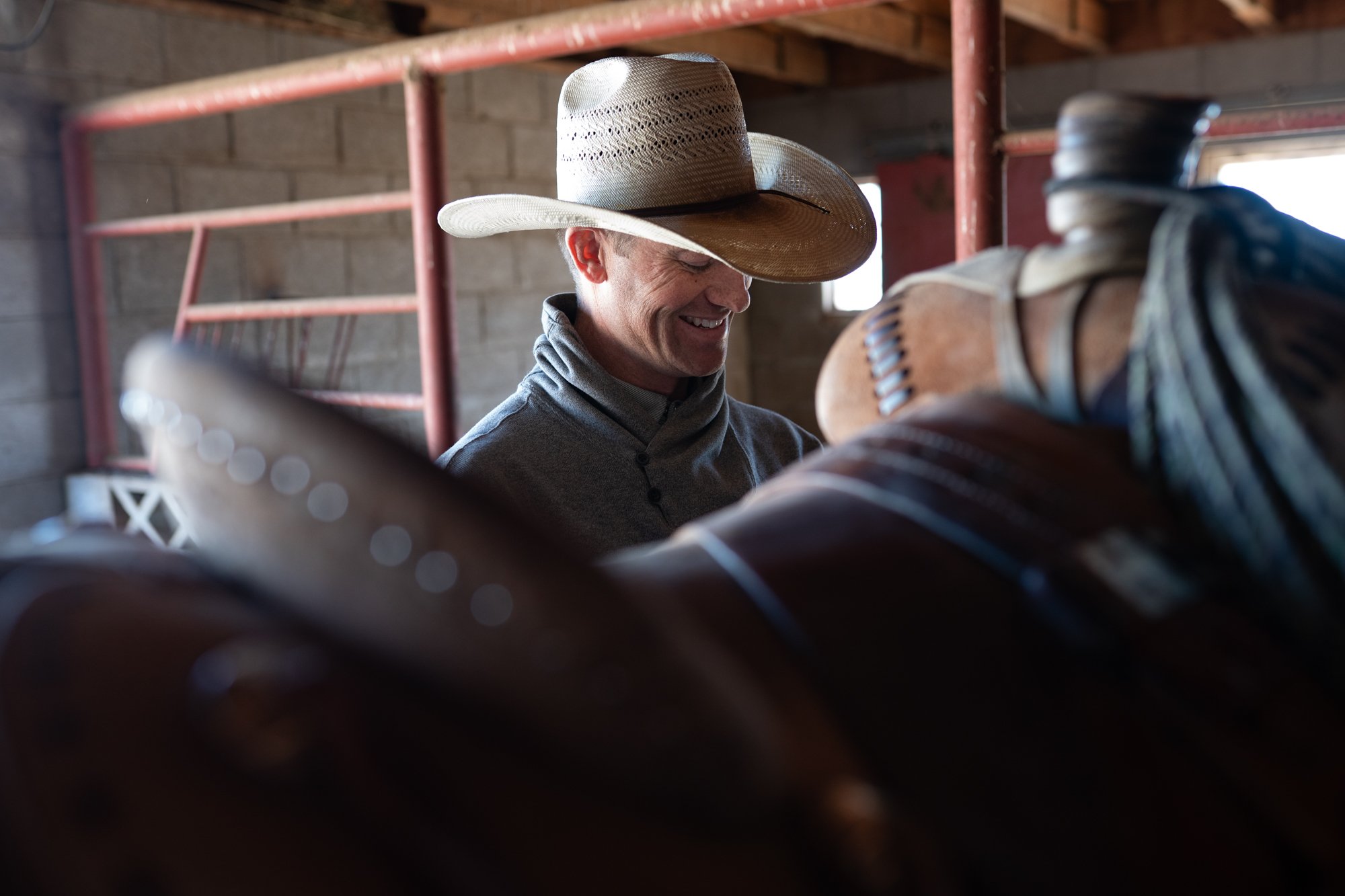
A quiet moment inside the barn before heading out for the day.
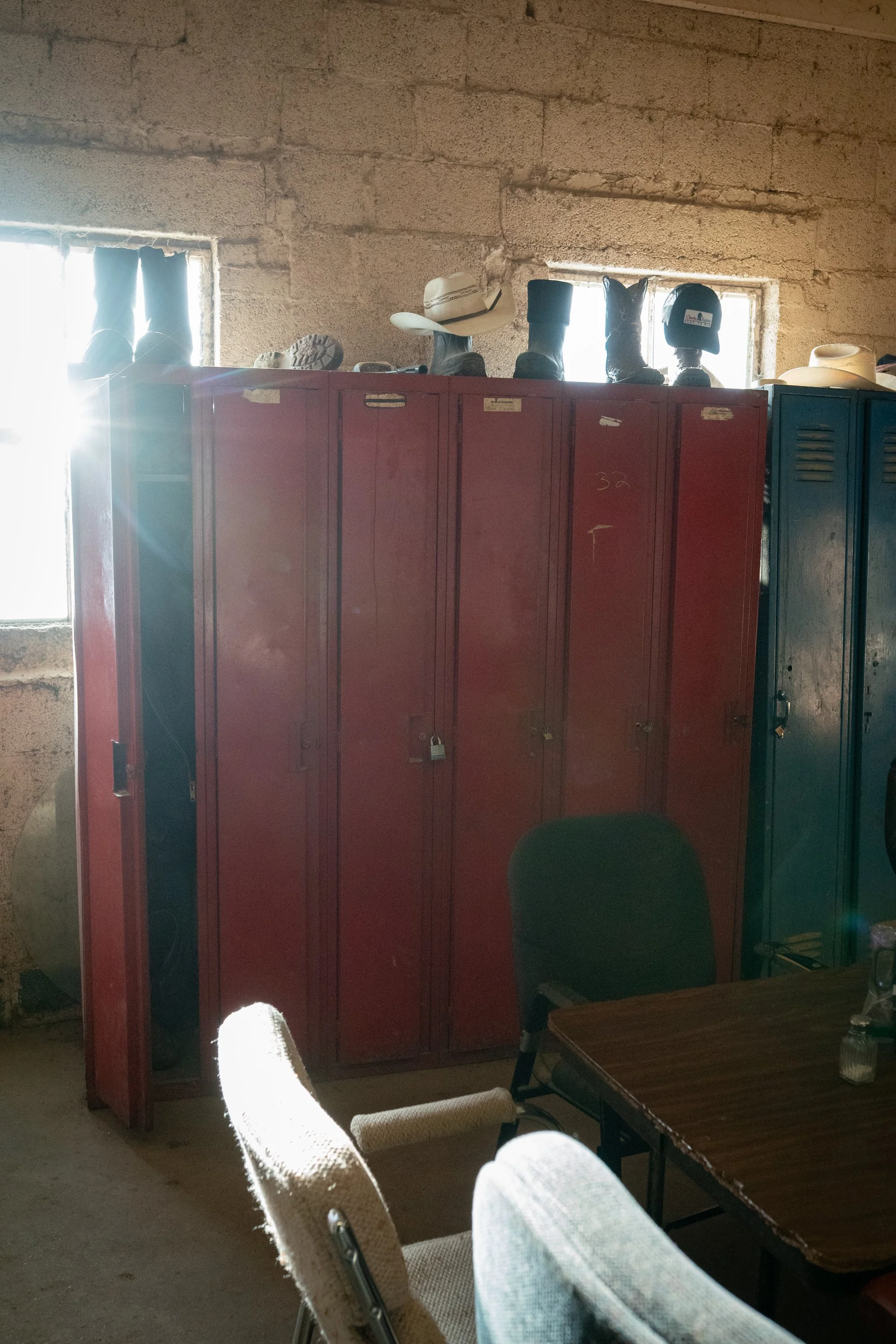
Cowboy hats and well-worn boots wait above the lockers until the next shift begins.
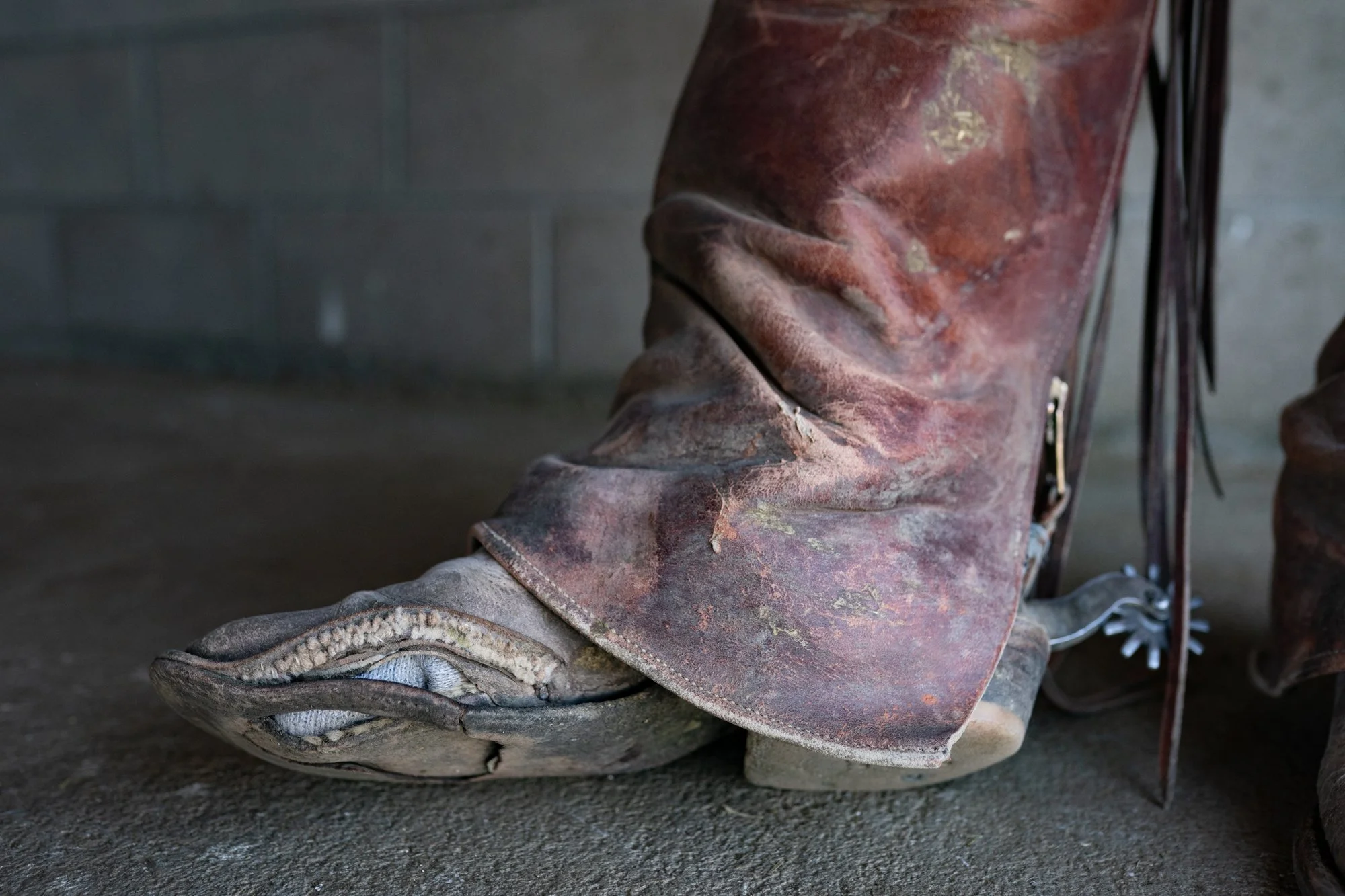
Years of work are visible in a well-worn cowboy boot and spur.
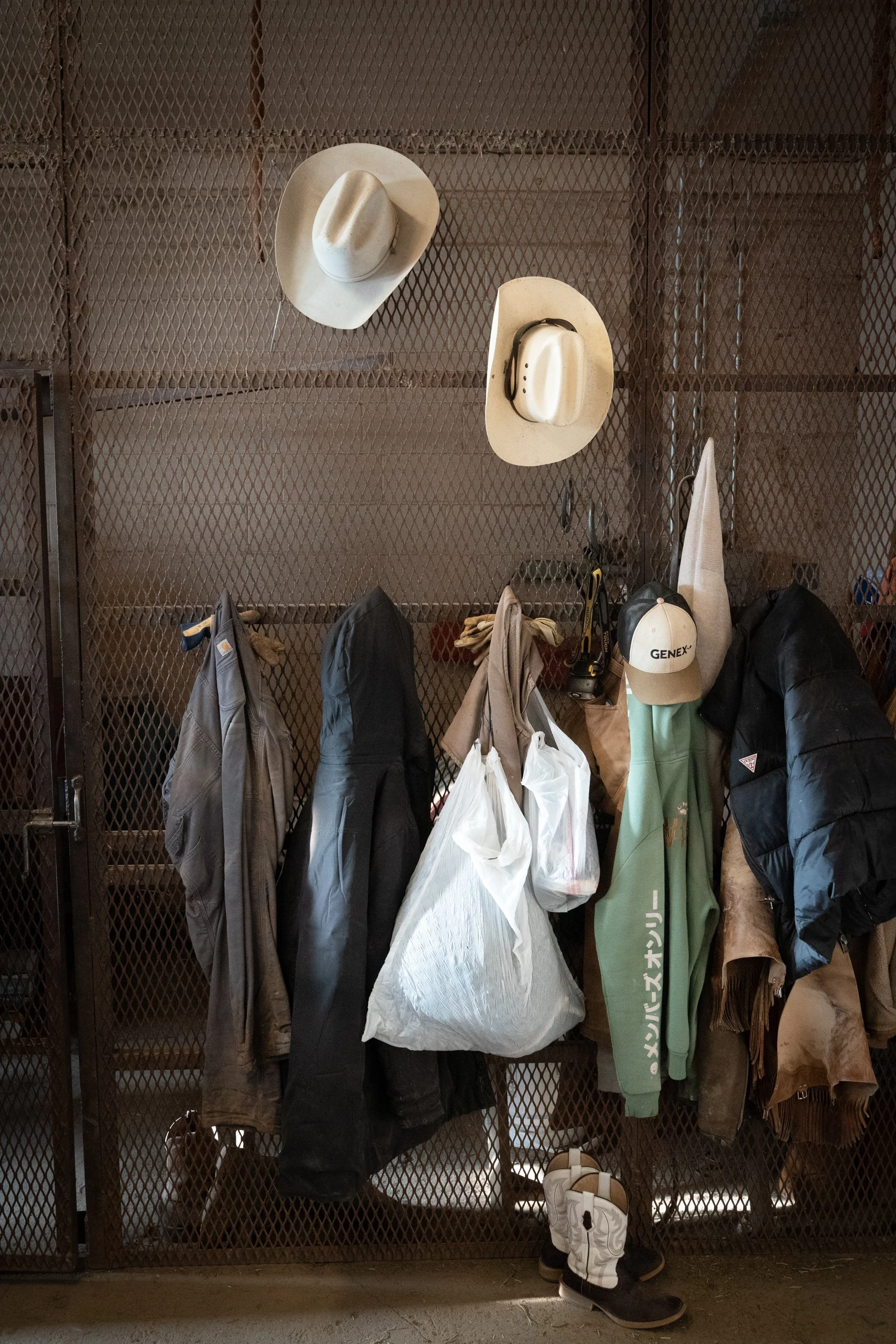
Everyday work gear hangs ready for another morning in the feedyard.
Looking Beyond the Fence
Feedyards are often discussed from a distance.
Sometimes they're reduced to headlines, assumptions or debates.
Standing inside one is different.
You see the riders leaving before dawn.
You watch cattle quietly follow horses through the alleys.
You notice the attention paid to individual animals, the choreography of feeding, and the thousands of small decisions that keep an operation running.
Whether someone arrives with a background in agriculture or simply a curiosity about where their food comes from, spending time inside a working feedyard offers a perspective that's difficult to gain from the outside.
For me, it was an opportunity to document a place that most people will never see—and the people whose work begins long before the rest of us are awake.
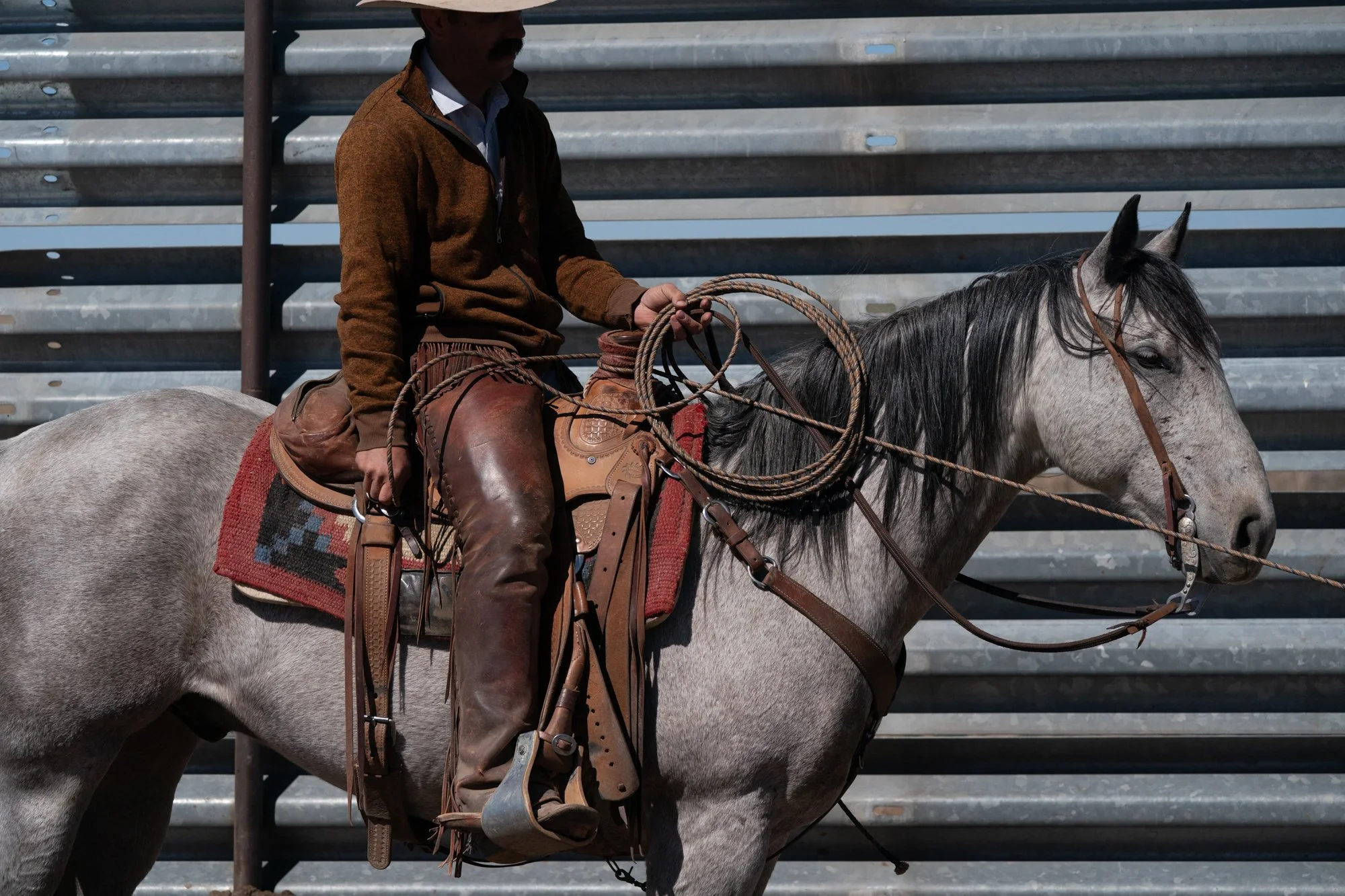
Horse and rider pause between morning tasks.
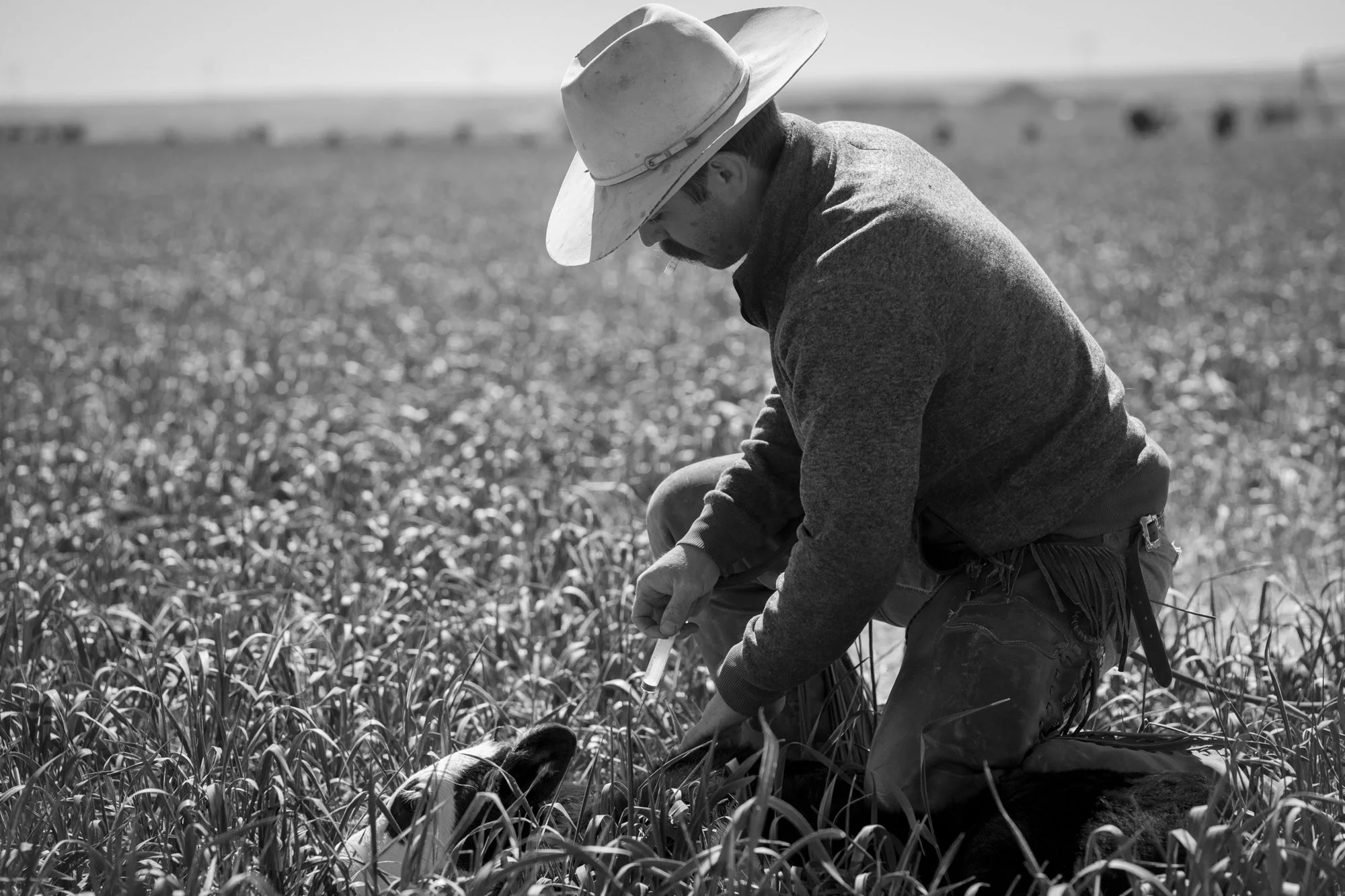
Some moments require getting off the horse.
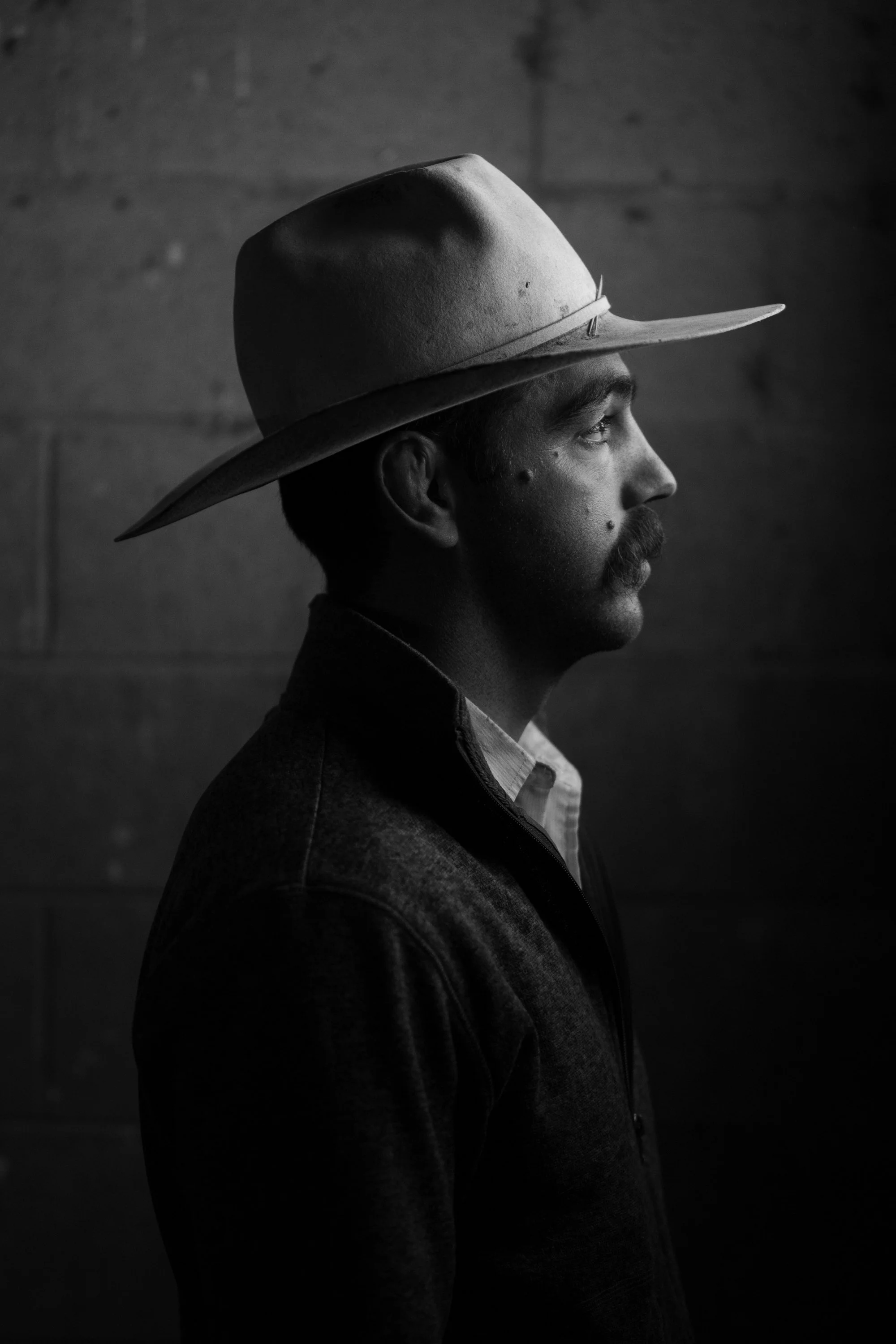
Portrait of a pen rider whose work begins long before most people are awake.
Part Of A Larger Story
For the last 6+ years I’ve been photographing working cowboys on historic ranches across the American West. And while doesn’t quite fit into that role, it’s still part of the entire process required to keep the world fed with beef. So I’m grateful to have seen it first hand and to share the work with you in hopes that you’ll see how humane these operations are - the opposite of what most news headlines will have you believe.
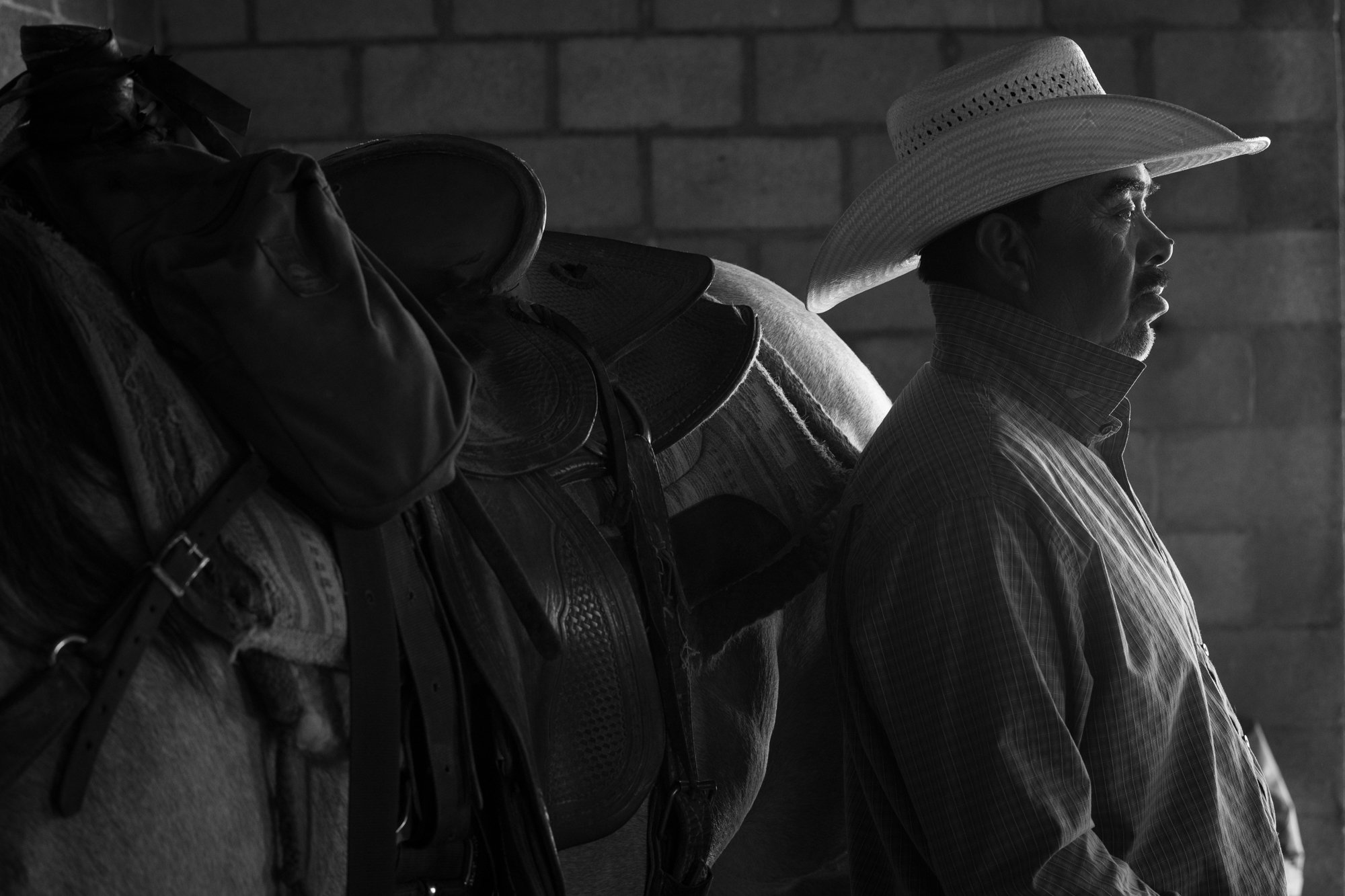
Horse and rider wait together before heading into the yard.
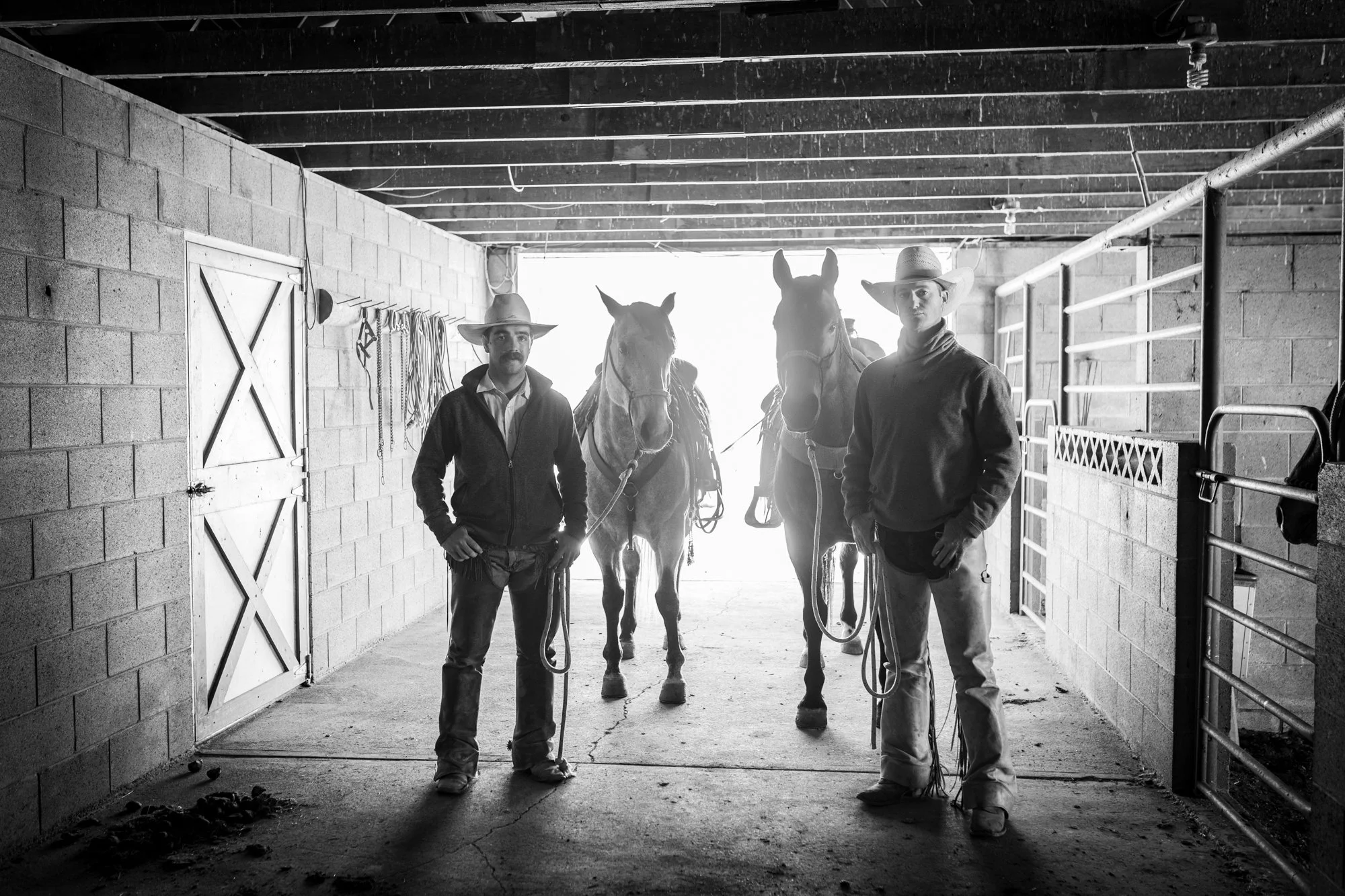
Portrait of two cowboys and their horses in the barn at the Magnum Feedyard